මහින්දට නැවත ජනාධිපති වීමට ව්‍යවස්ථාවෙන් බාධාවක් නෑ.. නීතිය මෙහෙමයි..

January 13th, 2017

– වෙනුර ලංකා සී නිවුස්

මහින්දට නැවත ජනාධිපති වීමට ව්‍යවස්ථාවෙන් බාධාවක් නෑ.. නීතිය මෙහෙමයි..

වර්තමාන ශ්‍රීලංකා ආණ්ඩුක්‍රම ව්‍යවස්ථාවේ 30(2) අනුව ජනාධිපතිගේ ධූර කාලය අවුරුදු 5 වන බැවින්, එම කාලය අවසන් වීමට මාසයකට නොඅඩු මාස 2 කට නොවැඩි කාලයක් තුල ජනාධිපතිවරණයේ ඡන්ද විමසීම පැවත් විය යුතුය” ඒ අනුව වසර 2019 මැද වනවිට, එනම් එම වසරේ දෙසැම්බර් මස 8 වෙනිදාට පෙර නව ජනාධිපතිවරයා තොරා පත් කරගෙන අවසන් කල යුතුය.

තවද 2019 පවත්වනු ලබන ජනාධිපතිවරණයට පෙර පාර්ලිමේන්තුවට විධායකට හිමි බලතල ලබාදීමට අවශ්‍ය ආකාරයෙන් නව ව්‍යවස්ථාවක් සකස් කොට ජනාධිපතිවරණය පැවත්වීමට පෙර ජනතාවගේ කැමැත්ත ගෙන ඊට පසු එලබෙන ජනාධිපතිවරණයේ විධායක බලතල අවශ්‍ය කොටස් සංශෝධනය කොට ජනාධිපතිවරණය පැවත්වීමට අවශ්‍ය කටයුතු මේ වනවිටත් නීති විශාරදයන් විසින් සකස් කරමින් පවති.

ඒසේ නොවුනහොත් 2019 දි ජනාධිපතිවරණය සඳහා බොහෝ දුරට එක්සත් ජාතික පක්ෂය හා අනිකුත් පක්ෂ සමඟ එක්ව මෛත්‍රීපාල සිරිසේන ජනාධිපතිවරයාම හංසයාගෙන් ඉදිරිපත් විමට ඉඩ ඇත. ව්‍යවස්ථාවේ 31(2) අනුව දෙවරක්ම ජනතාවගේ ඡන්දයෙන් ජනාධිපතිවරයා ලෙස තේරි පත් වු බැවින් හිටපු ජනාධිපතිවරයාට තරග කල නොහැකිය.

එහෙත් මහින්ද රාජපක්ෂ මහතා විසින් නම් කරනු ලැබු නියෝජිතයකුට ජනාධිපතිවරණයේ දි තරග කොට ජයග්‍රහණය කිරීමට කිසිම බාධාවක් නොමැත. එමෙන්ම එසේ තේරි පත්වන ජනාධිපතිවරයා පාර්ලිමේන්තුවේ එවකට සිටින මන්ත්‍රීවරයෙකු අගමැතිවරයා ලෙස දිවුරුම් දී වහාම පත් කල හැකිය. ඉන්පසු ව්‍යවස්ථාවේ 38 (1) ජනාධිපතිවරයා විසින් ධූරය හිස් කිරිම, 38 (1), (ආ) කතානායකවරයා වෙත තමාගේ අත්සනින් යවනු ලබන ලිපියකින් ජනාධිපතිවරයා තම ධූරයෙන් ඉල්ලා අස් විය හැකිය.

ඒ අනුව අගමැතිවරයා වැඩ බලන ජනාධිපතිවරයා ලෙස පත් වන අතර ඔහු විසින් ඇමති මණ්ඩලයේ කෙනකු අගමැති ලෙස පත් කොට වහාම පාර්ලිමේන්තුවේ විසුරුවාලීමට කටයුතු කොට නව පාර්ලිමේන්තුව විධායක බලය පවරමින් මහින්ද රාජපක්ෂ මහතා අගමැති ලෙස නව ව්‍යාවස්ථාවක් තුල කටයුතු කිරීමට හැකියාවක් ඇත.


මා ලේකම්කමින් ඉවත් නොකලේ නම් සන්ධානය දිනනවා.. නැවත එහෙම වෙන්න බෑ.. ආණ්ඩුව එක රැයෙන් වෙනස් විය හැකියි.. – සුසිල් වැට උඩට නගී.. [Video]

January 13th, 2017

ලංකා සී නිවුස්

ශ්‍රී ලංකා නිදහස් පක්ෂයත් එක්සත් ජාතික පක්ෂයත් ප්‍රතිපත්ති දෙකක් ඔස්සේ කටයුතු කරන බවත් එම නිසා ප්‍රශ්න රාශියක් ඇතිවෙමින් තිබෙන බවත් ආණ්ඩුව පිහිටුවා අවුරුදු දෙකක් ගත වි ඇති මෙවන් අවස්ථාවක එක රැයකින් සියල්ල වෙනස් විය හැකි බව කඩුවෙල ශ්‍රිලනිප බල මණ්ඩලය අමතමින් විද්‍ය හා තාක්ෂණ පර්යේෂණ අමාත්‍ය සුසිල් ප්‍රෙම්ජයන්ත මහතා පැවසීය.

සමහරු කියනවා තව අවුරුදු හතරක් මේ විදියට පක්ෂ දෙක එකතුවෙලා යනවා කියලා, තවත් සමහරු කියනවා මේ 17 දි වෙනසක් වෙනවා කියලා, ඒත් ජනතාව තීරණය අනුව එක රැයකින් සියල්ල වෙනස් විය හැකි බවත් එසේ වුනොත් නැවත් පුට්ටු කිරිම බොරුවක් බවත් ඇමතිවරයා පැවසීය.

අපී ආණ්ඩුව තුල සිටිය නිසා යම් යම් සහන ජනතාව දීමට පුලුවන් වුවත් මේ ආණ්ඩුවේ අගමැතිවරයා යූ එන් පී බවත් වැදගත් අමාත්‍යාංශය ගනනාවක් යූ එන් පී එක යටතේ තිබෙන බැවින් ඉදිරියේදී එහි වෙනසක් බලාපොරොත්තුවන බවත් පැවසිය.

කෙසේ වෙතත් ඔහු පැවසුවේ එදා මහමැතිවරණයේදී තමා හෙබ වූ පොදු ජන එක්සත් පෙරමුණේ ලේකම් ධූරය අවසාන මොහොතේ තහනම් කොට මහ කලබැගෑනියක් කලේ නැත්නම් අපි දිනනවා මෙන්ම අනිවාර්යයෙන්ම ආසන 104 කට වඩා ගන්නා බවයි. එත් අවසානාවකට ඒක් එසේ සිදු වුවත් එය මේ පාර එහෙම සිදු වෙන්න ඉඩ නොදෙන බවයි.

හම්බන්තොට වරාය, අක්කර 15,000 විකිණීම නවතන්න වෙයි.. ඉහලම අධිකරණයේ නඩු දමයි..හම්බන්තොට වරාය චීනයට පැවරීමේදී වරාය අධිකාරිය නොසලකා හැරලා-ශ්‍රී ලංකා වරාය අධිකාරිය වෙනුවෙන් පෙනී සිටි ජනාධිපති නීතීඥ

January 13th, 2017

ලංකාවේ වෙනදේ

විදෙස් සමාගම් වෙත හම්බන්තොට වරායත් අවට ඉඩම් අක්කර 15,000ක පමණ ප‍්‍රමාණයත් ලබාදීම සදහා රජය ගෙන තිබූ තීරණයට එරෙහිව ගොනු කරනු ලැබ ඇති මූලික අයිතිවාසිකම් පෙත්සමක් විභාග කිරීමට ශ්‍රේෂ්ඨාධිකරණය තීන්දු කර ඇත.

ඒකාබද්ද විපක්‍ෂයේ පාර්ලිමේන්තු මන්ත්‍රී වාසුදේව නානායක්කාර මහතා විසින් මෙම පෙත්සම ලොනු කර ඇත්තේ නඩු අංක 467-2016 අංකය යටතේය.

අධිකරණයේ නඩු ක‍්‍රියාමාර්ගයක් පවතින බැවින් මෙම දේපල පැවරීමේ කටයුත්ත සිදු කිරීමට නොහැකි වනු ඇති බව නිතී ප‍්‍රවීණයින්ගේ අදහසයි.

මේ අතර හම්බන්තොට වරාය චීන ආයෝජකයන්ට පැවරීමේ ක්‍රියාවලියේදී මෙම විෂය භාර ශ්‍රී ලංකා වරාය අධිකාරිය නොසලකා කටයුතු කර ඇතැයි ශ්‍රී ලංකා වරාය අධිකාරිය වෙනුවෙන් පෙනී සිටි ජනාධිපති නීතීඥ සංජීව ජයවර්ධන මහතා අද (13) ශ්‍රේෂ්ඨාධිකරණයට දැනුම් දුන්නේය.

නීතීඥවරයා එලෙස දැනුම් දුන්නේ පාර්ලිමේන්තු මන්ත්‍රී වාසුදේව නානායක්කාර මහතා     ගොනු කළ   මූලික අයිතිවාසිකම් පෙත්සම සලකා බැලූ අවස්ථාවේදීය. මෙම පෙත්සම අගවිනිසුරු කේ ශ්‍රී පවන් සහ අනිල් ගුණරත්න ශ්‍රේෂ්ඨාධිකරණ විනිසුරුවරුන් හමුවේ සලකා බැලිණි.

ශ්‍රී ලංකා වරාය අධිකාරිය වෙනුවෙන් පෙනී සිටි ජනාධිපති නීතීඥ සංජීව ජයවර්ධන මහතා අධිකරණය හමුවේ තවදුරටත් කියා සිටියේ ශ්‍රී ලංකා වරාය අධිකාරි පනතේ (88) වගන්තියට අනුව වරාය ගැන තීන්දු ගැනීමේ බලය ඇත්තේ ශ්‍රී ලංකා වරාය අධිකාරියට බවයි. මෙම සිද්ධියේදී ශ්‍රී ලංකා වරාය අධිකාරිය සම්බන්ධ කර නොගැනීම පිළිබඳව විෂය බාර අමාත්‍යවරයා කැබිනට් මණ්ඩලයේදී සිය විරෝධය පළ කළ බව ද නීතීඥවරයා කීවේය

මීට පෙර ශ‍්‍රි ලංකා රක්‍ෂණ සංස්ථාව රජයට අයත් වූයේ වාසුදේව නානායක්කාර මහතා විසින් ගොනු කරනු ලැබූ නඩුවක් ජය ගැනීම හේතුවෙනි.

Government rushing into self-destruction

January 13th, 2017

BY CHARMINDA RODRIGO Courtesy Ceylon Today

UPFA MP Gamini Lokuge says that the true reason for the arrest of National Freedom Front Leader Wimal Weerawansa is to
sabotage the seminar his party has scheduled for 22 January.

Excerpts:

? You were at the scene of the clash in Hambanthota during the protest staged at the launch of the Sri Lanka – China Logistics and Industrial Zone (SLCLIZ).What actually happened there?

A: That was not pre-planned in any way. It was a spontaneous show of the people’s anger against the imprudent decisions of the government. The government had placed barricades in advance to prevent people entering the premises. Even as Parliamentarians we were not permitted to pass through. People have taken to the streets because of the pressures building up in their lives. Government was under the impression that it could chase the people away with the power and assistance of hired thugs that were intentionally transported from Colombo. The people had cornered some of the thugs and they had confirmed it. The people get deeply worried when their lands are in danger of being given away without their consent. The government has no idea about what the people feel. The people have a greater bond with their land which is an integral part of their livelihoods. The government lacks the sense to understand this. This clash is evidence of the government’s inability to carry out its functions effectively.

The original ‘port city’ project is one that was planned with good intentions. The government gave the people a pledge that it would take control of the project when they come to power, thus they stopped the project arbitrarily. Now look at the devastating later developments. Has China begged to recommence the ‘port city’ project as planned? We all know that our President and the Prime Minister had to travel all the way to China to plead with them to come back. As a result the government had to give the Chinese more land to compensate for the earlier losses. This is why I say that the government has proved its inability in every manner.

? There was a Court order restricting protest in the area. Why didnt you honor that?

A: We respect and honor the Law. We have never gone there to protest against decisions but to stage a peaceful rally to draw attention to the peoples’ distress. But a clash broke out after their thugs began attacking us.

? If that was a peaceful rally as you say, why did the people get involved in the clash?

A: Take a look at the Drone video camera to know the truth. The Prime Minister’s security guards have confiscated it off from the journalists to cover up the truth. We have seen what really transpired at the scene. It was not the protestors who had started the fight.

? Why did the former President Mahinda Rajapaksa go to Kandy at a time when the people of Hambantota are said to be facing problems ? Has he abandoned them?

A: No. He did not know that this was going to happen. Had he known he would have done something to stop it. He left to attend some functions he had planned sometime earlier. He had no reason to organize a devastating occurrence like this and inconvenience his own people.

? The 15000 acres are not going to be allocated merely from Hambantota District, but from other districts such as Monaragala, Ampara and Matara. Havent you made the public aware of these facts?

A: The government said the project is focusing on Hambantota. But now they say it includes other districts too. You may check the statements issued in this regard at the inception of the project. It was revealed by none other than the Prime Minister himself. It is their responsibility to reveal the right facts to the public. But they made it clearly known that the lands are being granted on a long-term lease. There may be a difference in technicality but no difference in the practical sense. When you give out lands on a long-term lease such as 99 years, who will live to see that day?

? There were some lands granted to investors outright during the administration of the former President. But we didnt see any protest mounted against it. What was the reason behind it?

A: Governments take strategic decisions when promoting investments. There was a time when the government spent on constructing hotels and selling off shares to potential investors. The Oberoi Hotel was constructed by the CWE when the United National Party was in power. The Intercontinental Hotel was built with tobacco company funds. Transasia Hotel was created with funds of the Insurance Corporation. Foreigners have invested in these hotels because they knew Sri Lanka has the potential to transform its tourism into a vibrant industry. Investors come in when there are opportunities. We had to build hotels with our own funds in those days. We need to have strategic plans to lure the investors and capitalize on their investments. That was our strategic policy.

?But its been so long since constructing the Mattala Airport and Hambantota Harbour and none of these projects were making any significant revenue contribution to the country? What do you have to say about that?

A: This is something hardly spoken about. There was a secondary plan. China had signed an agreement to dig a canal through Thailand. Most of the ships can take a de-tour to Hambantota rather than going all the way to Singapore once it comes on ground. This was what the previous government was interested in and focused on. Even the present Minister of Ports Arjuna Ranatunga says that Hambantota Port has a greater value. It needs some time for a harbour to take root and produce results.

Until then we have diverted some of the ships from Colombo to ease the congestion at the Colombo Port. Also there were some trans-shipments handled through Hambantota. It is a functional port, so the profits were going to be made eventually.

? The proposed agreement is said to be a conversion of debt into equity amounting to over $1 billion. What are your comments?

A: Yes. The government can get over $1 billion when they sell 80% of the shares. It was a service agreement of 35%-65%. But the present government has made it 20%-80% by enabling the Chinese to have the bigger share of the investment. Chinese were only given the rights to administer the project under the agreement with the former regime. The government is proposing to form a company holding only 20% of shares and giving out 80% to China. This agreement will go on for a period of 99 years.

Nobody can question the agreement for a period of 20 years. China Harbour Company has offered more in their proposal. But the government does not wish to let the highest bidder to have it for very suspicious reasons.

? The government says they do all these things to ease the burdens off the people caused by the massive debt it has resulted in ? Is this true?

A: Now everybody criticizes the previous government for the debt factor. I want to ask those who criticize us whether we ever defaulted repaying any installment ever? We were managing the finances in the right way to gain a significant growth in the economy. Apart from that, the funding agencies do a thorough check on the credibility of the recipient. Look at the amount of loans obtained by the current government for the past two years, what do you actually see on ground as a result of these loans? Now the government is struggling to repay the loan premium. This is due to bad management of funds.

?But investments seem to be coming in to the country?

A: Well, talking about the investments made public by the government, let me start with the famous Volkswagen factory. The government very clearly said that it was a Volkswagen factory that is going to be established in Kuliyapitiya. But what has actually come out? It’s just a car assembly line with the legal rights to bring in parts and assemble vehicles in Sri Lanka. The country is going to lose badly on costs of importing these cars in dismantled form. This is just like the vehicle assembly scam that created major issues a few years back.

Next is the MAS Holdings factory in Veyangoda. The building is still owned by Kabul Lace Company. I’m telling you this with confidence. But the government made a large public spectacle out of this.

The government claims that it will provide employment for thousands. But I would like to know the names of ten people who are recipients of the employment opportunities.

? Fellow campaigner of the former President MP Wimal Weerawansa was remanded yesterday. Any story behind this that we dont know of?

A: An inquiry should be impartial. We know how politics is played in this country. No exception when it comes to probing. Remember the true reason why the Director General of the Bribery Commission Dilrukshi Wickramasingha had to quit ? All these institutions are highly politicized. Wimal had never ordered them to release the vehicles, but the then Chairman Ashu Marasinghe. How can the Chairman go scot free when the Minister is remanded. The reason for the arrest was to sabotage the seminar his party has organized for the 22nd of this month. The FCID has presented a ‘B’ report with a list of allegations and filed the case in a manner that leaves Court with no option but to remand him. This is how the FCID plays the game. They need to prove the facts stated in the ‘B’ report submitted in Court. Then we could say that he is guilty of the offence. But what happens now is that they imposed the punishment at the time of filing the case.

?The former President had stated that he is going to topple the government in 2017. How is he going to do it?

A: We do not have to make any extra effort. The government itself is running towards self- destruction. Look at the issues within the government and the ministers. There is a greater mismatch between the two camps in the government. There is no limit to imposing burdens on the common man. I can’t recall any other government that has imposed such burdens on the people. Now the people have started rioting against it. We see this in the numerous protests that spring up in different parts of the country. Look at the public service. Look at the Doctors. Have they ever thought that they would have to protest even for a minute for a thing like getting a school for their children? look at the Customs officers, Inland Revenue officials and other officials. Now it has come to a point that they have to fight for their rights. This is not what they expected as good governance.

So we do not need an extra effort to topple this government. It’s heading towards that direction already.

?So is it going to be through street fights or the democratic way?

A: We also believe in democracy. So it will always be the democratic way.

Sri Lanka faces severe drought conditions

January 13th, 2017

Xinhua

COLOMBO, Jan 13 (Xinhua) — Sri Lanka’s several districts would face severe drought conditions in the coming three weeks as very little rain was expected, the country’s disaster management official warned.

As a result, drinking water was distributed in 17 districts to families who faced a severe water shortage.

Disaster Management officials said that at least 10,000 people were affected by the ongoing drought and the numbers were expected to increase in the coming weeks.

President Maithripala Sirisena on Friday deployed the tri-forces to assist the drought affected families and saying the military will be deployed to every district to assist the officials in the area.

Last month, officials warned the public to conserve water and electricity due to the drought conditions.

Disaster Management Minister Anura Yapa said the government was gearing up to deal with drought relief including food and water but early conservation efforts could help mitigate the coming crisis.

Sri Lanka is facing the worst drought in four decades.

This Government has already laid the foundation for the Malayandu in the CENTRAL HILL COUNTRY

January 12th, 2017

Dr Sudath Gunasekara 5. Jan. 2017 President Udarata Urumaya Surekiime Sanvidhanaya

Ever since this Government came to power all key players of the government have been talking only of minority grievances.

This write up focuses the attention of the entire nation on the plight of the Kandyan Peasants, a set of unfortunate people who have been forgotten, neglected and betrayed by all governments since the so-called Independence in 1948. This Government should realize that catering to the needs of 6 % of a minority population only betrays 75 % of the population, who were the true sons of this soil for, millenia. All public pronouncements by both, the PM and the President explicitly point towards their commitment in solving minority grievances and their aspirations only. They don’t speak a word about the plight of the Sinhalese (75%), who are the real Bhumiputras of this Island, the architects of the civilization in this country. This applies more particularly to the Kandyan Peasants who had lost more than 1.3 million acres of their ancestral lands to the plantation Raj on the central Hills and who had died in hundreds of thousands to defend the motherland in battle against three brutal colonial invaders Portuguese (1505-1656), Dutch (1657-1796 ) and British 1797-1948) in order to preserve the Motherland for their posterity.

The last Government abolished the only looker warm and teeth less Kandyan Peasantry Dept and Authority on 1st Jan 2014 and finally put even the Kandyan Peasantry Commission Report of 1951 to the dust bin.  What is worst and adding injury to insult, is the present government having  won all the Kandyan areas by promising sun and moon to the Tamils, has ignored all our requests made on behalf of the Kandyan Sinhalese to restore  their rehabilitation. What is more is it has now set up three separate Ministries to develop housing and infrastructure facilities under three Tamil Ministers for social and economic development for estate Tamils, both with government funds and foreign assistance, in addition to the separate Ministry for Plantations under Navi Disanayaka, just to collect few thousands Tamil votes. Thus it has shamelessly betrayed their own people, a crime no government in any other country have done in this world.

Public requests made to President on 20.12. 2015

  1. to close down the separate Ministry for up country Tamil Village development, presently headed by Minister Sidambaran, a sworn RAW agent (this is the stepping stone to Malayanadu right at the center of the Island) as dreamt conceived by the British to destroy the Sinhala nation and its priceless Sinhala Buddhist civilization.
  2. to first set up a separate Ministry and the authority proposed in 1951 for the rehabilitation  of Kandyan Sinhala Peasants, who are the true owners of these lands  and lived there for millenia, before giving preferential treatment to Indian estate Tamils  who had been imported to work on British owned Plantation  in the late 19th century only, only a few of whom have legitimately become citizens of this country under the India and Pakistani Citizenship Act 1949
  3. Regularize the citizenship problem under the 1954 Nehru- Kotyalawala Accord and rectify all irregularities in citizenship granted for political expediencies to get their vote
  4. Ban all settlements and plantations in all lands above 5000 feet inthe broader national interest, and start Mixed village expansion settlement (for landless Kandyan Peasants and estate Tamils who qualify for Sri Lanka citizenship under the 1954 Agreement) in marginal tea estate below 5000, as the central Hill country has to be protected as the nations critical watershed, being the geographical Heartland of the Island that decides the entire life system and civilization on this Island.

This request made by me from the President on behalf of Udarata Sinhala Urumaya Surekiime Sanvidhanaya on 20,12 2015 is yet to be acknowledged. The request made along with for an appointment to discuss this all important national problem too still remains unanswered.

Needless to say, all this clearly shows the indifferent attitude the President and this Government shows for the Sinhala majority of this country.

Meanwhile Ranil Wikramasinha and Minister Kiriella have already given outright grants to many estate Tamil labourers just before the last general elections which benefitted them heavily at the August polls against all rules and regulations pertaining to alienation of crown lands in this country. The UNP has collected over 5 lahks of vote with this act. This was an election bribe that directly and heavily influenced the following election results in five districts where estate Tamils live though no one took any action and it could have been taken up as an election bribe which no one is concerned.

Latest it was reported in Daily News of 26th November 2016 (p1) as stated by Digambaran, that another Cabinet Paper has already been approved to give tea lands in upcountry estates to these Indian Tamil labourers on Out growing and out sourcing Models”.

Under the out growing model the company helps the worker manage the land but gives the autonomy to decide to the recipient to as to how much he would produce per day

Under the out sourcing Model they propose to completely hand over a plot of tea land to the estate worker to manage and then supply tea to the company

Both these methods amount to granting full power to the worker to manage the land and lay the foundation for a legal claim for outright ownership of the land. Minister Digambaran has stated that Ministers Navin dissanayaka, Minister Plantation Industries and John. Senaviratna Minister of labour also have contributed to this Cabinet decision. No wonder they do so as they too have to heavily depend of estate Tamil votes. The same is true of Dilan Perer and Nimal Siripala de Silva who also talk in support of this move. Dirty human skeletons, who sell their motherland to Indian coolies for a  vote.

Though the extent was not mentioned therein, it is reliably understood that the acreage agreed upon is 20 acres per labour family. Subsequently they will claim these plots as outright grants on prescriptive rights. Now one can just imagine how the entire Hill country will be distributed to Indian labour in the days to come by our treacherous politicians, just to get their votes. What will be the plight of the Kandyan Peasants-the legitimate owners of this land. Ultimately what will happen to the Hill country – the prime watershed and the geographical heartland of this island Nation when the future Malaynadu with a bunch of teaming millions of anti Sinhala, anti Buddhist and anti Sri Lankan South Indian Tamils will finally own it? Wan’t that be the end of the Mother land of the Sinhalese, the mother land betrayed to foreigners by natives for a vote. Therefore I appeal to all patriotic Sinhala people to rise against his great betrayal to protect the land that had been preserved for us paying with their own life. Curse  be upon all these traitors.

Finally, I would like to remind the President and the entire coterie of these traitors that they must never forget that nearly 5.9 lakhs of Sinhala people have voted against you at the last elections. The weeping and wallowing ghosts of an entire dispersed, displaced, destroyed and grieved nation will eternally follow and haunt you, weeping, wailing and cursing you traitors as long as you trek through this endless Sansara for eliminating a once glorious nation from the surface of this earth, called SINHALA.

“හාමුදුරුවනේ බොහොම සැර කතා..වක් ” – ජනපතිගෙන් ඇමතුමක්

January 12th, 2017

යුතුකම සංවාද කවය

පසුගිය දා යුතුකම සංවාද කවය විසින් පැවැත්වූ “ෆෙඩරල් සංහිඳියා නිරුවත” සම්මන්ත්‍රණයෙන් පසුව ජනාධිපතිතුමන් විසින් තමන් වහන්සේට කතා කොට පැවසූ දේ පූජ්‍ය ඇල්ලේ ගුණවංශ නාහිමියන් වහන්සේ හෙළි කරයි. උන් වහන්සේ මේ දේශනාව පවත්වන්නේ දේශය සුරැකීමේ ජාතික ව්‍යාපාරය විසින් ජනවාරි 5 වන දින පැවැත්වූ සම්මන්ත්‍රණයේදීයි.
පූජ්‍ය ඇල්ලේ ගුණවංශ නාහිමියන් පැවැත්වූ දේශනය පහත සබැඳියෙන්

https://youtu.be/SsBMpg0p8-s

Sri Lankan expert says interest rate of Chinese loan for port project appropriate

January 12th, 2017

Xinhua

COLOMBO, June 4 (Xinhua) — The interest rate of a Chinese loan to construct the Hambantota Port in southern Sri Lanka is appropriate and low, a leading financial expert said in respond to local media’s questioning of the loan.

The expert said the 15-year loan agreement of Hambantota Port Phase I was signed between the China EXIM Bank and Sri Lanka in October 2007. The total loan volume was 307 million U.S. dollars with a grace period of four years.

“At first, the Sri Lankan team tried to seek loans from banks from other countries. However, those banks had no interest in providing loans to a country which was facing a civil war. Then, the Sri Lanka side turned to Chinese banks and companies,” the expert said on condition of anonymity.

The Sri Lankan team did try to seek a preferential loan from China, he added, but the quota of China’s preferential loans then to Sri Lanka had been used for the Norochcholai Coal Power Plant and other projects.

“Given the importance to construct the Hambantota Port Phase I, the Sri Lankan delegation decided to ask for commercial loans. In fact, to get commercial loans as large as 300 million U.S. dollars during the war was not easy,” the expert said, referring to financial risks in the then civil war-stricken island nation.

The China EXIM Bank had given two options to Sri Lanka, one was the fixed rate at 6.3 percent, the other was the floating rate with the London Interbank Offered Rate (LIBOR), which was above 5 percent then with the trend to rise higher.

“The delegation thought the fixed option was more beneficial for Sri Lanka and chose the fixed rates option. One should note that the interest rate of the Treasury bill was 12-14 percent in 2007. Considering all the factors, the fixed rate at 6.3 percent was the best choice then,” the expert explained. “Anyone in that situation would make such a decision, and couldn’t predict the sudden international financial crisis and dramatic drop of LIBOR in 2008. It is unfair to judge the then decision based on the situation afterwards.”

The China EXIM Bank, the largest loan provider to Sri Lanka, has provided over 6 billion U.S. dollars to Sri Lanka. Some 77 percent of the loans are preferential loans, of which the interest rate is 2 percent per year. The remaining fund gap has been covered by commercial loans. Both these two types of loans have contributed a lot to the development of Sri Lanka, the expert noted.

මෙහෙමත් බේගල් ඇද බාන මෛත්‍රීපාල සිරිසේනගේ  යමපාලනය.

January 12th, 2017

චාර්ල්ස්  එස් පෙරේරා විසින්.

බෙර ගහගෙන හොරනැ පිඹගෙන  ජනවාරි 3වනදා කුලියාපිටියේ වොක්ස්වැගන්  වාහන එක්කිරීමේ වැඩපොළක් සඳහායයි කියා  සිරිසෙනයි රනිලුයි මුල්ගල් තැබුවේ තවත් ජනතාව රවට්ටන්ට කරපු මහාලොකු වන්චාවක්. මේ බොරු කාර වංචනිකයෝ කියනවා උන් මුල් ගල් තිබ්බේ රක්ෂාවල් 2500ක් ලබාදෙන ෆෝල්ක්ස්වැගන් කර්මාන්තශාලාවකට කියලයි. නමුත් කලේ සේනොක් කියන දෙමළ ජාතිකයෙකුට අයත් සමාගමක් සමග  ලංකාවේ බිඔයි  අතර ඇතිකරගත් ගිවිසුමක් වොක්ස්වැගන්  වාහන එක්කිරීමේ වැඩපොළක් යයි කීම පමණයි. 

මේ ගිවිසුමට වොක්ස්වැගන් සමාගමේ කිසිම සම්බන්ධයක් නැති බවත් එම සමාගමට ලංකාවේ කර්මාන්ත ශාලාවක් විවුර්තුකිරීමේ කිසිම බලාපොරොත්තුවක් තාමත් නැතිබවත්  ජර්මන් තානාපති කාර්යාලය සඳහන්කර ඇතිබැව් ප්‍රවුර්තිපත්තරවල සඳහන් කර ඇත. මුන් බලයට පැමුනුදා ඉඳලා කරන්නේ රටට විපත්තිකරන ජනතාවට අගහිගකම් ඇතිකිරීමයි. බලයට  පැමුනුදා ඉඳලා කියන්නේ ජනතාව මුලාකරන අමු මූලික බොරු බේගල්. මුන් සම්මුති ආන්ඩුවක්, යහපාලනයක් කියල ගෙනයන්නේ ජනතාව රැවැටීමක්.

මුන් කියන්නේ එකක්, කරන්නේවෙනත් එකක්. ජනාධිපති සිරිසෙනයි අගමැති රනිලුයි එකට ඉඳන් මුන්ගේ යහපාලනයේ තීරනගැනීමක් නැ. කියමනක් තියෙනවානේ  දකුණු අත කරන එක වම් අත දන්නේ නැ, වම් අත කරන එක දකුනු අත දන්නේ නැ කියල, ඒ වගේ තමයි මුන්ගේ ඉලව් යහපාලන ආණ්ඩුවත්. රනිල් කරන දේ සිරිසේන දන්නේ නැ. සිරිසේන කියන දේ රනිල් දන්නේ නැ. රනිල් කියන්නේ එකක්, සිරිසේන කියන්නේ වෙනත් එකක් . මේකද මුන්ගේ සම්මුති රජය ?

රවී කරුනානයක මුදල් ඇමති කියන්නේ බොරු. ශිෂ්ඨ විධියට කතාකරන්නවත් බැ.  ජනාධිපතති රාජපක්ෂ මැතිතුමා ගැන කතාකරනකොට කිසි ගෞරවයක් නැතිව කථා කරන්නේ  ඒ වගේමයි එක්සත් ජාතිකපක්ෂයේ මන්ත්‍රීවරු බොහෝදෙනෙක්. ඇස්.ඇම්. මරික්කාර්, මුජිබු රහ්මාන් බුද්ධිමත්ව කතාකරන්ට බැරි පුද්ගලයෝ. බෞද්ධ සිංහල කමට ගෞරවකරන සිංහලයෝ මුන්ට චන්දය දුන්නේ ඇයි දැයි තේරෙන්නෙ නැ.   

වොක්ස්වැගන් සමාගමේ කර්මාන්ත ශාලාවක් විවුර්තුකිරීමේ මහා බොරුව මෙන්ම බොරුවක්  හොරණ වගවත්තේ ඉතාලියානු ටයර් නිපදවීමේ කර්මන්ත සාලාවක් සඳහායයි දෑන්වීම් ගසා රනිල්වික්‍රමසිංහගේ  මුල්ගල්තැබීම. මේ ටයර් කර්මාන්ත ශාලාවෙන් රක්ෂාවල් 20 දාහක් ලබාදෙනවායයි කීමත් යුඅන්පීකාරියින්ගේ ජනතාව මුලාකරන්න ගෙතු බොරුවක්.මේ වගේ රට අවුරුදු දෙකකට තුනකට පසුව දියුනුකරනවායයි කියා කියා මුල්ගල් තිය තියා මුන්කරන්න යන්නේ  ජනතාව රවටාගෙන උන්ගේ විනාශකාරී යහපාලන ආණ්ඩුව 2020 වන තුරු බලයේ තබාගැනීමේ උත්සහයක්.

යහපාලන වචනය විකුණාගෙන කණ මෛත්‍රීපාල සිරිසේනටයි  රනිල් වික්‍රමසිංහටයි  මේ රට පාලනය කරනවා තියා මේ රට දියුනුවෙමගකට හරවන්නවත් බැ.

මුන් ඇදහලන බොරු බේගල් අස්සේ බටහිරට ආත්මය විකුණා සිටින චන්ද්‍රිකා කුමාරතුංග මොනවදකරන්නේ? බණ්ඩාරනායක නාමයටත් නින්දාකරන ඈ කරන්නේ ජනාධිපති මහින්ද රාජපක්ස මැතිතුමාගෙන් පලිගන්න රට බටහිරට විකුනන්න හදන එකයි.  මුන් ලංකාවේ මහා කරුමයකට ඇතිවුන පව් කාරයෝ.

මේ අතරතුර රිෂාඩ් බද්ද්යුදින් විල්පත්තුවෙ වනය විනාශකරමින් මුස්ලිම් ජාතිකයින් එහි පදින්චිකරවනවා. උතුරේ සිංහල ජනතාව ඔවුන් වාසයකළ ගම්වල පදිංචිය තහනම්කර උතුරෙන් එලවාදමනවා. හම්බන්තොට අක්කර 20දාහක් චීනෙට විකුනනවා, උතුරයි නැගෙනහිර සම්බන්ධකරලා දෙමල කතා කරනවුන්ගේ  ප්‍රදෙශයක්බවට පත්කරන්න ෆෙදෙරල් ව්‍යවස්ථාවක් සාදනවා. මේකට සිංහල බෞද්ධ ජනතාව ඉඩදිය යුතුද?

මුල ඉඳලා රනිල්- මෛත්‍රිපාල- චන්ද්‍රිකා හවුල කලේ ලංකාවේ සින්හල ජනතාවගේ ඇස් බැඳලා රටවිනාශයට ගෙනයන එකයි. සින්හල බෞද්ධ ජනතාව පත්තරකාරයින්ටයි ගුවන්විදුලියේ දේශපාලන සංවාදවලටයි රැවටෙන්නේ නැතිව එක්රාසිවෙලා මේ ආණ්ඩුවට විරුද්ධව නැගිසිටීමට සුදානම්විය යුතුයි. යුඇන්පී කාරයින්ටයි මෛත්‍රිපාල සිරිසේනට හා ඔහුගේ ශ්‍රී ලංකා නිදහස්පාක්ෂිකයන්ටයි ගන්වලට එන්ට දෙන්ට එපා.

මේ යහපාලන  කාලකන්නීන් කරන විනාශය දැක දැකත් සමහර පත්තරකාරයන් සහ  ඉංග්‍රීසි උගත් අතිපන්ඩිතයෝ  ජනාධිපති මහින්ද රාජපක්ෂ ලංකාවට කල අති මහත් සේවය සැහැල්ලුවට ලක්කර  මේ විනාශකාරී සිරිසේන රනිල් ආණ්ඩුවට බයේ  ටිකක්  හෝ  ප්‍රයෝජනයක් ගන්න බලාපොරුත්තුවෙන් කත් අදිනවා.

ඔවුන් කියනවා මේ විනාශකාරි ආණ්ඩුව ආවට පස්සේ  බයනැතිව කතා කිරීමේ නිදහස තියනවලු, මාද්යවෙදීන්  මරන්නේ නැතිලු, සුදුවෑන් සංස්කෘතියක් නැතිලු, ප්‍රජාචන්ත්‍රය තියනවලු, ආඥා දායකයෙක් නැතිලු. මුන්මවාපාන මෙවැනි සහාසික රාජ්‍යයක් ජනාධිපති මහින්ද රාජපක්ස මැතිතුමා යටතේ නොතිබුන බවට රටේ පොදුජනාතව සාක්ෂියි.

සිරිසේන – රනිල්  යමපාලන ආණ්ඩුවේ රටට කියන මේ නිදහස සද්භාවය විනිවිදපෙනෙන සත්‍යතාවය ප්‍රජාතන්ත්‍රවාදය  තියෙනවද? රනිල් හොරරහසේ හම්බන්තොට ඉඩම් අක්කර 20 දාහක් චීන  කොම්පැනියකට පවරාදෙන්නේ පාර්ලිමේන්තුවටවත් නොදන්වා.  සිරිසේන ජනාධිපතිවත් දන්නේ නැ හරියටම අක්කර කීයක්ද දීලා තියෙන්නේ කියල. එට්කා කියල ඉන්දියාවත් සමග රනිල් අත්සන්කරනාවයි කියන ගිවිසුමේ මොනවදතියෙන්නේ කියල  පාර්ලිමේන්තුවට තාම දන්වලා නැ. මෙ වගේමයි රනිල් වික්රමසිංහ 2002 දීත් පාර්ලිමේන්තුවට නොදන්වා ප්‍රභාකරන් සමග සීඑෆ්ඒ ගිවිසුම අත්සන් කලේ. අපේ මිනිස්සුන්ට මේවා අමතකවෙලා නෑ.

මාද්යවෙදීන් ගණනාවක් අතුරුදහන් උනේ ජේආර් ජයවර්ධනගෙ හා ආර්. ප්රෙමදාසගේ ආන්ඩුකාලයේ. සිරිමා බන්ඩාරනායක මැතිනියගේ පුරවැසි අයිතිවාසිකම් තහනම් කලේද ජේආර් ජයවර්ධන. රනිල් වික්‍රමසිංහ පාර්ලිමේන්තුවේ මාද්යවේදීන්ට නම් කියා කිය තර්ජනකරනවා. මේකද මේ මුසල යහපාලන කාරයෝ කියන මාද්‍ය වෙදීන්ගේ  නිදහස, ප්‍රජාතන්ත්‍රවාදය, විනිවිද දක්නා ආණ්ඩුක්‍රමය  ?

මෙහෙම දේවල් මහින්ද රාජපක්ෂ ජනාධිපතිතුමා කලේ නැ. ජවීපී විනාශකාරී කැරැල්ලට විරුද්ධව නඩු පැවරුවේ නැ. රනිල්ට විරුද්ධව බටලන්දේ මිනිස් ඝාතනවලට විරුද්ධව නඩු පැවරුවේ නැ.

ඇරත් එතුමා ජනාධිපති ධුරයට පත්වෙනකොට රටේ තිබුනේ සම්පුර්ණයෙන්ම වෙනස් තත්වයක් මහා ලොකුවට කතාකරන චන්ද්‍රිකාට වත් එදා අගමැති රනිල්ටවත් විසඳුමක් නැතිව තිබෙද්දී ජනාධ්පති රාජපක්ස මැතිතුමා ත්රුස්තවාදී කලබලකාරී අගහිගකම්වලින් බරවපැවති  තත්වයෙන් රටගලවාගන්න වහාම කටයුතුකලා. විශ්වාෂකටයුතු ඔහුගේ සොහොයුරා රටේ ත්‍රස්තවාදය නැතිකර ආරක්ෂාව සැපයීමට තෝරාගත්තා .

මහින්ද රාජපක්ෂ ජනාධිපතිතුමා අවට සිටියේ විශ්වාසකරන්න බැරි කොය්වෙලේ හරි ඔහුගේ පිටටට අනින්න සුදානම්ව සිටි  මෛත්‍රිපාල සිරිසේන, මර්වින් සිල්වා , එස්බී දිසානානායක, සරත් අමුණුගම, මහින්ද සමරසිංහ, නීමල් සිරිපාල ද සිල්වා, චම්පික රණවක , රාජිත සේනාරත්න, ෆෛසේර් මුස්තපා වාගේ මිනිස්සු .

ඔවුන් සමග වැඩකිරීමේදී තදින් සිටියුතු අවස්ථා තිබෙන්න ඇති. ඒ නිසා කියන්න බෑ ජනාධිපති රාජපක්ෂ මැතිතුමා ඒකාධිපතියෙක් වාගේ ආන්ඩුකලා  කියල.  ජනාධිපති රාජපක්ෂ මැතිතුමාගේ  ආණ්ඩුව වෙන කිසි ආණ්ඩුවකට මුහුණදෙන්නට සිදු නොවූ ප්‍රශ්නවලට මුහුණදෙමින්  ත්‍රස්තවාදයත් නැති කරල රට දියුනුකරල,  රටේ ඒකීය භාවයත් ආරක්ෂාකරගෙන රටට සාමය හා ආරක්ෂාව  සපයාදුන්නා. 

හොරා හොරා කියල මේ මුසල යහපාලන විනාශකාරයෝ හා අනාගතයක් නැති ජේවීපී කාරයෝ කෑගැහුවට  ජනාධිපති මහින්ද රාජපක්ෂ මැතිතුමා හොරෙක් නොවෙන බවත් ඔහු අපේ රටේ වාසනාවකට ලැබුණු පිංවත් යොද සිංහලයෙක් බව   මහජනතාව දන්නවා.

 රනිල් ගේ ක්‍රියාපටිපාටියෙන් මිනිස්සුන්ට හොඳ හැටි තේරුම් ගිහිල්ල තියෙනවා රනිල් හොරෙක් කියලා. ඔහු මහබැංකු හොරකමට සම්බන්ධබව ඒක ඔහුගේ හොරු ආරක්ෂාකරන ප්‍රතිපත්ත්යයෙන්ම  තේරෙනවා.  වීමල්  වීරවන්ස, නාමල් රාජපක්ස,  බැසිල් රාජපක්ෂ  ආදීන් මහා මෝඩ චෝදනා උඩ සිරගතකරවන නඩුකාරයන් ද  මේ විනාශකාරී යහපාලකයන්ගේ  සේවකයෝ  මේකයි  මුන්කියන නිදහස්  නීතිය.

මේ වගේ වගකීමක් නැති ක්‍රමානුකුලව ජනතාව රවට්ටන්න බොරු බේගල් ඇදබාන මෛත්‍රීපාල සිරිසේන- රනිල්වික්‍රමසිංහ – චන්ද්‍රිකා  තුන්කුට්ටු විනාශකාරීන් ගේ ආණ්ඩුවකට පුලුවන්ද ලංකාවට සුදුසු ව්‍යවස්ථාවක් ලිවීමේ  කාර්යභාරය පවරන්න?

මේ රට නැවත දියුනුවකරාගෙන යන්න නම් නැවතත්  මහින්ද රාජපක්ෂ මැතිතුමා කොයි විධියෙන් හෝ සහභාගිවන ආණ්ඩුවක් ලංකාවට වහාම උවමනායි.

මෛත්‍රීපාල සිරිසේන වටා සිටින ශ්‍රීලංකා නිදහස්පක්ෂයට  ආදරයක් කෙසේවෙතත්  කැමැත්තක් තියෙන වුන් ආත්මගෞරවයක් කියල එකක තියෙනවානම් මෛත්‍රීපාල සිරිසේනගෙන් වෙන්වී  මහින්ද රාජපක්ෂ මැතිතුමාගේ නායකයත්වයෙන් පෙනීසිටින එක්සත් විපක්ෂයත් සමග එක් විය යුතු කාලය එළඹ තිබේ. 

LUXURY YACHT CRUISES RUN AGROUND SECOND TIME-News in The Island –right to reply ………….

January 12th, 2017

Dr Sarath Obeysekera

Government needs investments to fulfil the undertakings given to the voters .They talked about Volkxwagens and  ended up with multiple car assembly line ,and to support the Industry ( may be) tyre factory in Horana ,though it is not the same promised Italian Investor .Another minister promised barrel of Oil to each voter ,and they promoted kerosene by reducing a litre by 5 mere rupees ,which will burn away in no time .

Another trump card was to promote Marine Industry and hurriedly a Marina in port is city is being built .Another Marina to come in Galle and Government wants to use Swiss challenge to implement .You may not know what Swiss Challenge ,because you know only about Swiss Banks and Swiss Watches ,may be even Swiss Chocolates .

Marina is a catch word to the government, and wants foreigners (rich and poor -some yacht owners live only on Choon Paan as they are poor) .Galle is patronised may be by about  100 for the whole year as it may be the lousiest unfriendly half -built  Marina in Sri Lanka .

sarath12011701A

Government need to build Marinas and also attract foreigners  to bring their Yachts .Some Yacht owners who are patronizing  Maldives may want to come here to see the country and have some fun .We Sri Lankans were sea farers long years back ,but today locals cannot handle yachts .This may be the reason why the Aggressor Yachts wants foreign staff who are trained .I cannot fathom why Director Merchant Shipping ( DMS) is objecting !

We got the independence over 65 years ago  but our Secretarial for Merchant Shipping  follows   rules  as per  Merchant Shipping Secretariat are basically governed by the Merchant Shipping Act No.52 of 1971 and British Admiralty , which is quite outdated  .Director Merchant shipping holds all mighty power to decide who should own boats ,tug ,ships and yachts .If you want to buy one you have to get their clearance .It may take over six months to get their consent .DMS now  asking the yacht owners  to find local Yachts Masters is absolutely ridiculous .In Sri Lanka we do not  have yachts to train them .I am at a loss to understand why the government does not want to change this ancient Admiralty Law used by DMS and SLPA  .Export Development Board coming under the future powerful minister is asking Consultancy Services to change the rules of Merchant Law in Sri Lanka ,and asking people to submit names who can help them to draw up new friendly rules .The way things are happening today ,we may have to wait till 2020 until next election to see anything happening !

By this time Port City Marina will be in operation .Director Merchant Shipping will be overseeing registration of New Yachts and dictate terms regrading who should work in those yachts  ?

We as local shipbuilders cannot even cross Colombo Harbour Channel without the consent from SLPA and DMS .How can Sri Lanka develop  Marina  Industry with such bureaucracy ??

Just like government wants new Development Bill passed to accommodate quick investment, I suggest that amendments to (over 100 year old) Admiralty Law should also be done ASAP.

Otherwise the Marina Development Concept will drift away due to bureaucratic bungling by DMS .

DMS should be brought under the new Minister of Strategic Development immediately and advise the Secretariat to be more investor friendly.

Dr Sarath Obeysekera

ඊලාම් යුද්ධය හා සොල්දාදුවන්ගේ මානසික සෞඛ්‍යය

January 12th, 2017

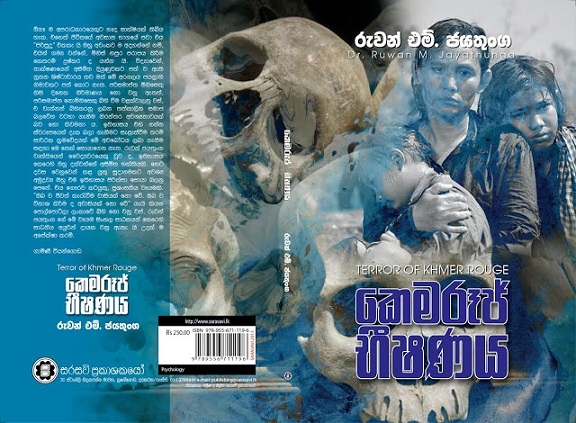
වෛද් රුවන් එම්. ජයතුංග විසින් ලියන ලද War Trauma Experienced by the Sri Lankan Combatants ලිපිය ඇසුරෙනි. පරිවර්තනය S. A.  විකරමසිංහ

මරණයට ඍජුවම මුහුණදෙමින් සිටින අයට එය විකරමාන්විත ක්රියාවක් නොවේ.‘‘එරික් මරියා රිමාකේ-‘‘බටහිර පෙරමුණේ සියල්ල නිසලය’’ කෘතියෙන්

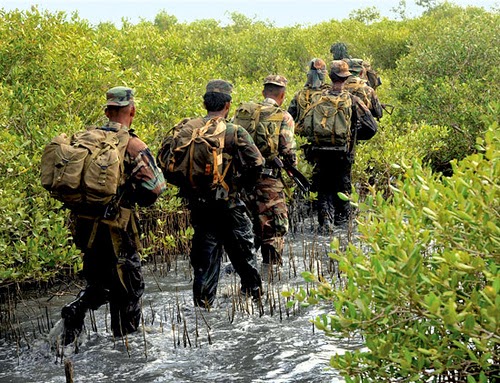
ශ්‍රී ලංකාවේ සන්නද්ධ  ගැටුම් දෙස බලන කල සිවිල් වැසියන්හට යුද්ධයෙන් ඇති වූ බලපෑම හා තදබල ආතතිය පසුගිය වසර කිහිපය තුලදි විශේෂ අවධානයකට ලක්වුවද රණවිරුවන් විසින් අත් දකින ලද යුධ කම්පන තත්ත්වයන් පිළිබඳ ප‍්‍රමාණවත් පරිදි හෙලිදරව් වී නැත. පසුගිය දශක කිහිපය තුළ ප‍්‍රචණ්ඩකාරී ක්‍රියාවන් සිදු කළවුන් ලෙස සමහර අන්තවාදී වාර්තා මගින් රණවිරුවන්ගේ ප‍්‍රතිරූපය අමානුෂිකරණයට පත් කොට ඇත. එහෙත් යුධ කම්පනය අතිවිශාල සමානුපාතයකින් සෙබලූන්ට බලපාන ලද බව අවබෝධ කොටගෙන ඇත්තේ සුලූ කොටසක් පමණකි. සටන්වලදී තම සගයින්  මරණයට පත්වනු දැකීම, ආදී ක්‍රියාවලින් අන්තර්ගත වන බැවින්  යුද්ධය කම්පනසහගත ක්‍රියාවලියකි. යුද කම්පනයට නිරාවරණය වූ යුද සෙබළුන්ට මානසික ආබාධ, ප‍්‍රබල ආතතියට අදාළ රෝග ලක්‍ෂණ, සමාජ සබඳතාවන් පිළිබඳ ගැටලූ හා නොයෙකුත් වෙනත් ගැටළු ඇතිවීමට ඉඩ ඇත.

යුද්ධයෙන් ඔවුන්ට සිදුවූ හානි රණබිමට පමණක් සීමා නොවීය. ඒවා ඔවුන්ගේ ගෘහස්ථ පරිසරයටද පරිණාමය වේ. හමුදා සාමාජිකයන්ගේ මානසික සෞඛ්‍ය ක‍්‍රමානුකූලව තක්සේරු කිරීම සඳහා අධ්‍යයනයක් අවශ්‍ය වන නමුදු පසුගිය වසර 30 තුල සිදුකර ඇත්තේ එබඳු අධ්‍යයන් කිහිපයක් පමණකි.යුද කම්පනය හා කායික සෞඛ්‍යයට අදාල ආබාධ එකිනෙක හා සම්බන්ධ වන බව පර්යේෂණ වලින් හෙලි වී තිබේ. අධිකතර ආතතියට නිරාවරණය වීමේ ප‍්‍රතිඵලයක් ලෙස ඇතිවන කායික සෞඛ්‍ය පිළිබඳ ප‍්‍රශ්න පිළිකා අවදානම් හා සටන් ආතති අතර පවත්නා සහසම්බන්ධතාව පර්යේෂකයින් විසින් පෙන්වා දී ඇත. එබැවින් ඊලාම් යුද්ධ අත්දැකීම් ලැබුවන් සෞඛ්‍යයට අදාළ දැඩි අවදානමකින් යුක්ත වේ. මෙම කරුණු සැලකිල්ලට ගෙන කම්පනය නිසා ඇතිවන කායික හා මානසික ගැටලූ අවම කරගනු පිණිස සෞඛ්‍ය බලධාරීන් විසින් අවශ්‍ය පියවර ගත යුතුය.

යුද්ධයෙන් සිදුවූ මුලූ මානසික බලපෑම පිළිබඳව තක්සේරු කිරීමට උගහට වුවද, යුද්ධයෙන් ඇති වූ මානසික ආබාධ සුව කිරීම සඳහා පියවර ගත යුතු වේ. ශ‍්‍රී ලංකාවේ ඊලාම් යුද්ධයට සහභාගී වූ රණවිරුවන්ගේ මානසික සෞඛ්‍යයට ඔවුන් දෑසින් දුටු අතිශය ක්ෂිතිමය සිද්ධීන් අති විශාල ලෙස බලපා ඇත.  එම සෙබලූන් අත්දකින පොදු මානසික සෞඛ්‍යයට අදාළ ගැටළු වනුයේ පශ්චාත් කම්පන ආතති අබාධ PTSD හා ඊට සම්බන්ධ මනෝ සමාජීය  අපහසුතාවන්, හා දිවිගලවා ගැනීම, වරදකාරී යයි සිතීම ආදියයි. ශ‍්‍රී ලංකාවේ රණවිරුවන් තුල යුද්ධය හේතුකොට ගෙන ඇතිවූ දිගුකාලීන බලපෑම කුමක්දැයි අපි තවමත් නොදනිමු.
ruwan12011702

ශ‍්‍රී ලංකාවේ සන්නද්ධ හමුදාවන්ගේ කැපවීම හා ධෛර්යය කිසිසේත්ම අවතක්සේරු කළ නොහැකි අතර, ලෝකයේ දීර්ඝතම හා භයානකමවූ සන්නද්ධ ගැටුමක සටන් කල ඔවුහු අන්තිමේදී පැහැදිලි ජයග‍්‍රහණයක් ලබා ගැනීමට සමත් වූහ. එම ජයග‍්‍රහණය ලබා ගැනීම සඳහා ශ‍්‍රී ලංකාවට මිල කල නොහැකි වටිනාකම් පුදකිරීමට සිදු විය. දශක තුනක් තිස්සේ පැවති යුද්ධය හේතුකොටගෙන බොහෝ රණවිරුවන් කායික හා මානසික රෝගීන් බවට පත් විය. එහෙත් අවාසනාවකට මෙන් මොවුන් විසින් කරන ලද කැපකිරීම් සමාජය විසින් ක‍්‍රම ක‍්‍රමයෙන් අමතක කර දමමින් සිටී.

යුද්ධය යන්න වීරක‍්‍රියාවක් ලෙස බොහෝ දෙනෙකු දකිතත්, ඊලාම් යුද්ධයට අදාළව නොකියවුණු වේදනාකාරී කතා දහස් ගණනක් ඇත. සමහර රණවිරුවන් ඔවුන්ගේ කම්පනසහගත කතා අප සමග බෙදාහදාගත් අතර ඒවා මගින් ඔවුන් විසින් විදින ලද දුක්පීඩාවන්ගේ දැවැන්තභාවය හෙලිවේ. ශ‍්‍රී ලංකාවේ රණවිරුවන්ගේ සටන් සම්බන්ධ වූ කම්පනකාරී ස්වභාවයේ සත්‍යතාවද ඉන් නියෝජනය කෙරේ.

වඩමාරච්චි මෙහෙයුම තුලදී මානසික රෝගීභාවයට පත්වුවන්,

‘‘විමුක්ති මෙහෙයුමOperation Liberation නොහොත් වඩමාරච්චි මෙහෙයුම දියත් කරන ලද්දේ 1987 දීය. එය ශ‍්‍රී ලංකාව තුල සිදුවූ ප‍්‍රථම විශාලතම හමුදා මෙහෙයුමයි.  මෙම මෙහෙයුමට 8000ක් පමණ සෙබලූන් සහභාගී වන ලදි. LTTE ට එරෙහිව මෙම හමුදා මෙහෙයුමට අණ දෙන ලද්දේ ශ‍්‍රී ලංකාවේ යුද හමුදාව තුල සිටි ඉතාම ජනප‍්‍රිය හා ප‍්‍රචලිත නිලධාරියෙකු වූ ජනරාල් ඩෙන්සිල් කොබ්බෑකඩුව විසිනි. මෙම කි‍්‍රයාන්විතය සිදුවී දැනට වසර 21 ක් පමණ ගතවී ඇති අතර, බොහෝ දෙනෙකුට මෙම යුධ මෙහෙයුම අමතක වී ඇත. මේවන තුරුම ශ‍්‍රී ලංකාවේ ප‍්‍රථම හමුදා කි‍්‍රයාන්විතය පිළිබඳව හා ඊට ආනුශංගිකව සිදුවූ මානසික බලපෑම් විද්්‍යානුකූලව අධ්‍යයනය කොට නැත.

කෝප්රල් KS යනු ‘‘ඔපරේෂන් ලිබරේෂන්’’ නිසා මානසික රෝගී භාවයට පත්වු එක් පුද්ගලයෙකි. සටන්වදින අතරතුර ඔහු බොහෝ ආතතින්වලට මුහුණදුන්නේය. ඔහු කායිකාව හා මානසිකව ද දැඩිලෙස වෙෙහෙසට පත්විය. වසර කිහිපයක්ම යුද හමුදාවේ සේවය කිරීමේදී කෝප්රල් KS බොහෝ කම්පනකාරී සිද්ධීන් දුටුවේය. ඔහු රාත‍්‍රී බියකරු සිහින දැකීම සිතුවිලි බලාත්කාරයෙන් සිතට ඇතුලූවීම අධික සංවේදීතාව ආදී රෝග ලක්ෂන වලින් පෙලේ. ඔහුගේ කම්පන අත්දැකීමට අදළ පුද්ගලයින් හා ස්ථාන මගහැරිමට පටන්ගත් අතර, සංවේදීභාවයෙන් තොරබවට පත්විය. 2003 වර්ෂයේදී කෝප‍්‍රල් KS  පශ්චාත් කම්පන ආතති අබාධයෙන් PTSD පෙලෙන බවට රෝග විනිශ්චය කරන ලදී තමාගේ වත්මන් චිත්තවේගී හා කායික අපහසුතවන් සම්බන්ධව කෝප‍්‍රල්්ං36විස්තර කරනුයේ මෙසේය :

1987 වඩමාරච්චි මෙහෙයුමට සම්බන්ධ වූ එක් සෙබලෙකි මම. අපගේ ප‍්‍රධාන ඉලක්කය වූයේ යාපනේ අධ_ද්වීපය නිදහස් කොටගනLTTEඅල්ලාගෙන තිබූ ස්ථාන විනාශ කර දැමීමයයි. අප තොන්ඩමනාරු පාලම අසලට පැමිණෙන විට පුපුරන ද්‍රව්‍ය යොදාගනිමින් ඛඔඔෑ විසින් පාලම පුපුරුවා හැර තිබුනි. අප ඉදිරියට ගමන් කලේ ඉතා සෙමිනි. මර උගුලක් :පුපුරා යාමෙන් අප සමග ගිය එක් සෙබලෙකු මා ඉදිරියේම ජිවිතක්‍ෂයට පත් විය. ඔහුගේ ලේ තැවරුණු මුහුණ මට තවමත් මතකට නැගේ. එය දැඩි වේදනාකාරී සිද්ධියක් විය.

මෙම සිද්ධියෙන් මා අතිශය සන්ත‍්‍රාශයට පත් වූ බව නොකිවමනාය. නමුදු නිල ඇඳුම ඇන්ද ද මා ද මිනිසෙකු වන බැවිනි. මරණ හා විනාශවීම් දකිත්ම මා ඉමහත්සේ සසල විය. වසර ගණනාවකට පසුව වුවද මට ඒ සිද්ධීන් සිහිනෙන් පෙනේ. එම බියකරු සිහින පෙනීම වලක්වනු පිණිස මා මද්‍යසාර පානය කොට නින්දට යාමට පුරුදු වූයෙමි. කිසිදු උස් ශබ්දයක් මට දරාගත නොහැකි විය. මා දැඩි භීතියකින් පෙලූනු අතර, මගේ හෘදය ස්පන්දන වේගය ඉතාම වේගවත් බවට පත්විය. අතීත සිද්ධින් ගැන නොසිතා සිටීමට මම බොහෝ විට උත්සාහ දරමි. රූපවාහිනිය නරඹන විට සටන්වලට අදාළ කතාවක් හෝ චිතුපටයක් දුටුවේ නම් මම එය කි‍්‍රයාවිරහිත කරමි. පසුගිය සිද්ධින් විශේෂයෙන් යුද්ධයට අදාළ සිද්ධින් ගැන කතා කිරිමට මම ඉතා අපි‍්‍රය කරමි.

මාගේ සිරුරේ දැන් කිසිදු ශක්තියක් නැත. මගේ සන්ධි රුදා දේ. මට සැතපුමක් දුර හෝ ගමන් කල නොහැකිය. මා අකාලයේ වියපත්ව ඇත. මගේ මනස දොම්නස්සහගත සිතුවිලි වලින් පිරී පවතී. සතුට යන හැඟීම මා අසලකවත් නැත. වසර ගණනාවක් තුල මා ප‍්‍රීතිදායක හැගීම් අත්දැක නැත.

මට කිසිවකට අවධානය යොමු කළ නොහැකි අතර, අමතක වනසුළු ස්වභාවයක්ද පවතී. එකම ඛණ්ඩයක සේවය කළ මගේ සෙබල සහයින්ගේ නම් පවා මට අමතකය. විටෙක ජීවත්වීමේ ඵලක් නැතැයි මට සිතේ. දැඩිකෝපය නිසා පවුලේ සාමාජිකයින් මා මගහරී. මුල් කාලයේදී මෙන් නොව දැන් මට තරහව පාලනය කොටගත නොහැකිය. මා නොඉවනසුළු කිසිදු හැඟිමකින් තොර පුද්ගලයෙකු බවට පත්ව ඇත. අවස්ථා කිහිපයකදී මේ ලෝකයෙන් තුරන් විමට මම කල්පනා කළෙමි. එහෙත් මා අදහස දහමට අනුව එය පාපයකි. එබැවනි සියදිවි නසාගැනීමේ අදහස මවිසින් මර්දනය කොටගෙන ඇත.

N නම් සෙබලා හා ‘‘දිවි ගලවා ගැනීමේ වරදකාරී හැඟීම’’(survival guilt )

සටනේ යෙදී සිටියදී තම මිතුරෙකු මිය යාම නිසා යුද අත්දැකීම් බහුල සෙබළුන් තුල විෂාදියට අදාළ වඩාත් ඉහල ප‍්‍රවණතාවයක් පවතී. දිවිරැුකගැනීමට අදාලව තමන් වරදකරුවෙකුයි සිතීම, විශේෂයෙන්ම අවධානයට යොමු වියයුතු රෝග ලක්ෂනයකි. සාමාන්‍යනේ අනෙකුත් යුද සාමාජිකයන් විශාල ලෙස බිලිගන්නා ආපදාවකින් වාසනාවන්ත ලෙස දිවිරැුකගන්නා පුද්ගලයින් විස්තර කිරීම සඳහා යොදා ගන්නා යෙදුමකි, ‘‘දිවි ගලවා ගැනිමට අදළ වරදකාරී හැඟීම’’ යන්න, අතාර්තික මට්ටමකින් මෙම පුද්ගලයින් මරණයේ හස්තයෙන් මිදීම දෙස වේදනාවෙන් බලයි.

N නම් රණවිරුවා යනු දිවිගලවා ගැනීම පිළිබඳව වරදකාරී හැගීමක් නිසා බොහෝ සේ කැළඹී සිටි පුද්ගලයෙකි. ඔහු 1992 දී යුධ හමුදාවට බැදී උතුරේ සේවය කළේය. ගැටුමේදී සටන්වැදී සිටින විට පුනානි දුම්රිය ස්ථානයදී ඔහුගේ ඇස් ඉදිරිපිටදීම ඔහුගේ සගයාට වෙඩි තබන ලදී. සගයා බිම ඇද වැටුනු අතර ඔහුට සිහසුන් නැතිවිය. තම සගයාට උදව් කිරීමට N ට අවශ්‍ය වූ නමුත් දරුණු වෙඩි හුවමාරුවීම් නිසා ඔහුට සගයා වෙත ලඟාවිය නොහැකි විය. අනෙකුත් සෙබලූන්ද සමග ඔහු සතුරාට පහරදී අන්තිමේදී සිය සගයා වෙත ලඟාවිය. එහෙත් එවිට එහු මියගොස් සිටියේය. මෙම සිද්ධිය නිමා ඔහු තදින් කම්පාවට පත්විය. තම සහයාට උපකාර කළ නොහැකි වීම පිළිබඳව ඔහුගේ සිතෙහි වරදකාරී බවක් හට ගත්තේය.

1997 වන විට ඔහු නිතර නිතර හිසරදයෙන් පෙලූනේය. ඔහුගේ මියගිය මිතුරාව ආවර්ජනය වීම හා සැලකිය යුතු විෂාදියක්ද පෙන්නුම් කළේය. ඔහු ඉක්මනින් කුපිත වීමේ ප‍්‍රතික‍්‍රියාවක් පෙන්නුම් කලේය. N නම් මෙම යුද සෙබලා හමුදා රාජකාරී සම්බන්ධව අසීරුවට පත්වු අතර හමුදාවට අදාල තත්ත්වයන් මගහැරිමට ඔහුට අවශ්‍ය විය. 2003 වසරේදී ඔහුව කොළඹ යුද හමුදා රෝහලට යොමු කරන ලද අතර Depression ආබාධය ඇති බවට හදුනා ගන්නා ලදී. මනොචිකිත්සක ප‍්‍රතිකාර    සහ  ඖෂධ ප‍්‍රතිකාර දුන් පසුව ඔහුගේ තත්ත්වය යහපත් අතර හැරිනි. 2005 වන විට බොහෝ Depression රෝග ලක්ෂණ වලින් ඔහු මිදුනි. සංජානනමය ප‍්‍රතිසැකසීමකින් පසුව ඔහුට සැඟවුනු සත්‍යය දැනගැනීමේ හැකියාව ලැබුනු අතර, ඔහුගේ සගයාගේ මරණයට තමා වගකිව නොයුතු බව N නම් රණවිරවා දැන් දනී.

මා ඔහුව පණපිටින් මිහිදන් කලේද?

ස්නයිපර් වෙඩි පහරකින් තම සෙබල සගයා මරණයට පත්වනු දුටු D 26  සෙබලාට දැඩි අනුකම්පාවක් පහල විය. ඔහුගේ සිරුර ආපසු ගෙනඒමේ කිසිම ක‍්‍රමයක් භට කණ්ඩායමට නොවීය. සෙබලාගේ මරණය සහතික වු පසුව ඔහුව වළලා දමන ලෙසට D 26 ට අණ ලැබින. තම මිතුරාගේ සිරුර ස්පර්ශ කළ ඔහුට, මියගිය මිතුරාගේ සිරුර උණුසුම් බවක් දැනුනි. සමහරවිට උතුරේ පවත්නා දැඩි උෂ්ණත්වය නිසා වන්නට ඇත. දුක, ශෝකය මැද්දේම D 26 ක් වලක් කපා තම මිතුරාගේ දේහය මිහිදන් කළේය. පසුව ඔවුහු  ඕමන්තේ බලා ගමන් කළහ. දින කිහියකට පසුව තම මිතුරාව පණපිටින් මිහිදන් කළේය යන ආතර්තික හා වරදකාරී හැගීමක් D 26 ට ඇති විය. ඔහු මෙම වේදනාත්මක හැගීම බොහෝ කල් යනතෙක් යටපත් කොටගෙන සිටියේය. ක‍්‍රමයෙන් එය අසහනකාරී සිතුවිල්ලක් බවට පත්ව, තවදුරටත් ඔහුට දරාගත නොහැකි විය. 2003 වසරේදී දිවිරැුක ගැනීමෙ ්වරදකාරී හැඟිමකුත් සමගම දැඩි විෂාදී ප‍්‍රතික‍්‍රියා දැක්විය. මිත‍්‍රශිලි හා චිකිත්සක මැදිහත්වීමක් සහිතව තර්කානුකුල නොවූ හා සාධාරන නොවූ අදහස් එකට මුණගස්වන ලද තාර්කික සංවේදි චිකිත්සාව Rational Emotive Therapy ඔහුට ලබා දෙන ලදී. චිකිත්සාවට මුහුණ දීමෙන් පසුව D 26සෙබලා දිගු කාලයක් දරාගෙන සිටි කලකිරිම් සහිත මානසික බරෙන් නිදහස් වූයේය.

‘‘මගේ සාජන්ට් මගේ දෑත් මතම මියගියේය’’ TF නම් සාමාන් සෙබලා පවසයි.

මා උපන්නේ පොළොන්නරුවෙ ප‍්‍රදේශයේ කුඩා ගමක වන අතර අපගේ ගම නිරන්තරයෙන් කොටි  ඉලක්කයක් බවට පත්ව තිබින. පිරිමින්, කාන්තාවන් හා කුඩා ළමුන්ද මරා දමමින් කොටි කිහිපවරක්ම අපේ ගමට පහර දුන්නේය. පහරදීම් වලින් අනතුරුව සමූහ අවමගුල් උත්සව පවත්වන ලද අතර ගම්වැසියන්ගෙන් බොහෝ දෙනෙකු මුලූමනින්ම කඩාවැටි ඉතාම අනාරක්ෂිත බවට පත්වූහ. කුඩා දරුවෙකු ලෙසින් මෙම අතිශය භයානක සිදුවිම් මා වටා සිදුවනු මට දැකගත හැකි විය. රාත‍්‍රී කාලයේදී ආරක්ෂක හේතූන් මත අප නිදාගත්තේ නිවෙස් තුල නොව කැලෑ ඇතුලේය. මෙම භයංකාර ගැටලූ විසදීම සඳහා යුද හමුදාවට බැදෙනු මිස අන් මගක් එකල මම නොදුටිමි. එබැවින් හමුදාවට බැදීමේ දැඩි තීරණයට එල්බ සිටියෙමි.

මගේ පවුලට බොහෝ මූල්‍යමය අපහසුතාවන්ටද මුහුණ දිමට සිදුවූ අතර එය මගේ අධ්‍යාපනයටද බලපෑවේය. මට තවදුරටත් අධ්‍යපනයේ යෙදිය නොහැකි වූ අතර, මම යුද හමුදාවට බැදුනෙමි.

1997 වසරේදී මා ‘‘ජයසිකුරු’’ ක්‍රියාන්විතයට සහභාගි වූ අතර මාන්කුලම් මාර්ගය අත්පත් කරගන්නා ලෙස අපට අණ ලැබුනි. අපි සතුරා සමග මුහුණට මුහුණලා සටන් කළෙමු. වෙඩිහුවමාරුව පැය 3 ක පමණ කාලයක් පැවතින. කමාන්ඩෝ ඒකකයක් අපගේ සහායට පැමිණි අතර තවදුරටත් ඉදිරියට ගමන් කිරීමට අපට හැකිවිය. මගේ අධිකාරී නොලත් නිලධාරියා හා මගේ ගුරුවරයා වූ සාජන්ට් KK මා පිටුපසින් විය. බොහෝ සටන් ශිල්ප ක‍්‍රම මට කියාදුන්නේ ඔහුය. අප සැමවිටම සතුරා සමග සටන් කලේ එකටමය. මා ඔහුව ආරක්ෂා කළ අතර ඔහු මාව ආරක්ෂා කලේය. වසර කීපයක් තිස්සේ දෙදෙනාම වාසනාවන්තයින් විය. කෙසේ වෙතත් මාන්කුලම්වලදී ඔහුට වෙඩි වදින ලදී. වැදුනු මුනිස්සම හේතුවෙන් ඔහුගේ තුවාලයෙන් බෙහෙවින් ලේ ගලමිනි තිබින. ඔහුව ඉවත්කිරීමට මම උපකාරී වූයෙමි. ඔහු ජිවිතය ලැබෙන ලෙස යාඥා කරමින් මම ඔහු ඔසවාගෙන ගියෙමි. ඔහුගේ හුස්ම වැටීම කෙටි වන්නට පටන් ගති. මට මධ්‍යස්ථානයට යාගත නොහැකි විය. අතරමගදී ඔහු මගේ දෑත් මතම මිය ගියේය.

ඔහුගේ මරණයෙන් පසුව ඔහු බේරා නොගන්නා ලද්දේයැයි මගේ හෘද සාක්‍ෂිය මට දොස් කියන්නට පටන් ගති. මට ඉතාම වරදකාරී හැඟිමක් ඇති විය. ඔහුව නියමිත වේලාවට වෛද්‍ය මධ්‍යස්ථානයට ගෙනයාමට මට පුළුවන් වූයේ නම් මට ඔහුගේ ජිවිතය බේරා ගැනීමට තිබුනි. එහෙත් මා ප‍්‍රමාද වූවා වැඩිය සාජන්ට්KK මියගියේය. මෙම වරදකාරී හැගීමෙන් හා සටන් ආශ‍්‍රිත බියකරු සිහින දැැකිම හා විවිධ අමිහිරි මතකයන් සිතට බලෙන් ඇතුලුවිම ආදි දෙයින් මා කරදයට පත්විය. මගේ ජිවිතය එක තැන නැචතූනාක්් මෙන් දැනින. මා ගැටුම්කාරි සිද්ධ්වලට අදාල දුක්මුසු හා ජුගුෂ්සාජනක හැඟීම්චලින් පිරිගියේය.මෙම ප‍්‍රශ්න සියල්ල හේතු කොට මා දැඩි කලකිරිමකට පත්ව, වෙඩිතබාගෙන දිවි හානිකොට මෙම පීඩාව දුරු කිරිමට සිතුවෙමි.කිසියම් කෙනෙකු හෝ කිසියම් බලවේගයක් විසින් මා බේරගන්නා ලද අතර ජීවිතය දෙසට පාර පෙන්වා දුනි.නැවත මම ආලෝකය දිටිමි.

(TF නම් සෙබලාට විෂාදියට අදාල   තත්ත්වය ඇති බව සොයා ගන්නා ලදි.  ප‍්‍රතිකාර වලින් පසුව ඔහුට සුවය ලබා ගැනීමට හැකිවිය. දිගු කාලයක් තිස්සේ ඔහුට වදදුන් වරදකාරී හැඟීමෙක් ඔහු නිදහස් විය. දැන් ඔහු අවි ආයුධ නොමැතිව ඔහුගේ ඛණ්ඩයේ සැහැල්ලූ වැඩරාජකාරී වල යෙදී සිටී.)

BN34 රයිෆල්කරු 

තමන්ගේ කතාව පහත දැක්වෙන අන්දමට දිග හරිමින් BN 34 රයිෆල්කරු පවසන්නේ තමා යාල්දේවි මෙහෙයුමේදී අනතුරට භාජනය වු බවයි.

‘‘…………….. යාල්දේවි මෙහෙයුම මගේ ප‍්‍රථම සටන් අත්දැකීම විය. අපි ධෛර්යයෙන් යුතුව සතුරාට මුහුණ දුන්නෙමු. එහිදී මම දැඩි කම්පනකාරී සිද්ධි දුටුවෙමි. අප ශෝකයට පත්කරමින් සෙබල සගයින් අපගේ නෙත් ඉදිරියේ මරු වැළදගන්තේය. එක් අවස්ථාවකදී සතුරා අප නොසිතන අන්දමින් පහර දුන් අතර අපි විසිරී සිටියෙමු. මා වලකට බැස මුලූ රාත‍්‍රියම එහි ගත කළෙමි. එය දැඩි කළුවර සහිත රාත‍්‍රියක් විය. අපගේ බන්කරවලින් සතුරා ආයුධ එක්රැුස් කරගනු මම දුටුවෙමි. මා තනිවී සිටි අතර ජිවිතය ගැන බියක් දැනුනි. සතුරා සතුව කිසිදු දයානුකම්පාවක් නැති බව දැන සිටියෙමි. අත් පා කපා දමා තිබුණු සෙබල මළසිරුරු මාදැක ඇත්තේය. මා අල්ලාගතහොත් මටද ඒ ඉරණම අත්වනු ඇතැයි මම කල්පනා කළෙමි. එය ඉතාම බියකරු අදහසක් විය. මගේ මළගම සම්බන්ධ මානසික චිත‍්‍ර වැටුනු අතර දෙමාපියන් හඩමින් සිටින ආකාරයද දුටුවෙමි. සතුරා විසින් අල්ලාගෙනමගේ ශරීරාංග ෙඡ්දනය කිරීමට ඉඩදිමට මට උවමනා නොවීය.

ඒ මුලූ රාත‍්‍රිය පුරාම මා ජීවිතය වෙනුවෙන් යාඥා කළ අතර උදෑසන පහන් වන විට අතිරේක බලසේනාවක් පැමිණ මා බේරාගන්නා ලදී. මා රෝහලට රැුගෙන යන ලදී. කායික අනතුරු සිදු නොවුවද මගේ මනසට ඉතා තදින් හානිවී තිබින. කෙසේ වෙතත් වෛද්‍යවරුන් පවසා සිටියේ මා හොඳින් සිටින බවයි. කිසියම් දෝෂයක් මා තුල තිබෙන බව මට හැඟුණි. මා නැවත යුදපිටියට යවන ලදී. මට බියකරු හැඟිම් දැනුනු අතර සෑම රාත‍්‍රියකම එකම බියජනක සිහිනයක් දුටුවෙමි. වලක සිරවි සිටි මා වටකරගෙන සතුරන් සිටි ආකාරයක් මට දර්ශනය විය. මගේ සිතේ බිය හා අකමැත්ත තිබුනද රණවිරුවකුගෙන් බලාපොරොත්තු වූ රාජකාරිය මම ඉටු කළෙමි. මගේ මානසික සෞඛ්‍ය පහතවැටෙමින් තිබූ අතර මට කිසිදු ගැලවීමක් නොතිබින. අන්තිමේදී මම හමුදාවෙන් පැන යාමට තීරණය කළෙමි.

මා ගෙදර ගියේ මුලූමනින්ම වෙනස්වු පුද්ගලයෙකු ලෙසිනි. යෞවනයේ අහිංසකත්වය හා පවුලේ සාමාජිකයන් කෙරේ තිබි ආදරය නැතිවී ගොස් තිබින. ඔවුන් මා දුටුවේ බියටපත් කිසිදු හැගීමක් නැති තැනැත්කෙු ලෙසිනි. මගේ සිරුරට කිසියම් භූතාවේෂයක් ඇතුලූ වී ඇති බව සැකකල දෙමව්පියෝ මා සුවකරනු පිණිස දුෂ්ට ආත්මයක් පලවා හරින පැරණි පිළිවෙතක් වන තොවිලයක් කිරිමට පවා පෙළඹුනහ. එහෙත් ඉන් ඵලක් නොවීය. මගේ මතකය අඩුවී යාමට පටන්ගත් අතර මට නිදාගත නොහැකි විය. රාත‍්‍රී බියකරු සිහින වලින් මා විනාශයේ කෙලවරටම ගෙන යන ලදී.

‘‘මාගේ පිටස්තර භාවයේ හැඟීම නැතිවේය යන බලාපොරොත්තුවෙන් මගේ පවුලේ අය මට විවාහයක් සූදානම් කළේය. මගේ විවාහයෙන් පසුව මම නැවත රාජකාරියට ගියෙමි. එහෙත් මා හුදෙකලාවූ සොල්දාදුවෙකු බවට පත්විය. හමුදා රාජකාරි කිරීමේදී මා කංසාවට පත්විය. සතුරු පහරදීම් සිදුවේදෝයි මා තුල දැඩි භීතියක් ඇතිවූ අතර වෙඩි හඩ මා සසල කළේය.

මාස ගණනාවක් යාපනේ සේවය කිරීමෙන් පසුව මම නැවත නිවෙස බලා ගියෙමි. කැලයේ එතරම් කල් සටන් කල පසුව ලද විවේකය ගැන මට සතුටු සිත් පහල නොවීය. මගේ සංවේදී භාවය මොටවී තිබී අතර තවදුරටත් විවාහ ජීවිතයක් ගැන මගේ උනන්දුවක් නැති විය. මා තව තවත් දරුණු බවට පත්වූ අතර මගේ බිරිදට කායික වදහිංසාද පැමිණ වූයෙමි. මට සුව නින්දක් ලැබිය නොහැකි වූ බැවින් මද්‍යසාර පානයට පුරුදු වූයෙමි. දිවා ? නොබලා මම රහසින් මත්පැන් පානය කළෙමි. එමගින් මා තවත් අයහපත් තත්ත්වයකට පත් විය. එමගින් මා දුෂ්ටයෙකු බවට පත්විය. මගේ බිරිද මට බියවුවාය. මා නිවසට පැමිණි විට ඇය බියෙන් වෙවුලූවාය. මා කෝප වූ විට නිවසේ බඩු භාණ්ඩ විනාශ කළෙමි. කිසිම දෙයකින් මට සහනයක් නොලැබින.

අන්තිමේදී අප විසින් මහත් විශ්වාසය තබා තිබි ජ්‍යෙෂ්ඨ නිලධාරියෙකු සමග කතා කිරීමට මම තීරණය කළෙමි. එම නිලධාරියා මට ඇහුම්කන්දී මනෝචිකිත්සාවන් ලබාදීමට උදව් උපකාර කළේය. නේවාසික රෝගියෙකු ලෙස සති තුනක් කොළඹ යුද හමුදා රෝහලේ මනෝචිකිත්සක ඒකකයේ මා හට ප‍්‍රතිකාර ලබා දෙන ලදී. පසුව ඔවුහු මා සායනයටද කැඳවා ප‍්‍රතිකාර ලබා දුන්හ. දිගු කාලයක් තිස්සේ මා අත්විඳි දැඩි කම්පනයෙන් මිදීමට වෛද්‍ය ප‍්‍රතිකාර හා උපදේශනය උපකාරී විය. අද වන විට මා මත්පැන් අනිසි ලෙස භාවිත නොකරන මගේ පවුලට ආදරය කරන කෙනෙකි. මා ජීවිතය සතුටින් ගත කරන අතර පසුගිය මතකයන් සමඟ ජීවත් නොවෙමි.

හමුදා අවමඟුල් උත්සවයනට සහභාගී විමට අකමැති වු යුද සෙබලා

 පහත දැක්වෙන අන්දමට තම හමුදා ජීවිතය ගැන විස්තර කළ ලාන්ස් කෝපරල් SJ තමන් හමුදා අවමඟුල්වලට සහභාගී වීමට බෙහෙවින් අකමැති බව ප‍්‍රකාශ කළේය.

1987 වර්ෂයේදී පළාලි මූලික කඳවුර අසල පිහිටි කුරැුම්බවසෙඞ්ඩි කඳවුරට මා යවන ලදී. එහිදී මා වෙඩිතැබීමට අදාල පළමු අත්දැකීම ලබා ගනිමි. එම කඳවුරේ වසර 1 1/2 ක පමණ සේවය කිරීමෙන් පසුව මා වැලිඔය කඳවුරට යවන ලදී. මා සිටියේ ඉදිරි ආරක්‍ෂක පෙරමුණේය. වැලිඔය කඳවුරේදී මම ඉතාම භයානක සටනට අදාළ සිද්ධින් දුටුවෙමි. මාගේ සහහෝදර සෙබලූන් මරණයට පත් කරමින් සතුරා අපට පහර දුන්නේය. ඔවුන් මුනිස්සම් සමග දරුණු තුවාල සහිතව බිම වැතිර සිටිනු මම දුටුවෙමි. මළසිරුර එකතුකොට ඒවා මළ සිරුරු බහාලන මලූවලට දැමුවෙමි. මළමිනිසුන්ගේ කොටස් එකතු කරන විට මා දැඩි ශෝකයෙන් හා කම්පාවෙන් ඇළලි ගියේය.

1991 දී මා මෙහෙයුම් නොපවත්නා ප‍්‍රදේශයක සේවය කළද මගේ රාජකාරිය වූයේ කි‍්‍රයාන්විත වලදී මියගිය රණවිරුවන්ගේ අවමගුල් උත්සව වලට සහභාගී වීමය. මෙම හමුදා අවමගුල්වලට සහභාගි වන විට මගේ සිතට යුද පිටිය පිළිබඳ විවිධ චිත‍්‍රයන් ඇතුලූ විය. නෑසියන්ගේ දුක් අදෝනාවන් ඇසෙන විට මගේ හද කම්පා විය. එක් අවමංගල අවස්ථාවකදී මවක් තම මියගිය පුත‍්‍රයා වෙනුවෙන් හඩා වැටෙනු මම දුටුවෙමි. මියගිය රණවිරුවා මා දක්නා ඉතා හොඳ පුද්ගලයෙකි. මවගේ හැඞීම මගේ දෙසවනේ රැුව් පිළිරැුව් දෙන්නට විය. වැලිඔයේදී දැස් විවර කරගෙනම බිම වැටී මියගොස් සිටි මගේ මිතුරු සෙබලූන්ගේ සිරුර මට මැවී පෙනෙන්ට විය. සතිගණනක් තිස්සේ මට නින්දක් නොලැබුණි.

මෙබදු අවමංගල්‍ය උත්සව වලට සහභාගීවීම මම දැඩි සේ අප‍්‍රිය කළෙමි. එහෙත් මගේ රාජකාරිය අනුව එම සහභාගීවීම් අත්‍යවශ්‍ය විය. මට අතීතාවර්ජනයන් ඇතිවූ අතර දැඩි ශෝකයට අදාල සංවේදයක් ඇති විය.

1998 වන විට මට මන්නාරම් දිස්ත‍්‍රික්කයට ස්ථාන මාරුවක් ලැබින. එහිදී බසයක ගමන් ගන්නා අතර මා බිම්බෝම්බයකට ගොදුරු විය. මට තුවාල සිදුවු අතර රෝහල්ගතකොට ප‍්‍රතිකාර ලබාදෙන ලදී. මගේ කායික තුවාල සුව සනීප වුවද මානසිකව ඉන් ඇතිවූ බිය නිරන්තරයෙන්ම මා පෙලීමට පටන් ගත්තේය. මගේ මනස විිවිධ යුද ගැටුම් වලට අදාළ සිද්ධින් වලින්ද හමුදා අවමගුල් උත්සව පිළිබඳ සිද්ධීන් වලින්ද බිම් බෝම්බ පිපිරීම පිළිබඳ මතකයන්ගෙන්ද පිරී ගියේය. මට රාත‍්‍රී බියකරු සිිහින පෙනෙන්ට පටන් ගත් අතර භීතිය පිළිබඳ හැගීම් වලින් මා සිත පිරී ගියේය. මා ඉතා ඉක්මනින් කුපිතවීමට පටන් ගත් අතර, ලිංගිකව අකාර්යක්‍ෂම බවටද පත්විය.

මගේ සිරුර වේදනාවේ උල්පතක් බවට පත්විය. මගේ සිරුරේ සෑම සන්දියක්ම කකියන්නට පටන් ගත්තේය. දරාගත නොහැකි හිසරදය ඇතිවූ විට මට ශබ්ද ඉසිලිය නොහැකි විය. බිම්බෝම්බ අත්දැකීමෙන් පසුව නැවතත් අවමංගල්‍ය රාජකාරී ඉටු කරනු පිණිස මා කි‍්‍රයාන්විතයන් නොපවත්වා ප‍්‍රදේශයකට මාරු කොට යවන ලදී. එයට මම දැඩිසේ අකමැති වීමි. එහෙත් අවාසනාවකට මෙන් ජ්‍යෙෂ්ඨ නිලධාරීහු මගේ දුක්ගැනවිලි වලට සවන් නොදුන්හ. මම තවත් වසර 1 1/2 ක් තිස්සේ එහි සේවය කළෙමි. එම කාල සීමාව තුළදී මගේ රෝගය සීග‍්‍රයෙන් වර්ධනය වූ අතර වරක් හමුදා කඳවුර තුලදි  සියදිවි හානි කර ගැනීමට මම තීරණය කළෙමි. අසාර්ථක වූ එම ප‍්‍රයත්නය නිසා ඛණ්ඩ භාර නිලධාරියා බියට පත් වූ අතර මා රෝහල්ගත කරන ලදී. රෝහලේදී මට ප‍්‍රතිකාර ලබාදී ඖෂධිය ප‍්‍රතිකාර හා මනෝ චිකිත්සක සාහයද ලබාදෙන ලදී. මාස ගණනාවක් ලද ප‍්‍රතිකාර වලින් පසුව මගේ තත්ත්වය දියුණු විය. මේ වන විට මම මෙහෙයුම් නොපවත්නා ප‍්‍රදේශයක සැහැල්ලූ හමුදා රාජකාරී කරමින් සිටිමි. එහෙත් තවමත් මාහට මළසිරුරු හා යුධ ස්මාරකයන් දෙස බැලිය නොහැකි (විශේෂඥ මනෝවෛද්‍ය  නීල් ප‍්‍රනාන්දු විසින් ලාන්ස් කෝප්රල් SJ  ට PTSD තත්ත්වය ඇති බවට රෝග විනිශ්චය කරනු ලදී.(මානසික වශයෙන් දැඩි පීඩනයකට ලක් විය හැකි සිදුවීමකින් පසුව නැගෙන මනෝවිද්‍යානුකූල රෝගී ලක්‍ෂණ, පෙන්නුම් කරන දූරාවලියක් ‛පශ්චාත් ව්‍යසන ක්ලමථ අක්‍රමතාවය (Post Traumatic Stress Disorder) යනුවෙන් හැඳින්වෙයි.(PSTD) යන කෙටි නාමයෙන් හැඳින්වෙන මෙම මානසික තත්ත්වය ව්‍යසනයකට මුහුණ දීමෙන් අනතුරුව ක්‍ෂණිකව හෝ කාලයක් ගතවීමෙන් පසුව හෝ ඇතිවිය හැකිය. කෙසේ වෙතත් එය භීතිය ගෙනෙන පීඩාකාරී හැඟීම් මුසු භයංකර අත්දැකීමකට පසුව ඇතිවන්නකි) ඒ අනුව ඔහුටප‍්‍රතිකාර ලබාදෙන ලදී. පූර්ණ චිකිත්සක කි‍්‍රයාවලියකින් පසුව ඔහුගේ කාංසාව පාදක වූ රෝග ලක්‍ෂණ කැපී පෙනෙන ප‍්‍රමාණයකට අඩු විය.)

සතුරා මගේ බන්කරයට පහරදෙනු සිහිනෙන් දකින බව N 68 නම් සෙබලා පවසයි 

…… 1993 අගෝස්තු මස 24 වෙනි දින සිදුවූ සිදුවීම් වලින් මගේ මතකයන් තවමත් පිරී පවතී. වසර කිහිපයකට පසුව වුවද තවමත් අතිශය බියජනක මතකයන් මගේ මනසේ ඇත. සාමාන්‍යයෙන් දිනපතාම වාගේ මට ඒ සිද්ධිය ආවර්ජනය වන අතර, ඉන් මට දැඩි ශෝකයක් හා සන්තාපයක් හට ගන්නේය.

එම අඳුරු දිනයේ රාත‍්‍රි 12.00 ට මා සිටියේ බන්කරය තුලය මා මුර රාජකාරිය කළ අතර මගේ මිතුරන් දෙදෙනෙක් මදක් විවේක ගත්හ. හදිසියේම මට වෙඩි හඩ ඇසුනි. සතුරා ජානකපුර උතුරු කඳවුරට පහරදෙන බවට අපගේ එක් කෝපරල්වරයෙකු කෑ ගැසීය. මගේ මිතුරන් දෙදෙනා අවදි කොට පරීක්‍ෂාවෙන් සිටින මෙන් පැවසීමි. මිනිත්තු කිහිපයක් අතරතුර LTTE කණ්ඩායමක් අපගේ බන්කරයට පහරදුන්නේය.

අපගේ අසල පිහිටි බන්කරයකින් කෑමොර දීමේ ශබ්ද ඇසුනි. අත් ගේ‍්‍රනේඩයකින් සතුරා එම බන්කරයට පහර දුන් අතර ඔවුන් එය අල්ලා ගන්නේ යැයි මම අනුමාන කළෙමි. එබැවින් අපට සටන් කිරීමට සිදුවූයේ තනිවමය. අප තිදෙනා තුන් පැත්තකින් සතුරාට වෙඩි තැබූවෙමි. ඔවුන්ට අවනත වීමට කිසිසේත්ම අපි නොසිතුවෙමි. සතුරා අප වෙතට පැමිණියේ නොනවතින රැුල්ලක ආකාරයෙනි. මාගේ තුවක්කුවෙන් සතුරන් විශාල සංඛ්‍යාවක් මරා දමමින් සිටියෙමි. මා අසල සිටි එක් මිතුරෙකුට වෙඩි වැදී ඇද වැටුණි. එබැවින් අප දෙදෙනෙකුට පමණක් සතුරාට මුහුණ දීමට සිදුවිය.

කිසිදු විරාමයක් නැතිව අපි ඔවුනට වෙඩි තැබුවෙමු. හදිසියේම ඔවුන් ඍඡුඨ එකකින් මගේ බන්කරයට පහර දුන් අතර එය කඩාගෙන වැටුනේය. විශාල තල්කොටයක් මගේ හිසට පතිත වි මා අඩසිහියට පත්විය. මගේ කන් අගුළු වැටුන් අතර හිසෙන් ලේ ගලන බැව් දැනගතිමි. එහි සිටියහොත් අප මරණයට පත්වන බැව් දැනගතිමු. එබැවින් සුනුවිසුනු වී ගිය බන්කරයෙන් බඩගාගෙන ගොස් කඳවරේ මධ්‍යයට ගියෙමු. අප එදෙසට ගමන් කරන විට බොහෝ LTTE සාමාජිකයින් අප ජීවග‍්‍රහයෙන් අල්ලාගන්නට පැමිණි අතර බේරීම සඳහා අත් ගේ‍්‍රනේඩයක් දමා ගැසුවෙමි. අප දෙදෙනා පමණක් ඉදිරියට යන විට සෙබලූන් කණ්ඩායමක් අප මුණ ගැසුනි. අප නැවත කණ්ඩායම්ගතවි සතුරාට පහර දුනිමු. මෙම පහරදීම් බොහෝ වේලාවක් තිස්සේ පැවතියේය. පාන්දර වන විට අනතුරට පත් බොහෝ දෙනෙකු ඉතිරි කරමින් සතුරා පසු බැස්සේය. මා තුවාල ලබා දැඩි මහන්සියකින් සිටියත්, මගේ ආයුධය අත්නොහැර මගේ සගයින් සමග සටන් කළෙමි. උදෑසන ප‍්‍රතිකාර සඳහා මා රෝහල් ගත කරන ලදී.

හිසට වෙඩි උණ්ඩුයක් වැදීමෙන් පසුව මගේ මිතුරා කොටයක් මෙන් බිම ඇද වැටුනු ආකාරය මට තවමත් සිහිවේ. ඔහු හුස්ම අදිමින් සිටින විට අප සටන් කරමින් සිටි අතර ඔහු කෙරේ අවධානය යොමු කිරීමට වේලාවක් නොවීය. මිනිත්තු කිහිපයකට පසුව ඔහු මියයන්ට ඇත. මෙම මතකයන් රාත‍්‍රි කාලය තිස්සේ මගේ සිතේ හොල්මන් කරයි. මා අඩ නින්දෙන් සිටින විට මට එම ඡුායාවන් පෙනේ. එමෙන්ම මා නිතරම සෝදිසියේ සිටීමටද පෙළඹුනේය. සතුරා මා දෙසට බඩගාමින් පැමිණෙතැයි නිරන්තර සිතුවිල්ලක් හට ගත්තේය. සතුරා RPG එකකින් මට පහර දෙතැයි සිතේ. එවිට මා ඇස් හරින අතර, මගේ හදවත වේගයෙන් කි‍්‍රයාත්මක වන යන්ත‍්‍රයක් මේන් තිගැස්සීමට පටන් ගනි. අනතුරුව පැය කීපයක් යනතෙක්ම මට නින්ද නොයයි. ? තිස්සේ අවදියෙන් සිටින මා හට සටනේදි මියගිය මගේ මිතුරන් ගැන සිහිවේ. ඔවුන් මියයාමත් මා පමණක් දිවි රැුක ගැනිමත් ඉතාම අසාධාරණ බැව් මට හැගේ.

සමහරවිට සිහිනෙන් මට සටනේ සිද්ධීන් පෙනේ. බොහෝ විට සතුරා පහරදෙනවිට මගේ තුවක්කුව හිරවී ප‍්‍රති ප‍්‍රහාර දිය නොහැකිය. සතුරාට වෙඩි තැබිය නොහැකිය. ඔවුන් ටිකෙන් ටික මා වෙතට එයි. මට ඔවුන්ගේ හඩ ඇසේ. දෙමළ බසින් අපට බැන වඳින ඔවුන්ගේ හඩ ද මට ඇසේ. මට කරකියා ගත හැකි දෙයක් නැති විය. කිසිවෙකු ග්‍රෙනේඩයකින් දමා ගසනු මට ඇසේ. මගේ බිය වැඩිවන අතර මම කෑගසමි. එය තවත් එක් බියකරු සිහිනයක් පමණක් බව මා දැනගන්නේ එවිටය.

මගේ පවුලේ උදවිය රාති‍්‍රයේ මොරදීම්වලට දැන් පුරුදු වී ඇත. මට ඇති බිය නම් නින්දෙන් මා ලඟ සිටින කිසිවෙකුට මවිසින් හානි සිදු කරනු ඇද්ද යන්නයි. එබැවින් මා නිදාගන්නා විට මා අසල නොසිටින ලෙස මගේ බිරිදට හා දරුවන්ටද නිතර පවසමි. මගේ ජීවිතය පුදුමාකාර අන්දමින් වෙනස්වි ඇති අතර මා තවදුරටත් කලින් සිටි තැනැත්තා නොවේ. මගේ හැගීම් හිරිවැටී ඇති අතර මියගිය පි‍්‍රය මිතුරන් වෙනුවෙන් මට තවදුරටත් කඳුලූ සැලිය නොහැකිය.

සාමාන් සෙබල DG ගේ කතාව

1997 වසරේදී තල්ලඩි කඳවුර අසලදී ඹඨනම් සෙබලා පිපිරීමකින් අනතුරු ලැබීය. පිපිරීම නිසා ඔහු තුවාල ලද අතර මානසිකව ද විසිරුනු ස්වභාවයක් පෙන්නුම් කලේය. මාස කිහිපයකට පසුව ඔහු බලවත් හිසරදය, නින්ද නොයාම හා භීතිය පිළිබඳ හැඟිම් ගැන ප‍්‍රකාශ කලේය. ක‍්‍රම ක‍්‍රමයෙන් ඔහු PTSD රෝග ලක්‍ෂණ පෙන්නුම් කලේය.

ඔහුට නින්දයාමේ අපහසුතාව තිබි අතර පිපිරීමෙන් සිදුවූ අනතුර පිලිබඳව බියකරු සිහින පෙනෙන්නට විය. ඔහුගේ සිතෙහි බියජනක හැඟීම් තිබී අතර, පිපිරීමේ අනතුරට සම්බන්ධ ස්ථාන හා කතාබහ වලින් මගහැරීමට ඔහුට නිතරම උවමනා විය. ඉතාම කුඩා ශබ්දයකට පවා ඔහු තිගැස්සුනි. ඔහු දැඩිසේ කුපිතවන අතර ඔහුට තරහව පාලනය කොටගත නොහැකිය. ඔහු නිතරම ලිංගික කි‍්‍රයාකාරීත්වයේ විෂමතාවයක් පෙන්නුම් කළ අතර පවුලේ ඇතිවූ කැලඹීමක ප‍්‍රතිඵලයක් ලෙස බිරිද ඔහු හැර ගියාය. පවුලේ ප‍්‍රශ්න හා දරාගත නොහැකි කංසාව හේතු කොටගෙන ඔහු සියදිවි හානිකරගැනිමට උත්සාහ කළේය.

මනෝ චිකිත්සක ප‍්‍රතිකාර සඳහා සෙබලාව යොමු කල පසු දෙන ලදCBT හා EMDR ප‍්‍රතිකාර හරහා ඔහුගේ PTSD රෝග ලක්‍ෂණ අවම කළ හැකි විය. දැන් ඔහුට බියකරු සිහින නොපෙනී නිදාගත හැකි වන අතර බලාත්කාරයෙන් ඇතිවන සිතුවිලි සිතට වද දෙන්නේම නැති තරම්ය. මුලදී මෙන් ඔහු අධිකතර කෝපයට පත්වන්නේ නැත. විනාශකාරී හැසිරීම් වලින් තොරව තමාගේ තරහව පාලනය කර ගැනීමට දැන් ඔහු සමත් වේ. අවසානයේ කල පසු විපරුමකින් හෙලි වුයේ ඔහුගේ බිරිඳ ආපසු පැමිණ, දැන් සෙබල DG ඵලදායී ජීවිතයක් ගත කරන බවයි.

‘‘මම පොළොවේ හාරා තිබූ වලක සැඟවී සිටියෙමි’’ රයිෆල්කරු E 38

1998 සැප්තැම්බර් 27 වන දින මගේ ජීවිතයේ ඉතාම අඳුරු සහගතව ගෙවූ භයානකම පැය කිහිපයක් විය. මා සිටියේ පරන්තන් ප‍්‍රදේශයේ FDL ඉදිරි ආරක්‍ෂක සීමාවේය.LTTE විසින් මගේ බන්කරයට පහර දෙන ලද අතර ඔවුන් අප ලඟටම ඒමට සමත් විය. මගේ බන්කරය සතුරා විසින් අල්ලාගෙන මා මියයන්ට ඇතැයි මගේ මිතුරන් සිතා තිබින. එවිට ඔවුන්ද ඔවුන්ගේ ආයුධ වලින් බන්කරයට පහර දෙන්නට පටන් ගත්තේය. මා සතුරු වෙඩි තැබීම් වලට මෙන්ම මිතුරු වෙඩිතැබීම් වලටද මැදීව සිටියේය. විකල්පයක් නොමැති මා බන්කරය අත්හැරීමට තීරණය කළෙමි. මම ඉදිරි ආරක්‍ෂක සීමාවෙන් ඉවතට බඩගාගෙන ගියෙමි. මම වලක් තුල සැඟවුනෙමි. සතුරාගේ කි‍්‍රයාකාරකම් හා වෙඩි හඩද මට ඇසින. මෙය මගේ අවසානය යැයි මම සිතිමි. සුලූ මොහොතකින් ඔවුන් පැමිණ මා සොයාගෙන මා මරාදැමිම ගැන දෙවරක් නොසිතනු ඇත.

ළමා සොල්දාදුන් බර ආයුධද අතැතිව ඉදිරි ආරක්‍ෂක සීමාව දෙසට ගමන් කරනු දුටුවෙමි. ඔවුන් සමග AK 47තුවක්කු අත රැුඳි කාන්තා සාමාජිකාවන්ද විය. වාසනාවකට මෙන් කිසිවෙකු මා නොදුටු අතර, ඔවුන් කිසිවකු මා වලක් තුළ සැඟවී ඇතැයි නොසිතන්නට ඇත. දරුණු සටන් පවතින බව මට ඇසින. දිගටම වල තුලටම වි සිටීමට සිතුවෙමි. දින කීපයක් තිස්සේම මා එම වල තුල සිරවී සිටියේය. මට ආහාර තිබුනේ නැත. මගේ ජල බෝතලය දෙවන දිනය වන විට හිස් විය. තුන්වන දිනය වන විට මට දැඩි පිපාසයක් දැනී මගේ මුත‍්‍ර‍්‍රා පානය නොකොට බැරිවිය. හතරවෙනි දිනය චන විට වෙනත් විකල්පයක් නොතිබුනෙන් ඉදිරි ආරක්ෂක සීමාව දෙසට යාමට තිරණය කළෙමි.

පරාජිත වු සතුරා කණ්ඩායමෙන් කණ්ඩායම බැගින් පසුබසිනු දුටුවෙමි.මම මුවාවි ඔවුන්ගෙන් සැඟවුනෙමි. එය ඉතා අඳුරු රාති‍්‍රයක් විය. කිසිදු ශබිදයක් නොකළෙමි. ආහාර සහ ඡුලයද නැතිවිමෙන් මා සිටියේ දැැඩි වෙහෙසකාරි තත්වයකය.මා ගමන් කලේ ඉතා සෙමිනි. ඉදිරි ආරක්ෂක සිමාව ලගට පැමිණි විට  වෙඩි  නොවැදිමට මා විසින් ප‍්‍රවෙසම් විය යුතුය. මම කෑගසා මාගේ නම, අංකය හා ඛණ්ඩය කිවෙමි. ඵවිට ඔවුන් පුදුමයට පත්ව මා හදුනා ගත්හ. මා මියගොස් හෝ සතුරා විසින් අල්ලා ගන්න ලදැයි ඔවුන් සිතන්නට ඇත. මා අධිකාරි ලත් නිලධාරියා වෙතට ගෙන යන ලද වු ඔහු මාගේ ධෛර්ය ගැන ප‍්‍රශංසා කළේය. මා ප‍්‍රාතිහාර්යකින් මෙන් මරණයෙන් ගැලවුනි. මා පණපිටින් පැමිණිමට තරම් වාසනාවන්ත විය.

එහෙත් මෙම සතූට පැවති ටික දිනක් පමණි. මව සැඟවී සිටි වල තුල අත්දුටු භීතිය හා හුදකලාව මා පෙලන්නට පටන් ගති. මට විවේක ගත නොහැකි විය. අදෘශ්‍යමාන සතුරෙකු එතැයි යන බලාපොරොත්තුවෙන් ආරක්‍ෂාකාරීව සිටීමට සිදුවිය. දවස් ගත විය. මා තවමත් බියෙන් පසු වෙමි. සැඟවී සිට සතුරාට පහර දීමේ කි‍්‍රයාන්විතයට ගිය විට මා කැළබිල්ලට පත්විය. මා ඉදිරිය බලාගෙන සිටින විට සතුරා මා පිටුපසින් ඇතැයි යන අභ්‍යන්ත හැඟීමක් ඇති වේ. මම පිටුපස බැලීමි. එහෙත් එහි කිසිවෙකු නොවීය. මට මනසේ ඒකාග‍්‍රතාවය පවත්වා ගන්නට නොහැකි විය. එය ඉතාම දරුණු අවුල් සහගත බවට පත් තත්ත්වයක් විය. සතුරා සිටි දැයි හැම දිසාවම බැලිම සිත වසඟයට ගත් දෛනික චර්යාවක් බවට පත් විය.

මගේ හදවන තදින් ස්පන්දනය වන්නට පටන් ගත් අතර, නිතරම මට යම් යම් දේ අමතක විය. කීප අවස්ථාවකදීම මගේ ආයුධ වෙනත් ස්ථානවල අමතකවී දමා ඒම සම්බන්ධයෙන් මගේ ජ්‍යෙෂඨ නිලධාරින්  විසින් මට අවවාද කරන ලදී. රාත‍්‍රී කාලයේදී පුරුද්දක් ලෙස මම අවදියෙන් සිටියෙමි. ඉතාම සුලූ ශබ්දයකදි පවා මගේ හදවන බියජනක හැඟිම් වලින් උතුරා යන්නට විය. මට වේදනා ගෙනදෙමින් මගේ හදවත තදින්ම ගැහෙන්නට පටත් ගති. මට ඉතාම බියකරු සිහින පෙනෙන්නට පටන් ගත්තේය. වලක සිරවී සිටින මා වටකරගෙන සතුරන් සිටින ආකාරයක් මා සිහිනෙන් දුටුවෙමි. නින්දට යාම මම ඉතාම අප‍්‍රිය කළෙමි.

(2001 වර්ෂයේදී විශේෂඥ මනෝවෛද්‍ය නීල් ප‍්‍රනාන්දු විසින් E 38 රයිෆල්කරු PTSD බාධයෙන් පෙලෙන බවට රෝග විනිශ්චය කරන ලදී. ඔහුට ඖෂධ හා මනෝචිකිත්සාව ලබාදෙන ලදී. 2005 අපේ‍්‍රල් 12 වන දින කරන ලද පසු විපරමට අනුව ඔහුව PTSD වලට අදාල බරපතල රෝග ලක්‍ෂණ නොමැති බව දැනගන්නා ලදී. ඔහුගේ නින්ද සාමාන්‍ය අතට හැරුණු අතර තැතිගැනීමේ ප‍්‍රතිකි‍්‍රයාවන් සාමාන්‍ය අතට හැරින. බලෙන් සිතට ඇතුලූවන සිතුවිලි හා අතීතාවර්ජනයන් නිසා ඔහු තවදුරටත් කරදයට පත් නොවිය.)

හුදෙකලාව ජිවත් වූ ලාන්ස් කෝප්රල් BL ගේ කතාව

මා විවාහ වී ඉතා සතුටින් ජීවිතය ගත කරමින් සිටි නමුත් 1990 වසරේදී අනතුරට පත්වීමත් සමග සියල්ල වෙනස් විය. මා සිටියේ මන්නාරමේ තල්ලඩි කඳවුරේය. එහිදි මම දරුණු සටනක් දිටිමි. සෙබලූන් 40 දෙනෙකු පමණ මරා දමමින් LTTE අපට බර ආයුධ වලින් පහර දීමට පටන් ගති. දැඩි දුෂ්කරතා මධ්‍යයේ අපට සතුරාව පරාජය කළ හැකි විය. අපගේ සහෝදර සෙබලූන්ගේ මළ සිරුරු දුටු විට මගේ හදවත හඩා වැටුනි. අප සිටියේ එක පවුලක් මෙන්ය. පහරදීමට ප‍්‍රථම අප එකට ආහාර ගත් අතර යම් සුළු සුළු දෑ සම්බන්ධයෙන් විහිළු තහළු ද කර ගතිමු. එසේ සිටි ඔවුන් සදහටම යන්නට ගොසින්ය. ඔවුන්ගේ ලේ තැවරුණු මළ සිරුරු බහාලූම්වලට දම්වලට දමන විට තම සතුරාට සිතින් සාප කළෙමි.

මෙම සිද්ධියෙන් පසුව මා වඩාත් හුදෙකලා බවට පත්වූ අතර බලාත්කාරයෙන් හිතට නැගෙන හැඟීම් වලින් යුක්ත වීමි. මා පිටස්තරයෙකු බවට පත් විය. මා නිවසට පැමිණි පසු මට සිදුවී ඇත්තේ කුමක්දැයි බිරිද මගෙන් ප‍්‍රශ්න කලාය. කෙසේ වෙතත් මම ඇයට කිසිම දෙයක් නොපැවසුවෙමි. මගේ දුක ඇයට පැවසීමෙන් ඵලක් නොමැත. යුද පිටියේදී සිදුවූ දෑ ඇය කිසිදිනක තේරුම් නොගනු ඇති බැවිනි. එබැවින් මගේ සන්තාපය ද සමග නිශ්ශබ්දව සිටියෙමි. එහෙත් මට තව තවත් ඉක්මනිනින් කුපිත වන තත්ත්වයකට පත් විය.

1996 දී අපි කොඩිකාමම් වෙත ගොස් සතුරාට සැඟව සිට පහර දුන්නෙමු. අපට එහිදී නිසි ආකාරයේ කඳවුරක් නොතිබිනි. අප වාසය කලේ අත්හැර දමන ලද නිවෙස්වලය. ඒවා ෂෙල්වෙඩි වලින් විනාශ වී තිබින. එය එදිරිවාදිකම් පැවති භූමියකි. සතුරා සැමතැනකම සිටියේය. ඔබ අතින් කිසියම් හෝ මුග්ධ කි‍්‍රයාවක් සිදු වුවහොත් ඔබට අනිවාර්යෙන් මළසිරුරු බහුලූවක නිදාගන්නට හැකිවනු ඇත. මගේ ජිවිතය ගැන ද තිබුනේ අස්ථිරභාවයකි. අප සතුරන්ගේ වෙඩි තැබිම් හා මරඋගුල් වලින් වැලකෙමින් දිනෙන් දින දිවි ගෙවීමු.

එක් දිනක් අප අහම්බෙන් සැඟවී පහරදීමට සිටින සතුරු කණ්ඩායමක් වෙත ගමන් කොට ඇත. ඉතාම කිට්ටු පරාසයක සිට සතුරා අපට වෙඩි තැබිය. මෙම ප‍්‍රහාරයෙන් මගේ නෙත් ඉදිරිපිටදීම අපගේ කණ්ඩායමේ 8 දෙනෙකු මිය ගියේය. අපද සතුරාට ප‍්‍රතිප‍්‍රහාර දී අන්තිමේදී ප‍්‍රහාරයෙන් බේරිමට සමත් විය. ඉදිරියට එන සතුරු සේනා හේතු කොට ගෙන අපට මළසිරුරු දමා යාමට සිදු විය. එම මළසිරුරු දමා ඒම සම්බන්ධයෙන් මගේ සිතෙහි තවමත් වරදකාරී හැඟීමක් පවතී. ඇත්තෙන්ම එය ඉතාම බියකරු කාලයක් විය. මෙම කාලසීමාව තුලදී මියගිය රණවිරුවන්ගේ හා LTTE සාමාජිකයන්ගේද මළ සිරුරු රාශියක් මවිසින් දකින ලදී. සමහර සිරුරු කුණුවී හෝ ඒවායේ අවයව කපා දමාද තිබුනි. විශාල කබරගොයින් සමහර මළසිරුරු කා දමනු මම දුටුවෙමි. යුද්ධය තුල නම් කිසිදු විභූතියක් නොමැති බව මා දුටු දර්ශනවලින් මට පසක් විය. වතාවක් මා අපගේ කාර්යමණ්ඩල සාජන්ට්වරයෙකුගේ (ඔහු මා දැන සිටි කෙනෙකි) මළ සිරුරක් දිටිමි. සතුරා විසින් ඔහුගේ දෑස්වලට වෙඩි තබා තිබී අතර දෙනෙත් නොමැති මළ සිරුරක් දැකීම ඉතාම බිය උපදවන සුළු විය. ඔහුගේ අක්‍ෂි ගෝල වෙනුවට වෙඩි පහරින් ලත් ගැඹුරු තුවාල දක්නට ලැබිණ. වසර ගණනාවක් යනතෙක්ම එම දර්ශනය මගේ මනසේ තැන්පත්ව පැවතුනි. මට ඒ පිළිබඳව බියකරු සිහින පවා පෙනෙන්නට පටන්ගත්තේය.

ආපසු ගෙදර පැමිණි පසුව මෙම යුදපිටියේ සිද්ධීන් මගේ සිතේ හොල්මන් කරන්නට පටන් ගත්තේය. මම හුදෙකලාවම සිටීමට උවමනා විය. එතැන එහෙත් සිදුවි ඇත්තේ කුමක්දැයි මගේ බිරිඳට දැනගැනීමට උවමනා විය. මට ලිංගිකව ජීවිතය පිළිබඳ කිසිදු උනන්දුවක් නොවීය. මගේ බිරිඳව මඟහැරිමට වීමි. මා හට වෙනත් අනියම් සබඳතාවයක් ඇතැයි ඈ සැක කළාය. ඇයගේ දෝෂාරෝපණයන් මට ඉවසාගත නොහැකි විය. මා විෂාදියට පත්වූ අතර මට ශබ්ද දරා ගත නොහැකි විය. මගේ දරුවන් සෙල්ලම් කරමින් කෑ ගසන විට මා ඉතාමත් තරහවට පත් විය. මම ඔවුන්ට දැඩි දඩුවම් පැමිණවුයෙමි. මගේ බිරිඳ ඒවාට විරුද්ධ වූ විට ඇයටද පහර දීමට පුරුදු වූයෙමි. මා එක් දිනක් රුපවාහිනි යන්ත‍්‍රය කුඩුපට්ටම් කොට සියලූ දෙනාවම නිවෙසින් පන්නා දැමුවෙමි.

මගේ දරු පවුලද මා සමගම දුක්විදිය. ඉතාම සුළු බහින් බස් වීමකදී පවා මම බිරිඳට පහරදීමට පුරුදු වූයෙමි. මා නිවසේ සිටින විට ඇය අසීරුතාවයට පත් වුනි. මා නපුරු සත්ත්වයෙකි යැයි යන හැගීමෙන් මගේ දරුවන්ද මට බියවිය. මදින් මද මට මගේ පවුල අහිමිවෙමින් පැවතින. මවිසින් කෙරෙන කායික පීඩාවන් වර්ධනය වූ පසුව මගේ බිරිඳ දරුවන්ද රැුගෙන ඇයගේ දෙමාපියන් වෙත ගියාය. මා මුලූමනින්ම තනිවූ අතර මද්්‍යසාර භාවිතයට පුරුදු වූයෙමි.

රාත‍්‍රී කාලයන් තව තවත් කරදරකාරී බවට පත්විය. ගැටුම්කාරී සිද්ධීන් මා හීනෙන් දුටු අතර වේදනාකාරී අවස්ථාවන් සිහිගැන්වින. සමහර අවස්ථාවන්හිදී වෙඩි හඩ, කාලතුවක්කු වෙඩිහඩ හා හෙලිකොප්ටර් යානාවල ශබ්දයද මට ඇසෙන්නට විය. යථාර්ථය හා මායාවන් අතර මා මැදිවිය. හමුදා නිල ඇඳුම් හා වාහන දුටු විට මා හට දැඩි පිළිකුලක් හටගත්තේය. නැවත යුදපිටියට යාම සම්බන්ධයෙන් මම දැඩි බියකට පත්වීමි. බිය යනු කුමක්ද කියාවත් නොදැන සිටි මා දැන් රතිඤ්ඤාවක හඩ වැනි ඉතා සුලූ ශබ්දයකට පවා තැති ගනිමි.

මා තව තවත් විෂාදියට පත්වූ පසු මගේ බිරිද නැවත පැමිණීමට අකමැත්ත පළ කළාය. වෙඩිතබා ගැනීමෙන් මගේ මෙම දුක්විදීම අවසන් කිරීමට මම සිතාගත්තෙමි. හමුදා කදවුරේ වරක් රාජකාරීයේ යෙදී සිටින විට මම, දිවිහානි කර ගැනීම සඳහා අවියක් ගත්තෙමි.  ජ්‍යෙෂ්ඨ නිලධාරියෙක් ඉදිරියට පැන මගේ ආයුධය උදුරගත්තේය. පසුව මා මගේ අණදෙන නිලධාරියා ඉදිරියට පමුණුවන ලදී. හමුදා විනය කඩකිරීමේ චෝදනාවට මට මුහුණ දෙන්නට වෙතැයි මම සිතුවෙමි. මට දඩුවම් පමුණුවනු වෙනුවට ඔවුහු මා හමුදා රෝහලට පිටත් කොට යැවූහ. එහිදී මට ප‍්‍රතිකාර කරන ලද අතර මගේ පවුලේ උදවිය සමග විවෘත සම්මුඛ සාකච්ඡුාවට සහභාගී වීමටද එම කරුණාවන්ත වෛද්‍යවරුන් සූදානම් කරන ලදී. ප‍්‍රතිකාර ලද පසුව මගේ කෝපය පාලනය කර ගැනීමට මට හැකිවිය. සිතට වදදෙන සිතුවිලි හා බියකරු සිහින දැකීම මැකීගිය අතර ක‍්‍රමයෙන් මා ඵලදායී පුද්ගලයෙකු බවට පත් විය. දැන් වසර දෙකකට වඩා කාලයක සිට මා මගේ දරුපවුල සමග ජීවත් වන අතර මා ඔවුන්ට පහරදීමෙන් වැලකුනෙමි.

සටනේ උච්ඡු අවස්ථාවකදී මට මාගේ කටහඩ නැතිව ගියේය. – ලාන්ස් කෝපරල් U 86 

මානසික හේතු නිසා ඇතිවන කතා කිරීමේ අපහසුතාව Psychogenic Aphonia හටගන්නේ  ව්‍යුහාත්මක හෝ ස්නායුවලට සම්බන්ධ හේතු කාරක නිසා නොව මුලූමනින්ම කාංසාව, විෂාදය හෝ ආශ‍්‍රිත, ප‍්‍රතිකි‍්‍රයා ආදී මානසික කි‍්‍රයාවලින් හේතු කොට ගෙනය. මානසිකව හටගන්නා කටහඩ අහිමිවීයාම අවිඥානක මානසික ඝට්ටනයකින් පසුව හටගන්නා රෝගයක් බවට පරිවර්තනය වන රෝග ලක්‍ෂණයකි. ඊලාම් යුද්ධයේදී ඉන්ද්‍රියන් හා සම්බන්ධ කිසිදු සාධකයක් නොමැතිවද තම කටහඩ අහිමිවූ සෙබලූන් බොහෝ දෙනෙකු ඇත. මානසික කටහඩ අහිමිවීමකට තුඩුදුන්, දරාගත නොහැකිවූ, සටන්වලට අදාල විෂාදයට සම්බන්ධ ආතතියක් ඔවුන්ට තිබුණි.

හදුනාගත් PTSD රෝගියෙකු වන ලාන්ස් කොප්රල්U 86 යුද්ධය මැද තම කටහඩ නැතිවී ගිය ආකාරය විස්තර කළේය.

මා යුද හමුදාවට බැදුනේ 1995 දීය. යුද ගැටුම් කිහියකටම මුහුණ දුුන්නෙමි.  පලෙයි කඳවුරේ සේවයට මම 2000 වසරේදී ගියෙමි.මෝටාර් වලින්LTTE පලෙයි කඳවුරට පහර දුන්නේය. මෝටාර් වෙඩි හඩින් මා බිඳවැටුනි. මගේ සිරුර තුල කඩා වැටිමක් ඇති වනු දැනින. ඉදිරියට එන මෝටාර් වලින් වැලකෙන සැම අවස්ථාවකම මට කම්පනය දැනින. අපගේ සෙබලූන් තුවාල ලද අයුරු මම දුටුවෙමි. එක් සොල්දාදුවෙක් මෝටාර් ප‍්‍රහාරයක් නිසා ජීවිතක්‍ෂයට පත්වෙන එක් සිද්ධියක් මම දුටුවෙමි. ඔහුගේ බඩවැල් එලියට ආ අතර සැමතැනකම ලේ විසිරී ගියේය. එය ඉතාම කෲර හා වේදනා සහගත මරණයක් විය. ඉදිරියට එන මෝටාර් සම්බන්ධව පරීක්‍ෂාවෙන් සිටීමට මට සිදුවිය. මෝටාරයක ‘‘සූ’’ ශබ්දය ඇසෙන සැම විටම මම ආවරණය වූයෙමි. ඊලඟ මොහොතේ සිදුවන්නේ කුමක්දැයි මම දැන සිටියෙමි. එම ශබ්දය සමග පැමිණෙන් මෝටාරය තදබල පිපිරීමක් ඇති කරයි. ඔබ පහතට නැඹුරු නොවුවහොත් ඔබට එම කැබලිවලින් අනතරු සිදු වනු ඇත. මා බෙහෙවින් ප‍්‍රවේසම් වූ නමුදු මා එතරම් වාසනාවන්ත නොවීය. වරක් මෝටර් ප‍්‍රහාරයක ප‍්‍රතිඵලයක් ලෙසින් මා සුළු තුවාල ලැබීය. එහි සුන්බුන් මගේ කලවා පසාරු කොටගෙන ගියේය. මා රෝහල්ගත කොට දින කිපයක් ප‍්‍රතිකාර ලබා දෙන ලදී.

පලෙයි අත්දැකීම මා හට ඉතාම බියකරු එකක් විය. මගේ ජිවිතය ගැන මට විශ්වසායක් නොතිබි අතර බොහෝ විට කල්ගත කලේ අවිනිශ්චිත තත්ත්වයක් මතය. කෙසේ වෙතත් දිවි රැුක ගනිමින් පලෙයිවලින් නැවත පැමිණිමට හැකි විය. පසුව මම සාපේක්‍ෂ වශයෙන් ගත් කල සුදුසු වාතාවරණයක සේවය කළෙමි. 2003 වර්ෂයේදී මා පලෙයි සිද්ධින් නැවත අත්දැකීමට පටන් ගත් අතර මා නිතරම බියකරු රාත‍්‍රි සිහින දුටුවේය.

මා මැදියම් රැුයේදී බියෙන් මොරදෙන බැවින් මගේ සහෝදර සෙබලූන් මට කැමැත්තක් නොදැක්විය. මා ගංජා පාවිච්චි කරන්නේ යැයි සමහරු සැක කළහ. එක් රැුයක මා නිදමින් සිටින විට, මා වෙතට එන මෝටාර් එකක් මම දුටුවෙමි. මා උදව් ඉල්ලා කෑ ගැසූ නමුත් කිසිදු ශබ්දයක් මගේ මුවින් පිට නොවීය. මට කතා කර ගත නොහැකි විය. එතැන් පටන් මට කතා කළ නොහැකි වූ අතර මගේ හඩ මට නැතිවිය. (ලාන්ස් කෝපරල් උසති කිහිපයක් යනතුරු අසංවේදීතාවෙන් පෙලූනු අතර ඔහුට භෞතික චිකිත්සාව ලබාදෙන ලදී. මෝහන චිකිත්සාව ද ලබාදීමෙන් අනතුරුව නැවත කටහඩ ලබාගැනීමට ඔහුට හැකි විය. ඔහුගේ  PTSD තත්ත්වය බෙහෝ කලක් පැවතින. ඖෂධ ප‍්‍රතිකාර හා සංජානනමය චර්යාවන්ට අදාල ප‍්‍රතිකාර ක්‍ඊඔ පවත්නා තත්වය අවම කර ගැනිමට ඔහුට උපකාරී විය.)

මා සතුරු සීමාවන් දෙසට ඇවිදගෙන ගොස් සිටියෙමි. – සාමාන් සෙබළ  NL56

‘‘මා ව්‍යාකූල තත්ත්වයකට පත්ව සිටි අතර කරන්නේ කුමක්ද කියාවත් හැඟීමක් නොතිබින. මා සතුරු සීමාවන් දෙසට ඇවිද ගොස් සිටියෙමි. වාසනාවකට මෙන් විශේෂ කාර්ය බලකා කණ්ඩායමක් විසින් මා බේරාගති. ඔවුන් මා සොයා ගන්නා විට යුද අවිය බිම තබා සතුරු සීමාව දෙසට යමින් සිටියෙමි. මගේ ආරක්‍ෂක ස්ථානයෙන් ඉවත්ව ගියේ කෙසේද කියා හෝ T 56 තුවක්කුව බිම දැමුවේ කෙසේද යන්න මට මතක නැත. මා කඳවුරට ගෙන යන ලදුව කර්නල්….. ඉදිරියට පමුණුවන ලදී. පසුව මගේ සේවා ස්ථානය අත්හැර දැමීම හා ආයුධය නැති කිරීම ගැන ඔවුහු මට චෝදනා කළහ. එම වරදට මට තදබල දඩුවම් දෙන ලදී.

(දරාගත නොහැකි යුදගැටුමට අදාළ ආතතිය නිසා සාමාන්‍ය සෙබළීණ මනෝ ප‍්‍රතිසංවේදී :Dissociative Fugue භාවයකට පත්ව සිටියේය. එදින සිදුවු දේ පිළිබඳව ඔහුට යලි සිහි නගා ගත නොහැකි විය. නැදුන්කර්නියේ සේවය කරන විට කාලතුවක්කු වෙඩිතැබීම් නිසා සෙබලූන් හතර දෙනෙකු ජිවිතක්‍ෂයට පත්වෙනු ඔහු දුටුවේය. ඔවුන්ගේ සිරුරු කැබලි වලට කැඞී විසිවී ගිය ආකාරය දුටු ඔහු දැඩි සේ කම්පනයට පත් විය. මෙම සිද්ධියෙන් පසුව ඔහු ක‍්‍රමයෙන් සටනට අදාළ PTSD තත්වයේ ගොදුරක් බවට පත්ව සිටියද එය තීර්ණය නොවී හා එයට ප‍්‍රතිකාර නොකර තත්ත්වයක තිබින. ඔහුට සමාජයෙන් වෙන්වි සිටීමේ ලක්ෂණ ද තිබින. කිහිප අවස්ථාවක් ඔහු ප‍්‍රතිසංවේදී තත්ත්වයක සිට අන්තිමේදී ඔහු සතුරු සීමාවන් කරා ගමන් කොට ඇත. ඔහුව බේරා ගන්නා ලද පසුව සාමාන්‍ය සෙබළ  NL56 ව කොළඹ යුද හමුදා රෝහලේ මනෝචිකිත්සක ප‍්‍රතිකාර මධ්‍යස්ථානයට යොමු කරන ලදී. එහිදී ඔහු මනෝ චිකිත්සක පරීක්‍ෂාවන් පෙළකට හා සන්නිවේදන පරීක්‍ෂා ක‍්‍රමයක පාත‍්‍ර කරන ලදී. ඔහුට PTSD ත්ත්වය ඇති බව සොයා ගන්නා ලදී. ඔහුටShort Term Psycho dynamic Psychotherapy චිකිත්සාව ලබා දෙන ලදී. මෙම ප‍්‍රතිකාරයත් සමග ඔහුගේ මානසික තත්ත්වය දියුණු වීමට පටන් ගති)

යුද සිරකරුවන්

තවමත් මානසික කැලලි සහිතව ජිවත්වන ඊලාම් යුදයේ යුද සිරකරුවන් රාශියක් අප අතර ජීවත් වේ. 1950 දි Ferber Harlow විසින් විස්තර කනර ලද DDD Syndrome (DDD සහ ලක්‍ෂයෙන් ) ඔවුහු පීඩා විදිති.DDD සහ ලක්‍ෂ්‍යනය යනු ාැදුර්වලකම, පරාජිත බව හා සංතාපය යන්නයි. යුදසිරකරුවන් බොහෝ විට විෂාදිය, උදාසීන බව, සැකය හා බිය යන ලක්‍ෂණ පෙන්නුම් කරයි. සමහරුන්ට තද බල ලෙස අමතක වීම් සිදුවන අතර තවමත් ඔවුන්ගේ යුධ සිරකරුව සිටි කාලය පිලිබඳ වරදකාරී හැගීමකින් පසුවේ.

ලාන්ස් කෝපරල් U වසර 17 ක් ශ‍්‍රී ලංකා යුද හමුදාවේ සේවය කලේය. ‘‘බලවේගය’’ මෙහෙයුමේදී ඔහුගේ වම් පාදයට වෙඩි වැදීම නිසා සිදුවූ තුවාලයෙන් ඔහුට ඇවිදිය නොහැකි විය. සතුරා ඉදිරියට එන විට ඔහුට ඇවිදගත නොහැකි වූයෙන් ඔහු සිරකාරයෙකු බවට පත්විය. ඔහු අල්ලාගත් පසු දැඩි ලෙස පහර දෙන ලද අතර, ඔහුව මරා දමන බවට ද තර්ජනය කරන ලදී. එහෙත්LTTE නායකයකු විසින් ඔහුට පහරදීම නතර කොට වෛද්‍ය ප‍්‍රතිකාර සඳහා යවන ලදි.

වෛද්‍ය ප‍්‍රතිකාර නිමාවු පසු ඔහුව දැඩි ප‍්‍රශ්න කිරීමේ කි‍්‍රයාවලියට යටත් කරන ලදී. ඔහුගේ කඳවුර හා එහි ඇතුලත නිම_ානය හා ආරක්‍ෂක ස්ථාන ගැන කරුණු දැනගනු පිණිස ඔහුව කෲර වධහිංසා වලට භාජනය කරනලදී. ඔහුගේ අත්වලට මාංචු දමා වේදනාකාරී ඉරියව්වලින් තමන ලදී. බොහෝ විට මුරකරුවන් ඔහුට කායික වධහිංසා දී ඔහුව අවමානයට ලක් කලේය. එහෙත් සමහර කොටි සාමාජිකයින් ඔහුව කරුණාවන්ත වී ආහාර ද ගෙනවිත් දුන් බව ලාන්ස් කෝප්රල් ඹ ප‍්‍රකාශ කළේය.

1991 ජුලි මස සිට 1995 මාර්තු දක්වා, කායික වධ හිංසාවන්, අවමන් කිරීම් හා අවිනිශ්චිතතාවයන්ට මුහුණ දෙමින් ඔහුගේ ජීවිතය යුද සිරකරුවෙකු ලෙස ගත කළේය. ඔහුව තවත්් සිරකරුවන් 40 දෙනෙකු සමග රඳවා තබන ලදී. ඔවුන්ට එහා මෙහා වීමටවත් ඉඩ නොතිබුණි. ඔවුන්ට ස්නානය කිරීමට ඉඩ ලැබුනේ සති දෙකකට එක් වරක් පමණි. සමහරවිට ඊටත් වඩා දිගු කළක් හිදීමට සිදුවිය. බොහෝ දෙනෙකු සමේ රෝගවලින් පෙලූනි. ඔහුගේ ආහාර දෛනිකව ලබා නොදෙන ලදී. මෙම දැරිය නොහැකි තත්ත්වයන්ගේන පසුව සිරකරුවන් විසින් උපවාසයක් අරඹන ලද අතර අන්තිමේදී ජාත්‍යන්තර රතුකුරුස කමිටුවේ මැදිහත්වීමෙන් 1995 මාර්තු මස නිදහස් කරන ලදී.

ලාන්ස් කෝප්රල් U නිදහස් මිනිසෙකු බවට පත්වුවද ඔහු විස්තර කළ නොහැකි බියකින් නිතරම පෙලූනි. ඔහුගේ යුද සිරකරු කාලය පිලිබඳ මතකයන් දැඩිසේ ඔහු පෙලීය. සමහර රාත‍්‍රී කාලවලදී තමන් තවමත් LTTE හිර කුටියක සිටීය යන හැඟීමෙන් යුතුව ඔහු බියෙන් අවදි විය. ඔහු විෂාදියට පත්වූ අතර වරදකාරී හැඟීම් වලින් ඔහු වටවිය. රාති‍්‍ර බියකරු සිහින දැකීම වලකනු පිණිස ඔහු මත්පැන් පානයට පුරුදු විය. මත්පැන් පානය වැඩිවත්ම ඔහු තව තවත් කළ කිරීමට පත් විය. ඔහු නිතරම බිරිදට කායික වදහිංසා දුන්නේය. ඔහුගේ කම්පනකාරී අත්දැකීම් වලට සම්බන්ධ සියලූම දෙයින් ඉවත්වීමට ඔහු පටන් ගත්තේය.

වටපිටාව ගැන ඔහු සැක පහල කලේය. විශ්වාසය තැබීමේ හැකියාව ඔහුට නැති වූ අතර මිත‍්‍රශීලීවීමටද නොහැකි විය. භාවමය නිර්වින්දනීය බවින් ඔහුට බලපෑම් ඇති විය. ඔහුට අතීතාවර්ජනයක් ඇති වූ අතර සමහර අවස්ථාවලදී යථාර්ථය හා මයාව වෙන් කොට හදුනාගත නොහැකි විය. ඔහුගේ කායික ශක්තිය දුව_ල වන්නට පටන් ගත් අතර, ඉතාම සුළු වෙහෙසීමකදී පවා සිරුරේ තදබල වේදනාවක් හටගත්තේය. 2003 වසරේදී ඔහුට PTSD තත්ත්වය ඇති බවට තීර්ණය කරන ලදී.

පුනරින් කඳවුරේ අරක්කැමියා

N 56 නම් සිවිල් වැසියා පුනරින් කඳවුරේ අරක්කැමියෙකු ලෙස සේවය කළේය. 1993 දී LTTE ය කඳවුරට පහර දුන් අවස්ථාවේදී බොහෝ දෙනෙකුගේ ජීවිත විනාශ විය. සතුරාගෙන් ගැලවීම සඳහා ඔහු ගොඩනැගිලි සංකීර්ණයේ සඟවී සිටි අතර පසුව LTTE සාමාජිකයින්ගේ ග‍්‍රහණයට හසු විය. ඔහුට පහරදෙන ලද අතර එතැනදීම මරාදමන බවටද තර්ජනය කරන ලදී. වෙස් මාරුකරගෙන සිටින නිලධාරීයෙකු ලෙසින් ඔහුව වරදවා හඳුනාගන්නා ලදී. ඔහුට විවිධ අන්දමේ දැඩි කායික හා මානසික වදහිංසා පමුණුවන ලදී. අන්තිමේදී රතුකුරුස සංවිධානයේ මැදිහත්වීමෙන් ඔහුගේ නිවැරදි අනන්‍යතාවය ඔප්පු කරන ලදී.

වසර නවයකට ආසන්න කාලයක් තුල ඔහු LTTE යටතේ සිරකරුවෙකු ලෙස කල් ගෙවීය. ඔහු නිතරම තම නිවෙස ගැන සිතමින් දුක්වූ අතර තම නිදහස පතා යාඥා කළේය. තම අනාගතය කුමක් වේදැයි නොදැන ඔහු බොහෝ කලක් අසීරුතාවයකින් යුතුව කල්ගත කළේය. ගුවන් හමුදාව මගින්LTTE කඳවුරු වලට පහරදුන් විට LTTE සාමාජිකයින්  සිරකරුවන්ට දැඩිසේ හිරිහැර කිිරීමට පුරුදු වී සිටියහ. ශ‍්‍රී ලංකා නාවික හමුදාවේ යුද සිරකරුවෙකු වූ කපිතාන් බෝයගොඩ මුනගැසුනු පසුව ඔහුගේ තත්ත්වය කැපී පෙනෙන අන්දමින් වෙනසකට භාජනය විය. 1994 වසරේදී මුහුදු කොටීන් විසින් ඔහුගේ නැව වු ‘‘සාගරවර්ධන’’ නෞකාවට පහරදුන් අවස්ථවේදී කපිතාන් අජිත් බෝයගොඩ යුද සිරකරුවෙකු බවට පත් විය. පැවති අසීරු තත්ත්වයන්ට මුහුණ දීම සඳහා කපිතාන් බෝයගොඩ ඔහුට ශක්තිය හා ධෛර්ය ලබා දුන්නේය. වෙනත් යුද සිරකරුවන්ද සමග ඔහු ඔහුගේ නිදහස්වීම ගැන සාකච්ඡුා කරමින්ද ජාත්‍යන්තර රතුකුරුස කමිටුව හරහා නිවෙසට ලිපි ලියමින්ද කාලය ගත කළේය.

2002 වසරේ සැප්තැම්බර් මස 30 වන දින ඔහුව නිදහස් කරන ලදී. නිදහස්වීමෙන් පසුව ආතතියට අදාල කායික රෝග ලක්‍ෂණ වන හිසේ රුදාව, පිටෙහි කැක්කුම වැනි වේදනානාශක වලින් සුව කළ නොහැකි ආබාධ වලින් ඔහු පෙලෙන්නට විය. ඔහුට නිදාගත නොහැකි විය. රාත‍්‍රි කාලයේදී ඔහු අවදිව අතීතය ගැන සිතන්නට පටන් ගති. ඔහුට නිතරම දොම්නස් සහගත සිතිවිලි පහල වූ අතර චිත්ත වේගයන් නොදැනීම පිළිබඳව කරදරයට පත් විය. තමන් නිදහස් පුද්ගලයෙකු බවට පත්වීමේ නිදහස පිලිබද සතුට ඔහුට නොදැනුනි. ඔහුගේ හැඟීම් මියගොස් තිබුනි. ජීවත්වීමට තිබි කැමැත්ත නැතිවෙමින් පැවතින. කිහිප වතාවක් ඔහු සියදිවි හානිකර ගැනීම තැත් කලේය.

මානසික චිකිත්සාවට ඔහුව යොමු කරන ලද අතර කිරන ලද පරීක්‍ෂණයකින් ඔහු තුල බොහෝ දේහිික රෝග ලක්‍ෂණ දක්නට ලැබින. කම්පනකාරී රෝග ලක්‍ෂණ තිබුනද මානසික හා ඖෂධිය ප‍්‍රතිකාර වලට ඔහු ප‍්‍රතිචාර දැක්වීය. ක‍්‍රමක‍්‍රමයෙන් දොම්නස්සහගත හැඟීම් චිත්තරූප බලෙන් ඇතුල්වීම හා මනෝදේහික ආබාධ වලින් මිදෙන්නට ඔහුට හැකිවිය. බොහෝ මනෝසමාජීය සහනයක් ලැබීමට තරම් ඔහු වාසනාව්ත විය. සෙලින්කෝ සමුහ ව්‍යාපාරයෙන් ඔහුට නිවසක්ද ලැබින. මේ වන විට ඔහු බොහෝ දුරට රෝග ලක්‍ෂණ වලින් මිදුනු ඵලදායී දිවියක් ගෙවන පුද්ගලයෙකු බවට පත්ව ඇත.

අර්ධ වශයෙන් PTSD තත්ත්වය ඇති සෙබලූන්.

Kulka ට අනුවPartial PTSD  තත්වය යනු කැපි පෙනෙන දුබලතා හා සම්බන්ධවූ රෝග ලක්‍ෂණ සමූහයක උපනිර්නය කළහැකි තත්ත්වයකි. ඔවුන් හට යලි අත්දැකීමේ සැහෙන ලක්‍ෂණද එතරම් සැලකිය යුතු නැති මගහැරීමේ ලක්‍ෂණ සහිත පීඩෝන්මාදය සහ හිරිවැටීමේ ස්වභාවය සහ : මද්්‍යසාර භාවිතය හෝ පරාධින යයි යන හැඟීම ද ඇතිවිය හැකිය.

කෝප‍්‍රල් TH3 හමුදා මෙහෙයුම් කිහිපයක යෙදුනු විශේෂ කාර්ය බලකායේ සාමාජිකයෙකි. ඔහු බොහෝ විට කි‍්‍රයා කලේ දිගු දුර විහිදුම් බලකා මුර සංචාරවලය. මානසිකව බලපෑ සතුරු අවස්ථාවන් කිහිපයකටම මුහුණ දීමට කෝප‍්‍රල් ඔං3 ට සිදුවිය. එක් අවස්ථාවකදී ඔවුන් සතුරු ප‍්‍රදේශ තුලට ගැඹුරින්ම කාවැදුනේය. ඔහු සිටියේ 5 දෙනෙකුගෙන් යුත් කණ්ඩායමක් සමඟ වූ අතර ශබ්ද නොනගාම ඔවුහු මෙහෙයුම දියත් කළහ. ඔහුට හදිසියේමLTTE කාන්තා සෙබලියන් දෙදෙනෙකු මුහුණට මුහුණ හමුවිය. එහෙත් ඔවුන්ගෙන් කිසිවකු වෙඩි නොතැබිය. කෝපරල් TH3 සිටියේ උභතෝකෝටිකවය. ඔහු එම කාන්තා LTTE සාමාජිකයින් දෙදෙනාට වෙඩි තැබුවේ නම් ඔහුගේ කණ්ඩායම බරපතල අනතුරකට පත්වෙනු ඇත. විශ්වාස කළ නොහැකි අන්දමට එම කාන්තාවන් දෙදෙනා කැලයට පලා ගියහ. ඔහු මද වේලාවක් යනතුරු ව්‍යාකූල හා සිහි ඵලවාගත නොහැකි තත්ත්වයට පත්විය. පසුව ඔහු නිරුපද්‍රිතව නැවත පැමිණියේය.

වසර ගණනාවත් යනතෙක්ම මෙම සිද්ධිය ඔහුගේ සිතෙහි හොල්මන් කරන්නට විය. ඔවුන් තමාට වෙඩි නොතැබුවේ මන්දැයි ඔහු නිතරම කල්පනා කළේය. මෙම බලෙන් ඇතුලූවන සිතුවිලිද සමග ඔහුට උතුරේ සිදුවූ ගැටුම් ආශ‍්‍රිත සිද්ධි යලි යලිත් ආවර්ජනය වන්නට විය. කුමන හෝ උස්හඩකට ඔහු තැතිගැන්වෙනසුළු ප‍්‍රතිචාර දැක්වූ අතර නිරන්තරයෙන්ම දැඩි පරීක්‍ෂාවකින් යුක්තවීමට පටන් ගත්තේය. පශ්චාත් කම්පන ලක්‍ෂණ තිබුණද ඔහු සටන්කාමී අවස්ථාවන් වලින් නොවැලකින. එබැවින් කෝපරල් TH3 අර්ධ වශයෙන් PTSD තත්ත්වයෙන් පෙලූනු බවට ඔප්පු කළ හැකි ප‍්‍රමාණවත් සාක්‍ෂි තිබින.

ලාන්ස් කෝපරල් KL4

 අර්ධ වශයෙන් PTSD තත්ත්වය තිබි බවට රෝග විනිශ්චය කරන ලද ලාන්ස් කෝපරල් ්ං4ඔහුගේ අත්දැකීම් විස්තර කලේ පහත දැක්වෙන අන්දමිනි.

‘‘1992 දී මා කයිටීස් දූපතට යවන ලදී. මගේම සොයුරා එකම ඒකකයේ මා සමග සේවය කල බැවින් මා ඒ සම්බන්ධව සිටියේ සතුටින් නොවේ. එබැවින් මා ස්ථාන මාරුවක් ඉල්ලූවිට මන්නාරමේ, කජුවත්ත ප‍්‍රදේශයට යවන ලදී. මා කජුවත්ත කඳවුරේ සේවය කරමින් සිටින විට, කීරමලේ මෙහෙයුමේදී මගේ සොහොයුරා ජීවිතක්‍ෂයට පත්වූ බවට පණිවුඩයක් ලැබින. සොයුරන්ගේ අවමංගල්‍යයට සහභාගීවීම සඳහා මට නිවාඩු ලබාදුන්නද මා නිවෙසට යන විට එම කටයුතු හමාර වී තිබින. එහෙක් අවසන් කටයුතු වලින් පසුව තිබී ආගමික කටයුතු වලට සහභාගි වුයෙමි.

මගේ නිවාඩු අවසන් වූ පසුව මට නැවත කදවුරට වාර්තා කිරීමට තිබුණි. මගේ සොයුරාගේ මරණය නිසා මව ශෝකයෙන් හා කම්පාවෙන් ඇලලී ගොස් සිටියාය. ඇයගෙන් සමුගැනීමට ගියවිට ඇය සමග රැුඳෙන ලෙස මව ඉල්ලා සිටියාය. එහෙත් රාජකාරියට වාර්තා කළ යුතුවූ බැවින් මම ආපසු පැමිණියෙමි. මා කඳවුරට එන අතරමගදී පුත්තලමට ලඟා වන විට නැවත මා වහාම නිවෙස බලා යා යුතු බවට පණිවුඩයක් ලැබින. යම්කිසි අශුභ දෙයක් සිදුවී ඇති බව මට දැනුනි. මා නිවසට ගියවිට මට දක්නට ලැබුනේ තවත් ව්‍යසනයකි. මගේ මව සියදිවි හානිකරගෙන තිබිනි. මා අතිදරුණු කඩාවැටීමකට ලක්විය. මගේ සොහොයුරා ද දැන් මගේ මවද මට අහිමිව ගොසිනි. මෙවර මවගේ අවමංගල්‍ය උත්සවයෙන් පසුව මා නැවත රාජකාරීයට වාර්තා නොකොට නිවාඩු නොලබා සිටින සෙබලෙකු බවට පත්වීමි. මාස කිහිපයකට පසුව නැවත රාජකාරියට වාර්තා කිරිමට තීරණය කළෙමි. මෙවර පුනරින්හී මුදවා ගැනීමේ මෙහෙයුමකට මා අනුයුක්ත කරන ලදී. මෙම මෙහෙයුමේදී මට මෝටාර් ප‍්‍රහාරයක් වැදුනු අතර මා රොහල්ගත කරන ලදී.

‘‘මා රෝහලෙන් පැමිණි පසුව ‘‘රිවිරැුස’’ මෙහෙයුමට සම්බන්ධ වූයෙමි. දැඩි එදිරිවාදිකම් මධ්‍යයේ අපි කිලිනොච්චිය දක්වා ගමන් කළෙමු. සගයින්  මගේ නෙත් ඉදිරිපිට මිය ගියේය. කිලිනොච්චියේදී සතුරන් අපට මෝටාර් එල්ල කලේය. මට තුවාල සිදුවු අතර ලේ ගලමින් සිටියෙමි. කිසිවෙකු මගේ උදව්වට නොපැමිණි අතර මම ඉතාමත් බියවීමි, පසුව එක් සාජන්ට්වරයෙකු මා පසුකර යනු දැක මට උදව් කරන මෙන් ඉල්ලා සිටියෙමි. එහෙක් ඔහු යම්තම් මා දෙස බලමින් එතැනින් නික්ම ගියේය. කිසිවක් කරකියා ගත නොහැකිව වේදනාවෙන් සිටියෙමි. මගේ මුලූ වෙර යොදා අලිමංකඩ දෙසට  යන්නට පටන් ගත්තෙමි. අතරමගදී සෙබලූන් කණ්ඩායමක් මට උපකාර කලේය. ඔවුහු මා කැබ් රථයක පටවාගෙන ලඟම ඇති වෛද්‍යධාර මධ්‍යස්ථානයට කැඳවාගෙන ගියහ. එහිදී මට සිහසුන්වූ අතර, මා ඇස් හරින විට සිටියේ අනුරාධපුර රෝහලේය.

‘‘මම සති කිිහිපයක්ම අනුරාධපුර රෝහලේදී ප‍්‍රතිකාර කරන ලද අතර ඉන්පසුව රෝහලෙන් පිටත් කර හරින ලදී. වික්ක්‍ෂිත සහගත පසුගිය සිද්ධීන් මා අත්දකින බව මට හැඟී ගිය අතර එම මතකයන් මට කරදර සහිත විය. හදිසි ශබ්ද මට ඉවසාදරාගත නොහැකි විය. මෑත අතීතයේදී මා අත්දුටු කම්පන සහගත සිද්ධීන් වලින් මගේ සිත පිරී ගියේය. සමහර රාත‍්‍රි වල මට නින්ද නොගිය අතර මට දැඩි හිසරදයක් තිබිනි. කායික හා චිත්තවේගී වේදනාවලින් පෙලූනු විට මා ඉතාම අවිවේකී බවට පත්විය. මා යුද්ධයට බිය නොවීය. සෙබලෙකු වශයෙන් මට  ඕනෑම වේලාවක යුද පෙරමුණට ගිය හැක. යුද්ධය නිසා මම තවදුරටත් බිය නොවෙමි.


මගේ අධිකාරි ලත් නිලධාරියාට මගේ නෙත් ඉදිරියේම වෙඩි වැදුනි. සමාන් සෙබළ BK6

යුද්ධයේ ආනතියෙන් කඩාවැටී සිටි සමාන්‍ය සෙබළ BK6 ඔහුගේ අතීත අත්දැකීම් විස්තර කළේ පහත දැක්නෙ අන්දමටය.

1995 වසරේ මල්ලාකම්වලදී LTTE ය මෝටාර් වලින් අපට පහරදුන්නේය. මම මගේ අධිකාරි ලත් නිලධාරියා අසලම සිටියෙමි. මගේ T56 න් මා සතුරාට වෙඩි තැබූ අතර දෙදෙනෙකු ඉන් ජිවිතක්‍ෂයට පත් විය. එවිට අප අසලම මෝටාර් එකක් පිපිරීය. මගේ අණදෙන නිලධාරියාට වෙඩි වැදී විශාල ලෙස ලේ ගලනු මම දුටුවෙමි. ඔහුගේ නිල ඇඳුම ලෙයින් තෙත්වී තිබුනි. මම අපගේ සහෝදර නිලධාරින්ගෙන් පිහිට අපේක්‍ෂා කලෙමි. මා දකුණු දෙස බලන විට කිසිවකු දුටුවේ නැත. මම උදව් ඉල්ලා කෑ ගැසුවෙමි. එවිට තවත් මෝටාර් එකක් පුපුරා ගියේය. මටද තුවාල සිදුවිය. මගේ වම් කණින් ලේ ගලමින් තිබින. මගේ අධිකාරිලත් නිලධාරියාට උදව්කිරීමට මට ශක්තියක් නොමැතිවිය. ඔහු බිම වැතිරී සිටින විට මම පසුපසට බඩගා ගියෙමි. සතුරු බිමක එම නිලධාරියාව තනිකර දමා යාම පිළිබඳව මගේ සිතේ තදබල වරදකාරී හැඟීමක් හටගත්තේය. එහෙත් මට වෙනත් විකල්පයක් නොවීය. මා බඩගාමින් යනවිට මට අපේ සෙබලූන්ගෙන් කිහිපදෙනෙකු හමු විය. එවිට මා ඔවුන්ට කෑ ගසා අපේ අධිකාරිය ලත් නිලධාරියාට අනතුරු සිදුවි ඇති බවත් ඔහුව රැුගෙන එන ලෙසත් කීවෙමි.

එවිට ඔවුහු ඔහු බේරා ගැනීමට ගියහ. මම තවදුරටත් ඉදිරියට ගියෙමි. මට තවදුරටත් බඩගාගෙන යා නොහැකි විය. මගේ ශක්තිය නැති විය.  කාලතුවක්කු වෙඩි හඩ පුපුරන හා ඉදිරියට එන මෝටාර් වෙඩි පහරවල හඩ මට ඇසින. මගේ නෙත් අදුරු පටලයකින් වැසී තිබින. මට සිහසුන් නැතිවිය. මා දෙනෙත් හරින විට මා සිටියේ පලාලි රෝහලේය.

රෝහලේදී මාස එක හමාරක පමණ කාලයක් මට ප‍්‍රතිකාර කරන ලදී. රෝහලෙන් ඉවත් වූ පසුව මම මගේ ඛණ්ඩයට ගියෙමි. ටිකෙන් ටික මගේ පෞරුෂත්වය වෙනස් වන බව මට දැනින. මා බිය නැති සෙබලෙකුව සිටියෙමි. එහෙත් මල්ලාකම්  සිද්ධින් මගේ ජීවිතය වෙනස් කළේය. දිවා රාත්‍රී මෙම සිදුවීම් වලින් මගේ මනස පිරී පැවතුනි. වෙඩි ශබ්ද, කළු දුම, ඉදිරියට එන මෝටාර්, සතුරන්ගේ ප‍්‍රතිරූප හා තුවාලද අධිකාරි ලත් නිලධාරියා ද පිලිබද පැහැදිලි චිත්ත රුප ආදිය මගේ මනස තුල රැුදී පැවතුනි. මා වඩාත් පරීක්‍ෂාකාරී වීමි. මට රාත‍්‍රියේ නිදාගත නොහැකි විය. ඉතාම සුලූ ශබ්දයකට පවා මා අවදි විය. මෙම ශබ්දවලින් මට බිය ඇති විය. ඉතාම සුලූ ශබ්දයකට පවා මට බාධා ඇති වූ විට මගේ පපුවේ දැවෙන ස්වභාවයක් හටගත්තේය.

මල්ලාකම්වලදී සිදුවූ සිද්ධීන් බොහෝ රාත‍්‍රිවලදී මම සිහිනෙන් දුටුවෙමි. මැදියම් රැුයේදී බියෙන් හා දහදිය දමමින් නින්දෙන් අවදිවීමට මට සිදුවිය. ක‍්‍රම ක‍්‍රමයෙන් මා කළකිරීමට පත් වූ අතර මගේ ජීවිතය අපතේ ගිය සෙයක් දැනී ගියේය. මට සියදිවි නසා ගැනීමට අවශ්‍ය විය. එක් දිනක් මා බන්කරය තුල තනිවම සිටින විට, මම අත් ග්‍රෙනේඩයක ඇණය ගැලවිමට තැත් කළෙමි. මට මගේ බිරිදගේ දෙනෙත් මැවී පෙනුනි. මම ග්‍රෙනේඩය පසෙකින් තැබුවෙමි. මගේ ලෝකය උඩුයටිකුරු වී තිබින. මෙහෙයුම් පවත්නා ප‍්‍රදේශවල සිටීමට මම අකමැති වූයෙමි. හමුදා නිළ ඇදුම් හා වාහන දකින විට මා අසීරු තතත්වයකට පත්විය.  මෙහෙයුම් වලට සහභාගී වීමට මම අකමැති වීමි. එහෙත් මට වෙනත් විකල්පයක් නොවීය. මගේ රාජකාරී ඉටු කිරීමට මම බැදී සිටියෙමි. මගේ බිය හා මගහැරිම පිළිබඳ ආශාව රහසේ මැඩපවත්වා ගනිමින් මගේ සේනාංකය සමග ගියෙමි. මගේ රෝගලක්‍ෂණ එන්න එන්නම බරපතල විය. මා පිපිරිමට තරම් ආසන්න විය.

අන්තිමේදී මගේ බිය පිළිබඳව මගේ ඛණ්ඩයේ නායකයින්ට පැවසීමි. ඔහු දිගු වේලාවක් මට සවන්දී මට වෛද්‍ය ප‍්‍රතිකාර අවශ්‍ය බව පැවසීය. මම හමුදා රෝහල වෙත ගියෙමි. මා මනෝචිකිත්සක ඒකකයට යොමු කරන ලදුව මාස තුනක පමණ කාලයක් ප‍්‍රතිකාර කරන ලදී. මට ඖෂධීය ප‍්‍රතිකාර හා මනෝචිකත්සක ප‍්‍රතිකාර ලබා දෙන ලදී. මගේ රෝග ලක්‍ෂණ ටිකෙන් ටික අඩුවිය. මට ඉමහත් පහසුවක් දැනින. මේ වන විට මම සැහැල්ලූ රාජකාරිවල යෙදෙමින් සිටිමි. එහෙත් මල්ලාකම්  සිද්ධීන් වලින් මා මුලූමනින්ම නිදහස් වී නැත. ඉඳහිට මගේ නිලධාරියාගේ වේදනාභරිත මුහුණ මට මැවී පෙනේ.


තරුණ ජීවිතයක් වෙනස්කල ජොනී බට්ටා:

සාමාන්‍ය සෙබල CN26 උතුරේදී පුද්ගල නාශක බිම් බෝම්බයක ගොදුරක් බවට පත්ව දනිස්සෙන් පහල පාදය :(BK Amputation) කපාදැමීමක් සිදු කරන ලදී. ඔහුගේ පාදය වළලූකරෙන් වෙන්වී ගිය විට ඔහු දැඩි කම්පනයට පත්ව බොහෝ කල් එම සිද්ධිය පිළිබඳ ආවර්ජනය කරමින් සිටියේය. ඔහු මෙම අනතුරට පත්වූ පසුව ඔහුගේ ජිවිතය කඩා වැටුනි. CN26 නම් මෙම සෙබළා සමග විවාහ වීමට සිටි තරුණියද ඔහුව අතහැරියාය. කෘත‍්‍රිම පාදයක් සමඟ ඔහුට ජීවිතයට හැඩගැසීමට නොහැකි විය. ඔහු වඩ වඩාත් හුදෙකලා වූ අතර, මිනිසුන් ආශ‍්‍රය කිරීමට නවතා දැමීය. ඔහුගේ ජීවිතය රෝද පුටුවකට සීමා විය.

පුනරුත්ථාපන චිකිත්සාව ඔහුට නිර්දේශ කරන ලද නමුදු සාමාන්‍ය සෙබළ්‍යංCN 26 ඊට කි‍්‍රයාකාරීව සහභාගි නොවීය. වතාවක් ඔහු පුනරුත්ථාපන මධ්‍යස්ථානයේදි පිහිනුම් තටාකයට පැනීම සඳහා අසාර්ථක උත්සාහයක් ගත්තේය. මෙම සියදිවි නසා ගැනීමේ ප‍්‍රයත්නයෙන් පසුව, ඔහුව මනෝචිකිත්සක ප‍්‍රතිකාර වලට යොමු කරන ලද අතර ඔහුට PTSD  තත්ත්වය ඇති බව තීරණය කරන ලදි.

සෙබල CN26 ගේ චිකිත්සක කාර්ය සටහනේ ඖෂධීය ප‍්‍රතිකාර මෙන්ම උපදේශනයද තිබින. සති හයක ප‍්‍රතාකාර වලින් පසුව, ඔහුගේ දිවි නසා ගැනීමේ අදහස වෙනස් වී ඔහුගේ ආබාධිත තත්ත්වය පිළිගැනීමට ක‍්‍රමයෙන් පුරුදු විය. ඔහු තවදුරටත් මනෝචිකිත්සාවට භාජනය කල අතර මනෝචිකිත්සකවරයාගේ පරීක්‍ෂාව යටතේ පුනරුත්ථාපන වැඩසටහනකට භාජනය වීමට කැමැත්ත පල කළේය. ඔහු අත්කම්වලට අදාල වෘත්තියක් එනම් පාවහන් සෑදීමේ වෘත්තිය තෝරා ගත් අතර සාර්ථක ලෙස එය නිම කළේය. වසර දෙකකට පසුව කල පසුවිපරමකදි, සාමාන්‍ය සෙබළ්‍යං CN26  PTSD  සංකුලතාවලින් නිදහස්ව ඇති බව සොයාගන්නා ලදී.


අලිමංකඩ පසුබැසිම මගේ සංවේදීම අත්දැකිම විය.

අසර්ථක නායකත්වය හා අකාර්යක්‍ෂම ක‍්‍රමෝපාය සැලැස්ම නිසා වසර 2000 දි සිදුවූ අලිමංකඩ පසුබැසිම හේතු කොට ගෙන ජිවිත රැුසක් විනාශ විය. අලිමංකඩ කඳවුරෙන් පසුබැසිම උපායශිලි වුවද එය සිදු කරන ලද්දේ උණුසුම් දහවල් කාලයකය. බොහෝ සෙබලූන් විජලනය හා දැඩි උෂ්ණය නිසා හටගත් ආඝාතයෙන් මරණයට පත් විය. අලිමංකඩ පරාජයේදී හමුදා සෙබලූන් 359 දෙනෙකු මිය ගියේය. 349 ක් අතුරුදන්ව ඇති බවට සටහන් විය. 2500 ක් පමණ සංඛ්‍යාවක් අනතුරට භාජනය විය. 2000 වසරේ අපේ‍්‍රල් 21 සිට 2000 අපේ‍්‍රල් මස 22 දක්වා සිදුවු සිදුවීම් කෝපරල් NB7 පහත දැක්වෙන් අන්දමට විස්තර කළේය.

2000 අපේ‍්‍රල් මස 21 වන දින මා සිටියේ අලිමංකඩ කඳවුරේ ඉදිරි ආරක්‍ෂක පෙරමුණේය. කොයි මොහොතකදි හෝ එම ස්ථානයෙන් ඉවත්වීමේ ආඥාව ලැබෙනු ඇතැයි අපට දැනුම් දෙන ලදී. පසුදින උදේ 10.30 ට පමණ සතුරා බර අවිවලින් කඳවුරට පහර දුන්නේය. සතුරා පහරදෙන විට අපගේ සෙබලූන් කිලාලි කලපුව දෙසට පසු බැස්සහ. එහිදී අපට නිර්භීත නිලධාරියෙකු වූ බි‍්‍රගේඩියර් පර්සි ප‍්‍රනාන්දු මුණගැසුනු අතර ඔහු අප කණ්ඩායම ප‍්‍රතිසංවිධානය කොට, පහරදීමක් දියත් කොට ආරක්‍ෂාකාරී පසුබැසීමට යාමට උත්සාහ කලේය. අප සතුරාට පහරදී පලෙයි බලා ගියෙමු. ඛඔඔෑය අපට මෝටාර් වලින් පහර දුන් අතර, ඔවුන්ගේ ස්නයිපර්වරු අපගේ නිලධාරින් හා සංඥා බලකායේ සෙබලූන් වෙත ඉලක්ක ගත්හ. බි‍්‍රගේඩියර් පර්සි ප‍්‍රනාන්දු වෙඩි පහරකින් අනතුරු ලැබීය. එය ආපදා සම්පන්න මොහොතක් විය. බි‍්‍රගේඩියර් පර්සි අපට අත්නොහැර ගිය නිර්භීත නිලධාරියෙකු විය. සමහර බියගුලූ ජ්‍යෙෂ්ඨ නිලධාරීහු ඔහුගේ ජීවිත බේරාගෙන අප සතුරාට ගොදුරු වීමට ඉඩ තබා පලා ගියහ. එහෙත් බි‍්‍රගේඩියර් පර්සි ප‍්‍රනාන්දු අප සමගම හිඳ අවසානය දක්වාම අපට නායකත්වය ලබාදුනි. ඔහු බිම ඇදවැටුනු පසුව අප විනාශයට නියමවුනු බව මම දැනගත්තෙමි.

අප ඉතා වෙහෙසට හා දැඩි විඩාවට පත්ව සිටියේය. අපගේ බොහෝ සෙබලූන්ට දෙපයින් ගමන් කළ නොහැකි විය. දැඩි හිරුරශ්මිය හා වියලි සුලඟ අපගේ ශක්තිය උරා ගත්තේය. මට දැඩි පිපාසයක් දැනුනද මගේ වතුර බෝතලය හිස්ව තිබුනි. අප අතරෙන් බොහෝ දෙනෙකුට ප‍්‍රමාණවත් ජලය නොතිබුනි. අප උණුසුම වැල්ලේ පණනැතිවූ මළමිනී මෙන් අපි ඇවිද ගියෙමු. සමහරු කලපුවේ ලූණුදිය පාලනය කළහ. තමන්ගේ මනස අවුල්වත්ම සමහරු ගී ගැයීමට පටන් ගත්හ. සමහරුන් දැඩි විඩාවෙන්ම බිම ඇද වැටි නැවත කිසිදා නොනැගිට්ටේය.

අප ඉදිරියට යත්ම සතුරා මෝටාර් වලින් අපට පහර දුන්නේය. බොහෝ සෙබලූන් වතුර හිඟකමින් මිය යමින්, සතුරාගේ පහරදීම් වලට මුහුණදෙමින් සිටියේය. සතුරන්ගේ වෙඩි තැබීම වැලැක්වීමට අපට ඉක්මනින් ඇවිදයාමට සිදුවිය. එහෙත් අපට ආවරණයක් නොවීය. මගේ දෑස් ඉදිරිපිට සමහරු ක්ලාන්තව වැටුනාහ. ඔවුන් කිසිදිනෙක නැවත නොපැමිණෙන බැව් මම දැන ගතිමි. එක් සෙබලෙක් සිහි විකල් තත්ත්වයට පත්විය. ඔහු ගී ගයමින් නටමින් තේ කෝප්පයක් ඉල්ලා සිටියේය. තුවාල ලත් සෙබලූන් ඔවුන් ඔසවාගෙන යන ලෙස අපට කිය. එහෙත් අප සියලූදෙනාම දැඩි වෙහෙසකට පත්ව තවත් සෙබල සගයෙකු ඔසවාගෙන යාමට තරම් ශක්තිමත් නොවීය. අප තනි තනිවම එකම මිනිසෙකු තමාම වෙනුවෙන් කි‍්‍රයා කළ යුතු විය. එය මගේ ජිවිතයේ අවසන් දිනය වනතෙක් අමතක කල නොහැකි ආත්මාර්ථකාමී මොහොතක් විය.

මගේ ශක්තිය හීනවෙමින් පැවතින. මට මගේ ආයුධ කට්ටලය රැුගෙන යා නොහැකි විය. මට අයිති දෑ ඉවතට විසි කිරීමට මට සිදුවිය. අවසානයේදී දිගු කාලයක් මගේ ගැලවුම්කාරයාව සිටි මගේ ආයුධය විසි කිරීමට මට සිදුවිය. අනෙකුත් සෙබලූන් සමග මම දැඩි හිරු රශ්මිය මැද ඇවිද ගියෙමි. මට අවශ්‍ය වූයේ වතුර පමණි. මගේ හිස කැරකෙන්නට වූ අතර මා බිම ඇද වැටුනි. මම උණුසුම් හිරු දුටුවෙමි. අහසේ වලාකුලකින් තොර විය. සෙබලූන් කිහිප දෙනෙකු මා පසුකර ගියද කිසිවෙකු මට උපකාර නොකළේය. මා එහි සිටියහොත් වැඩි වේලාවක් නොගොස් මියැදෙන බව මම දැන සිටියෙමි. මා නැවතත් ශක්තිය ගෙන සතුරු ප‍්‍රහාර වලින් වැලකෙමින් බඩගාගෙන යන්නට පටන් ගති. බියගත් සෙබලූන් මා පාගා දමමින් පලෙයි දෙසට දුවන්නට පටන් ගත්තේය. අතරමගදී මම මළසිරුරු කිහිපයක්ම දුටුවෙමි.

එක් සෙබලෙකු මගේ බූට් සපත්තු දෙක අල්ලා ගත්තේය. ඔහු තුවාල ලැබ ලේ ගලමින් සිටියේය. ඔහු මට ආයාචනා කළ අතර ඔහුගේ එම වචන දැනුදු මගේ දෙසවනේ රැුව්දේ. තමා මිය යන බැවින් ඔබ මා ඔසවාගෙන යා යුතු නැතැයි ඔහු කීය. පසුව ඔහු ඔහුගේ නම හා ලිපිනය මට දී ඔහු මියගිය බව දෙමව්පියන්ට පවසන ලෙස දැක්විය. මේ සිද්ධිය මට තවමත් අමතක කළ නොහැකිය. ඔහු කවුරුන්දැයි මා නොදැන සිටි අතර පලෙයි වලට එනවිට මට සිහසුන්ව Heat Stroke   සැදී තිබුනි.ඔහුගේ නම හා ලිපිනය මට අමතකය. මේ වනතෙක් ම ඔහුගේ පණිවුඩය ඔහුගේ නෑදෑයිනට දීමට මට නොහැකි විය. එහෙත් දැඩි බලාපොරොත්තු රහිත වූ ඔහුගේ මුහුණ මට තාමත්  මතකය.


2005 සටන්විරාමයේදී උග (Acute) PTSD ලක්ෂණ පෙන්නුම් කළ සෙබලා.

2005 සැප්තැම්බර් මාසේයදී සංඥා බලකායේ PM54 සෙබලා යාපනේදී ක්ලේමෝ බෝම්බ පිපිරීමකට හසුවිය. මෙහි ප‍්‍රතිඵලයක් වශයෙන් ඔහුගේ වම්අතට සුලූ තුවාල සිදුවිය. එහෙත් තවත් සෙබලූන් 13 දෙනෙකු මෙම සිද්ධියෙන් මිය ගියේය. PM54සංඥාකරු සාමාන්‍ය සෙබලූන් දෙදෙනෙකුගේ හා සාජන්ට්වරයෙකුගේ වේදනාකාරී මරණයන් දුටුවේය. මෙම සිද්ධින් හේතු කොට ගෙන ඡුං 54සෙබලා මානසික සමතුලිතතාව වෙනස් වු අතර ඔහු උග‍්‍ර PTSD වලින් පෙලෙන බවට තීර්ණය කරන ලදී. ඔහුගේ මානසිකත්වය විශාල වෙනසකට බදුන් කළ එම සිද්ධිය ඔහු විස්තර කරන්නේ මෙසේය.

එය සැබැවින්ම ඉතාම අප‍්‍රසන්නජනක සිද්ධියක් විය. අපි ට‍්‍රක් රථයකින් යාපනේ නගරය වෙන ගියෙමු. මම රථය මධ්‍යයේ ආයුධය ඇතැතිව සිටියෙමි. හදිසියේම විශාල ශබ්දයක් ඇසින. මා ඉදිරිෙයෙන් සිටි සෙබලා බිම ඇද වැටින. එය සතුරු ප‍්‍රහාරයක් බව මම දැන ගතිමි. සටන් විරාමය තිබුනද ඔවුහු අපට ක්ලෝමෝ වලින් හා කුඩා ආයුධ වලින් පහර දුන්හ. සතුරා පහරදුන් විට අපගේ රියදුරා තුවාල ලැබිය. එහෙත් ඔහුට රථය ස්ථාවරව තබා ගැනීමට සමත් වූයෙන් අපි තවත් ඉදිරියටම ගමන් කලෙමු. ට‍්‍රක් රථය තුල විශාල ටයරයක් තිබී මම ඒ තුල සැඟවුනෙමි. මා එහි වැතිර සිටින විට තුවාලලත් සෙබලූන් දෙදෙනෙක් මගෙන් බීමට වතුර ඉල්ලීය. එහෙත් එහි වතුර නොතිබිනි. ලඟම කඳවුර වෙත යාමට තව කිලෝමීටර කිහිපයක් ගමන් කල යුතු විය. තවත් තුවාල ලද සෙබලෙකු මා අසලට බඩගාගෙන විත් යම්කිසිවක් පැවසීය. ඔහුගේ මුව ලේවලින් පිරී පැවතින. විනාඩියක් දෙකක් ඇතුලත ඔහු අක‍්‍රිය බවට පත්විය. ඔහුගේ දෙනෙත් විවර වී ඔහු මියගොස් සිටියේය. ට‍්‍රක් රථය ලඟම ඇති කඳවුරට ඇතුලූ වූ විට තුවාල ලද වුන්ට උපකාර කිරීමට මම දිව ගියෙමි. මගේ වතුර ඉල්ලූ සෙබලූන් දෙදෙනා ද ඇතුලූව ඔවුන්ගෙන් බොහෝමයක් දෙනා මියගොස් සිටියේය. මට ඔවුන් ගැන සැබැවින්ම ශෝකයක් හට ගත්තේය. එම සෙබලූන්ට වතුර ටිකක් දීම තරම්වත් උපකාර කිිරීමට මට නොහැකි විය.

සතුරා මරාදැමීමෙන් පසු ඉන් හෙම්බත්වු යුද සෙබලා

සටන්කාමී බවක් පෙන්වමින් වසර 10 කට ආසන්න කාලයක් තිස්සේ, සාජන්ට් Sx78මෙහෙයුම් පැවති ප‍්‍රදේශවල සේවය කලේය. යාපනේ කොටුව ආරක්‍ෂා කර ගැනීමේ සටන් වලදී ඔහු අතිදරුණු සිද්ධීන් වලට මුහුණ පෑවේය. යාපන කොටුව අත්පත් කරගන්නා ලද අවස්ථාවේදී සතුරා බර අවිවලින් ඔවුනට පහර දුන්නේය. කොටුව තුල : (midnight express)  මෙහෙයුම දියත් කරන ලදී. මුහුණට මුහුණලා කළ සටනකදී ඔහු විසින් සතුරු සාමාජිකයින් පස්දෙනෙකු මරා දමන ලදී. වසර ගණනාවකට පසුව එම මරාදැමීම් සම්බන්ධ වූ සිතුවිලි ඔහුගේ සිතෙහි ප‍්‍රබල ලෙස බලපවත්වන්නට විය. ‘‘ඔවුන් අප මාරාදැමීමට පැමිණි නමුදු ඔවුන් ද මනුෂයයින් වේ’’ යනුවෙන් සාජන්ට් Sx78 පවසයි.

‘‘ඔවුහු ජීවිතයේ බොහෝ විකල්පයන් නොමැති වූ අප වැනි දිළිදු ගැමි දරුවන් වූහ.’’ඔවුන් බෙහෝ කලක් තිස්සේම නොමග යවන ලදුව වෛරය නමැති විෂ පොවා අපට පහරදෙන ලෙසට නියෝග ලබා තිබුනි.’’ ඔවුන්ට වෙඩි තබනු හැර අපට අන් විකල්පයක් නොවීය. යුද්ධයකදී තත්ත්වය අතිදරුණු වන අතර, එක්කෝ ඔබ නැත්නම් සතුරාය. ඔබ ඔවුන් මරා නොදැමුවේ නම් ඔවුන් ඔබ මරා දමනු ඇත. කෙසේ වෙතත් මෙම දෙමළ තරුණයින්ට ද අපට මෙන්ම දෙමාපියන් සිටි අතර ඔවුන්ටද අපේක්‍ෂාවන් තිබෙන්නට ඇත. සියල්ල දුකසේ නිමාවිය. කොතැනක කවුරු හෝ ඔවුන් එනතුරු බලා සිටිනු ඇත. පරපණ නැසීම නුසුදුසු බැව් මම දනිමි. එය බෞද්ධ ධර්මය  අනුව ප‍්‍රථම සිල්පදය කැඩිමකි. එහෙත් එම කි‍්‍රයාව මට නොකරම බැරිවිය.

තමන්ට කවදා හෝ කර්මඵල දිමකට මුහුණදීමට සිදුවන බව සාජන්ට් Sx78 විශ්වාස කරයි. ඔහුගේ හෘද සාක්‍ෂිය දෙදරා ගිය අතර පසුව ඔහු වඩාත් ආගමික පැත්තට නැඹුරු විය. යුද හමුදාවෙන් විශ‍්‍රාම ගිය පසුව මහණදම් පිරීමට යාමට ඔහු කැමැත්තෙන් සිටී.

යුද්ධයේ අවසන් දින කිහිපය :

ලූතිනන් කර්නල් ……… මෙහෙයුම් රැුසකට සහභාගී වූ අත්දැකීම් බහුල ක්‍ෂේත‍්‍ර නිලධාරියෙකි. ඊලාම් යුද්ධයේ අවසන් දින කිහිපය තුලදී අත්දුටු  අත්දැකීම් ඔහු බෙදාගත්තේ මෙසේය.

……………….. අප විසින් තොප්පිගල මුදාගත් පසුව අපඅපරාජිත බව මම දැනගතිමි. අනෙකුත් අයට ද එය එසේම දැනෙන්ට ඇත. එබැවින් අපි ඉදිරියට ගමන්්් කළෙමු. ඊලාම් යුද්ධයේ අවසන් අදියර ඉතාම අවුල් සහගත විය. LTTE විසින් විශාල වැලි බැම් ඉදිකොට තිබී අතර දරුණු වෙඩි තැබීම් වලින් පසුව ඒවා පසාරු කරගෙන යා නොහැකි විය. මිනිස් පලිහක් නිර්මාණය කරමින් ඔවුහු සිවිල්වැසියන් අතරේ සිටියහ. සිවිල් වැසියන්ට අනතුරු නොවෙන ආකරයට අප වැඩිමනත් ලෙස ප‍්‍රවේසම් විය යුතු විය.

කෙසේ වෙතත් යුද්ධයකදි සිවිල් වැසියන් හට අනතුරු සිදුවිම නොවැලැක්විය හැකිය. එක්සත් ජනපද හමුදා විසින් සතුරාට ප‍්‍රතිප‍්‍රහාර දුන් අවස්ථාවේදී ඉරාකයේ හා ඇප්ගනිස්ථානයේ සිවිල් වැසියන් කෙතරම් සංඛ්‍යාවක් මිය යන්නට ඇත්ද? එහෙත් සිවිල් වැසියන් පිළිබඳ ප‍්‍රශ්නය නිසා සතුරන් පහරදුන් විට අපගේ සෙබලූන් ප‍්‍රතිප‍්‍රහාර දීමෙන් වැලකි සිටි අවස්ථාවන් මට මතක ඇත. මෙම කරුණු ගැන පිටස්තර ලෝකයා කිසි දිනෙක දැන නොගනු ඇත.

බන්කරයක සිට සතුරා පහරදුන් අවස්ථාවක් මට මතක ඇත. ටොම්බා තුවක්කුවකින් එම බන්කරයට පහරදීමට අපගේ එක් සෙබලෙකු තැත් කළේය. එහෙත් බන්කරය අසල සිවිල් වැසියන් සිටින බව පවසමින් තවත් සෙබලෙකු ඔහුව වැලැක්වීය. සිවිල්වැසියන් අනතුරට භාජනය නොකර, බන්කරය විනාශ කිරීමට වෙනත් ක‍්‍රමයක් සොයා ගැනීමට ඔවුනට සිදුවිය.

තවත් අවස්ථාවකදී වැලි කන්දක් කඩාගෙන සිවිල් වැසියන් අප වෙත එද්දී අපගේ සෙබලූන් කුඩා දෙමළළමුන් ඔසවාගෙන එනු මම දුටුවෙමි. මෙම මානුෂවාදී කි‍්‍රයාවන් ගැන කිසි දිනෙක නොකියැවුනු අතර අවධාරණය කෙරෙන ලද්දේ අසුබවාදි කරුණු ගැන පමණි.

යුද්ධයකදී ම්ලේච්ච කි‍්‍රයාවන් නිතර සිදුවන බවට මම එකඟ වෙමි. එමෙන්ම සැම හමුදාවකම My Lai Massacre සංහාරය සිදු කළවිලියම් කෙලී වැනි මිනිසුන් දැකිය හැකි බවද පිළිගනිමි. මාධ්‍ය හරහා යුද්ධයේ මිලේච්ඡුත්වය ගැන මෙන්ම මානුෂික කි‍්‍රයාවන් සම්බන්ධයෙන්ද වාර්තාකල යුතු බව මම පෞද්ගලිකවම සිතමි. නැතහොත් කිසිම තැනකදී ප‍්‍රතිසන්ධානයක් ඇති නොවනු ඇත. අන්තිමේදී බලන කල මිනිසා මුලූමනින් දුෂ්ට නොවේ.

මා වසර කිහිපයක්ම යුද්ධය සමග ජීවත්ව ඇත. සෙබලූන්ගේ නරක්වු සිරුරු හා මියගිය LTTE සාමාජිකයන්ද මම දැක ඇත්තෙමි. මම සියලූ පුද්ගලයින් අපේ මේ භූමියේ පුතුන්ය. යුද්ධයේ අවසන් දින කිහිපය අතිශය කම්පනය ගෙන දෙන සුළු විය. මානව දුක්පීඩාවන් දෑසින් දුටුවෙමි. මා ඇති තරම් ලේ දුටුවෙමි. සැපට කොළඹ සිට යුද්ධය වෙනුවෙන් ආවඩන පුද්ගලයින් මෙහි සිටිය යුතුව තිබින. යුද්ධය යනු ඇත්තෙන්ම කුමක්දැයි එවිට ඔවුන් වටහා ගනු ඇත.

මිරිගුවක් පසුපස හමාගිය දෙමළ සිවිල් ජනතාවට මම අනුකම්පා කළෙමි. පාසල් ශිෂයයෙකු ලෙස 16 හැවිරිදි වියේදී මා ප‍්‍රථම වරට යාපනයට පැමිණි විට දෙමළ ජනතාවගේ කරුණාවන්ත භාවය මම දුටිමි. යාපනේ වැසියක් උගත් හා සංස්කෘතිය රකින පිරිසක් විය. ප‍්‍රචණ්ඩකාරීත්වයෙන් බැහැරව පෝෂනය වූ ශ්‍රේෂ්ඨ ශිෂ්ඨාචාරයක් ඔවුන්ට තිබින. 1970 මුල් භාගයේදී ගැටුම් පැන නැගී විට එය ඉතා දැඩි ලෙස වෙනස් විය. එවි මා හට ආපසු උතුරට පැමිණීමට සිදුවූයේ යුද්ධයේ ආම්පන්න සමඟය.

උතුරේ දෙමළ ජනතාවට යුද්ධය හේතු කොට ගෙන මිලකල නොහැකි අන්දමේ වටිනාකම් අහිමි කරනු ලැබීය. ඔවුන්ගේ දේපල විනාශ විය. ළමුන් බලාත්කාරයෙන් LTTEට බදවා ගන්නා ලදී. ඔවුන් මරණය හා පූර්ණ ාබිඳවැටිමටද මුහුණ දුන්නේය. ඔවුන්ට දිළිදුබවින් යුතුව දිවිගෙවීමට සිදුවිය. දෙමළ ඩයස්පෝරාව හා අනෙකුත් රාජ්‍ය නොවන සංවිධාන මගින් උතුරට පොම්ප කරන ලද ඩොලර් මිලියන ගණන් වලට කුමක් සිදුවීද? වන්නියේ ජනතාවට යටිතල පහසුකම් නොතිබිනි. ජනතාව මන්දපෝෂණයෙන් පෙලූනි. එම මුදල් උතුර සංවර්ධනය  කිරීම සඳහා යෙදුවේ නම් මේ වන විට කුඩා සිංගප්පූරුවක් එහි ගොඩනැංවීමට ඉඩ තිබුණි.

යුද්ධය නිමාවීම ගැන මම සතුටු වෙමි. අප විසින් දැන් උතුර පුනරුත්ථාපනය කොට, ජාතීන් අතර සාමකාමී සහජීවනයක් ඇති කිරීමට ක්‍රියා කළ යුතු වේ. අපගේ නොවැදගත් වාර්ගිකවෙනස්කම් අමතක කොට දෙමළ සහෝදරයන් සමඟ සාමය උදෙසා කි‍්‍රයා කළ යුතු වේ. එසේ නොවුවහොත් තව වසර 20 ක් ඇතුලත නැවතත් ලේ වැගිරෙන සටන් ඇතිවනු ඇත…..

සමාප්ති සටහන

යුද්ධය නිමා කිරීමේ ගෞරවය ලබාදිය යුත්තේ කාහටදැයි යන්න සම්බන්ධව ශ‍්‍රී ලංකාව තුල බොහෝ දෙනෙක් තවමත් තර්ක කරමින් සිටිති. එහෙත් රණවිරුවන්ගේ කැපවීම, පරිත්‍යාගය, දහඩිය හා ඔවුන් හෙලූ රුධිරය නොමැතිවූයේ නම් එම ජයග‍්‍රහණය සැබැවින්ම අත්පත් කරගත නොහැකි වනු ඇත. එබැවින් ඊලාම් යුද්ධයේදී සටන් වැදුනු රණවිරුවන්ගේ කායික මානසික සෞඛ්‍යය සංරක්ෂණය හා අනාගත සුභසාධනය ගැන බලාගැනීම ජාතියක් සතු පූණ_ සදාචාරාත්මක යුතුකමක් හා වගකීමක් වන්නේය.

වෛද් රුවන් එම්. ජයතුංග විසින් ලියන ලද War Trauma Experienced by the Sri Lankan Combatants ලිපිය ඇසුරෙනි. පරිවර්තනය S. A.  විකරමසිංහ

Gautama Buddha the Unique Psychotherapist

January 12th, 2017

 Ruwan M Jayatunge M.D. 

Many people interpret Buddhism as a religion and a philosophy (or a practical philosophy) known from antiquity. The Buddhism has a vast system of psychotherapy. The Buddhism offers mental healing allowing growth promotion. Buddhism is a method of mind training. Understanding of the function of mind has been recognized as the basis of Buddhist philosophy. In this context the Lord Buddha can be identified as a unique psychotherapist of all time.

Psychotherapy is a wide ranging subject. In general Psychotherapy means a treatment of emotional, behavioural, personality disorders based primarily upon verbal or nonverbal communication. The Buddha who was an inimitable mental healer helped a large number of people to overcome stress, emotional problems, and relationship problems etc thro

Modern Psychotherapy started with Dr Sigmund Freud. Freud introduced Psychoanalytic therapy. Psychoanalysis investigates the unconscious mental processes. Psychoanalytic therapy scrutinizes how the unconscious mind influences thoughts and behaviours. Freud used free association, dream interpretation, and analysis of resistance and transference to explore repressed or unconscious impulses, anxieties, and internal conflicts of his clients. The goals of psychodynamic therapy are a client’s self-awareness and understanding of the influence of the past on present behaviour (Haggerty 2006).

buddhaImage

Psychoanalytic therapy has been identified as an insight-oriented therapy. Freud was interested in the past (especially the childhood experiences) of his clients. However the Buddhist psychotherapy pays its attention to the past, present and future. The Buddhism has an exclusive psychoanalytic component. The Psychoanalysts such as Erich Fromm and Karen Horney studied the Psychoanalytic component in the Buddhist philosophy. According to Erich Fromm psychoanalysis is not a therapy of commitment but rather an approach that liberates people from the type of commitment required by traditional religion and other social institutions. The Buddha helped to liberate people from emotional bondages and oppressed social conditions two millennia ago.

Unlike the Freudian psychoanalysis the Buddhist psychoanalysis has a profound spiritual dimension and it extensively focuses on the deeper existential questions. Freud believed that the inner layers of the human personality consist of irrational and savagery wishes. In contrast the Buddha believed in the positive aspects of the human personality and its capabilities. The Buddha preached that the human have the capacity for self growth and achieve higher spiritual level.

The Buddha did a complete form of analysis and found the root cause of affliction, then successfully treated the particular psychological ailment and brought complete mental release to the person. He made the person to aware of his illogical thought patterns and actions hence giving a profound insight

In this analysis sometimes the Buddha went up to past lives. Past life therapy also known as regression or resolution therapy allows individuals to complete traumatic and emotionally stimulated past experiences which on an unconscious level are unresolved.

Today PLT or Past Life Therapy or Past life regression is popular in the Western world and it allows the client to resolve past issues in a therapeutic setting using clinical methods. The most famous Western past life therapist was Edgar Cayce who gave over 14,000 “readings” during a period of 43 years. Edgar Cayce demonstrated the uncanny ability to put himself into some kind of self-induced sleep and he could respond to questions asked by his patients about their illnesses. In addition the Psychiatrist Dr. Brian Weiss who was the author of the bestselling book Many Lives, Many Masters has extensively written about past life therapy. Past life therapy helps the clients to find a meaning in their present suffering.

Dr. Ian Stevenson who was a Canadian-born  US Psychiatrist and the Chairman of the Department of Psychiatry and Neurology at the University of Virginia in 1957 had spent a large part of his professional life traveling the world, verifying, and documenting thousands of past life memory cases. He began his reincarnation research in 1960. Dr. Ian Stevenson once stated: Reincarnation, at least as I conceive it, does not nullify what we know about evolution and genetics. It suggests, however, that there may be two streams of evolution — the biological one and a personal one — and that during terrestrial lives these streams may interact”

The personality types are important in psychotherapy. Different personality types were discussed by Galen (120 AD) Carl Jung (1875 – 1961) and Professor Hans Eysenck (1916 – 1997). Galen proposed four fundamental personality types such as sanguine (pleasure-seeking and sociable), choleric (ambitious and leader-like), melancholic (analytical and quiet), and phlegmatic (relaxed and peaceful).  According to Carl Jung there are two major types of personalities: Extraversion and Introversion. Professor Hans Eysenck proposed two personality dimensions: extraversion and neuroticism.

Many years before these scholars the Buddha realised that different personality types exist and he identified three major types of personalities. The first type is Raga (predominantly sensual pleasure seeking) personalities. Their thoughts and actions are pre occupied with seeking bodily pleasure. The second type Dvesha (anger based) personalities and they are largely impacted by self loathing, resentment and frustration. The third type Moha (irrational) personalities and they are unable to come to a rational conclusion and lack wisdom. Based on personality types the Buddha provided appropriate mental and emotional healing.

Cognitive Therapy is one of the major components in today’s psychotherapy.  Cognitive Therapy based on gaining insight into unconscious emotions and drives mainly focusing on thoughts, assumptions and beliefs. Albert Ellis’s Rational Emotive Therapy is an example of Cognitive therapy. Ellis considers strong emotions to result from an interaction between events in the environment and beliefs and expectations.

In Buddhist point of view suffering is not caused by external traumatic events, but by qualities of mind which shape our perceptions and responses to events. These same words were repeated by the Psychologist Albert Ellis in 1953 when he introduced his action oriented therapeutic approach – Rational Emotive Therapy. According to Ellis not the event that causes psychological distress but the belief held by the client. He further argues that one’s emotional distress is actually caused by one’s catastrophic thinking in appraising stressful events. Ellis theories that unrealistic appraisals of stress are derived from irrational assumptions.

The Psychiatrist Aaron T Beck – the developer of CBT or Cognitive Behaviour Therapy emphasized the role of cognitive distortions in Depression and anxiety. Cognitive Behaviour Therapy (CBT) is one of the major orientations of psychotherapy and represents a unique category of psychological intervention because it derives from cognitive and behavioural psychological models of human behaviour.

The Lord Buddha used numerous kinds of cognitive therapies. In the story of Kisa-Gotami Buddha used a cognitive mode of action to give insight to a young mother who lost her infant son. She was devastated with grief. She went to the Buddha Carrying the dead body of her son and asked for medicine that would restore her dead son to life. The Buddha told her to get some mustard seeds from a house where there had been no death. Emotionally overwhelmed Kisa -Gotami went from house to house but she could not find a single house where death had not occurred. She gradually got the insight and the meaning of death. She realized that the death is a universal phenomenon. By the end of the day Kisa -Gotami buried her dead son. Although she felt the loss she was able to move away from the pathological grief reaction that impacted her immensely.

Buddha often used Socratic Method to teach his doctrine. Socrates (470 -399 BC) was a Greek philosopher who engaged in questioning of his students in an unending search for truth. He sought to get to the foundations of his students’ and colleagues’ views by asking continual questions until a contradiction was exposed, thus proving the fallacy of the initial assumption. This became known as the Socratic Method.

The Buddha had exceptional communication skills. He was able to positively connect with people from all walks of life and people from different social layers with different education levels. He used vivid and colourful examples to give insight to his followers.

The story of Angulimala narrates how the Buddha used to give insight and mental awakening in extreme situations. Angulimala –an innocent bright student who turned in to a vicious murderer was determined to kill the Buddha. When he saw the Buddha Angulimala started chasing the Buddha and screamed at the Buddha to stop.   The Buddha turned and told Angulimala that he, the Buddha, had already stopped and Angulimala, to do likewise.

These few words made a cognitive revolution inside Angulimala’s head. He realized that the Buddha has already stopped -means he does not commit any violence and does not accumulate any karmic energy that fuel the Sanasara Chakra. But Angulimala he himself is mounting up karmic force that keeps him moving in the Sanasara Chakra. In this analogy the Buddha has stopped but Angulimala is still moving. Angulimala had an aha moment and he was able to realise the gravity of his evil actions. He threw the sward and renounced violence.

The story Patachara is a dazzling example how the Buddha restored an acute stress reaction. Patachara a young woman went in to an acute stress reaction when she witnessed the death of her husband, two children and the parents. She lost her faculties and became overwhelmed. She came to Buddha weeping and with utter confusion. The Buddha gave her psychological first aid and brought her to proper sensors.

After she became rational Buddha explained her the true meaning of suffering and the nature of impermanence giving numerous examples. Patachara realised that the death and suffering are innate parts of the human existence. Therefore her husband, two children and the parents could not evade these universal maladies.

The story of Patachara reveals an excellent case study of trauma counselling. As indicated by psychologists trauma counselling should offer practical help that works and should teach skills to manage flashbacks, painful memories and anxiety. Buddha used practically most of the above mentioned avenues to resolve the grief reaction of Patachara.

The Psychiatrist Dr. Elisabeth Kübler-Ross provided emotional comfort to the terminally ill patients and provided comfortable non agonizing final moments for them. She was one of the pioneers in Hospice care. Hospice care is a type of care and philosophy of care that focuses on the palliation of a chronically ill, terminally ill or seriously ill patient’s pain and symptoms, and attending to their emotional and spiritual needs. The Buddha provided such care to a terminally ill monk named Puthigattha Thissa. Also the Buddha provided hospice care to his own father – the King Suddhodana.

There are obvious similarities between the empathy offered by the Buddha and the empathy that had been described by Carl Rogers who played an important historical role in the development of Client Centered Therapy. Empathy is a fundamental ability for being able to develop relationships with other people, and thus develop one’s personality. The Buddha offered empathy without any pre conditions and   accepted people with unconditional positive regard. The Buddha offered empathy and accepted people such as Angulimala (a killer), Ammbapali (a prostitute), Sunitha (an untouchable), Soopaka (a victim of child abuse), Ajasathha (a King who committed patricide), Sachhaka (a pompous academic with extreme arrogance), Upali (a poor barber), Aalavaka (a callous cannibal) without any pre judgements.

The Buddha believed in human freedom. Carl Rogers felt that it was irrelevant whether or not people really had free will. He further says we feel free when choices are available to us. Rogers pointed out that the fully-functioning person acknowledges that feeling of freedom, and takes responsibility for his choices. The Buddha doesn’t reject the human freedom with complete responsibility for one’s action.

Robert Carkhuff -one of the pioneers in Client Centered Therapy studied and worked with Carl Rogers. He published his outstanding book Towards Effective Counseling and Psychotherapy in 1967. Robert Carkhuff introduced seven co conditions such as empathy, respect, concreteness, genuineness, self disclosure, confrontation and immediacy.

In psychotherapy immediacy is a vital module. The story of Rajjumala reveals the immediacy put into practice by the Buddha. Rajjumala was a domestic servant who became distressed by the ill treatments of her mistress. She decided to commit suicide and end her suffering. The Buddha intervened and saves her life. Then she was offered an alternative solution to be free from her slavery. Rajjumala accepts the spiritual path and becomes a free human being. She finds her liberation. This is a fabulous example of suicide prevention counselling and Robert Carkhuff’s seventh co condition “immediacy” put in to action.

The Existential Psychotherapy is a form of psychotherapy which aims at enhancing self knowledge. In Buddha’s teaching existentialism is widely described. Buddhism brings up questions about ethics and the nature of our existence. The goals of existential therapy are to enable people to become more truthful with them, to widen their perspective on themselves and the world around them, to find clarity on how to proceed in the future while taking lessons from the past and creating something valuable to live for in the present. Also it helps to explore the client’s physical, social, psychological and spiritual dimensions.

The Buddha used numerous existential approaches to provide insight and self growth. The story of Mattakundali illustrates such approach. Mattakundali was a young boy – a son of a greedy miser. Although his father was rich he did not like to spend on Mattakundali‘s illness and neglected his health needs. Mattakundali’s illness aggravated and he passed away without receiving appropriate medical attention. Upon his death the father became devastated and filled with grief and self guilt. He blamed himself for the death of Mattakundali. Practically every day he went to the cemetery and mourned for his dead son.

The Buddha helped Mattakundali‘s father to resolve his unceasing grief using an existential approach. Hence Mattakundali‘s father realised the meaning of death and his grief reaction was resolved.

The Viennese Psychiatrist and the NAZI Holocaust survivor Dr Victor Frankel introduced logo therapy. According to Logo Therapy the search for a meaning in life is identified as the primary motivational force in human beings. Frankel believed that humans are not fully subject to conditions but are basically free to decide and capable of taking their stance towards internal (psychological) and external (biological and social) conditions. Frankel encouraged his patents to find a meaning in their suffering.

According to Dr Victor Frankel people can discover this meaning in life in three different ways: (1) by creating a work or doing a deed; (2) by experiencing something or encountering someone; and (3) by the attitude we take toward unavoidable suffering” and that “everything can be taken from a man but one thing: the last of the human freedoms – to choose one’s attitude in any given set of circumstances.

The Buddha too encouraged his disciples to explore and search for meaning. Buddhist psychotherapy mainly deals with self-knowledge, thoughts, feelings and actions and being mindful of one’s momentary experience without judgment.

The Acceptance and commitment therapy   is a form of clinical behavior analysis   used in psychotherapy. It is an empirically-based psychological intervention that uses acceptance and mindfulness strategies mixed in different ways (Plumb et al., 2009). Acceptance and Commitment Therapy is focused on six processes (acceptance, defusion, self, now, values, and action) that bear on a single overall target (psychological flexibility). Fung (2014) indicates some of the common tenets in Buddhism such as the Four Noble Truths and No-Self that has been adopted in the Acceptance and commitment therapy.

The French Philosopher René Descartes argued that the mind a thinking thing can exist apart from its extended body and therefore, the mind is a substance distinct from the body, a substance whose essence is thought. The modern psychology views mind as the totality of conscious and unconscious mental processes and activities  by which one is aware of surroundings, and by which one experiences feelings, emotions, and desires, and is able to attend, remember, learn, reason, and make decisions. The Buddhism defines mind as a non-physical phenomenon which perceives, thinks, recognises, experiences and reacts to the environment.

In the Buddha’s teaching meditation has a special place. Meditation can be used for personal growth. Buddhist meditation practices have become a topic of widespread interest in both science and medicine. (Britton et al., 2014).

The Buddhist meditation is a process of mental clarification and geared to direct perception. The purpose of Buddhist meditation therefore is to gain intellectual understanding of the universal truth. Buddhist Vipassana meditation gives realization of impermanence, suffering and non-self. The Mettha (loving-kindness) meditation helps to reduce anger and a perfect way to control aggressive feelings.

Nemours researches concur the therapeutic effect of meditation to reduce stress and anxiety. Traditional Buddhist formulations describe meditation as a state of relaxed alertness that must guard against both excessive hyperarousal –restlessness and excessive hypoarousal -drowsiness, sleep (Britton et al., 2014).Today many psychotherapeutic centers use meditation as a successful therapeutic tool.

The Buddha was a unique psychotherapist. His therapeutic methods helped millions of people throughout the centuries. Today the Western world has realized the psychological essence of Buddhism. Many Psychotherapeutic systems in the West derived from Buddha’s teaching. Buddha showed empathy and non judgmental acceptance to everyone who came to him. He helped people to gain insight and helped in growth promotion while eliminating troubling and painful emotions. His therapeutic methods are exceptional and can be applied for all time.

References 

Britton, W.B. , Lindahl, J.R., Cahn, B.R., Davis, J.H., Goldman, R.E. (2014). Awakening is not a metaphor: the effects of Buddhist meditation practices on basic wakefulness.

Ann N Y Acad Sci.  1307:64-81.

Eysenck, H. J. (1947). The structure of human personality. New York: John Wiley and Sons, Inc

Frankl, Viktor. (2006). Man’s Search for Meaning. Beacon Press.

Fung K.(2014). Acceptance and Commitment Therapy: Western adoption of Buddhist tenets?Transcult Psychiatry. 1363461514537544.

Haggerty, J. (2006). Psychodynamic Therapy. Psych Central. Retrieved from http://psychcentral.com/lib/psychodynamic-therapy/000119

Jayatunge , R.M. (2008) Buddhism and Psychology. AHAS Publications Sri Lanka

Neale, M(2012), What Buddhist Psychotherapy Really Is” Retrieved from

http://www.milesneale.com/wp- content/uploads/2012/02/WhatBuddhistPsychotherapyReallyIs.pdf

Plumb,J.C.,   Stewart, I.,    Dahl,G.J.,   Lundgren, T (2009).   “In Search of Meaning: Values in Modern Clinical Behavior Analysis”. Behav Anal. 32 (1): 85–103.

Stevenson, I. (1974). Twenty Cases Suggestive of Reincarnation (2nd rev ed.). Charlottesville: University Press of Virginia.

Murunga (“Drumstick”) (Moringa oleifera) and its claimed potential for water purification.

January 12th, 2017

Chandre Dharmawaradana [A shorter version appeared in the Island, 11-Jan-2016]

Two writers,  Dr. Pethiyagoda  (9-01-2016, Island) and Dr. Weeraratne (11-01-2016 Island) have raised the question why Sri Lankan scientists and government authorities are not moving to Murunga seed (seeds of Moringa Oleifera, or drumsticks”) to exploit  its claimed efficiency for water purification- a green solution”.  The two writers argue that Murunga seeds can remove alleged toxins from the water in the North Central province (NCP) and alleviate a serious chronic kidney disease  (CKD) found in the region. Dr. Weeraratne also refers to an international expert consultation (IEC) held in April 2016 regarding CKD, and says that 27 recommendations were made, and raises ire as to why they were not implemented.

However,  the IEC made no mention of  using  Murunga seed for water purification in any  of their recommendations. Since  Murunga seed” has been proposed every season by some writer, let us think through” the use of  Murunga to purify domestic water for the NCP.  A  family of five would need about 50 liters of water a day, allotting about three liters per person purely for drinking,  while a common 35 liters is left for cooking and other needs where the water is ingested/used  in other forms. Usually one Murunga kernal is needed for the purification of one liter of water. Hence the family needs 50 kernals of Murunga per day. Seeds have to be prepared everyday for water purification as they go bad once removed from the drumstick. A drumstick may contain a dozen seeds of which several may be bad or discoloured. If we assume  about 8 to 10 useful mature seeds per Mururnga drumstick,  we need 6-8 drum sticks  per day.  Their  current market cost is minimally Rs. 25 per day. Of course, if  even a tenth of the one million people in the affected area begin to buy  Murunga everyday the price will shoot sky high!

But this is not all;  the mature Murunga has to be processed before using  for cleaning water. There is no  ready-made product available in the Lankan market. The seeds have to be removed from the pods, shelled to get clean kernels, crushed  in a grinder or wangediya” and sieved to  a  fine powder (try this and see what a messy process it is!).  A paste of the powder made with  water is shaken vigorously  to activate” it. This paste  is added to the 50 liters of water from the well (or other source), stirred thoroughly and allowed to sit for a few hours. During this time turbidity and toxins get absorbed into the murunga-powder in suspension. The water is filtered and used for cooking, drinking etc. One member of the family  has to devote (at least) an hour for this daily ritual. At Rs. 800 a day (8-hour work day) typical of NCP labour, this adds Rs 100 to the cost of the 50 liters of water.  If done by a junior we may cost it at Rs 50. Hence the total cost is now Rs 75 for 50 liters, i.e., at least Rs 1.50 per liter of water.

Furthermore, what does the farmer do with the filtered sludge which now contains all the pollutants possibly causing kidney disease? He cannot put back the sludge into the soil to re-pollute the soil at a much higher concentration! The farmer may cut his costs by growing Murunga in his back yard. This will imply some labour, and a  two-year wait before  mature  produce Murunga. But unfortunately,  another danger looms over him – the threat of bio-accumulation of toxins in the Murunga plant.

The rice plant, when planted in most soils even with  less than 5 parts per billion of cadmium is known to concentrate such  toxins in its seeds, leaves etc, as shown by the chemical analysis of Sri Lankan rice by Prof. Meharg of Scotland, and confirmed by  recent detailed work by the team of Prof. Chandrajith at the geology department,  Peradeniya University. This however does not mean that the Sri Lankan rice  poses a health risk, because the plant has absorbed not only toxins like cadmium, but large amounts of mitigating substances like zinc and selenium, making it safe for consumption.  In fact, the work of Meharg, and Chandrajith and collaborators show that the rice from the WET ZONE contains significantly more cadmium than dry-zone rice! But the wet-zone rice is also compensated by mitigating substances and may be regarded as posing no health risk. It should be noted that oysters and many kinds of fish sold in Europe have more cadmium than Sri Lankan rice, but they are legally marketed because there too, mitigating substances like zinc are present  and suppress the effect of cadmium.

Not only rice, many other grasses, plants and trees bio-accumulate” toxic metals from the soil during its growth.  The chemical analyses of the NCP soil and water by independent scientific organizations have shown the absence of  significant amounts of metal toxins or residues of pesticides like glyphosate in the NCP. But glyphosate has been banned on the assumption that it is there, and causing chronic diseases! The problem lies in the capacity of plants like rice or murunga to bio-accumulate even from trace concentrations. The WHO-NSF study revealed that lotus root and kohila (Lasia spinosa) were rich in accumulated metal toxins, and recommended their avoidance.  The murunga tree’s leaves, pods etc.,  are likely to be rich in toxins. Does murunga have accumulations of mitigating ions in sufficient amounts? While this is likely, no analysis is available, unlike in the case of rice. Most of the murunga available in Indian groceries in Canada come from South India, and I hesitate to consume the product.

Is there a strong reason to worry about vegetables and food stuffs imported from India? Indeed. The level of public hygiene and sanitation in India is certain much lower than Sri Lanka at present. In addition, India has a very large number of coal-powered power stations which spew out cadmium and other metal toxins. India has much more extensive mining and smelting activities, polluting industrial activities like dying and textiles  that have serious consequences to the environment, especially in the absence of any effectively enforced  environmental regulations. However, India is not as polluted as southern China which had embraced exponentially rapid growth with little regard to pollution.

If the murunga kernals have accumulated toxins, adding powdered murunga-seed  to water may pollute the water even more! All this shows that before we apply some magic remedy”, or adopt some trick”  triumphantly broadcast by  false internet gurus”  like Dr. Mercola, we need to follow the standard route of scientific investigations. These will include a chemical analysis of the murunga pods before use in the water, and a chemical analysis of the water as well as the filtered sludge, especially for Cd, As, Fluoride etc., at parts per billion accuracy before the method can be applied for public use. In Bangladesh, well-meaning international organizations installed free”  tube wells for providing water to rural people, without a chemical analysis of the water obtained from the tube wells. Unfortunately, the tube-well water contained high levels of arsenic, creating a human catastrophe which has gone on for decades. In Sri Lanka, an expensive high-tech water filtration process known as Reverse-Osmosis (RO), often used to purify sea water,  was introduced  at great cost for giving  clean water” to the residents in the NCP, when it was later found by a team of engineers of the National Water Board that the input water was already quite clean (i.e., no significant amounts of toxins) and did not need expensive RO installations! However, the people  have become panicked by the propaganda about the presence of toxins (Vasha-Visha”) and  buy RO water at prices  ranging  from Rs 0.25
to Rs 1.0 per liter, compared to Colombo citizens who get potable piped water for a thuttuwa”.  As we see, even RO water is cheaper than water cleaned using Murunga-seed powder, costing Rs1.50 per liter of water!

The cheapest and fastest way to provide clean water to the NCP is to harvest rain water, successfully used even in Uganda where the rainfall is a tenth of that in the NCP.  A large (plastic) tank is needed and this  initial cost (about Rs. 50,000-70,000 per family)  can be amortized over 20-30 years. Then a liter of clean water costs less than one cent. Several organizations in Sri Lanka have experience in this, and are helping the NCP residents to harvest their rainwater, while leaving Murunga to the elite organic-food  lobby.

Official recognition of Buddhism in non-Buddhist countries

January 12th, 2017

By Seneka Weeraratna

This is an edited version of an address delivered by Senaka Weeraratna, Hony. Secretary of the German Dharmaduta Society, on September 28, 2016 in support of his resolution entitled ‘Recognition of Buddhism as an official religion in non – Buddhist countries’ at the First Plenary Session of the 28th General Conference of the World Fellowship of Buddhists (WFB) held in Seoul, South Korea from September 26 to 30, 2016.

The WFB being the leading international Buddhist Organisation, was founded by a great visionary, Dr. G.P. Malalasekera, in 1950 in Colombo to unite all Buddhists despite glaring ideological differences among the various traditions, under the umbrella of ‘Fellowship’.


There were 129 Buddhist delegates from 27 countries representing Asia, Europe and North America (including Hawaii) at this historic meeting which saw the founding of the WFB. It is now generally accepted that this meeting marked the first event in Buddhist history when Buddhists (laity and Sangha) of nearly all sects in the globe were duly represented.

Among the notable figures present on this occasion was Dr. B.R. Ambedkar, the then Minister of Law and Chairman of the Drafting Committee of India’s Constitution (also known as the father of India’s Constitution and regarded by some as the ‘Modern Manu’. More importantly he was greatly instrumental in the revival of Buddhism in India in the modern era being the leader of India’s Dalits (so-called untouchables) who converted to Buddhism.

Ambedkar’s advice to WFB

In the Book ‘Ambedkar and Buddhism’ by Sangarakshita (1986), an interesting account is given of his stance at the inaugural meeting of the WFB which took place at the Dalada Maligawa (Temple of the Tooth) in Kandy on May 25, 1950. Sangarakshita says as follows:

On 25 May, (1950) he ( Dr. B.R. Ambedkar) arrived in Colombo by air with his wife and Rajbhoj and the same day attended the inaugural meeting of the World Fellowship of Buddhists at the Temple of the Tooth in Kandy. Since he was not attending the meeting as a Delegate (for that would have implied that he considered himself a Buddhist), he declined to speak at the official session and, instead, addressed the delegates after they had adopted the resolution inaugurating the fellowship. There were people in India, he told them, who thought that the time had come when the effort might be made to revive Buddhism, and one of the objects of his visit was to observe Buddhist ceremonies and rituals, which the people of India had no means of witnessing.

Having thus explained the purpose of his visit, Ambedkar turned to the conference itself. He was not fully satisfied, he said, with the resolution that had been passed calling for a World Fellowship of Buddhists. What was wanted was a declaration on the part of all the Buddhist countries that they were determined not merely to have a Fellowship but that they would propagate the religion and make sacrifices for it. Whether the delegates realized it or not, what Ambedkar was really saying was that the Buddhist countries of Asia should be less inward-looking and more outward-looking. He himself was, as usual, sufficiently outward-looking.

After the conclusion of the inaugural WFB conference, Dr. Ambedkar not only saw as much as he could of the ceremonies and rituals of Buddhism in Sri Lanka,but found time to address the Young Men’s Buddhist Association, Colombo, on ‘The Rise and Fall of Buddhism in India’. Buddhism had not totally disappeared from India, he asserted. Though its material form had disappeared, as a spiritual force it still existed in India and commanded respect, he said. Suitable evidence of acknowledgement of major Buddhist influence in Indian History, is the inclusion of the Asoka Chakra being a depiction of the Buddhist Dharmachakra which appears at the centre of the Flag of India. It also appears on a number of Edicts of Asoka most prominent among which is the Lion Capital of Ashoka.

Dr. Ambedkar’s advice to the WFB was that it must not confine itself to mere ‘fellowship’ but instead WFB must be forthright and determined to make sacrifices in fostering (and protecting Buddhism), and have an impact on the unfolding major events in the world.

Protection of Buddha Gaya

Today, there are threats even to the sanctity of the Maha Bodhi Temple at Buddha Gaya. It is subject to constant disturbance from sound amplifiers i.e. loudspeakers, installed at a nearby Mosque situated only 60 metres away from the Maha Bodhi Temple. The tranquillity and serenity that one associates with the most sacred place on earth for Buddhists i.e. place of enlightenment of the Buddha, is not possible due to management of the Temple not being under the control of Buddhists. It is tantamount to humiliation of Buddhists to be forced to listen as a captive audience to shrieking sounds in a foreign language amplified many times over in the most sacred site for Buddhists. The Govt. of India which has taken special steps to attract tourists from all over the world to visit important Buddhist sites in India must address this issue on an urgent and serious footing without any further delay. WFB must add its voice and urge the Govt. of India to act effectively to put a stop to highly amplified sounds of another Religion that disturbs the tranquillity and calm of the main Maha Bodhi Temple at Buddha Gaya.

Official recognition of Buddhism in non-Buddhist majority countries
The resolution before this House is a call to the WFB to lobby the international community to extend official recognition to Buddhism in countries outside Asia.

It is estimated that there are now altogether between 1 and 4 million Buddhists in Europe, the majority being in Germany, Italy, France and the United Kingdom. Despite a commitment to ‘multi-culturalism’ and ‘religious pluralism’ in Europe, the official recognition of Buddhism is confined only to two States i.e. Russia and Austria.

In most Islamic countries in West Asia, the existence of Buddhism as a religion is denied because it does not subscribe to the belief in a creator God. This translates itself into denial of any form of freedom of worship, including access to places of worship for Buddhists in the Middle East despite over one million expatriate Buddhists working and living in these countries. In some Islamic countries, including Maldives, Buddhists are not allowed to enter these countries with books on Buddhism or any artefact that resembles affinity or respect for Buddhism, such as Buddhist statues. In some airports they are pulled out from the possession of the foreign visitor by customs officials and dashed to the ground. This is a clear violation of a fundamental human rights. The right to choose one’s religion and practise it. Many international bodies, including the UNHRC, are complicit tacitly in such human rights violations through conduct of omission and deafening silence.

However, in contrast to the practice of countries in the Middle East, several Islamic majority countries in South East Asia i.e. Indonesia and Malaysia, and South Asia, such as Bangladesh have given official recognition to Buddhism and declared Vesak as a public holiday.

Pakistan officially recognizes Buddhism and held the first ever Vesak Festival organized by the Government of Pakistan at Taxila commencing in year 2016.

In Europe, so far only Russia and Austria, have granted official recognition to Buddhism, despite Buddhism being one of the oldest religions and accepted as a global religion by the UN which has allocated a special day in its annual calendar for celebration of Vesak (Buddha’s birth anniversary).
The non-recognition of Buddhism as an official religion in Europe has led to discriminatory treatment such as categorizing Buddhists as being members of ‘sects’ and ‘cults’ among other things. The absence of State recognition to Buddhism in almost all European countries functions as an impediment to the proper practice and development of Buddhism in Europe.

There are no public holidays for Buddhism or any other non-Christian religion in the public holiday calendar of European nations with Christian heritage. This is in stark contrast to the conduct of traditional Buddhist countries e.g. Sri Lanka, which has granted public holidays on days of religious significance to adherents of both Abrahamic and Eastern Dharmic religions.

Even UK denies official recognition to Buddhism. It does not allow the construction of new Buddhist Temples. But allows Buddhists to occupy existing buildings and use them for their religious functions. This is also true of several other West European countries.

What does official State recognition of Buddhism mean?

Official recognition would allow Buddhists certain rights such as access to the media, financial support, legal standing, and recognition equal to those of Christian Churches, and right to teach in a school. It would allow them the legal right to form voluntary societies as exclusive Buddhist societies with membership restricted only to Buddhists.

However, despite restrictive laws, there is growing public acceptance and accommodation of Buddhism in several European countries including UK, France and Germany.

No mechanism to protect and save Buddhist communities

If we look at the world today we see powerful and influential organizations like the ‘Organisation for Islamic Cooperation’ and ‘World Council of Christian Churches’ who would stand by and publicly support the cause of their co-religionists unequivocally. Leading Buddhist organizations must do likewise. We must evolve mechanisms to help protect and save Buddhist communities and Buddhist Nations in danger. The protection and preservation of Buddhism must be placed high on the WFB Agenda. This is because it is Buddhism more than any other religion that has lost more ground and space to other religions during the last 1000 years.

The WFB must take leadership in association with the Governments of Buddhism-friendly countries and other Buddhist organizations and Buddhist communities, in lobbying for greater official recognition of Buddhism by nations outside Asia. Buddhists in these countries are entitled to equal rights similar to those enjoyed by the followers of the Abrahamic faiths.
(The writer is an Attorney-at-Law holds a Bachelor of Laws degree (University of Sri Lanka), and Master of Laws (Monash University, Australia). He holds a Diploma and Master of Arts in Buddhist Studies obtained from the Post Graduate Institute of Pali and Buddhist Studies, University of Kelaniya.

– See more at: http://www.dailymirror.lk/article/Official-recognition-of-Buddhism-in-non-Buddhist-countries-122080.html#sthash.VlPEx8ro.dpuf

The Fissures That Lie Beneath

January 12th, 2017

-Uditha Devapriya [Courtesy ceylontoday]

On Friday, 6 December a group of people calling themselves the National Joint Committee (“Jathika Ekabaddha Kamituwa”) met at the Sri Lanka Foundation Institute for the launch of Manohara de Silva’s book, “Bedumwaadeenge Upaya Marga Ha Vivastha Sanshodana” (The Methods of the Separatists and Constitutional Amendments). Manohara is a lawyer, a seasoned academic who has been moulded in the tradition of S. L. Gunasekara, H. L. de Silva, and Gomin Dayasiri. Probably on account of the resurgence of nationalism in the country, the event saw packed crowds, people who had come to listen intently to those who offered comment.

There were three speakers: Ven. Medagama Dhammananda, Gamini Marapana, and Gomin Dayasiri. All three spoke on the fatal coincidence of law and separatism: how, since the dawn of independence, those who promoted narrow, crass minoritarianism did so by resorting to the Constitution. Dhammananda Thera in particular, remembering the late Sirimavo Bandaranaike, argued quite correctly that more than the leader, it was those surrounding that leader who forced a great many Constitutional provisions which, at the end of the day, provided grist to the separatist’s mill. He offered his solution: lend an ear to the aspirations of the (numerical) majority.

Merits or demerits

I have not read Manohara de Silva’s book (yet), so I can’t comment on its (de)merits. I do know, however, that no one, at least from de Silva’s field, has attempted an enterprise of this sort. That probably explains why Dayasiri contended that every nationalist in the country must read and keep a copy of it in his or her household. The book focuses on those much vilified Constitutional amendments: the 13th (devolution), the 16th (language parity), the 17th (the Constitutional Council), and the 19th. Since spatial constraints prevent me from delving into each of these in-depth, I will instead comment on what I saw and could glean from that Friday evening.

First and foremost, I noticed a rupture in the nationalist movement. This is not something Sri Lanka has endured for too long, but then again one comes across such ruptures elsewhere. Gomin Dayasiri in particular, speaking on how the likes of S. L. Gunasekara, H. L. de Silva, and himself combated the separatist myth, argued that a national movement of this sort can easily be hijacked, if not contorted, from within. He went on to observe that quite a number of those who have been promoted to lead new political movements have pandered (and continue to do so) to forces that are quite anti-nationalist. He called on citizens to take the movement away from politicians. In this, he is correct.

Movements like this don’t always subscribe to pure strains. That is why they tend to fail after a point: they house different and virulently conflicting ideological persuasions, so much so that compromise quickly degenerates into an ugly mess. The way I see it, however, this is not the only problem that the nationalist movement in Sri Lanka lacks. I can enumerate three main weaknesses, not only on the part of those leading it but also on the part of those who subscribe to it, which can prove the movement’s undoing.

Rhetoric

The first: No movement can afford to substitute rhetoric for substance. The nationalist movement in Sri Lanka, however, has always preferred lofty ideals over cohesive action plans. What Manohara de Silva has tried to achieve in his book, at the outset that is, is to bring the movement closer to the legal sphere. In itself, this is laudable, though hardly enough. As I have always said or rather implied in my column, what the nationalists in this country lack isn’t support, but substance. I believe Gomin Dayasiri put it best: We are content in being jubilant after victory, rather than assessing the ground situation and planning for the future. Without a healthy dose of sobriety, can any nationalist campaign survive? I think not.

The second: If nationalism is the last refuge of the scoundrel, then it goes without saying that it’s a refuge of the politician. Being fixated on such politicians will not salvage the movement. If we are to combat separatism, we must first resort to ourselves. Given that we are entering the second year of a government that can’t say one thing without contradicting it days later (I will get to this in next week’s column), I believe that soon enough, the discordant voice of the nationalist will erupt. Whether we can prevail on ourselves to take the movement from the fringe is a question only time can answer, but I know this: Flirting with the political to win popularity cannot and will not result in a wholesome movement.

It brings me to the third (and most pertinent) problem. Most of those associated with this movement are, as everyone knows, deeply distrustful if not resentful of Western political agendas. This is reflected in their distrust of Western science, literature, and way of life. Theoretically, there isn’t anything wrong in this, but given that globalization has become a reality, and given that even many of those leading the movement can’t resist resorting to that same way of life they condemn, I suspect that they may be consumed by the self-contradiction that every ideological revolution houses: the tendency of the revolutionary to be subsumed by the very same forces he or she combats. Let me explain.

Western political practices

The likes of Gunadasa Amarasekara (who was there last Friday) and Nalin de Silva (who was not) have been vocal in their condemnation of Western political practices. That is understandable. Prof. Nalin de Silva, however, has been just as vocal in his critiques of Western science, religion, and literature. His ideological encounters with that eloquent believer in Western science and philosophy, Prof. Carlo Fonseka, should convince anyone that the man deeply believes what he says and writes. My question to those who believe (in) him, therefore, is this: since globalization (or Westernization) has become a reality we have to put up with, how are we going to reconcile the nationalist and the globalist resident in us?

Prof. Nalin de Silva, let’s not forget, was the man who brought out the political side of the Jathika Chinthanaya, a potent (post-modern) nationalist movement if ever there was one. A careful perusal of his writings (particularly “Mage Lokaya”) will indicate that he is attacking the very base on which modernity rests. I am not questioning the sincerity of the man (of his intellectual honesty and that of Gunadasa Amarasekara, no one should doubt), but I am worried: we are not living in the time of Mahatma Gandhi and the Anagarika Dharmapala. These were people who could combat Westernization because globalization wasn’t in the offing then. Times have changed, though. So have people. How do we adapt to that reality?

1956 revolution

While we’re at it, let us remember that this was precisely the point at which 1956 revolution failed. The man they opted for to lead their campaign then was someone who did away with his predecessor’s practice of eating egg hoppers in the morning press conference in favour of kiribath, only to spoil the effect by eating that kiribath with a spoon. No, I don’t deny that people have their personal lives, that there is a dichotomy between their public and private face, but I persist: if the contradiction between the public anti-Western thrust and concomitant personal tilt towards Westernization of this movement isn’t resolved, a Jathika Viyaparayak won’t result. An aberration will.

There are three problems and three issues. How will our nationalists solve them? Hard to answer, but an answer to it we must find. If the recent past is anything to go by, the next few months will be tumultuous. No less a figure than Dayan Jayatilleka (who is no astrologer) has predicted that 2017 may well be the final year of a unitary Sri Lanka. Whether or not you agree with the man, it’s hard to shake off such a prediction.

I believe Manohara de Silva, given his credentials, has given us something to resort to, in order for us to connect rhetoric with political and legal practice. His choice of language deserves commendation too: at a time when lawyers are making their case for going beyond the 13th Amendment in lofty, abstract terms, only the vernacular can or will awaken the people to the threat we’ve placed ourselves in.

Where does all this lead us to, though? I mentioned something about a rupture before, a rupture in the nationalist movement. I argued also that there are no pure strains. I can hence conclude on this note.

Peculiar creature

The nationalist is a peculiar creature. He can be a political animal, he can subscribe to the same ideologies that are against his practice, and yet return to his base and argue from the standpoint of the country’s welfare. In a context where there remains an (hitherto unresolved) dichotomy between societal freedom and individual freedom, between nationality and citizenship, I suspect that what we saw last Friday was an adjunct, and a valuable one at that, to the nationalist discourse. Whether or not this movement (the Joint National Committee) will transcend petty political jealousies and differences is a question we are not fit to answer. We can only watch, wait, and hope.

[ceylontoday]

A Well-Kept Open Secret: Washington Is Behind India’s Brutal Demonetization Project

January 12th, 2017

By Norbert Haering Asia-Pacific Research, January 03, 2017

In early November, without warning, the Indian government declared the two largest denomination bills invalid, abolishing over 80 percent of circulating cash by value. Amidst all the commotion and outrage this caused, nobody seems to have taken note of the decisive role that Washington played in this. That is surprising, as Washington’s role has been disguised only very superficially.

US-President Barack Obama has declared the strategic partnership with India a priority of his foreign policy. China needs to be reined in. In the context of this partnership, the US government’s development agency USAID has negotiated cooperation agreements with the Indian ministry of finance. One of these has the declared goal to push back the use of cash in favor of digital payments in India and globally.

On November 8, Indian prime minster Narendra Modi announced that the two largest denominations of banknotes could not be used for payments any more with almost immediate effect. Owners could only recoup their value by putting them into a bank account before the short grace period expired. The amount of cash that banks were allowed to pay out to individual customers was severely restricted. Almost half of Indians have no bank account and many do not even have a bank nearby. The economy is largely cash based. Thus, a severe shortage of cash ensued. Those who suffered the most were the poorest and most vulnerable. They had additional difficulty earning their meager living in the informal sector or paying for essential goods and services like food, medicine or hospitals. Chaos and fraud reigned well into December.

Four weeks earlier

Not even four weeks before this assault on Indians, USAID had announced the establishment of „Catalyst: Inclusive Cashless Payment Partnership, with the goal of effecting a quantum leap in cashless payment in India. The press statement of October 14 says that Catalyst marks the next phase of partnership between USAID and Ministry of Finance to facilitate universal financial inclusion”. The statement does not show up in the list of press statements on the website of USAID (anymore?). Not even filtering statements with the word India” would bring it up. To find it, you seem to have to know it exists, or stumble upon it in a web search. Indeed, this and other statements, which seemed rather boring before, have become a lot more interesting and revealing after November 8.

Reading the statements with hindsight it becomes obvious, that Catalyst and the partnership of USAID and the Indian Ministry of Finance, from which Catalyst originated, are little more than fronts which were used to be able to prepare the assault on all Indians using cash without arousing undue suspicion. Even the name Catalyst sounds a lot more ominous, once you know what happened on November 9.

Catalyst’s Director of Project Incubation is Alok Gupta, who used to be Chief Operating Officer of the World Resources Institute in Washington, which has USAID as one of its main sponsors. He was also an original member of the team that developed Aadhaar, the Big-Brother-like biometric identification system.

According to a report of the Indian Economic Times, USAID has committed to finance Catalyst for three years. Amounts are kept secret.

Badal Malick was Vice President of India’s most important online marketplace Snapdeal, before he was appointed as CEO of Catalyst. He commented:

 Catalyst’s mission is to solve multiple coordination problems that have blocked the penetration of digital payments among merchants and low-income consumers. We look forward to creating a sustainable and replicable model. (…) While there has been (…) a concerted push for digital payments by the government, there is still a last mile gap when it comes to merchant acceptance and coordination issues. We want to bring a holistic ecosystem approach to these problems.

Ten months earlier

The multiple coordination problem and the cash-ecosystem-issue that Malick mentions had been analysed in a report that USAID commissioned in 2015 and presented in January 2016, in the context of the anti-cash partnership with the Indian Ministry of Finance. The press release on this presentation is also not in USAID’s list of press statements (anymore?). The title of the study was Beyond Cash”.

Merchants, like consumers, are trapped in cash ecosystems, which inhibits their interest” in digital payment it said in the report. Since few traders accept digital payments, few consumers have an interest in it, and since few consumers use digital payments, few traders have an interest in it. Given that banks and payment providers charge fees for equipment to use or even just try out digital payment, a strong external impulse is needed to achieve a level of card penetration that would create mutual interest of both sides in digital payment options.

It turned out in November that the declared holistic ecosystem approach” to create this impulse consisted in destroying the cash-ecosystem for a limited time and to slowly dry it up later, by limiting the availability of cash from banks for individual customers. Since the assault had to be a surprise to achieve its full catalyst-results, the published Beyond-Cash-Study and the protagonists of Catalyst could not openly describe their plans. They used a clever trick to disguise them and still be able to openly do the necessary preparations, even including expert hearings. They consistently talked of a regional field experiment that they were ostensibly planning.

The goal is to take one city and increase the digital payments 10x in six to 12 months,” said Malick less than four weeks before most cash was abolished in the whole of India. To not be limited in their preparation on one city alone, the Beyond-Cash-report and Catalyst kept talking about a range of regions they were examining, ostensibly in order to later decide which was the best city or region for the field experiment. Only in November did it became clear that the whole of India should be the guinea-pig-region for a global drive to end the reliance on cash. Reading a statement of Ambassador Jonathan Addleton, USAID Mission Director to India, with hindsight, it becomes clear that he stealthily announced that, when he said four weeks earlier:

India is at the forefront of global efforts to digitize economies and create new economic opportunities that extend to hard-to-reach populations. Catalyst will support these efforts by focusing on the challenge of making everyday purchases cashless.

Veterans of the war on cash in action

Who are the institutions behind this decisive attack on cash? Upon the presentation of the Beyond-Cash-report, USAID declared: Over 35 key Indian, American and international organizations have partnered with the Ministry of Finance and USAID on this initiative.” On the website catalyst.org one can see that they are mostly IT- and payment service providers who want to make money from digital payments or from the associated data generation on users. Many are veterans of,what a high-ranking official of Deutsche Bundesbank called the war of interested financial institutions on cash” (in German). They include the Better Than Cash Alliance, the Gates Foundation (Microsoft), Omidyar Network (eBay), the Dell Foundation Mastercard, Visa, Metlife Foundation.

The Better Than Cash Alliance

The Better Than Cash Alliance, which includes USAID as a member, is mentioned first for a reason. It was founded in 2012 to push back cash on a global scale. The secretariat is housed at the United Nations Capital Development Fund (UNCDP) in New York, which might have its reason in the fact that this rather poor small UN-organization was glad to have the Gates-Foundation in one of the two preceding years and the Master-Card-Foundation in the other as its most generous donors.

The members of the Alliance are large US-Institutions which would benefit most from pushing back cash, i.e. credit card companies Mastercard and Visa, and also some US-institutions whose names come up a lot in books on the history of the United States intelligence services, namely Ford Foundation and USAID. A prominent member is also the Gates-Foundation. Omidyar Network of eBay-founder Pierre Omidyar and Citi are important contributors. Almost all of these are individually also partners in the current USAID-India-Initiative to end the reliance on cash in India and beyond. The initiative and the Catalyst-program seem little more than an extended Better Than Cash Alliance, augmented by Indian and Asian organizations with a strong business interest in a much decreased use of cash.

Reserve Bank of India’s IMF-Chicago Boy

The partnership to prepare the temporary banning of most cash in India coincides roughly with the tenure of Raghuram Rajan at the helm of Reserve Bank of India from September 2013 to September 2016. Rajan (53) had been, and is now again, economics professor at the University of Chicago. From 2003 to 2006 he had been Chief Economist of the International Monetary Fund (IMF) in Washington. (This is a cv-item he shares with another important warrior against cash, Ken Rogoff.) He is a member of the Group of Thirty, a rather shady organization, where high ranking representatives of the world major commercial financial institutions share their thoughts and plans with the presidents of the most important central banks, behind closed doors and with no minutes taken. It becomes increasingly clear that the Group of Thirty is one of the major coordination centers of the worldwide war on cash. Its membership includes other key warriers like Rogoff, Larry Summers and others.

Raghuram Rajan has ample reason to expect to climb further to the highest rungs in international finance and thus had good reason to play Washington’s game well. He already was a President of the American Finance Association and inaugural recipient of its Fisher-Black-Prize in financial research. He won the handsomely endowed prizes of Infosys for economic research and of Deutsche Bank for financial economics as well as the Financial Times/Goldman Sachs Prize for best economics book. He was declared Indian of the year by NASSCOM and Central Banker of the year by Euromoney and by The Banker. He is considered a possible successor of Christine Lagard at the helm of the IMF, but can certainly also expect to be considered for other top jobs in international finance.

As a Central Bank Governor, Rajan was liked and well respected by the financial sector, but very much disliked by company people from the real (producing) sector, despite his penchant for deregulation and economic reform. The main reason was the restrictive monetary policy he introduced and staunchly defended. After he was viciously criticized from the ranks of the governing party, he declared in June that he would not seek a second term in September. Later he told the New York Times that he had wanted to stay on, but not for a whole term, and that premier Modi would not have that. A former commerce and law Minister, Mr. Swamy, said on the occasion of Rajan’s  departure that it would make Indian industrialists happy:

I certainly wanted him out, and I made it clear to the prime minister, as clear as possible. (…) His audience was essentially Western, and his audience in India was transplanted westernized society. People used to come in delegations to my house to urge me to do something about it.

A disaster that had to happen

If Rajan was involved in the preparation of this assault to declare most of Indians’ banknotes illegal – and there should be little doubt about that, given his personal and institutional links and the importance of Reserve Bank of India in the provision of cash – he had ample reason to stay in the background. After all, it cannot have surprised anyone closely involved in the matter, that this would result in chaos and extreme hardship, especially for the majority of poor and rural Indians, who were flagged as the supposed beneficiaries of the badly misnamed financial-inclusion”-drive. USAID and partners had analysed the situation extensively and found in the Beyond-Cash-report that 97% of transactions were done in cash and that only 55% of Indians had a bank account. They also found that even of these bank accounts, only 29% have been used in the last three months.

All this was well known and made it a certainty that suddenly abolishing most cash would cause severe and even existential problems to many small traders and producers and to many people in remote regions without banks. When it did, it became obvious, how false the promise of financial inclusion by digitalization of payments and pushing back cash has always been. There simply is no other means of payment that can compete with cash in allowing everybody with such low hurdles to participate in the market economy.

However, for Visa, Mastercard and the other payment service providers, who were not affected by these existential problems of the huddled masses, the assault on cash will most likely turn out a big success, scaling up” digital payments in the trial region”. After this chaos and with all the losses that they had to suffer, all business people who can afford it, are likely to make sure they can accept digital payments in the future. And consumers, who are restricted in the amount of cash they can get from banks now, will use opportunities to pay with cards, much to the benefit of Visa, Mastercard and the other members of the extended Better Than Cash Alliance.

Why Washington is waging a global war on cash

The business interests of the US-companies that dominate the gobal IT business and payment systems are an important reason for the zeal of the US-government in its push to reduce cash use worldwide, but it is not the only one and might not be the most important one. Another motive is surveillance power that goes with increased use of digital payment. US-intelligence organizations and IT-companies together can survey all international payments done through banks and can monitor most of the general stream of digital data. Financial data tends to be the most important and valuable.

Even more importantly, the status of the dollar as the worlds currency of reference and the dominance of US companies in international finance provide the US government with tremendous power over all participants in the formal non-cash financial system. It can make everybody conform to American law rather than to their local or international rules. German newspaper Frankfurter Allgemeine Zeitung has recently run a chilling story describing how that works (German). Employees of a Geran factoring firm doing completely legal business with Iran were put on a US terror list, which meant that they were shut off most of the financial system and even some logistics companies would not transport their furniture any more. A major German bank was forced to fire several employees upon US request, who had not done anything improper or unlawful.

There are many more such examples. Every internationally active bank can be blackmailed by the US government into following their orders, since revoking their license to do business in the US or in dollars basically amounts to shutting them down. Just think about Deutsche Bank, which had to negotiate with the US treasury for months whether they would have to pay a fne of 14 billion dollars and most likely go broke, or get away with seven billion and survive. If you have the power to bankrupt the largest banks even of large countries, you have power over their governments, too. This power through dominance over the financial system and the associated data is already there. The less cash there is in use, the more extensive and secure it is, as the use of cash is a major avenue for evading this power.

President a prisoner of UNP— the Joint Opposition (JO) said

January 11th, 2017

by Dasun Edirisinghe

January 11, 2017,

President Maithripala Sirisena was the head of state and government, but Prime Minister Ranil Wickremesinghe and his small cabal ruled the country, the Joint Opposition (JO) said yesterday.

Colombo District Parliamentarian Bandula Gunawardena said the President, the PM and ministers issued contradictory statements on the Hambantota Port and land deals.

Former Minister Gunawardena was addressing the media at Vajirashrama Temple at Punchi Borella.

Gunawardena said the President and the PM laid the foundation stone for a car assembly factory in Kuliyapitiya recently claiming it was a Volkswagen investment and it had now been revealed that they sought to dupe the people.

sirisenaandranil

He said the President had not yet ordered a probe against the company which had earned a Rs. 23 billion profit through Central Bank bond frauds.

Former Minister Wimal Weerawansa had been remanded till Jan. 24 on charges of misuse of state vehicles, but culprits of Central Bank bond scams, who caused losses running to billions to the government, were still at large just because they were friends of Wickremesinghe, Gunawardena alleged.

Finance Minister Ravi Karunanayake had made a preposterous allegation that Rs. 5,000 notes amounting to Rs. 13 billion had been stolen from the Central Bank on the eve of the 2015 presidential election, but the President had not ordered an investigation into the serious allegation yet, he said.

Former External Affairs Minister Prof. G. L. Peiris said President Sirisena, misled by PM Wickremesinghe, had laid the foundation stone for a car assembly plant in Kuliyapitiya thinking it was a Volkswagon factory

He said it was a land belonging to the Department of Public Trustee had been earmarked for being handed over to the Wayamba University for its medical faculty.

Prof. Peiris said the 50-acre land would be taken back by a future government under the leadership of former President Mahinda Rajapaksa.


SRI LANKAN POLICE ( NEW NAME ) NEEDS NEW OUT LOOK AND TRAINING

January 11th, 2017

Dr Sarath Obeysekera

During my stay in UK ,I have noted that UK Police is trained to be polite to the people .When you drive the car erroneously and  violate a regulation such as dropping a cigarette butt on the pavement ,or drink or eat while driving ,they stop you. Once they approach they call you Sir” or Madam irrespective of your car or your attire and politely ( sometimes politeness does not come from their heart if you are a foreigner with a beard ) and yet talk to you calmly ,explain the rules of law ,Then they will tell you that you will have to pay a penalty or you will be charged .Unless you are absolutely sure that you have not violated any law you have no chance of talking him out not to charge you argue that he is at fault.

Their black Uniform in Winter and white shirt in summer does not give you shivers.You can stop them and  ask a road way and they will almost salute you .I do not say that the capitalist police is the best in world but ,I can assure that that they are trained to handle public  in a professional manner .Even if you are  the Price of Wales law ,is equal .

sarath11011703

I remember few years back, there was a traffic policeman near Liberty Junction who keeps smiling all the time and sometime salute you .But today we have young cops who do not know how to smile or to be polite .When they stop you they call you Mister” without knowing that word mister can only be used only as a prefix to your surname.

They will then ask you where are you going ? or where are you coming from ?!! These questions seem absurd ,because some people may not give the correct answer in the  if they are  on an illegal mission !

In big corporate entities,  talk about Rebranding” to uplift the marketability of their products .Similarly we may have to use some famous cricketers ( some of them appear in advertisements o sausage selling ! which is very unhealthy )   and put get them to wear a police uniform and advertise Police  using them in a very hilarious act or some other attractive manner .

sarath11011702

We need to change the minds of the people that Police is bad” I even suggest that when there are demonstrations they should use Navy or Army ( of course last  episode  in Hambantota was a debacle as the Navy Commander like to squeeze the chin of a  journalist ( may be he likes squeezing chins like we do to small kids!)

And yet Army and Navy is more respected by the people (except in Rathupaswela and in Hambnatota ) hence they can control crowds better ?

My opinion is that changing name to Sri Lanka Police did not help .We need to give a complete new name like Rajapurusha” !!!!!!! ( We have to be careful because Rajapurusha may support much hated word Rakapakse” among some  politicians .

sarath11011701

Next step is to change the colour of uniform form Khaki” to a much pleasant colour after holding a referendum to get the best colour people like then to wear ( I suggest pink ! because DIG gave the impression that he is more feminine because he cried recently at a public gathering  )

Last resort for the time being may be to give them Pink Uniforms and Pink Masks they were at traffic junctions

Dr Sarath Obeysekera


Yahapalanaya to continue struggling in a swamp

January 11th, 2017

BY Gagani Weerakoon Courtesy Ceylon Today

Just one week into the newly dawned year, Yahapalana Government, and its stakeholders appear to be in a swamp without being able to proceed in any direction.

Though they managed to hide differences of opinion between the camp led by President Maithripala Sirisena and Prime Minister Ranil Wickremesinghe well under the carpet for two years, the tug-o-war of the hierarchies could no longer be hidden as it has come to the limelight on many occasions in the last few weeks.

While some ministers silently engaged in their ministry work, many of them were busy criticizing their opponents and colleagues. At the lapse of two years, if anything that Yahapalana Government progressed in displaying, it is the arrogance towards each other- be it to the Joint Opposition, the student movement, the civil society movement, allies in the unity government and prominently towards the civil servants.

The backtracking of government on its election promises and going back on its words to the public has immensely resulted in lessening the popularity it once had. The very slogans they used in winning the votes of the people seemed to have vanished with them continuing the same policies, same silence and same arrogance in different ways than that was in practice under the previous regime.

Instead of silencing the voices, you are allowed to express yourself through whatever medium you prefer, yet the authorities will pay heed to those. You are free to come on streets and there will be no white vans, a promise well-kept since elections, yet be prepared to get tear gassed or baton charged. The development projects will not be as corrupt as those used to be, yet, those will not be transparent either and the waste of public funds will be lesser. Opposition could point out financial irregularities and mega scale frauds, yet no actions will be taken against those responsible – only committee reports could be tabled in Parliament.
Investigations into controversial murders committed during last regime were expedited, only to a point where remains were exhumed.

Foreign judges
It was in the midst of this that the Consultation Task Force (CTF), appointed by Prime Minister Ranil Wickremesinghe, releasing its report recommended that foreign involvement was needed because of a lack of confidence in the local judiciary, which it said did not have the expertise and capacity to prosecute war crimes.
However, the Sirisena camp dismissed the CTF recommendation, to include foreign Judges in any future tribunals on alleged war crimes.

“People can say whatever they want, but the government has been clear there will be no foreign Judges. Yes, we are open to having experts to assist us in technical matters, but there is no room for foreign Judges,” several ministers opined. They were of the opinion that committees can recommend whatever they want yet the government has the right to decide what recommendations should be followed.

“Even the United Nations agreed that there is no need for foreign judges. So people have the right to say what they want but we are not bound to implement everything,” Cabinet Spokesperson Rajitha Senaratne said.
Senaratne went on to say that the members of the CTF are not the greatest intellects in the world but a set of Sri Lankans from a certain background.

“We will look at their report and we will adopt what will work. The government has explicitly stated its position not to involve foreign judges in domestic mechanisms. We have stated our position repeatedly and the UN envoys have agreed to it. Even UN Human Rights High Commissioner Zeid Ra’ad Al-Hussein, who visited the country some time back agreed to it and expressed his consent,” Senaratne said. However, the UNHRC took to twitter rejecting Sri Lanka’s claim and said “Zeid has always urged the creation of a Hybrid Court in Sri Lanka and has not changed his position in this regard”.

Special development zone
Amidst protests, Prime Minister Wickremesinghe and Chinese Ambassador Yi Xianliang, launched yesterday a special industrial zone in Hambantota with the expectation of attracting $5 billion in Chinese investments within 3-5 years after opening the industrial zone.

The Logistics and Industrial Zone comes under the Southern Development Plan of the Yahapalana Government.
“The then government wished to attract foreign investors into the country by opening the Hambantota Port. Unfortunately, due to several key reasons the entire project became a ‘white elephant’. Investors did not arrive as expected and there were not any commercial goods to export from the port. Therefore, the port continued to incur heavy losses. Apart from bearing losses, from 2017 onward we have to pay debt installments and the country is not economically strong to bear it,” Wickremesinge said.

Therefore, the government was left without any other alternative apart from discussing the matter with China in a diplomatic manner. In the first phase of discussions the government tried to find if there was a possibility of cancelling those debts. But the Export-Import Bank of China refused to do so. The only alternative we had after this is to develop the industrial economy of the area with collaboration of China, the Prime Minister said.

Wickremesinghe stated that China wanted 15,000 acres so the cost for building infrastructure facilities could be reduced. They also told us that they will allow two Chinese companies, which are China Merchant Ltd and China Harbour Ltd to operate in Sri Lanka. Between those two companies, it was China Merchant Ltd which placed a higher bid for the Port, which is US $ 1.1 billion and 80% shares, he added.

“The government also plans to relocate the Galle Navy Camp to Hambantota. Sri Lanka Coast Guard Agency will be operated from Galle after signing the agreement with China Merchant Ltd,” he added.
Chinese Ambassador to Sri Lanka Yi Xianliang also addressing the crowd said that China considers Sri Lanka as a top priority to place investments.

“This is a great opportunity for Sri Lanka, as more than 50 Chinese investors are interested in investing in the Southern Development Project. If everything goes well, at least US$ 5 billion might be invested in the next three to five years, providing 100,000 jobs to Sri Lankans.”

He said it was during Chinese President Xi Jinping’s visit to Sri Lanka in 2014 they decided to make Sri Lanka their first priority for investments.

“Then in 2015, President Maithripala Sirisena visited China and we confirmed it and decided to support each other. Last April, Prime Minister, Ranil Wickremesinghe visited China. It is quite clear that the Chinese President and the Sri Lankan Prime Minister reached a consensus. Now, China will join Sri Lanka to help it establish its basic industrial system,” the Chinese Ambassador said.

He also opined that the Southern Development Zone would be the most important area of economic activity for Sri Lanka, its government and the people of Hambanota. “Sri Lanka is not a small country, but a great country with a 20 million population. It’s a big country with big potential. That is why today we have gathered here and I stand here to share with you my feelings. I will do my best to help develop Sri Lanka,” Yi said.

He assured that all Chinese projects would follow the Environmental Impact Assessment and also the laws of Sri Lanka.
“This is my promise and a promise from all Chinese business people. We will respect decisions made by the Sri Lanka Government and people. We will corporate with you, government ministers and the people, to make this area a developed area, within the next 30 years,” he said.

The JVP, that has joined the Joint Opposition in protesting against the move, charged that the country will have to let India control the Trincomalee Harbour as a result of giving Hambantota Port to China.
Party Leader Anura Kumara Dissanayake noted that the Hambantota Port deal is a part of the Chinese Maritime Silk Road which ultimately deals with geopolitics.

“The issue of Hambantota Port is not merely about profit or loss. We are losing one national asset and letting India to take control of Trincomalee Harbour to balance powers of those countries. Trincomalee Harbour is the second best natural harbour in the world and the available water and land area is about 10 times as much as the Port of Colombo. The Sri Lanka Ports Authority has completed a zoning plan to utilize the huge existing unutilized land under its jurisdiction,” he added.
Dissanayake said there will be no Chinese factories coming into Sri Lanka apart from the cement factory, paints factory and sugar refinery.

He said over 40,000 workers are currently working in Katunayake Free Trade Zone which has only 292 acres of land, while Biyagama FTZ has over 30,000 workers with 190 acres.
“All our 17 Free Trade Zones consist of less than 2,000 acres, why only Hambantota needs 15,000 acres. This is a lie. Why come to Hambantota if Chinese don’t even get raw materials or cheap labour here.”

Dissanayake said the bottom line is that Sri Lanka has become a victim of the new cold war between US and Chinese allies.
“This is not an economic plan of a country to sell lands and national assets to other countries just showing debt numbers of previous regimes. We will certainly not allow Hambantota land acquisition for the Chinese Zone.”

99 year lease impinges on Sri Lanka’s sovereign rights: MR

January 11th, 2017

Courtesy  Adaderana

January 10, 2017  06:38 pm

Former President Mahinda Rajapaksa says that as a matter of principle, he is against the leasing of the entire Hambantota harbour for 99 years and giving the rights of the landlord over the industrial zone to a foreign private company.

He said that the industrial zone and the harbour should be controlled by the Ports Authority while harbour operations may be given on management contracts to the private sector.

For example, the Colombo port is run by the Ports Authority and two private operators. The Ports Authority has full control over the Colombo harbour as well as equity in the two privately run terminals.

I believe this should be the approach to the Hambantota port as well,” he said, issuing a statement on Tuesday (10) explaining his position on the Hambantota port issue.

He stated that investments such as the Hambantota Port last centuries and that a new harbour cannot be expected to produce large profits in the first few years. Our plan was to break even within ten years.”

Rajapaksa said his government had signed a Supply Operate and Transfer (SOT) management contract with a joint venture between China Harbour Co and China Merchant Co to supply equipment such as cranes and operate the Hambantota container terminal for 40 years.

He said the Ports Authority was to receive a rental of 35,000 USD per hectare per year for the 56 hectares in the container terminal (a total of 1.96 million USD per year), a royalty of 2.5 USD on every container loaded or unloaded, warfrage of 30 USD per container for cargo coming into Sri Lanka and all other usual harbour charges for navigation, piloting, tonnage, etc.

The former President charged that the new government made some unwise decisions.”

Firstly, they disregard the management contract for the Hambantota container terminal entered into by my government with China Harbour Co and China Merchant Co. Secondly, the Ports Authority had developed the Colombo East container terminal and upon its completion by 2016, this terminal would have produced a revenue of more than 100 million USD a year which the Ports Authority had earmarked to pay off the Hambantota loan until the latter generated sufficient income.”

He stated that the yahapalana government halted the Colombo East terminal development. Thirdly, by the end of 2014, my government had signed agreements with several foreign and local companies to lease out about 80 hectares in the Hambantota port industrial zone at the minimum rate of 50,000 USD per year per hectare with minimum guaranteed volumes of cargo and minimum guaranteed royalties.”

He said that all those agreements were disregarded by the new government.

The UPFA Kurunegala District MP claimed that a 99 year lease impinges on Sri Lanka’s sovereign rights because a foreign company will enjoy the rights of the landlord over the 2,000 hectare free port while operating the entire harbour as well.

This is not an issue with China or with foreign investors. It is about getting the best deal for Sri Lanka.”

He said that this is not an issue that can be resolved by baton-charging or tear gassing protestors or having them assaulted by thugs and remanded.”

There are real issues relating to the financial benefits that will accrue to the country from this deal, and issues of control and sovereignty over the free port and possible environmental issues that need to be addressed, he said.


Full Statement:

Since the future of the Hambantota port is now under discussion, I wish to explain to the public, my position on this matter. The loans taken for the construction of this harbour were 450 million USD for the first phase, 70 million USD for the bunkering facility and 802 million USD for the second phase bringing the total to around 1,322 million USD. When complete the harbour would have four terminals and 12 berths. This was meant to be a free port covering an area of 2,000 hectares where goods could be manufactured or value added and shipped overseas. All the necessary feasibility studies were done before these loans were taken and the annual interest plus capital repayments would amount to about 111 million USD. My government had planned to raise that money through the Ports Authority itself.

The first phase of the Hambantota harbour became partially operational in 2011. The transhipment of vehicles began in 2012 with 70% of the vehicles coming into Hambantota being transhipped to other countries. In 2014, 335 vessels called at the Hambantota harbour with 295 in 2015. The port made an operating profit of Rs. 900 million in 2014 and Rs 1.2 billion in 2015. These are investments that last centuries and a new harbour cannot be expected to produce large profits in the first few years. Our plan was to break even within ten years.

My government had signed a Supply Operate and Transfer (SOT) management contract with a joint venture between China Harbour Co and China Merchant Co to supply equipment such as cranes and operate the Hambantota container terminal for 40 years. The Ports Authority was to receive a rental of 35,000 USD per hectare per year for the 56 hectares in the container terminal (a total of 1.96 million USD per year), a royalty of 2.5 USD on every container loaded or unloaded, warfrage of 30 USD per container for cargo coming into Sri Lanka and all other usual harbour charges for navigation, piloting, tonnage, etc. Other than the container terminal, all other terminals in the harbour and the 2,000 hectare industrial zone was to be controlled by the Ports Authority and they would have derived the income from the cargo of the free port passing through their terminals.

The new government made some unwise decisions. Firstly, they disregard the management contract for the Hambantota container terminal entered into by my government with China Harbour Co and China Merchant Co. Secondly, the Ports Authority had developed the Colombo East container terminal and upon its completion by 2016, this terminal would have produced a revenue of more than 100 million USD a year which the Ports Authority had earmarked to pay off the Hambantota loan until the latter generated sufficient income. The yahapalana government halted the Colombo East terminal development. Thirdly, by the end of 2014, my government had signed agreements with several foreign and local companies to lease out about 80 hectares in the Hambantota port industrial zone at the minimum rate of 50,000 USD per year per hectare with minimum guaranteed volumes of cargo and minimum guaranteed royalties. All those agreements were disregarded by the new government.

Then the government said the Hambantota port was a white elephant and that it had to be privatised to raise the money to pay off the loans taken to build it. They called for bids, not just for harbour operations but for the rights of the landlord over the entire 2,000 hectare free port so that whoever takes the long lease will operate the entire harbour and have complete control over the industrial zone as well.  The two companies China Harbour Co and China Merchant Co which made a joint proposal to lease out the Hambantota container terminal for 40 years during my government are the same companies that have made rival bids to lease the entire free port under the present government.

A framework agreement has been signed by the govt. with China Merchant Co to lease out the entire free port for 99 years for a payment of 1.08 billion USD on a 80%-20% equity sharing basis. No other income will accrue to the Ports Authority for 15 years, after which they will receive dividends for their 20% stake only if dividends are declared. The lease will be extendable for another 99 years and a 44 hectare artificial island outside the port has been included in the deal. There is provision for the construction of another 20+ berths and the rights over these too have been given to the lessee. The amount of the lease seems to have been based only on the construction cost of the port without an accredited international  valuation reflecting the strategic location value of the port, the value of the 99 year period, its 2,000 hectare land, the oil tank farm and the value of its present commercial operations.

This bid has been accepted in a situation where the other company China Harbour Co. had (according to information available to us) put in a much more favourable bid to lease the free port on a 65-35 equity sharing basis for 50 years with an upfront payment of 750 million USD plus the payment of all the charges they had earlier agreed to with regard to the container terminal management contract. The government has chosen the least favourable bid despite (according to information available to us) the Ports Authority having recommended the other bidder. Details of how the two proposals were evaluated have not been disclosed.

A 99 year lease impinges on Sri Lanka’s sovereign rights because a foreign company will enjoy the rights of the landlord over the 2,000 hectare free port while operating the entire harbour as well. This is not an issue with China or with foreign investors. It is about getting the best deal for Sri Lanka. The agreement that my government negotiated with both China Harbour Co and China Merchant Co to manage the Hambantota container terminal for 40 years is the best deal yet. The bid made by China Harbour Co for a 50 year lease is obviously more favourable than the bid made by the other company. As a matter of principle, I am against the leasing of the entire harbour for 99 years and giving the rights of the landlord over the industrial zone to a foreign private company. The industrial zone and the harbour should be controlled by the Ports Authority while harbour operations may be given on management contracts to the private sector. For example, the Colombo port is run by the Ports Authority and two private operators. The Ports Authority has full control over the Colombo harbour as well as equity in the two privately run terminals. I believe this should be the approach to the Hambantota port as well.

Apart from the entire Hambantota free port, the government has decided to lease a further 15,000 acres outside the free port to a foreign company for 99 years. In a situation where even the 2,000 hectares within the free port have not been utilised yet, on what grounds can we justify the leasing of another 15,000 acres to a foreign company? The total land area of all the Board of Investment economic zones  in the country at present put together do not amount to 2,000 hectares. A 15,000 acre zone in Hambantota will be disproportionate to our country’s economy. Furthermore, the disruption caused to the people of the area will be immense if 15,000 acres of land were to be acquired for this purpose. The government should fill the free port with investments first before opening more zones. Furthermore the government should have supervision over the kind of factories, that will be opened in these industrial zones, the fuel they use and the waste they produce. My government agreed only to the use of LNG gas, even though some potential investors wanted to use coal.

This is not an issue that can be resolved by baton-charging or tear gassing protestors or having them assaulted by thugs and remanded. There are real issues relating to the financial benefits that will accrue to the country from this deal, and issues of control and sovereignty over the free port and possible environmental issues that need to be addressed.

– See more at: http://www.adaderana.lk/news/38573/99-year-lease-impinges-on-sri-lankas-sovereign-rights-mr#sthash.GzYnuyda.dpuf

හම්බන්තොට වරාය ගැන මාධ්‍ය නොකී කතාව සහ තවත් රහස්!

January 11th, 2017

උපුටාගැණීම www.mahinda.info

[1]. අසූව දසකයේ මුල් භාගයේදී දිනක හම්බන්තොට ලුණු ලේවාය බැලීමට පැමිණි පියෙක් සහ තවත් කුඩා කොලු ගැටයෙකි. පියාට පෙරැත්ත කර මුහුදු වෙරළට යන දරුවා ඈත දියඹේ ක්ෂිතිජයට මෙහායින් එක පෙළට ගමන් කරන නැව් හත අටක් දෙස සිය ඇඟිල්ල දිගු කර අප්පච්චි, එච්චර නැව් යන්නේ ඇයි?” දැයි අසයි. ඒ තමයි පුතේ ලෝකයේ බටහිරත් නැගෙනහිරත් යා වෙන මූදු සේද මාවත….. අරහෙන් උතුරෙ කලබල, මෙහෙ මරා ගන්නවා, උඹට පෙනුනත් අපේ නායකයින් කියන උන්ට අර යන නැව් ටික පේන්නේ නෑ” එලෙස දිග හැරෙන්නේ කුඩා දරුවාගේ බුද්ධියට ග්‍රහණය කරගත නොහැකි මහා කතන්දරයකි. එය දරුවාට කියා දීමටත් වඩා, පියාගේ සිතේ කැකෑරෙන වේදනාවක් පිටකරගෙන සිත නිදහස් කරගැනීමක්දෝයි සිතෙයි.

[2]. මහ මුහුදින් වට වී ඇති ශ්‍රී ලංකාවේ වසර දහස් ගණනක අතීතයේ සිටම මහාතිත්ථ, ජම්බුකෝල පට්ඨන, මාතොට, ගෝකණ්‌න, ගොඩවාය, මාගම ආදී ඓතිහාසික වරායවල් පැවැතුණි. ඉනුත් මාගම වරාය සුවිශෙෂී වූයේ එය අතීතයේ සිටම ලෝකයේ බටහිර සහ නැගෙනහිර මුහුදු සේද මාවතේ සංදිස්ථානය වීම නිසයි.

[3]. පහත දැක්වෙන්නේ ලෝකයේ නාවික සිතියමයි. මෙහි ලෝකයේ නැගෙනහිර සහ බටහිර යා කරන මූදු මාර්ගය ශ්‍රී ලංකාවේ දකුණ ආසන්නයෙන්ම ගමන් කරන ආකාරය බලන්න. (විශාල කර බැලීමට)

mahinda.info-international-shipping-route


[4]. ඔබ සේතු සමුද්‍රම්” ව්‍යාපෘතිය ගැන අසා ඇති. එය ඉදි කිරීමට නියමිතව ඇත්තේ ඉන්දියාවත් ලංකාවත් අතර ඇති වැලි පරය ඉවත් කර නොගැඹුරු මුහුදු තීරය ගැඹුරු කර, ශ්‍රී ලංකාව වටා යන නැව් පහසුවෙන් ඉන්දියාව වටා යාමටයි. එවිට බටහිර සිට ඉන්දියාවේ නැගෙනහිර වෙරළට යන නැව් ශ්‍රී ලංකාව වටා නොගොස්, ඉන්දියාව සහ ශ්‍රී ලංකාව අතරින් ගමන් කරයි. මෙය අත්සන් කරන ලද්දේ හිටපු ජනාධිපතිනි චන්ද්‍රිකා කුමාරතුංග මහත්මියගේ කාලය තුළදීයි.

During the state visit of former Sri Lankan President Chandrika Kumaratunga to India in 2004, a joint press statement was issued on the canal project source: sundaytimes.lk

(i). එය සෘජුවම ශ්‍රී ලංකාවට අවාසිදායී ව්‍යාපෘතියක් බව මෙය කියවීමෙන් ඔබට වැටහේවි. මහින්ද රාජපක්ෂ මහතා රට භාර ගැනීමට පෙර, නාවික ගමනාගමනය සම්බන්ධයෙන් අප රට ජාත්‍යන්තරය සමග ගනුදෙනු කළේ එවන් ආකාරයටයි.

(ii). එය අනාගතයේ දිනෙක ක්‍රියාත්මක වුවද, බටහිර නැගෙනහිර මූදුමාර්ගයේ යන ජාත්‍යන්තර නැව් වලට ඉන්දියාවේ නැගෙනහිර වරායන්ට යා යුතු නැතිනම්, වඩාත් ලාභදායීම මාර්ගය වන්නේ ශ්‍රී ලංකාවේ දකුණු දෙසින් ගමන් කිරීම බව පහත සිතියම බැලීමෙන් ඔබට පැහැදිළි වේවි.

map2


[5]. හම්බන්තොට ට වරායක අවශ්‍යතාවය සහ ඉන් ලැබෙන ප්‍රයෝජන.

(i). ඉහත විස්තර කළ ආකාරයට මුහුදු සේද මාවත ගමන් කරන්නේ ශ්‍රී ලංකාවේ දකුණු දෙසින් වන අතර මාගම්පුර වරායේ සිට ජාත්‍යන්තර නාවික මාර්ගයට ඇති දුර මුහුදු සැතපුම් 12 කි. දිනකට ගමන් කරන 400 කට අධික නැව් වලින් 10 කට අවශ්‍ය ඉන්ධන, ආරක්ෂාව (sear marshall වරුන්), අලුත්වැඩියාව (හෙක්ටයාර 48 ක භූමියක නැව් අලුත්වැඩියාපොළක් ඉදි වේ), ආහාර, ප්‍රතිකාර ඇතුළු සේවා සැපයුවත් ඉන් ලැබෙන්නේ අධික ධනස්කන්ධයකි. එය පමණක් ශ්‍රී ලංකාවේ විදේශ විනිමය ගැටළුව පියවා ගත හැකි වෙයි.

(ii). ගාල්ල වරායේ ධීවර කටයුතු සිදුවීමත්, එහි ඇති හුණු ගල් වැටියත්, නාවික හමුදා කඳවුරත්, වරාය තවදුරටත් විශාල කිරීමට ඉඩ මදි වීමත් ආදී හේතු මත, ජාත්‍යන්තර වරායක් ඉදි කිරීමට ගාල්ල භාවිතා කිරීමට නොහැකියි. නමුත් මාගම්පුර වරාය යනු තවදුරටත් විශාල කිරීමට හැකියාව තිබෙන වරායකි.

(iii). කොළඹ වරායේ තවදුරටත් පුළුල් කිරීමේ ඉඩකඩ අවමයි. වරාය පුළුල් කිරීම යනු එහි පළල වැඩි කිරීම පමණක් නොවේ, ඒ ආශ්‍රිත බහලුම් පර්යන්තය, ඊට සමගාමී කර්මාන්තයතන වැඩි කළ යුතුයි. මේ සඳහා කොළඹ වරාය අවට භූමියේ ඇති අමතර ඉඩ අවමයි.

උදාහරණ ලෙස මාගම්පුර වරාය ඉදි කිරීමට පෙර කොළඹ වරායේ ඇති තදබදය නිසා ඒ අවට මුහුදේ සති දෙකක් පමණ වාහන ගෙන්වූ නැව් රඳවා තිබුණි. නැව බලා සිටින සෑම අමතර දිනකටම ශ්‍රී ලංකාවේ වාහන ආනයන කරුට එම නැවට රු 100,000 පමණ ප්‍රමාද ගාස්තු ගෙවීමට සිදුවෙයි. බලා සිටින කාලය වැඩි වූ විට ඔවුන් එම වාහන ඉන්දියාවේ වරායකට දමා පිටව යයි. එවිට වෙනත් නැවක් යවා වාහන ශ්‍රී ලංකාවට ගෙන්වීමට සිදුවෙයි. මෙමගින් සිදුවන්නේ වාහනයේ මිලට අදාල ප්‍රමාද ගාස්තු එකතු වී මිල ඉහල යාමය. නමුත් මාගම්පුර වරාය යොදාගැනීම නිසා එම ගැටළුව මින් මතුවට ඇති නොවේ.

එසේම කොළඹ වරාය ජාත්‍යන්තර මුහුදු මාර්ගයට වඩා බෙහෙවින් ඈතින් පිහිටයි. විශේෂයෙන්ම නැගෙනහිර දෙසින් එන නැවකට ශ්‍රී ලංකාවට කිසියම් සැපයුමක් ලබා දීම සඳහා කොළඹ වරායට පිවිසෙද්දී වැඩි පිරිවැයක් දැරීමට සිදුවේ. ත්‍රිකුණාමලය වරාය ගත්තද එයට බටහිර දෙසින් එන නැව් සඳහා විශාල දුරක් යාමට සිදුවෙයි. ඒ අනුව ස්ථානය අතින් ගත් කළ ජාත්‍යන්තර වරායකට ප්‍රශස්තම පිහිටීම වන්නේ හම්බන්තොට යි.

(iv). ඔබ මීට අවුරුදු පහකට පමණ පෙර කොළඹ නගරයේ රාත්‍රියේ වාහනයකින් ගමන් කරද්දී මහා මාර්ග තදබදය වැඩි කරගනිමින් ගමන් කරන දැවැන්ත බහලුම් (කන්ටේනර්) සහිත රථ දැක ඇති. ඒවා මේ වන විට අඩු වී තිබෙන්නේ වාහන ආනයනය මාගම්පුර වරාය මගින් සිදුකරන නිසයි. කොළඹ වාහන තදබදය අඩු වෙනවාට කැමැති කිසිවෙක්, කොළඹ වරායට විකල්පයක් ලෙස මාගම්පුරින් බහලුම් ආනයනය කිරීමට එරෙහි වන්නේ නැත.

(v). ඕනෑම රටකට වරාය ගුවන්තොටුපොළ ආදියේ අමතර විකල්පයක් තිබීම අත්‍යවශ්‍ය කාරණයකි. එමගින් එරටට එන නැව් සහ ගුවන්යානා වල රක්ෂණ වාරිකය අවම කිරීමට හේතු වෙන අතර හදිසි අවශ්‍යතාවයක් සඳහාද ප්‍රයෝජනවත් වෙයි. එනිසා ශ්‍රී ලංකාවේ දෙවන වරායක් කොළඹට නුදුරෙන් පිහිටා තිබීම ඉතා වැදගත්ය.

(vi). මාගම්පුර වරාය ගොඩබිම තුළ හාරා ඉදි කළ එකක් බැවින් එය සඳහා වැය වූ මුදල සාපේක්ෂව ලෝකයේ අනෙකුත් වරායන් ඉදි කිරීමේදී වැය වූ මුදලට වඩා බෙහෙවින් අඩු අගයක් ගනී.

(vii). කොළඹ වරායේ ඉඩකඩ සීමිත බැවින් වාහන ප්‍රතිඅපනයන කටයුතු සඳහා මාගම්පුර මහින්ද රාජපක්‍ෂ ජාත්‍යන්තර වරාය සුවිශේෂි කාර්ය භාරයක් සිදු කරනු ලැබේ. (ප්‍රතිඅපනයනයදී සිදුවන්නේ රටවල් කිහිපයක් අතර තිබෙන නිදහස් වෙළඳ ගිවිසුමක් අනුව ඒ රටවල් අතර ගණුදෙනු වලදී අඩු තීරු බදු අය කරයිනම්, එම ගිවිසුමට අයත් නොවන රටවල් මගින් අදාල තිරු බදු අඩු රටට පළමුව භාණ්ඩ අපනයනය කර එමගින් තීරු බදු අඩුවෙන් අය කරන අනෙකුත් රටවලට ආපසු භාණ්ඩ යැවීමයි. එසේම ආර්ථික සම්බාධක ඇති රටවල් වලට භාණ්ඩ යැවීමේදීත් ප්‍රතිඅපනයනය යොදාගනී). මාගම්පුර වරායේ වාහන ප්‍රතිඅපනයනය සිදුවෙන ආකාරය ගූගල් සිතියමෙන් ඔබම නරඹන්න.

re-export-magampura

සමහරුන් සිතාගෙන සිටින පරිදි කොළඹ වරායට එන නැව් හම්බන්තොට හරවා එවීම නොව, ඇත්තටම සිදුවන්නේ එදා කොලඹ ඉඩ මදි වී සති ගණන් මුහුදේ බලා සිටි නැව් හම්බන්තොටින් වාහන ගොඩ බා නැවතත් වෙනත් රටවල් වලට අපනයනය කිරීමයි. එදා කොළඹට මසකට වාහන නෞකා 2 ක් පමණ ආවත්, මේ වන විට මාගම්පුර වරායට වාහන නෞකා මසකට 30 ක් පමණ පැමිණෙයි. මේවායින් 80% ක් පමණ ප්‍රති අපනයනය සඳහායි.

එසේම භාණ්ඩ නිදහස් කර ගැනී‍ම්වලදී ද අදාළ සමාගම්වලට ප්‍රමාද ගාස්තු ගෙවීමේ තත්ත්වයක් හට ගනියි. නමුත් මාගම්පුර වරායේ ඇතැම් විට භාණ්ඩ නිදහස් කරගැනීමට දින 14 ක් ගත වන තුරු ප්‍රමාද ගාස්තු අය නොකිරීමේ ප්‍රතිපත්තිමය තීන්දුවක් රජය විසින් ගෙන ඇත. එහි වාසිය ද ජනතාවට සහ ව්‍යාපාරිකයින්ට හිමි වෙයි.


[6]. මෙහිදී නාවික ආරක්ෂාව සම්බන්ධයෙන් මාගම්පුර වරාය වැදගත් වෙන ආකාරය ගැන විශේෂයෙන් සඳහන් කළ යුතුයැයි සිතේ.

(i). නාවික ගමනාගමනයේදී යොදා ගන්නා සන්නිවේදන නාලිකාවන්හි චැනල් 1 සිට 88 දක්වා තිබේ. 156.800 MHz යටතේ ක්‍රියාත්මක වෙන චැනල් 16 යනු නාවුක ගමනාගමනයේදී උපකාර ඉල්ලීම් (International distress, safety and calling) සිදුකරන චැනලයයි.

(ii). ඒ යටතේ ක්‍රියාත්මක වෙමින් මුහුදු කොල්ලකරුවන්ට එරෙහිව සටන් කිරීම ඇතුළු හදිසි අවශ්‍යතා වලදී මහ මුහුදේ නැව් වලට උපකාර කරන විශේෂ අංශයක් ශ්‍රී ලංකා රජයට 100% ක්ම අයිතිය ඇති රක්නා ලංකා රාජ්‍ය සමාගම මගින් නාවික හමුදාව හා ඒකාබද්ධව මාගම්පුර වරායේ සිදු කෙරේ. ජාත්‍යන්තර නීති අනුව තම රටේ මුහුදු සීමාවෙන් පිට යුධමය කටයුතු කිරීමට ශ්‍රී ලංකා නාවික හමුදාවට අවසර නොමැති නිසා, රක්නා ලංකා සමාගම යටතේ හිටපු නාවික හමුදාපතිවරුන්ගේ අධීක්ෂණය මත ක්‍රියාත්මක ඇවන්ගාඩ් සමාගම ඒ සඳහා කටයුතු යොදයි. මෙහි ඇති විශේෂත්වයනම් වෙනත් වරායන් මෙන් නොව මාගම්පුර වරායෙන් අති විශාල සමුද්‍ර ප්‍රමාණයක් ආවරණය වීමත්, මේ හරහා දැවැන්ත නැව් ගමන් කරන බැවින් එමගින් සේවා ලබා ගන්නා පාරිහෝගික ප්‍රමාණය අති විශාල වීමයි. පහත දැක්වෙන ශ්‍රී ලංකාවට අයත් මුහුදු කලාපය බලන්න, එහි දකුණු මුහුද සහ නැගෙනහිර මුහුද ආවරණය කිරීමට එක සමාන දුරින් පිහිටි ස්ථානය වන්නේ හම්බන්තොටයි.

map-698x800[1]

(iii). නමුත් වත්මන් යහපාලන ආණ්ඩුව ආපු ගමන් කළේ, මාගම්පුර වරායේ ආරක්ෂාවට තිබූ ශ්‍රී ලංකා රජයටම අයත් රක්නා ලංකා සමාගම ඉන් ඉවත් කර එහි ආරක්ෂාව දේශපාලන හිතවතුන්ට ලබා දීමයි. අපි කියන පළියට පිළිගනට එපා, ඒ ගැන BBC ත් වාර්තා කර තිබේ. ඉන්දීය සාගරයේ සමුද්‍ර ආරක්ෂවේ නියමුවා බවට අපේම රටේ රාජ්‍ය සමාගමක් පත් වීම වැළැක්වීමේ අදියර ඇරඹුනේ එලෙසයි.

[6]. මාගම්පුර වරායේ පතුලේ නැව් ඒමට නොහැකි පරිදි ගලක් තිබෙන බව පසුගිය කාලයේ හරීන් ප්‍රනාන්දු ඇතුළු එක්සත් ජාතික පක්ෂය පවසා තිබුණි. මේ වීඩියෝව බලන්න.

(i). ඔහුට දිය යුතු හොඳම පිළිතුරනම් පහත ආකාරයේ පින්තූරයි.

Magampura-www.nethfm.com-02[1]

z_new800[1]

4055[1]

wpid-3503751970[1]

මූලාශ්‍ර: 1 2 3 4

වරායේ පතුලේ ඉවත් කළ නොහැකි ගලක් තවමත් තිබේනම්, එතකොට හරීන් ප්‍රනාන්දු මහත්තයෝ ඔය අති දැවැන්ත නැව් ටොන් දහස් ගණන් බඩු භාණ්ඩ සමග මාගම්පුර වරායට ඇවිල්ලා තියෙන්නේ අහසින්ද? නො එසේනම් මේවා වරායේම නිෂ්පාදනය කළ ඒවා ද? බොරුවෙන්ම ජනතාව රවටන එක්සත් ජාතික පක්ෂයේ හැටි ගැන ඔය එක උදාහරණයක් පමණයි.

(ii). වරායක ගැඹුර තීරණය කරන්නේ වඩදිය බාදිය අනුවත් මුහුද හැසිරෙන ආකාරයත් ගැන පර්යේෂණ අනුසාරයෙනි. ඒ අනුව මාගම්පුර වරායේ සාමාන්‍ය ගැඹුර මීටර් 22 කි, එහි අවම ගැඹුර මීටර් 17 කි. අඩි වලින් නම් අවම ගැඹුරත් අඩි 55.76 කි.

කොළඹ වරායේ අවම ගැඹුර මීටර් 15.5 කි, එනම් මාගම්පුර වරායට වඩා එහි ගැඹුර අඩුයි.

දැන් මෙතනින් බලන්න ඇමරිකාවේ අලුතෙන්ම ඉදි වන වරායක ගැඹුරත් අඩි 50 ක් නොඉක්මවයි. [This has triggered a race to the bottom” in the dredging of several East Coast ports such as Miami (50 feet by 2014), New York (50 feet by 2014) and Savannah (47 feet by 2017).]

පේනවනෙ පහුගිය කාලෙ වරායේ ගැඹුර අඩුයි කියමින් ගොබෙල්ස්කරනය කරමින් රට රැවටූ හැටි.


[7]. එක්සත් ජාතික පක්ෂයේ අය පසුගිය කාලයේ කී දේවල් අනුව ඔවුන් සිතන බව අපිට පෙනී යන්නේ, වරායක් යනු තේ කඩයක් මෙන් අද හැදුවොත් පහුවදා සිට ව්‍යාපාර කළ හැකි එකක් බවයි. නමුත් ඒ සඳහා යම් කාලයක් ගත වෙයි. ඊට හේතු

(i). එක් එක් වරායන් සමග නැව් සමාගම් අත්සන් කර ඇති නාවික ගිවිසුම් වසර 3 කට පමණ අදාල වන අතර ,ඒවාට සම්බන්ධ හෙජින් ගිවිසුම් බොහෝ විට වසර 5 ක් වැනි දීර්ඝකාලීන ඒවා වෙයි. ඒ අනුව එම කාලය අවසන් වෙන තුරු ඔවුන්ට වරායන් මාරු කිරීමට හැකියාවක් නොලැබේ.

උදාහරණ ලෙස ඉන්දියාවේ වල්ලපඩම් නැමැති වරාය 2011 දී අලුතෙන් ඉදි කළ අතර එය ආරම්භ වී අවුරුදු 2 ක් යන තුරු එකදු නැවක් එහි ආවේ නැත. [Ref: India’s first container trans-shipment terminal struggles to reach full potential”. source]

(ii). නාවික ගමනාගමනයේ මුහුදු මාර්ග සකසා ඇති අතර සමහර නැව් ඔටෝපයිලට් ආකාරයෙන් ගමන් කරයි. මේවායේ වරායන් වෙනස් කරද්දී අදාල නාවික මාර්ගයෙන් ගමන් කරන සියලුම නැව් නැවත සැකසීමට සිදුවෙයි. මේ සඳහා නැව් සමාගම් තුළ එකඟතාවයන් ඇතිවිය යුතු බැවින් මෙය වසර කිහිපයක් ගත විය හැකි වැඩකි.

(iii). කොළඹ වරාය ආරම්භ වූයේ 15 වන ශත වර්ෂයේදීය. එය මේ තත්ත්වයට ගෙන ඒමට සියවස් ගණනාවක කීර්තිනාමය සමග සිදුවූවකි. කිසිදු නැව් සමාගමක් එකවරම තමන්ට අයත් බිලියන ගණනක නැවක් වරායකට දැමීමට අකමැති අතර, සාමාන්‍යයෙන් වරායක් පූර්ණ ක්‍රියාකරීත්වයට පැමිණීමට වසර 10 ක් වත් ගත වෙයි. එසේ වී තිබියදීත් මාගම්පුර වරායට දැනටමත් ඇවිත් ඇති දැවැන්ත නෞකා වලින් කියාපාන්නේ එහි අනාගත දීප්තිමත් භාවයයි.

(iv). කිසියම් වරායක් ආරම්භ කළ පසුව එය එක්සත් ජාතීන්ගේ International Maritime Organization” හි අදාල ආයතනයේ ලියාපංචි විය යුතුය. එය සිදුවන්නේ වරාය ආරම්භ කිරීමට පසුව වන අතර, ඔවුන් වරාය පිළිබඳව පර්යේෂණයක් සිදුකර එය ලියාපදිංචි වීමේ සහතිකය ලබා දෙයි. ඒ සඳහා මාස ගණනාවක් ගත වෙන අතර එතෙක් කිසිදු නැවක් වරාය පරිශ්‍රය තුළට ඇතුළත් නොකෙරේ.


[8]. මාගම්පුර වරාය මගින් උපයාගත හැකි ධනස්කන්ධය සුළුපටු නොවන බවත් අප මෙම ලිපියේ පෙරදී පැවසුවෙමු. නමුත්

– තවමත් ඊට අදාල නැව් සමාගම් සමග ගිවිසුම් අත්සන් කර නොතිබීමත්,

– තවමත් ඉදි වී ඇත්තේ අදියර 1″ පමණක් නිසාත්,

– වරායේ නැව් වලට සේවා සපයන පෞද්ගලික අංශ තවත් සංවර්ධනය කිරීමට තිබීමත්,

– ජාත්‍යන්තර බලපෑම මගින් වත්මන් යහපාලන ආණ්ඩුව මාගම්පුර වරාය අඩාල කිරීම්ට කටයුතු කිරීමත්,

– වත්මන් යහපාලන ආණ්ඩුවට මහින්ද රාජපක්ෂ මැතිතුමා වෙත ගෞරවය යාම වැළැක්වීම අවශ්‍ය වීමත්,

-විදේශ තරගකාර රටවල් විසින් දේශීයව සහ ජාත්‍යන්තරව මාගම්පුර වරායට එරෙහිව බරපතල මඩ ගැසීමක නිරත වීමත් ඊට අප රටෙන් ලබාදී ඇති පිළිතුරු ප්‍රමාණවත් නොවීමත් මත

තවමත් මාගම්පුර වරායේ සම්පූර්ණ සක්‍යතාවයෙන් 15% ක් වත් ක්‍රියාත්මක වී නැත. එසේ වී තිබියදීත් පසුගිය කාලයේදී එය අත්කරගත් ජයග්‍රහණ කිහිපයක් මෙලෙසයි.


(i). දිගින් දිගටම දැවැන්ත සංචාරක නැව් පැමිණීම ආරම්භ කර ඇත. උදා: මගීන් 300ක් රැගෙන සුඛෝපභෝගි මගී නෞකාවක් වන සිල්ව විෂ්පර් නෞකාව, මගීහූ 800ක් රැගත් අමාඩියා නැමැති සුඛෝපභෝගී නෞකාව

pasenger-ship[1]

(ii). 2014 වර්ෂය වෙද්දී මාගම්පුර වරාය ඉපයූ ආදායම රුපියල් මිලියන 5396 කි. මූලාශ්‍රය (වරාය ආරම්භ කිරීමත් සමගම මෙම ඉපයීම සුපිරි කාර්ය ඵලයක් වන අතර, වර්ෂයක් පාසා වරායේ ඉපයීම දෙගුණ තෙගුණ වෙමින් වැඩි වෙයි. කෙසේ නමුත් ජාත්‍යන්තර බලපෑම නිසා වත්මන් ආණ්ඩුවට වරාය සංවර්ධනය කිරීමට වුවමනාවක් නැත)

Hambanthota-Port-600[1]

(iii). 2014 අප්‍රේල් මාසය වෙද්දී පමණක් මාගම්පුර වරායට පැමිණි නෞකා ගණන 204කි. මූලාශ්‍රය

(iv). 2014 වර්ෂයේදී ප්‍රතිඅපනයනය කිරීම් ලක්ෂ 151160 ක් සිදුකර ඇති අතර 2015 දී ප්‍රතිඅපනය කිරීම් ලක්ෂ 5 දක්වා වැඩි කිරීමට සැලසුම් වී තිබුණි.

(v). මාගම්පුර වරාය 2014 වර්ෂයේදී නැව් 134 කට ටොන් 40000 ක් පමණ ඉන්ධන ලබා දී ඇත. ජාත්‍යන්තර මුහුදු මාර්ගයේ ගමන් කරන නැව් තවමත් තෙල් ලබා ගන්නේ සුපුරුදු ගැනුම්කරුවන්ගෙන් වන අතර පිහිටීමේ වාසිය නිසා එම නෞකාත් මාගම්පුර වරාය දිනාගත් පසුව අති දැවැන්ත කාර්යභාරයක් මාගම්පුර වරායෙන් සිදුවෙනු ඇත.

(vi). මාගම්පුර වරායේ වාහන ප්‍රති අපනයෙන් පමණක් 2013 දී ආදයම රු බිලියන 0.5 කුත්, 2014 වර්ෂයේදී ආදායම රු. බිලියන 1 කුත්, 2015 දී ඉලක්කගත ආදායම රු බිලියන 5 කුත් ලෙස ගණනය කර තිබේ. තවත් අවුරුදු 5 ක් ඇතුළත වරාය ලාභ සමච්ඡේද ලක්ෂයට පැමිණෙයි.

(vii). 2014 වෙද්දීත් 822% ක සමස්ත ආදායම් වර්ධනයක් ලබාගැනීමට තිබුණේ වාහන ආනයන අපනයන කටයුතු සහ ඉන්ධන සැපයීම් (Bunkering) පමණක් වන අතර, ඉදිරියේදී අනෙකුත් සේවාත් එක් කළ විට මාගම්පුර වරාය යනු ශ්‍රී ලංකාවේ ප්‍රධානතම ආදායම් මාර්ගය වීමට නියමිතයි. එමගින් වරායේ කම්කරු සහ කළමනාකරණ රැකියා, ප්‍රවාහනය, ගබඩා, සමුද්‍ර ආරක්ෂක, රක්ෂණ, ඉදිකිරීම්, ආහාර පාන හෝටල් ආදී සෘජු සහ වක්‍ර රැකියා ලක්ෂ සංඛ්‍යාත ප්‍රමාණයක් රටට ලැබෙනු ඇත. බලවත් රටවල් වල න්‍යාය පත්‍රය අනුව අපේ සමහරු මඩ ගසන්නේ මෙවන් ජාතික සම්පතකටයි.

[9]. මාගම්පුර වරාය ලභදායී නැති බව වත්මන් රජය පැවසුවත් එය යතාර්ථය නොවේ.

(i). එක් අතකින් ඔවුන්ට ඇති ජාත්‍යන්තර පීඩනය හේතුවෙන් මාගම්පුර වරාය අඩපන කිරීමට සිදුවෙයි. මහින්ද රාජපක්ෂ මහතාව පරාජය කළේ ඒ සඳහාය.

(ii). අනික් අතට වත්මන් ආණ්ඩුවට ආර්ථිකය මෙහයවීමට හැකියාවක් නොමැත. ඊට හොඳම උදාහරණයක් වන්නේ කොළඹ වරායේ අතිකාල ගෙවාගැනීමටවත් වත්මන් ආණ්ඩුවට නොහැකිවී තිබීමයි. මූලාශ්‍රය. අතිකාල ගෙවා වරාය සේවය නඩත්තු කරගැනීමට නොහැකි යහපාලන ආණ්ඩුව කොළඹ වරායත් වසා දමාවිද?

(iii). මාගම්පුර වරාය ඉදි කිරීමට වැය වූ ධනය ජාතික අපරාධයක් ලෙසද සමහරුන් පවසා තිබුණි. වරාය ඉදි කිරීමට වැය වූයේ ඩොලර් මිලියන 361 ක් (රු. බිලියන 47 ක්) වන අතර ඉන් 85% ක්ම සපයනු ලැබුවේ චීණ ආධාර ලෙසටයි. මූලාශ්‍රය.

යහපාලන ආණ්ඩුව විසින් සිදුකරන ලද බැඳුම්කර සිද්ධියේ පාඩුව ජුනි 17 වන විට කෝටි 5200 ක් හෙවත් බිලියන 52 කි. මූලාශ්‍රය එසේම ඉදිරියේදී පොළිය ගෙවන්නට සිදුවෙත්ම පාඩුව තව තවත් වර්ධනය වේ.

ඒ අනුව බැඳුම්කර වංචාවේ මුදල් ටික ඉතිරි කරගත්තානම් චීනය සම්බන්ධ කර නොගෙනම මාගම්පුර වරාය සාදා, සඟවා ඇති ලැම්බොගිනි තවමත් හමු නොවූ බැවින් ඉතිරි සල්ලි වලින් අර අලුත් පරපුරේ කලාකරුවාට පැදීමට දීම සඳහා ලැම්බෝගිනියක් අරන් දීමටත් හැකියාව තිබුණි.

[10]. හම්බන්තොට වරායක් ඉදි කිරීමට යාමත් සමග ලෝකයේ බලගතු රටවල් මහින්ද රාජපක්ෂ මහතාට ප්‍රතිචාර දැක්වූ ආකාරය සුභවාදී නොවුණි.

(i). පහත ඔබ දකින්නේ ඉන්දියානු සාගරයේ නාවික මාර්ගයි. වම්පස ඉහළින් ඇති පර්සියන් බොක්කේ සිට මලයාසියාව දෙසට යන මූදු මාර්ගය ශ්‍රී ලංකාවට මෙන්ම ඉන්දියාවටත් සමාන දුරකින් ගමන් කරයි. එහෙත් වම් පස මැදින් Gulf of Aden සිට මලයාසියාව දෙසට යන මුහුදු මාර්ගයේ ඉන්දියාවට ඇති දුර වඩාත් වැඩියි. එම මුහුදු මාර්ගය ලෝකයේ නැගෙනහිර සහ බටහිර යා කරන්නක් බැවින් වඩාත් කාර්යබහුල මුහුදු මාර්ගයකි.

india-ship-route

ඉතින් එම මූදු මාර්ගයේ ගමන් කරන නැව් පවා සේවා අවශ්‍යතාවයක් වූ විට ඉන්දියාවේ Kochi වරාය වෙත ගමන් කරන්නේ වැඩි දුරක් ගෙවමිනි. නමුත් ශ්‍රී ලංකාවේ හම්බන්තොට ජාත්‍යන්තර වරායක් ඉදි කිරීමත් සමගම ඉන්දියාව දෙසට යනවාට වඩා අඩු දුරක් ගෙවමින් හම්බන්තොට දෙසට ඒමට හැකියාව තිබේ. India Worries as China Builds Ports in South Asia” ලෙසින් ඇමරිකාවේ සුප්‍රකට නිව්යෝක් ටයිම්ස් පුවත්පත වාර්තා කරයි.

(ii). සිංගප්පූරුවේ ආර්ථිකය ප්‍රධාන වශයෙන්ම එහි වරාය මත රඳා පවතී. මාගම්පුර වරාය ඉදිවීමත් සමග ලෝකයේ බටහිර දෙස සිට පැමිණෙන නැව් වලට වඩාත්ම අඩු දුරක් ගෙවා මාගම්පුර වරායෙන් සේවා ලබා ගැනීමට හැකි වීමෙන් සිංගපූරු ආර්ථිකයට එල්ල වෙන බලපෑම ඔබට සිතාගත හැකිද? මෙන්න උදාහරණයක්.

The company’s African cargo previously moved through Singapore, but the line wants to route east African cargo via Hambantota in future.” source.

(iii). ශ්‍රී ලංකාව චීනය සමග එක් වී ලෝක සමුද්‍ර ආර්ථිකයේ කේන්ද්‍රස්ථානය වීමට ප්‍රයත්න දැරීම මගින් බටහිර බලවතුන්ගේ වෙළඳ ආධිපත්‍යයටත් පහරක් එල්ල වෙයි. ශ්‍රී ලංකා රජයට අයත් රක්නා ලංකා ආරක්ෂක සමාගම යටතේ ඇවන්ගාඩ් වැනි සමාගම් මගින් සිදුකළ සමුද්‍ර ආරක්ෂණ වැඩපිළිවෙළ මාගම්පුර වරාය හා ඒකාබද්ධව සිදුවීමට යාම මගින් ඉන්දියානු සාගරයේ සමුද්‍ර ආරක්ෂණ ආධිපත්‍යයද ශ්‍රී ලංකාවට නතු වෙමින් පැවතුණි.

(iv). තමන්ගේ කඩේ බංකොලොත් වෙන් විදිහේ වෙන කඩයක් කවුරුන් හෝ දායිනම් පළමු කඩ හිමියාගේ ප්‍රතිචාරය කෙබඳු වන්නේද, එවැනිම ප්‍රතිචාරයක් ජාත්‍යන්තර වශයෙන් මහින්ද රාජපක්ෂ මහතාට එරෙහිව එල්ල විය. මාගම්පුර ව්‍යපාර සැලසුම නිසා ශ්‍රී ලංකාව අධික ලාභයක් ලැබීමට යද්දී, තවත් රටවල මිලියන ගණනක ජනතාවගේ බඩට පහර වැදීමට සිදුවිය.

(v). නිදහසෙන් පසුව අප රටේ සිටි එකදු රාජ්‍ය නායකයෙක් හම්බන්තොට වරායට අත නොතැබුවේ ලෝක බලවතුන්ගෙන් එල්ල වෙන අන්න ඒ පීඩනය හේතුවෙනි. එනමුත් ලෝක බලවතුන් තම මාධ්‍ය සේවකයන් ලවා යුධ අපරාධ ගැන අසද්දී කියන්න ඕන දේ මෙලෙස මූනටම කියා ඇති මහින්ද රාජපක්ෂ නම් ඒ අභීත නායකයා තම ජනතාව ගැන විශ්වාස තබා හම්බන්තොට ට අත ගැහුවේ එල්ල වෙන පීඩනය නොදැන නොවේ. ප්‍රතිඵලය වූයේ එතුමාව බලයෙන් පහ කිරීමට ඩොලර් බිලියණ ගණනක ධනස්කන්ධයක් ඔවුන් වැය කිරීමයි. එහි ප්‍රතිඵල කෙටියෙන් මෙලෙසයි.

– පහුගිය කාලයේ මාගම්පුර වරායට එරෙහිව කෘතිම ලෙස දැඩි අපවාදයක් එල්ල විය.

– ජනාධිපතිවරණයේදී එවකට එජාපය ප්‍රමුඛ විපක්ෂයේ බොහෝ සාකච්ඡා පැවතුණේ සිංගප්පූරුවේදීය.

– ඉන්දියානු මැදිහත්වීම් උග්‍ර විය.

– මාගම්පුර සංවර්ධන ව්‍යාපෘති නිර්මාතෘ මහින්ද රාජපක්ෂ මහතාට එරෙහිව අති දැවැන්ත මඩ ව්‍යාපාරයක් ගොස් එතුමාව පරාජය විය.

– මාගම්පුර වරාය ගැන ඇත්ත කතාව ජනතාවට හෙළි කිරීමට හැකියාව තියෙන ප්‍රධානීන්ව වචනයක්වත් මාධ්‍ය වෙත කීමට නොහැකි වන සේ සිරගත විය.

– මෑතකදී මහින්ද රාජපක්ෂ මහතා තමන්ව පරාජය වීමට හේතු වූ එක්තරා බුද්ධි අංශයක් ගැන හෙළි කළේය.

ඔය සිදුවීම් ජාලය එකිනෙක ගලපා බැලූ විට ලැබෙන චිත්‍රය කෙබඳුදැයි ඔබට වැටහේවි.


[11]. මහින්ද රාජපක්ෂ මහතාගේ තුන් කල් දැක්ම” යන වචනය ඔබ අසා ඇති. මොනවද මේ කාල තුන?

පළමු ධූර කාලය – කොටි ත්‍රස්තවාදයෙන් රට බේරා ගැනීම. (පළමු ධූර කාලයේදී ඉටු වුණි.)

දෙවන ධූර කාලය – රටේ යටිතල පහසුකම් ඉදි කිරීම. මහා මාර්ග, අධිවේගී මාර්ග, වරාය, ගුවන්තොටුපොළ, මුළු රටටම විදුලිය ලබා දීම. (දෙවන ධූර කාලයේදී ඉටු වුණි).

තුන් වන ධූර කාලය – ශ්‍රී ලංකවේ කාර්මික සංවර්ධනයක් ඇති කිරීම. (වෙනසක් අවශ්‍ය වූ ජනතාව තෙවන ධූර කාලයට අවස්ථාව ලබා නොදුනි)

(i). ශ්‍රී ලංකාව තුළදීම යකඩ වල සිට වාහන දක්වා නිෂ්පාදනය වෙන මහා පරිමාණ කම්හල් ද, ග්‍රාමීයව කුඩා කර්මාන්ත ඇති කිරීම ඉලක්කගත අරමුණ විය.

(ii). ඒ සඳහා අත්‍යවශ්‍යම වන සාමකාමී වාතාවරණය සිය පළමු ධූර කාලයේදීත්, කර්මාන්ත සඳහා අවශ්‍ය යටිතල පහසුකම් දෙවන ධූර කාලයේදීත් ඉදි විය.

(iii). මහින්ද රාජපක්ෂ මැතිතුමා සිය මහා පරිමාණ ව්‍යාපෘති සියල්ලම ඉදි කළේ මාගම්පුර වරාය කේන්ද්‍ර කරගනිමින් එක්තරා මාස්ටර් ප්ලෑනකට අනුවයි. මාගම්පුර වරායේ කටයුතු වේගවත් කිරීමට ඒ අසළම අන්තර්ජාතික ගුවන්තොටුපොළක් සෑදිම, මාගම්පුර සිට මත්තල ගුවන්තොටුපොළ (ඒ ගැන ලිපිය මෙතනින්) අධිවේගී මාර්ගයකින් සහ දුම්රිය මාර්ගයකින් සම්බන්ධ කිරීම. එම අධිවේගී මාර්ගය කොළඹ හරහා කටුනායක ගුවන්තොටුපොළට සම්බන්ධ කිරීම. මාගම්පුර වරාය කේන්ද්‍ර කරගනිමින් බිහි වෙන ශ්‍රී ලංකාවේ දකුණු ඉන්දීය සාගර සමුද්‍ර ආරක්ෂණ ආධිපත්‍යය සඳහා මුහුදු සීමාවෙන් ඔබ්බටත් ගොස් මෙහෙයුම් කළ හැකි ආකරයට රක්නා ලංකා රජ්‍ය සමාගම යටතේ ඇවන්ගාඩ් සමාගම බිහි කිරීම. සාගරයේ කටයුතු සඳහා වෘත්තීමය ශ්‍රම පරපුරක් බිහි කිරීමට සාගර විශ්ව විද්‍යාලය ඇරඹීම.

තුන් වන ධූර කාලය තුළ කළ යුතු නිෂ්පාදනය අරමුණු කරගත් කාර්මික සංවර්ධනය බිහි කර නවීන දේශයක්, අදීන ජාතියක්, සුහද සමාජයක්” සඳහා කටයුතු කිරීමෙන් පසුව එතුමා ශ්‍රී ලංකාද්වීපයේ නැවතත් උපත ලැබීමට භාර ගත් මෙහෙයුම අවසන් කර විශ්‍රාම යනු ඇත.


මාගම්පුර වරායේ සත්‍ය තොරතුරු නොදැන තවමත් බොහෝ අය ඊට අවලාද නගයි. මූලාශ්‍ර සමගින්ම ඇති මෙම ලිපිය Share කරමින් ඔවුන්ට ඇත්ත දැනගැනීමට සහාය වන්න.

Ranil attempts to bring a Constitution that was rejected before – CBK

January 11th, 2017

එට්කා ගිවිසුම හොර රහසේ ම අත්සන් කරයි ද?

January 11th, 2017

එට්කා ගිවිසුම හොර රහසේ ම අත්සන් කරයි ද?

ඉන්දියාව හා ශ‍්‍රි ලංකාව අතර අත්සන් කිරීමට යන ETCA ගිවිසුම සම්බන්ධයෙන් රහසිගත සාකච්වා පසුගිය 4-5 දෙදින තුල පැවැත්වී ඇති බවත් හොර රහසේම මෙම ගිවිසුම අත්සන් කිරීමට සූදානමක් ඇතැයි සැකයක් ඇති බවත් කොලඹදී පැවති මාධ්‍ය හමුවක් අමතමින් වෘත්තිය සමිති කිහිපයක නියෝජිතයින් කියා සිටියහ.

ජනපතිත් අන්දලා.. අක්කර 15,000ක් හම්බන්තොටින් දෙන බව ස්ථිරයි.. මෙන්න ලිඛිත සාක්‍ෂි..

January 11th, 2017

ලංකා සී නිවුස්

ආන්ඩුවේ මැති ඇමතිවරුන් කුමක් කියූවද හම්බන්තොට දිස්ත‍්‍රික්කයෙන් පමණක් අක්කර 15000ක් විදෙස් සමාගම් වෙත ලබා දීමට ආණ්ඩුව එකග වී ඇති බවට සාක්‍ෂි තමන් සතුව ඇති බව පාර්ලමේන්තු මන්ත‍්‍රී උදය ගම්මන්පිල මහතා පවසයි.

අග‍්‍රාමාත්‍ය කාර්යාලයේ ලිපි ශීර්ෂය සහිතව අගමැති ලේකම්වරයා විසින් අත්සන් කර ඇති  ලිඛිත සාක්‍ෂිද මන්ත‍්‍රීවරයා විසින් ඊයේ දෙරණ වාදපිටියේදී ඉදිරිපත් කල අතර එම ප‍්‍රබල තර්කය බිද හෙලීමට එජාපය වෙනුවෙන් සහභාගී වූ මන්ත‍්‍රීන් දෙදෙනාටම හැකි වූයේ නම් නැත.

ජනාධිපතිවරයා පසුගියදා කියා සිටියේ හම්බන්තොටින් අක්කර 15000ක් ලබා දීමට කිසිදු තීරණයක් ගෙන නැති බවත් එවන් සාකච්චාවක්ද සිදුව නැති බවයි. ආණ්ඩුවේ මැති ඇමතිවරුන්ද ඊට සමාන්තර ප‍්‍රකාශයන් විටින් විට අවස්ථා ගණනාවකදීම කරනු ලැබූහ.

අදාල වීඩියෝව මෙතනින්


අගමැති රනිල් අනිවාර්යෙන්ම ජම්පරයක් අන්දවා රිමාන්ඞ්.. නඩුව මේකයි.. නීතිය මෙහෙමයි..

January 11th, 2017

ලංකා සී නිවුස්

ඉදිරියේදී බිහිවන නව ආණ්ඩුවක් යටතේ වත්මන් අගමැති රනිල් වික‍්‍රමසිංහ මහතා ස්ථිර වශයෙන්ම ජම්පරයක් ඇදගෙන වැලිකඩ බන්ධනාගාරගත වීමට සූදානමින් සිටින්නැයි ජාතික නිදහස් පෙරමුණ විසින් පැවැත්වූ මාධ්‍ය හමුවකදී එම පක්‍ෂ නියෝජ්‍ය සභාපති පාර්ලිමේන්තු මන්ත‍්‍රී වීරකුමාර දිසානායක මහතා පැවසීය.

විමල් වීරවංශ මහතා අද රිමාන්ඞ් කර සිටින්නේ වාහන අවභාවිතාවක් සම්බන්ධයෙන් අනුබල දුන්නේ යයි ඉංජිනේරු සංස්ථාවේ හිටපු සභාපතිවරයාගේ විසින් දුන් කට උත්තරයක් මත බවද කී ඔහු මහ බැංකු බැදුම්කර මගඩිය සිදු කිරීමට තමනට උපදෙස් දුන්නේ අගමැති රනිල් යයි හිටපු මහ බැංකු අධිපතිවරයා විසින් දුන් ලිඛිත කට කට උත්තරයක් කෝප් වාර්තාවේ ඇතැයිද සදහන් කලේය.

ඒ අනුව වීරවංශ මහතා රිමාන්ඞ් කරනු ලැබූ ක‍්‍රමවේදයම අගමැති රනිල්ටද අදාල වනු ඇතැයිද ඔහු වැඩි දුරටත් පැවසීය.

එම වීඩියෝ කොටස මෙතනින්


https://youtu.be/XcUtGQevurA

RTI, RIP

January 11th, 2017

Editorial The Island 


The self-proclaimed champions of good governance or yahapalana have laid bare their true faces once again. It was only the other day that President Maithripala Sirisena waxed eloquent, at a ceremony to mark the second anniversary of his assumption of office, on what he called benefits that had accrued to the public from the change of government in 2015. He stressed that media freedom was one of them. Prime Minister Ranil Wickremesinghe and other government leaders, also, never miss an opportunity to preen themselves on the newly introduced right to information law; they claim media freedom has flourished on their watch. But, they themselves belied their own claim in Hambantota last Saturday.

It has now been revealed that the Prime Ministerial Security Division (PMSD), which seized a drone belonging to Hiru TV, has disabled its memory chip so that no aerial pictures stored therein can be retrieved. When the PMSD grabbed the drone a la Mervyn Silva last Saturday, Director General of Government Information Ranga Kalansuriya promptly claimed it had been in the air without an owner. But, the fact remains that it was launched at least two kilometres away from the place where the VVIPs were present and caused no security concerns. It was seized for political reasons.

The very fact that the drone was returned to its rightful owner is proof that there had been no infraction on the part of the Hiru television crew; else they would have been hauled up before courts and even remanded. There would have been no need for the PM’s guards to disable the chip if it had not contained visuals which could have been used against their political masters. So much for the government’s commitment to right to information!

The despicable manner in which police acted in Hambantota on Saturday reminded us of the Mulkirigala by-election in 1985. The then UNP government bussed many of its Colombo-based thugs to the Hambantota District for ‘election work’; they were led by Gonawala Sunil, a convicted rapist pardoned by President J. R. Jayewardene while he was serving a jail term for raping a teenage girl. The irate people of Mulkirigala took on the criminals, who ran for their dear lives. A police curfew was declared in the area and the cornered rapist and his confederates were removed to Colombo with a police escort! On Saturday, many persons described as pro-government thugs from Colombo were seen operating alongside the riot police in Hambantota.

One’s gorge rises when the Joint Opposition (JO) bigwigs pontificate on the virtues of democracy and the rule of law. While in power they strove to defend the indefensible and dupe the masses. The then UPFA Mayor of Hambantota Eraj Fernando was shown on television, brandishing a small firearm and chasing a group of UNP MPs in full view of a large crowd under the Rajapaksa government, in April 2014. Those who are shedding copious tears for democracy now had no qualms about claiming that he had been carrying a toy pistol of all things! (Eraj has since switched his allegiance to President Sirisena, who appointed him the Beliatte SLFP organiser!)

IGP Pujith Jayasundera has done it again! We thought he would refrain from courting public criticism after making a spectacle of himself in Ratnapura, where he was caught on camera, obsequiously assuring a minister over the phone that a suspect would not be arrested. But, he chose to make a public display of his servility again last Saturday in Hambantota. He was seen barking orders and directing police action obviously in a bid to curry favour with the powers that be. He can now rest assured that the government will return his favour. What made him go all the way to Hambantota on that day? Did he think that unless he was physically present there his men would handle protesters gently?

Where are the civil society outfits which raked the Rajapaksa government over the coals—and rightly so—for attacks on protests and media freedom? Their silence is deafening. Has the cat got their tongues?

ශ්‍රී ලන්කන් පොල්පොට්ලා බිහි නොවනු වස්

January 11th, 2017

ගාමිණී වියන්ගොඩ

ඔබ ජීවත් කැරැවී‍ම වාසියක් නො වේ. ඔබ විනාශ කිරීම ද අවාසියක් නොවේ යැයි කියන පොල්පොට්ලා ශ්‍රී ලංකාවේ බිහි නොවනු වස්, රුවන් ජයතුංගගේ මේ වෑයම සිංහල පාඨකයන් කෙරෙහි සාධනීය අයුරින් දායක වනු ඇතැයි උදක්ම අපේක්ෂා කරමි.

ruwan11011702

Production rate reduced during last two years – Bandula (English)

January 11th, 2017

Production rate reduced during last two years – Bandula

Hope Trump won’t be like previous administrations, says MR

January 11th, 2017

 Adaderanana

I feel US president-elect Donald Trump will lead his country in new foreign policy that will respect sovereignty of nations, unlike previous administrations, former President Mahinda Rajapaksa says.

He made the observation while responding to a question during a Twitter Q&A on Wednesday.

January 11, 2017  01:14 pm

Some of the questions and answers:

Namini Wijedasa: Do you regret giving power and control to your family during your tenure as president. What is your stand on nepotism now?

Mahinda Rajapaksa: Family members whom you imply were all democratically elected, except @GotabayaR whose contribution to this country is well known.

Amantha: Sources with knowledge of meeting say Chinese ambassador displeased with some of your reported anti-China comments?

Mahinda Rajapaksa: No. The Ambassador also had concerns about the way the project is now being implemented.

Shihar Aneez: Did you give an assurance to China that you will not oppose the Chinese projects during your last official visit?

Mahinda Rajapaksa: We’re not against obtaining Chinese support for development work as long as the #SriLanka people’s interests are protected.

Sri Lanka Tweet: Govt. strategically dragging Local Govt Election, What is ur strategy? Go with SLFP? or Join Podujana Peramuna?

Mahinda Rajapaksa: When the election comes, we will be ready with a powerful joint force, represents people’s will.

Chanaka Fernando: In Future, Your Government, Do you want to Continue FCID?

Mahinda Rajapaksa: FCID is an illegal entity. We’ll investigate & prosecute perpetrators of the Yahapalayana government based on existing #SriLanka law.

– See more at: http://www.adaderana.lk/news/38583/hope-trump-wont-be-like-previous-administrations-says-mr#sthash.HJADBpcX.dpuf

CBK calls for talks on foreign judges et al on judicial mechanism

January 11th, 2017

by Shamindra Ferdinando Courtesy The Island

Former President Chandrika Bandaranaike Kumaratunga has called for extensive discussions on far reaching recommendations, including the participation of foreign judges and other personnel in proposed war crimes probe, made by the Consultation Task Force on Reconciliation (CTFRM).

The outfit also called for abolition of the Prevention of Terrorism Act (PTA), demilitarization of the Northern and Eastern Provinces, bifurcation of the Attorney General’s Department to pave the way for Office of Public Prosecutor among other proposals.

Kumaratunga was responding to a query by The Island at a media briefing at the Strategic Enterprise Management Agency (SEMA), Janadhipathi Mawatha, Col. 1, yesterday.

Chairperson of Office for National Unity and Reconciliation (ONUR) Kumaratunga said the decision on CTFRM recommendations could be taken following discussions.

The CTFRM comprising 11 civil society activists led by attorney-at-law Manouri Muttetuwegama on January 3, 2017 handed over its report to Kumaratunga at the presidential secretariat.

The CTFRM comprised Muttetuwegama, Dr Paikiasothy Saravanamuttu, Gamini Viyangoda, Prof. Sitralega Maunaguru, Dr Farzana Haniffa, Mirak Raheem, Prof. Gameela Samarasinghe, Visaka Dharmadasa, Shantha Abhimanasingham, PC, K.W. Janaranjana and Prof. Daya Somasundaram.

Secretary to the CTFRM Dr. Paikiasothy Saravanamutu last week declared that they were unanimous in their call for full participation of foreign personnel in the process.

Asked whether in her capacity as the Chairperson of the ONUR she would back the recommendations, Kumaratunga said that the CTFRM had been established in accordance with a decision taken by the Cabinet of ministers. Although, the CTFRM hadn’t been given a mandate to make recommendations, it came up with certain proposals. “We are not opposed to them. We are not under obligation to implement all of them…”

Kumaratunga briefly dealt with measures taken by the incumbent government since January 2015 to address constitutional reforms and missing persons.

Kumaratunga described the appointment of Muttetuwegama’s task force as something good. Kumaratunga said she couldn’t decide on CTFRM proposals. “The government will have to decide on this,” she said, while acknowledging both President Maithripala Sirisena and Prime Minister Ranil Wickremesinghe had rejected foreign judges. Kumaratunga referred to the ongoing discussion and proposals in respect of foreign observers.

Kumaratunga censured Justice Minister Wijeyadasa Rajapakse for contemptuously rejecting Muttetuwegama’s key proposals.

The Island also asked Kumaratunga whether she could have discussed national reconciliation in a peaceful environment if the military had failed to eradicate the LTTE in May 2009, the former president shot back: “Yes. The Island constantly attacked my peace initiatives, particularly Sudu Nelum movement during my tenure.”

Kumaratunga, went on to explain secret surveys undertaken by her in the South to ascertain the response of the Sinhalese for a negotiated political settlement. Sudu Nelum movement spearheaded by Minister Mangala Samaraweera was meant to reconcile warring communities, Kumaratunga said, adding that a second survey also conducted by the same French agency had indicated that the vast majority of Sinhalese desired peace.

Kumaratunga pursued her peace initiatives in spite of the LTTE resuming hostilities in April 1995 following a 108-day truce. Kumaratunga brought the entire Jaffna peninsula under government control in early 1996.

The ex-President asserted that the electorate’s consent for a new constitution could have been easily secured at a referendum, though some extremists caused mayhem.

Kumaratunga lashed out at the Joint Opposition for undermining post-war national reconciliation efforts.

Commenting on a recent statement made by Tamil National Alliance (TNA) leader R. Sampanthan, MP, regarding the then UNP leader Ranil Wickremesinghe thwarting Kumaratunga’s devolution package in October 2000, the former president regretted the UNPer’s actions. The majority of UNPers today admitted that they shouldn’t have done that, Kumaratunga said, pointing that the new government was now trying to introduce her proposals.

Kumaratunga said that in spite of the LTTE’s defeat, extremism and politics-based on ethnicity posed grave danger to the society. Declaring that she never resorted to such tactics to secure public support, Kumaratunga alleged that some politicians as well as a section of Buddhist monks had been propagating hate and extremism at the expense of national unity.

She said President Maithripala Sirisena never engaged in low level politics.

The former president alleged that the UNP fearing she would consolidate her power if the Oct. 2000 devolution package was ratified by Parliament had scuttled it.


Copyright © 2026 LankaWeb.com. All Rights Reserved. Powered by Wordpress