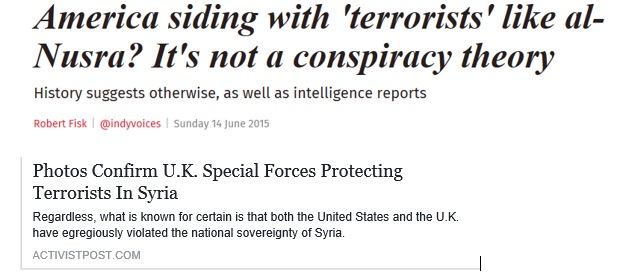
අධිෂ්ඨාන පූජාවේ කාලෝචිතබව සහ වැදගත්කම. Initiated by රට රකින බලමුළුව

December 12th, 2016

Dr. Vihara Walawwe Jagath Vasanthathilaka Consultant Rheumatologist. Kandy, Sri Lanka.

අධිෂ්ඨාන පූජාවේ කාලෝචිතබව සහ වැදගත්කම:-

…This article provides you with a collection of references related present status of constitution for your information.

Constitution of the planned Elam State. ආණ්‌ඩුකාරවරයා පත් කිරීමේදී ELAM මහ ඇමතිවරයාගේ අනුමැතිය ලබා ගැනීම.

kandypoojawa

https://www.scribd.com/document/331612228/06-CenterPheriperyR-Ste#download If you still have any doubts please read these links for more details. http://www.colombotoday.com/24601-2256252/ Elam constitution. .දහතුන් වැනි සංශෝධනය මගින් පළාත් සභා සඳහා ලබා තිබෙන ඉඩම් බලතල තවදුරටත් ශක්‌තිමත් කොට ඉඩම් කළමනාකරණය කිරීමේ බලතල සම්පූර්¨ණයෙන්ම පළාත් සභා සඳහා පැවරීම.ඉඩම්, පොලිස්‌ සහ මුදල් පිළිබඳ පූර්ණ බලතල පළාත් සභා සඳහා ලබාදීමටත් පළාත් සභා විසුරුවා හැරීමේ ජනාධිපතිවරයාට දැනට ඇති බලතල සීමා කිරීමටත් නව ආණ්‌ඩුක්‍රම ව්‍යවස්‌ථාවට යෝජනා ඉදිරිපත් කර ඇත. This the most dangerous part මුදල් පිළිබඳ පූර්ණ බලතල LTTE will be able to collect funds, and the LTTE will then be able to buy weapons for another war. Please prevent division of our beloved Nation and evolution of another armed conflict which will be much worse than the thirty year war we faced in this country.

You may obtain more information on this site. https://www.facebook.com/Rata-Rakina-balamuluwa-රට-රකින-බ…/… Rata Rakina balamuluwa රට රකින බලමුළුව please see this page and regularly visit this page for more information on new Constitution. Rata Rakina balamuluwa රට රකින බලමුළුව successfully organized an Adhishtana Pujawa on 11th December 2011 as an initiative to defeat New constitution in a referendum.

ශ්‍රී.ල.නි.ප මන්ත්‍රීවරු 11 දෙනෙකුගේ නම් ද හෙළිදරව් වී තිබෙනවා. Vyawasthawa sammatha karata passe anith aya eliyata danawada? Is this the plan?  Will others be kicked out of the government after passing new constitution? Will they be kept just to pass the federal constitution?

shared Ahangama,Galle,Sri Lanka.‘s post. http://www.mrnews.lk/breaking-news/ හවුල් ආණ්ඩුව අවසන් කොට එක්සත් ජාතික පක්ෂ ආණ්ඩුවක් බිහිකිරීමේ සාකච්චා අවසන් අදියරට පැමිණ තිබෙනවා.

New constitution will be presented to the parliament on 10th of January. Please prepare for a referendum fairly soon. Our referendum in few months time will not be on political issues it is an issue related to the future of our Nation as a single unitary state, that will be on future of Sri Lanka. There are no political parties when it comes to this issue related to the next referendum. Here, we do not intend to support any political party, you are not supporting UNP or the Joint Opposition. JVP also did not talk about this problem, probably because of some benefits from Ireland or something. Rev. Rathana thero and Minister Ranawaka are silent because of their personal gains and political commitments. Politicians of both parties will vote for their personal gains they have already received their share and probably awaiting next installment as Rajitha stated prior to the election. Have they explained before, why the politicians vote for a separate state in a new constitution? Please listen to their explanation on their own words!
https://www.youtube.com/watch?v=-KUuFh_Q58I UNP has already decided to vote for this constitution, SLFP ministers in the government campaign for new constitution in Malwatta temple. TNA is telling the truth to their voters, all the others hide the reality from the public. Parliament will overwhelmingly vote for new constitution. Do not expect anything from the present set of MPs in the parliament, never trust them. Only hope for a unitary Sri Lanka is the next referendum. We support the Adishtana Pujawa in Dalada Maligawa as an initiative to face a referendum effectively.
If we vote for our country we should receive 77% they will receive 23% for their county. Sri Lankan identity should win at the end, just like in the United Kingdom , they preserved British identity.
Unfortunately, media did not give adequate coverage for this grave problem, due to the fact that, there were no politicians in this event. Media also politically biased. Please forget your personal political interests when it comes to the issue of constitution and referendum. මාතෘ භූමිය බෙදා වෙන්කරන රනිල්,මංගලගේ කොටි කල්ලිය. https://www.facebook.com/1202622023096034/photos/a.1202624889762414.1073741828.1202622023096034/1355561574468744/?type=3&theater ..Please https://www.facebook.com/789397014534542/videos/790009271139983/ https://www.youtube.com/watch?v=qZ-14qGCbF0

https://www.facebook.com/photo.php?fbid=1706429013002948&set=a.1590962927882891.1073741828.100009075987574&type=3&theater

You may translate this message, forthcoming referendum is not a political issue it is a national issue related to the integrity of our nation. Please stop establishment of an Elam state in this land.

Thank you.

Govt. defending Navy action: Gota

December 12th, 2016

Courtesy The Daily Mirror

Former defence secretary Gotabaya Rajapaksa commenting on the yesterday’s incident which took place at the protest held at the Hambantota harbour said the government was defending the Navy’s unlawful action.

A tense situation prevailed at the Hambantota Port when the navy tried to release the two ships seized by workers staging a protest at the port. Navy personnel fired warning shots to disperse the protesters. The Navy Commander is also alleged to have threatened a journalist who was present  at the scene.

– See more at: http://www.dailymirror.lk/article/Govt-defending-Navy-action-Gota-120511.html#sthash.FgL5ML0P.dpuf

https://youtu.be/oClLpzyy-BE

Cannabis use and Mental Health

December 12th, 2016

Jayatunge R.M

Abstract
Cannabis sativa (marijuana) which has been used throughout the world for thousands of years has been established to exert significant negative effects on the physical and mental health as well as social and occupational functioning of users. Cannabis abuse can also have profound negative effects on families and communities. Despite these, the prevalence of marijuana abuse and dependence disorders has been increasing recently among adults and adolescents. Prevention and intervention programs for marijuana abuse are highly essential. Early intervention initiatives and psycho education strategies are important in preventive actions.

Introduction
Cannabis sativa (marijuana) has been used throughout the world medically, recreationally and spiritually for thousands of years (Maule, 2015). It is the most commonly used illicit drug in the world (Wittchen et al., 2009). Despite being illegal in many countries, it is easily obtained and even homegrown (Delisi et al., 2006). According to the results from the 2011 National Survey on Drug Use and Health, the rate of marijuana use has had a steady increase since 2007. Cannabis use continues to constitute social and public health problem.

The cannabis plant (Cannabis sativa) has a long history of use both as a medicinal agent and intoxicant (ElSohly & Slade, 2005). There are over 400 chemicals in marijuana. Active compounds of cannabis, called cannabidiols, have 64 active isomers. Only one metabolite, tetrahydrocannabinol (THC) is reported to be an active metabolite responsive for its effects (Morrison et al., 2009). THC usually refers to the naturally existing isomer of delta-9-THC, but also may include delta-8-THC. The delta-9-tetrahydrocannabinol contains psychoactive properties. Marijuana produces a number of characteristic behaviors in humans and animals, including memory impairment, antinociception, and locomotor and psychoactive effects (Sim-Selley, 2003).

THC leads to increased activation in frontal and paralimbic regions and the cerebellum (Chang & Chronicle, 2007).Cannabinoids act on a specific receptor that is widely distributed in the brain regions involved in cognition, memory, reward, pain perception, and motor coordination (Adams & Martin, 1996). Cannabis produces euphoria and relaxation, perceptual alterations, time distortion, and the intensification of ordinary sensory experiences (Hall, Solowij & Lemon 1994).

Although most people who smoke cannabis will develop neither severe mental health problems nor dependence, regular use of cannabis may be associated with a range of health, emotional, behavioural, social, and legal problems, particularly in young, pregnant, and severely mentally ill people (Winstock, Ford & Witton, 2010). Cannabis users who also smoke tobacco are more dependent on cannabis, have more psychosocial problems and have poorer cessation outcomes than those who use cannabis but not tobacco (Peters, Budne & Carroll 2012).

Epidemiological studies indicate that approximately 10% of lifetime cannabis users meet the criteria for cannabis abuse or dependence (Anthony et al., 1994; Cottler et al., 1995; Hall et al., 1999). The epidemiological literature shows that cannabis use increases the risk of accidents (Hall, 2015) and risk of motor vehicle crashes (Hall & Degenhardt, 2009). Cannabis is currently one of the leading substances reported in arrests (Dennis et al., 2002).

Tolerance and dependence to cannabinoids develop after chronic use, as demonstrated both clinically and in animal models (Sim-Selley, 2003). According to Levin and colleagues (2011) Cannabis dependence is a substantial public health problem. A large body of evidence now demonstrates that cannabis dependence both behavioral and physical, does occur in about 7-10% of regular users, and that early onset of use, and especially of weekly or daily use, is a strong predictor of future dependence (Kalant, 2004). Cannabis dependence or cannabis use disorder is defined in the fifth revision of the Diagnostic and Statistical Manual of Mental Disorders (DSM-5) as a condition requiring treatment (Gordon Conley & Gordon, 2013).

Cannabis withdrawal is an important component of cannabis dependence (Lee et al., 2014). As many as 85% of users experience withdrawal (Budney et al., 2004; Winstock et al., 2010). Cannabis withdrawal is characterized by craving, irritability, nervousness, depressed mood, restlessness, sleep difficulty, and anger. With the recent publication of the DSM-5, a cannabis withdrawal syndrome is now officially recognized with defined criteria (APA, 2013).

Consequences of Cannabis Use

Studies show significant negative effects of smoking marijuana on physical and mental health as well as social and occupational functioning (Gazdek, 2014). Smoking marijuana is known to have hemodynamic consequences (Mittleman et al., 2001). Cannabis also has immunosuppressant and endocrine effects although the clinical significance of these is still not clear (Ashton, 2001). Cannabis smoking shows a dose-response relation with pulmonary risk in the same way that tobacco smoking does. Although problems of cannabis use can arise at any level of use, however low, cannabis use disorders and other problems are more likely to arise in long term, heavy daily users than in casual, infrequent users. (Winstock, et al., 2010).

Longitudinal association between cannabis use and mental health has been studied by the researchers. Cannabis use is a known risk factor for a range of mental health problems (van Gastel et al., 2014). Cannabis use has been associated with several adverse life outcomes including unemployment, legal problems, dependence and early school leaving (Serafini et al., 2013). Furthermore, Monshouwer and colleagues (2006) specify that cannabis use is associated with aggression and delinquency. In addition Fergusson and Boden (2008) point out that greater welfare dependence and lower relationship and life satisfaction associated with cannabis abuse.

Majority of studies have suggested a significant cognitive decline in cannabis abusers compared to non-abusers and healthy controls (Shrivastava et al., 2011; Solowij, 1988). According to Kalant (2004) Cannabis use has been linked to a number of both short- and long-term health consequences, including depression, paranoia, learning problems, memory and attention deficits. In addition Cannabis use also causes symptoms of depersonalization, fear of dying and irrational panic ideas (Khan & Akella 2009). Also cannabis use significantly increase the risk for manic symptoms (Henquet, Krabbendam & Graaf, 2006) and mania (Leweke & Koethe, 2008). Evidence indicates that cannabis use is considerably associated with both attempted and completed suicides among healthy youths (Serafini et al., 2013; Price et al., 2009).

Cannabis intoxication can occur shortly after cannabis use. The intoxication by cannabis is associated with subjective symptoms of euphoria, perceptual distortion, continuous giggling, sedation, lethargy, impaired perception of time, difficulties in the performance of complex mental processes, impaired judgment and social withdrawal (Crippa et al. 2012). Some clinicians have noticed panic attacks with cannabis intoxication. Cannabis intoxication symptoms are usually gone after a maximum of one week abstinence (Lishman, 1988).

Heavy cannabis use could lead to an ‘amotivational syndrome which has been described as personality deterioration with loss of energy and drive to work (Tennant & Groesbeck, 1972; Johns, 2001). Cannabis-induced amotivational syndrome negatively impacts on volition, self care and social performance.

Cannabis-induced psychotic disorder (CIPD) refers to psychotic symptoms that arise in the context of cannabis intoxication (Morales-Muñoz et al., 2014). Cannabis use is a risk factor for the development of incident psychotic symptoms (Arendt et al, 2005; Kuepper et al., 2011) and exacerbates psychosis (Hall et al., 2004). Hall and team (2004) state that cannabis use can precipitate schizophrenia in vulnerable individuals. Deficits in prepulse inhibition (PPI) and cannabis abuse are consistently found in schizophrenia (Morales-Muñoz et al., 2015).

Cannabis use in adolescence leads to a two to three fold increase in relative risk for schizophrenia or schizophreniform disorder in adulthood (Arseneault et al., 2004). The abuse of cannabis by patients with psychiatric disorders such as schizophrenia and mood and anxious disorders has a negative impact both in the acute and advanced stages of these conditions (Diehl, Cordeiro &, Laranjeira, 2010).

Exposure to marijuana during a critical period of neural development may interrupt maturational processes (Jacobus et al., 2009). Adolescents appear more adversely affected by heavy use than adults (Schweinsburg, Brown & Tapert , 2008).

Chronic cannabis use may alter brain structure and function in adult and adolescent population (Batalla et al., 2013). Sami and colleagues (2015) suspect cannabis use may be associated with dopamine signaling alterations. Fontes and team (2011) point out that cannabis use has been associated with prefrontal cortex (PFC) dysfunction.

Arseneault and colleagues (2004) were of the view that cases of psychotic disorder could be prevented by discouraging cannabis use among vulnerable youths. Consequently Moore and team (2007) emphasize that sufficient evidence to warn young people that using cannabis could increase their risk of developing a psychotic illness later in life.

According to El Marroun and team (2009) maternal cannabis use, even for a short period, may be associated with several adverse fetal growth trajectories. Cannabinoids have the ability to cross the placental barrier to the foetus and are detectable in the breast milk of mothers who use cannabis (Liebke, 2001). Current evidence indicates that cannabis use both during pregnancy and lactation, may adversely affect neurodevelopment, especially during periods of critical brain growth both in the developing fetal brain and during adolescent maturation, with impacts on neuropsychiatric, behavioural and executive functioning. (Jaques et al., 2014). Prenatal marijuana exposure is associated with adverse perinatal effects (Astley & Little, 1990).

Medical Uses of Cannabis
The use of cannabis for medical purposes is a controversial but an important topic of public and scientific interest (Ware, Adams &Guy, 2005). According to Grotenhermen and Müller-Vahl (2012) cannabinoids are useful for the treatment of various medical conditions. Medicinal marijuana has been prescribed in chronic pain management, antiepileptic treatment in partial epilepsy, symptomatic relief in multiple sclerosis and chronic neuropathic pain. However severe risks are associated with the non-medicinal use of cannabis. Hill (2015) emphasizes that physicians should educate patients about medical uses of marijuana to ensure that it is used appropriately and that patients will benefit from its use.

Although cannabis has valid medical applications, it has addictive potential. Heavy cannabis use may contribute to the development of significant psychosocial and health-related problems (Budney,, Vandrey and Stanger 2010 ). Cannabis use clearly has serious implications for young people who are particularly sensitive to its psychotogenic effects (Kolliakou et al., 2012). Early interventions are essential in treating cannabis related disorders.

Management of Cannabis Use
The prevalence of marijuana abuse and dependence disorders has been increasing among adults and adolescents. They continue to smoke the drug despite social, psychological, and physical impairments, commonly citing consequences such as relationship and family problems, guilt associated with use of the drug, financial difficulties, low energy and self-esteem, dissatisfaction with productivity levels, sleep and memory problems, and low life satisfaction ( Gruber et al , 2003 ; Budney et al, 2007).

Despite the fact that there are large numbers of people with cannabis dependence, relatively little attention has been paid to the treatment of this condition (Nordstrom & Levin, 2007) and also the preventative strategies are still limited (Deoganet al., 2015).

Pharmacological and psychological interventions are recommended for the cannabis use disorder. Allsop and team (2014)propose cannabis extract nabiximols (Sativex) as a medication for cannabis withdrawal. Levin and colleagues (2011) suggest Dronabinol for the treatment of cannabis dependence. Haney et al (2013) recommend the FDA-approved synthetic analogue of THC nabilonewhich has higher bioavailability and clearer dose-linearity than dronabinol.

Steinberg and team (2002) suggest psychosocial treatment for cannabis dependence. Among the psychological interventions Cognitive and behavioral therapies and motivational enhancement therapies have proven to be effective in cannabis withdrawal and dependence (Benyamina et al., 2008).

Motivational enhancement therapy is designed to help resolve ambivalence about quitting and strengthen motivation to change (Elkashef et al., 2008). Cognitive behavioral therapy (CBT) has demonstrated efficacy as both a monotherapy and as part of combination treatment strategies (McHugh, Hearon & Otto, 2010).

CBT for marijuana dependence has typically been delivered in 45 to 60- minute individual or group counseling sessions. The overall focus is the teaching of coping skills relevant to quitting marijuana and coping with other related problems that might interfere with good outcome. Such coping skills include functional analysis of marijuana use and cravings, development of self-management plans to avoid or cope with drug-use triggers, drug refusal skills, problem-solving skills, and lifestyle management (Elkashef et al., 2008). In addition Litt and team (2008) highlight the efficacy of contingency management treatments for marijuana dependence.

Treatment of cannabis use among people with psychotic or depressive disorders is imperative. Available studies indicate that effectively treating the mental health disorder with standard pharmacotherapy may be associated with a reduction in cannabis use and that longer or more intensive psychological intervention rather than brief interventions may be required, particularly among heavier users of cannabis and those with more chronic mental disorders (Baker, Hides & Lubman 2010).

As safer alternative, some propose cannabis substitution which is a method of harm reduction. Harm reduction refers to policies and programmes that aim to reduce the harms associated with the use of drugs. Cannabis substitution can be an effective harm reduction method for those who are unable or unwilling to stop using drugs completely (Lau et al., 2015). Based on principles of public health, harm reduction offers a pragmatic yet compassionate set of strategies designed to reduce the harmful consequences of addictive behavior for both drug consumers and the communities in which they live (Marlatt, 1996).

Conclusion
Cannabis abuse can have a profound effect on the health of individuals, their families, and their communities. Prevention and intervention programs for marijuana abuse are highly essential. Early intervention initiatives and psycho education strategies are important in preventive actions.

Acknowledgements:

1) Mark D. Litt, Ph.D. Professor of Psychology University of Connecticut

2) Dr. Ilan Nachim, HBSc, MSc, MD, CCFP

References

Adams, I.B., Martin, B.R.(1996). Cannabis: pharmacology and toxicology in animals and humans. Addiction; 91: 1585–614.

Allsop, D.J., Copeland, J. , Lintzeris, N. , Dunlop, A.J., Montebello, M. , Sadler, C. , Rivas, G.R ., Holland, R.M., Muhleisen, P. , Norberg, M.M. , Booth, J. , McGregor, I.S. (2014).Nabiximols as an agonist replacement therapy during cannabis withdrawal: a randomized clinical trial. JAMA Psychiatry. 71(3):281-91.

APA (2013). Diagnostic and Statistical Manual. 5th edition. Arlington: American Psychiatric Association.

Arendt, M. , Rosenberg, R., Foldager, L., Perto, G., Munk-Jørgensen, P.(2005).Cannabis-induced psychosis and subsequent schizophrenia-spectrum disorders: follow-up study of 535 incident cases. Br J Psychiatry. ;187:510-5.

Arseneault, L., Cannon, M., Witton, J., & Murray, R.M. (2004) Causal Associations between cannabis and psychosis: examination of the evidence. Br J Psychiatry, 184, 110- 117.

Ashton, C.(2001). Pharmacology and effects of cannabis: A brief review. Br J Psychiatry. ;178:101–6.

Astley, S.J., Little, R.E.(1990).Maternal marijuana use during lactation and infant development at one year. Neurotoxicol Teratol. ;12(2):161-8.

Baker, A.L. , Hides, L., Lubman, D.I.(2010).Treatment of cannabis use among people with psychotic or depressive disorders: a systematic review.J Clin Psychiatry. 2010 Mar;71(3):247-54.

Batalla, A., Bhattacharyya, S., Yücel, M., Fusar-Poli ,P., Crippa, J.A., Nogué, S., Torrens, M., Pujol, J., Farré, M., Martin-Santos, R. (2013).Structural and functional imaging studies in chronic cannabis users: a systematic review of adolescent and adult findings.PLoS One. ;8(2):e55821.

Benyamina, A. , Lecacheux, M., Blecha, L., Reynaud, M., Lukasiewcz, M. (2008).Pharmacotherapy and psychotherapy in cannabis withdrawal and dependence.Expert Rev Neurother. ;8(3):479-91.

Budney, A.J., Hughes, J.R., Moore, B.A., Vandrey, R.(2004). Review of the validity and significance of cannabis withdrawal syndrome. Am J Psychiatry;161:1967-77

Budney, A.J. , Roffman, R., Stephens, R.S., Walker, D. (2007).Marijuana dependence and its treatment. Addict Sci Clin Pract. ;4(1):4-16.

Budney, A.J., Vandrey, R.G., Stanger, C.(2010).[Pharmacological and psychosocial interventions for cannabis use disorders].Rev Bras Psiquiatr. ;32 Suppl 1:S46-55.

Chang, L ., Chronicle, E.P.(2007).Functional imaging studies in cannabis users.Neuroscientist.;13(5):422-32.

Crippa, J.A., Derenusson, G.N., Chagas, M.H, et al.(2012).Pharmacological interventions in the treatment of the acute effects of cannabis: a systematic review of literature. Harm Reduct J. 9: 7.

Delisi, L.E, Bertisch, H.C., Szulc, K.U., Majche,r M., Brown, K., Bappal, A., Ardekani, B.A. (2006).A preliminary DTI study showing no brain structural change associated with adolescent cannabis use.Harm Reduct J. 9;3:17.

Dennis, M., Babor, T.F., Roebuck, M.C., Donaldson, J.(2002). Changing the focus: the case for recognizing and treating cannabis use disorders.Addiction. ;97 Suppl 1:4-15.

Deogan, C. , Zarabi, N., Stenström, N., Högberg, P., Skärstrand, E., Manrique-Garcia, E, Neovius, K., Månsdotter, A. (2015).Cost-Effectiveness of School-Based Prevention of Cannabis Use. Appl Health Econ Health Policy.

Diehl, A., Cordeiro, D.C., Laranjeira, R.(2010).[Cannabis abuse in patients with psychiatric disorders: an update to old evidence].Rev Bras Psiquiatr. ;32 Suppl 1:S41-5.

Elkashef ,A., Vocci, F., Huestis, M., Haney, M., Budney, A., Grube,r A., el-Guebaly, N.(2008). Marijuana neurobiology and treatment. Subst Abus.;29(3):17-29.

El Marroun, H. , Tiemeier. H., Steegers, E.A., Jaddoe, V.W., Hofman, A., Verhulst, F.C., van den Brink, W., Huizink, A.C. (2009).Intrauterine cannabis exposure affects fetal growth trajectories: the Generation R Study.J Am Acad Child Adolesc Psychiatry. ;48(12):1173-81.

ElSohly, M.A., Slade, D. (2005) Chemical constituents of marijuana: the complex mixture of natural cannabinoids. Life Sci 78:539–548.

Fergusson, D.M ., Boden, J.M.(2008).Cannabis use and later life outcomes. Addiction. 103(6):969-76; discussion 977-8

Fontes, M.A., Bolla, K.I., Cunha, P.J., Almeida, .PP., Jungerman, F., Laranjeira, R.R., Bressan, R.A., Lacerda, A.L. (2011). Frontal Assessment Battery (FAB) is a simple tool for detecting executive deficits in chronic cannabis users.J Clin Exp Neuropsychol. ;33(5):523-31.

Gazdek, D.(2014).[Marijuana for medical purposes–public health perspective]. Lijec Vjesn. 2014 Jul-Aug;136(7-8):192-9.

Gordon, A.J., Conley, J.W., Gordon, J.M.(2013).Medical consequences of marijuana use: a review of current literature. Curr Psychiatry Rep. ;15(12):419.

Grotenhermen, F. , Müller-Vahl, K.(2012). The therapeutic potential of cannabis and cannabinoids. Dtsch Arztebl Int. ;109(29-30):495-501.

Gruber, A.J. , Pope, H.G., Hudson ,J.I., Yurgelun-Todd, D.(2003).Attributes of long-term heavy cannabis users: a case-control study. Psychol Med. ;33(8):1415-22.

Hall, W., Solowij, N., Lemon, J.(1994). The health and psychological consequences of cannabis use. National Drug Strategy Monograph Series no 25. Canberra: Australian Government Publishing Service.

Hall, W., Degenhardt, L., Teesson, M.(2004).Cannabis use and psychotic disorders: an update.Drug Alcohol Rev. ;23(4):433-43.

Hall, W. , Degenhardt, L. (2009).Adverse health effects of non-medical cannabis use. Lancet. 17;374(9698):1383-91.

Hall, W. (2015).What has research over the past two decades revealed about the adverse health effects of recreational cannabis use? Addiction. ;110(1):19-35.

Haney, M., Cooper, Z.D., Bedi ,G., Vosburg, S.K., Comer, S.D., Foltin, R.W. (2013).Nabilone decreases marijuana withdrawal and a laboratory measure of marijuana relapse. Neuropsychopharmacology. ;38(8):1557-65.

Henquet, C., Krabbendam, L., de Graaf, R., et al.(2006).Cannabis use and expression of mania in the general population. J Affect Disord. ;95(1-3):103–110.

Hill, K.P. (2015).Medical Marijuana for Treatment of Chronic Pain and Other Medical and Psychiatric Problems: A Clinical Review. JAMA. 23-30;313(24):2474-83.

Jacobus, J., Bava, S., Cohen-Zion, M., Mahmood, O., Tapert, S.F.(2009).Functional consequences of marijuana use in adolescents. Pharmacol Biochem Behav. ;92(4):559-65.

Jaques, S.C. , Kingsbury, A. , Henshcke, P. , Chomchai, C. , Clews ,S. , Falconer, J. , Abdel-Latif ,M.E. , Feller ,J.M. , Oei ,.JL . (2014).Cannabis, the pregnant woman and her child: weeding out the myths.J Perinatol. ;34(6):417-24.

Johns , A. (2001). Psychiatric effects of cannabis. The British Journal of Psychiatry.178 (2) 116-122;

Kalant, H. (2004). Adverse effects of cannabis on health: an update of the literature since 1996. Progress in Neuro-Psychopharmacology and Biological Psychiatry, 28(5), 849-863.

Khan, M.A., Akella ,S.(2009).Cannabis-induced bipolar disorder with psychotic features: a case report. Psychiatry (Edgmont). ;6(12):44-8.

Kolliakou, A., Fusar-Poli, P, Atakan, Z.(2012).Cannabis abuse and vulnerability to psychosis: targeting preventive services. Curr Pharm Des.;18(4):542-9.

Kuepper, R., van Os ,J., Lieb, R., Wittchen, H.U., Höfler, M., Henquet, C.(2011).Continued cannabis use and risk of incidence and persistence of psychotic symptoms: 10 year follow-up cohort study. BMJ. 2 1;342:d738.

Lau, N. , Sales, P., Averill, S., Murphy, F., Sato, S.O., Murphy, S. (2015).A safer alternative: Cannabis substitution as harm reduction.Drug Alcohol Rev. 28.

Lee, D., Schroede, J.R., Karschner, E.L., Goodwin, R.S., Hirvonen, J., Gorelick, D.A., Huestis, M.A. (2014).Cannabis withdrawal in chronic, frequent cannabis smokers during sustained abstinence within a closed residential environment. Am J Addict. 23 (3):234-42.

Levin, F.R. , Mariani, J.J., Brooks, D.J., Pavlicova, M., Cheng, W., Nunes ,E.V. (2011).Dronabinol for the treatment of cannabis dependence: a randomized, double-blind, placebo-controlled trial.Drug Alcohol Depend. 1;116(1-3):142-50.

Leweke, F., Koethe, D. (2008).Cannabis and psychiatric disorders: it is not only addiction. Addict Biol.;13(2):264–275. Review.

Liebke, S. (2001).A Cannabis User’s Harm Reduction Handbook. Retrieved from http://citeseerx.ist.psu.edu/viewdoc/download…

Lishman, W.A. (1988)Organic Psychiatry: The Psychological Consequences of Cerebral Disorder. 3. Oxford: Blackwell; 1998.
Litt, M.D ., Kadden, R.M., Kabela-Cormier, E., Petry, N.M.(2008). Coping skills training and contingency management treatments for marijuana dependence: exploring mechanisms of behavior change. Addiction.103(4):638-48.

Marlatt, G.A. (1996).Harm reduction: come as you are. Addict Behav. ;21(6):779-88.

Maule, W.J.(2015).Medical uses of marijuana (Cannabis sativa): fact or fallacy? Br J Biomed Sci. ;72(2):85-91.

McHugh ,R.K ., Hearon, B.A., Otto, M.W. (2010).Cognitive behavioral therapy for substance use disorders. Psychiatr Clin North Am. 2010 Sep;33(3):511-25.

Mittleman, M.A ., Lewis, R.A., Maclure, M., Sherwood, J.B., Muller ,J.E. (2001).Triggering myocardial infarction by marijuana. Circulation. 12;103(23):2805-9.

Monshouwer, K. , VAN Dorsselaer, S., Verdurmen, J., Bogt, T.T., D.E., Graaf, R., Vollebergh, W. (2006). Cannabis use and mental health in secondary school children. Findings from a Dutch survey.Br J Psychiatry. ;188:148-53.

Moore, T.H. , Zammit, S., Lingford-Hughes, A., Barnes, T.R., Jones, P.B., Burke ,M., Lewis, G. (2007). Cannabis use and risk of psychotic or affective mental health outcomes: a systematic review.Lancet. 28;370(9584):319-28.

Morales-Muñoz, I ., Jurado-Barba, R., Ponce, G. , Martínez-Gras, I. , Jiménez-Arriero, M.Á. Moratti, S., Rubio, G.(2014). Characterizing cannabis-induced psychosis: a study with prepulse inhibition of the startle reflex.Psychiatry Res. 15;220(1-2):535-40.

Morales-Muñoz, I. , Jurado-Barba, R., Caballero, M., Rodríguez-Jiménez, R., Jiménez-Arriero, M.Á., Fernández-Guinea, S., Rubio ,G. (2015). Cannabis abuse effects on prepulse inhibition in patients with first episode psychosis in schizophrenia. J Neuropsychiatry Clin Neurosci. ;27(1):48-53.

Morrison, P.D., Zois, V., McKeown, D.A., Lee ,T.D., Holt, D.W., Powell, J.F, et al. (2009).The acute effects of synthetic intravenous Delts9-tetrahydrocannabinol on psychosis, mood and cognitive functioning. Psychol Med. ;31:1607–16.

Nordstrom, B.R., Levin, F.R.(2007).Treatment of cannabis use disorders: a review of the literature. Am J Addict. 16(5):331-42.

Peters ,E.N., Budney, A.J., Carroll, K.M.(2012).Clinical correlates of co-occurring cannabis and tobacco use: a systematic review.Addiction. 2012 Aug;107(8):1404-17.

Price, C, Hemmingsson, T., Lewis, G., Zammit, S., Allebeck, P. (2009).Cannabis and suicide: longitudinal study. Br J Psychiatry.195:492–710.

SAMHSA (2012) Results from the 2011 National Survey on Drug Use and Health: National Findings(Subst Abuse Ment Health Serv Admin, Rockville, MD), NSDUH Series H-30, DHHS Publication No. SMA 06-4194.

Sami, M.B. , Rabiner, E.A. , Bhattacharyya, S . (2015). Does cannabis affect dopaminergic signaling in the human brain? A systematic review of evidence to date.Eur Neuropsychopharmacol. 2015 Mar 30. pii: S0924-977X(15)00088-7.

Schweinsburg, A.D. , Brown, S.A., Tapert, S.F.(2008).The influence of marijuana use on neurocognitive functioning in adolescents. Curr Drug Abuse Rev. ;1(1):99-111.

Serafini, G., Pompili, M., Innamorati, M., Temple, E.C., Borgwardt, S., & Girardi, P. (2013). The association between cannabis use, mental illness and suicidal behaviour: What is the role of hopelessness? Frontiers in Psychiatry, 4, 125

Shrivastava ,A., Johnston, M., Tsuang, M.(2011). Cannabis use and cognitive dysfunction..Indian J Psychiatry. ;53(3):187-91.

Sim-Selley, L.J.(2003).Regulation of cannabinoid CB1 receptors in the central nervous system by chronic cannabinoids.Crit Rev Neurobiol. 15(2):91-119

Solowij, N. (1988). Cannabis and cognitive functioning. Cambridge: Cambridge University Press.

Steinberg, K.L., Roffman, R.A., Carroll, K.M., Kabela, E., Kadden, R., Miller, M., Duresky, D. (2002).Tailoring cannabis dependence treatment for a diverse population.Addiction. ;97 Suppl 1:135-42.

Tennant, F. S.,Groesbeck, C. J. (1972) Psychiatric effects of hashish. Archives of General Psychiatry, 27, 133 -136.

van Gastel, W.A. , MacCabe ,J.H., Schubart, C.D., van Otterdijk, E., Kahn, R.S., Boks, M.P.(2014).Cannabis use is a better indicator of poor mental health in women than in men: a cross-sectional study in young adults from the general population. Community Ment Health J. ;50(7):823-30.

Ware, M.A., Adams, H., Guy, G.W.(2005). The medicinal use of cannabis in the UK: results of a nationwide survey. Int J Clin Pract. ;59(3):291-5.

Winstock, A.R., Ford, C., Witton, J. (2010).Assessment and management of cannabis use disorders in primary care. BMJ.1;340:c1571.

Wittchen, H.U., Behrendt, S., Hofler, M., Perkonigg, A., Rehm, J., Lieb, R., et al. (2009).A typology of cannabis-related problems among individuals with repeated illegal drug use in the first three decades of life: evidence for heterogeneity and different treatment needs. Drug Alcohol Depend2009;102:151-7.

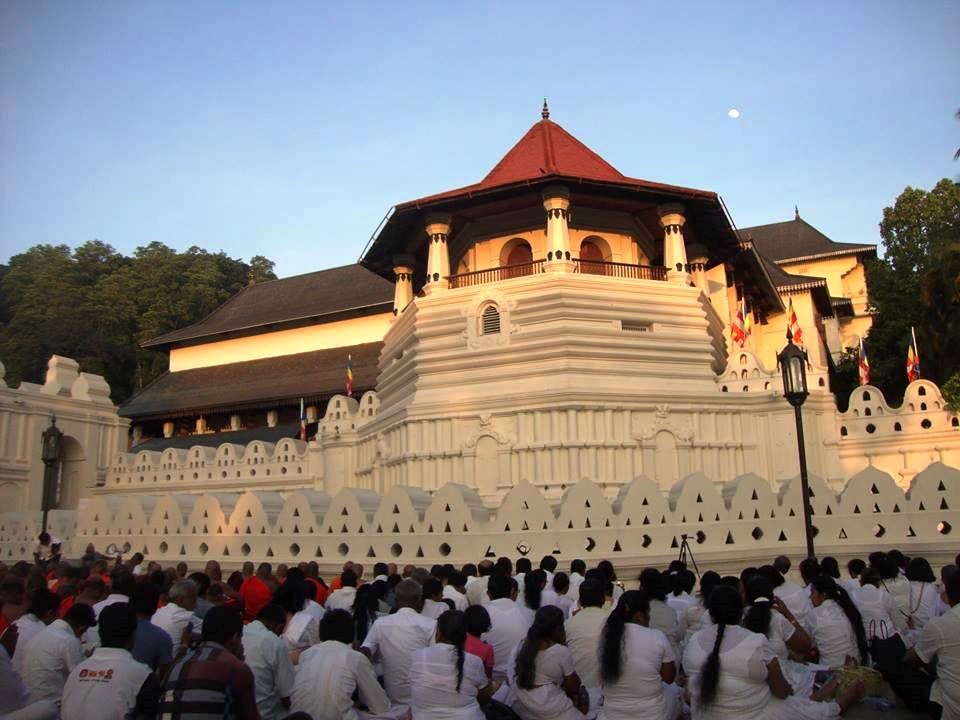
“කියන එක අහපං හුත්තිගේ පුතා..” නාවික හමුදාපති අමු කුණුහරුපෙන් බනින සංස්කරණය නොකල වීඩියෝව මෙන්න..

December 12th, 2016

ලංකා සී නිවුස්

කියන එක අහපං **** පුතා.. නාවික හමුදාපති අමු කුණුහරුපෙන් බනින සංස්කරණය නොකල වීඩියෝව මෙන්න..

හම්බන්තොට වරායේ විරෝධතාවයේ යෙදුනු  සේවකයින්ට හා එහි සිටි මාධ්‍යවේදීන්ට නාවික හමුදාව විසින් පහර දීමේදී නාවික හමුදාපති අද්මිරාල්  රවින්ද්‍ර විජේගුණරත්න විසින් අමු කුණුහරුපයෙන් බැණ වදින අයුරු සංස්කරණය නොකල වීඩියෝවක් අන්තර්ජාලයේ සංසරණය වෙමින් තිබේ.

මේ එම වීඩියෝවයි.

නාවික හමුදාපති මාධ්‍යවේදියාගේ හොස්ස මිරිකයි

December 12th, 2016

‘‘ඒ ගහනවා නොවෙයි යන්න කියනවා‘‘ නාවික හමුදා මාධ්‍ය ප්‍රකාශක කියයි

හම්බන්තොට වරායේ වර්ජනය වර්තා කිරීමට ගිය ලංකාදීප මාධ්‍යවේදී මත්තල රොෂාන් දිලීප් කුමාරගේ රාජකාරිය අවහිර කරමින් නාවික හමුදාපති වයිස් අද්මිරාල් රවින්ද්‍ර විජේගුණරත්න එම මාධ්‍යවේදියාට පහර දුන්නේය.

හම්බන්තොට වරායේ නැව් දෙකක් යාත්‍රා කිරීමට නොහැකි වන පරිදි විරෝධතාවයේ යෙදුණු වරාය සේවකයන් විසුරුවා හැරීමට පැමිණි නාවික හමුදා පිරිස අතර කොට කළිසමක් ඇඳ සිටි අයකු ප්‍රාදේශීය මාධ්‍යවේදියකුට පහර දෙන අයුරු කැමරාවල සටහන් වී තිබිණි.

ඔහු මාධ්‍යවේදියාට පරුස වචනයෙන් බැණ වැදෙමින් පහර දුන්නේය.

තමා මාධ්‍යයෙන් බව කියද්දීත් ඔහු ඇඳ ගෙන ගොස් පහර දුන්නේය.

පහර කෑ මාධ්‍යවේදියා  කියනුයේ තමාට පහර දුන්නේ නාවික හමුදාපතිවරයා බවයි. ඔහු හමුදාපති නොවේ නම් ඒ කවුදැයි හෙළි කරන ලෙස ද පිරිසක් ඉල්ලති.

මාධ්‍යවේදියකුට පහර දීම ගැන නාවික හමුදාපතිවරයා සම්බන්ධයෙන් ගන්නා ක්‍රියාමාර්ග මොනවාදැයි ඇසූ විට නාවික හමුදා මාධ්‍ය ප්‍රකාශක අක්‍රම් අලෙවි මහතා කීවේ ඒ ගැන පැමිණිලි ලැබී නැති බවයි. ‘ඒ ගහනවා නෙමෙයි. අයින් වෙන්න කියනවා.‘ යැයි ද ඔහු කීවේය.

හමුදා ප්‍රකාශක බ්‍රිගේඩියර් රොෂාන් සෙනවිරත්න මහතා කීවේ ඒ ගැන සොයා බලා පිළිතුරක් දිය හැකි බවයි.

නාවික හමුදාපතිගේ මෙම ක්‍රියා කලාපය නාවික හමුදාවටම බලවත් අපකිර්තියක් බවත්, ඔහු ගැන පරික්ෂණයක් පැවැත්වෙන බවත් ආරක්ෂක අමාත්‍යංශ ආරංචි කියයි.

නීතිය අනුව මෙම හමුදාපතිවරයා යුද අධිකරණයට ඉදිරිපත් කළ යුතු බව ආරක්ෂක අංශ ආරංචි කියයි.

හම්බන්තොට වරායේදී නාවික හමුදාපති පහර දුන්නැයි ලංකාදීප මාධ්‍යවේදී මත්තල රොෂාන් දිලීප් කුමාර පොලිසියටද පැමිණිල්ලක් කර තිබේ.

නාවික හමුදාපති ගැසූ බවට පොලිසියට පැමිණිලි

කොට කලිසමක් හා නිල් පැහැති කමිසයක් ඇද සිටි තරබාරු මිනිහකු තමාට කුණුහරුපෙන් බැණ පහරදුන් බවත්, ඔහු නාවික හමුදාපති බව පසුව දැනගත් බව මත්තල ලංකාදීප වාර්තාකරු දීලිප් රෝෂාන් හම්බන්තොට සහාකාර පොලිස් අධිකාරී කාර්යාලයට පැමිණිල්ලක් කළේය.

තමාට පහරදුන් බවත් මේ ගැන තමන් සේවය කරන මාධ්‍ය ප්‍රධානින්ට දැනුම්දී මතු ආරක්ෂාව පතා මෙම පැමිණිල්ල දැමූ බවත් මාධ්‍යවේදීයා දැමු පැමිණිල්ලේ සඳහන් වේ.

නාවික හමුදාපති තමාට පහරදුන් ආකාරය පිළිබඳව සිය පැමිණිල්ලේ සවිස්තරව කියා ඇත.

10-1 16-1

09-(1) 10 15 16 17 18-(1) 18-2 19 20

r

7

Snapshot---4

Snapshot-large

(වීඩියෝ හිරු සහ දෙරණ ප්‍රවෘත්ති)

Thanks & Best Wishes

December 11th, 2016

Dr. Chula Rajapakse MNZM  United Sri Lanka Association,Wellington New Zealand.

Rt Hon John Key MP,
Prime Minister of New Zealand.

Dear Mr.Key,

On the eve of your retirement after a most successful tenure as the Prime Minister of New Zealand, I write to convey the thanks of the United Sri Lanka Association, for having steered New Zealand to stability and prosperity so effectively in the last eight years.

Our association wishes also to record our deep appreciation of the support you offered Sri Lankan during this period, most particularly by attending and supporting the CHOGM in Colombo 2013, visiting Sri Lanka again in 2016 and fostering much goodwill and mutually beneficial trade and  other ventures and most recently hosting Sri Lankan Prime Minister Rt. Hon. Ranil Wickramasinghe and his delegation and so further strengthening these ties between our two countries. This we understand  is going to result among other things, in  having High Commissioners representing each other in our two countries very soon.

Though we will certainly miss your reassuring presence at the helm, we have every confidence that the new team that has slipped into replace you with no rancour at all, would be able to carry further  your good work for all of New Zealand as you have done.

Our very  best wishes are with you in your further endeavours, what ever they may be in the coming years.

With many thanks once again,

Yours Sincerely,

Dr. Chula Rajapakse MNZM

FRCP/FRACP

Spokesperson,

United Sri Lanka Association,

Wellington New Zealand.

ජනපති භීතියෙන්…. පෞද්ගලික ආරක්ෂාව පැය 48ක් ඇතුලත සම්පූර්ණයෙන් වෙනස් කිරිමට බුද්ධි අංශ නියෝග

December 11th, 2016

Lanaknewsweb

ජනාධිපති මෛත්‍රීපාල සිරිසේන මහතාගේ පෞද්ගලික ආරක්ෂාව පැය 48ක් ඇතුලත සම්පූර්ණයෙන් වෙනස් කිරිම සදහා රජයේ බුද්ධි අංශ ජනාධිපතිවරයාට අනතුරු අගවා තිබේන බව අප ආරක්ෂක තොරතුරු වාර්තාකරු අනාවරණය කළා.ඒ අනුව ඉදිරි පැය 48 කලය තුල සම්පූර්ණයෙන් ජනාධිපතිවරයාගේ ආරක්ෂකයන් සහ ආරක්ෂක වැඩපිළිවෙළ වෙනස් කිරිමට නියමිතයි.

පසුගියදා ෆේස්බුක් මගින් ජනාධිපතිවරයාට මරණ තර්ජන එල්ල කිරීමත් ජනාධිපතිවරයාගේ ආරක්ෂක කණ්ඩායම හෙවත් PSD ආරක්ෂකයෙකු ජනාධිපතිවරයාට තර්ජනය කරමින් සිය හඩ පටයක් Facebook හරහා මුදා හැරිමත් යුධ හමුදාව ඇතුලු ආරක්ෂක අංශ අතර ජනාධිපතිවරයා අපකීර්තියට පත්කර ඔහුන් ලවා ජනාධිපතිවරයා ඝාතනය කිරිම සදහා කුමන්ත්‍රණයක් දියත් කර තිබේන බවට රජයේ බුද්ධි අංශ ජනාධිපතිවරයාට අනතුරු අගවා තිබේන බව අප ආරක්ෂක තොරතුරු වාර්තාකරු අනාවරණය කළා.

එම හේතුව නිසා වහාම ජනාධිපතිවරයාගේ ආරක්ෂක වැඩපිළිවෙළ වෙනස් කිරිමට කටයුතු යොදවා ඇති අතර සියල්ලටම වඩා 2017 ජනවාරි 28 ට පෙර මෛත්‍රිපාල සිරිසේන මිය යන බවත් තමා කියූ අනාවැකියක් වැරදුණහොත් තමා මින් ඉදිරියට කිසිදු අනාවැකියක් ප්‍රකාශ නොකරන බව ප‍්‍රවීණ ජ්‍යෙතිර්වේදී විජ්ත් රෝහණ විජේමුණි දිගින් දිගටම ප්‍රකාශ නිකුත් කිරිම හේතුවෙන් ජනාධිපතිවරයා භීතියෙන් ඇලලි ගොස් තිබේන බවයි අප ආරක්ෂක තොරතුරු වාර්තාකරු සදහන් කළේ.

කෙසේවෙතත් ඊයේ දිනයේ හම්බන්තොට වරායේ සේවක විරෝධතාවය විසුරුවා හැරීමට නාවුක හමුදාවට ජනාධිපතිවරයාද නොසලකා අණ ලබා දිම පිළිබඳව දේශපාලන ක්‍ෂෙත‍්‍රය තුල දැඩි කැලඹීමක් ඇතිව ඇති අතර ඊයේ සහ අද දවස පුරාම මෛත්‍රීගේ බත් බැලයන් දැඩි ලෙස කලබලයට පත්ව ඇති බවද අප වාර්තාකරු අනාවරණය කළා.

හමුදාවට අණ දීමේ බලය ව්‍යවස්ථාවෙන්ම ඇත්තේ ජනාධිපතිවරයාට පමණක් වුවත් මෙම සිදුවීම පිටුපස තවත් අනියම් සේනාධිනායකයෙක් සිටින බවත් ඒ අනුව එජාප නායක අග්‍රාමාත්‍යවරයා ඉතාමත් සියුම් ලෙස රටේ ආරක්ෂක අංශ තමන්ගේ බලය ඇල්ලිමේ කුමන්ත්‍රණය වෙනුවෙන් යොදවමින් සිටින බවයි මෛත්‍රී පාර්ශ්වයේ අදහස වි ඇත්තේ.

ගෙදර ගියෝත් සිරා නසී…මග හිටියත් සිරාම නසී…… by lnwtoday

ගෙදර ගියෝත් සිරා නසී…මග හිටියත් සිරාම නසී…. ජනවාරියේ මරණ මංචකයට පෙර සිරිසේනගේ පවු හෝදයිද?

පළාත් පාලන මැතිවරණ දිගින් දිගමට කල්දමමින් තමන් තවදුරටත් ශ්‍රී ලංකා නිදහස් පක්ෂය ආරක්ෂා කරගත්තද ලබන වසරේ මුල් කාර්තුවේ අනිවාර්යයෙන්ම පළාත්සභා දෙකක මැතිවරණය පැවැත්විමට සිදුවන බවත් එයට මුහුණ දිමට තමන් හැකියාවක් නොමැති බව ශ්‍රී ලංකා නිදහස් පක්ෂය බලෙන් අල්ලාගත් ජනතා පදනමක් නොමැති බෙදුම්වාදී සිරිසේන ජනාධිපතිවරයා සිය ශ්‍රීලනිප බත් බැලයන් හමුවේ පවසා තිබේ.පසුගියදා ඒකාබද්ධ විපක්ෂයේ මන්ත්‍රීවරුන් කිහිප දෙනෙකු හමුවි සිරිසේනගේ කුජීත් අමාත්‍යවරුන් මහින්දගේ සහය සිරිසේනට ඉල්ලා සිටිම පසුපස ඇති ප්‍රධාන හේතුවද මෙය බව මේ වනවිට තහවුරු වි තිබේ.

දැවැන්ත පරාජයක් ලබන බව දන්නා සිරිසේන ජනාධිපතිවරයා දිගින් දිගටම පළාත් පාලන මැතිවරණය කල්දැමිම සදහා කටයුතු කල අතර ඊට අමතරව මහින්දගේ නායකත්වයෙන් ගොඩනැගෙන පක්ෂ සහ සිවිල් සංවිධාන ආණ්ඩුවට එරෙහිව ක්‍රියාත්මක විමත් හේතුවෙන් ජනාධිපතිවරයා දැඩි ලෙස මානසික පිධනයකට ලක්කිරිමට සමත්ව ඇති බව සිරිසේනගේ ඇම කල්ලියේ සමාජිකයෙකු අප විශේෂ වාර්තාකරු සමග අනාවරණය කර තිබේ.

මෛත්‍රී පිළේ බත් බැලයන් දෙකඩ වේ…

මේ අතර ශ්‍රී ලංකා නිදහස් පක්ෂය මුහුණ දි සිටින වත්මන් අර්බුදය හමුවේ ශ්‍රීලනිප මෛත්‍රී පිළ දෙකඩ වි තිබේ.එම දෙකඩ විම උච්චතම අවස්ථාව පසුගිය සතියේ වාර්තා වු අතර මෛත්‍රීගේ ඇම කණ්ඩායම ඒකාබද්ධයේ පිරිසක් හමුවිම මෙම උග්‍ර අර්බුදයට හේතු වි තිබේ. මෛත්‍රී පිළේ අනෙකු කණ්ඩායමේ අදහස වි ඇත්තේ ශ්‍රී ලංකා නිදහස් පක්ෂය අතරහැර දමා එක්සත් ජාතික පක්ෂය සමග එක්ව තරග කර ආණ්ඩුව ආරක්ෂා කිරිමට ජනාධිපතිවරයා කටයුතු කලයුතු බවයි.

කෙසේවෙතත් එම ඉල්ලිමට සිරිසේන ජනාධිපතිවරයා එකගතාව පලකර නොමැති බවත් යම් හෙයකින් ශ්‍රී ලංකා නිදහස් පක්ෂය විනාශ වි ගියහොත් එම පාපයෙන් කිසිදු දිනක තමන්ට ගැලවිමට නොහැකි වනු ඇති බවයි සිරිසේන ජනපති පෙනවා දි ඇත්තේ.කෙසේවෙතත් ශ්‍රී ලංකා නිදහස් පක්ෂයේ සභාපති ධුරය හිටපු ජනපති මහින්ද රාජපක්ෂට ලබාදිමට කටයුතු කිරිම නුවණට හුරු වැඩක් බවත් ඒ හරහා ජනාධිපතිවරයාගේ බලය පවත්වාගෙන යෑමට හැකියාව ඇති බවයි.නමුත් ශ්‍රීලනිපයේ අනික් කල්ලිය පෙන්වා දි ඇත්තේ ශ්‍රිලනිප සභාපති කම මහින්දට දිමට වඩා එක්සත් ජාතික පක්ෂය සමග එක්ව මැතිවරණ සදහා තරගකර ශ්‍රීලනිපය දියවිමට ඉඩ හැරිම නුවණට හුරු කියාවක් ලෙසයි.

මේ අතර දේශපාලන අර්බුද,රටේ ප්‍රශ්ණ ආර්ථික ප්‍රශ්ණ මෙන්ම විශාලතම ප්‍රශ්ණය වි තිබේන ජනතා බලයක් නොමැති පක්ෂයක් සමග මැතිවරණයකට මුහුණ දිම ඇතුලු අධික මානසික ගැටලු රැසක් හේතුවෙන් මේ වනවිට ජනාධිපති මෛත්‍රිපාල සිරිසේන මහතා විටින් විට  ඔහුගේ කුඩා බඩවැල් ආශ්‍රිතව ඇතිව ඇති පිළිකා රෝගී තත්ත්වය මතුවෙමින් තිබේන බවද අනාවරණය වි තිබේ.

අප මින් පෙර කිහිපවතාවක් සඳහන් කළ පරිදි ජනාධිපති මෛත්‍රිපාල සිරිසේන විටින් විට ඇතිවන දරුණු පාචන රෝගී තත්වයකින් දැඩි ලෙස පීඩා විඳියි. මේ සඳහා ජනාධිපති සිරිසේන දේශීය සහ විදේශීය වෛද්‍යවරුන් හමුව නොයෙකුත් වෛද්‍ය ක්‍රමයන් යටතේ ප්‍රතිකාර ලැබුවද තාවකාලික සහනයක් මිස ස්ථිර සුවයක් නොලැබීය.

මින් මාස කිහිපයකට ඉහතදී ද මේ තත්වය උත්සන්න වූ අතර ඒ පිලිබඳ ලිපියක් අපවිසින් එම කාලයේදී මෙම වෙබ් අඩවියේ පලකරනු ලැබීය. අප විසින් එම ලිපියේ දී අනාවරණය කරණ ලද්දේ ජනාධිපති සිරිසේනගේ රෝගී තත්වයන්ට ප්‍රතිකාර කරනු ලබන මනෝ වෛද්‍ය විශේෂඥ ජයන් මෙන්ඩිස්, පිළිකා රෝග විශේෂඥ වෛද්‍ය යසන්ත ආරියරත්න, උදර ශල්‍ය වෛද්‍ය විශේෂඥ මහාචාර්ය කෙමාල් ඩීන්, උදර රෝග වෛද්‍ය විශේෂඥ එන්. එම්. එම්. නවරත්න, ප්ලාස්ටික් ශල්‍ය වෛද්‍ය විශේෂඥයන් වන යසස් අබේවික්‍රම සහ තුෂාන් බෙනරගම යන මහත්වරුන් ඒ පිළිබඳව විවිධ මත දරන ලද බවයි.

එසේම අප විසින් ඒ ලිපිය අවසානයේ අනාවරණය කළේ වෛද්‍ය විශේෂඥ කණ්ඩායමේ අවසන් තීරණය වූයේ ජනාධිපති සිරිසේනගේ වෛද්‍ය වාර්තා, ලේ, මල සහ මුත්‍ර සාම්පල් ගුවන් මගින් ඔස්ට්‍රේලියාවට යවා වෛද්‍ය විශේෂඥ බැරී ජේම්ස් මාර්ෂල් AC, FRACP, FRS, FAA, DSc යටතේ පරීක්ෂා කරවීම බවයි. වෛද්‍ය විශේෂඥ බැරී ජේම්ස් මාර්ෂල් මහතා උදරගත ආසාදන පිළිබඳව ලෝක ප්‍රකට විද්වතෙකු වන අතර භෞතවේදය (physiology) පිළිබඳව වසර 2005 දී නොබෙල් ත්‍යාගයෙන් පිදුම් ලැබීය.

වෛද්‍ය විශේෂඥ බැරී ජේම්ස් මාර්ෂල් විසින් සති අටක් පුරා තම සහයක කණ්ඩායම සමග පරීක්ෂණයන් සිදුකළ අතර ඒ වෛද්‍ය වාර්තා ඉහත සඳහන් කළ විශේෂඥ වෛද්‍ය මණ්ඩලය වෙත යොමුකරනු ලැබීය. ඒ සම්පුර්ණ වාර්තාව කියවීමට අපට අවස්ථාවක් නොලැබුනුමුත් පිටු 12 කින් සමන්විත එහි සංක්ෂිප්තය කියවීමට අපට අවස්ථාවක් ලැබිණි. නමුත් වගකියයුතු වෙබ් අඩවියක් ලෙස අපට ඒ පිළිබඳව කිසිවක් අනාවරණය කළ නොහැක. මක්නිසාදයත් රෝගියකුගේ වෛද්‍ය වාර්තා පිළිබඳව අනාවරණය කිරීම අතිශය සදාචාර විරෝධී බැවිනි. අපට ජනාධිපති සිරිසේන සමග වනුයේ දේශපාලන ප්‍රතිවිරෝධයකි. නමුත් ඔහු බරපතළ රෝගී තත්වයකින් පෙලෙනවිට ඒ පිළිබඳව ප්‍රීතියට පත්වීමටවත් ඉක්මණින් ඔහුගේ මරණය සිදුවේවා යැයි ප්‍රර්ථනා කිරීමටවත් අපට නොහැක. ඒ අපේ බොදු හැදියාවයි.

2017 ජනවාරි 28 ට පෙර මෛත්‍රිපාල සිරිසේන මිය යන බවත් තමා කියූ අනාවැකියක් වැරදුණහොත් තමා මින් ඉදිරියට කිසිදු අනාවැකියක් ප්‍රකාශ නොකරන බව ප‍්‍රවීණ ජ්‍යෙතිර්වේදී විජ්ත් රෝහණ විජේමුණි යලිත් තහවුරු කළා.  

හත්ලක්‍ෂයක මාසික කුලියට වාහන ගන්න අත්සන් කරන්නැයි මට දැඩි බලපෑම්.. ඒව හොර කොම්පැනි.. – නිමල් බෝපගේ

December 11th, 2016

ලංකා සී නිවුස්

හත්ලක්‍ෂයක මාසික කුලියට වාහන ගන්න අත්සන් කරන්නැයි මට දැඩි බලපෑම්.. ඒව හොර කොම්පැනි.. – නිමල් බෝපගේ

හත් ලක්‍ෂයක මාසික කුලියට මන්ත‍්‍රිවරුන්ට සැප වාහන ගැනීම සදහා වූ ගිවිසුමට අත්සන් කරන්නැයි තමන්ට දැඩි පීඩනයක් එල්ල වෙමින් ඇති බව ජනමාධ්‍ය අමාත්‍යංශ ලේකම් නිමල් බෝපගේ මහතා පවසයි.

කෙසේ වෙතත් එම වාහන කුලියට ගැනීම සදහා යෝජනා කර ඇති සමාගම් දෙකම ගැන තමන් තුල පැහැදිමක් නැති බවත් නිසි ලෙස ප‍්‍රසම්පාදන ක‍්‍රියවලියෙන් තොරව මෙම ගිවිසුම සකස්වී ඇති බවත් ඔහු පවසයි.

එජාප පාර්ලිමේන්තු මන්ත‍්‍රී නලින් බණ්ඩාර විසින් පාර්ලිමේන්තුවේදී තමන් ඉලක්ක කරමින් එල්ල කරනු ලැබූ විවේචනය සම්බන්ධයෙන් පිලිතුරු දෙමින් ඔහු මෙසේ කියා සිටියේය.

https://youtu.be/yoUsQWNKYO4

The Democrats US Policy on Sri Lanka – A BRIEF – KINDLY TAKE NOTE

December 10th, 2016

Asoka Weerasinghe Kings Grove Crescent . Gloucester . Ontario . K1J 6G1 Canada

9 December 2016

The Honourable Nikki Haley
Office of the Governor of South Carolina
1205 Pendleton Street
Columbia, South Carolina 29201
US

Designated Republican’s US Ambassador to the UN

New York, US
(sent by FAX: 803-734-5167 & hard copy by mail)

Honourable Governor Nikki Haley:

Re: The Democrats US Policy on Sri Lanka –   A BRIEF – KINDLY TAKE NOTE

 It is with a genuine delight and honesty that I congratulate you on your appointment as the  Republican US Ambassador to the United Nations.

It is also with honesty that I confess to you that I was rooting for the President-elect Donald Trump to win the Presidential election. Not that I am an American-political aficionado, far from it, but my attraction to the States has always been studying its modern poets and their poetry, like Robert Lowell (with whom I read in Newfoundland), Anne Sexton, Denise Levetov, Sylvia Plath,  Alan Ginsberg, T.S.Eliot, Ezra Pound,  Robert Frost,  Peggy Lynch. (with whom I read several times in Austin, Texas), W.S Merwin and the like.  And having been invited to be a guest poet at the International Poetry Festival in Austin,Texas (2001) and the guest poet at the Poetry in the Arts in Austin, Texas, in 1998 and 2003,

Backgrounder for my request:

However, I began to notice the US involvement in geo-politics by chance, when I realized that the US was up to no good when the Democrat’s Secretary of State, Hillary Clinton, began to support Tamil terrorism in Sri Lanka, despite the US State Department having proscribed the Liberation Tigers of Tamil Eelam (LTTE aka Tamil Tigers) as a foreign terrorist organization in 1997, and a Specially Designated Global Terrorist Organization in 2001.  The FBI on January 10, 2008’s report rated these Tamil Tiger terrorists as the most dangerous and deadly extremist outfit in the world and the world should be concerned as this outfit had ‘inspired’ networks worldwide, including the al-Qaeda in Iraq.  It was a case of the US saying, Eat your heart out al-Qaeda and Hamas, the Kings of the terrorist world are the Tamil Tigers of Sri Lanka who perfected the art of suicide bombings having perfected the suicide body pack, and used it to assassinate two heads of state, Rajiv Gandhi of India and President Premadasa of Sri Lanka.  And this was the only global terrorist group that had its own ‘Military’ (infantry), Sea Tigers (Sea wing) and Air Tigers (Air Wing). .

What the separatist Tamils in the States were lobbying Hillary Clinton and the State Department with lies and buckets full of American dollar bills was to separate this puny island nation,  the size of West Virginia (62,755 km2 to Sri Lanka 65,610 km2), and claim their separate, fascist, mono-ethnic, racist Tamil state, Eelam.  And that too, one-third of the real estate in the North and East of the whole island bordered by 66% of the coast line, for 12% of the total population of the island’s 21 million peoples.  These Tamil have claimed the North and East of the island as their homeland”, after ethnically cleansing by terrorising and kicking out 27,000 Sinhalese between 1971 and 1981 who had lived there for generations; expelling 100,000 Muslims from the North and East in October 1990, giving them 24 hours to get out.  Like on October 30, 1990, when Tamil Tigers drove through the streets of Jaffna ordering Muslim families to assemble at Osmania College and told them to exit the city within two hours, making Idi Amin of Uganda look like a gold lame-winged angel having given the Ugandan-Indians 90 days to leave Uganda. And clinically purifying the Jaffna University to be only for Tamil students when on August 26, 1972,  they stoned and chased 400 Sinhalese lecturers and undergraduates out of the campus and they were escorted by the army and police in a convoy of buses out of town and driven south out of harms way while the Tamil undergraduates basked in their intellectual glory at other University campuses in the South together with the majority Sinhalese undergraduates and of other minority groups  So that is the backgrounder for you when the Tamils come to you claiming the North and East of the island as their ‘homeland’. When historically, archaeologically, ethnographically and ethnologically they don’t have a snowball chance in hell to prove their claim for this second Tamil ‘Homeland” when the first being Tamil Nadu, in South India which is teeming with 72 million of their Tamil brethren.

Terrorist leaders killed.

I have had difficulty to comprehend the American State Department’s logic, when they found it OK to kill al-Qaeda’s leader Osama Bin Laden on 1st May 2011, by their Navy SEALS of the US Naval Special Warfare Development Group, in Abbottabad in Pakistan, but not the killing of the Tamil Tiger’s leader Velupillai Prabhakaran shot on the beach sands of the Nandikadal Lagoon in the east of Sri Lanka by the Sri Lanka’s Armed Forces on 19 May 2009.

If there is one single reason why the Tamil Tiger terrorists were annihilated with the killing of their leader, then it was what you and I and the rest of the world know.  With his death, the Sri Lankan Armed Forces gave back to the 21 million of their Sri Lankan population their most singularly precious human right, their right-to-life, which had been hijacked for 30 bloodying years with guns, bullets and suicide bombs by the Tamil Tiger terrorists, the most ruthless in the world, and if that is not a good enough reason, then what is?

The Penalty applied by the US on puny Sri Lanka for killing the Tamil Tiger terrorist leader, and his gang of terrorists was…

The US ‘Tamils for Clinton’ Sri Lanka policy was that Hillary Clinton and Barak Obama administration brought several resolutions against Sri Lanka at the UNHRC claiming that war crimes had been committed during the last few months of the 30 year long brutal war, when over 100,000 people  were killed.  A war that was mostly aided and abetted by countries like, India, Norway, Canada, US and the UK.  Yet, internationally acclaimed legal experts such as Prof. Dixon of the USA, and Prof. Nice and Sir Desmond de Silva of the UK and the former Commander of the SAS after studying the military operations that concluded on May 19th, 2009, have exonerated Sri Lanka’s Armed Forces.  Yet, their words of wisdom had little chance to penetrate the clogged deaf ears of the Sri Lanka policy makers of the UNHRC and the US State Department.

And what was despicable of the Democrat’s Secretary of State Hillary Clinton was that she tried her utmost to cripple Sri Lanka financially when she forced her UN representative to tell the IMF not to give a USD2.6 loan facility to Sri Lanka.  Well… she tried her damndest and thank to then head of the IMF  Mr. Strauss-Kahn  who rejected Hillary Clinton’s pressure by approving the loan. No wonder during her Presidential election there were camps of ‘Tamils for Clinton’ supporters, thousands and thousands of them.

January 2015

No sooner the former Sri Lanka’s Mahinda Rajapaksa regime was toppled and the twinned Sirisena-Wickramasinghe  Yahapalanaya coalition took up the reins to govern the island, they shifted their focus from China to the West, and  the US Secretary of State’s opportunistic personnel lined up taking numbers and waiting for their turn to visit Sri Lanka to woo its new Government and to circle the wagon beginning with Secretary of State John Kerry followed by others  promising the new Sri Lanka administration with millions of dollars in assistance.

All what I said under my breath was O My God! Sri Lanka please beware when Greeks come bearing gifts on golden platters. These are the same Americans who went about democratizing Iraq, Libya and Afghanistan, not that they asked for US assistance and failed miserably with thousands of innocents killed along the way, and buried under five feet of soil, and the rest is history.”

And now for my Request to you

Dear Governor Nikki Haley, bearing the Facts in the above backgrounder, my request to you as the representative of the new Republican administration of the US at the United Nation is to review the disingenuous, bullish and mischievous US policies on Sri Lanka which have been burnished with a sugar coating of Tamil Tiger terrorist sympathy.

I believe and have the fervent trust in you that you have the capacity to bring a change in the U.S. Foreign Policy to make the U.S. great again. And that your present Foreign Policy should have no place for vindictive, bullish and a vengeful policy on Sri Lanka.  The reason for such vengefulness was because the Democrats’ US was not given the opportunity by the former President Mahinda Rajapaksa to rescue the Tamil Tiger leader and his senior entourage during the last few weeks of the Eelam War, to appease the Tamil Tiger supporters and their terrorism, as that would have brought the Democrats scores of thousands of green dollar bills and votes from this Tamil Tiger terrorists supporting community.

When your new administration lead by President-elect Donald Trump with a different focus to deal with  justice around the World Affairs, I  hope you all will conclude that Sri Lanka should be left alone to work out their traumatic post-war issues of accountability and reconciliation.   And not to let the UNHRC meddle with Sri Lanka’s internal affairs.  And conclude that the US has no moral right to influence the re-writing of Sri Lanka’s Constitution to align with US policies on South-East Asian countries.

It would be a failure on my part to ignore mentioning how Sri Lanka’s neighbour, Rajiv Gandhi’s India, with a Tamil population of 65 million in 1987, parked a war ship at the International waters -edge overlooking Sri Lanka’s capital Colombo, and violated Sri Lanka’s sovereign air space by flying five AN-32s of the paratroops’ Training School in Agra, escorted by Five Mirage 2000s, of the No. 7 Squadron on 4 June 1987 evening.

This Bully Boy exercise was to intimidate Sri Lanka’s Government and drop 80 tons of relief supplies to feed 800,000 Tamil people in  the Northern peninsular, to shove down Sri Lanka’s throat the Indo-Lanka Accord in support of the  separatist Tamil demands in Sri Lanka. That Accord has done more harm than good to the psyche of that puny democratic nation and its peoples. And I wish that there will be no more interference by arrogant foreign powers that have no business to meddle in Sri Lanka’s internal affairs.

The 54% of the Tamil population in the South and 41% of the population in the capital Colombo are Tamils, who are vulnerable if there is a partition of the little island having created the second Tamil ‘Homeland’ in the North and East of Sri Lanka with the support of foreign powers.   The island of Sri Lanka’s inhabitants are no Saints. The Northern Tamils are ethnic cleansers to purify which they claim is their  Tamilian God’s little acre, and the majority of the rest of the population are emotionally charged and attached to one unitary state wanting to live in harmony with their neighbour of any ethnic group, as they have done so for hundreds of years.  And the country’s human and cultural history goes back to over 2,600 years and the majority of its peoples will not accept the dilution of that fact by internal or external interfering meddlers and injected into the new Constitution.

My crystal ball reading of the present ground realities in the North and East of the island predicts a future of volatility and a fear of a copycat repeat of the possible horrors of the Indian partition of August 1947 of death, torture and rape after the expected newly created mono-ethnic fascist, racist, Tamil State, Eelam,  in the North and East of the island, and a forced  migration of Tamil people going up North  and other non-Tamils coming down South. The international Sri Lanka watchers shouldn’t be naive about this eventuality, and my wish is that the US Republican foreign policy on Sri Lanka will not be the catalyst of such an unfortunate eventuality.

While I apologize to you, Governor Nikki Haley, for this lengthy brief, I sincerely hope that you will initiate at your Republican President’s deliberations on Sri Lanka to drop the war crime allegation of its armed forces and bring an end to the persistent meddling by the UN Human Rights Council (UNHRC) in Sri Lanka.

This allegation has no currency when the end result at the culmination of a 30-year long bloody separatist war, the Sri Lankan Armed Forces gave back the 21 million Sri Lankan peoples their paramount treasured human right, their right-to-life, which was hi-jacked for 30 long years under the very open eyes of the world by the Tamil Tiger terrorists.

And by 19th May 2009, the Sri Lankan Armed forces rescued 295,873 Tamils from the clutches of the Tamil Tigers who used them as a human shield herding them like unwashed cattle from the west coast to the east coast for 30 months under the scorching Jaffna sun.  And the soldiers and the Sinhalese people prepared a million meals a day of hearty breakfasts, lunches and dinners to feed these rescued Tamil refugees sheltered in temporary camps.

These facts have been deliberately ignored by the Human Rights in Sri Lanka watchers, and thus expose their humbug when they charge Sri Lankan Armed Forces as violators of human rights, And that Governor Nikki Haley is the unholy bottom line of this nasty, unnecessary Tamil separatist war and the charge of Human Rights violations by the Sri Lankan armed forces during the last few months of the Tamil separatist war.

I will hail the Republicans for their honesty, if you Governor Nikki Haley, chalk in the culmination of the  30-year long Tamil separatist war on 19th May, 2009, which was aided and abetted by India, UK, US, Norway, Canada and a few other countries,  as the first triumph of a nation winning  militarily against terrorism almost single handed.  And that too against the most ruthless terrorist outfit in the world, the only outfit that had a ground infantry, a sea-wing and an air-wing, and the terrorist group that perfected the suicide pack for suicide bombing.

Governor Nikki Haley, I wish you well and strength to be the most honest and successful US Ambassador to the United Nation there  ever was, there is, and there ever will be.

Very sincerely,

Asoka Weerasinghe (Mr,)

Ottawa, Canada

CHRONIC KIDNEY DISEASE AND EELAM Pt 1

December 10th, 2016

KAMALIKA PIERIS

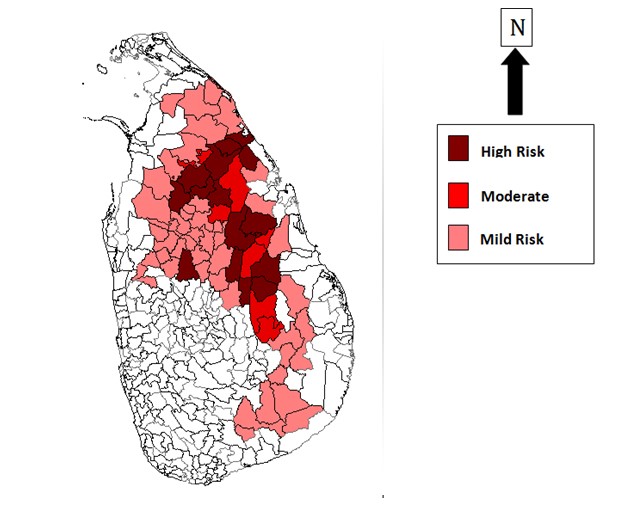
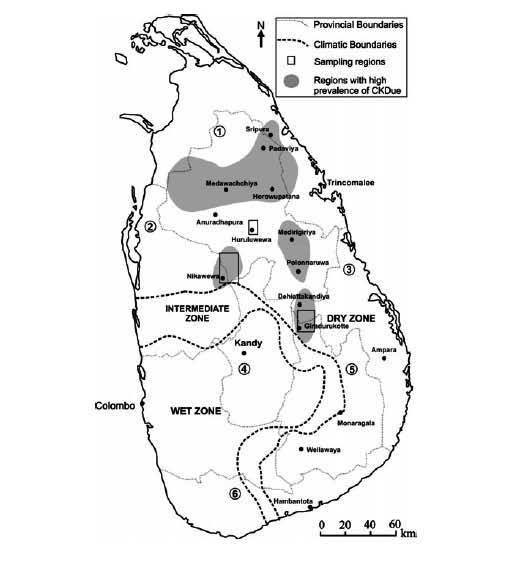
‘Chronic kidney disease of unknown origin’ (CKDu) came to the attention of  the medical profession of Sri Lanka   in 1991  when the first cases with terminal renal failure started coming in. It was officially reported in the mid 1990s. The reports came mainly from the North Central province.  CKDu was first detected in Padaviya. Thereafter,   cases were reported from 10 Divisional Secretariat divisions of the NCP, particularly Medawachchiya, Padaviya, Kebitigollawa and Medirigiriya. In 2011 cases were reported from Giribawa and Nikawewa, both in the North Western Province. A map drawn in 2013 showed that CKDu occurred most heavily in Siripura,-Padaviya-Medawachchiya-Horowopothana area, Medirigiriya-Polonnaruwa area, Dehiattakandiya- Girandurukotte area and the Nikawewa areas.  It was therefore called Rajarata Kidney Disease.

REGISTERED CKDU PATIENTS UPTO DECEMBER 2014.

kamalikamap1

http://www.presidentialtaskforce.gov.lk/en/kidney.html#

kamalikamap2

DISTRIBUTION OF CKDU
Source: H.R.A.L.N. Ranasinghe 2015 jas.sljol.info/articles/10.4038/jas.v10i2.8055/galley/6120/download

In 2015,   the places with high prevalence of CKD/CKDu were Medawachchiya, Padaviya, Kebitigollawa, Rambawa, Medirigiriya, in the North Central Province (NCP),  Wilgamuwa and Polpithigama in Kurunegala district , North Western Province, (NWP),   Weli oya in Mullaitivu district, Northern Province (NP) , Siripura and Gomarankadawela, Trincomalee district,  Dehiattakandiya , Ampara district, Eastern Province (EP) and Girandurukotte in Uva Province (UP). CKDU was thereafter found in Hambegamuwa  in   Uva province  Angunakolapellassa and Bandagiriya in Hambantota district  as well as Jaffna peninsula. New locations are emerging while the older locations continue to have the disease.  CKDu is also reported from Egypt, El Salvador, Nicaragua and India’s Andhra Pradesh.

The numbers of CKDu patients, district wise from 2000 to 2013 were   Anuradhapura 11,212 cases, Kurunegala 9781, Trincomalee 3858, Badulla 3141, Polonnaruwa 2957, Ampara 1118 and Batticaloa 325, making a total of 56,342 cases. WHO report 2012 stated that in the disease affected areas of the   NCP   at least 15% of people in the age group 15-70 years  are affected by CKDu    Ranjit Mulleriyawa observed that more than 8000 people were estimated to be receiving treatment in various parts of the country in 2013. Approximately 2600 patients are presently undergoing treatment at Girandurukotte hospital alone, he said.

In  2014-2015  the numbers were: Anuradhapura  3032, Polonnaruwa  6046,  Badulla 3098,  Vavuniya 1684  Kurunegala 1425  Matale 952  Ampara 671,  Monaragala 587, Trincomalee 467, Mullaitivu 273 and  Hambantota 312  making a total of 28576. (Source: National Health Strategic Master plan 2016-2025). Ministry of Health stated that in 2015 there were approximately 70,000 estimated CKD/CKDu patients in known high risk areas, the majority were from North Central Province.  In 2016, Sri Lanka had the highest incidence of CKDu in South Asia, with around 180,000 people affected and approximately 50,000 deaths.

The cause (etiology) of this kidney disease is not known. Therefore the disease was named Chronic Kidney Disease of uncertain etiology” (CKDu).  The features usually seen in kidney failure, such as diabetes, high blood pressure, obesity, snake bites or urinary tract infections were not seen in these kidney failure patients. The symptoms were also different. A study published in 2011, compared three rural populations in Medawachchiya, Yatinuwara (Central Province) and Hambantota (Southern Province). The known risk factors   such as diabetes and hypertension were the main causes for CKD in Yatinuwara and Hambantota populations. These   factors were absent in the Medawachchiya population.

A stream of research studies on CKDu were published from 2010 onwards.  CKDu was attributed to various factors. These factors include hardness of drinking water, excessive amounts of fluoride in drinking water , presence of toxins produced by microorganisms such as cynobacteria in water, presence of the heavy metal cadmium in water, excessive use of fertilizers, insecticides,  weedicides,    contamination of water by agro-chemicals that contain high percentages of arsenic and mercury and combinations of these such as calcium content in  hard water combined with  arsenic in fertilizers and pesticides.  Other possibilities considered were heat stress and excessive sweating, because NCP is the hottest area in Sri Lanka, use of low quality aluminum utensils  for cooking and storing water   and excessive consumption of poor quality, illegal liquor.

Despite the effort of about 60 researchers, including those funded by WHO, none of these hypotheses have been proved. Some assumptions were grossly inacceptable. High amounts of fluoride in the groundwater can be seen in all parts of the Dry zone while CKDu is highly prevalent only in a particular belt. Excessive use of fertilizers and agrochemicals such as glycophosphates can be seen in plenty in the wet zone, which is free of CKDu. In the Central Province, where agrochemicals are used at rates several times greater than the NCP, there is no CKDu. Aluminum utensils and poor quality illegal liquor are found all over the island. In one epidemiological study there seems to have been interference from the authorities to ‘the conclusions of the study.’

Since studies   failed to find the cause for this CKDu and the etiology still remained largely unknown, WHO said in 2016 that exposure to a combination of factors that are toxic to the kidney, rather than one single factor, seems to cause this kidney disease.   This illness is described, medically, as chronic kidney disease of unknown etiology, confined to certain geographical area in the country, with Irreversible damage to kidneys.  No specific signs and symptoms, insidious onset which probably starts in second decade of life, slowly progressive and asymptomatic until very advanced.  No cure in western system or any other system of medicine.   The number of patients is increasing rapidly and it is becoming the biggest health issue in certain parts of the country. At  the SLAAS theme seminar, December 2016, three speakers used ‘CKDu Sri Lanka’  in their lectures, one was a medical doctor,  followed by a chemical engineer and  sociologist . So CKDu, at long last, has come to the notice of the academic community. The conclusion is ‘this is a very serious problem that needs to be turned into a political issue.’

Almost all the CKDu patients in the North Central Province are Sinhala males, between 30 and 60 years, farmers engaged in rice cultivation.  Farmers over the age of 40 years, who had been farming for more than 10 years, were at higher risk of developing the disease, said WHO. CKDu took 20-40 years to develop in a patient.  The disease builds up stealthily in the body, manifesting only in advanced stages. It probably starts in the second decade of life. It is a slow progressive disease, where the kidneys reach the stage of irreversible damage, before the illness starts to show. By the time the victim realizes that there is something wrong with his health, the kidneys have been damaged beyond repair. Dialysis and transplants are the only treatments possible at this point.  But patients tend to refuse dialysis because they found that those who failed to get dialysis regularly die faster. The patient invariably dies four years after they are diagnosed with the disease.

Ranjit Mulleriyawa observed that researchers failed to capture the depth of human suffering, the fear, anguish, desperation and trauma experienced by patients diagnosed with end state renal disease and their distraught families. Many suffer from mental health problems after they hear the diagnosis. Most continue to work till they die, they have no choice. When the father can no longer work, the entire family goes into financial ruin and debt. When he dies, the young wife and children are left desperate.  Families become destitute, children get orphaned. The whole village gets impoverished.  Individual families keep the illness secret, and till recently they did not know that many others in the same village were affected. ‘They never tell anyone’. ‘The young no longer want to work in the field, most have left the village and those who remain work in sand mining.

Bandarage noted that despite its emergence more than 20 years ago, the mystery surrounding the Rajarata Kidney Disease has not yet been solved. The scientific community ‘continues to be perplexed’ as to why CKDu is peculiar to the north central region and not the other rural areas of the country that have similar rice cultivation practices and lifestyles including extensive use of agrochemicals and aluminum utensils for cooking and storing water. The explanation may be political.

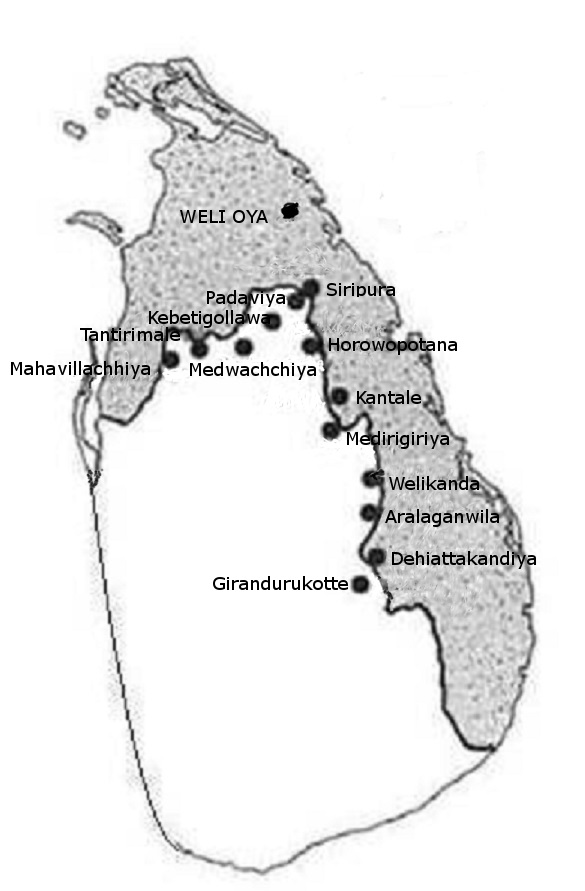
The North Central Province, (NCP) with its predominantly Sinhala population, lies between Northern and Eastern provinces, directly in the path of a merged North-east. The villages with the highest number of CKDu patients are adjacent to the Eelam boundary. Padaviya, Medawachchiya and Kebetigollawa lie in a belt along the Northern Province boundary. Siripura, Medirigiriya, Girandurukotte are close to the Eastern Province boundary. Most of these villages are in  the ‘new areas’ opened by the Mahaweli scheme. `Kebetigollewa is in System L in the accelerated Maheweli scheme, Girandurukotte is in System C. Weli oya was created as a Sinhala settlement in 1984. Tamil separatists objected saying it was created to ‘delink the contiguity of Northern and Eastern Provinces’.   Padaviya and Weli oya are among the ‘border villages’ brutally attacked by the LTTE.  Therefore a charge of Genocide must be considered.


kamalikamap3ar2

The Convention on the Prevention and Punishment of Genocide (1948) defines Genocide as  ‘intent to destroy, in whole or in part, a national, ethnic, racial or religious group,  by deliberately inflicting on the group conditions of life calculated to bring about its physical destruction.  It is not necessary to destroy the entire group. Destruction of only part of a group is also genocide.’

Genocide could be achieved by the ‘deliberate release of harmful biological agents in order to cause death in people.’ These biological agents are altered to increase their ability to spread into the environment, to cause disease and make them resistant to current medicines. These agents can be spread through the air, water or food.  They are extremely difficult to detect as they do not cause illness immediately.

The biological agent used in Sri Lanka, researchers deduce, must be made of chemicals having the following characteristics. It must be capable of forming stable complexes with hard water, capable of retaining nephrotoxic metals and delivering them to the kidney and capable of multiple routes of exposure, including ingestion.  The agent has been introduced to the area in the last 20 to 30 years.

The evidence points to waterborne chemicals. Prof Oliver Illeperuma and CB Dissanayake reported a close association between CKDu and quality of drinking water. CKDU disease very likely occurs from the admission of harmful substance to the human body through water over an extended period of time, said the OPA   Think Tank. WHO looked at  the variables examined in the various studies, dismissed most of them and stated that only water should be given a research priority. Strengthen ongoing water quality surveillance, with a focus on nephrotoxic chemicals in the affected areas, WHO recommended.

In the North Central Province, the disease was found in areas where drinking water was drawn from the ground, particularly stagnant water from shallow wells   and pipelines. It was more prevalent among those who drank water from  wells situated below a reservoir or an irrigation canal.     The disease was absent in areas where drinking water was obtained from natural springs and rivers. ‘Some unmeasured toxin’ in dug well water may have caused this, said SLAAS. Some doctors were more explicit. The well water is contaminated with toxic chemicals, they said.

CKDu has been identified by the medical profession from  1991,   which means that it had started to take effect at least a decade before that. But there was no outcry about it . CKDu came to the attention of the authorities only twenty years later.  Premini Amerasinghe made pointed reference to the  deadly effect of CKDu in her novel  Tangled threads’ ( 2010).  The present government has produced a knee jerk solution. They have banned  agro chemicals  containing glycophosphates and advocated traditional rice varieties such as henati which have a poor yield. These decisions  hit the farmers even more. They benefited  by the new improved rice varieties like BG 360 which gave double the yield of the traditional varieties. So the remedy is  no better than the disease.( Continued)

CHRONIC KIDNEY DISEASE AND EELAM Pt 2

December 10th, 2016

KAMALIKA PIERIS

The geochemistry of the area where   CKDu disease is prevalent is of utmost importance, observed Prof. C.B. Dissanayake. Sri Lanka‘s CKDu is clearly geo-specific.  However, the approach of the doctors and other scientists researching into CKDu was far too academic, said Ranjit Mulleriyawa. Patients were looked at objectively. Researchers focused on laboratory analysis of samples of rice, water, urine. ‘Their learned discussions did not lead to any meaningful action which directly addressed the problem’,  Mulleriyawa said,   because they had no acquaintance with ‘rural realities’   and had failed to   ‘engage the villager in dialogue.’

Ranjit Mulleriyawa, a graduate of University of the Philippines, with a diploma in agriculture from School of Agriculture, Kundasale, owned and     worked a farm in Mahiyangana. In January 2016, he decided to investigate CKDu. A pilot project was launched at Ginnoruwa Grama niladhari division of Mahiyangana. Ginnoruwa had been identified as an emerging CKDu hot spot.   Friends and relatives provided the seed money. Commercial Bank CSR also gave support. International Water Management Institute and other scientists helped with the investigations. Mulleriyawa worked with two ‘highly committed’ women and a three wheeler for transport. Households identified as CKDU affected were visited personally by the two researchers.

The Grama Niladhari division selected, had four villages, Badulupura, Ginnoruwa, Sarabhoomi and Serupitiya. Badulupura was located on the upper slopes, while the other villages were on flat land close to the paddy fields. Most of the villagers were rice farmers.  They had been settled there in 1989, under the Accelerated Mahaweli project. They had come from Badulla, Welimada, Passara, Ettampitiya and Kandeketiya in the Badulla district. Before that Ginnoruwa area had been covered in forest.

The percentages of households affected with CKDu were Sarabhoomi 2%, Serupitiya 3%, Ginnoruwa 7% and Badulupura 25%.   In Sarabhoomi there was only one positively diagnosed CKDU patients, he too had lived for 10 years in Badulupura. Farmers in both Badulupura and Sarabhoomi had their paddy fields located in the same tract of flat land. They used the same fertilizer and pesticides.  Therefore agro chemicals applied to the paddy fields could not   be the cause of CKDu.  The likely cause was an environmental factor in the homesteads of Badulupura.

Mulleriyawa thought that water was the cause. There is something in the water that is making them sick, he said. Badulupura villagers drank well water obtained from shallow dug wells in their homestead while Sarabhoomi residents drank water from the Mahaweli river nearby. Badulupura complained of hard water, ‘kivul vatura’, in their wells. River water had no kivul, said Sarabhoomi. The few dug wells in Sarabhoomi   had exceptionally good quality water and Sarabhoomi villagers, who lived far away from the river, drank water from these wells.

There was considerable   variation in water quality of domestic wells in Badulupura. An area with many wells of poor quality will suddenly provide a well having exceptionally good quality water and farmers would spot this quickly.  Many homesteads in Ginnoruwa had more than one well.  Some are abandoned due to poor water and Mulleriyawa warned that researchers must be careful not to take samples from them assuming that people drink the water.

A chemical analysis of well water and river water in Sarabhoomi and Badulupura was    done, with the assistance of geologists at University of Peradeniya. They found that the electrical conductivity of the Badulupura wells ranged from   300 micros to 700 or more. River water was rarely over 200 micros. The electrical conductivity of water reflected the concentration of ions in the water. These ions came from the salts, alkalis, chlorides, sulfides and carbonate compounds dissolved in the water.

These findings from Ginnoruwa have not been reported anywhere else in Sri Lanka, said Mulleriyawa. hey indicated that the quality of drinking water may be the clue to unraveling this mystery, but finding exactly what it is in the water, which causes kidney damage, may take quite some time. ‘We are now mapping the precise GPS location of all domestic wells in Badulupura and Sarabhoomi with assistance from IWMI and University of Peradeniya. His findings attracted   attention. A former Director General of Agriculture and a ‘retired professor from Ruhuna ‘were interested in visiting the two villages described.

The Ginnoruwa study showed the urgent necessity of providing clean drinking water to CKDU affected villages. Mulleriyawa formed the Rainwater Harvesting Forum with support of the Geology department, University of Peradeniya and the medical staff at Girandurukottte and Kandy hospitals. He thereafter started a rainwater harvesting progamme called the ‘Raindrops project’ to give Badulupura clean drinking water. it was funded by Commercial Bank and other private donors

He created a control group and gave them rainwater tanks. There were no new cases diagnosed in the control group.   Many claimed that they no longer suffered from the burning sensation when passing urine, which they had experienced earlier. Rainwater harvesting could be a solution to providing potable water to scattered rural household in the Dry zone, observed Mulleriyawa. Government has only given water filters and expensive water treatment plants.  The cheap rainwater tanks used in his project will be better.

Mulleriyawa started to publish his findings in the Daily News and Island newspapers in August 2016. He said that for the past six months he has been engaged in studying the problem of CKDu.    The last essay, where he indicated that he may be getting closer to detecting the causes of CKDu was published on 13th September 2016. At the end of the essay there came this announcement ‘The author passed away unexpectedly on Sept 10, 2016.’ (CONCLUDED)

President Maithripala Sirisena finally admitted that the Tender procedures in Sri Lanka  are  in deep corruption

December 10th, 2016

Sri Lanka News

President Maithripala Sirisena  who, decades ago, had benefited himself from the very same corrupted tender procedure , and instrumental in award of an international loan to his own brother  for upgrade of rice milling facilities at Polonnaruwa,  finally accepted that the Sri Lankan tender procedure has been prone to massive corruption.

President further said yesterday if a few of the prominent State institutions could overcome corruption and large-scale frauds and send that revenue to the Treasury, the country’s budget deficit could be bridged.

The President made this remark addressing the Anti-Corruption Summit held at Hotel Taj Samudra in Colombo.
He said, the country’s tender process is still over 50 per cent corrupt and its responsibility has to be borne by those……officials holding top positions in the government.

The President also stated that Tender Boards and Technical Evaluation Committees (TEC) tend to provide undue advantages to their friends in a tender process.

“This is not a secret anymore. When it is claimed that a procurement process is not structured, they suggest that it should be subjected to a tender process. However, some of those officials holding top positions in the State invariably intervene and award those tenders to their friends etc,” said President Sirisena.

He stated that it was wrong for Ministers to get embroiled in any tender process but that is exactly what some of them do.
He deplored the fact that certain heads of State institutions have come to the stage of not taking responsibility anymore for administrative issues in their institutions.

“When something is going to be done, some of those heads say that they cannot take responsibility for such decisions. They are fearful of being summoned to the FCID. But, in my view if those heads can take correct decisions according to their conscience then they do not have to be concerned about having to go before the FCID.”

He added that in one way he was pleased to see certain heads of such institutions being fearful of being to the FCID.
He noted that the onus was now on State officials to perform their duties in the correct and accepted manner.

Coalition in melt-down mode

December 10th, 2016

Courtesy The Island

Last week, there were three incidents related to the UNP, the main partner in the ruling coalition; three important developments which, together, may be an indication of things to come.

The first was the heat and fury generated at a meeting on Tuesday at the party headquarters where the former Pradeshiya Sabha members and sitting provincial councillors of the UNP had given vent to their grievances against the party hierarchy.  The complaints themselves weren’t new.  It was pointed out that UNP provincial councillors and former local government representatives were powerless even to give a supporter a job or get a transfer carried out, that there were unresolved cases of political victimisation some going back to the 1990s, and that it was impossible to contact any minister in the government even over the telephone much less meet them in person.

What was new was that even Kabir Hashim had been booed by the assembled crowd. This is probably the first time that such an incident has taken place on that scale within the UNP even though there have been isolated instances of the rank and file venting their frustration.  One website reported that the irate UNP people’s representatives had even loudly charged that the government was only doing the bidding of foreign powers without paying any attention to the party rank and file. Whether the implications of this open revolt will sink into the UNP leadership which usually has a Marie Antoinette like attitude towards the party rank and file is debatable. But the development of a situation like this when the party is preparing for elections next year, does not augur well for the UNP.
It is a moot point as to who is to blame for the present impasse with regard to the local government elections and those for the Northern, North Central and Sabaragamuwa provincial councils. After the presidential elections last year, president Maithripala Sirisena dissolved the local government institutions which were largely SLFP and UPFA controlled without giving them the one year extension sanctioned by the Local Government Authorities Elections Act, mainly because the lower ranks of the SLFP were staunchly with Mahinda Rajapaksa. It may also have been a way for him to show his gratitude to the UNP by making certain that the SLFP/UPFA will not have the advantage of having the LG representatives and the resources of the LG institutions when the parliamentary elections were held.

At that early stage, the reason given for the postponement was that these elections would have clashed with the Parliamentary elections.  The dissolution of these authorities naturally took away the edge that the SLFP/UPFA had.  It would have been to the UNP’s advantage had the local government elections been held immediately afterwards, but at this point it became obvious that the Maithripala Sirisena faction of the SLFP feared being wiped out, as they had at the General Election.  Now however the government is running out of excuses to postpone the local government elections; even members of the Sirisena faction have opined that the elections will have to be held even if the SLFP (Sirisena faction) comes third in the contest.

Sparring over electoral systems

Another dispute with respect to these elections among the key members of the coalition that brought Maithripala Sirisena to power was about the system under which they would or should be held.  The Sirisena faction favours the new electoral system because they think their only chance of survival will be if they are able to blackmail the Joint Opposition with the cry that they will be splitting the SLFP vote and facilitating the victory of the UNP in the various wards of the LG institutions. It is interesting to see that the UNP has not attached any credence to the hope that a split in the SLFP will help them to prevail at an LG election held on the new hybrid first past the post and proportional representation system.   If they did, the UNP too would have wanted the LG elections held under the new system. The excuse for holding the LG elections on the old system is that they cannot be postponed indefinitely and that the country cannot wait for the delimitation of the wards to be completed, as required by new laws.  As of now Lakshman Kiriella of the UNP, Anura Kumara Dissanayake and the SLMC have shown a preference for holding the LG elections according to the proportional representation system. The Joint Opposition does not mind whichever way the elections are held. That leaves only the SLFP (Sirisena faction) insisting that the elections should be held only according to the new system.

After a succession of SLFP (Sirisena faction) ministers saying that the next LG elections should be held only according to the new electoral system, last Friday President Sirisena himself sang the praises of the new electoral system in public saying that in 1989 when he entered parliament for the first time, he spent less than Rs. 100,000 on the election whereas when he contested in 2010, he dares not say how much he spent to get elected.  He added that the electoral system breeds corruption because of the huge sums of money that have to be spent on getting elected. President Sirisena is of course right. There is no doubt that this system of election where where a candidate has to cover an entire district at the parliamentary election should be changed.

Which side will win this debate about elections systems is yet to be seen. Last Friday, former President Mahinda Rajapaksa told the media after a function at the Abeyaramaya that he does not mind the election being held under either system. Some UNP ministers think it will be more advantageous to them to go in for the provincial councils straightaway without facing the local government elections although it is is difficult to see how this will help them because the trends that would affect the local government elections will also manifest themselves at the PC elections as well. The UNP seems to have made up its mind that the proportional representation system will be more advantageous to them which is why the PC elections – which will have to be held according to the proportional representation system – may seem more attractive to the UNP.

The worm turns

Another interesting development was the press conference that three UNP parliamentarians Mujibur Rahaman, Hector Appuhamy and Thushara Indunil held at the UNP headquarters. All three had obviously been told to lash out at the SLFP ministers who were criticising the UNP in public. Rahaman said that the SLFP ministers were criticising the UNP saying that the UNP has a deal with Basil Rajapaksa to destroy the SLFP. He said that the internal problems of the SLFP should be solved within their Darley Road headquarters. He issued a warning to the SLFP(Sirisena faction) to stop criticising the government or to leave and added that the government will not fall even if they leave.

This is the first time the UNP reacted officially to the criticism that members of the SLFP (Sirisena faction) have leveled against the government. The interesting thing was that this broadside from Rahaman came just a day before the vote on the third reading of the budget which makes it all the more significant.

That may have been the UNP’s way of impressing upon the SLFP (Sirisena faction) that they were not needed to keep the government going. In fact the UNP has no need of the 35 or so SLFP members of the government because they can easily obtain the support of the TNA to maintain their majority or in the alternative they can simply absorb some members of the Sirisena faction and form their own government. it must be remembered that the constant protestations by Sirisena faction members that they were anti-UNP even though they were in a government led by the UNP and their efforts to drive home the point by attacking the UNP on certain selected issues, was damaging the UNP’s standing among the floating vote and the youth vote.

The Sirisena Faction worthies try to make out that they are in fact the pristine  members of the SLFP adhering to the policies of S.W.R.D.Bandaranaike but had been constrained to form a government with the deplorably capitalistic, reactionary and unbelievably corrupt UNP only to save our war heroes from war crimes allegations coming from the West. Some like minister Soysa was also in the habit of saying that they formed a government with the UNP only to protect the membership and rank and file of the SLFP from the attacks of the UNP. Whatever the excuse, the UNP was always portrayed as a villain and the members of the SLFP (Sirisena faction) always try to outdo the Joint Opposition in their criticisms of the UNP so much so that it was becoming untenable for the UNP to appear on talk shows with members of the SLFP (Sirisena faction) to represent the government.

With a UNP member seated by his side the SLFP (Sirisena faction) minister would describe the UNP as ‘horu’ as Lakshman Seneviratne did a few days ago on the “Balaya” programme on Hiru TV.  With just three members of the Joint Opposition on COPE, it still put out a report that left the UNP with egg on their faces. The antics of the SLFP (Sirisena faction) has given cause for much snickering and merriment among members of the Joint Opposition because every blow that members of the SLFP (Sirisena faction) aimed at the UNP weakened the very government that they were both partners in. Who would not like to see the enemy devouring his own rear end?

The impression that this writer gets by talking to people is that the attacks on the government by those serving in it have only gone to confirm everything that the Joint Opposition has been saying about the government. There is of course no precise way of gauging whether it has improved the standing of the Sirisena faction among voters. But from what this writer knows about politics, there can be only two sides, either you are in the government or out of it, you cant be in it and claim to be not of it and expect the people to buy that.

The third most interesting development in the UNP is the resolution that was passed in the working committee on Thursday endorsing the policy of devolving power within a unitary state and the need to have a President who carries out his functions ‘on the advice of the prime minister and the cabinet of ministers’ and to abolish the proportional representation electoral system in favour of a hybrid of the first past the post and proportional representation systems. The resolution also said that the special powers now wielded by president Sirisena would be retained. (Perhaps what this meant was that they would be retained till the end of president Sirissena’s term of office.)

The first to criticise this resolution was the pro-yahapalana website Lankaenews which published a blistering article accusing the UNP of having ‘betrayed’ the pledge given to the people to abolish the executive presidency completely. They pointed out that the very first pledge in the memorandum signed by Ranil Wickremesinghe and Ven. Maduluwawe Sobitha Thera and 98 ‘civil organisations’ was to abolish the executive presidency.  They had pointed out that when the 19th Amendment was introduced, there had been a similar play on words with the pledge to abolish the executive presidency becoming merely an exercise to reduce or modify some of those powers.

Lankaenews has warned that to change the executive presidency only to the extent stated in the UNP’s resolution may offer some relief when the President and prime minister are from two different political parties, but if they happen to be from the same political party, the old dictatorial tendencies will once again manifest themselves. It has to be said that this website is one of the few yahapalana partners who even speak of abolishing the executive presidency now.

Leasing out the Hambantota Port

In one of the great ironies of politics, the first public property sold by the UNP led government is the Hambantota Port which was built by the Rajapaksa government. The proceeds from of the sale of public properties was one of the main sources of revenue expected to be raised to cover the budget deficit in 2016 but so far the government has not been able to sell any of the properties it wanted to dispose of such as Sri Lankan Airlines and the hotels owned by the government. An MOU was signed last week for the long lease of the Hambantota port to the China Merchant Holding Company for 99 years for a sum just over one billion USD. The Rajapaksa camp which had an anti-privatisation policy was up in arms against the virtual sale of the control of the Hambantota Port. A 99 year lease with a Chinese company with the private party owning 80% of the lease means a virtual sale.

At a press conference held to oppose the privatisation of the Hambantota Port, parliamentarian Wimal Weerawansa said that another Chinese company  the China Harbour Engineering Co had offered 740 million USD for a 65% stake in the harbour which would mean that the Sri Lankan government would be entitled to 35% of its income but that this offer had not been accepted. President Mahinda Rajapaksa who along with the other parties aligned with him have always maintained a strong anti-privatisation stance went on record saying that they will have to make a decision about this privatisation of the Hambantota Port once they come back into power.

In the meantime, the Joint Opposition’s new political party, the Sri Lanka People’s Front, launched its bhikku front with a meeting at the Bauddha Mandiraya at Thunmulla. Former President Mahinda Rajapaksa attended the gathering at the initial stages and left early. The monks present had blessed the former president and called upon him to take over the leadership of the political forces opposed to this government and to lead the campaign against the new Constitution which seeks or facilitates division, the proposed ETCA with India and the privatisation programme. Thereafter, 16 district committees were formed by the bhikkus present with a convenor for each district to carry forward the work of the organisation.

The IMF’s optimism and gloom

Last Friday, the IMF published its first review of the Extended Fund Facility given to Sri Lanka. The government has received about 325 million of the 1500 USD loan from the IMF up to now. It was observed in this report that the government’s reform program aims to reduce the fiscal deficit, rebuild foreign exchange reserves, and introduce a simpler, more equitable tax system to restore macroeconomic stability. The IMF observed that Sri Lanka’s performance under the Fund-supported program has been broadly satisfactory despite challenging circumstances.

Macroeconomic and financial conditions have begun to stabilize, inflation has trended down, and the balance of payments has improved, the report stated. However, the IMF warned that international reserves remain below comfortable levels and that the structural benchmarks due in July?September were not met, but mentioned that the authorities have been making progress toward their completion which is now scheduled for December 2016. They had also observed that risks to the programme emanate from the ‘political challenges’ of maintaining momentum for sweeping tax reforms and implementing related fiscal and structural reforms.

They observed that the lack of progress in revenue-based consolidation, a further decline in growth, and additional losses from state-owned enterprises would call for more difficult adjustments. These would further increase the risk to debt sustainability, given the already high level of government debt. The IMF also warned that the outstanding financial obligations of state owned enterprises remain large at over 11% of GDP at the end of 2015, and stressed the need to Introduce automatic pricing formulas for fuel and electricity and to reduce the discretionary aspects of the price-setting process. The IMF also observed that public debt had reached 80.4% by the end of last year (2015). According to the latest Central Bank report, it was 70.7% at the end of 2014 which indicates the quantum of loans taken by the present government in just 12 months. Even as new loans are being taken, old ones are constantly being paid back. What has increased is the loans outstanding – which means that the present government has been taking new loans much faster than they have been repaying the old ones.

Foreign-currency denominated debt accounted for 47 percent of the total, while debt owed toofficial and multilateral creditors accounted for about a quarter of the total. The largest segment of the foreign currency denominated borrowings of the present government were in the form of Sri Lanka Development Bonds.

What is most interesting about this IMF report is that it had said that the Fiscal consolidation envisaged under their program would steadily reduce public debt which is expected to come down from 80.4 percent in 2015 to 70.1 percent in 2021. What this means is that when it comes to public debt, it will take a full five years from now just to bring the public debt figures to the level at which the Rajapaksas left it at the end of 2014! What does that say about the economic management of the present government? The IMF has also warned that if the fiscal consolidation programme stalls and continues to underperform as it did this year, there was the risk of the debt to GDP ratio actually increasing to 86% by 2021 instead of coming down to 70% as envisaged.

PROTECTING THE SINHALA BUDDHIST CULTURAL LEGACY OF SRI LANKA

December 10th, 2016

Dr. Daya Hewapathirane

Motherland of the Sinhala People from Historic Times

Compared to the other 196 countries of the world, Sri Lanka, the motherland of the Hela, Sihala or Sinhala people, is small, in terms of area (65,610 sq. km) and population (21 million). The Hela or Sinhala is the ethnic group native to Sri Lanka, forming the mainstream or the dominant indigenous community of the island for more than 2500 years. In fact, Sri Lanka is the only national sovereign motherland of the Sinhala people. Their culture, way of life and their Sinhala language originated and developed in Sri Lanka. Sovereign national rights of Sri Lanka rests with the Sinhala people who form the original dominant community of this country. Tamils, Muslims, and Malays are non-indigenous minority settler communities of Sri Lanka who settled in the island at different times in the past, coming from their own homelands or motherlands.

 A good part of the long history of the island, has been recorded or written by our own people in an unbroken continuous manner. This written history goes back to over 2500 years and is described chronologically, in detail, in the ancient chronicles Deepavansa (3rd-4th century CE), Mahavamsa (6th century CE), Chulavamsa, besides the Rajavaliya, Pujavaliya, Dhatuvamsaya, Elu-Attanagaluvamsaya, Elu-Bodhivamsaya, Maha Bodhivamsaya,  Thupavamsaya, Daladavamsaya and Viharavamsaya. This written history is supported by archaeological evidence, and reports of foreign travelers of ancient times. Among archaeological evidence substantiating recorded historic information are rock inscriptions.  The written history of Sri Lanka, is regarded as the second-most remarkable recorded history in existence of an ancient and cultured civilization. It is second only to the records maintained by the Shang dynasty of Chinese emperors. The historical chronicles narrate in detail the history of the country since the arrival of Buddhism in 237 BCE or 3rd century BCE or about 2246 years ago.

Accuracy of Historic Record

These historic sources provide information on Sinhala Buddhist Kings who rescued the Sinhala race, the island and Buddhism from marauding Tamil  armies of powerful South Indian Dravidian kingdoms. Also about our benevolent rulers who performed deeds of piety, who made the country self sufficient in rice by way of irrigation engineering, promoted Ayurveda medicine and medical practice, build Buddhist temples, stupas and reigned with efforts to follow Dasaraja Dharma – the tenfold righteous path of a king.

The accuracy of this historical record of ancient Sri Lanka is generally accepted by means of other numerous local and Indian edicts such as the  rock edicts of Indian Emperor Asoka and records of the Fa Hien the Chinese pilgrim monk, Roman historian Pliny and several others who have already been referred to. Also by means of inscriptions, historical works, and literary works as well as by way of ruins, renovated historical and Buddhist monuments, ancient yet sophisticated irrigation networks, which extend the lifeline to date.

Traditional Name of the Island Nation

Sri Lanka is not the traditional name of the island. In ancient times, the island was referred to in many names but all implied that it is the land of the Sinhala. It was called Sinhaladveepa, Sivuhelaya, Heladiva, Heladveepa, Helabima, Seylan, Taprobane (by Greeks for the ancient name Tambapanni), Thunsinhale, Sinhale, Ceylon and Sri Lanka. Buddhist scholars of ancient times referred to the island as Dhammadveepa or the island of Buddhism. Fa-Hien’s (400 CE) writings & those of Xuan Zang and other ancient Chinese records refer to Sri Lanka as Simhala, Sinhaladipa or land of the Sinhalas. Ptolemy (2nd century) although calls the island Taprobane, referred to inhabitants of the island as ‘Salai’.

Sinhale (or Sinhalay) has been the legitimate historical name, for many centuries in the past, until about the early 19th century when the people of the island was subject to European colonialism.  It was at this time that the name Sinhale was corrupted by the British as Ceylon. It was 44 years after gaining political independence from the British, in 1972, that the name Sri Lanka was imposed on the island.  It should be noted that in the Sinhala version of the Udarata Givisuma” or the so-called Kandyan Convention of 1815, by which the country fell into the hands of the British, the island is referred to as Sinhale.

When the British colonial period of about 150 years, when the entire island was under colonial rule is excluded, Sri Lanka has existed as an independent sovereign country for about 2500 years. In fact, it is, one of the oldest countries in the world within its present borders. The boundaries of most countries have changed in the past.

Oldest Buddhist Country in The World

As much as 70% of the total population of Sri Lanka are Buddhists. Sri Lanka, is the oldest Buddhist country in the world, where Buddhism was the dominant religion since 237 BCE or for more than 2250 years. It is noteworthy that until about the 16th century, about 99% of the population of the island were Buddhists. In other words, for some 1800 years, Sri Lanka was an exclusively Buddhist country with almost the entire population being Buddhist.

In terms of area and Buddhist population, Sri Lanka, is among the smallest of the 30 traditionally Buddhist countries in the world, which consist of substantial Buddhist populations. Also, it is the smallest among the six Theravada Buddhist countries, namely – Myanmar, Thailand, Laos, Cambodia, Sri Lanka, and India. Although small in area and population, Sri Lanka is by no means ‘small’ in terms of its global significance as a Buddhist country. It has been the country where Buddhist teachings have been preserved in its original form or the Theravada tradition, for over 2200 years. Buddhists across the world respect Sri Lanka as the country where pure Buddhism prevails. It is the traditional Sri Lanka Buddhist flag that has become the acknowledged global Buddhist flag in recent years. It was the recent initiative of Sri Lanka that led the United Nations, to celebrate Vesak as an important global event.


Non-Violence and Peaceful Co-Existence


The Buddhist way of life is based fundamentally on non-violence and peaceful co-existence with others irrespective of ethnic, religious, and other differences. For some 2500 years, the Sinhala people were organized in terms of their royalty, nobility, spiritual hierarchy, their Kingdoms and Royal Capitals, and their irrigation based farming system.  Buddhist values are geared at developing a social ethic which, would contribute to co-existence, mutual understanding, co-operation, and total harmony. To strengthen impartiality, people are advised not to succumb to biases and prejudices not to give in to attachment, hatred, fear, confusion, but to rise above them and do what is righteous. This concept of righteousness, which is designated by the term ‘Dhamma’ in fact, provides the firm foundation for the whole of Buddhist culture. The general admonition is to do what is righteous (Dhamma) and avoid what is unrighteous (adhamma). On this basis, all that is beneficial to oneself and others is considered meritorious (Punna) and wholesome (Kusala) and their opposites as demeritorious (Papa) and unwholesome (akusala). As the Dhammapada (Stanza No.183) says: Not to do any evil, to cultivate good, to purify one’s mind – this is the Teaching of the Buddha. It is on this basic teaching that Buddhist values are developed, lives are molded and social relations are cultivated. This explains why Buddhist culture attempts to nurture in the people a feeling for others, to mutually share with others moments of happiness and joy, to show respect to elders, to care for parents to attend on the sick and destitute, to honour and respect those who are deserving, to treat guests and visitors with friendliness and affection.

 The Sinhala Buddhist National Culture of Sri Lanka 

The national culture of Sri Lanka is the Sinhala Buddhist culture, where Buddhist norms and principles and the Sinhala language form the foundations. With the arrival and spread of Buddhism in the island, there came an era of unsurpassed attainments and achievements. The island’s civilization achieved an individuality and identity that distinguished it from its neighbors. Sri Lanka’s identity is based on the Sinhala Buddhist culture and the Sinhala language which is the defining element of Sinhala culture.

The Sinhala Language

All salient aspects of our national culture – tangible and intangible, either grew or evolved within the borders of our country. Sinhala language and literature originated in Sri Lanka. Sinhala language in fact is the most important defining element of our nation’s culture and heritage, from historic times. The Sinhala language grew out of Indo-Aryan dialects and exists only in Sri Lanka and has its own distinguished literary tradition. Sinhala is one of the world’s oldest living languages.  There have been a wide range of languages in the world, particularly in Asia which lived and died without leaving evidence of their existence, because they were never written down. This is not the case with the Sinhala language. All other languages used in Sri Lanka originated in other countries.  It is significant to note that the overwhelming majority of people of Sri Lanka are distinguished by their language – Sinhala, which even today has a strong unifying effect in our motherland helping to reinforce the solidarity of our people as a unique cultural entity in the world. Almost all place names of the country from historic times, are in the Sinhala language – in the North, South, East, West and Central regions.

Rich Cultural Heritage

 Cultural heritage encompasses material culture, in the form of objects, structures, sites, architecture, sculpture, paintings, and other forms of fine arts, as well as living (or expressive) culture in the form of language, literature, customs, traditions, rituals, ceremonies, and festivals, performing arts, music and so on. These unique forms of cultural expression provide this country with its distinct national identity. They are the living evidence of the outstanding cultural heritage of this nation. It was Buddhism that fashioned life-styles, fostered the arts, and inspired the nation’s architecture, sculpture, paintings, and other fine arts. It led to the creation of sthupes (pagodas), temples, monasteries, statues, and a fascinating diversity of aesthetically pleasing artistic ventures and cultural activities.  It is important to note that all salient aspects of the national culture – tangible and intangible, either grew or evolved within the borders of Sri Lanka. This includes the Sinhala language and literature which originated in the island.

The exceptionally rich heritage of visual arts of the Sinhala Buddhist people of Sri Lanka, extends to a period that exceeds 2300 years, from the 3rd century BCE to the 21st CE.  The Sinhala Buddhist culture is one of the World’s oldest, continuous, unchanged cultures in existence.  It is one of world’s important and exemplary cultures in existence. It is a civilization unique to Sri Lanka alone.  The simple and uncomplicated lifestyle promoted by Buddhist culture, is based on the five basic precepts of Buddhism. Non-violence, compassion, tolerance, morality, and peaceful coexistence with others and with nature are the cornerstones of Buddhist culture.

Despite foreign invasions, threats and various forms of challenges and atrocities, Buddhist culture has remained intact in the island, unlike the case with many ancient cultures in most other countries in the world.  Throughout most of its history, Sinhala kings and Buddhist institution of monks, played a major role in the development and maintenance of Buddhist culture and institutions in the island. The world recognition of the greatness of this unique Sinhala Buddhist culture is reflected by the UNESCO designating ancient sites, including the ancient royal capitals of the Sinhala people such – Anuradhapura, Polonnaruwa, Mahanuwara (Kandy), Sigiriya and Dambulla as World Heritage Sites.

Ancient irrigation system developed by the Sinhala kings is still operational and is considered as – Engineering marvels. The earthen and stone dams and reservoirs systems the canal network and related water control and management structures and techniques show the skills of the ancient Sinhala people.

The Hela or Sinhala Nation 

There is only one nation in this island of Sri Lanka or Sinhale. A ‘Nation’ is a self-identifying group of people who share a common history, a common language, a common culture and most importantly a homeland. In other words, a nation is the most persistent alliance or organization of three main social components -people-culture- territory. Culture can be defined as the system of shared beliefs, values, customs, behaviors, and artifacts that the members of society use to cope with their world and with one another, and that are transmitted from generation to generation through learning.  In a broader sense, a subculture is any group within a larger complex culture who has interests that vary from those of the mainstream culture. In a more specific sense, it is a group with a distinct style and identity. Even though it is obvious that there are large number of sub cultures within any given national culture, People live and think in ways that form finite patterns that can be mutually constructed through a constant process of social interaction. The country’s predominant culture is Sinhala Buddhist. Over the centuries, both Hindus and Buddhists have co-existed well despite occasional politically motivated power struggles. One should not be confusing the issue of citizens’ rights with that of a nation’s identity.

Misfortune  brought about by Europeans

There were Tamils or Dravidians in Sri Lanka for many centuries in the past, most of them assimilated and appreciated the Sinhala Buddhist culture until the Europeans arrived and took control of our nation. Although we let them  into our land and offered them hospitality, in return they acted to undermine our country, the Buddhist religion, and tried to destroy our culture and thereby break the harmony in our society. With the adoption of a policy of ‘divide and rule’ by the British, it has been a continuing saga against Sinhala people, especially the Buddhists. To serve their serf interests, the British were largely responsible for germinating mistrust among the various ethnic groups and among our own people.

 Tamilnadu – the Homeland of Tamils 

Tamils cannot have a “right of self-determination” in Sri Lanka because the homeland of the Tamil nation is Tamil Nadu, and not Sinhale’ as the island of Sri Lanka was known in early times. Only the Sinhala nation has the right to self-determination in Sinhale’. The real objective behind all this talk of a “Tamil Nation and Tamils’ Right to Self-Determination” (which even the Indian Constitution does not recognize) is to make way for the racist Tamil LTTE dream of creating a Greater Tamil Eelam linking Sri Lanka’s North and East with Tamil Nadu. The Tamils came from their motherland, the Tamilnadu where their culture and language originated. The Tamil nation of Tamilnadu is seven times bigger than Sri Lanka, where one needs to be a pure Tamil to hold any high official position. Tamils have their national heritage and aspirations protected within Tamilnadu.

Violation of National Interests  

Hela nationals will not tolerate any community or person who whilst living in the Hela Nation and considering it their home, deliberately misusing such privilege by scheming and adopting violent and extreme actions or contributing to such actions violating the sovereignty, dignity, and territorial integrity of the Sinhala Nation. This includes the ridiculously false and unfounded claims made by Tamil and Muslim leaders in pursuit of carving out ethnic or religious enclaves within the Sinhala Nation, merely because some of them had lived in some specific places in the country for extended periods of time. Persons with such self-serving objectives and attitudes are traitors of the Nation and should be tolerated under any circumstances. There is no place in the Hela Nation for such traitors, double crossers, renegades, turncoats, collaborators of enemies, criminals and terrorists, conspirators, connivers, schemers and emissaries, spies, secret agents, undercover agents, and double agents of the enemies of the Sinhala Nation.

Maintaining the foremost place for Buddhism and protecting and fostering the Buddha Sasana should be essential components of any Constitution of Sri Lanka.   The  unitary character of the country and the supremacy of the Parliament should be maintained at all times thereby preventing any form of separatism including  federalism or administrative units based on Race, Religion or Language.  Police should operate within the entire territory of Sri Lanka under the direction and control of Inspector General of Police who is the head of Sri Lanka Police Force. State land  must always be vested with the Republic of Sri Lanka. The Parliament should have full control over public Finance and no institution should be permitted to receive funds from any foreign source, without the approval of the President or the Cabinet of Ministers.

In Sri Lanka, the granting of excessive rights to minorities in the form of alien-national rights of language and culture, land rights and police powers and so on, and thereby eventually enabling them to form separate ethnic enclaves in different parts of the island should not be permitted under any circumstances.  Such action as evident today, will be strongly resisted by the nation’s patriotic forces, including Buddhist monks who have from historic times been in the forefront in promoting and protecting the Sinhala Buddhist culture of the island. These patriotic forces will not tolerate any disintegration of the national sovereignty, the cultural integrity, and the long established territorial integrity of the country. There has been serious deprivation of the legitimate rights of the Sinhala Buddhists, in recent times.  In Sri Lanka, many Bhikkhus have entered the political arena to ensure the protection of Buddhist heritage, the Buddha Sasana and Buddhist values which undermined and subject to threats in recent times. Their main motive is to safeguard the national heritage and culture and thereby to secure the rights of the Sinhala Buddhists.

Settler Minority Communities to merge with the Host Nation

Those settling down or have already settled down in host countries have a bounden duty to merge with the host nation into a single coherent nation of members.  It is basically, a state of mindset, not necessarily physical interaction. Within these host countries, human rights and civic rights of the host nation are what the settler minorities are entitled to and not the alien-national rights of the countries of their national origins they left behind for pastures anew. Their alien-national rights will shift to the private domain when in host countries and not to threaten the national sovereignty of the host countries either.

Sri Lanka wants all non-indigenous minorities of our nation such as the Tamils, Muslims, Moors and others of whatever label, to be a part of our Nation, to join the country’s mainstream, just the way how minority communities are expected to do in all countries of the world, especially in places like Canada, Australia, USA, UK, Norway and help to strengthen our nation founded on the noble principles of non-violence, tolerance, compassion, where peaceful co-habitation has been the cornerstone from historic times. Forgiving and forgetting” has been the attitude of our people, even to those who have harmed us repeatedly from historic times, because our people know that eventually justice and truth will prevail.

Initiatives of Bhikkhus as Traditional Leaders

Given the precarious and volatile situation in the country at present, our Bhikkhus, the traditional leaders of the nation, should necessarily be in the forefront in movements aimed at protecting and promoting the Buddha Sasana and important national interests, especially when they are under threat.  Many Bhikkhus have voluntarily made their choice to take an open public stand on issues surrounding Buddhism and Buddhist culture which is the greatest treasure that our country could offer to the world, to humanity.  Why should anyone feel uncomfortable when Bhikkhus, the traditional spiritual leaders of our country, take the initiative and provide necessary leadership to protect the greatest wealth of this nation – our Buddhist cultural heritage. Like anyone else, under a democratic system, Bhikkhus are eligible to exercise their rights, including political rights. Those who object to the initiative taken by our Bhikkhus appear to be those with ulterior motives,  having their own self-interests and opposed to the strengthening  and consolidation of Buddhist culture in this country. They in fact are resorting to devious unwholesome activities that are contrary to Buddhist norms and principles which have been preserved and promoted for thousands of years in this country, by the large majority of its inhabitants.

These undesirable elements may feel uncomfortable about the initiatives and activities of the many organizations of patriots, including youth, that have emerged in recent years. Their activities on all counts are legitimate, wholesome, and timely.  Our Bhikkhus have become a thorn in the flesh of racists, religious extremists, the recent breed of inter-faith dialogue facilitators, those in the ethnic and human rights businesses and above all those who are funded or backed by extremist foreign anti-Sinhala or anti-Buddhist elements.

 Practicing Buddhists to Enter Public Life

Genuine and practicing Buddhists of our country, or in general, those who strictly follow the Five Precepts, should be more actively involved in politics either directly or indirectly. Most of the ills of our nation’s political life could be attributed to the absence or withdrawal of genuine Buddhists from the nation’s political arena and the domain of the media where they could be quite influential in bringing about necessary changes in public opinion of issues that are of national importance. Genuine Buddhists have a duty by the nation, which is founded on Buddhist principles, to be fully involved and participating in organizations working for the welfare of the nation. This is particularly relevant today because our nation is severely threatened at present by diverse negative forces both local and foreign.

It is the Buddhist perspective to public life and decision-making, that is most needed today, especially in the country’s political domain. We need compassionate politicians and professionals with unselfish and mindful interest in the welfare of the country. This alone can bring about needed positive changes in public life which at present is increasingly infected with dishonesty, crime, and corruption. The impact and influence of such people can make a big difference. They can help to generate a wholesome political culture, that is characterized by Buddhist approaches and attitudes and a truly Buddhist atmosphere, conducive to the development of a healthy political climate in our nation, so that all nationals will benefit irrespective of their diverse origins and cultural-religious inclinations.

Politics in fact is simply about deciding how to live together peaceably while bringing together the wide variety of perspectives available in the human realm. It is something necessary and something creative.  Politics is part of our life. If we regard all life as sacred and politics is a part of life, then politics must be sacred. Politics is not an inherently unclean and base activity. It becomes dirty in the way that everything else becomes dirty. That is, through lack of attention, through lack of mindfulness, through ego, all of which resulting in greed, hatred, and delusion. The best kind of politics can take the profound viewpoints and virtues of spiritual practice and apply them in the public realm. Buddhism can be of fundamental help in this regard.

If we do not bring spiritual virtues to the public arena, we are destined to both a selfish kind of spirituality and a selfish kind of government, devoid of vision and meaning. It is time that increasingly of our genuine and practicing Buddhists entered the political arena in various influential capacities

Socially Engaged Buddhism

Buddhism has always been engaged in various socio-political contexts. The idea of interdependence is widely associated with Buddhism. Buddhism is the religion of Human Ecology. Engaging in the lives of others through compassion, sacrifice and service is the worthy spiritual path that the contemporary world need to observe.  Buddhists need to expand our approach or shift somewhat away from those traditional customs that excessively promote monasticism and individual salvation. They should  become more socially engaged and be more concerned about service to the community, the human habitat, and the environment in general. Buddhists need to broaden their spiritual practices to include both family and community and the social and environmental concerns of the broader world. We need to be better able to identify and understand social hardships, misery, and perils, and can do something tangible to relieve them.  It is time that we as Buddhists involve ourselves in an organized manner, become socially engaged and apply Buddhism to matters of everyday life, individual work, family, politics, and the community.  It needs to be a direct application of Buddhist principles and concepts to the overall development of our motherland, to the varied social, economic, and political issues that have implications for the short and long term welfare and development of our motherland, the only country of the Sinhala community.

Dr. Daya Hewapathirane

CANADA 

ඉස්ලාමීය අධිරාජ්‍යවාදය හා යටත් විජිත වාදය     2

December 10th, 2016

ධර්මසිරි සෙනෙවිරත්න —-(මගේ ‘’’විමුත්ති මග්ග …..’’’ පොත අනුසාරයෙනි )

මුස්ලිම් ජයග්‍රහණයේ ඉතාම  අවාසනාවන්තම  ප්‍රතිඵලය නම්  කෝටි සන්ඛ්යාත  ජන ගහනයක්   ඔවුන්ගේ  මුස්ලිම් නොවන අතීත සව්භාග්‍යමත්  උරුමයෙන් ඉවත් කිරීමය් . පකිස්තානයේ ඉන්දු නිම්නයේ  තිබු මොහෙන්දජාරෝ ශිෂ්ටාචාරය ලොව  ඉපැරණිම අද්විතීය ශිෂ්ටාචාරයකි ..එහෙත් මුස්ලිම් වරුන්ට අනුව ඉස්ලාමය පැතිරීමට පෙර තිබු  සියලු යුගයන් අඳුරු යුගයන්ය .. මොහෙන්දජාරෝ  නටබුන් අතර ගල්වල කුරාන පාඨ  කොටවා තැබිය යුතුබව  DAWN නමැති දිනපතා පුවත් පත  සඳහන් කර ඇත . නරක මිනිසුන්ට අත්වන ඉරණම  , විනාශය  ලෝකයට පෙන්වීම අරමුණු කරගෙන  පහත දැක්වෙන පාඨයන්  එහි නිර්දේශ කර ඇත .’’’’’සංචාරය කර බලන්න ……. වැරදි කල යට වන විපත ……ඔබට පෙර අතීතයේ සිටි  අ  යට  සිදුවී ඇති  විනාශය දකින්න . උන් වැඩි දෙනෙක් රුප  වන්දනාකල අයය් .’’’’—– මෙහි අදහස නම්  ඉස්ලාම්  නොවන  අ  ය පව් කාරයන් බවත් , රුප වන්දනා ආදියෙහි යෙදෙන  වෙනත් ආගමිකයන්ට  මෙබඳු  විනාශයන්  සිදුවෙන බවත්  දැන්වීමය . තම රටේ මේ ත රම් උසස් ශිෂ්ටාචාරයක් තිබුනද , එය ඉස්ලාම් ශි ස්ටාචාරයක්   නොවන නිසා  මොවුන් තුල එයට ගරුත්වයක් නැත . අධිරාජ්‍ය වාදීන් වුවද  බටහිරයෝ  මේ ලෝක  උරුමයන් ගැන  සෑහෙන කැපවීමකින් කටයුතු කර ඇත ..පකිස්තානයේ පාසල් පොත්වල  ඉතිහාසය පටන්ගන්නේ  අරාබියෙන් හා ඉස්ලාමයෙනි . අතීතය වල දමා ඇත . මෙසේ අතීතය වල දමා ඇති නිසා පකිස්තානුවන්ට  අතීතය හීනෙන්  වත් මවා ගැනීමට  නොහැකිවී ඇත .. —අහෝ මොන තරම් කාල කන්නි පිරිසක්ද ?.

                               ඊජිප්තු , ඇසිරියානු  හා ඉරාන  අතීතය පාදා දුන්නෝ  යුරෝපීයයන් හා ඇමෙරිකානුවන්ය  බටහිර ධනවාදී  යටත් විජිත වාදීන්  කළු සුදු චරිත රඟපෑ  අතර  මුස්ලිම් ඉස්ලාම් අධිරාජ්‍ය වාදීන්  හැමවිටම රඟ පෑවේ  දුෂ්ටයාගේ  චරිතය  පමණක්ය ..සිංහල දේශයේ  උරුමක්කාර සිංහල බෞධ්ධයිනි  මේ දේ සිංහලේට නම් වෙන්න දෙන්න එපා .බාමියන් බුදු පිළිමය මෙන්   අවුකන මාලිගාවිල  පිළිම වහන්සේලා පුපුරවා හරිනු ඇත එක පැත්තකින් හැඩි  දෙමළුය අනිත් පැත්තෙන් ඉස්ලාමිකයෝය  දළදා මාලිගාවට ශ්‍රීමහා බෝධියට  බෝම්බ  වැදුනා දීඝවාපිය බුල්ඩෝසර් වුනා .එහෙත් තවත් අපට  කියන්නේ  සන්හිදියාවේ බන .            .යහපාලන නව ව්‍යවස්ථාවෙන් සිංහල මිනී පෙට්ටියේ අන්තිම අනයත් වදීවි. .

                                                      ඉස්ලාම් ඉතිහාසයේ  විටින් විට ඇතිවූ ගැටුම් වලට හේතු ව ආක්‍රමණ ශීලිත්වයේ  වර්ධනයත්  වාර්ගික උද්ධච්ච කමත්  බව  ගෝල්ඩ් සිහර්   පවසය් . ඉස්ලාමයට පෙර සිටි අරාබි ජාතිකයෝ  ලෞකික ආශාවන්හි ඇලී ගැලී  සිටි අ ය වෙති  . සටන් වයින්  ක්‍රීඩා  සහ ප්‍රේමය  ගැන මිස ආගමක් වැනි දෙයක් ගැන  එතරම් සැ ලකු අ ය නොවුහ. මුල් කාලයේ  ඉස්ලාමයට හැරුණු  බොහෝ අ ය හදවතින්ම එය පිළිගත් අ ය  නොවුහ  විශේෂයෙන්ම කාන්තාර වාසීන්  හෙවත් බෙඩුයින්  වරු  නව ආගම පිළිගැනීමට  වඩාත් මැලිකමක් දැක්වුහ .උක්ල්  හා  උරයිනා වැනි  බෙදුයින් ගෝත්‍රිකයෝ  ඉස්ලාමය වැළඳ ගත්තත් නගරයේ වාසයට  කැමති නොවුහ  මහමත් තුමාගේ අවසරය ඇතිව ආපසු ගිය ඔවුහු  ඉස්ලාමය අතහැර දැමුවේ  තමන් සමග එවූ  මග පෙන් වන්නාද මරා දම මිනි  මහමත් තුමා ඔවුන්ගෙන්  ඒ පලිය ගත්තේ  ඉතා කුරිරු ලෙසය …….ඔන්න ආගමික නායකයෙකුගේ ප්‍රේමනීය කාරුණික විශිෂ්ටත්වය ………

                       නාගරික ඉස්ලාමිකයෝ  හැමවිටම  බෙදුයින් ඉස්ලාමිකයන්ට ගර්හා කළහ.  සෙය්ලමේ  අ  යට මොවුහු ‘’ගොඩයෝ ‘’’ වුහ. සේය්ලමේ ඉස්ලාමිකයෝ  දේව ස්තෝත්‍ර කියනවිට  මේ’’ ගොඩයෝ ‘’   කලේ සින්දුවක් කියමින්  ප්‍රීති වීමය . සේය්ලමේ ආකල්ප මේ  ‘ගොඩයන්ට ‘’ අපබ්‍රංශ විය .සේය්ලමේ ඉස්ලාමිකයෝ මෙනිසා ‘’ ‘’ගොඩේ බය්යලා ‘’ යනුවෙන් බෙදුයින්  වරු හංවඩු ගසා  අහංකාර පරවෂ ව හැසිරුණහ. ඉස්ලාමය පටන් ගත තැනම ඇතිවුනේ මෙවැනි වාද භේදය ..ගුණවත් කම්  යටපත් කරමින්  වත් පොහොසත් කම් කුලය හා වංශය  මෙන්ම බාහිර ආටෝපය  උසස් ලෙස සැලකීම  මහමත් තුමා සමග සිටි  ඉස්ලාමිකයන්ගේ සිරිත විය  .එකම ආගම අදහන  අ  ය අතරවත්  සමානත්වයක් පවත්වා ගැනීමට  මහමත් තුමා ඇතුළු පිරිස  කටයුතු නොකළහ .. මේ නිසා එකම ආගමේ එකිනෙකාට විරුද්ධ  විවිධ කණ්ඩායම් බිහිවිය  .වෙනම පල්ලි හා වෙනම මුලස්ථාන බිහිවිය .උනුන් අනකොටාගනිමින් ලේ වගුරවන්නට වුහ. අද වන විට මුස්ලිම් ලෝකය එකම ලේ විලකි .එකම ආගමේ උන් මෙසේ නම් උන් අන්‍ය ලබ්ධිකයන්ට මොනවා කරය් ද……..සිහලුනි  බොදුනුවනි අවදියෙන් සිටිව්   මඩකලපුවේ මංගලාරාමයට සිරී පාදෙට  කුරගලට   විල් පත්තුවට  දීඝ වාපියට  සිදුවෙමින් පවතින්නේ මොනවාද .ඇසනිදිගට හැර බලවු ෂරියා නීති,,,  ගොනිබිල්ලෝ  ලෝකයටම වසංගතයකි

3 කොටස පසුව

සැමරීම

December 10th, 2016

වෛද්‍ය රුවන් එම් ජයතුංග

ruwan10121601

කන්නංගරයන් ගේ පිහිටෙන් ඇස් පාදාගත්   
ඇතුලත්මුදලිගේ සරණින් මහපොළ ලබාගත්  
සරසවි සිසුන් යති රතු කොඩි ගෙන පේලි සෑදී    
සැදැහැ සිතින් සමරන්න චේ සහ කැස්ත්‍රෝ විරුවන් 

නාවුක හමුදාපති හම්බන්තොට වරායේදී මාධ්‍යවේදියෙකුට කුණුහරුපෙන් බැණ කණට ගහයි.. [Video]

December 10th, 2016

lanka C news | ලංකා සී නිවුස්

නාවුක හමුදාපති හම්බන්තොට වරායේදී මාධ්‍යවේදියෙකුට කුණුහරුපෙන් බැණ කණට ගහයි.. [Video]

හම්බන්තොට වරයේ සේවක විරෝධතාවය විසරුවා හැරීමට නාවුක හමුදාව විසින් එල්ල කල ප‍්‍රහාරය අතරතුරදී නාවික හමුදාපති අද්මිරාල් රවින්ද්‍ර විජේගුණරත්න විසින් මාධ්‍යවේදියෙකුට අසභ්‍ය වචනයෙන් බැන වදිමින් පහර දීමක් සිදු කර තිබේ.

තමන්ට නාවික හමුදාපතිවරයා විසින් පහර දුන් බව එම මාධ්‍යවේදියා විසින් කියා සිටි අතර එසේ පහර දුන් අවස්ථාව රූපවාහිනී නාලිකා ඔස්සේ විකාශණය කරන ලදී. 

Video Player

‘බලය ගත්තාට දේශපාලනය කරන්න දන්නේ නෑ..’ හම්බන්තොට වරාය විකිණීම ගැන ජනාධිපති උපදේශක ආණ්ඩුව පට්ටා ගහයි..

December 10th, 2016

lanka C news | ලංකා සී නිවුස්

රජය විසින් හම්බන්තොට වරාය චීනයට විකුණා දැමීම සම්බන්ධයෙන් ජනාධිපති උපදේශකයෙක් වන ශිරාල් ලක්තිලක මහතා දැඩි ලෙස විවේචනාත්මක අදහස් රැසක් පල කරයි.

‘බලය ගත්තාට දේශපාලනය කරන්න දන්නේ නෑ..’ හම්බන්තොට වරාය විකිණීම ගැන ජනාධිපති උපදේශක ආණ්ඩුව පට්ටා ගහයි..

සිය නිල ෆේස්බුක් ගිණුම ඔස්සේ ඔහු තබා ඇති සටහන මෙසේය.

99 Viewers

Fake news? Nobody does it better than the West

December 10th, 2016

Robert Bridge Courtesy RT

Robert Bridge
Robert Bridge is an American writer and journalist based in Moscow, Russia. His articles have been featured in many publications, including Russia in Global Affairs, The Moscow Times, Lew Rockwell and Global Research. Bridge is the author of the book on corporate power, Midnight in the American Empire”, which was released in 2013. email: robertvbridge@yahoo.com
© Carlo Allegri
The US establishment has a curious tendency of accusing outsiders of carrying out nefarious activities – cyber warfare, international spying and unwarranted aggression, for example – that in fact the US undertakes better than anybody else.

And so it is with the latest bit of Orwellian-speak being hurled at those who would dare contradict the Western narrative with what is being called – drum roll – fake news.”

The Washington Post was recently forced to distance itself from an astonishingly sloppy article that cited research from a little-known group that calls itself PropOrNot. This outfit, the members of which prefer to remain anonymous, conducted the equivalent of a modern-day witch hunt against 200 websites that, in its opinion, echoed Russian propaganda.”

Since much has already been written about that preposterous piece, not least of all by Glenn Greenwald and Matt Taibbi, for my own part I will go out on a limb and say we have not heard the end of fake news” allegations. Not by a long shot. That nagging suspicion was confirmed by an article in ZeroHedge – one of the 200 heretical websites, incidentally, that were dragged over the coals in the Post piece.

On November 30, one week after the Washington Post launched its witch hunt against “Russian propaganda fake news”, with 390 votes for, the House quietly passed “H.R. 6393, Intelligence Authorization Act for Fiscal Year 2017”, sponsored by California Republican Devin Nunes (whose third largest donor in 2016 is Google parent Alphabet, Inc), a bill which deals with a number of intelligence-related issues, including Russian propaganda, or what the government calls propaganda, and hints at a potential crackdown on “offenders.”

Here’s the really jaw-dropping part of the article: Curiously, the bill which was passed on November 30, was introduced on November 22, two days before the Washington Post published its Nov. 24 article citing “experts” who claim Russian propaganda helped Donald Trump get elected.”

How’s that for coincidence?

US Media’s ‘Madame Tussauds’

As should be expected, no other collection in the world houses more fabulous forgeries than the US Mainstream Media.

By now everybody knows why Hillary Rodham Clinton lost the 2016 presidential election in a landslide to the billionaire Donald Trump. No, it wasn’t because she used her family’s private email server when sending documents marked ‘classified’ during her tenure as US Secretary of State, thus prompting an FBI investigation.

No, it wasn’t because WikiLeaks showed that the Democratic National Committee had worked against Bernie Sanders to ensure Clinton got the royal nod.

No, it wasn’t because former CNN contributor Donna Brazile had fed debate questions to the Democratic candidate.

No, none of these astounding factors, we are told, had anything remotely to do with Clinton’s shock defeat. And to believe otherwise would be, well, siding with the Russians. That’s right, according to the unsubstantiated allegations, Russia hacking the US elections” caused Clinton’s sensational defeat. A truly remarkable feat by the cunning Russians, considering that US voting machines are not hooked up to the Internet, and in many cases are tallied by paper ballots!

So what is the proof for these very serious allegations, which have the potential to torpedo US-Russia relations long into the future? Would you believe nothing? To quote that standard bearer of fake-free news, the Washington Post, who in turn is quoting one of those always-convenient anonymous (fake?) officials: The official cautioned that the intelligence community is not saying it has definitive proof” of such tampering, or any Russian plans to do so. But even the hint of something impacting the security of our election system would be of significant concern,” the official said.

There is probably also a “hint” – if we dug deep enough – that some pimply teenager in his suburban New Jersey bedroom is “impacting the security of our election system” instead of doing his homework, but somehow it seems saner and more logical to suggest nuclear-powered Russia is the real hacker.

Go figure.

False pretexts for real wars

On August 2, 1990, after Iraq invaded Kuwait the United States began mobilizing its military forces for its first attack against Iraq, which was codenamed Operation Desert Shield. And like the 2003 invasion, the Gulf War, as it was called, required some heavily applied grease before the American people would accept it.

The American public, however, was not anxious to send its young men and women into foreign combat to free a nation it could not locate on a map. Therefore, Bush the Elder would need to convince the nation that Saddam Hussein, who just recently was Washington’s staunch ally against Iran, was now the root of all evil and the people of Kuwait could not be allowed to suffer under such a brutal regime. Such mental gymnastics are not easy to pull off. So how could Washington gather support for “liberating” a country – Kuwait – that did not share America’s sense of democratic values? How could the war appear to be more than an opportunistic move to seize Iraq’s massive oil?

Every big media event needs what journalists and flacks alike refer to as ‘the hook,'” wrote John Stauber and Sheldon Rampton in their book, ‘Toxic Sludge is Good for You.’ An ideal hook becomes the central element of a story that makes it newsworthy, evokes a strong emotional response, and sticks in the memory.”

Markets are always right: Fake news is freedom; pushing real news on the public is the road to serfdom http://www.theguardian.com/media/2016/apr/17/fake-news-stories-clicks-fact-checking?CMP=twt_gu 

Photo published for How newsroom pressure is letting fake stories on to the web

How newsroom pressure is letting fake stories on to the web

The push for traffic means that clicks rule – even if the facts don’t check out

theguardian.com

So the Bush administration did what any honest government would do in search of a jolly short war: It hired a PR agency, Hill & Knowlton, to invent and sell the no-fail hook. The end product was perhaps the most egregious lie ever told on behalf of war and conquest.

On October 10, 1990, a 15-year-old Kuwaiti girl, known only by her first name of Nayirah, gave a presentation before the UN Human Rights Caucus that was worthy of an Oscar. Crying, she described what she had apparently witnessed in a hospital in Kuwait City. Her testimony was passed out in a media kit prepared by Citizens for a Free Kuwait. “I volunteered at the al-Addan hospital,” Nayirah said. “While I was there, I saw the Iraqi soldiers come into the hospital with guns, and go into the room where … babies were in incubators. They took the babies out of the incubators, took the incubators, and left the babies on the cold floor to die.”

Incredible? Yes. In fact, too incredible.

What the media failed to inform us was that Nayirah was a member of the Kuwaiti Royal Family. Her father, Saud Nasir al-Sabah, Kuwait’s Ambassador to the US, was even in the room as she gave her testimony, while H&K vice-president Lauri Fitz-Pegado had coached Nayirah in what even the Kuwaitis’ own investigators later confirmed was false testimony,” Stauber and Rampton reported.

Thirteen years later, Bush the Younger, having witnessed first-hand how effective a good lie could be, sold the world in 2003 a second war against Iraq on the false claim that President Saddam Hussein was hoarding weapons of mass destruction.

And woe to the country – like Jacque Chirac’s France – that expressed heated opposition to the war plans.

The Voice of America captured the wave of media-generated anti-French sentiments in the run up to the outbreak of war in March 2003: The New York Post newspaper ran a doctored front page photo in which the heads of the French and German ambassadors to the United Nations had been replaced with the heads of weasels furry mammals synonymous with treachery and sneakiness. Radio disc jockeys in Atlanta offered listeners the chance to smash a Peugeot automobile with a sledge hammer… One of America’s most popular political commentators, Bill O’Reilly, suggested that Americans vent their outrage by boycotting French goods.”

As it turned out, of course, the French were absolutely right to condemn America’s mad rush to war. The US media, behaving more like a government mouthpiece than an organization for establishing some semblance of truth, either ‘dropped the ball’ or executed their duties wonderfully, depending on who you ask.

Serving as town crier for military action, the New York Times largely relied on just one source, and a Pentagon source at that – the late Iraqi opposition leader Ahmed Chalabi – to sell the story that Hussein was indeed creating and stockpiling a noxious horde of weapons. As it turned out, Chalabi’s information was wrong, tragically wrong. Only after foreign boots were on the ground in Iraq, however, did the hand-wringing, apologetic articles begin to come out of the woodwork.

Yet the apologies were not always sincere.

“I was wrong because my sources were wrong,” shrugged former New York Times reporter Judith Miller, whose series on Iraqi WMDs largely provided the false pretext for war.

Not until September 29, 2003… did The New York Times get around to informing readers about the controversy over Chalabi and the defectors associated with him,”wrote Michael Massing in the New York Review of Books. In a front-page article headlined Agency Belittles Information Given by Iraqi Defectors,”Douglas Jehl reported that a study by the Defense Intelligence Agency had found that most of the information provided by defectors connected to Ahmed Chalabi was of little or no value.”

Yet another American war sold on the slippery foundation of fake news. And despite the teary-eyed claims that the US media has learned its lesson” over the Iraq debacle, the cheer-leading on behalf of war continued with the invasions of Libya and, yet again, in Syria (where one opinionator actually had the gall to slam the US and UK over its “disastrous nonintervention”in that embattled country).

Fake news has real consequences.

@Robert_Bridge

The statements, views and opinions expressed in this column are solely those of the author and do not necessarily represent those of RT.

Hambantota Harbour being secretly sold by govt – Namal

December 10th, 2016

හම්බන්තොට වරාය විකුණන්නෙ හොර රහසේ

Disabled soldier injured in protest returns after treatment in Singapore

December 10th, 2016

රණවිරුවන්ගේ විශ්‍රාම වැටුප් දීමනාව කඩිනම් කරන ලෙස ආබාධිත රණවිරුවන් ඉල්ලා සිටියි.

ETCA මහ අනතුර ගැන රට පිළිගත් වෘත්තිකයන්ගෙන් යළිත් බරපතල අනතුරු ඇඟවීමක්…

December 10th, 2016

යුතුකම සංවාද කවයwww.yuthukama.com 

2016 නොවැම්බර් 18
අතිගරු ජනාධිපති මෛත්‍රීපාල සිරිසේන මැතිතුමා
ගරු අග්‍රාමාත්‍ය රනිල් වික්‍රමසිංහ මැතිතුමා
ජාත්‍යන්තර වෙළෙඳ කටයුතු පිළිබඳ ගරු අග්‍රාමාත්‍ය මලික් සමරවික්‍රම මැතිතුමා
ජාත්‍යන්තර වෙළෙඳ කටයුතු පිළිබඳ අමාත්‍යාංශ ලේකම්තුමිය

ජාත්‍යන්තර වෙළෙඳ ගිවිසුම් කෙරෙහි ශ්‍රී ලංකාවේ ප්‍රවේශය
(විශ්ව විද්‍යාලයීය ස්වාධීන අර්ථ ශාස්ත්‍රඥයන්  සමූහයක් විසින් කෙරෙන ඉල්ලීමක්)
ශ්‍රී ලාංතීය විශ්ව විද්‍යාලයන්හි සේවය කරන ස්වාධීන ආර්ථික විද්‍යා ආචාර්යවරුන් සමූහයක් ලෙස මෙහි පහතින් අත්සන් තබන අපි ජාත්‍යන්තර වෙළෙඳ ගිවිසුම් පිළිබඳව මේ වන විට සිදු කෙරෙමින් පවත්නා සාකච්ඡාවට අප ගේ අදහස් හා යෝජනා දායකත්වය ලබා දීමට අපේක්ෂා කරමු. එ සේ අප අදහස් ඉදිරිපත් කරනුයේ ඉන්දියාව සමඟ අත්සන් කිරීමට යෝජිත බව පැවසෙන සහ මත ගැටුම්කාරී ආර්ථික සහ තාක්ෂණික සහයෝගිතා ගිවිසුම (එට්කා) පිළිබඳව මෙන්ම චීනය සමඟ අත්සන් කිරීමට අරමුණු කෙරෙන්නේ යැයි පැවසෙන නිදහස් වෙළෙඳ ගිවිසුම පිළිබඳව සුවිශ්ෂී අවධානය යොමු කරමිනි. මෙ සේ යම් රටක් හෝ කලාපයක් සමඟ වෙළෙඳ හෝ ආර්ථික සහයෝගිතා ගිවිසුම් වලට පිවිසීමේ දී අපේ ජාතිකමය ප්‍රතිලාභ තහවුරු කිරීමේ අනුල්ලංඝනීය අවශ්‍යතාව වෙත ශ්‍රී ලංකා රජයේ, එහි ප්‍රතිපත්ති තීරකයන් ගේ, වෘත්තිකයන් ගේ මෙන්ම පොදු මහජනතාව ගේ ද අවධානය යොමු කරවීම අප ගේ අරමුණයි. එ බැවින්, කවර හෝ රටක් සමඟ වරණීය වෙළෙඳ නිර්බාධිකරණ සාකච්ඡාවන්ට ප්‍රවිෂ්ට වීමේ දී අප විසින් මෙහි ලා සඳහන් කරනු ලබන කරුණු පිළිබඳව නිසි සලකා බැලීමක් විශේෂයෙන් රජය විසින් සිදු කරනු ලැබීම සුදුසු බව අපි අවධාරණයෙන් යෝජනා කර සිටිමු.

අප රටේ මහජනතාව ගේ ජීවන තත්වය ඉහළ නැංවීම හෝ රටවැසියන් ගේ අනාගත සුබසාධන ප්‍රවර්ධනය හෝ හුදු විදේශ වෙළෙඳාමේ වර්ධනයක් තුළින් පමණක් ඉටු කර ගත හැකි බවක් වෘත්තීමය අර්ථ ශාස්ත්‍රඥයන් වශයෙන් අපි විශ්වාස නො කරමු. කිසියම් වූ ආර්ථික මූලෝපායක අරමුණ විය යුත්තේ ජාතික නිෂ්පාදනයේ වෘද්ධිය, සමාජ සමානත්මතා ප්‍රවර්ධනය, පාරිසරික තිරසාරත්වය සහ ජාතික ස්වෛරීත්වය තහවුරු කිරීම වැනි ජාතිකමය අභිලාෂයන් සාක්ෂාත් කර ගැනීම විනා හුදු වෙළෙඳ ප්‍රවර්ධනයක් පමණක් නො වේ. එබැවින් අප විශ්වාස කරනුයේ එ වන් වූ සංගත හා ඒකාබද්ධ ජාතික සංවර්ධන අපේක්ෂාවන් යථාර්ථයක් බවට පත් කර ගැනීම උදෙසා අප ගේ සියලු ප්‍රතිපත්ති, උපාය මාර්ග හා සැලසුම් දිශානුගත විය යුතු බවයි.

පළමු කොට ම අප විසින් පැහැදිලිව ප්‍රකාශ කළ යුතු ව ඇත. එ නම්, නිර්යාත වෙළෙඳපොළ වඩාත් පුළුල් හා ගැඹුරු කිරීම් තුළින් ශ්‍රී ලංකාව තම ජාත්‍යන්තර වෙළෙඳාමේ නිම් වළලු ප්‍රසාරණය කිරීම පිළිබඳව අප ගේ කිසි දු විරෝධයක් නොමැති බවයි. එ සේ ම, එ වැනි කවර වූ හෝ ජාතිකමය ප්‍රයත්නයක දී ප්‍රතිපත්ති සම්පාදකයන්ට හා මූලෝපාය සැලසුම්කරුවන්ට අවශ්‍ය සහයක් ඉහතින් විග්‍රහ කෙරුණු ජාතික න්‍යාය පත්‍රයට අනුකූල වීමට යටත් ව අපට හැකි අයුරින් ලබා දීමට විශ්ව විද්‍යාල පද්ධතියේ ආර්ථික විද්‍යාඥයන් සූදානම් ව සිටින බවයි.

එ සේ වුව ද, අපේක්ෂිත ප්‍රතිලාභ අන් විකල්ප අයුරකින් ළඟා කර ගත නො හැකි වන විටක දී හැර වෙනත් කිසි දු විටෙක ශ්‍රී ලංකාව විදේශ පාර්ශ්වයක්, වෙනත් රටක්, හෝ රටවල් කලාපයක් සමඟ වෙළෙඳ, ආයෝජන, ආර්ථික සහයෝගිතා, තාක්ෂණික වැනි කවර වූ හෝ මාදිලියක ජාත්‍යන්තර නෛතිකමය වගකීම් වලින් බැඳීමෙන් වැළැකිය යුතු බව අප ගේ මතයයි. එ වැනි වෙනත් විකල්පයක් නොමැති නිසා නොවැළැක්විය හැකි ගිවිසුම්ගත වීමක දී පවා පූර්වෝක්තව තීරණය කෙරුණු සීමිත කාල සීමාවකට පමණක් වලංගු වන පරිදි හෝ ගිවිසුම් අවසන් කිරීමේ හැකියාව හා ආකාරය ප්‍රකාශිතව අන්තර්ගත වන පරිදි ගිවිසුම් සකසනු ලැබිය යුතු බව අපි අවධාරණය කරමු. අප එ සේ යෝජනා කරනුයේ මැතිවරණයක් හරහා ප්‍රතිපත්ති දිශානතීන් වෙනස් කිරීමට පුරවැසියනට ඇති ස්වෛරීත්වයේ අයිතිය එ වැනි ඉවත් වීමේ/අවසන් කිරීමේ ප්‍රතිපාදන රහිත ගිවිසුම්ගත වීමක් තුළින් උල්ලංඝනය කෙරෙන බැවිනි.

ජාත්‍යන්තර වෙළෙඳ ගිවිසුම් සැකැසීමේ දී ප්‍රතිපත්ති තීරකයන් වඩාත් පාරදෘෂ්‍ය භාවයෙන් කටයුතු කළ යුතු ය. අප එ සේ පවසන්නේ මෙම ගිවිසුම් වල ඉතා සංවේදී, ආපසු හැරවිය නො හැකි වූ හා පුළුල් පරාසයක පැතිරෙන ජාතික හා ජාත්‍යන්තර ප්‍රතිවිපාක තිබීමට ඉඩ ඇති බැවිනි. ඒවා අප ගේ ජාතික අධිකරණමය බල සීමා අතික්‍රමණය කරන මට්ටමේ ප්‍රතිවිපාක වීමට ද ඉඩ කඩ තිබෙන බැවිනි. මෑත දී සකස් කරන ලද ජාතික වෙළෙඳ ප්‍රතිපත්ති කෙටුම්පත” ප්‍රසිද්ධ සාකච්ඡාව සඳහා නිකුත් කරනු ලැබ තිබීම ඒ අනුව අප ගේ අගැයීමට ලක් වෙයි. එ නමුදු ජාත්‍යන්තර වෙළෙඳ ගිවිසුම් වල අවශ්‍යතාව, ඒවාට පිවිසීමට අපේක්ෂා කෙරෙන උපක්‍රම, ඒවායින් ලබා ගැනීමට අපේක්ෂා කෙරෙන ප්‍රතිලාභ සහ ඒවා නිසා යම් අගතිදායක ප්‍රතිපල උද්ගත විය හැකි නම් ඒ පිළිබඳව සාකච්ඡාවක් විශේෂ වශයෙන් වෘත්තිකයන් හා කර්මාන්ත ප්‍රජාවන් අතර වත් ඇති කිරීම වෙනුවෙන් ප්‍රමාණවත් දිරිගැන්වීමක් හෝ යොමු කිරීමක් රජයේ පාර්ශ්වයෙන් සිදු නො වීම අවාසනාවකි. එ වන් පරාමිතීන් පිළිබඳ පුළුල් අවබෝධයක් ජනනය වීම ජාතික වශයෙන් ප්‍රතිලාභ ගෙන දීමට සමත් මූලෝපාය තේරීමේදී රජයට මහෝපකාරී වනු නිසැක ය. ප්‍රස්තුත අභියෝග හා බලපෑම් පිළිබඳව ජාතිකමය දෘෂ්ටි කෝණයක් ඔස්සේ විමසමින් ප්‍රසිද්ධ සංවාදයකට ඉඩ කඩ පෑදිය යුතු බවට ජාත්‍යන්තර වෙළෙඳාම පිළිබඳ අමාත්‍යාංශයට අප විසින් අවධාරණයෙන් යෝජනා කෙරෙනුයේ එ බැවිනි.

විවිධ රටවල් තුළ විවිධ වූ නෛතික රාමු, ප්‍රමිතීන් හා නියාමන පද්ධතීන් ඇති බව නොරහසකි. විශේෂ වශයෙන් ඉන්දියාව තම ආණ්ඩුක්‍රම ව්‍යවස්ථාව හා නෛතික ප්‍රතිපාදන මඟින් සාපේක්ෂව ආරක්ෂණය වී ඇත. එ වැනි ආරක්ෂිත ආර්ථිකයන්ට සම කළ හැකි මට්ටමට නියාමන යන්ත්‍රණයන් සැකැසී නොමැති ශ්‍රී ලංකාව වැනි ආර්ථිකයන් පෙර සූදානමකින් තොරව තව දුරටත් නිදහස් ආයාත සඳහා විවෘත කළහොත් එම දේශීය ආර්ථිකයන්ට, ඒවායේ ජන සමාජයන්ට හා එම රටවල ජාතික අරමුණුවලට සාපේක්ෂ වශයෙන් දැඩි වූ අගතිදායක බලපෑම් ඇති විය හැකි ය. වරණීය වෙළෙඳ නිර්බාධීකරණ ගිවිසුම් වල ප්‍රතිපාදන මත දේශීය ආර්ථිකයට ඇතුළු වන භාණ්ඩ, සේවා හා (අදාළ නම්) වෘත්තීයමය ආයාත අවශ්‍ය ගුණාත්මකත්වයෙන් හා ප්‍රමිතියෙන් යුතු බවට තහවුරු කළ හැකි නීති-රෙගුලාසිමය ආරක්ෂණයන් ස්ථාපනය නොවූ තත්වයක් තුළ අප ගේ ආර්ථිකයේ, සමාජයේ හා පුරවැසියන් ගේ සුරක්ෂාව, සුබසාධනය හා තිරසාරත්වය පවා අවදානමට ලක්වීමට ද ඉඩ ඇත. ගුණාත්මක තත්වයන් නිසි ලෙස පාලනය කිරීමට අදාළ පිරික්සුම් සඳහා සහ අවප්‍රශස්ත ආගලනයන් වළක්වාලීම සඳහා අවශ්‍ය නියාමන හා ප්‍රතීතන යන්ත්‍රණයන් ස්ථාපනය (තම ගෘහයට අවශ්‍ය පෙර සූදානම) කිරීමෙන් තොරව විශේෂයෙන් සේවා හා වෘත්තීයමය සම්පත් හුවමාරුව ද ඇතුළත් වෙළෙඳ නිර්බාධීකරණයන්ට තව දුරටත් පියවර නො තැබිය යුතු බවට අනෙකුත් වෘත්තික ආයතන විසින් කෙරෙන නිර්දේශයට විශ්ව විද්‍යාල වල සේවයේ නියුතු අර්ථ ශාස්ත්‍රඥයන් සමූහයක් ලෙස අප ද එකඟ වන්නේ එ බැවිනි.

ඉන්දියාව සමඟ එට්කා” ගිවිසුම සම්බන්ධයෙන් කටයුතු කිරීමේ දී මෙන් ම, සිංගප්පූරුව, චීනය හා වෙනත් රටවල් සමඟ යෝජිත වෙළෙඳ ගිවිසුම් සම්බන්ධයෙන් කටයුතු කිරීමේ දී ද ඉහතින් අපේක්ෂිත පරිදි ජාතික උපායමාර්ගිකමය ප්‍රවේශයක් ප්‍රතිපත්ති සම්පාදකයන් වෙතින් පිළිබිඹු නො වීම පිළිබඳව අපි කනගාටු වෙමු. කවර වූ හෝ ද්වි-පාර්ශ්වීය, කලාපීය හෝ බහු-පාර්ශ්වීය ගිවිසුම් පිළිබඳ සාකච්ඡා කිරීමේ දී දිගු කාලීන ජාතික ප්‍රතිලාභ තහවුරු කිරීම උදෙසා තම ක්‍රියාමාර්ග නිවැරදි මාවතට අවතීර්ණ කර ගත යුතු බවට අප විසින් රජය වෙත අවධාරණය කරනු ලබන්නේ එ බැවිනි.

අප ජාතියට එක තැන පල් වෙමින් සිටිය නො හැකි බව සත්‍යයකි. එය ඉදිරියට යා යුතු ය. දිගු කාලීන බලපෑම් සහිත වූත් ගැළවිය නො හැකි වූත් උගුල් වලට හසු නො වෙමින් අප ජාතිය හා එහි ආර්ථිකය දියුණුව කරා පෙරට ගමන් කරනු දැක්ම අපේ ඒකායන අරමුණයි.

අත්සන් කළේ,

  1. මහාචාර්ය අතුල රණසිංහ මයා, කොළඹ විශ්ව විද්‍යාලයේ ආර්ථික විද්‍යාව පිළිබඳ මහාචාර්ය හා ශාස්ත්‍ර පීඨාධිපති 
  2. මහාචාර්ය නවරත්න බණ්ඩා මයා, කැලණිය විශ්ව විද්‍යාලයේ ආර්ථික විද්‍යාව පිළිබඳ මහාචාර්ය හා 2016 වසර සඳහා ශ්‍රී ලංකා විශ්ව විද්‍යාලයීය අර්ථ ශාස්ත්‍රඥ සංසදයේ සම සභාපති 
  3. මහාචාර්ය ඩබ්ලිව් විමලරතන හිමි, කොළඹ විශ්ව විද්‍යාලයේ ආර්ථික විද්‍යාව පිළිබඳ මහාචාර්ය හා කොළඹ විශ්ව විද්‍යාලයේ ආර්ථික විද්‍යා අංශාධිපති 
  4. ආචාර්ය සුමුදු පෙරේරා මිය, ශ්‍රී ජයවර්ධනපුර විශ්ව විද්‍යාලයේ ව්‍යාපාර ආර්ථික විද්‍යා අංශාධිපති සහ 2015 වසර සඳහා ශ්‍රී ලංකා විශ්ව විද්‍යාලයීය අර්ථ ශාස්ත්‍රඥ සංසදයේ සභාපති 
  5. ආචාර්ය එම් එම් ජයවර්ධන මයා, ජනරාල් ශ්‍රීමත් ජෝන් කොතලාවල ආරක්ෂක විශ්ව විද්‍යාලයේ සමාජ විද්‍යා දෙපාර්තමේන්තුවේ ජ්‍යෙෂ්ඨ කථිකාචාර්ය 
  6. ආචාර්ය වසන්ත අතුකෝරළ මයා, පේරාදෙණිය විශ්ව විද්‍යාලයේ ආර්ථික විද්‍යාව පිළිබඳ ජ්‍යෙෂ්ඨ කථිකාචාර්ය සහ 2013 වසර සඳහා ශ්‍රී ලංකා විශ්ව විද්‍යාලයීය අර්ථ ශාස්ත්‍රඥ සංසදයේ සම්බන්ධිකාරක 
  7. ආචාර්ය ටී එල් ගුණරුවන් මයා, කොළඹ විශ්ව විද්‍යාලයේ ආර්ථික විද්‍යාව පිළිබඳ ජ්‍යෙෂ්ඨ කථිකාචාර්ය සහ 2012 වසර සඳහා ශ්‍රී ලංකා විශ්ව විද්‍යාලයීය අර්ථ ශාස්ත්‍රඥ සංසදයේ සම්බන්ධිකාරක 
  8. ආචාර්ය සීතා බණ්ඩාර මිය, කැලණිය විශ්ව විද්‍යාලයේ ආර්ථික විද්‍යාව පිළිබඳ ජ්‍යෙෂ්ඨ කථිකාචාර්ය සහ 2016 වසර සඳහා ශ්‍රී ලංකා විශ්ව විද්‍යාලයීය අර්ථ ශාස්ත්‍රඥ සංසදයේ සම්බන්ධිකාරක 
  9. ආචාර්ය මහින්ද බණ්ඩාර මයා, මොරටුව විශ්ව විද්‍යාලයේ ආර්ථික විද්‍යාව පිළිබඳ ජ්‍යෙෂ්ඨ කථිකාචාර්ය 
  10. ඉන්ද්‍රජිත් අපොන්සු මයා, කොළඹ විශ්ව විද්‍යාලයේ ආර්ථික විද්‍යාව පිළිබඳ ජ්‍යෙෂ්ඨ කථිකාචාර්ය 
  11. හරිනි අමරසිංහ මිය, ශ්‍රී ජයවර්ධනපුර විශ්ව විද්‍යාලයේ ව්‍යාපාර ආර්ථික විද්‍යාව පිළිබඳ කථිකාචාර්ය සහ 2015 වසර සඳහා ශ්‍රී ලංකා විශ්ව විද්‍යාලයීය අර්ථ ශාස්ත්‍රඥ සංසදයේ සම්බන්ධිකාරක අත්සන සඳහා අනුමැතිය දුන් පහත නම් සඳහන් අයවලුන් ද
  12. වෙනුවෙන්:ආචාර්ය රත්නසිරි රණසිංහ මයා, ශ්‍රී ලංකා වයඹ විශ්ව විද්‍යාලයේ ව්‍යාපාර අධ්‍යයන හා මූල්‍යන පීඨාධිපති 
  13. ආචාර්ය ආර් පී අයි ආර් ප්‍රසන්න මයා, ශ්‍රී ලංකා රජරට විශ්ව විද්‍යාලයේ සමාජ විද්‍යා අධ්‍යයන අංශාධිපති 
  14. එස් මහේශ්වරනාදන් මිය, නැගෙනහිර විශ්ව විද්‍යාලයේ වාණිජ හා කළමනාකරණ පීඨයේ ආර්ථික විද්‍යා අංශාධිපති  
  15. ආචාර්ය තුසිත කුමාර මයා, ඌව වෙල්ලස්ස විශ්ව විද්‍යාලයේ රාජ්‍ය පරිපාලන අංශාධිපති  
  16. ආචාර්ය ඩී එම් අජිත් දිසානායක මයා, කැලණිය විශ්ව විද්‍යාලයේ ආර්ථික විද්‍යාව පිළිබඳ ජ්‍යෙෂ්ඨ කථිකාචාර්ය  
  17. ආචාර්ය ඒ ජේ එම් චන්ද්‍රදාස මයා, ශ්‍රී ලංකා රුහුණු විශ්ව විද්‍යාලයේ ආර්ථික විද්‍යාව පිළිබඳ ජ්‍යෙෂ්ඨ කථිකාචාර්ය සහ 2014 වසර සඳහා ශ්‍රී ලංකා විශ්ව විද්‍යාලයීය අර්ථ ශාස්ත්‍රඥ සංසදයේ සම්බන්ධිකාරක 
  18. ආචාර්ය ටී භවන් මයා, ශ්‍රී ලංකා නැගෙනහිර විශ්ව විද්‍යාලයේ වාණිජ හා කළමනාකරණ පීඨයේ ආර්ථික විද්‍යා අංශයේ ජ්‍යෙෂ්ඨ කථිකාචාර්ය  
  19. ආචාර්ය ඒ එම් එම් මුස්තපා මයා, ශ්‍රී ලංකා අග්නිදිග විශ්ව විද්‍යාලයේ කළමනාකරණ හා වාණිජ පීඨයේ කළමනාකරණ දෙපාර්තමේන්තුවේ ජ්‍යෙෂ්ඨ කථිකාචාර්ය  
  20. ආචාර්ය ප්‍රියංග දුනුසිංහ මයා, කොළඹ විශ්ව විද්‍යාලයේ ආර්ථික විද්‍යාව පිළිබඳ ජ්‍යෙෂ්ඨ කථිකාචාර්ය 
  21. ආචාර්ය ප්‍රසාද් සේරසිංහ මයා, කොළඹ විශ්ව විද්‍යාලයේ ආර්ථික විද්‍යාව පිළිබඳ ජ්‍යෙෂ්ඨ කථිකාචාර්ය 
  22. ආචාර්ය සුබා මල්ලිකාහේවා මිය, කොළඹ විශ්ව විද්‍යාලයේ ආර්ථික විද්‍යාව පිළිබඳ ජ්‍යෙෂ්ඨ කථිකාචාර්ය 
  23. මහින්ද පුෂ්පකුමාර මයා, කොළඹ විශ්ව විද්‍යාලයේ ආර්ථික විද්‍යාව පිළිබඳ ජ්‍යෙෂ්ඨ කථිකාචාර්ය 
  24. ශෂිතාංගනී වීරවංශ මිය, කොළඹ විශ්ව විද්‍යාලයේ ආර්ථික විද්‍යාව පිළිබඳ ජ්‍යෙෂ්ඨ කථිකාචාර්ය 
  25. චින්තක ජයසුන්දර මයා, කොළඹ විශ්ව විද්‍යාලයේ ආර්ථික විද්‍යාව පිළිබඳ ජ්‍යෙෂ්ඨ කථිකාචාර්ය
*සංලක්ෂ්‍ය :
මෙම ලිපියේ අත්සන්කරුවන් විසින් ප්‍රකාශිත මතයයන් ඒ ඒ අය ගේ පුද්ගලික වෘත්තික අදහස් විනා ඒ අයවලුන් සේවයේ නියුතු හෝ සම්බන්ධ වී ඇති ආයතන හෝ සංවිධාන වල මතයයන් ලෙස නො සැලකිය යුතු ය.
(ඉංගිරිසි පිටපතෙන් පරිවර්තනය කෙරිණි)

යුතුකම සංවාද කවය
www.yuthukama.com 

President urged to take decision regarding IGP?

December 10th, 2016

– By Yusuf Ariff  Courtesy Adaderana

Sri Lanka’s Constitutional Council (CC) has reportedly decided to inquire into the recent behavior of the country’s Inspector General of Police (IGP) and take suitable action, political sources told Ada Derana.

The Constitutional Council, a 10-member constitutional authority tasked with maintaining independent commissions in Sri Lanka  and monitoring it affairs, convened today and had reportedly discussed IGP Pujitha Jayasundara’s occasional questionable behavior and actions.

However, as the powers to appoint an IGP is vested with the President and the constitutional council has no authority to initiate legal action, the council decided to request the President to take a suitable decision regarding the matter, the source said.

President Maithripala Sirisena had previously stated that the IGP’s recent behavior in public when he received a call to his mobile phone during a event in Ratnapura was questionable and that he would inquire into this.

– See more at: http://www.adaderana.lk/news/38178/president-urged-to-take-decision-regarding-igp-#sthash.ID8MPS6O.dpuf

Time to have a strategy to defeat separatist’s agenda

December 10th, 2016

S. Akurugoda

It would be  interesting to find out how many public protests have taken place since the inception of the Sirisena-Ranil regime and how many were suppressed using teargas or other means.   The regime used force to  suppress a protest  arranged by neglected  disabled soldiers, who sacrificed their limbs and   many more for the sake of the country.   The President Sirisena told that he will investigate the matter, but only god knows what he found in his investigation. The most recent use of force for suppression  is the protest held by the ex-local government members,  against  not holding local government elections.

By looking back to the period of rule of JRJ ( Ranil’s uncle), there is a clear indication that the suppression will continue and probably will be increased to achieve the ultimate objectives of the  formation of the Sirisena-Ranil regime. The way things are going-on, the main objective  of those who were instrumental in the formation of the regime , both  in and outside of the country, is very clear.   It  is none other than fulfilling the ultimate aspiration of the separatist elements, by facilitating the changes to the Constitution  paving way to separatism.

Despite the fact that Rajapaksa administration managed to defeat  three decade long terrorism, its failure   to recognise the enemies within, ultimately  led to a political disaster.  It couldn’t  sense the political coup of its own group members led by the general secretary of the main constituent party until the day after infamous ‘hoppers night’.   The current Joint Opposition (JO) parliamentarian  got into a another trap, once again, by contesting the general election under the UPFA lead by the very same personality  involved in the’ hoppers story’, possibly due to wrong advisers within.  Thus JO had to bear  the Opposition role, both in and outside the Parliament, while the current Opposition Leader is comfortably sitting  and voting with the government enjoying all the privileges assigned to the position.

How the removal and appointment of   Prime Ministers, Chief Justices etc  were made and how the Office on Missing Persons (OMP) Bill was  presented and debated in the Parliament are  indications of the level of craftiness   of the invisible advisers of  the  current regime to defeat opponents and reach their objectives . JRJ managed to introduce the infamous 13th Amendment to the Constitution, despite the massive opposition, since he had the ‘undated resignation letters’ obtained from his government MPs.  The only dissident member of the government who had the backbone to resign from his ministerial portfolio as well as his seat in parliament was Mr.Gamini Jayasuriya.  Following the footsteps of JRJ, the Sirisena-Ranil regime appears to be doing whatever its intends to do, disregarding the  public opposition, using the current two – third  majority in the parliament.

The formation of a Constitution Assembly appears to  be a  Trojan Horse to legalise  the Constitution Amendment  without going through a referendum.     Paving  way to separatism, once made through the Constitution, will be irreversible.  Hence it is time for the JO to  consider whether there is any purpose of remaining in the Constitution Assembly as members or to have a strategy to defeat separatist’s agenda without further delay.

West’s Intervention and interference in Syria : Lessons for the world & Sri Lanka

December 10th, 2016

Shenali D Waduge

Iraq military intervention was based on lies. So too was the invasion in Afghanistan, no different was the balkanization of Yugoslavia and the creation of a bogus independent state of Kosovo and later South Sudan. Liberating Libya has left Gaddafi dead and the richest country in the African continent is today the poorest country in the world after just 5 years of Western liberation & democracy. The Syrian story is being written a little different with the West unable to control their ‘moderate rebels’ who are now fast losing the ground they held. However, the manner that the preachers of human rights, the beacons of virtue armed, trained and supported terrorists, while its media engaged in fake news, lies and deception while the UN itself became an accomplice to the crimes they accuse others of revealed to the world the hypocrisy that prevails in diplomacy and international relations. We take a look at how far the West have stooped to dislodge a leader of a nation and divide a country for its geopolitical agenda. If Sri Lanka cannot learn from these lessons, we are doomed.

Just before being elected as President of the US, Donald Trump in an interview very clearly said that the US should be on the side of Assad and Russia who were fighting against terrorists and not arming people they did not know. He questioned the errors in getting rid of Gaddafi and Saddam resulting in 2 countries in turmoil. Libya is today the poorest country in the world after 5 years of ‘liberation’ by the West! That says much for the West’s failure. https://www.youtube.com/watch?v=gDEV3vo9TbY

Nevertheless, fortune was better for Syria. Aleppo has returned to Syria with US-backed ‘moderate rebels’ being defeated with the help of Russia. The news is a major blow. It comes within days of EU offering Assad money to allow terrorists to rule parts of Syria. A blatant case of open bribery!

Western Intervention in Syria started immediately after fall of Libya.

  • In 2011 – It was described as a ‘CIVIL WAR’ though the CIVIL were not Syrians but foreigners imported to Syria. They were called the Free Syrian Army
  • UN says that these Syrian rebels come from 29 countries!
  • While arming and assisting imported mercenaries the West used their ‘war on terror’ slogan claiming to attack ISIL inside Syria – On 22 September 2014, the United States, Bahrain, Jordan, Qatar, Saudi Arabia, and the United Arab Emirates simultaneously attacked Syria None of these countries even sought permission from Assad to attack! Over 70 rounds of attacks had been made – of course UN did nothing for the illegalities taking place infront of their eyes. https://en.wikipedia.org/wiki/American-led_intervention_in_Syria
  • Eventually 59 countries became part of the coalition supposedly attacking ISIL in Syria. (In reality on the ground 2 groups of multiple players were being helped to oust Assad)
  • Over 500,000 lives lost
  • Millions of Syrians forced from their homes – resulting in mass exodus of refugees to neighbouring states and Europe.
  • Aleppo returning to Syria is significant as West-backed rebels have lost what they held for 5 years!

West’s imperial agenda

Hillary Clinton is on record for saying the US created Al Qaeda, therefore it comes as no surprise to learn that the US is aligned to terrorists fighting against the Syrian army. However, very little attention is paid to answer why US Govt would chose to arm the very terrorist group responsible for the murder of over 3000 American citizens in 9/11? Having learnt lessons from Afghanistan and Iraq, the West has found it easy to ask its Muslim allies to supply the men and then send them to the battlefield ensuring no white lives would be lost.

The US was angered when countries began ditching the dollar –Saddam Hussein started in 2000, Gaddafi was planning to in 2009, Iranian leader voiced same intentions and no surprise Syria had switched primary hard currency to purchase foreign goods and services from dollar to Euro.

shenali09121601a

Russia even accused the US representative in the UN of lying.

The UN convoy was bombed by West’s jihadists though propaganda was used to claim it was not. https://sputniknews.com/middleeast/201609201045521488-aleppo-un-convoy/

UN hypocrisy

When Sri Lanka offered 2 opportunities for the LTTE to lay down arms and surrender they refused claiming to fight till the final man. While the UN and its officials are ever ready to take out their books and manuals on how to conduct wars and put up red cards on what was done wrong and then steer war crimes tribunals, when they got the chance of saving civilians who were about to be taken hostage by the Western-backed rebels the UN, UNSG, UNHRC did absolutely nothing. How dare they come preaching to Sri Lanka on how we should have fought the war when the Sri Lankan Army not only eliminated the LTTE ground force but brought to safety close to 300,000 Tamils? They did sweet nothing for the Syrian refugees when the UN was well aware that they were to be taken as hostages or used as human shields. What is reiterated is that in the case of Sri Lanka, UN came out with ‘how Sri Lanka should have conducted the military onslaught’ and are now proposing war crimes tribunals but when UN had every opportunity to take action before the rebels rounded up Syrian civilians – the UN DID NOTHING.

Some 200,000 Syrians were cut off from food and medical supplies – instead of demanding the West to release the civilians from the West-backed rebels the UN is finding fault with Syria! It was identical situation Sri Lanka experienced. We urge all parties in Syria to adhere to international humanitarian law, including the Geneva Conventions.” Customary words from UNSG, followed by ‘war crimes have been committed by Syria”.

shenali09121602a

He sang the same song about Sri Lanka too!!

INGO/NGO – footsoldiers of Western imperialism

The expose of the NGO white helmets is the best thing that could happen to embarrass the many goody-two-shoed HR activists who pretend to be Gods’ gift from heaven. Western media and PR agencies promoted this group as being real-life heroes. Reminds us of how well timed C4 EDITED documentaries without any supporting evidence emerged ahead of UNHRC sessions and were screened in foreign Parliaments with budding MP actors and actresses shedding tears at war crimes committed by Sri Lanka. Yes, both white helmets and C4 were nominated for global prizes too. We then come to know that PR companies like Bell Pontinger have actually been paid millions by the US State Dept to create fake videos and clippings on Al Qaeda to justify US attacking them! The entire world has been taken for fools. We have sucked every lie told.

It emerges that the White Helmets were set up by USAID’s Office of Transitional Initiatives – the wing tasked with regime change. It has been given $23million. Its role has been to use the UN to denounce Assad and Syrian army – no different to the LTTE Diaspora linked NGOs that operated in Sri Lanka who were wailing and crying about humanitarian catastrophe’s just to save the LTTE from getting decimated.  In May 2015 White Helmet spokesperson Raed Saleh met PRIVATELY with UN and EU officials to strategize on pushing a no-fly zone – another reminder of how various stunts were attempted to stop the military offensive against LTTE.

http://www.alternet.org/grayzone-project/how-white-helmets-became-international-heroes-while-pushing-us-military#.WEh-UvAjVc8.facebook (A good overview of how people have been fooled)

shenali09121606a

shenali09121607a


Media lies

When media does not have much to say on dictatorships in Saudi, Yemen, Bahrain and elsewhere but has a lot to say about ‘dictators’ the West want to depose and their writers spend much time justifying why ‘dictators’ must go, it is a clear sign that the media are simply puppets of their paymasters tasked to fool the masses using the tool of communication. What is disgusting is how they continue to project western-funded terrorists as ‘rebels’ despite glaring evidence admitted by Western governments themselves.

https://www.facebook.com/EDTVProductions/videos/462702683896749/ Please watch this.

The news projected this child being shot while trying to save his sister. Blame was put on Assad’s troops. In reality it was a film (notice film crew) made by a Norwegian Film Institute paid $30,000 given to make this video by the Norwegian government. Both children were child actors! But the entire mainstream media went to town – calling Assad a war criminal. We in Sri Lanka know how much our army were ridiculed by the C4 documentaries. We can safely assume this to be another fake video stunt! The acting by ‘patients’ brings memories of the coverage against Sri Lanka

The EDTV presentation captures exactly the replica of the coverage that was targeted against the Sri Lankan Army to which the media played their role. How BBC lied is revealed. We know how the same media turned ‘allegations’ into ‘evidence’ during their coverage on Sri Lanka.

Please watch this clip too – https://www.facebook.com/EDTVProductions/videos/vb.461615744005443/529750207191996/?type=2&theater

shenali09121603a

shenali091216012ashenali091216013a

http://alexanderhiggins.com/bbc-news-caught-staging-fake-news-chemical-attack-syria/

shenali09121608a
shenali09121604a

http://www.independent.co.uk/news/world/middle-east/heartbreaking-syria-orphan-photo-wasnt-taken-in-syria-and-not-of-orphan-9067956.html

shenali09121609ashenali09121605a

http://time.com/4538448/omran-daqneesh-bashar-assad-syria-aleppo/

shenali091216010a

http://www.secretsofthefed.com/cnn-caught-staging-news-segments-syria-crisis-actors-w-videos/#.WA6qx1Wusqk.facebook

Who are these Terrorists?

The Free Syrian Army are mercenaries. In Oct 2011 they had just 60-70 people and were getting trained in Turkey. That same month US press release announced 10,000 defections from the Syrian Army. By November FSA was holding forte over large areas of Syria. By 2013 Al Nusra had entered the scene.

In February 2012 Britain pledged to send advanced communications equipment to the FSA to help them coordinate their forces

As of August 2012, US President Obama started funding ‘Syrian rebels’ — presumably FSA—with money, weapons and goods

In April 2014, according to Charles Lister at the U.S. Brookings Institution, 40 different rebel groups first began receiving U.S.-made BGM-71 TOW missiles costing $50,000 each, through the CIA

In 2014 Robert Fisk was asked who are the FSA. His response was I think that the FSA is a complete myth, and I don’t believe that it really exists, and nor do the Syrians [i.e. the Syrian Army], because they say if we do come across them, we don’t mind ’cause they always run away; it’s the ISIS people who don’t, they fight to the death”

Its media operations are said to be run by the British Government – http://www.moonofalabama.org/2016/05/the-free-syrian-army-media-efforts-are-a-british-government-operation.html

shenali091216011a

In 2013 the controversial NYT claimed arms aid was airlifted to Syrian rebels by CIA – http://www.nytimes.com/2013/03/25/world/middleeast/arms-airlift-to-syrian-rebels-expands-with-cia-aid.html

In 2013 the Guardian also announced that US and British intelligence was training rebels in Jordan https://www.theguardian.com/world/2013/mar/08/west-training-syrian-rebels-jordan

Prof. Michel Chossudovsky has given an excellent account of whose involved in trying to topple Assad http://www.globalresearch.ca/syria-british-special-forces-cia-and-mi6-supporting-armed-insurgency-nato-intervention-contemplated/28529

The UK Guardian announced £1bn of weapons were flowing from Europe to these fighters.  https://www.theguardian.com/world/2016/jul/27/weapons-flowing-eastern-europe-middle-east-revealed-arms-trade-syria

How ‘united’ are the Muslims

The victors were Syria, Assad, Russia, Putin, Iran

The losers are the US, EU, NATO, the Saudis, Qatar, Turkey Jordan where CIA trained the ‘armed moderate rebels’

You can understand the West trying to topple Assad but who can explain why Muslim nation – Saudi, Qatar etc are also on the side of the West and supplying the Muslim men to kill the Muslims in Syria? Muslims are killing each other and the West is sitting happy watching.

Immigrant crisis

No one seems to understand that there would be no Syrians fleeing their homeland to safety had the West not started bombing Syria or sent maniacs with weapons from 29 countries claiming to be ‘Syrian rebels’. The Syrian people have been dislodged from their homes for no fault of theirs. People who were living peacefully are having to beg to be welcomed into countries and treated as shit. our way of life is getting affected’ says Frederick Forsyth – well they would not be going anywhere if the West were not bombing them! Their helplessness is such that some of them have even agreed to convert to Christianity. 8.4million Syrian children have been affected.

Many of these ‘refugees’ flooding into Europe are jihadists – another way to force EU to be aligned to US proxy wars.

Usefulness of powerful allies

The role Russia played in Syria can be attributed to the saving Syria from becoming another of West’s regime change success stories. It is a lesson for smaller states like Sri Lanka who need to align with allies who will support them in trying times. Russia showed Syria what friends do when friends are in trouble. In 2008, Syria agreed to allow Russian missile defense systems into their country while China has become Syria’s number one supplier. These allies are helping Syria as well as expose the lies and hypocrisies that prevail because these allies have interests in Syria which they want protected.

No one expects countries to openly and unashamedly arm, train and even assist terrorists to strike targets. No one can fathom how media and journalists can write lies. No one would believe the extent of PR campaigns used to create fake videos to fool the masses. No one would want people posing as human rights activists to spread lies and concoct stories for payment. It is because of these that terrorism thrives and evil prevails over good. Thankfully people are not accepting their stories and are questioning every news item released.

Ability within disability

December 10th, 2016

By Dr. Tilak S. Fernando

Health in human existence is the supreme wealth. Money alone cannot make a person healthy and happy. On the contrary, a healthy person always maintains a state of bliss and happiness, including a healthy mental state.

Whenever the term ‘disabled’ is mentioned, it becomes the general perception that one is completely crippled or bedridden, and dis-abled are judged as being completely hopeless and unable to fend for themselves. Disability is known to be caused by impairments of several subsystems of the human body. Disabled people can suffer from visual impairment, physical impairment, intellectual impairment, mental illness and other several types of chronic disease.

The United Nations Convention on the rights of persons with disabilities is an international human rights instrument, which intends to protect the dignity and rights of individuals with disabilities.

Rights of disabled persons

UN Resolution A/RES/30/3447, at the 2433rd session on 9 December 1975, declared the rights of disabled persons without any distinction on the basis of race, colour, sex, language, political or other opinions and they shall enjoy all the rights set forth in the declaration. UN resolution Article 4, specifically mentions about the rights to accessibility, including the information technology. It also requires the need to ensure that disabled individuals are provided with full equality and respect for their dignity.

The term accessibility basically states that all individuals with disabilities should be able to participate and live independently in all the aspects of life such as, employment, transportation, education and right to vote. It also focuses to insure the safety and protection of disabled people in case of a natural disaster, humanitarian emergency or an armed conflict. At present jobs for people with disabilities are more available than years back thanks to the rights of disabled persons’ ratification.

On a wider scale, facilities for the ‘dis-abled’ populace include specially designed vehicles, exclusively allocated parking bays on streets (with signs of the international disability insignia), sign boards right in front their residences marked ‘for disabled parking’ to keep parking available for them 24 / 7, and allocate special ‘disabled badges’ too, to display on their car windscreens.

National Health Services

Further aid is extended by the appropriate National Health Services (in conjunction with local councils) within registered disabled persons’ houses by fixing a variety of supporting equipment in the form of door-grip handles in bed rooms, in toilets as much as providing especially designed shower units. Special air mattresses are supplied for severely handicapped and bedridden persons to avoid bedsores, along with the installation of special hoists (next to beds) to help attendants lift heavy patients (without injuring their own backs) in transferring patients from bed to comfortable chairs in the bedroom, in the process of improving of circulation of the patient.

‘Disability’ does not mean a person should be condemned and written off from society completely or looked at the individual scornfully. Equally, some ‘dis-abled’ persons maintain a certain amount of pride too in them that, at times they reject any momentous assistance from a third party. This basically boils down to the fact that a ‘dis-abled’ person will always attempt to be able within his/her dis-ability for which the society and the government machinery should work hand in glove to help them.

In the West, specially designed ramps are fixed onto school buses to transport disabled school children (with an attendant). In modern public transport, spacious areas are designed and allocated where ‘wheelchair passengers’ could park themselves inside the bus itself while travelling. British Government pays an additional ‘disability’ allowance for registered disabled persons.

Easy access

Government statues make it compulsory to have modern and easy access to disabled people when designing new buildings and/or to provide access points in all public buildings, hospitals and toilets. In addition to healthcare services, there are private companies, which provide education, tools, and resources so that their disabled clients could move towards independence through health, safety, and productivity. Can any disabled person travel in busses in Sri Lanka when even the daily commuters travel in sardine packed buses like animals in cages, while at times women get subjected to vulgar movements by maniacs and sex perverts?

“The right of every person to be treated with equality and human dignity is globally accepted. However, this common acceptance has not been able to sufficiently protect vulnerable groups, who need special care and attention to stand up independently within society. Among them, as a world’s largest minority, disabled persons are significant. Therefore, to ensure their well-being and social security, in 2006, the United Nations Convention on Rights of the Peoples with Disabilities (UNCRPD) was formed.

Accordingly, persons with all types of disabilities have a right to enjoy all human rights and fundamental freedom without any discrimination. The convention specifically identifies the right to accessibility, medical treatment, rehabilitation and personal mobility as rights specific to develop their wellbeing and inherent dignity. Therefore, after its adoption, nearly 160 countries and regional organizations have ratified the convention and its optional protocol. Article 12 of the Constitution of the Democratic Socialist Republic of Sri Lanka guarantees the right to equality and non-discrimination as fundamental rights, according to D.S.R. Jayawardena, Faculty of Law, University of Colombo.

Myriad of regulations

Regrettably, in Sri Lanka though there are myriad of regulations in the statue book, it is a pity that the authorities are being either naïve, lackadaisical or simply not bothered about improving facilities for the disabled populace. Whenever there are attempts to improve by designing new buildings ‘average’ architects who are not in ‘ disabled persons’ shoes end up doing blunders rather than helping the handicapped.

Dr. Ajith C. Perera is a Chartered Chemist. In November 1992 while he was being driven along Bauddhaloka Mawatha, Colombo 7, in the vicinity of the UN compound, a large tree fell on his moving car instantly killing his driver and making him a paraplegic for life. Ever since, by reason of personal adversity, he has become an author/publisher and speaker on ‘accessibility within disability’ and a human rights activist as much as experienced and highly competent accessibility adviser recognised even by reputed international bodies. His prime aim is only to propagate sympathy towards the dis-abled rather than empathy.

Dr. Ajith Perera’s advice to commercial institutions has all along been that, “No company can afford to leave out any potential customers. All feasible steps should be taken judiciously – (and that is where the top management needs right guidance) – to comply the built environment and facilities comply with standards; and no more deter the 20 per cent of the population with restricted mobility from doing business with you.”

Exhaustive appearances

After three years of exhaustive appearances in person on a wheel chair, he sought redress for physically disabled persons accessing new public buildings. Finally he succeeded single handedly to pursue a public interest litigation Fundamental Rights application maintaining that although the rights of the disabled have been guaranteed under the Protection of the Rights of Persons with the Disabilities Act No. 28 of 1996 and the Disabled Persons (Accessibility Regulations) Regulations No. 1 of 2006, those rights were not recognized and neglected at even new public places.

In April 2011, he achieved a significant enhancement when the Supreme Court of Sri Lanka made a landmark decision by a panel of judges comprising, Chief Justice Asoka de Silva, Justices Saleem Marsoof and S. I. Iman ordering that “all new public buildings, especially toilets facilities should be under the accessibility regulations No. 1 of 17 October 2006 should provide reasonable access in accordance with the design standards of regulations in force. The Court further ordered, “No building plan should be approved, and no certificate of conformity for buildings be issued by any local authority unless conforming to the above order, and failure to comply with would draw penal repercussions under the laws set out.”

Dr. Ajith Perera became the Founder, Chief Executive/Secretary General of a non-profit humanitarian organization in 2005, named “Idiriya“. It was the first time in Sri Lanka a disabled professional, confined to a wheelchair for life, was recognized by a national body for ‘ability within disability, which is one of the key areas what the UN CRPD stresses.

Different roles

Dr. Ajith C. Perera having played eight different roles over 17 consecutive years in a voluntary mission of national importance is the pioneer fighter to open the road to rights of all by design. At ‘The Sri Lankan of the Year’ awards ceremony held recently at the Hilton Hotel, Dr. Perera was adjudged the unanimous and undisputed winner as ‘The Unsung Hero’ after being on a wheel chair for 24 solid years. He received the coveted award amidst a standing ovation in the presence of the country’s most influential opinion leaders, and the VIP guests of a very distinguished gathering.

The ceremony had been designed as an exhaustive, rigorous and credible platform to recognize and honour individuals and groups whose dedication, commitment, efforts and achievements in their chosen fields nominated across multiple categories as Sports, Global Entertainer, Entertainer, Global Scientist, Entrepreneur, and Global Businessman who have had far reaching influence on the country, positively impacting the local community and helping to profile Sri Lanka among the international community.

Purely on merit

It was certainly an honour received by Dr. Perera not in any way on sympathy but purely on merit, which he earned with unreserved commitment to the promotion of accessibility to the built environment, and thereby to the enhancement of the quality of everyday life of all persons with the widest possible range of abilities.

The most significant feature at the occasion was it being the first time ever in this country a person with a disability and confined to a wheelchair was befittingly recognized for his ‘Ability within dis-Ability’ and appreciated for his outstanding achievements and significant voluntary contributions to his country and his people, where over 20 per cent of the population experience restricted ability.

Internationally this unsung hero has already been accepted as a Fellow of three universal bodies with two awarding him the Chartered Status, and four more global organizations, that are promoting accessibility, have offered membership status.

Dr. Ajith C. S. Perera has represented Sri Lanka at the International Congress on Standards in Geneva, Switzerland, in 2010 November, organized by the International Organization for Standardisation (ISO).

It is a pity indeed that the topmost decision makers in Sri Lanka still cannot realize “Accessible Sri Lanka” as a low cost feasible investment with rich dividends (to them also in plenty). Perhaps it is befitting for an eminent professional such as Dr. Perera to be afforded the opportunity to promote and make the concept ‘Accessible Sri Lanka’ a meaningful reality, appreciating it as an indispensable part of the economic and social development plans for Sri Lanka.

tilakfernando@gamail.com

NATO summit in Colombo

December 10th, 2016

Editorial Courtesy The Island

December 9, 2016, 7:24 pm

A NATO (No Action Talk Only) summit on corruption was held in Colombo yesterday. Fiery speeches and solemn pledges were made by politicians, who vowed to rid the country of bribery and corruption. Been there, done that! The road to hell is said to be paved with good intentions!

Leaders of the incumbent government have talked the talk for long enough and now it is time for them to walk the walk, but they are talking the talk once again. Many a pair of shoes is said to be worn out between saying and doing. The yahapalana regime, which undertook to cleanse politics, kicked off with a grand bank robbery as it were; some lackeys of the ruling politicians made off with treasury bonds to the tune of several billions of rupees. The culprits have not only gone scot free but also are seen in the exalted company of some government leaders who promised to battle corruption with might and main yesterday.

Amateurs wear full-face helmets and carry guns when they stage wild west style bank heists; politically connected professional robbers don three-piece suits and flash thousand watt smiles while removing their booty through the front door of the bank of banks with no questions asked, so to speak.

Several mega rackets have already caused irreparable damage to the image of the yahapalana regime during the last two years. The JVP told Parliament on Thursday that the Paddy Marketing Board had sold its buffer paddy stocks to a single miller and the country was likely to face a scarcity of rice during the festive season.

A multi-billion-rupee coal racket, which, the apex court said, had shocked its conscience, has not been probed properly and the racketeers have got away with it. Hundreds of undervalued luxury vehicles, taken into custody by the Customs, have been released on orders from some government grandees and the state coffers have lost billions of rupees as a result. But, nobody has been brought to justice. It is only wishful thinking that the crooks loyal to the present dispensation will ever be hauled up before courts for their sordid operations. They are too big to be caught!

The government proposed in Parliament a few moons ago that a cap would be slapped on campaign expenditure as funds politicians received went unaccounted for. That proposal struck a responsive chord with all right-thinking people. Will President Maithripala Sirisena and Prime Minister Ranil Wickremesinghe set an example to others by revealing how much they spent on their election campaigns last year and where the funds came from? Charity begins at home. If they do so, others including former President Mahinda Rajapaksa will be compelled to follow suit.

If the government leaders think they can dupe the discerning public into believing that they are paragons of virtue by holding anti-graft summits, they are mistaken. It may be recalled that David Cameron, reeling from a Panama Papers revelation, while he was the British Prime Minister, held an anti-corruption summit in London to shore up his crumbling image, but in vain.

It is now time for action against corruption. The Commission to Investigate Allegations of Bribery or Corruption (CIABOC) should put an end to expensive anti-corruption circuses and investigate the allegations against powerful politicians and their henchmen. The Opposition says complaints against government politicians are not investigated by the CIABOC. Will it tell the public whether any government politicians have refused to answer its summons?

Public awareness of bribery and corruption is already at a very satisfactory level and the CIABOC and the Law and Order Ministry should not spend public funds to hold summits etc. at star class hotels while people are starving and children are dying without treatment.

ETHNOLOGY, LANGUAGE, AND  RELIGION OF CEYLON-1893 

December 10th, 2016

Prepared by Rohan Ekanayake

Extracts from 1893 book Titled as CATALOGUE OF EXHIBITS in the Ceylon Courts at the WORLD’S COLUMBIAN EXPOSITION AT CHICAGO -1893”. H.C COTTLE -GOVERNMENT PRINTER, CEYLON.1893. (Page 16-22, 78, 79, 66-68, 76 and 77) ·

Search the book https://www.scribd.com/document/333722531/Official-Handbook-and-Catalogue-of-the-Ceylon-Court-1893·         Download the book (12.54mb) – https://www.mediafire.com/?hm8o8xo38ds92ix

ceylon01 ceylon02

Names of the Island.—The name Ceylon” represents the native word Siiha1a” (pronounced Singhala), of which the historical origin is uncertain, though Siha” means lion.” A shorter and more strictly local form of the same word is Elu”; and with the addition of dipa”, island,” it forms Selpan-dib” or Serendib.

In the classical language of India. and in ordinary native use in Ceylon itself, the Island is called Lanká.” A third name, perhaps the oldest geographical name of the Island, was Tàmraparni”, which in Greek and Latin became Taprobane”, and is used by Milton.

CEYLON (part, as many believe, of the region known to the Hebrews as Ophir and Tarshish), Taprobane of the Greeks and Romans (from Támrapazie, Sanskrit, and Tambapáni,Páli); Serendib of the Arab voyagers; Laká of the Continental Hindus and the Sinhalese; Ilangei of the Tamils; Lankápura of the Malays; Tewalanká of the Siamese; Seho or Teho of the Burmese; Ceilaõ of the Portuguese, &c.;Pearliform Island ( Pearl-drop on the brow of ind ). (page 68)

Elernent of the Population.—The large majority consists of the Sihalese, the nation who have held Ceylon through out historic times (probably from the fifth or even sixth century B.C.), but the northern part is occupied by Tamils, a distinct race (Dravidian), who have immigrated in past centuries from South India. These settled Tamils are also numerous in most of the large towns. From the same race are constantly drawn the labourers (coolies, over 200,000 in number), by whose toil is produced the tea for which the Island is so justly famous.

Moormen.—A third and very energetic element of  the population is formed by the Moormen” (that is, Moham medans), a race of Arab origin who, in Ceylon as in South India, do a large part of the local trade, and who live distinct from the other races, with recognized institutions and even laws of their own.

Burghers.—The descendants of the Portugese, who occupied parts of the Island from near 1500 to about 1650 A.D., and of the Dutch who succeeded them, and handed it over to the English a little before 1800, are alike called Burghers”, though the title must have belonged originally to the Dutch. Few of these Burghers are now of unmixed European descent, but most are Qf unblemished, and some of noble origins. The term Eurasian is not applied to them.

ceylon03  ceylon04

The number of each race given in the Census of 1891 is as follows:—

·         Europeans … … 4,678·
Sihalese … …     2,041,158·
Burghers …        21,231·
Tamils …           723,853·
Moormen …      197,166·
Malays … …      10,133·
Vçddahs … …    1,229

Origin of the Sinha1ese.—Of the Tamils, Moormen, and other races not peculiar to Ceylon, this is not the place for any account. The elements of population peculiar to Ceylon are the Sinhalese and the Veddahs.

According to tradition, both Indian and local, the Sinhalese are of Aryan race and connected with the north of India; and this is borne out by language, customs, and subsequent history. The ancient North Indian poem Ramayana (dating from 500 B.C. at least), and the inscriptions of Asoka (250 BC.),prove early intercourse between North India and the Island; and the chronicles, compiled in Páli in the fourth and fifth centuries A.D. out of the archives of the great Buddhist monastery at Anurádhapura—(it is the peculiar distinction of the Sinhalese among Indian peoples to possess such histories)—describe the establishment of the Buddhist religion in the Island by Aryan influences in the third century B.C. These same chronicles ascribe, and with all probability, the previous civilization of the Island to Aryan immigration.

Siihalese Language.—The Sinhalese language is closely akin to the Sanskrit; that is, it is one of that group of Indo-Aryan languages of which Sanskrit is the literary type. It comes nearer probably to the Bengali than to any other of the present forms of this group.In its modern form, its true characteristics are disguised by the abundance of words which it has borrowed in later times from the Sanskrit, just as the old English stock of times from the Sanskrit, just as the old English stock of words akin to Latin but not borrowed from it is overlaid by a later borrowing. For instance, man,” name,” and draw” correspond to the older and truer Sinhalese;human,” nomenclature,” attract,” to the modern element in it. But the Sinhalese is much nearer to the Sanskrit than the old elements of English are to the Latin.

This old Sinhalese, or Elu, is characterized, in comparison with Sanskrit, by lightness and brevity, avoiding long vowels, compound consonants, and long words. Rakshá” is in Siha1ese ráká,” manushya” is miniha,” kshíra,” is kin,” &c. The pronouns as ma,” me”; the numbers, all radically identical with our own; the verbal terminations mi,” si,” ti”; and not a few common words which, in the course of change, have rested in a form like the English—such as dora, door,” band, bind,” &c.—show us that the Sinhalese language belongs to our own Aryan stock.

Relation to Páli.—It is probably a mistake to call Sinhalese a derivative of Páli, though this, being the sacred language of Buddhism, has greatly influenced Sinhalese .Like Páli, Sinhalese avoids all compounds of r, but unlike Páli it rejects double letters, and allows short diphthongs. Hence the usual sequence of the three languages is represented by the series, márga, magga, maga; or sreshta, settha,seta.

Relation to Tamil.—During nearly the whole of its history Ceylon has been in close relations, sometimes hostile through invasions and occupations, sometimes friendly through alliance and settlements, with the Dravidian races of South India, especially the Tamil; and the Sinhalese language has been greatly affected, especially in the later three or four centuries, by the influence of Tamil, from which it has borrowed not only words, but grammatical forms and inflections of verbs and nouns. The most usual form of plural, in the modern Sinhalese, is probably an imitation of the Tamil plural. But there is no fundamental Dravidian element in the language.

ceylon05   ceylon06

Relation to European Languages.—Many Portuguese words, names of things which the Portuguese introduced, have become naturalized in Siha1ese; and not only the words fer table” (mésé), bread” (pán), and carriage” (karatté),but that of the now characteristic hackery,” are of this origin. The Dutch language, coming afterwards, left far less trace, though a verandah” (itself a word which the English climate obliged us to borrow from the East) is still called an istoppuwa” (stoep” at the Cape). The present prevalence of English in the maritime provinces is producing rather a  jumble of both languages than a legitimate modification of the vernacular. A corrupt Portuguese is still poken by a decreasing number of the Burgher community.

Veddahs.—A small element of the population, but one of considerable ethnological interest, is formed by the Veddahs (or hunters ), whom some suppose to represent the aboriginal pre-Aryan population of Ceylon, corresponding to some of the mountain tribes of India. It may be doubted whether a distinction of race has been established, and certainly the peculiarities of the Veddahs have been exaggerated e.g., that they cannot laugh:! Many of them have been induced without much difficulty to adopt a civilized life, and are called Village Veddahs ; these speak Siha1ese or Tamil, according to their neighborhood; they fish, hunt, or even farm; and a few of them are genuine Christians. But it is commonly believed that there are still left, about the east center of the Island, some of the genuine Rock Veddahs,” who live by the bow and the snare; store their meat, pickled in honey, in hollow trees; and avoid intercourse with other men; and who, formerly at least, used to bargain with their Siha1ese neighbours by leaving at the edge of the forest a model of the tool or article which they wanted to buy, and the haunch of venison with which they proposed to pay for it, coming afterwards in silence and secrecy to carry off their purchase. The Veddahs are enumerated in the late Census at 1,229, but it is thought that many put themselves down as Sinhalese or Tamil.

Religion.—In respect of religion the population of Ceylon is thus divided :—

Christians … … 302,127
Hindus … … 615,932
Buddhists … … 1,877,043
Mohainmedans … … 211,995

Of the Christians the majority are the descendants of those who were Christianized by the Portuguese, a smaller number of those who were Christianized by the Dutch, and the remainder are the converts of the missions of this century.In the decade 1881—91 the increase in the number of Christians was 13 per cent., while that of the general population was 9 per cent. Of the 302,127 Christians, 246,214 were returned as Roman Catholics, and this is perhaps rather below the number. The Hindus belong chiefly to the Sivite, and the Moham medans to the Sunni sect.

The form of religion, however, which is most characteristic of Ceylon is Buddhism, which has a longer continuous history here than anywhere else. It is Buddhism of the Southern” school; and its teaching claims to be a faithful representation of that which was originally propounded in the valley of the Ganges in the sixth century B.C., and which is formulated in the three-fold collection of På.li treatises called the Tipitaka.” This is rather a system of human conduct than a religion, since it has no place for worship, prayer, or approach to a person. Its teaching knows nothing of Creator, Saviour, or Judge; and rests on the assumption that while there is no radical distinction between the different grades of living beings (the demons and the brutes who are below man, men, and the super natural beings above men), all these are alike miserably involved in an endless and wearying series of successive births and deaths; but that among all these the most favorable position is occupied by the Buddhist monk, and above all by the Buddha himself. The Buddha is the title of the teacher, Gautama by name, who first in this cycle of the world discovered the true nature of existence, and has taught it for the benefit of all classes of living beings. The secret discovered and taught is briefly this: that evil is inseparable from existence, and that there is therefore no other way of escaping evil but to escape existence. To this purpose the disciple is taught to destroy in himself all which  tends to attach him to anything, to maintain him in any relations with the external world, or to foster in him any desire for it; and so to withdraw himself from existence. This withdrawal, like the going out of a flame for want of fuel, is called Nirvána, and is virtually attained as soon as there is no longer any danger of any other life succeeding this one. It is finally entered on when the last life comes to an end.

This dreary theory wears however a very different aspect when it comes to be worked out in detail. The chief obstacles to escape from existence are held to be lust, anger, pride, and error; and the circumstances favorable to such escape to be purity, kindness, meekness, and insight. In the insistence on those moral principles the Buddhist teaching, as found in the Tipitaka” and the commentaries thereon, attains a high level of excellence; and an immense collection of illustrations, fables, and legends sets its moral injunctions in a strong light. The system is marred by the want of any recognition of the right use of the emotions, or of any  reference to beings morally superior to man; and by the insistence, to an extravagant degree, on the supposed importance of avoiding the taking of animal—or even vegetable— life.

In modern Ceylon the theory as above sketched is in the background, and is practically superseded by a simple but defective system—in which the law against taking life occupies a grotesquely disproportionate place—for obtaining after death, through acts of merit done here, birth in one of the many heavens or places of enjoyment. This is mixed, in the popular mind, with a complicated superstition—partly Hindu and partly of lower origin—by which every event of life and every natural circumstance is connected with gods, demons, planets, charms, and rites of exorcism.

Externally, the Buddhism of Ceylon is seen in graceful processions, simple offerings of flowers, and in the maintenance, by the daily alms of the common people or the liberality of the rich, of a large number (nearly 10,000) of priests,” or more correctly monks,” whose dignified figures with their shaven heads and toga-like yellow robes are one of the characteristic elements in the picturesque scenes of the Island.

Population —         Results of Census of 1891; 1 per cent can be added for each year since. 3,007,789 (over 3,073,000 probably in 1893); 119 to square mile, ranging from 19 in North-Central Province to 53’2 in Western. Races (estimated): Sihalese (Kandyan and maritime) 2,041,158; Tamils 723,853; Moormen 197,166;Malays 10,133; Javanese, Kafirs or Negroes, Afghans, Arabe,Persians, Parsees, &c., 8,341; Veddahs 1,229; European descendants 21,231; Europeans 4,6Th.

About 235,000 of the Tamils are immigrants, balance of nearly 3 million who came from Southern India (chiefly to labour temporarily on coffee estates) in 52 years ending 1892,and who have settled down here, besides which there is a floating ‘Tamil population of nearly 200,000 more. Nearly one-fourth of the Europeans are military and families.Effective military number about 1,250. Native soldiery (since the disbandment of the Ceylon Rifle Regiment)consists of 214 Asiatic Artillery and Gun Lascars. Total military (Volunteers, European, and native), with women and children, say 4,000. Constituents of European popula tion, the wives and families included:—Military 1,670;planters 4,000; the Colonial Service (Civil Servants proper number 80, with 15 Writers) 900; merchants and their employés, clergymen, physicians, storekeepers, railway, &c.,1,600. There are of all classes about 725 lawyers, advocates, and proctors in Ceylon, with 737 notaries; 1,048 clergymen and missionaries (178 Europeans); 2,280 physicians, medical practitioners, and surgeons (besides 4,333 native vedaralas); 200 justices of the peace and unofficial police magistrates.(page 77,78)

The Role of Politicians and Trading Conscience beneath the Social Contract

December 10th, 2016

Dr. Chandana Jayalath

I consider imperative to address the role of politicians a while. Politicians should try to maximize public welfare. That’s no doubt true for many politicians and in many cases—may be even most, depending on the context, as most politicians could make more money and have fewer hassles in the private sector. And although it’s hard to point to cases where a political action is solely undertaken to improve public welfare, it’s not impossible. That is, we can find cases where a political action, voluntarily undertaken, damages the politician’s ability to win an election or maintain power. In those cases we can be fairly confident the motivation is genuine. A paradigmatic example comes from Lyndon Johnson. When he signed the Civil Rights Act, in July 1964, he had been warned that it would cost him the forthcoming election (it turned out not to), and he famously commented at the time, with regard to his party, “We have lost the South for a generation.” A more reasonable explanation is that politicians, like people, have various goals which are occasionally in conflict. But to continue with the metaphor, under what conditions does their objective function change from the cynical one to a more altruistic formulation? In the high-profile cases, it seems to be a matter of normative commitment. If the commitment is very strong, approaching the level of moral belief, politicians will be more willing to incur political costs for it. With commitments that are less entrenched, the trade-offs would loom larger. It seems to me that for the public, there is an incentive to encourage the normative commitments of politicians: we don’t share their concerns about their careers, but we do have an equal investment in societal well-being. The way to encourage normative commitments in general, I would argue, is to minimize the political costs of any individual commitment. So perhaps socially liberal voters should be open to candidates with a few socially conservative views, or fiscally conservative voters should be tolerant of a candidate who has indicated support for an effort to reduce carbon emissions, for example. In practice, this already does happen, often based on the voters’ assessment of a politician’s sincerity.

Nonetheless, it may not be bewildering to say that the problem of squatters was created by politicians after 1956 when they prevented the law enforcement authorities from evicting such squatters and thereby encouraged more people to squat on unoccupied Government land including canal and railway reservations. This generated the squatter settlements where poor people improvised dwellings made from scrap materials using plywood, corrugated metal and sheets of plastic. They did not have sanitation or electricity and water service but over the years many of them managed to get them through the courtesy of the elected politicians. This is bitter truth. The success or failure of the economy is also a key aspect of political debate. Politicians feel that the prevailing approach has been mistaken. More than that, they argue that policies are weak and do not adequately address the concerns of the ordinary voters. Certainly, it is possible to look at economic history as a variant on the old saying; he who pays the piper calls the tune. What determines economic policy? Politicians will tack with the prevailing winds to ensure they stay in office. Economic ideas will be adopted when they are useful to that process. In turn, economists try to grapple with the problems that seem most relevant to the societies in which they live, but those issues are seen through the prism of the political power structure.

The achievement of good governance is possible if there are strong institutions and stable Government policies in the future. Changing policies from time to time is a national sin. Similarly, support of the politicians for establishing good governance is indispensable and bringing in greatest good for the greatest number” of the society according to Lawrence Kohlberg (a US-based Harvard University philosopher). Kohlberg stated that today’s politicians have no ethical responsibility to spend unjustified manner and misappropriate future generations’ tax money and also that it is unethical and unfair to harm the future generations’ economy because politicians have been selected democratically, and entered into a social contract for a specific period of time . According to Kohlberg, during the social contracted period” politicians expect to do what is best for everyone on the whole” and what could all of us in principle agree to”. Therefore, ‘political-contractors’ have no right to violate the principles of good governance even in procurement and to do the greatest harm for the greatest number”. In our topic, the role of professionals (for example the economists in economic issues) is not to support the political campaigns but demystify any value of economic policies, apolitically and futuristically. Unfortunately we experienced two professors in economics talked in media on the same topic of inflation ultimately bringing two different conclusions, one favor to the existing government and the other disfavor, making the public into a bewildering trap.

Before we work out what the Government ought to be doing and how well it is doing it, we need to know what it is doing. It is hard enough for ministers to establish what is going on in their departments. It is impossible for members of the public, yet the public has a double right to this information. First, it is paying for the Government. Second, the Government ought to be working to improve the quality of public life. Given the amount people pay in tax, they are surely entitled to an outstanding health service and excellent education and a corrupt free service delivery. None of these are unreasonable demands, as long as the money is sensibly spent. Transparency is all about scrutiny. It will help ministers to work out what ought to be done better. It will help the voters to decide how their politicians could improve their performance. It will also help good officials to do their best and become publicly spirited. It may well be that transparency helps voters to realize how difficult governing is, and how hard many public servants work on the public’s behalf. It may even be that the day will eventually come when the taxpayer feels that a rupee spent on his behalf by the Government brings him the same value for money as same as the rupee he spends for himself. The truth is precious, however, it is sad that there are so many in our society who have lost respect for it; people who have traded in their conscience and their soul for temporary financial comfort while sacrificing the stability and balance of the rest of the country in the process.


Milgram Study, Stanford Prison Experiment and Hammond Hill to the ‘K’ (Killing) Point

December 10th, 2016

Dr. Ruwan M Jayatunge

Sometimes this whole world

is just one big prison yard. 

Some of us are prisoners, 

the rest of us are guards.  

— Bob Dylan

The Psychologist Albert Bandura once said “Our ability to selectively engage and disengage our moral standards helps explain how people can be barbarically cruel in one moment and compassionate the next.”. Indeed man is capable of committing atrocities and derives satisfaction. Contrary to that man is capable of love and care. But our past experiences in Nanking, Guernica, Gulags, Auschwitz- Birkenau, Buchenwald, My Lai, Killing Fields in Cambodia, Rwanda, Abu Ghraibprison etc indicate the destructive and torturous dynamism inside the Homo sapiens.

In 1929 with the publication of ‘Civilization and Its Discontents’ Sigmund Freud concluded that the conflict between sexual needs and societal mores is the source of mankind’s propensity for dissatisfaction, aggression, hostility and ultimately, violence. Freud saw the savage and destructive part of the human psyche.

Man’s inhumanity to man has been noticed since the dawn of civilization. There have been numerous theories and elucidations to explain why man commits atrocities against another man. In the past few decades researchers like John Dollard, Stanley Milgram , Philip Zimbardo etc tried to find answers to these age old questions.

Stanley Milgram’s Obedience Experiment

Stanley Milgram’s obedience to authority experiment countered the participant’s moral beliefs against the demands of authority. His Experiment was created to explain some of the horrors committed by the Nazis during the WW2. Thisexperiment measured how far people would go in electric-shocking others as part of a learning project. After this experimentStanley Milgram stated that a substantial proportion of people do what they are told to do, irrespective of the content of the act, and without pangs of conscience, so long as they perceive that the command comes from a legitimate authority. In 1974Milgram wrote…

It is ironic that virtues of loyalty, discipline, and self-sacrifice that we value so highly in the individual are the very properties that create destructive organizational engines of war and bind men to malevolent systems of authority. The aftermath of the Holocaust and the events leading up to World War II, the world was stunned with the happenings in Nazi Germany and their acquired surrounding territories that came out during the Eichmann Trials. Eichmann, a high ranking official of the Nazi Party, was on trial for war crimes and crimes against humanity. The questions is, “Could it be that Eichmann, and his million accomplices in the Holocaust were just following orders? Could we call them all accomplices?”

Milgram’s experiment explored the degree to which people could be persuaded to obey an authority figure blindly and perform cruel acts although it conflicted with their conscience.

 Stanford Prison Study

A world renowned social psychologist Philip Zimbardo conducted a prison simulation study in 1971 at the StanfordUniversity with his student volunteers. He randomly divided these volunteers into guards and inmates and then placed in a mock prison environment. This study continued for six days and Zimbardo observed radical behavioural changes in guards and prisoners over time. He noticed sadistic abuse in prison guards and abject submissiveness among the prisoners.   Professor Zimbado’s Stanford prison experiment uncovered the manifestation of deindividuation, vandalism and dehumanization when ordinary people were put in to specific authoritative figures with unlimited power and control over others. He showed that ordinary people could be led to engage in anti-social acts by putting them in situations where they felt anonymous. This simulation study demonstrated how ordinary people sometimes turn evil and commit atrocities.

The Stanford Prison

The Stanford prison experiment narrates the power of roles, rules, symbols, group identity and situational validation of behaviour. When the prison experiment was continuing the prisoners demonstrated symptoms of depression   and extreme stress while the guards had become more and more sadistic. This research revealed the psychological impact of becoming a prisoner or prison guard. Many years after this research Philip Zimbado expressed his thoughts thus.
“It does tell us that human nature is not totally under the control of what we like to think of as free will, but that the majority of us can be seduced into behaving in ways totally atypical of what we believe we are,” 

The Lucifer Effect: Understanding How Good People Turn Evil

Professor Philip Zimbardo’s 2007 book ‘The Lucifer Effect: Understanding How Good People Turn Evil’ argues that people are not born good or born evil. He gives numerous case examples how the situational forces and group dynamics affect people to commit atrocities.

……..the idea that an unbridgeable chasm separates good people from bad people is a, source of comfort for at least two reasons. First, it creates a binary logic, in which, Evil is essentialized. Most of us perceive Evil as an entity, a quality that is inherent, in some people and not in others. Bad seeds ultimately produce bad fruits as their destinies unfold. We define evil by pointing to the really bad tyrants in our era, such as Hitler, Stalin, Pol Pot, Idi Amin, Saddam Hussein, and other political, leaders who have orchestrated mass murders. We must also acknowledge the, more ordinary, lesser evils of drug dealers, rapists, sex-trade traffickers, perpetrators of fraudulent scams on the elderly, and those whose bullying destroys the, well-being of our children………….

………… War engenders cruelty and barbaric behavior against anyone considered the, Enemy, as the dehumanized, demonic other. The Rape of Nanking is notorious, for the graphic detail of the horrific extremes soldiers went to degrade and destroy innocent civilian “enemy non-combatants.” However, was it a singular incident and not just another part of the historical tapestry of such inhumanities, against civilians we might think it an anomaly. British troops executed and raped civilians during the U. S. Revolutionary War. Soviet Red Army soldiers raped an estimated 100,000 Berlin women toward the end of World War II and between, 1945 and 1948. In addition to the rapes and murders of more than 500 civilians, at the My Lai massacre in 1968, recently released secret Pentagon evidence describes 320 incidents of American atrocities against Vietnamese and Cambodian, civilians. (The Lucifer Effect: Understanding How Good People Turn Evil )

The Untold Story of the Hammond Hill Prison

The Stanford Prison experiment immensely helps us to understand the dynamics of the Hammond Hill Prison in Sri Lanka. Originally Hammond Hill was not a prison and it was a fortress that was under the control of the Archaeological department. With the 1971 youth uprising it was converted in to a prison. The prisoners were young Sinhala youth and the guards were mostly Tamils. The prison guards had no prior experience of handling the Sinhalese rebels and they never had any training. It became a form of an unplanned massive experiment under intense situation.

In 1971 a rebel group known as the JVP attacked the democratically elected Mrs. Sirimavo Bandaranaike’s regime in Sri Lanka. The rebel group was mainly consisted of unemployed Sinhalese youth. Soon the insurrection was crushed and a large number of young rebels were taken as prisoners. The authorities decided to send hundreds of hardcore members to the JaffnaHammond Hill Prison Island.

The Hammond Hill fortress was built by the Dutch in the late 17th Century and they had large nine dungeons to store gunpowder. These dungeons were turned in to prison cells in 1971. At the Hammond Hill prison, the prisoners had to face inhuman conditions. The dungeons had no ventilations and it was infested with rats. The air inside the dungeons was not breathable. The heat was intolerable and due to poor ventilation almost every prisoner became sick. Many prisoners had anxiety and panic reactions. A number of claustrophobic attacks were reported within the first few weeks of their arrival.

After nearly 37 years a former prisoner recalled the situation thus: It was like living in hell. We had a feeling that we were trapped inside a huge concrete barrel. We could not breathe. We could not move. We were jam-packed inside the dungeon. This experience was like Pinocchio Inside the belly of the whale. But it was not a fun, extremely horrible. We slept on each other and at night rats freely walked over us. We had no human contacts. No visitor came to see us.  We were locked up most of the time”

The condition became worse when a 16 year old prisoner named Arnuna Shantha Lamahewa died as a result of savage beatings by the Police and poor sanitary facilities in the prison cell. He was a school boy who was arrested by the Police and then transferred to the Hammond Hill. We was sick for a number of days and never received any medical treatment. The inmates were helpless and sadly observed his worsening condition. Although they cried for help no guards came to open theprison doors. When the boy died the guards took his body and later buried near the Elara Naval base.

The Hammond Hill Prison was not suitable for human habitation. This small island had no fresh water supply. There was no waste management system and dungeons were filled with urine and excrement. The sanitary condition was extremely poor and most of the prisoners suffered from skin diseases. The Hammond Hill prison had no medical facilities. The food rations were limited and it was almost impossible to eat unpalatable food with low nutrition. Often the prisoners starved. Malnutrition and chronic dehydration were common among the prisoners.

The prisoners of the dungeon number 6 made an unsuccessful attempt to dig a secret cave. They knew it was impossible to penetrate the thick and hard lime stone. But they kept on digging the dungeon wall with primitive tools. As revealed by a former Hammond Hill prisoner, although this attempt was insane this effort gave the detainees some hope and preserved their sanity.

The Hammond Hill experience reminded them Dostoevsky’s the house of the dead. The prisoners had no way of getting any information from the outside world. They were totally cut off from the civilization. The relatives were not allowed to visit them. For a long period they had no legal representatives. Without knowing what’s happening in the outside world the prisoners believed that their comrades were fighting the government forces and they would be victorious and soon the Red guards were coming to release them from this awful prison. Most of the inmates believed this myth for a long time. Eventually they realized the truth about the uprising. When the hope was lost the prisoners became more and more depressed and aggressive.

After a few months the prisoners started analyzing their situation and ideological differences emerged. The friendly bunch of comrades who fought the government forces together risking their lives began to criticize each other. The comrades found traitors among their inner circle. It was an excruciating experience for them who were ready to sacrifice their lives for each other.

Following these ideological clashes some inmates were branded as traitors and violently beaten by the hard core members. There was an assault team that consisted of hard-line members. This team was called ‘Poriyal Hamudava (assault brigade). They instigated physical beatings of their fellow comrades. The victims pleaded the prison guards and the Naval Officers to save them from savage beatings.

Severe restrictions were imposed on so called the traitors. They were excommunicated by the other prisoners. When the prisoners had no control over their situation they tried to control it by using an ideological framework. The hardliners proclaimed that communist rules prevail in the Hammond Hill prison island and later this was known as Hammond HillSocialism. They abolished the ownership of private property although they had very limited personal items. Even the prisoners were not allowed have their own pair of slippers as private property.

Following the ideological confrontations some victims became detached from the main group and lived in isolation. They renounced the common ideology that made unit cohesiveness before the uprising. Some collaborated with the prison guards and their interrogators. Mistrust and culture of silence could be observed among the inmates.

Many of the prisoners had negative feelings about their future. The young inmates had no outlet to reroute their biological needs at the Hammond Hill Island. Most of the detainees were in their early twenties and unmarried. They were dedicated to a political cause. But when their revolution became a fiasco and some of the trusted comrades collaborated with guards and the Police many became desolated, confused and disconnected.

According to Mr. Wilfred Peris (alias Kegalle Peris) a former Hammond Hill prisoner, homosexual relations began to emerge among some of the young prisoners. These heterosexual young men who dedicated their lives to a Marxist philosophy now found a bizarre emancipation in gay relationships. Stress anxiety and unpredictability totally changed their sexual orientation. There were graffiti of naked females on the toilet walls and some prisoners used to achieve temporary satisfaction by observing these images and performing masturbation. Despite all these drastic changes some hardliners did not trade their ideology and stayed unchanged. They constantly discussed Karl Marx’s theories and the Communist Manifesto.

Hammond Hill Prison Guards

Most of the rebels were arrested after their unsuccessful attack on the April 5th 1971 at the Jaffna Police station and theprison complex. Several of the prisoners were shot by the security forces during the attack and some Sinhalese Police officers had an urge to kill the Sinhala rebels who surrendered to the security forces. But their attempt became ineffective when the Assistant Superintendent of Police Mr. R. Sunderalingam (who was a Tamil Officer) intervened. Mr. Sunderalingam ordered the men to disperse and to give medical treatment to the wounded suspects. Even today the former Hammond Hill prisoners remember this Tamil Police Officer who saved their lives with absolute respect.

Before transporting the prisoners to the Hammond Hill Prison they were savagely beaten at the Jaffna Police station and at the Jaffna prison. They were then taken to the Hammond Hill island by boats.

The prison guards were very harsh on the prisoners at the Hammond Hill. There was no supervision by senior officers. For long hours the prisoners were locked inside the dungeons that filled with extreme heat. It was so dark inside the dungeons even during the day time.  The prisoners had no sense of orientation. Even for a life-threatening medical emergency the guards never opened the doors. The tension went up to such a point on one occasion the inmates broke the iron doors and set themselves free. The prisoners gathered under a Bodhi tree that was near the dungeons. But they had no intention of fleeing the island. Soon the Naval guards surrounded the prisoners and ordered them to surrender. The Naval guards said that they would open fire if any prisoner tries to escape. One of the educated and respected prisoners among the group explained the Naval guards that the inmates had no war with the Navy and they were only fighting injustices committed by the prisonguards. Their aim was not to escape but to have fresh air which is a basic human right. Later this prisoner was identified as Mr. S. D Somarathna.

Although the prison guards of the Hammond Hill were cruel to the inmates on most occasions the prisoners still recall some guards who had humane qualities. Mr. Vallipuram and Mr. Pasupathi were two Tamil prison guards who were very sympathetic to the young Sinhalese rebels who were held at the Hammond Hill prison in 1971. Mr. Vallipuram felt exceedingly sorry for these youth and often told the prisoners that one day they would be released and never to abandon the hope. Within several years his prediction became a reality and the Government released all of the Hammond Hill Prisoners.

Hammond Hill After 40 Years

The Hammond Hill is not a prison any more. It has become a tourist detonation. The Sri Lanka Navy is running a tourist hotel in the island with all the luxuries. It has become Sri Lanka’s Alcatraz prison attracted by locals and foreign tourists. People have forgotten the 1971 insurrection and the former prisoners of Hammond Hill.

All the 1971 prisoners were released by the President J.R Jayawardene when he came to power in 1977. Although theHammond Hill prisoners became free many are still trapped in their ruminations. Some were able to move on with their lives forgetting the emotional wounds. But for some Hammond Hill has become a nightmare.  Today these men are in their sixties and a large percentage is still hounded by the reminiscences of the Hammond Hill Prison.

It is evident that majority of the former inmates had abandoned their radical political ideology and now lead politically inactive lives. Vasantha alias Mabole Rexy was one of the very few remaining members of the JVP who stayed with the movement. He was an active JVP member from 1971 to 2005.

Mr. Atlas Bandara who was a wealthy businessman in 1971 and volunteered to rescue Rohana Wijeweera from the JaffnaPrison now living his life in poverty. He has severe disappointments about the 71 events. He spent a number of years at theHammond Hill facing copious difficulties. His driver Sirisena Alwis alias Baldhi Sira too had to spend several years at the Hammond Hill with his master. After his release Sirisena Alwis started drinking heavily and died several years ago.

Young Lal Somasiri was attracted to the movement as a school boy. He abandoned his higher education and joined the 1971 uprising. Lal Somasiri had a tough time at the Hammond Hill when he gave his statement to the Criminal Investigation Department revealing the rebel leader Rohana Wijeweera’s message after his arrest at Ampara on the 13th of March 1971. At the CJC (Criminal Justice Commission) Rohana Wijeweera denied delivering such a message to Lal Somasiri. Soon the hardliners at the Hammond Hill prison denounced him as a traitor. Today he is politically inactive and for a number of years he was forced to spend an undercover life.

Mr. Wanigabadu now a practicing lawyer has repressed his memories of the Hammond Hill saga. He does not want to remember about the events that occurred at the Hammond Hill Prison. I saw the real human nature at the Hammond HillPrison, Mr Wanigabadu says

Mr. Jayathilaka once an active and dedicated member now runs a small business and living a simple life. He has no connections with his former radical political party. Mr. Piyumasena Kannangara who participated in the Jaffna prison attack no longer connected with any political party and does not believe in political movements.

Mr. Birty Ranjith masterminded the Jaffna prison attack in 1971. He organized the attack to rescue the rebel leader Rohana Wijeweera who was held under tight security at the Jaffna prison. The attack went for several hours but ended in failure. Birty Ranjith was arrested and then severely beaten. His attackers broke his leg. He suffered heavily physically and mentally. At the Hammond Hill Birty made an unsuccessful attempt to reanalyze the events that occurred on the April 5th 1971. The JVP leaders refused to accept his conclusions. After sometime Birty became disappointed in the 71 events. He felt that he had been used and then betrayed. He left the movement while he was still at the Hammond Hill. Today Birty Ranjith lives in exile in Germany. He is a political writer and had published his experiences in 1971 uprising and subsequent prison life at theHammond Hill.

Mr. Wilfred Peris (alias Kegalle Peris) remained a loyal member and worked with the Movement for a number of years. However ruminations of the 71 saga impacted him profoundly. He has had suicidal ideations and sense of foreshortened future. During 1988 he left the party and worked with paramilitary groups. He later documented his 71 experiences and disturbed political events that occurred in 1988 2nd JVP Uprising. According to these disclosures Wilfred had helped the Government and Paramilitary forces to capture the undercover JVP activists. He writes that he had participated in interrogations and witnessed a number of killings. Today he is living overseas under  political asylum.

The psychological impact of the Hammond Hill prison was never been studied although it was a dark part of Sri Lanka’s political history. Hammond Hill signifies a beginning of a gloomy era- political detention system and gross violation of human rights. Although Hammond Hill was an eye opener the society never learned anything from this tortures experience. The young generation who witnessed the social violence in 1971 launches another uprising in 1988 causing deaths of nearly 60,000 people.

Despite all odds Hammond Hill shows us human behaviour in extreme conditions. Unusual human relationships under extreme circumstances. It narrates the wickedness of the prison guards and also humane qualities that some possessed.Hammond Hill story described sadistic hearts as well as the kind warmth feelings under the uniform.

Hammond Hill recounts group dynamics, collective behaviour of youth who became united under one political ideology. They were ready for extreme sacrifices in the name of this ideology. When the political attempt became unsuccessful disagreements surfaced. The comradeship was shifting to the opposite pole – the traitor. The rebels denounced their fellow comrades in a tiny isolated island. Those who fought for one common political aim started fighting with each other. For some detainees the prison guards and interrogators became their new saviours. Some had radical behavioural changes at the prisonsometimes accepting changes in their sexual orientation. Some sustained permanent emotional scars after facing horrors of the Hammond Hill.

The inmates at the Hammond Hill prison underwent severe environmental and manmade stressors. Apparently a large number of prisoners suffered from depression and anxiety   related ailments that were never diagnosed or treated. Perhaps time healed many emotional wounds. But for some victims time didn’t. Two of the former inmates Rev Morawaka Badhhiya and Susil Galgamuva committed suicide less than 15 years after their release from the Hammond Hill Prison. Therefore posttraumatic impact of the Hammond Hill prison cannot be underestimated.

The Devipuram Torture Chamber 

The LTTE or The Liberation Tigers of Tamil Eelam had their torture chambers in a secret location at Devipuram in the North of Sri Lanka. For many years the outside world had no clue about this slaughter house. The Devipuram torture chamber was the Tuol Sleng (or S-21) of Sri Lanka. This torture chamber was under the direct command of Pottu Amman (Shanmugalingam Sivashankar ) who was the chief of TOSIS (Tiger Organization Security Intelligence Service). He was also known as the Heinrich Himmler of the LTTE.

Many of the Devipuram Torture Chamber guards were LTTE child soldiers who were trained in torture.  Often the prisoners were viciously beaten, humiliated and sometimes killed. The senior leaders constantly taught the child soldiers not have compassion or show no mercy to the prisoners since they were traitors and the enemies of the people.

The LTTE child soldiers had power and authority over the elders in their community just like the Pol Pot’s Khemer Rouge child soldiers. These young soldiers could arrest or detain any civilian if they though he or she was against the LTTE.

When the Sri Lankan armed forces advanced in 2009 the prison guards of the Devipuram Torture Chamber killed all the prisoners and burnt their bodies to hide the evidence. The buildings and chambers were dismantled or set on fire. Still the little information is known about Devipuram Torture Chamber and its victims. But according to the reports thousands of LTTE opponents were made to suffer and eventually killed at the Devipuram Torture Chamber. The escapees and the other witnesses coincide that brutal methods such as forced starvation, controlled drowning, electrocution, vicious beatings were frequently used by the guards at the Devipuram Torture Chamber.  According to the official estimations the LTTE killed over 20,000 Tamil civilians who they thought as traitors. Many perished at the Devipuram after undergoing unspeakable horror.

The POWs of the Eelam War

The psychological impact of being taken as a prisoner of war is devastating. Former POWs of the Eelam War still undergo a range of mental health problems. The words can hardly explain the physical and mental agony experienced by the former POWs. For instance Lance Corporal P’s story would be a distressing narrative about war captivity.

Lance Corporal P joined the Sri Lanka Army in 1991 as a signalman. After his basic training he was sent to the operational area. In 1993 he was posted to Welioya Senapura camp and he was employed in the signal room. During this period the LTTE launched a massive attack against the Senapura camp. He was wounded and captured as a prisoner by the LTTE in 1993. For nearly five and half years he spent his life in the LTTE prisons. During this period he was physically and mentally tortured.

Lance Corporal P reveals his horrendous experience thus.

When the LTTE attacked our Camp I was in the signal room with a Lieutenant. We wanted to send an urgent message and call for reinforcement. The signal room was attacked by a RPG. Our radio and other equipment were destroyed by the attack. Then a group of LTTE members broke in to our signal room. They grabbed the Lieutenant and killed him with a mammoty. His eyes were taken out in front of me. They attacked me too.

I was wounded and lost my consciousness. When I opened my eyes I was in a LTTE vehicle blindfold and my arms and legs were tightened. Then I realized that I was a prisoner. I was anxious about my future. A number of times I asked from myself are they going to kill me? I could not escape and I was helpless.

The first few weeks they interrogated me. They thought that I was an officer in disguise. They wanted to get our classified signal cords. They tortured me and threatened to kill me. The first few months I was unbreakable and told them nothing. Then they put me in isolation. For seven months I was in a small dark room. My biological clock was disrupted. I did not know it was day time or night. I was given food three times a day. That was the only time I saw a human being. I was sleeping on the dirty rough prison cell floor fearfully waiting for my tormentors.

This was the worst part of my POW experience. That was a frightening and disorienting event.  After seven months I was daily taken for interrogations and every day they asked same set of questions. For any slightest incompatibility I was savagely beaten and sometimes electrocuted. They crushed my genitals, also used to put Chili powder in to my foreskin. I was in pain and agony. No one was there to save me. I was abandoned by my people and I knew this was my end.

They threatened to kill me a number of times. Each time I was oozing with fear and helplessness. I was praying for my life. Several times I was taken for mock executions. Each time I was in shock. Once they took me to a deserted area where they execute prisoners. They shot an EPRLF prisoner who was belonged to a different militant group. But they did not kill me that day perhaps they wanted to bargain my freedom with the Government.

The Guards were extremely brutal in their handling of prisoners of war. Interrogators as well as the prison guards administered torture. I was tied up for interminable periods into painful positions. The tormentors used to beat me with clubs. Sometimes the senior LTTE cadres encouraged the child soldiers to beat us.

I was a POW for nearly five years. All these years I was tortured and humiliated continuously. I underwent horrifying physical and psychological pain. All these years I was by myself and there was no one to comfort me.

Every single day I prayed for my life. Finally my freedom came unexpectedly. I was released in 1998 September after the intervention of the ICRC. I came home. There was no welcome ceremony. I went on leave for a few weeks. My family members were happy to see me. But I could not feel the happiness. I was always on guard. I had fear feelings that the LTTE might capture me again. Some nights I was troubled by nightmares and I could not sleep”

Lance Corporal P was deeply traumatized and his psychological wounds were a direct result of his being in the LTTE prisoncamp. He is a casualty of war, strained by the emotions that had haunted since 1993. Following the long term repressive conditions, the torture and degradation under which Corporal P suffered resulted PTSD.

Lance Corporal U became a POW in July 1991 during the Balawegaya operation. He was wounded during the battle and taken as a prisoner. Until his release in March 1995 he was subjected to inhuman treatment. He was deprived of sanitation, light and proper medical treatment. He was kept in a small cell with 40 other prisoners. They had no enough space and practically every prisoner developed skin infections. The sick and wounded were left in their own excrement for many days. Some days they were given rotten food and while they were having meals the guards used to disturb them with loud noises etc. They were not allowed to take baths for months.

Lance Corporal U describes the nature of the LTTE Prison Guards in a distinctive manner. Some guards were extremely brutal and poisoned with racial hatred. They used to administer torture on the POWs. They maintained authoritative status and often humiliated the POWs. In addition they were suspicious of the POWs and their movements.

After a few months of his captivity Lance Corporal U decided to do physical exercises to regain his muscle strength. One of the guards became apprehensive when he saw a POW was doing exercises and lashed him.

Lance Corporal U states that there were LTTE Prison Guards with kind nature. Some of them taught him Tamil words and even gave extra food. They spoke to him kindly. But when the Sri Lanka Army or the Air Force attacked the LTTE targets these guards became hostile towards him.

The K Point alias the Eliyakanda Torture Chamber

In 1988 the JVP launched its 2nd insurrection against President Premadasa’s regime. The rebels and the security forces were responsible for gross violation of human rights during this period. The JVP insurrection claimed more than 60,000 lives. A large number of youth were arrested in connection with anti-government activities. The suspects were kept in numerous detention centers.

Eliyakanda camp (in Matara District) became one of the detention centers and it was well-known for its inhuman handling of the detainees. It was also known as the K (killing) point. Mr. Rohitha Munasinge’s book titled ‘Eliyakanda wada kandawura (Eliyakanda Torture Camp the Killing Point) published in 2000’ gives firsthand narration of torturing methods and merciless behaviour of the K point guards. Mr. Rohitha Munasinge who was a detainee in this center underwent torture and also witnessed horrific events. He is now living in France.

According to Rohitha Munasinge the guards of the K point unleashed extreme brutality on the suspects. They used sledge hammers to beat prisoners. When a prisoner was hit on the head with a sledge hammer he falls down and then goes in to seizure with violent body movements says Rohitha Munasinge who witnessed such events. For sadistic amusement the guards named two of such sledge hammers as ‘Loku Molaya’ (Large Brain) and ‘Podi Molaya’ (Small Brain). If a detainee was found with a relatively minor offence he was hit with the small brain or the small sledge hammer on the occipital region of the skull. For a big offence they used Large Brain or the big sledge hammer to hit on the parietal region of the skull. When a victim falls and starts convulsions the guards became very excited and gathered to observe it. They called it ‘break dance’.

The inmates were kept for long hours without giving water. When they were given food the detainees had to eat everything within ten seconds. If any food were remained on the plate after the 10th second the victims were beaten with clubs.

The Guards of the K Point

The K point guards were under educated youth who joined the Army low ranks during the height of the Eelam War. In 1989 the JVP issued an announcement to the armed forces members to resign from the military and they further said that those who disobey the order would suffer heavily. Several family members of the soldiers were killed after this notification and the soldiers became extremely hostile towards the rebels. They hated the JVP suspects and tortured them repeatedly.

Mr. Rohitha Munasinge says that many of the K-Point guards sexually molested the under aged suspects mostly the school boys those who were arrested for pasting JVP posters. Some guards openly talked about their atrocious acts and killings and boasted in front of others. However he describes on one remarkable guard who was kind to the prisoners. He had a minor disability in his right arm following a burn injury and he was less cruel to the suspects. When he was on guard he allowed the prisoners to have their meals without pressing for time. Once another guard tried to torture the prisoners unnecessarily he became so annoyed and pointed his gun at him. But on one occasion when he saw prisoners were talking to each other disobeying orders he became angry and flogged the prisoners with his leather belt.

According to another detainee there was a senior K –Point guard who was fond of cutting throats of the prisoners with a sharp razor blade. Often he behaved like a savage and inflicted pain on prisoners. When he was in a joyful mood he used to play music and dance.

The K Point Guard Who Suffered from Malignant PTSD

Private xx2 worked as a guard at the K -Point during the 88/89 insurrection period. He used to physically beat the inmates, used to burn them with lighted cigarettes, pushed the genitals of the victims inside the drawer of a table then close the drawer causing them enormous pain, and sometimes conducted executions. He worked in the K -Point for about a year and half then got a transfer.

From 1992- 1993 his mental health started fading. He could hear the voices of his victims, their shouting in pain. Private xx2 had intense rage and as a result of repeated physical abuse, his wife and children left him. Several times, he tried to commit suicide. In 2002, he was diagnosed with PTSD after a series of psychological assessments and detailed clinical interviews.

Private xx2 had intrusions, nightmares, phobias, ideas of reference, hallucinations and various other trauma related symptoms. He was severely abusing alcohol in order to forget the events that occurred at the K -Point.  His recollections of the K -Point concurred with many descriptions given in the book ‘Eliyakanda Wada Kandawura (The Eliyakand Torture Camp)’ by Mr. Rohitha Munasinge. When Private xx2 was asked the color of the double cab vehicle in which they disposed dead bodies he gave the correct answer. This yellow color vehicle was vividly described in the book by the author.

The story of Private xx2 and his brutal experience as a guard at the K -Point recounts that the torture is a doubled edged sword that can harm not only the victims but the perpetrators too.

Conclusion

Stanley Milgram’s Obedience Experiment, Philip Zimbardo‘s Stanford Prison study demonstrated how average people could be turned in to evildoers. We ought to understand the power of social situations that can work as catalysts for ordinary people to rise above others and then perform cruel acts. From Stanford Prison study to Abu Ghraib prison, Guantanamo Bay detention camp, Hammond to the K -Point we see the situational dynamics, deindividuation, dehumanization, anonymity, diffusion of responsibility etc played as crucial roles. These experiments and factual situations showed that human psyche is not totally pure or evil. Perhaps good and evil are part of the human condition.

Today the societies are full of religious, ethnic and racial tensions. Politicians like Hitler, Stalin, Pol Pot etc and religious fanatics like Jim Jones, Asahara   could bring extreme carnage in to the society once again. Therefore people are not totally safe from evil. Economic recessions, mass unemployment, social unrests always welcome pseudo Messiahs and forcing people to find scapegoats. As Professor Zimbardo states all evil begin with an ideology. We have to find the root causes and social vectors of these social evils and how decent educated people turn in to un-empathetic monsters and banish their fellow human beings due to ethnic, religious or ideological differences or do nothing when wicked people are initiating gross human right violations.

Talking about good and evil the Great Russian novelist Fyodor Mikhailovich Dostoyevsky once said “nothing is easier than to denounce the evildoer: Nothing more difficult than understanding him”. Dostoyevsky was absolutely correct.


Copyright © 2026 LankaWeb.com. All Rights Reserved. Powered by Wordpress