Engineering Council envisaged to monitor engineering profession

August 21st, 2016

Courtesy The Daily Mirror

The Government has drafted legislation for the setting up of an Engineering Council headed by a chairman appointed by the Prime Minister for the purpose of upholding the standards of the engineering profession.

According to the gazette notification, the Bill calls for the setting up of the Council, which would maintain the standards and conduct of engineers and their registration under the various categories.

The Engineering Council will consist of four ex-officio members – three Engineering Faculty Deans and the Director General of Vocational and Tertiary Education Commission.

The Bill vests the Prime Minister with authority to appoint 13 members to the Council. Seven of them should be engineers nominated by the Institution of Engineers, four by the Institution of Incorporated Engineers and two by the Sri Lanka Engineering Service.

The Prime Minister will have the authority to appoint a chartered engineer from among the members as Chairman of the Council.

The proposed Council will have authority to register engineers in conformity with the qualifications outlined and also have the authority to accept or reject applications for such registration or cancel a registration.

The Council will have the authority to determine the procedure for disciplinary inquiries in respect of professional misconduct by engineers. It will have wide ranging powers to prepare a code of ethics as well. (Kelum Bandara)

– See more at: http://www.dailymirror.lk/114400/Engineering-Council-envisaged-to-monitor-engineering-profession#sthash.c0TpMiw4.dpuf

Expats risk deportation under new Canadian Citizenship Law

August 21st, 2016

Courtesy EyeSri Lanka

Over 140 000 Sri Lankan citizens in Canada could face the risk of losing their Canadian citizenship or return to Sri Lanka after a new immigration law enacted by the Canadian Government dictates that these ‘second class’ citizens may have their citizenship status stripped at any point. The new immigration bill which was enacted last week states that new Canadian citizens have lesser rights than those born Canadian.

The new citizenship Bill C-24 introduced by Chris Alexander, the current Minister of Citizenship and Immigration, passed and became law on Friday June 20th, 2014. The new law changes the core aspect of Canadian citizenship as Chris Alexander announced: It would remind individuals that citizenship is not a right, it’s a privilege.” With the new Bill, Citizenship Canada redefined narratives of citizenship, what it means to be a Canadian, and what can be seen as an exemplary Canadian. But the critical issue is that new changes to the requirements for Canadian citizenship are not in the right and democratic direction.

First, under the old system, citizenship has always been secure. Whether born in Canada or not, once a person was granted Canadian citizenship, his/her citizenship was secure. Unless he/she obtained citizenship by fraud, no one could revoke it. Even then, a Federal Court judge made that decision after a full court hearing. Under the new law, citizenship can be rescinded for reasons other than fraud, the decision will be made by a citizenship officer, and there will be no opportunity for a live hearing or an appeal.

Second, the new law divides Canadians into two classes: First-class Canadians with no other citizenship or possibility of obtaining another one, and second-class Canadians who have dual citizenship or the possibility of dual citizenship. Interestingly, one may not be aware of possessing a second citizenship. In some countries, as long as you are married to their citizen, or you have a parent or grandparent of that country, you are also a citizen of that country without applying or even knowing about it.

Second-class citizens are at risk of losing their citizenship and their right to live in Canada could be taken away under certain circumstances. For example, all citizens born outside Canada (i.e. naturalized citizens) may lose their citizenship if the citizenship officer believes they do not intend to live in Canada or if they decide to move to another country to study or to work. On the other hand, Canadian-born citizens would not lose their right to citizenship under such conditions. Another distinction between the first- and second-class citizens is that second-class citizens may lose their Canadian citizenship for criminal conviction in another country. As such, even if the other country of citizenship is not democratic, second-class citizens still would lose their right to citizenship in Canada.

To apply for Canadian citizenship, permanent residents now must live in Canada for four years before applying for citizenship status. Previously, permanent residents must have lived inside Canada for three years. This change means that even under emergency situations or when they need to leave Canada for reasons such as the death of a family member, new immigrants will not leave Canada or will return as soon as possible for fear that they may lose eligibility to apply for Canadian citizenship. Also, in the case of international students and foreign workers, the time spent in Canada before obtaining permanent residency is no longer valid to fulfill citizenship requirements.

Second, despite the fact that it will be very challenging for many older immigrants to pass the test, under the new system, all applicants aged 14 to 64 (previously, 18 to 55) must pass language and Canada knowledge tests in English or French.

Tamil National Alliance parliamentarian Suresh Premachandran said  that the law ‘undoubtedly puts a lot of Sri Lankans irrespective of their ethnicity at risk of losing their citizenship.”

While we acknowledge and respect their government’s laws, if they are allowed to nullify citizenship status at their whims and fancy, it could cause a conundrum and possibly a category of second-class citizens,” he said. This new law will also deter a lot of Sri Lankans, specially Tamils from seeking to obtain a Canadian citizenship status, a move which could work in their government’s favor.”

Under this law, the only Canadians who can never lose their citizenship are thos born in Canada who do not have another nationality (and are not eligible to apply for another nationality). No matter what crimes they may be accused of, these ‘first-class’ citizens can never have their citizenship taken away. On the other hand, Canadians with another nationality (and those who are eligible to obtain another nationality) now have second-class status, even if they were born in Canada: under Bill C-24, their citizenship can be stripped.

There was stiff opposition to the rule in Canada because many claimed that since this cannot happen to those born in Canada, the new law would be discriminatory. The government of Canada has justified the new law saying that was meant to protect Canadians.

Our Government knows that there is no higher purpose for any government than to ensure the safety and security of its citizens…that is why we are taking steps to confront the ever evolving threat of jihadi terrorism by revoking citizenship of dual nationals who have been convicted of heinous crimes such as terrorism, espionage for foreign governments or taking up arms against Canada and our brave men and women in the Canadian Armed Forces.” Chris Alexander, Canada’s Citizenship and Immigration Minister was quoted as saying.

Legal experts warn that the list of offences that could lead to the removal of citizenship might be expanded in the future. Additionally, Bill C-24 punishes criminal activity with exile – a practice abandoned hundreds of years ago that has no place in today’s democracy.

The Ministry of External Affairs is not at liberty to comment on the matter since it is their right to legislate,” Mahishini Colonne, the spokesperson for the Ministry of external Affairs said. Sri Lankans who are also citizens of other countries are welcome to come back, but that decision is solely at their discretion, we cannot force them and neither can they be forced to return.” Colonne also briefly spoke of the Dual citizenship program saying that Sri Lankan expatriates should have the opportunity to return to the country and take part in the country’s developments.”

According to the Organization for Economic Corporation and Development, in 2006, one in three members of the Sri Lankan Diaspora living in the OECD is an educated professional. According to the statics available Sri Lankan citizens of Tamil origin number 143,000 in 2011 alone. Figures for the total Sri Lankan expatriate community are unavailable online.

The Bogus Evidence Manufacturing OMP Act Should Be Abolished Immediately – Sri Lankan Solidarity Movement

August 19th, 2016

Sri Lankan Solidarity Movement

19th August, 2016

This Is How The Office Of The Missing Persons (Which Will Become A Bogus ‘Evidence’ Manufacturing Machine) Manufacture Bogus ‘Evidence’ Of 40,000 Missing Persons To Try Our Brave Armed Forces For So Called War Crimes They Never, Ever Committed

In the Missing Persons Act, a relative or a friend can make an official inquiry (but a totally bogus inquiry) from the Office of the Missing Persons (OMP) by email inquiring as to the whereabouts of their relative or friend.

There are over 8 lakhs to 10 lakhs Tamil diaspora asylum seekers (actually economic migrants), a vast majority of who support the separatist terrorist LTTE and its aim of a separate state. If even 40,000 of these Tamil diaspora who support the separatist terrorist LTTE write bogus emails to the OMP inquiring the whereabouts of their friend or relative (but this friend or relative is actually living alongside them in these countries i.e. the US, UK, EU, Canada, Sweden, Norway, Australia, New Zealand, India etc.) these inquiries will officially be accepted by the OMP as 40,000 missing persons.

According to the provisions of the OMP Act, even if the OMP inquires after these let us say 40,000 and finds out that these are all bogus inquiries and that all these 40,000 persons are actually living alongside the inquirer i.e. their relative or friend and these complaints about these persons being missing are all bogus, the missing persons, now found by the OMP, can request that their whereabouts not be revealed to their relative or friend or be made public. So officially these 40,000 persons will still be missing!!!

Then the OMP will use these bogus 40,000 missing persons (who are actually living comfortably in the US, UK, EU, Canada, Sweden, Norway, Australia, New Zealand, India etc.) as manufactured ‘evidence’ that war crimes happened in Sri Lanka (and all these bogus inquirers will state that these persons went missing during the 2006-2009 period) and our Sri Lankan Armed Forces will be persecuted for committing war crimes that they never, ever committed by a judicial process using these bogus email inquiries.

The Missing Persons Act states specifically that if the missing person who is now found requests that the fact that they are now found not be revealed to the public that person will remain as missing as far as the OMP is concerned. That is how the OMP will manufacture bogus ‘evidence’ of 40,000 missing persons so that the Sri Lankan Armed Forces can be persecuted for committing bogus war crimes.

The OMP emails cannot be checked by any outside body as stated in the Act since all evidence (almost all bogus) gathered by the OMP remains confidential. The OMP cannot be taken to the Supreme Court on this issue. However the OMP should absolutely and immediately be taken to the Supreme Court regarding what has been written above which is what would happen when this OMP is set up.

The OMP will become a bogus ‘evidence’ manufacturing machine which will gather such bogus inquiries via email from those members of the Tamil diaspora who are supportive of the LTTE terrorists and who will send bogus email inquiries by their thousands. All these bogus inquiries (of people who are actually living in the US, UK, EU, Canada, Sweden, Norway, Australia, New Zealand, India etc.) will then be misused as missing person inquiries.

I did not realize that the Sinhalese were this stupid as to allow such a process within the Missing Persons Act which can be blatantly misused in order to manufacture bogus ‘evidence’ like this. The OMP process is not transparent, it will happen in totally secrecy, no one in Sri Lanka will be able to question it, not our police, not our courts, not our Sri Lankan citizens, nobody. All the OMP will do is gather bogus email ‘evidence’ such as described above which will then be misused as missing person inquiries to try the Sri Lankan Armed Forces for bogus war crimes that they never, ever committed.

The OMP process as described above must be stopped immediately. If a relative or a friend really and genuinely wants to find out about their genuinely missing relative or friend (i.e. perished LTTE terrorist), they can make a complaint to the OMP in person in public. This is the only way that Sri Lanka and the world will know that their inquiry is genuine. This was the methodology followed by the earlier Paranagama Commission which then received 23,000 complaints from relatives or friends of the missing person (i.e. perished LTTE terrorist or our perished Sri Lankan Forces soldiers) but they made their complaint in public in person to the commission. This is the only way to ensure authenticity and make the process transparent since this happens in the public arena. However, even with such safeguards, even some of those complaints may have been bogus.

The OMP should be stopped immediately since it is not a transparent process at all as described above but a totally secretive process where no one and nobody can request to be provided an opportunity to even peruse, investigate or look at the email inquiries received by the OMP. If the UNHRC, the US, UK, EU, Canada, Sweden, Norway, Australia, New Zealand, India, the TNA and the separatist terrorists genuinely want to find out about perished LTTE terrorists, this Yahapalanaya Government could expand and extend the scope of the already set up Paranagama Commission in order to make such inquiries. This process should be totally following Sri Lankan Law, within Sri Lankan jurisdiction, paid for totally by the Sri Lankan Government only and with only Sri Lankan citizens appointed as commission members and investigators. In fact the entire staff should be composed Sri Lankan citizens only. The process should be a totally domestic process with no interference or input whatsoever from foreign countries. Most importantly, all complaints should be made in person by relatives and friends in public if their complaint is genuine.

The Missing Persons Act is totally dangerous as pointed out above and should be dismissed totally as it is highly dangerous and a totally secretive process as described above designed and set up to manufacture bogus ‘evidence’ against the Sri Lankan Armed Forces.

Chairman,

Sri Lankan Solidarity Movement

Sinhala Welfare Association, UK

Videshagatha Sri Lankikayo Mawbima Wenuwen

Sri Lanka Freedom Party – UK Branch

Jathika Nidahas Peramuna -UK Branch

Eraj and yahapalana mirage

August 19th, 2016

Editorial Courtesy The Island

Sri Lankans fall for catchy slogans and attractive election promises hook, line and sinker and vote for crafty politicians who get and forget. The late J. R. Jayewardene promised to bring about a righteous society or dharmista samajayak, in 1977 and obtained a steamroller majority, which he abused in every conceivable manner. His dictatorial rule plunged the country into bloodbaths and institutionalised political violence. Corruption and election malpractice became rampant.

JRJ’s successor, Ranasinghe Premadasa, pledged to rid the country of poverty, but it looked as if his government were, instead, intent on eliminating the poor youth, who died violent deaths in their thousands at the hands of the perpetrators of state terrorism during the second JVP uprising. More than one half of people of Colombo still live in slums and shanties! Chandrika Bandaranaike Kumaratunga, came to power, promising to eliminate dooshanaya and bheeshanaya (corruption and state terrorism). The pledge was reneged on and the two evils flourished under her watch.

Mahinda Rajapaksa promised the masses a bright future of suba anagathayak. He, to his credit, eliminated terrorism, but his second term turned out to be a disaster. It was characterised by corruption, nepotism, abuse of power, violent suppression of political dissent and near lawlessness. Maithripala Sirisena vowed to make a difference and usher in yahapalanaya or good governance.

What we are witnessing is the very antithesis of good governance, to say the least. The present dispensation consists mostly of those who were notorious for their undemocratic acts under the JRJ and Premadasa governments, and the undesirables who were prominent members of the Rajapaksa administration.

As if the number of unsavoury elements already within its ranks were not enough, the so-called unity government keeps causing more and more disgraced Rajapaksa loyalists to switch their allegiance to it.

In a turn of events replete with irony ex- Hambantota Mayor Eraj Fernando has been appointed the SLFP organiser for Beliatta, which is former President Mahinda Rajapaksa’s stronghold. Fernando earned notoriety in 2014 by brandishing a small firearm and chasing a group of UNP MPs visiting the Hambantota Harbour and the Mattala Airport. The MPs were roughed up, but they managed to escape. The then President Rajapaksa had the chutzpah to claim that Fernando had been holding a toy pistol! He took the people for suckers and defended the likes of Fernando and Mervyn Silva to the hilt. They enjoyed legal immunity to all intents and purposes and carried out attacks on their rivals at will.

Today, Fernando, Silva and many others of their ilk are members of the yahapalana camp! These turncoats, with government leaders on their side, no longer have to fear the outcome of the court cases against them. An intrepid foreigner who had a row with Silva’s son in Colombo and let the latter taste a knuckle sandwich, in the heyday of the Rajapaksa rule, has reportedly indicated his willingness to come here and seek justice. Let him be thanked for the superb punch, but it will be an utter waste of time, energy and money for him to come all the way here. The present administration is dependent on Silva to ridicule the Joint Opposition and, therefore, he and his son are still above the law.

Rajapaksa surrounded himself with many rogues, who brought about his downfall. With many of them within its ranks the Sirisena-Wickremesinghe administration needs no enemies. Yahapalanaya has become a mirage.

Checking MR’s bags

Some NGO activists have demanded that former President Mahinda Rajapaksa’s bags be thoroughly checked when he goes overseas. One cannot but agree with them. Bags of all passengers including Rajapaksa, President Maithripala Sirisena and Prime Minister Ranil Wickremesinghe must be checked.

However, the question is where these NGO members were when LTTE terrorists were given VVIP treatment at the BIA, which they had attacked, and whisked past the Customs without any checks in the name of a ceasefire agreement under the UNP-led UNF government (2001-2004). The terrorist leaders returned with huge bags, which were airlifted by the Sri Lanka Air Force to the Vanni together with them sans any checks. We reported that the airport chief at that time had even hosted a BBQ dinner for the senior LTTE leaders at his official residence.

Will the NGO activists concerned explain why they refrained from calling for checks on the terrorist leaders’ bags?

The inflexibility and untrustworthiness Of the Chief Minister of NPC

August 19th, 2016

Kanthar Balanathan, Australia

Population composition of Tamils

Jaffna              -577,745          -18.56% of total Tamil population

Mannar            -80962             – 2.6%              -do-

Vavuniya         -142,561          – 4.58%            -do-

Mullaittivu      -81,263            – 2.61%            -do-

Kilinochi         -111,210          – 3.57%            -do

The Northern Province population of 993,741, is 31.92% of the total population of 3,113,247 in the island. Remaining 68.08% of the Tamils live outside the Northern Province.

Probability of merging of Eastern Province with the Northern Province is zero. Current Chief Minister is of Muslim origin SriLankan. SriLanka does not wish to have another separatist war to give a Provincial Administration to the Muslim. It is wise that the Tamils accept the current level of Provincial Administration (NPC), and live, socially integrated and humanely with the majority Sinhala people in the North. The Eastern Province should practice democracy, and live socially and humanely with the Tamils and majority Sinhalese in the East. Muslims of SriLanka are not fools to be charmed into your foolish diplomacy and sneaky plans. They would like to administer the East as SriLankans. Therefore, please stop propagating to your supporters around the globe to attract Muslims by giving them media assistance etc.

It is a strong advice that Mr. CV Wigneswaran concentrate on developing the North, and look forward to modelling the North as an intellectually and technologically advancing Province, instead of chattering gobbledygook politics. Mr. CV Wigneswaran; You are ageing, and too old to understand 21st century modern politics and democracy, hence you should move sideways and give the position to a youngster who understands 21st century politics, rather being a chatterbox. I am 73+ of age and have an IQ of 127. I am not sure of your IQ score. Our Tamils in the North is so backward to understand Demography, Democracy, and Human Geography & Justice. The only doggerel that terrorist Prabakaran (VP) propagated was Tamil Eelam. He is a foolish smuggler with no education. The backward followers of VP are still continuing with that mantra. Politicians like you and irrational politicians like Sivajilingham, are continuing to use that mantra; Tamil Eelam”, to intoxicate and indoctrinate the young ones and the old bamboozles.

Brahmins fooled the humans that Mantra” in Sanskrit speaks to god and god will give everything that they spit out. The Pandarams who ruled Jaffna is of a jungle mind intelligence characters. They worshiped lots of Hindu gods, however, did the Gods give any facilities to the Jaffna Man? Still people are interested in building temples, Kopurams, and fighting for Siva, Vishnu. Did the Pandarams think of developing Jaffna? The Pandarams ran to Tamil Nadu and the South for food.

Your act is similar to: like somebody who retains something, but prevents others getting it, although that somebody does not use it”. Neither you are eager to develop, nor allow the Council members to progress with development. May be now some progress is made with respect to small industries and work on water storage in Thondaimannar.

Mr. Thavarajah Sinnadurai (TS), the Leader of Opposition (LOP) has pointed out several shortfalls within the Council. TS, DD, and EPDP have a strong vision and mission, for the province, however, people in the North are so brain washed about FP, TNA, Tamil Eelam that they vote for the comedians who still go on preaching for TE. Hon TS is eager to develop the North, however, he is the LOP with limited power. Why don’t you consider a minister position for TS in a united council administration?

Mr. CVW, just give some thoughts: 31.92% of the Tamils including Indian origin live in the North. Remaining 68.08% of the Tamils live outside the North. Tamils from the highlands hold key positions in the cabinet. Mr. CVW, why not Sambanthar relinquish the TNA, LOP joke, running to US, meet US and Indian politicians, to bluff the people in the north that he is in contact with seagulls in the West. It would be beneficial for TNA to join the government and some can hold ministerial position and start development.

Another example is that you wear national dress, with Pattai & pottu, when GOSL President visits the North. However, when anyone from US, UK, OR Europe visits the North, you seem to present yourself with a suit outfit, without the Pattai and Pottu. (Ref: http://www.jvpnews.com/srilanka/180243.html). What is the reason for this hypocrisy CVW?

It is of the view that you are the bottle neck and constrain for reconciliation and development. You have become a slave to the US and Rudrakumaran. You also seem to gather some separatist in Jaffna to run behind you, which gives fear to TNA politicians. Your speeches are like that of pseudo random signal (PRS) with some pattern.

What is the reason you complain on PTA to the US? India has an act known as POTA, and every country has the right to enact an act to prevent terrorism. It is of the opinion that no outside country should interfere with GOSL law and legal affairs. Mr. CVW, Can you ask US as to why US is destroying countries, just for oil and oil passage? Think of the 9/11, Afghanistan, Iraq, Libya, Yugoslavia, Kosovo and several nations. The war here were perpetrated by US for their selfish motive, giving flimsy false lies. Do you know the extent of HR violations committed by the US soldiers in these countries? Do you not know the result, if American forces land in the North or Trinco? Are there no competent medical practitioners to test people in the North? You are humiliating and disgracing your doctors; being a Chief Minister.

In the 21st century, China is almost feeding most of nations. China is competitive, flooding the world market with all kinds of products, for common man to access. US billionaires does not like that, because they want all income to accumulate to their account. Today a common man can afford to have a computer because China makes it available at competitive price.

Idiosyncrasy of the CM for a power demand.

Ref: http://www.bbc.com/news/world-asia-26274032. Tamil chief minister C V Wigneswaran: ‘We’re not terrorists’. If not what are we? We take on terrorism in different dimensions on different platforms. Today the University is teaching terrorism fighting for graduation ceremony. Organising the ceremony is the responsibility of the University, not the Students Union Chairman.

You often state that people in the North are living at the point of a gun. It is totally not true CVW. I have been in Jaffna, and that was not my judgement. The only truth is people live in fear of sword, sword killing, cuts, drugs, child sex etc. by the Tamil goons. Being a Chief Minister, have you ever made any attempt to go around villages and speak to people about the wrongdoings, and where their children’s life is leading to? Every goon wants to take a boat and come to Australia. After coming here, they want Tamil Eelam. What a joke CVW?

CVW, you sit with Kamba Bharathi and make speeches, which yield no benefit, but think you are too big of a person to talk to ordinary citizens. You are nothing as far as the Tamils are concerned CVW. Just a common man being elected to the NPC. Please restrain your talks and refine your thoughts and behave like a common person.

Wigneswaran says that there is no room for geographical divisions in the Northern Province”. Ref:http://newsfirst.lk/english/2014/06/sinhalese-monks-consider-way-consider-estate-tamils-Wigneswaran-tells-creating-divisions/42257. Your ancestors ill-treated Jaffna men based on caste. Your ancestors voted disfranchising Highlands Tamils. Your family and friends are living with geographical divisions in Australia based on caste. Every President/Chairman/Secretary/ Committee members should be from the Vellala caste, irrespective of their education and intelligence. Most of Senior citizens association’s presidents are ordinary Clerks from SL, because they are from Vellala or Pandarams caste. It is a disgrace to note of their intelligence.

Missing Persons

Can you categorically confirm that there are no Tamils hiding in countries, giving room for their relations to claim missing person? Can you confirm that no one drowned in the Indian Ocean?

War Crimes and Reparation  

Tamils are forcefully demanding war crimes justice. CVW: Have you ever made any attempts to talk about the war crimes of LTTE. How many humans have they murdered? What is the value of loss to properties and humans? Talking about reparation, who will accept responsibility for the reparation for the people and the country?

தமிழ் மக்களின் அரசியல் விடயங்களில் அமெரிக்காவின் பங்களிப்பு அவசியம். Ref: Tamil win: This is the most derogative statement of the 21st century. Mr Sambanthar, you are a citizen of SriLanka. Why do you think that a separate country should interfere into SriLankan affairs? Would you invite your dissimilar neighbour to interfere into your family affairs? SriLanka is a sovereign republic, don’t you know that Sambanthar?

කාගේ බලය කාට බෙදමුද?

August 19th, 2016

තේජා ගොඩකන්දෙආරච්චි

හැකි ඉක්මනින් බලය ලිඛිතවම බෙදා හැරිය යුතු බව හිටපු ජනාධිපතිනි චන්ද්රිකා කුමාරතුංග පවසයි. එය වත්මන් අගමැති ඇතුලු රජයේ අදහස ස්ථිර කිරීමකි. මේ සම්බන්ධව ජනාධිපතිවරයාගේ අදහස ඔවුන් හා එකඟය. ඔහුට ස්වාධීන අදහසක් නැත යන්න වඩා නිවැරදිය. මන්ද මෙෙත්රීපාල සිරිසේන නැමති රූකඩයේ නූල අදින්නේ චන්ද්රිකා සහ රනිල් නම් රූකඩ ශිල්පීන් බැවිනි.


මේ බලය බෙදීම යටතේ උතුරු හා නැගෙනහිර පලාත් සභා ඒකාබද්ධ කොට පොලිස් බලතල පලාත් සභාවට ලබා දිය යුතුය. දැනට බලය මධ්යගත වී ඇත්තේ මධ්යම ආණ්ඩුව වටාය. බලය බෙදීමට අරඅඳින අය පවසන අයුරින් සියලු බලය හිමිව ඇත්තේසිංහලආණ්ඩුවටයි. සැබැවින්ම බලය බෙදා දෙන්නට තරම් පසුබිමක් හෝ සම්පත් ප්රමාණයක් ශ්රී ලංකාව තුල තිබේද? මන්දබෙදා දීමයනු එක පැත්තකට සියල්ල පවරා දීම නොවේ.


සැබැවින්ම අප රටේ සැබෑ බලය රැඳී ඇත්තේ පාර්ලිමේන්තුවේය. එනම් පාර්ලිමේන්තුව යන ව්යූහයේ නොව එය නියෝජනය කරන මිනිසුන් අතය. මෙතැන උතුර හා නැගෙනහිර නියෝජනය කරන අය සිටිති. ෆෙඩරල්වාදීන් කියන පරිදි සියලු බලය ඇත්තේ උතුරු නැගෙනහිර හැර අනෙකුත් ප්රදේශවල නම් , බලය මෙසේ රැඳී ඇති විට සියලු ප්රශ්ණ විසඳෙනවා නම් මේ වන විට එම ප්රදේශ සුඛිත මුදිත වී තිබිය යුතුය. අධ්යාපනය, සෞඛ්, කෘෂිකර්මය හා මෙකී නොකී සියලු ක්ෂේත්රවලදීම ජනතාව විඳින අපහසුතා, මුහුණ දෙන ගැටලු ගැන අවබෝධයක් ඇති අයකු මීට පිලිතුරු දන්නවා ඇත. දේශපාලකයන් භුක්ති විඳින දේ නම් සක් සුදක් සේ පැහැදිලිය. මෙය උතුරු නැගෙනහිර දේශපාලකයන්ටද පොදුය.


ශ්රී ලංකාව යනු විශාල රටක් නොවේ. ජනගහන අනුපාතය අනුව උතුරු නැගෙනහිර 13% ක් සහ අනිකුත් ප්රදේශවල 87% ක් මිනිසුන් ජීවත් වෙති. ලංකාවේ ඇති සම්පත් ප්රමාණය මේ අනුපාතයට බෙදන්නට සිදුවනු ඇත. පසුගිය දිනෙක උතුරු පලාත් මහ ඇමති ටී. විග්නේශ්වරන් විසින් මොරගහකන්ද වාරි යෝජනා ක්රමයේ කොටසක අයිතිය ඉල්ලා සිටීම මීට හොඳම උදාහරණයයි. පලාත්වලින් මුහුදට වැටෙන ගංගාවන් සම්බන්ධවද ප්රශ්ණ මතුවිය හැක.


වත්මනේ පොලිස් බලතල අයත් වන්නේ මධ්යම රජයටය. උතුර සහ නැගෙනහිර පලාත් නියෝජනය කරන මන්ත්රීවරු මේ මධ්යම රජයේ සිටිති. ද්රවිඪ ජාතික සන්ධානය වන ඔවුන් නාමිකව විපක්ෂය ලෙස හඳුන්වයි. නමුත් රජය විසින් ගෙනඑන ඕනෑම යෝජනාවකට ඔවුන් එකඟය. මේ අනුව දැන් මේ විපක්ෂයද රජයේම කොටසකි. සමහරවිට මෙහි රහස (සැබැවින්ම රහසක් නැත) රජය, උදවිය කඩා ගන්නට බලන කුට්ටිය සම්බන්ධව පූර්ණ සහයෝගය දෙන නිසා විය යුතුය.


සාමාන්යයෙන් අපට සුපුරුදු දකුණු ආසියානු දේශපාලන ක්රමය තුල මේ බලය බෙදූවිට ප්රදේශවල සිටින සාමාන් ජනතාව කෙසේ වෙතත් ප්රදේශවලට අරක්ගත් දේශපාලකයන් නම් වඩාත් බලවත්වන බව නිසැකවම පැවසිය හැක. මීට හොඳම උදාහරණය නම් ඉන්දියාවේ ප්රාන්ත ක්රමය සහ ඒවායේ බලය හිමි දේශපාලකයින් විසින් සිදු කරන බලය අවභාවිතය තුල ප්රදේශවල ජීවත්වන කුලහීන, දිළිඳු ප්රජාවට මුහුණ දීමට සිදුව ඇති තත්වයයි. ඉන්දියාවේ ඇති ප්රාන්ත 31 න් බොහොමයකම ජීවත් වනුයේ කුළ භේදය සහ දරිද්රතාවෙන් බැටකන මිනිසුන්ය. මේ ප්රාන්ත ක්රමය තුල මොවුන්ගේ ප්රශ්ණවලට ලැබී ඇති පිලිතුර කුමක්ද? මේ මහ ඇමතිවරුන් තම පොලිස් බලතල අයුතු ලෙස යොදාගෙන පවත්වාගෙන යන දරදඬු පාලන ක්රමය තුල මේ ජනතාව ඉතා අසරණ බවට පත්ව ඇත. මිත්යාවන් මත, ඊනියා ගෞරවය මත හිතුමතේ සිදුකරන මිනීමැරුම් වලින් පිලිබිඹු වනුයේ ජනතාව අතර ඇති අඩු අධ්යාපනය සහ පාලන තන්ත්රයේ අඩු ලුහුඬුකම් පිලිබඳ යතාර්ථයයි. බටහිර බෙංගාලයේ සිදුවන සමූහ දූෂණ සහ වෙනත් චණ්ඩිකම්වලට පලාතේ මහ ඇමතිනිය වන මම්තා බැනර්ජිගේ ආධාරකරුවන් ඍජුවම සම්බන්ධ බව නොරහසකි. තමිල්නාඩු මහඇමතිනී ජයලලිතා යනු තම මහපරිමාණ වංචා දූෂණ නිසා සිර ගතව සිටි අයෙකි.වෙනත් ලොකු ලොකු ප්රශ්ණ විසඳන්නට තබා තමිල්නාඩුවේ වැසිකිලි සුද්ධ පවිත් කරන්නට නියම වූ කුලහීන කාන්තාවන්ට අත් වැසුම් සපයන්නට තරම්වත්, කාන්තාවක් වූ මහ ඇමතිවරියට අවශ්යතාවයක් නොමැත. එක උදාහරණයක් පමනි.


අනික අප රටේ පලාත් සභා 1987 දී ඉන්දියාව විසින් අප මත බලෙන් පටවන ලද්දකි. දැන් වසර 30 ආසන්න වීත්, විවිධ තල වල දේශපාලන ව්යූහයන් අතර ගැටෙන ආරවුල් සහ මේ පිරිස නඩත්තු කරන්නටත්, ඡන්ද පවත්වන්නටත් වැය වන මුදල් කන්දරාවත් හැරුනකොට ඉන් රටට සිදු වූ යහපතක් නැත. පසුගිය දිනවල කතා බහට ලක්වූ පාලිත තෙවරප්පෙරුම සහ බස්නාහිර පලාත් අධ්යාපන ඇමතිවරයා අතර ගැටුම අවසන ජනාධිපති විසින් ඊට මුල් වූ ළමුන් 9 දෙනා මතුගම ප්රධානතම පාසලට ඇතුලත් කිරීම තුල පලාත් සභා ඇමතිවරයෙකුගේ හඬෙහි බලය හා වැඩකල හැකි වපසරිය ජනතාව මොනවට හඳුනා ගත්හ. යම් කටයුත්තක අවසානය තීරණය වනුයේ එසේ නම් පලාත් සභාවක ඇති වැදගත්කම කුමක්ද?


මේ බලය බෙදීමේ ක්රියාවලියේ කැපී පෙනෙන දේ නම් චන්ද්රිකා සහ රනිල් තුල ඇති සිංහල බෞද්ධ විරෝධයයි. 1993 දී බස්නාහිර පලාත් සභාවේ මහ ඇමතිනිය තනතුරෙන් පටන්ගෙන, බලයට පැන ගැනීම සඳහා චන්ද්රිකා, මංගල සමරවීර ඇතුලු ගෝල බාලයන් සමග එක්ව මිනී වලවල් හෑරුවාය. මිනී වලවල් පිරී තිබුනේ අද ඇගේ අග්රගන් මිත්රයා වන එවකට එජාපයේ බලකණුවක් වූ රනිල් වික්රමසිංහලාද 88-90 සමයේ සක්රීයව සම්බන්ධ වූ අපරාධවල සාක්ෂිවලිනි. ජනාධිපති ලෙස පත් වූ පසුව පත්කල බටලන්ද කොමිසම කාලයත් සමග නිකම්ම පුස්සක් බවට පත්ව, අර හෑරූ මිනී වලවල් යලි වසා දැමෙද්දී ඊටම ඇද වැටී වැලලී ගියේය.ඇයට රනිල්බටලන්දේ වෘකයාවූයේ ඡන්ද පැවැත්වෙන සමයට පමනි. දැන් ඔහු ඇගේ අතිජාත මිත්රයාය. චන්ද්රිකා රට පාලනය කල යුගයේදී එල්ටීටීඊ ප්රහාර තුල රට ඇද වැටුන දුක්ඛදායක තත්වය නොකිව මනාය. ඇගේ ස්ත්රීභාවය සහ අනෙකුත් දුර්වලතාවල වාසිය ගෙන රට තුල මැර පාලනයක් ගෙන යාමට උත්සුක වූ එක් චරිතයක් නම් වත්මන් විදේශ ඇමති මංගල සමරවීරයි.


අෑට එදා බල තණ්හාවක් නොවී නම්, ජනතාව ගැන සැබෑ හැඟීමක් තිබුනා නම්, එදා එජාප පාලන සමයේදී දකුණේ සිදු වූ අරගල නිසා තැලී පොඩිවී සිටි ජනතාව වෙනුවෙන් සාධාරණයක් ඉටු කරන්නට තිබිනි. එසේ තම ජනතාව තමා වෙතින් අපේක්ෂාකල මෙහෙවර නොතකා මග හැරීම තුල බලයට ඇති කෑදර කම එදාද ඔප්පු කලාය.


2001 දෙසැම්බරයේදී පවත්වන ලද පාර්ලිමේන්තු මැතිවරණයේදී රනිල් වික්රමසිංහ ප්රමුඛ එක්සත් ජාතික පක්ෂය බලයට පත්විය. එදා සන්ධානයේ චන්ද්රිකා ජනාධිපතිය. එජාපයේ රනිල් අගමැතිය. අද ඔවුන් ජනතාවගේ හිස් ගෙඩිවලට කවන්නට තැත් කරන පරිදි එදා සැබෑ වුවමනාවක් තිබිනි නම්, එදා ඔවුන් දෙදෙනාට එක්ව ජනවාර්ගික අර්බුදය විසඳීමට වැඩ පිලිවෙලක් ක්රියාත්මක කිරීමේ හැකියාව තිබිනි. මන්ද එදා විධායකය හා උත්තරීතරය වූයේ ඔවුන් දෙදෙනාය. නමුත් ඔවුහු කිසිවක් නොකලෝය. වෙනුවට ඔවුන් අතර තිබුනේ බල අරගලයකි. තුල එකිනෙකා ඉස්මතු වන්නට තැත්කලා මිස වෙනත් යමක් කලේ නැත. චන්ද්රිකා තම අප්රසන්න කතා කියවමින් සුපුරුදු අලස හා අනුන් ගැන තැකීමක් නැති චර්යාවක් අනුගමනය කල අතර රනිල් සැමදාම කරන පරිදි ජාත්යන්තරය සතුටු කිරීමේ වෑයමක නිරත වීය. පුදුමයකට එදා ඔවුන් දෙදෙනාට මතක් නොවුන අලුත් අදහසක්, මිත් කමක් අද ඔවුන් අතර පහල වී ඇත.


අද මහින්ද රාජපක්ෂට මොනවා කීවත් රනිල් වික්රමසිංහ දැඩි ඒකාධිපති මානසිකත්වයෙන් යුතු පුද්ගලයෙකි. වෙනසකට තිබුනේ මහින්දගේ සමයේ ඒකාධිපතිවාදය තුලින් හෝ ත්රස්තවාදී යුද්ධය නිම කිරීමට පියවර ගත් අතර රනිල් සැම විටම රටෙන් කොටසක් කඩා වෙන් කිරීමට හිතුමතයේ  ක්රියා කිරීමය. ඔහු මේ බව පැහැදිලිව ඔප්පු කලේ 2001-2004 සමයේ අගමැතිව සිටියදීය. එදා ජනාධිපතිව සිටි චන්ද්රිකාට හෝ නොදන්වා සිය තනි මතයට එල්ටීටීඊය සමග අවබෝධතා ගිවිසුමක් අත්සන් කර, එතුලින් ඔවුන් ඉල්ලා සිටි  භූමියේ කොටස ලිඛිතවම පවරා දුන්නේය. අතුරුගිරියේ මිලේනියම් සිටි පාවාදීම සිදුකර යුද හමුදා බුද්ධි අංශය අඩපණ කර දැමීය. අතර සුපුරුදු පරිදි බටහිර රටවල් හමුවේ කොන්ද පාත් කරමින්, සිංහල ජාතියම මහා වරදක් කර ඇති පරිදි වූ චිත්රයක් ලොවට ඉදිරිපත් කරමින් අභිමානවත් ජාතියක ප්රතිරූපය ලොව හමුවේ විනාශ කලේය. රනිල් අගමැතිව සිටි සමයේද අද මෙන්ම ඇමරිකාව ඇතුලු ජාත්යන්තරය නිතර නිතර ශ්රී ලංකාවට යාම් ඊම් කලහ. එදා ඔවුන් පැමිනියේ කෙලින්ම උතුරට යන්නට බලාගෙනය. එසේ ගිය මේ අමුත්තන්, ජාත්යන්තර පොලිසියේ වරෙන්තුකරුවකු වූද, අති භයානක අපරාධ රැසකට වගකිව යුතු වූ ත්රස්තවාදියෙකු වූ ප්රභාකරන් ඇතුලු ගෝලබාලයන්ට හරසර පිදුවේ සම්භාවනීය අමුත්තකුට මෙනි.


2004 දී චන්ද්රිකා පාර්ලිමේන්තුව විසුරුවා හැරියේ රනිල්ගේ අත්තනෝමතික හැසිරීම තුල වර්ධනය වෙමින් ජනතා විරෝධය හමුවේ තව දුරටත් නිකම්ම බලා සිටීමට නොහැකි වූ නිසා වන්නට පුලුවන.


කෙසේ වුවද 2004 ඇද වැටීමෙන් පසු රනිල්ගේ නායකත්වය යටතේ එජාපය ඉදිරිපත් වූ සෑම මැතිවරණයක්ම දිගින් දිගටම පරාජය වන්නට පටන් ගති. මේ තුල රනිල්ගේ නායකත්වයට අභියෝග කිරීමට පිරිසක් එජාපය තුලින්ම මතු වූ අතර වන විට ශ්රීලනිපය හැරගොස් සිටි මංගල සමරවීර රනිල් සමග එක්ව සුපුරුදු මුර බල්ලාගේ භූමිකාවට පණ පොවන්නට විය. මේ සියලු ආරවුල් මැද රනිල්ද කෙසේ හෝ නායකත්වයේම එල්ලී සිටියේය. එජාපයේ පැවතුන ව්යූහය තුල ගොඩනැගී තිබුන බල අධිකාරිය නිසා තමන්ට පක්ෂය තුල කිසිදා හිස ඔසවන්නට ඉඩ නොලැබෙන බව වටහාගත් දෙවන පෙල පිරිස් එජාපය හැර ගොස් මහින්ද රජයට එක්වන්නට පටන් ගත්හ. නමුත් සජිත්, කරු ඇතුලු පිරිස රනිල්ට අභියෝග කලේ පක්ෂය තුලම හිඳිමිනි.


මැතිවරණ ගණනාවක් එක පිට පැරදුනු රනිල් තමාට අහිමි වූ බලය ලබා ගැන්ම සඳහා වෙනත් විකල්ප සොයන්නට විය. 2010 දී ඔහුගේ කෙමනට සරත් ෆොන්සේකා හසුවූයේ එවිටය. නමුත් එයද අසාර්ථක විය


2013 දීපැරදුනා ඇතියන සටන් පාඨය යටතේ රනිල්ට එරෙහිව පක්ෂය තුලින්ම සංවිධානය වූ පාද යාත්රාවට තමාට සුපුරුදු මැර බලය යොදමින් එල්ල කල කුරුඳු පොලු ප්රහාරය ඔස්සේ කලක් තිස්සේ නැවතී තිබූ දේශපාලන ප්රචණ්ඩත්වය යලි කරලියට ගෙන ඒමට මංගල සමරවීර කටයුතු කලේය. දේශපාලන ක්ෂේත්රය තුල මංගල සමරවීර භූමිකාව සමාන වනුයේ සිරිසේන කුරේ භූමිකාවටය. එනම් නායකත්වයට අභියෝග නොකරමින් , නායකයාට ආරක්ෂාව සලසමින්ද තම පැවැත්ම තහවුරු කර ගැනීමයි. සඳහා ඕනෑම දෙකයි පනහේ වැඩක් කරන්නට ඔවුන් සූදානම්ය.


2015 දී රනිල්ගේ ඊලඟ අත්හදා බැලීමේ උගුලට අසුවූයේ ශ්රීලනිප මහ ලේකම් මෙෙත්රීපාල සිරිසේනය. මහින්ද රාජපක්ෂ සමග බද්ධ වෙෙරයකින් දැවෙමින් හා තම නැති වූ බලය ගැන තැවෙමින් සිටි චන්ද්රිකා මේ කපුකම සඳහා නොඅනුමානවම හවුල් වූවාය. තමන්ට අහිමි වූ තැන ලබා ගැන්මට, තම මව්පියන් මේ සා කැපවීමෙන් ගොඩ නැගූ පක්ෂය එජාපයට පාවාදීමට දෙවරක් නොසිතුවාය. මෙවර නම් උගුල හරි ගිය අතර අද මේ රූකඩ ජනාධිපතිවරයා ඉදිරියෙන් තබාගෙන රනිල් විසින් රඟ දක්වන්නේ තම සුපුරුදු ඒකාධිපති භූමිකාවයි.


2005 දී මහින්ද රාජපක්ෂ බලයට පත්වූයේ චන්ද්රිකාගේ අපමන කෙනිහිලිකම් මැදය. එදා මහින්දගේ උදව්වට සිටියේ සුලු පිරිසකි. නමුත් 2008 දී නැගෙනහිර පලාත ත්රස්තවාදයෙන් මුදා ගැනීමත් සමග ඔහුගේ ජනප්රියත්වය වැඩිවන විට තත්වය මඳින් මඳ යහපත් අතට හැරෙන්නට විය. 2010 ජනාධිපතිවරණයේදී පවා මහින්දට කටුව ගසන්නට ඕනෑ තරම් පිරිස් සිටියහ. නමුත් විරසකයටද හේතු තිබෙන්නට ඇත. එදා මංගල නිතර දෙවේලේ මැතිරූ සහෝදර සමාගම ඉන් එකක් වන්නට පුලුවන. නමුත් වත්මන් රජයේ සහෝදර සමාගම්, අඹු සැමි ව්යාපාර, මිත් සමාගම් දකින විට එදා පැවසූ දේවල් නිකම්ම උපක්රමික හේතූන්ය.එසේ නැතිව ඔය කියන සමාගම් පිටු දකින්නට ඔවුන්ට සැබෑ අවශ්යතාවක් නොතිබුන බව පැහැදිලිය.මන්ද ඔවුන් ඒවා මතුරමින් මහින්ද ඉවත ඇද දමන්නට කැස කවන සමයේ, තමන් බලයට ආවත් කරන්නේ මේ ටිකම බව ඔවුන් දැන සිටියෝය. මේ දේශපාලකයින් හෝ  ඔවුනට කැපවී උදව් කරන අය තුල ඇත්තේ බලයට, වරප්රසාදවලට ඇති කෑදරකම මිස අන් කිසිවක් නොවේ.


අවසානයේදී දැන් රනිල්චන්ද්රිකා සහ මංගල එකට එක්වී සිටිති. මෙය ඒකීය රටකට, සිංහල බෞද්ධ කමට ඉතාම අපලදායක වන එකමුතුවකි. මේ වන විට ශ්රී ලංකාව කැමති සුනඛයෙකුට වැටෙන් රිංගා මලපහ කර යන්නට හැකි ඉඩමක තත්වයට හිමි හිමින් පත් කරන්නට මොවුන් තිදෙනා න්යාය පත්රයන් සාදති. අතරම තමන් බලයට එන්නට අතකොලුවක් කරගත් ජනාධිපතිට තවත් කොන්ත්රාත්තුවක් දී තිබේ. ශ්රී ලංකා නිදහස් පක්ෂය දුර්වල කර දියකර හැරීමයි. ඔහුගෙන් පසු පක්ෂයේ මලගමේ කටයුතු සංවිධානය කිරීමට පක්ෂයේ ඊනියා මහ ලේකම් දුමින්ද දිසානායක සිටී. තමාට සැබෑ සෙනෙහසක් පෑ දරුවකුගේ මලගමින් පසුව අප දයාබර ලක් මෑණියගේ අවසානයද වැඩිකල් නොගොස් සිදුවනු ඇත.


මේ විවිධ මානසිකත්වයන්ගෙන් යුතු දේශපාලන හවුල් යටතේ ශ්රී ලාංකික ජනතාව විවිධාකාර වූ දුක් කරදර වින්දාහ. එවන් දැරීමට අසීරුතා තුල ඇති වූ සංකූලතා හේතුවෙන් ඉතා පහසුවෙන් මොළ සේදිය හැකි පිරිසක් බවට ශ්රී ලාංකිකයන් පත්ව ඇත.


දැන් ඉතින්වත් මේ නිද්රාවෙන් නැගිට පෙරට නොආවොත් යලි යුග ගනනාවකට හදන්නට නොහැකි වරදක් සිදුවනු ඇත්තේය


අ තුල් ගෙන් අ තුල් පහර ලැබීමට  පෙර අවදිවවූ සිහලුනි

August 19th, 2016

ධර්මසිරි සෙනෙවිරත්න

ඇතුල් කෙෂප්  නම් ඉන්දියානු නිලධාරියා විග්නේශ්වරම්ගේ ඉල්ලීම අනුව අපෙරජය විසින් කොටින්ට විෂ එන්නත් කලෙදය්  බැලීමට කණ්ඩායමක් සමග උතුරට ගොස් ඇත . මේ ගැන එකාබධ්ධයෝද නිහඬය . නලින්ද සිල්වා තම ලිපියක මේ හි ඇති බැරෑරුම් කම හා භයානක කම දක්වා ඇත . වහාමදේශප්‍රේමී  නීති විශාරදයෝ මේ ගැන හොයා බැලිය යුතුය  .පිටරටුන්ට මෙවැනි ඇඟිලිගැසීම් කිරීමට නීතියෙන් හැකියාවක් ඇද්ද . ඕවා බලන්න පිරට විද්‍යා වරුන්ට මෙහි ආහාකිද උන් මෙහි ලියා පදින්චිද . හැම වලත්තයාටම මෙහි ඔනීම දෙයක් කල හැකිද .වයි .ද්‍යා වරු මේ ගැන කියන්නේ මොකක්ද .රජය මේවා නොදන්නවා වාගේ පෙන්නනවා අපව රවටන්න සිරා  බොරු දෙසනවා මම ඉඩදෙන්නේ නැහැ කියා කියා හැබය් රනිල් අනිත් පැත්තෙන් සේරම කරනවා මුන් දෙන්නා  කතාවෙලා මේ සේරම කරන්නේ ..
                             ඉතා හදිසිය  . සොයා බලන්න හැමගේම අවධානයට යොමු කරන්න    සරත් වීරසේකර  මහතාණෙනි මෙය අවුස්සා  ප්‍රසිද්ධ කරන්න අනිත් උන් වැඩිහරියක් බොරුකාරයෝ  

අසම්මතයෝ

August 19th, 2016

ධර්මන් වික්‍රමරත්න

ඉකුත් 2015 අගෝස්තු 17 පාර්ලිමේන්තු මැතිවරණය පවත්වා දැන් වසරකි. ‘යහපාලන’ ආණ්ඩුව සම්මතයද නොසලකමින් පිහිටවූයේ පාර්ලිමේන්තු මැතිවරණයට පෙර 2015 ජනවාරි 8 ජනාධිපතිවරණයෙනි. ඒ අනුව දැන් ආණ්ඩුවේ වයස මාස 19කි. අලුත් රටක් කෙසේ වෙතත් ගමන නම් අවුලකි. වසර පහක පළමු සැමරුම මෙසේනම් ඉදිරි වසර 4 ගැන කවර කථාද?

ඩී.එස් සේනානායකගේ නායකත්වයෙන් එක්සත් ජාතික පක්ෂයේ(එජාප) ක්‍රියාකාරිත්වය ආරම්භ වූයේ 1946 සැප්තැම්බර් 6වැනිදාය. ශ්‍රී ලංකා නිදහස් පක්ෂය(ශ්‍රිලනිප) පිහිටුවා ගැනීම 1951 සැප්තැම්බර් 2වැනිදා එස්.ඩබ්ලිව්.ආර්.ඩී. බණ්ඩාරනායකගේ ප්‍රධානත්වයෙන් කොළඹ නව නගර ශාලාවේදී පැවැත්විණි. මංගල රැස්වීමේදී බණ්ඩාරනායක අදහස් දක්වමින් කියා සිටියේ අද ආරම්භ කල ශ්‍රිලනිප වාමාංශිකයන්ද ඇතුළුව සියළු එජාප විරෝධීන් එක්තැන් කරන වේදිකාවක් බවට පත්කල යුුතු බවය. ශ්‍රී නිශ්ශංක එහිදී ප්‍රකාශ කළේ අධිරාජ්‍යවාදීන්ට සහ ලංකාවේ සිටින ඔවුන්ගේ ආධාරකරුවන්ටද එරෙහිව පක්ෂය සටන් කරන බවකි. ශ්‍රිලනිප පක්ෂ ප්‍රතිපත්තිය වූයේ වාම සහ දක්ෂිනාංශික අන්තවාදයෙන් බැහැරව මැද පිළිවෙතකට අනුකූලව පීඩිත පන්තියේ සුවසෙත උදෙසා කටයුතු කිරීමය.

dharman19081601

බොරැල්ල කැම්බල් පිටියේදී සැප්තැම්බර් 10 පැවැත්වෙන එජාපයේ 70වැනි සංවත්සරයේ ප්‍රධාන ආරාධිතයාද ශ්‍රිලනිප නායකයා වන ජනාධිපති මෛත්‍රීපාල සිරිසේනය. ශ්‍රිලනිප 65 වන සංවත්සරයද සැප්තැම්බර් 4වැනිදා කුරුණෑගලදී පැවැත්වෙන අතර එහි ප්‍රධාන ආරාධිතයාද ජනාධිපති මෛත්‍රීපාල සිරිසේනය. එජාපය විසින් ශ්‍රිලනිප ගිල ගැනීම ගැන පුදුමයක් නැත. එජාප විරෝධී ප්‍රගතිශීලි ජනයාට දුක ශ්‍රිලනිපයට වූ නස්පැත්තිය ගැනය. ඉකුත් ජනාධිපතිවරණය පැවති ජනවාරි 8වැනිදාද ප්‍රගතිශීලි ජනයාගේ හද බැදගත් ශ්‍රිලනිපය වර්තමානයේ එජාපයේ වලිගයක්ය. සම්මුති ආණ්ඩුව හෝ හවුල් ආණ්ඩුව කියා භාෂා ප්‍රයෝග පරිහරණය කලද එය වරදාන සඳහා එකගෙයි කෑමේ ඩයට් එකකි.

ශ්‍රිලනිප නෛතික පාර්ශවය තුළ දැන් සිදුවන්නේ හැමලින් නුවර නලා කාරයා පසුපස මීයෝ ටික ඔහේ ගියා වගේ ඇමති වරදාන තකා එජාප පසුපස යෑමකි. සියල්ලටම වඩා දුක නෛතික ශ්‍රිලනිපයේ නායකයා විසින්ම ශ්‍රිලනිප ගමනක අවසානය කරා ගෙනයෑමය. එදා රෝහණ විජේවීරට පවා රටවටා සම්මන්ත්‍රණ තියාගෙන ගියාට ශ්‍රිලනිප වැනසිය නොහැකි විය. මෙදා සිදුවන්නේ සියතින්ම සියදිවි නසා ගැනීමකි. ආචාර්ය එන්.එම් පෙරේරා සිය භාරයට ගෙන රජයට අපහාස කර ඇති බවට චෝදනා කරමින් බදුල්ල උසාවියේ නඩුකරය විභාග වූ අවස්ථාවේදී ඔහු විනිසුරුවරයාට කියා සිටියේ තමන් ඇතුළු පිරිසට සිරභාරයට ගන්නට රාජ්‍ය නියෝගයට අත්සන් කල දෑතම අද දවසේ රුවන්වැලිසෑයට කොත පළඳවන බවකි. එසේ කීවේ සිවිල් ආරක්ෂක කොමසාරිස්වූ ඩී.බී ජයතිලක එම නියෝග අත්සන් කිරීමත් ඔහු විසින්ම රුවන්වැලිසෑයේ කොත පැලදීමත් හේතුවෙනි. ශ්‍රිලනිපය නග්ගලා ආණ්ඩු බලය ගන්නට ක්‍රියා කරන්නේයැයි කියන ශ්‍රිලනිප නායකයා ප්‍රධාන ප්‍රතිවිරුද්ධ පක්ෂය සමඟ සන්ධානගතව හවුල් දීගයකට යෑමද ඒහා සමානය.

ශ්‍රිලනිපයේ ජනප්‍රියතම ප්‍රබලයින් රැසක් ආසන සංවිධායක තනතුරු වලින් ඉවත්කර නව ආසන සංවිධායකවරු 16ක් පෙරේදා පත්කළේය. බෙලිඅත්තට පත්කල හම්බන්තොට හිටපු නගරාධිපති එරාජ් රවීන්ද්‍ර ප්‍රනාන්දුට එරෙහිව මත්තල ගුවන්තොටුපොල නිරීක්ෂණයට ආ එජාප මන්ත්‍රීවරුන් සහ මාධ්‍යවේදීන් ‘හඹායෑම’ පිළිබඳව චෝදනාවක් තිබිණි. චන්ද්‍රිකා ජනාධිපතිනියව සිටි කාලයේ වයඹ ඡන්දයේදී මැරක්‍රියා සිදුකල බවටද විපක්ෂය එදා චෝදනා කළේද ඔහුටය. කැස්බෑවේ චන්දන කත්‍රිආරච්චි, මීරිගම චන්දන සිරිවර්ධන, වැලිගම හේමාල් ගුණසේකර ඇතුළු කිහිපදෙනෙකුටම බරපතල චෝදනා විය. එජාප ප්‍රවර්ධනයට ශ්‍රිලනිප නෛතික පාර්ශවයෙන් මෙම දෙන තල්ලුව සාර්ථකය. ඒකාබද්ධ විපක්ෂයේ මන්ත්‍රීවරුන් 51දෙනා අතර සිටින ශ්‍රිලනිප මන්ත්‍රීවරුන් 37දෙනාගෙන් කිහිපදෙනෙකු සංවිධායක ධූරයෙන් ඉවත් කිරීම එක් අතකින් රටේ ජනතාව වෙනුවෙන් වැඩකිරීමට ඔවුනට තිබූ බාධාවන් ඉවත් කිරිමකි. සෘජු විපක්ෂයේ කාර්යභාරය කරමින් ‘යහපාලන’ ආණ්ඩුවේ ලැජ්ජාසහගත කටයුතු සහ නින්දිත කටයුතු වලට එරෙහිව දැන් ඔවුනට නොබියව හඬ නැගිය හැකිය.

ශ්‍රී ලංකා දේශපාලනයේද සම්මත පීඩනයටන්ට එරෙහිව යමින් නව දේශපාලන මතවාදයක් සමාජයට හඳුන්වාදීමට මහින්ද රාජපක්ෂගේ නායකත්වයෙන් ඒකාබද්ධ විපක්ෂය සමත් විය. එය හරියට උඩුගම් බලා පිහිනීමක් වාගේය. නමුත් ලෝක ඉතිහාසය දෙස බලනකල මේ මොහොත දක්වාම සමාජ ප්‍රගමනයේ ගාමක බලවේගයන්වූයේ මේ අසම්මත චින්තනයයි. මහින්ද රාජපක්ෂ දේශපාලනයෙන් ඉවත් කිරීම සඳහා ඔහු මතට පීඩනය එල්ල කරනු ලබයි. ඔහුගේ පුතුන් සහ සහෝදරයින් කොමිසම් ලවා නීතිය නවා වරදක් මවා නිරන්තරයෙන් දඬු වැටට ලක් කරනුයේ ඒ අනුවය.

ඒකාබද්ධ විපක්ෂයේ ඇතමුන්ද ඉදහිට හාස්‍යජනක වැඩ නොකලා නොවේ. ඉන් එකක් වූයේ ෂැඩෝ කැබිනට් එකක් කියා නර නාටකයක් රඟ දැක්වීමය. එහි අගමැතිකම භාරදුන් මහින්ද රාජපක්ෂ එයට අනුමැතිය පළනොකර භාරනොගත් බැවින්  එය වාෂ්ප වුවද ඉන් ගත හැකි පාඩම් බොහෝය. මෙයට පෙර 1989 පෙබරවාරි මහා මැතිවරයෙන් පත්වූ ශ්‍රිලනිප පාර්ලිමේන්තු කණ්ඩායමේ ප්‍රථම රැස්වීම නිට්ටඹුවේ පැරණි සංඝබෝධි විදුහලේදී 1989 මාර්තු 11 පැවැත්වූ අවස්ථාවේදීද පක්ෂ නායිකා සිරිමා බණ්ඩාරනායක විසින් අමාත්‍යාංශ භාර කමිටු 22ක් නම් කල අතර එහි සම්බන්ධීකාරකවරුන් වශයෙන් ශ්‍රිලනිප මන්ත්‍රීවරුන් 23ක්ද පත්කළහ. අමාත්‍යාංශවල පවතින කටයුතු සොයා බැලීම, දුර්වලතා ජනතාවට හෙළිකිරීමට සහ පාර්ලිමේන්තුවේ අදාළ විවේචනයන් සිදුකිරීම එහි අරමුණ විය. ඉංග්‍රීසියෙන් එය ෂැඩෝ කැබිනට් කියා හැදින්වූවද සිංහලෙන් එය හැදින්විය යුත්තේ අමාත්‍යාංශ  කමිටු භාර සම්බන්ධීකාරකවරුන් කියාය. මහ බැංකුවේ අලුත් අධිපතිවරයා පත්වූ සැනින් ඔහුට චරිත සහතිකයක් නිකුත් කිරීමද තවත් අපරිණත වැඩකි. අතුරුදහන්වීමේ කාර්යාලය ස්ථාපිත කිරීමේදි අවම වශයෙන් ශ්‍රේෂ්ඨාධිකරණය හමුවට හෝ ගියේ නැත. වැට් බද්දට එරෙහි සටන තාවකාලිකව ජයගත්තේ ජාතික නිදහස් පෙරමුණේ මන්ත්‍රී විමල් වීරවංශගේ මැදිහත්වීමෙනි.

අද ආණ්ඩුවට එරෙහිව රටපුරා ප්‍රබල ජනතා විරෝධයක් ඇත. එහෙත් වේදිකාවක් නැත. එම කණ්ඩායම් එකතු කිරීමට ඒකාබද්ධ විපක්ෂයට විධිමත් යාන්ත්‍රණයක්ද නැත. ආණ්ඩු විරෝධී ගාමක බලවේගයට මැදි දිනය සහ පාද යාත්‍රා වලින් යම් ජවයක් ලැබුණද එය කිසිසේත් ප්‍රමාණවත් නොවේ. යන්නේ කොහේටදැයි දිශාන්තයක් ආණ්ඩු විරෝධී ජනතාවට තිබිය යුතුය. නිහඬතාවය තුළ සනත් නිශාන්ත මන්ත්‍රීවරයාගේ පක්ෂ සාමාජිකත්වය පමණක් නොව ඒකාබද්ධ විපක්ෂයේ ප්‍රබලයින් රැසකගේ පක්ෂ සංවිධායක තනතුරුද අහෝසි වී ඇත. එජාපය ආණ්ඩුව සමඟ වරදාන සඳහා එක්වූ ශ්‍රිලනිප නෛතික පාර්ශවයට එරෙහිව සිටින ජනතාවට ධජයක්ද නැත. පක්ෂයක්ද නැත. මෙය තවදුරටත් සිදුවිය යුතුද?

කිසිසේත්ම නැත. ආණ්ඩු විරෝධී ජනතාව ඉල්ලා සිටිනුයේ එයට නායකත්වය දිය හැකි පක්ෂයකි. එක ධජයකි. රට පෙරට ගෙනයන දරුවන්ගේ අනාගතය සුරක්ෂිත කරවන එජාපයට එරෙහි ජනතා බලවේගයකි. තවදුරටත් ශ්‍රිලනිප පළුවක එල්ලී සිටීමෙන් කාලය ගතවී, ජවය වැනසී, ක්‍රියාකාරිකයින් දංගෙඩියට යනු ඇත. අලුත් පක්ෂයට නායකයා ලෙස පාර්ලිමේන්තුවේ විරුද්ධ පක්ෂයේ අසුන් ගනිමින්ම මහින්ද රාජපක්ෂට නායකත්වය දිය හැකිය. එසේ නොමැතිව මොන බලය හෝ බලවේගය කියා කීවද පක්ෂයක් හෝ ධජයක් නොමැතිව ගමේ පාක්ෂිකයාට බිම් මට්ටමින් පෙනී සිටිය නොහැක. දොං සිමං දෙකක් අසීරුය. පැහැදිලි බෙදුනු රේඛාවකින් වෙන්කර ගත යුතුය.

ඒකාබද්ධ විපක්ෂයේ පාර්ලිමේන්තු මන්ත්‍රීවරුන්ට උපාය මාර්ගික වැඩපිළිවෙලක් යටතේ මහින්ද රාජපක්ෂගේ නායකත්වයකින් යුත් නව පක්ෂයකට ක්‍රියාකාරිව එක්විය හැක. රටපුරා සිටින ශ්‍රිලනිප පළාත් පාලන මන්ත්‍රීවරුන් තවදුරටත් අසරණ කල යුතු නොවේ. එම පළාත් පාලන මන්ත්‍රීවරුන් ‘යහපාලන’ ආණ්ඩුවට සහාය දුන්නේ නම් තවත් වසරක් තනතුර දැරීමට ඔවුනට හැකිවනු ඇත. එමෙන්ම පළාත් සභා මන්ත්‍රීවරුන්ද අතරමං කල යුතුද නොවේ. ලබන ජනවාරි 10 සහ අප්‍රේල් 10 අතර පළාත් පාලන ඡන්ද පැවැත්වෙනු ඇතැයි කියති. සබරගමුව, උතුරුමැද සහ නැගෙනහිර පළාත් සභාවල නිලකාලය ලබන සැප්තැම්බර් මස අවසන් වන හෙයින් ඒවායේ සිටින පළාත් සභා මන්ත්‍රීවරුන්ටද නව පක්ෂයකට එලිපිටම එක්විය හැකිය. සෙසු පළාත් සභාවල මන්ත්‍රීවරුන්ට වෙනත් සැලසුම් අනුව ක්‍රියාත්මක විය හැකිය. මහින්ද රාජපක්ෂගේ නායකත්වයෙන් නව බලවේගයකට රටපුරා ඇති ජවය නව පක්ෂයකට වහා වහා ගොනු කල යුතුය. ශ්‍රිලනිපය තුළ තවදුරටත් සිටීමෙන් පලක් නැත. ශ්‍රිලනිප නිර්මාතෘ බණ්ඩාරනායක පවා එජාපය තුළ සිටියේනම් කිසිදා ශ්‍රිලනිපක් බිහි නොවනු ඇත.

ගාල්ලේ අජිත් කුමාර ජවිපෙන් ඉවත්ව පෙරටුගාමී පක්ෂයේ ක්‍රියාකාරිකයෙකු වූවද පාර්ලිමේන්තුව විසුරුවන තෙක් ජවිපෙ මන්ත්‍රීවරයෙකු වශයෙන් කටයුතු කළේය. ශ්‍රිලනිපයෙන් ඉවත්ව මාතර මංගල සමරවීර සහ ගම්පහ ශ්‍රීපති සූරියආරච්චි දෙපල විසින් ශ්‍රිලනිප (ම-පිල) තුළ ක්‍රියාකාරි වුවද පාර්ලිමේන්තුව විසුරුවන තෙක් මංගලද, මියයන තෙක් ශ්‍රීපතිද එම මන්ත්‍රීධූරය දැරීය.  සරත් ෆොන්සේකාගේ ප්‍රජාතන්ත්‍රවාදී පක්ෂයේ බස්නාහිර පළාත් සභාවේ ගම්පහ පළාත් සභා මන්ත්‍රී රජිත හපුආරච්චි ඇතුළු කිහිපදෙනෙක්ද දැන් ස්වාධීනව කටයුතු කරන්නේ නෛතික තත්ත්වයන් යටතේය.

වර්තමානයේ රටේ ආණ්ඩු විරෝධී අරගලය යන්නේ ඉබාගාතේය. ශ්‍රිලනිප නෛතික පාර්ශවය හරහා එහි නායක ජනාධිපති මෛත්‍රීපාල සිරිසේන ඒකාබද්ධ විපක්ෂයට සහාය දෙන අයගේ අත්තටු කපමින් නිහඬ කරයි. විවිධාකාර ක්‍රියාමාර්ග හරහා බිය ඇති කරනු ලබයි. පහර දෙන්නේ එකට නොව වෙන් වෙන්ව තනි තනිවය. පාද යාත්‍රාවට ඒකාබද්ධ විපක්ෂයේ 51දෙනෙකු ගියද සාමාජිකත්වය අත්හිටවූයේ සනත් නිශාන්තගේ පමණි. මෙවර සංවිධායකකම් අහිමිවූයේ ශ්‍රිලනිප මන්ත්‍රීවරුන් 6දෙනෙකුගේ පමණි. එදා ගිලටිනයට අසුවූයේ ප්‍රසන්න රණතුංග, සාලින්ද දිසානායක, දිලුම් අමුණුගම ඇතුළු කිහිපදෙනෙකි. මෙදා කැස්බෑවේ ගාමිණී ලොකුගේ, කළුතර රෝහිත අබේගුණවර්ධන, වැලිගම මහින්ද යාපා අබේවර්ධන, කුණ්ඩසාලේ කෙහෙලිය රඹුක්වැල්ල, වලපනේ සී.බි රත්නායක, ඇහැලියගොඩ පවිත්‍රා වන්නිආරච්චිගේද සංවිධායකකම අහෝසි විය.

වාද විවාද වලින් වැඩක් නැත. ශ්‍රිලනිපය කොහොමටත් දෙකට බෙදිලාය. දැන් කල යුත්තේ අළුත් පක්ෂයකින් පැහැදිලි බෙදුම් රේඛාවක් වෙන්කරගෙන ජාතික මට්ටමේ වැඩපිළිවෙලකට කාලයේ තාලයට අත ගැසීමය. සංවිධාන ව්‍යූහයක් බිම් මට්ටම තෙක් ඇති කිරීමය. සිවිල් සංවිධාන සමඟ ලොකු ගනුදෙනුවකට යෑමය. ශ්‍රිලනිප නෛතික පාර්ශවයේ දැන් සිදුකරනුයේ බෙදීමෙන්ද බෙදීමකි. එය තුන්වන බෙදීමකි.  ඒ අනුව දොළ පිදේනි, පෙරේත තටු දසත පාවේ. අනතුර භයානකය. අලුත් පක්ෂයක් තැනීම යනු ශ්‍රිලනිපයට දෝහිවීමක් නොවේ. එය නැවත ශ්‍රිලනිපයේම බලය ලබාගැනිමේ ආරම්භයකි. තවදුරටත් සැබෑ ශ්‍රිලනිප පාක්ෂිකයින්ට මෙම කෙනෙහිලිකම් ඉවසිය නොහැකි බව දැන් පසක් වී ඇත. ආණ්ඩු විරෝධී බලවේගයට නායකත්වය දිය හැක්කේ මහින්ද රාජපක්ෂගේ නායකත්වයෙන් නව පක්ෂයකට පමණි. ශ්‍රිලනිප බෙදුනද ශ්‍රිලනිප වටා එක්වූ ආණ්ඩු විරෝධී බලවේගයට බෙදිමට ඉඩදිය යුතු නැත.

දිවයිනේ ශ්‍රිලනිප හිටපු පළාත් පාලන නියෝජිතයින් 2450ක් අතරින් 1965ක් සිටිනුයේ ඒකාබද්ධ විපක්ෂය සමඟය. ශ්‍රිලනිප නෛතික පාර්ශවය ඇඹිලිපිටියේදී රත්නපුර දිස්ත්‍රික්කයන්යේ ශ්‍රිලනිප හිටපු පළාත් පාලන මන්ත්‍රීවරුන්ට රැස්වීමක් පවත්වන විට එයට විකල්පයක් ලෙස ඒකාබද්ධ විපක්ෂයද එදිනම හිටපු පළාත් පාලන මන්ත්‍රීවරුන් සඳහා රැස්වීමක් පැවැත්වීය. රත්නපුර දිස්ත්‍රික්කයේ හිටපු ශ්‍රිලනිප මන්ත්‍රීවරුන්වූ 147දෙනාගෙන් 102ක් ඒකාබද්ධ විපක්ෂයේ සාකච්ඡාවට එක්ව සිටියහ. ඔවුහු රත්නපුර දිස්ත්‍රික්කයේ ප්‍රාදේශීය සභා 14ක, නගරසභා 2ක සහ මහනගර සභාවක හිටපු පළාත් පාලන මන්ත්‍රීවරුන් වූහ.

වර්තමාන සමාජය ඉදිරියේ නිදහසේ වේදිකාවට දැන් තැනක් නැත. සාධු ජනරාව උඩුකුරුංඥය. පුරවැසි පෙරමුණට හතේ හතය. අලුත් පරපුරට වැලේ වැල් නැත. සාධාරණ සමාජයක් වූ ජනතා ව්‍යාපාරය හත්පොලේ ගාගෙන ඇත. එයට විකල්පයක් ලෙස අලුත් එන්.ජී.ඕ කිහිපයක් ඇමරිකන් ආධාර මත අරඹා ඇත. එකම ලේද එවැනි උපරවැට්ටියකි. සෙනඟ 25ක් බෝඩ් ලෑලි 25ක් සමඟ ප්‍රසිද්ධ ස්ථානයක පිකටින් එකක් කරනවානම් ඇමරිකන් ඩොලර් පිදේනියක් ගත හැකිය. පිස්සු පූසෝ ටිකක් පැමිණ එයට ගෝරි දමන්නේනම් ඊළඟ ව්‍යාපෘතියට තවත් කල්ල මරේය. පිකට් කරන අයගේ සංකර ඇදුම් බැලූ විට මෝස්තර නිරූපන තරඟයකට වුවද පංකාදුය. දෙමළ බෙදුම්වාදී කණ්ඩායම් ත්‍රස්තවාදී ක්‍රියා කරමින් කොළඹ ඇතුළු රට පුරාම බෝමබ පුපුරුවමින් අහිංසකයින් දහස් ගණනක් මරාදමන විට දකුණු වින්දිතයන් වෙනුවෙන් මේ එකම ලේ කාරයෙක් හෝ ඔවුන්ගේ මව්වරුන් හෝ පෙනී සිටියේ නැත. එකම ලේ වූවාට වැඩ වෙනස්ය. කෑම වෙනස්ය. නීති වෙනස්ය. ඇදුම් වෙනස්ය. බැංකු වෙනස්ය. මේවාට පිකට්කාරයෝ නෝ කතාය. සාධාරණ පොරක් වෙන්නට ගිය ඇත්තන් දැන් ගැලරිය පිනවන කථා කියනු ඇසෙන්නේ ජාම බේරගැනීමටය.

ශ්‍රී ලංකාවේ ඇමරිකානු තානාපති මේ දිනවල සෙල්ෆිවල ඇමති මනෝ ගනේෂන් සමඟ හැසිරෙන්නේ මයි කාර් මයි ප්‍රෙට්ට්‍රල් කීවාක් මෙනි. එල්ලෙන්නට වැලේ වැල් නැති අම්බරුවන්ට පාර්ලිමේන්තු මන්ත්‍රීනි ගීතා කුමාරසිංහගේ කට වැරැද්ද රස බොජුනකි. ජනමතයට පිටුපා හවුල් ආණ්ඩුවට එක්වූයේ නම් ඇයද අද නියෝජ්‍ය ඇමතිනියකි. රතු පක්ෂයක නායකයෙක් ජර්මනියේ හේග් නුවරක් ගැන වරෙක කීවේය. කොල පක්ෂයේ නායකයෙක් පස්දුන් කථා කියන්නට ගොස් ඇන ගත්තේය. ඇනකොන්ඩලාගේ ලැයිස්තුව කියන්නට ගියහොත් තව දිගය.

පෝට් සිටිය දැන් ෆිනෑන්ස් සිටිය වී ඇත. නම වෙනස් කිරීමෙන් චෝදනා කල සියළු තර්ක බිඳ වැටී ඇත. එදා හෙක්ටයාර් 223ක් ගොඩකිරීමට ලංකාවේම කළුගල් අවශ්‍යවී දැරුණු පරිසර විනාශයක් වනු ඇතැයි තර්ක කළේය. මෙදා එම ව්‍යාපෘතිය සඳහාම හෙක්ටයාර් 269ක් ගොඩකිරීමට තීරණය කල විට එදා හඬ නැගූ අය අද නිහඬය. චීන කොළණිය දැන් වචන හරඹයකි. සේනක බිබිලේ ප්‍රතිපත්තිය ක්‍රියාවට නඟනවායැයි කීවද ඹෟෂධ මිල ඉහළ ගියේ රොකට් වේගයෙනි. යුධ හමුදාවේ ඉහළ නිලධාරියෙකුවූ මානවඩු මිය යන්නේ හිසට පරාලයක් වැටීමෙනි. විශ්‍රාමික ශ්‍රේෂ්ඨාධිකරණ විනිසුරුවරයෙකුවූ සරත් ආබෲ මිය යන්නේ නිවසේ උඩුමහළින් බිමට වැටීය.

‘යහපාලන’ ආණ්ඩුව හරියට ඉලාස්ටික් නැති කලිසමක් වගේය. ‘යහපාලන’ වෙනුවෙන් ඡන්දය දුන් බොහෝ දෙනා දැන් තක්කු මුක්කු වී ඇත. කුම්බලා මාළු කෑවානම් දුක්විදපන් බළලෝ කියා ප්‍රස්ථා පිරුලක් ඇත්තේ ඈන්නෑවකට නොවේය. මීළඟට පැවැත්වෙන ඕනෑම මැතිවරණයකින් සැබෑ ජනමතය කුමක්දැයි රටට පසක් වනු ඇත. සීමා නිර්ණයට මුවාවී පුංචි ඡන්දය කල් දමන්නේ ජන මතයට ඇති බිය නිසාය.(The writer ධර්මන් වික්‍රමරත්න Dharman Wickremaretne is a senior journalist who could be reached at ejournalists@gmail.com OR 011-5234384)

ධර්මන් වික්‍රමරත්න

ejournalists@gmail.com


රාජසන්තක කළ මිලියන 157.5 මුදල CSN මුදල් නොවන බව බැංකුව සනාථ කරයි..

August 19th, 2016

www.mahinda.info

CSN රූපවාහිනී සේවය සතුව තිබූ රුපියල් මිලියන 167.5ක් රාජසන්තක කළේ යයි පසුගියදා සිදු වූ ප‍්‍රකාශයන් හා වර්තා සම්පුර්ණයෙන්ම අසත්‍ය බව එම රූපවාහිනී නාලිකාව පවසයි.

එහි අධ්‍යක්‍ෂ රොහන් වැලිවිට මහතා විසින් නිවේදනයක් නිකුත් කරමින් සඳහන් කර ඇත්තේ එකී මුදල් තම රූපවාහිනී නාලිකාවට අයත් ඒවා නොව බව එම බැංකුවද සනාථ කර ඇති බවයි.

සම්පුර්ණ නිවේදනය මෙහි දැක්වෙයි.

අනිත් අයටත් බලන්නට SHARE කරන්න.

Memorial for IPKF – Innocent People Killing Force

August 19th, 2016

By Dr. T. Somasekaram  (Source: Sooriyan – March 21, 2004)

I was shocked, saddened and angered when I read the news item on 17 March 2004 in Sri Lanka Media, that a memorial is to be erected in Colombo for the Indian Peace Keeping Force – IPKF soldiers who died in Sri Lanka between 1987 and 2000. The simple fact of the matter is that a foreign country, with designs of becoming a regional superpower, maneuvered to send its Army here as Peace Keepers but massacred thousands of innocent Tamil civilians, raped the women and plundered valuables.If memorials are to be erected, then it should be for innocent civilians massacred by the IPKF. Let me provide a FEW samples from my personal knowledge. These represent but the tip of an iceberg. I write as an authentic son of Jaffna, born and bred there, educated at Jaffna Hindu College and the only house my wife and I own is in Jaffna.

Civilians Massacred by IPKF

Jaffna Hospital :- Doctors, Nurses and Patients inside the Jaffna Teaching Hospital, numbering 68 in all. .Their names are:- Dr A. Sivapathasuntheram, Dr M.K. Ganesharatnam, Dr Parimelalahar, Mrs Vadivelu, Matron, Mrs Leelawathie, Nurse, Mrs Sivapakiam, Nurse, Mrs Ramanathan, Nurse, Mr Shanmugalingam, Ambulance Driver, Mr Kanagalingam, Telephone Operator, Mr Krishnarajah, Works Supervisor, Mr Selvarajah, Works Supervisor, Eleven (11) Minor employees and forty six (46) patients

Duraiswamy brothers :- Two sons of late Sir Waithialingam Duraiswamy, Speaker of the State Council, residing in their ancestral home next to the Jaffna Clock Tower. One was R. Duraiswamy (SLAS) Retd. Secretary. Ministry of Local Government and M. Duraiwswamy Retd. Staff Officer Bank of Ceylon.

Retd Director of Irrigation Mr. S. Sivasubramaniam, retired Director of Irrigation, Mrs. Sivasubramaniam, his retired teacher wife and their only son, a brilliant boy who had studied at St. John’s College, Jaffna, scored 4A’s in the GCE(Al) and was in the second year of Medical College.

Other Civilians Killed in Jaffna:- Prof. P. Chandrasekeram, University of Jaffna, Dr R.W. Crossette Thambiah, Dr Selvaratnam Former DMO Maskeliya, Dr S. Pararajasingham J.M.O, L.F.M. Samuel Rtd. Teacher (St. Thomas College, Mt. Lavinia & Royal College), K.J. Sambanthar Retd. DLO & Asst. Land Commissioner, Jaffna, Mrs S. Sivanandaraja (mother), Mohanraj (son) Technical Officer, Irrigation .Dept, Mrs Kishnam, Mrs M. Sebastiampillai, Mrs N.R. Thuriappa, Mrs V. Ruthiralingam, C.S. Aaron .

Urumpirai:- A. Subramanium Attorney at Law, Mr & Mrs Pancharatnam, Rtd. Teachers, K. Navaratnam Rtd. Divisional Supdt. of Post Offices, S. Nadarajah, Formerly SLBC, Tamil Service, P. Arooran , M. Nadaraja, S. Rasanayagam Rtd. Credit Controller CCC Ltd.

Anaikoddai :- Mrs M. Weerasegaram Pillai, (Mother), Pillai Yasotha Weerasegaram (Daughter), Mrs S. Thanapalasingham (Mother) Miss N. Thanapalasingham (Daughter) S. Kulasegerampillai, Retd. Station Master, Mrs M. Arumugam .Mrs R. Gnanamuttu , A. Candappu Rtd. State Officer, S. Selvaranee

Pirampadi, Kokuvil etc:- A large number of civilians were killed in Pirampadi and Kokuvil and buried in mass graves. The whole matter requires a book to do full justice.

Ariyalai (my village)

Ariyalai is at the eastern end of Jaffna town and the A9 highway passes through it. This was one of the four routes the Indian Army took to enter and capture Jaffna. From Oct 10, 1987, we, living in Dehiwala, lost all contact with our relatives who lived in Ariyalai, among them my wife’s 71 year old mother, her sisters and their children, my close friends from my boyhood days in Jaffna. For twenty one (21) days, there was a continuous curfew imposed by the IPKF with half an hours notice. The local and foreign media were completely cut off from the scene of operations and terrible things – yes, I use words carefully, TERRIBLE THINGS, were done to the Tamils in Jaffna. Rumours were rife. The militants said 30,000 civilians were killed. But I searched for reliable evidence, and these started trickling in, from late October 1987.

One reliable class of evidence is the number of persons known to me personally, quite a number are blood relatives, who were killed. Among those killed were a 45 year old cousin brother, S. Shanmugasuntharam, Electrician, Jaffna Municipal Council, married, with two children, shot while going to his paddy field in East Ariyalai. No one could reach the body; jackals and dogs ate the flesh and his brother Sinnathurai told me that the limbs and other parts were in different part of the paddy field and he gathered them and buried them in the paddy field. Sinnathurai had wept tears of a different sort in 1981 when he told me what he found on the day following the burning of the Jaffna Library, where he worked as an Assistant Librarian. But let us remain focussed on the IPKF in this article.

An 84 year old uncle, S. Thambiah, father of the well known Journalist T. Sabaratnam, was killed inside his home by an Indian artillery shell. His daughter Pathma and grandchildren had taken refuge inside Ariyalai Sri Sithivinayagar temple and were unaware of what had happened. One of my childhood classmates, Poologasingam, who lived nearby and had also not gone to the temple as a refugee, discovered what had happened, cut a pit in the garden, put my uncle in a sack and buried him there. No last rites; no cremation. Poologasingam went near the temple and shouted, “Pillai Pathma, Appah Vaikundam poddar; naan thevai yathanich seythu poddan” (Child Pathma, your father has gone to heaven; I have done what was necessary).

My cousin Sabaratnam’s loss did not stop with his father. His mother in law, 80 year old Mrs. Thambimuttu was a refugee inside the temple. But an old lady cannot easily adjust to conditions inside a tightly packed temple – and Hindu temples do not have toilet facilities, as devotees are expected to come in a ‘clean’ state. So she went to her home within 250 metres of the temple for her morning ablutions. She was walking back feebly, with the aid of a walking stick and holding a flickering lamp, and was within 50 metres of the temple when she was shot dead by the Indian soldiers, from Sri Parwathi Vidyasalai which they were occupying. They discovered who they had killed and set fire to the body where it lay, using a tyre. She and my late mother Mrs. Saraswathy Thamotharam had been classmates in Chundikuli Girls’s College, Jaffna. She had been a source of comfort to my mother when we lost our father when mother was 28 years old and had to face the grim prospect of feeding, clothing and educating my brother (7 yrs) and myself (2 yrs), with not even a pension as father had served for less than 10 years. I felt so deeply about her loss that I ventured into blank verse.

The Gentle Old Aachi

The gentle old aachi,

Weak and wobbly with age,

Walking with her pollu,

Slowly to the temple.

Husband gone long before,

Children retired or about to,

Grandchildren in their prime,

Great grandchildren by the dozen.

Weak of eye, weak of limb,

Fond memories of yester year,

Longing to meet her God,

Slowly walking to his abode.

Om Ganesha!, What hit me?

What burning pain,

What great thirst,

She writhed briefly on the road,

And then lay still,

White saree bathed in blood.

The gentle old aachi,

Felled by an alien bullet,

Fired by an alien hand,

In this our free land,

The gentle old aachi,

Shot like a dog and burnt at the spot.

More than our relatives, we mourn the death of the elder son of the chief priest of our temple, Subramaniya Kurukkal. Young Kannan Iyer, 24 years old, very fair, very handsome, well versed in Hindu neethi and also a fully qualified Accountant, was managing his own Accounting firm in Jaffna and assisting his father in carrying out the temple duties. He told his father on Deepavali Day in Oct 1987, when the father was getting ready to go to the temple to open the inner sanctum and light the lamps inside, to stay at home and that he would go by bicycle by a circuitous route to the temple to light the lamps. The inner sanctum had not been opened or lit after the influx of refugees. Only Brahmin priests can enter the inner sanctum. Instead of going to the temple, he went to heaven.

If anyone is interested, I shall take him or her to speak to Kannan Iyer’s mother. His father, the chief priest of our temple, performed the ancient Hindu marriage ceremony for me and my wife in 1962. He repeated it for our elder daughter and son-in-law in 1982. He is a learned and pious man and he has the spiritual resources to withstand the loss of his elder son. But tears flowed down the cheeks of his wife for the entire 45 minutes we spent with them in March 1988, five months after the joy of their life was snuffed out by the Indian army. To me, this is the worst crime of the IPKF assault on Jaffna. The life of a young and brilliant Brahmin priest, who would have risen to great heights promoting Saivaism, was snuffed out wantonly – and this on Deepavali day when he set out to open the sanctum sanctorum and light a lamp inside the temple.

Twenty six persons lost their lives in my village alone, during the Indian army’s campaign to gain control of Jaffna Peninsula in October-November 1987.

Rape

The IPKF Operation in Jaffna did not stop with massacres of civilians. A large number of women were raped. The following quotation is taken from Prof Daya Somasundaram’s book Scarred Minds – The Psychological Impact of War on Sri Lankan Tamils. Prof Daya Somasundaram is the Professor of Psychiatry in the University of Jaffna and concurrently Consultant Psychiatrist, General (Teaching Hospital) Jaffna. He was one of the four authors of the book, Broken Palmyrah, which was critical of the LTTE, a co-author of Mental Health in Cambodia, where he served as a Consultant Psychiatrist and Manavadu in Tamil

Rape by Indian Soldiers

From time immemorial, plunder and rape have been considered the spoils of war. A form of ‘psychopathic liberation’ resulting in looting, rape and heavy drinking is reported to follow major stressful events (Kinston and Rosser, 1974). Although the total number of rapes during the Indian army operations are not known, it seemed to reach epidemic proportions. It has been verified that quite a large number, ranging from young girls who had just attained puberty to old women well past the menopause stage, were brutally raped.

What is said about violence in general is applicable to sexual violence. However, aggressive sexual assault has its own unique characteristics and consequences. Thus,

Rape is a violent crime in which sexuality is used to express power, anger and aggression, with a core meaning of devaluation, humiliation, sheer terror and most intimate violation of the self for the victim. What is translated to the victim is the life-threatening nature of assault, her helplessness, her loss of control and her experience of herself as an object of the assailants’ rage (Mezy, 1985).

Rape became common in the context of total war as it obtained in the months of October to December (1987), when all the customary discipline and restraint operative in the army disappeared. As discussed earlier, there appears to have been a policy decision to apply terror in the face of early losses and frustration over the prolongation of the conflict. The public was seen as being too sympathetic to the Tigers, harbouring and helping them against the Indian army. Thus terror became an instrument of control, a punishment for the lack of support and a lesson to the public. The army hierarchical structure worked to allow the jawans to carry out the acts on their behalf, although at times lower-rank officers also vented their pent up frustration in this way. But rape was much more gruesome as it was aimed specifically at women. It was carried out with considerable brutality and impersonality, where the victims were publicly defeminised and destroyed.

Rape can be seen as a loss-event for the victim where she loses her trust in others, self-respect, sense of security, chastity and virginity, social identity and becomes liable to secondary victimization due to social norms and values. The psychological reactions to rape have been described as a three-stage phenomena with an initial state of ‘shock and disbelief’ with disruption of normal behaviour. This may be followed by feelings of guilt, self-blame, and physical complaints. If the resolution to the psychological trauma is incomplete, long-term consequences include depression (40 per cent of victims), psychosomatic problems, sexual dysfunction, specific rape-related phobias, impaired task performance, social maladjustment and risk of suicide attempts (Mezey, 1985).

In our cultural setting, sexual violence takes on a more serious significance and has a severe psychologically traumatizing effect on the victim and her close relations, including her husband. Chastity is traditionally considered one of the supreme virtues of women, to be safeguarded with the same diligence as their life. The screams and pleading of a young, attractive girl, whom three soldiers were trying to rape at gun point, still echoes in my ears. She fell at their feet and begged, ‘Please, brother, shoot me, but don’t do this…’ Fortunately for her, her pleading got through to an officer who took pity and let her go, after slapping her. A young rape victim in Tinnavelly immediately attempted to commit suicide by jumping into a well.

Loss of virginity in a young girl even if against her will, meant that she could not aspire to marriage in our society and if already married, there is a good chance that she will be abandoned. All rape victims are socially ostracized and this usually extends to the family also. It is not surprising that rape victims were not forthcoming to report such incidents and usually swallowed the suffering and injury silently.

These incidents of rape, the lack of protection for women and the rumours that spread, created great fear among the women of Jaffna. The threat to womanhood was very real in the months of October and November. Most women experienced sexual anxiety and felt exposed and vulnerable. Many fled to areas they felt were safe, a large exodus reaching Colombo in December, when transport became available. Those left behind started acting with circumspection by following the well-meant advice of sympathetic, Tamil-speaking jawans of ‘wearing saris, putting poddus and staying indoors’.

At the beginning, there was lack of action by the commanders, probably because they had to maintain troop morale in a difficult situation during the first two months and rape itself became part of army action. Later, disciplinary action was taken with identification parades and punishment, usually in the form of public thrashing and transfer to another unit. After December the jawans were more discreet and circumspect. By 1988, the higher authorities showed much sensitivity to the issue of rape, probably due to the wide publicity outside Jaffna. They even brought in female police and paramilitary to ally the fears of local women.

The public outcry and wide publicity of this aspect of the Indians’ occupation that gained momentum from December reflected the deep-rooted feeling of insecurity and the cultural significance of this threat to our women.”

This ends the quotation from Prof Daya Somasundaram’s book. But there was other evidence as well.

Inside Ariyalai Temple Inside our village temple, Ariyalai Sri Sithi Vinayagar Kovil, where people had gathered as refugees, young village girls were molested by the Indian soldiers inside the temple. Dr. W. Paramanathan, great grandson of Proctor V. Casipillai who had rebuilt the temple in 1900, after its destruction during the Portugese occupation, was an eye witness. My blood boiled; but I was helpless” he told me. In fact, being a young man, he was taken out twice to be shot as a Tiger and only the strong pleadings of his aunt Miss K. Charavanamuttu, retired Principal of Vadamarachchy Hindu Ladies College saved his life. Dr. Paramanathan has migrated to the United States and is living there.

Plunder

The 21 day curfew proved to be a golden opportunity – in a real golden sense – to the Indian soldiers. They broke into every house, broke open every almyrah and stole the valuables inside. As everyone knows, all Jaffna Tamil Hindu women wear a lot of gold jewellery. When they had to flee at half an hour’s notice, they could not remove all their valuables. When the families returned, they found their gold jewellery, imported watches and Parker pens missing. In 1987, India was still a closed economy and these imported items were not available in India. Not merely the soldiers, even the officers helped themselves. This is what the Island of 22 Feb 1988 reported.

IPKF Major Returning to India Apprehended – Alleged Contraband Jewellery:

A Major of the IPKF who is said to have returned to India from Jaffna on a month’s holiday is alleged to have been apprehended at Chandigarh airport with having carried jewellery believed to be contraband.

A news report appearing in the ‘Rani Weekly’ of January 31, 1988 published in Tamil Nadu state that this Major serving in Jaffna had flown to Madras by plane and then to Chandigarh in Punjab on a month’s holiday. The Police there had searched him like any other passenger and found in his possession 100 sovreigns of jewellery consisting of bangles, broken chains, necklaces etc

The story states “The Police suspect that he might have snatched them from Sri Lankan Tamils. But he says they were bought by him. The magazine asks, If they were bought by him, could the jewellery be broken in pieces?

The behaviour of the Indian Army in Jaffna was so atrocious that even Sinhalese politicians were moved to protest. After all, we share this island home. Prime Minister R. Premadasa, Minister of National Security Lalith Athulathmudali, Minister of Rehabilitation Lionel Jayatilleke and Opposition Leader Anura Bandaranaike condemned the atrocities in strong language in Parliament on 21 Jan 1988. Please see Hansard Vol 47, Section 14, Hansard Vol 50, Section 2 . In fact, the Prime Minister spoke of a 79 year old woman having been raped.

To summarise, the Indian Army came here, massacred innocent Tamil civilians, raped our women and plundered our valuables. The acronym IPKF will always stand for Indian People Killing Force where we are concerned. I was collecting this material to submit to the International Criminal Court, when it was about to be set up. Unfortunately, the crimes of the IPKF are time barred; the Court considers only cases after it was set up in July 2002. If not for this time bar, there is enough evidence against the Indian Generals and others higher up to indict them before the Court. Instead of facing the Court, they and former High Commissioner Dixit are writing books and making money out of the tragedy.

Please go ahead and erect the memorial. Every passing Tamil will think in his heart that the memorial stands for Indian People Killing Force. We will one day erect a memorial in the heart of Jaffna town, in the centre of Hospital Road, in memory of all the innocent civilians – ranging in age from the very old past 80 to young children massacred by the IPKF and to the women who were raped.

Dr. T. Somasekaram,

Retd. Surveyor General

Tracing the missing persons

August 19th, 2016

RANJITH SOYSA

If the news emanating from various sources are to be considered seriously. the tracing of the missing persons will only result in providing half baked answers.

Tens of thousands of Tamil people made use of the war situation to seek greener pastures by mainly using illegal methods. They traveled by ships and boats and some who used scheduled airlines threw or destroyed their pass ports at the arrival points in a bid to seek refugee status. Among these were individuals who were involved closely with the LTTE Tamil Tigers war machine.

These individuals are considered ‘missing’ in Sri Lanka. When compiling an accurate list of missing people from Sri Lanka the data concerning such persons must be made available to the authority in Sri Lanka. But, we are told that the Western countries in which missing Tamils are living presently have decided not to help the Sri Lankan authority with the required details as a policy.

The Government which has taken many a step in fulfilling the expectations of the West in keeping with the UNHCR resolution should seek the co-operation of the countries such as Canada, Germany, France , Norway, Switzerland and the UK among others to get at a realistic number of missing persons from Sri Lanka, Otherwise, the operation missing persons will fail to achieve its objectives and only be a wasteful exercise to fulfill the narrow political and racist expectations.

RANJITH SOYSA

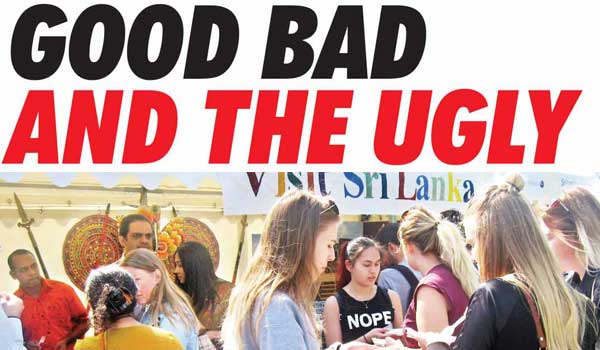
Good Bad & the Ugly

August 19th, 2016

By Dr. Tilak S. Fernando Courtesy Ceylon Today

Recently a Sri Lankan woman from Australia made an online booking in a ‘grand’ hotel prior to her arrival in Colombo. Her flight landed at the Bandaranaike International Airport much earlier than the scheduled time. When she approached the hotel reception in Colombo she was informed that her presence was too early. The normal practice for visitors to check in at hotels is around midday. The receptionist advised her that the allocated room would be available only around midday and the visitor was given a choice of either to mark time or get a spare room at an additional cost of US$250.

This not only offended the visitor but also she had to find an alternative means to spend nearly five hours before she could settle down in her booked room. Finally a friend picked her up and dropped her back again at the hotel. What would have been the position if a foreigner, who had no Sri Lankan connection at all, had to face such a situation? Either the visitor had to pay the extra charge or perhaps ‘kill the time’ seated at the reception area for such a long period. This is not a very healthy sign, and certainly it can damage the reputation of the tourist industry at a time the country is going all out to create a tourism boom in the future.

Goodbadugly

Governmental interference in the area of tourism is vital to stabilize hotel charges with a standard tariff. Some years back contemptible over pricing of hotel charges affected the tourist industry severely and forced the foreign tour operators to bypass Sri Lanka and concentrate on other tourist destinations such as the Maldives, Bali, and Malaysia. The drastic effect of such a foolish move was felt by the economy of the country with many hotels having to close down and people losing jobs.

Open Economic Policy

If Sri Lanka is to adopt an open economic policy and hotels are given a free hand to charge customers will nilly on the pretext of supply and demand, then the hotel pricing can be complicated and get out of control.

In Sri Lanka ‘hotel charges seem to be based on par with the existing demand rather than the value and customer satisfaction’. Equally, it is comprehensible that the energy cost at present is significantly high, skilled manpower astounds, food items with added government taxes, the overall cost tends to become higher which, in turn affect a decent profit margin. Once again, one could raise the ten million dollar question as to why should the hotels have to go hammer and tongs in achieving fat margins rather than concentrating on a steady flow and volume basis with reasonable and comparable international rates of other countries?

An overall negative impact on tourism could reflect both on international as well as on domestic tourism, if neglected. One must not forget the fact that during hard hit times for the tourist industry, it was mainly the local tourist who helped the industry to survive. Quite recently there was a big hullaballoo, which was highlighted in the media when there was a suggestion to provide special toilets for tourists at railway stations. Many argued as to why such special provisions for tourists are made and demanded to know whether locals were third class citizens in their own country.

 Hotelier’s  Evaluation.

Naturally from an hotelier’s evaluation room charges need to be higher than the cost rather than keeping their hotels closed. But in the case of the young woman’s case in particular, the star hotel’s demand to charge extra US$ 250 just to mark time till her reserved room became available seems ridiculous and akin to killing the goose that lays the golden egg! One might wonder if this woman happened to be a white skinned foreigner what would have been the attitude of the hotel staff. Will they oblige and make arrangements in a manner of worshipping white tourists saying, ‘Yes Sir, No Sir and Three Bags Full Sir’ attitude

There are of course two sides to every argument. In this instance could the hotel management be blamed completely if they were given according to the letter of the law laid down by the tourism authorities in Sri Lanka? This is yet another area where the experts need looking at seriously; the other area being the discrimination or the cavalier attitude local visitors are subjected to by some of the top class star hotels in Sri Lanka.

The managements of hotels need to be aware of the fact that every customer who patronises them by paying good and equal money expects proper treatment and a quality of service, which sadly it is not happening in some areas where a residue of colonial mentality still exists ingrained into some hotel staff. After all said and done, will this young woman recommend the particular five star hotel to her friends and colleagues in Australia, who may have plans to visit Sri Lanka in the future? Not on your Nelly, I bet

Business Adventure

The foundation of any business adventure is to have a proper vision and a mission. Before the authorities contemplate on building endless hotels and expanding room capacities, they should focus on proper management of hotels by scrutinising each and every star hotel for their level of performance, charging systems particularly. The present folly appears to be that if a star hotel throws out a good menu and a lavish buffet and offers access to sea and clean beaches that in their mind would satisfy the tourist entirely.

India and China are role models to follow when it comes to market leaders in tourism. These countries concentrate on ‘budget tourists’ where their travel agents offer tourist rates between US$90 to US $100 for a double room with half board! Only a fragment of those tourists visits Sri Lanka as ‘repeat guests’ purely for gambling purposes.

As opposed to marketing tactics in India and China, Sri Lankan hotel rates tend to go through the roof. Sri Lankan tourism authorities expect an average tourist to spend about US$200 per day out of the up market tourist, which is farfetched. Is it why the star hotel in Colombo under question wanted to charge extra US$250 from the Sri Lankan tourist to put her up for 4 ½ hours in a spare room until her reserved room became available?

Price structure

Another sensitive area is the price structure of food and foreign liquor at star hotels, where a bottle of drinking water is sold at a profit margin of over 200 per cent. No wonder foreign tourists are seen rushing to the nearest corner shop to buy water while they are booked into luxury hotels.

Mt. Lavinia area is a clear cut example where tourists who book into posh hotels in Colombo visit a popular restaurant at Dehiwela to have a sumptuous meal of sea food such as prawns, lobsters, crabs etc. where six people can enjoy a lavish meal for around six Australian dollars!

Nowhere in the world will any tourist find such attractions except in Sri Lanka, and why do our star hotels have to go overboard in charging extra money just to get them ousted from tourism market? Reviewers say their shareholders govern all hotels, and the managements of hotels are orientated only towards making big profits to satisfy their shareholders!

Attract More Tourists

If the main aim is to improve the tourism industry and attract more tourists to Sri Lanka, the authorities need to concentrate and take remedial action on the following areas:

  • The quality of standards and reasonable hotel charges to be attractive.
    A ‘clean up’ of the country is essential by eradicating touts, and beggars who harass tourists, which has become a frequent eye sore.
  • Put an end to the stray dog menace at every corner of the country.
  • Installation of information kiosks at public places such as main post offices, immigration and emigration offices, customs etc. with trained and competent staff to assist foreigners as guides.
  • Review on foreign liquor charges served in star hotels which are very much higher compared with prices in Singapore and Dubai.
  • Improve on the inadequate coverage of liberal facilities to use the Internet to make online banking, payments, and transfers and email facilities.

Sri Lanka has all the attractive ingredients needed from the angle of tourism, and yet those who are responsible in promoting tourism seem to be dragging their feet without or unaware of effective marketing techniques for reasons unknown.
A British couple who has travelled round the world throughout their lifetime and has chosen Sri Lanka as their destination to retire has come out stating: “Out of our life long experience in travelling, there is no other land in the world to beat Sri Lanka, and it certainly is a ‘ paradise’ and we love it.”
tilakfernando@gmail.com


Ahmadiyya International Convention in U.K. concludes.

August 19th, 2016

By A. Abdul Aziz, Press Secretary, Ahmadiyya Muslim Jama’at – Sri Lanka.

The 50th Jalsa Salana (Annual Convention) of the Ahmadiyya Muslim Community in the United Kingdom concluded on Sunday 14 August 2016 with a powerful and faith-inspiring address by the World Head the Ahmadiyya Muslim Community, the Fifth Khalifa (Caliph), His Holiness Hazrat Mirza Masroor Ahmad.

During his concluding address, His Holiness called on Islam’s critics to judge the religion on its true teachings, rather than focusing upon the hateful acts of a tiny minority of extremists.

More than 38,000 people attended this three day Convention ( Jalsa Salana), which took place at Hadeeqatul Mahdi in Alton, Hampshire.

Apart from the thousands of Ahmadi Muslims who participated, many non-Ahmadi and non-Muslim guests also attended.  The entire event was also broadcast live on MTA International and streamed online.

One of the highlights of the three-day Jalsa Salana was the pledge of allegiance, known as Bai’at that took place on Sunday afternoon, where the participants pledged allegiance to Hazrat Mirza Masroor Ahmad as the Fifth Khalifa (Caliph) of the Promised Messiah (peace be upon him).

The participants formed a human chain leading to the Khalifa as they repeated the words of the pledge in unison.

Prior to the ceremony, His Holiness announced that more than 584,000 people had joined the Ahmadiyya Muslim Community during the past year from all around the world. He also announced that the Ahmadiyya Muslim Community was now established in 209 countries.

In his concluding address, Hazrat Mirza Masroor Ahmad said that critics of Islam continued to raise unjust and entirely unfounded allegations against the religion.

Hazrat Mirza Masroor Ahmad said:

Today’s disorder and terrorism is a result of the fact that people are distorting the teachings of religion and most certainly their hate filled and evil actions do not have any link to the true teachings of Islam.”

His Holiness said Islam laid the foundation for peace by promoting true equality between peoples and nations. Islam taught that no nation or people held superiority over others.

His Holiness said that Islam sought to create peace at every level of society and that the basis for peace in society lay in a person’s home. He said that Islam laid particular emphasis on the rights of parents.

In contrast, His Holiness said that those people in developed nations who routinely branded Islam as a cruel religion were themselves forgetting their fundamental obligation to their parents.

Hazrat Mirza Masroor Ahmad said:

In the developed world many people claim that they do not even have the time to meet their parents regularly, let alone to serve them and care for them in old age. The more advanced they consider themselves the further away they move from fulfilling their basic responsibilities.”

His Holiness emphasised that true justice could not be established without creating a link with God Almighty.

Hazrat Mirza Masroor Ahmad said:

Without recognising and fulfilling the rights of the worship of God Almighty, justice cannot be established and one cannot pay attention towards kindness and humanity. Those who call themselves Muslims but continue to act against the teachings of Islam do so because they have not truly recognised God, nor are they fulfilling their obligations towards Him.”

His Holiness also referred to the responsibilities of parents to their children and referred to the verse of the Holy Quran which states and that you kill not your children for fear of poverty”.

His Holiness said that this verse also referred to those who failed to cater for the moral wellbeing of their children.

Hazrat Mirza Masroor Ahmad said:

A lack of care and moral training from parents is one reason that children can become vulnerable to extremism and towards committing atrocities in the name of Islam. Such parents are ignoring their duties towards their children in the vain pursuit of wealth and so their children are left bereft of even a basic knowledge of their religion. This in essence is a means of destroying their children.” 

His Holiness went on to quote chapter 49 verse 12 of the Holy Quran, which prohibits Muslims from mocking the sentiments of others.

Hazrat Mirza Masroor Ahmad said:

In this day and age religion is also being routinely mocked and derided and Islam is especially being targeted in this regard. When people make derogatory remarks or produce offensive caricatures to mock Islam or the Holy Prophet (peace be upon him) it grieves Muslims worldwide. Of course any violent reaction is completely against the teachings of Islam but where is the wisdom in producing such materials that can threaten the peace of society?”

His Holiness continued:

Does the fact that certain groups or individuals are acting contrary to the teachings of Islam give non-Muslims the licence to provoke and hurt the sentiments of all Muslims including us Ahmadi Muslims, who are at the forefront of promoting the peaceful teachings of Islam?”

Explaining Islam’s teachings in relation to mutual respect and interfaith dialogue, Hazrat Mirza Masroor Ahmad said:

Islam teaches that disorder should be curbed, rather than encouraged or inflamed.

Speaking of the deteriorating state of the peace of the world, Hazrat Mirza Masroor Ahmad said:

The conflicts that existed on a small scale are now developing into international conflicts. In the past, when I said that the injustice in the world was pushing us towards nuclear war many government officials, analysts and politicians said that this is a far-fetched claim and overly pessimistic. However now they are themselves saying that a nuclear war is looming and anything is possible.”

His Holiness said that both Muslim nations and the major powers had played a role in undermining the world’s peace.

He quoted media reports asking why certain countries were selling weapons to nations that were engaged in wars where innocent people were being killed.

Hazrat Mirza Masroor Ahmad said:

On the one hand, Muslim nations have failed to act with justice, whilst on the other hand certain developed countries have prioritised the arms trade over and beyond establishing peace. If only they had acted with justice and integrity the dangerous situation that the world faces today would have been avoided. Sadly, vested interests have blinded both sides.”

His Holiness concluded by saying:

It is the task and responsibility of Ahmadi Muslims to inform the world of the benefits of the true peaceful teachings of Islam. May Allah enable us to do so and grant sense to the world.”

The Convention (Jalsa Salana) concluded with a silent prayer led by His Holiness.

‘Evening with a Doctor’ program at press club

August 19th, 2016

By NJ Thakuria

Guwahati: Emphasizing on preventive healthcare initiatives for the media persons along with their close relatives, the Guwahati Press Club  initiates for a special program titled ‘Evening with a Doctor’

at the press club premises on every Saturday evening.

The first program of the series begins on 20 August 2016, where  Dr Kashyap Kr Das (Department of Medicine, Dispur Hospitals) is attending the OPD clinic for providing free consultations on healthcare issues to the participants. They will also get the chance to check their blood pressure during the period.

It may be mentioned that a doctor’s chamber was constructed on the press club campus, which was sponsored by Dr Jayanta Bardoloi of Dispur Hospitals. The new room was  inaugurated by young citizens Dhiman, Kristi, Shantanava, Arya, Shambhavi, Nistha and Arunava on the occasion of 70th Independence Day.

The weekly program (5 pm to 8 pm)  will be graced by practicing doctors from different departments representing government and private hospitals of Assam in  northeast India.  Besides personal healthcares, the initiative is expected to help the scribes to understand various aspects of healthcare in a better way that might encourage them to cover the issue with more credibility & authenticities.

Is Islamic imperialism & Christian-West controlled Wahhabi incursions one & the same?

August 19th, 2016

Shenali D Waduge

While we empathize with the Muslims for the manner that the Anglo-Europeans have virtually destroyed the Middle East and killed hundreds of thousands of people in the process as well as manipulate a religion they created (Wahhabism) in order to not only divide the Muslims but cause dissent among all others against Muslims, there is another important factor – Muslim incursions into non-Islamic nations and heritage sites has a history far before Wahhabism was created by the British. This is where the empathy has got confused and where Muslims themselves must explain their conduct.

shenali180816A01

There is a history to the clashes between Anglo-Europeans and Muslims. Islam and Christianity have been clashing through history. The objective of both has been to forcibly or deviously acquire lands and territories and amass followers to their faiths. Both are in a competition of numbers!

The bottomline is both West and Islam have been historically aggressive and have blood on their hands. Crusades for Christians is equivalent to Jihad for the Islamists.

While todays incursions are attributed to British created Wahhabism, the reality is that Islamic imperialism has been taking place far before the Crusades and far before Wahhabism emerged in 1740.

The First Crusade was launched in 1095 by Pope Urban II. The clashes between Islam and Christianity have been to acquire Jerusalem. Six such crusades of bloodshed have taken place between these two religious sects in the name of their religion. Report by Physicians for Social Responsibility puts an estimate of 4million Muslims having been killed from Western interventions against the Muslim world. The killings by Muslims will be no different.

I was ordered to fight all men until they say ‘There is no god but Allah.’”

Prophet Muhammad’s farewell address, March 632

It was in 630 that Muhammed launched Tabuk Crusades against the Byzantine Christians on a false rumor but before returning he forged agreements that the people could seek Islamic ‘protection’ if they paid tax (jizya) which later became Caliphs’ policies. Any state that did not wish to be attacked had to pay jizya. The converted paid zakat tax. It was after Caliphate of Abu Bakr betweeb 632—634 that Arab polytheists had to convert to Islam or die. Byzantines were defeated in 634. Thereafter it has been a series of brutal Muslim conquests that covered Damascus, Iraq, annexation of Jerusalem in 638, Iran, Egpyt, controlling Syria and Palestine in 641, North Africa, Cryprus, Tripoli and establishing Islamic rule in Iran, Afghanistan and Sind, Arab besiege of Constantinople capital of Byzantine Empire, Lower Indus Valley, Spain, Italy, Sicily, Sardinia

Orders to destroy non-Muslim prayer houses began in 807 when Calip Harun Al-Rashid gave orders to burn the Church of Mary Magdalene in Jerusalem. In 937 Church of the Resurrection was burned by Muslims. Thereafter in 1012 Al Hakim issued decree against Jews and Christians.

Attacks on Christians began in 813 when Christians in Palestine were attacked and forced to flee. In 937 Muslim ruler Ikhshid writes to Emperor Romanus boasting his control over holy places.

We will export our revolution throughout the world . . . until the calls ‘there is no god but Allah and Muhammad is the messenger of Allah’ are echoed all over the world.” Ayatollah Ruhollah Khomeini, 1979 (agent of West)

Modern Islamic imperialism via Wahhabism

shenali180816A02

The memoirs of British spy Hempher clearly establishes the British role in creating the Wahhabi Islam also confirmed by Ayyub Sabri Pasha. It was part of Britains divide and rule policy. Wahhabi Islam was only created in 1740. The new faith as deemed by Britain was to contradict Hanafi, Maliki, Shafi’ie, Hanbali, Jafri schools of thought.

Was this not why the Wahhabis are destroying all holy tombs and burial grounds, stealing Prophets treasures, works of art?

Wahhabis are linked to Muslim Brotherhood which was formed to confront the Egyptian challenge to British Empire hegemony in the region using jihad against Egypt secular constitution of 1923.

A small book entitled Confessions of a British Spy reveals relevant facts about how the British intelligence agencies created Wahhabism, whose mandate is now the basis of ISIS. Sheikh ‘Aadel Al-Kalbani, former imam of the Grand Mosque in Mecca announced in 2014 that ISIS is the result of the Salafi version of Islam.

shenali180816A03

The British Empire and now Anglo-American establishment created Saudi Arabian Wahhabism has destroyed most of the shrines in Medina and through financial and military support of Wahhabi ISIS and Taliban Jihadis is destroying Buddhist shrines in Afghanistan, Christian shrines in Syria and Muslin Shrines across the Middle East.

I was ordered to fight the people until they say there is no god but Allah, and his prophet Muhammad.”

Osama bin Laden, November 2001

The mercenary jihadi Wahhabi armies fighting in Afghanistan, Iraq, Libya, Egypt, Syria using the names Taliban, Al Qaeda, Al Nusra and ISIS are all Western created. Leader of ISIS, Abu Bakr al-Baghdadi is a graduate of mind-controlled Guantanamo Bay who announced the creation of an Islamic State, or caliphate.

It is also true that Al Qaeda, ISIS and all other splinter groups are simply using ‘Islam’ and ‘jihad’ as war cries as ordered to by their Western masters. The Associated Press has revealed that 70% of recruits to ISIS don’t even know what Islam is. The subjugation to God’s will makes it easy to brainwash both Islamic and Christian fundamentalists into carrying out ‘evil acts’ claiming them to be the wish of the God for which they would be rewarded.

The next question is the credibility of the Saudi family who in reality are descendants of Jewish merchants from Iraq and explains why they were rewarded for undermining the Ottoman Empire by the creation of the Kingdom of Saudi Arabia in 1932.

In 2015 Prince al-Waleed was quoted as saying Saudi Arabia and Israel must bolster their relations and form a united front to stymie Tehran’s ambitious agenda.”

Saudi remains the West’s greatest ally in the Middle East. Saudi is used as a launchpad for West’s agenda against the rest of the World.

Even the UN dares not take any action against Saudi. The best example of this is the manner the UN included Saudi into its blacklist of child killers and it took just one call from the Saudi’s threatening to remove all monetary contributions and Saudi was removed from the list. Money talks in the UN!

If Wahhabism is a by-product of the British and meant to divide Muslims and used to antagonize non-Muslims against Muslims, we need to question how Islamic is Wahhabism and whether all successful incursions via Wahhabi funded mosques and followers are an indirect success story for Western imperialism! This is where the real followers of Islam must take note of and address. Surely they must by now realize that Islam has been hijacked by British-controlled Wahhabi Islam and used to expand Western imperialism with the footsoldiers being fundamentalist Muslims and not Christians. The Christian foot soldiers are the NGOs and other local lackeys who lead luxurious lives while sending Muslims to battle and death. A lot of birds are killed with one stone (several objectives are realized which was the initial plan when Wahhabism was first created!

For non-Muslims, in particular the non-Abrahamic faiths are worried. Whether it is Muslim imperialism that has been launched over 1500 years or the covert Christian created Wahhabi Islamic incursions taking place since the last 276 years, both are worrying issues because these incursions are eating into non-Islamic sacred sites, citadels and violently demanding space manipulating all the secular mantras in use.

Islamic incursions globally

America

  • Omar Ahmad, co-founder of the Council on American-Islamic Relations, the top Muslim lobby group in Washington: Islam isn’t in America to be equal to any other faith, but to become dominant. The Quran should be the highest authority in America, and Islam the only accepted religion on Earth.”
  • Imam Siraj Wahhaj, director of the Muslim Alliance in North America: In time, this so-called democracy will crumble, and there will be nothing. And the only thing that will remain will be Islam.”

Europe

Asia

  • Using the Rohingyas issue, Muslims are trying to build mosques and enter the hinterland of Buddhist Burma
  • While no non-Muslim can set a foot in Mecca, a mosque has been built 60 metres from Maha Bodhi Temple in Bodh Gaya the sacred place for Buddhists http://wikimapia.org/#lang=en&lat=24.695685&lon=84.991495&z=18&m=b
  • In Sri Lanka Muslims are demanding mosques be built in close proximity to all the ancient Buddhist temples in the sacred sites

Making matters worse is the political correctness due to largely votebank politics by selfish politicians, NGOs and lobby groups that would do anything for money. Political correctness has virtually invited the enemy to one’s door. Many of the brainwashed fundamentalists turn on their masters after realizing they had been used and this kickstarts another opportunity for those profiting from a world in chaos. This sadly is the state of affairs taking place throughout the world.

Muslim silence

There are 1.3billion Muslims globally. Not all are followers of Wahhabism though the increasing numbers of people clad in attire promoted by Wahhabism is an indication that Muslims themselves are ignorant of their faith. It was recently announced that 70% of ISIS recruits did not even have basic knowledge of Islam though they were attacking screaming ‘Allah hu Akbar’.

Of the 1.3billion Muslims, if they do not conform to Islamic imperialistic objectives nor the Christian-led Wahhabi imperialism on behalf of the West, they must come out and be heard. When non-Muslims put forward their fears and express sadness at how Muslims are demanding entry to their sacred sites to build mosques that would disturb their prayers, Muslims must understand and be empathetic and agree to abandon such programs not delay until other ways can be found to carry out the objective.  This is where reciprocity comes into play. What one is not prepared to concede one cannot demand. This is the fundamental logic. However, we do not see that happening making matters all the more confusing.

What non-Abrahamic religions wish to know is are the Muslims victims of Christian-West controlled Wahhabi Islam or are they manipulating the situation by continuing the historical quest for Islamic imperialism (acquiring lands and converting people) while seeking empathy for the West’s attack on Muslims using Wahhabi fundamentalism? Either way non-Abrahamic religions are under threat and worried. Their hinterlands and sacred sites are targets of both Christian-West controlled Wahhabi Islam and Islamic imperialism. Where do we draw the line?

Shenali D Waduge
Sources http://www.americanthinker.com/2005/11/the_truth_about_islamic_crusad.html#ixzz4G4zCu6SI

http://www.newstatesman.com/world-affairs/2014/11/wahhabism-isis-how-saudi-arabia-exported-main-source-global-terrorism

http://www.breakingisraelnews.com/52468/saudi-prince-ill-side-with-israel-against-palestinian-uprising-middle-east/#t4cbafB9STuttZPq.97 (Saudi-Israel)

https://www.lankaweb.com/news/items/2016/06/13/if-un-admits-saudi-financial-pressure-led-to-removal-of-saudi-from-child-killer-list-did-ltte-fronts-pay-un-to-bring-war-crimes-charges-only-on-sri-lankas-soldiers/ (UN – Saudi)

http://thefreethoughtproject.com/isis-docs-recruits-ignorant-islam/ (70% ISIS don’t know Islam)

http://www.nowtheendbegins.com/51-united-states-muslims-demand-sharia-say-islam-superior-american-democracy/

https://www.gatestoneinstitute.org/3715/germany-islam-christianity

The New Zealand governmet clear the wedicide Glyphosate as perfectly safe for use.

August 19th, 2016

Chandre Dharmawardana

The New Zealand government, after an long review of the weedicide Glyphosate (Roundup), has now given it the ALL CLEAR signal, confirming that it is VERY SAFE for use.

Here is the report:

http://www.epa.govt.nz/Publications/EPA_glyphosate_review.pdf

BACKGROUND TO THE STORY:

Sometime ago there were sensational claims that Glyphosate,  the popular weedicide,  causes kidney diseases, Cancer etc., and that it should be banned.

Fools rush in where angels fear to tread.

Sri Lanka was the first country to ban the herbicide; this was politically lead by Ven. Ratana and the Minsiter Champika Ranawaka who claimed to rid the country of “Toxins”.  It was preceded by a campaign (during the previous government) by Ven Ratana, and by a number of  highly politicized  Kelaniya University academics who claimed that God Natha had revealed that the Rajarata water has arsenic. This was further elaborated  by them and a Sri Lankan Californian doctor to claim that Arsenic combines with glyphosate and hard water to bring the toxin into the human body! This was presented as a “hypothesis” and not a proven fact in a “journal”, but it has been presented as a proven fact when broadcasting  it to the public!

The arsenic is supposed to be found in imported  fertilizers.

So, according to them, agrochemicals- fertilizers and herbicides–  are to blame. Even if they are not to blame, some of the “eco-activists”  advocated banning them as a “precautionary principle“.

Once imported fertilizers are banned, people have to use “organic fertilizers”, i.e., make the fertilizer themselves by composting leaves, and other plant material “like in the olden days”.

Or buy the highly polluted  “organic fertilizer” imported  from India at great cost.

To get the effect of one kilo of inorganic fertilizer, you need to use something like  one TON of organic fertilizer. Such compost is polluted because plants accumulate metal toxins found in trace amounts in the soil.

Remember, this is a country where “Kassipu” and “Kudu” are freely available. All pharmacies sell “viagra” or cortisone drugs without a prescription. Motor vehicles belch out toxins and diesel fumes all over the country. There are mounds of garbage in every street corner. The general pollution levels are high. But the “eco-activists” and “environmental heroes”  (mostly from the affluent strata of Colombo society) are worried about “glyphosate” and arsenic. But their  presence in the water or soil in significant amounts have not been confirmed even though searched for by  several different teams of scientists who carried out chemical analysis. Even the Kelaniya scientists have failed to find significant amounts of them in the soil or water or food consumed by the people.

New Zealand and many other countries use even ten times the agrochemicals used by

Sri Lanka or, say,  Nicaragua. The countries that use agrochemicals  do not have chronic kidney disease nor do they have a high incidence  of diseases. It is the countries like Sri Lanka, Nicaragua, who do  NOT use agrochemicals, and who fail to provide a nutritious diet, clean water and a healthy life to their citizens who have chronic diseases. Chronic diseases and agrochemicals ANT-CORRELATE with each other, where as they should correlate if agrochemicals were significantly responsible for chronic disease.

The New Zealand government, responding to the agitation by eco- extremists in that country and the resulting public fear,  initiated a review of all the available facts. After many months of review of the weedicide Glyphosate (Roundup),  the NZ govt has  given it the ALL CLEAR signal.

I attach here the report of the NZ government’s  review.

Today, in Sri Lanka, a country with an acute shortage of labour, many of the tea estates are struggling to survive. Chicken and other livestock growers have no animal feed because the  Corn (“Bada Iringu”) growers who produced animal feed have given up. Other farming sectors are also in trouble.

Chandre Dharmawardana

————————————————————————————————–

REPORT

(please go to http://www.epa.govt.nz/Publications/EPA_glyphosate_review.pdf to read it properly).

————————————————————————————————–

Review of the Evidence Relating to
Glyphosate and Carcinogenicity
Prepared for the Environmental Protection Authority

Published August 2016
1
Introduction
Glyphosate (N-phosphonomethyl glycine; CAS registry #1071-83-6) is the primary active
ingredient in many generic herbicides. Glyphosate is formulated primarily as an
isopropylamine, ammonium, or sodium salt in water soluble concentrates and water soluble
granules. The relevant impurities in glyphosate technical concentrates are formaldehyde, N-
nitrosoglyphosate and N-nitroso-N-phosphonomethylglycine. Surfactants and sulfuric and
phosphoric acids may be added to formulations of glyphosate, with type and concentration
differing by formulation. The United States (US) Environmental Protection Agency (EPA) and
other regulatory agencies around the world have registered this chemical as a broad-
spectrum herbicide for use on multiple food and non-food use crops. Glyphosate-based
herbicides, which have been sold in the US since 1974, are now registered in over 130
countries.
Glyphosate is widely considered by regulatory authorities and scientific bodies to have no
carcinogenic potential. The US EPA (1993) has classified glyphosate as a Group E
carcinogen, which is defined as having ‘‘evidence of non-carcinogenicity for humans’’. This
classification was based on ‘‘a lack of convincing evidence of carcinogenicity in adequate
studies with two animal species, rat and mouse’’. Negative results were observed in
genotoxicity studies that were conducted under good laboratory practice conditions and compliant with contemporary regulatory test guidelines.
However since that time, results of further studies have come to light, and the International
Agency for Research on Cancer (IARC) Monograph 112 on glyphosate (released on 29 July
2015) came to the conclusion that glyphosate should now be classified as a carcinogenic
substance in Group 2A (probably carcinogenic to humans). This classification was based on
limited evidence” from human data (regarding non-Hodgkin lymphoma (NHL)) but sufficient
evidence” in animal-experiments. The rationale identifies that the IARC working group (IWG)
also notes mechanistic and other relevant data in support of the conclusion; in particular the
IWG cites strong evidence” that glyphosate can operate by two key characteristics of known
human carcinogens, namely genotoxicity and oxidative stress.
This classification was initially published in a short report by Blair et al, (2015) in the Lancet
Oncology” on 20 March 2015.
This report discusses the relevant data on glyphosate, especially the more recent studies,
and reviews the basis on which the IWG classified it as a probable human carcinogen
(Group 2A). This involves review of the quality of evidence for carcinogenicity in humans and experimental animals and the mechanistic arguments.
Cancer in humans
The IWG found there was limited evidence in humans for the carcinogenicity of glyphosate.
Some case-control studies of occupational exposure in the USA, Canada, and Sweden
reported increased risks for NHL that persisted after adjustment for other pesticide
exposures. However the Agricultural Health Study (AHS) cohort did not show a significantly
increased risk of NHL. These studies are discussed below.

Case-control studies in the Midwest USA
Three case-control studies were conducted by the U.S National Cancer Institute in Iowa and
Minnesota in the1980s using the same control series, but each investigating a different
lymphohaematopoietic cancer. Brown et al, (1990) found a near null association between
2
glyphosate exposure and leukaemia among white males residing in the area (OR = 0.9; 95%
CI 0.5–1.6). Among Iowa farmers reporting ever handling glyphosate, there was a slight non-
statistically significant odds ratio for multiple myeloma (OR = 1.7; 95% CI 0.8–3.6) (Brown et
al, 1993). Cantor et al, (1992) found an approximately null association between glyphosate
exposure and NHL among males (OR 1.1; 95% CI 0.7–1.9).
The IWG reviewed a later study by De Roos et al, (2003) who used pooled data from three
case-control studies of NHL conducted in the 1980s in Nebraska (Zahm et al, 1990), Iowa
and Minnesota (Cantor et al, 1992), and Kansas (Hoar et al, 1986). Reported use of
glyphosate as well as several other individual pesticides was associated with an increased
risk of NHL. A total of 650 cases and 1,933 controls were included for the analysis of 47
pesticides. Reporting glyphosate exposure were 36 cases and 61 controls. After adjusting
for other pesticide use, age, and study area, by two regression techniques, odds ratios of 2.1
(1.1–4.0) using logistic regression and 1.6 (0.9–2.8) using hierarchical regression were
found.
In that regard, a later study by De Roos et al, (2005) where they reviewed the AHS cohort
data is significant. They found no association between glyphosate and NHL. The authors
noted that the aforementioned Midwest USA case control studies were retrospective in
design and therefore potentially susceptible to recall bias as regards exposure reporting.
The cross-Canada case – control study
The IWG reviewed a report by McDuffie et al, (2001) who studied the association between
NHL and exposure to specific pesticides in a multicentre population-based study with 517
cases and 1,506 controls among men of six Canadian provinces. The authors reported a
slight, non-statistically significant increased risk for NHL from claimed glyphosate exposure,
the OR being 1.26 (95% CI 0.87–1.80) for analysis adjusted for age and province, and 1.20
(95% CI 0.83–1.74) for analysis adjusted for age, province and high-risk exposures. The
study also assessed the significance of different exposure durations. When stratified by
greater than or less than two days of glyphosate exposure/year (< 2d/year), the values were
2.12 (95% CI 1.20–3.73) for >2d/year relative to those with < 2d/year (assigned OR of 1.0).
The authors commented that although there was not a statistically significant finding for
exposure to glyphosate per se, there was a dose-response relationship.
Case-control studies in Sweden
The IWG reviewed a study by Eriksson et al, (2008) who reported the results of a population-
based case-control study of exposure to pesticides as a risk factor for NHL. Men and women
aged 18–74 years living in Sweden were included from 1 December 1999 to 30 April 2002.
In total, 910 (91%) cases and 1,016 (92%) controls participated. The authors found NHL
associations with exposure to glyphosate. This exposure was reported by 29 cases and 18
controls, giving a reported odds ratio of 2.02 (95% CI 1.10–3.71) in a multivariate analysis.
When restricted to a >10 year latency period the OR became 2.26 (95% CI 1.16–4.40).
Odds ratios were also reported for lymphoma subtypes. For only two of the eight subtypes
were odds ratios statistically significant; likely related to the small numbers. The IWG
considered that this was a large study; that there was possible confounding from the use of
other pesticides including MCPA, but this was controlled for in the analysis. Given the
number of cases studied for glyphosate (29 cases and 18 controls) this study could hardly
be considered as large. Twelve subjects were in a less than 10 days exposure group and 17
in a more than 10 days group. Therefore this study had limited power to detect an effect.
3
Other findings
In 2014 Schinasi and Leon reported their study of the association between NHL and
occupational exposure to various agricultural pesticide chemical groups. Some findings on
glyphosate were presented; for example the results from the studies by McDuffie et al,
(2001), De Roos et al, (2005) and Eriksson et al, (2008) were given. This review included a
series of meta-analyses, which they asserted showed consistent evidence of positive
associations between NHL and carbamate insecticides, organophosphorus insecticides,
lindane, and MCPA. As regards glyphosate (an organophosphorus herbicide”), in a handful
of papers”, associations between pesticides and NHL subtypes were reported; B cell
lymphoma was positively associated with phenoxy herbicides and glyphosate.
The Agricultural Health Study (AHS) cohort studies
These studies in Ohio and North Carolina involve a large cohort of private and commercial
pesticide applicators (57,311 as at 2004–5). Several studies have been conducted using this
cohort.
Alavanja et al, (2003) evaluated associations between specific pesticides and prostate
cancer in the AHS. Glyphosate was listed as one of the pesticides with sufficient exposure
data for analysis, but the findings for it were not listed, so that it has been assumed that no
significant positive association was found with prostate cancer.
Flower et al, (2004) evaluated associations between pesticide application by parents and
cancer among children born to Iowa participants in the AHS. There was no positive
association between either maternal or paternal use of glyphosate and risk of childhood
cancer.
De Roos et al, (2005) evaluated associations between glyphosate exposure and all
cancers” or any cancer site using the AHS cohort. This study did not show a significantly
increased risk of NHL. In the group reportedly exposed to glyphosate, small, non-statistically
significant relative risks of 1.2 (95% CI 0.7–1.9) adjusted for age (only) and 1.1 (95% CI 0.7–
1.9) adjusted for age, demographic and lifestyle factors and other pesticide exposure were
found for NHL, (De Roos 2005). There was no dose (exposure) response relationship.
De Roos et al, (2005) also found a non-statistically significant association between
glyphosate exposure and multiple myeloma, with rate ratios (RR values) of 1.1 (95% CI 0.5–
2.4) adjusted for age only, and 2.6 (95% CI 0.7–9.4) adjusted for age, demographic and
lifestyle factors and other pesticides exposures. Such a finding had not previously been
reported.
Comparisons were made between ever-exposed versus never-exposed groups, and
between three equal sized groups (tertiles), formed by subdivision either on the basis of total
days of exposure or intensity-weighted exposure days. In the intensity-weighted analysis of
glyphosate and lung cancer, the relative risk for the highest tertile was only 0.6 (95% CI 0.3–
1.0), for pancreatic cancer the RR for the highest tertile was 0.5, while for multiple myeloma
the RR was 2.1, but the confidence interval was wide (0.6–7.0). None of these findings
reached statistical significance at 95%. Regarding the whole group (ie ever used
glyphosate), the RR for multiple myeloma was 1.1 (95% CI 0.5–2.4) adjusted for age only,
and 2.6 (95% CI 0.7–9.4) adjusted for age, demographic and lifestyle factors and other
pesticide exposures. Unremarkable, non-statistically significant results were found for the
other cancer sites assessed.
4
Thus as regards this study, there was no evidence of a statistically significant positive
association for any of the cancers for which data were reported (Mink et al, 2012).
Furthermore De Roos et al, (2005) acknowledged in their paper that over 13,000 subjects
were excluded from multivariate analyses because of missing data. In analyses of ever”
versus never” exposed to glyphosate, the age-adjusted relative risk of multiple myeloma
was 1.1. Lash (2007) assessed the study design and concluded that adjustment for
confounders, which resulted in limiting the data set by 25% because of missing data on the
adjustment variables, likely introduced selection bias, which was likely to have been in the
direction away from the null (ie exaggerating any possible risk).
It is also known that multiple myeloma is often preceded by monoclonal gammopathy of
undetermined significance (MGUS), a pre-malignant plasma cell disorder (Morgan et al,
2002). It is of interest to note that a decreased risk (albeit not statistically significant) of
MGUS was observed in glyphosate applicators in the AHS.
Engel et al, (2005) evaluated breast cancer risk among wives of farmers in the AHS. No
statistically significant association was found.
In an analysis of colorectal cancer and pesticide use, Lee et al, (2007) found no statistically
significant association between glyphosate use and cancer of the colon or rectum.
Andreotti et al, (2009) reported no significant association of ever” use (versus never use”)
of glyphosate with pancreatic cancer among the combined group of AHS applicators and
spouses (OR 1.1; 95% CI 0.6–1.07), nor was there evidence for a dose-response
relationship.
Dennis et al, (2010) evaluated associations of 50 pesticides with cutaneous melanoma in the
AHS cohort. Glyphosate was listed as one of the 22 pesticides on the enrolment
questionnaire. The authors commented that none of these 22 pesticides was associated with
melanoma.
None of the AHS cohort study analyses reported statistically significant positive findings for
glyphosate exposure and total cancer or any site-specific cancer, in adults or children. In
particular, the prospective AHS studies did not corroborate the positive association with NHL
reported by the Swedish case-control studies. Analyses of increasing category of glyphosate
exposure days and incidence of NHL produced rate ratios that were below the null value of
1.0 (De Roos et al, 2005 and Mink et al, 2012).
Discussion of review of epidemiological findings
In a review of glyphosate in 2006, the WHO observed that:
widely used pesticides, like glyphosate, have recently become a focus of epidemiological
research. In the past few years several epidemiological studies have been published that
reported weak associations of glyphosate with lymphopoietic cancers, self-reported adverse
reproductive outcomes and self-reported attention deficit hyperactivity disorder in children.
However, the results of these studies do not meet generally accepted criteria from the
epidemiology literature for determining causal relationships. Generally, the associations
were rather weak and rarely statistically significant. Controlling for potential confounding
factors, including other pesticides exposure, was not possible owing to limited available
information and small numbers of subjects”.
Whether or not there was any internal exposure or the extent of such exposure was not
measured and, accordingly, a possible dose–response relationship could not be evaluated.
5
This seems a fair assessment of several of the studies regarding glyphosate and its
formulations. De Roos et al, (2005) noted that the Midwest USA case control studies were
retrospective in design and therefore potentially susceptible to recall bias as regards
exposure reporting. Certainly a large prospective cohort study (such as that by De Roos et
al, 2005) is much preferable to smaller case-control studies, the latter of which have much
less statistical power to identify causal associations and are subject to more biases,
including those regarding exposure assessment. Therefore much more weight should be
given to the De Roos et al, (2005) cohort study than the much smaller De Roos et al, (2003)
case-control study. In that regard, it is important to note that the cohort study found no
association between glyphosate and NHL. There was, however, a small (non-statistically
significant) increased risk of multiple myeloma in the 2005 study, but the point estimates of
this risk may have been exaggerated. (Lash 2007.)
A re-analysis of some data from the De Roos et al, (2005) study has recently been
undertaken, with a focus on multiple myeloma (Sorahan, 2015). Assessing the same data,
Sorahan found no significant trends of multiple myeloma risk with reported cumulative days
of glyphosate use, and unexceptional point estimates of risk for ever-use of glyphosate. This
was irrespective of whether the analysis had made adjustment for a few basic variables (age
and gender) or made adjustment for many other lifestyle factors or pesticide exposures; as
long as data on all available pesticide applicators was used.
Sorahan (2015) argued that the elevated rate ratios (or relative risks) for multiple myeloma
reported previously by Roos et al, (2005) arose from use of restricted data sets that,
probably by chance, turned out to be unrepresentative. These restrictions were considered
to be unnecessary and undesirable, as potentially informative data on the exposure or
outcome under investigation were discarded. For example, it was asserted that there were a
number of lost cases of multiple myeloma in the group of applicators who had never used
glyphosate, because they were excluded by Roos et al, (2005) due to their not having data
on for example use of alcohol, or smoking. These lost cases in the baseline category gave a
false impression of elevated rates in ever-users. As a result Sorahan gave more weight to
the point estimate of 1.1 as the RR (adjusted for age only) as opposed to the estimate of 2.6
as the RR for ever-use of glyphosate (adjusted for age, demographic and lifestyle factors,
and other pesticides).
Mink et al, (2012) reviewed the epidemiological literature (and relevant methodological and
biomonitoring studies) to evaluate whether exposure to glyphosate is associated causally
with cancer risk in humans. Seven cohort studies and fourteen case-control studies
examining a potential association between glyphosate and one or more cancer outcomes
were subjected to a qualitative analysis.
The cohort studies were all based on analyses of participants or family members of the AHS
cohort. Mink et al (2012), observed that none of the AHS cohort study analyses reported
statistically significant positive findings for glyphosate exposure and total cancer or any site-
specific cancer in adults or children. They found no consistent pattern of positive
associations to suggest a causal relationship between human exposure to glyphosate and
any cancer.
Overall, this 2012 review found no consistent pattern of positive associations between total
cancer (in adults or children) or any site-specific cancer, and exposure to glyphosate. They
suggested a cautious interpretation of the few positive associations reported, and concluded
that the epidemiological data, when considered together, did not support a causal
association between glyphosate exposure and cancer.
6
Similarly, the latest report of BfR (2015) to the European Food Safety Authority (EFSA)1
based on the evaluation of over 30 epidemiological studies came to the overall assessment
that there is no validated or significant relationship between exposure to glyphosate and an
increased risk of NHL or other types of cancer.
A recent peer review by EFSA2 (2015) essentially confirmed the conclusions in their re-
evaluation of glyphosate. They noted that 10 cohort studies (which included the AHS, the
largest series of prospective studies to date), found that glyphosate did not cause different
types of cancer and did not increase risk of all cancers combined. (As noted earlier, the
findings for NHL were negative in the AHS cohort.) Similarly nine case-control studies did
not indicate an increased risk of carcinogenicity, or did not have sufficient power to assess
this. With regard to NHL, the case-control studies exhibited poor consistency in their results
and small numbers of cases limiting the statistical significance of findings in some studies.
As noted above, case-control studies have less power, are more subject to various biases,
and are less effective at assessing actual exposure levels than are cohort studies. EFSA
concluded that there is very limited evidence for an association between glyphosate
exposure and the occurrence of NHL.
Cancer in experimental animals
Mice studies
Glyphosate was tested in female and male mice by dietary administration in two studies.

A
skin application in one initiation-promotion study was conducted with male mice.
The IWG found that in male CD-1 mice, glyphosate induced a positive trend in the incidence
of a rare tumour, renal tubule carcinoma. A second study reported a positive trend for
hemangiosarcoma in male mice. A glyphosate formulation promoted skin tumours in an initiation-promotion study in mice.
The IWG noted there was a positive trend in the incidence of renal tubule carcinoma and of
renal tubule adenoma or carcinoma (combined) in male CD-1 mice in a glyphosate feeding
study (0, 1,000, 5,000, or 30,000 ppm glyphosate ad libitum for 24 months). (This study was
conducted prior to the institution of GLP.) The study was submitted to the US EPA which
requested that a pathology working group (PWG) be convened to evaluate the renal
tumours. In this second evaluation, the PWG found that the incidence of adenoma was not
statistically significant but the incidence of carcinoma and the incidence of adenoma and
carcinoma (combined) were significant. The IWG considered that this second evaluation
indicated a significant increase in the incidence of rare tumours, with a dose-related trend,
which could be attributed to glyphosate.
However, this finding is at variance with the US EPA (1993) which reported in their
glyphosate review that the occurrence of these adenomas was spontaneous rather than
compound-induced because the incidence of renal tubular adenomas in males was not
statistically significantly different when compared with the concurrent controls. An
independent group of pathologists and biometricians also conducted extensive evaluations
of these adenomas and reached the same conclusion. The US EPA concluded glyphosate
was not considered to be carcinogenic in this study.
1
The BfR (2015) report addressing the carcinogenicity of glyphosate is a report of Germany
specifically, as Germany was the lead member state for the EFSA review of glyphosate.
2
EFSA accepted the conclusion relating to glyphosate and cancer (including NHL), with one
dissenting member state.
7
The IWG reviewed a second feeding study reported to the FAO/WHO Joint Meeting on
Pesticide Residues (JMPR), and found there was a significant positive trend in the incidence
of hemangiosarcoma in male CD-1 mice. Groups of 50 female and male mice were fed diets
containing glyphosate at a concentration that was adjusted weekly for the first 13 weeks and
every four weeks thereafter to give doses of 0, 100, 300, or 1,000 mg/kg body weight, ad
libitum for 104 weeks.
In contrast JMPR (WHO 2006) found that owing to the lack of a dose-response relationship,
the lack of statistical significance and the fact that the incidences recorded in this study fell
within the historical ranges for controls, these changes were not considered to be caused by
administration of glyphosate. They concluded administration of glyphosate to CD-1 mice for 104 weeks produced no signs of carcinogenic potential at any dose.


Initiation-promotion


The IWG found that in a study involving 20 male Swiss mice which had a glyphosate based
formulation applied to their skin, it appeared to be a tumour promoter, but they concluded
that this was an inadequate study because its design was poor, with short duration of
treatment, no solvent controls, small numbers of animals, and a lack of histopathological
examination.
However the BfR (2015) considered that generally testing of formulations should not be used
for the toxicological evaluation of active substances because co-formulants may extensively
alter the outcome. The BfR deemed that this IWG finding was not considered by the
institutions in the EU to be evidence for the carcinogenic properties of glyphosate per se.
Review articles – mice studies
The IWG noted that Griem et al, (2015) had published a review article which included
discussion of five long-term glyphosate feeding studies in mice. Two of the studies were
discussed in the IARC monograph. The working group summarised the other three studies
but claimed that it was unable to fully evaluate the other three studies because of the limited
experimental data provided in the review article and supplemental information.
Griem et al, (2015) noted that the five mouse studies that they reviewed were submitted to
support glyphosate renewal in the EU. They considered that all but the oldest study were
reliable without restriction and were performed under conditions of GLP and OECD
protocols.
During the EFSA peer-review process for the renewal of the approval of glyphosate, EFSA
also received a complementary mandate from the EU to consider the findings by IARC
regarding the potential carcinogenicity of glyphosate (EFSA 2015).
The EFSA peer review (2015) also evaluated the five mice studies. Only one of these
suggested a potential carcinogenic effect, as evidenced by a statistically significant
increased evidence of malignant lymphomas at the top dose level of 1,460 mg/kg/day.
However the validity of the study was questioned, due to the occurrence of viral infection
which could have influenced survival rates and the incidence of lymphomas. No carcinogenic
effects were observed at the highest dose levels in any of the other studies. The IWG
evaluated two of these studies and asserted positive trends in males for renal tubular
carcinomas in one study and for hemangiosarcoma in the other. However EFSA took a
weight-of-evidence approach; with considerations including the statistical significance being
only found in trend analysis but not in pairwise comparison, lack of consistency in multiple
8
animal studies, the fact that the slightly increased incidences only occurred at doses higher
than those recommended for the oral route in carcinogenicity studies, incidences in test
animals generally being within the historical range for control groups, and the lack of pre-neoplastic lesions.
Rat studies
Five feeding studies in rats and two drinking water studies with glyphosate were reviewed by the IWG.
Drinking water
One study in Sprague-Dawley rats was considered by the IWG to be inadequate for
evaluation because of its short exposure duration.
A glyphosate containing drinking water study with Wistar rats did not show any significant increase in tumour incidence.
Dietary administration
Two studies in Sprague-Dawley rats showed a significant increase in the incidence of
pancreatic islet cell adenoma in male rats. One of these studies also showed a significant
positive trend in the incidence of hepatocellular adenoma in males and of the thyroid C-cell
adenoma in females. However two studies (one in Sprague-Dawley and one in Wistar rats)
found no significant increase in tumour incidence at any site.
The IWG reviewed a chronic feeding study (provided by the US EPA) in which groups of 60
female and male Sprague Dawley rats were given diets containing glyphosate at a
concentration of 0, 2,000, 8,000 or 20,000 ppm ad libitum for 24 months. In males at the
lowest dose, there was a statistically significant increase in the incidence of pancreatic islet
cell adenoma compared with controls. Additional analyses by the US EPA revealed a
statistically significant higher incidence of pancreatic islet cell carcinoma in males at the
lowest and highest doses compared with controls: lowest dose, 8/45 (18%); intermediate
dose, 5/49 (10%); highest dose, 7/48 (15%) versus controls, 1/43 (2%). The range for
historical controls for pancreatic cancer islet cell carcinoma reported in males at this
laboratory was 1.8–8.5%. The IWG concluded that this study demonstrated a significant
increase in the incidence of pancreatic islet cell adenoma in male rats.
However the US EPA (1993) had concluded that:
these adenomas were not treatment-related and glyphosate was not considered to be
carcinogenic in this study. With respect to pancreatic islet cells adenomas, there was no
statistically significant positive dose-related trend in their occurrence; there was no
progression to carcinomas; and the incidence of pancreatic hyperplasia (non-neoplastic
lesion) was not dose-related. With respect to hepatocellular adenomas, the increased
incidence of these neoplasms was not statistically significant in comparison with the controls;
the incidence was within the historical control range; there was no progression to
carcinomas; and the incidence of hyperplasia was not compound-related. With respect to
thyroid C-cell adenomas, there was no statistically significant dose-related trend in their
occurrence; the increased incidence was not statistically significant; there was no
progression to carcinomas; and there was no significant dose-related increase in severity or
incidence of hyperplasia in either sex”.
9
Also, in the JMPR (WHO 2006) review of this study they reported:
The historical-control range for this tumour at the testing laboratory was 1.8–8.5%, but a
partial review of studies reported recently in the literature revealed a prevalence of 0–17% in
control males with several values being ³ 8%. More importantly, the incidences of islet cell
adenomas clearly did not follow a dose-related trend in the treated groups of males. There
was no evidence of dose-related pancreatic damage or pre-neoplastic lesions. The only
pancreatic islet cell carcinoma found in this study occurred in a male in the control group,
thus indicating a lack of treatment-induced neoplastic progression. Taken together, the data
support the conclusion that the occurrence of pancreatic islet cell adenomas in male rats
was spontaneous in origin and unrelated to administration of glyphosate”.
Review articles – rat studies
The IWG noted that Griem et al, (2015) had published a review article containing
assessments of nine long-term glyphosate feeding studies in rats. Five of these studies were
reviewed by the IWG. The remaining four studies were not evaluated by the IWG which
stated that there was limited experimental data provided in the review article. These four
studies had been submitted to various organisations for registration purposes. There was no
evidence of a carcinogenic effect related to glyphosate treatment.
Its long-term toxicity and carcinogenicity was assessed in nine rat studies. The EFSA peer
review concluded that no significant increase in tumour incidence was apparent. Three of
these studies were not evaluated by the IARC panel. In two studies, increased incidences of
pancreatic islet cell adenomas were found but were not dose-related. EFSA also noted that
the significance of these findings depended on the statistical analysis: using a pairwise
comparison (as planned for in the study protocol) no significant effect is observed, whereas
a trend analysis performed by the IWG identified significant changes. EFSA noted that
deviations from the statistical analysis used by the study authors should be limited and
properly justified.
Other relevant data
The IWG group noted that soil microbes degrade glyphosate to aminomethylphosphonic acid
(AMPA). Blood AMPA detection after glyphosate poisoning incidents suggests intestinal
microbial metabolism in humans.
Glyphosate has been detected in the blood and urine of agricultural workers, indicating
absorption. Neimann et al, (2015) published a critical review and comparison of data
obtained in a total of seven studies from Europe and the US. They concluded that no health
concern was revealed because the resulting exposure estimates were several magnitudes
lower than the acceptable daily intake (ADI) or the acceptable operator exposure level
(AOEL).
The measured internal exposure was clearly below the worst-case predictions made in the
evaluation of glyphosate as performed for the renewal of its approval within the European Union.
This is consistent with the risk-based approach that regulatory agencies use when
considering realistic dosages and real-life conditions. Those studies show that farmers and
farm families are exposed to significantly lower doses of the herbicide than some model
estimates would suggest.
It is also in keeping with an earlier review (Williams et al, 2000) of the animal data, in which
dose levels from animal toxicity tests were compared to conservative, upper-limit estimates
10
of human exposure to glyphosate, to give a margin of exposure (MOE) value. MOE analyses
compare the lowest NOAELs determined from animal studies to worst-case levels of human
exposure; with MOEs of greater than 100 indicating confidence that no adverse health
effects would occur. These authors found in their review that the MOEs for worst-case
chronic exposure to glyphosate ranged from 3,370 to 5,420, and concluded that under
present and expected conditions of use, Roundup herbicide does not pose a health risk to humans”.
Genotoxicity
The IWG claimed that there is strong evidence that glyphosate is genotoxic. They tabulated
numerous reports of tests relating to the genotoxicity of glyphosate and its formulations, with
some showing a positive association, and some a negative association.
The evaluation of the large volume of genotoxicity data available requires consideration of
assay system validation, test system species used, relevance of the endpoint to heritable
mutation, reproducibility and consistency of effects and dose-response, and relationship of
effects to toxicity. The guidelines for genetic toxicology tests developed for the OECD are a
pre-eminent source of internationally agreed guidelines.
There were often inconsistent results reported (both positive and negative) from the same
test systems in different laboratories. The relevance of many of the assays in test system
species (fish, oysters, insects, snails, worms and caimans) which have never been validated
for the assessment of genotoxicity in humans for regulatory purposes, is questionable.
Additionally the intraperitoneal route of exposure for many of the mammalian in vivo studies
is not appropriate since it does not reflect normal human exposure, with doses exceeding
occupational exposure by orders of magnitude.
Kier and Kirkland (2013) published a review of the genotoxicity of glyphosate and
glyphosate-based formulations. This review concluded that there was a strong weight of
evidence that glyphosate and its formulations are predominantly negative in well-conducted,
core bacterial reversion and in vivo mammalian micronucleus and chromosomal aberration
assays. Although some positive results for glyphosate and glyphosate-based formulations
were reported in DNA damage assays, and for the micronucleus endpoint for formulations in
non-mammalian studies, the positive results were associated with high dose levels and/or
overt toxic effects. The preponderance of negative results in core assays supports the
conclusion that reports of DNA damage or non-mammalian micronucleus effects are likely to
be secondary to cytotoxicity rather than indicative of DNA-reactive mechanisms.
The IWG found that glyphosate and glyphosate formulations induced DNA and chromosomal
damage in mammals, and in human and animal cells in vitro. They referred to one study
(Bolognesi, 2009) reporting increases in blood markers of chromosomal damage
(micronuclei) in residents of several communities after spraying of glyphosate formulations,
to support this contention of genotoxicity.
However, the authors of the Bolognesi (2009) study concluded that overall, data suggesting
that genotoxic damage (as evidenced by the micronuclei test) associated with glyphosate
spraying for control of illicit crops is slim, and any such effect appears to be transient.
Evidence indicates that the genotoxic risk potentially associated with exposure to glyphosate
in the areas where the herbicide is applied for coca and poppy eradication is low. The
attribution of a genotoxic effect due to glyphosate exposure rather than a multitude of other
demographic and environmental causes seems rather tenuous given the uncertainty of
actual exposure.
11
In a recent communication, EFSA summarised their appraisal of the genotoxicity studies. In
vitro tests of mutagenicity gave consistently negative results. In vitro tests of mammalian
chromosome aberration (all of those which had been performed under GLP conditions) were
also negative. Positive results were found in some published in vitro studies of chromosomal
aberrations, but these were not confirmed by in vivo studies addressing the appropriate
endpoints, such as the micronucleus test.
As regards in vivo tests, all studies conducted according to internationally validated
guidelines for good laboratory practice (GLP) and some non-GLP published studies gave
negative results. Two non-GLP studies were positive in mice treated intraperitoneally, but at
levels close to or above the LD503 (possibly suggestive that this is a secondary effect), and
one study had major flaws. No genotoxic effects on germ cells have been detected in rats or
mice treated orally at dose levels up to 2,000 mg/kg/day (the maximum dose level
recommended for such studies). EFSA concluded that, considering the weight of evidence,
glyphosate is unlikely to be genotoxic in vivo.
As regards glyphosate-based commercial formulations, a number of formulations with
unknown composition have given positive results when tested in vitro and in vivo. However
some of the test systems are not validated and/or interpretation is difficult due to possible
confounding, such as cytotoxicity, specific organ toxicity or unclear relevance to humans
(such as tests in fish, amphibians, or invertebrates). Some of the co-formulants (such as
polyethoxylated tallow amine (often abbreviated to POEA)) may be more systemically toxic
than glyphosate. However EFSA concluded that the genotoxic potential of such complete
formulations should be further assessed.
Kier (2015) reviewed genotoxicity biomonitoring studies of glyphosate-based formulations.
He found that most of the human biomonitoring studies were not informative because there
was either a very low frequency of exposure to glyphosate formulations or exposure to a
large number of pesticides in addition to glyphosate without analysis of specific pesticide
effects. One pesticide sprayer biomonitoring study indicated there was no statistically
significant relationship between frequency of exposure to glyphosate formulations reported
for the last spraying season and oxidative DNA damage. There were three studies of human
populations in regions of glyphosate formulation aerial spraying. One study found increases
for the cytokinesis-block micronucleus endpoint but these increases did not show statistically
significant associations with self-reported spray exposure and were not consistent with
application rates. A second study found increases for the blood cell comet endpoint at high
exposures causing toxicity. However, a follow-up to this study two years after spraying did not indicate chromosomal effects.
Oxidative stress
The IWG found that glyphosate, glyphosate formulations, and AMPA induced oxidative stress in rodents and in vitro.
Oxidative stress was only found in one study in rats administered intraperitoneal glyphosate active ingredient (Astiz et al, 2009), and in numerous studies using intraperitoneal administration or in vitro methods with glyphosate-based formulations. However, these studies used doses that exceeded normal occupational exposures by orders of magnitude
and the intraperitoneal route of exposure is not appropriate for evaluating human exposure.
Glyphosate has low gastrointestinal absorption and poor dermal absorption. It therefore
3
[LD50 is the dose of the substance required (usually expressed in relation to body weight) that
is estimated to kill 50% of the test population].
12
seems unlikely that human exposure would produce the sort of tissue levels used in the
oxidative stress tests. There was also some inconsistency in results.
Most effects were seen when whole glyphosate formulations were tested. EFSA considered
that generally testing of formulations should not be used for the toxicological evaluation of
active substances because co-formulants may extensively alter the outcome. Thus any
effects found cannot then be attributed to the glyphosate active ingredient present.
Discussion
The IARC WG (IWG) classified glyphosate as probably carcinogenic to humans (Group 2A)”
as the overall evaluation.
As set out in their evaluation section, this was based on:
· limited evidence” in humans for the carcinogenicity of glyphosate, and
·
sufficient evidence” in experimental animals for carcinogenicity of glyphosate.
The rationale identifies that the IWG also notes mechanistic and other relevant data in
support of the conclusion; in particular the IWG cites strong evidence” that glyphosate can operate by two key characteristics of known human carcinogens, namely genotoxicity and oxidative stress.
This discussion section of the report will consider each of these sources of evidence in turn as contributing factors to the IWG’s overall evaluation.
Human epidemiological evidence
The key cited studies in support of the limited evidence” in humans for carcinogenicity of glyphosate consisted of three case-control investigations. The odds ratios (OR) for cases of
NHL and glyphosate exposures are summarised in the following table.
Odds ratios (OR) for cases of NHL and glyphosate exposures
Study area
OR1 and 95% CI2
Study reference
Midwest, USA
2.1 (1.1–4.0) [logistic
regression]
De Roos et al, 2003
1.6 (0.9–2.8) [hierarchical
regression]
Canada
1.26 (0.87–1.8)
McDuffie et al, 2001
1.20 (0.83–1.74) [adjusted for
medical variables]
Sweden
2.02 (1.1–3.71) [univariate]
Erikson et al, 2008
1.51 (0.77–2.94) [multivariate]
1. OR is the odds ratio of outcome of interest between the relevant case group and the reference or control
group.
2. The 95% CI are the confidence intervals round the OR representing the limits within which there is 95%
confidence that the true value falls.
13
The first important observation is that depending on the statistical tests used only two
studies (Midwest USA and Sweden) show OR values indicating statistical significance at the
95% level. In the Midwest USA, however, this is only true using logistic regression, while in
the Swedish study only the univariate analysis showed statistical significance.
Some case control studies assessed data using dose (exposure)/response or
intensity/response to determine whether or not there is a trend to a higher incidence of
tumours in persons categorised as having higher exposures to glyphosate. While these
approaches are desirable, the criteria of exposure seem low. For one case-control study, the
criterion for high or lower glyphosate use was greater than or less than two days of
glyphosate use/year (McDuffie et al, 2001), whereas in another the criterion was greater
than or less than 10 days of glyphosate use/year (Eriksson et al, 2008). While the
distribution of use category was not given in either study, 2–10 days of use per year seems a
low benchmark for exposure comparisons. The direct glyphosate exposure findings with
respect to NHL was not significant in the McDuffie et al, 2001 study, but they reported a
dose response based on this dose comparison and quoted the OR for exposure >2 day/year
as 2.12 (95% CI 1.20–3.73).
The direct glyphosate exposure findings with respect to NHL were significant in the Swedish
study using univariate evaluation, and the effect of dose-response in the Swedish study
appears to only be statistically significant using this approach (considering the data
presented in the IARC Monograph in Table 2.2, p23) which reported a higher OR for heavy”
users (>10 days/year) of 2.36 (95% CI 1.04–5.37). It is noteworthy that the paper reports the
highest OR, 2.81 (95% CI 1.27–6.22), for the association between exposure to MCPA and
NHL. This may be the explanation for the difference between the results using univariate and
multivariate evaluation. When considering the latency period, >10 years exposure to
glyphosate had an OR of 2.26 (95% CI 1.16–4.4) in comparison to ≤ 10 years with an OR of
1.11 (95% CI 0.24–5.08), but these findings may be confounded by exposure to MCPA or
other phenoxy herbicide exposures. There could be residual confounding from MCPA
exposure if the participants under-reported earlier MCPA exposure. The apparent increased
risk with latency for glyphosate exposure could be because participants who had sprayed
pesticides for longer were more likely to have used the phenoxy herbicides (including
MCPA) earlier in their working lives.
The AHS cohort study (De Roos, et al, 2005) had a more detailed assessment at different
exposure intensities as they used cumulative lifetime days of use and an intensity measure
(years of use x days/year x estimated exposure level). The data (presented in Table 2.1 of
the IARC Monograph on p12) for this cohort study showed no statistically significant
difference for the trend to increased exposure with exposure bands at 0–20, 21–56 and 57–
2,678 cumulative days of exposure, despite the higher exposure levels in comparison to the case-control studies.
It is important in these circumstances to consider the overall data set. Rather than only
highlighting the three case-control studies which identified a marginally statistically
significant association between reported glyphosate use and NHL, the overall assessment needs to take into account other studies which did not demonstrate such an association.
Also, it is particularly important to note the lack of significant finding in a large cohort study
(the AHS) where the potential for recall bias is greatly reduced and should therefore be given
greater weight than the case control studies. Cohort studies are generally considered more
reliable than case-control studies, because the population is defined and the exposure
parameters and the potential confounding exposures and lifestyle factors are established
prior to the adverse outcome of interest so that the potential for recall bias is less likely.
14
Given the lack of confirmation of the small number of positive findings from case-control
studies in the more powerful cohort study, the epidemiological support for the conclusion limited evidence” in humans is not convincing.
Experimental animal studies
The key cited studies in support of the sufficient evidence” in experimental animals for carcinogenicity of glyphosate consisted of three studies in mice. These comprised one oral study demonstrating a positive trend for increased incidence of renal tubule carcinoma, one oral study in mice demonstrating a positive trend for increased incidence of hemangiosarcoma; and a supporting skin study demonstrating tumour promotion using a
glyphosate formulation. In addition, one rat study demonstrated an increased incidence of
pancreatic islet cell adenomas.
In assessing these data, the IWG used different statistical tests to those in the original
analysis (trend analysis rather than a pairwise comparison against controls). The original
studies were designed with the intention to assess statistical significance by means of a
pairwise comparison between the test and control groups, so use of the trend assessment
by IARC to assess these data requires justification. IARC’s use of the trend assessment
gave a positive response, but in none of the studies are the positive effects statistically
significant using the original statistical approaches. Also, the IWG did not take into account
the generally accepted assessment of the same data by international panels of experts,
which took into account additional historical incidence data for hepatocellular adenomas in
the rats and the presence of a viral infection in the mouse study which could have influenced
survival rates and the incidence of lymphomas.
The promotion study using a glyphosate-based formulation should not be used as support
for the carcinogenicity of glyphosate per se, since the test substance contains other
components which might influence the outcome.
The IWG did not evaluate some other studies which have been used by other regulators.
These did not support the view that exposure to glyphosate in long-term feeding studies was
associated with an increase in tumours at any sites. While the IWG approach is consistent
with the IARC pre-amble and policy on the selection of study data, in the current
circumstances this attributes inappropriate weight to the three studies which IWG considered
and for which their analysis found an increase in tumours. Firstly because other studies
which other reputable bodies found to be negative were not considered, and secondly
because the reasons why the above findings were not relied upon by other assessments
were not taken into account by the IWG. In particular a lack of consistency (dose-response) in multiple studies, slight increases in incidence at the maximum tested dose only, or incidences within the historical control range.
Taking into account that the positive findings cited by the IWG were not assessed as
evidence of a carcinogenic effect in the view of other reputable bodies, and that the total
data set of long-term carcinogenicity bioassays were consistently negative, it is concluded
that the overall weight of evidence does not indicate that glyphosate is carcinogenic.
Mechanism of action
The IWG cites what is described as strong evidence” that glyphosate can operate by two
key characteristics of known human carcinogens – genotoxicity and oxidative stress.
The studies used in support of this conclusion were primarily in vitro mammalian cell studies.
In such studies the mammalian cells are directly exposed to the test substance (glyphosate
or a glyphosate-based formulation) at high concentrations which would not be reasonably
achieved in an in vivo exposure whether in animals or humans. All studies done according to
internationally validated guidelines gave negative results, while studies using unvalidated
15
test method/species, or with glyphosate-containing formulations or using high intraperitoneal
doses are inappropriate for assessment of genotoxicity to humans.
Other supporting evidence for this conclusion included DNA damage and micronuclei in
various populations allegedly exposed to glyphosate from sprays. Attributing the effects
found to the exposure to glyphosate is questionable when the exposure, if any, was to
glyphosate-based formulations and unidentified demographic, geographical or lifestyle
factors that could be responsible for the DNA damage.
In relation to oxidative stress this was only found in one study in rats administered
intraperitoneal glyphosate active ingredient (Astiz et al, 2009), and in numerous studies
using intraperitoneal administration or in vitro methods with glyphosate-based formulations.
The intraperitoneal route of administration is not considered relevant to human exposures.
Glyphosate has low gastrointestinal absorption and poor dermal absorption. There was also some inconsistency in results. So the evidence for glyphosate causing oxidative stress is considered weak.
Conclusion
The overall conclusion is that – based on a weight of evidence approach, taking into account the quality and reliability of the available data – glyphosate is unlikely to be genotoxic or carcinogenic to humans and does not require classification under HSNO as a carcinogen or mutagen.
16
References
Alavanja MC, Samanic C, Dosemeci M, et al. Use of agricultural pesticides and prostate
cancer risk in the Agricultural Health Study cohort. American Journal of Epidemiology 157:
800–814.
Andreotti G, Freeman LE, Hou L, et al, (2009). Agricultural pesticide use and pancreatic
cancer risk in the Agricultural Health Study Cohort. Int J Cancer 124: 2495–2500.
Astiz M, de Alaniz MJ, Marra CA (2009). Antioxidant defense system in rats simultaneously
intoxicated with agrochemicals. Environ toxicol pharmacol 28:465–473.
Blair A, et al. Carcinogenicity of tetrachlorvinphos, parathion, malathion, diazinon, and
glyphosate. Lancet Oncology 2015; 16: 49–1.
BfR (2015) Does glyphosate cause cancer? BfR Communication No 007/2015, 23 March
2015 http://www.bfr.bund.de/cm/349/does-glyphosate-cause-cancer.pdf.
Bolognesi C, Carrasquila G, Volpi S, Solomon KR, Marshall EJ (2009). Biomonitoring of
genotoxic risk in agricultural workers from five Columbian regions: association to
occupational exposure to glyphosate. J Toxicol Environ Health A, 72(15–16):986–97.
Brown LM, Blair A, Gibson R, et al (1990). Pesticide exposures and other agricultural risk
factors for leukemia among men in Iowa and Minnesota. Cancer Res 50: 6585–91.
Brown LM, Burmeister LF, Everett G, et al (1993). Pesticide exposures and multiple
myeloma in Iowa men. Cancer Causes Control 4: 153–6.
Cantor KP, Blair A, Everett G, et al (1992). Pesticides and other agricultural risk factors for
non-Hodgkin’s lymphoma among men in Iowa and Minnesota. Cancer Res 52: 2447–55.
Dennis LK, Lynch CF, Sandler DP, et al (2010). Pesticide use and cutaneous melanoma in
pesticide applicators in the agricultural health study. Environ Health Perspect 118: 812–7.
De Roos AJ, Zahm SH, Cantor KP, Weisenburger DD, Holmes FF, Burmeister LF et al,
(2003). Integrative assessment of multiple pesticides as risk factors for non-Hodgkins
lymphoma among men. Occup Environ Med, 60(9):E11.
De Roos AJ, Blair A, Rusiecki JA, Hoppin JA, Svec M, Dosemeci M et al, (2005). Cancer
incidence among glyphosate-exposed pesticide in the Agricultural Health Study. Environ
Health Perspect, 113(1):49–54.
Engel LS, Hill DA, Hoppin JA, et al, (2005). Pesticide use and breast cancer risk among
farmers’ wives in the agricultural health study. Am J Epidemiol 161: 121–35.
Erikkson M, Hardell L, Carlberg M, Akerman M (2008). Pesticide exposure as risk factor for
non-Hodgkin lymphoma including histopathological subgroup analysis. Int J Cancer,
123(7):1657–63.
European Food Safety Authority. EFSA explains the carcinogenicity assessment of
glyphosate. 12 November 2015. www.efsa.europa.eu.
17
EFSA (European Food Safety Authority), 2015. Peer review of the pesticide risk assessment
of the active substance glyphosate. EFSA Journal 2015;13(11):4302, 107 pp.
doi:10.2903/j.efsa.2015.4302.
Flower KB, Hoppin JA, Lynch CF, et al. Cancer risk and parental pesticide application in
children of Agricultural Health Study participants. Environ Health Perspect 2004; 112: 631–5.
Greim H, Saltmiras D, Mostert V, Strupp C (2015). Evaluation of carcinogenic potential of the
herbicide glyphosate, drawing on tumor incidence data from fourteen chronic/carcinogenicity
rodent studies. Crit Rev Toxicol, 45(3):185–208.
Hoar SK, Blair A, Holmes FF, et al. Agricultural herbicide use and risk of lymphoma and soft
tissue sarcoma. JAMA 1986; 256: 1141–7.
International Agency for Research on Cancer Volume 112: Some organophosphate
insecticides and herbicides: tetrachlorvinphos, parathion, malathion, diazinon and
glyphosate. IARC Working Group. Lyon; 3–10 March 2015. IARC Monographs on the
Evaluation of Carcinogenic Risks to Humans (in press).
Kier LD, Kirkland DJ (2013). Review of genotoxicity studies of glyphosate and glyphosate-
based formulations. Crit Rev Toxicol. 43(4):283–315.
Kier LD (2015). Review of genotoxicity biomonitoring studies of glyphosate-based
formulations. Crit Rev Toxicol. 45(3):209–18.
Lash TL (2007). Bias analysis applied to Agricultural Health Study publications to estimate
non-random sources of uncertainty. J Occup Med Toxicol 2; 15.
Lee WJ, Sandler DP, Blair A, et al, (2007). Pesticide use and colorectal cancer risk in the
Agricultural Health Study. Int J Cancer 121: 339–46.
McDuffie, HH, Pahwa, P, McLaughlin, JR, Spinelli, JJ, Fincham, S, Dosman, JA, Robson, D,
Skinnider, LF & Choi, NW (2001) Non-Hodgkin’s lymphoma and specific pesticide exposure
in men: Cross-Canada study of pesticides and health. Cancer Epidemiol. Biomark. Prev., 10,
1155–1163.
Mink PJ, Mandel JS, Sceurman BK, Lundin JI. (2012). Epidemiologic studies of glyphosate
and cancer: a review. Regul Toxicol Pharmacol, 63,440–52.
Morgan GJ, Davies FE, Linet M. Myeloma aetiology and epidemiology. Biomedicine and
Pharmacotherapy 2002; 56(5): 223–34.
L Niemann, C Sieke, R Pfeil and R Solecki (2015). A critical review of glyphosate findings in
human urine samples and comparison with the exposure of operators and consumers. J.
Verbr. Lebensm, 10:3–12.
Schinasi L, Leon ME. 2014. Non-Hodgkin lymphoma and occupational exposure to
agricultural pesticide chemical groups and active ingredients: a systematic review and meta-
analysis. Int J Environ Res Public Health 11(4): 4449–527.
Sorahan T. Multiple myeloma and glyphosate use: a re-analysis of US Agricultural Health
Study (AHS) data. Int J Environ Res Public Health 2015; 12: 1548–59.
18
US EPA (1993) Reregistration eligibility decision (RED): glyphosate
http://archive.epa.gov/pesticides/reregistration/web/pdf/glyphosate.pdf
WHO (2006) Joint Meeting of the FAO Panel of Experts on Pesticides Residues in Food and
the Environment and the WHO Core Assessment Group (2004 : Rome, Italy) Pesticide
residues in food : 2004 : toxicological evaluations : part II / Joint Meeting of the FAO Panel of
Experts on Pesticides Residues in Food and the Environment and the WHO Core
Assessment Group, Rome, Italy 20–29 September 2004.
http://apps.who.int/iris/bitstream/10665/43624/1/9241665203_eng.pdf
Williams GM, Kroes R, Munro IC (2000). Safety evaluation and risk assessment of the
herbicide Roundup and its active ingredient, glyphosate, for humans. Reg Toxicol Pharmacol
31: 117–65.
Zahm SH, Weisenburger DD, Babbitt PA, et al. A case-control study of non-Hodgkin’s
lymphoma and the herbicide 2,4-dichlorophenoxyacetic acid (2,4-D) in eastern Nebraska.
Epidemiology 1990; 1: 349–56.
Acknowledgement
Dr Michael Beasley MBChB, DComH, MSc, DIH, FFOM (I) for valuable assistance
with the preparation of this review.
19

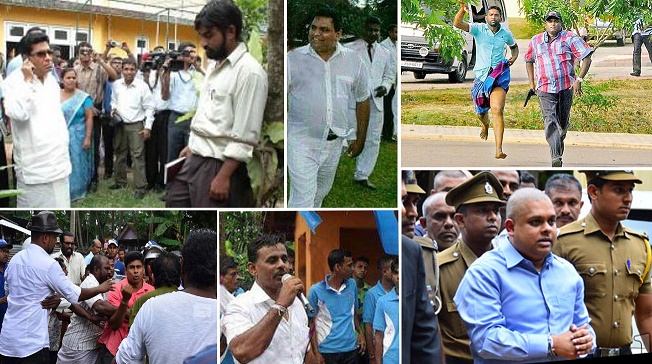
Foreign Policy and self-imposed non-negotiability

August 19th, 2016

Malinda Seneviratne

Small nations typically do not have much by way of bargaining power vis-à-vis powerful nations; ‘small’ meaning economically and militarily weak rather than land size.  Weak, however, does not mean helpless. Indeed there are very few if any relationships between the powerful and the weak that are not characterized by contestation and continuous negotiation of the terms of control.  The same goes for relations between countries, despite power differentials.  Sri Lanka, right now, appears to be an exception.

Needless to say, diplomacy is a sphere of activity where words are almost always used to varnish unpalatable truths.  In fact there’s nothing bad about anything bilateral or multilateral if we went strictly by the statements uttered by the stewards of foreign relations.  And yet if one were to factor in track records of the particular protagonists, statements uttered in different contexts and examine the small print of agreements, diplospeak immediately looks an infantile language which has barely evolved out the grunts.

Let’s consider Sri Lanka’s case. First and foremost, the country’s economic situation has been the main determinant of foreign policy formulation.  The economic logic of the particular regime has informed the picking of friends by and large.  The striking exemption was the Mahinda Rajapaksa regime at the height of the offensive against the LTTE when defeating the LTTE counted more than ‘economic sense’ in the weight given to friendships with foreign nations.  As a result, after the end of the war, that regime had to rush to China for help, support that did not come free.

There were other prices to pay of course and pounds of flesh were duly extracted in Geneva first and eventually in Sri Lanka when those nations which felt peeved by Rajapaksa put their weight behind his detractors.  This is not to say, of course, that he would have prevailed if there was no such support, but that’s another story.

Post-Mahinda, as expected, the new Government placed their bets on the anti-Rajapaksa bloc, especially India, the USA and the EU.  And lost.  The Government was forced to pick the Rajapaksa Option. China.

And yet, it appears that the Government is not yet done with pandering to the demands of the USA and India.  Of course, governments inherit debts owed by previous regimes and one can argue that a responsible regime cannot pout and refuse to pay.  However, we also know that this Government is politically on the same page with the USA as far as what is good for Sri Lanka is concerned.  It has essentially decided to inhabit the US version of Sri Lanka’s reality and design a future Sri Lanka that delivers the interests of that country.

It’s legitimate.  If you are in agreement then you go along.  Going along is one thing, but allowing someone like the US Ambassador to be presumptuous enough to state that he will help Sri Lanka write a new constitution is something else.  Even diplospeak cannot varnish incompetence or worse, impotence.

Then we have the Indian High Commissioner virtually saying ETCA is a done deal.  If indeed the deal is done despite objections from quarters other than the oppose-anything Joint Opposition then once again it means that this Government is either on the same page as India about the benefits for Sri Lanka (again, all-is-good diplospeak) or worse is incompetent or clueless.  Reminiscent one might say of J.R. Jayewardene’s capitulation to Rajiv Gandhi in July 1987.  Shows a worrisome (that’s a generous term) lack of confidence.  To make it even worse, it appears that the Government wants India to develop the Oil Tank Farm in Trincomalee.  Why India, is the question that needs to be asked in a context where India is not going to (and cannot) bail out Sri Lanka economically.  That’s China’s job and that’s official whether we like it or not.

Put all of this on the same page (of a newspaper, say) and the picture is pretty clear: this Government has a foreign policy that can be written in a sentence – ‘say aye” to whatever India or the USA proposes to further their strategic, economic and other interests and submit to China’s economic diktat’.

There’s a small chance that the statements issued by the US Ambassador and the Indian High Commissioner are nothing more than a couple of diplomats putting a brave front in the face of an impending China take-over.  It’s hard to say, however, given the Government’s apparent policy of treating such moves as being in the ‘goes without saying’ category, the subtext of which (need we say?) is essentially ‘comes without saying’.

Small nations typically do not have much by way of bargaining power vis-à-vis powerful nations.  But few nations are absolutely powerless.  Given certain comparative advantages (strategic location, for one), Sri Lanka can bargain.  And must.  At least, it can play one power against the other and try to optimize.  The kind of capitulation we are seeing, however, indicates that this Government believes that its political future is in the hands of India and the USA.  There have been others who came before who believed the same and looked in disbelief when outcomes that were preferred and considered assured did not materialize.

All that for the future.  Sooner or later, this Government will realize the worth of that pithy Sinhala saying ‘katin bathala sitaveema’ (planting sweet potato with the mouth).  The US Ambassador will understand the US version of this: ‘put your money where your mouth is’.  Right now, both India and the USA are backing on throwing a few paisas and pennies (respectively) and raking in big bucks in economic and strategic terms.  There’ll probably be a limit to what the big buck provider, China, will tolerate on the strategic front.

It is better to wake up, even slowly, rather than be woken up rudely.  Chances are that this Government, if woken up rudely, will break into giggles and say ‘that’s so sweet of you’.  Indeed it’s a throwback to J.R. Jayewardene’s famous line when ushering in the open economy: ‘Let the robber barons come!’  Only, on a larger scale and by a Government that appears incapable of taking stock of changed global realities.  This is not 1977 or 1987.  This is 2016.  Back then, China was not even mentioned. Today, China dominates the script.  Only, this Government doesn’t seem to have read it.

Malinda Seneviratne is a freelance writer who contributes a weekly column to the Daily Mirror titled ‘Subterranean Transcripts’.  Email: malindasenevi@gmail.com.  Twitter: malindasene.

Email ThisBlogThis!Share to TwitterShare to Facebook

A bit of sweet memories from good old holidays in Sri Lanka

August 19th, 2016

Dr Hector Perera     London

Many years ago majority of Sri Lanka people had no facilities such as gas and electric cookers, microwaves and ovens for cooking and baking. Now all these are there even in any average house so cooking cannot be that difficult at all. Those days they employed some poor people to do their cooking. I can remember we also had those so called servants for cooking even my mum as well cooked with them in the firewood kitchens. My mum was a school head teacher and dad was a medical doctor. They had to work all over Sri Lanka and we were everywhere. Sometimes I was with the mum and sometimes with the dad. To have one or two servants at home was a normal thing and we didn’t see any different.

In some school holidays such as April and August, I was at uncle’s place in Horagolla, Nittambuwa. The aunty and uncle had 5 or six children, both girls and boys. They were around my age so I had plenty of sisters and brothers to play with at uncle’s place. There as well I have seen these servants working in firewood kitchens with the aunty and with the grandma. Only very rarely those elder sisters also helped in the kitchen. It was very clever to have their kitchen a few yards away from the main building so that no smoke seeped to the main house. Some weekends the aunt’s sister who was a school teacher took us to their village to meet other relatives. It was really interesting to travel by a bullock cart. Once we passed Nittambuwa town then goes to a gravel road leading to their village called Humbitiyawa. The winding road through endless green paddy fields and coconut fields was very interesting. The place was not too far away, may be about three miles away but when we travelled like that way it appears to be about fifty miles away. Our Seeya” was the one who controlled the innocent bull to pull all along those uneven gravel road with a load of us in the cart. We moved back and forward from the seat as we travelled on those roads. Even in those village relative’s place they cooked in firewood kitchens. To have a break one day at the village house was a like a seven nights stay in a luxury hotel by the sea side, it’s a real holiday experience. We had a bath at a well in the back garden of the house. They say the water in that well was so cool because it was under a goraka” plant, nice cool water was very sensational, too difficult to put into words.

Hide and seek

Sometimes I played hide and seek with those brothers and sisters, I must say that is real fun. It was much better than lying down on sandy beaches and soaked with sunshine. Sometimes we picked up wild fruits such as dan” in the bushes and plucked some lovi” from a nearby tree. Those fruits tasted like apples, pears and grapes picked up in supermarkets. They cooked very tasty rice and many curries for lunch and supper and we had to eat the supper with the help of kerosene chimney lamps or sometimes with a lamp called patromax”. They also made so many local delicacies such as pittu, roti, helapa, kawum, kokis” and many more. All that were done in that smoky firewood kitchens, how wonderful? I have a feeling those firewood kitchens must have disappeared and replaced them with modern facilities. When school holidays such as April and August come, it is quite natural the mind to go back to such wonderful good old times. When I was studying in Kandy Dharmaraja College, I used to go with some friends and watch the famous Esala Perahera” by the Kandy Lake, now it is August holidays again. Your comments are welcomed perera6@hotmail.co.uk

නීතිය නවලා එකම නඩුව දෙකඩ කඩා නාමල්ව අත් අඩංගුවට ගත් හැටි මෙන්න.

August 19th, 2016

 www.mahinda.info

චෝදනා වල පදනම් විරහිත ස්වභාවය සලකමින් වතාවක් ඇප ලැබුණ නඩුවට නැවතත් නාමල් රාජපක්ෂ මන්ත්‍රීතුමාව අත් අඩංගුවට ගත් අයුරු නීතීඥ ප්‍රේමනාත් සී දොලවත්ත මහතා පැහැදිළි කරයි.

නීතිය නවන හැටි පොලිස්පතිවරයා පවසන්නේ මෙලෙසයි.

අනිත් අයටත් බලන්නට SHARE කරන්න.

Removal of electoral organizers to split the SLFP – Mahinda

August 19th, 2016

Courtesy Adaderana

August 18, 2016  04:11 pm

Former President Mahinda Rajapaksa says he calls upon all members of the Sri Lanka Freedom Party (SLFP) to carefully observe the moves that are being made to weaken the party.

What we are now seeing is the second phase in the plan to destroy the SLFP. The first was the dissolving of the local government institutions the vast majority of which were controlled by the SLFP,” he said in a statement today.

The statement further said, Several SLFP electoral organisers including Mahinda Yapa Abeywardena, Pavithra Wanniarachchi,  Rohitha Abeygunawardena,  C.B. Ratnayake, Gamini Lokuge, , Keheliya Rambukwella , and others have been removed from their electoral organiserships by the president. This is the latest round of reprisals against SLFP members associated with the Joint Opposition.

Removal of electoral organizers to split the SLFP - Mahinda
On earlier occasions, Dilum Amunugama, Salinda Dissanayake, S.M.Chandrasena, Geetha Kumarasinghe and Prasanna Ranatunga were similarly removed from their organiserships. Puttlam district parliamentarian Sanath Nishantha has been suspended from the party. This persecution has effectively caused a split in the SLFP.

Popular organisers of the SLFP are being removed and replaced with less popular politicians in order to weaken the SLFP and to confer an advantage on the UNP. Parliamentarian Sanath Nishantha whose party membership has been suspended got the highest preference votes among all political parties in the Puttlam district. Many of the electoral organisers who have been removed are among the top two or three in their respective districts.

For example,  Prasanna Ranatunga got the highest preference votes in the Gampaha district. S.M.Chandrasena came first in the Anuradhapura district,  Dilum Amunugama came third in the Kandy district. Rohitha Abeygunawardena, came second in the Kalutara district, C.B. Ratnayake, came second in the Nuwara Eliya district after Armugugam Thondaman, and Pavithra Wanniarachchi came third in the Ratnapura district.

These are all very popular politicians in their districts and stalwarts of the SLFP. Since the last parliamentary election 17 members of the SLFP central committee have been sacked. Nationally known figures have been replaced with individuals who are either defeated candidates, or politicians who have got much fewer preference votes even at the provincial council level. Such changes are designed to weaken the SLFP and to give the UNP the upper hand when it comes to an election. The responsibility for splitting the SLFP by removing its most popular electoral organisers will finally have to be borne by the President who is the leader of the party.

What we are now seeing is the second phase in the plan to destroy the SLFP. The first was the dissolving of the local government institutions the vast majority of which were controlled by the SLFP. These local government institutions would have been immensely helpful to the party in the event of any election. Yet all these were dissolved, giving a clear advantage to the UNP. The coalition between the UNP and the SLFP was extended from two years to five years without seeking the views of the SLFP central committee, the executive committee or even the SLFP government parliamentary group. I call upon all members of the SLFP to carefully observe these moves that are being made to weaken the party and give the UNP the upper hand.”

– See more at: http://adaderana.lk/news.php?mode=beauti&nid=36562#sthash.qlbm61yW.dpuf

ශ‍්‍රීලනිපය දෙකඩයි.. පාපය මෛත‍්‍රීටයි.. මහින්ද ලිඛිතව දන්වයි..

August 19th, 2016

lanka C news

ශ‍්‍රීලනිපයේ සංවිධායකවරුන් කිහිප දෙනෙකුගේ සංවිධායක ධුර අත්හිටුවා නව සංවිධායකයින් පත් කිරීම සම්බන්ධයෙන් අදඑස් පල කරමින් හිටපු ජනාධිපති මහින්ද රාජපක්‍ෂ මහතා විසින් නිකුත් කර ඇති මාධ්‍ය නිවේදනය මෙසේය.

ජනප්‍රිය සංවිධායකවරුන් ඉවත් කිරීම තුළින් ශ්‍රීලනිපය දෙකඩ කිරීම

ජනාධිපතිවරයා විසින් ශ්‍රී ලංකා නිදහස් පක්‍ෂයේ ආසන සංවිධායකවරුන් වූ මහින්ද යාපා අබේවර්ධන, පවිත්‍රා වන්නිආරච්චි, රෝහිත අබේගුණවර්ධන, සී.බී.රත්නායක, ගාමිණි ලොකුගේ හා කහෙලිය රඹුක්වැල්ල යන පාර්ලිමේන්තු මන්ත්‍රීවරුන්ද ඇතුළුව තවත් කීපදෙනෙකුම එම තනතුරු වලින් ඉවත් කර තිබේ. ඒකාබද්ධ විපක්‍ෂය සමඟ වැඩ කරන ශ්‍රී ලංකා නිදහස් පක්‍ෂ සාමාජිකයින්ගෙන් පළිගැනීමේ නවතම අදියර මෙයයි. මීට පෙර අවස්ථාවලදී දිලුම් අමුණුගම, එස්.එම්. චන්ද්‍රෙස්න, සාලින්ද දිසානායක, ගීතා කුමාරසිංහ, කංචන විජේසේකර හා ප්‍රසන්න රණතුංග ඇතුළු මන්ත්‍රීවරුන් පිරිසක්ද තම ආසන සංවිධායක ධූර වලින් නෙරපා හරිනු ලැබීය. පුත්තලම් දිස්ත්‍රික් පාර්ලිමේන්තු මන්ත්‍රී සනත් නිශාන්තගේ පක්‍ෂ සාමාජිකත්වය පවා අත්හිටුවා ඇත. මේ දඩයම නිසා ශ්‍රී ලංකා නිදහස් පක්‍ෂය දැනටමත් දෙකඩ වී ඇත.

ශ්‍රී ලංකා නිදහස් පක්‍ෂයේ විශාල ජන පදනමක් ඇති සංවිධායකවරුන් ඉවත් කොට අඩු ජන පදනමක් ඇති පුද්ගලයන් එම තනතුරුවලට පත් කිරීමෙන් ශ්‍රී ලංකා නිදහස් පක්‍ෂය දුර්වල කිරීමත් එක්සත් ජාතික පක්‍ෂයට වාසිදායක තත්වයක් ඇති කිරීමත් නිරායාසයෙන්ම සිදු වේ. පක්‍ෂ සාමාජිකත්වය අත්හිටුවා ඇති සනත් නිශාන්ත මන්ත්‍රීවරයා පුත්තලම් දිස්ත්‍රික්කයේ සියලුම දේශපාලන පක්‍ෂ අතරින් වැඩිම මනාප ලබාගත් දේශපාලඥයායි. ඉවත් කොට තිබෙන ආසන සංවිධායකවරුන්ගෙන් බොහෝ දෙනෙක් තමන්ගේ දිස්ත්‍රික්කවල වැඩියෙන්ම මනාප ඡන්ද ලබාගත් කීප දෙනා අතර සිටි. උදාහරණයක් වශයෙන් ප්‍රසන්න රණතුංග ගම්පහ දිස්ත්‍රික්කයේ පලවෙනියා විය. දිලුම් අමුණුගම මහනුවර දිස්ත්‍රික්කයේ තුන්වෙනියා විය.

එස්.එම්. චන්ද්‍රෙස්න අනුරාධපුර දිස්ත්‍රික්කයේ පළමුවෙනියා විය. රෝහිත අබේගුණවර්ධන කළුතර දිස්ත්‍රික්කයේ දෙවෙනියා විය. මහින්ද යාපා අබේවර්ධන මාතර දිස්ත්‍රික්කයේ තුන්වෙනියා විය. සී.බී. රත්නායක නුවරඑළිය දිස්ත්‍රික්කයේ ආරුමුගන් තොන්ඩමන්ට පසු දෙවෙනියා විය. පවිත්‍රා වන්නිආරච්චි රත්නපුර දිස්ත්‍රික්කයේ තුන්වෙනියා විය.  මේ  සියළු  දෙනාම  තම  දිස්ත්‍රික්කවල  ජනප්‍රිය දේශපාලඥයින් වෙනවා පමණක් නොව ශ්‍රී ලංකා නිදහස් පක්‍ෂයේ බල කණුද වේ. පසුගිය පාර්ලිමේන්තු මැතිවරණයේ සිට අද දක්වා පක්‍ෂ මධ්‍යම කාරක සභාවේ සාමාජිකයන්ද 17 දෙනෙකු නෙරපා හැර තිබේ.

මුළු රටම හඳුනන මෙවැනි පුද්ගලයින් වෙනුවට නව ආසන සංවිධායකවරුන් හැටියට පත් කොට තිබෙන්නේ එක්කො පරාජිත අපේක්‍ෂකයන් නැත්නම් පලාත් සභා මට්ටමින් පවා අඩු මනාප සංඛ්‍යාවක් ලබා ගත් අපේක්‍ෂකයන්ය. මේ ආකාරයට ජනප්‍රිය සංවිධායකවරුන් ඉවත් කොට ශ්‍රී ලංකා නිදහස් පක්‍ෂය දෙකඩ කිරීමේ වගකීම අවසානයේදී පක්‍ෂ නායකයා වන ජනාධිපතිවරයාට බාර ගැනීමට සිදු වනු ඇත. අපි මේ දකින්නේ ශ්‍රී ලංකා නිදහස් පක්‍ෂය විනාශ කිරීමේ දෙවෙනි අදියරයි. පළමු අදියර වූයේ ශ්‍රීලනිපය විසින් පාලනය කරනු ලබන සියළුම පලාත් පාලන ආයතන විසුරුවා හැරීමයි. මේ පලාත් පාලන ආයතන තිබුණේ නම් ඕනෑම මැතිවරණයකදී ඒවා ශ්‍රී ලංකා නිදහස් පක්‍ෂයට විශාල පිටුවහලක් වනු ඇත.

පලාත් පාලන ආයතන විසුරුවා හැරීමෙන් පැහැදිලි වාසියක් එජාපයට අත් වූ බව අවිවාදාත්මකය. එජාපය හා ශ්‍රිලනිපය අතර හවුල් ආණ්ඩුවේ කාලය අවුරුදු දෙකේ සිට පහ දක්වා වැඩි කරනු ලැබුවේද පක්‍ෂයේ මධ්‍යම කාරක සභාවෙන් හෝ විධායක සභාවෙන් හෝ අඩුම වශයෙන් ආණ්ඩුව සමඟ සිටින ශ්‍රීලනිප පාර්ලිමේන්තු කණ්ඩායමෙන්වත් නොවිමසාය. එජාපයට වාසිය ලබා දීම සඳහා ගන්නා මේ පියවරයන් ඉතා සාවධානව නිරීක්‍ෂණය කරන මෙන් මම සියළුම ශ්‍රී ලංකා නිදහස් පාක්‍ෂිකයන්ගෙන් ඉල්ලා සිටිමි.

– මහින්ද රාජපක්‍ෂ
හිටපු ජනාධිපති

එදා උන් දුන් දඩුවම්…කෝ ඒවාට මානව හිමිකම්…!!!

August 19th, 2016

 උපුටා ගැනීම ෆේස්බූක් අම්බලමෙනි.

LTTEkuduමේ ෆොටෝ එක
අහම්බෙන් දැක්ක එකක්…
මේ මොකක්ද අයියෙ..?” කියල
මං විශේෂ කාර්‍ය බලකායෙ උන්නු අයිය කෙනෙකුගෙන් ඇහුවෙ ඇත්තටම මේ මොකක්ද කියල මමත් දැනගෙන හිටියෙ නැති නිසා.
මේක “සෙල්” එකක්… අපේ හමුදාවෙ කොල්ලන්ව අල්ලගත්තම උන්ව කූඩු කරල තියන්ඩ කොටි හදල තියන හිර කූඩුවක්…
බලන්ඩකො ඔය පින්තූරෙ හොදට..
කූඩුව හිරකාරයගෙ ඇගේ සයිස් එකටම තමයි….
ඒ පැත්තට හැරෙන්ඩත් බෑ.. මේ පැත්තට හැරෙන්ඩත් බෑ… දවස් ගනන් හිටගෙන… වාඩි වෙනවා තියා එකම විදිහට ඉදලා කකුල් හිරි වැටුනම හේත්තු වෙන්ඩවත් බෑ. සෙල් එකේ කම්බි කූරු වලට කටු කම්බි දවටලා..
කන්ඩ කෑමක් තියා බොන්ඩ එක වතුර උගුරක් දෙන්නෙ නෑ උන්..
ඔව්.. ඇත්තමයි…
අද අපේ මහ උන් ඔඩොක්කු වල දාගෙන හුරතල් කරන කොටි හැත්ත අපේ කොල්ලන්ට වද දුන්නෙ ඔහොමයි.. මහ සක්කිලි ජාතියක් උන්…
අද අපේ සිංහල උන්ටත් පේන්නෙ කොටින්ගෙ මානව හිමිකම් ගැන විතරයි…
මේ වගේ සෙල් වල හිරවෙලා අපා දුක් විදපු අපේ කොල්ලො ගැන එක පරයෙක් කටක් අරිනවද..?
වැඩේ තියෙන්නෙ…
අපේ කොල්ලො මෙහෙම දුක් විදලත්
පැනල යන්නෙ නැතුව, දාල යන්නෙ නැතුව ෆයිට් කරපු එක…
ඒත් අද ඉන්න බල්ලො කියන්නෙ අපේ කොල්ලො මේව කරේ මාසෙ පඩියට සල්ලි වලට කියල..
උන් සල්ලි වලට කොටින්ටයි සුද්දන්ටයි පස්ස පැත්ත විකුනන හින්ද
උන්ට හිතා ගන්ඩ බැරුව ඇති
මිනිහෙක් කොහොමද රට ගැන හිතල මෙච්චර කැප කිරීමක් කරන්නෙ කියල..!”

උපුටා ගැනීම ෆේස්බූක් අම්බලමෙනි.

Crucial times ahead as UN Chief plans hush-hush visit to Sri Lanka

August 19th, 2016

Gagani Weerakoon Courtesy Ceylon Today

President Maithripala Sirisena is all set to drive forward his party on a different path as the Sri Lanka Freedom Party (SLFP) is planning to celebrate its 65th anniversary more splendidly and proudly on 4 September in Kurunegala.

Interestingly, President Sirisena who celebrated the 64th anniversary in his hometown Polonnaruwa last year after assuming office has this time chosen Kurunegala, the electorate of his predecessor and now Member of Parliament Mahinda Rajapaksa to hold the 65th Convention which he vows will be more splendid than all the anniversary celebrations held during the last 64 years.

The SLFP has the full freedom and the right to build the party while protecting its own identity, the President said that adding the own identities of the respective political parties have not been compromised in any way in a conscience Government.

He made these remarks participating in a workshop organized by the SLFP Women’s organization at the Sri Lanka Freedom Party (SLFP) Headquarters in Colombo on 11 August under the theme “Strengthened country – Sustainable future” with the aim of ensuring 25 per cent of representation for women in national and local government bodies.

Addressing the gathering the President further said that the history of the SLFP could be explained as an era which crowned the women.
President Sirisena further said that the SLFP should go forward in strengthening the Women’s organization of the party for the betterment of all the mothers and daughters of the country.

Strengthening of the SLFP will provide highest value for our culture and our thinking and through these things a better society could be built, he said.

The President said that the SLFP in coalition with the UNP, rule the country under the present government with a pure motive of solving financial issues and facing allegations made by the UN Human Rights Council as a result of the actions by the previous government.

Return to ‘mahagedara’

With President Sirisena insisting on inviting the former Presidents to the party convention, another team is working on paving way for SLFPers who have now joined hands with the Joint Opposition also to come.

Accordingly, at least six rebel SLFP MPs are to return to ‘mahagedara’ and show solidarity with President Sirisena by joining him on the stage.

A meeting of representatives of these six MPs and representatives of the SLFP took place at Fingara Club recently. According to sources, President Sirisena too has not shown any objections to the developments as he too intends to reunite the party.

UN Chief to arrive

As the President is planning to celebrate his Party’s convention UN Secretary General is all set to arrive in the country to hold crucial discussions ahead of March 2017 where the progress made by Sri Lanka on the area of Human Rights will be reviewed.

According to well-informed sources, the UN Secretary General will arrive in the country on 2 September 2016 and is expected to meet President Maithripala Sirisena, Prime Minister Ranil Wickremesinghe and Foreign Minister Mangala Samaraweera amongst others, before he leaves the island the next day, 3 September.

Secretary General Ban Ki-moon who is serving his last term in office is expected to bring a strong message to the Sri Lankan Government ahead of progress review on Sri Lanka in March 2017 on the Sri Lanka co-sponsored resolution at the UNHRC adopted in October 2015.

The UN Chief’s visit comes at a time the country is in the process of drafting a new Constitution and debating on getting foreign judges and other experts involved in its accountability process.

In the October resolution, the UNHRC had unanimously recommended a credible probe involving foreign judges and prosecutors into the alleged war crimes in Sri Lanka in the brutal war against the LTTE.

The resolution had called for the establishment of a Sri Lankan Judicial Mechanism with a Special Counsel to investigate allegations of violations and abuses of human rights and violations of international humanitarian law during the final phase of the nearly three decade-long brutal ethnic conflict that ended in military defeat of the LTTE in 2009.

The UN Chief first visited Sri Lanka in May 2009, soon after the government declared militarily defeating the LTTE terrorists. During his stay, he also consulted other relevant stakeholders, members of the international humanitarian agencies and civil society. The Secretary-General visited the IDP sites at Vavuniya and flew over the conflict area, near Mullaitivu that was the scene of the conflict.

Issuing a congratulatory message to President Sirisena upon completion of one year in Presidency in January 2016, UN Chief Ban Ki-moon asked the Sri Lankan Government to continue moving forward in advancing reconciliation and good governance as the country continues its political transition.

He acknowledged the initial steps the government has taken to strengthen good governance, advance reconciliation and implement the resolution of the Human Rights Council of October 2015.

JF-17 deal to go ahead

The Cabinet on Tuesday approved a proposal by President Maithripala Sirisena to purchase new fighter aircraft and associated weapons for the Sri Lanka Air Force (SLAF).

Cabinet spokesman Rajitha Senaratne said, the government will call for expressions of interest for the purchase of around 8-12 fighter jets.The fighter aircraft of the SLAF have been aging and it is important to upgrade the equipment to maintain security and be prepared for any unexpected threat, he explained.

The Cabinet approved a proposal by President Sirisena, in his capacity as the Minister of Defence, to obtain expressions of interest from interested aircraft manufacturers, assistant manufacturers, and authorized government agents. The deal will be on a government to government basis.

The announcement came a day after Pakistani Air Force Commander Air Chief Marshal Sohail Aman who was in the country for a brief official visit leaving, thus prompting speculations whether pressure mounted from Pakistan’s end to finalize the JF-17 Thunder fighter aircraft deal which Pakistan is producing in collaboration with China.
This columnist in the 6 December 2015 column revealed that the intended plan to purchase fighter jets from Pakistan has come under fire from India as the latter vehemently opposed the move.

Ceylon Today on its 10 July 2016 edition revealed that Sri Lanka will be shortly concluding the purchase deal with Pakistan for the supply of 10 JF -17 Thunder Multi-role Fighter Jets, with delivery expected in early 2017.

Pakistan has stationed Brigadier Muhammad Bashir in Colombo to work out the details of the deal. That will include financial arrangements.

The deal to purchase this stunning new multi-role fighter from the Pakistan Air Force was held in abeyance under mounting pressure from the highest levels in the Indian Government.

When the deal was first mooted it was expected to be inked in Colombo during Pakistani Premier Nawaz Shariff’s visit in early January this year. The deal included the sale of 10 JF -17 s, each priced at around US$ 35million through a special Line of Credit (LoC). But Shariff’s visit ended with eight Pakistan-Sri Lanka agreements being signed in Colombo during the visit. None were related to defence cooperation or to the JF-17 deal.

SLAF Commander Gagan Bulathsinhala visited Pakistan last year for a reality check on the aircraft at the Pakistan Aeronautical Complex (PAC) in Kamra, where the PAC and China’s Chengdu Aircraft Corporation (CAC) co-manufacture the fighters.
A highly placed source in the diplomatic corps said India came out strongly against the deal with the Pakistan Air Force (PAF) to purchase 10 JF-17 combat aircraft.

Indian National Security Adviser, Ajit Doval, had personally expressed India’s concerns in connection with the deal to President Maithripala Sirisena and Prime Minister Ranil Wickremesinghe.

Doval had personally telephoned President Sirisena and Prime Minister Wickremesinghe and told them outright that New Delhi was against the deal, warning that Sri Lanka will have to face serious repercussions if the deal was sealed with Pakistan.

Sri Lanka made a compromise offer to purchase three naval ships from India as suasion for India to desist from objecting to the deal with Pakistan. This, however, was not favoured by India, and New Delhi maintained the pressure instead.

The Sri Lankan Defence Ministry then asked India for 10 JF-17 aircraft or a similar fighter jet. India came up with a counter deal offering the SL Government a credit line to purchase alternative combat aircraft subject to the condition that Sri Lanka could buy the aircraft from any country other than Pakistan.

Pakistan however maintained a low profile and renewed their offer stating that they would give one 10 F-7 combat craft free if Sri Lanka makes an outright purchase on the initial deal.

The finalization of the deal was gradually put off following the low key visit of Indian Foreign Secretary

Dr. Subrahmanyam Jaishankar to Colombo ahead of the Pakistan Premier’s visit in January 2016.

The deal was apparently opened when former Air Force Commander Jayalath Weerakkody was serving as the Sri Lankan High Commissioner in Pakistan.

However, India is also likely to bid for the supply with India offering indigenously made Tejas Light Combat Aircraft.

Ranil off to China

Prime Minister Ranil Wickremesinghe and a delegation left on a three-day visit to North Eastern China yesterday. The delegation will inspect a number of industrial zones, cargo terminals, technological parks, and production houses in North Eastern China that help economic development.

Professor Maithri Wickremesinghe, Disaster Management Minister Anura Priyadarshana Yapa, Megapolis and Western Development Minister Patali Champika Ranawaka accompanied Premier to China.

The delegation also includes Secretary to the Prime Minister Saman Ekanayake, Senior Advisor to the Prime Minister Charitha Ratwatte, Prime Minister’s Additional Secretary Saman Athaudahetti, Sri Lankan Ambassador in Beijing Karunasena Kodithuwakku, Megapolis and Western Development Project Director Ajita De Costa, Development Agency Director General Mangala Yapa, Southern Development Agency Director General Shirantha Herath, Development Strategy and International Trade Ministry Advisor Ryan Rockwood.

Just 24-hours before PM Wickremesinghe’s visit to China, a tripartite agreement was signed, between the Ministry of Megapolis and Western Development, the Urban Development Authority and CHEC Port City Colombo (Pvt) Ltd. to develop and form the new Colombo International Financial City (CIFC), during a simple ceremony held at Cinnamon Grand, Colombo on Friday (12).

The agreement which was signed by the three parties with the presence of Ministers Champika Ranawaka, Malik Samarawickrema and Arjuna Ranatunga would formally replace the previous agreement signed on 16 September 2014 between the Government of Sri Lanka and the Project Company.

The new tripartite agreement has been signed following the announcement in March this year by the Government to lift the temporary suspension of work on the project until the Ministry of Megapolis and Western Development completed the Supplementary Environmental Impact Assessment (SEIA). The SEIA was completed earlier this year, pursuant to a Development Permit issued by the Coast Conservation Department to recommence the project.

The temporary suspension of the project lasted over a year, during which the Project Company fully co-operated with the government to address the various concerns raised following the formation of a new government after the Presidential Elections in January 2015. The SEIA and the new tripartite agreement have addressed all such concerns. The Cabinet of Ministers approved this tripartite agreement and authorised the signing of the same at the Cabinet meeting held on 9 August 2016.

The CHEC Port City Colombo and the government envisage creating approximately 83,000 new employment opportunities in different sectors, attracting over US$ 13 billion in Foreign Direct Investments (FDI) from investors and developers from countries including India, Singapore, Malaysia and China while also increasing the number of tourists visiting Sri Lanka within the next 20-30 years.

“During the 19th century, the economic centre of gravity has been shifted from Asia to Europe and the reverse phenomenon is happening now, and China being in the forefront of all the economic activities.

We have taken all these important and vital aspects into consideration when developing our Megaplois Plan. This Colombo International Financial City in the centre of the maritime City will be one of the key phenomenons which will decide the future development of our country. And also this will fuel the planned Maritime city, Aero city, Tech city, Industrial cities and Tourist cities,” Minister Ranawake said after inking the agreement.

Colombo Port City and now the CIFC is intended to become a truly international city with headquarters of reputed local and international companies, banks and financial institutions locating their businesses, and investors from many countries making investments in real estate development projects in areas such as offices, hotels, retail complexes, residual accommodation, recreation and culture. The new city will also have a marina that will be developed jointly with an internationally reputed Marina operator, Tang Qiaoliang President, China Harbour Engineering Company said after signing the agreement.

“We believe in hiring the world’s best international team to plan and construct the city. The Development Master Plan recently approved by the UDA was a collaborative effort by Sweco of Sweden, Atkins of UK and Aecom of USA – all are top global companies in their respective fields,” he said.

“He believes that the Colombo Port City Development Project achieves three key objectives for the economy of Colombo and greater Sri Lanka.

“Firstly, the project will position Colombo as the most liveable city of South Asia, attracting entrepreneurs and financial professionals and become a catalyst of growth of Sri Lanka services sector and position the city to become a magnet for corporate headquarters that will take advantage of Sri Lanka’s strategic location. The new trade agreement being negotiated with Governments of India, Singapore and China will also play a large role in attracting investments.

“Secondly, the new city will become attractive to tourists who spend only 1.5 on average in Colombo compared to 9.10 nights in other resort locations. As the Port City Development evolves, with the emergence of retail complexes, cultural and others recreational activities, the City itself will become a tourist destination rather than a transport point, contributing much to the growth of Sri Lanka’s tourism industry.

“Thirdly, the Port City/CIFC development will be socially inclusive allowing many thousands of Sri Lankans to gain attractive employment opportunities and also enjoy its amenities that will include over 100 acres of park areas, which is more than your main park in Colombo 7, and around 3 km of beach area. In addition, there will be more than 200 acres of water areas created for water sports.

“With a direct investment of over $1.4 billion, our company has become a long term stakeholder in your country and we have planned our investment returns over 25 years. We look forward to working closely with the government in formulating mutually beneficial policies that will make Sri Lanka an even more attractive investment and tourism destination,” he added.

Lanka Becomes Major US, India Defence Cog…

August 19th, 2016

WINSTON DE VALLIERE Political analyst Courtesy Ceylon Today

On the one hand, we find the government, meaning, President Maithripala Sirisena and Premier Ranil Wickremesinghe becoming quite adept at almost with nonchalance brushing off every volley fired by the Opposition, with almost the demeanour of one flicking a blowing away with one puff the speck of dust off one’s shirt. Time was when the government seemed to knuckle under the heckling. But as JVP’s Tilvin Siva said it to a nicety, the Joint Opposition has become a laughing stock.

That’s a statement he made with the utmost gravity. Politics in this godforsaken land has become too serious a matter to be left entirely in the hands of politicians. The President and Premier have apparently decided that on behalf of the people and country […my tongue’s reaching for my cheek] the ‘government’ is simply going to carry on with its programmes, plans, foreign policy initiatives, and what-have-you with a determination that commands however reluctantly, one’s applause.

I’m committing this down to black and white because today’s aged 40-odd plus readership were late teens at that time and know nothing of recent historical facts which caused the emergence of today’s political ideologies which are more intent on tearing down rather than on building up. So then, what we have is the officially recognized Opposition in Parliament, to wit, the TNA and a couple of others as well as the Joint Opposition that Tilvin Silva calls a laughing stock!

What Tilvin Silva, however, had not the foggiest idea about was that around the time he was ruminating on this in his mind, what you see below was happening right here in the heart of Colombo. And it’s a picture of the first ever Operational Level Bilateral Defence Dialogue between the armed forces of the United States and Sri Lanka was held on 8 and 9 August 2016. Sri Lanka Navy hosted the event at Naval Headquarters premises.

This…. the first ever dialogue between the two armed forces at operational level was EXCLUSIVELY ON BILATERAL DEFENCE COOPERATION AIMED AT DRAWING UP AN AGENDA FOR CONCRETE BILATERAL ENGAGEMENT OVER THE NEXT THREE YEARS.

Listen to this: That agenda will include bilateral training ……..and exercises between members of the armed forces of United States and Sri Lanka.

I predicted this two months ago in this column when Lankan services commanders were invited to attend the US 5th Fleet joint marine exercises off the north-east region of the Indian Ocean and exclusively reported on the recent visit of the massive US nuclear armed amphibian to Colombo.

What this means is that we are already deep into the processes of a definite DEFENCE AGREEMENT WITH THE UNITED STATES.

What’s most significant was that this was no middle or lower level meeting but one that included US representatives from different formations of the US Pacific Command and was attended by TOP MEN FROM THE LANKA ARMED SERVICES, Ministry of Defence [UNDER President Sirisena] and Office of the Chief of Defence Staff.
Now for something that will take most or many of you by surprise.

Though the government has not denied statements by ministers…off and on…about the land bridge between India and Sri Lanka; it is obviously based on fact for the simple reason that such a bridge is indispensable in a conflict situation in the future because the fact is that while the US, Japan and India have a huge combined firepower they are together still not confident of their deterrent power against China which has a fleet and air force far greater in numerical and strike power than their collective power, especially within a limited area such as the Indian Ocean region.

The Indo-Lanka Bridge, I predict, will be a reality within the next 10 to fifteen years and prefabricated sections of that bridge might be already in the process of construction.
We were told a couple of months ago that the deal with Pakistan to buy 12 medium range Chinese-built fighter aircraft was good as through, but Jane’s weekly last week said…and you must read between the lines…the Lankan government will be calling global expressions of interest for the supply of 12 similar aircraft. We can be sure that the subtle change is not because the Chinese aircraft are inferior but because the effectively multi-lateral US-Indo-Lanka ties are expanded extremely quickly behind the scenes.

That US Envoy Atul Keshap went to town about the donation last week of medical supplies for Jaffna raised a significant point.

It was not US medical men and women who were airlifted all the way from the States for the event but the whole thing, personnel and all, was dubbed the, Operation Pacific Angel.

The supplies and personnel were flown in by? You guessed it! the US Pacific Command’s Operation Pacific Angel (PACANGEL).

Approximately 60 US military members, and members of the Sri Lanka Air Force, participated in the week-long programme.

We are a few feet away from Lanka acquiring major fighter aircraft and our Navy being converted into a force with modern regional maritime combat capability.

Wanted SL terror suspect living as Canadian citizen –

August 19th, 2016

 Courtesy The Daily Mirror

An internationally wanted Sri Lankan accused of terrorist activities is living just outside the Greater Toronto Area (GTA) as a Canadian citizen, CTV Toronto reported on Thursday.

It said the case raises questions about the weight of Interpol notices as well as how the Canadian government deals with people they believe belong to terror groups.

The CTV Toronto had received a tip that a man named in an Interpol red notice may be living in the GTA.

The red notice was issued in 2010 for the then-43-year-old Sri Lankan named Ravishankar Kanagarajah. The notice currently on Interpol’s website lists the wanted party as Kanagaraja Ravishankar. His charges are listed as “Terrorism” and he is wanted by authorities in Sri Lanka.

According to media Ravishankar was convicted and sentenced in absentia to 30 years imprisonment for transporting guns and explosives from North Korea to Sri Lanka for the LTTE in 2014. The LTTE has been considered a terrorist entity by the Canadian government since 2006.

A man living under the slightly different name of Ravisangar Kanagarajah is listed as the director of Siya Shipping Company Ltd.

According to several people found at the Brampton address listed for the company, Kanagarajah used to live at there, but recently moved to the Cambridge area.

A woman who identified herself as Kanagarajah’s sister-in-law confirmed Monday Kanagarajah currently lives in her Kitchener home, along with his brother-in-law, having recently separated from his wife in Brampton. Several attempts to reach Kanagarajah, however, were unsuccessful. According to his brother-in-law and sister-in-law, he was driving a transport truck and unreachable when CTV Toronto showed up at his Kitchener home twice this week.

CTV Toronto was ultimately put in touch with his attorney, human rights lawyer Paul Copeland.

Copeland, as well as family members, confirmed Kanagarajah is the man listed in the Interpol red notice and is currently a Canadian citizen. It is unknown under what circumstances Kanagarajah was granted citizenship.

“He’s a Canadian citizen, he’s here lawfully, I’ve never heard an allegation that he used a different name,” Copeland said.

According to Copeland, the Canadian government attempted to revoke Kanagarajah’s passport in recent years, in part due to the Interpol red notice, but ultimately halted the process because Kanagarajah’s passport had expired.

Copeland argued that Kanagarajah does not amount to a terrorist, nor should he be considered a threat to the Canadian public.

“I think the civil war in Sri Lanka did not fit within the definition of terrorism, generally speaking,” Copeland said. “I would not regard him (Kanagarajah) as a terrorist.”

Meanwhile, the Citizenship and Immigration Canada refused to comment on any aspect of Kanagarajah’s case citing ‘Privacy Laws.’ Terrorism-related convictions are grounds for citizenship revocation in Canada.


– See more at: http://www.dailymirror.lk/114380/Wanted-SL-terror-suspect-living-as-Canadian-citizen#sthash.42PO960L.dpuf

Beginning of international war crimes probe?

August 19th, 2016

Editorial Courtesy The Island

The Northern Provincial Council (NPC) is making the most of the increasing impotency of the state to run a parallel government of sorts in the northern parts of the country; it is also working overtime to annex the Eastern Province to the North. Chief Minister C. V. Wigneswaran and others of his ilk are all out to gain legitimacy for their political project with the help of foreign powers. Hardly a day passes without a foreign dignitary visiting the North and entertaining appeals from the NPC members and doing a Dixit.

The New Indian Express has quoted CM Wigneswaran as having said US Ambassador Atul Keshap acceded to his request that some of the rehabilitated LTTE cadres be examined by American doctors who are currently here to find out whether the former Tigers were injected with poisonous substances during their rehabilitation programme. The US Ambassador has, according to him, said its medical team can examine some of the former LTTE members and decide what to do next. The US embassy in Colombo has given an evasive answer to our questions on the issue; it has not contradicted Wigneswaran’s statement. Doubts that Wigneswaran et al have created in the minds of people, both here and abroad, need to be allayed and the best way to do so is for a team of medical experts to examine the former LTTE combatants. But, that is a task for the government of Sri Lanka and not Washington.

Interestingly, CM Wigneswaran’s allegation reminds us of the late Venezuelan president Hugo Chavez’s claim, in 2011, that the US could be responsible for a spate of cancer among South American leaders. While battling cancer himself the Venezuelan leader alleged that the US had ‘invented a technology to spread cancer’, and warned other left-wing leaders in neighbouring countries that they could be targeted next. Several other South American political leaders including suspended Brazilian president Dilma Rousseff, her predecessor Luiz Inacio Lula da Silva and the then President of Paraguay Fernando Lugo were struck by cancer. But, Chavez’s allegation went unprobed.

The government should have acted promptly when Wigneswaran and other TNA grandees made the aforesaid allegation. This country is not short of good doctors and a team of local medical specialists including those named by the TNA should have been appointed to examine the LTTE cadres who have been reunited with their families after rehabilitation. The government could have sought foreign assistance if the need for that had arisen in respect of tests etc.

The Northern Chief Minister’s claim at issue is tantamount to a very serious war crimes allegation. (Injecting anything harmful into prisoners of war is a war crime, isn’t it?) And, if the US examines former LTTE cadres as it has reportedly promised, its action will amount to conducting a war crimes probe in all but name. In other words, the NPC will succeed in having a war crimes investigation initiated with foreign involvement therein; Wigneswaran and others will have beaten the UNHRC to it in such an eventuality and one may be justified in arguing that the medical camps the US held in the North were only a smokescreen.

Whether the Sirisena-Wickremesinghe government will pluck up the courage and seek an explanation from the US on this score without taking it lying down remains to be seen. We bet our bottom dollar that it will resort to some face saving tactics as it is too pusillanimous to confront the western powers.

The army insists that none of the LTTE suspects were ill-treated and all of them were rehabilitated properly and reunited with their families under the supervision of eminent members of their community. About 12,000 LTTE cadres who either surrendered or were captured during the war underwent rehabilitation. However, the critics of the Sri Lankan military may not buy into the army’s claim. Now that the US has undertaken the examination of some of the former LTTE cadres, according to Wigneswaran, the onus is on Washington to reveal the findings of its investigations if it fulfils its promise to the Northern CM; the US medical experts will also be in position to tell the international community whether the LTTE suspects held at rehabilitation centres have been tortured in the same way as the Guantanamo Bay inmates. The world must know the truth.

Usurping powers: Legislature v. Judiciary

August 19th, 2016

By Neville Ladduwahetty Courtesy The Island

The Value Added Tax (Amendment) Bill in the form presented has come and gone. It is likely to reappear in another avatar. The reason for the Supreme Court to determine that the Bill was null and void was the vigilance of civil society whose interests were represented by one or two committed and dedicated lawyers. For this the nation is in their debt.

However, what is most interesting is the Prime Minister Ranil Wickremesinghe’s reported statement: “The legislature should not let the judiciary usurp its powers” (The Island, August 9, 2016). The report also quotes the Prime Minister: “We would not sack the Chief Justice or bring an impeachment against him because the court did not give us a favourable ruling”.

Such remarks are not only totally unbecoming for any Member of Parliament, least of all a Prime Minster but also reflects a lack of knowledge of fundamental principles of how separation of powers is supposed to work. In this regard it is interesting to note what happened in the U.K. following a judgment in the Sweeney case in June 2006, when both the Home Secretary and a Junior Minister in the Department of Constitutional Affairs, criticized the judgment in which the Lord Chancellor spoke out against both governmental colleagues, and publicly defended the sentencing judge thereby defending the independence of the judiciary and underscoring the principles of separation of powers.

Such conduct should be a lesson for those in power in Sri Lanka. Sri Lanka does not have Lord Chancellors to defend the judiciary. However, the knowledge and the hope that the Supreme Court would continue to function undeterred, no matter the barbs, is reassuring and therefore comfortingfor the People of Sri Lanka to know that they could rely on the Judiciary to protect their judicial interests.

CONSTITUTIONAL PROVISIONS

Sri Lanka’s Constitution is based on the separation of powers. Article 3 states:

“In the Republic of Sri Lanka sovereignty is in the people and is inalienable. Sovereignty includes the powers of government, fundamental rights and the franchise”. The powers of government referred to in Article 3 are set out in Article 4. These are legislative powers, executive powers and judicial powers. The focus of this article is the relationship between the Legislature and the Judiciary. Thus, what is relevant are articles 4 (a) and 4 (c).

Article 4 (a) states: “the legislative powers of the People shall be exercised by Parliament, consisting of elected representatives of the People and by the People at a Referendum”.

Article 4 (c) states: the judicial powers of the People shall be exercised by Parliament through courts, Tribunals and institutions created and established, or recognized by the Constitution, or created and established by law, except in regard to matters relating to the privileges, immunities and powers of Parliament and of its Members, wherein the judicial power of the people may be exercised directly by Parliament according to law”.

In similar vein, Article III Section 1 of the United States Constitution states: “The judicial Power of the United States, shall be vested in one Supreme Court, and in such inferior Courts as the Congress may from time to time ordain and establish”.

The specificity in the US Constitution that the judicial powers of the United States are vested in the Courts is also present in Chapter XV of Sri Lanka’s Constitution. Thus, Article 105 (1)in the latter states:

“Subject to the provisions of the Constitution, the institutions for the administration of justice which protect, vindicate and enforce the rights of the People shall be – (a) the Supreme Court; (b) the Court of Appeal; (c) the High Court and such other Courts of First instance, tribunals or such institutions as Parliament may from time to time ordain and establish”.

Similarity in provisions in the US Constitution which state: “Congress may from time to time ordain and establish” institutions for the administration of justice, and provisions in the Sri Lankan Constitution, namely, “Parliament may from time to time ordain and establish”, clearly demonstrate that it is the legislature that establishes the laws and the institutions needed to administer justice, and that it is the judiciary that independently exercises judicial powers of the People. The judiciary thus acts as the guardian that protects the interests of the people and their sovereignty as far as judicial matters are concerned. It is “separation of powers” and responsibilities between the Legislature and Judiciary that is at the heart of both Constitutions. The Rule of Law functions best under such a framework.

JUDICIAL MECHANISM to ADDRESS ACCOUNTABILITY

In keeping with the separation of functions outlined above it would be necessary to “ordain and establish” new laws and institutions to address issues of accountability, since existing laws and institutions are not geared to address violations relating to human rights and humanitarian law. Therefore, it would be necessary for Parliament to “ordain and establish” the structural framework of the institutions needed to address issues of accountability, and the laws and the legal framework within which the judicial officers need to administer justice.

Fundamental to the establishment of the institutions and the laws that they are to administer is the determination of the context in which violations were committed. Therefore, to establish context, the first step is the determination as to which law would apply to the violations committed during the separatist armed conflict in Sri Lanka; is it human rights law or humanitarian law?.Such a fundamental determination depends on whether the separatist armed conflictwas between a sovereign State and a non-state actor or between parties to a non-international armed conflict as recognized by the common Article 3 of the Geneva Convention. This fundamental determination would establish whether violations are to be judged as human rights violations or as a humanitarian law violations.

The determination by the Panel of Experts appointed by the UN Secretary General and the Office of the High Commissioner for Human Rights both determined that the conflict was an armed conflict. However, the Lessons Learnt and Reconciliation Commission (LLRC) appointed by the Sri Lankan Government did not make a categorical determination that it was an armed conflict. In such a background there is uncertainty as to the nature of the jurisprudence that would be developed to guide the accountability process.

The categorization as to whether the conflict was an armed conflict as per Article 3 of the Geneva Convention and Additional Protocol II of 1977, or whether it was between a sovereign State and non-state actor would determine whether actions would be judged as violations or not. For instance, the lack of food, medical and other needs of the civilians would be a violation if it is determined that the conflict was between a State and a non-state actor but not a violation if the conflict was a non-international armed conflict as defined by common Article 3 of the Geneva Convention and the Additional Protocol II of 1977. Similarly,the protection of the civilians become the responsibility of the State if the conflict is between it and a non-state actor, but not a responsibility if the conflict is a non-international armed conflict because parties to a conflict are responsible for the safety of civilians under their control. Likewise, civilians who offer material supportto assistthe conflict voluntarily or not, lose their right of protection in the case of conflicts judged to be armed conflicts as per Common Article 3 of the Geneva Convention or Additional Protocol II of 1977. Therefore, all charges against either party to the conflict must be judged from one of the two perspectives cited above.

It is evident from the foregoing that the establishment of context is central to the accountability process. Therefore, the legal framework and related laws need to be developed accordingly. This would be a new experience in jurisprudence for Sri Lanka. Thus far the preoccupation has been whether the judicial process is to be conducted only by Sri Lankan judges or with the “participation” of foreign Judges. Although the President and the Prime minister held different opinion at one stage both have now agreed that the process should be confined only to Sri Lankan Judges. But what about others such as prosecutors and investigators without whom the accountability process would not work?

What is evident from the foregoing is that the tasks that need to be accomplished before the accountability process could begin are not only daunting but also could entail measures that impact on existing constitutional provisions. Consequently, the body of laws that need to be developed and the institutional arrangements needed may impact on Article 4 (c) and since Article 4 has to be read with Article 3 which impacts on the sovereignty of the People,institutions and laws relating to the accountability may need a 2/3 approval of Parliament and a referendum by the People.

Since such an approval would depend on the substance and nature of the jurisprudence developed, civil society needs to be vigilant if they are to prevent the type of fiasco that was associated with the Office of Missing Persons (OMP) Bill due to sheer negligence. The Government may have won a battle in getting the OMP Bill passed, but the war would lie in its implementation. For instance, a considerable number of the missing have assumed new identities. Under Article 13 (1) (b) of the OMP Bill information relating to the whereabouts of such persons could be provided to the relatives ONLY with the consent of the person concerned. Since most of those who want to be counted as missing would not want their new identities revealed, the families of the so called “missing” would know that the person is alive but legally they would be in limbo not knowing how to resolve issues relating assets, marital issues, inheritance etc. . of the “missing” person. Would the relatives of such persons be entitled to reparations or receive certificates of absence? Each of these situations would give rise to a plethora of fundamental rights cases. If such situations are to be prevented civil society needs to be extremely vigilant when it comes accountability related issues because of the many faceted imperatives involved.

CONCLUSION

The establishment of an Office of Missing Persons is the first leg in the transitional justice journey. The legislation associated with the OMP was presented as a Bill when in fact it should have been presented as a Constitutional Amendment. The opportunity to challenge the procedure adopted was missed due to lack of vigilance. The procedural violations associated with the Bill make its legitimacy questionable. However the second leg in the transitional journey is the legislation pertaining to the judicial mechanism to address accountability.

The legislation pertaining to the judicial mechanism is of particular significance because any alleged violations that were committed by security forces of Sri Lanka and the LTTE would be judged by this legislation. Therefore, the institutions and the jurisprudence needed for the judicial process has to be either based on whether the conflict was a separatist armed conflict as recognized by common Article 3 of the Geneva Convention and the Additional protocol II of 1977, or as an conflict between a sovereign State and a non-state actor. If the determination categorizes the conflict as a separatist armed conflict humanitarian laws would govern, while a categorization that the conflict was between a State and anon-state actor would call for human rights laws.

Either determination would require Sri Lanka to develop new legislation since existing jurisprudence does not address issues relating to human rights and humanitarian law violations relating to conflict.However, it has to be understood that outcomes of the judicial process would depend on how this body of jurisprudence developed by the legislature is applied or interpreted by those in the judiciary associated with the judicial mechanism. Therefore, both branches, the legislature and the judiciary should share responsibility for the outcomes of the judicial process. Since the notion that the truth would set us free depends on whether we have the strength to handle the truth, there is a strong possibility that final outcomes could further polarize the communities.

These initiatives are needed because of a Resolution adopted by the UN Human Rights Commission (UNHRC) in Geneva at the instigation of the USA. While the mandate of the UNHRCrequires it to protect and prevent human rights violations President Obama has stated that preventing mass atrocities “is a core national security interest and a core moral responsibility of the United States of America” (The Washington Post, Editorial,August17, 2016). Therefore, the UNHRC and the US should jointly share responsibility for not prevailing on the LTTE to release the civilians trapped for the purpose of using them as a human shield, thereby forcing the civilians to endure the final stages of the conflict.

Controversy over Northern CM’s claim US conducting medical tests on LTTE cadres

August 19th, 2016

By Shamindra Ferdinando Courtesy The Island


The US has refrained from making its position clear on Northern Province Chief Minister C. V. Wignewaran’s request that the visiting American medical personnel examine the rehabilitated LTTE cadres to find out whether they have been injected with poisonous substances while they were being rehabilitated. In answer to several questions The Island posed on the controversy, US embassy has only said: “Operation Pacific Angel is providing assistance based on the specific needs of the local communities. Among the nearly 70 members of this multilateral assistance programme – including some medical staff and engineers from Bangladesh, Nepal, and Maldives, as well as the United States – are over 40 doctors providing basic medical services: dental procedures; physical therapy; general medical assistance; and optometry. These are the only services being provided.”

We asked the US embassy whether it could confirm that US Pacific Command personnel conducting medical tests on ex-LTTE cadres allegedly poisoned by the previous government; whether they would be moved to overseas medical facility for further tests; whether the GoSL had been informed of the development; when did the TNA had requested the US intervention and whether the US military had conducted similar tests in other countries.

The five-day project was launched in Jaffna by US Ambassador in Colombo Atul Keshap early this week

The New Indian Express recently quoted Northern Province Chief Minister C.V. Wigneswaran as having said that US Air Force’s medical team would examine ex-LTTE cadres who had been sick because they were injected with poisonous substances by the Sri Lankan armed military while they were undergoing detention or rehabilitation. Former Supreme Court judge Wigneswaran, according to the New Indian Express had told the NPC on Tuesday that he had mentioned the plight of the former combatants in his conversation with the US Ambassador, Atul Keshap and asked if the USAF team could examine them and give an independent report.

State Minister of Defence Ruwan Wijewardene on Wednesday (Aug. 17) frowned on Wigneswaran’s call for foreign intervention. Responding to allegations that the military had caused cancer among ex-LTTE cadres including one-time its women’s wing leader Thamilini, Minister Wijewardene alleged that some Tamil leaders didn’t appreciate government post-war national reconciliation efforts. Minister Wijewardene emphasised that there was no basis for those allegations. The minister was responding to the media following a religious ceremony at the Sri Sambodhi Viharaya in Siyambalapewatte, Biyagama. The State Defence Minister emphasized that Tamil eelam would never be a reality.

Cabinet Minister Dr. Rajitha Senaratne told the post-cabinet meeting that there was no requirement for foreign intervention. Minister said that Sri Lanka could always obtain foreign help though there was no need at the moment.

Asked whether the US embassy in Colombo or CM Wigneswaran had informed the Foreign Ministry regarding the Jaffna project, FM spokesperson Mahishini Colonne said the ministry had not received any requests of the nature from the Chief Minister of the Northern Province. Spokesperson Colonne has sent us the following statement: “The Ministry is informed and aware of the U.S. Pacific Command’s ‘Pacific Angel’ exercise, which is taking place in Jaffna from 15-22 August, to provide free medical services to area residents, as well as carry out construction repairs to schools and libraries.

American, Sri Lankan, Maldivian, Nepali, and Bangladeshi civilian doctors and military personnel are assisting with this humanitarian exercise, and as per the information available to us, as at the evening of 17 August, 2,100 people in Jaffna district had received free medical treatment, diabetic screenings, physical therapy, dental care, and optometry assistance at Idaikaddu School. The team plans to continue providing treatment at Punguduthivu School. They are also in the process of carrying out repairs to Punguduthivu School, Nagarkovil School and Pannalaikkadduvan School, and fixing the roofs at Kuddyappulam School and Kaddupulam School.

There is no connection between the ‘Pacific Angel’ exercise and the concerns expressed regarding allegations pertaining to the health of certain ex-LTTE cadre in relation to their rehabilitation.

Concerns raised regarding the health of certain ex-LTTE cadre in relation to their rehabilitation, that have received media attention, have been noted by the Ministry of Foreign Affairs. It may be best that these concerns are brought to the attention of the Ministry of Health, officially, by the parties concerned, so that appropriate action could be taken to address the matter.”

History of 69 years: “India” was created into a single country by the British in 1947

August 18th, 2016

Shenali D Waduge

India” was ruled by many kings as well as foreign rulers. Some had large empires while some ruled just one city. Even at the height of expansion no dynasty held the entire area that is today called India. ‘India’ was never one single country until the British put all the princely kingdoms and provinces together to create India in 1947. The name ‘India’ cannot be traced in any of the Vedas, Puranas, Itihaasa or even Amarakosa. Whatever the Indian envoy to Sri Lanka says there was never a country called India until the colonial British christened it. Undeniably there are ancient customs, traditions and a rich past that neo-colonial agendas are politically trying to destroy using the very representatives elected to office and this is what Dharmic religions and natives that value them need to take cognisance of.

http://www.newindianexpress.com/world/Indian-envoy-rebuts-Sri-Lankan-contention-that-India-is-a-creation-of-the-British/2016/08/15/article3581019.ece

At the time of independence, the names Bharat, Hindustan, Hind and Bharatbhumi, Bharatvarsha were suggested to be used for the soon to be independent nation – while individually these names connote different meanings, conclusively none stood for the area historically portraying the length, breadth, history, cultures, and unity because at no time were these areas under any one Indian or foreign ruler.

The Indian Constitution today, uses both India & Bharath. Neither name guarantees the size of the nation. However, In The Soul of India published in 1911, Bipin Chandra Pal (1858-1932) proclaimed Bharat to be the only real indigenous name for India.

It was during Moghul rule India was called Hindustan. In 1904 Mohammad Iqbal penned his famous patriotic poem in Urdu Hamārā deśa, ‘Our country’ – Iqbal called the inhabitants of Hindustān by the old appellation Hindī, which signifies ‘Indian’. However, Savarkar by using Hindustan for Hindus omitted Sikhs and Muslims.

During the Constitutional debates to draft the Indian Constitution Seth Govind Das, a Congressman of Kamalapati Tripathi proposed Bharat as it was  ‘befitting our history and our culture’, because it was found in the old Hindu literature, whereas the ‘word India does not occur in our ancient books’.

Hargovind Pant pointed out this name (India) was given to our country by foreigners who having heard of the riches of this land were tempted towards it and had robbed us of our freedom in order to acquire the wealth of our country. If we, even then, cling to the word ‘India’, it would only show that we are not ashamed of having this insulting word which has been imposed on us by alien rulers. Really, I do not understand why we are accepting this word”

At the other spectrum Pandit Balkrishna Sharma (‘United Provinces, General’) went on to say I hate the word ‘Hindustan’.

What is amply clear is that we have a problem where a group of natives wish to adhere to western model of how Asians should live and function while at the other spectrum the Asians wish to keep their heritage and not have the Abrahamic religions dictate how we should live and think.

In 2004 the Samajwadi Party proposed the usage of the term Bharat only. It was in July 2005 that V. Sundaram, a retired member of the IAS and a freelance journalist declared that ‘Bharat’ be removed from being the name of the nation because it sounded too Hindu. In 2012 Congress MP Shantaram Naik introduced a Bill to the Rajya Sabha to amend Article 1 to replace Bharat with India in the Preamble to the Constitution and rephrase ‘India, that is Bharat’ to Bharat only and substitute Bharat to wherever India is mentioned in the Constitution. In 2015 a public interest litigation was filed in the Supreme Court demanding that India should be renamed as Bharat http://www.dnaindia.com/india/report-india-or-bharat-supreme-court-seeks-response-from-centre-state-governments-2080494

Let us look at the history.

Remains found in the Narmada Valley in central India estimates that people had been living there between 500,000 and 200,000 years ago. The Bronze Age began around 3300 BCE with the early Indus Valley Civilisation – this area covers modern-day India (Gujarat, Haryana, Punjab and Rajasthan provinces) and Pakistan (Sindh, Punjab, and Balochistan provinces).

The Harappans were the inhabitants of the ancient Indus river valley. Around 1700 BCE most cities were abandoned and civilization declined. The Vedic period started around 1750 BCE to 500BCE. The Aryan society were distinct from the Harappans. Many of the previous small tribal units and chiefdoms began to coalesce into monarchical, state-level polities.

The Kuru kingdom was the first state-level society of the Vedic period. Then came the Panchala & Videha kingdoms (covering Nepal and Bihar). From the sixth centuries BCE to fourth centuries BCE sixteen kingdoms or oligarchic republics (known also as mahajanapada) existed. These 16 kingdoms are mentioned in ancient Buddhist texts like the Anguttara Nikaya that existed prior to the rise of Buddhism. Magadha is one of the 16 kingdoms where Gautama Buddha founder of Buddhism lived, he attained enlightenment in Bodh Gaya, gave his first sermon in Sarnatha and held his first Buddhist Council in Rajagaha.

The Maurya Empire (322–185 BCE) was the first empire to unify India into one state however the Maurya Empire covered only Himalayas in the North, Assam in the East, modern Pakistan to the West upto Hindu Kush mountains in what is today Afghanistan. Modern Odisha (ancient Kalinga) was not covered by Maurya Empire. King Ashoka and Chanakya’s Arthashatra emerged from Mauryan times.

The Kushan kingdom (now Afghanistan) was established in 1stc AD. Kushan kingdom was ended by Persian invaders in 3rd c AD with the rule of the Guptas which came to an end in 5thc AD with arrival of the Huns seizing Kashmir and Punjab

shenali18081601

The first of the major invasions came from Alexander of Macedonia (336 B.C.E.  – 323 B.C.E.) to spread Greek culture.

The Islamic invasions (636 C.E. – 850 C.E.) under Caliph Umar, within four years of Muhammad’s death were brutal. French writer François Gautier has said, “The massacres perpetuated by Muslims in India are unparalleled in history, bigger than the Holocaust of the Jews by the Nazis; or the massacre of the Armenians by the Turks; more extensive even than the slaughter of the South American native populations by the invading Spanish and Portuguese.” – Islamic rule lasted 1000 years.

Famous Islamic dynasties – Tughlaqs (1320 C.E. – 1412 C. E), the Mughals (1526 C.E. – 1857 C.E) Akbar (1556 AD – 1605 AD) Shah Jahan (1628 AD – 1658 AD) Aurangzeb was the last of the Mughals (1658 AD – 1707 AD) The last Mughal emperor Bahadur Shah Zafar was imprisoned by the Britishers after the 1857 mutiny.

What is interesting to note is that the Mughals did not invade Nepal, Bhutan, Assam and thus Buddhism survived however under politicized Hindu rule Buddhism has statistically declined. This must be a concern for Sri Lanka’s Buddhists with India’s present overtures to build a mythical Ramayana trail and news of other Indian influenced politically motivated Hindu incursions in Sri Lanka which will all be future threats to the survival of Buddhism in Sri Lanka if not addressed now itself. While the Buddhists empathize with the manner Hindu India is being aggressively subject to evangelization by Western NGOs, we cannot condone the political aspect of Hindu rule that seeks to undermine Sri Lanka’s sovereignty and integrity and directly affecting the Buddhist ethos of the country.

shenali18081602

Then came the Portuguese, Dutch and the British.

The Portuguese Vasco da Gama arrived in 1498.  In 1510 Affonso de Albuquerque captured the island of Goa. Rivalry between the Dutch and English resulted in the Dutch East India Company “winning” Southeast Asia and Indonesia and the British East India Company having to settle for “second-best”, that is India.

The British East India Company was established under a Royal Charter of Queen Elizabeth I on 31st December 1600 AD. The Company rule commenced in 1757, after the Battle of Plassey. The company began annexing states or forming treaties with limited power to the Indian rulers. In the early 19th century, the territories of these princes accounted for two-thirds of India.

The Company took control of Mysore by defeating Tipu Sultan in 1792 and the Marathas were finally defeated in 1819 AD. By 1850s the company succeeded in establishing power in Bengal, Bihar, Orissa and the east coast. By 1816 it took over Nepal, Sind in 1843, Punjab in 1849 and Burma in 1886.

After the 1857 mutiny the British Crown took direct control over administration from the company. British divided India into 2 parts – British India, directly governed by the British government through provinces (earlier Presidencies of British India) and the Princely states in British India with local ruler or king with honorary titles like Maharaja, Raja, Maharana, Rana, Nizam – but Britain at any time could interfere into the internal affairs of these states.

The Four Grand Divisions of India

  • Madras Presidencywith its capital at Madras established 1640 (the presidency included most of southern India, including the whole of the Indian states of Tamil Nadu and Andhra Pradesh and parts of Odisha, Kerala, Karnataka, Telangana, and the union territory of Lakshadweep.) In 1950, when the Madras Presidency became Madras State

The queen’s proclamations of 1858, promised not to extend British territories in India by annexing Princely states. Queen Victoria became Empress of India in 1876. India was officially known after 1876 as the British Indian Empire.

British India in 1910, covered approximately 54% of the area and included over 77% of the population. The term British India also applied to Burma for a shorter time period: starting in 1824, a small part of Burma, and by 1886, almost two thirds of Burma had come under British India. From 1937, Burma was administered as a separate British colony. British India did not apply to Ceylon which was a British Crown Colony. Maldives was a Protectorate.

When the British gave ‘India’ independence in 1947 there were 565 Princely States & 17 Provinces. Upon the Partition of British India into the Dominion of India and Dominion of Pakistan, 11 provinces (Ajmer-Merwara-Kekri, Andaman and Nicobar Islands, Bihar, Bombay, Central Provinces and Berar, Coorg, Delhi, Madras, Panth-Piploda, Orissa, and the United Provinces) joined India, 3 (Baluchistan, North-West Frontier and Sindh) joined Pakistan, and 3 (Punjab, Bengal and Assam) were partitioned between India and Pakistan.

shenali18081603
shenali18081604

Yellow = directly ruled by a colonial administration

Pink = ruled by independent kings with limited sovereignty which was controlled by Britain. These local kings were happy to send their forces to quell rebellions.

Contrary to opinion that Tamil Nadu was never invaded, General Malik Kafur entered Tamil Nadu in 1311. Malik Kafur looted Madurai also and returned north after a few months. He is said to have taken over 90,000 mounds of gold, unspecified numbers of jewelry and famed Pandyan pearls, 23,000 horses and 612 elephants. Thereafter, much of Tamil Nadu became part of Sultan Mohammad-bin-Tughlug’s empire of the Delhi Sultanate for a brief period (approximately 1327 to 1335).

Refer Nilakanta Shastri’s book “History of South India” & R.C.Majumdar. Romilla Thapar – Early India: From the Origins to AD 1300.

Jawaharlal Nehru said India’s history is a ‘bundle of contradictions held together by strong but invisible threads’, true the landmass has a history covering Indus Valley civilization, vedic period, 16 ‘republics’, foreign conquests by Persians and Greeks, the Mauryan Dynasty thriving under Ashoka the Great, Deccan and South India ruled by Cholas, Cheras, Pandyas, the Gupta Dynasty, migrations from Central Asia & Iran, migration of Zoraastrians (Parsis) Arabs, Mughals, occupation by French, Dutch, Portuguese and British make up many non-indigenous claims to the nation that is Bharat. Yet, what is clear is that the area today known as India christened by colonial British was never the area that came under any Indian dynasty or foreign rulers. Neither did these dynasties call their empires ‘India’ at any given time.

Shenali D Waduge

OMP-CAMOUFLAGE TO HUNT THE BRAVE SERVICEMEN

August 18th, 2016

Malin Abeyatunge

Under unforeseen circumstances,  OMP Bill passed through the Parliament for the country’s bad luck. The ulterior motive of the Bill is a complete camouflage to hunt our brave soldiers to appease the Tamil Diaspora, TNA, Mangala Gang and the western supported UN. It is unbelievable that before 24 hours of passing this bill, American State officials like Rivikin, Nisha, Keshapp and Tom Molinowisky etc alleged to have hailed and commended the bill as a forward step towards reconciliation. This shows that America is very much behind in following  every movement of this this bill until it passes thro in a most undemocratic way for them to make comments so fast. Who else praised the Bill? The Global Tamil Forum and its Tamil diaspora affiliations and TNA in Sri Lanka. While middle eastern countries are burning on fire with American involvement, one cannot fathom  the important of this small island for the American state officials to focus on. Any way, now the GAME HUNT is on started by the Mangala/American duos, GTF & TNA LTTE appeasers to hunt our brave servicemen. This is the first step to the next step of the hunt.

Then there was this present Norwegian PM visiting Sri Lanka and shedding crocodile tears and commending the OMP Bill. Sri Lankans very well remember how Norwegian governments before the LTTE was conclusively annihilated in 2009,  harboured, trained, armed and financed the LTTE terrorist outfit to continue with their terrorist activities in Sri Lanka. She shouldn’t think that we have forgotten the damage caused by her predecessors by helping the LTTE to prolong the war with Norwegian assistance in every field.

As a starter to the investigation by OMP, may I suggest that the OMP should take a stock of all asylum seekers, refugees and escaped illegals of Tamil origin who left the country after 1983 and now living in affluent countries like Canada , USA, UK , Norway, Sweden and  other European countries. If these countries mentioned herein failed to cooperate with the OMP and provide the whereabouts of that stock, the OMP should refuse to proceed further on this mission with any further investigation because those supposed to be missing persons may be living among the dead in these countries without any hindrance and with their hospitality. Further, if these countries failed to give the information what OMP wants, then the bill should be thrown into the bin. As I remember right an incident in the past when Maxwell Paranagama Commission requested some information of  LTTEiers living in Canada , she refused to disclose any names. If all countries as mentioned above which became a safe haven for once LTTTiers and its activists refuse to cooperate with MOP, then we should not bother about the UN resolution against Sri Lanka as those countries were the prime movers of the resolution against Sri Lanka on war crimes. It is their responsibility to help MOP to do its job by assisting.

A case in point is a missing LTTE activists as reported by his wife suddenly surfaced in South India. Details of this saga given in Shenali Waduge’s article.

Thayapararajah reappeared from the ‘dead’, from being ‘extra-judicially executed’ from being ‘shot & injured’ while the entire period from 2009 to 2014 local and foreign media went to town claiming Sri Lanka security had tortured and killing him. His name is even on UN/UNHRC reports and quoted by these officials against the Sri Lankan government as well. After the man emerged from the dead, that too by accident having being caught by the Indian police, none of those who made false allegations so much as apologized or made corrections to their statements and reports.”(Extract from Shenali Waduge’s aryticle)

Another case in point is a  top LTTE man called Lawrence Thilagar. He was the head of the LTTE International operations operating from Paris allegedly in charge of collecting funds and procuring arms LTTE. Due to some internal financial fraud, he was recalled back  to Sri Lanka by LTTE chief Prabhakaran. Since his arrival in Wanni (controlled by LTTE then)  he was not heard of. Only LTTE hierarchy would know what happened to Lawrence Thilagar. Or is he also a reported missing person? According to unclassified reports, he was bumped off by LTTE on the orders of Prabhakaran. There may be many cases of this nature and the rehabilitated LTTiers like Daya Master, KP etc can throw  light on some of these cases.

Last week I saw a news clip in Australian SBS saying a woman with three kids saying that her husband was taken by police and is missing now. I Expected a desperate woman struggling to survive but instead I saw a well dressed woman with her kids living in a comfortable home. That gives a me doubt that her husband  may be living in a affluent country disguised and sending money and claiming that he has gone missing. There may be hundreds of cases of this nature which should be looked into if the OMP has to do justice for those people who had really gone missing under various circumstances. Is her missing man sending money from some foreign country? Food for thought for OMP.

If the countries like Canada, UK, USA, Norway, Sweden and other European countries who are signatories to the past UN resolutions refuse to give any information to OMP, then special taskforce has to be formed in the Central Bank with the participants from other Banks with due authority to peruse and scrutinise all the past  Remittances that came from those Tamils asylum seekers and refugees living in these countries who sent monies to their kith & kins  in Sri Lanka. There may be persons like Thayapararajah who reported missing by his wife but surfaced in South India later. By going thro past remittances from abroad by this stock is a  another way of tracing whether those missing people reported are really missing or living.

Malin Abeyatunge

18/8/2016


Copyright © 2026 LankaWeb.com. All Rights Reserved. Powered by Wordpress