පාද යාත්‍රාවට ආයෙත් ‘වීථී ලාම්පු’ නිවෙයි (PHOTOS)

July 30th, 2016

උපුටාගැණීම නෙත්

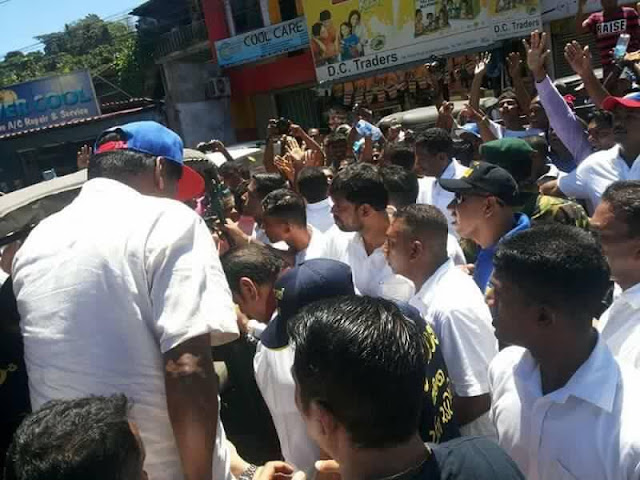
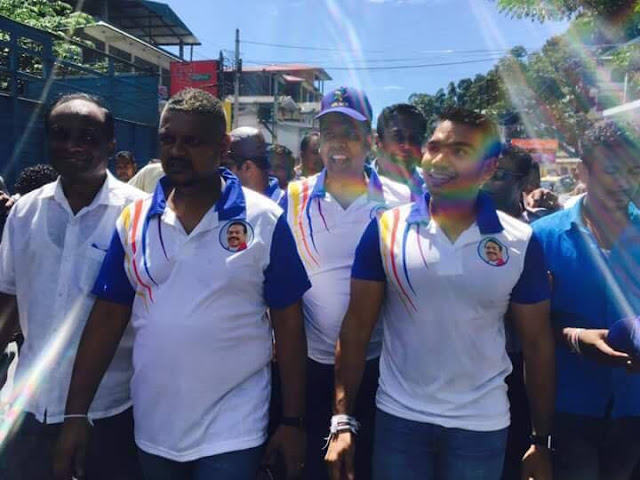
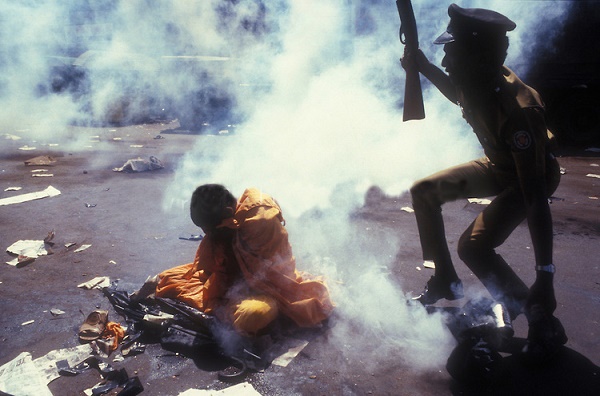
අධිකරණයෙන් වාරණ නියෝග ලබාගෙන ජන සටන පාද යාත‍්‍රාව නතර කිරිමට උත්සාහ කළ ආණ්ඩුව දැන් වීථි ලාම්පු නිවා ඊට බාධා කිරිමට උත්සාහ කරන බව ඒකාබද්ධ විපක්‍ෂය පවසනවා.

පාර්ලිමේන්තු මන්තී‍්‍ර නාමල් රාජපක්‍ෂ පැවසුවේ ඊයේ (30) දිනයේ පාද යාත්‍රාව නිට්ටඹුව නගරයෙන් අවසන් කිරීමේදී සම්පූර්ණ නිට්ටඹුව නගරයම අඳුරේ තැබීමට යහපාලන ආණ්ඩුව කටයුතු කර තිබූ බවයි. ඊට පෙර නෙළුම්දෙනියෙන් අවසන් කිරීමේදීද මෙම තත්ත්වයම පැවැති බවත් පැවසුවා.  කෙසේවෙතත් හෙට (31) දිනයේදී පාද යාත්‍රාව නිට්ටඹුවේ සිට කිරිබත්ගොඩ දක්වා පැමිණෙන බවද පැවසුවා.

ආණ්ඩුවේ ඇඟිලි ගැසීම් තිබුණද අධිකරණය ස්වාධීනව කටයුතු කරන බවද ඊට සිය ප‍්‍රණාමය පුද කරන බවද නාමල් රාජපක්‍ෂ පාර්ලිමේන්තු මන්තී‍්‍රවරයා මෙහිදී කියාසිටියා.

අද (31) ජන සටන පාද යත‍්‍රාවේ හතර වන දිනය වනවා.

13256124_1779941765625872_6510094887003188781_n13686696_1779941758959206_8035092179795381001_n

SINGAPOREAN CHINESE AND INDIAN COMPANIES ENTRUSTED TO DEVELOP THE COUNTRY GOVERNMENT IS THE AGENT ?

July 30th, 2016

Dr Sarath Obeysekera

I read news items and statements read by the leaders in many forums about Singapore,  India and China are entrusted to develop Tricomalee, Colombo Port City , Hanbantota etc.

Prime  intention of the government is to fulfil the election promise of providing one million employment  and what else ?

Increase our foreign earnings? Develop our human resources? Increase agricultural output?

We also seek Singaporean assistance to develop our Civil Service?

What we need is a revolutionary strategy to develop our indigenous skills and change the mind-set of the decision makers .

I just want to ask one simple question .

Are ae we going to change the local rules and regulations related to environment on the land and the sea currently handled by the bureaucrats in following Organizations ?

Central Environment Authority

Cost Conservation Department

Marine Pollution Authority

Megapolis

Southern Development Authority

Cenetral Development agency

Agency for Strategic Development and investment

Sri Lank Port Authority

Provincial Authorities

As an example ,  I am having problems with all almost all the above authorities to get off a project in a 100 perch land with 5 million rupee investment to provide employment to about 100 workers. For last one year

I had to go to CEA in Galle five times and CCD five times to get a letter, They cited following reasons

Today Director is not here to sign

Next day director is there but no Typist

Next day both are there but the subject clerk is sick

Next day all of then have nor come to work because roads are blocked by fishermen

Last day there is a power cut an Typist cannot print the latter !

When Hambantota ,Port City and Trinco gets the nod to be developed by companies from countries mentioned  above ,government may have to take them out of  the jurisdiction of Sri Lanka laws governed by the Parliament  .

Otherwise our NGO’s and individuals will go to courts ( who are mainly involved in remanding people ,releasing them ,issuing enjoying orders and even give legal opinions and decisions    against action initiated by the parliament.) and stall any project by the State .

This may be the reason why the Prime Minister hinted that Port City will be governed under a   separate jurisdiction?

We may have to have Federal State Concept or Canton system like in Switzerland to fast track all the development plans in Sri Lanka

No Harward training will help to solve above problems unless we change ourselves

Dr Sarath Obeysekera

Mr.POLITICIAN, Face The Mirror!

July 29th, 2016

By Dr. Tilak S Fernando Courtesy Ceylon Today

Politics and politicians have become a pet topic nowadays. Cambridge English Dictionary describes the word politics as ‘activities of a government, members of law making organization or people who try to influence the way a country is governed’. Urban Dictionary, however, defines it differently viz: “Politics derived from the words poly meaning ‘many’ and ‘tics’ meaning ‘blood-sucking parasites‘.

Currently a politician’s position has become like that of a professional in Sri Lanka. A politician becomes either acceptable or detested by the very people who elect him or her to Parliament depending on his or her ability to justify the ‘sugar-coated’ promises made at general elections; though popularity, honesty, sincerity and simplicity are regarded as the basic ingredients required for a politician to survive.

With the amalgamation of two main political parties in Sri Lanka (UNP & SLFP), and the emergence of the new concept of ‘Yahapalanaya‘, 19 months ago as the brainchild of the incumbent President Maithripala Sirisena, to work in unison as a single team for the benefit and progress of the nation; it seems is exhibiting hairline cracks widening into major fissures. In such a backdrop it is sad to observe the development of rather a chaotic situation among the Parliamentary groups displaying the worst type of selfish attitudes where bickering, backbiting, infighting and fragmentation is taking place, seemingly leading towards an anarchic situation among themselves, which only leaves the voter confused and perplexed.

Ancestry

 In the bygone era Sri Lankan Parliamentarians were thorough gentlemen of prominence who hailed from respectable families. They were sincere and committed and worked for the betterment of the nation with affection and dedication. After all, they too were human, and had their individual political ideologies, but when it came to national issues they forgot about their personal concerns or party politics and stood firm as a team of true patriotic sons of the country. Looking at the world at large, Britain is a good democratic example to emulate the solidarity of a nation. During the World War II and throughout their military battle with the Falkland Islands, during Lady Thatcher’s premiership, this was clearly evident.

A random sample of yesteryear politicians will show Dudley Senanayake’s name coming at the top of the list. He displayed unpretentious qualities as a parliamentarian. A gentleman who resigned from the post of Prime Minister of the country three times, yet the people re-elected him in every instance. At the end of his sojourn in this world his bank balance revealed only a few hundred rupees to his credit!

Dudley Senanayake used an ordinary man’s vehicle, a Triumph Herald, as his private car. He never had any security backups and escort vehicles, as opposed to what people in this country have seen in the immediate past where politicians (from Government Ministers down to the ordinary Members of Parliament and Provincial Councillors) are being driven in luxury Pajeros, intercoolers, Mercedes Benz, Volvos and other limousines usually driven by millionaires of other countries.

S.W.R.D. Bandaranaike left quite a lot of financial liabilities at the time of his assassination; having tried his best to fulfill his pledges to the people, while dabbling in politics. Dr. N. M. Perera, an intellectual, as well as a politician with his socialist ideology, did not wish to bow down to dishonest politics, which of course denied him the opportunity of seizing power. Wijeyananda Dahanayake came from an ordinary background but set a divine example to parliamentarians, of generations to come, by commuting from Galle to Colombo in a CGR (Ceylon Government Railway) 3rd Class compartment mingling with the commuters.

What was common among the bygone generation of Sri Lankan politicians was many of them entered politics from good family backgrounds, highly educated (most of them had attended foreign universities) with dedication, patriotism and fully committed to work for the people as well as the country. Most of them having hailed from wealthy families had no desire to earn that extra buck out of politics using their power and political might, as opposed to some of the present day breed who have been appointed as parliamentarians minus any such moral qualities of their ancestors.

On the brighter side though, one consolation today is the absence of hell’s angels and back- up vehicles, in front and at the back of VIPs travelling on roads, pushing all other road users to the drains to make way for their masters who assumed they were a special breed fallen from heaven. But still the greediness, self-indulgence and the conceit to ride in Mercedes Benz cars and SUVs seems to be the order of the day for parliamentarians of all hues, which will cost millions to the tax payer! The recent approval of duty free car permits to all parliamentarians, which caused a huge public outcry, and stopped though temporarily by the government.

Present day politics in Sri Lanka are diluted, adulterated and corrupted to the core! It has transformed into a thriving business as could be seen by the number of so called ‘ honourable’ men and their goons allegedly accused of various kinds of fraud and of pilfering public funds are seen frequently visiting the Financial Crimes Investigation Division (FCID). More than once, getting imprisoned and then being bailed out, yet again, after a few days re-visiting on repeat performances for various other allegations. All the while intricate, convoluted and long-winded inquiries are still progressing into obscure areas, according to government sources! This makes the impatient public frustrated and who tend to believe that the grinding wheels of the Yahapalanaya are becoming rusty, and if at all, turns at snail’s pace!

Sri Lanka has also managed to become a record holder in world politics, by becoming the only country where parliamentarians qualify for a retirement pension after clinging on to their ‘Member of Parliament’ tag for five years! What an amazing opportunity for them and for the whole world to become green with envy! This should be recorded in golden letters in the Guinness Book of Records as their pension rights come after drawing handsome salaries pumped up with perks and allowances of many a kind. Official residences, free electricity, which helps some of them to have air conditioning 24/7 even in their washrooms, tax free vehicles, free fuel, body guards and the lot, they enjoy, during their five year term, and end up still sucking blood out of the country’s coffers.

The reason for some of our modern politicians to become unpopular could be endorsed by the fact that very few of them have the good attributes of their political ancestors, be it as a representative of the people at Local Government, Provincial Council, or Parliament; a degree of vulgar affluence seems to affect them! This is the main reason why society is getting horror-struck with the present lot, as some of them have become rapists, thugs and thieves of public funds, who take the political might into their own hands and exhibit their raucous behaviour even during parliamentary sessions stooping to utter gutter levels of the worst kind.

If a public opinion is warranted on the present day politician in Sri Lanka, a friendly advice would be to say politely: ‘Dear Mr. Politician, when you wake up in the morning, please have a look at yourself in the mirror and ask yourself a simple question as to who you are? Wait for the mirror image replay which say to you: ‘ Remember my dear friend, you are no more than a small servant of the public; ahead of you today is a considerable responsibility, and that is to serve your nation’!

tilakfernando@gmail.com

Foreword: “PTSD in the Soviet Union” by Dr. Ruwan M Jayatunge M.D.

July 29th, 2016

Dr Gordon Atherley M.D. , PhD   LLD, Honoris Causa, from Canada’s Simon Fraser University.

PTSD is short for ‘Post-Traumatic Stress Disorder’.

When someone experiences an event which is unexpected and emotionally shattering it may continue to have serious effects on them long after any physical or other danger has passed. Persons with this kind of experience may relive the events that caused them intense fear and horror through flashbacks and nightmares, and they may become emotionally frozen. When they remain in this state for more than a month, their condition receives the medical diagnosis of Post-Traumatic Stress Disorder.

Post-Traumatic Stress Disorder occurs in children as well as adults. It is a mental health disability that can become so severe that the individual finds leading a normal life difficult or perhaps even impossible. And especially so because it can have such serious consequences, which include suicide and addiction to dangerous substances.

Post-Traumatic Stress Disorder follows trauma such as serious physical injury especially when the resulting disability is permanent; witnessing people being hurt or killed; experiencing dangerous events; feeling horror, helplessness, or extreme fear; receiving little or no social or psychological support following the trauma; and dealing with extra stress after experiences such as loss of a loved one, pain and injury, or loss of a career, job or home.

Post-Traumatic Stress Disorder creates serious challenges for military personnel injured in military service, and for other persons who in the course of their duties, activities and involvements are confronted by violence. Their challenges add to and complicate the challenges for their family caregivers and families.

Dr. Jayatunge graduated from Ukraine’s Vinnitsa National Medical University and then joined the Ministry of Health of the Government of Sri Lanka. In Sri Lanka he worked closely with war veterans and civilians affected by war. He studied in considerable depth the impact of war-related post-traumatic stress disorder. He became one of the pioneers in the study of its psychosocial effects in Sri Lanka. He has written several books and published several research articles that recount the war trauma and its consequences in Sri Lanka.

Yet despite the cumulated, experience-derived knowledge relating to Post-Traumatic Stress Disorder, doubts about its reality still persist.

Dr. Jayatunge points out that the Soviet Union, from its foundation with the 1922 October Revolution to its dissolution in 1991, faced internal and external socio-political calamities that generated immense stresses among its population. But, he observes, little is known in the outside world about the psychological trauma experienced by the Soviet People. Which is why his exploration of the grim history of Post-Traumatic Stress Disorder in the Soviet Union is an important contribution to scientific and medical knowledge and why his work also provides powerful support for recognizing the troubling reality of Post-Traumatic Stress Disorder.

IMF loan conditions will impact living standards – AED

July 29th, 2016

By Ruwan Laknath Jayakody Courtesy the Nation

The Alliance for Economic Democracy observed that the International Monetary Fund (IMF) loan of USD 1.5 billion obtained by the Government would result in the standards of living of the people being adversely impacted.

Convener of the Alliance, Amali Wedagedera said that it was primarily borrowings and also bad economic policies that had led to the current issue concerning the balance of payment, and therefore more borrowings would not help the country get out of the present crisis.

The IMF’s proposed medium-and long-term economic restructuring and reforms will only serve to aggravate the situation, she mentioned, adding that such policies will only serve to consolidate the neo-liberal regime.

Economics though practised as a very technocratic science is actually intrinsically linked to our daily lives, she pointed out.

Whatever development that has taken place is only superficial, therefore development must be people-centric, she remarked, adding that people especially groups such as fisher folk and farmers, who are excluded from the mainstream economic discourse, must be consulted on their needs, and greater accessibility for such groups to get involved in economic decision- making processes must be provided for and facilitated.

Will the IMF loan and the agreement, its nature, the various conditions the IMF wants the Government to adopt, and the medium-and long- term impact on the economy, get the country out of the trap it is in or into the fire? The Government states that they have borrowed the said amount to help overcome the present crisis. It will only sink us further into the crisis and into a black hole,” Wedagedera emphasized.

Wild-ass journalists and val-booru politicos

July 29th, 2016

By Sudat Pasqual -Courtesy The Nation

Freedom of the press can be harsh sometimes. It can be most hard on politicians with prickly skin. Time and again we come across champions of free expression and media freedom having second thoughts once they are caught in the glare of public scrutiny. Freedom of expression, especially when it is freely given to the media can be a frightening tool, especially at the hands of the cynical and the irascible.

Let me rephrase that last sentence. Freedom of expression in the form of a free press MUST be a frightening tool for those basking in the public limelight and feeding at the public trough. A free press will scrutinize the public officials; question their judgement; demand explanation for their actions; demand accountability; and if found wanting on any of the above; excoriate those officials. That is the public official. That is their duty of the media. It is not the job of a free media to filter the flow of information and spin that information to fit the image the government in power is keen to project to the public.

Public officials are accountable to the public. Public media, in most cases, will speak on behalf of that public. Public officials are answerable, you got it; to the public. The media when acting as the agent of the public does not need to answer public officials. The difference is the difference between a free society and a society under the jackboot of a despot.

Recently, President Sirisena called the segment of the media not so friendly to his regime wild asses. In his mind, this segment of the media is unfair and unreasonable in their coverage of his government and his governance.

At the outset, it should be highlighted that since becoming the President in January, 2015 Maithripala Sirisena has loosened the restrictions imposed on the media by his predecessor. There is absolutely no doubt that the Sri Lankan media is a heck of a lot freer today than it was during the 9-year tenure of Mahinda Rajapaksa. Hats off to Sirisena for bringing about this change.

Having acceded that to the President, his recent wild ass remarks do raise the question whether Sirisena is having second thoughts about his commitment to a press unhampered by the ham hand of the central government. Sirisena is a seasoned politician with over four decades of experience in the art of the possible. Sirisena and his local and foreign friends jumped on the free media band wagon when they took on the incumbent Rajapaksa at the last Presidential election.

They rode that wagon to the ground and it would not be an exaggeration to say that Sirisena-friendly/anti-Rajapaksa media organizations played a key hand in toppling Mahinda Rajapaksa The same media was relentless in attacking the incumbent and was adamant that every conceivable conspiracy, corrupt act, real and imagined breaking of the law during the Rajapaksa tenure was force fed to an eager public.

Even after Sirisena’s election, the relentless pursuit of Mahinda Rajapaksa, his friends and family members continued. Some of the wildest accusations came from members of Sirisena’s cabinet. In spite of the obvious spuriousness of the claims, they made the headlines and in many a case got extended coverage.

The recent UN report on Sri Lanka also highlighted the selectiveness of the government to make public information that would cast serious doubt on the 40,000 odd deaths during the last phase of the war against the LTTE. The head of the local commissions that dwelled into the matter was quite clear in his assessment that the 40,000 figure was a gross exaggeration. He said the figure was more likely around 7,000. However, this never got much traction or was not allowed to get much traction because it did not fit into Sirisena regime’s path to truth and reconciliation. There is also the issue of guaranteeing public’s right to information that is of relevance to the polity. Now we are left to believe that cause was also a casualty of political expediency.

Reading the tea leaves of Sirisena’s threat to media freedom, for that is what it is, one gets the creepy feeling that he is more the political coyote than the Yahapalakaya he says he is.

All politicians who come across power riding the high horse of free speech, media freedom and other human rights must accept that those rights are absolute. They do have limits, but those limits cannot be dictated by presidential fiat or a prickly skin. When the media gets under President Sirisena’s skin, they are doing their job well. It is the duty of the media to hold the feet of public officials to the fire till they can do no harm to what is public. There is nothing more treasonous than a media fawning over public officials and eternally singing hosannas to them.

The public is better served by wild-ass journalists than political wal-buruwas.

ජන සටනේ දෙවැනි දින පින්තූර

July 29th, 2016

ඒකාබද්ධ විපක්ෂය විසින් සංවිධානය කර ඇති, නුවර සිට කොළඹ දක්වා ගමන් කරන ජන සටන පාද යාත්‍රාවේ දෙවැනි දිනයේදී ලබාගත් ඡායාරූප පහත දැක්වේ.

‘ජන සටන’ විරෝධතා පාද යාත‍්‍රාවේ ගුවන් දර්ශණ වීඩියෝවකි මේ.

අනිත් අයටත් බලන්නට SHARE කරන්න.

තන්හාය ජායතී සොකෝ… මල්ලී ඔහොම නොකරන් මගේ ආණ්ඩුවට…

July 29th, 2016

lanka C news

තන්හාය ජායතී සොකෝ

ජන සටන පාද යාත්‍රාව අවශ්‍යවන්නේ ඇයි කියන කාරනාව පැහැදිලි කරන්න කලින් 2015 ජනවාරි 08 වනදාට කලින් මේ රට තිබුණේ කොතනද කියන එක අපි සිහිපත් කර ගන්න ඕනේ. මේ රට කඩිගුලක් වගේ වැඩ බිමක්. ගමේ පාරවල් ක්‍රොන්කීට් වෙනවා. නගරේ පාරවල් කාපට් වෙනවා. ගමේ ඇලි වේලි හැදෙනකොට නගරේ කානු ඇල වල් සුද්ධවෙනවා. විද්‍යාගාර,කලාගාර,ක්‍රීඩාගාර රටපුරා හතුපිපෙන්න වගේ බිහිවෙනවා, විදුලිබලාගාර, ගුවන්තොටුපලවල්, අධිවේගිමාර්ග රටේ තැන තැන ඉදිවෙනවා. 2013 දී ලෝකයේ පිරිසිදුව නගරය ලෙස සංචාරයකයින් තෝරා ගනේ අපේ කොළඹ නගරය. ලංකාව සිගප්පුරුව වන දිනය වැඩි ඈතක නෙවෙයි කියලා ආර්ථිකවිද්‍යාඥයින් අනාවැකි පලකරනවා. බෙදුම්වාදින්ගේ අද තියෙන තර්ජන ඝර්ජන නෙවෙයි හින් කෙදිරිල්ලක්වත් තිබුණේ නෑ. හැමෝම සතුටින් ජිවත් වුණු රටක්.

තන්හාය ජායතී සොකෝ… මල්ලී ඔහොම නොකරන් මගේ ආණ්ඩුවට…

ඔය අතරේ අපිත් එක්ක හිටපු කෙනෙක් ආප්ප කාලා එහා පැත්තට පැනලා සුරංගනා කතා විකුණන්න ගත්තා. වී වලට ලැබෙන්නේ රුපියල් 35යි නේද කිලෝ එකකට හරිමදි නේද මම ජනාධිපතිවුණොත් ඕ ක රුපියල් 50ක් කරනවා. තේ දල්ලට රුපියල් 70යි නේද මම දෙනවා රුපියල් 90ක්, රබර් වලට දෙන්නේ 300යි නේ මම ජනාධිපතිවුණොත් දෙනවා 350ක්. රජයේ සේවකයගෙන් මෝටර් සයිකලේකට රුපියල් 50000ක් ගත්තා නේද හරි අපරාදේ මම ආවෝත් ඉතුරු අයට නොමිලේ මෝටර් සයිකල් එක දීලා 50000 ගත්ත අයගේ ඒ ගාන නැවත දෙනවා. ජනතාවගේ තණ්හාව ටිකක් වැඩිකරලා එතනින් නවතින්නේ නැතුව සමෘර්ධිය, මහපොළ, විශ්‍රාම වැටුප් මේ ඔක්කෝම දෙගුණ කරනවා. කට්ටියට ඉතින් ජිවිතය සුන්දරයි ඔය ටිකත් හම්බවුණොත් තවත් සුන්දරයි කියලා පෙළසැදි ගිහින් කතිරේ ගැහුවා හංසයාට.

හංසයාට කතිරේ ගහලා 35ට විකුණගත්ත වී කිලෝවට අද රුපියල් 20ක් වත් ගන්න බෑ. 70ට දුන්න තේ දළු කිලෝව අද රුපියල් 50ටවත් දෙන්න බෑ. රබර් වලට නම් 350ක් ගන්න පුළුවන් හැබැයි කිලෝ එකකට නෙවෙයි කිලෝ දෙකකට. මොටර්සයිකලෙත් නෑ 50000 කැපුවෙත් නෑ කොටින්ම කිවුවොත් වැඩි දෙවල් ගන්න ගිහිල්ලා තිබ්බ දෙවලුත් නැති කර ගත්තා. බුදුරාජණාන්වහන්සේ මිට වසර 2600කට කලින් දැක්කා අපි මේ කෙලවා ගන්න කෙලවා ගැනිල්ල. ඒක නිසා තමයි බුදු බණට එකතු කළේ තණ්හාය ජායතී සෝකෝ” කියලා. අපි මේ ටික කිව්වා මැතිවරණ වේදිකාවේ එත් ඇහුවේ නෑ ගිහිල්ලා ගැහුවා හංසයාට. දැන් මේ වැඩබැරි ආණ්ඩුව රටේ පංචවිද ක්‍රියාව අවුල් කරලා රට අදුරේන් අදුරට ගෙනියනවා. මොකක්ද මේ පංචවිද අර්බුද දේශපාලන, පරිපාලන, ආර්ථික, ආරක්ෂක, සමාජ අර්බුද.

ආඬි පස්දෙනාගේ කැඳ හැළිය

දේශපාලන අර්බුදය කියන්නේ රටට නායකයෙක් නැති කම. සිරිසේන මහත්තයා හිතනවා එතුමට ජනවරමක් ලැබුණු නිසා එතුම තමයි මේ රටේ පාලකයා කියලා. අගමැති රනිල් හිතනවා නෑ සිරිසේනව ඉත්තා කරලා මමයි බලයට ගත්තේ ඒක නිසා රටේ පලකයා මමයි කියලා.  මේ දෙන්නට එකතුවෙන්න කපුකම කලේ මම නිසා මට ඕන විදිහට රට පාලනය වෙන්න ඔනේ කියලා චන්ද්‍රකා නෝනා හිතනවා. ඉන්දීයාව හිතනවා මහින්ද මහත්තයාට බොරු වලවල් කපලා මේ ආණ්ඩුව පෙරලන්න වැඩ කළේ අපි ඒ නිසා අපිට ඕන විදිහට රට පාලනය වෙන්න ඕනේ. එක නිසා තමයි කවුරු එපා කිව්වත් මම එක්තා අත්සන් කරනවා කියන්න අගමැතිට වෙලා තියෙන්නේ. මේ රට වට කරලා චීන මහාපාකාර හැදුවේ නැත්තේ මුහුදෙන් වටවෙලා තියෙන නිසා. වසර දහස් ගාණක් ආරක්ෂා වෙලා තිබුණු මුහුදෙන් වටවෙලා තියෙන එක අහිමි කර ගෙන ඉන්දියාව ලංකාව යාකරන හනුමා පාලමක් ඉදිකරන්න වෙලා තියෙන්නේ රටේ ඉල්ලුමක් නැතත් ඉන්දීයාවට ඕන විදිහට මේ රට පාලනය විය යුතුයි කියලා ඉන්දියාව හිතන නිසා. ඒ විතරක් නෙවෙයි ජනාධිපතිවරණයට දෙමළ බෙදුම්වාදීන්ගේ සල්ලී ජන්ද ගෙනත් දුන්නේ අපි ඒක නිසා ඇමරිකාවට ඕනවිදිහට රට පාලනය වියයුතුයි කියලා ඇමරිකාව හිතනවා.

පසුගිය දවස් වල ලංකාවට ආව ඇමරිකානු සහකාර රාජ්‍ය ලේකම් නිශා බිස්වාල් මැතිණිය. හරි අපුරු කතා ටිකක් කිව්වා. එතුමිය කිව්වා පසුගිය මාස 20ට මම ලංකාවට 6 වතාවක් පැමිණියා කියලා. ඒ පැමිණියේ ආලවන්තයෙක් හොයා ගන්න ද? නෑ.  එහෙනම් ඇයි එතුමිය මෙච්චර ලංකාවට එන්නේ? කොළඹ ඉන්න මුදලාලි මහත්වරු හලාවත පැත්තේ පොල්වත්තක් මිලදී ගත්තම එහේ මෙහේ කෝහේ ගියත්  පොල්වත්ත බලන්න යනවා. කන්කානි හරියට පොල් ඉඩම බලා ගන්නවාද, පැල ටික හරියට හිටවලාද, පොහොර ටික වෙලාවට දාලද, පොල් කඩන්න කාළේ ලගයිද කියලා හොයලා බලනවා. අද ලංකාව කියන්නේ 2015 ජනවාරි 08 වෙනිදා ඇමරිකාව මිලදී ගත්ත පොල්වත්ත. සිරිසේන කියන කන්කානිව පොල් ඉඩම බලා ගන්න පත්කලා ඇමරිකාවට ඕන විදිහට පොල්වත්ත බලා ගන්න. විශ්වාල් නෝනා සැරෙන් සැරේ ලංකාවට ගොඩවෙන්නේ සිරිසේන කන්කානියා වැඩේ හරියට කරනවාද කියලා බලලා යන්න. එතුමා කියන අපුරු කතාවක් තමයි පසුගිය අවුරුදු එකහමාර ලංකාව නොසිතු විරු දියුණුවක් ඇතිවෙලා කියලා. අපිට තියෙන ප්‍රශ්නය ලංකාවේ හැමදාම ඉන්න අපිට නොපෙනෙන ඉදලා හිටලා ඇවිල්ලා යන බිස්වාල් නෝනට පෙනෙන මේ දියුණුව මොකක්ද කියන එකයි. නෝනි ලංකාවට එන කොට මුදලාලිලා කඩ වහලා කලු කොඩි අරගෙන ප්‍රථම වතාවට පෙළපාලි යනවා. දොස්තරලා, ඉන්ජිනේරුවෝ, ගණකාධිවරු ටයි පොලු දාගෙන විහාරමහදේවි එක වටේ එක්තා එපෝ කියලා පෙලපාලි යනවා. ඉතිහාසයේ කවදාවත් වෙච්ච දේවල් නෙවෙයි. එතුමිය නැවත ලංකාවට අවාම එතුමියගේ කණ්නාඩිය දලා බලනවා අපිට නොපෙන එතුමියට පෙනෙන ඒ දියුණුව පෙනෙවිද කියලා. අද ලංකාව රනිල්, චන්ද්‍රකා, සිරිසේන, ඉන්දියාව, ඇමරිකාව කියන ආඩි පස්දෙනාගේ කැද හැලිය වගේ වෙලා තියෙනවා.

2015 අගොස්තු 17 ජන්දේ තිබ්බේ සැප්තැම්බර් 05වනදා වෙනකන් ඇමති මණ්ඩලයක් පත් කර ගන්න බැරි වුණා, සැප්තැම්බර් 23 වෙනකන් ඇමතිවරුන් අතරේ විෂයන් බෙදා ගන්න බැරි වුණා. . දෙන්නා දෙපැත්තට ඇද්ද නිසා. ජූලි 01වෙනිදා උදාවුණේ ලංකාවට මහබැංකු අධිපතිවරයෙක් නැතුව. ලෝක ඉතිහාසයේ කිසිම රටක එහෙම වෙලා නෑ.

FCDI භීතිකාව

පරිපාලන අර්බුදය කියන්නේ මොකක්ද අගමැතිතුමා කියනවා මේ ලගදී BMICH ගිහිල්ලා රාජ්‍ය නිලධාරින්ට දැන් FCID භීතිකාව කියලා. සම්පුර්ණ ඇත්ත මේ වනවිට රාජ්‍ය නිලධාරින් 618ක් මහින්ද චින්තන ප්‍රතිපත්තිය ක්‍රියාත්මක කිරීම අපරාධ වරදක් කරලා කුදලාගෙන ගිහිල්ලා තියෙනවා FCID. රටේ අංක එකේ නිලධාරියා ජනාධිපති ලේකම් ලලිත් විරතුංග මැතිතුමා අවංක වැදගත් මහත්මයෙක් කියලා හැමෝම පිළිගන්න චරිතයක් මහා අධිකරනයේ නඩුවක් දලා සිල් රෙදි බෙදන්න සල්ලි වෙන්කරා කියලා මහා අපරාධයක් කියලා දැන් ඇප පිට ඉන්නේ.  ආර්ථික සංවර්ධන අමාත්‍යංශයේ ලේකම් රණවක මහත්තයා කොහේද ඉන්නේ මැගසින් බන්ධනාගාරයේ කරපු වරද නගර සභාවලට කොඩි කනු ලබා දීම. අනිත් අය කල්පනා කරනවා මේ අයට මෙහෙම නම් අපිට කෙසේ වේද කියලා කට්ටිය දැන් කල්පනා කරනවා. රාජ්‍ය නිලධාරින් හිතනවා වැඩේ කරත් නැතත් මාසේ අන්තිමට පඩිය හමිබවෙනවා. වැඩ කළොත් ආණ්ඩුව පෙරලුන ගමන් හිරේ යන්න වෙනවා ඒක නිසා වැඩක් නොකර ගෙදර යනවා කියලා තමයි කට්ටිය හිතන්නේ. අද මොකද වෙලා තියෙන්නේ වෙනදා රාජ්‍ය සහකාර අධ්‍යක්ෂවරයෙක් ළගට ගිහිල්ලා විනාඩි 5න් කරගත්ත වැඩේට අද මාස 5ක් 6ක් යනවා. එතුමා බලනවා මේ තීරනේ අරගෙන මට FCID යන්න වෙයිද දන්නේ නෑ. මේක උඩට පාස් කරන් ඔනේ නියෝජ්‍ය අධ්‍යක්ෂතුමනි උපදෙස් පතමි කියලා. එතුමා බලනවා සහකාරගේ තොප්පිය මට එවලා තියෙන්නේ කියලා එතුමා ඒක උඩට යවනවා අධ්‍යක්ෂතුමනි උපදෙස් පතමි කියලා. අධ්‍යක්ෂක දානවා සහකාර ලේකම්ට. සහකාර ලේකම් දානවා ලේකම්ට. ලේකම් දානවා ඇමතිතුමාට. ඇමතිතුමා බලනවා කන පරිප්පුවක් හවුලේ කන්න ඔනේ ඒක නිසා මේක ඇමති මණ්ඩලයට දලා මේක අනුමත කර ගන්නවා කියලා. මුලු රාජ්‍ය යාන්ත්‍රනයම ඉද්ද ගැහුව වගේ නතර වෙලා තියෙන්නේ. අද අරනායක නායගිය අයට නිවාස නැතුව අවතැන් කදවුරු වලට වෙලා ඉන්න වෙලා තියෙන්නේ, සාලාවේ පිපිරිමෙන් අවතැන් වෙලා ඉන්න අයට සහනාධාර ලැබිලා නැත්තේ FCID භීතිකාව නිසා. අද රටේ පරිපාලන අර්බුදයක. ආර්ථික අර්බුයකතුත් තියෙනවා මිත්‍රවරුනේ මේ රටේ.

සිංහල මවකට දාව ඉපදීම දඬුවම් දෙන වරදක් ද?

ඒ වගේම ආරක්ෂක අර්බූදයක් තියෙනවා මේ දෙමළ බෙදුම්වාදීන්ගේ සල්ලි වලින් බලයට ආව මේ ආණ්ඩුව ඒ බලවේග සතුටු කරන්න අද මොකද කරන්නේ මහා අපරාධ කරපු කොටි එළියට දාන ගමන් ජිවිත පුජා කර මේ රට බේරගන්න ගිය රණවිරුවන් තොගපිටින් සිරගත කරමින් ඉන්නවා. හමුදා කදවුරු ඉවත් කරනවා. ඉවත් කිරීමේ වේගය මදි කියලා වවුනියාවේ දැවැන්ත උද්ඝෝෂණය කරනවා හමුදා කදවුරු ඉදිරිපිට වහාම හකුලාගෙන පලයව් කියලා. මේ බෙදුම්වාදින්ට ඇතිවුණ අලුත් පණ තමයි යාපනය විශ්ව විද්‍යාලයේ ඇතිවුණ ගැටුම. යාපනයේ සිංහල සිසුන් ගුටිකැවේ සිංහල මවකට දාව උපන් වරදට. ජාතිය සිංහල වීම නිසා ගුටිකෑවේ. මේ සිසුන් අවුරුදු පතා අලුත් ශිෂ්‍යන් පිළිගන්න වෙස්නැටුම ඉදිරිපත් කරනවා. දෙමළ අන්තවාදි ශිෂයන් ඇවිත් කියනවා මේක දෙමළ රට මෙහේ සිංහල නැටුම් බෑ දෙමළ නැටුමක් ඉගෙන ගෙන නටපන් නැත්නම් නොනටා හිටපන් කියලා. ලංකාවේ සෑම විශ්ව විද්‍යාලයකම දෙමළ නැටුම් නටන්න පුළුවන්. දෙමළ ළමයි නැත්නම් සිංහල ළමයි දෙමළ නැටුම් ඉගෙන ගෙන දෙමළ ගීත ගායනා කරමින් නැටුම් ඉදිරිපත් කරනවා. ඒ නිසා යාපනයේ අපිට වෙස් නැටුම නටන් ඔනේ. ගුරුවරු ගන්නෙත් ඒ පැත්ත ජාතිවාදය ඇවිස්සේවි කියලා වෙස් නැටුම තහනම් කරනවා. තහනම නොතකා අපේ දරුවෝ ඉදිරිපත් කරනවා.  පහර දීලා කියනවා වහාම යාපනෙන් පිටවෙන්න කියලා. දරුවෝ නම් ගම් සහිතව ප්‍රකාශ කරලත් පොලිසිය දරුවන්ට ආරක්ෂාව දෙනවා වෙනුවට අර ත්‍රස්තවාදීන් දුන්න නියෝගය අකුරටම ක්‍රියාත්මක කරලා දරුවන්ව බස්වල නග්ගලා වවුනියාවට ගෙනත් දානවා. දරුවන්ගේ ප්‍රකාශ වල තියෙනවා. පොලිසියට ඉහලින් නියෝග ලැබෙනවා ඒ අය අත්අඩංගුවට ගන්න එපා උසාවියට ඇවිත් භාර වනතුරු ඉන්න කියලා. උසාවියට භාර වුණාම ඇප ලබා දෙන්න බැරි තත්වයක් තිබියදී සිසිදරන් ශිෂ්‍යයාට ඇප ලබා දෙනවා. මම ඒක විචේදනය කරාම NGO කාරයෝ ටිකක් මාධ්‍ය හමුවක් තියලා කියනවා උදය ගම්මන්පිල අධිකරණයට අපහාස කරා වහාම අත්අඩංගුවට ගන්න කියලා. අපි ඒ ඩොලර් කාකා ඉන්න අයට කියන්න කැමති යකාට බයනැති හින්දා තමයි සොහොනේ ගෙවල් හැදුවේ. ඒ නිසා හිරගෙවල් පෙන්නලා අපේ කටවල් වහන්න බෑ. අධිකරණයේ වැරැද්දක් තියෙනවානම් ඒක විචේචනය කරන්න ඔනේම රටක පුළුවන් අපේ රටේ විතරයි බොරු බයක් ඇති කරගෙන තියෙන්නේ. ඇමරිකාවේ ඔස්ට්‍රේලියාවේ මම ප්‍රයෝගිකව දැකලා තියෙනවා ජේෂ්ඨ නීතිඥයන් තීරු ලිපි ලියනවා උසාවිතිරණ විචේචනය කරලා. වැරදිදේට වැරදියි කියන්න බයවෙන්න ඔනේ නෑ. හිර ගෙදර දැන් අලුත් තැනක් නෙවෙයි. ඒක නිසා හිරගෙවල් පෙන්නලා අපේ සටන නවත්වන්න බෑ කියලා අපි ආණ්ඩුවට කියනවා.

අලි බබා සහ හොරු හතලිහ

සමාජ අර්බුයත් තියෙනවා රටේ නීතිය ක්‍රියාත්මක වෙන්නේ නැති හින්දා. ගෝඨාභය රාජපක්ෂ මහත්මයා නැතිකරපු පාතාලය ආපහු නැගිටලා එක එක ඇමතිවරුන් යටතේ. පසුගිය මැතිවරණ කාලේ කල්ලි දෙකක් එකට ගැටුනා. ඒ අයට කප්පන් දෙන්නේ නැතුව කොළඔ ව්‍යාපාර කරන්න බෑ. සමහර ඇමතිවරු විචේචනය කළොත්, සමහර ව්‍යාපාරවලට ගියොත් ක්‍රොන්ත්‍රාත් ක්‍රමයට මිනිමරණ අයගේ ගොදුරක් වෙන්න පුළුවන්. අද තේ කුඩු, පොල්කුඩු, මිරිස් කුඩු ගානට හෙරොයින් කුඩු සුලබ වෙලා. එදා 1500 වුනු පොඩි පැකට් එක අද 500ට ගන්න පුළුවන්. මේ නිසා අද නීතිය ක්‍රියාත්මක වෙන්නේ නැති සමාජ අර්බුදයක් තියෙනවා.

අද ආණ්ඩුව මේ ප්‍රශ්න ටික වහගන්න පරණ සුත්‍රය මහින්ද හොරා මොන ප්‍රශ්නේ ඇහුවත් මහින්ද හොරා. අවුරුද්දයි මාස හතක් ගිහිල්ලත් කිසිම චෝදනාවක් ඔප්පු කරන්න බෑ. රත්තරන් අශ්වයෝ, ලැම්බෝගිණි, මහන්ද මහත්තයාට පිටරට තියෙනවා කිව්ව ඩොලර් බිලියන 18, ඩුබායි ගිණුම් වල සගවා තියෙනවා කිව්ව මුදල් මේ කිසිවක් අද කතා කරන්නේ නෑ. එදා මහින්ද හොරා කියන්න පෙරමුනේ හිටිය රාජිත සේනාරත්න ඇමතිතුමාම කියනවා අපි නම් මහින්ද හොරා කිව්වේ නෑ කියලා. දැන් චරිත සහතික ලියනවා. අගමැතිතුමා කියනවා පසුගිය සෙනසුරාදා අලිබබා සහ හොරු 40ට හොරකම් කිරීමේ නිදහස ව්‍යවස්ථාවට දාගන්න ඉඩ දෙන්න කියලද පාගමන් යන්නේ කියලා අපෙන් විමසුවා. අපි අගමැතිතුමාට කියනවා අලි ඉන්නේ අපිගාව නෙවෙයි ඔබතුමාගාවයි. අලි බලා ගන්න ඔබතුමා තමයි අලි බබා. ඔබතුමාගේ ඇමති මණ්ඩලයේ ඒ නිසා අලි බබා සහ හොරු 40 අයිති ඔබට මිසක් අපිට අයිති නෑ. අද අපිට මහින්ද හොරා කිව්වට කිසිම දෙයක් අද ඔප්පු කර ගන්න බැරිවුණාට  අපි විපක්ෂයේ ඉදන් මේ ආණ්ඩුවේ ඉන්නේ හොරු කියලා ඔප්පු කරලා ඉවරයි. ඉන්න  මහබැංකු බැදුම්කර වංචාවක් සිදුවුණා කියලා විගනාකාධිපති කියලා තියෙන්නෙත්, ගල් අගරු වංචාව ගැන අපි කතා කලා 2015 ජුලි මාසේ 16 වෙනි   දින ටෙන්ඩරයේ වංචාවක් වුණා කියලා මම කිව්වේ. සුදු ඇද ගෙන ඉන්න උපාස අප්පුලාගේ ඇගේ දැන් ගල් අගුරු තැවරිලා කියලා අපි එදා පෙන්නුවා. ශ්‍රේෂ්ඨාධිකරණයේ මේ ආණ්ඩුවෙන් පත්කරපු ශ්‍රි පවන් අගවිනිසිරුතුමා කියනවා මේ මහා වංචාව දැකලා ශ්‍රේෂ්ඨාධිකරණය සලිත වුණා කියලා. අද ආණ්ඩුවේ ඉන්න ඇමතිවරු එකිනෙකාට ඇගිල්ල දික් කරනවා ඒ හැමෝම ඉන්නේ අද ආණ්ඩුව ඇතුලේ මිසක් පිට නෙවෙයි. මේ චෝදනා දෙකම ඔප්පුවෙලා ඉවරයි ඒ නිසා අගමැතිතුමන් ඔබතුමා තමයි අලි බබා හොරු 40 ඉන්නේ ඔබතුමා එක්ක අපි ගාව එහෙම අය නෑ කියලා අපි බය නැතුව කියනවා.

මල්ලී ඔහොම නොකරන් මගේ ආණ්ඩුවට

මේ වැඩබැරි ආණ්ඩුවට කිසිම දෙයක් කර ගන්නත් බැරි වුණා. හොරු අල්ලන්නත් බැරිවෙලා තියෙනවා ඒ නිසා අද මාධ්‍ය එක්ක තරහා වෙලා තියෙනවා. මාධ්‍ය වලට තර්ජනය කරනවා, කතෘවරුන්ගේ නම් කියලා තර්ජනය කරනවා, Daily Mirror හා Financial Times කතෘවරුන්ටත් තර්ජනය කරලා තියෙනවා කියලා මම දැක්කා. හත්දෙයියනේ ඒ දෙක ගහන්නේ මාමානේ. රුවන් විජේවර්ධන මල්ලී තමන්ගේ පක්ෂය ඇතුලේනේ ඉන්නේ.  මාධ්‍ය ඉස්සරහ තර්ජනය නොකර හම්බුනාම කියන්න පුළුවන්නේ මල්ලී ඔහොම නොකරන් මගේ ආණ්ඩුවට කියලා. අපි කියනවා මේ රටේ මාධ්‍ය අද වාර්තා කරන්නේ මේ මහපොළොවේ සිදුවෙන තිත්ත ඇත්ත. මාධ්‍ය එවා වාර්තා කළේ නැත්නම් රුපවාහිනි බලන්නේ නැතුව යනවා. ගුවන්විදුලිය අහන්නේ නැතුව යනවා. පත්තරේ බලන්නේ නැතුව යනවා. මාධ්‍යවේදින් අද ජිවිතය පරදුවට තියලා අබීත ක්‍රියාවලියක් කරනවා. ඒ අයිතියට අත තියන්න අපි ඉඩතියන්නේ නෑ කියලා ඉතා විශ්වාසයෙන් යුතුව කියනවා. ඔබ කොන්ද කෙලින් තියාගෙන වැඩ කරන්න මේ ජන සටන ජන පවුරක් වෙලා ඔබ රකිනවා කියලා අපි ප්‍රකාශ කරනවා.

අගමැතිතුමා කියනවා එතුමාගේ ආණ්ඩුව පෙරලන්න හැදුවොත් ජනතාව සමග පාරට බහිනවා කියලා අපි දැක්කා එතුමගේ ජනතාව. මාර්තු 17 අපි හයිඩ් පිටියේ රැස්වීමක් තිබ්බා හයිඩ්පිටිය පිරිලා ඉතිරිලා ගියා. නුගේගොඩට වඩා සෙනග හිටියා. ඊට කලින් දවසේ අගමැතිතුමා තිබ්බා එතනම රැස්වීමක් සූ ගලා දෙතුන් සීයක් හිටියා. එතුමට ලැජ්ජයි දැන් හයිඩිපිටියට ගියොත් සන්සදනය වෙනවා මාධ්‍ය වලින් එජාප රැළිය හා ඒකාබද්ධ විපක්ෂයේ රැළිය. ඒකට අගමැතිතුමා හයිඩ් පිටිය පහුකරගෙන ඇවිත් ලිප්ටන් වටරවුවේ තමයි තිබ්බේ. ලිප්ටන් වටරවුම කියන්නේ පොඩි ස්ථානයක් එච්චර සෙනග ගෙන්න බැරි අගමැතිතුමා කියනවා සෙනග පාරට බස්සනවා කියලා.  සෙනග පාරට බැස්සෝත් අපේ ජන සටනට එකතු වෙලා තමයි නතර වෙන්නේ කියලා අපි කියන්න කැමතියි.

මේ ආණ්ඩුව කියනවා අපි අවුරුදු 5 තුනෙන් දෙකේ බලය තියා ගෙන ඇමතිවරු 100ක් නඩත්තු කරගෙන ඉස්සරහට යන්නේ කියලා. එහෙනම් අපි මේ ආණ්ඩුව ගෙදර යවන්නේ කොහොමද? ඉතිහාසයෙන් අපිට පාඩමක් තියෙනවා. පසුගිය සියවස ආරම්භ වන විට ඉංග්‍රිසි අධිරාජ්‍යයට කිව්වේ හිරු නොබසින අධිරාජ්‍ය කියලා. ඉංග්‍රිසි අධිරාජ්‍යය ලෝකය පුරාම පැතිරිලා තිබුණා. ඉංග්‍රිසි අධිරාජ්‍යයේ කුමන හෝ ස්ථානයකට පැය 24ම ඉර පායලා තියෙනවා. ලෝක සිතියමේ එහා කෙලවරේ තියෙන ඕස්ට්‍රේලායාව නවසිලන්තයෙන් පටන් අරගෙන මෙහා කෙලවරේ තියෙන ෆොක්ලන්තය කැනඩාව දක්වාම තිබුණේ බ්‍රිතාන්‍යය අධිරාජ්‍යය. මේ මහා දැවැන්ත අධිරාජ්‍යය අකුලගෙන එංගලන්තයට පසුබහින්න සිදු වුණේ පුංචිම පුංචි මිනිහෙක්ගේ පා ගමනකින්. ඒ තමයි මහත්මාගාන්ධි.1929 දී අපිට වැට් වගේ ඉන්දියාවේ ලුණු හදන අයට දැම්මා ලුණු බද්ධක්. ලුණු හදන්න හැමෝටම බලපත්‍ර නෑ හදන අයගෙන් ගත්තා ලොකු බද්ධක්. ලුණු ගණන් ගියා මිනිස්සුන්ට කන්න බැරිවුණා. මහත්මාගාන්ධි තීරණය කරා මේ නීතිය කඩලා නීතිවිරෝධිව ලුණු හදන්න. ඒ සදහා පාගමනක් ලැස්ති කලා. 1930 මාර්තු මාස 12 වනදා එතුමාගේ ආශ්‍රමයෙන් ආරම්භවන විට එතුමා සමග හිටියේ තව 79 දෙනයි. දින 24ක් පුරා කිලෝමිටර 390ක් ගෙවලා දැන්ඩි වෙරලට මේ පාගමන ලගාවේද්දි දස ලක්ෂයකට වඩා ඉන්දියානු ජනතාව දැන්ඩි වෙරළට එකතුවෙලා හිටියා. ගාන්ධිතුමා නීති කඩලා ලුණු හදන දවසට ඉන්දියාව පුරා වෙරළවල් වලට එකතු වෙලා මේක තමයි මුළු ඉන්දියාවම පාරට බැස්ස දවස. එහි ප්‍රතිපලයක් විදිහට ඉංග්‍රිසින්ට ඉන්දියාවෙන් අකුල ගෙන ගෙදර යන්න සිදුවුණා. මේ නිදහස දැකලා අනිත් රටවලුත් නිදහස ඉල්ලලා අරගල කරපු නිසා හිරු නොබසින අධීරාජ්‍ය අකුලගෙන බ්‍රිතානයට පසු බහින්න ඉංග්‍රිසින්ට සිදු වුණා. ඒ වගේ දැවැන්ත අධිරාජ්‍යක් පාගමනකින් ගෙදර යවන්න පුළුවන් නම් මේ තුනෙන් දෙකේ ආණ්ඩුව ගෙදර යවන එක කජ්ජක් නෙවෙයි කියලා අපි මතක් කරනවා. ඒ නිසා 2020 වෙනකන් මේ ආණ්ඩුවට ජනවරමක් තියෙනවා කියලා අපි ඉවසලා බලා ගෙන හිටියොත් රටට හෙටක් තියා අපිට රටක්වත් ඉතුරු වෙන්නේ නෑ. අපි මේ රටේ ජනතාවගෙන් අහනවා ඔබ ඔබේ දරුවන්ට, මුනුබුරන්ට, මිනිබිරියන්ට සුළුවෙන් හෝ ආදරයක් තියෙනවානම්. ඔබ මිය යන්න කලින් ඔවුන්ට රටක් ඉතුරු කරන්න ඔනේ කියලා පුංචි සිතුවිල්ලක් හිතේ මොදු වෙනවානම්. මේ රට ගැන වෙනත් රටක අය අඩම්බරයෙන් කතා කරනවා ජිවිතයේ එකවතාවක්වත් අහන්න කැමතිනම්.දෙපාරක් හිතන්නේ නැතුව අපිත් එක්ක ජන සටන පාද යාත්‍රාවට එකතු වෙන්න කියලා අපි සමස්ථ ජාතියටම අයාචනා කරනවා.

– අරවින්ද අතුකෝරල

ඒකාබද්ධ විපක්‍ෂය විසින් සංවිධානය කරව ජනසටන පාද යාත‍්‍රාව ගැන දැනුම්වත් කිරීමේ රැස්වීමක දී පිවිතුරු හෙල උරුමයේ ප‍්‍රධාන ලේකම් පාර්ලිමේන්තු මන්ත‍්‍රී  උදය ගම්මන්පිල මහතා මෙසේ අදහස් දැක්වීය.

ප්‍රේමකීර්ති ඝාතනය කොට වසර 28 යි!

July 29th, 2016

කීර්ති තෙන්නකෝන් විධායක අධ්‍යක්ෂ ශ්‍රී ලංකා මානව හිමිකම් කේන්ද්‍රය

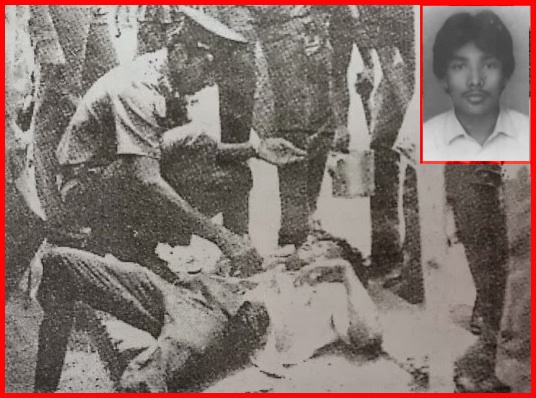
ජනපති, අගමැති, පොලිස්පතිතුමනි ප්‍රේමකීර්ති ගේ මිනීමරුවන් ද තවමත් නිදැල්ලේය.

ප්‍රේමකීර්ති ද අල්විස් වෙඩි තබා ඝාතනය කර ජූලි 31 වෙනිදා ට වසර 28 කි.

මෛත්‍රී ජනපතිතුමනි, රනිල් අගමැතිතුමනි, ප්‍රේමකීර්තිගේ මිනීමරුවන් තවමත් නිදැල්ලේය.

ගුවන්විදුලියේ ‘රජ්ජුරුවෝ‘, අසහාය ගීත රචකයා, අසමසම සන්නිවේදකයා ප්‍රේමකීර්ති ද අල්විස් ඝාතනය කොට වසර 28 කි.  අදටත් ප්‍රේමකීර්ති ගේ මිනීමරුවන් නිදැල්ලේ තැබීමට තරම් ලංකා රජය අයුක්තියේ, අසමානත්වයේ හා නීතිය වල් වැදුණු දේශයක් වී තිබේ.

ප්‍රේමකීර්ති ගේ මිනීමරුවන් කවුරුදන් යන්න රටටත් ලෝකයටත් රහසක් නොවේ.  කාලයෙන් කාලයට ජනතා විමුක්ති පෙරමුණ ඇතුළු කණ්ඩායම් සඳහා එහි චෝදනාව එල්ල කරනු ලැබූවේ සැබෑ මිනීමරුවන් විසිනි.  මේ මිනීමරුවන් ලංකාවේ යහපාලන ආණ්ඩුවක් පිහිටුවන්ට වෙහෙසවුනු සෑම දේශපාලනඥයෙකුම අඩු වැඩි වශයෙන් ගුවන්විදුලි තරංග මාලා යොදා ගනිමින් අපහාස කොට ඇත.  රටේ සිවිල් සමාජයේ බහුතරයකට ප්‍රේමකීර්ති ගේ මිනීමරුවන් අවලාද, මඩ, පැතිරවූවේය.  ඒ සියල්ලටම මේ රටේ මිනිසුන් සමාව දී ඇත.

නමුත්, ප්‍රේමකීර්ති ගේ මිනීමරුවාට සමාව දෙන්නට අප සුදානම් නැත්තෙමු.

නැත. කිසිලෙසකවත් එය සිදු නොවිය යුතුය.  ප්‍රේමකීර්ති ගේ මිනීමරුවන් රටම දනී.  ඔවුන් ගැන විධිමත් විමර්ශනයක් පවත්වන්නට දැන්වත් ජනපති, අගමැති, පොලිස්පති මැදිහත් විය යුතුය.

නීතිය වල් වැදුණු, මරණය රජය කළ යුගයක් අප අවසන් කළ බව රැස්වීම්වල කිය කියා සිටීමෙන් පළක් නැත. යුක්තිය ඉටුකිරීම ක්‍රියාවෙන් ඉටු විය යුතුය.  රටම දන්නා ‘හඩු ගඳ ගහන‘ මිනීමරුවන් ගැන පොලිස් දෙපාර්තමේන්තුව අදටත් විමර්ශනයක් පවත්වා නැත.  පොලිස්පතිවරයාගේන් අපට ඇසීමට ඇත්තේ ‘ප්‍රේමකීර්ති ඝාතනයේ විමර්ශන ලිපිගොනුවට දැන් සිදුව ඇත්තේ කුමක්ද? කියාය.

දාස්පෙතියා මල් ඇට විසිරවූ පසු මල් කවදා හෝ මල්එල දරනු ඇත්තේය.  ප්‍රේමකීර්ති අපට කියාදුන් සත්‍යය එයයි.

පොලිස්පතිතුමනි, වසර 28 ක් ප්‍රේමකීර්තිට ආදරය කළ මිනිසුන් බලාපොරොත්තුවේ දාස්පෙතියා මල් ඇට විසුරුවා හැර ඇත්තේය.  ඒ බලාපොරොත්තුව විනිවිද භාවයකින් යුතු පරීක්ෂණයකින් ඉටු කරදීමට පුළුවන.

‘ජනපතිතුමනි, අගමැතිතුමනි, පොලිස්පතිතුමනි, ප්‍රේමකීර්තිගේ මිනීමරුවන් තවමත් නිදැල්ලේ ය.

ප්‍රේම කීර්ති ද අල්විස් කලාකරුවා වෙනුවෙන් යුක්තිය ඉටු කරගැනීම සඳහා සමාජ ජාල ක්‍රියාකාරීත්වයක් අරඹා තිබේ. Justice for premakeerthi   යනුවෙන් නම් කර ඇති මෙම ෆේස් බුක් පිටුව මේ සම්බන්ධයෙන් සමාජ මතයක් ගොඩනගමින් සිටියි.


කීර්ති තෙන්නකෝන්

විධායක අධ්‍යක්ෂ

ශ්‍රී ලංකා මානව හිමිකම් කේන්ද්‍රය

කෝස්ත්යා ගේ පියා

July 29th, 2016

වෛද් රුවන් එම් ජයතුංග 

හිමෙල්නීස්කි නගරයේදී මට කෝස්ත්යා ගේ පියාව මුණ ගැසුනි. ඒ වන විට වැන්දඹුවකව සිටි ඔහු ශාරීරිකව දුබලය. නමුත් ඔහුගේ මතකය ඉතා තියුණුය​. මේ මහළු යූක්‍රේනියානු ජාතිකයා නට්සි ආක්‍රමණය නිසා ක්‍ෂිතිමය අත්දැකීම් ලැබූවෙකි. එහෙත් ඔහු ජර්මානුන්ට වෛර නොකරයි.

ගෝවා යහමින් දැමූ බෝර්ෂ් සුප් කෝප්පයක් බොමින් මම ඔහුට සවන් දුන්නෙමි. කෝස්ත්යා පියාගේ කතාවට සවන් නොදෙයි. මේ කතාව සියවැනි වරටත් ඔහු අසා තිබෙනවා විය හැකිය​. නමුත් මේ මහල්ලාගේ කතාව මා අසා සිටියේ අභිරුචියෙනි.

ජර්මානුන් දෙවන ලෝක මහ යුද්දයේදී යූක්‍රයීනය ආක්‍රමණය කල විට සමහරක් යූක්‍රයීන ජාතිකයන් පාන් සහ ලුණු පිරිනමා ජර්මානුන් පිලිගත්හ​. නමුත් සමහරක් පර්ටිසාන් භටයන් වී ජර්මානුන්ට එදිරිව සටන් කලහ​. සිවිල් ජනතාව මේ යුද්දයට මැදිව සිටියහ​.

එවකට නව යෞවන වයසේ සිටි කෝස්ත්යා ගේ පියා ඇතුළු තරුණයන් පිරිසක් අතඩංගුවට ගත් නට්සීන් ඔවුන්ව ජර්මානියේ වහල් සේවය සඳහා පිටුවහල් කරන ලදි. කෝස්ත්යා ගේ පියා ජර්මානියේ රූර් ප්‍රදේශයේ ගල් අඟුරු ආකරයක වැඩ කලේය​. ඔවුන් දිනකට පැය 18 පමණ කාලයක් වැඩ කලෝය​. අාහාර සඳහා ඔවුන්ට ලබා දෙන ලද්දේ කියත් කුඩු හා පිටි ස්වල්පයක් මිශ්‍ර කොට තනන ලද පාන් ය​. එසේම ආහාර ප්‍රමාණය ඉතා අවම විය​. මේ නිසා වසරක් ගත වන විට යූක්‍රේනියානු වහල් සිරකරුවන් ගෙන් භාගයකට වඩා මිය යන ලදි. සමහරු ඝාතනයටද ලක් වූ බව මහල්ලා පවසයි.

කෙසේ නමුත් කෝස්ත්යා ගේ පියා පණ ගැට ගහ ගත්තේය​. යුද්ධය අවසන් වන තෙක්ම ඔහු ජර්මානුවන් ගේ වහල් සේවකයෙකු විය​. අවසානයේදී රතු හමුදාව ඔවුන්ව නිදහස් කරගෙන සෝවියට් දේශයට එවන ලදි. නිදහස් වී සෝවියට් දේශයට ආවද ඔවුන්ට නිදහසක් නොවීය​. ඉන් පසුව එන් කේ වී ඩී සෝවියට් රහස් පොලිසියේ දීර්ඝ ප්‍රශ්න කිරීම වලට ඔවුන්ව ලක් කරන ලදි.

සෝවියට් යුද සිරකරුවෙකු ජර්මානුන් ගෙන් පළා ආවද සෝවියට් දේශයේදී ඔහු අපරාධකරුවෙකු ලෙස සලකනු ලැබීය​. සමහර සෝවියට් යුද සිරකරුවන් ජර්මානුන් තොග පිටින් මරා දමා යළි සෝවියට් දේශයට ආවද ඔවුන්ව වීරයන් ලෙස නොසලකන ලදි. ඔවුන් දෙස බලන ලද්දේ ඉතා සැකයෙනි.

මිනිසෙකුගේ ඉරණම යන කෙටි කතාව ලියූ  මිඛායෙල් ශෝලෝහොව් රතු සොල්දාදුවෙකු වූ   අන්ද්රේ සකලෝෆ් ජර්මානු මේජර්වරයෙකු ජීවග්‍රහණයෙන්  අල්ලාගෙන සෝවියට් යුද සීමාවට පළා එයි. පසුව ඔහුට වීරත්වය සඳහා පදක්කමක් නිර්දේශ කරයි. එහෙත් මෙම කෙටි කතාව හිතළුවක් බව ඇලෙක්සැන්ඩර් සොල්ස්ත්සිනෙත්‍ෂින් පවසයි. තත්‍ය තත්වයන් යටතේ අන්ද්රේ සකලෝෆ් ට එන් කේ වී ඩී වෙතින් ලැබෙන්නේ උන්ඩයක් බවත් ඇලෙක්සැන්ඩර් සොල්ස්ත්සිනෙත්‍ෂින් පෙන්වා දෙයි.

කෙසේ නමුත් බ්‍රෙශ්නෙව් යුගය වන විට කෝස්ත්යා ගේ පියා වැනි පුද්ගලයන් ගැන රාජ්‍ය තව දුරටත් චින්තාපර නොවේ. ශීත යුද සමයේ ඔවුන්ට නව සතුරන් සිටිති. මේ නිසා කෝස්ත්යා දගේ පියා පිරිහුණු කායික මානසික තත්වයෙන් යූක්‍රයීනයේ කුඩා නගරයක් වන හිමෙල්නීස්කි නගරයේ පදිංචි වේ. ඉන්පසු ක්‍රමක් ක්‍රමයෙන් යලිත් තම ජීවිතය ගොඩ නගා ගනියි.

නටසි ජර්මනියේ වහලෙකු වූ  ජර්මානියෙන් කිසිදු වන්දියක් ද නොලැබූ කෝස්ත්යා ගේ පියා අද දිනයේ ජීවතුන් අතර නැත​. එහෙත් ඔහුගේ කතාව ලෝකයා දැනගත යුතු නිසා මම එය ලේඛනගත කලෙමි.

වෛද් රුවන් එම් ජයතුංග 

තවත් එක් අමිහිරි කතාවක්

July 29th, 2016

මහගල්වැව රාහුල හිමි  කැළණිය

ජාතික පිරිවෙන් දිනය 2016.07.27 වේලාව උදෑසන නවයයි මහනුවර ගැටඹේ කී්‍රඩාංගනයේ දීග උත්සවාකාරයෙන් සැමරීමට සියලූ කටයුතු සූදානමින් පවතී. ජනාධිපති මෛත්‍රිපාල සිරිසේනගේ පැමිණීම බලාපොරොත්තුවෙන් හිමිවරැ සහ ආචාර්ය මහාචාර්ය ආණ්ඩු ගැති හිමිිපාණන් වහන්සේලා ඔහු පිළිගැනීමට ලක ලෑස්ති වෙමින් ඇත. මේ අතරතුර අන්තර් විශ්වවිද්‍යාලයීය භික‍ෂු බලමණ්ඩලය අත්පත්‍රිකාවක් ඛෙදීමට සූදානම් වූයේ පිරිවෙන් දිනය යැයි කියා ගනිමින් පිරිවෙන් අධ්‍යාපනයට මළඛෙර වැයීමට සූදානම් වීමට එරෙහිව ය. එතනට කඩා වැදුණු ආණ්ඩු ගැත්තෝ වහාම එම ස්ථානයෙන් ඉවත් වන ලෙස තර්ජනය කර සිටි අතර එසේ නොමැති වුවහොත් අත්අඩංගුවට ගන්නා බවට ද තර්ජනය කරන්නට යෙදුණි. සිවුරු පාවඩ කරමින් දේශපාලූවන්ගේ ඕනෑ එපාකම් වෙනුවෙන් කඩේ යන මඩි තරකරගැනීමේ බලකාය අත්පක්‍රිකාවකට දැඩි භීතියකට පත් වී ඇති බව පැහැදිළිව දක්නට ලැබුණි. මෙහි පැහැදිළි කරගත යුත්තේ එසේ බිය වීමට ඇති හේතු කාරණා කුමක් ද? යන්න ය. අන්තර් විශ්වවිද්‍යාලයීය භික‍ෂු බලමණ්ඩලය ගැටඹේ ක්‍රිඩාංගනය සමීපයේ ඛෙදා හරින්නට යෙදුණේ බෝම්බ වැනි පුපුරණ ද්‍රව්‍ය නම් අතිශයින් ම බිය විය යුතු ය. එබැවින් එම සංවිධායකවරුන් එතරම් බිය වීමට බලපෑ හේතුව සොයා බැලිය යුතු ම ය.

ජාතික පිරිවෙන් දින උත්සවය පැවැත්වෙන ගැටඹේ ක්‍රිඩාංගනය සමීපයේ ඛෙදාහරින්නට යෙදුණේ A4 ප්‍රමාණයේ අත්පත්‍රිකාවකි. සම්බන්ධ වූ පිරිස කිහිප දෙනෙකි. කිහිප දෙනෙක් එකතුව ඛෙදූ මුද්‍රිත අත්පත්‍රිකාවට එතරම් බියවිය යුත්තේ කරුණු දෙකක් යටතේ ය. එකක් එම අත්පත්‍රිකාව තුළ ස`දහන් අකුරුවලට නැතහොත් ඔවුන්ගේ කල්පනාවට අනුව එම අත්පත්‍රිකා වුව ද පුපුරුණු ඇතැයි සැක සහිත විය යුතු ය. මේ දෙකින් තාර්කික වන්නේ ඔවුන් වඩාත් බිය වී ඇත්තේ මෙහි ස`දහන් අකුරු බෝම්බවලටත් වඩා පිපිරුමක් ඇති කළ හැකි බැවිනි. ඒ බව පාවඩකරුවන්ගේ වදන් තුළ ගැබ්ව තිබිණි.

—එක එක මගුල් කරල මේ උත්සවය කඩාකප්පල් කරන්න එපා යකෝ. උඹලත් පිරිවෙන්වල ඉගනගත්ත එවුන් නේද? උබල කරන්න හදන්නේ මුලු පිරිවෙන් අධාපනයට අගෞරවයක්˜

මිනිසුන්ගේ දහඩිය මහන්සියෙන් උපයාගත් මිල මුදලින් වළදා සුරසැප අනුභව කරන ඒ මිනිසුන්ගේ ම බත්පතටත් කෙළවන ධනපති දේශපාලඥයන් වෙනුවෙන් පාවඩ එලු සිවුරු දැරුවන්ගේ කතාව යි.

සැබෑ ය අප පිරිවෙන්වල ඉගෙනගත් නිසා අපට එහි ඇති ගැට`ඵ ප්‍රමාණය සහසුද්දයෙන් ම දැනෙන පිරිසකි. පිරිවෙනේ ඉගෙන ගන්නා පොඩිවුන්ගේ ජීවිත සම`ග සෙල්ලම් කරන උන්ට නොදැණුනා වුවත් පිරිවෙන තුළ ඇති අභාග්‍ය සම්පන්න ඉරණම දැක දැක ඒ අධ්‍යාපන ක්‍රමය තුළ ඇති ගැට`ඵ ප්‍රමාණය දැක දැක කටපියාගෙන සිටීමට නොදැණුනා සේ සිටීමට අපට නොහැකි විය. ජාතික පිරිවෙන් දිනය සන්දර්ශණය කරගෙන තියෙනවාට වඩා යමක් පිරිවෙන වෙනුවෙන් එහි ඉගෙන ගන්නා පිරිස වෙනුවෙන් එහි ඇති ගැට`ඵ ප්‍රමාණය වෙනුවෙන් සංවිධානය වීමට ඕනෑ තරම් අවස්ථාව තිබිය දී මෙ උත්සවයේ සංවිධායකයින්ට ඒ පිළිබ`ද වගේවගක් නැත. පිරිවෙන් ගරුවරුන්ට ලැඛෙන සොච්චමෙනුත් රු. 1000 ක් කපාගෙන මොවුන් උත්සවාකාරයෙන් පිළිගෙන සතුටු කරන්නට යන්නේ කවුරුන් ද යන්න පිරිවෙන් ආචාර්යවරු පවා විමසිය යුත්තකි. අප විමසූයේ පිරිවෙන් වලට අත්වීමට යන උපද්‍රවය පිළිබදව ඔබ ද ඇසිය යුතුම ප්‍රශ්නයකි.

වර්තමානය වනවිට පිරිවෙන් අධ්‍යාපන ෙක‍ෂ්ත්‍රය තුළ විශාල ගැටලූ ප්‍රමාණයක් නිර්මාණය වී ඇත. මෙතෙක් පත් වූ කිසි`දු ආණ්ඩුවක් හරි හමන් වැඩ පිළිවෙලක් සහිතව ඒ පිළිබ`ද සොයා බලා නැත. එයට ඉතිහාසය සාක‍ෂි දරනු ඇත. එතරම් ඉතිහාසයකට නොව මෑත කාලීනව පිරිවෙන් ශිෂ්‍යයාට ලබාදුන් සිවුරු රෙදි කෑල්ලත් වවුචර් මග`ඩියෙන් අහිමිවිණි. පිරිවෙන් පොතටත් මිළක් නියම කර විකිණීමට අවශ්‍ය පසු බිම මුදලාලි මහතුන්ට සකසා ඇත. පිරිවෙන් ගුරු ගැටලූව ද පල්වෙමින් පවතී. දුෂ්කර පළාත් පිරිවෙන් වල තත්වය මීටත් වඩා අන්තය. මෙවැනි ප්‍රශ්න එළොකෝටියක් ඇත. එහෙත් ඒ කිසිවක් අද දවසේ සමරන පිරිවෙන් දිනයට අදාළ වී ද නැත. අදාළ වී ඇත්තේ, ගැටඹේ ක්‍රීඩාංගනය වටා ජාතික කොඩි නොදමා බෞද්ධ කොඩි පමණක් දැමීම ය, ජනාධිපතිවරයා මංගලාරාමයට නොගොස් පල්ලියට පමණක් යෑම ය, අරලියගහ මැදුරේ ධර්ම දේශනා නොපවත්වා වෙනත් ආගමික උත්සව සැමරීම යි. පිරිවෙන් දිනයට අදාළ ව ඇත්තේ මරු ප්‍රශ්න ය. අකිළ විරාජ්ලා ගෙන එනවා යනුවෙන් තෙපර බාන පිරිවෙන් පනතින් රාජ්‍ය ආධ්‍යාපනයෙන් නිදහස් වී පන්සලේ දායක සභාවට පිරිවෙන පෝෂණය කරන්නට පනත් සම්මත කිරීම මේ හිමිවරුන්ට අදාළ නැත. ඔවුන් විස`දා ගැනීමට බලාපොරොත්තු වන්නේ පිරිවෙන් අධ්‍යාපන ෙක‍ෂ්ත්‍රයේ ප්‍රශ්න නොව තමන්ගේ පටු ලාභ අපේක්ෂාවන් ය.

ඉදින් අන්තරේ අත් පත්‍රිකාවට මොවුන් බිය විය යුතුමය. මොවුනගේ ඇත්ත අදහස හෙළිදරව් කොට පිරිවෙන් දිනයේ ඇත්ත කථාව ප්‍රකාශ කිරීම මේ ගැත්තන්ට අනුව උත්සවය කඩාකප්පල් කිරීමකි. එබැවින් අපට තර්ජනය කළ යුතු ය, අත්අඩංගුවට ගත යුතු ය. අප හිස් රැවුල් වවාගෙන භික‍ෂුවකට නොගැළපෙන සේ කරන මේ කටයුත්ත අතිශයින් බරපතළ වරදක් විය යුතුය. ඔවුන් හිස් රැවුල් බා කහසිවුරු දරා සිදුකරන මේ වංචාව සාසන හිතකාමී පිරිවෙන් අධ්‍යාපනයේ උන්නතියට තීරණාත්මක කාර්යභාරක් යැයි ඔවුන්ගේ නිර්වචනය වුවත් ඇත්ත කුමක්දැයි තීරණය කිරීම ඔබට භාර කරමු. පිරිවෙන් අධ්‍යාපනයේ මළගම සංකේතවත් කළ

ජාතික පිරිවෙන් දින සන්දර්ශනය දැක නිහ~වනවා ද නැතහොත් ඒ වෙනුවෙන් සාධනීය මැදිහත් වීමක් සිදු කරනවා ද යන්න ඔබට බාර ය.
මහගල්වැව රාහුල හිමි
කැළණිය

Champika responsible for Coal fraud

July 29th, 2016

By Anuradha Herath Courtesy Ceylon Today

?: Do you have sufficient evidence to complain to the Anti-Corruption Secretariat with regard to the coal tender?
A: We, as an anti-corruption organization, decided to complain based on the landmark judgment delivered by the Supreme Court on the report submitted by the Auditor General. With the evidence, it is very clear that this amounts to misuse of public property. Certain incidents roused the conscience of the Supreme Court.
?: Do you have evidence to directly name the person who is connected to this fraud?

A: For this, the former and present Cabinets as well as former Ministers of Power and Energy are answerable. If someone says this did not take place during their tenures, they must not be Cabinet Members. The chairman of the company has made submissions to the Supreme Court stating that a fraud has taken place. Still it has not been investigated. People’s representatives are responsible for protecting public property. That is why we are doing this, to do the maximum we can. Now, Champika Ranawaka says this is besmirching his good name. If it did not take place during his tenure, he can come forward to correct this injustice caused to the people.
?: Do you mean Minister Patali Champika Ranawaka is responsible for this fraud?
A: If it did not take place during his time, it should have happened during Pavithra Wanniarachchi’s time. All former Ministers of Power and Energy, including Ranjith Siyambalapitiya, must accept the responsibility for this incident. The Cabinet, which approved this fraud, is also answerable. Champika, John, Pavithra and Siyambalapitiya must prove their innocence.
?: What about the statement made by Champika Ranawaka that his good name has been tarnished?
A: If he is not wrong, he must not panic. As a former minister, he must act to recover the loss of public funds. People may decide who the culprits of the fraud are.
?: Various factions express various opinions on this fraud. According to your knowledge, under which minister this fraud was initiated?
A: The tender process was initiated early. But, Minister Champika took over the ministry after that. Champika Ranawaka was the Minister of Power and Energy until 17 September 2015. That is why he and the Cabinet are answerable for this. People pay for that fraud. Champika must not seek damages from us. Instead, he must repair the damage done to the people.
?: Recently, Minister Champika Ranawaka said during a cabinet meeting that the Spot Tender on purchasing coal was profitable for the government.
A: Not only the Cabinet discussion, but a UNP workshop was also held on the coal fraud. It was very simple. They could tell to the Supreme Court that there was no fraud and it was profitable for the government. They did not do that. After all, now the UNP and the Cabinet try to appear clean.
?: Do you mean that they tried to whitewash this through discussions and workshops?
A: Yes. In that case, are the Chief Justice and the Supreme Court the guilty party here? What they must do at this time is not to look after their own interests. What is apparent from the way they are acting is that they have something to hide.
?: The Minister of Power and Energy has submitted a Cabinet Paper appointing three of his loyalists to the investigation committee on this.
A: This is a case of horage ammagen pena ahanawa (seeking the help of the thief’s mother to identify the thief). Instead of doing this, they must act to safeguard public property. They try to cover up the fraud. This kind of committee will drag on at least for three years. It will not work eventually.
?: Why do you think they appointed such a committee?
A: What they should have done was to get an independent audit done. In some instances, the conditions of the tender were changed as per the needs of the suppliers, as shown by the Supreme Court. The loss due to this deal is now around Rs 3,000 million.

?: What will you do if there is not going to be an independent investigation?
A: We must get the support of an international audit firm to investigate this.
?: Why does the secretary of a ministry say that the deal has brought profit to the government instead of losses? Does he want to undermine this?

A: The person who is responsible for this fraud is the Secretary to the Ministry of Power and Energy. They conduct workshops to show they are not part of the government and to sweep the fraud under the carpet. Why did the Supreme Court deliver a judgment on this then? Politicians are double-tongued.

?: MP Nalin Bandara says the report of the Auditor General is erroneous.
A: He must get his head examined. The Auditor General can supervise the monetary powers of Parliament. Where was Nalin Bandara when the Avant Garde incident was exposed? These are deals. They hold workshops and press conferences on the deals done by corrupt elements. They could have told these things before the Supreme Court. On one hand, they insult the Court. People must evaluate the statements made by Nalin Bandara and the Supreme Court.

?: Is complaining to the Anti-Corruption Secretariat alone about this issue enough? Will you not raise this in Parliament?
A: We will question this in Parliament. We will take this to COPE with the facts mentioned in the Supreme Court judgment. People may see the results then.
We urge the ministers who still have a conscience to come forward immediately to act with regard to this fraud.

Majority of Sri Lankans consume boiled food than fried food because they are healthy.

July 29th, 2016

Dr Hector Perera London

The food prepared by frying or grilling are not quite healthy than the food cooked by the method of boiling. Research has revealed that exposure to cooking oil used to fry chips can increase the risk of health more than cooking things by boiling such as cooking rice and curries. Scientists say potentially harmful particles are released into the air when oil is heated to the temperatures needed to cook chips or stir-fries. Unlike in the past now Sri Lankans also got used to eating fried food on regular basis. Present day the places like Battramulla have completely transformed to fit into a modern city with lots of modern buildings such as large supermarkets, restaurants, takeaways and many other types of places. The people are so busy so the only way out is to have takeaway food.

Occasional frying at home

At restaurants and takeaways there are people employed to fry things such as chips, fish and chicken and then stir frying. In the processes of stir frying and cooking chips give out some aromatic chemicals and these chemicals can increase the chance of diseases such as to lungs, breasts and bladder. It must be noted that an occasional small scale frying or stir frying might not be dangerous such as professional cooking. At home the people fry some dry fish such as sprats and papadams for their lunch and dinners, I am sure this kind of small scale frying would not do much harm.

Cooking oils

Scientists have discovered that heating up vegetable oils leads to the release of high concentrations of chemicals called aldehydes, which have been linked to illnesses including cancer, heart disease and dementia.

Until recently, many experts recommended that we should avoid olive oil when cooking and instead choose either vegetable or sunflower oil.

However, the new research found that sunflower oil and corn oil produced aldehydes at levels 20 times higher than recommended by the World Health Organisation. Olive oil, rapeseed oil, butter and goose fat produced far fewer harmful chemicals.

Researchers say all cooking oils produce the particles but vegetable oil is the most dangerous. Corn oil and olive oil also pose a risk, deep-frying chips, in particular, produces large amounts of the complicated chemicals such as polycyclic aromatic hydrocarbons. An aromatic molecule has a six sided ring and a polycyclic aromatic hydrocarbon has a few of them joined together.

High temperature is not safe

It also produces the compound acrylamide, another unhealthy chemical. Acrylamide is a chemical produced naturally in food as a result of cooking starch rich food at high temperatures, such as when baking or frying.

Burnt toast also contains small amounts of polycyclic aromatic hydrocarbons (PAHs), better known as a class of air pollutant. “Some of those chemicals are proven carcinogens says Brent. His advice is to toast bread to the lowest acceptable level. And if you want to be really cautious, cut off the crusts as these usually contain more acrylamide from when the bread was baked.

Acrylamide tends to form when foods that are high in carbohydrates and/or an amino acid called asparagine are cooked at high temperatures. Cooking methods that tend to require high temperatures – like frying, roasting, and baking – are more likely to cause acrylamide formation in food. Non-cooked and boiled foods almost never contain detectable levels of acrylamide.

Prop-2-enamide is acrylamide

Acrylamide forms from sugars and an amino acid (asparagine — a building block of protein) found naturally in foods that are fried, roasted or baked. This chemical is more likely to increase the longer foods are cooked with these methods, and the higher the temperature. Boiling or steaming of the same foods do not typically result in acrylamide formation so cooking by boiling is safe.

Acrylamide was discovered accidentally in foods in April 2002 by scientists in Sweden when they found the chemical in starchy foods, such as potato chips (potato crisps), French fries, and bread that had been heated higher than 120 °C (248 °F) (production of acrylamide in the heating process was shown to be temperature-dependent). It was not found in food that had been boiled or in foods that were not heated.

Cooking is a kind of chemical reaction

Cooking brings about chemical changes in food. The texture and taste changes when food is cooked. Baking powder contains sodium hydrogen carbonate. This breaks down when heated, releasing carbon dioxide that helps cake mixtures to rise during baking. I always thought cooking is a synthetic organic chemical reaction because organic chemicals in food are reacted either in cooking or frying. In the synthesis of organic chemicals we add a few chemicals and react in a liquid media [not water] such as an alcohol for about an hour. My area of studies was synthetic organic chemistry. The resulting product is analysed to prove the chemical structure or the nature of the chemical because unlike in cooking they cannot be tasted to see if it’s cooked. Those dangerous chemicals are also likely to be produced by grilling and roasting food. Research indicates that acrylamide does not occur in foods processed by boiling or microwaving. It has been found in a wide range of home cooked and processed foods including potato crisps, chips, bread and crisp breads and even in coffee.

Cooking fumes are unhealthy

The study, published by the Royal Society of Chemistry, estimates that someone regularly exposed to high levels of these chemicals would have a one in 100 chance of developing respiratory and other related problems.

The researchers advised cooks to make sure kitchens are properly ventilated and to try to boil and steam foods instead of frying. In places like England the people hardly care to open the doors and windows to let some fresh air while cooking because of the cold weather. Back home in Sri Lanka they are always widely open so no problem of ventilation. No mechanical ventilation is required, just natural ventilation get rid of the cooking smell and burnt out gases and required oxygen comes in air.

They said: “It is highly possible for cooks to be exposed to harmful particles even while cooking at home. It is advantageous to carry out cooking activities in well-ventilated kitchens, either mechanically or naturally ventilated. Exposure could be minimised by installing an effective fume-extractor over a gas stove. In places like Sri Lanka kitchen windows and the doors are always kept wide open due natural hot weather conditions so no problems of natural ventilation. Mechanical ventilation or extractor fan ventilation is required in cold weather countries such as in California and England.

Have you ever thought about what happens when you cook food at High Temperatures?

They found by research that about 30% to 50% of the vitamins and minerals are destroyed. We lose up to 97% of the water-soluble vitamins (Vitamins B & C) and up to 40% of the lipid-soluble vitamins (Vitamins A, D, E & K).

Quite often protein becomes coagulated, making it less digestible (studies suggest that cooked proteins are up to 50% less likely to be utilized by the body.)

Overly cooked foods ferment more easily, causing them to putrefy in the intestinal tract creating candida and body odour as it eliminates.

 Digestion of cooked food demands much more energy than the digestion of raw food. Most raw food is much more easily digested, passing through the digestive system in at least one-third of the time it takes for cooked food.

 Cooked food is acid-forming; most raw food is alkaline-forming. Now you see why people eat fruits such as bananas, apples and grapes after a meal or at least some fruit salads. I really like a fruit salad with tropical fruits like papaws, pineapples, bananas like koli kuttu”, ripe mangos and fashion fruits. Then a few drops of vanilla essence and ice cream makes more palatable. Your comments are welcomed perera6@hotmail.co.uk

Say no to ETCA

July 29th, 2016

By Niranjala Ariyawansha Courtesy Ceylon Today

President of the National Trade Unions Centre (NTUC) K.D. Lalkantha assured that every possible step would be taken to prevent the signing of the Economic and Technology Cooperation Agreement (ETCA) with India, as it is deemed highly unfavourable to Sri Lanka.
He warned that in the event the agreement is signed, many Sri Lankans will be deprived of jobs and that salary rates will plummet.
NTUC distributed one million handbills on Thursday (27) opposite the Fort Railway Station to raise awareness among the public regarding the adverse consequences of ETCA.

Lalkantha said at the event the government intends bringing investors to this country through ETCA and that the expectation of the investors is that the rupee will depreciate and salaries paid to the workers will be reduced.

“Then the government will have to bring workers from India who are willing to work for lesser rates. Because of that a problem will arise regarding the security of jobs of workers in this country. However, the government, while being dishonest with civil organizations including trade unions that are against the agreement are bringing about suppression and attempting to somehow sign the agreement,” he alleged.

Leaders of many trade unions including the National Electricity Workers’ Association, Lanka Railway Employees’ General Service Association, All Ceylon Bank Employees’ Union, the Unemployed Graduates’ Association and the All Ceylon Nurses’ Union participated in the programme.

Sri Lanka: Do we need racist Tamils like Wigneswaran and Sambanthan when Tamils don’t vote TNA?

July 28th, 2016

Shenali D Waduge

Anyone promoting reconciliation needs to understand that it is not a one-way street solution. You cannot have any peace when there are Tamil representatives who are racists and proud about it too. Moreover it is time that the world themselves realized that the TNA is not representative of the Tamils. Tamils have not been voting for the TNA. Results of votes is evidence. The best way they can hide this is to create public attention through their racism. The unbelievable factor is that the entire world chooses to be silent on Tamil racism while ever ready to point fingers at the Sinhalese.

Firstly, there are no mono-ethnic enclaves and Tamil leaders have no right to be claiming any part of the island territory as their own. Yet, the Northern Provincial Council passed a resolution to prevent ‘colonization’ of Sinhalese. Elementary rule is – You cannot ‘colonize’ your own country and there is and was never anything that can lay historical claim for a Tamil only area! http://tamildiplomat.com/sinhalese-colonization-in-north-wigneswaran-must-take-action-npc/

It is because these racist Tamil leaders cannot prove with historical evidence of a Tamil homeland that Wigneswaran has suggested that Sri Lanka’s history be re-written. It is a piece of cake to have foreign funds given to academics some of whom would agree to put their name against any wild theories for payment and career progress. That endeavor has commenced already. https://www.colombotelegraph.com/index.php/npc-chief-wigneswaran-wants-sri-lankas-history-rewritten/

What is annoying about Wigneswaran and his racist slanders is that he had been living all of his 70 plus years in Colombo among Sinhalese and went to live in the North only after becoming the Chief Minister in 2012. The irony is that while he says the Tamils must have their own leader, he ended up being parachuted from Colombo to the North to contest when it should have been a person living in the North who should have had the right to contest as Chief Minister. Wigneswaran became Chief Minister with much lobbying and assistance by TNA & India who ordered the voters to vote for him. Now would you call this democracy in action? Living in the North for just 4 years, how representative of the people of the North is he in reality??? This can be seen by his silence about the injustice to the Tamil fishermen at the hands of the Indian fishermen who are not only stealing the livelihood of his people but are also ruining the marine bed using internationally banned-bottom trawlers. If Wigneswaran stood for the rights of the Tamil people it is against the Indian fishermen that Wigneswaran should have stood his ground…

Wigneswaran has gone on to say Tamils cannot marry Sinhalese. We hope that the Tamil people know that both his sons are married to Sinhalese women and from politically connected Sinhala families too. So who is he really fooling?

Do Tamils really vote for TNA

According to population statistics the Tamil population stands at 2.2million. It is questionably whether this figure are truly physically living in Sri Lanka or whether they are simply registered. Giving the benefit of doubt, we can see from the results that the Tamil people have not been voting for the TNA.

1956 Tamils (SL & Indian) population 1,858,800
ITAK contested 13 districts 142,758 votes

Total Valid votes = 2,391,538

1960 Tamils (SL & Indian) population 1,858,800
ITAK contested 18 districts 176,444 votes

Total Valid votes = 3,041,420

1965 Tamils (SL & Indian) population 1,164,701
ITAK contested 20 districts 217,914 votes

Total Valid votes = 4,046,720

1970 Tamils (SL & Indian) population 2,598,587
ITAK contested 19 districts 245,727 votes

Total valid votes = 4,991,798

1977 Tamils (SL & Indian) population 2,598,587
TULF contested 23 districts 399,043 votes

Total valid votes = 6,243,573

Out of 2.5m Tamils TULF got less than 400,000 votes in 1977!

How representative of the Tamils was the TULF though it ended up getting 18 seats in Parliament!

Last census in 1981 – Tamil population was 2,705,528

1989 Tamils (SL & Indian) population 2,705,528
TULF contested 4 districts 188,594 votes
1994 Tamils (SL & Indian) population 2,705,528
TULF contested 2 districts 132,461 votes

If TULF was so popular among the Tamils why did they contest only 2 districts?

2000 Tamils (SL & Indian) population 2,705,528
TULF contested 4 districts – this was less than the figure they got when they contested 2 districts in 1994 106,033 votes
2001 Tamils (SL & Indian) population – taking last census population of 1981 2,705,528
TNA formed comprising TULF, TELO, ACTC, EPRLF contested 6 districts 348,164 votes
2004 Tamils (SL & Indian) population – taking last census population of 1981 2,705,528
TNA contested 5 districts  – 5000 LTTE ‘volunteers’ used to ensure TNA won 633,654 votes

Note: No sooner LTTE chose to use TNA as its political arm votes started to surge!

EU election observer mission head John Cushnahan in his EU report on 17 June 2004 clearly established LTTE-TNA link:

Firstly, the LTTE intended that no other rival Tamil party (or Tamil candidate from the mainstream political alliances) to the TNA would be able to claim to represent Tamil interests. A chilling message to this effect was sent early in the campaign when a UNP candidate and an EPDP activist were murdered. Incidents such as this seriously restricted the right of the parties other than the TNA to campaign freely in the Northern and Eastern districts. During the 2004 elections, the major incidents of violence was perpetrated by the LTTE, whereas at the earlier elections, the primary source of the violence (although not all), were the two largest political parties”

2010 Tamils (SL & Indian) population – taking last census population of 1981 2,705,528
TNA contested 5 districts – note how votes dropped after the defeat of the LTTE 233,190 votes

It is very clear from the above that there is a bogus campaign to make TNA the representative of the Tamil people in the same way the LTTE did but the voting patterns and results clearly show that Tamils have not been voting for the TNA.

The votes that the TNA have secured have been with a lot of Indian involvement and bogus promises made at personal levels to the voters.

What needs to be further highlighted is that these TNA leaders are from the elite Vellala caste where they are using divisive politics to remain feudal leaders of their people. You will not see a low-caste Tamil coming up the TNA ladder. While a handful of lowcaste Tamils are kept none of them can even dream of rising up the ladder to hold a meaningful role unless they function as lackeys. Let us note that it was against this rigid caste system that Prabakaran rose but given that to survive he needed to play the game he ended up taking his manpower and from the lowcaste and impoverished Tamils who constitute the majority in the Tamils. The same problem exists in Tamil Nadu political culture as well.

The latest racist ploy by Wigneswaran is his response to the attack by Tamil university students on Sinhala students for performing a kandyan dance act. This was a display of crude racism now coming into the open and without apologizing Wigneswaran’s response is that the Sinhala students were attacked for bringing external cultures into their area? What about the daily Vel ceremonies that Tamils are now free to hold in the rest of the country? Has Wigneswaran banned these because these Tamil events are external to the areas? Has Wigneswaran demanded Tamils leave these external areas where they are living and come to live with him in the North? Why does he not make such a request… he knows that the moment he says that they will in turn ask him where he was living all his 70 plus years and how if discrimination by Sinhalese persisted, he became a Supreme Court judge, and rose in his position.

The so-called international community must realize that TNA is a very irrelevant political party given grandeur only through propaganda. They do not have voter authenticity to claim to be Tamil representatives.

The men who have come forward to say we need homes not merger of the north and east need to be heard and it is people like them who are best equipped to live peacefully with all communities – not racists like Wigneswaran and Sambanthan. http://www.sinhalanet.net/attention-international-community-we-want-homes-not-merging-of-north-east-says-tamils

A minority party such as the TNA saddled with a past linked to LTTE must be investigated first and not be given opportunity to steer Tamils towards dividing Sri Lanka.

It is welcome that the Tamils are coming out to question the TNA – https://www.youtube.com/watch?v=lWY43Iz_UI8 Sumanthiran got his dues in Australia.


Shenali D Waduge

The Cruelest Portuguese

July 28th, 2016

By Chandra Tilake Edirisuriya  Courtesy Ceylon Today Features

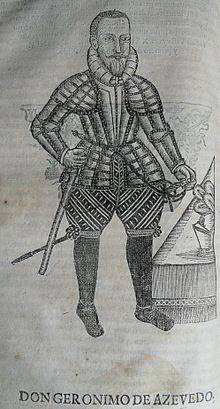
Don Jeronimo de Azavedo, the cruelest of the Portuguese administrators in the East, was the Governor of Portuguese Ceylon from 1594 to 1612 and the Viceroy of Portuguese India from 1612 to 1617. De Azavedo was one of the officers who came with Captain of Colombo, Manoel de Souza Coutinho, who set sail for Colombo on 4 February 1588 with an armada of eighteen vessels conveying six hundred soldiers. On reaching land near Mannar they sent a message to Colombo calling for assistance to explore the coast. This was a time when plundering the country was the main preoccupation of the Portuguese.

portuguese
They landed on the shores of the Negombo lagoon and raided and burnt the village of Andiambalama. Then they proceeded to Chilaw but were prevented from landing by a small garrison of Sinhalese people. They destroyed the place called Maripo to punish the inhabitants for massacring the troops of Christovao de Abreu in 1584. After killing all they could, they captured forty eight people and burned a large number of ships with salt destined for King Rajasinha I’s ports. Thereafter, they proceeded to ravage the coasts of the Puttalam lagoon. Next it was decided to attack Chilaw and de Azavedo was put in charge of the operation. He captured two fortifications of the Sinhala people and ravaged the adjacent areas. Thereafter, Chilaw itself was fallen on and it was destroyed by fire and sword. In addition a number of vessels found there were burnt.
The advent of the Portuguese in 1505 disturbed the tranquility of the island nation that had preserved its freedom for over 2,000 years resisting South Indian invaders such as the Cholas, Pandyans and Kalingas who ravaged the country from time to time. The Portuguese came here with the Bible in one hand and the sword in the other and their policy was to convert the local inhabitants to Christianity and finally make the island a Portuguese colony. Jeronimo de Azavedo implemented this Portuguese policy, of converting the inhabitants by persuasion failing which by force in the cruelest manner, mercilessly putting the hapless Buddhists and Hindus to the sword to realize their twin objectives.
The bastard son of Don Manuel de Silva
“The Portuguese captain General Don Jeronimo de Azavedo, the bastard son of Don Manuel de Silva, Abbot of St. Joao de Alpendurada and the beautiful Violante Pereira was appointed General conquistador in succession to Manoel de Souza and was by far the cruelest of the Portuguese administrators during the over 150 years of their rule of the maritime provinces of Ceylon.

Captain General Don Jeronimo de Azavedo was a key figure in the late 16th century Portuguese take over in Ceylon. The touchstone of Portuguese ambitions in Ceylon by the end of the 16th century was the bequest by King Don Juan Dharmapala of the kingdom of Kotte, in 1580, to the king of Portugal. Dharmapala was a Christian convert and his bequest was unacceptable to most of his Buddhist inhabitants and to the ruler of the neighbouring Kandyan kingdom. The takeover was therefore resisted and the Portuguese had to subjugate Kotte by force, formally completing the process during Don Jeronimo de Azavedo’s captaincy of Colombo from 1594 to 1612. A Portuguese administrative superstructure headed by a Captain General was then imposed on the kingdom,” says Sir Paul E. Pieris in Volume 1 of his ground breaking thesis in two volumes, Ceylon – the Portuguese Era.
On 1 January 1595 the Portuguese Army led by de Azavedo along with King Don Juan Dharmapala himself appearing in person to ensure the sympathy of the people, left the fort of Colombo for Nawagamuwa with 900 Portuguese and 2,000 lascarins. From there “de Azavedo proceeded to Rakgahawatte and struck terror into the hearts of the inhabitants of Siyane korale by the merciless ferocity of the reprisals which he exacted”. He next entered the hallowed precincts of the famed Nawagamuwa devale and restored order among the warlike inhabitants of the Hewagam korale. Thereafter, he shifted his camp to Gurubewila on the Kelani ganga. Two detachments were sent from there, one to Raigam korale, and the other to Chilaw which made a circuit through Katugampola to Attanagalla enslaving and killing unmercifully. A body of 120 people who appeared before the Portuguese to submit themselves were suspected to be engaged in a conspiracy against them and were led before General de Azavedo who was determined to make a public example of them. A day was fixed for them to render their submission and obtain forgiveness. The General took up his position on a gallery that commanded the plain which lay alongside the Fort and the hapless men were all shot down, only one escaping with his life!
King Don Juan Dharmapala and the General led the army to capture the city of Sitawaka which they occupied without resistance. The dilapidated buildings of the royal palace being hastily repaired for the residence of the aged and infirm king, the king continued to reside in the palace while the kingdom was being subdued. When Akaragane Appuhamy appeared at Petangoda harassing the subdued districts de Azavedo dislodged him. The General constructed a strong tranqueira at Menikkadawara and a fort at Ruwanwella. De Azavedo by shifting the administrative centre to Malwana tried to imitate the Sinhala king who was a benevolent despot. He constructed the Casa at Malwana where he resided for nine years. He was known as the King of Malwana but the inhabitants did not so much as like his sight due to his extremely cruel deeds and brutal disposition. One of his pastimes, while being at Malwana was to watch innocent people – who were pushed down the Raxapana Hill to the Kelani ganga that was teeming with crocodiles, who were accustomed, on hearing the signal of a bell, to jump up in anticipation of their prey – being devoured by the ferocious reptiles.
The kingdom of Kotte
King Don Juan Dharmapala died in Colombo on 27 May 1597 and de Azavedo took prompt action to enter into possession of the kingdom of Kotte on behalf of the king of Portugal, as Dharmapala had left a will declaring the king of Portugal his heir. On 29 May the famous Malwana Convention was signed and thereafter the king of Portugal was proclaimed king over Ceylon. The Church of the Mother of God was constructed at Mapitigama near Malwana where a Buddhist temple stood earlier, illustrative of the proselytizing fervour of the Portuguese.
King Don Juan Dharmapala was perhaps the most unfortunate monarch who ever lived. He was the embodiment and the very personification of the misery the Portuguese brought upon his country as unwelcome intruders to a country that was greedily described by Portuguese historian Joao Ribeiro as “this finest piece of land, which the Creator left upon this earth,” that should have been made the capital of the Estado da India and the centerpiece of Portugal’s political, military and colonial policy in Asia. The desire of King Buwanekabahu VII to make Prince Dharmapala, the elder of the two sons of Prince Vidiye Bandara born to his daughter Samudra Devi, his successor when there were contenders such as Prince Mayadunne, forced him to seek the protection of the king of Portugal at a time when Portugal with imperial designs had intruded into the affairs of a peaceful country such as his and was controlling Asia as a colonial power.
The Portuguese empire had been given control over the Eastern hemisphere by the Treaty of Tordesillas signed on 7 June 1494 by which the newly discovered lands outside Europe were divided between the Portuguese and the Spanish empires, along a meridian 370 leagues west of Cape Verde Islands off the West coast of Africa. However, the treaty was observed in the breach when Portugal invaded South America and founded the colony of Brazil and at the time when Portugal was under Spanish domination that was when the entire Iberian Peninsula was ruled by a Spanish King. Captain General Jeronimo de Azavedo was the equal of Spanish Conquistador Hernan Cortes who captured and put to death the ninth Aztec Emperor Montezuma II (1460-1520) during the Spanish conquest of Mexico. Interestingly Cortes fathered an illegitimate daughter Leonor Cortes Montezuma with Montezuma’s daughter Isabel!
Captain General Jeronimo de Azavedo was relieved of his position in 1612 and he left Colombo for Goa having been nominated the 20th Viceroy of India in 1611. In 1615 he set out on an expedition to Pegu to loot the Moon imperial treasures in Mrauk-U but the enterprise was unsuccessful. However, it was manifest by the fact that it was supported at such high official level, how looting was considered the legitimate policy of the Portuguese in Asia in the 16th century. In the same year a huge fleet led by de Azavedo tried to chase away English East India Company ships commanded by Nicholas Downton off Surat but after a series of engagements he failed. This incident showed that Portuguese Goa had lost the capacity to protect its monopoly on the West coast of India. On his return to Lisbon de Azavedo was held in custody and was put on trial on a number of charges including that of not giving the Dutch a fight.
A dungeon below the Castle of Lisbon
“On 17 November 1617 Don Joao Coutinho, Conde de Redondo landed at Goa as Viceroy in succession to de Azavedo. A dungeon below the Castle of Lisbon, awaited this latter, and there he dragged out the rest of his miserable life, haunted by the spectre of the infants and women he had slaughtered among the Sinhalese. How often in the sleepless hours of the night must there have rung in his years the piercing screams of the innocent babes pitted on his soldiers’ spikes, while he, the Christian General, the staunch supporter of the Church looked on and enjoyed the merry jest. And through their shrill cries would break in the quivering sobs of the anguished mothers, compelled to throw their children between the millstones and to watch their tender bodies mashed up to a pulp, before they themselves were led away to death.
“And ever and anon there came the sickening crunch of the crocodiles’ jaws, as they closed over the quivering flesh of their human prey, tossed to them so regularly by order of the General who loved the sport. Truly it was a heavy account he had created for his countrymen against the day of reckoning which was to come. It is strange indeed that the imaginative Sinhalese have not selected to deify this thickset, swarthy Iberian, with his vicious hanging under-lip, as the incarnation of all the cruelty which man born from his mother’s womb can devise. But for generations they remembered his name with shuddering horror,” says patriotic historian Sir Paul E. Pieris in Volume II of Ceylon – the Portuguese Era.
Describing the fate suffered by Captain General Jeronimo de Azavedo, Sir Paul E. Pieris says: “That the horrors described by Faria y Souza are no exaggeration is proved by the remarks of Portuguese historian Fernao de Queyroz, who was prepared to see the best side of de Azavedo’s character. De Azavedo died in such poverty that there was not sufficient money for his decent internment. He was buried at the bottom of the Sacristy of the Jesuit Church of Sao Roque.”
The Portuguese and the Spanish conquistadors were unique, in that, apart from bringing nations under their control for trade and to spread Christian Catholicism to consolidate their empire, practiced the most inhuman form cruelty on the inhabitants of the countries they invaded. Their cruelty far outstrips that of most other conquistadors such as those from South India like the Cholas, Pandyans and the Kalingas and for that matter even the Dutch and the British who ruled the island at various times in its history.
The Portuguese and the Spanish destroyed ancient civilizations in Central and South America. Many of the Central and South American countries were well populated. Great and ancient towns existed and there were enormous stores of wealth. In the palace of Montezuma there was a room where 3,000 persons could be well accommodated and in the market place there was room for 50,000 people to buy and sell. Thus there was much splendour to tempt the Europeans. All the treasures were almost defenceless. The people though civilized could not protect themselves against the new European guns. They were by nature docile and gentle and with the guns and gunpowder of a few thousand soldiers the Spaniards soon had the whole land at their mercy. They succeeded in setting up colonies by a process of genocide.
Just as Hernando Cortes wiped out the Aztec civilization, Francisco Pizarro (1475-1541), described as the illegitimate son of an infantry colonel and a woman of poor means, landed in Peru in 1532, murdered the Inca King Atahualpa in 1533, conquered the Incan Empire and founded Lima as the new capital of Peru. He was murdered by his own followers. Cortes conquered Mexico and destroyed the ancient capital of the Aztecs. He desolated the land and broke up its old customs. Pizarro sent home at one time gold bars valued at Sterling Pounds 3,500,000 and an enormous amount of silver and soon found that in the mines there were untold riches. There was no difficulty in working the mines as the native people were unable to resist their new masters and almost like slaves they toiled for the benefit of the Spaniards. The wealth thus suddenly acquired turned Spain from the slower but surer and more lasting sources of prosperity and in the end she was left among the poorest of nations in Europe. This holds good for Portugal too!
Although the Spanish were successful in converting the Philippines into a Spanish colony the Portuguese were unsuccessful in their efforts to do so in Sri Lanka mainly owing to the fact that they could not subdue the Kandyan kingdom and bring the entire country under their domination. Sinhala rulers such as King Mayadunne, Prince Vidiye Bandara, Rajasinha I, Wimaladharmasuriya I, Senarath and Rajasinha II faced them bravely, broke their strength and their repeated attempts to conquer the Kandyan kingdom was foiled although they said that “the interior of the island in the hands of the king of Candea needed to be conquered in order to secure the island politically, economically and psychologically”.
None among the Sinhala and the Tamil people, the adherents of two of the oldest and greatest religions Buddhism and Hinduism, submitted to the Portuguese or embraced their religion willingly, as some believe. It was on pain of death/torture or due to inducements offered, such as office, wealth and so forth that led them to embrace Catholic Christianity. The only silver lining in the cloud is that that the Portuguese coming in at that particular point of time saved the island coming under either South Indian as in the ancient past or Muslim domination as happened in Malaya, Indonesia and the Maldive Islands!

———————————————————————————————————————————————————————

See also

Documentary desanitizes Portugal’s past

A TV series gives the nation an accurate look at 20th century brutality carried out in its name in Africa.

 http://articles.latimes.com/2008/mar/09/news/adfg-portugal9

See also 

Colonial Terrorism, Global Capitalism and African Underdevelopment: 500 Years of Crimes against African Peoples

By Jalata, Asafa

https://www.questia.com/library/journal/1G1-327989429/colonial-terrorism-global-capitalism-and-african

Read preview

Article excerpt

For almost five centuries, European empire builders, namely Portugal, Holland, France, England, Belgium, Germany, Italy, and Spain employed different strategies and tactics in Africa to make money through the ownership of human beings, exploration, evangelization, colonization, commercialization, banditry, robbery, and theft. The processes of merchandizing some young Africans, dominating and controlling trade, destroying African cultures and religions, imposing Christianity, destroying independent African leadership and sovereignties through establishing colonial and neo-colonial governments, and dispossessing lands and other economic resources, and transforming Africans into coerced laborers involved various forms of violence including war, terrorism, and genocide. Using different forms of violence in merchandising young and able-bodied Africans and taking over the homelands and resources of the indigenous peoples were acts of terrorism. Terrorism and other forms of violence enabled these empire builders to enrich themselves and their collaborators at the cost of Africans; consequently, they established themselves as powerful countries, claimed racial superiority, and imposed their cultures and Christian religion and ruling ideas on Africans peoples. They also imposed their hegemonic scholarship or geo-culturally limited knowledge that has drastically failed to explain the conditions of Africans.

Although several scholars have explored the impacts of racial slavery, exploration, Christianity, colonization on the entire continent, and geo-cultural knowledge, they have ignored to study the essence and role of European terrorism in the destruction and dehumanization of African societies and in the establishment and maintenance of the European dominated racialized capitalist world system. (1) Despite the fact that these European powers and their agents used the discourses of commerce, Christianity, modernity, and civilization to cultivate their African collaborators for dividing and conquering Africa, systematic terrorism and other forms of violence enabled them to dominate African societies and exploit their economic and labor resources beginning in the late fifteenth century and reaching its climax during the last decades of the nineteenth century. “Everywhere the conquests of Africa brought similar paradoxes of public disaster and private profit in their train,” John Lonsdale (1985: 722) notes. The slave system and colonial orders were established and maintained mainly through terrorism. European countries and others that involved in Africa try to forget the deaths and suffering caused by racial slavery, the blood spilled, mass murders and genocide, the severed hands and heads, the shattered families, and other crimes committed in Africa to extract wealth and capital. As Adam Hochschild (1998: 295) notes, “Forgetting one’s participation in mass murder is not something passive; it is an active deed. In looking at the memories recorded by the early white conquistadors in Africa, we can sometimes catch the act of forgetting at the very moment it happens.”

When various African peoples intensified their respective resistance to racial slavery, colonial expansion, domination, and exploitation and later engaged in national liberation struggles in the mid-twentieth century, some of these empire builders increased their levels of terrorism to prevent the reemergence of African independent African leadership and sovereignties and to continue their theft and robbery of African resources.

Jean Ganiage (1985: 157) asserts that European policy makers planned and acted “to crush African resistance by a ruthlessly systematic exploitation of the technological gap between European and African weaponry and military organization.” The “war of any sort is not much more than ‘a series of errors and accidents’ … Its annals have more to tell us of man’s nature than anything else. Those colonial wars, in particular, leave us to wonder whether the conqueror’s violence has been an authentic expression of human nature, or a derangement of it” (Kiernan (1982: 230).

Repression of Buddhism in Sri Lanka
by the Portuguese (1505 – 1658)

http://www.vgweb.org/unethicalconversion/port_rep.htm


No UNHRC when Portuguese destroyed Buddhist Temples and erected Catholic Churches on top of destroyed Buddhist sites in Sri Lanka during the Portuguese era (1505 – 1658)

https://www.lankaweb.com/news/items/2016/07/22/no-unhrc-when-portuguese-destroyed-buddhist-temples-and-erected-catholic-churches-on-top-of-destroyed-buddhist-sites-in-sri-lanka-during-the-portuguese-era-1505-1658-2/

Moral Injury and Post-traumatic Growth Described in the Buddhist Jathaka Stories 

July 28th, 2016

Dr Ruwan M Jayatunge M.D. 

Moral Injury

The concept of Moral Injury was introduced by Jonathan Shay. The concept of moral injury emphasizes the psychological, cultural, and spiritual aspects of trauma. It refers to an injury to an individual’s moral conscience resulting from an act of moral transgression which produces profound emotional shame (Litz et al., 2009). Moral Injury is disruption in an individual’s confidence and expectations about his or her own moral behavior or others’ capacity to behave in a just and ethical manner (Litz,et al., 2009). Moral Injury disrupts relationship with self when inner moral core is doubted.

Moral injury happens when a person is able to reflect upon a traumatic experience after the immediate danger has passed (Simmons, 2013).  Moral injury is different from PTSD; it is possible to have only one or both. PTSD is a fear-victim reaction to danger and has identifiable trauma symptoms such as flashbacks, nightmares, hyper-vigilance, and dissociation. Moral injury is an inner conflict based on a moral evaluation of having inflicted harm, a judgment grounded in a sense of personal agency. It results from a capacity for both empathy and self-reflection.  Some experts believe that people with ethical values and are capable of empathy often sustain Moral injuries.

Shay (2014) states that moral injury impairs the capacity for trust and elevates despair, suicidality, and interpersonal violence deteriorating the victim’s character.  Moral injury entails emotional distress associated with perceived violations of one’s moral code and has been proposed to be a possible contributor to self-injurious thoughts and behaviors (SITB) among military personnel. Three dimensions of moral injury have previously been empirically derived: transgressions committed by others (Transgressions-Others), transgressions committed by oneself (Transgressions-Self), and perceived betrayal by others (Betrayal) (Bryan et al., 2014).

Moral injury is strongly related to negative consequences associated with war-zone stressors that transgress military veterans’ deeply held values/beliefs (Currier et al., 2013). Currier, Holland and Malott (2014) hypothesized that lack of meaning increase the risk for adjustment problems after warzone service. Moral Injury describes the effects of acts of commission or omission in war that result in mental, emotional, and spiritual struggle (Drescher et al., 2013).

Several narrations in the Jātaka story book concur that the protagonists suffered possible moral Injury due to psychological trauma. For instance Champeiya Jātakaya narrates the moral injury suffered by the king of Magadha. The king of Magadha was in a prolonged war with Angurata provincial kingdom. The battle went for many days causing enormous destructions to king Magdha’s forces. He was exhausted and eventually became a victim of war trauma. When he lost the war the king could not face his subjects. He felt guilty for sending his troops to the war front. He saw a large number of women who cried for their dead husbands. He saw sad faces of the orphaned children. The king firsthand experienced the horrors of war. He saw death and destruction – saluted men, destroyed villages. He felt that he was personally responsible for this manmade disaster. The war violated his moral code. The king of Magadha found no way out and he committed suicide by drowning.

The Prince Ajatashatru was a worrier who witnessed a number of bloody combats. His innocence was consumed   by the war and his bad friends. He was influenced by Devadathha. The prince was continuously poisoned by Devadathha against the king. Prince Ajatashatru was confused. He wanted to be the next ruler to his kingdom. As instructed by Devadathha he tried to assassinate his father the King Bimbisara.

Knowing the son’s motives the old king Bimbisara renounced his Throne. Ajatashatru became the new king. But his suspicion and paranoia grew day by day. Devadathha wanted to murder the king Bimbisara who was a devotee of the Buddha. He continuously pressured Ajatashatru to kill the old king. Ajatashatru killed his own father in a cruel manner.

The King Bimbisara was forced to starve and then his soles were cut open inserted salt and he was forced to walk on burning charcoal. The king suffered many days and had an agonizing death. After murdering his father Ajatashatru had severe guilty feelings and suffered a moral injury. He declined the friendship with Devadathha. He could not sleep and he was continuously thinking about his evil act – the patricide. He went to meet a number of spiritual leaders, but found no salvation. Finally he met Buddha and asked for his forgiveness. The Buddha accepted Ajatashatru who murdered one of his main devotees and one who helped Devadathha to send assassins to murder Buddha. The Buddha had no judgements over Ajatashatru and showed genuine empathy. Ajatashatru found an emotional relief after meeting with Buddha. Ajatashatru embraced Buddhism and renounced evil acts.

Chulla Dhanuddara Jātakaya describes a betrayal. When Prince Maname and his bride were confronted by a savage in the forest the princess immediately felt for the attacker. His rough body and aggressive look attracted to her and she wanted to be with the savage. Her erotic desires increaseed and during the duel she gave the sward to the savage to kill her own husband. The savage killed the Prince Maname with one blow. Then the Princess Maname expressed her lust for the savage. The savage was surprised by her betrayal. He refused the Princess‘s offer and left her alone in the jungle. The Princess Maname was disappointed. She felt guilty for her backstabbing action. She was crying alone in the jungle and finally committed suicide.

Posttraumatic Growth

In the past 10 years, the literature on disasters and mental health has shifted from a focus on psychopathology, to an interest in documenting manifestations of resilience in the face of mass trauma (Cerdá, 2014). Positive psychology has provided a new forum for discussion about how we construe mental health issues. Each generation and each culture faces basic questions about the meaning of birth, suffering, and dying. Each has its own social constructions and ways of managing these very basic human experiences (Joseph, 2009).

Term, post-traumatic growth,” was coined in 1995 by Dr. Richard Tedeschi, a psychology professor at the University of North Carolina in Charlotte, and co-author of the Handbook of Post-traumatic Growth” (Garlington). According to Tedeschi and Calhoun (1996), posttraumatic growth can be facilitated by the process of self-disclosure in the context of a supportive social environment.

Post-traumatic Growth is the positive psychological change experienced as a result of a struggle with challenging life circumstances that represent significant challenges to the adaptive resources of the individual and/or an individual’s way of understanding the world and one’s their place in it. Post-traumatic growth is manifested in several clearly defined behaviors and thought patterns not necessarily present prior to exposure (Turner & Cox, 2004). Posttraumatic growth is thought to involve positive change in five major domains: greater appreciation of life and a change in sense of priorities, warmer and more intimate relationship with others, greater sense of personal strength, recognition of new possibilities or paths for one’s life, and spiritual development (Tedeschi &Calhoun, 1996).

Posttraumatic Growth had been vibrantly described in the Jātaka storybook disclosing a number of case studies. The protagonists of these stories face major life traumas and become overwhelmed.  However they find meaning in their suffering and experience posttraumatic growth.

Patachara was a young girl who was very pretty and naïve. Her father was a wealthy merchant and treasurer in the city of Savatthi. She had one brother and both of them grew up in comforts.

Patachara had a secret love affair with a servant in her household. When the affair was exposed both ran away from home. They lived near jungle and lived very poorly.  When Patachara was pregnant with her first child she wanted to visit her parents and ask for their forgiveness. But her husband prevented her. When she was pregnant with the second child she made her mind to visit the parents despite her husband’s advice. When her husband was away she left home with the child. But she could not go further she had labor pains and she delivered her baby on the way.

It was raining heavily and her husband came in search of her. When he saw his wife with the newborn baby and the elder son he immediately went to cut some wood to make a temporary shelter for them. But the husband never returned. Patachara was anxious and went in search of her husband. She found him dead beaten by a poisonous snake. She wept relentlessly. Finally she made her mind to visit her parents.

While on her way to the city she came near a river. Patachara kept the newborn baby on the river bank and crossed the river with her elder son. After crossing the river she requested her one year old elder son to wait for her and again she crossed the river to bring the newborn. When she was halfway crossing the river she saw an eagle was coming to grab her baby.  The bird mistook the new born baby as a piece of meat. She shouted at eagle. Then her elder son thought his mother was calling him. He jumped to the river and the river current took him downstream.  By that moment the eagle grabbed the baby and flew away. Hence she lost two of her babies.

Patachara was in severe grief. She cried and went to her parental home. But the house was not there. She could see only the rubble. A neighbor approached her and delivered a sad message. He said that her parents and the brother died when their house collapsed due to severe rain on the previous day. He further said that their bodies are burning in the funeral pyre at this very moment.

Patachara went in to severe shock following the loss of her loved ones. She lost her awareness and proper sensors. She ran to the town crying. Her clothes were torn and dirty. She was half naked. Then people thought she was an insane woman and chased her wherever she went.

Finally she came to Buddha. When some of the devotees saw a mad looking woman approaching Buddha they tried to prevent her coming. But Buddha allowed her to come near him. The Buddha realized her state of mind and allowed her to come to proper sensors. When she became calm Patachara told her sad story. The Buddha gave her a sermon reveling the universal truth about death and separation of loved ones. Patachara was able to realize the meaning of death. She achieved posttraumatic growth and she became a Bhikkuni.

Suffering means an individual’s report of his or her  awareness of one or more changes in normal function,  sensation, or appearance that cause him or her some degree of  physical discomfort, mental anguish, or distress (Kyung-Ah et al., 2009). When people suffer they always suffer as a whole human being. The emotional, cognitive and spiritual suffering of human beings cannot be completely separated from all other kinds of suffering, such as from harmful natural, ecological, political, economic and social conditions (Diehl, 2009).  There can be no more profound struggle than to understand the meaning of suffering (McGinley, 2008).

Viktor Frankl believed that complicated grief could be accepted as a crisis that encourages new meaning in life.  Frankl wrote:   We must never forget that we may also find meaning in life even when confronted with a hopeless situation, when facing a fate that cannot be changed. For what then matters are to bear witness to the uniquely human potential at its best, which is to transform a personal tragedy into a triumph, to turn one’s predicament into human achievement. When we are no longer able to change a situation… we are challenged to change ourselves (Frankl, 1969). As Frankl viewed post-traumatic growth provides greater appreciation of life and development of personal strengths.

There are many other Jātaka stories (eg: Jaddisa Jātakaya, Sujatha Jātakaya etc) discuss posttraumatic growth.  The processes of self-disclosure, spiritual enhancement, realization of universal maladies such as disease, aging, death and dying, concept of impermanence help these individuals to achieve posttraumatic growth.

Kisa Gothami became devastated when her infant child died due to an illness. She went to the Buddha asking medicine to bring him back to life. The Buddha told her to bring mustard seeds from a family where no one had died. Kisa Gothami went to each and every house in the county asking for mustard seeds from a family where no one had died. But she could not find any house. But she did not give-up. She went to the next county. She went house to house but she couldn’t find even one house where a death had not occurred. Death was everywhere. Finally Kisa Gothami realized that there is no house free from mortality. She laid her dead child to rest in a cemetery and went to Buddha to become a Bikkuni. In Kisa Gothami’s case she achieves posttraumatic growth by realizing the meaning of death.

When heavy rainstorm flooded and destroyed Baradvaja Brahmin’s paddy field he became severely heartbroken. Months of his efforts were wasted within one night of severe rain. Despondently he looked at the destroyed paddy field. His eyes filled with tears. He refused food and laid on the bed aimlessly. The loss has caused enormous pain in his heart. The Buddha visited him and explained the nature of desire and how it causes emotional pain. Baradvaja Brahmin saw the correlation between extreme heart desire and subsequent emotional pain. The Brahmin realized the true nature of desire and craving. He was able to come to terms with his loss. Hence he achieved posttraumatic growth and regained his functionality.

The Bikku who had a severe PTSD type reaction in Maranabheruka Jātakaya was unable to function as a monk. His traumatic memories hounded him as intrusions and flashbacks. He was frightened all the time. He was unable to meditate. Mortal fear ruined his functionality. As a part of his therapy the monk was encouraged to think of death. Little by little he practised Marananusmathi Meditation or Mindfulness of Death Meditation. Gradually he was able to desensitize his fear of death. He realized that no one cannot evade death and it is a common occurrence and a universal phenomenon. The said monk reached posttraumatic growth by desensitizing his fear of death via Mindfulness of Death Meditation.

Angulimala who killed 999 men suffered from severe guilty feelings after he became a monk. As a person who took many lives of other people he became ashamed. He was an addictive killer; however after he renounced violence he relentlessly practiced Methha or loving-kindness towards other people. Once he saw a pregnant woman who was in pain. She was about to give life to another human being. Angulimala realised the value of human life and focused his loving kindness feelings towards the pregnant woman and blessed her for safe labour. This event changed his perception about life. He realized that life ought to be treated with love and respect. These positive emotional feelings gave Angulimala mental soothing. Hence Angulimala achieved posttraumatic growth.

Samawathi lived with her wealthy parents in a populated city. Once highly contagious infectious disease hit the city and a large number of people died. Following the disease the elegant city became a ghost town.  Death was everywhere. To escape death Samawathi and her parents decided to abandon their native town. They left their property and traveled to another county. They walked days and finally came to the nearest town. They were exhausted. Exhaustion and hunger weakened her parents and they passed away as soon as they came near the city gates. Young Samawathi was left alone in a strange city where she had no friends. She was devastated. But she determined to survive. She met a kind old man and his family. They adopted orphaned Samawathi. They became her new guardians.

Once the King saw young Samawathi and invited her to his palace and made her one of his queens.  She lived comfortably, but sad memories of her native town and parents impacted her. She needed spiritual guidance and she was searching for meaning.  She came to know about the Buddha‘s teaching through her old female servant. The old woman used to go to the temple and listen to Buddha’s sermons and narrated it to Samawathi in colloquial terms.  Although the illiterate old woman missed a large portion of the sermon Samawathi was able to grasp the main themes. This became a daily practice. Gradually she was able to understand the Buddha’s core teaching. She found a meaning and was able to conquer her negative feelings about past memories. Samawathi achieved posttraumatic growth.

පාද යාත්‍රාවට එරෙහි ඇම්බියුලන්ස් මඩ අතේ මාට්ටු, ආණ්ඩුව හත් පොළේ ගා ගත්ත හැටි මෙන්න.

July 28th, 2016

 www.mahinda.info

[1]. ජන සටන පාද යාත්‍රාව අතරට ගිලන් රථයක් දමා ආණ්ඩුව විසින් සිදුකළ නිර්ලජ්ජිත ක්‍රියාව ආණ්ඩුවේ මාධ්‍ය මගින් විකාශය කළේ මෙලෙසයි.


[2]. එහි දැක්වෙන්නේ රෝගීන් රැගෙන ඒමට යමින් සිටි ගිලන් රථයක්” ලෙසටය.

(i). ශ්‍රී ලංකා සෞඛ්‍ය සේවාවේ නියාමනයන්ට අනුව රෝගීන් රැගෙන ඒමට යන ගිලන් රථයක නිල සාත්තු සේවකයෙක් හෝ හෙදියක් සිටීම අනිවාර්ය වේ.

(ii). ඊට හේතුව ගිලන් රථයක් ගෙන යන්නේ කැස්ස හෙම්බිරිස්සාව ඇති රෝගීන් රැගෙන ඒමට නොව අසාධ්‍ය රෝගීන් රැගෙන ඒමට නිසාය.  එහිදී ප්‍රථමාධාර දීමට පුහුණුව ලත් අයෙක් සිටිය යුතුය. නැතහොත් රෝගියා රැගෙන ඒමේදී සිදුවෙන අත්වැරදීමකින් රෝගියා මිය යනු ඇත.

(iii). පහත පින්තූර බලන්න, මේවායේ සාත්තු සේවකයන් හෝ හෙදියන් සිටියි.


[3]. නමුත් ආණ්ඩුවේ මාධ්‍ය මගින් නිර්ලජ්ජිතව විකාශය කරන ලද මඩ වීඩියෝවේ ඇති ගිලන් රථයේ කිසිදු හෙදියක් හෝ සාත්තු සේවකයෙක් නොමැත.

(i), ජනසටන අනතුරදී මේ ආකාරයෙන් ආණ්ඩුවේ හෙංචයියන් පදවන, හෙදියන් හෝ රෝගීන් නොමැති ගිලන් රථ 6 ක් පමණ ගෙන ගොස් පාද යාත්‍රාවේ යන ජනතාව පීඩාවට පත් කළෝය. එහිදී අවසාන ගිලන් රථයේ පසුපස දොර අරමින් එහි රෝගීන් හෝ හෙදියන් නොමැති බවට එහි සිටි ජනතාව පෙන්වා දෙන ලදී. මහින්ද පාක්ෂිකයන්ගේ සංවරත්වය නිසා එම ගිලන් රථ යහතින් ගිය අතර, වෙනත් පක්ෂයක රැළියක් අතරතුරදී මෙවැනි වැඩක් කළහොත් ගිලන් රථ රියදුරා එම ගිලන් රථයෙන්ම රෝහල් ගත වෙනු ඇත.

(ii). අප වෙත වාර්තා වුණ ආකාරයට එම ගිලන් රථය පැදවූයේ ජනසටන කඩාකප්පල් කිරීමේ කොන්ත්‍රාත්තුව බාරගෙන සිටින මහනුවර ප්‍රදේශයේ දේශපාලඥයෙකුගේ හෙංචයියෙක් සහ පසුපස සිටියේ එම හෙංචයියාගේ බිරිඳයි.

(iii). යුද ගිණිදැල් කඳුළෙන් තෙත් වූ දේශයට නිදහසේ සිනාව එක් කරමින් යෝධ සංවර්ධනයක් සිදුකළ අසහාය ජනනායක මහින්ද රාජපක්ෂ මැතිතුමන්ට මඩ ගැසීමේ නින්දිත කටයුත්ත සිදුකිරීමට රජයේ කිසිදු හෙද නිලධාරියෙක් හෝ නිලධාරිණියක් එක් නොවූ අතර, ඔවුන්ගේ උතුම් නිළ ඇඳුම මඩ ගැසීමේ වැඩ වලට බලහත්කාරයෙන් යොදා ගත්තොත් නඩු දමන බවට ඔවුන් පවසා ඇත.


[4]. පහත දැක්වෙන්නේ ඒම අවස්ථාව ගැන ජනතාව දැක්වූ අදහස් සහ ජන සටනට එක් වූ ලක්ෂ සංඛ්‍යාත ජනතාවගේ දර්ශන කිහිපයකි.

අනිත් අයටත් බලන්නට SHARE කරන්න.

මහින්ද මැතිඳුන් පෙරටුකරගෙන ජන සටන පාද යාත්‍රාව ඇරඹෙයි. (පින්තූර)

July 28th, 2016

www.mahinda.info

 ආණ්ඩුවට එරෙහිව ඒකාබද්ධ විපක්‍ෂය විසින් සංවිධානය කරන ‘ජන සටන’ පාද යාත්‍රාව හිටපු ජනාධිපති මහින්ද රාජපක්ෂ මහතාගේ ප්‍රධානත්වයෙන් පේරාදෙණිය පාලම අසලින් ආරම්භ විය.

මේ සඳහා ඒකාබද්ධ විපක්‍ෂයේ පාර්ලිමේන්තු, පළාත් සභා, පළාත් පාලන මන්ත‍්‍රීවරුන් ගණනාවක් එක්ව සිටින අතර අති විශාල ජන සහභාගීත්වයක්ද තිබේ.

පෙළපාලිය නිසා කොළඹ නුවර මාර්ගය පේරාදෙණියේදී දැඩි වාහන තදබදයක් ඇති වී ඇත.

පාද යාත්‍රාවේ ආරම්භයේදී මහින්ද රාජපක්ෂ මැතිතුමා ඉදිරියෙන් පා ගමනින් පැමිණියද ඉන් අනතුරුව ඇතිවුණ දැඩි සෙනග තදබදය නිසාත්, වත්මන් ආණ්ඩුවෙන් දරුණු කොටි ත්‍රස්තවාදීන්ව නිදහස් කිරීම නිසා ඇතිවී ඇති ආරක්ෂක අවදානම නිසාත්, එතුමාගේ ආරක්ෂාවට සිටි පුහුණු හමුදා නිලධාරීන් වෙනුවට නුපුහුණු පොලිස් නිලධාරීන් යොදවා ඇති නිසාත්, එතුමාව විශ්වාසවන්ත හිතවතුන්ට මැදි කරගනිමින් රථකයින් ගමන් කර ඇත.

මේ අතර කොළඹ අතිරේක මහේත‍්‍රාත් අධිකරණය විසින් පාද යාත්‍රාවේ එන පාර්ලිමේන්තු මන්ත්‍රී නාමල් රාජපක්ෂ සහ තවත්හ යදෙනෙකු අත්අඩංගුවට ගන්නා ලෙස පොලිසියට නියෝග කර තිබේ.


අනිත් අයටත් බලන්නට SHARE කරන්න.

Pada Yathra

July 28th, 2016


The Joint Opposition’s claim that the aim of their Kandy-Colombo Pada Yathra, which commenced yesterday from Getambe, is not to topple the government, is not true. Minister Rajitha Senaratne got it right when he told the media on Wednesday that a protest march couldn’t bring down a government. But, the fact remains that such an event has the potential to set in motion a process of dislodging a government. The UNP’s successful Jana Bala Meheyuma protest campaign against the Kumaratunga government in 2001 is a case in point.

The short-term objective of the Rajapaksa loyalists is to flex their muscles, consolidate their power in the SLFP and mobilise their supporters at the grassroots level in view of the next local government elections. Unless President Maithripala Sirisena seeks another term, he will, before long, come to be seen as a lame duck head of state and the Rajapaksa faction will become an alternative power centre within the SLFP attracting members from the rival faction.

The long-term strategy of the JO is to oust the government. Former President Mahinda Rajapaksa’s popularity among the SLFP members became evident from the mass rejection of the Sirisena loyalists who contested the last parliamentary election. Most of those rejects were however appointed to Parliament via the National List subsequently. If the anti-Sirisena faction emerges powerful enough to wrest control of the SLFP with the passage of time the UNP-SLFP political marriage will be doomed in that the SLFP Central Committee can sever the party’s ties with the UNP thus destabilising the government. The UNP will have to engineer crossovers from the UPFA to raise numbers in the House or function as a minority government or coalesce with the TNA on the latter’s terms in such an eventuality.

The SLFP will have to decide who its next presidential candidate is without further delay. If President Sirisena comes forward, reneging on his promise to serve only a single term then the UNP, the TNA and all other constituents of the grand coalition, cobbled together at the last presidential election, will have to accept him as the common presidential candidate again in a bid to hold the Rajapaksas at bay. That is the UNP will have to opt out of the presidential race for the third consecutive time. President Sirisena can honour his promise and refuse to seek another term but it is doubtful whether he will be able to ensure the victory of an SLFP presidential candidate of his choice or get his party to back a common candidate fielded by the UNP vis-à-vis opposition from the Mahinda faction.

The UNP-led UNF government lost power in 2004 not so much because the SLFP emerged any more powerful; it fell because it brought about its own downfall by compromising national security, appeasing terrorists and their fellow travellers, paying no heed to people’s economic woes, implementing its controversial Regaining Sri Lanka project etc. Twelve years on it is repeating most of the blunders which cost it state power in 2004. It has provided the JO with enough and more rallying points within too short a period of time and unwittingly created conditions for mass protests. The unconscionable VAT and NBT increases have caused traders to sink their political differences and stage street protests.

Attempts to derail the on-going Pada Yathra will only steel the resolve of the JO activists to take on the government with might and main. That was why the late President Ranasinghe Premadasa acted with restraint when Rajapaksa led a Pada Yathra from Colombo to Kataragama. The SLFP, demoralised, unorganised and starved of funds, at that time, hoped and prayed that the government would disrupt its march even before it left the Colombo city limits. Premadasa let them hoof it all the way to Kataragama!

The only way the government can counter the on-going Pada Yathra without letting it snowball into a mass agitation campaign is to eliminate the factors its rivals are exploiting to fuel their protests. This, no doubt, is a tall order in that the government cannot do without tax increases and has crossed the Rubicon where the hybrid war crimes tribunal, the Economic and Technological Cooperation Agreement etc are concerned.

Foreign Judges: A bogey?

July 28th, 2016

by Gunadasa Amarasekera

It is becoming apparent by the day that the Foreign Judges Issue is a bogey planted to threaten us into submission to achieve a different purpose – namely to foist a Constitution on us which will allow the dismemberment of this country which is the sole concern of the US and its allies.

I have come to this conclusion after eliciting a number of factors that justify such an assumption.

1. Change of stance, attitude, and tone of all the stakeholders within the last few weeks or so.

2. Admission of the impossibility to overcome the constitutional impasse imposed by the present Constitution

3. The bravado with which President Sirisena denounced this move

4 Easing of foreign pressure on the government on this issue

It may be worthwhile going into some details in order to understand this sudden change.

Change of stance and attitude – to understand this one will have to recapitulate the pronouncements made by all the stakeholders some time ago.

The resolution passed by the US, co-sponsored by the GOSL, clearly states that the inquiry into the Human Rights violations and war crimes should have foreign judges, prosecutors and investigators etc. This was drilled into us right throughout. It was mentioned in many international fora. The various panels appointed by Ban-ki-Moon stated the need to have foreign judges.

Mr. Sumanthiran MP, spokesperson for the TNA revealed that there was a tripartite agreement among the US. GOSL and the TNA regarding the inclusion of foreign judges in the judicial process. This agreement had been arrived at prior to the Geneva Resolution. The Island report of 28/06 came out with this statement – “There are some doubts created as to whether the Constitution of Sri Lanka would allow foreign judges and we went into that question, clarified it and said, ’yes’ they can”.

According to the same report Sumanthiran has also told the congressional caucus that the resolution accepted at the Geneva sessions had been negotiated and that they settled for a hybrid- model though they originally asked for an international inquiry.

These pronouncements have been made in the presence of the Sri Lankan Ambassador.

Neither Sumanthiran nor the GOSL has denied these revelations made in the Island. This as a matter of fact made me take recourse in the Supreme Court to find out the truth, to which I am entitled to as a citizen.

Mr Suren Surendran of the GFT has also confirmed the statements made by Sumanthiran.

Mr. Vigneswaran, in addition to presenting the envisaged Tamil map, was adamant on having foreign judges in order to convince the victims that justice is being carried out. Mr. Sampanthan has been more reserved with his comments, but has not openly opposed the foreign judges. The dollar funded NGO gang not only welcomed foreign judges, but also kept on labeling our judges as being corrupt and politicized.

Compare these statements, these stances with what they have been saying during the last few weeks.

Sumanthiran, when asked about the constitutionality of foreign judges participating evaded the question by saying that he will come out with his view when the occasion presents itself.

Vigneswaran who would have been seized with rage by Sirisena’s roaring and infuriated by Biswal’s high praise for the establishment kept mum -an unusual silence.

Regarding the Constitutional impasse – It would have been crystal clear to US and allies who engineered the Geneva resolution that it is impossible to have foreign judges within the present Constitution. They would have realized it right from the beginning that it is going to be a futile exercise – a zero sum game. Sri Lankan sponsors too may have been briefed.

President’s outburst

President Sirisena who has been over the last year or so talking on esoteric innocuous themes such as protection of the environment, banning of liquor, suddenly burst out with a lion’s roar ‘I will not allow any foreign judges and I will not allow any one to tamper with the sovereignty of my country’. From where did he pick the signal for such an outburst? It could not have been spontaneous.

Easing of foreign Pressure

Tom Malinowski who was here the other day had this to say on the issue of foreign judges -“Under the resolution, the government of Sri Lanka will determine the structure and the composition of the Court.” No insistence on foreign judges. The EU Head of Mission Paul Godfrey did not insist on foreign judges in the judicial process. Nisha Biswal paying a glorious tribute said that she is quite happy with the performance of this Government regarding reconciliation and democratic reforms. When pressed for her stand on foreign judges she refused to comment, saying that such comments at this point would cause many problems. What a sea change!

How could this happen? This unbelievable change. How can it be explained?

As I see there is possibly only one explanation. The bogey has succeeded. It has achieved what was expected of it. The desired constitution as pointed out by Wimal Weerawansa is now nearing completion. It is highly probable that the blueprint would have been shown to the mentors -Al Hussein and Biswal. If so, why harp on this bogey of foreign judges and embarrass the government if the desired result has been achieved?

Barking or roaring at the bogey has only provided the necessary cover. The constitutional caravan is speeding with no opposition. The driving seat is occupied by no less a person than Prince Hussein. He may still be carrying the bogey in his left hand (he reminded Ranil) but in his right hand is the whip that matters. He is sure of the dates and the destinations that the caravan has to follow. The new Constitution will enter parliament by the end of the year. It will proceed to the rest of the country at the beginning of the next year seeking a referendum. The time table drawn by the Prince has been accepted by his acolyte here on bended knees, and has assured the lord and master that ‘thine will be done in Sri Lanka as in Geneva’. “When I come back here in March next year the contours of the new Sri Lanka we aspire to build I believe will be far clearer”. These were the parting words of our Foreign Minister.

Many would be surprised by this turn of events, the behavior of the US and the allies.They may be at their wits end to understand this unbelievable turn of events. But those few of us who were fortunate to witness this ‘Bogey phenomenon’ over the last thirty, forty years are by no means surprised.

In the mid eighties it was the bogey of a non-existent ‘ethnic problem’.

‘There is an ethnic problem facing the country, for which the solution is to devolve power on federal lines as in India.’ This was the slogan that was aired here and abroad.

There were only a few who challenged the bogey of an ethnic problem. In a collection of essays published by me at the time I pointed out that what passes for an ethnic problem is a conspiracy hatched by the Western powers to destabilize this country. With the failed intervention of India, the stage was left to the US. I believe even at that time the US would have envisaged such a turn of events. It would have been there in the twenty year agenda of the State Department. Remember, the first person to have come and congratulated Rajiv Gandhi when that gangster document was signed was the American Ambassador! Poor JR had to say ‘we have no friends’

It was this scenario I envisaged that provoked me to ask the JO not to participate in the constitution-making/mending process. They ignored my plea.

They by participating allowed Ranil Wickremesinge to turn the entire Parliament into a ‘Constitutional Assembly’. That was the foundation in which the edifice is being built. They little realized the enormity of the crime they were committing by such participation which made that declaration possible on 8th March. Dilan Perera spokesman for the SLFP brought this out very forcefully to rebuke Wimal Weerawansa’s assertion that the constitution in the making is a maraugula.

They may be waiting to oppose it when it is brought to Parliament. (They may be able to oppose it, but will they be able to prevent it being adopted?) But that will not absolve them of their crime since they have participated in laying its foundation.

The only way to expiate themselves from the sin committed would be to get out as soon as possible before it is brought to parliament.

Finally a word of caution may be necessary. My interpretation of foreign judges as a bogeyman may give some a false sense of security. It should not be so. Though ‘foreign judges’ has been used as a bogey so far, it does not mean it will always be so. When the need arises at some distant day they will arrive, not in their guise of a bogey but in their full regalia with gown and headgear.

That distant day may not be all that distant. When the new Constitution with provision for Foreign Judges is in place, they will certainly be invited to sit on judgment. It is not for nothing that the foreign funded, foreign managed Office of Missing Persons (OMP) is going to be established. It is to manufacture the evidence to prove war crimes, carpet bombing for those judges to sit in judgment.

Sri Lanka’s pact with IMF faces flak

July 28th, 2016

T. RAMAKRISHNAN Courtesy Hindu

‘Alliance for Economic Democracy’ says despite the “dangers inherent” in the agreement, there has been no critical public scrutiny.

A recently-formed coalition of trade unions, student unions, progressive intellectuals, social organisations and activists has criticised the Sri Lanka government for its agreement with the International Monetary Fund (IMF).

The coalition, Alliance for Economic Democracy, has said the IMF’s Extended Fund Facility, providing an assistance of $1.5 billion over three years, comes with a number of conditions that will adversely impact the economic and social life of the people in this country.”  Despite the dangers inherent” in the agreement, there has been no critical public scrutiny of the arrangement.

‘It is a BoP crisis’

 Arguing that the current economic crisis facing Sri Lanka is mainly a balance of payment crisis due to the flight of capital, falling exports and rising imports,” the Alliance has attributed it to capital market liberalisation, which, according to the coalition, has made Sri Lanka susceptible to capital flight, and mega development projects funded by borrowings of successive governments.

Criticising the government for seeking to shift the burden and responsibility for the crisis onto the people, the coalition has contended that the new agreement and the related neoliberal economic policies will further burden” the people in future.

The Alliance has demanded that the 2017 Budget, (likely to be presented in November) consider the people’s demands and not be reduced to the IMF conditions.   It has drawn up plans to mobilise public opinion against the agreement.

http://www.thehindu.com/news/international/sri-lankas-pact-with-imf-faces-flak/article8906443.ece

Bill to set up OMP A draconian law

July 28th, 2016

By Shivanthi Ranasinghe Courtesy Ceylon Today

The name board, “Office of Missing Persons” (OMP) whose Bill that is now before Parliament, sounds innocuous. One might even assume, it is a government run office in collaboration with an organization like the International Committee of the Red Cross.

An office, where those with missing relatives come and the officials try and match records from a cross section of sources such as police, hospitals, immigration and so on and try to locate the missing persons. After all, the existence of such offices is common after a war and even Sri Lanka has had such offices.

However, OMP is not about connecting the missing with their families. In fact, if a missing person is found alive and well – perhaps living in another country, with another family, under an alias – without that person’s expressive consent, that fact cannot be made public. That fact cannot be made public, even if another (officers or men in the security force) is being subjected to an investigation or a punishment on the alleged disappearance of the person.

Then, what is the purpose of the OMP?

Sounding the alarm

President’s Counsel Manohara de Silva, has sounded the alarm – notably through youthukama.com and veteran journalist C.A. Chandraprema from “The Island”, that the OMP has a most sinister objective that will have far reaching consequences for Sri Lanka.
He explains, “In the UNHRC Resolution Sri Lanka co-sponsored with US against Sri Lanka in September 2015, we have agreed as per the Operative Paragraph four, to establish a Commission for Truth, Justice, Reconciliation and Non Recurrence, an OMP and an Office for Reparations. We have agreed to give each of these mechanisms the freedom to obtain financial, material and technical assistance from international partners.

“Though, this is labelled as the OMP, it will only concern itself with the disappearances of those in the North and East. Abductions or disappearances that might happen in the South do not come under the OMP’s purview. We can’t assume it because the war was fought in the North and East. It is also not mentioned anywhere that the OMP is concerned with war crime investigations.”

Disappearance of Ekneligoda

It is indeed strange as in the list of irregularities the Sri Lankan military is accused of the much speculated disappearance of Prageeth Ekneligoda takes prominent place. However, it is speculated that his fate was sealed in the Girithale Camp. Thus, the Ekneligoda case cannot be taken up by the OMP.

“How can the North and East have a different law mechanism to that in the South? But it’s obvious that this is the design of the OMP,” continues Counsel de Silva. “This gives rise to the justified question as to who drafted the Bill. Is it the relevant authoritative Parliamentary entities or the Tamil diaspora?

“It would’ve been logical to create the OMP as an extension of the Police Department or the Attorney General’s Department. Then the officers would be responsible for the Sri Lankan Government and can be made to face the consequences of their actions. Also, for a genuine investigation on the missing persons, we don’t need foreign aid or assistance.

Independent

“Instead, it is to be incorporated by an Act of Parliament. Not only are they independent of the Police Department and the Attorney General’s Department, their findings – no matter how questionable they might be – will have the recognition of a body that has been established by an Act of Parliament.”
Shamindra Ferdinando also flags the OMP as he reports that according to former Media Secretary Charitha Herath, despite the Right to Information Act, the OMP “wouldn’t obviously be answerable to Parliament or its oversight committees”. Attorney-at-Law Jagath Liyanaarachchi of Transparency International Sri Lanka that was also at the helm with other civil societies to bring the RTA to Parliament admits, “RTA couldn’t be used to obtain information in respect of operations undertaken by the OMP.”
“The OMP is to comprise seven members appointed by the Constitutional Council. According to section 11(a), they will largely be guided by agreements with various persons and organizations to carry out tasks pertaining to OMP. The OMP can have various units and divisions headed by persons not appointed by the Public Service Commission.

Pro-LTTE organizations

“However, there’s no provision in the Bill to say that they have to be Sri Lankans. OMP may even delegate their powers to pro-LTTE organizations. They in turn may exercise the OMP powers and enter military and intelligence establishments and access their documents and objects. It’s entirely possible because it’s said OMP can send a “specified person” to conduct searches. However, there’s no interpretation given to who this “specified person” might be. But according to the Bill, the OMP officers may enter any premises at any given time, which will seriously strain national security.”
Chandraprema notes, “the so-called ‘civil society’ representatives on the CC are either representatives of NGOs or are close to the ruling parties. It’s not difficult to imagine what kind of people the CC would appoint to the OMP.”
Counsel de Silva agrees, “Seven out of the ten CC members are representatives of the Prime Minister and the Leader of the Opposition. They are all working to a certain agenda. When they were introducing the latest amendments to the Constitution, they were looking at the present leaders.
National government
“They were planning from the beginning to have a National Government, in which to appoint Sampanthan as the Opposition Leader. So, they took the President’s powers who was elected from all districts and empowered Ranil Wickremesinghe and Sampanthan, who together only represent two districts. That’s why we have a chronic situation today, where Sampanthan becomes the Opposition Leader, even though his alliance got far less seats than the Joint Opposition. Otherwise, normally the government would be represented by the two major parties.

“Funnily, according to the Bill, findings of the OMP won’t have any civil or criminal liability. Then, why have all these investigations? What are they then planning to do with their findings?”

“When we co-sponsored the UNHRC Resolution,” he explains to Chandraprema, “we actually accepted UN Human Rights Commissioner’s report requesting other nations to try Sri Lankans suspected of war crimes under universal jurisdiction. OMP officers can seize documents and other evidence from military installations. However, there’s no way to confirm or verify that the evidence is actually from these installations. So, they can even introduce bogus evidence. As the evidence produced by a body established by an Act of Parliament, there’ll be no way we can distance from it.”

Universal jurisdiction

“They may however circulate their findings to the UN and elsewhere,” warns Counsel de Silva. “If they think that a crime has been committed, they can report it to a “relevant authority” which again is unspecified. Also the Bill doesn’t specify that the findings should be presented to a court of law. My view is that because we have agreed to a universal jurisdiction, they’ll collect the necessary information to prosecute abroad. Then, there’s no need for a Hybrid Court.”

This opinion must be considered alongside the PM’s recent move to obtain a ruling from Speaker Karu Jayasuriya to overrule a Supreme Court judgment. In 2006, the SC in the landmark judgment, Nallaratnam Singarasa v Attorney General, ruled that Sri Lanka’s accession to Optional Protocol I of the International Covenant on Civil and Political Rights ( ICCPR )needed two third majority in Parliament and a referendum in order to become a law.
This is an interesting case. In 1980 Sri Lanka had acceded to the ICCPR. In 1997 to the Optional Protocol I of the ICCPR which allows Sri Lankans to address appeals to the Human Rights Committee in Geneva.

UN intervention

Singarasa was convicted by the Sri Lankan Judiciary on five counts of an attack or attempted attacks on Army camps in the Northern Province to overthrow the democratically elected government. After exhausting the local judiciary options, he sought the UN intervention in terms of the ICCPR and the Optional Protocol.

However, SC ruled that even though the executive arm had signed the ICCPR and the Optional Protocol, the provisions of the latter had not been incorporated into law by Parliament. As it impacts on one of the Constitution’s entrenched provisions, it requires both a two third majority in Parliament and approval by people at a referendum for it to become a law in the country.
Thus, as a sovereign country, we are not beholden to uphold any ruling by a judicial power that does not come under the Constitution. It is this judgment that PM finds “a perverted interpretation of the Constitution”.
As long as the judgment holds rulings by any other judiciary that does not come under the Constitution has no effect on Sri Lankan citizens.

Kangaroo courts

Chandraprema notes, “All international war crime tribunals set up at various times have been Kangaroo Courts with witnesses giving testimony that’s used without proper verification. Almost all such international tribunals have had ‘syndicates of informers’, where witnesses are coached and taught how to tell convincing stories without contradicting one another.”
“According to section 12,” elaborates Counsel de Silva, “OMP can receive statements from the allegedly missing person’s relatives or any other person or organization. Even Rev. Father Emmanuel’s organization may make a complaint or statement. If anyone makes a false complaint, under our law, there’ll be consequences. But for those living abroad, there’ll be no consequences if false statements are made.”

Disappearance

Thayaparajah is worth mentioning at this point. He was the director of a US funded institute that provided Information Technology education, The Vanni Institute of Technology, (Vanni Tech). He worked closely with the LTTE, including Charles Anthony.
In 2009, second week of September, he disappeared. His disappearance was promptly blamed on the military intelligence. TamilNet reported that the then US Assistant Secretary of State Robert Blake had also inquired into the matter. Department Head of Politics and Public Administration, Madras University claimed that Thayaparajah’s wife along with close relatives had even identified the body and after the government cremated it, accepted the ashes. This same story was repeated by the University Teachers for Human Rights. Then, in early May 2014 he and nine others were arrested by the Tamil Nadu Police for illegally entering the country. His wife and three children were among the group.

Interestingly, there had been a concentrated effort in the recent past to indicate that Pottu Amman survived the war and is living safely in India. Even Prabhakaran’s death was denied. Relatives of the woman, the Indian investigators suspect to have assassinated Rajiv Gandhi insist she died on the battleground. If that is true, the true identity of the real bomber is indeed missing.
“Funny, how they insist the dead ones are alive and living ones dead,” observes Ferdinando, who for the last 29 years had been reporting on national security.

ranasingheshivanthi@gmail.com

වැට්‌ බදු ආදායමට සමාන මුදලක්‌ සමාගම් කිහිපයක්‌ අතට!

July 28th, 2016

වෛද්‍ය කේ.එම්. වසන්ත බණ්‌ඩාර උපුටා ගැන්ම දිවයින

එක්‌සත් ජාතික පක්‍ෂයට වැඩි බලයක්‌ සහිත පිටකොටුව වෙළෙඳ ප්‍රජාව ඉතිහාසයේ ප්‍රථම වතාවට එම පක්‍ෂයේ ආණ්‌ඩුවකට විරුද්ධව වීදි බැසීම විශේෂත්වයකි. ඔවුන් තම වෙළඳසල් වසා දමා වැට්‌ බදු විරෝධී පෙළපාලියට එක්‌වීම වැළැක්‌වීම සඳහා ආණ්‌ඩුවේ මැති ඇමතිවරුන් කිහිප දෙනකු Rජුව මැදිහත් වුවත් වෙළෙන්දෝ ඊට අවනත නොවූහ. වැට්‌ බදු ගහන්නේ වෙළෙඳුන්ට එරෙහිව නොව ජනතාවට බව අDණ්‌ඩුව පුන පුනා ප්‍රකාශ කළත් සිල්ලර සහ තොග වෙළෙඳාමට අදාළ බදු පරාසය වසරකට මිලියන 250 සිට 12 දක්‌වා අඩු කිරීම නිසා ඉතා කුඩා වෙළෙඳ ව්‍යාපාර පවා වැට්‌ බදු දැළට හසුවේ. එවිට එම කුඩා ව්‍යාපාරවලට වැට්‌ බදු සඳහා ලියාපදිංචි වී බදු ගණනය කිරීමේ හා ගෙවීමේ යාන්ත්‍රණ පවත්වාගෙන යැමට සිදුවේ. විශේෂයෙන්ම වැට්‌ බදු නොමැති භාණ්‌ඩවලට වෙනම බිල්පත් නිකුත් කිරීමට සිදුවීම ද ඔවුන්ට බරපතළ ගැටලුවකි. ඒ සඳහා ඔවුන්ට අමතර පිරිවැයක්‌ දැරීමට සහ කරදර රාශියකට මුහුණදීමට සිදුවේ. 

පසුගිය රජය විසින් වාර්ෂිකව රු. මිලියන 500 කට වැඩි පිරිවැටුම සහිත තොග සහ සිල්ලර වෙළෙඳාමට වැට්‌ බදු පැනවීම මගින් ආර්ථික උපාය මාර්ගික අවශ්‍යතාවයක්‌ ඉටුවිය. එනම් මහාපරිමාණ සුපිරි වෙළෙඳසල් සහ බෙදාහැරීමේ ආයතනවල පැතිරීම සීමා කිරීමයි. ඒ මගින් එවැනි මහ පරිමාණ සමාගම් තම ඒකාධිකාරිය භාවිතාකොට සුළු නිෂ්පාදකයා පීඩාවට පත්කිරීම යම් පමණකට සීමා වේ. ඇමෙරිකාවේ ”වුල්වර්ත්” සහ ”වෝල්මාර්ට්‌” වැනි මහා සුපිරි අලෙවිසල් ජාල විසින් නිෂ්පාදකයාගෙන් 40% – 50%තරම් ඉහළ කොමිස්‌ ප්‍රතිශත ඉල්ලා සිටීම නිසා අද එම රටේ කුඩා පරිමාණ නිෂ්පාදන ව්‍යාපාර සියල්ල බිඳ වැටී ඇත. එම තත්ත්වය තුළ චීනයෙන් අඩු මිලට ආනයනය කරන භාණ්‌ඩවලට ඇමෙරිකානු සුපිරි වෙළෙඳසල් රාක්‌කවල වැඩි ඉඩක්‌ වෙන්වී ඇත. අප රටේ වැට්‌ බදු පරාසය අඩු කිරීම මගින් සුපිරි අලෙවිසල් වර්ධනයට තිබූ බාධකය ඉවත්වී කුඩා පරිමාණ සිල්ලර වෙළෙදාම කඩාවැටීමේ තත්ත්වයක්‌ දැන් උදාවී ඇත. 

කෙසේ වෙතත් මේ වන විට වැට්‌ බද්ද පනවා ඇති ආකාරය නීති විරෝධී බවට විමල් වීරවංශ මන්ත්‍රීවරයා ප්‍රමුඛ පිරිසක්‌ විසින් ශ්‍රේෂ්ඨාධිකරණ තීන්දුවක්‌ ලබාගැනීම නිසා දැන් බදු අය කිරීම සඳහා එම පනත සංශෝධනය කිරීමට සිදුවේ. නමුත් රටපුරා වෙළෙඳ සංගම් පාර්ලිමේන්තු මන්ත්‍රීවරුන්ට අනතුරු අ`ගවන්නේ මහජනයාට අසාධාරණ බදු බර පටවන එම පනතට ඡන්දය දී ගමට නොඑන ලෙසය. බදු බර සහිත අය වැය ලේඛනයකට ඡන්දය දෙන ආකාරයට වැට්‌ බදු පැනවීම සඳහා පමණක්‌ විශේෂයෙන් ගෙන එන පනතකට ඡන්දය දීම මන්ත්‍රීවරුන්ට පහසු වන්නේ නැත. 

එවැනි තත්ත්වයක්‌ තුළ ආණ්‌ඩුව මහජනයා සහ වෙළෙඳ ප්‍රජාව සම`ග පමණක්‌ නොව තමාගේම මන්ත්‍රීවරු සම`ග පවා මරාගෙන මැරෙන සටනක්‌ කොට වැට්‌ බදු පැනවීම මගින් උපයා ගැනීමට අපේක්‌ෂා කරන මුළු ආදායම රුපියල් මිලියන ලක්‍ෂයක්‌ හෙවත් බිලියන 100 කි. එහෙත් විශාල දේශපාලන වන්දියක්‌ ගෙවා උපයාගන්නා එම මුදලට සමාන මුදලක්‌ මහා සමාගම් කිහිපයකට බදු සහන ලෙස ලබාදීමට ක්‍රියාකිරීම පුදුම සහගතය. ආණ්‌ඩුව විසින් වැට්‌ බදු විරෝධී ඝෝෂාවට මුවාවී ගන්නා වූ එම කූට ක්‍රියාමාර්ගය තුළින් මහජන මනසේ පුදුමයක්‌ ජනිත කරනවාට වඩා තම දුෂ්ට බව ප්‍රකට කරයි. 

එම දුෂ්ට උත්සාහය තුළින් රටේ නිෂ්පාදන ආර්ථිකය මහා පරිමාණයෙන් බිඳ වැටීම ආරම්භ වන අතර ආනයනික විදේශීය භාණ්‌ඩවලට බදු සහන දීමේ එම ප්‍රතිපත්තිය අනෙක්‌ ක්‍ෂෙත්‍රවලටද හඳුන්වාදීම සිදුවුවහොත් රටේ නිෂ්පාදන ආර්ථිකය සම්පූර්ණයෙන්ම විනාශ වනු ඇත. උදාහරණයක්‌ ලෙස විදේශීය තිරිඟු පිටි සමාගම්වලට ලබාදෙන සහන නිසා වී ගොවියා මෙන්ම කුඩා පරිමාණ සහල් සහ සහල් පිටි කර්මාන්තකරුවන් ද විනාශ මුඛයට ඇදවැටී ඇත. එම සහනය කිsරිපිටි ආනයනය කරන මහා පරිමාණ සමාගම්වලටද ලබාදුනහොත් දේශීය කිරි කර්මාන්තය සහ කිරි ගොවියා ඉතා කෙටි කලෙකින් වළපල්ලට යනු ඇත. අතිබහුතරයක්‌ වෙළඳ ප්‍රජාව සහ පොදු මහජනතාව සම`ග බරපතළ දේශපාලන විරසකයක්‌ ඇතිකර ගනිමින් උපයා ගැනීමට නියමිත බදු ආදායමට සමාන මුදලක්‌ අත දිගහැර මහා සමාගම් කිහිපයක්‌ අතට ලබාදෙන්නේ කාගේ උවමනාවටද? සමාගම්වලට ලබාදෙන බදු සහන මිල අඩුවීම මගින් මහජනයා අතට ලැබෙනවා යෑයි තර්ක කළත් ප්‍රායෝගිකව එවැන්නක්‌ සිදුවන්නේ නොගිනිය හැකි සුළු ප්‍රතිශතයකිනි. එම බදු සහන නතරකොට අදාළ බදු නැවත පැනවුවහොත් ”මරාගෙන මැරෙන වැට්‌ බද්ද” හෙවත් වැට්‌ බදු වැඩි කිරීම අවශ්‍ය වන්නේ නැත. ඒ අනුව සමාගම්වලට බදු සහන ලබාදී දේශීය ආර්ථිකය විනාශ කිරීමේ තීන්දුව ආණ්‌ඩුවේ පොදු තීරණයක්‌ යෑයි සැලකිය නොහැක. විශේෂයෙන්ම ජනාධිපතිවරයාගේ අනුමැතිය ඊට ලැබුණා යෑයි මහජනයා විශ්වාස නොකරනු ඇත. එසේනම් ලබාදෙන සහනවලට අදාළ කොමිස්‌ කුට්‌ටි වැටෙන්නේ කාගේ සාක්‌කුවලටද?

පුද්ගලයන් දෙතුන් දෙනකුට කොමිස්‌ ගැසීම සඳහා රටක්‌ සහ ආණ්‌ඩුවක්‌ අර්බුදයට යෑවීමේ උභතෝකෝටිකය පැහැදිලි කරන්නේ කෙසේද? ඒ සඳහා වන පූර්ව කොන්දේසිය වන්නේ චෝදනාවට අදාළ සාක්‍ෂි පළමුව විමසා බැලීමය. පළමුවෙන්ම ආණ්‌ඩුව තිරිඟු පිටි සඳහා පනවා තිබූ විශේෂ බද්ද කිලෝ ග්‍රෑම් එකකට රු.10කින් අඩු කළා පමණක්‌ නොව ලෝක වෙළෙඳපළේ තිරිඟු මිල මෙ.ටො. එකකට ඩොලර් 500 සිට 350 දක්‌වා අඩුවීම නිසා පැනවිය යුතුව තිබූ රුපියල් 20ක අමතර බද්ද පැනවූයේ නැත. ඒ වෙනුවට ඉවත් කළ බද්දෙන් රු.6ක්‌ පමණක්‌ නැවත පැනවීය. වසරකට ශ්‍රී ලංකාවට තිරිඟු මෙ.ටො ලක්‌ෂ 13ක්‌ ආනයනය කරන තත්ත්වයක්‌ තුළ ආණ්‌ඩුව ලැබිය යුතු රුපියල් මිලියන 32,000 ක්‌ හෙවත් රු. බිලියන 32ක්‌ මෙම බදු සහන සෙල්ලමෙන් අදාළ සමාගමේ ගිණුමට වැටේ.

දෙවනුව ආණ්‌ඩුව තම මතට තිත ප්‍රතිපත්තිය මුහුදට විසිකරමින් මත්පැන් ලෙස වෙළෙඳපළේ විකිණිම සඳහා ආනයනය කරන මධ්‍යසාර සඳහා පනවා තිබූ විශේෂ බද්ද ලීටරයකට රුපියල් 200 සිට රු. 10 දක්‌වා අඩු කර ඇත. ඒ අනුව වසරකට මධ්‍යසාර ලීටර් මිලියන 20,000ක්‌ ආනයනය කරන තත්ත්වයක්‌ තුළ ආණ්‌ඩුවට සිදුවන සමස්‌ත පාඩුව හෙවත් අදාළ සමාගම්වලට ලැබෙන අමතර ලාභය වසරකට රුපියල් මිලියන 38,000ක්‌ හෙවත් රු. බිලියන 38 ක්‌ වේ. රට ලෙඩ කරන මධ්‍යසාර ආනයනය කරන රේන්දකාරයන්ට එසේ නිර්ලෝභිව බදු සහන දෙන අතර ආණ්‌ඩුව දේශීය කර්මාන්ත සඳහා ආනයනය කරන ස්‌ප්‍රීතු බද්ද රු. 800 සිට 1200 දක්‌වා වැඩිකොට ඇත. ඒ මගින් දේශීය කර්මාන්තකරුවන්ට ආණ්‌ඩුව සලකන ආකාරය ප්‍රකට වේ. ඒ අතර ආනයනික සුවඳ විලවුන් සඳහා කිසිදු මහජන ඉල්ලීමකින් තොරව වැට්‌ බදු සහන ලබාදීමද පැහැදිලි කරගත යුත්තේ ඊට සාපේක්‍ෂවය. 

තුන්වනුව ආණ්‌ඩුව අත තබන්නේ මේ වන විට ඉතා ඉහළ මට්‌ටමක පවතින දේශිය රූපලාවන්‍ය නිෂ්පාදන කර්මාන්තයටය. ආනයනික රූපලාවන්‍ය ද්‍රව්‍ය සඳහා පසුගිය රජය විසින් පැනවූ 30%ක සෙස්‌ බද්ද ඉවත් කිරීමේ ගැසට්‌ නිවේදනය දැන් සකස්‌ වෙමින් ඇත. පසුගිය රජයේ එම බදු ප්‍රතිපත්තිය නිසා ඒ වන විට පැවති රූපලාවන්‍ය ද්‍රව්‍ය නිෂ්පාදන කර්මාන්තශාලා ප්‍රමාණය 5 සිට 38 දක්‌වා වැඩි විය. එය ඉතා සැලකිය යුතු වර්ධනයකි. එම සමාගම් අතරින් කිහිපයක්‌ අපනයන වෙළෙඳපළ තුළද සැලකිය යුතු කොටසක්‌ අත්පත්කර ගැනීමට සමත් විය. එම තත්ත්වය තුළ විදේශීය රටවල් බොහෝමයක්‌ ශ්‍රී ලංකාවේ රූපලාවන්‍ය නිෂ්පාදන විසින් ඔවුන්ගේ වෙළෙඳපළ අත්පත්කර ගැනීම වැළැක්‌වීම සඳහා බදු නොවන බාධක පැනවීම ද ආරම්භ කළේය. නමුත් අප රටේ රජය රූපලාවන්‍ය ඖෂධ ලියාපදිංචි කිරීම සඳහා පනවා තිබූ ප්‍රතිපාදනද ඉවත් කොට විදේශීය නිෂ්පාදනවලට සියලූ දොරවල් විවෘත කරයි. දැන් ඉන් නොනැවතී සෙස්‌ බද්ද ඉවත් කිරීම මගින් මහා සමාගම් වලට ලබාදෙන සමස්‌ත සහනය හෙවත් රජයට සිදුවන පාඩුව රුපියල් මිලියන 10,000 ක්‌ හෙවත් රු. බිලියන 10කි. 

ශ්‍රී ලංකාවේ රූපලාවන්‍ය ද්‍රව්‍ය නිෂ්පාදනයේ යෙදී සිටි මහා පරිමාණ සමාගමක්‌ පසුගිය පෙබරවාරියේදී තම කර්මාන්තශාලාව ගිනි ගැනීමෙන් පසුව රක්‍ෂණ වන්දි ලබාගත් නමුත් කර්මාන්ත ශාලාව නැවත විවෘත කළේ නැත. ඒ අනුව දැන් එම සමාගමට තම වෙළෙඳපළ කොටස පවත්වාගෙන යැම සඳහා ඉන්දියාවේ සහ පකිස්‌ථානයේ තිබෙන ඔවුන්ගේ ප්‍රධාන කර්මාන්තශාලාවල නිෂ්පාදන මෙරටට ආනයනය කිරීමට සිදුවේ. ශ්‍රී ලංකාවේ පවත්වාගෙන ගිය කර්මාන්තශාලාව එසේ නැවත ඉදිකිරීම නොකරන්නේ මෙම බදු සහනය පිළිබඳ ඉවක්‌ එම සමාගමට තිබූ නිසාදැයි මහජනයාට සැක පහළවීම වැළැක්‌විය නොහැක. කෙසේ වෙතත් ඉන්දියාව සමග අත්සන් කිරීමට නියමිත ”එට්‌කා” ගිවිසුම අත්සන් කළහොත් එම සමාගම් තම නිෂ්පාදන ශ්‍රී ලංකාවේදී නිපදවනවාට වඩා ඉන්දියාවෙන් ආනයනය කිරීම වඩා ලාභදායක වේ. කෙසේ වෙතත් මෙම තත්ත්වය විසඳීම සඳහා භාණ්‌ඩාගාර නිලධාරීන් සතු එකම විසඳුම වන්නේ ශ්‍රී ලංකාවේ කර්මාන්තකරුවන් විදේශීය නිෂ්පාදන සම`ග තරගකාරී වීම සඳහා ඉගෙනගත යුතු බවට තර්ක කිරීමය. නමුත් ඔවුන්ට කිව යුත්තේ 1950 දශකයේදී අද දියුණු යෑයි කියන රටවල් තම රටවල දේශීය කර්මාන්ත ආරක්‍ෂා කර ගැනීම සඳහා බදු පැනවූ ආකාරය අධ්‍යයනය කරන ලෙසය.

හතරවනුව ආණ්‌ඩුවේ ඊළ`ග ඉලක්‌කය දේශීය සීනි කර්මාන්ත, විශේෂයෙන්ම දැනට රජයට පවරාගෙන ඇති සීනි සමාගම් වළපල්ලට යවා ජාවාරම්කාර ආනයනකරුවන්ට සහන සැලසීමය. ඒ අනුව ආනයනික සීනි සඳහා පනවා තිබූ ක්‍රි.ග්‍රෑ එකකට රු.30ක්‌ වූ විශේෂ බද්ද ශත 25 ක්‌ දක්‌වා අඩු කර ඇත. ඒ මගින් රජයට සිදුවන පාඩුව හෙවත් ජාවාරම්කාරයන්ට බන්දේසියක තබා ලබාදෙන සහනය වසරකට රුපියල් මිලියන 20,000ක්‌ හෙවත් බිලියන 20කි. එම අරුම පුදුම තීන්දුව සාධාරණීකරණය කිරීම සඳහා අදාළ ඇමැතිවරයා සූක්‍ෂම උපක්‍රමයක්‌ අනුගමනය කළ බව පෙනේ. ඔහු පළමුව සීනි සඳහා පාලන මිලක්‌ පනවා ඊට එරෙහිව ඝෝෂාවක්‌ ඇතිකිරීමට ඉඩ සලසා එම ඝෝෂාවට මුවා වී අදාළ බදු සහනය ලබාදීමට ක්‍රියා කළේය. 

ඒ අනුව ජාවාරම්කාර සමාගම් කිහිපයකට ලබාදුන් මෙම බදු සහන හතර මගින් රජයට අහිමිවන මුළු ආදායම රු.මිලියන 100කි. එම මුදල මරාගෙන මැරෙන දේශපාලන සටනක්‌ කොට එකතුකර ගැනීමට බලාපොරොත්තු වන වැට්‌ බදු ප්‍රමාණයට සමාන වීම පිළිබඳව ආණ්‌ඩුව මෙන්ම ජනාධිපතිවරයා රටට කියන්නේ කුමක්‌ද?

http://www.divaina.com/2016/07/27/feature01.html

The Foreign Minister Samaraweera Must Go

July 28th, 2016

By Dr Mathias Keitel, Tubingen, Germany.– Asian Tribune –

My recent visit to Sri Lanka, the country that I love most, fills me with dark foreboding as its vital interests are being systematically compromised by its buccaneering Foreign .

Minister Mangala Samaraweera

Dr Dayan Jayatilleka pointedly observed in a recent article, that Foreign Minister Samaraweera “poses an existential threat to the State’s sovereignty and security, and gravely jeopardizes political stability and governability.” So true.

Corridor chatter in Geneva continues to suggest that in his apparent schoolboyish and sycophantish eagerness to endear himself to the Western promoters of the UNHRC resolution of October 2015 on Sri Lanka and his naive rush to placate the expatriate Tamil groups, who are still pursuing the Ealamist agenda through other means with the apparent acquiescence of their patrons in the West, he conceded far more than what the drafters of the resolution had expected.

Incredibly, with scant regard for the provisions of the Constitution and the Sri Lankan Bar with its proud history, the Resolution that he agreed to cosponsor calls for a, “credible judicial process, with the participation of Commonwealth and other foreign judges, defence lawyers and authorised prosecutors and investigators…”. In many countries, compromising the national constitution with such audacity would have resulted in prosecution before the courts.

The Resolution is now being waved around by those demanding foreign judges (or at least foreign participation in the judicial process to lend it credibility!) to investigate alleged war crimes committed by Sri Lankan troops as they eliminated the reputedly invincible and ruthless terrorist LTTE to the undisguised relief and unmitigated gratitude of the nation. The brave soldiers who sacrificed everything for the nation are now being subjected to thoughtless villification and a dignified Bar is being discombobulated with doubts of self-worth. Among those calling for foreign judges or foreign participation are the UN High Commissioner for Human Rights, the regular cavalcade of visitors from Washington, the TNA and the Northern Provincial Council. With a little more respect for the memory of the thousands of youth who willingly gave up their lives to liberate Sri Lanka from the thirty year scourge of terrorism and protect the country’s sovereignty, the much higher number who were maimed for life in battle and the untold numbers of civilians who were killed, injured or had their loved ones obliterated during years of indiscriminate bombings by the LTTE, and a simple awareness of the diplomatic processes, Sri Lanka’s highest representative abroad had the opportunity to negotiate a better deal. What is more, there is ample evidence to suggest that the West was willing to accommodate Sri Lanka’s sensitivities to a greater extent to strengthen the newly elected administration of President Sirisena.

Part of the blame for the resolution’s schlocky content must be borne by those who advised the Foreign Minister, especially members of the Foreign Service, who let the Minister indulge his folly while keeping their counsel obsequiously mute. Many had been grand advocates of the previous administration’s cocky approach to diplomacy and the world.

What appears to emerge as the craven supplication of the Foreign Minister before the West’s glitzy alters from the beginning of his tenure is embarassing. He has mistaken the role of the Foreign Minister of defending and advancing the nation’s interests robustly and with quiet dignity for genuflecting at every opportunity. As they say in New York’s “Village” ‘A guy so ready to turn over and get his **** ******’. Sri Lanka’s timerous eagerness to please the West, causes bemused smirks in Western foreign ministries and irritation among its traditional friends.

Journalists based in Washington and New York have noted that, from the time he assumed office, he has taken upon himself to denigrate the previous leadership of the country before his Western counterparts, sometimes embellished with unsubstantiated tall yarns, perhaps in the naive and forlorn belief that his popularity among them would be enhanced. (One recalls his tales of the Rajapaksas siphoning off $50 billion to foreign tax havens or Mahinda Rajapaksa’s election campaign being funded by the Chinese). It is doubtful if this goal has been achieved as Western diplomacy itself is based on the continuity of a country’s interests. Badmouthing a previous leadership which could return to power at some point, with foreign counterparts, is certainly not “cricket” and not in the country’s best interests.

The reaction of the British leadership to the Chilcot Report on Tony Blair’s now largely discredited role in Britain’s participation in the illegal invasion of Iraq provides a salutory lesson to Sri Lanka’s Foreign Minister. The former Prime Minister, Cameron, pointedly refused to state whether the invasion was “a mistake” or “wrong” and rejected calls for a Conservative Party apology for its role.

The West has always respected those opponents who behaved with dignity, in fact, from the time of Alexander the Great. When captive King Porus (Pauravas) was brought before him in chains, Alexander haughtily asked Porus how he would like to be treated. Porus responded “Like the king that I am”. Alexander had his chains removed and restored his kingdom to him. The Foreign Minister has not learned the fundamental rule of being the chief representative of the country overseas. I.e. to represent the country’s best interests with fortitude, dignity and quiet pride. For Minister Samaraweera, it may be too late.

Furthermore, from the time it assumed office, elements of the new leadership, especially Mr Samaraweera, went out of their way to offend China which steadfastly stood by Sri Lanka in its darkest days during the terrorist inspired conflict and later was liberal with its finances as the country struggled to rebuild. China resisted all efforts of NGOs and some Western countries to dilute its support for Sri Lanka even from the time of the presidency of Mrs Kumaratunga. The naive efforts to insult and shove aside China in the immature hope of winning brownie points in the West were being made at a time when Chinese business concerns were purchasing aerodromes in France (Toulouse, the base of Airbus), harbours in Greece (Piraes), iconic hotels (Waldorf), real estate and bonds in the USA and real estate, health care, mining, renewable energy assets, etc. in Australia, not to mention infusing extensive and dramatic economy changing investments into Latin America, Africa and Asia, including India. Oblivious to these seismic developments, the Foreign Minister cut a sad figure denigrating China in public, but when the truckloads of development assistance did not materialise from a cash strapped West, turned pathetically to China again seeking funding. China, of course, haughtily responded by declaring that it dealt with the state of Sri Lanka and not with a particular government.

Following the same ill conceived approach, the Foreign Minister chose to brazenly contradict the President on a crucial matter of national importance and with international implications. It was an unpardonable breach of protocol and propriety for the Foreign Minister to contradict the President of the country. President Sirisena had categorically declared on two successive occasions that there will be no foreign judges to investigate alleged war crimes in Sri Lanka. The Prime Minister had reiterated the same sentiment. The Foreign Minister insensitively declared that the matter was still being discussed and people were free to express their own views. The Foreign Minister having made damaging concessions in the UNHRC resolution, may have privately provided assurances to his foreign interlocutors and diaspora Tamil groups which did not accord with the sentiments clearly articulated by the President of the country and was now seeking to wriggle out or was injudiciously trying to box in the President. Either way, in any mature democracy, he would have been shown the door. The requirement for the Foreign Minister to adopt a consistent stance with the Head of State and the Prime Minister is not a matter of courtesy, it is an obligation.

Mr. Sumanthiran, MP (TNA) revealed at the Congressional Caucus in Washington, in the presence of Sri Lankan Ambassador to the United States, which the resolution adopted in Geneva, had been negotiated and they had settled for a hybrid model. Neither the Sri Lanka ambassador nor the Foreign Ministry has rebutted this assertion despite the clear statements made by the President of the country.

With the country’s economic situation becoming increasingly shaky, it is incumbent on the leadership of the government to present a predictable and unified stance to the world. The business community is seriously lacking confidence. FDI flows have begun to decline seriously. Foreign reserves are dwindling. The one rosy spot in the economy, the booming tourism industry, will disintegrate rapidly with just a single incident of ethnic unrest. The Foreign Minister’s unguided course through these troubled waters could very well provide the spark to ignite such ethnic unrest. There are large sharks in the neighborhood who would relish the thought of the country reverting to its violent past.

The majority community, especially those negatively impacted by recent IMF prescribed economic reforms, is increasingly feeling uncomfortable with these developments. Thousands of servicemen, including returned servicemen, are uncertain about their futures with the threat of war crimes investigations dangling over their heads while hardly any public comment has emanated from the leadership of the Government about the need to investigate those who funded and supported the LTTE’s horrific bombing campaign that killed and maimed thousands of civilians, dragged over 20,000 children in to jungle camps for military training and seriously desecrated the holiest Buddhist places of worship. Instead, the Foreign Minister publicly hob nobs with them discussing reconciliation, including judicial tribunals with foreign participation. The High Commissioner for Human Rights, the most reasonable and erudite Prince Said, echoes the sentiments of the the expatriate Tamil community more stridently each time as the frequent traveller to Geneva, the Foreign Minister, seems incapable or uninterested in conveying a different perspective to him, including the constraints inherent in the Constitution.

The recent unrest in the Jaffna University should be a serious warning to the authorities. The actions of the Foreign Minister may have encouraged the renewed assertiveness of the extremist Tamil groups and contributed to fueling the clashes. The similarities with the isolated incidents of the 70s which the then authorities naively swept under the carpet to pander to communal sensitivities which later exploded in the bloodletting of 1983 and were conveniently exploited by the separatist groups to launch 30 years of horrific terrorism should not be ignored.

The oversensitive reaction of the authorities to the Jaffna university clashes is feeding the appetite of those seeking to sow the seeds of ethnic discord. At a time when Buddhist monks are being arrested on charges of inciting social and ethnic discord, a robust investigation to the clashes should have commenced immediately with as much publicity as possible and those responsible taken before the law. Such an action would have reassured all concerned that the law would prevail. The busing of Sinhala students away from Jaffna is a lily livered response that would encourage the extremists in the North and confirm the worst fears of the Southerners. This is no way to consolidate reconciliation. If an example of what should be done is required, one only needs to observe how the USA, the apogee of the Foreign Minister’s inspiration, is dealing with the current wave of Afro-American unrest. It is with a robust armed police presence and the strict enforcement of the law that the USA will seek to prevent the situation from getting out of control.

It may be a case of deja vu. But it is difficult not to notice the tinder of ethnic discord slowly piling up waiting for a single spark to ignite it. In the past separatist groups have deliberately and as a part of their strategy encouraged ethnic clashes to gather recruits to their cause.

It is also be difficult not to draw the conclusion that the UNHRC resolution was not really an attempt to consolidate human rights and restore good governance but a thinly disguised endeavour to destroy the iconic super hero status, especially of the victorious Sri Lankan soldier, and reduce it to the level of a common criminal. The Foreign Minister’s solicitous and breathless anxiety to comply with the demands of the West and the Tamil expatriate groups may well have contributed to realizing this goal.

When the country needs volunteers the next time, they may not be there!

Dr Keitel writes regularly on Sri Lankan issues to Asian Tribune –

– Asian Tribune –

RACISM caused collapse of League of Nations – same will happen to UN

July 27th, 2016

Shenali D Waduge

When Japan proposed the world’s first racial equality clause to be included into the Charter of the League of Nations in 1919, Anglo Saxon countries immediately opposed it. America, Australia, New Zealand, Canada and the British Empire were against including a clause against racial discrimination. Why would these nations not wish to include a very noble proposal? Is it not that same racism that is clearly evident in how the UN runs today? If the League of Nations failed because of the omission of racial equality, it is now time that the UN either address these discrepancies and honor equality for all races or Asia and Africa must lead the way by Quitting the UN altogether.

It was 13 February 1919 when the 1st draft of the Covenant of the League of Nations was placed before the Members of the Peace Conference. The head of the Japanese delegation put forward an amendment to be included into Article 21 of the Covenant to address a matter that was a worrying factor and concern of most nations – Racial discrimination. The Japanese were concerned of British & American attempts to secure hegemony over the rest of the world.

These were the words spoken by Baron Makino head of the Japanese delegation.

shenali28071601A

The best part comes next. This was how the nations that claim to stand for equality and justice responded.

Australia’s & New Zealand’s response

  • Billy Hughes the Prime Minister of Australia objected to the Racial Equality no government would live a day if it tampered with a White Australia’… he went on to say ninety-five out of one hundred Australians rejected the very idea of equality”
  • Australia had become a federation in 1901 and had implemented a ‘White Australia Policy’ – Australia imposed a strict set of immigration rules to gain Australian citizenship. The language dictation test required a person to write out in English a 50-word passage and read it aloud to the Immigration officer.
  • Prime Minister of New Zealand, William Massey, agreed with Hughes.

Britain’s response

  • Lord Robert Cecil who spoke on behalf of the Brits also objected
  • British Foreign Secretary who declared that while he sympathized with the Japanese he could not accept the ‘principle of racial equality’….”You could scarcely say that a man in Central Africa was equal to a European.”

America’s response

  • In March 1919 after hearing the proposal for the Racial Equality Clause, the California Senator James Duval Phelan launched a propaganda campaign against the proposal (just like the powerful lobbying that takes place within the UN) and a stream of telegrams were sent to the US delegation in Paris. One of these telegrams read Believe Western senators and others will oppose any loop hole by which Oriental people will possess equally with white race in United States. It is vital question of self-preservation.” (white domination at its best against Oriental people…. Have things really changed apart from the rhetoric to fool us)
  • In 1924, for example, the US Congress passed the Exclusion Act that prohibited further immigration from Japan

Japan’s grievance

  • Japan’s signing of unequal treaties with America, France, Holland, and Russia in 1858 placed restrictions on Japan’s national sovereignty, such as extraterritoriality, which meant that foreigners in Japan had immunity from the jurisdiction of the Japanese legal system.
  • In 1905, California passed anti-Japanese legislation.
  • In 1906 the school board in San Francisco ordered Japanese and other Asian children to attend segregated schools.

This was how the Japanese newspaper Asahi responded:

Racial discrimination occupied precisely the position in the contemporary world that slavery did one hundred years before.  Being the leading coloured power, Japan had the responsibility to fight for the cause of two-thirds of the world’s population and the country could not fight for a ‘nobler cause”

It is a pity that these noble words are not valid in today’s context as Japan has chosen to join South Korea and India functioning as henchmen for the very nations that promote discrimination.

President Wilson before the Racial Equality Act went for vote

Here’s President Wilson’s speech on 2 April 1917

Only a peace between equals can last. Only a peace the very principle of which is equality and a common participation in a common benefit. The right state of mind, the right feeling between nations, is as necessary for a lasting peace as is the just settlement of vexed questions of territory or of racial and national allegiance. The equality of nations upon which peace must be founded, if it is to last, must be an equality of rights; the guarantees exchanged must neither recognize nor imply a difference between big nations and small, between those that are powerful and those that are weak. Right must be based upon the common strength, not upon the individual strength, of the nations upon whose concert peace will depend. Equality of territory or of resources there, of course, cannot be; nor any other sort of equality not gained in the ordinary peaceful and legitimate development of the peoples themselves. But no one asks or expects anything more than an equality of rights. Mankind is looking now for freedom of life, not for equipoises of power.”

Note all he noble words. However, we seriously have to take these speeches with a pinch of salt – do they actually mean what they read out?

The Vote – 11 April 1919

The Japanese delegation however insisted on a vote. President Wilson no different to how the upper echelons of the UN powerful states function quickly added the need for an unanimous positive vote registration (knowing that the Clause could not pass using this method)

Thus with the United States, the British Empire, Portugal, Poland, and Romania not registering their vote, Japan’s proposal for equality to all nations fell apart.

In spite of 11 states supporting and 6 states rejecting President Wilson, Chairman of the Committee declared defeat of the amendment claiming there was no unanimous approval. Ironically, other amendments were passed without unanimity.

Special mention must be made to the delegates from Greece, Italy, China, France and Czechoslovakia who spoke in favor of the Japanese amendment to the League Covenant.

The sentiments were strong but were Asians and Africans misled by words. Was the Japanese delegation naïve to think that America meant what the speech so eloquently delivered? It was then that the Japanese realized that the West speaks with a forked tongue. President Wilson thundered ‘equality of rights’ ‘freedom of life’ ‘Only a peace between equals can last. Only a peace the very principle of which is equality’ how silly of us to actually believe that these words meant anything! It was just another white man’s burden. Post-World War 2 morals and justice was divided into one for the white race and one for all others. This has not changed. There are cosmetic changes but the white supremacist attitude still prevails. Blacks, Browns and Yellows are just not good enough….

shenali28071602A

The mentality of colonial rule that the West could do anything and get away still prevails. Not losing hope Japan set the pace to use the podium it was given at the Peace Congress to test the water. The equality for races proposal shot down without reason proved in no uncertain terms that the white nations resolved to continue the double standards of justice but veil them in speeches to fool the masses.

Asia and Africa are wanting in leaders to challenge white racism. There is little point in Asian and African leaders serving as lackeys of the West. It is precisely because of Asians and Africans desiring to serve as West’s henchman that the West continues to rule over the rest of the world through the UN and all of its sub-systems.

India has failed Asia in failing to provide leadership. Indians are happy to continue to serve the white masters as can be seen by the rising numbers of Indians given western portfolios.

Machiavelli did say it is just as difficult and dangerous to try to free a people that wants to remain servile as it is to enslave a people that wants to remain free.”

In other words you can’t develop a country or continent if the people who have the potential to be leaders are raise to be ‘good subalterns’. Essentially, nations with leaders with a vision are doomed to fail just as nations happy to copy visions of other nations

shenali28071603A

Shenali D Waduge


සංහිඳියා හොරු ගොතන පට්ටපල් බොරු ජිනීවාවලට මරු

July 27th, 2016

මතුගම සෙනෙවිරුවන් 

               රටේ දේශපාලනය බොහෝ සෙයින් ව්‍යාකූලය. පාර්ලිමේන්තුව කෝලම් මඩුවක් වැන්න. ජනතාවට හොරෙන් ජනතා ද්‍රෝහී බොහෝ දේ සම්මත කර ගැනීමට කැස කවමින් ඇත. නව ව්‍යවස්ථාව පිළිබඳව අවසාන විග්‍රහය අගමැතිවරයා සහ ව්‍යවස්ථා සම්පාදක මණ්ඩලය  සතුය. අනාගමික රාජ්‍යයක් කෙසේ වෙතත් කෑලි කීපයකට කඩා දමන රටක් සඳහා හොර ලියවිලි තැන තැන සාදමින් ඇත. ඒ අතර  යුද්ධයට සාභාගි වූ ත්‍රිවිධ හමුදා සාමාජිකයන් හට දඬුවම් දීම පිණිස ස්ථාපිත කරන දෙමුහුම් අධිකරණයට පිඹුරුපත් සැකසෙමින් පවතී. එලෙස නොකරන බවට රටේ නායකයා විසින් පැවසුවද එය කරන ආකාරය දැන ගැනීමට නම් උතුරු පලාතේ සිදු වන්නේ කුමක්දැයි සොයා බැලිය යුතුය.

          අමාත්‍ය මණ්ඩල තීරණයක් අනුව සංහිඳියා ලේකම් කාර්යාලයක් පිහිටුවනු ලබන්නේ 2015 දෙසැම්බර් 18 දිනදීය.පාකියසෝති සරවනමුත්තු මහතා එහි ලේකම් වරයා වෙයි. මනෝරි මුත්තෙට්ටුවේගම මහත්මිය එහි සභාපතිනියයි. ගාමිණි වියන්ගොඩ විසාකා ධර්මදාස ශාන්තා අභිමානසිංහම් මහාචාර්ය චිත්‍රලේඛා මානගුරු කේ.ඩබ්.ජනරංජන දයා සෝමසුන්දරම් අචාර්ය ෆර්සානා හනීෆා මහාචාර්ය ශමිලා සරමරසිංහ සහ මීරාක් රහීම් එහි සෙසු සාමාජිකයන් වශයෙන් සිටිති. එහි කාර්ය භාරය වන්නේ සත්‍ය හා හුක්තිය ස්තාපනය කිරීම මානව හිමිකම් උල්ලංඝණය වගවීම් සහතික කිරීම යනාදියයි.එහි යට අරුත නම් දෙමල ජනතාව යුද්ධයේදී මුහුණ දුන් අත්දැකීම් පිළිබඳ සත්‍ය සෙවීමයි.විශේෂයෙන්ම යුද්ධය ආශ්‍රිතව මානව හිමිකම් උල්ලංඝණය පිළිබඳ සත්‍යය සෙවීම විශේෂ වෙයි. මීට ප්‍රථම පරණගම කොමිසම මගින්ද එවැනි වාර්තාවක් සකස් කලද එය පිළිගන්නට දෙමල නාකයන් කැමති වූයේ නැත. මෙම ලේකම් කාර්යාලය මේ වන විට කොළඹ රැස්වීම් වාර කීපයක් පවත්වා ඇත. ඉන් පළමුවැන්න වන්නේ ආරක්ෂක ලේකම් වරයාගේ ප්‍රධානත්වයෙන් ආරක්ෂක අංශ දැනුවත් කිරීම උදෙසා පැවැත්වූ සම්මන්ත්‍රණයයි. හමුදා නිළධාරීන්ගෙන්ද සාක්ෂි විමසීමට නියමිත බව මෙහි සඳහන්ව තිබීම මීට හේතුවයි. මීට අමරතව ගිහි ආගමික නායකයන් දැනුවත් කිරිමටද 2016 ජූලි නව වනදා රැස්වීමක් පවත්වා තිබේ. ජමාත් ඉස්ලාම් ශ්‍රී ලංකා ජාතික ක්‍රිස්තියානි ඉවැන්ජලික සභාව ජාතික ෂූරා සභාව සමස්ත ලංකා මුස්ලිම් තරුණ සංගමය සමස්ත ලංකා හින්දු සම්මේලනය  තරුණ බෞද්ධ සංගමය ජමාත්අත්සලාමාහ් සහ ක්‍රිස්තියානි ආයතනය පමණක් මෙයට සාභාගි කරවාගෙන ඇත.

        සංහිඳියා ලේකම් කාර්යාලය සිය ප්‍රවිචාරණ ක්‍රියාවලිය සාර්ථක කරගැනීම උදෙසා ප්‍රශ්ණ මාලාවක් ජනතාව වෙත ඉදිරිපත් කර තිබේ. එහි අන්තර්ජාල පෝර්මයක්ද තිබෙන අතර එහි 7ඒ වගන්තිය මගින් කියැවෙන්නේ සත්‍ය සෙවීමේ කෙමිසම සම්බන්ධ කටයුතු කුමන කාලසීමාවක් තුළ අවසාන කළ යුතුද යන්නයි. එසේම එහිම 7 බී වගන්තිය තුලින් අසන ප්‍රෂ්ණය නම් මෙම කමිටුවේ සේවය කළ යුත්තේ කවුරුන්ද යන්නයි.  7 සී මගින් අසන ප්‍රශ්ණය නම් ලැබෙන තොරතුර අනුව කුමක් සිදු කල යුතුද යන්නයි. 8 ඒ ප්‍රශ්ණය ඉතා වැදගත්ය. අධිකරණ යාන්ත්‍රණය ගැන එහිදී විමසයි. කුමන ආකාරයේ උල්ලංඝණය කිරීම් සම්බන්ධව කටයුතු කළ යුතු දැයි එහිදී විමසයි.එසේම එම අධිකරණයට සේවය කල යුත්තේ කවුරුද යන්න ඊළඟ ප්‍රශ්ණයයි. එසේම විශේෂ අධිකරණ යාන්ත්‍රණයක් අවශ්‍ය වන්නේද යන්න එහිදී විමසා තිබේ. 9 ඒ සිට 9 ඩී දක්වා අසන ප්‍රශ්ණ නම්  අතුරුදහන් වූවන් වෙනුවෙන් කාර්යාලයක් පිහිටුවිය යුතුද මෙම ගැටළු සඳහා කුමන ක්‍රියාමාර්ගයක් ගත යුතුද එහි සේවය කළ යුත්තේ කවුරුන්ද ලැබෙන තොරතුරු අනුව කුමක් සිදු කළ යුතුද යන්නයි.11 වන වගන්තිය මගින් ප්‍රකාශ වන්නේ යුද්ධයේ මූලාරම්භයට මූලික වූ හේතු ආමන්ත්‍රණය කිරීමටත් ගැටුම් නැවත ඇති වීම වැලැක්වීමටත් රජය විසින් ගන්නා ක්‍රියාමාර්ග කෙලෙසක වියයුතුද යන්නයි.එසේම විවිධකාරයෙන් ප්‍රචන්ඩත්වය වැනි සිදුවීම්  රජය විසින් පිළිගැනීම සිහි කිරීම සහ සැමරීම සිදු කළ යුත්තේ කෙසේද මෙය සිදු කල යුත්තේ ජාතික වශයෙන්ද ජාත්‍යන්තර වශයෙන්ද යන්න විමසීමයි.

       මෙ ප්‍රවිචාරණ ක්‍රියාවලිය දැනටමත් ආරම්භ කර ඇත. එම ප්‍රශ්ණ කිරීම ලංකාව පුරාම සිදු කරනබව ලේකම් කාර්යාලය දැනුම් දී තිබේ.මුළු දිවයිනටම අදාලව යම් යම් තැන්වල මෙම ප්‍රශ්ණ කිරීම් සිදු වුවද  දැනට යාපනය කිලිනොච්චි මන්නාරම ත්‍රිකුණාමලය වවුනියාව  මඩකලපුව වැනි උතුරු සහ නැගෙනහිර පළාත් වල තොරතුරු ගැනීමට වඩා උනන්දුවක් දක්වන බව පෙනේ. එයට හේතුව සංහිඳියා ලේකම් කාර්යාලය සිය ශ්‍රම බලය  උපරිම වශයෙන් යොදවන්නේ එම දිස්ත්‍රික්යන්ට පමණක් වීමයි.මෙහිදී ග්‍රාම නිළධාරි මට්ටමෙන් මෙම කරුණ සැලකා බැලේ.නමුත් මේ වන තෙක් අවතැන් වූ සිංහල ජනතාව ඔවුන්ගේ දේපළ හානිවීම් අතුරුදහන් වීම මෙන්ම පළවා හැරීම ගැන කිසිවෙක් ප්‍රශ්ණ කර නොමැත.එසේම ආරක්ෂක අංශ මූලිකව දැනුවත්කර ඇති නමුත් පහළ මට්ටමේ නිළධාරීන් මේ සබන්ධයෙන් යෙදවීම උත්තර ලබා ගැනීම හිතාමතාම පැහැර ඇති බව පෙනේ.

             ඉහත සඳහන් ප්‍රශ්ණ මාලාව අනුව උත්තර ලබා ගැනීමද මෙම ප්‍රවිචාරණ ක්‍රියාවලියේ අරමුණ වී ඇත. උදාහරණයක් වශයෙන් අධිකරණ යාන්ත්‍රණය ගැන අසන ප්‍රශ්ණයේදී මෙහි සේවය කල යුත්තේ කවුරුන්ද යනුවෙන් අසන විට එයට විශේෂ විනිසුරුවරුන් සභාගි කරගත යුතු යයි උත්තර ලබා දීමට ජනතාව පොළඹවනු ලබති. ඒ සඳහා මෙම ප්‍රශ්නාවලිය ජනතාව අතරට ගෙන යන නිළධාරීන්ට උපදෙස් සපයා ඇත.එසේම යුද්ධයේදී සිදුවූ අපරාධ සම්බන්ධයෙන් කුමක් කළ යුතු දැයි අසන විට. (සත්‍ය දැන ගැනීමද අපරාධ පිළිබඳ වගවීමද දඬුවම් දීමද හානිපූරණයද ) උත්තර ලබා දිය යුතු වන්නේ දඬුවම් දීම සහ හානි පූරණය යනුවෙනි. සංහිඳියා ලේකම් කාර්යාලයට සම්බන්ධ රාජ්‍ය නොවන සංවිධාන ඇරුණු කොට මෙම ප්‍රවිචාරණ ක්‍රියාවලිය සඳහා දෙමළ ගෝලීය සංසදය විසින් මෙහෙයවන රාජ්‍ය නොවන සංවිධානද ඇමරිකානු ආධාර යටතේ ක්‍රියාත්මක ක්‍රිස්තියානි කණ්ඩායම්ද දෙමල ජාතික සංවිධානයද සාභාගි වී තිබේ. කතෝලික පූජක වරයෙකු වන එලීල් නැමැත්තා මෙහි ප්‍රධානයෙකි. ඔහු ඇතුලත් සංවිධානයට දිනකට ඩොලර් දෙසීයක මුදලක්ද දුරකතන සහ පරිඝණක ඇතුලත් පහසුකම් ලබා දී ඇත. ඔවුහු මෙම ප්‍රශ්ණ මාලාව රැගෛන ගමට යන අතර තමන්ට අවශ්‍ය උත්තර දෙමළ ජනතාවගෙන් ලබාගෙන සටහන් කර ගනී.මෙම ගැටළු සම්බන්ධයෙන් අභ්‍යන්තරයේ පැවති සම්මන්ත්‍රණ කීපයකදී ප්‍රශ්ණ කර ඇති නමුත් මනෝරි මුත්තෙට්ටුවගම මහත්මිය ඊට සාධාරණ පිළිතුරක් ලබා දී නොමැති බව සැලවෙයි. එක් අවස්ථාවක මානව හිමිකම් උල්ලංඝණය වීම පිළිබඳව දේශනයක් කරගෙන ගිය ඇය සූරියකන්දේ මිනීවලේ සිද්දිය නිදර්ශනයක් වශයෙන් පෙන්වා දී ඇත.  දෙමල ජනතාව සමූල ඝාතන ක්‍රියාවලියට මෙය නිදර්ශනයක් බව මෙම කතාව දෙමලබසට පරිවර්තනය කල පුද්ගලයා මෙහිදී පවසා තිබේ. තවත් වතාවකදී සිංහල අයගේ අතුරුදහන් වීම් ඝාතනය ගැන ප්‍රශ්ණ කිරීමේදී ඇය දුන් පිළිතුර වූයේ මානව හිමිකම් කඩකල හමුදාවට දඬුවම් දීම අනිවාර්ය බවත් එලෙසම දැනට ප්‍රභාකරන් ජීවතුන් අතර නොමැති බැවින් ජීවත්ව සිටින කරුණා සහ පිල්ලෙයන් වැනි පෙර කොටි සාමාජකයන්ට ඒ සඳහා දඬුවම් දියයුතු බවය.

          වර්තමාන රජයේ බෙදුම්වාදී නාටකයේ තවත් ජවනීකා කීපයක් පමණි මෙය. පාර්ලිමේන්තුවට පණත් කීපයක් එකවර ගෙනවුත් ජනතාව මංමුලා කිරීම මගින් මේ ප්‍රශ්ණය යටපත් කිරීමට රජයට උපදෙස් ලැබී ඇත. එසේම එක් පැත්තකින් ව්‍යවස්ථා ප්‍රතිසංස්කරණ ගැන කතා කිරීමද අනෙක් පැත්තෙන් සත්‍ය සෙවීම සහ අධිකරණ යාන්ත්‍රණය ගැන කතා කිරීමටද තවත් පැත්තකින් පාර්ලිමේන්තුව නියෝජනය කරන මන්ත්‍රීවරුන් මේ ක්‍රියාවලියෙන් ඉවත් කිරීම පිණිස සිරගත කිරීමද අඛණ්ඩව සිදු වේ.ජනධිපතිවරයා සිය පෞද්ගලික මතයන් විහාරස්ථාන වලදී එළිදක්වන අතර දිවයින පුවත්පත විවේචනය කොට කියා ඇත්තේ මෙවැනි අසත්‍ය දේ ප්‍රකාශ කරමින් ජනතාව මංමුලා නොකරන ලෙසටයි. ප්‍රශ්ණය ඇත්තේ මෙවැනි අවස්ථාවකදී දැනුවත්ව සිටින කිසිම බෞද්ධ ආගමික නායකයෙකු නොසීටීමයි. කෙසේ වෙතත් ඉදිරි ජනමත විචාරණයකට සූදනම් වීම රජයේ අදහසබව පෙනේ. විදෙස් ගත දෙමල ප්‍රජාවට චන්දය භාවිත කිරිමට සැලැස්වීම උතුරු නැගෙනහිර දෙමල ජනතාවගෙන් එකතු කරන සාක්ෂි ජිනීවා වෙත යැවීම මගින් මේ ජනමත විචරණයේ දී ජයග්‍රහණය කිරීම රජයේ බලාපොරොත්තුව වී තිබේ. ලබන සැත්තැම්බරයේදී සත්‍ය සෙවීමේ කොමිසම ස්ථාපිත කරන බව විදේශ ඇමැතිවරයා ප්‍රකාශ කර තිබේ. ඒ වන විට ප්‍රවිචාරණ ක්‍රියාවලිය අවසන් ව වාර්තාව රජයට භාර දීමට  නියමිතය. ඒ අනුව වැඩි පිරිසක් විදෙස් විනිසුරුවන් ගෙන් සමන්විත අධිකරණයක් සහ සත්‍ය සෙවීමේ කොමිසමක් ඇති කිරීමට එකඟ බව ප්‍රකාශ කරනවා ඇත. ව්‍යවස්ථා ප්‍රතිසංස්කරණය සඳහා මහජන අදහස් විමසීමේ ක්‍රියාවලියේද සිදු වූයේ මෙයයි.මීට අමතරව යුද්ධයට අමතරව  රටතුල සිදුවූ ගැටුම් පිලිබඳව සහ මානව හිමිකම් උල්ලංඝණය වීම් ගැනද විමසීමට ජනතාවගෙන් උත්තර ලබා ගනිමින් තිබේ. ඉහත සඳහන් කල මුස්ලිම් සහ දෙමල ක්‍රිස්තියානි සංවිධාන වෙත භාර දී ඇත්තේ එයයි. ඒ අනුව රට පුරා ඉඳිකළ අනවසර යාඥා මඩු ඉවත් කරගැනීමට ජාතික බලවේග විසින් ගත් ක්‍රියාමාර්ග මෙන්ම අළුත්ගම දර්ගා නගරයේ සිදු වූ ගැටුමට අදාල සිංහල සංවිධානයන්ට විරුද්ධවද සාක්ෂි සටහන් කරනවා ඇත.මෙම සියළු කටයුතු අවසානයේ චූදිතයන්හට දඩුවම් දීම පිණිස පවතින රජය මෙහෙයවීමට මානව හිමිකම් ජාත්‍යන්තරය උත්සාහ දරනවා ඇත.මෙහිදී ඒකාබද්ධ විපක්ෂය ඇතුළු රජයට එරෙහි බලවේග කුමක් කරන්නේද යන්න ජනතාවට ප්‍රශ්ණයකි. ඔවුහු උතුර සහ නැගෙනහිර සිදුවන දේ ගැන උනන්දුවක් නොදක්වති. දෙමල සහ මුස්ලිම් ජනතාවගේ චන්දය ඉදිරියේදී අත්‍යවශ්‍ය බැවින් මේ ක්‍රියාවලිය ගැන දැනුම්වත්ව සිටියද මත ප්‍රකාශ කිරීමෙන් වැලකී සිටිති. එම නිසා මේ බෙදුම්වාදී ක්‍රියාවලිය ආපසු හැරවීම පිණිස සියළු වගකීම් අසරණ සිංහල ජනතාව වෙතට පැවරී තිබේ. ඉතිහාසයේ සිංහලයන් සිය ස්වාධීනත්වය අහිමි කරගත්තේ රැවටීමෙන් පමණකි. රැවටීමෙන් පසු නැගී සිටීමෙන් සහ බුද්ධිමත්ව කටයුතු කිරීමෙන් රටත් ජාතියත් සම්බුද්ධ ශසනයත් ආරක්ෂා කරගත් බව අප නැවත නැවත සිහිපත් කර ගත යුතු වෙයි.

මතුගම සෙනෙවිරුවන්

Political children

July 27th, 2016

By: C. Wijeyawickrama

It is a silly drama. Two sides claiming the fatherhood for the Moragahakanda and Kalu Ganaga canal project. MS says MR prevented it and removed him from the ministry to delay it. MR says MS also worked hard to get the project going. They even show a video clip where MS was praising MR for the project. In the meantime UNP man Harindra Fernando says UNP was the father of this project as it was in their Regaining Sri Lanka plan.

The larger Mahaveli Project was rushed in such a hurry by JRJ that it has done so much untold harm to the small island and its people. What benefit did it give to the people by reducing a 30-year project to 5 years or 10 years? The political fools did not think of the long-term welfare of the people or the environment. This was so even with the Gal Oya project of DSS. He ignored the advice of many including Dr. S A Wickremasinghe, who pleaded that instead of a monster Samudra, to build several smaller upstream reservoirs. This was the concept followed by the Tennessee Valley Authority in USA, which gave the idea to Ceylon at that time. The unwise behavior by Ceylonese fools resulted in creating a near white elephant, well recorded in the book written by B H Farmer.

Now, with all this drama, a new threat is raising its head. Vigneswaran, is asking that the NPC should be given a right to claim the Moragahakanda water pool. This is the first sign of a disastrous fight that will come with 13-A and the new federal set up in the cards. There will be water wars along the Province boundaries and UNO will come as the settler of water disputes. Seven years ago, I pointed out this problem and now it has become a reality.

It is time, that we look at this issue again now in 2016. That essay which was printed in Lankaweb is appended below.

‘Federal’ Marriages and Water Wars
Posted on August 5th, 2009

By: C. Wijeyawickrama

There is no state without a Tamil – but there is no state for the Tamils.” World Confederation of Tamils (www.tamilnation.org)

‘India is a Myth’:

The merchants of federal formula are reluctant to compare ‘Federal’ arrangements with marriage contracts. In the recent past we saw this behavior first hand in an exchange of letters with one Kandappa from Jaffna under the titles Federalism and Marriage” and Federalism and Sexism” (Island, Jan 11, 2006). The comparison exposes defects in the Federal method. This is why Mr. Anandasangaree has become the Ambedkar of Sri Lanka preaching to JVP that the Indian model is not really a Federal but a mixture of Federal and Unitary.

Perhaps Mr. Anandasangaree may not be aware of the fact that India is a myth” is a protest movement alive amongst groups of Tamils in India who call India, Hindia or Hindistan. One would wonder why recently Mr. Anandasangaree, himself had to ask in vain from Karunanidhi to not violate the federal decision to train 200 police officers in Tamilnadu, if his Indian model is that not Federal but mixture of Federal & Unitary! (Island, Aug 10, 2006). The Dravidasthan movement that began in South India in the 1930s is buried and not dead as evidenced by the arrest of MDMK’s Manimaran under the Indian Penal Code section 153(b) and the arrest warrant open for Kandanbam of DPI (Dalit Panther of India).

Marvil Aru Anicut:

The blockage and bombing of the Marvil Aru-Verugal Aru area have proven to the world that the theory of a joint Federal and Unitary is also a myth like the hoax of a traditional Tamil homeland in the Eastern Province. The Malaria mosquito simply did not allow it as pointed out by the geography professor G. H. Peiris. If a party failed for a divorce (from Unitary partner) despite a generous court order (CFA, 2002), the greatest giveaway in history according to the Scotsman Paul Harris) and a humiliating surrender by the other party (I-SL Agreement, 1987), tried to use water supply to make the marriage under one roof unpleasant, what is in store when the parties were to be allowed to move into their own separate houses?

Water Wars in India:

Mr. Kandappa in January 2006 accepted the fact that Tamilnad has had water wars with two of its neighbors, Kerala and Karnataka, under the Indian model. India had water wars with Pakistan and is bound to have water wars with Pakistan in Kashmir. India has water disputes with Bangladesh-a river delta that became a separate country- where the big brother’s decisions makes Bangladesh either flooded with excess water or starved of water during the dry season.

I raised the issue of water wars between Tamilnad and its neighbors in order to show that federalism is not the solution to help Sri Lankan Tamils to achieve their aspirations” (mentioned by the late Kumar Pannambalam) or to handle the legitimate Tamil grievances” (emphasized recently by US governmental officers Jeff Lunstead, Richard Boucher and Nicholas Burns, and Indian leaders Manmohan Singh and Sonia Gandhi). Rivers do not respect political boundaries.

Hence there were water disputes between countries (USA-Canada, India-Pakistan, India-Bangladesh, Egypt-Sudan) and between states under ‘Federal’ marriages. Water (Jordan River) is a hidden time bomb in the Middle East conflict.

Water and ‘Federal’ marriage Contracts:

Water as an essential human need becomes a political weapon because it operates at the interface of time and space. Water at the wrong place in the wrong time becomes flood and disaster. Water not at the right place in the right time creates drought and famine. Too much water or too little water at a given place and in a given time can be manipulated for political purposes if the two parties to a federal marriage happen to be upstream versus downstream water users.

Water is a good example to show the value of the epithet, You cannot legislate against geography.” Water flows from high to low ground irrespective of political boundaries. Actually, ‘Federal’ arrangements are also examples of acceptance of this epithet because it allows diverse regions to become stronger by the human political mechanism of federation or confederation. EU is the best example in this regard, to treat the European landmass as one political unit.

The Federal arrangement is done by either with two lists or three lists. Two lists give federal powers and state powers. Three lists is the Indian method with of an additional concurrent list. With regard to water use this is a recipe for disaster.

In a Flat World” of globalization, constitutions, schedules, court cases, water compacts or arbitrations are instruments designed to handle water disputes. Lawyers and constitutional book experts thrive under this arrangement, but in the end people will die at the water front. USA has followed this method.

Yet even American and Canadian fishermen came close to shooting at each other at sea several times in the past on fishing rights. The two states, Oklahoma and Texas had river water disputes because the Red River between the two shifts horizontally over the years. The Colorado River water use allocation is an issue for all the states sharing it. The mighty Colorado ends as a sludge-toxic canal when it reaches the border between USA and Mexico.

Sri Lanka’s Eelam Boundary:

Whether, Sri Lanka’s ‘Federal’ formula merchants could prevent future Marvil Arus by a thick document, regulating water rights and water allocations is a life and death issue for all Sri Lankans. Can the national list, the state list and the concurrent list prepared by a group of Colombo, lawyers prevent an aggressive marriage partner who had a bitter divorce fight from demanding more water when a drought prevents releasing more water downstream?

Will there be border clashes or filing cases at the World Court? Is compromise possible? Sri Lanka’s situation is unique for four reasons.

(1) Sri Lanka is the first country on earth to go from a single country to ‘Federal’ country.

(2) Sri Lanka’s physical geography and the Eelam boundary do not match at all.

(3) There is an Indian Tamil population in the upstream river catchment areas in the central mountain regions where a Malayanadu movement is in dormant.

(4) Eelam” is a world Tamil dream and not just a Sri Lanka Tamil or Tamilnad Tamil dream.

The Eelam boundary (red lines on maps) on the Tamil Eealm map (www.tamilcanadian.com) is an attempt to legislate against geography and therefore, even if the two partners to the marriage have new saintly qualities and decided to erase from their mind previous murderous divorce battles, water wars would become inevitable. The panacea presented by the death merchants of the Indian federal formula would not help due to reasons of:

  1. Political Geography:

Sri Lanka will be the only island state divided to create a federal marriage. In all the other Federal marriages (USA, India, Canada, Belgium, Switzerland) it was parties already divided who became united under one roof by ‘Federal’ arrangement.

Whether, the Federal Sri Lanka will have two partners, eight partners or the Eastern Province will have separate Sinhala or Muslim (Oluvil declaration) units will further complicate water allocation issues.
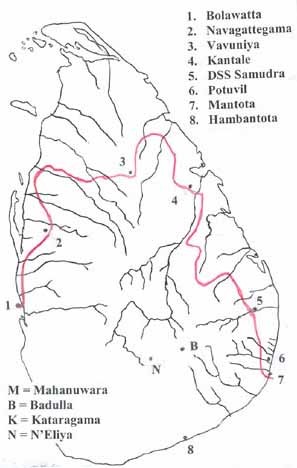
cwick01

  1. Physical Geography:

Sri Lanka is a pear-shaped island with a central mountain mass surrounded by a hilly landscape region and coastal plains. Because of this physical geography rivers are short and radiate from the central lands. The only river that could be called a river system is the Mahaweli Ganga”.

  1. Cultural Geography:

With an Indian Tamil population living in the central mountain region where the upstream water catchment areas are located, any agitation or collaboration between Northern Tamils, Tamilnad Tamils or World Tamils and the Indian Tamils (Malayanadu) could disrupt water supply especially to the Mahaweli Ganga Scheme by blocking the headwaters during drought.

  1. Climatology:

The island has a weather and climate based on the seasonal Monsoon winds. South-West Monsoons come with a heavy moisture content dropping it on a smaller area.

North-East Monsoons on the other hand come from the Bay of Bengal” with less moisture and spreads over a vast area. This creates two basic water regiments for the Wet Zone and the Dry Zone. Yet, even the Wet Zone is not free of droughts.

With one of the island’s Arid Zones in the Eelam” area (Mannar region), the demand for more water for that region could become an issue in the future.

  1. Geology:

The availability of groundwater resources is influenced by geological history and the demand for surface water is affected by this factor. For example, since Jaffna is a limestone (Karst) region, plans to convert the Jaffna lagoon into a fresh water lake could demand diversion of more water from the Mahaweli Scheme to the Kanakarayan Aru (K on Map 2).

  1. Historical Geography:

Eealm boundary is based on two Provincial boundaries arbitrarily created by the colonial ruler for administrative control. The continuation of these boundaries will become more problematic when two fighting sides become F marriage partners. The two nation theory was a colonial relic applied only in two previous occasions: India and Pakistan and Israel and Palestine. Under the traditional Tamil homelands myth North and East Provinces were temporarily merged with a sinister move to apply the two nation theory to Sri Lanka.

It was not based on geography or democracy but forced on a bankrupt President by a car racing Premier. Since it is a myth hostilities will always remain if it is forced on the Sinhala majority community.

  1. Geopolitics:

Tamil minority community in Sri Lanka enjoys more rights and privileges in Sri Lanka than what Tamils enjoy in Tamilnad, India. But the Tamil dream is to have its own sovereign country (see World Tamil Confederation website) on earth. They failed in the Fiji Island and have no chance in Malaysia or even in India and the best target is Sri Lanka.

With this aim, under a federal marriage scheme water conflicts could be used to harass and weaken the Sinhala majority in Sri Lanka.

  1. Tamilnadu Politics:

Despite proscription of separatist politics in India after the invasion of India by China in 1962, the dream of a separate Tamil country in India is not dead. Tamilnadu politicians act as tamed-moderate leaders due to survival pressure from Delhi and the political rivals waiting for a come-back (Rival Tamilnadu chief ministers send each other to jail).The description that Sri Lanka has a majority-minority complex is real.

With 70 million Tamils at next door and websites and politicians supporting a Tamil Eelam in Sri Lanka where can the 10 million Sinhalese go? Water wars are an effective method to keep the pot boiling.

  1. Corrupt Colombo Politicians:

Sinhala-Tamil ethnic issue was a creation of about 200 or so Colombo ruling families. During the past 60 years or so they mismanaged the country, converted the English versus Swabasha issue in to a Sinhala-Tamil language conflict, increased the gap between Colombo and the villages and widened the gap between rich living in Colombo, and the poor in the villages.

For the past 20 years they conspired with foreign agents (Liam-Fox agreement?) to divide the country into two so that these families could continue to rule the southern portion from Colombo. These Colombo black whites who accept that they are avalangu kaasis” will use future water disputes as beggar’s wounds to keep common people in bondage. The long boundary line between ‘Federal’ partners will give room for plenty of mini water wars.

The Solution:
cwick02

The two maps are not aimed at creating fear against devolution. Devolution is different from the merchandize called Indian federal formula of NGO and INGO agents. Real, as opposed to fake devolution from the concentration of power in the Colombo crowd of politicians (and officers) is what people are waiting for. The political and economic power must be decentralized and given to the people. The PC system and the new election law did not create devolution.

It created a new layer of corrupt politicians. After 1980 Colombo rulers destroyed the VC, TC, UC-based local government system. Rather than fostering a healthy local government system, each UNP and SLFP local govt. minister abused his powers and weakened local democracy and self-governance. The Abhayewardhana Report on Local Government Reforms (1999) provided in detail why the country needed to go back to the pre-1980 system to overcome the mess we are now in, especially the white elephant called PCs.

  1. T. Ariyaratne of Sarvodaya proposed a system of national governance structure based on local building blocks in 1988 in his booklet, The Power Pyramid and the Dharmic Cycle.” From time to time Arjuna Hulugalle presents his CIMOGG proposal of devolution at the district level with a base which is similar to the Sarvodaya proposal (Island, July 31, 2006). Actually all these are so similar to what was presented by president of Pakistan Ayub Khan on October 26, 1959 as Pakistan’s new constitution. Under it the whole country was divided into very small constituencies of between 800 and 1000 people.

This novel type of constituency was called the basic democracy.” There were 80,000 such elected units as the first tier of the constitutional structure (Pakistan: old country/new nation by Ian Stephens (1964, page 315).

The geographer Madduma Bandara proposed a river basin-based Provincial Division of seven units in 1987 (Chapter 4 in Fifty years of Sri Lanka’s Independence: a socio economic review, edited by A.V. de S. Indraratna (1998, p.83). Actually this is the best scientific approach for a united” Sri Lanka (unitary) where the term united really means unity. The AGA divisions and even the Grama Sevaka divisions should ideally be based on River-Oya-Ela basins. This way we will not have a mind-boggling number of 14,000 GS divisions in the island.

The Scotssman Paul Harris recently identified the Muslim factor as a future problem for Sri Lanka. He says that the al Qaeda-Taliban groups will sooner or later become actively involved in helping the Muslims in the Eastern Province to meet Tamil Terror with Islam terror. The geographer G. H. Peiris in his new book, Sri Lanka: challenges of the new millennium (2006?), speaks of the growing unrest in the upcountry area among the school going Indian Tamil youth.

Rather than a monster of a merged North-East Provinces, Sri Lanka’s home grown solution must be a District-level devolution where elected members of the local government units in a district creates the DC with super powers given them to operate as an almost autonomous administrative units. Such DCs should be allowed to merge for resource use purposes.

Thus Tamils can have ten or more DCs where they can achieve their aspirations. For example, in their DCs they can decide not to declare Vesak as a public holiday which Prabakaran’s younger brother (cousin?) told this writer when they were students in Canada in 1979.

Since the early 1960s Sri Lanka faced a gradual erosion of its structural democracy (i.e., abolition of the Senate, violation of the separation of powers doctrine, disregard for the rule of law and even lying at the question time in the parliament, appointing politicians as SC judges). Since 1978, in addition to structural erosion there was a death of territorial democracy of the worst possible type. The new electoral laws removed the voter from the elected and prevented honest, educated and dedicated local people contesting elections.

We ended up with a parliament which is a disgrace to representative democracy in the world. While people were denied the right to select what they like, they have been forced to select from the list the party leaders decide from Colombo after job interviews.” Then the number of Grama Sevakas” increased from 4,000 to 14,000 in the 1990s. Politicians use them to spy on people and not to serve people.

It is crucial that the territorial democracy restored as soon as possible and the structural democracy revived by abolishing the 1978 bahubootha viyavastava.” The Eelam map is the wrong way to handle this overhauling as it is an attempt to cure a cancer by feeding it. The Vadi Bana preached by NGO peace activists such as the Christian-born Jehan Perera will have no use (Divaina, August 7, 2006).

(The writer taught water resources geography and political geography at Kent State University, Ohio, USA)

ඉන්දු-ලංකා ගිවිසුම වසර 29කට පෙර බිහිවූ හැටි

July 27th, 2016

ධර්මන් වික්‍රමරත්න

වසර 1987 ජුනි 2 රාත්‍රී ටෙලෙක්ස් පණිවුඩ යන්ත්‍රයෙන් ලැබුණ රොයිටර් පුවතින් කියවුණේ තමිල්නාඩු රජය ශ්‍රී ලංකාවේ උතුරේ ජනයා සඳහා සහල්, පරිප්පු ඇතුළු ධන්‍ය වර්ග ඇතුළත් බෝට්ටු 25ක් විදේශීය මාධ්‍යවේදීන් සහ රතු කුරුස නිරීක්ෂකයින් 94 දෙනෙකු සමඟ ශ්‍රී ලංකාවට එවන බවය. රාමේෂ්වරම් තොටුපලේ සිට 1987 ජුනි 3 වැනිදා පැමිණි බෝට්ටු 19ක් පස්වරු 6 උතුරේ ශ්‍රී ලංකා මුහුදු සීමාවට ඇතුළු විය. උතුරු නාවික ආඥාපති අද්මිරාල් මොහාන් සමරසේකර‍ගේ උපදෙස් පරිදි එඩිතර නැවේ සිටි අණදෙන නිළධාරි කපිතාන් සුරාජ් මුණසිංහ ඇතුළු නාවික භටයෝ එම බෝට්ටු ඉදිරියට ඒම නැවැත්තුවෝය. ඇමති ලලත් ඇතුලත්මුදලි සහ ඒකාබද්ධ මෙහෙයුම් ආඥාපති සිරිල් රණතුංග එම මෙහෙයුමට රේඩියෝ පණිවිඩ මගින් නායකත්වය දුන්හ. පැය තුනහමාරක කාලයක් මුහුදේ නතරවී සිටි ඉන්දිය බෝට්ටු රාත්‍රී 9.30ට යළි ඉන්දියාව බලා ආපසු ගියහ.

Dharman Wickremaratne2ධර්මන් වික්‍රමරත්න විසිනි.

ඉන්දියාවේ සිටින ශ්‍රී ලංකාවේ මහ කොමසාරිස් බර්නාඩ් තිලකරත්නව 1987 ජුනි 4වැනිදා පස්වරු 2.30ට ඉන්දිය විදේශ අමාත්‍යාංශයට කැඳවූ ඉන්දිය රජය එදින පස්වරු 3.30ට ගුවන් මගින් උතුරේ ජනතාවට ආධාර භාණ්ඩ හෙළීමට තීරණය කර ඇතැයි දැනුම් දුන්නේය. මහ කොමසාරිස් තිලකරත්න එදිනම පස්වරු 2.55ට කොළඹ සිටින විදේශ ඇමති ඒ.සී.එස්. හමීඩ්ට දැනුම් දුන්නේය. පණිවිඩය සැලවූ විගස ජනාධිපති ජයවර්ධන මහතා කියා සිටියේ ගුවන් සීමාව ආක්‍රමණය කර භාණ්ඩ ගුවනින් හෙළීමට එරෙහිව කිසිදු කියාමාර්ගයක් නොගැනීමට එජාප ආණ්ඩුව තීරණය කර ඇති බවය.

වසර 1987 ජුනි 4 වැනිදා පස්වරු 3.55ට ඉන්දියාවේ බැං‍ගලෝරයේ පිහිටි ශ්‍රී ලංකා හමුදා ගුවන් තොටුපොළෙන් භාණ්ඩ ප්‍රවාහනය කරන ගුවන් යානා 5ක් ටොන් 25ක වියළි ආහාර ද්‍රව්‍යද රැගෙන ශ්‍රී ලංකාවට පියාසර කළහ. එදින පස්වරු 5ට යාපන අර්ධද්වීපයේ ඉහළ අහසේ සිට එම ගුවන්යානා මගින් පැරෂුට්වල සවිකරන ලද භාණ්ඩ පෙට්ටි බිම හෙළන ලදී. මෙසේ ඉන්දිය රජය ගුවන් සීමාව ආක්‍රමණය කළේ උතුරේ වඩමාරච්චි ප්‍රදේශයේ විමුක්ති මෙහෙයුම තවදුරටත් කරගෙන යෑම නතරකිරීමට ශ්‍රී ලංකා රජයට බලකිරීමටය. ඒ අනුව ඉන්දිය රජයේ විරෝධතා හේතුවෙන් යාපනය අල්ලා ගැනීම සදහා ආරක්ෂක හමුදාව විසින් ජුනි මස මැදදී ආරම්භ කිරීමට නියමිතව තිබූ මෙහෙයුම නතරකිරීමට ආණ්ඩුව තීරණය කර ඇති බව ජනාධිපති ජයවර්ධන දැනුම් දුන්හ.

එජාප ආණ්ඩුවටත්, සන්නද්ධ දෙමළ බෙදුම්වාදයටත්, ඉන්දියානු ආක්‍රමණයටත් එරෙහිව සටන් කලහැකි එකම බලවේගය තමන් බව ජනතා විමුක්ති පෙරමුණ සිය 2වැනි කැරැල්ල 1986දී බෞතීස්ම කරමින් කියා සිටියහ. ජවිපෙ මතුකල ඉන්දු ලංකා ගිවිසුමේ පළාත් සභාවලට එරෙහි විරෝධයෙන් කියා සිටියේ එමගින් ලක්බිමෙන් සියයට 30ක් සහ වෙරළින් සියයට 60ක් දෙමළ බෙදුම්වාදින්ට අයත්වන බවය. රට දෙකඩ වී ජාතික සමගිය බිඳවැටෙන හෙයින්  මේ අපරාධවලට ඉඩ නොදෙන ලෙසද එයට එරෙහිව නැගී සිටින ලෙසද ජවිපෙ ජනතාව ගෙන් ඉල්ලා සිටියේය

dharman27071602ඉන්දීය අගමැති සහ ශ්‍රී ලංකා ජනාධිපති ඉන්දු ලංකා ගිවිසුමට කොළඹදී 1987 ජුලි 29 වැනිදා අත්සන් තැබූ මොහොත. අමාත්‍යවරුන් වන ඒ.සී.එස්. හමීඩ්, ගාමිණී දිසානායක, දේවනායගම්, හුරුල්ලේ, ජනාධිපති ලේකම් මැණික්දිවෙල, ඉන්දීය රජයේ අමාත්‍යවරුන් වන නරසිංහ රාවෝ, එන්.ඩී තිවාරි, රාජ්‍ය අමාත්‍ය නට්වාර් සිං යන මහත්වරුන්ද මෙහි වෙති.

ඉන්දියාව ගුවනින් පරිප්පු දමා දින 3කට පසු ජවිපෙ සන්නද්ධ අංශය වන දේශප්‍රේමී ජනතා ව්‍යාපාරය 1987 ජුනි 7 වැනිදා කටුනායක ගුවන් හමුදා කඳවුරට සහ රත්මලාන ජෝන් කොතලාවල ආරක්ෂක පීඨයට කඩා වැද ටී 56 ප්‍රහාරක රයිෆල් 14ක්, උප යාන්ත්‍රික තුවක්කු 53ක්, සැහැල්ලු යාන්ත්‍රික තුවක්කු 2ක්, පිස්තෝල 6ක්, වෙඩි උණ්ඩ 3,300ක් පැහැර ගත්හ. ජවිපෙ සන්නද්ධ අංශය 1987 ජුනි 7 වැනිදා ප්‍රහාරයේ වගකීම භාරගනිමින් කියාසිටියේ ඉන්දිය ගුවන් ආක්‍රමණිකයා හමුවේ මව්බිමේ ආරක්ෂාවට එජාප ආණ්ඩුව නොයෙදූ ගුවන් ප්‍රහාරක අවි පැහැරගත් අතර ඒවා ඉන්දීය ආක්‍රමණයට එරෙහිව ඉදිරියේදී යොදවන බවය. එයට ප්‍රථමයෙන් 1987 අප්‍රේල් 15වැනිදා පල්ලකැලේ හමුදා කඳවුරට පහරදි අවි පැහැරගෙන තිබිණි.

ඉන්දිය ගුවන් ආක්‍රමණයට එරෙහිව ඉන්දීය තානාපති කාර්යාලය සහ මහ කොමසාරිස් ගේ කොළඹ නිල නිවස ඉදිරිපිට දිනපතා විරෝධතා ව්‍යාපාර පැවැත්විණි. එවකට ශ්‍රී ලංකා‍වේ සිටි ඉන්දිය මහ කොමසාරිස් ජෝතීන්ද්‍රනාත් ඩික්සිත් ඉන්දිය ජාතිකයින්ට නිවෙස්වලින් ඉවත්ව හෝටල්වල නතරවන ලෙසටද උපදෙස් දුන්හ.මේ සියල්ල අතරතුරදී ශ්‍රී ලංකාවේ ඉන්දිය මහ කොමසාරිස් ජේ.එන්.ඩික්සිත්,මේ සියල්ල අතරතුරදී ඉන්දීය රජය මගින් ඉන්දු ශ්‍රී ලංකා  ගිවිසුමට පිඹුරුපත්  සකස් කරගෙන යන ලදී. මේ සදහා ඉන්දීය අගමැති රජීව් ගාන්ධි, ජනාධිපති ජයවර්ධන සමඟ සහ ප්‍රභාකරන් සමඟ නිරන්තර සාකච්ඡා පවත්වන ලදී. ශ්‍රී ලංකාවේ ඉන්දීය මහ කොමසාරිස් ජෝතීන්ද්‍රනාත් ඩික්සිත් සහ අමාත්‍ය ගාමීණී දිසානායක එහි ප්‍රධාන නළුවන් විය. කපුකම කළේ හින්දු පුවත්පතේ සම කර්තෘ එන්. රාම්ය.

dharman27071603ඉන්දීය අගමැතිවරයා යළි ඉන්දියාවට යැමට පෙර 1987 ජුලි 30 හමුදා පෙළපාලිය පිරික්සීම සඳහා ශ්‍රී ලංකාවේ නාවික හමුදාවේ ප්‍රධානියෙකු සමඟ පෙළෙන් පෙළට ගමන් කරමින් සිටිය දී පෙළපාලියේ සිටි නාවික සෙබළ විජිත රෝහණ විජේමුණි රයිෆල් බඳෙන් ඉන්දීය අගමැතිවරයාට පහර දුන් අවස්ථාව

 ඒ අනුව ඉන්දියානු මහ කොමසාරිස් කාර්යාලයේ දෙවන ලේකම් එච්. එස්. ජුරි 1987 ජුලි 21වැනිදා යාපනයට ගොස් එල්.ටී.ටී.ඊ නායක වේලුපිල්ලේ ප්‍රභාකරන් ඇතුළු දෙමළ සටන්කාමී කණ්ඩායම්වල නායකයින් හමුවී සාකච්ඡා කෙරෙනි. මහ කොමසාරිස් ඩික්සිත් මදුරාසියට ගොස් ශ්‍රී ලංකාවේ දෙමළ සංවිධානවල නායකයින්ද හමුවිය. ද්‍රවිඩ එක්සත් විමුක්ති පෙරමුණේ නායකයෝ එහිදී කියා සිටියේ උතුරු නැගෙනහිර පළාත් දෙක ඒකාබද්ධකර වෙනම පළාත් සභාවක් පිහිටුවිය යුතු බවය. ඩික්සිත් එම යෝජනා නවදිල්ලියට රැගෙන ගොස් ඉන්දිය රජයට සහ අගමැති රජිව් ගාන්ධිට දැනුම් දුන්නේය. ජනාධිපති ජයවර්ධන 1987 ජුලි 23 වැනිදා එජාප ආණ්ඩුවේ මන්ත්‍රීවරුන් කැඳවූ අතර ඉන්දියාව සමඟ සහයෝගයෙන් ප්‍රශ්නය විසදීමට කටයුතු කරන බව කියා සිටියේය. එජාප මන්ත්‍රීවරුන් එය අනුමත කළෝය.

Sri Lanka. Monk seated on the ground surrounded by tear gas. Pettah bus stand, Colombo, 28th July 1987. Protest at the signing of the Indo Lanka Peace Accord between India and Sri Lanka.

Sri Lanka. Monk seated on the ground surrounded by tear gas. Pettah bus stand, Colombo, 28th July 1987. Protest at the signing of the Indo Lanka Peace Accord between India and Sri Lanka.කොටුව බෝගහ අසල 1987 ජුලි 28දී පොලිස් කඳුළු ගෑස් සහ වෙඩි උණ්ඩ හමුවේ විසිර ගිය 20,000 සෙනඟ අතරින් නොසැලී සිටි එකම තැනැත්තා-කෑගල්ලේ විමල සාමනේර හිමියෝ

ඉන්දියා‍ව මදුරෙයි සිට 1987 ජුලි 24වැනිදා පස්වරු‍වේ යාපනයට පැමිණි ඉන්දිය හමුදා හෙළිකොප්ටර් යානා දෙකක් මගින් එල්.ටී.ටී.ඊ. නායක වේළුපිල්ලේ ප්‍රභාකරන් ප්‍රථමයෙන් මදුරාසියට සහ පසුව නවදිල්ලියට කැඳවාගෙන ගොස් ඉන්දීය අගමැති රජීව් ගාන්ධිද මුණ ගස්සා ඉන්දු ලංකා ගිවිසුමකට ඔහු එකඟ කරවා ගැනීමට උත්සාහ දැරීය. ද්‍රවිඩ එක්සත් විමුක්ති පෙරමුණ සහ අනිකුත් දෙමළ සන්නද්ධ සංවිධාන එයට එකඟ විය. ජුලි 25 සහ 26 යන  දිනයන්හි යෝජිත ගිවිසුම පිළිබදව ඉන්දියානු රජයේ නියෝජිතයෝ සහ ප්‍රභාකරන් අතර සාකච්ඡා වට කිහිපයක්ම පැවතිනි. ඒ නවදිල්ලියේ අශෝක් හෝටලයේදීය.  එල්.ටී.ටී.ඊ සංවිධානයට අතුරු පාලනයේ වැඩි බලයක් ලබාදීමටද එහි සාමාජිකයින් එහි නව පාලනයට අන්තර්ග්‍රහණය වන තෙක් ඔවුන් නඩත්තු කිරීමට ඉන්දිය රුපියල් ලක්ෂ 50ක් මාසිකව ගෙවීමටද ඉන්දිය අගමැති රජිව් ගාන්ධි විසින් ප්‍රභාකරන් හමුවේදී එකඟ විය.

ජපානයේ නිල සංචාරයකට ගොස් සිටි අගමැති රණසිංහ ප්‍රේමදාස ගිවිසුම ගැන ආරංචි වී 1987 ජුලි 26 වැනිදා පෙරළා ශ්‍රී ලංකාවට පැමිණියේය. අගමැතිවරයාටද නොදන්වා ජනාධිපති ජයවර්ධන එකඟවූ ඉන්දු ලංකා ගිවිසුම පිලිබඳව ප්‍රේමදාස සිය නොසතුට පළ කළේය. යෝජිත රහස් ගිවිසුම සම්බන්ධයෙන් පාර්ලිමේන්තුවද 1987 ජුලි 24වැනිදා රැස්වූ අවස්ථාවේදී උණුසුම් තත්ත්වයක් ඇතිවූ අතර දිනේෂ් ගුණවර්ධන, රිචඩ් පතිරණ යන විපක්ෂ මන්ත්‍රීවරුන් එයට ප්‍රබල විරෝධයක් දැක්වූහ. ආණ්ඩුව සිදුකළේ පාර්ලිමේන්තුවේ මීලඟ රැස්වීම අගොස්තු 18 දක්වා කල් තැබීමේ යෝජනාවක් වැඩි ඡන්ද 65කින් සම්මතකර ගැනීමය.  පානදුරේදී 1987 ජුලි 25වැනිදා ප්‍රාදේශීය සභා මැතිවරණ අපේක්ෂකයින් අමතමින් ජනාධිපති ජයවර්ධන කියා සිටියේ කවුරු විරුද්ධ වූවද තමා ගිවිසුම අත්සන් කරන බවය. එය ගිවිසුම පිළිබද ආණ්ඩුව ප්‍රසිද්ධියේ කී ප්‍රථම වතාවය.

dharman27071605ඉන්දු-ලංකා ගිවිසුමට එරෙහිව 1987 ජුලි 28වැනිදා පැවති විරෝධයේදී ප්‍රථම වරට මියගිය මොරටු සරසවියේ ඉංජිනේරු සිසු ක්ලිෆට් පෙරේරා අවසන් හුස්ම හෙළු අන්දම(පහළ) සහ ඔහුගේ ඡායාරූපය(ඉහළ)

යෝජිත ගිවිසුමට එරෙහිව 1987 ජුලි 28වැනිදා කොටුව බෝගහ අසළදී විරෝධතා ව්‍යාපාරයක් උදෑසන 8ට ආරම්භ විණි. එදින උදෑසන 6.30ට පමණ ලියුම්කරු එය වාර්තා කිරීමට කොටුවට ගිය අවස්ථාවේ ජවිපෙ දේශපාලන මණ්ඩල සභිකයින් වන එච්.බී හේරත්, ගුණරත්න වණසිංහද මධ්‍යම කාරක සභිකයින් වන ගාමිණී විජේගුණසේකර, තංගරාජා ඇතුළු කිහිප දෙනෙක්ද ජවිපෙ ඉහළ පෙළේ ක්‍රියාකාරිකයින් සිය ගණනක්ද පැමිණි තිබිණි. එදින එළිවන විට ඉන්දු ලංකා ගිවිසුමට, දෙමළ බෙදුම්වාදයට සහ එජාප ආණ්ඩුවට එරෙහිව කොළඹ පමණක් නොව මුළු රටේම බොහෝ ප්‍රධාන නගරයන් රක්ත වර්ණ පෝස්ටර් වලින්ද සටන් වැකි වලින්ද කළු කොඩිවලින්ද සරසා තිබුණු බව දැනගන්නට ලැබිණි.

විරෝධතා ව්‍යාපාරය මව්බිම සුරකිමේ සංවිධානය වෙනුවෙන් හැඩිගල්ලේ පඥ්ඤාතිස්ස හිමි, මාදුළුවාවේ සෝභිත හිමි, මුරුත්තෙට්ටුවේ ආනන්ද හිමි, ආචාර්ය විලේගොඩ අරියදේව හිමි, පාර්ලිමේන්තු මන්ත්‍රී දිනේෂ් ගුණවර්ධන, ප්‍රින්ස් ගුණසේකර යන අය විසින් කැඳවා තිබිණි. එම විරෝධතා ව්‍යාපාරයට සහාය දක්වමින් මව්බිම සුරකීමේ සංවිධානය නැමති ශ්‍රිලනිපයට හිතවත් සංවිධානය වෙනුවෙන් විපක්ෂ නායිකා සිරිමා බණ්ඩාරනායක, ජිනදාස නියතපාල, බෙංගමුවේ නාලක හිමි, ගාමිණී ඊරියගොල්ලද අනුර බණ්ඩාරනායක ඇතුළු ශ්‍රිලනිප මන්ත්‍රීවරු රැසක්ද විය. සියළු සංවිධාන කටයුතු සිදුකළේ අන්තර් විශ්ව විද්‍යාල ශිෂ්‍ය බල මණ්ඩලය සහ භික්ෂු බල මණ්ඩලය මගිනි. විරෝධතා ව්‍යාපාරයට රටපුරා අදිසි නායකත්වය දුන්නේ ජවිපෙ මගිනි.

dharman27071606ඉන්දු ලංකා ගිවිසුම අත්සන් කිරීමෙන් පසු අගමැති ගාන්ධි සහ ජනාධිපති ජයවර්ධන 1987 ජුලි 29 පැවැත්වූ ඒකාබද්ධ මාධ්‍ය සාකච්ඡාව.

එදින එනම් 1987 ජුලි 28වැනිදා පෙරවරු 11.30වන විට 20,000කට ආසන්න පිරිසක් කොටුව බෝගහ ලඟට එක්වීමෙන් අවට මංමාවත් සියල්ලම වැසී ගියේය. සෙත් පිරිත් හඬ දසතින් පැතිර ගියේය. පොලිසිය මගින් කඳුළු ගෑස් එල්ල කර සිදුකල බැටන් ප්‍රහාරයත් සමඟම ජනගඟ කැළඹිණි. වෙඩි පිට වෙඩි හඬ ඇසිණි. පිරිස් සංවිධානාත්මකව සතර දිසාවට පෙළපාලි 10ක්  පමණ ගමන් කල අතර එක් පෙළපාලියකට දහසකට අධික පිරිසක් අයත් වූහ. විරෝධතාකරුවන් බස්රථ ඇතුළු රජයේ දෙපල ගිනි තැබූහ. කළු දුම්රොඩු අහසට නැගිණි.

ඉන්දු ලංකා ගිවිසුම් විරෝධී අරගලයේ ප්‍රථමයෙන්ම වෙඩි තැබීමෙන් මියගියේ මොරටු සරසවියේ ඉංජිනේරු සිසු ක්ලිෆඩ් පෙරේරාය. එහිදී ලියුම්කරු ඔහුගේ සිරැර හඳුනාගත් අතර ක්ලිෆඩ්ගේ පියා සේවය කරන කොටුව මිලර්ස් ආයතනයට පණිවියක් යැවීය. එම ස්ථානයේදීම වෙඩි තැබිමෙන් ඝාතනයට ලක්වූ පිරිස 21කි. මියගිය සහ තුවාලකරුවන් අවට සිටි අය විසින් රෝහළට ගෙන යන ලදී. බෝගහ අසළින් ඇරඹූ ගිවිසුම් විරෝධී ප්‍රචණ්ඩ ක්‍රියා රටපුරාම පැතිර ගිය අතර 1987 ජුලි 27 සිට අගොස්තු 2 දක්වා ගිවිසුමට එරෙහි විරෝධතාවන්හිදී විරෝධතාකරුවන් 132ක් මිය ගිය බවද භික්ෂූන් 56ක් ඇතුළු 712ක් අත්අඩංගුවට ගෙන තිබූ බවද එම දින පහ තුළ ප්‍රචණ්ඩ ක්‍රියා සිද්ධීන් 2,527ක් සිදුවූ බව රජයේ නිල වාර්තාවල සදහන් විය. ජවිපෙ කැරළිකරුවන් විසින් තංගල්ල එජාප මන්ත්‍රී ජිනදාස වීරසිංහ 1987 අගෝස්තු 1වැනිදා වෙඩිතබා ඝාතනය කර තිබිණි.  

dharman27071607ඉන්දීය හමුදාවේ අවසාන සේනාංකය 1990 මාර්තු 24වැනිදා ත්‍රිකුණාමලයෙන් ඉන්දියාව බලා පිටත්වූ අවස්ථාව.

එජාප ආණ්ඩුව 1987 ජුලි 28වැනිදා රාත්‍රී සිට මුළු රටේම ඇදිරි නීතිය පැනවීය. රට පුරා විරෝධතා පෙළපාලි අගෝස්තු 2වැනිදා දක්වා පැවැත්වූයේ එම ඇදිරිනීතියද බිඳගෙනය. ජනාධිපති ජයවර්ධනට අමතරව ගිවිසුමේදී ප්‍රධාන භූමිකාවක් සිදුකළේ ඇමති ගාමිණී දිසානායකය. ඇමති ඇතුලත්මුදලි සහ අගමැති ප්‍රේමදාස නිහඬ පිලිවෙතක් අනුගමනය කළෝය. රජිව් ගාන්ධි සිය බිරිඳ සෝනියා සමඟින් ලංකාවට පැමිණියේ 1987 ජුලි 29වැනිදා පෙරවරු 10.30ටය. කටුනායක ගුවන්තොටු පොලෙන් ඔවූහු ගුවන්යානා හෙළිකොප්ටර්වල නැගී ගාලුමෝදරට පැමිණියෝය. ඉන්දීය රජයේ අමාත්‍යවරුන් වන නරසිංහ රාවෝ, එන්.ඩී තිවාරි, රාජ්‍ය අමාත්‍ය නට්වාර් සිං යන මහත්වරුන්ද කේ.පී.එස් මෙනන්, රොහාන් සෙන් යන නිලධාරීන් සහ ජනමාධ්‍යවේදීන් පිරිසක්ද එම දූත පිරිස සමඟ පැමිණියහ.

ජනාධිපති ජයවර්ධන හමුවූ ඔහු පෙරවරු 11.30ට නිල නොවන සාකච්ඡා ඇරඹීය. 1987 ජුලි 29වැනිදා මධ්‍යම රාත්‍රිය දක්වා තුන් වතාවක් රජීව් සහ ජනාධිපති ජයවර්ධන ජනාධිපති මන්දිරයේ සාකච්ඡා පැවැත්වීය. සිව්වැනි එමෙන්ම අවසාන හමුව පැවැත්වූවේ ජුලි 30වැනිදා උදෑසනය. අමාත්‍යවරුන් වන ගාමිණී දිසානායක, රොනී ද මෙල්, නරසිංහ රාවෝ, ජනාධිපති ලේකම් මැණික්දිවෙල, ඉන්දිය විදේශ ලේකම් එස්. මෙනන්, රොනන් සෙන්, ඩික්සිට් එම සාකච්ඡාවලට ඔවුන් සමඟ සහභාගී වූහ.

dharman27071608ද්‍රවිඩ කොටි නායක ප්‍රභාකරන්, ශ්‍රී ලංකාවේ ඉන්දීය මහ කොමසාරිස් ජේ.එන්. ඩික්සිත්, සහ ඉන්දීය හමුදාවේ මේජර් ජනරාල් හරිකිරාන් සිං(වමේ සිට) ඉන්දු ලංකා ගිවිසුම අත්සන් කිරීමෙන් පසු යාපනයේදී.

ජනාධිපති මන්දිරයේ පැවති ඉන්දීය අගමැතිවරයා පිලිගැනිමේ උත්සවයට අගමැති ආර්. ප්‍රේමදාස ඇතුළු කැබිනටි මණ්ඩලයේ බොහෝ දෙනෙක් පමණ සහභාගී නොවූහ.  එයට සහභාගිවන ලෙසට ඉන්දීය අගමැතිවරයා විපක්ෂ නායිකා සිරිමා බණ්ඩාරනායකට කල ආරාධනයද ඇය වර්ජනය කර තිබිණි. තද” ලියුමක් සිරිමා බණ්ඩාරනායක එවා තිබූ අතර එය විශේෂ නියෝජිතයෙකු විසින් පෙරවරු 11.30ට අගමැති රජීව්ට අතින් භාරදෙන ලදී.

එම අවස්ථාවට ශ්‍රී ලංකාවේ ඇමරිකානු තානාපති ජේම්ස් ස්පෙන්  එක්වූ අතර ඔහු ඇමරිකානු ජනාධිපති රොනල්ඩ් රේගන් ගේ විශේෂ ලිපියක් එම ස්ථානයේදීම ඉන්දීය අගමැතිවරයා වෙත ලබාදුන්නේය. එහි සඳහන් වූයේ ශ්‍රී ලංකාවේ ජනවාර්ගික අර්බුදය විසදීමට ඉන්දීය මගින් ගනු ලැබූ උත්සාහය ගැන ප්‍රසංශා කිරීමකි. ඉන්දීය රහස් ඔත්තු සේවය වන රෝ සංවිධානය පසුව චෝදනා කළේ අත්සන් කරන තෙක් රහසක්ව පවත්වාගෙන සිටි ගිවිසුමේ පිටපතක් එයට කලින් ජනාධිපති ජයවර්ධන විසින් ඇමරිකානු රජය වෙත භාරදී ඇති බවය.

රටපුරාම ලක්ෂ ගණන් ජනයා ඇදිරිනීති‍ය නොතකා වීදිවලට බැස විරෝධතා ව්‍යාපාර පවත්වද්දී ඉන්දු ලංකා ගිවිසුම දෙරටේ නායකයෝ විසින් 1987 ජුලි 29 වැනිදා පස්වරු 3.37ට අත්සන් තැබූහ. ගිවිසුම අත්සන් කිරිමෙන් පසු අගමැති රජීව් ගාන්ධි සහ ජනාධිපති ජයවර්ධන විදේශ කටයුතු අමාත්‍යාංයේදී දෙස් විදෙස් මාධ්‍ය සාකච්ඡාවක්ද පැවැත්විණි. ලියුම්කරුද එයට එක්වී සිටියහ.

අගමැති රජිව් ගාන්ධි නික්ම යෑමට පෙර 1987 ජුලි 30වැනිදා ජනාධිපති මන්දිරය ඉදිරිපිටදී ආචාර පෙළපාලියක් පවත්වන ලදී. එවිට උත්සවය ආරම්භ වූයේ උදෑසන 9.30ට පමණය. උත්සවය අවසන් වුයේ උදෑසන 10.15ටය. දෙරටේ ජාතික ගී ගායනා කිරීමෙන් පසු ශ්‍රී ලංකා නාවික හමුදාවේ ප්‍රධානියෙකු සමඟ පෙලින් පෙලට ගමන් කරමින් සිටියදී ලුතිනන් මැන්ඩිස්ගේ අණ පරිදි සම්මාන මුරයට සහභාගිවූ නාවික සෙබළ විජිත රෝහණ විජේමුණි සිය රයිෆල් බදින් ඉන්දීය අගමැතිවරයාගේ හිසට පහරක් එල්ල කලද එය වලක්වා ගැනීමට ඔහුගේ ආරක්ෂකයින් සමත් විය. එහෙත් එම පහර අගමැතිවරයාගේ උරහිසට වැදිණි. රජීවි ගාන්ධි ආපසු දිල්ලියට කලින් යොදා ගත් පරිදිම පෙරවරු 11.30ට කටුනායකින් දිල්ලිය බලා පිටත් විය. කොටුවේ සිට කටුනායකට ගියේද හෙලිකොප්ටර් මගිනි. සෝනියා ගාන්ධි ඒ වන විටත් කටුනායකට පැමිණ තිබිණි.

ගිවිසුම අත්සන් කරන අවස්ථාව වන විට ඉන්දිය යුද නෞකා දෙකක් ඕනෑම දේකට සූදානම් බව අගවමින් කොළඹ අවට මුහුදේ සැරි සැරීය. ගිවිසුම අත්සන්කර පැය කිහිපයක් ගත වීමටත් පෙර ඉන්දීය හමුදා භටයින් 7,000ක් රැගත් ගුවන් යානා සහ නැව් යාපනයට ඉන්දීය හමුදා සේනානාංක වශයෙන් ගොඩ බටහ.  එහි නායකත්වය ගත්තේ ඉන්දීය යුධ හමුදාවේ ලුතිනන් ජනරාල් දීපේන්ද්‍ර සිංය. ශ්‍රී ලංකා යුධ හමුදා භටයින් සියළු දෙනාම ඉන්දීය යුධ ප්‍රවාහන ගුවන් යානා මගින් කොළඹට ගෙන එන ලදී. ඉන්දු ලංකා ගිවිසුම අත්සන්කර අගමැති ගාන්ධි යන්නට පෙරදීම 1987 ජුලි 29 වැනිදා පස්වරුවන විට ඉන්දීය හමුදා ලංකාවට පැමිණ උතුරු නැගෙනහිර ප්‍රදේශවල ස්ථාන ගත වී සිය කටයුතු ඇරඹුහ.

නාවික භටයා අගමැති ගාන්ධිට පහරදුන් අවස්ථාව සේයාරුවේ සටහන් කරගැනීමට සමත්වූ එකම ඡායාරූප ශිල්පියා වූයේ ඩේලි නිවුස් පුවත්පතේ මාණ්ඩලික ඡායාරූප ශිල්පී සේන විදානගමය. එහි සිටි දෙස් විදෙස් සිය ගණනක් ඡායාරූප ශිල්පීන් අතරින් ඔහු ගත් ඡායාරූපය ලොව පුරා ප්‍රචලිත විය. සේන විදානගම ඇතුළු ඡායාරූප ශිල්පීන්ට වෙන්කර තිබුණේ ආචාර පෙළපාලියට මීටර් 30ක් පමණ දුරින් සකස්කල අට්ටාලයකය. දිවයින පුවත්පතේ ජේෂ්ඨ මාධ්‍යවේදී දයා ලංකාපුර සමඟ එය වාර්තා කල සෙසු මාධ්‍යවේදීන් අතර ලියුම්කරුද බන්දු එස්. කොඩිකාරද විය.

ඉන්දීය අගමැතිවරයාගේ දකුණු පසින් ගමන් කලේ අද්මිරාල් ආනන්ද සිල්වාය. දකුණු පස ඉන්දීය සුපිරි කායාරක්ෂක කමාන්ඩෝ බටයෝ කිහිප දෙනෙකු සිටියහ. රයිෆල් බදින් සෙබළ විජේමුණි පහර දුන්නේ එවිටය. එක රැයකින් පත්තර ලෝකයේ වීරයෙකු වූ සේන විදානගම සිය ඡායාරූපය කැමරාවේ සටහන් කරගත්තේ එවිටය. තමාගේ ඡායාරූප රීලය  මේස් කකුලේ සඟවාගෙන ලේක්හවුසියට පැමිණි විදානගම ඩේලි නිවුස් කර්තෘ මණික් ද සිල්වාට එය භාර දුන්නේය. ලේක්හවුසියේ එවකට සිටි සභාපති රණපාල බෝධිනාගොඩ ජනාධිපති ජයවර්ධනගේ අවසරයෙන් පසු එය පලකිරීමට පසු අවසර දුන්නේ එදින මහරෑය. පසුදා ලේක්හවුසියේ අගනුවර මුද්‍රණවල පමණක් එය පළවී තිබිණි. 

රජිව් ගාන්ධිට පහරදීම පිළිබද වගකිම දේශ‍ප්‍රේමි ජනතා ව්‍යාපාරයේ නිල පුවත්පත වූ වෙඩි හඬ මගින් පිළිගෙන තිබිණි. එමෙන්ම එදින සවස් වරුව වන විට ඇදිරිනීතියද නොතකා ඒ පිළිබද වගකිමේ ලිපි මාධ්‍ය වලට කිර්ති විජේබාහුගේ අත්සනින් යුතුව නිකුත් කර තිබිණි. එහෙත් පහර දුන් සෙබලා නිදහසින් පසු කියා සිටියේ මව්බිමට ආදරය ඇත්තෙකු වශයෙන් තමා ඒ ක්‍රියාමාර්ගය ගත් අතර කිසිදු පක්‍ෂයක හෝ සංවිධානයක සාමාජිකයෙකු නොවන බවය.

රජිව් ගාන්ධිට පහර දුන් බල නැවි(ගුවන්විදුලි කාර්මික ශිල්පි) විජිත විජේමුණි රත්ගම බූස්සේ උපන් අතර එවකට 22හැවිරිදි විය. නම දෙනෙකුගෙන් යුත්  පවුලේ පස්වැනියාය. ගිංතොට මහ විද්‍යාලයේ ආදි ශිෂ්‍යයකි. නාවික හමුදාවේ රැකියාවට පැමිණියේ 1985 අප්‍රේල් 19වැනිදාය. ත්‍රිකුණාමලයේ නාවික සහ සමුද්‍ර ඇකඩමියේ ප්‍රථම පුහුණුව ලැබිය. රජීව් මැරීමේ චේතනාවක් නොතිබුණු බවද ඔහු කල බලහත්කාර ක්‍රියාව පිළිබදව ජාත්‍යන්තර වශයෙන් අපහාසයක් ලබාදීමට එය සිදුකල බවද හෙතෙම යුධ අධිකරණයේදී කියා සිටියේය. හිටපු කථානායක ස්ටැන්ලි තිලකරත්න, ඩොනල්ඩ් හේවාගම, සරත් විජේසිංහ ඇතුළු නීතිඥයින් රැසක් ඔහු වෙනුවෙන් ස්වෙච්ඡාවෙන් පෙනී සිටියහ.

නඩු විභාගයේදී පළමු චෝදනාව වූ රජිව් ගාන්ධි මරා දැමීමට තැත් කිරිම පිලිබදව ඔහු නිවැරදිකරු වූ අතර අනියම් මිනීමැරීමට බරපතල වැඩ සහිතව වසර 06ක සිරදඬුවමක් යුද්ධාධිකරණය නියම කළේය.  පසුව ඔහු ආර්. ප්‍රේමදාස ජනාධිපතිතුමා විසින් පිරිනමන ලද විශේෂ සමාවක් යටතේ 1990 අප්‍රේල් 03වැනිදා මුදාහරිනු ලැබීය. සිරගෙදර සිටියේ වසර 2 මාස 04ක් පමණි.

ඉන්දීය හමුදා සේනාංක ලක්ෂයකට ආසන්න පිරිසක් එම වකවානුව තුළ ශ්‍රී ලංකාවට පැමිණි අතර උතුරු නැගෙනහිර යුද්ධයේ මියගිය ඉන්දීය නිලධාරින් සහ භටයන් සංඛ්‍යාව 1,500ක් පමණ වේ. දෙමළ බෙදුම්වාදී ත්‍රස්තවාදීන් ඇතුළු 8,000ක් පමණ ඉන්දීය හමුදාව මගින් ඝාතනයට ලක්විය. ඉන්දීය හමුදා සේනාංක ශ්‍රී ලංකාවෙන් ඉවත්කර ගැනීම 1989 ඔක්තෝබර් 25වැනිදා අම්පාර දිස්ත්‍රික්කයෙන් ඇරඹූ අතර  ඉන්දීය හමුදාවේ අන්තිම සේනාංකය 1990 මාර්තු 13 වැනිදා ත්‍රිකුණාමලයෙන් සමුගෙන ඉන්දියාව බලා පිටත් විය.

ඉන්දු ලංකා ගිවිසුම අනුව පොරොන්දු වූ කරුණු කාරනා ඉටු කිරීමට ඉන්දිය රජය අපොහොසත් විය. එමගින් ස්ථාපිත වූ 13වැනි ව්‍යවස්ථා සංශෝධනය පිළිබදව විවිධ ආණ්ඩු ඉන් පසුව මුහුණ දෙමින් සිටින් උභතෝකෝටික ගැටළුවන්ටය. ඉන්දු-ලංකා ගිවිසුම, 13 වැනි සංශෝධනය සහ පළාත් සභා වූ කලී දම්වැලක පුරුක් මෙන් එකනෙකට බැදී පවතින්නකි. ජවිපෙ 2වැනි කැරැල්ලේ ප්‍රධාන අරමුණක්ද වූයේ ඉන්දීය ආක්‍රමණයට එරෙහිව සටන් කිරීම වන අතර එම කැරැල්ලේදි ඝාතනයට සහ අතුරුදහන්වූ සංඛ්‍යාව 41,813කි. නිල නොවන වාර්තා කියන්නේ එය 60,000කට ආසන්න බවය.

ඉන්දු ලංකා ගිවිසුමට මුල් වූ තිදෙනා අද අප අතර නොමැත. ඉන්දීය අගමැති රජීව් ගාන්ධි(46) කොටි සංවිධානයේ මරාගෙන මැරෙන බෝම්බ ප්‍රහාරයකින් 1991 මැයි 21වැනිදා රාත්‍රියේ මදුරාසියේ පෙරුම්බුදුර්හි පැවති ඡන්ද රැස්වීමකදි ඝාතනයට ලක්විය. එජාප ආණ්ඩුවේ ජනාධිපති ජේ.ආර්. ජයවර්ධන(90) වසර 1996 නොවැම්බර් 01වැනිදා මිය ගියේය.  කොටි නායක ප්‍රභාකරන්(54) වසර 2009 මැයි 18වැනිදා යුද්ධයේදී මියගොස් තිබිණි

දෙමළ බෙදුම්වාදී සටන නතර කිරීමට 1987 ඉන්දු ලංකා ගිවිසුමටද නොහැකි වීමෙන් පසු එජාප ආණ්ඩුව 2002දී බලයට පත්වීමෙන් පසු දෙමළ බෙදුම්වාදී කොටි සංවිධානය සමඟ නොර්වේ රාජ්‍ය හරහා ප්‍රභාකරන් සහ අගමැති රනිල් වික්‍රමසිංහ අතර අත්සන් කල සටන්විරාම ගිවිසුමක් දෙපාර්ශවය අතර ඇතිකර ගනු ලැබූවද එයද සාර්ථක නොවීය. එහෙත් දෙමළ බෙදුම්වාදී ත්‍රස්තවාදීන් විසින් ගෙනගිය 30 වසරක යුද්ධය සහමුළින්ම පරදවා 2009 මැයි 18වැනිදා විජයග්‍රහණය කිරීමට ජනාධිපති මහින්ද රාජපක්ෂ සමත්විය. එහෙත් ඉන්දු-ලංකා ගිවිසුමෙන් පැන නැගුණු අළුයට ගිනි පුපුරු තවමත් නිමාවක් නැත.

ධර්මන් වික්‍රමරත්න

ejournalists@gmail.com

විරෝධතා පැවැත්වීමේ අයිතියට ගරු කරන්න පාගමනට අවහිර එපා.  කැෆේ සංවිධානය කියයි.

July 27th, 2016

කීර්ති තෙන්නකෝන් විධායක අධ්‍යක්ෂ/කැෆේ සංවිධානය

ඒකාබද්ධ විපක්ෂය විසින් මහනුවර සිට කොළඹ දක්වා පැවැත්වීමට නියමිත පාගමනට අවහිර එපා

මහනුවර සිට කොළඹ දක්වා ඒකාබද්ධ විපක්ෂය විසින් සංවිධානය කොට ඇති පාගමන සඳහා අවහිර කිරීමෙන් වළකින ලෙසත්, සංවිධානාත්මක ලෙස බලය පේන්වීමෙන් වළකින ලෙසත් කැෆේ සංවිධානය ‘යහපාලන රජයේ ප්‍ර‍ධාන හවුල්කාර පක්ෂ‘ වෙතින් ඉල්ලීමක් කරයි.

මහනුරව සිට කොළඹ දක්වා වන විරෝධතා පාගමන පැවැත්වීමට නියමිත මාර්ගයේ ස්ථාන කිහිපයකම වෙනත් දේශපාලන පක්ෂ කණ්ඩායම් විවිධ කටයුතු හදිසියේ සංවිධානය කොට ඇත.  පිට්ටනි වෙන් කොට ගෙන ඇති අතර පාක්ෂිකයින්ට මහනුවර, මාවනැල්ල සහ නිට්ටඹුව යන ස්ථාන වෙත එක් රැස්වන ලෙස ඉල්ලීම් කොට ඇත.  යම් කණ්ඩායම් විරෝධතා පාගමනක නිරත වන අවස්ථාවේ දී එයට බාධා එල්ල කිරීමට ගැටුම් ඇතිවීම සදහා හේතුවක් වනු ඇත්තේය.

පසුගිය පාලන සමයේ දී දේශපාලන ක්‍රියකාරීන් පමණක් නොව සිවිල් සංවිධාන ක්‍රියාකාරීන් ලෙස අප ද සාමකාමී උද්ඝෝෂණයක් හෝ පැවැත්වීමට නොහැකිව පීඩාවකට ලක් වුනෙමු.  සාමකාමී විරෝධතාවයක් සඳහා වන අවස්ථාව අහිමි කිරීම, කඩාකප්පල් කිරීම ශිෂ්ට ප්‍ර‍ජාතන්ත්‍ර‍වාදී සමාජ ව්‍යවහාරයක් නොවන්නේය.  ප්‍ර‍ජාතන්ත්‍ර‍වාදී සමාජයක දේශපාලන මතවාද දැරීමට මෙන්ම ඒ සඳහා ජනතාව ගොනු කිරීම සදහා ද අයිතිවාසිකමක් පුරවැසියන්ට තිබේ.

එම අයිතිය උල්ලංඝණය නොවන ලෙස කටයුතු කිරිම විශේෂයෙන්ම යහපාලන සංකල්පය අනුව කටයුතු කරන බව කියන දේශපාලනඥයින්ගේ වගකීමක් වන්නේය.  පසුගිය රජය සමයේ සිදු වූ අමිහිරි කටයුතු අත් දැකීම් කිසිදු සාමකාමී විරෝධයකට නැවත මුහුණදීමට සිදු නොවන පරිසරයක් ගොඩ නැගීම වත්මන් රජයට සම්බන්ධ සියලු පාර්ශවයන් ගේ වගකීම වේ.

කීර්ති තෙන්නකෝන්

විධායක අධ්‍යක්ෂ/කැෆේ සංවිධානය


Copyright © 2026 LankaWeb.com. All Rights Reserved. Powered by Wordpress