Evidence of ‘torture’ of children held in Don Dale detention centre uncovered by Four Corners

July 27th, 2016

Four Corners By Caro Meldrum-Hanna and Elise Worthington

Updated

Media player: “Space” to play, “M” to mute, “left” and “right” to seek.

VIDEO: LANGUAGE WARNING: Watch the video obtained by Four Corners (ABC News)

Vision of the tear-gassing of six boys being held in isolation at the Don Dale Youth Detention Centre in Darwin in August 2014 has been obtained by Four Corners, exposing one of the darkest incidents in the history of juvenile justice in Australia.

The vision is part of an investigation featuring a chilling catalogue of footage revealing a pattern of abuse, deprivation and punishment of vulnerable children inside Northern Territory youth detention centres.

The tear-gassing incident was described as a “riot” at the time, with media reporting multiple boys had escaped their cells in the isolation wing of the prison, known as the Behavioural Management Unit (BMU), and threatened staff with weapons.

But CCTV vision and handy-cam recordings made by staff, obtained exclusively by Four Corners, show only one boy escaped his cell after it was left unlocked by a guard.

Former corrections commissioner Ken Middlebrooklast year defended the officer’s actions in the wake of a damning report by the Northern Territory Children’s Commissioner.

“I am not in the business of overuse of force. There were two sprays from an aerosol in the area. Now it wasn’t overuse of gas,” Mr Middlebrook told the ABC at the time.

But CCTV vision from the incident shows 10 bursts of tear gas being sprayed into the enclosed area over the space of one-and-a-half-minutes.

All six boys were exposed to the tear gas, five while still locked in their cells.

Not all the children were misbehaving — two boys can be seen on CCTV calmly playing cards before being exposed to the fumes. Another can be seen repeatedly smashing the wall of his cell with a broken light fitting.

The 14-year-old boy who escaped his cell can be heard repeatedly asking how long he had been in isolation and requesting to talk to staff.

Instead of negotiating with the boy, prison staff can be heard laughing and mocking him, calling the boy “an idiot” and a “little f****r”.

Four Corners has managed to track down several of the boys who were tear gassed. They describe being highly distressed, afraid for their lives, and say that two years on they are now suffering from disturbing flashbacks and nightmares from the ordeal.

The CCTV vision also shows the children’s reactions as they are affected by the gas, running to the back of their cells, hiding behind sheets and mattresses, gasping for air, crying, and bending over toilets.

One boy is left in his cell and exposed to tear gas for eight minutes. He is seen lying face down on the floor with his hands behind his back, before being handcuffed by two prison officers wearing gas masks and dragged out of his cell.

‘Ticking time bomb’ of potentially unlawful solitary confinement

The use of tear gas at the Don Dale Youth Detention Centre in 2014 came after months of tension, repeated escapes and incidents at the centre, which was staffed with under-trained Youth Justice Officers, in what has been described as a “ticking time bomb” by former staff.

Three weeks before the tear-gassing incident, five boys had escaped from Don Dale.

When they were recaptured, they were placed in the isolation wing of the prison for between 15 and 17 days, in what were described by both children and staff as appalling and inhumane conditions.

They were kept locked in their cells for almost 24 hours a day with no running water, little natural light, and were denied access to school and educational material.

The boys being kept in isolation were accidentally discovered by a group of lawyers, including solicitor Jared Sharp, when they were taken on a tour of the facility in August 2014.

“We all sort of looked at each other in shock that there was kids in these cells, because there was signs of life in there but we didn’t know who was in there or what was happening, or how long they’d been there,” Mr Sharp told Four Corners.

“To what extreme is that, is to my view is torture. To my view that is treating kids in a way that is just entirely unacceptable,” he said.

Human Rights Lawyer Ruth Barson said the isolation of the children was a clear violation of the United Nations Convention against Torture.

“The UN’s expert on torture has said there are no circumstances that justify young people being held in solitary confinement, let alone prolonged solitary confinement,” Ms Barson told Four Corners.

“I think the NT and in particular Don Dale has a long way to go to ensure their practices are compliant with Australia’s obligation on the convention against torture and against the right of the child.”

Government says improvements made

In the days after the tear gassing, NT Corrections Minister John Elferink praised the actions of his staff and the prison security dog used on the night of the incident.

“I congratulate again, and place my support behind, the staff who made this decision. The staff worked hard, Fluffy the Alsatian worked hard and, as far as we are concerned, it was a problem that was solved quickly,” Mr Elferink told Parliament.

In the wake of the incident, the Don Dale centre was closed and the children were moved to the run-down, old Berrimah adult prison.

The NT Government commissioned an independent report into the incident by former Long Bay prison boss Michael Vita, which was released in January 2015.

Mr Elferink told Four Corners the Government had learned from the mistakes of the past.

“It was a system that needed improvement. It was a system that had fundamental problems, which is why I’ve worked so hard to improve it and it has been improved,” he said.

“That was a circumstance that clearly demonstrated to me that something had to be done, which is what the Vita Report was all about.

“Those circumstances have now been changed… we hope that they won’t be repeated.”

NT Children’s Commissioner Colleen Gwynne confirmed to Four Corners there are still ongoing issues with youth detention in the Northern Territory, with many of her 2015 report recommendations still not implemented.

“The response has not been as urgent as we would have liked. The issues raised in that report are extremely serious and I would like to see a more full response,” she said.

“[We need] some urgency and some dedicated resources thrown at this.”

INDIA’S NUCLEAR PROGRAM AT RISK

July 27th, 2016

ALI SUKHANVER

The whole of Pakistani nation observed 20th of this July as a Black Day in showing solidarity with the helpless people of the Indian Held Kashmir who have been facing all kind of atrocities at the hands of the cruel Indian army for the last many decades. The history of these cruelties is replete with so many examples of callousness and pitilessness of the Indian authorities against the Kashmiris but whatever the Indian army did in the last two weeks is really heart-rending. So many innocent young Kashmiris were brutally murdered by thrusting bullets directly into their eyes, so many young girls raped in presence of their parents and so many houses burnt to ashes along with their inhabitants; the whole of Kashmir valley was painted with blood, smoke and the cries of the crushed ones but unfortunately the international authorities on peace and human rights are all silent. They are even avoiding discussion on the fresh wave of atrocities in Indian Occupied Kashmir. Why is everyone silent, everyone dumb; no reaction, no protest at international level. It seems that internationally the Kashmir issue is being taken as some personal problem of Pakistan but fact of the matter is that Kashmir is not a personal problem of Pakistan; it is the problem of countless helpless Kashmiris whose lives have become a hell at the hands of ruthless Indian forces. As far as Pakistan is concerned, it has ever been a strong supporter of all the crushed ones throughout the world; whether they are in India or in Afghanistan or in Palestine. Pakistan has never supported any kind of insurgency or invasion by anyone in any part of the world because Pakistan itself is facing ever-worst consequences of insurgency in Balochistan and in the areas along the Durand Line. Unfortunately it has become an international hobby to drag Pakistan into every conflicting scenario. Be it the Kashmir Liberation movement, the Khalistan Movement, Mumbai blasts or the Dhaka Bakery firing case; Pakistan is always tried to be found behind the scene. After Modi’s coming into power, this blame game against Pakistan has got a new vigor and force. Some of the elements in US administration have too joined hands with Mr. Modi in this war against Pakistan. Experts are of the opinion that behind all this ‘uneasiness’ there is just one thing; the ever-progressing nuclear program of Pakistan.

According to a recent report in the last two years Mr. Modi and President Obama had seven meetings and every time Pakistan’s nuclear program had been their most favourite topic of discussion. The situation is not simply limited to discussion sessions only; the forces hostile to Pakistan have inducted ‘artistically manufactured’ terrorists whose assignment is to demolish the whole of economic, political and social fiber of Pakistan and ultimately give the world an impression that in Pakistan where everything is in approach of the terrorists, how could be the nuclear assets safe. The Indian and the US authorities have so many times made serious efforts for putting a ban on Pakistan’s nuclear program or at least put it under check but Pakistan has defeated all such notorious efforts very successfully. The forces hostile to Pakistan are well aware of the fact that there could be no threat to Pakistan’s security and existence unless and until Pakistan has a very strong nuclear program. This program is simply a China wall between Pakistan and the forces hostile to its existence.

For the last many years we have been witnessing the aggressive behavior of India along the border and we have recently witnessed the madness of the Afghan army at Torkham boundary line and we have been facing conspiracies of Indian supported insurgency in Balochistan since long; same mischievous behavior could have been observed in other parts of Pakistan also if Pakistan were not a nuclear power. Even the opponents and enemies of Pakistan are well aware of the fact that Pakistan’s nuclear program is for peaceful purposes but at the same time they all know that Pakistan would spare not even a single moment in use of nuclear weapons if anyone tried to attack the sovereignty of Pakistan. Pakistan is a very strong and very safe nuclear country in all respects. Not only are its nuclear installations safe but also its nuclear workers are safe unlike India. When we talk of nuclear safety and security, it does not include the safety and security of nuclear installations only; it includes the safety and security of the nuclear scientists, engineers, technicians and other workers too.

Every country has to be very much concerned about the safety and security of its nuclear staff. Besides providing them physical safety and security, a special vigilance is also put on them because the nuclear scientists are always a very favourite target of the secret agencies belonging to the hostile countries. If a nuclear scientist falls in the hands of hostile secret agencies, the situation becomes very dangerous. In such cases the law enforcement agencies are left with no way but to send such culprit to the land of no-return, sometimes by crushing him to a mash in a road accident or by making him target of unidentified shooters or by compelling him to commit suicide ; India has the worst-ever record in this context. According to a data provided by government of India’s Department of Atomic Energy (DAE), between 2009 and 2013, 11 nuclear scientists had unnatural deaths. While 8 of them died in a blast or by hanging or drowning in the sea, 3 died under mysterious circumstances – two allegedly committed suicide while the other died in a road accident. Apart from these 11, there were 15 more nuclear scientists who lost their lives mysteriously. Another report says that since the Chernobyl disaster in 1986, fifty-seven accidents have yet occurred and about 60% of all nuclear-related accidents have occurred in the USA. On the other hand India has also been a very unsafe and insecure country regarding the safety and security of its nuclear program. It has yet faced more than six very fatal kind of nuclear accidents; the loss crossing 910 million US$. God knows better who was behind all this loss; if asked from Mr. Modi he would certainly blame Pakistan. But a very encouraging thing on the Part of India is that in spite of all these horrible facts and figures, India is always a blue-eyed boy of US in all conflicting matters of the South-Asian region. Ignoring the incapability of India’s vigilance agencies and moral weaknesses of the Indian nuclear scientists, the US is trying its best to make India the member of Nuclear Supplier Group. This all is pathetically beyond belief and shamefully amazing.

PROMOTING ETHICAL TOURISM IN SRI LANKA Sri Lanka Campaign for Peace and Justice vs Canada’s Asoka Weerasinghe’s Tourism Communiqué

July 27th, 2016

Editor  ‘Canada’s Asoka Weerasinghe’s Tourism Communique

PROMOTING

ETHICAL TOURISM IN SRI LANKA

Sri Lanka Campaign for Peace and Justice

(https://www.srilankacampaign.org/ethical-tourism/thinkagain/)

vs

Canada’s Asoka Weerasinghe’s Tourism

Communiqué

Ethical-Tourism is a new trend which simply means budget-tourism which benefits people and the environment in different destinations.  It can offer a better income to families by sourcing products and services locally rather than pleasuring your holidays staying in five star hotels.

To all Tourists in search of ‘Ethical-Tourism in Sri Lanka,’ the ‘ Canada’s Asoka Weerasinghe Tourism Communiqué’ provides tourists reasons with FACTS  as an alternative besides SRI LANKA CAMPAIGN for Peace and Justice’s TRUTHS, to plan the visit to Sri Lanka.

  1. Peace & Justice (P&J) says: Planning a holiday to Sri Lanka is in each case a personal decision and we don’t claim that any particular trip to Sri Lanka is ‘ethical or ‘unethical’. This is because we recognize that, on the one hand, no trip to Sri Lanka is without negative consequences – they all support the regime to one extent or another, even if it is just through airport taxes – and that on the other hand, only the most isolated of tourists could visit Sri Lanka without some sort of social benefit.  This site will help you understand both the negative and positive impacts of your trip and how, with thought and planning you can better manage them.”
  1. Canada’s Asoka Weerasinghe Tourism Communiqué (CAWTC) says: ‘Planning a holiday to Sri Lanka, the most resplendent island in the Indian Ocean,  which is now enjoying its  resurgence of its magical natural, physical, human qualities and beauty since the end of the Tamil separatist Eelam War IV on 19 May 2009, shouldn’t be a difficult exercise.

This war was fought by the most ruthless terrorists in the world. The notorious Tamil Tigers, who fought a conventional war with the Government’s armed forces to claim a mono-ethnic, separate, racist Tamil state, Eelam, with the most sophisticated war weapons snuffing out the lives of scores of thousands of innocent civilians for 27 long years with mainly Tamil-women suicide bombers and  claymore mines.  This island destination will charm you with Sri Lanka’s cultural ethics by peoples who have nothing but coconut-kernel smiles welcoming you with gentle bows with palms together at their hearts. Prior to 19 May 2009, bombings by Tamil Tiger terrorists were an every day affair, which has now being silenced by the khaki, air force sky-blue and ocean surf-white uniformed armed forces.  Tourists have little to worry now to explore Ethical-Tourism in this Other Eden.

  1. Don’t holiday with criminals of human rights abusers”, announces P&J.

The Sri Lankan armed forces were responsible for some of the worst human rights violations in Sri Lanka.  They are now deeply embedded in the tourism industry and poised to benefit from your spending.  We believe it is the duty of the ethical traveller to ensure they are not supported.  This campaign is designed to help you identify just who to avoid whilst offering some advice about of the ethical alternatives on offer.”

  1. Sri Lanka with all the mystique of an Asian country destination, will offer the tourists a limitless variety of ethical tourism vignettes in their choice-menu, says CAWTC.

Once you land your feet on the kabook soil of this ancient island, you would have arrived and welcomed to the island of ‘khaki-clad – angels-of-mercy’, by pretty bronze-tanned women wrapped in peacock-motif saris, with smiles and palms together Ayubowan’s” wishing you a long life at the arrival lounge.  The island with a rare profusion of indigenous moonstones, flora and fauna within its palm fringed coast, jungles, plains, beaches and mountains will provide the Ethical-Tourist wonderful memories to take back home.

The ‘khaki-clad-angels-of-mercy’ are the Government soldiers who gave back to their 21 million peoples, their right-to-life, the apex of Human Rights which had been hijacked by the Tamil Tigers for 27-bloody years, by defeating the Tamil Tiger terrorists on 19 May 2009. They are the ‘khaki-clad angels-of-mercy’ who rescued 295,873 Tamil Refugees by the end of the war from the Tamil Tiger Terrorists clutches who were used as a Human Shield during the final 30 months of the Eelam war, and herded like unwashed cattle in the tropical heat from the west coast to the east coast of the island.

These are the courageous men and women soldiers who are the ‘khaki-clad-angels-of-mercy’. In Ethical-Tourism, take the opportunity to shake the hand of one of these ‘khaki-clad-angels-of- mercy’, who were the ones who carried aging and feeble Tamil grandfathers and grandmothers like babies in their arms, running for safety dodging terrorist bullets.  Shake the hand of one of the ‘khaki-clad-angels-of-mercy’ who helped to cook one million meals a day – hearty breakfasts, lunches and dinners to feed the 295,873 Tamil refugees who were housed in refugee camps having starved for 30 months as the Tamil Tiger human shield.

These are text book examples of Class Acts of Ethical humanitarianism.  And shake the hand of a rare breed of a ‘khaki-clad-angel-of-mercy’ in a world of Tamil Tiger copy-cat terrorism  of suicide bombers and truck bombs.

  1. What you see – Sri Lanka is a stunning island with beautiful sights, amazing landscapes, incredible wildlife, wonderful food and friendly people.  It is not surprising that each year over a million people from all over the globe visit to experience the hospitality and sight on offer”, says P&J.
  1. In Sri Lanka expect the unexpected… it could happen to you as you fly in with your first aerial discovery of what looks like a sudden shimmering aquamarine pendant dangling from the southern tip of India, bathed in the azure waters of the surfing Indian Ocean.  And this is why the English language was bequeathed the word SERENDIPITY – the faculty of making one happy with unexpected discoveries by accident.  So you will discover an amazing array of scenic beauty, exotic flora and fauna, plains and highlands, meandering rivers, lakes and waterfalls, terraced verdant- green lands of manicured tea-bushes, elephants and araliya temple flowers. The Ethical-Tourist will not be disappointed, CAWTC says.
  1. What you don’t – Many Sri Lankans live in fear. Sri Lanka is ranked as the second worst country for involuntary disappearances”, says P&J.
  1. P&J are absolutely right as many Sri Lankans lived in fear for 27 years prior to 19 May 2009, when the Tamil Tigers were annihilated militarily, the last killed on the sandy shores of the Nandikadal lagoon in East Sri Lanka.

The breadwinners of each Sri Lankan home would make the sign of the cross before getting onto a bus on their way to work each morning, and some placing their palms together in prayer wanting to return home after work in one piece and not been blown to smithereens by a bomb planted under a seat of a bus or a train, or at a street corner during rush hour by the Tamil Tigers, the most ruthless terrorists in the world. That fear was rampant not wanting to return home in the evening in a plywood casket as a puzzle of a head, heart, limbs, bones and flesh glued together with sticky Ketchup blood.  All this is history now as the Tamil Tigers have been silenced by the ‘khaki-clad-angels-of-mercy’ and tourism is flourishing in Sri Lanka and there ought to be no concern of getting harmed.  Sri Lanka is safe for Ethical-Tourism, says CAWTC.

  1. P&J says as a guide to make choices for an Ethical Tourist, During last stages of the war in 2009 an estimated 70,000 civilians were killed. There is credible evidence that Government forces deliberately shelled hospitals and designated No Fire Zones, while the LTTE used civilians as Human Shields.”
  1. CAWTC will make a clinical analysis of P&J’s statement to make it easy for an Ethical-Tourist who has intentions to tour Sri Lanka to make up his or her mind whether to go to Sri Lanka or not.

The Ethical-Tourist who has intentions to tour Sri Lanka should claim his or her Charter Rights to know the FACTS by asking the following Questions from P&J to seek clarity.  This would help the Ethical-Tourist to form an educated opinion to make a choice between P&J’s advice and Canadian Asoka Weerasinghe’s Tourism Communiqué to be another Ethical-Tourist visiting Sri Lanka.

  1. You say that 70,000 civilians were killed by these ‘Khaki-clad-angels-of-mercy’ when over 7,000 of these ‘khaki-clad-angels-of-mercy’ gave up their lives to save the lives of 295,873 of your Tamil people by the end of the war, who was no relation to anyone of these angels, when it would have been easy to have snuffed them out too.  How come! Explain, as I don’t believe you lot as your numbers do not make sense and you sound mischievous.”
  2. Show me the 70,000 bodies/skeletons of civilians that you say were killed by the ‘khaki-clad-angels-of-mercy’.  If you can’t show me a single, then you are out of luck P&J as I will not believe you as it is a patent Humbug.”
  3. Seventy thousand dead bodies are not peanuts. Where did the ‘khaki-clad-angels-of-mercy’  dispose these bodies of Sri Lankans whose average height is 5’6” and  the width at the shoulders is roughly 20”.  Explain or else I would dismiss your claim  and your TripAdvisor as pure vulgar, sordid  Humbug.”
  4. If the 70,000 bodies were buried somewhere in the sliver of land along the Nandikadal lagoon, did anyone report with photo or video records that the ‘khaki-clad-angels-of-mercy’ forced the 295,873 Tamil refugees to slouch on their knees and claw the earth with their fingers to excavate a massive hole to dump the 70,000 bodies and bury them. Yes? No?  Or did anyone report that there were five tractors with back-hoes digging five massive holes feverishly to dump the 70,000 dead bodies of Tamil civilians and cover them with rocks and soil.  Yes?  No?   I am sorry P&J. If you cannot satisfy me with a convincing answer I will call you all as sleazy, nauseating, pacha-Humbugs.”
  5. For Pete’s sake P&J, give me the FACTS. If they were not buried and you have difficulty to show me the 70,000 bodies, would you say that the ‘khaki-clad-angels-of-mercy’ gathered  them into a mountain heap and burnt them.  If they did no one showed us photos or a video of this bonfire or the plume of this nasty, smelly black smoke snaking towards high heaven. Did they – Yes? No?  If you cannot produce this evidence, I will relegate with contempt your advise to the nearest dust bin and I will make up my mind to go to Sri Lanka as an Ethical-Tourist, find one of these ‘khaki-clad-angels-of-mercy’ to shake his or her hand with a sense of pride, and thank the angels for getting rid of the scum of the earth, the serial killer Tamil Tiger terrorists.  And you bet I will!”
  6. Or would you say P&J, that the 70,000 bodies were taken in speed boats after the sun fell over the Indian Ocean’s horizon so that no one could see in the dark and dumped the bodies at mid-ocean. Did they?

If they did, did you find a single body washed ashore along the east-coast of Tamil Nadu like in Pondicherry, Chennai and Kanchipuram.  If they didn’t, then where the heck are those 70,000 bodies that you claim that the Sri Lankan soldiers killed.  What fibs…..what boloney…. what piffle ….what a barrel of smelly Jadi.”

If P&J and its Campaign on Sri Lanka are unable to explain who counted the dead bodies during the latter stages and came up with the number 70,000, it is about time that the SRI LANKA CAMPAIGN for Peace & Justice on Ethical-Tourism close your books, close the shutters of your office windows and pack up your nefarious Unethical Campaign on Sri Lanka and her armed forces personnel,  switch off your lights of hate and shut the doors for good behind you all when you depart. . But what is more important is to tell your targeted audience like me, whether the personnel who were hired to count the dead bodies had passed the Primary School Grades in counting numbers.

Were they really tested whether they were competent to count numbers and add 1+1 = 2, and not come up with 1+1 = 3. Did you all?”

As an intending Ethical-Tourist wanting to tour Sri Lanka, I am convinced that you at Peace & Justice are a conniving mischievous lot and I have lost my confidence in you and shall follow what Canada’s Asoka Weerasinghe’s Tourism Communiqués columns have to say, which I am convinced to be FACTUAL and HONEST.”

I am sorry if I had disappointed you all, but, please, I am no Dummy and I have little interest to visit the North that you have recommended.  Just too bad!  You at ‘Peace and Justice’ killed my interest with your sly efforts.  And let me repeat, I am no Dummy, but I will assure you that I will be an Ethical-Tourist to Sri Lanka in the near future, and you bet I will make a special effort to shake the hand of a Khaki clad Angel,  who you say is a killer of ‘Tamil’ civilians, and to Canada’s Asoka Weerasinghe, this same soldier emulates to be a ‘Khaki-clad-Angel-of-Mercy’’ who gave back to 21 million of his peoples their right-to-life that had been hijacked by the Tamil Tigers for 27 long years and eliminating them militarily on 19 May 2009.

Peace & Justice, it was a good try to hoodwink us, the future Ethical-Tourists of Sri Lanka.


Editor

‘Canada’s Asoka Weerasinghe’s Tourism

Communique

26 July 2016

Canada’s Duplicity Regarding Sri Lanka

July 27th, 2016

Ira de Silva Canada

I refer to the statement made by the Canadian Prime Minister on July 25,2016, titled “Canada Renews calls for Sri Lanka’s Reconciliation”.  It states that the war and the devastation it wrought “reminds us to heal the wounds of those who have suffered and promote unity over division and inclusion over prejudice.”

This statement  illustrates the blatant hypocrisy, duplicity and prejudice  towards Sri Lanka by Canada which bases it’s policy on harassing Sri Lanka to pacify Tamil terrorist supporters in Canada hoping for votes at elections. May I remind the prime minister that throughout the “war”, which was conducted by the terrorist organization the LTTE in Sri Lanka, the Canadian government and it’s citizens who supported the LTTE goal of dividing Sri Lanka, supported the Tamil terrorists with funds and political support. Canada was responsible for prolonging the terrorist war. Canada was responsible for the bombs which were paid for by Canadian citizens. Canadian parliamentarians were responsible because they supported fund raising for terrorism and endorsed the LTTE fronts at every event in Canada as well as   the numerous debates in parliament on Sri Lanka where members of parliament of all parties vilified Sri Lanka and supported the LTTE. Numerous members of parliament of all parties, even cabinet ministers, were in the forefront of Canada’s backing of the Tamil terrorists because they hoped to get the votes of Canadian Tamils supportive of the LTTE. It was unprincipled, immoral and hypocritical, given that Canada was supposed to be against terrorism and had signed conventions to that effect. I would remind Mr. Trudeau that those who suffered from Canadian supported terrorism were civilians of Sri Lanka of all nationalities. The wounds of those who suffered from Canadian sponsored LTTE terrorism will not be healed until Canada acknowledges it’s role of terrorism in Sri Lanka and makes a determined effort to be impartial.   Considering that it was Canada that promoted terrorism in Sri Lanka to divide the country, was prejudiced in favour of the Tamils who were terrorizing all the people of Sri Lanka, I remind the prime minister that to heal the wounds Canada caused, for a start, Canada should apologise to the people of Sri Lanka for terrorizing them through the LTTE. To promote unity over division, Canada should stop interfering in the internal matters of Sri Lanka at the dictates of  LTTE supporters in Canada. Having supported Tamil terrorism, it is time to admit it and refrain making this type of meaningless statement which continues to show Canada’s support for the LTTE and does nothing to heal the wounds Canada has inflicted on Sri Lankans. It is hoped that Mr. Dion on his visit will not continue to show Canada’s prejudice against Sri Lanka in his dealings with the representatives of the country.

It would be more meaningful if Canada stops making these hypocritical statements on Sri Lanka which are meant, not to help Sri Lanka, but to help Canadian politicians get votes in Canada. As for encouraging the Sri Lankan government to “fulfill its commitments” the only commitment the Sri Lankan government has to fulfill is to protect the safety and security of it’s people after over thirty years of bloodshed and destruction enabled by Canada and prevent a return to terrorism by the Tamil terrorists with Canada’s encouragement and support. The people of Sri Lanka are well aware of the role Canada played in supporting the LTTE to terrorize them and are not fooled by a statement such as the one made by you on July 25,2016.

Yours truly,

Ira de Silva

Canada

The Rise and Fall of Raj Rajaratnam – Part III-Exemplary individual destroyed by the drive to succeed?

July 27th, 2016

On May 11, 2011, following a seven-week trial and twelve days of deliberations, the jury returned a verdict finding Mr. Rajaratnam guilty of the fourteen counts charged. The District Court of the Southern District of New York observed that ‘ government and media unfairly and inaccurately portray Mr. Rajaratnam as the poster child for every wrongful act that has ever been associated with Wall Street. But the Raj Rajaratnam who emerges from the evidence before the Court bears scant resemblance to the greedy criminal kingpin the government attempts to portray. The record before the Court is also replete with evidence of Mr. Rajaratnam’s keen intellect and dogged work ethic, on the basis of which he built one of the largest and most successful investment funds in the world.


With the sole, and significant, exception of his criminal conviction in this case, the evidence shows that Mr. Rajaratnam lived a life that was not just blameless, but exemplary. He has been not only a law-abiding, tax-paying, productive member of society, but an extraordinary force for good, donating over $45 million of his personal wealth to charitable causes here and abroad. Whereas the crimes of his conviction had not a single identifiable victim, his charitable acts enriched countless lives – and surely saved more than a few.


Mr. Rajaratnam’s first priority after he was charged was not himself, but the return of his investors’ capital. Virtually all of their liquid investments were promptly returned within a matter of weeks in the most efficient manner permissible. Indeed, Mr. Rajaratnam and Galleon’s other officers waived contractual notification periods for investor redemptions and certain fees that Galleon could have charged, so as to return investor money as quickly and completely as possible. These facts alone stand this case in stark contrast to recent notorious Wall Street frauds involving executives who fleeced investors, lining their own pockets with money literally stolen from investors through fraudulent Ponzi schemes.


The limited amount of illiquid investments in the fund have also been returned as quickly as possible and carefully managed to protect investors despite the events which engulfed Galleon. Mr. Rajaratnam is “not in the same league” as the Enron, WorldCom, or Computer Associates defendants either, since those defendants betrayed their own shareholders and employees. There has never been any allegation in this case that Mr. Rajaratnam did anything at the expense of his investors, much less that he squandered anyone’s retirement savings.


The evidence at trial showed that Mr. Rajaratnam was not the “mastermind” of an insider trading network, as the government and the press have painted him. Rather, the evidence established that Galleon was a well-run hedge fund employing dozens of analysts, traders, and portfolio managers, who engaged in thousands of legitimate trades. The evidence showed that Mr.Rajaratnam personally engaged in 36,437 stock transactions during the years in question (2005-09) – an average of 7,287 transactions per year or 30 per trading day. The government’s evidence concerned a small number of transactions over this period, amounting to 0.3% of Mr. Rajaratnam’s total transactions. Thus, over 99% of his stock transactions are not at issue, notwithstanding the wiretap interception of approximately 18,000 telephone calls over nine months during this period.


Because over 99% of Mr. Rajaratnam’s trades were untainted, it is clear that the vast majority of his trades were the product of Galleon’s legitimate analysis and research, with Mr. Rajaratnam engaging in practices that the Supreme Court has recognized as ‘commonplace’ and appropriate, i.e. ferreting out and analyzing information ‘by meeting with and questioning corporate officers and others who are insiders.’ The jury found that on a relatively small number of occasions, Mr. Rajaratnam crossed the line between obtaining appropriate information and obtaining inappropriate inside information. But neither the evidence presented nor the jury’s verdict established that Mr. Rajaratnam was an insider trading ‘mastermind’.


Mr. Rajaratnam cannot be compared to insider trading defendants in some of the other recent cases, such as lawyers who stole client information regarding corporate deals and traded on it. Those defendants, who were not in the business of legitimate investment management and stock trading, are all guilty of stealing client confidences and breaching fiduciary duties owed directly to their clients. In contrast, Mr. Rajaratnam’s fiduciary duties ran to his investors and included a duty to find and trade on promising investment opportunities on their behalf. Moreover, the evidence at trial showed that Mr. Rajaratnam traded many of the stocks at issue every quarter, without any allegation of receiving inside information concerning them. Mr. Rajaratnam traded these stocks frequently, legally, and would have traded in them regardless of the alleged inside information.


This discussion is not offered to excuse his conduct, as found by the jury. But an analysis of the nature and seriousness of the offense invites a comparison to Mr. Rajaratnam’s overall trading pattern and practice and, because he was alleged to be a tippee, to the conduct of those who breached their duty by providing the information to him. Indeed, because there can be no insider trading liability without a breach of duty by an insider, the Supreme Court has held that the tipper’s conduct, almost invariably, is more culpable than that of the tippee. This is particularly true where the tippee is a professional investment manager, who has an affirmative duty to find and exploit attractive investments on behalf of his clients.


The government has claimed that the profit realized from Rajaratnam’s insider trading deals is approximately $63.8 million. But this amount massively overstates the gain for several reasons. To calculate profit, the prosecutors compared the price of the shares on the day that Mr. Rajaratnam bought the shares in question to their price on the day that Mr. Rajaratnam sold the shares. But this methodology is flawed because it indiscriminately includes all movements in the share price between the date of the original purchase and the date of the final sale of the shares.


This methodology does not focus solely on the change in stock price attributable to the public announcement of the inside information. The government’s methodology improperly includes all movements in the stock price that occurred after the shares were initially purchased but before the announcement of the alleged inside information; and all movements in the stock price that occurred after the public reaction to the company’s announcement of the alleged inside information until the date of sale, even if that date is days or weeks afterwards. As a result, the government’s methodology artificially inflates the alleged profit. This results in serious computational errors in this case because Mr. Rajaratnam often purchased and held the stock positions for a period of weeks, or even months, before selling them.


For example, Intel announced its first quarter 2007 results after the market closed on April 17, 2007. The market would have reacted to this information during the trading day on April 18. If the shares were not sold until April 19 or even a week later on April 26, then other events, such as general market movement or other company-specific news (e.g. a new product launch), could have intervened to affect the share price. By comparing the price upon sale to the purchase price, the government used a methodology that did not limit the price gain solely to the inside information. This artificially increased the alleged profit and is unfair to the defendant.


A more accurate way to measure the gain is to calculate the increase in share price on the day of the company’s public announcement, or the following day if the announcement is made after the market closes. Then that price increase should be multiplied by the number of shares of that stock at issue, with the result yielding the gain, if any, resulting from having the alleged inside information before the rest of the market knew it. Using this methodology, the total profit for all the stocks at issue is $36,358,313 (excluding losses avoided) and $41,710,839 (including losses avoided). But as explained below, Mr. Rajaratnam himself did not realize this amount. Instead, Mr. Rajaratnam individually would have realized approximately $7,460,633 of this amount in performance fees and some return on his own investment in the funds, but in reality he received much less because the Galleon portfolios were not profitable in 2008 and no performance fees were paid.


In its calculation of the gain amount, the government has included so-called ‘losses Avoided’, as well as profit, for trades in Intel and Google. For certain trades in Goldman Sachs, it has included solely losses avoided. None of these amounts should be included in the gain calculation because they are not part of the ‘gain resulting from the offense’. As explained above, the $36.3 million figure is a more accurate measure of the Galleon trading profit from the inside information underlying the jury’s verdict than the government’s $63.8 million figure. But this number also overstates Mr. Rajaratnam’s culpability, since it represents the gain to Galleon and its investors rather than to Mr. Rajaratnam himself. The amount received by Mr. Rajaratnam individually ($7,460,633) is the fairer amount to use, since it represents the defendant’s own gains from the conduct at issue. ‘gain’ is the ‘total increase in value realized through trading in securities by the defendant or persons acting in concert with the defendant or to whom the defendant provided inside information’.


The defendant, Mr. Rajaratnam, did not realize anywhere near the $63.8 million in alleged profits that the government claims. The vast majority of these profits (whether using the government’s figure or the $36.3 million amount explained above) were realized by Galleon’s investors. Galleon Management L.P. generally charged a fund an annual management fee of 2% of the total assets under management in that fund, and if it made a profit for the fund on an annual basis, it also generally charged a fee of 20% of the profit realized by the fund. The 20% share of these profits was calculated on an annual basis, based on the overall profitability of the fund for the year; it was not calculated on a stock-by-stock transaction basis.


Profitable trades were offset by unprofitable trades. Only if the fund as a whole was profitable for the year did Galleon Management L.P. realize a 20% share in the profits. If the fund was unprofitable for the year, then no performance fee was earned and that deficit had to be made up the following year before Galleon Management shared in any of the profits for the following year. The fees that Galleon Management L.P. realized did not all go to Mr. Rajaratnam. These fees were used to pay for overhead expenses, including compensation for Galleon’s many employees and portfolio managers. Although he generally owned the largest single partnership percentage in Galleon Management L.P., Mr. Rajaratnam was not the sole partner. If the funds were profitable and fees were earned, other partners shared in the fees (after expenses) as well.


As Mr. Lau, Galleon’s former CFO, estimated for the funds for which he was the PM, Mr.Rajaratnam received approximately 50% to 65% of the fees that Galleon obtained. Mr. Rajaratnam also was an investor in the Galleon funds, by both direct investments he made in the funds and in the form of deferred compensation to which he was entitled from Galleon. Therefore, the amount actually realized by the defendant, $7,460,633, should be used as the gain for Guidelines purposes. But even that amount overstates the amount of gain actually realized by Mr. Rajaratnam because it incorrectly assumes that he was compensated based on the performance of individual stocks, when in reality he was compensated based on the performance of the portfolios that he managed.


If, for any given year, a portfolio was not profitable, Mr. Rajaratnam received no performance fee, regardless of how any individual stock within the portfolio performed. This fact is especially important in this case since, in 2008, when the financial crisis hit all the country’s financial markets, none of the Galleon funds made a profit, so Galleon Management received no performance fee from the funds, and hence none went to Mr. Rajaratnam. The Prosecutor requested a sentence of 235 to 293 months imprisonment (19.5 to 24.4 years). But due to the extenuating circumstances outlined above, the District Court of the District of Southern New York sentenced Rajaratnam to five years for counts 1 to 5 and to six years for counts 6 to 14 – a total of eleven years in jail. The FBI website observed that this was the longest jail term ever handed down for inside trading.


In October 2009, an article written by Michael de la Merced and Zachery Kouwe to the New York Times, stated that in 2007, Mr. Rajaratnam’s name arose in connection with an inquiry into fund-raising for the Tamil Tigers. A criminal complaint filed in Brooklyn Federal Court in 2007 described an ‘Individual B’ who donated $2 million to the terrorist group in 2000 and 2004. People briefed on the matter confirmed a report by The Wall Street Journal that Individual B was Mr. Rajaratnam, who was however, never charged. Several defendants in that case have pleaded guilty to raising money for the Tigers. In 2005 and 2006, the charity he created, Tsunami Relief, gave $1.5 million to the Tamil Rehabilitation Organization, a group officially dedicated to helping victims of the fighting. But prosecutors have since charged the Tamil charity with aiding the rebel group, and its non profit status has been suspended.


Concluded

Who monitors the monitors?

July 27th, 2016

By Neville Ladduwahetty Courtesy The Island

The United Nations system that operated during the genocide in Rwanda was the Human Rights Commission. The UN system that operated in 2009 when the LTTE took Civilians hostage was the Human Rights Council. In 2009 the Human Rights Council did not realize that the provision in its mandate for protection included not only prevention but also to meet emergencies. Unlike in Rwanda the Council had not 100 days, but nearly 5 months to marshal the combined influence of several democracies in which the Tamil diaspora resided to bring pressure on the LTTE to release the civilians. But this did not happen. The inability of the Human Rights Council to live up to the provisions in its mandate is the primary cause for the violations. For this the Council has to be held accountable.

The United Nations General Assembly by Resolution 60/251 setup the Human Rights Council in April 2006. Article 1 of the above Resolution states that the decision to establish a Human Rights Council based in Geneva was to replace the Commission on Human Rights that was setup in 1946. Article 1 states that “the Assembly shall review the status of the Council within five years”.However, Article 16 states that the “Council shall review its work and functioning five years after its establishment and report to the General Assembly’.

The fact that the Human Rights Council is expected to review its own performance in respect of promoting and protecting human rights is flawed to start with,because a monitor that monitors itself has little credibility. For instance, could anyone expect the Council to admit that it failed to live up to the expectations depicted in Articles 2 and 3 of the mandate to the Council cited below? Not likely.

Article 2: “Decides that the Council shall be responsible for promoting universal respect for the protection of all human rights and fundamental freedoms for all, without distinction of any kind and in a fair and equal manner”.

Article 3: “Decides also that the Council should address situations of violations of human rights, including gross and systematic violations, and make recommendations thereon. It should also promote the effective coordination and the mainstreaming of human rights within the United Nations systems”.

During the review stage of the Council’s performance, in 2011, Amnesty International stated: “The Human Rights Council’s mandate requires it to promote universal respect for the protection of all human rights and fundamental freedoms for all without distinction and to ‘address situations of violations of human rights, including gross and systematic violations’.Although there has been some recent modest improvement in the fulfillment of this element of the Council’s mandate, the overall record of achievement over the last five years has been poor at best” (IOR 41/001/2011).

If the Human Rights Council’s performance was “poor at best” when reviewed in 2011(5 years after it was setup),there is no doubt whatsoever that the Human Rights council did not have the capacity to fulfill its primary obligation to protect and prevent the gross violation committed by the LTTE in Sri Lanka, when the latter took nearly 350,000 civilians hostage in January of 2009 during the concluding stages of the separatist armed conflict in Sri Lanka. Therefore, the Human Rights Council has to take full responsibility and be held accountable for failing to prevent a violation so gross and of a scale so unprecedented; a failure that is fundamental to the mandate given by the General Assembly. In other words the Human Rights Council failed to fulfill the mission for which it was set up.

PROTECTION through PREVENTION

The key operative words in the remit to the Human Rights Council by the General Assembly are:

1. Promote human Rights (Article 2).

2. Protect Human Rights (Article 2).

3. Address situations of violations of human rights including gross and systematic violations (Article 3).

The real test of how effective the Human Rights Council is in promoting and protecting human rights lies in how successful it is in preventing human rights violations being committed. And furthermore, how prepared it is to address gross violations when they do happen. In regard to this aspect, Article 5 (f) of the mandate to the Council is of particular relevance.

Article 5 (f) of the mandate states : “Contribute, through dialogue and cooperation, towards the prevention of human rights violations and respond promptly to human rights emergencies”.

Despite Article 5 (f), there was no concerted dialogue and cooperation towards the prevention of human rights violations in the Sri Lankan case by the UN Human Rights Council (UNHRC) or anyone else. Nor did any of them do anything to “address” the situation created by the LTTE when they took over 350,000 Civilians hostage to be used as a human shield for the LTTE’s protection. If they did, it was “poor at best”. It is not in dispute that the LTTE did not release the civilians and that because of it the civilians were put in harm’s way. What is in dispute is who should be held accountable for not preventing such a gross violation, and even after it happened, what action was initiated separately or collectively, by the UNHRC, the International Community, the Tamil leadership and the Tamil diaspora dispersed in leading democracies,to separate the civilians from those engaded in the conflict. The fact that the combined effort of such an influential group failed to persuade the LTTE to release those not engaged in the conflict should be accepted by them all as a failure for which they should be collectively held accountable.

Over 800,000 people were killed in 100 days between April and May 1994 during the genocide in Rwanda. The Introduction to the Report of the Independent Inquiry into the actions of the United Nations during the 1994 genocide in Rwanda set up by the then Secretary General, Kofi Annan states: “The international community did not prevent the genocide, nor did it stop the killing once the genocide had begun. The failure has left wounds within Rwandan society and in the relationship between Rwanda and the international community, in particular the United Nations…The failure by the United Nations to prevent, and subsequently, to stop the genocide in Rwanda was a failure by the United Nations system as a whole”.

The United Nations system that operated during the genocide in Rwanda was the Human Rights Commission. The UN system that operated in 2009 when the LTTE took Civilians hostage was the Human Rights Council. In 2009 the Human Rights Council did not realize that the provision in its mandate for protection included not only prevention but also to meet emergencies. Unlike in Rwanda the Council had not 100 days, but nearly 5 months to marshal the combined influence of several democracies in which the Tamil diaspora resided to bring pressure on the LTTE to release the civilians. But this did not happen. The inability of the Human Rights Council to live up to the provisions in its mandate is the primary cause for the violations. For this the Council has to be held accountable.

SHAMEFUL CONDUCT of the UNSG and UN SYSTEMS

In complete contrast to the conduct of the former UNSG Kofi Annan, the current SG Ban-Ki-Moon appointed a panel euphemistically called an Advisory Panel to address Accountability in Sri Lanka. This panel consisted of individuals “external to the organization”; a practice not permitted by Article 100 Clause 1. Which states: 1. “In the performance of their duties the Secretary General and the staff shall not seek or receive instructions from any government or from any other authority external to the organization. They shall refrain from any action which might reflect on their position as international officials responsible only to the organization.

2. “Each member of the United Nations undertakes to respect the exclusively international character of the responsibilities of the Secretary General and the staff and not to seek to influence them in the discharge of their responsibilities”.

Therefore not only did the present SG appoint an Advisory Panel external to the UN,the report prepared by the Panel mysteriously was made public thereby violating the need to confine its findings strictly within the UN system. Furthermore, although the mandate to the Panel, as stated by the SG at a press conference in New York in March 2010, was to: “advise me on the standards,benchmarks and parameters based on international experience” the Panel submitted a report stating that they had “…found credible allegations of war crimes by both the government and the LTTE and recommended the establishment of an independent mechanism to investigate war crimes in Sri Lanka” (Congressional Research Service, “Sri Lanka: Background and U. S. Relations”, June 16, 2011,).

It is evident from the foregoing that the conduct of the UN and its systems created in regard to the separatist armed conflict in Sri Lanka is in sharp contrast to the professional manner in which the UN had conducted itself in regard to the disaster in Rwanda. The report submitted by the unofficial Advisory Panel appointed by the current UNSG, Ban Ki Moon, has become the gospel for all and sundry to hold only Sri Lanka accountable for the violations during the final stages of the separatist armed conflict.

What the UN and its systems do not want to admit is that had they acted in concert with the International Community, the Tamil leadership and the Tamil diaspora to separate the civilians from the LTTE and their combatants the violations to civilians could have been avoided. At least then, the conflict would have been limited to the parties to the conflict and the rules that would have applied would have been those applicable to rules of war namely, International Humanitarian Law. The UNSG and the UN system have to be held accountable for their serious lapses in the manner they addressed issues relating to the separatist armed conflict in Sri Lanka.

Unlike the Independent Inquiry setup by former UNSG Kofi Annan the present UNSG initiated an internal panel to review the conduct of the UN in Sri Lanka. This panel was headed by Charles Petrie and their report is titled: “Report on Secretary General’s Internal Review panel on United Nations’ Actions in Sri Lanka”. Paragraph 5 of the report subtitled “Systemic Failure states:

“…the Panel’s report concludes that events in Sri Lanka mark a great failure of the UN to adequately respond to early warnings and to the evolving situations during the final states of the conflict and its aftermath, to the detriment of hundreds of thousands of civilians and in contradiction with the principles and responsibilities of the UN. The elements of what was a systemic failure can be distilled into the following: (i) a UN system that lacked an adequate and shared sense of responsibility for human rights violations; (ii) an incoherent internal UN crisis-management structure which failed to conceive and execute a coherent strategy in response to early warnings and subsequent international human rights and humanitarian law violations against civilians…(iv) a model for UN action in the field that was designed for development rather than conflict responses; (v) the most senior position in the field graded at DI seniority that was below the heavy responsibilities required for the position and a corps of senior staff that did not sufficiently include the armed conflict, political, human rights and international humanitarian law and related management experience to deal with the challenge Sri Lanka presented, who were given insufficient support (vi) inadequate political support from Member States as a whole, notwithstanding bilateral efforts from all regions, and inadequate effort by the Secretariat to build such support.”

It is absolutely clear by the UN’s own admission cited above that it was not equipped to fulfill its mandate due to systemic failures within the UN and consequently failed to conceive and execute a coherent strategy to the detriment of hundreds of thousands of civilians. Given the fact that the circumstances presented during the final stages of the conflict were so extraordinarily complex and unique that to hold a single Member State solely accountable is to severely test natural justice. On the other hand,the fact that the UN with the resources at its command and access to those within the International Community, in particular the Co-Chairs, failed to develop a coherent strategy to separate the civilians taken hostage by the LTTE, must mean that they should be collectively held accountable for failing to prevent whatever human rights and humanitarian law violations that occurred during the final stages of the separatist armed conflict in Sri Lanka.

Therefore, despite the fact that the Sri Lankan Government has co-sponsored a resolution calling for a Sri Lankan judicial mechanism to investigate allegations of violations and abuses of human rights and violations of international humanitarian law, the question of justifying such a mechanism in the background of failures of multiple agencies should be revisited. The need to revisit is because it is beyond all doubt that violations occurred because the UN and the International Community who jointly had the resources and the experience, failed to prevent violations.

CONCLUSION

The mandate of the 2006 UN appointed Human Rights Council is to promote and protect human rights and to “Contribute, through dialogue and cooperation towards the prevention of human rights violations and respond promptly to human rights emergencies” (Article 5 (f) of A/RES/6/251). Implicit in the task of protecting is prevention. In recognition of this fact the summary of a Human Rights Rights Council resolution states:

“In resolution 24/16 the Human Rights Council requested the Office of the United Nations High Commissioner for Human Rights (OHCHR) to draft a study on the prevention of human rights violations and its practical implementations, and to present the study to its thirtieth session. As requested in the resolution, this study takes into account the outcome of the panel discussion on the role of prevention in the promotion and protection of human rights, held at the twenty-seventh session of the Council”.

“This study seeks to provide content to the concept of prevention of human rights violations, identify practical means through which to prevent violations, and highlight the role of international and regional stakeholders”.

The Human Rights Council has taken 10 years to realize that because prevention is an integral part of its mandate there is a compelling need to do something about it. However, considering the extraordinarily complex and unique situation in January 2009 in Sri Lanka the least the UNSG could have done to prevent human rights violations when the LTTE took nearly 350,000 civilians hostage was to have visited Sri Lanka and to have appealed to the LTTE to release the hostages instead of coming one week after the conflict ended in May 2009 and talk about addressing accountability. This single fact would have galvanized the global community to bring pressure on the LTTE to release the hostages. The fact that the UN failed is a crying shame for which they should take full responsibility and be held accountable.

Having failed to prevent violations the Human Rights Council is now pushing for a judicial mechanism to investigate culpability for violations committed during the separatist armed conflict. Since there is no guarantee that the accountability process would not revive ethnic tensions, proceeding with it is a risky prospect. Coupled with this the gradual dismantling of the presence of the security forces in the North would encourage frustrated unemployed youth to resort to measures that would precipitate recurrence. Therefore, the only prudent measure the UN could adopt is to accept its failures as they did in Rwanda and abandon the accountability process and focus fully on reconciliation and non-recurrence.

Having failed in Rwanda in 1994 and Sri Lanka in 2009 the UN and its systems have taken 10 years to accept that prevention is implicit in the mandate to protect human rights. Having done so no one knows how long the Council would take to study and recommend how to prevent human rights violations and how to cope with emergencies. In the meantime the Council would hold Member States accountable notwithstanding the absence of guidelines for preventing human right violations. However, it has to be accepted that no military manuals exist nor could fresh manuals be developed by the Council to meet situations as extraordinarily complex and unique as in Sri Lanka. In such instances, the member State should not be the only party to be held accountable for whatever outcomes.

To resolutely pursue an accountability process despite the unprofessionalism of the UNSG Ban Ki Moon and the ackknowledged inadequacies and incompetence within the UN systems to meet emergencies as occurred in Sri Lanka,is unacceptable to the People of Sri Lanka and to the security forces who sacrificed life and limb to restore the territorial integrity of their beloved country; a right granted by all universal instruments. Therefore, in the absence of a monitor to appeal against the injustice of the monitor for human rights the only recourse open is to bring global attention to the injustice that is being perpetrated on Sri Lanka by the UN and the Human Rights Council.

Neville Ladduwahetty

July 24, 2016.

30 years of LTTE Terror Killings: Do Sinhalese lives matter to UNHRC

July 26th, 2016

Shenali D Waduge

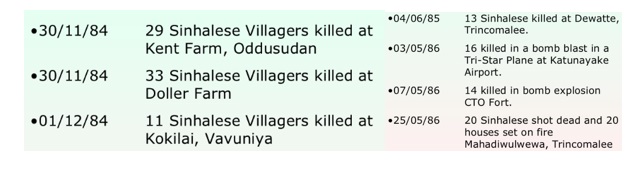
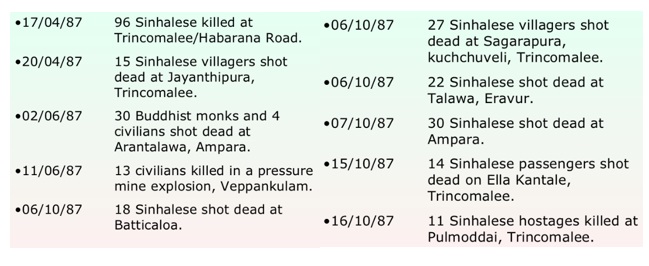
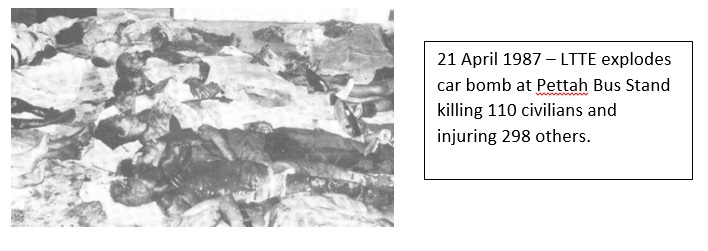
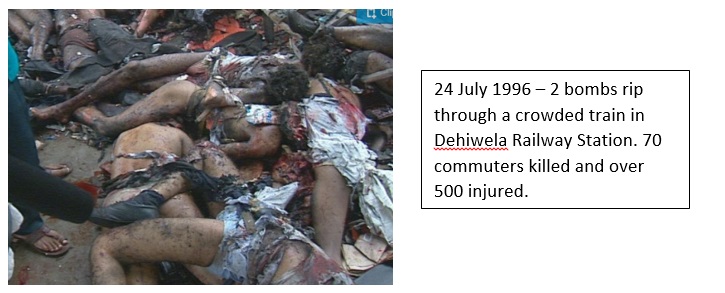
Why is no one counting the Sinhalese dead? There are no books, no documentaries, no panel discussions, no media coverage, no UNHRC head wants to even come and meet the families of these victims, no global tears or candles, no vigils, no commemorations. Are Sinhalese not human beings too? Do their deaths not matter? When LTTE stormed their villages, slit them to pieces while they were asleep, babies dashed to the ground – were these not sensational enough to be relayed across the world? Did the Sinhalese not cry enough, did they not scream enough? Why has no one in 30 years come forward to empathize with the Sinhalese? In a country with 74% Sinhalese wasn’t it the Sinhalese who were targeted the most? Can the UN & the UNHRC please tell us why the Sinhalese lives don’t matter?

Starting from killing villagers in the Kent & Dollar Farms in 1984 we really do not know how many villages the LTTE stormed and killed. These Sinhalese lived in fear, children going to school were shot dead, men were slain as they went to work on their farms – what had they done to anger the LTTE. They were ordinary people trying to make ends meet. Not a penny has been given to them. There are no global funds for them. No one gives them refugee or asylum. With dried up tears they are continuing their lives.

shenali26071601A

shenali26071602A

shenali26071603A shenali26071604A

shenali26071605A

shenali26071606A

shenali26071607A

Children killed by LTTE.

It was not enough that LTTE kidnapped low caste impoverished Tamil children many of whom did not even have parents and turned them into child soldiers, but the LTTE guns also turned on innocent children. What was the message they wanted to convey in nullifying the life of an innocent child? What crimes has these children committed to the LTTE?

shenali26071608A

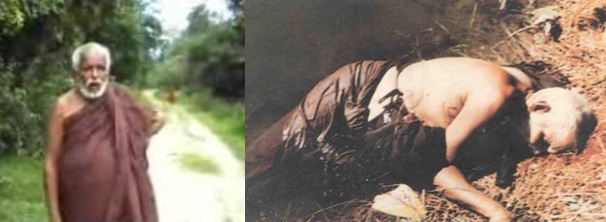
This is Matara Kithalagama Sri Seelalankara Thera (also known as Dimbulagala Hamuduruwo) He was the  Chief incumbent of the Dimbulagala Raja Maha Vihara. On May 26, 1995 on his way to visit a farm belonging to the temple he was killed by the LTTE. His crime was providing moral support to the poor people living in border villages to fight LTTE intrusions into their villages.

http://www.sundayobserver.lk/2013/05/26/fea04.asp

shenali26071609A

Student Buddhist priests shot dead by LTTE

33 Buddhist monks were traveling in a bus on 2 June 1987 (Aranthalawa) They were going on a pilgrimage. LTTE stopped the bus and mercilessly attacked them. 3 Buddhist monks escaped death. One is disabled for life. To harm a Theravada Buddhist monk is said to be one of the greatest crimes anyone can commit. Once again the world viewed this as no major crime. Nothing to warrant the UNSG to even appoint a panel to appraise him of the lists of murders LTTE had been committing.

shenali26071610A

LTTE Commits Cultural GenocideIt is a war crime to destroy cultural monuments. LTTE has been systematically destroying all evidence of Sinhala Buddhist heritage sites in the North and East.

Sri Maha Bodhi Temple – 14 May 1985

LTTE entered the sacred city of Anuradhapura.

This was the 1st major attack by LTTE outside a Tamil majority area. 120 worshipping pilgrims including Buddhist monks were killed and over 85 were injured,

shenali26071611A

https://www.youtube.com/watch?v=0YWANDeMWRg

https://www.youtube.com/watch?v=QWNmq_04ZeQ

Dalada Maligawa (Temple of the Sacred Tooth Relic of Buddha)

The world reaction to Bastille Day and the no reaction to the Dalada Maligawa is noticeable and disappointing. But then, we are not living in Europe, and we are not French – we are just Sinhalese

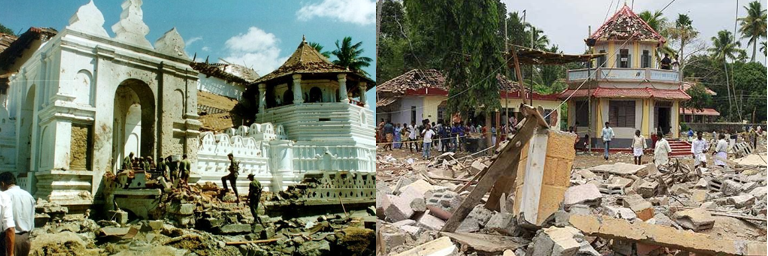
25 January 1998 – LTTE exploded a massive truck bomb inside the Temple of the Tooth premises which was to be the centre the independence day celebrations. Three suicide LTTE Black Tigers drove an explosive laden truck containing 300–400 kg of high explosives people. 16 people including the 3 attackers and a 2-year old infant were killed in the incident. Over 25 people, including 4 women, a monk and a police officer were injured. P. W. Withanage, a professor of geology also died due to shock after hearing the incident. The powerful attack left most of the buildings within a radius of 5 km damaged, and glass panes broken.

Sri Lankan government officially banned LTTE for the first time on 26 January 1998.

shenali26071612A

Killing unarmed policemen who surrendered to LTTE – is this not a war crime?

In 1990 over 600 policemen surrendered, laying down their arms. What is the law when a person surrenders? Do you shoot them? Well the LTTE asked them to stand next to each other and what did the LTTE do? They shot them one after the other….one after the other…. one after the other until all of them were dead. They were all extra-judicially executed. Here was a mass murder but it never got any international recognition because the victims were mostly Sinhalese so these deaths don’t qualify to enter the UNHRC books.

How sad.

shenali26071613A

LTTE attack unarmed / injured Sri Lanka security forces personnel

  • 2005 – Navy personnel unarmed came under claymore attack by LTTE – during a ceasefire
  • 2006 – Habarana massacre – LTTE suicide truck attack a convoy of 15 military buses carrying close to 300 armed forces personnel going on leave unarmed – 103 sailors killed over 100 sailors injured.
  • There are still 5000 armed forces personnel still missing – there has been NO ATTEMPT on the part of the UN/UNHRC to even find what happened to them. Do they not have families, wives, parents and children?

Central Bank of Sri Lanka – January 31, 1996

A truck (42-6452) containing about 440 pounds of high explosives crashed through the main gate of the Central Bank of Sri Lanka. The blast killed at least 91 people and injured 1,400 others. At least 100 people lost their eyesight

shenali26071614A

There are over 300 attacks by LTTE over 30 years virtually every day, every month and every year…. In the US the blacks are asking ‘Do Black Lives Matter’ we Sinhalese are asking that same question from the UNHRC ‘Do Sinhalese matter’ to the UNHRC … have they ever matter at all?

LTTE killings of Sinhalese have never got global media attention. The UNSG head Kofi Annan even issued a condolence message to a dead LTTE cadre, not one such condolence message was sent to even a Buddhist priest killed by the LTTE. Foreign forensic experts can look at a photo and say that the Sri Lankan Army were the killers, while LTTE journalists end up on UNHRC head’s written submissions/reports. This is stupefying. Never an iota of attention has gone into how the Sinhalese the majority in Sri Lanka have suffered emotionally, economically and physically.

Post-conflict the calls were always on developing the North, not a thought went to the other victims which included mostly Sinhalese and Muslims too. People have forgotten it was the LTTE who fired the first shots. In a country with over 74% Sinhalese it was the Sinhalese who became victims.

Never a word has been allocated for the plight of the Sinhalese and Muslims in refugee centres and the need to resettle them and give them lands and homes. Nothing has been said about the Sinhalese & Muslims ethnically cleansed from their original habitats in the North where they have deeds to prove so. Not a penny of the funds allocated have gone towards their welfare. Not a hum or a candle was lit for the many impoverished villager who are still struggling to survive. None of their stories have ended up on any news report or documentary. It is a crying shame that such double standards prevail in an international body that speaks volumes about equality and fairness. How dare the UNHRC land in Sri Lanka and demand from the GOSL what they have done for the Tamils – has he forgotten that over 74% who live in this country are Sinhalese and they too suffered? Why don’t they deserve any light on their grievances for a change?

The principle of Nemo judex in causa sua must apply – no one can be the judge of their own case. There cannot be selective justice. The double standards must stop. Not only must Justice be done; it must also be seen to be done.

shenali26071615

Shenali D Waduge

Mahinda’s support will be a great help – Dinesh

July 26th, 2016

Courtesy Adaderana

The support extended by former President Mahinda Rajapaksa to take part in the scheduled protest march adds some additional strength, MP Dinesh Gunawardena says. The observation was made at a press conference held in Colombo this afternoon (26). Mahindananda, Weerawansa, Namal Rajapaksa, Johnston Fernando, Rohitha Abeygunawardena and Kanchana Wijesekera are behind the organization of this protest,” Gunawardena told reporters. Meanwhile, MP Dullas Alahapperuma speaking at the press conference severely criticised the decision to extend the coalition agreement between the Sri Lanka Freedom Party (SLFP) and the United National Party (UNP)

– See more at: http://www.adaderana.lk/news/36238/mahindas-support-will-be-a-great-help-dinesh#sthash.AlVwF2kJ.dpuf

Protect our language, protect our nation, asks Gevindu

July 26th, 2016

Courtesy Adaderana

The first priorities should be to safeguard the language and to protect our nation, Gevindu Kumaratunga says. The observation was made at an event held to celebrate the 129th birthday anniversary of one of Sri Lanka’s greatest scholars, Munidasa Kumaratunga last evening. This country needs more writers like Munidasa Kumaratunga who can address the conscience of each individual,” he added. – See more at: http://www.adaderana.lk/news/36236/protect-our-language-protect-our-nation-asks-gevindu#sthash.dVel6Ui3.dpuf

Sri Lanka belongs to Sinhala.

July 26th, 2016

By Charles.S.Perera

France belongs to French, Germany belongs to Germans, Italy belongs to Italians,England belongs to English, India belongs to Indians. (America there is a problems because America belongs to native Americans). However, America belongs to Americans. Sri Lanka belongs to Sinhala.  In France there are many minorities  Algerians , Polonaise, Africans etc. But they are all French and accept the French Language, its customs and are educated in same schools for the French childen. It is the same with America, Germany, Italy, England, Spain and so on.

The minorities in  France, Germany, Italy, or England do not ask for language rights, and they all speak French the language of the country , they do not sing the French National Anthems in any other language, but in French. The minorities in France accept the French national flag. The Constitutions of these European countries  have their  religions written into it.  It accepts no other Religion.  But the minorities have the right to profess their own religion as long as it does not affect the peace and unity of the country.  The Minorities in these countries have no political parties of their own. They join the main political parties of the country without distinction of their origin.  The children attend same schools and there are no special schools for the minority communities.

So why should it be different in Sri Lanka, which had been a country of the Sinhala from the beginning.  The minority Tamils in reality, not according to fake history being written by  the Tamils, came to Sri Lanka as marauders, plunderers and conquerors.  They came and destroyed our cities and left them in ruins.

There was King Elara 205 years before the present era, who  set up a Kingdom in Anuradhapura  and ruled for 44 years until he was ousted and Sri Lanka was united under one flag by King Dutugamunu.  And then there was Kalinga Magha in 1215 AD  a most destructive Tamil tyrant who set up a regime in Polonnaruva and ruled  for 12 years .  He was  the most destructive man who pillaged and burnt Buddhist places of worship and killed Buddhits monks and built Hindu Kovils.  He was again defeated in battle and chased away by King Vijayabahu.

Tamils had been the most destructive occupiers in Sri Lanka. Even today the Sri Lanka Tamils like Sumandiran, Sampanthan, Premachandran, Shivalingam, Sumanthirant  and so on  are Tamils with the ancient  mentality of Tamil invaders, marauders, plunderers and destructors like Kalinga Magha.  They will not stand for unity, development of Sri Lanka and for the preservation of its culture. They are separatists who will never accept reconciliation.

In the face of the invasive minded Sri Lanka Tamils the Sinhala Buddhists should unite to protect Sri Lanka’s culture, and its historic places.  Sri Lanka governments  had been giving into the Tamils far too much and for far too long, and these ungrateful Tamils dare say that Tamils suffered genocide under Sinhala governments since 1948. This comes from a Tamil man-Wignesvaran, who was born amoung the Sinhala, studied  with the Sinhala, lived his professional life as a judge amoung the Sinhala and married his sons to Sinhala women. How can the Sinhala people keep trusting the Tamils ?

Any body who had lived long enough in Sri Lanka would know that the Tamils had not been treated differently from  other citizens. They have been given  all the rights enjoyed by the rest of the population. But their nature is such that they ask for more giving nothing in return to develop the country or protect it against its enemies. 

Next the Muslims who  came to Sri Lanka only in the 12th Century. When the Muslim traders  were being driven away from the southern seas by the Portuguese, they came to the Sinhala King Rajasinghe II and asked for refuge and protection. The  King allowed them to Settle down in the East and even  allowed them to marry local women. The present day Muslims in Sri Lanka are the  descendents of these early Muslim settlers, who now follow the Tamils asking for separate rights, and illegally clear forest reserves to create Muslim settlements.

The Muslims should if they are a grateful people  be more close to the Sinhala people. But it is the Muslims leaders like Rauf  Hakhim, and Rishad Baduieen who  take the lead in helping the Muslims to occupy  ancient ruins like the Kurugala caves and clear  the Wilpattu  Natural Forest reserves. These are  parts of our national heritage, which belong to every one. But showing no respect to these national heritage to preserve and protect it shows that the Muslims like the Tamils have no patriotic loyalty to Sri Lanka. They are also turning out to be a party to Tamil invasive mentality who want to divide the motherland for the satisfaction of their racial demands.

There cannot be any reconciliation with these two communities who are evidently anti-reconciliation. Under these circumstances it is difficult to understand why USA and the Western countries keep on demanding reconciliation.  If there is to be a reconciliation these two communities should  relinquish their anti reconciliatory demands, and take an oath of allegiance to a unitary Sri Lanka, and renounce their separatist demands for federalist constitution or a separate province for one  ethnic group.

There was an interesting discussion in Derana TV Aluth Paralimenthuwa with Attorney Ali Sabri amoung others. President’s Counsel Ali Sabri said that for real reconciliation Sri Lanka should be like it was before separate Schools for ethnic communities were opened. He said that had even asked Zahira College to give 10 percent of admission to students from other communities.

That was true studying in the same school where you had children from Sinhala , Tamil and Muslim communities there was a communal unity unimaginable today. I the writer still has school friends in Madawala, and when  we meet we do not fail to hug each other to the utter surprise of other Muslims present  that had not known that unity.

But I cannot accept what Ali Sabri said was genuine. I feel it was only for the TV Cameras. In reality Muslims  have changed and care less whether Sinhala is the majority.

In that same Dererna TV discussion the senior journalist  Mohan Samaranayake said that we cannot claim that Sri Lanka is the land of Sinhala Buddhists as Buddha himself had refused ownership of any thing.  But the Buddha was the enlightened Compassionate one that belongs to all beings without race or colour. We are still unenlightened beings and as Sinhala we cannot  refuse that Sri Lanka is the land of the Sinhala and all others are citizens of that land most welcome and accepted as equals, provided they do not claim ownership to the whole of Sri Lanka or parts of it.

The President Sirisena likes to make speeches. But if he does not keep surveying his Prime Minister and the UNP who are slowly preparing to sell the country to USA, the West and India with his ego centric attitude getting into the shoes of a pseudo Dictator, Sirisena will not have a country to lead as its President. Maithripala  is  not aware that Ranil has reappointed his buddy” Arjun Mahendran the sacked Governor of Central Bank to another high post in the Government.

The self satisfied Maithripala Sirisena does not know that his Prime Minister has give six acres of prime land in Colombo for the construction of an American military base for its Marine Forces. Ranil Wickramasinghe  is also proposing to  lease half of the oil containers in Trincomalee to India.  Ranil Wickrmasinghe who cares less for Sri Lanka its culture or Buddhist religion, is planning to become the executive Prime Minister and the President in 2020.

Maithripala Sirisena the President who is blissfully ignorant of his Prime Minister’s deals with USA, the West and India  has  asked the National Integration and Reconciliation Ministry to draw up a draft national policy on integration and reconciliation.  Maithripala cannot understand that the Tamils in Sri Lanka do not want reconciliation. Further proof of this comes from the  Jaffna University students savagely assaulting the Sinhala undergraduates.

Now Sirisena is planning how to stop the Pada Yatra” the foot walk”  proposed by the Joint Opposition.  He says that his dissent with the former President began with the Moragaskanda Project.  Maithripala Sirisena who cannot control his anger and hatred is not fit to lead Sri Lanka as its President.

Sirisena  should take a lesson from Mahinda Rajapakse who was gentle and humble (mudu anathimani as in Karaniya metta Sutta) to offer Maithripala Sirisen the Presidency of the SLFP after he was defeated at the election. No good can come to Maithripala Sirisena if his only intention is to take revenge from the good ex-President Mahind Rajapaksa.

His assertion that his dissent with the former President  began with  the Moragaskanda issue is nonsense, because Maithripala was lured by Chandrika Kumararunga to become the Common Opposition  Presidential candidate.  It is greed for power, fear and an inferiority complex that has made him  revengeful towards Mahinda Rajapakse.

President Sirisena  is making up other stories to cover up his hypocracy. Sirisena  is jealous of the  popularity of the ex Presiden Mahinda Rajapakse.Therefore, he allows Ranil Wickramasinghe pursue with his FCID to prosecute Mahinda Rajapakse and his Family, and all those he consider a danger to his popularity.

The masses of the people, other than some of the English Educated Colombians, the Tamils and the Muslims,  the bulk of te Sinhala Buddhists are with the Ex-President Mahinda Rajapakse. Mahinda Rajapakse will be theirs’ and their generation’s  heroic leader. Maithripala Sirisena will never reach that height of popularity.

Maithripala Sirisena should take stock of the situation of the Country and stop trying to please and win over the Tamils and Muslims taking away the rights of the Sinhala People. With a Prime Minster in control of the Government, this is not the time to write a new Constitution. If Prime Minister is allowed to do as he likes, he will  have a New Constitution prepared  to conform to the wishes of USA, the West and India.

Ranil  has already his man at the head of the preparation of the Constitution-Jayampathy Wickramaratne. He is the wrong man to handle the constitution making process. He is anti Mahinda Rajapakse and pro Ranil Wickramasinghe. He has no sense of cultural and historical importance of Sinhala people in Sri Lanka. He speaks of a country acceptable to all ethnic groups.

Jayamapath Wickramaratne showed even his inability to discuss calmly  and answer the  questions put to him by the journalist Favaz Shaukelali at the  discussion in the MTV News line held  on 22 July, 2016.  Jayamapath Wickramaratne has no independent objective political views.

The Constitution should be prepared only when the country is settled down and under a leader who could understand the importance of a Constitution for Nation building, without leaving room for separatist intentions of unpatriotic communities take away the legitimate rights of the Sinhala people to whom  Sri Lanka belongs.

In writing a new constitution  the Sinhala flag, brought down by the British colonialists to raise their Union Jack, should find its rightful place. For that the two stripes representing the Tamils and Muslims should be removed, as it is a mutilation of that Sinhala flag which was brought  down by the British in 1815. It should also give the rightful place to the National  Anthem, which should be sung in Sinhala.  A new Constitution for Sri Lanka if necessary should not have the 13Amendment. It should give Sinhala Language the Official Status, and a clause to protect Buddhism.

However, one does not see at all the necessity to write a new Constitution to Sri Lanka, specially now that the country is communally divided as it had never been before. The 1978 Constitution had served its purpose and it is best to continue with it with necessary amendments as and when required.

No country in the world writes a new constitution every time a new government is formed in the country after an election. Why should it be different for Sri Lanka ?

ගොවියාගේ පිට කොන්ද බිඳින මොරගහකන්ද

July 26th, 2016

මතුගම සෙනෙවිරුවන්

පොල්ගොල්ලෙන් කැපුණු උමගක් හරහා උකුවෙලට වැටීපසුව බෝවතැන්නට එකතුවන මහවැලියේ ජලයෙන් විදුලි බලය උත්පාදනය කරන ගමන්ම මහවැලි ප්‍රදේශයන්ද සංවර්ධනය කිරීම වර්තමාන මහවැලි සැලැස්මේ අරමුණු අතර විය. මෙකී සැලැස්ම ක්‍රියාත්මක කිරීමට ද ප්‍රථම මොරගහකන්ද ප්‍රදේශයේ ජලාශයක් ඉදිකිරීමට යෝජනාවක් විය. 1968 දී එක්සත් ජාතීන් ගේ සංවර්ධන ව්‍යාපෘතිය යටතේ කරන ලද අධ්‍යනයකින් අඹන්ගඟ ප්‍රදේශයට වාර්ෂිකව විශාල වර්ෂාපතනයක් ලැබෙන බවට ඉදිරිපත් කරන ලද දත්තයන් මත මෙවැනි ජලාශයක් තැනීමට ඉඩකඩ ඇතැයි උපකල්පනය කර තිබුණි. මෙම ජලාශයේ එක් රැස්වන ජලය උතුරට ගෙන ගොස් යාපනේ කලපුව මිරිදියෙන් පුරවා ඒ ප්‍රදේශ සශ්‍රීක කිරීමට ආරුමුගම් නමැති වාරිමාර්ග ඉංජිනේරුවරයාගේ යෝජනාවක්ද විය.

මහවැලි ගඟේ ජලය පොල්ගොල්ලේදී හරස් වී උමගකින් උකුවෙලට ගොස් අඹන්ගඟේ අත්තක් වන සුදු ගඟට එක් වෙයි.ඉන්පුසු බෝවතැන්න බෙදුම් ජලාශයෙන් කලාඔය යාන් ඔය සහ අඹන් ගඟ යන නිම්න තුන පෝෂණය කිරීම සඳහා ජලය මුදා හැරේ. ලෙනදොර සිට සීගිරි වැව හරහා ගෙන යන ජලය හබරණ අසල හිරිවඩුන්න වැවට වැටී හබරණ ඔය හරහා උතුරට ඇදී යාන් ඔයෙන් හුරුලු වැවට වැටේ. බෝවතැන්නෙන් නැගෙනහිරට ගලන ජලය අඹන් ගඟ හරහා ගොස් ඇලහැර පැරණි අමුණෙන් හැරවී යෝධ ඇළ දිගේ ගොස් එම ප්‍රදේශය පෝෂණය කොට ඉන්පසු ගිරිතලේ වැවටත් මින්නේරි වැවටත් දිය බෙදුමෙන් බෙදී යයි. මින්නේරියට එන ජලයෙන් කොටසක් මින්නේරිය කන්තලේ යෝධ ඇළ ඔස්සේ ගොස් කන්තලේ ප්‍රදේශයේ කුඹුරු පෝෂණය කරයි. තවත් කොටසක් කවුඩුල්ලට ගමන් ගනී. ඇළහැරට එක්වන ජලයට අමතරව ජලය අඹන්ගඟ දිගේ ගොස් අඟමැඩිල්ල පරණ අමුනෙන් පරාක්‍රම සමුද්‍රයට එකතු වෙයි.

දිවංගත ගාමිණි දිසානායක මහතාගේ මූලිකත්වයෙන් කඩිනම්ව නිම කරන ලද මහවැලි ජල හැරවුම් පද්ධතිය මගින් අද විශාල කුඹුරු ප්‍රමාණයක් පෝෂණය කරයි. මේ පද්ධතියේ තිබෙන විශාලතම ජලාශයක් වන වික්ටෝරියා ජලාශය අක්කර අඩි 480000 ක ධාරිතාවයකින් යුක්තය. මේ මගින් මෙගා වොට් 210 ක විදුලියක් උත්පාදනය කරයි. මේ ජලාශය නිසා දුම්බර මිටියාවතේ පදිංචිව සිටි පවුල් 5941 ක් නොහොත් ගම්මාන 10 ක් විස්ථාපනය විය. 1980 මිල ගණන් අනුව මේ ව්‍යාපෘතියට වැය වූ මුදල රුපියල් කෝටි 900 කි.වසර විසිපහකට පස් මහවැලි ව්‍යාපාරයේ අද තත්ත්වය ගැන සැලකිල්ලෙන් බැලීමේදී එහි ආරම්භක දුර්වලතා රාශියක් තිබෙන බව පෙනී ගොස් ඇත. විදේශ මුදල් විදේශ ශිල්ප ක්‍රම යොදවා කරන ලද මේ ව්‍යාපෘතියේ දී ලංකාවේ තිබූ සාම්ප්‍රදායික වැව් ශිල්පීය ක්‍රමවේදයන්ගෙන් ගුරු හරුකම් නොගැනීම නිසා ඇති වූ දුර්වලතාවයන් ප්‍රධාන වෙයි. ඇතැම් මහවැලි ප්‍රදේශ වල තිබූ ලොකු කුඩා වැව් රාශියක් මහවැලි මහ සැලැස්මට අනුව කපා දැමීමට සිදු විය. අනතුරුව මධ්‍යම ප්‍රමාණයේ වැව් යොදා ගනු ලැබූවේ ගබඩා ජලාශයන් වශයෙන් පමණකි. මේ තත්ත්වය මත වියලි කාලයේදී  ප්‍රදේශ වල උද්ගතවන පාරිසරික ප්‍රශ්ණ බොහොමයකි. ජල චක්‍රය නිසි පරිදි ක්‍රියාත්මක නොවේ. සත්ත්ව පාලනය හා සාම්ප්‍රදායික ගැමි ජීවන රටාවන් පවත්වාගෙන යෑමේ දුෂ්කරතාවයන් ද රාශියකි. පොල්ගොල්ල ආදී හැරවුම් ජලාශ රොන් මඩ වලින් පිරි පවතී. වික්ටෝරියා ජලාශය පිරී යන්නේ කලාතුරකිනි. කොකෝ ගම්මිරිස් කරාබු එනසාල් ඇතුළ දුම්බර මිටියාවතේ කෘෂිකර්මය ද නැති කරමින් ගම්මාන උගුල්ලමින් කළ කැප කිරීම උදාරතර වුවද මෙම ජලාශ පෝෂක ප්‍රදේශ නිරන්තරයෙන්ම නිරාවරණය වී ජලයෙන් හිස්ව පවතී. ධම්මනියාමයට පිටින් යෑමේ විපාකය අද මහවැලි ප්‍රදේශවලින් පෙන්නුම් කරති.

ඩි.එස්. සේනානායක හිටපු අගමැතිවරයාගේ යුගයෙන් පසු ලංකාවේ වී ගොවිතැන සංවර්ධනය කිරීම සදහා ඇති කළ මහවැලි ව්‍යාපාරය නිසා මූලික වී ගොවිතැනේ අපේක්ෂිත ඉලක්කයන් රාශියක් සම්පූර්ණ වී ඇති බවද කල්පනා කළ යුතුය. මිරිස් ධාන්‍ය ඇතුළු අතිරේක භෝග වගාවන් ද මේ ඉලක්කයේ පැවතියේය. නමුත් ලංකාවේ දැනට ප්‍රධාන ආහාර වශයෙන් සැලකෙන බත සඳහා ඉවහල් වන සහල් නිෂ්පාදනය කරන ගොවීන්ගේ ජීවන තත්ත්වය නම් ඉතා කණගාටුදායක ලෙසට පහත වැටී තිබේ. වර්තමානයේ පවතින ජීවන වියදමට සාපේක්ෂව වී ගොවිතැනේ වියදම් පක්ෂය විශාල වශයෙන් ඉහළ ගොස් ඇත. යන්ත්‍ර සූත්‍ර යොදවා ගැනීම සඳහා ද ශ්‍රමය කැප කිරීම සඳහා ද වැයවන මුදල ඉතා අධිකය. පොහොර සහනාධාරය ලබා දුන්නද සියයට  හැත්තෑපහක් පමණ වියදම් පකෂය අඩුකර ගත නොහැකිය. ඒ අනුව දැනට වී කිලෝවකට ලැබෙන මිල ගොවියාට ප්‍රමාණවත් වුවද සහල් වෙළෙඳ පළ මගින් එයට අවශ්‍ය සැබෑ වටිනාකම ගොවියාට ලබා දී නොමැත.

1995 දී ලෝක බැංකු නියෝජිතයන් දෙදෙනෙකු විසින් නිර්දේශ කරන ලදදේ ගොවි ජනතාවගෙන් සියයට හතළික් පමණ ගොවිතැනෙන් ඉවත් විය යුතු බවයි. ඒ වෙනුවට නගරබදව සහ ගම්මාන ආශ්‍රිතව ඉදිවන කර්මාන්තශාලාවන්හි රැකියා සඳහා ඔවුන් යොමු වියයුතු බව ඔවුන් ගේ අදහස විය. පසුගිය දශකයේ බලයට පත් වූ සෑම රජයක්මමේ නිර්දේශයන් අනුව වැඩකර ඇත. කිසිම රජයක් ගොවියාගේ ප්‍රශ්ණ තේරුම් ගෙන අවශ්‍යම පියවර ගත්තේ නැත. පොහොර සහනාධාරය වැනි පැලැස්තර අලවා ඒ මගින් පොහොර සමාගම් තර කිරීම කොට ජනතාව මුලා කොට ප්‍රශ්ණය තව තවත් උග්‍ර කිරිම තුළින් ගොවි තරුණයන් ගොවිතැනෙන් ඉවත් කිරිම  සැම දේශපාලඥයයකුගේම මෙන්ම කෘෂිකර්මය භාරව සිටින නිළධාරීන්ගේද බලාපොරොත්තුව විය.

දැනට මහවැලි හැරවුම් පද්ධතියෙන් නිකුත්වන ජලය බෝතැන්න බෙදුම් ජලාශයෙන් ඉවතට යන්නේ කියුබික් මීටර දශලක්ෂ 867 කි. මොරගහකන්ද නිර්මාණය වූ විටඑය 392 දක්වා අඩු කෙරේ. එසේම ඇළහැර  මගින් දැනට කියුබික් මීටර දශලක්ෂ 683ක් මුදා හැරේ. ජලාශය නිමවීමෙන් පසු එය 603 දක්වා අඩු කිරීමට යෝජිතය. එසේම වැහිවතුරෙන් ඇළ හැර ප්‍රදේශයට එකතුවන කියුබික් මීටර් දශලක්ෂ 1145 සිට 548 දක්වා අඩුකෙරේ. එසේම ඇළ හැරෙන් උතුරා යන ජලයද 462 සිට 59 දක්වා අඩුකෙරේ. නමුත් අඟමැඩිල්ලෙන් බෙදන ජලය 333 සිට 357 දක්වා වැඩිවේ. මොරගහකන්ද ප්‍රදේශයේ අක්කර අඩි 425000 ක පමණ ජලාශයක් නිර්මාණය කර අඹන් ගඟ නිම්නයේ පවුල් 1147 ක් විශිථාපනය කර දශලක්ෂ 109 ක විදේශ ණයක් යොදවා ගන්නේ ඉහතකී ආකාරයට බෝවතැන්නෙන් පිටවන ජලය හිරකර පහළගංගාව වර්ෂයේ වැඩි කාලයක් වියළි තත්ත්වයේ තබා අමතර ජලය අක්කර අඩි 81000 ක් (100 M C M ) මහවැලි එච් කලාපයට ලබා දීමටය. 1948-1968 වර්ෂාපතන දත්තයන් අඹන් ගඟ ප්‍රදේශයට අතිරික්ත ජලයක් ලැබෙන්නේ වසර පහකට පමණ සැරයක් යයි දක්වා ඇත. එසේ නම් මේ සා විශාල වන්දියක් ගෙවා ඉඩම් හා කැලෑව කැප කර වික්ටෝරියාවට මදක් සමාන ජලාශයක් නිර්මාණය කරන්නේ ඇයි.වැඩිපුර කියුබික් මීටර 100 ක් මහවැලි එච් කලාපයට ලබා දීමටය. එසේ කිරීමට අත්‍යවශය වී නම් කළ යුතුව තිබුණේ අක්කර අඩි 81000 ක ජලාශයක් තැනීම පමණකි.

මේ මුද්ල නාස්තියේ අරමුණු කීපයකි. එකක් දෙශපාලනික වශයෙනි. මේ ප්‍රදෙශයෙන් පාලනය කරන දේශපාලනඥයන් විදේශ මුදල් දෙස කෑදර කමින් බලති. ඔවුන්ගේ ගෝලබාලයන් සැනසීමට කොන්ත්‍රාත් ලබා දීමට වනය කැපීමට සහ රස්සා දීමට මේ මගින් හැකි වේ. දේශපාලනඥයන්ගේ පටු අරමුණු පාදක කොට ගෙන ජල සම්පත් භාරව සිටින ඉහළ නිළධාරීන් තමන්ගේ සුභ සිද්දිය උදෙසා අනාගත සැලසුම් කරති. 1985 අංක  06 දරන පනත රජය ඉදිරිපත් කරන්නේ මේ නිළධාරින්ගේ උපදෙස් මතය. ලංකාවේ ජලය මිල කළ හැකි ආකාරය ඔවුහු පෙන්වා දී තිබේ. චන්ද්‍රිකා මැතිණියගේ රජය කාලයේදී ඉන්පසු 2002 දී ද ආසියානු සංවර්ධන බැංකුවෙන් සහ ලෝක බැංකුවෙන් ණය ආධාර ගෙන ජල ඒජන්සි දමා ජල පණත් නිකුත් කර ක්‍රමවේද නීතිගත කිරීම උදෙසා මිල ගණන් ඉදිරිපත් කර තිබුණි. ජනතා පෙළ ගැස්ම නිසා ඒවා පරාජය වුණි. මහින්ද චින්තනය යටතේ ජලය විකිණීමට ප්‍රතිපත්තියක් ලෙසට පිළිනොගත්තද වාරිමාර්ග අමාත්‍යංශයෙ ඇතැම් නිළධාරීන්ගේ  සහ ඇතැම උසස් අයගේ උපදෙස් පරිදි ජල සම්පත් සැලසුම් අංශ වල අයගේ ද උදව් ඇතිව නවම් නමැති ව්‍යාපෘතියක් ඉදිරිපත් කෙරුණි. ගංගා ද්‍රෝණි ආරක්ෂා කරලීමේ මුවාවෙන් ජල බලපත්‍ර ක්‍රමයක් ඇති කිරිම එහි අරමුණයි.හැටේ දශකෙය්දී ආරුමුගම් මහතා ඉදිරිපත් කළයෝජනාවද මෙහිද සැලකිල්ලට භාජනය නොවෙනවා නොවේ. උතුර ප්‍රදේශය තුළ අභයන්තර ස්වයං පාලනයක් නිර්මාණය වන විට උතුරට අවශ්‍ය ජලය ලබා ගැනීමට ඒවා මිල කිරීමද කළ හැකි වන සේ මේ ජලාශය සැලසුම් කර ඇතැයි අවසාන වශයෙන් නිගමනය කළ හැකිය.වර්තමානයේ ක්‍රමයෙන් ඉඳිවන මෙරගහකන්ද ජලාශයට වර්තමාන ජනාධිපතිවරයා තදින්ම මැදිහත්ව සිටින්නේ ඔහු විදෙස් බලවේගයන්හි රූකඩයක් බවට පත්ව සිටින නිසාවෙනි. මෙරගහකන්ද මහින්ද රාජපකක්ෂ ඉඳිකළද මෛත්‍රීපාල සිරිසේන ඉඳි කළද ඒ මගින් ගොවිජනතාවට දිගුකාලීන යහපතක් ඇති නොවනු ඇත. ඒ වෙනුවට රජරට බිලිගත් වකුගඩු වසංගතය තවත් මුහුණවරකින් ඉදිරයට එනවා නිසැකය.

මතුගම සෙනෙවිරුවන්

හිටපු අමාත්‍ය IMR ඊරියගොල්ල මහතාගේ දියණිය අගමැති රනිල්ට විරුද්ධව පෙත්සමක් අත්සන් කරයි

July 26th, 2016

උපුටාගැණීම Ceylon Leader

හිටපු අධ්‍යාපන සහ සංස්කෘතික අමාත්‍ය IMR ඊරියගොල්ල මහතාගේ දියණිය වන වෛද්‍ය චන්ද්‍රිකා ඊරියගොල්ල මහත්මිය ශ්‍රී ලංකා අග්‍රාමාත්‍ය රනිල් වික්‍රමසිංහ මහතාට විරුද්ධව අන්තර්ජාල පෙත්සමක් සදහා අත්සන් ලබාගැනීමේ ව්‍යාපාරයක නියැලෙමින් සිටිනවා. ඒ භීෂණ සමයේදී වදකාගාර පවත්වාගන යාම සහ තරුණයින් වදදී ඝාතනය කිරීමේ චෝදනා එල්ල කරමින්ය. (එම පෙත්සම සදහා මෙතනින් පිවිසිය හැක)

දැනට බ්‍රිතාන්‍යයේ පදිංචිව සිටින වෛද්‍ය චන්ද්‍රිකා ඊරියගොල්ල මහත්මිය දුරකථනය ඔස්සේ CeylonLeader.com වෙත සකජ්චාවක් ලබාදෙමින් සදහන් කර සිටියේ, ධාර්මිෂ්ට ආණ්ඩුවක් පිහිටුවන බව සදහන් කරමින් බලයට පැමිණ අධර්මිෂ්ට සහ නීච ලෙස වදකාගාර ආරම්භ කරමින් බෞද්ධ පරම්පරාවක් නැති කිරීමට එවකට එක්සත් ජාතික පක්ෂ ආණ්ඩුව කටයුතු කල බවත් මෙවැනි කටයුතු මීට ඉහතදී සිදුකල හිට්ලර් ලොවක් පිළිකුල් කරන චරිතයක් බවට පත්ව ඇති අතරම ශ්‍රී ලංකාවේ තරුණ පරම්පරාවක් නීති විරෝධී ලෙස වදදී ඝාතනය කල රනිල් වික්‍රමසිංහ මහතා දඩුවම් බෞද්ධ රටක අගමැති වන්නේ කෙසේදැයි ප්‍රශ්න කර සිටියා.

ජාතියක් නැති කිරීමට සමුලඝාතනය හෝ රටේ තරුණයින් සමලිංගිකත්වයට නැබුරු කල යුතු බවත් එක්සත් ජාතික පක්ෂය මෙම දෙකොටසම සිදුකර ඇති බවත් ඊරියගොල්ල මහත්මිය සදහන් කර සිටියා. රනිල් වික්‍රමසිංහ අග්‍රාමාත්‍යවරයා දුෂ්ඨයකු ලෙස සදහන් කල ඒ මහත්මිය සොරකම් කිරීම සහ ජාතියක් විනාශ කිරීම අතර විශාල වෙනසක් පවතින බවත් වදකාගාර පවත්වාගන යාමේ වරදට අගමැති රනිල් වික්‍රමසිංහ මහතාට දඩුවම් ලබාදිය යුතු බවත් අවධාරණය කර සිටියා.

unnamed-3

මේක සිංහල බෞද්ද රටක්.. පාලකයන්ට ඔ්නෑ විදිහට නටන්න දෙන්නේ නෑ.. – අස්ගිරි මහ නාහිමියෝ සිහ තේජසින් දැහැන් බිඳිති..

July 26th, 2016

lanka C news

මේ ගැන පාලකයන්ගෙන් විමසූ විට එවන් ප‍්‍රශ්ණයක් නැති බවත් ඒව බොරු ප‍්‍රචාර බවත් කියන්නේ යයි කී මහ නාහිමියෝ ගේ ඇතුලේ වෙස් බැන්ඳට නටන්න වෙන්නේ එලියේ බවත් මෙරට භික්‍ෂුන් වහන්සේලා කිසිකලෙක පසුබාන්නේ නැති බවද කියා සිටියහ.

කොළඹ සම්බෝධි විහාරයේ පැවති උත්සවයක් අමතමින් මහ නාහිමියෝ මේ බව කියා සිටියහ.

මේ රට බෞද්ද රටක් බවත් සිංහල ජාතිය ජීවත් වන රට බවද සිහිපත් කල එහිමියෝ පාලකයන්ට අත්තනෝමති ලෙස කටයුතු කරන්නට කිසිලෙසකින්වත් ඉඩ නොදන බවද අවධාරණය කලහ.

ජාතිය ආගම වෙනුවෙන් අද රටේ ආන්දෝලනාත්මක තත්වයක් ඇති වී තිබෙන බව අස්ගිරි මහ නායක අතිපූජ්‍ය වරකාගොඩ ඥාණරතන හිමියන් පවසති.

47,759 Viewers

Call for establishment of a strong, independent Public Private Partnership Unit to encourage investment to Sri Lanka 

July 26th, 2016

Sarath Obeysekera  ( Phd-in small letters !)

July 25, 2016, 7:53 pm             Business News –The Island    ………….

By Malith Mendis, who is currently the chairman and Managing Director of Mendis Cobain Consultants (Pvt) Ltd, is the Immediate past president of the Association of Consulting Engineers Sri Lanka. A former Head of the Lanka Hydraulic Institute, (which was heavily involved in the design of Colombo South and Hambantota harbours), Mendis is a Fellow of the Institution of Engineers Sri Lanka and also a Fellow of the Institution of Civil Engineers, UK. He is also the Country Representative of the Dispute Resolution Board Foundation and a Member of the Capacity Building Committee of FIDIC (International Federation of Consulting Engineers) and Society of Structural Engineers Sri Lanka. Furthermore he has carried out Contracts Training in Sri Lanka, Timor Leste, Samoa, Brunei, Maldives, Fiji, Solomon Islands and Seychelles.

I do not have many  letters at the end of my name except three letters  of qualification I got from  a free education in Communist Russia .You do not have to be a lawyer or an Harward Trained  expert in economics to understand and implement PPP .

We have seen ordinary medium educated Sri Lankan living in Sri Lanka mooting PPP’s Even if the government has the wit to implement PPP’s there is no Endurance to Sustain .I personally wrote many many times about the PPP.s.and elaborated the importance.

China Russia and even Vietnam with basic -communist ideology in governance are going for PPP,s and even full privatization .

To implement any program of PPP,it is essential that, not only a corporate entity becomes partner but also the workers and the people .

I will tell you a classic example of three industrial establishments I personally got involved which are quite successful today .

Colombo Dockyard ( CDL) ,Walkers Colombo Shipyard in   and Walkers Galle Shipyard  in Galle are all based in PPP concept in many ways .

CDL which was an organization fully owned by the government was privatised in seventies under UNP  and 51% shares were taken over by a Japanese Company.

When It was privatised , a particular union was  objecting .

Government agreed to give 10% of the shares to the workers and balance shares were floated in the share market .Few state agencies have also acquired shares .When I took over helm of this new PPP- entity from mismanaged corrupted and infested with directors appointed by the ministers and President,during the first board meeting we kicked out all the stooges in the board who has promised  10% shares  to the workers, and it was never given

.I personally went to see the president of the country at that time HE Wijethunge with the progressive Trade Union Leader and explained that we have to allocate the 10% shares to the workers.

There is an interesting dialogue  when I went to see him .

I never  did politics and I never met the president  before .

By that time I was holding two jobs .I was the Chairman SLLRDC and CEO of CDL.

Though I was not supposed to hold one job in Government sector and another one in Private sector.I was told to stay by the minister until they find an alternative.

Chairman President Wijethunga asked who am I ,and also my background .

I told him that I am still the chairman SLLRDC in addition to being CEO of CDL.

I told him that I am Sarath Madduma Banda Obeysekera !

In  Sinhala I told him that I am Sabhapathi Pahath Bim Sanwardane Manadalaya” and he quipped how can an obeysekera working in low lying area” in Sinhala  Kohomada obeysekera kenek ‘pahath bim walee wada karran ??!!”

He may have been a proud Kandyan !

That was his wit and humour and he was a very genuine leader and  kind hearted .I explained that workers of CDL are entitled to 10% shares and the government has neglected the promise .

He immediately called Chairman Bank of Ceylon which held more than 10% shares and called Secretary  of Treasury to transfer shares to the company .

I distributed shares to all the workers ( except myself as  I was not entitled) within two weeks. Workers became part public owners of the company .I bought few thousand shares myself from stock the  market. ( became a  private share holder !)

Important thing is he did not ask even the prime minister to initiate action .

My story may be confirmed by Minister Rajitha Senaratne who was with HE at that moment !

Today ,can  you find any President or a Prime  Minister or Finance Minister who can take  a bold step like what President Wijethunga did.   ???

The Union affiliated to a leftist party which keep hampering all the PPP’s in the country were dumfounded by  my action and kept quiet for  almost five years .

After more than over 20 years I returned home from greener  pastures and mooted two more small shipyards on similar basis, where government has become  partners of the Business Entities in Mutwal and Galle by sharing profits and Royalties   for using the state lands .

We have politicians today who are globetrotting and making speeches in Davos ,Singapore ,China ,Hongkong and India.

But the President ( short lived) who was running the country during  my time in CDL with no much qualification such as Sorbone ,or Law College or Oxford  took bold decisions an felt the pulse of the people

Today when such request or need arises government caves into Union pressure ( This Union which are of the minority –but being able to install low cost  Cudgen Hut   ( sic ?) made of coconut leaves and some nicely written eye catching banners- who either go to Lipton Circle or Ayurveda Junction where all the motorists stuck in traffic jams watch and think Oh is this public or private opinion ?” ) and never being able to implement PPP .

I tend to call PPP as follows

Push for People’s Participation

Because the word Private  in  Private Public Partnership  is hated by Unions ( like   kerosin to a snake   !!!!!!!( Garandiya) –

President should take charge and guide the nation by becoming a Benevolent Dictator like Wijethunga

( if this article/opinion  is never published because press gets scared .I intend to write memoirs and include it for future generation to read )

Sarath Obeysekera  ( Phd-in small letters !)

Irate Ranil rings Maithri in London

July 26th, 2016

By Gagani Weerakoon Courtesy Ceylon Today

Last week with the re-launch of www.manthri.lk, which keeps track of the performance of Members of Parliament (MPs) in a scientific way, Verite Research an independent think tank who operates the website revealed the voters, how their elected members have performed in the new Parliament that came into power after 17 August 2015.
It was not long ago that statistics revealed, it costs Rs 4.6 million of tax payers’ money per each sitting day and this website enables citizens to know how their elected members are performing.
According to Verite Research, the Janatha Vimukthi Peramuna (JVP) is the top scorer where five of its seven members in Parliament are listed amongst the top ten.

JVP Leader Anura Kumara Dissanayake tops the list of 20, followed by Sunil Handunnetti. While Dr. Nalinda Jayatissa is ranked fifth, party’s propaganda Secretary Vijitha Herath and Bimal Ratnayake had secured eighth and tenth places respectively in the top performers list.
The United National Party (UNP) is second best performer with four of its 83 MPs in the top ten. Buddhika Pathirana (Matara) is the top performer and third in the overall ranking. Prime Minister Ranil Wickremesinghe has secured fourth place in the list of the top 10, while Finance Minister Ravi Karunanayake is at seventh position and Media and Parliamentary Affairs Minister Gayantha Karunathilaka the ninth. The only member of the Joint Opposition who is among the top ten, is its leader Dinesh Gunawardane who is ranked sixth.
Only Tamil MP in this group of top 20 performers is M.A. Sumanthiran of the Tamil National Alliance who is positioned at 13.

Fate of the govt

Even though their performances may not be reflected in Verite Research, the Joint Opposition is all set to put their maximum effort in toppling the yahapalana government and the first mega step towards this will take place next Thursday (28) with the commencement of the anti-government paada yathra from Kandy to Colombo.
The talks of overthrowing the government from power came to limelight as the MoU between the UNF and the UPFA was signed only for a two-year period, and with the expectation that either Prime Minister Wickremesinghe or President Maithripala Sirisena would make the first move to form a separate government, the Joint Opposition too seemed to buy time.

However, the government, in a bid to put these efforts as well as rumours at rest, too, decided to work out a plan. Accordingly, Prime Minister Wickremesinghe and General Secretaries of the UNP and SLFP, Ministers Kabir Hashim and Duminda Dissanayake took it upon themselves to clarify matters.
PM Wickremesinghe told Parliament that no matter what opponents do or how much they try, this government cannot be defeated any time soon. A few hours afterwards, General Secretaries of the two parties Hashim and Dissanayaka holding a joint press conference in Parliament revealed about the plans to extend the two year period of the MoU signed to form a unity government by another three years.
Dissanyake revealed that the agreement in this regard will be prepared soon and the government will continue till 2020 with no hiccups.

It’s a matter of coal
Even before the government could take a deep breath from the controversial Treasury Bond issue where officials appointed under the Yahapalana Government were accused of corrupt deals amounting to millions of rupees, the government came under corruption allegations over an alleged coal tender scam that apparently took place during the time Minister Champika Ranawaka was in office as the Minister of Power and Energy, while the 100-day yahapalana programme was in practice.
Voice Against Corruption, led by JVP Politburo member and Provincial Councillor Wasantha Samarasinghe lodging a complaint with the Anti-corruption Secretariat indicated that Minister Ranawaka should be directly responsible for the deal.

Samarasinghe’s complaint followed a press conference held by the Joint Opposition, where DLF Leader Vasudeva Nanayakkara also shared same sentiments.
The Joint Opposition urged the government to appoint a special Select Committee to investigate the controversy-ridden coal tender for the Lakvijaya power plant.
Nanayakkara charged that the alleged involvement of the previous Power and Energy Minister Patali Champika Ranawaka in calling for tenders from coal suppliers had led to the adoption of a higher bid.
“As we learnt, there were a few other bidders who could supply coal for a lower price than the selected bidder. This is a plan by the government to misuse public funds,” he alleged.

However, Nanayakkara added that due to the change of ministerial portfolios, the blame had been shifted to the present Power and Renewable Energy Minister Ranjith Siyambalapitiya.
Meanwhile, the Supreme Court issued an order suggesting that the government call for fresh tenders to supply coal for the Lakvijaya power plant and dismissed the petition filed by Singapore-based Noble Resources International Ltd., as it was a foreign company and therefore could not be shielded under Sri Lankan law.
The government appointed a three-member committee to monitor the tender procedure of the Norochcholai Coal Power Plant and Prof. K.K.Y.W. Perera, Prof. Lakshman R. Watawala and Prof. Janaka B. Ekanayake are the members.

On the other hand Minister Ranawaka catergorically denying the allegations said he had nothing to do with the fraudulent coal deal and called for a parliamentary subcommittee to investigate the matter.
Addressing the media at the JHU Headquarters at Battaramulla, Ranawaka said those behind the deal were members of the Rajapaksa family and their henchmen and coal purchases from 2009 onwards should be probed.
He was sure that during the period the controversial coal deal had taken place he was no longer the Minister of Power and Energy. He had asked the then Minister holding the portfolio to suspend the controversial deal, he said.
He even told media of resorting to legal action against former Minister and Joint Opposition member Vasudeva Nanayakkara and others who made false allegations against him linking his name with the controversial coal deal.

Champika’s U turn
However, Ranawaka who claimed he has had no involvement in the tender procedure took a complete u-turn when he elaborately explained himself at last week’s Cabinet meeting.
He pointed out that the coal tender has not incurred a Rs 1,800 million loss to the country but in fact has made a profit. While he did not take steps to disassociate himself from the deal as he earlier did, Minister Ranawaka this time passed the ball to the Auditor General.

He said that Auditor General has mistook the coal tender deal for the spot bidding system and it is in fact him who should be responsible for sending a wrong message to the society that the deal was corrupt.
Ranawaka who did not stop at finding fault with the Auditor General has also called for strict regulations to control media as it is enjoying a ‘wild ass freedom’ at the moment.
However, his remarks had not been endorsed by his Cabinet colleagues who in fact joined in solidarity with Foreign Minister Mangala Samaraweera who pointed out to Ranawaka that the government should not think about stern action against media as it came to power to establish media freedom.
“Even though he said earlier that he has no involvement, today’s explanation appear as if he was admitting his responsibility and involvement in the coal tender deal,” several Ministers opined after the Cabinet meeting.
Maithri angry
With Ranawaka mentioning media behaviour it was none other than President Sirisena who started criticising the State media mechanism saying not only has the State media so far failed to counter allegations against the government, but these institutions do not give adequate publicity to the development work carried out by the government.

President Sirisena was seen openly criticizing a top official at the Government Information Department and said he did not object when Prime Minister Wickremesinghe came with the suggestion to appoint this particular individual to the post as he was not aware of the person.
The irate President revealed to the Cabinet members that this top official is in fact, on a mission to create issues between him and the Prime Minister and he no longer wishes to trust the official as confidential telephone conversations he had with the top official were found reported in certain websites as well.

SLFP to defend AG
Sri Lanka Freedom Party (SLFP) Ministers who gathered at UPFA General Secretary Mahinda Amaraweera’s residence last week decided to stand by the Auditor General. This decision was reached following Minister Ranawaka’s attack on the Auditor General.
“Already, UNP ministers are after the Auditor General over the Treasury Bond issue and now Champika is trying to put the blame on the Auditor Gerneral over the coal tender deal. This practice as well as his call for media control is uncalled for. We should not let Ministers to criticize the Auditor General as it will lead to the public losing faith. Therefore, we must not encourage such practices and in fact should stand by the Auditor General,” those who gathered discussed and reached a consensus.
Apart from this matter the tenure of the national government was also discussed and the decision to extend the time period and the press conference at Parliament Complex was a result of this meeting.
Following this, the Ministers also decided to have another discussion with President Sirisena on the VAT issue as there is a growing opposition to the complicated VAT implementation.
Ranil calls Maithri in London
State Finance Minister Lakshmana Yapa Abeywardena holding a press conference on behalf of the government said that the VAT (Amendment) Bill will not be taken up for a second reading on the 20 July, despite earlier reports by the government to that effect.
Minister Abeywardena pointed out that a new case related to the increase in VAT had now been filed in the Supreme Court, and therefore the Bill could not be taken up in Parliament until that case was heard. Further, as it is customary for the SC to leave at least a three week time period between hearings of a case, it was clear that the Bill will not be taken up on the 20th, he opined.
The Minister went on to state that the SLFP parliamentarians in the government will take the opportunity to discuss the matter during this period, and present a broad set of proposals to President Sirisena.
A committee had been formed by the SLFP including Ministers Susil Premajayantha, Anura Priyadharshana Yapa, Mahinda Amaraweera and Lakshman Yapa Abeywardena and several others to discuss details pertinent to the VAT issue; including the revision of VAT from 11% – 15%, the rise in the prices of essential goods despite VAT not being charged on them, the possibility of introducing another form of direct taxes, and steps to be taken to ease the pressure on the common people without affecting the government’s revenue.
This press conference however, had angered Prime Minister Wickremesinghe and after evaluating voice cuts of Abeywardena, he telephoned President Sirisena who was on a private visit to London to attend his daughter’s graduation.

He complained that Minister Abeywardena had made derogatory and controversial statements regarding VAT which should not have been made. President Sirisena took it upon himself to talk to Abeywardena in this regard.
He telephoned Abeywardena who explained to the President that all he said was the final decision will be reached by President after Prime Minister and President discuss the matter in detail.

Another US ship to dock
With indications of USA focussing on securing its presence in the Indian Ocean floating, the US Embassy in Colombo announced the arrival of the USS New Orleans (LPD 18) with the embarked 13th Marine Expeditionary Unit (MEU), in Sri Lanka today for a port visit.
This is the second US Navy ship to visit Sri Lanka in the past four months, following the visit of the US 7th Fleet flagship USS Blue Ridge in March.

The ship and embarked MEU are in Sri Lanka to increase bilateral ties with the Sri Lankan Navy and provide US support and training for humanitarian assistance and disaster relief, it stated.

“The 21st century is in many ways the Indo-Pacific century, and Sri Lanka is well-positioned to take advantage of its strategic location,” said US Ambassador Atul Keshap. “The United States looks forward to working with the Sri Lanka Navy as a key force for maritime security and stability,” he said.
Approximately 200 sailors from the Sri Lanka Navy will participate in the two-day humanitarian assistance and disaster relief training, led by members of 13th MEU and experts from the United States Agency for International Development (USAID).
“We look forward to exchanging best practices with our Sri Lankan partners,” said Major John Arnold, Commander of the 13th MEU Forces on the USS New Orleans. “Opportunities to exchange expertise on humanitarian assistance and disaster relief help us understand how to best integrate with our regional partners during crisis response,” he said.
The USS New Orleans is operating in the US Pacific Command area of operations as part of a seven-month deployment to the Middle East and Southeast Asia. Its crew and embarked Marines are also looking forward to experiencing Sri Lanka’s vibrant culture and engaging with its people during their visit.

I strongly disagree that govt. has won over the world – GL

July 26th, 2016

Kelum Bandara Courtesy The Daily Mirror

Former External Affairs Minister Prof. G.L. Peiris, in an interview with the Daily Mirror, says the government’s cosponsoring of the UNHRC resolution spells real danger for the country. He said though the government speaks with different voices, it would find it difficult to renege from its own commitments given internationally.

Q  How do you view the implementation of the UNHRC resolution on Sri Lanka? 

The danger in which the country stands today is not fully appreciated by the people. The degree of this danger is clearly indicated by the oral update on Sri Lanka presented on June 28, UN High Commissioner of Human Rights ZeidRa’ad Al Hussein said. There are 38 paragraphs in it. The strongest emphasis is on what the High Commissioner characterizes as ‘Security Sector Reforms’. Exactly how intrusive this is, is clearly indicated in paragraph nine of the report which refers explicitly to ‘Defence Policy, Discipline, Promotion, budgeting and procurement. The greatest pressure is brought to bear on the government of Sri Lanka to undertake sweeping reforms. The importance of this for a UN system is also indicated in paragraph 34 which refers to UN peace keeping missions. The report refers to arrangements which are underway for a peacekeeping mission in Male, Africa, but the report says that Sri Lanka’s armed forces and police will be given the opportunity of participating in this mission only if the changes they want to make are in fact carried out.
There is also to be found with the report a very strong emphasis on constitutional reforms. One of the most striking characteristics of the report is the extent to which the UN feels at liberty to interfere in the internal affairs of Sri Lanka. In fact, ZeidRa’ad Al Hussein, in an interview given in Geneva, conceded that his office had never adopted an approach so inclusive in respect of any other country. That the UN resolution passed on Sri Lanka on October 1, 2015 is quite unique in that respect. The important characteristic of the latest report released is quite explicit. Paragraph nine urges the ‘involvement of international judicial personnel’. It is now being suggested by some sections of the government that it would be in adequate compliance with the UN resolution to have foreign observers or foreign technical personnel. Yet, this is flatly contradicted by the High Commissioner’s latest report insisting on judges. Paragraph 13 of the report refers to the release of lands in the North and makes the complaint about alleged non-cooperation of the Sri Lankan military. Paragraph 16 holds the government of Sri Lanka, for making 25 arrests under the PTA during the period between March and April, 2016 after the discovery of caches of arms, suicide kits, LPGs and other weapons. Paragraph 16 urges the removal of the military from the North.


Paragraph 18 calls for emblematic prosecution of members of the armed forces. Paragraph 19 pinpoints 39 sexual cases involving the military, and recommends swift action against them. Paragraph 32 makes a strong call for foreign judges to be involved in the judicial mechanism to try war crimes allegedly committed by Sri Lankan military personnel. The same paragraph passes strictures on the local judiciary and states that there has been an erosion of confidence in the Sri Lankan judiciary.
Paragraph 33 is particularly dangerous. It states that recent evidence has been found with regard to the use of cluster munitions during the closing stage of the war. This places the Sri Lanka Air Force in particular in great jeopardy. With regard to the constitutional reforms, the UN report specifically states that they hope there will not be trade wars. It is carefully credible that this degree of intervention on the constitution making process of Sri Lanka would be tolerated by any other country. It is now time to step back and make a realistic assessment of the real jeopardy into which the Sri Lankan armed forces and the military have fallen. The UN is clamouring that they should be brought swiftly to trial. That the Sri Lankan government should ‘achieve successful prosecution’ and ‘prosecute emblematic cases’. Nobody is above the law.That certainly includes the military. What are objectionable are certain features of the course of action strongly proposed for Sri Lanka. Let’s take it step by step. In the first place, Prosecutions are to be expedited and carried through to conclusion. This is not under the normal laws of Sri Lanka applicable to all citizens. Special laws are to be brought in. New offences are to be created. Acts which attracted no form of criminal liability at the time they were committed are now to be characterized as criminal offences. These laws are now to be brought with retrospective operation. This is against the norms embedded in civilized legal systems. So, the armed forces are to be tried under special laws. Secondly, they are to be tried by special courts. This is profoundly unsatisfactory.

“Paragraph 18 calls for emblematic prosecution of  members of the armed forces. Paragraph 19 pinpoints 39 sexual cases involving the military, and recommends swift action against them. Paragraph 32 makes a strong call for foreign judges to be involved in the judicial mechanism to try war crimes allegedly committed by Sri Lankan military personnel”

Q  What is your view on the judicial mechanism proposed in it?

The legal system of Sri Lanka provides for a procedure to be followed. We have a judicial hierarchy starting from magistrates’ courts to high courts – to the Court of Appeal and the Supreme Court. But, special courts are to be set up to try alleged war crimes. These special courts are to include foreign judges. Operating paragraph 6 of the resolution on Sri Lanka specifically refers’ to commonwealth and other foreign judges, investigators and prosecutors’. Sri Lankan experience with special courts has singularly been unfortunate.
The clearest example is the criminal justice system that recommended that former Prime Minister Sirimavo Bandaranaike be deprived of civic rights. Ad hoc courts and tribunals have also always served political purposes. If there is evidence against armed forces, this evidence has to be presented to the established courts of the country. There is no justification for special courts created to try armed forces. The UN does not stop at this. The idea is to spread it as wide as possible.
Even these measures do no succeed in catching up on all the persons who are being targeted, there are the recommendations that what are considered to be undesirable elements of the armed forces should be weeded out through administrative measures.
This means they will not be charged in court at all, but simply deprived of employment through sheer prejudice and caprice.

Q  How do you see the content of the Office of Missing Persons Bill in Parliament? 

The public are also not aware of the great danger inherent in the draft legislation to be presented to Parliament shortly for the purpose of establishing the Office of Missing Persons (OMP). This legislation contains totally unacceptable features. Section 27 declares its provisions are applicable only to the Northern and Eastern Provinces. What is the justification for this differentiation? Why should the North and the East be differentiated from the rest of the country? Human lives are of equal value throughout the country. Section 21 gives the seven persons appointed by the Constitutional Council the right to raise funds from governments and persons outside the country. Section 11 gives the right to enter into agreements with foreign organisations including the NGOs on forensic or other matters. This provision will then enable the OMP to enter into agreements on any subject whatsoever.
Section 12 can be used to allow foreign organisations that contract with the OMP and fund it to have access to military camps and other sensitive military installations. It says that the police and officers of the OMP will be empowered to search premises. Foreign organisations that fund the OMP and enter into agreements with them will be able to send their personnel to secure access to camps and other military installations. Although section 13 says that no civil and criminal liability arises from findings, the danger remains that evidence gathered by the OMP can be used to the detriment of the armed forces even in prosecution outside the country. The present government, by cosponsoring the resolution, has accepted the concept of ‘universal jurisdiction’. The evidence gathered by the OMP can come from anonymous sources. The Evidence Ordinance has no application. Nor will the provisions of the Right to Information Bill apply. All of this creates substantial jeopardy for the armed forces. The resulting position is the total confusion and uncertainty. All of this emanates from the basic fact that Sri Lanka cosponsored the resolution.

” The government is giving international commitments. It is imposing taxes without any thought. There is no reflection on consequences”

This is Sri Lanka’s own resolution. The text of it is unbelievable. The operating paragraph one of the resolution ‘notes with appreciation ‘the report submitted on Sri Lanka by the Office of the High Commissioner for Human Rights and calls for the implementation of that report. This report says that there are reasonable grounds for believing that SL armed forces were responsible for the large-scale massacre of civilians, disappearances of large numbers of persons, rape and sexual offences and deliberate starvation of the people. Incredibly, this is the report which the government of Sri Lanka notes with appreciation and requires to be implemented. Whatever be said now by the government, paragraph 6 of the resolution commits the government of Sri Lanka to a judicial mechanism which includes foreign judges.
Some days ago, in a debate on Sri Lanka in the British Parliament, Hugo Swire, the Deputy Foreign Minister of the UK, specifically calls for the government of Sri Lanka to implement its own promises. Twelve other countries did the same. Twenty-four congressmen of the United States wrote to the State Secretary urging that Sri Lanka should not be allowed to resign from its own promises. The question, then is why the commitments were undertaken so irresponsibly.
Minister of Justice Wijeyadasa Rajapakshe recently said that the Constitution does not provide for the appointment of foreign judges. That is correct. In that case, how did the government of Sri Lanka make a commitment contrary to the Constitution? Was this done without any forethought or reflection?
In the United States, Tamil National Alliance (TNA) MP M.A. Sumanthiran, with Sri Lankan Ambassador Prasad Kariyawasam sitting by his side, has said that the text of the resolution is a result of a tripartite agreement – the government of Sri Lanka, the United Nations Human Rights Council and the government of the United States. The public have a right to know who represented Sri Lanka and gave this commitment, and whether he or she has any authority to do so. This is the total mess of the government’s own making. The government is trying to disown its own committeemen. It speaks with different voices.

Q  In your view as the former External Affairs Minister, how possible is it for the government to deviate from its commitments to the UNHRC? 

They are bound by the undertakings given internationally. How can you locally renege on your own promises? Nobody forced Sri Lanka to give these undertakings. These are matters committed by Sri Lanka itself.

Q  What will be the repercussions in case the government deviates?

If we deviate, we will be in breach of our own resolution. Then, look at the statements by all the countries in the European Union. The only country that shows flexibility is Australia. Everybody took a very clear stand that Sri Lanka has given these promises, and it has to deliver on these promises.

“The public are also not aware of the great danger inherent in the draft legislation to be presented to Parliament shortly for the purpose of establishing the Office of Missing Persons (OMP)”

Q  But, there is perception in the country in some quarters that these sections of the international community will go slow on Sri Lanka given their relationship with the present government. How do you respond? 

There are different forces at work. Take the statement by the Global Tamil Forum and by the TNA itself. Isn’t it strange for the TNA to give a press conference at the gate of the American ambassador’s residence? The TNA‘s spokesman called for the implementation of the resolution there. Isn’t that extraordinary? Look at what other members of the TNA, Diaspora and the western countries say!
What they say is logical. If Sri Lanka is committed, then it must deliver.

Q  In your opinion, how can Sri Lanka get out of this mess?

We cannot get out of it. The government is giving international commitments. It is imposing taxes without any thought. There is no reflection of consequences. Now the government leaders say no foreign judges will be appointed. Then, how did they commit to appoint foreign judges? Having given that promise internationally, how can you renege on it now?

Q  There were resolutions against Sri Lanka year after year during the previous rule. What do you suggest to sort out the matter once and for all? 

During our time, we never agreed to these sorts of things. We stood for the indent and interests of the country, its armed forces. Don’t forget the fact that all Asian countries, three-fourths if the African countries, the Arab world, Russia, China and all supported us. Even Japan, India and Australia were against foreign judges. But, all those countries were silenced by the fact that Sri Lanka cosponsored the resolution. All this happened by irresponsible, cavalier commitment without considering whether these are constitutionally possible or implementable.

Q Yet, there is the allegation that Sri Lanka remained isolated from the international community. In fact, critics say Sri Lanka even faced possible sanctions. How do you respond?

There was never a question of sanctions. Take for example the apparel sector. Some of the largest companies in the United States were sourcing products from Sri Lanka. American and British companies were accustomed to dealing with Sri Lankan companies which have fulfilled the highest standards in terms of quality, timely delivery, research for the future. Those companies are not going to detach and go elsewhere. It is not a question of philanthropy or morality. It is also self interests. These are long-standing relations. In our time, no word was spoken about sanctions. That is a bogey created by some people for their own ends.
I strongly disagree with the argument that the new government has won over the world. That is not the case. If you make yourself a doormat and invite everybody to walk over you, then obviously, there will be no disillusionment or tension. We never regarded that as a correct approach to foreign policy. We need to assert our own identity. If you line up as a junior member of a powerful bloc, in our view, it is not the way to make friends.

– See more at: http://www.dailymirror.lk/113103/I-strongly-disagree-that-govt-has-won-over-the-world-GL-#sthash.uCKEl1X5.dpuf

Of those political marriages

July 26th, 2016

Marriages are said to be made in heaven. For, one cannot foretell who will marry whom. This may be true of political marriages as well to some extent, one may argue, but, we love to think, they have nothing to do with heaven; they are made in Abaddon or the underworld region of lost souls.

The UNP and the SLFP, the other day, made a big show of ‘extending’ their political marriage of compulsion for three more years. Their much hyped union has all the trappings of a same sex marriage in that there has been no ‘delivery’ for the past one-and-a-half years!

The UNP and the SLFP (Maithri Faction) may sing from the same hymn sheet on matters concerning their common enemies, but they are at daggers drawn on crucial issues. Their marriage almost broke up and their political project came to grief over the issue of appointing the Central Bank Governor a few weeks ago.

Nobody is going to dislodge the present government until 2020, some ministers have bragged. Let them be reminded that nothing is so certain as the unexpected in this world. Like the gentlemen’s game, cricket, the rowdies’ game, politics, is also known for glorious uncertainties. Whoever would have thought Mahinda Rajapaksa and British Prime Minister David Cameron would suffer devastating pratfalls prematurely?

The Rajapaksas cherished a delusion that their government was invincible. In fact, their administration was on a roll with the chances of then Opposition making a comeback looking very slim. Cocky, they opted for a snap presidential election and the contest looked a one-horse race. And, then, the fat lady sang, so to speak, and the competition took an unexpected turn; the Rajapaksa fortress came crashing down like the Walls of Jericho! The rest is history.

Losing an election is a worrisome proposition for the incumbent dispensation. The boot will be on the other foot if it loses power; the much-dreaded FCID, other special investigation units and the courts that strangely remain open till midnight to remand the Opposition politicians will all be used against them in such an eventuality. Hence, their urge to remain merged for a few more years!

The Rajapaksa government lost because it did nothing about rampant corruption, abuse of power, nepotism etc its leaders and henchmen indulged in. Bills were steamrollered through Parliament to make draconian laws and those who belonged to the ruling coalition enjoyed legal immunity. People were left with no one to turn to. JVP Leader Anura Kumara Dissanayake, MP has said the present government is following in the footsteps of its predecessor. He is being charitable, we reckon. It has already outdone the Rajapaksa government in some respects. The mega bond scams may serve as an example.

The Rajapaksas systematically weakened the Opposition and suppressed the media thereby causing public consternation to well up for years and burst forth in the end, triggering a political tsunami. The present government has made a malleable tool of the official Opposition which it created through a process of political manoeuvring; its leaders are issuing veiled threats in public to the media in a bid to scare independent journalists into submission. (Thankfully, the Rajapaksa loyalists who have banded together as the Joint Opposition (JO) to safeguard their own interests vis-à-vis the government’s hostile campaign against them are functioning as a counterweight to the Sirisena-Wickremesinghe regime.)

If the government thinks it can sweep under the carpet all corrupt deals, instances of abuse of power and acts of nepotism and cronyism on its watch by neutralising the Opposition and suppressing the media it is mistaken. That exactly is how governments, given to the arrogance of power, dig their own political graves. People at their tether’s end tend to kick such regimes out of power given half a chance. The present-day potentates had better learn from the mistakes of the Rajapaksa government which thought no end of itself if they are to avoid an electoral disaster before long.

Why the government is scared of facing an election is understandable. What has really jolted the UNP and the SLFP (Maithri Faction) into extending their power-sharing agreement is the JO’s Pada Yathra to be held, which, it fears, will mobilise the irate public against it. There have been many protests against the unconscionable VAT increase in all parts of the country during the last several weeks. The scheduled Pada Yathra is likely to tap public anger and snowball into a mass protest campaign unless the government prudently effects a course correction and fulfils its election promises to ameliorate the people’s suffering without further delay. Efforts to thwart Opposition protests are bound to be counterproductive.

The missing millions from Singapore? C.V. Wigneswaran’s Accusation – Leading Nowhere

July 26th, 2016

by S. Ratnajeevan H. Hoole Courtesy The Island

The NP Chief Minister in declaring open a housing scheme by a charitable member of the public in Achchuvely about a month ago, made a startling claim. He said in public from the stage that:

A foundation in Singapore had donated Rs. 90 million for the furtherance of Tamil studies and so far the university has seen only Rs. 30,000 of it.

As proof of his source, he pointed to Aru Thirumurugan, who has been a member of the University of Jaffna Council for at least three terms. This was reported to me by T. Thayalan, The Sunday Times and Uthayan Correspondent who was present.

Fear Psychosis

It is a testament to Jaffna’s continuing fear psychosis despite the war’s end that, not even after the CM’s public revelation, has the matter led anywhere as it should in a healthy society. If had been truly are a democracy with working institutions, it would have been raised at least at the University Council. People fear that if they point to wrongdoings, they will be made to suffer.

My Note to the UGC on the Singapore Bequest

My mind went back to the time I was the Vice Chancellor of the University of Jaffna. On 4 May 2006, when my relations who had made the bequest expressed concern to me over the use of the money, I promptly wrote to the UGC Chairman Prof. Gamini Samaranayake:

“One of my relatives in Singapore died in 1975 leaving much of his property to be given to the University of Jaffna to be spent on Tamil studies, Tamil music studies and the library, after providing for his widow. The latter provision hindered an immediate transfer of funds and the funds were carefully managed by Trustees, one of whom is my cousin Vijendran Alfreds. Mr. Alfreds has informed me that the money was carefully managed and after making provisions for the widow, they dealt with Prof. S. Mohanadas carefully through lawyers, and in January of this year transferred S$1 million (close to SLRs. 67 million). As this huge bequest was not reported to the UGC up to the time I was on the UGC as required by the Universities Act, as Council Members are not aware of this huge gift and as there has been no public announcement of this unusual gift from an expatriate Jaffna man, I ask that the UGC look into this and ensure that everything is in order. I make no accusations but ask as Vice Chancellor at a time when odd things are going on in the administration of the University only that the UGC ensure that there is transparency any time a gift like this is made and that an old man’s last wishes are correctly implemented by the money going where it was intended.”After writing to the UGC Chairman, I assumed that the UGC would do the right thing, and put that matter out of my mind – until the CM’s speech, and widely circulating stories that the Agriculture Faculty buildings in Kilinochchi built by the LTTE cost yet another Rs. 650 million to “rebuild” with locks costing more than doors.Auditor General’s Indictment

I am now very worried. Under the university regime of that period the Auditor General strongly indicted the then Dean of Medicine. His report given to me as a Member of the UGC says:

The Dean … has deviated from the procurement procedure … and ordered equipment at a total cost of Rs. 3,000,000 whereas the procurement by a Dean is limited to Rs. 100,000. When the availability of grants was Rs. 963,000 order was placed for Rs. 3,000,000. No tender/quotation was called … to obtain the lowest and efficient bid. A sum of Rs. 722,550 … had been paid without any supporting documents. … The price quoted by Delven Computer had been reduced to half of the original prices after negotiation made subsequently. It shows that the price had been quoted arbitrarily. .. All equipment purchased was not installed. … The entire expenditure incurred could be considered irregular, unauthorized and fruitless.”

Incredibly, the expense was retroactively authorized by the Finance Committee after the AG’s indictment and the matter hushed up, an Assistant Bursar of that time informs me. Clearly more people were involved.

The UGC – Encouraging Lawlessness

I have since learnt of the UGC’s irresponsible position on unlawful universities. The present Chairman in his affidavit dated 21 Oct. 2015 on a matter where two universities disobeyed orders by the UGC in the now concluded case USAB 873, incredibly says:

“Universities are separate legal entities and the UGC has not given the power [sic.] to compel Higher Educational Institutions to do things by the Universities Act No. 16 of 1978.”

The powers for the UGC to compel unlawful universities are amply illustrated in the Universities Act. The parlous state of our universities and their pilfered finances is revealed not only by this UGC attitude but also by the lack of grammar in an affidavit.

Obviously, the UGC thinks it can do nothing but has gone to Jaffna to punish the culprits behind the student riots – thinking all the while that it has no power to do anything! Perhaps, it is for the holiday they will enjoy at a five-star hotel.

The Opposition seemed clueless about the UGC’s stand on its powers though MEP leader Dinesh Gunawardena said in Parliament that if the officials of Jaffna University had refrained from making an intervention to bring the Jaffna student riots situation under control, “the University Grants Commission should take disciplinary action against them.” Good luck Mr. Gunawardena!

Public Giving – What we Must Do

Public giving is what all private western universities thrive on. As we try to revive our educational system and speak of privatization as a means to quality, people must feel encouraged that their giving will really help our universities and not go to line private pockets. The Sunday Leader (Feb. 01, 2015) has with documents blamed the University of Colombo “for allowing former Higher Education Minister to acquire a valuable residence in Colombo 7 on forged documents which was a gift to the university by an eminent Gynaecologist.” This was the residence of Dr. Siva Chinnathambi, at No.11, Hewa Avenue, Colombo 7.

Unless there is some guarantee that our bequests will not be embezzled, no one will give. No one should! There is a lot of noise about the frauds in government that have been going on. We who grumble that our new government is doing nothing, must do something ourselves. The Council of the university has first responsibility. It has failed us. The UGC is our next line of defence. It too has failed us. Now the Minister of Higher Education must act.

We members of the public must do our bit, pressuring the Minister and the government to honour the mandate that we the public gave them to clean up. And to honour the memory of the generous dead by ensuring that their hard earned savings are used as they intended.

Vehicle mania of politicians – Further Reflections

July 26th, 2016

Prof. A.N.I.Ekanayaka Emeritus Professor

In the public interest it is worth continuing to keep the spotlight on the vexed issue of brand new vehicles for politicians. One recalls the furor that erupted some weeks ago following the government’s audacity in seeking a supplementary estimate of around Rs 1175 million to purchase magnificent luxury vehicles for various Ministers. It was some consolation that in response to public pressure the Prime Minister suspended the release of funds for this pending restoration work in Aranayaka and Kosgama. However given the cynical contempt of politicians for public opinion in this country one fears that while this gesture took the heat off for the moment it may only be a matter of time before the dust settles, the issue ceases to be newsworthy, and the vehicle purchases quietly go ahead behind the people’s back. So there is a need for continued civil society vigilance on the vehicle mania of our politicians

We must not forget that this latest extravagance came on the heels of the May 2016 allocation of 100% excise duty free permits to all 225 members of parliament to purchase a luxury vehicle worth up to US$ 62,500 CIF with no restriction on engine capacity. Such shocking extravagance has disillusioned and embarrassed the government’s own supporters. Worse it is good government’s enemies the corrupt and ruthless elements of the previous regime now smoldering in the bitterness of defeat but like wounded snakes, biding their time hoping to turn tables someday and wreck a terrible vengeance on their political foes. Government politicians are never more foolish than when driven by childish vanity and greed for the petty luxuries of high office, they betray the expectations of their friends and play into the hands of their enemies blissfully oblivious to the fact that they are sowing the seeds of their own political downfall.

That politicians who claim to represent the people should acquire new vehicles at all in a time of economic crisis where ordinary people have been burdened with taxes is absurd. It would be utterly untenable even if all they had in mind was a modest MPV like the Toyota Avanza costing about Rs 6 million with which we are told the new Philippines president plans to replace the luxury vehicles of Ministers in that country. That the vehicles earmarked for our ministers are posh limousines costing tens of millions a piece is scandalous.

Some ministers have tried to make shallow excuses for such extravagance. Those of us who have maintained our personal vehicles over a lifetime know better. To grumble that ministers are stuck with old vehicles needing heavy repairs and regularly need new limousines is laughable. Has anybody seen a politician stranded by the roadside hailing a lift because his ricketty old vehicle had broken down ? Indeed repairs would be fewer if government vehicles are not hacked by callous chauffeurs in a hurry to pamper their VIP cargo. Moreover since official vehicles can be used for private trips involving family and friends as well as political work they probably tot up high milages in no time further accelerating the need for repairs. Even so the cost of repairs should be negligible compared to the tens of millions allocated for brand new vehicles. Indeed given the massive pool of serviceable vehicles in government departments what is required is a redistribution and sharing of existing resources rather than investing in new vehicles.

Then there was the hilarious suggestion that ministers need rugged 4 wheel drive vehicles to serve their constituents in remote areas. The reality is that given the way they are elected our MPs and Ministers are accountable to nobody. This latest craving for powerful new vehicles to visit the uttermost parts of the country through rugged terrain contrasts sharply with the experience of ordinary voters whose elected representatives show them a clean pair of heels the moment they are elected and are not see again until the next election comes round. What is more likely is that most of the outstation travel by MPs and Ministers involves cruising down highways for political work, on pleasure trips, and to grace useless ceremonies functions and meetings which offer them good photo opportunities and speaking platforms to boost their political image. That is when they are not enjoying the good life inside parliament, taking it easy in their plush offices, or relishing the exotic pleasures of foreign jaunts while travelling business class and staying in the best of hotels !

Accordingly what the long suffering public expects is not a temporary embargo on new vehicles, but a directive that no more new vehicles will be given to any member of parliament for the entire remaining term of this parliament. Obviously no minister is currently at a standstill without a vehicle and the business of government goes on. So let them continue to manage with what they have for the next four years. After all if they love the country so much they can always use their own private vehicles or if it comes to the crunch travel by bus train and three wheeler like other citizens. That would literally help them come closer to the suffering masses whom they swore to serve at the last election. Moreover as for visiting remote areas, instead of slumbering inside a speeding 4 wheel drive off road monster, there may be unexpected health benefits in trudging up hill and down dale across stream moor field and forest on foot – especially for those MP’s and ministers whose portly girth around the waist is indicative of an all too sedentary lifestyle.

In the end the craving of Sri Lankan politicians for vehicles shows how blind they are to the contempt that ordinary people have for politicians as a privileged class in this country. The distrust of politicians is of course a global trend as recent developments in the UK and USA have shown. In the USA the rise of Donald Trump the controversial rank outsider against the entire US political establishment, and in the UK the people’s vote to leave the EU rejecting the call to remain by an overwhelming majority of British MPs from both major political parties, demonstrates the extent to which people have grown cynical of politicians. It is as if ordinary people are slowly awakening to the bitter realization that underneath the deceptive veneer of constitutional democracy, modern political governance is fundamentally a sophisticated humbug perpetrated by smooth talking professional politicians with their own vested interests, who having beguiled the masses with demagoguery and promises come to power after which ( in collusion with a compliant asinine bureaucracy ) they are only interested in serving themselves.

Sri Lankans have reason to be even more disgusted with their own politicians. The record of disruptive and rowdy behaviour by the so called joint opposition all sycophants of a defeated leader who just won’t go away, reflects the worst features of a parliament the caliber of whose MP’s has progressively deteriorated ever since independence in 1948. Accordingly today most MPs are perceived by the public as being relatively uneducated, basically unintelligent, quite incompetent, rather vain, utterly selfish, mostly insincere and frequently dishonest, with a distinct proclivity for thuggary and violence when provoked. The common impression is that they have taken to politics to enrich themselves and basically don’t care a damn about their electors. The best that can be said for them is that they are full of bravado and have the gift of the gab in abundance, though even that is likely to turn crude and vituperative depending on the circumstances.

The situation lends itself to some interesting philosophical ramifications. The more MPs are pampered with luxury vehicles and other perks and privileges of the good life, the more misfits mercenaries and mediocrities who are unable to make it in life by their own hard work and enterprise will tend to be attracted to politics. It is the same with learned professions like medicine. Gone are the days when students opted to be doctors from a desire to serve the sick and suffering, or even because they were particularly attracted to medicine. Nowadays with many medical consultants probably earning upwards of a million a month one can imagine too many students taking to the health sciences their eyes popping at the prospect of entering a gold mine. The popular assumption that in order to attract the best into the professions we need to make them more lucrative has its downside. Could the opposite be true ? If in theory the life of a MP or minister was a struggle involving hard work and sacrifice with little pay few privileges and no comforts – might not only those with a genuine desire for public service be attracted to politics ? If a doctor’s life was harder and far less lucrative perhaps more students who love medicine for its own sake rather than money might be attracted to it. Such speculation may be simplistic and idealistic. But it does suggest that the way to improve the abysmal quality of our MPs and ministers may be to give them less rather than more. Depriving them of luxurious new vehicles may be a good place to start!

The Rise and Fall of Raj Rajaratnam – Part II- The modern face of illegal insider training

July 26th, 2016

By A Special Correspondent Courtesy The Island

” Rajaratnam inquired as to whether the Cisco Executive might be “interested in the money business.” Rajaratnam sketched out how the new fund could make “60 million dollars a year,” and require no more than three or four people.

(Continued from yesterday)

US District Attorney for the Southern District of New York Preet Bharara did not mince his words when he summed up the case against Raj Rajaratnam in the District Court. He began by saying, “Raj Rajaratnam’s criminal conduct was brazen, arrogant, harmful, and pervasive. He corrupted old friends. He corrupted subordinates. He corrupted entire markets. Day after day, month after month, year after year, Rajaratnam operated as a billion-dollar force of deception and corruption on Wall Street.” What follows are verbatim extracts from the District Attorney’s summing up.

article_image

Rajaratnam repeatedly leveraged the power of money and his position as the head of a 7-billion dollar hedge fund to induce friends, employees, and associates to participate in his criminal activities. Although already rich, Rajaratnam did this to drive up his personal wealth through profitable trading in his hedge fund. He did it to make sure that investors did not pull their money out of Galleon and to attract new money to his fund. And he did it because of his egomaniacal desire to triumph over his competitors on Wall Street. That was what he cared about: money and success. What he did not care about, at all, was the extensive harm that he left in his wake: harm to the capital markets; harm to the average, ordinary investors who played by the rules; harm to the companies whose secret information was misappropriated; and harm to the lives of those he corrupted. Although particular investors on the other side of Rajaratnam’s illegal trades are not easily identifiable, there should be no question that ordinary investors paid the price for Rajaratnam’s crimes and that public companies were harmed by Rajaratnam’s repeated theft of corporate secrets.

Rajaratnam arrogantly believed that he would never be caught, and he rigorously followed a system to ensure that he would not be. He paid off insiders indirectly. He left cover emails in Galleon’s files. He obtained and disseminated inside information by phone and in person, avoiding any written record of his illicit communications. He bought and sold stock to show a pattern of legitimate trading when, in fact, he was trading based on inside information. He believed (wrongly) that his dishonest system enabled him to practice unfair insider trading with impunity. He had no respect for the law, and has not accepted responsibility for his crimes. He is arguably the most egregious violator of the laws against insider trading ever to be caught. He is the modern face of illegal insider trading.

Conspiracy with Anil Kumar of McKinsey & Company, Inc.

Rajaratnam’s criminal conspiracy with Kumar started shortly after Rajaratnam agreed to pay Kumar approximately 500,000 a year for information. Knowing that McKinsey did not permit Kumar to reveal corporate secrets or receive outside consulting money, Rajaratnam concocted a plan pursuant to which Rajaratnam would wire the money offshore to an account in someone’s name other than Kumar, and Kumar would re-invest that money back into Galleon in the name of Kumar’s housekeeper. As a result, Rajaratnam wired hundreds of thousands of dollars out of Galleon to offshore accounts in the name of Pecos Trading, and the money came back to Galleon in the name of Manju Das and later Ambit Ltd.

In return, Kumar repeatedly provided Rajaratnam confidential information about his clients, including information relating to earnings, strategic plans, and mergers and acquisitions. Wiretapped recordings in 2008 captured Rajaratnam’s illegal scheme at work. For example, during a March 24, 2008 conversation, Rajaratnam asked about corporate secrets relating to AMD, and Kumar provided the information. Similarly, during a May 2, 2008 conversation, Kumar told Rajaratnam about a potential acquisition of Spansion. Rajaratnam, in turn, informed his employees, Kris Chellam and Krish Panu, and directed them to create a cover ‘email trail’ so that they could justify any future trades in Spansion should regulators ask any questions. Subsequent wiretap recordings showed that Kumar tipped Rajaratnam repeatedly about corporate secrets relating to a multi-billion dollar investment in AMD. They also showed that Kumar tipped Rajaratnam about massive layoffs to be announced by eBay.

The evidence at trial also demonstrated that Kumar tipped Rajaratnam over and over again about AMD’s acquisition of ANTI, and that Rajaratnam traded based on that information and reaped millions of dollars in profits.

Conspiracy with Rajiv Goel of Intel

Rajaratnam’s criminal conspiracy with Rajiv Goel crystallized when Goel provided Rajaratnam with material, non public information about Intel in April 2007. Rajaratnam corrupted Goel through ‘charitable’ gifts to Goel and through profitable trades in Goel’s brokerage account. The evidence at trial showed that Goel was not even close to Rajaratnam’s criminal league. Like Kumar, Goel had lived a life free of crime until he started providing Rajaratnam with inside information. A Rajaratnam loan to Goel in 2005 and a cash gift in 2006 laid the foundation for Rajaratnam’s subsequent pressure on Goel to provide him with inside information. And indeed, by April 2007, Goel was violating his duties to Intel by providing Rajaratnam secret information about Intel’s earnings. Goel took these criminal steps because he felt indebted to Rajaratnam. Later, as demonstrated at trial, Rajaratnam manipulated Goel into providing still more inside information and then berated Goel in 2009 for failing to continue to provide him with inside information.

Wiretapped recordings showed Goel revealing secret information to Rajaratnam in 2008 and Rajaratnam repaying Goel by trading in Goal’s brokerage account with secret information about another public company, People Support. Specifically, multiple recordings between Rajaratnam and Goel, and then Rajaratnam and Rengan (Rajaratnam’s brother) demonstrated that Rajaratnam received inside information from Goel about the multi-million dollar investment in Clearwire in 2008, and that Rajaratnam and Rengan then traded based on that information. Two additional recordings in 2008 proved that Rajaratnam informed Goel that Rajaratnam was making trades in Goel’s brokerage account based on inside information about People Support that Rajaratnam learned through Galleon’s seat on the board of directors of that public company.

Goel also testified about his repeated tips to Rajaratnam concerning Intel’s earnings in April 2007. Normally, Goel did not have access to specific earnings information prior to Intel’s public announcement. Such information was kept in the hands of an extremely small group of executives and individuals in Intel’s investor relations department. However, in April 2007, Goel obtained this highly secretive earnings information from one of his friends in Intel’s investor relations department. At first, Goel learned negative information about Intel’s performance. He passed it along to Rajaratnam, who shorted Intel stock based on that information. Later, Goel obtained new, positive information about Intel’s outlook and updated Rajaratnam. Based on Goel’s new information, Rajaratnam reversed his short position and purchased two million shares of Intel, reaping over two million dollars in profits.

Rajaratnam’s Leadership of the Galleon Conspiracy

Through wiretap recordings emails, trading records, and Adam Smith’s testimony, evidence at trial proved Rajaratnam’s leadership of an insider trading conspiracy involving numerous Galleon employees. The evidence at trial showed that Rajaratnam, as the head of Galleon, encouraged and promoted the use of inside information, rewarded those who obtained it for him, and caused countless securities trades to be executed at Galleon based on inside information. The evidence at trial also demonstrated that Galleon executives Rengan Rajaratnam, Kris Chellam, Krish Panu, Adam Smith, and Joe Liu committed overt acts in furtherance of the conspiracy on Rajaratnam’s direction. The evidence further showed that Smith obtained inside information from the Morgan Stanley investment banker Kamal Ahmed with Rajaratnam’s encouragement and support, and that Rajaratnam shared with others the inside information he had obtained from Rajat Gupta, Danielle Chiesi, Anil Kumar, Rajiv Goel, and Roomy Khan.

Finally, the evidence showed that Rajaratnam and others at Galleon traded based on information coming from ultimate inside sources of information including, among others, Kieran Taylor (Akamai), Robert Moffat (IBM), Hector Ruiz (AMD), Deep Shah (Moodys), Shammara Hussain (Market Street Partners), and Sunil Bhalla (Polycom).

On wiretap recordings, Rajaratnam discussed how to corrupt another McKinsey consultant like Kumar and directed others to create paper trails to conceal potential trades based on inside information. For example, during three recordings, Rajaratnam and Rengan discussed Rengan’s efforts to corrupt another McKinsey consultant, and became giddy about the fact that, in their view, everybody was a “scumbag,” willing to “play ball,” and provide them with inside information. On another recording, Rajaratnam directed Chellam and Panu to create a false paper trail for any potential trades of Spansion based on Kumar’s inside information. The latter recording corroborated Smith’s testimony that he received similar instructions from Rajaratnam relating to other securities.

Conspiracy with Danielle Chiesi

Rajaratnam criminal conspiracy with Chiesi was frequently caught on the wiretaps in 2008. During numerous recordings introduced at trial, Rajaratnam and Chiesi exchanged inside information relating to AMD, Akamai, and other securities. They discussed how Chiesi was fearful of going to prison for her criminal conduct and Rajaratnam provided advice on avoiding detection by trading in and out of stock.

Conspiracy With Roomy Khan

Evidence about Rajaratnam’s conspiracy with Roomy Khan to exchange inside information came from multiple witnesses, trading records, phone records, instant messages, Kumar’s testimony, and Goel’s testimony. The evidence demonstrated that Khan repeatedly obtained inside information from insiders with access to material, non public information; Khan traded based on that information; Khan communicated it to Rajaratnam; and Rajaratnam executed timely trades on the basis of Khan’s information.

Thus, on Polycom, the evidence showed that on January 9, 2006, Khan instructed Rajaratnam by instant message not to buy Polycom stock. From this statement, Rajaratnam knew that Khan was able to and going to obtain non public information about Polycom’s guidance so that she and Rajaratnam could trade on it. That same day, Sunil Bhalla, a Polycom executive, attended a meeting during which Bhalla learned positive information regarding Polycom’s outlook. Bhalla’s telephone contact with Khan, and the fact that Bhalla authorized Khan to trade in his brokerage account, showed the close relationship between Khan and Bhalla and Bhalla’s incentive to provide inside information to Khan. From the timing of the communications between and the trades by Rajaratnam and Khan the following day, the evidence showed that Khan had obtained confidential information from Bhalla, that Khan immediately traded on that information, that Khan passed that information to Rajaratnam, and that Rajaratnam traded on it.

Khan also tipped Rajaratnam about the acquisition of Hilton. On the afternoon of July 2, 2007, Deep Shah learned through his work at Moodys that Hilton would be acquired. At 3:06 pm, Shah started calling Khan repeatedly. At exactly 3:14 p.m., when Khan and Shah were on the phone together, Khan bought Hilton options. Less than an hour after Shah tipped Khan, Khan called Rajaratnam, but it was after the market had closed. Within minutes of the opening of the market on the next day. Rajaratnam began to purchase 400,000 shares of Hilton stock at an average price of $35 per share, for a total value of approximately $14 million. Significantly, this was the first time that year that Rajaratnam had purchased Hilton stock. Hours later, Hilton announced the acquisition, and Rajaratnam made millions.

Finally, Roomy Khan tipped Rajaratnam about Google’s negative earnings. On July 11 and 12, 2007, Khan communicated on numerous occasions with Shammara Hussain, who had access to Google’s confidential earnings information through her work at Market Street Partners, including that Google was about to announce unexpectedly poor financial results. On both of those days, Khan bought Google put options. On July 13, Khan called Rajaratnam and spoke with him for 22 minutes from 1:17 p.m. to 1:39 p.m. At the outset of that call, Rajaratnam had a long position of approximately 135,000 shares of Google stock, with a value of approximately $74 million. The minute his call with Khan ended, however, Rajaratnam instructed his trader to sell all of his Google stock, and Rajaratnam then took a short position worth approximately $25 million. As a result of Khan’s call, Rajaratnam reversed course and changed his position by $100 million. That evidence demonstrated that Rajaratnam not only traded based on Khan’s inside information from Hussain but knew that Khan’s information was non public and significant. The next week, Google announced earnings that missed expectations, and Rajaratnam, again, made millions.

The evidence at trial showed that Rajaratnam used and instructed others to use numerous methods to cover up their criminal activities. Rajaratnam left false email and instant message trails in Galleon’s files, and instructed others to do the same. Rajaratnam told two Galleon colleagues that the “best way to do these things”—referring to trading on inside information —was to create an email trail containing an alternative justification for a trade that was in fact based on inside information. Adam Smith also testified about this practice. Rajaratnam instructed Danielle Chiesi and Adam Smith to buy and sell stock when in possession of inside information, showing a pattern of trading to create the false impression of not having inside information.

Corrupting a Cisco Executive

In the summer of 2008, the Government intercepted Rajaratnam attempting to corrupt an executive at Cisco Systems, Inc. by probing for inside information about a possible acquisition while dangling a lucrative job offer with Galleon. In late July 2008, there were rumors that Cisco might acquire EMC Corporation. Rajaratnam set about trying to determine whether these rumors were true. On July 21, 2008, Rajaratnam called Kumar and asked, “Did you find out about the EMC thing?” Kumar told Rajaratnam that he left a message for his guy in Boston (where EMC is headquartered). Around this time, Rajaratnam began buying EMC stock in Galleon accounts. On July 23, 2008, Kumar told Rajaratnam that he “finally got through to my partner … his view is he knows absolutely nothing about it.”

On this occasion Kumar was not able to provide Rajaratnam with confirmation through his work at McKinsey. So Rajaratnam promptly set about corrupting a Cisco executive who, like Kumar and Goel, had been Rajaratnam’s classmate at business school. On July 30, 2008, Rajaratnam spoke with the Cisco Executive by phone. Rajaratnam told him that he was travelling to California, and they arranged to meet. Toward the end of the call, Rajaratnam brought up the “rumour” that Cisco might acquire EMC. Rajaratnam described why it might make sense; the Cisco Executive did not offer up any details. That call was cut off, and then the Cisco Executive immediately called Rajaratnam back. That was when Rajaratnam made the Cisco Executive a lucrative offer: Rajaratnam told the Cisco Executive that “We might be raising a fund to go in and buy, troubled companies.” Rajaratnam inquired as to whether the Cisco Executive might be “interested in the money business.” Rajaratnam sketched out how the new fund could make “60 million dollars a year,” and require no more than three or four people.

Later that day, Rajaratnam received a call from Rengan. Rajaratnam brought up the Cisco-EMC rumors. Rajaratnam described how he called the Cisco Executive and offered him a job at Galleon. Rajaratnam and Rengan discussed that Rajaratnam was going to travel to California to meet in person. Rengan said that a different Cisco executive (Cisco executive 2) would know about the deal. Rajaratnam told Rengan that he didn’t want to call that person, but would rather meet him in person. Rajaratnam said, “I want to just get the other Cisco Executive all, you know, nice and prime…. I’ll own Cisco Executive 2 don’t worry.” Rengan told Rajaratnam that he was going to go to California, too, to meet with a certain individual in person. Rengan said that travelling to see that person was “well worth it because, when I was with him in person, he gave me all the dirt.” Rajaratnam replied, “And that’s what you gotta do…”

These calls… do not evidence a consummated inside trade. What they do evidence, however, is that Rajaratnam was constantly attempting to corrupt new sources of inside information. Rajaratnam stable of inside sources may have been plentiful, but it was never enough.

The evidence at trial showed that Rajaratnam’s insider trading activities spanned more than five years. Despite the number of years during which Rajaratnam committed insider trading crimes and the number of individuals involved in those crimes, a significant part of the evidence admitted at trial covered a portion of just one year-2008—when the Government had a wiretap on Rajaratnam’s cellphone. Even then, however, the recordings over Rajaratnam’s cellphone provided only a limited window into Rajaratnam’s business activities that year because Rajaratnam used many phones for business purposes in Manhattan and elsewhere, including his office phone in Galleon’s headquarters. Common sense dictates that the Government’s wiretap only caught a fraction of Rajaratnam’s crimes.

Nevertheless, despite its limitations, the wiretap over Rajaratnam’s cellphone provides the best view of Rajaratnam’s conduct that the Government was able to obtain. And what it saw through this window, however limited, was that Rajaratnam’s insider trading was extensive. It was a routine part of his business. It was what he spent his time doing. Just as Jeffrey Skilling and Bernard Ebbers represent the worst of accounting frauds and Bernard Madoff represents the worst of Ponzi schemes, Rajaratnam represents the worst of illegal insider trading.

To be continued tomorrow: Rajaratnam’s alleged LTTE connections

The Rise and Fall of Raj Rajaratnam – Part I-Raj Rajaratnam the Man

July 26th, 2016

By A Special Correspondent Courtesy The Island


Interest in the Sri Lankan born billionaire stockbroker Raj Rajaratnam who fell from grace in 2009 has been rekindled following the appointment of one of his former employees Indrajith Coomaraswamy as the Governor of the Central Bank. In this three part series of articles, The Island will summarise the highlights of the Rajaratnam trial in the District Court of Southern New York – a sensational insider trading case that reverberated around the world. The article contains verbatim extracts from the court records.


article_image

Raj Rajaratnam was born in Sri Lanka in 1957, the second oldest of five children and the son of a business executive and homemaker. Although Mr. Rajaratnam’s family lived comfortably by Sri Lankan standards, his parents taught him the value of hard work, and instilled in him a sense of responsibility for helping those less fortunate. At age eleven, Mr. Rajaratnam went to India to attend school, and when he was fourteen, he went to a boarding school in England. He attended college at the University of Sussex in England, graduating in 1980 with a Bachelor of Science in engineering. Even as a college student, Mr. Rajaratnam impressed his classmates not only with his intellectual brilliance, but with his openness and generosity.

As one college friend recalls: What endeared me to him during our student years was his willingness to share his knowledge. He would actually sit by my side till the wee hours of the morning to explain topics I had difficulties with. It won’t be an exaggeration to say that I am not the only one who benefitted from his ‘generosity’ of imparting knowledge. There were fellow students who would at an appointed time convene at the cafeteria or in the library to listen to his crisp summations of a particularly difficult topic. Even then, he had a natural inclination toward teaching and leading – an extraordinary trait that has made him outstanding amongst his peers.

Mr. Rajaratnam came to the United States in 1980. From 1981-83 he attended graduate school at the Wharton School of the University of Pennsylvania. He graduated from Wharton near the top of his class with a Masters in Business Administration in 1983. After earning his MBA, Mr. Rajaratnam returned to his native Sri Lanka. His plan was to work for Chase Manhattan Bank there, but 1983 was a difficult and dangerous time for the Tamil minority in Sri Lanka. In July of that year, over 2,000 Tamils died as a result of violence directed against them by the Sinhalese majority. Because of this violence, Mr. Rajaratnam decided to leave Sri Lanka and return to the United States, where he got his start at Chase Manhattan Bank in New York. Due to the on-going civil war in Sri Lanka, his parents, brothers, and sisters later emigrated to the United States as well. All became United States citizens.

After completing the Chase Manhattan credit training program, Mr. Rajaratnam worked as an Assistant Treasurer and lending officer in the technology group at Chase. In 1985 he moved to Needham & Company, an investment bank in New York. Mr. Rajaratnam’s first job at Needham was as an analyst, and because of his engineering background, he developed a particular expertise in analyzing technology companies. For the rest of his career, Mr. Rajaratnam believed that it was important for technology sector analysts to be educated in science and engineering, and often said that it was easier to teach an engineer how to pick stocks than it was to teach engineering to a stock trader. Mr. Rajaratnam’s talents as an analyst were noticed, and within a few years, he was promoted to Needham’s Director of Research. In 1992, he started a hedge fund at Needham and for the first time began managing clients’ money.

Mr. Rajaratnam took his fiduciary responsibility as the caretaker of his investors’ money very seriously. He understood that his investors were entrusting him not only with their money, but with their families’ future financial security, and Mr. Rajaratnam worked diligently to identify promising opportunities for his investors. His efforts were successful, and at the age of thirty five, he was promoted to Needham’s President and Chief Operating Officer. Mr. Rajaratnam left Needham at the end of 1996, and in January 1997 he formed Galleon, his own hedge fund business in New York. Mr. Rajaratnam built Galleon from the ground up, based on the fundamental philosophy of producing the best possible returns to investors by coupling fundamental research with active, event-driven trading. He opened an office with just a few people and, after much hard work, his dream became a reality.

Mr. Rajaratnam has been married since 1988. His wife Asha formerly worked in the textile industry and now volunteers her time at non-profit organizations such as the South Asian Youth Action organization in New York, where she serves on the board of directors. They have three children, ages 14-19, who live with them in New York. Mr. Rajaratnam also cares for his elderly parents, who live with him. As described in the letters that the Court has received, Mr. Rajaratnam has a very close-knit family. Despite the demands on his time from running a large company, his daily routine was to eat breakfast with his wife and children every morning and return home in time to eat dinner with them almost every night. As his wife wrote in her letter: “Raj is a family man. His three children know this about their father and many times run home to catch up with Dad to hear him make a joke or just talk about his day. He regularly declined life’s countless events so he could be home with the family.”

His children are very close to him and have been devastated by the charges brought against their father, the outcome of the trial, and the thought of possibly losing him from their lives. Mr. Rajaratnam and his wife instilled in their children a sense of obligation to help the disadvantaged – an obligation that Mr. Rajaratnam himself has more than fulfilled. In addition to providing for his immediate family and parents, Mr. Rajaratnam provides for many others in his extended family. For example, when other family members became refugees from Sri Lanka, he purchased homes for them in Canada and England, and helped them when medical expenses or other emergencies struck.

As the Court heard at trial, Galleon grew into a large, successful hedge fund, employing over 150 people with an asset size that grew to approximately $6.5 billion and investors that included state pension funds, private retirement plans, and university endowments, as well as individuals. Many of Galleon’s employees were expert stock analysts holding the kinds of advanced science and engineering degrees that Mr. Rajaratnam believed to be essential to effective analysis, and Galleon developed a well-deserved reputation as one of Wall Street’s finest firms for fundamental research.

Over time, Galleon’s focus on the technology sector expanded to include funds that concentrated on health care, energy, consumer, and financial companies, each employing its own complement of expert industry analysts, professional traders, and portfolio managers. Many of the letters the Court has received speak of the intellectual rigor and transparency that Mr. Rajaratnam demanded, and which were the hallmarks of Galleon’s research process.

Former Galleon employee Angela Dalton writes: Raj was known as an investor who thrived on the research process …. He epitomized the Socratic method – analysts would start the day by making sure they had all of the information they could possibly gather on their stocks from the press and the research analysts at various investment banks on the Street.

They would then head into the morning meeting with their thick black binders of models and research, which Raj insisted they keep given they needed to know all of the numbers to have a proper conversation or to make a pitch on whether to buy or sell a particular company’s stock. And while he was great at discerning the big picture as analysts were speaking in the morning meeting, what he really loved to do was dig into the details . . .

And if the morning meeting wasn’t enough stock discussion, he also held daily mid-morning meetings in his office with smaller sector teams in which he would dig into their models and ask them for fresh ideas. He approached people with a warm smile and was known to say constantly, “I want total transparency around here.” . . . He would encourage people, “Please just walk into my office!” which I did frequently. If I went into his office with an idea about the business, he would listen intently and was always very open and willing to discuss any new idea.

Mr. Rajaratnam was the Managing General Partner of Galleon Management, L.P., the investment advisor for the individual funds which together composed the Galleon Group. He was also a Portfolio Manager for the Technology Fund and managed investments in the Diversified Fund. In his position at Galleon, Mr. Rajaratnam developed an excellent reputation in the business community, not only as a savvy investor but as a brilliant businessman. But even more remarkable was how lightly Mr. Rajaratnam wore his success. This Court has received letter upon letter attesting to Mr. Rajaratnam’s humility, openness, and utter lack of pretense.

As Rick Schutte, the former president of Galleon, wrote in his letter to the Court: People across Wall Street and across Main Street had an incredible respect and admiration for Raj. They wanted to know him and they wanted others to know they knew him. This ranged from company executives seeking his insights as well as portfolio managers and their analysts at other funds. Investors large and small sought his perspective. I won’t mention any by name, but Raj’s circle of friends and colleagues was deep and wide, yet he never bragged about the people he knew. Despite all his accomplishments, he’s a humble and approachable person, never boasting about his wealth nor his accomplishments. He had an open door policy at Galleon and many people took advantage of it. He was always willing to listen to a viewpoint, always gave a balanced reply, and when he disagreed, he never berated anyone.

As the leader of Galleon, Mr. Rajaratnam continued to demonstrate the commitment to his investors that he had first shown at Needham, and he instilled the same commitment in Galleon’s employees. For example, during the financial crisis in 2008, when many hedge funds were restricting withdrawals in order to prevent a ‘run on the banks’ by investors, Mr. Rajaratnam declared that Galleon’s investors would remain in charge of their own money and that no restrictions on withdrawals or redemptions would be imposed, even if it meant that Galleon would cease to exist. Galleon employee, Lukasz Sito, offers this perspective on Mr. Rajaratnam’s overriding concern for Galleon’s investors: Mr. Rajaratnam’s concern for his employees was only superseded by his fiduciary duty and responsibility to his investors.

In late 2008, at the height of the financial crisis when most funds were implementing ‘gates’ to prohibit their investors from withdrawing funds, Mr. Rajaratnam gathered the entire firm and informed everyone that Galleon will not be putting any gates in place. I remember his exact words being: “All of us here have a fiduciary duty to our investors. As such, we will not be implementing any gates. It is our investors’ money, and they have the right to do whatever they want with it, even if it means withdrawing all funds from Galleon and destroying our firm.” As it turned out, Galleon survived the financial crisis, but it did not survive the charges in this case, which forced Mr. Rajaratnam to close the fund in 2009.

As a member of an ethnic minority group – both in his adopted home in the United States and in his native Sri Lanka – Mr. Rajaratnam knew about the special challenges facing outsiders and underdogs, and he used his success and influence to help others break into the financial industry. The letter from Susan T. describes this well: Raj gave me my first real opportunity to work as a sales trader on Wall Street. Despite having attained an MBA and been previously employed at large accounting and securities firms, as a woman and as a minority, I was not taken seriously by anyone else on Wall Street. Raj gave me the chance to prove myself in the industry and break into a very male-dominated field. I did well and I owe it all to Raj.

Not only did Raj give me the opportunity for a successful career, but at one point in time he also provided me with gratis, extended New York City housing until I found affordable accommodation. Not once did he ever ask for or expect anything in return. He simply wanted to see a hard working, ambitious woman get ahead in life. Similarly, when Galleon employees left the company to start their own investment funds, Mr. Rajaratnam’s practice was to support them by investing some of his personal assets with them.

The District Court of the Southern District of New York also commented on Rajaratnam’s personal kindness and his commitment to philanthropy. The court took note of a letter written by his housekeeper who stated that Rajaratnam had given her daughter an opportunity to gain insight into the world of Wall Street through an internship and has even helped fund her college tuition. A letter from the doorman of Rajaratnam’s apartment building described how Rajaratnam helped him when he learned that the doorman was suffering from cancer. For the sake of brevity, the testimony that the court received about Rajaratnam’s numerous donations to charity will be summarised as follows:

Rajaratnam was in Sri Lanka when the 2004 Tsunami struck. He immediately donated $5 million to build new homes for those who had lost theirs. Mr. H.Esufally of Sri Lanka stated that this included building 300 flats in a Muslim community in the East of the country and that to this day those people pray for him. Mr. Rajaratnam has been a long-standing supporter of the Harlem Children’s Zone (HCZ) and over the years had donated a total of $10.4 million to the HCZ and did so, as Mr. Geoffery Canada the President of the charity states, ‘without ever seeking any public recognition for his generosity’. Rajaratnam had also seeded two charity funds of $5 million each in Sri Lanka in an effort to help improve the local economy after years of civil war and he invested $1.5 million in a private hospital company there, not because of any expected return but because the country lacked quality medical care.

The letter received from Dr. M. Kazmi describes a $10 million donation he made to Asia Care, an organization that he helped build to support the healthcare needs of the poor in Pakistan. The Court observed that over the years, Rajaratnam’s donations to charity have totalled at least 45 million.

National Audit Bill: Should they hold it up?

July 26th, 2016

By Lacille De Silva Former Director General (Administration) and former Secretary to Special Presidential Commission on corruption (Courtesy The Island)


Why are some powerful ministers and secretaries to ministries mounting pressure on the President and the Prime Minister to dilute the National Audit Bill? It has been sent through all appropriate channels, namely the Auditor General, Legal Draftsman and the Attorney-General since 2003. The previous regime endorsed the bill in its entirety but prevented it from becoming law.

A Sub-Committee consisting of Ministers Sarath Amunugama (Chairman), Rauff Hakeem, Anura Priyadarshana Yapa and Ravi Karunanayake, as Members, have been appointed to consider whether the bill could violate rule of natural justice. The Constitution (Article 42 (2)) specifies that the Cabinet of Ministers are “collectively responsible and answerable to the Parliament”. The Cabinet of Ministers are “charged with the direction and control of the government”. Aren’t they, therefore, duty bound, if they genuinely support good governance, to honour the principle that “public sector auditing is key to good public governance”? Article 148 has mandated Parliament to demand transparency and accountability.

Nevertheless, did the Cabinet Sub Committee disregard the Attorney-General’s opinion? Shouldn’t they opportunely make available necessary powers and enact enabling law to achieve good governance objectives? The Auditor General performs a duty as the Trustee of the whole nation. The AG, therefore, is a peoples’ officer. Financial Act No. 38 of 1971, too, requires that the AG carry out statutory audits. If so, why have successive governments have slapped roadblocks?

The Auditor General has budget cuts imposed by the General Treasury. A good number of vacancies have not been filled for years. He had to face endless difficulties in obtaining funds for legitimate functions. Due to this reason, the AG is unable to attract, train and retain staff. The outcome is that audit contribution is not timely, lacks materiality and does not conform to international best practices. An assessment carried out by the World Bank has shown that there are delays across the entire audit process and they have been owing to factors beyond the AG’s control.

Similarly, through manipulations, the executive arm has kept the Auditor General out in respect of ‘defence expenses’ and other critical investigations citing national security interests etc. as reasons. However, numerous irregularities such as ‘Mig-jet deal’ etc. have been unearthed by the Auditor General against numerous odds. There have been instances where the AG had to settle for mere certification by the President and the Minister of Finance particularly in regard to defence expenditure. IMF in 2003 pointed out the need for implementing necessary reforms to achieve basic requirements for fiscal transparency. Hasn’t the situation taken a turn for the worse thereafter?

The Auditor General’s Department trade unions, too, have insisted that the clause Nos. 21 – 25 be retained. They have urged that the Auditor General’s powers, independence and authority be further strengthened over public finances and both President and the Prime minister during their election campaign assured the bill would be tabled in Parliament on Feb. 19, 2015 and approved. The present government, too, has deferred enacting an important bill!

The Auditor General is a Constitutional appointment (Article 153) by the President subject to the approval of the Constitutional Council. He could be removed only by adopting the procedure stipulated in the Constitution and upon an address of Parliament by the President. Auditor-General is the Constitutional machinery introduced and established for the purpose of assisting Parliament. Basic powers of the AG are laid down in the Constitution and problems have now arisen when additional powers are to be extended through proposed enabling legislation to make that office credible and effective for the benefit of the people. Shouldn’t we ensure producing high quality, insightful audits in order to improve public financial management and to reduce waste, fraud and corruption? This office came into being in Sri Lanka over two centuries (in 1799) ago.

Do you know the Commonwealth Heads of Government (CHOGM) in Sri Lanka in 2013 affirmed their commitment to the independence of supreme audit institutions? They stated in their final communiqué: “Heads recognised the contribution that strong, properly resourced and independent supreme audit institutions play in improving transparency, accountability and value for money to ensure that public funds are appropriately spent.” In Malta, in March, 2014, at the Commonwealth Auditors General Conference thereafter participants (including those from Sri Lanka) resolved to launch a campaign across the Commonwealth to make the CHOGM communiqué a reality. What prevents it from becoming a reality? Corrupt political leadership!

Constitutionally, Parliament has been entrusted with full powers and responsibility over the public finances. For this purpose, the Constitution has mandated (Article 154 (5)) that the Auditor General be provided with access to all books, records, returns and other documents, stores and other property besides information and explanations as may be necessary for the performance of his duties and functions efficiently. This does not happen as desired.

The Auditor-General is an Officer of Parliament. AG has been constitutionally strengthened to perform his constitutional duties for the benefit of Parliament. His role briefly is to safeguard, maintain and ensure financial integrity in the government. All the reports of the AG are, therefore, directed to Parliament. In addition, Parliament could direct AG to carry out a specific audit or request AG to provide necessary advice or comments in regard to a matter under investigation. Parliament, accordingly, is the forum where AG’s reports are considered. The AG’s primary duty is to analyse government spending and revenue and report its findings as the watchdog of the people to Parliament. In other words, the AG is the Agent of Parliament who has been entrusted with a specific job to audit the legality and regularity of financial management and accounting on behalf of the citizens to ensure efficient and effective utilization of public purse for the betterment of the people.

However, since 1970s the  Auditor General’s Staff have been threatened, insulted, persecuted and pressured in the performance of their duties to protect public interest. The most recent development is that certain MPs reported the Auditor General to the Prime Minister. Shouldn’t the relevant MPs request the PM to finalise investigations pending in CIABOC, PRECIFAC and FCID instead? It may be recalled that an Audit Superintendent came under an acid attack for his contribution to exposing a massive fraud running in to a few billions of rupees.I myself became a victim when I got the Auditor General’s department to investigate Parliament. I was lucky the CID reported to the Supreme Court when my FR case taken up that I had no hand in leaking the information to the AG. It was indeed a close shave!

Let me add that officers who value social responsibilities have always positively facilitated auditing as a compulsory activity to protect public property and resources. Officers who are corrupt with personal objectives to maximise income through devious means dislike auditing. Which category do you think most of the legislators fall into?

Both Public Accounts Committee and the Committee on Public Enterprises begin their work based on reports from the Auditor-General. It is the bureaucrats who have to answer the queries raised by the members of the Committee because they are responsible to Parliament as accounting officers and administrative heads and not the politicians.  This, I believe, is a serious deficiency in our system.

I would like to suggest that laws be amended to issue surcharge notices on relevant ministers as well. Furthermore, the follow-up mechanism after the hearing, too, needs to be specified if we are to make tangible improvements with regard to the prevention and misuse of public funds. It is the lack of government responsiveness which is currently at issue and hence the Cabinet of Ministers must encourage more innovative responses in this regard. Shouldn’t they establish far superior and more effective-follow up systems to ensure that Auditor General’s findings are properly implemented to rationalise public expenditure and improve the day-to-day administration?

The Auditor General should, therefore, be given the required independence and strength to perform his duties without fear or favour in an unbiased manner. Independence, no doubt, is an evolving construct. In Sri Lanka, in order to achieve better outcomes, we are currently making a series of laws and aspiring to achieve higher goals for the benefit of the people by upgrading the Auditor General’s independence. It has recently been in jeopardy due to the executive trying to make inroads into the Auditor General’s Department. This must stop forth with!

There seem to be a nagging ambiguity though the 19th Amendment has given more powers to the AG owing to imprudence, inexperience, coarseness and arrogance of ministers and other petty politicians. Independence does not come accidentally. It has to be planned carefully and that may take persistent effort over a long period of time.

The overriding intention of the government should be to implement the same law as the UK––The National Audit Act (1983), which gives the Auditor General total freedom to carry out his duties and functions. The funds required for the AG in the UK are provided separately by Parliament, on the basis of the estimates provided by the National Auditor-General.

Shouldn’t we follow the mother Parliament?

The Auditor General could then accomplish the tasks entrusted to him, objectively and effectively in the name of good governance. He could then function independently to serve Parliament without being dependent on the executive arm and issue unbiased reports to Parliament.

All public financial operations without an exception must be audited. The executive arm includes Cabinet of Ministers, ministries, departments etc as stipulated in the Constitution. The Auditor General, therefore, does not need to act on the dictates of the Cabinet of Ministers. He should be empowered to carry out auditing even in the case of ministers committing irregularities for personal gain. Shouldn’t we also take in to consideration the remarks made by the highly respected Former Auditor-General S. Mayadunne? He said, “The National Audit Commission has presently become dysfunctional.” It was during Mayadunne’s period he initiated the current bill. If it had been enacted in 2005, losses reported by COPE and PAC reports running into billions and billions could have been surcharged from the culprits without any difficulty. The relevant bill has been gathering dust for a period over decades.

My argument is that the Auditor General should have the powers to issue surcharge notice against officers if they have acted contrary to the written law. As was stated by the President, the 19th Amendment was indeed a progressive step. It has specified the need for enacting the necessary enabling laws, such as the National Audit Bill. Article No. 153 (A) provides for the establishment of an Audit Service Commission with the Auditor-General as the Chairman. Article 153 B (2) stipulates that Parliament provide by law for meetings of the Commission and the establishment of the Sri Lanka State Audit Service. Shouldn’t every citizen support, unite and demand to “re-make Sri Lanka” once again? NATIONAL AUDIT LAW IS A MUST!

In conclusion, Parliament has to rely on an independent statutory officer, the Auditor General, to provide information as to whether the activities of the executive arm are correctly being carried out and accounted in accordance with the Parliament’s intentions and purposes. The new bill will ultimately strengthen public sector auditing and public sector governance by providing accountability and transparency. It will, in its present form, thereby strengthen core values of the public sector and ensure effective audit activities by helping establish independent audit functions to take the country forward.

It is Parliament that must take up the responsibility to ensure that the government is doing the right thing. Hence the need for a powerful Auditor-General, who, as an apolitical expert, will ensure there are necessary checks and balances in the public interest.

Controversial bill now needs simple majority due to JO’s lapse Office of Missing Persons:

July 26th, 2016


Due to a serious lapse on the part of the Joint Opposition (JO), the Sirisena-Wickremesinghe government in now in a position to pass the controversial Office of Missing Persons (OMP) Bill with a simple majority, according to legal sources.

The JO comprises nearly 50 members out of 95 UPFA parliamentary group, including a dozen National List nominees.

Sources said that the UNP and four-party Tamil National Alliance (TNA) had the required numbers to adopt the Bill.

article_image

The UNP and the TNA secured 122 seats, including 25 National List slots at the last parliamentary polls in August 2015. In addition to UNP and TNA parliamentary groups, two members elected on the SLMC and EPDP ticket, too, would vote for the Bill, sources said.

Legal and Opposition political sources said that the JO had failed to challenge the OMP Bill in Supreme Court within seven days of its being placed in order paper. In accordance with Standing Orders, the government placed the Bill in Order Paper in early July after having gazetted it two weeks back.

Prime Minister Ranil Wickremesinghe, in his capacity as the Minister of National Policies and Economic Affairs proposed the establishment of OMP through an Act of Parliament. The Premier’s proposal has received the unanimous cabinet approval.

Lawyers working with the JO told The Island that had members brought to their notice the government move in Parliament, the Supreme Court could have been challenged. Responding to a query by The Island, a constitutional expert said that they could have argued that the proposed Bill couldn’t be passed without a two-thirds majority as certain clauses therein were contrary to the Constitution.

The expert asserted that the proposed Bill contained several clauses which violated the Constitution. The lawyer cited the conflicting nature of the OMP Bill and the recently adopted Right to Information Act (RIA) to prove his point.

Sources said that those members who had been campaigning against ongoing government efforts to implement contentious Geneva Resolution had failed to take it up before the stipulated time, thereby unwittingly missing an opportunity to thwart the project.

Sources said that the Bill could be passed without the support of those SLFPers loyal to President Maihripala Sirisena.

Former President and Kurunegala District MP Mahinda Rajapaksa last week appealed to all members, particularly those SLFPers who had switched allegiance to President Sirisena not to back the Bill.

The National Joint Committee (NJC) told The Island that certain provisions in the proposed OMP Bill were not only against the Constitution but contrary to the very purpose it was established. The NJC emphasised that nothing could be as surprising as the provision to let a missing person decide whether his/her whereabouts could be revealed when the OMP located he/she.

The Foreign Ministry has informed the Cabinet that various presidential commissions had placed the number of persons missing since President Chandrika Bandaranaike Kumaratunga’s tenure at 65,000, though the Paranagama Commission estimated 20,000 cases.

The Island sought an explanation from the National Peace Council (NPC), one of the major supporters of the proposed OMP Bill, regarding the provision for a man/woman found to decide the follow up action. On behalf of the NPC, Dr. Jehan Perera has sent The Island the following statement: “The OMP is meant to locate missing persons to give closure to their relatives and loved ones who do not know what had happened to them and therefore cannot get on with their lives. If people have chosen to hide themselves due to feeling under threat, they will not wish their whereabouts to be revealed. That also needs to be respected, which the OMP law does.”

Asked whether the provision to enable them to remain underground would be inimical to those who had been accused of disappearances, Dr. Perera said: “If a missing person is found by the OMP, the person is no longer missing, and so there cannot be a case against anyone. If there is a case against someone who was accused of the crime of enforced disappearance, it will necessarily have to be withdrawn.”

Asked to comment on the disappearance of media personality Prageeth Ekneligoda on the eve of presidential polls on January 26, 2010, Perera said: “In Ekneligoda’s case he continues to be missing, and there is no evidence to the contrary.”

Wang Yi’s visit boosts China-Sri Lanka ties, sparks concern in India

July 26th, 2016

ByMunza Mushtaq  Courtesy DAILY TIMES

China, Sri Lanka’s biggest donor of foreign aid this year, has assured its ‘fullest cooperation’ to develop the South Asian island nation amidst increasing concern by India. During a recent meeting with Sri Lankan President Maithripala Sirisena, China’s Foreign Minister Wang Yi pledged his government’s continued assistance to help develop the country.

Yi, who was on a three-day official visit that concluded on July 10, was the first highest ranking Chinese official to visit Sri Lanka under Sirisena’s administration. During the meeting, Yi appreciated Colombo’s approval for resumption of the $1.5-billion port city project in Sri Lanka which was suspended soon after Sirisena and Prime Minister Ranil Wickremesinghe took office in 2015 citing environmental concerns and procedural irregularities.

The project, which kicked off in 2014 during former president Mahinda Rajapaksa’s term, was, however, granted approval by the current administration early this year after the government’s failure to bring in substantial foreign investments. Sirisena and Wickremesinghe, who initially gave China a cold shoulder, finally had no choice but to reach out to Beijing for funds. During the meeting with Yi, Sirisena welcomed increased investments from China’s public and private sectors. He also emphasized the need for both countries to work together for mutual benefits.

Addressing the media in Colombo, Chinese Foreign Ministry spokesperson Lu Kang said: “I want to stress that in its pursuit of development, Sri Lanka can count on China as the most sincere and reliable partner for cooperation.”

Kang also noted that regardless of the changing international situation, China and Sri Lanka’s strategic partnership will continue to move forward.

During his visit, Yi also campaigned for Sri Lanka’s support for the ’21st Century Maritime Silk Road.’ He said Sri Lanka could be an important partner in the initiative, taking into account its strategic location in the region.

“Through joint construction of the Maritime Silk Road, China is willing to help Sri Lanka realize its development vision and help it become the future shipping, logistics and even financial center in the Indian Ocean,” Yi said. Sri Lanka’s Foreign Minister Mangala Samaraweera said his government will support the initiative.

Samaraweera said: “Sri Lanka reiterated its participation in this initiative, as it is in line with the government’s initiatives to make Sri Lanka the hub of the Indian Ocean trade, a position it occupied in the ancient past.

We discussed the 21st Century Maritime Silk Road for greater economic cooperation, which is viewed as a road of friendship, economic cooperation, socio and cultural exchange and connectivity.”

Sri Lankan leaders and the visiting Chinese Foreign Minister also decided to conduct regular high level interactions which will pave the way for a stronger relationship between the two countries.

Sri Lanka is also in discussion with China to sign a free trade agreement. Yi’s visit and Sri Lanka’s support toward the Belt and Road initiative, however, sparked fresh concerns in neighboring India.

A political analyst, who wished to remain anonymous, said India is concerned over the recent visits between Sri Lankan and Chinese officials in the past few months. In April, Prime Minister Wickremesinghe went to Beijing on a three-day official visit while in June, the government announced that Sirisena has been invited for a second time to China by President Xi Jinping.

Further, Sri Lanka’s announcement that it will support China’s Maritime Silk Road has not gone down well with India. The Silk Road is seen as an effort by China to encircle India and control the port access along the strategic sea lanes.

The Finance Ministry recently announced that China remained Sri Lanka’s biggest funding source during the first quarter of 2016 from January to April. According to a report issued by the ministry, of the $855 million on foreign-funded projects, at least half the amount came from China.

Sri Lanka: case of the missing corpus delicti

July 25th, 2016

Shenali D Waduge

No amount of propaganda can charge ‘war crimes’ and indict people by creating hybrid ‘war crimes tribunals’ without following due process. There are rules of evidence that even the UNHRC head has to rein in on and his racism simply because he holds a global position needs to stop. Its all well and fine to be running at a tangent claiming ‘genocide’ but these allegations dressed with fancy words needs to produce corpus delicti. Where are the bodies for heavens sake? Where are even the skeletons? Look what happened to the 100,000 claimed to be dead in Kosovo’s ‘genocide’ it turned out to be just a pitiful propaganda blitz to fool the world. LTTE’s case is certainly no different for the same propagandists are at work. President Clinton assured the American people that as many as 100,000 people had been slaughtered. Later the figure was reduced to 10,000. In the end the figure turned out to be less than 2500 (two thousand five hundred) !!!

 War crimes experts were called in from the West of course, they were to arrive and exhume ‘hundreds of graves’ – it was described as the world’s worst genocide, plenty of tears were shed and quite a lot of candles were lit for the ‘dead’ too. And yes there were plenty of ‘refugees’ to be ‘witnesses’ with anonymity of course and this is where Sri Lanka’s Office of the Missing Persons are going to really get upto mischief… concealing the truth and ensuring the truth doesn’t come out.. all in the name of good governance of course. Turning to Kosovo, so plenty of stories unfolded.. the ‘victims’ spoke of ‘indiscriminate killings’ ‘missing’ loved one’s – even if they held guns!

failedUN

Interestingly enough Kosovos ‘witnesses’ turned out to be Western media liars. Nothing was said of NATO’s airstrikes that killed over 5000 people and not many human rights organizations that get their paychecks from the West demanded justice against NATO so can we expect western funded Sri Lankas’ NGOs to behave any different?

Just like Kosovo, Sri Lanka’s case was all about ‘holocausts’ ‘genocides’ ‘ethnic cleansing’ – we are getting the hang of using these terms now… it gets repeated enough! Alas we forgot to mention the documentaries – the books ‘counting the dead’ the panel discussions all bringing in people giving third party data from who? Yep, you guessed right from LTTE sources… now would they give data to make the Sri Lanka army look the good guys? None of these goody reporters came out with Kosovo Liberation Army being trained by CIA and armed by West, none of them mentioned of India training LTTE and other militants either which nullifies Sri Lanka having an ‘ethnic’ problem. The problem is India and the terrorist was LTTE.

5 international legal luminaries determined that Sri Lanka had not committed war crimes and their legal deliberations are available for the Government of Sri Lanka to study. Is their legal summaries to be accepted or will the GOSL accept the howls and wails and evidence-less rants by people associated with the LTTE or paid by vested interests to punish the Sri Lanka Armed Forces and the former Government because the demise of the LTTE ended a very lucrative time they were enjoying while LTTE were blowing up people and property.

There was a wheels within wheels through the LTTE reign for the very sources that benefitted from LTTE are the ones now coming out into the open making wild allegations to punish those that ended their very comfortable lifestyle and agenda.

However, if there is anything called justice in this world as we have not seen in the case of Kosovo and numerous other cases where the lying propaganda have fooled the world – Sri Lanka and Sri Lankans must now stand up and refuse to bow down to the bullying of any UN entity that is calling for hybrid or whatever obnoxious set ups without producing corpus delicti to substantiate their claims.

We should not agree to any set up until the evidence is produced. The anonymous witnesses hiding their identity for 20 years has no legal basis to lock up people in prison and brand a country as committing war crimes. We should all refuse to accept any more of these theatrics by the UN who look the other way to all of the crimes committed by the US and West and happily endorses these crimes under the category of collateral damage while bringing out all the law books against the Asians and Africans only.

We must all stand up and tell the UN that we will not accept any more of its discriminations and racism and illegal and biased justice system.

UN has completely failed the world. It has no moral authority to point any finger leave alone take any country to a court and declare them war criminals. If this government subscribes to the immoral agenda of the UN the world will be laughing at the government for now even the ordinary masses across the world are beginning to realize the lies, false propaganda and disinformation that had fooled them to agree to illegal military interventions, bogus invasion of lands and occupation for all of which the ordinary citizens are having to pay the bills while the companies that instigated these occupations have landed them investment deals and are pocketing all the profits. We must all stand up and say no more.

Shenali D Waduge

කිරිඇල්ලට උපදේශකයින් 62යි.. මාසික වැටුප ලක්‍ෂ 31යි..

July 25th, 2016

lanka C news

මෙම පත්වීම්ලබා දීම තුලින් ඇමතිවරයා රාජ්‍ය මුදල් අවභාවිතයේ යොදවන බවද ඔහු සඳහන් කරයි.

මේ සම්බන්ධයෙන් ඇමතිවරයාගෙන් පසුගියදා පාර්ලිමේන්තුවේදී විමසද්දී ඔහු කියා සිටියේ එජාපයට පසුගිය මැතිවරණයට උදවු කල පුද්ගලයින්ට සැලකීමට මෙම තනතුරු ලබා දුන් බවයි.

කිරිඇල්ලට උපදේශකයින් 62යි.. මාසික වැටුප ලක්‍ෂ 31යි..

මෙම උපදේශකයින්ට වැටුප් ගෙවීම සඳහා අවම වශයෙන් මාසිකාව රුපියල් ලක්‍ෂ 31ක් වැයවෙයි. වසරකට නම් රුපියල් කෝටි හතරකට අධිකය.

මහාමර්ග හා උසස් අධ්‍යාපන ඇමති ලක්‍ෂමන් කිරිඇල්ල මහතා විසින් මාසිකව රුපියල් 50,000ක වැටුපක් ගෙවමින් උපදේශකයන් 62ක් බඳවාගෙන සිටීම ගැන පොලිස් මූල්‍ය අපරාධ කොට්ඨාසයට පැමිණිලි කරන්නේ යයි දූෂණ විරෝධී පෙරමුණේ කැඳවුම්කරු වසන්ත සමරසිංහ මහතා පවසයි.

පෙරදිගට ගමනක් – 24 – හරියට ම හරි අවුරුද්ද …

July 25th, 2016

වරුණ චන්ද්‍රකීර්ති

ථෙරවාදී කලාපයේ ඉන්න අපි හැඩරුවින් එකිනෙකාට වෙනස් වුනත් අපි අපි අතර බෙදා හදාගත්ත දේ අපමණයි. මේ හැම බෙදාහදා ගැනීමකට ම මුලින් තියෙන්නේ ආගමික හා ශාසනික කටයුතුවලට සම්බන්ධ දේ බව ඇත්ත. ඒත් කලින් කිව්වා වගේ ආගමික දේ, ශාසනික දේ හුදකලාව, අනෙක් සංස්කෘතික දේවලින් බැහැර ව බෙදා හදාගන්න බෑ. ඉංග්‍රීසි යටත්විජිත කාලයේ මේ රටට හින්දු ආගමික සම්ප්‍රදායයන් ගලාගෙන එද්දි ඒ එක්කම ඒ ආගමත් එක්ක බැඳිලා තියෙන තවත් බොහෝ දේවල් අපිට ලැබුණා. පෙර ලිපියකින් කියපු විදිහට රාම – සීතා කතා අපේ උගත් පිරිස් අතරට ගලා ආවේ ගම්පොල යුගයෙන් පස්සේ. ඒත් ඒ කතා ඒ කාලයේ දී ම අපේ සාමාන්‍ය ජනයා ගේ ජන විඥානයට එකතුවුනු බවට කරුණු හොයාගන්න බෑ. ඇත්තෙන් ම ඒ දේ සිද්දවෙලා තියෙන්නේ ඉංග්‍රීසි යටත්විජිත පාලකයන් විසින් දෙමළ කම්කරුවන් මේ රටේ විවිධ වැඩවලට ගෙනාවට පස්සේ. විශේෂයෙන් ම පාරවල් හදන්න ගෙනාපු කම්කරුවන් රට පුරා ම වගේ ඒ කටයුත්තේ නිරතවුනා. ඉතින් ඒ අයගෙන් අපේ සංස්කෘතියට බොහෝ දේවල් උරුමවුනා.

රාවණා ගැන විශ්වාසයත් ඒ වගේ එකක්. ඇත්තෙන් ම මුලින් ම සිංහලයට පරිවර්තනය කෙරුණේ දෙමළ භාෂාවෙන් ලියැවුණු කම්බ රාමායණම් කියන කවි පොත. එහෙම නැතිව වාල්මිකි ලියපු වීර කාව්‍යය නෙවෙයි. දොළොස්වැනි සියවසේ චෝල රටේ ජීවත්වුනු කම්බන් කියන කවියා ලියපු ඒ කවි සිංහලට පෙරලුවේ සීනිගම තේරුන්නාන්සේ කියලා හඳුන්වාගත්ත ස්වාමීන්වහන්සේ නමක් විසින් ක්‍රිස්තු වර්ෂ 1841 දී. ඊට පස්සේ – හරියට ම කියනවා නම් 1884 දී, ජෝන් ද සිල්වා මහත්තයා ඒ පරිවර්තනය ආශ්‍රයෙන් නාට්‍යයක් හැදුවා – මුලින් ම සීතාහර කියලා, ඊට පස්සේ ගිනිගත් රාමායනය කියලා. ඉතින් මේ වැඩත් ඒ ආගන්තුක කතාව අපේ මිනිස්සු අතර පතුරුවන්න උදව්වක් වුනා. ආදීතම සිංහලයා රාවණා කියන අදහස මුලින් ම ලියැවුනේ ඊටත් පස්සේ. ඒ අදහස මුලින් ම පළකරලා තියෙන්නේ සත්‍යාර්ථ සංග්‍රහය කියන ප්‍රකාශනයේ. පස්සේ කාලෙක මේ අදහස හෙළ හවුල විසින් පතුරුවපු විදිහත්, දැන් දැන් තව තව අය විසින් ඒ අදහස පතුරුවන විදිහත් අපි දන්නවා. මේ හපන්කම්වල අලුත් ම ප්‍රතිඵලය තමයි ඉන්දියාව කියන රටේ ආණ්ඩුව අපේ රටේ ආණ්ඩුවත් එක්ක රාම – සීතා අවබෝධතා ගිවිසුමක් අත්සන්කරන්න සූදානම් වෙන එක. ආගමික ගනුදෙනුත් එක්ක ඒ වටා බැඳිච්ච තව තවත් සංස්කෘතික අංගෝපාංග හුවමාරුවෙන්නේ ඒ විදිහට.

ථෙරවාදී කලාපයේ අනෙක් රටවලුත් මේ විදිහට විවිධ සංස්කෘතික බලපෑම්වලට ලක්වුනා. මධ්‍යම තායිලන්තයත් – ඒ කියන්නේ බැංකොක් අවටත්; ඊට අමතර ව කාම්බෝජයත් ඉතාමත් දැඩි විදිහට බ්‍රාහ්මණ බලපෑමට ගොදුරුවුනු ප්‍රදේශ. ක්‍රිස්තු වර්ෂ 802 දී විතර දෙවැනි ජයවර්මන් පිහිටුවපු කාම්බෝජ (කමෙර්) අධිරාජ්‍යය මුළුමනින් ම වගේ බ්‍රාහ්මණ සම්ප්‍රදායයන් පිළිගත්ත එකක්. 12 වැනි සියවසේ අග භාගයේ දී, දෙවැනි සූර්යවර්මන් අධිරාජ්‍යයා විසින් ලෝක ප්‍රසිද්ධ අංකෝර් වොට් සිද්ධස්ථානය ඉදි කෙරුවේ විෂ්ණු දෙවියන් වෙනුවෙන්. හත්වැනි ජයවර්මන් වගේ මහා බෞද්ධ අධිරාජ්‍යයෝ බිහිවුනත් ක්‍රිස්තු වර්ෂ 1431 දී තායි ආක්‍රමණවලින් අඩපණ වෙන කල් ම කමෙර් අධිරාජ්‍යය ඇතුළේ බ්‍රාහ්මණ බලයට තිබුණු තැන නැතිවුනේ නෑ. ඒ වගේ ම, අද තියෙන මධ්‍යම තායිලන්ත භූමියෙන් කාම්බෝජ බලය දුරුකරන්න තායි ජනයා සමත් වුනත් ඒ බිමේ ශේෂ වුනු බ්‍රාහ්මණ පිළිවෙත් මුළුමනින් ම අතුගාලා දාන්න ඒ අයට බැරිවුනා. ඇත්තෙන් ම, බ්‍රාහ්මණ සිරිත් විරිත්, නම්, ඇදැහීම් පුළු පුළුවන් විදිහට වැළැඳගන්නත් ඒ අය කටයුතු කළා.  කලින් ලිපිවලින් කියපු රාම් කම්හැං වගේ මහා බෞද්ධ රජවරු පවා රාමා කියන නාමය මහා ආඩම්බරයෙන් පටබැඳ ගත්තා. ඉතින් කාම්බෝජයේ බ්‍රාහ්මණ බලය ඉතාමත් හොඳින් මුල් බැහැගෙන තියෙන කාලයක – ඒ කියන්නේ 12 වැනි සියවසේ අග භාගයේ දී; මධ්‍යම තායිලන්තයේ සිංහපුරයෙන් ආපු නිශ්ශංකමල්ල මේ රටේ සංස්කෘතික හැඩරුව හඳුනගෙන කටයුතුකරපු එක අගය කළ යුතු දෙයක්. සංස්කෘතියේ හැටි තේරුම ඇරගෙන, ඒකට ගැලපෙන්න වැඩකරනවා නම් රටක් පාලනය කරන එක අමාරු වැඩක් නෙවෙයි.

ගම්පොළ යුගයෙන් පස්සේ රාමා – සීතා කතා අපේ රටේ සාහිත්‍යයට ඇතුළුවෙන්න ඇත්තේත් තායි රාජ්‍යයන් එක්ක අපි පවත්වපු සම්බන්ධකම් හරහා වෙන්න පුළුවන්. ඒ විතරක් නෙවෙයි. ක්‍රිස්තු වර්ෂ 1753 දී උපසම්පදාව ගෙන ඒමේ දී පවා තායි සංස්කෘතියට කාන්දුවෙලා තිබුණු මේ බ්‍රාහ්මණික ඇවැතුම් පැවැතුම් අපේ රටට ගලා ආවා කියලා හිතන්න පුළුවන්. ඒ විදිහට සියමෙන් ගෙන ආපු උපසම්පදාව අපි අදටත් ලබාදෙන්නේ කුල-මල බලලා. මේ විදිහට කුල-මලවලට සළකන එක බමුණු වැඩක් මිසක් බෞද්ධ පිළිවෙතක් නෙවෙයි. ඒත් ඒ විදිහේ බමුණු පිළිවෙතක් රාමඤ්ඤයෙන් ගෙනාපු, අමරපුරෙන් ගෙනාපු උපසම්පදාවේ පැටලිලා නෑ. මධ්‍යම තායිලන්තයෙන් නැතිව උතුරු තායිලන්තයෙන් – ඒ කියන්නේ චියැං මායි වගේ ප්‍රදේශයකින්; සියම් උපසම්පදාව ගෙනාවා නම් මේ විදිහේ අබග්ගයක් නොවෙන්න ඉඩ තිබුණා කියලා මේ ලේඛකයාට හිතෙනවා. මොකද මධ්‍යම තායිලන්තයේ ශේෂවෙලා තිබුණේ ඉපැරැණි ලංකාවංශයත්, කාම්බෝජ බුද්ධාගමත් එක්ක එකට හැදුණු වැඩුණු ශාසනයක්. ඒත් උතුරේ සිංහල ශාසනය ඒ විදිහට කලවම්වෙලා තිබුණේ නෑ. ඒත් අතීතයේ වෙච්ච දේකට එහෙම වුනා නම්, මෙහෙම වුනා නම් කියලා තර්කකරන එකේ තේරුමක් නෑ. වෙච්ච දේ වෙලා ඉවරයි.

ථෙරවාද කලාපය ඇතුළේ අපි එකිනෙකා එක්ක පවත්වපු ඇයි-හොඳයිකම් හින්දා අපිට ලැබුණු දේ, අපි ඒ අයට ලබාදුන් දේ එමටයි. පොළොන්නරුවේ තියෙන සත්මහල් ප්‍රාසාදය පවා මේ ගනුදෙනු නිසා අපිට ලැබුණු දෙයක්. ඒ විතරක් නෙවෙයි. අනුරාධපුරයේ නඛා වෙහෙර, අභයගිරියේ ඉදිකටුසෑය වගේ නිර්මාණ පවා කාම්බෝජ ශෛලය උරුමකරගත්ත ස්ථූප. තවත් ඒ වගේ ම හැඩරුව තියෙන ස්ථූපයක් තියෙනවා අභයගිරියේ ඇත්පොකුණට බටහිර පැත්තෙන්. මේ නිර්මාණ දැන් නටබුන් බවට පත්වෙලා, අතීතයට එකතුවෙලා තියෙන බව ඇත්ත. ඒත් අපි හැමෝ ම තවමත් බොහොම ඉහළින්, උත්සවශ්‍රීයෙන් පවත්වාගෙන යන උරුමයක් තියෙනවා. ඒ තමයි, අපේ අවුරුද්ද!

ථෙරවාදී කලාපයේ ඉන්න අපි හැමෝ ම අවුරුදු සමරන්නේ අප්‍රේල් මාසයේ 13, 14 දවස්වල. සිංහල අපි, බුරුම, තායි, කමෙර් (කාම්බෝජ), තායි, ලාඕස ජාතිකයන් මේ අවුරුද්ද සමරනවා. ඒ වගේ ම, කලින් ලිපි කිහිපයකින් කියපු, චීනයේ යුන්-නාන් පළාතට අයිති ෂි-ශු-අන්-පන්-නා (සිප්සුන්පන්නා) ප්‍රදේශයේත් මේ අවුරුද්ද සමරනවා. බෙංගාලයේත්, ඔරිස්සාවේත්, ඇසෑමයේත්, නේපාලයේත් මේ දිනවල ම අවුරුදු සමරන එක ඇත්ත. ඒ විතරක් නෙවෙයි. තමිළ්නාඩුවේ පවා මේ අවුරුද්ද යම් යම් ආකාරයෙන් සමරනවා. 2008 අවුරුද්දේ දී, මේ සැමරිල්ල වෙනස්කරන්න කියලා හිතාගෙන කරුණානිධි ගේ ආණ්ඩුව පනතක් සම්මත කළත් සාමාන්‍ය දෙමළ මිනිස්සු පුත්තාණ්ඩුව සමරන එක නැවැත්තුවේ නෑ. ඒ හින්දා 2011 දී ජයලලිතාට සිද්දවුනා ඒ පනත අවලංගුකරලා දාන්න. අපේ රටේ නම් එහෙම වෙනසක් ගැන හිතන්නවත් බෑ. මොකද මේක සිංහල අපේ ම අවුරුද්දක්. අපේ අවුරුද්ද ථෙරවාදී කලාපයේ අනෙකුත් රටවලුත්, අපේ රටට ආසන්නවත්, ඒ වගේ ම බෙංගාල බොක්ක ආශ්‍රිත ව ඉන්දියානු උපමහාද්වීපයේ නැගෙනහිරටත් ඊසාණදිගටත් වෙන්න ජීවත්වෙන ජනයා විසිනුත් සමරන බව පැහැදිළියි. තමන් ගේ සංස්කෘතික සම්ප්‍රදායයන් අනෙක් අයට බෙදලා දෙන්න පුළුවන් භුමියෙන් ලොකු රටවල්වලට විතරක් නෙවෙයි. මේ ගැන පෙන්නන්න පුළුවන් අපි හැමෝ ම දන්න හොඳ ම උදාහරණය තමයි ඉංග්‍රීසි භාෂාව. එංගලන්තය කියන්නේ මහ විශාල රටක් නෙවෙයිනේ. ඒත් අද ඒ භාෂාවට අපේ මිනිස්සුත් වඳිනවා, පුදනවා. ඉතින් අපිත් එක්ක සංස්කෘතික සම්බන්ධකම් පවත්වපු අයට, අපේ අසල්වැසියන්ට අපි දායාදකරලා දුන්න දේ අතර අපේ මේ අවුරුද්දත් තියෙනවා.

කොහොම වුනත්, මේ හැම දෙනා ම අතරින් හරියට ම ගණන් හදලා අවුරුද්ද සමරන්නේ අපි. මේ ගණන් හැදිල්ල ශාස්ත්‍රානුකූල ව පහදලා දීම සම්බන්ධයෙන් අපේ ගෞරවය හිමිවෙන්න ඕන නලින් ද සිල්වා මහාචාර්යතුමාට. ඒ හා සම්බන්ධ කරුණු කාරණා විස්තර කරලා එතුමා සිංහල අවුරුද්ද කියලා පොතකුත් ලියලා තියෙනවා. සිංහල අවුරුද්දක් කියන්නේ පෘථිවියට සාපේක්‍ෂ ව සූර්යයාට ක්‍රාන්තිවලය දිගේ රවුමක් යන්න ගතවෙන කාලය. පෘථිවය කේන්ද්‍ර කරගෙන අහස දිහා බැලුවා ම සියලු තාරකා පිහිටලා තියෙන්නේ එක්තරා ආකාරයක ගෝලයක කියලා අපිට පේනවා. මේකට කියන්නේ ඛගෝලය කියලා. මේ ඛගෝලයේ සූර්යයා ගමන්කරන බව පේන මාර්ගයට තමයි ක්‍රාන්තිවලය කියලා කියන්නේ. ඉතින් සූර්යයා ගේ මේ ගමනට දවස් 365 කුත් විනාඩි 369 ක් විතර ගතවෙනවා. සිංහල අපි මේ කාලය – ඒ කියන්නේ අවුරුද්ද; මනින්නේ සූර්යයා මීන රාශියෙන් මේෂ රාශියට සංක්‍රමණය වෙන එක පදනම් කරගෙන. රාශියෙන් රාශියට සංක්‍රමණය වෙවී සූර්යයා ක්‍රාන්තිවලය දිගේ ගමන්කරනවා. අපේ සමාජ ආර්ථික කටයුතු එක්ක සළකලා බැලුවා ම අවුරුද්දක් විදිහට අපිට සමරන්න පුළුවන් බක් මාසයේ දී සිද්දවෙන සූර්යය සංක්‍රමණය. ඉතින් අපි ඒ කාරණය පදනම් කරගෙන අවුරුදු සමරනවා.

මේක මහ මිථ්‍යාවක් කියලා කාට හරි කියන්න පුළුවන්. මොකද දැන් අපි දන්නවානේ සූර්යයා පෘථිවිය වටේ ගමන්කරන්නේ නෑ කියලා. පෘථිවිය තමයි සූර්යයා වටේ ගමන්කරන්නේ. ඉතින් අපේ අවුරුද්ද විද්‍යාත්මක නෑ. මේ ගැන වැඩි විස්තර කියන්න කලින් අපි පැටලිලා ඉන්න තව අවුලක් ගැන කියන්න ඕන. පහුගිය අවුරුදු 100 ක විතර කාලය ඇතුළේ අපේ බස් වඩුවෝ මහ බරපතල වැරැද්දක් කරලා තියෙනවා. ඒ තමයි, ඉංග්‍රීසියෙන් සයන්ස් කියලා කියන දේ සිංහලෙන් කියන්න විද්‍යාව කියන වචනය පාවිච්ච් කරපු එක. බෞද්ධ අපි විද්‍යාව කියන වචනය පාවිච්චිකරන්නේ නිවනට පර්යයා විදිහට. විද්‍යාව කියන්නේ සත්‍යයට. බුද්ධත්වය අවබෝධ කරගත්ත එක ගැන අපේ සම්මා සම්බුදුරජාණන්වහන්සේ කිව්වේ විද්‍යාව පහළවුනා කියලා.

එහෙම නම් සයන්ස් කියන්නේ මොකක්ද? ඒක සිංහලෙන් කියන්න පුළුවන් කොහොම ද? ඇයි දෙයියනේ ඒකට අපේ භාෂාවේ වචනයක් තියෙන්නේ ශාස්ත්‍ර කියලා. ඉංග්‍රීසියෙන් සයන්ස් කියන්නේ ශාස්ත්‍රවලට. වෛද්‍ය ශාස්ත්‍රය, අර්ථ ශාස්ත්‍රය වගේ වචන අපි අදටත් පාවිච්චි කරනවා. ඉතින් භෞතික ශාස්ත්‍රය, රසායන ශාස්ත්‍රය, දේශපාලන ශාස්ත්‍රය වගේ වචනත් අපිට යොදාගන්න පුළුවන්. ඒ විතරක් නෙවෙයි. ටෙක්නොලොජි කියන එකටත් ශිල්ප කියලා වචනයක් අපිට තියෙනවා. ඊට අදාළ දේවල් කියන්න තාක්‍ෂණය වගේ බරපතල වචනයක් අල්ලගෙන දඟලන්න ඕන නෑ. ශිල්ප – ශාස්ත්‍ර කියන වචන දෙකෙන් අපි හදාගන්න දැනුම ගැනත්, ඒවායෙන් වැඩගන්න විධික්‍රම ගැනත් කියන්න පුළුවන්. ඒත් දැන් අපේ අය ඉස්කෝලයක්, ඉස්කෝලයක් ගානේ තොරතුරු තාක්‍ෂණික විද්‍යාගාර පවා හදලා!

දැන් අපි බලමු අපේ අවුරුද්ද සයන්ටිෆික් ද – ඒ කියන්නේ ශාස්ත්‍රානුකූල ද; නැති ද කියලා. කලින් කියපු විදිහට අපිට සාපේක්‍ෂව සූර්යයාට ක්‍රාන්තිවලය දිගේ යන්න දවස් 365 කුත් විනාඩි 369 ක් විතර ගතවෙනවා. ඒත් අලුත් දැනුමට අනුව බැලුවොත්, පෘථිවියට සූර්යයා වටේ යන්න ගතවෙන්නේ දවස් 365 කුත් විනාඩි 349 ක් විතරයි. ඉතින් බැලූ බැල්මට ම අපේ අවුරුද්ද වැරැදියිනේ. ඇයි අපේ අවුරුද්ද නියම අවුරුද්දට වඩා විනාඩි විස්සකින් විතර දිගයි. ඒත් අපි එදිනෙදා වැඩවලට යොදා ගන්නේ මේ දවස් 365 යි විනාඩි 349 ක සායන වර්ෂය නෙවෙයිනේ. අපි ඒකට යොදාගන්නේ දවස් 365 ක් තියෙන, එහෙම නැතිනම් දවස් 366 ක් තියෙන දින දර්ශනයක්. ඉතින් දවස් 365 ක අවුරුද්දක් නියම අවුරුද්දට වඩා විනාඩි 349 කින් කෙටියි. දවස් 366 ක අවුරුද්දක් නියම අවුරුද්දට වඩා විනාඩි 1091 කින් දිගයි. අපේ සිංහල අවුරුද්ද නියම අවුරුද්දට වඩා විනාඩි 20 කින් දිගයි. එහෙම නම් හරියට හරි අවුරුද්ද මොකක්ද? විනාඩි 349 ක් අඩු දවස් 365 ක් තියෙන අවුරුද්ද ද? විනාඩි 1091 ක් වැඩි දවස් 366 ක් තියෙන අවුරුද්ද ද? විනාඩි 20 ක් විතරක් වැඩි අපේ අවුරුද්ද ද?

ඒත් අපේ අය මේ ගැන දන්නේ නෑ. හිතන්නෙත් නෑ. තමන් සිංහල වුනත් ක්‍රිස්තියානි අය පවා අපේ අවුරුද්ද සමරන්න අදිමදි කරනවා. අපි ආගමේනේ කියලා ඒ අය කියනවා. ඒත් චීනයේ ඉන්න ක්‍රිස්තියානි, මුස්ලිම් අය පවා එක විදිහට චීන අවුරුද්ද සමරනවා. ඒ හැම දෙනෙක් ම ඒක තමන් ගේ අවුරුද්ද විදිහට සළකනවා. චීන අවුරද්දක් කියන්නේ දවස් 365 කින් තීරණය වෙන එකක් නෙවෙයි. ඒ ගැන පස්සේ කියන්න පුළුවන්.

කොහොම හරි ථෙරවාදී කලාපයේ නෑදෑයන් එක්කයි, අහළ පහළ හිතවතුන් එක්කයි අපි අපේ අවුරුද්ද බෙදා හදාගෙන තියෙනවා. ඒ හැම කෙනෙක් ම, අපේ විදිහට ම අවුරුදු සමරන්නේ නැති බව ඇත්ත. ඒත් අපි හැමෝ ම සමරන්නේ එක ම අවුරුද්දක්!

වරුණ චන්ද්‍රකීර්ති෴

Yahapalanaya Nepotism at its best -මාර්ග සංවර්ධනයේ සියලු කොන්ත්රාත් කිරිඇල්ලගේ දුවට..!

July 25th, 2016

උපුටා ගැන්ම colomboxnews

විශ්ව විද්යාල අධ්යාපන හා මහාමාර්ග අමාත් ලක්ෂමන් කිරිඇල්ල මහතා සිය අමාත්යංශය හරහා සිදුකරන ඉදිකිරිම් කටයුතු සියල්ලම සිය දියණියගේ සමාගමට පැවරිම හේතුවෙන් ඉදිකිරිම් ක්ෂේත්රයේ සමාගම් බරපතල අර්බුදයකට මුහුණ දි තිබේන බව අප විශේෂ වාර්තාකරු අනාවරණය කළා.

 මහාමාර්ග අමාත් ලක්ෂමන් කිරිඇල්ල සිය දියණිය වන චාමී කිරිඇල්ල (Chami Kirella)හදිසියේම අටවාගත් කැන්ඩි කන්ස්ට්රක්ශන් ප්රයිවට් ලිමිටඩ් සමාගමට අමාත්යංශයේ ව්යාපෘති හා කොන්ත්රත් භාරගෙන ඉදිකිරිමි කටයුතු පවරන බවත් පසුව කුඩා ඉදිකිරිම් හා ව්යාපෘති මෙහෙයවන කණ්ඩයම් සදහා කොමිස් මුදල් ලබාදිමේ ප්රමුඛතාව මත අදාළ ව්යාපෘති පැවරිමට කටයුතු කරන බවයි අප විශේෂ වාර්තාකරු අනාවරණය කළේ.

duwa

විශ්ව විද්යාල අධ්යාපන හා මහාමාර්ග අමාත් ලක්ෂමන් කිරිඇල්ල මහතා පසුගියදා මාර්ග සංවර්ධන අධිකාරියට උපදේශකවරුන් 56 දෙනෙකු බදවාගෙන ඇති අතර ඔවුන්ට මාසික වැටුප ලෙස රුපියල් 25000/= සහ ඉන්ධන දිමනාව 40000/= ලබා දිමට කටයුතු කර ඇති ඔහුන් අතර O/L අසමත් අයද සිටින බවත් මේ අතර තවත් මහජන සම්බන්ධිකරණ නිළධාරි 96 මහනුවරින් පමණක් බදවා ගෙන තිබේන බව අප පසුගියදා අනාවරණය කළා.

July’83 India’s sine qua non to first destabalize & eventually colonize Sri Lanka  

July 25th, 2016

Shenali D Waduge

33 years have gone by and we still fail to put the puzzle together. To safeguard the nation from becoming finally clinched as a victory by the enemy it is no better time than now to start putting the puzzle together. Sri Lanka does not have a Tamil problem. Sri Lanka’s problem is India. The root of all Sri Lanka’s problems is India. We need to come to terms with this reality. If India had been training Sri Lankan Tamil youth secretly how was India to bring them out into the open? The false flag was needed – July 83 riots was that manipulating UNP to attack Tamils. Thereafter, all demands made through LTTE and Tamil leaders working to India’s dictates were only parroting India’s wishes. The agreements signed since are all in line with India’s objectives. LTTE and Tamil leadership are only the symptoms Sri Lanka was forced to deal with. The disease is India. The British gave birth to the disease by importing Malabar Tamils initially to work on the British plantations and thereafter to be used in their divide & rule which India was happy to continue as it fell well within its own hegemonistic plans.

July 83 was a watershed moment. Debates on it fail to see who the real benefactors were. The Sinhalese should shoulder no guilt – we protected our Tamil friends. The Sinhalese played NO ROLE in the July 1983 riots. Why should we repeatedly be apologizing for what we have not committed? The JRJ government protected the rich Tamils but unleashed goons with polling cards to identify Tamils. JRJ possibly was misled by India. The gangs of men on the rampage were thugs from all communities – they knew nothing of nationalism except the common goal of stealing what they could. Indian paws are all over the incident just as the same can be said of the Jaffna university attack on Sinhala students and new youth groups emerging to demand the removal of the military. All these are clearly ‘made in India’ signs. We can but wonder whether India is launching another conflict?

In the 1970s India was a great ally of the Soviet Union. Mrs. Bandaranaike at the time took a strong national stand with erudite advisors to guide her and her foreign policy was non-alignment while her foreign and defence were handled by N Q Dias the most powerful public servant who had vision to see the dangers of illegal immigrants & illegal smuggling from Tamil Nadu to propose the setting up of military camps in the North. Quoting Neville Jayaweera’s memoirs N Q Dias had a deep conviction that within the next 25 years or so, the Tamil protest will develop into an armed rebellion and that the Government must prepare from now (1963) to meet the outcome.” Mr. Dias’s plan was to encircle the North (Mannar, Jaffna District, Vavuniya, Mullaitivu upto Trincomalee). Mr. Dias also saw the need for a new naval strategy. N Q Dias was the Clausewitz of Sri Lanka – the camps in the North helped curtail armed militancy the absence of which a separate North would have been declared in the 1980s.

In came JR Jaywardena in 1978 with his pro-West approach which did not deliver the expected benefits. When LTTE attacked in 1983 he assured his Cabinet that his pro-West foreign policy would be rewarded and help would come from US & UK. JR forgot the golden truth – national interests mattered not friendships. India told the countries to keep away and they did – Reagan refused and so did Britain. India expected Sri Lanka to beg help from India – the very country that created LTTE. Pakistan agreed to train Sri Lankan soldiers & China was willing to sell military hardware – India was further infuriated. US, UK, Singapore, Malaysia, South Korea, Japan and Australia all condemned the ‘terror attacks’ but it was only China who condemned India The big must not bully the small.”

Panikkar Doctrine (India’s naval doctrine & Kautilya’s Arthashastra :

India’s objective is Indian hegemony over the Indian Ocean with Sri Lanka fully under its control or dependent on India. For the West this was temporarily outsourcing part of its objective to India.

The Arthashastra was composed 2300 years ago. Indian diplomacy is based on hegemony advocated by Kautiya’s (Chanakya) Arthashastra. Chanakya’s Mandal Theory ‘Your neighbour is your natural enemy’ makes Sri Lanka India’s natural enemy (whatever government comes into power) as are all of India’s neighbors. A factor Sri Lanka’s foreign policy experts have not taken cognizance of to counter.

Tamil militancy and economic entrapment were key precursors to that objective. Flooding Sri Lanka with illegal immigrants from Tamil Nadu thus raising Tamil populace in both North and Central Sri Lanka and using Trade deals like ETCA to enable a further flood of Indians would with time fulfil this objective.

The fishing issue is very much part of this doctrine. The Tamil Nadu theatrics are a sideshow choreographed by India’s Centre. The pressures exerted using Tamil Nadu has enabled India to set up consular office, printing presses controlled by India, Indian media that has Indianized Sri Lanka’s Northern Tamils and it is the quantum of these efforts that are calling for the removal of the military, spreading stories against the military and using the Chief Minister and TNA from Sri Lanka and the Tamil Nadu politicians as well as the LTTE diaspora most of whom have business interests both in India/Sri Lanka and Overseas. In case we have not forgotten illegal international networks continue to operate linked to LTTE fronts and foreign intelligence.

The case against foreign presence in particular Chinese naval presence in the North has much to do with these illegal manoeuvrings rather than any security threats to India.

In short all are puppies of India and India is a puppy of the British Empire.

Tamil militancy & India

Just as Kautilya cunningly created a civil war in Patiliputra, Indira Gandhi clandestinely trained unemployed Sri Lankan Tamil youth in India (35 such armed groups including LTTE) at various camps throughout Tamil Nadu and sent them back armed, trained and financed and under tutelage of Indian intelligence RAW to destable Sri Lanka. That was how terrorism originated and not one piece of UN report/resolution have pinpointed the root cause of Sri Lanka’s problem to India.

The first person LTTE killed was a Tamil (Alfred Duraiappah – in 1975) the next persons LTTE killed were also Tamils (Tamil policemen on duty in North) – these guns and ammunition were all supplied by India. It was thereafter that the guns were turned on the Sri Lankan Army. LTTE even had open offices in Tamil Nadu. LTTE’s logistics center was Tamil Nadu. Tamil Nadu fishermen were the unofficial transporters of supplies (food, arms, medicines and drugs).

It is good to note that India handled Tamil militancy and Tamil politicians separately and this merged only in 2001 to create the Tamil National Alliance. We may recall that the reason for Amirthalingam’s assassination was that LTTE thought he was a spy of JR Jayawardena. The TULF and other Tamil politicians were dead scared of the LTTE – one wrong statement from them, they knew would end in their death notice. Not one Tamil politician at the time set foot in the North without the permission of the LTTE. They were that scared of their own ‘boys’.

Tamil” demands benefits India

Analyse demands made by Tamil militant groups including LTTE and it is not difficult to deduce that eventually the benefactor was not the Tamils but India. It was India’s chosen stooges who were placing demands drafted by India. Without education, not doing a job and without exposure it is baffling how Prabakaran can come out with such demands manipulating international legal jargon – it was all drafted by India.

Thimpu Talks 1985 organized by India in Bhutan

These were the demands India placed through the LTTE and other militant organizations attending the talks (LTTE, EROS, EPRLF, PLOTE, TELO and TULF were all Indian creations)

  • recognition of the Tamils of Ceylon as a nation
  • recognition of the existence of an identified homeland for the Tamils of Ceylon
  • recognition of the right of self determination of the Tamil nation
  • recognition of the right to citizenship and the fundamental rights of all Tamils of Ceylon

The Sri Lankan delegation rejected all but the last.

Indo-Lanka Peace Accord – 1987  

India was now looking at further fermenting its hold. Historically flawed and misplaced statements were included into the joint agreement which JR agreed. The issue was referred to as ‘ethnic problem’ when clearly it was armed militancy. LTTE was killing all communities even Tamils.

  • India included Sri Lanka to be a ‘multi-ethnic & multi-lingual plural society’ – Over 74% were Sinhalese, Sri Lanka’s predominant historical Buddhist identity cannot be removed.
  • India was laying the basis for future troubles ‘each ethnic group has a distinct cultural and linguistic identity’ – Tamils were rooted in India, Muslims were rooted in the Middle East & India, definitely not Sri Lanka.
  • India checkmated Sri Lanka recognizing that Northern and Eastern Provinces have been areas of historical habitation of Sri Lankan Tamil speaking peoples’ – since when did this happen. The East was always under the Kandyan kingdom. There was never a time that the North and East were merged. There is no such thing as historical habitation of Sri Lankan Tamil speaking people (obviously with intent to jumble Tamils and Muslims together to lay claim to the area)
  • India’s intention was clear – ‘adjoining provinces to join to form one administrative unit’ and by Referendum to separate (India was after Trincomalee and the only way to get it was to join the province by creating a historical lie and Sri Lanka’s leaders did not object)
  • India’s intent further clear ‘the army and other security personnel will be confined to barracks in camps’
  • India’s broken promises – The agreement bound India to ensure its territory was not used for activities prejudicial to the unity, integrity and security of Sri Lanka / India’s navy did not assist in preventing Tamil militant activities / India did not expedite repatriation of Indian citizens from Sri Lanka to India /
  • The biggest Indian googly was the inclusion of Tamil as official language for it was another means by which India could influence Sri Lanka using Tamil Nadu as bait. Official status for Tamil was what India wanted because it enabled India to have greater say politically in Sri Lanka.

The frustration and anger of the nation was symbolized when a naval rating delivered a blow to Rajiv Gandhi.

13th amendment

India went further to interfere in Sri Lanka’s constitution by using the 1987 Accord to tweak Sri Lanka’s Constitution by introducing the 13th amendment and the provincial council system that would further facilitate India’s objectives. India was proposing devolution of powers in line with the eventual goal of taking over the North and East under Indian domain using LTTE militants and Tamil politicians. The clauses when read clearly showcases its benefits to India.

Take out all of the manifestos of the Tamil political parties, the demands of the LTTE Diaspora and these are virtually all identical and they all have the nod of approval of India – possibly even drafted by India.

Prabakaran & LTTE divorce India

Idi Amin was a British stooge who later fell out, Saddam, Osama bin Laden, Noriega were also the same and so it was no surprise that Prabakaran would with time fall out with India – assassination of Rajiv Gandhi became the turning point and thereafter LTTE became under tutelage of the Church and West. However, they kept India in the loop at all times.

West’s role

The West has tapped into the commonalities shared and is happy to allow India to forge ahead for every inch India gains makes it easier for the West to confiscate eventually from India. Balkanization of India as done to Soviet Union and Yugoslavia are well on the cards.

It was through Israel that the West inked link with Sri Lanka. Israel had been training both sides. The Israeli factor became an Achilles heel for the Muslims. Israeli Interests Section was even opened in the American Embassy on 24 May 1984. Saudi even cancelled some development funds. Give an inch expect demands for acres – US next demanded 1000 acres of land to build the VOA transmitting facility and given against objections from India & Soviet Union. Not stopping there on 23 February, 1984 the Sri Lankan government leased the Trincomalee Tank Development Project to an international consortium consisting of three firms: Oroleum (Pvt) Ltd of Singapore, Oil Tanking of West Germany, and Tradinfant of Switzerland. We now see an Embassy cum Marine Residence being allowed by the nephew another future disaster in the offing. The uncle and nephew are doing the same mistakes. It was clear that nations were using the ‘Tamil problem’ to get their dirty fingers on the geopolitical advantage of Sri Lanka.

While India is left alone to devour Sri Lanka, the evangelical NGO networks are denationalizing Hindu India and they have made significant inroads. The majority Hindus in India are in reality the minority of an India that is a sepoy of the West functioning to the dictates of Western imperialism. India has lost all respect of its Asian neighbors for its inability to give leadership to the rest of Asia. China and Russia have had to take on this role. India’s nationalism is just for votes. India is unable to shrug off its servitude mentality as can be seen by the manner many Indianized Americans enter the political scene proud to be serving the white imperial masters.

Sri Lanka at crossroads

The tragedy of Sri Lanka is such that it is our very own who have given the nation away. We are serially inclined to make the same mistake over and over again. We have invited the enemy, we have asked external forces to solve our internal disputes, we have solicited foreign help when the answers lie with us. From Dharmapala to the Kandyan Chieftans who virtually handed the nation to the British to spite the King in power we have chosen to be ruled over. From white domination we are now likely to fall under Indian hegemony because of the follies of our own leaders and it is nothing that the majority of people are happy about.

Shenali D Waduge

Send in Sniffer Dogs to a Cabinet Meeting to Nab the Killers of Lasantha, Prageeth and Many More

July 25th, 2016

Dilrook Kannangara

It has been rightly pointed out that police sniffer dogs must be sent to a Cabinet meeting, not to the Millennium City or military intelligence unit, to sniff out the killers of Lasantha and Prageeth. Ironically the sham ‘Good Governance’ regime harbours mass murderers like no other previous government did except perhaps the 1989-94 UNP regime.

In addition to the killers of Lasantha and Prageeth, there are other killers as well in this government today. They include the Batalanda killer who was instrumental in mass atrocities against Tamils (1983) and Sinhalese (1989) for a very long time. Another very senior minister of the same government was heavily involved in killing SLFP and JVP activists in the 1980s and in the assassination of SLFP provincial councilor Sunil Mendis in 1999. The murderer of a number of supporters of an iconic former Kotte mayor is also holding a senior ministerial post. The alleged leader of a paramilitary killer group in 1989 is also a very senior minister. He employed former LTTE terrorists to kill unarmed civilians in the south.

Another well-known murderer who was in and out of prison for it hailing from a province north of western province also graces the ‘Good Governance’ Cabinet. A killer of school principals from the south holds a promising portfolio in this government. The plotter of the killing of journalist Rohana Kumara (1999) is a very senior advisor to the government who is said to have got involved in an illicit sexual relationship with a popular personality.

Essentially this is a government of killers that have evaded justice thanks to political connections. Surely, they are capable of repeating their atrocities once again. The executive president uses his powers to save them and to punish totally innocent people. In addition, he has released terrorists responsible for mass murder. Calling this government ‘good governance’ is an insult to the intellect of the people.


Copyright © 2026 LankaWeb.com. All Rights Reserved. Powered by Wordpress