Recently, the SLPA Chairman made an important presentation to the German delegation regarding port expansion plans, but Trincomalee appeared to have been left out of the overall development formula.
The Government should clearly clarify whether India’s strategic interests and existing involvement in Trincomalee are influencing this position or creating a caveat regarding future development initiatives.
Restoring the ICC’s integrity regarding the Umpire Decision Review System (DRS) authorship dispute requires addressing claims that the ICC’s legal team relied on a legally flawed, self-serving opinion to bypass intellectual property rights and bypass doctrines of constructive notice. [1, 2]
To undo the apparent wrongdoing and restore institutional credibility, the ICC and cricketing bodies must consider the following targeted options:
1. Independent Review & Commission of Inquiry
Establish an Impartial Panel: The ICC must appoint a neutral, independent Commission of Inquiry comprising international intellectual property (IP) and sports law experts. This panel should objectively review the 1997 “Player Referral” concepts without interference from the ICC’s existing internal legal counsel.
Assess Legal Doctrines: An independent review must properly weigh the legal principle of “Constructive Notice”—evaluating whether the ICC should have been aware of the original inventor’s work, which was extensively published years prior to the 2009 launch of UDRS. [1, 2, 3]
2. External Arbitration and Mediation
Utilize CAS: Both Sri Lanka Cricket (SLC) and the ICC can mutually agree to submit the dispute to the Court of Arbitration for Sport (CAS) in Lausanne, Switzerland. Binding arbitration ensures a transparent, fair-play outcome rather than relying solely on the ICC’s internal legal interpretation.
Mediation Procedures: The ICC could alternatively use the mediation services of the ICC International Centre for ADR to reach a negotiated, statesmanlike settlement with the inventor. [1, 2, 3]
3. Naming Rights and Fair-Play Restitution
Intellectual Property Recognition: If the independent inquiry validates the original IP, the ICC should formally acknowledge the Colombo-based lawyer Senaka Weeraratna as the true inventor of the Player Referral concept.
Equitable Renaming: Just as the Duckworth-Lewis method is formally named after its authors, equity demands that the ICC properly recognize the system, either by renaming it (e.g., the “Senaka Weeraratna Decision Review System”) or establishing a dedicated royalty and felicitations structure to benefit Sri Lanka’s economically struggling cricket infrastructure. [1, 2, 3, 4, 5]
4. Holding Internal Legal Teams Accountable
……………….SS
Conflict of Interest Protocols: To ensure institutional accountability, the ICC must enforce its own ICC Guidelines on Conflicts of Interest. This prevents the ICC’s internal legal team from acting as judge and jury over legal opinions that exonerate the ICC from financial liabilities relating to authorship.
Transparency Metrics: The ICC needs to publish a clear, open disclosure of the legal counsel Mr. David Becker (former Head of Legal, ICC) responsible for the original authorship opinions, holding them accountable for any flawed assessments or breaches of legal duty. [1, 2, 3, 4]
The controversy surrounding the authorship of the Umpire Decision Review System (DRS) centers on a highly publicized intellectual property dispute between Sri Lankan lawyer Senaka Weeraratna and the International Cricket Council (ICC). Critics argue that the ICC’s legal team, historically spearheaded by former Head of Legal David Becker, relied on a flawed legal opinion to bypass Weeraratna’s claims to the original “Player Referral” concept published in 1997. By claiming the ICC independently developed the system in 2006 without knowledge of his global publications, the legal defense is accused of ignoring the fundamental legal principle of Constructive Notice and violating the “Spirit of Cricket”. [1, 3, 4]
To address these institutional lapses and restore organizational integrity, several legal, diplomatic, and restorative options are available:
1. Independent Commission of Inquiry
The ICC can establish an independent, neutral commission to review the timeline of the DRS concept. This panel would objectively assess Weeraratna’s 1997 publications against the ICC’s internal committee records from 2006 to determine whether original credit was bypassed. [1, 2]
2. Submission to the Court of Arbitration for Sport (CAS) []
Rather than engaging in an expensive domestic court battle, both parties can mutually agree to submit the dispute to the Court of Arbitration for Sport (CAS) in Lausanne, Switzerland. As the premier international sports tribunal, CAS offers an unbiased platform to rule on intellectual property and naming rights in sports governance. [1]
3. Formal Diplomatic and Board Intervention
Sri Lanka Cricket (SLC) and the Sri Lankan Government can elevate the matter through formal diplomatic channels and direct board-level negotiations. Proactive enforcement by member boards ensures that the ICC handles intellectual property disputes with statesmanship rather than relying strictly on technical legal defenses.
4. Application of the “User Pays” Equity Principle [1]
If full legal ownership is difficult to retroactively alter, the ICC can adopt an equitable “user pays” model. This framework recognizes the financial disparities of member nations by providing fair compensation or licensing royalties to the inventor’s estate or regional cricket development funds.
5. Corrective Nomenclature and Public Recognition
To align with historical precedents like the Duckworth-Lewis-Stern (DLS) method, the ICC can formally rebrand or sub-title the system to include its original creator (e.g., the Weeraratna DRS). Publicly acknowledging the system’s roots at major ICC events would demonstrate accountability and ethical governance.
If you would like to explore this topic further, I can provide a detailed breakdown of how the legal principle of Constructive Notice applies specifically to globally publicized intellectual property claims
Sri Lanka’s ambitious US$ 2 billion port expansion programme may look impressive on paper, but without a competent, technically driven execution team, many of these projects risk becoming expensive national fantasies.
The proposed Colombo North Port expansion is a classic example.
For years, experts have warned that the northern boundary of Colombo Port faces increasing environmental and engineering challenges due to changing rainfall patterns, severe flooding, and the sensitivity of the Kelani River outfall. Any major reclamation or port expansion northwards will inevitably interfere with flood discharge dynamics, creating long-term environmental and urban risks for Colombo city itself.
Land acquisition will become another political and social nightmare. Delays, litigation, compensation disputes, and resistance from affected communities could drag the project for decades. Sri Lanka has a history of announcing mega projects without resolving the ground realities first.
Instead of focusing on practical and immediately achievable priorities, authorities now appear distracted by glamorous concepts.
Take Trincomalee.
For years, advisory boards under the Export Development Board (EDB) proposed the establishment of a Marine and Offshore Industry Zone in the Clappenburg area. Detailed discussions were held. Board approvals were granted. Cabinet papers were even drafted. The vision was to create a shipbuilding, repair, offshore engineering, and industrial hub capable of generating exports, skilled employment, and long-term maritime capability for Sri Lanka.
Why then has this strategy suddenly been sidelined in favour of merely talking about a marina in Trincomalee?
A marina may support tourism, but it cannot become the economic engine that a marine industrial zone could create. Sri Lanka must decide whether it wants postcard projects or industrial development.
The situation in Galle is equally alarming.
The proposed expansion involving reclamation near the sea front adjacent to the Closenberg Hotel is both environmentally and politically dangerous. Any attempt to alter the iconic southern coastline for an impractical harbour basin expansion could provoke enormous public backlash. Politicians representing the South would be committing political suicide by supporting such a move.
The solution is far simpler.
Privatise and commercially develop the East Pier. Construct an additional breakwater where technically feasible. Improve operational efficiency, dredging, digital logistics, and connectivity. Focus on realistic expansion instead of politically attractive but economically questionable mega projects.
Sri Lanka’s maritime sector does not suffer from lack of ideas.
It suffers from lack of disciplined execution, continuity, technical prioritisation, and the courage to pursue commercially viable strategies instead of headline-grabbing announcements.
Ports are too important to be driven by prestige projects and bureaucratic improvisation.
While Sri Lanka is now sitting on a powder keg of dog rabies, about to ignite, it is bewildering that the 2026 budget allocated Rs.100 million for a dog crematorium cum shelter to one local government body out of 343, and no money for National Dog Sterilization. This is the first time money has not been allocated for National Dog Sterilization since 2008.
Retardation of the National Dog Sterilization Program
Owing to the retardation of the national dog sterilization program for two consecutive years in 2024 and 2025, by 2026 we clearly witness island-wide, an increased dog population, converting once again the target of rabies eradication by 2030 to mere rhetoric.
While no money has been allocated for 2026 for National Dog Sterilization, of the 184 million allocated for 2025, 155 million of unused funds have gone back to the treasury, and likewise 85 million has gone back from the 2024 allocation of 185 million.
Dogs litter twice a year, and if back-to-back sterilizations of dogs are not effected countrywide, whatever sustainability of dog population control already achieved at the cost of billions of Rupees, is quickly nullified and a nation of people is exposed to the risk of rabies contraction with such an uncontrolled increase.
Can such a Cosmetic and Costly Dog Crematorium Be Justified?
Given this volatile backdrop in a rabies-endemic country such as ours, can building a costly Dog Crematorium, a luxury, be justified?
· Rs. 30 million is needed to build such a crematorium.
· The heavy-duty concreted foundation for the incinerator and proper exhaust chimney cost Rs, 10 million.
· Imported Machinery costs around Rs.20 million, with a huge running cost needing gas and diesel, a cost that cannot be estimated owing to the market price fluctuations.
· And we will be spending precious foreign exchange to import gas and diesel to cremate dogs, while staying patiently in queues to get rationed fuel.
· This also initiates a fresh source of environmental pollution. The fumes generated by burning dogs causes fresh environmental issues, not tolerated by residents. For example, the incinerator at the Veterinary Teaching Hospital of the University of Peradeniya is not used owing to protests by the residents, citing air pollution.
Who in Sri Lanka Can Afford Dog Crematorium Services?
A dog crematorium is a luxury in a country like ours, catering to a handful of the affluent.
Most pet owners bury their beloved pets in their gardens somehow and only a few pet owners in Colombo may need some form of pet burial service, which can be privately obtained in Colombo for a cost of 25,000/.
Burying a dog and/or any other animal is not an issue to Sri Lankans in almost all other parts of the island. But being exposed to the rabies risk is.
When most cannot afford to find money to cremate their kith and kin, let alone their dogs, for whose benefit is this crematorium being built at a cost of Rs.100 million to supposedly cremate a few pet dogs or none at all, unless the plan is to incinerate the street dogs to be caught and incarcerated in the adjacent shelter.
Sinister Intentions?
A dog crematorium next to a dog shelter, declared to provide welfare to all street dogs in the Western Province, will be stressful for the shelter inmates, as dogs have a highly advanced ability to smell and sense danger.
And for those of us who have seen gassing of impounded dogs, a dog crematorium next to a street dog shelter is technically a reversion to gassing units next to cages holding impounded dogs, awaiting gassing.
Pilot-Project State Shelter to Hold Street Dogs?
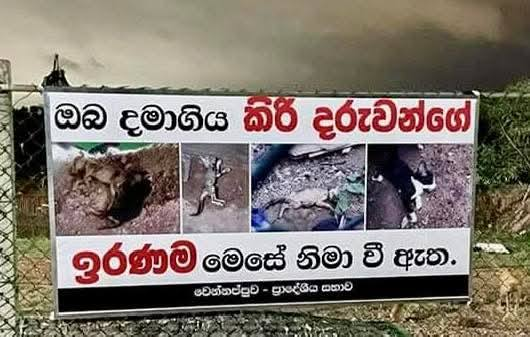
Why do we need a pilot project of a street dog shelter when we have three abysmally failed state-run shelters in Nellikulam, Wennappuwa and Konesapuri, all compelled to shut down within about 6 months of them being set-up?
And, Pilot Projects are initiated to gather hitherto unknown information.
Without controlling the following two external factors, shelters get unmanageably overcrowded and defeat the purpose of setting them up. Merely citing street dog welfare and putting up Fancy Boards are ridiculous.
The two uncontrollable external factors are: 1) dog population growth; 2) dumping.
Without controlling the above two external factors, no amount of technical support by any shelter expert”, if indeed there are such experts, is merely agenda-driven rhetoric, as this shelter too will have to be closed within a few months, because the two uncontrollable external factors which inevitably determine the fate of such places still exist, more than ever now.
Unless of course the sinister plan is to conveniently kill and burn the dumped animals, the excess and the sick.
Negative Factors of Dog Shelters
Dog shelters have the following inevitable outcomes:
· No holistically sustainable results are generated.
· Very expensive to run, artificially taking over the care of self-sufficient street dogs and trying to prolong their natural life by restricting them to ill-managed shelters, that defeats the provision of their welfare.
· A huge long term commitment, which cannot be sustained owing to lack of: 1) funds, 2) committed and caring workers, 3) consistent and proper basic care, 4) consistent vet care.
· These shelters become centers of dumping within months and hence: 1) become disease spreading centers, 2) bring forth new public health issues, 3) cause new environmental issues, and 4) give rise to public nuisance factors, with calls to remove / shut down these shelters, built spending enormous amounts of public funds, which should be ideally channeled towards sterilization.
Solution andUrgent Priority
The National Target should be rabies eradication and zero dog-mediated human rabies deaths cost-effectively. These targets cannot be achieved by providing respectable burials to pet dogs.
What should be prioritized to achieve these targets of utmost public health significance is comprehensive island-wide decentralized dog sterilization via each Pradesheeya Sabha (Local Government Bodies), coupled with the legal arresting of dumping dogs by registering dog owners.
After at least a minimum of three years of such island-wide regular dog sterilization, which eliminates the need to dump, a shelter or two can be meaningfully and safely established as a pilot study.
This rebuttal examines whether the Channel 4 documentary establishes its central allegation of high-level state complicity in the Easter Sunday attacks on the basis of independently verifiable evidence, or whether it relies primarily on delayed testimony, anonymous sourcing, and inferential narrative construction.
SECTION 1
THE ENTIRE CHANNEL 4 CASE RESTS ON ASAD MAULANA
Channel 4’s central allegation of high-level complicity in the Easter Sunday attacks rests overwhelmingly on the testimony of a single individual — Asad Maulana.
The documentary itself acknowledges that Maulana was making many of these allegations publicly for the first time in 2023, approximately four years after the Easter Sunday attacks of April 2019.
Before examining the allegations themselves, it is necessary to examine the credibility, consistency, timing, and evidentiary value of the witness upon whom the entire theory depends.
Preliminary Questions Regarding Maulana
If Maulana claims he knew who organized the attacks, who gave the orders, and who benefited from them, why did he not provide this information to Sri Lankan law enforcement immediately after the attacks?
Why did these allegations emerge publicly only in 2023, four years after the attacks?
If he possessed knowledge of a terrorist conspiracy before the attacks, what steps did he take to prevent the loss of life?
If he possessed knowledge after the attacks, why was this information not provided to investigators immediately?
If his allegations are true, does his own role require examination as a potential facilitator, intermediary, material witness, or accomplice?
The objective of Channel 4 is also made clear – use Maulana to drive notion of top-level complicity” in the easter bombings by officials inside the Sri Lankan Govt. Though the innuendos are at the Rajapakse’s, the attacks took place not under the Rajapakse govt but under Wickremasinghe-Sirisena Yahapalana Govt.
INTERNAL CONSISTENCY PROBLEMS IN MAULANA’S ACCOUNT
Contradiction 1
Zaharan was allegedly in hiding and wanted by police.
Yet Maulana claims:
Direct access to Zaharan.
Ability to arrange meetings.
Ability to summon Zaharan to locations.
If Maulana possessed this level of access to a wanted extremist leader, why was this information not disclosed to investigators?
Contradiction 2
Maulana claims:
He remained outside the alleged February 2018 meeting.
Yet:
He claims knowledge of discussions inside.
How does he know what was discussed during a meeting he says he did not attend?
Contradiction 3
Maulana claims:
He did not know details of the alleged plan.
Yet later states:
He knows who organized the attacks.
He knows whose orders were followed.
He knows who benefited.
When exactly did he acquire this knowledge?
Before the attacks? Immediately after the attacks? Or years later?
Contradiction 4
Maulana claims:
He was frightened after the attacks.
Yet:
He remained silent for years.
Why was there no immediate complaint, affidavit, police statement, testimony before a commission, or sworn deposition?
THE PROBLEM OF DELAYED DISCLOSURE
I Can No Longer Live With What I Know”
Maulana states:
I can’t carry this my whole life. I want to tell the truth.”
Questions arise:
The alleged meeting occurred in February 2018.
The attacks occurred in April 2019.
The disclosure was made in 2023.
Why was the information withheld for approximately five years?
What event occurred in 2023 that suddenly made disclosure possible?
Why was no disclosure made to Sri Lankan investigators, the Presidential Commission, Parliament, the courts, or foreign law enforcement agencies immediately after the attacks?
Maulana states:
I have some strong proof they can’t deny.”
Questions:
What is this proof?
When was it obtained?
Has it been independently verified?
Has it been subjected to forensic examination?
Why was it not produced immediately after the attacks?
THE CENTRAL CREDIBILITY QUESTION
Before any allegation against any individual can be accepted, the credibility of the witness making the allegation must first be established.
Therefore the following questions arise:
Are the allegations independently corroborated?
Are they internally consistent?
Are they supported by objective records?
Are they supported by evidence?
Or do they rely primarily upon recollections first disclosed years after the events?
Only after examining these questions can the allegations themselves be properly assessed.
LEGAL STATUS OF THE PRIMARY WITNESS: OPEN WARRANT AND ADMISSIBILITY CONCERNS
He is not just a delayed witness” but a person with outstanding legal issues
Open warrant affects:
credibility
motive to shift narrative
admissibility weight (even if not inadmissible per se)
His statements are uncorroborated hearsay with potential self-protection motive
Section 2 – The Alleged February 2018 Meeting
CAN IT BE VERIFIED?
2.1 Why This Meeting Matters
Everything that follows in Channel 4’s documentary depends on this alleged meeting.
If the meeting cannot be established:
There is no evidence that Suresh Sallay met Zaharan.
There is no evidence that Sallay gave instructions.
There is no evidence that any alleged conspiracy existed.
The entire theory presented by Channel 4 collapses.
Therefore the first question is not what was discussed.
The first question is:
Did the meeting actually take place?
2.2 Maulana’s Account
Maulana claims:
In January 2018 Pillayan instructed him to arrange a meeting.
The meeting took place in February 2018.
Location was Karadipuval coconut estate.
Zaharan arrived with several individuals.
Suresh Sallay attended.
Maulana introduced Sallay to Zaharan.
Meeting lasted approximately three hours.
Maulana remained outside.
After the meeting Sallay allegedly told him that the Rajapaksas required an unsafe situation in Sri Lanka.
2.3 Objective Facts That Require Verification
Question 1: Was Suresh Sallay even in Sri Lanka?
At the time:
Sallay was serving in Malaysia.
He was on a diplomatic posting.
Objective records should exist:
Immigration records.
Passport records.
Airline manifests.
Diplomatic travel records.
Question:
Has any documentary evidence been produced showing Sallay entered Sri Lanka for this alleged meeting?
Question 2: Did the Venue exist?
Maulana states:
There was one house on the coconut estate.”
However:
Statements attributed to caretakers reportedly indicate that the house was only constructed around August–September 2018.
Was there a house in February 2018?
Are there land records?
Construction records?
Satellite imagery?
Witness statements?
If no structure existed, where did the alleged three-hour meeting occur or did it occur?
Question 3: Why Was Maulana Needed?
Maulana claims:
He introduced Sallay to Zaharan.
However:
Allegations by Father Cyril in Oct 2021 claimed Zaharan and Sallay allegedly already knew each other.
Therefore:
Why was an intermediary required?
Which version is correct?
Question 4: How Did Maulana Access Zaharan?
Maulana says:
Zaharan was in hiding.
Zaharan was wanted by police.
Yet:
Maulana claims he could contact him.
Arrange meetings.
Bring him to a remote location.
How did Maulana possess this level of access to a wanted extremist leader?
2.4 The Three-Hour Meeting Problem
Maulana says:
He waited outside.
The meeting lasted approximately three hours.
Yet he later claims knowledge of:
The purpose of the meeting.
What was discussed.
The alleged political objective.
Questions:
How does he know what occurred inside?
Was the meeting recorded?
Were there witnesses?
Did anyone else hear the discussion?
If he was excluded, his knowledge becomes second-hand.
2.5 The Alleged Statement by Sallay
Maulana claims Sallay later told him:
The Rajapaksas need an unsafe situation in Sri Lanka.”
Questions:
Why would a senior intelligence officer reveal a supposedly secret operation to someone who had been excluded from the meeting?
Was this statement recorded?
Was it documented anywhere?
Are there witnesses?
The allegation rests solely on Maulana’s recollection years later.
2.6 Objective Evidence that could verify the February 2018 Meeting
Potential sources include:
Immigration records.
Passport records.
Airline manifests.
Mobile phone location records.
Vehicle movement records.
Telecom records.
Witness testimony.
Estate caretaker testimony.
Construction records.
Satellite imagery.
Central Question:
Has any independent evidence been publicly produced that confirms this meeting took place as described?
SECTION 3
THE JANUARY 2019 DISCOVERY: IF AUTHORITIES ALREADY KNEW ABOUT ZAHARAN, WHY WAS HE NOT ARRESTED?
One of the most striking facts presented in the documentary is not the allegation against Suresh Sallay.
It is the admission that by January 2019—three months before the Easter Sunday attacks—law enforcement authorities had already linked Zaharan Hashim and the National Thowheed Jamaath (NTJ) to a significant cache of explosives and a suspected training facility.
If this is correct, a critical question arises:
Why was Zaharan not apprehended before April 2019?
This question exists independently of any allegation made by Asad Maulana.
The Coconut Estate Discovery
The documentary states that:
Police investigations led officers to a coconut estate.
More than 100 kilograms of urea nitrate explosive material were allegedly discovered.
Two suspects were arrested.
Investigators linked the location to Zaharan Hashim.
Investigators linked the occupants to NTJ.
The anonymous former police official states:
We found out that the safe house or training base was run by Zaharan.”
If this statement is accurate, then by January 2019 investigators had already established:
The existence of an extremist network.
A connection to Zaharan Hashim.
A connection to NTJ.
Possession of explosive materials.
Existing Arrest Warrants Against Zaharan
Reports indicate that:
Zaharan was already being sought by law enforcement.
Warrants had reportedly been issued 2 years prior to the Easter attacks.
He was already known to security authorities.
If so:
Why did the January 2019 discovery not trigger an immediate nationwide operation to locate him?
The Critical Operational Questions
The documentary focuses heavily on alleged interference by intelligence agencies.
However, a more immediate question arises:
What actions were taken after January 2019?
Specifically:
Was a nationwide manhunt initiated?
Were airports and ports alerted?
Were known associates placed under surveillance?
Were financial transactions monitored?
Were communication records examined?
Were family members questioned?
Were safe houses identified?
Were additional arrests made?
The answers to these questions are essential to understanding how Zaharan remained at large.
The Brick Wall” Narrative
The presenter states:
Police had enough information to arrest Zaharan and his followers, but at every turn they ran into brick walls.”
This statement raises two separate issues.
Issue 1: Sufficient Evidence
If investigators genuinely possessed enough evidence to arrest Zaharan, then:
The threat had already been identified.
The principal suspect had already been identified.
The question then becomes:
Why was he not apprehended?
Issue 2: Alleged Obstruction
The documentary attributes the failure primarily to intelligence interference.
However:
Even if intelligence reports were inaccurate, investigators still possessed:
The explosives.
The suspects.
The NTJ connection.
Zaharan’s identity.
Would these facts alone not justify aggressive operational action?
The DMI Letter Presented by Channel 4
The documentary displays a military intelligence document dated 5 December 2018.
Questions arise:
What direct connection does this document have to the January 2019 raid?
Does it negate the discovery of explosives?
Does it negate the NTJ connection?
Does it negate Zaharan’s status as a wanted individual?
Even if intelligence assessments were disputed, the physical evidence discovered in January 2019 remained.
Did Investigators Already Know NTJ Was Involved?
The anonymous source states:
If military intelligence had not misled investigators, CID would have found that NTJ was involved.”
Yet the documentary itself states:
Explosives were found.
NTJ members were arrested.
Zaharan was linked to the site.
This raises a logical question:
If NTJ had already been linked to the location, in what sense had investigators failed to identify NTJ involvement?
Responsibility of Investigative Agencies
The documentary places primary emphasis on intelligence failures.
However, responsibility for criminal investigations also rests with investigative agencies themselves.
Questions therefore arise:
What investigative steps were taken?
What follow-up operations occurred?
What arrests were pursued?
What recommendations were made?
What requests were made to courts?
What requests were made for surveillance authorities?
These questions become particularly important given the January 2019 discoveries.
An Alternative Investigative Question
The documentary focuses on whether intelligence agencies allegedly obstructed investigators.
An equally important question is:
How did a known extremist leader, already linked to explosives, already associated with NTJ, and already wanted by authorities, remain at large for three additional months?
This question requires examination regardless of whether any allegation against Suresh Sallay is accepted or rejected.
The Central Question
If the January 2019 raid established:
Zaharan’s connection to the site,
NTJ involvement,
Possession of explosives,
The existence of a training facility,
then the critical question becomes:
What specifically prevented Zaharan Hashim from being apprehended between January and April 2019?
The answer to that question may be more important than many of the allegations advanced later in the documentary.
SECTION 4
EASTER SUNDAY, THE INTELLIGENCE WARNINGS, AND THE ALLEGED TELEPHONE CALL
Having examined the alleged February 2018 meeting and the January 2019 discovery of explosives linked to NTJ, the next question concerns the events immediately surrounding the Easter Sunday attacks themselves.
Channel 4 attempts to connect its broader theory to the attacks through two separate claims:
The existence of advance intelligence warnings prior to Easter Sunday.
Maulana’s claim that he received a telephone call from Suresh Sallay on the morning of the attacks.
These issues require separate examination.
The Advance Intelligence Warnings
The documentary states that foreign intelligence agencies warned Sri Lankan authorities that Zaharan Hashim was planning attacks.
According to the documentary:
Warnings were received from Indian intelligence.
Specific targets were identified.
Churches were mentioned as potential targets.
The warnings were circulated among security officials.
An anonymous source states:
The date was certain. The location was certain. The attackers were certain.”
If this description is accurate, a critical question arises:
What actions were taken by the security apparatus after the warnings were received?
The focus should not merely be on who received the warnings, but on what operational steps followed.
Which agencies received the warnings?
When exactly were they received?
Who was responsible for acting upon them?
What preventive measures were ordered?
What surveillance operations were initiated?
Were churches warned?
Were hotels warned?
Were suspects monitored?
Were arrests attempted?
These questions are essential in determining whether the failure was one of intelligence collection or operational response.
Ignoring the above & focusing only on Suresh Sallay who had no operational role in service is like presuming he prevented entire security apparatus from taking action on warnings received prior to the attacks.
The Relationship Between the warnings and the January 2019 Discovery
An important issue often overlooked is that the warnings did not emerge in isolation.
By January 2019:
Explosives had reportedly been discovered.
NTJ links had reportedly been established.
Zaharan was reportedly identified as a suspect.
Existing warrants reportedly existed.
Therefore, the foreign warnings should be viewed together with information already available to investigators.
This raises a broader question:
Why did multiple warning indicators fail to produce preventive action?
The FBI-Related Claim
The anonymous source further claims:
The FBI gave us an IP address. The person using that IP address had direct connections to Zaharan.”
The documentary then suggests that the individual was connected to military intelligence.
However, several questions arise.
Independent Verification
Has the FBI publicly confirmed this claim?
Was the information presented before a court, commission, or inquiry?
Was the alleged connection independently verified?
Was any direct link established to Suresh Sallay?
Were the findings publicly documented?
The existence of an investigative lead is not necessarily equivalent to proof of involvement.
Without supporting documentation, it is difficult to assess the evidentiary value of this assertion.
THE ALLEGED TELEPHONE CALL
The documentary states that on Easter Sunday morning Maulana received a call from Suresh Sallay.
According to Maulana:
Sallay allegedly instructed him to:
Go to the Taj Samudra Hotel.
Meet a particular individual.
Take possession of that individual’s telephone.
Transport the individual elsewhere.
Maulana claims he replied that he was in Batticaloa and therefore unable to comply.
This allegation is significant because it is presented as evidence that Sallay allegedly possessed prior knowledge of the attack.
JURISDICTIONAL & ADMISSIBILITY GAP
FOREIGN MEDIA ALLEGATIONS VS DOMESTIC LEGAL STANDARDS
A critical distinction must be made between journalistic presentation of allegations and legally admissible evidence.
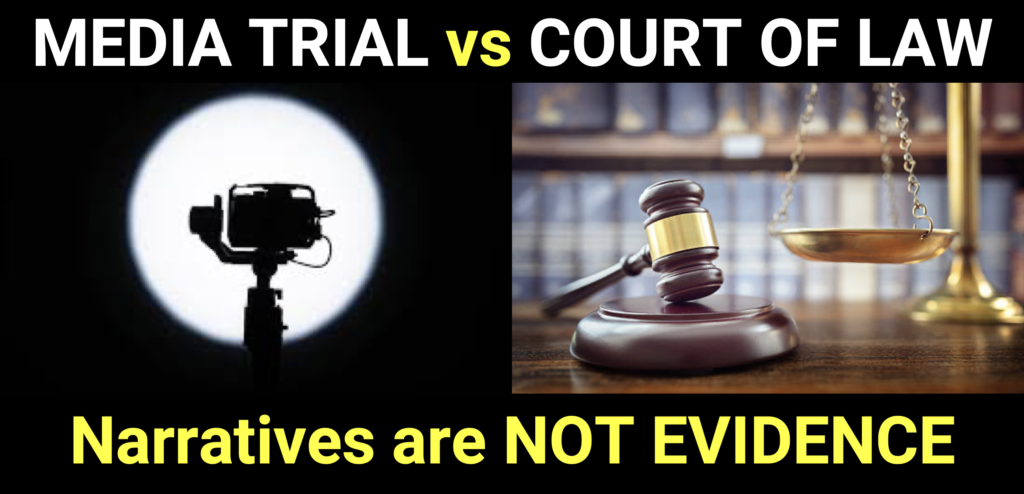
Channel 4 is a media organisation and not a judicial body. Its findings do not constitute judicial determinations, nor are its interviews subject to the procedural safeguards of a court of law.
Similarly:
Interviews conducted by international organisations or human rights bodies do not, in themselves, constitute judicial findings.
Intelligence briefings or investigative interviews are not equivalent to evidence tested under cross-examination.
Allegations presented in media reports have not undergone adversarial scrutiny.
Absence of cross-examination reduces probative weight, particularly in serious criminal allegations involving state complicity or terrorism.
Accordingly, media-based assertions must be distinguished from evidence that has been judicially examined or formally adjudicated.
However, the claim raises several questions.
The Identification Problem
According to Maulana’s account:
He was told only that a person would be waiting.
No name was provided.
No identifying details were provided.
Questions arise:
How was Maulana expected to identify the individual?
How was the individual expected to identify Maulana?
How would either party recognize the other in a crowded hotel?
The practicality of the alleged instruction requires clarification.
The Telephone Problem
Maulana claims he was instructed to obtain the person’s phone.
Questions include:
Why would an unknown individual surrender a phone to someone he had never met?
Had arrangements already been made?
If arrangements had been made, what evidence exists of those arrangements?
The documentary does not address these questions.
The Timing Problem
The documentary later shows CCTV footage of a suspected attacker at the Taj Samudra Hotel.
The presenter states:
The individual entered the hotel.
The individual carried explosives.
The individual received a phone call.
Shortly afterward he left the hotel.
The documentary then suggests that this individual may have been the person Sallay allegedly instructed Maulana to meet.
However:
This appears to be an inference rather than evidence.
Questions arise:
How was the individual’s identity established?
How was the alleged connection established?
What evidence links the CCTV footage to Maulana’s claim?
The documentary appears to move from possibility to conclusion without demonstrating the intermediate evidentiary steps.
The Missing Call Records
Perhaps the most important issue concerns objective verification.
The alleged call could potentially be verified through:
Telephone records.
International roaming records.
Mobile tower data.
Device extraction reports.
Intelligence intercepts.
Service provider records.
Questions therefore arise:
Has any such evidence been produced publicly?
Specifically:
Has any call record been produced?
Has any telecom provider confirmed the call?
Has any commission verified the call?
Has any court examined the records?
Has any investigative body publicly authenticated the communication?
Without such evidence, the allegation remains dependent primarily on witness recollection.
The Overseas Location Question
The documentary presents the allegation as occurring while Sallay was reportedly outside Sri Lanka.
This creates additional questions:
Was Sallay physically overseas at the time?
If so, can roaming records verify the alleged communication?
Have immigration records been examined?
Have investigators publicly addressed this issue?
Objective records should be capable of resolving these questions.
Prior Knowledge Versus Proof
The central implication of the telephone-call allegation is that Sallay allegedly possessed prior knowledge of the attack.
However, establishing prior knowledge requires evidence.
Questions include:
What independent evidence exists beyond Maulana’s statement?
Was the alleged communication corroborated?
Was the alleged instruction recorded?
Was it reported contemporaneously?
Was it disclosed before 2023?
These questions are important because the allegation serves as one of the documentary’s principal links between Sallay and the attacks themselves.
The Central Question
The documentary invites viewers to conclude that the alleged Easter Sunday telephone call demonstrates foreknowledge and involvement.
However, before such a conclusion can be reached, several foundational questions require answers:
Did the call occur?
Has it been independently verified?
Do objective telecom records support the claim?
Has any investigative body authenticated the allegation?
What evidence exists beyond Maulana’s recollection years later?
Until these questions are answered, the allegation remains an assertion requiring verification rather than an established fact.
SECTION 5
POST-ATTACK INVESTIGATIONS, THE ANONYMOUS WITNESS, AND THE ALLEGATIONS AGAINST SURESH SALLAY
After presenting the alleged February 2018 meeting and the alleged Easter Sunday telephone call, Channel 4 introduces a further layer to its narrative.
The documentary relies heavily on an anonymous former official who claims that:
Investigations were obstructed.
Police were prevented from pursuing certain leads.
Military intelligence interfered with inquiries.
Suresh Sallay played a central role in facilitating the attacks.
These allegations are significant because they move beyond suspicion and imply direct responsibility.
The question therefore becomes:
What evidence is presented to support these conclusions?
THE ANONYMOUS WITNESS
The Problem of Anonymous Testimony
Anonymous sources can sometimes play a legitimate role in investigative journalism.
However, anonymity creates obvious limitations.
The audience cannot independently assess:
The witness’s identity.
His qualifications.
His role in the investigation.
His access to information.
His possible biases.
His motives.
As a result, the credibility of the witness depends heavily upon independent corroboration.
HEARSAY UPON HEARSAY: EVIDENTIARY WEAKNESS OF THE CHAIN
A key concern in the documentary is the nature of the information presented,
The primary account originates fromAsad Maulana, whose claims are not independently verified and are based on delayed recollection.
This is then reinforced by ananonymous former police official, whose statements cannot be independently scrutinised or cross-examined.
Finally, the documentary narrative itself acts as asecondary interpretive layer, drawing conclusions and presenting inferences.
This creates a situation of multiple hearsay layering, where each additional layer further distances the final narrative from verifiable primary evidence.
Opinion Versus Evidence
The anonymous witness makes a number of strong statements.
For example:
Gotabaya Rajapaksa controlled Suresh Sallay.”
He is responsible for many of Sri Lanka’s problems.”
He played a huge role.”
He facilitated the attacks.”
These statements raise an important distinction.
Are these factual findings or personal opinions?
What evidence supports these conclusions?
What documents support them?
What witness testimony supports them?
What investigative findings support them?
Without supporting evidence, such statements remain allegations rather than proven facts.
THE CLAIM OF INVESTIGATIVE OBSTRUCTION
The documentary repeatedly suggests that investigators were prevented from pursuing critical leads.
The anonymous witness claims:
The investigation was sabotaged.”
Military intelligence misled investigators.”
How & by Whom
What specifically was sabotaged?
Which investigation?
On what date?
By whom?
Through what mechanism?
What evidence demonstrates interference?
General allegations are difficult to evaluate without specific examples.
The Missing Operational Details
If investigators were obstructed, objective evidence should exist.
Examples include:
Written orders.
Internal memoranda.
Investigation reports.
Transfer orders.
Witness statements.
Court filings.
Questions:
Have any such documents been produced?
Have they been independently verified?
Have they been examined by courts or commissions?
THE CLAIM THAT POLICE WERE PREVENTED FROM INTERROGATING SUSPECTS
The documentary suggests that military intelligence prevented investigators from questioning certain individuals.
This raises important questions.
Who were the suspects?
What were their names?
When were they detained?
Which investigators sought access?
Who denied access?
Was the denial documented?
Without identifying the suspects and circumstances, the allegation cannot be independently assessed.
THE ALLEGED ROLE OF SURESH SALLAY
The documentary repeatedly portrays Sallay as the central figure behind the alleged conspiracy.
Yet several questions arise.
If the evidence was so compelling against him:
Why did major investigations not publicly reach the same conclusion?
Questions include:
Why did the Presidential Commission not identify Sallay as a conspirator?
Why did Parliamentary inquiries not make such a finding?
Why did court proceedings not reach such a conclusion?
Why did earlier CID investigations not publicly identify him as the organizer of the attacks?
However, they are relevant when evaluating the strength of the allegations.
THE ISSUE OF TIMING
A recurring question throughout the documentary concerns timing.
Many of the allegations emerged publicly years after the attacks.
Why were these allegations not presented immediately?
Why did they not emerge during earlier investigations?
Why were they not presented to courts at the earliest opportunity?
Why did they gain prominence only years later?
The timing of allegations is often relevant when assessing reliability and evidentiary value.
THE TRANSFER OF INVESTIGATORS
The documentary claims:
All officers connected to the investigation were transferred.”
and suggests this demonstrates a deliberate effort to derail investigations.
Was every transfer improper?
Or alternatively:
Were transfers routine?
Were some officers reassigned?
Were performance concerns involved?
Were administrative reasons involved?
The mere existence of transfers does not automatically establish obstruction.
The critical issue is whether specific investigations were halted as a direct result.
THE NEED FOR EVIDENTIARY STANDARDS
The documentary frequently moves from allegations to conclusions.
For example:
Sallay allegedly knew Zaharan.
Therefore Sallay facilitated the attacks.
Investigators were transferred.
Therefore investigations were sabotaged.
Intelligence reports were disputed.
Therefore intelligence agencies orchestrated the attacks.
Each of these conclusions requires evidentiary support.
What evidence establishes causation?
What evidence excludes alternative explanations?
What evidence has been independently verified?
THE LEGAL TEST
A distinction must be made between:
Investigative Leads
Information requiring further inquiry.
Allegations
Claims made by witnesses.
Evidence
Material capable of being independently verified.
Findings
Conclusions reached after investigation and evaluation.
Many claims presented in the documentary appear to remain within the first two categories.
The question is whether they have progressed to the latter two.
The Importance of Judicial Scrutiny
The allegations discussed by Channel 4 are serious.
They imply:
Prior knowledge of terrorism.
Facilitation of terrorism.
Obstruction of investigations.
Political conspiracy.
State complicity in mass murder.
Such allegations ordinarily require rigorous scrutiny.
Have these allegations been tested under cross-examination?
Have they been examined in court?
Have they been subjected to forensic analysis?
Have they been independently corroborated?
Without such scrutiny, caution is required before treating allegations as established fact.
THE CENTRAL QUESTION
The documentary repeatedly presents Suresh Sallay as the individual allegedly pulling the strings.”
However, before such a conclusion can be accepted, the following questions require answers:
What independent evidence directly links him to the planning of the attacks?
What evidence links him to the execution of the attacks?
What evidence links him to the suicide bombers?
What evidence has been independently verified?
What evidence has survived judicial scrutiny?
What evidence exists beyond witness allegations and anonymous testimony?
Until those questions are answered, the allegations remain matters requiring investigation rather than established conclusions.
SECTION 6
CHANNEL 4’S JOURNALISTIC METHODOLOGY: INVESTIGATION OR NARRATIVE CONSTRUCTION?
The purpose of this analysis is not to determine who is guilty or innocent.
Rather, it is to examine whether the documentary meets the standards ordinarily expected of investigative journalism when making allegations of state complicity in an act of mass terrorism that killed hundreds of people.
The central question is therefore:
Does the documentary present evidence that allows viewers to reach their own conclusions, or does it guide viewers toward a predetermined conclusion through narrative construction?
THE CENTRALITY OF A SINGLE WITNESS
By its own structure, the documentary’s core allegations depend overwhelmingly upon one witness:
Asad Maulana.
The principal allegations concerning:
The alleged February 2018 meeting.
The alleged role of Suresh Sallay.
The alleged political motive.
The alleged connection between Zaharan and state actors.
all originate primarily from Maulana’s account.
This raises an obvious question:
Can a theory of state-sponsored terrorism be established primarily on the basis of one witness whose claims emerged years after the attacks?
A prudent investigative approach would ordinarily seek substantial independent corroboration before presenting such allegations as credible.
THE USE OF ANONYMOUS SOURCES
The documentary also relies heavily on an anonymous former police official.
The audience is unable to independently assess:
The individual’s identity.
Their role.
Their access to information.
Their reliability.
Their possible motivations.
While anonymous sources can be legitimate in journalism, the less the audience knows about a source, the greater the need for independent documentary evidence.
What evidence independently corroborates the anonymous witness?
Which of his claims have been verified?
Which remain opinions or personal beliefs?
MEDIA TRIAL EFFECT AND PRE-ADJUDICATION REPUTATIONAL PUNISHMENT: THE BULATHWATTE PRECEDENT
A relevant comparative concern arises from the case of a highly decorated officer Major Prabath Bulathwatte of the Tripoli Platoon, who was publicly associated with serious allegations years after the events in question.
Although he was arrested on suspicion and his case was widely reported in media discourse, the judicial process did not ultimately establish final criminal liability.
However, the reputational consequences of early public attribution remained irreversible, demonstrating a critical legal and ethical principle:
The presumption of innocence is a foundational principle of criminal justice. • Individuals must not be treated as guilty prior to adjudication. • Media narratives that imply culpability before judicial determination risk creating irreversible reputational punishment.
This illustrates a broader media trial effect”, where public perception of guilt is formed before evidence is tested in court.
Media attribution of guilt prior to judicial determination creates irreversible reputational punishment even where legal liability is not established.
This concern is directly relevant to the Channel 4 methodology, where individuals are visually and narratively linked to serious crimes without equivalent emphasis on judicial findings or evidentiary adjudication.
ASYMMETRIC SCRUTINY OF SUBJECTS VERSUS WITNESSES
A further concern arises from the apparent inconsistency in the treatment of different categories of individuals within the documentary.
On one hand, individuals who are the subject of allegations are presented in a manner that strongly implies culpability, despite the absence of judicial findings or tested evidence.
On the other hand, certain key witnesses—despite having unresolved legal issues or open warrants—are treated as credible sources of authoritative information without comparable scrutiny.
This creates an imbalance, where:
Alleged subjects are implicitly presumed culpable without adjudication, while
Key witnesses are presumed reliable without equivalent verification.
Such an approach raises concerns relating to the principle of equality.
It also reflects selective evidentiary scrutiny, where credibility thresholds appear to vary depending on the narrative function of the individual within the documentary.
REPETITION OF A POLITICAL MOTIVE
Throughout the documentary, viewers are repeatedly presented with a single overarching explanation:
The attacks were allegedly intended to create instability and facilitate the return of the Rajapaksas to power.
This theory is introduced repeatedly through:
Visual imagery.
The repetition itself is notable because the documentary devotes comparatively little attention to alternative explanations.
Were competing theories examined with equal rigor?
Were ideological motives examined with equal rigor?
Were extremist motivations examined with equal rigor?
Were international terrorist influences examined with equal rigor?
A balanced investigation ordinarily examines all plausible explanations before privileging one.
VISUAL ASSOCIATION AND NARRATIVE FRAMING
A notable feature of the documentary is the repeated appearance of Mahinda and Gotabaya Rajapaksa whenever allegations are discussed.
The names Rajapaksa” and Rajapaksas” are repeatedly invoked throughout the programme – in fact 57 times
What effect does repeated visual association create?
Even where direct evidence is not being presented, repeated imagery can create an implicit connection in the viewer’s mind.
The issue is not whether such imagery is permissible.
The issue is whether it contributes to objective analysis or to narrative persuasion.
THE ABSENCE OF EQUAL SCRUTINY
Throughout the documentary, allegations made by Maulana are often explored in detail.
However, less attention appears to be devoted to testing those allegations against contrary evidence.
Examples include:
The February 2018 Meeting
Was evidence presented regarding:
Immigration records?
Travel records?
Mobile phone location data?
Construction timelines for the alleged venue?
The Easter Sunday Telephone Call
Was evidence presented regarding:
Telecom records?
Roaming records?
Call logs?
Device extractions?
The Alleged Conspiracy
Was evidence presented showing:
Financial transactions?
Operational communications?
Documentary instructions?
Direct links between alleged conspirators?
These are the kinds of objective records that would ordinarily be expected in support of such serious allegations.
THE QUESTION OF ALTERNATIVE EXPLANATIONS
A recurring concern is whether alternative explanations received adequate attention.
The documentary largely focuses on a political motive.
However, the Easter Sunday attacks were also examined through other lenses, including:
Religious extremism.
ISIS-inspired radicalization.
International jihadist networks.
Domestic extremist recruitment.
Intelligence failures.
Institutional failures.
Questions arise:
Were these explanations explored proportionately?
Were they dismissed?
If dismissed, on what evidentiary basis?
The exclusion of alternative explanations can influence how viewers interpret the evidence presented.
THE DISTINCTION BETWEEN ALLEGATION AND FACT
One of the most important principles of investigative reporting is maintaining a clear distinction between:
Allegation
What a witness claims.
Evidence
What can be independently verified.
Conclusion
What can reasonably be established.
Throughout the documentary, viewers may reasonably ask whether these distinctions are always maintained.
For example:
Are allegations clearly identified as allegations?
Are inferences clearly identified as inferences?
Are viewers informed when claims remain unverified?
These distinctions are particularly important when allegations involve terrorism and state actors.
THE ISSUE OF CORROBORATION
Investigative journalism is strongest when multiple independent sources converge upon the same conclusion.
Questions arise:
Beyond Maulana, what independent corroboration exists?
Which allegations have been independently verified?
Which have been confirmed by documentary evidence?
Which have been supported by forensic evidence?
Which have been supported by judicial findings?
The strength of any investigation ultimately depends upon the strength of its corroboration.
WHAT STANDARD SHOULD APPLY?
The allegations contained in the documentary are among the most serious possible:
State involvement in terrorism.
Facilitation of mass murder.
Deliberate destabilization of a country.
Manipulation of democratic processes.
Given the gravity of such allegations, a high evidentiary threshold would ordinarily be expected.
Was that threshold met?
Were all claims independently verified?
Were contradictory facts adequately examined?
Were competing explanations fairly evaluated?
THE CENTRAL QUESTION
At the conclusion of the documentary, viewers are left with a fundamental question:
Has the documentary established its allegations through independently verified evidence?
Or
Has it primarily presented a theory supported by witness testimony, anonymous sources, and narrative interpretation?
The answer to that question is critical because it determines how the allegations should be viewed:
As established facts,
As investigative leads requiring further inquiry,
Or as unverified assertions that have yet to be tested through judicial and evidentiary scrutiny.
The Easter Sunday attacks remain one of the most tragic events in Sri Lanka’s history.
Any allegation regarding responsibility for those attacks deserves thorough investigation.
However, the seriousness of the allegations also demands rigorous standards of evidence, verification, corroboration, and fairness.
The central issue is therefore not whether questions should be asked.
Questions should always be asked.
The central issue is whether the answers presented are supported by evidence sufficient to transform allegations into established fact.
POTENTIAL DEFAMATION AND PREJUDICIAL NARRATIVE FORMATION IN HIGH-IMPACT ALLEGATIONS
Given the gravity of the allegations presented—ranging from state complicity in terrorism to orchestration of mass casualty events—it is essential to recognise the potential legal and reputational consequences of premature attribution.
Where allegations of this nature are presented without judicial findings or independently verified evidence, there is a risk of:
Irreversible reputational harm to named individuals.
Public perception forming guilt without legal determination.
Narrative construction replacing evidentiary proof.
Long-term damage to institutional credibility and individual standing.
In such contexts, the distinction between allegation and proven fact becomes not only a legal necessity but also a safeguard against unjustified reputational destruction.
Accordingly, allegations of this magnitude require a substantially higher evidentiary threshold than narrative inference or uncorroborated testimony.
The distinction between allegation and proof is fundamental.
Allegations of terrorism, conspiracy, and mass murder require evidence capable of withstanding forensic examination, cross-examination, and judicial scrutiny — not merely persuasive narrative framing.
Investigative journalism plays an important role in democratic societies. But the greater the allegation, the greater the responsibility to ensure balance, corroboration, and evidentiary rigor.
The central question therefore remains:
Has Channel 4 established its claims through independently verified evidence — or primarily through witness allegations and narrative interpretation?
Until such allegations are tested through transparent legal and evidentiary processes, they remain matters requiring investigation, not established fact.
The victims of Easter Sunday deserve truth grounded in evidence, not conclusions formed through presumption and kangaroo courts.
The Cardinal’s demand that Shani Abeysekera and Ravi Seneviratna, despite their being under a cloud about the Easter Sunday suicide bombings, be tasked to conduct fresh probes into them in order to track down an alleged mahamolakaru or mastermind, is even more ironical in view of the close relationship that Gotabaya Rajapaksa maintained with the Catholic Church, especially his friendly connection with the Cardinal, from the time he was Secretary of Defence, all of which he describes in his book on pages 93 to 96. He helped the Church in various ways. After the war, he helped with the restoration and reconstruction of the Madhu Church and the Church in Mullikulam, and the renovation of the Kochchikade Church. The Benedict XVI Catholic Institution of Higher Education at Bolawalana, a brainchild of Malcolm Cardinal Ranjith, was established in 2015. Gotabaya got the Navy to design and construct the buildings, and the Urban Development Authority, and the Sri Lanka Land Reclamation and Development Corporation (presently called the Sri Lanka Land Development Corporation) to grade the land as it was a flood prone area. But when the construction of the institution was completed, Mahinda Rajapaksa had lost and his government was gone. The Catholic Higher Education institution was opened by the new president Maithripala Sirisena. But the Cardinal invited Gotabaya to the opening ceremony, where he made special mention of the latter as the one who helped complete the project.
The most significant point in Gotabaya’s relationship with the Church was when the Pope (Pope Francis) was invited to visit Sri Lanka. As normal, the papal visit took about two years of preparation. During this period Gotabaya became very close to the Cardinal. When the visit finally took place, the Rajapaksas were out of power. The Cardinal arranged a special audience with the Pope for ex-President Mahinda Rajapaksa and Gotabaya at the house of the Papal Nuncio in Colombo. Gotabaya’s personal relationship with the Cardinal remained during the yahapalana years. He and his wife would occasionally be invited to dinner with the Cardinal.
When Gotabaya made a courtesy call on the Cardinal within the first few days of his assumption of office as President in November 2019, the latter urged him to take legal action against those who were responsible for the Easter Sunday attacks regardless of their status,or their ethnic or religious identity. Asked whether he was satisfied with the composition of the Commission of Inquiry appointed by his predecessor president Maithripala Sirisena or whether he wanted one of his own nominees to be included in the Commission, the Cardinal answered in the negative.
In September 2020, the Cardinal invited president Gotabaya to visit a large coconut estate in the Puttlam District owned by the Colombo Diocese. The Catholic Church had grown grapes there for producing wine for its own use. The Cardinal took the president for a tour of the vineyard and the winery. They also had a poultry farm on the estate. After serving lunch, president Gotabaya opened a new building for an agro-technical institute built using funds provided by the government of Italy. It was designed for training 50 residential students. They also went to see a village that cultivated up-country vegetables.
Although president Gotabaya spent the whole day with the Cardinal that day, the latter did not bring up the Easter Sunday investigations matter for discussion. He seemed satisfied with the way the terror attack investigations were being conducted. On a later occasion, the prelate explicitly stated his confidence that the investigating process would deliver justice and his conviction that the Presidential Commission was sincerely looking into the matter.
This was on September 22, 2020. The Cardinal was addressing the media at the end of an event at the All Ceylon Buddhist Congress in Colombo. Gotabaya thinks that the first instance that apparently upset the Cardinal was the Criminal Investigation Department’s release, in early October 2020, of Riyaj Bathiudeen (brother of MP Rishad Bathiuddeen) who had been arrested, about five months before, on April 14 over alleged links to the Easter Sunday attacks. In a special media briefing held at the Archbishop’s House in Colombo, the Cardinal expressed a suspicion that ‘a political deal’ could be behind the CID’s release of Riyaj Bathiudeen. He highlighted the contradiction between SSP Jaliya Senaratne’s earlier revelation based on investigations into the carnage that this person had maintained direct links with the bombers and his discharge by the CID.
Responding to this allegation, (the then President) Gotabaya stated in an FB post that the government had not entered into any political deal with parliamentarian Rishad Bathiudeen’s brother Riyaj and that arresting or releasing criminal suspects was not the task of politicians. Gotabaya also adds (in his account on pp. 93-96) that the then State Minister of Security and Home Affairs Chamal Rajapaksa, in reply to a question posed by an opposition MP, stated that Riyaj Bathiudeen had been taken into custody over seven telephone conversations he had with Insaf Ahmed, the bomber who attacked the Cinnamon Grand Hotel in Colombo, but that investigations had not revealed his direct involvement in the suicide bombings.
(Aside: Readers will remember that this is a special case. Insaf Ahmed Ibrahim was the elder of a brother duo of suicide bombers; his younger brother Ilham Ahmed Ibrahim bombed Shangri-La Hotel in Colombo. They were both rich businessmen with a good educational background, sons of a wealthy spice merchant, Yusuf Mohammed Ibrahim. When police raided their house for searching, Ilham’s wife detonated a suicide vest killing herself and her two children. This information is from AI – RRW)
According to Gotabaya, the CID had released Riyaj Bathiudeen without producing him before a Magistrate. As President, Gotabaya writes, he did not have anything to do with suspect Riyaj’s arrest or release. ‘Later, the then Attorney General Dappula de Livera summoned the DIG in charge of the CID and its Chief Investigating Officer over the release of Riyaj Bathiudeen’. As a result of this meeting, the AG noted deficiencies in the investigations against the suspect. Consequently, the CID Director was transferred out with the approval of the National Police Commission.
(So, this is the truth about the then CID chief SSP Shani Abeysekera’s alleged ‘arbitrary’ transfer in November 2020 that the Opposition and NGO human rights activists made such a hue and cry. – RRW)
SJB parliamentarian Kavinda Jayawardane had a meeting with the Cardinal in early December 2020, where the Cardinal expressed the idea that if the government (that is, the minority government set up under Gotabaya soon after he won the election in November 2019) failed to punish those responsible for the Easter Sunday bombings, an alternative course of action would have to be sought. The Cardinal said that though many suspects had been arrested, the investigations were not reliable, and that this case must not be allowed to be swept under the carpet as a result of political machinations or deals.
Gotabaya was invited to participate in the inaugural ceremony of the Benedict XVI Catholic Institution of Higher Education. He was presented with a memento in appreciation of his services towards the establishment of the Catholic Institution of Higher Education.
Why would the Cardinal get Shani and Ravi to hound Gotabaya? Does the Cardinal still believe the absurd theory that the Easter bombings were caused to create instability in the country so as to bring Gotabaya to power, as claimed by Azad Maulana in the Channel 4 video? To put it differently, does he believe that Gotabaya or a devoted ally was the mastermind behind the Easter Sunday carnage? Is this the Cardinal whom I (RRW) so passionately defended in an article under the title ‘In strong defence of Cardinal: Attacks on Cardinal outrageous and unacceptable’ originally published in The Island on December 9, 2020, and subsequently on the online Lankaweb and Sri Lanka Guardian? I have made frequent laudatory references to the Cardinal since. Of course, the Cardinal is a man of grace and culture. He might have seen the light by now and understood the insanity of going after Gotabaya about the Easter Sunday bombings.
However, in his short account of the complicated plot that was behind his ouster, Gotabaya mentions the fact that the Cardinal found it difficult to believe that a group of Muslim youth could have carried out the coordinated multiple bombings of such proportions ‘on their own’ (p.140). This was one reason that led him to assume that there was a mastermind behind the Easter Sunday attacks.
Gotabaya writes about the insanity of blaming him for what was confirmed by reputable foreign and domestic intelligence agencies to be an ISIS atrocity. He recalls how, when President Premadasa was assassinated (on the May Day in 1993), a conspiracy theory arose according to which Premadasa himself had planned to bomb his own procession so as to gain public sympathy; he had taken out a white handkerchief to cue the bomber, but something went wrong, and he was killed in the explosion. As for President Premadasa, he was blamed for things that happened while he was in power, says Gotabaya, whereas he himself is being blamed for things that happened when he was not in power. This insanity is not going to bode well for this country. When the then Minister of Justice (Wijedasa Rajapaksa) made his first revelation in Parliament about the spread of Muslim extremism in 2016, many Muslim politicians accused him of being anti-Muslim. Now those same politicians are busily promoting this conspiracy theory that Zaharan and his team had launched suicide attacks to make me President. Some Muslim politicians are trying to promote the view that the suicide bombings had nothing to do with Islam, but everything to do with local politics. The only thing that has not yet been said is that the suicide bombers themselves were not Muslim but Sinhala Buddhists.
In the wake of the release of the Presidential Commission report, the threat of Islamic extremism has been completely forgotten in the midst of a headlong quest to hold everyone except Muslim extremists responsible for the Easter Sunday attacks. The Cardinal’s pronouncements are creating more divisions in an already divided country. The icing on the cake will be when the Cardinal’s campaign based on wrong assumptions and conjecture against those not responsible for the Easter Sunday bombings results in yet another government that is totally dependent on the Muslim vote like the government of 2015-2019 and is unwilling to do anything to stop the spread of Islamic extremism in the country.” (p.141)
A maulavi speaking (probably at the end of the national memorial service led by Cardinal Malcolm Ranjith at the St Anthony’s Shrine, Kochchikade on April 21, 2026; the video I watched on YouTube didn’t give exact information about the venue) seemed to confirm the truth of Gotabaya’s blunt comments. The maulavi addressed the gathering as a member of the ‘victimised group’ (agathiyatapath parshavaya), by which he meant the Christian and Muslim communities as a single body (How few mainstream Christians and Muslims – free from extremism – are likely to share his view is a different matter). The implicit oppressor is the Sinhalese Buddhist majority.
The maulavi named some books that he claimed he had read (with obvious scepticism) about the Easter Sunday attacks, including Gotabaya’s book The Conspiracy and Rohan Gunaratna’s Easter Sunday Massacre, and Udaya Gammanpila’s Searching for the Easter Attack Mastermind, and mentioned their prices, implying that the authors wanted only to earn some money by writing about the carnage. He said that the Christians and Catholics were rendered helpless, and the Muslims, even more so.
We (Muslims) were pressed to the wall (as punishment) for reciting the noblest verse (uttareetara gathava) la ilaha illallah – muhammadan rasulullah (There is no god but Allah – Mohammed is His Messenger). Some media supported it (i.e., the anti Muslim attitude). Just as once all Tamils were labelled ‘terrorists’, in the wake of the Easter attacks, we (Muslims) were condemned as religious extremists and terrorists.”
The maulavi blamed the microbiologist who had recommended the cremation of bodies of Covid 19 deceased Muslims against the wishes of their relatives. (But she was acting as per WHO instructions considering local conditions, regarding the disposal of bodies of Covid dead) He begged the President for the list of names of Muslims dead whose bodies were cremated thus against the wishes of relatives for (intended) litigation purposes.
The maulavi further said: The Easter Sunday attack has become a joke. Once they marketed the war (the war against separatism) or did politics exploiting the war.”
We fight for justice. We die for justice”
He hoped justice would be served soon/without delay.
He concluded his address with the Dhammapada lines (from Verse 21):
”Appamado amata padam – pamado machchuno padam”
(the correct translation is: Heedfulness is the path to the Deathless state – Heedlessness is the path to Death)
The maulavi seemed to have completely missed the profound meaning of the Dhammapada lines. He has accepted the misleading translation of appamado as ‘delay’ instead of the correct ‘heedfulness’ or ‘mindfulness’ or ‘diligence’. Unfortunately, some modern English versions of the Dhammapada found on the internet interpret the Pali term ‘appamado’ of Verse 21 as exclusively meaning ‘delay’, trivialising its deep philosophical import.
The maulavi’s unwarranted bluster and his macabre ultimatum to the President must have deeply embarrassed the Cardinal and upset the grieving audience in that sacred place.
In an unconstitutional statement in parliament on May 21, 2026 (last Thursday), ITAK parliamentarian Thurairasa Ravikaran paid a tribute to a dead separatist leader by the name of Balraj. He called him ‘Brigadier’ Balraj, According to Arun Siddharth of the Jaffna Civil Society organisation, who unequivocally condemned Ravikaran’s move as a violation of the oath the MP had taken not to espouse the cause of setting up a separate state within the territory of Sri Lanka, said that Balraj had the blood of over 1000 soldiers of the lawful Sri Lanka’s state army killed in the North in the year 2000. Arun Siddharth pointed out that the title Brigadier Ravikaran arbitrarily conferred on the terrorist was an insult to the officers of that rank in the lawful Sri Lanka state army. He expressed his deepest scorn for all the 225 MPs of the Government and the Opposition for not opposing or calling into question Ravikaran’s seditious act; they should have at least demanded the Speaker for a ruling to expunge the MP’s unlawful tribute to a dead terrorist leader from the Hansard.
The survival of our nation depends on the unconditional peace and unity between Sinhalese Buddhists and Tamil Hindus to begin with, who are cultural twins.
Child sexual abuse has become an urgent concern, with a troubling number of children subjected to physical and sexual abuse within religious institutions. In recent decades, reports of such misconduct have emerged across various faiths, including Christianity, Hinduism, Islam, and Buddhism. Often, those in leadership roles within these organizations have either hidden the incidents or used their authority to impede investigations, allowing the perpetrators to get away.
The Ill Effects of Child Sexual Abuse
Child abuse, particularly in the form of sexual abuse, has profound and far-reaching consequences not only for the individual victims but also for society as a whole. Victims of such abuse often endure severe psychological trauma, which can manifest in various ways, including anxiety, depression, and post-traumatic stress disorder. These mental health issues can hinder their ability to form healthy relationships, pursue education, and maintain stable employment in adulthood, perpetuating a cycle of disadvantage. Furthermore, the societal implications are equally alarming; communities may face increased healthcare costs, a rise in crime rates, drug abuse, self-harm and a strain on social services as they attempt to support affected individuals.
The Vatican’s Handling of Child Sexual Abuse Cases
The Vatican’s handling of child sexual abuse allegations has been a subject of intense scrutiny and controversy over the years. Numerous reports have emerged detailing how the Church has often prioritized its reputation and institutional integrity over the welfare of victims. Investigations have revealed a pattern of cover-ups, where clergy members accused of abuse were frequently reassigned to different parishes rather than facing legal consequences. This practice not only allowed perpetrators to continue their predatory behaviour but also left countless victims without justice or support. The Vatican’s response to these allegations has often been criticized as insufficient, with many calling for greater transparency and accountability within the Church.
The Revelation by NBC News
An extensive investigation by NBC News has revealed a disturbing 50-year history of sexual abuse, enforced silence, and systematic cover-ups within the Assemblies of God, the largest Pentecostal denomination globally. This inquiry has led to allegations against nearly 200 pastors and church leaders, who are accused of perpetrating abuse against more than 475 victims, with a significant number being children. Alarmingly, in numerous instances, church authorities were aware of the abusive behavior yet chose to transfer these individuals to new roles of authority, thereby facilitating the continuation of such heinous acts.
Child Sexual Abuse by Pastor Robert Morris
The prominent child sexual abuse case involving Robert Morris, the founding pastor of Gateway Church in Southlake, Texas, has unveiled a troubling history of institutional cover-up within one of the largest megachurches in the United States. The abuse began on Christmas night in 1982 when a 21-year-old Morris, then a traveling evangelist, exploited 12-year-old Cindy Clemishire while staying with her family in Hominy, Oklahoma. Over the next four years, Morris groomed and manipulated Clemishire, who eventually disclosed the abuse to her parents and church leaders at the age of 17 in 1987. Unfortunately, the church opted for internal handling of the situation, allowing Morris to return to ministry after brief periods of “restoration” without involving law enforcement. It wasn’t until June 2024 that Clemishire publicly shared her story through an independent religious watchdog report, prompting Morris’s resignation from Gateway Church. Following a thorough investigation by the Oklahoma Attorney General’s Office, Morris was indicted by a grand jury and, on October 2, 2025, pleaded guilty to five felony counts of lewd or indecent acts with a child. As part of a plea agreement, he received a 10-year suspended sentence and was taken into custody immediately after the hearing.
Kumbakonam Hindu Kovil Child Sexual Abuse Case
In recent years, there have been troubling reports of child sexual abuse incidents occurring within Hindu temples, with a particularly notable case emerging in 2026 in Kumbakonam, Tamil Nadu. A 75-year-old temple priest, Viswanatha Iyer, was arrested under the Protection of Children from Sexual Offences (POCSO) Act for allegedly sexually assaulting a 13-year-old girl inside a temple in Thiruvalanchuzhi. The incident reportedly took place when the girl visited the temple with her family for darshan and later approached the offertory box alone, where the priest is said to have misbehaved with her. Following a thorough investigation, police confirmed the validity of the allegations, leading to the priest’s arrest under the appropriate legal provisions.
The Death of a 13-year-old Student- M.S. Musab
The Sainthamaruthu Madrasa Case, which unfolded in the Ampara District, centers around the tragic death of a 13-year-old student, M.S. Musab, whose body was discovered in the washroom of a private Madrasa with hostel facilities. Initially reported as a suicide by the school, the situation escalated when local residents, driven by deep suspicion, conducted a raid on the premises. A judicial medical examination later determined that Musab had died from strangulation and respiratory distress, leading to a murder investigation. The Principal, known as Moulavi, was subsequently arrested following allegations of a troubling history of complaints against him.
Pahalagama Somaratana Case
Pahalagama Somaratana Thera, a well-known Buddhist monk from Sri Lanka, was convicted in the United Kingdom for sexually abusing a young girl. In May 2012, the Isleworth Crown Court in London found him guilty of four counts of indecent assault, although he was acquitted of a separate charge of rape. The court sentenced him to seven years in prison and required him to register as a sex offender for life, barring him from working with children. Despite this, Somaratana has returned to Sri Lanka, where he operates a temple and a Sunday school for children, while local authorities appear to overlook his status as a registered sex offender.
Naotunne Vijitha
Naotunne Vijitha, a prominent Sri Lankan Buddhist monk, was convicted by an Australian jury for multiple historical offenses of child sexual abuse. He arrived in Australia in 1994 to lead the Dhamma Sarana Buddhist Temple in Melbourne, which was established by the local Sri Lankan community and included a significant Sunday school program for children. The abuse occurred over eight years from 1994 to 2002, initially at the temple’s original location in Springvale and later at a new facility in Keysborough. Six young female victims, aged between 4 and 12 at the time, testified that Vijitha exploited his spiritual authority to manipulate them, using sweets to lure them into private areas where the abuse took place. Following years of silence, the victims reported their experiences to Victoria Police, resulting in Vijitha’s arrest in August 2023. On October 30, 2025, the jury found him guilty of the charges.
The Case of Pallegama Hemarathna
The case of Pallegama Hemarathna revolves around the arrest and prosecution of the 71-year-old Chief Prelate of the Atamastana, who faces serious allegations of sexually abusing a 15-year-old minor. The investigation began when the National Child Protection Authority and the Nittambuwa Police uncovered the alleged abuse while looking into a separate complaint about the minor’s abduction on March 6, 2026. During this inquiry, the victim disclosed a troubling pattern of sexual abuse involving the chief monk. On May 8, 2026, the Anuradhapura Chief Magistrate’s Court ordered the immediate arrest of both the monk and the girl’s mother. On May 22, 2026, he was granted bail by the Anuradhapura Chief Magistrate’s Court, with conditions that included a cash bail of Rs. 100,000, two sureties of Rs. 5 million each, and a strict prohibition on foreign travel.
The Anatomy of Abuse
The troubling issue of sexual abuse of children by clergy across various faiths raises profound questions about the underlying factors that contribute to such heinous acts. One significant aspect is the power dynamics inherent in religious institutions, where clergy often hold positions of authority and trust, creating an environment that can be exploited. This power can lead to a sense of entitlement, where individuals may believe they are above accountability. Additionally, the culture of silence and secrecy that often pervades religious organizations can further enable such behaviour, as victims may feel discouraged from coming forward due to fear of retribution or disbelief. Furthermore, inadequate oversight and a lack of robust safeguarding measures can leave vulnerable individuals unprotected.
The Urgent Need for Child Safeguarding in Religious Organizations
The pressing necessity for child safeguarding within religious organizations cannot be overstated, as these institutions often serve as pivotal community hubs where trust and vulnerability intersect. To effectively protect children, it is essential for these organizations to implement comprehensive protective measures that encompass a range of strategies. This includes establishing clear policies that define acceptable behavior and outline procedures for reporting and addressing allegations of abuse. Training programs for staff and volunteers are crucial, ensuring that all individuals working with children are equipped with the knowledge to recognize and respond to potential risks. Additionally, creating a culture of transparency and accountability is vital; this can be achieved by involving parents and community members in safeguarding initiatives and maintaining open lines of communication. Regular audits and assessments of safeguarding practices can further enhance the effectiveness of these measures, ensuring that they evolve in response to emerging challenges. Ultimately, a robust safeguarding framework not only protects children but also reinforces the integrity and trustworthiness of religious organizations in the eyes of their communities.
To undo the global-scale injustice regarding the authorship of the Umpire Decision Review System (DRS), Sri Lanka and the inventor, Colombo-based lawyer Senaka Weeraratna, have several legal, diplomatic, and institutional remedies available. [1, 2]
The controversy stems from a flawed legal opinion by former ICC legal counsel David Becker, which claimed the ICC was unaware of Weeraratna’s 1997 “Player Referral” concept and that publishing it openly waived his rights. This opinion completely overlooked the established legal doctrine of Constructive Notice—given that Weeraratna extensively publicized the four core pillars of the DRS across global media nine years before the ICC acted. [1, 2]
Because the ICC has admitted it holds no official copyright or named author for the DRS, Sri Lanka can deploy the following multi-tiered strategy to claim intellectual property recognition and compensation. [1, 2]
1. International Sports Arbitration
The most direct mechanism to challenge the ICC’s flawed legal position outside of its internal committees is through independent sports bodies. [1]
Court of Arbitration for Sport (CAS): Sri Lanka can push to submit the dispute to the Court of Arbitration for Sport (CAS) in Lausanne, Switzerland. If both parties agree to arbitration, a panel can evaluate the timeline of Weeraratna’s 1997 publications against the ICC’s 2006 framework to rule on economic and moral copyrights.
Independent Commission of Inquiry: Sri Lanka Cricket (SLC) can demand that the ICC Board set up an independent tribunal or commission to review the evidence of prior art and authorship, rather than relying on a singular defense lawyer’s opinion. [1, 2, 3, 4, 5]
2. State-Level Diplomatic and Legislative Action
The Sri Lankan government can step in to elevate this from a private dispute to a matter of national intellectual property protection. [1, 2]
Government Intervention: The President and the Ministry of Sports can formally back Weeraratna’s claim, putting state-level pressure on the ICC during bilateral cricket negotiations.
The “User Pays” Framework: Sri Lanka can champion the legal principle of the “User Pays” system for sports innovations. Because the player referral concept is now used globally across cricket, tennis, and football (VAR), a state-backed framework can demand a standardized royalty model. [1, 2, 3, 4, 5]
3. Legal Actions for Copyright Infringement
Though the ICC argues that an unpatented “idea” cannot be protected, Weeraratna’s claims rely heavily on modern copyright laws. [1, 2]
Enforcement of Moral Rights: Under global copyright treaties (such as the Berne Convention), an author retains the moral right to attribution even if no patent was filed. Sri Lanka can fund a lawsuit arguing that the ICC violated these moral rights by failing to name Weeraratna as the conceptual composer of the system.
Proving Access via Constructive Notice: In a court of law, Weeraratna’s legal team can demonstrate that because his work was widely published in dominant cricket nations (like The Australian in 1997), the ICC committee members had constructive access to his exact four-pillar framework before developing their system. [1, 2, 3, 4]
4. Global Public Campaign and Naming Rights
If the ICC relies on legal technicalities to avoid financial payout, Sri Lanka can target the ICC’s public image and the “Spirit of Cricket”. [1, 2]
The “Weeraratna Referral System” Campaign: Just as the rain-affected rule is officially named the Duckworth-Lewis-Stern (DLS) method, Sri Lanka and its global allies can campaign to formally rename the system the Weeraratna Decision Review System (WDRS).
Exploiting the Lack of Counter-Claimants: Because no other individual or body has claimed authorship of the player-initiated review concept, a concerted media push by former players and cricket historians can force the ICC into a public settlement to preserve its institutional integrity. [1, 2, 3, 4]
Next Logical Step: Sri Lanka Cricket (SLC) must formally reject the validity of the David Becker legal opinion and table a resolution at the next ICC Board Meeting demanding the dispute be jointly referred to the Court of Arbitration for Sport (CAS).
During my routine early morning walk along the Kimbulawala walking path , I keep noticing heap of garbage on both sides of the Madiwela road for several weeks
Irony is one heap lies next to the police post for weeks
Often I see the two young cops looking at the mobiles ignoring my kind polite request as a senior citizen to do something
I requested them to charge the violators or even get Local authority ( Maharagama ) to collect the garbage and clear the drains
They said what can we do ?”People do not listen to us
Proposal for Facilitation of Betting & Gaming License Approvals in Sri Lanka
As Sri Lanka seeks new avenues for foreign direct investment, tourism growth, and foreign exchange earnings, the development of a regulated betting and gaming industry within the Colombo Port City framework deserves serious consideration.
Global gaming hubs such as Macau, Singapore, and certain Caribbean island jurisdictions have successfully transformed gaming and entertainment into major economic drivers. Sri Lanka, strategically located in the Indian Ocean and positioned between the Middle East and Asia, has the potential to develop a carefully regulated gaming and digital entertainment ecosystem targeting international markets.
The Colombo Port City project offers a unique opportunity to establish a special regulatory and financial zone for online gaming, betting technology services, and integrated entertainment resorts. With modern infrastructure, international connectivity, and tax incentives, Port City can attract global operators, software developers, payment service providers, and foreign professionals.
Expatriates and international gaming technology specialists could be encouraged to establish operational offices in Sri Lanka, creating high-value employment opportunities in IT, cybersecurity, finance, compliance, customer support, and digital marketing. This could also stimulate demand for luxury apartments, hospitality services, and international schools within the Port City ecosystem.
Sri Lanka already possesses several advantages:
Strong telecommunications infrastructure
A growing IT workforce
Strategic time zone advantages
Competitive operational costs
Access to South Asian markets
The banking sector also appears to recognize the emerging digital gaming economy. The early involvement of major financial institutions such as Commercial Bank indicates that regulated financial channels may already be preparing for increased digital transaction volumes linked to entertainment and gaming platforms.
However, any expansion of betting and gaming activities must be accompanied by strict governance and regulatory oversight. A modern framework should include:
Licensing and compliance systems
Anti-money laundering controls
Age verification mechanisms
Responsible gaming policies
Tax transparency
Cybersecurity monitoring
Sri Lanka must avoid becoming an unregulated offshore gambling haven. Instead, the country should position itself as a professionally regulated, technology-driven gaming jurisdiction similar to Singapore or Macau, balancing economic opportunity with social responsibility.
Ps
If managed carefully, the gaming and betting sector could become part of Sri Lanka’s broader strategy to diversify exports, attract foreign investment, create digital employment, and strengthen Colombo’s role as a regional financial and entertainment hub.
I personally do not agree because I push for physical development of Trinco and port city for offshore and marine industry
The online casino and gambling sector in Sri Lanka has been growing quietly but rapidly over the last decade, driven by smartphone penetration, digital payments, tourism, and weak regulatory enforcement in cyberspace. While traditional gambling was once limited mainly to physical casinos in Colombo targeting tourists,specifically chinese and Indians online betting and gaming have now become accessible to ordinary Sri Lankans through mobile apps and offshore websites.
Why the Industry Is Growing
Smartphone and Internet Expansion
Sri Lanka now has widespread smartphone usage and relatively affordable mobile internet. Young people can easily access:
Sports betting
Online casinos
Slot games
Cricket betting
Live dealer roulette and blackjack
Fantasy sports
Crypto gambling platforms
Many offshore operators aggressively advertise through:
Facebook
YouTube
Telegram
WhatsApp groups
Influencer marketing
Cricket betting especially expanded during IPL, ICC tournaments, and Lanka Premier League seasons.
Weak Regulatory Structure
Sri Lanka’s gambling laws were written mainly for physical casinos and betting houses, not digital gambling.
Existing legal framework includes:
Gambling Ordinance
Casino Business Regulation Act
Inland Revenue taxation provisions
But enforcement struggles because:
Most online gambling sites are hosted overseas
Payments move through foreign gateways or crypto
VPNs bypass blocks
Local affiliates market foreign operators
This creates a grey economy” where the activity exists openly but is not comprehensively regulated.
Tourism and Casino Expansion
Physical casinos in Colombo also fuel interest in gambling culture.
Major casino-linked developments have been proposed around:
Colombo Port City
Luxury hotel complexes
Integrated entertainment resorts
Supporters argue casinos can attract:
Indian tourists
High-net-worth gamblers
Conference and entertainment visitors
Critics fear:
Money laundering
Organized crime influence
Social harm
Debt and addiction
Capital flight
India’s tightening regulations in some states may indirectly push more gambling traffic toward regional hubs including Sri Lanka and Nepal.
Rise of Digital Payment Systems
Online gambling became easier through:
International cards
E-wallets
Crypto assets
Informal payment agents
Some operators use local intermediaries to collect deposits and payouts, making tracking difficult.
Authorities are increasingly concerned about:
Undeclared foreign exchange outflows
Tax leakage
Illegal remittances
Cyber fraud
Cricket Betting Culture
Cricket is the biggest gateway into gambling in South Asia.
Many users begin with:
IPL betting
Toss betting
Ball-by-ball betting
Fantasy leagues
This normalizes online wagering among younger users.
Regional betting syndicates linked to South Asian networks often operate through:
Messaging apps
Informal agents
Offshore websites
Economic Arguments
Supporters claim regulated gambling could:
Generate tax revenue
Boost tourism
Create entertainment sector jobs
Bring foreign exchange
Formalize existing underground activity
Countries like:
Singapore
Philippines
Macau have built regulated casino economies with strict oversight.
Some policymakers see Colombo Port City as a potential regional entertainment and gaming hub competing with Dubai, Singapore, and Goa.
Social Concerns
Critics warn of serious risks:
Gambling addiction
Family financial collapse
Youth exposure
Loan shark activity
Cybercrime
Match-fixing risks in sports
Money laundering
Religious and cultural groups in Sri Lanka also strongly oppose expansion of gambling activities.
The social cost can become significant if regulation and public education lag behind industry growth.
Possible Future Direction
Sri Lanka may eventually move toward:
Licensing online operators
Taxing digital gambling revenue
Stronger anti-money laundering oversight
Age verification systems
Consumer protection laws
Restrictions on advertising
Monitoring crypto-linked gambling
The challenge is balancing:
Revenue generation
Tourism ambitions
Social protection
Financial integrity
Without proper regulation, the sector could continue growing as a large untaxed shadow economy tied to offshore networks.
A broader debate is emerging about whether Sri Lanka should:
Completely restrict online gambling,
tolerate it informally,
or regulate and tax it transparently as a controlled industry.
The recent announcement that Adani has commissioned one of the world’s largest battery energy storage systems in India once again reminds Sri Lanka of the scale, speed, and ambition with which Indian conglomerates are moving into the future of energy, ports, logistics, and infrastructure.
For Sri Lankans, however, the name Adani” immediately brings mixed emotions.
When the Mannar wind power project was proposed, many environmentalists, professionals, and concerned citizens raised genuine objections. One major concern was the possible disturbance to migratory bird routes between Mannar and Kalpitiya, an internationally significant ecological corridor. Sri Lanka cannot afford to ignore environmental consequences in the rush for development. A small island nation with fragile ecosystems must think carefully before approving large-scale industrial projects.
Yet at the same time, we must also ask ourselves a difficult question:
Can Sri Lanka survive economically without strategic partnerships with powerful neighbors like India?
Whether we like it or not, India today is not merely a neighboring country. It is becoming an economic force extending its reach across Asia and Africa through investments in energy, ports, logistics, digital infrastructure, and manufacturing. Indian companies are operating almost like economic states themselves, with access to capital, technology, political backing, and global influence.
Naturally, many Sri Lankans fear Indian hegemony. History, geography, and politics make such fears understandable. But fear alone cannot build a nation.
Sri Lanka is currently struggling with debt, low industrial productivity, weak exports, and lack of large-scale investments. While we debate endlessly, others move ahead with execution. The world will not wait for Sri Lanka to settle its internal arguments.
History itself teaches us that Sri Lanka’s destiny has always been linked with India in one form or another. Legend says Prince Vijaya arrived from India and altered the course of civilization on this island. Over centuries, trade, religion, culture, language, and commerce flowed between the two nations. Today, economic integration may become the next chapter in that long relationship.
Instead of emotionally rejecting every Indian investment, Sri Lanka should negotiate intelligently, protect national interests firmly, and extract maximum value from such partnerships.
If properly managed, Indian investments can create jobs, transfer technology, improve infrastructure, and revive industries that Sri Lanka alone currently lacks the financial strength to develop.
Take the example of Colombo Dockyard. With Japanese collaboration and now growing Indian participation, the yard is expanding shipbuilding and repair activities. The Indian Ocean is rapidly becoming one of the busiest maritime regions in the world. Sri Lanka sits at the center of it geographically, but geography alone brings no wealth unless supported by industrial capability.
Very soon, Mattala Airport may also attract Indian involvement. Critics may object, but the real question is this: do we prefer abandoned assets and empty terminals, or productive economic activity generating employment and foreign exchange?
For years, I have argued that Trincomalee should become Sri Lanka’s marine and industrial hub. Few natural harbors in the world can match Trincomalee. It has the potential to become a center for ship repair, offshore engineering, bunkering, renewable energy, marine logistics, fisheries, and even green hydrogen production. But dreams require investment. Investment requires confidence. Confidence requires political stability and clear policy direction.
While foreign investors are ready to enter, many Sri Lankan business leaders still appear more interested in prestige consumption than nation-building.
Recently I noted a Sri Lankan company expanding aggressively into milk production, reducing dependency on imported dairy products. That is the kind of industrial thinking Sri Lanka needs.
Why cannot leading Sri Lankan entrepreneurs — people like Dudley Sirisena, Nipuna Ranatunga, and Dhammika Perera or others with financial strength — come together to develop strategic sectors of the economy?
Why must corporate success always end with luxury vehicles, helicopters, imported lifestyles, and expensive hobbies, while the country itself struggles to industrialize?
Sri Lanka urgently needs a new generation of industrial patriotism.
We need business leaders willing to invest in manufacturing, shipbuilding, food security, marine engineering, renewable energy, vocational training, and export industries. The private sector must think beyond quarterly profits and status symbols.
Foreign investors — whether Indian, Japanese, Chinese, Middle Eastern, or Western — should not be viewed as enemies. They should be treated as partners under carefully negotiated national frameworks that protect Sri Lankan sovereignty, environment, labor, and strategic interests.
The real danger to Sri Lanka is not foreign investment.
The real danger is indecision, underutilized national assets, political paralysis, and our inability to think strategically in a rapidly changing world.
Sri Lanka cannot become Singapore overnight. But it can certainly become a dynamic Indian Ocean industrial and logistics hub if it combines local entrepreneurship with foreign capital and technology.
The opportunity is in front of us. The question is whether we have the courage, maturity, and vision to seize it before others move ahead without us.
For centuries, the destruction of Nalanda University has symbolized the tragic decline of Buddhism in India. But Nalanda was not the only great center of learning lost to history. In this documentary, we explore the forgotten story of Odantapuri Mahavihara — one of ancient India’s oldest Buddhist universities — its rise, significance, scholars, and the devastating invasion led by Bakhtiyar Khilji that changed the intellectual landscape of Asia forever.
The Legacy Credits: User:Haros based on map created by user:Planemad, CC BY-SA 3.0, via Wikimedia Commons Gerd Eichmann, CC BY-SA 4.0, via Wikimedia Commons Odantapuribs, CC BY-SA 4.0, via Wikimedia Commons Odantapuribs, CC BY-SA 4.0, via Wikimedia Commons Sumitsurai, CC BY-SA 4.0, via Wikimedia Commons Odantapuribs, CC BY-SA 4.0, via Wikimedia Commons
Bodhisattva explores the history of Odantapuri, a powerful 8th-century center of learning established by the Pala dynasty. This institution functioned within a vast network of Buddhist universities, playing a critical role in shaping intellectual thought and monastic traditions across Asia before its sudden decline.
Hazrat Mirza Masroor Ahmad, Head of the Worldwide Ahmadiyya Muslim community delivered Eid-ul-Adha sermon after led the congregational Eid Prayer at Mubarak Mosque inTillford, U.K on yesterday 27 May, 2026.
His Holiness recited Chapter 22, Verse 38 of the Holy Quran, the meaning of which:
Their flesh reaches not Allah, nor does their blood, but it is your righteousness that reaches Him. Thus has He subjected them to you, that you may glorify Allah for His guiding you. And give glad tidings to those who do good.” (Surah al-Hajj, Ch.22: V.38)
True righteousness through Divine recognition
Ahmadiyya Khalifa quoted saying of Hazrat Mirza Ghulam Ahmad as: The Promised Messiah, peace be on him, stated that all these spiritual excellences are attained only after acquiring perfect recognition (ma‘rifat) of Allah the Almighty. In other words, the highest standard of righteousness (taqwa) is granted only after a person attains true and complete recognition of God. Whoever is granted the fear and love of Allah the Almighty is also delivered from every sin that arises from recklessness and irreverence.
The need for inner sacrifice
There are many seemingly minor mistakes and sins which, if a person becomes careless and persists in them, gradually increase and ultimately incur the punishment of Allah the Almighty. Therefore, for salvation we are neither dependent upon any blood sacrifice, nor in need of any cross, nor do we require any form of atonement. Rather, we are in need of only one sacrifice: the sacrifice of the inner self (nafs). Human nature itself recognises the necessity of such a sacrifice. In other words, the very name of this sacrifice is Islam.
The true meaning of Islam
Islam means to place one’s neck forward willingly to be sacrificed – that is, to lay down one’s soul completely at the threshold of Allah the Almighty with perfect submission and contentment. All of this requires perfect love and complete devotion. Such love is attained only when one acquires true recognition of Allah the Almighty.
The true meaning of righteousness
The Promised Messiah (as) stated that no one holds a monopoly over Allah the Almighty. Allah desires righteousness and whoever adopts taqwa will attain nearness to Him. Taqwa means acting in accordance with the commandments of Allah the Almighty.
Some people assume that because their forefathers were righteous, they too will automatically receive the reward of their ancestors’ virtues. The Promised Messiah (as) explained that no one will be rewarded on account of the deeds of their forefathers. In fact, the one who claims greater closeness to Allah will also be held to greater account by Him.
The need for self-reformation
Therefore, we must pledge that since we have accepted the Promised Messiah (as), acknowledged the truth of the prophecies of the Holy Prophet Muhammad (sa) and firmly believe that he was indeed the Promised Messiah sent for the reformation of the world, we must also strive to reform ourselves.
We must elevate the standards of our worship. To achieve this, we must put worldly concerns behind us and, with a spirit of sacrifice and by giving precedence to faith over worldly matters, endeavour to improve the quality of our worship. Similarly, we must also improve our moral standards, for worship and morality are inseparable.
The importance of the Holy Quran
The Promised Messiah (as) stated that if one desires lasting reformation, seeks the pleasure of Allah the Almighty, wishes for progress and desires true guidance, then one must read the Holy Quran, act upon it and follow its commandments. Merely sacrificing an animal on Eid days will not by itself bring the desired results of one’s deeds.
The Sri Lankan lawyer and visionary credited with conceptualizing the “Player Referral” mechanism—the exact foundation of modern cricket’s Decision Review System (DRS)—is Senaka Weeraratna. There is an ongoing campaign for him to receive formal national honors from the Government of Sri Lanka and Sri Lanka Cricket (SLC). [1, 2, 3, 4]
The Invention and Background
The Concept: In a published article in The Australian on March 25, 1997, Weeraratna proposed the revolutionary idea of allowing players to appeal on-field umpire decisions to a third umpire.
The Paradigm Shift: Before Weeraratna’s proposal, on-field umpires had absolute authority and players had no mechanism to challenge erroneous decisions. His concept serves as the fundamental bedrock of DRS. [1, 2, 3, 4]
The Call for Recognition
National Honors: Advocates and cricket enthusiasts in Sri Lanka argue that just as English statisticians Frank Duckworth and Tony Lewis are recognized globally for the DLS method, Weeraratna deserves equivalent recognition and respect for his pivotal contribution to world cricket.
Institutional Action: Supporters are actively urging the Sri Lankan Government and Sri Lanka Cricket (SLC) to officially champion Weeraratna’s case, seeking formal accreditation and acknowledgment from the International Cricket Council (ICC).
Advocacy: There is a growing movement proposing that the system be formally referred to as the Weeraratna Decision Review System (WDRS) to rightfully credit its Sri Lankan origin. [1, 2, 3, 4, 5]
Read more about the historical background and the ongoing efforts to secure global and local acknowledgment for the architect of DRS on LankaWeb.
The pioneering Sri Lankan innovator behind the conceptual design of the Decision Review System (DRS)—specifically the “Player Referral” mechanism—is Senaka Weeraratna, a Colombo-based lawyer who has increasingly received local and regional backing for his contributions to the sport. [1, 2]
He first introduced and published the concept of the “Player Referral” system in March 1997 via an article in The Australian, nearly a decade before the International Cricket Council (ICC) trialled its own iteration. This concept broke the traditional absolute authority of on-field umpires by granting players the right to challenge a decision using television replays. [1, 2, 3]
Despite the universal adoption of his core concept in international cricket and its adaptation across global sports—such as Video Assistant Referee (VAR) in football and Hawk-Eye challenges in tennis—official national and international accolades remain highly contested. [1]
The Case for Recognition and Honors
Advocates, legal professionals, and sports analysts have frequently raised arguments for why the Government of Sri Lanka and Sri Lanka Cricket (SLC) should officially honor Weeraratna: [1]
Establishing Intellectual Ownership: Observers point out that while the mechanical software and tracking systems belong to various tech companies, the foundational rule framework and “Right of Appeal” was Weeraratna’s distinct intellectual concept.
The “WDRS” Proposal: Prominent local figures and commentators have advocated for renaming the system the Weeraratna Decision Review System (WDRS). This aligns with how other critical cricket regulations, such as the Duckworth-Lewis-Stern (DLS) method, are named after their pioneering British statisticians.
The Precedent Set by the Late Tony Greig: Legendary cricket commentator Tony Greig reportedly advised that the onus falls heavily on the Sri Lankan Government and the SLC Board to actively spearhead his case at the international level to amplify national pride.
Potential Economic and Brand Benefits: Formal acknowledgment by the ICC through consistent diplomatic backing from Sri Lanka could establish historical recognition and enhance the country’s reputation in global sports innovation. [1, 2, 3, 4, 5, 6]
History of Local Action and Current Stance
Official institutional action has seen sporadic engagement rather than an aggressive, sustained campaign:
SLC Legal Review: In 2015, the Vice President of Sri Lanka Cricket, Asanga Seneviratne, formally asked the SLC executive committee to send Weeraratna’s extensive documentation to their legal team to evaluate pushing his claim forward with the ICC. However, these efforts did not materialize into a permanent public tribute or an official name-change petition acknowledged by the global body.
Recent Appeals: Activists and sports historians have continually renewed calls on LankaWeb urging both the newly elected political administration under President Anura Kumara Dissanayake and SLC to officially award him a national plaquette or order of merit. They emphasize that honoring him locally is the vital first step before the country can successfully demand accountability and recognition from international cricket authorities. [1, 2, 3, 4, 5, 6, 7]
Brazil’s offshore oil industry is dominated by the state-controlled energy giant Petrobras, which operates one of the world’s largest deepwater offshore production networks. Most production comes from the pre-salt” offshore basins located far offshore in the Atlantic Ocean, particularly the Santos and Campos Basins.
From AI resources –
What is an FPSO?
An FPSO means:
Floating Production Storage and Offloading vessel
These are essentially giant floating offshore factories and storage terminals combined into one vessel.
They:
Receive crude oil from subsea wells
Process oil and gas onboard
Store crude oil in hull tanks
Offload oil to shuttle tankers
They are preferred in deepwater offshore fields because building fixed platforms in ultra-deep waters becomes extremely expensive.
Brazil is considered one of the global leaders in FPSO technology and operations.
Major FPSOs Operating in Brazil
Búzios Field FPSOs
The giant Búzios field offshore Brazil now has several FPSOs operating.
Recent units include:
FPSO P-74
FPSO P-75
FPSO P-76
FPSO P-77
FPSO Almirante Barroso
FPSO Almirante Tamandaré
FPSO P-78
The newest unit, P-78, started production recently with capacity around:
180,000 barrels/day oil
7.2 million cubic meters/day gas
Mero Field FPSOs
Another major offshore development is the Mero field.
Key FPSOs include:
Guanabara MV31
Sepetiba MV32
Marechal Duque de Caxias
Alexandre de Gusmão (MO26)
The MO26 FPSO is considered among the world’s largest FPSOs.
Upcoming FPSOs
Brazil continues expanding aggressively.
Future FPSOs planned include:
P-81
P-87
Atapu-2
Sépia-2
These are linked to massive offshore developments expected through 2030.
Offshore Rigs Operating in Brazil
Brazil uses many types of offshore drilling rigs:
Drillships
Semi-submersible rigs
Jack-up rigs (limited use in shallow water)
Major international offshore drilling contractors active in Brazil include:
Transocean
Valaris
Seadrill
Noble Corporation
Diamond Offshore Drilling
These rigs operate in ultra-deep waters often exceeding:
2,000–3,000 meters water depth
Why This Matters to Sri Lanka
This is exactly why Sri Lanka should engage Brazil strategically.
These FPSOs and rigs periodically require:
Steel renewal
Hull repairs
Retrofitting
Mechanical overhauls
Accommodation upgrades
Pipe fabrication
Offshore logistics support
Many repair yards in Singapore are heavily occupied and expensive.
A properly developed Trincomalee Harbour could eventually become:
A lay-up anchorage
Offshore repair center
Fabrication hub
Crew logistics base
Marine engineering training center
Sri Lanka already has:
Experienced welders
Ship repair capability
Lower labour costs
Strategic location near Middle East and Asian offshore routes
The missing factor is strategic industrial vision.
For decades, Sri Lanka has looked mostly toward Asia, the Middle East, and occasionally Europe for economic partnerships. Yet one of the world’s most successful maritime-industrial nations remains largely ignored in our strategic thinking — Brazil.
Brazil is not merely a football nation or an agricultural giant producing sugar and ethanol. It is also one of the world’s most experienced offshore oil and gas engineering powers, with decades of expertise in deepwater exploration, offshore fabrication, floating production systems, marine engineering, and offshore vessel maintenance.
Instead of merely attending conferences and producing glossy policy papers, Sri Lanka should aggressively invite Brazilian offshore and marine industries to use our strategic maritime assets — particularly Trincomalee Harbour — as a regional offshore engineering and rig support hub.
Brazil Did Not Become an Offshore Giant by Accident
Brazil transformed itself through long-term industrial planning linked to energy security. Massive investments in offshore engineering created entire ecosystems of:
Shipyards
Steel fabrication industries
Offshore engineering firms
Marine equipment suppliers
Technical training institutes
Welding and heavy engineering sectors
Companies servicing Brazil’s offshore industry built thousands of skilled jobs while supporting national growth
Sri Lanka has following advantages
A strategic location on the East-West shipping route
Natural deep-water harbours
Skilled welders and marine engineers
Existing ship repair experience
Competitive labour costs
Access to South Asian and Middle Eastern markets
Trincomalee Could Become the Singapore of Offshore Repairs
Around the world, offshore oil rigs periodically require:
Dry docking
Steel renewal
Retrofitting
Mechanical overhauls
Life-extension upgrades
Environmental compliance modifications
Many offshore rigs operating in Asia, Africa, and the Middle East travel long distances for repairs.Trincomalee Harbour possesses enormous natural advantages:
Deep sheltered waters
Large anchorage areas
Minimal congestion
Strategic proximity to Indian Ocean energy routes
Instead of allowing this priceless harbour to remain underdeveloped, Sri Lanka should invite Brazilian offshore engineering companies to establish:
Offshore support bases
Floating dock facilities
Steel fabrication yards
Marine engineering training centres
Joint venture repair facilities
Sugar Cooperation Alone Is Not Enough
Sri Lanka has already explored agricultural cooperation with Brazil, particularly in sugarcane cultivation and ethanol-related technologies.
But limiting engagement to agriculture would be a strategic mistake.
Brazil’s true value lies in transferring industrial capability, offshore know-how, and marine engineering expertise.
Sri Lanka must think beyond plantations and tourism.
We need industrial diplomacy.
The Tragic Habit of Missing Opportunities
Sri Lanka repeatedly discusses becoming a maritime hub, yet decisions remain painfully slow.
Meanwhile:
India is expanding shipbuilding
Gulf nations are investing in ports
Singapore dominates marine engineering
Vietnam is rapidly industrializing
Indonesia is strengthening offshore support industries
Sri Lanka risks becoming merely a refueling stop instead of a true industrial maritime nation.
We sit at one of the world’s most strategic maritime crossroads but behave like spectators while others build industries around us.
A Call for Industrial Courage
The government, the Board of Investment of Sri Lanka, the Export Development Board, and maritime stakeholders should jointly organize a high-level Brazil–Sri Lanka Offshore and Blue Economy Forum.
The invitation should be simple:
Bring your offshore engineering expertise, and Sri Lanka will provide the strategic maritime gateway.”
If properly planned, this could generate:
Thousands of skilled jobs
New steel fabrication industries
Foreign exchange earnings
Marine technology transfer
Growth in vocational training
Expansion of heavy engineering capability
Sri Lanka cannot survive indefinitely on imports, taxation, remittances, and tourism alone.
A true maritime nation must build, repair, fabricate, and innovate.
Brazil may hold one of the keys to helping Sri Lanka unlock that future.
After graduating and working overseas in the UK and Norway, I returned to Sri Lanka and joined Colombo Dockyard as a consulting engineer. My task was to help develop new business opportunities in general engineering to fill the revenue gap caused by the decline in ship repairs and new boatbuilding work.
At that time, Dockyard was a state-owned enterprise, and its marketing approach was not very aggressive. We therefore looked for new engineering opportunities and started securing steel fabrication projects, including API 650 steel tanks for Ceylon Petroleum Corporation and the fabrication of large-diameter steel pipes for industrial projects.
The company also needed to modernize its welding technology. A new generation of energetic young engineers — Sri Lankan graduates together with Bulgarian, Russian, and East German-trained engineers, supported by experienced marine engineers — took up the challenge with pride and enthusiasm. We worked as a mission-driven team to introduce advanced welding technologies. International certification authorities such as Lloyd’s Register gave valuable guidance and support, helping Dockyard reach a very high standard.
After four years, I joined another state-owned corporation where I tried to change the working culture. Instead of depending only on reports from managers, I personally visited project sites to understand the real ground situation. When engineers presented bar charts and progress reports, I questioned them closely about delays and practical problems. This sometimes made them uncomfortable, but gradually managers became more involved in solving problems rather than merely preparing reports.
This hands-on approach improved morale, accountability, and dedication among managers and engineers. Better systems were introduced, and several projects were completed within budget and on schedule.
Later, after Japanese investors took over Dockyard, I was invited to return as CEO at the age of 44. Armed with practical engineering experience, management skills, and determination, I accepted the challenge.
At my very first meeting with my former engineering colleagues, I explained clearly that while we had worked together as friends before, the responsibilities of leadership required professional discipline. I asked them to address me formally as Managing Director rather than by my first name.
Work at Dockyard began sharply at 7:30 a.m. I often stood at the entrance gate myself to ensure engineers arrived on time, wore their white overalls, and were ready to mobilize the workforce. This created a sense of urgency and discipline throughout the yard.
Over time, Dockyard became a workplace where employees were proud to say they worked there. Morale improved significantly, although a few senior managers were unhappy with my strict management style. Those unwilling to adapt were asked to leave.
My experience taught me that personal involvement by leadership is critical. The Japanese management philosophy of leading from the front, understanding operations firsthand, and demanding discipline can transform an organization.
Sri Lanka today needs CEOs with this kind of outlook — leaders who are willing to leave their air-conditioned offices, visit project sites, understand realities on the ground, motivate staff, and make difficult decisions when necessary. True leadership is not about titles or privileges. It is about commitment, discipline, accountability, and setting an example for others to follow.
Britain, one of the world’s most advanced economies, is facing an alarming wave of construction company failures. Reports now warn that hundreds of UK construction firms are at risk of collapse due to rising fuel prices, high interest rates, labour shortages, delayed payments and geopolitical instability.
The situation has become so severe that construction insolvencies are now among the highest of any industry in the United Kingdom. Thousands of firms have either collapsed or are struggling to survive.
For Sri Lanka, this is not merely foreign news. It is a warning signal.
The question we must ask is:
Can Sri Lanka adapt some of the British methods to stabilize the construction sector — and how practical would that be under our economic conditions?
Britain’s Problem: Too Much Cost, Too Little Cash Flow
The British construction sector suffers from several interconnected problems:
High energy prices
Rising steel and cement costs
Delayed government projects
Expensive bank loans
Labour shortages
Supply chain disruptions
Excessive dependence on private developers
Even giant firms with strong order books have collapsed because they lacked cash flow to survive rising costs.
Ironically, Britain still desperately needs houses, roads and infrastructure. Demand exists — but the financial system surrounding construction has weakened.
This sounds very familiar to Sri Lanka.
Sri Lanka Is Already Entering a Similar Trap
Today in Sri Lanka:
Cement prices remain volatile
Sand, metal and transport costs have skyrocketed
Interest rates have damaged the housing market
Contractors wait months for payments
Government projects move slowly
Skilled workers migrate abroad
Small contractors are collapsing quietly
A medium-scale house that cost Rs. 8–10 million a few years ago may now cost double.
Many families have stopped building halfway.
Even experienced contractors now avoid fixed-price contracts because inflation destroys profit margins.
What Methods Can Sri Lanka Adapt?
1. Public Infrastructure as an Economic Engine
Britain historically used mega infrastructure projects to stimulate the economy:
railways,
tunnels,
housing schemes,
ports,
highways.
Sri Lanka must also think beyond short-term politics.
Large projects like:
Trincomalee industrial zones,
offshore energy facilities,
marine engineering yards,
railway modernization,
flood mitigation systems,
affordable housing,
can create thousands of jobs while stimulating steel, cement, transport and engineering industries.
Construction is not merely an expense.
It is an economic multiplier.
2. Move Towards Industrialized Construction
Britain increasingly promotes:
prefabricated housing,
modular construction,
steel frame systems,
factory-produced components.
Sri Lanka still largely depends on labour-intensive brick-and-mortar methods.
This is becoming economically unsustainable.
Instead of carrying sand in buckets under hot sun, Sri Lanka should encourage:
prefabricated wall systems,
light gauge steel buildings,
modular apartments,
precast concrete systems.
This reduces:
labour dependence,
material wastage,
project delays.
3. Vocational Training for Real Industry
One major British weakness today is labour shortage.
Sri Lanka still has young people seeking employment.
But unfortunately many vocational programs focus mainly on:
beauty culture,
cake decoration,
low-paying service jobs.
We urgently need technical training for:
welding,
pipe fitting,
marine fabrication,
CNC machining,
offshore engineering,
industrial electrical systems,
NDT inspection,
ship repair,
modular construction systems.
Countries that build infrastructure need skilled technicians — not merely certificate holders.
4. Government Payment Discipline
Many UK contractors collapsed because payments were delayed through long subcontract chains.
Sri Lanka suffers even more severely from this disease.
Government agencies sometimes delay payments for months or years.
A contractor who completes a road or drainage system cannot survive if payments are trapped in bureaucracy.
If Sri Lanka wants a healthy construction sector:
certified bills must be paid quickly,
corruption must reduce,
procurement systems must modernize.
Cash flow is oxygen for contractors.
5. Reduce Dependence on Imported Materials
Britain suffers partly due to imported energy and material costs.
Sri Lanka also imports:
steel,
fuel,
machinery,
many construction chemicals.
We should encourage:
local steel fabrication,
recycling industries,
alternative building materials,
engineered timber,
local marine industry support.
Not every building needs expensive reinforced concrete.
But Is It Practical for Sri Lanka?
Partially yes.
But there are major obstacles.
The reality is:
Sri Lanka lacks:
long-term planning,
industrial consistency,
stable policy,
low-cost financing.
Projects often change with governments.
Investors fear uncertainty.
Technical planning is replaced by political slogans.
Without stable national policy, no construction revolution can succeed.
The Bigger Lesson
Britain’s crisis teaches us something important:
Even rich countries struggle when:
productivity falls,
debt rises,
costs escalate,
industry weakens.
Sri Lanka cannot simply depend on:
tourism,
remittances,
imports,
small service industries.
We must rebuild productive sectors:
construction,
marine engineering,
manufacturing,
logistics,
ship repair,
industrial exports.
Otherwise we risk becoming only a consumer economy dependent on foreign borrowing.
A Final Thought for Sri Lanka
Instead of training our youth only for overseas domestic labour or low-value service jobs, Sri Lanka should prepare for the next industrial wave in the Indian Ocean region.
India is now planning massive shipyards and maritime industrial zones.
Middle Eastern energy projects are expanding.
Offshore industries are growing.
If Sri Lanka acts intelligently, Trincomalee, Colombo and other ports can become technical and industrial hubs supporting the wider region.
But if we continue with fragmented thinking, rising costs and delayed projects, we too may witness the silent collapse of our own construction sector — just as Britain is experiencing today.
The Sri Lankan construction industry is facing a serious shortage of skilled labour, especially after the economic crisis and migration of workers to the Middle East, Europe, Australia and even Maldives.
According to recent industry estimates, Sri Lanka may face a shortage of nearly 20,000 skilled workers in 2026, and the industry has already requested permission to import about 7,500 foreign workers.
The most critical shortages are in the following trades:
These are not exact Government census figures but industry-based estimates derived from contractor surveys, Chamber discussions, vocational training data and labour demand trends.
A landmark Sri Lankan construction workforce study found the traditional workforce composition to be approximately:
• 33% masons • 10% carpenters • 1–2% each of plumbers and electricians • the balance being unskilled labour and other trades.
Today the shortage has worsened because:
1. Skilled workers migrate overseas for higher salaries 2. Young people avoid vocational trades 3. Construction work lacks social recognition 4. Informal training dominates the sector 5. Large infrastructure and apartment projects increased demand rapidly 6. Many experienced craftsmen are aging out of the workforce
The welding sector is especially alarming. Industry observers note that many factories and construction sites now depend on migrant welders from India.
The shortage is not merely a labour issue. It directly affects:
• Housing costs • Delays in Government projects • Tourism infrastructure • Shipbuilding and marine engineering • Manufacturing competitiveness • Foreign direct investment projects
Sri Lanka urgently needs a national vocational strategy involving:
• the Chamber of Construction Industry Sri Lanka • Tertiary and Vocational Education Commission • National Apprentice and Industrial Training Authority • private sector academies • foreign technical partnerships
Without this, the country may increasingly depend on imported labour even for basic infrastructure development.
From IT Giant to Shipbuilding Giant: Can Modi’s India Challenge China at Sea?”
Prime Minister Narendra Modi is pushing one of the biggest maritime industrial strategies India has attempted since independence. The plan is not merely about building ships. It is about transforming India into a strategic maritime manufacturing power by 2047 under the Maritime Amrit Kaal Vision.”
The proposed expansion includes:
New greenfield shipbuilding clusters on both east and west coasts
Expansion of existing shipyards like Cochin Shipyard Limited, Garden Reach Shipbuilders & Engineers and others
Dedicated ship repair ecosystems
Ship technology and design centres
Maritime financing support funds
Strategic naval and commercial ship production capability
Where are the new shipbuilding hubs proposed?
Reports indicate major clusters are planned in:
Gujarat
Tamil Nadu
Andhra Pradesh
Odisha
Maharashtra
India is discussing collaborations with global giants including South Korean companies such as HD Hyundai.
There are also plans for:
autonomous shipyards,
advanced fabrication yards,
dry docks,
modular ship block
Can India realistically become a major shipbuilding power without enough iron ore and steel?
The answer is:
India has iron ore — but shipbuilding-grade steel is the real challenge.
India actually possesses large iron ore reserves. It is among the world’s major iron ore producers. The problem is not raw iron ore availability.
The real bottleneck is:
high-grade marine steel,
specialized alloy steel,
cryogenic steel,
naval steel,
precision fabricated steel plates,
marine engines,
propulsion systems,
advanced electronics,
LNG containment systems.
These are dominated globally by:
China
South Korea
Japan
Why China dominates shipbuilding
China controls:
huge steel production,
cheap financing,
massive labour ecosystems,
marine supply chains,
state subsidies,
port infrastructure,
export financing.
China builds over 50% of global commercial ships today.
A shipyard alone is useless without:
steel mills,
engine manufacturers,
propeller foundries,
marine cable makers,
automation suppliers,
classification societies,
logistics ecosystems.
This is why shipbuilding is called a mother industry.”
India is trying to recreate this ecosystem almost from scratch.
Will India depend on Russia, China or South Africa?
Partially yes.
India will almost certainly depend on:
imported marine-grade steel,
imported propulsion systems,
imported marine equipment,
foreign design partnerships,
technology transfer.
Likely suppliers:
South Korea for shipyard know-how
Japan for precision systems
China indirectly for steel and components
Russia for energy and some metallurgical cooperation
South Africa mainly as a mineral supplier rather than shipbuilding partner
However, India will try very hard to reduce direct Chinese dependence because of strategic rivalry.
The biggest challenge is not steel — it is productivity
A modern Korean or Chinese yard can build ships astonishingly fast because:
they use modular construction,
robotic welding,
automated cutting,
highly disciplined supply chains,
synchronized subcontractors.
India still struggles with:
bureaucratic delays,
port congestion,
labour productivity,
inconsistent industrial execution,
financing delays,
environmental clearances.
Even Indian defence projects often suffer delays.
But India has some major advantages
1. Huge coastline
India has strategic access to the:
Arabian Sea,
Bay of Bengal,
Indian Ocean.
2. Cheap labour
Still far cheaper than Korea or Japan.
3. Geopolitical opportunity
Many Western countries want alternatives to China.
4. Rising navy demand
India’s navy and coast guard expansion creates guaranteed domestic demand.
5. Global shipping demand
The world needs:
LNG carriers,
offshore vessels,
coastal cargo ships,
green fuel vessels,
naval patrol ships.
Can India become another Korea or China?
Not quickly.
Realistically:
India can become a regional shipbuilding power.
It can dominate smaller commercial ships, naval craft, offshore vessels and repairs.
Becoming equal to China is far harder.
China’s shipbuilding ecosystem evolved over 30–40 years with enormous state support.
India is trying to compress this into 15–20 years.
Strategic implication for Sri Lanka
This is where your repeated point about Trincomalee Harbour becomes very relevant.
If India succeeds:
the entire Indian Ocean industrial balance changes.
Sri Lanka could either:
become a supporting maritime hub,
or become bypassed.
Sri Lanka cannot compete with India in scale.
But Sri Lanka could specialize in:
offshore support,
ship repair,
bunkering,
marine engineering,
logistics,
vocational maritime training,
offshore fabrication,
blue economy services.
Especially around:
Trincomalee Harbour
Port of Colombo
India’s shipbuilding push may actually create opportunities for Sri Lankan marine industries if policy makers act intelligently rather than depending only on tourism and garment exports.
Over the past three decades, I have written hundreds of articles and several books on the Israeli-Palestinian conflict, examining it from historical, religious, psychological, and geostrategic perspectives, as well as through the hard realities on the ground. After all this, one conclusion has remained inescapable: there will be no peace—none—unless it is anchored in a viable two-state solution.
Nearly six decades after the 1967 war, the conflict is not moving toward resolution but toward permanent rupture. What began as a national and territorial struggle has hardened into a zero-sum confrontation shaped by fear, trauma, and mutually exclusive narratives. Cycles of violence have become structural: Palestinian attacks, Israeli reprisals, the first and second Intifadas, repeated wars in Gaza, and persistent unrest in the West Bank. Each cycle has deepened mistrust and narrowed the already vanishing space for compromise.
The Psychological and Historical Perspectives The memory of the Nakba—the catastrophe of 1948 that led to the displacement of nearly 700,000 Palestinians—remains foundational to Palestinian identity and political consciousness. For Palestinians, the Nakba was not a singular historical event but the beginning of an ongoing experience of dispossession and exile, one that continues to reverberate across generations.
This is reflected not only in the persistence of refugee communities but in a deeply held conviction that historical injustice has never been rectified. This legacy shapes Palestinian attitudes toward the present conflict, reinforcing a sense that their struggle is not only about ending occupation but about reclaiming dignity, rights, and recognition denied since 1948.
Then came October 7, 2023—a watershed of horror. Hamas’s attack, targeting civilians with brutality, massacring 1,200 people, mostly Israeli civilians, shocked Israel to its core and reaffirmed a deeply entrenched belief within Israeli society—that Palestinian hostility is immutable and that powerful factions remain committed to Israel’s destruction. In this view, past peace overtures failed not because of flawed conditions, but because the other side ultimately rejects coexistence.
But what followed fundamentally altered the moral and political landscape.
Israel’s retaliatory war in Gaza, initially framed as a campaign to destroy Hamas, quickly evolved into something far broader and more devastating. Entire neighborhoods were reduced to rubble, civilian infrastructure was systematically dismantled, and tens of thousands of Palestinians were killed, including a vast number of children.
What began as a war of self-defense increasingly bore the unmistakable imprint of collective punishment, revenge, and retribution. In both scale and method, the campaign crossed a critical threshold: not merely disproportionate, but, in its cumulative effect, indistinguishable from what many legal observers define as genocidal conduct.
For Palestinians, this was not an aberration but confirmation of a long-held fear that Israel’s ultimate trajectory is not toward coexistence, but toward permanent domination and displacement.
The Reinforcement of Perception
This perception is reinforced daily in the West Bank, where settler violence has escalated in both frequency and severity, often in the presence—and at times under the protection—of Israeli security forces. These acts are not random; they form a pattern:
Armed settler groups attacking Palestinian villages, torching homes and vehicles. Systematic uprooting and destruction of olive groves, undermining both livelihood and heritage. Physical assaults on civilians, including the elderly and children. Sustained harassment forcing entire communities to abandon their land. Arson attacks against mosques and schools. Interference with water access, including blocking or contaminating essential sources.
Taken together, these actions amount to a slow but deliberate process of territorial consolidation, what can only be described as creeping annexation.
Meanwhile, explicit statements by members of Israel’s current government advocating for a Greater Israel” from the Mediterranean Sea to the Jordan River have stripped away any remaining ambiguity. For Palestinians, such declarations are indications of strategic intent, reinforcing the belief that their statehood is not being negotiated—it is being systematically precluded.
Internalizing the Core of the Conflict
At its core, this conflict is not only about land or security; it is about competing claims to justice. One philosophical truth stands out: a nation cannot secure its future by indefinitely denying other people their fundamental rights. Power can suppress, contain, and even dominate—but it cannot extinguish a people’s collective aspiration for freedom and self-determination.
As G.W.F. Hegel observed, What is rational is actual, and what is actual is rational.” However bitter or tragic the circumstances, reality imposes its own logic. Two people inhabit the same land, neither of whom can eliminate the other. No amount of violence, however devastating, can alter this fundamental fact.
A second, equally important truth follows: historical suffering, however profound, does not confer moral license to perpetuate the suffering of others. The Jewish historical experience, culminating in the horrors of the Holocaust, demands security and recognition—but it cannot justify policies that deny another people their dignity and national existence.
Hannah Arendt warned with equal clarity that violence can destroy power; it is utterly incapable of creating it.” Military supremacy may yield temporary outcomes, but it cannot confer legitimacy, foster reconciliation, or secure lasting peace.
Today, roughly seven million Israeli Jews and seven million Palestinians live between the Jordan River and the Mediterranean Sea. Neither side is going anywhere. This is not a conflict that can be resolved through victory. It can only be resolved through mutual recognition and political compromise.
Since October 2023, positions on both sides have hardened dramatically. In Israel, political discourse has shifted further away from even conditional support for Palestinian statehood, increasingly framing it as an existential threat. Among Palestinians, the devastation of Gaza and the ongoing realities of occupation have reinforced the belief that negotiations are futile and that resistance, in one form or another, is inevitable.
This must change.
Finding a Permanent Solution is a Must
The international community must play a decisive role to break this impasse.
For decades, the US has endorsed a two-state solution while failing to take meaningful steps to realize it. Washington has shielded Israel from accountability and removed incentives for policy change. Washington must translate its stated commitment into concrete policy: condition military assistance, unequivocally oppose settlement expansion, and make it clear that indefinite occupation is incompatible with a long-term strategic partnership.
The European states must move beyond rhetorical alignment by recognizing Palestinian statehood, leveraging trade with Israel, and supporting accountability mechanisms. The Arab states must employ normalization agreements not as ends in themselves, but as tools to press for meaningful progress while insisting on Palestinian political cohesion and institutional reform.
A new Israeli government would need to take immediate steps: halt settlement expansion, enforce the rule of law against settler violence, reaffirm commitment to territorial compromise, and re-engage in credible negotiations. Just as importantly, it must begin preparing its public for the necessary compromises, framing peace not as a concession, but as a strategic imperative.
Ultimately, Israeli society must confront a difficult but unavoidable reality. The absence of a Palestinian state is not a source of security; it is its greatest long-term threat. Permanent occupation, inequality, and recurring war will eradicate what’s left of Israel’s moral standing, democratic character, and internal stability.
The Moral Imperative for a Solution
At this critical juncture, the moral imperative is as compelling as the strategic one. Kant argued that human beings must always be treated as ends in themselves, never merely as means. Any political future that denies either Israelis or Palestinians their fundamental dignity and rights violates this principle at its core. A just and lasting peace, therefore, is not simply a matter of political expediency; it is a moral necessity.
At the end of all wars, all ideologies, and all illusions, one truth remains immovable: neither people will disappear, and neither can secure freedom at the expense of the other’s humanity. The land they share does not yield to force, nor does history bend to power. It waits, unforgiving and unchanged, for recognition, demanding truth, mutual justice, reciprocal dignity, and a conscious choice for peace.
That land has absorbed enough blood to prove what force cannot resolve. Without recognition and political courage, both sides risk losing not only territory, but the moral and human future they still struggle to preserve.
____________
Dr. Alon Ben-Meir is President of the Institute for Humanitarian Conflict Resolution.alon@alonben-meir.com