There are two major impressions that the discerning reader will not miss while reading Galle Face Protest: Systems Change or Anarchy? –Politics, Religion & Culture in a Time of Terror”,writtenby Sena Thoradeniya. One is the vast amount of information it carries regarding the machinations that the US imperialists employ when they decide to change the regime of a country of strategic importance, and the other is the dirty face of the two-faced so called Aragalaya”. It is very unfortunate that this book has not received the attention it deserves from those who love this country and who are aware of the peril it faces. The perilous position is due to two reasons; one is the geopolitical importance of the maritime geography of our Island and the other is its history of struggles against imperialism, both very vital considerations for the US. They will leave no stone unturned to defeat the nationalist spirit of the people to gain a foothold on the Island, which is the southernmost land in the strategically important Indian Ocean. This is the reason why the so-called Aragalayists” were encouraged to ridicule our national and religious symbols. If they can destroy the national fervour that is built on Buddhism half their battle is won.
I feel that the book has not received the attention it deserves because the people have not yet recovered sufficiently from the shock, they went through in the last few months. They have lost their nationalist leader in the midst of an unprecedented economic crisis and they don’t seem to know what hit them; they don’t know whom or what to believe. This is very unfortunate for this book which is an eye opener; it tells us what really happened and also what may be in store for us if we are not alert and informed of the danger that awaits us. Thoradeniya’s book is a revelation on all these aspects.
The book has a Preface titled, Taking the Lid off the Golden Bowl” by Dr. Gunadasa Amarasekera who succinctly tells us about the value of the book. The Introduction, which consists of 43 pages, deals with the conspiracy to oust the President. The role played by the US Ambassador is revealed with great detail and substantiated with evidence. It also talks in a detached way about the obvious mistakes committed by the President on the advice of dubious experts. How the President played into the hands of his adversary is shown clearly. Straight talking Thoradeniya does not spare even the Cardinal; his role is described in clear terms and one wonders about the intentions of the Catholic Church. The author has seen with his own eyes the Mirihana Outrage” which is portrayed as a harbinger of evil to come. The intentions of the so-called Aragalaya” which was supposed to be the epitome of peace was on display, road tarmac on fire, buses on fire, President’s house on siege, under the eyes of the police.
In a chapter titled Who Were Not Afraid of the Galle Face Protesters” Thoradeniya deals with the supporters of the so-called Aragalaya”. According to him there were two groups, local and foreign. This chapter is very important for it reveals the forces behind the phenomenon, some active in the open, others hidden. Some belonged to political parties, others were anti-nationalist elements; they would announce their arrival, shout a few slogans and then would leave the site to dine at the OneGalle Face”. Infighting among these groups were not uncommon every day. Thoradeniya lists twenty sub-groups who were involved in the so-called Aragalaya” revealing that they were an assortment of groups with no common doctrine or ideology.
The foreign support that was available to the so-called Aragalaya” is described in the chapter titled US Footprints at the Galle Face ProtestSite”. The author makes reference to MP Wimal Weerawansa’s disclosures and Ms Shenali Waduge’s letters published in LankaWeb. The latter’s revelations about the CIA created organisations, International Republican Institute and National Democratic Institute and their activities in Sri Lanka form the basis for the discussion in this chapter. Reader is informed of the ramifications and wide networking capabilities of these organisations. Waduge appears to be quite knowledgeable and well informed supported by research publications of repute. How these organisations provide funds, train various groups and NGOs on subversive methods and activities are given in detail. How groups were mobilized using the hashtag called GoGotaHome” and why these placards could not have been the spontaneous outcry of a people deprived of a living but the work of a well-organized, well-funded outfit like the US orgaization Generation Democracy” form compulsive reading. What these US organizations have achieved in other countries in Latin America and Africa are described to support the contention that US was behind the so-called Aragalaya”.
Author very importantly deals with the culture that was manifest at the Galle Face Protest site in the chapter titled Group Formation andCulture of Galle Face Protesters”. He says that this culture is not going to be a permanent feature of the Sri Lankan main cultural milieu and he has been proved right. He discusses the possible means and causes of formation of this culture. There was no uniformity in this culture, the unifying force being the intention to chase out Gota. There was no leadership or hierarchical organization. There was group rivalry and conflicts among the different groups. The use of filthy language in their banners and placards was a common occurrence which reflected on an uncultured culture”. When they surrounded Ranil Wickremasinghe’s residence the placards that referred to him were utterly filthy reflecting on the lack of culture. Author says the The Galle Face culture was anti-national, anti-Sinhala, anti-Buddhist, Federalist and Ealamist”. The village farmers who were deprived of their living would not stoop so low. Author gives a comprehensive account of the culture or lack of it of the Galle Face Protesters.
Thoradeniya bludgeons the arm-chair critics who theorised on the Galle Face Protest with articles under whimsical titles like Mirihana Momentand Movement” and United We Stand”. A vivid description of the theorist including his pedigree is given leaving no room for mistaking the identity of the theorist. Another such theorist is taken to task, an ex-High Commissioner, who has accused the security forces of setting fire to the bus at Mirihana. Author identifies ten groups of such theorists who attempted to valorise the Galle Face Protesters and he also identifies the commonalities among these theorists. This chapter of the book has some very important facts about the anti-national, misguided, rootless groups who operate under various legends like KuppiCollective/Talks”.
In the chapter titled Galle Face Protests and how Operation 2.0 wasFoiled” the author briefly traces the history of the JVP insurrections and then he clearly explains the strategy of the JVP in hijacking the so-called Aragalaya” and attempting to capture state power. May 9th was the dress rehearsal for the real revolution” that was to follow. How meticulous preparations were carried out for the arson attacks by the Helmet Brigades” is vividly described. Molotov cocktails were available to be thrown into Prime Minister’s residence; who has the knowhow to make those bombs” the author asks. The reader has memories of the 1971 and 1989 insurrections and he knows. Author explains what 2.0 means, an advancement on 1.0, in other words a bigger event than May 9th version.
Thoradeniya analyses the failure of the JVP to capitalize on the economic crisis and the resultant suffering of the people. He makes reference to the repeated failures of the JVP in the past. The author gives eight reasons for the failure of the JVP and the main reason is that the JVP has not developed their political links with the masses well enough to succeed in any upheaval they launch. This was evident in all their insurrections and in the attempt to capture power in 2022.
In the chapter titled Ex-President in Retrospect….” the book looks at the reasons for GR’s failure to take action against the protesters who were slandering him in filth, stamp his authority endowed by 6.9 million voters, and chase away the rioters. Dealing with the various theories put forward by various writers the author says he was trapped by the US. On the question whether GR was a dictator the author disagrees saying that GR was a practitioner of abdicracy as opposed to autocracy. Well GR’s term was too short to make a judgement; however, it was evident that he was vacillating in the face of grave provocation and challenge to his authority. His inaction, particularly when Hirunika was protesting and besieging, would have sent wrong signals to all those who were plotting his ouster and also the security forces. The author sympathetically analyses the shortcomings of Gota and answers the question whether GR was a politician. Author asks the question why the security forces on their own initiative did not act against the rioters when the very existence of the state was at risk. Well they finally did act when the Parliament was attacked.
Author thoughtfully has included a chapter on what protesters and politicians should know about systems, systems theory and types of change. The Marxist view on these matters are dealt in detail. Sacrilegious behaviour of the protesters, insulting Buddhism and its sacred symbols under the very eyes of a prominent Buddhist monk who visited the site regularly should be an eye opener if nothing else is and be aware of the peril the country may face due to the action of these revolutionists” who have attempted to grab state power for the third time.
Thoradeniya in his comprehensive analysis of the Galle Face Protest analyses MP Wimal Weerawansa’s book Nine; The Hidden Story”. Weerawansa’s book reveals lesser known important facts. For instance, the reason why the army trucks parked near the Galle Face Protest site were suddenly moved out. The US Ambassador at this stage of proceedings were calling the shots. She called this book pure fiction.
Thoradeniya draws parallels between the Galle Face Protest and other similar phenomena that took place in foreign lands, in a comparative study, such as the Arab Spring”, Iranian women protesters, Brasilia in Brazil and Andean Mountains in Peru supplying much valuable information to the reader.
All in all Sena Thoradeniya’s book titled, Galle Face Protest; SystemsChange or Anarchy? with the cover page depicting a rioter climbing on to the statue of former Prime Minister S W R D Bandaranayake to blind fold him with a black cloth, is indeed a must read for all Sri Lankans who love their country and would rise up against any adversary without hesitation.
What is more is your excellency I feel that this is a big coup d’etat against you and your government, to destabilize the government and send you home” (this last comment I made only to him)
Sarath Wijesinghe (President’s Counsel Solicitor in England and Wales, former Ambassador to UAE and Israel and President Ambassador’s Forum.)
Tourism and hospitality are interconnected and interwoven to each other in many ways linking contributing and interacting with and benefiting each other. Tourism is the visits to other countries for various purposes for a short stay they say less that limited to one year and more than one day. Official definition of WTO tourism is travelling to strange places outside the usual environment more than one consecutive year for leisure, business or any other purpose used often. Presently tourists visit other destinations in large number due to the fast developments on the IT transport and communication systems fast and spread world over, and some figures on movement today are as follows. Travelling within the country and overseas are as a part of the life style anywhere in the world including Sri Lanka and tourism from and to Sri Lanka is increasing in a rapid phase . tourist influx as leading tourist destinations are France 48.1 million, Spain 71.7 million, USA 50.9 million, Turky 50.5 million Italy 49.8, Mexico 38.3, UK 63 million, Germany 28.5, Greece 27.8 receive tourists and it continues as an industry , trade, and mode of pleasure to the citizen to rest and relax after hard work for some time. Tourism and Hospitality are largest industries and trades directly connected to each other which is a fast growing and a largest trades and industries world over. It contributes to the income and GDP in all the countries proportionately as a barometer of the development and the image of respective nations. Some companies in the West give compulsory leave to employees for holidays as a requirement to get the maximum services from the employees. Doctors advice the workers to take leave for long live and health of the body short and long term relaxation as a holiday as a prerequisite of longevity. As defined by the world on tourism, it is a concept and a practice that reaches from generations from biblical times to 1800 also via Europe and Switzerland and many other destinations to date which has transformed to be a worldwide novel concept with the modern developments and the fast way of life in the new generation. It short term movement of a location for pleasure, education, sightseeing including visiting places of interest and historic or archaeological locations , explore wild life experience different climatic conditions may be some of the many reasons of the short stay of a traveller. Tourism is a necessity and a boom for economy of the countries and the world over, that will be discussing in the proceeding paragraphs in fair detail which is most resilient adoptable with dynamism with the tourism that is industry easy to spread on the planet developed in underdeveloped or poor destinations equally. It is developed as a part of the economy at large scale which is a maim portion of the GDP which is used in the world economic calculations and interactions of the world business platforms. Tourism and hospitality are an industry/trade adjustable innovative interchanged and technological spread easily adopted to and environment and circumstances with the touch of the modern technology. Concepts and the tourist industry is ever changing and easily approached developed and easily embraced by any group of the society in the world to benefit themselves and their economies if properly utilized. Friendly, warm, helpful, comfortable and safe environments are factors in Creating more jobs and avenues in the hospitality in large numbers as a worldwide largest trades benefiting job creations that in return will boost the economy that will attract much needed foreign currency for underdeveloped and developing countries equally in addition of many benefits that will be discussed later preceding paragraphs. These factors and requirements are equally applied to upcoming tourist nations such as Sri Lanka that needs more education , training, and facilities such as schools, training centres, ,modern equipment and more teachers in the trade. There are tourist countries generation tourism income and fame and It is expected and projected to generate 1.3 million jobs from tourism which is an ambitious aim if no unexpected drawbacks and disasters reach the world such as covid19 that has retarded the growth in all areas for a considerable period. Tourism creates opportunities and contributing to respective economics immensely with the many more benefits and advantages to the country and the world economy world over, with world turnover of the industry has reached 7.6 trillion where every 10th person will benefit from tourism in some way directly or indirectly. Tourism is a trade easy to commence, train and spread anywhere in the world which is the fastest and most productive trade with common language and technical skills that are similar worldwide via world languages and the technical knowhow which is spread world over. There are schools, training centres, and institutions dedicated to the subject and the concept all over the globe, unfortunately lacking in Sri Lanka and developing and upcoming tourist nations. Good climatic conditions, environment, places of visit, hotels ,transport, proper and train guides and translators, health care systems, proper IT and WIFI facilities all combined are main requirements in a tourist country to attract tourists of quality. All these may not be of use if the people are nor well mannered and friendly and if the country appear to be not safe and clean to the visitor arrived incurring a substantial sum for travelling and hotels in addition to the precious time allocated for the holiday. Tourism and tourist and hotel trade in Sri Lanka is dominated by the private sector and partnership with state and private is essential for innovations, risk sharing and to introduce the modern trends as in competing tourism countries. It is essential for the tourist industry to have closer links with the international cruise , shipping and leading tourism companies for the development with modern shipping and airlines looking to have links with the tourist countries, that will enhance economic activism and image building for publicity for the prospective tourists and it is a justified aims to have a target of 1.3 million jobs in 2031 on jobs related to tourism and hospitality sector by improving the education and training facilities through the tourism machinery with the assistant of the public and private sector, where every 10th world citizen is scheduled to be an employee in the tourism/hospitality trade when the world caters to 7.6 trillion from tourism In addition to the indirect benefits to the world. German fetched 41 million dollars in2019 on tourism which is a recorded sum which is almost same in EU and west when the peaceful situation continues with so many additional benefits and advantages such as business development of all sectors due to travel and hospitality trade are directly unseen yet effective benefits to any country benefiting from tourism and hospitality trade in which 70% are females. Peace is a basic requirement in a good atmosphere for tourist and tourism with the motto on tolerance patience and love towards the visitor expecting to be recognized and treated, benefiting the local community, creating job, opportunities, as by-products of tourism hospitality in addition to the direct benefits on economy and the reputation and image building that are needed to the host country, requiring to safeguard the wild life and the places of worship and religious and historical significance. These are job oriented industries creating millions of jobs with skilled labour encouraging food chains, beverages, travel, communication, and all kinds of by products with the developments and enhance of the economy and the GDPof the host nation.
Bonded with Hospitality
Tourism is bonded with the hospitality trade as a trade of treating visitors with skills generated from the training of skills, customer service talent, flexibility and adaptability to any tourist the trade gives priority as a consumer and the main subject in the trade to be looked after as the person bringing funds reputation and the livelihood to many in the host country. Flexibility, the cultural awareness, team work technical skills are main ingredients to be a successful tourism regime that offers standard hospitality package to the tourists to their satisfaction. Hospitality is tourism as and tourist is attracted to a destination due to the hospital of the host country inherently and voluntarily or for trade and business. They say Sri Lankans are inherently hospitable which is gradually fading aways due to the economic hardships and busy life due economic hardships. But any tourist in the receiving country is bound to be treated in a friendly way in addition to providing him with the necessary requirements and facilities.
World went through a different period due to Covid 19 economic hardships and political uncertainty linked to economy in the members of the world family. Today tourism is picking worldwide and look forward for 2024 expecting a leapfrog developments to surpass the difficulties undergone during Covid and economic downturns. Covid recovery is in the process and the forecast for the year 2023 is 9.5 trillion income and even WTO expects and predicts smooth run on the tourism and steady growth expecting more 41% tourist movements world over. The world tread is bound to spread worldwide if no unfortunate natural or manmade disasters strike the world as Covid19 where the recovery has been slow. Wishing and expecting the present and present trend to continue when the tourism hotspots are planning for a successful new year with the expected tourism boom. Now that the tourism is in an upward trend in world and Sri Lanka it is the duty of the governance, the Embassies and Sri Lankans to receive the message and the goodwill of the world inactivation the tourist industry which is connected to hospitality easy to create, adopt and practice that will bring a better lie and a future of every citizen if work together as a group having received the message of goodwill and the
Economic boom using tourism and hospitality as a vehicle towards prosperity.
Tourism flourishes in countries with requirements or reasons for the visitors to visit the host country for the purposed of travel on various factor and interests, and countries consist of such factors will begiven preference by the visitors. Sri Lanka is famous and known for the beauty, climatic conditions, and places of interest and importance in abundance. Sigiriya is famous as a historic, beautiful, religious, significance world famous in the map of tourism a safe and beautiful rock city with an interesting and historical legend, of the dispute among the father, brothers and the people fought for the kingship, where any average visitor is bound to visit the rock city full of legendary and historical stories. Israel, India and few tourist countries are known on this area tourists visit in search of religious sites and Israel is attracted by Christians Muslims and those interested in agriculture and innovations as a leader of agriculture, innovations and a country with most visited cities and religious monuments such as the Great Wall, Tel Aviv, Jerusalem and many more. Temple of tooth and the oldest known tree attached to the ‘’Kandy Prehara’’ are world famous and a place of worship of Buddhists world over. ‘’Pollannuruwa’’ is a historic city close to’’Minneriya’’ to watch hundreds of elephants at one sight are rare in any standard a visitor can view with least effort and expenditure. Botanical Garden in Sri Lanka is full of rare species and the Zoological Gardens are full of rare collection of animals that can be viewed in one place.
HOSPSTIALIATY INDUSTRY – Two sides of the same Coin of tourism
Tourism and hospitality are two sides of the same coin interconnected and interwoven as a part and parcel of each other. It is a trade providing positive experiences to the explorers that has a broader range of services of varied kinds giving positive entertainment to the guest. It is the relationship of host towards the explorer seeking a novel experience, which is the relationship of a host towards a guest and reception and entertainment towards the visitor, opening the door to be the biggest employer in the world, of a business providing food and other wide range of amenities facilities and treatments of various kinds. In the circumstances the tourism could be popularized with the Sri Lankan traditional food in different tasks and the fruits and vegetables to the world via the tourists promoting tourism and the hospitality trade. The opportunities on the hospitality trade are unlimited varies that could be expended with no borders. Hospitality is a necessary ingredient and a source of income and many other advantages to the host country where the visitor expects a hospitable people in a hospitable environment fulfilling their needs and requirements up to the expectations as planned at the journey plan on information collected. Tourism in Sri Lanka fluctuates from time to time depending the country situation on security and economic conditions. War that prolonged for 29 years retarded the improvements on tourism based on many factors in favour of Sri Lanka to be a best destination with the advantages on natural historical and geographical factors. Then came the Covid19 the world too suffered followed by the economic downtown and the crisis now in the verge of recovery. PPP is a necessity in the development of any industry in the current economic conditions which varies from country to country with Sri Lanka not an exception, where tourism and hospitality is managed and controlled by the private sector and the governance as a regulator with powers to regulate and frame rules and regulations to the industry and the network of tourism outlets completely owned and manned by the private sector and public private partnership is the proven example world over in successful tourist nations which are successful competitors of Sri Lanka. Hospitality is a multibillion dollar industry that is so broad and easy to commence and manage anywhere in the world in any part of a country if properly studied managed and practices in a scientific way on any area of hospitality. The basis of the hospitality is providing a positive experience to the prospective guest who has come to you for various reasons of your environment. It is a lucrative industry easy to learn, initiate, manage if learnt well with commitment wherever you are. UK has computed that they have 207,000 eating houses in UK alone and in the world the eating houses may be in billions in various grades. It is an industry based on the relationship of the host towards the guest. Guest travels to he host or the host can provide the service where the guest is depending on the circumstance showing how easy it is to operate the industry wherever you are. Sri Lanka fits into this category as a compact island ideally suited for the travellers visitors and tourists as mentioned by Marco Polo in 13th century who said ( Ceylon then) as a compact island with all requirements for a traveller/tourist that applies to date that has not been properly and fully made use of by Sri Lanka despite the beauty, climate, natural resources, places to visit and access to the entire country so easily only lacking the need, knowledge, commitment with imagination and innovations as in other tourist nations, with an example of Maldives which is destined to go under water in 100 year that has been transformed to an expensive tourist hot spot exploiting the geographical position though vulnerable to be an industry attracting high end tourists is only an example of many beautiful women on the beach, out of whom Sri Lanka too is leading in the competition of tourism and hospitality trade which is booming and expanding daily.
Modern trends
It appears that tourism and hospitality are the modern trends for the exposure of the small tourist nations and bond with the leading tourist giants with interactions and working together on exchange of knowledge and the man power which is the most important necessity which is provided by the developing nations and the small tourist nations for the world to maintain the equilibrium with exchange of knowhow knowledge resources and the man power. The top tourist countries need the assistance of the small tourist and the developing nations for their survival, man power and some row materials which are in short supply and goodwill and also business that derives with the interactions and good will of the world community. Therefore it is time for the trade to plan out a joint programmes for the development of the trade and industry locally as well as globally. (Sarathdw7@gmail.com)
A decent man with childlike innocence, he will be remembered by all those who treasured his company and sagacity.
I would like to end this tribute to Tilak with a plea to his family and friends to strongly consider reprinting a facsimile edition of the Buddhist Youth magazine originally published in 1969 for general distribution, to keep Tilak’s memory alive. His idealistic writings and his youthful images in photographs all in one document would be hard to find anywhere else.
May Tilak attain the Supreme Bliss of Nirvana.
Tilak Gunawardena Scholarship Fund launched by Sri Lanka – Malaysia Business Council
Two Scholarships for two outstanding students to pursue higher education at the Faculty of Law, University of Colombo
COLOMBO – Sri Lanka – Malaysia Business Council (SLMBC) of The Ceylon Chamber of Commerce has launched the ‘ Tilak Gunawardena Scholarship Fund ’.
The announcement of the scholarship was made at the 29th Annual General Meeting of the SLMBC held at Hilton Residence, Colombo recently. The fund will provide an opportunity for two outstanding students to pursue their higher education at the Faculty of Law, University of Colombo. The scholarship is available to Sri Lankan students who have showcased exceptional academic prowess, and demonstrate a strong commitment to the field of law and a clear vision of how their legal education will contribute to the betterment of the country.
The High Commissioner of Malaysia in Sri Lanka Badli Hisham Adam handed over the Scholarship to students at this ceremony. The President of the Sri Lanka Malaysia Business Council M.H.K.M. Hameez and members were also present.
The death of Tilak Narendra Gunawardana on June 11, 2021, at the age of 77 years removed from our midst another old boy of Royal College drawn from a batch that straddled both the primary and secondary school scene of the 1950s and first half of the ’60s.
Tilak was from a distinguished family. His father, Don Charles Rajakaruna (DCR) Gunawardana, was a scholar, an outstanding student at St. Joseph’s College, Colombo, a civil servant, Clerk to the House of Representatives, and later High Commissioner of Ceylon to Malaya (1958 – 1961). His mother was Chitra Gunawardana (nee Wijetilleka).
There were six children in the family – Anoma, Kapila, Tilak, Kumar, Vajira, and Kumudini. Anoma died in a tragic accident with her husband Dr. Sumanasiri Alahendra in the USA.
Tilak was the elder brother of my classmate Vajira who joined the RC 1960 Group in 1961 upon returning from Malaya. All his brothers attended Royal College. Tilak’s family connections to Royal College were further strengthened by virtue of his uncle Professor (Dr.) Carlin (DC) Gunawardana having become a reputed teacher of Botany at Royal, having set up the Botany Department in the pre-war years of the school. The Royal College magazine has paid a handsome tribute to Prof. Carlin in its 1938 edition.
I have known Tilak since schooldays, in several capacities. He used to supervise our drill class on the school grounds, counsel us as a senior student, and later interact with me every now and then on professional matters. He used to cycle to school like most students of that era.
He was a gentleman to the fingertips, a man of high integrity and scrupulous honesty. He was outspoken when the need arose but harmless in every sense of the word epitomizing the ideal ‘Arya’ (noble and dignified) person envisaged in Buddhism. He had a stubborn character stemming from his overzealous commitment to high principles.
He earned a General B.Sc. degree specializing in Zoology from the University of Ceylon (Colombo) and thereafter served briefly as an instructor in the Zoology Dept. of the University. Subsequently, he joined the Fisheries Corporation in Tangalle and worked for a few years there.
Inspired by his maternal grandfather Arthur Wijetilleke, a leading Advocate in Ratnapura, and another close relative, Sir Ukwatte Jayasundera, Q.C., Tilak returned to Colombo to pursue law studies. He graduated with an LL.B. degree as an external student of the Colombo Law Faculty and joined the Attorney General’s Dept. as a State Counsel. He received good training in both the criminal and civil aspects of the law. His next stint was at Mackwoods where he was the Company Secretary. Finally, he joined the unofficial Bar as an Instructing Attorney and served in that capacity until retirement.
Tilak had a strong altruistic bent and found himself engaged in Charity work to his heart’s content. He served as the Vice-President of the Buddhist Youth Forum (BYF) which was founded by Sepala Amarasuriya at his residence at Park Road in November 1968. It had the following objects:
To further the Buddhist Way of Life, and
To establish greater cooperation and unity among the Buddhist Youth.
Sepala Amarasuriya and Anura Bandaranaike served as the Joint Secretaries. Hiranthi Jayasuriya, an old girl of Visakha Vidyalaya, then a Medical student and now a Medical Doctor, was the first President of the Buddhist Youth Forum.
Senaka Weeraratna served as the Editor of the First Magazine of BYF titled ‘ The Buddhist Youth ‘ which was first published in November 1969.
BYF made a memorable trip to the newly opened Aranya – now renowned as the Mitirigala Nissarana Vanaya’ in December 1968. Tilak was one of the members who went on that one-day trip and his image is captured distinctly in a group photograph taken on that occasion. The Magazine also carries photos of Tilak on the visit made to a Home for the Invalids at Ragama where the BYF members distributed food to the infirm. Tilak was a proactive member and made valuable contributions to discussions at meetings.
Tilak wrote a resounding article under the title ‘ The Role of a Buddhist Youth Forum’ that was published in the Buddhist Youth Magazine.
In this article, Tilak spelled out the necessity for such Buddhist organizations in a rapidly changing society to protect Sinhala Buddhist values which are threatened by decadent Western materialistic lifestyles that can uproot the young from their Buddhist civilizational consciousness.
He writes:
” In the Buddhist way, the Sinhalese were a peaceful, compassionate, and kind-hearted nation. Though we had our own wars and differences the feeling deep within was essentially Buddhist and for this reason, Buddhism and its teachers enjoyed a position of respect second to none. With the onset of foreign influences Buddhists began to be inhibited. They were scorned by the foreign rulers both for reasons of ignorance of the great teaching and of course for reasons of strategy because they i.e. colonial rulers, believed that the golden thread (religion)
that held the pearls (people) together had to be removed. This was the beginning of the decline which has brought our country to this dangerous state.”
Tilak adds:
” Today with the gradual transition of power once again to our hands after 20 years of full independence and in spite of the proclamation giving Buddhism its old status, has the country improved?
I feel it has not. Though it is a dying idea, the fact still remains that Ceylon is still being run by the city and urban ‘elite’. It is they who lay the pattern for the country. In this ruling elite, we have heterogeneity. We still have in them a class of people who have imbibed the foreign way of life, who benefit from that way of life, and most dangerous – a class of people who still abhor the quiet and calm Sinhala Buddhist way of life. This trend with all its excitement and adventure is indeed too much of a temptation for our youth. It is the time for Buddhist organizations to awaken and rescue the nation from this very cancerous influence by arresting it “.
Tilak’s insights enshrined in this essay written over 53 years ago are as relevant today, perhaps more now, than at the time of its publication in 1969.
Tilak participated in many charity projects as a member of the Lions Club. He chaired the project to celebrate Chitrasena’s 50 years of performance, which had the current Prime Minister ( now President) Ranil Wickremesinghe, as the Chief Guest on one of the days of the celebrations. The project meetings, sometimes thrice a month, were held at Tilak’s residence at De Fonseka Road, Colombo 5, supplemented by a lavish spread of refreshments. He received a reward from the Alliance Française. He was also an active member of the Sri Lanka – Malaysia Business Council.
Tilak remained a bachelor to the end. He was a bachelor in the old sense of the word, preferring to have close friendships and indulge in passions of his choice but then come home and read his favourite books. A decent man with childlike innocence, he will be remembered by all those who treasured his company and sagacity.
I would like to end this tribute to Tilak with a plea to his family and friends to strongly consider reprinting a facsimile edition of the Buddhist Youth magazine originally published in 1969 for general distribution, to keep Tilak’s memory alive. His idealistic writings and his youthful images in photographs all in one document would be hard to find anywhere else.
Outgoing Sri Lankan High Commissioner to India Milinda Moragoda paid a farewell call on the Indian Minister of Commerce and Industry Shri Piyush Goyal (29/9) at the Ministry of Commerce and Industry in New Delhi.
During the call, High Commissioner Moragoda recalled the continuous interactions he has had with the Minister and expressed his appreciation to the latter for the support extended during his tenure in Delhi. The High Commissioner particularly thanked the Minister for his contribution towards the resumption of the negotiations on Economic and Technical Cooperation Agreement (ETCA) between India and Sri Lanka. The next (12th) round of negotiations on the ETCA are scheduled to be held in Colombo from 30 October-01 November 2023.
In this regard, they welcomed the virtual meeting of the Chief Negotiators of Sri Lanka and India on 19th September to discuss the way forward in resumption of ETCA negotiations, as agreed by the leaders of the two countries in the “India-Sri Lanka Economic Partnership Vision” July this year, and stressed the importance of completing the negotiations within the agreed timeframe.
As a token of appreciation and goodwill, High Commissioner Moragoda presented to Minister Goyal a stone obtained from the stream flowing besides the Seetha Amman Temple in Seetha Eliya (Ashoka Vatika), a significant Ramayana site in Sri Lanka.
Acting Defence Minister Thennakoon ordered a formal internal investigation
As elephants from different parts of the country participate in the annual Mahiyangana Perahera, the chief prelate of the Mahiyangana temple has made a request to the Wildlife Department to establish a wildlife team in the temple to drive out wild elephants as there is frequent roaming of these animals in the area.
In response to the request, a team of Wildlife Department officers along with one Civil Security Department (CSD) personnel had been entrusted to drive away the wild elephants.
On 30.09.2023 at around 3.15 am, an incident was reported of rubber bullets been fired at an elephant named Sita, which had been kept near the banks of the Mahaweli River presuming it to be a wild elephant. The CSD has commenced an internal disciplinary investigation on this incident.
Further, the Acting Minister of Defence Hon. Premitha Bandara Tennakoon has ordered relevant authorities to conduct a formal internal investigation in this regard.
Disciplinary action will be taken against the CSD personnel for misconduct if he was found to have committed any disciplinary offense while on duty.
A Sri Lankan delegation embarked on a four-day study tour to Indonesia to draw insights from its journey in establishing a holistic social security framework, placing specific emphasis on their acclaimed unemployment insurance mechanism.
Headed by Labour and Foreign Employment Ministry Secretary R.P.A.Wimalaweera,this immersive experience granted the delegation the privilege to understand the nuances of Indonesia’s social welfare blueprint. Through in-depth dialogues, collaborative knowledge exchange and observational studies, the team garnered invaluable insights. These lessons promise to profoundly influence and shape the evolution of Sri Lanka’s own social security system.
One of the landmark outcomes from this tour is Sri Lanka’s prospective launch of a comprehensive national social security model. A noteworthy feature of this initiative is the introduction of an unprecedented unemployment insurance scheme. The goal is clear: to fortify a more robust, just, and secure employment landscape for Sri Lankans across both formal and informal sectors.
Labour and Foreign Employment Minister Manusha Nanayakkara expressed his gratitude to the International Labour Organization (ILO) for orchestrating such an enriching learning experience in Indonesia. He further emphasized the Sri Lankan government’s staunch commitment to mirroring similar successes in their homeland.
The Government is confident that it will be able to reach a staff level agreement this week on the release of the second tranche of the Extended Fund Facility (EFF) to be provided by the International Monetary Fund (IMF), State Minister of Finance Shehan Semasinghe said.
An IMF mission team led by Peter Breuer and Katsiaryna Svirydzenka visited Colombo from September 14 to 27, 2023 to discuss economic and financial policies to support the approval of the First Review of the programme under the EFF arrangement.
The IMF team had constructive and productive discussions with the Sri Lankan authorities on economic performance and policies underpinning the first review under the IMF, EFF arrangement.
The Government expects it will be able to reach the staff level agreement, which was not reached during IMF delegation visit. The Sri Lankan and IMF authorities also discussed ways on regaining debt sustainability through the execution of the domestic debt restructuring and advancing discussions with external creditors and increasing Government revenue.
Central Bank Governor Dr. Nandalal Weerasinghe said the talks with the IMF is continuing and Sri Lanka hoped to enter into a staff level agreement soon on the release of the second tranche of EFF facility.
After obtaining the agreement at staff level, the delegation will forward the programme with recommendations for the next steps to be taken regarding the release of the second tranche to Sri Lanka to the Executive Board of the International Monetary Fund.
Sri Lanka received an extended fund facility of US$ 2.9 billion from the International Monetary Fund. US$ 333 million was given to Sri Lanka as the first installment. Sri Lanka will receive US$ 300 million as its second installment.
With this credit facility possibility for Sri Lanka to obtain financial facilities from institutions such as the World Bank, Asian Development Bank, and other foreign lenders will increase.
In addition it will also boost foreign investor confidence.
The Central Bank Governor expressed hope that through all this, the economic growth of this country will overcome the negative level and attain a positive growth.
Sri Lankans are being psychologically trapped into believing the Indo-Lanka Accord is still valid. It is not. It never was. It is not because it violated international norms by being signed under duress thus violating Article 51 & 52 of Vienna Convention. The Accord was never valid because India failed to fulfil the 5 obligations that bound its validity. The Citizens MUST REJECT any claims that Indo-Lanka Accord is valid.
How can the nation that trained & armed Sri Lankan Tamil militants since late 1970s draft a peace accord & be genuine about disarming the groups they created & funded?
This is the same nation that was toying about invading Sri Lanka in 1984 and could not pursue this objective ONLY BECAUSE its PM was assassinated in October 1984.
However, her son Rajiv who forced Sri Lanka to sign the Indo-Lanka Accord 3 years later in 1987 assuring to disarm the militants his mother created but he was assassinated by them 4 years after signing the Accord.
This same nation after forcing Sri Lanka to sign Accord, began training another militant group in Sri Lanka headed by their stooge Varatharaja Perumal & decided to assassinate Prabakaran, with orders given on 15 September & IPKF declarign war on LTTE on 8 Oct 1987.
This is the same nation that prevented the capture of Prabakaran in Vadamarachchi in May 1987 & violated Sri Lanka’s airspace on 4 June 1987 & threatened Sri Lanka if action was taken against Indian jets.
Had Prabakaran been caught in May 1987 all of the innocent people LTTE killed since May 1987 would have still been alive.
The main architect of the Accord is dead – Rajiv Gandhi assassinated by LTTE in May 1991
The 2 signatories of the Accord are also dead
Indo-Lanka Accord was signed under Coercion/ Duress violating Artciel 52 of Vienna Convention. A treaty is void if its conclusion has been procured by the threat or use of force in violation of the principles of international law embodied in the Charter of the United Nations. Indo Lanka Accord violated Article 52 of Vienna Convention & is not valid.
India threatened Sri Lanka via its Foreign Minister – India gave Sri Lanka just 30 minutes notice before violating Sri Lanka’s territory & Indian Airforce dropped 25 tons of food
India protected terrorists – demanded Sri Lanka cease hostilities against LTTE
India prevented the capture of a terrorist in May 1987 in Vadamarachchi
India safeguarded a terrorist – Prabakaran whisked to India by helicopter – this was a crime of aggression & crime of flouting international norms & diplomatic protocols
India gave safe haven to a terrorist – Prabakaran & family taken in Indian planes & kept in Delhi & made to watch signing of Accord on 29 July & arrival of Indian troops on 30 July & Prabakaran & family flown back only on 2nd
Indo Lanka Accord draft not shown to Parliament or Cabinet – UNP MP Gamini Jayasuriya resigned in protest / PM R Premadasa did not attend signing
Indo Lanka Accord signed under Emergency Law
Indo Lanka Accord signed under curfew
Indo Lanka Accord signed without presence of media
Cessation of hostilities did not happen within 48 hours of signing agreement
LTTE & other militants did not surrender weapons within 72 hours
Accord resulted in only Sri Lanka Armed Forces confined to barracks
The Indo-Lanka Accord does not mention amending the Constitution
The Indo-Lanka Accord not mention Provincial Councils for other Provinces
The Indo-Lanka Accord only mentions North & East Provinces & an adminstrative system for them. If the Dutch & even the British kept Sri Lanka separate from India – why do our locals want to continue with 13th amendment?
India that created LTTE, provided it refuge & logistics, used LTTE to force Sri Lanka to sign Accord under duress, next orders IPKF to assassinate Prabakaran on 15 Sept because India was training ENDLF / Tamil National Army to replace LTTE
India training & arming a militant group INSIDE SRI LANKA led by Varatharaja Perumal & India even armed this group. IPKF declares war on LTTE on 8 October
Indo-Lanka Accord factually incorrect – North & East provinces are NOT and NEVER WAS areas of historical habitation of Sri Lankan Tamil speaking people” – the term Sri Lanka came after 1971 – the term Ceylon Tamils came in 1911 and before that Tamils were referred to as Malabars coming from South Indian coast.
India cannot decide via an Accord the official language of a sovereign country – the 1978 Constitution states that Sinhala is the Official Language of Sri Lanka, while Sinhala & Tamil are the National languages (thus protecting the national identity)
Indo Lanka Accord assured PEACE– it did not. Peace came in May2009 by Sri Lanka’s war heroes
India sent Peace Keeping Force – but IPKF went on to kill Tamils, Muslims & Sinhalese even raping Tamil women. IPKF was asked to leave Sri Lanka in 1989 & last batch left in March1990.
The key reason Indo-Lanka is VOID clearly states that Sri Lanka’s obligation to the Accord was CONDITIONAL to India committing to 5 obligations. India FAILED TO OBLIGE ALL 5 CONDITIONS.
India assured Indian terroritory was not used for activities prejudicial to Sri Lanka– Tamil Nadu was LTTE’s logistics hub
India assured Indian Navy would cooperate with Sri Lanka’s Navy to prevent Tamil militant activity – LTTE freely travelled to India for supplies, medical treatment & even had offices in Tamil Nadu
India assured to provide mitliary assistance to implement Accord on request of Sri Lanka – IPKF was ordered to kill Prabakaran only to replace him with an other Indian trained military group
India assured to repatriate Indian citizens living in Sri Lanka – long overdue but was never done
India assured physical security & safety of all communities in the North & Eastern provinces – IPKF killed Tamils, Muslims & Sinhalese & even raped Tamil women & chased out Sinhalese & Muslims from villages.
India did not preserve unity, sovereignty & territorial integrity of Sri Lanka as promised
India did not provide ‘peace & normalcy’ after signing Accord
Traditional friendship between Sri Lanka & India did not intensify – hatred towards India did
India did not make Sri Lanka safe or prosperous
Accord envisaged merging of North & East as one administrative unit to separate via a referendum held on or before 31 Dec 1988 for Eastern Province to decide if it wished to continue to be merged (election was not held – 1st eleciton held only in 2008)
India did not resettle displaced Sinhalese or Muslims – in fact IPKF chased them out
Annexure to the Agreement had 6 points
Referendum in East will be observed by representatives of election commission of India
Election to the Provincial Council (only East) will have all paramilitary withdrawn from both provinces
President of Sri Lanka to absorb paramilitary to regular security forces
Tamil militants to surrender weapons in the presence of SL Red Cross & Indian Red Cross
Joint Indo-Lanka Observer Group from GoSL & GoI to monitor cessation of hostilities from 31 July 1987
Indian Peace Keepers may be invited by the Sri Lankan President to guarantee & enforce cessation of hostilities.
Exchange of Letters between Sri Lanka’s President & Indian Prime Minister dated 29 July 1987 is not mentioned as an Annexure to the Indo Lanka Accord.(Indo Lanka Accord – 1 Annexure – Exchange of Letters)
Indo Lanka Accord does not mention Trinco Port / Trinco Oil Tanks – these are mentioned ONLY in the exchange of letters between Indian PM & Sri Lankan President
Exchange of Letters- Trinco Port / Trinco Oil Tanks have nothing to do with an ethnic conflict & LTTE nor Tamil leadership demanded both. This is what India wanted.
Exchange of Letters – SL & India not to allow their territory to be used for activities prejudicial to each others UNITY, TERRITORIAL INTEGRIY & SECURITY – India continued to allowLTTE to use Tamil Nadu
Exchange of Letters – no foreign military/intel personnel prejudicial to Indo-Lanka relations – India has signed QUAD & SL has signed ACSA
Exchange of Letters – Trincoamlee or any other ports in Sri Lanka not to be made available for military use by any country prejudicial to India’s interest – violation of Sri Lanka’s sovereign rights
Exchange of Letters – JV to restore & operate Trincomalee Oil Tank Farm
Exchange of Letters – SL’s agreement with foreign broadcasting organizations to be reviewed by India – violation of Sri Lanka’s sovereignt rights
Exchange of Letters – Indian PM Rajiv promises to deport SL citizens engaged in terrorist activities or advocating separatism or secessionism in India
Exchange of Letters – India to provide training & miltiary supplies to SL forces
Exchange of Letters – Joint consultative mechanism to review & monitor implementation
Legal case must be filed against India for saving Prabakaran & allowing him to go on a killing spree until Sri Lanka’s War Heroes eliminated him in May 2009.
What India did not allow Sri Lanka to do in May 1987, Sri Lanka did in May 2009 (after 22 years of innocent people getting killed by LTTE)
It is good news that the IMF has agreed to release the second tranche $ 3 billion. I was worried when I read the news of the two specialists that came who voiced that we had not fulfilled all the conditions. However we should be lucky that the IMF decided to release the funds.
Now we come to the next problem- how will we disburse the funds. The current model of economic development-that of liberalizing imports, limiting development initiatives to the private sector, confining the public sector that did develop Sri Lanka before 1977 to the barracks, abolishing development oriented programmes like that of the Marketing Department and finding elusive foreign investors has not worked since it was commenced in 1977. This Neoliberal Model has seen a country that had no foreign debt in 1977 gaining a foreign debt of $ 56 billion by 1923! MP Marikkar recently reported that Sri Lanka’s total debt has increased to $ 96 billion by July 2023 and that the debt had rapidly increased since President Ranil took power last year.
We must find an aglorithm of measures to get people out of poverty. The newspapers tell us of infants who have no proper food and are in severe malnutrition. Government servants are assured of a salary at the end of the month, but there are many- a few millions who have no employment whatsoever and most of them have to forgo a meal.
Forgoing a meal is fairly a difficult task. Try to forgo a meal and when the pangs of hunger set in life becomes unbearable. I know this because on most days when I went on circuit as the Addl GA, the GA or an AC Agrarian Services I become hungry by about one or two o’clock and my normal meal is a bun a banana, both handpicked by me at a wayside boutique and a plain cup of tea. Luckily I had the funds but I know of many in the city of Colombo who have to forgo a simple frugal meal due to the lack of funds.
That is sad. It is also very sad to note that since 1977 the Governments have not addressed this aspect- of having programmes to train the unemployed and get them to become productive, earn a living. We have forgotten that Mother Nature blessed a country that was fertile and full of downpours of rain. The failure is ours.
Before 1977 our Governments have tried hard to provide avenues for training the unemployed and the poor and get them to become productive, but since 1977 we have forgotten them- mind you they are the majority and it behoves our rulers to please address this subject.
I would plead of our President and Prime Minister- our two leaders to kindly address this subject and immediately implement a programme to train people to get productive and to earn an income.
It is an easy task to spend the $ 3 billion- and we will be again at square one and begging on the streets if we do not make our people productive and make what we need.
In living memory we can recall how Premier Sirimavo tackled this problem. She handpicked the best economist of the day, Professor HAdeS Gunasekera of the University of Peradeniya, commenced a new Ministry- Ministry of Plan Implementation under her and gave him ample funds even placing a helicopter at his disposal to get the programme off the ground quickly.
The Government Agents were put in charge of operating this Divisional Development Councils Programme. Dr NM Perera was behind this programme and he would come again and again to Matara inquiring about the progress. That Programme brought training in agriculture, livestock or industry to 33,300 youths making them scientific entrepreneurs and their produce- vegetables , fruits, mammoties etc came to the market and the youths made good incomes. That number would have been far more if the JVP did not interrupt development activities with their 1971 Insurrection.
In certain districts headway was made in establising medium sized industries. This was at the discretion and the interest of the officers. The Divisional Secretary at Kotmale collected all the waste paper he could find in the Nuwara Eliya District and established a small paper factory at Kotmale. This is something that can be done immediately in every District. We import paper and cannot find the funds to import. Producing Paper from wastepaper is an easy method and can be done in a few weeks.
In Matara I suggested making seaworthy fishing boats and managed to get approval and set up the Matara BoatYard which turned out some forty seagoing fishing boats every year. This was a great success. I can recollect that we established this within two months.
The Ministry was highly satisfied with this Boatyard that they did not want me to establish any more. I wanted to do more but could not get any approvals. I therefore commenced work on my own without the knowledge of the Ministry.
I was lucky to have a chemistry grad as my Planning Officer, Vetus Fernando, and I goaded him to try to find the art of making crayons. It started at my Residency, helped by science teachers at Rahula College. Before long we needed equipment and I managed to get the approval of the Principal of Rahula College to use his science lab after school hours. Thereafter everyday for three full months we were there experimenting to find the art of making crayons from six to twelve every night. In fact my Planning Officer the chemistry grad attempted to get the help of his professors at the University of Colombo – he spent three days begging of them but was turned away. We continued our experiments and in three months we found the art of making crayons- we and got it to be equal to Reeves, the best of the day.
Then I had a problem of how to start it. I had no funds nor any method of getting funds. Finally I summoned the member of parliament for Deniyaya who happened to be the President of the Morawak Korale Cooperative Union . In the days of premier Dudley Senanayake the GA was gazetted a Deputy Commissioner of Cooperatives . That was for the paddy production programme. I usurped that right and instructed Sumanapala to use his cooperative funds. I had no authority but for the sake of our Motherland we have got used to bed rules.
Sumanalapa was great In two days he got going, bought the equipment and five of us – the Planning Officer and us- moved to take up residence at the Coop Union where we got going making crayons – the Officers were training the youths to make it and we worked day and night for two weeks not stop till we filled two large rooms with crayoins.
Then we wanted to get to the open- we had to sell the crayons. Sumanapala and I took off to meet the Minister for Industries Mr Subasinghe and showed him the crayons we made. He was surprised at the product and agreed to open sales. We rushed back and within a week opened sales. This brought us to legitimacy.
One ingredient- dyes were costly and we had to buy it in the open market. The Ministry of Industries refused to give us an allocation of foreign exchange to import it as we were a cooperative. They had funds for private people- not for cooperatives. I argued and lost the battle.
Then we heard that the Ministry of Imports was about to authorize imports of crayons and Sumanapala and I moved in. We managed to convince the Controller of Imports to give us a fraction of the foreign exchange he was allocating for imports on condition that we will step up production. But he wanted us to get the approval of the Hon Minister, as it was never done earlier. Sumanapala and I moved in to meet Minister Illangaratne. He was so surprised at the quality that he approved a cross allocation- to import dyes for an industry which had never been done earlier. He shouted at the Controller to stop all imports of crayons. Then Coop Crayon was sold islandwide. Minister Illangaratne made me agree to open a Crayon Factory in Kolonnawa, his electorate.
I have given this long tale of how we succeeded. . Finally the Ministry of Planning had to accept Coop Crayon and that was the flagship Industry of the Divisional Development Councils Programme.
In 1981-1983 as the Commonwealth Fund Adviser to the Ministry of Labour and Manpower in Bangladesh I managed to established the Youth Self Employment Programme- enticing and training youths to take up to industry, agriculture and livestock. I was denied funds as the ILO had failed in an earlier attempt and I had to find savings for training workshops etc. I trained youth workers in economics to implement this programme. I also trained the members of the elite Bangladesh Civil Service to continue to implement it after my two year spell was over. This is a continuing development programme that has by now made entrepreneurs of three million youths- the largest programme of employment creation the world has known. This is the type of production oriented development that we have to concentrate on to bring economic development to Sri Lanka
To the Hon Prime Minister and the President of Sri Lanka, Please sirs, approve a programme similar to the Divisional Development Councils Programme and we can easily have one industry like Coop Crayon going withing a few months in each District . Later we can expand further to the Divisional level, training thousands to become productive, also alleviating their poverty.
Please do consider this proposal
Garvin Karunaratne, former G.A. Matara
Center for Global Poverty Alleviation, London & Colombo
The international outlook is uncertain again amid financial sector turmoil, high inflation, ongoing effects of Russia’s invasion of Ukraine, and three years of COVID – The IMF
Global growth is projected to slow significantly amid high inflation, tight monetary policy, and more restrictive credit conditions. The possibility of more widespread bank turmoil and tighter monetary policy could result in even weaker global growth and lead to financial dislocations in the most vulnerable emerging market and developing economies (EMDEs) – The World Bank
The IMF and World Bank statements highlights the international economic status of the world in the immediate term. Sri Lankans would be Ostriches with their heads in the sand if they believe that this scenario does not affect them. Based on such a misplaced and misguided view, politicians in Sri Lanka, especially the Opposition parties continue to pander to this view and promote it, as it is a vote attracting, populist view.
In reality, the following news item in the Daily FT sums up the economic situation in Sri Lanka as observed by the recent IMF delegation who visited the country.
Acknowledges Sri Lanka’s economic progress amidst challenges
Says sustaining reform momentum critical to put economy on path towards lasting recovery
Expresses concern over significant disparity between Govt. spending and tax collection
Predicts revenue mobilisation gains will fall short of initial projections by 15% by year end
Govt. is tasked to raise revenue equivalent to 12% of GDP by end-2024
Commends steady progress in implementing structural reforms
Says no fixed timeline for second tranche of $ 2.9 b facility
Notes banks will suffer from restructuring, despite financial stability maintained
Opines people are experiencing consequences of past policies, significant tax cuts in 2019
IMF staff mission team led by Peter Breuer and Katsiaryna Svirydzenka says The objective for the Government in 2024 is to raise revenue, equivalent to 12% of GDP. So there is some way to go to get there. We are looking to the benefits of the tax reforms that were introduced last year to bear full fruit and to be supplemented with appropriate conditionals, in Sri Lanka, there is a big gap between State revenue and expenditure. The expenditures are 19% of GDP and the revenue is 9% of GDP–https://www.ft.lk/top-story/IMF-gives-mixed-scorecard-for-SL/26-753484
The Titanic obviously cannot sink again. It’s lost at the bottom of the sea. Disturbingly, several reports mentioned here and columnists writing in newspapers have given dire warnings of an impending economic gloom in Sr Lanka and a second sinking of the country. One can only hope these do not come to pass and Sri Lanka will continue to sail in the stormy waters and reach calmer surroundings sooner than later. However, neither the global economic outlook for 2024 nor the economic outlook for Sri Lanka gives any room for complacency when it comes to chartering a tough economic policy in Sri Lanka. With export markets shrinking, local production showing a decline, the imperative of raising revenue without hurting people who are already hurting looks bleak. If adequate revenue is not generated, the need to curtail expenditure becomes even more crucial. The recent relaxation of imports, including luxury items, does not give the impression that curbing expenditure is a priority when it comes to imports the country can do without at least till after 2024.The absence of incentives for exporters, as claimed by many exporters, gives the impression that the government is not focused on promoting exports although the rhetoric is different and loud.
In the backdrop of the IMF assessment, the following statements are worthy of repetition. They question the seriousness of an appreciation of the state of the country’s economy.
Sajith slams govt. over failure to unlock IMF’s second tranche (https://www.adaderana.lk/news.php?nid=93715)
Leader of the Opposition Sajith Premadasa says that the government has failed to fulfil the task they have undertaken in terms of restoring the country’s economic stability. Addressing an event in Akkaraipattu today (28), Premadasa emphasized that he will ensure an era of economic development under his governance. Now they are asking why the IMF has delayed in unlocking the second tranche.” We do not need to respond to that. The IMF itself says that the government has failed to achieve government revenue targets.” They took the challenge pretending that they are economic experts. It was said that funds will overflow after he [Ranil Wicremesinghe] becomes the President.” Furthermore, Mr. Premadasa mentioned that the government has failed to achieve at least the revenue targets. They are unable to fulfil the job”, he alleged.
Petitioners MPs Ranjith Madduma Bandara and Prof. G.L. Peiris maintain DDO and tax hikes will have a disproportionately negative effect on working population
Claims discussions and negotiations conducted by Govt. in relation to DDO were subject to secrecy
Requests SC to declare actions of CBSL and Monetary Board as a violation of fundamental rights
The collapse of the rule of law was also instrumental in the recent economic crisis in the country, Justice Minister Wijeyadasa Rajapakshe said yesterday
He told this while speaking at the inauguration of the National Law Week 2023 at the Supreme Court premises yesterday. The Minister said people’s awareness of the law is required to achieve the objectives expected by the people from the rule of law in a democratic society.
The economy of Sri Lanka shrank 11.5% year-on-year in the first quarter of 2023, marking a fifth consecutive quarter of contraction, as the country is experiencing its worst financial crisis in decades. (Trading economics (https://tradingeconomics.com/sri-lanka/gdp-growth-annual)
The industrial sector sank 23.4%, with manufacturing falling 14.2%, namely basic metal and fabricated metal products and machinery and equipment; construction went down 38.3% and mining and quarrying plunged 45.7%. Also, the services sector went down 5%, mainly dragged down by insurance and financial services. On the other hand, agriculture rose 0.8%, led by rice, fishing, and cereals. The central bank sees the economy contracting by 2% this year while the IMF sees it shrinking 3%, before registering a modest growth of 1.5% in 2024. The IMF said in May that Sri Lanka is showing tentative signs of improvement, with inflation moderating, the exchange rate stabilizing, and the central bank rebuilding reserves buffers –
30 percent of the population are experiencing acute food insecurity and will likely deteriorate further unless urgent assistance is provided. An estimated 6.3 million people in Sri Lanka are facing moderate to severe acute food insecurity and their situation is expected to worsen if adequate life-saving assistance and livelihood support is not provided, the Food and Agriculture Organization of the United Nations (FAO) and the United Nations World Food Programme (WFP) warned today in a new report.
Finally, a very Titanic” columnist item appearing in the Island Politicos junketing while ordinaries are sinking in COL mire_ Cassandra cry (http://island.lk/politicos- junketing-while-ordinaries-are-sinking-in col-mire/)
These few extracts from amongst many news items and columnist articles seems to illustrate the strong possibility of a notional second sinking of the Sri Lankan Titanic. Many if not all Opposition political parties and some within the governing combine as well, appear to be on the deck of the sinking Titanic, oblivious to the catastrophe about to unfold before their eyes. The string quartet of criticism becomes louder, akin to the band that was playing on the deck while the Titanic was sinking. Offering no specific alternative solutions, the Opposition is drowning in their own criticisms, while leading the public to their misery.
What we need today, are not pompous statements of how badly the masses suffer -it is the masses who are living it, and they know it. We need to know how parties in opposition plan to bring down the cost of living. We need to know if they plan to raise wages without increasing inflation. Workers need a wage where they can afford to provide their children with a quality food and education. We want to know how the opposition expects to raise the earnings of the Exchequer so that we do not need to borrow more and more to meet our import bill, without increasing taxes on a long-suffering people If they have a plan for import substitution, let’s hear it. Our people need to see a specific plans, so that they can make an enlightened choice in the event an election is called.
What the country badly needs and would benefit greatly, is an agreement between the government and the Opposition parties to forge a national multi-party consensus, irrespective of which party is in power, on the following six areas as a minimum, for a period of at least 2 years.
a. Agreement on the local and foreign debt restructuring program. This is too vital a necessity for the country and its future, for political posturing and points scoring. A country in debt for more than 125% of its GDP and unable to meet its debt repayment obligations, is a major problem for the entire country and its current and future generations.
b. Agreement on an income tax policy – A fundamental premise should be that high income earners would be taxed more, in percentage terms, and real terms, than low-income earners
c. Agreement on an indirect tax policy – While revenue raising is critical and central, the tax on lower income earners should be proportionate to their income.
d. Agreement on an expenditure policy – it is unlikely that significant income generating tax reforms could be introduced for lower income earners considering that the tax burden is already very high on lower income earners. Government expenditure on some goods and services will have to be curtailed for a period of two years. All subsidies will have to be considered under this agreement and a determination made on a temporary pause on some of them for a period of two years.
d. Agreement on a food security policy – Some determinants like the weather obviously is beyond the control of any political party in the short term. It would be ideal and truly patriotic if all political parties could agree on a broad climate change and environment protection policy. However, food security in the short term should include a policy setting on how security could be assured in the event local production of basic food items, as predicted by the WFP and the FAO comes to pass.
Finally, on the subject of junkets, the government has to put a stop to them. Besides this, while not labelling the Presidents many overseas visits as junkets, he too needs to determine the value of doing them and speaking at international forums, based on a cost benefit analysis. At this juncture, what direct benefits accrue to the country is one main criterion that should be used. For example, what benefits accrue to the country and have accrued over the many previous heads of State addresses at the UN General Assembly? What value has some other international fora addresses accrued to the country? There has to be a direct benefit such as signing trade agreements, opening export markets, increase in foreign investments in Sri Lanka, supporting climate change initiatives, educational, research and job opportunities for Sri Lankans in countries visited by the Head of State, that must determine the worth of such visits.
In the context of advancing foreign investments, expanding export markets via investments in Sri Lanka, what matters at the end of the day is the question of confidence that such would be investors have and will have with governance in Sri Lanka. A bankrupt country, with a collection of unruly, unprincipled and unethical politicians, a similar group of civic society and religious leaders who influence politicians and the political process, corruption rampant at all levels of the society, a lop-sided law and order enforcement that reinforces the adage that some are more equal than others”, does not and will not provide the confidence that would be investors need.
The statement by the Justice Minister Wijeyadasa Rajapakshe aptly describes the situation in the country the collapse of the rule of law was also instrumental in the recent economic crisis in the country”. One correction that needs to be made to this statement is that the rule of law has always favoured some over others and it is one key area that has dissuaded long term investments being made in the country and given rise to imperfect, unequal playing fields for local investors as well.
The question that should be uppermost in the minds of all Sri Lankans is whether the Opposition political party leaders would meet the President and government leaders to discuss the above mentioned six imperatives and agree on them for the proposed 2 year period. A high-level multi-party monitoring committee could be formed thereafter to make sure all signatories to the agreement abide by it for the duration of the 2 year period. If this happens, international lending agencies such as the IMF, World Bank, Asian Development Bank, and many friendly countries, as well as potential investors would be more encouraged than now to prevent the Sri Lankan Titanic from sinking again.
When the Mont Pelerin Society first met, in 1947, its political project did not have a name. But it knew where it was going. The society’s founder, Friedrich von Hayek, remarked that the battle for ideas would take at least a generation to win, but he knew that his intellectual army would attract powerful backers. Its philosophy, which later came to be known as neoliberalism, accorded with the interests of the ultra-rich, so the ultra-rich would pay for it.
Neoliberalism claims that we are best served by maximum market freedom and minimum intervention by the state. The role of government should be confined to creating and defending markets, protecting private property and defending the realm. All other functions are better discharged by private enterprise, which will be prompted by the profit motive to supply essential services. By this means, enterprise is liberated, rational decisions are made and citizens are freed from the dehumanising hand of the state.
This, at any rate, is the theory. But as David Harvey proposes in his book A Brief History of Neoliberalism, wherever the neoliberal programme has been implemented, it has caused a massive shift of wealth not just to the top 1%, but to the top tenth of the top 1%. In the US, for instance, the upper 0.1% has already regained the position it held at the beginning of the 1920s. The conditions that neoliberalism demands in order to free human beings from the slavery of the state – minimal taxes, the dismantling of public services and social security, deregulation, the breaking of the unions – just happen to be the conditions required to make the elite even richer, while leaving everyone else to sink or swim. In practice the philosophy developed at Mont Pelerin is little but an elaborate disguise for a wealth grab. More @ https://www.theguardian.com/profile/georgemonbiot
That Lord Buddha was of Sri Lankan origin is a canard that is being spread around Sri Lanka. This not only upset the historical foundations of Buddhism as the world knows it at present, but also create schisms among the Buddhists.
For a start, Sri Lanka was never a land of ‘Seekers after the Truth’! So it was never a fertile ground to produce a personality of spiritual greatness, let alone a Buddha! Does Sri Lanka record in her unparalleled recorded history, other great seekers or Enlightened Beings as those in India? Even today, India is spiritually vibrant and there are many who are actively ‘Seeking’ and achieving different levels of Enlightenment.
Prince Siddhartha was one such Great Being and we as Buddhists are certain that he was a Fully Enlightened Being. His life as we know it and most importantly his teachings make us certain that He is a fully Enlightened Being. Can any of the proponents of this new theory that Lord Buddha had His beginnings in Sri Lanka provide a similar background in Sri Lanka to that of India 2500 year ago? The great body of knowledge that is Buddha Dhamma did not grow to be – Heenayana, Mahayana and Vajrayana in Sri Lanka!
We as Sri Lankans are at best – followers and what we have done better than most other countries in Asia is preserving and propagating Buddhism. We also perfected a Buddhist way of life that allowed local beliefs, Gods and rituals to be absorbed leaving deeper understanding and following of the Dhamma to active seekers. It is this way of life and culture that is under threat now.
Buddhism had its heyday in India and during those centuries produced the best of the Buddhist way of life and thinking. Beginning with Emperor Asoka of the Maurya Empire and many other Buddhist kings that followed such as King Kanishka of the Kushan Empire took Buddhism Westward, Eastward and Southward. Thinkers such as Nagasena, Nagarjuna, Ashwaghosha et al contributed immensely to Buddhist thought, especially Mahayana traditions that spread eastwards to China, Korea and Japan. The reasons for the disappearance of Buddhism in India are well-researched subjects. The appearance of the Advaita doctrine of the Vedanta schools popularised by Adi Shankara too had a role in making Buddhism nearly vanish from India.
In Sri Lanka, Samantabhadra Himi – former Pitiduwe Siri Dhamma Thero claims to be an Arahant. This person is a former science graduate who has studied the works of Advaita Masters – such as Ramana Maharshi, Nisargadatta Maharaj, Ramesh Balsekar then, Ramakrishna Paramahansa, Swami Vivekananda, J Krishnamurthi and others and their version of vedic logic. He preaches as Buddhism a mix of the Hindu teachings of the above masters and scientific imponderables that are difficult to be understood by ordinary lay persons. His followers are quite mesmerised by his words, simply because they sound profound and believe what he says to be the words of an Enlightened Arahant! Ven Heenatigala Indrawansa Thero, who stayed at Pitiduwe Siridhamma Thero’s temple ( follow the link below) has read the books in his library and from what is there, it is easy to understand the thoughts of Pitiduwe Siridhamma Thero and a measure of his teachings.
We certainly appreciate his agricultural and entrepreneurial exploits and the example he provides for the lazy serendipitous population in Sri Lanka to wake up and start working!
It is a shame that Buddhism – in fact cultural Buddhism has got so much diluted that most of our Buddhist Priests in Sri Lanka are not what they are supposed to be – rather close to Hindu Pusaris wearing Buddhist Robes offering blessings, Pirith Nool and performing similar religious observances. While Lord Buddha advocated Bhikku and Bhikkuni to live a life of renunciation and seek Nibbana, there are only a few who actively do so. We as Upasaka and Upasika provide a modicum of what we are supposed to do in looking after their welfare the same is not reciprocated by most Buddhist priests in guiding Upasaka and Upasika to follow the Dhamma and guide them to their own emancipation and in the end to Nibbana! While considering simple book knowledge of the Tripitakas as a high achievement, the same importance is not given to the practice of meditation and for the seeking of the higher levels of understanding and achievement – Sovan, Sakrudhagami, Anagami and Arahant.
While Lord Buddha travelled on foot the length and breadth of Northern India and taught his message of Universal Love and Peace to kings in their palaces, to ordinary people in their villages and to wayside mendicants alike, our Mahanayakes remain in air-conditioned comfort like Maharajahs hardly ever out of their Benz Cars let alone soil their dainty feet on a dusty road. I am yet to hear a single Buddhist sermon by anyone of these – for the welfare of the many” – as Lord Buddha advocated the Sangha community of the day!
It is in this background that the Christian West and their acolytes the NGOs, are making haste intent on making Buddhism vanish from Asia – just as it happened in India with militant Hinduism and later with Moghul Invasions. What is happening now is a part of ‘pivoting to Asia’ doctrine of the Christian West led by the US. NATO expansion beyond the borders of the North Atlantic are the death throes of the western ‘civilisation’ trying to set fire to the rest of the world before her own vainglorious demise! Militant Islam is only a malleable tool in their hands in regime change and destroying cultures.
For 2500 years, Buddhism in Sri Lanka survived the Hindu incursions of South India, the Catholic invasion of the Portuguese, the Protestant invasion of the Dutch and finally the Anglican invasion of the British. What is left is to emancipate the land and Buddhists from the Buddhist pretenders – the Kalu Suddas! This is left in the hands of the ordinary pious Buddhists who still throng the Buddhist places of worship, come rain, hail or sunshine – for their faith and willingness to defend the Buddhist Establishment in Sri Lanka is still strong!
Colombo, September 30: India has suffered a geopolitical setback in the Maldives. In the final phase of the Maldivian Presidential election held on Saturday, the pro-Indian incumbent Ibrahim Solih was defeated by his pro-China challenger Dr.Mohamed Muizzu.
But there is a silver lining: In his election speeches, Muizzu repeatedly promised to follow an independent and non-partisan foreign policy.
Be that as it may, the bottom line is that India will not have a monopoly of influence over the Maldives under Muizzu that it had during the Solih regime from 2018 onwards.
In the second and final round of polling, called the runoff” Dr.Muizzu got 53.9% of the valid votes and Solih 46.2%. Having got more than 50% of the valid votes, Muizzu won.
Muizzu got a majority in 131 islands, 17 atolls & 4 cities and Solih won 64 Islands and one atoll, but did not win any city.
With Muizzu grabbing the Presidency, the question in many minds is whether India’s geopolitical rival, China, will benefit from his victory. Muizzu is seen as being friendly to China and Solih to India.
However, Muizzu has not explicitly said that his government will tilt away from India and towards China. His statements indicate that he will not tilt towards any power but follow an independent line seeking the cooperation of all.
He has promised to protect the sovereignty of the Maldives against intrusions by outside powers. And he has categorically stated that he will not allow the stationing of any foreign military in the Maldives.
This affects India adversely because India has deployed military helicopters in the Maldives, ostensibly to protect the widespread islands from smugglers and pirates.
But a section of Maldivians, including some with a pro-India past, are opposed to the Indian military presence, or any foreign military presence, no matter what the reason.
When the helicopters were allowed by the previous Yameen government , the understanding was that Maldivians would be trained to pilot the choppers and the Indians would leave. But no Maldivians have been trained. It looks as if the Indians want to stay on,” said a political activist close to former President Mohamed Nasheed.
Nasheed, who was vocally pro-India and anti-China, is currently neutral.
The India Out” movement initiated by Muizzu’s party, the Progressive Party of the Maldives (PPM), is built around the presence of the Indian helicopters and their Indian crew. The Solih government was totally against the ”India Out” movement, condemning it as being antithetical to Maldivian interests.
India had backed Solih to the hilt from the time of his candidature in the 2018 elections. New Delhi had given his government generous development aid and even budgetary support.
While the Abdula Yameen government (of which Muizzu was part) took huge loans from China to carry out large projects such as the Sinamale Bridge connecting Male, Hulhule and Hulhumale, the Solih regime took most of its loans from India.
Indian funds are being used to build the Thilamale bridge project, which will connect the city with Villimale, Gulhi and Thilafushi. Indian aid was taken for spots facilities also.
However, according to Muizzu’s supporters, the Solih government squandered Indian funds. It failed to deliver on promises. In other words, India’s help had gone in vain.
Solih spoilt his chances further in the run-up to the elections by making, at the eleventh hour, a plethora of promises about welfare projects including grants of land. This these were of no avail.
Muizzu, on the other hand, appeared to be more credible. He had a good track record as a development administrator. A Ph.D in Civil Engineering from the University of Leeds, he had distinguished himself as the Housing Minister in the Abdulla Yameen government and subsequently as Mayor of the country’s capital, Male.
Muizzu gained prominence for his pivotal involvement in overseeing several significant infrastructure projects, most notably the iconic Sinamalé Bridge. This remarkable bridge served as a vital connection linking the capital city, Male, to the Velana International Airport on Hulhule and extending further to the planned new city of Hulhumale.
Throughout the period spanning 2013 to 2018, a multitude of infrastructure initiatives were successfully completed under his leadership, including the construction of numerous harbours, jetties, parks, mosques, public buildings, sporting facilities, and roads.
Muizzu on Foreign Policy
Here are some of Muizzu’s pronouncements on foreign policy made during the election campaign. These indicate the direction his government will take.
In August, he told a public meeting that he intends to counteract threats to the Maldives’ independence from the policies of the Solih government.”
Speaking at a campaign event at Raa Ungoofaaru, Muizzu said that President Solih’s foreign policy had compromised the Maldives’ national interest and its sovereignty.”
Ibrahim Mohamed Solih
He further said that the protection of the country’s independence should get priority over development projects.
Muizzu assured that foreign troops would not be allowed to remain in the Maldives under his Presidency.
At another meeting, Muizzu said his foreign policy strategy would centre around fostering strong and balanced relationships with friendly nations while preserving the Maldives’ interests.”
He charged that President Solih’s government was being influenced to the point that Maldives’ affairs were dictated by another country.
The affairs of our country, have been arranged in such a way by the government of today, that it is impossible to do a single thing unless it is endorsed by a neighbouring country,” Muizzu charged.
However, Muizzu always took care not to name India or China or any other country for that matter in his speeches.
He expressed his commitment to avoiding discrimination against any nation. There would be clear boundaries for diplomatic ties”, he stated. We will not praise one country too much nor distance ourselves excessively from it,” Muizzu said.
His statements indicated that he would be even-handed vis-à-vis India and China and not pronouncedly pro-China.
Stating his fundamental principle, Muizzu said: While the Maldives is a UN-recognised nation, the people of Maldives should have the full right to maintain their sovereignty and independence.”
Whether the country is small, big, close or distant, if we don’t go beyond the limits set in our foreign policy, all countries will be equal for us.”
We will not be leaning towards a particular country or leaning away from it.”
Amid the India-Canada diplomatic crisis, Bangladesh’s foreign minister said that he hopes Ottawa will stop sheltering those who flout the law.
Bangladesh on Friday alleged that Canada is becoming a hub of murderers”, reported India Today.
In an interview, Bangladesh Foreign Minister AK Abdul Momen said that he hopes Ottawa will stop providing a safe haven to those who flout the law in their own countries.
Canada must not be a hub of all the murderers,” said Momen. The murderers can go to Canada and take shelter, and they can have a wonderful life while those they killed, their relatives are suffering. So, we have been asking the Canadian government to deport them. They know it, but unfortunately, currently, they do not even talk to us on this issue.”
The statement comes amid the deteriorating diplomatic ties between India and Canada. Ottawa alleged last week that the Indian government may be behind the killing of a Sikh separatist leader on Canadian soil.
The allegations pertained to Hardeep Singh Nijjar, the chief of the Khalistan Tiger Force, who was shot dead in the parking lot of a gurdwara in Surrey near Vancouver on June 18. The Khalistan Tiger Force is a designated terrorist outfit in India.
India quickly dismissed Ottawa’s claims as motivated” and asked Canada to take legal action against anti-Indian elements” operating from its soil instead.
Stating that Bangladesh shares a good relationship with India, Momen said on Friday that all countries need to have zero tolerance towards terrorists.
This week, Sri Lankan Foreign Minister Ali Sabry had also stated that terrorists have found a haven in Canada, reported ANI. Sabry accused Canadian Prime Minister Justin Trudeau of making outrageous allegations” against New Delhi.
The Canadian PM has a way of coming out with these outrageous allegations without any supporting proof,” said the Sri Lankan minister. The same thing they did for Sri Lanka, a terrible, total lie about saying that Sri Lanka had a genocide. Everybody knows there was no genocide in our country.”
India last week indefinitely suspended visa services in Canada citing security threats to its officials. New Delhi also said that Canada needed to look into its growing reputation as a safe haven” to terrorists, extremists and those involved in organised crime.
On Friday, External Affairs Minister S Jaishankar said that Canada has given operative space to terrorists and extremists, adding that it is an issue that has been a point of contention for long between the two countries.
In the last few years, it [diplomatic crisis with Canada] has come back into play because of what we consider to be a very permissive Canadian attitude towards terrorists, extremists who openly advocate violence,” Jaishankar said in response to a question at the Hudson Institute in Washington DC.
The way the police, judiciary and lawyers operate had left much to be desired in ensuring justice for all, Minister of Justice Dr. Wijeyadasa Rajapakshe said at the National Law Week – 2023 celebrations yesterday.
Dr. Rajapakshe said that in a country with the rule of law, all citizens felt they had access to justice. The Minister said that the country faced a severe economic crisis in 2022. The breakdown of the rule of law was a major reason for the economic crisis, the Justice Minister said.
Chief Justice Jayantha Jayasuriya said at the same event that people needed to understand the roles and functions of the judiciary, police, mediation boards and other institutions of justice in order to obtain a satisfactory service.
These institutions are there to ensure everyone has equal access to justice. If these institutions were not there, the rich and the powerful would always get their way,” the CJ said
China will continue to firmly support Sri Lanka in pursuing a development path that suits its own national conditions, getting rid of the poverty trap” and the trap of non-development”, and safeguarding its independence, sovereignty, territorial integrity and national dignity, Ambassador Qi Zhenhong said at the 74th National Day Reception of the People’s Republic of China on Thursday.
Given below are excerpts of the Chinese Ambassador’s speech: Right now, changes of the world, of our times and of history are unfolding in ways like never before, which leads to rapidly growing uncertainty, instability and unpredictability.
In view of these global challenges, President Xi Jinping has put forward three crucial global initiatives, namely the Global Development Initiative, the Global Security Initiative and the Global Civilization Initiative. We urge all countries to respect each other, seek common ground while reserving differences, and work together to meet the challenges of our times and build a community with a shared future for mankind.
This year also marks the 10th anniversary of the Belt and Road Initiative proposed by President Xi Jinping. Over the past 10 years under the BRI cooperation, more than 150 countries, including Sri Lanka, and 32 international organizations, have made great progress in connectivity, infrastructure, trade, and investment, with about 3,100 joint projects bringing tangible benefits to the world. As the Chinese Ambassador to Sri Lanka, I am more than happy to highlight the major projects between our two countries, such as the Katunayake Expressway, the Southern Expressway, the CICT, the Hambantota Port and the Port City Colombo, etc.
No matter how the world changes, China and Sri Lanka are good neighbours with mutual respect and trust, good partners with mutual benefit, and good friends who help each other. China’s friendly policy towards Sri Lanka is for all political parties and all people of Sri Lanka and maintains continuity and stability. In the past decades, many landmarks, such as the BMICH, the Supreme Court Complex, the Nelum Pokuna Theatre, the Polonnaruwa Kidney Disease Hospital and the National Hospital Out-Patient Department Building, have been gifted by the Chinese people to the Sri Lankan people.
Since the outbreak of the COVID-19, especially when Sri Lanka was faced with the economic challenges last year, China has been supporting Sri Lanka to the best of its ability. It includes not only providing emergency assistance from all walks of life in China, but also being the first to reach out to Sri Lanka to properly deal with its debt issues.
More importantly, China will continue to firmly support Sri Lanka in pursuing a development path that suits its own national conditions, getting rid of the poverty trap” and the trap of non-development”, and safeguarding its independence, sovereignty, territorial integrity and national dignity.”
President Ranil Wickremesinghe, who is currently in Berlin, yesterday ordered his Secretary Saman Ekanayake to launch a probe into the resignation of Mullaitivu District Judge and Magistrate, T. Saravanarajah, who heard the controversial Kurundimale temple case. The judge has cited receiving death threats as the reason for his resignation.
Judge Saravanarajah had not informed either the police or the Judicial Service Commission of the alleged death threats to him, sources said.
In a letter dated 23 September, 2023, addressed to the Judicial Services Commission, Judge T. Saravanarajah conveyed his decision to step down from various judicial roles including District Judge, Magistrate, Family Court Judge,
Primary Court Judge, Small Claims Court Judge, and Juvenile Court Judge.President’s Secretary Saman Ekanayake held discussions on the judge’s resignation with Minister of Justice Wijeyadasa Rajapakshe and Minister of Public Security Tiran Alles. It was revealed that the judge had not lodged any formal complaint of the alleged death threats prior to his resignation.
Former President Mahinda Rajapaksa has indicated that the Sri Lanka Podujana Peramuna (SLPP) is prepared to transition to a youth leadership. Speaking to the media after visiting the Kelaniya Rajamaha Vihara, he mentioned that the party is ready for this change.
During his visit to the Kelaniya Rajamaha Vihara, former President Rajapaksa received blessings. He also had a friendly meeting with Ven Professor Kollupitiya Mahinda Sangharakkhita Na Thero.
When asked about his health during the visit, Rajapaksa reassured the journalist, stating that he is very healthy and does not have any illness. He responded to the inquiry by saying, “Do you see I’m sick? Whether or not I’m fine, that’s what people are saying. They’re not things to care about.
The Civil Defence Department officer attached to the Mapakada Wewa Wildlife Regional Office, who was arrested in relation to the shooting of a female elephant that had participated in the annual Randoli Perahera of Mahiyanganaya Rajamaha Viharaya has been granted bail this evening (30).
The officer in question had shot ‘Sita’ after mistaking it for a wild elephant that had crossed the river.
The mahout, who said he was having breakfast when the incident happened, accused the officer of shooting the elephant despite people telling him that ‘Sita’ was not a wild elephant.
The incident has taken place at around 3:30 a.m. this morning.
It was reported that following the procession, the female elephant had been tied to a tree on the banks of the Mahaweli River.
The injured 48-year-old elephant was later treated by veterinary surgeons of the Wildlife Conservation Department.
In a statement, the Director General of the Wildlife Conservation Department, M.G.C. Sooriyabandara had clarified that one of the wildlife officers at the site had mistakenly fired rubber bullets at the female elephant ‘Sita’ while trying to scare off the wild elephants in the vicinity.
Defence Secretary General Kamal Gunaratne gracing a book launching ceremony held at the Auditorium of the Rock House Camp, Sri Lanka Armoured Corps, Mattakkuliya yesterday (Sep 28) unveiled ‘Mihidan Nowu Minisa’ a literary triumph of a serving military officer Brig. Ranjan Wijedasa.
Brig. Wijedasa had the distinct honour of presenting the inaugural copy of his publication to the Defence Secretary.
Eventually, the other dignitaries were also presented with the copies of this literary work.
The event also featured an intellectual keynote address delivered by Dr. W.A. Wijewardena, former Central Bank Deputy Governor.
Brig. Wijedasa is a proud product of Tholangamuwa Dudley Senanayake Central College. He was graduated from the Army Command and Staff College, Sri Lanka in 2005.
During his service, Brigadier Wijedasa has held many command, staff and training appointments including Commanding Officer, Armoured Corps Training Centre Commandant and Director Training of the Army.
The event attracted a diverse and distinguished audience including General Shavendra Silva Chief of Defence Staff, Admiral Ravindra Wijegunaratne former Chief of Defence Staff, senior officers of the Sri Lanka Army as well as prominent academics, artists and other notable guests.
U.S. Officials: Our Policy on Allende Worked Very Well”
Kissinger joked that the President is worried that we might want to send someone to Allende’s funeral. I said I did not believe we were considering that.”
The Documented U.S. Role in the Months, Days and Hours Before the Overthrow Of Allende
September 8, 2023, Washington D.C. – In the Eisenhower period, we would be heroes,” Henry Kissinger told President Richard Nixon several days after the overthrow of Salvador Allende in Chile, lamenting that they would not receive credit in the press for this Cold War accomplishment. Fifty years later, as Chileans and the world commemorate the anniversary of the U.S.-backed military takeover that brought General Augusto Pinochet to power, a fierce debate over the extent of the U.S. contribution to the coup continues. On September 6, a leading Chilean television channel, Chilevision, broadcast a major documentary film titled Operation Chile: Top Secret,” featuring dozens of U.S. declassified records obtained by the National Security Archive’s Chile Documentation Project, including recently obtained documents published in the new Chilean edition of Archive analyst Peter Kornbluh’s book, Pinochet Desclasificado.”
On the eve of the 50th anniversary, the Archive is posting an edited section of Kornbluh’s book—The Pinochet File—on the Countdown Toward the Coup.” The essay records U.S. government actions, internal debates and policy deliberations as conditions for the coup evolved between March and September 1973. This is an intricate, complicated and extraordinarily revealing history,” Kornbluh said, that holds many lessons on the secret abuses of U.S. power and the danger of dictatorship over democracy for today’s world community.”
COUNTDOWN TOWARD A COUP
On September 12, 1973, a day after the Chilean military violently took power, State Department officials met to discuss press guidelines for Henry Kissinger on how much advance notice we had on the coup.” Assistant Secretary for Inter-American Affairs Jack Kubisch noted that one Chilean military official had told the embassy that the plotters had withheld from their U.S. supporters the exact date they would move against Allende. But Kubisch said he doubted if Dr. Kissinger would use this information, for it would reveal our close contact with coup leaders.”
In the months leading up to the coup, the CIA and the Pentagon had extensive contacts with Chilean plotters through various assets and agents and at least three days’ advance knowledge of a concrete date for a military takeover. Their communications derived from refocused covert operations targeting the military after the March 1973 congressional elections in Chile. The dismal electoral outcome convinced many CIA officials that the political and propaganda operations had failed to achieve their goals, and that the Chilean military, as Agency documents suggested, was the final solution to the problem posed by Allende’s Popular Unity alliance.
Until the spring of 1973, the political operations and propaganda generated by El Mercurio and other CIA-funded media outlets focused on a major political opposition campaign to decisively win the March 4 congressional elections, when all Chilean representatives and half of Chilean senators were up for reelection. The CIA’s maximum goal was to gain a two-thirds majority for the opposition in order to be able to impeach Allende; its minimum goal was to prevent Popular Unity from obtaining a clear majority of the electorate. Of the 3.6 million votes cast, the opposition polled 54.7 percent; Popular Unity candidates garnered 43.4 percent, picking up two Senate seats and six seats in the Congress. Actions undertaken by CIA in the 1973 elections have made a contribution to slowing down the Socialization of Chile,” proclaimed a Briefing on Chile Elections” written at Langley headquarters.
The reality was quite different, as both CIA headquarters and the Santiago Station understood. In the first national test of its popularity since Allende took office, his Popular Unity government had actually increased its electoral strength—despite concerted CIA political action, a massive, covert anti-Allende propaganda campaign, and a U.S.-directed socioeconomic destabilization program. The UP program still appeals to a sizeable portion of the Chilean electorate,” the Station lamented in one cable. The CIA now had to reassess its entire clandestine strategy in Chile. Future options,” headquarters cabled on March 6, now being reviewed in light of disappointing election results, which will enable Allende and UP to push their program with renewed vigor and enthusiasm.”
The Station, now under the direction of a new Chief of Station, Ray Warren, took a forceful position on what future options” would be necessary. In a pivotal March 14 postmortem on the congressional elections, the CIA Station articulated plans to reinforce its focus on the military program. We feel that during foreseeable future, Station should give emphasis to [covert] activity, to widen our contacts, knowledge, and capability in order to bring about one of following situations:”
Consensus by leaders of armed forces (whether they remain in govt or not) of need to move against the regime. Station believes we should attempt induce as much of the military as possible, if not all, to take over and displace the Allende govt ….
Secure and meaningful Station relationship with a serious military planning group. Should our re-study of the armed forces groups indicate that would-be plotters are in fact serious about their intentions and that they have the necessary capabilities, Station would wish to establish a single, secure channel with such elements for purposes of dialoguing and, once basic data on their collective capabilities is obtained, to seek HQS authorization to enter into an expanded … role.
At the same time, the Station also reaffirmed the need to refocus attention on creating a coup climate—the long-standing goal of U.S. policy. While the Station anticipates giving additional impetus to our [military] program”
Other political power centers (political parties, business community, media) will play an essential support role in creating the political atmosphere which would allow us to accomplish objectives (A) or (B) above. Given the outcome of the election results, Station feels that creation of a renewed atmosphere of political unrest and controlled crisis must be achieved in order to stimulate serious consideration for intervention on part of the military.
The Station’s gung-ho position, which clearly influenced its attitude and actions on the ground in Chile, was supported by a number of hardliners within the Western Hemisphere directorate who pushed for a far more aggressive, violent approach—an approach that clearly did not count saving democracy” in Chile as an objective. In a bald and blunt internal challenge to the strategy of pursuing political operations, on April 17 a group of CIA officers sent a memorandum to WH/C Shackley on Policy objectives for Chile” calling for cutting covert support for the mainstream opposition parties. Such support lulled” those parties into believing they could survive until the 1976 election. Moreover, if the CIA helped the opposition Christian Democrats win in 1976, the authors argued, it would be a pyrhic victory” [sic] because the PDC would pursue leftist communitarian policies.”
Instead, the CIA should directly seek to develop the conditions which would be conducive to military actions.” This involved large-scale support” to the terrorist elements in Chile, among them Patria y Libertad and the militant elements of the National Party” over a fixed time frame—six to nine months—during which time every effort would be made to promote economic chaos, escalate political tensions and induce a climate of desperation in which the PDC and the people generally come to desire military intervention. Ideally, it would succeed in inducing the military to take over the government completely.” [42]
But the position of the Station and the hardliners at Langley was not shared by the State Department, nor by key senior CIA officials who feared the consequences of precipitous military action and believed in the prudence of caution given the ongoing congressional committee investigation into ITT (International Telephone & Telegraph) and covert operations in Chile. There was disagreement on a number of fundamental and strategic questions:
Could the Chilean military be counted on to act against Allende?
Should the CIA be encouraging violent demonstrations through covert funding of militant groups before knowing for sure that the military would not move to put down the demonstrators?
Given the current congressional inquiry on the CIA in Chile, did the risks of exposure outweigh potential gains of working directly with the militant private sector and the Chilean military to sponsor a coup?
These questions were discussed repeatedly as the process of formulating the Agency’s Fiscal Year 1974 proposals and budget for covert action became grounds for a significant internal debate—kept secret for 27 years—over the strategic nuances of U.S. intervention in Chile.
The State Department, led by a new Assistant Secretary for InterAmerican Affairs, Jack Kubisch, opposed the Station’s desire to foment a coup through direct support for the Chilean military or collaboration with extremist private-sector groups. Along with Ambassador Nathaniel Davis, who replaced Edward Korry in mid-1971, Kubisch preferred to concentrate covert action on an opposition victory in the 1976 elections. In addition, CIA officers at headquarters, such as former Chile Task Force director David Atlee Phillips—who would return to Chile operations as the new chief of the Western Hemisphere Division in June—well remembered the Schneider fiasco and remained skeptical of the Chilean military’s commitment to a coup. Cables from headquarters to Santiago reflected their uncertainty over whether the Chilean military would be more likely to move against the government than to move against street demonstrators and strikers that the Station wanted to support. Promoting large-scale protests such as a strike,” cautioned a March 6 cable from Langley, should be avoided, as should any action which might provoke military reaction against the opposition.” In a March 31, 1973, budget proposal, ‘‘Covert Action Options for Chile-FY 1974, headquarters argued that,
Although we should keep all options open, including a possible future coup, we should recognize that the ingredients for a successful coup are unlikely to materialize regardless of the amount of money expended, and thus we should avoid encouraging the private sector to initiate action likely to produce either an abortive coup or a bloody civil war. We should make it clear that we will not support a coup attempt unless it becomes clear that such a coup would have the support of most of the Armed Forces as well as the CODE [Chilean opposition democratic] parties, including the PDC.
On May 1, Langley sent a cable to Chief of Station Warren stating we wish to defer any consideration of action program designed to stimulate military intervention until we have more definite evidence that military is prepared to move and that opposition, including PDC, would support a coup attempt.” The Chief of Station responded with a request that headquarters postpone its request for FY 1974 funding until the proposal could be redrafted to reflect current Chilean realities. The most militant parts of the opposition,” including CIA-supported organizations such as El Mercurio and the National Party, the Station reported, were mobilizing to foment a coup:
The planning focus and action of all the opposition forces is on the period immediately ahead rather than on 1976. If we are to maximize our influence and help the opposition in the way it needs help, we should work within this trend rather than try to oppose and counter it by trying to get the opposition as a whole to focus on the distant and tenuous goal of 1976. In sum, we believe the orientation and focus of our operational effort should be on military intervention.
On April 10, the Western Hemisphere division did secure the approval from CIA director James Schlesinger for accelerated efforts against the military target.” These covert actions, according to a May 7 memorandum to Schlesinger from WH division chief Theodore Shackley, were designed to better monitor any coup plotting and to bring our influence to bear on key military commanders so that they might play a decisive role on the side of the coup forces when and if the Chilean military decides on its own to act against Allende.” Headquarters authorized the Santiago Station to move ahead against military target in terms of developing additional sources” and promised to seek appropriations for an expanded military program when we have much more solid evidence that military is prepared to act and has reasonable chance of succeeding.”
The Chilean high command provided evidence that the military was not yet ready to act on June 29, when several rogue units of the Chilean armed forces deployed to take over the presidential palace known as La Moneda. In his secret Sit Rep # 1” for President Nixon, Kissinger reported that Chilean army units had launched an attempted coup against the government of Salvadore Allende.” Later that day, Kissinger sent Nixon another memo, Attempted Chilean Rebellion Ends,” noting that the coup attempt was an isolated and poorly coordinated effort,” and that the leaders of all three branches of the military remained loyal to the government.” The failed coup attempt reinforced the hand of cautious U.S. policy makers who opposed a more activist CIA role to directly support the Chilean military.
This ongoing internal debate led to a delay in approval for the CIA’s FY 1974 covert action budget as the CIA and the State Department worked out compromises on how funding authorizations would be used in Chile. Finally, on August 20, the 40 Committee—an interagency group charged with overseeing covert operations—authorized, via telephone, $1 million for clandestine funding to opposition political parties and private-sector organizations—but designated a contingency fund” for the private-sector operations that could only be spent with approval from Ambassador Davis. Within three days, the Station was pressing for approval to use the money to sustain strikes and street demonstrations as well as to orchestrate a takeover from within—pushing the military to take key positions in Allende’s cabinet where they could wield the power of state and reduce him to a figurehead” president. Events are moving very fast and military attitudes are likely to be decisive at this moment,” the Station cabled on August 24. It is a time when significant events or pressures could affect [Allende’s] future.”
In Washington the next day, CIA director William Colby sent a memo to Kissinger, submitting the Station’s arguments—word-for-word—and requesting authorization to move forward with the funds. The memo, Proposed Covert Financial Support of Chilean Private Sector,” used language designed to assuage State Department sensitivities. The Santiago Station would not be working directly with the armed forces in an attempt to bring about a coup nor would its support to the overall opposition forces have this as its result,” Colby submitted. But he added this caveat: Realistically, of course, a coup could result from increased opposition pressure on the Allende government.”
By then, the CIA had multiple, and promising, reports of coup plotting. In mid-August, C/WHD Phillips had dispatched a veteran agent to Santiago to assess the situation. He cabled back that in the past several weeks we have again received increased reporting of plotting and have seen a variety of dates listed for possible coup attempt.” One report noted that military plotters had chosen July 7 as the target date” for another coup attempt, but the date was now being postponed because of the opposition of Commander in Chief Carlos Prats, as well as the difficulty in lining up the key Army regiments in the Santiago area.” According to the CIA source:
Key problem for the military plotters is now how to overcome this vertical command impediment. One way would be for the plotting Army generals to meet with General Prats, advise him he no longer enjoyed the confidence of the Army high command, and thus remove him. The plotters’ choice to replace Prats, at the time of the coup d’état is to be attempted, is General Manuel Torres, commander of the fifth army division and the third ranking Army general. The plotters do not regard General Augusto Pinochet, who is the second most senior officer in the army, as a suitable replacement for Prats under such conditions.
In late July, the CIA reported that a coordinated coup plan was near completion.” The plotters were still dealing with the Prats problem. The only way to remove Prats,” the Station noted, would appear to be by abduction or assassination. With the memory of the affair of the former Army Commander, Rene Schneider, ever present in their minds, it will be difficult for the plotters to bring themselves to carry out such an act.”
The CIA also reported that the military was attempting to coordinate its takeover with the Truck Owners Federation, which was about to initiate a massive truckers strike. The violent strike, which paralyzed the country throughout the month of August, became a key factor in creating the coup climate the CIA had long sought in Chile. Other factors included the decision by the leadership of the Christian Democrats to abandon negotiations with the Popular Unity government and to work, instead, toward a military coup. In a CIA progress report” dated in early July, the Station noted there has been increasing acceptance of the part of PDC leaders that a military coup of intervention is probably essential to prevent a complete Marxist takeover in Chile. While PDC leaders do not openly concede that their political decisions and tactics are intended to create the circumstances to provoke military intervention, Station [covert] assets report that privately this is generally accepted political fact.” The Christian Democrat position, in turn, prompted the traditionally moderate Chilean Communist Party to conclude that political accommodation with the mainstream opposition was no longer feasible and to adopt a more militant position, creating deep divisions with Allende’s own coalition. The military’s hardline refusal to accept Allende’s offer of certain cabinet posts also accelerated political tensions. The feeling that something must be done seems to be spreading,” CIA headquarters observed in an analytical report on Consequences of a Military Coup in Chile.”
The resignation of Commander-in-Chief Carlos Prats in late August after an intense public smear campaign led by El Mercurio and the Chilean right wing eliminated the final obstacle for a successful coup. Like his predecessor, General Schneider, Prats had upheld the constitutional role of the Chilean military, blocking younger officers who wanted to intervene in Chile’s political process. In an August 25 intelligence report stamped TOP SECRET UMBRA,” the Defense Intelligence Agency (DIA) noted that the departure of Prats has removed the main factor mitigating against a coup.” On August 31, U.S. military sources within the Chilean army were reporting that the army is united behind a coup, and key Santiago regimental commanders have pledged their support. Efforts are said to be underway to complete coordination among the three services, but no date has been set for a coup attempt.”
By then, the Chilean military had established a special coordination team” made up of three representatives of each of the services and carefully selected right-wing civilians. In a series of secret meetings on September 1 and 2, this team presented a completed plan for overthrowing the Allende government to heads of the Chilean army, air force, and navy. The incipient Junta approved the plan and set September 10 as the target date for the coup. According to a review of coup plotting obtained by the CIA, the general who replaced Carlos Prats as commander-in-chief, General Augusto Pinochet, was chosen to be head of the group” and would determine the hour for the coup to begin.
On September 8, both the CIA and the DIA alerted Washington that a coup was imminent and confirmed the date of September 10. A DIA intelligence summary stamped TOP SECRET UMBRA reported that the three services have reportedly agreed to move against the government on 10 September, and civilian terrorist and right-wing groups will allegedly support the effort.” The CIA reported that the Chilean navy would initiate a move to overthrow the government” at 8:30 A.M. on September 10th and that Pinochet has said that the army will not oppose the navy’s action.”
On September 9, the Station updated its coup countdown. A member of the CIA’s covert agent team in Santiago, Jack Devine, received a call from an asset who was fleeing the country. It is going to happen on the eleventh,” as Devine recalled the conversation. His report, distributed to Langley headquarters on September 10, stated:
A coup attempt will be initiated on 11 September. All three branches of the Armed Forces and the Carabineros are involved in this action. A declaration will be read on Radio Agricultura at 7 A.M. on 11 September. The Carabineros have the responsibility of seizing President Salvador Allende.
According to Donald Winters, a CIA high-ranking agent in Chile at the time of the coup, the understanding was they [the Chilean military] would do it when they were ready and at the final moment tell us it was going to happen.” On the eve of the putsch, however, at least one sector of the coup plotters became nervous about what would happen if fighting became protracted and the takeover did not go as planned. On the night of September 10, as the military quietly assumed positions to violently take power the next day, a key officer of [the] Chilean military group planning to overthrow President Allende,” as CIA headquarters described him, contacted a U.S. official—it remains unclear whether it was a CIA, defense or embassy officer—and asked if the U.S. government would come to the aid of the Chilean military if the situation became difficult.” The officer was assured that his question would promptly be made known to Washington,” according to a highly classified memo sent by David Atlee Phillips to Henry Kissinger on September 11, as the coup was in progress.
At the time of the coup, both the State Department and the CIA were making contingency plans for U.S. assistance if the military move appeared to be failing. On September 7, Assistant Secretary Kubisch reported to State and CIA officers that high-level department officials had discussed Chile and determined the following: If there should be a coup attempt, which appears likely to be successful and satisfactory from our standpoint, we will stand off;” but if there should be a coup, which might be viewed as favorable but which appears in danger of failure we may want a capability for influencing the situation.” Kubisch tasked the CIA to give this problem attention.”
That issue proved to be irrelevant. Chile’s coup d’etat was close to perfect,” Lt. Col. Patrick Ryan, head of the U.S. military group in Valparaiso, reported in a Sitrep” to Washington. By 8:00 A.M. on September 11, the Chilean navy had secured the port town of Valparaiso and announced that the Popular Unity government was being overthrown. In Santiago, Carabinero forces were supposed to detain President Allende at his residence, but he managed to make his way to La Moneda, Chile’s White House, and began broadcasting radio messages for workers and students” to come and defend your government against the armed forces.” As army tanks surrounded La Moneda firing on its walls, Hunter Hawker jets launched a pinpoint rocket attack on Allende’s offices at around noon, killing many of his guards. Another aerial strafing attack accompanied the military’s ground effort to take the inner courtyard of the Moneda at 1:30 P.M.
During the fighting, the military repeatedly demanded that President Allende surrender and made a perfunctory offer to fly him and his family out of the country. In a now famous audiotape of General Pinochet issuing instructions to his troops via radio communications on September 11, he is heard to laugh and swear that plane will never land.” Forecasting the savagery of his regime, Pinochet added: Kill the bitch and you eliminate the litter.” Salvador Allende was found dead from a self-inflicted gunshot wound in his inner office around 2:00 P.M. At 2:30 P.M., the armed forces radio network broadcast an announcement that La Moneda had surrendered” and that the entire country was under military control.
International reaction to the coup was immediate, widespread, and overwhelmingly condemnatory. Numerous governments denounced the military takeover; massive protests were held throughout Latin America. Inevitably, finger-pointing was directed at the U.S. government. In his confirmation hearings as secretary of state—only one day after the coup—Kissinger was peppered with questions about CIA involvement. The Agency was in a very minor way involved in 1970 and since then we have absolutely stayed away from any coups,” Kissinger responded. Our efforts in Chile were to strengthen the democratic political parties and give them a basis for winning the election in 1976.”
Preservation of Chilean democracy” summed up the official line, spun after the fact, to obfuscate U.S. intervention against the Allende government. On September 13, CIA Director Colby sent Kissinger a secret two-page overview of CIA Covert Action Program in Chile since 1970,” meant to provide guidance on the questions concerning the Agency’s role. U.S. policy has been to maintain maximum covert pressure to prevent the Allende regime’s consolidation,” the memo stated candidly. After a selective review of the political, media and private-sector covert operations, Colby concluded: while the agency was instrumental in enabling opposition political parties and media to survive and to maintain their dynamic resistance to the Allende regime, the CIA played no direct role in the events which led to the establishment of a new military government.”
By the most narrow definition of direct role”—providing planning, equipment, strategic support, and guarantees—the CIA does not appear to have been involved in the violent actions of the Chilean military on September 11, 1973. The Nixon White House sought, supported, and embraced the coup, but the political risks of direct engagement simply outweighed any actual necessity for its success. The Chilean military, however, had no doubts about the U.S. position. We were not in on planning,” recalled CIA operative Donald Winters. But our contacts with the military let them know where we stood—that was we were not terribly happy with [the Allende] government.” The CIA and other sectors of the U.S. government, moreover, were directly involved in operations designed to create a coup climate” in which the overthrow of Chilean democracy could and would take place. Colby’s memo appeared to omit the CIA’s military deception project, the covert black propaganda efforts to sow dissent within the Popular Unity coalition, the support to extremist elements such as Patria y Libertad, and the inflammatory achievements of the El Mercurio project, which agency records credited with playing a significant role in setting the stage” for the coup—let alone the destabilizing impact of the invisible economic blockade. The argument that these operations were intended to preserve Chile’s democratic institutions was a public relations ploy contradicted by the weight of the historical record. Indeed, the massive support that the CIA provided to the ostensible leading representatives of Chilean democracy—the Christian Democrats, the National Party, and El Mercurio—facilitated their transformation into leading actors in, and key supporters of, the Chilean military’s violent termination of Chile’s democratic processes.
You may also recall discussion of a Track Two in late 1970—which has not been included in this summary,” Colby wrote to Kissinger on the routing slip of his September 13 memorandum. Fundamental to the Chilean generals’ understanding of Washington’s support was the knowledge that the CIA had sought to directly instigate a coup three years earlier. Track II never really ended,” as Thomas Karamessines, the top CIA official in charge of covert operations against Allende, testified in 1975. What we were told to do was to continue our efforts. Stay alert, and to do what we could to contribute to the eventual achievements and of the objectives and purposes of Track II. I am sure that the seeds that were laid in that effort in 1970 had their impact in 1973. I do not have any question about that in my mind.
** ** ** **
Our policy on Allende worked very well,” Assistant Secretary Kubisch commented to Kissinger on the day after the coup. Indeed, in September of 1973, the Nixon administration had achieved Kissinger’s goal, enunciated in the fall of 1970, to create conditions which would lead to Allende’s collapse or overthrow. At the first meeting of the Washington Special Actions Group, held on the morning of September 12 to discuss how to assist the new military regime in Chile, Kissinger joked that the President is worried that we might want to send someone to Allende’s funeral. I said I did not believe we were considering that.” No,” an aide responded, not unless you want to go.”
On September 16, President Nixon called Kissinger for an update; their conversation was recorded by Kissinger’s secret taping system. The two candidly discussed the U.S. role. Nixon seemed concerned that the U.S. intervention in Chile might be exposed. Well we didn’t—as you know—our hand doesn’t show on this one though,” the president noted. We didn’t do it,” Kissinger responded, referring to the issue of a direct involvement in the September 11 coup. I mean we helped them. [Omitted word] created the conditions as great as possible.” That is right,” Nixon agreed.
Nixon and Kissinger commiserated over the fact that they wouldn’t receive laudatory credit in the media for Allende’s demise. The Chile thing is getting consolidated,” Kissinger reported, and of course the newspapers are bleating because a pro-Communist government has been overthrown.” Isn’t that something,” Nixon said, excoriating the liberal crap” in the media. Kissinger suggested that the press should be celebrating” the military coup. In the Eisenhower period,” Kissinger told Nixon, we would be heroes.”
At its fifteenth summit in August 2023, the BRICS (Brazil-Russia-India-China-South Africa) group adopted the Johannesburg II Declaration, which, amongst other issues, raised the question of reforming the United Nations, particularly its security council. To make the UN Security Council (UNSC) ‘more democratic, representative, effective, and efficient, and to increase the representation of developing countries’, BRICS urged the expansion of the council’s membership to include countries from Africa, Asia, and Latin America. The declaration specifically noted that three countries – Brazil, India, and South Africa – should be included if the UNSC’s permanent members are expanded. For at least the past twenty years, these three countries (all founding BRICS members) have sought entry into the UNSC as permanent members with veto power. Over the decades, their aspirations have been thwarted, spurring them on first to create the IBSA (India-Brazil-South Africa) group in 2003 and then the BRICS group in 2009.
The composition of the security council and the question of which states have veto power as permanent members have been central issues for the UN since its founding. In 1944, at Dumbarton Oaks in Washington DC, the main Allied powers (Britain, China, the Union of Soviet Socialist Republics, and the United States) gathered to discuss how to shape the UN and its main institutions. These states – also known as the ‘Big Four’ – decided that they would have permanent seats in the UNSC and, after much deliberation, agreed that they would have the power to exercise a veto over UNSC decisions. Though the Union of Soviet Socialist Republics was not keen to bring France into their ranks because the French government had colluded with the Nazis from 1940 to 1944, the United States insisted on France joining the group, which would in turn become known as the ‘Big Five’. The UN Charter, signed in San Francisco in 1945, established in Article 23 that the council would consist of these five countries as permanent members (also known as the ‘P5’), along with six other non-permanent members who would be elected by the General Assembly for two-year terms.
Pamela Singh (India), Treasure Map 006, 2014–15.
In July 2005, a group of countries known as the G4 (Brazil, Germany, Japan, and India) brought a resolution forward at the UN General Assembly that raised the issue of reforming the UNSC. Brazil’s ambassador to the UN, Ronaldo Mota Sardenberg, told the assembly that ‘accumulated experience acquired since the founding of the United Nations demonstrated that the realities of power of 1945 had long been superseded. The security structure then established was now glaringly outdated’. The G4 proposed that the UNSC be enlarged from fifteen to twenty-five members, with the addition of six permanent and four non-permanent members. Most of the members who spoke at the debate pointed to the fact that no countries from Africa or Latin America had permanent seats in the UNSC, which remains true today. To remedy this would itself be a substantial act of equity for the world. To make this change, the UN Charter required approval from two-thirds of the General Assembly members and ratification by their legislatures – a process that has only happened once before, in 1965, when the council was enlarged from eleven to fifteen members. The 2005 resolution was not brought to a vote and has since languished, despite the passing of a resolution in 2009 on the ‘question of equitable representation and increase in the membership of the Security Council and related matters’. Nonetheless, these efforts opened a long-term dialogue that continues to this day.
The G4 countries have not been able gather sufficient support for their proposal because the current permanent members of the UNSC (Britain, China, Russia, the US, and France) cannot agree on who amongst their allies should be granted these seats. Even in 2005, a divide opened amongst the P5 countries, with the United States and its G7 allies (Britain and France) operating as one bloc against both China and Russia. The US has been willing to expand the permanent seats on the council, but only if it means bringing in more of its close allies (Germany and Japan), which would allow the UNSC to effectively remain dominated by five of the seven members of the G7. This, of course, would not be acceptable to either China or Russia.
Today, as the question of comprehensive UN reform is gathering momentum, the US government is once again trying to co-opt the issue, calling for the expansion of the UNSC in order to counter Chinese and Russian influence. US President Joe Biden’s high officials have openly said that they favour bringing in their allies to tilt the balance of debate and discussion in the UNSC. This attitude towards UN reform does not address the fundamental questions raised by the Global South about international democracy and equitable geographical representation, particularly the call to add a permanent member from Africa and from Latin America.
Omar Ba (Senegal), Promenade masquée 2 (‘Masked Walk 2’), 2016.
In 2005, then UN Secretary-General Kofi Annan wrote a report entitled In Larger Freedom in which he called for the expansion of the UNSC from fifteen to twenty-four members. This expansion, he said, must be done on a regional basis, rather than allocating permanent seats along historical axes of power (as with the Big Five). One of the models that Annan proposed would provide two permanent seats for Africa, two for Asia and the Pacific, one for Europe, and one for the Americas. This allocation would more closely represent the regional distribution of the global population, with the UNSC’s centre of gravity moving towards the more populous continents of Africa (population 1.4 billion) and Asia (population 4.7 billion) and away from Europe (742 million) and the Americas (1 billion).
Meanwhile, Britain and France, two permanent members of the UNSC, currently have minuscule populations of 67 million and 64 million respectively. It is puzzling that these two European countries – neither of them the most powerful country in Europe (which in economic terms is Germany) – have retained veto power despite their dramatically declining role in the world. The recent setbacks for France’s colonial ambitions in Africa, as well as France’s inability to lead a European agenda for peace in Ukraine, show how increasingly irrelevant this European country has become for world affairs.
Equally, Britain’s declining position in the world after Brexit and its failure to provide a vision for a Global Britain suggest that, despite Prime Minister Rishi Sunak’s anger at the use of the term, it is correct to consider it a ‘midsize country’ with an inflated sense of itself.
Britain and France’s permanent seats in the UNSC illustrate the anachronism of the council’s architecture since neither country inspires confidence when it comes to providing leadership for security and development in the world.
Nicolas Moufarrege (Egypt/Lebanon), The Fifth Day, 1980.
‘The present is an innocent lie’, Samih al-Qasim (1939–2014) wrote in the poem ‘After the Apocalypse’. ‘To see the future, you must consult the past’, he noted, thinking of his native Palestine and its occupation by Israel. The colonial past sits heavily on the present. The colonisers’ power remains intact, with the Banque de France and the Bank of England remaining repositories of the wealth stolen from the colonies. What gives these old colonial powers, Britain and France, permission to remain overlords of the present, even when their basis for this position has long eroded? (It is worth noting that, in addition to being nuclear powers, these countries are also among the world’s major arms exporters.) The power that these and other colonial powers have seized in the past remains a barrier to the needs of the present.
The United States, which has lost its place as the most powerful country in the world, seeks to hold onto inherited advantages (such as having close allies in the UNSC) and to spend overwhelming amounts of money on war (as evidenced by the fact that it accounts for half of the global arms expenditure, for instance). Rather than allow for a more democratic and robust United Nations, the US continues to try to neuter this global institution either by dominating its forums or by violating its charter whenever it pleases. At the recently concluded 78th UN General Assembly session, US President Joe Biden spoke of the importance of ‘sovereignty, territorial integrity, [and] human rights’ – all three routinely violated by the United States through war, sanctions, and its prison at Guantanamo Bay. Absent moral authority, the United States uses its muscle to block the advance of democracy in institutions such as the United Nations.
Thus far, many proposals hailing from all sides of the political spectrum have called for the expansion of the UNSC, which requires votes in the General Assembly and the legislatures of the member states. It is far easier to create equity in the council if two of the members withdraw themselves from the horseshoe table and turn their seats over to countries in Africa and Latin America, which remain unrepresented amongst the permanent members.
A Church damaged during the Easter Sunday bomb attacks
Maulana has been accused of concocting a false story to help him gain political asylum abroad. He reportedly fled Sri Lanka more than a year ago and sought asylum in a European countryHowever, it must be said in fairness to Suresh Sallay that he has denied being in Sri Lanka at the time the meeting allegedly happenedWhen he met Pillaiyan in jail after the bombings, the TMVP Leader had supposedly told him to keep quiet about all this and to speak to no one about it
The first part of this article was published in the Daily Mirror of 16 September 2023 under the heading Who is Hanzeer Azad Maulana the Whistleblower on Channel 4?. The focus of that piece was Mohammed Mihilar Mohammed Hanzeer alias Azad Maulana who appeared in a documentary aired on September 5, 2023, by the UK’s Channel 4 TV. A lot of details about the man who identified himself as Hanzeer Azad Maulana in the film were disclosed in the first part of this article.
Hanzeer Azad Maulana was the main whistleblower featured in the Channel 4 documentary. Azad Maulana made some startling revelations against former President Gotabaya Rajapaksa, State Intelligence Service head Maj-Gen Suresh Sallay and Rural Road Development State Minister Chanthrakanthan known widely as Pillaiyan. Gotabaya, Suresh and Pillaiyan have denied the allegations. Maulana has been accused of concocting a false story to help him gain political asylum abroad. He reportedly fled Sri Lanka more than a year ago and sought asylum in a European country. In this second part, the focus will be on how and why Azad Maulana left Sri Lanka and became a refugee in the West. It must be emphasised at the outset that all allegations made by Azad Maulana are yet to be verified and authenticated. Moreover, they have been denied as falsehoods by those whom the allegations were levelled against especially Maj-Gen Salley. The charge made against Sallay by Maulana hinges around an alleged meeting at Karadippooval in Puttalam between the intelligence chief and Zahran Hashim the National Thowheeth Jamaath (NTJ) leader and livewire behind the Easter bombings. Maulana’s allegation as stated in the documentary is essentially conjecture and inference based on that meeting. However, it must be said in fairness to Suresh Sallay that he has denied being in Sri Lanka at the time the meeting allegedly happened. If that is substantiated by Sallay, Azad Maulana’s main allegation would become a terminological inexactitude”. His credibility would be eroded thereafter. It is against this backdrop that this column delves into the reasons for Azad Maulana to flee from Sri Lanka and the mode he adopted in seeking refuge abroad. I have not been able to converse with Azad Maulana so far but have been communicating with several informed sources ranging from residents of his village Maruthamunai to activists from International non -governmental organizations familiar with all aspects of his case. I have also read extracts of a lengthy statement reportedly made by Maulana to several NGOs and selected media personnel. This article’s second part- therefore is pieced together from information provided by multiple sources. Again it must be noted that this is basically Azad Maulana’s version of what transpired. This narrative goes against the grain of positions adopted by persons like Suresh and Pillaiyan.
Azad Maulana
Pillaiyan
Pillaiyan’s Indispensable Aide As stated earlier in the first part of this article, Mohammed Hanzeer alias Azad Maulana had bourgeoned into being an indispensable aide to Pillayaan. He was Pillayaan’s personal secretary as well as spokesperson of the TMVP. Maulana being reasonably proficient in Tamil, English and Sinhala was the interpreter cum translator on whom the monolingual Pillaiyan relied upon when dealing with certain political leaders, Govt officials, and security and intelligence services. Pillaiyan trusted the Muslim” Hanzeer more than several of his Tamil” deputies. This was resented by some. When the Sri Lankan intelligence was paying Rs 35 lakhs every month to the TMVP, it was Maulana who collected it regularly on behalf of the TMVP. Large sums of TMVP money were also deposited at times in Hanzeer’s personal bank account. When Pillaiyan was incarcerated for more than five years over the killing of Batticaloa MP Joseph Pararajasingham, it was Azad who visited Pillaiyan every Saturday with Court permission. Maulana conveyed what was happening within TMVP circles to Pillaiyan and also passed on Pillayaan’s instructions to party members. Maulana also coordinated all legal work regarding Pillayaan’s case. Hanzeer is married to Fathima, a relative of his from Panadura. They have a daughter Ayesha and a son Mubarak. The family resided in Ebenezer Place, Dehiwela. In addition to his duties as Pillayaan’s aide, Maulana also dabbled in commercial pursuits like cycle assembling and wholesale distribution of drinking water. Utilising his political connections, Azad was also a peddler of influence”. Maulana’s monthly income was reportedly in seven digits. Everything was hunky-dory for Hanzeer until the fateful Easter Sunday bombings of April 2019. According to Maulana’s testimony, he was remorseful when it became known that Zahran and other NJT operatives were responsible for the heinous attacks on Churches and Tourist Hotels. As Hanzeer claimed in the Channel 4 film, he had purportedly arranged a first meeting between Sallay and Zahran. He also claimed that Suresh Sallay had telephoned him on the day of the bombing and asked him to transport someone from the Taj Samudra Hotel. Hanzeer could not do so as he was in Batticaloa then. It was learnt later that the person at Taj Samudra was the bomber who died in the Dehiwela hotel explosion. When he met Pillaiyan in jail after the bombings, the TMVP Leader had supposedly told him to keep quiet about all this and to speak to no one about it. In 2019 November Gotabaya Rajapaksa was elected President. In the aftermath of the bombings, the electorate yearned for a strong man to keep the country safe.
Suspected Links In the aftermath of the April 2019 Easter bombings, the political grapevine had been buzzing about suspected links between the National Thowheed Jamath bombers and high officials in Sri Lanka’s intelligence services. Popular gossip was about a possible nexus between Govt officials and the Islamic bombers. It was rumoured that the Easter attacks were a conspiracy to bring Gota to power. Conspiracy theories are galore in Sri Lanka and there were few takers for this then. In March 2021 during a debate in Parliament opposition MPs Anura Kumara Dissanayake (JVP) and Manusha Nanayakkara (SJB) made several allusions about top intelligence officials being implicated in the Easter bombing conspiracy. In April 2021 the then SJB Parliamentarian Harin Fernando made several sensational disclosures in Parliament about the alleged involvement of a high intelligence officer in the April 2019 attacks. Harin Fernando was careful not to mention names explicitly, but it was inferred that the references were to Major-General Suresh Sallay the head of the State Intelligence Service (SIS). Sallay had been earlier the chief of Military Intelligence. He served as Minister Counsellor in Sri Lanka’s High Commission in Malaysia after the Sirisena -Wickremesinghe Govt gained power in 2015. In 2019 Suresh Sallay went to India for a course in Defence studies and was in New Delhi when the Easter bombings took place. In October 2021 there was an international webinar held over Zoom about the Easter Sunday attacks, The Catholic Archbishop of Colombo Cardinal Malcolm Ranjith and the well-known catholic Clergyman Fr. Cyril Gamini participated in the discussions. Some of the comments made alluded to the alleged involvement of Maj-Gen Suresh Sallay in the bombings. Subsequently, Gen. Sallay filed a defamation lawsuit against Fr. Cyril Gamini alleging that some of the remarks made by the clergyman had tarnished his (Sallay’s) reputation.
Video Clips Some days after the Webinar, Gen. Sallay telephoned Hanzeer Azad Maulana and wanted to meet him. According to Maulana, Sallay had played video clips of the Parliamentary speeches by Harin Fernando and other opposition MPs to Hanzeer. He had also shown clips of the Webinar comments by Malcolm Cardinal Ranjith and Fr. Cyril Gamini. The SIS director had then allegedly told Hanzeer Only you, I and Pillaiyan know about my meeting Zahran and other NTJ members. Did you reveal this to others? Why are the MPs and Catholic priests making these accusations linking me with the bombers?” According to Hanzeer, he had denied telling anyone else about the Puttalam meeting. Sallay had then checked Hanzeer’s cell phone. After about three hours of verbal interrogation, Sallay allowed Hanzeer to leave. Azad Maulana says he was deeply disturbed and distressed by this ordeal. He had never seen Suresh Sallay being so angry and tough. Hanzeer telephoned Pillaiyan in Batticaloa and told him of what had happened. The TMVP leader had told him not to worry and that he was coming to Colombo the following day and would meet Sallay and sort it out. Pillaiyan arrived in Colombo the next day. It had been the usual practice for Hanzeer to accompany Pillaiyan when he went to meet Sallay. But on this occasion, Pillaiyan met Sallay without Hanzeer. It was through Pillaiyan’s driver Amalan that Hanzeer got to know Pillaiyan had met Sallay. Pillaiyan later told Hanzeer that Suresh Sallay was suspicious of him (Hanzeer) for leaking information about the purported Zahran meeting. After a few weeks, Pillaiyan had asked Azad Maulana to come to Batticaloa for a meeting. Before his departure, Hanzeer says he got a call from a Muslim friend in an intelligence unit. He had warned Maulana that there was a plot to kill him through a bogus accident” in Batticaloa and advised him not to go. Maulana had told Pillaiyan that he had fallen sick suddenly and could not come to Batticaloa.
Escape from Sri Lanka Azad Maulana was now worried about his life being in danger from the TMVP and/or intelligence. He decided to escape from Sri Lanka. Realizing that delaying his departure from Sri Lanka could endanger his life, Azad Maulana went to India first. His intention was to seek a humanitarian visa from Switzerland. Switzerland grants humanitarian visas to individuals on the following grounds.
* The individual’s life and physical integrity are directly, seriously and tangibly endangered in their home country or country of origin. * The individual is clearly in direct danger and not merely at risk because they belong to a potentially endangered group. * The individual no longer has any other options and their situation requires the urgent intervention of the Swiss authorities.
Mohammed Hanzeer alias Azad Maulana flew to Europe and sought political asylum. It is learnt that an international human rights organization based in Geneva, a Sri Lankan journalist cum human rights activist living in Europe and a self-exiled former Sri Lankan Govt official were of great assistance to Azad Maulana in relocating to Europe. A Sri Lankan Muslim doctor now living in Pakistan also helped.
OHCHR After moving to Europe Azad Maulana went to the Office of the UN High Commissioner for Human Rights (OHCHR) and made a detailed statement to a panel from the OHCHR Sri Lanka Accountability project. He took five days to testify. The Project mandate is to collect, consolidate, analyse and preserve information and evidence and to develop possible strategies for future accountability processes for gross violations of human rights or serious violations of international humanitarian law in Sri Lanka, to advocate for victims and survivors, and to support relevant judicial and other proceedings, including in Member States, with competent jurisdiction”. Apart from the OHCHR, Maulana has also made statements to several other Human rights organizations and international NGOs. He has also been interviewed by many law enforcement institutions and intelligence agencies. It is learnt that though Maulana fled from Lanka in a hurry he took along with him much material evidence” relating to several war crimes, crimes against humanity and human rights violations. What was revealed in the Channel 4 film was only the tip of the iceberg.
Impressed with evidence A senior NGO official who had interviewed Maulana told this column that he was impressed by him. I can tell you I am very impressed with the evidence that Hanzeer has. I met and interviewed him and find him very credible, though, of course, we need to verify and seek more corroboration,” he said.

 ඇත්ත වශයෙන්ම සිදුවූයේ කුමක්දැයි නොදැන විවිධ පුද්ගලයින් නිගමනවලට පැනීමට උත්සාහ කිරීම සහ මෙම ප්රශ්නය ගැන අදහස් දැක්වීම ඉතා කණගාටුදායක ය.


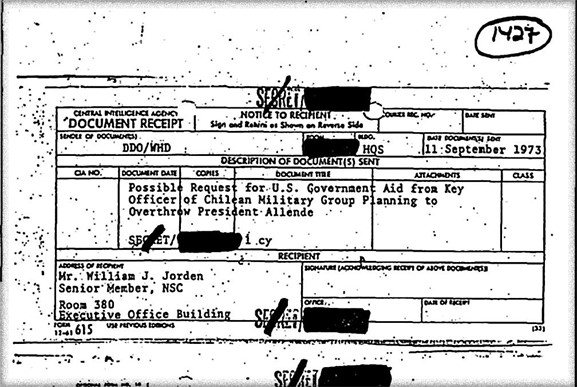
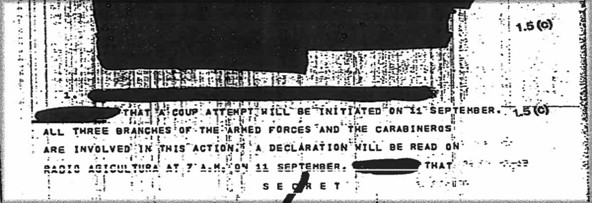
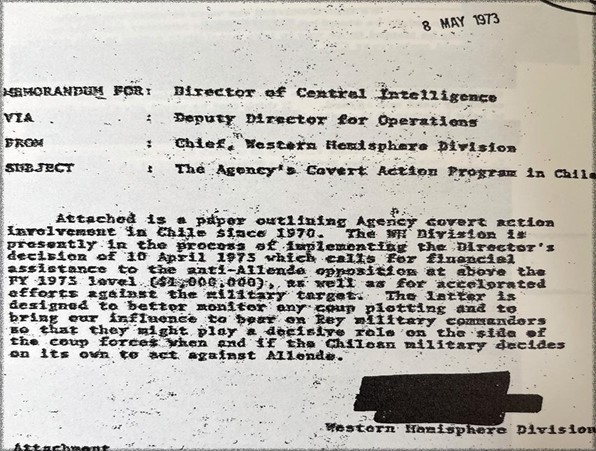
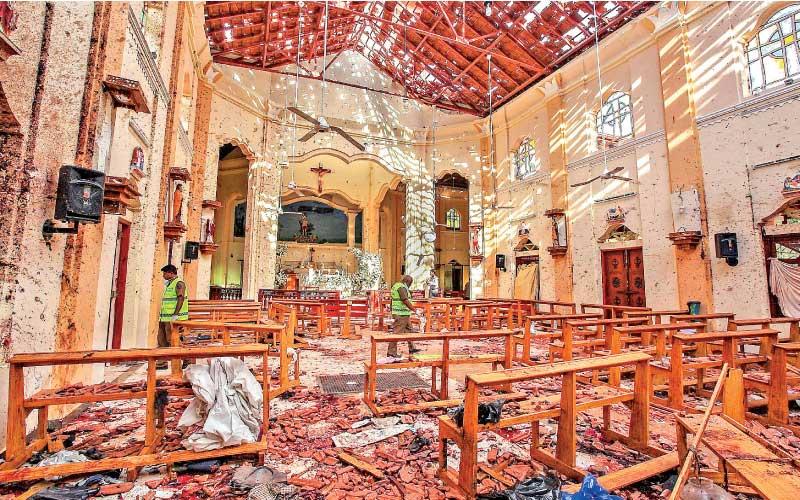
 However, it must be said in fairness to Suresh Sallay that he has denied being in Sri Lanka at the time the meeting allegedly happened
 Hanzeer Azad Maulana was the main whistleblower featured in the Channel 4 documentary. Azad Maulana made some startling revelations against former President Gotabaya Rajapaksa, State Intelligence Service head Maj-Gen Suresh Sallay and Rural Road Development State Minister Chanthrakanthan known widely as Pillaiyan. Gotabaya, Suresh and Pillaiyan have denied the allegations.