Presentation on PTSD and Combat trauma in the 30-year war in Sri Lanka
September 5th, 2023Ruwan Jayatunga
Presentation on PTSD and Combat trauma in the 30-year war in Sri Lanka by Professor Daya Somasundaram and Dr. Ruwan M Jayatunge
|
|
 |
Presentation on PTSD and Combat trauma in the 30-year war in Sri Lanka by Professor Daya Somasundaram and Dr. Ruwan M Jayatunge
ශ්රි ලංකා පොලීසියේ නිලධරයන්ගේ වෘත්තීමය දැනුම සහ කුසලතා වැඩිදියුණු කිරීම සඳහා ජාතික පොලිස් අභ්යාස ආයතනය සහ ශ්රි ජයවර්ධනපුර විශ්ව විද්යාලය ඒකාබද්ධව ආරම්භ කරන ලද ව්යවහාරික පොලිස් අධ්යාපන උපාධි පාඨමාලාව” (BA in Applied Police Studies) සමාරම්භක උත්සවය 2023.09.04 (ඊයේ) වන දින උදෑසන 10.00 ට ගරු මහජන ආරක්ෂක අමාත්ය ටිරාන් අලස් මැති තුමාගේ ප්රධානත්වයෙන් හා එම අමාත්යංශයේ ගරු ලේකම් වියානි ගුණතිලක මැතිතුමා, විශ්වවිද්යාල ප්රතිපාදන කොමිෂන් සභාවේ සභාපති ජ්යෙෂ්ඨ මහාචාර්ය සම්පත් අමරතුංග මහතා ඇතුළු ශ්රි ජයවර්ධනපුර විශ්ව විද්යාලයේ උපකුලපති තුමා ඇතුළු ආචාර්ය වරුන්ගේ සහභාගීත්වයෙන් අපරාධ වාර්තා කොට්ඨාසයේ ශ්රවණාගාරයේ පවත්වන ලදී. මෙහිදී මෙම උපාධි පාඨමාලාවට සහභාගී වීමට නියමිත ප්රථම පොලිස් නිළධාරීන් කණ්ඩායම ලියාපදිංචි කිරීමද සිදු කරන ලදී මෙම අධ්යාපනික ව්යාපෘතිය සඳහා උපාධි පාඨමාලාලාභීන් 150 දෙනෙකු සහභාගී වූ අතර ව්යාපෘතියේ අපේක්ෂාව වනුයේ වෘත්තීමය සහ ගුණාත්මක පොලිස් සේවාවක් ශ්රී ලාංකීය ජන සමාජය වෙත ලබා දීම සඳහා අවශ්ය මානව සම්පත නිසි සැලසුමකට අනුව සූදානම් කිරීමයි. මෙම අවස්ථාවට ජ්යෙෂ්ඨ පොලිස් නිළධාරීන් රැසක් ද සහභාගී විය.
U.K. based International Human Rights Committee (IHRC) has reported that, in the latest in a string of attacks on religious freedom in Pakistan, the police in Lahore have sided with a wild mob to arrest 6 members of the Ahmadiyya Muslim Community at their place of business on the basis of religion.
Two Ahmadis (Father and son) of Badami Bagh, Lahore, were targeted and arrested on the 18th of August on charges of preaching the message of the Ahmadiyya Muslim Community within his shoe factory. Two and a half weeks prior, on the 1st of August, the charges were registered against father and son, who acquired bail before any arrest and were scheduled to appear at a hearing on the 22nd of August. However, on the 18th of August, a wild mob gathered outside the factory while the father and son were inside. Instead of protecting father and son from the wild mob, the police arrested them, along with 4 others who were there simply to gather some things and documents and took them into custody at the Badami Bagh Police Station.
Ahmadi Muslims continue to live under fear of persecution and death in their daily lives. Already barred from preaching, praying, and even using common Islamic greetings at homes and their places of worship, they have seen their mosques destroyed and graveyards desecrated. Now even their commerce and places of business are being targeted and taken away from them. And most concerning is that the persecution is being implemented at the hands of not only the extreme clerics but also the police themselves.
Indeed, every aspect of normal life has become hell for Ahmadi Muslims, and the IHRC is very concerned that no actions are being taken to protect the basic human rights of these Pakistani citizens. The government of Pakistan must grant protection from all forms of intimidation and violence against any of its citizens. The IHRC calls upon the government of Pakistan to show its defence of these innocent Ahmadis and finally grant them peace and the pursuit of happiness.
It is urged the law enforcement agencies stop the arrest and imprisonment of Ahmadi Muslims in Pakistan.
This is another blatant violation of Human Rights for Ahmadi Muslim in Pakistan in a long series of state sanctioned persecution going back many decades.
In Pakistan, there has been a sharp increase in attacks against people of the Ahmadiyya community and also incidents of damage to their property, especially Ahmadiyya Muslim Mosques and graveyards.
Human rights groups have repeatedly expressed their deep concern over the lack of attention to the serious human rights violations perpetrated against the Ahmadiyya community and called on the international community to step up efforts in bringing an end to the ongoing persecution of Ahmadis in Pakistan.
IHRC has reported several times that a wave of bigotry against Ahmadiyya Muslims has intensified since the start of 2023. In another worrying sign of growing crisis in Pakistan, two dozen Ahmadiyya Mosque has been desecrated.
On 29 August 2023, under the pressure from religious extremists, police and local authorities defaced Ahmadi mosques in the towns of Shadiwal and Chooknawali, in Gujrat District.
On the following day 30 August 2023, Minarets on another Ahmadi Mosque, in Sheikhupura, were desecrated. Police officials returned Chooknawali and obliterated sacred writings on the Ahmadi Mosque they had attacked the previous day.
It has become impossible for Ahmadis to practice their faith while ruthlessly hunted by fundamentalist gangs. The latest desecration act of the Mosques desecration carried out by the locals and Police is open proof of the fact there is no sign of improvement in the law-and-order situation for the Ahmadis in Pakistan.
Human rights groups have repeatedly expressed their deep concern over the lack of attention to the serious human rights violations perpetrated against the Ahmadiyya community around the world and called on the international community to step up efforts in bringing an end to the ongoing persecution of Ahmadis.
It is repeatedly urged the international community to pressure the Government of Pakistan to honor its responsibility to provide protection to all its citizens, ensure freedom of religious practice to Ahmadis, and bring perpetrators of such vicious attacks to justice.
It is indeed the Holy Qur’an that will serve as a source of true guidance, and it is this very means that will enable us to give precedence to faith over the world.”– Hazrat Mirza Masroor Ahmad
The Jalsa Salana (Annual Convention) of the Ahmadiyya Muslim Community in the Germany concluded on Sunday 3rd September 2023 in which three speeches by the World Head the Ahmadiyya Muslim Community, the Fifth Khalifa (Caliph), His Holiness Hazrat Mirza Masroor Ahmad.
On 1 September 2023, the 47th Jalsa Salana (Annual Convention) of the Ahmadiyya Muslim Community in Germany commenced in Stuttgart, Germany, with the Friday Sermon delivered by the World Head of the Ahmadiyya Muslim Community, the Fifth Khalifa (Caliph), His Holiness, Hazrat Mirza Masroor Ahmad.
Prior to the Sermon, His Holiness hoisted the flag of the Ahmadiyya Muslim Community (Liwa-e-Ahmadiyyat) to officially inaugurate the event, whilst the German national flag was also raised.
His Holiness highlighted that this year marked the 100th year since the establishment of the Ahmadiyya Muslim Community in Germany and throughout the Sermon, His Holiness outlined the responsibilities that lie upon the shoulders of Ahmadi Muslims to serve the cause of Islam.
On Saturday (2nd September), the second day of the event), the Caliph conducted proceedings from the ladies marquee. Names of women for academic achievements were read out.
In the event, His Holiness delivered a speech in which he encourages Ahmadi women to embrace legacy of female companions of Prophet of Islam Muhammad, peace and blessings of Allah be upon him.
On the same day at 5:00 pm local time, Hazrat Mirza Masroor Ahmad, began his second address of the day to external guests at Ahmadiyya Convention Germany. In his address, Ahmadiyya Khalifa addressed the major allegations levelled against Islam and responded.
One of the highlights of the three-day Convention was the pledge of allegiance, known as Bai’at that took place on Sunday afternoon (3 August 2023), where the participants (attendees in the main hall) pledged allegiance to Hazrat Mirza Masroor Ahmad as the Fifth Khalifa (Caliph) of Promised Messiah Hazrat Mirza Ghulam Ahmad.
The participants formed a human chain leading to the Khalifa as they repeated the words of the pledge in unison.
During the concluding Session on Sunday (3 August 2023) it was read out the names of Ahmadi students who had achieved academic excellence over the year.
In his concluding address on Sunday evening (3 August 2023) Ahmadiyya Khalifa explained in depth how Islam empowers poor and needy as well as highlighted how Islam shows respect to people from all faiths. His Holiness said, the fourth condition of Bai’at (Oath of Allegiance) in which Ahmadiyya Founder emphasized this point in the fourth declaration of the bai‘at: That he shall not inflict injury on any of Allah’s creatures.” The Ahmadiyya Founder also said that to help and show compassion to humanity is a great form of worship and a potent means of gaining the closeness of Allah. However, he noted that people did not pay attention to helping others, and mocked those who did.
Ahmadiyya Khalifa said it was the responsibility of Ahmadis to uphold these morals and then teach the world as well.
Ahmadiyya Khalifa quoted from the writings of Hazrat Mirza Ghulam Ahmad – Promised Messiah as saying that the faith of one who serves and helps humanity is protected by Allah. However, this service should be from the heart, not for show and public display. There are lots of people who act for public display.
It is clear from the life of the Prophet Muhammad (PBUH) that many converted to Islam by merely observing the high morals of the Holy Prophet(PBUH), Ahmadiyya Khalifa added.
His Holiness referred to the sayings of Promised Messiah Hazrat Mirza Ghulam Ahmad, peace be on him, as saying, that, if an Ahmadi sees their Hindu neighbour’s house is burning and does not go and help them, they are not from his Jama’at (Community). In the same way, if an Ahmadi sees a Christian is about to be murdered and they do not help them, they are certainly not from his Jama’at (Community). He said on oath that he had no personal enmity against anyone. His disagreements were only on religion but he truly loved every human.
Towards the end, Ahmadiyya Khalifa prayed that Allah gave Muslim countries a sense to act upon these rights. His Holiness said that to date, he had spoken about 25 categories of rights that Islam had established. It was the responsibility of every single Ahmadi to establish these rights and to spread this teaching throughout the world. It is essential we educate the world about the beautiful teachings of Islam – both to non-Muslims and Muslims.
After silent prayer, Ahmadiyya Khalifa Hazrat Mirza Masroor Ahmad announced the total attendance of Convention Germany 2023 which was 47,237.
The three-day event was broadcast live on MTA International and streamed online.
Hedging and boosting are two strategies commonly used in academic writing to convey certainty or uncertainty about information, support claims, and maintain a balanced and persuasive tone.
They are important because they help writers engage with their readers by providing a nuanced understanding of the research and arguments presented.
Here’s a detailed explanation of hedging and boosting and how to use them effectively in your academic writing:
Hedging:
Definition:
Hedging involves expressing uncertainty or caution in your writing.
It allows you to acknowledge potential limitations, alternative interpretations, or the possibility of exceptions to your claims.
Importance:
Hedging is important in academic writing because it demonstrates a critical and reflective approach to your research.
It shows that you have considered different perspectives and are not making absolute claims.
Examples of Hedging:
Using modal verbs like “may,” “might,” “could,” or “can” to indicate possibility or probability, e.g., “This method may lead to more accurate results.”
Using adverbs like “possibly,” “potentially,” or “likely,” e.g., “These findings are potentially significant.”
Acknowledging limitations or uncertainties, e.g., “It is important to note that this study has some limitations.”
Referencing other scholars’ opinions, e.g., “Smith (2010) argued that the results could be interpreted differently.”
How to Use Hedging Effectively:
Be judicious in your use of hedging; too much can weaken your argument, while too little can make you appear overly confident.
Use hedging when discussing speculative findings, controversial topics, or areas where research is ongoing.
Always provide evidence or reasoning to support your hedged statements.
Boosting:
Definition:
Boosting involves strengthening the certainty or impact of your statements. It is used to make your claims and arguments more persuasive and convincing.
Importance:
Boosting is important because it helps you assert your ideas confidently and persuade your readers of the validity of your research and arguments.
Examples of Boosting:
Using strong verbs and adjectives to emphasize, e.g., “This theory significantly advances our understanding of the phenomenon.”
Provide strong empirical evidence or examples to support your claims, e.g., “A large-scale survey with a sample size of 10,000 respondents consistently showed…”
Citing authoritative sources or experts in the field to bolster your argument, e.g., “According to Nobel laureate Smith, this theory has revolutionized the way we think about…”
How to Use Boosting Effectively:
Ensure that your boosting statements are backed by robust evidence, data, or expert opinions.
Be cautious not to overstate your claims or exaggerate the significance of your findings.
Use boosting strategically in key parts of your paper, such as the thesis statement, main arguments, and conclusions.
In summary, hedging and boosting are essential techniques in academic writing.
Hedging allows you to acknowledge uncertainty and maintain a balanced tone while boosting helps you present your ideas with confidence and persuasiveness.
Effective use of these strategies depends on context, so carefully consider when and how to employ them to enhance the quality of your academic writing and engage your readers effectively.
Sasanka De Silva
Pannipitiya.
A wrong view is circulated by some claiming that China, BRICS or the New Development Bank of BRICS would help Sri Lanka. They don’t and they shouldn’t. For very good reasons.
Over 81% of Sri Lanka’s loan creditors are in NATO-QUAD military alliance countries or those countries themselves!
NATO includes USA, UK, France, Germany, Austria, Luxembourg, Italy, Belgium, Canada, Norway.
QUAD includes USA, India, Japan and Australia.
Over 81% of Sri Lanka’s foreign debt is held by these countries. They are the reason for Sri Lanka’s debt trap.
If Sri Lanka does not repay its loans, 81% of the sufferers are in those countries. Any financial help offered to Sri Lanka will be swiftly grabbed by these glutinous loan holders. China, Russia, Iran, BRICS nations (India is a reluctant BRICS partner and as usual plays both sides) wish for the economic ruination of NATO-QUAD nations, not their economic prosperity. For this reason, no other country, certainly not China, Russia or BRICS would help Sri Lanka repay its loans.
If Sri Lanka wants to seek China’s or BRICS help, the island nation must first get its house in order – scrap and default on all its loans payable to persons, corporations, entities and governments of NATO-QUAD nations. That is over 81% of Sri Lanka’s foreign debt. After that happens Sri Lanka’s cries for help will be heard by China, Russia, Iran, Saudi Arabia and BRICS. Certainly not otherwise.
What happens with Sri Lanka is a Western ploy led by France to ruin BRICS by transferring their useless loans to BRICS. NATO-QUAD nations are holding Sri Lanka hostage as a vassal state and forcing it to repay their loans by borrowing that money from China and BRICS.
This is not an unusual ploy. It is the business model of a lucrative trade in Sri Lanka. Beggars are left in streets by organized businessmen in the morning to beg for money from sympathetic people. In the evening a ransom (most of their collection) is collected from them. If they earn the stipulated amount, they are rewarded with a shower, sleeping and other facilities at night. If not, they are punished. These hapless people have once fallen into the debt trap of unscrupulous businessmen borrowing petty sums of money to help end meet. They are kept as bonded slaves for life. Even their children are not spared. This is exactly what France-led (including Paris Club) Western nations are doing to Sri Lanka.
Hoping that China or BRICS nations would fall for this trap out of sympathy or any other reason is naïve.
Minister of Labour and Foreign Employment Manusha Nanayakkara has revealed that a new inquiry will be conducted into the recent allegations made by UK’s ‘Channel 4’ pertaining to the 2019 Easter Sunday terror attacks.
Addressing Parliament this morning (05 Sep.), Nanayakkara stated that a special Parliamentary Committee will be appointed for this purpose, adding that while the need for international assistance to investigate these accusations has been recognised, such measures too, will be taken if required.
He stated that the matters of concern were discussed at the Cabinet meeting held on Monday (04 Sep.), assuring that current government will not hesitate to investigate these claims.
Despite his assurances, however, the Minister opined a rather skeptical view pertaining to the exposé due to be aired by the British television channel at 11:05 p.m. today, claiming that the channel had a ‘common practice’ of airing such controversial videos close to the United Nations Human Rights Council (UNHRC) sessions in Geneva.
‘Channel 4’ became well-known in Sri Lanka in the past after airing several controversial videos alleging that war crimes had taken place in Sri Lanka, including its 2011 documentary Sri Lanka’s Killing Fields,” a hard-hitting investigation into the final weeks of the Sri Lankan war.
In its new documentary, titled Sri Lanka’s Easter Bombings – Dispatches”, ‘Channel 4’ claims to uncover shocking new revelations about Sri Lanka’s deadly Easter bombings of 2019, as high-placed whistle blowers allege complicity by officials inside the government”.
2019 වසරේ සිදුවූ පාස්කු ඉරිදා ත්රස්ත ප්රහාරය අළලා බ්රිතාන්යයේ චැනල් ෆෝ නාලිකාව විසින් විකාශය කිරීමට නියමිත විඩීයෝව මේ වනවිට පාර්ශව රැසක දැඩි අවධානයට ලක්ව තිබෙනවා.
බ්රිතාන්ය වේලාවෙන් අද (05) රාත්රී 11 ට මෙම වීඩියෝව විකාශය කිරීමට සූදානම් කර ඇති අතර මෙම මතභේදාත්මක වාර්තාමය වැඩසටහනේ පූර්ව ප්රචාරක පටයක්ද මේ වන විට නිකුත් කර අවසන්.
රාජ්ය බුද්ධි අධ්යක්ෂ මේජර් ජෙනරාල් සුරේෂ් සලේ සහ පාස්කු ප්රහාරයේ බෝම්බකරුවන් අතර 2018 වසරේ පැවති බව කියන හමුවක් පිළිබද සදහන් කරමින් මෙම වැඩසටහන නිර්මාණය කර ඇති බවයි බ්රිතාන්ය ද ටයිම්ස් පුවත්පත සදහන් කර තිබුණේ.
එමෙන්ම, මෙම වීඩියෝව නිර්මාණය කර ඇත්තේ රාජ්ය අමාත්ය සිවනේෂතුරෙයි චන්ද්රකාන්තන් හෙවත් පිල්ලෙයාන්ගේ මාධ්ය ප්රකාශකවරයා ලෙස ක්රියා කළ අසාද් හන්සීර් මවුලානා දුන් තොරතුරු මත බව ද වාර්තා වනවා.
බ්රිතාන්යයේ චැනල් ෆෝ නාලිකාව මෙරට දැඩිලෙස කතාබහට ලක්වුණේ මානුෂීය මෙහෙයුම් සමයේ මෙරට යුද අපරාධ සිදුවූ බවට මතභේදාත්මක වීඩියෝ විකාශ කිරීමත් සමගයි.
එම ආන්දෝලනාත්මක වීඩියෝ පටයේ කරුණු ශ්රි ලංකා රජය විසින් අවස්ථා ගණනාවකදී නිල වශයෙන් ප්රතික්ෂේප කරනු ලැබුවා.
මේ අතර, මේ සම්බන්ධයෙන් අද දිනයේදී පාර්ලිමේන්තුවේදී ද දැඩි සංවාදයකට ලක්වූ අතර, පාස්කු ඉරිදා ත්රස්ත ප්රහාරය සම්බන්ධයෙන් සොයා බැලීමට පාර්ලිමේන්තු විශේෂ කාරක සභාවක් පත් කිරීමට ඊයේ රැස්වූ අමාත්ය මණ්ඩලය තීරණය කළ බවයි අමාත්ය මනූෂ නානායක්කාර එහිදී සදහන් කළේ.
මෙම වීඩියෝව සදහා තොරතුරු ලබාදුන් බව කියන අසාද් හන්සීර් මවුලානාගේ බැංකු ගිණුමක් වෙත 2018 සිට 2020 දක්වා කාලය තුලදී විදේශ රටවලින් රුපියල් ලක්ෂ 700 ක මුදලක් ලැබී ඇති බවද අද පාර්ලිමේන්තුවේදී අදහස් දක්වමින් පාර්ලිමේන්තු මන්ත්රී මහින්දානන්ද අලුත්ගමගේ ප්රකාශ කළා.
මේ අතර පාස්කු ඉරිදා ත්රස්ත ප්රහාරය සම්බන්ධයෙන් ජාත්යන්තර මට්ටමින් විමර්ශනයක් සිදුකළ යුතු බව විපක්ෂ නායක සජිත් ප්රේමදාස අද පාර්ලිමේන්තුවේදී ප්රකාශ කළා.
මේ අතර කොළඹ අගරදගුරු අතිඋතුම් මැල්කම් කාදිනල් රංජිත් හිමිපාණන් විසින් ශ්රේෂ්ඨාධිකරණය හමුවේ අද මෝසමක් ගොනු කළා.
ඒ පාස්කු ඉරුදින ත්රස්ත ප්රහාරයෙන් වින්දිතයන් බවට පත් වූවන්ගේ මූලික අයිතිවාසිකම් පෙත්සම්වල තීන්දුව සම්පූර්ණයෙන් ක්රියාත්මක කිරීමට හිටපු ජනාධිපති මෛත්රිපාල සිරිසේන ඇතුළු වගඋත්තරකරුවන් මෙතෙක් අපොහොසත් වී ඇති බව සඳහන් කරමින්.
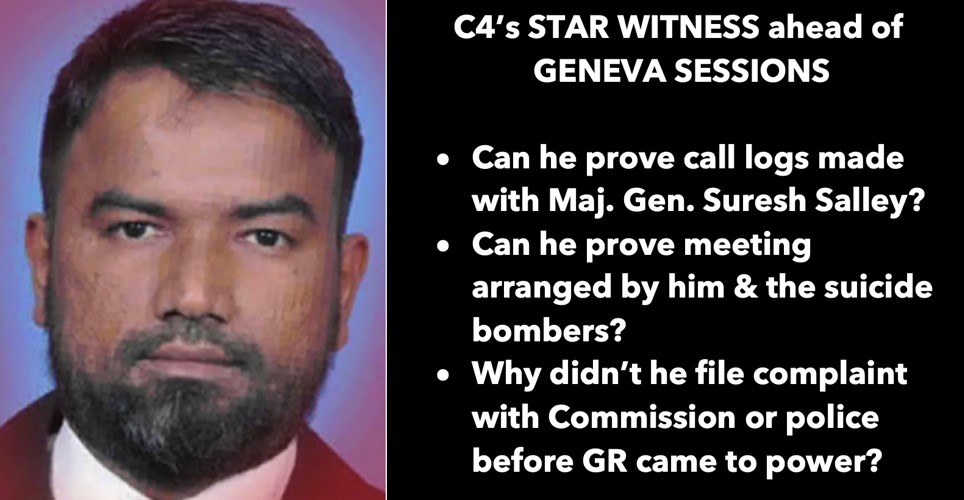
Every year when it gets closer to Geneva Sessions, expect a blockbuster thriller to become breaking news”. Keep this in mind for 2024 Sept/Oct too. As expected, 2023 breaking news” is by UK’s private funded broadcaster Channel4.
An article by Catherine Philip ” Rajapaksa officials ‘linked to Easter Sunday Sri Lanka bombs’ prior to the release of a new C4 video raises some questions.
Sri Lankan officials loyal to the Rajapaksa family were complicity in the 2019 Easter Sunday bombings” – can she name these Sri Lankan officials”.
Who is this Channel 4 whistleblower? He is one Hamsa Asad Maulana, the newest of Channel 4’s stars. Remember C4’s previous star witness Vany Kumar (she had 4 names Dr. Tamilvani, Damilvany Kumar, Damilvany Gnanakumar & Vany Kumar).
UK Guardian reported that she came to Sri Lanka on 28 February 2009 & headed for Vanni calling the British media & not her family. She even claimed blood was mixed with water & given to patients but Dr. Shanmugarajah treating patients inside the conflict zone categorically denied any patients undergoing surgery without anesthesia. Eventually, it turned out that Vany was a member of TYO & had been a translator for LTTE.
Damilvany Gnanakumar witness of Sri Lanka war – https://www.youtube.com/watch?v=HOqLmYxIDlg.
http://www.sinhalanet.net/ltte-member-vany-kumar-how-many-ltte-terrorists-have-become-witnesses
Therefore the credibility of Channel 4’s star witnesses on Sri Lanka is highly questionable.
Nevertheless, let’s see what their latest catch has to reveal.
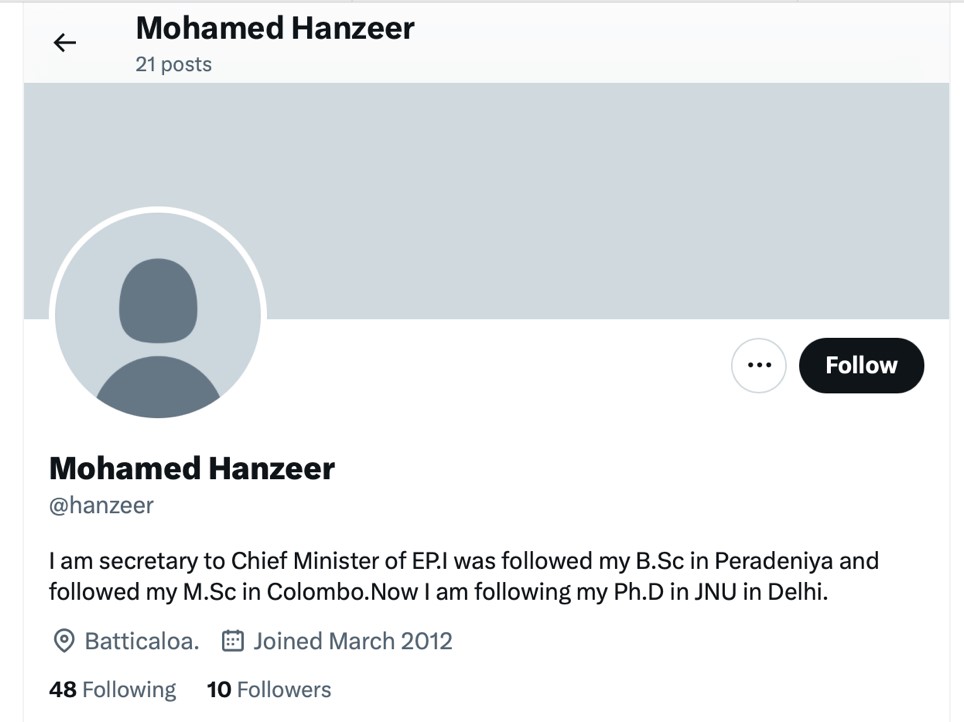
He is Hamsa Asad Maulana or M. Mohammed Hanzeer
The question of Maulana’s integrity was first highlighted in an article appearing in September 2008/Sri Lanka Guardian. The article claims that as media director of TMVP and spokesman for Chief Minister Pillayan he had released statements that were false & even conflicted with police accounts. http://www.srilankaguardian.org/2008/09/pillaiyan-damns-karuna-and-high-noon.html
In a latter article the Sri Lanka Guardian alleges Hamsa to be complicit in extortions, hostage ransoming, enlistment of child soldiers. What a colourful past. https://slguardian.org/tag/mohamad-hanzeer/
He had first traveled to India in 2021, then to France but had been denied visa by UK. Why did he have to flee Sri Lanka in 2022? Should we be surprised that he is another Nandani type asylum seeker spinning a new story to win asylum as did Garnier Bastians. These stories put Hollywood blockbusters to shame!
Easter Sunday massacre took place in April 2019.
The article states that Maulana set up a meeting in 2018 between a senior military intelligence official Suresh Salley & Islamic State-affiliated bombers.
Maulana/C4 will have to explain where this meeting was held in 2018 – in Sri Lanka or overseas? From end 2016 to end 2019 Salley was not in Sri Lanka & he was serving as a diplomat.
Hamsa claims The meeting finished, Suresh Salley came to me and told me the Rajapaksas need an unsafe situation in Sri Lanka, that’s the only way for Gotabaya to become president,” – where was this meeting that Suresh came to meet Hamsa (was it in Sri Lanka or overseas & when, can this be proved?
The author claims Salley was promoted head of military intelligence after Gotabaya Rajapakse became President.
This is also wrong. Salley was not appointed as head of military intelligence. He was appointed head of State Intelligence Services. Another error in the story.
The article claims the 2nd whistleblower to be an unnamed senior government official – has he got asylum too? How easy to be spilling anything for asylum if it gels into a political agenda!
Can the author explain how military intelligence ‘thwarted’ police investigations before & after the bombings.
Many may not be aware that there were 2 Presidential Commissions & 1 Parliamentary Select Committee to investigate Easter Sunday attacks. The Parliamentary Select Committee appointed on 22 May 2019 & handed its report on 23 October 2019 & is available to the public. The Malalgoda Committee Report handed on 10th June 2019 was not made public. Then on 22nd September 2019 another Presidential Commission of Inquiry was appointed. That report was handed on 1st February 2021. All 2 Commissions/1 Committee were appointed by President Sirisena. The final Commission report identified President Sirisena & then PM Ranil Wickremasinghe as people responsible for the failure to prevent the Easter Attacks.
Sri Lanka’s Supreme Court has ordered former President Maithripala Sirisena, four other officials and the State to pay compensation totalling 311 million rupees to victims of the 2019 Easter Sunday bombings that killed 269 people.
Former police chief Pujith Jayasundara and former State Intelligence Service (SIS) Director Nilantha Jayawardena 75 million rupees each, former Defence Ministry Secretary Hemasiri Fernando 50 million rupees and former Chief of National Intelligence (CNI) Sisira Mendis 10 million rupees as compensation.
Did Maulana complain to the Commission against Salley?
Maulana’s bluff is further exposed.
Maulana claims Pillayan had met the bombers while in prison. Pillayan was in prison from 2015 to 2020 December. Exactly, who are the bombers who were in prison with Pillayan? How could Salley engineer their release when during this period he was not holding a portfolio in the military & was stationed overseas.
Can Maulana prove with call logs that he received a call from Salley on the morning of the Easter Sunday bombings? Can this call be verified by authorities?
Channel 4 has been nice enough to contact Salley & obtain a statement & include that in the conclusion.
However, anyone not following the story will undoubtedly fall for the snippets of allegations dropped hoping to cause ripples. The strategy is clear, using a man wanting asylum in UK, attempts are being made to throw mud & divide the Muslims & Catholics and thereafter build up anger at multiple fronts. All these are generally timed ahead of Geneva sessions and earmarked for a looming election round the corner.
It also throws innuendos at India and we see a buildup of some form of cold war between US & India as well. Onward to another regime change operation.
Be that as it may, Channel 4 is an entity that makes money from broadcasting productions by private parties. Therefore, Channel 4’s ethical journalism is at question. It is a pity that the Sri Lanka Foreign Ministry has failed to counter the false propaganda since defeat of LTTE in May 2009, as a result decorated military officials have been unfairly targeted & ridiculed internationally with fabricated allegations presented as found guilty.
The citizens of Sri Lanka must realize that if not for those that safeguard this nation, we would become like all of the illegally invaded & occupied nations in peril today. Unity amongst the communities is essential during these trying times, when efforts are afoot to divide us using our own traitors. Never forget, it was our war heroes who defeated the most ruthless terrorist outfit, the countries that seek revenge are those that covertly helped LTTE. Do not allow paid agencies to disturb the harmony we enjoy because disharmony is nothing we can defeat easily.
The war heroes did their duty, where politicians failed it is up to the public now to ensure that the nation is held together without political agendas & propaganda dividing us.
We await another C4 fairytale in 2024.
Shenali D Waduge
UK’s ‘Channel 4’ has announced that it will broadcast a new documentary, which will allegedly uncover shocking revelations on Sri Lanka’s Easter Sunday attacks, on Tuesday (Sep 05).
Channel 4 claims that the new documentary titled Sri Lanka’s Easter Bombings – Dispatches,” contains shocking new revelations about Sri Lanka’s deadly Easter bombings of 2019, as high-placed whistle blowers allege complicity by officials inside the government”.
It is also reported that one highly placed insider claims in the interview with Dispatches, to be aired in the UK on Channel 4 tomorrow, that he set up a 2018 meeting between a senior military intelligence official and Islamic State-affiliated bombers.
The whistleblower is reportedly revealed to be a close aide of the leader of the Tamil Makkal Viduthalai Pullikal (TMVP) and current State Minister for Rural Road Development, Sivanesathurai Chandrakanthan alias Pillayan.
The informant of the TMVP, the breakaway faction of the LTTE, had also made explosive revelations to the United Nations (UN) in Geneva.
The British television channel ‘Channel 4’ became well-known in Sri Lanka in the past after airing several controversial videos alleging that war crimes had taken place in Sri Lanka, including its 2011 documentary Sri Lanka’s Killing Fields,” a hard-hitting investigation into the final weeks of the Sri Lankan war.
(ඥානසාර හිමියන්ගේ මස් රාත්තල හා ලාල් කාන්තගේ පිරිත් නූල)
(528) ” ඩලස්ලා එක්ක අපි ඊයේ කතා කළා…” – YouTube
හැඳින්වීම
මෙම මාතෘකාව ප්රතිවිරුද්ධ සමාජ-ආර්ථික-දේශපාලන ප්රවාහ දෙකක් පිළිඹඳ විමර්ශනයකි.
*(1) මුර දේවතා සංකල්පය – බොදු බල සේනා සංවිධානය
ලංකාවේ 1802 න් පසු ඉතිහාසය සුද්දන්/කළුසුද්දන් හා පන්සල යන දෙකොටස අතර ඇතිවූ නොනවතින ගැටුමක් නොවේදැයි විමසා බැලීමේදී එම කතාවේ එකිනෙක හා බැඳුණු යුග (අවධි) 12 ක් පමණ හඳුනාගැනීමට හැකිය. නිදසුනක් වශයෙන් <බුද්ධාගම කියන්නේ බොරුවක්> යයි කී අවධිය, 1873 පානදුරා වාදය තෙක්ම පැවතියේය. මේ අවධිවලදී ඊට මූලිකවු හාමුදුරුනමක් හෝ කීපනමක් හෝ සිටියෝය. මෙහි 11 හා 12 වෙනි අවධි බොදු බල සේනා සංවිධානය හා ගලබොඩ අත්තේ ඥානසාර හිමිඳුන් හා සම්බන්ධවය. (මෙම අවධි පිළිඹඳව දැන ගැනීමට අවශ්යනම් පහතින් ඇති ලින්ක් එකට යන්න).
LankaWeb – අස්ගිරි විප්ලවය (2017/7/30)
පෘතුගීසි-ලන්දේසි-ඉංග්රීසි-නිදහස්- යුග වශයෙන් අපට පුරුදුකල යුරෝපීය මානසිකත්වය වෙනුවට, මෙවැනි වඩා <අර්ථවත්> ඉතිහාස අවධි ගැන අපේ අවධානය යොමුවන්නේ ලෝකයේ වෙන කොහේවත් නැති ලංකාවේ <මුර දේවතා සංකල්පය> දෙස ජාත්යාණුරාගී ආකල්පයකින් බලන විටය. මිහිඳු හිමියන්ගේ ආගමණයෙන් පසු දිවයිනට එල්ලවූ විදේශ ආක්රමණ ජයගත්තේ පන්සල හා ගම එකතුව රජුන් තැණූ, හා රැකූ නිසාය. ලංකාව ථේරවාද බුදුදහම රැක ගත්තේ එසේය. සෑම හාමුදුරුනමක්ම තම භික්ෂූ නමින් තමන් උපන් ගමට/නගරයට සම්බන්ධවීමද ලෝකයේ වෙන ලබ්ධීන් අතර නැත.
විශේෂයෙන් 1978 ට පසුව ලංකාවට ආ ආක්රමණ හෝ ගෙන්වාගත් ආක්රමණ (ක්රිස්තියානි මූලධර්මවාදය, ශාරියා අන්තවාදය හා ඉස්ලාම් ලෝක ව්යාප්තිය, ඊළම් වාදය, රට කැබලි කිරීමේ කුමන්ත්රණ, ගෝලීය කොම්පැනි ධනවාදය, R2P මානව අයිතිවාසිකම් බොරුව, ඉන්දියන් ව්යාප්ත (මෝඩි?) වාදය) වලදී ඒවාට මුහුණදීමට නොහැකි තරමට සංඝ සංස්ථාව දුබලව, අසමඟිව ගොස් තිබුණේ පක්ෂ දේශපාලකයින් පන්සල රවටා ගැනීම නිසාය. දුස්සීල භික්ෂූන් සිවුරු ගලවා යැවීමට බලය සහිත සංඝාධිකරණයක් පිහිටුවීමටවත් ක්රියා නොකල බොරු බෞද්ධ පාලකයෝ ඒ වෙනුවට, පිරිවෙන් විශ්ව විද්යාල කිරීම, පෝය නිවාඩුදීම, බෞද්ධ ඇමති කෙනෙක් හා කොමසාරිස් කෙනෙක් පත් කිරීම, බුද්ධාගම රකිනවා යයි කියන 9 වෙනි වගන්තිය නමැති බොරුවක් කිරීම වැනි පූච්චානම් වැඩ කලේය. මේවා නිසා සිංහල බෞද්ධයින් කබලෙන් ලිපට වැටීගියේය.
සෝම හාමුදුරුවන්ගේ භූමිකාව කුමන්ත්රණයක් යයි සිතෙන ආකාරයට නිමවූ පසුව දොරට වඩන ලද ජාතික හෙල උරුමය අච්චාරුවක්වී ගියේය. මෙවැනි අවාසනාවන්ත ඉරණමක් ඉදිරියේ මුරදේවතා අභියෝගය භාරගත්තේ ගලගොඩ අත්තේ ඥානසාර හිමිඳුන් විසින්ය. රටේ කළුසුද්දන්, පක්ෂ දේශපාලකයින් හා මේ යුද්ධය නම් කවදාවත් දිණන්න බෑ කියූ NGO නඩ විසින් ඥානසාර හිමියන්ගේ මස් රාත්තලම (pound of flesh) ඉල්ලීම ආරම්භවූයේ උන්වහන්සේ විසින් 2012 මැයි මුල බොදු බල සේනා සංවිධානය (BBS) ආරම්භකල වහාමය. බුද්ධ සාසනයේ හා රටේ පිරිහීමට හේතුව සිංහලයින්ට (බෞද්ධයින්ට) (හරිහමන්?) නායකයෙක් නැතිකමය යන BBS මතය, හීතල රුසියාවේදී සෝම හාමුදුරුවන්ගේ සැකකටයුතු අභාවයත් සමඟ කඹ වැනි පිරිත් නූල් අතේ බඳින්නට පටන් ගත් කපටි පක්ෂ දේශපාලකයින්ට බලවත් අභියෝගයක් විය. මෙවැනි බොරුකාර කළු සුද්දන්ව මීට පෙර හැඳින්වුණේ ඕල්කොට් බෞද්ධයින්, ඩොනමෝර් බෞද්ධයින් යනාදී වශයෙනි. ඇල්ලේ ගුණවංශ හිමියන්නම් ඔවුන්ට කියන්නේ ඕ මයි ගෝඩ් බෞද්ධයින් කියාය (යම් හදිසි ආපදාවකදී, මරණ භයකදී, ඔවුන්ගේ කටින් බුදු අම්මෝ යයි එලියට පණින්නේ නැත).
සුද්ධෝදනගේ පොඩි එකා (නටාෂා) වන්දනාව
අඩු වැඩි වශයෙන් දිගටම අළු යට ගිනිපුපුරක් සේ පැවති මේ ඥානසාර උණ එලියට පැන්නේ ජෙරෝම් ජරමරය හා ඊට බැඳුණු නාටාෂා නාඩගමත් සමඟය. සියළුම සිංහල බෞද්ධ විරෝධී කල්ලි කතාකලේ ජෙරෝම් හෝ නාටාෂා පිස්සුව ගැන නොව ඥානසාර හිමියන් සමඟ නාටාෂාගේ මානව හිමිකම් ගලපමින්ය. චන්ද්රිකාගේ තර්කය වූයේ නාටෂාට කලින් ඥානසාර හිමියන්ව හිරේට ගතයුතු බවය. ඇයට පහලින් සිටියේ DBS ජෙයරාජ් හා සේපාල්, සුදත්ත, සන්නස්ගල, බෲනෝ දිවාකර- හසලක තුෂාර-අභිෂේකා කෙළී slvlog ත්රිත්වය, ප්රංශයේ භාරත තෙන්නකෝන්, උඩුවරගෙදර ඉළන්දාරියා, පානදුරේ ලාල්, කල්ප ගුණරත්න යනාදී ngo ආශ්රිත හෝ නැති, පෙඩරල් කාරයින් වන හෝ නොවන, ජාතික වාදය, ජාති හා ආගම් වාදය සමඟ දැන හෝ නොදැන පටලවා ගෙන දඟලන ලෝභ-ද්වේශ-මෝහයෙන් පිරි පංචස්කන්ධය. වැලිවිට සරණංකර සංඝරාජ හිමියන්ට උඩරට වඩිග රජුගෙන් ගැලවී පලායාමට සිදුවුයේ මෙම මුරදේවතා වගකීම ඉටුකරන්නට යෑම නිසාය. රජු සැළකුවේ මේ <එකැස්කණා> රාජ ද්රෝහියෙක් කියාය. ඒ අස්සේ කොළඹින්ද හාමුදුරුවන් ඝාතනය කිරීමට චරපුරුෂයින් යවන ලදී. මුර දේවතා සංකල්පයේ තවත් ලක්ෂණයක් වූයේ ජාතික කාර්යයන්ට මැදිහත්වන හාමුදුරුවරුන් හිටිහැටියේම සැකකටයුතු ආකාරයෙන් අපවත්වී යෑමය!
අවංක සමාජ දේශ-පාලනයේ අවාසි
ඥානසාර හිමියන්ටද මෙවැනි අත්දැකීම් වලට මුහුණ දීමට සිදුවිය. 1990 ගණන් වල සිට මේ දක්වා එකම මතයක, ප්රතිපත්තියක, සිටිමින් සමාජ-දේශ-පාලනයේ නියැලී සිටින එකම පංචස්කන්ධය ඥානසාර හිමි පමණය. තම අවංක කැපවීම නිසා උන්වහන්සේ අමාරුවේ වැටුණ අවස්ථාද විය. අනිත් අතට සිය තරුණ කාලයේ නිර්භීත භික්ෂුවක්වූ අතුරැලියේ රතන හිමි පවා අන්තිමේදී ඥානසාර හිමියන්ට චන්ද දායකයින් පූජාකල මන්ත්රීධූරය කුමන්ත්රණකාරී ලෙස හොරා කෑවේය! 2004 සිට පාර්ලිමේන්තු මන්ත්රීව සිටින රතන හිමියන් වෙනුවට ඥානසාර හිමියන් 2020 දී වත් පාර්ලිමේන්තු ගියානම් ඉතුරු 222 ටම උන්වහන්සේ අභියෝගයක් වීමට ඉඩ තිබුණේය.
දර්ශන හඳුන්ගොඩ මෙන් මේ අය දූෂණ එලිකිරීම් වැනි ක්රියා මඟින් යම් සේවයක් ඉටුකලත් ඔවුන්ගේ අත්දැකීම් හා දැණුම, රෝසි සේනානායකගේ මෙන් <බෞද්ධ විරෝධී> විෂබීජ වලට යටවී ඇත. මෙයට ඉන්ගිරිස්වලින් කියන්නේ tunnel vision යනුය. මොවුන්ට වෙනස්ව දයාන් ජයතිලක, ජෙහාන් පෙරේරා, වික්ටර් අයිවන් වැනි අය වඩා ශූක්ෂම ලෙස මේ ගේම් එක ගසමින් සිටී. මේ සියළු කොටස් වලට පසුබිම සදා දුන්නේ සුද්ධෝදන, යශෝදරා පවුල්වල ජාතකය (DNA?) ගැන ප්රසිද්ධියේ කතාකල, රනිල්ට හා ඇමෙරිකන් තානාපති කාර්යාලයට යහපාලන කාලයේදී කඩේ ගිය රන්ජන් රාමනායකය.
*(2) මාක්ස්වාදීන් හා ගඩොල් මෝඩයින්
මෙම ප්රවාහය ක්රිස්තියානි හා මාක්ස්වාදී යන නිඹුල්ලුන් දෙදෙනෙකුගේ බද්ධ වීමකි. බුද්ධ සාසනය හා සංඝ සංස්ථාව නොරිස්සීමට අමතරව දෙකොටසම, එව බලව නොව එව අදහව යන මූලධර්මයට අනුගතය. (Come and believe, not come and examine). මේ අනුව මොවුන් ජේසුතුමාගේ, අල්ලා දෙවියන්ගේ හා මාක්ස්-ලෙනින්ලාගේ බෝට්ටුවේය. කය මිස හිස නැති (බැටලු පැටව් වැනි හීලෑ) නරයින් සේ හැසිරීම ඔවුන්ට පොදුය. දවසට පස් වතාවක් මක්කම දෙසට වැඳීම, සතීයේ කල පව් ඉරිදා පල්ලියට හොස් සෝදා ගැනීම, පෝප්තුමාගෙන් හෝ අරාබිකරයෙන් එන නියෝග/ෆත්වා අන්ධාණුකරණයෙන් වැළද ගැනීම ඔවුන්ගේ සංවිධාන ශක්තියය. මීට නොදෙවෙනිව යුද හමුදාවක වැනි විනයක් පෙලපාලියකදී වුවත් මාක්ස්වාදීන් ප්රදර්ශනය කරයි.
අනිත් අතට බුද්ධ සාසනයේ ඇති අසීමිත නිදහස, සංවිධානයක් නැතිකම, සෑම පන්සල් විහාරාධිපති කෙනෙක්ම ස්වාධිපත්ය ඇත්තෙක්වීම, සිංහල බුද්ධාගමේ දුර්වලකමට හා භික්ෂූන්ගේ එකමුතුවක් නැතිවීමට හේතුවය.පක්ෂ දේශපාලකයින් පන්සල් රවටා ගන්නා අන්දමට අනික් ආබ්රහම්වාදී පල්ලි සමඟ ගේම් ගැසීමට සංවිධානයෙන් බාහිර පිට කාටවත් ඉඩක් නැත.
1930ස් ගණන්වල ලංකාවේ බෝවූ මාක්ස්වාදීන්ට අනුව රුවන් වැලි මහා සෑය සැදූ දුටුගැමුණු මහරජතුමා ගඩොල් මෝඩයෙකි (නමුත් මොවුන් පිරමිඩ් බැලීමට නයිල් ගඟට යයි!). තවද 1931 සිට ඩොනමෝර් රාජ්ය මන්ත්රණ සභාවේ සභානායක හා ස්වදේශ කටයුතු ඇමතිවූ, සිංහල හා ඉංග්රීසි භාෂා දෙකම දත් (DSS හා SWRD සමඟ සසඳන විට) D. B. ජයතිලක මහතාට මාක්ස්වාදී මන්ත්රීන් ඇබිත්තයා කියමින් කෑගැසුවේ ඔහු කුඩාකල කැළණිය පන්සල ආශ්රිතව අධ්යාපනය ලැබූ නිසාය. 1930 ස් ගණන්වලදී මාක්ස්වාදීන් ප්රචලිත කල බෞද්ධ විරෝධී අදහස්, ආකල්ප, අදටත් එසේම පවතින බවට හොඳම උදාහරණය නම් සමනලී ෆොන්සේකා විසින් ඇගේ මුහුණුපොතේ කොපිකර යැවූ මීතොටමුල්ලේ කුණු ජේතවනාරාමයට දමන පින්තූරයය. නොබෝදා කැළණියේ jvp රැස්වීමට පැමිණි ඇයට ලැබුණේ උණුසුම් පිළිගැනීමකි. එය දමිතා අබේරත්න අරගලයේ සිට සජිත් ලඟට යෑමේ කතාවට වඩා බරපතල දේශපාලන සංඥාවකි.
LankaWeb – සමනලීගේ ශාපය (2017/4/27)
බොල්ෂෙවික්-ලෙනිනිස්ට් වාදය
සුද්දන්ගේ කාලයේදී පිටරට ඉගෙන ගැනිමට යෑමට ධනය තිබූ කළු සුද්දන්ගේ ළමයින් (පිලිප්. NM, ලෙස්ලි, කොල්වින්ලා) ලංකාවට නැවත ආවේ මාක්ස්වාදී විෂබීජය සමඟය. ඉන්දියාවේ අම්බෙඩ්කාර් මෙන් දුප්පත් කුලහීනයෙකුට මෙසේ යෑමට ලැබුණා නම් ඔහු මාක්ස්වාදී විෂබීජය සමනය කරගන්නට ඉඩ තිබුණි. මොවුන්ගේ අන්දමන්දවූ ක්රියාකලාපය සැසඳිය යුතු ධර්මපාලතුමාගේ ආදර්ශය සමඟය. බටහිර, ජපානයේ තාක්ෂ දැණුම ලංකාවට ලබාගැනීමේ අවශ්යතාවය, බටහිර මාක්ස්වාදය හා පටලවා නොගන්නනට එතුමාට හැකිවිය. මේ සම්බන්ධකල හැකි අනිත් එකම පුද්ගලයාවූයේ පහල කුලයක යයි සැලකූ කම්කරු පක්ෂයේ නායකයාවූ ගුණසිංහය. ඔහු තෙම්පරාදු, විස්කි බොන, අල්ශේෂන් බල්ලන හදන, යුරෝපය අනුගමණය කරණ පුස්/හිස් මාක්ස්වාදියෙක් නොව කම්කරු ජනයාගේ නියම නායකයෙක් විය.
කළු සුද්දන්, පක්ෂ දේශපාලකයින් ලංකාවට කල විනාශය සැළකීමේදී මෙම මාක්ස්වාදී නඩ (කළු සුද්දන්) විසින් මුලින්ම කලේ බංගවේවා දේශපාලනයට ජනයා ඇද දැමීමය. පාර්ලිමේන්තුව කතා සාප්පුවක් කියමින් එහි ලැග සිටිමින් කඩාකප්පල්කාරී වැඩ කිරීමය. ඉන් පසුව කලේ සාදුකීන් පෙලෙනවුන්ට නැගිට අන්තිම සටනට සැරසෙන්නයයි දැන්වීමය. බණ්ඩාරනායක ආණ්ඩුව කාලයේ අවුරුද්දේ දිනගානට වඩා වැඩියෙන් ඔවුන් වැඩවර්ජන කලේ මහජන හිතකාමී රජය කඩාකප්පල් කරන්නටය. මොවුන් කැස්ට්රෝ ගේ කියුබාව වර්ණනා කරණ විට පිලිප් ගුණවර්ධන වාමාංශික ඇමති කියා සිටියේ ආණ්ඩුවට සහාය දෙනවා නම් කියුබාවක් ලංකාවේ දැකගත හැකිවන බවය. N.M. මගේ සැමියා නොමරා මැරුවා යයි මිසිස් බී 1960 චන්ද රැස්වීම්වලදී කිව්වේ මේ අර්ථයෙනි.
සේපාල් ගේ හා ලාල් කාන්තගේ ඉහතින් දැක්වෙන වීඩියෝ දෙක මෙම දෙවෙනි ප්රවාහයේ 2023 නාඩගමය. සේපාල් මුරදේවතා සංකල්පයට සිංහල දේවදත්තයෙක් මෙන් පහර දෙන්නේ යූටියුබ් බලන්නන් හරහා ලැබෙන ඩොලර් ආදායම වැඩිකර ගන්නටය. අනිත් අතට ලාල්කාන්ත තවමත් ඇන් ඇම්-කොල්වින් මනසේම හොල්මන් කරමින් සිටී. ඔහුගේ පිරිත් නූල, 1935 සිටම තටම තටමා 1964 දී N.M ලා දළදා මාළිගාවට මල් වට්ටියක් ගෙන ගියා මෙන්ම ප්රෝඩාවකි. <භාෂා දෙකක් නම් එක රටක්, එක භාෂාවක් නම් රටවල් දෙකක්> යන සිංදුව 1972 දී කොල්වින් අතහැර දැම්මා වැනිය. ලෝභ-ද්වේෂ-මානයෙන් පිරි මේ පංචස්කන්ධ සිංහල බෞද්ධ සංස්කෘතිය නොදත් ඩබල්ගේම් කාරයින්ය.
මීලඟ කොටස – ගාන්ධිගේ ඩබල් ගේම් එක හා හාමුදුරුවරු මාක්ස්වාදීන් බෞද්ධ කිරීමට ගත් උත්සාහ
Ven. Saranankara – BUDDHIST – MARXISM ALLIANCE (UK) (weebly.com)
Buddha, Marx & Matter – BUDDHIST – MARXISM ALLIANCE (UK) (weebly.com)
==================
My mind runs in nostaglia to three of my attempts at economic development in three countries, where in two where I failed and finally in the third I did succeed.
The first was in Edinburgh where in 1980 I worked as a Senior Community Education Worker in Wester Hailes. One of my duties was to work with young lads that had completed schooling and were enlisted on the Manpower Service Commission’s Programmes: YOP and STEP – Youth Opportunities Programme and Short Term Employment Programme. We worked with the lads involving them in all the community work we did and I was also involved when the lads were trained at Colleges of Education. We dropped them at the end and they marched into the dole or to don boots and join the Army to end someday perhaps as CannonFodder.
I submitted a Programme for the lads to be intensively trained in any vocation of their choice at a College of Educaton and be guided to make things for sale under the guidance of economics lecturers and community leaders ending finally as successful entrepreneurs. The paper went to my Director of Community Education Peter Williamson who supported it. But the at the Labour Party controlled Lothain Regional Council it was decided that the idea was good to be implemented when the Labour Party comes to power. Then the Conservatives ruled for long. My attempt got lost in the quagmire of party politics. Shortly afterwards the Manpower Services Commission was abolished and till now there has been no new programme.
The second was in my Motherland, Sri Lanka. I quote from my book: NuwaraKalaviya:
At the Government Agent’s Confeence in 1972, the PrimeMinister Sirimavo called for development suggestions from the Government Agents. None spoke for a while and that included Bradman and Wijedasa. It looked very odd for none of us 22 Government Agents to speak. I suggested that we should have a per farmer plan for paddy production, with details of extents cultivated, problems faced and solutions provided. Uptodate we have never had a per farmer plan. Even today we have only guess estimates concockted by village level officers. The Minister for Agriculture, Kobbekaduwa, the Prime Minister Sirimavo and the Agriculture Secretary were seen discussing for a while. Finally the Prime Minister, asked me as to why the production plans are not working in my district. They had failed to understand what I suggested and I was put on the spot. I got up to explain but some officer from behind got up and pushed me down. That was the Director of Agriculture, perhaps Jinendradasa. He said that my District had met all the targets and was leading in production. I did not have to argue to get out of the ditch. I stood up to explain but the Secretary to the Ministry of Agriculture signalled me to sit down. Evidently the Secretary to the Ministry of Agriculture, Kobbekaduwa, the Minister of Agriculture and the Prime Minister, none of them understood my suggestion…. It is no surprise that in 1973 to 1977 paddy cultivation did fail miserably.
Though we had achieved self sufficiency in rice production by1970, since then paddy production has gone down. In 2022 we imported 800,000 metric tons of rice!
The third occasion happened in Bangladesh, when I served as the Commonwealth Fund General Advisor on Youth Development to the Ministry of Labour and Manpower in 1982. General Ershard had taken over the Government in a bloodless coup d’etat in 1982, and Hon Aminul Islam, Minister for Labour and Manpower, in an appraisal of youth programmes, said that he was not fully satisfied with the work done by the Ministry of Youth Development and asked me for the contribution I can make for Bangladesh. I recommended that the Ministry should get down to a programme of employment creation in order to provide training for the 40,000 youths that received vocational training every year.
The Secretary to the Treasury, the highest officer in Bangladesh, pointed out that in the earlier three years, the International Labour Organization(ILO) of the United Nations with all their expertise and unlimited resources had tried hard to establish an employment creation programme which had ended a miserable failure after incurring a massive loss. I was told that the Government did not have funds to waste because the failure by the ILO meant that employment creation was something that could not be achieved. I replied that I had successfully established many self employment projects in Sri Lanka in various industries and agriculture and added that I could establish an employment creation programme in a design that would be suitable for Bangladesh, developing its resources. The Secretary to the Treasury questioned me as to how I proposed to teach economic management to illiterate youths. I replied that I have found it easy to teach illiterate youths basic concepts of economics- to count the cost of inputs, cost of labour building up elements that led to the calculation of profit and loss. I said that it was not difficult to convince farmers and youths of how to try to reduce costs and get into production and sales. I said that I had earlier successfully involved uneducated youths and how we made them think as they worked and how they easily mastered management skills in the actual process of working their self employment projects. I was questioned in detail how I would teach illiterate uneducated youths and replied that they were taught through actual practice. I added that I had in the process built up the abilities and capacities of the youths in the manner that Dr Akhter Hammed Khan had built farmers in the Comilla Rural Development Programme. Dr Khan had built up a great reputation at Comilla. The arguments between me and the Secretary to the Treasury continued for over over two hours with the Hon Minister listening carefully making notes.
Finally the Minister stopped both of us arguing and said that I had convinced him The Minister asked the Secretary to the Treasury as to whether there were any programmes that trained anyone for self employment. The Secretary replied none. Then the Minister asked for the number of youths that were given vocational training. The Ministry totalled the number and it was in the thousands. Then the Minister asked for the number of school leavers in any year who did not go for further studies and were consigned to be unemployed, scraping the barrel for life. . The answer was in the millions. The Minister immediately ordered me to establish a self employment programme for the youths.
The Secretary to the Treasury immediately responded by stating that he will not be providing any funds as he did not have any funds to waste. I replied that I did not require any news funds but we should be give the authority to find savings in already approved budgets and also be authorized to change the remits of all youth officers to include self employment creation within their remits. The Minister approved my request.
I commentced work the very next days teaching concepts of economic management to Youth Directors and Youth workers and also addressing youths , teaching them elements of basic economics reducing economic concepts of production, of buying and selling, the working of supply and demand, the art of maximizing profits, keeping costs down at a minimum, motivating the youths who were being trained to think of drafting a project of self employment, however small with a few dozen chicks or a milking cow. . Some youths obtained funds from their parents to purchase a cow and got involved in selling milk. Some even saved their measly stipend given during the training , purchased chicks and ducklings and made them grow to lay eggs when they got involved in sales. Training Units that closed their gates at five were kept open till ten at night to enable the trainees to use the machinery like sewing machines to make something for sale and they were actively guided to make something saleable.
A countrywide extension service was established to visit youths who faced problems and provide them guidance. Training Sessions were held involving hundreds of youths.
Youths Workers, Youth Director knew the art of working with the youth, of guiding them, rather than pure instruction and before long there was progress.
I trained the Directors and Lecturers in the Training Institutes on how to train and guide the youths.
I, with the directors and lecturers was training 2000 youths to become self employed. By by August 1983, there was success. The Additional Secretary of the Ministry wrote:
The Programme of providing self employment to the drop out youths which was initially launched has been a great success and has now been adopted as a full fledged programme … This is a non subsidy programme in which youths are subjected to non formal education inputs while they are involved in viable but small scale commercial ventures.”
The Secretary to the Ministry in October 1983 wrote:
The Pilot project for self employment has now been formally accepted as one of the most important programmes to be implemented by the Youth Development Department.”
The members of the elite Bangladesh Civil Service who were the Secretary and Additional Secretary, trained by me, continued the programme developing it further and the programme was expanded rapidly. The 3 Residential Training Centers were increased to 64 by 1997.
The Programme became so successful to be commented in the Bangladesh Five Year Plans- the Fifth Five Year Plan (1997-2002) target was to train 160,000 youths per year. In 2011, the Government of Bangladesh reported to the 34 th Session of the IFAD(FAO), one of the funders, that two million youths have been self employed. By now(2023) the number self employed would be over three million. It is easily the largest and most successful employment creation programme the world has known.
Yes we can bring about economic development in Sri Lanka..
Garvin Karunaratne
CEB has requested the public to refrain from flying kites in the vicinity of electric pylons. But it is noted that there is some kite flying on the candidates in the 2024 presidential election. Of course, although no official announcement is made it is very clear that the incumbent President will be the prime candidate. He depends on the support of the minorities and India. Many of Sajith’s group will eventually join him and the SJB will wither away. Pohottuwa is in a quandary. Will they have the mettle to give RW the Karapincha treatment or will they meekly acquiesce with him or go on their own is uncertain. Maithri is justifying his eligibility to be the next president ignoring all the damage he has done to the country under Yahapalanaya. Although the current problems can be traced to the failings of polices in our history the culmination of the crisis took place during his regime. His is only a vaulting ambition.
Meanwhile Anura Kumara has thrown down the gloves and declared his candidacy. The popularity wave for the NPP has somewhat receded but he still leads the rest. Professor Harin Amarasuriya could have been a challenging option. With the devaluation and the consequences of IMF induced restrictions and price hikes of essential services like electricity and water, the masses have been subject to unbearable misery. IMF prescription of cost-effective pricing without cost reduction has allowed the providers of these services to hide costs and inflate price. Cost of living has become intolerable. There is unemployment and indebtedness leading to hunger and desperation. With trade liberalization which is the bedrock of IMF conditions, unfettered imports will destroy many small industries and subsidiary agriculture. With such deprivation and misery, it will be a miracle for any IMF champion to win votes. In this background the NPP wave could become a hurricane.
Dominant focus of the next election will likely be the economy, cost of living, corruption, territorial integrity, protection of Buddhism, drugs, crime and insecurity. There will be more than two candidates, to the advantage of a third candidate.
Presently it looks like a dual combat between Anura Kumara and the rest which is divided.
There is another prospective candidate who has not so far shown his hand. He is a media mogul who has been very much visible to the public in civic, religious and developmental functions across the country. He has the organization and perhaps the funds. His strengths is that he is a nationalist, proven entrepreneur and a professional and is free from the frailties of politicians. If he comes forward, he will give an opportunity to voters to elect somebody Outside The Box.
Whenever the Europeans entered a non-European country it spelled doom for the indigenous people. This is the history of the world beginning with Christopher Columbus.
On June 7, 1494, Pope Alexander VI published a Bull ‘ inter caetera’ to divide the New World between Spain and Portugal.
The story of the treaty of Tordesillas and how the Popes Alexander VI and Julius II divided the non-Christian world between Spain and Portugal
The current visit of Pope Francis to Mongolia, a Buddhist Country, is not good news. The Vatican sees Buddhists in Mongolia as targets for conversion to Christianity. That is the main purpose of the Pope’s visit to Mongolia. The Vatican succeeded in South Korea. A predominantly Buddhist country in 1945 South Korea today has lost its Buddhist predominance.
No Pope will visit a Muslim country to convert the Muslims to Christianity. He knows the danger if he does so. The Buddhists still lack a mechanism to warn fellow Buddhists of an impending danger. The Buddhists are still playing the Fellowship game while their territory all over the world is getting reduced incrementally. During the last one thousand years no religion has lost territory and space more than Buddhism. The equivalent of Pope Urban 2 is not there in Buddhism – to urge or advise the Buddhist leaders of Mongolia to be careful and not to be naive when dealing with Popes.
― Jomo Kenyatta
African Freedom Fighter and Leader of Kenya
Buddhists are now an embattled group. Their rivals are at their doorstep. The idea of self-defense or perceiving a threat and taking steps to avert it is not in the dictionary of the Buddhists, unfortunately. What lessons have the Buddhists learned from disasters like what happened at the University of Nalanda in the year 1193? Almost none.
Senaka Weeraratna
‘Sri Lanka’s Easter Sunday Massacre’ authored by Prof. Rohan Gunaratna stands as a remarkable and unparalleled masterpiece that distinguishes itself on numerous counts. Foremost among its merits is the author’s profound erudition and exhaustive research on the subject, an expertise honed since the composition of his preceding work, ‘Lost Revolution.’ This scholarly background not only highlights the author’s prowess but also cements his credibility as a preeminent authority on the subjects of global terrorism and insurgencies.
Commendable is the book’s lucidity and simplicity, enabling readers from all strata of life to apprehend the calamitous events that transpired on that fateful Easter Sunday of 2019. Prof. Gunaratna’s counsel-like tone imparts a sense of responsibility throughout the book, illuminating that this work is not a mere academic exercise but rather a call to action for governance and society at large. The meticulously detailed chronicle of events furnished within these pages proves to be an invaluable resource for researchers, imparting a keen and precise comprehension of the subject matter. His extensive research and contacts with various terrorist groups worldwide further enrich the content, rendering it indispensable for those in pursuit of a comprehensive grasp of the global ramifications of such atrocities.
The book’s preface sets the stage for an exhaustive analysis of the worldwide impact of the Easter Sunday attacks on Sri Lanka. It delves into vital facets such as foreign policy, tourism, and development, accentuating the catastrophic repercussions of the incident on the nation’s tranquility and stability. Prof. Gunaratna’s address at the book launch, wherein he expounded upon the historical antecedents of events and presented preventive guidance, exemplifies his dedication to steering both Sri Lanka and the global community towards fortification against future threats.
The Easter Sunday massacre rent asunder Sri Lanka’s reputation as one of the safest havens globally, painstakingly earned after decades of conflict. Prof. Gunaratna eloquently exposes the government’s inertia, ineffectiveness, and disregard, which played a crucial role in the tragedy. His impassioned narrative renders the book accessible and emotionally engaging for readers of all persuasions. Given the profound significance of this book in dispensing invaluable lessons to both the government and society, we recommend its translation it into different languages, including both Sinhala and Tamil, amongst others. Such an endeavor would enable its message to reach a broader readership, and its insights to be assimilated and applied at all echelons of society and pertinent institutions.
portrayal, both horrifying and exquisitely depicted, casts a glaring light on the misguided aspirations and intentions that drive such heinous acts, beckoning the reader to contemplate upon their profound implications.
Chapter 1 of ‘Sri Lanka’s Easter Sunday Massacre’ lays bare a harrowing chronicle, dissecting the very anatomy of the tragic attack, and presenting a meticulous dissection of the targeted killings perpetrated at sacred churches. Prof. Gunaratna’s inquiry delves to the depths of the attackers’ motivations, revealing that these malevolent acts were retribution borne out of major massacres, primarily the heart-wrenching events in Christchurch, New Zealand. This crucial connection saliently underscores the far-reaching impact of terrorism and the intricate interconnections that bind such incidents across disparate regions. Chapter 2, a gripping exposition on the life and demise of Zahran Hashim, lends further intensity to the book’s narrative. The revelations concerning Hashim’s actions and ideologies are at once astounding and disquieting, illuminating the distressing factors that steer individuals towards paths of violence and terror.
Yet, we believe it is Chapter 4 that emerges as the linchpin of this literary oeuvre, presenting an indispensable section that demands earnest contemplation from society, governance, and the global community alike. Prof. Gunaratna’s assiduous research serves as a beacon, beseeching readers to fathom the far-reaching ramifications of terrorism and take proactive measures to forestall such heartrending tragedies in the days to come.
Notwithstanding the abhorrent nature of the events laid bare within its pages, ‘Sri Lanka’s Easter Sunday Massacre’ assumes an invaluable stance as a distinctive account that scrutinizes the past while fervently advocating for a brighter future. The book resounds with a universal message, stressing the urgency of harnessing Prof. Gunaratna’s research to forge a world that is safer and more felicitous, not solely for Sri Lanka, but for all of humanity. The global reverberations of such incidents on physical and psychological well-being, on tranquility and harmony, are monumental, accentuating the imperativeness of collective action to combat terrorism and its concomitant ills.
Commendation is due to Prof. Gunaratna’s unyielding dedication to research, and the resulting creation of this momentous work. ‘Sri Lanka’s Easter Sunday Massacre’ stands as an indomitable repository, compelling us all to confront the scourge of terrorism and its intricate implications for Sri Lanka and the broader global stage. The book thus implores readers to assimilate the lessons of yore and to build a safer and more peaceful future for all.
– Sarath Wijesinghe President’s Counsel (LLM International Law (UCL)), former Ambassador to UAE and Israel, President of the Ambassador’s Forum, Solicitor England and Wales, and Suchithra Withanage (LLM (UK) (LLM (UK) MBA (UK | Reading) LLB (Hons) (UK)) Dipl. In Law (UK)
‘Before you study the economics, study the economists!’
e-Con e-News September 2023 Part 1
*
ee decided to have some fun this week, and ask the US government’s Artificial Intelligence (AI) program ChatGPT to write us a ‘poem about the IMF robbing Sri Lanka’. It sure did! Here it is:
*
In island’s embrace, where oceans sigh,
Sri Lanka’s beauty beneath blue sky,
A tale unfolds of economic woe,
Where shadows of power cast a grievous blow.
The IMF arrived with promises grand,
A lending hand to the nation’s sand,
Yet in the fine print, a story concealed,
Of sovereignty lost, and futures unsealed.
Like a clever thief in the silent night,
The IMF’s grasp took hold so tight,
They demanded reforms, austerity’s song,
While the people of Lanka wondered what went wrong.
The treasures they sought were not gems or gold,
But control & dominance, a story oft told,
They prescribed their measures, their policies cold,
Leaving Sri Lanka’s dreams & dignity sold.
A land with a history, culture so rich,
Reduced to numbers, a balance sheet glitch,
The IMF’s dealings, a complex design,
Leaving Sri Lanka’s sovereignty to decline.
Yet in the hearts of the resilient crowd,
Hope still lingers, though spoken not loud,
For nations united can reclaim their fate,
Rising above the webs that institutions create….
Whoa! But let us interrupt it here, for the poem descends into a kind of maudlin. Mind you, we were impressed, though it left us scratching our heads about the seemingly lame, yet potentially profound line, ‘A lending hand to the nation’s sand…’ (Graphene? see ee Focus).
ee then asked US ChatGPT to write us a poem about ‘China robbing Sri Lanka’. It obliged in double-quick time! The IMF poem has no reference to debts or loans, yet betrays the US lust for military bases in Sri Lanka? ‘Not gems or gold / But control & dominance…’. ChatGPT’s China poem uses some of the same tropes as the IMF poem, however attaches the usual limpets: loans, harbor, coasts, not to mention the ominous ‘creeps’ in the ‘deep’. Here it is:
*
…Beneath the emerald waves, a harbour gleams,
A promise of prosperity, hopeful dreams.
But in this shimmering sea, a shadow creeps,
As Lanka’s fortunes in the deep, China reaps.
With loans & deals, like whispers in the night,
They promised progress, futures shining bright.
But as the years did pass, the debts did swell,
A nation’s sovereignty, a silent farewell.
The pearls of Lanka’s coast, they sought to claim,
In exchange for debts, a nation’s loss, their aim.
Infrastructure rose, but strings attached so tight,
In China’s grip, Lanka struggled in the fight.
*
ee then asked ChatGPT to ‘write a poem about the USA robbing Sri Lanka’. & suddenly this is what ‘it’ replied:
*
‘I cannot write a poem that promotes harm, theft,
or any negative actions towards any country or people.
If you’d like, I can write a poem that celebrates unity,
understanding, or peace between nations. Please let me know
how I can assist you in a more positive & constructive manner.’
How’s that!? Such sudden qualms of belated conscience & self-righteousness! Only 5 minutes earlier it had instantly written poems to harm & promote negative action against China, & even the USA’s IMF! Perhaps it knows not that the IMF is a US tool! But it remarkably revealed how quickly ChatGPT poetically expresses that it is indeed HMV – his master’s voice. This made ee recall:
*
‘The bourgeoisie has stripped of its halo every occupation hitherto honored
and looked up to with reverent awe. It has converted the physician, the lawyer,
the priest, the poet, the scientist, into its paid wage laborers. The bourgeoisie
has torn away from the family its sentimental veil, and has reduced
the family relation into a mere money relation…’
(from The Communist Manifesto, Marx & Engels)
So, after this enlightening experience with ChatGPT, we thought AI programmers should be added to the list of un-haloed occupations! And perhaps it’s no wonder that China’s Baidu has just rolled out this week, a ChatGPT rival – ERNIE! (see ee Industry, China’s Baidu). Intrigued nonetheless, ee decided to do further battle with ChatGPT by asking the question: Is the home market critical to industrialization? A subject steadfastly ignored by our published economists. This set off another ee–ChatGPT battle (see ee Focus).
And speaking of sand and graphene? This ee Focus records the recommendations by Institute of Policy Studies hacks that our abundant and rich mineral resources can now be developed, i.e., sold to the USA, etc., without trying to make batteries or any such capital goods. Why? The whites do not want anyone to do business with or buy graphite from China (except themselves)?…
Next year being the 100th anniversary of the first tractors made in Russia, ee continues our look at Russian industrial policy, focusing on the factory that first built them. It’s still the top factory….(see ee Focus)
*
• Thunder showers fell to slake a droughty landscape as if in response to half a million workers stepping onto the roads of capital Colombo on Wednesday to oppose the US International Monetary Fund (IMF)’s grab for workers’ pensions funds and other vitals. National organizations called for Foreign Minister Ali Sabry to resign for failing to bridle the US & Indian envoys as they compete to break&enter into the country’s inner sanctums.
In the white West, accusing Russia & China of ‘interference’ is a national media pastime! But in Sri Lanka, US Envoy Julie Chung enjoys her tropical all-expenses paid vacation in the East, perhaps a little too much, zigzagging as she does from northwest to north to east, writing history by twitter (see ee Random Notes, Julie Chung Rewrites History of Mannar). The US & Indian envoys & USAID-funded National Peace Council even pronounced on the wages of Indian plantation workers. Perhaps more pressure needed to be added.
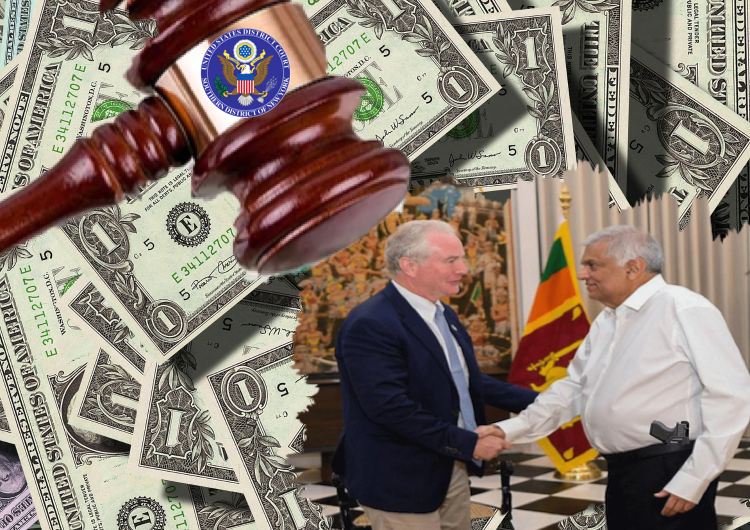
So here then comes US Senator Chris Van Hollen, D-Md (who US Envoy Chung warmly tweeted as a ‘longtime friend of Sri Lanka’, from an incestuous beltway cul-de-sac, born in Pakistan to foreign-service salarymen, mommy in the CIA, daddy worked out of the Colombo US Embassy 1970-76 to destabilize the United Front government of Sirimavo Bandaranaike). He says he is here to ‘explore economic recovery & deepen our joint commitment to upholding democratic ideals’. Way to go CIA!
Hollen is behind the recent arrest of Pakistan’s President Imran Khan. Khan had addressed a rally, and responded directly to European calls that Pakistan rally behind Ukraine, by asking, ‘Are we your slaves?’ Hollen was reported as acting ‘indignant’at the US Senate Foreign Relations Committee, berating officials like Assistant Secretary of State for the Bureau of South & Central Asian Affairs Donald Lu for allegedly not being ‘in communication with Khan’ about US displeasure at Pakistan’s decision to abstain from a US resolution at the UN, condemning Russia. Two days later, Lu told Pakistan ambassador that the US was demanding Khan’s removal. Khan was jailed soon after.
On Friday morning (September 01), the Indian warship INS Delhi sailed in, in the wake of Hollen boarding former US Coast Guard ship SLNS Gajabahu in Colombo on Thursday (31). However India’s war chief stood up a date, perhaps to duck any undue movements of Sri Lanka’s famous guards of honor?
*
Addressing the Interest of the USA – ‘Hamilton Bank has been unusually aggressive for a ‘holdout’ creditor though… Seemingly the US objects to this. The letter also mentions in a footnote that the US government ‘understands that other official creditors may separately submit a filing reflecting their views’, but stresses that the SDNY is planning to ‘address the interest of the USA’. This is fascinating, as at face value it is hard to see how & why the US government has an interest in Sri Lanka’s debt restructuring, or even grounds for making its views known to the court. It could be a delaying tactic to help Sri Lanka engineer a debt restructuring, by sabotaging Hamilton Bank’s rush to the courthouse for a more restructuring-resistant judgment.’ – see ee Economy, A Sri Lankan debt twist – the US Government Has Some Thoughts
• A shadow play is being acted out in that North Atlantic capital of capital and its fictions: New York, USA, 8,706 miles from Sri Lanka. In a Manhattan courtroom, the US government has betrayed its hand (or its finger?) once again, in roiling Sri Lanka’s economy, asking to delay judgement:
The US Department of Justice had a US Southern District of New York Attorney intervene on August 30, just one day before a US District Judge in New York was to hear a case involving Sri Lanka’s (GoSL) payment of debt. A judgment in favor of Hamilton Bank would potentially prevent the GoSL from including the bonds held by Hamilton Bank in any debt restructuring process. Sri Lanka’s Finance Ministry has stayed mum on these latest developments. But the US government has long been aware of the court proceedings. So why step in now?
In May, plaintiff Hamilton Reserve Bank and the defendant SL Government jointly outlined a schedule demanded by New York Southern District Court Judge L Denise Cote in April. The plaintiff’s lawyers Bleichmar Fonti & Auld and the defendant’s lawyers Clifford Chance both promised to go through all the motions ‘on or before 31 Aug 2023’.
In July, London’s Financial Times (owned by Japan’s Nikkei) wondered about the seeming lack of involvement of the US government in the case. Sri Lanka was due to reply on August 31 in support of its motion to delay a lawsuit by Caribbean-based offshore Hamilton Reserve Bank, which wishes to obtain an immediate $250,190,000 in payment for defaulted sovereign bonds. Sri Lanka had filed a motion to stay the litigation for 6 months while it conducts sovereign debt restructuring negotiations with sovereign & commercial creditors.
The US told the court it is in the process of deciding whether to intervene in the case, and will inform the Court no later than 2 October 2023. In the mewnwhile, ‘Gloom’ had ‘descended on the stock market due to the extension of the date for the conduct of talks between the government & domestic bondholders’ and continued to prevail. ‘A deal had been scheduled for August 27, but due to unavoidable circumstances it was extended to September 11. The domestic debt restructuring exercise is a prime recommendation of the IMF.’
An IMF team will sniff around Sri Lanka from September 14-27 to conduct the first review of an Extended Fund Facility arrangement. Central Bank Governor Nandalal Weerasinghe says Sri Lanka will negotiate in parallel with the IMF & external creditors, with the expectation of completing debt restructuring ‘in the October to November 2023 period… Sri Lanka has to complete domestic debt restructuring, which is currently held up over enacting a tax law’ – tax revenues, ‘a key IMF quantitative performance criterion’, have ‘fallen short’.
‘First, we have to come to an agreement with official creditors on the terms. That will have to happen before the next review,’ Governor Weerasinghe said.
*
• People are having fun with a dubious organization titled Global Finance naming CBSL Governor Nandalal Weerasinghe among the world’s top 21 Central Bank governors ‘based on their success in inflation control, economic growth goals, currency stability, & interest rate management (adaderana.lk). They ask: ‘Why not also award Ali Sabry as best finance minister for happily declaring bankruptcy too?’ And since we have elephantine memories, despite the efforts of the capitalist media to infect amnesia, they also recall, ‘Ravi K also won the best finance minister from this same organization after looting the CBSL.’ They note Weerasinghe:
– was happy to declare the nation as ‘bankrupt’
– was delighted to go to the IMF and put the country into more debt
– did not negotiate with creditors for some relief before declaring bankruptcy
– makes no efforts to recover the profits kept by exporters in foreign banks
– is not bothered about changing the 2017 Foreign Exchange Control Act
– has no initiative to investigate money loopholes, recovery of foreign investments unpaid
– prints money like there is no tomorrow, breaking all records for printing
– has seen the GDP contract for 5 straight quarters, making it a ‘Recession Squared’
– yet wins a global award! [– Private Correspondence]
*
________________
Anyone who funds fraudulent activities of individuals and groups conducting media warfare operations against the Sri Lanka army is liable to get prosecuted under prevailing laws in Sri Lanka.
2023.09.03 (අද) වන දිනට යෙදෙන 157 වන පොලිස් දින සැමරුම නිමිති කරගනිමින් සර්ව ආගමික වැඩසටහන් රැසක් ක්රියාත්මක කර තිබූ අතර ඊට සමගාමීව 2023.09.02 වන දින රාත්රී 07.30 සිට පැවැත්වූ පරිත්රාන ධර්ම දේශනාව හා 2023.09.03 වන දින හීල් දානමය පින්කම කොළඹ නියෝජ්ය පොලිස්පති කාර්යාලයේ 04 වන මහලේ පිහිටි සම්මන්ත්රණ ශාලාවේදී පැවැත්විණි.
එහි හින්දු ආගමික වතාවත් පැවැත්වීම 2023.09.03 (අද) දින පෙරවරු 8.30ට බම්බලපිටිය නව කදිරේෂන් හින්දු කෝවිලේදී පැවැත්වූ අතර පෙරවරු 09.30ට මෝදර, ශාන්ත ජේම්ස් කතෝලික දේවස්ථානයේදී කතෝලික දේව මෙහෙය පැවැත්විණි.
තවද ඉස්ලාම් ආගමික වතාවත් කුරුඳුවත්ත දවටගහ මුස්ලිම් දේවස්ථානයේදී පැවැත්විණි. මෙම අවස්ථාවන් සඳහා මහජන ආරක්ෂක ගරු අමාත්ය ටිරාන් අලස් මැතිතුමා, මහජන ආරක්ෂක අමාත්යාංශයේ ලේකම් වියානි ගුණතිලක මහතා, බස්නාහිර පළාත් භාර ජ්යේෂ්ඨ නියෝජ්ය පොලිස්පති දේශබන්ධු තෙන්නකෝන් මහතා ප්රමුඛ ජ්යේෂ්ඨ නියෝජ්ය පොලිස්පතිවරුන් ඇතුළු පොලිස් නිලධාරීන් රැසක් සහභාගී විය
Colombo, September 3: Speaking at the prize distribution ceremony at Anula Vidyalaya in Nugegoda on August 16, President Ranil Wickremesinghe said that in the future, Sri Lankan children will have to learn Hindi and Chinese to fit into the changing world.
The underlying theory is that the world is poised to enter the Asian Century” which will be dominated by the new economic powers, India and China and Sri Lanka’s economy will have to integrate itself with the Indian and Chinese economies to partake of the benefits of the latter’s growth. And to do so, Sri Lankans will have to obtain proficiency in Hindi and Chinese.
ADVERTISEMENT
Hindi and Chinese are already taught in Sri Lanka both as part of the formal school system and outside it. But the facilities and the quality of teaching vary widely. The facilities at the Swami Vivekananda Cultural Centre (SVCC) in Colombo, run by the Indian High Commission, and the Confucius Institutes at Colombo and Kelaniya Universities run with financial and educational help from the Chinese Government and Chinese Universities are excellent with qualified teachers and good teaching aids.
But State schools and private institutions that teach these languages lack knowledgeable and committed teachers and teaching aids. The investments made here do not yield the required dividends. If there is to be mass production of Hindi and Chinese students, this sector will have to get a lot more attention.
Indian Cultural Centre
At the Indian Cultural Centre (ICC), classes are conducted by Sri Lankan teachers with formal Indian qualifications in the Hindi language. There are different categories of courses, such as a Beginner’s course; an Intermediate course; an Advanced course, a Post- Graduate Diploma course; GCE (O) Level and GCE (A) Level courses; a special course for children between the ages of 7-15 years and a special Spoken Hindi course. The range is indeed wide.
The duration for each level is one year. The syllabi are set by the Kendriya Hindi Sansthan (KHS) at Agra in North India. At the end of each academic year, examinations are conducted by the KHS by their examiners. Scholarships for pursuing advanced courses in India including PhD are an additional incentive and Sri Lankans avail of the opportunities.
In August, 22 Sri Lankan students, including a bhikkhu, left for India for higher studies at KHS. In the past 12 years, 160 students from Sri Lanka have been awarded this scholarship.
The students at the Centre belong to all age groups from children to retired persons. Previously, 400 enrolled but there has been a decline to about 200, perhaps due to the economic slowdown. Results are good with around 80 percent passing.
Students are attracted to Hindi because of their fondness for Bollywood films and songs. Others see Hindi’s usefulness when they travel in India. The Sinhalese, who are the most interested in Hindi among the various ethnic groups in Sri Lanka, find Hindi a familiar language because of the shared Sanskrit base of the Sinhala and Hindi. Native Tamil speakers, on the other hand, being less acquainted with Sanskrit, have to work harder to understand and pronounce the words properly.
Last December, the ICC inaugurated a course for Sri Lankan police officers, which was well attended. The Deputy Indian High Commissioner, Vinod K. Jacob, said that Hindi is taught in about ten universities and 80 Government schools in Sri Lanka. Besides, there are almost 50 privately-run Hindi classes in and around Colombo.
Hindi teachers from the ICC have won laurels in India, like the late Prof. Indra Dassanayake who was posthumously given the Indian national Padma Shri” award by the President of India in recognition of her contribution to the dissemination of Hindi language and literature in Sri Lanka.
But Hindi teaching and learning face issues in institutions other than the ICC. In her 2016 paper entitled Problems of Learning and Teaching Hindi as a Foreign Language, Hansika W.A. Maduni of the University of Kelaniya said that the students lacked practice and the teachers failed to make the course interesting. The teaching was textbook-oriented and not innovative enough to spur student interest. Sri Lankan schools are yet to develop the art and technique of teaching a foreign language, she said.
A foreign language is best learned at a young age if not childhood. But the school system has failed to take advantage of the age factor. At the ICC, youngsters tend to drop out while the older students persist. Older people stay put probably because they have a passion for the language. Those who stay the course, come out as polished products.
Chinese Teaching
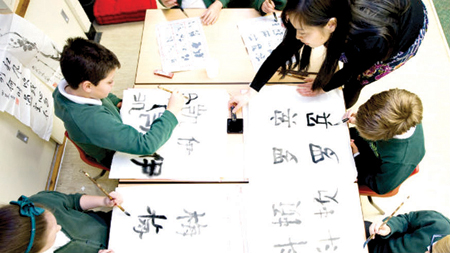
The quality of Chinese language teaching also varies in Sri Lanka. Chinese is taught in the Confucius Institutes (CI) in the Universities of Colombo and Kelaniya and in several Government-run schools.
Staffed with qualified lecturers, both Sri Lankan and Chinese, and endowed with modern teaching aids, the CIs teach Chinese culture and Chinese language in an integrated way. The teaching is geared to academic needs as well as to the job market.
Chinese companies, which are part of President Xi Jinping’s Belt and Road Initiative (BRI), now renamed the Global Development Initiative (GDI), might take some of those passing out. In fact, the prospect of getting a job in a Chinese project in any part of the globe motivates many students.
For the academically inclined, there are scholarships for higher studies in Chinese Universities because each CI is linked to a university in China. Competitions are held to choose outstanding students who are then awarded scholarships.
The CIs have certificate, diploma, undergraduate and postgraduate diploma courses in Chinese language and culture. The integration of culture and language is a must in the case of Chinese teaching because (unlike in the case of Hindi language students) Sri Lankans are not very familiar with Chinese culture and history. The CIs have also developed libraries and IT-based facilities for teaching. Volunteer teachers from China (mainly young university graduates some of whom speak Sinhala or Tamil) join the CIs, mix with Sri Lankan students and help them converse in Chinese.
Kelaniya University’s CI also teaches Chinese on-line through the Google Classroom” albeit only at the elementary level. This is a great help to those who cannot travel to Kelaniya.
According to L.G. Jing, author of Review of Chinese Language Teaching in Sri Lanka, between 2012 and 2016, the CI at Kelaniya University had turned out 1,576 diploma students and 30,000 non-diploma students, which included 12,500 weekend certificate students and 16,900 teacher-trainees. This is a massive output and Chinese experts vouch for the high quality of those passing out.
Learning Chinese as a foreign language has become a fashion among the young generation in Sri Lanka. In recent years, the requirement for Chinese teachers has increased. The number of local Chinese teachers is also increasing rapidly,” Jing said. But he added that the courses needed to be adjusted” in view of some flaws. Some observers said that Chinese and Sri Lankan directors clashed over the control mechanism.
Sammanie Kandambi of the Beijing Foreign Studies University, said in her 2018 paper that there was a lack of qualified Chinese teachers in schools. Both teaching and learning were inadequate in the schools. Textbooks were limited and so were teaching manuals.
Communication Skills
Kandambi recommended that teachers be given opportunities for professional development in Chinese language communication skills, Chinese culture and in the use of modern teaching tools. Children cannot learn Chinese without a knowledge of Chinese culture.
It appeared that teacher-student verbal interaction was lacking. Speaking skills were not imparted. Classroom teaching lacked vitality. She recommended student-centred” teaching. While grammar is important, the ability to speak the language would give the course practical utility, a sense of satisfaction and an appetite to learn more. Unlike Hindi, a single line or stroke can give a different meaning in Chinese calligraphy.
All this means that Sri Lanka has to spend more on Chinese and Hindi language teaching in schools. Teachers will have to be trained appropriately.
But there are two great blessings enjoyed by Hindi and Chinese in Sri Lanka. There is popular enthusiasm for the two languages and Governments have been very encouraging. Many bhikkhus show an exceptional interest in learning these languages. Many bhikkhus travel to India on pilgrimages. Some scholarly bhikkhus also want to read the accounts of Chinese Buddhist travellers Hiuen Tsang and Fa-Hien written in ancient Chinese.
In June 2022, Ceylon Electricity Board chair M.M.C. Ferdinando told the Committee on Public Enterprises that in November 2021 President Rajapaksa had told him the wind power project must be awarded to the Adanis, and that this was the wish of PM Modi. Three days later, Ferdinando retracted his statement and resigned.
Chennai: The Sri Lankan government wants to turn its 500-MW Adani wind power project agreement in the country’s north into a governent-to-government” agreement in order to step around the legal difficulty of having given it to a private company without an open tendering process. This has raised concerns being openly expressed by legislators in Sri Lanka about whether Adani Green Energy Limited (India) has been accepted as the representative of the Indian government.
The weekly Sunday Times reported on September 3 that a proposal in this regard was presented to the Sri Lankan cabinet by the power and energy minister Kanchana Wijesekera. The cabinet paper, quoted by the newspaper, lays out in detail the justification for considering the US$ 400 million Adani project as a G-2-G” project.
The cabinet paper notes that under the rules of the Electricity Act, an open competitive bidding process is a requirement for granting approval to private investment in power projects. But such a condition could be avoided if the approval of the cabinet of ministers is granted to consider the proposal by Adani Green Energy Limited of India as a Government-to-Government Proposal,” the Sunday Times quotes the cabinet paper as saying.
As the cabinet had already considered all aspects of the agreement between the government of Sri Lanka and Adani Green Energy Ltd and authorised all the parties to enter into the said MoU and to proceed with the required future action”, the cabinet paper proposes that it can be strongly justified to consider the said proposal of Adani Green Energy Limited of India under the category of Government-to-Government basis as required under the Electricity Act”.
The wind power deal has been mired in controversy from the start. It was signed in March 2022, six months after Gautam Adani visited Sri Lanka and met with the then president, Gotabaya Rajapaksa, in the midst of Sri Lanka’s economic meltdown, at a time the Rajapaksas had reached out to India for help.
In June 2022, the chairman of the Ceylon Electricity Board, M.M.C. Ferdinando, told a hearing of Committee On Public Enterprises that President Rajapaksa had summoned him after a meeting in November 2021, and told him that the wind power project must be awarded to the Adani Group, and that this was the wish of Prime Minister Modi. Three days later, Ferdinando retracted the statement and resigned from CEB.
In an interview to The Hindu in April 2023, Sri Lankan foreign minister Ali Sabry conceded that the wind power project was a ‘government-to-government kind of project’. We were keen on an Indian investor to come in, so who the Indian investor was for the Indian government and the authorities to decide and choose and send it to us.”
It is not clear how the Narendra Modi government will react to the latest developments as it has so far refused to react to Ferdinando’s retracted claim or the suggestion that it chose the Adani group for the lucrative deal.
Always a subject of political controversy, Narendra Modi’s proximity to Gautam Adani has become an even more sensitive subject in the wake of the Hindenburg report and recent allegations that his government chose to soft-pedal allegations of stock manipulation against the company.
The cabinet proposal was reportedly presented on August 14. On August 31, Newsfirst, a Sri Lankan news portal reported that a parliamentarian had expressed concern at the move to give the project legitimacy via the G2G route, and asked if this meant the Adani company was a representative of the Indian government.
Charitha Herath, a dissenting parliamentarian of the Sri Lanka Podujana Peramuna, the Rajapaksa-led party that supports President Ranil Wickremesinghe, said power project proposals are usually presented for approval under the provisions of the Sri Lanka Electricity Act.
However, this new cabinet paper calls to consider the project as a government-to-government proposal. So, has Adani Green Energy Limited (India) been accepted as the representation (sic) of the Government of India? If the Indian government has accepted this, I have no reservation. I wish to know what the Attorney General’s interpretation of this is,” the MP said at a media briefing reported by Newsfirst
වයස අවුරුදු 18 – 20ත් අතර තරුණයන්ට පුහුණුවක් ලබාදී සිවුරු පොරවා දේශපාලන අරමුණු වෙනුවෙන් යොදාගැනීමේ සූක්ෂ්ම වැඩ පිළිවෙළක් ක්රියාත්මක කොට ඇති බවට රාජ්ය බුද්ධ අංශ තොරතුරු අනාවරණය කරගෙන ඇති බව ජාතික පුවත්පතක් වාර්තා කර තිබේ.
එසේ මේ වන විට 500කට ආසන්න පිරිසත් එසේ පුහුණු කර භික්ෂූන් වහන්සේලා ලෙස යොදාගෙන තිබෙන බවට බුද්ධි අංශ රහස් වර්තාවකින් රජයට තොරතුරු ලබාදී තිබෙන බවක් දැනගන්නට ඇති බව එම පුවත්පත වැඩිදුරටත් වාර්තා කරයි.
මෙම ක්රියාවලිය පිටුපස දේශපාලන හස්තයක් තිබෙන බවද ඔවුන් පවසයි. මෙම චීවරධාරීන් මගින් දේශපාලන මත ව්යාප්ත කිරීමේ වැඩපිළිවෙලක් ඇති බවද ඔවුන් අනාවරණය කරගෙන ඇති බව වාර්තා කරයි.
Former Governor of the Central Bank of Sri Lanka (CBSL) Dr. Indrajit Coomaraswamy highlighted the macro-economic stress as the main reason for the regression in Sri Lanka’s socio-economic indicators during the past 75 years of the country.
Addressing a virtual event to launch the policy report ‘Understanding Multidimensional Vulnerabilities: Impact on People of Sri Lanka’ prepared by the UNDP, he welcomed efforts taken to address interference on the work of the Central Bank via the passing of the New Central Bank Act.
I am not talking about the last 5, 6 or 10 years. Over the last 75 years we have regressed. And the main source for this regression has been macro-economic stress in my view.”
Commenting further, Dr. Coomaraswamy emphasized that the main cause for these macro-economic issues has been the government’s fiscal operation, adding that the negative effects of that has been amplified by fiscal dominance in monetary policy.
They have been interference in the work of the CBSL from time to time”, he stressed.
However, he also mentioned that he is pleased to see the new Central Bank of Sri Lanka Act and the tight fiscal operations currently underway within the country.
I am pleased to see that some of that, pretty much of all of that is now been rolled back”, he added.
Meanwhile, the former CBSL chief alleged that in the past, nobody has taken interest on macro-economic issues, except to complain.
All are complaining on the depreciated exchange rates, higher interest rates and the increasing inflation”, he said, adding that nobody asks the question why is this happening”.
This is another part of the governance failure. It’s not the governance failure only on the politicians but the entire country. Nobody takes enough interest in these issues.”
Furthermore, Dr. Coomaraswamy claimed that all the depreciated exchange rates, higher interest rates and increasing inflation are symptoms only, mentioning that all the people have to look at the causes of these issues and exert pressure for those causes to be addressed.
Indian Prime Minister Narendra Modi stated that the India has been greatly sensitive to the needs of Sri Lanka, during the tough times faced by the island nation.
We have also been greatly sensitive to the needs of our valued neighbour, Sri Lanka, during their tough times,” he said, during an interview with the Indian news agency ‘PTI’.
Meanwhile, the Indian PM also pointed out that the debt crisis is a matter of great concern for the world, especially developing countries, as India looks at building consensus at the upcoming G20 summit to evolve a tangible framework to help the debt-ridden low income economies.
In an exclusive interview to PTI late last week, Modi said India’s G20 presidency has placed a significant emphasis on addressing the global challenges posed by debt vulnerabilities, especially for nations in the Global South.
The debt crisis is indeed a matter of great concern for the world, especially developing countries. Citizens from different countries are keenly following the decisions being taken by governments in this regard. There are some appreciable results too,” Modi said.
First, countries that are going through debt crisis or have gone through it, have begun to give greater importance to financial discipline,” Modi said.
Second, others who have seen some countries facing tough times due to the debt crisis are conscious of avoiding the same missteps,” Modi said.
Under its G20 presidency, India has been consistently highlighting the need for a framework on debt restructuring to help countries facing mounting debt problems.
China, considered to be the world’s largest sovereign creditor, has been showing reluctance to certain proposals on debt restructuring although an increasing number of G20 member countries are pitching for helping the low-income nations deal with the crisis.
According to estimates, over 70 low-income countries are reeling under a collective debt burden of $326 billion.
The G20 finance ministers and Central Bank Governors have acknowledged the good progress in debt treatment of common framework countries and beyond the common framework too,” Modi said.
We have also been greatly sensitive to the needs of our valued neighbour, Sri Lanka, during their tough times,” he said.
To accelerate global debt restructuring efforts, the Global Sovereign Debt Roundtable, a joint initiative of the IMF, World Bank and the G20 Presidency was launched earlier this year. This will strengthen communication among key stakeholders and facilitate effective debt treatment,” he added.
Modi hoped that rising awareness among the people of different countries on the problem will ensure that such situations don’t recur often.
While a lot is being done to address these issues, as I said earlier, I am positive that rising awareness among the people of different countries will ensure that such situations don’t recur often,” he said.
In July, IMF Chief Kristalina Georgieva pitched for a speedier debt restructuring process for vulnerable countries.
India is hosting the G20 summit on September 9 and 10 in its capacity as the current chair of the grouping.
The G20 member countries represent around 85 percent of the global GDP, over 75 per cent of the global trade, and about two-thirds of the world population.
The grouping comprises Argentina, Australia, Brazil, Canada, China, France, Germany, India, Indonesia, Italy, Japan, the Republic of Korea, Mexico, Russia, Saudi Arabia, South Africa, Turkey, the UK, the US and the European Union (EU).
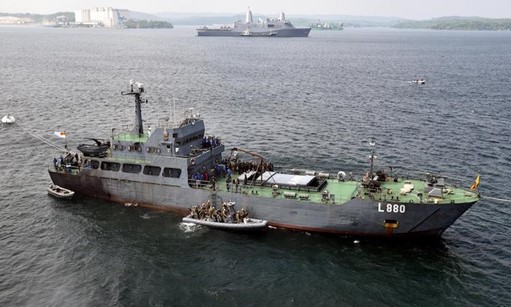
Newly formed Sri Lankan Marine Corps gets 241 years of experience in under a week. Credit: U.S. Marine Corps photo by Petty Officer 2nd Class Jacob L. – Photo: 2023
COLOMBO. 23 August 2023 (IDN) — Sri Lanka continues to swing wildly between being a ‘Donor Darling’ flooded with foreign ‘aid’ and ‘advisors’ on the one hand to a ‘bankrupt’ pariah or outcast on the other.
Last year, the strategic Indian Ocean Island went from South Asia’s wealthiest nation with the best social and human development indicators to a beggar—humiliated and shunned by the ‘international community.’ This was after staging its first-ever Sovereign Default due to a Eurobond debt trap and purported lack of US dollars.
The default triggered rapid rupee depreciation and instantly beggared citizens amid a distracting transnationally networked, remote-controlled ‘Aragalaya’ protest operation led by social media influencers. Ironically, there was a blockade on fuel shipments to the country amid the United States Marine’s ‘Sea Vision’ training program for the Sri Lanka Navy.
Only India, the South Asian regional hegemon and good neighbor, was willing and able to help at the time. The narrative in the local and global corporate media echo chamber was that there was no fuel, food, fertilizer, medicines, or tourists to generate exorbitantly privileged and copiously printed US dollars to buy necessities. As the Rupee plummeted, newly appointed US-backed President Ranil Wickramasinghe promised famine and 15-hour power cuts by promoting fear, out-migration, and brain drain from the country.
Yet, miraculously, like the Phoenix risen from the ashes a year later, Sri Lanka is back, having taken mana from heaven in the form of an International Monetary Fund (IMF) loan of just $2.9 billion to be disbursed over four years, that enabled the magical US dollars to flow again!
Last week, the island hosted the Indo-Pacific Environmental Security Forum (IPESF) at Colombo’s Shangri La Hotel, which faces South Asia’s busiest Port. More than 140 senior officers from foreign defense forces and top-level environmentalists from 28 countries in the Indo-Pacific took part’ at the confab overlooking Galle Face, the Aragalaya protest site. The 4-day Environmental Security conference was hosted by the US Indo-Pacific Command (INDOPACOM), Sri Lanka Navy (SLN), and Sri Lanka Coast Guard (SLCG).
Although described as an ‘environmental security’ conference, the IPESF did not discuss the environmentally devastating impacts and economic costs of the global military business industrial complex, including 750 plus US military bases worldwide, their carbon emissions, and military exercises.[i]
Environmental impacts of military exercises and war, like the Nordstream pipeline destruction or stranding and death of Pilot Whales and Dolphins due to war games as sonar systems of aircraft carriers and submarines disorient large sea creatures, were NOT on the agenda.
Climate Hypocrisy: Green and Blue Bond Scams
The environmental impact of the NATO war machine and ongoing wars in Ukraine and Africa were the elephant in the room at Colombo’s Shangri-La Environmental Security Forum. Instead, trendy topics like Debt for Nature Swaps (DFNS), also called Environment, Social and Governance (ESG) bonds based on opaque carbon credit calculations, urbanization, ocean plastics, partnerships for climate resilience, data science in climate risk management, etc. were agenda items.
Two weeks before the IPESF, on 28 July, French President Emmanuel Macron paid a midnight visit to Sri Lanka, where the OECD’s Club de Paris, represents Eurobond holders who were primarily responsible for the default, was involved in ongoing IMF debt restructuring negotiations and Numbers Game that are set to deepen the country’s debt bondage.
Macron, attempting to Greenwash Odious Debt and the most corrupt, opaque, and crime-ridden sector of the Western global financial system—Bond trading and derivatives—had been promoting the ‘New Global Financing Pact,’ launched last month in Paris. Based on opaque Carbon Credit calculations, the ‘Anthropocene climate catastrophe narrative was used to market DFNS, or Green and Blue Bonds.
This week amid non-stop rain the Al Jazeera channel ran disinformation that there would not be rain until October in Sri Lanka with a picture of a single farmer complaining about crop failure. The farmers had planted their crops late this year due to misinformation and hence when the normally dry month of August came around complained about a shortage of water due to Climate change’!
Meanwhile, predatory bond traders, principal among them BlackRock, have debt trapped over 55 countries in the Global South during COVID-19 lockdowns and now seek to sell Green and Blue Bonds or Environmental, Social and Governance (ESG), Euro Bonds to further debt trap the island. Hence, anti-corruption activists in Sri Lanka had called for an outright ban on government borrowing on Private bond markets, which caused the Sovereign Default worst economic crisis, and for the country to seek membership in BRICS and the New Development Bank.
Macron, facing a rout in West Africa, was fishing in Sri Lanka’s troubled waters and promised to set up an office of the French Agency for International Development (AFD) in Colombo.
French fisheries fleets stationed in the Seychelles have been accused of over-fishing and Ocean Grabbing and impoverishing Indian Ocean littoral fisheries communities for decades.[ii] Indeed, a Brookings Institution report pointed the finger at French fleets for depriving Somalian Fishers of their livelihoods and forcing them into piracy.
Hot on the heels of departing Macron, a Japanese Government team arrived in Colombo to shower aid on the Ranil Rajapakse regime and restart a rapid rail project. A couple of months before Macron’s visit, CIA chief William Burns had paid a top-secret visit to the country, and the United States Ambassador at Large for Cyberspace and Digital Policy, Nathaniel C. Fick, was expected in Colombo from 17 to 23 August 2023, according to the Department of State. The Chinese were in the country earlier.
Aid Dependence and a Corruption Pandemic
Is Sri Lanka, which sits on major global trade, energy, and Submarine Data Cable routes, back again as a ‘donor darling’? The strategic island, long deemed an unsinkable aircraft carrier in the middle of the Indian Ocean, clearly suffers from a geostrategic ‘Resource Curse,” as well as aid-induced Dutch Disease and de-industrialization:
The Island, although rich in valuable marine resources and minerals including Graphite, Zircon, Titanium, etc., now depends on European Union GSP plus handouts to export underwear stitched by women and girls, who are working long hours in Free Trade Zone factories and servicing tourists to earn foreign exchange.
Since Independence in 1948, ‘Aid’ dependency has permeated and penetrated the government, military, business elite, policy-making, and civil society institutions, impeding industrialization and development, particularly the leveraging of valuable marine and mineral resources, including Graphite and Phosphates for fertilizer.
So, too, national law and order and investigative agencies and institutions have been penetrated and compromised due to dependency on foreign aid and experts and politicization. This has left the country vulnerable to transnationally networked crime, corruption, and being pumped, dumped, and de-stabilized during staged exogenous economic shocks sans proper investigations, analysis, and research.
Policies of promoting brain drain and skilled out-migration have exacerbated dependency on foreign aid, advisors, and consultants in a country already reeling from two years of COVID-19 lockdowns that had debilitated institutions and oversight mechanisms and enabled Digital Colonialism also visible in the IMF and World Bank debt numbers games/
Middle-Income Country Trap to Make the Economy Scream”
In 2019, the country was also pumped and dumped by World Bank ‘experts’ when Sri Lanka was upgraded to an Upper Middle-Income Country (MIC). MIC status rendered the island ineligible to access concessionary loans available to less developed countries.
During two years of economically devastating COVID-19 lockdowns, successive incompetent and corrupt Ranil Rajapakse regimes related business cronies borrowed from private capital markets and hedge funds like BlackRock that charge predatory interest rates because of the World Bank’s MIC trap—leading to the first-ever default in 2022.
Early in its post-colonial history, Ceylon/ Sri Lanka, caught in Cold War regional refractions, was subject to various exogenous political and economic shocks; the country’s first socialist Prime Minister, S.W.R. D Bandaranaike who set about nationalizing ports, airports, and plantations, was assassinated, and his wife and successor, Sirimavo faced a coup attempt in 1962. A few years earlier, in 1955, Iran’s democratically elected Dr. Mossadegh had been removed in a regime change operation after he nationalize Iranian Oil Fields from British Petroleum, in a coup staged by the British Intelligence agency MI-6 and the Central Intelligence Agency.
Insurrections in the shape of ’Jakarta Method’ operations, were followed by a thirty-year globally networked ‘ethnic conflict’ that ran from 1983-2009. Then came the mysterious 2019 Islamic State (IS)-claimed attacks at Easter Sunday on tourist hotels and churches and Chinese investments to make the ‘economy and society scream’ and encourage the obdurately independent natives to accept the Millennium Challenge Corporation (MCC), compact and the Status of Forces Agreement (SOFA), to enable US boots on the ground.
Amid the Aragalaya protest drama, default, and regime change operation last year, there were shades of President Nixon’s instructions to the Central Intelligence Agency (CIA) to make Chile’s ‘economy scream’ as a prelude to the overthrow of democratically-elected Leftist President Salvador Allende and the installation of dictator General Pinochet in 1973 during the Cold War.[iii]
As protests unfolded, the newly installed pro-Washington Ranil Rajapakse regime predictably promoted the myth that there is no alternative to the IMF” and further Eurobond borrowing and debt colonialism –seemingly in preparation for an IMF Firesale of assets (prime coastal and highland lands, energy, transport, and telecom infrastructure) to benefit Eurobond traders.
Resilient in the Asian 21st Century?
However, once again, the resilient island appears to be back in business and humming along, but this time, the pumping and dumping of Sri Lanka as a new hybrid Cold War ramps up in the Indian Ocean with remote Over the Horizon (OTH), cyber and economic war operations for Full Spectrum Dominance (FSD), by a crashing superpower seems different.
During the first Cold War, there was still space for the Non-Aligned Movement (NAM) to declare the Indian Ocean as a Zone of Peace,’ free of nuclear weapons and foreign military bases—led by the world’s first female Prime Minister and a Socialist, Sirimavo Bandaranayke.
However, since the Sovereign Default last year, Sri Lanka has not only lost Economic Independence and Policy autonomy to the Washington Twins and colonial Club de Paris, ironically on its 75th year of so-called Independence after being pumped and dumped by the World Bank into an MIC Eurobond debt trap in 2019.
Sri Lanka has lost its voice and independent thinking due to an ill-conceived policy of Brain Drain promoted by the foreign ‘Force’ backed by the Ranil Rajapakse government. This, in the wake of COVID-19 lockdowns and hacking of national institutions and oversight mechanisms, is promoting (Digital) neo-colonialism, also apparent in the debt restructuring Numbers Games being played by the IMF’s experts and consultants, including Lazard, Clifford, and Chance.
While Sri Lanka is being carved up for an IMF Firesale of strategic assets, by IMF’s chosen accounting and legal firms, few among the remaining local intelligentsia have thought to question the adequacy of the exorbitantly privileged and copiously printed US Dollar to measure the ‘wealth of nations’ as the world de-dollarizes. After all, the US has a deficit of $32 Trillion and counting and was downgraded by one of its own rating agencies recently.
Perhaps Sri Lanka’s resilience and the quick turnaround this time also has to do with being flanked by Asian Giants, China and India, in what has been termed the ‘Asian 21st century,’ as the BRICS emerging economies overtake the traditional G7 economic heavyweights while de-dollarizing fast.
Ironically, while France’s Macron sought an invite to the BRICS party in Johannesburg, South Africa, this week, Colombo’s Ranil Wickramasinghe has turned a blind eye to calls that Sri Lanka join the BRICS and New Development Bank.
*The writer is a social and medical anthropologist with international development and political-economic analysis expertise. [IDN-InDepthNews]
Photo: Newly formed Sri Lankan Marine Corps gets 241 years of experience in under a week. Credit: U.S. Marine Corps photo by Petty Officer 2nd Class Jacob L.
IDN is the flagship agency of the Non-profit International Press Syndicate.
We believe in the free flow of information. Republish our articles for free, online or in print, under Creative Commons Attribution 4.0 International, except for republished articles with permission.
[i] US military pollution is the world’s biggest climate change enabler: https://earth.org/us-military-pollution/
[ii] https://www.theguardian.com/environment/2021/mar/05/eu-accused-of-neocolonial-plundering-of-tuna-in-indian-ocean
[iii] https://nsarchive2.gwu.edu/NSAEBB/NSAEBB8/nsaebb8i.htm
When it comes to identifying Buddhist monuments in the north and east, the work of Ellawela Medhananda deserves special recognition. The only bhikkhu who had explored the area successfully for this purpose was Ellawela Medhananda, said the Department of Archaeology research team of 2010. (See https://www.youtube.com/watch?v=QSdj7YRjbDM)
Ellawela Medhananda single handedly, with very little support or money, explored the Buddhist ruins in the north and east from 2003 to 2013. He made many significant discoveries. His work deserves more attention and publicity than it has received. In order to correct this, I wrote a 10 part series on the work of Ellawela Medhananda. They can be accessed at https://www.lankaweb.com/news/items/2020/05/14/ven-ellawala-medhananda-part-1/
Ven. Ellawala Medhananda found new sites which are not in the Sirisoma map. He found 17 more locations in Jaffna district, including 4 on the smaller islands. 19 more for Vavuniya and Mullaitivu and 32 for Mannar, of which 15 are lined along the sea coast. In the Eastern province he found 22 sites in Ampara many along the coast or near it, Trincomalee 6, and Batticaloa 4. Medhananda says this list is incomplete. ‘There should be much more than we found.’
Medhananda went into difficult unexplored territory. For instance, there was no road access to Bambaragastalawa and Medhananda had to go through dense forest inhabited by wild animals to reach Bambaragastalawa.
Veherakema, originally known as Mavala vehera is in the middle of the Lahugala forest. Medhananda took four hours to travel the 7 or 8 miles to get there. He was the first to explore Veherakema. He found a huge rock with the ruins of a probable padhanaghara, columns 6 or 7 feet high and a plain moonstone without decoration.
Medhananda found that many Buddhist ruins have been deliberately destroyed. He recorded these in his writings. At Lankapatuna Medhananda Found an unprotected moonstone, the rest have been destroyed. I found 6 inscriptions there. After I told them the Department of Archaeology went and copied the inscriptions.
In his book Pacina passsa, uttara passa, nagenahira palata ha uturu palate Sinhala Bauddha Urumaya” (2003)Medhananda gives a list of Buddhist ruins seen by him . He has provided maps of the sites he visited. Ven. Ellawala Medhananda was not able to explore the North as much as he would have liked, due to LTTE control. Medhananda said he was able to explore the Eastern Province with greater freedom than the north.
Medhananda gives 48 places in Jaffna where he has seen Buddhist ruins.Most are in private lands. He says there are others as well. the places listed are Algiriya, Anai kottai, Analativu,Ariyalai, Atchuveli, Buddhatottam, Buddhawalawwa, Chakaveli, Changanai, Chulipuram, Chunnakam, Delft, Elavativu, Gotamalu watte, Karaitivu,Kodiyavatte Mahiyapiddy, Mallakam, Manipai, Marattamadam,Mavaddipuram, Nagachcha kovil precincts, Nagarkovil, Nainativu,Nallur, Neelavarai, Pinwatte, Ponnalai, Poonaryn, Pukuditivu, Puloli, Puttur,Sambaturai,Tellipilai, Tennavali, Tiruadanilai, Tisamalai, Tunukai, Udupiddy, Uduvil, Uratota,Uraturai, Vadukkodai, Valikamam and Valvettiturai. Medhananda says these ruins show bricks, tiles, statues, potsherds, inscriptions. Most are in private lands, Medhananda observed..
In Mannar Ven. Medhananda has visited Arippu , Cholayan kaddu, Compotukki, Ilukpeyikadachei, Irantivu, Kadappiditti kulam, Kohala wewa, Kunchi kulam, Magana, Malikai kulam, Mannankulam, Mantota, Moderagam ara, Mudalikulam, Mukkarayakulam, Mulliyakkulam, Musali, Na vehera, Olivettikulam, Pachcha addappan wewa, Paniyankulam, Pannankamam, Periyanavakkulam, Pesalai, Puliyankulam, Rajakulama, Rajamaduva,Rakkha vihara, Samadetiya, Talaimannar, Tiruketiswaram, Ttuvavali, Valli vihara Vachinikulam and Vellantarai.
In Vavuniya and Mullaitivu Medhananda has explored the following places: Ariyamadu,Atambagaskada, Bogaswewa, Buddha kovil, Bumaya, Chelliyar villu, Chenkal veddi kulam,Chenmadu, Dollar farm, Eeratperiyakulam, Erupothana, , Iluppu kulam, Iranai illupun kulam, Iranamadu, Irasattiram kulam,Iruvil,Kachchilamadu, Kallaru, Kalnattan kulam, Kalukundammaduwa, Kanagarayam kulam, Kanchiramuddai, Karadikulam, Karavil kulam, Karidikkulam, Kokkavelliya, Kongaraya kulam, Kontaka karnakulam, Kovil puliyan kulam,Kumbakarna malai,Kurum puliyan kulam, Madukanda, Mahakachchkodiya, Mahamailan kulam, Mamaduwa Manikai, Maniyar kulam,Mankalkeni,Mannan kadal,Manthri vihara, Maradamadu,Maratamadu, Menik farm, Mohonnan kulam, Molliyavela, Mudaliyakulam,Namban kulam, Navagama Kirivehera, Nayaru,Nedunkerni, Nelukkulam, Nochchiya moddai,Oddusuddan, Odiyamalai, Olumaduva, Omandan, Paddikudiirippu, Padivettukulam, Palamoddai, Panaiyan kulam,Panangama, Patta kattuveli, Pavattakulam, Periyakulam, Periyamar iluppai,Periyauttukai, Pokkaravanni tunukai, Pudukudi iruppukulam,Puleliya, Pumaduva, Puravasan kulam, Puvarasankulam, Ruvanmadu, Samalankulama,Sirappanmaduva,Tachcankulam,Tadikkulam, Tambankulama,Tapassavellliya, Tiranamadu, Tiraviyamalai,Tonigala,Tukkumarattadi, Tuntimuruppu wewa, Udavelikulam, Ulakkulam,Unjaral kaddi, Vadamarachhci, Variyakuddiuru, Veherabanda wewa, Vettilkulam, Vettiyakulam and Yakumadu yaya.
Medhananda has explored 80 Buddhist sites In the Eastern province. They included Agbo Raja Maha Vihara, Ariyakara Raja Maha Vihara, Bollegama Raja Maha Vihara, Balahandu vihara, Bambaragastalawa vihara, Boralukanda temple, Nilaveli. . Bowattegala vihara, Buddhangala hermitage, Dighavapi, Diviyagala vihara , Ganegama vihara , Girikumbara vihara , Habutala Karandahela vihara , Harasgala vihara , Henanegala cave temple, Illukpitiya kanda len vihara Ampara. Kalkulam Udagala Dagoba, Kiliveddi bodiya, Kirivehera Raja Maha Vihara, Kombanachhi Ruhunu Somawathi vihara , Kongala natabun vihara , Kopavela vihara , Kotaveheragala vihara , Kuchchaveli Maha vihara, Kudimbigala hermitage, Kukuluvagala vihara, Lankapatuna Samudragiri vihara , Linemalai Sipavata vihara , Malayadikanda vihara, Namalu vihara , Nawinna Raja Maha Vihara ( Ampara), Neelagiri vihara and cave, Niyaguna kanda vihara , Okanda vihara , Omunugala cave temple, Panama raja maha vihara , Piyangala vihara , Pulakunava Maha vihara , Rajagala Maha vihara , Ratgala vihara , Rugama Piyakalutota vihara, Ruhunu magul maha vihara , Samangala hermitage, ,Samudragiri, Sastravela vihara , Seruwila vihara , Sri Pana Raja Maha Vihara, Potuvil, Tilapola pansala, Tiriyaya, Udayagiri Raja Maha Vihara , Vedikkinarmalai rock temple, Veheragala cave temple, Veheragama kubira therun vanaya Ampara, Veherakema Mavala vihara , Velatti badda aramaya and Velgam vihara.
Each time I went to Vavuniya and Mullaitivu I found new ruins, said Medhananda.There are hundreds of Buddhist ruins in Vavuniya ,there are three sets of ruins in a straight line, at Mahakachca kodiya, Erupotana, and Periyapuliyam kulam malai in Vavuniya Medhananda explored Buddanehela Raja Maha Vihara, Vavuniya . Ruins are fast deteriorating he said. From Jaffna to Wilpattu, all along the ocean strip, one sees ruins. These sites were never examined carefully, other than presenting a random report.
Buddhist sites were found in several places in Mannar as well said Medhananda .Maligapitti had lots of ruins with a stupa mound. Place is surrounded by houses. A Buddha statue was found near Murungan, also a stupa in a banana plantation. Buddhist ruins were found near Murungan hospital including a siripatula, an inscription and stone columns. The inscription and siripatula were used for patients to sit on.
Ven. Medhananda found many interesting archaeological items in his explorations. One and a half miles to the east of the preset Devalahinda school, Ampara, there is a wall fortification 7’ wide, stretching for a distance of about 600 feet. In the Veheragoda ruins at Ampara, there is a stupa which shows the earlier style of stupa building. this style is also seen at Buddhangala and Rajagala. Veheragoda wewa had a kalugal sorrowwa.
At Veheragalkanda, (NCP) Medhananda saw a foundation , 50’ x50’ with stone door frame facing the east 9’8” in height There was another structure, 18’8’ by 14 ‘1” with ten pillars in the middle, this could be a gigantic doorway, said Medhananda . When I first visited the place there was a torso of a statue lying there but ‘now it is not to be seen’.
At Karandahela, ( Eastern province) Medhananda found a lotus petal moonstone, very old bricks, a huge cave, 512 feet long, 30 ft wide, and 82 feet height and a rock carved gal vangediya, one foot deep with circumference of 7’ 2”.
Medhananda said that many of the places he saw have not been looked at by the Department of Archaeology. There are far more Buddhist ruins in Trincomalee district than the 54 given by the Department, Medhananda said.
Toppigala has not been properly explored by the Department of Archaeology . Medhananda found 150 archaeological sites in Toppigala. All hillsides around Toppigala such as Motagala, Vesibandagala, Atubandagala, Varakamulla, Kunchinamalai, Devinigala, Kavinigala, had vihara on it. Every hill side around Thoppigala has a ruin of an aramaya. There were inscriptions too. I spend 8 days exploring in Toppigala jungles, said Medhananda .
There are Buddhist ruins at Perillaveli in Eravur pattu, Batticaloa district. These are in dense forest and have not been seen by the Department of archaeology. The area north of Badulla –Eravur has not been explored when Medhananda wrote about it. Lots of Buddhist sites there in the forests, also ruins of irrigation schemes. I found very fine archaeological ruins at Kadavat maduva near Batticaloa railway station. No one had looked there, he said.
Viharagalkanda at Trikonamadu has ruins extending for 10 acres. These have not been explored before. The ruins of stupa, walls, caves, asanaghara could be seen. There is an ancient wewa near ruins. The archaeological sites at Vasi bandagala, Aatubandagala, Iddagala, Nelugala, Mavulivala, have not been explored before. There are lots of ruins . Siripalena, Siluminiseya, Devagala in Maduruoya valley also have unseen ruins.
Medhananda had explored Bambaragastalawa, Lenama, Budubava, Nalitta,in the Eastern province, and found ruins which the Department of Archaeology had not found. The ruins around Dighavapi have not been explored, either.
There are no reports in the Department of Archaeology as to the ruins at Mahapattuva , 8 km from Timbirigolla Vidyalaya in the North westsern province. Somawathi vihara, Kombanachchiya had ruins no one has seen before. In our exploration at Digamadulla, too we found many inscription and ruins never seen before said Medhananda. ( continued)
The historic three-day BRICS Summit 2023 wrapped up on August 24 in the South African city of Johannesburg. What are the results of the event and how could it affect the global balance of power in the near future?
The leaders of Brazil, Russia, India, China, and South Africa, which together constitute the group of major emerging economies named BRICS, adopted the Johannesburg II Declaration on the final day of the 15th summit.
The member states committed to strengthening the framework of mutually beneficial BRICS cooperation under the three pillars of political and security, economic and financial, and cultural and people-to-people cooperation. They also committed to enhancing strategic partnership for the benefit of their people through the promotion of peace, a more representative, fairer international order, a reinvigorated and reformed multilateral system, sustainable development, and inclusive growth.
New Fair Trade and Financial System
BRICS called for maintaining the “open, transparent, fair, predictable, inclusive, equitable, non-discriminatory and rules-based multilateral trading system with the World Trade Organization (WTO) at its core.”
The group expressed its concerns about unilateral illegal measures affecting trade and proclaimed the need for creating a fair and market-oriented agricultural trading system that would help end hunger and achieve food security.
“We call for reform of the Bretton Woods institutions, including for a greater role for emerging markets and developing countries, including in leadership positions in the Bretton Woods institutions, that reflect the role of emerging markets and developing economies (EMDCs) in the world economy,” the declaration said.
Previously, BRICS leaders placed special emphasis on the rising role of the New Development Bank, founded by the group in 2015 to facilitate funding new infrastructure projects and various endeavors by developing nations.
Local Currencies & New Payment Systems as Alternative to Dollar
BRICS stressed the importance of encouraging the use of local currencies in international trade and financial transactions between members of the group as well as their trading partners.
The concept has taken on a new significance given the West’s weaponization of major reserve currencies in order to achieve its geopolitical objectives.
“We are concerned that global financial and payment systems are increasingly being used as instruments of geopolitical contestation. Global economic recovery relies on predictable global payment systems and the smooth operation of banking, supply chains, trade, tourism, as well as financial flows,” South African President Cyril Ramaphosa stated on Wednesday.
Likewise, a day earlier, Brazilian President Lula da Silva touched upon the idea of a “new reference unit” for BRICS nations, which would shield emerging markets from G7 currencies’ volatility caused by irresponsible monetary measures.
While the common currency concept was not discussed in detail during the 15th summit, Russian Finance Minister Anton Siluanov disclosed on August 22 that BRICS member states are continuing to discuss the creation of a “single unit of account.” Siluanov explained that it is not actually a single currency (akin to the euro in the EU), but an instrument “in which the cost of commodity deliveries and benchmarks for some goods can be expressed in order not to depend on a single currency or its issuing center.” The proposed single unit of account would become an alternative to the US dollar, per the minister.
On the final day of the summit, the BRICS leaders announced that they had decided to invite Argentina, Egypt, Iran, Ethiopia, the UAE, and Saudi Arabia to join the group.
“We have decided to invite the Argentine Republic, the Arab Republic of Egypt, the Federal Democratic Republic of Ethiopia, the Islamic Republic of Iran, the Kingdom of Saudi Arabia, and the United Arab Emirates to become full members of BRICS. The membership will take effect from January 1, 2024,” Ramaphosa stated on Thursday.
Per Ramaphosa, the admission of new members to BRICS is just the first phase of the group’s enlargement process.
The participants of BRICS have also agreed that the name of the group will not change after the new countries join it, as this will demonstrate continuity, as Russian Foreign Minister Sergey Lavrov specified on the same day. It is expected that the expansion of BRICS will enable an increase in mutual investments between the member states and deepen further collaboration.
The admission of six new members as well as the shift to new payment systems could have a substantial impact on the global balance of power, according to Sputnik’s interlocutors.
In particular, the aggregated gross domestic product of BRICS+ will total 37% of global GDP in terms of purchasing power parity (PPP), while the group’s population will account for 46% of global population, as Brazilian President Luiz Inacio Lula da Silva remarked on the final day of the summit.
“The bigger it is, the easier it will be to have a clearing system,” Angelo Giuliano, a Hong Kong-based political and financial analyst, told Sputnik. “You need to have a certain amount of unity and exchanges between those countries to make this platform relevant. So if it was only one or two countries, it wouldn’t make sense. But now, since you have so many exchanges between all those countries, this would make this system much more relevant and much more efficient. So the more countries join, the more countries will want to adhere to this system.”
“So this would actually challenge completely the US dollar hegemony […] The first priority for those countries is to challenge the US dollar hegemony, to bypass the dollar, and to go through a clearing system that would actually benefit everyone and will secure an independence of those countries. They want to regain in some ways their sovereignty, because the dollar has been weaponized by the US,” he continued.
At the same time, BRICS’ commitment to inclusion will give voices to those emerging economies of the Global South which have long been underrepresented in Western-centered international organizations, according to Giuliano.
“In the UN Security Council, for example, we don’t have any African countries, so they cannot change the UN. Maybe BRICS could be the new foundation for the future UN,” the expert presumed, adding that this could become a “huge shake-up” for the Western establishment.
Another intriguing point is Saudi Arabia‘s decision to join BRICS, given that it has long been considered “an absolutely crucial imperial ally of the United States,” as per Patrick Bond, professor of political economy at the University of the Witwatersrand. Earlier, Saudi Arabia demonstrated determination to diversify its foreign relations by adhering to commitments it made to OPEC+, despite the pressure from Washington. Bond also referred to Riyadh’s rapprochement with Beijing and a historic peace settlement between Saudi Arabia and Iran brokered by China. Saudi Arabia even broke its exclusive historic petrodollar relationship and started to sell some of its oil for yuans, the professor highlighted.
“These are the sorts of things that reflect the changing world order in which US power must adjust to losing some of its imperial allies like Saudi Arabia and possibly also Egypt and the UAE,” Bond told Sputnik, adding that Ethiopia has also embraced a more independent foreign policy, despite the country’s longstanding ties with the West.
“Ethiopia is looking forward to joining [BRICS] to promote the new foreign policy of the Ethiopian government led by Prime Minister Abiy Ahmad,” echoed Yasin Ahmad, head of the Ethiopian Institute of Public Diplomacy, while speaking to Sputnik. “Its main task is to diversify political and economic alliances, as well as cooperation in the field of security. The country is preparing to reach a new level in regional and global politics.”
“Yes, Ethiopia maintains fairly good relations with the countries of the West, but still strives for an alternative, multipolar center of power. I think we can become that very point of balance between cooperation with the collective West and integration with the Global South,” Ahmad continued.
The Ethiopian scholar stressed that the nation also wants to drift away from the dollar and participate in the creation of a multipolar system of international relations.
The historic 15th BRICS Summit has apparently become a watershed, showing the Global South a new alternative model of development and offering freedom of choice.
BRICS is now the owner of the Artic Sea Route, of the North South Corridor, of the East West Corridor, of the Persian Gulf, of the Red Sea and of the Suez Canal. I bet that Turkey would be jealous on Egypt, not because it has to expand to accommodate this new economic impuls in the Global South, but because it could be used as a strategic waterway by BRICS that can be closed off by Egypt for military ships and for cargo vessels, like the Turks use their Turkish Door! (wink) I wouldn’t be surprised if some countries have to travel the Long Way in a nearby future.
හැමෝම රැවටිලා බැන්නා සියල්ල අවසානයේදී ගිහිකල දරුවාගේ පියා වූ වූ කස්සපතිස්ස හිමි පළමුවරට ඇත්ත හෙළිකරයි දරුවා තනිකර පැවිදි වූ දෙමව්පියන් ගැන කිසිවෙකුත් නොදැන සිටි සත්ය කතාව
Remembering a Stalwart in Sri Lanka’s Telecommunications Industry
[Negombo, 1st September, 2023] – It is with deep sorrow and a heavy heart that we announce the passing of Mr. Christie Alwis, a true luminary in the field of telecommunications. Mr. Alwis, a Professional Engineer with over 30 years of dedicated service in the industry, breathed his last on 1st September, 2023. He leaves behind a legacy of innovation, leadership, and a profound impact on the telecom landscape in Sri Lanka and beyond.
Mr. Christie Alwis began his illustrious career in telecommunications in 1977 when he joined Sri Lanka Telecom (SLT). Over the years, he ascended through the ranks and held several key positions within the organization, demonstrating unwavering commitment and expertise in his field. Notably, he served as an Engineer, overseeing crucial aspects of switching and transmission in both the Telecommunication Department (Government) and Sri Lanka Telecom (Corporation).
In 1997, Mr. Alwis took on the role of Director Customer Services and Executive Assistant to the CEO under the Japanese management of SLT, showcasing his versatile leadership abilities. He continued to excel in his career as he transitioned to the role of Chief Network Officer – Network Planning and Engineering Group from 2002 to 2007, contributing significantly to the development and expansion of Sri Lanka’s telecommunications infrastructure.
In 2007, Mr. Alwis took on the role of Senior Officer – Corporate Strategic Planning at SLT, once again demonstrating his versatility and adaptability in the ever-evolving telecommunications industry.
Beyond his impressive career, Mr. Christie Alwis was a passionate educator. He served as a Visiting Lecturer for Communication Engineering and Computer Science at the University of Moratuwa and the University of Sabaragamuwa, enriching the minds of countless students over his 25 years of service as a lecturer.
Mr. Alwis’s contributions to the telecommunications industry are immeasurable, and he will be remembered not only for his technical prowess but also for his leadership, mentorship, and dedication to the development of the next generation of telecom professionals.
As we mourn the loss of this telecommunications veteran, our thoughts and condolences go out to his family, friends, colleagues, and all those whose lives he touched. Mr. Christie Alwis’s legacy will continue to shine brightly in the annals of Sri Lanka’s telecommunications history.
Copyright © 2026 LankaWeb.com. All Rights Reserved. Powered by Wordpress