Strategic significance of 6th Indian Ocean Conference in Bangladesh

May 11th, 2023

Dr. Shakuntala Bhabani Kolkata India

The sixth international Indian Ocean Conference is set to begin in Bangladesh capital city Dhaka from May 12 which will be attended by about 150 delegates, including high-level representatives from 25 countries.

The theme of this year’s conference is ‘Peace, Prosperity and Partnership for a Resilient Future’ due to the post-Covid situation and the ongoing Russia-Ukraine war.

Bangladesh Prime Minister Sheikh Hasina will inaugurate the conference. She will also host a dinner in honour of the guests who will participate in the conference.

Speaking about the two-day conference, Foreign Minister of Bangladesh AK Abdul Momen said that the event was mainly organised for the coastal countries of the Indian Ocean, but in the changing global context, various important and relevant issues are expected to be discussed.

The Mauritius president, Maldives vice-president and Indian External Affairs Minister S Jaishankar are among the dignitaries who will attend the conference. “Foreign Ministers of Bhutan, Nepal, Bahrain and Singapore alongside the ministerial representatives of Seychelles, Sri Lanka, Madagascar will also participate in the conference,” Momen said.

AK Abdul Momen told reporters that around 150 foreign guests will participate in the conference including representatives from D8, Saarc and BIMSTEC.

The participating ministers will also visit Bangabandhu Memorial Museum at Dhanmondi Road 32 to pay respect to Bangladesh’s Father of the Nation Bangabandhu Sheikh Mujibur Rahman.

The conference is being organised by the India Foundation in association with the Bangladesh Ministry of Foreign Affairs.

Bangladesh minister said that by organising this conference, it is expected that the partnership with the countries along the Indian Ocean will be strengthened in the regional political sphere with Bangladesh.

Bangladesh foreign minister also said that from the discussion of this conference, the participating countries will get an idea of what kind of steps they will take in the future in view of the ongoing global events, and it will be helpful for Bangladesh to take necessary decisions to deal with various crisis situations and overcome them.

The Indian Ocean Conference (IOC) was started in 2016 and in the last six years it has emerged as the “flagship consultative forum” for countries in the region over regional affairs.

The conference endeavours to bring critical states and principal maritime partners of the region together on a common platform to deliberate upon the prospects of regional cooperation for Security and Growth for All in the Region (SAGAR).

However, 6th Indian Ocean Conference in Bangladesh, most importantly, are taking place at a time when Bangladesh government has recently set an ‘Indo-Pacific Outlook’ officially. the overarching goal of Bangladesh’s recent Indo-Pacific Outlook is to enhance country’s ties with the USA and West, India for engagement in this region, accelerates economic growth, and addresses common issues shared by the other nations. Despite Indo-Pacific Strategy’s widespread support, some countries have claimed that it’s only likely to serve to escalate regional instability, slow China’s growth and Bangladesh’s lean towards the US. Bangladesh is hesitant to take any sides in the conflict between the US and its allied countries and China. For instance, the Ministry of Foreign Affairs of Bangladesh had announced a fresh Indo-Pacific Outlook to highlight Bangladesh’s geopolitical standpoint on the region as well as its objectives to move forward as a nonalignment foreign policy. In other words, Bangladesh will likely to clarify on its own stance in the Indo-Pacific region through Indo-Pacific Outlook to take the position of regional leader, rather joining any political bloc. In this way, India-US-Bangladesh relations would reach a new level. Bangladesh could gain trust from the Indian government because India is an active member of the Indo-Pacific alliance. Bangladesh, on the other hand, is handling the Chinese predicament intelligently because its goal is to engage structurally rather than militarily. Chinese ambassador to Dhaka has already stated that Many of Bangladesh’s Indo-Pacific outlook concepts are similar to China’s.

Bangladesh essentially sets an example for the other littoral nations by outlining its Indo-Pacific orientation. Bangladesh-like nations can adopt the method because it is so well-balanced.  It aims to strengthening regional economic cooperation, guaranteeing the security of maritime commerce, combating climate change, investment opportunities and introducing new strategic alliances with other countries. Through upholding norms of international order, the freedom of trade and commerce, prosperity and the sovereign equality of all countries, their outlook aims to help advance the goal of an open, free and fair Indo-Pacific region. In addition, Bangladesh aspires to boost economy through increasing investment and trade; particularly in the areas of public investment and technological networking.

The world has dramatically changed in the past few years. When the block was formed, regional and global political landscape was relatively peaceful and harmonious. China, USA, India, Russia and European Union had minimal conflict of interests. It was a time when multipolarity enjoyed a positive vibe in international relations despite their underlying competition. Today, the world has gradually become polarized and divided on issues of power, resources, and hegemony. The Quad-China confrontation and Ukraine War has been the ultimate test of strategic visions that the West has against China and Russia.

Against this backdrop, India has been promoting the idea of ‘net security provider’ in South Asia and the Indian Ocean region. Again, the geopolitics of Indian Ocean region is now brewing through new strategic and security initiatives such as the Belt and Road Initiative (BRI) of China, Quadrilateral Security Dialogue (QUAD), Indo-Pacific Strategy (IPS), Indo-Pacific Economic Framework (IPEF) and Australia, UK and US (AUKUS) let by the USA and its allies. Besides, India also announced SAGAR vision (Security and Growth for all in the Region, India and its Neighborhood).

The alliance has recently been reactivated by the rise in smuggling, arms trade, and human trafficking in the Indian Ocean Region. Maritime Safety and Security, Countering Terrorism and Radicalization, Combating Trafficking and Transnational Organized Crime, Cyber Security, Protection of Critical Infrastructure and Technology, and Humanitarian Assistance and Disaster Relief. Maritime security and countering terrorism and other crimes in the Indian Ocean have emerged as a focus area for India as part of its Indo-Pacific strategy and the doctrine of Security and Growth for All in the Region (SAGAR).

The main task of this grouping will be to maintain security in the sea area and stop human trafficking and smuggling. The members of the alliance may also work on providing mutual humanitarian assistance. To this end, they will provide mutual training to their Navies and Coast Guards for the next one year. Member States should conduct Naval exercises that would be a milestone for the IOR.

The gains that Bangladesh can expect from its participation are strengthening bilateral relations with member states. Bangladesh must reassess the evolving strategic dynamics of South Asia, the Bay of Bengal and the Indian Ocean region. Particularly, conflicting approaches and strategies of China and India and the US are critical considering Bangladesh’s Three-way balancing. But all states should work together to combat non traditional security threat.

The Indian Ocean gets its strategic significance for various reasons. It was a great maritime route for Asian, European and African States for many years. The Indian Ocean has been considered as a hub of the maritime connectivity project. China’s ‘String of Pearls’ and Belt and Road Initiative (BRI) project and India’s International North South Transport Project (INSTP) go through this Ocean. Even the US Government has transformed its strategy from the Asia Pacific to the Indo Pacific to include the Indian Ocean. The Japan and India proposed ‘Cotton Route’ is also a big issue that can be taken into consideration. Japan-India-Bangladesh strategic troika is also a consideration in recent times.

But there are some problems too. Transnational crimes such as illegal narcotics trade, weapons and human trafficking issues, piracy, armed robbery, drug smuggling, illegal fishing, terrorism, environmental degradation issues are some issues. The Indian Ocean has been used as a safe passage by some evil players. States on the Indian Ocean face these serious challenges every day.

Illegal drug trafficking from India and Afghanistan, Iran through the Indian Ocean route is known to all. According to some sources, the UNODC has estimated that 54 per cent of the heroin in India is produced domestically, while 45 per cent originates from Afghanistan. India is particularly vulnerable to the Southern route due to its Western border with Pakistan. Near this border, in the Western Indian States of Punjab and Haryana, is where many of the heroin seizures occur. In 2012, 105 kg of drugs were seized, which had been trafficked from Pakistan along rail routes. In 2013 alone, the Indian Narcotics Control Bureau reported seizures totaling 4,609 kg. Data collected through seizures by various authorities has confirmed India as a transit country for Southeast Asia, West Africa and North America.

Bangladesh also faces significant problems due to the drug trade through the Indian Ocean and India. The country suffers from illicit drug use among its population, such as in Dhaka where there are an estimated 2.5 million people using drugs. India is a large provider of heroin to the Bangladeshi market, and it is trafficked over the Western and Eastern borders. However, it is unclear whether the heroin originates from Afghanistan or India, as this data has not been sufficiently collected.

Both India and Bangladesh are becoming ever more dependent on maritime trade, with these states importing goods worth over US$ 52 million and US$ 447 million respectively. Therefore, to function effectively they require an absence of maritime crime in order for trade to be uninterrupted, and for their economies to thrive.

Bangladesh faces piracy, illegal fishing and human trafficking in the Bay of Bengal. Although the Bangladeshi Navy and the Coast Guard are very active in the region, the perpetrators are very clever. The Rohingya crisis worsened the situation. Various gangs are involved in human trafficking. Bangladeshis are trafficked to Malaysia, Thailand and North Africa to Greece and Italy (Europe) through the marine route via the Mediterranean Sea.

Marine resources

Many fishermen from Myanmar and India are involved in illegal fishing in the jurisdictional area under Bangladesh. So, Bangladesh faces economic losses in terms of marine resources. Some armed groups kidnap Bangladeshi fishermen for ransom. Basically, fishing in the Sundarbans region has become very dangerous.

Sri Lanka has also faced an increase in heroin use within the country, as well as becoming a transit country for trafficking destined for other places. Much of the heroin entering Sri Lanka arrives on fishing boats or by air, often coming through India or Pakistan. The numbers of seizures which Sri Lankan authorities have conducted remains relatively small, meaning that the data collected is not always reliable. Smugglers in Sri Lanka have come from a variety of countries, including Pakistan, India, Iran and the Maldives.

Environmental degradation in the sea is common now. Climate Change and the rise in sea levels are among other issues. The transnational terrorist threat is seen as a serious threat.

Bangladesh focuses on the Blue Economy. Bangladeshi Prime Minister Hasina inaugurated the third Ministerial Conference titled Promoting Sustainable Blue Economy — making the best use of opportunities from the Indian Ocean” of the Indian Ocean Rim Association (IORA) at the Inter-Continental Dhaka in 2019. Bangladesh, Sri Lanka and India can work together in this regard. All these states are members of some regional platforms such as BIMSTEC and SAARC.

Not only Bangladesh, countries like India, Sri Lanka, Maldives and all States across the Indian Ocean face the same problems. In the disaster period, regional cooperation is much needed. In the past, regional countries helped each other through various operations during disasters.

Now Bangladesh as a host country has got a regional platform to address these problems. To ensure better maritime security, all regional countries should work together to tackle the problems. India and Sri Lanka have given their full support to this alliance. They have promised to hold bilateral or joint military exercises with each of the countries in the alliance. This such a platform. Bangladesh expects cooperation from the other stakeholders and wants to help others to face the challenges.

Thus, there are some opportunities for Bangladesh and also other partners to focus on countering terrorism and extremism, transnational crimes such as narcotics, weapons and human trafficking, humanitarian assistance and disaster relief and protecting the maritime environment.
Sri Lankan Migrant workers & Students are Lucky! But….?

May 11th, 2023

By Dr Tilak S. Fernando

Following a meeting former Foreign Minister Rohitha Bogollagama had with his counterpart Bernard Brice Kouchner in Paris, in 2009, with other senior French officials, on a three-day tour to Paris, it was agreed to accommodate job opportunities for migrants from Sri Lanka in France. It mainly dealt with professionals, skilled workers, and IT and natural science students. It was also proposed that a protocol be signed between the Governments of Sri Lanka and France in this connection, as per Dhamith de Silva in Paris, who has contacts with the IMO (the International Organisation for Migration and part of the United Nations) as the. IMO has connections with 175 member states and a presence in over 100 countries.)

Luncheon at the cost of IOM.

Yadmani of the IOM said a lunch was organised for the Sri Lankan delegation and IOM on Monday, 16 March 2009. The IOM France had been working with the Sri Lankan all panels from the beginning when they visited France. Mr Dhamith de Silva was also at lunch, and Mrs Himali Arunatilake (Ambassador at the time to Geneva) represented the Sri Lankan delegation that visited France.

Mr Sunil Sirisena led the Sri Lanka panel. They were informed to prepare an agreement in Colombo, and the French Minister would accompany them to sign it.

Dhamith De Silva followed it up with another email on October 2022. It read: Dear Shantha, I am forwarding the mail sent to Himali Arunatilake by Marika Seke Maraki sent on 13 March 2009 stating that IOM will give a working lunch on 16 March at the restaurant l’Européen.

Dhamith De Silva also mentioned that they had worked hard to see this project efficaciously. IOM had a working lunch with the Sri Lankan delegation (Mr Sunil Sirisena and others) on 16 March 2009, hosted by IOM France. This meeting was crucial for the panel as they met the French officials the next day. The email was copied to Forster Florian and Seye Maraki, Envoyé le Vendrand, and it contained, as discussed on the phone a few days ago. I confirm that IOM is inviting you for a working lunch on Monday, 16 March 2009, at the restaurant l’Européen, Paris. The booking was under IOM’s name. Apart from being a Sri Lankan delegation member, Dhamith De Silva would also be present at lunch.”

Dhamith de Silva visited Sri Lanka on 7 March 2023. He emailed the Ambassador’s secretary informing her that ‘Mr Dhamith de Siva would like to meet the Ambassador and brief him about the Agreement to be signed with France on Sri Lanka (bilateral Agreement) on the ‘re-admission agreement’ by the EU and Sri Lanka.’ He also mentioned that he previously reported to the former French Ambassadors in Sri Lanka and a few Sri Lankan Ambassadors in Paris. He has also briefed the former Ambassadors of France to Sri Lanka, Madam Christine Robichon, Mr Jean Marin Schuh and the Deputy Ambassadors Mark Lamy and Isabelle Miscot. On the verge of leaving Sri Lanka, he said he could not meet with the Ambassador because he left Sri Lanka suddenly on 8 March 2023. On 18 February 2023, EU-Sri Lanka Joint Readmission Committee met in ColomboIt revealed that Sri Lanka could still go for a bilateral agreement with France to help the labour migration to France and the Sri Lankan students to study in France free of charge.

Categorically unfortunate situation.

It is an unfortunate situation that when an EU country ( France) extends its arm to give a helping hand to Sri Lankans, including those who are illegally resident in France, and students to get free education, it is abandoned by the bureaucratic bungling of those who were in power for the past 12 years, from 2009. To this end, four Ministers had to work together – the Foreign Minister, the Minister of Public Security, the Minister of Foreign Employment and the Ministry of Education. The Foreign Ministry’s legal department apparently restricted it by neglecting to prepare the Agreement when the French were ready to sign; an Executing order should come from the top in Sri Lanka.

It was alleged that restrictions had come up by the Foreign Ministry’s legal department, where they needed help to prepare an agreement when the French were ready to sign. If more facts are required, don’t hesitate to contact Mr Damith Silva at +33. 870. 815. 615. 946 or email him at Dhamith De Silva <dhamithdesilva@yahoo.com>.

Regarding illegal Sri Lankan immigrants in France, Foreign Minister Bogollagama said in 2009 that it was estimated that about 120,000 Sri Lankans lived in France (mostly Tamil), and many enjoy refugee status. He said it has also been suggested that up to 30,000 of those would fall into the illegal category in 2009.

Damith de Silva says he must inform the concerned authorities why this agreement has yet to be signed since 2009. He says he holds French and Sri Lankan dual nationality and has lived in France for the last 41 years.

EC ACT

European Council Decision (2005/372/EC) of 3 March 2005 concerning the conclusion of the Agreement between the European Community and the Democratic Socialist Republic of Sri Lanka on the re-admission of persons residing without authorisation is approved by the decision.

Summary of the EC ACT.

At the time of entry, a person should hold a valid visa or residence authorisation issued by Sri Lanka or entered the territory of the Member State (France).”

The Agreement is without prejudice to the rights, obligations and responsibilities of the Community, the Member State France and Sri Lanka arising from international law and, in particular, from any applicable International Convention or Agreement to which they are Parties.”

The Agreement applies to the territory where the Treaty establishing the European Community is applicable (except the Kingdom of Denmark) and Sri Lanka.

The Contracting Parties will ratify or approve the Agreement under their respective procedures.”

tilakfernnado@gmail.com

ri Lankan Migrant workers & Students are Lucky! But….? – By Dr Tilak S. Fernando

වඩුන්නාගල බෞද්ධ පුරාවිද්‍යා භූමියේ සිදුවන්නේ කුමක් ද? – ගවේෂණාත්මක හෙළිදරව්වක් (වීඩියෝ)

May 11th, 2023

Lanka Lead News

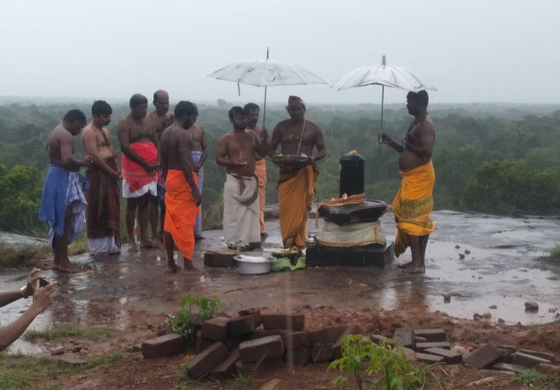
වව්නියාව දිස්ත්‍රික්කයේ නැදුන්කර්නි ප්‍රදේශයේ නයිනමඩු රක්ෂිත භූමිය තුළ පිහිටා ඇති වඩුන්නාගල බෞද්ධ පුරාවිද්‍යා භූමියේ පුරාවිද්‍යාත්මක සාක්ෂි විනාශකරමින් එම ස්ථානයේ හින්දු ශිවලිංගයක් තැන්පත් කිරීමේ ආන්දෝලනාත්මක සිදුවීම පිටුපස ඇති සත්‍ය කතාව සොයා පසුගිය දා ‘අනාගතය අපි‘ සංවිධානයේ ගවේෂණයක් සිදුවිය.

මෙම ගවේෂණයේදී අදාළ ස්ථානය පිළිබඳව ඉපැරණි බෞද්ධ පුරාවිද්‍යා සාධක රැසක් හමු වූ බවත්, වඩුන්නාගල පුරාවිද්‍යා භූමිය සතු ඓතිහාසික බෞද්ධ පදනම එම සාක්ෂි හරහා හෙළිවන බවත් එම සංවිධානයේ ඉසුරු ප්‍රසංග මහතා පවසයි.

මෙම ස්ථානයේ ඓතිහාසික පසුබිම ක්‍රි.පූ. 2 වැනි සියවස දක්වා දිවෙන බව H.C.P බෙල් මහතා හා සෙනරත් පරණවිතාන මහතා හෙළිකර ඇති බවද, පුරාවිද්‍යා චක්‍රවර්ති එල්ලාවල මේධානන්ද හිමියන්ද මෙහි බෞද්ධ උරුමය පැවසෙන සාක්ෂි බොහෝමයක් සොයාගෙන ඇති බවද, ඉසුරු ප්‍රසංග මහතා පෙන්වා දෙයි.

වර්තමානයේ උතුරු හා නැගෙනහිර පළාත්වල සිදුවෙමින් පවතින බෞද්ධ පුරාවිද්‍යාත්මක උරුමයන් සංහාරය කිරීම හුදු ආගමික ගැටුමක් නොවන බවත්, මෙය උතුරේ දෙමළ දේශපාලකයන්ගේ දේශපාලන වුවමනාවක් මත සිදුකරමින් පවතින ක්‍රියාවලියක් බවත් මෙම ගවේෂණයේ දී පැහැදිලි වූ බවත් ඒ මහතා පවසයි.

සවිස්තරාත්මක වීඩියෝව නරඹන්න…

https://www.facebook.com/watch/anagathaya.api.srilanka/

RW is President because of Aragalaya, Foreign Mission behind the protests – Namal

May 11th, 2023

Courtesy The Daily Mirror

MP Namal Rajapaksa today said that more details will surface shortly on who the Foreign Party was who backed the Aragalaya and presently Sri Lanka had a President and cabinet appointed by the Aragalaya. 

“Not just us, even the Janatha Vimukthi Peramuna who were party to the Aragalaya, are now stating that a foreign mission had a role to play in the Aragalaya,” Namal said.

https://youtu.be/NLbq9vmNxq0

“Even a fellow parliamentarian who was with us has written a book exposing the details,” he added.

He further said that the JVP was part of the Aragalaya so if they themselves are now divulging that some foreign missions were behind the Aragalaya, then more details will surface soon. 

“Right now we have a government which has been appointed by the Aragalaya. It is because of the Aragalaya that Ranil Wickremesinghe has become a President and this cabinet has also been appointed because of it,” Namal said. 

UNDP to develop project promoting e-mobility

May 11th, 2023

Courtesy Adaderana

UNDP to develop project promoting e-mobility

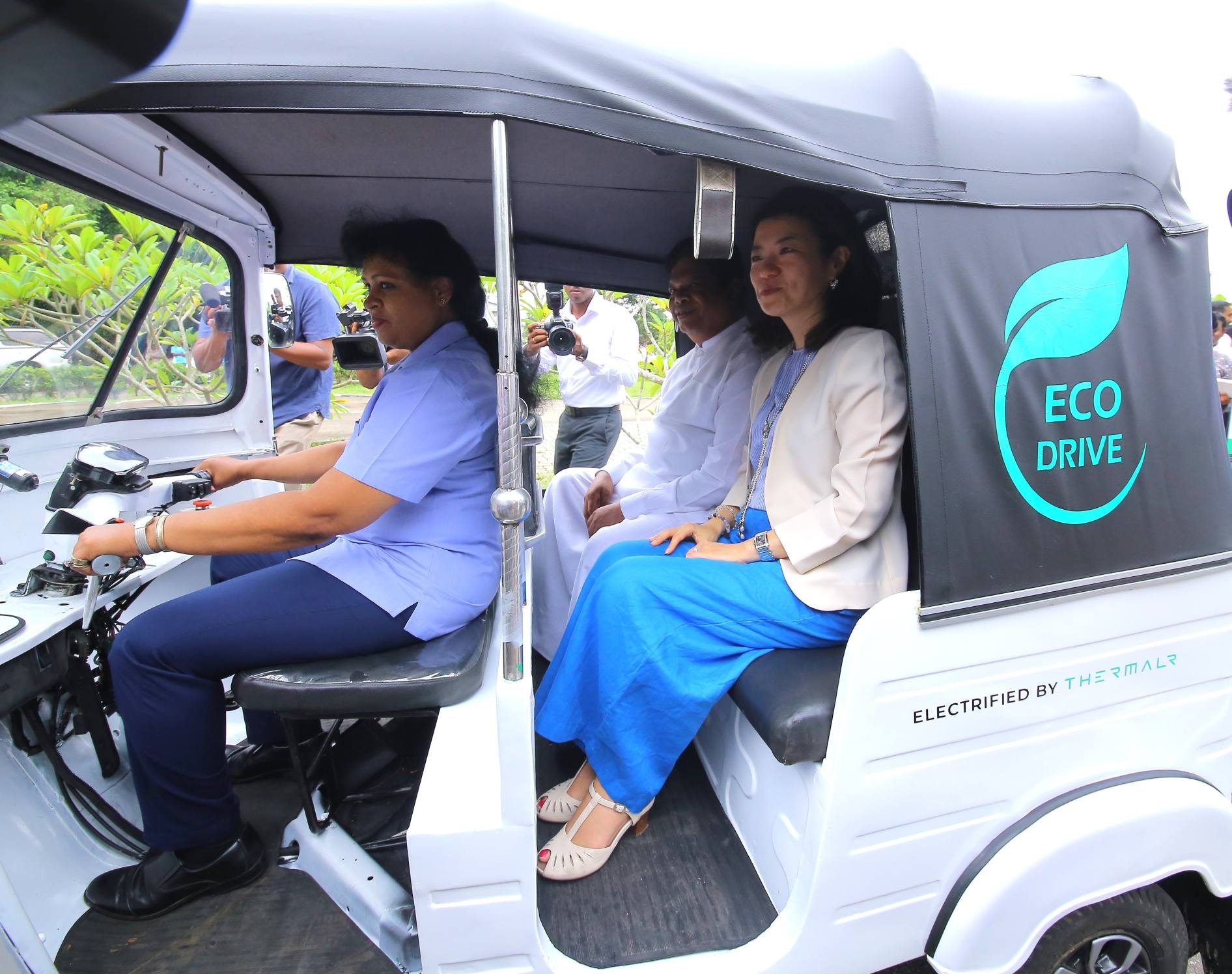
The United Nations Development Programme (UNDP) in Sri Lanka is working closely with several Ministries and relevant authorities to develop a project to mainstream e-mobility through the conversion of 500,000 Tuk-Tuks to electric vehicles (EVs) or e-Tuk- Tuks over a 5-year period.

In a statement issued in this regard, the UNDP stated that the project aims to support the conversion of petrol three-wheelers to electric three-wheelers as a means for enhancing mobility as a driver of low-carbon, inclusive, equitable development pathways within Sri Lanka. 

Sri Lanka, like many other global nations, is working towards adopting greener and cleaner approaches for a more sustainable and resilient future.  With the prevailing socio-economic crisis in the island, a shift towards adopting sustainable mobility approaches has been identified as a necessity for a green recovery process”, the statement read.

The proposed three-phased project consists of an incubation phase, a demonstration phase and an acceleration phase. 

The incubation phase will test the conversion process, the demonstration phase will support conversions and the acceleration phase will use market forces for conversion through concessional financing and infrastructure development.

Speaking at a project launch briefing held today (11 May), Minister of Transport and Highways Bandula Gunawardena stated, This pilot project will serve as a platform to launch electric three wheelers in the country. 

Electric three wheelers will not only benefit individual operators but also contribute to spring boarding the country’s economic recovery process.’’

Highlighting the UNDP’s role in the pilot project, Azusa Kubota, Resident Representative, UNDP in Sri Lanka stated, This pilot project is a part of UNDP’s Green Development Portfolio which is currently being developed.  This portfolio aims to build solutions and support Sri Lanka’s development in catalyzing low-carbon, green, and inclusive development within which sustainable transportation and e-mobility play a key role.  Through this pilot project UNDP will support the Government to establish a viable system which can be scaled up and will prioritize marginalised groups, including women and persons with disabilities while keeping equality and equity at the core of our work.”

The incubation phase will support the conversion of 200 petrol three-wheelers to electric three- wheelers. 

Accordingly, tuk-tuks not older than 10 years from the date of manufacture, and those with a petrol 4-stroke three-wheeler will be eligible, while parties from Makumbura and Pettah will also be eligible, priority will be given to applicants whose livelihood is dependent on a single three-wheeler, and preferential selections are given to women owners/ operators and persons with disabilities.

Nishantha Anurudda Weerasinghe, Commissioner General of Motor Traffic noted the importance of the project and the role of DMT in promoting e- Mobility in Sri Lanka, stating ‘‘DMT has established a system for the registration of electric three wheelers in Sri Lanka. We have also developed specifications for electric three wheelers with the support of UNDP. We believe that this intervention will encourage petrol three-wheel owners to come forward and convert their three wheelers to electric three wheelers’’

The strict selection criteria is expected to minimise the risk of failure due to technical issues, the risk of delay in conversions due to limited capacity and will test the performance of different technologies available in the market-opportunity for project stakeholders to test the market for energy efficiency (km/kWh), actual range per charge and functionality of safety features. The findings from the incubation phase will then be used in designing the demonstration phase.

Taking into consideration the above aspects, Pettah and Makumbura have been identified as viable locations for the initial conversion pilot in the Western Province. Thus, it has been decided that 100 petrol three-wheelers will be converted to electric three-wheelers from each location. 

During the pilot phase, UNDP will cover the full cost of conversion to electric three-wheeler and through this aims to support the revival of micro level/informal sector economic activities to inject much needed currency into the local economy. 

Sri Lanka Central Bank Governor Assures Safeguarding of Public Deposits and Banking System in Debt Reorganization

May 11th, 2023

Courtesy Hiru News

Central Bank Governor Nandalal Weerasinghe said Sri Lanka’s public bank deposits and stability of the banking system will be safeguarded in any reorganization of domestic debt.

Governor Weerasinghe told a public forum, There is speculation about the stability of public deposits and banking system stability.

A key objective of the central bank is maintaining financial sector stability.

Sri Lanka has to at least extend the maturity of some domestic debt to meet International Monetary Fund annual financing ceiling in 2027-2032, which have to be brought down to about 13 percent from gross domestic product from the current 30 percent.

Sri Lanka banks have said they have received assurances on the effect of any debt re-structuring.

IMF to Conduct Regular Consultations with Sri Lanka in Preparation for First Review Mission

May 11th, 2023

Courtesy Hiru News

An International Monetary Fund team will Sri Lanka from May 11 to 23, with its Asia Pacific Department Chief Krishna Srinivasan also joining from May 12 to 15.

The IMF said the visit will be part of regular consultations ahead of the first review mission later this year.

The IMF’s first review is due in September based on June 2023 data.

Economic Stability paving way for Presidential Polls

May 10th, 2023

Courtesy The Daily News

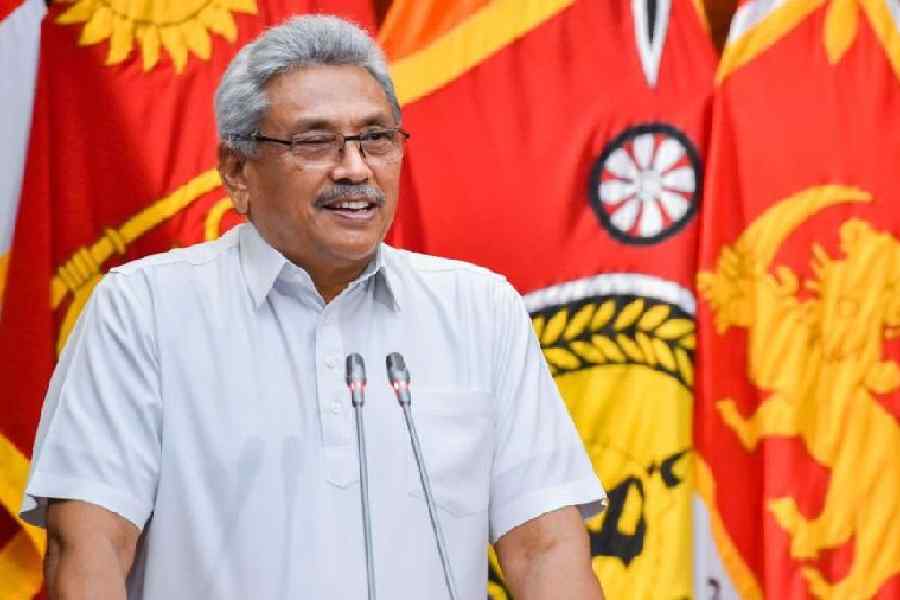
Sri Lanka’s political story has never been short of twists and turns, especially since last year when a leader elected with a resounding majority, Gotabaya Rajapaksa, resigned paving the way for a nominated Parliamentarian, Ranil Wickremesinghe, to replace him. That drama is now set to continue.

There was some quiet on the political front last week as the nation celebrated Vesak. These were the first fully fledged Vesak celebrations in five years. Celebrations in 2019 were dampened by the Easter attacks, in the next two years due to the pandemic and last year due to the economic crisis.

Another reason for the lull in political activity was the absence of President Ranil Wickremesinghe who was away in Britain, attending the coronation of King Charles the Third. Being of a similar age, both the President and the King had to wait for several decades before reaching the pinnacle of power.

Despite the slow pace of political activity last week, there has been renewed interest in the possibility of elections. The polls that are being considered are the Presidential Elections that have to be held by October 2024 which, as per current constitutional provisions, cannot be expedited to an earlier date.

Setting the date for Presidential Elections and General Elections are the prerogative of the Executive President, under the terms of the Constitution. That they would do so at a time that would be to their advantage is an accepted norm. This is what President Wickremesinghe is reportedly keen to pursue.

Two former Presidents have exercised this privilege. In 1999, then President Chandrika Kumaratunga called Presidential Elections a year early, contested and won. In 2010, then President Mahinda Rajapaksa did the same. Rajapaksa tried to repeat the feat in 2015 but lost to Maithripala Sirisena.

Call for early elections

Those Presidential Polls were called early Under Article 31 of the Constitution. This allows the President to call for an early election. That too is allowed only after a four-year period of the first term of office and only if the incumbent President is standing for re-election for a second term of office.

However, the Constitution also decrees that these provisions apply only to an elected President. This is through a caveat to Article 31 which states that a person elected as President by Parliament to serve the remainder of the term of another, is not entitled to exercise the right to an early election.

President Wickremesinghe belongs to this category and constitutionally, as of now, he would not be able to call an election earlier than October 2024, so a new President could be in office by November 2024, when the President’s current term of office ends. This has created a constitutional conundrum.

The matter has been raised and discussed at the highest levels of Government. There is a school of thought that President Wickremesinghe’s popularity is on the rise and that the prospects of being elected at a Presidential Poll are best if the election is held early rather than in October 2024.

This is due to several reasons. The first is the public perception of the President as the person who ensured a smooth transition of power following the tumultuous last days of Gotabaya Rajapaksa’s Presidency. He is credited with restoring the rule of law after a few days of near anarchy last July.

Then, the President is also perceived as bringing some balance to the economy. The last days of Rajapaksa’s rule were identified with queues for gas and fuel and power cuts. The economy has not made a complete recovery yet but such shortages are no longer seen and there is a sense of stability.

There is also an acknowledgement among the masses that President Wickremesinghe stepped into the breach with no conditions attached when Rajapaksa resigned. The astute politician in him may have seen an opportunity but nevertheless, it was a gamble that other politicians feared to take at that time.

Amidst all these reasons why an early Presidential Poll will be best for President Wickremesinghe, is arguably another compelling factor. That is the disarray the collective Opposition and even the President’s partner in Government, the Sri Lanka Podujana Peramuna (SLPP), finds itself in at present.

At the beginning of this year, there was some tangible momentum in favour of the Opposition, most notably the main Opposition party, the Samagi Jana Balawegaya (SJB) and the Janatha Vimukthi Peramuna (JVP), now in its latest incarnation as the more inclusive National Peoples’ Power (NPP).

As the date first announced for the Local Government elections, March 9, drew near, that momentum was seized mostly by the NPP. It conducted rallies criss-crossing the country and attracted large and enthusiastic crowds. Its leader Anura Kumara Dissanayake was spoken of as presidential material.

The elections never eventuated. The Government has cited a lack of finances to conduct the poll. Several attempts by Opposition parties to compel the Elections Commission to hold the election through court orders have ended in a stalemate. They have now been postponed indefinitely.

Opposition parties have been critical of this approach by the Government and the President who are accused of stifling democracy. What the Opposition has found to their consternation is that, with the indefinite postponement of the polls, the support they enjoyed has now dissipated and disappeared.

The other factor that is to President Wickremesinghe’s advantage is the absence of a leader of national stature who can mount a challenge to the President. Former President Mahinda Rajapaksa is not eligible to contest. Former President Maithripala Sirisena is under a cloud due to the Easter attacks.

That narrows down potential serious contenders to Leader of the Opposition Sajith Premadasa and NPP Leader Dissanayake. Premadasa’s leadership credentials are being seriously questioned after he refused Gotabaya Rajapaksa’s offer of the premiership and following internal divisions in the SJB.

Premadasa is reportedly facing the prospect of a revolt in his own party. There are reports that a faction would soon join the President by accepting Cabinet portfolios. Even if this group does not constitute a majority of the SJB, it would significantly dent Premadasa’s image as a strong leader.

There have even been suggestions that, if President Wickremesinghe succeeds in wooing a sizeable number of SJB MPs to join the Government, Premadasa would have no choice but to acquiesce to joining the Government as a party or risk being left with a handful of MPs who remain loyal to him.

The NPP has a different problem to contend with. It spent much time, resources and finances on the Local Government election campaign, hoping it can win and thereby generate the momentum that would carry it to victory at the next Presidential and General Elections. That has been all in vain now.

The NPP realises that it cannot indefinitely sustain a campaign for an election that will not be held in the near future. It is struggling to restore public confidence in the party as economic hardships recede. As a result, Anura Kumara Dissanayake is no longer the political hero he was a few months ago.
support for President

It is no secret that some Cabinet Ministers see their political futures being better under President Wickremesinghe rather than with a SLPP candidate because the party’s popularity is not at its peak. Among them, some have openly indicated their support for the President to be a ‘common’ candidate.

The SLPP leadership group- consisting of the Rajapaksa family- has been silent on the issue. Among potential nominees, Basil Rajapaksa would have to renounce his United States citizenship to contest. It is doubtful whether Namal Rajapaksa wants to stake a claim when his party is not so popular.

For all these inducements for President Wickremesinghe to call for an early Presidential Election, he still has to overcome the constitutional hurdle cited earlier. That can only be achieved by an amendment to the Constitution for which he would require a two-thirds majority in Parliament.

Chances are that the President will throw down the gauntlet at the Opposition which has been stridently complaining about the postponement of Local Elections. He could present a constitutional amendment and request that they support it because it would bring early Presidential Polls, no less.

This political drama will resume after the President returns to the country. A first step, reports suggest is the replacement of Governors in several provinces, where provincial councils are non-functional. Slowly but steadily, it appears that the stage is being set for 2023 to become an election year.

BOI Investment approvals within seven days

May 10th, 2023

Courtesy The Daily News

New investment laws to help FDI inflow

Special Overseeing Committee established on President’s advice

The Government has decided to put in place a mechanism of providing investment approvals to foreign investors as soon as they arrive in the country enabling them to fast track the implementation of the project.

Investment Promotion State Minister Dilum Amunugama said a mechanism will soon be introduced to complete the investment  approval process in seven days. The Minister said that this process currently takes days, weeks or sometimes months.

The State Minister made this disclosure while explaining the changes and future plans for investment promotion activities on the occasion of the 45th anniversary of the Board of Investment of Sri Lanka which falls on May 19.

Amunugama said that the Special Overseeing Committee, established on the advice of President Ranil Wickremesinghe to attract investment, has already taken steps to give investment approvals quickly. Accordingly, the work is being done through the committees made up of the executive level officials of the government institutions that need to get approvals to start any foreign investment project.

It has been successful so far, and it will be possible to give approvals in an even more efficient and friendly manner under the new investment law,” he said.

He added that the government is taking steps to prepare a new investment law that is compatible with Sri Lanka’s future needs and global investment laws under the World Bank assistance. A special committee has also been formed for that purpose. A 60% of the work of the special committee that was appointed to clarify how to make amendments to the existing rules and regulations to bring investments quickly has already been completed.

දන්සල් ඉන්ධන පෝලිම්

May 10th, 2023

කැලණිය විශ්වවිද්‍යාලයේ ආර්ථික විද්‍යා අධ්‍යයනාංශයේ හිටපු ජ්‍යෙෂ්ඨ මහාචාර්ය සුනන්ද මද්දුමබණ්ඩාර උපුටාගැණීම ලංකාදීප

වෙසක් දින මුහුණු පොතේ තැබූ සටහනක මෙසේ සඳහන් වී තිබුණි. ˝ ‘‘අද පාරවල් ඇහිරිල තිබුණෙ දන්සැල් නිසාමත් නෙවෙයි, ඒවට ආපු තඩි කාර්වලින්.’’˝ අල් ජසීරා හෝ බීබීසී මාධ්‍යවේදියකු  මෙම තත්ත්වය දුටුවේ නම් ඔවුන් තම නාලිකාවලට යවන වාර්තා මෙයට වඩා බොහෝ වෙනස් වනු ඇත.

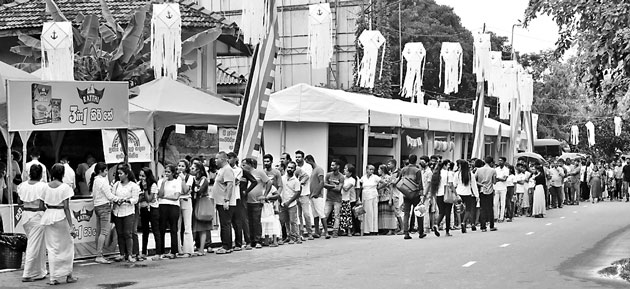
දන්සැල් අසල වටිනා වාහන නවතා පුද්ගලයන් පෝලිම් ගැසී සිටිනු දැක ශ්‍රී ලංකාවේ ඉහළ ධනපතීන් පවා ආහාර නැතිව පෝලිම්වල සිටින බව ප්‍රකාශ වන ආකාරයේ වාර්තා පළ කරන්නට ඉඩ තිබුණි. එසේ නැත්නම් මෙවර ශ්‍රී ලංකාවේ දන්සැල් අසල ඉතිහාසයේ කවරදාකවත් නොතිබූ ආකාරයේ දිගු පෝලිම් පවතින බව වාර්තා කරන්නට ද ඉඩ තිබුණි.

කෝවිඩ් කාලයේ දී සහ බංකොළොත්භාවය ප්‍රකාශයට පත් කිරීමෙන් පසු කාලයේ දී සමහර ජාත්‍යන්තර මාධ්‍ය ආයතන ශ්‍රී ලංකාව පිළිබඳව වාර්තා කළේ ඒ ආකාරයෙනි.  ඔවුන් ආසා කළේ ශ්‍රී ලංකාවේ ජනතාව පසුගිය වසර කිහිපය තුළ ආහාර, ඇඳුම් පැළඳුම්, විදුලිබල, ඉන්ධන සහ ගෑස් සම්බන්ධයෙන් මහා අර්බුදයකට මුහුණ දී තවමත් ඒවා විසඳාගත නොහැකිව පීඩාවට පත්ව සිටින බව ලොවට පෙන්වන්නටය. 

සමහර මාධ්‍යවේදීන් මෙන්ම දේශපාලනඥයෝ ද එකල ශ්‍රී ලංකාව මරණ බිය, රෝග බිය සහ ආහාර බිය යන තුන් බියකට මුහුණ දී සිටින බව ප්‍රකාශ කළහ. ශ්‍රී ලංකාවේ ඉන්ධන සහ ගෑස් පෝලිම් ද කුඩා දරුවන් වඩාගෙන එම පෝලිම්වල සිටින මවුවරුන් ද ඉන්ධන පෝලිම්වල මරණයට පත්වන පුද්ගලයන් ද පිළිබඳව තොරතුරුවලින් ලෝක ජනමාධ්‍ය පිරී තිබුණි. ගෝල්ෆේස් අරගල භූමියේ තම අසහනය ප්‍රකාශ කරන විවිධාකාරයේ විරෝධතා ඒවායින්  නිරන්තරයෙන් දැක ගැනීමට හැකි විය.

කෝවිඩ් සහ අරගල සමයේ විසාලා මහනුවර මෙන් පැවැති ශ්‍රී ලංකාව මෙවර වෙසක් දින වන විට තැන තැන දන්සැල් ද  තැන තැන තොරණ ද තැන තැන ඉදි කර ඇති වෙසක් කලාපවලින් ද පිරී ගොස් තිබුණි. වසර කිහිපයකට පසු ලක්ෂ සංඛ්‍යාත බැතිමතුන් පිරිසකගෙන් පිරී ගිය සිරිපා සමය වෙසක් දා අවසන් වූයේ අවසන් දිනට ද රැස් වූ ලක්ෂ සංඛ්‍යාත පිරිසක් මැද්දේය. දළඳා මැදුරට, අටමස්ථානයට පමණක් නොව අලු‍තින් ඉදිකළ කූරගලට ද ලක්ෂ සංඛ්‍යාත ජනතාවක් නිදහසේ ඇදී එන ආකාරය බොහෝ දෙනකුට දැක ගැනීමට හැකි වූයේ යැයි සිතමි.

අවුරුදු හතරකට පසු මහජනතාවට මෙවර සිංහල හින්දු අලු‍ත් අවුරුද්ද සැමරීමට ඉඩ ලැබුණි. ඒ ආකාරයටම සම්බුදු තෙමඟු‍ල සමරන ආකාරය ද දැක ගැනීමට හැකි විය. වෙසක් මස තරුණ ජෝඩු විශාල පිරිසක් ඔවුන්ගේ විවාහ උත්සව පවත්වා යුග දිවියට සැපත් වන ආකාරය දැක ගැනීමට ද ඉඩ ලැබුණේ යැයි සිතමි. වෙසක් මාසයේ මෙවැනි හෘදයාංගම සිදුවීම් රැසක්  පිළිබඳව අසන්නට ද කතා කරන්නටද  ඉඩ ලැබුණි. 

ශ්‍රී ලංකාව නැවත ඉපදුනු බවක් දැන් පෙන්නුම් කරන්නේ යැයි කීමට මම උත්සාහ නොකරමි. එසේ වුවද අරගලය අවසන් කර ජනපති රනිල් වික්‍රමසිංහයන් විසින් රට යථා තත්ත්වයට පත් නොකරන්නට අපට තුන් බියකට වඩා වැඩි බියකට වුවද මුහුණ දී කල් ගත කිරීමට සිදු වන වටාපිටාවක් තවමත් පවතින්නට ඉඩ තිබුණි. එදා තිබූ තත්ත්වය වෙනස් වී අලු‍ත් අවුරුද්ද සහ වෙසක් සැමරීමට හැකි වීම ආශ්චර්යයක් සේ සිතීමට හේතුවක් නැතැයි තවත් සමහරුන් ප්‍රකාශ කිරීමට ද ඉඩ තිබේ. 

වෙසක් දින නේක වර්ණ විසිතුරු දසුන් මවා පෑ නෙලු‍ම් කුලුනට ගොඩවූ පිරිස 12,204ක් විය. ඒ අතර විදේශිකයන් 76 දෙනෙක්ද වූහ. එය මහජන ප්‍රදර්ශනය සඳහා සැප්තැම්බර් මාසයේදී විවෘතව තැබීමෙන් පසු මේ දක්වා නරඹා ඇති සංචාරක පිරිස 8,15,982ක් වන අතර ඔවුන්ගෙන් 13,057ක් විදේශිකයෝ වෙති. මෙවර වෙසක් දින, එක් දිනකට පැමිණි ඉහළම සංචාරකයන්ගේ සංඛ්‍යාව වාර්තා කළේය.

˝වසර හතරක පමණ කාලයක් විවිධ සමාජීය හේතූ මත වෙසක් උත්සවය උත්කර්ෂවත් ලෙස පැවැත්වීමට නොහැකිවීම නිසා වෙසක් මහෝත්සවය පිළිබඳ මතකය බාල පරපුරෙන් ගිලිහී ගියා. මෙවර ජාතික වෙසක් මහෝත්සවය උත්කර්ෂවත් ලෙස පැවැත්වීමෙන් බාල පරම්පරාවේ විශාල මානසික පෙරළියක් ඇති කිරීමට හේතු වෙනවා”. ˝ ජාතික වෙසක් උත්සවය විවෘත කරමින් අග්‍රාමාත්‍ය දිනේෂ් ගුණවර්ධන මහතා කළ ප්‍රකාශය සිදුවන වෙනස්කම් අවබෝධ කර ගැනීම සඳහා ඉතා වැදගත් වනු ඇත.

රට වෙනස් වී නැත. තවමත් වෙසක් සැමරුම පිළිබඳ මතක වියැකී ගොස් නැත. බයිසිකල්වල කණ්ඩායම් සැදී වෙසක් බලන තරුණ පිරිස් ද විවෘත රථවල පවුල් පිටින් වෙසක් බලන්නට යන පිරිස් ද යතුරු පැදි කණ්ඩායම් ලෙස වෙසක් බලන පිරිස් ද නැවත කරළියට පැමිණ ඇත. 

හැමදාම දොස් නැගුවත් ඔලු‍බක්කා අතුරුදහන් වී නැත. දන්සැල් ඉදිරියේ කොඩි වනා ආරාධනා කරන්නන්ගෙන් මාර්ග හිස් වී නැත.  භක්ති ගී කණ්ඩායම් ද නැවත වීදි සැරිසරයි. වෙසක් කූඩු තරග, භක්ති ගීත, මහ තොරණ සියල්ල අතීතයේ පැවැති ලෙසම නැවත පැමිණ ඇත. මේ සියල්ල තුළ පැහැදිලි වන්නේ කෝවිඩ් ආර්ථික අර්බුදය සහ අරගලය හේතුවෙන් කලක් නිශ්චලව, නිහඬව සහ ආර්ථික වශයෙන් මරණාසන්නව පැවැති ශ්‍රී ලංකාව ක්‍රමයෙන් යථා තත්ත්වයට පත්වෙමින් ඇති බවය.

සිංහල හින්දු අවුරුද්දට වඩා හොඳින් වෙසක් පැවැත්වුණි. වෙසක්වලට වඩා හොඳින් පොසොන් පැවැත්වෙනු ඇත. අනෙකුත් ආගමික උත්සව ද ජාතික හා සංස්කෘතික උත්සව ද ඒ ආකාරයටම පැවැති තත්ත්වයට සමාන වන අයුරින් යළිත් පැවැත්වීමට හැකි වන යුගයක් උදාවනු ඇත. 

වෙසක් උත්සවය ජාත්‍යන්තර මට්ටමින් සමරනු ලබන, එක්සත් ජාතීන්ගේ සංවිධානය විසින් ජාත්‍යන්තර දිනයක් වශයෙන් ප්‍රකාශයට පත් කරනු ලැබ ඇති දිනයකි. එසේ වුවද පසුගිය වසර හතර තුළ ශ්‍රී ලංකාවට පමණක් නොව වෙසක් සමරන අනෙක් බොහෝ රටවලට ද ඒ සඳහා අවස්ථාවක් ලැබී නොතිබුණැයි සිතමි. පාස්කු ප්‍රහාරයේ සිට අරගලය යැයි හඳුන්වන ව්‍යාපාරය අවසන් වන තුරුම රට තුළ දක්නට ලැබුණේ අවිනිශ්චිත, අඳුරු සහ අර්බුදකාරී කාල පරිච්ඡේදයකි.

භෞතික වශයෙන් භුක්ති විඳින දේවල  හිඟය පමණක් නොව කෝවිඩ් වැනි වසංගත නිසා ඇති වූ කම්පනය ද මහජනතාවගේ සාමකාමී දිවි පෙවෙතට විශාල තර්ජනයක් එල්ල කළේය. එහෙත් අද තත්ත්වය සම්පූර්ණයෙන්ම  වෙනස් වී ඇති අතර ජීවිතය පිළිබඳ බලාපොරොත්තු තැබීමටත් තම දූ දරුවන්ගේ අනාගතය පිළිබඳ අපේක්ෂා රැඳවීමටත් මහජනතාවට හැකි වී තිබේ. වෙසඟේ අසිරිය ජනතාවගේ සිත් සතන්වලට දැනෙන ආකාරයෙන් සැමරීමට හැකි වී තිබෙන්නේ ඒ නිසාය. 

සංස්කෘතික සහ සමාජීය පැවැත්ම කොරෝනාවලින් පසු ප්‍රථම වතාවට යථා තත්ත්වයට පත් කර ගැනීමට දැන් අවස්ථාව සැලසී තිබේ.  උද්ධමන වේගය පහළ වැටීම, ඩොලරයේ අගය අඩු වීම, ප්‍රේෂණ වැඩි වීම, ජාත්‍යන්තර මූල්‍ය අරමුදල විසින් ශ්‍රී ලංකාවට ණය පහසුකම් ලබා දීම මේ ආකාරයේ පරිවර්තනයක් ඇති කිරීම සඳහා උපස්ථම්භක වී තිබේ. රජය සමඟ මන්ත්‍රීවරු සැලකිය යුතු පිරිසක් එකතු වනු ඇති බවට තොරතුරු ප්‍රචාරය වී තිබුණි. එසේම ජාතික ආණ්ඩුවක් ඇති කිරීම පිළිබඳව ද යම් යම් සංවාද ඇති වී තිබුණි.

ජාත්‍යන්තර මූල්‍ය අරමුදල පිළිබඳව පාර්ලිමේන්තුවේ පැවැති විවාදයෙන් පසු ගිවිසුමට විරුද්ධව ඡන්දය දීමෙන් වැළකීමට ප්‍රධාන විපක්ෂය තීරණය කර තිබුණි. ශ්‍රී ලාංකික සමාජය තුළ අද පවත්නා ගැටලු‍ විසඳා ගැනීම සඳහා සියලු‍ දෙනාම එකතු වී කටයුතු කිරීම ඉතා වැදගත් වනු ඇත.

ශ්‍රී ලංකාව සහ වෙනත් රටවල වෙසක් සමරද්දී ලොව බොහෝ දෙනකුගේ අවධානය යොමුව තිබුණේ බ්‍රිතාන්‍යයේ තුන්වන චාල්ස් රජුගේ අභිෂේක මංගල්‍යය දෙසය. චාල්ස් රජුගේ අභිෂේක මංගල්‍යයට සහභාගී වන අතර පොදු රාජ්‍ය මණ්ඩලයේ රාජ්‍ය නායක සමුළුවට ද සහභාගී වූ ජනාධිපති රනිල් වික්‍රමසිංහ මහතා  සමුළුව අමතමින් තරුණ සහභාගීත්වය දිරිමත් කරන අධ්‍යාපන ප්‍රතිසංස්කරණ සඳහා පොදුරාජ්‍ය මණ්ඩලය වඩා පුළුල් කාර්යභාරයක් ඉටු කළ  යුතු බව ප්‍රකාශ කළේය. එසේම ඩිජිටල්කරණය ඔස්සේ සබඳතා ශක්තිමත් කිරීමට කටයුතු කළ යුතුව ඇතැයි ද ප්‍රකාශ කළේය.

පොදු රාජ්‍ය මණ්ඩලීය නායක සමුළුවට සමගාමීව පැවැති Fireside Chat සමග එකතු වූ මහාචාර්ය මෛත්‍රී වික්‍රමසිංහ මහත්මිය ශ්‍රී ලංකාවට සහ ජාත්‍යන්තරයට අදාළව කරුණු කිහිපයක් පිළිබඳවම අදහස් ඉදිරිපත් කර සාකච්ඡාවල නිරත වූ බව මාධ්‍ය විසින් වාර්තා කර තිබුණි. 

රට පුරා සම්බුදු තෙමඟු‍ල අතිඋත්කර්ෂවත් අන්දමින් සැමරෙද්දී ඒ සඳහා මග පෑදූ ජනාධිපතිවරයා තුන්වැනි චාල්ස් රජුගේ මෞලි මංගල්‍යයට සහභාගී වූ අතරම පොදු රාජ්‍ය මණ්ඩල කටයුතුවලට අදාළව සාකච්ඡාවලට සහභාගීවීමට ද ශ්‍රී ලංකාවට අදාළ බොහෝ කරුණු සම්බන්ධව තවත් රටවල රාජ්‍ය නායකයන් සමඟ ද්වීපාර්ශ්වීය සාකච්ඡා පැවැත්වීමට ද හැකි විය. රට අභ්‍යන්තරයේ ඇතිව තිබූ වෙනස තුළින් ගොඩනැගුණු සාමකාමී තත්ත්වය නිසා එවැනි ස්ථාවරත්වයක් ඇති වී තිබේ.

ඒ නිසාම එදා ඉන්ධන පෝලිම්වල දකින්නට ලැබුණු තඩි සහ පොඩි වාහන අද වෙසක් දන්සැල් අසල තිබෙනු දකින්නට ලංකාවාසී ජනතාවට හැකි වී ඇතැයි සිතමි. මගේ මුහුණු පොතේ මිතුරු ලයිස්තුවේ සිටින කෙනකු අර්බුද අවස්ථාවේදී තැබූ සටහනක් මගේ මතකයට නැගේ. ඉන් එකක මෙසේ සඳහන්ව තිබුණි. ˝ මේ තෙල් පෝලිම්වල පිච්චෙන්නෙ අපේ ජීවිත කා‍ලයෙන් කොටසක්. මේව අපට කවදාවත් ආපහු ගන්න බැහැ.  මම ඊයේ ඉඳන් තෙල් පෝලිමේ.

මට ඉස්සරහ වාහන හාරසීයක් විතර තියෙනව. මේ මම ඉන්ධන පෝලිමකට ආ පළමු වතාව. රෑ තිස්සේ මදුරු ප්‍රහාර. දැන් වෙලාව 4.30යි” එදා මහජනතාවට දැනුණු පීඩනය සහ කම්පනය මේ වෙසඟ දිනය වන විට වෙනස් වී ඇති බව දන්සල් ගැන සටහන් තබන අයට මෙන් තෙල් පෝලිම්වල මෙන්ම අනෙක් පෝලිම්වල රැඳී සිටි සහ පීඩාවට පත්වූ සුවහසක් මහජනතාවට ද වැටහෙනු ඇතැයි සිතමි.

කැලණිය විශ්වවිද්‍යාලයේ ආර්ථික විද්‍යා අධ්‍යයනාංශයේ හිටපු ජ්‍යෙෂ්ඨ මහාචාර්ය සුනන්ද මද්දුමබණ්ඩාර

EPOCH OF POLONNARUWA

May 10th, 2023

By Dr Tilak S. Fernando

During this period of Kingdom, Ceylon was divided into three regions: Rohana (Matara), Southern and Raja Rata (Up county). In the early part of this kingdom, disputes, conspiracies or threats of fear of war existed. Therefore, it caused many problems towards the progress of the country. At times all three regions’ economy was spent on war compulsions.

When considering how those Kings of the Polonnaruwa era took care of Ceylon’s interest by making a liberal nation towards the early part of the kingdom, especially King Parakramabahu did not allow any foreign invasion to occur. He built several fortresses at strategic locations in his kingdom.

King Parakramabahu was keen on increasing agricultural production by growing much land for paddy cultivation and promoting several irrigation channels. It revealed the King’s ambition and popular saying: Do not allow a single drop of water go to the ocean.’ Thereby, his kingdom became the most powerful kingdom out of all the other domains in Ceylon.

When he was just Prince, he had four ambitions or dreams in his mind, and once he became the King of Ceylon, he fulfilled his dreams in no time. This was mentioned in Pali Language in chronicles or (wansa kataha), as follows:

  1. To make his subjects completely contented.
  2. To make Buddhism a stable position.
  3. To protect Chronicles.
  4. To feed beggars.

It is also mentioned that those who gained state patronage were rewarded according to their suitability and talent. King Parakramabahu had given huge almsgiving and offered his subjects and various favours to his people, in line with ancient customs and traditions involved in Buddhistic affairs. It was tattooed in a Polonnaruwa Gal Vihara in anancient manuscript. Apart from those, it was mentioned that the King performed ‘dansalas’(free food and drink to passers-by) in every corner of his reign, including the Buddhist clergy, Brahmins and the poor or beggars.

As the chronicles mention, King Parakramabahu erected a massive hall and employed doctors and nurses. The King visited the Buddhist viharas without fail in every Poya. There are 4 Poya” in a month (known as Pura AtawakePasalowawaka, Atawake and Amawake).

Similarly, it is possible to think that the King’s sole income came from taxes. The King gave orders to tax collectors in every district not to abuse or threaten his subjects but at the same time not to take any short money from taxes. It was mentioned in the Theravada chronicles (Nikaya Sangrahaya). Parakramabahu 1 divided his reign into 15 ‘Padavies (areas) and deforestation of Land in the Anuradhapura District of the North Central Province of Ceylon. To fit into such orders, the King formed the following departments.

  1. Preparation of Records- Eight Departments (Viyapahh Path 8).
  2. Treasury – 4 departments (Sathara Mudala).
  3. Department of Transport (Ata Wadige).
  4. Divided Elephant Welfare Department into eight.          
  5.  A decentralisation was done with inland boards and eighty-four counties

It was also mentioned that during the Parakramabahu 1, what the villagers paid as the tax was utilised to pay day-to-day expenses of the Palace, all royal expenses, but did not include the king’s personal expenses. King Nissankamalla, out of such taxes, managed to reduce taxes to civil servants.

An overhaul of the administration strategies was done. It was stated in the chronicles that there were two officials in charge of the Royal Administration. between these two officials, one officer was apparently responsible for war affairs, and the other was not in an official position. He had several accountants (Ganakamaluwa)under him. Two accountants were in charge of the royal money and shared the responsibility. They were dealing with expensive commodities such as precious stones, alloy stuff, oils and valuable land, collecting taxes and were responsible to the treasury officials.

After Parakramabahu 1,followed other Royals’. Their opinion was that the taxation by the previous kings was unfair to the people. As a result, the king gave a tax moratorium for five years to bring relief to their subjects. It was reordered in the ancient inscriptions that they were just kings and had advised treasury officials not to involve in bribery and corruption but to make the country prosperous.

People, their vocation and society.However

During this epoch, the southern province was adopted in the 12th century, It was mentioned that the country was divided into twelve regions” and was split into eighty-four segments (countries” or counties). Therefore, each local region would have seven areas. Each part (mandala) was in charge of one person known as Rattia.

King Parakramabahu was the Southern province’s king before becoming the King of Polonnaruwa. Once he became the King, many administrative changes took place. The public life of people’s life concentrated on lakes, Buddhist temples, Dageba (stupa) and paddy cultivation. During the Pollanaru era, there were no drastic changes because of the king’s choice of ruling in the ‘middle path,’ People did not interfere but were loyal to the royalty.

It is the duty of the King to rule to safeguard every citizen’s right, and people accept it. When the cultivated land is increased, the amount of tax too proportionately increases. How King Parakramabahu devoted his efforts to agriculture shows that he collected more tax from the paddy fields in the Sothern Province. As a result, he managed to show elude any fears of starvation, and the country became self-sufficient. During the Polonnaruwa era, people could buy extra land as they were self-sufficient.

During this epoch, there is no record of the Kings owning every land that freely existed. On historical records, every land consisted of valuable precious stones and the Kings appointed a special administrative officer to collect such tax.

During the Polonnaruwa era, an intelligent and optimistic king (Parakramabahu) looked after the welfare of the socially rich people, and the social standards were the most. Systematic agriculture made the country self-sufficient. Agriculture and other social areas such as health, education, housing and royal patronage existed to bring about the common man’s problems. Once King Parakramabahu became king, he offered alms to the clergy, Bamunas, beggars and pedestrians. The King built massive sick bays are recorded in the chronicles.

During the Parakramabahu era, the King reconstructed what was ruined by Solei’s invasion of Anuradhapura’s reign through a Minister. During this period, many industries existed, and as a result, people lived happily.

In this era, professions such as medicine, spirituality, and magic prominently existed—similarly precious stone industry, pillows, mats and mattresses were prominent. One of Parakramabahu’s enemies, King Gajabu’s soldiers (Kalawapiye), to favour Prince Parakramabahu, offered expensive presents such as various precious stones and a massive elephant to Kalwapiye’s assistants.

The first Indian emperor’s time, Ceylon was considered part of Solei’s reign, and during Solei’s invasion, there was much damage to Ceylon. Is it possible to take Ceylonese’s expensive items to their Solei reign? Considering this fact, it is possible to wonder whether the entire country fell into Solie’s.  King Parakramabahu, together with Lankapura soldiers, formed a battalion. He beheaded one Kulsekera and made the king of Pandu sit on his throne, and returned to Ceylon was mentioned in old Ceylon history. Subsequently, this soldier formed a fortress in Thundukala in India and brought a substantial number of Indians as prisoners and made use of them to construct the big stupa in Anuradhapura.

tilakfernando@gmail.com

Courtesy: The writer translated into English from Sinhala from the Book by the late Prasad Milinda on Financial Analysis between BC 543 – 1832 (only sections of the book is concentrated to fit into publication).

Era Polonnaruwa. Part II

May 10th, 2023

By Dr Tilak S. Fernando

When ancient Ceylonese trade, industries and technology were discussed, the irrigation network was the first thing that came to mind—the old technology and self-determination. During the Polonnaruwa era, irrigation networks were prominent and considered a meritorious deed according to the Sinhala culture and tradition. When a massive lake was to be constructed, Sri Lankans always sought foreigners’ assistance (in the present circumstances), including modern equipment and their knowledge. But our forefathers constructed huge lakes with slopes up to one inch to a mile gradient with their expertise and technology in society. It meant that local industries should have existed. It is also recorded that technology to build bridges existed in the Polonnaruwa era. Our forefathers’ ability and determination make us really proud.

Old Ceylonese considered the Lake building and construction of stupas (Dagabas) as a meritorious right according to the ancient customs that existed in society. Finding a royal who did not construct a stupa was impossible. According to ancient inscriptions, the lake was the responsibility of a particular village headman and the accurate water distribution of water to the paddy fields. All repairs were to be done by villagers by Royal command.

Industries

Several talented people knew to improve industries such as the ‘gold’, precious stones, health, hide, and iron industries during the Polonnaruwa era. During the Parakramabahu era, it was recorded that even apparel was exported, and the King himself did wear locally made clothes. It was a good illustration that the apparel industry had advanced technology. It is also mentioned in the chronicles that King Parakramabahu donated cushions, pillows, mats and carpets that were the products of national handloom manufactured locally. Also, the King distributed yellow money (notes -Adikina) with his name tattooed everywhere and circulated in the country. Therefore, it shows that local industries should have existed. It is also recorded that technology to build bridges existed in the Polonnaruwa era. When King Parakramabahu, during the war with Gagaba, had to send soldiers to Anuradhapura Gariba District. He had to build a bridge across Kala Oya. and send all military ware across the newly built bridge.

History will reveal that the building construction industry became prominent during the Polonnaruwa era. Ancient ruins that exist today confirm that theseWatadageya’ (circular Monument), statue room, ‘Hetadageya,’ Siva Kovil, Kings Palace, and Nissanka Latha a hall took a prominent place. According to Mahavamsa, King Parakramabahu’s Palace was huge, with seven floors and ten stores. To reach one of the stores, there were escalators. At the base, there were Sandakapahanas, and on top, decorated with two lions made of stone. To see King’s subjects, there existed a hall named Waishaya Buranga. It consisted of three circular buildings. Around the staircase was a series of pictures of elephants and photographs of officers made of stone. At the centre was a stage decorated with traditional two-lion pictures.

Many industries were constructed in the Polonnaruwa era according to various seasons of the year. The following is a list of ponds: Deepa, Visraka, Tilaka Nandana, Manohara, Poorna Wardena, Pali Potha, Uthuru Thuru, Keelakarrana, Mahamevna, Raja Nara, Vanarakarana, Nirmithapura, Sansara Pala, Soma Nara, Vaarukarata, Panda Wavana, Chitra Latha Wana, Nayanussarana, Pandasaha Bara, Paaru Yana, Yann Kodi Kana, Pala Vaiwaree and Rameshwara Uyana.

Some of the small-scale canals (Weva) King Parakramabahu constructed as follows:

Magala, Situ, Yakun Thaku, Panda, Amba, Vasa, Giriba, Patala, Chandikkulama, Monara, Sadiya Gam, Thilagul, Malaval, Kulu, Ginigariri Gal, Kurugamu, Kavutharu, Jalli Ba, Uthurala, Siyambala Gam, Dawlagiriy Gam, Kira, Kalantharu, Karatta Vilan, Dibal Gam, Munararuth, Kasal, Kalala Hal, Mul Charika, Giriya Gamu and Visirathala Weva. Furthermore, King Parakramabahu repaired 460 waterways’

The total number of lakes the King had constructed was 395 King Parakramabahu had created the following industries as hideouts.

570 statues.

Visitor pavilions sixty.

Other Buildings

Theatres five.

Three-story buildings.

Thirty Dharma halls for Buddhist priests to discourse for discourses.

One hundred residencies.

One hundred and twenty libraries

Ruwanwelia Seya, Abayagiriya, Jethawramaya, Mirisavatiya and repaired Lowamahapaya, which Solis ruined one thousand five hundred bricks.  

  Trade & International connections.

  During the Polonnaruwa era, some kings showed keen interest in trade. It was mentioned that the king had to be informed of any trade transactions. It was recorded that during this era, direct transactions were done with foreign nations, although under the Wijayabahu kingdom, increases in exports were recorded. King Parakramabahu made the country self-sufficient in agriculture. He dealt with tweed cloth, multi-coloured precious stones, different kinds of Prisms, diamonds and various perfumes mentioned in the old history books

 Traders

  During this period, traders who arrived in Ceylon to trade established their centres and built-up diplomatic relations with other countries. The trade was so much flourishing, and given an example of the ‘Cockbird who gets into the roof in Anuradhapura usually gets down in Polonnaruwa’ states an old saying. This was to illustrate the vast amount of trade halls in the country, it was mentioned in the ancient history books that out of the traders, there were few Ceylonese who owned ships too. It was mentioned during the Polonnaruwa period, harbours near Jaffna Dambakola Patuna, Mannar, Mahathota, North Western Province beach Mawatu Patuna, near Trincomalee Gonagama Patuna, Near Negombo Thammal Moya and down South Beach Weligama.

  During the Gajaga Kingdom, the ban on Ceylonese was on those who were ready to work at Kaveri Patuna. The paddy was sold like hotcakes at Kaveri. Therefore, there was a likelihood of losing experienced farmers by going abroad as a result of which affected national agriculture was a just presumption. However, Internal exchanges took place, the king did place money transactions.

Once the Polonnaruwa era ended, politics changed towards the South. At the end of the Kalinga epoch affected change, the majesty of the first Wijayabahu, Parakramabahu, and Nissankamalla’s glory vanished. Internal conflicts and foreign threats on the island’s external political set-up as much as the nation’s economy became weaker. The glory of the Polonnaruwa era ended in 1186 and 1235.

King Wijayabahu nurtured the culture and tradition where Parakramabahu developed the country, and Nissankamalla temporarily uplifted a certain level. Still, after the invention of foreign invaders, the country’s economy was depleted, especially after the Marg, which deteriorated at the end of the Polonnaruwa era.

tilakfernando@gmail.com

Courtesy: The writer translated into English from Sinhala from the Book by the late Prasad Milinda Siriwardena on Financial Analysis between BC 543 – 1832 (only sections of the book is concentrated to fit into publication).

Crisis in Sri Lanka and the World

May 10th, 2023

Asoka Bandarage

Colonial and Neoliberal Origins: Ecological and Collective Alternatives

Volume 30 in the series De Gruyter Contemporary Social Sciences

https://doi.org/10.1515/9783111203454

About this book

This book provides a broad picture of Sri Lanka’s on-going political and economic crisis as the culmination of several centuries of colonial and neo-colonial developments. The book presents the Sri Lankan crisis as an exemplification of a broader global existential crisis facing more and more debt trapped countries, especially in the post-colonial Global South. The book’s in-depth case study raises important questions pertaining to sovereignty and political and economic democracy in Sri Lanka and the world at large.

The book also explores the emergence of the crisis in the context of the accelerating geopolitical conflict between China and the USA in the Indian Ocean. It ponders if the debt crisis, economic collapse and political destabilization in Sri Lanka were intentionally precipitated to the advantage of the Quadrilateral Alliance (USA, India, Australia and Japan).

Moving beyond geopolitical rivalry, the book juxtaposes Sri Lanka’s political-economic crisis with the broader ecological crisis of climate change and sea-level rise.

The book concludes with a consideration of the ethical dilemmas behind the debt and survival crisis in Sri Lanka and across the world. It points out a range of social movements and initiatives in Sri Lanka and the Global South which subscribe to collective and ecological alternatives and a Middle Path of sustainability and social justice.

  • Timely and well-researched
  • A global perspective on the Sri Lankan crisis
  • Offers ecological and collective alternatives as crisis resolution

Author information

Asoka Bandarage, California Institute for Integral Studies, San Francisco, CA, USA.

Reviews

“In this well-written, well-researched scholarly text, Asoka Bandarage brilliantly combines a detailed historical analysis of the political and economic crisis in Sri Lanka and a global ethical perspective pertaining to similar crises elsewhere in the world.”
T. Lalithasiri Gunaruwan, Professor, Department of Economics, University of Colombo, Sri Lanka

“A very useful analysis providing depth and background to understanding the current Sri Lankan economic crisis. Bandarage goes well beyond the standard tropes of ‘policy errors’ or culture/identity-based explanations, to locate the Sri Lankan experience in the wider context of profit-, technology- and finance-driven globalization.”
Jayati Ghosh, Professor of Economics, University of Massachusetts Amherst, USA

“Crisis in Sri Lanka and the World is a most timely book – and urgently needed for the world that is at a critical crossroads of extreme and accelerating possibilities. For alternatives that are just and sustainable, the crisis needs to be understood both historically as well as in the contemporary context. I cannot think of very many who can do that – both with scholarship and passion – with a fusion of global as well as local and holistic perspectives as Asoka Bandarage has been able to do here.”
Sajed Kamal has taught at Boston University, Northeastern University, Antioch New England Graduate School, and Brandeis University

King Charles III – Coronation

May 10th, 2023

By Dr Tilak S. Fernando

At Westminster Abbey, Charles III was crowned as the modern King. The occasion was highlighted with pomp and glory, returning to the 13th Century. Westminster Abbey holds every Royal occasion and retains the tombs of previous kings and queens since 1066. Westminster Abbey had performed sixteen weddings, including the wedding of Prince Charles and Diana Spencer, and Queens and seventeen monarchs. Westminster Abbey commenced functioning as an Anglican Church by Henry III in 1245.

King Charles III’s procession began at Buckingham Palace. The Royals (King Charles III and the Queen) travelled in the Diamond Jubilee State coach drawn by six Windsor grey horses”. Inside Westminster Abbey were two thousand two hundred invitees, including politicians and celebrities worldwide. The King’s son, William, became the Prince of Wales when his father, who was marking time for 70 years to the position of King after the demise of Queen Elizabeth II, followed by his wife and children. His brother Harry attended the ceremony on his own.

King Charles III became the fortieth monarch of the United Kingdom. The coronation of the British monarchs remained unchanged for nearly one thousand years. Britton’s last coronation was in 1953, when the late Queen Elizabeth was crowned at age 27.

The Archbishop of Canterbury performed the service at Westminster. Rituals such as recognition, coronation oath, anointing, investiture and enthronement were done in line with customs and spectacle.”

King Charles III vowed to defend the Anglican church at the coronation service. After the anointing of the King’s ceremonial robe was removed. The Archbishop of Canterbury anointed King Charles III with holy oil, deliberating God’s grace upon the monarch and placed St. Edward’s crown on the King’s head, followed by everyone in Westminster Abbey cheering God save the King”. Simultaneously, the British anthem was played during the sacred parts of the ceremony. At the same time, military across the UK fired gun salutes to mark the historic occasion.

Westminster Abbey has many architectural masterpieces from the 13th to 16th Centuries. Westminster Abbey preserves the shrine of St Edward, the Confessor, tombs of previous kings and queens and many of the famous and the great.

tilakfernando@gmail.com

පහළ මල්වතු ඔය ව්‍යාපෘතිය කඩිනමින් යළි ආරම්භ කරන ලෙස අග්‍රාමාත්‍යවරයාගෙන් උපදෙස්.

May 10th, 2023

 අග්‍රාමාත්‍ය මාධ්‍ය අංශය

අරමුදල් සපයාගැනීමේ අපහසුතාව හේතුවෙන් අතරමඟ නවතා දමා ඇති පහළ මල්වතුඔය ව්‍යාපෘතිය කඩිනමින් යළි ආරම්භ කිරීම පිළිබඳ සොයා බලන ලෙස 2023.05.09 දින අග්‍රාමාත්‍ය දිනේෂ් ගුණවර්ධන මහතා ජ්‍යෙෂ්ඨ නිලධාරීන්ට උපදෙස් ලබා දුන්නේය.

යාන්ඔය වේල්ල ඉදිකර ඇති Sinomach China CAMC ඉංජිනේරු සංස්ථාව විසින් ඉදිරිපත් කර ඇති ව්‍යාපෘති යෝජනාවක් පරීක්ෂා කිරීමෙන් අනතුරුව අග්‍රාමාත්‍යවරයා මෙලෙස උපදෙස් දෙනු ලැබීය.

  පහළ මල්වතු ඔය ව්‍යාපෘති ගිවිසුම සහ යාන් ඔය ව්‍යාපෘති ගිවිසුම සමඟ සම්බන්ධ කිරීමේ හැකියාව පරීක්ෂා කරන ලෙස  අග්‍රාමාත්‍යවරයා  නිලධාරීන්ගෙන් ඉල්ලා සිටි අතර ජලයේ පාවෙන සූර්ය පැනල යාන් ඔය මත සවිකිරීමෙන් මහා පරිමාණයෙන් සූර්ය බලශක්තිය උත්පාදනය කිරීමේ හැකියාව පවතින බව පෙන්වා දුන්නේය. එවැනි ව්‍යාපෘතියක් මගින් ජාතික විදුලිබල පද්ධතියට විදුලිය උත්පාදනය කළ හැකි අතර පහළ මල්වතු ඔය ව්‍යාපෘතිය නිම කිරීමට අවශ්‍ය ප්‍රතිපාදන ද ඉන් උපයා ගත හැකිය.

Sinomach හි ප්‍රධාන නියෝජිත ඇලෙක්ස් ගුඕ පැවසුවේ ඇමරිකානු ඩොලර් මිලියන 160 ක් වැයවන ව්‍යාපෘතිය සඳහා චීන බැංකුවලින් අරමුදල් රැස් කිරගැනීමේ කටයුත්ත China CAMC සමාගමට භාර ගත හැකි බවයි. පළමු අදියරේදී යාන්ඔය ජලාශය මත පාවෙන සූර්ය පැනල තැබීමෙන් ජනනය කළ හැකි විදුලිය ජාතික විදුලිබල පද්ධතියට අලෙවි කළ හැකි වේ. 

පහළ මල්වතු ඔය ව්‍යාපෘතියට අවශ්‍ය ණය මුදලින් සැලකිය යුතු කොටසක් යාන් ඔය මත ඉදිකිරීම  යෝජිත සූර්ය බලාගාරයෙන් ලැබෙන ආදායමෙන් සපුරා ගත හැකි බව ඇලෙක්ස් ගුඕ මහතා පැවසීය.

පහළ මල්වතු ඔය ව්‍යාපෘතියේ පළමු සමීක්ෂණය සහ ශක්‍යතා අධ්‍යයනය සිදු කළේ මීට දශකයකට පමණ පෙර තමා වාරිමාර්ග නියෝජ්‍ය අමාත්‍යවරයාව සිටියදී බව මෙම අවස්ථාවට සහභාගී වූ  හිටපු අමාත්‍ය එස්. එම්. චන්ද්‍රසේන මහතා පැවසීය. මේ වනතෙක් එහි කිසිදු ප්‍රගතියක් දක්නට නොමැති බවට ඔහු සිය කණගාටුව පළ කළේය.

මෙම ව්‍යාපෘතිය මගින් හෙක්ටයාර් 38,000 කට වැඩි භූමි ප්‍රමාණයකට ජලය සැපයිය හැකි බවත්, ආහාර සුරක්ෂිතතාව සඳහා වූ වැඩපිළිවෙළ නංවාලීමට හැකි බවත් ඔහු පෙන්වා දුන්නේය.

පහළ මල්වතු ඔය ව්‍යාපෘතිය මගින් 209 MCM ධාරිතාවයකින් යුත් ජලාශයක්, මීටර් 3,590ක් දිග පස් වේල්ලක්, රේඩියල් ගේටඩ් වාන් මාර්ගය, වම් ඉවුර, දකුණු ඉවුර සහ ගංගා සොරොව්වක්, නව ජනාවාස, ප්‍රදේශයට ඇල මාර්ග පද්ධතියක් සහ බලාගාරයක් ඉදිකිරීමට අපේක්ෂා කෙරෙයි. මල්වතු ඔයේ ඉහළ ජල පෝෂකයෙන් 70% ක් පමණ අනුරාධපුර දිස්ත්‍රික්කයේ පිහිටා ඇති අතර පහළ ජල පෝෂකය වව්නියාව සහ මන්නාරම දිස්ත්‍රික්කවල පිහිටා ඇත.

චීනයට අපනයනය කිරීම සඳහා හෙක්ටයාර 50ක භූමි ප්‍රමාණයක පලතුරු සහ එළවළු නිෂ්පාදනය සඳහා ආයෝජනය කිරීමේ හැකියාව සොයා බලන ලෙසද අග්‍රාමාත්‍යවරයා Sinomach මෙරට නියෝජිතයාගෙන් ඉල්ලා සිටියේය.

පාර්ලිමේන්තු මන්ත්‍රීවරුන් වන එස්. එම්. චන්ද්‍රසේන, යදාමිණි ගුණවර්ධන, අග්‍රාමාත්‍ය අතිරේක ලේකම් මහින්ද ගුණරත්න යන මහත්වරුන් ඇතුළු ජ්‍යෙෂ්ඨ නිලධාරීන් සහ ව්‍යාපෘති ඇගයුම්කරුවන් මෙම සාකච්ඡාවට එක්ව සිටියහ.

 අග්‍රාමාත්‍ය මාධ්‍ය අංශය

කම්කරු නීති සංශෝධනයට ශ්‍රී ලංකා නීතීඥ සංගමයේ පූර්ණ සහාය

May 10th, 2023

Manusha Media

රටේ අනාගතය වෙනුවෙන්, සරල, ශක්තිමත්, යාවත්කාලීන වූ කම්කරු නීති පද්ධතියක් ගෙන ඒම සඳහා පූර්ණ සහාය ලබා දීමට ශ්‍රී ලංකා නීතීඥ සංගමය එකගතාවය පලකර සිටී.

ඒකාබද්ධ කම්කරු නීති පද්ධතියක් සකස්කිරීම සඳහා අවශ්‍ය පූර්ණ නීතිමය සහාය ලබාදීමට ශ්‍රී ලංකා නීතීඥ සංගමය කටයුතු කරන බව, කම්කරු නීති වෙනස් කිරීම සම්බන්ධයෙන් කම්කරු අමාත්‍යංශය විසින් ආරම්භ කර ඇති මහජන අදහස් ලබාගැනීමේ සැසිවාරයකට එක්වෙමින් , නීතීඥ සංගමයයේ කම්කරු නීති සම්බන්ධ උපදේශක නීතීඥ කනිශ්ක වීරසිංහ මහතා(10) පැවසුවේ ය.

කම්කරු නීතිය කඩිනමින් වෙනස් විය යුතු බවත්,එය රටේ සංවර්ධනයට හා ආර්ථිකයට ඍජුව බලපාන බවත් ඔහු පෙන්වා දුන්නේ ය. යාවත්කාලීන වූ කම්කරු නීති පද්ධතියක් මගින් තිරසර ව්‍යවසායකත්වයන්ට සහාය ලබාදෙන පරිසරයක් නිර්මාණය කිරීමට හැකියාව ලැබෙන බවත්, කම්කරුවන්ගේ සුබසාධනය සහ වඩා හොද ජීවන තත්වයක් නිර්මාණය කිරීමට අවස්ථාව ලැබෙන බවත් ඔහු සදහන් කළේය.

කාන්තා ශ්‍රම සහභාගීත්වය,තරුණ ව්‍යවසායකත්වය වැනි ක්ෂේත්‍රයන් පිළිබඳව විශේෂ අවදාණයක් යොමුකර නව කම්කරු නීතිය වෙනස්විය යුතු බව ඔහු පැවසුවේ ය. සේවය අවසන් කිරීමේ පනත වැනි යල් පැන ගිය නීති වෙනස් කිරීමට කටයුතු කළ යුතුව ඇතැයිද නීතීඥ කණිෂ්ක වීරසිංහ සදහන් කළේය.

මෙම අවස්ථාවට එක්වූ කම්කරු හා විදේශ රැකියා අමාත්‍ය මනූෂ නානායක්කාර  ප්‍රකාශ කර සිටියේ ශ්‍රමිකයාගේ අනාගත සුභ සිද්ධිය වෙනුවෙන් ශ්‍රමිකයාගේ ආරක්ෂාව වෙනුවෙන් පැරණි වැඩවසම් ශ්‍රමිකයා වෙනුවට නූතන අනාගතවාදී ශ්‍රමිකයෙකු බිහි කිරීමට අවශ්‍ය සියළු නීති හා අණපනත් හඳුන්වා දීමට සූදානම් බවයි.


Who will investigate ICC’s wrongdoing and lapses?

May 9th, 2023

Shenali D Waduge

Mr. Imran Khwaja, the Deputy Chair of the International Cricket Council (ICC), is expected to arrive in Sri Lanka today (May 9) on a 2-day fact-finding mission on political interference in cricket administration.

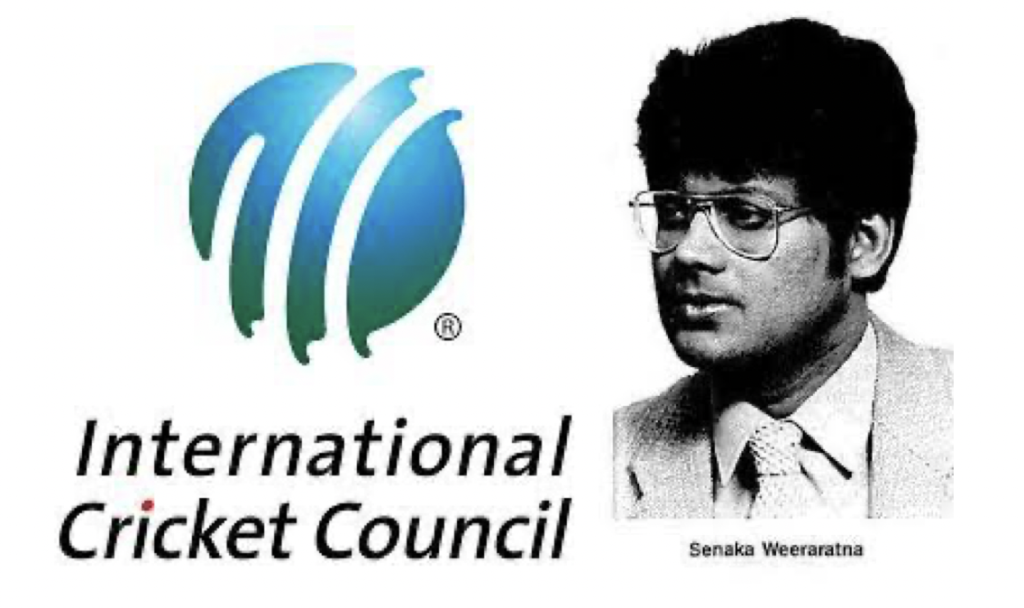
It would be prudent for Mr. Khawaja and his team to also inquire into why ICC has been unwilling to give due recognition to a Sri Lankan for inventing the Decision Review System (DRS) which is internationally used in Cricket and several other types of sports. The person in question is lawyer Senaka Weeraratna who conceived the concept of ‘Player Referral’ in 1997. Yet, even after 26 years after his groundbreaking invention, he is pleading for justice and appealing for ICC recognition as it is his concept of ‘Player Referral’ which is the lynchpin of the Decision Review System.

Critical Question

The critical question that is emerging is ‘Is it the colour of his skin that is denying him being given due recognition by the premier cricketing body?’

Does ICC have an alternate contender claiming authorship alongside Senaka Weeraratna? As far as we know, so far, no one has come forward. The concept of DRS did not drop from the sky. It had to be invented. If Senaka Weeraratna has all the evidence to support his claim of authorship, why is ICC reluctant to give him a fair hearing? Does this not constitute a breach of natural justice? A form of corruption within the ICC system as well.

Has the ICC thought of Third-Party Arbitration or Mediation to resolve this contentious matter? Already in cricket circles all over the world, the failure of the ICC to address this issue fairly and objectively has brought shame and disrepute to the good name of the ICC.

Given that ICC has come to investigate corruption in Sri Lanka, who will investigate ICC’s wrongdoing and lapses?

Cricket Ombudsman 

There is no mechanism within the Global Cricket Order to subject the supreme controller of Cricket to any form of investigation or probe. It can get away scot-free laughing all the way to the Bank despite mounting evidence of ICC falling short of adhering to the gold standard.  The cricket world is badly in need of a ‘Cricket Ombudsman’. An Institution that will entertain grievances from players, institutions, and even cricket lovers. The ICC is a cricket monopoly with its own agenda of rule in a fiefdom. It hands out perks to officials of affiliated bodies and buys their silence. Cricket commentators and journalists work in fear. They have no freedom of expression. The moment they step out of line they are fired. ICC functions like an unfriendly corporate entity unaccountable to none.

Accountability

The countries presently demanding accountability for human rights violations were the world’s worst violators of human rights during over 500 years of colonial rule & include a plethora of crimes under the neocolonial rule as well. All these crimes have not been investigated nor accounted for. It is unfair to chair justice while committing injustice. This is an unpalatable truth.

It is not a secret anymore that having the wrong skin colour can impede one’s advancement in white-dominated institutions, especially in sports like ‘King’ cricket. The use of people with ‘ sepoy’ mindsets from the Indian sub-continent as emissaries of the ICC may not necessarily straighten out deep-seated grievances of victimization. The growing demands for Accountability and Reparations from former colonies is a case in point.   The former British colonies in Asia, Africa, and the Caribbean Islands have a shared past and are united in their determination to achieve Justice in the form of an Apology, Reparations, and Repatriation of stolen artifacts.

.

The visiting ICC officials in Sri Lanka cannot erase the past. They must not hesitate to make a statement to the Sri Lankan cricket-loving public and the Government of Sri Lanka as to why the ICC has failed to conduct a proper hearing with respect to Senaka Weeraratna’s genuine claim to authorship of the DRS. The ICC is brushing aside the claimant without even a nod of acknowledgment or a sincere pat on his back. If the claimant had come from say, (Apartheid) South Africa, New Zealand, England or Australia would the treatment be the same? I think not.

Senaka Weeraratna is the unsung hero of the DRS now used globally. It is time he was given due recognition & felicitated.

Let racial discrimination not continue in ICC-administered cricket any longer than it has. The world needs a fairer system of international cricket administration that resonates with the true spirit of cricket.

Shenali D Waduge

පාසැල් හැරයන දරුවන් පිළීබදව නිසි දත්ත වාර්තාවක් කඩිනමින් සකස් කිරීම අත්‍යාවශ්‍යයි..- අග්‍රාමාත්‍ය දිනේෂ් ගුණවර්ධන මහතා

May 9th, 2023

අග්‍රාමාත්‍ය මාධ්‍ය අංශය

 අග්‍රාමාත්‍යවරයා මේ බව සඳහන් කළේ  2023.05.08 දින මහරගම ප්‍රාදේශීය ලේකම් කාර්යාලයේ පැවති ප්‍රාදේශීය සංවර්ධන කමිටු රැස්වීමේදීය.

පාසැල් හැරයන දරුවන් පිළීබදව පැහැදිලි තොරතුරු නොමැතිව එම දරුවන්ගේ  අනාගතය පිළිබඳව නිසි වැඩසටහන් ක්‍රියාත්මක කරන්නේ කෙසේදැයි ගැටලුවක් ඇතිවන බව අග්‍රාමාත්‍යවරයා මෙහිදී පෙන්වා දුන්නේය.

 සාමාන්‍ය පෙළ සහ උසස් පෙළ අවසන්ව විවිධ හේතූන් මත පාසැල් හැරයන දරුවන්ට ඉදිරි අධ්‍යාපනයක් නොමැති  වුවහොත් ඔවුන්ගේ පෞද්ගලික දියුණුව මගහැරී යෑම මෙන්ම සාමාජීය ගැටලු නිර්මාණය විමටද හේතු විය හැක. සාමාන්‍ය පෙළ දක්වා හෝ උසස්පෙළ දක්වා පාසැලේ ලියාපදිංචි වී සිටි දරුවන් පාසල හැරයාමේදි ඒ පිළීබඳ  ප්‍රාදේශීය ලේකම් කාර්යාල මට්ටමින් වාර්තාගත වීම අත්‍යවශ්‍ය කරුණක් බව ද මෙම දරුවන් විභාගය නොකර හැරෙන මාර්ගය කුමක්ද, එසේ සිදුකරන්නේ කුමන හේතුවක් මතද යන්න සොයා බැලීම අනිවාර්ය බවද අග්‍රාමාත්‍යවරයා පෙන්වා දුන්නේය.  

මෙරට අධ්‍යාපනය නැංවීමටත් තරුණ පරපුර තාක්ෂණයෙන් පිරිපුන් කිරීමටත් විදේශ ආධාර ඇතුළු සියලු දේ ලැබෙන නමුත්  අවශ්‍ය දත්ත පද්ධතිය සම්පූර්ණ කිරීමට නොහැකි වීමෙන් එම වැඩසටහන් ක්‍රියාත්මක කළ නොහැකි තත්වයක් උද්ගතවිය හැකිය.මේ හේතුවෙන් පැසැල් හැරයන දරුවන් පිළිබඳ  දත්ත වාර්තා කිරීම කඩිනමින් අරඹන්නැයි  අග්‍රාමාත්‍යවරයා විසින්  මෙහිදී රාජ්‍ය නිලධාරීන්ට උපදෙස් දෙනු ලැබීය.

පාසල් දරුවන්ගේ වෙසක් සුබ පැතුම් පත් නිර්මාණ ප්‍රදර්ශනය සහ අනුර දහනායකගේ සම්මානිත මුර්ති ප්‍රදර්ශනය මෙහිදී අග්‍රාමාත්‍යවරයාගේ නිරීක්ෂණයට ලක් විය.

 මෙම අවස්ථාවට බස්නාහිර පළාත් හිටපු මහ ඇමති ඉසුර දේවප්‍රිය, බස්නාහිර පළාත් හිටපු මන්ත්‍රීවරුන් වන උපාලි කොඩිකාර, සලෝචන ගමගේ, මහරගම ප්‍රාදේශීය ලේකම් දිල්රුක්ෂී වල්පොල ඇතුළු රාජ්‍ය නිලධාරීහූ සහභාගී වූහ.

 අග්‍රාමාත්‍ය මාධ්‍ය අංශය

“I feel only grief and anguish as I see the world hurtling ever faster towards a terrifying world war” – Global Ahmadiyya Muslim Leader

May 9th, 2023

By A. Abdul Aziz – Chairman, Press & Media Desk, AMJSL.

Ahmadiyya Khalifa Urges Good-Faith Negotiations In Peace Plan For Ukraine As He Inaugurates New Complex Of Britain’s Biggest Mosque Rebuilt After Fire In 2015

On 4 March 2023, the World Head of the Ahmadiyya Muslim Community, the Fifth Khalifa (Caliph), His Holiness, Hazrat Mirza Masroor Ahmad delivered the keynote address at the 17th National Peace Symposium hosted by the Ahmadiyya Muslim Community UK.

The event also served as the inauguration of the new five-story building in the Baitul Futuh Mosque, which was rebuilt after a fire in 2015.

Prior to the formal proceedings of the Peace Symposium, His Holiness unveiled a plaque and led the attendees in silent prayer to mark the inauguration of the new complex which includes two multi-purpose halls, office space and guest accommodation.

The event was attended by more than 1500 people including 500 dignitaries and guests who had gathered from 40 countries, comprising of Ministers, Ambassadors of State, and Members of Parliament.

During the proceedings, His Holiness presented Barbara Caroline Hofman, founder of the charity ASEM, with the 2019 Ahmadiyya Muslim Prize for the Advancement of Peace, in recognition of her charitable work to provide for children orphaned by war.

His Holiness also presented Dr. Tadatoshi Akiba, former mayor of Hiroshima, with the 2022 Ahmadiyya Muslim Prize for the Advancement of Peace for his efforts towards campaigning for nuclear disarmament.

The Ahmadiyya Muslim Peace Prize is awarded annually in recognition of an individual’s or an organisation’s contribution for the advancement of the cause of peace. The prize was first launched in 2009.The Prize includes a monetary sum, which is normally set at 10,000 pounds sterling.).

In his address, His Holiness warned of the perilous trajectory of the war in Ukraine and urged world leaders to strive to find mutually acceptable terms of agreement” and make urgent efforts to find peace, lest the cycle of incessant violence” rotates with ever greater fury.”

His Holiness said that a Third World War is dangerously close and presented verses of the Holy Quran to outline solutions that are direly needed to find a way out.

During his address, His Holiness also highlighted the true purpose of building Mosques and drew attention to the link every Mosque must have with the Holy Kaaba in Mecca.

Hazrat Mirza Masroor Ahmad further said:

All our Mosques spiritually mirror the Holy Kaabah, wherein they serve not only as an abode of worshipping God Almighty but are also a means of fulfilling the rights of mankind and establishing peace in the world.”

His Holiness mentioned that for several years, the Ahmadiyya Muslim Community has been hosting events such as the Peace Symposium in its efforts towards establishing peace.

Turning towards the present-day war in Ukraine, His Holiness showed how these Islamic principles are extremely pertinent.

The Caliph of the Ahmadiyya Muslim Community said that despite the war in Ukraine showing no signs of abating, certain political leaders are proclaiming that once the war does end, Russia should be subjected to extreme sanctions and made to pay for its actions.”

Shining light on the dangers of such statements, Hazrat Mirza Masroor Ahmad commended an article in the British press and said:

Recently, a column by the journalist Matthew Parris was published in The Times stating that such statements, in advance of any meaningful peace talks, are ill-judged and serve only to further inflame a volatile situation… I believe he is right to serve this warning. What incentive will Russia and its leaders have to cease hostilities if they know that their withdrawal will lead to their certain ruin?”

Hazrat Mirza Masroor Ahmad continued and said:

The objective of the intervening parties must remain, at all times, to establish peace instead of seeking revenge or humiliating the aggressor. Nor should the underlying intention ever be to line one’s pockets or to exploit the conflict to advance vested interests. Otherwise, those who have been demeaned will undoubtedly harbour a sense of injustice and resentment. Such frustrations are bound to eventually boil over and lead to further conflict and so the cycle of incessant violence will continue to rotate with ever greater fury.”

His Holiness warned of how the war in Ukraine could ignite further conflict and warfare.

Hazrat Mirza Masroor Ahmad said:

The truth is that war often begets war. There are genuine concerns that the Ukraine conflict could spread or that other nations could be emboldened to abandon diplomatic efforts to resolve their disputes and resort to force. For example, the situation in Taiwan is becoming increasingly precarious as China seeks to assert its control. Hence, world leaders, the media and others should not fall into the trap of thinking that the war in Ukraine can be easily contained.”

His Holiness said that world leaders and the media should not fall into the trap of thinking that the war in Ukraine can be easily contained” and gave example of the conflict over Taiwan to caution that the war may spread further if other nations abandon diplomatic efforts and resort to force.

His Holiness provided practical solutions for ending the cycle of warfare in view of Islamic teachings.

Hazrat Mirza Masroor Ahmad stated:

The world is well versed in supporting victims and those suffering injustice, as is the case with the Ukrainian nation at this time. Yet, it may surprise you to hear that Islam teaches Muslims to help not only the victim or the persecuted but also the perpetrator and oppressor. Of course, this does not mean you provide the aggressor with the means or freedom to inflict further cruelties. Rather, to ‘help’ an aggressor means to stop them from committing further brutalities and injustice.  

Hazrat Mirza Masroor Ahmad said:

Whatever wrongs are being committed by the Russian State, we must keep in mind the broader picture that if the war is not brought to an end, it will lead to a deepening global crisis with potentially catastrophic results.  Opposing blocs will become further entrenched.  Hatreds will become even more deeply-rooted, increasing the likelihood of a world war. Hence, as they continue to support Ukraine as it defends itself, world powers should also be making every possible effort to end the war through peace talks and good-faith negotiations.”

Hazrat Mirza Masroor Ahmad expressed his grief at seeing what the future may hold and said:

For many years, I have warned of the risks of a full-scale world war and have spoken of how its deadly and destructive consequences are far beyond our comprehension. Having long warned of such a war, I take no satisfaction in the fact that we are moving ever closer to it and that others are now expressing similar sentiments and fears. Rather, I feel only grief and anguish as I see the world hurtling ever faster towards a terrifying world war in which the lives of millions of innocent people will be lost or permanently destroyed.”

Hazrat Mirza Masroor Ahmad said:

What kind of future will we leave behind to those who are yet to come? Instead of bestowing a legacy of peace and prosperity to our future generations, our parting gift to them will be nothing except death, destruction and misery. Certainly, it is my grave fear that today’s geopolitical tensions could spiral out of all control and ultimately lead to a nuclear war… Thus, with all my heart, I pray that may Allah the Almighty have mercy upon humanity and may the people of the world, especially its leaders and policymakers, see sense before it is too late.”  

Prior to the keynote address, whilst accepting the Ahmadiyya Muslim Prize for the Advancement of Peace for the year 2019Barbara Caroline Hofman, founder of ASEM, said:

I am very pleased to share this award, this honour you gave me tonight with all my people, because I didn’t do it alone, we did it together.”

The 2022 recipient of the Ahmadiyya Muslim Prize for the Advancement of Peace for the year 2022, Dr. Tadatoshi Akiba said:

You [the Ahmadiyya Muslim Community] were one of the first in the world to recognise and protest nuclear weapons in humanity and evilness back on August 10th, 1945. The Second Caliph declared on that day that, ‘It is our religious and moral duty to proclaim to the whole world that we do not consider lawful such bloodshed.’ Belatedly, the world finally came to the same conclusion…Words of Your Holiness give us direction.”

Source: Press Ahmadiyya.

Why Myanmar-Bangladesh’s ‘Rohingya Pilot Return Project’ needs to be successful?

May 9th, 2023

John Rozario  Karnataka, India.

Recently, Bangladesh and Myanmar have launched a bilateral pilot project to repatriate the Rohingya. Myanmar has dedicated 15 villages to repatriating Rohingya refugees from Cox’s Bazar. Initially, Myanmar will take 1140 Rohingya. A Myanmar delegation has already visited the camps in Cox’s Bazar. But the initiative is facing harsh criticism from INGOs and NGOs such as United Nations High Commissioner for Refugees (UNHCR) and Human Rights Watch (HRW). NGOs are against such initiatives citing the situation in Myanmar.

A delegation of 17 members from Myanmar came to Bangladesh on March 15 to verify the information of the Rohingyas on that list. They returned after verifying the information of 480 Rohingyas enrolled in the repatriation pilot project. Then last Friday, a delegation of 27 members including 20 Rohingya went to visit Myanmar Rakhine State. They check whether the environment there is suitable for repatriation of Rohingyas. Returning to the country Refugee Relief and Repatriation Commissioner (RRRC) in Bangladesh camps Md. Mizanur Rahman expressed satisfaction with the goodwill of Myanmar.

After the Rohingya delegation returned from Myanmar’s Rakhine state, there was a mixed reaction to the issue of repatriation to Rohingya camps. Many arguments are going on between those who support repatriation to the camp and those who are not interested in repatriation. Most of the Rohingyas claim that there is no opportunity for the Rohingyas to adopt a different path except repatriation.

According to media reports, regarding the speech of the members of the Rohingya delegation who visited Myanmar’s Rakhine state last Friday, the speech they presented in the media may be their personal opinion. Therefore, it cannot be accepted that the process of repatriation of Rohingyas will be stopped. Repatriation is the right of Rohingyas. If someone likes, they will go, if someone wants, they will not go, so it does not mean that all Rohingyas will not go. The Rohingyas will be repatriated if the governments of Bangladesh and Myanmar want. Their statement is also clear about the claim collection. They are saying, first take the Rakhine land in Myanmar, then I will give all the demands from there. It will be much easier for the Rohingyas to stand on their homeland and claim their rights. Many people are passionate about the country. There are the graves of many relatives, mother and father. They have very little rights in Bangladesh camps either, they are somehow living in a floating life. The happiness of dying in one’s homeland is much greater than that. It should not their concern whether anyone will go or not, Rohingyas will return to Myanmar if they are called.

According to social media reports and ground information, ordinary Rohingyas in the camp in Cox’s Bazar want to return. They want to go to their homes at any cost. A large part of the Rohingya want to use the opportunity of repatriation. Only a particular group of Rohingyas who are enjoying various immoral facilities and abuse their position in the camps do not want to return. A part of the Rohingya supported by international organizations has also been added. It is known that the Rohingyas have taken a stand against the issue of repatriation in Rohingya camps in Ukhia and Teknaf. On May 5, a 20-member Rohingya delegation returned to Myanmar after inspecting the infrastructure prepared for the Rohingyas and expressed a negative attitude towards the repatriation of journalists. However, other Rohingyas in the camp are unwilling to support their attitude. A conscious section of the Rohingyas is expressing their reluctance to stay as refugees in Bangladesh. They decided to stir up interest among other Rohingya in the camp by campaigning to return to Myanmar.

Cox’s Bazar Refugee Relief and Repatriation Commissioner (RRRC). Mizanur Rahman said, we along with the Rohingyas have just come to see the villages and infrastructure prepared for the Rohingyas in Maungdoo, Myanmar and its surroundings. There will be further talks between the two countries, hopefully the repatriation process will progress.

The real place for Rohingyas is Arakan in Myanmar, not the Rohingya camp to make demands. Those who talk about citizenship, security and visas in terms of repatriation, are not really thinking about the Rohingyas. Even in Bangladesh they have no citizenship, no lands. The security that the Rohingyas once had from terrorists is now gone. So, if they can live without these things in this country, then why not in Myanmar? Myanmar will ensure maximum security for the repatriated Rohingyas. Because the eyes of the whole world will be on them. If any wrongdoing is done by taking the Rohingyas there, it will spread all over the world thanks to the internet. Rohingyas should go bak to their homeland Myanamr now as a whole population cannot spend years in another country in refuge from another situation. Rohingyas have the right to go back to their own nation, their own territory, and their own homes — where they can exercise all of their civil rights to strive toward constructing a better life and future for themselves and their offspring.

Currently no Rohingyas are safe in the camp. Each camp has its own criminal gangs. This is where the Rohingyas suffer the most insecurity. There is no guarantee of life in the camp now, who is shooting and running away from which side. Much more happiness if you can go to the country and taste the native land.

A section of the international community is playing politics with the Rohingyas in the camps in Cox’s Bazar. Due to this, their repatriation process is becoming difficult at times. Unfortunately, we are noticing that various international circles are doing their own style of politics with the Rohingyas. It is difficult to say how much these quarters will see the interests of Bangladesh, or the Rohingyas. The Rohingyas are expected to return to a slightly better environment than the environment from which they crossed the Myanmar border into Bangladesh. Because the state system of Myanmar will not change overnight. This may not change even in the next 10-20 years. While the junta is killing people day after day, the hope that the Rohingyas will be repatriated to a different status with full citizenship is simply not realistic. This is a harmful thought for the Rohingyas. It is now important to ensure the status they had earlier.

While Bangladesh and Myanmar are preparing their returnee lists and facilitating the repatriation, INGOs and NGOs are expressing concerns over the plan. They are mainly objecting that the environment in Rakhine is not conducive enough for any repatriation at this moment. They are also condemning the Junta and labeling the plan as an eye wash. Prominent INGOs and NGOs including UNHCR and HRW have already given statements clearing their stance on the plan. They want Bangladesh to halt the program. Burmese Rohingya Organization UK has also called the process a Public Relation rather than repatriation.

Perhaps, Junta’s controversial image are the prime reasons behind the stance of the NGOs concerned about the Rohingya. The Rohingyas should also think, if they do not start repatriation now or do not go, it will benefit Myanmar. Because, Myanmar always wants the Rohingyas not to come and they create various pressures for this. Myanmar wants the Rohingyas to say that the status is not created, the environment is not created and not to come. Now the repatriation process needs to be started to challenge Myanmar. It will not solve the problem if only one and a half thousand Rohingyas return. But Myanmar can be told that you have recognized your citizens, now take measures for the rest.

Myanmar’s interest in Rohingya repatriation has increased for a number of reasons. By exploiting this interest, Bangladesh should start the process of repatriating the Rohingyas. We are very optimistic about the repatriation of Rohingya this time. Because the Rohingya issue is a geopolitical equation. In the current military, political and economic situation in Myanmar, the integrity and ethnic unity of the Myanmar state is at great risk. Now if they want to make their state safe, they have to solve the Rohingya problem. The Rohingya problem was not created only because of Bangladesh and Myanmar. There are other parties involved in creating this crisis. If the reasons for creating this crisis are not met, then they will not play a role in solving the crisis. Now the cooperation of the third party, the international community, is needed in the matter of repatriation. Rohingyas should play a role in creating housing and other facilities. International pressure should also be applied. The more the international community can be kept active on behalf of Bangladesh to solve the problem, the more opportunities will be created to solve the problem. This opportunity should be used.

For more than two years now, Junta is administering the state of Myanmar. The international community and the great powers did little to pressurize the Junta to repatriate the Rohingya. Prior to Junta, the international community also failed to convince the democratic government to repatriate the Rohingya and bring the perpetrators to justice.

At this moment, Junta is formally in power, even though it faces a serious legitimacy crisis and resistance at home. But it is the only formal authority in Myanmar.

Bangladesh has been facing a refugee crisis for six years now. It has tried bilaterally, trilaterally, and multilaterally for the past six years for a viable solution. It has left no stone unturned, yet found nothing. Bangladesh eagerly wants to explore the initiative as something is better than nothing. Moreover, Bangladesh cannot remain indifferent to the Junta question. Owing to bilateral political, economic, connectivity, and economic issues, Bangladesh has to engage with the authority of Myanmar- that is Junta currently. 

While Bangladesh- the guardian of the Rohingya on the global stage is trying heart and soul to repatriate the Rohingya to their birthplace, the NGOs are not doing enough for the most persecuted community of our time. The UNHCR and other NGOs are only maintaining the camps. Due to other emerging crises and donor fatigue, these NGOs are also reducing their effort in every aspect after six years. Recently, WFP reduced its monthly per capita ration from only $12 to $10 citing fund shortage.

Advocacy networks such as HRW, and Amnesty International failed to create effective pressure on Myanmar. Like the NGOs, the Great powers also failed to pressurize Myanmar effectively. As a result, Bangladesh is carrying the burden alone. And Bangladesh, which did not see any result in the last six years cannot but explore the option. The declining fund, deteriorating camp conditions, growing insecurity, and adverse impact of the refugees on the host community have made Bangladesh a desperate host looking for reducing the burden, where its international partners are only performing their formal duties within a set boundary. This crisis is also destabilizing regional security. The Rohingya cannot consistently receive food, shelter, and medical care due to our limited economic capabilities. It is important to note that aid for the Rohingya is decreasing daily. The current Ukraine conflict has the entire world on edge. Although the world community has lost sight of the Rohingya humanitarian issue as a result of the war in Ukraine

Moreover, the ‘conducive environment’ debate is also a politically biased one. As the Junta is repatriating, it is guaranteeing their safety. The other stakeholders of Rakhine and Myanmar, the Arakan Army (AA) and the National Unity Government (NUG) have already recognized the Rohingya. Furthermore, it also has the responsibility of international community to provide an external guarantee for Rohingya’s safety upon repatriation. Therefore, it may not be unsafe to explore the possibilities of repatriation with the Junta. It seems the NGOs are driven by their own compulsion of lengthening ‘projects’ and squeeze their donors displaying the plight of the refugee community.

In a nutshell, the repatriation plan will reduce Bangladesh’s burden at least to some extent. The pilot project will also increase Bangladesh-Myanmar engagement. The World community should not go against it; instead, they should come forward and engage effectively to ensure the rapid repatriation of the rest of the refugees. The NGOs and Advocacy networks should also scale up their activity rather than reacting compulsively. we can consider the Rohingya pilot project as the beginning of the long-overdue repatriation, which might inspire more people to return Myanmar from Bangladesh in the future. Myanmar must ensure that the return of Rohingya Muslims is continuous, dignified, and sustainable. Myanmar needs to have goodwill in order to interact favourably with Bangladesh. The Rohingya situation needs to be resolved successfully and permanently, according to the entire globe. For the Rohingya people to return from Bangladesh to Myanmar with safety and dignity, the successful implementation of the pilot project is necessary.

Lanka court issues restraining order against events commemorating Rajapaksa’s fall

May 9th, 2023

Courtesy The Telegraph Online

Lanka court issues restraining order against events commemorating Rajapaksa’s fall

Gotabaya Rajapaksa

Gotabaya RajapaksaFile picture

A Sri Lankan court on Tuesday accepted a request by the police to curb the commemoration of the events which led to the resignation of the bankrupt government of president Gotabaya Rajapaksa a year ago.

On May 9 last year, Sri Lankan Prime Minister Mahinda Rajapaksa resigned, hours after his supporters attacked anti-government protesters outside embattled President Gotabaya Rajapaksa’s office.

Last year, thousands of demonstrators protested across Sri Lanka seeking the resignation of President Gotabaya and Prime Minister Mahinda, as the Sri Lankan government ran out of money for vital imports; prices of essential commodities have skyrocketed and there are acute shortages in fuel, medicines, and electricity supply.

Police on Tuesday said the Colombo Fort magistrate has issued a restraining order on commemoration of the protest preventing them from entering key installations such as the president’s house, presidential secretariat, finance ministry, and the prime minister’s official residence.

The restraining order was issued by the Fort Magistrate’s Court on Tuesday based on a request made by the Colpetty Police.

Sri Lanka today marks one year since the countrywide unrest that broke out on May 9, 2022.

The unrest broke out after Sri Lanka Podujana Peramuna (SLPP) supporters attacked anti-government protesters at the Galle Face Green in Colombo.

Some of the government politicians were accused of attacking the protesters who urged for the resignation of Gotabaya for his bungling which led to the island’s bankruptcy for the first time since 1948.

In March, Sri Lanka received USD 330 million as the first tranche of the IMF bailout programme after hectic parleys. This will pave the way for the debt-ridden country to achieve better “fiscal discipline” and “improved governance.” Mahinda resigned on May 9 hours after some of his supporters attacked peaceful protesters who had been camped out in front of government offices. Dozens of people were injured. Retaliatory attacks on government ministers’ homes were reported across the country.

Nearly 100 government parliamentarians suffered arson attacks on property throughout the island nation.

Three days later, the current president Ranil Wickremesinghe was sworn in as the prime minister who soon began tackling the economic crisis.

People suffered in the economic crisis with long queues for essentials which were in short supply, fuel, and over ten-hour power cuts.

Two months later, an even bigger protest led to the resignation of president Gotabaya Rajapaksa.

Under the Sri Lankan Constitution, if both the president and prime minister resign, the Speaker of Parliament will serve as acting president for a maximum of 30 days.

Wickremesinghe later succeeded Gotabaya for the balance term of the presidency which runs until September of 2024.

Plans to set on fire 100 houses of SJB MPs on May 10 foiled: Wijeyadasa

May 9th, 2023

Courtesy The Daily Mirror

Claiming that plans were afoot to set on fire some 100 houses of politicians including SJB MPs and political leaders on May 10 last year, Justice Minister Wijeyadasa Rajapakshe said today these plans were foiled as armed forces were ordered to shoot on sight.

He told Parliament that a list of 100 houses had been prepared to be set on fire on May 10 and some SJB MPs and political leaders were on top of this list.

“Having learnt of the information, we informed the defense secretary to order the armed forces to shoot at sight. They carried out three shootings. One in Rathgama, another two in Angoda and Pitakotte. If not for these three shootings, there would have been at least more than 100 houses set ablaze,” he said.

The Minister said houses and offices of SLPP MPs were destroyed on May 9 through a prepared a list. (Ajith Siriwardana and Yohan Perera)

Chamara Gunasekera who received US$250 mn is a close associate of MP Nalaka Godahewa: Wijeyadasa

May 9th, 2023

Courtesy The Daily Mirror

Coming up with more staggering disclosures on the ill-fated X-PRESS Peral ship, Minister of Justice Wijedasa Rajapakshe told Parliament today that Chamara Gunasekera who had received US$ 250 million to delay the prosecution is a close associate of MP Nalaka Godahewa who was the minister in charge of Ports during that time.

Chamara Gunasekera is a fake name, the real name of this person is Manjusiri Nissanka and is an associate of MP Godahewa,” the Minister said.

MP Ajith Mannaperuma who is the chairman of the relevant consultative committee informed me that some officers attached to the Attorney General’s Department had demanded US$250 million as a bribe to prevent Sri Lanka from securing damages for the tragedy. However the MP has asked for a copy of the case. Asking for a document after accusing the Attorny General’s department is also an issue. The lawyers retained by the accused are going everywhere in Sri Lanka to collect information on the case. They were present at the consultative committee meeting and therefore I prevented those who were present from raising questions on the case,” he added.

The Minister who justified the decision to file a case in Singapore said it was done as the operating company of the ship is being registered in Singapore while the charter party company is also registered in the same country. The hearing date was fixed for next month. The Singaporean Courts have advanced the date and hearing was held yesterday. This comes as a  result of the coverage given  to the issue by the local media.,” he said.

The Minister claimed that the debate on XPRESS Peral fixed for today is against the standing orders. House cannot debate on a matter on which a court case is pending. Debating on this might have a negative effect on the case which is pending. Therefore I would like to request the party leaders to rethink having the debate today,” he stressed.

Opposition MP Kumarasiri Ratnayake who responded to Minister Rajapakshe said MP Godahewa has been drawn to the issue in an unfair manner. We cannot understand why MP Godahewa is dragged into the issue as he is innocent,” he said. (Yohan Perera and Ajith Siriweardana)

“Aswesuma” welfare benefit payments to commence in July

May 9th, 2023

Courtesy Adaderana

President Ranil Wickremesinghe has given directives to initiate Aswesuma” welfare benefit payments, which are scheduled to commence on July 01.

The relevant gazette notification has been published pursuant to the powers delegated to the Head of State as Minister of Finance, Economic Stabilization & National Policy, according to the President’s Media Division.

Accordingly, these payments will be distributed among four social categories; transitional, vulnerable, poor, and extremely poor.

Additionally, the usual allowances will be given to the differently-abled, elderly, and kidney patients as well.

Thereby, 400,000 ‘transitional’ beneficiaries will receive Rs. 2,500 per month until December 31, 2023. A total of 400,000 ‘vulnerable’ beneficiaries will receive Rs. 5,000 per month until March 31, 2024.

Meanwhile, Rs. 8,500 per month will be provided to 800,000 ‘poor’ beneficiaries and Rs. 15,000 per month for ‘extremely poor’ beneficiaries for three years starting from July 01, 2023.

Currently, 72,000 differently-abled people receiving welfare benefits will each be given Rs.5,000 per month; 39,150 kidney patients receiving support will each get Rs.5,000; and 416,667 people senior citizen allowance will each get Rs. 2,000.

Around 3,712,096 applications for welfare benefits were received from 340 Divisional Secretariats across the island, with 91.5% of the process of verifying program information to identify those who are eligible for payment of these welfare benefits completed as of yesterday (May 08).

The data has been monitored through selection committees consisting of three members at the regional office level, and the process of approval by the district secretary has also started.

The highest number of applications confirmed and finalized were from Vavuniya district, which is 98% followed by 96.5% from Kandy district, 96% from Kilinochchi district, 96% from Jaffna district and 95.5% from Trincomalee district.

The PMD says 3,362,040 applications in total covering the entire island have been verified thus far.

China attends as observer first meeting of Sri Lanka’s creditor nations

May 9th, 2023

Courtesy Adaderana

China attended as an observer the first meeting of Sri Lanka’s creditor nations on Tuesday, offering policymakers some hope Beijing will become more engaged in talks to resolve debt woes of low- and middle-income countries across the world.

The meeting, within a new framework launched in Washington D.C. in April that creditors hope will serve as a model to resolve the debt difficulties of middle-income economies, was held online.

Japan, which initiated the launch together with India and France, invited all bilateral creditors, including the largest, China.

Masato Kanda, Japan’s top financial diplomat, told reporters after the meeting that China attended as an observer, adding he hoped it would participate as a full member in future meetings.

Last month, France, India and Japan unveiled a common platform for talks among bilateral creditors to co-ordinate restructuring of Sri Lanka’s debt.

Sri Lanka owes $7.1 billion to bilateral creditors, government data show, with $3 billion owed to China, followed by $2.4 billion to the Paris Club of creditor nations and $1.6 billion to India.

The government also needs to renegotiate more than $12 billion of debt in eurobonds with overseas private creditors, and $2.7 billion of other commercial loans.

Sri Lanka has kicked off talks to rework part of its domestic debt and aims to finalise a deal by May.

Source – Reuters
-Agencies

India extends $1 bln credit line for Sri Lanka by a year

May 9th, 2023

Courtesy Adaderana

India has extended a $1 billion credit line for Sri Lanka by one year, a Sri Lankan official told Reuters on Tuesday, giving the crisis-hit country a backup funds to pay for essential imports.

The credit line, part of about $4 billion in emergency assistance extended by India during the peak of Sri Lanka’s financial crisis early last year, was scheduled to end in March.

Post-negotiations, the credit line was extended until March 2024, said Sri Lanka’s Deputy Treasury Secretary Priyantha Rathnayake.

There is about $350 million left of the credit line that can be utilised as needed,” he said.

However, given the increase of foreign exchange availability in the market, the need is not as keen as it was last year.”

Reuters reported in March that Sri Lanka was negotiating with India to extend the facility, used so far mainly for medicines and food.

Sri Lanka’s reserves dropped to record lows in April last year, triggering its worst financial crisis since independence from British colonial rule in 1948. The island, off India’s southern coast, spent months struggling to pay for essential imports such as fuel, cooking gas and medicine and defaulted on its foreign debt.

The situation has now improved with Sri Lanka finalising a nearly $3 billion bailout package from the International Monetary Fund in March and kicking off debt restructuring talks with key bilateral creditors India, Japan and China.

Sri Lanka’s foreign exchange reserves hit $2.7 billion at the end of last month.

Source – Reuters 
-Agencies

Over 98% of India’s 0.7% Buddhists are Classified as Dalits

May 8th, 2023

Dilrook Kannangara

India’s sudden interest in Buddhism seems to be driven by militarization than anything noble. India uses Buddhism as a weapon against China, a bargaining tool against Burma and Bhutan and as an extortion tool against Sri Lanka. All this happens while India’s Buddhists endure acute discrimination, marginalization and deprivation. This has many learnings for Sri Lankans. Taking them to heart early can mean the difference between survival and extinction.

According to India’s recent censuses (2001, 2011) and estimations, total Buddhist percentage is only 0.7%.

However, what is worrying is 98% of them are from scheduled castes, scheduled tribes and other backward classes (Dalits”).

https://www.pewresearch.org/religion/2021/09/21/population-growth-and-religious-composition/

If India’s population is 1.4 billion (current estimate), only 200,000 Buddhists live with fundamental rights.

In wide contrast, almost everyone in Sri Lanka enjoys all fundamental rights and privileges irrespective of faith and language.

As the island nation is rapidly Indianized militarily, economically, culturally and religion-wise, the plight of Buddhists in Sri Lanka will be no different. It goes against logic that India will treat Sri Lanka’s Buddhists any better than they treat their own Buddhists.

Whatever one’s faith is, most Sri Lankans are touched by Buddhism in some way. Unlike other nations in the South Asian region where persistent religious animosity is the order of the day, the Buddhist majority in Sri Lanka has a way of self-correcting course which is the result of Teachings they adhere to. Arousal takes them only so far and soon the silent majority takes over replacing agitation with compassion. Protection of Buddhism guarantees the dignity and equal rights of everyone. India’s continuing suppression of Buddhists and Indianization of the island are bad news for everyone.

Rohingya repatriation sees hope under a pilot project

May 8th, 2023

Tilottama Rani Charulata,  an independent researcher.

The Rohingya are the most persecuted minority group in the world. Such persecution has forced Rohingyas into Bangladesh for many years, with significant spikes following violent attacks in 1978, 1992, and again in 2016. More than 700,000 Rohingya were forced to flee from Myanmar following a brutal military crackdown in 2017. Currently, Bangladesh has been hosting nearly 1.2 million Rohingya refugees for six years. At this point, there are more Rohingyas in Bangladesh than in Myanmar.

Due to this massive refugee crisis, the socio-economic and security situation of Bangladesh is worsening and there seems to be no other way except a repatriation, which has been a hanging case for the last six years. The issue remained at a deadlock and to bring momentum, Bangladesh needed an initiative from Myanmar. A breakthrough finally happened on May 05, when a team of 20 Rohingya accompanied by seven Bangladesh government officials visited two of 15 villages in Rakhine State, at the invitation of the Myanmar government.

Bangladesh welcomes the pilot project

The Rohingya team left for Myanmar on Friday via the transboundary Naf River to visit a settlement in Rakhine State. The visit was considered a part of a confidence-building measure” for repatriation to encourage Rohingyas for a self-willing return. This is the first time any Rohingya delegation visited Rakhine to assess the situation there as the Rohingyas have not volunteered to return home despite two attempts, arguing that the situation was not conducive.

Earlier, Bangladesh and Myanmar signed an agreement to repatriate this huge number of Rohingyas to Myanmar in 2017 and 2019. These attempts failed to repatriate the Rohingyas because the Rohingya refused to return to their homeland for fear of fresh persecution and lack of a congenial environment for repatriation. Bangladesh has raised the issue at every international forum, with the support of many countries. But Myanmar had been indifferent to international laws and norms. Finally, it is taking this symbolic step, most possibly to “lighten the responsibility” in its next submission to the International Court of Justice in May regarding the Rohingya genocide.

The foreign ministry of Bangladesh welcomed this effort and appreciated Myanmar’s willingness. The development comes amid a series of events that took place for Rohingya justice and repatriation. The UN refugee agency said it was aware of Friday’s trip, which was taking place “under a bilateral arrangement between Bangladesh and Myanmar”. Some experts and rights activists have observed that the UN’s involvement in the visit would be more conducive for the parties involved in the pilot project to initiate the repatriation. However, Refugee returns must be voluntary, in safety and dignity and no refugee should be forced to do so. And this pilot project is following those steps sincerely.

Facilities offered by Myanmar

Upon their arrival, Myanmar authorities briefed the team about the possible benefits they would likely get in the villages. After the Rohingyas return, each family will be given a house in the model village, land for agriculture, fertilizer, and seeds. The government will provide Rohingyas ‘with national verification cards (NVC)’ and within half a year would be able to travel outside Maungdaw Township. Hospitals, mosques, and playgrounds are being housed in the model villages, which were not present in Rohingya settlements in the past. The model village of Mangdu is much better than the Rohingya camps in Bangladesh in every possible way.

For those who will stay in the model village, each family will be allocated one acre of land for cultivation. Those families who wish to build their own homes can do so and the regime will pay for them. There will be no barbed wire fence around the villages. A Maungdaw official informed the team that Rohingya children will be allowed to study and go to Sittwe University. Most Rohingyas who are now living in Maungdaw, are working, and moving freely in Maungdaw city, the returnee will enjoy the same.

Response from the Rohingya

It is undeniable that this visit by the Rohingya team marks a new beginning of the Rohingya repatriation. Rohingya repatriation will largely depend on the voluntariness of the Rohingyas, and their confidence in security and equal rights as citizens of Myanmar. The purpose of the visit was to inspect infrastructure built in Rakhine’s Maungdaw Township with grants from the governments of Japan, India, and China for the repatriation and resettlement of refugees”. Regarding that, no member of the delegation team had any complaints.

Rohingya refugees, who have spent nearly six years living in overcrowded and squalid camps in Cox’s Bazar, have been hopeful of the scheme since it became public knowledge in March. Though their queries about security or recognition of their right to citizenship in Myanmar has not been answered. But the bilateral talks have just begun, so there is always room for bargaining as Rohingyas have international support. Soon a team from Myanmar would visit the Rohingya in Cox’s Bazar to try and convince them to be repatriated.

Bangladesh and international concerned communities are optimistic about Rohingya repatriation this time. There was a need for a ‘pilot repatriation project’ to send back refugees where both countries have historical experience and references to repatriate Rohingyas. Through this initiative and China’s mediation, both countries can resolve the long-pending Rohingya crisis. As every refugee has an inalienable right to return to their place of origin and such returns must also be voluntary, this confidence-building measure will play a crucial role to encourage Rohingyas to return their home.

Debating the Future of Rohingyas: Return or Resettlement?

May 8th, 2023

Erina Haque, Researcher, analyst and freelance contributor and columnist.

The issue of whether Rohingyas should return to their motherland Myanmar is a complex one, and the recent discussions about repatriation have sparked debate. The United Nations refugee agency UNHCR has registered approximately 1 million Rohingyas who are currently residing in Bangladesh. A pilot project to repatriate over 1,100 Rohingya refugees is currently in discussion, with both Bangladesh and Myanmar seeking to start the repatriation before the monsoon season, mediated by China. However, the Rohingyas’ return is contingent upon whether Myanmar provides an environment supportive of repatriation.

According to media reports, the Rohingyas did not see a supportive environment for repatriation when they visited Myanmar. Nevertheless, Bangladesh is optimistic about the possibility of Rohingya repatriation. The Bangladesh foreign ministry has stated that upon their return, each family will be given a house in the model village, land for agriculture, fertilizer, and seeds. The model village of Mangdu offers better living conditions than the Rohingya camps in Bangladesh, with hospitals, mosques, and playgrounds being constructed for them. The Rohingyas will also have the opportunity to work and do business independently. Myanmar authorities have stated that Rohingyas returning from Bangladesh will be kept at the Maungdu transit center for only three days before being transferred directly to the model village. There, they will be issued National Verification Certificates (NVCs) as citizens of Myanmar, with the National Identity Card (NID) being issued in phases if they can show the necessary documents as residents of Myanmar.

During the visit, some members of the Rohingya delegation opposed the NVC and demanded resettlement in Janmvita instead of NID and Model Village. However, most of the members of the Bangladesh delegation accompanying the Rohingya expressed satisfaction with the environment. They claimed that the environment and situation in Rakhine were good, and the Rohingyas roamed freely in Maungdoo city, busy with work. Bangladesh’s Commissioner for Refugees, Relief, and Repatriation, Mohammad Mizanur Rahman, said that the environment was very good and that they were optimistic about starting the repatriation process as soon as possible.

While it is important for Rohingyas to return to their own country, it is also important to ensure that their civil rights are not further violated. An entire population cannot live as refugees of another country for years, deprived of their natural civil rights. Rohingyas have the right to return to their own country, their land, and their homes, where they will work with full civil rights to build a better life and a better future for themselves and their children. The programme may be seen as a start of the long-overdue repatriation process, which may build confidence for future repatriation in greater numbers. However, it is crucial to remember that it is only the beginning. If the initiative is successful, more Rohingyas will follow and return to their ancestral home.

Over 80% of the refugees in Cox’s Bazar rely on external aid to survive. Every family gets a monthly food ration of Tk 1,030 per person. Rohingyas have repeatedly stated that running a family with this allocation is very difficult. The influx of refugees has also put immense pressure on the host communities and the environment in a densely populated country. The host communities in Cox’s Bazar are highly vulnerable and at high risk of hunger like the Rohingyas, according to a WFP report.

The Rohingya’s willingness to return to Myanmar is also a factor that must be considered. They may be afraid and unwilling to return if their rights will be violated further. Bangladesh will have to deal with this refugee crisis for potentially years to come, involving funding, administration, inclusive and equitable treatment of the refugees and host populations, and national security issues, among others.

Can the ‘pilot project’ that has been taken to resolve the Rohingya crisis in Myanmar provide any solution at all? This question is being voiced quite loudly now. Especially after the arrival of the delegation from Myanmar, there is no hope for the Rohingya repatriation in the light of what the Rohingyas have seen after going to Myanmar.

This ‘pilot project’ to take back the Rohingyas was basically accepted through the mediation of China. This is the third round of initiatives to repatriate Rohingyas.

In fact, the Rohingyas are expecting resettlement in their homeland Rakhine. If not, they are not interested in returning, will such an attitude solve the problem at all? Because of the Myanmar government where the Rohingya have been displaced. It is under pressure from China, but wants to take it back to Myanmar. In this case, both parties have to make concessions, isn’t this the case? Absolute satisfaction in such situations is indeed relative. The problem that is not being solved even today, is not possible in a very short time. In this case, it is necessary to make a concession on the part of the Rohingyas in the case of starting repatriation. Again, this repatriation should not be pushed to the death of Rohingyas as before, it must be ensured.

It is difficult for us to shelter this huge population for very long. Therefore, it is essential to find a permanent solution to this crisis through repatriation and rehabilitation. However, it should be done in a safe, voluntary, and dignified manner with the full participation and cooperation of the Rohingyas themselves. Any repatriation initiative must address the root causes of the crisis and ensure that Rohingyas can live safely and with full citizenship rights in their own country. Until then, the international community should continue to support Bangladesh in providing essential services and protection to the refugees while also pressing Myanmar to create a conducive environment for their safe return. The repatriation of Rohingyas is not only a moral obligation but also a necessary step for regional peace and stability.

Despite being granted asylum on humanitarian grounds, the Rohingyas are now a burden for Bangladesh. The amount of foreign aid that came in at the beginning has also decreased. Meanwhile, the Rohingyas are prohibited from going out of the camp, but it cannot be controlled. They came out of the camp and were arrested while trying to go abroad using fake NID, fake passport. There were also incidents of casualties in terrorist attacks in the camp. Basically, the fact that the Rohingyas are sheltered in this country does not show in their lifestyle. It is also not possible to allow them to merge into the mainstream. As such, we want honorable rehabilitation of Rohingyas. In this regard, the Myanmar government is not sincere, it cannot be said unilaterally. Again, the issue of exemption from the Rohingyas must be confirmed. For this reason, sending back 1 thousand 176 Rohingyas as a ‘pilot project’ can be seen as experimental. But in fact, the crisis of trust is emerging as a major problem in this regard.

Because in 2018, Bangladesh gave a list of 882 thousand Rohingya to Myanmar for repatriation. After verifying that list, Myanmar finalized a list of only 68,000 Rohingya and sent it back to Bangladesh. Therefore, the sincerity of the Myanmar government can be questioned. In this case, despite the limited number of Rohingyas that the Myanmar government wants to take back, diplomatically there is no opportunity to ignore this sincerity. Despite this, since a large number of Rohingyas will remain in Bangladesh, diplomatic efforts must be maintained to take back the rest step by step in the future. That’s why it is necessary to make sincere efforts of all parties to make this ‘pilot project’ successful at least in the first phase.

Death of a Soldier

May 8th, 2023

Dr. Ruwan M Jayatunge M.D.

The tragic death of Michael McNeil of the Canadian Armed Forces has raised many questions. According to the news reports Warrant Officer Michael McNeil who suffered from Posttraumatic Stress Disorder (PTSD) had committed suicide at the Canadian Forces Base Petawawa in Ontario. He was one of three Canadian soldiers to commit suicide this week.

McNeil had a distinguished military career. He joined the Canadian forces in October 1994 and served in Bosnia in 1998, Kosovo in 1999, and Afghanistan in 2009. His death is a tragedy that is filled with an irreplaceable void.

Annually significant numbers of soldiers commit suicide. Sadly Warrant Officer Michael McNeil became another victim of combat-related PTSD.

Military suicides are complex in nature. Often life stresses and ongoing battle stress could negatively affect the combatant. Lack of social, administrative, and professional support is seen as predisposing factors. Military suicide can occur as a sudden response following an acute stress reaction or it can be well-planned. Sometimes soldiers contemplate their suicides for a number of years.

World War 1 to Afghanistan

Combatants of WW1 faced extremely harsh conditions in the muddy and rat-infested trenches. The soldiers suffered physical and psychological consequences of the trench war. Estimated suicides during World War One still remain unknown. According to Military Historians, a large number of combatants committed suicide between 1914 to 1918. Depressed and physically worn-out soldiers took their lives inside the trenches. Trench suicides became common during WW1. Some suicides occurred after the demobilization. Captain Guy Nightingale was one of the WW1 soldiers who witnessed the horrors of the war in Gallipoli. He was haunted by combat-related reminiscences and in 1935 he took his own life. At the time of his death, Captain Guy Nightingale was 43 years old.

During World War 2 combat fatigue consumed thousands of soldiers.  Many suicides in the battlefields were covered up on the Western as well as in the Eastern fronts. By the end of the War hundreds of German and Japanese soldiers committed suicide. The combat trauma of WW2 still echoes around the globe. The analysis of official death certificates on file at the California Department of Public Health reveals that 532 California veterans over age 80 committed suicide between 2005 and 2008 (Glantz, 2010).

Nearly 8,744,000 personnel were on active duty during the Vietnam War.  The average age of 58,148 killed in Vietnam was 23.11 years. (Vietnam War Statistics) Since 1975, nearly three times as many Vietnam veterans have committed suicide than were killed in the war. Over 150,000 have committed suicide since the war ended. (Dean 2000). Kang (2010) indicates that the level of combat trauma as indirectly measured by having PTSD and being wounded in action was associated with the risk of suicide among Vietnam veterans.  

Persian Gulf War veterans’ PTSD rates are similar to Vietnam and Iraq combat vets (Rubush, 2010) Studies examining the mental health of Persian Gulf War veterans have found that rates of PTSD stemming from this war range anywhere from about 9% to approximately 24%. These rates are fairly consistent with the rates of PTSD found among Vietnam veterans and Iraq War veterans. (Rubush,2012). The suicide rate has increased among American troops as numbers have reached nearly one per day in 2012, according to new Pentagon data. Based on the report over the first 155 days of 2012, 154 active-duty troops have committed suicide.

Military Suicides: Problem without a Solution

According to Dr. Charles P. McDowell of the US Air Force, military suicides had been viewed as an individual rather than a collective problem; therefore, they have been seen as a problem without a solution because the death of the victim precluded any possibility of a more favorable outcome. There may even have been some general sense that someone who attempted or committed suicide could not be a great loss to the service. In short, suicides within the military have historically been viewed as an individual problem rooted in the pathology of the victim and therefore beyond the control of command authorities. (Homicide and Suicide in the Military-Charles MC Dowell)

Suicides Triggered by Post-Combat Depression 

The component of depression was evident to Dr. Mendez Da Costa who introduced the term Irritable heart during the US Civil War and Lt Col (Dr.) Fredric Mott coined the term Shell Shock during World War I. Depression is common among the combatants. The feeling of guilt and despair plays a major role in post-combat depression. Post-combat depression is evident among some combatants who were exposed to traumatic battle events. Apart from common depressive signs, Post Combat Depression is usually characterized by unresolved mental conflicts, survival guilt, negative interpretation of combat events, and a pessimistic outlook on the post-combat environment (Jayatunge 2010).

Depression is a mood disorder in which pathological moods and related vegetative and psychomotor disturbances dominate the clinical picture. Post combat depression is described as a group of symptoms such as anhedonia (feeling of sadness and loss of ability to experience pleasure) low energy, decreased libido, reduced life interests, somatic pain, alienation, numbing, self-blame and survival guilt that is experienced by combat soldiers after exposing to traumatic battle events. Depression causes a disturbance in a soldier’s feelings and emotions. They may experience such extreme emotional pain that they consider or attempt suicide.

Soldiers could suffer from depression as a result of survival guilt, collateral damage to the civilians and constantly living in a socially deprived environment. Many soldiers become desolated about their lives and tend to have nostalgic feelings. They gradually shift away from rational reasoning and find death as an answer to their agonizing problems. Social isolation, moving away from their buddies, and lack of unit help and cohesion aggravate the situation leading the soldier to commit suicide.

Suicides and Combat-Related PTSD

Studies have shown that PTSD could be a disabling condition that affects war veterans. Norris et al. (2002) indicate that Posttraumatic Stress Disorder (PTSD) represents a common, if not the most prevalent, mental health problem in community studies in post-conflict areas. Numerous researches indicate that there is a correlation between combat trauma and suicidal behaviors (Knox, 2008). Studies suggest that suicide risk is higher in persons with PTSD (Ferrada,  Asberg, ., Ormstad, & Lundin 1998). Many researchers believe that disturbing symptoms of PTSD increase the suicide risk and others are of the view that comorbid psychiatric symptoms that are associated with PTSD drive the victims to commit suicide.  Studies estimated that patients suffering from PTSD have up to a seven-fold increased incidence of suicide, and a four-fold increased risk of death from all external sources (Bullman &Kang, 1994).

Preventing Military Suicides 

Military suicides denote the unproductive way of managing the soldiers during the war and in the post-combat era. It is the duty of the military organization to prevent suicides and self-harm among the soldiers.  Suicides do not occur in a vacuum and sometimes soldiers plan their suicides for months and in some instances for years. Many victims show suicide warning signs prior to their fatal acts. The unit members and the unit leaders should be trained and educated about suicide warning signs.  

Combat trauma can cause depression and anxiety-related ailments and often the victims are overwhelmed by stress and could become psychologically vulnerable.  As a result of these complications, a combatant could think of suicide as the final solution. Therefore combat stress reactions should be detected effectively and extensive screening and potential case identification would be important to prevent suicides in the military.

 War trauma is not specific to ranks and it could affect soldiers as well as the officers. The stigmatization of mental health issues is a debilitating problem in the treatment of traumatized war veterans. Sometimes stigma and discrimination prevent combatants to seek psychological help. Therefore de-stigmatization and health education are key components in preventing suicides in the military.

Special attention should be given to the combatants with a past history of hazardous combat exposure and if any signs of PTSD or Depression emerge they should be referred for medical treatment. The health staff should actively screen for potential victims and offer support with respect and empathy.

References 

Bullman, T. A., & Kang, H. K. (1994). Posttraumatic Stress Disorder and the Risk of Traumatic Deaths Among Vietnam Veterans. Journal of Nervous & Mental Disease, 182(1), 604-610.

Dean, C. (2000). Nam Vet : Making Peace with Your Past Wordsmith Publishing.

Ferrada-Noli, M., Asberg, M., Ormstad, K., Lundin, T., & Sundbom, E. (1998). Suicidal behavior after severe trauma. Part 1: PTSD diagnoses, psychiatric comorbidity and assessment of suicidal behavior. Journal of Traumatic Stress, 11, 103-112.

 Glantz, A. (2010).  Older veterans twice as likely to take their own lives as those returning from Iraq and Afghanistan. The Bay Citizen. 

Jayatunge, R.M. (2010). Post Combat Depression (PCD) retrieved from  https://www.lankaweb.com/news/items/2010/10/19/post-combat-depression-pcd/

Norris, FH, Friedman MJ, Watsan PJ, Byrne CM, Diaz E, Kaniasty K. 60,000 disaster victims speak: Part 1. An empirical review of the empirical literature, 1981–2001. Psychiatry. 2002;65:207 –2239.

MC Dowell , C. Homicide and Suicide in the Military

Rothberg JM, Rock NL, Del Jones F. (1984). Suicide in United States Army personnel, 1981–1982. Mil Med ;149(10):537-541.


Copyright © 2026 LankaWeb.com. All Rights Reserved. Powered by Wordpress