Can Destabilising Sri Lanka Everbe Justified?

April 2nd, 2023

By  Shivanthi ranasinghe Courtesy Ceylon Today

The USD 2.9 billion IMF Extended Fund Facility (EFF) was obtained after a tedious process of satisfying a number of preconditions. Some of these prerequisites Sri Lanka had to agree to, such as privatisation of SOEs, tax hikes and subsidy strikes can be potentially political suicide. Indeed, over 47 Trade Unions from key industries such as health, education, Power & Energy, railway, the banking sector, ports and the Water Board are engaged in various Trade Union actions, in protest.

Conversely, India had given Sri Lanka USD 3.9 billion since the onset of the economic crisis. This support came without putting the Government up against the wall. In fact, India’s support helped the Sri Lankan Government face its citizens.

Yet, India’s support is not seen in the same league as IMF’s ‘bailout package’. This is indeed a curious situation when IMF is recognised as the savior, when it was India who did most of the saving, especially during the most crucial period.

Crux of the matter lies in trust – or rather, the lack of it. This is not to say that Sri Lankans trust the IMF, either. Considered as an arm of Western hegemony, the IMF too is viewed not too favourably. Nevertheless, as distasteful as IMF conditions may be, none of it are irreversible. Furthermore, even the most ardent protester would know somewhere in his conscience that drastic action, as stipulated by the IMF, is needed if we are to come out of this economic calamity. Afterwards, we would have the freedom to adapt the policies that make sense to us.

Enterprises, as done in the past, can always be taken under State control under the dubious label ‘nationalism’. Tax policies and utility rates can always be amended. Even if the incumbent President, Ranil Wickremesinghe, might never allow it, many of these activists are quite confident that life will be ‘returned to normal’ when our government” comes to power.

The Distasteful 13A

With regard to India, the people’s viewpoint is quite different. India, despite all the support and handholding, has been repeatedly making one demand. Eversince former President Gotabaya Rajapaksa assumed Office, India had been pushing Sri Lanka to implement the 13th Amendment to the Constitution (13A) in full. If Sri Lanka ever complied with India’s expectations, it could kill the Island nation.

The 13A is an extremely contentious subject in Sri Lanka. This Amendment is already incorporated into law and therefore can be enforced at any point. However, two of its clauses – powers pertaining to Land and Police – had never been enacted. Not only would these two divide the Island along ethnic lines, it has the potential to create a monster such as the LTTE.

The difference would be that the LTTE was an illegal entity, whereas Police powers granted by Parliament to a province created on ethnic grounds would be legitimate. This would make it difficult to counter the worst case scenario where a province’s Police force may arm and equip itself with more sophisticated weaponry than the other provinces’ Police forces to fight against other provinces.

As a province’s Police force is legally recognised entity, as created by the Constitution, matters involved would be confusing. From experience Sri Lankans know that confusion is the media that anti-national and geopolitically-motivated elements thrive on. Resolving those matters therefore would be complicated.

As it is, in the opinion of most Sri Lankans, the provincial councils created by the 13A have not delivered anything tangible and so are considered to be white elephants. Many would like to have these councils scrapped.

Politicians know this is not possible. Once this middle layer was created and power given to that layer, it is not possible to withdraw it without suffering politically. Likewise, to grant powers as potent as Land and Police powers would be irreversible acts.

Supporting Terrorism Backfires on India

Considering the 13A’s sordid past, every time India mentions it, a Pandora’s box of bad memories opens up. The hurtful events that dominated the 1980s decade are not easy to forget.

India’s excuse for aiding and abetting terrorism in Sri Lanka is the claim that her own national security was being compromised. According to India’s interpretation, Sri Lanka’s close association with the US was a threat to India.

This argument conveniently overlooks the fact that India began supporting and providing sanctuary to Tamil youth, egging them to take arms against the State of Sri Lanka at a time when the Sri Lankan Government of Sirima Bandaranaike was closer to India and Russia and on a collision course with the West. It is to counter or at least buffer the Indian threat that her successor, JR Jayewardene forged closer ties with the US.

At that time, the Indian Premier Indira Gandhi was fast losing her popularity. She thus needed to keep Tamil Nadu – a powerful vote base – anchored. Perhaps, PM Gandhi felt vindicated given the support her friend Sirima Bandaranaike rendered to Pakistan in 1971 when India and Pakistan were at war. Nevertheless, this was a serious miscalculation on her part as later events transpired.

It is unfortunate that her son, Rajiv Gandhi who took the mantle after her assassination continued down the same path she trod. Not only it led to his own assassination on Indian soil, this had other serious consequences.

For one thing, the LTTE cells in Tamil Nadu engaging in underworld activities became a threat to India’s own security. It is not a secret that Prabakaran’s exclusive homeland was not confined to the Northern and Eastern coast of Sri Lanka. As the LTTE strengthened, it began to revive in Tamil Nadu their own dream. Some thus analyse that Sri Lanka’s efforts to eradicate the LTTE also preserved India’s own territorial integrity.

Therefore, India’s argument that terrorism was supported to safeguard their national security is negated by its very consequences. To date, neither India nor Sri Lanka have been able to reset their relations properly. As a result, the entire bilateral relationship is viewed through the prism of appeasing Tamil Nadu. This has dealt the rest of India with an unfair blow.

Pulling Sri Lanka by the Ponytail for being Friends with China

By 2014, relations between the two countries were again deteriorating. This time the stated reason was Sri Lanka’s partnership with China. Ironically, India by this time had found common ground with the US.

Due to border issues, the troubled relations between China and India are rather historic. US did not take China’s rise to power too seriously until the 2008-9 global financial crash. It was then US realised that the ‘servant’ has become the ‘banker’.

Since then, the US had been on the warpath with China. It was on this basis, that India and the US see a partnership on security concerns. One objective of the 2015 ‘Regime Change’ operation was to install a government that would heed the West’s and India’s concerns over China’s rise as a superpower.

However, whether the US views India through the same strategic lens India views the US is questionable. This possible anomaly came to the forefront when the Hambantota Port was leased to China for 99 years.

The exact purpose of letting the strategic asset fall into China’s management is unclear. It was certainly not an ‘asset-for-debt swap’, as was claimed at the time. It might have been because the Yahapalana Government was cash strapped at the time.

However, the whole point for toppling Mahinda Rajapaksa from the presidency was his close association with China. Then, it does not make sense to allow China to park right in front of India – just 20 nautical miles away from the most strategic sea lanes.

The West, particularly the US, who has a comment for every sneeze and cough within Sri Lanka, maintained absolute silence over this lease agreement. This unusual silence was ground for speculation that the lease was with US’s blessings. The fact that the Yahapalana Government tried to give the adjacent Maththala airport to India indicates that Sri Lanka was sensitive to India’s discomfort.

The West’s silence amidst India’s obvious discomfort has led analysts to wonder if the Hambanthota Port was deliberately leased to China to make India insecure. There is sense in this logic. The more insecure India would feel over China’s presence, the greater India’s need would be to latch on to West’s anti-Chinese camp.

Conclusion

India in the recent past has been a generous friend. Yet India’s efforts are negated by the repeated calls to implement 13A in full. Resistance to the 13A stems from India’s unjustified interference and intervention in the 1980s decade. Though India claimed that their actions were based on concerns for India’s national security, the consequences of India’s actions actually challenged India’s national security.

Twenty-eight years later, India again miscalculates by allowing a nationalist such as Mahinda Rajapaksa to be toppled. Their justification again was concerns over national security.

During  Mahinda Rajapaksa’s tenure, India’s irritation was the visiting Chinese submarines. The leasing of the Hambanthota Port by the Yahapalana Government however was a far worse scenario. The fact that their own partners may have encouraged the lease to manipulate India is not an easy pill to swallow.

Lesson before India is simple. Attempts to destabilise Sri Lanka to safeguard India’s interests have always backfired on India. In the 1970s decade, it was while enjoying good relations with Sri Lanka that India armed, trained and funded Tamil youth to terrorise Sri Lanka. Had India not taken this approach, how wonderfully different the histories of our two countries would be…

ranasingheshivanthi@gmail.com

(The views and opinions expressed in this column are writer’s own and do not necessarily reflect the official policy or position of Ceylon Today)

BY Shivanthi Ranasinghe
Police failure to contain May 2022 violence explained

April 2nd, 2023

Courtesy The Island

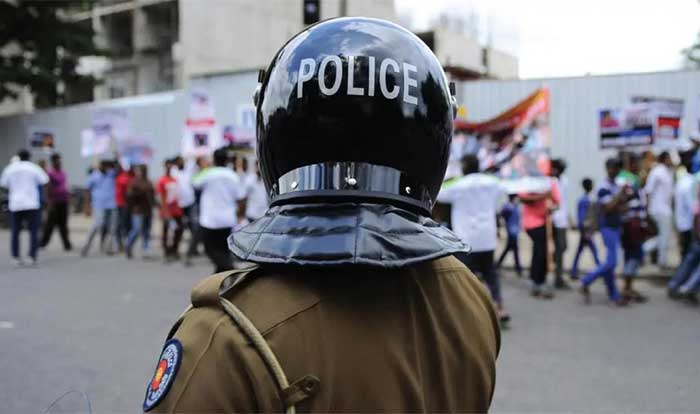
Police inaction to prevent arson attacks against SLPP politicians in the Western province on May 9 may have been due to orders not to carry weapons to deal with protesters, a new investigation has revealed.A review of the role of the police at the time showed Senior Deputy Inspector General Deshabandu Tennakoon had ordered all officers under him to ensure that no personnel were issued with arms and ammunition in the run up to the May 9 violence.

In his two-page instructions to DIGs, SSPs, SPs, ASPs and officers in charge of all stations in the districts of Colombo, Kalutara and Gampaha, Tennakoon had said no weapons or ammunition should be issued under any circumstances to officers deployed to deal with the protesters.

This order dated May 5 had not come to the attention of a three-member investigation panel headed by former navy chief Wasantha Karannagoda appointed to look into the security lapses. However, the panel had uncovered an order similar to that of Tennakoon issued by the then army chief Shavendra Silva.

Deploying police without even their own personal protection is seen as a violation of departmental orders and an internal investigation had begun, a top official source said.Meanwhile, the private residence of President Ranil Wickremesinghe was torched despite 400 air force men being deployed to protect it. The airmen did not open fire to deter a handful of attackers who scaled walls to enter the premises and set it on fire.

Instead of dealing with the arsonists, a police Special Task Force (STF) unit outside the Fifth Lane residence of Wickremesinghe attacked a television crew angering the protesters and encouraging more people to congregate there.

Several people identified through CCTV footage have already been arrested in connection with the arson at Wickremesinghe’s residence.However, action is yet to be taken against police and security personnel who failed to ensure law and order.

Sinister move to get SJB MPs to cross over –Sajith

April 2nd, 2023

Courtesy The Daily Mirror

Leader of the Opposition Sajith Premadasa alleged that there is a sinister move to buy over MPs from his party the Samagi Jana Balawegaya ( SJB).

Speaking during a public meeting in Dehiwala, Mr. Premadasa said some MPs have been offered millions of rupees if they cross over to the government.

Buying over of MPs is the latest game plan of the government,” he said.

The incumbent President once sent his MPs on a tour to Singapore to woo MPs to his side when a UPFA government tried to woo them,” he recalled.

One wonders whether the government is out of its mind to launch an operation to woo MPs to its side when some in the ruling party are contemplating crossing over to the opposition,” he added.(Yohan Perera)

President launches island wide program to plant 3M jackfruit trees

April 2nd, 2023

Courtesy The Daily Mirror

The first phase of the program to plant three million jackfruit trees across the country, under the theme ‘Guwan Hamuda Herali Perali’, was launched today at the Anuradhapura Air Force Base under the patronage of President Ranil Wickremesinghe.

This program has been implemented in conjunction with the government’s food security program with the aim of creating a local and foreign jackfruit market and to promote jackfruit among the Sri Lankan people.

Under this program, seventy five thousand jackfruit trees are expected to be planted within this year.

The book ‘Guwan Hamuda Herali Perali’ written about the jackfruit plantation was also presented to President Ranil Wickremesinghe.

In addition to jackfruit cultivation, this book also contains information on related products.

Minister of State for Defence Premitha Bandara Tennakoon, President’s Senior Adviser on National Security and Chief of Presidential Staff Sagala Ratnayake, Secretary of the Ministry of Defence General Kamal Gunaratne (Rtd) and several others attended the event.

President’s remarks on IMF and Beyond.

April 1st, 2023

Sugath Kulatunga

Delivering the keynote address at the ‘Economic Dialogue – IMF & Beyond’ President  referred to Sri Lanka’s missed opportunities for development, and mentioned the failure to implement D.S. Senanayake’s proposals and the Shenoy Report of 1965. He added that the country’s progress was hindered by the ethnic issue that turned into armed conflict in the late 1970s, which impeded the chance to rebuild the country’s foundation for development.

My comments on the D.S. Senanayake proposals which were posted on Facebook and LBN are as follows:  In 1944, the State Council resolved to launch a State Project of Industrialization in Ceylon. In the same year there was the – Industrial Corporation Bill. The concept of socialist industrialization was keenly advocated by the Marxist parties which believed that full employment could be achieved only through industrialization. In the same year J.R. Jayawardene (JR) moved a motion in the State Council for the preparation of a complete plan for industrialization. There was a firm bipartisan consensus on industrialization with a different emphasis on ownership. D.S. Senanayake (DS) was a prime mover of the plan for industrializatione briefly as follows;

At the general election of 1947 the UNP fell short of a majority and had to form a government in coalition with the All Ceylon Tamil Congress. The success of the left parties at the 1947 election alarmed DS who was an astute politician. He was aware that the left could build a mass base with industrialization. DS had a staunch commitment to the development of agriculture through colonization. He also had the motive to create a pool of peasant farmers who would be a strong base for the UNP. The project had both a nationalistic and political flavor and was vigorously pursued in the face of criticism from the left parties. But for the political bias, DS could have steered a two-pronged strategy for the development of the country leading to food security and full employment through industrialization. We had the funds, physical and human resources, and the infrastructure to venture into manufacture. But politics prevailed and we missed the most important opportunity for an early start of a manufacture-based economy with export orientation.

Maneuvers of DS on succession kept JR, the best brain in the party, out in the cold. If JR succeeded DS, he who believed in planned industrialization could have introduced industries with modern technology with the help of the Japanese who were under obligation to him for his open support to Japan, at the war reparation conference at San Francisco in 1951 where he rejected reparations and quoted the Buddhist saying Nahi verena verani.

President also said that ‘When we became independent, Mr. D.S. Senanayake said let’s be independent, cultivate and let us aim to be self-sufficient in rice. When we saved that foreign exchange, we’ll be much better off.”

Dudley Senanayake and all succeeding governments followed the same policies of paddy cultivation, but we are still not self-sufficient in food and meet 40 % of our food requirement of rice and flour with the import of wheat flour.

President added that The second chance came again in 1965 with Mr. Dudly Senanayake’s government and the Shenoy report. The starting of industry, the Industrial Development Board, education reforms, increasing productivity and tourism. Some of these were implemented, but the Shenoy report was not implemented, and as a result, we lost the next opportunity.If we had gone ahead with those reforms, it was similar to what Park Chung-hee brought in South Korea and Lee Kuan Yew brought into Singapore.”

Shenoy was a student of Fredrick Hayek who was the founder of the extreme neo liberal Mont Pellerin society. Perhaps Shenoy may have even been a member of this society which believes that the state has only a minimum role in the development of a country. President Wickremesinghe was a longstanding member of the Mont Pellerin society.

President’s reference to Singapore is not very relevant. Singapore did not resort to privatization but introduced a super management model in Temasek as a holding company of SOEs with a current assets equivalent to around USD 283 billion, which is about 4 times the amount of Sri Lanka’s Gross Domestic Product (GDP). Thanks to Dr. W.A.Wijewardhana  we have access to the unpublished report of Shenoy. Shenoy starts his report by remarking that Ceylon’s economy has been inflicted with 3Ps of maladies in 1950s and 1960s, namely, the maladies of production, prices and (balance of) payments. Amongst his recommendations are balancing the budget, listing state corporations in the stock exchange, give cash subsidies instead of commodity subsidies, Float the rupee and remove exchange and import controls. There were no recommendations on the first P of production.

President Wickremesinghe also urged that If we are to do this, we must remember that one of the biggest issues that held back our growth is the ethnic issue. We have to think as Sri Lankans. We cannot divorce that issue from the economic issues. There are two E’s as far as I can see. And we have to address both those issues. I am not dealing with that issue now.”

President must make a clear definition of the ‘ethnic issue’ before making any attempt to solve it. It is auspicious that he is not touching that can of worms now.

“ලන්ඩනයේ දැනුම” පරීක්ෂණය ලන්ඩන් නගරයේ බලපත්‍රලාභී කුලී රථ රියදුරන් වීමට කැමති අය විසින් ගනු ලබන දැඩි තක්සේරුවකි.

April 1st, 2023

සසංක ද සිල්වා පන්නිපිටිය.

දැනුම ලෙසද හැඳින්වෙන, පරීක්ෂණයෙන් ලන්ඩනයේ භූගෝල විද්‍යාව සහ වීදි සැකැස්ම සමඟ අයදුම්කරුවෙකුගේ හුරුපුරුදුකම මෙන්ම නගරයේ වැදගත් සන්ධිස්ථාන සහ උනන්දුවක් දක්වන ස්ථාන පිළිබඳ ඔවුන්ගේ දැනුම ඇගයීමට ලක් කරයි.

මෙම පරීක්ෂණය ලෝකයේ එවැනි ආකාරයේ වඩාත්ම අභියෝගාත්මක තක්සේරුවක් ලෙස සලකනු ලබන අතර, සමත් වීමට ඇදහිය නොහැකි තරම් දුෂ්කර වීම සඳහා කීර්තියක් ඇත.

පරීක්ෂණය සඳහා සූදානම් වීමට, අනාගත කුලී රථ රියදුරන් ලන්ඩනයේ වීදි, බිම් සලකුණු සහ ගමනාගමන රටා අධ්‍යයනය කිරීමට මාස හෝ වසර ගණනාවක් ගත කළ යුතුය.

ඔවුන් නගරයේ ඕනෑම ස්ථාන දෙකක් අතර වඩාත් කාර්යක්ෂම මාර්ග මෙන්ම ජනප්‍රිය සංචාරක ගමනාන්ත, රෝහල්, කෞතුකාගාර සහ අනෙකුත් වැදගත් සන්ධිස්ථානවල ස්ථාන මතක තබා ගැනීමට අපේක්ෂා කෙරේ.

පරීක්ෂණය වාචික විභාග මාලාවකින් සමන්විත වන අතර, ලන්ඩනයේ ලකුණු දෙකක් අතර සැරිසැරීමට පරීක්ෂකයින් අයදුම්කරුගෙන් ඉල්ලා සිටී.

එවිට අයදුම්කරු වාචිකව වේගවත්ම සහ කාර්යක්ෂම මාර්ගය සැපයිය යුතු අතර, අවට වීදි සහ බිම් සලකුණු පිළිබඳ මනා දැනුමක් ද පෙන්නුම් කරයි.

පරීක්ෂකයින් ඔවුන්ගේ දැඩි ශ්‍රේණිගත කිරීමේ ප්‍රමිතීන් සහ විස්තර කෙරෙහි අවධානය යොමු කිරීම සඳහා ප්‍රසිද්ධය, එනම් අයදුම්කරුවන්ට ඉතා නිශ්චිත සහ නිවැරදි තොරතුරු සැපයීමට හැකි විය යුතුය.

ලන්ඩන් පිළිබඳ දැනුම පරීක්ෂණයේ අරමුණ වන්නේ නගරයේ බලපත්‍රලාභී කුලී රථ රියදුරන් නගරයේ භූගෝල විද්‍යාව සහ බිම් සලකුණු පිළිබඳ ඉහළ නිපුණතාවයක් සහ දැනුමක් ඇති බව සහතික කිරීමයි.

එය රියදුරන් සහ මගීන් සඳහා ඉහළ ආරක්ෂාවක් සහ සේවාවක් පවත්වා ගැනීමට උපකාරී වන බැවින් එය ලන්ඩනයේ කුලී රථ කර්මාන්තයේ වැදගත් අංගයක් ලෙස සැලකේ.

සමස්තයක් වශයෙන්, ලන්ඩන් පිළිබඳ දැනුම පරීක්ෂණය ලන්ඩන් කුලී රථ කර්මාන්තයේ ඉහළම ප්‍රමිතිය නියෝජනය කරන අභියෝගාත්මක නමුත් ඉතා ගෞරවනීය තක්සේරුවකි.

ලන්ඩන් පිළිබඳ දැනුම පරීක්ෂණය හේතු කිහිපයක් නිසා අනෙකුත් ප්‍රධාන නගරවල අනුපිටපත් කර නොමැති සුවිශේෂී තක්සේරුවකි.

පළමුව, පරීක්ෂණය ලන්ඩනයේ අද්විතීය භූගෝල විද්‍යාව හා ඉතිහාසය සමඟ සමීපව සම්බන්ධ වේ. නගරය සංකීර්ණ වීදි පිරිසැලසුමක් ඇති අතර, පටු මංතීරු සහ කුඩා වීදි විශාල සංඛ්‍යාවක් සමඟින් ගමන් කිරීමට අපහසු වේ.

මීට අමතරව, ලන්ඩනයට පොහොසත් ඉතිහාසයක් සහ සංස්කෘතියක් ඇති අතර එය එහි බිම් සලකුණු සහ උනන්දුව දක්වන ස්ථාන වලින් පිළිබිඹු වන අතර එය නුහුරු නුපුරුදු අයට සැරිසැරීමට විශේෂයෙන් අභියෝගාත්මක නගරයක් බවට පත් කරයි.

අනෙකුත් නගරවලට ඔවුන්ගේ වීදි පිරිසැලසුමෙහි සමාන මට්ටමේ සංකීර්ණත්වයක් හෝ ලන්ඩනයට සමාන ඓතිහාසික හා සංස්කෘතික වැදගත්කමක් නොතිබිය හැකිය, එයින් අදහස් වන්නේ දැනුම පරීක්ෂාව අනුකරණය කිරීම අවශ්‍ය හෝ ප්‍රායෝගික නොවිය හැකි බවයි.

දෙවනුව, ලන්ඩන් පිළිබඳ දැනුම පරීක්ෂණයට නගරයේ දිගු ඉතිහාසයක් හා සම්ප්‍රදායක් ඇත.

19 වන සියවසේ සිට ලන්ඩනයේ බලපත්‍රලාභී කුලී රථ රියදුරන් සඳහා පරීක්ෂණය අවශ්‍ය වූ අතර එය නගරයේ කුලී රථ කර්මාන්තයේ වැදගත් අංගයක් බවට පත්ව ඇත.

මෙම පරීක්ෂණය කුලී රථ රියදුරන් අතර විශේෂඥභාවයේ සහ වෘත්තීයභාවයේ සංකේතයක් ලෙස පුළුල් ලෙස පිළිගෙන ඇති අතර, එය කර්මාන්තයේ ආරක්ෂාව සහ සේවා ඉහළ ප්‍රමිතීන් පවත්වා ගැනීමට උපකාරී වී ඇත. වෙනත් නගරවල, සමාන පරීක්ෂණයක් සඳහා එකම මට්ටමේ සම්ප්‍රදායක් හෝ පිළිගැනීමක් නොතිබිය හැකිය, එයින් අදහස් කරන්නේ එය එතරම් පුළුල් ලෙස පිළිගත් හෝ ඵලදායී නොවිය හැකි බවයි.

අවසාන වශයෙන්, ලන්ඩන් පිළිබඳ දැනුම පරීක්ෂණය ඉතා ඉල්ලුමක් ඇති තක්සේරුවක් වන අතර ඒ සඳහා සූදානම් වීමට සැලකිය යුතු කාලයක් සහ වෑයමක් අවශ්‍ය වේ.

අනාගත කුලී රථ රියදුරන්ට ලන්ඩනයේ වීදි, බිම් සලකුණු සහ ගමනාගමන රටා කටපාඩම් කිරීමට වසර කිහිපයක් ගත විය හැකි අතර, පරීක්ෂණය සමත් වීම කුප්‍රකට ලෙස දුෂ්කර ය.

වෙනත් නගරවලට එවැනි ඉල්ලුමක් ඇති තක්සේරුවක් සඳහා ආයෝජනය කිරීමට සමාන මට්ටමේ කැපවීමක් හෝ සම්පත් නොතිබිය හැකිය, එයින් අදහස් වන්නේ එය ප්‍රායෝගික හෝ ප්‍රතිනිර්මාණය කිරීම ශක්‍ය නොවන බවයි.

කුලී රථ රියදුරන් බලපත්‍රයක් ලබා ගැනීම සඳහා පැහැදිලි කළ යුතු ලන්ඩනයේ දැනුම වැනි පරීක්ෂණයක් තිබීමේ වාසි කිහිපයක් තිබේ:

1. ආරක්‍ෂාව: දැනුම පරීක්‍ෂණයෙන් සමත් වූ කුලී රථ රියදුරන් නගරයේ වීදි සහ බිම් සලකුණු පිළිබඳ මනා අවබෝධයකින් සමන්විත වන අතර එමඟින් ඔවුන් අතරමං වීමට හෝ අකාර්යක්ෂම මාර්ගවල ගමන් කිරීමට ඇති ඉඩකඩ අඩු වේ. මෙමගින් මගීන්ට වඩාත් ආරක්ෂිත සහ කාර්යක්ෂම ගමන් බිමන් යා හැක.

2. වෘත්තීමයත්වය: ලන්ඩන් පිළිබඳ දැනුම පරීක්ෂණය කුලී රථ කර්මාන්තයේ වෘත්තීයභාවය සහ විශේෂඥතාව සංකේතයක් ලෙස සැලකේ. පරීක්ෂණය සමත් වූ කුලී රථ රියදුරන් බොහෝ විට වඩා දක්ෂ හා දැනුමක් ඇති අය ලෙස සලකනු ලැබේ, එය පාරිභෝගික තෘප්තිය සහ පක්ෂපාතිත්වය ඉහළ මට්ටමකට ගෙන යා හැකිය.

3. ප්‍රමිති: සියලුම බලපත්‍රලාභී කුලී රථ රියදුරන්ට නිශ්චිත මට්ටමේ දැනුමක් සහ නිපුණතාවයක් ඇති බව සහතික කිරීම මගින් කුලී රථ කර්මාන්තයේ උසස් ප්‍රමිතීන් සහ සේවා ප්‍රමිතීන් පවත්වා ගැනීමට දැනුම පරීක්ෂණය උපකාරී වේ. නුපුහුණු හෝ අද්දැකීම් අඩු රියදුරන් කර්මාන්තයට ඇතුළුවීම වැළැක්වීමට මෙය උපකාරී වේ.

4. සංචාරක ව්‍යාපාරය: ලන්ඩන් යනු ජනප්‍රිය සංචාරක ගමනාන්තයක් වන අතර, දැනුම පරීක්‍ෂාවෙන් සමත් වූ කුලී රථ රියදුරන් බොහෝවිට නගරයේ බිම් සලකුණු සහ උනන්දුවක් දක්වන ස්ථාන පිළිබඳ නිවැරදි සහ ප්‍රයෝජනවත් තොරතුරු නරඹන්නන්ට ලබා දීමට වඩා හොඳින් සන්නද්ධ වේ. මෙය සංචාරකයින් සඳහා වඩාත් ධනාත්මක අත්දැකීමක් ලබා ගත හැකි අතර එමඟින් නගරයේ ආර්ථිකය ඉහළ නැංවිය හැකිය.

5. රැකියා තෘප්තිය: දැනුම පරීක්ෂණයෙන් සමත් වූ කුලී රථ රියදුරන් තම ක්ෂේත්‍රයේ ඉහළ මට්ටමේ ප්‍රවීණතාවයක් ලබා ඇති බව දැන දැනම ඔවුන්ට ආඩම්බරයක් සහ ජයග්‍රහණයක් දැනිය හැකිය. මේකෙන් පුළුවන් රියදුරන්ට සහ ඔවුන්ගේ මගීන්ට ප්‍රයෝජනවත් විය හැකි රැකියා තෘප්තිය සහ අභිප්‍රේරණය වැඩි කිරීමට හේතු වේ.

ලන්ඩන් දැනුම පරීක්ෂණයට බොහෝ වාසි ඇති අතර, සලකා බැලිය හැකි ඍණාත්මක පැති කිහිපයක් ද තිබේ:

1. ඇතුල්වීමට ඇති බාධක: දැනුම පරීක්ෂණය යනු කාලය සහ ශ්‍රමය සැලකිය යුතු ආයෝජනයක් අවශ්‍ය වන දුෂ්කර හා කාලය ගතවන තක්සේරුවකි. මෙය කුලී රථ කර්මාන්තයේ විවිධත්වය සීමා කළ හැකි, පරීක්ෂණය සඳහා සූදානම් වීමට සම්පත් හෝ කාලය නොමැති අයට ඇතුල් වීමට බාධා ඇති කළ හැකිය.

2. පිරිවැය: අනාගත කුලී රථ රියදුරන්ට අධ්‍යයන ද්‍රව්‍ය සඳහා ගෙවීමට හෝ අධ්‍යයනය සඳහා රැකියාවෙන් විවේක ගැනීමට අවශ්‍ය විය හැකි බැවින්, දැනුම පරීක්ෂණය සඳහා සූදානම් වීම මිල අධික විය හැක. මෙය සමහර රියදුරන්ට, විශේෂයෙන්ම කර්මාන්තයේ නියැලෙන අයට සැලකිය යුතු මූල්‍ය බරක් විය හැකිය.

3. නවෝත්පාදනය පිළිබඳ සීමාවන්: දැනුම පරීක්ෂණය සැලසුම් කර ඇත්තේ නගරයේ වත්මන් වීදි සහ බිම් සලකුණු පිළිබඳ දැනුම පරීක්ෂා කිරීම සඳහා වන අතර, එයින් අදහස් වන්නේ එය නගරයේ යටිතල පහසුකම් හෝ කුලී රථ කර්මාන්තයට බලපෑ හැකි නව තාක්‍ෂණයේ වෙනස්කම් සලකා බැලිය නොහැකි බවයි. මෙය නවෝත්පාදනය සීමා කළ හැකි අතර නව අදහස් කර්මාන්තයට ඇතුළු වීම වඩාත් අපහසු වේ.

4. ආතතිය: දැනුම පරීක්ෂණය සඳහා සූදානම් වීම සහ ගැනීම අනාගත කුලී රථ රියදුරන්ට ආතති සහගත සහ අභියෝගාත්මක අත්දැකීමක් විය හැකිය. විශාල තොරතුරු ප්‍රමාණයක් මතක තබා ගැනීමට සහ වාචික විභාගයේදී හොඳින් ක්‍රියා කිරීමට ඇති පීඩනය භයානක විය හැකි අතර සමහර රියදුරන් එහි ප්‍රතිඵලයක් ලෙස කාංසාව හෝ ආතතිය අත්විඳිය හැකිය.

5. විකල්ප විකල්ප: දැනුම පරීක්ෂණය කුලී රථ කර්මාන්තයේ පුළුල් ලෙස පිළිගත් විශේෂඥතාව සංකේතයක් වන අතර, රියදුරෙකුගේ දැනුම සහ කුසලතා ඇගයීම සඳහා විකල්ප විකල්ප තිබිය හැකිය. නිදසුනක් වශයෙන්, සමහර නගර GPS හෝ වෙනත් තාක්ෂණයක් භාවිතා කරමින් නගරයේ වීදි සහ බිම් සලකුණු පිළිබඳ රියදුරෙකුගේ දැනුම තක්සේරු කිරීමට භාවිතා කරයි, එය දැනුම පරීක්ෂණයට වඩා අඩු කාලයක් ගතවන සහ මිල අධික විය හැකිය.

සසංක ද සිල්වා 

පන්නිපිටිය.

The “Knowledge of London” test is a rigorous assessment that is taken by those who wish to become licensed taxi drivers in the city of London.

April 1st, 2023

Sasanka De Silva Pannipitiya

The “Knowledge of London” test is a rigorous assessment that is taken by those who wish to become licensed taxi drivers in the city of London.

Also known as “The Knowledge,” the test evaluates an applicant’s familiarity with the geography and street layout of London, as well as their knowledge of important landmarks and points of interest in the city.

The test is considered one of the most challenging assessments of its kind in the world, with a reputation for being incredibly difficult to pass.

To prepare for the test, prospective taxi drivers must spend months or even years studying the streets, landmarks, and traffic patterns of London.

They are expected to memorize the most efficient routes between any two points in the city, as well as the locations of popular tourist destinations, hospitals, museums, and other important landmarks.

The test itself consists of a series of oral exams, where examiners will ask the applicant to navigate between two points in London.

The applicant must then verbally provide the quickest and most efficient route, while also demonstrating a thorough knowledge of the surrounding streets and landmarks.

The examiners are known for their strict grading standards and attention to detail, meaning that applicants must be able to provide highly specific and accurate information.

The purpose of the Knowledge of London test is to ensure that licensed taxi drivers in the city are highly skilled and knowledgeable about the city’s geography and landmarks.

It is considered an important aspect of the taxi industry in London, as it helps to maintain high standards of safety and service for both drivers and passengers.

Overall, the Knowledge of London test is a challenging but highly respected assessment that represents the highest standard of expertise in the London taxi industry.

The Knowledge of London test is a unique assessment that has not been duplicated in other major cities for several reasons.

Firstly, the test is closely linked to the unique geography and history of London. The city has a complex street layout, with numerous narrow alleys and small streets that can be difficult to navigate.

Additionally, London has a rich history and culture that is reflected in its landmarks and points of interest, making it a particularly challenging city to navigate for those who are unfamiliar with it.

Other cities may not have the same level of complexity in their street layout or the same historical and cultural significance as London, which means that replicating the Knowledge test may not be necessary or practical.

Secondly, the Knowledge of London test has a long history and tradition in the city.

The test has been a requirement for licensed taxi drivers in London since the 19th century, and it has become an important aspect of the taxi industry in the city.

The test is widely recognized as a symbol of expertise and professionalism among taxi drivers, and it has helped to maintain high standards of safety and service in the industry. In other cities, there may not be the same level of tradition or recognition for a similar test, which means that it may not be as widely accepted or effective.

Finally, the Knowledge of London test is a highly demanding assessment that requires a significant amount of time and effort to prepare for.

It can take several years for prospective taxi drivers to memorize the streets, landmarks, and traffic patterns of London, and the test itself is notoriously difficult to pass.

Other cities may not have the same level of commitment or resources to invest in such a demanding assessment, which means that it may not be practical or feasible to replicate.

There are several advantages of having a test like the Knowledge of London that taxi drivers must clear in order to obtain a license:

1.   Safety: Taxi drivers who have passed the Knowledge test are equipped with a thorough understanding of the city’s streets and landmarks, which makes them less likely to get lost or take inefficient routes. This can lead to safer and more efficient journeys for passengers.

2.   Professionalism: The Knowledge of London test is considered a symbol of professionalism and expertise in the taxi industry. Taxi drivers who have passed the test are often seen as more skilled and knowledgeable, which can lead to higher levels of customer satisfaction and loyalty.

3.   Standards: The Knowledge test helps to maintain high standards of service and safety in the taxi industry by ensuring that all licensed taxi drivers have a certain level of knowledge and skill. This can help to prevent unqualified or inexperienced drivers from entering the industry.

4.   Tourism: London is a popular tourist destination, and taxi drivers who have passed the Knowledge test are often better equipped to provide visitors with accurate and helpful information about the city’s landmarks and points of interest. This can lead to a more positive experience for tourists, which can in turn boost the city’s economy.

5.   Job satisfaction: Taxi drivers who have passed the Knowledge test may feel a sense of pride and accomplishment, knowing that they have achieved a high level of expertise in their field. This can lead to increased job satisfaction and motivation, which can benefit both the drivers and their passengers.

While the Knowledge of London test has many advantages, there are also some possible negative sides to consider:

1.   Barriers to entry: The Knowledge test is a difficult and time-consuming assessment that requires a significant investment of time and effort. This can create barriers to entry for those who may not have the resources or time to prepare for the test, which could limit the diversity of the taxi industry.

2.   Cost: Preparing for the Knowledge test can be expensive, as prospective taxi drivers may need to pay for study materials or take time off work to study. This can be a significant financial burden for some drivers, particularly those who are just starting out in the industry.

3.   Limitations on innovation: The Knowledge test is designed to test knowledge of the city’s current streets and landmarks, which means that it may not consider changes to the city’s infrastructure or new technology that could affect the taxi industry. This could limit innovation and make it more difficult for new ideas to enter the industry.

4.   Stress: Preparing for and taking the Knowledge test can be a stressful and challenging experience for prospective taxi drivers. The pressure to memorize large amounts of information and perform well on the oral exam can be daunting, and some drivers may experience anxiety or stress as a result.

5.   Alternative options: While the Knowledge test is a widely recognized symbol of expertise in the taxi industry, there may be alternative options for evaluating a driver’s knowledge and skill. For example, some cities use GPS or other technology to assess a driver’s knowledge of the city’s streets and landmarks, which may be less time-consuming and costly than the Knowledge test.

Vatican “Apologizes” For Helping European Colonizers

April 1st, 2023

Vatican Apologizes” For Helping European Colonizers

The Vatican has publicly apologized for helping European colonizers in the past. But does the apology mean anything? Palki Sharma tells you more

Truth behind the tragedy of modern agriculture

April 1st, 2023

Courtesy The Daily Mirror

 About 64 percent of the imported urea in Sri Lanka is used for paddy cultivation, but only 20-40 percent of it is actually absorbed
There are farmers who overcame the challenge posed by the chemical fertilizer ban brought about in 2021 Government
In contrast to other countries, Sri Lanka shows limited interest in research related to organic farming
Ampara farmers cultivated using eco-friendly methods for 3 main seasons and achieved a successful harvest

Once a self-sufficient and prosperous nation in terms of food, Sri Lanka’s agriculture industry has now changed completely. The Green Revolution of the 1960s brought the widespread use of chemical inputs and fertilizers to the sector. Had chemical agriculture been sustainable, there would be no need to discuss food safety and food security as of now.

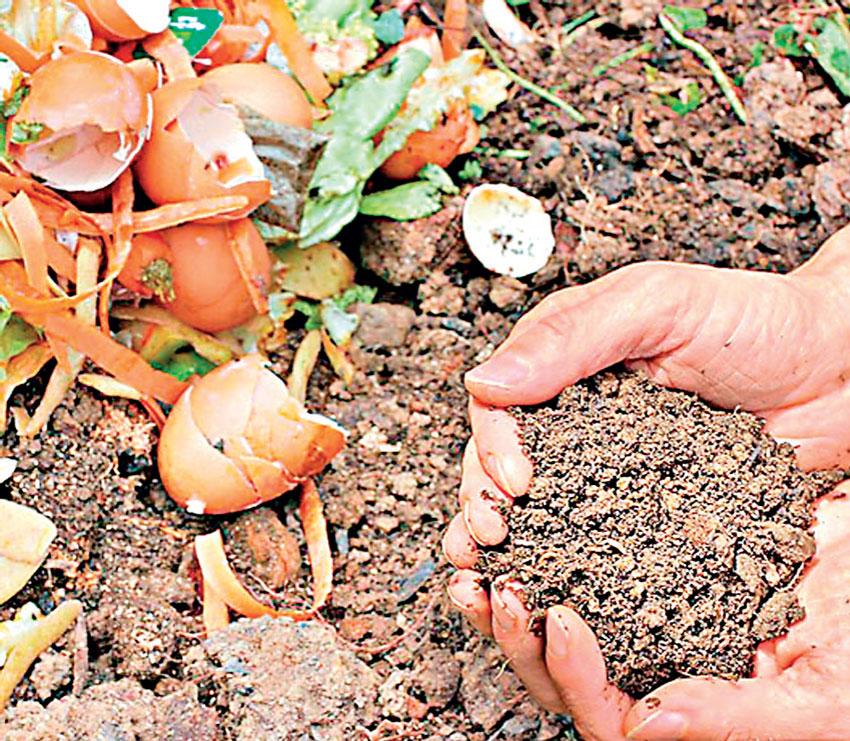

According to According to Marginalized Organic Producer Association (MOPA) Chairman Dr. Sarath Ranaweera attracted by the ‘Green Revolution’ to uplift agriculture, Sri Lankan farmers set their sights on increasing yields at all costs; forgetting one crucial element which is the soil. Prior to the use of chemical inputs the soil was rich and consisted of beneficial micro-organisms and nutrients necessary for plant growth. These microorganisms were especially crucial for the absorption of nitrogen, potassium and phosphorus components by plants. However, the addition of synthetic chemical inputs to the soil to obtain higher yields turned the once-fertile soil into dead soil, which destroyed beneficial microbes. This left farmers dependent solely on chemical inputs to maintain their crops,” explained Dr. Ranaweera.


Despite having a long history of farming, Sri Lanka lacks a deep understanding of the intricacies of agriculture. When farmers apply chemical inputs to their crops, they have little scientific knowledge of how the plants will absorb these chemicals; no matter how liberally they are applied. This emphasised the urgent need for a more understanding of the physical and chemical basis of plant growth.


In order to reduce the amount of nitrogen in river water, countries like Israel have reduced the mixing of nitrogen in river water. In those countries, arrangements have been made to supply the water required for cultivation through drip irrigation systems using advanced techniques

Dr. Sarath Ranaweera 


Inorganic nitrogen (N) that can be absorbed by plants is present in the soil in two forms: ammonium (NH4+) and nitrate (NO3-). Ammonium is held in soil particles and it can exchange with other cations. They can also be absorbed by plants. Ammonium does not degrade easily. But when we artificially add nitrogen to the soil, it does not remain in the soil and its efficiency dips. Different plants take up nitrogen at different rates and rates. Therefore, the frequency of applying nitrogen artificially to the soil has to be increased. It will also cost a lot of money. However, plants are not able to absorb all the chemical inputs added externally. Therefore, many external inputs, including urea, which we use in agriculture, will end up in reservoirs,” said Dr. Ranaweera.


The Sustainable Nitrogen Management Status Report, published by the Mahaweli Development and Environment Ministry in 2019 has revealed some facts regarding this. About 64 percent of the imported urea in Sri Lanka is used for paddy cultivation, but only 20-40 percent of it is actually absorbed. In 2018, tea cultivation consumed 100.4 million kilograms of urea and 27.7 million kilograms of ammonium sulfate adding up to a staggering 51.88 million kilos of nitrogen. It is estimated that 40 percent of the total amount of nitrogen applied was wasted. Sri Lanka’s agriculture sector ranks quite low on the EPI 2018 Sustainable Nitrogen Management Index, coming in at124th place out of 180 countries.


Synthetic chemical fertilizers have been widely used in Sri Lanka’s agriculture sector. Past governments increased the use of artificial fertilizers by offering subsidies. NPK fertilizers, which are highly soluble in water, have had devastating effects on the entire ecosystem, particularly on water sources. Excess fertilizer that is not absorbed by crops is washed into nearby waterways, leading to an increase in nitrogen content in water. Research reports on the water have revealed that Sri Lanka’s river system now has one of the highest levels of nitrogen among all river tributaries in Asia. In order to reduce the amount of nitrogen in river water, countries like Israel have reduced the mixing of nitrogen in river water. In those countries, arrangements have been made to supply the water required for cultivation through drip irrigation systems using advanced techniques. But there is no evidence of such techniques being practised in Sri Lanka. Sri Lanka lags behind in achieving its agricultural development goals. We boast about achieving sustainable development goals, but much needs to be done,” he said.


But instead, we have been squandering our country’s economy. When nitrogen is produced naturally in the country, Sri Lanka relies heavily on imported urea to meet the nitrogen requirement of crops. Usually, plants absorb the required amount of nitrogen in a short period of time and release the rest to the environment. But what Sri Lanka’s farmers did was add imported urea excessively to plants, leading to wasted money and massive environmental damage.


Dr. Ranawera further said that part from the accumulation of water on the ground surface, chemical nitrogen combines with water and infiltrates the ground contaminating groundwater sources. Nitrogen evaporation also releases nitrous oxide (N2O) into the atmosphere, which is a highly dangerous gas. Nitrous oxide has the ability to increase the temperature 300 times as much as carbon dioxide over a 100-year period. In addition, nitrous oxide is the most destructive gas for the depletion of the ozone layer.


According to him a global summary analysis published by academics Yuri Sherbok, Neville Mirer, and Philip Robertson shows that, according to non-linear responses of nitrous oxides, the increased use of nitrogen inputs in modern agriculture leads to higher emissions of nitrous oxide. The application of varying amounts of nitrogen based on crop needs also exacerbates this issue. Therefore, the 2021 United Nations Conference on Climate Change, COP26 allocated US$ 130 million to protect the environment by reducing greenhouses.


Unsustainable agriculture practices
The unsustainable agriculture practices in Sri Lanka have led to a disastrous situation, and there are various solutions available to address this issue. But there is a lack of interest from society due to a lack of proper knowledge and technology about organic and ecological farming methods. They have received less attention due to ignorance and myths surrounding them. Soil is a crucial element of sustainable farming. In farming, it is more appropriate to apply organic materials to the soil that do not destroy microorganisms and enhance their life and activity. Organic agriculture always protects the soil and strengthens the absorption process whereas the chemical method destroys beneficial microorganisms in the soil, leading to dead soil. Chemical inputs make the soil dead and organic inputs protect the life of the soil.


Restoring dead soil can take 1-3 years. Depending on the impact of chemical inputs on the soil, the time can extend even more. Soil restoration involves reactivating natural processes in the soil and creating a suitable environment for the growth of nutrients and microorganisms.

Agrcuture products produced using Carbonic fertilizer 


However the question arises as to whether it is possible to achieve higher yields and profitable cultivation by solely using organic fertilizers in a plantation. The key is to thoroughly study the farming method. When comparing the yield from crops using organic fertilizers to those using chemical fertilizers, the yield produced from by using the former is often lower. In the last Yala season, ordinary compost fertilizers were used for cultivation in many districts where paddy cultivation is widely practiced. The yield was 84 bushels per acre. In the last five years, the yield using chemical fertilizers was 88 bushels per acre,” he explained.


There are farmers who overcame the challenge posed by the chemical fertilizer ban brought about suddenly by the 2021 Government using environmentally friendly methods as seen in the Ampara district. Ampara farmers cultivated using eco-friendly methods for 3 main seasons and achieved a successful harvest. According to the Department of Agriculture, farmers were able to achieve a yield of 5800 kg per hectare from the 4660 hectares cultivated in Ampara district using biofertilizers. This is an increase of 27.6% compared to the average yield of 4,546 kg per hectare using chemical fertilizers in Ampara over the past five years. Some remain skeptical about the potential of organic farming to increase yields and it is unfortunate. 


In addition, several agricultural lands have achieved remarkable outcomes from organic farming and are even exporting their products. For instance, the Dankotuwa Lunuwila Paraboa Farmers’ Organization in the North-West Province is successfully managing over 110 acres of paddy fields with the cooperation of more than 100 farmers. They harvest the paddy from these fields, process it into rice, and export it. Each farmer in the project was able to achieve a yield of 110 bushels per acre from 8 acres of organic farming.


In contrast to other countries, Sri Lanka shows limited interest in research related to organic farming. Therefore, the knowledge on that field is lacking. Research conducted by Wayamba University using different types of organic fertilizers was released on January 05, 2022. According to the report, the research was conducted using Bio Foods/Ecoplus bio fertilizers and regular organic fertilizers and two types of paddies in the Galewela area and its finding was that the yield of the cultivation using bio fertilizers was very high,” he said.


Some farmers who do not believe in the old saying if the soil is good, farming is good” are facing many challenges in cultivation. To overcome this, it is crucial to provide accurate scientific knowledge and new discoveries about farming to the people. This knowledge can be used to formulate national policies related to agriculture and new educational approaches. By doing so, the country and the world can be led towards a sustainable path.

Busting the myth of Sri Lanka’s weak agricultural past 

April 1st, 2023

By Vinod Moonesinghe/www.medium.com Courtesy NewsIn.Asia

The past is a foreign country; they do things differently there.”

– L.P. Hartley, The go-between

Recent shortages of milk powder, wheat flour and even rice have brought into perspective Sri Lanka’s lack of food security. The situation has been exacerbated by growing dependence on imports of wheat — which rose from half a million tonnes in 1980 to nearly 1.5 million tonnes in 2020. This lack of food security has re-kindled an argument about the role of agriculture in Sri Lanka’s economy, which has extended into the realms of historiography.

When former secretary general of UNCTAD Gamini Corea wrote Sri Lanka has always been predominantly an agricultural economy since ancient times,” he reflected historical orthodoxy.

However, a revisionist historical school has emerged, holding that this view of Sri Lanka, as an agricultural country, the granary of the East, reflects a myth. For example, Former Central Bank deputy governor WA Wijewardena says that A widely-held view by many Sri Lankans is that Sri Lanka was an agriculture-based economy in the past and it should be so even in the future. The first part of this argument is only half-true.” He thinks that in the ancient past, Sri Lanka had an open economy”, in which trade occupied as important a place as agriculture.

Science Fiction writer Yudhanjaya Wijeratne, similarly, concludes that the evidence for this conversation is thin to non-existent.” He argues that accounts in mediaeval chronicles, of the size of the army of Parakramabahu I, and hence of the then population, are highly exaggerated.

These arguments appear to boil down to three main points:

 1. The system of agriculture was backward in comparison to today’s.

 2. Sri Lanka didn’t have a large population, especially compared to contemporary civilisations and

 3. Trade was as important as agriculture, if not more so.

Interestingly, the revisionists’ main pivot is against self-reliance in production in the contemporary economy, by denying the idea of self-reliance in the past.

Backward agriculture?

Modern capitalist agriculture has many advantages over ancient methods. Hybrid seeds yield far higher than traditional varieties. Weedicides eliminated female labour in the paddy field. Pesticides eliminated many insect enemies of crops.

But this does not tell the whole story. Ancient Sri Lankans built 30,000 irrigation tanks, of which fewer than 8,000 remain in operation today, part of a sophisticated pattern of tank cascade systems — each tank being part of a complex ecosystem, minimising bird and insect damage to crops, and ensuring renewal of soil nutrients and leeching out of salts. Farmers used the fresh soil of beds of silted-up tanks for paddy, constructing replacement tanks upstream. Traditional paddy varieties required less nutrition than modern hybrids, and were sturdier and more resistant to weeds, insects, and disease — so required no weedicides or pesticides.

With such a sophisticated irrigation system, farmers must also have known complex methods of cultivation. For example, traditionally they sowed three seasons annually, compared to two today. Apart from irrigated paddy fields, forests comprised an important agricultural sector — villagers used them as watersheds, for forest products (herbs, roots, spices, fruits) and for eco-friendly, rain-fed chena (swidden) vegetable cultivation for the market. They also grew vegetables in home gardens, using ground moisture.

The diet was completely different. We had no papaw, tomato, chilli, potato, or manioc, which all came from the Americas. People flavoured their food with forest products, such as pepper (the original miris), cinnamon, and curry leaves (karapincha) — so they did not need to grow it separately. The Portuguese soldier João Ribeiro reported that the villagers did not need to pluck pepper, just waiting for it to fall — making it of the highest quality — as it was so abundant.

Although the European invaders destroyed this system of agriculture, some of it remained extant in the Kandyan kingdom until the 1800s, when British colonial treasurer Anthony Bertolacci reported that the kingdom of Kandy exported rice.

Population

The area under cultivation during the Anuradhapura and Polonnaruwa periods dwarfed what is available today. Centuries of destruction turned millions of acres back to jungle — the Vanni alone contains 650,000 hectares, of which a substantial amount must have been cultivated. To this must be added enormous tracts of land, now under tea and rubber, which once comprised paddy or forest land, taken from the community and granted to planters. Such a large extent could have supported a sizeable population, while leaving a considerable exportable surplus.

Parakramabahu I must have required a significant surplus to enable his invasions of Myanmar and South India, and to hold onto Rameswaram for decades against the onslaughts of the mighty Chola empire.

Each of the 30,000 ancient tanks must have been associated with a village, each with an average population of about 300, giving about 9 million for the rural population. With the population of Anuradhapura and other cities, one might get a total of ten million. UNK Rathnayake concludes cautiously, from literary sources (which, he holds, reflect contemporary official statistics), that the population in the Polonnaruwa era may have been greater than today (the Pujavaliya giving 21 million and Rathnayake calculating 50 million from the Damabadeni Asna). Of course, these figures should be treated with care.

Wijeratne says that if this were the case, Sri Lanka would have a comparable population to the Roman Empire (about 60 million). The Ancient city of Rome had a population of a million in 12 sq km. We do not know the population of ancient Anuradhapura, but we do know it had an area of 40 sq km, slightly larger than modern Colombo, and dwarfing ancient Rome. Also, Rome depended on highly inefficient slave labour, requiring a much larger population for the same surplus — it survived by importing Egyptian grain, paid for by plunder from foreign expeditions.

Wijeratne suggests that to get to the 1871 census figure of 2.4 million, from 21 million in the reign of Parakramabahu I (1123–1186 CE), would require a ten-fold reduction in population, a 500-year extinction that should have gone noticed.”

But did it go unnoticed? We know there was a collapse of the Anuradhapura kingdom around 1000 CE, and that following this there was a gradual decline up to 1400. In this period, the centre of population shifted from the Dry Zone to the Wet Zone, with a corresponding shrinkage in population. The 13th century saw the depopulation of the dry zone, as Anuradhapura and Polonnaruwa fell into disrepair.

Scourges

This slow, 400-year collapse was accompanied by a drastic loss of technology. Jill Juleff discovered many wind-blown blast furnaces dating from the 7 th to 11 th centuries, producing high-quality iron and steel. This technology appears subsequently to have been lost, and Ananda Coomaraswamy noted regressive methods of steel making in his report on Sabaragamuwa.

Sri Lanka also accepted large immigrant numbers in this period. Entire castes appeared from South India, brought with them various skills, apparently those lost in the local population. For instance, the Salagamas came over from Kerala as weavers. The influence of South Indian masons on the architecture can be seen in temples such as the monastery at Gadaladeniya, near Kandy.

In ancient times, drastic population reduction took place regularly. Even with an abundance of food, there could be crop failures. According to WI Siriweera, in his History of Sri Lanka: From Earliest Times Up to the Sixteenth Century, famines occurred at 100–200 year intervals, but the only major one in the 12 th century reign of Parakramabahu II of Dambadeniya, caused by drought; followed closely by another in the time of Bhuvenakabahu I.

Smallpox ravaged the land at the time of Sirisangabo (reputedly killing half the population) and may have destroyed the army of Prince Sakka in the Pandya country in the 10 th century — enabling the victory of Paranataka I Chola.

Thus, population loss, especially a gradual one, may have been unremarkable. Any long-term population decline must have taken place for more than one reason. It has been attributed to a variety of causes, including war, famine, epidemics, malaria and even water salination. The Portuguese chronicler de Queyroz claimed that the abandonment of Anuradhapura took place due to war, smallpox, famine, and the plague.

Monasteries

With a large, exportable food surplus, it seems unlikely that ancient Sri Lanka would not have traded in these commodities. Sri Lanka definitely exported cinnamon and areca nuts. Add gems (especially garnets), pearls, steel, and elephants, and it becomes clear that trade must have been important. However, the question is whether it was as important as made out by the revisionists.

A measure of the importance of trade may be the substantial grants made to Buddhist monasteries. Most monarchs made presents of land, sometimes whole villages to the viharas. For example, according to the Mahavamsa, Vasabha granted 1008 karisa (3000 ha) of land to the Anurarama Vihara, near Mahagama. These reports in the chronicles are generally replicated in the epigraphic records.

On the other hand, the evidence for trade-related grants is very sketchy. One example stands out: the port of Godavaya was an entrepot between Far East and Middle East, as well as the outlet for exports coming down the Walawe River. The Mahavamsa states that Mahallaka Naga built a monastery there. Three inscriptions have been found there, one of which says that Gamini Abhaya” (Gajaba I) granted the customs duties of the port to the vihara. Another states that Gajaba’s queen, Ahalaya Bathikamithaya, granted six karisa (18 ha) of land to the vihara.

This suggests that the total customs revenues from this important port were equivalent to the production of the land given to a single monastery, the Anurarama Vihara, one of several thousand around the country, which received land grants. It puts the relative importance of overseas trade in context.

Of course, the foregoing does not prove the revisionists wrong, but places their arguments in the perspective of those times, exposing several anachronistic flaws in their assumptions. Further research may be warranted, to explore the extent of trade and estimate the actual population during that epoch.

To see the original,click on the link below:

https://vinodmoonesinghe.medium.com/agricultural-nation-a-myth-3a0ce01aa5bf

END

No fundamental change to new Anti-Terrorism Bill: Minister

April 1st, 2023

Courtesy The Daily Mirror

In the face of criticism against the new Anti-Terrorism  Bill, Justice Minister Wijeyadasa Rajapakshe said the government would  not bring about any fundamental changes to the current version.

The bill, already announced in the gazette notification, is  to be presented in Parliament for debate and enactment. This is to be  enacted by repealing the Prevention of Terrorism Act, which was invoked  mainly in dealing with LTTE terrorism.  

After the war was over, the government came under pressure  from sections of the international community, including the United  Nations Human Rights Council (UNHRC) to repeal the PTA to be replaced  with a new law that conforms to international standards in countering  terrorism.   

The parties such as the Tamil National Alliance (TNA) have  already raised objections to the provisions of the new bill. However,  Minister Rajapakshe said the bill was worked after studying counter-terrorism laws of the countries such as the United States, India, the  United Kingdom and Germany.  

They are even more rigorous than ours. Therefore, we won’t  make any major change to the current version. There may be minor  changes,” he said.(Kelum Bandara)   

Will not tolerate any breach of law and order during my tenure – President

April 1st, 2023

Courtesy Adaderana

President Ranil Wickremesinghe says, during his tenure as the Head of State, he will not tolerate any breach of law and order in the country.

He emphasized that he would prioritize doing what is right over doing what is popular, and that presenting popular ideas can lead to the destruction of the country.

He made these remarks this evening (April 01) during his address to the Tri-Forces and the Police officers and other rankers at the Air Force Base, Anuradhapura, as the Commander in Chief of the armed forces.

He asserted that no one is entitled to engage in violent protests on the streets, but all political parties have the right to express their opinions or criticize him in a peaceful manner.

The Head of State went on to emphasize the importance of doing the right thing, and mentioned that they presented the International Monetary Fund (IMF) agreement to the parliament to assess whether the parliamentarians had the courage to make the right decisions for the betterment of the country.

The President referred to the IMF agreement as an example and expressed his expectation for everyone’s assistance in making the IMF program successful. He also stated that if the country adopts a fresh approach and embarks on a new journey, it can achieve significant development within the next 25 years.

The President asserted that Sri Lanka would win the economic war, similar to the successful fight against terrorism, adding that measures would be taken to establish economic independence in the country.

He acknowledged that the armed forces and police would continue to play a crucial role in achieving economic independence, and also assessed the actions of the armed forces and police in maintaining law and order during the previous year.

The President expressed gratitude towards the armed forces for fulfilling their responsibility, as without their efforts, Sri Lanka would have become an anarchic state. He also mentioned that the ongoing competition between world powers is affecting the Indian Ocean, and he intends to take action as the President to protect Sri Lanka from this influence.

The President emphasized that future military situations can be shaped by technology and knowledge, unlike in the past. He highlighted the need for the armed forces and police to be equipped with modern technology and knowledge to overcome future challenges. The President initiated the Defence 2030 program, aiming to strengthen the defence forces of Sri Lanka.

Promising to introduce stringent laws to combat the drug scourge, he said no amnesty would be granted to drug offenders.

The President said that he had instructed the Minister of Public Security Tiran Alles, and Justice Minister Wijeyadasa Rajapakshe to take strict action against such offenders and to utilize the support of the armed forces in this effort.

Premitha Bandara Tennakoon, Minister of State for Defence; Sagala Ratnayake, Senior Adviser to the President on National Security and Chief of Staff to the President; General Kamal Gunaratne (Rtd), Secretary to the Ministry of Defence; General Shavendr;  Silva, Chief of Defence Staff Army Commander Lieutenant General Vikum Liyanage; Air Force Commander Air Marshal Sudarshan Pathirana; Navy Commander Vice Admiral Priyantha Perera; Inspector-General of Police C.D. Wickramaratne; and around 1,200 other rankers of the Tri Forces and Police were present on this occasion.

Sri Lanka and ASEAN countries to strengthen relations

April 1st, 2023

Courtesy Adaderana

A meeting chaired by Foreign Affairs State Minister Tharaka Balasuriya was held at the Ministry on Thursday with regard to strengthening relations between Sri Lanka and the ASEAN countries.

It was attended by Heads of Mission of the ASEAN countries including Indonesia, Malaysia, Myanmar, Thailand, Viet Nam based in Sri Lanka and senior officials of the Ministry.

The most Venerable Mugunuwela Anuruddha Thero, Secretary of the All-Island Buddhasasana Council also took part in the discussion at the invitation of the state minister.

The discussion focused on strengthening connectivity with ASEAN countries including Buddhist religious connectivity that has existed for more than thousands of years.

State Minister Balasuriya noted that the exchange of visits could also include sharing the rich traditions and cultures of Sri Lanka and the ASEAN countries such as martial arts, Ayurveda and the arts.

He added that the links established from the exchange of visits could lead to further collaboration between Sri Lanka and the ASEAN countries.

The Heads of Mission of ASEAN countries warmly welcomed the State Minister’s proposal on initiating visits of Sri Lankan Buddhist monks to ASEAN countries and strengthening Buddhist religious ties through a programme connecting Sri Lankan Buddhist temples with leading Buddhist temples of ASEAN countries with the participation of the private sector.

කුලී රථ සහ පොදු ප්‍රවාහන රියදුරන් සඳහා පෞරුෂ පරීක්ෂණ මනෝරේඛය අනිවාර්ය වියයුතුය

March 31st, 2023

සසංක ද සිල්වා  පන්නිපිටිය

Checklist Personality Profile(CPP) යනු පෞරුෂ මනෝරේඛය පිරික්සුම් ලැයිස්තු සඳහා වන අතර එය ගුවන් නියමුවන් ඇගයීම සඳහා ගුවන් සේවා කර්මාන්තයේ භාවිතා කරන පෞරුෂ පරීක්ෂණයකි. CPP තක්සේරුව සැලසුම් කර ඇත්තේ නියමු කාර්ය සාධනය සහ ආරක්ෂාව සඳහා අදාළ වන පෞරුෂ ලක්ෂණ හඳුනා ගැනීම සඳහා ය.

චිත්තවේගීය ස්ථාවරත්වය, අනුවර්තනය වීමේ හැකියාව, කණ්ඩායම් වැඩ කිරීම, නායකත්වය, තීරණ ගැනීම සහ ආතතිය ඉවසීම වැනි නියමුවාගේ පෞරුෂ ලක්ෂණ තක්සේරු කිරීමට CPP භාවිතා වේ.

පුද්ගලයෙකු ගුවන් නියමුවෙකු ලෙස බඳවා ගැනීමට පෙර නියමු තේරීමේ ක්‍රියාවලියේදී තක්සේරුව සාමාන්‍යයෙන් පරිපාලනය කෙරේ.

CPP තක්සේරුවෙහි ඇතැම් ප්‍රකාශයන් කෙතරම් හොඳින් විස්තර කරන්නේද යන්න නියමුවාගෙන් අසන ප්‍රශ්න මාලාවක් ඇතුළත් වේ.

ගුවන් නියමුවාගේ පෞරුෂ ලක්ෂණ ඇගයීම සඳහා පුහුණු වෘත්තිකයන් විසින් ප්‍රතිචාර විශ්ලේෂණය කරනු ලැබේ.

CPP තක්සේරුව නියමු යෝග්‍යතාවය තක්සේරු කිරීම සඳහා වැදගත් මෙවලමක් ලෙස සලකනු ලබන්නේ පර්යේෂණ මගින් ඇතැම් පෞරුෂ ලක්ෂණ සාර්ථක නියමු කාර්ය සාධනය සමඟ සහසම්බන්ධ වන බව පෙන්වා දී ඇති බැවිනි.

මෙම තක්සේරුව මගින් ගුවන් නියමුවාට තම කාර්යය ආරක්ෂිතව ඉටු කිරීමට ඇති හැකියාව කෙරෙහි බලපෑ හැකි ගැටළු හඳුනා ගැනීමට ද උපකාර විය හැක.

සමස්තයක් වශයෙන්, CPP තක්සේරුව නියමුවන් තෝරා ගැනීමේ ක්‍රියාවලියේ වැදගත් අංගයක් වන අතර, නියමුවෙකු ලෙස ඔවුන්ගේ රැකියාවට අදාළ අපේක්ෂකයෙකුගේ පෞරුෂ ලක්ෂණ පිළිබඳ වටිනා අවබෝධයක් ලබා දිය හැකිය.

කුලී රථ සහ පොදු ප්‍රවාහන රියදුරන් සඳහා පෞරුෂ පරීක්ෂණ භාවිතා කිරීම ප්‍රවේශමෙන් සලකා බැලිය යුතු සංකීර්ණ ගැටළුවකි.

එක් අතකින්, පෞරුෂ පරීක්ෂණ මගින් මගී ආරක්ෂාව වැඩි දියුණු කළ හැකි, රැකියාව සඳහා හොඳින් ගැලපෙන සහ ආතතිය යටතේ හොඳින් ක්‍රියා කිරීමට ඉඩ ඇති රියදුරන් හඳුනා ගැනීමට හැකි විය හැකිය.

අනෙක් අතට, වෙනස් කොට සැලකීමේ විභවයන්, පෞද්ගලිකත්වය පිළිබඳ සැලකිල්ල සහ පරීක්ෂණවල නිරවද්‍යතාවය පිළිබඳව සැලකිලිමත් වේ.

එවැනි පරීක්ෂණ කුලී රථ සහ පොදු ප්‍රවාහන රියදුරන් සඳහා අනිවාර්ය කිරීමට නම්, පරීක්ෂණ විශ්වාසදායක, වලංගු සහ පක්ෂග්‍රාහී බව සහතික කිරීම වැදගත් වේ.

මීට අමතරව, රියදුරන්ගේ පෞද්ගලිකත්වය ආරක්ෂා වන ආකාරයෙන් පරීක්ෂණ පරිපාලනය කර ඇති බව සහතික කිරීම වැදගත් වනු ඇත සහ එකතු කරන ලද ඕනෑම දත්තයක් ඔවුන්ගේ කාර්යය සඳහා යෝග්‍යතාවය තක්සේරු කිරීමට පමණක් භාවිතා කරයි.

කෙසේ වෙතත්, මගීන්ගේ ආරක්ෂාව සහතික කිරීම සඳහා පෞරුෂ පරීක්ෂණ පමණක් ප්‍රමාණවත් නොවන බව සඳහන් කිරීම වටී.

පුහුණුව, පළපුරුද්ද සහ අධීක්‍ෂණය වැනි අනෙකුත් සාධක රියදුරන්ට ආරක්ෂිතව සහ ඵලදායි ලෙස තම කාර්යය ඉටු කළ හැකි බව සහතික කිරීම සඳහා වැදගත් වේ.

අවසාන වශයෙන්, කුලී රථ සහ පොදු ප්‍රවාහන රියදුරන් සඳහා පෞරුෂ පරීක්ෂණ අනිවාර්ය කරන්නේද යන්න පිළිබඳ ඕනෑම තීරණයක් ගත හැක්කේ විභව ප්‍රතිලාභ සහ අවදානම් මෙන්ම සදාචාරාත්මක සහ නීතිමය ඇඟවුම් හොඳින් සලකා බැලීමෙන් පසුවය.

සසංක ද සිල්වා 
පන්නිපිටිය

Personality Tests Mandatory for Taxi and Public Transport Drivers

March 31st, 2023

Sasanka De Silva Pannipitiya

CPP stands for Checklist Personality Profile, which is a personality test used in the aviation industry to evaluate pilots.

The CPP assessment is designed to identify personality traits that are relevant to pilot performance and safety.

The CPP is used to assess the pilot’s personality traits such as emotional stability, adaptability, teamwork, leadership, decision-making, and stress tolerance.

The assessment is usually administered during the pilot selection process before an individual is hired as a pilot.

The CPP assessment includes a series of questions that ask the pilot to rate how well certain statements describe them.

The responses are then analyzed by trained professionals to evaluate the pilot’s personality traits.

The CPP assessment is considered an important tool for assessing pilot suitability because research has shown that certain personality traits are correlated with successful pilot performance.

The assessment can also help identify potential issues that could affect the pilot’s ability to perform their job safely.

Overall, the CPP assessment is an important component of the pilot selection process and can provide valuable insights into a candidate’s personality traits that are relevant to their job as a pilot.

The use of personality tests for taxi and public transport drivers is a complex issue that requires careful consideration.

On one hand, personality tests could potentially help identify drivers who are well-suited for the job and who are likely to perform well under stress, which could improve passenger safety.

On the other hand, there are concerns about the potential for discrimination, privacy concerns, and the accuracy of the tests.

If such tests are to be made mandatory for taxi and public transport drivers, it would be important to ensure that the tests are reliable, valid, and free from bias.

Additionally, it would be important to ensure that the tests are administered in a way that protects the privacy of the drivers and that any data collected is used only to evaluate their suitability for the job.

However, it is worth noting that personality tests alone may not be sufficient for ensuring passenger safety.

Other factors such as training, experience, and monitoring may also be important for ensuring that drivers can perform their jobs safely and effectively.

Ultimately, any decision about whether to make personality tests mandatory for taxi and public transport drivers would need to be made after careful consideration of the potential benefits and risks, as well as the ethical and legal implications.

ප්‍රභාකරන් සහ බෙදුම්වාදය ගමේ කොල්ලන් විසින් 2009 දී යුද්ධයෙන් අවසන් කිරීමත් සමඟ සිංහලයන් නීතියෙන් හිර කර නීතියෙන් බෙදුම්වාදය ක්‍රියාත්මක කර ගැනීමේ මාර්ග සිතියම

March 31st, 2023

“නීතියේ සිංහල නුගමුල” ෆීනික්ස් නීති සාර සංග්‍රහය

ප්‍රභාකරන් සහ බෙදුම්වාදය ගමේ කොල්ලන් විසින් 2009 දී යුද්ධයෙන් අවසන් කිරීමත් සමඟ සිංහලයන් නීතියෙන් හිර කර නීතියෙන් බෙදුම්වාදය ක්‍රියාත්මක කර ගැනීමේ මාර්ග සිතියම….

1. දෝෂාභියෝග කිහිපයක්ම ආ සරත් නන්ද සිල්වා අගවිනිසුරු, රවුෆ් හකීම් අධිකරණ ඇමති සමග එක් වී ශ්‍රී ලංකා නීති විද්‍යාලයේ සිංහලෙන් නීති අධ්‍යාපනය ලබා දීම බෙදුම්වාදය යුද්ධයෙන් පරාජය කළ 2009න් පසු 2010 සිට නතර කළේය.

2. බෙදුම්වාදී දේශපාලන පක්ෂ, වාමවාදී සංවිධන,බටහිරෙන් ආධාර ලබන නීතිවේදීන් සහ සිංහල සංවිධාන කිහිපයක් එකතු වී ජිනීවා යුධ අපරාධ විභාගය සෑම වසරකම සාකච්ඡාවට ගන්නා ජිනීවා සංචාරක කර්මාන්තය පවත්වා ගෙන යාම.

3. විදේශීය විනිසුරුවරු ශ්‍රී ලංකාවේ නඩු ඇසීමට ගෙනා යුතු බවට වන යෝජනාව ක්‍රියාත්මක කිරීමට පසුබිම සහ මාර්ගය තනමින්, ජයන්ත ජයසූරිය අගවිනිසුරු සහ අලි සබ්‍රි අධිකරණ ඇමති ශ්‍රී ලංකා නීති විද්‍යාලයේ සිංහලෙන් නීති අධ්‍යාපනය ලබා දීම සහ නීති විභාග පැවැත්වීම නතර කිරීමේ 2020.12.30 අංක 2208/13 අතිවිශෙෂ ගැසට් පත්‍රයෙන් අනු නීති හැදුවේය.

4. ශ්‍රී ලංකාව විශාල ලෙස ජාත්‍යන්තර ණය උගුලක සිරකරමින් දැන් ඇත්තේ බෙදුම්වාදය සම්බන්ධයෙන් ජාත්‍යන්තර ඉල්ලීම් ඉටු කිරීම, රාජ්‍ය දේපල පැවරීම, ආණ්ඩුක්‍රම ව්‍යවස්ථා ප්‍රතිසංස්කරණ සිදුකිරීම, විදේශීය රැකියාවලට යාම, තව දුරටත් ණය ගැනීම බවට මත සමාජ ගත කළේය.

(සිංහලයන්ට සියල්ල මතක තියෙන්නේ පැය 24යි කියන්නේ ඒකය) “නීතියේ සිංහල නුගමුල” ෆීනික්ස් නීති සාර සංග්‍රහය දුරකථන 0342256066, 0342256067, 0712063394(2023.03.29)

Warning Signs For Sri Lanka Cricket

March 31st, 2023

Top Spin By Sunny

Yes the signs are quite visible that Sri Lanka may not make it to the next Cricket World Cup  which some  analyst and more perceptive observers see possible after the  latest loss against what could be termed a second string New Zealand team where the big names of Angelo Mathews, Kusal Mendis and Dhananjaya de Silva performed apathetically to add insult to injury after the Test Series loss.Very sad indeed!

 So, are the Selectors and the Cricket Administration fiddling ( not necessarily the funds) while the team gradually burns and sinks into the mire of uncertainty and the onlookers gasp in anguish at the pitiful lot the Lankans appear to have turned out to be.This after so much past glory and the glitter of winning  World Cups in two formats, an Asia Cup and brilliant performances at all levels of the game which was ongoing and a force to be reckoned with !!

It is not conjecture to believe there are players in the squad who could have made a difference and matched the Kiwis in skills and attitude but where were they when needed most or were the selectors on an ego trip with their somewhat lopsided choices that made the Lankans look like a bunch of novices out at sea in a rudderless boat going nowhere but to the bottom which figuratively at least seems to be the case as there are only  a few lesser known teams in the rankings below Sri Lanka in the standings which is indeed a serious situation for  the bigwigs to ponder upon which pondering alone will definitely not solve and has now become an alarming cause for concern if not set right post haste.

The Selectors and the entire Administrative Set up appears to be in need of a concerted flushing down the toilet – bookies, cronies, jingos and speculative gamblers where all bar a few faithful righteous who know their cricket, value the term integrity, national pride and what it takes to crank up the players to a higher performance level and are not really interested in the financial gains they may stand to incur while being part of the setup and this beyond a shadow of doubt is what is needed to set right the flailing ship or else it could be curtains for Sri Lanka Cricket as we know it.

කරන්නාගොඩ කොමිසම අසම්පූර්ණයි. ශවේන්ද්‍ර හා කමල් පමණක් නොව ගෝඨාභය, දිනේෂ් හා ජීඑල් ද වගකීම පැහැර හැරියා- ගෝලීය ශ්‍රී ලාංකික සංසදයේ විධායක කමිටු සාමාජික යසස් ධර්මදාස

March 31st, 2023

 Lanka Lead News

පලාගිය ජනාධිපති ගෝඨාභය රාජපක්ෂයන්ගේ නිවාසය ඉදිරිපිට සිදුකළ ජන රාශිය සහ බස් රථයක් ගිනි තැබීමේ සිදුවීමට වසරක් පිරෙන මාර්තු 31 දින එම සිද්ධි දාමයට අදාලව ජෙනරාල් දයා රත්නායක, ගුවන් හමුදා ප්‍රධානී රොෂාන් ගුණතිලක සහ නාවුක හමුදා ප්‍රධානී වසන්ත කරන්නාගොඩ යන මහත්වරුන් විසින් ප්‍රකාශ කරන ලද වාර්තාව පිළිබඳව ගෝලීය ශ්‍රී ලාංකික සංසදයේ විධායක කමිටුවේ ලේකම් යසස් ධර්මදාස මහතා අදහස් දක්වමින් පවසා සිටියේ අදාල සිද්ධි දාමයේ ආරක්ෂක අංශ වල බිඳ වැටීමට අදාල සියළු පාර්ශවයන් කොමිසම විසින් හඳුනාගෙන නොමැති බවයි. ඒ පිළිබඳව පලාගිය ජනාධිපති ගෝඨාභය රාජපක්ෂ, වත්මන් අගමැති දිනේෂ් ගුණවර්ධන හා වත්මන් නිදහස් ජනතා පෙරමුණේ නියමුවකු වන නීතිය පිළිබඳ මහාචාර්‍ය ජී. එල්. පීරිස්ද වගකිවයුතු බවයි. එතුමාගේ සම්පූර්ණ ප්‍රකාශය පහත සඳහන් වේ.

ජෙනරාල් දයා රත්නායක, ගුවන් හමුදා ප්‍රධානී රොෂාන් ගුණතිලක සහ නාවුක හමුදා ප්‍රධානී වසන්ත කරන්නාගොඩ යන මහත්වරුන් විසින් ප්‍රකාශ කරන ලද 2022 මාර්තු 31 වෙනි දින හා ඉන් පසුව සිදුවූ ප්‍රචණ්ඩ ක්‍රියා පිළිබඳ වාර්තාව හෙවත් සුප්‍රසිද්ධ කරන්නාගොඩ කොමිසමේ නිගමනයන්වූ කමල් ගුණරත්න සහ ශවේන්ද්‍ර සිල්වා තම වගකීම පැහැර හැර ඇත යන්න පමණක් සඳහන් කිරීම ප්‍රමාණවත් නැහැ. ඒ පිළිබඳව තවදුරටත් සියුම්ව විග්‍රහ කළ යුතුයි. කමල්ට සහ ශවේන්ද්‍රට එසේ තම වගකීම පැහැර හැරීමට සිදුවූයේ කුමන කරුණු හේතුවෙන්ද යන්න සොයා නොබලා සිදුවූයේ කුමක්ද යන්න හඳුනා ගැනීමට අපහසුයි. ඔවුන් දෙදෙනාම රණවිරුවන් හා ජාතික විරුවන් ලෙස ඉතිහාස පොතට ඇතුලත්ව තිබෙන බැවින් එළෙස එක වරම ඔවුන් දෙදෙනා ද්‍රෝහීන් ගනයට ඇද දැමීම සුළු පටු කාරණයක් නොවේ. එවන් ද්‍රෝහී ක්‍රියාවක් ඔවුන් අතින් සිදුවූයේ නම් ඒ සඳහා ඔවුන් දෙදෙනාගේ පාර්ශවයෙන් යම්කිසි ප්‍රභල හේතුවක් තිබිය යුතුයි.

මේ වනවිට කමල් ගුණරත්න මහ්තාට එදිරිව පිටු 99 ක යුද අපරාධ චෝදනා පත්‍රයක්ද ශවේන්ද්‍ර සිල්වා මහතාට එදිරිව පිටු 137 ක යුද අපරාධ චෝදනා පත්‍රයක්ද ජාත්‍යන්තරයේ පැවතීම හෙවත් මානව අයිතිවාසිකම් කඩකළේය යන චෝදනාවෙන් එතුමන්ලාගේ දෑත් අඹරා තිබීම මෙම තත්ත්වය ඇති වීමට හේතු වන්නේ යැයි උපකල්පනය කළ හැකියි. දඬුවම් වලින් ගැලවීමට අල්ලසක් ලෙස එලෙස තම වගකීම පැහැර හැරීමේ ක්‍රියාමාර්ගයක් අනුගමනය කරන ලෙස ප්‍රභල බාහිර හස්තයන් මගින් ඔවුන්ට අණකර සිටීමේ හැකියාවත් බැහ්‍ර කළ නොහැකියි. පලවාහරින ලද කැබිනට් ඇමති පාර්ලිමේන්තු මංත්‍රී විමල් වීරවංශ මහතා විසින් වරින් වර සඳහන් කර තිබූ ඇමරිකානු තානාපතිතුමිය හා සම්බන්ධ කාරණා හා ගලපා බැලීමේදී ඒ පිළිබඳව සාධාරණ සැකයක් මතුවෙනවා. එසේ වගකීම් පැහැර හැරීම අල්ලසක්නම් කොමිසමෙන් නිර්දේශ කර ඇති අපරාධ පරීක්ෂණ දෙපාර්තමේන්තුව වැනි විශේෂ ඒකකයක් හරහා ආරක්ෂක මාණ්ඩලික ප්‍රධානීවරයා/ හමුදාපතිවරයාගේ 2022 මාර්තු මස 31 දින හා 2022 මැයි මස 09 වන දින ක්‍රියාකලාපය විමර්ශනය කිරීමට ඇති යෝජනාව තව දුරටත් ක්‍රියාත්මක වේ යැයි සිතිය නොහැකියි.

මෙම ඉදිරි පෙළ රණවිරුවන් හට එසේ වගකීම් පැහැර හැරීමේ අල්ලස දීමට සිදුවන්නේ කුමක් නිසාද යන්න සළකා බැලිය යුතුයි. 2015 වසරේ රනිල්, මෛත්‍රී, අනුර ප්‍රමුඛ යහපාලන රජය රණවිරුවන් යුද අපරාධ කරුවන් යැයි සම අනුග්‍රහයෙන් පිළිගත් පසුව රණවිරුවන්ගේ නිර්දෝශී භාවය ඔප්පු කිරීම නොව අඩුම වශයෙන් ප්‍රකාශ කිරීමටවත් එනම් ස්වභාවික යුක්තිය ඉල්ලීමටවත් ඉඩ ප්‍රස්ථාවක් රණවිරුවන්ට ලැබුණේ නැහැ. 2017 වසරේදී විද්වත් මඩුල්ලක් විසින් සම්පාදනය කර ගෝලීය ශ්‍රී ලාංකික සංසදය විසින් රණවිරුවන්ගේ නිර්දෝශී භාවය ඔප්පු කිරීම සඳහා වාර්තාවක් හෙවත් රණවිරුවන්ගේ විත්තිවාචකය රණවිරුවන් මගින්ම ගෝඨාභය රාජපක්ෂයන්ට සහ දිනේෂ් ගුණවර්ධනයන්ට බාර දුන්නා. එම වාර්තාව සෑදීමට අජිත් නිවාඩ් කබ්‍රාල් මහතාගේ සම්බන්ධීකරණයෙන් යුද හා යුද අපරාධ පිළිබඳව ජාත්‍යන්තර විෂේශඥයින් විසින් 2015 ට පෙර සකසන වාර්තා හතක් පාදක කර ගත්තා. එම වාර්තාවේ සඳහන් නිර්දේශ/යෝජනා ප්‍රකාරව කටයුතු කළේ නම් රණවිරුවන්ට යුද අපරාධ චෝදනා වලින් නිදහස් වීමට අවකාශය තිබුණා.

අවාසනාවකට මෙන් ගෝඨාභය හෝ දිනේෂ් එම වාර්තා අධ්‍යයනය කිරීමක් කර ඇති බවක් දක්නට තිඋණේ නැහැ. දිගින් දිගටම ඔවුන් එල්බගෙන සිටියේ රණවිරුවන් යුද අපරාධ චෝදනා වලින් නිදොස් කරගැනීම අවශ්‍ය කාරණයක් නොවන බවයි. එසේ සිතීමට අවශ්‍ය උපදෙස් ලබාදී තිබුනේ නීතිය පිළිබඳ මහාචාර්‍ය ජී. එල්. පීරිස් මහතා බව 2020 ජනවාරි 11 වන දින පැවැත්වුන ආරක්ෂක මණ්ඩල රැස්වීමේදී හෙළිදරව් වුනා. ඒ වනවිට ශවේන්ද්‍ර සිල්වාද දැඩිව විශ්වාසය පළකළේ මධ්‍යස්ථ දෙමල ඩයස්පෝරාව එන්ගේජ්” කර ගැනීමෙන් මානව හිමිකම් කඩකළ යුද අපරාධ චෝදනාවලට දී ඇති දඬුවමින් ගැලවීමට හැකි වෙන බවයි.

මානව හිමිකම් චෝදනා ලැබුවිට විදේශයකදී ඒ පිළිබඳව අධිකරණ ක්‍රියාමාර්ගයක් ගන්නේ නම් ඊට මුහුණ දීමේදී ඇතිවන බරපතල තත්ත්වය කෙසේද යන්න ඊට හාත්පසින්ම තත්ත්වයෙන් බාලවූ අපහාස චෝදනාවකට මුහුණදී සිටින ගෝලීය ශ්‍රී ලාංකික සංසදයේ ලන්ඩන් ශාඛාවේ සභාපති ජයරාජ් පළිහවඩනයන්ගේ නඩුවෙන් අවබෝධයක් කමල් සහ ශවේන්ද්‍ර යන මහතුන් ලබා ගන්නට ඇති.

රජය රණවිරුවන් යුද අපරාධ චෝදනා වලින් නිදොස් කර ගැනීම අනවශ්‍ය යැයි පසුවෙන වාතාවරණයක් තුල පැයෙන් පැයේ බ්‍රේකින් නිවුස් ලෙස ඇමරිකානු තානාපතිතුමිය ඇතුලු ඉන්දියානු සහ බටහිර රටවල අනෙකුත් තානාපතිවරුන්ද, නීතිඥ සංගමයද, සම හර පූජක උතුමන්ලාද; නිරායුධ උද්ගෝෂකයින් හට සිත්සේ කටයුතු කිරීමට ඉඩ දෙනු, නැතහොත් මානව අයිතිවාසිකම් උල්ලංඝණය කිරීමේ චෝදනාවට හසුවෙනු යන මානසික බාධකයද පැමිණ වීම මත කමල් සහ ශවේන්ද්‍රයන් තමුන්ගේ රාජකාරි වගකීම ඉටුකිරීමට පසුබට වන්නට ඇතැයි කියා සිතිය හැකියි.

යුද අපරාධකරුවන් යැයි චෝදනා ලද ඉච්ඡාභංගත්වයට පත්වූ රණවිරුවන් හට නැවතත් මානව හිමිකම් කඩකරන්නේය යන චෝදනාව එල්ල නොවීමට ගත හැකි ආරක්ෂාකාරී පියවර වන්නේ නිරායුධ උද්ඝෝෂකයින් හට ආයුද සන්නද්ධ භටයින් යොදවා පහර දීමෙන් වැළකී සිටීමයි.

මණ්ඩලයේ නිරීක්ෂණය පරිදි ආණ්ඩු විරෝධී විශාල කැරැල්ලට හේතු වූයේ සමාජය තුළ ආණ්ඩුව විසින් සිදුකරණ ලද දූෂණය හා මහජන මුදල් අවභාවිතය පිළිඳ වූ මහජන මතය හේතුවෙන් සහ ඒ පිළිබඳව ඇතිවූ ප්‍රචාරයෙන් යැයි ඉතා නිවැරදිව සඳහන් කර තිබූ නමුදු කමල් සහ ශවේන්ද්‍රයන් තම වගකීම පැහැර හැරියේ කුමන හේතූන් මතද ආදී වශයෙන් මතයක් ප්‍රකාශ කිරීම කරන්නාගොඩ කොමිසම අතපසු කර ඇත.

එනම් ගෝඨාභය, දිනේෂ්, ජීඑල් ආදී සියළු දේශපාලන නායකත්වයම රණවිරුවන් යුද අපරාධ චෝදනා වලින් නිදොස් කර ගැනීමට නිසි ක්‍රියාමාර්ග නොගෙන මධ්‍යස්ථ දෙමළ ඩයස්පෝරාවේ පිහිට පැතීමේ දීන තත්ත්වයකට රණවිරුවන් පත්කළ බැවින් මෙම තත්ත්වය ඇතිවූවා යැයි සඳහන් කර නොතිබීම කරන්නාගොඩ කොමිසමේ අඩුපාඩුවකි.

ඉතිහාසය නැවත පුණරූපනය වන්නේය යන්න යළි සනාත කරමින් මීට වසර පනස්තුනකට පෙර බොරළුගොඩ සිංහයා ලෙසින් හැඳින්වූ රොබර්ට් ගුණවර්ධනයන් සමාජවාදී පිලෙන් ඉවත්ව එක්සත් ජාතික පක්ෂයට පිල් මාරු කළා සේ එතුමාගේ ජේෂ්ඨ පුත් දිනේෂ් ගුණවර්ධනයන්ද තම ස්ථාවරය රණවිරුවන් යුද අපරාධ නොකළේ යැයි පවසන පිලේ සිට රණවිරුවන් යුද අපරාධ කෙළේයැයි පිළිගත් පිළට පිල් මාරුකර ඇත. පසුගිය පිළිප් ගුණවර්ධන ගුණානුස්මරණයේදී ආරාධිත කතිකයා පවසා සිටියේ එදා පිලිප් ගුණවර්ධනයන් සිදුකළේ එම යුගයේ අවශ්‍යතාවයක් බවය. එසේම මෙදා දිනේෂ් ගුණවර්ධනයන් එසේ පිල්මාරුව හෙවත් එක්සත් ජාතික පාක්ෂික රනිල් සමග සම්බන්ධ වීම මෙම යුගයේ අවශ්‍ය තාවයක් බවය. කෙසේ වුවද MMC ගිවිසුමේ සඳහන් භූමිය පිළිබඳ කරුණු යහපත් යැයි ස්ථාවරයක සිට කරුණු දැක්වූ බවක් පෙනෙන්නට තිබූ එතුමා එදා පිලිප්පයන්ගේ පිල්මාරුවෙන් පසුව එළඹුණු 70 පාර්ලිමේන්තු මැතිවරණයේදී වැඩි ඡන්ද 10,000 කින් පිලිප් ගුණවර්ධනයන් පරාජයවුන බව සඳහන් කිරීමෙන් වැලකුණි. එවන් තර්ජනයක් මෙදා දිනේෂ් ගුණවර්ධ්න්යන් හට ඇතිවිය නොහැක්කේ එතුමාට ජාතික ලයිස්තුවෙන් පාර්ලිමේන්තුවට පැමිණීමට හැකියාව පවතින බැවිනි.

අමතර කාරණයක් ලෙස මෙම පිල්මාරු කිරීම් පිළිබඳව සඳහන් කරේ වැටත් නියරත් ගොයම් කානම් කාට කියමිද ඒ අමාරුව යන තත්ත්වයට දේශ හිතෛශී ජාතික සංගම් පත්වී ඇති බැවිනි.මෙම කාරණය මෙසේ පැහැදිලි භාෂාවෙන්ම සඳහන් කිරීමට සිදුවුනේ තත්ත්වයේ බරපතල කම අවබෝධ කර ගැනීමට සාමාන්‍ය ජනතාවට හැකි වුවද දේශපාලකයින් වටේ සිටින ඔවුන්ගේ හෙංචයියන්ගේ” මොළයට නොව හමට මේ කරුණු කාවැදිය යුතු නිසාවෙනි. ඔවුන් තවමත් සිටින්නේ දේශපාලකයින් දේවත්වයෙන් පුදන්නේ යැයි සිතන සමාජයක නම් ඔවුන් පුතාණෝ, පියාණෝ, සිංහයාණෝ ආදීන්ගේ උර මතින් හෝ ලේබලයෙන් බැබලෙන්නට සිතන්නේනම් තව දුරටත් ඔය කිසිදු ණෝවෙක්” වලංගු නොවන බව නුදුරේදීම අවබෝධ වනු ඇත.

මේ තාක් කල් ජාතික සංවිධාන කටයුතු කරේ රණවිරුවන්වද රැකගනිමින් රට රැක ගැනීමට වුවද රට බිලිදෙන අල්ලස් දී යුද අපරාධ දඬුවම් වලින් ගැලවීමට රණවිරුවෙක් කටයුතු කරන්නේනම් ඔවුන්ව ගර්හාවෙන් යුක්තව බැහැර කිරීමටද, එවන් තත්ත්වයකට රණවිරුවන් ඇද දමන දේශපාලකයින්වද පිළිකෙව් කිරීමටද ජාතික සංවිධාන ප්‍රමුඛ ගෝලීය ශ්‍රී ලාංකික සංසදයේ විධායක කමිටුව පසුබට නොවන බව සඳහන් කළ යුතුය.”

Sri Lankan President Rues The Shelving Of Indian Economist’s Report

March 31st, 2023

By P. K. Balachandran courtesy Eurasia Review

In 1966, the Indian economist Dr. B.R. Shenoy suggested measures that would have prevented Sri Lanka’s precipitous economic slide in succeeding years.    

Giving the keynote address at a symposium on Economic Dialogue – IMF and Beyond” here on March 30, Sri Lankan President Ranil Wickremesinghe said that Sri Lanka’s economic problems would not have arisen if governments had implemented Indian economist B.R.Shenoy’s Report prepared at the request of the Ceylon government way back in 1966.

In the late 50s and mid-1960s, when Ceylon’s economy was experiencing an all-round slide due to the extreme left-wing policies of the time, the then Finance Minister J.R. Jayewardene, at the suggestion of newspaper magnate Esmond Wickremesinghe, secured the services of the leading Indian right-wing economist Dr. B.R. Shenoy to advice him on restructuring the island nation’s economy and nursing it back to the healthy condition it was in, prior to 1957. 

Dr. Shenoy, who was familiar with Ceylon’s economy, having been a lecturer at the University College in Colombo in the 1940s, submitted a well-researched report in 1966 entitled:Economic Situation and Trends in Ceylon: A Programme of Reform.

But given the dominant voice of the Left in the politics of Ceylon at that time, Prime Minister Dudley Senanayake, although a right winger, shelved Shenoy’s recommendations. Senanayake and his  successors continued the policy of doling out subsidies and expanding and allowing the inefficient public sector to function in an uneconomic manner, even as these policies were proving to be dysfunctional. Continuance of this  populist approach drove the country to wrack and ruin and a historic default in April 2022.      

Resurrecting Shenoy’s report in 2015, W.A.Wijewardena, a former Deputy Governor of the Central Bank of Sri Lanka, wrote in India’s Swarajya magazine that in the mid-60s, Ceylon’s foreign exchange reserves had plummeted from  13.4 months of imports in 1948 to 1.9 months of imports in 1966. 

After 1956, the Ceylonese State kept committing its slender resources to expanding and maintaining inefficient state sector institutions and social welfare schemes. To service these, governments resorted to deficit financing.

The total public debt which had stood at 18% of GDP in 1948 had shot up to 66% by 1966. And since the government was running a sizeable budget deficit, the repayment of public debt, as well as payment of interest thereon, was done by resorting to further borrowing, thereby entrapping the country in a vicious debt trap,” Wijewardena wrote.

He drew attention to the increase in money supply above the growth in the real economy, leading to higher prices. The money-GDP ratio had gone up from 17% in 1950 to 29% in 1966. The government was forced to resort to price and foreign exchange controls. 

Shenoy’s Report

In his report, Shenoy had noted that while the economy was growing at 2%, the population was growing at 2.7%. And while the majority of the population was finding it hard to make ends meet, the small Ceylonese elite was splurging. He warned of the consequences of this undemocratic trend.   As Wijewardene pointed out, such glaring inequality led to the bloody Janatha Vimuthi Peramuna (JVP) insurgency in 1971.

Shenoy noted that heavy subsidies and price controls were masking the real cost of living. He pointed out that in the absence of adequate domestic savings, governments were resorting to bank financing to meet their capital expenditure. Savings had declined from 13.6% of GDP in 1959 to 10.7% in 1965. During the same period, Australia’s savings were at 29% and Canada’s at 24%. 

Foreign aid went to the public sector which misused it. But the silver lining was tax revenue. Tax revenue was 24.6% of the national income at that time (in contrast to 12% in 2015). Tax revenue is dismal now.  

Accrued income was spent on food subsidies, direct relief payments and social services in the health, education and a host of other sectors. These accounted for 45.7% of revenue collections. The bulk of the capital outlays in the budgets from 1960-61 to 1965-66  (74%) was for economic services and government enterprises”. The revenue part of the budget was larger than the capital part. 

Deficit financing reached its peak in 1959-60. Budget deficits increased money supply by 26% in the 1960-65 period creating inflation.

Shenoy pointed that consumption expenditure of this sort was unrelated to production and had a debit effect on national savings.

He did not recommend increase in taxes because taxes in Ceylon were already high and any further increases would have been ruinous.  According to Wijewadene, tax rates in Ceylon stood at 80% at the margin. That should be scaled down drastically in order to promote national savings, Shenoy recommended. Taxation destroys potential national savings into a bonfire of public consumption,” he pointed out. At any rate, higher taxation had not helped the Ceylon economy pick up.

De-nationalization

Shenoy strongly recommended de-nationalization of select State corporations. He urged the government to withdraw from businesses and production activities as these could be run by private entrepreneurs more economically. 

Wijewardena noted that the Indian economist had suggested the listing of state corporations in the stock exchange so that they would be disciplined by the market, instead of by political authorities.” Listing in the stock exchange would also help them mobilize funds from the market for capital expenditure program, without relying on the government.” 

This would have succeeded in the 1950s and 60s, because the Ceylon stock exchange was vibrant thanks to the plantation companies.

Shenoy urged the adoption of a freely floating exchange rate to address the persistent balance of payments difficulties in the wake of uncertainty about the receipt of donor funding. He also recommended the lifting of import and export restrictions and the liberalization of external trade. 

It was pointed out that the strict exchange and import controls have generated a massive black market for foreign exchange on the one hand and a thriving smuggling business on the other. The reaction of the authorities was to impose more and more penalties on the culprits. Hence, there was a substantial disparity between the official exchange rate and black market rate; the result was the over-invoicing of imports and under-invoicing of exports so that saved foreign exchange could be lucratively sold in the black market.” 

Changing Food Subsidy System

Shenoy recommended replacing the existing food subsidy by a cash subsidy in a phased manner. He said that aggregate consumer subsidies ate up an average of 11% of the GNP and 53% of budget revenues. 

In a background of declining savings and capital decay, there can be no justification for continuing these subsidies at this ruinously high level,” he argued.

Shenoy suggested a change in the technique of giving subsidies. In place of selling rice at 25 cents per measure, it may be sold at actual cost i.e. the average cost per measure to the Government of imported rice (the landed cost of this rice is 50-56 cents per measure) and of rice purchased under the GPS scheme (the cost of this rice is Rs. 12 per bushel of paddy or Rs. 24 per bushel of rice) — plus a small margin to cover the administrative expenses of handling imports.” 

At the same time, every rice ration cardholder may be paid, outright, in cash, the amount of the de facto payment which he now receives in the form of rice at below cost,” he said. 

It is important for purposes of this scheme to separate the payment of the cash subsidy and the payments for rice by the ration card holders. The two transactions must be effected by two different agencies. The cash subsidy may be paid through, say, the Post Offices, while rice will continue to be sold through ration shops,” he added.

Shenoy was deeply influenced by his teacher Friedrich A. Hayek, who later advised Margaret Thatcher when she reformed the British economy in 1979. 

Sri Lanka was literally one period ahead of Britain when it engaged Hayek’s disciple to do the same job 13 years earlier. The difference was that while Britain implemented most of Hayek’s recommendations, Ceylon ignored them,” Wijewardene rued.

P. K. Balachandran

P. K. Balachandran is a senior Indian journalist working in Sri Lanka for local and international media and has been writing on South Asian issues for the past 21 years.

Both Lankan and Indian traders saving over 50% in transaction costs by using INR

March 31st, 2023

By Nishel Fernando Courtesy The Daily Mirror

The use of Indian rupee (INR) in Sri Lanka-India bilateral trade is facilitating traders from both countries to cut transaction costs by over 50 percent while enabling same day trade settlements. 

Joining a panel discussion themed ‘Indian rupee denominated trade settlements between India and Sri Lanka and the impact to importers’ organized by Ceylon Chamber of Commerce, Bank of Ceylon Deputy General Manager – International Treasury and Investments, R.M.N. Jeewantha highlighted that traders from both countries are able to make over 50 percent saving in transaction costs  by using INR.

The transaction charges are quite high when you are sending money through New York or U.S account. The banking charges alone comes to about US$ 30-35.  If you conduct the transaction using INR, there won’t be any charges like that. So, it’s a very cost-effective method,” he said.

Further, he noted that Sri Lankan importers do not need to allocate margins for exchange rate fluctuations when trade is conducted in INR.

When you invoice Indian exporters in INR, they are not exposed to any exchange risk, because exporters in India, anyway, conduct their businesses in INR. So, there’s no need to put any margins for exchange rate appreciation or depreciation,” he added.

Further, he pointed out that same-day settlements have a distinct advantage in INR trade as earlier same-day trade settlements were not possible under the Asian Clearing Union (ACU) mechanism. 

According to the Central Bank, around six Sri Lankan banks have opened Nostro accounts in India and 10 more banks are in the process of opening Nostro accounts to facilitate trade settlements in INR. With more banks coming onboard, Jeewantha noted that exporters and importers would get more competitive exchange rates moving forward.

As of February, he noted that BOC performed around 180 transactions in INR. In order to promote trade settlements in INR, he stressed that educating Indian exporters remains crucial.

Meanwhile, the Sri Lankan branch of State Bank of India (SBI) is currently in the process of enabling INR letters of credit for Sri Lankan importers.

Moving forward, State Bank of India (SBI) Country Heads, Ravindra Kumar Jha opined that both countries are set to benefit from conducting bilateral trade in INR as it would help to lessen fluctuations in exchange rate.

The shady bidders

March 31st, 2023

Courtesy The Daily Mirror

***One company registered in Lagos remains inactive according to the Nigerian Corporate Affairs Commission

***Directors of Petrichor Capital named defendants in $4.6 million US fraud case

*** Vitol group repeatedly blacklisted for supplying substandard fuel to Sri Lanka

The Daily Mirror conducted a research on the six companies who had submitted Expressions of Interest over the proposed new refinery in Hambantota, other than Sinopec, and found shocking revelations with one company also being listed as ‘inactive’. Following are the results from the research.

Grant & Shearer

Grant & Shearer Ltd of Nigeria has been listed as a commodity trading company, classified as a private company limited by shares. Incorporated in 1992, the company is currently listed with the Nigerian Corporate Affairs Commission as inactive. The company’s last registered address in 2009 with the Commission, currently shows a slum area in Lagos, Nigeria when searched on Google Street view. Grant & Shearer’s business registration number has also been linked with another business entity named ABDUL RAZAK ENT which is also inactive.

Petrichor Capital Sdn Bhd

Petrichor Capital Sdn Bhd, registered in 2017 lists its principal place of business in Malaysia with an office in the United Kingdom. The company’s directors were named as defendants in a court case filed in the United States District Court for the Southern District of New York in 2021.

A leading importer of food service and safety equipment in the US alleged that the Petrichor defendants jointly engaged in a fraudulent scheme to defraud the US company over $4.6 million.

The agreement, according to court documents, was made during the height of COVID-19 pandemic when personal protective equipment (PPE) was in short supply. Petrichor defendants were involved in a deal where the company was allegedly paid to supply nitrile protective gloves but failed to deliver the procurement.

The Vitol Group

The Vitol Group is an energy and commodities company, also recognized as the world’s largest independent oil trader. Vitol offers crude oil and product trading, shipping, refining, terminals and investments services, with its largest offices based in Geneva, Houston, London and Singapore.

However, the Singapore-based Vitol Asia Pte Ltd, which has been awarded contracts for the import of diesel and petrol in Sri Lanka has been blacklisted several times.

The company was first blacklisted in 2009, for supplying a stock of High Sulphur Fuel Oil mixed with waste lubricants. Vitol later paid $ 150,000 to the Ceylon Petroleum Corporation in 2011. In 2012 Vitol was once again blacklisted on the endorsement of then Petroleum Industries Minister Susil Premajayantha, following hundreds of complaints by motorists.

Most recently Vitol Group agreed to pay $95.7 million to resolve bribery charges with law enforcement authorities in the United States and Brazil in 2020. Vitol did not admit nor deny the charges of corruption-based fraud and attempted market manipulation, but agreed to the payout related to bribery and offering kickbacks to employees of certain state-owned entities in Brazil, Ecuador and Mexico in exchange for preferential treatment and access to trades,” according to the US Commodity Futures Trading Commission.

Other contenders

Harree Management Services (Pvt) Ltd is listed as an accounts management company, which is partnering with Abu Dhabi based Marka Invest. Marka Invest is a company which specializes in real estate development, although the company profile lists itself as a brokerage firm dealing in investment, general trading and oil products.

No business information exists on Matin Tejarat in several business registries. The company’s website indicates that it is a trade company primarily dealing with the imports of food, polymer, cosmetics, pharma and feed raw materials, based in Iran.

Dandeniya Engineering Sales and Service Syndicate, the only Sri Lankan company to submit an EOI, also does not have publicly listed information. (Kalani Kumarasinghe)

Sri Lanka Makes Progress on IMF Program, Commits to Fiscal Reforms

March 31st, 2023

Courtesy Hiru News

Sri Lanka yesterday held an investor presentation in order to explain the current macroeconomic situation and outlined the key pillars and objectives of the IMF program as well as the next steps with regard to the engagement with creditors.

Treasury Secretary Mahinda Siriwardena and Central Bank Governor Dr. Nandalal Weerasinghe told the virtual presentation that Sri Lankan Government has embarked on an ambitious reform agenda, and we have successfully achieved all prior actions required to unlock the IMF financing.

They said As per the IMF program, we are fully committed to achieving fiscal consolidation and implementing fiscal structural reforms; restoring public debt sustainability; restoring price stability and rebuilding external buffers; safeguarding financial system stability; and reducing corruption vulnerabilities and further introducing growth-enhancing reforms

Global creditors and investors were told that Sri Lankan people are the Government’s priority, and as part of the IMF program, it aims to enhance the existing social safety nets to protect the most vulnerable.

As a result, Sri Lanka’s economy has already shown some encouraging stabilization signs, with year-on-year inflation slowing down and earnings from tourism rebounding to more standard levels.

A production programme to make motor spares

March 30th, 2023

by Garvin Karunaratne.

It is said that eighty percent of our oil imports are consumed by motor vehicles. 

Thus we have too many motor vehicles and the spares which we can make for them are many. It is time that Motor Car Dealers switch to making motor spares. My Paper tells it all.

Half a Million Jobs Lost?-Motor Trade. Is there a way out?

Posted on March 14th, 2021 in Lanka Web

By Garvin Karunaratne 

500,000 jobs lost-Local Vehicle Industry(The Island 13/3/21)  sends my mind to many instances in my experience that offer an immediate solution.  

Near my home on Old Kesbewa Road  Gangodawila Nugegoda there is  a man making oil filters. He  has been making those since the Sixties  and selling them some where. In the UK  and US where I have happened to have lived for years there are local makers of oil filters. It is very rare for a manufacturer’s oil filter to be obtained from as far as  France for a Peugeot or Germany for a BMW. Instead there are local oil filters, silencers,  radiators and many other car parts.  

උදය-වය දකින ආකාරය – 3 කොටස – සබ්බාසව සූත්‍රය -පුබ්බේ නිවාසානුස්සති හා චුති-උප්පාද ඤාණයට හසුවන ‘වය’

March 30th, 2023

තිස්ස ගුණතිලක

මෙය තරමක් සංකීර්ණ ක්‍රියාවලියක් බැවින් ඉවසීමෙන් කියවන ලෙසට ආරාධනා කරමි.

භාහිර රූප හැඩතලයෙන් නිකුත්වන යම්කිසි වේගයක් සහිත රූප තරංගය (වර්ණ තරංග, ශබ්ද තරංග ආදිය) පංචේන්ද්‍රියන් මත ස්පර්ශවීමෙන් ප්‍රසාද ක්‍රියාවලිය ආරම්භවෙයි. ප්‍රසාදය යනු ස්වභාව ධර්මය (ආත්මීය නොවන භාහිර ලෝකය) හා පරමාර්ථ ලෝකය (චෛතසිකය) අතර දොරටුවයි (interface).

ප්‍රසාදයේ විපරිනාම වේගය උප්පාද. තිථි, චුති (භංග) ලෙස අවස්ථා තුනකින් සිදුවෙයි (ප්‍රථම ආනන්ද සූත්‍රය1).  භාහිර රූප තරංගය ප්‍රසාදයෙහි වදින/ස්පර්ශවන අවස්ථාවේ එයට ඉහත සඳහන් එක්තරා විපරිනාම වේග අවස්ථාවක් හමුවෙයි. හමුවන විපරිනාම වේග අවස්ථාවට අනුකූලව ප්‍රසාද ධාරා (phases) තුනක් ජනනය වෙයි. ප්‍රසාද ධාරාවක් යනු චිත්තක්ෂණයකි.

  1. රූප තරංගය ‘උප්පාද’ අවස්ථාවේ ප්‍රසාදයේ ගැටෙනවිට ‘වය’ ප්‍රසාද ධාරාවත් – වය චිත්තක්ෂණයත් (වය phase),
  2. රූප තරංගය ‘තිථි’ අවස්ථාවේ ප්‍රසාදය හා ගැටෙනවිට ‘උදය’ ප්‍රසාද ධාරාවත් – උදය චිත්තක්ෂණයත් (උදය phase),
  3. රූප තරංගය ‘චුති (භංග)’ අවස්ථාවේ ප්‍රසාදයේ ගැටෙනවිට හිස්/බොල් ප්‍රසාද ධාරාවක ස්වභාවයත් හටගනී.

ඉහත සඳහන් ප්‍රසාද ධාරාවන් (phases) එකක් පසුපස එකක් චක්‍රීයව සිදුවේ (වය-උදය-හිස්-වය-උදය ආදි වශයෙන්).

ඉහත සඳහන් ප්‍රසාද ධාරා phases තුනෙන් ප්‍රකටවන්නේ උදය හා වය ප්‍රසාද ධාරාවන්‍ බව දැන් ඔබට පසක් විය යුතුය.

උදය ප්‍රසාද ධාරාවන් පසුපස එලැබෙන ස්කන්ධ ක්‍රියාවලිය සිහියට හසුවෙයි. රෑප වේදනා සංඥා වලින් ඇරඹී සංකාර හා විඤ්ඤාණ යන නාම ධර්ම ඇතිවන්නේ මෙම අවස්ථාව තුලයි. එය සම්පූර්ණ පටිච්චසමුප්පාද ක්‍රියාවලියේ ඇරඹුමයි,  එනම් උදය ප්‍රසාද කලාව/ධාරාව තුල කාමාශ්‍රව, භවාස්‍රව ඇතිකරන උපාදාන ඇති වී භවය සකස්කර සත්වයා දුකට පත්කරයි. (කෙලෙස් සහිත සිත).

වය ප්‍රසාද ධාරාව පසුපස එලැබෙන ස්කන්ධ ක්‍රියාවලිය සම්පූර්ණවීමට තුඩුදෙන හේතු සකස්වීමට පෙර ප්‍රසාදයේ විපරිනාමය උත්පාදයෙන් තිථියට අවස්ථා සීරුමාරු වෙයි. මෙහිදි ස්කන්ධයේ ‘රූප වේදනා සංඥා’ යන තැනින් ස්කන්ධ ක්‍රියාවලිය අවසන් වන අතර ළදරුවෙකුගේ මෙන් ප්‍රභාශ්වර සිත ඉතිරි කර ‘ක්‍රියා සිතක්’ පමනක් උපදවයි. බුදුන් වහන්සේ භාහියට ‘දැක්කොත් දැක්කාම පමනයි …..’ වශයෙන් දේශනා කලේ මෙම වය ධාරාවේ phase පවත්නා සිහියට හසුකර ගත යුතු ක්‍රියා සිතයි. (කෙලෙස් රහිත සිත). මේ නිසා වය ධාරාවේ කාමාශ්‍රව භවාශ්‍රව ඇතිවීමට අවකාශයක් ඇති නොවෙයි.

සබ්බාස්‍රව සුත්‍ර දේශනාව තුල (බුද්ධ ජයන්ති ත්‍රිපිටකයේ) 9 වන ඡේදයේ සඳහන්වන පරිදි:

අතීතයේ (මොහොතකට පෙර) ඇතිවු ප්‍රසාද ධාරාව හා ඊට අනුකූල ස්කන්ධය සිහියට හසුකර ගන්නා (දැකීමේ) ඤාණය ‘පුබ්බේ නිවාසානුස්සති ඤාණයයි (පෙර ඇතිවු ස්කන්ධ/කඳ පිලිවෙත). අතීතයේ (මොහොතකට පෙර) ඇතිවූ ස්කන්ධ පිලිවෙතට අනුව ඊලඟට (අනාගතයේ) ඇතිවන ප්‍රසාද ධාරාව කුමක් දැයි තීරණය (determine) කිරීම මෙම වෑයමේ මුඛ්‍ය පරමාර්ථයයි.

අතීතයේ එනම් මොහොතකට පෙර සිතක් ඇතිවූයේද?  (උදය හෝ වය phases) , සිතක් ඇති නොවූයේද (හිස්/බොල් phase)? (අහෝසිං නු බො අහං අතීතමද්ධානං?, න නු බො අහෝසිං අතීතමද්ධානං?) 

නැතිවූ සිත කුමන සිතක් දැයි, කෙබදු සටහනක් සහිත සිතක් දැයි (කිං නු බො අහෝසිං අතීතමද්ධානං? කථං නු බො අහොසිං අතීතමද්ධානං?) දැක්කේනම් එය පසුපසින් ඊලඟට අනාගතයේ ඇතිවන සිත තීරණයකර (determine) අල්ලාගැනීම (භවිස්සාමි නු බො අහං අනාගතමද්ධානං ……… ?) කල හැකිය.

මෙම ක්‍රියාවලිය තුල ඉලක්කය වන්නේ ‘වය’ හෙවත් ආස්‍රව ඇතිනොවන, භාහිය දුටු, ප්‍රභාශ්වරය පවත්නා ක්‍රියා සිත දැකීමයි. අතීත චුති – හිස් ප්‍රසාද ධාරාවට පසුව එලැබෙන්නේ උප්පාද වේගය තුල ඇතිවන වය ප්‍රසාද ධාරාවයි. එය සිහියට හසුකර ගන්නා/දකින නුවන චුති-උප්පාද ඤාණයයි.

නැවතත් සාරාංශයක් ලෙස දක්වන්නේ නම්:

හිස් ප්‍රසාද ධාරාව (චුතිය) පසුපස පැමිනෙන්නේ උප්පාද නැතහොත් වය ප්‍රසාද ධාරාවට අනුකූල රූප වේදනා සංඥා වලින් අවසන්වන සංකාර නොවන ප්‍රභාශ්වරයක් සහිත ස්කන්ධ ක්‍රියාවලියයි. ඉන්පසු එලැබෙන්නේ තිථි ප්‍රසාද ධාරාවට අනුකූල සම්පූර්ණ ස්කන්ධ ක්‍රියාවලියයි. මෙම ක්‍රියාව චක්‍රීයව සිදුවෙයි.

වය ප්‍රසාද ධාරාව සිහියෙන් අල්ලා ගැනීමට වය ඇතිවන අවස්ථාවට සූදානමක් ලෙස ඊට පෙර ඇතිවූ ප්‍රසාද ධාරාව දැකිය යුතුය. 

පුබ්බේ නිවාසමෘති ඤාණය (පෙර ඇතිවූ ස්කන්ධ ක්‍රියාවලිය දැකින ඤාණය) අවශ්‍යවන්නේ මෙම පෙර ඇතිවූ ප්‍රසාද ධාරාව හඳුනා ගැනීමටයි. එවිට වය ඇතිවන තැන සිහියට අල්ලා ගැනීම පහසු කරයි.

උප්පාද අවස්ථාවට (වය) ප්‍රසාදය මාරුවන්නේ චුති ප්‍රසාද අවස්ථාවෙනි. චුති ප්‍රසාදයෙන් පසුව වය (උප්පාද) ප්‍රසාදය වෙයි. මෙම ප්‍රසාද අවස්ථා මාරුව සිහියට හසුකරගත හොත් ‘වය’  ප්‍රසාද ධාරාව පහසුවෙන් සිහියට හසුකර ගතහැකි වෙයි. 

මේ සඳහා අවශ්‍යවන්නේ ‘චුති උප්පාද ඤාණය’ යි (විපරිනාමයේ චුතියෙන් පසුව ඇතිවන උප්පාද වේගයේ ප්‍රසාදය (වය) දකින ඤාණය). 

අප මෙතෙක් ජීවත් වූයේ ආස්‍රව ඇතිකරනා ඒනිසාම දුක ඇතිවන සමුදය හෙවත් ‘උදය ප්‍රසාද ධාරාව’ phase තුලයි. එනම් අප නිතිපතා ‘උදය’ දකී. ඉහත සඳහන් ආකාරයට වය ප්‍රසාද ධාරාව ඔබට සිහියට හසුකර ගැනීමට හැකිනම් ඔබ ‘ස්කන්ධයේ උදය-වබ දැක්කේ/සිහියට හසුකරගත්තේ’ වෙයි.

උදය වය දැකීම යනු සද්ධර්මය තුල එන ‘දර්ශනය’යි. උදය වය දැකීමෙන් ප්‍රහානයවන සංයෝජන තුනකි – ආත්ම දෘශ්ඨිය, විචිකිච්චාව හා සීලබ්බතයයි. මේ දර්ශනයෙන් ප්‍රහානය (දස්සනේන ප්‍රහාතබ්බා) වී සෝතාපන්නයට පත්වන ආකාරයයි.

1. ප්‍රථම ආනන්ද සූත්‍රය – සංයුක්ත නිකාය- බන්ධක වග්ගය-බන්ධක සංයුක්තය- නතුම්හාක වග්ගය – 5 ආනන්ද සූත්‍රය

“ධම්මානං උප්පාදො පඤ්ඤායති, වයො පඤ්ඤායති, ඨිතස්ස (ඨිතානං (ස්‍යා. කං. පී. ක.)) අඤ්ඤථත්තං පඤ්ඤායතී’ති? එවං පුට්ඨො ත්වං, ආනන්ද, කින්ති බ්‍යාකරෙය්‍යාසී’’

tgunite@tpg.com.au

තිස්ස ගුණතිලක

2023 මාර්තු මස 31 වනදා

High Commissioner Moragoda meets with the President of ISKCON Mumbai  

March 30th, 2023

Media Release Sri Lanka’s High Commission in India

Sri Lanka’s High Commissioner to India Milinda Moragoda who is on an official visit to the State of Maharashtra met with the President of the Mumbai center of the International Society for Krishna Consciousness (ISKCON) Shri Brajhari Das at the Society’s center in Juhu today 2032.03.30. The day also marks the Ram Navami, a Hindu festival that celebrates the birthday of Lord Rama.

The International Society for Krishna Consciousness, otherwise known as the Hare Krishna movement, includes five hundred major centers, temples and rural communities, nearly one hundred affiliated vegetarian restaurants, thousands of local meeting groups, a wide variety of community projects, and millions of congregational members worldwide.

ISKCON, which belongs to the Gaudiya-Vaishnava sampradāya, a monotheistic tradition within the Vedic or Hindu culture, was founded by Bhaktivedanta Swami Prabhupāda in New York City in 1966.

Sri Lanka’s Consul General in Mumbai Dr. Valsan Vethody also joined High Commissioner Moragoda in the meeting.

In keeping with his policy roadmap “Integrated Country Strategy for Sri Lanka Diplomatic Missions in India”, High Commissioner Moragoda has been promoting dialogue with all major religions in India.

EVER GREEN HAPPINESS

March 30th, 2023

ALI SUKHANVER

Happiness is a very subjective term when we talk of it at individual level but when it is about some country or some nation, it doesn’t remain subjective. Practically an uprising graph of success and achievements is the basic indicator of happiness and successful are only those who face the worst with undefeatable determination and a never-dying hope of good days. Recently the United Nations Sustainable Development Solutions Network has published The World Happiness Report 2022. Finland has been ranked as the happiest country, Denmark has retained its second position followed by Iceland, Switzerland and Netherlands. India is at 136th number whereas Pakistan is at 121 on the happiness index. Unfortunately Afghanistan has been named as the unhappiest country.

As far as, we the people of Pakistan are concerned, no doubt we are among those successful ones who never bend down in front of hardships and trials. A bright ray of hope always circles around us and keeps us alive. We are always hopeful that someday in near future, things would be alright. No doubt, at present Pakistan is passing through the most drastic phase of its life.  The hardships, this nation is facing have not been so severe in nature if they were not accompanied by insurgent terrorist’s activities. Though our security agencies are doing all their best to curb the menace of terrorism but the stormy ocean still seems adamant on giving us more tough time. In spite of all those hurdles and obstacles, hardships and hurdles, the most pleasant reality is that we have not lost hope of a sunny day after this troublesome weather. We have our own happiness and our own joys; the hope of happy days to come is no doubt the most beautiful of all these joys.

The month of March always adds a lot to the beauty of natural scenery in Pakistan as this is the month associated with the spring season. This is the month when everyone could feel the presence of a comparatively mild blowing breeze, eager to shower clouds, ice crystal hail stones, lush green trees and colorful flower beds; certainly it all makes the whole atmosphere enchanting and mesmerizing. Another salient feature of this month is 23rd March, the day when in 1940 the foundation stone of Pakistan was laid in Lahore by passing the Lahore Resolution. The Pakistan Armed Forces usually hold an elegant military parade in the Capital Islamabad to celebrate this great day but it is something very pinching that the anti-Pakistan elements always try to add some pain and some agony to the colorful and fragrant happiness associated with the month of March through their lily-livered activities. The killing of Brigadier Mustafa Kamal Barki on 21st March, 2023 is also one of such ‘chicken- hearted’ activities by the terrorists.

Brigadier Mustafa Kamal Barki was a high-ranking officer of Pakistan’s Inter-Services Intelligence (ISI) and was leading an encounter with the hard-core foreign-supported terrorists in South Waziristan’s Angoor Adda. This place is in Pakistan’s northwest region bordering Afghanistan. The martyred Brigadier Mustafa Kamal Barki’s vehicle was targeted by the terrorists in the dark of night. His driver also sacrificed his life during that incident. After the incident, Pakistan military media wing, the Inter Services Public Relation (ISPR) said in an official statement that an intense exchange of fire took place between the two sides. Brigadier Barki and his team ‘put up a valiant resistance against the terrorists during the encounter and the officer sacrificed his life for the peace of the motherland’. His sacrifice is a proof of the firm resolve of the security and intelligence agencies of Pakistan to eliminate the menace of terrorism from every inch of the country.

It is a reality the worsening law and order situation in Pakistan’s neighbouring countries particularly in Afghanistan, directly gives a rise to the terrorist activities in Pakistan. We see that in 2022 compared to 2021, there was a 27% spike in terrorist attacks and now in 2023 this rise seems reaching above that range of 27%.  A very shocking beginning of the new wave of terrorism in 2023 was noticed on 30th January when a mosque in Peshawar was targeted by a suicide bomber at around 1:30 p.m. The mosque was located inside a high-security compound that included the headquarters of the provincial police force and a counterterrorism department. At the time of the bombing, between 300 and 400 police officers were offering their prayers in the mosque. This terrorist activity killed more than 100 people and left more than 200 seriously injured. On 17th February, a group of armed men attacked the central police station in Karachi. Two policemen lost their lives and nine others were seriously injured in that attack. On 25th February, at least two policemen were killed in a remote-controlled blast in Baluchistan’s Khuzdar district. On 26th February, a blast at a crowded market in Baluchistan province killed at least four people and wounded 14. On 6th March, a suicide bomber in Baluchistan killed nine policemen. On 13th March, two more people were killed in another Khuzdar bombing; and now another son of Pakistan Brigadier Barki sacrificed his precious life for his motherland.

Astonishing is the fact that after every terrorist activity, the responsibility is allegedly claimed by some Islamist militant organization; all those who lose their lives in all such incidents are the Muslims and the majority of the targeted ones belong to the law-enforcement agencies. It is very ironical rather ridiculous that the so-called Muslim militants are killing the Muslims. This situation is giving birth to a feeling of fear and horror; the world around us calls this feeling ‘Islamophobia’. It is a day-light fact that we could never be a friend to whom we are frightened of.  In this rapidly changing world, we need friends not foes. Internationally, intelligent and wise nations are trying their utmost to settle down their conflicts with their once rival nations in a cordial way. How can we develop friendly relationship with the world around us, in presence of ‘Islamophobia’ type of feeling? It means those behind the terrorist activities in Pakistan do not want Pakistan’s cordial friendly relationship with the world around. We would have to think whether the organizations involved in terrorist activities in Pakistan are really of the Muslim origin or in the name of terrorism, the Muslim organizations are being defamed. The answer to this question would lead us to a way to ever-green happiness.

PATHFINDER FOUNDATION, IN PARTNERSHIP WITH TAG INTERNATIONAL AND RUSI (UK), CONVENES SYMPOSIUM ON MARITIME SECURITY IN THE BAY OF BENGAL

March 30th, 2023

PRESS RELEASE  Pathfinder Foundation 

A symposium on maritime security in the Bay of Bengal was convened, Colombo.  Pathfinder Foundation organised the event with U. K. based Torchlight Group International (TAG) and the Royal United Services Institution (RUSI).

The symposium culminated in a 6-month pilot project involving three countries, namely Bangladesh, the Maldives and Sri Lanka, resulting in regional papers and perception surveys encompassing communities of all three countries.  Pathfinder Foundation prepared the Sri Lanka Country Paper, which study was carried out by Foundation’s National Consultant, Rear Admiral (Retd.) Y.N. Jayarathna, supported by the Pathfinder Foundation team.

As a follow-up to the study, two symposiums were conducted.  The first was held in Dhaka and the second in Colombo to share findings with a larger audience of specialists and practitioners.  The Colombo symposium comprised several sessions.  Chairman Pathfinder Foundation, Bernard Goonetilleke, made the Welcome Address with H.E. Sarah Hulton, the British High Commissioner to Sri Lanka, delivered the Keynote Address.

The topic of session one was Organized Crime, which looked at the threat posed by transnational organized crime in the region, focusing on the issue of narcotics trafficking and other forms of maritime crime and the challenges faced explicitly by Sri Lanka and the Maldives.  Speakers in this session were Rear Admiral (Retd.) Y.N. Jayarathna, who provided perspectives from Sri Lanka; Dr. Athaulla Rasheed, Department of Pacific Affairs, Australia National University sharing findings from the Maldives; Prof. Rashed Uz  Zaman, Lead Researcher-BIMRAD from Bangladesh; Dr. David Brewster, Senior Research Fellow, National Security College, Australian National University providing a regional perspective and Dr. Anasua Basu Ray Choudhury and Ms. Sohini Bose from Observer Research Foundation (ORF), India sharing data and findings from the perception survey.

The focus of session two was illegal, Unreported and Unregulated (IUU) Fishing.  Challenges presented for monitoring and tracking illegal activities across the region, which especially affect the Sri Lankan fishing industry, were a subject of discussion.  Prof. M.J.S. Wijeyarathe, Chairman National Aquatic Resources Research and Development Agency (NARA) and Nur Ahmed, Research Officer (BIMRAD joined the panel of experts from Australia and India for this session.

Session three on Climate Change and Environmental Protection examined the region’s growing challenges due to climate change exacerbated by maritime disasters such as the X-Press Pearl, which UNEP described as the worst to have affected Sri Lanka.  The social, environmental and economic effects of climate change and maritime disasters on the environment and maritime industry in Sri Lanka and the Maldives were discussed and deliberated by the panel, which consisted of Ms. Darshani Lahandapura, Former Chairman of Marine Environment Protection Authority (MEPA), who provided an insightful presentation of the adverse effects of maritime disasters in the broader environment, whilst Rear Admiral (Retd.) Y.N. Jayarathna added findings from the study.  Findings from Bangladesh, a regional view and perception survey data were added to the session.

The fourth and final session on Regional Cooperation – the Role for the Maldives- primarily focused on the future of regional maritime cooperation, the role of the Maldives and third-party actors beyond the region.  Dr. Athaulla Rasheed shared findings from the Maldives Country Paper whilst Amb. Sumith Nakandala, former Secretary General of BIMSTEC and Senior Director of Bandaranaike Centre for International Studies (BCIS) provided expert comments from a regional perspective.  The rest of the panellists added to the discussion.

In her closing remarks, Ms Veerle Nouwens, Senior Fellow, RUSI, reiterated the importance of a regional and extra-regional architecture to address maritime security threats in the Bay of Bengal, which has emerged as one of the key recommendations of this pilot project.  She added that the report in its final form would be published and available online for interested parties to study.

ජාතික වීරවර  පිලිප් ගුණවර්ධන ගුණ සැමරේ…  

March 30th, 2023

අග්‍රමාත්‍ය මාධ්‍ය අංශය.


ජාතික වීරවර  පිලිප් ගුණවර්ධන මහතාගේ  51වන ගුණ සමරු  උත්සවය 2023.03.29 දින කොළඹ බණ්ඩාරනායක සම්මන්ත්‍රණ ශාලාවේ දී  පවත්වනු ලැබීය.
ජනාධිපති රනිල් වික්‍රමසිංහ මහතාගේ ප්‍රධානත්වයෙන් පැවති මෙම ගුණ සමරු  උත්සවය සඳහා හිටපු ජනාධිපතිවරුන් වන මහින්ද රාජපක්ෂ, මෛත්‍රීපාල සිරිසේන යන මහත්වරුන් සහභාගී වූ අතර අග්‍රාමාත්‍ය දිනේෂ් ගුණවර්ධන මහතා විසින් ආරාධිතයින් පිළිගන්නා ලදී.
ඌව වෙල්ලස්ස විශ්ව විද්‍යාලයේ උපකුලපති මහාචාර්ය ජයන්ත ලාල් රත්නසේකර සහ ඉතිහාසඥ කළා ශාස්ත්‍රීය විශාරද සහ ජාත්‍යන්තර චිත්‍රපට සම්මානලාභී ආචාර්ය සිංහරාජ තම්මිට දෙල්ගොඩ යන මහත්වරු විසින් ගුණ සමරු උත්සවයේ ප්‍රධාන දේශන සිදු කරනු ලැබීය.
පිළිප් ගුණවර්ධන  පදනම් භාරයේ අධ්‍යක්ෂක  පාර්ලිමේන්තු මන්ත්‍රී යදාමිණී ගුණවර්ධන මහතා අරමුණ පැහැදිලි කරමින් මෙසේ අදහස් දැක්වීය –
අද පනස් එක්වෙනි වතාවට පිලිප් ගුණවර්ධන මැතිදුන්ගේ ගුණ සමුදාය සිහි කරමින්    අනාගත පරම්පරාවන් උදෙසා ජාතියේ පැවැත්මත් ශ්‍රී ලංකාද්වීපයේ අනාගතය වෙනුවෙන් එතුමා කරන්නට යෙදුණු වැදගත්ම වැඩ කොටස තවත් එක් පියවරක් ඉදිරියට තබන දිනයයි.  භෞතිකත්වයට වඩා එතුමා විසින් තැන්පත් කරන්නට යෙදුණු ගැඹුරු දර්ශනය ඉදිරියට   ගෙනයන්නට නැවත වරක් අද දිනයේ අපි සියලු දෙනා එක්ව සිටිනවා.

පිලිප් ගුණවර්ධන මැතිතුමා අක්කර දස දහස් ගණනාවක අයිතියක් උරුමයක් ඇතිව උපන් කෙනෙක්. අවුරුදු 51 කට කලින් එතුමා අප අතරින් වියෝ වන විට අක්කරයකට දෙකකට වඩා ඉඩකඩම් තිබුණේ නෑහැ.  රටේ නිදහස වෙනුවෙන් ජනතාවගේ අයිතිය වෙනුවෙන් එතුමා ඒ සියල්ල කැප කළා. එතුමාගේම වචනයෙන් කියනවානම් එතුමන්ට තිබුණු එකම ලොකුම සම්පත එතුමන්ට තිබුණු ලොකුම දායාදය තමයි දරුවන් පස්දෙනා. ඒ දරුවන් පස්දෙනා ඉතාමත්ම උගතුන් හැටියට මේ ජාතියට දායාද කරල රටේ අනාගතය වෙනුවෙන් ජාතියේ ආරක්ෂාව වෙනුවෙන් ඔවුනට ඕනෑම වගකීමක් දරන්නට පුළුවන් කියන එක එතුමන් නිරන්තරයෙන් ම මතක් කළා.  ජනාධිපතිතුමනී  ඒ කාලයේ එතුමන්ගේ දරුවන් පස් දෙනාගෙන් එක දරුවෙක් සමග ඔබතුමා සිත් සිප් සතර හැදෑරූවා. රාජකීය විද්‍යාලයේ එකම පන්තියේ.   එය සිහිපත් කරන්නට මේ අවස්ථාව කරගන්නවා. ඒ දේශපාලන දර්ශනයත් ඒ ගමන් මඟත්  ඔබතුමා හොඳින් අධ්‍යයනය කර ඇති කියන එක අපි අමුතුවෙන් මතක් කරන්නට අවශ්‍ය නැහැ.
සඟ වෙද ගුරු ගොවි කම්කරු පංච මහා බලවේගය නිර්මාණය කරන්නට යෙදුණු ඒ දැවැන්ත දේශපාලන බලවේගයක් එක්ක අද මේ අවස්ථාවට එක්ව සිටින ඔබ සියලු දෙනාම ආදරයෙන් පිළිගන්නවා.

ආචාර්ය සිංහරාජ තම්මිට දෙල්ගොඩ මහතා –
 ඉතිහාසය අප අතරින් ගලා යන අතර එය අපව හැඩගස්වනවා.. පිලිප් ගුණවර්ධන මහතා නූතන ලංකාවේ චින්තනයට හා පරිකල්පනයට ප්‍රබල බලපෑමක් කළ දේශපාලන නායකයෙක්. සමාජවාදය ප්‍රවර්ධනය කිරීමේදී ඔහු එය සංස්කෘතිය සමඟ සම්බන්ධ කර ගැඹුරු දේශීය අර්ථයක් ලබා දුන්නා.  
ඔහු ප්‍රාථමික අධ්‍යාපනය ලබාගත්තේ බොරළුගොඩ පන්සලෙන් සහ ගමේ පාසලෙන්. 1925 දී ඔහු කොලොම්බියා විශ්ව විද්‍යාලයෙන්   කෘෂිකර්මය පිළිබඳ ආචාර්ය උපාධිය ලබා ගත්තා.
1929 දී ඔහු ජවහර්ලාල් නේරු, ක්‍රිෂ්ණා මෙනන්, ජෝමෝ කෙන්යාටා සහ ඉන්දුනීසියානු නිදහස් සටන්කාමියෙකු සහ ජාතික වීරයෙකු වන ටුම් මලිකා සමඟින් යටත් විජිත විරෝධී ව්‍යාපාරයට හවුල් වුණා.
1956 දී පිලිප් ගුණවර්ධන අවිස්සාවේල්ල ආසනය ජයග්‍රහණය කර එස්. ඩබ්. ආර්. ඩී. බණ්ඩාරනායක මහතාගේ අමාත්‍ය මණ්ඩලයේ ප්‍රධාන සාමාජිකයෙකු ලෙස පත් වුණා. කෘෂිකර්ම, ආහාර, ඉඩම් සහ සමුපකාර අමාත්‍යවරයා ලෙස ඔහු කුඹුරු ඉඩම් පනතේ නිර්මාතෘවරයා බවට පත්වූ අතර එමඟින් අඳ ගොවියාට අස්වැන්නෙන් කොටසක් ලැබීමේ අයිතිය සහතික කර නීතියෙන් ඔවුන් ආරක්ෂා කළා.
පිලිප් ගුණවර්ධන මහතා සතු වූ ඉතිහාසයේ ගතිකත්වය පිළිබඳ ගැඹුරු අවබෝධය ඔහුගේ චින්තනයේ කැපී පෙනෙනවා.  
“අතීත උරුමය වර්තමානයට මෙන්ම අනාගතයටද වැදගත් බව මට හැඟේ” යැයි ඔහු විටෙක කිව්වා.  සීතාවක උරුමය පිළිබඳ අතීත ශක්තීන් වර්තමාන හැකියාවන් කරා යොමු කිරීමේ වටිනාකම පිළිබඳ පිලිප් ගුණවර්ධනයන් විශ්වාස කළා.
වාරි ශිෂ්ටාචාරයේ වැදගත්කම ඔහු තේරුම් ගත්තා. මහාචාර්ය විමල් දිසානායක අපට පවසන පරිදි ″ ඉතිහාසය අප තුළින් ගලා යන අතර අපව හැඩගස්වන ආකාරය ගුණවර්ධන පැහැදිලිව දුටුවා. අනාගතයේ දී අපගේ නොසන්සුන්තාවය වර්ධනය වන්නේ අපගේ ඓතිහාසික අනන්‍යතාවය අහිමි වීමෙන් බව ඔහුගේ විශ්වාසය වුණා.”


මෙහිදී අදහස් දැක් වූ  ඌව වෙල්ලස්ස විශ්ව විද්‍යාලයේ උපකුලපති මහාචාර්ය ජයන්ත ලාල් රත්නසේකර මහතා –

පිලිප් ගුණවර්ධන චරිතය ගැන දන්නා අයට පිලිප් ගුණවර්ධන එක්ක ඉඩම් ප්‍රතිසංස්කරණය එන්නේ ඇයි කියන එක අමුතුවෙන් කියන්නට දෙයක් නෙවෙයි. පිලිප් ගුණවර්ධන කියන්නේ අධිරාජ්‍යවාදයට යටත් විජිතවාදයට එරෙහි ව දැවැන්තව සටන් වැදුණ කෙනෙක්.
යටත් විජිතවාදය කියන්නේ ඉඩම් අල්ලා ගැනීම.  ලංකාවේ පැරණි නායකත්වය, පිලිප් ගුණවර්ධන ප්‍රමුඛ නිදහස් සටනේ පෙරටුගාමීන් යටත් විජිතවාදයට එරෙහිව  සටන් කළා. ඒ නිසා ඉඩම් ප්‍රතිසංස්කරණ  ගැන පිලිප් ගුණවර්ධන චරිතය ගැන අමුතුවෙන් කියන්නට දෙයක් නෙවෙයි.
ලැබුණ පළවෙනි අවස්ථාවේදීම කෘෂිකාර්මික සමුපකාර ඇමතිවරයා ලෙස 58 එතුමා ගෙනාපු ඓතිහාසික කුඹුරු පනත ගෙනාවෙත් ඒ ඉඩම් ප්‍රතිසංස්කරණ යන මාතෘකාව යටතේ ඉඩම් අත්පත් වීම් යටතේ. අද අපේ තරුණ පරම්පරාවට සහ අද පොදුවේ ලංකාවේ හැමෝටම ඉඩම් ප්‍රතිසංස්කරණ සහ ඉඩම් ප්‍රතිපත්තීන් ගැන ගැටලු තිබෙනවා.  
භූමිය, නැත්නම් ඉඩම්, කියන්නේ ඕනෑම රටක ජාතියක තියෙන වඩාත්ම වැදගත් සම්පත් වලින් වැදගත්ම සම්පතයි.  භූමිය මත සියලුම අනෙක් ස්වාභාවික සම්පත් අන්තර් ග්‍රහණය කරගන්නවා. ලෝකයේ මානව ඉතිහාසය පුරාවට මේ ඉඩම් පිළිබඳ ප්‍රශ්නය සහ ඉඩම් ප්‍රතිපත්තීන් කියන එක කාලය රටවල් කියන භේදයකින් තොරව පැතිරෙනවා. අපේ මෑතකාලීන ඉතිහාසය තුළ ඉඩම් වල වැදගත්කම අමුතුවෙන් කියන්නට දෙයක් නෙවෙයි.
එහි කාලීන භාවය කිසිසේත්ම වෙනස් වෙන්නේ නැහැ. ඒ නිසා තමයි පිලිප් ගුණවර්ධන  වැනි පතාක යෝධයින් අධිරාජ්‍යවාදීන් සමඟ අපේ ඉඩම නිදහස් කරගන්න සටන් කළේ.
මේ රටේ කෘෂිකර්මය වෙනුවෙන් පිලිප් ගුණවර්ධන මැතිඳුන් ඒ කරපු සේවය කාටත් අමතක වෙලා. ගොවිජන සේවා දෙපාර්තමේන්තුව පටන් ගත්තෙ පිලිප් ගුණවර්ධන ඇමතිතුමා. ඒ වෙනුවෙන් කරපු විශාල අගය කළ යුතුයි.   මේවා යල් පැන ගිහිල්ලා කියන කතා ගැලපෙන්නේ නැහැ. ඒ අවස්ථාවේදී කළ යුතු දේ එතුමා කරල තියෙන්නෙ.
 
 ශ්‍රී කල්‍යාණි පාර්ශවයේ මහා නායක නවගමුව රජමහා විහාරාධීපති  මල්වානේ පඤ්ඤාසාර මහා නා හිමි, කොළඹ  විශ්ව විද්‍යාලයේ කුලපති පූජ්‍ය මුරුත්තෙට්ටුවේ ආනන්ද හිමි, පූජ්‍ය ඇල්ලේ ගුණවංශ හිමි, බෙල්ලන්විල රජ මහා විහාරාධිපති ආචාර්ය පූජ්‍ය බෙල්ලන්විල ධම්මරතන හිමි ප්‍රමුඛ මහා සංඝරත්නය,  අන්‍යාගමික  පූජකවරු,  කතානායක මහින්ද යාපා අබේවර්ධන, අමාත්‍යවරුන් වන නිමල් සිරිපාල ද සිල්වා, පවිත්‍රා වන්නිආරච්චි, රාජ්‍ය අමාත්‍යවරුන් වන ජානක වක්කුඹුර, ගීතා කුමාරසිංහ, ඩී. බී හේරත්, අනූප පැස්කුවල් පාර්ලිමේන්තු මන්ත්‍රීවරුන් වන චමල් රාජපක්ෂ, ඩිලාන් පෙරේරා, වජිර අබේවර්ධන, ලක්ෂ්මන් කිරිඇල්ල, දුමින්ද දිසානායක, රවුෆ් හකීම්, එස්. එම් චන්ද්‍රසේන, කුමාර වෙල්ගම, ඩලස් අලහපෙරුම, දයාසිරි ජයසේකර, රෝහිත අබේගුණවර්ධන, ඉමිතියාස් බාකිර් මාකර්, රංජිත් මද්දුමබණ්ඩාර, ගෙවිඳු කුමාරතුංග, යදාමිණී ගුණවර්ධන ඇතුළු මැති ඇමැතිවරු ද තානාපතිවරු ආණ්ඩුකාරවරු ඇතුළු  පිරිසක් මෙම අවස්ථාවට එක්ව සිටියහ.
 
අග්‍රමාත්‍ය මාධ්‍ය අංශය.

Central Bank reiterates significant risks associated with using and investing in cryptocurrency

March 30th, 2023

Courtesy NewsIn.Asia

Considering the recent public inquiries and the developments observed relating to cryptocurrencies, which are also commonly referred to as crypto”, the Central Bank of Sri Lanka (CBSL) wishes to reiterate to the public of the significant risks associated with using and investing in cryptocurrency. Cryptocurrency is a type of virtual currency that is generated by private entities and not by a monetary authority of a country.

The term ‘cryptocurrency’ refers to a digital representation of value that is implemented using cryptography and Distributed Ledger Technology (DLT) or similar technology. It is observed that crypto-trading is widely promoted by certain entities as a profitable investment. However, recent complaints received by CBSL have shown that members of the public have incurred heavy losses on their crypto-investments and in certain instances have also been subject to financial scams conducted through crypto-related schemes.

CBSL has already highlighted, through Press Releases issued in 20182021, and 2022, the significant financial, operational, legal and security related risks as well as customer protection concerns posed to users of cryptocurrency. These risks and concerns have already materialised with the recent failures of various global institutions engaged in cryptocurrency businesses, and the collapse and loss of value of some cryptocurrencies.

The public is reminded that cryptocurrencies are unregulated investment instruments which are not recognized as an asset-class in Sri Lanka. Further, cryptocurrencies are not considered as legal tender in Sri Lanka and have no regulatory safeguards relating to their usage in the country. As per the Directions No. 03 of 2021 under Foreign Exchange Act, No. 12 of 2017, Electronic Fund Transfer Cards (EFTCs) such as debit cards and credit cards are not permitted to be used for payments related to cryptocurrency transactions. Cryptocurrency operates through informal channels, and therefore, it does not contribute to the national economy and can also cause a loss of valuable foreign currency to the country.

The public is also warned of the growing number of financial scams operating with the promise of high returns based on crypto-investments. These scams include deceiving individuals and obtaining money from them with the promise of providing a high return by investing money in cryptocurrency, as well as deceiving individuals to invest in fraudulent cryptocurrency projects. Such scams circumvent traditional regulatory and legal protection mechanisms, resulting in individuals losing their hard-earned money.

CBSL strongly advises the public to safeguard their hard-earned money and not to invest or engage in any cryptocurrency scheme offered through the Internet, other forms of media, or directly by any persons. The public is also notified that CBSL has not issued any licence or authorized any individual or business to operate schemes involving cryptocurrency, and has not authorized any Initial Coin Offerings (ICOs) or any variant of it, cryptocurrency mining operations, cryptocurrency exchanges, deposit-taking or custody services related to cryptocurrency or any cryptocurrency investment advisory service.

CBSL also urges those who are engaged in promoting and facilitating the promotion of investing and trading in cryptocurrency to refrain from such activities, considering the wide range of risks associated with cryptocurrency and the resulting hardships to the public, including financial losses.

Bondholders Set to Tussle With Sri Lanka Over Debt Restructuring

March 30th, 2023

Courtesy Bloomberg News

(Bloomberg) — A battle is shaping up between global bondholders and Sri Lankan authorities as the nation seeks to restructure its debt to gain access to more aid from the International Monetary Fund.

Overseas investors such as BlackRock Inc. and Pacific Investment Management Co. are demanding that domestic debt holders share billions of dollars of losses as the government prepares to outline its plans on Thursday. But authorities haven’t committed either way, with officials mindful that piling losses on local banks may endanger financial stability. 

The government will give more clarity by April, Treasury Secretary Mahinda Siriwardena said at a forum in Colombo Thursday, when asked if local debt will be restructured.

I do expect some parts of the local debt will be included in the restructuring,” said Clifford Lau, Singapore-based portfolio manager at William Blair Investment Management, which owns the nation’s dollar and local bonds. However, the calibration of the domestic debt restructuring perimeter is a very delicate matter due to repercussions on the financial sector.”

The South Asian nation will have to balance local interests against the demands of global investors as it restructures $84 billion of debt to haul the economy out of the worst slump in decades. A speedy resolution will help Sri Lanka to avoid the fate that has befallen Zambia, which hasn’t been able to tap the global bond market after talks with its creditors stalled

Sri Lanka’s local currency debt stood at around $38 billion in 2022, while its external borrowings totaled $41 billion, according to the IMF, which gave the nation a $3 billion bailout last week. 

IMF Review

The IMF’s four-year loan program is reviewed every six months. Funds will be disbursed based on Sri Lanka’s ability to meet targets that include wealth taxes and debt reductions.

Sri Lanka is seeking to strike a debt restructuring deal by the time the first review takes place, President Ranil Wickremesinghe, who is also the nation’s finance minister, said Thursday.

The nation’s dollar bonds have returned almost 19% this year to beat most of their emerging-market peers. Its notes due March 2030 have rebounded to about 36 cents on the dollar from a low of 22 cents in November amid optimism over their recovery value. 

Barclays Plc expects some local debt to be restructured, and raised its recovery estimates for the nation’s dollar bonds last week to mid-40 cents on the dollar.

A small nominal haircut and credit enhancements like gross domestic product-warrants could improve recovery estimates closer to the mid-50s,” Avanti Save, a credit strategist at Barclays in Singapore, wrote in a note.

The IMF had outlined a scenario where Treasury bills can be switched to longer-term debt, while a select pool of local debt may be subject to maturity extension and a coupon cut.

A creditor group of the nation’s dollar bondholders, including BlackRock and Pimco, had written to the IMF expressing their willingness to engage in quick debt restructuring talks with the island nation.

It’s important to deal with this fast,” said Simon Hinrichsen, portfolio manager at Sampension Administrationsselskab AS in Hellerup, Denmark. Restructuring usually signal the trough in growth – balance sheets are repaired and investments start afterwards.”


Copyright © 2026 LankaWeb.com. All Rights Reserved. Powered by Wordpress