Two days after China opposed a supposed visit by the Dalai Lama to Sri Lanka, an official for the Tibetan government-in-exile said the spiritual leader has no plans to visit the island nation although he has been invited.
On Tuesday, China had said Sri Lanka, currently a bankrupt nation, must safeguard its bilateral relationship with Beijing.
A top Chinese embassy official met the powerful Buddhist prelates in the central town of Kandy to express opposition to the visit, a PTI report had said quoting a statement from the Chinese embassy.
Invitation issued
On Thursday, the official for the Tibetan government-in-exile told The Federal that the Dalai Lama did not intend visiting Sri Lanka.
At the moment, the Dalai Lama has no plans to visit Sri Lanka,” he said.
He said the spiritual leader was urged to visit Colombo by a Sri Lankan delegation which attended a Pali conference of Buddhist monks in Bodh Gaya, Bihar last month. Monks from Sri Lanka and Thailand, among other nations, had participated in the event.
His Holiness was invited by a Sri Lankan delegation but he did not commit to any date,” the official who did not want to be quoted by name told The Federal. He has no plans to visit Sri Lanka at the moment.”
Asked if it would be advisable for the Dalai Lama to visit Sri Lanka in the wake of China’s objection, the official said: This question should be asked to the Sri Lankan people, not us.”
Exile in India
The Dalai Lama has lived in India since fleeing his homeland in 1959. India is also home to some 100,000 Tibetan exiles.
Although he has stepped down as the leader of the government-in-exile based in Dharamsala in India and he no longer advocates independence for Tibet, Beijing still calls him a splittist” and opposes countries hosting him.
The Dalai Lama is highly respected in Sri Lanka, a Buddhist-majority country.
Prabakaran was not privy to the contents of the Indo-Lanka Accord drafted by India
Prabakaran did not demand Indo-Lanka Accord (in fact he did not know its contents. Prabakaran was not shown the draft of the Indo-Lanka Accord to even agree or disagree. Which means Prabakaran never gave his consent to the Indo-Lanka Accord.
He was flown to Delhi on 21July 1987 with his family in 6 Indian helicopters & kept at the Ashok Hotel.
Prabakaran was kept by force in New Delhi until Indian PM signed the Accord in Sri Lanka on 29 July 1987. Prabakaran was flown back to Jaffna only after Indian PM Rajiv Gandhi returned on 2 Aug 1987.
Prabakaran was kept in Delhi from 21 July to 2 Aug 1987 (close to 2 weeks)
Prabakaran had no access to his fighters during this period showcasing India was in total control of the situation.
LTTE maintained that Indian intervention ‘was not in the interest of the Eelam Tamils”. Thus, if as TNA claims, LTTE is the sole representative of the Tamil people, this means Tamils too did not agree with the Accord. LTTE emerged sole representative only after eliminating the leaders of other Tamil militant groups sending a message to those that supported these militant groups, that they could not dictate to LTTE. It is possibly this attitude that resulted in orders to eliminate Prabakaran just 2 months after IPKF landed in Sri Lanka.
Indo-Lanka Accord was signed under duress
No one in Sri Lanka was privy to the contents of the Accord
It was signed under State of Emergency & Curfew.
No media was allowed.
Even the country’s Prime Minister boycotted the signing while other senior ministers did not attend & Minister Gamini Jayasuriya resigned in objection.
India violated Sri Lanka’s sovereignty & territorial integrity
India announced it was sending a convoy of 19 ships carrying 38 tons food, fuel & medicine on 2 June 1987 – it was turned back on 4 June 1987 by Sri Lanka Navy.
India then carried out an airdrop of 25 tons of food with 35 national & international journalists inside the planes which was accompanied by armed Mirage crafts ready to fire (Operation Poomalai/Eagle Mission 4)
Sri Lanka’s High Commissioner in Delhi – Bernard Thilakaratne was summoned & Indian Foreign Minister Natwar Singh informed him at 3p.m. that at 4p.m. the Indian Air Force would be dropping supplies over Jaffna & if the Sri Lanka Air Force reacted they ‘would be met by force”. The Indian planes returned to Bangalore at 6.15p.m. A crime of aggression by India against Sri Lanka.
The Accord was signed under coercion.
India sent ships violating Sri Lanka’s territorial waters.
India violated Sri Lanka’s airspace giving only 30 minute notice & threatening Sri Lanka not to react.
India whisked a wanted terrorist to safety in 6 helicopters.
Sri Lanka’s President J R Jayawardena accused India of violating its sovereignty. India defended by saying it was a mercy mission.
India violated:
Article 2(4) of the UN Charter requiring members to refrain in the international relations from the threat or use of force against the territorial integrity or political independence of any State”.
Article 51 of the Vienna Convention on the Law of Treatiesexpression of a state’s consent to be bound by [a] treaty which has been procured by coercion of its representative through acts or threats directed against him shall be without legal effect”
Article 52 of the same Conventiona treaty is void if its conclusion has been procured by the threat or use of force in violation of the principles of international law embodied in the Charter of the United Nations.”
Historical incorrect clauses in Indo-Lanka Accord – claiming North & East as Tamil Homelands & ‘areas of historical habitation of Sri Lankan Tamil speaking people”.
There was never an independent or sovereign Tamil kingdom to warrant homeland claim. Tamils have to prove they are separate to South Indian Tamils & evolved in Sri Lanka instead of India to claim a homeland in Sri Lanka.
The term Sri Lanka” itself was coined in 1972 with the Republican constitution. The term Ceylon Tamils” was coined only in 1911.
The Sri Lankan officials should have demanded a rephrasing of this clause.
India cannot decide the official language of Sri Lanka.
Tamil was never an official language prior to colonial invasion & occupation nor was Tamil an official language after colonial invasion & occupation.
Thus Tamil, that was not official before 1505 or after 1505 cannot claim a grievance in 1956 at the time of introducing the Official Language Act. English was the official language. The mistake made in introducing Sinhala as the official language with reasonable use of Tamil, should have been to continue with English.
There can be no grievance when Tamil was never an official language.
India failed to fulfill its obligations promised in the Indo-Lanka Accord
Sri Lanka’s obligation to adhere to the Accord was condition to India’s performance & implementation of 5 key steps that India failed to honor.
The principle of international law Pacta Sunt Servanda” (for agreements to be kept both parties must execute their mutually agreed obligations)
India breached its obligations under the Accord.
India claimed it would preserve the unity, sovereignty & territorial integrity of Sri Lanka – it failed to do so
India claimed it would disarm LTTE in 120hours – it failed
India claimed to bring peace & normalcy after signing Accord – it failed.
India claimed traditional friendship between Sri Lanka & India would intensify – it didn’t
India claimed Sri Lanka would be safe & prosperous – Sri Lanka wasn’t
India claimed that the merged North & East forming one administrative unit with provision to separate via referendum in East Sri Lanka would be held on 31 December 1988 – it was not held. TULF even objected to the merger.
India assured right to return to areas for the displaced – Sinhalese & Muslims have yet to return to where they once lived before being chased out by LTTE.
India assured cessation of hostilities within 48 hours of signing Accord – it didn’t happen
India assured all militants would be disarmed within 72 hours of signing Accord – it didn’t happen
Indo-Lanka Accord mentions only 2 provinces & elections in only these 2 provinces.
The 1987 Indo-Lanka Accord mentions only the North & East provinces.
There is no mention about any provincial system for the other provinces or even elections in these 2 provinces.
The Accord merged the North & East and a referendum was required to be held after a year asking the people if they wished to remain merged. Such a referendum was not held. Eventually elections was held only in 2008 in the East & 2013 in the North after the Sri Lankan Armed Forces eliminated the LTTE.
Merging of only North & East is mentioned in the Indo-Lanka Accord.
Elections in only North & East is mentioned in the Accord
There is NO MENTION of any system or election in any other provinces.
Merger of NE was included in 1987 Accord following proposal by G Parathasarathy who was Indira Gandhi’s representative who proposed merger via Annexure C in Aug/Nov 1983 but the proposals were not tabled during the Dec 1983 All Party Conference. Paratharasathy was not included to PM Rajiv Gandhis team.
India that claimed to disarm Tamil militants via Accord created the Tamil National Army
India that claimed to disarm LTTE/Tamil militants within 72 hours went on to create another India-friendly group, armed by the IPKF to support Indian stooge Varatharaja Perumal who became Chief Minister of merged NE Province. This was breaching India’s own commitment in the Accord to preserve unity & sovereignty in Sri Lanka. It also showcased that the India that secretly trained Tamil militants could not be trusted to disarm the very entities they created.
Mention of Trinco Port/Trinco Oil Tanks in the Indo-Lanka Accord had nothing to do with Sri Lanka’s conflict or LTTE demands.
Inclusion of Trinco Port & Trinco Oil Tanks in the Indo Lanka Accord was to fulfill India’s interest only & it is the reason why the merger of North East provinces was also included.
Indo-Lanka Accord nor exchange of letters between Rajiv Gandhi & J R Jayawardena does not mention Devolution
India was pro-Russia & distant from US in the 1980s/90s today India is a partner of US. If India would have objected to US using Sri Lanka’s Ports then, why is India okay with US using Sri Lanka’s Ports now.
How do we know if China, that is India’s enemy today may become India’s friend tomorrow when the reality dawns on India that US will balkanize it as planned!
Indo-Lanka Accord does not mention 13th amendment / Provincial Council System though PC system was discussed before Indo-Lanka Accord.
Indo-Lanka Accord does not mention amending Sri Lanka’s constitution.
13th amendment to Sri Lanka’s constitution was passed on 14th November 1987 after discussions since 1986.
If Indo-Lanka Accord does not mention 13a – India has no basis to demand implementation of 13a given that it is not part of Indo-Lanka Accord & is a domestically passed amendment. Sri Lanka does not need to seek permission from India to annul 13a as a result. Sri Lanka’s leaders & political parties have no reason to be asking for permission from India either or allowing India to make statements regarding a domestic legislature.
13a is only being used under 2.15 of Indo Lanka Accord residual matters shall be resolved between India & Sri Lanka”.
The PC system is a waste of public funds.
How can a provincial council system solve a supposed ethnic problem”.
How ethnic” is the problem when the terrorist LTTE killed even Tamils
Similarly, it is important to note that out of the 37 subjects to be devolved to the provinces 36 have been devolved. In over 30 years what is the success that the PC system can boast of? Is their failure because land powers & police powers are not given? The people of the provinces are not asking for land & police powers – so who wants it & why?
TULF letter to PM Rajiv Gandhi on 28 Oct 1987 reveals the 13a & PC system with NE merger was birthed by India & not Sri Lanka’s Tamil politicos or the LTTE.
This letter by 3 TULF leaders which included R. Sambanthan claimed 13a Bill & PC Bill did not meet Tamil aspirations.
1984 Draft District & Provincial Councils Development Bill by J R Jayawardena to decentralize powers at District level to Provincial Level.
TULF rejected proposals.
Thimpu Talks commenced in July/Aug 1985.
Sri Lanka agreed to form separate PCs with limited powers.
This was how Sri Lanka was trapped into creating PCs amending SL’s constitution.
LTTE rejected the PC proposals.
TULF proposes to combine North & East into single Tamil linguistic state in Dec 1985 within framework of a UNITED Sri Lanka with Indian nod of approval.
Note: replacement of UNITARY with UNITED Sri Lanka.
Sri Lanka rejected TULF proposals citing UNITARY
India secretly trained Tamil youth in armed militancy. The Jain Commission report names this camps & by 1986, Indian intel had trained over 3500 Tamils in India, armed them & sent them to Sri Lanka to commence attacks against Sri Lankan troops. Tamil self-determination bid launched from Tamil Nadu was prevented by passing the 16th amendment in 1963 & by supporting Tamil militancy in Sri Lanka. Having created the conflict in Sri Lanka, India began engaging Sri Lanka claiming to help solve what they had created. By this time, geopolitical players saw the advantage of using LTTE, Tamil militancy & its slogans & began to enter the fray in various disguises & formats. All attempting to cut a piece of Sri Lanka claiming to deliver peace.
By Garvin Karunaratne, Ph.D. Director at Center for Global Poverty Alleviation
Where would be without the Army? Have we forgotten what the Army did to rid the country of the LTTE terrorism.
Perhaps the Army could be given the task of economic development, like in the USA where the US Army attends to many tasks like building hydro electricity schemes and even keeps the city of New Orleans alive saving it from the Atlantic Ocean waters as the city is below sea level.
My paper on Laya Waves may be kindly considered by the Army. It is a plan to get the Army to work on economic development.
Laya Waves: A Cosy Holiday for now: A Catalyst for Future Development
On my second visit to Laya Waves I was struck with some new ideas.
To get down to the hospitality track, the sleuths who have forgotten their guns for now and are on an entirely different – hospitality track; they are a marvel. The accommodation was spick and span., cleanliness perfect, the front desk manned by Dilruksha and Chandima courteous and very helpful, even attending to my car for a small defect, and last but most important of all, the chef, Nishanta Perera, a great chef, with a hand that makes every meal tasty- mouth watering in the extreme. At the end of a meal we wait for the next to see what he offers and he was always up to the mark. It is very rare to find a chef of that ability.
In my working life in Sri Lanka, the Administrative Service has taken me to work in eight districts and my covering the whole island for agricultural loans, fertilizer distribution and paddy cultivation work for some five years. I am thus aware of what is where. These range from the Guava belt in Belihul Oya-Balangoda, the Ranbutan belt in Dompe, the Mangosteen belt in Kalutara, the Coffee belt in Kitulgala, the Pepper belt in Wellawaya, the Tomatoe belt in Hanguranketa, the Flower and Vegetable Belt in Nuwara Eliya- Bandarawela, where flowers grow wild and I bagged more than my salary from flowers and vegetables in my years’ stay at Nuwara Eliya, the Avocado belt from Galaha to Peradeniya, and the Dry Zone Areas-Padaviya to Anuradhapura and Moneragala to Tissamaharamsa, where in any one season November to February all the fruit needed to make Sri Lanka self sufficient in all fruit and juice can be produced. I know of the Cardamom- Spices belt in Kotmale- sadly denuded today by the Kotmale Dam.
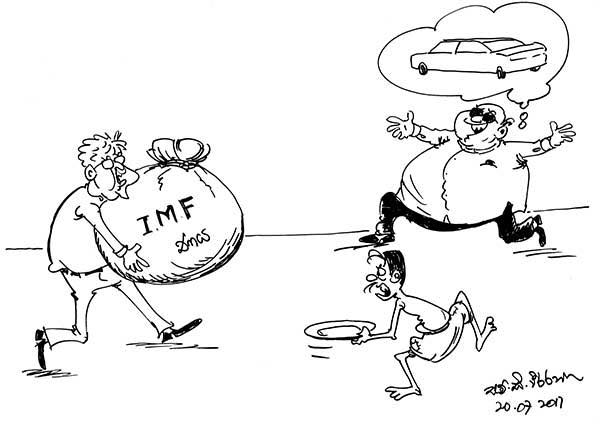
It is a sad fact that these resources are not put to full use, though Mother , Nature has provided all bountifully. The produce goes to waste and the people remain within the bound of poverty. In the Fifties and Sixties we made progress but the rot set in, in 1977 with President Jayawardena accepting the International Monetary Fund’s Structural Adjustment Programme with open arms. That was our undoing. We had to abolish and abandon the development infrastructure that our leaders had painstakingly developed- the Cannery and the Veg and Fruit Marketing Scheme, of the Marketing Department and to this day we have failed to bring back that development infrastructure to enable development to commence once again.
On this Visit to Laya Waves what struck me was the two large plots where aloevira grows wild. I have never seen that wild growth anywhere else. I inquired and the sleuths who now maintain the garden told me that the trick was perhaps the salty water and the climate.
My craze for travel has taken me to Lanzarote, an island in the Mediterranean, where some uncultivable land on rugged sedimentary rock is being developed and aloe vira is grown on a large scale with a factory producing a full range of aloevira products sold everywhere in the Harrods and Selfridges of Europe and USA,
My find of aloevira thriving at Laya Waves tells ,me of a great possibility in development. Its potential if tackled prudently can easily earn billions of dollars, annually to our depleted coffers, a task, if done at the pace I worked as the G.A. at Matara in 1971-1973, can easily be accomplished within two years. Working singlehandedly in Bangladesh, I designed and established the Youth Self Employment Programme and trained the Bangladeshi officialdom to continue it after my two year assignment was over- and the result- a programme that has guided three million youths to become employed, all accomplished within nineteen months. The task of developing aloevira will be a far easier task.
The task to develop aloevira in Pasikuda can easily be accomplished within two years at most. This estimate of time is not out of the hat but a calculation based on sheer experience in similar exploits. My working life has been full of such exploits. So that estimate of timing can be held firm.. The best method of indicating that this task can be accomplished is to hark back to a similar or more daunting task accomplished by me earlier.. I enclose details of a similar task- establishing Coop Crayon in the Appendix.
Accessing Aloevira products at Orzola, Lanzarote, I find the following products:. Gel, Oil, Drink, Cream, Moisturising Cream, Anti Aging Cream, Face Cream, Foot Cream, Night Cream, Dog Shampoo, Shampoo, Hand Cream, Relax Gel, Bath Gel.
Conducting experiments to make Aloevira products will be far easier than finding the art of making crayons and establishing the Crayon Factory. .
It is suggested that the Sri Lanka Army may kindly initiate action to conduct experiments at making products with Aloevira. Nishantha Perera the chef at Laya Waves could provide the leadership for the experiments at the initial stage. Further the science lab at a College or University has to be commandeered. An alternative will be to get the Army to put up a tent and get going in Laya Waves itself and to buy essential equipment.
It would be ideal to have some officer from the army who has a background qualification in agriculture, chemistry or biology to be in charge.
This Project has to be handled by a person of standing like a Brigadier as there has to be contact with many high ranking officials in government institutions, the Ministry of Industries, Food Technology Institutes, Department of Education , Ministries etc and the person appointed at the initial stage must be a tough guy who can shake up matters when Government Departments are lethargic. After a few years when the industry is well on keel, the high ranking officer can be removed and an officer like a Lt Colonel or Major could handle the project.
May I also suggest that the land of the Army Bungalow next to Laya Wave be used to cultivate Aloevira, The land has to be prepared immediately if the planting is to be done with the November rains.
An idea may be for an officer from the agriculture and land cultivation section of the Army to be consulted , specially to find whether any crown land suitable for the cultivation of Aloevira is available in the vicinity. If land is available the Army can open a farm. Simultaneously the army can have seed farms, distribute to private farmers and collect the crop.
I am aware that there is a section of the Army that attends to agriculture and is actively involved in producing food crops. A Unit of that section can be put on the task of producing Aloevira at Pasikuda. Full details have to be worked out and I am dead certain of success not only in production but in developing foreign sales which will bring in an income in foreign exchange.
It may be interesting to note that in the USA the Army is used for many development projects. At New Orleans, a city below the sea level, levees(bunds) are constructed and maintained by the Army. On the Columbia River there are stupendous hyrdo projects constructed and manned by the Army. The US Army is deployed in many ways for civilian functions. In my travels in the USA-I owned a Motorhome and have clocked 50,000 miles crossing the USA thrice and have seen for myself the stupendous civilian work being done by the US Army all over the USA.. It is my opinion that the Sri Lankan Army can and has to play a major role in bringing about economic development.
I am dead certain of success. The success does not depend on the ability to grow Aloevira. I am aware that planting Aloevira is in progress at Wilpattu. However that is at an infancy stage and there is ample scope for a few industries to be established in Aloevira.
Success will depend on the leader chosen, who has to have a personality; foreign sales will depend on the charm of the officer selected. Both must be of the type that can, as the saying goes- take fire under water. ,
I wish to be associated with any initiatives and can assure success.
, M.Phil (Edinburgh) & Ph.D. (Michigan State University)
Former SLAS, G.A.Matara.(1971-1973)
Commonwealth Fund Advisor to the Ministry of Labour & Manpower in Bangladesh, 1982-1983, who designed, directed and established the Youth Self Employment Programme in Bangladesh, the premier employment creation programme the world has known, a programme that has left its imprint on the sands of time.
Author of
How the IMF Ruined Sri Lanka & Alternative Programmes of Success.(Godages) 2006
How the IMF Sabotaged Third World Development(Godages/Kindle,2017) Garvin Karunaratne, former GA Matara, Ph.D Michigan State University.
The war was begun in February 2014 with a speech by Russian President Vladimir Putin and continues until now.
Putin told the Russian people that he was conducting a special military operation” to denazify” Ukraine and prevent NATO from expanding to Russia’s borders.
Many in the West see the war, which many consider it the most disruptive conflict in Europe since 1945, as a war of choice by Putin, but he says that NATO’s 2008 decision in favor of eventual Ukrainian membership brought an existential threat to Russia’s borders. This article, aim to list the reasons for the start of the war, its process, and the costs of the war.
Reasons of war
Several important reasons for the beginning of the war have been listed.
Russia declared one of the reasons for starting the war to help the Russians living in the two republics of Donetsk and Luhansk, two separatist regions of eastern Ukraine in Donbas.
Russia has repeatedly stated that the two regions have a Russian majority and should either become autonomous or join Russia.
The Kremlin has declared racism against the Russians as the reason for the war.
Story of two provinces
After the Russian annexation of Crimea, Russians established self-rule governments in these two provinces. They were only able to take over parts of the two provinces of Donetsk and Luhansk, so a struggle started to conquer the two provinces. Ukrainian government forces also engaged in a military conflict against the separatists. As a result, more than 14,000 people were killed and a many were displaced.
In 2015, with the mediation of France and Germany, an agreement was signed between Russia and Ukraine, which became known as the Minsk Agreement. The main goal of the deal was to end the conflict between the Ukrainian army and Russian-backed separatists in Donbass. According to the agreement, in exchange for regaining control of its borders with Russia, Ukraine gave these two regions autonomy in many areas, which was supported by the United States and its allies.
But the agreement was annulled by the war, and once again Donbass became the core of the crisis between Russia and Ukraine and Putin said in his speech before the start of the war: The people’s republics of Donbass have asked Russia for help.
NATO expansion to the East
As mentioned above, one of the most important reasons for the start of Russia’s war against Ukraine was Kyiv’s decision to join NATO; in another word, to expand the military coalition to Russia’s borders and threaten the country.
In his speech, Putin said: I will begin with what I said in my address on February 21, 2022. I spoke about our biggest concerns and worries, and about the fundamental threats that irresponsible Western politicians created for Russia consistently, rudely, and unceremoniously from year to year. I am referring to the eastward expansion of NATO, which is moving its military infrastructure ever closer to the Russian border. It is a fact that over the past 30 years, we have been patiently trying to come to an agreement with the leading NATO countries regarding the principles of equal and indivisible security in Europe. In response to our proposals, we invariably faced either cynical deception and lies or attempts at pressure and blackmail, while the North Atlantic alliance continued to expand despite our protests and concerns. Its military machine is moving and, as I said, is approaching our very border.
Nuclear threat reason for start of the war!
Some sources say that another reason for the start of the war was Kyiv’s threat to resume its nuclear program, and to prove it, they point finger at the statements of Dmitry Medvedev, the former president and prime minister of Russia and the current deputy of the Security Council of this country.
Ukraine’s threats” to resume its nuclear program were largely the reason for Moscow’s special military operation,” Medvedev said on Nov, 7, 2022.
One of the reasons for conducting the special military operation” was the threats” by Ukrainian leaders that hinted resumption of the nuclear program, which Kyiv relinquished under the Budapest Memorandum of 1994, Medvedev wrote in a message on the country’s VK social network, according to TASS.
What do we see in contrast next to our own borders? Poor puppets from an inferior state, now weeping bitterly about the decision taken under the Budapest Memorandum of 1994 to withdraw the nuclear arsenal located on their territory and inherited from the USSR,” Medvedev said, following statements describing South Africa’s accession process to the Nonproliferation Treaty.
Later, Medvedev said that Ukrainians always perceived Kyiv’s accession to the international treaty as a forced step decided under harsh pressure from Washington,” adding that this was the case even though Ukraine did not have the means to support the ‘might’ (nuclear weapons) that had fallen to it by chance.”
He further said Ukrainian leaders, from former President Leonid Kravchuk to current President Volodymyr Zelenskyy, have expressed that they would be happy to use it (nuclear weapons) against us (Russia) and their own citizens (Ukrainians).” Whatever the reason for this war, it cost a lot for the parties, especially the European Union, which was highly dependent on Russian energy.
This cost can be examined in two dimensions.
Direct costs
The war in Ukraine, which is called the most destructive in Europe after World War II, has cost a lot to the parties involved.
Ukraine imports most of the weapons it needs. Although the country does not pay for the purchase of these weapons, its supporters – Europe, the US, and NATO – who are forced and committed to supplying Ukraine with weapons, bear the most costs.
Although the exact costs of these countries cannot be assessed, the cases announced by them show that Europe and the United States have incurred a lot of costs, some of which are as follows:
Short-Term Military Support ($17 billion): This includes the transfer of weapons, both U.S. weapons and those purchased from allies, training of Ukrainian military personnel, and intelligence sharing.
Long-Term Military Support ($10.4 billion): This consists of money that Ukraine can use to buy new weapons, mostly from the United States but also elsewhere.
U.S. Military Operations ($9.6 billion): In the spring, the United States sent about 18,000 troops to Europe to strengthen defenses and deter Russia. These deployments cost money above what was planned in the DOD budget.
DOD General Support ($1.2 billion): This covers a wide variety of activities, some only tangentially related to Ukraine, to prepare DOD for future conflicts.
Indirect costs
Indirect costs can also be referred to human costs, war refugees and the EU energy debate.
Europe, as a place on the front line of Ukrainian immigrants, suffered from two aspects. First, Ukrainian refugees directly entered Europe. Second, there was the issue of gas and energy crisis.
Nearly 8 million refugees fleeing Ukraine have been recorded across Europe, while an estimated 8 million have been displaced within the country by late May 2022. Approximately one-quarter of the country’s total population had left their homes in Ukraine by March 20, 2022.
Another impact of the Ukraine war was on the European benchmark natural gas prices.
The countries of the European Union, as importers of Russian gas, were deprived of energy due to their positions, and the energy challenge has turned into a super crisis for several months.
The benchmark price spiked to 227 euros after Russia invaded Ukraine on Feb. 24, 2022, and to around 350 euros in late August. As of Jan. 3, 2023, the benchmark price is about 74 euros.
Of course, the same cases are also true for Russia; the country has also suffered a lot of financial losses in addition to the loss of lives.
The sanctions of the European Union and the United States against this country, especially in the field of energy, are one of these losses.
Colombo, January 18: The International Monetary Fund (IMF) has set debt sustainability goals for Sri Lanka for the latter to receive the IMF’s Extended Funding Facility (EFF) and get its creditors to restructure their debts.
On April 12, 2022, Sri Lanka declared that it was defaulting, when its overall loan external burden was US$ 50 billion.
It is understood that the IMF’s expectations from Sri Lanka in regard to the restructuring of its debts are: (1) reduction of the ratio of public debt to GDP to below 95% by 2032; (2) bringing the annual gross financing needs to below 13% of GDP on an average between 2027-2032; (3) scaling down the annual foreign currency debt service to below 4. 5 % of GDP every year between 2027-2032; (4) closing its external financing gap.
Reuters reported on Wednesday that in a letter to the IMF chief Kristalina Georgieva dated January 16, an Indian Finance Ministry official, Rajat Kumar Mishra, had said that India will extend its support to the IMF’s plan and give financial assurance” (which is IMF-speak for debt restructuring.”)
Reuters quoted the Indian official as saying: We hereby confirm our strong support for Sri Lanka’s perspective EFF-supported program and commit to supporting Sri Lanka with financing/ debt relief consistent with restoring Sri Lanka’s public debt sustainability under the IMF-supported program, and ensuring that the program is fully financed as projected by IMF staff. This financing/ debt relief will be provided by Export-Import Bank of India.”
India has also promised to continue its talks with the Sri Lankan government along with the Paris Club (of creditors) on a medium-to-long-term debt management through maturity extension and interest rate reduction or any other financial means that would provide financing or debt relief.
The financing or debt relief provided by the Export-Import Bank of India will be consistent with restoring debt sustainability under the IMF-supported program, India has said. The IMF’s debt sustainability assessment will be underpinned by the program targets stated earlier in the story.
Sri Lanka owes US$ 1 billion to India.
Sri Lanka’s Job
However, India has made it clear that Sri Lanka will have to seek equitable debt treatments from all commercial creditors and other official bilateral creditors, as well as adequate financing contributions from the multilateral development banks. India will support Sri Lanka’s efforts in this direction. India will keep having in-depth discussions with the Sri Lankan authorities, the IMF and the Paris Club of creditors.
It is now up to Sri Lanka to mull over the points made by the IMF and India and take necessary action. Debt restructuring and the IMF’s conditions will be among the major items on the agenda of the talks between the Indian Foreign Minister Dr.S.Jaishankar and the Sri Lankan President Ranil Wickremesinghe during Jaishankar’s two-day visit to Colombo beginning on January 19.
Other Creditors
Given the Indian moves, Japan is expected to follow suit as India and Japan are allies vis-a-vis Sri Lanka. But China is problematic because Beijing likes to act independently, based on its own economic and financial calculations which clash with India’s and Japan’s.
However, a visiting high-level delegation from China’s Communist Party led by the Vice Minister of the International Department, Chen Zhou, told Sri Lankan Prime Minister Dinesh Gunawardena recently that Sri Lanka would have some good news soon” with regard to debt restructuring.
Sri Lanka owes US$ 7 billion to China.
The United States comes into the picture because most of Sri Lanka’s private creditors are from the US. These private creditors own almost 40% of Sri Lanka’s external debt stock, mostly in the form of international sovereign bonds.
The private creditors also get higher interest rates on the basis of risk in lending to Sri Lanka. They receive more than 50% of external debt repayments, according to economists. These private lenders pose a problem because they are generally averse to restructuring their debt. One US lender went to court immediately after Sri Lanka defaulted in April 2022.
New Delhi, January 18 (The Pathfinder Foundation): The Sinhala translation of renowned Indian author Jairam Ramesh’s book The Light of Asia; the poem that defined the Buddha”, Budusiritha Lowata Genagiya Maha Kavyaya; Asiyawe Alokaya, translated by award winning translator Niluka Kadurugamuwa was launched recently. Budusiritha Lowata Genagiya Maha Kavyaya; Asiyawe Alokaya is a publication of the Pathfinder Foundation and could be contacted at pm@pathfinderfoundation.org .
The Light of Asia; the poem that defined the Buddha” is a work of deep scholarship based on extensive research and serves as a biography of both the epic poem The Light of Asia and its author Sir Edwin Arnold. The book describes how the poem The Light of Asia, which is based on the life of the Buddha, captivated and inspired many iconic personalities such as Swami Vivekananda, Anagarika Dharmapala, Rabindranath Tagore, Mahatma Gandhi, Jawaharlal Nehru and Dr. B.R. Ambedkar. It also reveals how the poem got translated into over thirty languages, including Sinhala, and inspired movements for social equality, incarnating itself in music, dance, drama, art and cinema.
Translator Niluka Kadurugamuwa
Jairam Ramesh, the author of The Light of Asia; the poem that defined the Buddha” is a member of the Rajya Sabha, the upper house of the Indian Parliament representing the State of Karnataka, and was a Union Minister of India between 2006 and 2014. He has held the ministerial portfolios of Rural Development, Drinking Water and Sanitation, and Environment and Forests. He has authored several well-known books.
The translator of the book, Niluka Kadurugamuwa is an officer of the Sri Lanka Foreign Service, presently serving as Sri Lanka’s Deputy High Commissioner in New Delhi. He has won the State Literary Award for the best translation of a novel into Sinhala in 2018, 2019 and 2022. Budusiritha Lowata Genagiya Maha Kavyaya; Asiyawe Alokaya is Kadurugamuwa’s eighth translation.
The order is a part of a Line of Credit extended by Export-Import Bank of India, under the Economic Assistance Scheme of the Indian government.
Over 5,000 Ashok Leyland buses are currently in operation with SLTB. (Representational Image)
Commercial vehicle maker Ashok Leyland on Wednesday said it has bagged a contract for supplying 500 buses to the Sri Lanka Transport Board (SLTB), of which 75 buses have already been delivered to the Island nation.
The order is a part of a Line of Credit extended by Export-Import Bank of India, under the Economic Assistance Scheme of the Indian government, it said.
The company, however, did not disclose the financial details of the deal.
Sri Lanka Transport Board is the state-owned single-largest bus transport provider in Sri Lanka with 110 depots throughout the country and operates buses in city routes, hilly and rural routes and also long-distance inter-city routes.
Over 5,000 Ashok Leyland buses are currently in operation with SLTB, the company said.
These new 32-seater buses are expected to be put into operation on rural routes throughout the island.
We thank the Government of India for assistance towards strengthening Public Transport Infrastructure in Sri Lanka,” said Amandeep Singh, President – International Operations, Ashok Leyland said.
The Hinduja group flagship has a bus and truck manufacturing facility in Sri Lanka as well.
The first batch of buses in the project was handed over to the company at Colombo this month, Ashok Leyland said.
These buses will help combat the heavily crowded public transport in the island nation, supporting mobility and accessibility in Sri Lanka, the company added.
Days ahead of India’s External Affairs Minister S. Jaishankar’s visit to Sri Lanka, the neighbouring giant has sent financing assurances to the International Monetary Fund (IMF), The Hindu reported.
A top official source in Colombo has confirmed to The Hindu that the written financing assurances from India were sent to the IMF Monday evening”.
By taking the step that will help ease pressures on Sri Lanka, India becomes the first creditors to officially support the country’s debt restructuring programme.
With the assurances extended by India, Sri Lanka comes one step closer to the much awaited US $ 2.9 billion bailout package from the IMF.
The IMF was firm on the crisis-struck island nation receiving financing assurances from its official creditors and making a good faith effort to reach a collaborative agreement with private creditors.
China, Japan and India are Sri Lanka’s three largest bilateral lenders. Having received the support from India, the island nation now awaits similar assurances from Japan and China to gain access to the IMF assistance. Sources familiar with Sri Lanka’s ongoing negotiations with creditors said the Paris Club, of which Japan is a member, is likely to send its financing assurances soon”, The Hindu reported.
Following the staff-level agreement with the IMF in September 2022, President Ranil Wickremesinghe said efforts are underway to obtain the IMF support before the end of the year.
However, as negotiations with creditors did not conclude within the expected time frame, the bailout was delayed. Meanwhile, Wickremesinghe told Parliament on Tuesday that the ongoing discussions with India and China have been a success.
Refuting allegations that the Bureau of Rehabilitation Bill was brought in to suppress Aragalaya members, Justice Minister Wijeyadasa Rajapakshe today said drafting of the Bill commenced in 2004 even before some of the Aragalaya people were born.
He told Parliament that the Bill was initially drafted to rehabilitate drug addicts and ex-LTTE combatants.
He said the Bill included provisions to rehabilitate ex-combatants and members of violent groups, as it was commenced drafting during the time of the war.
The Minister said a huge uproar was created against this Bill after it was presented in Parliament as it was done when an Aragalaya emerged in the country.
The The Bill is now restricted to the Rehabilitation Bureau aiming to rehabilitate drug addicts after the Supreme Court determination. (Ajith Siriwardana and Yohan Perera)
(This was an article I wrote to Asian Tribune in 2006.)
The mountain “where Buddha laid his foot on”
By Sudath Gunasekara (S.L.A.S), Asian Tribune, Oct 21, 2006
The wonder that is Lakegala from where Ravana ruled Lanka and Lord Buddha preached Lankavatara Sutra and laid his Foot Print
Lakegala, Sri Lanka — Wrapped in mystery and legend, on the northern end of this village, rising above the surroundings like a colossal giant is the world famous Lakegala, the highest bare rock outcrop in the world. “The Resplendent Rock”, “The Rock of Lanka’ or “The Target Rock”, Lanka Pabbata, Lankagiri, Laggala, Samudramalaya or Samudragiri are the different names given to it as it was differently called by different people at different times in different contexts.
However, it ever remained Lakegala (The resplendent Rock) for the people of this village. At first, looking at it no one will believe that this is a natural phenomenon. It is so breathtaking and so unbelievable that it portrays more a painting by a maestro artist than a mere creation of nature – an epic poem, Mother Nature has created for men to adore as long as the sun and the moon shall last.
A triangular panorama unseen and unheard anywhere in the world, it towers majestically over the secluded ancient village of Meemure situated in the eastern boarder of the Kandy district. It is also the only rock in the whole world, which has been named after the country where it stands. Also probably the most elegant rock (Lakegala) in the world as the people of Meemure have veryaptly named it.
The following folk poem aptly describes the fame of this rock.
Epita konata Kalupana keleya Mepita konata Laggala Meemureya Desiya dekak usa eti gomareya Sondai parakasa Laka Meemureya.
(Yonder lay Kalupana the great forest Laggala and Meemre lying at the near end The rock that is two hundred and two high Famous is the name, Lakegala in Meemure)
Geographically Lakegala is located almost right at the center of Sri Lanka (80.46 E and 7.30 N). It forms the tail end of the eastern extremity of the Dumbara hills (popularly known as the Knuckles). It is a giant steep vertical erosional monolith with a perpendicular bare rock face of an abrupt drop of nearly three thousand feet (914 m) overlooking the great eastern plains.
Its triangular face that stands on a base of about 2.5 miles in length from west to east with a sharp apex rising over 3000 feet from its base towards the heavens is perhaps the most fascinating and breathtaking creation of mother nature on this earth.
The surface area of the southern face of this rock must be at least in the region of 15 million square feet if not more. It also could be the world’s biggest visible rock mass. Its perimeter is about 5 miles and the area of the base is around 2 square miles.
It has three peaks and the southernmost facing Meemure is the highest and the most enchanting. The whole mass exhibits a SW-NE trend with a dip slope to the SW. The three peaks are arranged in a NW-SE direction with a horseback like summits. These summits are covered with a thin layer of earth not more than few inches deep with few-stunted pigmy bushes struggling to survive.
The patanas (grasslands) on the southwestern dip slopes are extensive and the villagers of Meemure and Laggala use them to drive their buffaloes during the off-season. One can also see the eastern sea from the top of this peak on a clear day. This may be the reason why the ancient people called it Samudramalaya, meaning the mountain from where you can see the sea.
Its summit is 4329 feet above sea level and this never aging and ever-youthful monolith has remained unchanged ever since it sprang up millions of years ago from the earth’s surface, in spite of the fact that the entire world around it has undergone tremendous changes. From the day the tip of this rock first emerged from its surrounding plains, it must have witnessed with deep sorrow how the surrounding plains are being carved out by day and night in to beautiful valleys leaving behind the hanging and precipitous mountains with rugged and fragile peaks, abutting them.
At times Lakegala must have felt sad to witness how the rich layers of good earth around it is being churned and robbed by the streams- the ruthless transport agents of the sea. But at the same time, it must also have felt proud that it could boldly stand all alone undefeated all the beatings of nature down the ages when all others have succumbed to sorrowful defeat. It not only has resisted and withstood successfully the beatings of the elements of weather throughout the ages but it also has absorbed all the sorrows and pains of the people who lived under its daunting shadow from the dawn of civilization.
Since I first saw it as a little child some sixty odd years ago the village has undergone tremendous changes. People have died and many new comers are being born. But this giant sentinel still stands unshaken above the village in the same majestic manner I saw it first, casting its majestic but romantic and seductive looks, perhaps with much disappointment and pain at what has been continuously going on over the ages under its own shadow. I do not think that there could be a better witness than this lonely sentinel to what happen under its shadow over the ages. I wish therefore that Lakegala would correct me where I go wrong in this pursuit.
It is in recognition of this unique historical and aesthetic role Lakegala has played in its environs and the indelible image it has left in my mind as the most prominent landmark both in this village and in the Island that I decided to name my book on Meemure Under the shadow of Lakegala”
In the Pali chronicle Rasavahini Lakegala it is called Lankapabbata.
Professor S. Paranavitana in his God of Adamspeak has identified it as Lankagiri, which means the Rock of Lanka. Legend has it that this Island owes its name Lanka to this rock. The names Lakgala and Laggala are also used to describe this rock. All three words Lakegala, Lakgala and Laggala mean beautiful or resplendent rock.
Lake behe (O what a beauty) in Sinhala denotes excessive beauty. Lake behe and Kisi lakak nehe (no beauty at all) are common terms used in the day-to-day conversation in this village.
All these terms therefore speak of the captivating beauty of this rock. All these words starting with Lak, Lanka or Lag also means that it is the Rock of the Island of Lanka. If this argument holds true then this Island will be the only country in the world, which has been named after a rock found in that country and similarly this will be the only rock in the whole world, which has been named after the name of the country where it is stands.
Legend has it that the Lankapura of Mighty Ravana the capital of his kingdom was located around this Rock. It is also said that Ravana the epic King of Lanka used Lakegala as a device to calculate time for this Kingdom depending on the relationship between this rock and the sunrise and sun set. Ravanas Kingdom is supposed to have extended even beyond the shores of Lanka covering a large part of Dhakshina Bharata including Dandakaranya Forest, over which his sister Suparnakha ruled. It is said that Ravana met Sita, the alluring Queen of Rama in this forest.
When the day begins as the morning sun makes its first appearance over the eastern horizon it casts its soothing crimson rays on Lakegala illuminating it like a red ruby. The aura displayed by the morning sunrise on Lakegala in the month of Duruthu and Nawam is perhaps the most mesmerizing and breathtaking spectacle I have seen in my life.
The golden rays of the sun that fall on the bare and shining face of Lakegala reflects back and illuminates the entire valley below, long before the direct sun rays reach the valley as if they beckon the villagers to rise from their deep slumber in the previous night. As this rock sheds these early morning reflections the humming of bees and singing of birds awaken the whole world around it.
The cooing of Alukobeiya (Ash dove), ear piercing clarion call of the Walikukula (Jungle fowl), the rhythmic cry of jungle birds provides the nature’s morning symphony orchestra that set the alap and the rhythm for the days beginning in this village.
From its partly covered and slightly dipped western leg Lakegala rises east gradually but rhythmically up to its summit and then falls abruptly by about 2000 feet forming in to a slightly concave horizon at the lower level intercepted by few projections of trees shooting in to the sky. There after it merges with the Matalagala –Komalepatana ridge which glides and finally disappears in the Heenganga valley.
Looking at its southern profile from a distant at times, I imagine Lakegala resembles a high ocean tide that sprang up during the geological past, rolled over land, rising in the west and breaking up in the east that got petrified and remained there mourning for millions of years over the parting ocean around it. But would not it be more appropriate to compare her to a dancing heavenly nymph whose alluring and seductive looks have kept everyone around spellbound throughout the ages.
Her right leg and right arm stretched to the west and the left leg and the left arm rhythmically gliding in the east. She is dancing the cosmic dance to the accompaniment of the heavenly drums with no beginning and no end. She must have been dancing in this manner with no break from the time she came of age, enticing the whole world around her. I can see no beginning or end to this eternal and perhaps a part of nature’s cosmic dance, which probably will come to an end only on the day this planet earth, stops its endless journey around the sun.
The most fascinating view of this natures wonder is seen from the south. Its beckoning, enchanting and endearing disposition really makes you go mad. The crest of the rock as seen from Udawanatha or Watagode muduna clearly resembles the natural features of a human face, the eyes, nose and the mouth quite visible, as if casting her amorous looks at the playful village youths of Meemure who may be not aware of such comely castings shot at them by this heavenly dame.
The thicket at the summit and the grass cover on the western slopes resembles a flock of loosened hair adorning her back. The silvery waterfalls that roar down the western flanks in the months of November and December after every rain add further colour to her dancing costume. Another noteworthy thing associated with this rock is the isolated patch of vegetation seen at the lower central part of the rock. It is really surprising that this patch with no visible supply of water remains green throughout the year.
It is also interesting to see how this thicket divides Lakegala in to two halves, one eastern and the other western. To use a poetic simile, one could compare this thicket to a Vasaroda that disappears under the Manimekhaladama of this goddess of dancing. This spot is said to be full of caves, excavation of which might unearth some unbelievable evidence on the history of this Island.
An early morning view of this rock, before the sun casts its rays on the ground around, particularly in the months of Nawam (January-February) when the morning sun casts its first rays over the eastern horizon or a spectacle on a full moon day in the month of Vesak (May) as the full moon is shining on the high heavens are perhaps some of the most enchanting spectacles one could see on this earth.
Some eminent scholars believe that Lord Buddha on his third visit to Sri Lanka has left his footprint on this rock. They also believe that Ravana, the legendary Lord of Lanka mentioned in Valmikis Ramayanaya had his abode on the summit of this mountain and his Capital Lankapuraya was located around it. According to Lankavatara Sutta, Buddha on his third visit to Lanka has visited Lankamalaya (Lakegala) and preached Lankavatara Sutta to Ravana the Lord of Yakkshas of Lanka on the peak of Samudramalaya, which was situated in Lankapura.
Again Huen Tsien, the Chinese traveler in the seventh century AD has stated that in this Island to the south east is the Lankapabbata and on this mountain Buddha preached Lankavatara Sutta.” Furthermore, according to Fa-Hsien (411AD) Buddha has laid his foot print on two places, one to the north of Anuradhapura the then capital and the other on a summit of a mountain, fifteen leagues south of Anuradhapura. Some authorities have identified Lakegala as the mountain, where this second footprint was laid.
The first European to write about this mountain was Major Forbes in 1832. He has made an unsuccessful attempt to climb this peak and camped out the night at the foot of the hill on the western side (Miriyagolla) and left the next morning to Matale. He has left an interesting account of this rock and Meemure in his famous book, 11 Years in Ceylon (P 101).
From various names of neighboring places, and for other reasons, I believe the Yakka town of Lankapoora was situated around this mountain; and this circumstance, conjoined with still more ancient traditions, has obtained from native superstition a belief that its formation was miraculous, and that the sounds of its falling rocks are mysterious prognostics of public misfortune. Quoting from one of his guides he makes the following reference to an age-old legend prevailing among these villagers,
Through the vale of Meemoora while sweeps the wild storm, The red thunderbolt’s gleam shows Lak’galla’s rude form. Hallowed region of spirits when tempest run by, Frowning o’er their dark course, thy scathed peaks shoot on high.
Here stern Rawan was vanquished and in that dread hour Lakagalla was rent by the conqueror’s power; It was Rama’s keen shaft cleft the mountain in twain, And Lak’galla’s bright lake made a desolate plain. (P 103)
The first white man to climb Lakegala was Dyson the Colonial Government Agent of Kandy. He climbed this peak in 1943 in the company of my father and few villagers. The only approach to the summit of Lakegala is on the western side. The first leg is a steep stretch of patana land with low bushes of mixed vegetation and grasses.
Occasionally one could see few Gammalu (Pterocarpus marsupium roxb), Aralu (Terminalia chebula Retz), Bulu (Terminalia belerica), Nelli (Phyllunthus embilica) and short bushes appearing here and there. The climb in this section is about 2000 ft. The second leg is a steep climb of bare rock slab of about 500ft, which is the most difficult part to negotiate.
The climb here is extremely arduous and it has to be done with the help of a rope along a difficult narrow gully that brings down the waters of the top portion during rains. Half way on this gully is the most difficult point obstructed by a bolder that has come down and got struck in the cavity? The last leg to the summit again is a stretch of stunted shrubs and grass of about 500 to 600ft with a steep gradient.
The summit, resembling a horse back, is about 20 ft wide and it stretches from S E to N W for about 650 ft in length like a horseback. It has dry shrub type low montane vegetation. The height of the tallest tree here does not exceed 8 ft and the girth of the biggest tree is not more than few inches (6-8). The dominant trees are Ankenda (Acronychia pedunculata), Miiriya (Palaquium grande), Naha, Varav (Calotropis gigantea), Karapincha (Murraya spreng), Pihimbiya (Felicium decipiens), Nelu (Stenosiphonium cordifolium), Getapichcha (Jasminum Anqustifolium), Maldunkala (Sonchus wightianus), Butiya (Melastoma malabathirikum), Kina (Callophylum cuneifolium), Walwaraka (Anicoxanthum acuminata), Kirindi (Coix lacryma), Maratu (Echinochloa crusgalli), Galidda (Walidda antidysenterica) and Labutarana (Tarenna asiatica) etc and creepers such as Kalawel (Derris parviflora), Iramusu ( Hemidesmus indicus), and grasses like Pohon and Mana (Cymbopogon rendle).
The southern and eastern sides are abrupt precipices. The drop is definitely more than 3000 ft. When you reach the summit after about 3 hours of arduous and strenuous climbing starting from the base one feels as if you have reached the heavens alive. Paradise itself exists here in the Paradise Island of Lanka. From the top you can see one of the most panoramic views one-can see anywhere in the world.
The aerial view of the Meemure basin some 3500 ft below and the Knuckles ranges with the Dumbanagala-Kehelpothdoruwegala-Telambugala crescent range encircling the Meemure basin are really unforgettable memories. But the most rewarding is the panorama of the eastern plain extending up to the sea dotted with irrigation canals and tanks occasionally disturbed by the hills rising above the ground. Sections of the Mahaweli Ganga flowing north girdling the eastern boarder of the Dumbara hills also could be witnessed. The Parakrama Samudraya, Giritale Tank, Minneriya and Ulhitiya Tanks (all man-made massive reservoirs) decorating the landscape of this great ancient eastern agrarian civilization could be clearly seen even with the naked eye.
There are two accesses to the point (Meeriyagolla) from where we start the accent. One is on the south, through Meemure, and the other on the North through Laggala. The southern access is easier. One has to trek about three miles uphill through difficult terrain from the village whose elevation is about 1200 ft. to reach the base. It takes about two hours to reach the base. Today more than thousand people annually climb this peak. It is interesting to note that even young village lassies of Meemure do climb this now.
The best time in the year to climb this mountain is August and early September. Before August the summit is swept by strong southwesterly Monsoon winds and after mid-September the sky is not clear due to convectional activities that are active prior to the onset of the North East Monsoons. In this village there is also a tradition that every young man should climb this peak before he is formally qualified to take the hand of a village lass.
The villagers consider the climb as a mark of bravery and courage. Of cause before one attempts this feat it is customary and compulsory too that they should first visit the village Devale (The temple of the gods) and obtain the permission and blessings from the presiding gods of the region. It guarantees a safe and easy climb and return without any misfortune. It is also customary that the climbers on their descent too visit the Devale for thanks giving.
Post script,
I climbed this mountain on Friday the 20th full moon day of the month of September 2002 at the age of 64 years, in the company of another 48 men and stayed the night on its summit. We started from the village Devale at 2.15 pm after the rituals and reached the base by 4.30. After a little rest we again stated to climb and having negotiated the most difficult part in between the patana and the summit, as it is a steep bare rock, we finally reached the summit by 7.30 pm in the day. The long and strenuous trudge was fully rewarded as we finally reached the summit. Elated by our adventure, I felt, as if I have reached the summit of the world. It reminded me the emotions Tenzin and Hillary may have got as they reached the summit of Everest. I am more than convinced now that proper development plan could make this mountain a unique center of attraction for the tourist, mountaineers, adventure travelers and nature lovers the world over. I dream the day someone will make a Dagaba on its summit, which I had conceived the day, I heard my mother reciting the following verse to me, as she was caressing my head while seated on the bench at the corner of our ancestral home, from where we could see the Corbet’s gap, the entry point to our village, about nine miles away on the distant horizon, beyond which my mother always wished to be born in her next birth.
Galei usa boya gala usa balannata
Gale wata boya galawata duvannata
seke beriya padhakaralaa kiyannata
Lakegala sondayi daagaba badinnata.
(The height of the rock is too high to be calculated
The circumference is too long to run
It is impossible to be described in poetic verse
Lakegala is an ideal place to be adorned with a Daagaba)
By Scott Ritter Special to Consortium News Courtesy The Consortium News
Given the duplicitous history of the Minsk Accords, it is unlikely Russia can be diplomatically dissuaded from its military offensive. As such, 2023 appears to be shaping up as a year of continued violent confrontation.
After almost a year of dramatic action, where initial Russian advances were met with impressive Ukrainian counteroffensives, the frontlines in the ongoing Russian-Ukrainian conflict have stabilized, with both sides engaged in bloody positional warfare, grinding each other down in a brutal attritional contest while awaiting the next major initiative from either side.
As the one-year anniversary of Russia’s invasion of Ukraine approaches, the fact that Ukraine has made it this far into the conflict represents both a moral and, to a lesser extent, a military victory.
From the chairman of the U.S. Joint Chiefs of Staff to the director of the C.I.A., most senior military and intelligence officials in the West assessed in early 2022 that a major Russian military offensive against Ukraine would result in a rapid, decisive Russian victory.
The resilience and fortitude of the Ukrainian military surprised everyone, including the Russians, whose initial plan of action, inclusive of forces allocated to the task, proved inadequate to the tasks assigned. This perception of a Ukrainian victory, however, is misleading.
The Death of Diplomacy
As the dust settles on the battlefield, a pattern has emerged regarding the strategic vision behind Russia’s decision to invade Ukraine. While the mainstream Western narrative continues to paint the Russian action as a precipitous act of unprovoked aggression, a pattern of facts has emerged which suggests that the Russian case for preemptive collective self-defense under Article 51 of the United Nations Charter may have merit.
US and Israel will prevent the sale of Iranian drones to Russia
In spite of an overwhelming flood of disinformation coming from the Western mainstream media and governments, there continue to be obviously widely divergent views on the current war between Ukraine and Russia. The official and media supported narrative is that Moscow attacked its neighbor in violation of rule based” principles of international relations, whereby an attack on any nation by a neighbor with the intent to seize territory is always and unambiguously wrong. That line of thinking, summed up in the media by the endlessly repeated phrase Russia’s unprovoked war of aggression” has provided justification for the US/NATO intervention to support the Volodymyr Zelensky government’s effort to fight back against the Russians. It has also fed into the line that Ukraine and its supporters are standing up for freedom,” democracy” and even good against evil.”
Flipping the argument to the Russian point of view, the Kremlin has argued that it has repeatedly sought to negotiate a settlement with Ukraine based on two fundamental issues that it claims threaten its own national security and identity. First is the failure of Ukraine to comply with the Minsk Accords of 2014-5 which conceded a large measure of autonomy to the Donbas region, an area indisputably inhabited by ethnic Russians, as is Crimea. Since that agreement however, Ukrainian militias and other armed elements have been using artillery to shell the Donbas, killing an estimated 15,000 mostly Russian residents. Second, Russia has balked at plans for NATO to offer membership to Ukraine, which would place a possibly superior hostile military alliance at its doorstep. Russian President Vladimir Putin has observed that the issues were both negotiable and that Zelensky only had to agree to maintain his country as neutral,” i.e. not linked to any military alliance. Reportedly it was the United States and Britain that pushed Ukraine into rejecting any and all of the Russian demands in a bid to initiate a war of attrition using Ukrainian lives to destabilize Putin’s government and reduce its ability to oppose US and Western dominance.
Jan 17 (AdaDerana) – A delegation of investors from the United Arab Emirates, led by His Royal Highness Sheikh Mohammed Bin Maktoum Bin Juma Al Maktoum, visited Port City Colombo on the 14th of January 2023, during a special visit to Sri Lanka for the purpose. Discussions were held between the members of the delegation, representatives from the Colombo Port City Economic Commission (Commission) and Port City Colombo (PCC) with a view to attracting foreign direct investments to the project.
The delegation was given a comprehensive overview of Port City Colombo’s development and plans for the future which the delegation commended, followed by a tour of PCC Marina. Port City Colombo is a large-scale development project covering an area of 269 hectares of reclaimed land. It aims to serve as a new economic hub for the country, offering a range of commercial and residential opportunities. The project is expected to bring significant economic benefits to Sri Lanka, including job creation and increased foreign investment.
Expressing his views on the visit and the progress of discussions, Thulci Aluwihare, Deputy Managing Director of CHEC Port City Colombo (Private) Limited said, We’re very pleased to have had the opportunity to host this delegation, led by His Royal Highness, and showcase the potential of the Port City Colombo development project. This visit is a clear indication of the growing interest in what we have to offer, and we look forward to welcoming more investors and partners in the future. We are also anticipating the PCC Duty-Free Shopping Complex to open on schedule by April 2023.”
The UAE delegation also included Mr. Luke Sellwood – Advisor to His Highness Sheikh Mohammed Bin Maktoum Bin Juma Al Maktoum, Mr. Ivan Shkarba – Partner and investor in efiscal. Mr. Ivan also invests with His Highness in other business opportunities. Ms. Jekaterina Kamilov – Personal Assistant to Mr. Ivan Shkarba, Mr. Damir Makhmutov – Vice President International Expansion at efiscal, Mr. Rahmy Morcos – Director of Ska Group, Mr. Mustafa Usman Aripandhra – Business Development Manager of His Highness, and Dr. Siddeek Ahamed – Chairman and Managing Director, Eram Group – UAE and Saudi Arabia.
The UAE delegation was received, on behalf of the Commission, Mr. Revan Wickramasuriya – Director Financial Services and Compliance, Ms. Vindhya Weerasekera – Director Legal and Corporate Affairs, Mr. Dimantha Kinigama – Director Commercial and Operations and Ms. Dhanya Gunawardana – Head of Branding & Communications, and on behalf of CHEC Port City Colombo (Private) Limited, by Mr. Thulci Aluwihare – Deputy Managing Director, Mr. Eric Ou – Assistant Managing Director, Dr. Joe Lekplipol – Regional Head of Investment Promotion (Indochina Peninsula), Ms. Radika Obeyesekere – Director Investment Promotion & Marketing, Mr. Shalaka Wijeyaratne, MCIM (UK), MABE (UK) Executive Director – Investment Promotion and Marketing, Mr. Nisal Karunapala – Manager – Strategy & Transaction Services and Mr. Shane Amadoru – Regional Manager Investment Promotion & Marketing (Middle East).
Having added 2.69 square kilometres to Sri Lanka’s sovereign territory, Port City Colombo is Sri Lanka’s biggest FDI-funded development project. With infrastructure development slated for completion in Q3 of 2023, of the USD 1.4 Billion committed by the project company, USD 1.2 Billion has already been invested into Port City Colombo, and a further USD 1.5 billion is expected to be invested during the vertical development phase, which is expected to commence as soon as regulations are finalized. A USD 7-million Duty-Free Shopping Complex, the first of its kind in South Asia and expected to be a magnet for shopping and tourism, will also open its doors at Port City Colombo in April 202
The Embassy of China in Colombo has slammed the Ambassador of the United States to Sri Lanka, Julie Chung over her remarks during a recent interview with a UK television program on Sri Lanka’s debt issue.
In a press release, the Chinese embassy dismissed Chung’s comments as baseless accusing and lecturing” and lambasted the US envoy for putting the blame on China for being the spoiler” to Sri Lanka’s negotiations with the International Monetary Fund (IMF).
Chung recently told BBC Newsnight that the US is hopeful that China would not delay extending support for Sri Lanka’s debt restructuring process, as the island nation does not have time to delay, adding that it needs these assurances immediately. “For the sake of the Sri Lankan people, we certainly hope China is not a spoiler as they proceed to attain this IMF agreement,” Chung had said further.
The Chinese embassy stated that it is hypocritical” of the US to play the blame game instead of a self-examination.”
It also raised concerns as to why the US did not take decisive actions in the IMF for a more comfortable solution for Sri Lanka or extend grant to the island nation with the rocket amount of US dollars they print every year instead of sowing discord between China and Sri Lanka.”
Both Chinese and Sri Lankan people are wise enough to judge without any foreign lecturing who the spoiler of our development is,” the embassy said further.
Sri Lanka’s Cabinet Spokesman Bandula Gunawardena has assured that positive responses have been received thus far with regards to the bailout due to be received by Sri Lanka from the International Monetary Fund (IMF).
Responding to a question at the Cabinet briefing this morning (17 Jan.), the minister noted that the Minister of Foreign Affairs Ali Sabry had assured that positive responses have been received pertaining to the Extended Fund Facility (EFF) which Sri Lanka is seeking from the IMF.
Thus, he noted that agreements are currently being reached between India, China and Japan about the restructuring of Sri Lanka’s debt, adding that the board approval for the IMF bailout will likely be signed in the first quarter of 2023, based on these agreements.
A recent report put forth by the Standard Chartered Bank, however, had revealed that board approval for the bailout will likely be signed in the second quarter of 2023, owing to delays in securing financial assurances from its bilateral creditors.
Standard Chartered’s Global Research report also read that this could further delay negotiations with commercial creditors, which are also expected to be pushed back to the second half of 2023.
President Ranil Wickremesinghe today invited the opposition to join hands through a new political system to provide relief to the people and free them from oppression.
He made this request while speaking in parliament today (17).
Despite the difficult economic background in the country, the President emphasized that the government is working to provide relief to the people, adding that he will take steps to allocate Rs. 30-40 billion for medicines this year.
The President said that due to the prudent agricultural policies of the government, the country has seen a bountiful paddy harvest and the government has commenced a program to provide 02 million low-income families with 10 kilograms of rice per month over a period of 02 months.
Responding to allegations that the government is spending excessively on the Independence celebrations, the President pointed out that it is an investment for the future and in the 25 years leading up to the 100th anniversary of independence, several new institutions and laws will be introduced for the reform program needed by the country.
President Ranil Wickremesinghe further said:
Currently, we are working to get our economy on the right track. Now we have to get India and China to consent to this debt restructuring. We are continuing discussions in that regard and I am pleased to announce to this House that the discussions are currently successful.
We won’t get the income we expect all at once. We hope to put all this together and carry out this work. Paying salaries is one of our main functions. Second is the payment of pensions. We should also provide the Samurdhi. Similarly, two more new programs will be implemented and we have to provide money for that too.
Now we have been accused of not providing money for medicines. Another 100 million has to be given. There is one problem in the health sector, which is that we have to pay a bill of Rs. 50 billion for the last few years.
However, despite these difficulties, we intend to allocate Rs. 30-40 billion this year for medicines. The Health Ministry and the Treasury will somehow join hands and carry out these matters. It will take some time to order these medicines. Even we don’t like to see shortcomings at our hospitals, nor to see people dying due to the lack of medicines. Therefore, we have taken steps to allocate the necessary funds for the provision of medicines.
Last year, there was a shortage of food in our country. We expected that there would be a shortage of food this year as well. But somehow we provided the required fertilizer to the farmers. Now we have a surplus of crops. We have got this paddy surplus due to a bountiful Yala season as well as the previous Maha season.
Now we have to maintain the price of paddy at Rs. 100 per kilo. We have allocated Rs. 10 billion for this purpose. Previously, only a sum of Rs. 05 billion was allocated for it. The excess harvest was sold earlier, but we will not do that.
We have planned a program to provide 02 million low-income families with 10kg of rice per month during March and April. I would be happier if we could give them more. As we celebrate our 75th Independence, we will not allow our people to starve. We will invest the funds required to feed them.
Some people criticize the expenditure of the government on the independence celebration. But, we need to provide such relief to the people.
We will have to spend another Rs. 10 billion within the next few years for the 25-year development plan. It’s been 75 years since we gained independence achieved and we are taking measures to create several institutions by the time we reach our 100th-year independence celebration to bring about the required reforms in the country.
Accordingly, we are working to establish an institution to study and do research about the history of the country. One of the biggest accusations against us is that we have forgotten our history and accordingly we should create such an institution.
We are establishing an economic and trade institution similar to those in many different countries. In addition, for the first time in our country, we are setting up an institution for women and gender. Measures will also be taken to establish a university for training the officials on Government and State Policies.
We should establish an agricultural technology university if we need our agriculture to be modernized. We too have plans to establish a University on Climate Change to which foreign countries have already expressed their willingness to assist.
We too hope to establish a sports university to train this country’s athletes to international standards.
We need funds for these activities. These may cost more than Rs. 10 billion. We do not spend money at once on these projects. Our 75th independence celebration does not end there. We are implementing these programs for the future.
We are taking measures to pass some new laws. They are the National Commission for Women Act, the Gender Equality Act, and the Women’s Empowerment Act. When these three acts are passed, ours will become the country in South Asia that has taken the highest measures for the safety of women.
We would also pass the Climate Change Act, Forest Replantation and Tree Cover Act etc. In addition, with the passage of the Living Entity Act, we would get the rightful ownership of the Mahaweli river, Sinharaja Forest, Sripada Site, Horton Plains, Knuckles and Adam’s Bridge etc.
The country would become one with the best environmental laws in the region with the passage of the laws for marine resources exploration and management and the Muthurajawela (Conservation) Act. The future generations are demanding we protect these resources for them. We are introducing the Social Justice Commission Act as well as we need to work for social justice.
In addition to those programs, allocations should be made for establishing 75 urban forests this year and the National Youth Platform project programs. We will also take measures to implement a 1996 housing project for low-income earners in the Colombo district and Gampaha districts.
Despite the existing economic crisis in the country, we are working hard to provide relief to the people. On this 75th independence anniversary, I propose to the opposition to change the existing political system. Let’s work together to provide relief to the people. If we could achieve such progress with these limited resources, I urge everyone to work together for the future of the country.”
China has assured that it stands ready to work with the relevant countries and institutions with regard to aiding Sri Lanka in terms of its debt.
Speaking at a press conference yesterday (16 Jan.), the Spokesman for China’s Ministry of Foreign Affairs, Wang Wenbin, noted that China has been closely following the ongoing difficulties faced by the island nation, and has provided all possible assistance for both, Sri Lanka’s social and economic development, to the best of their capabilities.
In response to a question raised pertaining to Sri Lanka’s debt restructuring and the impact China’s Communist Party’s recent visit has had on the matter, Wenbin noted that while a delegation of the Communist Party of China (CPC) recently visited the island, headed by Vice President Chen Zhou, he is unable to comment on the matter and thus referred the question to other relevant authorities.
The Spokesman stated, however, that with regard to Sri Lanka’s dues to China, they support the relevant financial institutions in having consultations with Sri Lanka to seek a propoer settlement pertaining to the matter, adding that China stands ready to work with relevant countries and international financial institutions and continue to play a positive role in helping Sri Lanka navigate the situation, easing its debt burden and helping it achieve sustainable development.
In the meantime, we hope and believe that Sri Lanka will work in the same direction and make independent efforts to uphold the legitimate rights and interests of foreign investment and financing partners, and maintain stability and credibility of its investment and financing environment”, Wenbin concluded his response.
Sri Lanka’s debt restructuring currently stands at a crucial juncture, with agreements underway between the government of Sri Lanka and its bilateral creditors; China, Japan and India. The island nation is also awaiting board approval for the International Monetray Fund (IMF) bailout, which is likely to be obtained in the first quarter of 2023, based on the aforementioned agreements.
India formally notified that it would support Sri Lanka’s debt restructuring plan, clearing a major hurdle for the bankrupt nation to unlock a $2.9 billion bailout from the International Monetary Fund, Bloomberg reported citing a person with knowledge of the matter.
India, one of Sri Lanka’s major bilateral creditors, gave its assurances late Monday, the person said, asking not to be identified as the details aren’t public. An announcement could be made as early as Tuesday, another person said.
With very positive developments taking place over the past 12 hours, Sri Lanka is confident of reaching IMF board approval in the first quarter of 2023,” Sri Lanka’s junior Finance Minister Shehan Semasinghe said by phone Tuesday, when asked if India had assured support. He declined to elaborate.
A text message to the IMF representative in Washington wasn’t immediately answered. India’s Finance Ministry spokesperson declined to comment.
Sri Lanka still needs similar assurances from China, Japan and so-called Paris Club members before the IMF board can approve the loan program. The end-2022 target for IMF board approval has already been missed and Standard Chartered Plc predicted earlier this month that the multilateral lender may give the greenlight only between April-June, which means talks with commercial creditors are likely to be pushed to the second half of 2023, it said.
Sri Lanka concluded debt restructuring talks with Japan, President Ranil Wickremesinghe announced last week, without sharing details. A delegation from China is visiting Sri Lanka through Jan. 18 and Indian Foreign Minister S. Jaishankar is expected to visit from Jan. 19 ahead of Sri Lanka celebrating 75 years of Independence from British rule on Feb. 4.
Debt negotiations had yielded little progress since Sri Lanka defaulted in May, with creditors bickering on the size of losses they are willing to accept and whether local debt should be included in the restructuring.
Sri Lanka fell deeper into recession last year as tighter monetary policy and sky-high inflation compounded its debt woes. While the government has made some progress in restoring the economy’s health with basic goods like food and fuel becoming more easily available, Sri Lanka still is a long way from recovery, relying on repurposed funds from multilateral lenders and aid from friendly nations for relief.
It is interesting how two groups terrorized 2 communities beyond measure. Both targeted youth and both are responsible for their deaths, their indoctrination, trauma to their families & ruining their youth & disabling their talents. Are there no legal framework to hold both these groups accountable for ruining the lives of youth from late 1960s to date? Youth of post-independence were enticed into one of these 2 movements & their entire lives went astray.
The JVP was created on 14 May 1965 by Rohana Wijeweera. Not only did he meet a tragic end, but the youth he indoctrinated also perished as a result of 2 JVP insurrections. The party is full of controversies, contradictions and conversions in ideology too departing from the reason it was initially formed. Its ties and links both local & international make it an unreliable political entity, surviving primarily due to its hold on youth & its funding from external sources & its ability to muster public sentiment against the 2 main political parties highlighting their shortcomings from the gallery. Nevertheless, at some point of time, the JVP stalwarts have either supported both of the main political parties (directly & indirectly) as well as provided grass-root campaigning in support of them, happy to remain whining in Parliament & amongst public with 3% of votes. JVP-LTTE have strong ties & both in turn are now connected to Islamic fundamentalism too.
JVP drew its members from rural Sri Lanka. Most were from humble Sinhala Buddhist homes. Many were from universities across the island.
Though professing communism even the General Secretary of the JVP Lional Bopage was qualified in the UK while being in the JVP. He was also supporting of LTTE separatism & now living in Australia after leaving the JVP in 1984.
Noteworthy is that the 1978 JVP manifesto supported separatism a stance they took from 1973 – the year after Prabakaran formed Tamil New Tigers & when the Republican Constitution was formed. Therefore, it was clear that both JVP & LTTE were not going to allow Sri Lanka to take a course of growth & development.
While JVP supported separatism the LTTE or pro-LTTE Tamils did not extend same support for JVP. This created rifts within the ranks of the JVP. JVP abandoned support for self-determination for North simply because it impacted their vote & support. Another occasion of warped ideology. JVP was always a party that had multiple ideologies bending them when it suited the personal objectives of its politbureau. It is interesting how the JVP has been able to garner the youth with such internal ideological confusions. It is an open secret that JVP is the appendage of the UNP & the formation of a secular – pro-liberal NPP” seals this fact.
JVP was initially Maoist. Do today’s JVP know what a Maoist ideology is? During what part of JVP history did it get associated with CIA, yet why would JVP be accused of attacking the US embassy, unless it was the perfect ingredient to launch itself?
The JVP has backed virtually every political party in power or aspiring to come to power from 1970 onwards. JVP had ties even with the JRJ Govt & explains why Wijeweera was released. JVP backed CBK in 1994 & then went against her. JVP was against Mahinda Rajaapkse in 2004 but backed him in 2005 & then tried to bring him down. In 2010, JVP joined with UNP/Fonseka & till 2015 worked towards toppling him by supporting a Western-Indian backed alliance. Clearly JVP has no principle or ideology. The manner that JVP has been used over the years indicates its role in Western-Indian backed regime change. It is an allegation they cannot shy from. Every time a regime is targeted to be removed, JVP is at the forefront of attack be it a govt in power or a govt being supported to come to power. What everyone needs to understand is that the JVP exists, not to come to power but as a catalyst for change, an agent of external forces unleashed to create mischief & fool the masses in particular the youth.
The youth have been misled since 1960s by the JVP & breakaway FSP group.
How many Sinhala youth believed in the JVP & died as a result?
How many of these youth could have become engineers, accountants, doctors had they not turned into rebels.
Look at the state of the universities & the infiltration of JVP-FSP into the minds of youth, taking them into the streets to protest while their own children obtain foreign degrees. Misleading the youth has caused a major brain drain to Sri Lanka.
The LTTE began its murderous chapter also in the same period as JVP but chose to kidnap & forcibly train children who comprised a major portion of their fighters. These children were as young as 10 years old and came from poor & low caste homes & not too many high caste/class Tamils bothered about their lives so long as they could educate their children & send them overseas for studies & gain asylum to permanently live on foreign shores. In the eyes of these Tamils, those low caste Tamil children would have never become accountants or engineers or doctors, therefore they were only good for the jungle & gun.
Today, not a single international entity is bothered to question pro-LTTE supporters on how many Tamil children LTTE sacrificed? No one is bothered to count these dead Tamil children many killed by LTTE for trying to run back home. The gruesome stories that once-child soldiers of LTTE revisit and the silence of the West & international humanitarian agencies showcases their hypocrisy & bias.
Nevertheless, scores of Tamil children perished given a gun instead of a pen, given a combatant kit instead of a school uniform & inside bunkers instead of home, worshiping a megalomaniac leader instead of their parents.
Between LTTE & JVP, thousands of young lives perished from 1970s to 2009, imagine the trauma for the families who have maybe lost more than one child. Worse than dying are the ones that are living continuing to be fooled by both entities. The LTTE Diaspora youth naturally want to keep the kitty going & not surprisingly with their foreign accents, they are keeping the show going. The JVP are happy to nurture their youth inside universities via ragging & other elements at play with help perhaps JVP lecturers & seniors. The mentality of not allowing others to shine while their own enjoy the luxuries of their status highlights the hypocrisies of both JVP & LTTE. Look at the lives of these leaders against what they promote for the rest.
The links with JVP-LTTE to pro-Islamic elements is certainly noteworthy seen in the manner family members of the Easter Sunday suicide bombers were members of JVP & contested elections while LTTE Diaspora did not shy from backing the Galle Fact protest & together their supporters provided meals, social media propaganda & whatever other support required.
This threesome are not helping the country in the least & add to the issues related to corruptions by politicians, public officials even private sector & the general public. While on the one hand we have major problems related to corruptions, at another level we can never nurture young minds to intelligently and intellectually take Sri Lanka out of the mess, primarily because they are being instigated to take to the streets in protest, to behave in uncouth ways, to rebel and resort to violence, to traumatize fellow youth & submit them to abiding their commands by fear.
All this has not produced the youth we expect to proudly take over the future. JVP & LTTE put thousands of youth to their grave & now they are killing them alive with their warped ideologies that are selfish & self-serving using youth as guineapigs, carrying out what is tasked of them & outsourcing that to the youth while they happily enjoy the fruits of that labor.
We have taken 16 loans from IMF since 1965, countless IMF officials have been landing & leaving advising every Government on how to manage the economy and yet we remain trapped into debt with no plan to come out. Instead of pruning the military, why doesn’t IMF insist on pruning the Govt starting off with reducing unlimited perks of politicians, the useless Provincial Council system along with unnecessary staff before trying to destabilize the national security apparatus of Sri Lanka?
Contrary to IMF claims that it reduces poverty, studies reveal IMF borrowing countries experience higher rates of poverty via its reforms” resulting in unemployment, lower government revenue, increased costs for basic services, higher taxes, cuts to pensions & social security.
Privatization/Sale of SOEs results in sacking of redundant state workers contributing to unemployment falling on the State & raising poverty as well as higher prices for public services (water, electricity etc) IMF’s demand to abolish taxes on repatriation of foreign profits claiming it attracts capital from abroad results in reducing govt revenues & further lowers social spending on the nation’s poor. IMF’s demand to change labor laws to attract foreign investors also effects unemployment & increase to poverty. Imagine the state of affairs if 150,,000 armed force personnel are sacked – this means 150,000 unemployed.
IMF’s demand for free trade zones, reduced tariffs & import duties further reduces govt revenues to serve the people. Lifting of Govt-subsidized price controls also raises costs for consumers especially the middle class & poor. IMF’s demand on property rights & other perks for foreign investors is again promoting elite privileges only. A Govt has no choice but to seek more loans but no means to repay as all avenues have been drained by IMF.
It is interesting the players promoting going to IMF.
Are we intentionally being kept in debt?
However much the pundits glorifying IMF loans may say, the reality is that money is artificially printed given electronically as SDRs (Special Drawing Rights). Sri Lanka has taken 3,586,000,000 SDRs. These are not currency but countries use them to transact as well as pay back loans even back to IMF.
More & more it becomes clear that Sri Lanka cannot delay formulating a national plan of growth, development where stimulus has to be given to the middle income citizens and austerity has to be implemented for the small segment of rich. The middle class & poor cannot be taxed any more than they have – economic pundits in Sri Lanka must realize this.
In drawing up the national plan, we will have to think of ways that the State apparatus can be both service & profit oriented while benchmarking where cost cutting can and should take place.
Politicians & their families have to wake up to some ground realities – they cannot bathe in riches and luxuries at the cost of the poor and pretend everything is honky dory having agreed to take more loans piling the poor with more debt. Cost cutting for politicians & their families is a must.
The rich & elite need to honestly ask themselves how many pay taxes for all that they enjoy given by the State. The manner companies evade tax, how they are sheepishly taking out their profits & depositing in foreign countries while making a fuss over the need for good governance” reeks hypocrisy. They too are part responsible for the economic crisis.
The JVP emerged unannounced. The LTTE emerged & flourished with Western-Indian backing. Post-LTTE their sponsors sought revenge from the players that defeated them. So much for their forgive & forget reconciliation mantras. That LTTE ground force is no more does not lessen the threat for the operations of the LTTE fronts together with runaway LTTE have not diminished. Their quest with gun is now quest with pen & the quest to separate Sri Lanka, demands the presence of the Armed Forces.
Contrary to the silly notions of some Colombo elite, the Armed Forces cannot be disbanded & then recalled in an emergency. All of the Colombo elite and pundits would have disappeared if a calamity as that which we experienced with both JVP & LTTE emerges. The Easter Sunday was also a good example that we have another debacle in the horizon. This further requires the presence of the armed forces & intel on call. Let us not forget that the suicide bombers were all rich, educated, socially accepted individuals – therefore we may never know who else is being indoctrinated to become the next suicide bombers. This entails the presence of intel & armed forces to be ready for any unexpected circumstance.
Many may have forgotten that it was the armed forces that ran Public transport, driving trains and buses during JVP/LTTE periods of terror. It was the armed forces that functioned as TV presenters during JVP/LTTE height of terror when they set about killing artists. It was the armed forces that came to the rescue in disaster situation – not the NGOs & foreign salaried Civil Society groups who made dramatic videos & appealed for foreign funds & kept 80% of that funds for themselves & gave away only 20% as charity”.
That the armed forces & civil defense force also have their own agri units, with storage & transportation was seen during the covid crisis where the armed forces again came to the rescue to provide vegetables to people, doing a yeomen service. This was immediately stopped as some powers that be panicked thinking the public-armed forces unity was not too good for their agenda. However, what needs to be highlighted here, is that the agri apparatus of the armed forces can and should be strengthened and there is no reason for anyone in particular the LTTE agents or the NGO agents or even IMF to object. What kind of a spineless Govt or Parliament do we elect if they can only bark at the people but worship the enemies?
If the IMF is so concerned about helping Sri Lanka get its house in order – why could they not do so the 16 times that IMF provided assistance to Sri Lanka?
If the IMF is so concerned about corruptions – why are they not going after the corrupt politicians and public officials & demanding they be sacked first?
If the IMF is so concerned about reducing the cost to the state – why are they not looking at the areas where the costs are more?
When the people are all claiming the Provincial Council system is a white elephant, why does the IMF want its continuance instead of asking to close the PC system & with it the staff in it who provide no meaningful service to the people & these roles can easily be handed over to the Local Govts to do. Restructuring of this is essential.
Should we not look at all of the over staffed Govt offices, corporations etc? Should they not be pruned before targeting the armed forces, who are a professionally trained outfit that cannot be trained over night or re-recruited overnight in case of emergency. Unless, this is the whole aim of disbanding the armed forces, with intent to dislocate Sri Lanka’s ability to bring reinforcements in the event of a terror situation!
When the entities that seek to prune the armed forces (local & foreign) are key players that supported LTTE terrorism, separatism & disunity in Sri Lanka, it is natural for the sane to wonder what their game plan is. This request to reduce is a carry forward of their demand post-LTTE defeat to confine the military to barracks, close down military camps & remove the military from the North & East. Now their latest sing song is reduce the military”. By now, people should realize the sequence in their demands & the hidden motives behind it.
However, it is baffling that the politicians are in agreement, unless they are threatened to – either prune the armed forces or face pruning their own privileges & perks. Probably, this threat may be hidden from public & that is why they are boldly claiming to agree to IMF demands.
Would these politicians agree to reduce their own security contingents first! Why should their wives, children or their domestics be given military escorts even for private events! The military men providing security to the extended families certainly should be reduced & instead these men can be used for more important roles, especially in times where strikes take place, they can be used to support essential services. They should also continue their agriculture drive, but that is unlikely to happen because the mafia & their international networks would not want a disciplined army venturing into areas that they cannot influence.
Sri Lanka can certainly get back on its feet, but to do so the cuts have to be done at the right places. What we have is a bunch of people thriving on the poverty of the people & to sustain their livelihoods, people are being unfairly taxed. IMF is simply watching as it enables the West to fish in troubled waters.
Sri Lanka Foundation held a seminar titled Seminar on Religious and Cultural traditions of Human Rights in Sri Lanka”, probably in 1981. The Foundation had organized three live-in seminars, with participation of Buddhist, Hindu, Islam, Catholic and Christian groups. The final reports of these groups were published in Religion and Culture in the development of human rights in Sri Lanka” (Sri Lanka Foundation, Colombo 1982).
This essay is on the report made by the Buddhist panel. The Buddhist Panel started off by stating that this Seminar showed that the Sri Lanka Foundation had accepted that there was room for further development in Human Rights and that religion could help in the improvement of the UN Human Rights Declaration. There is clear evidence of a lack of religious and philosophical thinking in the charter said the Buddhist Panel.
The Buddhist panel report said that the Buddhist doctrine was directly relevant to the UN Human Rights discourse and had much to contribute to the subject. The Dhamma is primarily concerned with the problems of man. It analyses the causes that lead to the unsatisfactoriness of life, the Panel said. Human problems can be analyzed independent of belief. Buddhism does not have the problem of deciding between the convert and the non convert where this matter is concerned.
The charter that we inherit as Buddhists is far ahead of any that the world had hitherto witnessed anywhere. The Dhamma provides a set of Buddhist values that could act as a guide to man. In the Noble Eightfold path, every aspect, from correct views to tranquility of mind, is marked by an insistence on correctness, propriety, justice and integrity. The ideas in the Dhamma were developed in another age, but they are applicable to present day, said the report.
The Panel said that the view of the vast number of persons who make negative statement on Buddhism, without knowing anything about Buddhism, it is best to indicate at the outset the Buddhist attitude to rights, duties and obligations. There is emphasis on moral values, and social consciousness, in the Vinaya for monastic community and in the Dhamma for the lay community.
Buddhism is a philosophy of life in every sense of the word, a philosophy for the enrichment and elevation of life. Buddhism provides the necessary basic ingredients for this. In Buddhism religion and society are closely integrated concepts, despite views expressed to the contrary, by those of other faiths.
For Buddhist a righteous society is a Dharmishta society, or society established on the Dhamma. This is practical and meaningful. Nothing in the Dhamma runs contrary to the safe and healthy development of society. Far from stifling a healthy growth of society the presence and utilization of the Dhamma with a thorough grasp of its content, will be beneficial to the community.
There are instances in the context of Buddhism of peaceful integration of state and religion, of the permeation of religious values into the realm of statecraft. This has helped to lubricate state processes rather than throttle its magnanimity and philanthropy.
Rafael Salas, Executive director of UNFPA addressed a special convocation of University of Colombo in 1979, and said that the people of Sri Lanka are blessed with the ethic of restraint. This demands a consciousness of the limits on the behavior of persons. This ethic of restraint is also linked to respect for the value of life.
The Buddhist Panel attending the seminar was highly critical of the UN Human Rights Declaration. The UN Human Rights Charter is a stricture on bad human behavior, man towards man and state towards its subjects, but the remedies recommended are in terms of weaknesses found in certain societies, not all societies. The UN Charter is not universal, said the Panel. Its universality only lies in the desire to apply it universally.
Today, in this age of science and technology, man’s view of the universe and his place in it, has affected man’s view of the value of human life. This modern approach has helped to give human rights a different emphasis, and direction. There had been a distinct shift of emphasis from selflessness and improvement of a human being to the present vociferous demand for individual rights of a legalistic nature, enforceable both against the state and our fellow men. That is not the concept in the Dhamma, said the Panel.
Buddhist texts illustrate in vivid detail the diverse social relationship that must be established and maintained in the human community. With the recognition of a right comes the responsibility of its fulfillment. This reciprocity of relationships is viewed in Buddhism as an essential ingredient of social wellbeing. For a meaningful UDHR we must be endowed with magnanimity and philanthropy.
The UN Human Rights are only an imperfect reflection of ideas and concepts which in the Buddha Dhamma were more humane, more philosophical, and more just than anything modern life can show. These rights mean something more in the Dhamma than what was stated in the Human Rights charter of the UN.
Buddhist thought says that all life has a desire to safeguard itself and to make itself comfortable and happy. The concepts of maitri and avihimsa, universal love and non-destruction of life derives from this position. It is the responsibility of every member of society to contribute to this principle.
Sigalovada sutta has a brief but rich and fair manual on how to live in a community, and it is unfortunate that this has been not adequately studied so far. In Sigalovada sutta human rights and human needs are given equal emphasis. The two are considered inalienable.
Buddhism accepts the personal security of a person, also his right to life in comfort and happiness as a sine qua non of the health and sane society. for this, Buddhist teachings have indicated in great detail the need and means by which to acquire the material elements needed, not only in terms of basics like food and clothing, but also items which gave a healthy sense of relaxation and well being. A mere hand to mouth existence is never reflected as a social norm in Buddhism.
The need and the right to be protected, free from assault and free from threats of destruction rank foremost among Buddhist values. Humanity today seems to pay scant respect to this. This precept in Buddhism is greater in depth and richer in tone than article 3 of the UN Declaration.
The Panel did not agree with the UN’s exclusive focus on humans .The consideration of Human Rights must in our opinion start with the recognition of a broader basis of rights of human, animal and of things animate and inanimate. Rights extend to all life, humans as well as animal also the whole environment, including rivers, lakes and mountains, birds, beasts, trees and plants.
The Buddhist Panel discussed in detail certain rights given in the UN Declaration. The Panel pointed out that the issue of employment is discussed in Buddhism . Kutadanta sutta in Digha nikaya discussed the importance of employment as a means of sustenance. That people should have opportunity for productive work and adequate remuneration is considered a pre- requisite for social harmony and personal well being.
Buddha in one instance suggested to a ruler that it was best to put an end to disorder in that country to provide fruitful employment to the people. he said help those in agriculture to do it successfully, for those in trade, to provide capital to the state, give food and wages to those in government service, then they will no longer harass the pubic as dacoits. Buddha stressed that employer and employee should not be at cross purposes.
The Buddhist Panel discussed labor rights. With Buddhism available, we should not have degenerated to the need to battle for workers rights, it said. Sigalovada says an employee must be relapsed from work on time. They cannot work through the whole day. They must be released at the correct time before they become weary.
Along with wages, there is mention of daily food. This includes food and delicacies and provision of medical aid at work. On festival days they should get gifts of food clothing and ornament. Buddhism said that workmen stand side by side with parents, wife and children of a private employer in deserving to be made happy, for their contribution to his economic well being.
The Panel also spoke at length on the rights of women. It pointed out that Buddhism gives rights to women. Women are entitled to work, be wage earners but also woman’s role as mother, wife, and sister are highly esteemed.
The members of the Buddhist Panel were Ven. Madihe Pannasihe, Ven. Medagama Vijiranane, Ven. Tissa Gunatllake of Mallikaramaya, Ratmalana, Ven. Labuduwe Siridhamma, Ven. K Anuruddha Justice D Wimalaratne, Justice RS Wanasundera, Dr MMJ Marasinghe, , Prof NA Jayawickrema, Prof A.V Suraweera, Dr S Kiribamune, Mr. Olcott Gunasekera and Mr. Hector Wijemanne. The Research papers were provided by Ven. Henpitagedera Gnanawasa, Dr. Jotiya Dhirasekera, Dr LPN Perera, Dr Chandima Wijebandara and Dr Mrs T Kariyawasam. (Continued)
Sarath Wijesinghe President’s Counsel, former Ambassador to UAE and Europe, Solicitor in England and Wales President Ambassador’s Forum
Health is Wealth
Health is wealth is the adage frequently used. The words of one of the richest in the world said at the death of his wealth and that it is of no use without proper health of an individual sick feeble and bedridden. Is it karma, destiny, or the wish of unknown are all unanswered issues. Human body is complicated uncertain and unpredictable to be careful managed with the knowledge and experience of the human body and nature. He said all the wealth in the world could not save his suffering from terminal cancer. Physicians are available at all ages with different degrees of competence treated to the human body in various means and methods yet the death is inevitable and the attempts of the human being is to live longer in good health with a sound mind. No permanent solutions have been found to prevent aging and death though medical advancement has invented drugs and methods for better health sponsored by the state or unseen divine power. Physicians were available for the human body at all ages worldwide with different types of treatments surgical and otherwise. News is the health services are advanced modified based on modern technology. Heart surgery has been complicated cumbersome and expensive before. Today it is done by advanced technology with much lesser risk offered privately and by the state. Human kind is fortunate to the advancement of medical technology advancing day by day yet-availability of it to the common man is the issue worldwide. States and the private sector has unsuccessfully finding a solution applicable to all with no success due to economic and logistic factors. How is the issue is confronted with by states and private individually?. The most pleasant feeling in life is to life healthy and happily with a sound mental equilibrium that you will acquire only when you are in good health.
Kinds of Medical Systems in the Country
Sri Lanka is blessed with different advanced kinds of medical systems with competent and kind physicians recognized and reputed world over. Western system of treatment is introduced to Sri Lanka by the west when Sri Lanka was still blessed with the world recognized indigenous medical systems prevalent in Sri Lanka with somewhat similarities with the Indian model while maintaining the independence in the traditional model inherited traditionally. UK model has spread to the commonwealth countries including Sri Lanka where the state offers free health to the citizen. State owned hospitals are spread country wide in Sri Lanka offering free treatment and aftercare and full treatments to every citizen equally when the private sector has own private hospitals doctors with a separate mechanism. Sri Lankan western medical system is set up on the UK model namely the NHS national Health System offering the UK citizen free health with a Mega Computer spread country with links to hospitals and GPs (General Physicians) with access to any hospital and GP’s information on the patient with the patient’s network through GP’s of the citizen. This is one of the best systems in the world where every citizen is entitled to have his/her own GP at the place of residence all at the cost of the state. Despite the free health services the private medical system too is flourishing in the United Kingdom to those who could afford for a prize leaving the citizen to choose the kind of treatment. Private medical system is generally linked to insurance as in the USA with no state funded medical system depending on insurance schemes. There is no GP system in Sri Lanka and the physicians are generally experienced, learned with no shortage due to the advancement of the education system. Government hospitals are available countrywide on district level and main central municipal capitals despite shortages, shortcomings depending on the economic situation at various times. Indigenous health system and the treatments by medicines of natural plants and ingredients too is commonly used by the average Sri Lankan who lived long living with nature and ingenious drugs and health practices that has tested over thousands of years successfully with self-regulators methods.
Private Medical Care and Private Hospitals
Private medical care is available in Sri Lanka in abundance in varies degrees subject to the quality and slight supervision by regulators apparently who are not active and mobility in terms of expectations by the consumers who are protected and supervised by the Consumers Authority, Ministry of Health, Private Health Services Regulatory Council, Professional bodies of professions and of course the media always vigilant in medical negligence and overcharging by the private hospital which is a known and a palatable news flowering round often. The cost of Sri Lankan private hospitals are extremely excessive to the average citizen compelled to use it by finding funds with great difficulties, except those who are covered by insurance premiums, which is commonly used in UK and USA. Consumers must unite to bring down the cost of private medical service with organizational powers and ability.
Regulation and Regulatory powers on the Public and Private Hospitals and professionals.
Medical practitioners are supervised by the professional bodies both in Western and ‘’Ayurwada’’ practitioners, with practicing certificates when those who practices without a valid permission are prosecuted by the police. General practitioners in UK are designed to practice in a specified area for a given group free for which the NHS would give a grant for the running of the practice and salaries of the staff which is a complicated – yet a successful mechanism the citizens are used followed in many commonwealth countries and some European states. NHS supervises the medical in GP practice and the practitioners in private practice is monitored and supervised by a different group also connected to NHS. There is a proposition by a group of some innovative and professional sector to get the services of ‘’Care Givers’’ in place and to assist emergencies and to treat until the GP is treated akin to paramedics is a good concept to consider if the caregivers are properly trained and geared to professionally. In Sri Lanka those who possess a valid practicing certificate can conduct a practice subject health and other requirements in the municipal area supervised monitored and directed by Private Health Services Regulation Council ((PHSRC) functioning under the ministry of health Private Institution Registration Regulatory Council set up under 21/2006 functioning under the Ministry of Health is the main regulatory body on medical issues yet the instrument is not clear on the charges and the reasonableness of the amounts demanded which may be a lacuna on the procedure. The institution do not appear to be active and media often reports on excessive charges and the substandard of conditions and facilities. The definition of consumer and the service is giving some conciliation to the consumer in need of assistance apparently not made use of this legal obligation to date which reads as follows. Consumer means any actual or potential user of any goods or services made available for a consideration by any trader manufactory (75a) and Service means service of any description which is made available to a actual or a potential user and include (h) construction, production, manufacturer supply storage manufacture repair cleaning (h) professional services such as accounting auditing, legal ,medical and health. The two definitions indicate that a consumer can take the cover of CAA as a regulator to regulate conduct of the private hospitals including the standards and the price under rules as any other average consumer. Under Section 12(2) and Sri Lanka Institutions act no 6 of 1984 on supply of any services the CAA wil derive power to gran relief to the consumer if and when requested is another way to get redress to the customers of private hospitals.
Maintain Standards and regularization of the cost
Private practice and hospitals are a private business and the consumer has little influence other that complains, suggestions and discussions with consumer groups and the public bodies that will give eye openers to the owners of private hospitals whose prizes are unreasonably excessive and unreasonable. It is advisable to set up pressure and consumer groups and act joint in the interest of others that will give good results for many. This pressure groups are many and productive in UK and worldwide and it is a good idea to join hands with them as a pressure group. The news we receive from consumers and the media on the private hospitals and physicians are unfair and heart-breaking to hear from all over, thereby a joint action and a working arrangements are needed establishing a network of same and similar minded groups. It is time the pressure groups and media takes positive steps on the regularization of the private health schemes and high prices of private hospitals. Sarathdw28@gmil.com
ICHE Sri Lankaයනුශ්රීලංකාවේසැමටඋසස්අධ්යාපනයලැබීමේඅයිතියවෙනුවෙන්ක්රියාකරනපෞද්ගලිකආයතනයක්වනඅතරමේවනවිටERSMUSPlusප්රවර්ධනමෙහෙයුමක්ලාභඅපේක්ෂාවෙන්ක්රියාත්මකකරනුලබයි.

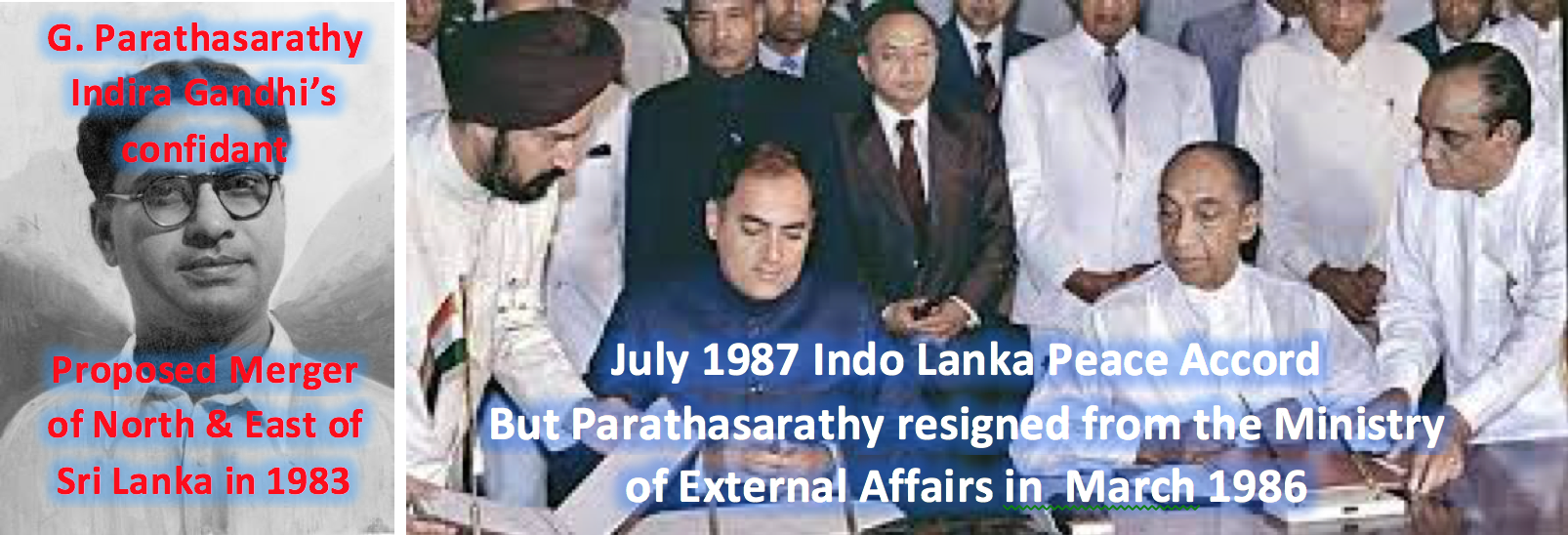


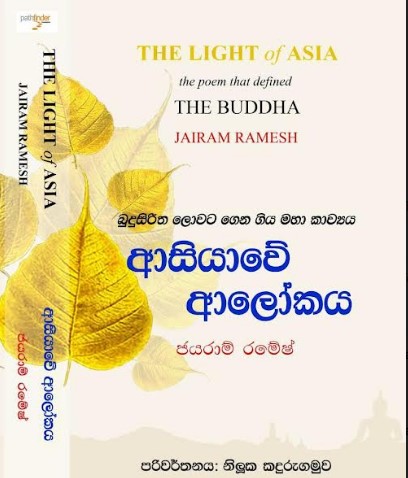
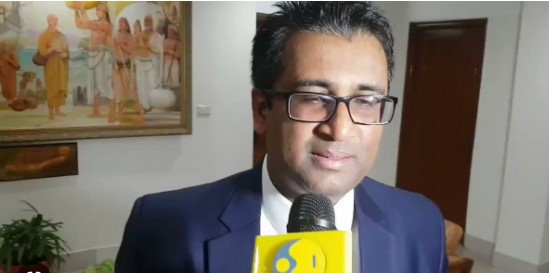
 Over 5,000 Ashok Leyland buses are currently in operation with SLTB. (Representational Image)