SINGING SRI LANKA’S NATIONAL ANTHEM IN TAMIL Part 4B

December 28th, 2022

KAMALIKA PIERIS

Sri Lanka Thaaye, the Tamil version of the Sri Lankan national anthem, is an exact translation of Sri Lanka Matha and is sung to the same tune, observed DBS Jeyaraj.

Sri Lanka’s national anthem sings of patriotic praise to the country alone and not to any race, religion, caste, creed or community. Hence, the Tamil people found no reason to reject or protest against the national anthem. Once the meaning of the Sinhala words was known no Tamil found it objectionable. With an appropriate translation available the Tamils of Sri Lanka found themselves singing the national anthem with emotion, gusto and fervour in their mother tongue, said DBS Jeyaraj.

The Tamil version was first broadcast officially on Radio Ceylon” on February 4th 1955. In Delft, on Independence Day 1955 Bradman Weerakoon, GA Jaffna was asked to hoist the national flag. School children sang the National anthem ‘of course in Tamil.’

Ananda Wanasinghe recalled that Rama, a close friend of mine from Nelliyadi Central College tells me of singing national anthem it in Tamil at the beginning of assembly and at all other school functions. He adds that it was sung with emotion, pride, and honour.

Prof K. Sivathamby said a Tamil translation of the national anthem was been in existence since 1950, composed by N. Nallathamby. UNP said in a statement, that in 1950 there had been a competition to select the best Tamil translation of the song Namo   Namo Matha and Nallathamby had won it.

 DBS Jeyaraj said the 1950 committee under Wijeratne, had   agreed to a Tamil translation. M.Nallathamby, a teacher at Zahira College, Colombo was entrusted this task and a neat, precise translation was done. This version was extensively used in official functions in the pre-dominantly Tamil speaking Northern and Eastern provinces, he said.

Haris de Silva said that there are records to show that In 1951 Governor General Sir Oliver Goonetilleke had submitted a memo to cabinet saying that Namo Namo Matha had been sung in Sinhala and Tamil at the independence celebrations. He attached a Tamil translation by K. Kanagaratnam, Acting minister of education and an  English translation by CWW Kannangara ‘our representative in Indonesia ‘and one by S. Paranavitane. Cabinet had wanted Sir Oliver to consult GG Ponnambalam, who had had nothing to say on the matter.

On February 4th 1952, Namo Namo Matha” was sung at Independence Day ceremonies as the official national anthem. The Tamil version Namo Namo Thaaye” was sung in Independence Day functions at the Jaffna, Vavuniya, Mannar, Trincomalee and Batticaloa kachcheries, said Jeyaraj.

On March 12th 1952 the Government published huge advertisements in Sinhala, Tamil and English newspapers announcing that Namo Namo Matha” was the national anthem. The Sinhala and Tamil versions were published in the Sinhala and Tamil newspapers respectively the English newspapers had Sinhala words written in English.

The booklet issued in 1952containing the anthem had translations in English and Tamil.  In that year Cabinet had wanted the Tamil translation improved. This was done by K. Kanagaratnam.

In 1953 a gramophone disc was also cut for the Tamil version of the national anthem. While the melody and music was the same as that of the Sinhala version the Tamil words written by Nallathamby were sung by two women Sangari and Meena.

When Sir John Kotelawela visited Jaffna in 1954 the Tamil version of the national anthem was sung at functions felicitating the Prime minister, said Jeyaraj. Then when Queen Elizabeth II was visiting in 1954 it had to be decided which version was to be sung first.

The Tamil version thereafter started to come and go, its appearance at the Independence Day celebrations fluctuated. It was sung when the UNP was in power and ignored when the SLFP came in.

In the 1960s the Cabinet decided that the National anthem will only be in Sinhala.  Prime Minister Sirimavo  Bandaranaike had walked out of a function in the north when the national anthem had been sung in Tamil.

In the 1970s the Tamil translation came back. The 1978 Constitution listed the national anthem in its schedules. The Nallathamby translation was included as the Tamil translation following an appeal by K.W.Devanayagam. He  said that Muslims and Tamils living in the north and east who spoke mostly Tamil wanted the Tamil version for use in schools and occasions.

Thereafter in Jaffna Vavuniya, Trincomalee  and Batticaloa the Tamil version was played at functions attended by Tamils. The Sinhala version was played at functions attended by the Sinhala community.  When both parties attended, they avoided the lyrics and only played the tune.

I think  that during the Eelam war  (1983-2009) the Tamil version was not played at Independence Day ceremonies. I cannot recall hearing it sung. After the war ended, The Sunday Times reported on 12 December 2010 that the Cabinet of Sri Lanka headed by President Mahinda Rajapaksa had  decided  not to  feature the Tamil translation of Sri Lanka Matha at official and state functions.

At three functions at Kilinochchi, army had stopped the singing of Tamil versions, reported Sunday Times. They ordered  the recorded Sinhala version  to be played and it was. They had also distributed the Sinhala version of the national anthem to schools and told them that in future they should use the Sinhala version.

With the change of  government in 2014, the Tamil version came back. In March 2014 President Maitripala     announced that there would be no bar to singing the national anthem in Tamil. National anthem was sung in Tamil at the end of the Independence Day proceedings in 2016. The singers were students of Bambalapitiya Ramanathan Hindu Ladies’ College and Colombo Vivekananda College.

The Tamil translation was sung at the three Independence Day functions under  Yahapalana government of 2015-2018. It was sung at the end of the ceremony, after  the main activities were done and  just before the assembly   dispersed.   The Sinhala version  was sung at the beginning of the  ceremony.

When Pohottu came to power in 2019,  the Tamil translation was dropped. It was not sung at the Independence ceremonies of 2020 and 2021.   I do not think it was sung in 2022 either.  But the government has decided to sing the anthem in Sinhala and Tamil at the forthcoming  Independence Day celebrations of 2023.

When the National anthem was sung in Tamil at the end of the Independence Day proceedings on 4.2.2016 there were mixed reactions in both the Sinhala camp and the Tamil camp. After several decades, the National Anthem was being sung with official approval at the State-sanctioned commemoration of independence, enthused Jeyaraj.

The singing of the National Anthem in Tamil at the Independence Day event 2016 has conveyed a strong symbolic message to Tamil-speaking people that they and their language are an integral part of evolving Sri Lanka. This has made all those Tamils desiring to live as equals in a united, undivided Sri Lanka very, very, very happy he continued..

 Other Tamils did not agree. If Tamils thought that they had gained a status on par with the majority race they are wrong. They were shown to be second class. The Tamil version was sung  last, they said.

The singing of the national anthem in Tamil at the Independence Day in 2016 surprised many people,  said Jehan Perera. In Hambantota they did not like it. Some did not even know that Tamil was a national language. It came as a shock them. ( Continued)
නේපාල අග්‍රාමාත්‍යවරයා ලෙස යළි තේරී පත්වූ පුෂ්ප කමල් දහාල් (Pushpa Kamal Dahal)මහතා වෙත අග්‍රාමාත්‍ය දිනේෂ් ගුණවර්ධන මහතා සුභ පැතුම් එක්කරයි

December 28th, 2022

අග්‍රාමාත්‍ය මාධ්‍ය අංශය

නේපාල අග්‍රාමාත්‍යවරයා ලෙස යළිත් පත්වීම සම්බන්ධයෙන් පුෂ්ප කමල් දහාල්  (Pushpa Kamal Dahal) මහතා වෙත ශ්‍රී ලංකා ප්‍රජාතාන්ත්‍රික සමාජවාදී ජනරජයේ හෘදයාංගම සුභ පැතුම් එක් කරන බව අග්‍රාමාත්‍ය දිනේෂ් ගුණවර්ධන මහතා සුභ පැතුම් සංදේශයක් යොමු කරමින් කියා සිටියි.

දකුණු ආසියානු අසල්වැසියන් ලෙස ශ්‍රී ලංකාවත් නේපාලයත්  ගැඹුරු මිත්‍රත්වයෙන් හා සමීප සබඳතා තහවුරු කර  කරගනිමින්  වත්මන් අභියෝග ජය ගැනීමට සහ සහයෝගිතාව සඳහා නව අවස්ථා ගවේෂණය කිරීමට එක්ව කැප වී සිටියි.

 පොදු ආගමික සහ ප්‍රජාතන්ත්‍රවාදී වටිනාකම් වල පදනම මත ගොඩනගාගෙන ඇති ශක්තිමත් දිගු කාලීන ද්විපාර්ශවීය සබඳතා තව දුරටත් ප්‍රවර්ධනය කිරීම වෙනුවෙන් අඛණ්ඩව ක්‍රියා කිරීමට   බලාපොරොත්තු  වන බව අග්‍රාමාත්‍යවරයා සිය සංදේශයේ වැඩිදුරටත්  සඳහන් කරයි.

අග්‍රාමාත්‍ය මාධ්‍ය අංශය

Tucker “Gets It” – Putin Doesn’t Want American Missiles on His Border

December 28th, 2022

Courtesy The Unz Review

Getting Ukraine to join NATO was the key to inciting war with Russia. We didn’t get it at the time. (But) Now it’s obvious. Vladimir Putin invaded Ukraine because he didn’t want Ukraine to join NATO. Putin certainly had other motives as well; people always do, but that’s the main reason Russia invaded. The Russians don’t want American missiles on their border. They don’t want a hostile government next door. Now that is true, whether you are allowed to say it aloud in public or not. It has been true for a long time. A lot has been written about this over many years by serious people. No one who knows anything and is honest, will tell you Putin invaded Ukraine simply because he is evil. Putin may be evil, he certainly seems to be, but he also has strategic motives for doing that, whether you agree with those motives or not. That is irrelevant. Those are the facts.” Tucker Carlson, Fox News

Tucker Carlson is right about Ukraine. NATO membership for Ukraine was clearly a provocation aimed at luring Russia into an invasion. And, it worked, too. Putin could not take the risk of having a hostile government next door” or American missiles on his border,” so he acted to preempt those threats by sending the tanks across the border on Febrary 24, 2021.

Full Story

Tucker “Gets It” – Putin Doesn’t Want American Missiles on his Border, by Mike Whitney – The Unz Review

The Whisperers of the Central Bank & UN Agencies in Sri Lanka

December 28th, 2022

e-Con e-News

‘The USA is never going to pay its debts. It doesn’t have to.

Its debts are in its own currency. The US can simply print it.

The African debt is not in its currency. The African debt is in US dollars.

Africa has to earn the US dollars. And the only way Africa can earn its US dollars

is not to be assassinated for growing its own food & becoming independent

and doing something the US does not like.

The principle underlying the foundation of the World Bank (IBRD)

is that no country should grow its own food. Africa & the Third World

should only grow export crops: export in order to have an oversupply

of cocoa & other tropical raw materials. To keep down the price,

they must buy their grain from US or Europe.

     So that if they do something we don’t like

we can do what the US tried to do to China in the 1960s.

We can sanction them.

We can say we are going to starve you, we are not going to export any grain to you.

So owing their foreign debt in dollars, means that they have to somehow sell

something the US wants, not something they want.

The most evil organizations in the world today, are the World Bank & IMF.’

Michael Hudson (Random Notes, SuperImperialism)

‘Central Bank Independence’ is explicitly designed

by states and capital working together

to protect the making of global capitalism

from the progressive tendencies of democratic pressures

on elected governments, including by their own people.

Central Bank Independence has now been made ‘a touchstone

for the restructuring of all states in context of capitalist globalization’

(ee Focus, The Big Business of the Independent)

Question, questions and more questions – What does Sri Lanka’s Central Bank have to do with the powerful US Federal Reserve, the US International Monetary Fund, & the US Treasury Market Practices Group – ‘a private cartel of 24 Wall Street companies’? Why are they so interested in making Sri Lanka’s Central Bank ‘independent’ of the country’s sovereign elected body – Parliament – as announced this week? (see Random Notes)

• Why does the German government have a German official representing German industry parked inside Sri Lanka’s Export Development Board premises? Will a Swiss exporter join them too? (see ee Quotes)

• What’s behind this week’s announcement: that the government is withdrawing from providing fertilizer to cultivatorsallowing the private sector to sell fertilizer? From where is the UN Food & Agriculture Organization (FAO) getting the funds to ‘assist’ this transition in that rather sensitive role, where the ‘food crisis’ is repeatedly being blamed on the banning of imported chemicals and going ‘organic’? Numerous other countries are undergoing food ‘crises’. Did they all ban fertilizer ‘overnight’? And why is the FAO and the World Food Program (WFP) garnering so, so many headlines in the media? Is it because USAID is now the largest donor to the WFP?

     The WFP Sri Lanka this week laid out the red carpet for (the latest Yankee banana in town) Dustin Shiau, Senior Regional Program Officer of the US Agency for International Development (USAID)’s Bureau for Humanitarian Assistance (BHA). Prolix job title! Shiau first scurried to sensitive Mullaitivu, which USAID claims is the most affected by hunger due to ‘high food prices and reduced incomes’. Shiau, a he-male expert on ‘pregnant and breastfeeding mothers and people with disabilities’, wishes ‘to better understand their nutritional needs’.

     Shiau also participated in a ‘mapping exercise in Moratuwa – an area susceptible to weather-related natural disasters’ – using Geographic Information System (GIS) software ‘to identify where the most vulnerable communities may be hardest-hit during an emergency.’ Is the government about to sign that SOFA agreement (see ee Quotes), which allows US boots on the ground? Will they enter through Moratuwa or their Kollupitiya Junction beachhead?

     Meanwhile, the Japanese-dominated Asian Development Bank (ADB) is giving ‘paddy farmers’ a Rs20,000 allowance each (Rs8 billion in total). What exactly must these cultivators buy, or grow? Sushi? Recall how Sri Lanka was made dependent on US wheat (see ee QuotesRandom Notes).

• When and how did corporations get to insert their ‘executives’ (agents?) into UN bodies, without permission from the General Assembly? The UN Secretariat surreptitiously signed a strategic partnership with the World Economic Forum in June 2019. Why has the English media, always so keen to splash UN press releases as news, not reported this? Is this corporate dollarizing the reason why the UN acts like it’s no longer accountable to its member states.

     The UN this week somehow found several million dollars (not for fuel, fertilizer or food, but) to enforce their human rights resolution against Sri Lanka, mainly pushed by the white (& honorary white) ‘international community’ (see below). Yet, after the US withheld funding from UN programs it disliked, it drained the UN regular budget – the ‘backbone of funding for the one-country-one-vote multilateral processes of intergovernmental cooperation & decision-making’.

     All of these moves accelerated with the 1990s ‘withdrawal’ of the USSR. We’re told, the ‘neoliberalism’ of ‘triumphant capitalism’ took over, increasing the power of corporations amidst the deregulation of the state. With corporations avoiding taxes to nation-states, multilateral institutions, which depend on government donors, kept being defunded (Random Notes, Whisperer Advisors!).

• The answers, answers, answers to all these questions could be provided by the all-new Sri Lanka Institution of Economics & Trade Institute (SLIEIT) set up by the SL cabinet this week, to ‘educate policymakers & public officials’. The media after all loves to blame politicians as genetically corrupt, so let’s see whether a, SLIEIT BA could override DNA.

     However the sphinx-ish sounding name itself is rather profound: an ‘Institution Institute’? And ironic: SLIEIT echoes ‘Sly-it!’ or ‘Sleight’: which means ‘using dexterity or cunning, especially so as to deceive’.

     The foremost reason for SLIEIT is apparently due to the demands of the IMF: For whom answers to our questions may therefore not be a priority. Indeed the reason for SLIEIT, our merchant media insists, is ‘successive governments have amended the 2003 Fiscal Management Responsibility Act 3 times after failing to meet, in particular the budget deficit rule, which has never been complied with up-to-date’. A stronger new Public Financial Management Act, will be imposed next year, appointing an Inspector General of Finance (IGF!, not IGP!).

      Next a new Monetary Law Act will ‘relieve the Central Bank from any provisions requiring to fund excessive budget deficits through monetary expansion (money printing), which has led to high inflation and deprecation of the Rupee. So why are the US government’s Wall Street fronts so interested in our shortcomings aka deficit? (Random Notes)

• United Nations groupies in Sri Lanka are thrilled that the money-hungry UN has allocated $3.4 million (Rs1.2 billion) to enforce the latest Human Rights Council (UNHRC) resolution on ‘promoting reconciliation, accountability and human rights’ in the country. The SL government maintains UNHRC Resolution 51/1, presented without Sri Lanka’s consent, was adopted this October.

A Parallel Mafia State, Mafia Judiciary, Mafia Media & Mafia Economists

December 28th, 2022

e-Con e-News

e-Con e-News  11-17 December 2022

The bloody garrotting of the head of one of several ‘leading’ companies (financial, insurance, real-estate) on Thursday, found amidst the gothic crypts of Borella’s Kanatte – the country’s most expensive real-estate – will be just as quickly entombed and diverted by our mafia media.

  No questions are being asked yet as to why ‘a member of one of the leading business families in the country’ would lend Rs1.4 billion to a ‘cricket commentator’ & ‘former sports presenter’, to ‘invest in a well-known company’ in Sri Lanka. Is cricket the real English laundry? The story also reveals that the municipal cemetery’s security has been outsourced to a private company. It’s left to the rumor mills to wonder about corporate investment in money laundering and drug dealing. Such are not the preserve of those given rustic nicknames like Makandure Madush, etc, who regularly mete out and meet bloodier ends, and evoke sprawling repeated headlines. Could we now know who they really work for? Not everyone can afford life insurance or assurance. Nor will Kolomba Hatha, Flower Road, or Palmyrah Avenue, modify otherwise distinguished Trinitian or Thomian Christian names. However, fertilizer-importer Maharaja’s NewsFirst, a vehement critic of the present President, suggests Dinesh Schaffter was a powerful witness to the Presidential Commission of Inquiry investigating the infamous ‘Treasury Bond Scam’. Wheels within wheels. Footnotes within footnotes.

• Some of the country’s biggest thieves, their fathers, mothers, siblings & faithful servants, 57 of them, calling themselves ‘concerned citizens’, wrote a very interesting letter on (remember this date) 7 March 2022, to Sri Lanka’s Monetary Board, which governs the Central Bank.

  These letter-writers lamented the ‘severe’ shortage of foreign exchange and consequent fuel, food & pharmaceutical shortages. Their sorrow was on behalf of ‘small & medium-sized businesses who are fighting existential challenges’. They demanded the government submit to the US-controlled IMF and its bitter medicines of devaluation, and hike fuel & electricity prices (which would surely sink their beloved cutlis-making SMEs!).

  These ‘concerned citizens’ included present CB governor Nandalal Weerasinghe & former CB governor Indrajit Coomaraswamy, both whom worked under and with disgraced CB governor & bond-scammer Arjuna Mahendran. Both Weerasinghe & Coomaraswamy were involved in passing the Foreign Exchange Act No 12 in 2017. This FE Act moved banker Rajendra TheagarajahCeylon Chamber of Commerce chair, to thrill: ‘The concept of foreign-exchange control has now disappeared from our dialogue.’

  So, why then lament the ‘severe shortage’ of Dollars 5 years later? Yet Theagarajah is also a signatory of the March 7 letter. The other signatories include the regularly celebrated economic experts in the daily (should we say, unrelenting) media. They include the economists Nimal & Amal Sanderatne (Father & Sons Ltd), WAW WijewardenaSrimal AbeyratneShantha Devarajan, etc. They include bankers, fake industrialists (Thulhiriya-thief MAS’ Sharad AmaleanCeylon Tobacco’s Suresh Shah, later appointed chair of the SoEs Restructuring Agency in Sept 2022), supposed scholars (we won’t bother naming these imposters), NGO royalty (Sarvodaya’s nepotist Ariyaratne Jr), BASL’s Geoff Alagaratnam & PC Kanag Isvaran, US-funded Verite’s de Mels, US-funded Advocata chair Murtaza Jafferjee (in May appointed by then-PM & Minister of Finance Ranil Wickremasinghe to form an ‘Economic Stabilisation Dialogue’ between the Ministry of Finance & ‘independent’ economists) and his Koralawella frontman Dhana Fernando. Murtaza’s fellow Borah merchants, Abbas & Hussein Esufally, Advertisers (Neela Marrikar, chair of Japan’s Dentsu Grant, daughter of Reggie Candappa) etc. It truly is an assemblage of the media-loved economic lightweights. Yet the Assembly of God’s twins, aka Footnote Cliquer Harsha & Eran & 3rd-ball Kabir – always so horrified and always headlined by the media – did not sign the letter.

• On March 31, 3 weeks after these eminents wrote the Monetary Board, ‘demonstrators’ attacked the residence of then President Gotabaya Rajapakse, sparking the so-called Aragalaya. On that very day, US Envoy Julie Chung visited the President’s Mirihana residence, got down on her knees, and raised her hands. She said she was a Roman Catholic and prayed to her god, via Rome and Washington, to invoke relief for the President. She ‘apologized’ for what had happened that day. When the President decided to remove the protestors, envoy Chung prevented it, claiming it would stall the IMF loan. The President was visibly moved (we’re told) by her devotion. Chung then delivered the US ultimatums for the President to implement (see ee Sovereignty, US envoy controlled both Aragalaya, GR)

  Meanwhile, as Wikipedia’s doctored Aragalaya (2022 Sri Lanka Protests) article records: ‘Twitter hashtags including #GoHomeGota and #GoGotaGo’ were soon force-multiplied into ‘trending’ by such imperialist redoubts as the ‘USA, Singapore, and Germany’.’

On April 3, the cabinet resigned. Letter-writer Weerasinghe replaced CB Governor Ajith N Cabraal on April 7. On May 9, ruling party MPs offices & residences were attacked & burned, across the country. On May 18, the new CB Governor announced independent Sri Lanka’s first financial default. On July 9, the President’s palace was allowed to be attacked & ransacked…

Destruction of priceless paddy lands

December 28th, 2022

Courtesy The Island

An open letter to Director General of Agrarian Services

I make reference to this subject, which is directly affecting the food security and safety, as well as the national security of our country in the future.

Rice, being our citizens’ staple food over many centuries, plays an important role in our country’s food production chain, which is totally dependent on the limited paddy lands laboriously created by our ancestors. Apart from those paddy lands built by our earlier farmers, no new land is being turned into a paddy land by anyone at present. Therefore, the paddy fields are not increasing, while the population is constantly increasing, making it essential to fully use the paddy lands currently at hand.

In such a backdrop, it is imperative to maximise the use of paddy lands for the sole purpose of producing high quality rice, and develop, cultivate and protect them for the benefit and protection of our future generations. That will also prevent looming famines or food crises in the years to come.

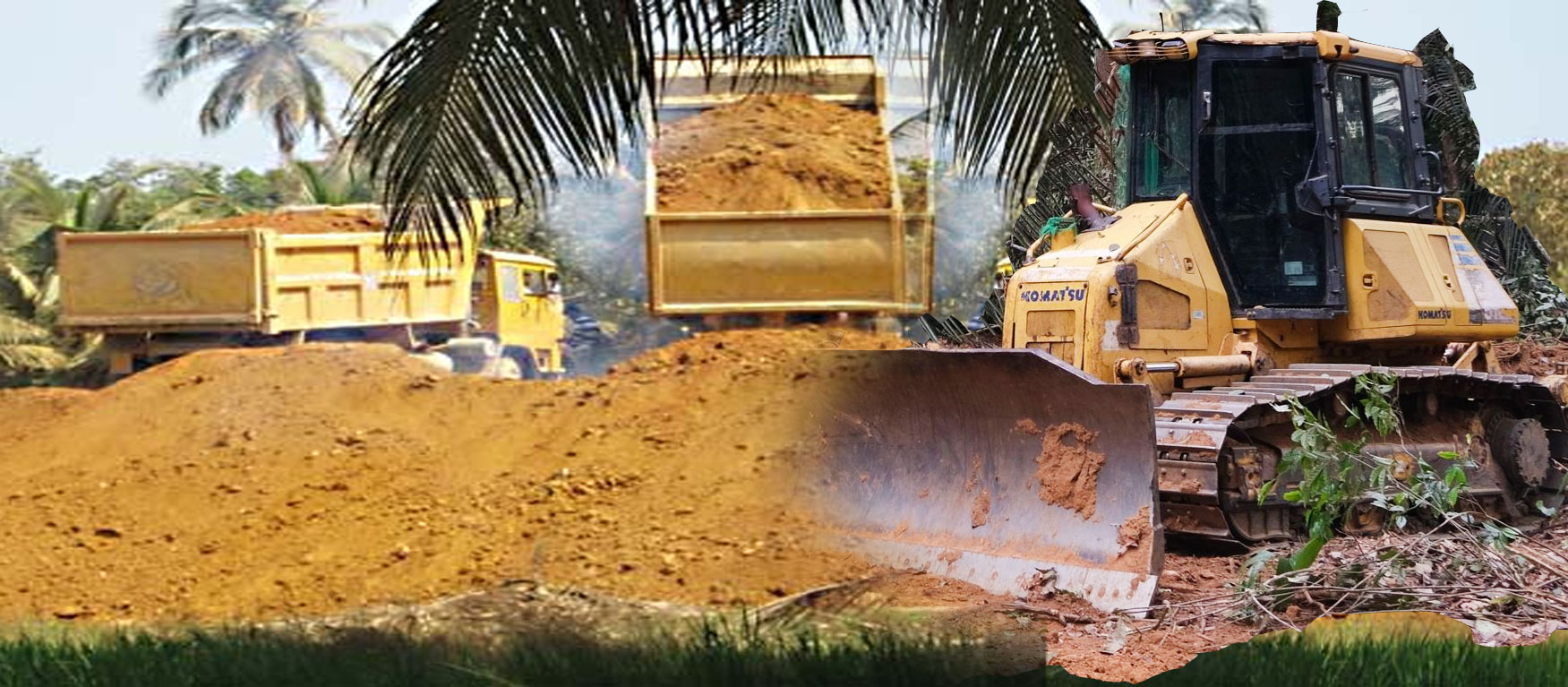
Amidst such circumstances, crooks all over the country target and purchase precious paddy lands as a cheap land acquisition option, and then tactfully convert such paddy lands into lands of other permanent economic crops, by landfilling and first cultivating temporary or biennial crops, such as sweet potatoes or innala”. After a season or two, they then start cultivating permanent economic crops like cinnamon, by completely and permanently destroying paddy lands in a way that those lands can never be used for cultivating rice again. This is a hidden systematic process to destroy our paddy lands, so is rice production as a result of it. Compared to buying other lands, paddy lands are much easier and cheaper to buy; and then these crooks keep them for a few years, purposely without cultivating them, in order to get degraded fertile paddy fields from grade A and B to grade C. Then, with the support and recommendations of their political henchmen in local Agrarian Societies, they make requests for approval to the Agrarian Services Department through their local officials, to allow them to cultivate temporary crops other than rice. This is tactfully done in the pretext of making maximum use of the land, but after a season or two, they gradually start growing other cash crops such as cinnamon and coconut, changing the appearance and condition of a muddy land into a solid land, in a way it is not recognisable by anyone thereafter or cannot be turned into a paddy field again. Then, they get the assistance of local Agrarian Services Centre officials to remove the particular land from the Paddy Lands Register, maintained by the local Agrarian Services Centre. However, this can easily be detected if a deed of a land is checked carefully, as it mentions whether the land is a solid land or a muddy land.

Nowadays, in front of our residence located at Pollewwa, Batapola in the 75 C Batapola North G.N. division, one can easily find such a centuries-old, valuable paddy land being tactfully ditched and landfilled, under the pretext of growing sweet potatoes. After a season or two, this crook namely Dayananda (commonly known as Naathaya of near Pollewwa Tyre Works junction, Pollewwa, Batapola, will start permanently growing cinnamon and coconut in this land, completely changing the current face of the muddy land into a dried solid land. Thereafter, no one will be able to use this paddy land for paddy cultivation. This criminal had done the same thing before, several times, and why the authorities can’t identify his cunning tactics is very much doubtful.

Many years ago, he did the same thing to the priceless paddy field in front of the house of Katta Bandu in the same manner, first growing a cultivation of innala”; then after one year, not only turning the entire land into a cinnamon mixed cultivation, but also a part of the main road from the Atabhagaha Junction to  the Pollewwa Junction. He, then, did the same thing to the paddy field behind the Grama Niladhari office, and in front of the house of Thekola Mudalali, by filling and cultivating coconut in the side of the Karrijja Bubula Road. Due to the fight given by this Mudalali until his death, he could not completely fill the muddy land as he did earlier. Now, he has moved to a new location again after a few years of silence. It is surprising why the local Agrarian Services officials are purposely allowing these crooks not to cultivate their paddy lands by making them barren.

These lands can be given to innocent farmers who can cultivate them successfully. It is revealed that several requests made by local farmers to get these paddy lands were turned down by the officials, without any valid reason. This childless, barren family keeps another two valuable paddy lands near Ilukpollewwa (near the ex-Batapola coroner’s residence) without cultivating them for over 10 years. Several attempts were made by them to build a road in the middle of one of the two paddy fields, and to cultivate cinnamon by making a bed on the part of the paddy field. Due to the pressure from the residents near them, they had stopped working further on them. It is said that the public funds of the Ambalangoda Pradeshiya Sabha was wrongfully used for building this private road with the support of VC and a PS member of the same Pradeshiya Sabha. . It is known that the TO of the Pradeshiya Sabha had also been misled by pretending this road to be an extension to the Karijja Bubula Pradeshiya Sabha Road connected to the Pollewwa – Pathraketiya by-road. This family maintains a strong connection with the assistant commissioner of Agrarian Services, at the Galle Office, who recommends and approves any kind of request made by them, citing justifiable reasons. People used to say that even the Commissioner General cannot prevent these malpractices from taking place, until this commissioner serves in the Galle district office.

Sir, by granting permission and allowing them these paddy lands to be used for cultivation, other than paddy cultivation, will ultimately create a lack of paddy lands in the country for adequate rice production in the future. It is very pathetic that we allow this to happen in an area situated in the wet zone, where we can cultivate paddy in two seasons successfully. It is, indeed, our utmost responsibility to preserve and protect what our ancestors made possible by hard work and left us in the same manner intact for our future generations. Otherwise, they will curse on you and us, for neglecting our priorities for personal reasons and temporary gains.

Hon. Sir, it is very essential that you personally intervene, investigate and take necessary legal actions to prevent these crooks, destroying the future of our children, in disguise of cultivating other crops in paddy lands and then systematically and tactfully turning them to the lands of cash crops. Under any circumstances, please do not allow the provincial or local Agrarian Services officials to grant permission for such good-faced, but long-term harmful activities. Also look into the weak points in the law, which are often amply being misused by the crooks like”Naathaya for their ravenous for wealth and temporary success.

I kindly request you to inform all officials under your purview, not to entertain these criminal elements in their respective areas, under whatever influence made by any affluent person, due to personal connections.

I strongly believe that you will thoroughly investigate as to how this crook has been granted permission once again to completely destroy another paddy land, without looking into his previous criminal record of destroying paddy lands; and those who are allegedly involved in this crime should be dealt with in accordance with the law of the land. Please treat this as an urgent and serious matter of significance that requires your personal intervention, and thorough investigation. Just calling a report from the local officials, who are also the supporters of these scrupulous activities will do nothing, but provide further encouragement to the culprits to follow the same path again and again.

In conclusion, I do admire and appreciate your dedication and commitment in serving our life-blood like farming community by providing strong leadership and correct guidance.

Concerned resident

Batapola

Sri Lankan students arrive to pursue higher education

December 28th, 2022

Courtesy The Express Tribune

ISLAMABAD:

Twenty-six more Sri Lankan students have arrived in Pakistan to study in Pakistani universities at BS, MS and PhD levels under Allama Iqbal Scholarships for Sri Lankan Students. The students arrived at Jinnah International Airport, Karachi, and Allama Iqbal International Airport, Lahore.

These scholarships are part of the comprehensive educational programme entitled Pakistan-Sri Lanka Higher Education Cooperation Programme (HEC). The Sri Lankan students will pursue their BS, MS, and PhD studies in public sector universities of Pakistan. The scholarships are being offered in all major disciplines, including Medicine, Engineering, Business Studies, Natural Sciences, Social Sciences, etc.

Students were selected through a competitive selection process keeping in view their basic eligibility criteria for enrolment in Pakistani public sector universities. The incoming Sri Lankan scholars were given a warm welcome at Lahore regional center of Higher Education Commission (HEC).

IS member connected with Sri Lanka Easter bomber held for links with Coimbatore blast suspects: NIA

December 28th, 2022

By Neeraj Chauhan Courtesy Hindustan Times

New Delhi: The National Investigation Agency (NIA) on Wednesday arrested a member of terrorist organisation Islamic State (IS) who was in touch with the mastermind of 2019 Easter Day bombings in Sri Lanka, for his alleged links with suspects in the October 23 blast in Tamil Nadu’s Coimbatore

Coimbatore: Emergency services personnel at the site after an LPG cylinder exploded inside a car, in Coimbatore, Sunday, Oct. 23, 2022. One person was charred to death in the incident. (PTI Photo)(PTI10_23_2022_000181A) (PTI)

New Delhi: The National Investigation Agency (NIA) on Wednesday arrested a member of terrorist organisation Islamic State (IS) who was in touch with the mastermind of 2019 Easter Day bombings in Sri Lanka, for his alleged links with suspects in the October 23 blast in Tamil Nadu’s Coimbatore.

The federal agency also arrested another man, identified as Sanofar Ali, for allegedly taking part in plans to carry out terror attacksin the country.

NIA officers familiar with the developments said IS member Sheikh Hidayatullah was allegedly in touch with Maulvi Zahran bin Hashim, the mastermind of the deadly Easter Sunday bombings in Sri Lanka on April 21, 2019 that claimed over 250 lives.

Both Hidayatullah and Sanofar Ali were arrested from Tamil Nadu, an NIA officer said.

Investigations have revealed that the accused persons had entered into a criminal conspiracy in the interior of forested regions of Asanoor and Kadambur areas of Sathyamangalam forest, Erode district, in February 2022,” NIA said in a statement. The meetings were led by previously arrested accused Umar Farooq and participated by deceased accused Jameesha Mubeen (died in Coimbatore blast), along with Mohammed Azharuddin ,Sheikh Hidayatullah and Sanofar Ali, where they conspired to prepare for and execute terror acts.”

Jameesha Mubeen, who was questioned by NIA in 2019 for alleged terror links, was charred to death in suspicious circumstances after the LPG cylinder inside a Maruti 800 he was driving exploded near Kottai Eswaran temple in Coimbatore’s Ukkadam on the morning of October 23. The incident took place around 200 metres from a police patrol.

The deceased was registered as the prime accused in the blast case. The state police had invoked the stringent Unlawful Activities (Prevention) Act (UAPA) in the case, which was later handed over to NIA.

According to NIA officers cited above, Hidayatullah, who has been propagating IS ideology since 2017, was earlier arrested along with Azharuddin in June 2019. He was released on bail in 2020. Azharuddin from Ukkadam and leader of Kerala-Tamil Nadu IS module is currently in jail for the Sri Lanka bombings.

All the above accused were inspired by Hashim, who masterminded and executed the Sri Lanka bombings — in which 252 people were killed — and planned to carry out similar attacks in two south Indian states at that time.

Prior to the Sri Lanka bombings, Hidayatullah and Hashim were in touch through a Facebook page KhilafahGFX”, according to NIA’s charge sheet filed against Hidayatullah in 2019.

Marcos’ tale a key lesson for Gotabaya and clan

December 28th, 2022

By Dilrukshi Handunnetti Courtesy New Indian Ecpress

Irrespective of where he makes his next home, Rajapaksa will have the Sword of Damocles hanging over his head, eluding a retreat from the prying eyes of the public.

The year 2022 proved tumultuous for Gotabaya Rajapaksa, Sri Lanka’s eighth executive president. Here’s a man who was swept into power with an unprecedented mandate to protect sovereignty and the interests of the majority, only to be unceremoniously ousted in less than two years by the same people who elevated him to high office.

The populist leader offered a ‘system reset’—a heady concoction of allegations like international conspiracies, islamophobia, and minority hatred were the ingredients of his political campaign. Gotabaya epitomised identity politics and had people eating out of his palm for a while. His popularity even surpassed that of his brother, Mahinda, considered the most popular leader in present-day mainstream politics.

His misplaced trust, poor judgement and hasty decision-making may be history now, but there are unresolved issues even a fleeing president cannot avoid. He appears to have made a complete U-turn to return to his adopted home, the United States, after the controversial relinquishing of his American citizenship to stand for presidency in 2019.

On Boxing Day 2022, Rajapaksa and his wife left for the US via Dubai. Sources close to Rajapaksa said the 73-year-old ex-president wishes to spend his premature retirement with his son. The turn of events, barring some differences, may resonate with other dictators and their eventual fall from grace.

In another era, another dictator and kleptocrat (known for brutality and corruption) who branded his rule as ‘constitutional authoritarianism’ had to use his powerful connections at the US State Department to make a home in Hawaii. He too undertook massive infrastructure projects that increased the nation’s foreign debt, drove high inflation and triggered a crushing debt crisis that brought people to the streets. He too was known as anti-communist, anti- Muslim, and anti-citizen.

Gotabaya and the entire Rajapaksa clan have several lessons to learn from the dark legacy of the Philippines dictator Ferdinand Marcos Sr. and his lavish wife, joint holders of the Guinness World Record for the largest-ever theft of government resources. The recent legacy of the Rajapaksas drives comparisons with the infamous Marcos’ of the Philippines—including how they made nations bleed and sought refuge elsewhere.

Irrespective of where he makes his next home, Rajapaksa will have the Sword of Damocles hanging over his head, eluding peaceful retirement or a retreat from the prying eyes of the public. Relinquishing public office is only a partial response to the call for accountability. Rajapaksa owes the nation answers on multiple counts, ranging from human rights abuses during the final phase of the war, journalists’ murders, systemic corruption, and the complete collapse of the economy due to gross mismanagement.

An authoritarian leader who brooked no opposition until he was driven out, Gotabaya infamously engineered anti-democratic Constitutional amendments to enable his brothers to control the political destiny of the Sri Lankan people. The 20th Amendment removed the two-term restriction on executive presidency and enabled dual citizens to hold political office. Gotabaya will be (dis)credited for elevating the family power project to Asia’s largest nepotism initiative, completing state capture by brothers, sons and nephews. Through this, democratic gains made through the 19th Amendment that depoliticised key public institutions were reversed without remorse.

Gotabaya returned home in 2005 after his brother Mahinda was elected president, to serve as the powerful and hand-picked defence secretary. He renounced his American citizenship under a cloud of doubt, to run for presidency in November 2019.

Sixteen years later, he is on his way back to the US, where his wife Ioma is a permanent resident. Angry citizens have driven him from home and presidency while the world has watched the grand spectacle of an unwelcome president flitting from country to country.

Gotabaya Rajapaksa may now want to repair the relationship with his former home which had repeatedly faulted him for lack of accountability, governance and transparency.

The return of the prodigal may also inspire reactions similar to those experienced by Ferdinand Marcos, who was welcomed with a surfeit of lawsuits. On the other hand, it could be a quiet return home, which will depend on the understandings reached on his behalf by the Sri Lankan government. But to most Sri Lankans, he represents a festering cancer of family rule that had made Sri Lanka bleed.

Gotabaya Rajapaksa may be eager to put his past behind and move on. Unfortunately, the people of Sri Lanka cannot do so with ease. Their lives have been turned topsy-turvy and beyond recognition with no hope of a better morrow. The people may be too tired to protest. But this silence is one pregnant with suffering and seething anger, for they know what became of those who dared to protest: violent attacks and flimsy litigation. There had been no public explanation or a plan of action that included the recovery of any stolen assets.

When Marcos fled Manila with his wife and entourage, he was given a safe passage and lived in the lap of luxury in Hawaii, spending his ill-gotten wealth. Yet, he was greeted with a series of lawsuits. His wealth could not even secure him a burial in the Philippines’ soil until years after his death.

What works in the Rajapaksas’ collective favour is the incumbent president who has ensured not just their safety and well-being but also their return to mainstream politics, excluding Gotabaya. Instead, he is supported to make a new home elsewhere, while others have a fresh political playground to mess with the future of 22 million people. There is no doubt that Sri Lankans here and abroad will keep a keen eye on what becomes of Gotabaya in his new life in the United States and whether the US’ system of justice may have its wheels turned now that he is no longer a serving president. People are bound to also watch how President Wickemesinghe may further facilitate the Rajapaksa clan to avoid being answerable to the people for grand corruption, kleptocracy and rights violations.

Should we also watch the United States carefully? We should. A country that has consistently questioned the regimes of Mahinda and Gotabaya Rajapaksa should now demonstrate its own commitment to fighting kleptocracy, economic crimes and rights abuses. The proof is in the pudding.

Dilrukshi Handunnetti

Executive Director of the Colombo-based Center for Investigative Reporting and a lawyer by training

6.8 billion dollars disregarded

December 27th, 2022

Sugath Kulatunga

A witty decoding of the acronym NATO is ‘’no action talk only’. In our country there is not even talk on some critical and palpable issues which are writ large. A few weeks back a think tank of the Peradeniya University pointed out that with an expected annualised export income of $ 16.3 billion in 2022 ($ 13.3 billion in merchandise exports and $ 3 billion in services exports) the country is being deprived of a staggering $ 6.8 billion in 2022 alone on the non-remittance of the total value of exports by exporters.

Governor Central Bank has appealed to exporters to repatriate export proceeds in full within the stipulated period. How very considerate. It cannot be ignored that out of the export earnings held back the country has paid for the import of the raw materials and the poor workers have also contributed in sweat and tears to the total value of exports. The Minister of Justice claims that a new Foreign Exchange Act is the solution to ensure that exporters adhere to the rules.

The Government believes that it is through a political solution that an economic solution could be found and spent a great deal of time and energy in enacting the 21st Amendment to the Constitution which inter alia has created a National Council to recommend economic solutions when the need is for a professional planning unit. The Parliament is yet to agree on the appointed members of the new Constitutional Council which is the other major proposal of the 21st Amendment. Meanwhile the opposition is clamoring for the local government election declaring that a change of government is the solution to all problems despite local govt elections do not automatically change the government.

Meanwhile the rupee has been devalued, the cost of living has rocketed up and the economy is in a free fall. There is hunger and malnutrition. The country is facing another imminent social upheaval the consequences will be disastrous.

The President wants to introduce laws to ensure food security. The Minster of Justice wants to bring in a new Exchange Control Act. At the same time the country declares it is bankrupt and goes with the begging bowl to the IMF for a mere 2.9 billion dollars when there is an estimated 6.8 billion dollars due from exporters to be brought back to the country during this year only.

Yet, neither the economic pundits, the so-called think tanks, academics, media nor the politicians even talk about this staggering amount of dollars legally due to the country. We are not even NATO.

Sugath Kulatunga

SINGING SRI LANKA’S NATIONAL ANTHEM IN TAMIL Part 4A

December 27th, 2022

KAMALIKA PIERIS

This essay gives a quick resume of the story of Sri Lanka‘s national anthem and then records the developments up to 2021 regarding the Tamil version.

A ‘national anthem’ is a western invention of the 18th century. European countries acquired ‘national anthems’ during this period. The British national anthem simply asked God to save the king and send him victorious, happy and glorious.  The composer is unknown. It was adopted as the national anthem in 1745. The national anthem of France, La Marseillaise was originally a war song, adopted as the national anthem in 1795.

The subject of a national anthem for the soon-to-be-independent Ceylon came up in State Council in 1941, said historian Haris de Silva.  Lanka Gandharva Sabha organized a competition to find a national anthem. The panel of judges was SLB Kapukotuwa, LLK Gunatunga, Lionel Edirisinghe, PB Elangasinghe, OH de A Wijesekera, and Multiyear EA Abeysekera.

The competition was held on January 31, 1948. Among the entries were Namo Namo Matha by Ananda Samarakoon and Sri Lanka Matha Pala Yasa Mahima by P. B. Illangasinghe and Lionel Edirisinghe. Samarakoon was then in India holding an exhibition of his paintings his wife and brother had submitted Namo Namo Matha” for the competition.

 The song by P. B. Illangasinghe and Lionel Edirisinghe won the competition but the public protested since Illangasinghe and Edirisinghe were on the panel of judges.  Their song was broadcast over Radio Ceylon” on the morning of Independence Day as the national song but it was not sung at the official Independence function.

Attention then turned to Namo Namo matha. Tissa Kariyawasam said Namo Namo Matha was sung at the 1948 Independence celebration by the students of All Saints Girls’ School trained by the Rev Fr Marcelline Jayakody   who was a violinist. (Sunday Island. 2.2.03 p 3). There is however no corroboration of this statement.

The composer of Namo Namo Matha, Ananda Samarakoon was born on January 13, 1911 in a small village, Liyanwela, near Watareka in the Padukka area. His parents, Samuel Samarakoon and Dominga Pieris were Christians. The son was christened George Wilfred.

He attended Christian College, Kotte (now Sri Jayewardenepura MMV).In 1934; he joined the staff of Christian College, as a teacher of art and music. In1936,   he went to Shantineketan and studied art under the famous Bengali artist Nandalal Bose, and music and singing under Shanti Devi Gosh. He came back in 1937 without completing his course and started teaching. Upon his return George Wilfred became known as Ananda Samarakoon. In 1940, he joined the staff of Mahinda College, Galle.

Ananda Samarakoon had composed Namo Namo Matha in 1940 as a patriotic song for the pupils of Mahinda College, Galle, where he was the singing teacher. Vini Vitharana said he had been a student at Mahinda College Galle, at the time. Samarakoon had ‘got the boys to sing it’.

Dr. Nihal  Karunaratne  of Kandy said that  Samarakoon  had presented a painting to his mother and on the back of the painting had pasted a paper cutting of an article published in the  Sunday Times where had had said that the song Namo Namo  Matha was composed by him in 1940 when he was a teacher at Mahinda.  He had composed it to instil patriotism in the students. 

Namo Namo Matha became popular and began to be seen as a potential national anthem. In 1946 the song was recorded for the HMV gramophone company. Being a fine singer himself Samarakoon recorded the song with his partner Swarna de Silva, the sister of famous flautist Dunstan de Silva.

The song became famous after a 50 member choir from Musaeus College; Colombo sang it on a public occasion. It was also broadcast on Radio frequently. Namo Namo Matha” though without official recognition was now becoming popular as a de-facto” national anthem.

The song was included in a book of poems published by Samarakoon called Geetha Kumudini”. Samarakoon was unable to pay the printing costs and instead gave the printer RKW Siriwardena the copyright to the songs. When the song was selected as the national anthem, Samarakoon did not get the prize of Rs 2500, awarded to the winner. It went to the publisher who had published it in the song book and insisted that he must get the money. Attorney general decided in his favor. 

In 1950 the then Finance minister JR Jayewardene presented a cabinet memorandum that the widely popular Namo Namo Matha” be formally acknowledged as the official anthem. Prime Minister DS Senanayake set up a select committee under the Home Affairs and Rural Development minister EAP Wijeratne to decide the matter. The committee considered Namo Namo Matha” and some other lyrics and recommended that Samarakoon’s song should be the national anthem.

However, the committee wanted a slight change in the words. The song had originally been composed when the country was under the British. Now the island was independent. Therefore the 10th line needed altering. Samarakoon, who was in India, was summoned to Ceylon by Sir Edwin Wijeratne. He returned home and agreed to change the line. Wijeratne then presented a cabinet paper in August 1951, recommending Namo Namo Matha” as the national anthem.

A Cabinet memorandum of 22.11.1951 proposed that Namo Namo Matha be accepted as National anthem.  It was unanimously approved by cabinet and formally adopted on November 22nd 1951.  

Namo Namo Matha was first sung as Ceylon’s official national anthem at the Independence Day ceremony in 1952.The music score was provided by George Perry, bandmaster of the 1st battalion of the Ceylon Light Infantry, attached to the army head quarters.

In 1952 the song was printed as a booklet    with translations in English and Tamil.  Instructions were issued as to how and where it was to be played. There were three versions, whole, abridged, and abbreviated and the occasions where each version was to be used was given.

Namo Namo Matha was now being sung as the official anthem but there was no uniformity in the melody or manner of singing. Different choirs and singers were rendering it in different ways.

In 1953 standards were set for the singing of the national anthem.   A Committee of 8 persons including GDA Perera, Deva Suriya Sena and Ananda Samarakoon was appointed.  They decided on standards for indigenous, western and band versions.

This committee set out guidelines as to how the anthem should be sung and also defined the exact tune for it. The melody was a refined version of the original tune composed by Samarakoon.

The indigenous version was demonstrated by the School for the Blind, trained by Saranagupta Amarasinghe. The western version was by the   Radio Ceylon orchestra, band version by the army band.

The reputed firm Cargills, then agents for HMV (His Masters Voice) was given the order to make records of the national anthem. The version sung by the School for the Blind accompanied by the army band was recorded by HMV in 1954.

In 1956 the government acquired the copyright. It paid Rs. 2500 to PKW SIriwardene, the publisher of Kumudini, in which the song first appeared in print. Once again, Samarakoon did not get anything.

Towards the end of the 1950s there was a controversy over the gana in the first line of the anthem.  A ‘gana’ is the placing of the first three syllables. Critics said the Gana” at the beginning of the national anthem, Na-mo-na” was inauspicious and that was the cause of all Sri Lanka’s troubles.

As criticism mounted over the national anthem, Ananda Samarakoon defended himself against the charges. He engaged in many newspaper debates and also spoke at public meetings in defence of Namo Namo Matha”. In February 1961 the government changed the line to “Sri Lanka Matha, despite Samarakoon’s strong opposition.

At the time, Samarakoon was facing financial difficulties. Although he conducted a regular program on the Educational service run by Radio Ceylon” his creative compositions did not meet with much commercial success. He produced a song and dance pageant Amaraneeya Lanka” in 1957 but it was a major flop. The onslaught against Namo Namo Matha” added to his troubles. Samarakoon committed suicide in April 1962, leaving a note complaining that his anthem had been mutilated.

Tissa Kariyawasam noted in 2003 that the first letter was changed because ‘na’ was considered inauspicious. This was nonsense, he said. Namo thassa  bagawatho’ also began with the same letter.  ( Continued)

කඳුරටේ සම්භවයක් ඇති දෙමල මිනිසුන්ගේ තත්වය නගා සිටුවීම සඳහා කමිටුවක් පත් කිරීමට ජනාධිපතිවරයා තීරණය කරයි (ප්‍රවෘතියක්)

December 27th, 2022

ආචාර්‍ය සුදත් ගුණසේකර (ශ්‍රී, ලන්.ප.සේ) අග්‍රාමාත්‍ය සිරිමාවෝ බන්ඩාරනායක මැතිනියගේ ලේකම් සහ මහනුවර සින්හල බෞද්ධ ජේෂ්ඨ පුරවැසියන්ගේ සන්විධානයේ සභාපති

පළමුව මේ ලක් පොලවේ වසර 2500 කට වැඩි කළක් එහි ශිෂ්ඨාචාරය බිහිකොට ජීවත්වූ ජන්ම උරුමකරුවන් සහ භූමිපුත්‍රයින් වන සින්හලයින්ගේ 1815 සිට සුද්දන් විසින් උදුරාගත් බැවින් අහිමිවූ අයිතිවාසිකම් ලබා නොදී ඉන්දීය දෙමල මිනිසුන්ගේ පමණක් තත්වය නගා සිටුවීම ජාතිද්‍රෝහී මෙන්ම් දේශද්‍රෝහී ක්‍රියාවකි.

ලක් පොලවේ ජන්ම උරුමකරුවන් වන භූමිපුත්‍රයින්ගේ අහිමිවූ අයිතිවාසිකම් ලබා නොදී ඉන්දීය දෙමල මිනිසුන්ගේ තත්වය පමණක් නගා සිටුවීමට ක්‍රියා කිරීම කිසිසේත්ම අපට අනුමතකළ නොහැක.1948 සිට වසර 75 ක තිස්සේ සියළුම සින්හල දේශපාලකයින් විසින් වතු දෙමල චන්ද ලබාගැනීම සඳහා සිදුකරණ මෙවැනි, ජාතිද්‍රෝහි සහ දේශද්‍රෝහී, නින්දිත චන්ද සූදුව දැන්වත් නතරකොට  පළමුව භුමිපුත්‍රයින්ගේ අයිතිවාසිකම් ලබාදීමට ක්‍රියා කරන මෙන් ජනාධිපතිවරයා ඇතුලු රජයෙන් මම තරයේ ඉල්ලා සිටිමි. ඔබ ඔවුන්ට ඉර හඳ ලබාදුන්නද ඊළඟ මැතිවරණයේදී කිසිසේත්ම ඔවුන් ඔබට චන්දය නොදෙනු ඒකාන්තය.මන්ද ඔවුන් චන්දය දෙන්නේ උතුරු නැගෙනහිර සහ දිවයිනේ සෙසු පලාත් වල දෙමල ජනයා චන්දය දෙන සජිත් ප්‍රේමදාසට බැවිනි.අනෙත් අතින් මොවුන් ඔවුන්ගේ වාසිය, දෙමළකම සහ ඉන්දීය කම මිස මේ රට ගැනහෝ ජාතිය ගැන  නොසිතන, කිසිම කෙලෙහිගුණයක් නැති  ජන කොට්ඨාශයකි. උදාහරණයක් වශයෙන් 1962 වේලිවේලී ගෙදර    සිටි තොන්ඩමන් රොස්මීඩ් පෙදෙසටම ගෙන්වාගෙන පත්කළ මන්ත්‍රී ධුරක්ද කම්කරු අමාත්‍ය කමද  ලබාදී තවත් බොහෝ වරප්‍රසාද ලබාදුන්නද  ඊට පසු පැවැත්වූ කිසිම ඡන්දයකදි බන්ඩාරනායක මැතිනියට ඡන්දය දුන්නේ නැත .එසේම 2005 ජනාධිපති මැතිවරණයේදී මෙන්ම 2010,2015, 2019 මෙන්ම 2020 මැතිවරණ වලදීද වතුකරයේ සියළුම චන්ද වැටුණේ ද ඔවුන් හිසේ තබාගෙන උදව් කළ රාජපක්ෂලාට නොවේ.මේ අනුව ඊ ළඟ මැතිවරණයේදීද ඉන්දියාවේ බලකිරීම නිසා හෝ ඔබටම පෞද්ගලික වූ කිසියම් හේතුවක් නිසා, මේ තුන් සින්හලයම ඔවුන්ට ලියා දුන්නද ඔවුන්ගේ ඡන්දය කිසිසේත්ම ඔබට නොදීම නම් ඉර හඳ මෙන් විශ්වාශය. එබැවින් ඉන්දීය දෙමලුන්ගේ අයිතිවාසිකම් ලබාදීමට ක්‍රියා  කිරීමට පෙර  සින්හලයින්ගේ  1815 සිට අහිමිවූ ඔවුන්ගේ  ජන්ම අයිතිවාසිකම්  ලබාදීමට කටයුතු කරණමෙන් මම ජාත්‍යාලයෙන් ඔබගෙන් ඉල්ලමි.   

කාගේ වුවත් ජීවන තත්වය නගා සිටුවීම බොහොම හොඳ ක්‍රියාවකි.එහෙත් ලක් පොලවේ ජන්ම උරුමකරුවන් වන භූමිපුත්‍රයින්ගේ අහිමිවූ අයිතිවාසිකම් ලබා නොදී ඉන්දීය සම්භවයක් ඇති පුද්ගලයින්ගේ අයිතිවාසිකම් ලබාදීම  තිරස්චීන ක්‍රියාවකි. ඔවුනුත් 1830 පමණ සිට සුද්දන්ට වහල් මෙහෙයේ යෙදෙමින් මේ රටේ හිටපු මනුස්සයෝ. එබැවින් ඔවුන්ටද යහපතක් කිරීම හොඳ වැඩක්. එහෙත්  ලන්කාවේ දෙමල දේශපාලකයින් මෙන්ම ඉන්දියාවේ දේශපාලකයින්ද එදා සිටම හිතුවෙත් අද සිතන්නෙත්, ක්‍රියා කරන්නෙත් ඔවුන් මෙහෙ හිටියත් තවම ඉන්දීය පු වැසියෝ කියලා. ඒ වගේම 1987 න් පසු ලන්කාවේ පුරවැසිකම ගත්තත් ඔවුන් ක්‍රියාකල යුත්තේ ඉන්දියාවේ මිනිසුන් වශයෙන්ය.  ඒ වගේම ඔවුන් මේ රටේ සිටියත්, මේ රටේ සම්පත් වලින් යැපුනත් ඔවුන් ඉන්දියන් සම්භවයක් ඇති මිනිසුන් කියමින් ක්‍රියා කළයුත්තේ ඉන්දියාවට පක්ශපාතීව කියලයි වතුකරයේ සිටින මේ  දෙමල සම්භවක් ඇති අයත් තවම හිතන්නේ. ඒ විදියටමයි.ඔවුන් තවමත් හිතන්නේ ඉන්දියාත්   ඔවුන්ගේ මව් රට කියල. කොටින්ම ශරීරය ලක් පොලවේ තිබුණට මානසික වශයෙන් නිතරම ඉන්නේ ඉන්දියාවේ.  1987 රජිව්/ජේ.ආර් ගිවිසුමෙන් මේ රටේ පුරවැසිකම ලැබුණත් තවම ඔවුන්ගේ හිත ඉන්දියාවෙ, ශරීරය පමණයි, මෙහෙ තියෙන්නේ. ජීවිකාව සපයාගන්නෙත් ලක් පොලවෙන්. නමුත්ප න්චස්ඛන්ධය විතරයි මෙහෙ.  සිත නිතරම එහෙ.මේ අය ඔක්කොම ලිඳෙන් වතුර බීලා මුහුදට ආවඩන මිනිස්සු. මානසික වශයෙන් එම පරිවර්තනය වන තුරු ලක් රජයට ඔවුන් ලක්වැසියන් වශයෙන් සැලකිය නොහැක.

ඔවුන්ට මේරටේ සින්හලයින්ට ඇති අයිතිවාසිකම් අවශ්‍යනම් ඔවුන් මෙම පරාධීන මානසිකත්වයෙන් මිදී ලක්බිමේ ලක් පුතුන් වශයෙන් සිතිමට සහ හැසිරීමට වහාම සූදානම් විය යුතුයි. ලන්කාවේ දෙමල දේශපාලකයින්ද මේ අනුවම හැඩගැසිය යුතුයි.ඉන්දියාවද  එම ප්‍රතිපත්තියම පිළිගත යුතුයි.මේ තුන් පාර්ශවයම මේ අන්දමින් ආකල්පිකව වෙනස්වූ විට සින්හල අපිද ඔවුන් අපේම මිනිසුන් බව පිළිගමු. එසේවූ විට ජනාධිපතිවරයා සිතන සියලුම අයිතිවාසිකම් ලක්පොලවේ දූ පුතුන් වශයෙන් ඉබේම ඔවුන්ටද ලැබෙණු ඇත.  එසේ නොමැතිව කය පමණක් මෙහි තබාගෙන, රැකියාව මේ රටේ කුරමින් මානසිකව  ඉන්දියාවේ සිටින තාක් කල් මොවුන් කිසිදාක ලාන්කිකයින් නොවනු ඇත. යම්  කිසිවෙකුට ඒ අන්දමින් ආකල්පයම වශයෙන් වෙනස්වීමට නොහැකිනම් තව මොහොතක්වත් ඔවුන් කිසිවෙකු මේ රටේ නොසිට ඔවුන්ගේ මව් රට් වන ඉන්දියාවට ආපසු යා යුතුය. මන්ද එවැනි පුද්ගලයින්ට මේ රටේ පුරවැසියන් වෂයෙන් සිටීමට කිසිදු අයිතියක් නැති නිසාය

එමනිසා ජනාධිපතිවරයා කියන පරිදි මේ රටේ සින්හලයින්ට තියෙන, ඉඩකඩම්, ගෙවල් දොරවල් සහ අයිතිවාසිකම් ඔවුන්ට ලබාදියයුත්තේ ඉන්දියාවට ඇති සියළුම ආළවන්තකම් අත්හැර මේ ලක් බිමේ  පුතුන් වශයෙන් ජීවත් වීමට මෙන්ම සිතන්නට එකඟ වෙන බවට පොරොණ්දු ගිවිසුමක් අත්සන්කිරීමෙන් පසුව පමණක් විය යුතුයයි මම අවධාරණය කරමි.

එහෙත් ඊට පෙර අනිවාර්‍යෙන්ම කළයුතු තවත් වැදගත් එක් කරුණක් කිවයුතුව ඇත. එනම් 1505-1948 දක්වා වසර 443 ක් පුරා විශේෂයෙන්ම 1818 සහ1848 නිදහස් සටන්වලදීද  පෘතුගීසි, ලන්දේසි සහ ඉන්ග්‍රීසින් ආදී පරසතුරන්ගෙන් මේ සින්හලයින්ගේ මහපොලවත්, රටත්, ජාතියත්  බේරාගැනීමේ  සටන් වලදී, දස දහස්ගනනින් මිය ගිය,  එසේම  මේ රටත්, ජාතියත්, සාශනයත් ජීවිත පරිත්‍යාගයෙන් ආරක්ෂා කරගෙන අපට රැකදුන්   මේ රටේ පරම භූමිපුත්‍රයින් වන වීරෝධාර උඩරට  සින්හලයින්ගෙන් පැවත එන භූමිපුත්‍ර සිනහලයින්ගේ ජන්ම අයිතිවාසිකම් පළමුව ලබාදිය යුතුය.එසේ නොකොට සුද්දන්ගේ බැලමෙහෙයට 1830න් පසු මෙහි පැමිනි ජනකොටසක එවැනි අයිතිවාසිකම් ලබාදීමට කවුරු හෝ කටයුතු කරන්නේනම් මේ රටේ පරම භූමිපුත්‍රයින් වශයෙන් අපි එයට ඉඳුරාම  විරුද්ධවෙමු.

ජාතියේ අවාසනාවට ඉහතින් සඳහන් කළ පරිදි ඉතිහාසයේ ආරම්භයේ පටන්ම,  විශේෂයෙන්ම 1505 සිට 1948 දක්වා මේ සින්හල රට ඔබටත් මටත් ජීවිත පරිත්‍යාගයෙන් සටන්කොට පරසතුරන්ගෙන්  බේරාගෙන රැකදුන් වීරෝධාර සින්හලයින්ගෙන්   පැවත එන උඩරට සින්හල වැසියන්ගේ අහිමිවූ ජන්ම අයිතිවාසිකම් නැවත ලබා දීම සඳහා සිතන පතන කිසිම දේශපාලකයකු අප අතර තවම බිහිවීනැති වීම බලවත් අභාග්‍යයකි. මේ රටේ සින්හල ජාතියේ ආරම්භයේ සිටම ඔවුන්ගේ මුතුන් මිත්තන් විසින් ආරාක්ෂාකොට දුන් මහපොලව අතුළු ඔවුන්න්ට අහිමිවූ ඔවුන්ගේ ජන්ම අයිතිවාසිකම් කිසිවක් ඊනියා නිදහස ලබා වසර 75 ක් ගතව ඇතත් අද වනතුරුම ඔනුන්ට ලබා දී නැත.මේ වූ කළී හෙන ගහන අපරාධයකි. සින්හලයින්ගේ අයිතිවාසිකම් ආරක්ෂාකර දීමට උනන්දුවූ එකම රාජ්‍ය නායිකාව බන්ඩාරනායක මැතිනිය පමණි. මේ පිළිබඳ එතුමියගේ ප්‍රස්තිපත්‍ය ‘සින්හලයාගේ අනාගතය සහ ඉන්දු ලන්කා ප්‍රශ්නය” නමින් 1965 දීඑතුමිය විසින් පළකරනලද පොත්පින්චෙන් ඔබට බලාගත හැක.

1839 න් පසු සුද්දන් විසින් ඔවුන්ගේ තේ වතු අධිරාජ්‍යයේ වහල් වැඩට  දකුණු ඉන්දියාවෙන් ගෙනවිත් 1948 දි ඔවුන් ආපසු  යනවිට  මෙහි අතරමන්කොට දමාගිය කයින් පමණක් මෙහි සිටියත් මනසින් සහ අනිත් සැම අතින්ම  ඉන්දියාව තම මව් රට් වෂයෙන් සිතන ඉන්දියාණු සම්භවක් ඇති පුද්ගලයින්ගේ තත්වය  නගා සිටුවීමට හා අයිතිවාසිකම් ලබාදීමට පෙර මේ රටේ පරම භූමිපුත්ත්‍රයින් වන සින්හලයින්ගේ අහිමිවූ එම ජන්ම උරුමයන් ලබාදීමට ක්‍රියා කළයුතු නොවේද.

මෙම වැඩ පිළිවෙල යටතේ දෙමල ජනයාගේ ඉඩම්, නිවාස සහ සෞඛ්‍ය ප්‍රස්න විසඳා දීමට මෙන්ම ඒ යටතේ බලාපොරුත්තුවන බවද එසේම ඒ සඳහා අව්ශ්‍ය වැඩපිලිවෙල සකස්කිරීම සඳහා විශේෂ කමිටුවක් පත් කිරීමටද ජනාධිපතිවරයා කටයුතු කරණ බව ප්‍රකාශකොට ඇත.ඒ වූ කළී හොඳ ක්‍රියාවකි.එහෙත් එසේ කිරීමට පෙර වසර දහස් ගානක් මේ මහ පොලව තම ජන්ම භූමිය  පරසතුරන්ගෙන් ආරක්ෂාකරගෙන සිටි සින්හල භූමිපුත්ත්‍රයින්ගේ පරම අයිතිවාසිකම් ලබාදියයුතු නොවේද.

පිටරටකින් සුද්දන්විසින් ඔවුන්ගේ තේ වතුවල වැඩට 1830 න් පසු ගෙන ආ පර දේශක්කාරයින් පිරිසකට දේශපාලකයින් චන්දය ලබාගැනීම සඳහා තම අම්මාගේ අප්පාගේ බුධලය මෙන් මේ බෙදා දීමට සූදානම් වන්නේ, ඉතිහාශයේ ආරම්භයේ සිටම සින්හලයින්ට අයිතිව තිබුණු එහෙත් 1815 සිට මේ දක්වාම සින්හලයින්ට අහිමිවු ඔවුන්ගේ මව්බිම සහ සියළුම ජන්ම  උරුමයන් නොවේද.

1948 සිට මහජන චන්දයෙන් පත්වූ කිසිම රජයකින් මේ අයිතිහාසික සාධාරණයෙන් මිදීමට කිසිදු ඵලදායී පියවරක් නොගත්තා පමණක් නොව ඔවුන්ගේ සමාජ ආර්ථික ප්‍රශ්න විසඳීම සඳහා පිහිටුවා තිබුණු එකම ආයතනයවූ උඩරට ගැමිපුනරුත්ථාපන දෙපාර්තමේන්තුව පවා 2014 ජනවාරි 1 වන දා සිට වසා දැමීමට තරම් අකුර්තඥවූ ඊනියා නිදහස් ලන්කාවේ සියළුම රජයන්  වීරෝධාර උඩ රැටියන්ගේ මෙකී ශෝකාන්තයට රිජුවම වගකිවයුතුය.

එමනිසා දැන්වත් මේ මහ පොලවේ ජන්ම උරුමකරුවන්වන භූමිපුත්‍රයින්ගේ අහිමිවූ අයිතිවාසිකම් ලබා නොදී 1948 සිට වසර 75 ක තිස්සේ සින්හල දේශපාලකයින් විසින් සිදුකරණ මෙවැනි වතු දෙමල චන්ද ලබාගැනීමේ මේ ජාතිද්‍රෝහි නින්දිත චන්ද සූදුව දැන්වත් නතරකොට පළමුව භුමිපුත්‍රයින්ගේ අයිතිවාසිකම් ලබාදීමට ක්‍රියා කරන මෙන් නාධිපතිවරයා, අගමැතිවරයා ඇතුලු රජයෙන් මම තරයේ ඉල්ලා සිටිමි

තවද අවසාන වශයෙන් මේ රටේ දේශපාලකයින් මෙන්ම ප්‍රතිපත්ති සකස්කරණ පුද්ගලයින් සෑමදෙනාගේම දැඩි අවධානය සඳහා තවත් එක් විෂේශ කරුණක් මෙහිදී අවධාරණයෙන් කිවයුතුව ඇත.එනම් ශ්‍රි ලන්කාවේ මධ්‍යම කඳුකරය රටේ සමස්ථ ජීවි පද්ධතියේ මෙන්ම ශිෂ්ඨාචාරයේද පදනමය.එසේම රටේ හා ජාතියේ හදවතය. එමනිසා මධ්‍යම කඳුකරයේ විශේෂයෙන්ම මූ. ම. අඩි 1000 ට ඉහල ප්‍රදේශ අපගේ හදවත මෙන් ආරක්ෂා කළයුතුය. මන්ද, එය මුලු රටටම ජලය සපයන එකම ජලපෝෂක ප්‍රදේශයය. දිවයිනේ අටදිසාවට ගලන ගන්ගා 103 නම ආරඹ්භ වනුයේ මෙහිය. එකී ගන්ගාවල වසර පුරා අඛණ්ඩ ජල සැපයුම මුළුමනින්ම මෙන් රඳා පවති න්නේ කඳුකරය වසාසිටින වනාන්තරය මතය, වනගහනය ඉවත් කළ හොත් එහි පලමු පියවර වනුයේ  යම්සේ හදවත නතරවූ දාට සත්වයා මියයන්නාසේම, මධ්‍යයම කඳුකරයෙන් ආරම්භවන ගන්ගා පද්ධතියද ගැලීම නතරවී ශ්‍රී ලන්කාවේ සමස්ථ ජීවී පද්ධතිය මෙන්ම ශිෂ්ඨාචාරය අවසන් වන බැවිනි. එම ව්‍යශනයෙන් රට ජාතිය සහ රටේ ශිෂ්ඨාචාරය බේරාගැනීම සඳහා විශේෂයෙන්ම පහත සඳහන් පියවරද ගත යුතුයයි මම යෝජනා කරමි

1 නුවර එලිය නගරය හැර මු.ම. අඩි 5000 ඉහල ඇති සියලුම ජනාවාස ඉවත්කොට එම සමස්ථ ප්‍රදේශයම රජකාලේ මෙන් දැඩි රක්ෂිත ප්‍රදෙශයක් වශයෙන් ප්‍රකාශ කිරීම.

2අඩි 3500 න් ඉහල ඇති  තේ කර්මාත ශාලා සහ ඊට අනුබද්ධ ගොඩනැගිලි හැර සෙසු සියලුම ජනාවාස ඉවත් කිරීම

3. 3500-5000 අතර ජ.ව.ස සහ රා.තේ.ව.අධි යටතේ  විශාල තේ වතු වලට පමණක් සීමා කිරීම

4.අඩි 3500 ට ඉහල ප්‍රදේශ වලින් ඉවත් කෙරෙන වතු කම්කරුවන් සහ උඩරට ප්‍රදේශවල ඉඩම්නැති ගැමියන් අඩි 1000 -3500 අතර කොටසේ මිශ්‍ර වගාවන් යටතේ මිශ්‍ර ජනාවාස වශයෙන් අක්කර 2 ½ කුඩා ගොවිපල ක්‍රමය අනුව පදින්චි කිරීම. මෙම ජනාවාශ කිසිවිටෙකත් එක ජනවර්ගයකට පමණක් සීමා නොකළ යුත්තේ ලක්පොලවේ එක් අතකින් වර්ගවාදී වශයෙන් සහ දේශපාලන වශයෙන් වර්ගවාදි පදනම මත  ඔවුන් කල්ලි ගැසෙන බැවින් සහ ලාන්කිකයින් වශයෙන් අන්තර්ග්‍රහනය වීමට එය භාධාවක් වන බැවිනි.

අවසාන වශයෙන්, ඉහතින් දැක්වූ පරිදි මේ රටේ සමස්ත ජීවී පද්ධතියේ සහ ශිස්ඨාචාරයේ නම සහ හදව වන ශ්‍රී ලන්කාවේ මධ්‍යම කඳුකරය, ලන්කාවේ හදබිම වශයෙන් ප්‍රකාශකොට එම සන්කල්පය ආගමක් වශයෙන් අදහන මෙන් රටේ ජනතාවට ආයාචනය කළයුතුය. එසේම අනාගත පරම්පරාවට කුඩාකල සිටම  මද්ධ්‍යම කඳුකරයේ ඇති වටිනාකම පිලිබඳ නිසි අවබෝධයක් ඇතිකොට ගැනීම සඳහා හදබිම සන්කළ්පය” රටේ සියලුම පාසැල්වල පළමු ශ්‍රේනියේ සිට විශ්ව විද්‍යාලවල අවසන් වසර දක්වාම විෂයක් වශයෙන් උගන්වන මෙන්ද මම ලන්කා රජයෙන් ඉල්ලමි

විපක්ෂ නායක සජිත් ප්‍රේමදාස 50 වැනි බස් රථය තඔුත්තේගම මධ්‍ය විද්‍යාලයට

December 27th, 2022

තිසර සමල් සෝමරත්න – අනුරාධපුර 

විපක්ෂ නායක සජිත් ප්‍රේමදාස මහතාගේ සංකල්පයක්  මත ක්‍රියාත්මක කෙරෙන සක්වල වැඩසටහන යටතේ 50 වැනි බස් රථය තඔුත්තේගම මධ්‍ය විද්‍යාලය සඳහා ප්‍රධානය කිරීම අද (27) පෙරවරුවේ සිදු කෙරිණි.

තඹුත්තේගම  නගරයට පැමිණි විපක්ෂ නායකතුමන් තඹුත්තේගම ආර්ථික මධ්‍යස්ථානය අසල සිට පාසල් ළමුන් පිරිසක්ද නංවාගෙන නව  බස් රථය පඳවාගෙන මඟ දෙපස සිටි ජනතාට ආචාර සමාචාර කරමින් විපක්ෂ නායකවරයා තඹුත්තේගම මධ්‍ය විද්‍යාලය අසට පැමිණ විදුහල්පති පූජ්‍ය මහමාන්කඩවල ධම්මිසිරි හිමි ඇතුළු සිසු දරු දැරියන් වෙත බස් රථය භාර කිරීම සිදු කරනු ලැබීය.

මෙම උත්සවය අමතමින් විපක්ෂ නායක සජිත් ප්‍රේමදාස මහතා කියා සිටියේ, 

හැම වසරකම, හැම පාසකම දූ දරුවන්ගෙන් ලක්ෂ ගණනින් දස ලක්ෂ ගණනින් මුදල් එකතු කරනවා එක්කෝ නාට්‍ය තරඟයකට, සාහිත්‍යය තරඟයකට, ක්‍රීඩා තරඟයකට, චිත්‍ර තරඟයකට ‍‍‍‍මේ යනාදී වශයෙන් විශාල ප්‍රමාණයක් මුදල් එකතු කරනවා.එතකොට සී.ඩබ්ලිව්.ඩබ්ලිව් කන්නංගර මැතිතුමා අදහස් කරපු නිදහස් නිවහල්,  නොමිලේ අධ්‍යාපනයට මොකක්ද මේ වෙන්නේ? දෙමාපියන්ගෙන්, දරුවන්ගෙන් මුදල් එකතු කරලා ක්‍රියාත්මක වෙන අධ්‍යාපනය  මම නම් දකින් නෑ, නිදහස්, නිවහල්, නොමිලේ අධ්‍යාපනයක් හැටියට, ඒ නිසා තමයි අපි මේ වැඩසටහන, බොහෝ ආසාවෙන්, උනන්දුවෙන් පටන් අරගෙන, 50 වැනි බස් රථය අද තඹුත්තේගම ජාතික පාසට පරිත්‍යාග කරන්නේ.

අනුරාධපුර දිස්ත්‍රික්කයේ පාසල්  521 ක් තිබෙනවා, දූ දරුව් එක් ලක්ෂ අනූ හයදහස් අටසිය තිස් එකක් ඉගෙනුම ලබනවා, ගුරු මෑණීවරුන්, පියවරුන් එකලොස් දහසක් ඉන්නවා.අනාගත අපේ රජයක් තුළ මේ පාසල් 521 ම, ජාත්‍යන්තර තලයේ ඉහළම පාසල් බවට පරිවර්ථනය කිරීමේ වගකීම අපි භාර ගන්නවා.

රටේ තිබෙනවා, රාජ්‍යය පාසල් 10155 ක් මෙම පාසල් සියල්ලම නවීකරණයට ලක් වුණ ජාත්‍යන්තර තලයේ පාසල් බවට අපි පත් කරනවා.අනුරාධපුර දිස්ත්‍රික්කයේ ජීවත් වන හැම පවුලකම, හැම සාමාජිකයකුගේම අනාගත වගකීම මම භාර ගන්න සූදානම්.

මට මේ සභාවේ ඉන්න කොට ඉල්ලීම් ගණනාවක් ලැබුණා මට වෙලාවකට හිතුනා  මම අධ්‍යාපන ඇමතිද කියලත්, අගමැතිවරයෙක්ගෙන්වත් ඉල්ලන්නේ නැති ඉල්ලීම්.රටේ ජනාධිපතිවරයාට මේ වගේ ඉල්ලීම් යන්නේ නෑ රට බංකොලොත් නිසා, මේ රටේ කවදාද, විපක්ෂයේ ඉන්න මන්ත්‍රීවරයකුට, විපක්ෂ නායකවරයකුට, මේ වගේ ඉල්ලීම් කරපු යුගයක් තියෙනවාද? හැමදාම ඉල්ලීමක් කළා නම් කලේ ජනාධිපති, අගමැති, ඇමති, රාජ්‍යය ඇමති, නියෝජ්‍යය ඇමති, එහෙම නැත්නම් ආණ්ඩුවත් එක්ක ඉන්න පාර්ලිමේන්තු මන්ත්‍රීගෙන්, මෙහෙම ඉල්ලීම් කරන්නේ නෑ විපක්ෂ නායකගෙන්.මුුළු රටම පිිළිඅරගෙන තිබෙනවා රටේ 74 වසරක් ක්‍රියාත්මක වුණ ඒ යල් පැණ ගිය ඉපැරණි ක්‍රමය, පැත්තකට විසි කරලා සත්‍ය වශයෙන්ම අපි සිස්ටම් චේන්ජ් එකක් කර ගෙන යනවා.මොකක්ද 74 වසරක් රටේ ආණ්ඩු කලේ, බදු ආදායම රාජ්‍යය ආදායම ලබා ගෙන සංවර්ධනයේ නාමයෙන් ආපහු බෙදා දෙනවා. අවුරුදු 74 ක් ඕක කලේ, අවුරුදු 74 ක් විපක්ෂය කලේ කොහොම හරි ආණ්ඩු බලය ගන්න සැලසුම් කරනවා, කවදාවත් විපක්ෂය සේවය කලේ නෑ, අහලාවත් තියෙනවාද? කිසිම දවසක කරේ නෑ, ඒ නිසා තමයි සමහර අය කියව කියවා යනවානේ, , වුණුත් එකයි, මුණුත් එකයි අවුරුදු 74 ක් කියලා.හැබැයි අමතක කරන්න එපා වුණුත් ආණ්ඩු වල හිටියා, විපක්ෂ වල හිටියා, මුණුත් ආණ්ඩු වල හිටියා, මුණුත් විපක්ෂ වල හිටියා, හැබැයි කියන එවුනත් ආණ්ඩු වල හිටියා විපක්ෂ වල හිටියා, ඇමතිකම් දරාගෙන, ඔන්න ඕක විතරක් අමතක කරන්න එපා, වුණුත් එකයි, මුණුත් එකයි, කියන එවුනුත් එකයි, හැබැයි අපි වෙනස්, අපි වෙනස් වෙන්නේ, මුළු රටම දන්නවා, සක්වල කිව්වොත්, හුස්ම කිව්වොත්, සජිත් ප්‍රේමදාස කිව්වොත්, අනිවාර්යෙන් කිව්ව දේ කරනවා කියලා.

මොන විපක්ෂයද ‍මේ තරම් සේවයක් කලේ, අපි පාසල් වලට බස් රථ 50 ක් දුන්නා, පාසල් වලට පරිගණක පද්ධති දුන්නා, රෝහල් වලට හුස්ම වැඩසටහනෙන් බෙහෙත් හා උපකරණ දුන්නා. අපි වෙනස් කියන්නේ ඒකයි, අපි යන්නේ මැද මාවතක, අපි යන්නේ සමාජ ප්‍රජාතන්ත්‍රවාදී මාවතක, ඒ මාවත තුළ අපි අපේ සමාජ වගකීම හොඳින් අවබෝධ කර ගෙන තිබෙනවා.

කොයිතරම් ආදී ශිෂ්‍යයෝ ඉන්නවාද ‍මේ විද්‍යාලයේ, මහා ලොකුවට කථා කරනවා, අඩුම තරමේ අල් පෙනිත්තක යුතුකමක් ඉටු කරලා තියෙනවාද? නමුත් තඹුත්තේගම මධ්‍ය විද්‍යායට 50 වැනි බස් රථය දෙන කොටත් මට හොඳටම බනිනවා, මට දැන් අලුත් නමක් දාලා, බස්මෑන් කියලා.ප්‍රශ්නයක් නෑ, මම ඔය අවලාද වලින් සැලෙන පුද්ගලයෙක් නෙමෙයි.කෝටී ගණන් වියදම් කරලා බස් දාලා, සෙනඟ ගෙනත් රැස්වීම් තියලා පෙන්වන්න හදනවා තමන් වැඩකාරයෝ කියලා.වැඩකාරයෝ කියන්නේ ගමේ පන්සලට, ආගමික ස්ථානයට, පාසලට, රෝහලට යම්කිසි අගයක් එකතු කිරීම නේද වැඩක් කරනවා කියන්නේ.මේ රටේ වැඩකරන දේශපාලඥයෝ බොහෝම අඩුයි.ලකුණු දමා ගන්නා දේශපාලඥයෝ හුඟක් ඉන්නවා.සමහරු කැමතියි පාසල් දියුණු වෙනවාට වඩා හිරගෙවල් ඇරෙනවාට.අපේ රටේ ඉන්නේ, අපේ වර්ථමාන තත්වය හොරුන්ට මල් ඉසින රටක් බවට පත් වෙලා.රට විනාශ කරපු අයට රතු පලස එලන කොට, වැඩ කරන අයට මඩ ගහනවා, මම කියන්නේ ජනතාවට සේවය කරන්න වැඩ වලින්, මඩ දේශපාලනයෙන් රටට සේවාවක් වෙන්නේ නෑ, මඩින් නැතිව ගොඩින් වැඩ කටයුතු කරන්න යැයි පැවසීය.

මෙම අවස්ථාවට පාර්ලිමේන්තු මන්ත්‍රීවරුන් වන රෝහණ බංඩාර, ඉෂාක් රහුමාන් යන මහත්වරුන් හා හිටපු පාර්ලිමේන්තු මන්ත්‍රීවරුන් වන චන්ද්‍රාණී බංඩාර, පී හැරිසන්, චන්දිම ගමගේ මහින්දසෝම යන මහත්වරුන් ඇතුළු ප්‍රාදේශීය දේශපාඥයින් හා විද්‍යාලයේ ආදී ශිෂ්‍ය සංගමය, පාසල් ශිෂ්‍ය ශිෂ්‍යාවන්, ගුරුභවතුන්, දෙමාපියන් සහභාගී වූහ.

As of 19 December 2022, Bangladesh imports 15,000 tonnes of white rice from Myanmar

December 27th, 2022

Samina Akhter Dhaka, Bangladesh

According to the Government-to-Government pact between Myanmar and Bangladesh, Myanmar has conveyed over 150,000 tonnes of white rice to Bangladesh, according to the Ministry of Commerce.
Myanmar and Bangladesh inked a Memorandum of Understanding (MoU) on rice trade on 8 September this year.
According to this MoU, Bangladesh has agreed to buy 250,000 tonnes of white rice and 50,000 tonnes of parboiled rice from Myanmar between 2022 and 2027.
In accordance with the MoU, Bangladesh’s Directorate General of Food and Myanmar Rice Federation signed a sales contract for 200,000 tonnes of Myanmar’s white rice to be exported to Bangladesh. As per the sales contract, Myanmar has exported approximately 15,000 tonnes of white rice to Bangladesh as of 19 December 2022. The remaining will be delivered by the deadline.
As per the MoU between Myanmar and Bangladesh on the rice trade, 48 companies, under the supervision of the Myanmar Rice Federation, are to export 200,000 tonnes of rice to Bangladesh with Chinese yuan payment between October 2022 and January 2023.
In line with the contract, white rice (ATAP) GPCT Broken STX variety will be delivered. The FOB prices were 2.78856 Yuan per kilogramme and 2788.56 Yuan per tonne.
The Export/Import division of the Trade Department issued 42 export licences worth over 534 million Yuan for 41 companies to convey 191,700 tonnes of rice to Bangladesh.
Since 7 September 2017, Myanmar and Bangladesh have engaged in rice trade under the government-to-government pact. That MoU stated that Bangladesh has agreed to buy Myanmar’s white rice (250,000 tonnes) and parboiled rice (50,000) tonnes between 2017 and September 2022.
Bangladesh’s Directorate General of Food and MRF signed the sales contracts as per the MoU and Myanmar sent 100,000 tonnes of rice to Bangladesh each in 2017 for the first time and 2021 for the second time, as per the sales contract.

Samina Akhter, A Dhaka, Bangladesh based author and columnist.

Bangladesh imports Rohu fish from Myanmar

December 27th, 2022

Ishtiak Fardin

The Bengali saying “fish and rice” is true in its true sense, Bengalis have a long relationship with fish and rice. Bengalis have been eating fish since ancient times. The reason for the close relationship between rice and fish is that rice is the staple food of Bengalis and fish is a favorite item in the daily menu. Another main reason is that Bangladesh is a riverine country, both rice and fish are readily available. And the availability of food ingredients forms the basis of the food culture of a region. In regions where food ingredients are readily available, the main food traditions of that region are developed around those ingredients. As a result, rice and fish gradually became the staple food of Bengalis. That is why the Bengali word fish rice is closely related to the entire Bengali nation.

There is a saying ‘Mache Bate Bengali’. A Bengali lunch is almost incomplete without fish broth. Various other fish including hilsa, prawns, pabda, pomfret, chital, betki and other delicious fishes go back and forth on Bengali pages, but rice fish is the must on daily rice pages. Whether it’s a light broth of cumin butter or Kaliya Bengali’s daily lunch menu, Rohu (Rui) Fish is the only companion. Rohu (Rui) fish has several qualities.

Roe fish helps to increase performance. The omega three fatty acids in roe fish are very beneficial. To keep the heart and bones healthy, a pair of cotton fish is recommended. The omega three fatty acids in roe fish also take care of our skin. Omega three fatty acids protect the skin from the sun’s ultraviolet rays. The protein in roe fish has an effect on the collagen of the skin, thereby increasing the brightness of the skin. Eating rui fish often increases the levels of UPA and DH in the body. As a result, the problem of blood flow in the human body is eliminated. Eicosanoid hormone levels begin to decrease. As a result, the risk of blood clotting is reduced. For more than a year and a half, children’s education has been limited to online classes and most of the adults’ work has been limited to ‘work from home’ beyond mobile phones or laptops. As a result, looking at the mobile or laptop screen continuously is the biggest damage to the eyes. As the eyesight is decreasing, the power is increasing due to the flickering. Cotton fish can solve this problem. The omega three fatty acids in roe fish help to improve the brightness of the eyes. So, you can rely on cotton wool to avoid vision problems.

Bangladeshis rely on Burmese fish imports. Bangladeshis would be unable to purchase fish for their daily meals without the affordable Burmese imports because the cost of local fish is soaring.

Salmon, carp, and shrimp are among the most popular fish imported to Bangladesh from Burma. Before being transported to Chittagong, Dhaka, and other cities across the nation, these fish are first delivered to Teknaf. Additionally, seafood imports from the Teknaf land port bring in substantial sums of money for Bangladesh.

Chittagong’s retail vendors charge between 160 and 200 takas per kilogram for their goods. Burmese carp and salmon are the most popular products. local fish prices spike when Burmese fish is hard to find in the city’s marketplaces.

Burma also sells fish to Thailand, and the residents of Mae Sot’s border region also depend on Burmese fish. The government of Burma may make a lot of money by exporting fish to other nations if it develops the fish market in a methodical manner.

According to the Ministry of Commerce, Myanmar transported 5,195.2 tonnes of rohu to Bangladesh via the two cross-border crossings of Sittway and Maungtaw in the first half (April-September) of the current fiscal year 2022-2023.

In the six-month 2021–2022 mini-budget period, Myanmar exported 5,180.6 tonnes of rohu for a value of $6.314 million. The numbers indicated a marginal gain of $0.18 million this fiscal year. According to the Maungtaw border post, however, the border trade has been suspended since September due to worries over transportation security.

After being processed in Yangon, Rohu are transported by cold-storage trucks or ships to the Sittway border checkpoint. Motorboats are then used to transport them to Bangladesh. Since 2016, Myanmar has started exporting rohu to Bangladesh via the border crossings at Sittway and Maungtaw.

The economy of Myanmar is based on agriculture and animals. Townships in the Yangon, Bago, and Ayeyawady areas contain commercial fish farming operations. Farmers have broadened the rohu farming industry as the crop has gained market share in international marketplaces.

In Rakhine State with Myanmar’s Sittwe and Bangladesh’s Maungtaw border checkpoints, about 1,000 tonnes of rohu are transported from Yangon City. Rohu is also transported to the border by road and by sea from the other two cities. In the cross-border commerce with Bangladesh, Myanmar’s exports have consistently outpaced imports, with exports totaling $19.066 million and imports totaling $0.14 million between 1 April and 2 December in the 2022–2023 FY.

65 percent of Myanmar’s exports were fish, and 35 percent of its two border crossings with Bangladesh were for dried goods. Farm-raised rohu, hilsa, mackerel, dried anchovies, and dry fish powder are among the fishery products. Also exported are tamarind, onion, ginger, dried jujube powder, jaggery, longyi (sarong), and clothing.

Values of fisheries products exported to Bangladesh through two border crossings ranged from $6.318 million ($7,093.413 tonnes) in the 2019–2020 fiscal year to $4.76 million ($5,010.7 tonnes) in the 2020–21 fiscal year to $13.987 million ($11,362.97 tonnes) in the 2021–2022 six-month mini-budget period (October-March).

According to a fish merchant from Chittagong, local fish prices spike when Burmese fish is hard to find in the city’s marketplaces.

Burma also sells fish to Thailand, and the residents of Mae Sot’s border region also depend on Burmese fish. The government of Burma may make a lot of money by exporting fish to other nations if it develops the fish market in a methodical manner.

Since 2016, Myanmar has been exporting Rohu fish to Bangladesh via the border trade posts at Sittway and Maungtaw. Approximately 8,000 tons of Rohu fish valued over 10.021 million USD were sold to Bangladesh between 1 April and 10 September 2022. Rohu, together with other things like dried fish, prawns, and occasionally hilsa fish, makes up 70% of the country’s total exports, while electrical goods, soft beverages, children’s toys, and medications make up its imports. Fish are currently being shipped to Sittway and Maungtaw border trade stations for export to Bangladesh from Yangon and the Ayeyarwaddy region. It’s been learned that Sittway does not yet have enough fish farming to support an export industry.

According to the Ministry of Commerce, MYANMAR transported 5,160 tonnes of rohu worth US$6.449 million to Bangladesh through two cross-border posts in the first five months (April-August) of the current fiscal year 2022-2023.

According to the Maungtaw border post, however, the border trade has been suspended since September due to worries over transportation security.

After being processed in Yangon, Rohu are transported by cold-storage trucks or ships to the Sittway border checkpoint. Motorboats are then used to transport them to Bangladesh. Since 2016, Myanmar has started exporting rohu to Bangladesh via the border crossings at Sittway and Maungtaw.

The economy of Myanmar is based on agriculture and animals. Townships in the Yangon, Bago, and Ayeyawady areas contain commercial fish farming operations. At the farming ponds, two-year-old rohu gain two to five kg in weight. Sending rohu under two kg to domestic markets. Exports of the larger ones are made to other markets. Farmers have increased rohu farming more than ever since the crop has gained market share in international marketplaces.

In Rakhine State with Bangladesh’s Sittway and Maungtaw border checkpoints, about 1,000 tonnes of rohu are transported from Yangon City. Rohu is also transported to the border by road and by sea from the other two cities.

Rohu and other dried goods like onion, tamarind, ginger, and dried plum are imported into Myanmar while wide-striped longyis for men (also known as “Palaykat Pasoe” or “cotton sarongs for men”), plastic gallon containers, footwear, and building supplies are exported through Rakhine State to Bangladesh. In cross-border trade between Myanmar and Bangladesh, exports outnumber imports.

According to statistics provided by the Ministry of Commerce of Myanamr, border trade between Myanmar and Bangladesh totaled $16.229 million in the first half of the current fiscal year, made up of $16 million in exports and $0.03 million in imports.

Ishtiak Fardin is a journalist, columnist and author.

පිරිත් පැන් වෙනුවට ගිනි පැන් මතුවුණු පාලි බෞද්ධ විශ්වවිද්‍යාලයේ නිගණ්ඨ දහම

December 27th, 2022

සමන් ගමගේ Lanka Lead News

අති පූජ්‍ය මහානායක නාහිමිවරුන් ඇතුළු මේ රටේ ධර්මධර, විනයධර සුපේෂල, ශික්‍ෂාකාමී සියලු නාහිමිවරුන්ගෙන් පළමුව අපි සමාව අයදින්නෙමු. ඒ මෙවැනි සටහනක් තබන්නට සිදුව තිබීම හමුවේය. කිසිසේත්ම මෙය මඟහැර යා නොහැකි කටයුත්තකි. උතුම් බුදු දහමේ චිරස්ථිතිය උදෙසා මෙය සිදු කළ යුතුවම තිබෙන්නකි. එනිසා අපි ඒ යුතුකම ඉටු කරන්නෙමු.

හෝමාගම පිහිටි බෞද්ධ හා පාලි විශ්වවිද්‍යාලය තාවකාලිකව වසා දමන්නට ඉකුත් සතියේ කැබිනට් මණ්ඩලය තීන්දු කරනු ලැබීය. 1981 අංක 74 දරන පනත ප්‍රකාරව ආරම්භ කෙරුණු එම විශ්වවිද්‍යාලය මේ අන්දමට වසා දැමුණු ප්‍රථම අවස්ථාවද මෙය වේ.

කැබිනට් මණ්ඩලය එම තීන්දුව ගනු ලැබුවේද බෞද්ධ හා පාලි විශ්වවිද්‍යාලයේ උපකුලපති මහාචාර්ය නෙළුවේ සුමනවංශ නාහිමියන් විශ්විද්‍යාලය මුදා නොගත් කලාපයක් බවට පත්ව ඇතැයි ප්‍රසිද්ධියේ මාධ්‍ය ඉදිරියට පැමිණි පවසමින් උසස් අධ්‍යාපන ඇමැතිවරයාගෙන් සිදු කළ ඉල්ලීමකට අනුවය. විශ්වවිද්‍යාලය තුළ කලක සිට ක්‍රියාත්මක ම්ලේච්ඡ සහ ගෝත්‍රික මට්ටමක තිබූ නවක වධය හේතුවෙන් මෙවර අධ්‍යාපනය සඳහා එහි පැමිණි සිසුන් 34 දෙනකු පමණ විශ්වවිද්‍යාලය හැර යන තත්ත්වයක් නිර්මාණය වීම උපකුලපති නාහිමියන් එම ඉල්ලීම සිදුකිරීමට හේතුවක් වී තිබිණි.

බෞද්ධ හා පාලි විශ්විද්‍යාලය තුළ ක්‍රියාත්මක නවක වධය මේ අන්දමට ම්ලේච්ඡත්වයට පත්වූයේ අද ඊයේද? නැත. එය ඉකුත් 2017 වසරේ පමණ සිට සිදුවන්නකි. එය සිදුවූයේ පෙරටුගාමී සමාජවාදී පක්‍ෂයේ දේශපාලන අතකොළු බවට සිසුන් පත්වූ දා සිට බව අද එහි ආචාර්යවරුම සඳහන් කරති. එසේ ම්ලේච්ඡ ගෝත්‍රික මට්ටමකට ළඟා වීමෙන් පසුව විශ්වවිද්‍යාලය තුළ මේ නවක වධ ක්‍රියාවලිය සෑම වසරකම ඇරඹී ඇත්තේ කෙසේද? එය සිදුව තිබෙන්නේ නවක සිසුන් කණ්ඩායමක් විශ්වවිද්‍යාලයට පැමිණීමට මාස දෙක තුනක් පමණ තිබියදීය.

එහිදී මුලින්ම කරනුයේ අධ්‍යාපනය හදාරමින් සිටින ගිහි පැවිදි සිසුන් හෙවත් උතමයන් යැයි ඔවුන්ම කියා ගන්නා පිරිස අතරින් විසිපස් දෙනකු පමණ කණ්ඩායමක් තමන් හඳුනාගත නොහැකි වන පරිදි කොණ්ඩා සහ රැවුල් වැවීම ආරම්භ කිරීමය. නවක සිසුන් විශ්වවිද්‍යාලයට පැමිණීමෙන් පසු ඔවුන්ව වධයට ලක්කරන වධකයන් ලෙස කටයුතු කරනුයේ මෙසේ ගෝත්‍රික යක්‍ෂයන්සේ වෙස් ගෙන සිටින ඊනියා උත්තමයන් පිරිසය. එහිදී එය ඇරඹෙන්නේ කෙසේද?

එය පළමු දිනයේම සිදුවන්නකි. නවක සිසුන් විශ්වවිද්‍යාලයට පැමිණීමෙන් පසු නේවාසිකාගාර පරිශ්‍රයට ඇතුළත් වන පොඩි ගේට්ටුව අසළදී ඒ ආරම්භය සිදුවේ. අලුතින් පැමිණි සිසුන් එකී පොඩි ගේට්ටුව අසළ සිට තමන් රැගෙන ආ සියලු බඩුබාහිරාදිය හිසමත තබාගෙන නේවාසිකාගාරය දක්වා ගමන් කළ යුතුව ඇත. එසේ නේවාසිකාගාරයට පැමිණීමෙන් පසු නවක සිසුනට ලැබෙනුයේ පාලනාධිකාරිය විසින් වෙන් කරන ලද කාමර නොව ශිෂ්‍ය සංගමය හෙවත් පෙරටුගාමී මතවාදයන් උණ්ඩුකපුච්චයටම කාවද්දාගෙන කටයුතු කරන ගිහි පැවිදි මැරයන්ගේ නියෝග මත වෙන් කෙරෙන කාමරය.

මෙසේ කාමරවලට ඇතුළත් කිරීමෙන් පසු නවක සිසුන් පිරිස යළි පිටතට ගන්නා එකී මැරයෝ නවකයන් අරඹයා පළමු දේශනය පැවත්වීම ආරම්භ කරති. එහිදී සිදුවන්නේ කුමක්ද? ඔවුන් සඳහන් කරන ආකාරයට උපකුලපති හිමියන් ඇතුළු විශ්වවිද්‍යාලය පාලනාධිකාරියට අයත් ආචාර්ය මහාචාර්යවරු සියලු දෙනා ආණ්ඩුවේ කටුකන නූගත් සුනඛයෝය. මැරයෝ එසේ නවකයන්ට සඳහන් කරන්නාහ. එතැන් සිට තමන්ට ඇතිවන සියලුම ගැටලු නවකයන් විසඳාගත යුත්තේ උත්තමයන් යැයි කියා ගන්නා ගිහි පැවිදි මැරයන් මගින් බවද ඔවහු දැනුම් දෙන්නාහ.

මෙකී නරුම දේශනයෙන් පසු යළි නවක සිසුන් කාමරවලට ඇතුළු කිරීමට ගිහි පැවිදි උත්තම මැරයෝ කටයුතු කරන්නාහ. එතැන් සිට සතියක් හෝ දෙකක් යනතුරු ඔවුනට කාමරවලින් පිටතට ඒම තහනම්ය. ආහාර ගැනීමේ සිට වැසිකිළි කැසිකිළි යෑම ආදී වශයෙන් සියල්ල කළ යුතු වන්නේ උත්තම මැරයන්ට ඕනෑ ආකාරයටය. රැඳී සිටින කාමරවල දොර ජනෙල් විවර කිරීමද නවකයන්ට තහනම්ය. නවකයන් එකී නියෝග කඩකරන්නේ දැයි දැනගැනීම පිණිස වසා දමා ඇති ජනෙල් උළුවහු මත වීදුරු බෝතල් රඳවා තබන්නට උත්තම මැරයෝ කටයුතු කරන්නාහ.

දින ගණනාවක් සුළං පොදක් හෝ හිරු එළිය නොදැක සිටීම හේතුවෙන් ඇතිවන මානසික පීඩනය හමුවේ කිසියම් නවක සිසුවකු ජනේලයක් විවර කිරීමට යෑමේදී මෙකී වීදුරු බෝතල් බිමට වැටී කැඩී බිඳී යන්නේය. එසේ වුවහොත් අදාළ කාමරයේ රැඳී සිටින සිසුන්ට සිදුවන්නේ උත්තම මැරයන්ගේ ගුටි පූජාවකට මුහුණ දෙන්නටය. මේක නවක වධයක්ද? නැත. එය ම්ලේච්ඡත්වය මුදාහැරීමකි. තථාගත බුදුහිමියන් එදා ගිහි ගෙය හැරදා නේරංජනා ගඟෙන් එතෙරව ඇරඹූ ගමනේදී දුකට හේතුව හා එය නැතිකරන මඟ සොයා ආලාර කාලාම, උද්දකරාමපුත්‍ර හා අස්සජී යන ගුරුවරුන් වෙත ගිය බවක් බෞද්ධ සාහිත්‍යයේ සඳහන්ව තිබේ.

එකල්හි එම ගුරු උතුමන්ගේ ආශ්‍රමවල අද බෞද්ධ හා පාලි විශ්වවිද්‍යාලයේ සිටින උත්තම මැරයෝ සිටියේ නම් මහ බෝසතාණන්ට කුමක් සිදු කරනු ඇතිද? අපට එවැනි ගැටලුවක් මේ මොහොතේ මතුවන්නේ ජනාධිපතිවරයා කී ලෙසම කිවහොත් පාලි විශ්වවිද්‍යාලයේ සිටින සිවුරුදාගත් බට්ටෝ සහ උත්තම මැරයෝ විශ්වවිද්‍යාලය විහාරස්ථානයක් නොවන බව පවසා එහි රෝපණය කර තිබූ බෝගස පවා කපා උගුල්ලා දැමීමට තරම් මානසික රෝගීන් බවට පත්ව තිබූ නිසා වන්නාහ.

අපට මෙසේ සඳහන් කිරීමට සිදුවීමම වේදනාකාරී බවද විශේෂයෙන් සඳහන් කළ යුතුව ඇත. මේ අන්දමට සිදු කෙරෙන නවක සිසුන් කාමරවල සිරකිරීමේ කටයුත්තෙන් පසුව ඊළඟ අදියර ලෙස කෙරෙන්නේ කුමක්ද? නවකයන් අයිස්ලන්තයේ යැවීම ඇරඹෙන්නේ ඉන් පසුවය. ගිහි පැවිදි උත්තම මැරයන් විසින් නේවාසිකාගාර තුළ විශේෂයෙන් සකස් කර ඇති කාමරවලට ජලය පුරවා නවකයන් නිරුවත් කර කණ්ඩායම් වශයෙන් ඒවා තුළට ඇතුළත් කරමින් මේ අයිස්ලන්තයේ යැවීම ආරම්භ කෙරේ. එහිදී ජලය පිරී ඇති කාමර තුළ නවකයන් ගතට දහදිය දමනතුරු නිරුවතින් වැතිර සිටිය යුතුය. මේ ම්ලේච්ඡ කටයුත්තේදී සිදුවන තවත් විශේෂිත දෙයක් වන්නේ ඇදුම වැනි විවිධ රෝගාබාධයන්ට ලක්ව සිටින සිසුවකුට වුවද මෙහිදී සහනයක් හිමි නොවීමය.

ජලය පුරාවා ඇති කාමරයක වැතිරී සිටියදී දහදිය දැමීම යනු එක්වරම සිදු නොවන දෙයකි. එහෙයින් මෙහිදී අයිස්ලන්තයේ යන නවක සිසුන්ට සිදුවන්නේ පැය ගණනාවක් ජලයේ නිරුවතින් වැතිර සිටින්නටය. මෙසේ අයිස්ලන්තයේ යැවීමේදී ද නවක සිසුන්ට ගිහි පැවිදි කියා වෙනසක් නැත. පැවිදි සිසුන්ද නිරුවතින් එය සිදුකළ යුතුව ඇත. වැඩිහිටි භික්‍ෂූන්ට ගරුසරු දැක්වීම මෙරට සෑම නිකායකටම අයත් සංඝ සමාජයේ සිදුවන්නක් වුවද මෙහිදී සාමනේර භික්‍ෂුව බලහත්කාරයෙන් උපසම්පදා ලද භික්‍ෂුවගේ සිවුර ගලවා නිරුවත් කරන අවස්ථාද ඇත.

එය මොනතරම් කාලකණ්ණිද? අනේ මහානායක නාහිමිවරුනි මෙවැනි භික්‍ෂූන් සිවුරු ගලවා බුද්ධ ශාසනයෙන් නෙරපා දැමිය යුතු නොවේද? සිදුවිය යුත්තේ මෙවැනි මානසික රෝගීන්ට සිවුරු දැරීමට ඉඩක් නොදී සිවුර ගලවා දමා ඔවුන් නිඝණ්ටයන් බවට පත් කිරීමය. මෙසේ අයිස්ලන්තයේ යැවීමේදී එය ක්‍රියාත්මක කරන තවත් ක්‍රමයක් වන්නේ වැසිකිළි තුළට ජලය පුරවා නවක සිසුන්ට ඒවායේ නිරුවතින් වැතිරෙන්නට යැයි උත්තම මැරයන් නියෝග කිරීමය. එහිදීත් ගතට දහදිය දමන තුරු පැය ගණනාවක් වැසිකිළි තුළ වැතිර සිටිය යුතුව ඇත. එසේ සිටියදී වැසිකිළිය තුළ සිටින සියලු දෙනාට එකවර ස්වයං වින්දනයේ යෙදෙන ලෙසද උත්තම මැරයෝ නියෝග දෙන්නාහ. එසේ සිදු නොකළහොත් වෙන්නේ අමානුෂික ප්‍රහාරයකට ගොදුරු වීමටය.

මෙසේ අයිස්ලන්තයේ යවන කාලයට සියලුම නවකයන්ට රාත්‍රී 1.00 ට පමණ නිදා ගැනීමට අවසර ලැබුණද ඔවුන් යළි අලුයම 3.00 වන විට අවදිවී නිරුවතින් වැසිකිළිය තුළ වැතිරීම අනිවාර්යයෙන් කළ යුතුය. එසේ වැතිර සිටියදී දහදිය දැමුවහොත් එකිනෙකා වැළඳගත යුතුව ඇත. උත්තම මැරයන් එසේ වැළඳගන්නට යැයි නවකයන්ට නියෝග කරන්නේ තොපේ ගඳ සුවඳ හඳුනා ගනියව් කියාය. සිවුරු දරා විශ්වවිද්‍යාලයට පැමිණි භික්‍ෂූන්ටද නිරුවතින් එසේ වැළඳ ගැනීමට සිදුව ඇත.

අලුයම් කාලයේ නිදා සිටින නවකයන් ඇහැරවීම සඳහා බෙලෙක් පිඟානක් යොදාගෙන සකස් කරන ලද සීණුවක් උත්තම මැරයෝ නේවාසිකාගාර කාමර අසළට පැමිණ නාද කරන්නාහ. එකී නාදයට අවදි නොවන නවකයනට සිදුවන්නේ තමන් විශ්වවිද්‍යාලයට පැමිණෙන විට රැගෙන ආ සියලු බඩුබාහිරාදිය හිස මත තබාගෙන තට්ටු කිහිපයක් ඇති නේවාසිකාගාරයේ පඩිපෙළ දිගේ ඉහළ පහළ යෑමටය.

උත්තම මැරයන්ගෙන් සමාවක් ලැබෙන තුරුම නවක සිසුවාට එසේ පඩි පෙළ දිගේ ඉහළ පහළ යෑම නවතාලිය නොහැක. ඒ අන්දමට උත්තම මැරයන්ගේ වධ බන්ධනයට ලක්වී පෙරවරු 6.00 සිට පස්වරු 6.00 දක්වා පැය දොළහක කාලයක් අඛණ්ඩව නේවාසිකාගාර පඩිපෙළ දිගේ ඉහළ පහළ ගිය සිසුවකුද මෙම විශ්වවිද්‍යාලය පිළිබඳව කළ සොයා බැලීමේදී අපට හමුවිය.

මෙකී උත්තම මැරයන්ගේ වධ බන්ධන ලැයිස්තුවට අනුව බෞද්ධ හා පාලි විශ්වවිද්‍යාලයට අලුතන් පැමිණෙන සියලුම සිසුවෝ මත්පැන් පානය කිරීම අනිවාර්ය වන්නකි. එසේම අහස් කූරු යැවීම සහ බුල්ටෝ ගැසීමද අනිවාර්යය. එහි උප සංස්කෘතියට අනුව අහස් කූරු යැවීම ලෙසින් කියැවෙන්නේ ගංජා පානය කිරීමය. දුම් පානය හෙවත් සිගරට් බීම බුල්ටෝ ගැසීම බවට පත්ව ඇත. ඒ අන්දමට බෞද්ධ හා පාලි විශ්වවිද්‍යාලයේ ඇති උප සංස්කෘතියට අනුව භාවිත කෙරෙන තවත් වදන් රැසක්ම ඇත.

එහි සිටින පැවිදි උත්තම මැරයෝ සිය ගුරු හිමියන් හඳුන්වන්නේ කපුවා ලෙසිනි. ඔවුන්ට අනුව සිවුර යනු පැනලයකි. අඳනකඩය හැට්ටය වී ඇත. භික්‍ෂූන් රැගෙන යන උරමල්ලට ඔවුන් කියනුයේ සාගත මල්ල කියාය. එහි භික්‍ෂූන් දානය වළඳන්නට නොහැකිය. එය හැඳින්වෙන්නේ බත්ගහනවා හෝ සයිමා ගහනවා ලෙසිනි. මෙහි පැවිදි උත්තම මැරයන්ට අනුව බණ දේශනා කිරීම පොරටෝක් දීමක් බවට පත්ව ඇත. බණ දේශනා කරන භික්‍ෂුව බණකාරයා හෙවත් කථිකාචාර්යය. ඉතිං තවත් කුමන කතාද?

මාස තුනක් හෝ හයක් ආදී ලෙසින් බෞද්ධ හා පාලි විශ්වවිද්‍යාලයේ ක්‍රියාත්මක මෙම නවක වධය අවසානයේ සිදුවන සිදුවීම් පෙළක්ද ඇත. එහිදී මුලින්ම සිදු වන්නේ නවකයන් වධ බන්ධනයට ලක් කළ උත්තම මැරයන් විසින් නවකයන්ට ආහාර වේලකින් සංග්‍රහ කිරීම වේ. එහිදී නවකයන්ට වධ දීමට ඍජුවම කටයුතු කළ කොණ්ඩා රැවුල් වවාගත් උත්තම මැරයෝ නවකයන්ට බත් කටක් කැවීමද සිදු කරති. ඉන් පසුව එළැඹෙන්නේ නවකයන් විසින් උත්තම මැරයන්ට සාදයක් පැවත්වීමේ අවස්ථාවය. මත් පැන්, බියර් ගංජා ආදී වශයෙන් බොහෝ මතින් පිරී ගිය එකී සාදය සඳහා සියලු වියදම් දැරිය යුතු වන්නේ නවකයන්ය. ඉකුත් වසරේ පමණක් එසේ උත්තම මැරයන්ට සාදය දීම සඳහා එක් නවක සිසුවකුගෙන් රුපියල් 12,500ක මුදලක් උත්තම මැරයෝ ලබාගෙන ඇත.

මෙහිදී මත්පැන් විශ්වවිද්‍යාලය තුළට ළඟා වන්නේ ඇසුරුම්ද සහිතව බෝතල් 500-600 වශයෙනි. බියර් වර්ගද එසේමය. ගංජාද අඩු නැත. මේවා පිළිබඳ සොයා බලන්නට විශ්වවිද්‍යාල පාලනාධිකාරියට නේවාසිකාගාර වෙත පැමිණිය නොහැකිය. මෙසේ තොග වශයෙන් ගෙනෙන මත් පැන් ආදිය ඒ සඳහාම වෙනනම නේවාසිකාගාර තුළ සකස් කර ගත් කාමර තුළට වී නවක සාදය උත්තම මැරයෝ බුක්ති විඳන්නාහ.

නේවාසිකාගාර තුළ ගංජා පානයට සුදුසු ලෙස පරිසරය සකස් කළ කාමර ඒවාට ඇත. මත්පැන් පානය සඳහාම සකස් කළ කාමර තවත් තැනක ඇත. මේ සියල්ල පාලනය කරනුයේ ශිෂ්‍ය සංගමයේ උත්තම මැරයෝය. නේවාසිකාගාර පාලකට එහි යා හැකි වන්නේ කැඩුණු බිඳුණු පයිප්පයක්, විදුලි බල්බයක් ආදිය සකස් කිරීමට පමණි. ඉන් එහා කිසිවක් කිරීමට අවසර නැත. නවකයන් විසින් ලබා දෙන එකී සාදයේදී අනිවාර්යෙන්ම සියලු දෙනා මත්පැන්, ගංජා ආදිය පානය කළ යුතුය. කිසි දිනෙක මත් පැන් හෝ අන් යමක් පානය කර නොමැති සිසුවකුට වුවද එහිදී ගැළවීමක් ලැබෙන්නේම නැත. එහි ගිහි පැවිදි කියා වෙනසක් ඇත්තේද නැත. පසුගිය දා පාලි විශ්වවිද්‍යාලයේ වළක් තුළින් මතුවූ දහස් ගණනින් වන හිස් මත්පැන්, බියර් බෝතල්වලට අදාළ වන නිධාන කතාව ඇත්තේ එතැනය.

කිසියම් නවක සිසුවකු විශ්වවිද්‍යාලයේ ආචාර්යවරියක සමඟ කතාබහ කළහොත් එම ආචාර්යවරිය ඔහුට පාවා දෙමින් සිදුකරන පීඩාවන්හි කෙළවරක් නැත. නවකයන්ට පාලනාධිකාරිය සමඟ ඍජුව සබඳතා පැවත්වීම තහනම්ය. සියල්ල සිදු කළ යුතුව තිබෙන්නේ ශිෂ්‍ය සංගමය මගිනි. එකී පීල්ලෙන් පිටතට කිසිවකු හෝ ගමන් කළහොත් ඔහුට කිසිදු සමාවක් අත්වන්නේ ද නැත. මේ අන්දමට තවදුරටත් කටයුතු සිදුවුවහොත් මේ රටට කුමක් සිදුවනු ඇතිද? මෙහි සිටින භික්‍ෂූන් අධ්‍යාපනය නිමවා ගුරු හිමිවරුන්ගෙන් පසු රටේ විහාරස්ථාන භාරගතහොත් දානයකට ආරාධනා කරන්නට පන්සලට යන අපේ දරුවන්ට සිදුවන්නේ පන්සලේ හාමුදුරුවන් කියන පරිදි දානයට පෙර මත්පැන් බෝතල් කිහිපයකුත් සාංඝික කරන්නටය. පිරිකරට විස්කි බ්‍රැන්ඩි දීමට සිදුවනු ඇත. දානයට පෙර කටගැස්මට බයිට් ටිකකුත් හදන්නට සිදුවනු ඇත. වැදගත් යමක් කතා කරන්නට ගමේ පන්සලට යන කල්හි හාමුදුරුවන් සමඟ අඩියක් ගසා ආ කටයුත්ත පිළිබඳ සාකච්ඡා කරන්නට දායකයන්ට සිදු නොවෙතිද?

වචන දෙකක් නැත. මෙවැනි භික්‍ෂූන් දිනෙක ශාසනය භාරගනිද්දී ඒකාන්තයෙන්ම ඒ විකෘතිය සිදුවනු නියතය. බුදු සසුනේ චිරස්ථිතිය උදෙසා අද මේ රටට වුවමනා කර තිබෙන්නේ විශ්වවිද්‍යාලවලට පැමිණ මේ අන්දමින් කටයුතු කර අධ්‍යාපනය හදාරණ උපාධිධාරී භික්‍ෂූන්ද නැතහොත් බුදු මඟ අනුව යමින් සෝවාන්, සකෘදාගාමි, අනාගාමී, අරහත් ආදී ලෙසින් මඟඵල සොයා යන ධර්මධර, විනයධර, සුපේශල, ශික්‍ෂාකාමී උත්තම භික්‍ෂූන් වහන්සේලාද?

මේ වනවිට බෞද්ධ හා පාලි විශ්වවිද්‍යාලයේ කතාව හමුවේ එය රට ඉදිරියේ තිබෙන බරපතළම ගැටලුවක් බවට පත්ව ඇත. මේ පහර වදිමින් තිබෙන්නේ උතුම් බුදු දහමටය. ගමයි පන්සලයි, වැවයි දාගැබයි ලෙසින් වූ අපේ උරුමයටය. මේ සියල්ලට මුල්වී තිබෙන්නේ දේශපාලන විකෘතියක් බව පැහැදිලි කරුණකි. එසේ නම් එකී දේශපාලනයට අදාළ පිරිස මේ ඉටුකරමින් සිටින්නේ කුමන විජාතික කොන්ත්‍රාත්තුවක්ද?

සියලු මහනායක හිමිවරුනි. පාලි හා බෞද්ධ විශ්වවිද්‍යාලය තුළින් මේ කියැවෙමින් තිබෙන්නේ අප බුදු දහමේ හා ශාසනයේ උන්නතිය උදෙසා ධර්ම සංඝායනාවකට යායුතු කාලය උදාවී තිබෙන බව නොවේද?

සමන් ගමගේ

1815 පසු අප ඉදිරියේ ජෝන් ඩොයිලි ක්‍රියාත්මකය. එදා වගේම අපි පරාද වීමට සුදානම්ය.

December 27th, 2022

නුවන් මොණරවිළ Lanka Lead News

ජෝන්,ඩොයිලි ඉතිහාසය තුළ බලවත් වුයේ අපේ අසමගිය නිසාය. එදාද අපි ඔවුන් විශ්වාස කිරීමේ අවසන් ප්‍රතිපලය වුයේ ස්වෛරී රාජ්‍යය අපට අහිමි වීමය. අද ජෝන්,ඩොයිලිගේ භූමිකාව ඉටු කරන්නේ එරික් සෝල්හම්ය. එදා වගේම අදත් එරික් සෝල්හයිම්, පාවිච්චි කරන්නේ සිංහලයාගේ අසමගියයි. (මම මෙතැන සිංහලයා ලෙස ගන්නේ මොන පක්ෂ වලින් බැලුවත් බහුතරය සිංහල දේශපාලකයන් වැඩි නිසාය.)

රටේ අරගලයක් යනුවෙන් තානාපති කාර්යාළ කුමන්ත්‍රණයක් සිදුවිය. එහි ප්‍රතිපලයක් ලෙස රටේ ජනාධිපති රටෙන් නිළ නොළත් ලෙස දේශපාලනිකව පිටුවහල් විය. නිශ්ක්‍රීය කලේය. ඉන්පසු බටහිර ඉත්තෙක්ට සහ බැසිල් රාජපක්ෂ වැනි එක්නැළිගොඩලාගේද සහායෙන් බලය මාරු කලේය. දැන් එදා වගේම කුමන්ත්‍රණය ක්‍රියාත්මකය.රනිල් වික්‍රමසිංහ නම් ඉත්තා යටතේ එදා ජෝන් ඩොයිලිලා සම්පුර්ණ ලෙස සිංහල ද්වීපය බෙලහීන කරන්නට ක්‍රියාත්මක වු ක්‍රියාදාමය එරික් සෝල්හයිම් යටතේ නව වටයකින් ක්‍රියාත්මක කරන්නේය. රනිල් වික්‍රමසිංහගේ දේශගුණ කාලගුණ විපර්යාස පිළිබද උපදේශක ලෙස එරික් සෝල්හයිම්,පත්වී අද කරන කාර්යය ලංකාවේ ස්වෛරීත්වය විපර්යාසයකට පත් කරන්න කටයුතු යෙදෙන්නේය.

තනතුරෙන් රනිල්ගේ උපදේශකයෙකු වුවත් එදා 1815 පසු ස්වේදේශිකත්වයේ බලය අහිමි කරන්නට ජෝන්,ඩොයිලිලා ක්‍රියාත්මක වු ආකාරයට අද එරික් සෝල්හයිම්ලා බලය බෙදීමට දරුණුවට මැදිහත් ⁣වෙමින් බලපෑම් කරමින් සිටින්නේය.රටේ ආර්ථික අර්බුදයට රට වෙනුවෙන් එක මේසයට එකතු කරන්න බැරිවුන රනිල්ලා සජිත්ලා සම්බන්ධන්ලා හකීම්ලා රාජපක්ෂලා ගුණවර්ධනලා එරික් ⁣සෝල්හයිම් බලය බෙදීම සහ රනිල් උවමනාවෙන් මුමුණන ඒකීය වෙනුවට එක්සත් ලංකාව වෙනුවෙන් එක මේසයට ගන්නේය. දෙමළ සංධානයේ නායක ආර් සම්බන්ධන් බලය බෙදීම ගැන එහි සැකැස්ම පිළිබද කරුණු, කියන්නේ රනිල්ගේ ⁣දේශගුණ කාලගුණ විපර්යාස පිළිබද උපදේශක එරික්සෝල්හයිම්ටය.

එයා අතින් වියදම් කරගෙන ඒවා සම්බන්ධීකරණයට ලංකාවට එන්නේය යන්නේය. හදිසියේ ජනාධිපති රනිල් දෙමළ සංධාන මන්ත්‍රීවරු සාකජ්චාවකට කැදවන කොට ඉක්මනින් නැව් නැග එරික් සොල්හයිම් ලංකාවට එන්නේය. රටෙන් එළියේදී දෙමළ ඩයස් පෝරාව මුණ ගැහෙන්නේ එරික්ය. එහි තීන්දු කොළඔට ගේන්නේ රනිල්ගේ කාලගුණ විපර්යාස පිළිබද උපදේශකය. සුමන්දිරන් කියන උතුරු නැගෙනහිර එකට ඈදපු එක කලාපයක්, කියන එකට නැගෙනහිර මුස්ලිම් මන්ත්‍රී අහමඩ් නසීර්ලා විරැද්ධ ⁣වෙනකොට ඒ ගැන අහමඩ් නසීර්ලා එක්ක සාකජ්චා කරන්න කඩිනමින් එන්නේ රනිල්ගේ කාලගුණ දේශගුණ විපර්යාස පිළිබද උපදේශක එරික් සොලහයිම්ය.

බලය බෙදීමේදී දෙමළ කථා කරන යන වචනයට කදුරට වතු දෙමළ සහ කොළඔ දෙමළ කථා කරන මනෝ ගනේෂන්ලා වගේම සමස්ථ නැගෙනහිර මුස්ලිම් ප්‍රජාව එක්ක කථා කරන්නේ එරික් සොලහයිම්ය. රනිල් වික්‍රමසිංහ ජනාධිපති වු පසුව එයාගේ කාලගුණ දේශගුණ විපර්යාස පිළිබද උපදේශක වැඩිම කාලයක් සංචාරය කර ඇත්තේ උතුරු නැගෙනහි සහ නුවරඑළියටය. මුණ ගැසී ඇති පද්ගලයන්ගෙන් බහුතරයක් සමග සාකජ්චා කර ඇත්තේ උතුරු නැගෙනහිර ගැටළුවටය.

එදා වගේම අනතුර දැක දැක අපේ ජාතිකවාදී පිළට හුදෙකලා වීමට සිද්ධකර ඇත. ලංකාවේ අනාගතය බලය බෙදීම හරහා ඉතා දුර්වල එක කලාපයක් සහ ජාත්‍යන්තර සහාය ලබන පෝෂණය කරන ආරක්ෂා කරන එක කළාපයක් නිර්මාණය වන්නේ අපේ බෙදීම වෙන්වීම අසමගිය තුළය. මුදල් /ආරක්ෂක/ ව්දේශ / පරිපාලන යන සියල්ල ⁣විමධ්‍යගත කරන ලද පුර්ණ බළය බෙදීමක් එරික් සොල්හයිම්ලාගේ කාලගුණ දේශගුණ විපර්යාස පිළිබදව තනි ඇහැට ඇඩෙන තනතුරු හරහා ක්‍රියාත්මක වන්නේ කොතනටදැයි වටහා ගත යුතුය.
එදාද, අදද ජෝන් ඩොයිලිලා එරික් සෝල්හයිම්ලා ඉතිහාසය තුළ ශූර රාජ්‍ය ත්‍රාන්තිකයන් ලෙස ලියවුනේද ලියවෙන්නේද උන්ගේ හැකියාවට වඩා. අපේ ජානමය උරුමයට කරේ, තියන්එන අසමගිය සහ කා කොටා වැටීම නිසා බව ලියා තැබිය යුතුය.

The Hambantota International Port HIP to promote floating repairs in 2023

December 27th, 2022

Courtesy The Morning

The Hambantota International Port (HIP) is supporting Colombo Dockyard PLC (CDPLC) to handle running repairs to vessels while they remain afloat in the harbour. The majority of vessels directed to HIP for afloat repairs come with damages experienced below the water line. CDPLC carries out permanent repairs on these ships with service assistance from HIP.

Usually repairs of this nature require us to bring the vessel into dry docks, but we are confident of handling such operations efficiently at HIP. HIP has the berthing capacity and capability to handle afloat repairs along with our expert team. Handling dry docking services afloat is a valuable saving of time for our vessels, especially when they are carrying cargo and incurring demurrage costs. The facilities available at HIP makes this complex service possible, and we are able to carry out our permanent repairs without the ship having to go elsewhere with a temporary fix,” stated CDPLC Head of Afloat Repairs Praneeth Rajapakse.

Recently, CDPLC directed the MV Sandpiper for afloat repairs at HIP. The Sandpiper had damaged its stern tube aft seal unit during a cargo operation in Bangladesh and sought dry docking services. However, CDPLC recommended afloat repairs at HIP, which was a much more convenient and cost-effective solution.

HIP, being the closest in the region to east-west shipping lanes, makes the port an ideal destination for ships requiring any type of repairs and we have the necessary skills, and deep draft berthing capacity to handle afloat services, which will be a value addition to the shipping industry.  We plan on aggressively promoting this service in the coming year,” stated Hambantota International Port Group (HIPG) COO Tissa Wickramasinghe. 

The MV Sandpiper which completed the repairs successfully, is now back in operation.  An equally complex repair was handled by CDPLC on MV Sunny Hill, while she was berthed at Hambantota International Port in March this year.

India makes inroads into Lanka under China’s long shadow

December 27th, 2022

Courtesy Gulf Times

When Sri Lanka slid into its worst economic crisis in seven decades leading to deadly riots and alarming shortages of fuel, food and medicines earlier this year, its giant northern neighbour stepped into the breach.

When Sri Lanka slid into its worst economic crisis in seven decades leading to deadly riots and alarming shortages of fuel, food and medicines earlier this year, its giant northern neighbour stepped into the breach.
India provided about $4bn in rapid assistance between January and July, including credit lines, a currency swap arrangement and deferred import payments, and sent a warship carrying essential drugs for the island’s 22mn people.
Now, as Sri Lanka closes in on a $2.9bn loan deal from the International Monetary Fund (IMF) and its economy stabilises, India is seeking to land ambitious long-term investments, with an eye on countering the influence of regional rival China, a government minister and three sources said.
What we are looking at right now is investment from them,” Sri Lankan Foreign Minister Ali Sabry said in an interview this month, referring to a range of projects worth over $1bn currently under discussion that would help bolster India’s presence in Sri Lanka.
They’re willing to invest as much as it takes.”
India is probably strategically looking at that…because of their security concerns,” Sabry said. India’s foreign ministry did not respond to questions from Reuters on its plans and strategic aims in Sri Lanka.
Regional security would always be a focus for New Delhi, a source with knowledge of the matter told Reuters, at a time of persistent friction with China along their Himalayan frontier.
There are no two ways about security concerns,” the source said, asking not to be named because of the sensitivity of the issue.
In terms of long-term engagement, it is investment that is being focused on.”
Besides seeking Indian investments to set up renewable energy and power projects in the north of the island, Sri Lanka is also keen to work with New Delhi on expanding and developing the harbour at Trincomalee in the northeast into a major port, several officials said.
Taking advantage of northern Sri Lanka’s proximity to India, these projects could help New Delhi balance China’s extensive infrastructure projects in the south of the island that have been built up over the last 15 years.
Sri Lanka’s Tamil-dominated north also shares ethnic ties with southern India’s Tamil Nadu state.
CONCERN ABOUT CHINA
The talks, and the scale of Indian aid this year that far exceeds other donors, underline New Delhi’s efforts to claw back influence in the island located just a few miles off its southern tip along busy waterways linking Asia to Europe.
In late June, a fortnight before tens of thousands of angry Sri Lankans took to the streets and forced President Gotabaya Rajapaksa to flee the country, India’s top diplomat flew into the island nation’s main city of Colombo for meetings.
Foreign Secretary Vinay Kwatra, who was accompanied by officials from India’s finance ministry, met Rajapaksa and Prime Minister Ranil Wickremesinghe, among others.
In their conversations with the Sri Lankan leadership, Kwatra and other Indian officials flagged China’s position as a key geopolitical concern, according to a Sri Lankan government source with direct knowledge of the discussions. The source, who declined to be named because he was not authorised to speak to the press, said China’s huge role in the island’s economy, which had mushroomed under previous Rajapaksa administrations, was troubling India more than anything else.
Details of the June meeting have not previously been reported.
Kwatra and the Indian and Sri Lankan foreign ministries did not respond to questions from Reuters on the June meetings.
In a statement released immediately after Kwatra’s visit, the Indian foreign ministry said that talks had mainly focused on economic issues, including deepening investments.
It made no mention of China.
New Delhi has long been concerned about China’s clout in its neighbourhood, including Nepal, Bangladesh and Sri Lanka.
Sensitivities have been heightened, and diplomatic relations frayed, since Indian and Chinese troops clashed along a remote Himalayan border in 2020, leaving dozens of soldiers dead.
We understand that it is their prerogative to look after their security,” Sabry said, referring to India.
And as far as Sri Lanka is concerned, we don’t want to contribute to any escalation of tension between any countries.”
China, meanwhile, has engaged with the Sri Lankan government on debt restructuring that is required for the IMF deal to go through, besides sending shipments of medicine, fuel and rice.
The World Bank estimates Beijing’s lending stands at around $7bn, or 12% of Sri Lanka’s $63bn external debt.
We are willing to work with relevant countries and international financial institutions to continue to play a positive role in helping Sri Lanka,” China’s foreign ministry said in response to written questions from Reuters.
The ministry said it did not have details of India’s assistance and investment in Sri Lanka and that its own support of Sri Lanka was not targeted at third parties”.
PERFECT STORM
Sri Lanka sank into a financial crisis after the Covid-19 pandemic decimated tourism and remittances from citizens working abroad fell.
The war in Ukraine pushed prices for imports, particularly fuel, sharply higher.
Rajapaksa’s administration also resisted help from the IMF, meaning foreign exchange reserves dwindled, worsening fuel and medicine shortages.
Violent protests broke out as tens of thousands of people took to the streets and stormed government buildings. The president fled the country in July, and resigned.
By then, Sri Lanka finally engaged with the IMF and the two sides have since struck a preliminary $2.9bn loan deal.
But it was Indian assistance that helped Sri Lanka buy time.
Without India, Sri Lanka would have unravelled as Lebanon did,” said Uditha Devapriya, chief international relations analyst at Factum, a Colombo-based foreign policy think-tank.
Sri Lanka has clearly benefited from being the closest neighbour to the most powerful country in the region. It is also in India’s interest to ensure stability in its backyard.”
In October, Wickremesinghe — who took over as president in July after Rajapaksa quit — unveiled a blueprint for Trincomalee, which has a natural deep-water harbour, including a proposal to work with India to develop a strategic port there besides setting-up a new industrial zone and an energy hub, according to details released by his office.
India and Sri Lanka are also in preliminary discussions on an undersea cable to connect the power grids of both countries and a fuel pipeline from southern India’s mainland to northern Sri Lanka — projects that could together cost at least $4bn, according to officials on both sides.
In the energy sector, India’s state-run NTPC is working on a 100-megawatt solar power plant in Sampur in Trincomalee district after the two countries signed an agreement in March.
In the northwest of Sri Lanka, India’s Adani Group is awaiting regulatory approvals for two wind power projects worth $500m in Mannar region, Sri Lanka’s Power Minister Kanchana Wijesekera said in August.
Off the northwestern coast, ONGC Videsh Limited (OVL), the overseas arm of Delhi’s state-run Oil and Natural Gas Corp, has set its sights on exploration licences, and has had multiple discussions with Sri Lankan authorities who are finalising regulations ahead of inviting bids from global companies, two Sri Lanka energy ministry officials said.
Both asked not to be named because discussions were ongoing. Adani, NTPC and OVL did not respond to questions from Reuters on their projects in Sri Lanka. The push for oil and gas exploration was part of the discussions in June, the source with knowledge of the talks said.
Foreign Minister Sabry said the Sri Lankan government was keen on capitalising on India’s growing economic prowess, particularly through renewable energy and infrastructure projects, while maintaining key relationships with other major allies, including China and Japan.
Despite India’s recent goodwill in Sri Lanka, New Delhi remains wary of China’s presence.
In July and August, the regional rivals became embroiled in a diplomatic spat over a Chinese military survey ship, Yuan Wang 5, that stopped at southern Sri Lanka’s Hambantota port.
At that time, Indian Foreign Ministry Spokesman Arindam Bagchi said that although India had given unprecedented” support to Sri Lanka during the economic crisis, New Delhi would not back down from its security needs.
Despite India’s crucial help during the financial crisis this year, Sri Lanka still needs China — one of its biggest creditors — to agree to a debt restructuring plan, along with India and Japan, to clinch the IMF loan deal, Sri Lankan officials said.
Chinese investment is very important, Chinese relationship is very important,” Sabry said. So I don’t think even India or anybody expects Sri Lanka not to work with China. To be fair by them, none of them have asked us.”

Where are we heading in 2023?

December 27th, 2022

By Dr Laksiri Fernando Courtesy The Island

One mistake we normally make in analysing the situation or crisis in Sri Lanka is to do it in isolation. Sri Lanka is unfortunately only a part of a world system. Although this situation is valid to almost all other countries, smaller or weaker a country, larger are the effects of external factors. Strategic importance also playing a part of the equation. Even before colonialism, there had been waves of civilisational expansions from major or larger countries into surrounding areas and countries. These happened in regional contexts until the advent of colonialism.

Colonialism and accompanied capitalism are the major trends that brought the world into an interrelated system where Western countries apparently dominate until today. Nevertheless, countries like China, Russia and many parts of the Middle East resist and confront Western influences although there is a clear symmetry between the West and them in terms market economies and capitalism. The role of India is much more nuanced.

Global Realities?

Are there possibilities of socialism in Sri Lanka or any other country soon? It is quite unlikely although the country’s name remains as the ‘democratic socialist republic.’ What might be appropriate is to promote ‘socialist’ or ‘social democratic’ values within society and economy beginning with the educational system. Although this advocacy may appear theoretical, given the enormous problems that the poor and the disadvantaged people face today, there is space and need for such a promotion. This could be done both in the name of socialism and/or human rights in the socio-economic sphere. Nordic countries are the best examples that Sri Lanka or any other country could follow. Australia and New Zealand also give examples. However, to follow those footsteps the economy should be sustainably developed.

The world and humanity are at a particular juncture today. In the year 2022 that we are now completing or even before, the survival crises that the world and humanity are facing were obvious. Of course, the scientists, paid by businessmen and politicians, might be able to transport some people into the moon, if the world becomes a place of inhabitation. Some parts are already socially inhabitable. The over-exploitation of nature and the earth is the main reason for this situation. The climate change has gone in the direction of global warming. Not only the temperatures have changed, but also the weather patterns. The main reasons are the burning of fossil fuels (coal, oil, and gas) and cutting down of forests. At present, Americas are facing extreme cold or ice waves.

Even countries like Australia have seen uncontrollable forest fires and devastating floods. America is the same with many other countries. Among other factors, what has been neglected or unrecognised is the geographical change. The world today is experiencing probably the highest possible number of people living on the earth, exceeding eight billion. Of course their living conditions are uneven from rich countries to the poor ones. There is no question about building houses and other buildings for their necessities. However, the world is competitively building cities and metropolises covering the earth with concrete and cement without allowing the earth to absorb rainwater. Uncontrollable floods are the result.

Some Principles to Promote

Without gas for cooking, oil for transport and coal for electricity at reasonable prices, ordinary people in Sri Lanka cannot live a decent life. However, all these are the causes of global warming and climate change. Just war in Ukraine cannot be blamed for all these scarcities and price hikes. The ever dragging on war in Ukraine in itself shows the crisis the world community facing today. The UN has terribly failed on this matter of peace keeping and peace promotion.

The world is in a terrible crisis. Not only Sri Lanka. This should moderate our responses while steadfastly promoting our democratic values and principles. What could be our principles? Some of them in my opinion are follows.

1. Uniting all citizens in the country transcending ethnic, religious, gender, generational and other differences. Uniting with citizens of other countries again irrespective of above and other reginal or historical differences. India is our closest friend and country. Common humanity and universalism should be our principles while protecting cultural rights of all communities and regional diversity.

2. Poor and their grievances should be our policy priorities also focusing on the disadvantaged, marginalised, and the neglected sections. Not only the advocacy of women’s rights but also practical programmes to protect them should take primacy. Family violence against not only women but also children should be eliminated. Reforming of men’s values and practices should be one area through education and dialogue.

3. In the political sphere, defence of democracy and democratic values should take prominence. It means the practice of democracy not only in the political sphere but also in the family, educational system, industrial relations, and personal matters. Elections should be held regularly and timely. Man made economic crisis or difficulties should not be an excuse for the delay or not holding elections.

4. Economic crisis is the main reason for the current and recent political crisis. What has been proved is the inability of the Ministers responsible, and the Secretaries and other key bureaucrats (i.e. Governor of the Central Bank) responsible for the managing of the economy, balance of payments and income-expenditure or the Budget of the country. In the case of foreign debt, it is revealed that different past governments have not even been keeping the records properly. What has been the reason for this irresponsibility? Irresponsibility itself is one. The background of that undoubtedly comes from politics, political manipulations, duplicity, and double-dealings. These are not unknown to other countries. But Sri Lanka has come easily to the top of the list.

5. How come that Sri Lanka has degenerated to this much of low level? There has been a deep moral degeneration among the educated and also among the people. There have been discussions on who is primarily responsible for the country’s economic disaster. Of course, people are also greatly responsible for the country’s predicament. But the politicians should take the primary responsibility as they are elected to manage and develop the economy. There should be a strong movement against bribery, corruption, fraud, and economic mismanagement. That should embrace all levels of economic and political management.

Prospect for Future?

2023 appears quite bleak for the whole world. Irrespective of vaccinations or antiviral drugs, Covid 19 in many forms is spreading while giving death to the most vulnerable. China is again facing the most devastating effects while vacillating between zero Covid policy and now allowing freedom for the young to gather and go ahead with their routines. China is one of the countries which has neglected the natural geography in achieving modern development. New cities and concrete/cement structures are all over. All countries are experiencing extreme weather conditions. At present, America and Canada are engulfed in extreme winter storms unprecedented in their history.

War in Ukraine will not be subsided. Although the Western media believes that Russia is at the receiving end, the strategy of Putin appears to be different. While the new recruits and old armaments are overwhelmingly used, the strategy appears to be to modernise and strengthen the armed forces and armaments in the process. We are at the brink of a Third World War with the danger of nuclear confrontations.

Equally alarming is the developing violent internal conflicts spreading even in established democratic countries. America and Donald Trump have supplied an ‘exemplary’ example! No election appears to transfer power without controversy and violence. This is something Sri Lanka should avoid although it has a history of election violence. Apart from controversies over the transfer of power, in many Western countries racial violence and conflicts are emerging or remerging. France is the nearest example. After killing of three Kurdish people on racial grounds, streets in Paris are engulfed in protests, counter protests, and violence.

The reasons for these riots and violence are not only racial, but combined with economic and social grievances. The world economy is not going to be better in 2023 than in 2022. Unless there is a strong movement to address the economic issues and calm down the people and youth, there could be violence and chaos in many countries. Sri Lanka would be the same. All political parties in the government and in the opposition, trade unions, religious organisations, and NGOs, all should try to come to a common understanding while working jointly as much as possible in the coming future. Otherwise, the prospects for the new year 2023 would be extremely bleak.

SLPP MP asks FM for clarification

December 27th, 2022

By Shamindra Ferdinando Courtesy The Island

21-A prerequisite for IMF loan:

Foreign Minister Ali Sabry, PC, owed an explanation as regards his claim that the International Monetary Fund (IMF) had demanded the enactment of 21 Amendment to the Constitution as a prerequisite for the finalisation of USD 2.9 bn Extended Fund Facility Arrangement (EFFA) with Sri Lanka, retired Rear Admiral Sarath Weerasekera, MP, said yesterday.

The SLPP MP said that the much-touted IMF loan hadn’t materialised yet though Sri Lanka had enacted the 21st Amendment on 21 Oct. In fact, there was no clear indication when the IMF facility would be made available in the coming year, the former Public Security Minister said.

MP Weerasekera said that he had voted against the 21st Amendment as he couldn’t under any circumstances support it after having voted for 20th Amendment. Of the 225-member parliament, 179 voted in favour, one against while 45 skipped the vote.

Weerasekera said that Minister Sabry had declared 21 Amendment as being a prerequisite for the IMF loan at a parliamentary group meeting chaired by President Ranil Wickremesinghe at the Presidential Secretariat.

According to Weerasekera, Minister Sabry underscored the need for the enactment of the Amendment in response to his strong opposition to the move.

Lawmaker Weerasekera told The Island: The government should make its position clear on the draft constitution prepared by a team led by Romesh de Siva PC. When the parliamentary group discussed the 21st Amendment, I pointed out the availability of constitutional proposals prepared by Romesh de Silva’s team that included Manohara de Silva, PC. That team undertook the project on the then Justice Minister Sabry’s request soon after the last parliamentary elections.”

MP Weerasekera opted out of the cabinet of ministers when the then President Gotabaya Rajapaksa re-constituted the cabinet in April amidst political turmoil.

The former minister said that he expected the IMF to set the record straight. The IMF couldn’t justify interfering in purely a domestic matter, MP Weerasekera said while acknowledging there had been constant external interventions beginning with the 13th Amendment introduced at India’s behest.

Referring to Geneva-based United Nations Human Rights Council (UNHRC) taking up the constitution making process during yahapalana administration and India raising the 13th Amendment at Geneva, MP Weerasekera said that interested parties seemed to be exploiting continuing economic-political-social crisis here to pursue their agendas.

There is no point in denying the fact that we are vulnerable to foreign interference. Instead of reaching agreement on a workable plan to stabilize the economy, we are bending backwards to appease the Tamil National Alliance. Having recognized the LTTE as the sole representative of Tamil speaking people way back in 2001, the TNA today has the audacity to demand accountability on the part of the government,” MP Weerasekera said.

All political parties have also conveniently forgotten how the TNA jointly called for Northerners to boycott the 2005 presidential election, MP Weerasekera said.

The former Minister appreciated President Ranil Wickremesinghe’s readiness to reexamine his decision to grant Divisional Secretaries the power to deal with state land, including Mahaweli lands.

President Wickremesinghe assured the parliament on Dec 07 that a legal committee would be appointed to examine the issues at hand after MP Weerasekera, on a request made by him, got an opportunity to discuss the matter with the President.

The State giving up its authority on land should be examined against the backdrop of constant pressure being exerted on Sri Lanka for the full implementation of the 13th Amendment, MP Weerasekera said.

Responding to another query, Weerasekera warned that external interventions would be intensified in the New Year as Sri Lanka sought further assistance to cope up with the economic crisis. If Minister Sabry’s declaration as regards IMF insistence on 21st Amendment is accepted, then the Washington headquartered organisation wanted some other demand or demands met, MP Weerasekera asked.

International Coal Tender awarded to Indonesian company

December 27th, 2022

Courtesy The Daily Mirror

The international tender to purchase coal was awarded to an Indonesian company called ‘Arista Mitra’, the Lanka Coal Company (LCC) announced today (27). This announcement comes after the Cabinet cancelled the tender that was initially awarded to United Arab Emirates-based Black Sand Commodities FZ-LLC due to a legal case filed over the awarding of the tender after which LCC subsequently had called for a new international tender to purchase coal.

According to LCC Chairman Shehan Sumanasekara, the awarded tender is 720 000 Metric Tonnes, with 12 shipments scheduled to arrive.

Power and Energy Minister Kanchana Wijesekera said the coal tender that was awarded on 25 August to the aforementioned supplier was cancelled by Cabinet last Thursday on the request of the Ministry as the selected supplier had communicated their inability to perform the tender citing concerns on the impact on legal cases filed, and payment guarantee risk.

Will provide 5 KW solar system to all religious places within three months: Kanchana

December 27th, 2022

Courtesy The Daily Mirror

A program will be implemented to provide solar panels to all low-income religious places through the Indian Credit Line within three months to provide at least a 5 KW solar system free of charge. 

Addressing the media, Power and Energy Minister Kanchana Wijesekera said the majority of religious places use less than 650 units of electricity.

After installing the solar system, the electricity bill of such religious places will come to zero.

However, the temples belonging to monks such as Athuraliye Rathana Thero will have to invest additional money in the installation of solar systems as 5KW would not be sufficient for those temples. (Chaturanga Pradeep Samarawickrama)

Owners of unutilised land within Colombo City to be fined

December 27th, 2022

Courtesy The Daily Mirror

The Colombo Municipal Council (CMC) is to charge a fine from the owners of unutilised land within the Colombo City.

This was one of the major proposals of the CMC budget which was approved recently.

As per the budget the expected revenue for the year 2023 through this exercise is Rs. 12 billion.

JVP member of the council Hemantha Kumara Weerakoon raised a question at the last sessions and queried whether this proposal is practical.

An opposition member of the municipal council who did not wish to be named, alleged that some lands within the Colombo City including a plot attached to P. D. Sirisena Grounds down Sangaraja Mawatha are to be leased out to the private sector illegaly.

“Approval of the President, Subject Minister and the Western Province Governor is needed to lease out a land as per Section 35 and 37 of Municipal Ordinance,” he said.

However as per the agreement with regard to land down Sangaraja Mawatha, CMC is able to acquire the land at any time if the other party violates the agreement.

In another development, the CMC budget was passed with 94 members voting in favour and six against. Some 19 members were absent during the time of voting. Ruling UNP, members supporting SJB, SLPP members voted in favour and JVP members voted against. (Yohan Perera)

FAO, USAID to deliver TSP fertilizer to all paddy farmers in Sri Lanka

December 27th, 2022

Courtesy Adaderana

The Food and Agriculture Organization of the United Nations (FAO), with funding through the United States Agency for International Development (USAID), will distribute 36,000 metric tonnes of Triple Super Phosphate (TSP) fertilizer to all paddy farmers in Sri Lanka through the Ministry of Agriculture.

The amount of TSP provided per farmer will be determined based on the area they cultivated in the 2022/2023 Maha cultivation season.

The distribution list, along with the land extent cultivated during this Maha season, has been published and displayed at all Agrarian Service Centres of the Department of Agrarian Development.

FAO has invited all eligible paddy farmers to visit their respective Agrarian Service Centre and ensure their details have been incorporated.

The distribution lists will be displayed until 05 January 2023, and the date of fertilizer distribution will be shared through the Agrarian Service Centres.

Sri Lanka recorded over 701,000 tourist arrivals so far this year – Minister

December 27th, 2022

Courtesy Adaderana

Minister of Tourism Harin Fernando states that 701,331 tourists visited Sri Lanka between January 2022 and December 26, 2022.

The minister pointed out that the government expects tourist arrivals to hit 720,000 in total by the end of 2022.

The number of tourist arrivals in the year 2021 stood at 194,495.

According to the summary report on tourist arrivals this year, a total of 73,314 tourists have visited Sri Lanka just within this month, as of December 26.

The Tourism Minister further stated that a considerable number of tourists are scheduled to visit Sri Lanka in the months of January and February next year.

Meanwhile, the US Silver Spirit luxury cruise left the island yesterday (Dec.26).

The luxury cruise ship docked at Colombo Port on December 23, along with 438 tourists and 404 members of its staff.

The tourists who arrived from the cruise had visited the areas of Colombo, Habarana, Sigiriya, and Polonnaruwa and reached Trincomalee port from Colombo last morning (Dec.26) at around 07.30 a.m.

Later, the group of tourists visited the Trincomalee area and left for Singapore last evening after a four-day visit to the island.

This is the final cruise ship to arrive in Sri Lanka for the year 2022.

Gotabaya Rajapaksa & family leave the country – Hiru News

December 27th, 2022

Courtesy Hiru News

Former President Gotabaya Rajapaksa has left for the United States of America (USA) along with his family.

According to officials at the Bandaranaike International Airport, Rajapaksa and his family left for the US via Dubai this morning.

Gotabaya Rajapaksa had been accompanied by his wife Ayoma Rajapaksa, his son Manor Rajapaksa, his daughter-in-law, and his grandchild.

However, in answer to a query from Hiru News, Gotabaya Rajapaksa’s personal secretary Sugeeshwara Bandara stated that the former President had made the decision to stay in Dubai rather than travel to America.

Additionally, the former president and his group have reportedly departed the country for a holiday, according to insider sources.

How to mitigate landslides, floods and resulting devastations by rehabilitating and restoring the upper watersheds; A point of view.

December 26th, 2022

Sudath Gunasekara  Posted on May 31st, 2017

Why Western Human Rights Reporting Is flawed and Untrustworthy

December 26th, 2022

Sufian Siddique Dhaka

Numerous western governments and west-funded NGOs produce reports on human rights conditions in countries all around the world. These reports typically share three characteristics: they identify developing nations as major human rights violators; present developed ones as the global defenders of those rights; and include nations that are strategic competitors or perceived as adversaries in the definition of the western “axis of evil” narrative. That assertion is supported by the U.S. Department of State’s most recent “Countries of Concern” report.

But another noteworthy aspect of those studies is their excessive, and to a greater extent, exclusive attention on the political side of human rights issues, which largely goes unnoticed and is less frequently discussed. In other words, the reports purposefully exclude the social and economic aspects of the problem, thereby omitting the wider range of problems covered by the United Nations Declaration of Human Rights (UDHR).

This is not to downplay the fact that, given their weaker economic standing and more exclusive political environments, human rights circumstances in developing nations are comparatively poor. However, it is equally indisputable that any nation, regardless of its level of development, would be found lacking in a human rights assessment that looked at the situation of each of the 30 UDHR articles. Common political concerns including freedom of expression, assembly, and association; arbitrary imprisonment and abuse; the conduct of security forces; freedom of the press, etc. are frequently covered in these reports.

However, economic and social variables that are more important for advancing human rights and heavily emphasized throughout the UDHR are purposefully omitted when western governments and NGOs create their assessments. Western human rights Reports typically confine their coverage to a small number of specific cases of violations and the judicial actions taken in developing countries against people suspected of committing acts of crime in violation of the country’s laws, rather than taking a comprehensive approach to analyzing human rights conditions. Such deliberate omission is problematic and done for a few reasons in particular.

First of all, because of their prejudicial views of developing nations, western governments and so-called human rights groups prefer to take a patchwork and fragmented approach, which simultaneously aids them in hiding their horrific systematic human rights crimes. Developing nations frequently struggle to maintain their internal security because of a lack of governmental capability, resource limitations, and persistent security issues including terrorism, drug trafficking, and internal conflict. For the sake of improving overall security, these circumstances often force them to take draconian measures in dealing with criminal or terrorist threats.

On the other hand, if human rights reporting is narrowly focused on the political spectrum, the developed world has an advantage over developing nations due to its “national security state” and considerably larger state capacity as well as the absence of persistent security threats like terrorism.

For instance, the emergence of Bangladesh’s elite force, the Rapid Action Battalion (RAB), coincided with the ascendant extremism in the South Asian country in the 9/11 era. Since its inception on March 26, 2004, law enforcement has profoundly contributed to effectively countering terrorism, and militancy, rooting out human trafficking, halting drug abuse, and rampant usage of illegal ammunition and firearms. RAB had curbed the menace of terrorism and arrested 2729 militants to date, thus, neutralizing formidable terror outfits like Jamaat-ul-Mujahideen Bangladesh (JMB), HUJI-B, Neo-JMB, Hijbut Tahrir, etc. In addition, RAB had conducted 333 operations and arrested 1238 people to liquidate the threat of transnational drug peddlers, piracy, and trafficking networks.  

Indeed, Rapid Action Battalion (RAB) had taken the mantle in its war against terror, drugs, and trafficking, and however, its swift actions, had unwarranted collateral damages due to the structural loopholes and constraints in a developing country like Bangladesh, albeit, its action was effective in rooting out the menace of drug-terrorism nexus. Although sporadic outrage on the grounds of human rights violations” by international civil society from the Western world is vented, the outrage needs to be tempered by the unique political-administrative-justice milieu in developing nations whereby a blanket application of western norms will be counterproductive.

Second, human rights reporting with the inclusion of additional articles, particularly related to societal and economic dimensions, would expose systemic, less visible but more implicative grim human rights conditions in the western world.

For example, A recent poll by the Pew Research Institute found that just a small percentage of Americans (only 58%) believe that race relations are improving in the U.S. Such racial division and disgust horribly permeate the legal, social, political, and economic spheres.  And according to the ongoing research by The Washington Post, police in the United States murder roughly 1,000 people each year through shootings, with black individuals being shot disproportionately and frequently. Similar to how poor standing in relation to this article and related outcomes across the state spectrum eventually violates several other human rights enshrined in the UDHR – like, Right to life (Article 3), the Right to recognition before the law (Article 6), the Right to equality before the law (Article 7), Access to justice (Article 8), the Right to a fair trial (Article 10).

Therefore, the west’s selective reporting on human rights is consistent with its Machiavellian grand agenda to hide the previously unknown but gruesome human rights violations carried out both inside and outside of its own countries, while also using its dummy ethical-grandstanding weapon against developing nations to prod them into toeing the line.

Diplomats ‘melting nose’ in Bangladesh for how long?

December 26th, 2022

Kamal Uddin Mazumder Researcher and Strategic affairs analyst.Dhaka, Bangladesh

After the assassination of the Father of the Nation Bangabandhu Sheikh Mujibur Rahman, foreign diplomats’ noses in the country’s politics became shamefully public for the first time. What should the government do, how to do it – these instructions keep coming from abroad. With the evolution of time, there has been some change in the image of their interference in the internal affairs of this country, but there is no chance to say that it is decreasing even after fifty years of independence of the country through the liberation war.

As for the second time, the ‘over-enthusiastic and over-active activities’ of some countries’ ambassadors in Dhaka in the run-up to the 12th National Parliament elections are often reported in the media. Now, they start to interfere in forthcoming ‘2024 national election’

All sides should think deeply about how and why foreign diplomats are poking their noses into the internal affairs of a free, sovereign country without following the internationally prescribed etiquette and taking advantage of any weakness in our politics.

We would like to remind that our Ministry of Foreign Affairs sent a letter to all foreign embassies, UN offices and international organizations located in Dhaka last July. The letter called for adherence to the 1961 Vienna Convention on Diplomatic Relations and the 1963 Principles of Consular Relations.

All diplomats posted in Dhaka must know that their conduct is governed by the Vienna Convention. What they can and cannot do is clearly stated their Foreign diplomats posted in our friendly neighboring country India are not seen to go beyond the regulated conduct.

According to the Vienna Convention, ambassadors shall speak, work, and assist in the development of the country’s mutual relations. This is diplomatic etiquette at its finest. They have no chance to go beyond it. Not talking about the internal affairs of other countries is certainly part of the prescribed and universally practiced diplomatic etiquette. It is not the work or responsibility of diplomats to poke their nose in the internal affairs of a country, give opinions, go to the election commission of that country and meet.

Foreign ambassadors posted to an independent state must inform the foreign office of that country where they will go, who they will talk to or whom they will invite. It is sad but true, it is sometimes not accepted in our country Again, the kind of comments that the diplomats of some countries posted in Dhaka have been making recently about the internal political affairs of this country are without a doubt unseemly and out of line with international etiquette.

We live in an age of multilateral relations, globalization, technological advancement, diplomatic rapprochement and constant media surveillance. Diplomats should keep this in mind. Among the political parties and politicians of this country who invite foreign ambassadors to interfere in internal affairs, they should also remember that the solution to political problems is through mutual discussion and systematic protest. There is no democratic solution in complaining about the country’s internal affairs to foreigners.

It is mainly because of their complaints that foreigners are getting an opportunity to interfere in the internal affairs of the country. And the Election Commission (EC) is responsible for conducting the election around which there are so many complaints. The EC has constitutional and legal powers to conduct free and fair elections. Conducting fair elections and institutionalizing democratic systems requires coexistence between the government and opposition political parties in the interest of the country and democracy.

Politicians of our country have a strangely knee-jerk mentality towards diplomats. When they see foreign diplomats, their enthusiasm increases several times. If something happens, these foreigners are called and complained. They don’t do much to complain to the people, to the voters of the country. They feel comfortable complaining to foreign diplomats. Which shouldn’t be the case.

The responsibility of our journalists is not less in this regard. Journalists get confused when they see foreign diplomats. He was anxious to hear something from their mouths. “How do you think the next election of Bangladesh will be?” “Is there a fair election environment?” “What is the future of democracy in Bangladesh?”

Journalists of our country are bombarded with such questions whenever they see any foreign diplomat. As if the foreign gentleman said it would be authentic, otherwise it is a lie! This is a major weakness of our country’s journalism profession. Many people don’t know who to respect, what to ask, how to ask the right question and get the answer. They have no training in that matter. There is no problem between them.

In no other country in the world do foreign diplomats pay so much attention to journalists. I have never heard of anyone asking for their opinion on the politics of their country. Our politicians are mainly responsible for this. They are the ones who have allowed foreign diplomats to talk about politics and internal affairs. After a few days, they were called and given a briefing. Complain about the opponent. seek remedy Even requested intervention.

When elections come to our country, foreign ambassadors themselves become active, so again different political parties make them active. The open activity of foreign diplomats in our Bangladesh as a poor country has been seen in the past, is still going on, and may continue in the future. Leaders of the party in power don’t like diplomats running around much; But if they are in the opposition party, they again protest to the diplomats.

Foreign diplomats in Dhaka have become interested in the internal affairs of the country around the election. They are making various comments about the mutual distrust of the political parties including the upcoming national parliament election, election commission. Recently, the US Ambassador to Bangladesh, has expressed doubts about the fair elections in Bangladesh. Which usually involves unwanted snooping on the internal affairs of the country.

However, in fact, the political weakness of our country gives diplomats an opportunity to increase their activity. Details of what foreign diplomats talk about when they meet high profile politicians are not known. Some parties who met and spoke also did not divulge the details of the meeting. The transcripts of these interviews are confidential. It is said that they discussed matters of mutual interest. They have no right to express their views on the political issues of Bangladesh.

There are various crises in the politics of our neighboring country India. There are many types of disagreements, including issues of human rights violations. But they are one on the question of the country. They do not allow anyone outside to talk about the country. This is the lesson we should learn. Bangladesh is an independent country. It has an elected government. There is a consistent direction in the governance of the country. We will decide how the election will be held in Bangladesh, who will monitor it and how. Related individuals and organizations of our country. The intervention of representatives of any foreign state in the policy-making and internal affairs of the country cannot be accepted.

We don’t want foreign diplomats messing with us. It is not auspicious for the independence and sovereignty of the country. There is no such precedent in any other country in the world. Such a situation may have arisen because the two main political parties want to take the blessings of foreigners to come to power. It is not unusual for ambassadors to meet with political parties. Ambassadors talk to everyone in their country’s interests and prepare concept papers. But it does not fall under his jurisdiction to comment on any internal matter of Bangladesh.

Just a few months ago, Bangladesh and the United States celebrated half a century of diplomatic relations. On this occasion, both the countries expressed deep satisfaction with their existing relations. US President Biden also said in a statement that the current friendship between these two countries will continue for the next 50 years or so.

The United States wants to develop multilateral democracy in Bangladesh. It is one of the pillars of their foreign policy. The other two pillars are human rights and counter-terrorism. Whether they really want to expand democracy and human rights or not, they have said this thousands of times. But words and deeds are not the same. If they were one, their position would have been different on the issue of Israeli aggression in Palestine. We also see a different role in relations with Saudi or other Gulf countries.

Wilson Center’s South Asia expert Michael Kugelman also thinks that Washington’s concern about human rights or democracy is just a routine matter. In a lengthy article in Foreign Policy magazine last year, he commented, the Biden administration has made expanding democracy a major goal of its foreign policy.

In fact, the current relationship between Bangladesh and the United States is excellent, regardless of word of mouth or official commentary. They have a good understanding of most of the questions. After China, the United States is Bangladesh’s main trading partner. Both countries are interested in increasing this relationship. The two countries have been building strategic relations for several years to prevent terrorism, with the aim of holding annual ‘partnership dialogues’.

Foreign Minister Momen himself said that despite the tensions, the relationship between the two countries is excellent. As evidence, he said, this year too, there have been 16 meetings between the officials of the two countries. He also viewed the measures taken by the United States regarding RAB with a positive eye. At the end of a seminar in Dhaka, he told reporters, “They suggest that we have a good relationship with the United States.” It’s good, there’s no cause for panic or alarm.’ In other words, nothing to worry about.

Foreign diplomats are becoming more involved in the approaching parliamentary elections on a daily basis. Diplomats are still discussing the election, including US Ambassador Peter Haas, British High Commissioner Robert Chatterton Dickson, German Ambassador, and others. To the Election Commission they are going. meeting with a variety of people. Elections are a matter of national interest. It is terrible that foreign diplomats have meddled in our nation’s domestic issues.

The situation in Bangladesh is the subject of a “strategic” discussion between Russia and the United States. Speaking in turn from their respective national capitals are the two superpowers. Moscow claims that the United States is using human rights as a tool to meddle in the domestic affairs of Bangladesh. Washington, on the other hand, has voiced worries about the safety of US Ambassador Peter Haas and the diplomatic personnel in Bangladesh. The US is also making comments about wanting free and fair elections in Bangladesh.

During a routine briefing last Thursday, Maria Zakharova, a spokeswoman for the Russian Foreign Ministry in Moscow, emphasized her nation’s stance on the situation in Bangladesh. The Russian Embassy in Dhaka televised Maria Zakharova’s lecture on Sunday. “We have seen that the efforts of a local organization against the visit of a missing leader of the opposition party in Bangladesh to the US ambassador in Bangladesh have been marketed as a threat to the security of the ambassador,” the letter read. The US diplomat’s conduct led to the anticipated incident.  He frequently speaks about rights while meddling in Bangladesh’s domestic problems. Similar actions are being carried out by the German and British embassies as well. Additionally, they are publicly stating that Bangladesh’s parliamentary elections should be open to all candidates. Such actions, in our opinion, violate the fundamental precepts of not interfering in the domestic affairs of a sovereign state.

Bangladesh maintains constant contact with the nation to improve ties with the US. Every day, communication takes place on some level. Bangladesh’s stance of “friendliness with all, animosity with none” has not changed.

We don’t want a discussion about our nation’s internal politics among the superpowers. We oppose this type of heat. We don’t require them to make such frequent remarks. We need to tell both parties to stop talking about us. We must find solutions to our issues. We need to concentrate more on finding solutions to our own issues.

We, the people of Bangladesh, support free and peaceful elections as well. A fresh, unbiased election commission has already been established. Everyone needs to trust that the Election Commission is independent. There is no chance to worry with the remarks of foreign envoys beforehand. It’s not new for other nations to meddle in Bangladeshi politics, especially after Bangabandhu’s murder when all of the directives for what to do and how to do it came from overseas.


Copyright © 2026 LankaWeb.com. All Rights Reserved. Powered by Wordpress