The speech in the Japanese Parliament (Diet)  that won Japan’s abstention on the Resolution against Sri Lanka at UNHRC

December 2nd, 2022

Mr. Senaka Weeraratna: 

The resolution at the United Nations Human Rights Council (UNHRC) titled ‘Promoting reconciliation, accountability and human rights in Sri Lanka’ (A/HR/51/5/L1/Rev1) was adopted on October 06, 2022, without Sri Lanka’s prior consent or consultation. The number of votes against the Resolution (7) and the number of absentations (20) totaling 27 votes exceeded the number that voted in favour ( 20) of the Resolution.  It was interpreted as a moral victory for Sri Lanka as the proponents of the Resolution failed to gain a clear majority for the adoption of the Resolution. 

Japan which usually votes together with the Western block surprisingly abstained and joined India, Indonesia, Qatar, Malaysia, and the United Arab Emirates from voting for the Resolution.

It is now widely believed that Japan’s deliberate abstention from voting against Sri Lanka was secured by a historic speech delivered on the premises of the Japanese Parliament (Diet) on November 14, 2018, by Mr. Senaka Weeraratna, Attorney-at-Law upon the invitation of The Society for the Dissemination of Historical Fact headed by Mr. H. Moteki, a reputed Historian and writer in Japan.  Mr. Weeraratna thanked Japan for making huge blood sacrifices in its heroic efforts to free Asia from the stranglehold of Western colonial domination. Though Japan lost the war its popular catch cry ‘ Asia for Asians’ won the hearts of people all over Asia who took up arms against the foreign occupation of vast swathes of Asian territory.  The liberation of Asia is the outcome of the Second World War and Japan’s prominent role as a major belligerent. 

The speech of Mr. Senaka Weeraratna: 

YouTube link

These two photos were taken on the occasion of a Symposium held at the Japanese Diet (Parliament) on November 14, 2018.  Mr. Senaka Weeraratna, Attorney–at–law, delivered the keynote address on this occasion on the topic titled ‘ Japan’s attack on Pearl Harbour ignited the liberation of Asia from Western Domination – Time for Asia to express gratitude to Japan’.  


The Symposium was organized by the Society for the Dissemination of Historical Fact.

………………………….

Japan’s role in Asia’s liberation

By Senaka Weeraratna,

Categories: Greater East Asian Conference ,Greater East Asian War (Pacific War) ,Japanese History (Culture) ,World War II

On November 14, 2018, a meeting was held to commemorate the 100th Anniversary of Japan’s Proposal for the Elimination of Racial Discrimination, sponsored by the Society for the Dissemination of Historical Fact. More accurately, the Japanese government made this proposal at the Paris Peace Conference, in a committee that would eventually draft the Covenant of the League of Nations, on February 13, 1919. In any event, we are commemorating this monumental event in a number of ways, domestically and internationally, and this meeting was one of them.

   Three speakers made presentations at this meeting: Mr. Senaka Weeraratna, Attorney at Law, from Sri Lanka, Mr. Kase Hideaki, Foreign Affairs commentator and President of the Society, and Dr. Yamashita Eiji, Professor Emeritus, Osaka City University.

   Mr. Senaka Weeraratna was the keynote speaker at this meeting. He is not only a practicing attorney but also acquired a Master of Arts in Buddhist Studies. He is actively involved in Buddhist-related activities–recently, he participated in an International Buddhist Conference held at Narita (Japan). 

  Mr. Weeraratna stated:

I am here today not only to share my thoughts on what needs to be done to rectify a blatant historical injustice done to the leaders and people of Japan in the aftermath of the Second World War, through manipulation of the media and the writing of history, but also to fulfill a long overdue duty, as a Buddhist Sinhalese from Sri Lanka, as a representative of South Asia and a fellow Asian, to thank Japan for setting in motion a phenomenal process that brought about the liberation of Asia from Western colonial domination.” 

   His entire speech is here:

 URL: http://www.sdh-fact.com/essay-article/1275/

PDF: http://www.sdh-fact.com/CL/Senakas-Speech.pdf

Mr. Senaka Weeraratna, Attorney – at – law, delivered the keynote address at a Symposium held on the premises of the Japanese Parliament (Conference Room No. 101 of the Diet) on 14th November 2018 on the topic titled ‘ Japan’s attack on Pearl Harbour ignited the liberation of Asia from Western Domination – Time for Asia to express gratitude to Japan’. The Symposium was organized by the Society for the Dissemination of Historical Fact.

Mr. Weeraratna was the first Sri Lankan and first Asian to thank Japan on the premises of Japan’s Parliament for making huge blood sacrifices of Japanese soldiers and thereby paving the way for the liberation of Europe’s Asian colonies including British-occupied Ceylon.

The crux of his argument was as follows:
The time has come to challenge the hype that Sri Lanka won independence from Britain in 1948 exclusively by our own local efforts through an exchange of correspondence and political negotiations without any supportive foreign factor. This British-centric – friendly narrative is increasingly unsustainable in the light of new evidence”.
This article is based on Mr. Weeraratna’s aforesaid paper)

http://www.sdh-fact.com/essay-article/1474/

Following Mr. Senaka Weeraratna, Attorney at law from Sri Lanka, Mr. Kase Hideaki made a speech titled The Greater East Asian War: How Japan Changed the World.”

   He said that Between the last days of the Shogunate and the dawning of the Meiji era we Japanese had two immense dreams. One was the revision of insulting, unequal treaties that had been forced upon us by the imperialist powers of the West. The other dream was achieving racial equality throughout the world. Many members of Japan’s warrior class traveled to the West on observation missions between the end of the Edo Shogunate and the beginning of the Meiji era. During their ocean voyages, the Japanese travelers saw how their fellow Asians were abused by their white bosses, treated like beasts of burden, like slaves.

   With strenuous efforts, Japan realized those two dreams.

   A symbolic example of this took place this year. Prince Harry took an African-American woman as his bride. An ideal world had materialized, thanks to Japan’s strength. Throughout human history, which revolution stands out the most? The French revolution? The Russian revolution? The Industrial Revolution? The IT revolution? None of these. The greatest revolution in human history was the achievement of racial equality in the world.

   His entire speech is here:

 URL: http://www.sdh-fact.com/essay-article/1287/

PDF: http://www.sdh-fact.com/CL/Kase-Speech.pd

スリランカ人弁護士のセナカ氏 東京裁判に対する考察 人種差別撤廃提案100周年記念講演

チャンネル写楽TV

15.7K subscribers

SUBSCRIBE

セナカ・ウィーララトゥナ プロフィール著者セナカ・ウィーララトゥナ氏は弁護士。コロンボの王立初等学校と王立大学で初期の教育を受けた。氏はコロンボ大学法学部で法律学の学位を取ったが、在学中の一九七〇年代早期に学生運動のリーダーとして頭角を表した。学生組合の選挙に次々と勝利を得て、まず書記長になり、翌年には法学部学生組合の会長に選ばれた。さらに一九七二年には、全学部の学生組合の会長たちの互選によって、コロンボ大学学生協議会の副会長に就任した。弁護士資格を得たのち、氏はオーストラリアへ行って、モナシュ大学の大学院で法律学修士号(LIM)を目指して研鑽を積んだ。氏はスリランカで始めて外国投資に関する法律論文を書いたという栄誉を担っているが、これは、モナシュ大学の修士論文として発表したものである。この論文は書籍となって刊行されている。氏はさらに、ケラニア大学で、仏教学のディプロマおよび仏教学のマスター・オブ・アーツを受けた。そして、弁護士としてビクトリア州およびノーザンテリトリーの最高裁に入った。氏はオーストリアでさまざまの職に任ぜられた。同国では、法律学講師、Legal Officer、またメルボルンの高名な法律事務所で弁護士を経験した。スリランカへ帰国するとすぐに、氏は、スリランカの法律委員会で、動物保護法制定のための名誉法律顧問を務めた(2000~2006)。そして、法律委員会で、動物保護法案を起草するに当たって、重要な役割を演じた。さらに、スリランカの政府の平和事務局の代理事務局長に任命され、その一方で、電気通信規制委員会(TRCSL)の顧問を務めた。氏はまた、騒音問題訴訟の中心的訴訟当事者となり、2007年には、環境を守るために公共の施設で増音器の使用を厳しく禁止する最高裁の輝かしい判断を引き出した。氏の最も傑出した業績は、クリケットの審判の基本的なルールに革命的な変化をもたらしたことだった。氏は、世界の影響力ある新聞や国際的クリケット雑誌に一連の寄稿をして、常々持論であった Player Referral の概念を導入するように訴えた。これが世界的な反響を呼び、ついに氏の提唱は国際クリケット界で、審判規定の重要ポイントとして認められ使用されることになった。氏はドイツ仏教協会の名誉書会長兼管財人であり、また、「the Dharma Voices for Animals」のコロンボ支部長を務めている。世界の仏教の世界普及、動物の権利、植民地主義などを始めとして、様々な問題について、新聞や雑誌に定期的に寄稿している。 日本再生のために、保守の動画セミナーを拡めます!チャンネル写楽TVです!チャンネル登録お願いします! http://urx.mobi/J07i 羽生結弦選手のように日本を代表し、世界で活躍できるように、自虐史観を捨て去り、日本人としての誇りを取り戻したいですね!

YouTube link


Japan’s attack on Pearl Harbour ignited the liberation of Asia from Western domination – Time to express Asia’s Gratitude to Japan

by

Senaka Weeraratna
Attorney at Law (Sri Lanka)

https://www.sdh-fact.com/essay-article/1275/

Good Afternoon. Ladies and Gentlemen. Thank you for inviting me to speak to you today. The title of my presentation is ‘Japan’s attack on Pearl Harbour ignited the liberation of Asia from Western domination – Time to Express Asia`s Gratitude to Japan`. This is a very important topic not only for the people of Japan but also for people of Asia and beyond.

I am indeed honoured and privileged to be among such a distinguished audience in the Japanese Diet. I am grateful to the Society for the Dissemination of Historical Fact for providing me with this precious opportunity and in particular Mr. Hideaki Kase (President), Mr. Hiromichi Moteki, Mr. Hiroyuki Fujita, and Mr. Yukio Tanimoto, with all of whom I have been having informative and cordial correspondence on matters relating to accurate dispersal of news and views particularly relating to the Japanese involvement in the Greater East Asian War.

The Society for the Dissemination of Historical Fact is doing something marvelous and timely. To correct distortions in historical narratives which are usually biased, eurocentric, and prejudiced against Japan. Ever since the end of the war, Japan has been the victim of malicious propaganda that is directed against Japan, demonizing Japan and its people as the guilty party or the wrongdoers, who deserve to be punished and shamed. This has to be challenged and countered in the interest of ensuring truth and establishing historical fact. The existence of the Society for the Dissemination of Historical Fact is therefore warranted and its work eminently justifiable.

Mr. Hideaki Kase’s book ‘The Greater East Asian War: How Japan Changed the World and British Journalist Henry Scott Stokes’s book ‘ Fallacies in the Allied Nations’ Historical Perception as observed by a British Journalist’ serve as excellent resource material for obtaining an insight into the true causes that forced Japan to enter the war.

I am here today not only to share thoughts on what needs to be done to rectify a blatant historical injustice done to the leaders and people of Japan in the aftermath of the second world war through manipulation of the media and history writing but also to fulfill a long overdue duty as a Buddhist Sinhalese from Sri Lanka, as a representative of South Asia and a fellow Asian, to thank Japan for setting in motion a phenomenal process that brought about the liberation of Asia from western colonial domination.

This year on December 8th, 2018 the 77th anniversary of the Japanese bombing raid on Pearl Harbour will be commemorated. Special ceremonies will be held to remember the loss of loved ones, friends, and relatives. We share their grief.

On December 8, 1941, Pearl Harbour was attacked by 353 Japanese fighter planes, bombers, and torpedo planes in two waves, launched from six aircraft carriers. All eight U.S. Navy battleships were damaged, with four sunk. The Japanese also sank or damaged three cruisers, three destroyers, an anti-aircraft training ship, and one minelayer. 188 U.S. aircraft were destroyed; 2,403 Americans were killed and 1,178 others were wounded. Japanese losses were light: 29 aircraft and five midget submarines were lost, and 64 servicemen were killed.

The purpose of my presentation today is not to embark on an inquiry to determine who was at fault and who was not. This is a complex issue with enough evidence readily available today to show that Japan was not the aggressor nation but was pushed under unavoidable circumstances to enter the war. Japan had no other option left to secure oil to sustain its existence as a nation, after the USA regardless of probable consequences deliberately ceased oil exports to Japan in July 1941.

What is intended here is to examine the effects of the Japanese attack on Pearl Harbour and other western colonial possessions in Asia, on the psychology and morale of the people of Asia then mostly under western colonial domination, and ask whether Japan’s anti-colonial leadership and battle success in the early phase of the War helped Asia’s freedom fighters to step up their campaign for liberation from foreign occupation and achieve independence.

In the early part of the 20th century, it is undisputed that Japan was the only major country in the world that stood out openly for the liberation of Asia from western colonialism and had the capacity and resources to take on the challenge. ‘Asia for Asians’ became a battle cry of the Japanese. No other Asian country including China and India took up such a Pan–Asian slogan or was placed in a such militarily strong position.

On the day of the attack on Pearl Harbour i.e. December 8, 1941, an Imperial Rescript described Japan’s war aims: to ensure Japan’s integrity and to remove European colonialism from and bring stability to East and Southeast Asia.
On December 08, 1941, Japanese Prime Minister Hideki Tojo read out Japanese Emperor Hirohito’s proclamation of war to the Empire, excerpts of which are as follows:

It has been unavoidable and far from Our wishes that Our Empire has been brought to cross swords with America and Britain.

Eager for the realization of their inordinate ambitions to dominate the Orient, both America and Britain, …. have aggravated the disturbances in East Asia. Moreover, these two powers, inducing other countries to follow suit, increased military preparations on all sides of Our Empire to challenge us. They have obstructed by every means our peaceful commerce and finally resorted to direct severance of economic relations, menacing gravely the existence of Our Empire.

Patiently have we waited and long have we endured in the hope that Our Government might retrieve the situation in peace.
But our adversaries, showing not the least spirit of conciliation, have unduly delayed a settlement, and in the meantime, they have intensified the economic and political pressure to compel thereby Our Empire to submission.
This turn of affairs would, if left unchecked, not only nullify Our Empire’s efforts of many years for the sake of the stabilization of East Asia but also endanger the very existence of our nation.
The situation being such as it is Our Empire for its existence and self-defense has no other recourse but to appeal to arms and to crush every obstacle in its path.”

President Roosevelt called the attack on Pearl Harbour a day of infamy.

Prime Minister Winston Churchill declared that the Japanese attack on Pearl Harbor was a staggering blow” and our prestige suffered with the loss of Hong Kong”. In early 1942, Churchill reassured the House of Commons amidst widespread, mass resistance to colonialism in India, that the Atlantic Charter’s provisions were not applicable to [the] Coloured Races in [the] colonial empire, and that [the phrase] ‘restoration of sovereignty, self-government, and national life’…[was] applicable only to the States and the Nations of Europe’.

Japan’s war policy intended a total break from Western dependence, including a rejection of bankrupt Western cultural traditions, which had been slavishly adopted since the Meiji restoration, and a return to an Asian consciousness (as opposed to Western) and civilizational values as a source for national greatness. Critical to the nation’s survival in the midst of unbridled Westernization was political and cultural regeneration and pan-Asian solidarity under Japanese leadership which was articulated as a new Order for Asia in resistance to Western imperialism.

Matsuoka Yosuke, Japanese Foreign Minister, proclaimed the Greater East Asia Co-Prosperity Sphere” in August 1940. The idea of decolonization under Japanese leadership resonated with Asians widely because, in the words of former U.S. President Herbert Hoover in 1942, universally, the white man is hated by the Chinese, Malayan, Indian and Japanese alike,” due to his heartless and spiteful conduct as a colonial master over a few hundred years.

Japan’s military success in the Battle of Tsushima in 1905 fired the dreams of Asians and Africans for freedom.

Kaiser Wilhelm II of Germany appealed to Europe to rise above its parochial disputes to defend your holiest possession,” Christianity and European civilization, against the rising threat of the Yellow Peril”.

Within a decade of the German Kaiser’s raising of the alarm of the danger of the yellow peril,” Japan defeated Russia in 1905.

It prompted a young Oxford lecturer, Alfred Zimmern, to put aside his lesson on Greek history to announce to his class the most historical event which has happened, or is likely to happen, in our lifetime has happened; the victory of a non-white people over a white people.”

Japan’s spectacular military victories at the beginning of the 20th century and their impact on Asian intellectuals are well documented in Pankaj Mishra’s book titled, From the Ruins of Empire: The Revolt Against the West and the Remaking of Asia.”
This work is a survey of Asian intellectuals in the late 19th and early 20th centuries and their role in pan-Asian, pan-Islamic, and anti-colonial movements. The book begins with an electrifying moment in Asia’s struggle for liberation from Western domination: the spectacular Japanese naval victory over Russia at the Battle of Tsushima in May 1905, which stunned Asians and Africans living at the time under the yoke of colonialism.

This victory of the small but resurgent Japanese navy over the imperial might of what was then accepted as a major European power fired the imagination of an entire generation of Asian leaders.

Jawarharlal Nehru, Mohandas Gandhi, Sun Yat-Sen, Mao Zedong, the young Kemal Ataturk, and nationalists in Egypt, Vietnam, and many other countries welcomed Japan’s decisive triumph in the Russo-Japanese War with euphoric zeal. And they all drew the same lesson from Japan’s victory,” Pankaj Mishra writes. White men, conquerors of the world, were no longer invincible.”

Even Lord Curzon, Viceroy of India, noted that the reverberations of that victory have gone like a thunderclap through the whispering galleries of the East.” The world wars that followed further shrunk Europe of much of what remained of its moral and political authority in Asian eyes. In the long view, however,” Mishra concludes, it is the battle of Tsushima that seems to have struck the opening chords of the recessional of the West.”

Japan’s defeat of Russia in 1905 was uplifting news for Asians. For the first time since the middle ages, a non-European country had vanquished a European power in a major war. And Japan’s victory gave way to a hundred-and-one fantasy – of national freedom, racial dignity, or simple vengefulness – in the minds of those who had bitterly endured European occupation of their lands.

Mahatma Gandhi then made an astute far-reaching forecast. He remarked that so far and wide have the roots of Japanese victory spread that we cannot now visualize all the fruit it will put forth.”

Japan’s proposal for equality of races at the League of Nations
Japan had championed the cause of peoples under European colonial rule at the Treaty of Paris (1918–19) and the formation of the League of Nations. Japan proposed an amendment to the League’s covenant that would ensure equal and just treatment in every respect, making no distinction, either in law or in fact, on account of their race or nationality.” To their great shame, the western colonial powers rejected the notion of equality between human beings, fearing that it would become a challenge to white supremacy and the Colonial Order which suppressed non–white people. However, Japan by this proposal for recognition of the equality of all, gained the esteem of Asians and Africans as the logical leader of all coloured peoples.”

In respect to the Second World War, Jawaharlal Nehru observed;
it became ever clearer that the western democracies were fighting not for a change but for a perpetuation of the old order, ” and both the Allied and Axis powers shared a common war interest, the preservation of white supremacy and the colonial status quo. Both sides, he noted, embraced legacies of empire and racial discrimination,” and in affirmation after the war, the old imperialisms still functioned….”

Japan’s stunning military victories in 1941 – 1942
Thirty-six years after its victory in the Battle of Tsushima, Japan struck the greatest decisive blow ever by any non–white country or non–white people to European power in Asia with the attack on Pearl Harbour. In about 90 days, beginning on December 8, 1941, Japan overran the possessions of Britain, the US, and the Netherlands in the east and south-east Asia, taking the Philippines, Singapore, Malaya, Hong Kong, the Dutch East Indies, much of Siam and French Indochina, and Burma with bewildering swiftness to stand poised at the borders of India by early 1942. All over Asia, subject people cheered the Japanese advance into countries forcibly held and occupied by western colonial powers.

Days before Singapore fell to the Japanese in early 1942, the Dutch Prime Minister-in-Exile, Pieter Gerbrandy, had conveyed his fears and anxieties to Churchill and other Allied leaders in the following words Japanese injuries and insults to the White population … would irreparably damage white prestige unless severely punished within a short time”.

Mahathir Mohamad, Malaysia’s former Prime Minister, has said most Asians felt inferior to the European colonizers and rarely did we even consider independence a viable option.” The colonies, he explained, were structured to serve the European demand for raw materials and natural resources,” and were thus dependencies. But Japan’s expulsion of the British changed our view of the world,” showing that an Asian race, the Japanese” could defeat whites, and with that reality dawned a new awakening amongst us that if we wanted to, we could be like the Japanese. We did have the ability to govern our own country and compete with the Europeans on an equal footing.” So despite the suffering under Japanese wartime occupation and the tremendous disappointment” over the return of the British after the war, Mohamad wrote, the shackles of mental servitude” had been broken.

Similarly, Singapore’s Lee Kuan Yew testified that Japan’s defeat of the British completely changed our world”.

General Tomoyuki Yamashita – Tiger of Malaya
The brilliant military campaign of General Tomoyuki Yamashita in the Malay Peninsula in early 1942 is described in great detail and displayed with graphics in the Yushukan Museum which is found next to the Yasukuni Jinja (Shrine) in Tokyo.

The Japanese conquest of Malaya and Singapore (considered impregnable by the British colonial rulers) in a mere 70 days under the leadership of General Yamashita and the sinking of the British warships Prince of Wales (Pride of the British Royal Navy) and Repulse by Japanese carrier-borne torpedo aircraft led to the British Prime Minister Winston Churchill calling the humiliating fall of Singapore to Japan as the worst disaster” and largest capitulation” in British military history. It was one of the biggest blows to Western prestige in Asia as it was coupled with the surrender of 130, 000 British Empire troops to General Yamashita’s Japanese army of 30,000 troops. This was the death blow to European colonialism and it was never able to recover its supremacy in Asia thereafter.

Expressions of praise and gratitude to Japan
The Japanese with their stunning military victories over a common foe had made Asian people proud and stand erect with their heads held high.

Britain was colonizing, and enslaving Asian people before WW2. They ruled the Indian people for 180 years. It was Japan that got rid of the British from most of Asia and later all those countries gained independence.”

Japan lost WW2 but as the consequence of Japan’s entry to war all S E Asian countries and India achieved their long hoped-for independence from the Western colonial powers within 15 years after the end of the War.”

British historian Arnold Toynbee said: Japan put an end to West’s colonialism in Asia once and for all.”

Toynbee added In World War II, Japanese people left a great history. Not for their own country but for countries that achieved benefits from the War. Those countries were ones that were included in the Greater East Asia Co-Prosperity Sphere, a short-lived ideal that Japan held out. The biggest achievement the Japanese people left in history is that they succeeded in displaying the fact that Westerners who dominated the world were not Undefeatable Gods.”

Former Thai Prime Minister Kukrit Pramoj Expressed his Admiration for Japan
The former Prime Minister of Thailand, Kukrit Pramoj, who was Chief Editor of the newspaper ‘Siam Rath’ at the time and who took office as Prime Minister in 1973, stated:

It was thanks to Japan that all nations of Asia gained independence. For Mother Japan, it was a difficult birth that resulted in much suffering, yet her children are growing up quickly to be healthy and strong.

Who was it that enabled the citizens of the nations of Southeast Asia to gain equal status alongside the United States and Britain today? It is because Japan, who acted like a mother to us all, carried out acts of benevolence towards us and performed feats of self-sacrifice. December 8th (1941) is the day when Mother Japan – who taught us this important lesson – laid her life on the line for us, after making a momentous decision and risking her own well-being for our sake.

Furthermore, August 15th (1945) is the day when our beloved and revered mother was frail and ailing. Neither of these two days should ever be forgotten.”

Long accustomed to servility in colonial countries, western powers grossly underestimated the post-war nationalism that the Japanese had both wittingly and unwittingly unleashed. They had also severely miscalculated their own staying power among foreign subject people innately hostile to them. Despite futile counter-insurgency operations and full-scale wars, especially in Indochina, the spread of de – colonization was swift and extraordinary.

Burma, which hardly had a full-blown nationalist movement before 1935, became free in 1948. The Dutch in Indonesia resisted with a rear-guard defense and US and British assistance but Indonesian nationalists led by Sukarno finally overpowered them and pushed them out in 1953. Postwar chaos forced Malaya, Singapore and Vietnam into long periods of insurgencies and wars, but an ultimate European retreat was never in doubt.

Japan’s unsung role in India’s independence struggle
British governance in India — three centuries of exorbitant taxation, unfair trade practices, rampant free-marketeering, and deliberate starvation had led to the deaths of millions of Indians in preventable famines. Japan played a critical (largely unsung) role in India’s struggle for independence by supporting Netaji Subhas Chandra Bose and assisting him to form the Indian National Army (INA).
It is argued with vehemence by informed observers that without Bose’s INA, India might never have achieved independence.

This is because, although the INA failed militarily in the Battles at Kohima and Imphal along the India–Burma border in 1944 as part of the Japanese attempted entry to India, its troops (INA) got another opportunity to challenge the British Colonial Government in a Delhi courtroom in 1945. Three INA Officers were put on trial for treason at Red Fort. This move backfired on the British. The accused a Muslim, Sikh and Hindu justified their roles as liberators of a colonized nation and won the sympathy of the Indian public.

This led to support for the defendants spreading throughout the nation — including among Indians serving in the British Indian Army. These newly radicalized troops staged strikes and mutinies across the subcontinent in 1946 against the British occupation. With its once-solid military foundation shaken to the core — and facing widespread, huge demonstrations and possible mutinies by the three forces, Army, Navy and Air Force, on a scale bigger than the Indian Mutiny in 1857 — the British authorities decided that it was time to pack up and leave. On August 15, 1947, they granted India its independence.

An unwise partition of the Indian subcontinent, which placed two new nation-states in endless conflict, marked Britain’s humiliating departure from India in 1947.
Europe,” Jean-Paul Sartre claimed in his preface to Franz Fanon’s Wretched of the Earth, seemed to be springing leaks everywhere.” In the past we made history,” Sartre asserted, and now it is being made of us.”

The retreat of the West from its colonies in the East may well be said to be the singular most important event of the 20th century.

My presentation is also intended to make a plea to right a great wrong done to Japan. In other words, to call on Asian countries to shun looking at Japan as an aggressor with criminal intent to plunder and loot other Asian countries a line pushed by massive western propaganda but to look at Japan as the real spark that ignited the fight all over Asia for independence from western domination. The time has come for fellow Asians who have benefited from Japan’s massive war effort and the blood sacrifices of Japanese soldiers to concede due acknowledgment to Japan.
To single out Japan for war crimes selectively while avoiding any mention of the crimes committed by western countries in third-world countries including calling for reparations which both Germany and Japan have paid is anything but a travesty of justice.

What is surprising and morally repugnant today is the unrepentant nostalgia for western hegemony that has not only gripped many prominent Anglo-American leaders and opinion-makers but also several servile Asian politicians, NGOs, and columnists writing as cheerleaders of neo-colonialism, who strive to see Asia through the narrow-angle of protecting western colonial interests, leaving unexamined the historical memory and the collective experiences of Asian peoples during the dark period of western colonial rule.

Colonialism and foreign occupation constitute crimes against humanity. They represent some of the most serious violations of the national sovereignty of states and breaches of international law, and in almost all colonial territories in Asia, Africa, and North and South America horrendous crimes against humanity have been committed by the occupying colonial powers. The perpetrators have yet to be held accountable and brought to book under international law for these genocidal crimes.

De-colonize Asian minds and show gratitude to Japan.
The challenge before fellow Asians is to de-colonize our minds and look at Japan’s conduct before and during the Second World War afresh. Though Japan eventually lost the war its military effort was not in vain. It substantially weakened and demoralized the western countries then in occupation of large tracts of Asia, such as Britain, France, Netherlands, Portugal, and the US, that they were forced to quit Asia in next to no time.

Tragically today the legacy of Japan’s heroic contributions and sacrifices as the first Asian country that stood up and fought to drive out European colonialism from Asia in the 20th century is seldom acknowledged, rarely celebrated, and hardly observed as a form of thanksgiving.

It is never too late to show Asia’s gratitude to Japan and rewrite the historical narrative.

Sri Lanka’s Independence – a direct outcome of Japan’s entry to the Second World War which sealed the fate of European Colonialism in Asia

Now let me talk about Sri Lanka’s Independence.

Sri Lanka together with several other Asian countries owes much in winning their freedom, to Japan’s entry into the Second World War and the resulting chain of events that sealed the fate of European colonialism in Asia.

Jawaharlal Nehru, the Indian Prime Minister (1947 – 1964) when asked in the 1930s to name a likely date that India would win independence from Britain, replied by saying it would probably be in the late 1970s i.e. long after their time.

According to Major–General Mohan Singh of the Indian National Army (INA) The British had not given even an empty promise to grant us complete freedom after the war” ( The Reader’s Digest Illustrated History of World War II).

The fact that India gained freedom in 1947 much earlier than the date that Nehru thought was possible, followed by Burma and Ceylon in 1948, was largely due to the interplay of both external and internal factors.

Today, there is a great turnaround in Historiography with respect to the role of Japan in the Second World War. Japan no longer has a pariah status or is subject to isolation because of its conduct in the war. In fact, except in a couple of Far Eastern nations, Japan is increasingly gaining acceptance and recognition in much of Asia for being the catalyst in igniting the relatively dormant Asian Independence movements.

Nehru himself refused to take part in the San Francisco Peace Treaty Conference held in 1951 on several specified grounds and declared that Japan has done no wrong to India for India to seek an apology and reparations from Japan. India’s sympathies beginning with Subash Chandra Bose and Judge Radhabinod Pal ( the only dissenting Judge in the Tokyo War Crimes Trial) have always been with Japan. J.R. Jayewardene from Ceylon made a resounding plea for Japan citing the Buddha’s insightful words that ‘Hatred does not cease by hatred, but only by love; this is the eternal law.”

Asia’s leaders and Historians now see a direct and incontrovertible connection between Japan’s attack on Pearl Harbour and Western Colonial bases in Asia, and the subsequent success of the independence movements which drew inspiration from Japan’s courage to take on the West and liberate Asian colonies. Japan more than any other Asian country was responsible for sealing the fate of European colonialism in the Orient.

Historiography and the narrative of who won Independence for India in 1947 are also rapidly changing with an increasing number of writers prepared to give credit to Netaji Subash Chandra Bose, the Indian National Army, and Japan for the eventual liberation of India while conceding to Mahatma Gandhi and his followers’ due respect for their noble and sustained efforts in seeking freedom from British colonial rule.

New Book – ‘ Bose: An Indian Samurai’
In a new Book ‘ Bose: An Indian Samurai’ military historian General GD Bakshi, claims that the former British Prime Minister Clement Atlee had said that the role played by Netaji’s Indian National Army was paramount in India being granted Independence, while the non-violent movement led by Gandhi was dismissed as having had minimal effect.

In the book, Bakshi cites a conversation between the then British PM Attlee and then Governor of West Bengal Justice PB Chakraborty in 1956 when Attlee – the leader of the Labour Party and the British premier who had signed the decision to grant Independence to India in 1947 – had come to India and stayed in Kolkata as Chakraborty’s guest.

Chakraborty, who was then the Chief Justice of the Calcutta High Court and was serving as the acting Governor of West Bengal, is quoted as saying: When I was acting governor, Lord Attlee, who had given us Independence by withdrawing British rule from India, spent two days in the governor’s palace at Calcutta during his tour of India. At that time I had a prolonged discussion with him regarding the real factors that had led the British to quit India.”

My direct question to Attlee was that since Gandhi’s Quit India Movement had tapered off quite some time ago and in 1947 no such new compelling situation had arisen that would necessitate a hasty British departure, why did they have to leave?”

In his reply, Attlee cited several reasons, the main among them being the erosion of loyalty to the British crown among the Indian Army and Navy personnel as a result of the military activities of Netaji,” Chakraborty said.

Toward the end of our discussion, I asked Attlee what was the extent of Gandhi’s influence upon the British decision to leave India. Hearing this question, Attlee’s lips became twisted in a sarcastic smile as he slowly chewed out the word, ‘m-i-n-i-m-a-l’,” Chakraborty added.

Fear of another Indian Mutiny
Though Japan lost in 1945, the legacy of Subhas Chandra Bose endured stirring the Indian masses and soldiers of the British Indian Army and ratings of the Royal Indian Navy to mutiny following the trial of the INA Officers at the Red Fort. It was the fear of such a Mutiny on a scale bigger than the Indian Mutiny in 1857, that convinced the British that it was time to quit India and Burma and Ceylon within a few months.

No colonial country withdraws voluntarily from its colonies unless there are insurmountable ‘ push ‘ factors or except under compelling circumstances. The best illustration of this proposition is the shameful return of the Dutch and the French to regain their colonies in Asia after the end of the second world war. Japanese occupation during World War II had ended Dutch rule, and the Japanese encouraged the previously suppressed Indonesian independence movement.

Despite their opposition to the tyranny of Nazi rule of France and Netherlands (1940 -1944), and delight in being liberated by the Allies, these two colonial powers were not prepared to share the freedom they gained in Europe with the subject people in Asia ( and Africa). They were not welcomed when they returned. Indonesians under Sukarno with the help of Japanese volunteers that remained in Indonesia after the defeat of Japan, defeated the Dutch in a series of military battles to finally gain independence in 1949. Likewise, the Viet Minh under Ho Chi Minh performed admirably to wrest control from the

French by defeating them at Dien Bien Phu in 1954 and finally resulting in their withdrawal from all colonies of French Indo – China under the Geneva Accords of 1954.

External factors
Mainstream writings on the Independence movement in British-occupied Ceylon have so far failed to account for the external factors that contributed to the advancement of the date of independence.

A study of the colonial history of Ceylon shows clearly that local Kings have sought external help to end foreign occupation of parts of Ceylon. Several Kings of Kandy had contacts with the Dutch finally leading to the Treaty of 1638 signed in Kandy where the Dutch undertook to assist the Kandyan Kingdom under King Rajasinghe the Second to expel the Portuguese which was successfully achieved in 1658.

Likewise, the Kings of Kandy solicited the assistance of the British Empire towards the end of the 18th century to end the Dutch occupation of Ceylon. This was achieved in 1796.

It is necessary to show that external factors again contributed substantially to ending the British occupation of Ceylon finally leading to independence in 1948.

To remain oblivious to these external factors and extend credit exclusively to the locals on the ground that they were ‘Freedom Fighters’ is an exercise in fantasy. There were no authentic freedom fighters in Ceylon after 1848. The last shot for freedom from colonial rule was fired in Matale in 1848 during the second war of independence (also called the Matale Rebellion).

The succeeding generations yearning for freedom produced marvelous orators, letter writers, pen pushers, and even collaborators who preferred British colonial rule to continue rather than handing over the country to the locals. Several were quite happy to accept knighthoods and other perks, and co-exist with the colonial administration. There was no fight in them compared to what we have seen in warriors such as Keppetipola Disawe, Gongalegoda Banda, Puran Appu, or even earlier in Kings such as Sitavaka Rajasinghe, Mayadunne, Veediya Bandara ( son in law of Buvanekabahu the 7th), Wimaladharmasuriya I, Senerath, and Rajasinghe the Second, among others.

Local leaders pursued ‘ Constitutional Reform’ and not total independence through armed resistance e.g. Indonesia, or even large-scale civil disobedience movements e.g. India. They were far removed from the type of fight and determination we have seen in other Asian nationalist leaders who fought against Western domination of Asia such as Hideki Tojo ( Japan), Subhas Chandra Bose (India), Mao Tse Tung (China), Ho Chi Minh ( Vietnam), Sukarno ( Indonesia), and Aung San ( Burma). These Asian freedom fighters and patriots preferred to use the only language that the West really understood and respected i.e. force of arms.

Except for Angarika Dharmapala, the world`s first Global Buddhist missionary, the freedom movement in Ceylon never produced a single leader of repute who enjoyed widespread support and admiration overseas for speaking out and engaging in battle for the liberation of Asia.

Historiography – a neglected field in Sri Lanka
Ceylon was very fortunate in gaining independence in 1948 despite not having fought in the real sense of the word to rid the country of foreign occupation. It is soldiers from other Asian countries e.g. Japan, who primarily made blood sacrifices to fight western domination of Asia during the Second World War. We were beneficiaries of these sacrifices and battles. We have to acknowledge this support from fellow Asians at some point in time.

Historiography in Sri Lanka is lagging behind the rest of the world. It is a relatively neglected field. With respect to the narrative relating to the Second World War, our Historians have been merely echoing western perspectives and self–serving interpretations instead of carving out a separate original and independent path of research and writing.

It is time that we learn to look at historical events not from the angle of the colonizer but from the angle of those who have resisted foreign occupation both within and outside Sri Lanka.

Perspectives on the Tokyo Trials
Finally, as a lawyer, I would like to end this speech by sharing some of my perspectives, on the International Military Tribunal for the Far East ( Tokyo Trials):

Japan was not prepared to accept the freezing of the World Order based on colonialism and making it the Status Quo that could not be challenged or changed except at the risk of being branded as committing crimes against peace. Japan led the world in rejecting the western theory of Manifest Destiny which held that the United States was destined—by God—to expand its dominion and spread democracy and capitalism across the entire North American continent and thereafter the Asia – Pacific.

Japanese leaders have unfortunately paid the supreme penalty for their defiance of the West. They were brought before Tribunals which in the words of their own American judges were nothing but ‘ high grade lynch mobs’. In a sense, these Tribunals were nothing but ‘ Kangaroo Courts’.

A survey of Courts set up by colonial authorities all over the world in European colonies to try freedom fighters, whether they be black, brown, yellow, or even white, shows a remarkable consistency in the manipulation of justice to serve the political ends of colonial rulers. 

Victor’s Justice was what was served to those who had fought for the freedom of their people and were unfortunate to be defeated and then be brought before courts accused of committing crimes against peace, humanity and war crimes. 

The International Military Tribunal for the Far East (also known as the Tokyo Trials) was a larger and more sophisticated manifestation of Kangaroo Court-type trials held in European colonies during the last 500 years. 

In Sri Lanka, the rebels who fought in freedom struggles in 1818 and 1848 were executed and the entire communities in rebel-controlled territories were subject to vicious reprisals e.g. Uva- Wellassa (1818) and Matale (1848) that were not very different from what happened to the innocent civilians in Lidice in Nazi-occupied Czechoslovakia in 1942. 

The Nuremberg Trials for major Nazi War Criminals (1946) and the Tokyo Trials for Japanese wartime leaders were not conducted on the same footing though there were some similarities with respect to the procedure adopted.

There were critical differences in the alleged war crimes. Racial prejudice against the accused of the Tokyo Trials stood out prominently. This was not surprising as the Japanese proposal for Racial Equality was rejected by several western countries in the League of Nations in 1919.  

The Jewish Holocaust was the highlight of war crimes in the European theater of war. It had no parallel in the history of any country though antisemitism has religious roots. There were no such similar crimes in the Greater East Asian war.

The Judges in the Nuremberg Trials were all Europeans. The majority of Judges in the Tokyo Trials were European though the theater of war was exclusively Asian. 

In excluding Asians from the panel of Judges bar three out of the eleven judges the authorities displayed a crass colonial attitude of contempt and insensitivity to Asian claims for equality and like treatment. 

Only one Judge had the spine and moral backbone to challenge the legitimacy of the Trial. He was the legal luminary of Justice Radhabinod Pal (India). In his 1, 235-page landmark dissent he condemned the trial as unjust and unreasonable, contributing nothing to lasting peace. He saw the exclusion of western colonialism and US use of nuclear (Atom Bomb) weapons, on Hiroshima and Nagasaki from the list of war crimes and the sidelining of Japanese judges (of the vanquished nation) from the bench of the IMTFE, as signifying the failure of the Tribunal to provide anything other than the opportunity for the victors to retaliate ”

Justice Pal referred to the US dropping Atomic Bombs on Japanese cities and innocent Japanese civilians as the worst atrocities of the war comparable to Nazi crimes.

Weren’t Western countries morally guilty as well in practicing colonialism? If the acts of aggression of Western countries were not indictable as war crimes why should only Japan be singled out for war crimes, this was Justice Pal’s line of thinking.

In every aspect of the Tokyo Trials, there was unfairness and perversion of justice to achieve both political and unlawful objectives. Basically, the trials were one-sided and lacked even the trappings of Justice.

The conviction of the Japanese leaders was based on grounds that were not criminal at the time of the commission of such conduct. Retroactive trials are bad in law and unsustainable in societies that respect the Rule of War.  

In applying the method of selectivity and singling out the Japanese and in turn excluding the victors i.e. British (India), Dutch (Indonesia), French (Vietnam), Russia (Poland), and America (Philippines) from any form of investigation for war crimes in their colonies the controllers of the Trials showed extreme bias and prejudice, and lack of impartiality. 

Japan is a part of the proud Asian civilization. Asia’s liberation after centuries of evil colonialism of the West was largely due to Japan’s daring effort to rid Asia of Western dominance. 

Should Asia not be grateful to Japan for having come to our rescue when we were down and out? 

How shall we repay our debt to Japan for contributing to our liberation from the stranglehold of western colonialism? 

We must try to wipe out the ignominy of the Japanese being judged and convicted as war criminals and wrongdoers in show trials that did not have even the slightest attribute or pretense of fairness and impartiality.

Enlightened leaders of Asia drawn from various professional and academic backgrounds must convene a Tribunal of Judges (like the Kuala Lumpur War Crimes Tribunal which works like a court of conscience rather than as a UN-Backed body that has powers to enforce its determinations) to re-examine the verdicts of these so-called ‘Tokyo Trials’ and set aside the flawed judgments as unacceptable as they constitute a travesty of justice.

‘Asia for Asians’ is not a slogan of the past. It has power and relevance in this ‘ Asian Century. It is Asia’s turn to ensure Justice for its fellow Asians. There is no greater feat of Justice in Asia than to have a Re – Trial for the wrongfully convicted Japanese leaders by the International Military Tribunal for the Far East. Even the dead are entitled to be exonerated from false charges and wrongful convictions.

Former Tokyo Governor Shintaro Ishihara made the following observation in 1995 Many Westerners act as if Human Rights are their moral ace in the hole, until their abysmal record in Asia is cited, and their position collapses like a pack of cards. Pointing out their hypocrisy does not deter the Americans, however. They blunder on badgering Asian Governments …. ”

” Heramba Lal Gupta, one of the leaders of the Indian Independence Movement, gave the following speech in 1946: I think that the International Military Tribunal for the Far East will surely be re-evaluated by the nations of Asia by the time we enter the twenty-first century, and then, a second Tokyo Trial will be held where Asia and all the world will regain its good sense and will judge all deeds in a fair, equal, and truthful manner. At that time, all the war heroes of the United States and of the great powers of Europe, who have been committing acts of aggression against Asia for many years, will receive stern punishments. Conversely, the Japanese who were accused of serious crimes by the IMTFE, especially the seven killed as Class A war criminals, will be rehabilitated, and the day may come when they shall be worshipped like gods as the saviors of Asia. That is what should rightfully happen.” 

When both Germany and Japan stood condemned like outlaws or pariahs of the international community by the victorious Allies at the end of the Second World War, seeking huge amounts of reparations and heavy punishments for their leaders, political and military, as war criminals, the leaders and people of Ceylon / Sri Lanka adopted an entirely different approach to both these countries. It was an approach based on the Buddha´s teachings.
The words of Ceylon´s delegate Finance Minister J.R. Jayawardene ( who later became President of Sri Lanka in 1978) in defense of a free Japan at the San Francisco Peace Conference on September 06, 1951, are worthy of reproduction here. He said:
We in Ceylon were fortunate that we were not invaded, but the damage caused by air raids, by the stationing of enormous armies under the South-East Asia Command, and by the slaughter-tapping of one of our main commodities, rubber, when we were the only producer of natural rubber for the Allies, entitles us to ask that the damage so caused should be repaired. We do not intend to do so for we believe in the words of the Great Teacher the Buddha whose message has ennobled the lives of countless millions in Asia that hatred ceases not by hatred but by love.
It is the message of the Buddha, the Founder of Buddhism which spread a wave of humanism through South Asia, Burma, Laos, Cambodia, Siam, Indonesia, and Ceylon and also northwards through the Himalayas into Tibet, China, and finally Japan, which bound us together for hundreds of years with a common culture and heritage.
This common culture still exists, as I found on my visit to Japan last week on my way to attend this Conference; and from the leaders of Japan, Ministers of State as well as private citizens and from their priests in the temples, I gathered the impression that the common people of Japan are still influenced by the shadow of that Great Teacher of peace, and wish to follow it. We must give them that opportunity.”
Mr. Kase`s father Kase Toshikaz participated in the surrender ceremony accompanying plenipotentiary Shigemitsu Mamoru. He was standing right beside Foreign Minister Shigemitsu on USS Missouri as he held back his tears and signed the Instrument of Surrender at the table placed directly in front of General MacArthur.
When Hideaki Kase was in middle school, he asked his father what was going through his mind while he was on board the USS Missouri. His father`s reply was as follows:
Although Japan had been defeated in battle, we had liberated the people of Asia from hundreds of years of oppression and enslavement. As I stood on the deck of the USS Missouri, I knew in my heart with pride that Japan had actually won the war, insofar as we had led Asia into a great new era of history. Shigemitsu felt the same way.”
Mr. Kase says: As I grew up, I felt the same pride and sorrow that my father did the day that he stood on the deck of the USS Missouri. These feelings have still not left me. The impact of Asia’s liberation, which Japan had won at such a high price, was soon felt on the African continent as well. The peoples of Africa, who had been oppressed by Western powers, achieved their independence, one after another. Japan played a monumental role in human history. Today’s world of racial equality was forged through battles fought by Japan.”
I wish to end this presentation by reminding the people of Asia as fellow Asian that the time has now come for Asia to express its gratitude to Japan.
Thank you, Japan.
Senaka Weeraratna

https://www.sdh-fact.com/essay-article/1275/

………………………………………

Senaka 

This is a brilliant, eye-opening speech.

This viewpoint of the Greater East Asia War should be included in our history books since we have been fed with one-sided Western propaganda all these seven decades.

As a person who has been interested in this subject since my school days, I greatly appreciate the fact that you were able to make this great speech in Japan representing  Sri Lanka.

Janaka Perera 

බුදුන්වහන්සේ ලොවට දෙසු ප්‍රථම දහමේ ඉතිරිය

December 2nd, 2022

තිස්ස ගුණතිලක 

ධම්මචක්කප්පවත්තන සූත්‍රයේ පලමු ගාථාව 2022 නොවැම්බර් 28 වනදා ලිපියෙන් අපි සාකච්ඡා කලෙමු. එහි අඩංගුවන දෙවන ගාථාවේ අදහස පැහැදිලි කරගැනීමට අපි අද උත්සාහ කරමු. ඇත්තෙන්ම බුදු දහමේ එන විශේෂිත අවස්තාවක් තතාගතයන් වහන්සේ මෙහිදී අපට හඳුන්වා දෙයි.

“එතෙ ඛො, භික්ඛවෙ, උභො අන්තෙ අනුපගම්ම මජ්ඣිමා පටිපදා තථාගතෙන අභිසම්බුද්ධා චක්ඛුකරණී ඤාණකරණී උපසමාය අභිඤ්ඤාය සම්බොධාය නිබ්බානාය සංවත්තති’’

එතෙ ඛො තථාගතෙන අභිසම්බුද්ධා – තථාගතයන් අවබෝධ කල මග වන

අන්තෙ අනුපගම්ම – අන්තවලට නොපැමින (මිදී)

උභෝ මජ්ඣිමා පටිපදා – යහපත පිනිසම පවතින මධ්‍යම පටිපදාව නම්

චක්ඛුකරණී ඤාණකරණී  – දැකීමෙන්  අවබෝධයෙන්  (රූපාවචර හා අරූපාවචර – නාම රූප ලෝක වෙන්කර දැකීමෙන් – දස්සනේන)

උපසමාය අභිඤ්ඤාය –  කෙලෙසුන් සන්සිඳවීම පිණිස උපදනා සිහිය මනාසේ දැනගෙන  

සම්බොධාය නිබ්බානාය සංවත්තති – නිර්වාණ අවබෝධයට පමුණුවයි.

යනු මෙහි සම්පූර්ණ තේරුමයි.

සක්කාය දෘශ්ඨිය හා සීලබ්බතය (කාමසුඛල්ලික හා අත්තකිලමත්ත) යන අන්තදෙකින් මිදී මධ්‍යම ප්‍රතිපදාව තුල ලබන අවබෝධයෙන් ‘විචිකිච්චාව’ද (දැනුම අවබෝධයට පරිවර්තනය වනවිට ‘සැකය’ නැතහොත් ‘විචිකිච්චාව’ සම්පූර්ණයෙන් පහව යයි) සංසිඳි ලබන සොතාපන්නය ඇතුඑ ආර්ය මාර්ගය තතාගතයන් වහන්සේගේ පලමු වචනය තුල වෙයි.

තතාගතයන් වහන්සේ තම පලමු වදනින්ම සිතින් (චේතෝ) වෙන්ව පිහිටන ‘සතිය’ – සිහිය හදුන්වා දෙයි, උපසමානුස්සතිය යනු ක්ලේශයන් සංසිඳුවීම පිනිස උපදිනා සිහියයි. සිහිය යනු ක්ලේශ හා සංයෝජන (ආශ්‍රව) මෙන්ම ඥාණද උපදින ස්ථානයයි. මෙය සිතින් වෙනස් ස්ථානයකි. රූප හා අරූප වෙන්වන විට (පරිච්ජේදය වනවිට) ආශ්‍රව ක්ෂයවීමෙන් ‘සිහියේ’ ඇතිවන හිඩැස තුල ඥාණ හටගනි. පුබ්බේ නිවාසානුස්සති ඥාණය – ස්ඛන්ධයේ ඇතිවීම, චුතූපපාත ඤාණය – ස්ඛන්ධයේ නැතිවීම ආදිවූ  ත්‍රිවිද්‍යා ඥාණ හටගන්නේ මෙම ‘සිහිය’ තුලයි. ක්ලේශයන් අඩුවන විට එම තත්වය වටහාගන්නා නුවණ (ඥාණය) හෙවත් ත්‍රිවිද්‍යාවේ තුන්වැනි ‘ආසවක්ඛය ඥානය’ද හටගන්නේ මෙම සිහිය තුලමයි.

අරමුණේ (සිතේ) ක්‍රියාවලිය දකින්නේ සිහියයි. සිහිය ශරීරය තුල භෞතිකව පවතියි. සිහිය තුල පෙර මතකය, ක්ලේශ+සංයෝජන (ආස්‍රව) හා ඤාණ (නුවණ) අඩංගු වෙයි. රිය අනතුරකදී මොලයේ යම් ප්‍රදේශයක් හානිවූ තැනැත්තෙකුගේ පෙර මතකය ගිලිහෙන්නේ මේ නිසාවෙනි. පෙර මතකය නැති නම් සංකාර ඇති නොවෙයි. එවැන්නෙකුට භාහිර රෑප වල ප්‍රතිබිම්බය ප්‍රසාද වුවත් එය විතක්ක විචාර වීමට අවශ්‍ය පෙර මතකය සොයා ගත නොහැකි වෙයි. 

සිහිය හා නුවණ (ඥාණ) නැති තැන කිසිවෙක් නිවන් නොදකින බව බුදුන් වහන්සේ පෙන්වා දෙන්නේ මෙම සංසිද්ධියයි.

මා මෙතෙක් ඹබට පැහැදිලි කිරීමට උත්සාහ කලේ චතුරාර්ය සත්‍යය දැකිය යුතු තුන් අකාරයේ (තිපරිවට්ටයේ) පලමුවන අවස්තාව වන ‘සත්‍ය ඥාණය’යි. එනම් චතුරාර්ය සත්‍ය තුල අඩංගුවන මහා සත්‍ය පිලිබද දැනීමයි (ඉගැනීමයි). තිපරිවට්ටයේ දෙවන අවස්තාව වන ‘කෘත්‍ය ඥාණය” හිදී එය අවබෝධ කලයුතු ආකාරයත් ‘කෘත ඥාණ’ තත්වයේදී අවබෝධය සම්පූණ කල බවත් ප්‍රත්‍යක්ෂ වෙයි. තිපරිවට්ටය තුලින් චතුරාර්ය සත්‍යය පිලිවෙලින් පෙලගස්සවා ගතයුතු ආකාරය තතාගතයන් වහන්සේ අපට කියාදෙයි. එනම් කෘත්‍ය ඥාණය ඇතිවීමට සත්‍ය ඥාණය සම්පූර්ණ කල යුතුය. සතර සතිපට්ඨානය වැඩීමේ ක්‍රමවේදය මෙයයි. සත්‍ය ඥාණය එනම් තතාගත දහම් පනිවිඩය ගැන සම්පූර්ණ දැනුමක් නැති අයකු සතර සතිපට්ඨානය වැඩීමෙන් පලක් නොවේ. පලමුව දැනුම දෙවනුව අවබෝධය.

සුභ පැතුම් 

තිස්ස ගුණතිලක 

2022 දෙසැම්බර් මස 03 වනදා

Global Tamil Eelam Project: where are the toilets?

December 2nd, 2022

C. Wijeyawickrema

පෙඩරල්-ඊලම් දෙමල දේශපාලන පක්ෂවල නායකයින්ට අරූන් සිද්ධාර්ථන් විසින් යාපනයේ සිට කරණ යෝජනාව නම් එහි වසන පීඩිත ජනයාට  ඊලම ලබාදීමට පෙර පිටරටින් ලැබෙන ඊලම් ඩොලර් යොදවා එක දෙමල පවුලකට එක වැසිකිලිය බැගින් සාදා දෙන ලෙසටය.

Where Tamils live (Source map: Tamilnation.org website 1/25/2010) 

මේ වනවිට ශීඝ්‍රයෙන් පිරිහෙමින් යන ජන අප්‍රසාදය ඉදිරියේ යන්තමින් හෝ ජාම්බේරා ගැනීමට ක්‍රමයක් ඔවුන්ගේ පොදු සතුරාවන අරුන් විසින් සුමන්තිරන්-විග්නේශ්-පොන්නම්බලම් කල්ලියට මෙසේ පෙන්වාදී ඇත. මේ සමඟ ඇති යූටියුබ් ලින්ක් එකෙන් අරුන් දෙමළ දේශපාලකයින්ට කරණ  අභියෝගය විෂ්මිත ජනකය. එපමණක් නොව ඔහු අන්ද මන්දව හැසිරෙන දකුණේ සිංහල පක්ෂ නායකයන්ටද සරදම් කරයි. DBSJ අරුන්ගේ චේගුවේරා වැනි යාපන භූමිකාව ගැන නිහඬය.

යාපනයේ මහවිරු දිනය සැමරන්න සල්ලි දුන්නෙ LTTE එකෙන්ද? | Arun Siddharth – YouTube

එරික් සොල්හයිම් ගේ කොළඹට නැවත ආගමනයත් සමඟ ලංකාවේ ඊලම් බට්ටන් යලි හිසඔසවමින් සිටින්නේ අළුත් සින්දු ගයමින්ය. ඩොලර් බිලියන් 52 කේ උතුරු-නැඟෙනහිර රියල් එස්ටේට් අල්ලසට අමතරව නොයෙක් ඊලම් බට්ටන් නොයෙක් ආකාරයේ ශාන්ත දාන්ත තීන්ත කූඩු ලෙස හැසිරෙමින් සිටී. රාසමානික්කම් කොල්ලා දියවන්නා හෝටලයේ සිට යුද හමුදා භටයින්ට සිදුවන අසාධාරණ කම් වෙනුවෙන් පෙනීසීටීමට තරම් අන්ධවී සිටී.  හැමපැත්තෙන්ම ක්‍රිස්තියානි නිර්මලා චන්ද්‍රහසන් දෙමල නිජබිමේ, දෙමල බෞද්ධ නටබුන් ගැන නටයි. ඇගේ පියා නාගනාන්දන් හෝ මාමන්ඩි චෙල්වනායගම් මේ නටබුන් දකුණු ඉන්දියානු පල්ලි හරහාවත් දැක තිබුනේ නැත. මින් හීතලම ඊලම් හොරා වන කැනඩාවේ සිට ලියන ඩී.බී.ඇස් ජෙයරාජ් (DBSJ), සුප්‍රීම් කෝට් නඩු තීන්දුවක් යලිත් වරක් වර්ණනා කරයි. මේ හැම ඊලම් බට්ටෙක්ම ක්‍රිස්තියානි ලබ්දිකයින්ය.

13 සංශෝධනය, පෙඩරල් රට කැඩීමේ ව්‍යාපාරය හා සිංහල බෞද්ධයයි කියාගන්නා දේශපාලකයින්ගේ නිවට, ආත්මාර්ථකාමී හා මුග්ධ ක්‍රියාකලාපය ගැන අවුරුදු 20 ක් පමණ සිට ලියා හෙම්බත්ව සිටින මට මෙසේ නැවත පරණ කතා මතක් කර දීමට සිතුනේ 2009 මැයි 18 අවසානවූවායයි අප සිතූ ඊලම් උවදුර, 2023 දී මළවුන්ගෙන් නැගිටීමට හොඳටම ඉඩ ඇතිබව පෙනෙන නිසාය. ලංකාව පලස්තීනයක් නොවීමට වග බලා ගැනීම සිංහල ජනයාගේ වගකීමය.

පෙඩරල් යනු සාමයේ මුල නොව සිංහල ජාතියේ විපතේ ආරම්භය බව ඊලම් බට්ටන් හොඳින්ම දනී. DBSJ තරුණකාලයේ සිටම පෙඩරල් පක්ෂයේ ක්‍රියාකාරී සාමාජිකයෙක්ව සිට දැන් ඊලම්වාදියෙක් නොවේ යයි බණ කියන ඊලම් හීතල හොරෙක් බව ඔහුගේ අළුත්ම ලිපියෙන් පෙනේ (Federalism is not separatism: Landmark ruling by Supreme Court |  DailyFT, 11/30/22).

ඔහු විසින් උපුටා දක්වන සුප්‍රීම් උසාවි තීන්දුව පදනම්ව ඇත්තේ ඉතාමත් දුර්වල, අතාර්කික පදනමක බව වටහා ගැනීමට යමෙකුට නීතීය ගැන විශාල දැණුමක් අවශ්‍ය නැත. සමහරවිට බෞද්ධද නොවන බොහෝ නඩුකාරයින් නඩු තේරුම්කර ගන්නේ ඔවුන්ට පුරුදු කණ්ණාඩිම දමා ගෙන මිස යථාර්ථය නොදැන බව මීට පෙරත් DBSJ විසින් මේ නඩුව වර්ණනාකල අවස්ථාවේදී මා විසින් පෙන්වා දෙන ලදී. 1832 දී සුද්දා විසින් නිලවශයෙන් දියත්කල බෙදා පාලනයකිරීමේ උපක්‍රමය යටතේ 1923 වනවිට දෙමළ රටක් යන මතය අරුණාචලම් පොන්නම්බලම් විසින් ක්‍රියාවට නංවන ලදී. 1949 දී දෙමළ රාජ්‍ය පක්ෂය බිහිවිය. 1976 දී වඩුකෝඩ්ඩෙයි ප්‍රකාශය අනුව යමින් TNA කාරයින් සිය පක්ෂ ව්‍යවස්ථාව ඊළම් කලේය. මේ ගැන ඔවුන් දුන් දිවුරුම් පෙත්සම පිළිගෙන නඩුකාරයින් තුන්දෙනෙක් ක්‍රියාකිරීම පොතට අනුව ඇඟබේරා ගැනීමකි. වෙනම රටක් ඉල්ලන දෙමළ පක්ෂ තිබියදීත්, ආපසු ගත නොහැකි බලය බෙදීමක් අවශ්‍යයයි සුමන්තිරන්ලා කියද්දීත් නඩුකාරයින් අන්ධයින් සේ සේ හැසිරී ඇත.

2017 දී ඔහුට යැවූ එම ලිපිය මෙහි පහතින් කොපිකර ඇත. එම අවස්ථාවේදී DBSJ මට ඊමේල් මඟින් දැන්වූයේ මගේ අදහසේ යම් සත්‍යයක් ඇති බවය. එහෙත් ඒ ගැන වැඩිදුරට කතා කිරීමට ඔහු සූදානම් වුයේ නැත. මේ ලිපිය ඔහුටද ඊමේල් කර යවන්නේ නැවතත් ඔහුට කරණ අභියෝගයක් වශයෙනි.

==================

DBS Jeyaraj’s third idea
Posted on February 28th, 2019

(Posted first on February 13, 2014)

 C. Wijeyawickrema

(A respected journalist, DBS Jeyaraj, operating from Canada, makes suggestions from time to time on how to solve the ‘Tamil issue’ in Sri Lanka. Jeyaraj presents himself as a Tamil Moderate. If you just take R Premadasa’s (and now Ranil W’s) servant cum master Paskaralingam as a test case, no sane person could believe that there are Tamil moderate souls in Sri Lanka, meaning Tamils who will refuse a Tamil state with a UNO flag, if it is possible within their lifetime. Jeyaraj revolves around the ‘F’ solution, just like Anandasangaree’s ‘Indian F” solution in the past. But, is he willing to come out of the Tamil homeland in east myth of SJV Chevanayagam? During Mrs. Chandrika’s package deal days, Neelan Thiruchelvam, a symbol of Tamil Moderatism, did not want to accept the Pondicheri model (other ethnic enclaves within) as a compromise to mono-ethnic Tamil N-E region. He did not want a moth-eaten like Tamil homeland.

Jeyarj’s latest proposal (February 25, 2019, Daily Mirror), this time promoting a Supreme Court three-judge decision dated August 4, 2017, on a thesis that federalism is not separatism,” needs a critical analysis, because the judges’ illogical thesis was based on their lack of knowledge in history and geography of the island and their poor understanding of local and world politics and geopolitics.

Before that, readers need to be aware of a previous attempt made by Jeyaraj and a reply sent to him requesting him (dbsjeyaraj@yahoo.com) to print it on his website so that his readers get an opportunity to see the other side of the story. If Jeyaraj is sincere in his quest for a peaceful Sri Lanka unbroken, I cannot understand why he is afraid of a dialogue. Fortunately, that reply was printed on Lankaweb on February 13, 2014).

=======================

Mr. DBS Jeyaraj under the title, Sixty-six Years of Independent Sri Lanka and the Tamil State of Mind,” (6 February 2014) on his own website, an essay that he says was, an updated version of the DBS Jeyaraj Column article that appeared in the Daily Mirror of February 2nd, 2013, appeals moderate Sinhala and Tamil people to find a third way to live amicably in the island of Sri Lanka. DBSJ says there are three schools of thought clashing; hegemonism, secessionism and pluralism… the Sinhala hardliners want Sinhala-Buddhist domination. They see this country as theirs alone. Others are excluded or reduced to subservient status in this ‘Chinthana.’….the Tamil hardliners want a separate state for the north-east known as Tamil Eelam. Just as Sinhala hawks say Sri Lanka is for the Sinhalese, these Tamil hawks say Tamil Eelam is for the Tamils…” A state for the dominant ethnicity within, excludes, other ethnicities living within these real or imaginary borders. Both these ideas have brought about disunity, violence, and destruction. The nation bled profusely, and the country diminished drastically.

The third idea is that of establishing an egalitarian and plural society where all children of this country can live together in amity and fraternity. It incorporates a vision where no one will claim superior rights on the basis of belonging to the majority race/religion or claim exclusive rights to their historic habitat…..power will not be confined to Colombo but shared with the periphery. All people regardless of race, religion, caste or creed will have their say and a role to play…”

Tamil Obama

Lakshman Kadiragamar’s and Jeyaraj Fernando Pullai’s funerals showed that a Tamil Obama in Sri Lanka is not an impossible idea. Both were given Buddhist funeral rites by monks came from all over the island even though they both were Christians by birth. Take Arun Tambimuttu’s case. What Sinhala Buddhist voter will not vote for him as he is not telling anything different from what the Bodu Bala Sena has been telling for the past two years? Except for a few adjustments needed, DBSJ is advocating a position that I have been writing for the past 15 years or so. Sri Lanka has a third way, if it can get rid of the two political camps under SLFP and UNP. These two parties destroyed Sri Lanka, so said the monks Ven. Walpola Rahula and Ven. Balangoda Anandamaitreeya. The third way is based on reasonableness which is also the Buddhist way.  This must be the way that two Indian ex-presidents meant when they said that solutions to world’s problems could be found from Buddhism.”

The Tamil state of mind that DBSJ presented was based on facts he considered true and relevant. There are other facts that one can list which would modify what DBSJ used to interpret his side of the story of Sinhala-Tamil drama. Suffice it to say that the black-white ruling class in Sri Lanka converted a Buddhist-Christian clash into a Sinhala-Tamil clash so that the black-whites could thrive while the country goes down. Local black-whites are supported by global black-whites who use R2P, HR, pluralism and Interfaith as tools of exploitation. Living in peace with minority communities should not make a majority a minority, and if pluralism means that, then pluralism will not work. As the army commander Sarath Fonseka once clarified, Sri Lanka is the country of the Sinhala Buddhists. Minorities could live with equal rights and equal opportunities, but they cannot make unreasonable demands.” This is a good Buddhist approach.

For example, a pluralism pioneer France is however, not ready to deny that France is the country of the French, just like Norway is not ready to deny that Norway is the homeland of the Norwegians. Pluralism should mean a majority allowing a minority to live with equal rights and equal opportunities like the majority and no discrimination based on religion or language. But this had to be governed by the doctrine of reasonableness. A Muslim woman should not expect a right to cover her face with only two hole and walk in public street in a crime-filled, bomb-carrying country because that is not reasonable. Same way a national anthem or a national flag is a symbol that cannot be dismembered with translations. The Indian national anthem cannot be sung in Tamil or Telegu. Then it is not a national anthem. The Indian national flag has a Buddhist symbol and not a cross or a crescent moon. Hindus, Muslims, and Christians cannot modify it.

Sri Lanka’s two problems

Sri Lanka has two problems created by the black-white politicians of green, red and blue colors. One is mismanagement of the economy, or their inability to change the colonial economic system. In 1948 there was a majority and a minority. That was Sinhala and Tamil-speaking majority and an English-speaking minority. Then there was a rich Colombo crowd and the poor villagers. The 1962 coup represented the minority. 1971 JVP insurrection represented the majority. Rather than learning lessons from these, the politicians who came to power tried to keep in power by dismembering constitutions at first, and changing constitutions, and changing parliamentary to executive presidency thinking that they outsmarted the opponents. Today the country is in a big mess, because these changes gave rise to an evil triangle, the politician, officer and the NGO.

The other is the ethnic problem. There are two aspects to this. First is the fear of Sinhala people that Tamil Nad will grab Sri Lanka. Statement by SJV Chelvanayagam, GG Ponnambalam created this fear which during Dudley Senanayaka’s time came as DMK threat in immigration and Indian Tamil areas in upcountry. 1976 Vaddukoddai resolution and the behavior of the leader of the opposition Amirthalingam added more fear and then came Prabhakaran. Today the fear is even worse with western white countries trying to break the country into two. Then we have the second aspect, Tamil political leaders looking for recognition for them, and in that process creating a thing called; Tamils have aspirations. Tamil politicians living in Colombo talk about it. Whatever its origin, one has to accept that they need a reasonable geographical area for them to promote these aspirations. When Ven. Maduluwave Sobhitha asked Kumar Ponnambalam to name any item that the Sinhalese have but Tamils do not, he thought for a while and said, Tamils have aspirations.” Tamils have a source region just 22 miles of shallow sea away. The only real estate for the 16 million Sinhala people in a 6 billion world is this tiny island.

The reasonable solution to this ethnic problem is to remove Sinhala fear and to allow fairly reasonable geographical areas for the Tamils to engage in their aspirations. One immediate requirement is that Sinhala and Tamil should be taught to school children from grade three. If a solution to these two needs could also handle the first problem of mismanagement so much the better. If the solution also takes care of the ecological problems and global warming related environmental threats, then it will be perfect. If it could be in agreement with Buddhist and Hindu principles people will be happy.

I presented such a solution for consideration by LLRC and when I read between the lines of LLRC report I see it written there. The problem was that Lalith Weeratunga who was asked to examine it did not see it in the LLRC report or in the documents forwarded to him by me directly and indirectly. Instead, a Divi Neguma thing came, and Geneva March 2014 is a direct result of this bad behavior of the top government officer. If Sri Lanka is to remain as one country, if Sri Lanka wants to come out of mismanagement and does not want to get labeled as a corrupt, crime-ridden land, I think it had to follow a solution like what I have suggested.

Here is the solution in brief:

1.Demarcate GSN units in Sri Lanka as lowest level ecological units.

Rpremdasa increased them from 4,000 to 14,000, God only knows why. But following the trinity of village-water tank-temple in ancient Sri Lanka, an ecology/hydrology-based GSN unit is an innocent/pragmatic gift that rulers can grant to people. Engineer D.L.O Mendis recently documented that these kinds of eco villages were part of both Jaffna and dry zone farming communities.

2.Empower a ten-member committee elected on non-political party basis to run the basic daily affairs of the unit (if one unit is too small due to geographical reasons then combine them as needed. This should not surprise anybody as under the Gami Diriya program this method of empowerment has been in practice, yes despite the anger and jealousy of local and national politician crooks.

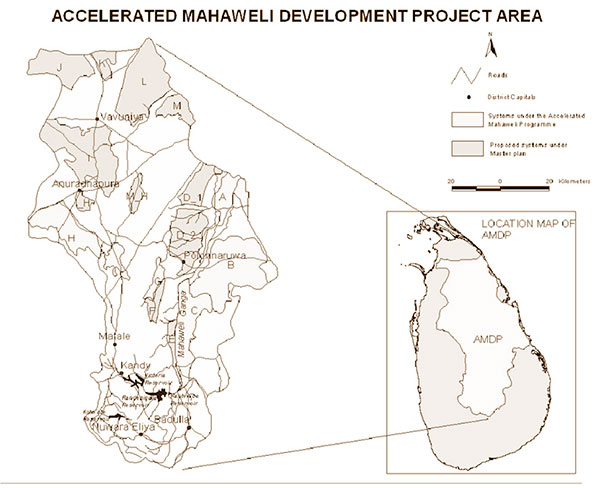
3.Because Sri Lanka has 103 river basins, use these GSN units to create Seven River Basin Regions for Sri Lanka.  See the map attached. This map has seven units so that Jaffna region gets one large basin area for them to feel that there is territory for aspirations to grow.

This division gives a sea face to each region, all of equal size and most importantly, because it is language-blind, western white countries or Tamil Nadu or Prabhakaran remnants in New York or London cannot talk of a homeland based on the eastern province. That takes away the fear of Sinhala people.

At GSN level there will be so many Tamil units, Muslim units and mixed units who can also think of aspirations at that level. The beauty is that no one unit can become a threat to another unit. They will learn to respect others because, if one unit acts selfishly then the other units will also act selfishly, and both will be in trouble.

4.When one looks at problems of living that people are facing today, they are not big complex problems.  How to dispose garbage, how to control Dengue, water supply, water pollution, basic health and basic education, how to get a birth certificate, how to prevent GSN asking bribes or school principal asking sex bribe; these can be easily and effectively handled at the local level. This way 70% of peoples’ basic issues can be transferred to local units, which is what people want, empowerment, not devolution of powers to provincial politicians.  13A method has proven to be a disaster with sex and now beauty has become the hot selling item for council candidacy.

5.Because the basic unit is an ecological/hydrological unit they can be combined to represent an electorate or district-size units before becoming one of the Seven River Basins. Thus, this horizontal division can go upward administratively with representatives sitting at a separate national body.

6.What should be done at the national/central government level to allow minority participation, if more is needed than what is proposed by item 5, such as a new constitution for the country, this GSN system can remain intact, without political interferences.

I hope DBSJ prints this essay on his website.

Seven River Basins

1.    Yalpanam
2.    Raja Rata
3.    Dambadeni
4.    Mahaveli
5.    Deegavaapi
6.    Kelani
7.    Ruhunu
(Compare this map with the nine-province
map which cuts all major rivers into artificial
pieces).

Cwije77@outlook.com

ආගමට මුවාවී බලයට එන්න කැස කවන ඩින් ඩියම්ලා

December 2nd, 2022

කැලණිය විශ්වවිද්‍යාලයේ ආර්ථික විද්‍යා අධ්‍යයනාංශයේ හිටපු ජ්‍යෙෂ්ඨ මහාචාර්ය සුනන්ද මද්දුමබණ්ඩාර


(වියට්නාමයේ ක්වාන් ඩක් හිමි සිරුරට ගිනි තබාගත් අවස්ථාව)

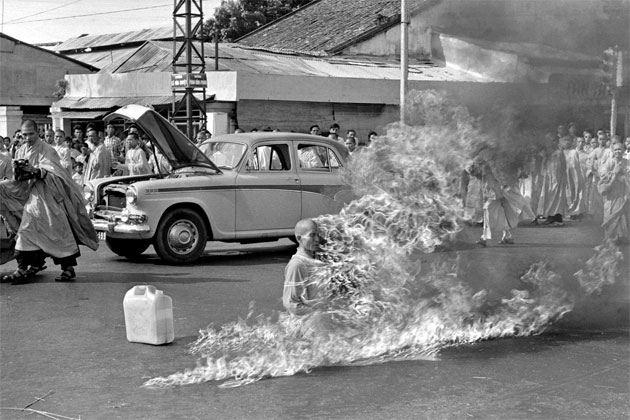
1963 ජූනි මස 11 වැනි දින උදෑසන වියට්නාමයේ සයිගොන් නුවර ජනාධිපති මන්දිරයට ඉතා නුදුරු ස්ථානයකට ඔස්ටින් වෙස්ට්මිනිස්ටර් වර්ගයේ මෝටර් රථයක් මැදි කරගෙන භික්ෂූන් සහ භික්ෂුනීන් වහන්සේලා පෙරටුකරගත් පෙරහැරක් පැමිණියේය. ක්වාන් ඩක් හිමියන් මුලින්ම මෝටර් රථයෙන්  බිමට බට අතර තවත් හිමි නමක් මෝටර් රථයෙන් බිමට බැස බිම වාඩි වීමට හැකි ආකාරයේ කුෂනයක් මහා මාර්ගයේ මැද තැබුවේය. කාරයෙන් බිමට බට තවත් හිමි නමක් එහි ඩිකියෙන් පෙට්‍රෝල් කෑනයක් එළියට ගත්තේය.

පෙරහරේ පැමිණි අනෙක් භික්ෂූන් වහන්සේලා එම ස්ථානයේ රවුමට සිට ගනිද්දී ක්වාන් ඩක් හිමි කුෂනය මත පද්මාසනයෙන් හිඳ ගත්තේය. එක් භික්ෂුවක් කෑනයෙන් පෙට්‍රෝල් ඩක් හිමියන්ගේ සිරුර පුරා වැගිරුවේය. ඩක් හිමි අමිත බුදුන්ට නමස්කාර වේවායි සඳහන් ගාථාව සජ්ඤායනා කරමින් ගිනිකූර දල්වා තම සිරුරට ගිනි තබා ගත්තේය. ගිනි දැල් උස්ව නැගෙමින් සිරුර සහ මාංශ වෙළාගත් අතර මාංශවලින් නිකුත් වූයේ කලු‍ දුමකි. 

මෙම සිදුවීම බලා සිටි ඇමෙරිකාවේ නිව් යෝර්ක් ටයිම්ස් පුවත්පතේ වාර්තාකරු ඩේවිඩ් හල්බර්ස්ටම් මෙසේ වාර්තා  කර තිබුණි. 

මම මහා කම්පනයකට ලක්වීමි. මට ඇඬීමට නොහැකි විය. සටහන් ගැනීමට හෝ ප්‍රශ්න ඇසීමට නොහැකි වන සේ අවුල්ව සිටියෙමි. සිරුර ගිනි ගනිද්දී උන්වහන්සේගේ පේශියක් හෝ සසල නොවීය. එක වචනයක් හෝ පිට කළේ නැත. විනාඩි 10 කට පමණ පසු සිරුර බොහෝ සෙයින් දැවී තිබූ අතර එය පසුපසට වැටුණි. භික්ෂූන් වහන්සේලා සිරුර ලී දෙණක බහා ළඟ පැවති විහාරයට ගෙන ගියහ”.

ඇසෝසියේට් ප්‍රෙස් පුවත් ආයතනයේ මැල්කම් බ්‍රවුන් ඩක් හිමිගේ සිරුර දැවෙන අයුරු දැක්වෙන ඡායාරූප තම ආයතනයට යැවූ අතර පසු දා ඒවා ලොව පුරා පුවත්පත්වල පළ වී තිබුණි. ක්වාන් ඩක් හිමි දිවි පිදුවේ එවක වියට්නාමයේ ජනාධිපතිවරයා වූ ඩීන් ඩියම්ගේ බෞද්ධ විරෝධී කටයුතුවලට එරෙහිව වියට්නාමයේ දහස් සංඛ්‍යාත පිරිසක් ගෙන ගිය උදඝෝෂණවල එක් අවස්ථාවක් සනිටුහන් කරමිනි.

ජනාධිපති ඩීන් ඩියම්ගේ බාල සොහොයුරා සහ ජනාධිපති උපදේශක වූ ඩින් යු ගේ බිරිඳ රටේ මුල් කාන්තාව ලෙස සැලකිනි. එයට හේතුව වූයේ ජනාධිපතිවරයා අවිවාහකයකු වීමයි. මෙම කාන්තාව ප්‍රසිද්ධියේ ප්‍රකාශ කළේ තවත් භික්ෂුවක් බාබකියු ශෝ එකක් පවත්වන්නේ නම් තමන් අත්පුඩි ගසන” බවය.

අගෝස්තු 21 වැනි දින ඩින් ඩියම් ගේ හමුදා වියට්නාමයේ බෞද්ධ විහාර ආක්‍රමණය කළේය. ඒ ඩක් හිමියන්ගේ භෂ්මාවශේෂ පැහැරගැනීමට වුවත් ඒ වන විට භික්ෂූන් වහන්සේ දෙනමක් විසින් ඒවා රැගෙන අගනුවරින් පලා ගොස් සිටියහ. ඩක් හිමිගේ හදවත ගින්නේදී පිළිස්සී නොතිබූ අතර එය එම විහාරස්ථානයේ ආරක්ෂා කර තිබුණි. ඒත් හමුදාව උන්වහන්සේගේ හදවත පැහැරගෙන එය රාජසන්තක කළේය.

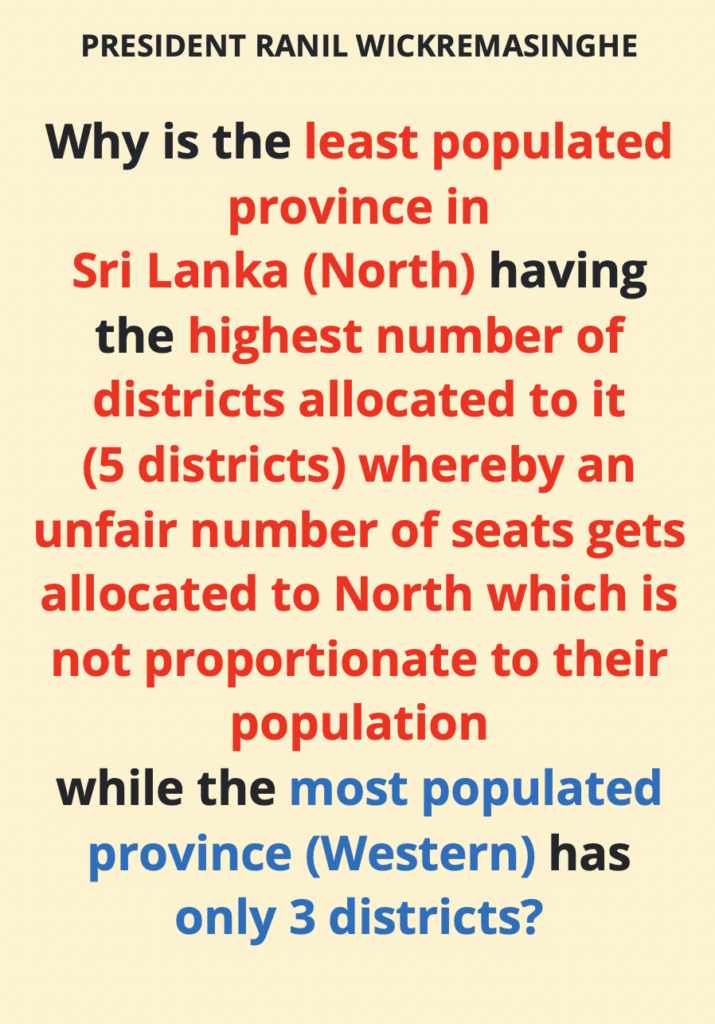
ජනාධිපති රනිල් වික්‍රමසිංහ මහතා පසුගියදා පාර්ලිමේන්තුවේදී මෙසේ ප්‍රකාශ කළේය. ආණ්ඩුව වෙනස් කරන්න තව අරගලයක් ඇති කරනවා කියා සමහරුන් කියනවා. එහෙම කරන්ඩ ඉඩ දෙන්නේ නෑ. මා ඒකට ඉඩ දෙන්නේ නෑ. හමුදාව යොදවනවා. හදිසි නීතිය දානවා.  ඩින් ඩියම් ලට ඉඩක් නෑ මේ රටේ” මේ ප්‍රකාශයෙන් ඩින් ඩියම් ලා මෙන් ක්‍රියා කිරීමට උත්සාහ කරන අයට ඒ සඳහා ශ්‍රී ලංකාවේ ඉඩක් නැති බව අවධාරණය කර තිබේ. වියට්නාමය කුරිරු පාලනයකට නතු කරමින් ඒකාධිපති වියරුවෙන් කටයුතු කළ ඩීන් ඩියම්ලා කවරාකාර පුද්ගලයන්ද යන්න ඩක් හිමියන්ගේ හදවත පවා පැහැර ගැනීමෙන් පැහැදිලි වේ.

ජනාධිපති රනිල් වික්‍රමසිංහ මහතා ශ්‍රී ලංකාව තුළ ඩින් ඩියම්ලාට ඉඩක් නැතැයි ප්‍රකාශ කළේ ආගම උපයෝගී කරගෙන බලයට පත්වීමට මෙන්ම ඒ ඔස්සේ රට තුළ සංහිඳියාව නැතිකර සියලු‍ දෙනා බේදකර ඒකාධිපති පාලනයක් ගොඩනැගිය හැකියැයි සිතන පිරිස්වලට ප්‍රබල අභියෝගයක් එල්ල කරමිනි. වියට්නාමයේ ඩින් ඩියම් පාලනය යටතේ ක්‍රියාත්මක වූයේ ඉහතින් සඳහන් කළ ආකාරයේ තත්ත්වයකි.

ඩින් ඩියම් වියට්නාමයේ දැඩි කතෝලික පවුලකින් පැවත එන්නෙකි. ඔහුගේ පවුල බුදු දහමින් කතෝලික ආගම වැළඳගත් වියට්නාමයේ මුල්ම කණ්ඩාමට අයත් විය. ඔහුගේ සහෝදරයා කතෝලික පූජකවරය ලබාගෙන සිටි අතර ඩින් ඩියම්ද මුලින් පූජකවරයකු වීම සඳහා කැමැත්ත දැක්වුවද පසුව එය වෙනස් කර ගත්තේය. 1953 වසරේදී වියට්නාමය ප්‍රංශ අධිරාජ්‍යයෙන් නිදහස ලබාගත් අතර 1954 වසරේදී එවක වියට්නාම අධිරාජයා වූ බාබෝ දයි ඩින් ඩියම්ට අගමැති තනතුර පිරිනැමුවේය. එම තනතුර භාර ගත් ඔහු ක්‍රමයෙන් තමන්ගේ විරුද්ධවාදීන් රාජ්‍ය පාලනයෙන් ඉවත්  කිරීමට කටයුතු කළේය.

1955 ඔක්තෝබර් 26 දින ඔහු වියට්නාම ජනරජය ප්‍රකාශයට පත්කර එහි ජනාධිපති තනතුරට තමාම පත්කර ගත්තේය. ඔහු 1955 සිට 1963 දක්වා වසර නවයක් වියට්නාමය පාලනය කළේය. වියට්නාමය ඒ වන විට උතුරු වියට්නාමය සහ දකුණු වියට්නාමය ලෙස කොටස් දෙකකට බෙදා තිබූ අතර ඩින් ඩියම් නායකත්වය දැරුවේ දකුණු වියට්නාමයේය.

වියට්නාමයේ ජන සංඛ්‍යාවෙන් සියයට 70ක් 90ක් අතර සංඛ්‍යාවක් බෞද්ධයෝ වූහ. එහෙත් කතෝලික ප්‍රධානීහු ඔහු ජනාධිපති පදවිය දක්වා ගෙන ඒම සඳහා විවිධාකාර උපක්‍රම යෙදුවෝය. ඔහු බලයට ගෙන ඒම සඳහා 1955 ඔහු විසින් පැවැත්වූ ජනමත විචාරණයේදී අගනගරය වූ සයිගොන්හි ලියාපදිංචි ඡන්ද දායකයන් සංඛ්‍යාව 450,000 ක් විය. එහෙත් එම ඡන්ද කොට්ඨාසයෙන්  ඩින් ඩියම් ට ඡන්ද 605,025 ක් ලැබී තිබුණි. ඔහුගේ එක් සහෝදරයෙක් වියට්නාමයේ අගරදගුරු පදවිය හෙබවීය. ඩින් ඩියම් බලයට ගෙන ඒම සඳහා ඇමෙරිකාවද ප්‍රබල සහායක් ලබා දුන්නේය. වියට්නාමයේ නැගී එන කොමියුනිස්ට්වාදය පරාජය කිරීම සඳහා හැකියාවක් ඩින් ඩියම්ට ඇතැයි ඇමෙරිකාව විශ්වාස කළේය.

ආගමික බලපෑම් මත රට පාලනය කළ ඩියම් කතෝලිකයන්ට සියලු‍ වරප්‍රසාද ලබාදෙන ප්‍රතිපත්තියක් අනුගමනය කළේය. ඉඩම් පමණක් නොව ආයුධ පවා කතෝලික පිරිස්වලට ලබාදුන් අතර විවිධ බදු සහන, ආයෝජන අවස්ථා, ප්‍රාග්ධන අරමුදල්, රජයේ සහනාධාර පමණක් නොව රජයේ බොහෝ දේ එම පිරිස්වලට හිමි වන අයුරින් කටයුතු කළේය.

1963 වෙසක් දින උත්සවයේදී බෞද්ධ කොඩිය එසවීම ඩින් ඩියම් විසින් තහනම් කරන ලදී. මෙය භික්ෂූන් වහන්සේලා ද බෞද්ධ ජනතාව ද කුපිත කිරීම සඳහා හේතු විය. විශාල පිරිසක් රජයට එරෙහිව විරෝධතා දැක්වූ අතර රජය විරෝධතාකරුවන්ට වෙඩි තැබුවේය. විරෝධතාකරුවන් නව දෙනෙක් ජීවිතක්ෂයට පත් වූහ. ක්වාන් ඩක් හිමියන් සිරුරට ගිනි තබාගෙන ජීවිතක්ෂයට පත් වූයේ ඩින් ඩියම් අනුගමනය කළ මෙම බෞද්ධ විරෝධී පිළිවෙතට එරෙහිවය. අවසානයේදී ඇමෙරිකාවේ CIA සංවිධානයේ ද ආධාර ලැබූ කුමන්ත්‍රණයකින් ඩියම් සහ ඔහුගේ පවුලේ අය ඝාතනය කෙරුණු අතර දකුණු වියට්නාමයේ හමුදා පාලනයක් බිහි විය.

විවිධ ආගමික මතවාද මුල් කරගෙන වියට්නාමයේ ඩින් ඩියම් බලයට ගෙන ඒම සඳහා අනුගමනය කළ ක්‍රියාමාර්ගම අනුගමනය කරමින් ශ්‍රී ලංකාව තුළද ආණ්ඩුක්‍රම ව්‍යවස්ථාවෙන් බැහැරව යම් යම් කණ්ඩායම්වලට බලය ලබා දීම සඳහා වූ ව්‍යාපාර ක්‍රියාත්මක වන බවක් පෙනේ. ජනාධිපති රනිල් වික්‍රමසිංහ මහතා විසින් ඩින් ඩියම්ලාට මෙහි ඉඩ නැති බව ප්‍රකාශ කළේ එම තත්ත්වය පිළිබඳ අනතුරු ඇඟවීම සඳහායි සිතමි. අරගලය මුවාවෙන් ව්‍යවස්ථාවෙන් බැහැරව රාජ්‍ය බලය අල්ලා ගැනීමට ක්‍රියාකළ පිරිස්වල ඇතැම් ආගමික ආයතනවලින් දැඩි සහායක් ලැබුණු ආකාරය බොහෝ දෙනකුට නිරීක්ෂණය කළ හැකි වූයේ යැයි සිතමි.

ශ්‍රී ලංකාවේ ප්‍රජාතන්ත්‍රවාදය සම්බන්ධයෙන් මේ දිනවල විවිධාකාර මත පළවෙන බවත් රටේ ප්‍රජාතන්ත්‍රවාදයක් පවතින්නේද යන්න පිළිබඳව විවිධ මත ප්‍රකාශ කෙරෙන බවත් සත්‍යයකි. එහෙත් ශ්‍රී ලංකාව තුළ නිදහසෙන් පසු ආණ්ඩු ක්‍රම ව්‍යවස්ථාවට පටහැනිව රාජ්‍ය බලය පැහැර ගැනීමට දරන ලද උත්සාහයන් සියල්ල පරාජය වූ බවද අප අමතක කළ යුතු නැත.

අරගලයේ රැකවරණය සඳහා කන්‍යා සහෝදරියන් යොදවා අරගල භූමියේ පදිංචි කළ ආකාරය මෙන්ම රජය පෙරළා දැමිය යුතු බවට එම ආගමික නායකයන් ප්‍රසිද්ධියේ ප්‍රකාශ කළ ආකාරයෙන්ද පැහැදිලි වන්නේ ඩින් ඩියම් පන්නයේ ත්‍රස්ත ව්‍යාපාරයක් සඳහා පිඹුරුපත් සකස් වෙන බවක්ද?

අරගලය ආරම්භ වූයේ අලු‍ත් විදියට සිතන තරුණ පරම්පරාව පවතින සමාජ ක්‍රමය කෙරෙහි අතෘප්තියට පත්ව ඇති බවත් එයට විසඳුම් සෙවිය හැක්කේ පවතින ක්‍රමය වෙනස් කිරීමෙන් බවත් ප්‍රකාශ වන ආකාරයටය. 

එහෙත් පසුව අරගලය පෙරටුගාමී සමාජවාදී පක්ෂයේ ග්‍රහණයට පත්විය. ඇතැම් ආගමික ආයතන සහ නායක පූජක ප්‍රසාදිවරුන් එය දුටුවේ මෙම කණ්ඩායම්වලට සහාය ලබාදීම මගින් පෙරටුගාමී පක්ෂය වැනි සංවිධාන ව්‍යාවස්ථාවට පිටින් බලයට ගෙන ඒමට හැකි බවය.

අරගලය පැහැරගත් කුමාර් ගුණරත්නම්ගේ නායකත්වයෙන් යුත් පෙරටුගාමී පක්ෂයට සහ ඊට තවමත් අවනත වී සිටින කණ්ඩායම්වලට ජීවය ලබාදීමෙන් යළි අරගලය සක්‍රීය කළ හැකි බවට මෙම නායක පූජක ප්‍රසාදීවරුන්ගේ අදහස වී ඇත. එහි ඇත්තේ ආගමික අවශ්‍යතාවකට වඩා පුද්ගලාන්තරව ගලා එන බද්ධ වෛරයක සේයාවක් නොවන්නේ ද යන සැකය කා තුළත් මතු වී එනු ඇත.


කැලණිය විශ්වවිද්‍යාලයේ ආර්ථික විද්‍යා අධ්‍යයනාංශයේ හිටපු ජ්‍යෙෂ්ඨ මහාචාර්ය සුනන්ද මද්දුමබණ්ඩාර

SRI LANKA: ICITAP CONDUCTS FORENSIC INTERVIEWING TRAINING FOR SRI LANKAN COUNTERPARTS

December 2nd, 2022

The US Department of Justice

From November 14 to 18, ICITAP conducted two, two-day training programs regarding Forensic Interviewing training to forty (40) male and female officers from the Sri Lankan Police Women & Children’s Bureau who are responsible for conducting investigations involving child abuse, eight (8) Attorney General’s Department Child Abuse Unit prosecutors and seven (7) representatives from the Child Protection Force (a civil society child advocacy group).

Two instructors from the U.S. Department of Homeland Security (DHS) Homeland Security Investigations (HSI) delivered the training, one of whom is a forensic interview specialist with significant experience in this field. Group one participants received welcoming remarks from the U.S. Ambassador and Group two participants received welcoming remarks from the U.S. Deputy Chief of Mission.

Participants were able to increase their skills and knowledge through observation of scenario-based role playing, case studies and the sharing of knowledge from their different perspectives.

The participants were thoroughly impressed by the victim centric approach used during the interviews which they will utilize during their investigations. Further, feedback was very positive from the participants who had not heard or learned of many of the techniques that were used by the forensic interview specialist during interviews with victims and witnesses.

The Department of Justice’s new Office of Overseas Prosecutorial Development, Assistance and Training (OPDAT) Resident Legal Advisor (RLA) to Sri Lanka also gave a presentation to the groups during the training, in which he shared his experiences while prosecuting the Elizabeth Smart abduction case in Salt Lake City.

The RLA’s remarks were very well received by the prosecutors who were able to learn firsthand the challenges faced by federal prosecutors in that case and the necessity of being thoroughly prepared to respond to any assertions made by defense attorneys of the suspects mental state during the crime. In Sri Lanka, ICITAP works with the support of and in coordination with the U.S. Department of State’s Bureau of International Narcotics and Law Enforcement Affairs (INL).

Indo-Sri Lankan Relations Hit A Snag: Absence Of Reciprocity Irks New Delhi – Analysis

December 2nd, 2022

By P. K. Balachandran Courtesy Eurasia Review

Indo-Sri Lankan relations are currently in the doldrums. The bonhomie seen in the early stages of the economic crisis in Sri Lanka when India rushed US$ 4 billion worth of fuel, food and medicines, is now missing.  

Apparently, New Delhi is deeply aggrieved that while accepting Indian largesse, Sri Lanka has not shown due regard for India’s economic, political and strategic concerns. Colombo has not followed up on important economic, strategic and political agreements already entered into by the two countries.  

Perhaps this is the reason why Indian Prime Minister Narendra Modi is yet to give an appointment to Sri Lankan President Ranil Wickremesinghe despite repeated efforts by Sri Lanka to secure it. Perhaps this is the reason why Samant Kumar Goel, head of the Indian intelligence agency Research and Analysis Wing (RAW), reportedly visited Colombo on November 21 to meet President Wickremesinghe and the ruling Sri Lanka Podujana Peramuna’s chief organizer, Basil Rajapaksa. 

Goel is believed to have discussed all the irritants in the relationship. But the emphasis would naturally have been on the security aspects of the relationship given the heightened activity of China and Pakistan in certain parts of the island which are of strategic interest to India.

Goel’s reported visit indicates the seriousness with which the top echelons of the government in New Delhi are taking some recent happenings in Sri Lanka.  

Economic Issues

Meanwhile, the economic situation in Sri Lanka continues to be dire with prices of essentials hitting the roof, though the supply of essentials has greatly improved. Sri Lanka’s efforts to restructure its external debt of US$ 35 billion are yet to bear fruit. The IMF bailout of US$ 2.9 billion, which is expected to clear the way for restructuring, is still some months away. China, to which Sri Lanka owes US$ 7.4 billion, is yet to discuss a haircut. Beijing has been willing to refinance a part of the debt but not restructure debt repayment. 

India has been wanting Sri Lanka to implement a slew of joint venture infrastructure projects for which MOUs were signed on April 25, 2017 in the presence of the then Prime Minister Ranil Wickremesinghe and his Indian counterpart, Narendra Modi. 

The projects include the following: a re-gasified Liquefied Natural Gas (LNG)-fired 500 megawatt power plant in Kerewelapitiya near Colombo;  an LNG Terminal/Floating Storage Regasification Unit (FSRU) in Kerawalapitiya; a piped gas distribution system and retail outlets for the supply of Compressed Natural Gas (CNG) to the transportation sector; a 50 MW (extendable to 100 MW) solar power plant in Sampur in the Eastern Province; joint development initially of 10 of the 84 giant oil tanks in the Upper Tank Farm in Trincomalee;  development of the Trincomalee port and the setting up of industries in the hinterland; Industrial Zones or Special Economic Zones in identified locations in the island; roads linking Mannar and Jaffna, Mannar and Trincomalee and Dambulla and Trincomalee; upgrading of the railway rolling stock; construction of a Container Terminal in Colombo Port; and agricultural development including livestock development, water management and agro-based industries. All these projects have been in limbo.

If at least some of the 2017 MOUs had been implemented, the Sri Lankan economy would not have broken down as it did in 2021-2022. India has also been urging Sri Lanka to encourage foreign investment instead of seeking foreign loans and getting into a debt trap as it has done vis-à-vis China and other creditors. But New Delhi’s appeals have fallen on deaf ears. 

Political Issue

On the political plane, India has been urging Sri Lanka to fully implement the 13 th.Constitutional Amendment (13A) devolving powers to the provinces. The degree of actual devolution has been minimal keeping the Tamil issue alive. The 13A stems from the India-Sri Lanka Accord of 1987 which was meant to meet the minority Tamils’ demand for provincial autonomy. With the 13A not fully implemented, the Tamils have now dumped it and are demanding a fully federal constitution. 

President Wickremesinghe’s reported statement that he would abolish the Provincial Councils only infuriated the Tamils and raised the hackles in New Delhi. In 1987, India had to intervene politically and militarily to solve the Tamil issue through the India-Sri Lanka Accord of July 1987 and the deployment of an India Peace Keeping Force. 

Security/Geopolitical Issues 

India has grave security/geopolitical issues vis-à-vis Sri Lanka. New Delhi appears to fear that China and Pakistan have colluded to challenge  India’s pre-eminent position in North Sri Lanka, which is geographically close to India and where the minority Tamils are in a majority. The North also has a very significant Muslim population. While the Chinese are investing in fisheries projects to win over the common man in the North, Pakistan is concentrating on the Muslims, especially in Mannar district which faces Tamil Nadu. 

Recently, the Pakistan High Commissioner Maj.Gen. Umar Farooq Burki was on a week-long tour of the Northern Province during which he distributed sewing machines and inaugurated a rural water supply project in Mannar. The Chinese Ambassador Qi Zhenhong also had gone on a well-publicized tour of the North. He even worshipped at the Nallur temple in the traditional Hindu fashion to endear himself to the Hindu Tamils. China had swung a renewable energy project in three islands off Jaffna facing India, but Colombo canceled the deal when India raised security issues. 

India has an advantage in the North over China because the Tamils believe that, unlike India, China will invariably support the Sri Lankan government on the Tamils’ demand for provincial autonomy. Significantly, a recent attempt by China to set up an Agricultural unit in Jaffna University was thwarted by the Jaffna University Students Union. The union alleged that the unit is a ruse to grab the Tamils’ land in collusion with the Lankan government.  India fears that Colombo would subtly encourage the Chinese and Pakistanis to get a foothold in the North to check India’s influence there.

Visit” of Intelligence Chief

More recently, what prompted India to engage Sri Lanka at the highest  level, was the supply of fuel to a second Chinese research and surveillance (spy) vessel Yuan Wang 6 off Hambantota port in early November. Without informing India, which is a maritime security partner, Colombo allegedly helped the vessel refuel in international waters off Hambantota port. 

Earlier, in August, India had objected to the docking of Yuan Wang 5 at Hambantota port on the grounds that it will spy on vital Indian installations in South India. The vessel eventually docked at Hambantota after Sri Lanka gave some assurances regarding security.

India had wanted Sri Lanka to consult it before allowing Chinese military and dual-purpose vessels. But Sri Lanka was constrained by the fact that China had taken Hambantota port on lease for 99-years, and also has a terminal in Colombo port.

Absence of Reciprocity

Some Sri Lankans wonder how Bangladesh manages to have good relations with India and China while Sri Lanka is unable to.  Bangladesh is a major recipient of Chinese economic investment and also arms, but still it has good relations with India. 

The answer lies in the fact that Bangladesh, under Prime Minister Sheikh Hasina, has been able to satisfy India on vital security matters and also meet its economic needs. Sheikh Hasina has seen to it that Bangladesh does not become a sanctuary or a cockpit for terrorists intending to strike India. 

On the economic front, she has allowed transit for Indian traffic between the Indian State of West Bengal and India’s North Eastern States. She has not allowed the dispute over the Teesta river waters to bedevil cooperation with India on other matters. Most importantly, peace with India has allowed Bangladesh become a South Asian economic tiger. 

Well-wishers hope that Sri Lanka will see the futility of being indifferent to India’s concerns and begin cooperating with it for the betterment of both countries.  

P. K. Balachandran

P. K. Balachandran is a senior Indian journalist working in Sri Lanka for local and international media and has been writing on South Asian issues for the past 21 years.

Tamil Talks Doomed To Fail From The Start?

December 2nd, 2022

By Sathiya Moorthy Courtesy Ceylon Today

Revisiting his proposal to hold power-devolution talks with the Tamil parties after the conclusion of budgetary processes in Parliament in the first half of December, President Ranil Wickremesinghe has since advised/appealed to them, ‘not to place hurdles’ before even meeting them once. Else, they might end up regretting once again that they had ‘’missed one more opportunity’’, he has said.

Given his vast and varied experience as a parliamentarian for 45 years and association with the Tamil political leaders, especially those from the TNA, Wickremesinghe was obviously referring to the TNA’s pre-conditions for negotiations. Meeting in Colombo, the three-party TNA, along with a couple of erstwhile partners from the Sri Lankan Tamil (SLT) community, has said, they would participate in the talks only if the government promised ‘federalism’ in the place of the present unitary Constitution, and, also re-merger of the North and East. This is precisely what Ranil has since clarified that they would have to refrain from.

‘13-Plus’

Ranil made the original offer to hold talks with the Tamil parties while addressing Parliament, a week earlier. In doing so, he said his government would protect (the rights conferred by) the 13th Amendment, facilitated by the Indo-Sri Lanka Accord, 1987. He named Tamil front-row members like TNA’s M.A. Sumanthiran (in the absence of group leader R Sampanthan, who has been granted three months’ leave owing to his failing health). The President also named Gajendrakumar Ponnambalam, leader of the two-member Tamil National People’s Front (TNPF) in positive terms.

Intervening in the brief debate, two-term President and three-term Prime Minister Mahinda Rajapaksa said they could discuss 13-Plus. Mahinda’s intervention is important as the single-member UNP parliamentary group of President Wickremesinghe is dependent near-exclusively on his SLPP for floor majority, which alone matters in making and facilitating laws and constitutional amendments.

Rajapaksa was alluding to the forgotten post-war negotiations his government had initiated with the 16-member TNA (now, 10 MPs), in 2011. At the time, the two sides were believed to have made substantial progress on some issues and progress on the processes in others.

Both sides, shifting the goalposts

The talks failed after the TNA, out of nowhere, started talking about ‘war crimes probe’, accountability issues and the UNHRC process, in public – and without mentioning it at the negotiations table. The government gave it an ‘indecent burial’ when the official team, led by then Minister G.L. Peiris, ‘boycotted’ (?) a two-day session, without even having the courtesy to inform the other side, waiting in a discussion room in the Parliament complex.

The government’s predicament was understandable under the circumstances. Yet, it cannot to date justify how a governmental delegation was overnight converted into a team from the then-ruling SLFP, headed by President Mahinda. Already, the government had played foul when it declared that the equally forgotten Report of the ‘Tissa Vitharana Committee’ on power devolution, appointed by the President, had to be vetted by an SLFP team before the government took a decision.

It is such moves that also made the international community (read: West) conclude that the government kept shifting the goalpost and was also taking unilateral/autocratic decisions. But they did not talk about the TNA too shifting the goalpost and a Party leader claiming/ owning up credit for the US-led West moving the UNHRC on ‘war crimes probe’.

Possibly, the TNA leader did not know the enormity of what he was telling the Southern Sinhala polity and society. The Party too did not venture to correct him, if it was desirous of a negotiated settlement to what remained the ‘national problem’. Today, that place has gone through an overwhelming economic crisis, sorry!

Too much of a risk

It is all in the past. Now, it is not as if the Tamil parties, particularly TNA group leader, R. Sampanthan, not unaware of the ground realities. That whatever be, his hopes and intention, President Wickremesinghe does not have the numbers to do what he wishes. Even if he is willing, and so does Mahinda Rajapaksa, both would still face opposition from within their Sinhala-dominated Parties. In particular, Mahinda is no more the master of all that he surveys, which was however the case even after he lost power in 2015.

If the two have not spelt out their positions on ‘federalism’ thus far this time round, SJB leader of the Opposition, Sajith Premadasa, a self-proclaimed friend of the Tamils, has offered all support for a negotiated settlement, but (only) under the current, unitary Constitution. Even if all three leaders and their Parties ‘conspire’ to accept the Tamil demand for ‘federalism’, under the existing Constitution, it would have to face a Public Referendum. It is too much of a risk that none of them in political terms and the Sri Lankan State as an institution would want to risk.

Re-merger and the rest of Tamil demands would then have to wait. Even discussing terminologies like ‘union of provinces’, as outlined in the failed ‘Chandrika Package’ and recently revived by PLOTE leader D. Siddarthan won’t have any ‘takers’ in the Sinhala South. So does the ‘contiguity-based merger’ of the North and the South, again mooted by President Chandrika Bandaranaike Kumaratunga. It has passed its time, or so it seems.

No clarity

It thus remains to be seen if the negotiations would at all commence, as there is no clarity whatsoever on the kind of commitments that the Tamil side would expect from the government on their pre-conditions. Or, would they be willing to join the maiden session, where they lay down their pre-conditions formally, and then take it forward from there? Again, there is no idea.

Sooner than later, the President will have to decide if he intends to take forward the talks without mainline TNA-Plus participation, if it came to that, and continue with the processes with pro-government Parties like the EPDP of Minister Douglas Devananda in the North and TMVP of former Eastern Province Chief Minister Sivanesathurai Chandrakanthan alias Pillayan, now MP from Batticaloa district.

Will the government be willing to commence the talks from where they had left it at the Constitution Assembly, which was there when he was PM (2015-19)? That is another question. The chances are that the government may not have any clear ideas on what to offer, what to accept and what course to adopt just now. It is only clear what not to offer, and what not to accept. It may be able to decide on the positives, only if the talks commence and progress – and not possibly otherwise.

(The writer is a policy analyst & political commentator, based in Chennai, India. Email: sathiyam54@nsathiyamoorthy.com)

By N. Sathiya Moorthy

Shackles on Development

December 1st, 2022

Sugath Kulatunga

This is a season for scapegoating. Aragalaya blames Gota for all the ills in the economy and called for his resignation and demanded that both Gota and MR must go. Later they added Ranil to the list of expulsions. Maithree swears that only an all-party govt can find a solution. Minister Wijedasa thinks that without a legal solution no economic solution can be found. The JVP and FSP insist that the solution must be extraconstitutional.  All these snake oil vendors claim that a solution to the present economic crisis is in only their prescriptions.

At the same time the economic wizards who are responsible for the catastrophe are busy firefighting with their monetary arsenal. None of these specters or their minions have the honesty and courage to say Mea culpa and own up their doctrinaire blunders and profligate behaviors in the past.

Meanwhile people were dying in fuel and gas queues. Children are starving at home. Media is not in short supply of their variety of high-octane fuel which they are gleefully adding on to the fire. There is a severe escalation in all prices. Inflation is running at over 60 percent. There is increase of crime and desperation.  A social upheaval of a catastrophic proportions is in the making. Vultures are on nearby treetops waiting for the mutilated cadavers. Media is adding fuel to the fire. Nary a word on the real problem and how it can be solved.

The present economic debacle is the result of irresponsible policies of political leaders and criminal negligence of economic wizards in the Central Bank and Ministry of Finance.

The simple explanation of the present crisis is the chronic adverse balance of payments situation of the country. In the pre-Corvid the returns from foreign employment and tourism mitigated the crisis. But the vulnerability of these two sources was soon demonstrated. The only solution was and continued to be the closing of the adverse trade balance. The proven path is in industrialization and not in subsistence agriculture which is practiced in Sri Lanka. The country has a high density of population, and the land man ratio is high. In modern agriculture with the introduction of new technologies there is a drastic reduction in employment in agriculture. But Sri Lanka has not given industrialization any priority.

At independence Sri Lanka (Ceylon) had a stable democracy, sound economy, and an effective public service and external assets equal to 100 percent of annual import value. We were second to Japan on almost all social indicators and above South Korea as late as the mid-sixties. Singapore‚s per capita income was just a little bit higher than Sri Lanka at that time. It is now over USD 64,000 whereas ours is USD 3845. The oft repeated question is why did Sri Lanka with better physical resources failed to advance like Singapore.

What went wrong? Did we have the correct policy mix? What were the unforeseen events which impacted on the destiny of the country?

This note is impressionistic but unbiased. It tries to focus on turning points in the political and economic trajectory of the country and the consequential policy determinations.

1. In 1944, the State Council resolved to launch a State Project of Industrialization in Ceylon. In the same year there was the – Industrial Corporation Bill. The concept of socialist industrialization was keenly advocated by the Marxist parties which believed that full employment could be achieved only through industrialization. In the same year J.R. Jayawardene (JR) moved a motion in the State Council for the ‚preparation of a complete plan for industrialization‚ There was a firm bipartisan consensus on industrialization with a different emphasis on ownership. D.S. Senanayake (DS) was a prime mover of the plan for industrialization.‚

At the general election of 1947 the UNP fell short of a majority, and had to form a government in coalition with the All Ceylon Tamil Congress. The success of the left parties at the 1947 election alarmed DS who was an astute politician. He was aware that the left could build a mass base with industrialization. DS also had a staunch commitment to the development of agriculture through colonization. But his prime motive was to create a pool of peasant farmers who would be a strong base for the UNP. The project had both a nationalistic and political flavor and was vigorously pursued in the face of criticism from the left parties. But for the political bias, DS could have steered a two-pronged strategy for the development of the country leading to food security and full employment. We had the funds, human resources, and the infrastructure to venture into manufacture. But politics prevailed.

This was the most important opportunity missed by independent Sri Lanka for an early start in a manufacturing-based economy.

2.DS denied SWRD Bandaranayake (SWRD), who was at the time the leader of the House, his due place, and maneuvered to get his son Dudley Senanyake to succeed him as Prime Minister. This maneuver also kept JR, the best brain in the party, out in the cold. If JR succeeded DS, he who believed in planned industrialization could have introduced industries with modern technology with the help of the Japanese who were under obligation to him for his open support to Japan on war reparation conference at San Francisco in 1951,where he rejected reparations and quoted the Buddhist saying: nahi verena verani.

Dudley who inherited the leadership was a perfect gentleman but a weak leader. He followed the policies of DS in giving priority to agriculture. He resigned in the face of a civil disobedience campaign (Hartal) organized by left parties. With his resignation Sir John, the strong man in the UNP became the Prime Minister. Sir John took over the leadership at a moment of history of politics in Sri Lanka when there was a tempest of opposition to the policies of the UNP. It also coincided with a socio-cultural groundswell spurred by the Buddhist Commission Report. The flamboyant style of Sir John was not helpful in resisting the forces against the UNP.

3. The wrong choice of the successor by DS was the next miss of opportunity.

The creation of a new party by SWRD resulted in both positive and negative consequences. The split created divisive politics based on ideology and ethnicity. This was the dawn of the era of chauvinistic and emotional politics. However, SWRD believed in planning and development based on nationalism and state ownership. He established a Planning Secretariat which formulated a 10 year plan in consultation with renowned development economists such as Gunnar Myrdal, Joan Robinson, Kenneth Galbraith and Nicholas Kaldor. It is reported that Myrdal recommended the invitation of foreign investors on a Build Operate and Transfer basis. The period of foreign operation was to be limited to 20 years. (The Prima investment during the time of JR was on this basis). The ascent of SWRD was supported by the Pancha Bala Vegaya led by leading Buddhist clergy some of whom acted as kingmakers. The assassination of SWRD by the same kingmakers terminated the planned development in the country. The danger of depending on assumed kingmakers is a lesson for all national leaders. The proposals and the 10-year plan of SWRD were not implemented by subsequent governments. This was a big miss.

4. On the demise of SWRD, Philp Gunawardhane, the most dynamic and experienced minister in the MEP government was denied the Prime Minister‚s position. That prevented the continuation of the 10-year plan. At the same time the country lost the opportunity of realizing the best of the left parties which had the talent and the dynamism. It was also partly due to the misplaced ideological stance of the left. Left politics had its origins in the Suriya Mal Movement and was politically entrenched in the rural coastal and the Kalani valley Districts. But they believed in a permanent revolution achieved with the support of the plantation population and the trade unions, and neglected the rural population. Left politics was also fragmented on theoretical trivialities. Except leaders like NM and Philip, other key party cadres were too dogmatic. How removed some segments of the left from ordinary people was reflected in the very names of the parties like Bolshevik Leninist party.

5. The left movement had the opportunity to support SWRD who was getting alienated with the rightist groups in the SLFP. Had they joined the MEP the hand of SWRD and Philp would have been strengthened and the reactionary elements eliminated. Even after SWRD the left elements in the MEP would have continued to rule.

This was another lost opportunity.

6. The 1962 military coup attempt and the 1971 JVP adventure saw the emergence of the strong man Felix Dias in the SLFP, who opposed the smooth operation of the coalition between the SLFP and the left in the 1970 government. This denied the country of the continuing services of intellectuals like NM and Colvin. Felix was smart but arrogant and had an inherent, feudal aversion to socialism.

7). The 1977 JR regime missed many opportunities under fortuitous circumstances, and  made more self-inflicted blunders and evaded emerging opportunities. The 1977 regime established new institutions like GCEC and EDB for investment and export development (which had origins in the previous regime) but introduced a wide-ranging package of neoliberal policies. The government removed all import controls and opened the floodgates to imports. These free-market policies destroyed many nascent domestic and import substituting industries and had a severe adverse effect on domestic agriculture. The import liberalization diverted most of human and financial resources into import related activities. Although the government was keen to encourage exports the sector was starved of finance which went to meet the incessant demand for import and construction activities that carried minimal risk. The Banks were more than happy to finance these activities which involved low risks. Import finance was recoverable in a short time. Finance for exports and investments in export projects carried interest rates as high as 25 percent. The 1977-regime went into a frenzy of unwarranted and unplanned privatization of state enterprises. This was contrary to the successful development model of Singapore, which adhered to the basic principles of a free market economy, but never shied away from state planning or state ownership where deemed important. The premier State enterprise Temasek Holdings of Singapore’s has nearly $300 billion in equity holdings.

The JR regime did not focus on economic restructuring other than dismantling existing institutions like the Marketing Department and the Paddy Marketing Board which were the connecting links between the producer and consumers of food products. The adverse impact of this policy is felt even today. Unlike Sri Lanka, in 1979, the Singapore Government started a program of economic restructuring. This was achieved by modifying education policies, expanding technology and computer education, offering financial incentives to industrial enterprises and launching a productivity campaign‚. Sri Lanka Government had no innovative policies. Even today the education system in SL is not producing the manpower to fit the needs of skills and knowledge for now and the future.

On the other hand, JR regime was notorious for deliberate wrecking of opportunities in the field of politics. Power sharing at the periphery has been a demand since the time of independence. After lengthy negotiations the main Tamil party the TULF had agreed to a scheme of decentralization of government at the District level, and a law was introduced in 1980 for the establishment of District Development Councils. It is well known that government circles sabotaged the election of the DC in Jaffna. It is also alleged that the Jaffna library was set on fire during the same time. These episodes made the TULF getting disillusioned with the DC scheme and finally withdrawing from the agreement to work within the scheme. The final outcome is the imposition of an unwanted and divisive white elephant in the country in the form of Provincial Councils.

On the plus side the Accelerated Multi-Purpose Mahaweli Project was launched during this time.

This was a series of self-inflicted harm and lost opportunities.

8) The next criminal blunder of the UNP was the alleged instigation and evading the control of the communal riots of July 83. This single event provided the LTTE the manpower and motivation to fast-track their separatist movement against Sri Lanka and resulted in the commencement of a civil war backed by India. The Black July 1983 also saw the mass flight of Tamil civilians to foreign countries where they formed anti Sri Lanka campaigns and won over the support of politicians in many western countries. It must also be mentioned that the UNP tried in vain to put the blame for the riots on a few opposition political parties. The banning of the JVP on this count kept them out of democratic politics which had its own ramifications.

An idiotic and timid decision with long term and pervasive damage domestically and internationally was the sudden ceasing of theVadamarachchi Operation.

In June 87 the UNP government made a firm decision to wipe out the LTTE from the Jaffna peninsula and bring an end to the terrorist menace. The SL army launched a full-scale operation in May/June 87 in Jaffna peninsula named the Vadamarachchi Operation using over 8000 troops. When our troops were about to capture the LTTE leadership India intervened with a show of force and JR backed out. JR, known as the Fox was outfoxed by the then Indian High Commissioner Dixit who was an obtrusive, obnoxious bully.

If that did not happen the war would have been over 30 years before Nandikadal.

India did not stop there. India bludgeoned Sri Lanka to enter into an Accord and an amendment to the Constitution of Sri Lanka for the establishment of Provincial Councils with powers more than enjoyed by the States of India providing a steppingstone to a future Federal Sri Lanka. In a dubious procedure of letters exchanged, India dictated terms on our foreign policy, use of our harbors and airports, Trincomalee Oil farm, and broadcasting.

With this, development opportunities were stymied for over three long decades.

JVP too was indirectly responsible for the IPKF intervention. JR who was more worried of the JVP than of the LTTE, was forced to invite the IPKF as he did not have the resources and the confidence to fight on two fronts. At this time (1987) JVP had launched a major insurrection in the South. Even with SL troops moved to the South, in this conflict the country lost over 60,000 youth killed by the JVP and state agencies. By November 1988, Sri Lanka experienced near total anarchy. JVP organized strikes that affected all Publics services. The economic damage committed by JVP sabotage was colossal. In addition, the society was traumatized, and violence became the norm.

Two specific misses of FDI which could have been trail blazers and made an immense cutting-edge impact on the technology, export earnings and employment in SL were that of Motorola and Samsung. Motorola withdrew after the 1983 Black July and went to Indonesia. But what we missed with the withdrawal of Samsung which initially showed a keen interest is enormous and tragic. They did not give a straight reply to this writer on why they withdrew but said that SL was not ready for FDI. The reason is anybody ‘guess. What we lost was the gain of Vietnam which welcomed them. During 2020 the value of Samsung exports from Vietnam was USD 54 billion. Samsung Electronics plans to make an additional US$3.3 billion investment in Vietnam this year to make chip parts.

Despite all these omissions and commissions of policy makers, Sri Lanka has shown a remarkable resilience. The country has withstood the disasters of a catastrophic separatist war, two youth insurrections and a devastating tsunami. The country also had to deal with a brazen Indian intervention and palpable and oppressive Western pressure which continues unabated.

According to India’s former National Security Adviser and Foreign Secretary, Shivshankar Menon Sri Lanka’s internal war which ended in May 2009, had cost the country around US$ 200 billion Menon says that this estimate does not include opportunity costs” .

https://www.newindianexpress.com/world/2016/dec/13/sri-lankas-internal-war-cost-us-200-billion-15484

There is no estimate of the economic cost of the two youth insurrections, but the loss of life is estimated at 60,000. Loss of life with the tsunami is estimated as 40,000.

Direct and indirect and opportunity costs of these ordeals are enormous. The answer to Sri Lanka critics why the country has not developed like Singapore to a great extent rests on this background. The total foreign debt of the country of 50 billion US dollars at present is only 25 percent of the 200 billion we lost due to the war.

Visionary Leaders

December 1st, 2022

Chanaka Bandarage

There is a misconception that a nation’s leader cannot singlehandedly build a country for it to become rich and prosperous.

The writer states that a visionary leader alone (of course with the support of his/her chosen team) can transform a country from utter poverty to utmost prosperity, within a matter of few years. We have seen this happened in some countries.

One of our prominent political parties states that if they are elected to power a council of professionals numbering about 6 will advise each and every cabinet minister. According to them these ‘consultants’ will mostly be university dons. They imply that even the country will be governed not by one leader but by a council of leaders (like how they run their party now).

This is a most ridiculous idea. It may even be contrary to our Constitution, as the Constitution stipulates that the government is required to be run by the President and the Cabinet (the Executive).  The President is the head of the Cabinet.

It seems the leader of that political party is afraid of becoming the country’s leader or he is unsure about his own capabilities. If this is the case, he should leave and offer the leadership to someone else. Their other elected MP (from Gampaha district) seems very bright and better leadership material.

Appointing advisors to ministers, prime ministers and presidents has been a hallmark of every Sri Lankan government since 1978. It is still happening. All these experiments have badly failed.

These so called experts only know how to waste the precious taxpayer money. The country has to spend enormous amounts to maintain them. In effect, the advisors themselves are white elephants. 

Each ministry is well equipped with a permanent secretary and other high officials.  Then, there are the government departments, authorities, corporations and boards etc that come under a ministry. One main duty of these institutions is to advise policy to the minister. Then, what is the requirement to have another layer of external consultants on top of these well paid public servants?

It is sad that this political party that has built an unblemished name as uncorrupt, and upon it which people have placed so much faith and trust in their future, now professes the same old, failed ideology.

This party must realise that the saying ‘too many cooks spoil the soup’ is true.

During the 2020 general election an idea was propagated – that, highly educated professionals will be largely nominated as one of the major party’s election candidates and National List MPs.  That party won the election and all know what happened afterwards. 

It was those so called experts who pushed that government into great difficulty. Upon their advice the use of chemical fertilizer by farmers was halted in 24 hours. There were several other foolish examples. The extraordinary end result was that the head of the state had to flee the country through the backdoor of his presidential palace.

One main criteria of a visionary leader is that they are not afraid of taking decisions. For this, the leader must be highly intelligent, knowledgeable and talented. He/she must not be arrogant.

A visionary leader possesses the extraordinary talent to identify and select the best personnel to run the government. His/her cabinet of ministers, election candidates (prospective MPs), top public officials are picked solely on merit. Owing to his/her abiding love for the motherland, he//she will never engage in cronyism or nepotism. Those who are picked for the important positions are the best and most qualified people of the citizenry.

A visionary leader thinks and plans the future according to their own imagination and wisdom.  They do not rely too much on outside advice in arriving at crucial decisions. A good leader makes the ultimate decisions him/herself. This is why the leader must possess good common sense. They cannot be stupid, naïve or non- serious.

No matter how busy he/she is, a visionary leader will attend to each of his/her tasks promptly, with immaculate precision/accuracy. They maintain a very fine memory; they know the ins and outs about their administration. They will take risks only after very carefully analyzing them.

A visionary leader always works in a positive framework, even when some of his/her goals and ambitions go astray. 

A visionary leader loves his/her motherland wholeheartedly. He/she will give the most of his/her time and energy for same.  The country’s interests are always his/her paramount consideration.

Another significant characteristic of a visionary leader is that they are always punctual and will always bear a pleasant personality.  They are 100% honest and will never engage in bribery and corruption, nor will they encourage others to engage in so.

Some of the visionary leaders that comes to the writer’s mind are (the writer acknowledges that some of them are labeled as serious human rights violators and tyrants. He has ignored these serious allegations, as this article only investigates whether or not they were able to rebuild their ‘fallen’ countries):’

Abraham Lincoln – Architect of the modern Republican Party. He successfully a waged a political struggle and civil war that preserved the US Union and ended slavery. Lincoln had the strong desire to create an egalitarian America and provide civil and social freedom to Negroes (now, Afro-Americans).

Lee Kuan Yew – Yew transformed Singapore from a poor country into a developed, high income country. He wanted to emulate Sri Lanka (then Ceylon). In 1950s he stressed that ‘let’s try to become another Ceylon’.  When he saw the rapid decline of Sri Lanka, in 1980s he stated ‘let’s not become another Sri Lanka. Yew made Singapore’s port a strategic, very competitive port in Asia. Today Singapore’s trade-to-GDP ratio is one of the highest in the world.

Chiang Kai-shek – After his rule was confined to Taiwan following his defeat to Mao Tsethung in the Chinese Civil War, Kai-shek caused a rapid industrialization in Taiwan which was very poor then (in late 1940s). Kai-shek’s vision saw Taiwan emerging as an economic powerhouse. Taiwan developed alongside Singapore, South Korea and Hong Kong; the foursome came to be known as ‘Asian Tigers’.

Joseph Stalin – If not for Stalin, Russia would still have been an agrarian society. A hardworking, committed individual, Stalin embarked on a massive industrialization and a collectivization of agriculture programmes. Both were successful (true, many soviet nationals unnecessarily died during the processes).  Thanks to Stalin the industrial revolution finally took place in Russia. It is this effort that enabled him to defeat Hitler. An ardent nationalist, Stalin did not bend rules even to safeguard his own son who became a prisoner of WW II.  Germany was keen to negotiate the son’s release with the Soviets but Stalin was uninterested. For him, the Soviet Union was more important than his own family. Stalin was firmly committed to defeat Hitler militarily, and he succeeded.  Stalin ruled the Soviet Union closer to 30 years. When he died in 1953, the country had emerged as a world superpower.  

Deng Xiaoping – After CCP Chairman Mao Tsethung died (in 1976), Xiaoping who rose to become the leader, initiated far- reaching market reforms (Xiaoping’s ‘marginal revolutions’).  These transformed China into a capitalist economy. Xiaoping is regarded worldwide as the ‘‘Architect of Modern China’. If not for Xiaoping, China would not have become the world’s 2nd largest economy by 2010. True Xiaoping was the Chairman of the Communist Party, but his policies were nothing else but high-end capitalism. It is Xiaoping’s entrepreneurship and market forces that ignite the Chinese economy to grow at 8% – 10% per annum in the past 25 years consecutively.

Ronald Regan – At 69 years Regan was the then oldest person to assume the US presidency – in 1981. Early in his first term Presidency Regan implemented new political and economic initiatives. He knew what he was doing so his policies succeeded. Dubbed ‘Reganomics’, he advocated tax cuts and economic deregulation. Regan waged a successful ‘war’ on drugs and fought against labor union strikes. Over his two terms, the economy saw a reduction in inflation from 12.5% to 4%. The average annual GDP growth was a healthy 3.6%. During his 8 years as the President, Regan had made the US extremely rich again. Why Regan was such a successful President was because he pursued policies that reflected his personal beliefs and own individual freedom. A real visionary, Regan is credited with contributing to end the Cold War in favour of the US.

Robert Menzies – Menzies was the longest serving Prime Minister of Australia (held the office for 18 years in total).For most Australians the Menzies era is regarded as the era of real prosperity. He effected a lengthy economic boom for Australia. Menzies is credited for pushing rural farmers to become wealthy ‘middle or upper class’ land owners. A noteworthy feature of Menzie’s administration was that he maintained a close rapport with his people through open chats in his frequent radio talks.

Margret Thatcher – In late 1970s the UK was in recession. There was high unemployment and high inflation. Thatcher (Prime Minister from 1979 to 1990) embarked on a policy of monetarism – targeting money supply to reduce inflation and increase jobs.  She introduced higher interest rates, higher personal taxes and spending cuts. The trick worked; the stagnant British economy began to improve. By the time she left the premiership, the UK was very wealthy again. Thatcher is the UK’s ‘Father’ of Free Market economy and Privatization.

John Howard –After years of failed Labor governments that had made Australia poorer, Howard worked hard and made Australia prosperous again. He ended the recession that had lasted for more than 8 years, until mid-1990s. Howard was brave enough to introduce various reforms – introduced government spending cuts, paid off most of the foreign debt, introduced gun control and introduced the new tax – GST.  Howard was able to increase Australia’s revenue tenfold through mineral exports, mainly to China. Howard introduced significant Industrial Relations reforms and handled the 1998 Waterfront dispute in a statesman like manner.

DS Senanayake – The ‘Father of the Nation’, he had the foresight to recognize the importance of establishing new human settlements in the North Central and the Eastern provinces. If not for them, instead of Padaviya, Sri Pura, Galoya, Kanthale, Aranthalawa and Kandakaduwa, the ‘marginal villages’ during Prabhakaran’s insurgency would have been Anuradhapura, Kekirawa, Horowpathana, Ampara and Polonnaruwa. DS Senanayayake worked tirelessly first as the Agriculture and Land Minister (1931 – 1947), thereafter as the Prime Minister (1948 – 1952) to make Sri Lanka self-sufficient in rice and other food crops. His permanent secretary (Ceylon’s fist native born Civil Servant) was Cyril Leonard Wickramasinghe – the current President’s paternal grandfather.  The Senanayake Samudraya that DS Senanayayake built in Gal Oya is one of Sri Lanka’s largest manmade reservoirs.

Ranasinghe Premadasa – The demise of Ranasinghe Premadasa on 1 May 1993 was the saddest event that happened in Sri Lanka in the 20th century. Had Premadasa survived, there is no doubt that Sri Lanka under his able leadership would have become ‘another Singapore’. His untimely demise is a great misfortune for the nation. An incredibly hard working man, Premadasa started his day at 4 am and finished at 12 am the next day (he may have had intermittent sleeps during the day). Premadasa was so dedicated to his motherland; he would get senior state officials woken up in the early mornings to carry out his orders – in relation to urgent development work. Premadasa, a workaholic, worked non-stop. Every morning at 5 am he attended on people at Sucharitha, his Colombo private residence. He resolved most of their problems. During his short sojourn as the President, he was able to establish 200+ new garment factories. For this, he worked closely with the then US Ambassador in Sri Lanka. Today these factories bring much needed foreign exchange to the nation. Premadasa is well known for his very successful housing programme – ‘Uda Gammana’ which was geared to help the extremely downtrodden.

Paul Kigami – Upon ascending to power in 2000, Kigami worked hard tounite the Rwandan people and transform Rwanda from a highly impoverished nation to a middle income country.  His reform programme consists of a list of goals which includes reconstruction, infrastructure, transport improvements, good governance, improving the agriculture and private sector development. Even his critics acknowledge that Kigami was successful in achieving most of his programme ambitions.  Kigami persuaded his fellow countrymen to participate in voluntary work on every Saturday for few hours to clean up the country. Today, Rwanda is the cleanest country in Africa. Its natural environment is well protected. Kigami’s target is for Rwanda to become a high-income country in 2050, and he is working well to achieve it.

Winston Churchill – Never give up, Never give up, Never ever give up …” so said the then UK Prime Minister Winston Churchill to his people when the UK was in the midst of the ‘bloody’ WW II. This statement alone tells the story about this great man. By then, Hitler had conquered Europe and the US was not assisting Briton; the only option available to Churchill was to surrender. Many advised him to do so.  But, Churchill had other ideas. He travelled to the US few times and persuaded the Congress and the then US President Franklin D Roosevelt to give wartime aid to Britain. Finally, not only that the US gave Briton such aid, they also became a war party. If not for Churchill Briton would not have won the WW II.

Sri Lankans falling prey to Pyramid racket called Onmaxdt

December 1st, 2022

Courtesy The Daily Mirror

-The Chairman of Onmaxdt organization was a Sri Lankan expatriate in Australia Dan Basnayake from Kandy

-Attempts to contact several officials of the Central Bank of Sri Lanka to seek clarification in this regard failed

Many Sri Lankans have fallen prey to a surreptitiously carried out Ponzi Scam run by a purportedly Australian Company Onmaxdt, it is learned.

A source at the Onmaxdt scheme said senior Government officials, leading businessmen, Police officers and ordinary people from several areas of the country were among its members and that the ordinary people had even mortgaged their property to find money to invest.

The source said that the Chairman of Onmaxdt organization was a Sri Lankan expatriate in Australia Dan Basnayake from Kandy.

Our attempts to get a clarification from the Central Bank drew a blank.

The Central Bank however informed that the organization Onmaxdt had not been permitted to invest in Sri Lanka and that several complaints against that organization had already been received.

Modus Operandi

Uncertainty lasts for about six months but we get our money thereafter. If we join several others to this scheme, we would be up by profits in two months. It is not sure how long it would last and so I aim to join several others and get my money and the profit. This is what everyone expects by investing in this scheme,” the source who is also one of the investors at the Onmaxdt racket, said.

The Onmaxdt is a pyramid racket introduced as a scheme run by Onmaxdt which claims it engages in cryptocurrency transactions. It first opens an account for the investors through an App and gives a prospectus that their money would be multiplying and build confidence in them.

However, the contributors would not receive any bank account number for the transaction taking place through the App.

The deposits are collected by hand by the representatives of the scheme. After two weeks of making payment, they would show the individuals concerned that they would receive the dividends in USD, although deposits were made in local currency.

Investigations of how this organization deposited money in the accounts of the investors, revealed that the transactions were taking place through individuals in Sri Lanka and through local banks.

False Information

The address of the company as shared on social media is 42, Logan Road, Woolloongabba, 4102, Australia.

However, we investigated through Google Maps and checked with two journalists living in Australia to find that any such organization was not located there and that it is the address of a restaurant called The Bunglaw Brisbane.

It has been revealed that this organization has not been registered even in Sri Lanka

When inquired under the Right to Information Act, Central Bank of Sri Lanka informed that the organization called Onmaxdt had not been permitted to invest in Sri Lanka and that several complaints against that organization had already been received.

However, the transactions of this organization have been going on unchecked since 2020, although their website Onmaxdt.com had been obtained on July 22, 2021, and updated on November 22, 2022.

Under the grading of the Scam Detector website, the standardization of any genuine website free from fraud or malpractice would be above 50 percent. The Onmaxdt.com website stands at only 0.7 percent.

Accordingly, the Scam Detector Website has decided that Onmaxdt is an organization with risky undertakings in the investment industry and other activities.

Investigations through www.similarweb.com website revealed that 94.61 percent of members of this organization were Sri Lankans while 5.39 percent were Canadians.

However, there is no evidence of any Australian members. It is a clear indication that this company is not based in Australia and is not an accredited company that has received legal status.

A representative of the Onmaxdt organization responsible for the membership drive Sumith Sudusinghe of Lunugamvehera said on August 25, 2022, that the tens of thousands of people had invested in the Onmaxdt scheme and that he would hold responsibility for their investments.

However, when inquired the source on October 10, 2022, regarding the transactions, the source said he was not responsible for the activities of the organization and advised him to make inquiries from an individual named Sampath Sandaruwan. He said the Chairman of the Onmaxdt organization is a Sri Lankan expatriate in Australia Dan Basnayake from Kandy.

We attempted to contact Sampath Sandaruwan over the phone repeatedly on November 22 but to no avail.

How people are hoodwinked.

A member of the Onmaxdt scheme said senior Government officials, leading businessmen, Police officers and ordinary people from several areas of the country were among its members and that the ordinary people had even mortgaged their property to find money to invest.

If we invest 1,000 USD, equal to about Rs. 375,000 we receive it back in about four months. They pay dividends amounting to three times the investment for about 15 months. If we could join several others we would receive a commission. We can recover the invested money in two months. Every member attempts to enrol more members,” he said.

The representatives who collected money purportedly to invest in Australia promised to share the profits among the members, but they were not in a position to explain how the company had invested the funds raised from the members to pay dividends.

However, they attempt to give a perspective through their Facebook posts that they have earned massive dividends and improved their social status.

It is a matter of serious concern that the Police and the relevant authorities have allowed this racket to go on unchecked although they have the authority to take action under the Money Laundering Act.

Our attempt to contact several officials of the Central Bank of Sri Lanka to seek clarification in this regard failed. (Rahul Samantha Hettiarachchi)

අධ්‍යාපනය කඩා වැටෙන්නේ සෙස් බද්දෙන් විතරක් නෙවෙයි

December 1st, 2022

Hiru News

Lanka can be made a regional hub for education – President

December 1st, 2022

Courtesy Hiru News

Addressing parliament a short while ago, President Ranil Wickremesinghe said that Sri Lanka can be made a regional hub for education

GoSL & Diplomatic Community is going behind TNA/ITAK which hardly has 2% of Tamil mandate

November 30th, 2022

Shenali D Waduge

How many would agree that the views of Tamils in Sri Lanka has been hijacked by parties like ITAK & its umbrella group TNA? With 2.2million registered Tamils (of which many are registered but living overseas) why is it that the TNA/ITKA hardly get even 1/3 of their vote? Can ITAK & TNA make demands claiming their demands are what the Tamil people want. Should GoSL peddle newest solution” District Development Council as a stepping stone to federate Sri Lanka? Before the GoSL venture into anything without thinking, they should address the disproportionate allocation of district seats/Parliamentary seats to Northern province first.

The TNA was formed in 2001 by the LTTE as a knee-jerk response to the war on terror declared by US in 2001 following 9/11.

The TNA contested 5 Parliamentary Elections – 2001, 2004, 2010, 2015, 2020 

Its best performance was during the heyday of the LTTE where even the European Election Observers accused LTTE of campaigning for TNA (2001-2004).

2010-2013 elections have been post-LTTE defeat while TNA’s 2015 results attribute to its alliance to the Indo-US regime change campaign.

While Tamils live across Sri Lanka, TNA/ITAK contests only in TNA contested only in six districts yet Tamils live across all 25 districts of Sri Lanka.
Why doesn’t TNA/ITAK represent estate Tamils as TNA enjoy using disenfranchisement of Tamils at independence as a grievance in its manifestos?

Colombo where over 210,000 Tamils live TULF/ITAK has failed to get more than 13,000 Tamil votes.

The diplomatic community are going behind a party that hardly has 2% of the Tamil mandate?

While up North where it contests, it secures votes by virtue of the fact that people have no other alternate choice & not because the Tamils are gaga over ITAK/TNA.

TNA constituent parties

2001 – TULF, ACTC, TELO, EPRLF

2004 – TULF, ACTC, TELO and EPRLF

2010 – ITAK, TELO and EPRLF – TULF and ACTC no longer in TNA

2013 – ITAK, TELO and EPRLF

2015 – ITAK, TELO, EPRLF and PLOTE

2020 – ITAK, TELO and PLOTE (TULF, ACTC, EPRLF – no longer in TNA)

TNA/ITAK Votes

YearVotesIsland %SEATS IN PARLIAMENT
DistrictNationalTotal
2001348,1643.8914115
2004633,6546.8420222
2010233,1902.9013114
2015515,9634.6214216
2020327,1682.829210
YearRegistered VotersRejected VotesValid VotesTotal Votes 
200112,428,762493,9448,955,8699,449,813 
200412,899,139534,9489,262,7329,797,680 
201014,088,500596,9728,033,7178,630,689 
201515,044,490517,12311,166,97511,684,098 
202016,263,885744,37311,598,93612,343,309 

Northern Provincial Council Elections 2013 – ITAK

YearVotersElected MembersRegistered votersVotedRejected votes
2013213,90714426,813273,82120,279

LTTE-TNA links 2010

‘Sole military outfit that fought for a separate homeland for the Tamils.’

Even with open allegiance to the LTTE, the TNA comprising TULF, ACTC, TELO and EPRLF secured only 348,164 votes (3.89% of Tamil votes polled) but because of Sri Lanka’s PR system, TNA managed to get 15 seats & continues to acquire seats unfairly because of the PR system.

It is also important to question why the least populated province in Sri Lanka (North) has the highest number of districts allocated to it (5) while the most populated province (Western) has only 3 districts thereby allocating disproporation number of seats in Parliament due to the PR system.

In 2004 TNA secured 22 seats for 633,654 votes. This is an unacceptable allocation.

The Indian imposed Indo-Lanka Accord of 1987 resulted in the PC system & merger of North-East Province with elections held in 1990 however the merger was annulled & Presidents rule prevailed when Indian-puppet Chief Minister of merged N-E attempted to declare universal independence.

Thus provincial council elections were held in North after 23 years in 2013 following defeat of LTTE.

TNA/ITAK secured 353,594 votes (only 120,405 votes more than what ITAK secured in the 2010 General Elections)

2013 TNA/ITAK PC votes became 515,963 at the August 2015 elections while TNA/ITAK votes reduced to 327,168 in August 2020.

From 2015 to 2020 – 188,795 Tamils had lost faith in TNA. Has the diplomatic community & the GoSL noted these figures?

What is the point of international dignatories visiting a TNA/ITAK that is not representative of the Tamil people?

Even with LTTE support for 2 elections (2001 and 2004) TNA secured only 633,203 votes. 

TNA/ITAK supported regime change in 2015 & secured 515,963 votes – just 2.82%

TNA/ITAK are an outdated group – clinging to concepts that seek to selfishly secure their political careers. All of their devolution, federal, 13a, confederal solutions are bag and baggage of a past that even Tamils wish to now depart from.

Tamils now realize that they are being used as pawns by their Tamil leaders who are only interested to pretending to be representing Tamils so that they get a berth in Parliament.

Shenali D Waduge

What happened to us. What is the way ahead

November 30th, 2022

by Garvin Karunaratne

Once Nicholas Kristof, Jakarta correspondent for The New York Times, wrote of what happened to Suharto, the President of Indonesia: What overthrew Suharto was not a guerrilla insurgency, but a conspiracy of far more subversives – capitalism, markets and globalisation; Suharto’s sleuths never figured how to handcuff them (Herald International Tribune)

That is exactly what happened to President Gotabhaya of Sri Lanka..

 Perhaps what I wrote in January 2022, tells us what has to be done

Way ahead for Lankan economy

Published 11 months ago on 2022/01/7

By DR. Garvin Karunaratne

Sri Lanka’s economy finds itself in a situation where one wonders whether the government has allowed it to drift. Perhaps, studying how countries have suffered and faced similar crises in the past may offer us some ideas. In 1997 the economies of Asian giants Malaysia, Indonesia, Thailand, South Korea crashed. In 1995, the World Bank said that Thailand was the world’s fastest growing economy.

Of Thailand, Phongpaichit and Baker says, in 1996, export growth slumped from over 29% to zero. The stock market lost two thirds of its value. The country was battered by speculators into a sharp depreciation – the biggest finance company collapsed. Two thirds of all finance firms were suspended. The IMF was called in to arrange the largest ever bail out”. (Thailand’s Boom and Bust. [1998] Phongpaichit and Baker).

Of all countries whose economies crashed, Malaysia stands out as the one country that emerged victorious. Other countries had to beg for assistance from the World Bank and the IMF. Indonesia was bailed out with a loan of $ 43 billion, South Korea with a bail out of $ 56 billion, and Thailand with a loan package of $ 17 billion. They were all loans that enabled the countries to survive for the moment and pay later. As a result, their foreign debt increased exponentially.

The financial upheaval in Indonesia saw the fall of its leader Suharto. Nicholas Kristof, Jakarta correspondent for The New York Times, wrote of what happened to Suharto, the President of Indonesia: What overthrew Suharto was not a guerrilla insurgency, but a conspiracy of far more subversives – capitalism, markets and globalisation; Suharto’s sleuths never figured how to handcuff them (Herald International Tribune).

It has to be understood that Sri Lanka today has been held hostage by international capitalism working through its agent, the International Monetary Fund. There was one country that did not go begging for aid—Malaysia. Mahatir Muhammed, the legendary Prime Minister, took charge of the economy, collected all the dollars from all banks. As I have said previously, Mahatir Muhammed declared war with the IMF by doing the exact opposite of the IMF advice. He did not go on bended knees to the IMF. Instead he effectively controlled the economy of his own country. He imposed strict controls on the use of foreign exchange. He did not allow anyone to spend the money on the import of unnecessary goods. He clamped severe restrictions on the use of foreign exchange. This even went to the extreme of stopping foreign exchange for Malaysians studying abroad. There was mayhem in student circles in the UK. Some students took leave of study and went back. Others were compelled to work as waiters and kitchen hands and pay themselves” (How the IMF Ruined Sri Lanka & Alternative Programmes of Success [2006]. Pg 238).

In 1958 Mahatir even stopped foreign investors from taking away money.

In Mahatir Muhammed’s own opinion, Any country at all which says it cannot control its banks and its banking system – they are not fit to be governments and they should either resign or be overthrown” (Daily News. February 1, 1999).

Malaysia was the one and only country to get out of the East Asian Foreign Currency Crisis. Even today the Sri Lankan Government does not collect the dollars that come in. The bulk of the dollars are collected by private and foreign banks and private money changers, who are allowed to fix their own buying and selling rates. The private dealers collect dollars or rupees within minutes, while it takes at least half an hour of form filling and passport checking at State banks. That is how the government went bankrupt. State banks collect only a fraction of the dollars that come into the country.

A funny thing happened on 2 January, 2001, two decades ago. Our two State banks, Bank of Ceylon and People’s Bank, did not have enough dollars to pay a large oil bill, and they went hat in hand to foreign banks in Colombo. Those that had collected dollars raised the price to Rs 106, when the rate had been Rs 85, and the two State Banks were forced to buy at the higher price. The rupee was devalued overnight.

The Central Bank, when questioned, said that it had control over only the domestic rupee (The Island of 17 February 2001).

In other words, the private banks collect dollars that come in, and sell them as they like, even today the banks and private dealers fix their own rates. What all this indicates is that even today our government does not control the foreign exchange that comes in. Naturally, today we are facing the music of not having dollars to pay for essential imports.

What can be done? The Governor of the Central Bank Ajith Nivard Cabraal has ruled out the possibility of going to the IMF. Because the IMF will insist on devaluing the rupee, increasing interest rates, privatising state commercial ventures, drawing further loans and living on them, like what we did in the past.

Our leaders are quick to declare that they will pay loan instalments due next year, amounting to four to five billion dollars. Do we need to service and pay any loan outstanding to the IMF and the World Bank, as we have done everything they have asked and we are now facing a crisis due to their wrong advice?

Are we yet collecting all the dollars that come in? No. We allow private and foreign banks, and private dealers to collect, fix rates and sell as they like. This, they have done for decades from November 1977, and at least now we have to collect all dollars that come in like what was done before we embraced neoliberalism in 1977. Are we yet being fooled by foreign investors who trade in the local rupee, calculate profits in rupees, but take away profits in US dollars?

Are we not yet being fooled by foreign travel agencies that book hotel stay, get the hotel to collect in local rupees, but get paid by invoices in dollars going out of our reserves? Hotel bookings by foreigners have to be made in dollars.

Before President Jayewardene foolishly submitted to neoliberalism and started living on loans, we had a closed economy. Then, we had two budgets: a local rupee budget that attended to all development work. We had a separate foreign budget with the dollars we collected from imports. Then we spent the dollars we had, first on essentials, and if we had anything left, we gave small allocations to import cars and electrical items. We never dispensed funds for foreign travel unless it was necessary for our country. Nor did we allocate any foreign funds for students to study abroad. Should we not revert to that system?

How we managed our finances from Independence till President Jayewardene started licking the boots of the IMF is of importance. The fundamental fact is that at the end of 1977 Sri Lanka did not have foreign debt.

As much as we have had to restrict imports, let us have a programme to produce locally all what we import. Not long ago we had the Divisional Development Councils Programme (DDCP) of 1970-1977, when we made seafaring fishing boats (at Matara), Crayons equal to the Crayola of today (at Matara), paper made out of waste Paper (at Nuwara-Eliya – Kotmale), agricultural farms (in every District) and many more, all done with local rupees, all carried out by local staff. We can easily do it again in months. That will also provide incomes and employment to the unemployed.

Perhaps, a rethinking of priorities and a firm resolve to go ahead is what is required today.

TO MY MIND…. Part 1

November 30th, 2022

KAMALIKA PIERIS

To my mind, said one writer, the most important question to be resolved is whether this Country is to be regarded as a Sinhala Buddhist State where all the other ethnic, religious groups are treated as guests, or as a multi- ethnic- multi-religious, secular country where all citizens have equal rights.

The above statement contains the following keywords‘ Sinhala, ‘Buddhist’, ‘state’, ‘secular’  ‘ethnic’,’ religion’ ‘multi- ethnic/multi-religious’ ‘citizens’ and  ‘rights’ .

SINHALA

The word Sinhala has an important place in Sri Lanka. It is the name of the island Sihaladvipa, the name of its people, Sinhala and the name of its unique language, Sinhala. There is nothing odd about this. It is the same in France, Germany, Japan, China, and Italy, to name a few countries.

SINHALADVIPA

Throughout its history, the island has had just one unique name, Sihaladvipa.  This name was modified by other countries, to suit their own language. China called it Shih- tsu-kuo, Land of lions, Arabs called it Serendib, Portugal called it Ceilao, Dutch called it Zeilan and the British called it Ceylon. These are all variants of Sinhala. They are not different names for Sri Lanka. The signature name of the island was always Sinhaladvipa.

Sri Lanka was also occasionally, called Ratnadeepa, and Tambrapanni (Taprobane,) .These are not names at all, they are descriptions used in place of the name. Ratnadeepa refers to the island’s gems Tambrapanni (Taprobane) to its copper appearance. The word Lanka frequently appears in the ancient texts with reference to the island. Lanka means Island.

In the 1970s, the name of the island was changed to ‘Sri Lanka’. Lanka means island. Sri’ is used in South Asia as an honorific. The name change was intended to eliminate the unique identity of the country and its proud history. ‘Even Ceylon is better than Sri Lanka’ said a critic. Sri Lanka should now revert to its original name. If Sinhaladvipa is too long it could be shortened to Sinhale.

SINHALA LANGUAGE

Sinhala language is one of Sri Lanka‘s contributions to world civilization. Linguists have a high regard for Sinhala. They say that Sinhala is a unique Indo-Aryan language, with special grammatical features.

 Sinhala is not the    primitive backward language that the westernized elite think it is. TheSinhala   language had been the national language of Sri Lanka for over one thousand years. In the time of the Sinhala kings, Sinhala language had been used for the full spectrum of activities, administration, religion, trade and commerce, science and technology. It   had a well developed literature, both prose and poetry. It is phonetic and musical. Buddhagosa called it a ‘manorama basa’.

The language   survived 450 years of foreign rule, because the population   remained deeply loyal to it. After 1815, the whole island was administered in English. But Sinhala did not disappear. It continued in local use.  It was used in conversation, where it was known as a ‘vernacular’. Literature in Sinhala continued, both prose and poetry. There were scholarly debates on Sinhala grammar such as the Saw sat dam vadaya of the 1880s. Sinhala kept pace with modern developments. When printing was introduced to Sri Lanka, Sinhala newspapers and pamphlets came out in print.

When the island got back its independence the public wanted to see Sinhala back in place. The 1956 government made Sinhala the sole official language. This is self determination. It must be recognized as such. It was also a historic decision and a badly needed one.  The place of Sinhala in modern Sri Lanka is secured thanks to 1956.   The emphasis on Swabhasha brought a hitherto submerged class onto center stage and upward mobility. That is also important.

The first purpose of ‘Sinhala only’, however, was to ensure that the internal administration of the island was done in Sinhala. During British rule, the domestic administration was in English. Public administration and law courts worked in English. Telegrams were sent in English.   The total number of persons in the Island who were able to read and write English in  1946, according  to the Census of Ceylon 1946  was 367,622, or 6.3% of the population (aged five years and over).

In 1956 Sinhala replaced English as the language of administration. There was now a direct link between citizen and government.  Subsequently, court proceedings were held in Sinhala. In Parliament too, more debates were conducted in Sinhala.  These were some of the permanent gains of 1956 . They must be applauded.

Sinhala modernized quickly. Official glossaries were prepared for various subjects and control was exerted over the language. The vocabulary expanded steadily. Sinhala had a  long list of root words, ready for use in the modern period. Today, the intelligentsia have no difficulty in explaining technical matters in fluent Sinhala .The daily Sinhala news on television  show how  well  speakers communicate scientific and commercial information in Sinhala.   A Sinhala term was easily   created for Rapid Antigen Test during the Covid pandemic.

 Primary education was conducted in Sinhala from the late 1940s without much opposition because of a notion that primary education was best done in the ‘mother tongue’. UNESCO supported mother tongue instruction in early childhood and primary education from 1953. In 1999 UNESCO declared 21 February as the International Mother Language Day .So ‘mother tongue’ seems to have come to stay.

Swabhasha education was extended to secondary schools without much fuss. Then it went into university, where Swabhasha came under fire. I was in the university at that time, and though the undergrads thought they could reject English, the administration and the staff did not. At no time was it intended to convert higher education to Sinhala. That is why there are no university level texts in Sinhala.

Instead University of Ceylon started an English course for Swabhasha undergraduates. They were to study full time for their demanding degree and also, simultaneously   acquire a sound knowledge of English. An impossible task. Students ignored the English and concentrated on their studies.

However, many acquired English competence in science subjects where only a limited use of English was needed, the terminology was controlled and the discussion grooved. In the humanities and social sciences, the use of English was very subtle.   A person new to English would have found it difficult to penetrate. Even those who knew English found the stuff difficult.

The emphasis on Swabhasha brought a hitherto submerged class onto center stage and onto upward mobility. This displaced the westernized elite and they resented it. The separatist movement has latched on to this resentment and is using it.

Today there is a calculated attack on Sinhala language under the guise of concern for higher education and research. The westernized elite have a deep resentment towards Sinhala language and use higher education to ventilate it. They want Sinhala abolished in higher education and replaced by English.   They do not   advocate a year’s immersion in English before the university course commences, which is the obvious solution. Students must come in knowing English. Those who don’t must be kept out.

 What this group secretly wishes and do not dare utter , is to see Sinhala eliminated permanently in Sri Lanka and English enthroned again.  But this will not be easy. The public remain deeply loyal to Sinhala for cultural reasons.  This loyalty has not been sufficiently recognized. It deserves more attention.

BUDDHISM.

Buddhism came to Sri Lanka in the time of Gautama   Buddha who lived in 6th  century BC in north India. There is evidence of this and scholars agree on the possibility. There was plenty of trade, travel and communication between the Ganges region of North India and Sri Lanka during this time .Sri Lanka could not have been ignorant of the Buddhist philosophy then gaining currency in north India. This would have been a hot topic at the time.  

Ven.  Mahinda did not bring Buddhism to Sri Lanka in 3rd century BC. It was already there. Ven. Mahinda    came to entrench the existing Buddhism, by establishing the Sinhala Sangha and starting monasteries. Ven. Mahinda brought the Upasampada and Sanghamitta brought a Bo sapling.

The visit of Ven. Mahinda would have had the standing of a high level diplomatic mission. King Devanampiyatissa would have been present at Anuradhapura to greet Ven. Mahinda. He was  the son of Emperor Dharmasoka of India.  King Devanampiyatissa would not have been running about chasing a deer in a forest.  The media should therefore stop announcing that Buddhism came to Sri Lanka with Mahinda in the 3rd century BC and stop repeating each Poson, the improbable, absurd story attached to it.

Sri Lanka soon became a recognized centre for all three major schools of Buddhism, Theravada, Mahayana and Tantra. The centre was Abhayagiri. The Buddhist commentaries in Sinhala were considered special and Buddhist scholars were sent from India and China to look at them. ( Buddhagosa, Fa Hsien)

Sri Lanka helped to strengthen Theravada Buddhism in Asia, starting with Cambodia and spreading to Burma, Thailand and Laos.  Sinhala bhikkunis went to China  to spread Mahayana and one bhikkhuni went to Tibet to help with Tantra. The preservation and dissemination of Buddhism by Sri Lanka is a major   contribution of Sri Lanka to world civilization. This must be emphasized. (Continued)

Ethnic Problem is a Beggar’s Wound That Never Heals

November 30th, 2022

Dilrook Kannangara

Amidst the economic crisis racist politics has raised its ugly head once again. Instead of addressing the problems of 22 million people, tribal politicians want special treatment for their tribe of 3.5 million people. In order to perform their extortion racket, they are still using the ethnic problem begging bowl. The so-called ethnic problem is a beggar’s wound and it will never heal. Scientific evidence proves it and Sri Lanka’s historical evidence on the matter also proves it. The more the monster is fed, the more demanding it becomes.

Greed Was the Root Cause of Tamil Struggle, Not Grievances

A renowned research project for the World Bank undertaken by Sir Paul Collier (Professor of Economics at the University of Oxford) and Anke Hoeffler (Professor of Development Research) investigated the possible root causes of internal wars from 1945 to the late 20th century including Sri Lanka’s war with Tamil rebels and concluded that greed instead of grievances is the root cause of most internal conflicts. Their model is known as the Collier-Hoeffler Model.

When the cat jumped out of the bag, a Tamil politician in Sri Lanka was quick to point out that Tamils had graduated from grievances to aspirations!

There is also other evidence to prove it. Since 1957 successive governments tried to appease Tamils by showering them with special privileges unavailable to minorities in most nations in an attempt to fix their grievances. Little that they knew it was greed that was driving the so-called ethnic problem, not grievances. This only bred more greed. If grievances were the root cause, there won’t be any ethnic problem today. However, it still exists. Greed has no boundaries. Greed breeds more greed and so the ethnic problem continues.

Unfortunately, many still hold on to the wrong belief that Tamil grievances (which still remains according to those who make the claim) were the root cause of the war. They keep appeasing Tamils hoping to heal the ethnic problem beggar’s wound. However, Tamils are not keen to heal it as keeping the wound bleeding is more profitable and helps them in extortion.

Appeasing Tamils at the expense of others only worsens Sri Lanka’s economic, social and military problems. The beggar’s wound (ethnic problem) will never heal.

Every Community is Entitled to Ethnic Aspirations

On the other hand, every community has aspirations and it is their right to pursue their national aspirations. The UN and its members uphold the right of self determination of communities. Going by Sri Lanka’s own commitments to the UN, Tamils do have the right of self-determination. Similarly, Sinhalese and Muslims also have their own and each right of self-determination.

It is an international crime to suppress or otherwise scuttle the right of self-determination of a community which should be accommodated as much as possible within the framework of the nation state.

This is the real problem that needs a resolution. Instead of resolving it, Sri Lanka has made many failed and one-sided trade-offs between Tamils’ right of self-determination and Tamil grievances. Unfortunately, naïve Sri Lankan leaders have believed that appeasing Tamils will somehow by magic dispel their right of self-determination. That is not possible. Instead of looking at Tamil grievances, Sri Lanka must look into Sinhala, Tamil and Muslim right of self-determination. Once these problems are fixed, others will automatically fall into place. The national journey cannot be safely and successfully travelled with unwilling travelers. They may be better off going their own way and we will certainly be better off going our own way. Until then the ethnic problem beggar’s wound will keep bleeding Sri Lanka

ශ්‍රී ලංකාවට අඛණ්ඩව සහය දෙන බවට ලෝක බැංකුවෙන් සහතිකයක්..

November 30th, 2022

අග්‍රාමාත්‍ය මාධ්‍ය අංශය

රටේ ආර්ථික තත්ත්වය ලිහිල් කිරීම සඳහා රජය ගෙන ඇති කෙටිකාලීන ක්‍රියාමාර්ග පිළිබඳව තෘප්තිමත් වන බව ලෝක බැංකුව සඳහන් කරයි.

ලෝක බැංකුවේ මෙරට අධ්‍යක්ෂ  චියෝ කන්දා (Chiyo Kanda) මහත්මිය ඇතුළු නියෝජිත පිරිසක් 2022/11/29 කොළඹ, අග්‍රාමාත්‍ය කාර්යාලයේදී අග්‍රාමාත්‍ය දිනේෂ් ගුණවර්ධන මහතා හමුවූ අවස්ථාවේදී වත්මන් ආර්ථික අර්බුදයෙන් රට ගොඩ ගැනීමට ගෙන ඇති නව මූල්‍ය සහ අනෙකුත් ප්‍රතිසංස්කරණ    සම්බන්ධයෙන් සාකච්ඡා කරනු ලැබීය.

  අඛණ්ඩ මධ්‍යකාලීන  හා දිගු කාලීන ප්‍රයත්නයන්ගේ  අවශ්‍යතාවය ලෝක බැංතු නියෝජිතයින් අවධාරණය කළ අතර  මූල්‍ය සහ අනෙකුත් ප්‍රතිසංස්කරණ ඉක්මනින් කැබිනට් මණ්ඩලය හා පාර්ලිමේන්තුව මගින් සම්මත කර  ගැනීමට හැකි වනු ඇතැයි විශ්වාසය පලකළේය. ණය ප්‍රතිව්‍යුහගත කිරීමේ වැඩසටහන හොඳ ප්‍රගතියක් අත්කරගෙන ඇති අතර  අන්තර්ජාතික මූල්‍ය අරමුදලින් අපේක්ෂිත ඩොලර් බිලියන 2.9 ණය මුදල ඉක්මනින් ලැබෙනු ඇතැයි නියෝජිත පිරිස මෙහිදී විශ්වාසය පළ කළහ.

දැනට ක්‍රියාත්මක ව්‍යාපෘති වල ප්‍රගතිය සහ යෝජිත අනාගත ව්‍යාපෘති පිළිබඳව මෙහිදී අවධානය යොමු කෙරුණි.

ආර්ථික අභියෝග ජය ගැනීම සඳහා රජය ගෙන ඇති ක්‍රියාමාර්ග පිළිබඳව  අග්‍රාමාත්‍යවරයා නියෝජිත පිරිස දැනුවත් කළ අතර රජයේ නව ප්‍රතිසංස්කරණ හේතුවෙන් අන්තර්ජාතික මූල්‍ය අරමුදල සමග කටයුතු කඩිනමින් අවසන් කිරීමට හැකි වනු ඇති බවට විශ්වාසය පළ කළේය. රජයේ ආදායම ඉහළ නැංවීමේ ක්‍රියාමාර්ග මේ වනවිටත් ගෙන තිබේ. පාඩු ලබන රාජ්‍ය ව්‍යවසාය ප්‍රතිව්‍යුගත කිරීමේ කටයුතු දැනටමත් ආරම්භ කර හෝ ක්‍රියාත්මක කර ඇත. දුෂ්කර තත්ත්වයන් මධ්‍යයේ වුවද ආහාර සුරක්ෂිතතාව සහ අපනයන බෝග නිෂ්පාදනය සම්බන්ධයෙන් කටයුතු වඩාත් පුළුල්  කිරීමට රජය කැපවී සිටින බව අග්‍රාමාත්‍යවරයා මෙහිදී අවධාරණය කළේය.

ලෝක බැංකුවේ දකුණු ආසියානු කලාපීය  උපායමාර්ග හා මෙහෙයුම් අධ්‍යක්ෂ ඉලංගෝ පච්චමුත්තු, ජේෂ්ඨ මෙහෙයුම් නිලධාරී අසේල දිසානායකඅග්‍රාමාත්‍ය අතිරේක ලේකම් එම්. ගුණරත්න යන මහත්වරු මෙම සාකච්ඡාවට සහභාගි වූහ.

 අග්‍රාමාත්‍ය මාධ්‍ය අංශය

ආර්ය අෂ්ටාංගික මාර්ගය තුලින් ලොවට දායාදකල නාම රූප පරිච්ඡේදය

November 30th, 2022

තිස්ස ගුණතිලක 

කාමසුඛල්ලිකානුයෝගයත් (සක්කාය දිට්ටිය) අත්තකිලමථානුයෝගයත් (සීලබ්බතයක්වූ සීලයත්) තතාගතයන් වහන්සේ ප්‍රකික්ෂේප කල අතර දුකින් මිදෙන මාර්ගය ලෙස හදුන්වා දුන්නේ මධ්‍යම ප්‍රතිපදාව වන ‘නාම රූප පරිච්ඡේදය’යි නැතහොන් ආර්ය අෂ්ටාංගික මාර්ගයෙන් ප්‍රකටවන ‘නාමයෙන් මිදීමයි’

අදටත් සමහර දේශකයන් තමන් පැටලී ඇති ධර්මය අනුන්ටද පැටලවීමේ අපේක්‍ෂාවෙන් තතාගතයන් වහන්සේ දේශනාකල සරල සුන්දර දහම විවිධ දෘශ්ඨීන් වල එල්බ දේශනාකරයි. ඹවුන් ආර්ය අෂ්ටාංගික මාර්ගය ලෞකික ලෝකෝත්තර වශයෙන් දෙකොටසකට බෙදා තම තමුන්ගේ දෘශ්ඨි කෝණයන්ගෙන් විග්‍රහකරයි. ‘ඒකායන මග්ගෝ’ වූ මධ්‍යම ප්‍රතිපදාවේ ගැබ්වී ඇත්තේ නාම රූප පරිච්ඡේදය නැතහොත් ‘නාමය වෙන් කොට දකිනා ආකාරය’ මිස වෙනත් දහමක් නොවේ.

අම්මා හෝ දරුවා ලෙස සිතේ මායාවක් සේ ඇතිවන්නේ භාහිරයේ රූප හැඩතලයක්වූ (දෙයක්/යමෙක් නොවූ නැතහොත් ආත්මීය නොවූ) ජීවීන් දෙදෙනෙක් සම්මුතියෙන් පනවාගක් (ප්‍රඥාප්ති) නාමයක් සමග ගැටගැසීමෙන් දෙයක්/යමෙක් බවට පරිවර්තනකර (උපාදාන පච්චයා භව) එය ‘මගේ’ කරගැනීමයි (භව පච්චයා ජාති). භාහිර රූප හැඩතලයක් පමනක්මවූ රූපය මගේ අම්මා මගේ දරුවා ලෙස ගෙන නැති දෙයක් ඇතිදෙයක් බවට පරිවර්තනය කරගනී. යමක් ඇත්නම් එය නැතිවන තැන ඇතිවන්නේ දුකකි. (ජාති පච්චයා දුක්ඛ දෝමනස්ස).

භාහිරයේ හැඩතලයක් පමනක්වූ රූපයක් දෙයක්/යමක්/යමෙක් බවට පරිවර්තනය වන්නේ නාමය (අරූපය) හා එක්වී ආස්වාදයක්/දුකක් ලබාදෙන කාමාවචර ලෝකය නිර්මාණය වනවිටය. කාමාවචර ලෝකය ඇති නොවීමටනම් රූපය හා අරූපය වෙන් වෙන්ව දැකිය යුතුවේ. ‘මහනෙනි, කල යුත්තේ ස්ඛන්ධයේ උදය-වය දැකීම පමනමය’ යන බුද්ධ වචනය මෙයයි. ස්ඛන්ධයේ උදය (ඇතිවන තැන) රූපයත්, වය (නැතිවන තැන) නාමයත් (සංකාර හා විඤ්ඤාණ) පවති. 

තතාගතයන් වහන්සේ බොධිමුලයේදි බුදුවී කල අනේක ජාති සංසාරං ආදීවූ උදාන වාක්‍යයේ ස‍‍දහන්වන්නේ ‘අවිද්‍යා අන්ධකාරයේ තන්හාව නැමති වඩුවා ස්ඛන්ධය නම්වූ ගෙය සාදනවා තමන් වහන්සේ දුටු (දර්ශනයවූ) නිසා, තා මින්පසු ගෙවල් නොසාදන්නේය’. ‘දස්සනෙන පහාතබ්බා’ – දර්ශනයෙන් ප්‍රහානය වන්නේය යනු මෙම දහමයි. 

රූපය හා නාමය වෙන් වෙන්ව දර්ශනය වූ කල ඒ දෙකෙහි එක්වීමක් සිදු නොවේ. එනම් මින්පසු ගෙවල් (කාම ලෝක) නොසාදයි. මින්මතු ක්ලේශයන් ඇතිවීමට භූමියක් නැත.

ආර්ය අෂ්ටාංගික මාර්ගය තුල ප්‍රකටවන ‘රූපය වෙනම දකින’ නාම රූප පරිච්ජේදය පැහැදිලි කරගත යුතු කාලයයි මේ.

ප්‍රථමයෙන්ම සියළුම දෘශ්ඨිවලින් (කර්ම පල දෘශ්ඨිය විශේෂයි) ඉවත්වූ තැන ඇතිවන්නේ ‘සම්මා දිට්ටිය’යි. සුනීත සෝපාක විශාකාව වැනි සත් හැවිරිදි දරුවන් තතාගත වචනය ශ්‍රවනයවූ සැනින් මාර්ග පල ලැබුවේ ඹවුන් ලදරු සමයේ විශේෂයෙන් කර්ම පල දෘශ්ඨියේ නොසිටි බැවිනි. සමහර දේශකයින් ඉහත සඳහන් දරුවන් පාරමිතා පුරා සිටි නිසා මාර්ග පල ලැබුවේ යයි නොදන්නා දහමක් දේශනා කරයි. පාරමිතා සංකල්පයක් තතාගත දේශනාව තුල හමු නොවේ.

දෙවනුව ‘සංකල්ප, වාචා, කම්මන්ත’ වල ඇත්තේ සංකාර එනම් නාම (අරූපාවචර) ලෝකය බව දත යුතුය. සංකල්පය මනෝ සංකාරය බවත්, වචා යනු වචී සංකාරය බවත්, කම්මන්ත යනු කාය සංකාරය බවත් දත හැකිනම් ඹබ නාමය රූපයෙන් වෙන්ව දැකීමට අවශ්‍ය නිර්නායක සකසාගනි. 

මෙතෙක්කල් දේශකයන් අපමත පැටවූ ‘යහපත් සංකල්පය, යහපත් වචනය, යහපත් කර්මාන්තය’ ආදිවූ දේ සද්ධර්මය තුල නැත. යහපත් වුවත් අයහපත් වුවත් වචනය සංකාරයකි, නාමරූපයකි. බොරු කීවත් නොකීවත් වචනය වචනයමයි. වචනය (නාමය) රූපය සමග එකතුවී කාම ලෝකය සාදයි. එහි ඇති යහපතක් නැත. යහපත් කර්මාන්තය යනු ‘හොරට කිරීමෙන් වැලකිම යයි’ අපට කියාදෙයි. කම්මන්තය යනු කාය සංකාරයයි. එය නාම ලෝකය නිර්මාණය කර කාම ලෝකයට දොර විවර කරයි. එහි ඇති යහපතක් නැත. මනෝ සංකාරයක්වූ ‘සංකල්පය’ ද මෙයට නොදෙවැනිය. එයද කාමලෝකයේ දොරටුවයි.

සතිය (සිහියේ සිට සිත දැකිම) පිහිටුවා ගැනීමේ නිර්නායකයක් ලෙස සියළුම සිලබ්බත (සිලය) ඇතුළු ආජීවක (තපස් ආදී) ප්‍රතිපදාවන්ගෙන් මිදුනු තැන සම්මා ආජීවයද, තමන් තුල ඇති වීර්ය භාවනාව වැනි නිෂ්පල ක්‍රියාවන් දෙසට යොමු නොකොට මහත්වූ පල සහිත සතර ඉරියව්වෙන්ම වැඩිය හැකි විදර්ශනාවට (විපස්සනාවට) යොමුකිරීම සම්මා වායාම ලෙසද ගත යුතුය.

ඉහත සියල්ලම සම්පූර්ණ කල පසු සතිය (සිහියේ සිට සිත දැකීම) පිහිටුවා ගතයුතු වෙයි. මෙහිදී වෙනත් කරැනු දෙස නොව ස්ඛන්ධයේ ඇතිවීම හා නැතිවීම (රූප හා නාම ඇතිවන නැතිවන ස්ථාන) පමනක්ම දැකීම සම්මා සතියයි.

එමගින් ඇතිවන චිත්ත සුවය සම්මා සමාධියයි.

සුභ පැතුම් 

තිස්ස ගුණතිලක 

2022 දෙසැම්බර් මස 01 වනදා

tgunite@tpg.com.au

Vladimir Putin’s Vision of a Multipolar World -An end to US hegemony?

November 30th, 2022

  Courtesy The Unz Review

In history books as well as in politics every story is shaped by where one chooses to begin the tale. The current fighting in Ukraine, which many observers believe to already be what might be considered the opening phase of World War 3, is just such a development. Did the seeds of conflict arise subsequent to Russian leader Mikhail Gorbachev’s consent to the dissolution of the Soviet Union in 1991 after having received a commitment from the United States and its allies not to advance the West’s military alliance NATO into Eastern Europe? That was a pledge that was quickly ignored by President Bill Clinton, who intervened militarily in the former Yugoslavia before adding new NATO members from amidst the ruins of the Warsaw Pact.

Since that time NATO has continued its expansion at the expense of Russian national security interests. Ukraine, as one of the largest of the former Soviet republics, soon became the focal point for potential conflict. The US interfered openly in Ukrainian politics, featuring frequent visits by relentlessly hawkish Senator John McCain and State Department monster Victoria Nuland as well as the investment of a reported $5 billion to destabilize the situation, bringing about regime change to remove the pro-Russian government of Viktor Yanukovich and replace it with a regime friendly to America and its European allies. When this occurred it inevitably led to a proposed invitation to Ukraine to join NATO, a move which Moscow repeatedly warned would constitute an existential threat to Russia itself.

Finally, Moscow tried assiduously to negotiate a solution to the developing Ukraine crisis in 2020-2021 but the US and its allies were not interested, allowing the corrupt Ukrainian government of Volodymyr Zelensky to refuse any accommodation. So Russia itself has perceived that it has been misled or even lied to repeatedly by the US and its allies. It has been particularly vexed by the looting of its natural resources by mostly Western oligarchs operating under protection afforded by the feckless President Boris Yeltsin between 1991 and 1999, a puppet installed and sustained through US and European interference in the Russian elections. Just when Russia was on its knees, perhaps intentionally, there arrived on the scene in 1999 former KGB officer Vladimir Putin who, as Prime Minister and later president, proceeded to clean house. Ever since that time, Putin has very carefully explained himself and what he has been doing, making clear that he is no enemy of the West but rather a partner in a relationship that respects the interests and cultures of all players in a global economy that maximizes freedom and individuality.

Given the danger of dramatic escalation of the current situation in Ukraine, with talk coming from both sides about the conditions for the use of nuclear weapons, an October 27th speech made by President Vladimir Putin at the 19th meeting of the Valdai International Discussion Club, held near Moscow, should be required reading for the Joe Bidens and Jens Stoltenbergs of this world. The theme of the meeting was A Post-Hegemonic World: Justice and Security for Everyone. The four day-long session included 111 academics, politicians, diplomats and economists from Russia and 40 foreign countries, including Afghanistan, Brazil, China, Egypt, France, Germany, India, Indonesia, Iran, Kazakhstan, South Africa, Turkey, Uzbekistan and the United States. In his speech, Putin laid out his vision of a multipolar world in which there is no concept of a politically hegemonic rules based world order” which substitutes rules for international law.” And, he observed, the rules have themselves been regularly dictated by one country or group of countries. Putin instead urged a transition into a willingness to accept that all countries have interests and rights that should be respected.

Interestingly enough, Putin, since assuming leadership of his country, has been unwavering in his demand that all countries in the world be granted respect, by which he means that local interests and cultures must be considered legitimate and worthy of acceptance by all as long as they permit individual freedom and are similarly respectful of the interests and national traits of others.

A relaxed and jocular Putin spoke for over an hour in his opening remarks and then fielded questions for another two and a half hours from the audience. In response to a question, he assessed the sanity of White House advisers who would spoil relations with China at the same time they are supplying billions-worth of weapons to Ukraine in a fight against Russia… Frankly, I do not know why they are doing this…Are they sane? It seems that this runs completely counter to common sense and logic… This is simply crazy!”

The Russian president emphasized several points which elaborated his views. First, he observed that US/Western hegemony denies the sovereignty of countries and peoples, their identity and uniqueness, and disregards any interests of other states… [The] rules-based world order” only empowers those making the rules.” Everyone else must obey or face the consequences.

Putin also decried the West’s tendency to make rules and then ignore them when circumstances change. He noted how economic sanctions and cancel culture” are being used cynically to weaken local economies while also demeaning the cultures and national traits of foreign adversaries. He observed, for example, how Russian writers and composers are being banned purely to send a political message and punish Moscow for its foreign policy.

Putin explained that Russia is an independent, original civilization” which has never considered itself an enemy of the West.” Moscow simply defends its right to exist and develop freely. At the same time, we ourselves are not seeking to become some kind of new hegemon.” He then provided his analysis of what it developing, saying that the world is confronting a global storm which no one can ignore. We are standing at a historic milestone, ahead of what is probably the most dangerous, unpredictable and at the same time important decade since the end of World War II. The West is not able to single-handedly manage humanity, but is desperately trying to do it, and most of the peoples of the world no longer want to put up with it.” We can decide either to continue to accumulate a burden of problems that will inevitably crush us all, or to try together to find solutions, albeit imperfect, but working, capable of making our world safer and more stable.”

So, Vladimir Putin is issuing a call to arms for a transition to a multipolar world, which will inevitably change the playing field both in international relations and in the global economy. No longer will the United States and its allies be able to claim rule of law” when using coercive force to punish competitors. The drift away from using dollars as the world’s reserve currency, mostly for energy transactions, is already taking place as major trading partners like India, China and NATO member Turkey have ignored restrictions while continuing to buy up Russian energy exports, negating to a certain extent the sanctions put in place by Washington and Europe. The death of dollars as the reserve currency will make it more difficult for the US Treasury to print money without any backing as many nations will no longer be willing to accept what will be increasingly seen as a fiat currency produced by a government that is actually drowning in debt.

Putin might, of course, be proven wrong and the current global system might well be able to limp along for the foreseeable future. But if he is right, those developments transitioning into a multipolar world would mean a de facto decline and fall of the United States as the world hegemon while anything even remotely like a dollar collapse would have catastrophic effect on the US import driven economy as well as on ordinary Americans. Some kind of partial default on US Treasury debt is not unimaginable. And Putin might well be right in his prediction that the change is coming and there is nothing that the United States and its friends can do to stop it.

In any event, the political and economic adjustments that are certainly coming in one way or another will certainly play out as the Ukraine conflict continues to simmer. The tragedy is that what is developing is self-inflicted, completely avoidable and unresponsive to any actual United States interest, but that is another story. If Ukraine turns to open warfare with more direct US involvement and economic dislocation, international pressure to dismantle the post-World War 2 status quo will inevitably increase. No matter how it develops, what is occurring right now will force the perennially tone-deaf politicians in and around the White House to begin to rethink America’s place in the world and its options as a major power. No one can predict how that will go and the process will make compelling theater as America’s two major political parties take up positions to make the case that the other party is solely at fault. It is impossible to foresee how far that bloodletting will go.

Philip M. Giraldi, Ph.D., is Executive Director of the Council for the National Interest, a 501(c)3 tax deductible educational foundation (Federal ID Number #52-1739023) that seeks a more interests-based U.S. foreign policy in the Middle East. Website is councilforthenationalinterest.org, address is P.O. Box 2157, Purcellville VA 20134 and its email is inform@cnionline.org.

Full Report

Vladimir Putin’s Vision of a Multipolar World, by Philip Giraldi – The Unz Review

HOMOEOPATHY Series 1

November 30th, 2022

By Dr. Tilak S Fernando

In response article in my blog ’tilaksblog.com’ when Covid-19 implications were at their Peak, the writer received a detailed description of homoeopathy from Dhiru Nathwani at rogers.com, which opened the eyes of those who are sceptical about Homoeopathy.

Dr Samuel Hahnemann (1755-1843 A.D.), a German physician, chemist and linguist, gave up his practice of medicine, being disgusted with the medical treatments of his day. He then earned his living by translating medical textbooks. While solving a book written by William Cullen (a physician of great repute in his time), Hahnemann came across a statement explaining why cinchona (quinine) tree bark powder was effective in treating intermittent fever prevalent in swampy areas.

He disagreed with the explanation given for pyrexia (fever) and experimented with himself by taking the powder. He found out that all symptoms except pyrexia could heal Malaria. Even though he was healthy, he tested various medicines of homoeopathy on himself, his family members, medical friends, and students. In an article he wrote in 1796 on drug tests (proofs) on healthy persons and based his treatments on the “Similia Similibus” principle (let similar things take care of similar things). In 1810, he used the word HOMOEOPATHY for the first time and revised his “Organon” (tool) in six editions.

The word HOMOEOPATHY is made up of two Greek words, “homois” (similar) and “pathos“, meaning suffering. It’s a substance that cures a condition in a sick person. Modern spelling HOMEOPATHY is also known as HOMEOTHERAPEUTICS. Many people confuse diagnostic tools with “modern medicine”! One must remember that the diagnostic tools we know today did not exist in Hahnemann’s time. So, getting the diagnosis of the medical problem by undergoing tests and investigations wherever was impossible.

Tens of millions of people around the world depend on homoeopathy currently. It is entirely different from allopathy. The significant difference is the mechanism of homoeopathic medicines is wholly opposed to the principle of allopathic (conventional) medicine. i.e., Homeopathy works on patient-specific, whereas allopathy is based on disease-specific (Ref. “A. Doctor’s Guide to helping yourself “by Dr James H. Stephenson – ISBN 0-13-2-216853-7).

What homoeopathy does is treat the body’s innate ability to heal itself. Homoeopathy does not treat any disease as in conventional medicine but a person’s healing mechanism, producing symptoms in a patient. Critics see this decisive difference or deliberately being aware of it obstructs the public and preventing Homeopathic treatment, which has long-lasting effects with no side effects and is more or less cheap. Those familiar with allopathic medicine and treatment are either ignorant or fearful and become denied a less expensive treatment minus any side effects.

Based on Symptoms

Akin to other branches of medicine, homoeopathy too has its limitations. In homoeopathy, symptoms become first and the name of the disease second. To be familiar with such restrictions, one needs to read chapter three in Dr Hamish Boyed’s introduction to homoeopathic medicine (ISBN 0-87983-324-6), where names of diseases are categorised.

The most substantial proof of homoeopathy’s effectiveness is seen in the results with your own eyes. There is no higher standard of evidence! Homoeopathy’s principles are listed in the founder book of ‘Organon of Medicine by Samuel Hahnemann, who grew up in Germany and received his medical degree in Erlangen in Nuremberg in 1779 and died a millionaire in Paris in 1843. Long after his death, his 6th edition became known. Accordingly, centesimal and decimals potencies have remained to this day. One is advised to ignore paragraphs dealing with L.M. potencies.

In the Making.

 Homoeopathy medicines are produced by a unique two-step serial dilution and succession (Applying mechanical shocks). In this process, one is advised to search on ‘google’ for “Q.E.D. on homoeopathy where one can watch the fantastic BBC TV documentary on the internet (One is advised again to avoid mutilated versions but refers to the potency chart on page one).

Chapter III of ‘Medicine of the New Man, and chapter 7 of “The Science of Homoeopathy by George Vithoulkas, award winner of the ‘Alternative Noble Prize in 1996’ explain (1) reasons and (11) provide details of the two-step process for making potentised medicines.

Homoeopathic medicines work on a healing mechanism (the body’s chief operating system, also in animals, plants and other living things). They are not like allopathic chemical drugs, which work by chemical action on the “contrary” principle.

With the two-step process, Hahnemann (1) almost eliminated the problem of aggravation (worsening) of symptoms in patients;  (2) removed the toxicity of medicines made from toxic substances; (3) almost eliminated the problem of side effects of medicines; (4) increased (and released) the power of natural medicines, including inactive substances; (5) made potentised medicines work faster.

Homoeopathic medicines are different; they do not work by chemical a homoeopathy ction. The two-step dilution process is frequently targeted by critics/sceptics to attack homoeopathy. They send homoeopathic medicines for chemical analysis. It is akin to sending C.D.s/DVDs for chemical analysis to see if they are recorded! Dhiru Nathwani at rogers.com says.

 U.S.A.

In the United States, Homoeopathy Pharmacopeia (HPUS) received official recognition from the Federal Food, Drug and Cosmetic Act in Congress in 1938. Akin to gravity, homoeopathy is timeless and never becomes obsolete because it is based on “scientific” principles which are (i) universal, (ii) never-changing and (iii) verifiable by experiments. These are the three attributes of any guide in science.

Research in homoeopathy is a relatively new area. R.C.T.s (Randomized controlled trials) are complex because homoeopathic treatments are patient-specific (individualised), but an impressive amount of research continues. The following databases of clinical trials in Homoeopathy are found in “PubMed/Elsevier/journal Homoeopathy (B), “Homoeopathy Research Evidence Base: References” (C) Compendium of Homeopathic Research submitted by AFHC (Adolescent Friendly Health Corners in selected Government Health Facilities in Bangladesh: An Early Qualitative Assessment to F.D.A. (D) International Journal of High Dilution Research. Also, one could research on websites of the American Institute of H Homoeopathy (U.S.), Homeopathy Research Institute H.R.I. (in the U.K.), Faculty of Homeopathy (in the U.K.), and National Center for Homeopathy (in the U.S.), also in the H homoeopathy – trials, research, and potency chart.

Testing

Testing is called “proving”–  i.e. a drug trial on healthy persons. A medicinal substance is accepted into homoeopathy only after it has undergone such testing. Active ingredient/chemical compound is not extracted from the tested therapeutic substance. Hefty daily dose(s) are repeatedly given over some time UNTIL each prover starts producing symptoms. Critics distort this fact to attack homoeopathy– they never take the hefty daily dose(s) UNTIL symptoms appear.

On the other hand, conventional chemical drugs are tested on sick persons suffering from a named disease. Randomised controlled trials on ill persons is a faulty unscientific procedure for testing new chemical medicines, says an Analysis by Harris L. Coulter, PhD.  (Chapter VIII in “The Controlled Clinical Trial).

 In homoeopathy, symptoms produced in healthy persons are recorded in books called “materia medica. Clarke’s ‘Dictionary of Practical Materia Medica” (3 volumes) is one such book. One may refer to (Boericke’s “Materia Medica with Repertory). Under each symptom, various medicines are listed and graded in bold, italics, and ordinary print. Bold letters indicate the medicine produced that a symptom in all or almost all provers, italics in a few and ordinary means rarely. Because different symptoms are produced in healthy persons by medicine in proving, the same medicine can have multiple uses, like Swiss Army knives. Such medicines are called “polycrest”. There are about 100 such polycrest medicines.   

The moral behind all this is that if you read any book on homoeopathy in different kinds of fonts, you find that it is what the author means.

tilakfernndo@gmail.com

Government should walk the talk

November 30th, 2022

Dr Sarath Obeysekera

The article below promoted me to write this 

An investor who wanted to build a marina and a yacht boat building and repair yard near a harbour had to face the following difficulties 

Get Local authority approval for blocking out a plan of the land

Submit seeking preliminary approval request to UDA  who gives approval with conditions

Getting  No Objection from 

Port Authority

Fisheries Ministry 

CCD 

CEA 

Local traffic Authority

MEPA

Ministry of Industries 

Tourism Ministry 

NBRO

SLLRDC if any landfilling I’d envisaged 

Of course, all these are subject to you meeting the MP who may ask for a contribution for his political needs!

All above is subject to your willingness to pay incentives to some state officers too

There is also a rule that no buildings can be built near the coast which is higher than a coconut tree along the coast as per a rule imposed by one Prime Minister. 

The reason is that coastline green beauty can be blocked by high rises !!

Those days investors ended up going to CECM chaired by the Prime Minister at that time 

Finally 

You go to Vietnam or Dubai and your approval is granted within a day of two

Unless we set up a system to expedite  approvals from bureaucratic state organisations and politicians nothing will move in this country    

https://www.ft.lk/news/Madhura-stresses-SL-must-be-business-and-investment-friendly/56-742509

Madhura stresses SL must be business and investment friendly 

Wednesday, 30 November 2022 00:00 –      – 6 

Sri Lanka ruling party Parliamentarian Madhura Withanage said the world should be shown that Sri Lanka is a suitable country for investments.

Madhura Withanage


MP Madhura Withanage made this observation recently at the very first Select Committee meeting of Parliament to study the practical problems and difficulties that have arisen in relation to enhancing the rank in the Ease of Doing Business Index in Sri Lanka and make its proposals and recommendations held.

The Chairman pointed out that in order to overcome the current economic crisis in this country, it is necessary to get foreign exchange and for that, investments and businesses in this country should be promoted. 

Therefore, he pointed out that the world must see that the country is a suitable country for investments and necessary campaigns to promote the said should be encouraged. He further said that in the future, the media will inform the people about the necessary methods for presenting these proposals.

The need to establish one institution to obtain necessary approvals for investors coming to invest in this country was also discussed at the committee meeting held. The committee was also of the opinion that measures will be made to facilitate the said to be done in one place so that such approvals need to be obtained by going to several places can be minimised.

Furthermore, it was said that there was a discussion at the Presidential Secretariat regarding providing all necessary assistance to the investors. It was also said that discussions were held to create a place at the Presidential Secretariat. The members of the committee pointed out that several necessary projects should be identified according to a list of priorities and developed in these areas as soon as possible.

Accordingly, MP Withanage mentioned that after conducting necessary research and studying how foreign countries have been operating in this matter, the activities of the committee will be executed in the future.

Minister Naseer Ahmed, MPs Anura Priyadharshana Yapa, Mohomad Muzammil, Chaminda Wijesiri, Waruna Liyanage, Sanjeeva Edirimanna, Nalaka Bandara Kottegoda, Kokila Gunawardena and Lalith Varna Kumara were present at the Committee meeting held.

Dr Sarath Obeysekera 

Regards

Dr Sarath Obeysekera

Are ‘clients’ of irrigation projects (farmers) dying of diseases caused by agrochemicals?

November 30th, 2022

By Chandre Dharmawardana Courtesy The Island

Engineer Madinda Panapitiya (MP), writing about Using existing resources for agri-food sector in Mahaweli areas” in The Island (30-11-2022) makes a number of claims and suggestions.

1.    One such claim is that the main clients of irrigation projects (farmers)” are dying of diseases caused by indiscriminate use of agro-chemicals”?

This is an unsubstantiated claim propagated from at least 2011, as seen from a discussion in the Kalaya website of Dr. Nalin de Silva where he claims precedence to Ven. Ratana in fear-mongering, stating that Sri Lanka’s food is poisoned by arsenic and other toxins introduced by agrochemicals”. This theme was pushed forward by Dr. Jayasumana, the Natha-Deviyo Clairvoyant Ms. Senanayake, Dr. Sanath Gunatilleke, Dr. Anurddha Padeniya, Dr. Ranil Senanayake and others, various NGOs, as well as Champika Ranawaka, Chamal Rajapaksa and other politicians who launched a program to create a so-called Toxin-Free nation”, i.e., free of agrochemicals, while ignoring the more important toxin. Many news agencies joined the fear-mongering. The toxins emitted by traffic that burns fossil fuel,  submicron dust, or the vast mounds of urban garbage that emit toxic leachate, toxic fumes,  generate pathogens and spontaneously explode spewing poison into the ecosystem were ignored.

The final banning of all agrochemicals was done by President Gotabhaya Rajapaksa. Agricultural outputs quickly dropped by 40%. When he fled the country due to Aragalaya riots in July 2022, 7 out of 10 families had cut down on food, and 1.7 million Lankan children risked dying from malnutrition – 17% of them from deadly chronic wasting.

That farmers in the Mahaweli area (or anywhere else in the country) are dying of diseases caused by agrochemicals has been discussed and debunked many times in The Island newspaper, as well as in an excellent U-tube emission by the renowned naturalist Rohan Pethiyagoda. I invite Eng. MP to go through Rohan Pethiyagoda’s U-Tube at https://onedrive.live.com/?authkey=%21AJp%2DCX5bpWS4LUo&cid=B41356F321656C67&id=B41356F321656C67%2192406&parId=B41356F321656C67%2192398&o=OneUp so that further misleading statements are not made.

However, if Eng. MP has field data or information that are not well known to substantiate that farmers are dying of diseases connected with agrochemicals, then he should publicise that information.

In fact, the rampant chronic kidney disease of unknown etiology (CKDu) that affect various settlements in the dry zone (e.g., in the Mahaweli C program) are a result of NOT providing clean drinking water to settlers. Those who settled in higher ground away from irrigation water sources dug their own household wells and consumed the well water without knowing that it was rich in fluoride and other electrolytes that cause kidney diseases (see https://arxiv.org/abs/1704.07906 ). So, the blame must transfer to the planners, engineers and politicians who settled farmers in these newly opened areas (in the 1970s) that had not been previously used, even in ancient times.

So, in using existing resources for agri-food sector in Mahaweli areas”, a priority concern should be to provide clean drinking water to the farmers, before trying to set up farm factories to get work from people facing CKDu epidemic.

 2.   Eng. MP says that in this approach, the main purpose of managing irrigation systems is to deliver water to the farm gate at the right time in the right quantity.

That can only be done if there is enough water for the needs of agriculture and power generation. That currently Sri Lanka is not producing enough electricity to even meet its daily needs cannot be a secret to anyone. So any such plan must be integrated with the total management of the hydro-power supply in the context of the CEB national energy plan. Saving enough water and optimising irrigation needs and power needs constitute a major hurdle that will become worse with global warming. One possible inexpensive scheme, which involves saving of water in reservoirs now wasted by evaporation was discussed by me in an article in The Island (12- August-2021 https://island.lk/partitioning-water-between-agriculture-and-hydro-power-to-maximise-sri-lankas-clean-energy-output/). Until such schemes are set up to meet the demand, managers of the irrigation system will not be able to provide water at the right time in the right quantity.

3.   Eng. MP further clarifies that farmers should be treated as clients and not the servants at the mercy of receiving water, according to rigid schedules decided by irrigation management staff”.

Clients of a utility are people who PAY for the product or service supplied to them. Does Eng. MP propose that eventually the farmers should pay for their water? While this may make sense in a strict market economy, the Mahaweli project, or other infra-structure projects (e.g., roads are not toll roads) in Sri Lanka have NOT been planned that way. Tax payer’s money as well as foreign aid from Colonial Powers who perhaps recognised their role in impoverishing these lands financed the Mahaweli Project. Hence any attempt to charge money from farmers must be purely on a nominal basis, if at all. Farmers should NOT be treated as clients, but as partners in the management process.

4.  Eng. MP also mentions food production factories”, without explaining what they are. He says that there is a need to minimise the damages caused to the ecosystems where these food production factories are located. Therefore, he says that the management objectives should also be focused on producing multiple types of organically grown crops, profitably without polluting the soil and groundwater aquifers.

Many studies of the soil and water in the dry zone have shown that the levels of agrochemical residues are utterly negligible and far below the danger thresholds specified by the WHO.

Eng. MP supports organic farming”, without examining the damage to the ecosystem that is inherent in organic farming. Organic methods yield much lower harvests, and hence farmers open up more land to survive, encroaching on the ecosystem.  Control of weeds using water (as in traditional paddy farming) increases the demand for water while manual weeding and tilling (instead of modern no-till farming), all lead to greater erosion.  Furthermore, factory processed organic foods is unsupported by organic markets.

Organic farmers resort to composting which produces large amounts of green house gases. Composting work inefficiently because every compost pit has significant anaerobic regions that produce unacceptable GHGs. As a typical example, research on pig-manure/straw composting shows that methane emissions can be as large as 64%. The obvious solution of ventilating the composter cools the compost bed, reducing the amount of good thermophile bacteria, while enhancing pathogens. More importantly, improving ventilation increases the output of nitrous oxide which is 300 times worse than CO2.

Prevention of formation of such parasite GHGs in composting is difficult even for experienced microbiologists because of variations in the composition of input organic waste, humidity and other factors. Hence more organic farming (now producing less than two % of the world’s food needs), more composting etc., have the potential to catastrophically increase GHG emissions.

5.   The food factories” that Eng. MP envisages will surely need electricity for their operation as well as for refrigeration, etc. How much power is envisaged? Given the current economic crisis, many people who propose blue prints for progress talk of rapid industrialisation”, introducing value-added transformations to Lanka’s agricultural and mineral exports and so forth.

 But these are all pipe dreams, as such schemes have two pre-requisites that many planners forget (i) industries need power, (ii) industries need trained technical people, managers, as well as efficient means of disposing their waste products and garbage. All three are currently absent in Sri Lanka, and no effective plans for correcting these short comings are discussed in these blue prints.

In the 1970s, during my time as President of the Vidyodaya University and Professor of Chemistry, I was part of the team that initiated food science, polymer science, and environmental science course units and diplomas. But most of our food science graduates have left the country and work in the USA, Europe, and Australia.  The present day universities, underfunded and firmly in the grip of the JVP and other political parties, are no longer the leaders of scientific education.

So, while there is much to ponder in Eng. MP’s write up, his misleading statements in regard to organic farming, or the etiology of diseases in the dry zone, as well as his neglect of Sri Lanka’s short fall in power production that cripples any development plans, are serious lacunae that he needs to address.

Use existing resources for agri-food sector in Mahaweli areas

November 30th, 2022

By MAHINDA PANAPITIYA Irrigation Engineer who has worked for Mahaweli Project since 80s Courtesy The Island

As originally planned, the present phase of the Mahaweli Project should be focused on social and economic development of the families settled in Mahaweli areas. It could be done by promoting food production in a sustainable way, to gain the return on investment of capital cost incurred on the infrastructure constructed for delivering water to fertile lands in the dry zone. The potential available in lands under Mahaweli Project, which cover about 1/3 of farming areas of the Dry Zone, could easily help the country to become self-sufficient in healthy foods, deviating from monotonous rice cultivation, provided it is managed with a right vision.

Concept

According to the concept explained below, there is a need to change the present management approach to a role focusing food production using limited water resources in the Dry Zone. For example, the term Block Manager” in the Mahaweli Management System was used during the construction phase in the 70s, because areas were blocked for the purpose of managing construction and settlement activities. There are five such blocks, each of about 3,000 Hectares, under Kalawewa Reservoir. Now the project is in the production phase. Therefore, the Block Managers appointed earlier should now be named as Regional Production Managers, because the very word BLOCK implies negative at the production phase.

The role of a Production Manager replacing Block Manage is a completely different discipline from what was adapted during the construction phase. In the current production phase, Irrigation projects should be perceived as a Food Producing Factory” – where water is the main raw material. A Production Manager’s focus should be to maximize food production, deviating from Rice Only Mode, to cater the market needs earning profits for farmers who are the owners of the factory”. Canal systems within the project area are just Belts” conveying raw materials (water) in a Typical Factory. Farm labor, fertilisers etc. are other inputs.

Required Management Shift

In order to implement the above management concept, there is a need for a paradigm shift at national level in managing large scale irrigation projects. In the new management paradigm, the farmers would be treated as clients, not the servants at the mercy of receiving water, according to rigid schedules decided by irrigation management staff. In this approach, the main purpose of managing irrigation systems is to deliver water to the farm gate at the right time in the right quantity.

It is also very pathetic to observe that main clients of irrigation projects (farmers) are now dying of various diseases caused by indiscriminate use of agro-chemicals. Therefore, there is a need to minimize the damages caused to the ecosystems where these food production factories are located. Therefore, the management objectives should also be focused on producing multiple types of organically grown crops, profitably without polluting the soil and groundwater aquifers.

Proposed Strategy

Existing Engineering staff should either be trained or new recruitments having Production Engineering background, should be made. Water should be perceived as the most limited input, which needs to be managed profitably with the farming community – jointly. Each Production Manager could be allocated a Fixed Volume of water annually, and their performance could be measured in terms of Rupees earned for the country per Unit Volume of water, while economically upgrading a healthy lifestyle of farmers. Staff of agencies such as Central Engineering Consultancy Burro (CECB), established in 80s at construction phase of the Mahaweli Project, can be trained to play the role of Production Engineering. CECB could be renamed as Central Food Production Burro (CFPB).

In addition to the government salary, the staff should also be compensated in the form of incentives, calculated in proportion to income generated by them from their management areas. It should be a Win-Win situation for both farmers as well as officers responsible for managing the food production factory. In other countries, the term used to measure their performance is $ earned per gallon of water to the country, without damaging the ecosystem. Another advantage of this approach is that the young generation of the farmers automatically get attracted to commercial agriculture because of high income generation.

Recent Efforts

We were able to introduce some of the concepts explained in this note during 2000 to 2004, under a program called Mahaweli Restructuring and Rehabilitation Project (MRRP) funded by the World Bank. It was done by operating the Distributary canals feeding each block as elongated Village Tanks. Recently we tried to modernize the same concept at Pilot Scale in System B, by independently arranging funds from ICTA. In that project, called Easy Water, we introduced an SMS communication system to the farmers, so that they can order water from the Maduru Oya Main Reservoir by sending a SMS, when they need rather; than depend on time tables decided by authorities as normally practiced.

Conclusion

The World Bank also recognised the above concept in 2003, as the best water management approach suitable for South Asian countries. Due to the lack of vision of existing managers in the irrigation sector focusing on food production, the above approach has not yet reaped the full benefits. What we need in Sri Lanka, is a political leadership to create challenges for irrigation officials to play a role of educated profit-oriented farmers, deviating them from Rice only mode, by promoting concepts similar to above. Also note that while I worked for a project in Azerbaijan funded by the International Fund for Agriculture Development, I was able to introduce the same concept and they are now using it successfully. I do not see any reason why we could not practice here.

SLPP dissidents ask govt. to bring back USD 35 bn ‘parked’ overseas-underscore need to amend Exchange Control Act

November 30th, 2022

By Shamindra Ferdinando Courtesy The Island

MP Gevindu Cumaratunga, who represents the SLPP dissidents, yesterday (27) alleged that the incumbent government was yet to bring enough pressure to bear on those who had parked as much as USD 36 billion overseas to bring the money back.Cumaratunga said the government’s failure to amend the Exchange Control Act No 12 of 2017 should be examined against the backdrop of President Ranil Wickremesinghe’s Budget proposal to draw more loans in 2023.

The leader of the civil society group Yuthukama, Cumaratunga, who represents the Uththara Lanka Sabhagaya, one of the breakaway factions of the ruling SLPP, said that two of his colleagues, Vasudeva Nanayakkara and Wimal Weerawansa, had, during the ongoing Budget debate, had raised the issue of forex stashed away overseas.

Cumaratunga said that he couldn’t comprehend why the government delayed making it mandatory for exporters to bring back much required foreign exchange.Responding to The Island queries, lawmaker Cumaratunga emphasised that though the vote on the Second Reading of the Budget was approved on Nov. 22, with a majority of 37 votes, it failed to address even the basic issues. Cumaratunga was among 84 MPs who voted against the Budget whereas it received the backing of 121 lawmakers.

The other Yuthukama MP in Parliament Anupa Pasqual, now a State Minister, voted for the Budget.The parliament couldn’t absolve itself of the responsibility for taking immediate measures to amend the Exchange Control Act No 12 of 2017, the MP said, pointing out in terms of Article 148 that dealt with public finance this issue should have been addressed long ago.

Cumaratunga was not an MP at the time the Yahapalana administration introduced that controversial legislation.The first-time entrant to Parliament said that the government was on its knees before the International Monetary Fund (IMF) for USD 2.9 bn spread over a period of four years, whereas exporters deliberately denied the country more than 10 times that amount in much needed forex.

Addressing the Parliament during the debate on the Budget, lawmaker Cumaratunga questioned the role played by the then Finance Minister Ravi Karunanayake in introducing the questionable piece of legislation.  Cumaratunga slammed Foreign Minister Ali Sabry, PC, who previously held the Finance portfolio for ignoring the contentious issue of massive amount of money ‘parked’ overseas by exporters.

Declaring that Sabry hadn’t been involved with the then Joint Opposition following the 2015 change of government, lawmaker Cumaratunga questioned the circumstances under which the prominent President’s Counsel entered politics. The activist asked whether it was fair to accommodate Sabry on the SLPP National List in return for his role as leading lawyer for Gotabaya Rajapaksa, and his current role.

During two speeches in Parliament, MP Cumaratunga dealt with several contentious issues, including an alleged move to deprive farmers of their land. The outspoken MP warned the government of dire consequences of a decision regarding state land that was to be taken soon, while appealing for Premier Dinesh Gunawardena’s intervention.

Referring to a steep increase in the allocation made to the President at the 2023 Budget, MP Cumaratunga said that the President received Rs 2,467 bn last year, Rs 3,044 bn this year and a staggering Rs 7,888 bn next year.

Appreciating a significant drop in the allocation made for the Premier, MP Cumaratunga said that the ministerial staff received Rs 132 bn last year, Rs 217 bn this year and Rs 263 bn next year. Such allocations should be studied taking into consideration the state of the national economy, lawmaker Cumaratunga said, alleging that the Budget didn’t reflect the actual situation.

The MP said that having received the executive presidency, through a vote in Parliament on July 20, to complete the remainder of Gotabaya Rajapaksa’s five-year term, the UNP leader was pursuing an agenda contrary to what he preached as Premier (May 12-July 13, 2022).

Referring to statements made by Wickremesinghe during that period pertaining to the then proposed 21st Amendment to the Constitution, MP Cumaratunga questioned the rationale in the President holding onto the Finance portfolio. The MP said as Premier Wickremesinghe continuously expressed the view that the President shouldn’t hold any Cabinet portfolio. The MP said that they were of the view that the President should hold the Defence portfolio. Having vowed to strengthen Parliament, President Wickremesinghe could justify his role as the Finance Minister. The President holds several other ministerial portfolios for want of an agreement with the SLPP pertaining to sharing of portfolios.

Referring to the Budget declaration that the government intended to procure Rs 1,000 bn in loans and settle loans amounting to Rs 440 bn, MP Cumaratunga said that the bottom line is the increase in debt. Aren’t we getting further embroiled in a debt trap?” he asked.

MP Cumaratunga strongly criticized the government for planning to open Mahaweli lands to outsiders. The declaration that profit-making Sri Lanka Telecom and Sri Lanka Insurance would be privatized, on the pretext of restructuring, came under fire by the MP, who also expressed serious concerns over the proposed privatization of Hilton as well as profit-making sections of SriLankan Airlines.

Sri Lanka will get finances once IMF program is in place – Dr. Indrajit Coomaraswamy (English)

November 30th, 2022

Courtesy Adaderana

‘We need to continue moving in this direction’ – CBSL Governor

November 30th, 2022

Courtesy Adaderana

The stabilisation and recovery of the country’s economy is currently the Central Bank of Sri Lanka’s (CBSL) key objective, CBSL Governor Dr. Nandalal Weerasinghe said. 

Speaking at the International Conference on the Roadmap for Economic Recovery of Sri Lanka held in Colombo today (Nov 30), he attributed the ongoing economic crisis to an imbalance in macroeconomics such as large fiscal deficits and debt standstills.

Acknowledging the hike in inflation rates, Weerasinghe stated that although they rose to 70% last month, inflation rates are currently on a downward trend, thus preventing the hyperinflation Sri Lanka was heading towards.

The Central Bank Governor explained that due to the Government’s expanding budget deficits, the need to borrow funds both internally and later externally, when Sri Lanka’s access to global financing was lost, was created, thereby acting as the root cause of the country’s economic crisis.

He, however, assured that the necessary measures are being taken to recover the economy and stabilize the country’s external fiscal reserves, allowing for the importation of at least essential goods such as fuel and gas, so that people will no longer have to remain in lengthy queues.

In the stabilization process, CBSL’s first priority is to tighten the monetary policy in terms of increasing interest rates, the central bank chief explained, adding that this is how the situation has been managed thus far; by curtailing the demand for certain commodities, thus slowing down the economy.

Moreover, Dr. Weerasinghe added that the CBSL also aims to maintain price stability and a steady inflation rate, which was maintained at single digit figures such as 5% prior to this crisis.

Speaking about the 2023 Budget which is currently being debated at the Committee Stage in Parliament, the CBSL Governor was confident that the Bill would act as a supportive fiscal policy which would help curtail the Government’s deficit to a more sustainable level.

Further, with regards to the staff-level agreement Sri Lanka has reached with the International Monetary Fund (IMF), Dr. Weerasinghe stated that the next step in this regard is to obtain financing assurances from our bilateral creditors such as China, Japan and India.

He emphasized that this is a crucial stage, as it is only after obtaining these financing assurances will the IMF approve the policy package.

The CBSL Governor assured, however, that the difficult steps have already been taken, and that they have already begun easing the crisis.

We need to continue moving in this direction”, he said, claiming that a mistake often seen in the past is that once the policy package or necessary relief is received, policy makers reverse certain policies or stray away from their decisions.

This is what led us to this situation as well”, he said in this regard.

Weerasinghe sounded hopeful, however, claiming that in the face of one of the worst economic crises Sri Lanka has ever seen, both policy makers and the people have realized the need for clearer, tighter policies.

President Ranil says outcome of COP27 summit is discouraging

November 30th, 2022

Courtesy Adaderana

President Ranil Wickremesinghe says the agreements reached at COP27 have once again failed to place the nations of the world on a complementary and progressive course of redress.

In a statement issued on Tuesday (Nov 29), the Head of State attributed the biggest obstacle to success to politicisation and stagnation. The outcome of the Summit is discouraging.”

President Wickremesinghe, who participated in the COP 27 United Nations Climate Change Conference in Sharm el-Sheikh, Egypt earlier this month, was critical of the countries that were historically accountable for the greatest damage and are capable of meaningful contributions but have stymied the furtherance of climate action.


Following is the statement issued by President Ranil Wickremesinghe.

For 27 years, world leaders have been meeting under the COP framework to confront the greatest threat to the future of humanity – climate change. Yet, we are no closer to the implementation of a universal and collaborative plan of climate action as mandated by the COP process.

Once again, the agreements reached at COP27 failed to place the nations of the world on a complementary and progressive course of redress. Regrettably, the biggest obstacle to success has been politicisation and stagnation. The outcome of the Summit is discouraging.

The absence of leadership by those countries who were historically accountable for the greatest damage and who are capable of meaningful contributions has stymied the furtherance of climate action. The nations of the global South are left to fight their corner with the Loss and Damage Fund, only a partial breakthrough, and achieved largely as a result of the unified stand and increased pressure of the G77 nations in the past years.

While the Loss and Damages Fund is a step in the right direction, there is a critical omission in the identification of the nations that will be responsible for making the requisite financial contributions. Neither does the reference to the establishment of the Fund include any provisions on liabilities nor compensations. Consequently, the G77 countries will need to continue the campaign to have these shortfalls addressed so as to ensure that the Loss and Damages Fund is operating at its full potential.

Moreover, this fund is retrospective – it will only provide compensation for damages that have occurred. It does not address the root causes of climate change. It is imperative therefore to arrest the destruction that is ongoing through a concentrated effort to achieve the goal of US 100 billion in financial aid for prospective and preventative action.

The world is progressing at a rate faster than previously predicted, and therefore, efforts to mitigate climate change cannot remain stagnant. Last year the world was unanimous in its decision that global temperatures should not experience a rise of over 1.5 degrees Celsius. A plan of action to this effect was agreed upon.

However, while its original target has been retained, the manner in which this goal is to be achieved has been compromised following the decisions at COP 27.

Furthermore, there is no firm commitment on the phasing out of fossil fuels, nor new targets on emissions.

These agreements are a simple bandage for a gunshot wound. Climate change is as much a threat to the modern world as is terrorism. If world leaders do not engage with this sincerely, they will be guilty of sitting on the side-lines sprouting rhetoric as the global climate worsens and habitations collapse.

COP28 in the UAE must not be yet another starting point, but rather a stocktake of the implementation of past decisions. It must be a seal of approval for a year of work towards strengthening the global response to climate change – beginning with a crucial emphasis on the energy sector.

For the Conference of Parties to be relevant, sustainable progress must be made at COP28. Otherwise, it is best to dismantle COP. The charade need not continue.”

District Development Committees will NOT replace Provincial Councils

November 30th, 2022

Courtesy Hiru News

Media reports claiming the President is planning to establish District Development Committees instead of Provincial Councils are false.

Recent media reports attributing a quote to the President stating that the Provincial Councils will be replaced with the District Development Committees is incorrect. President Ranil Wickremesinghe’s response in Parliament yesterday (29) has been reported by several media in such a way that the meaning is distorted.

During the ongoing Parliamentary budget debate responding to a statement by MP Maithripala Sirisena the President stated that the District Development Committees (DDCs) will be established within the Provincial Councils. The DDCs will provide a platform for coordination between the Government, the Provincial Councils and the Local Governments for all executive decisions. This will ensure the process is not duplicated and will reduce financial wastage.

Apart from that, the president has not made any statement about the dissolution of provincial councils.

Police Ordinance

November 29th, 2022

Sugath Kulatunga

There is plenty of discourse on updating and modernizing our bullock cart age systems of administration. The laws of the land are one area that has received attention recently and the previous Minister of Justice did revise a few of the antique provisions in some of the statutes. Unfortunately, the law governing the Police which had been enacted as the Police Ordinance in 1865 still stays in the days of carts and tom-toms in spite of 29 amendments as an Ordinance and 7 times as an Act. One is confused about whether it is still an Ordinance or now an Act of Parliament.  

A few archaic provisions are as follows.

In the past businesses had to pay for the services of the Police. Article 8 of the Ordinance gives examples of such large works liable to pay to include any railway, tramway, manufactory, any plumb ago mining or other commercial business or concern in which a considerable number of artisans, operatives, workmen, coolies, or persons are employed.”

 Article 31 indicates a tax for the creation of a fund for the purposes of meeting the expenses of the police payable by each town.

What is ridiculous is the minimum amount rate to be paid which is given in Article 33 as one rupee which may be reduced in certain places to fifty cents.

 There are 21 Articles related to this anachronistic tax.

 Some of the offenses under Article 63 and the fine of Rs 50 are ridiculous. If Rs 50 is not paid the offender will be given 3 months imprisonment. Some of the offenses are Slaughtering cattle on the streets and riding cattle carelessly.  

The powers of the Police are not well defined to cover current needs. The duties of community police and environmental police are not indicated. Police work on drug control and crowd control are not covered.

It is a sad state that in a service in which there are many legal experts that this important piece of legislation is not updated. It should really be revamped. Sugath Kulatunga

අධිකරණ භාෂාවෙන් නීතිය ඉගෙනීමේ අයිතිය අහිමි කරවීම සහ වෙනම රටකට දිරි දීම පාලනයට ඇති නෛතික විසඳුම

November 29th, 2022

Aruna Unawatuna

අධිකරණ භාෂාවෙන් නීතිය ඉගෙනීමේ අයිතිය අහිමි කරවීම සහ වෙනම රටකට දිරි දීම පාලනයට ඇති නෛතික විසඳුම් ආණ්ඩුක්‍රම ව්‍යවස්ථාවෙන් සහ වෙනත් නීති වලින් දැන ගනිමු… 2022 දෙසැම්බර් 15 සවස 2.30 – කොළඹ මහජන පුස්තකාල සම්මන්ත්‍රණ ශාලාවේදී… ආසන සීමිතයි. ආසනයක් කලින් වෙන්කර ගන්න.


Copyright © 2026 LankaWeb.com. All Rights Reserved. Powered by Wordpress