Circular allowing govt employees to take 5-year no-pay leave issued

September 7th, 2022

Courtesy Adaderana

A circular has been published granting five-year no-pay leave for public officers to be spent in or out of the country, without affecting their seniority and pension.

The communiqué was issued by the Secretary to the Ministry of Public Administration, Home Affairs and Provincial Councils.

On June 13, the Cabinet of Ministers granted approval amend existing provisions to allow government employees to take no-pay leave for employment or other productive work abroad or to work in the private sector in the country.

Later on June 23, a seven-member committee was appointed to look into the matter and the said panel was tasked with submitting its report to the Cabinet of Ministers along with its recommendations.

On Monday (Sep 05), the Cabinet of Ministers green-lighted the proposal tabled by the Prime Minister, in his capacity as the Minister of Public Administration, Home Affairs and Provincial Councils, to implement the recommendations of the committee.

MP Harsha de Silva requested to conduct an inquiry on the procurement of Coal

September 7th, 2022

Courtesy Hiru News

Minister Kanchana Wijesekera in a twitter message says today he officially requested the Chairman of the Public Finance Committee MP Harsha de Silva to conduct an inquiry on the procurement of Coal since false allegations leveled against the awarded tender has created questions on transparency pricing.

IS SRI LANKA A CHAOTIC COUNTRY?

September 6th, 2022

BY EDWARD THEOPHILUS

When we read the information in print and web media staying from outside Sri Lanka, it appears Sri Lanka is a chaotic country without law and order. The information is mixed with social media which is associated with manipulation than truth. Many Sri Lankans living in the country state that the actual status in the country is quite different from the picture shown on social media. Why this chaotic picture whether it is the true situation or a manipulated status by the media is a hard task for people to judge.

Inflation and quick changes in consumer prices seem all over the world. Generally, it is believed that the media presents is a true picture and when it looks at the true picture Sri Lanka has much information on social media which is manipulated matters and highlighted in the media. A chaotic situation has been in the country.

Why this situation is in the country I think attitudes of people and not understanding values.  Religions are just matters for showoff and they do not work in society. In fact, religions in Sri Lanka are the finery wearing Sri Lanka to show off and they do not follow the philosophy of religion.

In this chaotic situation, value education would be the logical requirement and why the government policymakers ignore their responsibility of them.    

Complete Story of Buddhism in Thailand: How Thailand became a Buddhist Country

September 6th, 2022

Bodhisattva

Thailand is home to the second largest Buddhist population of more than 63 million, only after China which has the largest Buddhist population in the world. The country is dotted with more than 41000 Buddhist temples and monasteries which house around 350,000 monks. Buddhism has shaped every aspect of the social and cultural life of the people for more than 1500 years. People around the world benefited from the different living Buddhist traditions of Thailand, including the ascetic Forest Tradition. For Centuries Thailand has successfully preserved a strong tradition of early Buddhism. But how did Buddhism reach Thailand? Did Buddhism first arrive during the third century BC, through one of the missions sent by King Ashoka? Or does Buddhism reach much later from Sri Lanka or Myanmar? We will explore these questions and also explore the amazing journey of Buddhism in Thailand.

Who is actually helping Sri Lanka?

September 6th, 2022

Chandre Dharmawardana.

It is not India, China or the IMF that has truly come to the help of Sri Lanka in a sustainable manner, by going beyond one-shot gestures or doing minor charitable acts.

Everyone is ready to praise the IMF or the central bank or other institutions for their role in solving the forex crisis. Commentators are ready to give credit to  the Aragalaya for getting rid of a group of politicians who had got corrupted over years of being in power. The opposition to Basil Rajapaksa was initially mounted by Weerawansa, Vasedeva, et al.  It ended up as a tsunami against all Rajapaksas and sent most of  them away. Gotabhaya made himself a sorry spectacle in the incompetent manner in which he handled his last days of power.

The months of chaos caused by the political instability, destruction of the agricultural export sector, and the Aragalaya upheaval caused massive economic losses, downgrading the port, causing a loss of confidence and goodwill badly needed for international trade.

But when the political Tsunami went, the refulx wave brought in RW and a government that is rapidly becoming encrusted with new layers of corruption.

The coal tender for the Norochcholai (Horagolla) Lakvijaya Power plant, and even the SATHOSA tender for buying canned fish seem to be shrouded in corruption, just to name a few recent deals done under the new government.

In the US such corruption is a regular legitimized item existing in theform of industry lobbyist who get paid for securing such tenders and othergovernment favours. So the Western ambassadors can say that their countries are free of corruption at the level of everyday business.

The real saviours of Lanka.

So, while the usual foreign exchange earners like tea, rubber, garments and other exports have collapsed, while the gains in government are eroded by increasing corruption, and while the small handouts from India have got nearly

used up, who has come to help Sri Lanka?

The immigrant workers of Sri Lanka are genuinely helping Sri Lanka evenwithout thinking about it, while the urbanized human-rights sensitized crowd,and the leftists calling for revolution are still dreaming of continuing theAragalya Protests.

The immigrant workers have sent US$ 305 million in remittances in August. If this gets increased to 500$-600$ million (i.e., doubling the contribution from immigrant workers) Sri lanka can solve much of our problems.

Also, if you make remittances to SRi lanka in dollars, then you can do the following:

a) Import an electric vehicle equivalent to 50% or less of remittance transmitted through legal channels.

b) Sri Lankan migrant workers who use the official banking channels has to send the foreign currency.

c) If they send more than USD 3,000 then they will be allowed to import an electric motorcycle.

d) If they send more than USD 20,000 then they will be permitted to import an electric car priced half of the amount transmitted to Sri Lanka, up to a maximum of USD 65,000.

e) These electric vehicles are not allowed to be charged through the national grid and so who ever imports electric vehicles using their remittances should also set up home solar panels (not connected to the grid) to charge their e-bicycles or electric vehicles.

So, the government must facilitate and encourage the would-be immigrant workers by providing them with reduced airline tickets and some seed money to pay the upkeep of their kith and kin until the first remittance by them. That might be far better than empty talk about system change, and will be an excellent investment in the long run and may largely mitigate the need to go after international money-lending agencies to borrow more money.

Chandre Dharmawardana.

යුක්‍රේන අර්බුදය ශ්‍රී ලංකාවට කුමන ආකාරයේ බලපෑමක් ඇති කරයිද?Destiny of a Great Civilization in the Hands of Nincompoops and Clowns – Part 3

September 6th, 2022

Geethanjana

ශ්‍රී ලංකාවේ බොහෝ අය යුක්‍රේනයට රුසියානු හමුදා යැවීම නිසා හටගෙන ඇති අර්බුදය දේශපාලනික වශයෙන් අපට එතරම් අදාළ නැතැයි සිතති. නමුත් ශ්‍රී ලංකාවේ රජය විසින් පවත්නා තත්වය හරිහැටි වටහා නොගතහොත්, එමෙන්ම, උදාවී ඇති නව බල සමතුලිතතා new power equilibriums නිවැරදි ලෙස තක්සේරුකොට ගෙන සුදුසු ආකාරයට වෙනස් නොවුවහොත්, මා සිතන්නේ එම ප්‍රශ්නය නිසා ශ්‍රී ලංකාවට බරපතල භූ දේශපාලනික ගැටළු රාශියකට මුහුණ දීමට සිදුවිය හැකි බවය. එය සිදුවන්නේ කෙසේද?

යුක්‍රේන ප්‍රශ්නය ශ්‍රී ලංකාවට බලපෑමට හේතුවන සාධක රාශියක් තිබිය හැක. ඉන් කිහිපයක් පහත දැක්වේ.

*යුක්‍රේන අර්බුදය හමුවේ ඉන්දියානු විදේශ ප්‍රතිපත්තියේ තීරණාත්මක වෙනසක් සිදුවී ඇති නිසා ඇමරිකාව හා ඉන්දියාව අතර ද්විපර්ෂික සබඳතා පලුදු වීමක් සිදුවුවහොත්, එය තීරණාත්මක ලෙස ශ්‍රී ලංකාවට බලපෑමට ඉඩ ඇත.

* තායිවානය චීනයට තදාසන්නව පිහිටා තිබීම නිසා චීනයට සතුරු අනෙකුත් රාජ්‍යයන්ගේ අවධානයට තායිවානය ලක් වුනා සේ ලංකාවද ඉන්දියාවට තදාසන්නව පිහිටීම නිසා ඉන්දියාවට සතුරු අන්‍ය රාජයන්ගේ අවධානයටද ශ්‍රී ලංකාවද ලක් වීම තර්කානුකුල ය. එමෙන්ම එවැනි බලවත් සතුරු රාජ්‍යයන්ගේ බලපෑම්වලට ශ්‍රී ලංකාව නතු කිරීමට ඇති ඉඩ කඩද බහුලය.

* ශ්‍රී ලංකාව ස්ථාන ගතව තිබෙන්නේ ඉන්දියානු සාගරයේ යුධමය මුලොපායාත්මක වශයෙන් අතිශය වැදගත් ස්ථානයකය. එම හේතුව හා නව බල සමතුලිතතා new power equilibriums නිසා ඉන්දියාවට හා චීනයට පසමිතුරු රාජයන්ගේ බලපෑම් වලට ශ්‍රී ලංකාවට මුහුණදීමට සිදු වනු ඇත.

* ශ්‍රී ලංකා භුමිය ඉන්දියාවට එරෙහිව යොදා ගැනීමේ අරමුණින් ඉන්දියාවට සතුරු රාජ්‍යයන් විසින් (හා Potential Enemies) බෙදුම්වාදී බලවේග ශ්‍රී ලංකාව තුල යලි හිස එසවීම සඳහා උපකාරී කිරීමට ඉඩ ඇත.

* ඉන්දියාව සහ චීනය අතර යළි මිත්‍රත්වයක් ගොඩනැගීමට rapprochement ඇති ශක්‍යතාව වැඩි වීම හේතුවෙන් ඇමරිකාව සහ ඉන්දියාව අතර සම්බන්ධතා පළුදු වුවහොත් එම තත්වය ලංකාවට බලපෑමට ඉඩ ඇත.

ඉහතකී හේතුන් නිසා භූ දේශපාලනික වශයෙන් ශ්‍රී ලංකාවේ අනතුරුදායක බව ඉහල ගොස් තිබේ.

උදාවී ඇති අභිනව තත්වය මත, විශේෂයෙන්ම චීනය සහ ඉන්දියාව නමැති රටවල් දෙක කෙරෙහි පවත්නා රුසියානු මිත්‍රත්වය හා මැදිහත්වීම හේතුවෙන්, චීනයට එරෙහිව ඉන්දියාව භාවිතා කිරීමට ඇමෙරිකාවට පැවතී ඉඩකඩ අඩු වෙනු ඇත. යම් විධියකින් BRICS (Brazil Russia India China South-Africa) සංවිධානය මුල්කොටගෙන නව ආරක්ෂක සංවිධානයක් බිහි වුවහොත්, හා ඉදිරි කාලයේදී ඇතිවන ගෝලීය අර්බුද වලදී ඉන්දියාවේ හැසිරීම ඇමරිකාවට අවාසි සහගත වුවහොත්, බොහෝ විට ඉන්දියාව සහ ඇමරිකාව අතර දැන් පවත්නා අස්ථීර shaky සමබන්දතාව සම්පුර්ණයෙන්ම බිඳ වැටීමට ඇති ඉඩකඩ වැඩිය. ඇමරිකාව හා ඉන්දියාව අතර දැනට පවත්නා රාජතාන්ත්‍රික සබඳතා තව දුරටත් පලුදු වුවහොත්, එය ලංකාවට විශාල වශයෙන් අහිතකර ප්‍රතිඵල ගෙන දෙනු ඇත.

රුසියාව විසින් යුක්‍රේනයට හමුදා යැවීමට පෙර ඒ පිළිබඳව ඉන්දියාව හා චීනය දැනුවත් කොට ඔවුන්ගේ ‘අනුමැතිය’ ලබා ගන්නට ඇතැයි  සිතිය හැක. නිදහස් ඉන්දියාවේ ඉතාමත්ම කිට්ටු මිත්‍ර රට රුසියාවයි. ද්විපාර්ශවීය ආරක්ෂක සබඳතා ඇතුළු එම මිත්‍රත්වය ඉතාම උසස් ශක්තිමත් මට්ටමකින් දෙපාර්ශවයම පවත්වාගෙන යති. කෙසේ වුවද සෝවියට් රුසියාව බිඳ වැටීමෙන් පසු ඇමරිකාව හා ඉන්දියාව අතරද ද්විපාර්ශවික සම්බන්දතාද දියුණු විය. නමුත්, රුසියාව හා ඉන්දියාව අතර පැවතී පැරණි මිත්‍රත්වයට ඉන් හානි නොකර ගැනීමට ඉන්දියාව පරෙස්සම් විය. කෙසේ වුවද ඇමරිකාව ඇතුළු බටහිර විසින් රුසියාවේ ආරක්ෂාවට තර්ජනය වන අයුරින සිදුකරන සියලු කටයුතු පිළිබඳව ඉන්දියාව දැනුවත්ව පසු වූ අතර, මේ හේතුව නිසා රුසියාව චීනය දෙසට හැරීම අකැමැත්තෙන් වුවද ඉවසා වදාළ බව බව පෙනේ. කෙසේ වුවද එවකට ඇමරිකාවේ හා NAATO සංවිධානයේ ක්‍රියාකාරකම් හේතුවෙන් රුසියාව චීනයේ ඔඩොක්කුවට අපහසුවකින් තොරවම රැගෙන යන බව එම ක්‍රියාදාමයට විරෝධය පල කරමින් ඉන්දියාව විසින් වරක් සිය ඇමරිකානු ප්‍රතිපාර්ශවය වෙත දැන්වූ බව ප්‍රකට කරුණකි. මෙහිදී ඇමරිකාව ඉන්දියාවේ සන්වේගයන් හා අපේක්ෂාවන් පිළිබඳව සැලකිල්ලට ගෙන නොමැත. රුසියාව චීනය දෙසට හැරුණහොත් ඉන්දියාව ඇමරිකාව දෙසට වඩාත් ලංකර ගත හැකිවෙතැයි ඇමරිකානු ප්‍රතිපත්ති සම්පාදකයින් ඇතැම්විට සිතුවා විය හැක. කෙසේ වූවාද, රුසියාව හා ඉන්දියාව පිලිබඳ ඇමරිකානු ප්‍රතිපත්තිය භූමරැන්ගයක් පරිද්දෙන් ඇමරිකාවටම අවාසිසහගත ලෙස හානි ගෙනදී තිබේ. 

පසුගිය පෙබරවාරි මාසයේ දී රුසියාව විසින් සිය හමුදා යුක්රේනයට යෙදවීම හේතුවෙන් ඇමරිකාව ප්‍රමුඛ බටහිර රටවල් රුසියාවට එරෙහි සම්බාදක පනවන ලදී. ඉන්දියාව එම සම්බාදක රේජිමය පිළිනොගත්තේය. ඒ වෙනුවට ඉන්දියාව රුසියානු බොරතෙල් මිලදී ගැනීම වැඩි කළේය. එම තත්වය ඇමරිකාව දුටුවේ සහාසික අපහාසයක් ලෙසය. මෙම තත්වය දිගින් දිගටම පැවතුනොත්, ඇමරිකාව හා ඉන්දියාව අතර ඇති සම්බන්ධතා වලට හානි විය හැකි බව දේශපාලන විචාරකයින්ගේ මතයයි. එවැනි තත්වයකදී ශ්‍රී ලංකාව තවත් එක තායිවනයක් සේ සිතා කටයුතු කිරීමට ඇමරිකාව පසුබට නොවනු ඇත. රනිල් වික්‍රමසිංහ වැනි නව ලිබරල්වාදී නායකයෙක් බලයේ සිටියහොත්, ඉන්දියානු සාගර කලාපයේ ඇමරිකානු උපාය මාර්ගික සැලසුම් වලට ඔහුගේ සහාය සෘජුව හෝ වක්‍රව පලකිරීමට ඇති ශක්‍යතාව අධික නිසා තත්වය තවත් භයානක වීමට ඉඩ තිබේ.

22 අවුලක් – ජනමත විචාරණයක් ඕනෑ – හර්ෂ ද සිල්වා ළිඳේ පනියි ද? 

September 6th, 2022

උපුටා ගැන්ම  හිරු පුවත්

ව්‍යවස්ථාවේ වෙනස්කම් සිදුකරන බව ජනපති කියයි (වීඩියෝ)

September 6th, 2022

උපුටා ගැන්ම  හිරු පුවත්

ප්‍රජාතන්ත්‍රවාදය ශක්තිමත් කිරීම සඳහා ව්‍යවස්ථාවේ සිදුකළ යුතු වෙනස්කිරීම් සිදුකරන බව ජනාධිපති රනිල් වික්‍රමසිංහ පවසනවා.

ජනාධිපතිවරයා මේ බව ප්‍රකාශ කළේ එක්සත් ජාතික පක්ෂයේ 76 වන සංවත්සරයට සමගාමීව කොළඹ සුගතදාස ගෘහස්ථ ක්‍රීඩාංගණයේ අද පැවති උත්සවයට එක්වෙමින්.

එක්ව ගොඩනැගෙමු තේමාව යටතේ එක්සත් ජාතික පක්ෂයේ 76 වන සංවත්සරය සමරනු ලබන්නේ වසර 28 කට පසුව පක්ෂයෙන් ජනාධිපතිවරයෙකු පත්වීමෙන් පසුව වීම විශේෂත්වයක්.

එක්සත් ජාතික පක්ෂය ජනාධිපතිවරයෙකු යටතේ අවසන් වරට පක්ෂ සංවත්සරයක් පවත්වනු ලැබුවේ 1993 වසරේදියි.

එක්සත් ජාතික පක්ෂයේ අද පැවති සංවත්සරයට ආරාධිතයෙකු ලෙස අග්‍රාමාත්‍ය දිනේෂ් ගුණවර්ධන ද එක්ව සිටියා

22nd Amendment to be enacted with revisions

September 6th, 2022

Courtesy Hiru News

Wijeyadasa Rajapakshe, Minister of Justice says that while adhering to the proposed revisions in the determination by the  Supreme Court, they will proceed to enact the 22nd Amendment to the Constitution avoiding a referendum.

Certain clauses of the 22nd Amendment need a referendum

September 6th, 2022

Courtesy Hiru News

Speaker Mahinda Yapa Abeywardene announcing the Supreme Court determination on the 22nd Amendment stated that certain clauses of the Bill are inconsistent with the Constitution and should be revised or could be passed with a special majority and a referendum.

Why are Sri Lanka’s lawyers not filing cases against the Corrupt?

September 5th, 2022

Shenali D Waduge

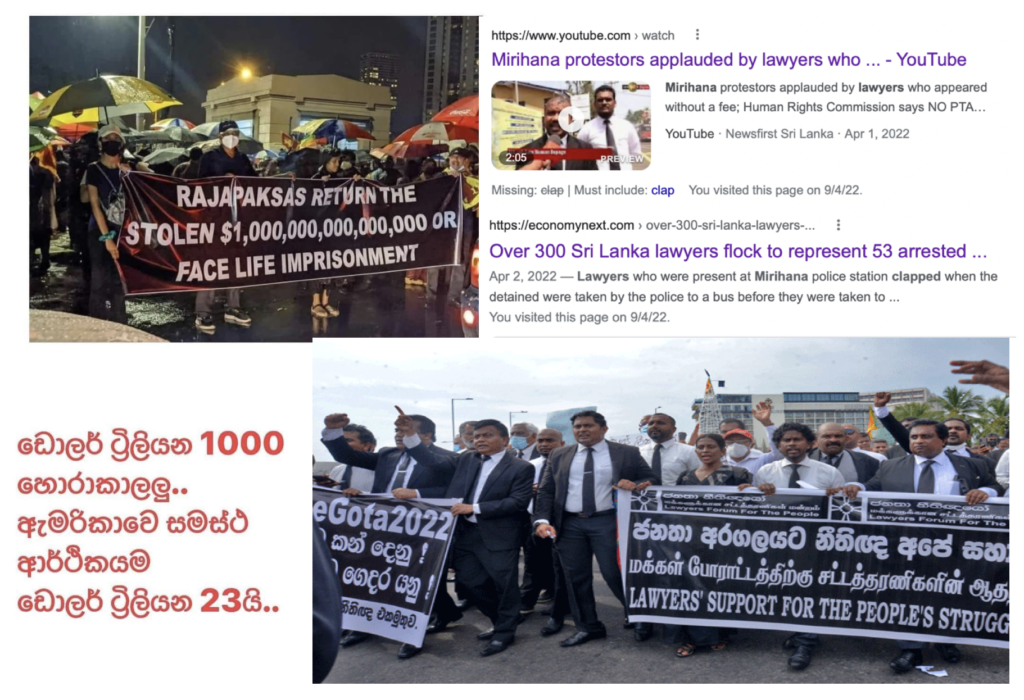
An interesting aspect of the recent protests in Sri Lanka was the open participation of some members of the legal fraternity chanting slogans and even protesting against corruptions. People can bewail corruption because they are in no position to take action other than protest, can this be said of lawyers? People who wish to hold anyone accountable for corruption, has to go to a lawyer to file a case. People are unable to do so because they do not have the funds to meet the legal fees lawyers ask of them. Filing a case against a high profile figure by a citizen may drain him of all his wealth. However, what is stopping the lawyers who are first citizens to take up cases on their own? Why are the lawyers protesting on the streets or giving voice cuts for media publicity not taking the legal path, when all they have to do is file cases against those they claim to be corrupt? After all, there are political parties who claim to have the files and these parties have their own legal teams too.

From the BASL President to his followers, we have witnessed a steady flow of legal fraternity taking to the streets alongside protestors, holding placards and giving interviews even to international media pointing fingers and bewailing corruption. This charade should not continue without question.

Firstly, how far is the judicial pillar & legal profession uncorrupt?

From Judges to magistrates to ordinary lawyers – how many of them are not corrupt? 

What has been done about their corrupt ways? If we are on the subject of accountability, should accountability not be applicable to the Judicial pillar as well? How fare is it to simply put behind bars anyone who makes statements on the corruption of the courts, the judges, the lawyers as ‘contempt of court’.

So fundamentally, to accuse another of corruption, one must first be uncorrupt.

Presuming that those that accuse or hurl stones are uncorrupt, the legal profession is the only profession that can actually do something against corruption. They have all the wherewithal to take up a case, they know the case law, they know the legal arguments, basically, they know the law.

So why are the lawyers not taking action against corruptions in Sri Lanka?

This is the golden question – unanswered

They do not need to be protesting on the street – they need to take out the allegations and present their case with legal arguments.

In taking to the streets & showing solidarity with protestors the lawyers were openly advocating mob rule. If mob rule that prevailed is to be accepted as a precedent above the rule of law – where will be the role of lawyers or the Judiciary in the future?

Any group or groups of violent protestors can deem it their right to storm places (public or private) forcibly remove people, take over their possessions & declare it is their ‘right’. In such a future scenario, what would lawyers do or what can they do?

If lawyers can take to the streets in protest ‘voluntarily’ why can’t they voluntarily take up the allegation files & file cases without waiting for people to fund the case & pay their legal fees?

If they could appear pro bono for protestors arrested & free them while clapping & cheering them why can’t they take up corruption cases pro bono on their own?

https://island.lk/basl-chief-counters-allegations-denies-seeking-political-office/ the legal fraternity no doubt is split in perceptions and legal opinion. However, where corruption is concerned there cannot be any split in perception. If anyone is corrupt – it must be proved and the legal fraternity are the only players who can present a case to the Courts to determine.

The question that the public should now be asking is – WHY ARE THE LAWYERS NOT TAKING UP CORRUPTION CASES PRO BONO WITHOUT WAITING FOR PEOPLE TO PAY THEM?

The legal fraternity are citizens first – therefore as individual citizens, they have every right to file a case on their own.

Why are they not filing cases against those they claim are corrupt – be they Judges / Lawyers / Politicians / Public Servants / Corporates ?

Shenali D Waduge

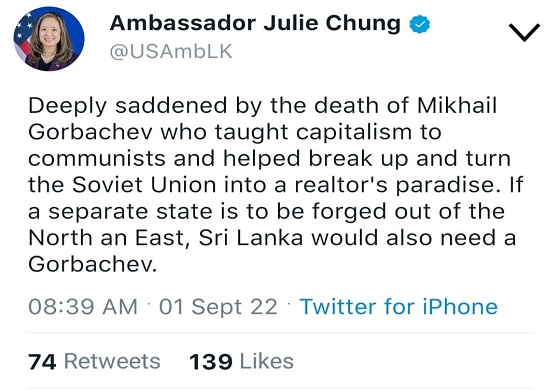
උතුරු නැගෙනහිර වෙන් කරවා ගැනීමට නම් ශ්‍රී ලංකාවටත් ගොර්බොචොව් කෙනෙකු අවශ්‍යයයි- ශ්‍රී ලංකාවේ අමෙරිකානු තානාපතිනිය

September 5th, 2022

පාඨකයෙක්

අමෙරිකානු තානාපතිනි ජූලි චුන්ග් මැතිණිය සෝවියට දේශයේ හිටපු ජනාධිපති මිඛායිල් ගොර්බොචොව් ගේ දිවි සැරිය නිම කිරීම සම්බන්ධයෙන් සිය ට්විටර් ගිණුමේ සටහනක් තබමින් ,

මිඛායිල් ගොර්බොචොව් යනු කොමියුනිස්ට්වරුන්ට ධනවාදය නම් පාඩම උගන්වා සෝවියට සංගමය උඩු යටිකුරු හරවා නිර්මාපකයාගේ පාරාදීසය බවට පත් කළේය. උතුරු නැගෙනහිර පළත් වෙනම රාජ්‍යයක් බවට පත් කර ගැනීමට අවශ්‍යය වන්නේ නම් ශ්‍රී ලංකාවටද ගොර්බොචොව් කෙනෙකු අවශ්‍යයයි.” පවසා ඇති බව සමාජ ජාලා තුළ සැරිසරණය වන පණිවිඩයකින් කියවේ.

කෙසේ වුවද මේ සම්බන්ධයෙන් අමෙරිකානු තානාපතිනිය සටහනක් තබමින් පවසන්නේ තමන්ගේ නමින් වන ව්‍යාජ සමාජ ජාලා ගිණුම් වලින් තමා පැවසුවේයැයි පවසමින් විවිධ ව්‍යාජ පණිවිඩ සමාජ ජාලා තුළ සංසරණය වන බවයි.

අමෙරිකානු තනාපතිනිය නිකුත් කළා යැයි පැවසෙන පණිවිඩය සම්බන්ධයෙන් අදහස් දක්වන ජේෂ්ඨ නීතිඥයෙකු ලංකා ලීඩ් වෙබ් අඩවිය වෙත පවසා සිටියේ, පණිවිඩය ව්‍යාජ යැයි අමෙරිකානු තානාපතිනිය පැවසුවද එයින් ගම්‍යය වන අදහස නම් ව්‍යාජ නොවන බවයි.

මෙම ප්‍රකශය ශ්‍රිලන්කාවේ අභ්‍යන්තර ආරක්ෂාවට  බලවත් තර්ජනය වන නිසා  රජය වහා  මේ තානාපතිය විදේශ අමාත්‍යාන්ශයට කැඳවා මේ පිලිබඳ ප්‍රශන කළයුතුය. එය සත්‍යක් නම්, මේ රටේ අභ්‍යන්තර ප්‍රශ්නවලටඇන්ගිළි නොගසා වහාම එය ඉල්ලා අස්කරගත යුතු බවද එසේ නොමැතිනම් ඇයට වහාම රටින් පිට වන මෙන් දැන්විය යුතුය.

පාඨකයෙක්

Fitch Warns of High Risk Sri Lanka May Default on Local Bonds

September 5th, 2022

14h ago

Fitch Warns of High Risk Sri Lanka May Default on Local Bonds

Ronojoy Mazumdar and Asantha Sirimanne, Bloomberg News

A worker with an empty two-wheeled cart makes his way to a wholesale market to find jobs in Colombo, Sri Lanka, on Tuesday, Aug. 9, 2022. Sri Lanka’s new President Ranil Wickremesinghe this month called on lawmakers and citizens to support his administration’s reform measures to help pull the nation out of its economic tailspin and negotiate a bailout program from the International Monetary Fund.

A worker with an empty two-wheeled cart makes his way to a wholesale market to find jobs in Colombo, Sri Lanka, on Tuesday, Aug. 9, 2022. Sri Lanka’s new President Ranil Wickremesinghe this month called on lawmakers and citizens to support his administration’s reform measures to help pull the nation out of its economic tailspin and negotiate a bailout program from the International Monetary Fund. , Bloomberg

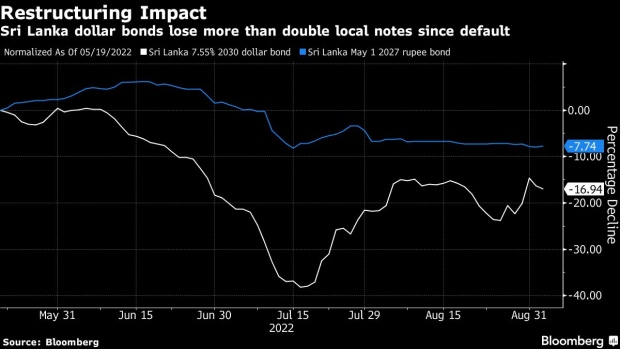
(Bloomberg) — Sri Lanka is contending with a high risk of default on its local currency bonds as it seeks to reduce debt, key to winning financing from the International Monetary Fund to bring relief to the crisis-hit island.

Fitch Ratings’s ‘CCC’ rating on long-term local currency debt that was affirmed in May reflects a high risk that local-currency debt will be included in debt restructuring,” Sagarika Chandra, Hong Kong-based associate director, wrote in a statement. Sri Lanka had $30 billion of foreign debt and $34 billion of domestic debt as of the end of April.

Sri Lanka defaulted on its dollar debt in May for the first time, and must clinch a restructuring deal with private bondholders and official creditors including China, Japan, and India to get the IMF board’s nod for a $2.9 billion loan. The nation faces a lawsuit in a US court over its proposed debt recast, with one of the bondholders, Hamilton Reserve Bank Ltd., accusing Sri Lanka of setting terms that favor domestic banks.

There is a big question mark over whether sustainable levels of debt can be reached by just restructuring US dollar market and concessional debt,” said Kenneth Akintewe, head of Asian sovereign debt at abrdn in Singapore. Arguably, local currency debt needs to be restructured too in order to reach what the IMF would see as sustainable levels.”

There are mixed signals from the government. President Ranil Wickremesinghe in August said the government was looking at including local bonds in the debt restructuring. Meanwhile, central Bank Governor Nandalal Weerasinghe has said he was confident the nation’s debt can be made sustainable without restructuring domestic debt.

Sri Lanka is walking a tightrope as it juggles the need to meet the IMF demands while ensuring the impact of the debt restructuring on the economy is manageable. Fitch warned that a default on local-currency debt could have adverse effects on Sri Lanka’s banking sector that would erode the net benefits of such a restructuring.”

Officials are working with financial and legal advisers on a debt restructuring strategy and intend to make a presentation to the creditors in the next few weeks, the finance ministry said last week. 

Imposing a debt restructuring on local currency debt could also prove challenging as the rating company views public support for the government as weak,” and anticipates risks to reforms from political instability. An interim budget last week raised tax rates and included reforms to restore the nation’s fiscal health and meet IMF requirements.

If there is a haircut on these bonds also, there will be a huge impact on the banking sector,” said Sanath Manatunge, chief executive officer at Commercial Bank of Ceylon PLC, adding that it would also make the restructured sovereign dollar bonds vulnerable.

©2022 Bloomberg L.P.

Will not accept external mechanism on war-time accountability, says Sri Lanka 

September 5th, 2022

Meera Srinivasan Courtesy The Hindu

Minister of Foreign Affairs Ali Sabry says Sri Lanka ‘needs all partners’ for its economic recovery

Ahead of the UN Human Rights Chief’s latest report on Sri Lanka, and a likely resolution at the coming session of the Human Rights Council in Geneva, the Sri Lankan government reiterated that it would not accept any external mechanism on war-time accountability.

Addressing a media conference in Colombo on Monday, Minister of Foreign Affairs Ali Sabry said Sri Lanka needs all partners” for its economic recovery, days after the government formalised an IMF staff-level agreement for a provisional $ 2.9 billion programme.

However, rejecting any external mechanism — as the former Rajapaksa administration too did — for accountability and justice in regard to alleged war crimes, Mr. Sabry vowed to strengthen domestic processes within Sri Lanka’s constitutional framework.” We are not interested in confrontation, we want to work towards consensus with all partners,” he said, adding the government would set up a new truth-seeking” mechanism and a secretariat to coordinate with Sri Lankan diaspora. But external mechanism, we are not agreeable… because our Constitution does not allow that,” the Minister said, without elaborating on the constitutional provisions that prohibit it. 

For over 13 years since Sri Lanka’s three-decade civil war ended, concerns over grave human rights violations have lingered among Tamils. Last month, hundreds of Tamil mothers marched on the streets of the northern Kilinochchi district, marking 2,000 days of their relentless agitation, seeking truth and justice for their loved ones who disappeared during and after the civil war.

Further, in recent years, rights advocates within Sri Lanka as well as UN experts have drawn attention to targeted attacks on the island nation’s Muslim community, arrests under anti-terrorism laws to stifle” dissent, persisting militarisation, and a shrinking space for human rights and democratic freedoms.

As part of its efforts to address long-pending concerns, the Sri Lankan government also expects to have an amendment Bill on trimming the President’s executive powers passed soon, Minister Sabry said, even as critics accuse the ruling administration of pushing a watered down” version of an old law. Sri Lanka must use this crisis as an opportunity to reset the country…economically, socially and constitutionally,” he said.

Aid Sri Lanka, But Ask to Eliminate China’s Influence on Military, Politics

September 5th, 2022

By

Sri Lanka is experiencing a humanitarian crisis, including food and energy shortages. It seeks Japan’s help to get it out of China’s debt trap.

President Ranil Wickremesinghe of Sri Lanka, an island nation in the Indian Ocean on the brink of economic crisis, expressed his desire to ask Japan for help to lift the nation from its deep debt problems through debt restructuring talks and other measures.

The biggest factor in the crisis has been the personalization of politics by the former president’s family, supported by Chinese funds. Sri Lanka is a typical example of a country that has fallen into the China debt trap,” where it has become heavily indebted due to Chinese loans it cannot repay and has finally ceded its national interests to China to pay back the loans.

Prime Minister Fumio Kishida should actively reach out to Sri Lanka on condition that the country eliminates China’s influence on its military and internal politics. The country is suffering from food and energy shortages, and there is not a moment to spare.

Different Approaches to Assistance

If Tokyo is able to help Sri Lanka out of its crisis, it could highlight how Japan and China differ in philosophy on aid and financing for developing countries.

Prime Minister Kishida delivered a keynote speech at the eighth Tokyo International Conference on African Development (TICAD8), which was held in the northern African country of Tunisia on August 27 and 28. He said, We are emphasizing investment in people and the quality of growth.”

Japan assists developing countries in terms of hardware, such as facilities and goods, and software, such as tools for human resource development. Indeed, Tokyo has an established reputation for providing aid that meets the needs of recipient developing countries.

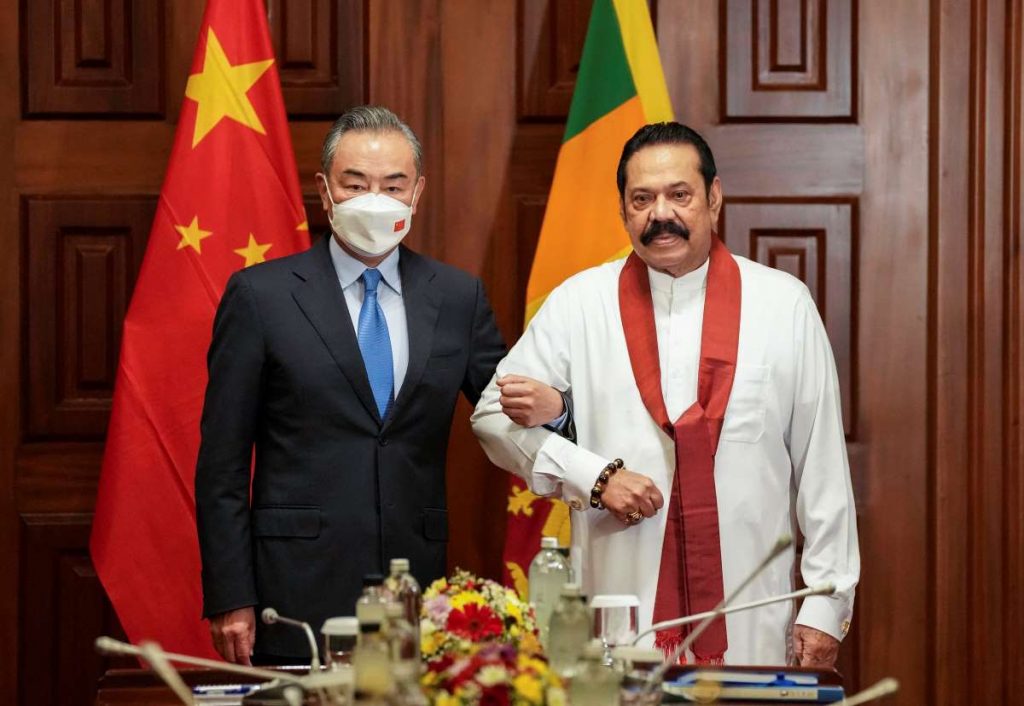
Chinese Foreign Minister Wang Yi, left, poses for media before his meeting with then Sri Lankan Prime Minister Mahinda Rajapaksa in Colombo, Sri Lanka, Jan. 9, 2022. (AP Photo/Eranga Jayawardena, File)

Attraction of China’s Big Loans

The problem in developing countries today is that many regimes are attracted to China’s massive loans because there is little risk of being scolded for their profligate finances or disregard for human rights.

For this reason, TICAD8 clarified its stance against China’s aid methods in the outcome document. It noted the importance of sound development finance that adheres to international rules and standards.” It also emphasized an environment that does not rely on unfair and opaque financing.” This is entirely appropriate.

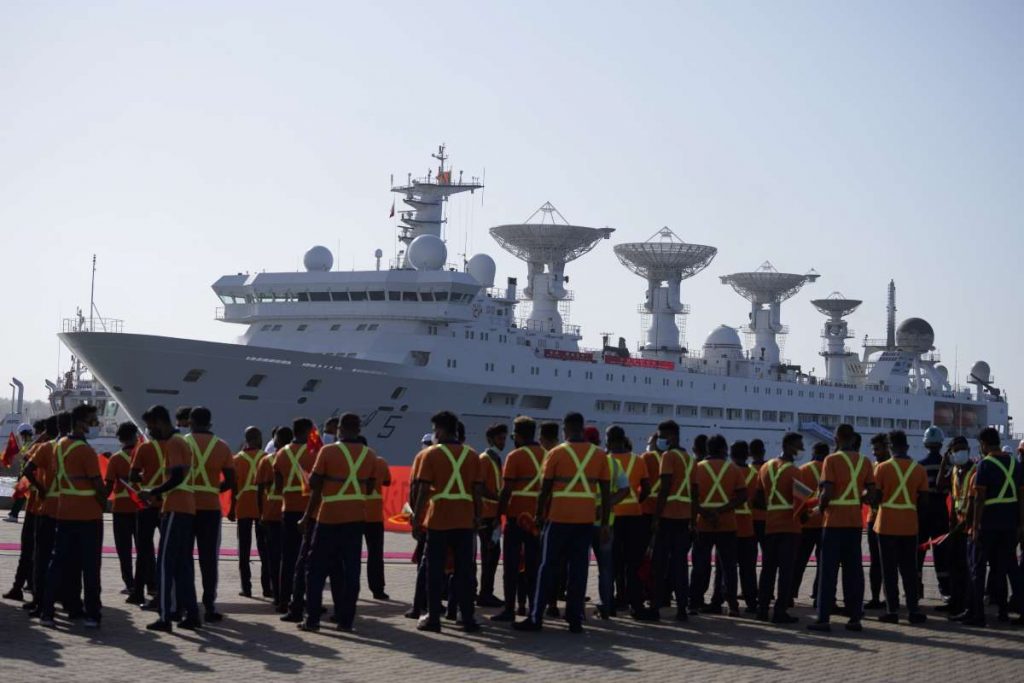
Yuan Wang 5, a Chinese scientific research ship under the Chinse military arrives at the port in Hambantota, Sri Lanka, Tuesday, Aug. 16, 2022. (AP Photo/Eranga Jayawardena)

The Hambantota Port Example

The Hambantota Port in southern Sri Lanka was developed under the leadership of the former president’s family with Chinese aid. However, five years ago, the Sri Lankan government, overburdened with a heavy interest rate, transferred the 99-year right to operate the port to China in exchange for debt repayment. 

In August, a survey ship of the Chinese military arrived at the port, causing a major commotion.

China has stated that its military will not use port facilities it has acquired as concessions in the countries for which it provides aid, when the concessions are in exchange for debt repayment. In the end, however, China seems to be aiming at creating a new military base.

We must share our apprehension with many countries regarding China’s ambition for maritime hegemony. 

Aragalists’ proposals for ‘System Change’

September 5th, 2022

By CHANDRE DHARMAWARDANA Courtesy The Island

chandre.dharma@yahoo.ca

Although there is much talk of system change”, it is hard to find specifics of the new systems that are to be created. In the early seventies, Mahinda Wijesekera, the father of the present Minister for Power, was a student leader of the Vidyodaya University. As a key figure of the JVP, he told me that they are fighting for a system change”. My critique of their plans got reported by Viranga (Nihal Ratnayake) in the Daily News. The campus faced student strikes with the demand that I withdraw my critique, considered reactionary and insulting. The five lessons of the JVP sufficed for the young revolutionaries to fall behind Wijeweera and cause mayhem.

Pathum Kerner, one of the Aragalists out on bail, is a medical doctor, in his forties. He contested the 2020 general elections as the leader of an unofficial Green political party, rejecting the existing corrupt political parties. More recently, his approach to system change” was presented in a YouTube presentation.

The rural farmers began the initial protests. They faced Gotabaya’s ban on agrochemicals that drastically reduced harvests and brought them to bankruptcy. The eco-extremists of the Viyathmaga, who triggered the ban, believed that traditional agriculture and organic farming were healthier” and equally bountiful. Going organic” was the SYSTEM CHANGE that the eco-extremists had wanted. That the present methods of food production are unsustainable”, and that a different system” is needed, seems reasonable and has acceptance among the elite, among politicians, and even among many scientists who gloss over the realities of feeding a world of 7-8 billion people. Many people regard the switch to organics as an objective that should be achieved gradually”. Pathum Kerner would have endorsed this policy in July 2020. The JVP also seems to support going fully organic” gradually.

The present writer has argued (in many publications) that even the gradual approach” is meaningful only if we let half the world population starve. Growing organic food for a niche market of elites and for export, while retaining fertiliser-based agriculture for feeding the world, is the only scientifically valid model of agriculture that we have today. Modern approaches to agriculture using agrochemicals are far friendlier to the environment than organic” models of agriculture.

The Yahapalanites under Sirisena, Ven. Ratana, Champika Ranawaka and others pushed to ban the pesticide Glyphosate, destroying the corn harvest and critically damaging the plantation sector. This was not lesson enough for the eco-extremists of the Viyathmaga who influenced Gotabaya Rajapaksa.

The protests of farmers were soon overtaken by the protests of the middle class, facing shortages of natural gas for cooking and fuel caused by the forex crisis that was expected in the wake of the pandemic. The Aragalaya gathering at Colombo’s Galle Face Green, fueled by the forex crises, swelled, demanding Gotabaya’s resignation to make a radical system change”. It was not only a protest, but also a cultural carnival displaying a spontaneous creativity and gaiety nourished by the inputs of the leisured classes of Colombo. I was reminded of the fête de l’Humanité” that the French Communist party newspaper has held every September in Paris, since the 1930s, showcasing its many famous literary and artistic adherents. The Aragalaya sent President Gotabaya into exile on 10 July but the goons of the government and the violent side of the Aragala got exposed in the process.

Although Ranil Wickremesinghe (RW) bemoaned the destruction of his valuable collection art, books and Buddhist sculptures in his house, he had no thoughts of preserving for posterity the spontaneous art of the Aragalaya. The public has clearly expressed its opposition to violence and counter-violence, destruction of MPs’ houses and ignored the August 9th Aragalaya call to regroup.

Gotabaya called several leaders to ride the cusp of the crisis, but it was RW who captured the wave and shot up to become the new President. The Aragalaya and the public had rejected all political parties, corrupt to the core, and asked for a clean break. In contrast, the party leaders and political commentators have called for an all-party interim government (APIG)”. This did not happen even under daily suicide attacks by the LTTE, and so, how can cantankerous politicians come together heeding a largely peaceful Aragalaya? An election under an APIG would have returned the same politicians, conferring them a false façade of legitimacy. The best option is indeed to carry on with RW and a skeleton government. But what corrupt skeletons did RW gather? Why was it necessary for RW to appoint individuals with criminal records, men suspected of blatant bribery etc. to his Cabinet? One of the reasons given by Premadasa against joining the government is the continuing stench of corruption in the RW government.

So, how do the Aralgalaya leaders, some out on bail, or any other new faces hope to change this entrenched system? They have some two and a half years to get organised and form new parties with new faces and write manifestos; while RW also has a chance to either prove his worth and his integrity, or to fall into the hands of criminals, financial wheeler dealers and old cronies. Or, is RW already a prisoner of the Pohottuwa party?

Dr. Pathum Kerner (PK) has presented his proposals for system change in a YouTube video, https://www.youtube.com/watch?v=OTOXSCjmB0g While the revolutionary youth of the 1970s under Wijeweera demanded full nationalisation, PK proposes to go beyond JRJ towards a complete privatisation” of the internally economy. Everyone complains of the large size of the government. It runs most of the industries and services using 1.5-2 million to do the work of 0.5 million. PK makes the same complaint, and speaks glowingly of Thatcher and Regan. He points to how the state sector is used by politicians to give contracts and employment to their cronies. New business licences are issued through patronage. An arrack permit brings ten to twenty million rupees to the politician. The system” breeds corruption and cronyism. PK alludes to the need for law and order, transparency, efficiency and shrinking the government — the standard neoliberal narrative since Margret Thatcher.

Neoliberal economies legalise” corruption by institutionalising lobbying. Following Thatcher will need tough inhuman steps that only a government armed with draconian powers can carry out, in culling out one million government employees. Pathum Kerner refused to elaborate how he hopes to do this. A large part of the government business” is in providing health, education, security, infrastructure and public transport. PK avoids these inconvenient topics.So, the Aragalaya Right offers the usual free-market deregulation imposed under an iron hand a la Pathum Kerner, while the Aragalaya Left offers the usual socialist workbook imposed by the July 10th revolutionaries with their helmets, motor bicycles and incendiary devices?

Removing a million workers to shrink the government will cause economic collapse even if they go without a fight, because removing a million consumers from the market will cause a market slump. A country facing economic collapse immediately needs MORE GOVERNMENT intervention and not less. The governments can buy stock in private companies and inject money. The claim that governments must sell off loss-making enterprises to come out of an economic crisis is inconsistent with macro-economic dynamics. When employment is terminated, the government must pay unemployment allowances to keep people solvent, and ensure that their collective loss of buying power does not kill the market. The government can safely divest itself of profit-making businesses, but it has to restructure and re-invest in loss-making businesses, unless they are nonessential businesses that can be closed up. Issuing of licences and permits should be tied to bank loans, so that the liabilities of failed businesses or corrupt contracts become a bank liability. Politicians should be barred from sponsoring projects and limit themselves to legislation. Strong executive powers are needed to enforce social stability during a crisis.

 Meanwhile, strategic sectors like energy and food must be re-organised (jointly with foreign entrepreneurs where needed) to exploit the special advantages that Sri Lanka has. The large potential in hydropower obtained by reducing evaporation, diesel from vegetable oils, biomass energy etc., can be developed with limited forex expenditure, unlike solar energy that needs forex in the initial stages. The food and plantation sectors too need forex, but this is immediately recovered within the year with good margins when the products are exported.

Attorney Dharshan Weerasekera vs Saliya Pieris : Legal implications of aragalaya protests

September 4th, 2022

Shenali D Waduge

The Island published an excellent article by attorney Dharshan Weerasekera titled Legal implications of Aragalaya protests” which was a stark contrast to the position taken by some BASL attorneys including its President. The article brings to the forefront a clash of perceptions. While some regard protestors storming the Presidents House/Secretariat, Temple Trees & PM’s Office & illegally occupying them as a triumph of democracy, many others see the long term repercussions & an affront to the rule of law by law of mobs. Unfortunately many in the legal fraternity including its President have chosen not to present the illegality of what took place giving people and protestors a wrong legal interpretation with dangerous future ramifications. After all, if they advocate mob rule, there is no requirement in the future for lawyers & judges too!

https://island.lk/legal-implications-of-aragalaya-protests/

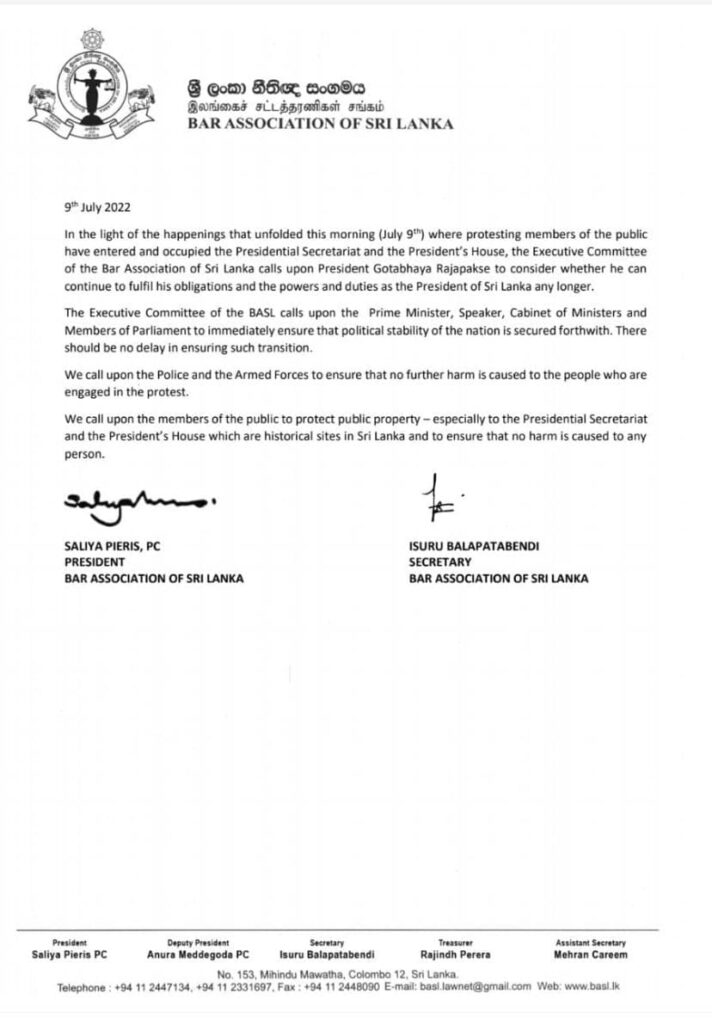
As Dharshan Weerasekera points out there is little voice raised by even academia or media on the collapse of rule of law that took place alongside the protests. Noteworthy is the statement signed by BASL President on BASL letterhead on 9 July 2022 immediately after protestors forcibly entered Presidents House / Presidents Secretariat / PM’s Residence Temple Trees / PM’s Office. The last para only called upon public to ‘protect public property’ nowhere was there a line indicating the illegality of the act.

While anyone has a right to protest – protestors do not have a carte blanche to protest as they like, when they like & how they like. As Dharshan says the protests are illegal & ‘contravened the letter & spirit of the constitution’ embodied in Article 3 & 4 though some are defending the protests using ‘social contract theory’ advocated by Hobbes, Locke & Rousseau.

It is slowly dawning on many that the protests were nowhere near ‘peaceful’ either. What if a bunch of protestors decide to storm private companies, homes etc – would lawyers defend them pro bono?

Dharshan Weerasekera’s article is timely because he showcases the need to bring the correct version to public domain before behavior of the ‘Aragalaya” becomes formalized in judicial rulings in the future. This is certainly a dangerous scenario.

Protestors can be cheered for protesting without illegal occupation or for committing any acts that are considered illegal by law.

If protestors are cheered for storming public places & it is silently accepted, what stops protestors from even storming embassy compounds, corporates or private homes? Will they be cheered & celebrated as a triumph of democracy?

The actions of members of the legal fraternity is equally worrying. While they may argue that they upheld their personal wishes. They were performing official acts which required them to uphold the constitution first. What was the message these lawyers gave to the public to be in their ‘uniform’ and participating in a hand barricade, going to courts to release arrested protestors pro bono and even clapping and cheering when they were released?

https://www.youtube.com/watch?v=M8GOhFTPxRQ Lawyers began the GoHomeGota” protests in April 2022

https://economynext.com/over-300-sri-lanka-lawyers-flock-to-represent-53-arrested-protestors-92397/ – over 300 hundred lawyers flock to represent arrested

https://www.youtube.com/watch?v=DPf1RLEcPPM Lawyers clap as protestors are released.

https://economynext.com/sri-lanka-lawyers-sign-deceleration-in-support-of-arrested-protestors-98226/Sri Lanka lawyers sign deceleration in support of arrested protestors

https://www.dailymirror.lk/latest_news/Lawyers-protest/342-234582 – Lawyers protest. Given that there are corruption files against those that they accuse, why don’t they take up these cases pro bono on behalf of the protestors the legal way as is what their profession has taught them?

https://www.timesonline.lk/news-online/In-Pictures-Lawyers-come-out-in-support-of-protesters-at-Galle-Face/2-1137317 In pictures – lawyers come out to support protestors at Galle Face

https://www.dailynews.lk/2022/08/11/law-order/284803/counsels-withdraw-petitions-behalf-galle-face-protesters ultimately even petitions on behalf of protestors had to be withdrawn as rule of law had to prevail.

Why didnt the lawyers appear pro bono for MR Amarakeerthi Athukorala who was inhumanely killed on 9 May 2022?

Illegal Protest vs Social Contract Theory

Article 3 of Sri Lanka’s Constitution states In the Republic of Sri Lanka sovereignty is in the People and inalienable.” 

Article 4 of Sri Lanka’s Constitution lays down ways that people can exercise their sovereignty.

People can exercise their Legislative sovereignty via Parliament by electing their representatives

People can exercise their Executive sovereignty via electing a President.

People have to wait for an election to change or demand a fresh election. People do not have the authority to force people out of office by storming them, breaking the property, stealing property & illegally occupying them.

As Dharshan points out the people can exercise their sovereignty by electing or changing governments only not by popular” uprisings.

The quick response is that people could not afford to wait 2 years to change the govt. Yet, there was constitutional provision to call for an election. Why didn’t the protestors demand this, he asks?

Dharshan also points out that RIGHTS go hand in hand with RESPONSIBILITIES”.

Dharshan Weerasekera points out that Sri Lanka offers a lot of freebies & subsidies from healthcare, education, farming & is the country’s largest single employer. He cites that all who participated would have benefited in some form from the State welfare system. What Dharshan implies is that when the state was facing financial difficulties partly from factors beyond their control, taking to the streets calling for the ouster of the government was never an option or a solution as no one taking over had magical money to take Sri Lanka out of debt.

The quote is relevant for anyone who abhors the country of his/her birth can always leave & be domiciled elsewhere. The country will not stop anyone wanting to leave Sri Lanka. So why do the haters still remain & curse the nation?

The gang leaders, promoters & supporters of the aragalaya, many who behind the scenes funded the protests for their own hidden agendas & many who simply wanted anarchy as it benefitted them personally. Many of the protestors fooled into thinking & believing they were present to create history, did create history but not for the reasons that will be etched in history. When the true status of the protests & who actually conspired to bring about the collapse of Sri Lanka to enable Sri Lanka to fall to its knees & be dependent on the very entities that conspired its fall, the protestors & their supporters will be ashamed of their role. But it would be too late.

Dharshan Weerasekera says that the storming of Public places, forcible eviction of an elected President, forcing his resignation all constitute an illegal act.

The issue is why is one attorney publicly speaking about the illegality of the acts promoted as ‘peaceful protests’ while the attorneys given media prominence are taking the opposite view?

Is the perception of the media and these lawyers aligned with the protestors? Who else are promoting this perception & why?

Dharshan Weerasekera lumps the promoters of the protests & the protestors as well as the defenders in supporters of the ‘social contract theory’ which advocates a contract between people & their rulers, where the people surrender part of their sovereignty to the rulers in exchange for rulers to ensure the security & welfare of the people & rulers who fail this ‘agreement’ are justified to be ousted.

The above is being used by most aragala protestors & supporters to justify their protest claiming the former President exceeded his authority or failed his obligations to the people.

Dharshan Weerasekera claims the Locke, Hobbes theories related to changes taking place in their political systems where transition from monarchy to constitutional monarchy was taking place while Rousseau was related to the French Revolution.

Given that everyone has his own perceptions, there was a requirement to have an ultimate authority and if people were allowed to topple governments & chase out leaders, what was the use for elections? Where is the stability in such a country, if a group of people could converge backed by media & other financial backing decide to oust leaders they disliked?

Will such a scenario be internationally accepted? If Sri Lanka sets an example for others to follow, will that not result in anarchy across the world? Didn’t the Iraqi people storm its Parliament immediately after Sri Lanka’s debacle? Didn’t Sri Lanka’s debacle follow storming of Capitol Hill in USA? Will we see a trend. Will the sponsors create a global trend now that they have the template?

Dharshan Weerasekera asks a simple question – do people want to live in a country where there is rule of law, where there are elections to elect or reject representatives or do they wish mob rule where a handful of people take to violence & demonstrations & oust people that they dislike completely ignoring the wishes of the rest of the populace. Dharshan Weerasekera proposes legal means to prevent such eventualities occurring in the future.

Protests have a fundamental right to protest. But protests and protestors have restrictions & their protests have to take place according to the law & they must follow rule of law.

Shenali D Waduge

නගරය පරදා ගම ඉදිරියට පැමිණි  උ. පෙළ විභාගයේ හොඳම ප්‍රතිඑල මෙවර ඌව පළාතෙන්

September 4th, 2022

රජිත් කීර්ති තෙන්නකෝන් දකුණ හා මධ්‍ය පළාත් හිටපු ආණ්ඩුකාර

පශ්චාත් කෝවිඩ් සමයේ අ.පො.ස. (උ.පෙ.) විභාගයෙන් ඉහළම ප්‍රගතිය ලබා ඇත්තේ ඌව පළාත යි.  අ.පො.ස. (සා.පෙ.) විභාගයෙන් ඉහළම ජයග්‍රහණ වාර්තා කරන දකුණු පළාත 2020 උ.පෙ. ප්‍රතිඑල අනුව සිව්වන ස්ථානයේ පසු වූ නමුත්, මෙවර අට වන ස්ථානය ට පසු බැස ඇත. රටේ අධ්‍යාපන කේන්ද්‍රස්ථාන ලෙස සැලකෙන මධ්‍යම, බස්නාහිර සහ දකුණ වෙනුවට ඌව, නැගෙනහිර, වයඹ හා උතුර 2021 ප්‍රතිඑල අනුව ඉදිරියට පැමිණ තිබේ.

ඌව උඩටම

මෙවර උ.පෙ. විභාගයට ඌවේ දරුවන් 18,213 දෙනෙකු පෙනී සිටි අතර එයින් 11,862 ක් (65%) ක් විශ්වවිද්‍යාල ප්‍රවේශය සඳහා සුදුසුකම් ලබා ඇත. සිසුන් 577 ක් ඒ සාමාර්ථ 3 ක් ලබා ඇත. ඌවේ සියළුම විශයන්ගෙන් අසමත් සිසුන් 1,549 (8.5%) කි.

නැගෙනහිර පලාතේ සිසුන් 21,466 ක් අතුරෙන් 13,742 ක් (64%) ක් විශ්වවිද්‍යාල ප්‍ර වේශයට සුසුසුකම් සපුරා ඇත.

මුළු දිවයිනේම ඒ සමාර්ථ 3 ලැබූ සිසුන් 10,000 කි. එයින් 3286 ක් බස්නාහිර පළාතෙනි. දකුණේ 1574 ක් ද, වයඹ සිසුන් 1,118 ක් ද, මධ්‍යම 1022 ක් ද වෙති.

උසස් පෙළින් සියළු විෂයන් අසමත් සංඛ්‍යාව 27,352 (10.03%) කි.  විභාගයට පෙනී සිටින සෑම සුසුන් 10 න් 1 ක් විභාගයේ සියළු විෂයන් ගෙන් අසමත් ය.

මෙවර විභාගයට පෙනී සිටි සිසුන් 272,682 න් සිසුන් 171,497 ක් (62.89%) මෙවර විශ්වවිද්‍යාල ප්‍ර වේෂයට සුසුසුකම් ලබා ඇත.

පාසල් අයඳුම්කරුවන් පමණක් සැලකීමේ දී විශ්වවිද්‍යාල ප්‍ර වේෂයෙන් ඉහළම සාර්ථකත්වය ලැබී ඇත්තේ නැගෙනහිර පළාතෙනි.  ඌව පළාත දෙවන ස්ථානයට පත්ව ඇත. උතුර, වයඹ, මධ්‍යම, බස්නාහිර,  සබරගමුව, දකුණ, ලෙස පිළිවෙලින් පැමිණ උතුරු මැද පළාත අවසන් ස්ථානයට පත්ව ඇත. උතුරු මැද 11.33% ක් දරුවන් විෂයන් සියල්ලගෙන්ම අසමත්වී ඇත.

මෙවර උසස් පෙළ විභාගයට පෙනී සිටි දරුවන්ගෙන් බහුතරයකට කොරොනා හේතුවෙන් සිය අධ්‍යාපනය කටයුතු සිදු කිරීමට ලැබුණේ අතිශයින් දුෂ්කර අන්දමිනි. නාගරික පාසල් වසා දමා තිබූ අතර, ටියුෂන් පන්ති පැවැත්වීම ද සීමා විය.

ඔන්ලයින් ක්‍රමයට අධ්‍යාපනය සිදු කිරිමට පහසුමක් අහිමි වූ අති විශාල පිරිසකට මෙවර විභාගයේ දී දැඩි අසාධාරණයකට ලක්වීමට සිදුව ඇති බව අප අමතක නොකළ යුතුය.

විශ්වවිද්‍යාල අධ්‍යාපනයට සුසුකම් නොලබන 33% ක පිරිස ද, සියළු විෂයන්ගෙන් අසමත් දරුවන්ට සිය අනාගතය සාර්ථක කර ගැනීමට සුදුසු වැඩපිළිවෙලක් සකස් වී නැත. ඉන්ධන හිඟය, උද්ධමනය, පොලී අනුපාත ඉහළ යාම හේතුවෙන් නව ව්‍යාපාර අවස්ථා පමණක් නොව, මුදල් සංසරණය ද සීමා වී ඇත. පාසල්වලින් ඉවත්වන දරුවන්ට රැකියා ලබා ගැනීමට ඇති අවස්ථාව ඒ අනුව අතිශයින්ම සීමා වන්නේය.

උතුරු මැද, දකුණ, සබරගමුව සහ උතුරු පළාත් හි අධ්‍යාපන විෂමතාව අනෙකුත් පළාත් හා සැසදීමේ දී වේගයෙන් පුළුල්වන බව පසුගිය වසර 3 හි ප්‍රතිඑල අනුව පෙනී යයි.

සමස්ථ ප්‍රතිඑල අනුව 2020 තුන්වන ස්ථානයේ වූ ඌව මෙවර පළමු ස්ථානයට පත්වීමත්, ඌව පළාතේ හොඳම ප්‍රතිඑල පළමුවරට පස්සර කලාපයෙන් වාර්තාවීමත් සුවිශේෂ ය.

රජිත් කීර්ති තෙන්නකෝන් දකුණ හා මධ්‍ය පළාත් හිටපු ආණ්ඩුකාර

Culture of Galle Face Protesters

September 3rd, 2022

By Sena Thoradeniya

This is the second part of the article, Group Formation and Culture of Galle Face Protesters” posted on August 23.2022.

A. Culture of GF Protesters – An Overview

In the second part of this essay we discuss an area hitherto untouched by any writer, Culture of Galle Face Protesters (GFP). Since we have identified more than twenty facets of the culture represented by the protesters, at least some rudimentary description of each aspect is necessary resulting in making this essay a little longer. There were several limitations. Transliteration and   translation into English, perhaps untranslatable expressions even in few words was one such limitation. Many slogans, what were -written on placards, poems, songs, viridu, raban pada, thoran kavi, kavi bana, slapsticks, wordplay, vulgar expressions, which had become   key signifiers   of their culture, needed more scrutiny.

As the period of the protest prolonged and events unfolded at a rapid scale, new cultural” items were originated and initiated at the protest site tracing them and selecting examples for an article became more problematic. Since many cultural” features took the form of visual representations   and performance (visual culture”), elucidating them needs more space.  Finally, we limit citing examples to a minimum as we have to think twice in bringing these examples into public sphere because of their coarse content

These  examples  permit  us to   make  the conclusion   that the  Galle  Face  culture  is  a  hybrid  of  archaic,  moribund, decadent culture,  popular  culture, low” and  lumpen  culture, although there was a semblance of high” culture  and  the GFP were not a  set of cultural liberators, aiming at freeing themselves as well as the wider society from feudal, colonial, neo-colonial, neo-liberal and euro-centric cultures  that are prevalent in Sri Lanka and build a new culture of a new type.

One reason for this was the multiplicity of informal groups as explained earlier and the lack of a political ideology which is paramount in the creation and building of a new culture. JVP had its own art and literary organisations represented at the protest site, but mostly their activists were involved as agitators, publicists and cultural stunt men” as the person who carried a cross to Galle Face Calvary”.     

It is an acknowledged fact that through culture people and groups define themselves. It has many societal aspects:  family, language, ethnicity, religion. customs, values, norms, education, technology etc. We did not find a cultural bond” between these protesters; bonding” exhibited among ethnic and religious groups was artificial, superficial and hatched by NGOs and foreign hands according to their formula and was short-lived.

In short bonding is sharing a common culture; to share a common culture a geographical space   and long association are two vital    requisites. Galle Face Green did not provide that geographical space; hence what we perceived at the Galle Face was a cultural masala, a hotchpotch of performers and entertainers.  In parks of big cities, we see rotundas erected and anybody is free to perform there bringing enjoyment to young lovers and old couples.

In part I of this article we have stated that the Galle Face Protest group   was formed with the use of social media platforms and it was a mixture of many sub-groups. Evidently the protesters consisted of tech savvy groups. At the initial stages, communication was initiated, maintained and developed using technological devices instead of interpersonal or face-to-face-communication. It was not an entity established   through long association and   physical contact but through digital communication networks. This had become the basis, the driving force and the main feature of their culture.  Throughout its existence social media and technology were dominant despite the fact that the protesters had physical proximity and even staying in an artificial village” they have established.

Technology had made possible for them to display laser projections on 17 April, on to the front walls of the Presidential Secretariat, which was a novel, colourful expression of their culture, whoever provided them with the facilities needed for it and the cost involved in it. But the message conveyed was a challenge to the unitary state of Sri Lanka and a victory of Tamil separatists and TNA elements.  Now forgotten Orumitta Nadu was echoed once again.  

This was an attempt going against the State, an open revolt. To think that this had happened at the very fountain of State power is shocking. Whether the security establishment had assessed this is the biggest question. This was the symbolic precursor of storming of the Presidential House on 9 July.  We saw some police constables making a futile attempt to cover the laser beams. But its severity was ignored by the security establishment.

It was believed that the rallying call of the GFP is the hashtag GoGotaHome”.  A person who had come back to Sri Lanka abandoning his studies at Birmingham (a local Lenin! Lenin who was exiled in Zurich returned to Petrograd before the Great October Revolution! Eh!) claimed that he was the creator of it. This claim was one reason for the emergence of internal conflicts and more and more sub-groups within this informal group and many spokespersons. Proliferation of protest sites or the concentration to one central spot was one basic question the protesters had to resolve culminating in internal dissension. 

In 1988-89 attacks perpetrated by the JVP took a different shape, beginning with the very crude and unrefined slogan in Sinhala, JR Maramu” (Let’s kill JR) as opposed to the euro-centric, polysemic hashtag GoGotaHome”.

This hashtag had influenced an art historian (?) domiciled in a foreign country to comment that it is far more linguistically polite”.  Outsiders who do not know  the  ground  realities  here, who rely on their servile local informants, (it’s a case of mutual back scratching and exchanging gossip and feeding misinformation, rather than engaging in an academic discourse)  would have been  shocked  if they had known  the  trilingual  hashtag  popularised   by  some  groups of protesters later : #GoGota#PoGota#PalaGota.  (This group was sanitised by a Columbian columnist; two months after this purification” a prominent member of this group was arrested and remanded in connection with an assault of two intelligence officers, another example for a peaceful” protest!)

In Tamil ‘po” is not a polite expression:  instead ponga” is its more polite expression; in Sinhala, only a feudal overlord would have used the term pala” to order members of his retinue, cultivators or household servants.  Tone and tenor of these expressions are foremost; a parent may request   a child palayan” in a very mild, harmless, humane way. But pala” was a derogatory   term used to order a person of a most depressed and marginalised   caste to move away.

I cannot imagine  any other leader of a country,  deposed  or not by peoples’ agitations ( Francisco  Franco,  Somoza, Shah Reza Pahlavi ,Marcos , Hosni Mubarak or any other) were insulted, humiliated, vilified,  disgraced, shamed  like  MR and GR. GFP,  both men and  women, young and old  used  all the  vulgar, obscene, offensive, filthy  words in Sinhala and double entendre  to  discredit  them. All these happened in a so-called Buddhist country, a country proud of having age-old customs and traditions of respecting elders. All these happened with the full blessings of a politically motivated Ayatollah type Buddhist monk, an NGO monk who make a living with the funds dispensed to environment protection, a Professor in Sinhala of a city university, he   himself a Buddhist monk and Catholic clergy as their patron saints. Men and women holding such derogatory placards and chanting slogans of same type showed how low” their culture was and to what lower depths they have descended in the name of a protest.

Compared to these vilifications their theme song Kaputu Kak  Kak kak – Basil, Basil, Basil was nothing more than a nursery  rhyme, empty words which did not focus on any real problem.   Basil in his farewell press conference said that he had set this   jingle as his ringtone. Could GR say a similar thing to Gota Ggobbaya-Gotage Aiya Gobbaya”, (Gota is an ace moron, so as his elder brother and younger brother!) and other disparaging jingles which we are afraid to bring into public domain.

The   protesters revealed their sick minds by blaming the father of Rajapaksas for not using protective   methods; a teenage girl was holding a placard promising the dead patriarch to supply four such items at a discounted rate.  A similar Raban Pada” vilified Rajapaksa matriarch for not using protective measures. (Gotage Ammata Enna Kiyapiya- Condom Nogaththe Aiyda Kiyapiya”). It is sad to state that politicians including some pohottuwa chaps, Colombo- based bourgeois intellectuals, academics and members of the clergy representing the interests of such a group. For an old leftist firebrand MP, they were just Dangakara Lamai” (mischievous children). We know how the LTTE boys” created mayhem in this country.

All their slogans were destructive rather than constructive.  Chairman Mao’s saying, that there is no construction without destruction did not apply to them as they did not have an alternative plan for anything, they criticised.    Hence, their culture was also destructive and anarchic having no demand for a cultural emancipation and resurgence.

It is wrong to believe that all protest movements are progressive and all protesters are fighting for political, economic, social and cultural change in a country. We did not hear any anti-colonial, anti-imperialist, anti-capitalist, anti-hegemonic slogans from Galle Face protest site. Opposition to New Fortress deal or Adani’s investments and the hegemonic power blocks trying to control the Indian Ocean Region were not in their agenda. They saw RW only as a Banku Hora” (Bank Robber); clueless about his deeds from the days of JRJ. All these marked it as a protest hatched by foreign masters and implemented by foreign funded NGOs. 

To be fair with them, there were some placards which they were carrying can be described as constructive; they were mainly in English, no doubt for foreign consumption. This does not subscribe to the idea that all placards written in English were constructive.  Yuppies carried placards saying You’ve f**** with the wrong generation”, F*** you Gota”, Rajaf***sas go home” etc. Some other placards such as Power to the people”, Give us our future back”, Give us our stolen money back”, We’re not extremists, we’re extremely tired” etc. appeared harmless.  The hands of the foreign handlers were apparent in placards/slogans such as, Tools are no good, if leaders are fools”, The power of the people, is stronger than the people in power”, Your pride Vs Our lives”, When injustice becomes the law, resistance becomes a law”, People should not be afraid of their govt., Govt. should be afraid of their people”, Gota you are narcissist, coward, extremist”. These were the slogans transmitted all over the world through electronic media, exalting the protest with the tagline Sri Lanka’s Arab Spring Moment”.  

It is my contention that the so-called peaceful protest would have erupted into a violent uprising even without an attack on the protesters on May 9. We should not forget that attacks and arson on some Pohottuwa politicians had taken place in April, weeks before May 9. How do we know whether the attack on May 9, though misfired, was designed to prevent further attacks on them?

A set of Protesters cannot remain in one place agitating, shouting slogans, eating, drinking, singing, dancing and sleeping for a prolonged period of time. Either fatigue, exhaustion, frustration or overenthusiasm will compel them to burst out. What happened on July 9 was the latter. Resignation of MR and Basil coupled with Ranil’s ascendance which brought a new target and covert operations of foreign handlers and putschist activities of JVP, FSP and IUSF propelled the peaceful” protesters to storm public institutions.[U1] 

Sun Tzu said that fighting without being sure of victory makes your soldiers weakened. Prolonging the war is not an accomplishment.

Against this backdrop it is pertinent to bring about Aboriginal Tent Embassy” into our discussion. It is a permanent protest movement originated in Canberra, opposite the Parliament House, against Australian white supremacy demanding justice, land, political rights and sovereignty for the Aborigines and Torres Islander people. This is the longest protest movement in history which celebrated its 50 th anniversary this year. But the problems of the Aborigines remain unresolved.

GoGotaHome” hashtag  developed  into  a  GotaGoGama” making it the habitat of the GFP; a mock village” within  the  city was  installed , exhibiting  its own cultural  identity, a low culture  of a heterogenous  group,  comprising   social  media  activists, bursary  holding  I U F S  (Anthare) activists , different elements  of  the  petite-bourgeoisie  and  finally lumpen proletariat. Cooking in the communal kitchen when luxury food supplies ran dry and partaking meals, sleeping inside tents of assorted colours  (provided  by whom? ), shouting slogans  and  mass  agitations,  speech making, singing  and dancing, giving voice cuts and holding press conferences  became  features  of  their communal  living.

Of cultural and religious ceremonies held, some were wrapped   in myth, ritual, magic, exorcism and sorcery. Many other items had archaic and feudal features (incantations, invocations, breaking coconuts, cutting lime and ash pumpkins, inserting needles to the head, limbs and body of a figurine symbolising GR (Roopeta- Roope”, or eye to eye” or tooth to tooth”, wishing him destruction.). Bali, thovil, daha ata  sanniya,  wadiga patuna, puppet shows,  street  drama,  kirikoraha ritual of the  indigenous people,  reenacting  popular TV  programmes with an army of reality show anchors, musical  shows  and  styagrahas  of  wandering monks  were  intermittently   merged   into  the  cultural  landscape  of  this  enclave,  giving it a carnival atmosphere , all aimed  to  attract  more  pleasure  seekers  and  to  retain  their  dwindling  interest.  A massive amount was spent on these hired entertainers.  The library, barber saloon, medical Centre, Grama Sevaka office were some superfluous appendages added to   the village” to make it a structured entity. GotaGoGama Sri Gnana Devalaya” added to their belief in superstition rather than making mockery. Catholic nuns continuously sang hymns.

Although some performances portrayed signs of conflict, protest and emancipation (including certain old songs), most of the cultural items exhibited a combination of archaic and euro-centric manifestations. Their hashtag and the name of their city village” itself   had euro-centric frills.

 The protesters did not address wider national issues artistically and did not show any sign of alignment with the masses. Their culture was male dominant notwithstanding a large representation of female performers.  Contrary to performing ritual dances of the indigenous people, protesters abused the inquisitive   visitors and observers asking whether they have come to see Dambane  Veddo”.

A funeral procession was held soon after the Rambukkana shooting incident; protesters saw blood, what they wanted.  There followed a funeral dirge as in a remote village. White-clad men and women having painted their faces in white and wearing funeral masks, wailing and rolling on the ground brought amusement rather than sorrow. Nanda Malinee’s newest rendition Dadabime” (Hunting Grounds) was an ambiguous piece, whether she was supporting the protesters, the security forces or both was not known. Who begs for human sacrifices?  (Thavama Nara Bili Yadee”)

Blood and eye donation campaigns were organised, something similar to what were organised by petti traders in small townships. But the campaign was named as Esata Esa, Leyata Leya” without any knowledge of its biblical connotations. Conducting a cricket tournament (Adaraye Aragalaye Cricket”) and presentation of trophies to winners were extra ingredients added to keep the protesters occupied and make them more cheerful. Celebrations resonated with cries of Ara Gotata Ara” with obscene gesticulations.

A brief comparison between GFP and Occupiers of Wall Street (Occupy Wall Street (OWS) Campaign in 2011, sheds some light on the culture and comfortable living of the GFP. OWS campaigners slept either in sleeping bags or under blankets under freezing weather conditions. Total cost of their meals was $1000 per day. They used bathrooms of nearby business establishments or friends provided facilities for shower.  They were not allowed to use amplifiers or megaphones by the police. GFP had mobile toilets and   gully bowsers came to remove solid waste. OWS campaigners said that their struggle   was against the privileged 1% of the American society. Did their counterparts at Galle Face represent 99% impoverished people who were hard pressed for a single meal?  

Cultural expressions, innovative or imitative are not uncommon phenomena in protest movements as some media men and theorists had praised. Its history is as old as protest movements and history is replete with numerous examples. Instead of dealing with many examples suffice to mention a classic work of art by French painter Eugene Delacroix, Liberty Leading the People”, the woman epitomising liberty holding the flag of revolution leading the revolutionaries.

May 68 Paris” inspired Protest Art” and that inspired all other protest movements.  In April 1976, a massive spontaneous demonstration launched by the people of Beijing in commemoration of the late Premier Zhou Enlai and in protest against the Gang of Four, thwarting their plans to seize power inspired new genre of poetry called Tiananmen Poetry”. (not to be mixed up with the Tiananmen Incident in 1989, an open revolt erupted at the Tiananmen Square engineered by the capitalist-roaders.)   

It was estimated that around 11 million workers participated in the strikes associated with May 68 Paris” or Paris Hurricane” as opposed to meagre numbers brought by Ratnapriyas, Kumudeshas, Stalins, Samarasinghes, et al in Sri Lanka. In Paris conflicts arose amongst trade unions and left parties. Counter demonstrations were organised by the Gaullists; National Assembly was dissolved and at the ensuing elections Gaullists emerged stronger than before. It seems that the Pohottuwa grandees had not studied these protest movements.

A myth propagated especially by two anchors of a Sinhala TV channel was that the protesters were the youth who painted murals at public spaces and asweddumised barren fields soon after GR came into power.  It was well known that the latter was organised  by another Sinhala TV channel with ulterior motives. 

B. Some Aspects of Culture of Galle Face Protesters

Aspects of culture that we have identified are closely related to politics of the protesters. Chairman Mao said, all culture, all literature and art are geared to definite political lines. There is no culture (and art and literature) detached from or independent of politics.

 (1) Multi-ethnic, Multi-religious, Multi-lingual Myth

From the beginning Galle Face Protesters (GFP) were donning the multi-ethnic, multi-religious, multi-lingual and multi-cultural garb; we do not know how it happened, whether by intent or by design of some hidden hands.

After sometime English speaking protesters gradually departed, the first to do so; in group formation jargon they became deviates” in no time, leaving only the placards written in English and Guy Faulks masks. Later when July was approaching their presence grew; the women protesters exhibited and hung Victoria Secret?) bras on police barricades; marched along Colombo’s busy roads carrying tiny dolls playacting that the infants were crying for milk to the accompaniment of music played on drums and wind instruments by scantily dressed young ladies.

High society elements, including pastors and other members of their congregations surrounded RW’s private residence.  In their tweets they mocked RW’s appearance and called him a fake PM attacking him in most degrading manner. They carried placards written in raw filth and shouted obscene slogans. Doing so they descended to the level of ghetto culture.  They carried out a hate campaign when an IMF delegation was in the City, in other words sabotaging the attempts made to stabilise the economy.   

Those who were mimicking to be kultur English speaking elite failed to bring any high culture” aspects to the protest site; not because that   their association with Sinhala speaking urban and semi-urban yakkos was short-lived. There was a clear distinction between these two entities. The latter blindly following the former in dress and life style, in other words trying to acquire” something from the former.

The protesters celebrated Ramadan (biriyani feasting), Sinhala and Tamil New Year (cooking kiribath, anointing oil at the auspicious hour) and Wesak. It was reported that Muslims arranging hundreds of Iftars, the evening meal with which Muslims end their daily Ramadan fast at sunset. 

For the first time in our lives we saw burqa clad Muslim girls   mingling with the males of other ethnic groups as a totally emancipated   lot shedding all religious and cultural shackles. For the first time in our lives we saw a Muslim girl holding an umbrella to a Buddhist monk to protect him from rain. For the first time in our lives we saw Catholic nuns offering alms to monks of Sarvagamika” fraternity. An undergraduate of a city university, a Buddhist by birth was seen donning a white cassock of a Catholic nun.  The umbrella holding Muslim girl” also could be someone planted like this.   

Although His Eminence Cardinal had stated that the Catholics were not allowed to have any   ceremony associated with Catholicism at the   protest site, we   saw Maundy (foot washing) performed by some nuns. A soap opera actor (a JVP activist; later arrested by police over some violent incidents) carried a massive wooden cross from Katuawapitiya church as a mark of protest for not meting   out justice to Easter Sunday victims.  Only a handful of his friends had solemnly marched with him and his feat did not receive the laurels he had expected from the Church. They must have thought that the Galle Face was not Calvary!

How can we explain the large presence of Catholic priests and nuns and Muslim maulavis and Muslim fraternity at Galle Face? Catholic priests and nuns with the patronage and total blessing of His Eminence the Cardinal and the other top Bishops (the Cardinal was sighted at the protest site often along with the other leading Buddhist priests of the Sarvagamika sect.) grabbed the opportunity to oppose the slow-moving process in handling the Easter Sunday carnage, for not publishing the full report of the Presidential  Commission and in bringing justice to the victims. A conspiracy theory was formulated and spread here and abroad that the present government had masterminded the Easter attacks to come into power. His Eminence the Cardinal who visited the protest site frequently, donning the mantle of a politician hailed the youth protesters, urging the government to Go Home” and country’s leadership must be given to young capable protesters. He did not condemn their violent acts.

Muslims had many grievances: ISIS tag after Easter Sunday attacks, arrests and keeping in custody of Muslims suspected of ISIS links, action taken against a university” in Batticaloa, controversy over burqa, hijab and niqab, taking into custody of a Muslim doctor over alleged forced sterilisation of Sinhala mothers, cremation of Muslims who died of Covid pandemic and later allowing  burial at a faraway place in Katankudi (wrong advice given by irresponsible Geologists),  One country, One law” Commission  and its controversial Chairman etc.  

The protesters in some theatrical acts depicted 1983 July pogrom; no doubt stirred by Tamil separatists and NGOsas most of the protesters had no living memories of 1983 as most of them were born after 1983. But the JVP and FSP were careful not to re-enact the massacres that took place in 1988-1989.

The biggest question is whether this artificial solidarity” was sustained on a permanent basis. Eating dosai, biriyani and buth curry together   will never promote ethnic or cultural harmony. Solidarity between the protesters was artificial, an emotional and passionate response to the powers that be and later against goon attacks and police inaction. Only future events will tell us whether the protesters had laid a foundation for ethnic and religious harmony.

Contradicting their own versions of ethnic harmony” Sinhala songs which were criticised as glorifying the so-called Sinhala Buddhist hegemony became popular such as Nanda Malinee’s Thun Hele Kela Thula Sinha Petaw”.

Except for one man who intruded the Sri Lanka Rupavahini Corporation (SLRC) and forced the Rupavahini authorities to suspended its scheduled programmes, all others who stormed and occupied public spaces were Sinhalayas. Taking an oath, if Buddha statues in our villages are desecrated, we will not touch our Muslim brothers” was tantamount to accusing Muslims as iconoclasts.

Another religious grouping that showed their presence in malicious social media campaigns, at protest sites and places where arson took place was Born Again pastors and their followers.  

Our premise is that various ethnic and religious groups were present at the Galle Face carrying their own bags. As the Ibo saying all had a grain of maize in their goatskin bags.”

(2)   Galle Face Culture Challenged the State

Laser projections made on the walls of the Presidential Secretariat was a challenge to the unitary state of Sri Lanka and a revival of now forgotten Orumitta Nadu” call, an open revolt against the State and constitution.  Although colourful, attractive and novel, the message carried the slogan, United Sri Lanka” as against the unitary state of Sri Lanka. Go Home Gota” hashtag in different sizes was projected horizontally and vertically along the massive columns resembling Greek architecture. Some may argue that the slogans such as Now Enough”, Sri Lankan Citizens Build Their Country” (in Sinhala) No More Corruption” and some others were innocent and harmless, but under the guise of innocence Ealamists, separatists and foreign hands managed to hoodwink the fellow protesters and I doubt whether the majority of the protesters were aware  of the meaning of what was projected.

The artists of the Fearless Community” , conducting a workshop, with the participation of queer community, sex workers, lawyers, and  the members of their affiliates, We are From Here Project” at Slave Island and Sisterhood Initiative” (for Muslims) painted Presidential Secretariat in flames and statues of oppressive leaders” being destroyed. This really happened by blindfolding SWRD’s statue at Galle Face and storming the Presidential Secretariat.

It is not only Western diplomats headed by Julie Chung who meddle with our internal affairs; artists of foreign organisations like Asian Fearless Collective” also does engage in such games.

Some were calling for Re-imagining” a flag that recognises country’s all ethnic groups”.  Our school children are being taught that the present national flag represents all ethnic groups. The slogan, power outside the Parliament”, protesters half dressed in police uniform and half in army uniform inciting the security personnel to defy orders, occupation of Presidential House and Presidential Secretariat, abuse of presidential flag, electing a Cabinet and holding mock Cabinet meetings, relocating the so-called library” at the Presidential Secretariat were acts  committed against the State.

The most treacherous crime committed against the State was revealing the security arrangements inside the Presidential House to foreign media and intelligence agencies. A similar propaganda stunt was done in 2015 by a group of UNPers led by Ramanayaka.  

(3) Galle Face Culture was anti-national, anti-Sinhala, Federalist and Ealamist

Above example elaborates this aspect too. How can one explain GFP carrying hundreds of national flags become anti-national?  We remember the very same people who had romanticised this protest stated a few years ago that the time has come to shed away all national symbols like the lion flag aiming ethnic harmony and reconciliation. GF Protesters used the national flag as a top, more often as a wraparound or bed linen. Carrying the national flag did not sanctify the low” culture of the protesters and other   euro-centric characteristics of their culture.

Performers used the national flag to cover their genitals as a loin cloth. Some theorised this dastard act as protesters meant that the government had robbed even their clothes and given nationalism” to cover their shame.

As explained above their laser projections carried the slogan of the Federalists and the Ealamists; singing National Anthem in Tamil was a fulfillment of the aspirations of the separatists and TNA.  More than a protest against a few individuals in a family, some GF protesters were in quest of vengeance for defeating Tamil Tigers.  It was the opportune time for the former Yahapalanists, NGOs and   international community to rally round to achieve   what they had failed to achieve after the regime change in 2015.

Groups affected by the defeat of LTTE   have found refuge at the Galle Face Green. They commemorated the   fall of Mullivaikkal, the last bastion of LTTE (Catholic priest Jeevantha was a notable character commemorating the dead LTTErs). Placards demanding Justice for Tamil Genocide”,  Hold a Referendum to Solve Tamil Conflict”, ”Arrest Gota and Mahinda for Killing Tamils”, Handover Gota and Mahinda to ICC”, Tamil Body Parts Stolen by SL Army”, Suspend SL from Commonwealth Until it Fully Implements UNHRC Resolution 30/1”, Our leader Prabakaran” were displayed. In addition, Prabakaran’s photograph, tiger emblem and Ealam map were shown. This again was a big challenge to Sri Lankan State.

 Theatre and art workshops were conducted by the same persons who conducted similar workshops in Jaffna, Batticaloa and Trincomalee during the height of the Eelam   War.

On April 22 Tamil Guardian twittered, why Sri Lanka’s protesters must topple the statue of Bandaranaike in Colombo,” If they are to be inclusive that statue must go” A week later GFP responded to this call   by blindfolding the massive statue of SWRD with the slogan Aharenna” or Wake UP”.  Many Colombo-based theorists and some NGO academies had interpreted this to suit their ideology. We will deal with this when we discuss how the GFP was theorised by these people.

The protesters should have understood that if not for free education up to University level (which included bursaries) and Central Schools, switching of medium of instruction into Sinhala and Tamil and later proliferation of Maha Vidyalayas during Sirimavo’s tenure what fate would have befallen   on their parents and grandparents. In my novels I have portrayed the social change and upward mobility that took place in the Kandyan countryside as a result of these far reaching legislation and policy decisions.

A sculpture of a rubber slipper crushing a tear gas canister reminded us Tamil Ealamists burning a massive boot, representing Sri Lanka Army at their Pongu Thamil” celebrations.

(4) Galle Face Culture was anti-Buddhist

GFP culture went against Buddhist sentiments. The protesters opined that all of Sri Lanka’s problems erupted because Buddhism was given prominence as the state religion and called for a niragamika” state, amending the Constitution.  Although Wesak was celebrated, Wesak lanterns were decorated with black tissue papers, pasting crosses, trisulas and crescents and stars, all sarvagamika” symbols.  A man wearing a saffron robe and a (Muslim) skull cap, holding in his two   hands a big cross and a trisulaya”, (trident carried by Lord Shiva), was seen parading to the accompaniment of drums.

A wreath carried Gota ta Nivan Duka” as its condolence message. Similar death notices were distributed. Thereby GFP saw Nibbana as a suffering distorting the message of the Enlightened One. Their digital pandal erected to commemorate Wesak depicted a Rajapaksa Avajathakaya”, maliciously discrediting Buddhist Canonical literature that include Buddhist Jataka Tales and erection of Wesak pandals inspired by Jataka Tales, making Rajapsaksas a family of Illegitimate children.

All these were aspects of sub-culture that emanated from the Galle Face protest site. But their patron saints in saffron robes were blind to these activities. Nobody ventured into culturally discredit other religions like this at Galle Face.

How the unshaven (hair and beards) men in saffron robe (some tying the robe as a sarong) behaved, protested, shouted slogans, mingled with women, climbed over police barricades tucking the saffron robe in one hand and throwing back tear gas cannisters, jumping in front of moving vehicles, lying on the roads , inciting protesters to open revolt were a disgrace to Buddhism. Has anybody seen Buddhistmonks cooking kaewum in their lifetime, sitting in front of a fireplace, surrounded by women? We did not see that prominent person in white robes who was very vocal behaving in such a way. At the crucial times this person slipped away to be seen again at press conferences.

Sathyagrahas and starting a false Was” period (retreat) at the protest site without any invitation from Shravaka-Shravikas were some other non-Buddhistic activities done by protesting Buddhist monks or pretenders.  Once a monk commences Was” he cannot leave that location except for one night for a period of three lunar months and a Katina Puja” performed at the end of the stipulated period. Only the Katina Puja marks the time for the priest to leave. A Columbian theorist may say that the monks did this as a ruse to hoodwink the police; but there is no room for deception in Vinaya rules and it is a severe Parajika (defeat)abhorred by all. Building a hut without permission from the Sangha or having someone for you to build a hut without permission from the Sangha is again a violation of Vinaya rules.

On GR’s birthday men and women gathered at the Kanatta and held a midnight feast cooking and eating a Mala Batha” (in practice a modest meal offered to the relatives of the dead person). Buddhist practice is offering Jeeva Dana”, wishing long life to an elder or a sick person. Preparing a Mala Butha” and eating it in the name of a living person was blasphemous. In a recent interview a Buddhist monk who was at the Galle Face said that there was little recognition for Buddhist monks and Catholic clergywas the dominant force.  

The monk who had become the Messiah of the protesters had shot down the radio play programme initiated by the Yahapalanists’ Office for National Unity and Reconciliation (ONUR) headed by CBK as an exercise of anti-Buddhist activities of the previous government. The titles of those plays were Tharuwan Saranai” (vulgarisation of Theruwan Saranai” (May the triple gem bless you all), ”Nihon Sepa Labewa” (a vulgar form of Nivan Sepa Labewa” (May you attain the supreme bliss of Nirvana), Nirvasthrang Paramang Sukhang”‘ ( Being naked is the supreme bliss”, a denigrated form of Nibbanam Paramang Sukhang” (Nibbana is the Supreme bliss). Supreme irony was that this same person becoming the patron saint of the same kalakarayas who were protesting at Galle Face and denigrating Buddhism much more sacrilegiously than in the titles of the said radio plays.  

Some carried the message, Satakayai Watapathai Dekama Bayanakai” (both the (red) shawl and watapatha (signifying Buddhist monks) are dangerous.

The Godfather- Buddhist priest of the protesters – surrounded by Catholic clergy and Muslim maulavis yelled that GR should vacate his post; from then onwards the power of Sinhala Buddhists will end; the pledge given in front of Ruwanweliseya was nullified.

Protesters storming the SLRC on a Poya Day cannot be an accident; they forced the officials to suspend all the scheduled Poya Day programmes threatening them to telecast only the programmes of the protesters then onwards.

(5) Foreign Hands in Cultural Activities

Asian Fearless Collective”, a South Asian based graphic arts movement was commissioned to do a massive mural at Galle Face. Its founder, an Indian had visited Sri Lanka and conducted a workshop for female artists of India, Pakistan, Bangladesh and Sri Lanka earlier. 

Art materials were supplied for art workshops conducted, graffities and witty caricatures drawn.  

The Asia Foundation, US-funded ROAR media and some other foreign blogs had given wide coverage to these activities.

(6) Galle Face and LGBTQ Activists

There was a strong presence   of LGBTQ activists at the protest site. On June 11 a Samanathmatha Piyasa” (Equality Shelter) was opened, displaying a visual of two mature males in front of it. Earlier we have described how US funded International Republican Institute (IRI), active in Sri Lanka organised Gay Pride Marches in the North and in Colombo. They took part in Galle Literary Festival (GLF) also.

LGBTQ Community held a Pride March to GF on 25 June. Transvestites, with faces and bodies painted with deconstructed stripes of the transgender pride flag”, scantily dressed in rainbow colours, paraded and danced to the accompaniment of drum beats and music; others were dressed like models or were in their wedding dresses.  Samanaliyo”, Butterflies are also voters”, F*** gender”, Samarisi Aithiya Suraminu”, Adarayata Bedayak Netha”, Samanaliyanda Puravesiyo”, Adaraya Tharam Ahinsaka Deyak Netha” were the placards held by them with the sporadic bellowing of the common call Go Gota Home”. Pride Marchers” performed at the Galle Face open stage to the accompaniment of singing and drumming. winding-up with a woman falling dead followed by a GotaGo” dirge. They had claimed that the protest was a victorious moment for the growing LGBTQ community”.

A mural called Rapid Response Mural”, depicting slogans such as We are our own leaders”,” Fearless take power back” in tri languages, depicting four human figures was commissioned to the Fearless Collective South Asia”.  Henna art of the Muslims were predominately displayed.

Pohottu MP Dolawatta on August 24 handed over a bill to amend the Penal Code with the aim of protecting the rights of the LGBTQ communities. Why a sudden change? Pressure from the EU and UK? Will the protesters add this too to their list of victories”? Why the government chose Dolawatta of all MPs to present this bill?

Opposing the participation of LGBTQ activists some protesters scorned them; Ranil becoming Prime Minister was greeted as Gay Kurulla” succeeding Mynah”. 

(7) Colour, Attire, Outward Appearance and Male Dominancy

Since the foreign masters and NGOs  had not given the protest a colour as in other countries they masterminded regime change  or the protesters themselves had not selected a  signature  colour , black had become  preponderant;  blue/black denims, black  head bands,  turban like yellow head gear , skinnies, Taliban  inspired  hairstyles and beards, earrings and  tattoos formed  the  attire  and  outward   appearance  of the male protesters. By a strange coincidence some diehard Catholic priests also sported the same hairdo. With these cultural signifiers male dominancy at the protest site was conspicuous.

Some groups sprang up with Black becoming prominent in their identification. We have horrifying memories of Black Hundreds” set up by the Tsarist police, Black Shirts” Italian fascists under Mussolini, Black Shadows” death squads in El Salvador and Sri Lanka’s paramilitary death squad Black Cats” sponsored by the then government to crush JVP/DJV and LTTE’s Black Tigers”.

(8) Galle Face Culture was Technology Based- A Culture of Millennials

We have discussed this earlier in detail denoting that the GF culture was based on technology and technology was its main feature. This aspect alone makes it a culture of new millennials. They were the people grew up in the Internet Age, a generation marked by usage and reliance on internet, mobile devices and social media. Sometimes called Digital Natives some studies have described them having narcissist traits. In Sri Lanka they suffered due to recent Covid-19 pandemic; they were the people who declined to take the jab, spreading canards about imagined after effects of the Covid-19 vaccination. Their problems aggravated due to fuel shortages and power outages. This alone makes Galle Face culture, a culture of the new Millennials having no roots to our rich cultural legacy. This corresponds with the calling for help from the Anonymous” and wearing Guy Fawkes masks.

Trained (by whom?) digital activists and digital artists did visual projections using digital media,created pop art and dada art photomontages to reflect political dissent, resentment and to vilify rulers and for humour.

One protester was heard saying that the use of digital devises was a Cultural Revolution” which shows their limited knowledge of politics. Through digital devises the protesters shared posts” and later for mobilising attackers. We should not forget the use of drone technology to attack private residences of government MPs and Ministers.

(9) Galle Face Culture was Archaic, Moribund and Feudal

Despite the fact that the majority belonged to Millennials some others brought a culture wrapped in myth, ritual, exorcism and sorcery as explained in the first part of this essay.

(10) Language of the Protesters

Language used by the protesters both in English and Sinhala in their slogans, placards, songs and other cultural expressions was mostly derogatory, insulting, offensive and humiliating. Many examples were given in the first part of this essay.

(11) GF Culture was Destructive

Protesters did not offer anything constructive, rather than destruction and anarchy. They did not address the real national issues, having only a superficial treatment of current problems mainly voiced through anger and malice and calling for punishment and revenge. One placard called for the help from the Anonymous, # Anonymous help Sri Lanka”. Anonymous is an internet based collective of hackers famous for cyber-attacks also working against corrupt governments maintaining anonymity. At the GF site Guy Fawkes mask was a familiar sign. Guy Fawkes was the person who plotted to blow up the palace with the King and the Parliament inside. Sri Lanka’s Parliament was saved with timely action.  

(12) GF Culture Was Alienated from the Masses, Will Not Remain in Our Historical and Cultural Memory

As a result, many of the cultural items pronounced were short-lived, which do not become a component of our historical and cultural memory. There was nothing permanent; nothing penetrated to the wider society; nothing contributed societally to change cultural norms or to create new cultural norms. One reason for their culture for not taking roots is, although there were numbers at any given time at Galle Face, they did not represent the masses.

This culture was alienated from the cultures of the rest of the population; a culture of some groups, whose majority did not take part in any productive work. 

 Reasons for the above are many: the protest has not won anything or  given anything to the people; people were passive onlookers; the protesters claimed that they were fighting for the people, but without peoples’ knowledge and  their active participation; hence, the protest failed to  mobilise the masses; peoplesaw it as a carnival; a money spinner; they observed its happenings from a distance.  There were no leaders; only fathers” and claimants.; people saw the emergence of RW. Nobody can deny that it was the immediate result. With this the opposition to ruling class diminished. People saw it as a Trojan horse, regardless the opposition painting the transfer of power as perpetuation of Rajapaksa regime.

(13) GF Culture Was Basically Wrapped in Rajapaksa Denunciation

Slogans, placards, songs and other renditions, witchcraft and all other cultural manifestations were aimed at demeaning Rajapaksas. In the condemnations of protesters even the Rajapaksa parents were not spared. A poem addressed to Dhammadinna Hamine (mother of Rajapaksas) blamed her for giving birth to her progeny.  Laser projections scattered Red sataka” (shawls) all over the façade of Presidential Secretariat. Garbage bags were tied with red shawls. Asu Marasinghe, now a Presidential Advisor messaged, the protest site is very creative: what’s inside shouldn’t be recycled”.

Placards against Colombo Port City, Stop Port City immediately” was also a part of this which showed their anti -China antics.

(14) A Culture Backed by NGOs, Reflecting Class Relations and Class Ideology

Two distinct class identities and ideologies were discernible at Galle Face.  Colombo upper class elites, as Marx and Engels had expounded, the class which has the means of material production at its disposal consequently also controls the means of mental production brought cultural items of their own as against the cultural items brought by the hoi polloi who lack the means of mental production” .

Music, theatre, dance performances, murals, sculpture, and digital art became the preserve of the English-speaking elite, although they visited site occasionally. Many of these people performed at the Pride March”.

Tear gas cinema” showed films and documentaries and they were followed bydiscussions; we do not know whether the Sinhala speaking protesters participated. High” culture female dancers danced in the streets. Theatre workshops were conducted. The Workshop Players”, an English theatre group in Colombo performed Do you hear the people sing”, from the celebrated musical and movie Les Misérables”. It is the music of a people; Do you hear the people sing; We will not be slaves again; Singing the song of angry men; The blood of the martyrs will water the meadows of France”.

We do not know whether the JVP, FSP and IUSF activists understood this. Although as many as hundred singers from Colombo upper class participated in its rendition it was a non- event for the majority, (courtesy of French Embassy in Colombo and Alliance Francaise? Who knows?). Will this Colombo gentry join if the JVP or FSP or a JVP-FSP-IUSF combine start the third insurrection to mix their blood with the waters of Diyawannawa?

The key person of this project had conducted similar workshops in Jaffna, Batticaloa and Trincomalee during the height of Ealaam war.

Slogan shouting Artists of the Peoples’ Movement” was led by a Managing Director/CEO of a leading technology company. The word PEOPLE was the most corrupt word in politics and NGO activities; now in art. We ask: who are your people?

Some who were involved in foreign -funded biannual art festival Colomboscope, took an active part in charting Galle Face culture.

Testimony of the Disappeared” called for government to account for its atrocities committed during the 30-year Civil War, death of thousands of civilians, and the disappearance of LTTE cadres who voluntarily surrendered to Sri Lanka Army”. 

 The Asia Foundation’s ‘InAsia” blog and some other foreign blogs such as, ARTnews”, The Art Newspaper” and capitalist press in Sri Lanka glorified these events. For them it was confronting injustice with art”.

Recent issue of e-Con e-News” revealed that NED (US funded National Endowment for Democracy) funded 10 rock groups in 2011 in Venezuela to produce new songs depicting freedom of expression”. How NED funded the cultural activists of GF will remain unclear. 

 (15) A Culture of Many Contradictions

Anti-Buddhist slogans although there was a Buddhist godfather; opposition for making Buddhism the State religion. Some opposed singing of national anthem in Tamil. As against promoting ethnic harmony Sinhala songs championing the Sinhalayas reverberated everywhere. (Tun Hele Kaela Thula Sinha Paetaw””; Sathara Desin Sinhayan Wage” were some examples).

(16) GF Culture was Predominately a Popular Culture

Their songs, dances, re-enacting popular TV programmes and reality showspredominantly giving entertainment of a new type; this was enhanced by the presence of an array of anchors of reality shows.  Earlier the urbanites were accustomed only to outdoor musical shows, Galle Face gave them a cultural masala.

(17) GF Culture was Euro-centric

The form of the struggle itself was euro-centric; Its hashtag, name of the village”, placards, slogans, behaviours of the protesters were some examples. It was just an addition to capitalist world’s so-called Protest Democracy”. There were no national features. Compared to Bracegirdle episode at Galle Face in 1936, 1947 General Strike, 1953 Hartal and other trade union action, strikes, demonstrations, May Day rallies and protests after 1980 July strike, Galle Face protest pales into an insignificant noise.

(18) Militarism of FSP

Started as a candle light vigil” and a lamentation in kitchen” in several suburbs very soon the protest was hijacked by JVP and FSP and latter’s fighting brigade IUSF. Tents were reserved for their leaders with bodyguards providing round the clock protection for them. Others were not allowed to roam around. Accordingly, slogans were chanted preparing for the final battle”, Aragalaya Diyawannawata”, Rajapaksa samaga mesaya peralamu”, Tsunamiya itha bayanakai”.

(19) GF Represented a Low”, Lumpen Culture, A Haven for the Underworld

There were many known advocates of free sex among the protesters; names of their organisations such as Sex Factory and behaviours of some prove our point. One placard pointed out, never seen such love acts” (not the correct translation) even in the Pornhub (a well subscribed pornography site). One woman carried a poster, Llight kapanna epayako! Minihagen karadare”. (You devil! No more power outages!  I can’t escape from my   man!). Their Raban Pada” was outrageous, vilifying the parents of Rajapaksas.   

Some newspapers reported that female therapists of city massage parlours had infiltrated into the protest site to lure the protesters. Many vociferous female protesters, including some known actresses and singers puffed out pangs of their   lonely lives and antagonism towards males.  

Hanging underwear publicly, they added underwear fetishism into their culture. Exhibiting and taking off underwear in public places are parts of this fetish culture. One sarong clad protester was overjoyed enough to take off his underwear in public and hanging it on a police barricade.  He was the man behind the Nandeta Jangiyak” (lingerie to GR) campaign. Unashamedly and surprisingly high society women too answered this lumpen call; normally it is the petti-bourgeoisie and lumpen proletariat slavishly follow cultural traits of the bourgeoisie. There was no wonder why GFP being fantasised   by the local NGOs and INGOs.

At some stage vagabonds began to occupy some tents. Galle Face Green has turned into an urban ghetto, so its culture. It became a hive of activity during meal times as hundreds of hungry paupers wormed their way into Galle Face. There were reports that thieves had entered the site; there may have had many items which lured thieves.

The female vocalist glorified by the Youtubers as the voice of the protest” was none other than a protégé of a Sinhala Tuition Master who introduced eroticism into modern Sinhala prose writing with a set of young female writers.

Ganjaplants were grown. Growing vegetables by an uncle” was only a coverup.   This absurd thing was glorified US funded media as first community garden at Galle Face Green.”

Underworld elements, criminals, hooligans assembled at night from their hideouts in the Wathu” of Colombo to evade police arrest and to hide stocks of heroine, ice and to carry out their businesses from there as there were no police raids. Later an assortment of narcotic related material was found including needles, empty syringes, capsules, medicine cards used by drug addicts.

(20) Filthy Lucre

Since an enormous amount of money flowed from various undisclosed sources, several extortionists sprang up, some actresses, YouTubers, TV anchors and self-proclaimed patriarchs. It was alleged that for them funds were pumped through diaspora sources, NGOs, Catholic Church and some former members of the UNP hierarchy.

 (21) Casteism  

Protesters, men and women both castigated an MP who was critical of them calling him in his full vasagama. Casteism of these Sinhalayas was an open confrontation with the female drummers (headed by a feminist) Meedikkana Melangal” (Mothers for Equal Justice) who were brought to the protest site from Batticaloa. At Galle Face they performed Paramelam” (parai” in short; similar to Mala Bera”) dispelling the belief that drumming was reserved for a particular caste and a taboo for women.

(22) Their Culture Was Primarily a Mob Culture

It will be interesting to study how the Psychologists and Sociologists explained mobs, mob mentality or herd mentality and mob culture relating them to Galle Face protesters. What we saw at Galle Face was how individuals were influenced by large groups and how they acted under strong emotional conditions, how riots erupted later as in mob violence – seizing and occupation of public buildings and destruction of public spaces, ransacking, looting and vandalism, creating chaos and anarchy, destroying documents, libraries, historic paintings and artifacts and stealing of antiques.  What prevailed at Galle Face was mob rule. 

Before the final cleanup   many had decamped leaving only some diehards. Galle Face culture will also fade away leaving only memories of political gambits and Sri Lanka becoming a pawn in US sponsored Indian Ocean Region (IOR) programme.


 [U1]

නිදහස් ශ්‍රී ලංකාව සැමදාම හිටගත්තේ ඉතිහාසයේ වැරදි පැත්තේය Destiny of a Great Civilization in the Hands of Nincompoops and Clowns

September 3rd, 2022

Geethanjana

නිදහස් ශ්‍රී ලංකාව සැමදාම හිටගත්තේ ඉතිහාසයේ වැරදි පැත්තේය. මීට උදාහරණ සියගණනක් ඉදිරිපත් කල හැකි වුවත්, එක් සුවිශේෂ උදාහරණයක් ගෙන එනු කැමැත්තෙමි. එනම් සිරිමාවෝ බණ්ඩාරනායක මැතිනියගේ පස් අවුරුදු සංවර්ධන සැලසුම් වලට රට තුල ඇතිවූ ප්‍රබල විරෝධය සහ 1977 ඇයව පරාජය කරමින් බටහිර ලිබරල් වාදය පිලිබඳ අන්ධ විශ්වාසයකින් පෙළුණු JR  ජයවර්ධනට පාර්ලිමේන්තුවේ හයෙන් පහක බලයක් සහිත රජයක් පිහිටුවීමට බලය දීමය.

ලෝකයේ සියලුම දියුණු රවල් සිය දියුණුව ලඟා කරගෙන තිබෙන්නේ ආරක්ෂනවාදී අර්ථික  ප්‍රතිපත්ති තුලිනි. ( Noam Chomsky නොම් චොම්ස්කි) නමුත් සිරිමාවෝගේ ආර්ථික ප්‍රතිපත්තිය හා එහි අරමුණු ලාංකිකයිනට වටහා ගැනීමට තරම් බුද්ධියක් එදා නොතිබිණි. එදා ඔවුන් ඉතිහාසයේ වරදිපැත්තේ සිටගත්තේ නිෂ්පාදන අභිමුඛ ආර්ථිකයක් වෙනුවට සිල්ලර කඩචෝරු පරිභෝජනවාදයෙන් ආර්ථිකයක් දියුණු කල හැකියි සිතා සිටි JR ට බලය දීමෙනි. ඒ හේතුවනිසා අද අපට කාර්ගිල්ස් ‘ගෙදර යනගමන්’ වගේම කීල්ස් ‘සුසානයට යනගමන්’ ද තිබේ. නමුත් වේයන්ගොඩ, තුල්හිරිය වැනි දැවැන්ත කම්හල් නොමැත. අපි කිසිවක් නිෂ්පාදනය නොකර, ෆාම් කුකුලන් සේ, කන්න දෙන තෙක් මුහුද දෙස  බලාසිටින සාඩම්බර ජාතියක් වමු. JR අපේ රට බිමටම සමතලා කලේ ඒ අයුරිනි. දැන් උදාවී තිබෙන්නේ බෑනාගේ වාරයයි.

1977 ලද බලයෙන් සිහි විකල්වූ JR ජයවර්දන නමැති මේ නාකි නරියා (Old Fox: Copyright- Basil Fernando) දශක දෙකකට ආසන්න කාලයක් අතිශය බිහිසුණු, කෲර පාලනයකට ලංකාව නතු කරන ලදී. එකල ඊනියා Gota-Go වැනි විරෝධතා JR-Go කියා ගෝල්ෆේස් පිටියේ පැන නැගුනේ නැත. පැන නැගුනු විරෝධතා වලට JR දෘඪ ලෙස ප්‍රති ප්‍රහාර එල්ල කරන ලදී. 1980 වැඩ වර්ජනය එවැන්නකි. අද මෙන් එදා මහා පරිමාන විරෝධතා නොතිබීමට හේතු රාශියක් තිබේ. ඒ අතර ඇති ප්‍රධාන හේතුවක් නම්, JR බටහිර රටවල සුරතලා වීමත්, වර්ණ විප්ලව වලට මුදල් සපයන්නේ බටහිරින් වන නිසා අද මෙන් එකල බටහිර මුදල් වලින් යැපෙමින් වර්ණ විප්ලව කරන NGO නොත්බීමත් ය. එකල NGO තිබුනේ නම්, ඔවුන් සටන් කරනු ඇත්තේ සිරිමාවෝ මැතිනියගේ ප්‍රජා අයිතිය නැතිකිරීම සාධාරනී කරණය කිරීම වැනි ප්‍රජාතන්ත්‍ර විරෝධී ක්රියාවන්ටය. අනික් ප්‍රධාන කරුණ නම්, බඩගිනිකාර සංස්කෘතියක් ඇති කෑදර ලාංකිකයින් බහුතරය නිහඬ කල හැකි හොඳම ක්‍රමය ආනයනය කර හෝ ආහාර සුලභ කිරීම බව JR දැන සිටියේය. එදාත් ලාංකික ජනයා හිට ගත්තේ ඉතිහාසයේ වැරදි පැත්තේය.

ඉතිහාසයේ වැරදි පැත්තේ සිට ගැනීම පිලිබඳ නවතම උදාහරණය වන්නේ ගෝට ගෝ Gota-Go යනුවෙන් මතුපිටින් කියමින් Ranil Come නමැති සටන් පාඨය සඟවාගෙන ගෙනගිය සටනයි. සබැ සටන Gota-Go නොව Ranil Come බව බොහෝ අයට හෙළි උනේ රනිල් ජනාධිපති වූ සැනින් බොහෝ සංවිධාන තම තමන්ගේ කුඩාරම් ගලවාගෙන සටන් බිමින් ඉවත්වී යනු දුටු නිසාය. නමුත් මුලදීම සටන යන දිසාව කුමක්ද යන්න අපි දැනගෙන සිටියෙමු. මෙය නව ලිබරල්වාදී බලවේග විසින් මෙහෙයවන සටනක් බව මම මුලදීම මාගේ මිතුරන්ට කී අතර, මෙහි තර්කානුකුල අවසානය විය හැක්කේ රනිල් වැනි නවලිබරල් වාදියෙකු ජනාධිපති තනතුරට පත්වීමෙන් බව මා පැවසූ විට මාගේම ඇතැම් මිතුරන් එය පිළිගැනීමට මදක් මැළි වුහ. නමුත් එය ඒ ආකාරයෙන්ම සිදු වූ විට ඔවුනටද අදහා ගත නොහැකි වුයේ රනිල් ජනාධිපති වීම නොවේ, එය  මම කල්තියා දැකීමය. මා ඔවුනට දුන් පිළිතුර වුයේ, මෙය මා මෙන්ම ඔය සටන සංවිධානය කල අයද දන්නා බවය. අමතර කිසිවක් ඇත්නම් ඒ ජනතාව ගොනාට ඇනදවීම පමණකැයි මම පැවසුවෙමි.

දැන් මේ වන විට සංසරණය වන අනෙක් කට කතාව වන්නේ බටහිර නව ලිබරල් වාදීන් සේම අප රටතුල ක්‍රියාත්මක වන ඔවුන්ගේ නියෝජිතයින්ද, රාජපක්ෂ පවුලේ නවලිබරල් වාදීන්ද එකතුව ගෝටා ගෝ Gota-Go සටන කර ඇතිබව ය. කෙසේ වුවද, සියලුම වර්ණ විප්ලව සේම ලංකාවේ වර්ණ විප්ලවයේදීද අවසානයේ ජයගත්තේ ජනතාව නොව නව ලිබරල්වාදයයි. දැන් සියලු දෙනා එකතුව ලංකාව විකුණන් කෑ හැකි, The World Economic Forum (WEF) සංවිධානයේ හා එහි නායක  Klaus Schwab ගේ ද සුධාරකත්වය හා අනුමැතිය ලබා තිබෙන, Schwab පැටියකු වන රනිල් නමැති ධනවතුන්ට පමණක් හිතවත් නවලිබරල්වාදී සුරතලෙකු  පත් කර තිබේ.

රනිල්ට බලයට ඒමට කපටි ඥානය තිබුනද, රටට සුදුසු කුමන ආකාරයේ පාලනයක්ද, කුමන ආකාරයේ ආර්ථික හා විදේශ ප්‍රතිපත්තියක්ද කියා තීරණ ගැනීමට ඥානය ඇති නායකයෙක් නොවේ. ඔහුද ඔහුගේ මාමා මෙන්ම බටහිර ලිබරල් වාදය පිළිබඳව අන්ධ විශ්වාසකින් සිටින අතර Economic Hit Man, John Perkins ගැන හෝ විනාශකාරී නවලිබරල්වාදී ආර්ථික ක්‍රමය ගැන දෘඪ විචාරකයෙකු වන Professor Michael Hudson ගැන හෝ අසා ඇතැයි මම නොසිතමි. දැන් හැමෝම කියන්නේ “රනිල් ආව විතරනේ. එයාටත් ටිකක් දීල බලමු” කියාය. එවැනි අයට මම කියන්නේ ඔයාල දීල බලන්ඩ…අපට නම් දීල දීල දැන් ඇතිවෙලා තියෙන්නේ කියාය… ඒ වගේම ඔයාලට ඕන දේ රනිලුත් දෙන්ඩ වගේ හිටියට දෙන එකක් නැහැ කියාය.

ජනතාවගේ පැත්තෙන් පිළිතුර පැහැදිලිය. “රනිල්ට කවුරුවත් දුන්නේ නැත. රනිල් එය ගත්තේය.” එය දෛවයේ සරදමකි. දෙවැන්න, රනිල් ගැන අපට ඉඳල බලන්න දෙයක් නැත. රනිල්ගේ දිග පළල අපි දනිමු. අසුචි මොන රසද කියා දැනගැනීමට අසුචි කාල බැලිය යුතු නොවේ. මිනිසා කියන සතාට මොලයක් හා මනසක් තිබෙන්නේ උපකල්පනය හා පරිකල්පනය සඳහාය. උපකල්පනය විඥානවාදී නොවන්නේ ඒ සඳහා අතීත දත්ත (data) භාවිතා කරන නිසාවෙනි. රනිල් පිළිබඳව ලාංකිකයිනට උවමනා තරම් දත්ත තිබේ. ඒ අනුව රනිල් ඊළඟට කරන්නේ කුමක්ද යන්න පිළිබඳව කල්තියා කිව හැක. පහත සඳහන් සිරස්තල අපට ඒ පිලිබඳ යම් ඉඟියක් සපයයි.

පසුගිය දින වල ලංකා වෙබ් අඩවියේ පලවූ පුවත් වල සිරස්තල කිහිපයක් මෙසේය.

* Sri Lanka’s 2023 budget should be consistent with IMF program: Breuer

* Various weaknesses and wrong policy decisions led to debt default – PM

* Sri Lanka has made good progress in negotiations with IMF – CBSL chief

* Special unit to be set up for restructuring state-owned enterprises

* Sri Lanka to establish National Debt Management Agency

* Sri Lanka’s president to cut spending in interim budget

* චීනය ලංකාවේ ණය කපා නොහැරි හේතුව කියයි..

ලංකාවේ නව ලිබරල්වාදී මුග්ධයන් රැල ජනතාව මුලා කිරීමේ ප්‍රචාරයක් ගෙන යති. ඒ ප්‍රචාරණයට හසුවූ අය අතර  මගේ මිතුරන්ද සිටිති. මේ ප්‍රචාරකයෝ කියන්නේ චීනය ලංකාව ණය උගුලක සිරකොට අමාරුවේ දැම්ම බවය. නමුත් සත්‍යය නම් ණය වලින් 80% වඩා සපයා තිබෙන්නේ IMF, World Bank සහ අනෙකුත් බටහිර ප්‍රභවයන විසින් බවය. දැන් මේ සියලුම ඊනියා නවලිබරල්වාදී ආර්ථික උපදේශකයින් හා ප්‍රවීනයින් experts සිතන්නේ ජාත්‍යන්තර මුල්‍ය අරමුදල  IMF හා ලෝක බැංකුව ලංකාව බේරා ගනු ඇතැයි කියාය. මේ ආයතන පිහිටුවා තිබෙන්නේ රටවල් බේරා ගැනීමට නොව, රටවල් අමාරුවේ දැමීමට බව මොවුහු නොදනිති. ලංකාව ණය උගුලක සිර කිරීමේ වසර 40ක පමණ IMF සහ World Bank ව්‍යාපෘතිය රාජපක්ෂ යුගයේදී සාර්ථක වූ පසු මේ ආයතන එම ව්‍යාපෘතියේ ඉතිරි අංග ක්‍රියාත්මක කරනවා වෙනුවට ලංකාව බේරා ගනීවි යැයි සිතීම මුලාවක් බවද මොවුන් නොදනිති. මේ මිනිසුන් Economic Hit Man, John Perkins ගැන හා ඔහුගේ Confessions of An Economic Hit Man නමැති ග්‍රන්ථය කියවා නොමැතිද? ඉදිරි කාලයේදී අපට දැකගත හැකි වන්නේ ලංකාවටද ග්‍රීසියට සිදුවූ දෙයම සිදු වන බවය. JR ජයවර්ධන ආරම්භකළ පුද්ගලික කරණය තවදුරටත් ඔහුගේ බැණා වන රනිල් වික්‍රමසිංහ විසින් ඉදිරියටම ගෙන යනු ඇත. Public Spending කපා හරිනු ඇත. විදුලිබල මණ්ඩලය, ජාතික ජලාපවහන මණ්ඩලය, ලංගම ආදී ආයතන පුද්ගලික අංශයට පවරනු ඇත. කලක සිට IMF න්‍යායපත්‍රය තුල තිබුණු, PB ජයසුන්දරලා වැනි ද්‍රෝහීන් අනුමත කල ජලසම්පත පෞද්ගලික කරණය වැනි යෝජනා ක්‍රියාත්මක වනු ඇත. වී වගාව අතහැර දමනු ඇත. පොහොර සහනාධාර කපා හැරෙනු ඇත. දැනටමත් පෞද්ගලික කරණය කර ඇති අධ්‍යාපනය Public Spending කපා හැරීම නිසා සම්පුර්ණයෙන්ම අඩාලවීමට ඉඩ හරිනු ඇත. ලංගම ය වසා දමනු ඇත. විච්ටෝරියා ආදී ජලාශ සේම ඓතිහාසික වැවු අමුණු මහා පරිමාන සමාගම් වලට පවරා ගොවිබිම් මහා පරිමාන පලතුරු සමාගම් ආදියට පවරනු ඇත. මේවා හුදු කුමන්ත්‍රණ න්‍යායන් Conspiracy Theories නොවේ. සැබවින්ම අනෙකුත් රටවල සිදුවී ඇති දේවල්ය.

Professor Michael Hudson සහ ජෝන් පර්කින්ස් John Perkins මේ IMF World Bank ව්‍යාපෘති ගැන ඉතා හොඳින් විස්තර කර තිබේ. පහත URL භාවිතා කොට ඒවා කියවන්න, නරඹන්න.

https://www.unz.com/mhudson/destiny-of-civilization-interview-by-ben-norton/

සැබවින්ම ගෝටාභය පිලිබඳව ඉතිහාසය විසින් සාධාරණ විසඳුමක් ලබා දිය යුතුය. ගෝටාභය විනාශ වීමට මුල්වූ එක හේතුවක් වුයේ සිය පවුල නමැති වියගසින් ගැලවීමට ඔහුට තිබු නොහැකියාව නිසා යයි මම සිතමි.

එක්පසෙකින් ඔහුට පක්ෂ පාර්ලිමේන්තුවක් ඔහු සතු නොවීය. බැසිල් සහ මහින්ද එම බලය ගොටභය වෙත පැවරුවේ නැත. හරිනම් පොහොට්ටුවේ සභාපතිත්වය ජනපතිවරණය ජයගත් විගස ගෝටා වෙත පැවරිය යුතුව තිබිණි. නමුත් බැසිල් ඊට එකඟ නොවූ බව පැවසේ. සැබවින්ම ගෝටා බිමදැ මීමට එක් මුලික හේතුවක් වන්නේ බැසිල්ය. මේවා අප ප්‍රසිද්ධියේම කියන්නේ ගොටාගේ වැටීම හා සමගාමිව රනිල්ගේ පැමිණීම අපට කල ඓතිහාසික සරදමක් වන නිසාය. අනික $ 3900 වියදම් කොට ගුවන් ටිකට් පත් දෙකක් මිලට ගෙන, මාත් මගේ බිරිඳත් ලංකාවට පැමිණ ගෝටාට චන්දය දී ඔහුව පත් කිරීමට දායක වූ නිසා අපට මේ ගැන අපේ අදහස කුමක්දැයි පැවසීමට අයිතියක් තිබේ යයි සිතමි.

ගෝටාභය අවාසනාවන්ත රාජ්‍ය නායකයෙකි. ඔහුගේ පාලනයේ මුළු කාලයම රට Covid වසංගතය හේතුවෙන් අඩපනව පැවතිනි. අනික් අතින්, ගෝටාභයට සොරෙකු යයි ප්‍රබල චෝදනාවක්ද එල්ල වී නොමැත. සොරකම ගෝටා එළවීමට භාවිතා කල චෝදනාවක් නම්, මහා බැංකුවත් ගිලපු රනිල් වැනි සොරෙකු ගෝටාගේ තැනට ප්‍රතිස්ථාපනය කිරීමට සුදුස්සෙකු නොවනු ඇත. අනෙක් අතින් එම සොරකම රටේ ආර්ථිකයට බලවත් ලෙස ඍණාත්මක බලපෑමක් ඇතිකළ බව එකල සාකච්චාවට බඳුන්වූ කරුණකි. ඒ අනුව මේ ආර්ථික ව්‍යසනයට වග කිවයුතු ප්‍රධාන පුද්ගලයෙකු වන්නේ රනිල්ය. එමෙන්ම, JR ජයවර්ධන, ප්‍රේමදාස හෝ බටලන්ද චෝදනා සැලකිල්ලට ලක් කරන විට හා ඒවාට  සම්බන්ධවුන් කළ අපරාධ සැලකිල්ලට ලක් කරනවිට ගෝටාභය යනු අහිංසකයෙක් නොවුවත්, ඔහුට අපරාධ පිලිබඳ ප්‍රබල චෝදනාවක් එල්ලවී නොමැත. ජයවර්ධන හෝ ප්‍රේමදාස පාලනයේදී වත් එල්ල නොවුණු අන්දමේ අසමානුපාතික අති විශාල ජනතා විරෝධයක් ගෝටාට එල්ල වුයේ රටේ පවතීන ආර්ථික අගහිඟකම් නිසා යැයි සිතිය හැක. නමුත් මේ විරෝධය ගෝටාට එරෙහිව එල්ල කල ආකාරය, එය කළමනා කරණය කල ආකාරය දෙස සැලකිල්ල යොමු කරන විට, හා එමෙන්ම වෙනස්වෙමින් පවතින භූ දේශපාලන වෙනස්කම් සැලකිල්ලට ලක් කරනවිට, විදේශ ඔත්තුසේවා මේ පසුපස සිටියාද යන සැකය ඇතිවීම සාධාරණය.

අනික මහින්දගේ සගයින් විරෝධතාවාදීන්ට පහරදීම සහ රනිල් අගමැති ලෙස පත් කිරීම බැසිල්ගේ අදහසක් විය යුතුයැයි අනුමාන කල හැක. එසේ උපකල්පනය කිරීමට හේතු වන්නේ මහින්ද හා බැසිල්ගේ ගණන් බැලීම අනුව රනිල් පත් කළහොත්, රනිල් පිළිබඳව රට තුල පවත්නා අතිවිශාල අපුල හේතුවෙන් ‘ගෝටා ගෝ’නමැති සටන්පාඨය අඩපන වනු ඇතැයි ගෝටාට පවුලේ අය විසින් ඒත්තු ගන්වන්නට ඇත. නමුත් ඔවුනට හසු නොවූ කාරණය වන්නේ මේ හේතුවෙන් ගෝටා විරෝධී නව ලිබරල්වාදී බලවේග වලට ඉබ්බා දියේ දැමුවාක් මෙන් උද්දීපනයක් ධෛර්යයක් ඉන් ඇති කිරීමයි. නව ලිබරල් වාදී බලවේග ගෝටා එළවීම තීව්‍ර කලේ ඉන් අනතුරුවය. නමුත් අගමැති තනතුරට දිනේෂ් ගුණවර්ධන වැන්නකු පත් කළා නම් කුමක් විය හැකිව තිබිණිද? එහිදී අපට කල හැක්කේ උපකල්පන පමණි.

පළමුවෙන්ම විසඳා ගත යුතු ප්‍රශ්නය වන්නේ පසුගිය ජනපතිවරණයේදී ගෝටාභයගේ දේශපාලන ප්‍රතිවාදියා වූ රනිල් අගමැති තනතුරට පත් කිරීමට තරම් විශ්වාසයක් රාජපක්ෂ වරුන් තුල ඇති උනේ මොන අන්දමේ අරුම හේතුවක් මතද යන්නය. මේ ලියුම්කරුගේ පෞද්ගලික විශ්වාසය වන්නේ මහා බැංකු මංකොල්ලය පිලිබඳ හෙළි නොකළ කොමිෂන් වාර්තාව වැනි යම් දෙයක් රනිල්ට එරෙහිව අවමාන තර්ජනයක් (Blackmail) ලෙස රාජපක්ෂවරු අත තබාගෙන සිටින බවය. කෙසේ හෝ වේවා මේ සියලු කරුණු සැලකිල්ලට ලක් කලද, රනිල් බලයට ගෙන ඒම ඉතිහාසයේ වැරදිපැත්තේ සිට ගැනීමකට හේතු වන්නේ කෙසේද කියා යමෙකුට ඇසිය හැක.

රනිල්ගේ ආගමනය නැවතත් ලංකාව ඉතිහාසයේ වැරදි පැත්තට යොමුකරන්නේ කෙසේද කියා සොයා බලමු. පළමු සාධකය නම් ගෝලීය භූ දේශපාලනික යතාර්තයන් වෙනස් වීමය. මෙය තේරුම් ගැනීමට නම් මෑත ඉතිහාසය සංක්ෂේපයෙන් වටහා ගැනීම වැදගත් වේ

බටහිට රටවල ආධිපත්‍ය මත පාලනය උණු අතීත ලෝකය අපගේ ඇස් ඉදිරිපිටම බිඳ වැටෙනු අපට පෙනේ. නුදුරු අනාගතයේදී බිහිවන ලෝකය බහු ධ්‍රැවීය බල තුලනයකි (Multi polar world order). ඇමරිකාව ආධිපත්‍යය දරු  ඒක ධ්‍රැවීය  ලෝකය (Uni polar world order) නිමාවෙමින් තිබේ. චීනය හා රුසියාව එක්ව ගොඩනගා ඇති බල කේන්ද්‍රයට ආර්ථික වශයෙන් හෝ යුධමය වශයෙන් තීරණාත්මක ලෙස අභියෝග කිරීමට හැකියාවක් බටහිර ලෝකයට නොමැති බව ඒ පිලිබඳ ප්‍රමාණාත්මක විශේෂඥන්ගේ මතය වී තිබේ. අද චීනය ඇමරිකාව හා සමග කරට කර සිටින රටකි. මිලදී ගැනීමේ ශක්‍යතාව Purchasing Power Parity නමැති දර්ශකයට අනුව චීනය ඇමෙරිකාව අභිබවා ගොස් ඇත. රුසියාව සහ චීනය එකතුව ගොඩ නගා ඇති සංසදයට ඉන්දියාවද සෙමින් සේන්දු වෙමින් සිටී. එක අතකින් බටහිර බලකෙන්ද්‍රය, ඇමරිකානු සියවස බිඳ වැටෙමින් තිබෙන අතර, ආසියාව තුල නව බල කේන්ද්‍රයක් ගොඩ නැගෙමින් තිබේ. ඒ නව ආසියානු සියවසකි. ඉන්දියාව නොමැතිව ආසියානු සියවස ‘ආසියානු’ නොවන බව චීනය මෙන්ම රුසියාවද දනී. මෙවන් තත්වයක් තුල බටහිර ගැති රජයක් රනිල් විසින් ලංකාව තුල පිහිටුවීම නැවත වරක් JRJ කල ආකාරයටම අනවශ්‍ය ලෙස ඉන්දියාව කුලප්පු කර ගැනීමකි.

ඇමරිකානු පාලක පන්තියේ අප්‍රකාශිත මතයට අනුව, යුක්‍රේන අර්බුදය අභිමුව ඉන්දියාව අනුගමනය කර තිබෙන ඇමරිකානු පිළිවෙත අතිශය චපල පිළිවෙතකි. ඉන්දියාව විසින් ඔවුනට ඇමරිකාවට වඩා රුසියාව උපායමාර්ගිකව හා ආරක්ෂක හේතුන් මත වඩා වැදගත් බව ක්‍රියාවෙන් ඔප්පු කර තිබේ. ඉන්දියාවේ මේ හැසිරීම හේතුවෙන්, ඉන්දියාව පිලිබඳ සුපරික්ෂාකාරී වීමේ පියවරක් ලෙස ඇමෙරිකාව විසින් ශ්‍රී ලංකාවේ දේශපාලන පෙරලියක් කිරීමට සිතීම තර්කානුකුල වේ. යුක්‍රේනය රුසියාව විසින් ආක්‍රමණය කිරීම ලංකාවට අදාළ නොවන දුරස්ථ ප්‍රශ්නයක් ලෙස ඇතැමුන් සිතුවද, එය ඉන්දියානු සාගර කලාපයේ බලතුලනය වෙනස් කිරීමේ තර්ජනයට ලක්වීමට හේතුවිය හැකි අතිශය තීරනාත්මක් සාධකයක් විය හැකි බව අවධාරණය කල යුතුය. මන්ද, එම අර්බුදය හේතුවෙන් බිහිව ඇති නව ලෝක තත්වය හමුවේ ජාතීන් අතර නව රාජ්‍ය තාන්ත්‍රික හා නව බල සැකසුමක් (A New Diplomatic and Power-Arrangement) නිර්මාණය වීම සඳහා අවශ්‍ය කොන්දේසි විවරවී තිබීමය.

ශ්‍රී ලංකා හමුදාව ප්‍රභාකරන් අත්අඩංගුවට ගැනීමේ අවසාන මෙහෙයුම දියත් කරද්දී ප්‍රභාකරන් රැක ගැනීමට ඇමරිකානු හමුදා ලංකාවට ගොඩ නොබැස්සේ ප්‍රබල ඉන්දියානු සාධකය නිසාය. ඉන්දියාව සමග අලුතෙන් ඇතිකරගත් මිත්‍රත්වය පලුදු කර ගැනීමට ඇති අකමැත්ත හේතුවෙන් ඉන්දියාව අමනාප කර ගැනීමට ඇමරිකාව අකමැති වීම ඊට හේතුවයි. නමුත්, ඇමරිකාව විසින් ඉන්දියාව සමග කිට්ටු සබඳතා ඇති කර ගැනුමට හේතු වූ මුල සාධකය වුයේ උපායමාර්ගිකව චීනයට එරෙහිව ඉන්දියාව මෙහෙයවීමට ඇමරිකාව තීරණය කොට තිබු නිසාවෙනි. ඇමරිකානු කලාපීය උවමනා හා සසඳද්දී දැන් උදාවී ඇති තත්වය අතිශය අවාසි සහගත තත්වයකි. ඉන්දියාව රුසියාව සහ චීනය ගොඩනගාගෙන තිබෙන සබඳතාවේ උපාය මාර්ගයට අනුකුල ලෙස කටයුතු කිරීම ඇමෙරිකාවේ කනස්සල්ලට හේතු වී ඇත. ඒ අනුව ඇමරිකාව විසින් ඉන්දියාව සතුරු රාජ්‍යයක් ලෙස සිතා කටයුතු කිරීමට ඇති ඉඩකඩ අපමණය. එවැනි තත්වයකදී ඉන්දියාව පිළිබඳව නොතකා ඇමරිකාව ලංකාව පිළිබඳව ක්‍රියා කරනු ඇත. ලංකාව තුල ක්‍රියාත්මක බෙදුම්වාදය නිසා ලංකාව බෙදා වෙන් කරයිද, ලංකාව තුල හමුදා මැදිහත්වීමක් කරයිද යන්න ඉතිහාසය විසින් තීරණය කල යුතු කරුණු ය. නමුත් මේ සියලු විකල්ප ඇමරිකානු රාජ්‍ය දෙපාර්තමෙන්තුවේ ශ්‍රී ලංකා මේසය මත තිබුණහොත් මම පුදුම නොවෙමි.

රිචර්ඩ් නික්සන් යුගයේ ඇමරිකානු රාජ්‍ය ලේඛම්ව සිටි හෙන්රි කිසින්ජර් විසින් චීනය සෝවියට් රුසියාවට එරෙහිව භාවිතා කළාක්මෙන් චීනයට එරෙහිව ඉන්දියාව භාවිතා කිරීමේ අරමුණින් ජනාධිපති ජෝර්ජ් බුෂ් ඉන්දියාව සමග මිත්‍රත්වය දියුණු කළේය.  පසු කාලයේදී Quad group යනුවෙන් හැඳින්වෙන සංවිධානය හරහා ඉන්දියාව ඇමරිකානු උපායමාර්ගික පෙරමුණේ සාමාජිකයෙකු කිරීමට ඇමරිකාව දැඩි උත්සහයක් ගත්තද යුක්රේන අර්බුදයේදී ඉන්දියාවේ හැසිරීම සලකා බලන විට ඉන්දියාව එම රාජ්‍යතාන්ත්‍රික ගුලිය ගිල නොමැති බව පෙනේ.

Quad group https://thediplomat.com/2020/10/us-australia-india-japan-to-discuss-chinas-growing-power/

යුක්‍රේනය ආක්‍රමණය කිරීම හේතුවෙන් ඇමරිකාව ඇතුළු බටහිර විසින් රුසියාවට එරෙහිව පනවන ලද තහන්චි වලට ඉන්දියානු සහය ලභා ගැනීමට බටහිරින්  ප්‍රබල බලපෑමක් එල්ල වුවද, ඉන්දියානු විදේශ ඇමති සුබ්‍රමනියම් ජයෂන්කර් ඉන්ද්‍රඛීලයක් සේ නොසැලී සිටිමින් තම ස්ථාවරයේම පිහිටා සිටියේය. (Minister of External Affairs of the Government of India, Subrahmanyam Jaishankar) ඇමෙරිකාවට පිටුපාමින් මේ ප්‍රශ්නයේදී ඉන්දියාව ස්වාධීනව කටයුතු කරන බව පෙනේ.

බොහෝ විචාරකයින්ගේ මතය වී ඇත්තේ ජයෂන්කර් වනාහි ඉන්දියාව විසින් බිහි කොට ඇති විශිෂ්ට විදේශ ඇමති වරුන් අතරින් කෙනෙකු බවය.

pivot to Asia නමැති ඇමෙරිකානු උපාය මාර්ගික ප්‍රතිපත්තියේ මුලික අරමුණ චීනය මැඩපැවැත්වීම වුවද, ඉන්දියාව විසින් සිය ඉපැරණි මිතුරු රාජ්‍යය වූ රුසියාව අමනාප කර ගැනීමට ඇති අකැමැත්ත සේම ඓතිහාසික හේතුන් මත එම පතිපත්තියට සිය අනුමැතිය ලබා දී තිබෙන්නේ අතිශය දියාරු ලෙසය.

අප වටහා ගතයුතු කරුණක් වන්නේ ඉන්දියානු අධ්‍යාත්මයේ පවත්නා ඉතා බලවත් ඓතිහාසික ස්මෘතින් නිසා ඉන්දියාවට චීනය බැහැර කොට ඇමෙරිකාව වැළඳ ගත නොහැකි බවය. ඉන් ප්‍රධාන ඓතිහාසික-ස්මෘතිය වන්නේ බටහිර ජාතීන් විසින් විශේෂයෙන්ම බ්‍රිතාන්‍යය විසින් ඉන්දියාව හා චීනය දෘඪ යටත්විජිත පාලනයකට අවනත කිරීමත්, අනතුරුව අපකාර්මීකරණය deindustrialization කිරීමත් ය. මේ දුක්ගැනවිල්ල චීනයටද අදාළ බව ඉන්දියානු අධ්‍යාත්මයේ සටහන්ව තිබෙන කරුණකි. අනෙක් කරුණ නම් නව ආසියානු සියවස තුල ඉන්දියාවට පැවරී ඇති ඓතිහාසික කාර්යභාරය ඉන්දියාව විසින් මැනවින් වටහාගෙන තිබේ.

නව පරපුරේ බොහෝ අය නොදන්නා කරුණ නම්, 16 සියවසට පෙර මුළු ලෝකයේම දල දේශීය නිෂ්පාදිතයෙන් GDP 23%  ඉන්දියාව විසින් නිෂ්පාදනය කල බවය. නමුත් බ්‍රිතාන්‍යය විසින් එය 4% පහත හෙලන ලදී. මේ පිළිබඳව Noam Chomsky විසින් බහුලව සාකච්චා කොට තිබේ. යුරෝපීය ජාතීන් ඇමරිකාව සොයා ගැනීමට පෙර, එකල චීනය සහ ඉන්දියාව අදට සාපේක්ෂව London හා NY වැනි ලොව දියුණුතම ආර්ථිකයන්ය. (Enrique Dussel) ඊට අමතරව, වසර සියයක නින්දාව 100 years of humiliation පිළිබඳව XI Jinn Ping ද වාර ගණනක් සඳහන් කර තිබෙන්නේ බ්‍රිතාන්‍ය යටත්විජිත වාදය ගැනය. පහත සඳහන් ශාෂි තරුර් ගේ ඔක්ස්ෆර්ඩ් කතාව අසන්න.

කෙසේහොවේවා උදාවෙමින් තිබෙන නව ලෝක තත්වය යටතේ, නව ආසියානු ශතවර්ෂය තුල, ඉන්දියාව විසින් චීනයට හා රුසියාවට එරෙහිව ඇමරිකාව තෝරා ගැනීම ඓතිහාසික වශයෙන් ඔවුනට යුක්ති යුක්ත කරගත නොහැකි කරුණකි. ඇමරිකානු දේශපාලක පන්තියට දකුණු ආසියාවේ සංස්කෘතික ස්මෘතීන් පිළිබඳව ඇත්තේ ඉතා පටු දැනුමකි. මේ වනවිට රුසියාවේ මැදිහත්වීමෙන් චීනය සහ ඉන්දියාව අතර පවත්නා දේශසීමා ප්‍රශ්නය විසඳා ගැනීම පිළිබඳව රහස් සාකච්චා පැවැත්වෙන බවද කියවේ.

ඇමරිකාව හා බටහිර රාජ්‍යයන් නාවික බලයන් Naval Powers වන අතර, රුසියාව, චීනය හා ඉන්දියාව ගොඩබිම් බලයන්ය. Land Powers. 16 සියවසේ සිට මුළු ලෝකයේම අභිභවනය කල මේ බටහිර නාවික බලයන් අදවනවිට ක්‍රමයෙන් දුර්වල වෙමින් පවතින බව ඉන්දියාව දනී. ඉහල තාක්ෂණික අවි සොයා ගැනීම නිසා අතීතයේ ලොව භීතියට පත් කල නෞකා අද යල්පිනු obsolete තාක්ෂණික මෙවලම් බවට පත්ව තිබේ. ඉතාම නුදුරු අනාගතයේදී ඉන්දියාව විසින් රුසියාව සහ චීනය විසින් ගොඩනගාගෙන ඇති සහයෝගීතාවට ප්‍රසිද්ධියේම එකතු වනු ඇත. එමෙන්ම, බොහොවිට මේ ත්‍රිත්වයට ඉරානයද ඇතුළු වනසේ කිසියම් ආරක්ෂක ගිවිසුමකටද එළඹෙනු ඇත. ඇතැම්විට එය BRICS සංවිධානයේ ආරක්ෂක ගිවිසුමක්ද විය හැක. එවන් තත්වයක් තුල ලංකාවට අත්විය හැකි ඉරණම කුමක්ද? ඇමරිකාව විසින් ලංකාව තවත් එක තායිවානයක් කරගැනීමට කළහැකි සියල්ල නොකර සිටීවිද?

ගෝටා-ගෝ GOTA-GO වර්ණ විප්ලවයට බටහිර ඔත්තුසේවා විසින් මුදල් යොදවා ඇතිබව හෙළිවී තිබේ. එම විප්ලවයෙන් බටහිරට අවශ්‍ය නායකයාද පත් කරගෙන සිටී. මේ ආකාරයට ඉතිහාසයේ වැරදි පැත්තේ අපි නැවතත් හිටගත යුතුද? ශ්‍රී ලාංකිකයිනට සිතීමට කාලය එළඹ තිබේ. උදාවී ඇති නව ලෝක තත්වය භාවිතා කරමින්, රුසියාවේද සහය ඇතිව ශ්‍රී ලංකාව ඉන්දියාව සමග නව සහයෝගිතා ගිවිසුමකට එළඹීය යුතුය. 13 වන ව්‍යවස්ථා සංශෝධනය ශ්‍රී ලංකාවේ ආරක්ෂාවට මෙන්ම ඉන්දියාවේද ආරක්ෂාවට තර්ජනයක් බව ඉන්දියාවට ඒත්තු ගන්වා රුසියාවේද සහය ඇතිව ලංකාවේ බෙදුම්වාදී ප්‍රශ්නයට කල්පවත්නා විසඳුමක් සොයා ගැනීම ඉතාම කාලෝචිතය. නමුත් දුරදක්නා රාජ්‍ය නායකයෙක් ශ්‍රී ලංකාවට සොයාගත හැකි වේද?

The Aragalaya and the Prevention of Terrorism Act.

September 3rd, 2022

Chandre Dharmawardana

The Aragala Naayakayas (leaders) were going to attack the parliament.  Parliament is where the power of the people is entrenched. Try attacking the parliament in any country. That is regarded at an uprising against the state and equal to terrorism in every country without exception.

Rosenberg is a German-Polsih Marxist acttivist who is often quoted with veneration by leftist political “scientists”. She too led such an attack on the German Parliament, and was arrested and shot by the then leftist government of Germany. That leftist government had in fact been led by one of Rosenberg’s own disciples!. Rosenberg had also advocated that while attacking the parliament, the protestors must also attack all publishing houses that had criticized them.  So, it is the likes of Rosenberg who are regarded as idols by some of the leaders of the Aragalaya. In my view, such people are a danger to democracy.

Those who claim that the Aragalaya leaders have been unjustly arrested have not given any examples of any countries where such behaviour (attacking the parliament itself) is accepted. 

In Sri Lanka this attack happened after severe civil unrest that led to an assault on the President’s house.  If the President did not flee, he would have been lynched by the mob, just as they had killed a new MP only weeks ago.

The PTA may be extreme in that it enables arrest and holding for 90 days. That should be modified to include Habeas Corpus every 14 days during those times when the prisoner is held. But the right to hold people who threaten the state exists in every country. 

So, there should be no ARBITRARY detention. In the case of the Aragalaya leaders it has not been a case of arbitrary detention as a preliminary case has been made.

Everyone has the right not to be arbitrarily detained or imprisoned. 

The following international instruments include similar provisions: article 9(1) of the International Covenant on Civil and Political Rights; article 37(b) of the UN Convention on the Rights of the Child; and article XXV of the American Declaration of the Rights and Duties of Man (art. XXV).

See also the following international, regional and comparative law instruments  (not legally binding in many countries, for example Canada) but countries include similar provisions: article 9 of the Universal Declaration of Human Rights; articles 7(2) and 7(3) of the American Convention on Human Rights; article 5 of the European Convention for the Protection of Human Rights and Fundamental Freedoms; and the 5th and 14th Amendments of the Constitution of the United States of America.

In Canada the Cabinet can take decisions to hold people without giving much reasons, or simply because a foreign power (e.g., USA) claimed extradition without proving that the person has committed any crime. This happened with Wikileaks journalist Assange in the UK where they merely practice journalism, and with the Chinese Cell-phone company executive in Canada who was finally let go after Biden came to power.

In such cases the individual has the burden of proving that he or she was arbitrarily detained or imprisoned. 

In Canada the analytical framework for determining whether a provision limits section 9 involves two steps: 1) was the individual detained or imprisoned? and 2) was that detention or imprisonment arbitrary? See R. v. Hufsky[1988] 1 S.C.R. 621 at paragraphs 12-13., in Canada.

The PTA has to be modified a bit, but such powers are needed to safeguard the state of extremely vulnerable small countries, given the draconian powers that even powerful stable countries like Canada uses.

I hope some legal expert explains all this. The problem is, the youth in Sri Lanka have been brain-washed by 80 years of Marxist activity starting from 1930s to treat law an order as “Colonial” and attack the law. Being militant was/is considered as mandatory for spawning a revolution. These brain-washed citizens hope to capture power and create a “dictatorship of the proletariat”.  So calling for “democratic rights” is a political and agit-prop tactic applicable ONLY PRIOR TO THE ARAGALAYA. After the success of the Aragalaya, the text-book formula is to establish a dictatorship. 

Chandre Dharmawardana

RECENT PROTESTS

September 3rd, 2022

By Dharshan Weerasekera Attorney-at-Law

The protests that started in mid-March and culminated in the storming of the President’s House and Presidential Secretariat on July 9 leading to the subsequent resignation of the president, have been praised by many commentators as a triumph of democracy and a resounding affirmation of the rights of the people. However, there is another perspective that one must consider at least for the sake of argument, namely, that the events in question demonstrate the supplanting of the rule of law in our country by the rule of the mob.

There is very little discussion of this second perspective in local academic journals and newspapers and it is in the public interest to start one. I argue that, the protests are illegal because they contravene the letter as well as spirit of the foundational principles of our Constitution embodied in Articles 3 and 4. I argue further that, some fans of the protests are using a version of the ‘social contract theory’ associated chiefly with the seminal thinkers Thomas Hobbes, John Locke and Rousseau, to defend them.

It is vital that, both the above matters be brought to the attention of the public because there is a danger that if they go unchallenged they might creep into formal academic discourse and perhaps even into judicial rulings in the future, with devastating consequences. In this article, I shall briefly explain: a) why the protests are illegal and, b) why the application of social contract theory to the protests is fallacious.

THE CONSTITUTIONAL ARGUMENT

Arguably, the most important clauses in the Sri Lankan Constitution are Articles 3 and 4. Article 3 states: In the Republic of Sri Lanka sovereignty is in the People and inalienable.” It identifies the ultimate basis of the Constitution’s authority and by extension its validity. Meanwhile, Article 4 enumerates the specific ways in which the people are to exercise their sovereignty, for instance, legislative power through a parliament comprising of elected representatives, executive power through a president elected by the people, the franchise directly by the people and so on.

The necessary implication of an enumeration such as the above is that, if the people wish to exercise their sovereignty including changing the government they must do so through the specific means spelled out in Article 4. The Constitution does not recognize any other ways through which the people may exercise their sovereignty, for instance, through popular uprisings and other such means. Nor does it reserve to the people the right to invent such means. To suppose otherwise would be to hold that the Constitution, the ‘Supreme Law of the Land,’ is supreme only when it is convenient for people to consider it so.

The above argument is strengthened when one considers what might be the possible obligations of the citizens towards the state. Sri Lanka is mainly a welfare state and almost the entire gamut of essential services is heavily if not entirely subsidized by the state. We have free healthcare, free education, farm subsidies and so on. The state is also the largest employer.

In these circumstances, the question arises as to whether at a time when the state was in financial difficulties at least partly as a result of factors beyond its control such as the costs of facing a pandemic and also the Easter Sunday terrorist attacks that crippled tourism, one of the pillars of the economy, it would have been more reasonable for the protestors to show some patience instead of taking to the streets immediately and calling for the ouster of the government?

To digress a moment, there is an extraordinary passage in Plato’s dialogue, the Crito, that speaks to the above question. Socrates was in prison awaiting execution. A group of his friends led by Crito arrange an escape for him and Crito visits the prison to tell him about the plan. But, Socrates refuses the offer. He says, among other things:

Imagine that I am about to play truant, and the laws and the government come and interrogate me: Tell us, Socrates,” they say, what are you about?” are you not going by an act of yours to overturn us—the laws, and the whole state, as far as in you lies? Do you imagine that a state can subsist and not be overthrown, in which the decisions of law have no power, but are set aside and trampled upon by individuals?” He goes on.

”Then the laws will say, Consider, Socrates, if we are speaking truly that in your present attempt you are going to do us an injury. For, having brought you into the world, and nurtured and educated you, and given you and every other citizen a share in every good we had to give, we further proclaim to any Athenian by the liberty which we allow him, that if he does not like us when he has become of age and has seen the ways of the city, and made our acquaintance, he may go where he pleases and take his goods with him. None of us laws will forbid him or interfere with him. Anyone who does not like us and the city, and who wants to emigrate to a colony or to any other city, may go where he likes, retaining his property.” (Crito, Complete Dialogues of Plato, (trans. Benjamin Jowett) London, 1952, p. 217) Socrates’ point is that, a person who disobeys the law potentially destroys the state, and if that person has benefited from the state in any way, he has no moral right to do such a thing. At the time of the protests, all of the means provided by the Constitution for changing the government were available to the citizens of this country. Now, a critic might say that it would have taken too long to exercise those means, for instance, if people were to wait for two years until the next elections the country would have been ruined.

But then, the means to change the times for elections were also available. To my knowledge, the government had made no attempt to suspend the Constitution or any part thereof. Meanwhile, if any citizen was dissatisfied with the prevailing situation, they had the option of leaving. In these circumstances, was it lawful for the protesters to storm the President’s House and Secretariat and forcibly evict the president from those premises and shortly afterwards the country leading to his subsequent resignation? In my opinion, the conclusion is inescapable that the said act is illegal.

SOCIAL CONTRACT THEORY AS A

DEFENCE FOR THE PROTESTS

A perusal of commentary on the protests shows that many writers rely on a version of the social contract theory” to defendthem.Inmyview,theirstanceisuntenable. AsfarasI am aware, the idea behind the theory, chiefly associated with Thomas Hobbes (1588-1679), John Locke (1632-1704) and Jean Jacques Rousseau (1712-1778) is that, at the inception of a state the people enter into a contract with their rulers whereby the former surrender a portion of their sovereignty to the rulers in exchange for the rulers ensuring the security and welfare of the people.

If the rulers fail to fulfill their end of the deal, the people would be justified in ousting them. Locke famously says: Whenever law ends, tyranny begins. If the law be transgressed to another’s harm; and whosoever in authority exceeds the power given him by the law, and makes use of the force he has under his command to compass that upon the subject which the law allows not, ceases in that to be a magistrate, and acting without authority may be opposed, as any other man who by force invades the rights of another.” (An Essay Concerning Civil Government, p. 71) As mentioned earlier, some commentators try to defend the protests by resort to a version of the above argument. According to them, the former president exceeded his authority or in some other way reneged on his obligations to the people and hence the people had a right to oust him. However, leaving aside the question whether such a dereliction of duty in fact happened, Locke’s argument and by extension the social contract theory cannot be applied to a situation such as what happened in Sri Lanka because of the following reasons.

Locke, Hobbes and Rousseau were responding to the fundamental transformations happening during their lifetimes in the political systems of their respective countries. In the case of Hobbs and Locke, it was to the transition from a monarchy to a constitutional monarchy that was taking place in England over the course of the 17th century and in the case of Rousseau it was to the transition from a monarchy to a Republic symbolized by the French Revolution. They were trying to legitimize or justify the emerging political order, not convulsions in such systems once they are formed.

Democracy is understood as rule by the consent of the people. If one accepts that, the way in which this consent is expressed is though elections, then to change governments other than through constitutionally prescribed methods creates the potential for perpetual instability. For instance, if people can topple the government at will, what is the point of having elections? It negates the very purpose for which the social contract is purportedly formed, namely, ensuring the security and well-being of the people.

CONCLUSION

Sri Lankans must decide whether they want to live in a country where the rule of law prevails or, ultimately, the rule of the mob. If the former, they need to reflect deeply about what happened in the course of the protests and devise constitutional means

නීතියේ ආධිපත්‍ය සහ ව්‍යවස්ථාව උල්ලංඝනය කිරීමක් ගැන ජනපති කියයි (වීඩියෝ)

September 3rd, 2022

උපුටා ගැන්ම  හිරු පුවත්

“ජනපති දුටු මිත්‍රත්වය – එන අයට පාර්ලිමේන්තු කැන්ටිමෙන් තේ දෙන්න ද ?

අරගලයේදී පාර්ලිමේන්තුව අත්පත් කර ගැනීමට දැරූ උත්සාහය නීතියේ ආධිපත්‍ය සහ ව්‍යවස්ථාව උල්ලංඝනය කිරීමක් බව ජනාධිපති රනිල් වික්‍රමසිංහ පවසනවා.

156 වන පොලිස් දින සැමරුමට කොළඹදී අද එක්වෙමින් ජනාධිපතිවරයා මේ බව කියා සිටියා.

රටේ මූලික නීතිය වන ව්‍යවස්ථාවට අනූව කටයුතු නොකරණ පුද්ගලයින්ට එරෙහිව ක්‍රියා කළ යුතු බව ද ජනාධිපති රනිල් වික්‍රමසිංහ මහතා සඳහන් කළා.

1866 වර්ෂයේ සැප්තැම්බර් මස 03 වන දින ඇරඹුණු පොලීසිය මහජන ජීවිත හා දේපල ආරක්ෂා කරමින් සමාජ සුරක්ෂිතබව පවත්වාගැනීමට කැපවන ප්‍රධාන ආයතනයයි.

156 වැනි පොලිස් දින සැමරුම අදට යෙදී ඇති අතර ඊට සමගාමීව අද සිට 10 වනදා දක්වා පොලිස් සතියක්ද නම් කර තිබෙනවා.

ශ්‍රී ලංකා පොලීස් 156 වන සංවත්සරයේ ප්‍රධාන උත්සවය පැවැත්වුණේ ජනාධිපති රනිල් වික්‍රමසිංහ මහතාගේ සහභාගීත්වයෙන්.

මේ අවස්ථාවට අග්‍රාමාත්‍ය දිනේෂ් ගුණවර්ධන, කථානායක මහින්ද යාපා අබේවර්ධන, මහජන ආරක්ෂක අමාත්‍ය ටිරාන් අලස්, පොලිස්පති සී.ඩී වික්‍රමරත්න යන මහත්වරුන් ඇතුළු පිරිසක් එක්වසිටියා.

පොලිස් නිලධාරියෙකුට ජීවිතයේ එක්වරක් පමණක් ලබාගත හැකි ජනාධිපති පොලිස් වීරතා පදක්කමක් 2022 මැයි මස 09 වන දින නිට්ටඹුව නගරයේදී කලහකාරී පිරිසක් විසින් පාර්ලිමේන්තු මන්ත්‍රී අමරකීර්ති අතුකෝරල මහතා ඝාතනය කළ සිද්ධියේදී මිය ගිය ආරක්ෂක නිලධරි පොලිස් සැරයන් ජයන්ත ගුණවර්ධන නිලධාරියා වෙනුවෙන් පිරිනැමුණා.

මේ අතර පාර්ලිමේන්තු සංකීර්ණයේ ආරක්ෂක රාජකාරියේ යෙදී සිටි පිරිසකටද මෙහිදී ප්‍රණාම සහතික පිරිනැමුණා.

After the staff-level agreement with the IMF, the task ahead for Lanka is tougher

September 3rd, 2022

By P.K.Balachandran Courtesy NewsIn.Asia

Colombo, September 2: On Thursday, September 1, Sri Lanka succeeded in arriving at a staff-level agreement with the IMF for an Extended Fund Facility of US$ 2.9 billion spread over a four-year period. This facility was given following the submission of a credible plan for a thorough reform of the ruined economy by the Ranil Wickremesinghe government.

But, as the IMF team made it clear, the actual realization of the loan will be tied to the willingness of Sri Lanka’s external creditors to take haircuts and restructure the terms of repayment in a mutually agreed way. Herein lies the problem. The creditors are a mixed bag of bilateral donors, international funding organizations, and a very large number of private owners of Sri Lanka’s international bonds. All of them should agree to a common formula based on transparency. It is not an easy task for the two international companies charged with the responsibility to work out such a deal.

More importantly, the bilateral donors are not on the same page. China says that it is ready to help Sri Lanka at the IMF but it has also indicated that is against accepting a haircut. It wants Sri Lanka to take a further loan from it as a refinance facility. But this is not acceptable to India and the Western world, which want China to be a part of an internationally agreed haircut scheme. They also want Chinese loans to be transparent, because in their view, Chinese funding is not transparent.

While Sri Lanka has requested Japan to organize an international creditors’ conference, Japan wants Sri Lanka to do that. Some recent issues Japan had with the Sri Lankan authorities have dampened Tokyo’s enthusiasm to be proactive in saving Sri Lanka. In a written statement given to The Hindu, all that the Japanese embassy said was that it is assessing the progress and the situation in Sri Lanka and that Japan will further consider appropriate responses in consultation with the Government of Sri Lanka and other donor countries and organizations.

Even if Sri Lanka organizes a meeting of creditors, will China attend it?  China is key because it is the single largest bilateral creditor. Beijing is still insisting on a bilateral arrangement even as it promises to help Sri Lanka at the IMF. The signals from China are confusing. Asked if China is agreeable to a debt restructure program with Sri Lanka to make the island nation eligible for IMF support, a spokesman at the Chinese Embassy in Colombo said that China will help Sri Lanka with the IMF but added that Colombo should discuss the plan Beijing had proposed earlier, namely, a bilateral arrangement.

The embassy spokesman said: Shortly after the Sri Lankan government announced suspension of international debt payments in April 2022, Chinese financial institutions reached out to the Sri Lankan side and expressed their readiness to find a proper way to handle the matured debts related to China and help Sri Lanka overcome the current difficulties. We hope Sri Lanka will work actively with China in a similar spirit and work out a feasible solution expeditiously.”

Sources said that China will not agree to a haircut as suggested by the West but will offer Sri Lanka another US$ 1 billion as a fresh loan and a buyers’ credit of another US$ 1.5 billion. That is the original offer from which China is not expected to budge. China will help Sri Lanka on its own terms not on the terms set by the West, the sources explained.

India’s stand, as stated by the Ministry of External Affairs’ spokesperson Arindam Bagchi, is that New Delhi seeks creditor equitability and transparency”. But this puts New Delhi in opposition to Beijing. Sri Lanka owes to India US$ 960 million in addition to a credit line of US$ 4 billion given this year during the current economic crisis.

While it is true that the ball is now in Sri Lanka’s court and not in the IMF’s, the international community too has to change its approach to Sri Lanka says Sri Lankan economist Prof.Sirimal Abeyratne. He told this writer that Sri Lanka’s creditors should realize that the world is economically highly integrated and that geopolitical conflicts will only disrupt economic integration which is vital for the survival of all.

The US is tied up with Chinese investments in US bonds and China is dependent on US technology. Europe is dependent on Russia for energy as much as Russia is dependent on Europe. The Sri Lankan economic crisis casts a responsibility on the shoulders of all major countries and it is time they stopped looking at the crisis through geo-political spectacles and delaying Sri Lanka’s recovery, Prof. Abeyratne said.

Domestic Issues

In addition to the problems with external creditors, Sri Lanka has an internal problem of equal gravity to face, namely, political opposition and potential instability. The current President, Ranil Wickremesinghe, is firmly in the saddle with assured support from the Sri Lanka Podujana Peramuna (SLPP) helmed by the Rajapaksas. His writ runs across the country because of his ability to use the instruments of power. But the opposition and the media consider his Presidency to be lacking in political legitimacy if not in constitutional legitimacy.

Wickremesinghe had not entered parliament as a popularly-elected member but as a nominated one in the National List. He became Prime Minister and President on the basis of support from the SLPP led by the discredited Rajapaksas. He is constantly derided for being in power only to shield the Rajapaksas from the law. But his opponents forget that Wickremesinghe had dared to present a growth-oriented interim budget, outlined a liberal reform program and secured the help of the IMF and the West. He has kept a lid on disruptive agitations and brought some relief to the common man.

The opposition wants immediate elections which they feel will oust the Ranil-Rajapaksa regime. The recent defection by 13 MPs from the Rajapaksa party gives them hope of more defections. Wickremesinghe’s bid to form an all-party government failed due to obstacles placed by the opposition which did not want a government led by Wickremesinghe or which included the SLPP led by the Rajapaksas.

Elections could be held (albeit at a high cost), but there is no guarantee that a stable government will be formed after the polls, because the opposition is highly fragmented both ideologically and politically.

If there is no political stability, if the Wickremesinghe government hangs by a thin thread in parliament, and if parliament is also divided, the difficult economic structural reforms sought by the IMF may not take place. The trade unions will become vociferous in opposing any measures to privatize loss-making and inefficient State-run institutions. Higher taxation and higher tariffs, suggested by the IMF, will be opposed tooth and nail.

If reforms are abandoned or implemented half-heatedly, Sri Lanka might not get the US$ 2.9 billion expected from the IMF and the creditors would not agree to take a haircut. India might have come to Sri Lanka’s again. But will India be in a position to do so? It is already at the end of its tether having shelled out US$ 4 billion this year alone, a sum which it has never extended to any other country in the past.

If Sri Lanka does not unite and Sri Lankans of different political hues do not declare a moratorium on confrontational politics as President Wickremesinghe has been pleading for, and if they do not put their shoulders to the wheel as one nation with one goal, the future is indeed grim.

The current crisis should be seen as an opportunity to change Sri Lanka radically and put it on the high road to growth and modernity. Politicians should turn a new leaf in political behavior, in economic policy and in international relations so that Sri Lanka does not get stuck with the image of being a nation with a begging bowl as its symbol.

උතුරු නැගෙනහිර වෙන් කරවා ගැනීමට නම් ශ්‍රී ලංකාවටත් ගොර්බොචොව් කෙනෙකු අවශ්‍යයයි- ශ්‍රී ලංකාවේ අමෙරිකානු තානාපතිනිය

September 3rd, 2022

Lanka Lead News

අමෙරිකානු තානාපතිනි ජූලි චුන්ග් මැතිණිය සෝවියට දේශයේ හිටපු ජනාධිපති මිඛායිල් ගොර්බොචොව් ගේ දිවි සැරිය නිම කිරීම සම්බන්ධයෙන් සිය ට්විටර් ගිණුමේ සටහනක් තබමින් ,
මිඛායිල් ගොර්බොචොව් යනු කොමියුනිස්ට්වරුන්ට ධනවාදය නම් පාඩම උගන්වා සෝවියට සංගමය උඩු යටිකුරු හරවා නිර්මාපකයාගේ පාරාදීසය බවට පත් කළේය. උතුරු නැගෙනහිර පළත් වෙනම රාජ්‍යයක් බවට පත් කර ගැනීමට අවශ්‍යය වන්නේ නම් ශ්‍රී ලංකාවටද ගොර්බොචොව් කෙනෙකු අවශ්‍යයයි.” පවසා ඇති බව සමාජ ජාලා තුළ සැරිසරණය වන පණිවිඩයකින් කියවේ.

කෙසේ වුවද මේ සම්බන්ධයෙන් අමෙරිකානු තානාපතිනිය සටහනක් තබමින් පවසන්නේ තමන්ගේ නමින් වන ව්‍යාජ සමාජ ජාලා ගිණුම් වලින් තමා පැවසුවේයැයි පවසමින් විවිධ ව්‍යාජ පණිවිඩ සමාජ ජාලා තුළ සංසරණය වන බවයි.

අමෙරිකානු තනාපතිනිය නිකුත් කළා යැයි පැවසෙන පණිවිඩය සම්බන්ධයෙන් අදහස් දක්වන ජේෂ්ඨ නීතිඥයෙකු ලංකා ලීඩ් වෙබ් අඩවිය වෙත පවසා සිටියේ, පණිවිඩය ව්‍යාජ යැයි අමෙරිකානු තානාපතිනිය පැවසුවද එයින් ගම්‍යය වන අදහස නම් ව්‍යාජ නොවන බවයි.

ජයසුන්දරගේ උපදෙස් අරන් රට වට්ටපු අය දැන් නන්දලාල්ගේ උපදෙස් වලින් රට ගොඩ නගන්න හැදීම විහිලුවක්- ජාතික සංවිධාන එකමුතුවේ මාධ්‍යය ප්‍රකාශක වෛද්‍යය වසන්ත බණ්ඩාර

September 3rd, 2022

Lanka Lead News

මහ බැංකු අධිපති ආචාර්ය නන්දලාල් වීරසිංහ මහතා පාර්ලිමේන්තු මන්ත්‍රීවරුන්ට රට ගොඩ නැගීමට කළ යුතු දේ සම්බන්ධයෙන් ටියුෂන් පන්තියක් පැවැත්වූ බැවින් දැන් රටේ අර්බූදය විසඳෙනු ඇතිද යන්න පිළිබඳව ලංකා ලීඩ් වෙබ් අඩවිය ජාතික සංවිධාන වල මතය විමසන ලදී.

එහිදී ජාතික සංවිධාන එකමුතුවේ මාධ්‍යය ප්‍රකාශක වෛද්‍යය වසන්ත බණ්ඩාර මහතා අදහස් දක්වමින්, ” මීට පෙර පී බී ජයසුන්දරගෙන් උපදෙස් අරගෙන තමා රට අද මේ අර්බූදය දක්වා රැගෙන ආවේ. නන්දලාල් වීරසිංහ අහසින් කඩා වැටුණු සුර දූතයෙක් නෙවෙයි.ඔහු මීට පෙර මහ බැංකුවේ නියෝජ්‍යය අධිපති ලෙස වසර 10ක් කටයුතු කළ අයෙක්. අභ්‍යන්තර තීන්දු ගැනීමේදී මහ බැංකු අධිපතිට සමාන බලයක් නියෝජ්‍යය අධිපතිටත් තිබෙනවා. 2015-2019 කාලයේදී ඉතා ඉහළ පොලියකට ඩොලර් මිලියන 12000කට අධික වානිජ ණය ගන්නකොට ඔහුට පෙනුනේ නැද්ද වසර කිහිපයකින් ගොඩ එන්න බැරි ණය අර්බූදයක් එන බව. ඒ ණය ගත්තේ එදිනෙදා වියදම් පියවා ගැනීමට හෙවත් ගෙවුම් ශේෂ හිඟය පියවා ගැනීමට මිස කිසිදු සංවර්ධන ව්‍යාපෘතියකට නෙවෙයි. නන්දලාල් කියන්නේ ලෙඩේ උත්සන්න වෙදෙක්. ඔහුගේ උපදෙස් වලින් ලෙඩා බේරා ගැනීමට සිහින දැකීම මේ සියවසයේ ලොකුම විහිලුවයි.”

China says ready to support Sri Lanka to ease debt burden

September 3rd, 2022

Courtesy Adaderana

China says it stands ready to work with relevant countries and international financial institutions to continue to play a positive role in supporting Sri Lanka’s response to current difficulties and efforts to ease debt burden and realize sustainable development.

The spokesperson for the Chinese Foreign Ministry, Zhao Lijian stated this in response to a question raised by a journalist during a regular press conference on Friday (Sep 02).

When asked for China’s views, as a creditor nation of Sri Lanka, with regard to Japan’s request for all countries that lent money to the island nation to discuss debt restructuring, Mr. Zhao said China has paid attention to the difficulties and challenges faced by Sri Lanka.

We have provided help to Sri Lanka’s socioeconomic development to the best of its capacity.”

Speaking further, he said China supports relevant financial institutions in consulting with Sri Lanka for proper solutions.

Myanmar donates 1,000 tons of rice to Sri Lanka

September 3rd, 2022

Courtesy Adaderana

Myanmar has handed over 1,000 tons of rice to Sri Lanka at a port in the commercial city of Yangon, the state-run Myanmar News Agency reported on Saturday.

Speaking at the handover ceremony on Friday, Union Minister for Commerce U Aung Naing Oo said that the donation is a token of sympathy for Myanmar’s government and people for the people of Sri Lanka.

He expressed at the ceremony the hope for strengthening friendship and cooperation between the two countries.

Sri Lankan Ambassador to Myanmar J.M. Bandara expressed gratitude to the Myanmar government for the donation, saying the rice donation is helpful for Sri Lanka, which is currently facing an economic crisis.

දැඩි රැකවල් මැද හිටපු ජනපති ගෝඨාභය දිවයිනට – ගෝඨාභයට වෙන් වුණු කොළඹ 07 සුපිරි නිවස

September 3rd, 2022

Hiru

Paris Club is ready to start debt relief process for SL.

September 3rd, 2022

Courtesy Hiru News

Paris Club is ready to start debt relief process for Sri Lanka and coordinate with non-Paris Club official bilateral creditors to provide financing assurances.


Copyright © 2026 LankaWeb.com. All Rights Reserved. Powered by Wordpress