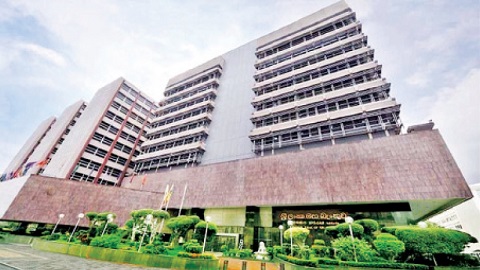
The nation is in midst of an unprecedented economic crisis that has led to severe shortages of fuel and other essentials
Sri Lanka’s forex situation has “improved” and the economy has started to see favourable results due to decisions made by the Central Bank to mitigate the country’s economic crisis, Central Bank Governor Nandalal Weerasinghe said on Thursday.
Sri Lanka is in the midst of an unprecedented economic crisis that has led to severe shortages of fuel and other essentials.
“The forex situation has improved now. We have been able to pay for essentials such as petrol, diesel and medicine,” Weerasinghe said, adding that while the imports expenditure had decreased the exports had increased.
The Governor said that it was feared that inflation would rise to more than 70 per cent. “But now we see it won’t go high even with the current hike in electricity rates. We are hopeful it will come down,” he said.
He, however, added that the current inflation which hover around 60 per cent needs improving.
Sri Lanka owes USD 51 billion in foreign debt, of which USD 28 billion must be paid by 2027.
The country’s inflation surged to 60.8 per cent in July, up from 54.6 per cent in June, the crisis-hit country’s statistics department Colombo Consumer Price Index has said, as food and fuel remained scarce amid dwindling foreign exchange reserves.
The island nation of 22 million also witnessed a major political churn in recent times following massive mass protests that forced former president Gotabaya Rajapaksa to flee the country and resign from his post.
Weerasinghe also said that a delegation of the IMF will visit later this month which he said would lead to the staff level agreement needed for a bailout package sought by Sri Lanka. We have achieved our policy level targets so we hope to reach staff level agreement. This will certainly improve our position,” he said.
On debt restructuring, a prerequisite for the IMF facility, Weerasinghe said, “All creditors will be officially approached and we will present our overall macro programme that has been approved by the IMF.”
Weerasinghe also said the Lankan economy would contract by 8 per cent over the earlier projection of 7.5 per cent negative growth.
In July, Rajapaksa’s ally and Sri Lanka’s newly-appointed president Ranil Wickremesinghe said he had aimed to reach an agreement with the IMF by early August, but the political turmoil in the country forced the international lender to push back the agreement by a month.
Former Sri Lankan President Gotabaya Rajapaksa, who fled the country last month amid public protests calling for his resignation, is awaiting a US Green Card in order to return to the US and settle there with his wife and son, according to a report by the Daily Mirror.
The report quoted ‘reliable sources’ as saying that Rajapaksa’s lawyers in the United States began the application process for his Green Card last month, as he was eligible to do so because his wife, Ioma Rajapaksa, is a US citizen.
His lawyers in Colombo will now be required to submit additional documents here in order for the procedure to proceed, the report said.
The former President, who is currently staying in a hotel in Thailand with his wife, will return to Sri Lanka on August 25, cancelling his initial plan to stay in Thailand until at least November.
Sources told the Daily Mirror Rajapaksa consulted his lawyers two days ago and decided to return to Sri Lanka later this month because he was not given the freedom to move in Thailand as expected due to security concerns.
Thai police had advised the ousted President to stay indoors for security reasons upon his arrival in Bangkok.
According to foreign media reports, plainclothes police officers from the Special Branch Bureau had been deployed to ensure Rajapaksa’s safety at the hotel, the location of which has not been disclosed. Officials had asked the former Sri Lankan president to stay in the hotel during his visit.
When Rajapaksa returns to Sri Lanka later this month, the cabinet will discuss providing him with a state house and security normally reserved for former presidents.
Rajapaksa fled to the Maldives last month, then to Singapore. He entered Singapore on a medical visa and had it extended twice so that he could stay as long as possible. Because his visa could not be extended any further, Rajapaksa and his wife flew to Thailand, where he was assured he could stay until he determined his third destination.
The Australian government will lift emergency aid to Sri Lanka to AU$75 million as the south Asian island grapples with an economic crisis that has triggered a new surge of people fleeing on boats for Australia.
Sri Lanka’s worst financial meltdown has led to skyrocketing prices and crippling shortages of food, fuel and other necessities over the past three months and year-on-year inflation has climbed beyond 60 per cent.
The deterioration of living conditions has resulted in a renewal of attempted boat arrivals in Australia from Sri Lanka, with five vessels being intercepted by Australian Border Force with a total of 137 people on board and 15 more, carrying 701 passengers all up, being stopped in Sri Lankan waters.
Boat arrivals also became a key focus on the day of May’s federal election after the Liberal Party texted voters in marginal seats about the interception of an asylum seeker boat that morning.
In the past week, China, a key creditor of the bankrupt island nation, has also flexed its muscles by insisting on docking a giant scientific research ship at southern Sri Lanka’s Hambantota port despite concerns raised by India.
In the midst of Sri Lanka’s freefall, Australia committed AU$50 million in June in urgent humanitarian backing. On Friday, it will announce a further AU$25 million to fast-track food and health supplies to those in most need in the former British colony.
Australia stands with the people of Sri Lanka, especially those experiencing severe hardship,” Foreign Minister Penny Wong said.
It is in Australia’s national interest to strengthen Sri Lanka’s economic resilience and accelerate its recovery.”
The beefed-up support package comes a fortnight after an unprecedented move when Australian Border Force used its own patrol vessel to return 46 men to Colombo that it had intercepted at sea rather than taking them back by air.
In a deliberate message aimed at discouraging people from paying people smugglers and boarding boats towards Australia, the 110-metre Ocean Shield was given a publicised welcoming ceremony by the Sri Lanka Navy after pulling into the port in the capital city.
Lately, it has been another ship that has been the centre of attention as Beijing has demonstrated its influence there.
The Sri Lankan government asked China to delay the arrival of the Yuan Wang 5 tracking vessel for a reported refuelling and replenishment at Hambantota, a port built with Chinese loans and since leased to Chinese state-owned companies for 99 years as a debt swap.
There were fears that the spy ship”, as it was labelled in the Indian media, could conduct surveillance in the region. Sri Lanka ultimately give it the go-ahead to dock on Tuesday, saying it would not carry out research activities while it was in Sri Lankan waters.
The saga illustrated the fine balancing act an ailing Sri Lanka is having to perform with the two Asian powers. India, another creditor, has been the major source of foreign assistance for the island, kicking in more than $US4 billion during the crisis. But China’s agreement to restructure infrastructure loans to Sri Lanka is vital for the country to reach a bailout program with the International Monetary Fund.
Former president Gotabaya Rajapaksa will reportedly return to Sri Lanka next week after leaving the country and resigning when his residence was overrun by thousands of protesters in July. He has been residing in Singapore and Thailand.
President Ranil Wickremesinghe, who was voted in by MPs as Rajapaksa’s successor a month ago and moved to dismantle the months-old protest camps in Colombo, said this week Sri Lanka’s state of emergency would not be imposed beyond this week.
Sri Lanka in April defaulted on its foreign debt of $51 billion as its foreign currency reserves dried up.
The Governor of the Central Bank says that Sri Lanka’s negotiations with the International Monetary Fund (IMF) is making good progress and that an IMF delegation is expected to visit the island by the end of August to reach a staff-level agreement.
“IMF program is making a good progress. For example, IMF mission is planning to visit Sri Lanka towards the end of this month to reach a staff-level agreement on a policy package,” Dr. Nandalal Weerasinghe said.
He stated that after Sri Lanka reaches a staff-level agreement with the IMF the country would also have to engage with its creditors on debt restructuring.
Once we reach a staff-level agreement of course we have to reach the creditors on debt restructuring with our advisors. That will also progress once we start the staff-level agreement.”
Once you reach that the situation will improve further,” he added.
(Reuters) – Sri Lanka will ask Japan to invite the Indian Ocean island’s main creditor nations, including China and India, to talks on bilateral debt restructuring, as it seeks a way out of its worst economic crisis in decades, its president said on Thursday.
Someone needs to call in, invite the main creditor nations. We will ask Japan to do it,” President Ranil Wickremesinghe told Reuters in an interview, adding that he would travel to Tokyo next month and hold talks with Japanese premier Fumio Kishida.
Sri Lanka, a country of 22 million people, is facing its most severe financial crisis since independence from Britain in 1948, resulting from the combined impact of the COVID-19 pandemic and economic mismanagement.
Left with scant foreign exchange reserves, which have stalled the imports of essentials including fuel and medicines, ordinary Sri Lankans have been battling crippling shortages of months amid sky-rocketing inflation and a devalued currency.
Public anger stoked unprecedented mass protests, which forced the country’s then president, Gotabaya Rajapaksa, to flee to Singapore in early July and then quit.
Wickremesinghe, a six-time prime minister, won a parliamentary vote and took office as president on July 21.
Besides seeking assistance from its allies, Sri Lanka is also in negotiations with the International Monetary Fund for a loan package of between $2 billion and $3 billion, Wickremesinghe said.
Sri Lanka’s total bilateral debt was estimated at $6.2 billion at the end of 2020 by the IMF, according to a March report.
Local broadcaster Newsfirst, citing a former ambassador, said on Wednesday that Rajapaksa would return home next week.
Wickremesinghe said he was not aware” of any such plans.
Minister Susil Premajayantha says he does not believe that former President Gotabaya Rajapaksa will get involved in politics again after returning to Sri Lanka.
Responding to a question from journalists on whether he is expecting the former President to engage in politics again after returning from overseas, he said: No. Never. I don’t think.”
The Minister of Education made these comments while speaking to reporters following an event held in Jaffna today (18).
In response to another question, the minister denied that the government recently lifted the ban on several Tamil diaspora groups due to the upcoming UN Human Rights Council session in Geneva.
Asked about the forming of an all-party government, he said that most of the political parties have expressed their views positively towards a common programme, but some of them have made their statements towards joining the government and forming a national government.
You can’t expect to get all the political parties for a national government. But if they agree for a minimum programme that is enough for the moment,” Premajayantha said.
During a discussion this evening, the Sri Lanka Podujana Peramuna (SLPP) has requested President Ranil Wickremesinghe to facilitate the return of former President Gotabaya Rajapaksa to Sri Lanka, MP Sanjeeva Edirimanna said.
SLPP parliamentarians had met the President for an official discussion this evening (18) at the President’s Office.
Expressing his views during this, SLPP’s national organizer and former minister Basil Rajapaksa had said that the Sri Lanka Podujana Peramuna will provide its fullest support to the President to build the country by resolcing the current economic crisis.
In addition, he said that former President Gotabhaya Rajapaksa should be allowed to return to the island safely. He stated that this is the foremost request from the SLPP to the government and the President.
MPs Prasanna Ranatunga, Sagara Kariyawasam, Rohitha Abeygunawardena, Johnston Fernando, Pavithra Wanniarachchi, Namal Rajapaksa and Sanjeeva Edirimanna participated in this official discussion on behalf of the Sri Lanka Podujana Peramuna.
Police said that a total of 12 persons have been arrested so far following the protest by university students at Union Place in Colombo today (18).
Eerier, police had said that 05 protesters including IUSF convenor Wasantha Mudalige, against whom an arrest warrant was pending, were arrested during the protest march in Colombo.
It was reported that actor Jehan Appuhami is also among the persons arrested during the protest.
The arrests were made after police used water cannons and tear gas to disperse protesting university students who were marching through Town Hall and towards Union Place despite police blockades.
Prior to that, police had blocked the road between Union Place and Town Hall due to the protest march by university students.
The protest had been organized by Inter University Students Federation (IUSF) against the incumbent government led by President Ranil Wickremesinghe.
Meanwhile police said that IUSF convenor Wasantha Mudalige was arrested today (18) by a special police team while he was allegedly evading police and fleeing.
Issuing a statement, police said that a warrant had been issued by the court against Wasantha Mudalige and that he was arrested at the Gaspaha Junction in Pettah.
Police also said that a 24-year-old resident of Chilaw who had sheltered the suspect was also arrested.
Minister of Power and Energy Kanchana Wijesekara has lodged a complaint with the Criminal Investigation Department (CID) today to investigate into the Ceylon Petroleum Cooperation (CPC) and Ceylon Petrol Storage Terminals (CPSTL) activities.
In a tweet, the minister said he requested to investigate into the fuel procurement, evaluation of proposals, non-placement of orders, selection of suppliers, delays in payments, distribution irregularities and also the allegations made by individuals within CPC and the CPSTL.
Myanmar is set to join a growing list of developing countries that are warming up to Russian oil imports amid growing shortages across some of the most impoverished parts of Asia.
The military-led government bought Russian fuel oil and the cargoes will arrive in phases from September, said junta chief Min Aung Hlaing this week. Ties between the two countries have strengthened on the back of a defense partnership, with Russia supplying arms, ammunition and training to Myanmar.
We discussed buying and distributing fuel oil from Russia months before our head of state’s visit to Russia in July,” junta spokesman Zaw Min Tun said on Wednesday in a press briefing. During his visit, the deal was successfully done. We aim to buy high-quality fuel oil at a cheap price from the country where we can get it quickly.”
Shunned shipments of Russian oil, gas and coal have made their way to countries such as Sri Lanka and Pakistan, where soaring fiscal deficits are weighing on local currencies. Some suppliers have stopped offering to poorer nations on concerns over their ability to pay, even as marketers of Russian barrels continue to court these buyers. Shipments from Russia tend to be cheaper than other supplies after western buyers stopped direct purchases due to sanctions and restrictions.
Myanmar will directly import oil and petroleum products from Russia at a reasonable price for nationwide distribution, said Min Min, permanent secretary at the country’s commerce ministry who’s also part of a 10-member committee set up for the purchase, storage and distribution of Russian oil.
It remains unclear how fuels from Russia will be transported to Myanmar. The two countries have previously considered supplying Russian energy via a pipeline through India or China, according to a media report.
The committee held a meeting this month but has yet pin down details on the number of cargoes, cost and arrival dates of Russian oil into Myanmar, Min Min said by phone.
The official didn’t reveal which entities will be involved in importing the fuel, but an order by the State Administration Council showed that representatives from four private companies — Star High, Brighter Energy, Best Oil, and Yetagun Energy Trading — are members of the committee. A media report said a son of the junta chief and partners were coming together for a similar purpose.
Russia is among a handful of countries that have strengthened ties with Myanmar after the 2021 coup. Earlier this year, the regime began talks with Moscow for fuel shipments following power outages, and as global firms including TotalEnergies SE and Chevron Corp began distancing themselves from the regime.
Recent media reports highlighted snaking queues at pump stations, rolling blackouts and fuel rationing efforts across parts of the country even as the cost of gasoline and diesel crept higher. Junta spokesman Zaw Min Tun, meanwhile, have dismissed rumors about fuel shortages, saying it had enough fuel reserves.
Nine petitions have been filed before the Supreme Court challenging the 22nd Amendment to the Constitution, Ada Derana reporter said.
The relevant petitions were filed by nine citizens including the Secretary to the ‘Vinivida Peramuna’, Attorney-at-Law Nagananda Kodituwakku and Dr. Gunadasa Amarasekara.
The Attorney General has been named as the respondent in the petitions.
China’s high-tech research vessel ‘Yuan Wang 5’ is on a mission of peace and friendship” and its docking at a Sri Lankan port will deepen bilateral relations in the field of space, science and technology, according to the controversial ship’s captain.
Chinese ballistic missile and satellite tracking ship ‘Yuan Wang 5’ is berthed at Sri Lanka’s strategic southern port of Hambantota. The ship arrived on Tuesday and will be docked at the Chinese-run port till August 22, amidst security concerns expressed by India.
The ship was originally scheduled to arrive at the port on August 11 but it was delayed in absence of permission by the Sri Lankan authorities. On August 13, the Sri Lankan government granted the port access to the vessel from August 16 to 22 on condition that it will keep the Automatic Identification System (AIS) switched on within the Exclusive Economic Zone (EEZ) of Sri Lanka and no scientific research to be conducted in Sri Lankan waters.
The ship is to remain at Hambantota port for replenishment and ship chandelling, Captain Zhang Hongwang was quoted here on Tuesday in a statement by the management company of the Hambantota harbour. Yuan Wang 5 is a ship on a mission of peace and friendship. As an international port that accommodates multinational ships, Hambantota International Port will provide us with necessary ship supplies in accordance with international practice,” he said. We believe the ship’s call at Hambantota International Port will deepen the exchange between China and Sri Lanka in the field of space science and technology and promote the common progress of the space industry of the two countries. It will also deepen the connection between China and Sri Lanka and further grow the friendship between people of both countries, Zhang said.
The ship’s voyage was clouded in controversy when Sri Lanka asked the Chinese to delay the arrival due to reported concerns from India on its mission. India had cited security concerns with the ship’s technical capability and the purpose of the visit, the local officials said. New Delhi is concerned about the possibility of the ship’s tracking systems attempting to snoop on Indian installations while being on its way to the Sri Lankan port.
The owners of the port Hambantota Port Group owned by the Chinese said the port had extended welcomes to ships from various countries approved by the Sri Lankan government and the Sri Lanka Ports Authority. Up to July, we catered hundreds of vessels including RoRo, gas and oil vessels, bulk carriers, layups, cruises, yachts etc, Johnson Liu, the port CEO said.
The request for postponement of the visit by the ship became a political debate with a section of the opposition issuing a joint statement blaming the government for bungling the issue. They questioned the wisdom of asking for a postponement having been originally given clearance mid July. The government said it was treating the matter as a sovereign decision of Sri Lanka and friendship with all nations was important to the island. The ties between India and Sri Lanka came under strain after Colombo gave permission to a Chinese nuclear-powered submarine to dock in one of its ports in 2014.
India’s concerns have been focused on Hambantota port in particular. In 2017, Colombo leased the southern port to China Merchant Port Holdings for 99 years, after Sri Lanka was unable to keep its loan repayment commitments, fanning fears over the potential use of the port for military purposes. China’s foreign ministry said on Tuesday ‘Yuan Wang 5’ is conducting scientific research in accordance with international law.” It does not affect the security and economic interests of any country, and should not be interfered with by third parties,” foreign ministry spokesman Wang Wenbin said in Beijing.
The island is preparing new packages such as the Murugan-Shiva Shakthi trails
Sri Lanka’s tourism officials, conscious of the dire need to shore up their country’s economy, plan to woo a greater number of Indian tourists, who constitute the single largest segment of foreign tourists, through new packages such as the Murugan-Shiva Shakthi trails. Their optimism stems from the fact that there is a proposal to resume air passenger services from the Palaly airport in Jaffna to destinations in the southern part of India.
As part of the Murugan trail, two important places — Nallur Kandaswamy or Murugan temple in Jaffna of the Northern Province, and Kataragama of the Uva Province in the southeast — have been included.
Referring to the ongoing 25-day-long festival in Nallur (which concludes on August 27), Chalaka Gajabahu, chairman of the Sri Lanka Tourism Promotion Bureau, told a group of journalists from India recently in Colombo that the festival was expected to draw over a million devotees, including 1,00,000 from the diaspora. A special calendar” of events was being prepared for Hindu devotees.
Promoting the North
To a query whether the Northern Province would be a regular feature in the packages for tourists, Mr. Gajabahu replied in the affirmative and asserted we have been actively promoting the North on trade FAMs [familiarisation trips].” The East too would receive more focus in view of its diverse cultural significance that encompassed Islam. However, he conceded that marketing of the North had not been done much.”
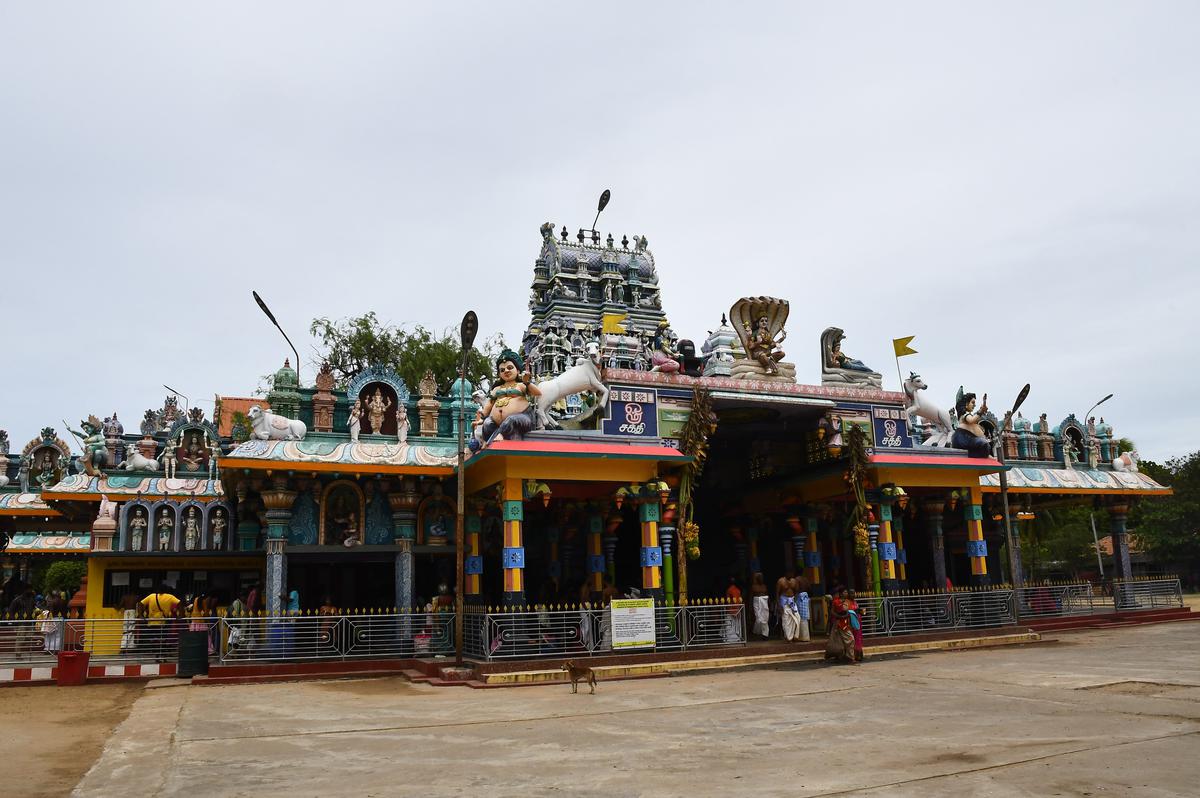
Nagabhooshani Amman temple, Nainativu, Northern Province, Sri Lanka. | Photo Credit: T. Ramakrishnan
The question was raised in the context of coverage of Naguleeswaram in Jaffna and Thiruketheeswaram in Mannar, both coming under five abodes of Lord Shiva in Sri Lanka, in the new Murugan trail. The other three abodes included Thirukoneeswaram temple, Trincomalee, in the Eastern Province, Munneeswaram temple in the north-west and Tondeeshwaram temple, near Matara, in the south. The trail would also include shrines such as Nagapooshani Amman temple and Nagadeepa Purana Vihara, both in Nainativu, off Jaffna.
Ramayana trail
Pointing out that a Ramayana trail had been in place for many years, the Bureau chief called for modification in the programme to accommodate a greater number of youth.
Even as Indian tourists formed the biggest chunk of foreign tourists, Mr. Gajabahu emphasised that various steps were being taken to attract them more. Adventure tourism, entertainment and gambling were some of the attractions being offered by Sri Lanka. His team had planned to visit Indian cities in September such as Mumbai and New Delhi for the purpose of promotion.
On the overall target for foreign tourists, the Bureau chief said they hope to attract 8.5 lakh to 10 lakh tourists (1 million) this year. However, the aim was to get back to the 2018 tally of 2.1 million, as the tourism sector had been hit badly following the 2019 Easter Sunday attacks and the COVID-19 pandemic. For the next six months to one year, we want to create a positive picture about Sri Lanka. Refreshening, positioning and taking it forward will be our functions,” Mr. Gajabahu observed, adding that till July, about 4.5 lakh foreign tourists had arrived this year.
Welcoming the tourism authorities’ initiative, Selvaretnam Raghavan, president of the Thiruketheeswaram Temple Restoration Society, says the new trail will bring in more devotees to the temple too, which was consecrated on July 6. He adds that the temple, which was damaged during the civil war, was renovated at a total cost of LKR 900 million which included LKR 320 million from the Indian government.
Reacting to the docking of the Chinese vessel in Sri Lanka, External Affairs Minister S Jaishankar has said that India is monitoring the developments in the island nation.
Jaishankar says India is monitoring China’s spy vessel docked in Sri Lanka
Chinese ship docked at Hambantota port after Sri Lankan authorities granted the vessel access to the port from August 16 to 22
The vessel will remain at the port for six days for refuelling and replenishment of supplies
External Affairs Minister Dr S Jaishankar on Wednesday said that New Delhi was monitoring very closely” the developments in the neighbourhood. The response was to a question on the Chinese spy vessel Yuan Wang 5 having docked in Hambantota port in Sri Lanka despite India raising objections.
“What happens in our neighbourhood, any developments which have a bearing on our security obviously are of an interest to us,” Jaishankar said while speaking at the 9th India-Thailand Joint Commission Meeting in Bangkok.
“I think a spokesman had said some time ago, we obviously monitor any development, which has a bearing on our interests very, very carefully. So, I think I will leave it at that,” he added.
This comes a day after the Chinese ship docked at the port after Sri Lankan authorities granted the vessel access to the port from August 16 to 22 on condition that it will keep the Automatic Identification System (AIS) switched on within the Exclusive Economic Zone (EEZ) of Sri Lanka and no scientific research to be conducted in Sri Lankan waters.
However, the Chinese ship bearing a red and white banner read Long Live China and Sri Lanka friendship” with the Chinese envoy to Sri Lanka Qi Zhenhong standing at the dock to receive the vessel.
Speaking to reporters at Hambantota port, when asked about the delays and India’s concerns, Ambassador Qi Zhenhong said, Everybody knows, I don’t need to explain.”
On the delay in the arrival of the ship, he said, I don’t know Maybe this is life This is not the first time that this kind of vessel has visited Sri Lanka. In 2014, this type of Chinese vessel visited Colombo. It is very natural. Hope our media friends will tell the objective of the issues.”
There have been reports that after Sri Lanka refused entry to the Chinese ship, the Sri Lankan administration had to do a U-turn given the pressure by Beijing to allow the vessel else there would be no support from China for the IMF bailout package that Colombo is seeking and further curtailment of bilateral financial help which Beijing has not been very forthcoming with anyway.
As a face-saver, government spokesman Bandula Gunawardena told reporters over the weekend, We are granting the same (port) facilities that we extend to all countries All countries are important to us.”
However, both sides are tightlipped on what made Sri Lanka change its decision. The ship, which was to dock on August 11, reached Hambantota on August 16. The vessel will remain at the port for six days for refuelling and replenishment of supplies.
Former Public Security Minister, Rear Admiral (ret.) Sarath Weerasekera, has taken exception to the withdrawal of permission granted to Chinese research vessel Yuang Wang 5 to visit Hambantota port for refueling.
Sri Lanka, in 2017, leased Hambantota harbour to China for 99 years.
The ex-Navy Chief of Staff has raised the issue at hand at the government group meeting, chaired by President Ranil Wickremesinghe, on Monday (08) at the Presidential Secretariat.
Among those present at the group meeting were Prime Minister Dinesh Gunawardena and former PM and MP Mahinda Rajapaksa.
Lawmaker Weerasekera has explained that it wouldn’t be fair to rescind approval at the behest of India after having given the Chinese go ahead on July 12.
Prof. G.L. Peiris had served as the Foreign Affairs Minister at the time the Foreign Ministry granted approval for the vessel to visit Hambantota port.
Since then new President Ranil Wickremesinghe has sworn in Ali Sabry, PC, as the foreign affairs minister after Prof. Peiris chose to join the SLPP rebel group.
Sabry, who held justice and finance portfolios under the then President Gotabaya Rajapaksa, has explained the developments relating to the Chinese ship visit scheduled for Aug 11.
Declaring that the proposed visit was a routine one and posed no threat at all, Colombo District lawmaker Weerasekera alleged that President Gotabaya Rajapaksa had to pay a very heavy price by depending on the US and India.
Except for SLFP MP Dr. Suren Raghavan, who asked for deferment of the visit, other members of the government group had been silent, sources said.
MP Weerasekera has warned that China would be furious with Sri Lanka not with India over the ship controversy.
The naval veteran has also referred to joint military exercises conducted with the US and India over a period of time.
Rebel SLPP members hadn’t participated at the group meeting. However, the National Freedom Front (NFF) has issued a statement strongly condemning the government over its response to Indian pressure.
The MP has queried the Indian intervention in the wake of Chinese Ambassador in Colombo Qi Zhenhong taking it up with President Wickremesinghe.
China throughout the war backed Sri Lanka regardless of change of governments. After the successful conclusion of the war in May 2009, Sri Lanka received Chinese support at the Geneva-based United Nations Human Rights Council (UNHRC) where Western powers continuously undermined war winning Sri Lanka.
Three Samagi Jana Balawegaya (SJB) MPs Dr.Harsha de Silva, Eran Wickramaratne and Kabir Hashim today said they no longer intend to criticize the government but will focus on making proposals to push the nation through the current economic crisis.
The three MPs made this remark at a press conference last morning.
We proposed removing of regulations pertaining to converting dollars into rupees in Parliament last Friday and the Central Bank announced the withdrawal of the mandatory requirement to convert service export receipts / proceeds that are received in Sri Lanka into rupees. We commend the Central Bank Governor for this move,” De Silva said.
We don’t intend to criticize the government continuously but we will come up with proposals to revive the crisis stricken economy,” MP Wickramaratne said.
MP Hashim while highlighting that Sri Lanka has managed to generate some dollars since recently, stated that this has to be maintained. ‘Sri Lanka will not have to bow down to too many suggestion which the International Monetary fund (IMF ) might come up with if the dollar inflow is maintained effectively.,” the MP said.
However, Hashim said his party will oppose the proposal made by Prime Minister Dinsesh Gunawardene to pay compensation to those whose court cases were dismissed as a result of technical shortcomings. (Yohan Perera)
China on Tuesday said the activities of its high-tech research vessel will not affect the security of any country and should not be obstructed” by any third party,” as the ship berthed at Sri Lanka’s strategic southern port of Hambantota amid Indian and US concerns.
Chinese Foreign Ministry spokesman Wang Wenbin said the ship ‘Yuan Wang 5’ has successfully berthed at Hambantota Port with active cooperation from the Sri Lankan side.
Wang parried a question of extending financial support to Sri Lanka, which went bankrupt defaulting on USD 51 billion in foreign debt which included loans from China.
He said that when the ship arrived, the Chinese Ambassador to Sri Lanka Qi Zhenhong hosted the onsite welcoming ceremony at the Hambantota port, which Beijing took over on 99-year-lease as a debt swap in 2017.
Apparently, referring to Indian and US concerns over the ship with military applications berthing at the Hambantota port in the Indian Ocean, Wang said, I want to stress again that the marine scientific research activities of the Yuan Wang-5 ship are consistent with international law and international customary practice.”
They do not affect the security and economic interests of any country and should not be obstructed by any third party,” he said.
He said the ceremony was attended by a representative of Sri Lankan President Ranil Wickramasinghe besides more than ten heads of parties and heads of friendly communities. The atmosphere was warm and welcoming, as Chinese and Sri Lankan national anthems were played, and the Sri Lankan people performed the traditional folk dance on the red carpet, he said.
It will take some time for the Yuan Wang 5 research ship to complete the replenishment of necessary supplies after the docking, hinting that the vessel may be there for a while.
The Sri Lankan government, which earlier asked the Chinese government to delay the arrival of the ship after India and the US reportedly expressed concern over its specialised in satellite and ballistic missile tracking, finally granted the port access to the vessel from August 16 to 22.
On Monday, Wang declined to reveal details of talks with Colombo leading to the bankrupt island’s government reversing its earlier stand to defer the high-tech vessel’s entry. As for the specific questions that you raised, we have mentioned China’s position quite a few times,” Wang said when asked about what were the consultations that were held.
After Sri Lanka asked China to defer the entry of the ship, Beijing on August 8 reacted angrily saying it was completely unjustified” for certain countries to cite the so-called security concerns to pressure Colombo and grossly interfere” in its internal affairs.
The ship with over 2,000 crew has advanced facilities to track satellites and ballistic missiles, according to the Chinese official media accounts.
Sri Lanka said it permitted the ship after extensive consultations. Colombo’s permission has also raised speculation that Beijing could make a positive announcement about Sri Lanka’s previous request to defer the loans it owed to China and its plea for bridge financing to tide over the crisis until it received International Monetary Fund (IMF) support.
Asked, now that the ship has been permitted to dock and whether China will provide the much-needed financial assistance to Sri Lanka considering its economy was in dire straits, Wang on Tuesday said, as we have stressed many times, as Sri Lanka’s friendly neighbour, China feels deeply for the economic and social difficulties facing Sri Lanka at the moment.”
China has been doing its utmost to support and help Sri Lanka pull through the difficulties. This is what we have been doing and what we will continue to do, he said.
China, which has extensive investments in Sri Lanka running into billions of dollars, has provided USD 73 million in aid and shipments of rice but maintained a steady silence on Colombo’s request for a bailout package as it became bankrupt after running out of foreign exchange reserves in April this year.
China is the main creditor of Sri Lanka with investment in infrastructure. Debt restructuring of Chinese loans would be key to the island’s success in the ongoing talks with the IMF for a bailout.
Wang pointed out that China and Sri Lanka are traditionally friendly neighbours. For years, the two countries have maintained close cooperation in marine scientific research.
China is ready to work with the Sri Lankan side to consolidate political mutual trust, deepen win-win cooperation and promote the sound and steady development of the bilateral relations,” Wang said.
The southern deep-sea port of Hambantota, which has been developed largely with Chinese loans, is considered strategically important because of its location. India has said that it carefully monitors any development having a bearing on its security and economic interests.
New Delhi is concerned about the possibility of the ship’s tracking systems attempting to snoop on Indian installations while being on its way to the Sri Lankan port. India has traditionally taken a stern view of Chinese military vessels in the Indian Ocean and has protested such visits with Sri Lanka in the past.
The ties between India and Sri Lanka came under strain after Colombo permitted a Chinese nuclear-powered submarine to dock in one of its ports in 2014.
India’s concerns have been focused on Hambantota Port in particular. In 2017, Colombo leased the southern port to China Merchant Port Holdings for 99 years, after Sri Lanka was unable to keep its loan repayment commitments, fanning fears over the potential use of the port for military purposes.
The Chinese Foreign Ministry on Monday said it was completely unjustified for certain countries to cite the so-called security concerns to pressure Sri Lanka.” India on Friday rejected China’s insinuations” that New Delhi pressured Colombo against the planned visit by the Chinese research vessel, but asserted that it will take decisions based on its security concerns.
External Affairs Ministry Spokesperson Arindam Bagchi said in New Delhi that Sri Lanka, as a sovereign country, makes its own independent decisions and noted that India would make its judgment on its security concerns based on the prevailing situation in the region, especially in the border areas.
President Ranil Wickremesinghe, speaking of the reforms he plans to introduce for the revival of the economy, stated that the Sri Lankan government is looking at raising income taxes and widening the tax net by taxing capital and wealth in order to bring in some of the lost revenue.
In an interview with The Economist on Tuesday (Aug 16), the Head of Stated also said several state-owned enterprises such as SriLankan Airlines, Sri Lanka Insurance, the petroleum corporation and the government’s stake in the national telecoms firm could be privatized. We are looking now at disposing of some state assets, which will give us about USD 2-3 billion.”
When asked about the immediate laws he intends to bring in, President Wickremesinghe said a bankruptcy law modelled on the U.S. Chapter 11 is one of the most immediate. The rest are about economic stability. We’ve also got some additional powers for the next year and a half to tackle the situation.”
President Wickremesinghe, stating that a public-finance bill on the new taxes and on state-owned enterprises as well, said he wants to do a deep cut” and make a legislative framework for a highly competitive export-oriented economy, and then ensure the recovery takes off by 2024. It is not worth dragging this out, he pointed out.
When asked what he means by deep cut, he said, When you make changes, make it deep, make all the changes you have to make.”
President Wickremesinghe is hopeful that this will allow Sri Lanka’s economy to not just recover but to become more competitive and export-oriented.
He remarked that he does not worry about the hostility shown by trade unions with regard to the restructuring of state-owned enterprises, explaining that what matters is people.”
The Head of State also stated that he wants Sri Lanka to become more economically integrated with the rest of Asia. We will look at closer relations with ASEAN (Association of South-East Asian Nations) and RCEP (Regional Comprehensive Economic Partnership).”
Speaking of the agreement with the International Monetary Fund (IMF), he said, If we can get the board agreement, then we can get at some of the other organisations’ advance and get us some money until the tranche comes through.”
He explained that this would inspire investor confidence.
With regard to a question raised on the row over the docking of Chinese ballistic missile and satellite tracking vessel at the Hambantota Port and the Chinese-built Pakistani warship PNS Taimur which recently reached Colombo for a formal visit, President Wickremesinghe said the pressure is building up on the European side.
He is worried the Indian Ocean will be affected by this rivalry between the United States and China and Russia. Sri Lanka, of course, has a special relationship with India where we have to look after each other’s interests. But most countries in the Indian Ocean want to stay out of the power rivalry. So, we have to be clear about that and say what our policies are.”
Sri Lanka’s death toll from Covid-19 climbed to 16,635 today after the Director General of Health Services confirmed 05 more Covid-19 related deaths in the country for yesterday (Aug 16).
According to the Govt. Information Department, four victims were aged 60 years and above. The remaining one was aged between 30-59 years. Among the victims are 02 males and 03 females.
Meanwhile, another 161 new Covid-19 infections have been identified in the country today (Aug. 17).
This brings the total number of Covid-19 cases detected in the country thus far to 668,497.
President Ranil Wickremesinghe states that the emergency regulations will not be extended further as the situation of the country is getting back to normal and that it will lapse by the end of the week.
But that is not enough. We have to have an attitudinal change and if we do that, then this country will have a future,” said the president, speaking at the 2022 award ceremony of the Organisation of Professional Associations of Sri Lanka which was presided over by him.
Just after I became the Minister of Finance, I found that I was richer than the Republic of Sri Lanka as far as the foreign exchange was concerned. I had thousand dollars at home which I had saved, so I was thousand times richer than the Republic.”
President Wickremesinghe also stated that discussions are underway with the International Monetary Fund (IMF) to finalize a staff-level agreement, while there are two groups that prevail now, the West which is planning to provide a haircut and China which would like to give additional loans to pay off existing loans.
We are talking with Japan about how this could be achieved. If we move fast, this will be a short way and if we still keep arguing, then we all are going to suffer.”
President Wickremesinghe further pointed out that they are trying to make the parliament into a government by having oversight committees and a national council. The oversight committees will not only consist of the members of the parliament but also 05 youth representatives who are allowed to question parties with the permission of the chairman, he added.
He also acknowledged that no other country in the world has allowed young people to take part in oversight committees.
In this parliament, we must have the capability of coming up with a new system. We cannot be passing it to others. The baby is ours. We’ve taken it, we’ve got to carry it. And if possible, from there, [we should] go ahead to a new constitution.
We are also looking at the Diaspora. It is a strength; it is also a source of investment,” he said further, noting that the country needs to sort out the issues among ethnic groups.
The President also mentioned that the government has paid attention to establishing a separate office to deal with the Diaspora in order to obtain its support.
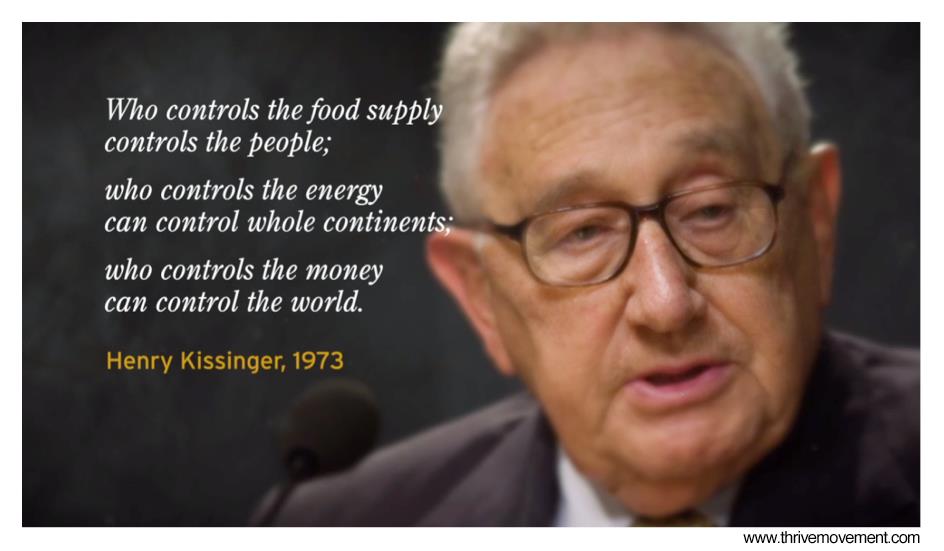
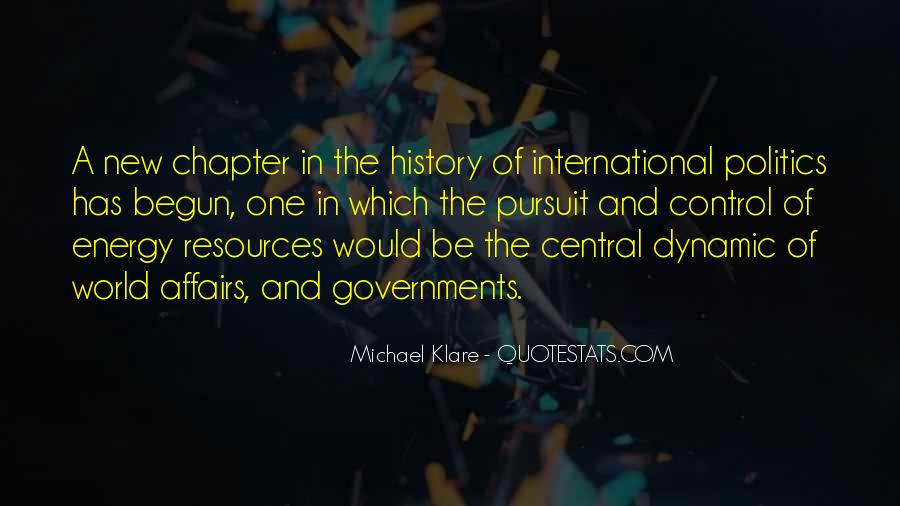
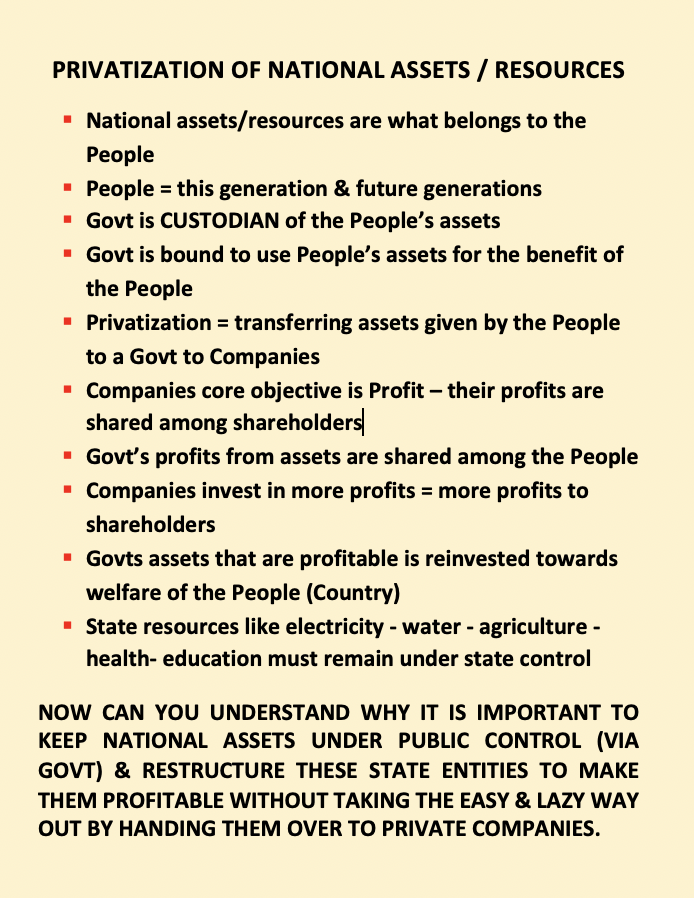
Sri Lanka is faced with several challenges – all taken together the ultimate aim is simply to take control of Sri Lanka. Controlling the resources makes a nation compliant and meets the geopolitical objectives of parties using various modus operandi to realize their goals. This is what citizens of Sri Lanka need to understand. We are being played against each other & amidst the confusion and chaos they are walking away with all our resources!
By now we should have understood that UN/UNHRC have been used to weaken our internal systemscamouflaging this drive with ‘accountability’ ‘transparency’ ‘UN goals’ ‘UN checklists’ dispatching UN rapporteurs with their red cards from time to time.
By now we should have understood that IMF/World Bank and other international monetary institutes have also been used to give loans based on ‘bribes’ – negotiations only end up ‘you will get the loan only if you do as we say & agree to what we want’. Funds” are also given to subtly launch programs or initiatives to follow their agenda – education funds mean no inclusion of history into syllabus, or false history, or whitewashing historical crimes. Funds have a magic of their own. Privatization is a key area of these funds and loans to take control of our resources. Leasing land/resources for 99 years means our generation will never enjoy the resources or see its return for 99 years.
By now we should have understood the role that neo-liberal think tanks/NGOs/Civil Society play functioning as ‘lobbyists’ for the corporate agenda. Look at the manner they organize research” papers, hold conferences & tamashas to project a very glorious future if state resources fall under control of corporate hands primarily foreign corporates using locals as fronts. In colonial times these locals were called ‘sepoys’ ‘lascoreens’ – they were bestowed titles & given awards to function as representatives of the white man. Post-indepedence neocolonial agendas continue using the same people who are locals in name only but are loyal to the neoliberal paymasters.
By now we should also understand how all of the above cannot take place if a country has a national leader, a government that is strong and a country that is peacefully prodding forward. The objective is to undermine a strong nation.
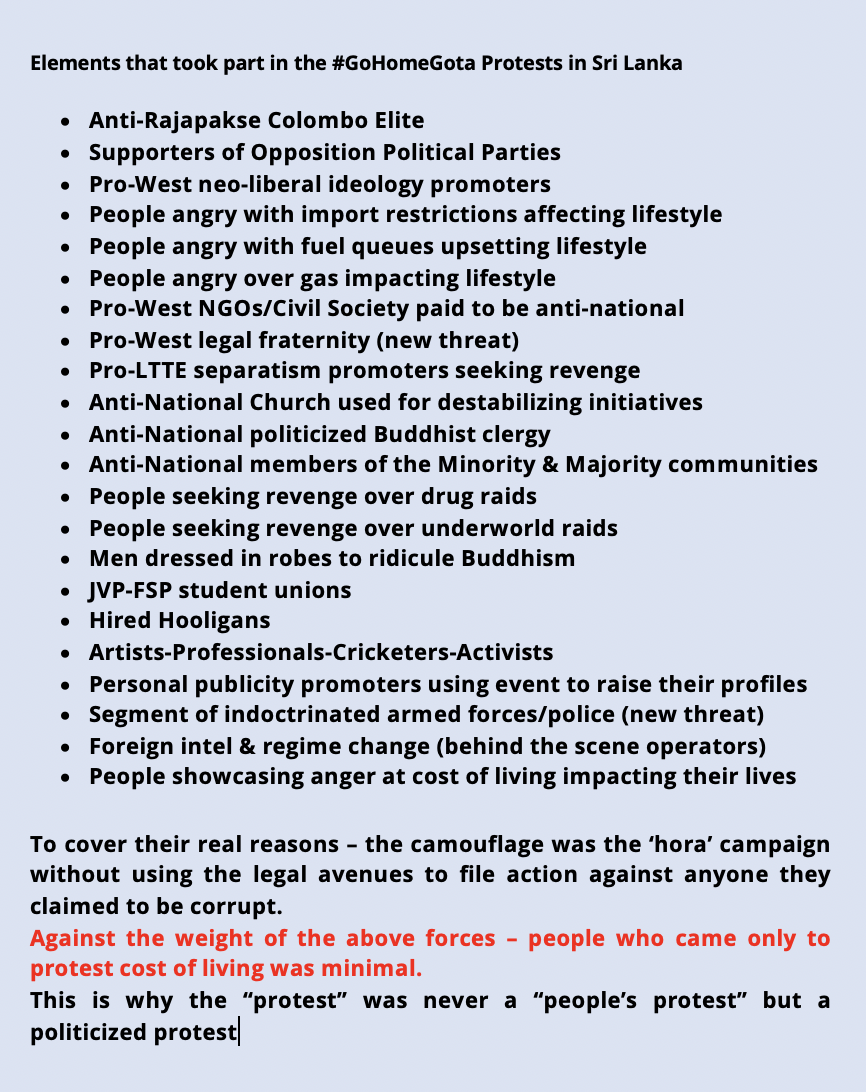
By now we should know that the rabbits they pull out – the unions, the protests, the demonstrators, the fringe groups, terror groups & extremists – anyone ready to take part in some form of trouble to weaken a nation.
It is finally dawning on most the flip side of the aragalaya. 1% of these protestors certainly had genuine grievances but the rest were either hired or either paid to promote other agendas tasked of them. The organizers of the protests have actually crippled future protests because no dejected protestor would want to be manipulated again. This serves their purpose to ensure that by the time they succeed with their agendas, there are not many to protest as the purpose of protests have been destroyed. Nevertheless, people must protest but they must be watchful of who they involve in future to protest alongside them and ensure their protest is not infiltrated.
By now we should understand the people, the parties, the issues and slogans being used to divert people’s attention & make a govt weak. We must realize the threats and the challenges as well as the numerous googlys a govt is made to face. It is not easy to govern a nation to a national plan when all those out to weaken Sri Lanka & take over our resources throw a plethora of attacks 24×7 to make the govt go off track on its national plans. Equally dangerous is when the enemies place a puppet govt to do their bidding. Read about puppets & dictators propped by regime change in other countries.
By now, even citizens would have realized how they can be easily entrapped by disinformation and misinformation primarily because they are lazy to draw parallels from incidents happening globally & compare them to what unfolds in Sri Lanka. Only a few citizens have been sharp enough to see and realize these dangers and kudos go to them for their efforts to educate the ignorant.
Everyone tasked for this objective are being used to make the country unstable. People are programmed to come screaming down the govt and the govt is forced to take some actions disadvantageous to the country & advantageous to those that orchestrated the chaos.
Is the picture getting clearer? None of the aragala supporters are ready to make these connections or even wonder if they too have been used at least the one’s who have not received handouts for their ‘drama’.
Thus, the colonial agenda continues in neocolonial formats.
Native cultures are targeted to be ridiculed & replace with theirs, ‘secular’ is being promoted to remove native religious identity & replace with theirs, native customs & traditions are subtly being replaced with their ‘liberal’ values and neo-liberal economic framework – all aimed at drawing people towards consumerisms & selfishness & away from a compassionate society.
Colonials had no sophisticated equipment. Neocolonials are returning to the countries they conquered with sophisticated equipment & technology to plunder what they could not do. Data colonization is what modern technology is all about. All resources of the world are being centralized electronically & under control of a handful to enjoy but charging the rest who have to pay to enjoy what nature has given us free.
Unfortunately, to our disappointment UNPATRIOTIC POLITICIANS who jump from side to side, get roped into various honey traps laid out by foreign intel (baits are money-women-power-positions). This compromises their commitment to the People and the Nation and since independence, their unpatriotic actions have eroded the level of statesmanship expected of elected representatives to lead Sri Lanka as they have succumbed to all the above scenarios.
The newest scenario is to replace politicians with civil society. With handover of resources to corporates to be run by civil society – the role of governance by government & politicians is removed. This is happening subtly without politicians realizing it or making the connections. Once they lose the ability to tax land or resources which falls into corporate hands & when civil society is tasked to do what they were doing, politicians become irrelevant & people will not have elections or a Parliament but a system advantageous to the corporates and civil society & NGOs who represent them to administer what the people can enjoy at a cost & nothing as welfare.
Corrupt politicians are being enticed to facilitate the corporate take over of national resources/assets while others are tasked to create the environment to justify its handover.
The politicians are the ‘takers’ while the ‘givers’ are the entities despatched by geopolitical lobbies to acquire Sri Lanka’s land & resources & assets. This is being done by attempting to privatize state land, by giving stand land on 99 year lease which means people of our generation will never see the return of this land or even be able to utilize it. The next option to counter numerous opposition is the public-private partnerships with the same heavy weight corporates who are given control of the resources & eventual share of the profits. SMEs stand little chance in partnering with the govt.
Confounding the PPP is when third parties like international monetary agencies who are the masters of the corporates enter to dictate how the project is run. 3 stakeholders with 3 sets of differing objectives are unlike to get anywhere near what the public wish to have delivered.
Scramble for Africa was when a handful of western countries took a pencil divided Africa amongst them, christened them with names and plundered Africa. The second phase of this plunder is continuing using technology & fancy neoliberal terms & initiatives justifying their presence. The exact same is happening with the Pivot to Asia. Asia is now the target.
Africa or Asia will never be allowed to rise on its terms. This is possible only if we realize who the true enemies are, who their ‘sepoys’ are and what kinds of googlys they throw at us to destabilize us and how we can counter these. To do that, we must be firm that this is our nation, the resources and assets are for this generation & future generations and that it is our duty to protect, preserve and foster them.
The previous version of this piece was written soon after the Mirihana Incident (31, March,2022) but I was unable to get it published due to some reasons which do not have any importance to the reader. Whilst accepting that during the past one month (in April) many developments had taken place beyond anybody’s control, I have prepared an edited version of the original article as it consists a preamble to a publication, I am compiling tentatively titled, From Mirihana to Galle Face Green”. Since things are unfolding in a rapid pace it is difficult to cluster them in an abridged form.
In the evening of March 31, as a friend my mine telephoned me that a large body of protesters had assembled at Jubilee Post Junction I just went there as an observer to observe what was happening. The protesters in their outward appearance and by the language they used seemed to belong to a cross section of middle and upper middle classes. In the midst of the simmering crowd I was able to identify a couple known to me, staunch haters of MR from the days of his presidency who later collaborated with the Yahapalanistsrejoicing at his downfall in 2015. Nearby was the house of a Yahapalana Minister, now an MP of SJB. It is true that some carried toddlers and the demonstrators were behaving peacefully at that time. But the slogans they chanted and what was written on the placards they carried were provocative and inciting people to rise against Rajapaksas. The biggest question is who drew this peaceful crowd towards Pengiriwatta Road to besiege President’s private residence. Earlier Hirunika Premachandra, the SJB defeated candidate had set an example for these protesters to proceed towards President’s private residence without any obstruction. This was the first security mishap in this whole series of events that unfurled for a few months then onwards. It was fascinating to watch mostly the women demonstrators taking selfies as they have done before at nine arches bridge at Demodera and immediately posting those photographs in social media platforms to say that with the hashtag, # I was there” or # me too”. Later this behaviour became the hallmark of all protesters.
News spread like a wild fire, thanks to FB friends. Protesters converged from Maharagama, Delkanda and Talapathpitiya areas and occupied the main road from Embuldeniya Junction up to Pengiriwatta. This was how a peaceful demonstration of middle and upper middle classes that started at Jubilee Post Junction peacefully was hijacked by some unidentified political elements and rabble rousers. Around midnight Embuldeniya Junction was set ablaze ruining the magnificently carpeted road and karanda trees planted on either side of the road which typified GR’s efforts in urban beautification. Parapet walls either side of the road were smashed and brickbats were used as projectiles to attack the security personnel. This was the first act of terrorism which the security functionaries failed to read and react. I was a witness to this mayhem until the wee hours of the following day. The rest is known to all.
So, this was the beginning. Gota Go Home” cry gathered momentum and was heard at every corner of the big city and suburbs. The grand conspiracy hatched from the day GR became the President was unleashed using INGO-trained tech-savvy youth as Pied Pipers. By carefully watching all the television footage and social media posts and identifying the men and women shown therein we were able to come into the conclusion that none of these celebrities who protested at the early stages of this protest campaign have languished in long gas and kerosene oil queues and had problems in feeding their kids. Most of these protesters who assembled in front of Nelum Pokuna, represent anglicised, pro-Western, comprador bourgeois interests who live in luxury apartments, who dine at luxury hotels, whose children attend either private denominational schools or international schools, having one foot here and the other in a Western country, who go on safari tours not to either Yala or Wilpattu as ordinary folk do, but to Maasai Mara in Kenya, Serengeti in Tanzania and Kruger National Park in South Africa. Some were on vacation, as furlough during the time of the Britishers! Those who came from Australia and the West to see their parents visited the protest sites just to upload their selfies. (This is not a figment of imagination of the writer; I stand for what I write).
Why this sudden change in behaviour of this privileged lot? The answer is a simple one. Its all economics and related to business and disturbances to their life styles; not love and solidarity to toiling masses who undergo severe hardships. It was an irony of history that these elitist groups protesting along with petty-bourgeoisie, toiling masses and different elements of the lumpen proletariat. Their main worry was ACs, pressure pumps and other gadgetry were not functioning due to power outages.
The culmination of these protests was the establishment of a Gota Go Gama”. If Ranasinghe Premadasa could an establish villages within villages which had a historical foundation giving those clusters of homes esoteric names why can’t a set of protesters do the same in the heart of the city? Evidence is not needed to state that most of the other protests held in the city and elsewhere and in front of the houses of ruling party politicos are organised by hidden hands affiliated to two well organised cadre-based political parties. Can the elite remember how they lived without electricity switching off lights when all the power houses were generating electricity to their full capacity fearing the bitter repercussions after receiving the chit” sent by the DJV, the military arm of the JVP in the late nineteen eighties? Are we to believe that class identities, class barriers, class consciousness and class distinctions were outstripped and antagonistic class contradictions between these classes were resolved overnight with the cry of Go Gota Home” campaign? But now we see this class except a few of the former top bureaucrats who helped the politicians of different colours and hues to feast over the cadaver of Mother Lanka and theoreticians who formulate absurd theoretical formulations to the present agitations have slowly and steadily retreated from the hotbeds of agitations. This class is craft enough to identify the wind direction and to have some rough gauge of wind intensity in advance. Very soon publications will appear as Linda Herrera’s Revolution in the Age of Social Media, The Egyptian Popular Insurrection and the Internet” (2014) for the consumption of the western pundits
We should be mindful that this so-called Aragalaya is not led by a Marxist party having workers and peasants as its nucleus providing leadership to a broad national united front. It is an unorganised loose outfit representing many interests, classes, ideologies and cultures. It is like a beach carnival with free entry and exit at will. I do not know whether they are knowledgeable of the Paris Commune, Bolshevik Revolution, Chinese Revolution or any other national liberation struggle. May be some are aware of the escapades of Che Guevara and the film The Motor Cycle Diaries”.
Can the government allow some miscreants to set up villages” like this, having its own administrative structures including a post office? If pro-LTTE elements try to set up villages” of this nature in North and East what would the government do?
Yuppies who were ignorant of political, economic, social and cultural change brought forth by SWRD were ungrateful that they blindfolded the bronze statue of SWRD sculptured by that great Soviet sculptor Lev Kerbal, Professor, academician and Vice-President of the then USSR Academy of Arts, a pioneer of Socialist Realism Sculpture, considered as a masterpiece of urban art by their own NGO godfathers. This was a gift by the people of former USSR to the people of Sri Lanka. An economic refugee domiciled in a Western country lamented that it should have been brought down. Even if this happens, we will not be surprised as we have seen statues of Lenin and Stalin brought down by regime changers and the names of great cities such as Leningrad and Stalingrad changing.
A USSR-trained sculptor who claims that he was taught by Kerbal giving an interview to a Sinhala Weekly glorified this vandalism, a man who did sculpting in Premadasa’s Udagam Carnival.
At the Gall Face agitation site posters were seen referring to Pornhub, a well- subscribed pornography portal. Protesters at the Polduwa Junction were asked to bring underwear and hang them on police barricades which male and female protesters did enthusiastically, calling it Nandeta Jangiyak” (lingerie to GR). Women protesters were keener to exhibit their high-end brands to fellow protesters. A well-respected medical specialist texted me that according to his psychiatric knowledge a used/old panty is a highly valuable object to perverts and within a few days all other garbage will remain by the roadside sans panties. Wikipedia describes this as underwear fetishism relating to undergarments and refers to preoccupation with the sexual excitement of underwear such as panties, stockings, pantyhose and bras. Some males can experience sexual excitement from wearing lingerie of women, while others get their excitement when observing, handling, smelling and of course exhibiting underwear worn by others or watching somebody putting underwear on or taking it off.
it’s better not to go into details of the contents of the songs sung, poems recited, posters and other visuals exhibited at these protest villages. This will be dealt in depth when we discuss the culture of protesters. A wreath carried Gota ta Nivan Dukha” as its condolence message. For Buddhists nibbana is the supreme bliss, not suffering as the protesters allude.it is unfortunate that the political monk, the local Ayatollah in saffron robes, who acts as the godfather of these protesters is blind to such sub-culture aspects emanating from the protest sites. (He was the one who protested against some radio plays produced in 2018 alleging that they were insulting Buddhism). Wearing Guy Fawkes masks is child’s play when one studies these sub-culture aspects emanating as not seen before.
What next? The call has now turned into ousting of all 225 lawmakers (except 3!) and the camping sites have encircled the perimeter of Diyawannawa. Very soon these protesters will have their own clandestine broadcasting and television stations as they are well funded by sources not unknown to the analysts who follow the present scenario. (Do not ask who will provide them with frequencies. See the enormity of funds pumped to Gota Go Gama”) As they have come to the perimeter of the Parliament how can one rule out them storming the Parliament electing their own government as now many claimants have appeared to rescue” the nation. I do not want to discuss this scenario any further and its consequences. As there are many claimants for leadership internecine, military crackdown, a reign of terror and anarchy cannot be ruled out. Will the middle and upper middle-class agitators at Mirihana enter the history as gravediggers of democracy in Sri Lanka?
Hon. Pierre Poilievre, Conservative Party Leadership Candidate – 2022
Dear Mr. Poilievre
Reference your “demand” for the arrest of Mr. Gothabaya Rajapakse, the former President of Sri Lanka, please explain what right you have to make any “demands” on politicians of Sri Lanka and the Government of Sri Lanka as well as the Government of Singapore. You were elected by Canadians, to represent them in Canada and not by Sri Lankans in Sri Lanka or Singaporeans in Singapore to represent them. You seem to have the delusion that you have a role in the election and government of Sri Lanka. You are also of the opinion that you can dictate to the Government of Singapore. This is to inform you that you are a Canadian politician, elected only to represent your electorate in the Canadian parliament and have no jurisdiction other than in Canada. Please remember this so you do not make this type of “demand” to other countries. You are just a Canadian politician. It is obvious that you are influenced by those in your electorate who have supported the Liberation Tigers of Tamil Eelam, a group recognized as a terrorist group by the FBI. Your support of the LTTE makes you a supporter of terrorism in Sri Lanka.
The supporters of the terrorist group in Sri Lanka, the LTTE, was funded from Canada and Canadian politicians raised funds for the LTTE in Canada merely to get the votes of these supporters of Tamil terrorism in Canadian electorates. It is a reflection on the thinking and integrity of Canadian politicians that they provide funds and political support to terrorists, just not in Canada. Simply stated, you are a supporter of terrorism which is against the stated position of Canada that Canada is against the support of terrorism anywhere in the world.
There are several parts of your statement that illustrate your ignorance and bias regarding the LTTE. I choose one as an illustration – “Women and minorities in the northeast were already brutally impacted by war and military occupation”. For your information, it was not the Sri Lankan forces that oppressed the people of the north and east. It was the LTTE. This fact was illustrated when, at the final phase of the war to liberate people from the last stronghold of the LTTE, the Tamil population rushed into the areas under the control of the Sri Lankan forces. Would the thousands of ordinary Tamil civilians rush into areas controlled by the Sri Lankan forces at the first opportunity, if it was the Sri Lankan forces that oppressed them? They rushed towards the Sri Lankan forces to break free from the LTTE. If their choice was oppression by the LTTE they would have stayed with the LTTE, not run away from them so they could live free from LTTE oppression. Also, it was the Sri Lankan forces, directed by the Government of Sri Lanka, who looked after them, provided food and shelter to these thousands until they were able to relocate to safety. Did Canadian politicians do anything to help these people to get away from LTTE oppression or help them relocate away from the LTTE? The answer is an emphatic no, because Canadian politicians were mere stooges of the LTTE supporters in Canada and had no interest in helping those who were at the mercy of the LTTE terrorists and were oppressed by the LTTE in Sri Lanka.
I suggest that you get your facts correct and not merely parrot what you are told by the very people who funded and supported terrorism in Sri Lanka. It is obvious that you are ignorant of the situation in Sri Lanka both past and present. Please educate yourself and not merely repeat the inaccurate, biased information given to you by your LTTE constituents in Canada who are the very people who for decades funded terrorism in Sri Lanka. Canadian politicians who just want votes in Canada and have no concern for the people who live in Sri Lanka are willing to say and do whatever it takes hoping that they will get votes in Canada. That is a damning indictment on you. Have you any confirmation that they will vote for you after you debase yourself?
The people of Sri Lanka do not know you nor do they care to know you and should not have to suffer because of your myopic actions.
After seventy-four years of democratic Governments, within the framework of democracy, Sri Lanka has today declared bankruptcy, or on the verge of it, due to the lack of much-needed dollars to pay back debts to international organisations up to US 55 billion dollars. Global Organisations investigations reveal that out of the US$ 55 billion loans, Sri Lanka heads the list by fleecing 30 billion out of Sri Lanka.
We are not concerned about any person or Governments which are responsible for such deeds,” says Chanaka Senanayake (One Country Law Organisation) in a YouTube video, which is going viral internationally. Unfortunately, this video is not available anymore!
In his opinion, ‘there is a mechanism to get those dollars back to the country.’ The process is twofold. The United Nations and World Bank established an Institution in 2004 and named it ‘STAR’ (State Stolen Assets Recovery) in 2007. It was established under a special ‘Geneva Convention against Corruption.’ Since the establishment of this convention, ‘STAR’ has recovered illegal monies lying in foreign bank accounts in up to 259 countries so far.
Chanaka Senanayake requests the public and the Sri Lankan media (to question all 225 Parliamentarians -including the Opposition) what they have done so far about it? Instead of making groans about it whether they had even heard the name ‘STAR’ so far? It all came out because of Chanaka Senanayake after speaking to STAR officials.
Chanaka Senanayake relates an interesting story about the President of Guatemala (a military General) who received 67% of the vote base in the General Election. He plundered wealth up to the tune of billions of dollars using his brother’s and his friend’s names (from the time of Marcos in power in Phililliphines). According to his story, the President of Guatemala made use of imports of food items (especially sugar) and while the stocks were in the Guatemala Harbour, he reduced taxes so that his brothers, relations’ and importers benefitted.
Guatemala
The Opposition made a hue and cry constantly about the President’s corruption techniques but he simply brushed them under the carpet calling such accusations complete fabrications. Every time accusations erupted the President blamed his relations and importers rather than accepting himself. In the end, one young female suggested that they hold a calm protest surrounding his official residence. She requested one hundred people who sympathised with her to attend the protest, but to her amazement eleven thousand people gathered. The protesters were yelling that he was a fraud. Furthermore he fired the Deputy President and various ministers in his Cabinet. Meanwhile, the United Nations intervened and proved that he was guilty of transferring a huge sum of foreign currency to other safe havens. This was when the President of Guatemala had to resign.
The present ‘Aragalaya’ in Sri Lanka was akin to the non-partisan development in Guatemala, However criminals managed to intermingle with the protesters, entered the Presidential House, Presidential Secretariat and the Prime Minister’s (Residence – Temple Trees) and started looting and caused millions worth of damages to the properties. On May 9 Sri Lankan hooligans threw petrol bombs at many Government Ministers’ houses, including Ranil Wickremesinghe’s house and caused incendiarism. Lots of other buildings and vehicles were torched; some were seen carrying TV sets from the Presidential House.
Concerning the Sri Lankan struggle, unlike in Guatemala, the missing link was the absence of the United Nations appearance on the scene. To fill such a vacuum ‘saviour’ Chanaka Senanayake appeared on the scene to reveal what action could be taken by STAR.
He had done adequate groundwork to prepare for the looted money back to Sri Lanka. Sri Lanka does not have to pay a single dollar or cent to get back swindled money. Today, it is very sad to see people suffering to the hilt with soaring food prices and the hospitals do not have adequate drugs to treat patients.
Chanaka Senanayake says there are two procedures to follow to invite STAR to intervene and help to get plundered sums back to the Treasury. The first step is by a new Government (All Party Government making a request), and secondly through the Civil Organisations or the Media appealing to STAR to make an early start.
Chanaka Senanayake says he has already written to the United Nations, the World Bank and the UN Dock on the premise that he would get one million signatures for the petition to recover the cheated money. He started collecting signatures from the Viharmahadevi Park at the beginning. What he says is sooner he gets one million signatures to be sent to STAR the process could enter the fast track and Sri Lanka could get US30 million dollars to Government coffers step by step as STAR finished its investigations.
He states that anyone may escape from Sri Lanka, but STAR will be able to find him wherever they are, and refund the ‘plundered’ money to the benefit of the Sri Lankans. He warns that it might not be a quick action as STAR needs to find where the hoarded monies lie, and therefore, it might take months until all the probes are completed but the main consolation is that Chanaka Senanayake has laid the foundation to recover the plundered money! It would be interesting to note whose names are there on STAR’s list of swindlers.
STAR’s fundamental policy is to get the robbed money by rulers or officials in any Government. Therefore, Chanaka opines: ‘Why should we maintain noiseless about it any further? Many associations work on such deceitful draining of money that belongs to people in many nations. At this very moment, he says we need dollars as our children are starving without any milk powder and the entire society is suffering immensely without petrol, and soaring consumer prices. He adds that ‘if we can get back at least fifteen billion out of the thirty billion defrauded from Sri Lanka, then we would be in an advanced position to arrange Sri Lankan affairs systematically.
Out of the Asian countries that have sought the assistance of STAR were Malaysia and Pakistan. According to world statistics, the highest number of dollars that were swindled was 1.2 million thus Sri Lanka comes up on top of the list of swindled money totalling 30 billion. Senanayake says it is a national crime when people are starving and suffering incalculably. Therefore, Senanayake says to come forward and sign the petition as quickly as possible to get the money back to the Sri Lankan treasury.
One million signatures
Chanaka Senanayake says Sri Lanka has intentions to get further loans from the IMF and the World Bank, but he has not asked them not to grant loans because it might be a wicked inhumane crime. But before granting any loans to Sri Lanka he has requested the IMF and World Bank to include conditions so that no one will be able to swindle loaned monies. The UN has its inbuilt frame of such legalities.
Further, Senanayake says he has already invited the Law Society in Sri Lanka to arrange the legal framework and the Law Society has agreed to his request. He states that protests alone are not adequate, but there should be some effective means so that the swindlers will get worried when they realise that they are going to lose their billions. Therefore, Senanayke urges the public to help him to get one million signatures. One missing link in his appeal was that he did not make the petition online or give an email address or a telephone number to contact his association. It would have helped to fill well over a million signatures as the general public with their suffering is fed up with their teeth!
Chanaka Senanayake further states legal monies could be deposited in banks in the British Virgin Islands, Panama Papers or any other off-shore bank account as far as they are legally earned money according to each country’s existing regulations but certainly not theblack or stolen money.