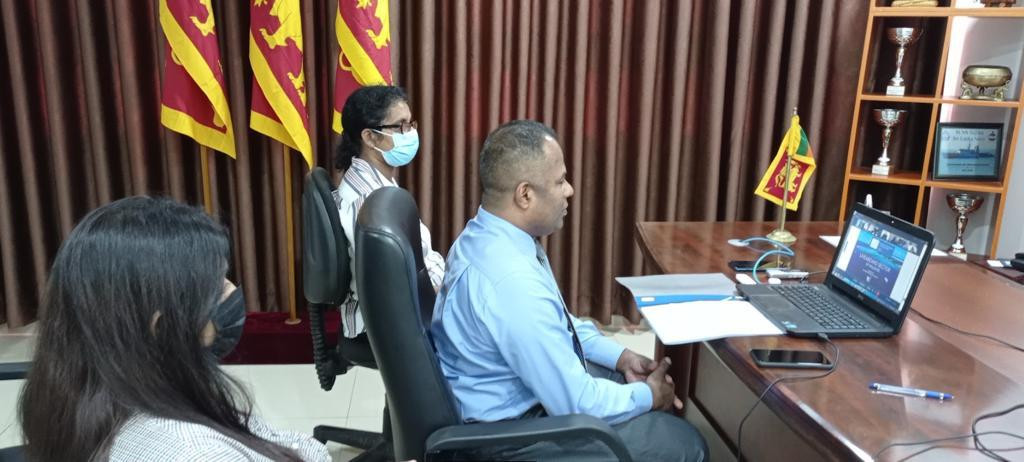
Colombo, October 14: The third meeting of the India-Sri Lanka Joint Working Group (JWG) on Tourism was held on Thursday in the virtual mode. The meeting was co-chaired by S. Hettiarachchi, Secretary, Ministry of Tourism from the Sri Lankan side and Rakesh Kumar Verma, Joint Secretary (Tourism) in the Ministry of Tourism from the Indian side.
Given the importance of tourism cooperation between the two countries, the High Commissioner of India to Sri Lanka, Gopal Baglay, also addressed the meeting and shared his views on the deep cultural and people-to-people ties between India and Sri Lanka.
The High Commissioner expressed happiness that this meeting was scheduled at a time when both countries had started opening up for international tourists.
Noting that almost two-thirds of the tourist arrivals in Sri Lanka in the month of September 2021 were from India, the High Commissioner mentioned that the easing of the Covid-19 situation in both India and Sri Lanka and the tourism promotion activities undertaken by the Government of Sri Lanka have helped resume large-scale tourist arrivals in Sri Lanka from India.
In their opening remarks, the leaders of both two delegations underscored the importance of tourism cooperation between the two countries, which flows from an Inter-Governmental bilateral MoU signed in January 2004. They conveyed the interest of their respective governments in further promoting tourism in various sectors.
In this connection, the importance of increasing air and sea connectivity; development of relevant infrastructure and greater collaboration and interaction between tourism stakeholders of both sides was also underlined.
Other issues discussed during the meeting included, inter-alia, facilitation of the movement of tourists between the two countries; ways to further enhance cooperation in religious tourism through the development of Buddhist and Ramayana circuits in India and Sri Lanka respectively; the promotion of Kushinagar in India as a Buddhist travel destination; and increase wellness tourism, adventure sports tourism, MICE tourism, film & entertainment tourism etc.
Both sides decided to facilitate cooperation between tourism stakeholders like hoteliers, travel agents, and tour operators by holding fairs, exhibitions, promotional activities and organizing exchange visits.
In this regard, both sides underscored the importance of recent decisions taken by the two governments to boost two-way tourism viz., establishment of an air travel bubble between the two countries in April 2021; removing India from the list of travel-restricted countries by Sri Lanka and the resumption of the issuance of tourist visas by the Government of India from November 2021.
The 2nd JWG Meeting on Tourism was held in Colombo in June 2016. The 3rd JWG meeting, comes in the wake of a successful visit by the Foreign Secretary of India to Sri Lanka earlier this month. That has heralded enhanced bilateral exchanges, as both countries come out of COVID-related restrictive travel.
These interactions include the ongoing visit of the Chief of Army Staff of India to Sri Lanka. These visits signify the importance attached by both sides to enhancing bilateral cooperation in line with the vision and commitment of the leaderships of the two countries.
Today’s meeting of the JWG on Tourism will impart further momentum to the strong people-to-people and cultural ties between India and Sri Lanka.
Colombo, October 14 (SAM): India and Sri Lanka now appear to be shedding doubts and reservations about each other and getting closer in multiple ways simultaneously. India’s urgency to counter China and Sri Lanka’s economic compulsions have combined to bring about top-level ‘to and fro’ visits in quick succession.
Close on the heels of a fruitful three-day visit of the Indian Foreign Secretary Harsh Vardhan Shringla to Sri Lanka in the first week of October, comes the five-day visit of the Indian army chief Gen.M.M.Naravane which began on October 12. This will be followed by President Gotabaya Rajapaksa’s visit to Kushinagar in North India on October 20, to participate in the inauguration of the Kushinagar International Airport. The airport will be inaugurated by Indian Prime Minister Narendra Modi and the Indian and Lankan leaders are expected to have talks on the sidelines of the event.
It has been a long-standing wish of the Indian Prime Minister Narendra Modi that the first international flight to land in Kushinagar should be a Sri Lankan Airlines flight. He would be doubly pleased to have the Sri Lankan President himself on board the first international flight with a delegation of 125 Buddhist monks in tow.
Kushinagar is where the Buddha attained Mahaparinirvana (or release from saṃsāra, karma and rebirth). To Buddhists, Kushinagar is as sacred as Buddha Gaya where the Buddha attained Enlightenment. Archaeological excavations led by C.L. Carlyle in the early 1870s, had revealed the main stupa in Kushinagar. A 6.10-meter-long statue of a reclining Buddha was discovered in 1876. In 1903, A Burmese monk, Chandra Swami, made the disused Mahaparinirvana temple into a living shrine.
During his visit earlier in the month, Indian Foreign Secretary Harsh Vardan Shringla had giving finishing touches to a new scheme to strengthen bilateral economic and political links which had slackened despite the relentless efforts of successive Indian diplomats.
Economic relations particularly were in the doldrums. India-suggested and mutually agreed development projects were languishing while Chinese projects were forging ahead both in volume and speed. Even Indian projects which were within India’s grasp like the Eastern Container Terminal at Colombo, were snatched away. The coal-fired power plant in Sampur and the LNG project in Kerewelapitiya also slipped out.
While the Indians complained of Sri Lanka’s lack of interest, Sri Lankans complained of slow follow-up action on the part of Indian parties.
However, a variety of factors led to a change in the outlook in Sri Lanka. The COVID-19-triggered economic slowdown, the financial/dollar crunch it created here, and the possibility of losing the lucrative American market and the European GSP Plus tariff concession, led to the Rajapaksa regime’s taking a softer line towards the US, EU and their allies India and Japan.
This automatically led to some distancing from China. While China was useful for accessing big loans, the market for Sri Lankan products were in the US, EU and India and not China.
Although it is not known if any news projects for India are in the Sri Lankan pipeline, Indian Foreign Secretary Shringla, Lankan President Gotabaya and Finance Minister Basil Rajapaksa had all shown keenness to increase Indian private sector investments in the island. Both government appear keen to make these plans work this time around.
To make up with India, the US$ 700 million project to build and run the Western Container Terminal in Colombo port has already been given to the Adanis of India. More recently, a decision was taken to give a US$ 400 million stake in the LNG plant in Kerawelapitiya to the American company ‘New Fortress Energy’ to strengthen ties with the US. More US investments are expected, especially in the tourism sector.
Politically, Sri Lanka wishes to be a non-aligned and neutral country to ward off the possibility of becoming a theater of war between the US and India on the one hand (as partners in QUAD) and China on the other. With the creation of the AUKUS and the gifting of nuclear submarines to Australia by the US, any war here could well become a nuclear war. This is why President Gotabaya Rajapaksa proposed to the Indian Foreign Secretary that New Delhi should support Sri Lanka’s bid to make the Indian Ocean a Zone of Peace.
It is not clear if New Delhi would go along with this as it has hitched its geopolitical security wagon to the US vis-à-vis China. But if New Delhi is to keep Colombo in its fold, it has to address the latter’s anxieties and recognize its yearning for strategic autonomy.
On its part, belligerent China is in no mood to relax its anti-India stand. Replying to a question about Indian Vice President Venkaiah Naidu’s recent visit to Arunachal Pradesh, which China calls South Tibet”, the Chinese Foreign Ministry spokesman Zhao Lijian said: The Chinese government has never recognized the so-called Arunachal Pradesh established unilaterally and illegally by the Indian side, and is firmly opposed to the Indian leader’s visit to the area concerned.”
India and China are at loggerheads in Sri Lanka and also Afghanistan where China supports the Taliban government and India opposes it.
Gen.Naravane’s Visit
The ongoing visit of the Indian army chief, Gen. Manoj Mukund Naravane, fits into New Delhi’s bid to more forcefully and consistently engage Sri Lanka in multifarious ways. As Gen.Naravane himself said here on Wednesday: As matured democracies, the quality interaction among the elected leaders in both countries is mirrored by similar interactions by both militaries.”
Gen. Naravane then highlighted the importance of modernizing both the Indian and Sri Lankan military organizations to suit international standards and to be geared to meet with different types of emerging threats, including cyberattacks.
Talks between him and Lankan Army Commander Gen.Shavendra Silva, also focused on the ongoing ‘Mithra Shakti’ training exercise where both armies are engaged. The visiting Indian Army Chief assured support for continuity and broadening of training programs in India. Gen.Naravane offered the Indian army’s technical assistance for upgrading the military requirements of the Sri Lanka Army.
Lankan Army’s New Profile
Several Indian army chiefs had visited Sri Lanka before Gen. Naravane. But the latter’s visit would stand out because he would be seeing a changed Lankan army. The present Lankan army, thanks to President Gotabaya Rajapaksa, is part and part of the country’s civil administration unlike the previous Lankan armies and other armies in South Asia. The Lankan army is now used in regular infrastructure construction, urban development, COVID-control, Health Administration among other activities. Retired Majors General were appointed to head Customs, Civil Aviation and Ports departments. The Defense and Foreign Secretaries are retired high ranking military personnel. When the pandemic struck, Army Commander Gen.Shavendra Silva was put in charge of COVID-19 containment and he did a splendid” job, as Gen.Naravane said on Wednesday.
In his most recent address to the public at Saliyapura, President Gotabaya Rajapaksa justified the appointment of military officers saying that he wanted jobs done. He has faith in the army as he was himself a Lt.Colonel during the war.
With Sri Lanka being pushed into the Indo-Pacific geopolitical vortex because of the sharpening conflict between the entrenched powers (US, UK, India, Japan and Australia) and the emerging power (China), the Sri Lankan army could acquire a different profile to tackle the new situation.
In fact, intensifying geopolitics with a strong military dimension could affect all armies in the region. Against this background, it will be worthwhile to study the development of the Sri Lankan army and other armies in the region. In this context, there is a need for these armies to engage with each other.
This has been recognized by Gen. Naravane. On Wednesday, he noted that high-level political engagements between India and Sri Lanka are being matched by high-level military engagements.
This first ever engagement would be mutually beneficial to both countries Ship and boatbuilding as a priority area for Sri Lanka NBAM and the the Representatives of the Sri Lanka Boat and Ship Building Industry held a virtual meeting on Monday .
The meeting was hosted by the Foreign Ministry in collaboration with the Export Development Board of Sri Lanka and was an initiative of the High Commission of Sri Lanka in Maldives.
The government of Maldives and Sri Lanka are to enhance mutual cooperation in the field of ship and boat building.
During a virtual meeting held between the National Boating Association of Maldives (NBAM) and representatives of the Sri Lanka Boat and Ship Building Industry on Monday, discussions were held on enhancing mutual cooperation in the field of Ship and Boatbuilding industry between Sri Lanka and Maldives.
The meeting was hosted by the Foreign Ministry in collaboration with the Export Development Board of Sri Lanka and was an initiative of the High Commission of Sri Lanka in Maldives.
Additional Secretary at Sri Lanka’s Foreign Ministry, P.M Amza described the meeting as a landmark event to boost the collaboration between Maldives and Sri Lanka, in exchanging resources and knowledge that would lead to greater physical engagement to conquer the world together”.
With this being said, he added that the cooperation would be mutually beneficial to both countries as well as being a priority to further solidify the economies and boost existing bilateral ties for both countries. He stated that an effective agreement between the counterparts would prove to be beneficial for the sectors.
Chithranjali Dissanayake, Director General of Export Development Board of Sri Lanka (EDB), revealed that the collaboration towards a more sustainable partnership in the industry will be further energized with the initiative, noting that the EDB’s current focus is the Boat Show 2021” slated from October 25 – 29.
Noting that Sri Lanka has taken steps to enter the nautical tourism, Dissanayake stated that collaboration in the field will prove to be significant to meet partners, globally.
With this being said, she urged the boating industry in the Maldives to register and participate at the Boat Show 2021”, which will pave way for more interactions.
Further, NBAM President Ahmed Afrah shed light on the links between the boating industry and the tourism sector of Maldives, with the association’s main focus being to develop the boating industry in a way that ensures economic and social development aspects.
Afrah went on to shed the spotlight on the many initiatives by NBAM in this regard, recommending to establish an agreement to support and share expertise in the areas of mutual interest.
Also speaking at the event, Gamini Herath, Managing Director of Boat Building Technology Institute of Sri Lanka (BBTI) shared the institute’s focus on promoting Sri Lanka as a boat building hub” in the South Asia region.
The meeting also saw proposals to have joint ventures in the industry to facilitate better investment and business engagements. Participants of the meeting agreed on working to draft an agreement on the industry for closer cooperation and taking the ties to newer heights.
The meeting was also joined by senior Foreign Ministry officials, executive members of NBAM, those at the Export Development Board, representatives of the Colombo Dock Yard and executives of the Sri Lanka boat and shipbuilding industry..
head of next Wednesday’s India-Sri Lanka summit in Kushinagar, Uttar Pradesh, which Prime Minister Narendra Damodardas Modi and Sri Lankan President Gotabaya Rajapaksa will attend, General Manoj Mukund Naravane, chief of the army staff, is in in Colombo.
In an unusual gesture, General Shavendra Silva, Sri Lanka’s army chief, received General Naravane at the Bandarnaike International Airport.
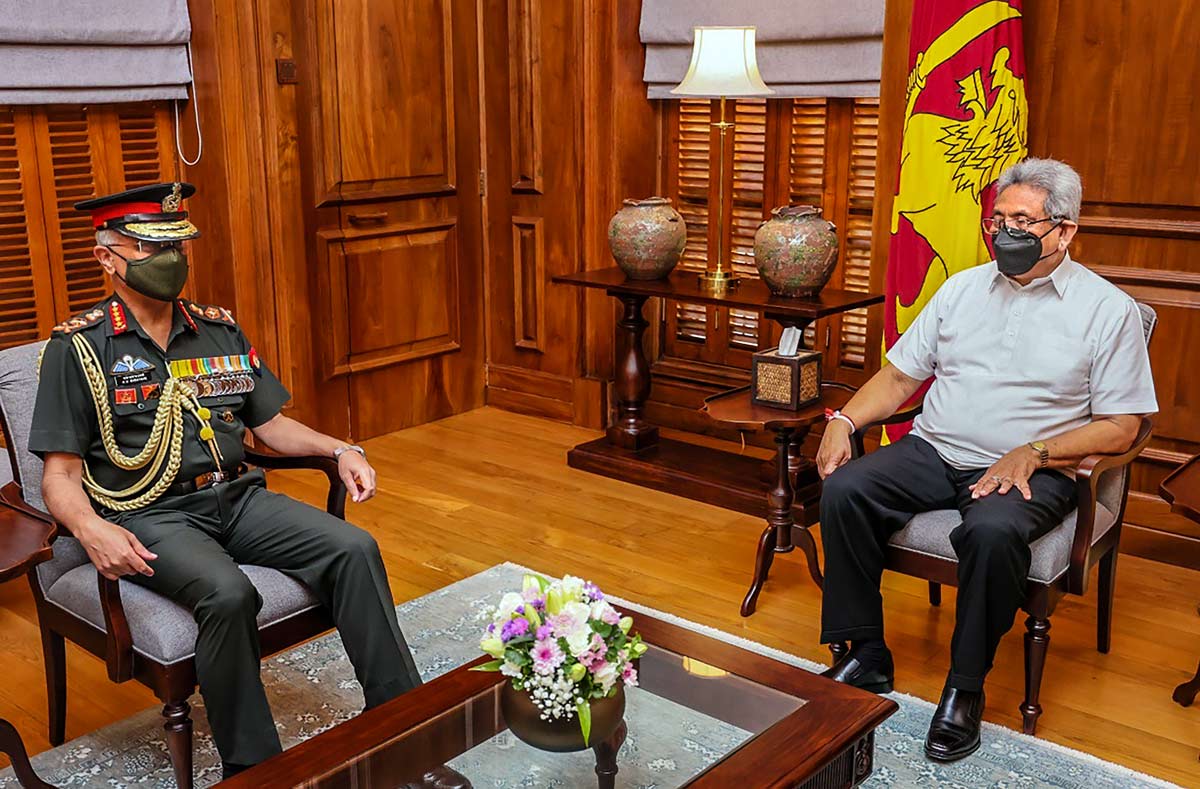
General Naravane, who was part of the Indian Peace Keeping Force which operated in Sri Lnka in the late 1980s, also called on President Gotabaya and his elder brother Prime Minister Mahinda Rajapaksa on Wednesday, October 13, 2021.
During his four-day visit to the island, the COAS will attend Exercise Mitra Shakti, involving troops of the Indian and Sri Lankan armies.Sponsored
New Delhi has serious concerns about China’s aggressive and growing presence in Sri Lanka — which has revived after the hiatus of the Maithripala Sirisena years — under the Rajapaksas’s rule.
In a statement released on the eve of General Naravane’s visit, the Indian high commission in Colombo described Sri Lanka as India’s ‘Priority One’ partner.
The Rajapaksa brothers are shrewd political operators and it will need Modi and the MEA’s guile to ensure that they don’t harm India’s interests in the neighbourhood by their relentless wooing of Beijing.
Please click on the images for a better look at General Naravane’s meeting with President Gotabaya, a former military man himself, retiring as a lieutenant colonel in 1991 from the Sri Lankan army. An alumnus of the Counter-Insurgency and Jungle Warfare School in Mizoram and the Defence Services Staff College in Tamil Nadu, the ruthless Gota — as he is known to many Sri Lankans — masterminded the 2009 military campaign that decimated the LTTE.
The nature of a crime is an inter-reaction with society. There is nothing, philosophical, to distinguish one crime from that another. There are various murders, but it does not include all human beings alone but covers a broader range of killings involving pets, shootings, etc. Recently, Sri Lankan TV highlighted a murder where a son killed his mother and severed his mother’s neck with a sharp knife.
Jack, the Ripper in England, was an unidentified serial killer active in East London’s Whitechapel in 1888. He reigned murders, specialising in female prostitutes and assassinated them from slums of East London. He was an Englishman and thought to be a qualified surgeon. His speciality was to cut- throats and mutilate abdominal organs with a sharp surgical knife. Because of this very fact, he became a suspect as someone who had anatomical and surgical knowledge.
Expert view
Experts’ investigations showed that deep lacerated wounds on all the prostitutes murdered. Those wounds were extensively in the abdominal and genital areas. After killing the prostitutes, the murderer removed the internal organs and placed those on the victims’ faces.
It was said to be his modus operandi. In one of the murders, a blunt object was forced into the victim’s vagina, rupturing her peritoneum ( the serous membrane that lines the abdominal cavity, which supports the abdomen’s organs and acts as a conduit for the passage of nerves, blood vessels, and lymphatics). She died the following day at a London Hospital.
Listing
His first victim, Tabram, was murdered on the staircase on a landing in George Yard, Whitechapel, on 7 August, 1888. She suffered thirtynine stab wounds to her throat, lungs, heart, liver, spleen, stomach, and abdomen, with additional knife wounds inflicted to her breasts and vagina. The murderer had used a sharp instrument such as a surgical knife.
Investigations showed that her assassin was right-handed. However, but the victim was not raped but repeatedly stabbed. Tabrim’s murder differed from subsequent murders. Another victim was Mary Ann (Polly) Nichols, aged 42. On Friday, 31 August in 1888, one of London’s East End workers, George Cross, was on foot as early as 3.40 a.m. along a dimly lit alleyway in Whitechapel.
Suddenly he stumbled across a bundle of tarpaulin under a dimly lit gas lamp. He found a woman’s dead body, whom the police identified as Mary Ann Nichols, a well-known prostitute as Polly. Her throat was slashed from ear to ear, and her body was ripped open by a surgical knife.
The wound extended from the groin to her breastbone. The metropolitan Police were shocked to discover her disembowelled body. She was one of the supremacies of murders by this mysterious killer whose mutilations rocked the Government of the day.
A week later, he was at it again. This time his victim was 5 ft tall, stocky Annie Chapman, known as ‘Dark,’ who was another prostitute. The killing was done in the same pattern. Her head was separated; her stomach cut opened, and her intestines removed. The coroner at the inquest remarked: No unskilled person could have done this!” On repeated attempts, Jack the Ripper killed two more women on the same night.
The first victim was six feet tall Swedish bornElizabeth stride, whose throat was slashed. A pedestrian noticed blood was pouring out of her throat. Amazingly, she had no other injuries to her body. Perhaps it was thought Ripper was interrupted before he could finish his horrific work.
Within 45 minutes of Elizabeth Stride’s killing, Ripper got down to his business of gruesome murders yet again with a vengeance. He murdered Catherine Eddows, the 43-year-old prostitute. Her ears, cheeks and eyes were slashed and part of her inside skilfully removed! Her mutilated body was found at 1.45 a.m. As the murderer went deeper and deeper into his ‘human carving,’ Jack the Ripper became more and more confident.
He wrote a letter to the Chairman of the Whitechapel Vigilance Committee once, addressing the letter ‘ from Hell’, and enclosed a partly cooked human kidney in the parcel. While Jack the Ripper was engaged in his gruesome killings, he bravely wrote letters to various authorities throwing challenges, perhaps, seeking publicity! He once wrote a letter in red ink and to the Editor of the Central News Office in London in 1888 and signed as ‘ Jack the Ripper’.
The text of the letter was as follows:
I keep hearing that the police caught me, but they won’t be able to fix me just yet! I laughed when they said so. Police are so clever, spreading rumours or flattering themselves and saying they are on the right track to catch me! But I am busy on prostitutes, and I shall not quit until I finish the lot. In my last job, I gave the woman no time to scream. So, how can they catch me? I love my work and continue to do so.
You will hear soon about my funny little games. In my next job, I shall clip the victim’s (woman) ears off and send it to the Police just for fun. My knife is so sharp, and I want to get into business straight away if I get a chance. Good luck. Yours truly, Jack the Ripper. I do not mind giving my trade name.” On 9 November 1888, Jack the Ripper attacked his final victim, a pregnant 23-year-old Mary of her left was only a mass of raw flesh. Her heart was removed and placed on a pillow beside her body.
Prime suspects
The horrific murders have not been able to solve up to this day. As a result, London’s Whitechapel currently has become a tourist attraction to see the mysteries of Jack the Ripper’s crimes. Who was this blood-crazed murderer who appeared to enjoy such brutality? It is uncertain, but it seems whoever he is, that the murderer was dead against the prostitutes.
Prime suspects of the crimes were John Druitt’s Barrister, hailed from a medical family. He was known to be either insane or on his way to insanity. He committed suicide in December 1888 by drowning in the River Thames. The second suspect was Sir Melville McNaughton, who worked for the Scotland Yard at that time. The other suspects were Michael Ostorg, a Russian doctor, as a ‘homicide lunatic’ in a mental hospital. Polish Jew, Kosminski, who became insane due to ‘long periods of solitary immorality’ was among the few suspects and a wealthy lawyer, Montagu Druitt.
Royalty
The Duke of Clarence’s, eldest son of (future King of England) Edward VII, was also suspected of all the murders. However, at the time of two of Jack the Ripper’s murders, the duke was supposed to in Scotland. He died in 1892. Another flank to the rumour was that the Duke of Clarence married secretly, without the consent of the Royal family, and the Whitechapel prostitutes blackmailed the Royal family. Therefore, the Duke of Clarence wanted to silence all the prostitutes and got rid of them all.
Jack the Ripper’s unsolved story
In November 1987, nearly a hundred years after Jack the Ripper’s assassinations, the Metropolitan Police Scotland Yard received a large brown envelope based on anonymity.
The envelope was sent from Croydon in South London and triggered curiosity once again among the detectives. After extensive checks performed, the contents inside the ‘brown envelope’ proved missing ‘on Jack the Ripper’s case, which was supposed to connect with five of Jack the Ripper’s murders in Whitechapel. The missing contents in the brown envelope were believed to have triggered a massive cover-up to protect prominent persons in the British society, such as the Duke of Clarence, the Royal physician Sir William Gull and the wealthy lawyer Montagu Druitt.
Amidst the papers found in the brown envelope was a letter signed by Jack the Ripper, which coincided with the information in the police already in their old records! All other vital papers from the ‘Ripper file’ were still missing.
Scotland Yard admitted in 1987 that they have no idea where the contents in the brown envelope were.” At that time, Deputy Commissioner of Scotland yard was quoted as saying: It is still a great mystery, but at least we have a complete file!” Don Rumbelow published a book ‘The complete Jack the Ripper, published by W.H. Allen (Book publishers).
At the end of the book, the author asks a simple question. Who was Jack the Ripper? ” His selfanswer was: I have always had the feeling that on the Day of Judgement, Jack the Ripper steps forward and call out his actual name! Until such time we all must look impassively at each other and ask, Who?
The total number of people, who died of COVID-19 infection in Sri Lanka, moved up as 21 more fatalities were confirmed by the Director-General of Health Services on Wednesday (October 13).
The new development has pushed the official death toll from the virus outbreak in the country to 13,429.
Latest victims include 15 males and 06 females, the Department of Government Information said.
According to official data, 16 deaths were reported among elderly people aged above 60 years. In addition, 05 people aged between 30-59 years have also succumbed to the virus infection.
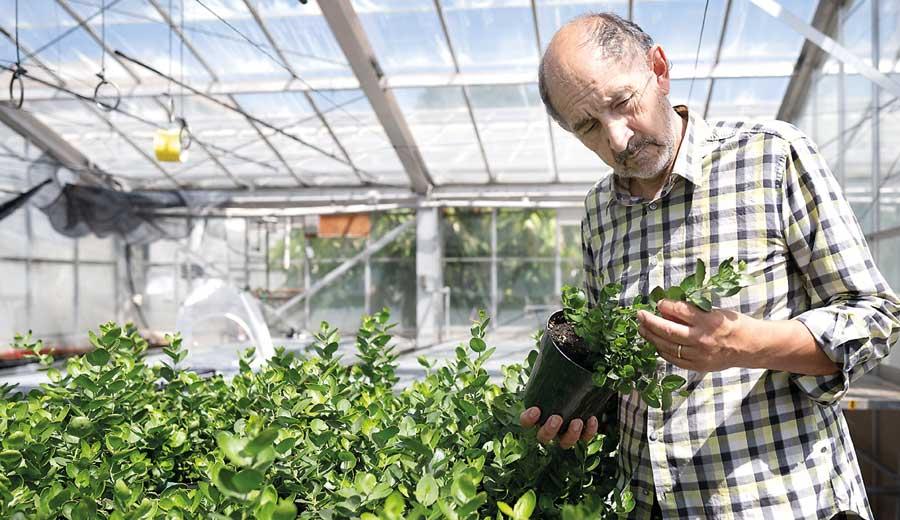
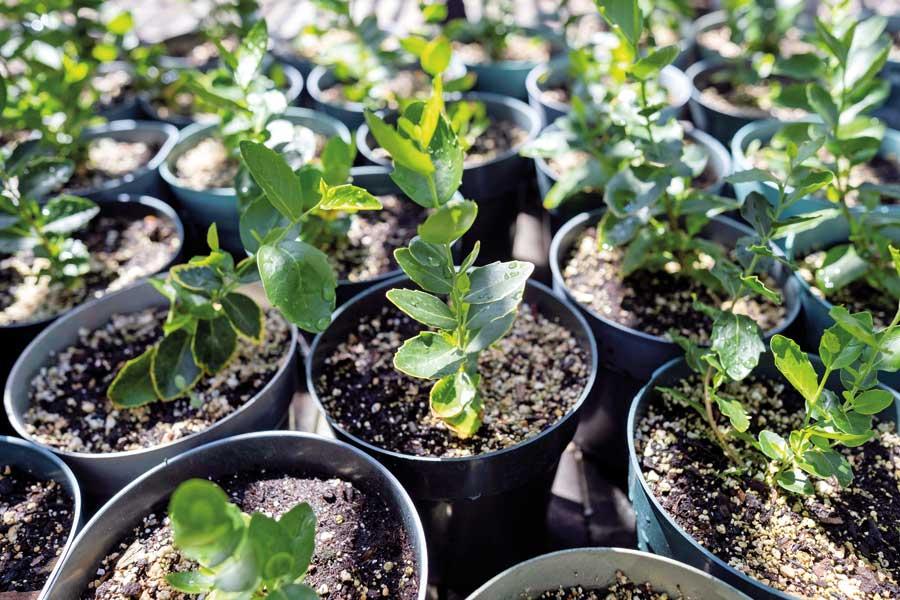
CASABLANCA, Chile — Down a dusty farm track in Chilean wine country, behind a wooden gate wrapped in chains, forestry experts are nursing a plantation of saplings whose bark holds the promise of potent vaccines.
Quillay trees, technically known as Quillaja saponaria, are rare evergreens native to Chile that have long been used by the indigenous Mapuche people to make soap and medicine. In recent years, they have also been used to make a highly successful vaccine against shingles and the world’s first malaria vaccine, as well as foaming agents for products in the food, beverage and mining industries.
Now two saponin molecules, made from the bark of branches pruned from older trees in Chile’s forests, are being used for a COVID-19 vaccine developed by drugmaker Novavax Inc (NVAX.O). The chemicals are used to make adjuvant, a substance that boosts the immune system.
Over the next two years, Maryland-based Novavax (NVAX.O) plans to produce billions of doses of the vaccine, mostly for low- and middle-income countries, which would make it one of the largest COVID-19 vaccine suppliers in the world.
With no reliable data on how many healthy quillay trees are left in Chile, experts and industry officials are divided on how quickly the supply of older trees will be depleted by rising demand. But nearly everyone agrees that industries relying on quillay extracts will at some point need to switch to plantation-grown trees or a lab-grown alternative.
A Reuters analysis of export data from trade data provider ImportGenius shows that the supply of older trees is under increasing pressure. Exports of quillay products more than tripled to more than 3,600 tonnes per year in the decade before the pandemic.
Ricardo San Martin, who developed the pruning and extraction process that created the modern quillay industry, said producers must immediately work toward making quillay products from younger, plantation-grown trees.
My estimate four years ago was that we were heading towards the sustainability limit,” he said.
San Martin said he has toiled through the COVID-19 pandemic in the basement of his oceanfront cabin in Sea Ranch, California, to refine a process that could help produce saponins from leaves and twigs in order to maximize the yield.
I am working as though this needs to be done yesterday,” said San Martin, who is also sponsoring a project in which drones would count quillay trees in remote and hard-to-access forests, to determine how many are left.
Quillay producers and their customers say the harvest can continue for now without decimating the supply of older trees.
We continue to monitor the situation in Chile, in close collaboration with our supplier, but at this time we are confident in our supply,” Novavax said in a statement to Reuters. The company also said it was confident that uses such as life-saving vaccines will be prioritized.”
The desert-plant extract company Desert King International Ltd, which runs the Casablanca plantation, is Novavax’s sole supplier of quillay extracts and Chile’s largest quillay exporter by far.
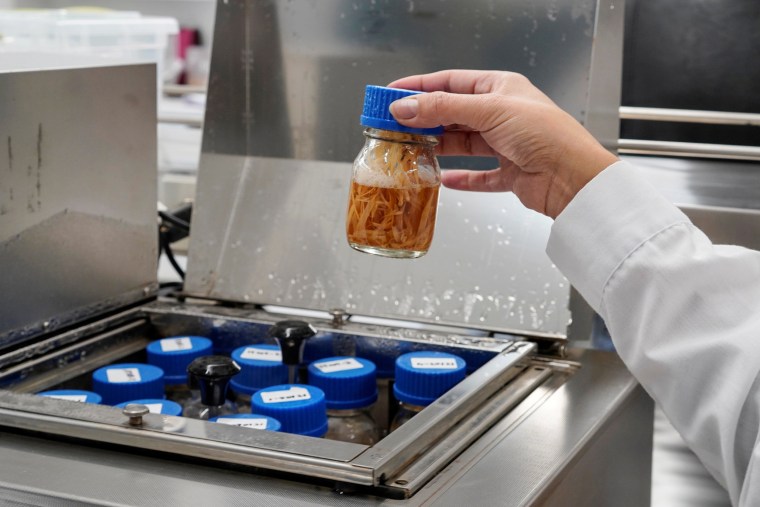
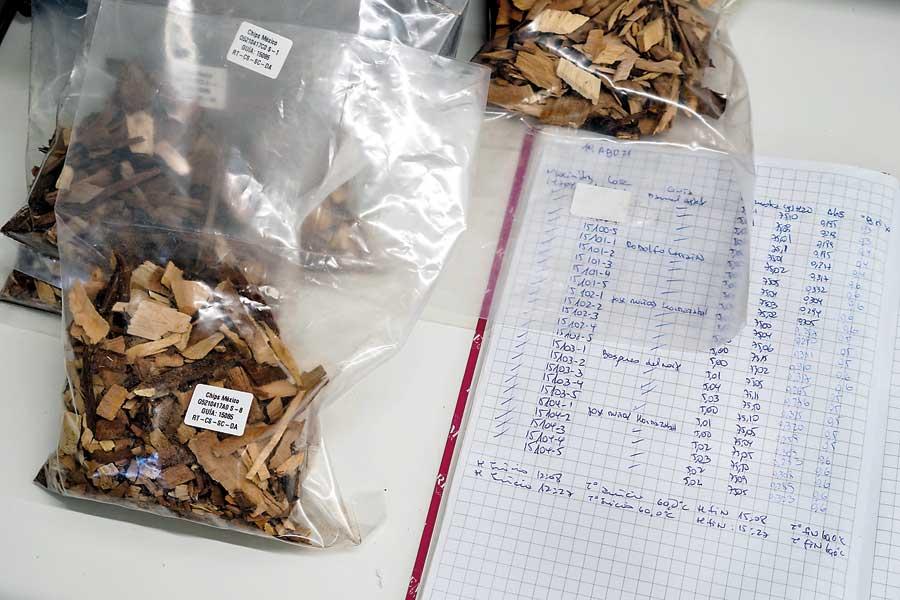
A bottle with wood from quillay trees, is shown in a laboratory at a nursery in Casablanca, Chile on April 20, 2021.Tamara Merino / Reuters
The company’s manager in Chile, Andres Gonzalez, told Reuters it is set to produce enough quillay extract from older trees to make up to 4.4 billion vaccine doses in 2022. With new supplies from privately owned native forests, they have enough raw material to meet demand for the rest of this year and part of next, he said.
Gonzalez said the company, where San Martin is a consultant, has built a new production plant and has the capacity to supply other interested pharmaceutical firms — all without harming the forests.
He acknowledged, however, that at some point these native forests will come to an end.”
We want to start having very productive plantations, and we are working on that,” he said.
A relatively small volume of quillay extract is required to make vaccines — just under one milligram per dose — but the supply is stretched by the demand from other industries. Quillay products are used, for instance, as a natural additive in animal feed, a biopesticide and an agent to reduce pollution in mining.
Individual quillay trees grow outside of Chile, but Chile is the only country where mature quillay is harvested from forests in large quantities.An elusive ingredient
Novavax’s adjuvant, known as Matrix-M, contains two key saponin molecules. One of those, called QS-21, is more difficult to access because it is found mainly in trees that are at least 10 years old.
Among major pharmaceutical companies, only GlaxoSmithKline PLC (GSK.L) and Novavax have bet heavily on QS-21, a relatively new pharmaceutical ingredient.
GSK’s highly successful vaccine against shingles, Shingrix, and several other promising experimental vaccines contain QS-21 supplied by Desert King. In a statement, GSK said it has no specific challenges relating to sustainable supply” of QS-21.
The quillay-based adjuvant used in Shingrix is also part of the world’s first malaria vaccine, Mosquirix. Despite low efficacy, it was approved by European regulators in 2015 and recommended for pilot introduction by the WHO in 2016 because of dire need.
No other COVID-19 vaccine manufacturers are relying on quillay bark extracts. Some drugmakers are developing synthetic alternatives, but these could be years from regulatory approval. Switching out the ingredients in any existing vaccine would require new clinical studies to prove the product is safe and effective.
The Massachusetts-based pharmaceutical company Agenus stopped selling bark-derived QS-21 several years ago to focus full-time on trying to grow it from quillay plant cells in a laboratory.
The shortage of QS-21 has been an issue for a while,” said Jason Paragas, Agenus vice president of strategic initiatives and growth exploration. We saw it before COVID, and we made the hard decision that we had to change.”
Paragas said it is too soon to say when an alternative could be ready.
Entrepreneur Gaston Salinas said his Davis, California-based startup Botanical Solution Inc can already produce QS-21 from quillay tissue starting with seeds in the lab, and aims to eventually produce the chemical on a large scale to supply pharmaceutical companies.
You cannot afford to over-exploit the native Chilean forest because of a desire to develop modern vaccines. You need to find other ways to develop your products, even if it’s something so important, ” he said.An eye toward the future
Inside the gate of the carefully guarded Desert King plantation, gardeners carefully tend to the young trees using fertilizers and bountiful supplies of water. They were cloned from full-grown cousins whose dusty gray bark was especially rich in saponins.
If all goes well, the plantation could be producing for one customer in two to three years, according to Desert King’s business development manager Damian Hiley. He declined to name the company.
Desert King has its eye on future vaccines, some already in the works.
In early 2020, for instance, GSK licensed an experimental tuberculosis vaccine that contains GSK’s QS-21-based adjuvant to the Bill and Melinda Gates Medical Research Institute. It showed promising results in a mid-stage trial.
And in April, researchers at Oxford University announced that a new malaria vaccine containing Novavax’s Matrix-M adjuvant appeared to be highly effective in a trial involving 450 children in Burkina Faso.
Gustavo Cruz, a researcher at the University of Chile who worked with San Martin to industrialize production of quillay, said he generally trusts quillay producers to manage supply and demand. He is more worried about other threats — specifically drought and fire.
The trees do eventually regrow,” he said, but there comes a time when they don’t anymore.”
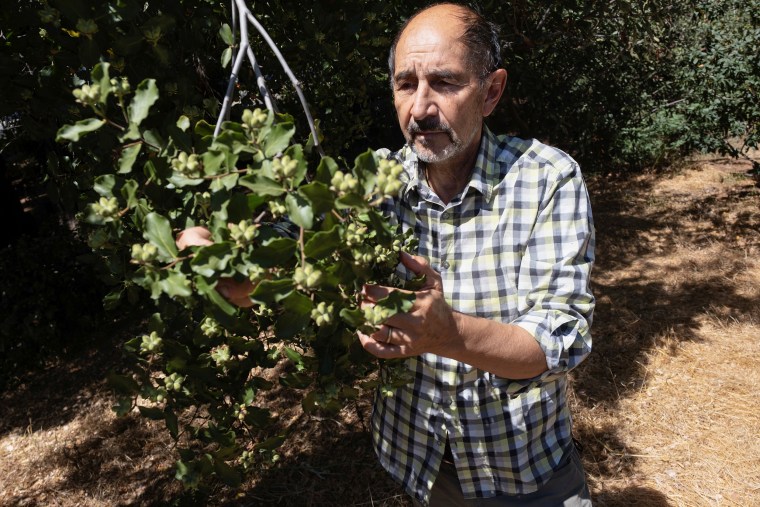
Ricardo San Martin, a Chilean expert on the Quillay soapbark tree and its industrial uses (Reuters)
These rare evergreens native to Chile have long been used by the indigenous Mapuche people to make soap and medicine
One company has enough extract to develop 4.4 billion vaccine doses in 2022
Down a dusty farm track in Chilean wine country, behind a wooden gate wrapped in chains, forestry experts are nursing a plantation of saplings whose bark holds the promise of potent vaccines. Quillay trees, technically known as Quillaja saponaria, are rare evergreens native to Chile that have long been used by the indigenous Mapuche people to make soap and medicine. In recent years, they have also been used to make a highly successful vaccine against shingles and the world’s first malaria vaccine, as well as foaming agents for products in the food, beverage and mining industries.
Now two saponin molecules, made from the bark of branches pruned from older trees in Chiles forests, are being used for a COVID-19 vaccine developed by drugmaker Novavax Inc. The chemicals are used to make adjuvant, a substance that boosts the immune system. Over the next two years, Maryland-based Novavax plans to produce billions of doses of the vaccine, mostly for low- and middle-income countries, which would make it one of the largest COVID-19 vaccine suppliers in the world.
With no reliable data on how many healthy quillay trees are left in Chile, experts and industry officials are divided on how quickly the supply of older trees will be depleted by rising demand. But nearly everyone agrees that industries relying on quillay extracts will at some point need to switch to plantation-grown trees or a lab-grown alternative. A Reuters analysis of export data from trade data provider ImportGenius shows that the supply of older trees is under increasing pressure. Exports of quillay products more than tripled to more than 3,600 tonnes per year in the decade before the pandemic.
Ricardo San Martin, who developed the pruning and extraction process that created the modern quillay industry, said producers must immediately work toward making quillay products from younger, plantation-grown trees. My estimate four years ago was that we were heading towards the sustainability limit, he said. San Martin said he has toiled through the COVID-19 pandemic in the basement of his oceanfront cabin in Sea Ranch, California, to refine a process that could help produce saponins from leaves and twigs in order to maximize the yield. I am working as though this needs to be done yesterday, said San Martin, who is also sponsoring a project in which drones would count quillay trees in remote and hard-to-access forests, to determine how many are left. Quillay producers and their customers say the harvest can continue for now without decimating the supply of older trees.
We continue to monitor the situation in Chile, in close collaboration with our supplier, but at this time we are confident in our supply, Novavax said in a statement to Reuters. The company also said it was confident that uses such as life-saving vaccines will be prioritized. The desert-plant extract company Desert King International Ltd, which runs the Casablanca plantation, is Novavaxs sole supplier of quillay extracts and Chile’s largest quillay exporter by far.
The company’s manager in Chile, Andres Gonzalez, told Reuters it is set to produce enough quillay extract from older trees to make up to 4.4 billion vaccine doses in 2022. With new supplies from privately owned native forests, they have enough raw material to meet demand for the rest of this year and part of next, he said. Gonzalez said the company, where San Martin is a consultant, has built a new production plant and has the capacity to supply other interested pharmaceutical firms – all without harming the forests. He acknowledged, however, that at some point these native forests will come to an end. We want to start having very productive plantations, and we are working on that,” he said.
A relatively small volume of quillay extract is required to make vaccines – just under one milligram per dose – but the supply is stretched by the demand from other industries. Quillay products are used, for instance, as a natural additive in animal feed, a biopesticide and an agent to reduce pollution in mining. Individual quillay trees grow outside of Chile, but Chile is the only country where mature quillay is harvested from forests in large quantities.
Year old Quillay soapbark trees are seen at the University of California in Berkeley (Reuters)
Some drugmakers are developing synthetic alternatives, but these could be years from regulatory approval
In recent years, they have also been used to make the world’s first malaria vaccine
AN ELUSIVE INGREDIENT
Novavaxs adjuvant, known as Matrix-M, contains two key saponin molecules. One of those, called QS-21, is more difficult to access because it is found mainly in trees that are at least 10 years old. Among major pharmaceutical companies, only GlaxoSmithKline PLC and Novavax have bet heavily on QS-21, a relatively new pharmaceutical ingredient.
GSKs highly successful vaccine against shingles, Shingrix, and several other promising experimental vaccines contain QS-21 supplied by Desert King. In a statement, GSK said it has no specific challenges relating to sustainable supply of QS-21. The quillay-based adjuvant used in Shingrix is also part of the worlds first malaria vaccine, Mosquirix. Despite low efficacy, it was approved by European regulators in 2015 and recommended for pilot introduction by the WHO in 2016 because of dire need.
No other COVID-19 vaccine manufacturers are relying on quillay bark extracts. Some drugmakers are developing synthetic alternatives, but these could be years from regulatory approval. Switching out the ingredients in any existing vaccine would require new clinical studies to prove the product is safe and effective. The Massachusetts-based pharmaceutical company Agenus stopped selling bark-derived QS-21 several years ago to focus full-time on trying to grow it from quillay plant cells in a laboratory. The shortage of QS-21 has been an issue for a while, said Jason Paragas, Agenus vice president of strategic initiatives and growth exploration. We saw it before COVID, and we made the hard decision that we had to change. Paragas said it is too soon to say when an alternative could be ready.
Entrepreneur Gaston Salinas said his Davis, California-based startup Botanical Solution Inc can already produce QS-21 from quillay tissue starting with seeds in the lab, and aims to eventually produce the chemical on a large scale to supply pharmaceutical companies. You cannot afford to over-exploit the native Chilean forest because of a desire to develop modern vaccines. You need to find other ways to develop your products, even if its something so important, he said.
A new production plant has been built which has the capacity to supply other interested pharmaceutical firms – all without harming the forests
Molecules made from the bark of these branches pruned from older trees are now being used for a COVID-19 vaccine developed by drugmaker Novavax Inc.
Among major pharmaceutical companies, only GlaxoSmithKline and Novavax have bet heavily on this relatively new pharmaceutical ingredient
AN EYE TOWARD THE FUTURE
Inside the gate of the carefully guarded Desert King plantation, gardeners carefully tend to the young trees using fertilizers and bountiful supplies of water. They were cloned from full-grown cousins whose dusty gray bark was especially rich in saponins. If all goes well, the plantation could be producing for one customer in two to three years, according to Desert Kings business development manager Damian Hiley. He declined to name the company. Desert King has its eye on future vaccines, some already in the works.
In early 2020, for instance, GSK licensed an experimental tuberculosis vaccine that contains GSKs QS-21-based adjuvant to the Bill and Melinda Gates Medical Research Institute. It showed promising results in a mid-stage trial. And in April, researchers at Oxford University announced that a new malaria vaccine containing Novavaxs Matrix-M adjuvant appeared to be highly effective in a trial involving 450 children in Burkina Faso.
Gustavo Cruz, a researcher at the University of Chile who worked with San Martin to industrialize production of quillay, said he generally trusts quillay producers to manage supply and demand. He is more worried about other threats – specifically drought and fire. The trees do eventually regrow, he said, but there comes a time when they don’t anymore.
(REUTERS)
The bark of the tree is used to extract molecules to make vaccines against malaria and COVID-19
The All Ceylon Jamiyyathul Ulama published a leaflet against extremism calling on the faithful to practise moderation”. Saddened by the 2019 Easter Sunday attacks, they criticise those who instigate hatred and forget the contributions of Muslims to the nation.
Colombo (AsiaNews) – All Ceylon Jamiyyathul Ulama (ACJU) said it was alarmed at the constant media reports about the possibility of another terrorist attack similar to those of Easter Sundayin 2019.
The organisation of Islamic scholars is encouraging the country’s Muslims to read a leaflet (written by them in Tamil and Sinhala) against extremist tendencies, and asking them to be vigilant and cautious”.
We appeal to the community to be wary of the ISIS and similar terrorist organizations which are misleadingly and falsely representing themselves as protectors of Islam while they are widely perceived as being orchestrated by elements hostile to Islam and all religions.” the ACJU said in the statement issued last Friday.
According to Sri Lankan ulema, Muslim scholars around the world have declared terrorist groups anti-Islamic. Already in 2015, the ACJU and other civil society organisations had issued a statement saying that terrorist movements go against the teachings of Islam.
We are deeply saddened by the fact that innocent civilian lives were lost and many suffered injuries in the brutal attacks carried out by terrorists on the Easter Sunday on 21st April 2019. We need to emphasize that our community has made innumerable contributions and sacrifices in the national interest,” they said.
It is however disappointing to note that a situation has arisen, where vested interests are continuing to instigate distrust and hatred on a grossly false basis against Muslims, following the cowardly and brutal terrorist attacks carried out by a few misguided elements with Muslim names, while overlooking the invaluable contribution of the community towards this nation.”
Muslim scholars again exhorted the faithful to practise moderation”. To this end, in its statement, ACJU asked all district divisions and mosque keepers to be vigilant in this regard and strive to build closer relationships with all communities”.
by M. P. Dhanapala Former Director, Rice Research and Development, Department of Agriculture Courtesy The Island
maddumadhanapala@yahoo.com,
Tel. 0718412444
Some groups emerge time to time from different professions, with the enthusiasm of promoting traditional rice varieties free of toxic contaminants for consumption. Traditional varieties are highlighted as healthy and nutritious, but with little or no scientific evidence. In this connection, a resource person of traditional rice farming gave a seminar on the perspectives of organically produced traditional rice varieties under the theme Beyond Illusion to Reality” at the Jayawardenapura University.
According to him, each of us can have enough rice from traditional varieties to consume three meals a day from an extent of 1,260,000 acres (0.51m ha.) with an average productivity of 60 bushels per acre (3t/ha), assuming a daily rice requirement of 330 grams per head. I am very confused by this statement. It appears that something is wrong with the calculations, but it is difficult to verify as the milling outturn, cropping intensity and the population size assumed were not stated. This is utterly misleading; do your calculations once more and verify please.
Also, he quoted some per acre yield figures of traditional varieties; Dik wee (102 bu.), Masuran (98 bu.), Pachchaiperumal (84 bu.) and Pokkali (82 bu.) from undisclosed cultivated extents; the cultivation was practised without inorganic fertilizers. I presume he used organic manure regularly though not quantified, and probably agrochemical free weed control practices. The other pests were controlled by timely cultivation using traditional knowledge – initiation of crop establishment seven days after full moon (the first dark night).
Involvement of private companies in the rice trade – buying paddy cheap at Rs.60/kg and selling rice at Rs.350/kg – was identified as a stumbling block in popularizing traditional varieties and he appealed to the general public to purchase the production at Rs. 145/kg of rice, variety Suwandel in particular. No doubt, everybody would purchase traditional rice at that price. It occurred to me why this dedicated group of farmers cannot organize themselves to form a cooperative and develop a traditional rice market.
That the International Rice Research Institute (IRRI) took away our traditional varieties is a complaint made periodically by these critics. It is true that IRRI collected in1970s the endangered rice cultivars in different countries for conservation for the future use and stored over one million rice accessions in cold rooms in their gene bank. This would not have happened without the approval of the respective governments. They implement many international collaborative programs in rice research and any researcher can have access to the material in their gene bank under the conditions laid down by the institute.
We received from IRRI our share of traditional varieties for conservation once the Plant Genetic Resources Center (PGRC) was established in 1990. These facts may be verified from IRRI before making undiplomatic statements. To my mind, no other country in the world cultivates our traditional varieties, legally or illegally, for commercial purposes; the unfounded allegations made in public seminars without evidence is unethical and unparliamentary. Furthermore, we do not have any intellectual property rights or breeder’s rights to protect our varieties.
According to the speaker, there were around 6,000 traditional rice varieties cultivated in the past. We have compiled the names of traditional varieties grown in Ceylon from the past literature, but were able to collect only 567 names listed by Molegoda (1924), probably inclusive of the names of 300 samples of traditional varieties displayed by Nugawela Disawe in Agri-Horticultural Exhibition (1902) in Kandy, and 42 names (El Wee) listed by de Zoysa (1944) (Sri Lankan Rice Varieties from the Past to Present, Dept. of Agriculture, 2021). It would be a thankful task if the list of names of the 6,000 different traditional varieties could be provided to the Department of Agriculture for compilation and updating of the list.
One should not confuse the terminology used in the rice market with variety names; Kora, Mal Kora, Samba (red, white), Nadu (red, white), Kekulu (red, white, rosa), Suduru Samba, Keeri Samba etc. are names used in the rice market. Among them, Suduru Samba” is the only name identifying a variety. Rice in other countries is identified by the name of the variety. For example: Koshi hikari (Japan), Dinarado (Philippines), Basmathi (Pakistan), Kao Dwak Malee/Jasmine Rice (Thailand) etc.
In almost all of the countries, rice is consumed as raw milled. We are among the handful of nations consuming par-boiled rice; probably the only country consuming red pericarped rice. According to the speaker, Keeri Samba is a traditional variety. I am always in favor of Bg 360 remaining as Bg 360 in the rice market. However, Keeri Samba is a name that appeared in the rice market, after introduction of Bg 360 in 1996.
Consumption of keeri samba (Bg 360) would end up with the future generation of children in the cancer hospital as there is indiscriminate use of toxic herbicides to control weeds, because of its dwarf plant stature,” is an unsubstantiated statement, made by the presenter of this seminar. The breeder of Bg 360 (so-called Keeri Samba) is not among us to defend his case but, as the team-leader who spearheaded the rice breeding program, I like to declare that this is the first variety we have developed with improved eating quality. The adverse comments on Bg 360 would not affect the popular demand for this variety, but as rice breeders we would appreciate if the price tag of Bg 360 is in par with other samba varieties, with a reasonable profit margin.
There are many critics condemning modern rice varieties on different grounds as sources of non-communicable diseases. Most of the critical statements on modern varieties are discussed in page 11- 17 of Govikam Sangarawa, June 2020 issue, Department of Agriculture. Also, I invite the attention of all the participants of the seminar Beyond Illusion to Reality” to the u-tube presentation of Dr. Pethiyagoda (https://www.youtube.com/watch?v=rGe6ld2q1vs) to understand the basics; precision and accuracy in scientific investigations, the definition of data/opinion/statements and valid interpretation of results, especially the cause and effect relationship in experimentation.
The misconceptions, distortion and misinterpretation of facts were highlighted and discussed in that seminar. The organizers of scientific seminars should have this knowledge to prevent misleading the general public, as such seminars can inculcate absolutely wrong concepts and facts regarding important and relevant topics of current interest, in the minds of the inquisitive listeners, thereby leading to lot of damage.
A couple of years ago, as a farmer, I had to attend a seminar given by another enthusiast of traditional rice varieties. The seminar was organized by the Divisional Agrarian Service Office, Weke, Kirindiwela. Probably these seminars cannot be mutually exclusive events. Some seeds of traditional rice varieties were distributed among farmers in the audience at the outset and the main speaker began the speech. The hall was full. He introduced himself a descendant of Yakkha”, probably to impress the audience of his cell lineage with Ravana.” He spoke of Siyane Korale, the great poet, Mahagama Sekera and his book Yasodhara”.
Most interestingly, the speaker was trying to describe the date that the world ended according to the Calendar of Mayans, the South American tribe. He said though the world did not end on that particular day, it was marked by yellow colored rains bringing fish from outer space. The audience appeared hypnotized. (As a 10-year old, I have listened to fiction of this nature in our Sunday Fair from a man who wanted to sell a precious oil that Ven. Thotagamuwe Rahula thero overdosed himself with. My father was convinced by that speech and bought a capsule of two drops of oil and squeezed it on my tongue. It had the taste of coconut oil. In fact, it was coconut oil.) What a loss of precious time”? I thought.
There were many other fairy tales by the resource person, that probably have skipped my mind. After about one hour or so, he said that traditional varieties of rice were capable of giving 60 bushels per acre (3.0 t/ha) whereas the so called improved varieties of Batalagoda could give only 80 bushels (4.0 t/ha)”, but without any scientific procedure of comparison and that he would disclose to the audience how to bridge this gap. I waited for another hour biting my tongue to learn the process of bridging the yield gap; but nothing was delivered. I left the hall after two and half hours, in the middle of the presentation with the long face of the chief organizer on me.
The historical aspects of genetic improvement of rice were compiled recently (Dhanapala et. al. 2021, Tropical Agriculturist, Sept, 2021) to rationally look at the pros and cons of rice breeding and its consequences. As breeders, we were concerned about rice production in all agro ecological regions in the country, not only in one isolated patch of land or region or ecology. We were getting a national average of less than 15 bushels per acre (0.75 t/ha.) prior to 1950s with traditional varieties (Rhind, 1949) and around 98 bushels per acre (4.8 t/ha) in 2020 with modern varieties. These were figures recorded in the Ceylon Government Blue Books during the British era and in the Census and Statistics Department of Sri lanka at present.
In the 1920s, British scientists initiated pure-line selection for the improvement of traditional varieties. They did not work in isolation, but had consistent dialogue with key members of the Ceylon Agricultural Society, to mention a few: Mudaliyar J. P. Obeyesekera, Sir Solomon Dias Bandaranaike, J. C. Ratwatte Disawa, Dr. Rajasingham, Mr. K. B. Baddewela etc. They were in the forefront leading the discussions. If the present day traditional rice enthusiasts were born earlier, they could have contributed to the traditional rice improvement immensely during that era. Then, rice varietal improvement would possibly have taken a different path. However, rice was imported during the British era too despite all these efforts.
Though the breeders treated rice as the major staple of the country, one should not ignore the other claims made with traditional varieties despite no scientific evidence being produced, clinically or otherwise. Much of the knowledge may have accumulated through trial and error basis over a period of time. In Vidusara” (2020/10/28), a list of traditional rice varieties was published, rich in nutritional and medicinal qualities (Fernando, 2020). Similar lists of varieties are displayed frequently in herbal medicinal shops. They include predominantly Pachchaiperumal, Suwandel, Kalu Heenati, Sudu Heenati, Goda Heenati, Kuruluthuda, some Ma Wee types etc. either identified as rich sources of nutrients; vitamins, minerals, fatty acids and proteins or having medicinal properties to contain blood sugar, blood pressure, cholesterol and/or improve the immunity system.
Among these varieties, Kuruluthuda was specifically highlighted to have aphrodisiac properties (Fernando, 2020). We need analytical procedures; biochemical, molecular biological or any other, to identify the active ingredient and/or to quantify these properties and establish the bio-chemical pathways conferring the said effects to claim patent rights. Who knows that ‘Viagra’ can be replaced with a meal of Kuruluthuda? However, Kuruluthuda as reported in literature is a white pericarped, photo-period sensitive, date fixed variety and can be grown only during the Maha season (Gunawardena and Wickramasekera, 1947 and Chandraratne, 1948), but Kuruluthuda as reported in Vidusara” is red pericarped, short duration and period fixed (Fernando, 2020). The authenticity of this variety needs verification. There are multiple accessions under the same name in the collection of traditional varieties at the PGRC and systematic evaluation and cataloguing of the germplasm is needed for future use. DNA fingerprinting may be helpful in identifying possible duplications.
Although the medical purpose of serving rice-soup (kanji/kenda) of traditional varieties is not clear, it was promoted on many occasions by the traditional rice lovers. Once a COVID 19 patient (first wave) claimed that he was cured by eating this rice-soup (Hela Suwaya Program, Siyatha TV, Ravana, 09/04/2020). There was a rice-soup program launched to feed school children recently, but discontinued probably due to the COVID 19 pandemic. The rice-soup program in the Cancer Hospital mentioned by the resource person of the seminar is being continued, may be as a therapeutic, preventive or immunity build-up measure and/or for developing resistance to infections. However, if the rice-soup improves the digestibility of rice, irrespective of its origin – traditional or modern – Bg 360 is the most easily digestible, the reason why its glycaemic index is high and people eat more.
Traditional rice varieties were known to have been introduced to Morawewa, Rajangana etc. by some groups recently, but the farmers did not continue cultivation due to some reason or another. If chemical inputs are not used and the yields are high, the traditional rice can be sold definitely cheap in the market and can compete with big-time millers of modern varieties by organizing the farmers to sell their product at the farmer cooperative shops. It needs the cooperation of all traditional rice lovers who believe that they can feed the nation with better quality, nutritive rice free of toxic contaminants; failing which the traditional rice technology is inappropriate. However, those who promote traditional rices should take the responsibility for food security in rice, which is so vital, as it remains as our staple food; i. e. availability in adequate quantities at affordable prices to feed all, not only a selfish high income group. Also the government must be compelled not to import cheap and low quality rices to feed the poor.
One of the experts from the four-member team examining compost quality during the study visit to Sri Lanka
A. Baur & Co. (Pvt.) Ltd., widely known as Baurs, a diversified business group and one of the pioneering innovators in agriculture in Sri Lanka, recently shared preliminary key insights and solutions for the country’s farming industry to successfully master the conversion from conventional to organic, backed by scientific evidence and sound knowledge drawing from both professional and practical experiences.
A. Baur & Co. (Pvt.) Ltd (Baurs), together with its contracted institutions namely Research Institute of Organic Agriculture (FiBL) and School of Agricultural, Forest and Food Sciences (HAFL), in their findings upon their study visit suggested necessary steps for the country to embrace a successful transition from conventional to an organic production system within a short period of time.
The report highlighted that the conversion to an agricultural system without using synthetic fertilizers cannot function by just replacing mineral fertilizers with organic fertilizers, citing the fact that there needs to be sufficient organic fertilizers, including the importance of reactivating soils biologically as the current soil-plant system, accustomed to mineral fertilizers, is not adapted to digest and use them. Additionally, it also mentioned that larger quantities of raw materials need to be transported and spread in fields.
It stressed that the ecological conversion to an organic one requires a holistic change of concept, which will take several years including efforts towards capacity development. However, given the immediate ban in the country it recommended that farmers be provided with options for soil fertility management without synthetic fertilizers for the ongoing Maha season.
As the first step, it recommended large amounts of organic fertilizers be organized by importing such products and begin capitalizing on natural sources of nitrogen. Parallelly, potential sources of organic remains, such as waste from the food industry and markets and remains from the animal industry for instance, must be identified and explored in ways to valorize them as organic fertilizers. And that such recycling will also close nutrient cycles, contributing to a positive environmental impact.
Compost should play a crucial role especially in its role to activate soil biology and its contribution to stabilize soil structure which in turn brings numerous benefits, citing that quality composts can also reduce the incidence of plant diseases.
Secondly, it suggested a new holistic management towards agricultural production be undertaken which requires more time, supported by relevant skills and knowledge. Crop rotations or mixed cropping techniques, soil fertility management and selecting crop varieties that are appropriate for organic production are important tasks to act upon, all of which will result in an efficient and sustainable system in the long term.
Baurs is actively engaging with the team of senior experts from FiBL and HAFL who are also coordinating their efforts together with other relevant organisations, with the view of continuously studying the country’s ecological landscape and provide the best scientific and practical solutions and knowledge to embrace the transition challenge.
The remnants of the Liberation Tigers of Tamil Eelam (LTTE) are regrouping in the UK. Like Osama bin Laden groomed Hamza bin Laden to succeed him, the LTTE leaders and members are grooming their own children.
Prabhakaran too set an example by training and grooming his children; Charles Anthony, Dwarka and Balachandran. To radicalise their next generation, the separatists are promoting a false narrative. Using funds and votes, the terrorists are planning to penetrate both the Labour and Conservative Parties in the UK.
The blood of a terrorist and the genes of terrorism run through the veins of Sarmila Varatharaj, the Vice-Chair of the ‘Tamils for Labour’ terrorist front. Her father, Kunddu Ragu alias Kannan was a top-level operative of one of the most ruthless, brutal and barbaric terrorist organisations on the planet; the LTTE. Having being defeated by the Sri Lankan Security Forces in 2009, Ragu now utilises his daughter to continue the battle for the creation of an imaginary Tamil Eelam; the ultimate goal of the terrorists.
While Ragu used suicide bombers, rocket-propelled grenades and assault rifles, his daughter Sarmila, uses lies, misinformation and political lobbying – both involved in attempting to destroy the harmony between the Tamil and Sinhalese people in Sri Lanka. Sarmila Varatharaj is a Communications and Social Media officer for the Tooting Labour Party and a Spokesperson for Global Human Rights Defence to the UNHRC in Geneva – a position of pure irony given that her family background is one of the darkest anyone would come across.
Her father, Ragu, was a part of the inner circle of the megalomaniac terrorist, Velupillai Prabhakaran, who massacred a plethora of innocent Tamils, Sinhalese and Muslim civilians, whilst also launching attacks on places of worship, public gatherings, villages and economic localities.
Being a ruthless terrorist, Ragu alias Kannan was a key figure in the brutal assassination of the democratically elected Prime Minister of India, Rajiv Gandhi in 1991. Rajiv Gandhi was assassinated by a female suicide bomber of the LTTE, where 14 other innocent lives were also decimated during the bombing.
Just like the female suicide bomber released thousands of pieces of shrapnel and chemicals against democratically elected leaders and innocent civilians, Sarmila Varatharaj releases thousands of pieces of false truths and disinformation against democratically elected leaders and innocent civilians. In the months prior to their ultimate military defeat in 2009, the LTTE used tens of thousands of innocent Tamil civilians as human shields so that the top-level terrorists, like Ragu alias Kannan, could escape death.
During this time, the LTTE front organisations and LTTE supporters in the West, like Sarmila Varatharaj, continually launched protests in support of the terrorists and spewed misinformation and hate against the Sri Lankan Armed Forces. In her speech at the Labour Party Conference in September 2021, Sarmila knowingly or unknowingly exposed the true nature of the ‘Tamils for Labour’ organisation.
She unapologetically stated that the organisation was established 16 years ago to divert the 400,000 Tamils living in the United Kingdom to politically vote for the British Labour Party in exchange for the Labour Party’s support. Sarmila’s exposition was a classic example of how the LTTE terrorist fronts in the West attempt to gain political support through lobbying and minority votes in order to realise their lifelong investment – the LTTE.
Ragu alias Kannan, along with thousands of other deadly terrorists in the North and East of Sri Lanka waged a fearful campaign of terror and destruction in the island nation for over 30 years. The LTTE was responsible for thousands of civilian deaths and almost a hundred planned assassinations of political opponents, military leaders and officials of all races alike.
The LTTE was a transnational terrorist group responsible for staging attacks on multiple nations and building a network across the world for arms procurement, shipping and fund raising. Sarmila repeatedly mentions the unsubstantiated claim of a Tamil genocide in Sri Lanka.
Must she be reminded that the Sri Lankan State rescued more than 60,000 Tamils from being exploited as human shields by people like her father, in what would become the world’s largest hostage rescue mission? Must she be reminded that members of her immediate family were responsible for the cold-blooded murder of children and women in the villages of Sri Lanka? Must she be reminded about how her father was part of the inner circle that carried out the brutal massacres of innocent pilgrims in places of worship around Sri Lanka? Must she be reminded how people like her father stripped Tamil children of their childhood, provided them with RPGs and assault rifles and a miniature bottle of deadly cyanide to swallow in case of capture? The Liberation Tigers of Tamil Eelam (LTTE) was deemed one of the ‘most dangerous and deadly extremists’ by the Federal Bureau of Investigations [FBI].
The FBI also stated that the LTTE was deadlier than Al-Qaeda and that the LTTE’s ‘ruthless tactics have inspired terrorist networks worldwide’. Sarmila’s father was a high-level operative of the terrorist outfit that invented the suicide vest and the group that launched the largest amount of suicide attacks before the Islamic State and Al-Qaeda. Perhaps, it is time that Sarmila dictates her father on the thousands of crimes he has committed against the innocent, before she disseminates misinformation against the Sri Lankan people.
Perhaps, it is time that the British MPs, such as Stephen Kinnock, stop being fooled by the second-generation terrorist supporters and see the Sri Lankan war for what it really is; a war against deadly terrorism. Ragu alias Kannan once fought hard to destroy the harmony in the island nation and now, the second generation LTTE are trying their best to follow their parents’ footsteps and destroy the peace in the country, while living on their seats in foreign lands.
Notwithstanding the efforts of the criminals, it is indisputable and impossible to separate the brotherhood of the Sinhalese and the Tamil ethnicities in Sri Lanka, who have lived side by side for hundreds of years. Like father, like daughter, the blood of terrorism flows through their veins – but the thick blood of the Sri Lankan will never be defeated by any form of terrorism.
Writer: Maya Anthony is a Human Rights Activist from Jaffna.
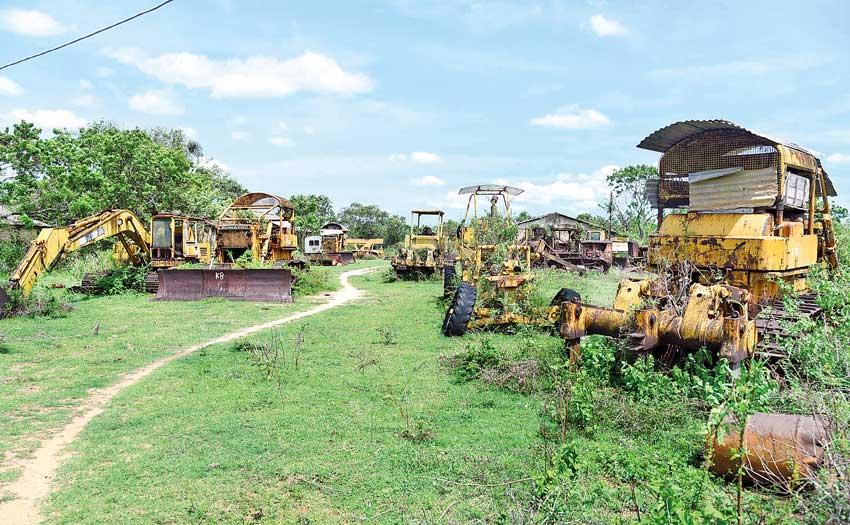
Defunct vehicles and unserviceable machinery – Pix by Samantha Perera
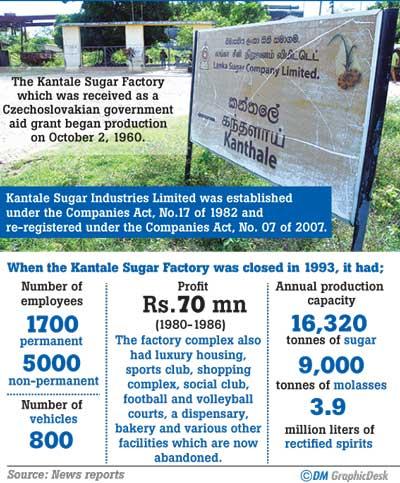
The Kantale Sugar Factory was a Czechoslovakian Government aid grant commissioned during Sirimavo Bandaranaike’s tenure
However, privatisation adversely affected its operations. Inefficient management and issues reported by workers, eventually led to its closure
Critics point out that the state belives it can gain more profits when sugar is imported instead of producing it in Sri Lanka
In 2018 alone, this factory was brought under the purview of four different ministries
Around 1700 permanent employees and around 5000 non-permanent employees were working at the factory prior to its closure
When the Kantale Sugar Factory was closed it had an annual production capacity of 16,320 tonnes of sugar
A 2020 Audit Report states that the factory didn’t function as expected even though it was transferred to Lanka Agencies (Pvt) Ltd
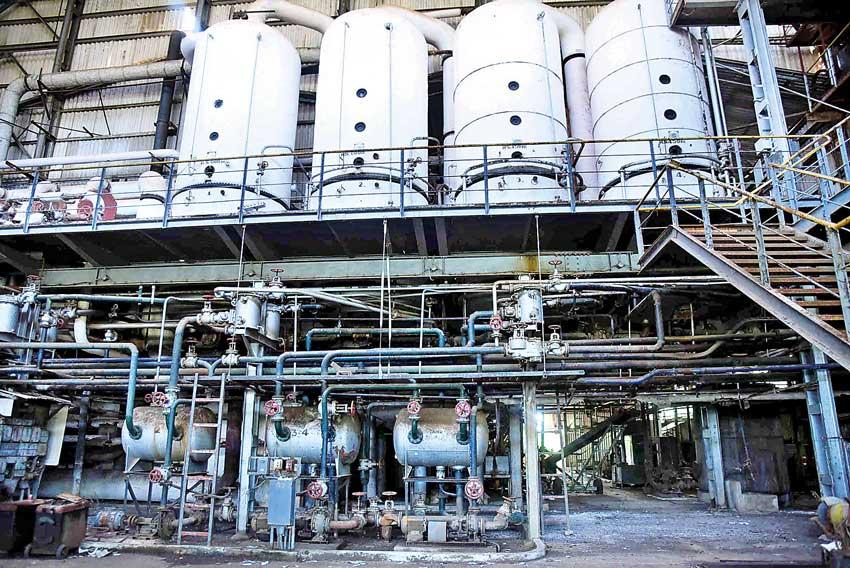
At the heart of Eastern Province lies a now abandoned ghost town punctuated with towering structures, uninhabited housing, dilapidated buildings, unserviceable machinery and acres of deserted land. 28 years ago, this place, the Sugar Factory premises at Kantale, was a hive of activity. Initially constructed on a 44,000 acre expanse of land the Kantale Sugar Factory was a Czechoslovakian Government aid grant commissioned during Sirimavo Bandaranaike’s tenure. Apart from the factory, the land was utilised to build a housing scheme, shopping complex, a club, football and volleyball courts, a dispensary, bakery and various other facilities to be enjoyed by its employees. The factory brought an era of prosperity to people in its surroundings who still recall memories of a glorious past. The once prosperous Kantale Sugar Factory therefore suffered closure by the end of 1999 after it was handed over to a private party in 1993. At present the land area has diminished to 21,300 acres and the authorities are still struggling to put the operations back on track.
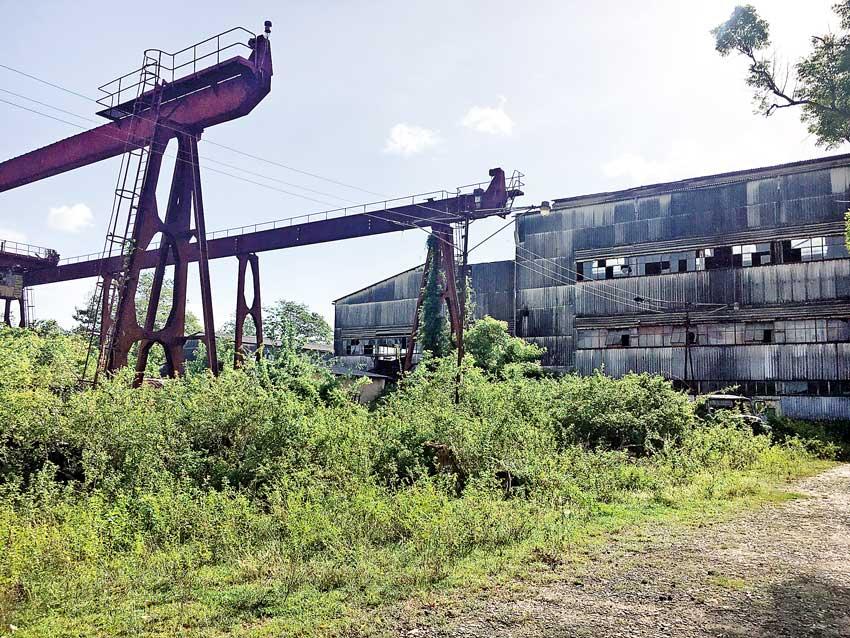
The abandoned Kantale Sugar Factory complex
A peep into the past Kantale Sugar Industries Limited was established under the Companies Act, No.17 of 1982 and re-registered under the Companies Act, No. 07 of 2007. The objective of commencing the operation was to contribute to the production of ethanol, electricity and organic fertilizer as by-products in addition to the production of sugar by using lands owned by the sugar industries in an optimum manner, as well as encouraging sugarcane farmers and improving their economic level. Since it’s inception the factory was a profitable venture supplying quality sugar to the market for more than three decades. It is said that between 1980 to 1986, the factory earned a Rs. 70 million profit.
When Sirimavo Bandaranaike was informed about the gift Sri Lanka was about to receive, reportedly after Philip Gunawardena’s visit to Czechoslovakia, she appointed then Minister Maithripala Senanayake to identify a suitable place to construct the factory. Having travelled all the way up to Trincomalee, Senanayake and the surveyors had had a brief stop near the Kantale lake bund. Upon inspection, they demarcated 44,000 acres of land to setup the factory complex.
However, privatisation adversely affected its operations. Inefficient management and issues reported by workers, eventually led to its closure apart from destruction caused by the armed conflict. Following the privatization process, workers’ salaries and remittances like gratuity, EPF and ETF were reportedly not paid on time.
The abandoned Kantale Sugar Factory complex
As a result, the workers staged a strike against the management demanding their rights. Even though there was only one plantation zone during its inception, after 1970, the plantation area was decentralised. During the development process of the Kantale Sugar Factory and Plantation the plantation area was divided into four zones with each zone comprising eight to 17 fields; each spanning 2,000 to 3,000 acres.
It is said that around 1700 permanent employees and around 5000 non-permanent employees were working at the factory prior to its closure. Today, there are around 34 employees who continue to claim that their salaries haven’t been paid, but haven’t given up on looking after the factory complex as it was where they earned their livelihood. When the Kantale Sugar Factory was closed it had an annual production capacity of 16,320 tonnes of sugar, 9,000 tonnes of molasses and 3.9 million litres of rectified spirits.
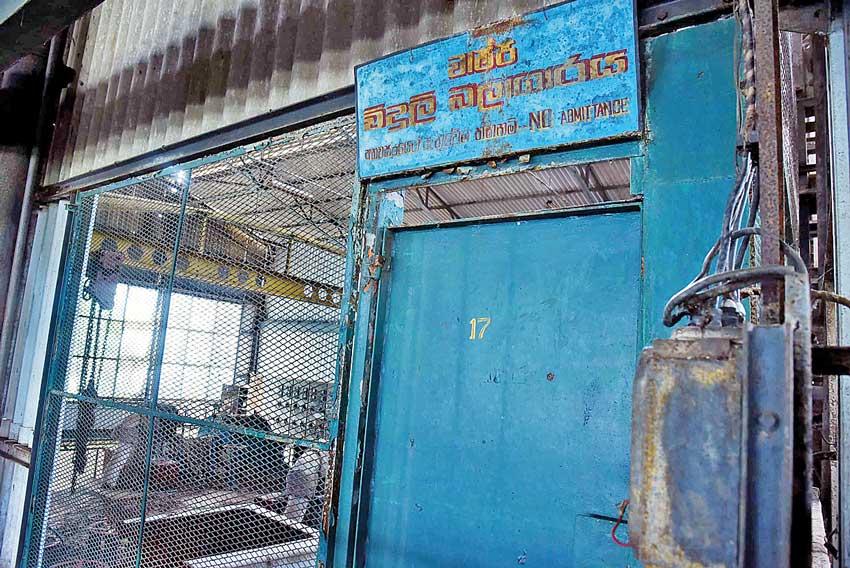
Production process During a recent visit to the Factory premises the Daily Mirror caught a glimpse of the production facility. Sugarcane harvested from different zones was initially weighed and sent into the factory premises via a conveyor belt. The once functioning crane still stands tall amidst a wild outgrowth. The sugarcane is then processed into a juice and crystallised following a complex but efficient process. The crystals are then weighed into different quantities and put into sacks prior to being transferred to the storage facility. Factory officials claim that it would take approximately 36 hours to produce sugar using the old technology and that if a new technology is in place, the production could be done within 22 hours. Apart from sugar, several by products were also utilised for the production of ethanol, cardboard, paper, animal food and even electricity. The 2 megawatt power generator was able to provide electricity to the entire housing complex and buildings surrounding the factory; all the way up to Trincomalee.
However during a recent inspection by a team of specialists it has been observed that the white plaster coating in many of the machines is carcinogenic and some layers of iron and machinery are not up to the initial standard. Many believe that the factory could be refurbished for operations with the relevant expertise of local universities and the knowledge of previous employees. Even though it has been suggested that a new factory would be built in place of this defunct factory complex, many employees feel that it is unnecessary.
Interior of the Factory premises – the white coating on the machines were claimed to be carcinogenic
Scrap metal fiasco
The Foundation stone laid at the time the factory commenced operations
A 2020 Audit Report states that the factory didn’t function as expected even though it was transferred to Lanka Agencies (Pvt) Ltd. Subsequently, the case filed by this company was settled as per the Government’s wishes back in 2003. However, thereafter, none of the governments was successful in appointing a suitable investor to recommence operations. However in 2015, the Board of Investments signed a contract with MG Sugars Lanka (Pvt) Ltd with the objective of recommending operations at the Kantale Sugar Factory. The company, a partnership between Bangalore-based Sri Prabhulingeshwar Sugar and Chemicals Ltd. and Singapore’s SLI Development Pte Ltd have agreed to invest USD 100 million inclusive of a Swiss Bank guarantee of USD 10 million.
The 30-year lease agreement was signed with the investor and as per the agreement the project would run on Build, Operate and Transfer (BOT) basis with 51% shares owned by the Government of Sri Lanka (GoSL) and 41% by the foreign investor. But the deal was done amidst various unsolved issues. As operations ceased at the Factory, from time to time, this establishment was brought under the purview of numerous ministries. Therefore, there were alleged attempts to make maximum profits out of scrap iron that were available at the Factory complex and other immovable property. In 2017 when the Factory was under the purview of the Lands Ministry, bids were called for selling machinery and other property at the factory. However it was observed that the Ministry failed to clear the defunct machinery at the property and hand over the buildings as well as release the lands to the investors. During this period several government officials were nabbed after accepting bribes and were put behind bars. The company then filed arbitration proceedings in a Singapore tribunal to stop GoSL from selling scrap metal and other machinery. Subsequently the Singapore International Arbitration Centre granted an interim order in favour of MG Sugars Lanka preventing the Lands Ministry from disposing machinery and other assets pending a final decision.
Damning verdict
Statement of account received by an employee which shows that they haven’t received EPF for 2018
The verdict of the case, filed by the Investment company in the Arbitration Centre Singapore, had been given on August 6, 2019. And as per the decision the Government of Sri Lanka (GoSL) had violated the conditions of the agreement. As such the following fines should be paid by the Government:
*The Arbitration Council had decided that the delay in the project was due to the delay caused by the GoSL and as such the project cost had been increased by 15%. However, this amount should be paid by the GoSL after the business plan is approved.
*GoSL has to pay Fifty per cent of the cost of the Arbitration case, ie Singapore Dollars 626,877 and Singapore Dollars 30,070 as cost of the hearing of interim orders to the respective company within 30 days after the court decision has been issued.
*The Arbitration Council had decided that the Sri Lanka Government should pay 95 per cent of the legal fees of the complainant ie. Singapore Dollars 237,569.83 30 days after the court verdict.
*The GoSL should pay an extra cost to the complainant for tourism and accommodation charges of USD 211,913.93
*If the government fail to pay the above money an annual interest of 5 per cent will be added
*Similarly, the Singapore Arbitration Council had decided that all infrastructure, machinery, buildings and other accessories belonging to the Kantale Sugar Factory could have been utilised by the investor at his discretion in terms of the agreement.
2 Megawatt Power generator
Unresolved issues exist We continue to work sans salaries and allowances”- Tillekaratne
To date, its employees still recall the glorious period at the factory. I left school and joined this factory back in 1981 and joined the security division in 1989,” said H. K. N Tillekaratne. During that period this factory was fully functioning and it was equipped with much facilities. However, when the factory closed down in 1994, they paid us a small amount as compensation and terminated services of around 236 employees. Even though the Chandrika Bandaranaike Kumaratunga Government promised to resume its operations it has remained closed for the past 28 years.
They paid us a small amount as compensation and terminated services of around 236 employees. Even though the Chandrika Bandaranaike Kumaratunga Government promised to resume its operations it has remained closed for the past 28 years
H. K. N Tillekaratne
During the pre election period people would come with promises, but nothing has happened so far. In 2018 alone, this factory was brought under the purview of four different ministries. Right now only 34 employees are working here; employed on the basis of essential services. They retained us to safeguard the property, but only two people are currently at the security division. We didn’t receive salaries in 2018 and received Rs. 125,000 as an advance for the entire year,” he complained.
From 800 vehicles, the employees are now left with no vehicle to even travel to the nearby hospital during an emergency as the only vehicle given to them is now under repair. But in September last year State Minister Janaka Wakkumbura visited the site, spoke to us and made promises. There’s no water for us to even drink though water is being pumped to the Army camp in the vicinity. During the one and a half year pandemic period we didn’t have any sanitation facilities. But we have to work here on 12-hour shifts,” Tillekaratne complained.
Irrespective of elephants roaming the area during the evenings or thieves who visit the site to rob pieces of machinery, the remaining employees continue to work. Even though other government workers received their salaries we haven’t received three months salary. Others get Samurdhi benefits and other allowances, but we haven’t been receiving anything. We work here irrespective of curfew or government holidays. There are only two employees who are under 60 years of age. Our only request is to provide us with our salaries and allowances and recommence operations at the factory. Three employees passed away and one employee is in a critical condition, but none of those families has received compensation even though it is mentioned in the circular,” said Tillekaratne.
Now they are planning to put up sugar factories in other places in the country, but this place has the land and the irrigation system in place. One of the complaints is that there’s no water here. But the Kantale tank has enough water as it receives water from the Mahaweli and Moragahakanda projects
Gamini Samarasekara
Lack of water isn’t the problem here”-Samarasekara Going down memory lane Gamini Samarasekara, who oversees security operations at the premises, reminisced the past and described various facilities they hadenjoyed. I joined Kantale Sugar Factory in 1988 as a security officer. We were given accommodation, water and in fact we had water supply 24/7.
There was a farm as well as a dispensary to provide medicine to anybody who fell sick. A factory with all these facilities eventually closed down. Subsequently the factory was given to a private party at a lower cost than it was valued. The value was Rs. 400 million, but it was given at a value as low as Rs. 40 million to two businessmen. As those two businessmen failed to continue operations this factory was subsequently closed down in 1994. The factory was closed when Chandrika Bandaranaike Kumaratunga was being elected as president and there was an opportunity back then to recommence operations. But there was no support. What I feel is that they can gain more profits when sugar is being imported than opting for a domestic production. But now they are planning to put up sugar factories in other places in the country, but this place has the land and the irrigation system in place. One of the complaints is that there’s no water here. But the Kantale tank has enough water as it receives water from the Mahaweli and Moragahakanda projects. Therefore only 30% of what is being used for farming is needed for sugarcane farming. This means sugarcane farming can be done. The land area for paddy lands will remain the same. The Prima Company has received water since 1980, but this factory was able to continue operations until 1994 from this water.
The sugarcane research Centre was shifted to Pelwatte. These units have to be re-established. There are nurseries to obtain sugarcane seeds, but the varieties of sugarcane have evolved. Perhaps the soil doesn’t support the production of sugarcane anymore
Ven. Kamburawala Rathanapala thera
This shows that there’s no issue with regards to the supply of water and it is a political issue that has withheld operations. If they recommence operations they would be able retain the youth in these areas who have a tendency to go to other parts of the country seeking employment. There has to be a mechanism to provide employment to these youth,” he underscored.
Several issues need to be resolved” : Ven. Kamburawala Rathanapala thera If the Kantale factory resumes operations this country doesn’t have to spend a lot on importing sugar,” opined Chief Incumbent of Seenipura Viharaya Ven. Kamburawala Rathanapala Thera. But there are certain challenges. Water from the Kantale tank was utilised by the sugar factory, the Prima Company and thirdly for farming purposes. But even if the factory resumes operations this order will change. Water will first be utilised by Prima, then for farming, then for drinking and lastly to be used for the factory. The waterway will have to be reconstructed, so as to supply water to fulfill the production capacity. The sugarcane research Centre was shifted to Pelwatte. These units have to be re-established. There are nurseries to obtain sugarcane seeds, but the varieties of sugarcane have evolved. Perhaps the soil doesn’t support the production of sugarcane anymore. All these issues need to be resolved if the factory is to recommence operations.
The remaining 21,000 acres will be handled as per the tripartite agreement among GoSL, farmers and the Company. We were supposed to recommence grinding sugar last year but there were various issues. We are planning to commence operations by 2022-2023
Kumara Jayawickrama Project Manager at MG Sugars Lanka (Pvt) Ltd
The then President and Divisional Secretary were of the view that this factory will never grow sugarcane or produce sugar again. If that’s the thinking the 21,000 acres of land should be utilised for some other economically beneficial project. From the 21,000 acres, what is now remaining is only 17,000 acres as some lands have been obtained by private parties. If the soil doesn’t support sugarcane some other crop has to be introduced and I too have submitted several proposals to higher authorities,” Ven. Rathanapala added.
We will recommence operations as the factory is now under the purview of the state ministry
Janaka Wakkumbura State Minister of Small Plantation Crops Development
Authorities respond Planning to commence operations by 2022-2023” : Jayawickrama In 2011 we called for Expressions of Interest in 2015 an agreement was signed between GoSL and the Company,” said Kumara Jayawickrama, Project Manager at MG Sugars Lanka (Pvt) Ltd. Then, in 2017, they allocated 500 acres for the nursery, factory and housing complex. The remaining 21,000 acres will be handled as per the tripartite agreement among GoSL, farmers and the Company. We were supposed to recommence grinding sugar last year but there were various issues. We are planning to commence operations by 2022-2023. MG Sugars Lanka Private (Ltd) is constructing a new factory for this purpose. Since 2015 there have been specialist teams visiting to take soil samples and study other features. The Moratuwa University and the Government have done a survey using drones. We will be analysing soil samples at the old factory. Around 100 acres of sugarcane has been grown using seeds and we have seeds for another 100 hectares. We plan to produce sugar, ethanol, electricity and fertilizer by 2023.” said Jayawickrama.
Referring to the recent video by a tourist that went viral on social media, the Airport & Aviation Services Sri Lanka said that what was said in the video is misleading and not the real picture at the airport.
Posting a video on social media recently, a tourist from US has claimed that he was forced to leave the country barely five hours after he had arrived saying the country was under lock-down and was offered no services.
He said the public transportation was not available and hotels and restaurants were also not in operation because of the lock-down.
Responding to the claims made by the tourist that he had booked a taxi service via a third-party website and it was not available once he came down to Sri Lanka, Shehan Sumanasekara, Director Chief of Operations (All Airports) and a Board member at Airport & Aviation Services Sri Lanka said they could not take any responsibility on third party services.
However, if the reservation was not available when he arrived in Sri Lanka, he could have easily got a cab from the airport arrivals lobby, since we have ten travel counters with many taxi services,” he pointed out.
In addition, if the tourist had not booked a hotel, he could have consulted our tourism counter at the arrival lobby from where he could have booked a hotel,” he added.
Mr. Sumanasekara said all the facilities were available and the relevant video was misleading and fabricated and it is not the real scenario in the country and at the airports.
Moreover, he said all the airports in Sri Lanka are fully opened for tourists and they only need a negative PCR test taken 72 hours prior to boarding the aircraft.
When the Daily Mirror contacted Mr. Sumanasekara to inquire about the progress of the probe into the incident, he said the final report of the investigation was handed to the State Minister D.V. Chanaka this morning by the Chairman of the Airport & Aviation Services.
The content of the probe is that the video was misleading and fabricated and it paints a different picture to the real one,” he added. (Sheain Fernandopulle)
The daily total of COVID-19 cases moved to 680 today (October 13) as 167 more people were tested positive for the virus infection in Sri Lanka, the Epidemiology Unit of the Health Ministry says.
This brings the total number of confirmed cases of coronavirus reported in the country to 528,415.
According to the Government Information Department, 679 of the latest cases were associated with the New Year Cluster. The remaining patient is a returnee from overseas.
As many as 491,238 recoveries and 13,408 deaths have been confirmed in Sri Lanka since the outbreak of the pandemic.
Official data showed that 23,700 active cases in total are currently under medical care.
Meanwhile the Director General of Health Services has confirmed another 31 Covid-19 related deaths for October 12, increasing the death toll in the country due to the virus to 13,408.
According to figures released by the Govt. Information Department, the deaths reported today include 20 males and 11 females.
Eight of the victims are aged between 30-59 while the other 23 victims are aged 60 years and above.
Sri Lanka must gear up for cyber warfare by augmenting its capabilities to meet the demands of 21st-century national security, India’s Bharatiya Janata Party (BJP) leader and Rajya Sabha member Subramanian Swamy said on Wednesday.
Visiting Sri Lanka on Prime Minister Mahinda Rajapaksa’s invitation for Navarathri celebrations at his official residence, Temple Trees, Mr. Swamy spoke at the Institute of National Security Studies – a think tank established under Sri Lanka’s Ministry of Defence.
National Security in the 21st century is not about advancing armies or aeroplanes flying above… and no country is big or small. All countries are superpowers or nothing, according to their preparation to meet cyber warfare,” he stated, underscoring the need for countries to work out their objectives, priorities, strategy, and resource mobilisation that he termed the four pillars” of national security.
Responding to questions later, Mr. Swamy shared his perspective on the civil war, the assassination of Rajiv Gandhi by the LTTE; the current tensions between India and China and a likely war” between the powers, and emerging geopolitical dynamics. On Indo-Lanka relations, he observed that Sri Lanka had got a raw deal” from India since the Rajapaksa government came to power, and it was sought to be corrected”.
Earlier on Wednesday, Mr. Swamy called on President Gotabaya Rajapaksa and advocated a strong, friendly relationship between Sri Lanka and India,” a statement from the President’s office said.
Minister Mahindananda Aluthgamage says that 30,000 MT of Organic Potassium Chloride fertiliser purchased by the 02 Govt fertiliser institutions arrived at the Colombo port a short while ago.
If only a small amount of potassium is required, naturally-derived potassium chloride can be used as a fertilizer. Potassium chloride is highly soluble, but the chloride content can kill beneficial microorganisms!
Bandula Kendaragama, Dam Safety Consultant, Melbourne, Australia
This
article is written based on information collated through consultations that
were recently submitted as a technical report to His Excellency Gotabhaya
Rajapaksaand other relevant government authorities. The consultations
were among those who had been interested in dam safety and were directly
involved in managing the Narrowly-Missed” breach and in the reconstruction of
the Parakrama Samudraya bund after the Cyclone in 1978. They considered it
appropriate to share their concerns and acquired knowledge with the public at
this crucial juncture of decision-making on the safety of the aging irrigation
infrastructures in Sri Lanka.
The Parakrama Samudra Reservoir was built by King Parakrama
Bahu the Great, during his reign from 1153 to 1186 AD. It has a reservoir
capacity of 116,000 acre-feet, feeding approximately 25,000 acres of paddy
cultivation. This reservoir has a bund 52 feet high and 10 miles long.
The
study on Parakrama Samudra bund was undertaken due to information and misinformation
that had been widely shared and debated in the formal media, and especially on
social media, concerning Parakrama Samudra bund being proposed as a site to
construct an 8 feet wide walking path. Furthermore, it is noted that similar walking
paths will be constructed on bunds of other reservoirs, such as Kanthale, Udukirala
Wewa etc.,
Cyclone
in 1978
The
1978 Cyclone started with the onset of the storm formed on 20 November 1978 over
the southwest Bay of Bengal. It
intensified gradually, reaching Super Cyclonic Storm Status Category 4 Cyclone
on 23 November with a gusty wind speed of 220 kmph. The 1978
Cyclone was the second strongest Super Cyclonic Storm to strike Sri
Lanka’s Eastern Province since modern records began. The cyclone
attained peak intensity on 23 November, before making landfall in Batticaloa. The Eastern Province was heavily affected by
the cyclone.
The cyclone had devastating impacts in Sri Lanka, killing approximately 915
people and an unaccounted number of cattle and other animals. It is estimated
that more than one million people were affected, with over 250,000 buildings
damaged, and one-fifth of Batticaloa’s fishing fleet destroyed. Nine of the
eleven paddy stores were destroyed and 90 % of the coconut plantation (about 28,000
acres) in the Batticaloa district were destroyed. Also, in the Polonnaruwa
District, the public and private infrastructure, paddy and rice stored in food commissioners
and cooperatives, coconut cultivation etc., were devastated.
Cyclone and Parakrama Samudra
The Cyclone reached the Parakrama
Samudra bund at approximately 6:30 pm on 23 November and lasted until approximately
4:00 am on 24 November. According to eyewitnesses, the height of the waves was
10 to 12 feet. Knowing the imminent catastrophic danger of overtopping
leading to a breach of the bund, Mr. A. D. S. Gunawardana (the Irrigation
Engineer in charge of Polonnaruwa), Mr. Austin Fernando (the Government Agent of
Polonnaruwa) and several other officials on duty were on standby with
bulldozers at strategic locations (such as the sluice and spillway) to breach
the bund if required.
The
idea behind this decision was if the predicted overnight
rainfall occurred and the anticipated inflow to Parakrama Samudra did eventuate,
the inflow would have been greater than the outflow with all 10 radial gates and
the sluice gates kept open. There was a risk of overtopping and breaching the
bund. Hence, an artificially introduced breach of the bund to discharge floods
along the existing channels would prevent a haphazard catastrophic breach at an
unknown and unwanted location, which could inundate the heavily populated downstream
areas. Such an emergency rapid drawdown is the standard practice to prevent a dam
breach. Fortunately, predicted overnight rainfall was low, however the drawdown
of the reservoir continued overnight.
Following
the overnight drawdown, about 2/3 of the 12 feet wide bund top road and a large
portion of the upstream shoulder were found to have slipped into the reservoir,
leaving only about 1/3 of the bund top road intact. There were widespread slips
along the full length of the bund. The damaged areas were repaired with
earthfill and Ralapanawa was reinstated as a short-term risk reduction measure.
The upstream face of the Ralapanawa was not flattened to improve the safety margin
(i.e., Factor of Safety) of the bund in case of future similar drawdowns, as it
was a long-term risk reduction measure to be implemented by the Government
Authorities. Therefore, consideration
should be given to implementing appropriate long-term risk reduction measures.
Walking
Track Proposal
Based
on the information available to date, the proposed walking path will be
constructed on the upstream side of the bitumen surfaced bund top road where
there was a sliding failure during the 1978 cyclone and floods (see figure 1).
Figure 1 – Typical section of the crest of the dam or bund showing the proposed walking
path found in the social media, presented during the webinar organised by the
Institute of Engineers (Sri Lanka) and shown on Sri Lankan TV.
Several long tension cracks,
sealed with tar, are present on the bitumen surfaced bund top road, as seen in
videos by Sri Lankan media. Most of them are located along (parallel to) the
bund top road, thus increasing the risk of sliding failures similar to those that
occurred during the 1978 floods. Additional loads due to the construction of a
walking path would widen and deepen those tension cracks, compromising the
safety of the bund, which is not known.
Therefore,
it is the considered view that additional loading on top of the 1978 sliding
mass for construction of the walking path would increase the risk of
reactivating the 1978 slides during a future rapid drawdown, similar to the
incident in 1978.
It is understood and
appreciated that the Irrigation Department is currently undertaking
geotechnical investigations to assess the safety margin of the bund.
The highest concern is dam safety
Based on the information available, it is understood
that there is a period of 741 years (i.e. from 1159 to 1900), where the
performance of the bund is not documented and unknown. However, it is reported
that the bund was totally breached during the colonial era. According to R. L.
Brohier, the bund and the reservoir were abandoned for more than a century.
Given
that the population at risk in case of a dam break is extremely high, it
appears that the consequence category of this bund is Extreme” as
per the current international dam safety guidelines. Therefore, the proposed walking path at
Parakrama Samudra cannot be compared to that of the Kurunegala Wewa,
Boralesgamuwa Lake etc., constructed along the reservoir rim, and the walking
paths constructed around water bodies in the suburbs of Colombo.
It is understood that
the Parakrama Samudra is formed by combining three reservoirs of unknown
history. Therefore, the bund may have been raised in several stages during the
741 years associated with unknown performance. It is not known whether dam
safety-related defects of the bund, such as slips or slides, cracks, animal
burrows, sinkholes, soft areas, root bowls, zones of desiccation cracking,
zones of residual shear strength due to historical failures etc., were repaired
to satisfactory standards, or not.
Given the dam safety issues associated
with this controversial walking path project, the
Water Forum of the Institute of Engineers in Sri Lanka conducted a webinar on 9
September 2021 on Usage of
Inland Water Bodies for Recreation”. More than 280
personnel, mainly engineers, participated in this webinar and raised over 100
questions related to the safety of the bund. Several questions were raised on
fundamental errors and potential failure modes associated with the proposed walking
path. It appears that ad hoc decisions have been taken for reasons unknown. The
lack
of laws and dam safety regulations in Sri Lanka could be one of the reasons for
such ad hoc decisions taken by various individuals and organizations.
As far as dam safety
regulations are concerned, India is well ahead of Sri Lanka. Even Ghana in
Africa has introduced Dam Safety Regulations to ensure the safe design,
construction, operation, and maintenance as well as decommissioning of dams.
Based on statistics of
embankment dam failures and accidents, 48% of dam failures are related to
overtopping and failures of appurtenant structures, and 46.5% are due to
internal erosion. Due to the absence of
an internal filter system in this bund, it is not only the slope instability,
but also the internal erosion that is likely to be a prominent potential
failure mode.
It is understood that planning is underway to
construct several fast-food
outlets and toilet facilities (including a changing room”) at the toe of the bund, i.e., within the reservation area of the bund located
immediately downstream of it. It is to be stressed that this stretch of land
along the bund is a critical area to ensure the safety of the bund.
Identification of dam safety features in this area such as heaving the ground, cracks,
wet areas, springs, seepage locations etc., is critical. Digging of
lavatory pits, trenches etc., could intercept permeable layers in the
foundation and may trigger backward erosion tunnels” leading to piping, which
is a major failure mode in embankment dams (or, bunds). Excavations in this
area could lead to sides of the downstream face of the bund, compromising its safety
margin.
Should there be a need to improve the safety margin
of the bund, additional stabilizing fills are to be constructed in this area
over the downstream face of the existing bund. An access road along the
downstream toe of the bund is an essential item for repairs and routine
maintenance of the bund. Given the proximity to the dam, this reservation
area should be used to stockpile materials to be used during dam emergencies
such as filter sand, crushed rock, rockfill etc., and movement of construction
machinery for maintenance and repairs. This area is an integral part of the
bund and should not be used for either permanent or temporary constructions.
Therefore, consideration should be given to providing these facilities at an
alternate suitable location, perhaps close to the Government Agent’s residence,
or thereabouts.
Recommendations
to maintain dam safety
Based
on dam safety concerns and consequences discussed, it is recommended that:
the crest of
the bund is reserved for routine maintenance, including replacement of
displaced Ralapanawa if necessary, placement of additional boulders if required,
and for construction of temporary overtopping protection bund using ‘Sandbags”,
as and when required.
the stretch
between the Ralapanawa and bitumen road be reserved for the construction of a
wave wall to meet the dam safety requirements of future hydrological reviews to
be undertaken during the service life of the reservoir and bund.
a safe Load
Capacity” be imposed on the bund top road, and arrangements are made to stop
all heavy trucks plying on the bund top road as the bund has not been designed
for such traffic loads.
the bund top
road is completely closed for all traffic (e.g., from 5:30 am to 7:30 am and
from 6:00 pm to 9:00 pm, or as agreed by local authorities), in the
preferred 2km long stretch, and then the
existing bitumen surfaced bund top road to be used as the walking path (alternatively,
only the upstream-half of the bitumen surfaced bund top road to be used as the
walking path while the downstream-half of the bitumen surfaced bund top road to
be kept open for one-way light traffic only, subject to nominated maximum speed
to ensure the safety of people using the walking path).
an alternative
walking path (e.g., in the reservoir rim) be investigated, which will not compromise
the safety of the dam.
the
reservation area located immediately downstream of the bund is not used for
developments that are been planned by the Urban Development Authority as this
area is very sensitive to dam safety issues.
the
reservation area located immediately downstream of the bund, which is an
integral component of the dam, be a property of the Irrigation Department for
inspection and monitoring of critical dam safety features, construction of a
toe access road, construction of stabilising fills if required, stockpiling of
construction materials required during dam emergencies etc.
a potential
failure modes analysis and Risk Assessment be undertaken in accordance with
international dam safety standards.
a Design and Safety
Review of the dam and appurtenant structures be undertaken in accordance with
the international dam safety standards incorporating review of geotechnical
parameters of the bund and foundation, hydrology, wave run-up, seismicity,
flood handling capacity, reliability of gates and instrumentation etc.
sufficient
funds must be allocated to undertake Design and Safety Reviews of all Extreme”
consequence category dams in Sri Lanka.
sufficient
funds must be allocated to routine maintenance of dams (note: depending on their nature, some maintenance items, if not addressed in a
systematic and timely manner, may eventually become dam safety issues,
eventually leading to failure of dams).
early arrangements
must be made to implement the recommendations of the Cabinet Memorandum No.
11-2020 dated 26 October 2020 on the Establishment of a Dam Safety Consultation
Centre and a Dam Safety Regulatory Mechanism.
According to media reports, while addressing a ceremony at the Sri Lanka Army’s 72nd Anniversary
event at the Gajaba Regiment Headquarters in Anuradhapura President Gotabaya
Rajapaksa assured that action would be taken to amend the Constitution
and introduce a new Electoral System to the people as promised and urged the all
Sri Lankans to extend their support to take the country forward under the ‘One
Country, One Law’ slogan without fraud and corruption.
Further, it is noted that in the said media
reports, the President has accepted the fact that people elected him as the
country’s President with high hopes. From the day he was elected, in the last
two years he had to face a situation never seen before in the world’s recent
history and he had been fighting for the last two years to control the Covid-19
epidemic. Although he couldn’t fulfill all the expectations, he and his
government have done lot of work for the people in this situation. He also added that his government will not
offer any excuses but will forge ahead with its development and welfare drive,
he added.
The above statement of the President is very timely, at this stage, since
criticisms against some of the measures taken by the government, whether right
or wrong, are mounting high in media, especially in the social media, exposing
the mistrust and frustrating that arises in the people.
The comments made by a minister
of his own government regarding the President and the government and reported
in his official Facebook is a clear reflection of the views of those who
elected the current President and his government. Minister Wimal Weerawansa
stated in his Facebook that people’s confidence in the current regime has been
eroded not only by not doing what they
hoped for, but doing what they did not expect”. As the minister pointed out,
when the same thing continues to happen, trust needs to be established quickly
to overcome the mistrust and frustration among the people.
Minister Weerawansa also sighted the importance of the President’s involvement
in active politics and to attend party leadership meetings for collective
decision making to avoid problematic issues.
When we consider how our politicians
in the opposition are behaving since independence and even today (under a
pandemic situation) to achieve their own personal aspirations, disregarding
what the country needs, achieving the support of ‘all Sri Lankans’ to take the
country forward may not be a reality. Our opposition politicians and their
followers today see only the negatives of whatever the government does and they
do criticisms which are not constructive but destructive. This does not mean that the right leadership
cannot take the country forward, if he or she really wants to do so.
The ruling SLPP government consists of politicians
with different interests similar to what we had before under President Mahinda
Rajapaksa. Although President Mahinda Rajapaksa has
done a wonderful thing by keeping all these elements together, probably with
the intention of achieving political stability as a short term measure, he had
to face the consequences later at the end of his term!
Thus it is time for the President to identify
the reasons which led to the erosion of the confidence of the people as
outlined by the Minister Weerawansa and to take necessary steps, sooner rather
than later, to isolate those who are responsible for ‘doing what the people didn’t expect’.
We were under foreign powers for centuries due to
the acts of saboteurs and traitors. We have witnessed, during our life time,
how powerful are enemies within, when destabilizing regimes. The public must be
aware of these enemies, as a priority, and should rally against such elements
in order to protect our nation