ශ්‍රේෂ්ඨාධිකරණ තීරණ උල්ලංඝනය නොකරන්න…‘19 නීතියක් බවට පත් වීමට පැවැත්විය යුතු ජනමත විචාරණය පවත්වන්න…’!

March 10th, 2021

නීතිඥ අරුණ ලක්සිරි උණවටුන උපුටා ගැන්ම දිවයින

edifea

* 19 ව්‍යවස්ථා කුමන්ත‍්‍රණය කළ අයට දඬුවම් කරන්න… !

edifea2


2002දී පාර්ලිමේන්තුවට ගෙන එන ලද 19 වන ආණ්ඩුක‍්‍රම ව්‍යවස්ථා සංශෝධන පනත් කෙටුම්පතේ 5 වන වගන්තිය අනුව ආණ්ඩුක‍්‍රම ව්‍යවස්ථාවේ 70 වන ව්‍යවස්ථාවට ඉක්බිතිව 70 (අ) ලෙස ව්‍යවස්ථාවක් ගෙන එමින් වසරකට පසු ජනාධිපතිවරයාට පාර්ලිමේන්තුව විසිරවීම අවශ්‍ය වන්නේ නම් පාර්ලිමේන්තුවේ නොපැමිණි මන්ත‍්‍රීවරයන්ද ඇතුළුව පාර්ලිමේන්තුවේ මුළු මන්ත‍්‍රීවරයන් සංඛ්‍යාවෙන් තුනෙන් දෙකක සංඛ්‍යාවකට නොඅඩු සංඛ්‍යාවකගේ සම්මතය ඇතිව යෝජනා සම්මතයක් මගින් පාර්ලිමේන්තුවේ අනුමැතිය ලබා ගත යුතු බවට ආණ්ඩුක‍්‍රම ව්‍යවස්ථාව සංශෝධනය කිරීමට යෝජනා කර තිබුණි.

එකී 19 වන ආණ්ඩුක‍්‍රම ව්‍යවස්ථා සංශෝධන පනත් කෙටුම්පත 2002 සැප්තැම්බර් මස 19 වන දින ව්‍යාපාර සංවර්ධන, කර්මාන්ත ප‍්‍රතිපත්ති හා ආයෝජන ප‍්‍රවර්ධන සහ ආණ්ඩුක‍්‍රම ව්‍යවස්ථා කටයුතු අමාත්‍යවරයා විසින් පාර්ලිමේන්තුවට ඉදිරිපත් කර තිබූ අතර 2002 සැප්තැම්බර් මස 11 වන දින ගැසට් පත‍්‍රයේ පළ කර ඇත.

එම 19 වන ආණ්ඩුක‍්‍රම ව්‍යවස්ථා සංශෝධන පනත් කෙටුම්පත ආණ්ඩුක‍්‍රම ව්‍යවස්ථාවට පටහැනිය යන පදනමින් ශ්‍රේෂ්ඨාධිකරණයේ අභියෝගයට ලක්කරන ලද අතර සරත් නන්ද සිල්වා (අ.වි), වඩුගොඩුපිටිය (වි), බණ්ඩාරනායක (වි) ඉස්මයිල් (වි) එදිරිසූරිය (වි) සහ යාපා (වි) ද සිල්වා (වි) විසින් 2002 ඔක්තෝබර් 1 සහ 3 යන දිනවල ඒ සම්බන්ධව ශ්‍රේෂ්ඨාධිකරණයේ විභාගයට ගන්නා ලදී.

එහි තීරණය අනුව ජනාධිපතිවරයාට වසරකට පසු පාර්ලිමේන්තුව විසිරවීම අවශ්‍ය වන්නේ නම් පාර්ලිමේන්තුවේ නොපැමිණි මන්ත‍්‍රීවරයන්ද ඇතුළුව පාර්ලිමේන්තුවේ මුළු මන්ත‍්‍රීවරයන් සංඛ්‍යාවෙන් තුනෙන් දෙකක සංඛ්‍යාවකට නොඅඩු සංඛ්‍යාවකගේ සම්මතය ඇතිව යෝජනා සම්මතයක් මගින් පාර්ලිමේන්තුවේ අනුමැතිය ලබා ගත යුතු බවට වන විධිවිධානය නීතියක් බවට පත් කිරීම සඳහා අවශ්‍ය වන නීතිමය තත්ත්වය එම විනිසුරුවරු 7 දෙනා විසින් දීර්ඝව විස්තර කර ඇත. වර්ෂ 2002 දී පාර්ලිමේන්තුවට ඉදිරිපත් කළ 19 වන ආණ්ඩුක‍්‍රම ව්‍යවස්ථා සංශෝධන පනත් කෙටුම්පතේ 5 වන වගන්තිය අනුව ආණ්ඩුක‍්‍රම ව්‍යවස්ථාවේ 70 වන ව්‍යවස්ථාවට ඉක්බිතිව 70 (අ) ලෙස ආණ්ඩුක‍්‍රම ව්‍යවස්ථාව සංශෝධනය කරමින් වසරකට පසු පාර්ලිමේන්තුව විසිරවීම ජනාධිපතිට සීමා කිරීම ආණ්ඩුක‍්‍රම ව්‍යවස්ථාවේ 3 වන ව්‍යවස්ථාව උල්ලංඝනය කරන බවත් එය නීතියක් වන්නේ ජනමත විචාරණයක් මගින් ජනතාව විසින්ද අනුමැතිය දීමෙන් පසුව බව අගවිනිසුරු ප‍්‍රමුඛ ශ්‍රේෂ්ඨාධිකරණයේ විනිසුරුවරු 7 දෙනකු විසින් තීරණය කර ඇත.

ඒ අනුව ශ්‍රේෂ්ඨාධිකරණ තීරණයට එකඟව කටයුතු කරන්නේ නම් වසරකට පසු පාර්ලිමේන්තුව විසිරවීම ජනාධිපතිට සීමා කිරීමේ ව්‍යවස්ථා සංශෝධනයක් සිදුකරන්නේ නම් ආණ්ඩුක‍්‍රම ව්‍යවස්ථාවේ 80.2 ව්‍යවස්ථාව අනුව ජනාධිපතිවරයා විසින් නීතියක් බවට පත්කරන ආකාරයේ සහ 79 වන ව්‍යවස්ථාව යටතේ පනත් කෙටුම්පත හෝ ඒ විධිවිධානය ජනතාව විසින් ජනමත විචාරණයක දී අනුමත කරනු ලබන තෙක් නීතිය බවට පත් නොවිය යුතු බවට වන කථානායකවරයාගේ සහතිකයක් සඳහන් සටහනක් තබා ජනමත විචාරණයකදී තමන්ගේ ඡන්ද බලය ක‍්‍රියාත්මක කිරීමේ අවස්ථාව එළඹෙන තෙක් ජනතාව බලා සිටින අතර මේ වන තෙක් ජනාධිපතිවරයා විසින් ඒ අවස්ථාව ජනතාවට ලබා දී නැත. මෙය ජනාධිපතිවරයා විසින් සිදුකරන ශ්‍රේෂ්ඨාධිකරණ තීරණයට පටහැනි තත්ත්වයකි.

2015 ගෙන එන ලද 19 වන ආණ්ඩුක‍්‍රම ව්‍යවස්ථා සංශෝධන පනත් කෙටුම්පතට ශ්‍රේෂ්ඨාධිකරණය කියා ඇති පරිදි ජනතාවගේ කැමැත්ත විමසීමට ජනමත විචාරණය නොපැවැත්වීම සහ ශ්‍රේෂ්ඨාධිකරණ තීරණ උල්ලංඝනය කිරීම සහ ව්‍යවස්ථා කුමන්ත‍්‍රණයක යෙදීමත්‍ව..

අග‍්‍රාමාත්‍යතුමා සහ ප‍්‍රතිපත්ති සම්පාදන, ආර්ථික කටයුතු, ළමා, තරුණ හා සංස්කෘතික කටයුතු අමාත්‍යතුමාගේ නියමය පරිදි 2015 මාර්තු මස 13 වන දින ගැසට් පත‍්‍රයේ 11 වන කොටස අතිරේකය (2015.03.16 දින නිකුත් කරන ලද) 19 වන ආණ්ඩුක‍්‍රම ව්‍යවස්ථා සංශෝධන පනත් කෙටුම්පතේ 19 වගන්තිය මගින් පාර්ලිමේන්තුව විසිරවීමට අදාළ ජනාධිපතිවරයා සීමා කරන විධිවිධාන දැක්වේ.

ආණ්ඩුක‍්‍රම ව්‍යවස්ථාවේ 70 වන ව්‍යවස්ථාව එකී ව්‍යවස්ථාවේ (1) වන අනුව්‍යවස්ථාව ඉවත් කොට ඒ වෙනුවට පහත දැක්වෙන අනු ව්‍යවස්ථාව ආදේශ කිරීම මගින් මෙයින් සංශෝධනය කරනු ලැබේ :-

(1) ජනාධිපතිවරයා විසින් ප‍්‍රකාශයක් මගින් පාර්ලිමේන්තුව කැඳවීම, පාර්ලිමේන්තුවේ වාරාවසාන කිරීම සහ පාර්ලිමේන්තුව විසුරුවා හැරීම කළ හැක්කේ ය:

එසේ වුවද, පාර්ලිමේන්තුව විසිරවීම අවශ්‍ය වන්නේ නම් පාර්ලිමේන්තුවේ නොපැමිණි මන්ත‍්‍රීවරයන්ද ඇතුළුව පාර්ලිමේන්තුවේ මුළු මන්ත‍්‍රීවරයන් සංඛ්‍යාවෙන් තුනෙන් දෙකක සංඛ්‍යාවකට නොඅඩු සංඛ්‍යාවකගේ සම්මතය ඇතිව යෝජනා සම්මතයක් මගින් පාර්ලිමේන්තුවේ අනුමැතිය ලබා ගත යුතු බවට එසේ නොවන්නේ නම් පාර්ලිමේන්තුවේ ප‍්‍රථම රැස්වීම සඳහා නියම කරගනු ලැබූ දිනයෙන් අවුරුදු හතරක් සහ මාස හයක කාලයක් අවසන් වන තෙක් ජනාධිපතිවරයා විසින් පාර්ලිමේන්තුව විසුරුවා හැරීම නොකළ යුතු බව දක්වා ඇත.

ඒ අනුව 2005 දී ගෙන එනු ලැබූ 19 වන ආණ්ඩුක‍්‍රම ව්‍යවස්ථා සංශෝධන පනත් කෙටුම්පත මගින්ද 2002 දී ගෙන එනු ලැබූ 19 වන ආණ්ඩුක‍්‍රම ව්‍යවස්ථා සංශෝධන පනත් කෙටුම්පත මෙන්ම ජනාධිපතිවරයාට වසරකට පසු පාර්ලිමේන්තුව විසිරවීම සීමා කරන විධිවිධාන ඇතුළත් කර ඇත.

2015 දී ගෙනා 19වන ආණ්ඩුක‍්‍රම ව්‍යවස්ථා සංශෝධන පනත් කෙටුම්පත නීතියක් බවට පත් කිරීමට පෙර එනම් 2002 දී ශ්‍රේෂ්ඨාධිකරණයේ විනිසුරුවරුන් 7 දෙනකු විසින් තීරණය කළ පරිදි පාර්ලිමේන්තුව විසිරවීමෙන් ජනාධිපති වළක්වන විධිවිධානය නීතියක් බවට පත් කිරීමට පෙර ජනතාවගේ මතය විමසන ජනමත විචාරණයක් පැවැත්වීමට ජනාධිපතිවරවයා කටයුතු කර නැති අතර පාර්ලිමේන්තුවේ නොපැමිණි මන්ත‍්‍රීවරයන්ද ඇතුළුව පාර්ලිමේන්තුවේ මුළු මන්ත‍්‍රීවරයන් සංඛ්‍යාවෙන් තුනෙන් දෙකක සංඛ්‍යාවකට නොඅඩු සංඛ්‍යාවකගේ සම්මතය පමණක් මේ වන විට හිමි වී ඇත. නමුත් එය නීතියක් වීමට ශ්‍රේෂ්ඨාධිකරණ තීරණය අනුව පැවැත්විය යුතු ජනමත විචාරණය පැවැත්විය යුතු අතර වර්තමාන ජනාධිපති ගෝඨාභය රාජපක්ෂ ජනාධිපතිවරයා ජනතාව විසින් බලයට පත් කරන ලද්දේ ශ්‍රේෂ්ඨාධිකරණ තීරණ උල්ලංඝනය කිරීමට නොව ශ්‍රේෂ්ඨාධිකරණ තීරණවලට අනුව රට පාලනය කිරීමටය.

පාර්ලිමේන්තුවේ මුළු මන්ත‍්‍රීවරයන් සංඛ්‍යාවෙන් තුනෙන් දෙකක සංඛ්‍යාවකට නොඅඩු සංඛ්‍යාවකගේ ඡන්දයෙන් සම්ම්ත වී ඇති 2005 දී පාර්ලිමේන්තුවට ඉදිරිපත් කළ 19 වන ආණ්ඩුක‍්‍රම ව්‍යවස්ථා සංශෝධන පනත් කෙටුම්පත සඳහා ශ්‍රේෂ්ඨාධිකරණ තීරණය අනුව නීතියක් බවට පත්කිරීමේ ඉදිරි පියවර ගැනීම ජනාධිපතිවරයා විසින් කළ යුතු වේ.

මෙහිදී යම් අයෙකු හෝ කණ්ඩායමක් ශ්‍රේෂ්ඨාධිකරණ තීරණ අයුතු ලෙස හා අන්තනෝමතික ලෙස යොදා ගනිමින් ශ්‍රේෂ්ඨාධිකරණ තීරණ අනුව කටයුතු නොකරමින් ශ්‍රේෂ්ඨාධිකරණ තීරණ උල්ලංඝනය කරන ආකාරයට 2015 දී ඉදිරිපත් කළ 19 වන ආණ්ඩුක‍්‍රම ව්‍යවස්ථා සංශෝධන පනත් කෙටුම්පත සඳහා නීති විරෝධීව නීතිමය තත්ත්වයක් ආරෝපණය කරමින් සිටින හෙයින් ඒ සම්බන්ධව දැඩිව ක‍්‍රියා කිරීමද ජනාධිපතිවරයාට අයත් කාර්යයක් වේ.

ජනතාව විසින් ගෝඨාභය රාජපක්ෂ ජනාධිපතිවරයා බලයට පත්කරනු ලැබූයේ නීතියට අනුව රට පාලනය කිරීමට හෙයින් මේ වැරදි තත්ත්වය නිවැරදි කිරීමේ පූර්ණ වගකීම ඔහු විසින් දැරිය යුතු අතර මෙහිදී කිහිප දෙනකු විසින් ආණ්ඩුක‍්‍රම ව්‍යවස්ථා කුමන්ත‍්‍රණයක් සිදු කර ඇති බවත් පැහැදිලි වන හෙයින් ඒ සම්බන්ධව පූර්ණ විමර්ශනයක් සිදුකර වැරදිකරුවන්ට දඬුවම් ලබා දීමද සිදු කළ යුතු වේ.

ආශ‍්‍රිත මූලාශ‍්‍ර

1. 2002 දී පාර්ලිමේන්තුවට ගෙන එන ලද 19 වන ආණ්ඩුක‍්‍රම ව්‍යවස්ථා සංශෝධන පනත් කෙටුම්පතේ 5 වන වගන්තිය.

2. ශ‍්‍රී ලංකා වාසී ජනතාව තවම ව්‍යවස්ථානුකූලව සම්මත නොකළ එම නිසා තවම නීතියක් වී නැති 19 වන ව්‍යවස්ථා කෙටුම්පත සහ කළු සුදු කිරීමේ 21 සහ 22

VACCINE DIPLOMACY WORLDWIDE

March 10th, 2021

Sarath Wijesinghe President’s counsel, former Ambassador to UAE and Israel, President Ambassador’s forum

Covid 19 spreads worldwide as a world wildfire

Covid19 is spreading worldwide affecting billions as a major pandemic changing the world drastically with the slowdown in economies, developments, living conditions, and all kinds of day to day and permanent lifestyles of all with downturns in all areas in life with drastic effects and limited solutions. Lot is discussed on the origin and the current situation monitored by WHO as the leader and guide to the world in monitoring and providing information to governments and the public. Governments are shaken and giving top priority to the pandemics that have taken hundreds of millions of lives of world citizens worldwide. The death toll is large and fluctuating at an alarming rate in rich-poor and powerful nation’s mercilessly taking lives of world citizens at the wish and will of the pandemic dragon spreading tentacles worldwide through boarder in various ways despite protective measures adopted. The virus is spreading faster with variants adapting to different environments. Citizen is advised to take precautions by WHO and governments taking measures for new vaccines for protection and end the disaster with little or no side effects. There are now several vaccines in use.175.3 million have been administered with 7 different kinds of vaccines approved by WHO and respective governments. Oxford, Pfizer, and vaccines created by Russia, China, India, the USA, UK and other member nations are being introduced and tested still in formative stages. It looks as the vaccine is working in the UK based on information received on deaths reduced number of patients but it takes time to find the side effects and complications. There is a change in Sri Lanka too on vaccination and we look forward to it for a speedy recovery of our economy and lifestyle. In many countries including the USA vaccine has answered with slow progress depending on the conduct of the citizen. The vaccine alone is not the answer that all guidelines need to be followed continually. It is proved that the best is to be careful and follow the guidelines of the WHO and Sri Lanka health guidelines. No permanent solution is nearby and the world is living on hopes subject to experiments for a new world with horrifying unprecedented deaths all over the world. It is proved that the strategy should be worldwide and not in isolation confined to countries as the pandemic spreads fast due to developed world with modern physical movements and complicated interconnected lifestyle. It is a world affair and the treatment should be worldwide and simultaneous. Time has come to make life simple, plain and properly programmed, and to be broad not being selfish. Covid 19 has taught bitter but lifelong lessons to be civic conscious and magnanimous towards the world, and what is permanent in the world is sheer impermanence as Lord Buddha has taught.

Pandemic has changed the world

Pandemic has changed the world and life style to work home and embrace digitalization out of compulsion in all areas of life including education where students in rural areas students climbed water tanks for WIFI and villager used what’s app to pay bills with the help of young students in the family using the mobiles of 110% penetration and computer centres in every corner. Families have come closer due to compulsion to be indoors, new ideas and innovations are emerging to meet challenges. Despite the disaster there is a silver lining emerging to be innovative, digitalize and modern to keep the pace with the changing world. Life is changing all over. Transport is less and telecomm nation is used in advanced modes as in modern innovating nations telecomm nation is giving top priority. We were on the door steps on digitalization and now fast entering into the era of digitisation out of compulsion. Education Health, Economy, agriculture, will be modern and revolutionized. There will be international platforms on trade and commerce with modern and international trends and expenses on date will be curtained due to competition. These things are happening and the citizen/consumer appear to be adoptable and intelligent to embrace changes.

Vaccine Diplomacy/Diplomacy/Priority is Pandemic and not Geneva

Diplomacy is influencing the decisions of the foreign governments by peaceful means short of war and disputes. On diplomatic means sovereign states settle disputes by dialogue negotiations discussions and other measures short of violence. Modern diplomacy emerged from Europe in the 20 th century, with the emergence of league of Nations as a world group and United Nations with the UN Convention. It involves summoning meetings conferences which also deals with international relations. Diplomacy deals with and among sovereign countries and main outlets known as Embassies in countries with diplomatic relations. Sri Lanka maintains     Missions worldwide expecting to promote the image of the Nation and to promote business and trade as now counties are giving priority to Economic Diplomacy. Whether Sri Lanka have quality and committed diplomats capable of promoting the image and trade and business is a moot issue considering the quality of diplomats compared to the counterparts. Ambassadors must be skilled in diplomacy, language, and friendly and human behaviour to deal with expert diplomats in other counters. Geneva a group of misguided nations are finding fault of few countries on violations of human rights which are outdated and not practical. It is time for the world to be united and work together to eradicate pandemic and emerge victorious in the interest of the needy human worldwide undergoing sufferings. Danger and fear on the pandemic is the best play ground for the eradication of the dangerous pandemic dragon for ever.

Diplomacy and International relations in Sri Lanka and Asia

International relations and diplomacy in Sri Lanka and Asia runs back to 247 AD when King Asoka a Myrun” Emperor sent his son Arath Mahinda” and daughter Mahni Sangamitta” to Sri Lanka as Emissaries of the King and India to his unseen close friend with the message of Lord Buddha to propagate  Buddhism in Sri Lanka when connections reactivated after the era of Rama and Ravana five thousands of  years ago. Friendship with Sri Lanka and India continued with some stormy periods of Chola” and Pandi” invasions. Relations with India was on the peak during Madam Bandaraneike which deteriorated during JR Jayawardena era with disputes with Rajive on 13th Amendment but the bond with two countries are ever cemented with the bond of Buddhism originated in India. India is firm on towards India Policy” and the disputed issues on economic front were brewing on Oil farm, Port, Harbour, Trincomalee harbour, Chinese influence, 13th Amendment, Geneva Process and many similar matters to be settled by diplomatic means. India promptly offered vaccine to Sri Lanka as a friendly gesture when both countries are in difficulties. Sri Lanka was ever grateful for the great gesture and the prompt steps taken by India by giving the vaccines when Sri Lanka needed it badly and results are now showing with reduced number of cases. It was timely and showed the advanced stages of diplomatic skills of the world famous Indian diplomacy which has won the world over. All the leading nations and the world community is together in helping the world In USA US aid is in the forefront in helping the world where as Russia has developed a vaccine and planning to offer to the less fortunate countries economically. China has offered 20.5 billion dollars and engaged in research to invent a vaccine to compete the pandemic. We expect the diplomacy to flourish worldwide until the pandemic is eradicated.

Way forward in the new World Order

It may be that we may be in a new world full of kindness, passion, loving kindness having realized the impermanent nature of the life and the suffering of the patients and the loved ones. Whole world lives on hopes and full of uncertainty on the future with less hopes of a permanent solution at sight with full of predictions and promises. Entire world is in a mess and in the verge if destruction due to massive environmental destructions and disasters which has led to Covid 19 to this magnitude. Powerful rich countries are the most hit due to excessive developments and leading an artificial life unlike in less developed and powerful countries living with nature. Impact in Sri Lanka is less as they live with nature with and eating hot spices. It is time for the world to give priority to environment and live with nature with environment friendly environment. It is also time for the leading powers to unite to eradicate the pandemic helping the small nations and learning from their traditional therapies which appear to be effective. Vaccine diplomacy will help to create a new world order with friendly nations helping each other creating natural immune systems in the natural environment. Disastrous multinational food chains to be terminated in place of healthy food devoid junk and cola worldwide especially among the rich/ children /students, mainly in the west. Worldwide campaign for environmental protection and healthy food should be given priority with uniformity worldwide. Agriculture to be streamlined with new healthy and human friendly seeds vegetable and fruits with agreements with the rich as well as poor large as well as small. Living with nature and give priority to native and local is advisable for a long-term stable solution to the disastrous pandemic we are surround with. Vaccine diplomacy will lead to traditional diplomacy bonding the nations with goodwill love and cooperation on political and economic frontiers leading for a post pandemic happy era soon. Living with environment and protection of environment is paramount for a long lasting solution for pandemic dragon.Sarath7@hotmail.co.uk

Mahawamsa, George Turnour and Royal College Colombo

March 10th, 2021

Rohan Abeygunawardena

On 25th of February 2021 ‘’Ceylon Daily News’’  published  following news item;

‘’An ancient Ola leaf original copy of the Mahavamsa” (Great Chronicle) currently kept at the library of the University of Peradeniya is to be declared as a UNESCO World Heritage. The decision has been reached by UNESCO experts upon verifying that all sections of the Mahavamsa” (the written history of ancient Sri Lanka) were correctly conserved at the University Library, Prof. Upul Dissanayake, Vice Chancellor of the Peradeniya University told the media yesterday.’’ (https://dailynews.lk/2021/02/25/local/242520/ola-leaf-mahavamsa-be-declared-world-heritage)

According to same news item representatives of UNESCO have inspected other Mahavamsa” palm-leaf books located at various places in the country, but due to their shortcomings, they were deemed not eligible for World Heritage status.

Mahavamsa” or “The Great Chronicle” is the documented history of the great dynasty of Sri Lanka in general and Sinhalese Buddhist in particular. This important work of Lankan origin  is believed to have been written by Bhikku Mahanama  in Pali language describes the life and times of the people who forged Sri Lankan nation, from the coming of Vijaya in 543 BCE to the reign of King Mahasena (334 – 361) (6th Century BC to 4th Century AD).

If not for the discovery of this great chronical by an Englishman born in Ceylon the history of Sri Lanka would have taken a different turn.  He is the Hon. George Turnour. His father George Turnour (Snr) landed in Ceylon in 1783 with 73rd Regiment and in 1795, he was appointed Fort Adjutant of the Jaffna Fort and later made Commandant of the Mannar Fort in 1797. He married Emilie de Beaussett, niece of Cardinal Duc de Beaussett. Born in Ceylon on 11 March 1799, George Turnour Jnr was the eldest of six siblings, he had one younger brother Edward Archer and four Sisters Anne Emily, Frances, Elizabeth and Jane.  Having shown knack for academic enrichment, he was sent to England for education under the patronage of Sir Thomas Maitland in 1811.

He returned in 1820. During this era most educated, talented young men were drawn into the Colonial Service. Their principal objective was the betterment of mankind in general, and not personal prosperity. Young George Turnour was one of them and he joined the Ceylon Civil Service (CCS) as an Assistant to the Commissioner of Revenue. Subsequently he was made Assistant to the Chief Secretary. In 1822 he was appointed the Collector of Kalutara thereafter he was appointed Government Agent (GA) of Sabaragamuwa Province in 1825.

He noticed a strange document lay on his table not connected with his routine duties as GA of the Province. This was an ola leaf manuscript (palm-leaf manuscripts) brought by his friend Galle, a Buddhist monk. (Most probably he was called Galle because he was a monk from ‘Mulikirigalla’). Galle realised that the GA who was fairly knowledgeable in Sinhala language and a talented man interested in history.  They had many discussions about the country’s history. As a result Turnour ’s interest was aroused. Galle searched for ancient manuscript of history at many Buddhist temples and finally found Tikā or commentary on the Mahāvaṁsa at Mulikirigalla Rajamaha Vihara, near Tangalle. This was a temple founded one hundred and fifty years before the birth of Christ. 

Unfortunately the manuscript was written in ‘’Pali.’’ Although fluent in the Sinhalese vernacular, with a considerable knowledge of Sinhalese script, Turnour knew nothing of Pali; an extinct language at that time. But his friend Galle was there to help him. Galle contacted many Buddhist monks who had scant knowledge of Pali language and helped his friend with research. It took nearly 10 years to research and translate the chronical of Sri Lanka ‘’Mahawansa’’ to English language while carrying out his official duties. That was in the year 1837. However based on his study of the Mahawamsa and other materials, Turnour published an article titled ‘Epitome of the History of Ceylon’ in the Ceylon Almanac in 1833. In this article he listed down the succession and genealogy of 165 Kings from the arrival of Vijaya to the British. James Emerson Tennent who became the Colonial secretary of Ceylon referring to the article said in this work, after infinite labour, he (Turnour) succeeded in condensing the events of each reign, commemorating the founders of the chief cities, and noting the erection of the great temples and Buddhist monuments, and the construction of some of the reservoirs…he thus effectually demonstrated the misconceptions of those who previously believed the literature of Ceylon to be destitute of historic materials”.

The existence of an historical record called the Mahavansa, or Great Dynasty, was known to a handful of Buddhist priests before translated into English language. Since then many local and foreign scholars became interested in the history of Ceylon. As a result many other ancient written historical documents were discovered such as Deepawansa, Chulawansa, Atthakata etc.

It is interesting to note some of the views expressed by European scholars, prior to the 1830s, Robert Percival in his book in 1803 stated the wild stories current among the natives throw no light whatever on the ancient history of the island. The earliest period which we can look for any authentic information is the arrival of the Portuguese under Almeida in 1505” and John Davy in his book in 1821 mentions the Singhalese possess no accurate record of events; are ignorant of genuine history, and are not sufficiently advanced to relish it”. (Quoted from ‘’Archaeological Milestones in Sri Lanka: Part 01’’ by Chryshane Mendis)

If not for the efforts of George Turnour  one of the oldest continuously recorded chronicles in the world covering a period of over twenty three centuries like Mahawamsa would have lost and the history of ‘’Sinhalese Buddhists’’ all but forgotten. 

George Turnour was appointed as Assistant Colonial Secretary and was appointed Treasurer in 1841. Due to ill health he retired early and returned to England and set out to Italy where he died in Naples on the 10 April 1843 aged 44 years.

This great scholar and historian was elected an honorary member of the Royal Asiatic Society of Great Britten and Ireland. Following his death, a fund was raised which erected a tablet at St. Pauls Church, Kandy. The remaining funds were used to start the Turnour Prize at the Royal College, Colombo.

Established in 1846, Turnour Prize was the oldest of the panel prizes of the oldest public school of Sri Lanka, Royal College Colombo. It is one of the most prestigious prizes and honour awarded to a student of the school. First awarded to Charles Ambrose Lorensz (1846) there are over 150 students who received this award on merit. All most all of them became eminent personalities who made enormous contribution to the progress of Sri Lanka and mankind.

Turnour Prize was dedicated to the historian George Tunour who surfaced the history of Sri Lanka which was called ‘Tambapanni’, ‘Ratnadeepa’, ‘Dharmadeepa’, ‘Sinhale’, ‘Taprobane’, ‘Serandib’, ‘Zelan’, ‘Çeylon’ and many other names by the inhabitants, visitors, travellers and conquerors. Finally his discovery has been recognised as a ‘’World Heritage’’

George Tunour’s 222nd birth anniversary falls on 11th March 2021.

Rohan Abeygunawardena

Maha Sivarathri Message

March 10th, 2021

Mahinda Rajapaksa Prime Minister

I take pleasure in greeting all those celebrating the Maha Sivarathri Festival in Sri Lanka and World over a blessed day.

Hindu devotees in Sri Lanka have a long tradition of living in harmony with all ethnic groups. Devotees of the Hindu faith will fast on the day of the festival as they believe that spiritual liberation will manifest through the fast.

They believe that fasting and engaging in holy rituals will lead to enriching their spiritual lives. They believe that observing a pure and holy fast will bless them with the spiritual strength of God.

I trust that the pure and holy fast of the Hindu devotees world over will be blessed by Lord Shiva and that all that is good and pure will come to pass.

May all the hopes of a prosperous future be fulfilled by the light of the lamps lit on the day of Maha Shivarathri.

May Maha Shivarathri be a meaningful and joyous day for all those celebrating in Sri Lanka and around the world!

Mahinda Rajapaksa

Prime Minister

සුභාශිංසන පණිවිඩය

March 10th, 2021

මහින්ද රාජපක්ෂ ශ්‍රී ලංකා ප්‍රජාත්‍රාන්ත්‍රික සමාජවාදී ජනරජයේ අග්‍රාමාත්‍ය

2021 මාර්තු 11

ලොව පුරා හින්දු බැතිමතුන් සමඟ එක්වෙමින් මහා ශිව රාත්‍රී දිනය ඉමහත් භක්ත්‍යාදරයෙන් සමරන ශ්‍රී ලාංකේය හින්දු භක්තිකයන්ට  සුභාශිංසන පළ කරනුයේ ඉමහත් සතුටිනි.

විවිධ ජනවර්ග සමඟ මිත්‍රශීලීව සහ එකමුතුව ජීවත්වීමේ දීර්ඝ සම්ප්‍රදායක් ශ්‍රී ලාංකේය හින්දු භක්තිකයන්ට ඇත. ඔවුන් සියලු දෙනා දැඩි අධ්‍යාත්මික හැඟීමකින් යුතුව ශිව රාත්‍රී දින උපවාසයේ යෙදී සිටිති.

මහා ශිවරාත්‍රි දින උපවාසය ඔස්සේ අධ්‍යාත්මික විමුක්තිය උදාවනු ඇතැයි හින්දු භක්තිකයින්ගේ ඉහළ විශ්වාසයයි.

හින්දු බැතිමතුන් මහා ශිව රාත්‍රි දිනයේ මෙසේ නිරාහාරව සිටීම සහ ශුද්ධ වූ චාරිත්‍ර පිළිපැදීම මඟින් අධ්‍යාත්මික ජීවිතය පොහොසත් කරයි.

අද වැනි උතුම් දිනෙක දෙවියන්ගේ අධ්‍යාත්මික ශක්තිය තමන් කෙරෙහි ලැබෙනු ඇතැයි ද හින්දු විශ්වාසයක් පවතියි‍.

එකිනෙකා අතර අන්‍යෝන්‍ය  අවබෝධය සහ ප්‍රතිසන්ධානය තුළින් එක්සත්කම සඳහා වූ මෙම විශිෂ්ට ප්‍රයත්නයට ශිව දෙවියන්ගේ ආශිර්වාදය නිතැතින් හිමිවනු ඇති බව මාගේ විශ්වාසයයි.

මහා ශිවරාත්‍රි දින දැල්වෙන පහන් ආලෝකයෙන් ශ්‍රී ලාංකේය හින්දු භක්තිකයින්ට සෞභාග්‍යමත් අනාගතයක් උදාවීම සඳහා වූ සියලු අපේක්ෂාවන් ඉටුවේවා ! යැයි මාගේ හෘදයාංගම සුබ පැතුම් පිරිනමමි.

හින්දු භක්තික ඔබ සැමට මහා ශිව රාත්‍රි දිනය අර්ථවත් හා ප්‍රීතිමත් දිනයක් වේවා !

මහින්ද රාජපක්ෂ

ශ්‍රී ලංකා ප්‍රජාත්‍රාන්ත්‍රික සමාජවාදී ජනරජයේ

අග්‍රාමාත්‍ය

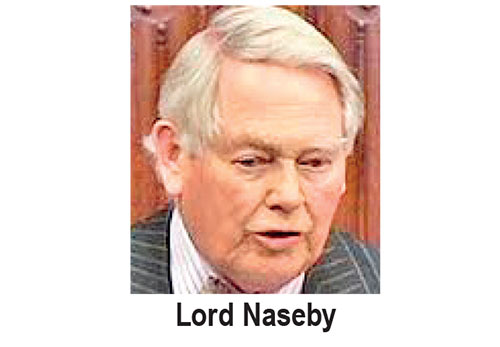
Lord Naseby supports vote in the absence of consensus on Core Group’s resolution

March 10th, 2021

By Shamindra Ferdinando Courtesy The Island

Lord Naseby yesterday (9) said that in spite of the Core Group’s resolution being further watered down, the possibility of the government of Sri Lanka accepting it was unlikely.

The Island raised the issue at hand with Lord Naseby, who unconditionally threw his weight behind Sri Lanka’s efforts to counter unsubstantiated war crimes accusations.

Q: Having made invaluable representations to UNHRC on behalf of Sri Lanka, at the current session too, what would you think is advantageous to Sri Lanka (a) to go with the Core Group resolution or (b) seek a vote whatever the consequences?

A: It appears as far as I can see the Core Group resolution is slowly being amended and may yet be amended further before March 22 so I cannot give a definitive Yes or No now however it seems unlikely it will be  acceptable to Sri Lanka. If this turns out to be the case then I personally would support a vote.

(Q)   Many Sri Lankans believe successive governments conveniently failed to exploit Oct 2017 disclosure made by you in the House of Lords.

Do you believe your disclosures, statements as well as statements made by US Defence Advisor Lt. Col. Smith in June 2011 and Wikileaks revelations could have been used in a much better way by GoSL?

(A) I think the previous Government missed a trick in not exploiting all the evidence that clearly refuted the allegations in the Darusman & OISL reports. I think the present Government faces so many challenges e.g. pandemic, financial challenges plus Geneva plus a devious UK who never supplied the Gash dispatches to the UNHRC plus a constant barrage from the Diaspora all in a short time frame that I do not criticise them. In fact the actions to revitalise the Missing Person Commission & the Reparations Commission are both really positive.

 (Q) Are you disappointed with the way Sri Lanka’s defence continued to be handled? 

(A) Remember my role is to try to help the people of Sri Lanka.

Well informed sources said that the government was under heavy pressure to accept the Core Group’s resolution with India being asked by the government to back Sri Lanka whereas the TNA insisted on New Delhi’s support.

Link between spice traders and Easter terrorists being probed – Trade Minister

March 10th, 2021

By Saman Indrajith Courtesy The Island

Rs 3.72 billion worth of pepper imported between 2015 and 2019

Investigations were underway to ascertain information about a nexus between spice traders and the Easter Sunday terrorists, Trade Minister Bandula Gunawardena told Parliament yesterday.

Minister Gunawardena said so in response to a question by SLPP MP Mohamed Muzammil, who said that one of the leading sponsors of the Zahran Hashim’s group that executed the Easter Sunday terror attacks was Mohamed Yusuf Ibrahim, who had been a JVP national list candidate for parliamentary elections. Ibrahim’s sons were involved in the attacks and there had been a nexus between spice traders and Muslim extremist groups. Ibrahim was one of the wealthiest pepper exporters. The funds earned through pepper exporting were channeled for the terrorist activities.”

 Minister Gunawardena said that investigations were underway to uncover more details about the nexus between pepper exporters and terrorists.

 Minister Gunawardena said that between the years 2015 and 2019 the highest amount of pepper had been imported to the country by various businessmen at the expense of the local pepper cultivators.  The total amount was five million kilos at a cost of Rs. 3.72 billion.

President Gotabaya Rajapaksa had stopped importing pepper. Today, the pepper farmers sell a kilo of pepper at Rs 600-800 a kilo,” the Minister said.

Easter attacks: AG directs probes into 5 suspects including Sara Jasmine

March 10th, 2021

Courtesy Adaderana

The Attorney General (AG) has directed the Inspector-General of Police to investigate five suspects whose names were disclosed by the report of the Presidential Commission of Inquiry (PCoI) which looked into the Easter Sunday terror attacks.

Accordingly, probes will be carried out into Abu Hind, Lukman Thalib, Lukman Thalib Ahmed alias Abu Abdulla, Rimzan and Mahendran Pulasthini alias Sara Jasmine who were named in the 17th chapter in the report.

In a statement issued today (March 10), AG’s Coordinating Officer State Counsel Nishara Jayaratne said a special team of 12 legal officers of the Attorney General’s Department has been assigned to study the recordings of evidence in the PCoI report.

The Attorney General, on March 08, has called on His Eminence Malcolm Cardinal Ranjith to brief him about the progress of the legal matters and investigations pertaining to the carnage.

During the meeting, the Attorney General has stressed the importance and the need to study all evidence recorded by the Presidential Commission during its proceedings.

Pointing out that the PCoI’s final report was focused on the individuals who failed to prevent the attacks, the Attorney General has noted that it is paramount to study all recordings of evidence as the report does not reveal concrete information about the real ‘masterminds’, conspirators and individuals who directly and indirectly aided and abetted the blasts, the coordinating officer said further.

She assured that all individuals who are accountable for the attacks will be brought to book.

In the meantime, investigations of the Criminal Investigation Department (CID) must be completed and all evidence recorded by the PCoI must be studied by the Attorney General before serving indictments against all those who were responsible for the dastardly act, State Counsel Jayaratne added.

Sarath Weerasekera reveals more details on Easter attacks

March 10th, 2021

Courtesy Adaderana

A total of 676 individuals have been arrested in connection with the 2019 Easter Sunday terror attacks, Minister of Public Security Rear Admiral Sarath Weerasekera stated.

Among the arrested, 202 have been imprisoned and another 66 persons are currently being interrogated under detention, he said.

The Minister mentioned this speaking at the debate on the report of the Presidential Commission of Inquiry on the Easter attacks, at the parliament today (10).

Meanwhile, Sri Lankan intelligence had uncovered information in early 2020 regarding a female unit trained under the suicide bomber named Zahran Hashim, Weerasekera added.

The seventeen women who had been trained under Zahran had taken the ‘Bayat’ oath [oath of allegiance], the Minister said.

Five of them had died and another three have been charged and imprisoned, he added.

Another seven of them are currently detained and being investigated, the Minister said.

Coronavirus death count climbs to 515

March 10th, 2021

Courtesy Adaderana

Sri Lanka has reported 04 more coronavirus-related deaths, the Director-General of Health Services confirmed today (March 10).

As per the Department of Government Information, one female patient and three male patients are among the victims.

The new deaths bring the number of COVID-19 related deaths witnessed in Sri Lanka to 515 in total.

01. The deceased is a 74-year-old male resident from Colombo 14. He died on 08.03.2021 at his residence and the cause of death is mentioned as Covid-19 pneumonia.

02. The deceased is a 57-year-old male resident from Colombo 09. He died on 08.03.2021 on admission to the General Hospital Colombo. The cause of death is mentioned as Covid-19 pneumonia and acute diabetes.

03. The deceased is a 23-year-old male resident from Alawathugoda. He died on 08.03.2021 while undergoing treatments at National Hospital Kandy. The cause of death is mentioned as Covid-19 pneumonia and acute blood poisoning.

04. The deceased is a 77-year-old female resident from Nugegoda. She was diagnosed as infected with Covid-19 while undergoing treatments at Colombo South Teaching Hospital and transferred to Base Hospital Pimbura where she died on 10.03.2021. The cause of death is mentioned as Covid-19 pneumonia and blood poisoning.

Coronavirus: 300 positive cases in total confirmed today

March 10th, 2021

Courtesy Adaderana

Sri Lanka registered 140 more positive cases of COVID-19 today (March 10) as total novel coronavirus infections reported within the day reached 300.

The new development has pushed the country’s confirmed COVID-19 case count to 86,685.

According to COVID-19 figures, 2,964 active cases are still under medical care at selected hospitals and treatment centres.

Meanwhile, total recoveries reported in the country now stand at 83,210.

Sri Lanka has also witnessed 511 fatalities due to the outbreak of the pandemic.

Five-member SC bench to consider Nagananda’s petition against 20A

March 10th, 2021

Courtesy Adaderana

A five-member judge bench of the Supreme Court has been appointed by the Chief Justice to take up a petition challenging the 20th Amendment to the Constitution.

Supreme Court Justices Gamini Amarasekara, Yasantha Kodagoda, A.H.M.D. Nawaz, Kumudini Wickremesinghe and Shiran Gunaratne will accordingly serve as the members of the bench.

The relevant petition, filed by public interest litigation activist Attorney-at-Law Nagananda Kodituwakku, has been fixed for support on the 12th of March.

Through his petition, Kodituwakku had stressed that the manner in which the 20th constitutional amendment was passed is against the law and that it has jeopardized the sovereignty of the judiciary.

Second and third readings of the 20th Amendment to the Constitution were passed with amendments with a two-thirds majority in October 22, 2020.

AG directs IGP to probe into import of sword consignment

March 10th, 2021

Courtesy Adaderana

The Attorney General has directed the Inspector General of Police (IGP) to conduct investigations in the import of several swords, daggers, and other such weapons into the country.

This was in relation to the Writ Application filed by His Eminence Cardinal Malcolm Ranjith, stated the Coordinating Officer of the Attorney General, State Counsel Nishara Jayaratne.

Accordingly, Attorney General Dappula de Livera has issued the following instructions to the IGP C. D. Wickramaratne:

I. To apprehend the large consignments of swords, daggers, and similar weapons imported during, before, and after the 2019 Easter Sunday terror attacks
ii. To identify the places where those weapons may be kept, stored, or concealed
iii. To arrest and take legal action against those who possessed, distributed, and/or imported these weapons

The IGP has been further instructed to submit a complete report on the aforementioned action to the Attorney General before March 26.

When the petition filed by the Archbishop of Colombo seeking an impartial investigation into the import of a large consignment of swords following the Easter Sunday terror attacks, the Court of Appeal, on March 05, directed the Attorney General to present submissions on probes into the incident in consultation with the IGP and the Defence Secretary.

Colombo HC issues warrants on Hirunika

March 10th, 2021

Courtesy Adaderana

The Colombo High Court issues warrant on former MP Hirunika Premachandra for not appearing before courts over the case on the abduction of a youth in 2015.

A 35-year-old man was abducted in 2015 at Baseline Road area in Dematagoda and assaulted by a group of individuals who had arrived in a Land Rover Defender which was allegedly owned by Premachandra.

The victim who was identified as a resident of Kolonnawa had been abducted on December 21, 2015.

Nine including Premachandra were charged over the abduction. However, the suspects excluding the former parliamentarian later admitted before the Colombo High Court to abducting the youth. They were sentenced to 2 years rigorous imprisonment suspended for 12 years by the Colombo High Court.

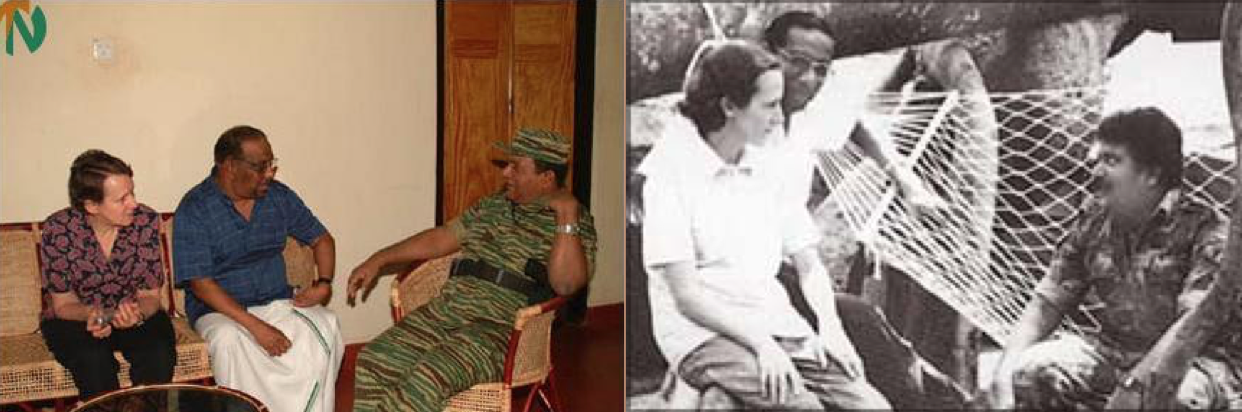
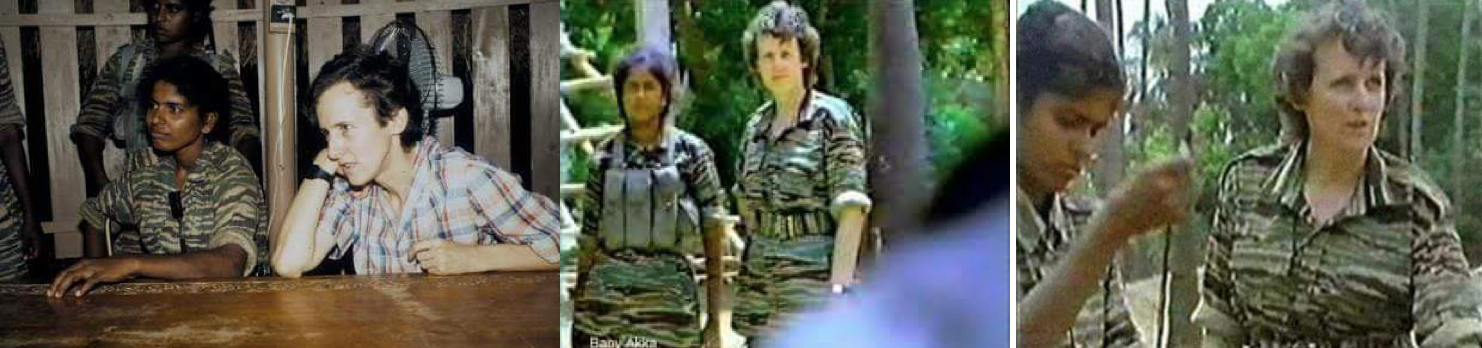
UK celebrating Women’s Day protecting LTTE Terrorist Aunty Adele

March 10th, 2021

How come LTTE terrorist Aunty Adele is more important to the UK than Lord Naseby?

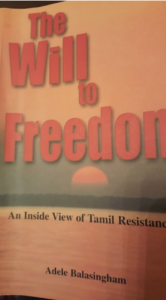
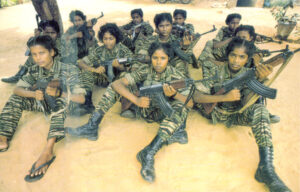
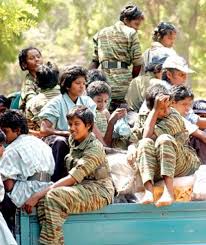
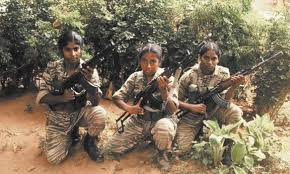
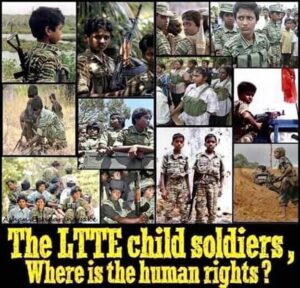
Lord Naseby has asked a very pertinent question – why is UK not prosecuting Adele Balasingham for child soldier recruitment. The UK is not answering him? This is the same UK Government drafting resolutions against Sri Lanka for war crimes, but the UK Government sees fit to provide safe haven to a woman who denied children their right to be a child, their right to be with their families, their right to education, their right to freedom of movement & their right to life. Are these not pretty serious charges. The irony of it is that she has even boasted of her achievements in 2 books authored by her which easily provides the evidence for the UK to frame charges against her. The Question is why is the UK Government shy to take action against a woman who turned children into child soldiers, who denied women their rights and who even trained children to commit suicide biting a cyanide capsule that she gifted them at the end of the training.

https://tamilnation.org/books/eelam/adeleann– Women Fighters of Liberation Tigers

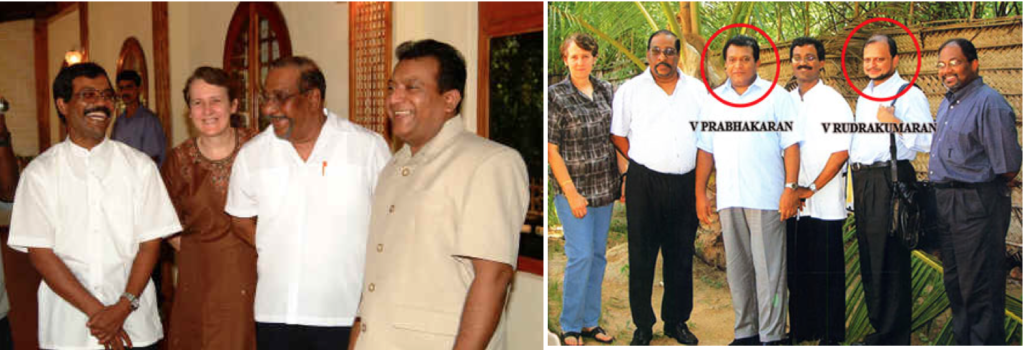
Adele & Rudrakumaran are the only living LTTE

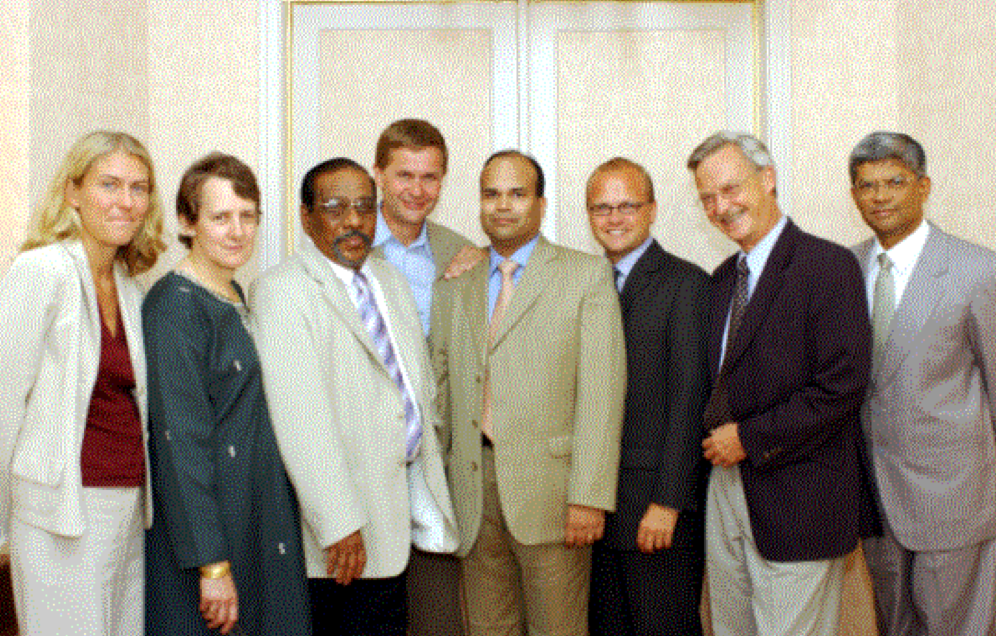
One time good pals – some of these personalities are very much involved in the political scene. What they are really up to no one knows! Can’t be that good though!

The Murderers Club

Imagine how many young children and young women were prevented from becoming a SOMEBODY IN LIFE by this AUNTY who taught them only to hold a gun and shoot people and commit suicide when caught.

What kind of sadistic woman was this? She was a NURSE too.

Imagine how many lives she destroyed?

Imagine how many women could have become doctors, engineers, accountants or even a loving mother … instead she confined them to the dirty Vanni jungles, put them into LTTE uniforms and taught them to murder.

Where is the JUSTICE for her CRIMES?

We again ask the question from the UK Government – Why is Adele more important to the UK Government than Lord Naseby? Why is the UK Government not taking action against Adele for her crimes against children and women?

Shenali D Waduge

Seek War Crimes against Adele Balasingham

LTTE would have been eliminated in May 1987 & not May 2009 if India did not save LTTE

March 10th, 2021

Operation Vadamarachchi that encircled Prabakaran was brought to a close by Operation Poomalai by India and Prabakaran was evacuated to India by helicopter and kept until the Indo-Lanka Accord was signed and Rajiv Gandhi returned to Delhi. By rescuing Prabakaran in May 1987 India is responsible for every killing by LTTE until finally Sri Lanka’s Armed Forces eliminated Prabakaran in May 2009 though that too served India’s/QUAD interests.

Operation Vadamarachchi (Liberation) – 26 May 1987 (Phase 1) 3 June 1987 (Phase 2)

Nearly 5000 Sri Lankan troops were deployed to vest control over LTTE held areas of Jaffna using 3 brigades. By 1987, Sri Lanka’s Armed Forces were 40,000.

The decision was taken following a spate of attacks by the LTTE.

  • 3 May 1986 Air Lanka flight UL512 killing 21 including 13 foreigners
  • 7 May 1986 Parcel bomb at Central Telegraph Office killing 11 and injuring over 100
  • 29 May 1986 bombing at Ceylon Cold Stores warehouse in Slave Island killing 9
  • 17 April 1987 Aluth Oya massacre killing 127 civilians
  • 21 April 1987 Pettah bus stand bombing killing 113 civilians.
  • 28 May 1987 LTTE’s notorious Canada Bunker’ (2 storied building) was captured.
  • 28 May 1987 – Uddupidy & Nelliady was captured by Sri Lanka troops
  • 31 May 1987 Vadamarachchi region was recaptured.
  • 1 June 1987 – Army approached Point Pedro
  • 2-4 June 1987 – Flotilla & Parippu drop
  • 5 July 1987 – LTTE’s first suicide bomber – Capt Miller who drove a lorry loaded with explosives to the Nelliady army camp in Vadamarachchi.
  • 21 July 1987 – India sends 6 helicopters to transport Prabakaran, his wife & family to Delhi Ashok Hotel. He was given no access to his men
  • 29 July 1987 – Indo-Lanka Accord
  • 30 July 1987 – IPKF landed claiming ‘we will have Prabakaran in our custody within 72 hours’.Eventually, IPKF ended up gunning down Tamils, raping Tamil women, attacking Sinhalese villages until IPKF was asked to leave Sri Lanka by March 1990.
  • 2 Aug 1987 – Prabakaran flown back to Jaffna ONLY after PM Rajiv returned to Delhi from Colombo after signing indo-Lanka Accord

The 2ndphase commenced on 3 June 1987 heading to Achchuveli to capture Jaffna. This was when India sent a flotilla of ships but the Sri Lankan Navy threatened to open fire if Sri Lanka’s territorial waters were breached. India’s response was to dispatch 5 aircrafts with a threat to Sri Lanka’s envoy in Delhi.

The offensive that started on 26 May 1987 was brought to an end on 4 June 1987 because of India. India saved LTTE. India is responsible for every loss of life committed by LTTE since June 1987. Has India not prevented LTTE’s demise and capture of Prabakaran in May 1987, the conflict would not have dragged till May 2009. 

According to Manoj Joshi, LTTE received about 20tonnes of explosives from RAW in June 1987.

Operation Poomalai (Eagle Mission 4) – Indian invasion of Sri Lanka

On the 4th of June 1987, India stopped the siege of Jaffna by the Sri Lankan army.

India’s Foreign Minister rang Sri Lanka’s ambassador in Delhi just 30 minutes before 5 Indian aircrafts escorted by 4 Mirage 2000s fighter aircrafts, violated Sri Lanka’s airspace and flew over Jaffna Peninsula carrying just 25tons of food on 4 June 1987. India called the intervention a ‘mercy mission’ delivering just 25tons of food! 35 Indian & international journalists were onboard the 5 flights (7 on board each plane). It was a ‘blatant violation of sovereignty’ by India. With this invasion the Vadamarachchi Operation Liberation came to an end giving a life line to LTTE. 2 days earlier on 2 June 1987 PM Rajiv Gandhi sent a flotilla by sea which the Sri Lanka Navy sent back irking India.

LTTE was openly involved in India & explains why India wished to save LTTE

  • 1982 shoot-out in Pondy Bazaar
  • 1983 LTTE office in Basant Nagar, Madras
  • 1990 February Indian police constable killed in Ramanathapuram district
  • 1990 June – 13 EPRLF leaders killed in Chennai including K Padmanabha
  • these are boys who were trained by us from 1977”(Dixit, Assignment Colombo)
  • It is a well-known fact that the LTTE and other Sri Lankan Militants camps were established in India ever since 1982 in tune with the policy of the Central Government at that time” Shri M. Karunanidhi, Chief Minister of Tamil Nadu (affidavit no. 187/94) 
  • I state that the Congress Governments under the Prime Ministership of late Smt. Indira Gandhi and late Thiru Rajiv Gandhi encouraged, trained and supported the LTTE and other Tamil Militant groups.” Shri K. Mohandas – then Dir Gen. Police (affidavit no. 64/92-JCI) 

The international community stood silent regarding India’s intervention. The GoSL had no choice but to abort Operation Vadamarachchi.

No friend of Sri Lanka would train armed militants and sponsor terror resulting in killing of innocent people.

No friend of Sri Lanka would threaten our ambassador to say that opposition ‘would be met by force’

Can India expect Sri Lanka to forgive India for this role?

By saving LTTE in May 1987 – India stands guilty of every murder and war crime committed by LTTE

LTTE killed Rajiv Gandhi on 21 May 1991, India banned LTTE on 14 May 1992 – why didn’t India ban LTTE for killing innocent people? All of these lives would have been saved if India did not prevent Sri Lanka from capturing Prabakaran in Vadamarachchi in May 1997.

6 Oct 1987 – Valachchenai massacre of 40 Sinhalese travelling on train

6 Oct 1987 – Tharavi massacre of over 25 Sinhalese civilians including pregnant mothers

6 Oct 1987 – Sagarapura massacre of 27 Sinhalese villagers

7 Oct 1987 – Pottuvil massacre of 30 Sinhalese travelling on a bus

10 Oct 1987 – Ganthalawa massacre over 10 civilians killed

15 Oct 1987 – Ella Kantale massacre of 14 Sinhalese mostly women and children

16 Oct 1987 – Pulimodai massacre of 11 Sinhalese on a bus

19 Oct 1987 – Kalkudah massacre of 40 persons on a bus

9 Nov 1987 – Maradana bus bombing killing 27 civilians, and 15 shot dead by LTTE

11 Nov 1987 – Kalkuda massacre killing 7 Sinhalese selling fish

15 Dec 1987 – Devalagodella massacre killing 9 civilians in Polonnaruwa

22 Dec 1987 – Morawewa massacre killing 7 Sinhalese fishermen

31 Dec 1987 – Kaththankudi massacre killing 30 Muslims

31 Dec 1987 – Mahadivulwewa massacre killing 10 villagers

1 Jan 1988 – Kuruniyankulama massacre in Trinco killing 5 Sinhalese

2 Feb 1988 – Bogamuyana village massacre in Ampara killing 11 civilians

2 Mar 1988 – Morawewa village massacre killing 15 Sinhalese

5 Mar 1988 – Sittar, Kantale in Trinco 24 civilians killed by LTTE land mine

11 Mar 1988 – Suhadagama Anuradhapura massacre killing 19 passengers on a bus

14 Mar 1988 – Peniketiyawa, Trinco killing 28 civilians on a bus

14 Mar 1988 – Galmitiyawa, Kantale – LTTE shoot 13 Sinhalese dead

15 Mar 1988 – Kivulkade, Morawewa – LTTE kill 7 Sinhalese villagers

17 Mar 1988 – Deegawapiya, Amapara – LTTE hack to death 13 Sinhalese villagers

22 Mar 1988 – Pudukulam, Vavuniya – LTTE kill 6 Sinhalese villagers

22 Mar 1988 – Medawachchiya, Vavuniya – LTTE kill 9 Sinhalese villagers

27 Mar 1988 – Medawachchiya, 9 civilians killed in bus bomb

29 Mar 1988 – Wewalketiya – LTTE blow bus killing 9 passengers

31 Mar 1988 – Sainadamaradu – LTTE kill 10 Muslims and 7 Tamils

8 Apr 1988 – Horawapathana, LTTE kill 14 Sinhalese

30 Apr 1988 – Aranthalawa – LTTE kill 4 civilians on a bus

1 May 1988 – Sittaru, Kantale, LTTE explode land mind killing 12 Sinhalese, 9 Muslims

21 Jul 1988 – Time bomb in Bandula Hotel, Trinco killing 5 persons and wounding 15

28 July 1988 – Weli Oya LTTE kill 16 Sinhalese villagers

10 Aug 1988 – LTTE attack central camp Ampara killing 11 civilians

16 Aug 1988 – LTTE explode bomb killing 6 Sinhalees, 2 Muslims, 1 Tamil and a soldier

25 Aug 1988 – Marawila, Polonnaruwa LTTE kill 11 civilians by cutting their necks

10 Sept1988 – 16thColony, LTTE shoot 7 Sinhalese and 4 Tamils

10 Oct 1988 – LTTE attack Mahakngaskada, Medawachchiya killing 44 civilians

14 Nov 1988 – Gomarakadawela, Trinco LTTE shoo 28 Sinhalese

12 Dec 1988 – Sumedagama, Trinco LTTE kill 28 civilians

17 Jan 1989 – Maharambekulam, Vavuniya LTTE kill 9 civilians

2 Feb 1989 – Bogamuyana, Ampara LTTE kill 11 civilians

11 Feb 1989 –  Dutuwewa, 37 Sinhalese killed

11 Feb 1989 – Sinhapura LTTE kill 6 Sinhalese

27 Feb 1989 – Borawewa, Polonnaruwa LTTE kill 8 Sinhalese

13 Apr 1989 – Central Road, Trinco LTTE explode bomb killing 51 civilians

17 Aug 1989 – Nochchikulam, Vavuniya 8 civilians killed

30 May 1990 – Mihindupura, Trinco LTTE kill 5 civilians

11 Jun 1990 – over 600 unarmed policemen killed in East Sri Lanka

24 July 1990 – Aralaganvila, Ampara 8 civilians hacked to death

25 July 1990 – Meeyankulam, Polonnaruwa 8 civilians hacked to death

26 Jul 1990 – Thammennawa, Ampara 19 civilians killed by LTTE

29 Jul 1990 – Samanthurai, Ampara, LTTE kill 5 in mosque

30 Jul 1990 – Akkaraipattu- – 14 Muslims killed

31 Jul 1990 – Podankady, Kantale, 11 civilians killed

3 Aug 1990 – Kaththankudy mosque massacre – 103 Muslims praying in mosque killed

5 Aug 1990 – Mullayankadu, Ampara 34 farmers killed

7 Aug 1990 – Bandaraduwa, Ampara 30 villagers killed

8 Aug 1990 – Morawewa, 26 civilians on a bus killed

8 Aug 1990 – Nawagamuwa, Vavuniya – 7 civilians killed

11 Aug 1990 – Eravur, Batticoloa,173 Muslims killed

12 Aug 1990 – Veerachcholai, Ampara, LTTE kill 4 Muslims in a paddyfield

13 Aug 1990 – 6 Muslim fishermen killed in Muttur

13 Aug 1990 – Aranthalawa – 10 Sinhalese killed

13 Aug 1990 – Pulmoddai, 13 civilians killed

9 Sept 1990 – 7 farmers on a tractor in Uhana, Ampara killed

19 Sept 1990 – Vellamunai fishing village in Puttalam – 23 civilians killed

21 Sept 1990 – Pudukudurippu, 15 civilians killed

24 Sept 1990 – Gajabapura, 4 civilians killed

30 Sept 1990 – Mahaoya, Ampara 9 civilians killed

1 Oct 1990 – Peruvalthalawa, Ampara 9 Sinhalese killed

2 Oct 1990 – Wahalkada, Ampara 4 civilians killed

11 Oct 1990 – 9 Muslims hacked in Arugam Bay

23 Oct 1990 – Thanthirimalai village, 10 civilians killed

25 Oct 1990 – Panmedavachchia, 4 civilians killed

27 Oct 1990 – 5 civilians killed in Thanthirimalai, Ampara

29 Oct 1990 – Olikulam, Batticoloa, 3 civilians killed

1 Nov 1990 – Helambawewa village, 10 civilians killed

3 Nov 1990 – Bandarakumbukwewa, Ampara 4 civilians killed

23 Jan 1991 – Bogamuyana, Ampara 29 civilians killed

2 Mar 1991 – Erakkandy, Trinco, 5 civilians killed

24 Mar 1991 – Akkaraipattu fish market 9 civilians killed

14 Apr 1991 – 22ndColony, Ethimalai, Ampara killing 17 civilians

20 Apr  1991 – Niyandella, Okkampitiya, 22 civilians killed

12 Jun 1991 –Manmunai Ferry explosion killing 10 civilians

24 Jun 1991 – Weligahakandiya, Amparara 10 civilians killed

6 Jul 1991 –  Puddur, Muslim village killing 16 Muslims

6 Jul 1991 – Karapola, Polonnaruwa Sinhala village killing 10

8 Aug 1991 – 8 Muslim farmers killed in Samanthurai

19 Sept 1991 – Palligodella, Polonnaruwa, 13 Muslims killed

10 Apr 1992 – Car bomb National Youth Council, Maharagama killing 9 civilians

10 Apr 1992 – Car bomb in Maradana, Colombo killing 8 civilians

10 Apr 1992 – Bus bomb in Ampara killing 28 civilians

29 Apr 1992 – Alinchchipotha Muslim village killing 130 Muslims

16 May 1992 – Kosgolla village 5 civilians killed

15 Jul 1992 – Bus proceeding to Kaththankudy – 19 Muslims killed

21 Jul 1992 – 8 passengers travelling on train from Colombo to Batticoloa killed

30 Jul 1992 – Bus bomb in Trinco town kills 9 passengers

9 Aug 1992 – Mailanthenna village attacked killing 25 villagers

1 Sept 1992 – Sainadamaradu, 22 Muslims killed

10 Sept 1992 – ferry blasted at Kiliveddy point killing 6 civilians

1 Oct 1992 – Konwewa village attacked killing 15 civilians

15 Oct 1992 – Palligodella, Polonnaruwa killing 146 civilians over 80 wounded

19 Jan 1994 – Rambawewa, Ampara 10 civilians killed in bus

16 Mar 1994 – 10 fishing boats in Kudiramalai point, Puttalam attacked and 17 fishermen killed

7 Aug 1995 – Suicide attack near Independence Squar kills 23 civilians and injures over 40

31 Jan 1996 – Suicide attack at Central Bank, killing 86 civilians

12 Apr 2000 – LTTE attack Musical show in Trinco killing 10 ciivlians

10 Jul 2000 – Vilgamvehera, Trinco 4 civilians killed

The above list is nowhere near the number of civilians killed by LTTE and does not include civilians killed from LTTE attacks on politicians and other prominent persons.

That India banned LTTE only after its own Prime Minister was assassinated and US and Western countries began banning LTTE only after 1997, ignoring the spate of LTTE killings directly targeting unarmed civilians, should make you ask why UN or the Western human rights organizations just allowed LTTE to kill. These entities are so concerned about how LTTE was eliminated but not the least bothered about how unarmed civilians were killed by LTTE. Doesn’t this appear strange?

The question next requiring answer is why did India not save LTTE & Prabakaran in May 2009 as India did in May 1987?

To answer that it is important to note how India masterminded evacuation of Prabakaran on 21 July 1987 to Delhi and kept him in India till 2ndAugust 1987 by which time the Indo-Lanka Accord was signed on 29 July 1987 and Rajiv Gandhi returned to Delhi on 2 August 1987. India made sure India’s plans were complete without Prabakaran.

That India was only using Prabakaran to further its plan was made clear when Maj. Gen. Harkirat Singh commander of the IPKF revealed that he was ordered twice to eliminate Prabakaran in September 1987.

With the Indo-Lanka Accord signed, 13a approved and IPKF in Sri Lanka – India did not need Prabakaran anymore. India had begun to train and arm Eelam National Democratic Liberation Front. IPKF declared war on LTTE on 8 Oct 1987.

Prabakaran would have noted all the humiliations he had to suffer and he delivered his returns on 21 May 1991 by assassinating Rajiv Gandhi in Tamil Nadu. Ironically, had Maj. Gen. Harkirat Singh carried out orders Rajiv Gandhi would be alive and Prabakaran would be dead!

Tamil militancy was a tool of India’s design for Sri Lanka, and to justify India’s interference in Sri Lanka. It should be quite clear that even 1983 July riots must have been masterminded by India just as we must also look at the Easter Sunday attacks and phase 2 of India’s intervention. Until and unless Sri Lanka’s policy makers wake up to these ground realities and look at the devious plans of India, we will get nowhere by dishing out strategic assets to India claiming India is our friend.

India prevented capture of Prabakaran.

India gave Prabakaran life because India was buying time for bigger role in Sri Lanka

By May 2009 India was part of QUAD and the Allies did not require LTTE or Prabakaran and thus the covert support to end LTTE. QUAD allies are today more than comfortable to manipulate the LTTE fronts operating from their countries.

But India, must account for every civilian killed as a result of rescuing Prabakaran in May 1987 and even the lives of the LTTE combatants who were wasted fighting an useless cause that was manipulated from Delhi.

Shenali D Waduge

Oprah’s opera, the Harry and Meghan show; An anachronism draws millions of TV viewers

March 9th, 2021

Raj Gonsalkorale

Oprah Winfrey’s interview with Meghan and Harry pulls in 17.1 million viewers on CBS. Prince Harry and Meghan, the Duke and Duchess of Sussex, speak with Oprah Winfrey for a two-hour telecast on CBS

Prince Harry, the Duke of Sussex and Meghan the Duchess of Sussex are troubled individuals. One cannot but feel for them in their hour of reflection, tinged with more than a share of bitterness, anger, anguish and disappointment.

The Royal household in the UK is an anachronism, more to the rest of the world perhaps than to the UK itself. The popularity of Queen Elizabeth and generally the lustre that accompanies the Royalty, but, not forgetting the scandals that paradoxically humanises them, is a big draw to many in the UK, as well as to tourists who go there. The ongoing Royal opera earns plenty of money for the country.

Whilst not wishing to make any judgements or cast any aspersions on the dilemma faced by Prince Harry and the Duchess of Sussex, and the Royal household in UK, it needs to be said that the attention given to them and the interest shown by millions of people throughout the world, very sadly dwarfs the interest that should be given by the very same people to the tragic situation faced by millions of people throughout the world.  Some of these human tragedies are noted below

  • The World Bank in its 2018 report states that The global extreme poverty rate was 9.2 percent in 2017. That is equivalent to 689 million people living on less than $1.90 a day.  At higher poverty lines, 24.1 percent of the world lived on less than $3.20 a day and 43.6 percent on less than $5.50 a day in 2017. 
  • The US Centre for Disease Control says that Worldwide, 780 million people do not have access to an improved water source and an estimated 2.5 billion people lack access to improved sanitation (more than 35% of the world’s population) 
  • They also say that an estimated 801,000 children younger than 5 years of age perish from diarrhoea each year, mostly in developing countries. This amounts to 11% of the 7.6 million deaths of children under the age of five and means that about 2,200 children are dying every day as a result of diarrheal diseases 
  • The organisation Humanium says that today, education remains an inaccessible right for millions of children around the world. More than 72 million children of primary education age are not in school and 759 million adults are illiterate and do not have the awareness necessary to improve both their living conditions and those of their children.
  • The WHO says that at least half of the world’s population cannot obtain essential health services and each year, large numbers of households are being pushed into poverty because they have to pay for health care out of their own pockets.
  • The Wikipedia states that as per the latest reviewed country reports, the latest accepted revision reviewed on 7 February 2021, states that an estimated 150 million people are homeless worldwide. Habitat for Humanity estimated in 2015 that 1.6 billion people around the world live in “inadequate shelter
  • According to the United Nations and UNICEF, one in five girls of primary-school age are not in school, compared to one in six boys. One factor accounting for this difference is the lack of sanitation facilities for girls reaching puberty. Girls are also more likely to be responsible for collecting water for their family, making it difficult for them to attend school during school hours.
  • An estimated 801,000 children younger than 5 years of age perish from diarrhoea each year, mostly in developing countries. This amounts to 11% of the 7.6 million deaths of children under the age of five and means that about 2,200 children are dying every day as a result of diarrheal diseases. Unsafe drinking water, inadequate availability of water for hygiene, and lack of access to sanitation together contribute to about 88% of deaths from diarrheal diseases
  • Trachoma is the world’s leading cause of preventable blindness and results from poor hygiene and sanitation. Approximately 41 million people suffer from active trachoma and nearly 10 million people are visually impaired or irreversibly blind as a result of trachoma 12. Trachoma infection can be prevented through increased facial cleanliness with soap and clean water, and improved sanitation.

This is the real world most people inhabiting it live in while some concern themselves with the plight of a few favoured and fortunate individuals who have basically brought their troubles on themselves as a consequence of their own actions.

It is perhaps time that more people gave some thought to the world that is full of unfortunate people, including women and children who, for no fault of theirs have been born into and are subjected to living conditions that are not suitable for any living being.

මාතර නගරය විධිමත් කිරීම අග්‍රාමාත්‍යතුමාගේ අවධානයට

March 9th, 2021

අග්‍රාමාත්‍ය මාධ්‍ය

මාතර නගරය වාණිජ හා සංචාරක නගරයක් ලෙස දියුණු කරමින් එහි පරිපාලන නගරය කොටවිල ප්‍රදේශයේ ස්ථාපිත කිරීමේ කටයුතු කඩිනම් කිරීමට ගරු අග්‍රාමාත්‍ය මහින්ද රාජපක්ෂ මහතා අද 2021.03.09 දින උපදෙස් දුන්නේය.

මාතර නව නගරය, අකුරැස්ස, දෙවිනුවර, දික්වැල්ල, කඹුරුපිටිය, කිරින්ද-පුහුල්වැල්ල, තිහගොඩ සහ වැලිගම නගරවල නාගරික සංවර්ධන අධිකාරිය ක්‍රියාත්මක කරනු ලබන ව්‍යාපෘතිවල පවතින ගැටලු සම්බන්ධයෙන් පාර්ලිමේන්තුවේ කමිටු ශාලා 02හි පැවැති සාකච්ඡාවකට එක්වෙමින් අග්‍රාමාත්‍යතුමා මේ බව සඳහන් කළේය.

පළාත් පාලන ආයතන 17ක් මාතර දිස්ත්‍රික්කයට අයත් වේ. ඉන් පළාත් පාලන ආයතන 07ක් මුල් කරගෙන නාගරික සංවර්ධන අධිකාරිය යටතේ 2021-2030 දක්වා සංවර්ධන සැළැස්මක් ක්‍රියාත්මකය.

ඒ යටතේ මාතර මහ නගර සභාව, මාතර ප්‍රාදේශිය සභාව, වැලිගම නගර සභාව, වැලිගම ප්‍රාදේශිය සභාව, දෙවිනුවර, හක්මන හා මාලිම්බඩ ප්‍රාදේශිය සභා බල ප්‍රදේශ සංවර්ධනය කෙරෙන බව මෙහි දී නාගරික සංවර්ධන අධිකාරියේ නිලධාරින් අග්‍රාමාත්‍යතුමාට දැනුම් දුන්නේය.

නිල්වලා ගඟ දෙපස ඇති අනවසර ඉදිකිරීම් සංවර්ධන කටයුතුවලට බාධාවක් වී ඇති බව ද එම නිලධාරින් හෙළි කළේය.

පසුගිය ආණ්ඩු සමයේ නවතා දමා තිබු මාතර දිස්ත්‍රික්කයේ සංවර්ධන ව්‍යාපෘති නැවත ආරම්භ කරන්නැයි මෙහි දී අග්‍රාමාත්‍යතුමා නාගරික සංවර්ධන අධිකාරියේ අධ්‍යක්ෂ ජනරාල්වරයාට උපදෙස් දුන්නේය.

විශේෂයෙන් දැනට මාතර මහ රෝහල පවතින ස්ථානයේ හදිසි අනතුරු ප්‍රතිකාර සඳහා පමණක් වෙන් කරමින් අනෙකුත් ප්‍රතිකාර කටයුතු කොටවිල ඉදිකෙරෙන නව රෝහලට ගෙනයාම සම්බන්ධයෙන් මෙම සාකච්ඡාවේ දී අවධානය යොමු විය.

එහිදී පසුගිය ආණ්ඩුව කොටවිල රෝහලේ ඉදිවෙමින් තිබූ ගොඩනැගිලි 9ක කටයුතු නවතා දමා ඇති බව අනාවරණය විය. ඒ අනුව එම ගොඩනැගිලි ඉදිකිරීම වහාම ආරම්භ කරන්නැයි දැනුම් දුන් අග්‍රාමාත්‍යතුමා රෝහලේ ඉදිකිරීම් කටයුතු කඩිනමින් අවසන් විය යුතු බව ප්‍රකාශ කළේය.

මේ අතර ගොඩගම හංදියේ සිට කඹුරුපිටිය දක්වා මාර්ගය මංතීරු 4කටත් කඹුරුපිටිය-කොටවිල දක්වා මාර්ගය මංතීරු දෙකකටත් සංවර්ධනය කිරීමට මහා මාර්ග අමාත්‍ය ජොන්ස්ටන් ප්‍රනාන්දු මහතා අදාළ නිලධාරින්ට මෙහිදී පැවරුවේය.

විදුලිබල අමාත්‍ය ඩලස් අලහප්පෙරුම මහතා අදහස් පළ කරමින් කොටවිල ඉදි වූ මාතර නව උසාවි සංකීර්ණය නොබෝ දිනකින් විවෘත කිරීමට හැකිවනු ඇතැයි විශ්වාසය පළ කළේය.

එහි ඉදිකිරීම් වලට සමඟාමීව නීතිඥයන් වෙනුවෙන් කාර්යාල පහසුකම් සහිත ගොඩනැගිල්ලක් ද ඉදිකරන්නැයි අග්‍රාමාත්‍යතුමා පැවසීය.

මාතර මහින්ද රාජපක්ෂ විද්‍යාලයේ රුපියල් මිලියන 700ක වියදමෙන් ඉදිකිරීම් ඇරඹූ ගොඩනැගිලි පසුගිය ආණ්ඩු සමයේ අතරමග නවතා දැමීමෙන් ඒවා දිරාපත්වෙමින් ඇති බව අමාත්‍ය ඩලස් අලහප්පෙරුම මහතා පෙන්වා දුන්නේය.

දෛනිකව මාතර නගරයේ සහ වැලිගම නගරයේ ඝන අපද්‍රව්‍ය ටොන් 80ක් පමණ ඒකරාශිවන අතර ඉදිරියේ දී මෙම ඝන අපද්‍රව්‍ය තුළින් විදුලිය නිෂ්පාදනය කිරීම කෙරෙහි රජයේ අවධානය යොමු වී තිබේ.

මේ අතර රුපියල් මිලියන 632ක් වැයකරමින් ඉදිකළ මාතර නගරයේ නිල්වලා ගඟ බඩ උද්‍යානයේ පළමු, දෙවැනි හා තෙවැනි අදියර මේ මස 31 වැනිදාට පෙර අවසන් කිරීමට නියමිතය. එහි සිවු වැනි අදියර මිශ්‍ර ව්‍යාපෘතියක් ලෙස ඉදිරියටත් ක්‍රියාත්මක වේ.

කඹුරුපිටිය නගර සංවර්ධනයට සමගාමීව  එහි පිවිසුම් මාර්ග මන්තීරු 4කින් යුතුව අඩි 66ක් දක්වා පළල් කිරීමටත් කඹුරුපිටිය මහා විද්‍යාලය සංවර්ධනය කිරීම පිළිබඳවත් මෙහි දී  අග්‍රාමාත්‍යතුමාගේ අවධානය යොමු විය.

කඹුරුපිටිය මහ විද්‍යාලය මෙන්ම රටේ අනෙකුත් පාසල් සංවර්ධනය කිරීමේ දී ඒ සෑම පාසලකටම මීටර් 400ක ධාවන පථයක් සහිත ක්‍රීඩා පිටියක් ලබා දීමට සැලසුම් කරන්නැයි අග්‍රාමාත්‍යතුමා අදාළ බලධාරින්ට දැනුම් දුන්නේය.

මෙම අවස්ථාවට කතානායක මහින්ද යාපා අබේවර්ධන, අමාත්‍යවරුන්වන ඩලස් අලහප්පෙරුම, ජොන්ස්ටන් ප්‍රනාන්දු, රාජ්‍ය අමාත්‍යවරුන්වන කංචන විජේසේකර, නාලක ගොඩහේවා, පාර්ලිමේන්තු මන්ත්‍රිවරුන්වන නිපුණ ආර් රණවක, වීරසුමන වීරසිංහ, කරුණාදාස කොඩිතුවක්කු, අග්‍රාමාත්‍ය ලේකම් ගාමිණි සෙනරත්, අග්‍රාමාත්‍ය කාර්ය මණ්ඩල ප්‍රධානී යෝෂිත රාජපක්ෂ මහත්වරු,  මාතර දිස්ත්‍රික්කයේ පළාත් පාලන ආයතන ප්‍රධානීන් ඇතුළු නාගරික සංවර්ධන අධිකාරියේ සහ රජයේ උසස් නිලධාරින් පිරිසක් එක්ව සිටියහ.

විදේශ විනිමය උපයා ගැනීමට හැකි සාර්ථක ව්‍යාපෘති සැලසුම් කරන්නැයි අග්‍රාමාත්‍යතුමාගෙන් උපදෙස්

March 9th, 2021

අග්‍රාමාත්‍ය මාධ්‍ය

විදේශ විනිමය උපයා ගැනීමට හැකි සාර්ථක ව්‍යාපෘති සැලසුම් කරන්නැයි මුදල් අමාත්‍යවරයා වශයෙන් ගරු අග්‍රාමාත්‍ය මහින්ද රාජපක්ෂ මහතා ඊයේ 2021.03.08 දින පෙරවරුවේ උපදෙස් දුන්නේය.

ඉදිරියේ දී ශ්‍රී ලංකාවේ විදේශ විනිමයෙන් ක්‍රියාත්මක වන ව්‍යාපෘති පිළිබඳ විදේශ සම්පත් දෙපාර්තමේන්තුවේ ප්‍රධානීන් සමඟ මුදල් අමාත්‍යංශයේ පැවති සාකච්ඡාවේ දී අග්‍රාමාත්‍යතුමා මේ බව අවධාරණය කළේය.

විදේශ ණය ලබා ගැනීමේ දී එම ණය පියවීම පිළිබඳව සළකා බලා සාර්ථක ව්‍යාපෘති පමණක් ක්‍රියාත්මක කරන ලෙස උපදෙස්  දුන් අග්‍රාමාත්‍යතුමා එම ව්‍යාපෘති ඔස්සේ විදේශ විනිමය උපයා ගැනීමට අවශ්‍ය සැලසුම් සකස් කරගන්නා ලෙස ද උපදෙස් දුන්නේය.

සාගර සම්පත් විශ්ව විද්‍යාලය සඳහා වන ව්‍යාපෘතිය මෙහි දී අග්‍රාමාත්‍යතුමාගේ විශේෂ අවධානයට ලක් වූයේය. එම විශ්ව විද්‍යාල ව්‍යාපෘතිය ඊට යාබද ප්‍රදේශයේ සංවර්ධනය ද ඉලක්ක කරමින් ක්‍රියාවට නංවන්නැයි අග්‍රාමාත්‍යතුමා අදාළ බලධාරීන්ට දැනුම් දුන්නේය.

මෙම අවස්ථාවට මුදල් රාජ්‍ය අමාත්‍ය අජිත් නිවාඩ් කබ්රාල්, මුදල් අමාත්‍යංශ ලේකම් එස්.ආර් ආටිගල,අග්‍රාමාත්‍ය කාර්ය මණ්ඩල ප්‍රධානී යෝෂිත රාජපක්ෂ, විදේශ සම්පත් දෙපාර්තමේන්තුවේ අධ්‍යක්ෂ ජනරාල් අජිත් අබේසේකර, අග්‍රාමාත්‍යතුමාගේ මුදල් අමාත්‍යංශ සම්බන්ධීකරණ ලේකම්වරුන්වන චරිත් විජේසිංහ, ගැමුණු කරුණාරත්න මහත්වරු ඇතුළු පිරිසක් සහභාගි වූහ.

PCoI report portrays wrong picture to Int’l community: Ven. Narampanawe Ananda

March 9th, 2021

Chaturanga Samarawickrama Courtesy The Daily Mirror

When looking at the final report of the Presidential Commission of Inquiry (PCoI) into the Easter Sunday attacks, the international community can decide that this attack was carried out by the Sinhala Buddhists, Deputy Secretary of the Asgiriya Chapter Ven. Narampanawe Ananda Thera said.

The prelate expressed his views after visiting the Bodu Bala Sena (BBS) General Secretary Ven. Galagoda Aththe Gnanasara Thera and a group of monks representing national organizations at the Asgiriya temple yesterday.

Ven. Ananda Thera said the personal views of the Asgiri and Malwatu chapters have already been presented to the President regarding the report.

The report had depicted a totally wrong image about the attack.

The Thera also mentioned that the Former President, former IGP and the BBS organisation had been mentioned responsible for the attack, according to the report, and gives the impression that this attack was launched by the Sinhala Buddhist people.

Hence, Ven. Gnanasara appealed to Asgiriya Chapter’s Ven. Narampanawe Ananda Thera to take action to issue a joint statement from the Asgiri and Malwatte chapters to ease the tension that has arisen in the minds of the Sinhala Buddhist people. 

Give AG full power to prosecute Easter attack perpetrators, Catholic Bishops urge

March 9th, 2021

Courtesy Adaderana

The Catholic Bishops’ Conference in Sri Lanka (CBCSL) has urged the government to take immediate action to implement the recommendations in the report compiled by the Presidential Commission of Inquiry which investigated the 2019 Easter Sunday attacks.

In a special statement issued following a special meeting held today (March 09), the CBCSL further appealed to the government that full power and freedom be given to the Attorney General to prosecute the perpetrators who aided and abetted the dastardly terrorist act and those who were found guilty of negligence.

We urge that the judicial mechanism to do that be set in motion with immediate effect.”

They also drew the attention to 22 sensitive documents that were withheld from the Attorney General, stating that we feel that these documents should be given to him as soon as possible.”

The statement read that almost two years have lapsed and the affected people are still longing for justice.”

Catholic Bishops’ Conference also welcomed the findings of the PCoI report on the carnage and the specific recommendations that were made.

In its conclusion, the statement stressed that people are awaiting immediate and transparent process of justice which is to be carried out with a sense of urgency.

Reiterating that justice delayed is justice denied,” the Catholic Bishops urged all individuals concerned to act without delay in on this crucial matter.”

Coronavirus: 304 positive cases in total confirmed today

March 9th, 2021

Courtesy Adaderana

Sri Lanka registered 149 more positive cases of COVID-19 today (March 02) as total novel coronavirus infections reported within the day reached 304.

Department of Government Information says 283 of today’s cases are close contacts of earlier cases linked to the Peliyagoda cluster.

Five others were detected from the prison cluster and the remaining 16 were identified as arrivals from foreign countries.

New development has pushed the country’s confirmed COVID-19 cases count to 86,343.

According to COVID-19 figures, 3,079 active cases are still under medical care at selected hospitals and treatment centres.

Meanwhile, total recoveries reported in the country now stand at 82,753.

Sri Lanka has also witnessed 511 fatalities due to the outbreak of the pandemic.

Sri Lanka’s COVID death toll hits 511

March 9th, 2021

Courtesy Adaderana

Four new COVID-related fatalities were confirmed today (March 09), says the Director-General of Health Services.

Following the new development, the country’s death toll from the pandemic outbreak has risen to 511.

According to the Department of Government Information, the details of the deceased are as follows:

01. An 81-year-old woman from Uduvil area – She had been under medical care at a private hospital in Colombo when she tested positive for the virus. She was then moved to the National Institute of Infectious Diseases (NIID) where she passed away today. The cause of death was recorded as blood poisoning, COVID infection and acute diabetes.

02. A 76-year-old man from Horape area – He was transferred from Colombo National Hospital to the National Institute of Infectious Diseases (NIID) after testing positive for the virus. He passed away on Sunday (March 07) due to acute stroke, COVID infection, acute diabetes and high blood pressure.

03. A 57-year-old man from Akurana area – He was initially receiving treatment at the Kandy National Hospital and was moved to the Theldeniya Base Hospital after testing positive for novel coronavirus. According to reports, he passed away today. The cause of death was reported as COVID pneumonia and kidney failure.

04. A 62-year-old man from Ragama area. After testing positive for COVID-19, he was transferred from National Hospital for Respiratory Diseases in Welisara to Mulleriyawa Base Hospital where he died yesterday (March 08). COVID pneumonia, cancer and acute diabetes were cited as the cause of death.

Only Oddamavadi assigned for burial of any COVID victims – Dr Hamdani

March 9th, 2021

Courtesy Adaderana

Seven more bodies of individuals who had fallen victim to COVID-19 were buried at Oddamavadi in Batticaloa today (March 09), says Army Commander General Shavendra Silva.

The burials have been carried out by the Sri Lanka Army.

Accordingly, a total of 38 corpses infected with novel coronavirus have been buried since the policy on mandatory cremation was reversed last month.

Meanwhile, Dr. Anver Hamdani, the Director of Medical Technical Services of Health Ministry said only Oddamavadi area has so far been assigned to carry out burials of any COVID victims.

His remarks came during Ada Derana ‘BIG FOCUS’ program held this afternoon.

Usually, bodies of Muslims are not buried in a coffin. But this is an exceptional situation. We allow 05 relatives of the deceased to engage in religious observances and to view the corpse. Then the corpse is placed in the cadaver pouch and then inside the coffin which is tightly sealed. The two vehicles specially assigned for the purpose depart from Colombo at 5.30 am daily. Two of the relatives are allowed to be present to witness the burial,” he said further, explaining the procedure.


On March 05, Sri Lanka began burials of COVID victims at Oddamavadi in Eastern Province.

The guidelines for the burial of COVID-19 victims were issued by the Director-General of Health Services on Wednesday (March 03).

Drafting of guidelines was completed after the committee of experts appointed to examine methods for disposal of COVID victims met on February 27. 

In February, Sri Lanka reversed a controversial order which mandated the cremation of bodies of all those who fall victim to COVID-19. 

The Extraordinary Gazette notification allowing the burial of COVID victims was published on February 25, amending the regulations made by the Minister of Health under Sections 2 and 3 of the Quarantine and Prevention of Diseases Ordinance (Chapter 222).

Fonseka files writ application against recommendations of PCoI on political victimization

March 9th, 2021

Courtesy Adaderana

Samagi Jana Balawegaya (SJB) MP Field Marshal Sarath Fonseka today filed a writ application seeking the Court of Appeal to revoke the recommendations of the Presidential Commission of Inquiry (PCoI) appointed to probe the alleged incidents of political victimization.

The Attorney General, the Secretary of the PCoI and its three commissioners – Supreme Court Justice (Retired) Upali Abeyratne, Court of Appeal Judge (Retired) Daya Chandrasiri Jayatilake and IGP (Retired) Chandra Fernando have been named as the respondents of the writ application.

According to the petitioner, the recommendations of the report have held him accountable over several complaints probed by the Presidential Commission.

The manner in which the PCoI carried out its investigations is in contrary to the law and its commissioners have acted beyond its mandate, MP Fonseka said further in his petition.


Meanwhile, 40 parliamentarians of SJB including Opposition Leader Sajith Premadasahanded over a petition to the Chief Justice on March 02, seeking an investigation against the panel of PCoI on political victimization.

Certain recommendations in the final report of the Presidential Commission have suggested that the Supreme Court has overlooked its jurisdiction, the SJB members said in its petition, stressing that this is in contempt of court.

According to them, some of the recommendations in the final report of the Presidential Commission have regarded the powers of the Supreme Court with contempt.

India is West’s Poodle in Asia – India is no friend of Sri Lanka or South Asians

March 9th, 2021

What kind of double game is India playing? How long does India think it can pretend to be friends of its neighbors while planning the downfall of its neighbors? Obviously this stems from a DNA that goes back to colonial rule wherein India was Colonial Britain’s trusted sepoy. India became India only after the Colonial British christened it as India in 1947. When India is today not only part of the Five Eyes (US-UK-Canada-NZ-Australia) Intelligence Alliance in 2020 and a member of the QUAD since 2007, India is purely functioning as a vassal of the West and even India’s foreign policy is today decided by Washington.

There would have been a good reason why colonial Britain treated British India more of a sepoy than it did Ceylon. The British army was supported heavily by Indian sepoy army. South Indians were colonial Britain’s eye to prosperity, enslaving on their plantations and transported around the world. Indians that make up populations in the Caribbean, South Africa, East Asia are those that colonials transported as indentured labor. The Indian sepoy army played a key role in slaughtering their own people on behalf of the British East India Company. History is certainly getting repeated as India is ever ready to do as the West orders. Indian sepoys were recruited by the Portuguese, the French, the British and other Europeans in plundering nations.

India is agreeing to do the very same via R2P & Geneva Resolutions.Notice the manner West dishes out international positions, prestige, privileges to Indians who are doing a better job on behalf of the Western nations & their agendas than the Westerners themselves. Look at the number of Indians playing lead roles in the West at government & private levels! They claim to be ‘Indian’ for publicity only – their heart & mind serves western interests and the awesome feeling they get of rubbing shoulders with the white man. The Navi’s, the Biswals, the Bobby’s and the Kamala’s are West’s heart throbs for good reason.

Fast forward to present times the QUAD alliance was initially discussed in 2004 with official level meetings commencing in 2007. Note how it matches the timelines of Sri Lanka’s military offensive against LTTE. Obviously, India and West realized that Prabakaran was a barrier and a thorn to their designs for South Asia. They planned his ouster pretending to fight for his survival. A LTTE withou Prabakaran was a good tool for the West’s R2P Geneva.

The Pivot to Asia came in 2011, round about the same time that Ban Ki Moon suddenly decided to appoint a personal panel for a conflict that had concluded. No surprise his son-in-law is Indian and was in the IPKF! The successive UNHRC Resolutions against Sri Lanka since 2012 are no coincidental initiatives. India played a key role on the backdrop of each resolution, even the draft clauses inserted. India’s role was no different to its background role played when drafting the 2002 Cease Fire Agreement mediated by Norway. India played the silent partner.

Also note Sri Lanka’s regime change in 2015, it was the same time that India not only assisted US to oust Rajapakse but went on to sign a Joint Strategic Vision for Asia-Pacific and the Indian Ocean Regions with the US. The hype India promoted for ousting Rajapakses was allowing Chinese submarine to Sri Lanka claiming it a threat to India’s security. Ever since 2015, US planes have landed and flown across Sri Lanka and US ships and marines regularly docking at all of Sri Lanka’s Ports, is no matter of concern for India’s security it seems. Wait till US rolls out its other plans unbeknown to India! But, for the moment India is mesmerized by the new-found co-habitation with US and US is only happy to dole out titles knowing India will do anything in exchange.

When US renamed its Asia-Pacific Command in Hawaii as the Indo-Pacific Command, India was on cloud 9. India’s dream of becoming a member of the UNSC is momentarily replaced with the Malabar Exercise which is the military dimension of the India-US vision for an Asian NATO. Ironically, the camp that claims to be championing to challenge and contain China are all dealing with China more than any other countries. Hypocrisy at its best. China in fact spends much to help Indian start-up companies in India and have elevated plenty of Indian entrepreneurs.

Sri Lankans knows too well how Sri Lanka has suffered at the hands of India. Whether India was outfoxed into playing a role in nursing Tamil militancy, India was without a doubt a willing player in allowing India to be used as a logistics hub for LTTE and India trained and even funded over 3 dozen Tamil armed groups of which LTTE became the most prominent. India simultaneously pretended to be Sri Lanka’s friend, Tamil’s big brother, LTTE’s logistics partner and West’s consort in this ugly exercise.

We also know the role played by Indian intel even preferring to side with the LTTE ‘boys’ against India’s peace keeping force sent for a different reason but packed off for Sri Lanka’s fortune. India’s other agent JVP ensured a large number of lives were lost in vain during this horror period. We can all recall the infamous parippu drop violating our airspace, the phone threat by Dixit and the whisking away of Prabakaran to India in a helicopter until the Indo-Lanka Accord was signed in July 1987.

Sri Lanka’s terror would have ended in May 1987 and no May 2009 had it not been for India’s intervention.

All of India’s trade agreements with Sri Lanka has been one-sided and tipped to be advantageous for only India. India spends a lot of efforts in lobbying locals to be their mouthpieces. These voices are now well known to all.

Therefore, the local camp that follows the appeasing model ‘don’t anger India’ not only offer no alternative but wish to give anything and everything India demands of Sri Lanka completely ignoring India’s bad record of destabilizing Sri Lanka pretending to be its friend. Probably they played a role in preventing Pakistan PM from addressing Sri Lanka’s Parliament simply to please India. This highlighted the spinelessness of the Government. An element it needs to seriously take note of. Thankfully, the patriotic people have fought tooth and nail to ensure Colombo’s ECT was not given to rogue Indian port operator though Government stooges are now trying to do greater damage by offering WCT.

Exactly why should India be given anything if India is trying to at every level to destabilize Sri Lanka?India has never supported Sri Lanka in Geneva and India is now lobbying countries adopting bullying tactics learnt by its masters in the West to force countries to abstain from voting against the UK backed Core Group Resolution against Sri Lanka. When the Core Group inserts 13a and the UNHRC head parrots 13a in her report, India’s role against Sri Lanka is obvious.

How can countries of Asia rely on India if India shakes hands with one hand and has a readied—knife in the other.  Its a pity India wishes to be a foreigner in Asia amongst its Asian neighbours and working against its Asian neighbours.

Shenali D Waduge

CAN SRI LANKA BECOME COMPETITIVE AND PRODUCTIVE ECONOMY IN ASIA WITH VALUE ENGINEERING IN PUBLIC ENTERPRISES

March 8th, 2021

BY EDWARD THEOPHILUS

The economic conference held in Colombo several years ago especially focused on economic issues such as foreign debt, regulation, and export performance. They were quite significant issues not only in Sri Lanka alone but also in many third-world countries.  The major macroeconomic attention of the conference was based on three vital aspects, competitiveness, government fiscal stability, and maintaining long-term sustainable economic growth. The current world problem of the Covid 19 crisis display that macroeconomic variables are subject to fluctuation and the concept of economic stability directing policy-makers to arm with policy ideas that could adapt to a fluctuating environment, is the essential thing to do in an unstable environment. The idea of a production economy was ignored by the conference, most probably to continuing import liberalization, which supported the Western and Asian countries associated with the thrust on the market economic system.  These three aspects were interconnected with economic reforms, which have been rhetoric of the international financial institutions such as IMF, World Bank, and Asian Development Bank towards developing countries since the ending of the cold war in the early 1990s.

Sri Lanka already identified several issues related to economic competitiveness and value engineering issues in the public enterprises during the 1977 general election, and the government budget presented for 1978 by Mr. Ronnie de Mel highlighted some of these issues in the budget speech with complicated corruptions had been in the country since 1956 socialist era mentioning a poem of John Milton. The elected government in 1977 initiated several policy measures for trade liberalization and market-oriented economic policies as they were essential conditions under the environment of that time.  The policy initiation of Sri Lanka and radical changes intended to implement in the economy were kicked off before Australia introduced many competitive measures into the economy.   Many criticisms against Sri Lanka’s policy initiatives, most probably because of ignoring the point of becoming a production economy. Later, rapid economic progress achieved in the country despite the assembled views of left political parties ascertained that the market economic policies were the right strategies for the country to entertain the public.

Although Sri Lanka initiated a competitive policy framework, it was lacking positive controls for good governance and economic disciplines when compared to Singapore, Malaysia, and Australia where had been undertaken a market economic system with strong economic disciplines. The countries where initiated liberal policies never undermined the process of production and the productive economy as they were associated with job creation and balanced growth.

The elected governments since 1990 have not been attempted to abolish the fundamental policy directions of the economy initiated in 1978 despite the market economic system rhetorically used as a baleful to blame in the political platforms by opposition political parties before elected them to office. The backsliding of open economic policies was a major challenge and the hardest task for elected governments in the 1990s. Politically motivated propaganda in public meetings and newspapers, the government with leftist ideology was willing to continue market policies in the country as it appeared satisfaction of public by the economic environment by such policies. The general public of Sri Lanka did not want to go back to the inward-looking policies of the so-called Bandaranaike era, which created queues and black markets for each essential item. Although the prices were a bit higher under the market economy, scarcity was not an issue and the producer too gained the right price for their products at an open market.

The trade competition of Sri Lanka involved many sectors to improve the product quality of the economy supporting the market-oriented equilibrium rather than an artificial counterpoise maintained by the Bandaranaike regime with a massive scarcity.  The initial way of competitiveness of the country is required by deregulating several key markets.  The main market was the financial market which consists of trading banks, non-bank financial intermediaries, investment banks, stock market, and superannuation market.  These market operations have been involved with a heavily regulated labor market and a rigid trade union system in the country. 

The budget speech of 2015 and the government policy initiatives reflected some tiny endeavors to deregulate the financial system but it appears that the effort was becoming purely unsuccessful because the contract between the president and the prime minister concerning policy implementations seem to be contradictory to each other based on either the political ideologies of the unity government or the policy disagreement between two different bosses of the government.

When economic reforms presenting it needs to understand the complexity in the South Asian region where can be observed disparity among all races and such differences clash with the policy implementation process.  The nature of economic development and growth in the Asian Region is that the ethnic similarity has contributed to stable economic progress in China, Soth Korea, Japan, Malaysia, and Taiwan. However, the South Asian Region has many disparities relate to religions, races, castes, and attitudes. The government of Sri Lanka has taken many steps to unite all human groups in the country, however, many groups using inconsequential points use to halt progressive steps. For example, China and India have large volumes of population and in the process of economic policy implementation India reflects a failure, the major reason is ethnic deviations of people in India.  Sri Lanka has limited ethnic groups and some factors such as castes are less influential in the economic policy process, notwithstanding, the actual situation, the diversity of ethnic groups in Sri Lanka have altered to a negative influential factor to create a competitive and productive economy in Asia, and value engineering in public enterprises.   

Mr.Gotabaya Rajapaksa and Sri Lanka Podujana Peramuna wanted to avoid two bosses’ practices in the yahapalana regime to collective policy development integrating many political groups to a single government. The elections in 2019 and 2020 gave the mandate to the current government and becoming a competitive economy is an essential role and it needs to understand that competitiveness associate with several factors such as competitive pricing of products and services, innovations, value engineering in government and private firms and promoting market logics to attitudes of people.

The current nature of the political environment indicates that although the two bosses practice ended after the presidential election in 2019, the aspect of uniting the country seems to a failure or going to be failed on disguised diversity and religions attempt preaching against the selfish thinking practically religions failed to take the message to the wide society.  

Sri Lanka cannot afford for losing production and service firm’s power play of trade unions and the government needs to take actions for cracking down on Trade Unions that have become unreasonably powerful under the current regime may become a serious barrier to the competitiveness of the country. The experience in many factories in the past trade unions did harmful competitiveness as well as members of trade unions forcing firm owners to close factories and service firms.  The government needs to develop strategies and mechanisms to deal with trade unions and they need to be educated the public on the points of inflation, disturbances related to COVID 19, depreciation of the monetary unit.

Although many universities are providing education in Sri Lanka, the education system has visibly failed to eliminate mythical attitudes in the country, and many academics, as well as highly educated people, are either trust forecasts of uneducated astrologists and mythical instruction of soothsayers. These are signs that Sri Lanka’s constraints to be a competitive and productive economy in Asia.  Logical thinking is a vital factor for developing attitudes supportive the progress.  W.W.Rostow indicated in his stages of economic growth, the economic take-off would not be sustained if people of the country are slavers of mythical beliefs. This is a significant issue related to growth and development. It seems that although the government policy has failed to take modernization and technology to the rural economy mythical soothsayers have already invaded the technology to sow mythical attitudes in the country.

Value engineering in public enterprises relates compatible policies relate to cost-cutting, productivity, competitiveness, innovation, and cost leadership in public enterprises. Trade unions have swallowed public enterprises and political appointments to boards have failed to cut feathers of trade unions and value engineering should be the motto of public enterprises. If these work successful, Sri Lanka could be a productive and competitive economy in Asia, and public enterprises could be launched to value engineering and eliminating fiscal problems in Sri Lanka.

Sri Lanka has many limits to the growth and attitudes of people whether they are living in urban areas or rural areas they are affixed with delusion and changing or salvation of people from delusion is the essential condition for economic prosperity, politicians, religions, and policymakers are in an ocean of myth and people migrated to other countries from Sri Lanka too in this mythical world.  How can change this situation?      

THE GENERAL ELECTION OF 1956 Part 4E

March 8th, 2021

KAMALIKA PIERIS

One of Philip’s great success stories was potato farming in Nuwara Eliya. This had been tried before and failed.  The MEP government wrote off the debt on this failed attempt and tried again with better seed potatoes. The trial was a complete success, and a potato research station was established in Rahangala.

In 1957 Philip reported that sugar cane production was begun on a large scale in Kantalai. This was the first time that lift irrigation on a large scale was being used in Sri Lanka.  In 1958 Philip reported that the sugar factory was also coming up.

Philip also started pineapple, coffee, cocoa, tobacco and cotton plantations. Pineapple was tried in Gampaha area, where the soil is suitable. Cocoa in Matale, Badulla and Koslanda, tobacco in Jaffna and Uva. Philip said that a citrus specialist from Australia had been surprised that we were not using the local varieties which will be more resistant to disease, unlike the imported varieties.

A large cotton farm was planned for Hambantota, in the area between Walawe and Kirindi oya, said Philip. We have developed a variety of cotton suitable for the area.  It is purchased at a good price by Wellawatte Spinning and Weaving Mills. Area under cotton was expanding as the villagers earned more by cultivating cotton. We propose to open a fairly large cotton farm in Ridiyagama area with Russian assistance, continued Philip.

G.T.Dharmasena recalled that in 1956, Lakshman Rajapaksa, MP for Hambantota and Deputy Minister for Commerce and Trade had in 1956 set up a cotton processing factory at Mirijjawila near Hambantota to encourage cotton cultivators in Hambantota and Monaragala. Cotton was a popular crop in Hambantota and Monaragala. Cotton was cultivated under rain-fed conditions. This factory functioned satisfactorily and it started processing their home grown cotton. It was set on fire by the JVP in 1971.

In dairy farming, Philip reported that they had experimented with crossing the Sinhala Cow with the Jersey and Frisian cows. The most successful match was with Jersey. The animal is larger than the Sinahla cow but not as large as Jersey. Milk yield was fairly satisfactory.

Philip improved the distribution of milk. Most of the milk went waste since the producing areas were so far from the towns and in a tropical climate milk soon goes bad. Therefore Philip set up two pasteurization plants in Gampola and Nattandiya where 10,000 pints of milk were collected daily, from producers. Milk Board planned to set up two more plants at Polgahawela and Kotagala.

The Milk Board in 1958 launched a programme to popularize milk drinking, and to increase the supply to those areas which were ready to drink milk. The Board planned a chain of six feeder units for collection, processing and storage at Nattandiya, Gampola and Welikanda, with Kotagala, Polgahawela and Galle to follow. The Board also up the Colombo Central Dairy with Colombo Plan aid, to serve the Greater Colombo district.

An American NGO, CARE, had been invited by the UNP government to distribute milk powder. CARE was an acronym for Cooperative for American Relief Everywhere’. Philip objected to CARE distributing milk powder. It could be done by local agencies. Also what was the need for CARE to set up an office here, for the mere supervision of the distribution. Why  did the previous government allow a voluntary  organization to set up a branch office in Ceylon. Philip was suspicious. ‘I fear the Greeks  even when they offer gifts ‘ Philip  tried to change the agreement ,but  found that was not possible. ‘I looked,’  he said. ‘( Continued)

THE GENERAL ELECTION OF 1956 Part 4F

March 8th, 2021

KAMALIKA PIERIS

Philip Gunawardena is best remembered for the Paddy Lands Act of 1958. The main objective of this Act was to provide security of tenure of a permanent and heritable nature and regulate the rents paid by tenants. However its implementation was flawed owing to administrative deficiencies, observed Nimal Sanderatne.

The first Paddy Lands Bill was passed in 1953 under the UNP. It was a limited attempt at tenancy reform and was focused on Hambantota and Batticaloa alone. Under this Bill, tenant and owner should sign an agreement, valid for 5 years. Philip found that in Hambantota, only two such agreements had been signed.  Landlords avoided written leases. Without clear tenancy agreements, the benefit was for the money lender, said Philip.

Philip brought a revised Paddy Lands Bill before Parliament. It was entirely designed and implemented by Philip. It was a comprehensive Bill dealing with the whole question of tenancy, security of tenure, rights of landlords and tenants. It was to ensure long term security for the tenant and limited very strictly the rights of the land lord.

The new act gave the ande goviya tenure without a time limit.  The number of tenant farmers affected were around 300,000. Philip said the Bill would also free the tenant from his traditional servitude to the landlord. The tenant’s children had to work in the landlord’s house as servants, often without pay. Due to pressure from SLFP the bill did not include Colonization schemes.

Philip introduced his Paddy Lands Bill in 1957.  Meegama said that this Bill was perhaps the most important Bill presented in Parliament since 1947. This Bill will benefit the Kandyan peasantry more than any other worker. The Kandyan peasant is the most down trodden, said Philip. Philip spoke in both Sinhala and English on the Paddy Lands Bill.

Paddy Lands Bill was passed on Dec 19, 1957, with 61 for and 7 against. The Paddy Lands Act provided permanent security to the thousands of tenant farmers, who formed about 51 % of the cultivators. The Act also regulated the rents payable by the tenant to   the land owner. The Act said that the landlord share was to be limited to a fourth of the crop.

The lands were to be administered by a cultivation committee elected by the landlord and cultivator in the proportion of  3/4th to be of cultivators. The power of the landlords was reduced by weighting these Committees heavily in favour of the actual cultivators. The Act  also created a new Agrarian Services Department , to ensure its implementation.

The first role of the Cultivation Committees was to help in the implementation of the tenancy provisions of the Act (Sections 8-19). The Committees were also authorized to act as intermediaries between landlord and tenant in the collection of rents, etc., thus reducing the personal hold of landlords over their tenants. This would also bolster confidence of the tenant-cultivators to actively claim their rights under the law.

Secondly, the Cultivation Committees were given important development functions, with powers for the advancement of paddy cultivation in their areas. They were given access to technical advice in the form of Agricultural Extension Officers and Village Cultivation Officers, who were made ex-officio members of the Committees, but with a right only to speak but not to vote at their meetings. It was hoped that with such technical advice emanating from within, and adopted by the Committees, would enable both paddy production and water-management to be greatly improved by the farmers.

A third major innovatory function of the Cultivation Committees was in respect of (irrigation) water management, with the Committees taking over the functions of the Irrigation Headmen (Vel Vidanes) at field level. These functions, among others, included enforcement of rules relating to cultivation dates, clearing of channels, fencing, etc, as well as improving water management  said Chandra Arulpragasam..

There was provision in the Paddy Lands Act to confer powers to the cultivation committees to make mandatory decisions for better cultivation practices in order to enable maximum production, added Garvin , but this section was not activated.

Chandra Arulpragasam observed that the Act was  an important innovation. For the first time in  South and South East Asia, legal powers in the implementation of tenurial reforms and the management of irrigation and cultivation at field levels were given to an elected body. The idea that an elected body of semi-educated farmers could take over functions from the government bureaucracy was revolutionary at that time.

The rent payable on a particular field was fixed as one-fourth share of the harvest. Only the cultivator would know how much that harvest was. The Act recognized that such questions could only be answered at field level by farmer groups. This was at least 40 years ahead of its time, concluded Chandra.

There were a lot of objections to the Bill, including tremendous opposition from the SLFP in the MEP, especially CP de Silva. The landlords were up in arms. The paddy owners objected strongly. Nothing should be done to disturb to the ancient  hallowed practices, they said.

Crippling amendments were made to the Bill. Philip said he had wanted to implement the Paddy Lands Act in the entire island within three years, but under pressure from landed interests and capitalist interests, he had to make it five years. The number of landlords in the Cultivation Committee was increased to 25%. They could refuse to attend.  They did and the committees could not function.

There was euphoria among the tenant-cultivators and agricultural workers when the Act was passed, heightened by their participation in the formation of the Cultivation Committees, which they felt would support them against arbitrary eviction and higher rents. Nanda Wanasundera recalls, there was one tenant on the paddy land in Peradeniya, owned by her mother, who insisted she must get three fourths with Mother getting only one fourth.

Garvin Karunaratne  said,  I introduced the Paddy Lands Act in the Matara District and was ably assisted by a band of  able Divisional Officers. We held publicity meetings everywhere where we whipped up the enthusiasm of the people through oratory.  All of us  followed the Hon Minister’s prowess in oratory, without the fire.  When landlords evicted cultivators we held inquiries and prosecuted the landlords.  With the management of paddy cultivation in the hands of the cultivators we were on the path to advanced management.

But things did not work out that way. The landlords got the Cultivation Committees declared legally invalid.  The Cultivation Committees were legally invalidated soon after their formation. Since the law and relevant regulations stipulated that all Cultivation Committees shall have twelve members, the refusal by landlords to elect their representatives would render most of the Committees invalid anyway, observed Chandra.

Faced with this situation on the ground one year later, we took the position (with the agreement of the Attorney-General) that if the landlords failed to elect their three representatives, the cultivators could elect the full twelve members of the Committee, since they (the cultivators) were entitled to elect a number not less than three-fourths” of the Committee.

 The landlords then consulted Mr. H. V. Perera, the highest legal luminary in the country. He argued  in Appeal Court that since the landlords were to elect a number   but had elected nought representatives. Nought is not a number. The Cultivation Committees were therefore  not legally constituted. On this abstruse mathematical argument, the Court decided that the Cultivation Committees were not legally constituted.

All past and future actions of such Committees were also declared null and void. This ruling encouraged the landlords to boycott the Cultivation Committee elections all over the country, thus rendering them legally invalid and their actions legally void, said Chandra.

Cultivation Committees  collapsed in the year following their legal invalidation. This collapse caused great demoralization among the cultivators, since they had gained great socio-psychological support from the Committees in standing up for their rights. With their collapse, many tenants surrendered their rights, accepting their plight as hidden tenants” with no rights under the law. There was chaos in the paddy fields too, since there was no agency left to ensure that the fields were fenced or the water issued.

Since these Committees had by law taken over important irrigation and cultivation functions (the vel vidanes having been abolished) their invalidation led to a breakdown in the common arrangements for cultivation and irrigation, thus causing complete chaos in the field.

The Department of Agrarian Services organized rounds of field-level meetings, trying to encourage the Cultivation Committees to hold fast, promising that legal amendments would soon be forthcoming to remedy their legal incapacity. But these amendments came too late. They were passed only after the landlords had already evicted their tenants, and only after the Cultivation Committees had been seen to have failed in their cultivation and irrigation duties, thus losing the confidence of the farmers themselves, concluded Chandra.

Chandra Arulpragasam had more to say. In early 1958, I was appointed Deputy Commissioner of the Agrarian Services Department, in charge of implementing the Paddy Lands Act of 1958. In setting out to draft the Administrative Regulations under the Act, I came across a number of structural, legal and operational considerations, which probably had not been foreseen by its authors. This was probably the first time that it was being looked at by an administrator with field experience – and the first time that it was being looked at by someone who was new to the Paddy Lands Act and to its thinking.

The legal  provisions of the Act  were likely to be challenged and its implementation obstructed. This made it necessary to examine its provisions from an adversarial point of view – which revealed many legal and administrative vulnerabilities. Also, there were new problems of implementation. For example, the Act safeguarded tenants, but there were no records of tenants or of landlords. New records of land ownership, tenancy, etc. would have to be created from scratch before implementation could even begin.

The Commissioner of Agrarian Services happened to be abroad for three weeks. Thus, not only was I was the Acting Head of a Class I, Grade 1 Department at the age of 28 years, but I also needed policy-level help, because this was hitherto unchartered territory in the country.

 So I asked for an appointment with the Minister of Agriculture, Mr. Phillip Gunawardene, the author of the Act, whom I had never met before. The Minister was charming, affable and even fatherly, over a cup of tea and cakes in Parliament. Getting down to business, I brought to his notice the number of legal difficulties and some of the administrative problems that needed his guidance.

In administrative terms, it was clear that there had to be two separate elections: one for the owners to elect their members, and one for the actual cultivators to elect theirs. This required that separate electoral lists be prepared for the owners and separate ones for the cultivators. Given the predictable opposition from the landlords, every name on every electoral list was liable to be challenged, while the elections themselves could be disputed in law.

I was so intent on my presentation of the potential legal problems of the Cultivation Committees that I failed to notice that he had tossed his spectacles on the table, which was a sign (I was told later) that he was losing his patience – and his temper.

 I was only half way through my list when he suddenly banged his fist on the table with a loud noise, stopping me abruptly. Young man” he exclaimed: Have you come across these difficulties in the field – or are they in your head?” When I pointed weakly to my head, Go and work”, he thundered! And when you come across these problems, then you come to me!”

I scooped up my files and scooted .This was the first and last time that I saw Mr. Phillip Gunawardene. Within a few months, every one of the legal and administrative problems that I had raised with the Minister had  come to pass, said Chandra.

The Act needed certain changes. 50 amendments had been prepared.  Philip pointed out that the necessary amendments to the Act were ready when he was asked to resign. But they were not introduced and many tenants were evicted from their lands. They blamed it on Philip, observed Meegama.

The enforcement of the Act depended on its proper administration. But Philip could administer the Paddy Lands Bill for only one year. Philip was pushed out of the Cabinet, to be succeeded as Minister of Agriculture by Mr. C. P. de Silva.

C.P de Silva  was opposed to the Act, He decided to let it fester in its own legal difficulties so as to discredit it countrywide. He was not prepared to push through the amendments which had been prepared,  and  which were badly needed to plug the legal loopholes, nor was he prepared to  publicly repeal the act, since it was popular.

The Paddy Lands Act, even without amendments could have been successfully implemented under a supportive minister and dedicated officers in the Agrarian Service Department, said Meegama.  ( Continued)

බෞද්ධ ජනරජ ප්‍රවාදය – 9 වැනි කොටස- බෞද්ධ අපිට ප්‍රජාතන්ත්‍රවාදයක්

March 8th, 2021

ආචාර්ය වරුණ චන්ද්‍රකීර්ති

ජනරජයක් යනු ජනතාවගේ ආධිපත්‍යයෙන් පාලනය වන රාජ්‍යයකි. ජනතා පරමාධිපත්‍යය යන්න අර්ථවත් වනුයේ ඒ සඳහා රාජ්‍යය තුළ පවතින අවකාශයේ ස්වභාවය අනුව ය. මෙයට පෙර ලිපියකින් සඳහන් කළ ආකාරයට පරමාධිපත්‍යයට ජනතාවගේ උපදේශන බලතල, පාලන බලතල, සාමූහික අයිතිවාසිකම්, මූලික පුද්ගලික අයිතිවාසිකම් සහ ඡන්ද බලය ඇතුළත් වන්නේ ය.” මෙම පරමාධිපත්‍යය ක්‍රියාත්මක කිරීම සඳහා අවැසි අවකාශය සැකැසීම බෞද්ධ ප්‍රජාතන්ත්‍රවාදයෙන් සිදු කෙරෙයි.

ජනතාව එකිනෙකාගෙන් වෙන් කෙරෙන ප්‍රජාතන්ත්‍රවාදී ආකෘතිවල සරණ යෑම බෞද්ධ ජනරජය විසින් නො කළ යුතු ය. බෞද්ධ ප්‍රජාතන්ත්‍රවාදයේ මූලික ම කාර්යය විය යුත්තේ මිනිසුන් එකතු කිරීම යි. එහෙයින් අප විසින් අනුගමනය කළ යුත්තේ පුද්ගලිකත්වය ඉක්මවා මිනිසුන් එකතු කිරීමට ඉඩ සළසන සාමූහික ප්‍රජාතන්ත්‍රවාදයකි. බටහිර බහුපාක්‍ෂික ප්‍රජාතන්ත්‍රවාදය යනු මිනිසුන් එකතු කිරීම අරභයා ඇති කළ එකක් නොවේ. ඉවරයක් නැති කල්ලි කණ්ඩායම් තුළට මිනිසුන් බෙදා වෙන් කිරීම ඒ තුළින් සිදු වෙයි. තව ද විවාද මූල (බද්ධ වෛරය, ගුණමකු බව, ඊර්ෂ්‍යයාව, කපටිකම. ලාමක අදහස්, තම දෘෂ්ඨිය තදින් වැළඳගැනීම) ඇති කිරීමට සහ වර්ධනයට ඉඩක් ද ඒ තුළින් සැළැසී තිබෙයි.

නිතර රැස්වීම පමණක් බෞද්ධ ප්‍රජාතන්ත්‍රවාදයට අදාළ නැත. සමගිව රැස්වීම ද, සමගිව කටයුතු කර, සමගිව විසිර යෑම ද ඒ වෙනුවෙන් සිදුවිය යුතු ය. බටහිර බහුපාක්‍ෂික ප්‍රජාතන්ත්‍රවාදය තුළ සමගිව රැස්වීමට ඉඩක් නොමැත. එම භේදකාරී ප්‍රජාතන්ත්‍රවාදයේ සරණ යෑම නිසා අප රටට සිදු වී ඇති විනාශයේ තරම මේ වනවිට අපි සැවොම මැනැවින් අවබෝධ කරගෙන සිටිමු.

බෞද්ධ ජනරජය තුළ අලුත් නීති පැනැවිය යුත්තේ පෙර සිට පැවැත එන සම්ප්‍රදායට අනුකූලව ය. ඒ සම්ප්‍රදාය බිඳීම, එය නොතකා ක්‍රියා කිරීම ජනරජයේ පරිහානියට හේතු වෙයි. ස්වකීය සම්ප්‍රදාය පිළිබඳව මැනැවින් දන්නේ වැඩිහිටියන් ය. එහෙයින් ඔවුනගේ වචනය පිළිගැනීම ජනතා නියෝජිතයන්ගේ යුතුකමෙකි. වැඩිහිටියන් යන්නෙන් අදහස් කරනුයේ වයෝවෘද්ධ අය පමණක් නොවේ. සීල වෘද්ධභාවය, ගුණ වෘද්ධභාවය, තපෝ වෘද්ධභාවය සහ ඥාන වෘද්ධභාවය කෙරෙහි ද මේ සැළැකීම සහ අවනත බව තිබිය යුතු ය. රාජ්‍ය පාලන උදෙසා ජනතා උපදේශනය සළසන උත්තරීතර උපදේශක සභාව” විසින් එකී වැඩිහිටි පිරිස නියෝජනය කෙරෙයි.

විෂයානුබද්ධ ජනතා ප්‍රවාහ” තුළට එක්වන අදාළ විෂයයන් පිළිබඳ ගැඹුරු දැනුමක් ඇති අය නියෝජනය කරමින් උත්තරීතර උපදේශක සභාව” බිහි වෙයි. මෙම නියෝජිතයන් ජනතා ඡන්දයෙන් පත්විය යුතු නැත. දැනට ක්‍රියාත්මක දෙවැනි ජනරජ ව්‍යවස්ථාව තුළ ජනතාවගේ අධිකරණ බලය” ක්‍රියාත්මක කරනුයේ ජනතා ඡන්දයෙන් තෝරා පත්කර ගනු ලබන නියෝජිතයන් විසින් නොවේ. අධිකරණ විෂයය ගැන ඉහළ දැනුමක් ඇති අය ඒ වෙනුවෙන් පත් කෙරෙයි.

කෙසේ වුව ද, සමස්ත ජනතාව නියෝජනය ආකාරයෙන් මෙවැනි පත්කිරීම් සිදු කළ යුතු වේ. රටේ සමස්ත ජන සංයුතියේ දළ නියෝජනයක් ජනතාවගේ බලතල ක්‍රියාත්මක කිරීමට ඇති කරනු ලබන සියලු ආයතනවලින් ප්‍රකාශ විය යුතු ය. ජනතාවගේ උපදේශන බලය ක්‍රියාත්මක කිරීම සඳහා පිහිටුවනු ලබන උත්තරීතර උපදේශක සභාව” තුළ ද; ජනතාවගේ අධිකරණ බලය ක්‍රියාත්මක කිරීම සඳහා පිහිටුවනු ලබන පහළ ම උසාවියේ සිට ශ්‍රේෂ්ඨාධිකරණය දක්වා වන ආයතන තුළ ද රටේ ජන සංයුතියේ දළ නියෝජනයක් තිබිය යුතු ය.

ජනතාවගේ ව්‍යවස්ථාදායක බලය” ක්‍රියාත්මක කිරීම සඳහා පිහිටුවනු ලබන ජාතික ව්‍යවස්ථාදායක සභාව” සඳහා ද උක්ත කාරණය අදාළ වේ. ව්‍යවස්ථා සම්පාදනය යනු ඒ පිළිබඳ පුළුල් දැනුමක් ඇති පිරිසක් විසින් ක්‍රියාත්මක කළ යුතු කාර්යයකි. (මෙම කාර්යය සඳහා නියෝජිතයන් පත්කර ගත යුතු ආකාරය ඉදිරි ලිපියකින් පැහැදිළි කෙරෙයි).


ජනතාවගෙන් දුරස්ථ වූ පාලන තන්ත්‍ර ඇති කිරීම ද බෞද්ධ ප්‍රජාතන්ත්‍රවාදය තුළ සිදුවිය යුතු නොවේ. ව්‍යවස්ථා සහ නීති සම්පාදනය හැරුණු විට අනෙකුත් කටයුතු විවිධාකාරයෙන් ජනතාව වෙතට ගෙන ආ හැකි ය. කෙසේ වුව ද, පළාත් සභා” වැනි ජනතාවගෙන් ඈත් වූ ආයතන පිහිටුවීමෙන් මෙම කාර්යය ඉටු කළ නො හැකි ය. ගම් සභාව සහ කෝරළ පාලනය (මෙම ප්‍රවාදය තුළ කෝරළ වශයෙන් හඳුන්වනු ලබන්නේ දැනට ක්‍රියාත්මක ප්‍රාදේශීය ලේකම් කොට්ඨාශ බල ප්‍රදේශ වේ) මේ සඳහා අදාළ කරගත හැකි ය.

මුළු රට ම නියෝජනය වන පරිදි ජනතාවගේ සෘජු ඡන්දයෙන් තෝරා පත් කරගත යුතු ඉහළ ම පාලන ආයතනය විය යුත්තේ ජනරජයේ විධායක ජනාධිපතිවරයා ය. ජනරජයේ ආණ්ඩුවේ පාලනය මෙහෙයවීම සඳහා විධායක ජනතාධිපතිවරයාගේ නායකත්වයෙන් දිස්ත්‍රික් නායක මණ්ඩලයක් ද ඒ ඒ විෂයය පැවරුණු අමාත්‍යංශ පාලනය පිළිබඳ විධානය භාර අමාත්‍ය මණ්ඩලයක් ද පිහිටුවිය යුතු වේ. මෙම කාර්යයන් සිදු කරන ආකාරය ඉදිරි ලිපිවලින් පැහැදිළි කෙරෙයි.

ආචාර්ය වරුණ චන්ද්‍රකීර්ති


Copyright © 2026 LankaWeb.com. All Rights Reserved. Powered by Wordpress