Challenges can be tackled successfully through international cooperation – President

March 5th, 2021

Courtesy Hiru News

President Gotabhaya Rajapaksa says that the challenges that extend beyond the borders can be successfully faced through genuine international cooperation.

The President was speaking at the Presidential Colours Ceremony held at the Katunayake Air Force Base this morning.

President Gotabhaya Rajapaksa presented colours to two squadrons of the Air Force in recognition of their outstanding service to the nation.

The President’s Media Division stated that the President presented colors to the No. 5 Fighter Squadron and the No. 6 Transport Helicopter Squadron of the Sri Lanka Air Force.

After the awarding ceremony, President Gotabhaya Rajapaksa also inspected the Katunayake Base Air Force Base.

No proper methodology for Covid vaccination – Leader of the Opposition

March 5th, 2021

Courtesy Hiru News

Opposition Leader Sajith Premadasa says that a crisis has arisen in the country due to the lack of a proper method for administering the covid vaccine.

The Leader of the Opposition made this remark while participating in the 50th Mobile Service held in Bloemendhal, Colombo North.

Authorities explore more locations for COVID burials

March 5th, 2021

Courtesy Adaderana

Construction of Sri Lanka’s first LNG power plant begins

March 5th, 2021

Courtesy Adaderana

Construction of the Lakdhanavi Liquified Natural Gas Power Plant in Kerawalapitiya, was flagged off this morning (March 05) by Prime Minister Mahinda Rajapaksa.

On completion, LNG Power Plant is set to become the first of its kind in the country.

Construction of the power plant will be completed in two phases with the first phase to be concluded in 21 months.

The national grid will get an additional 220 megawatts of power from the LNG Power Plant, and it is expected to provide cheaper power, with savings of up to Rs. 15 per unit.

According to Minister of Power Dullas Alahapperuma, this would calculate to annual savings of Rs. 12 billion.

Completion of the second phase will add further 130 megawatts to the national grid and increase the plant’s total capacity to 350 megawatts.

The total cost of the project is USD 150 million.

In the meantime, Premier Rajapaksa, speaking during the event, said the government plant to complete all stalled projects faster and better than expected and not halt them halfway due to narrow political objectives.

Coronavirus: 493 cases in total confirmed today

March 5th, 2021

Courtesy Adaderana

Sri Lanka registered 156 more positive cases of COVID-19 today (March 05) as total novel coronavirus infections reported within the day reached 493.

Department of Government Information says 325 of today’s cases are close contacts of earlier cases linked to the Peliyagoda cluster.

Thirteen others were detected from the prison cluster and the remaining 12 were identified as arrivals from foreign countries.

New development has pushed the country’s confirmed COVID-19 cases count to 84,960.

According to COVID-19 figures, 3,146 active cases are still under medical care at selected hospitals and treatment centres.

Meanwhile, total recoveries reported in the country now stand at 81,321.

Sri Lanka has also witnessed 493 fatalities due to the outbreak of the pandemic.

Sri Lanka reports four new COVID deaths

March 5th, 2021

Courtesy Adaderana

Four new COVID-related deaths have been confirmed by the Director-General of Health Services today (March 05).

The new development has pushed the total lives claimed by the pandemic outbreak to 493.

1. A 39-year-old man from Atala area – He had been transferred to Kandy National Hospital after testing positive for the virus while at Kegalle District Hospital. He passed away today due to severe kidney damages and COVID pneumonia.

2. A 67-year-old man from Colombo 08 area – He was initially under medical care at a private hospital in Colombo and was moved to Homagama Base Hospital after testing positive for the virus. He succumbed to COVID pneumonia, acute diabetes and kidney disease today.

3. An 81-year-old man from Colombo 10 – He was transferred to Homagama Base Hospital after testing positive for the virus at the Colombo National Hospital. He had been suffering from COVID pneumonia, high blood pressure, acute diabetes and heart disease at the time of his death today.

4. An 84-year-old woman from Rajagiriya area – Upon testing positive for novel coronavirus, she was moved from Colombo National Hospital to Mulleriyawa Base Hospital where she died today. The cause of death was recorded as COVID- infection, acute kidney infection, high blood pressure and heart disease.

AG ordered to present submissions on probes into imported swords

March 5th, 2021

Courtesy Adaderana

The Court of Appeal has directed the Attorney General to present submissions on probes into the import of a large consignment of swords following the Easter Sunday terror attacks, in consultation with the Inspector General of Police and the Defence Secretary.

The petition filed by His Eminence Malcolm Cardinal Ranjith seeking an impartial investigation on the alleged incident was taken up before Appeals Court judges Arjuna Obeysekara and Mayadunne Correa today (March 05).

Senior State Counsel Avanthi Perera who appeared on behalf of the Attorney General, said she also represents the IGP and Defence Secretary who were named as the respondents of the petition.

Accepting a request made by the Senior State Counsel, the judge bench permitted the respondents to present submissions on the progress of the investigations on March 31.

Legal counsel representing the Cardinal, President’s Counsel Sanjeewa Jayawardena meanwhile informed the court that the Presidential Secretariat recently handed over the report of the PCoI, which investigated the terror attacks, to his client.

Investigations have revealed that the swords were brought into the country by an individual named Mohamed Saththar on the orders of Mohamed Insaaf – the suicide bomber at the Cinnamon Grand Hotel, the President’s Counsel said adding that nearly 600 swords of the consignment have been located.

He further pointed out that the swords which are yet to be located pose a threat to both national and public security.

France admits torture and murder of Algerian freedom fighter in 1950s, but no apology for Algeria for colonial past

March 4th, 2021

Courtesy RT

France admits torture and murder of Algerian freedom fighter in 1950s, but no apology for Algeria for colonial past

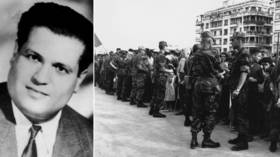
(L) Portrait non daté de l’avocat algérien Me Ali Boumendjel alors âgé de 32 ans. © AFP PHOTO / ERIC FEFERBERG; (R) French troops holding back crowds in front of Government House, Algiers, during the Algerian War of Independence. © Stan Meagher / Express / Getty Images

French President Emmanuel Macron has formally admitted that his country’s forces tortured and murdered” Algerian freedom fighter Ali Boumendjel in 1957 during the nation’s war for independence in a meeting with his grandchildren.

Macron made the confession in the name of France” as he met with Boumendjel’s grandchildren on Tuesday, providing an honest and official explanation for his death over 60 years ago, which, until now, had been classed as a suicide.

A formal statement from France’s Elysee Palace confirmed that Boumendjel was placed incommunicado, tortured and then killed on 23 March 1957, after being detained during the battle of Algiers.

Boumendjel’s family have not issued a statement after Macron’s statement but, last month, his niece Fadela Boumendjel-Chitour decried France’s behavior as a devastating” lie.

Previously, the former head of French intelligence in Algiers, Paul Aussaresses, admitted that he ordered Boumendjel’s murder and the following cover-up. However, the country’s government had refused until now to confirm if that was true.ALSO ON RT.COMMacron rules out official apology for colonial abuses in Algeria despite calling colonization ‘crime against humanity’

The admission of guilt comes after Macron agreed to establish a truth commission” to investigate abuses that occurred in countries that were once controlled by France, including Algeria, in order to end the culture of denial” that has clouded the country’s colonial past.

While he has done more than previous presidents, Macron has caused anger in some communities for refusing to issue an official apology over what took place in Algeria on the orders of French forces and officials, declaring that there will be no repentance nor apologies.”

Macron has, instead, pledged to work to present symbolic acts” that are aimed at promoting reconciliation after the eight-year war between 1954-1962 strained relations between France and Algeria, with each side accused of committing significant atrocities.

To: UNHRC member nations at the 46th Sessions in Geneva, to be shared with your representatives at the meeting.

March 4th, 2021

Concerned citizens of Sri Lanka

To:              UNHRC member nations at the 46th Sessions in Geneva, to be shared with your representatives at the meeting.

From:         Concerned citizens of the small and nonaligned nation of Sri Lanka dispersed around the world. (Author’s identity is withheld for personal safety.)

Date:           March 2, 2021

We seek support for the nonaligned, independent nation of Sri Lanka, and desire for consensus through a vote to preserve the sovereignty and independence of Sri Lanka that ended terrorism 12 years ago in 2009 after 30 years of suffering for all its people.  Also, to join in maintaining support for other small nations that number around thirty-five, that can be subject to persecution in place of assistance needed. With hard won peace, they are making progress although the UNHRC resolutions do not wish to recognize progress and choose a path of retribution instead.

Ignoring progress based on assumptions and unproven allegations, from unverified sources, the charter of assistance and support to small countries has become one of vengeance that can be influenced by hostile elements and hidden plans to target, destabilize, and occupy countries.    It is not necessary for UNHRC to rake up hatred while undermining the UN Charter when people are living freely within the country. Sri Lanka is not benefitted politically or militarily by targeting civilians.  It has proven evidence of saving civilians mostly from the Tamil minority.

The weapon used here is Human Rights” applied and interpreted as deemed necessary for the agenda of the divided UNHRC. Countries can solve their problems without interference or domination from bodies that do not have a mandate to do so.  The countries could be assisted with resources and with fair and equitable judgement instead.

The demands and proposed actions of the UNHRC and its Commissioner Michelle Bachelet are moving in a direction to violate the Human rights of all people of Sri Lanka including the Tamil People who consider themselves Sri Lankans living peacefully in the country.  It will further exacerbate the suffering of people that is not a solution to their allegations.

The USA is among 32 countries that proscribed the terror outfit called Liberation Tigers of Tamil Elam (LTTE) that invented the suicide bomb, used forced conscription of men women and children as young as ten years old, to make them into human bombs. Even domesticated animals in families were not spared. Declared the deadliest terror outfit by none other than the FBI in the USA.  This invention by Sri Lanka’s Tamil Tigers continue to kill in suicide bombings around the world including US and NATO troops. Link to information from the FBI explaining their operation appears below:   https://www.google.com/search?q=FBI+reference+to+LTTE&rlz=1C1UEAD_enUS940US940&oq=FBI+reference+to+LTTE&aqs=chrome..69i57j33i160l2.7179j0j15&sourceid=chrome&ie=UTF-8

Protecting such offenders in subtle ways are not justified in the charter of any international organization with scant attention to the human rights violations by terrorists.  The UNHRC is hounding Sri Lanka with threats of punishment when it is not a danger to the region.  The remedial action proposed will deal further blows to civilian life in the island nation violating their human rights by self-guided protectors doing more harm than good.

When bigger countries with large armies have not been successful even with invasion or occupation, they are not held accountable for missing persons.  In such cases missing persons become collateral damage except in the case of Sri Lanka.  The proof of the security forces saving a large population of Tamil civilians captured in the safe zone from certain massacre by the LTTE that crept in with heavy artillery is ignored. Anti Sri Lankan nations are aware of their forces that have been destroyed with the same suicide bombs invented by the terror outfit in Sri Lanka.

  • To impose sanctions proposed for Sri Lanka is to contravene the mandate of the UNHRC when Sri Lanka is not a security threat to any other country or the region. The UNHRC uses alleged” violations and imaginary deterioration” leveled against a government which was elected with an overwhelming two third majority and rejection of Ethnic Tamil parties by the voting civilians in the northern region.  Supposition criteria cannot be arbitrarily applied to damage and violate the sovereignty of any nation by those who are supposed to protect and help. Instead, they act at the whim of anti Sri Lankan elements outside the country.
  • The UNHRC appears to defend the word of the terror support proxies preferred over Tamil survivors of LTTE terrorism who are thankful and enjoying peace?  The civilians in Tamil areas suffered the most. They were saved from the terror they suffered under the LTTE.   This is proven by the figure of 60% of the Tamil people living in the southern end of the country inhabited by the majority Sinhala people.  It is the terror proxy groups that are looking for ways to keep the unrest going for their financial gain through instilling fear used in extortion and criminal activities.
  • Sanctions will cripple the economy stopping exports, and will result in lack of medical supplies, food and other basic human needs for the people who have suffered long years of brutality from those who you have befriended and duped western nations and international bodies to guide actions and resolutions.
  • The remedy is not to pose further suffering for all people in the country whether it is Sri Lanka or any other small powerless country.

With the case of Sri Lanka, Human Rights is a weapon, when the weapons of terrorism and the human suffering on two sides of a conflict are ignored on one side.  UNHRC can preserve its hard line on one side using Human Rights to gain their goal and overextend their powers. Peace is persecuted.

  • Destabilizing free sovereign nations that have preserved democracy as Sri Lanka has done with universal franchise since 1931 and an overwhelming acceptance through a landslide victory for the present administration, UNHRC charter provides for intervention only if a country does not protect its people.  In the case of Sri Lanka, the people are not divided by ethnicity for persecution as alleged” human rights are quoted by the UNHRC using the term that defines ambiguity of their sources of information. 
  • At the end of the war, 200,000 Tamil civilians held by the terrorists as human shields were freed.  Out of 5,700 Tamil child soldiers reported by UNICEF, 600 were rehabilitated at government expense and returned to families and into schooling.  With freedom and protection in their mainstream life, they told their story.
  • Over 300,000 Tamil civilians were returned to their homes in areas heavily mined by the terrorists. In the conflict civilian deaths account for around 60,000 in LTTE bombings, shootings, and murders. They warrant no attention from the UNHRC.  Out of 11,700 combatants, 7,000 who surrendered were returned to mainstream life.  Those that perished are not attributed to the LTTE by the UNHRC for convenience.  Most were forced participants abducted and brainwashed into killing machines.  They were, however, Sri Lankan civilians converted to terror but today, they live among fellow Sri Lankans enjoying freedom.
  • The UNHRC appears to defend the word of the terror supporters preferred over Tamil survivors of LTTE terrorism who are thankful and enjoying peace?  The civilians in Tamil areas suffered the most and they are now saved from the terror they suffered under the LTTE.   It is proven by the figure of 60% of the Tamil people living in the southern end of the country which is territory that is inhabited by the majority Sinhala people.  It is the diaspora groups that are looking for ways to keep the unrest going for their financial gain through instilling fear used in extortion and criminal activities.
  • The reward of peace, safety and protection has restored the free education, free healthcare, freedom to own businesses and property and live anywhere in the country for all people. Sri Lanka’s ground situation must be considered before the UNHRC makes assumptions to bring resolutions, sanctions, and other forms of punishment to all. The price included men and women in uniform losing 29,000in their ranks for saving the country and people.
  • UNHRC operates without visits to the country and with ignoring authentic and independent sources who provided accurate information. Their sources are pro terror proxies, hearsay and unverified information far removed from the country they left for economic migration in western countries now manipulating the truth into misinformation.  However, they return to Sri Lanka to visit unchecked while defining Sri Lanka as a Land of Genocide.  Plane loads of them return for holidays and have second homes in Sri Lanka.
  • In this so-called land of genocide, dual citizenship is offered to those who relinquished Sri Lankan citizenship for foreign citizenship.  The group claiming Genocide, go back obtaining dual citizenship. They invest in large scale prime businesses purchasing property in areas where the so called enemy” lives in the southern part of the country.
  • As for protecting people, the mechanism of the Responsibility to Protect” must be as before, being one of internal determination, that is successfully carried out despite the persecution attempts by the UNHRC.  This responsibility should not become any part of UNHRC purview.
  • The terror movement was financed by various criminal activities.  Read this report for details on funding operations for LTTE terrorism:
  • The link to information below is proof of LTTE atrocities that will open eyes that continue to remain closed.
  • Proof of demographic data on disproportionate opportunities for minorities claiming discrimination can be disproved in this report. 
  • Watch this video:  This is true violation of human rights of children, revealed by those who survived to tell their story. https://www.youtube.com/watch?v=Fpz8Cl_-YpM&t=4s
  • Sanctions to punish Sri Lanka is not a solution for the minorities, as it contradicts the claims made by UNHRC. As a body that is part of the UN, to bring threats to Sri Lanka to destroy the country is preposterous. The obvious sources of information should be the surviving civilians who want the protection of the military remaining among them.  Not the assumption of the diaspora and their imaginary outcomes.
  • The UNHRC should not be empowered to initiate any actions toward destroying a beautiful and peaceful multiethnic, multi religious and multicultural country.  It is not a wonder that the people of Sri Lanka look at international organizations with distasteful suspicion.
  • For people on the ground within the country sustained peace lives on and they are protected with security to avert any further threats.  Memories of times of terror live on. Sri Lanka doesn’t need the destructive hand of any unverified, biased authority.
  • The UNHRC nations against Sri Lanka must understand that the Sri Lankan Government past and present have no political or military advantage to destroy lives of civilians of any ethnic group.  They preserved peace for all people. They exercise their civic rights to elect leaders in a democracy that is not favorable to the UNHRC. 

 Let Sri Lanka continue to progress, preserve their sovereignty and democracy for sustaining peace. Sri Lanka strengthened can render assistance joining in the global effort of counter terrorism strategies that benefits peace. Aggression against Sri Lanka is not the solution. It will result in a reversal and return to conflict that was left behind.

The pursuit of peace happens when all forms of aggression are exhausted.”
― 
Stewart Stafford.

Why the 13 th Amendment is inimical for our development and how it will create a separate State

March 4th, 2021

By Garvin Karunaratne .

 I have in several of my Papers detailed as to  Why the 13 th Amendment should be abolished. I have detailed my experiences in my eighteen years’ service in the Administrative Service implementing development programmes islandwide. To state briefly if I were to work in either the agricultural marketing sector, the agrarian extension sector or the small industries sector I will not be able to achieve any target purely because the subjects are devolved(not decentralized) and the implementation of any policy determined by the Minister working at the Centre, on policies laid down by the Houses of Parliament  will depend on the whims and fancies of the Provincial Ministers. Officers in the provinces takes orders from him.

 The full effect of the 13 th Amendment even without devolving land and police powers has not yet been felt because the Provincial Ministers have not asserted their full rights.

 I am most thankful to Cecil Dharmasena of the Department of Agriculture, for his insightful article that appeared in The Island of 22/4/2013. Let me quote a few of his words, which fully support my above statement:

Referring to agricultural extension today he states:

The lack of an organized and coordinated extension and advisory system today as we had in the past(prior to the Provincial Administration System) where the Department of Agriculture through its comprehensive islandwide extension Division provided an efficient service appears to be the biggest drawback in agriculture at present.”

 The situation today he says is that all types of agencies of the Provincial Councils and private sector offer confusing services”.

 He details what happened to the Department of Agriculture after the implementation of the 13 th Amendment. The Department was broken up, the research division broken into independent institutes, the extension service given to the Provincial Councils and the seed farms sold to the private sector.

 Harking back to my days ”…” up to 1973, the Department of Agriculture had a full control over the technical side of Agriculture. At the divisional level there was an Agricultural Instructor, an officer who had two years’s study at the Agricultural School. Under him were several  Overseers- Krushi Vyapti Sevakas at the village level. They had an year’s training in agriculture. This was an effective service. In addition, after the Paddy Lands Act was enforced in came the Agrarian Services Department with cultivation committees at the grass roots level. This Department had Divisional Officers at the Divisional level and Overseers at the village level. The Overseers had an years’ training in agriculture. The Cultivation Committees took over grass roots level planning. Today the Paddy Lands Act is no more and the cultivation committees do not exist.

 Another important change that took place is that the  Overseers of the Agriculture Department- the Krushi Vyapti Sevakas were all promoted as Grama Sevakas( now Grama Niladharis) during the time of President Premadasa. No official trained in agriculture took their place.  After a few years’ lapse when the Agricultural Instructor at the Divisional Level did not have a single Overseer Assistant, during the days of President Kumaranatunge , O Level qualified youths were appointed as Niyamakas.

 This was the extension system that was bequeathed to the Provincial Councils. Cecil Dharmasena has stated that the efficiency of the extension system depended entirely in the hands of the Provincial Minister of Agriculture.

 My own experience with the agricultural extension system under the Provincial Council administration is detailed in my book: How the IMF Ruined Sri Lanka.& Alternate Programs of Success”.(Godages):

The entire  agriculture department has to get a bone shake which I hope can get done. In about 1997, running my small family farm I had the occasion to visit the extension centers at Kadawata and Delgoda. The officers there did not know the exact amount of fertilizer that I should use and when. At my insistence they raked their files and provided me with details. The circular advised the use of  ammonium sulphate and urea  at the basal stage  and no mention was made of the top dressing. ¦ About a year later I dropped into one of these Centers and to my amazement  I found that even then  the top dressing had not been incorporated into the advice. . In our inefficiency we are wasting fertilizer.”. This fully supports Cecil Dharmasena’s statement that the extension system is in shambles. My comments pertain to the late Nineties while Dharmasena speaks of the extension service of today.

 Sri Lanka is a small country which is smaller than a State in India and there is no necessity to devolve any subject in administration. Under the 13 th Amendment we have devolved many subjects and accordingly the extension sections of the Department of Agriculture and the Department oif Agrarian Services has been handed over to the Provincial Councils.

 In my days in the Agrarian Services, I was once in charge of fertilizer distribution and we sent out the first circular on fertilizer use for the entire island and this was immediately enforced through the cultivation committees. Not so any more. The futility of devolution is easily realized when one realizes that the Kegalla and Ratnapura Districts which come under the Sabaragamuwa Province is only some 25 miles away from the City of Colombo. It is inimical for Provinces situated in close proximity to have an extension service that is not coordinated. In my days if a circular left the main department signed by the Commissioner or his Deputy it had to be effective. Not so now because one will have to contact the Provincial Ministers and cajole them. In my days as a Senior Assistant Commissioner any communication from me was acted on in the entire island on the next day. Not so now my paper will sit on the Provincial Minister’s desk and mind you there are  a number of them. 

 It is also well known and not disputed by anyone that the 13 th Amendment was drafted by India and imposed on our country under duress by Rajiv Gandhi, the Prime Minister of India. Though President Jayawardena shivered in his boots and gave in and forced his Members of Parliament to vote for it. The fact remains that President Jayawardena held all his members of parliament incarcerated in a Five Star Hotel and they were all marched to parliament to vote. What Democracy! This fact is proved because the Finance Minister Ronnie de Mel shouted and stated that he was not among the incarcerated.   Though the Supreme Court of Sri Lanka, also under duress (judges quarters were stoned),gave legitimacy to it, the 13 th Amendment remains a foreign appendage onto our Constitution.

 I am certain that if any Provincial Council asserts itself, the working of all Government Departments will totally cease from the Centre and the implementation of the policies laid down by Acts of Parliament can no longer be a reality.

 This will be the situation once a TNA which is pro Tamil Nadu and also following the LTTE agenda of separation is elected.  The Government will be faced with a crisis of severe dimension, a situation that will eventually lead to the formation of a separate State.

 All this is not surmise. As an experienced administrator with four decades’ experience, I can sense what will happen.

 The abolition of the 13 th Amendment is the only option if we are to remain a sovereign country.

 The International Community, India and the LTTE Diaspora whom we are trying to please by retaining the 13 th Amendment and implementing it are having their act cut and dry. Their one aim is to enable a separate State in the North and the East of Sri Lanka and it is hoped that our leaders will realize this fact before it is too late.

 It is upto our leaders to decide for our sovereignty.

Garvin Karunaratne, Ph.D

former GA Matara, International Consultant

4/3/2021

ජිනීවා යදමින් නොමිදුණු රටක සෞභාග්‍ය සිහිනයකි

March 4th, 2021

මතුගම සෙනෙවිරුවන්

        කන්දක් විලි ලා මී පැටියෙක් වැදුවා බඳු වූ සෞභාග්‍ය ආණ්ඩුව මෑතකදී තම හෙණ්ඩුවෙන් කළ එකම දේ ජිනීවා විරෝධය ට පළිහක් නිර්මාණය කරලීම පමණි.ඒ සඳහා රටේ සෞඛ්‍ය විද්වතුන් ගේද ඇඳිවත ගලවමින් කළ විගඩම දෙස කෝපයෙන් බලා සිටීන ජනතාවක් නිර්මාණය කරමින් ඇත.ඉරණතිව් දූපතේ මිනී වැළලීම තුළින් එම දූපත මුස්ලිම් දූපතක් වන බව දුටුවේ සිංහලයන් නොවේ.මේ ප්‍රශ්ණය හමුවේ සිංහලයන්ට ඇත්තේ කෝපය  හා ශෝකය පමණකි.ජිනීවා බලහත්කාරය යනු යටත්විජිත වාදී බෝම්බයකි. කුඩා රටක් වන ලංකාව බියටපත් කරමින් අධිරාජ්‍යවාදී වුවමනාවන් ඉටු කරගන්නට වළිකන ධවල රෙජීමයක් ලෙසට මෙය හඳුන්වා දිය හැකිය.දෙමළ බෙදුම්වාදී මතවාදයෙන් උන්මත්තකව සරණාගතයන් ලෙසට ඇමරිකාව බ්‍රිතාන්‍ය වැනි රටවලට වී සිටින කොටි හපුවන් තමන්ගේ සල්ලි බලයෙන් ජිනීවා මානව හිමිකම් කවුන්සලයේ නිළධාරීන් මිළයට ගෙන තිබේ.එවැනි මිළයට ගැනීමක් වෙනස් කරලන්නට නම් දෙගුණ තෙගුණ වූ මිලක් සහිතව ජිනීවා සනසන්නට ආණ්ඩුව කටයුතු කළ යුතු බවට අතැම් කේවට්ටයන් කී බවට  දැන ගන්නට  ලැබී තිබේ.. ලංකාවේ විදෙස් කටයුතු මෙහෙයවන්නේ මෙවැනි කප්පම් මානසිකත්වයෙන් හෙබි පුද්ගලයන්ය.

        1815 මාර්තු දෙවනි දින සිට දහඅට වන දා දක්වා වූ කාලය තුළ ‌ෙඑතිහාසික කන්ද උඩරට මගුල් මඩුවේ දී ධවල අධිරාජ්‍යවාදීන් සමග අත්වැල් බැඳගත් සිංහල රදළයන් ගිවිසුමක් අත්සන් කළහ.එම ගිවිසුමේ අත්සන් හොරට ඇතුලත් කරමින් තහවුරු කල බවක් පැවසෙන නමුදු ජෝන් ඩොයිලි ගේ සට කපට උපායයන් සාර්ථක වූ හැටි අපට මතක් කරගත හැකිය. හොඳින් සිංහල බස කතා කිරීම බණ දහම් දත් බව හැඟවීම බුලත් විට හැපීම භික්ෂූන් වහන්සේලා සමග ළඟ ආශ්‍රය වඩුග රජුට  රහසේම අරක්කු සැපයීම මේ කපටි උපායන් අතර විය.සිංහල රජ වාසලේ සිටි ඇහැලේපොල පිළමතලව්වේ මඩුගල්ලේ ඔවුනොවුන්ට ඥාති වුවද ඥාතිත්වය අභිබවා බල අවස්ථාවාදය රෝපණය කිරීම මේ කපටි උපායන් අතර මහඟු දේශපාලනික ක්‍රියාදාමයක් විය. 1803 දී උඩරටට වන් මැක්ඩොවල්ට පන්න පන්නා පහර දීමට සමත් වූ උඩරට හමුදාව අකර්මණ්‍ය කරන ලද්දේ කුමන උපායකින්ද. වඩුගයෙකු වුවද සිංහල රාජ්‍යත්වය ආරක්ෂා කර ගන්නට වෑයම් කළ කන්නසාමි කුමරුට තනිවම මැද මහනුවරට පසු බසින්නට සිදු වූයේ මේ කපටි උපාය මාර්ගික සැලැස්මේ කූඨප්‍රාප්තියත් සමගය. අවසානයේ වසර දෙදදස් පන්සීයක් ලිඛිත ඉතිහාසයක් හිමි රටක් පරාධීනත්වය පත් විය.මේ වන විට මේ සිදු වීමට වසර 206 ක් ගත වී තිබේ.

      1815 සිට 1948 දක්වා දිගු කාලයක් අපගේ මවුබිම පරාධීනත්වයේ ගැලී සිටියේය. ඒ කාලය තුළ ඉංග්‍රීසීහු තමන් ගේ යටත් විජිතයේ සියලුම දේශපාලනික සමාජීය ව්‍යුහයන්හි මහා වෙනසක් සිදු කරන ලදහ. යන්ත්‍රයක් සහමුලින් ගලවා ඒ කොටස්ම යොදවා නව යන්ත්‍රයක් නිර්මාණය කළ කල්හි එම යන්ත්‍රයෙන් ගම්‍ය වන්නේ අලුත්ම ඉලක්කයකි. ඉංග්‍රීසින් ගේ නීති රීති මෙන්ම සමාජීය ඇවතුම් පැවතුම්ද කරමත පටවනු ලැබූ කල්හි සිංහලයන් යදමින් බැඳුණු අතර තමා වටා වෙලී පැවති දම්වැල් වලට ඇලුම් කිරීමට පටන් ගනු ලැබූහ. දේශපාලන නිදහස ලැබී ස්වදෙශික පාලනයක ඉඩ හසර හිමි කර ගත් නමුදු  වසර හැතුතෑ දෙකක් ගත වීත් ඉංග්‍රීසීන් ගේ රැහැන් පොට අප වටා වෙයි.එම රැහැන ආඩම්බරයෙන් යුක්තව ගෙල පහළට පැළඳීම මගින් ඉස්මතු කරනු ලබනුයේ සිංහල දේශයේ නූතන වහල් භාවයයි .

 තිරිසනා දැක්කවීමට කෙවිටක්ම භාවිතා වෙයි.මිනිසා දැක්කවීමට කෙවිටක් නැති වුවද මානසිකව කෙවිටි කිරීම ඊට පහසුය. ඉංග්‍රීසීන් විසින් දමා ගිය අධිකරණ පද්ධතියක රැස් පරස් තුළින් සාමාන්‍ය ජනතාව පීඩාවට පත් වීම සාමාන්‍ය කරුණකි. නමුත් ඒ පද්ධතිය තුළම සිටින අනුගාමිකයන් ද නිරන්තරයෙන් පීඩාවට පත් වී සිටිති. නමුත් ඔවුහු ඒ බැව් නොදනිති.   බෙදා පාලනය කිරීම ජාත්‍යන්තර දේශපාලනයේ  සිද්ධාන්තයකි.බෙදීම සාර්ථක වන්නට නම් ගැටුම් වැඩි විය යුතුය. කෙප්පයන් නිරිමාණය කළ යුතුයි. දෙමළ බෙදුම්වාදයද එලෙස නිර්මාණය කරන ලද්දකි. ඉංග්‍රීසීන් සහ මිෂනාරින් විසින් නිර්මාණය කරන ලද්දකි.තමන්ගේ පූර්වගාමීන් වූ ලන්දේසින් විසින් ගෙනෙන ලදුව වහල්කමේ යොදාගත් මලබාරයන්ට මුදලි පට්ටමක් ලබා දී භූමියේ අයිතිය සඳහා තරඟ කිරීමට අවස්ථාවක් සලසා දුන්නේ ඉංග්‍රීසින්ය.රෙදීයප් කියමින් තැන තැන සංක්‍රමණය වූ වෙළෙන්දන්ට මුහන්දිරම් තනතුර දී සිංහලයන් ට විරුද්ධව ඔත්තු සැපයීමට රාජකාරියක් භාරදුන්නේ ඉංග්‍රීසින්ය.ඔත්තු සැපයීම සාර්ථක වීමෙන් පසුව ඔවුන්ට වරප්‍රසාද දී නැගෙනහිර පළාතද පුත්තලම් දිස්ත්‍රික්කයද මහනුවර රාජකාරි ඉඩම්ද ලියා දුන්නේ තවදුරටත් සිංහලයන්ට විරුද්ධව යොදා ගැනීම පිණිසය.අද වන විට නූතන කලු සුද්දන් හමුවේ එය වඩාත් සාර්ථක වී තිබේ. ඒ නමුත් දෙමළ බෙදුම්වාදයට විරුද්ව අවි ඔසවා ඉංග්‍රීසින් ගේ තක්කඩි තැරැව්කරුවෙකු බවට පත්ව සිටි ප්‍රභාකරන් අල්ලා පොළවේ ගසා  දෙමළ ජාතිවාදයට තිත තැබූයේ අපගේ වීරෝධාර හමුදාවන් විසිනි. තමන්ගේ තැරැව් කරුවන් ඝාතනය වූ පළිය ගන්නට නැවත වටයකින් මානව හිමිකම් දඩඅඬුව දිගු කර ඇත.

     ඉංග්‍රීසින් ගේ ටයිපටිය ගෙලට සිරකරගනිමින් වැදගත් මහත්වරුන් ලෙසට පෙනී සිටින කලු සුද්දන් ඉදිරියේ  මානව හිමිකම් කෙවිට ලෙල දෙන විට  තැලීමටත් වඩා මහත්ම බියක් ඇති කරගෙන තිබේ. ඉංග්‍රීසින් විසින් ලබා දෙන ලද වරප්‍රසාද අහිමි වීම ලොකුම පීඩාවයි.මේ නිසා මානව හිමිකම් කොමිසමට කප්පම් ලබා දෙමින් වසරින් වසර දුක් අඳෝනා කරමින් සිටීම මහත්ම ප්‍රෝඩාවක් නොවේද. මාර්තු 22 වන විට ලංකාවේ හමුදාවේ රණවිරුවන්ට විරුද්ධව සැකසූ බොරු යුද අපරාධ චෝදනා තවත් වටයකින් එළි දැක්වෙනු ඇත. මේ බොරු තොරතුරු ලබා දීමට මෙරට සිටින දේශ ද්‍රොහීන් කලක් තිස්සේ වෑයම් කර තිබේ.අතුරුදහන් වූවන් ගැන සෙවීමට පත් කළ කොමිසම් වලින් සිදු වූයේ මේ බොරු තොරතුරු වලට නිල තත්වයක් ලබා දීමයි. මේවා රහස්‍ය ලේඛන ලෙසට ජාතික ලේඛනාගාරයේ තැන්පත් කළ පසු නොයෙකුත් විවිධ උපක්‍රම යොදමින් ඒවා පිට කරලීමට සැරසෙති.ඒ කටයුත්ත සාර්ථක කරලීමට පෙර යහපාලන ආණ්ඩුවේ ප්‍රධාන විදෙස් ඒජන්ත ලෙස කටයුතු කළ රනිල් වික්‍රමසිංහ විසින් පත් කළ කාන්තාවක් තවමත් මෙම ලේඛනාගාරයේ රැඳී සිටී.එවන් පසුබිමක ජිනීවා උසාවියට කරුණු ඉදිරිපත් කරලීමට තවත් වසරක් ලබා දුන්නද ප්‍රතිඵලයක්  ඇති වන්නේ නැත.දිනෙන් දින සිදුවන්නේ ආණ්ඩුවේ අත කරකවමින් යටත් විජිත වුවමනාවන් සිද්ද කරලීම පමණකි.

       යහපාලන ප්‍රෝඩාව අවසන් කරමින් සෞභාග්‍ය සඳහා යන ගමනකට සිංහල ජනතාව එක හිතින් චන්දය ලබා දී ඇත්තේ තවමත් අප පාලනය කරනු ලබන ධවල සේනාව පරාජයට පත් කරලීම පිණිසය.දේශීය නිෂ්පාදන සහ කර්මාන්ත ආර්ථිකයක් සමග රට ඉදිරියට ගෙන යෑමත් සකල විධ සතුරු කුමන්ත්‍රණ සහ ආක්‍රමණ පරාජයට පත් කරලීමටත් සමත් නායකත්වයක් ජනතාව බලාපොරොත්තු විය.නමුත් මේ ප්‍රාර්ථනා සිහින බවට පෙරළෙමින් තිබේ.සෞභග්‍ය වෙනුවට අභාග්‍ය ළඟා කරවීමට කැස කවන කුමන්ත්‍රණ කරුවන් ජනපතිවරයා වටා පෙළ ගැසී සිටිති.මෙහි ප්‍රතිඵළය වන්නේ ඉන්දියාවේ ඇමරිකාවේ පමණක් නොව චීනයේ ද දඩබිමක් බවට ලංකාව පත් වීමයි.

මතුගම සෙනෙවිරුවන්

The glory of the Kalutara Bodhi

March 4th, 2021

Sri Lanaka

The Kalutara Bodhi

The city of Kalutara unlike other urbanised cities is redolent of the ancient Buddhist Sinhala culture. It is because of the most sacred Kalutara Bodhi encircled with the gold fence seemingly holding the sky with its massive branches and standing majestically in the upper terrace of the temple premises. Even the gentle breeze blowing through the branches of the Bo” tree heals the hearts of people.

History

The Kalutara Bo” tree is proven to be one of those 32 saplings of the Jaya Sri Maha Bodhi which was planted on the advice of Arahat Mahinda Thera during the reign of king Devanampiya Tissa. Back in 1052 AD, a pandyan prince by the name of Wickrama Pandyan, said to have been the viceroy of Kalutara had planted a Bo” tree at the Pahala Maluwa of the Kalutara Temple.

Influence of the Portuguese

The tragedy struck this Buddhist country after the invasion of the Portuguese. The lamp of the wisdom lit with the Buddhist teachings and the Sinhala culture blew out. The virtues instilled into the people’s hearts began to vanish. Not the morality but the immorality began to engulf the city.

Considering the geographical location of the city, the Portuguese used the Bodhi premises for their military purposes.

Railway bridge

Bridging the Southern border and the Western border together, the British Government decided to construct the Kalutara railway bridge. The only obstruction they had was the Bo” tree. As a result, they proposed to uproot the Bo tree” and continue the construction of the bridge.

But later due to the protests led by a layman named Sandanayaka, the British Government decided to construct the bridge without harming even a leaf of the Bo tree. The history of the Kalutara bridge dates back to 1990s. What is more picturesque is that in the morning, anyone can catch the glimpse of Sri Pada” veiled with the morning mist.

Another striking scenery is the Buddhist devotees attired in the immaculate white meditating in the lotus position around the Stupa. It is common to see even the foreigners meditating in the temple like the Buddhist devotees.

Sir Cyril De Zoysa

The relationship between the Kalutara Bodhi and Sir Cyril De Zoysa is inseparable. Born in Galle, Sir Cyril De Zoysa dedicated himself to protect the dispensation of Buddhism. After having received his primary education at S Thomas’ College and Richmond College, Sir Cyril entered the law college.

Winding back the clock of his childhood, it is said that his father had to travel in a hired-buggy cart because he could not afford the expense of buying a new buggy cart. But later with the little money Sir Cyril earned, he purchased a brand-new buggy cart for his father. This is only a glimpse of his childhood.

No one might have thought that the day on which the Kalutara Bodhi flourishes would dawn. But miraculously Sir Cyril De Zoysa had to come to Kalutara and saw the Kalutara Bodhi which had been isolated and degraded for a long time. Later, he set up a committee to protect the sacred place. From that day, everyone pays homage to this most sacred Bodhi.

Righteous life

According to the Buddhist teaching, The one who behaves in Dhamma is protected by Dhamma.” It is clear that Sir Cyril De Zoysa is one of those who had believed in the Dhamma until his demise. Never in his life had he neglected to observe the Buddhist rituals.

He started his day at 6.00 O’ clock by paying homage to the Kalutara Bodhi. The last words he said will prove the Buddhist life he lived.

Now I am free. The state of your wealth does not really matter. These are all illusions. I was born without any wealth. I will die just as I was born – without any wealth. As I reach the end of my days, Buddhism is my sole consolation, my happiness and my strength.”

The glory of Kalutara

The city of Kalutara enriched with the natural beauty and blessed with the sacred Bodhi Tree has overflown with the aroma of the burning joss-sticks and the Buddhist sermons.

At night, the temple illuminated with a myriad of twinkling lights scatters the light of wisdom throughout the city, planting the seeds of generosity, discipline and love in the hearts of people. The moon beams brighten the reflection of the illuminated lights on the still water of the Kalu Ganga” as if in a surreal world. All we hope is May the glory of the Kalutara Bodhi shine forth blissfully forever.”

ශෝක පණිවිඩය

March 4th, 2021

මහින්ද රාජපක්ෂ ශ්‍රී ලංකා ප්‍රජාතාන්ත්‍රික සමාජවාදී ජනරජයේ අග්‍රාමාත්‍ය

හාතාගල රජමහා විහාරය ඇතුලු විහාරගණයන්හි අධිපති, ශ්‍රී සුමංගල විද්‍යායතන පිරිවෙනේ කෘත්‍යාධිකාරි නිල්වලා ආනන්ද විද්‍යාලයේ කළමනාකාර, රුහුණු මාගම්පත්තුව ඇතුලු ගිරුවාගම් දොළොස්දහස් රට ප්‍රධාන සංඝනායක, ගෞරවාර්හ පල්ලේගම ශ්‍රී ජිනරතන නායක ස්වාමීන්වහන්සේ, අපවත් වු පුවත ඇසීමෙන්, මම බලවත් සංවේගයට පත්විමි.

වසර 67 ක තම ජීවන ගමන්මග තුළ වසර 54 ක් සම්බුදු සසුනේ උතුම් භික්ෂුවක ලෙස ගතකළ ජීවිතය අනුස්මරණය කිරීමට කැමැත්තෙමි.

හක්මන ලාල්පේ ශ්‍රී ගුණානන්ද පිරිවෙනින් භික්ෂුවකට අවශ්‍ය ත්‍රිපිටක ධර්මය හා විවිධ භාෂාවන් උගත් අතර, පසුව උන්වහන්සේ තම ප්‍රදේශවාසීන්ගේ ජනජීවිතය නඟා සිටුවීම සඳහා අපමණ සේවාවක් සිදුකළහ.

ශ්‍රී සුමංගල විද්‍යායතන පිරිවෙන ආරම්භ කිරීමේ දී මහත් කැපවීමෙන් කටයුතු කළ අතර, එය අද ප්‍රදේශයේ ගිහි පැවිදි ශිෂ්‍ය පිරිසට අධ්‍යාපනය ලබාදෙන ප්‍රමුඛ ආයතනයක් බවට පත්ව තිබීම සතුටට කරුණකි.

නිල්වලා ආනන්ද විද්‍යාලය රජයේ ආධාර ලබන පාසලක් බවට පත්කළ අතර, ඒ තුළින් සමාජයට විශාල  ශිෂ්‍ය ප්‍රජාවක් බිහිකිරීමට හැකිවිය.

ප්‍රදේශයේ ජනතාව අතර, පවතින ප්‍රධාන ගැටලු අතර කෘෂිකර්මය සඳහා අවශ්‍ය වැව් අමුණු රජය සමග ඒකාබද්ධව සංවර්ධනය කිරීම, ජල විදුලිය නොමැති දිළිඳු ජනතාවට හා ගම් සඳහා අවශ්‍ය එම පහසුකම් ලබාදීම, මංමාවත් පිළිසකර කොට සංවර්ධනය කිරීම වැනි කාර්යයන් සඳහා ප්‍රමුඛවූයේ උන්වහන්සේය.

ප්‍රදේශයේ මහසඟරුවනට අවශ්‍ය නායකත්වය ලබාදුන් අතර, ඒ සැමගේ ගෞරවාදරයට උන්වහන්සේ නිරන්තරයෙන් පාත්‍රවූහ.

සමාජයට අවශ්‍ය ගිහි පැවිදි විශාල ශිෂ්‍ය පිරිසක් තම ආයතන හරහා   බිහිකළ   අතර, තම   ජ්‍යෙෂ්ඨ   ශිෂ්‍ය බස්නාහිර පළාත් පිරිවෙන් නියෝජ්‍ය අධ්‍යාපන අධ්‍යක්ෂ ශාස්ත්‍රපති ගෞරවාර්හ පල්ලේගම වංගීස     ස්වාමීන් වහන්සේ ඉන් ප්‍රධාන වේ.

විශේෂයෙන් මාගේ දේශපාලන ගමන්මග තුළ කළ්‍යාණ මිත්‍රයෙකු වශයෙන් කටයුතු කළ උන්වහන්සේ මාවෙත ලබාදුන් අවවාද අනුශාසනා බොහෝ ය. ශ්‍රී රෝහණ ජනරංජන ගෞරව නාමය ලබාදීමේ දී නායක ස්වාමීන්වහන්සේ  පුරෝගාමී මෙහෙවරක් ඉටුකළ අතර, මා වෙත දක්වන ලද විවිධ සහය හා උපකාර මෙම සංවේග ජනක අවස්ථාවේ දී, කෘතවේදීව සිහිපත් කිරීමට කැමැත්තෙමි.

නායක ස්වාමීන් වහන්සේගේ අපවත්වීම  දකුණු පළාතට පමණක් නොව මුලු රටටම සිදුවු බලවත් පාඩුවකි.

පුරා වසර 67 ක් ආයුවළදා අපවත් වී වදාළ ගෞරවාර්හ පල්ලේගම ශ්‍රී ජිනරතන නායක ස්වාමීන්වහන්සේට උතුම් නිවන්සුව අත්වේවා’ යි ප්‍රාර්ථනා කරන අතර, උන්වහන්සේගේ ජ්‍යෙෂ්ඨ ශිෂ්‍ය ගෞරවාර්හ පල්ලේගම වංගීස ස්වාමීන් වහන්සේ ඇතුලු ශිෂ්‍ය හා සහෝදර පිරිසටත්,විහාරස්ථ දායක සභාවටත්, ප්‍රදේශවාසි සැමටත්, සියලු ඥාතීන් ඇතුලු පවුලේ සැමටත් මාගේ බලවත් සංවේගය පිරිනමමි.

මහින්ද රාජපක්ෂ

ශ්‍රී ලංකා ප්‍රජාතාන්ත්‍රික සමාජවාදී ජනරජයේ

අග්‍රාමාත්‍ය

මහා ශිවරාත්‍රි දින උත්සවය උත්කර්ශවත්ව සැමරීමට අග්‍රාමාත්‍යතුමාගෙන් උපදෙස්

March 4th, 2021

අග්‍රාමාත්‍ය මාධ්‍ය අංශය

මහා ශිවරාත්‍රි දින උත්සවය උත්කර්ශවත්ව සැමරීමට අවශ්‍ය පියවර ගන්නැයි බුද්ධශාසන, ආගමික හා සංස්කෘතික කටයුතු අමාත්‍යවරයා ලෙස ගරු අග්‍රාමාත්‍ය මහින්ද රාජපක්ෂ මහතා හින්දු ආගමික හා සංස්කෘතික කටයුතු දෙපාර්තමේන්තුවට උපදෙස් දී තිබේ.

හින්දු බැතිමතුන්ගේ විශේෂ මංගල්‍යයක් වන මහා ශිවරාත‍්‍රී දිනය මෙවර 2021 මාර්තු මස 11 දිනට යෙදී ඇත.

මහා ශීවරාත‍්‍රි දින උපවාස උත්සවය හින්දු කෝවිල්වල හොඳින් සංවිධානය කිරීම සඳහා දිරිමත් කරන්නැයි ද අග‍්‍රාමාත්‍යතුමා හින්දු ආගමික හා සංස්කෘතික කටයුතු දෙපාර්තමේන්තුවට දැනුම් දී තිබේ.

ඒ අනුව, ශ‍්‍රී ලංකාවේ හින්දු බැතිමතුන් බහුතරයක් වෙසෙන ප‍්‍රාදේශීය ලේකම් කොට්ඨාශ කේන්ද්‍රකර කරමින් විශේෂ හින්දු ආගමික වතාවත් සංවිධානය වනු ඇත.

එහිදී හින්දු ආගමික දරුවන්ට කෝවිල්වල දී මහා ශිවරාත‍්‍රි උපවාසයේ මහිමය අවබෝධ කරවීම සහ හින්දු දහම් පාසැල් සිසුන්ගේ භක්තිමත් කලා උත්සව සංවිධානය කිරීමට නියමිතය.

හින්දු බැතිමත්හු මෙදින මහා ශීවරාත‍්‍රි දින උපවාස උත්සවය භක්තිමත් ලෙස වන්දනාමාන කරමින් ශිව දෙවි කරුණාවේ ආලෝකය සියලු තැන්හි පැතිරවීම උදෙසා නමස්කාරයේ යෙදෙති.

මෙම හින්දු ආගමික වතාවත්  මනා ලෙස පෙළගැස්සවීම උදෙසා හින්දු ආගමික හා සංස්කෘතික කටයුතු දෙපාර්තමේන්තුව විසින් ප‍්‍රාදේශීය ලේකම් කාර්යාල ඔස්සේ තෝරාගත් කෝවිල්වලට අග්‍රාමාත්‍යතුමාගේ උපදෙස් පරිදි මූල්‍යාධාර සපයනු ලැබේ.

How burials of COVID victims are carried out at Iranaitivu Island

March 4th, 2021

Courtesy Adaderana

Coronavirus death toll climbs to 489

March 4th, 2021

Courtesy Adaderana

Sri Lanka has reported 05 more coronavirus-related deaths, the Director-General of Health Services confirmed today (March 04).

As per the Department of Government Information, one male patient and four female patients are among the victims.

The new deaths bring the number of COVID-19 related deaths witnessed in Sri Lanka to 489 in total.

01. The deceased is a 53-year-old female resident from Ussapitiya. She was transferred from Mawanella Hospital to Base Hospital Kegalle where she was diagnosed as infected with the Covid-19 virus. Consequently, she was transferred to General Hospital Kandy where she died on 22.02.2021. The cause of death is mentioned as Covid-19 pneumonia.

02. The deceased is a 78-year-old female from Giriulla. She was diagnosed as infected with the Covid-19 virus while undergoing treatments at a private hospital in Colombo. Then she was transferred to Kothlawala Defense Hospital where she died on 04.03.2021. The cause of death is mentioned as Covid-19 pneumonia and multiple organs dysfunction.

03. The deceased is a 72-year-old male resident from Kolonnawa. He died on 02.03.2021 while undergoing treatments at a private hospital in Colombo, The cause of death is mentioned as heart disease, Covid-19 pneumonia, and acute kidney damage.
 
04. The deceased is a 62-year-old female from Mattakkuliya, She was diagnosed as infected with the Covid-19 virus while undergoing treatments at General Hospital Colombo and transferred to Base Hospital Homagama where she died on 01.03.2021. The cause of death is mentioned as Covid-19 infection and respiratory system failure.

05. The diseased is a 70-year-old female from Boralesgamuwa. She was diagnosed as infected with Covid-19 while undergoing treatments at Apeksha Hospital Maharagama and transferred to Base Hospital Mulleriyawa where she died on 03.03.2021. The cause of death is mentioned as blood poisoning shock, Covid-19 pneumonia, acute kidney damages, and cancer.

Sri Lanka records 351 more COVID-19 cases

March 4th, 2021

Courtesy Adaderana

Sri Lanka has registered 147 more positive cases of Covid-19 today (March 04), the Ministry of Health confirmed.

Thereby, Sri Lanka has detected 351 new positive cases of COVID-19 within the day.

As per statistics, the total number of Covid-19 infections confirmed so far in the country now stands at 84,577.

Recoveries from the virus meanwhile climbed to 80,836 earlier today, as 399 more patients regained health.

However, 3,257 active cases are still under medical care at selected hospitals and treatment centers located across the island.

Total lives claimed by the pandemic outbreak sits at 484 at present.

2016 hit-and-run case: Charges against Patali read out at HC

March 4th, 2021

Courtesy Adaderana

Charges against former Minister Patali Champika Ranawaka over the hit-and-run case in 2016 have been read out at the Colombo High Court today (March 04).

The matter was called before Colombo High Court Judge Namal Walalle, Ada Derana correspondent said.

Accordingly, the indictment filed by the Attorney General was read out in the open court during the legal proceeding.

Preliminary objections against the indictment are schedule to be taken up on the 27th of April.

The case was filed over the alleged hit-and-run incident which took place on February 28, 2016, in which the vehicle the former Megapolis and Western Province Development Minister was travelling in collided against a motorcycle in Rajagiriya, causing life-threatening injuries to its rider, Sandeep Sampath Gunawardena.

Why is UNHRC so angry with Sri Lanka?

March 4th, 2021

We are told there is a War against Terror. Sri Lanka should know, we suffered various forms of terror, the LTTE being the most heinous. That terror lasted 3 decades. We wasted decades following Western/UN templates of ceasefires, negotiations, peace talks. Lives were lost and people lived in fear. All communities fell victims. In 2006, LTTE went overboard with the closure of the Mavil Aru anicut committing a war crime denying water. LTTE challenged the Sri Lanka military and the military took the challenge. The East was liberated of LTTE in 2008 and thereafter with the capture of LTTE’s capital Kilinochchi on 2 January 2009, the Eelam quest was annihilated and the country fell under one flag. By 8 March 2009 LTTE had lost all the towns held forcibly and by 12 March, the troops took over Pudukudurippu hospital which had been occupied by LTTE. All civilians were rescued by 17 May and LTTE was cornered and refused to surrender choosing its fate. LTTE were terrorists and we are baffled why the UNHRC is not commending Sri Lanka for the manner it conducted a military offensive plus a humanitarian rescue operation. The timeline below together with video footage will make you also to wonder what agenda UNHRC is actually working to. Please share among all UNHRC Member states for them to realize the lies that the Office of the UNHRC is cooking up and the bogus allegations being made going so far as to even claim the GoSL starved Tamil civilians.

Tamil civilians flee LTTE 

30 – January 2009 – Tamil civilians demonstrate against LTTE

5 – February 2009 – Mannar civilians rally against LTTE

6 February 2009 – civilians escape LTTE held territory

12 February 2009 – More civilians flee LTTE

13 February 2009 – Injured civilians taken to Trincomalee

13 February 2009 – Sri Lanka Navy evacuates sick and wounded from Mullaitivu

16 February 2009 – Vanni civilians tell of heinous crimes committed by LTTE (with English subtitles)

17 February 2009 – SL Navy rescues 440 Tamil civilians from LTTE

18 February 2009 – More civilians escape LTTE

25 February 2009 – 386 Tamil civilians flee LTTE and seek refuge with Sri Lanka Armed Forces

1 March 2009 – LTTE attempt to abduct children

16 March 2009 – More civilians seek shelter with Sri Lanka troops

17 March 2009 – Large exodus of civilians flee LTTE

17 March 2009 – LTTE kill a fleeing child

18 March 2009 – Tamil civilians revolt against LTTE

19 March 2009 – LTTE continue to attack fleeing ciivlians

22 March 2009 – Tamil civilians describe hardships they were subject to under LTTE

25 March 2009 – 1386 Tamil civilians escape LTTE

3 April 2009 – Tamils go against LTTE

https://www.youtube.com/watch?v=Q07OHlWs8ow

8 April 2009 – LTTE exerting pressure on civilians

9 April 2009 – Tamil civilians attack LTTE

12 April 2009 – Sri Lanka Army doing utmost to grant security to fleeing Tamil civilians

18 April 2009 – escaping civilians a challenge to Prabakaran (no hostages/human shields)

19 April 2009 – over 70,000 Tamil civilians come to the Army

19 April 2009 – LTTE plan to stop fleeing civilians revealed

20 April 2009 – More civilians continue to flee LTTE and enter government controlled areas

20 April 2009 – large exodus of civilians flee LTTE

21 April 2009 – Army enters vacated areas of NFZ and saves over 31,000 civilians

22 April 2009 – during the past 3 days over 60,000 Tamil civilians brought to safety by Sri Lanka Armed Forces

22 April 2009 – More civilians flee LTTE

22 April 2009 – Over 100,000 Tamil civilians flee LTTE

23 April 2009 – LTTE attempt to take cover among civilians

28 April 2009 – Sri Lanka troops continue humanitarian rescue operation

2 May 2009 – LTTE activities inside he safe zone

3 May 2009 – LTTE video footage shows LTTE activities inside safe zone

7 May 2009 – Humanitarian rescue operation continues

13 May 2009 – Civilians who escape curse LTTE

15 May 2009 – 3000 civilians flee LTTE

17 May 2009 – all Tamil civilians rescued – Only LTTE & Sri Lanka Armed Forces in 1sq.km

President of Sri Lanka

2 January 2009 – LTTE is asked to surrender

30 January 2009  – President Mahinda Rajapakse demands LTTE to release civilians

12 February 2009 – a New safe zone declared by GoSL

26 February 2009 – With troops reaching Pudukudurippu on 25 February, the GoSL again asks LTTE to lay down arms and surrender

19 March 2009 – LTTE attack troops from the Safe Zone declared for Tamil civilians (what has UNHRC to say about this) 

25 March 2009 – LTTE fire at Sri Lanka Army helicopters from within the safe zone (another clear example of LTTE violating IHL rules of war)

27 March 2009 – Sri Lanka’s President gives another warning to LTTE

19 April 2009 – President Mahinda asks international community to tell LTTE to release civilians

20 April 2009 – President Mahinda gives last warning to LTTE to surrender

UN & UNSG statements & Foreign Government appeals

31 January 2009 – UNSG Ban Ki Moon commends Sri Lanka’s President call to release civilians

5 February 2009 – Gordon Weiss UN Spokesman accepts Sri Lanka did not possess cluster weapons

16 February 2009 – India tells LTTE to lay down arms and surrender

17 February 2009 – UN tells LTTE to stop recruitment of civilians (how many did LTTE recruit & how many died engaged in hostilities- none of them can be classified as civilian)

17 February 2009 – UNICEF asks LTTE to stop child recruitment (as if LTTE cares too hoots)

18 February 2009 – India says it holds LTTE responsible for fate of Tamil civilians

19 February 2009 –  UN Under-Secretary General for Humanitarian Affairs and Emergency Relief Coordinator John Holmes calls on LTTE to free civilians

20 February 2009 – UN representative monitors displaced civilians – civilians who have taken shelter in Social Welfare Camps in Vavuniya have told UN Deputy Secretary General John Holmes that they are satisfied with the relief (so what rubbish is UNHRC head talking about)

23 February 2009 – Japan slams LTTE

24 February 2009- UN & EU tell LTTE to surrender

28 February 2009 – UN ambassadors tell LTTE to surrender

5 March 2009 – World accepts LTTE’s forcible recruitment (30 years too late)

13 March 2009 – EU MPs condemn LTTE violence

16 March 2009 – UN accuses LTTE of recruiting their members (oh the innocent UN)

19 March 2009 – The United Nations accepts that statistics of the UN Human Rights Commissioner which led to a controversy had not been verified (seems to be a regular malady) 

21 March 2009 – Australia condemns LTTE’s terror tactics

23 March 2009 – Majority of UN Members do not wish to extend a life line to LTTE

26 March 2009 – Rahul Gandhi says no support for LTTE (well LTTE did kill his father)

27 March 2009 – UN tells LTTE to disarm or perish (after perishing UN is mourning) 

4 April 2009 – UN Special Representative for internally displaced persons, Walter Kalin lauded the welfare facilities including food (they make no complaints in SL but then go back & write lies years later – these UN officials must be investigated)

4 April 2009 – UN issues ultimatum to LTTE to free civilians (oh yeah – LTTE listens)

5 April 2009 – Co-Chairs order LTTE to free civilians

15 April 2009 – The Hindu newspaper says LTTE had no right to enter safe zone meant for civilians

16 April 2009 – UK and France call for LTTE to surrender

18 April 2009 – UNHRC calls on LTTE to release Tamil civilians

23 April 2009 – UNSC demands LTTE to surrender

29 April 2009 – UK and French envoys PRAISE facilities provided for civilians

12 May 2009 – UN spokesman Gordon Weiss summoned to explain civilian bloodbath” (the guy would say anything for publicity)

15 May 2009 – NO UNHRC special session on Sri Lanka (what took place thereafter was nothing but a witch hunt)

Food sent to civilians (forcibly taken by LTTE for combatants & their families)

3 February 2009- Needs of civilians taken to account

12 February 2009 – Airforce airlifts dry rations for civilians

19 March 2009 – All requirements of civilians are met says Essential Services Commissioner S.B. Divaratne

4 April 2009 – More essentials sent by GoSL to the war fronts – most confiscated by LTTE for their families

22 April 2009 – Cooked meals for civilians who fled LTTE (UNHRC head seated in Geneva accuses Sri Lanka of starving civilians)  

23 April 2009 – More food air lifted to North

These are only a timeline of video footage, statistics and facts can also prove how admirably Sri Lanka conducted the military-humanitarian rescue operation.

Shenali D Waduge

The capture of Kilinochchi on 2 January 2009 ended military offensive & brought Sri Lanka under one flag

March 3rd, 2021

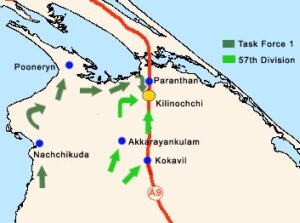
When the capital of the LTTE falls, it also signaled the end of the LTTE. That significant victory was delivered by Maj. Gen. Jagath Dias on 2ndJanuary 2009.With the fall of LTTE’s capital and stronghold, it virtually meant the end of the military offensive and the beginning of the humanitarian rescue operation. This is poignant for the UN, UNHRC and the foreign diplomats. It is also noteworthy that timed with the capture of Kilinochchi was the declaration by the President of Sri Lanka, Mahinda Rajapakse to the LTTE to surrender and lay down arms. This offer was refused by the LTTE declaring it would fight till the last man. It was thus LTTE’s choice to be annihilated by the Sri Lanka Armed Forces. With the capture of Kilinochchi the GoSL and the Sri Lanka Armed Forces in particular the leadership of Maj. Gen. Jagath Dias had achieved a Dutugemunu moment in history! The country was brought under one flag on 2 January 2009. It was the first time after a lapse of 3 decades that the country came under one flag. It brought to naught all of the claims of separatism, separate territories and self-determination & homeland bids. https://youtu.be/CuRg_vW1q8A

https://www.youtube.com/watch?v=CuRg_vW1q8A– Proud moment for all Sri Lankans when 57 Division led by Maj. Gen. Jagath Dias hoisted the national flag in LTTE’s claimed capital after capturing Kilinochchi from LTTE on 2 January 2009.

The President of Sri Lanka issued a victorious message What our heroic troops have achieved is not only the capture of the great fortress of the LTTE, but a major victory in the world’s battle against terrorism”

https://www.youtube.com/watch?v=hYnQnlZm2K4– Sri Lanka’s President demands LTTE surrender on 2 January 2009

https://www.youtube.com/watch?v=vIS8_K9VxCU– no prouder moment for our war heroes celebrating the capture of Kilinochchi – LTTE’s defacto capital on 2 January 2009. With that capture, the Tamil Eelam quest fell on its face militarily.

The LTTE reaction was a suicide bombing on the same day in front of the air force headquarters killing 3 and wounding over 30 persons.

The capture of Kilinochchi is momentous for the Sri Lanka Army having lost it to LTTE in 1990, recaptured in it 1996 and lost it again in 1998.

Kilinochchi was LTTE’s administrative hub after the 2002 Norway mediated infamous ceasefire agreement. LTTE had its own police force, Peace Secretariat, Bank, Courts all located in Kilinochchi.

Noteworthy aspect of the victorious capture was that LTTE had all of its bigwigs defending Kilinochchi – Prabakaran’s son Charles Anthony, Imran Pandiyan brigades commanded by Theepan, Bhanu & Lawrence.

Also noteworthy is Prabakaran’s response when the government declared in October 2008 that it would capture Kilinochchi – Prabakaran declared capturing Kilinochchi was ‘just daydream of President Mahinda Rajapakse’.Prabakaran was proved wrong on 2 January 2009!

LTTE began withdrawing its combatants from Kilinochchi when Paranthan fell on 31 December 2008. It was just a matter of days that Kilinochchi came under the lion flag with virtually little resistance. Mullaitivu the other LTTE bastian fell on 25 January 2009.

It was no doubt a symbolic victory marked by fire crackers islandwide. LTTE was banned with the capture of Kilinochchi on 7 January 2009 for ‘using civilians as human shields in uncleared areas and endangering their lives, despite requests by the government to release them”. This ban and the reason for the ban was not given due international attention.

Thus, with the capture of LTTE’s defacto capital Kilinochchi on 2 January 2009 the symbolic defeat of the LTTE was written on the wall. The capture of Mullaitivu sealed LTTE fate further.

What needs to be highlighted is that with the significant capture of Kilinochchi, LTTE’s quest for separatism was thrown into shambles and it signaled the defeat of the LTTE.

With the end of Kilinochchi and Mullaitivu, LTTE was on the run and the Sri Lanka Armed Forces had completed the military offensive and commenced the humanitarian rescue operation.

The diplomatic community and the UN system must seriously take note of this milestone and demarcation of military cum humanitarian rescue carried out by the Sri Lanka Armed forces.

That the GoSL and the Armed Forces appealed to the LTTE to release civilians from being kept as hostages and human shields is known by all.

That the UNSG & even diplomats also appealed to LTTE to release civilians from being kept as hostages and human shields is also known by all.

That LTTE didn’t care too hoots about their appeals is also a known fact.

As per rules of war, LTTE has erred in using civilians as hostages and human shields.

As per rules of war, LTTE is faulted for firing among civilians and keeping military equipment among civilians. The armed forces as per rules of war have every right to return fire as LTTE should not be firing from among civilians. Therefore, the question is why the UN and diplomutts ignore this all important fact?

This important aspect is discussed in Palitha Senanayake’s new book.

The most important milestone is that on 2 January 2009, when Maj. Gen. Jagath Dias and his 57 Division captured Kilinochchi the capital of the LTTE, the military offensive against LTTE came to a finale.

The military offensive was thereafter replaced by the humanitarian rescue operation which was given prominence and from the timeline of dates and manner of the rescue conducted, Sri Lanka admirably carried out the world’s largest humanitarian rescue operation of close to 300,000 Tamils.

Let Sri Lanka be judged by its achievements and victories not based on the disappointments & anger of those who angrily watched LTTE fall to defeat. 

Shenali D Waduge

THE LINES ARE DRAWN AND THE COUNTRY SHOULD GO FORTH BOLDLY

March 3rd, 2021

RANJITH SOYSA

At the UNHRC meeting the true friends of Sri Lanka emerged to speak and defend the country battered mercilessly for defeating the world most brutal terrorist organization i.e., Tamil Tiger terrorists in 2009, who held 20 million Sri Lankans to ransom for well over 25 years.  The leading the Sri Lanka bashing were the UK. Germany. Canada, Switzerland, Netherlands. Belgium and the USA, all of them having a chequered history in violating human rights at different times. India, our friendly neighbour while thankfully taking a fair distance from the punitive stance of others opted to emphasize on the rights of Sri Lankan Tamils and their ‘aspirations’ insisting on the FULL implementation of the 13 A” India should be requested to point out whether any Tamil person in Sri Lanka is deprived from enjoying a basic right because he or she is being purely a Tamil.  On the 13th A which was thrust on Sri Lanka along with the so-called Indo-Sri Lanka agreement, most Sri Lankans are of the view that it was a faulty restructuring effort of Sri Lanka’s government by India and the Police and Land powers under the 13 A are a direct threat to the sovereign Sri Lanka. Further, the Provincial government system has not benefited Sri Lanka in any measurable manner and had been an exercise in colossal wastage of hard-earned funds of the central government. As regards aspirations, we are amazed how we can consider ONLY the aspirations of Tamils as all other ethnic groups and the individuals too have aspirations and it will be impossible to walk that talk. We need further training in the recognition of aspirations of different groups from India and we pray for further  comments from the HR specialists in India how they have reconciled the aspirations of other than Hindu religious groups, Sheiks, Kashmiris and other minority groups on Northern most India.

But, many nations at UNHCR rejected the proposition of the Sri Lanka bashers who directly and indirectly were supportive of the LTTE armed insurrection and the separatism threatening the unitary Sri Lanka. They also rejected the ‘the preventive prescription’ of the secretary General Bachelot. The nations who supported Sri Lanka stood for the principle of non- interference in the internal affairs of a democratic country. Any weaknesses in Sri Lankan affairs should be allowed to be rectified domestically in keeping with the constitutional provisions of the country rather than to be dictated and decided upon by the holier than thou sloganeers. Most of the nations who attempt to foist their plan on Sri Lanka are from the Western bloc who killed and maimed millions of persons living in the colonized countries and subsequently destroyed other nations as pawns of the world power games. Their adherence ‘to the human rights are completely at variance with their practices on the ground.

Now, Sri Lanka should re-examine their directions and resolve to work with the friendly nations who supported her to extricate from the trap laid out by the countries who desire an unstable Sri Lanka. The Government and the people should resolve to reduce our dependence on Sri Lanka bashers and re-design our imports to suit the geo-political reality and to avoid any plot to impose sanctions by the wounded nations. Time has arrived to consider the nation’s priorities by curtailing the luxuries even for a given period. We should try to get our requirements from the friendly nations and try to improve our trading relationship with our friends.

This the ONLY way to extend our hand to REBUILD a new world order is to be less dependent on the predatory countries who always insist on their pound of flesh from the developing nations. While we thank the President, the Minister for Foreign Affairs, and the Government for having rejected the co-sponsorship of resolution 30/1 at UNHRC, we urge the Government to plan to reshape our trade and foreign relations to play our role as an independent member of the international community.

TAMIL ASPIRATIONS OF SRI LANKA ARE LIKE CRYING OF KIDS TO BRING MOON PART 1

March 3rd, 2021

BY EDWARD THEOPHILUS

Aspirations might be used to describing the ambitions which are too broader and at present, they may look limiting wishes, latter, they would go like crying of kids to bring the moon. Aspirations of any nation will go to a broader area, from the point of view of Tamils of Sri Lanka who wish to have a separate country in Sri Lanka, also could include to aspirations. It may be defined as two countries one nation as assumed or planned by Norway. The term that uses in the study of the principles of economics describing wants that could not satisfy in the lifetime of a person may similar and they are broad expectations.

Indian interpretation of Tamil aspirations of Sri Lanka like needs as explained in the study of economics. Needs are defined as basic needs such as food, clothes, water, air, etc.  Aspirations of people could be further defined as desires of human metempsychosis, it is so broader and expands indefinitely until a person attains Nirvana. Why this issue is going on like a beggar’s wound and is it a technique that the Indian intelligence service uses to control Sri Lanka?  When considering the Indian point of view of the Tamil aspirations of Sri Lanka seems that Tamil aspirations might amplify like desires of human metempsychosis as indicate in Buddhism and Hinduism. However, India has limited the definition of Tamil aspirations of Sri Lanka as legitimate aspirations that are in the interest of Sri Lanka as well as India. The needs of a person in the study of economics and show the broadness of the term to mislead all communities in Sri Lanka.

The Indian definition of legitimate aspirations of Tamils has further described that it could be achieved through the process of reconciliation and the full implementation of the 13th amendment to the constitution. The Indian definition of aspiration has limited Tamils in Sri Lanka to a restricted area, and this should be logically considered by the government and people of Sri Lanka. It is not a valid reason to formate a new conflict between India and Sri Lanka. As it happened in history, India and Sri Lanka must work like friends and cooperative nations.

When deeply analyzes two points India considers it is fulfilling, the legitimate aspirations of Tamils of Sri Lanka. It seems they are too vague and they are involved in vicious politics that Sri Lanka relegates to obscurities as well as Tamils are taking to a mental world. Many Sri Lankans who aligned Sinhala extremism have difficulties understanding the issue and Indian views on the Tamil aspirations of Sri Lanka are clearly understanding and supporting the practical implementation of policies for Tamil aspirations. 

India is fully aware of the attitude of the majority of Sri Lankans regarding the Tamil aspirations, and while the human rights session was going on in Geneva why this issue has emerged for a long time may be an obvious secret to the world. China has nicely expressed its views regarding the UNHRC report and it would have dismayed participating other countries. The UNHRC also had difficulties explaining the truth to the world because it involves disguised politics between India, Sri Lanka, China, and Western countries. The nature of politics in India is to use various issues from time to time keeping Sri Lanka under the control, and this issue might go further a century as long as India wants to do it.

Sinhala, Tamil, Muslim, and many others in Sri Lanka have international ethnic classification as Indians, and these people have deviated base on the language used or religion believed and practiced, but there is no biological or anthropological difference between them. The language used by Sinhala people defines as an Indo-European language and the Tamil language consider as a Dravidian language. The origin of two languages may associate with adventures in history and since the era before Christ, it had not been a critical issue for people to live together.    If one language uses them all are included in one nation. If India respects universal human values it must not allow continuing aberrations on baseless factors and the responsibility of India is to reject such differences against human values and express its opinion to treat all as one ethnic group.

The Indian strategy within India is treating all different communities in the country as one nation, and why such a firm policy could not be equal to Sri Lanka.  The secret of the Indian policy is dividing and controlling the country. India might need to expand the policy for surrounding nations as the complexity in Indian politics may need such actions. India has a policymaking mechanism that is beyond party politics and that is why it can see although the government change neither foreign policy nor attitudes towards neighboring countries are changed.    

Sri Lanka is in the process of drafting a constitution that could incorporate the legitimate Tamil aspirations of Sri Lanka, and how this aspect should be worded in the new constitution might need to know by people of the country. The wide spectrum of politics in Sri Lanka seems hungry to look at the draft of the constitution because it would be a drop of water in the desert for the opposition to survive. As people are fully aware of politics played for the constitution drafted by the yahapalana regime after 2015 this time also may be political manuring to oppose for the new constitution.  Such problems might be supported by the Indian intelligence service and the government of Sri Lanka must egghead to Buddhist monks, political parties, intellectuals, and others who are vulnerable to getting caught in foreign influence, financial incentives, and NGOs.

The term, people of Sri Lanka include all citizens of the country. The Indian aspect of the legitimate aspirations of Tamils of Sri Lanka means the Tamil citizens of Sri Lanka and clearly, it excludes the Tamil diaspora who are not citizens of the country. When interpreting Tamils India has used Tamil speaking people and it confuses sometimes because all Tamil speaking people are not ethnically Tamils and Muslims, Colombo Chetties and some Sinhala people too speak Tamil and they are not Tamils. Many Tamil-speaking people live outside Sri Lanka, and the government of Sri Lanka could not entertain the aspirations of all Tamils in the world.

During the war period with LTTE, Tamils without differentiating whether they were citizens of Sri Lanka or not supported the Indian point of view, and the most significant of the Indian assessment is that the Tamil aspirations should be limited to a framework of equality, justice, peace, and territorial integrity of Sri Lanka. In this way, India seems to attempted to wash hands preventing Indian points of view from India and apply such views to Tamil people living in Sri Lanka and excludes Tamils living in India.  This likes India holding the tail of a tiger and now it has difficulty releasing the tail as it has a risk that the tiger might create problems for India. The other vital point when India describing the abiding aspirations of Tamils of Sri Lanka has mentioned equality, justice, peace, and territorial integrity and it further shows that India has ignored the term unity. Does India has animosity to the unity of ethnic and religious groups in Sri Lanka? If the term unity has been ignored in the Indian process it could assume that India doesn’t akin to the unity of Sinhala, Tamil, and Muslim people in Sri Lanka.  Territorial integrity refers to the unity of the territory but it doesn’t refer to the people of the country. The Indian politics after independence in 1947, give the impression that India attempts to play politics with countries wherever Indian people are in, an example was Fiji when Rabuka took over power in the late 1980s, Mr.Rajive Gandi displayed his interest in playing politics with Fiji. 

TAMIL ASPIRATIONS OF SRI LANKA ARE LIKE CRYING OF KIDS TO BRING MOON PART 2

March 3rd, 2021

BY EDWARD THEOPHILUS

The LTTE, Prabhakaran, and colleagues worked against Sri Lanka’s unity and territorial integrity as he needed to establish a separate Tamil state with armed forces and struggle. His behavior appeared he wanted to re-establish the Vijaya Nagar empire that will create severe risk India creating new Issues. The intention of the LTTE movement had been under the control of India and the behavior of Prabhakaran was differentiated by the killing of the Indian Prime Minister and it was the main cause to ending the life of the LTTE leader. Politics could be played in any country but killing politics is not tolerated by a democratic society.  

India is always careful to express views and supports to Tamils of Sri Lanka thinking there is a large Tamil community in India with ethnic relation to Tamils in Sri Lanka, and many Tamils in Sri Lanka are of opinion that except upcountry Tamils, who are descendants of Indians brought to Sri Lanka for plantation industry, are a part of the Sri Lankan community since before the era of King Elara. If it thinks in that line there is no question of respecting the rights of the Tamils. Whether Sri Lanka Sinhala, Muslim, or other communities do agree or not the government of Sri Lanka cannot discriminate against Tamils of Sri Lanka. They are a part of the Sri Lankan community like a caste within the Sinhala community and it shouldn’t be a reason to discriminate against them, the new constitution needs to clearly express that Tamil, Sinhala, Muslims, and other citizens of Sri Lanka are equal and all have equal rights and responsibilities.  If this idea is properly worded and express in the new constitution the equity and justice give equally to Sri Lankans and many clauses of the 13th amendment would be immaterial as there are no ethnic groups in Sri Lanka, only one ethnic group in the country it is Sri Lankans.

When considering the Tamil aspirations of Sri Lanka nobody cannot ignore the Indo-Lanka accord signed on 29 July 1987.  This accord was prepared with an intention to enact the 13th amendment to the constitution passed on 14 November 1987.  The complicated aspect of both was the idea of merging the North and Eastern provinces into one administrative unit. This idea was complicated and many Muslim and Sinhala people are living in the area and the rights of these people were ignored in the idea of merging two provinces and it was a violation of the rights of these Non-Tamils.  The merger should be a permanent action was the interpretation of the accord, which gave the power to the president of Sri Lanka to postpone the referendum to merge the North and Eastern provinces. 

The Indo-Lanka accord signed in 1987 has become a complicated matter after more than 30 years and it appears the accord should be canceled or amended according to the current environment. The political history of the world indicates that accords, agreements were among many countries, which were either canceled or ignored in the modern era. So, Indo-Lanka Accord was not an agreement God-given forever and it might change.

Sri Lanka had accords with India in history. In 1782 Sri Lanka signed an agreement to appoint a Malayali Prince as Rajahdi Rajasinghe to the kingship in Sri Lanka, but it was canceled and India did not protest or worked against the cancelation either. This means the Indo-Lanka accord signed on 29 July 1987 could cancel or renegotiate under the new condition. However, if the new constitution converts people of Sri Lanka as Sri Lankans like in India disregarding ethnic and religious, differences the validity of the accord may end without any negotiation.

Mr.J.R. Jayewardene described the Indo-Lanka accord as a way of living under the shadow of India without surrendering to India.  It was a highly complicated statement and when the 1983 July riots happened some international observers have analyzed and highlighted that Mrs. Indira Gandhi had the intention to annex Sri Lanka, but the major barrier to Indira was no a loyal group in Sri Lanka to manage the country on account of India. Mr.Varadarajah Perumal and his group may have trained for the purpose and it was not successful as the majority of Tamils had animosity with him than for a Sinhala leader. Later this situation changed and promoted the 13th Amendment to the constitution and after the enactment of a new constitution the problem may solve or complicate further and the current president should aware of this situation.        

As India has mentioned, what is the process of reconciliation? this is a Byzantine approach that has no proper definition. Norway attempted to define the reconciliation with a bias toward Tamils and India indirectly opposed to the approach of Norway some time ago.  It was a Noble Prize-related process was the feeling of common people than a genuine reconciliation between ethnic and religious communities of Sri Lanka.  Some time ago I explained a genuine reconciliation should be without strings and the approach of Lord Buddha when he reconciled Chuloda and Mahodara would be the best approach.  Sri Lanka’s government has taken many steps in support of the reconciliation process. Nevertheless, India attempts to use the issue like a beggar’s wound and didn’t like western countries coming to the seen it may be a president to ethnic problems in India.

Sri Lanka’s relationship with China has impacted the Tamil aspirations of Sri Lanka and indirectly India requests from Sri Lanka to limit Chines role in the country and abate the support from China to Sri Lanka. India cannot support Sri Lanka in the magnitude that China is supporting.  India has a massive population who don’t enjoy at least the level of Sri Lankans’ economic enjoyment. Attempting to treat the equality of Sri Lankans in the same way, economic poverty of Indians is unreasonable.  

It seems an Indian hegemony-related issue too associated with the Indian approach rather than the problem that goes with international relations.

According to the UN convention relating the human rights, any country may have relationships with other countries, and it doesn’t limit the ability of relationships.  The attempt of India to limit the relationship with China might contrary to the UN convention.

When deeply analyze the Tamil aspirations of Sri Lanka they have limits and subject to Indian controls. Whether Tamils living in Sri Lanka without differences have understood the situation is a complicated issue and many Tamils now open express views against the Indian approach.  Why India sticks to the attitudes of the past is a question and educating people on this matter might help to change Indian attitudes.

Sri Lanka hopes India supports Sri Lanka in UNHRC and associate with Sri Lanka to convert Tamil aspirations to a demand for asking to bring the moon. On the political front, there is working together by India and Sri Lanka, however, intelligence service works deeply looking at odds and do people in India and Sri Lanka need to stick to odd points, no Sri Lanka had a closed relationship with India since history and Sri Lanka also related to Indo-China languages and Culture, in this way India and China both are friends of Sri Lanka, diversity and unity is the secret of maintaining the relationship with both.    

A Raving Pastor Overrides Gotabaya’s Vision of ‘Vistas of Prosperity’

March 3rd, 2021

By The Sri Lanka Study Circle 

A monkey edict at the instigation of the CORE group?  

Reacting defensively to a scathing criticism of his fly-by night conduct, pastor Colombage, at a hastily convened interview, with journalist Raymond, went on record to say, ‘Sri Lanka has a clear foreign policy; neutrality is the key and we want to maintain neutrality. We will not take sides and we will remain neutral. Technically, we are a Non-Aligned country but that is alright because we know Non-Alignment was created after World War 2 when the world was different to what it is now’. 

Has the pastor run mad? Why did he utter such a devilish lie? Did he do so at the instigation of the CORE group with whom he is in deep dialogue? Was Colombage attempting to alienate our fellow members and friends in the Non-Aligned Movement, to ensure Sri Lanka –in Colombage’s words – ‘surrenders after a (fake) fight’? 

Excerpts from Gota’s vision of vistas of prosperity 

In 2019, 2/3rds of the people delegated their power to Rajapakse (GR), impressed by his projected political stance and their confidence in his pledge to implement the stated goals during his watch; these were clearly enunciated in his policy document touted as ‘Gotabaya Rajapaksa’s vistas of Prosperity and Splendour’.    

In Chapter One of that document are enumerated the ten key priority policies of GR.  

Top priority is given to National Security. Next comes ‘Foreign Policy’; in that Policy document GR has pledged to the people that the key to our Foreign Policy is Non-Alignment. 

Gotabaya Rajapaksa Vistas of Prosperity and Splendour – My Vision…  

Our 10 Key Policies 

  1. P
    1. Priority to National Security 
    2. Friendly, Non-aligned, Foreign Policy 

priority to National Security 

  1. Friendly, Non-aligned, Foreign Policy 

The Foreign Policy pledged is further elaborated in the Policy document thus: 2. Friendly, Non-aligned, Foreign Policy The basis of our foreign policy will be ensure that Sri Lanka’s territorial integrity and independence are respected and protected in the interests of the citizen and future generations of this country. It also aims to ensure that Sri Lanka’s dignity as a sovereign nation is respected. No harmful agreements /treaties will be entered into by our government. Our foreign policy will be based on non-alignment and mutual friendship and trust among nations

Colombage shows his contempt to the people 

Why then does pastor Colombage barefacedly lie that the key to our Foreign Policy is Neutrality? He gives the impression of being the standard-bearer of the fifth columnists aspiring to wreck the country from within; he is emerging as a major threat to the National Security of Sri Lanka 

And Colombage, whose Foreign Ministry salary, emoluments and perks are met by the people of Sri Lanka, shows utter contempt to those very people who overwhelmingly wanted the country to have Non-Alignment as the plank of the Country’s Foreign Policy.  

Downright treachery? 

What is Colombage’s motive?  

The devious pastor is a member of the CIA funded think tank, ‘Centre for Indo-Lanka Initiatives’; with his present appointment in the Foreign Ministry Colombage has a definite conflict of interest.  

It would be hard to counter arguments by some critics who construe Colombage’s conduct as downright treachery. 

Self-styled ‘Professor’ unable to differentiate between Non-Alignment and Neutrality 

Colombage, a self-styled ‘Professor’ is unable to differentiate between ‘Non-Alignment’ and ‘Neutrality’. 

The Non-Aligned Movement came into being in 1961, following a meeting in 1955, in Bandung, of delegates from Nation States that had recently gained independence from the European Colonial Powers.  

These delegates had met to find ways and means to protect their respective countries from being Colonised, ever, in the future and to preserve the World order based on Multilateralism which respects and recognises the Sovereign equality of all Nations.   

Non-Alignment is the biggest weapon in our armoury in our battle against big power hegemony.   

The delegates in Bandung, at that time, identified an emerging threat that could endanger the Sovereignty and Independence of their respective States; they saw through the US moves, the intention of the Americans to Colonise their Countries and impose a World Order based on American Unilateralism which does not respect and recognise the Sovereign equality of all nations. 

The Non-Alignment Movement arose from the need to protect the Sovereignty of Nation States and the need to protect the World Order that recognised and respected the Sovereign equality of Nations. 

The Non-Alignment Movement is a principle-based organisation; it is based on the principles of the UN Charter which include non-intervention, non-aggression, international co-operation, mutual benefit and mutual respect and has no place for big-power hegemony.  

Neutrality is a mongrel- like Switzerland  

In contrast, Neutrality is a mongrel and has no principles. Nations adopting Neutrality end up mongrel-States.  

 For example, when Germany was engaged full time in the holocaust, setting up a master race, slaughtering millions of Jewish people in a campaign of mass murder and genocide while robbing the victims of their wealth and belongings, Switzerland adopted a policy of ‘Neutrality’ and looked the other way, choosing to ignore what was happening  

And what did this mongrel State do? They, like as Pastor Colambage is suggesting, exploited the situation to act as an international fence, a dealer in stolen goods; Switzerland permitted the killers and rogues to keep their booty ‘safely’ in their country, on paying Switzerland a percentage of money annually. That is Neutrality. That policy still exists and perhaps is why Switzerland is regarded internationally as a ‘pariah’ State. 

Colombage logic 

To give meaning to ‘Neutrality’ in the local context, when the local thug rapes, kills, robs and maims individuals, Pastor Colombage’s logic is that passers-by look the other way and if possible, flick his wallet and make a financial gain.    

Do not take sides says Colombage, see what advantage you can take from this situation. What a man, what a disgrace! 

The Non-Alignment Movement takes a definite stand on global issues based on the very principles that the UN is structured on. 

Why all countries in the Non-Aligned Movement must vote against the Resolution 

The Resolution that is being debated in Geneva affects not just Sri Lanka alone, but all the Non-Aligned countries in the World. The Americans are using the Sri Lankan issue to change structures of the present Multilateral World Order to a Unilateral American World Order. This was clearly explained by that brilliant Sri Lankan diplomat Tamara Kunanayakam, in her many interviews with the media.  

Colambage, standing with the fifth columnists on one side while the people of Sri Lanka are on the opposite side, gives the impression of pushing the American line. When the need of the hour is to talk with our friends, comprising 35 of the 47-member assembly, Colombage is talking with our enemies who brought the Resolution.  

Colombage shies away from public debate 

  Many are clamouring for Colombage to engage in a one-on-one prime time TV debate. From all accounts Colombage is very reluctant to do so fearing he will be exposed.  

The HRC procedure Sri Lanka must follow to ensure a vote is called for  

From all accounts there are many countries that will stand-up for Sri Lanka and vote in her favour at voting time. But there is a snag. 

No vote can be taken unless another country gets up, at decision-taking time, and informs the Chair of the HRC that they are speaking on behalf of Sri Lanka, that they reject the Resolution and ask that a vote be taken.  

Then only will the Chair permit a vote to be taken and the countries get an opportunity to vote.  

That is the procedure. If we do not follow this procedure even Dinesh Gunawardena’s fiery rejection of the Resolution will come to naught. 

Unconfirmed reports suggest that Colombage has not canvassed the friendly countries and has not requested any country to address the Chair, on behalf of Sri Lanka, at decision-taking time. 

If that were the case, when the anti- Sri Lankan Resolution is taken up and silence follows, the Chair will interpret the silence to mean that there are no objections to the Resolution and that ‘Consensus’ has been reached; he will bring down the gavel to record that the Resolution was a Consensual one and adopted unanimously. 

The result would be the same as Mangala Co-sponsoring that infamous Resolution of 2015. 

Insiders are puzzled; they ask whether this is a ruse of the interloper in the Foreign Ministry who is aware that 35 of the 47 members in the HRC are in the Non-Aligned Movement, the largest organised group of Nations, next to the UN; the NAM has a membership of 120 States. 

What the vote means 

When the Countries vote, there are two issues that will be determined by that one vote; the obvious is the issue of the damnable lies in that anti – Sri Lankan Resolution.  

The not-so-obvious issue, deftly concealed in the Resolution, are the landmark changes being made to the Global Order which are precedent-setting and are in total violation of the UN Charter.  

These changes would make all countries in the Global South vulnerable to American military intervention and aggression and vulnerable to illegal sanctions and embargos -not authorised by the UN Charter – that would result in the gross violation of basic Human Rights of people in the affected countries.   

The concealed concepts in the Resolution would deprive countries of their Armies to defend themselves because this Resolution permits the Americans to unilaterally pick-up heroic soldiers from any country and incarcerate them in American prisons. 

Colombage, an ingratiating sycophant of the Americans, has not made one single statement condemning this aspect of the Resolution. 

The simple act of taking a vote at the HRC is a victory for Sri Lanka and the NAM 

Even one vote cast is a victory for Sri Lanka and the Global South; it is a victory statement for the Sovereignty of all Nation States and for the concept of sovereign equality of all Nations. 

There is not a sausage the HRC can do thereafter other than bringing in another Resolution the next Year or bringing it up at the UN Security Council where we have our friends who understand the vile American motives. 

THE GENERAL ELECTION OF 1956 Part 7C

March 3rd, 2021

KAMALIKA PIERIS

Revised 2.4.21

Bandaranaike took firm decisions where international relations were concerned. This essay looks at his handling of several important issues which arose in 1956.

ISRAEL

Bandaranaike recognized Israel, though he had reservations. Bandaranaike told Parliament, the position is that the previous Government had agreed to diplomatic representation by Israel here, I presume, with the implication of our representation there.

 When I assumed office the Israel Government, kept on pressing us to find out whether they could send their Representative here as the previous Government had decided. The British High Commission as pressing for it. Therefore I agreed.

Besides the pressure from the British side, there could have been other reasons for Bandaranaike’s decision to open diplomatic relations with Israel, said Bandu de Silva. India had already accorded diplomatic recognition. Israel was building up a socialist state. Its Kibbutz system even attracted the attention of the local left leadership.   Israel had supported Ceylon’s entry into the U.N.

Bandaranaike ordered that diplomatic missions be exchanged and asked the Permanent Secretary to appoint H.A.J. Hulugalle, Ambassador to Rome to be concurrently accredited to Tel Aviv. The Arab League issued a strong protest and a threat to boycott Ceylon tea, so Bandaranaike stopped Hulugalle from proceeding to Tel Aviv.  I have laid it by, said Bandaranaike to Parliament.   Israel however had already opened its diplomatic mission in Colombo.

Bandaranaike had his own views on the creation of Israel. Personally, if you ask me, the much wiser course should have been, that these Jews, should have been absorbed into those countries in which they were settled and of which they had become citizens, as citizens of those countries and treated fairly and justly so that they would have been able to make their great contributions to the national lives of those countries.

 However, the Balfour Declaration recognized publicly this sentimental claim of theirs to return to their homeland after nearly 2,000 years. At the same time, it must be remembered there are about a million Arabs who are refugees, about a million of them, driven out of their homeland.

Now let us understand the position of the Arab countries too, what they feel about this Jewish State established in a narrow, barren strip of land, containing roughly less than a million people, about a million and a half, supported by international Jewry with finance, with the political power wielded in those great countries where the people of their race are still filling important and distinguished places, with brains, with industry, with money and most modern equipment.

The Arabs feel that this Jewish State planted in this way in their midst would prove of great danger to their independence and their freedom because Israel is bound to expand.  She just cannot help herself.  Circumstances will make necessary for the present Israelites to expand what with the powers they have and their ability, backed by all these international forces.

The Jews feel that this small country is not sufficient for them, for one and a half million people. This makes the Arabs’ fear not unjustifiable that Israel would prove a great danger, if not now, at least 10 years hence or 20 years hence or 30 years hence. That is the Arab point of view which might be given due consideration. The Israelites point of view is that they have no such intention.

I had the pleasure, at the United Nations, of having a long talk with Mrs. Golda Meir, a very charming and able lady.  She was then Foreign Secretary of Israel. I told her, this is the position. But she said, ” Oh, no. We can get on very peacefully if we are allowed to do so. We have no such intentions “, and so on and so forth. Obviously, that is what the Jews say when they get their head into the tent till the rest of the body in due course follows into the tent, if I may quote an Arab saying.

We have the highest regard for the Jews. They are very able, and all honor to them. But this is the newly planted State of Israel. Of course, they were there over 2,000 years ago, it is true, but they have not been there for the last 1,800 years at least. If we look at it in that way, I dread to think what would be the position of many countries in the world, concluded Bandaranaike.

1956 was an eventual year   for the UN. There was the Suez Crisis, the invasion of Egypt by Israel, the invasion of Hungary by Russia, United States troops in Lebanon and British troops in Jordan. Sri Lanka, under Bandaranaike, responded to each of these issues.

SUEZ CRISIS

In July 1956, Egypt nationalized the Suez Canal. UK and France invaded Egypt to take the Canal back. And Israel used the opportunity to invade Egypt and expand its territory by annexing the Sinai. Sri Lanka played an active role in Suez crisis.

News of President Nasser’s nationalization of the Suez Canal Company on July 26 1956 reached S. W. R. D. immediately and he quickly saw the dangers of this act. First he discussed the matter with Nehru and suggested having a meeting of the Colombo Powers.

In August 1956, UK called a conference of 24 countries to discuss the Suez issue in London. Sri Lanka was also invited.  UK wanted to see international control of the Canal. India, Sri Lanka, Indonesia and USSR opposed this.

Bandaranaike said that Sri Lanka supported the right of Egypt to nationalize the canal   and opposed the invasion by Britain and France. Bandaranaike told British Prime Minister Anthony Eden that there should be an unconditional withdrawal from Egyptian territory of British, French and Israeli forces before any other question could have been taken up, even the question of the clearing of the Suez Canal, and that it was Sri Lanka‘s firm belief that delays in such withdrawal would only result in the danger of widespread hostility.

” Our attitude at the London Conference was to recognize the legality of the nationalization and its corollary, the right to control the Suez Canal, and to suggest, as there were international interests also, that some convention should be again signed on the lines of the Convention of Constantinople of 1888 preserving those international rights and appointing some consultative committee which would consult the Egyptian Government in the operation of the canal and, if any dispute arose, that that matter be referred to an impartial body of arbitration, perhaps under the auspices of the United Nations. President Nasser is not opposed to that.

Bandaranaike also obtained an assurance from Britain that the bases in Trincomalee and Colombo would not be used in the Suez crisis.

Sri Lanka‘s statement came to the attention of Egypt’s Prime Minister Nasser. Nasser sent a cable to Bandaranaike in September 1956. It said:” Your Excellency, having gone through the records of the London Conference on the Suez Canal. I wish to express to Your Excellency the Egyptian peoples and my own appreciation of the wise and fair attitude of your delegation and its support of the right of Egypt to nationalize the Suez Canal Company and to safeguard its own independence and dignity. I avail myself of this opportunity to express to Your Excellency my highest consideration. Gamal Abdel Nasser. Later Nasser invited Bandaranaike to visit Egypt.

On my way to New York for the UN sessions I spent one day in London where I had the opportunity of meeting the British Prime Minister, and certain other Ministers. I am much obliged particularly to Sir Anthony Eden for having given me an opportunity of explaining to him our views. Not only ours but of the Asian Powers as well, reported Bandaranaike to Parliament.

UN had an emergency special session of the United Nations General Assembly to discuss the Suez issue. On November 1st, 1956 Suez issue came to the General Assembly for the first time. Sri Lanka got a chance to voice her views on the subject.

Bandaranaike instructed Sri Lanka’s Permanent Representative at the UN, R. S. S. Gunawardena to up hold Egypt’s rights to nationalize the Suez Canal Company   and to say that Ceylon disapproved of the military invasion of UK, France and also the invasion of Israel. Bandaranaike opposed Britain’s policy of phased withdrawals from Suez. SWRD had instead suggested a conference of the users of Suez Canal. There were 11 resolutions on Suez and Sri Lanka voted for all of them. Sri Lanka was the cosponsor of one resolution, the   Asian powers resolution on the Suez issue.

Bandaranaike spoke with Egyptian Foreign Minister Fawzi. ‘Dr. Fawzi made me understand that Egypt is always ready to discuss the matter.’ Bandaranaike had conferred with Eisenhower earlier and agreed with US policy on the matter. Sri Lanka supported the US position of demanding a ceasefire and creation of a UN emergency force in Suez to keep the belligerent apart. Sri Lanka stated that it was prepared to send in a contingent of infantry for this.

On his way back from New York, Bandaranaike against stopped over in UK. I saw Mr. Selwyn Lloyd and had an opportunity of explaining to the Ministers again, as a result of my conversations in America and Canada, that I was confirmed in my view that they should unconditionally withdraw their forces from Egypt. I impressed upon British Ministers that they must announce this.

Selwyn Lloyd,   got at me the night before I left, I was at a dinner given by the High Commissioner. He wanted to see me, he was preparing his speech for the following day in the House of Commons,-to find out what I really thought of their announcement. I said, ” Well, better late than never. You have done right. Please withdraw your forces. Personally I think that is the only thing to be done. “

Back in Sri Lanka, SWRD spoke of the matter in Parliament. I think we can take it that the danger, or any close danger of widespread war breaking out, has now receded into the distance. That does not mean that all the problems are solved. There is the clearing of the Suez Canal which must be taken up quickly in the interests of all of us, Egypt included.

The United Nations has emerged with its prestige increased-there is no question about it-over this incident. Even the American President, Eisenhower himself, is satisfied that they must work through the United Nations in the future to secure the peace of the world. I hope the other great powers will also come to that conclusion, and the United Nations will now come into its own, said Bandaranaike in Parliament.

Bandaranaike’s efforts to resolve the Suez Crisis, pleased the Arab countries. UNGA appointed an advisory committee to guide the United Nations Emergency Force for Suez.(UNEF) Sri Lanka was nominated to this body by Iran and was unanimously approved.  This was an indication of the appreciation of Sri Lanka’s   foreign policy by other countries, said Nissanka. The other countries were Brazil, Canada,  Colombia, India, Norway, and Pakistan, with the Secretary-General as chairman.

HUNGARY

There was a revolt in Hungary in 1956, and Russian troops entered in October 1956. Russia prevented the matter from coming up in Security Council by using her veto. However,   US brought the matter before the General Assembly. Sri Lanka did not have diplomatic relations with Hungary or Russia at the time.

Sri Lanka spoke against the invasion at UN General Assembly. Sri Lanka said whether it is Russian dictatorship in Hungary or Anglo French dictatorship in Suez, it is undesirable. Sri Lanka asked that Russian forces be withdrawn from Hungary and Hungary left free to work out her own destiny.

United Nations General Assembly appointed a fact finding special committee on Hungary. Sri Lanka was appointed to this committee, with Australia, Denmark, Tunisia and Uruguay. Sri Lankan Representative R. S. S. Gunawardena was appointed a Secretary of this committee. The committee was not allowed to visit Hungary.

In this case, Nissanka observed, Sri Lanka was reluctant to anger Russia. The Report of the committee on Hungary was very critical of Russia. Sri Lanka abstained from voting, though it was member of the committee. Bandaranaike was slow to condemn the execution of Imre Nagy, former Hungarian Prime Minister by Russia. 

LEBANON and JORDAN

In August 1958 US and UK invaded Lebanon and Jordan respectively. UN met to discuss the matter.  Sri Lanka   condemned the invasion and wanted the forces withdrawn. SL supported a resolution moved by the USSR for the withdrawal of these troops  .This paved the way for the subsequent adoption by the UN of a  similar resolution, said VLB Mendis.

I have in my hands a resolution that has been tabled by the Soviet Union, by Mr. Andrei Gromyko. This is the resolution they have tabled, I presume today, in the United Nations Assembly, said Bandaranaike to Parliament.  

 “The General Assembly, recognizing the necessity of adopting urgent measures to ease tension in the Near and Middle East area in the interests of preserving universal peace, recommends to the Governments of the United States and Great Britain to withdraw their troops from the territory of Lebanon and Jordan without delay, instructs the United Nations Secretary-General to reinforce the United Nations Observer Group in Lebanon in accordance with the plan presented by the United Nations Observer Group in Lebanon in its Second Report, and to send a group of observers to Jordan with a view to supervise the withdrawal of American and British troops from Lebanon and Jordan and the situation along the frontier of these countries. ”

 These views, I am happy to say, correspond entirely with my own, and those are the very instructions that, two days ago over the telephone, I conveyed to Sir Claude Corea [our UN representative] in New York. That is a sensible way of securing this withdrawal and, I am glad to say, a proposal of that sort coming from the Soviet Union itself is likely to be acceptable to the majority of the countries in the United Nations now said Bandaranaike in Parliament. (concluded)

An open letter to Arun Siddarth – SLFP District Organizer – Jaffna District.

March 3rd, 2021

By Noor Nizam – Convener “The Muslim Voice”, 3rd., Februsry, 2021..

“THE MUSLIM VOICE” is “SAD” that you did not include in your “WALK/SLOGAN” the Muslims as the 3rd., community for “NATIONAL UNITY and PEACE”.

It seems that you are trying to do the same thing YS Jaganmohan Reddy, now Chief Minister of Andhra Pradesh did in 2017 when he launched a 3000 km walk to win the support of the people in his State to become the CM. It may be that you are also doing the same thing Mahinda Rajapaksa did in Pada Yatra in 1992 when he walked from Colombo to Kataragama to get the support of the people of the South to oust President Premadasa and the UNP. Because you are walking for NATIONAL UNITY between the Sinhalese and the Tamils and against the OPPRESSION of the low caste Tamils in the North and East by the Vellaala Tamils, 

“THE MUSLIM VOICE” fully supports your “WALK FROM DONDRA TO POINT PEDRO” and wish you all success. But “THE MUSLIM VOICE” is “SAD” that you did not include in your “WALK/SLOGAN” the Muslims as the 3rd., community for “NATIONAL UNITY and PEACE”. Muslims of Sri Lanka have always stood for National Unity.

“THE MUSLIM VOICE” kindly requests you to include the Muslims as the 3rd., Community for “NATIONAL UNITY and PEACE” in the “WALKS” you may organize from Colombo to Batticola through Trincomalee, Verugal and Paanama in the future.

When Pigs Fly: Britain Preaching Human Rights to Sri Lanka

March 3rd, 2021

Courtesy The Carthaginian Solution

When Britain ruled Sri Lanka

Who issued this scorched-earth policy in response to local resistance against a foreign invasion army?

 ….”cut down every yielding tree, pull down every dwelling house, destroy all fields, canals and irrigation reservoirs, kill all males over the age of 14 years and slaughter all cattle leaving those which are needed for the use of the army.”   The army followed the orders to the letter, killing between 40,000 to 100,000 enforcing the promulgation. The rebel leader was beheaded.

Was it the Waffen SS Einsatzgruppen in Ukraine and Poland? Was it the Imperial Japanese Army in Manchuria? Was it the Imperial Belgian Army in the Congo? Was it Spanish Conquistadores destroying the Aztec Empire? No, it was Governor Brownrigg’s order to the British Army in 1818 to crush the Uva Wellassa” rebellion in Ceylon.

Today’s ex-imperial Britain is a kinder, gentler country given to pontificate on the benefits of international humanitarian law, human rights and the rest of the tedious drivel. Its politicians are unable to resist their lecturing, hectoring and proclamatory urges regarding Sri Lanka’s post-war political and military landscape, with incessant demands for accountability, justice, truth-telling and independent investigations about the ending of Eelam War 4.

Despite no longer being the ruling Imperial power in Sri Lanka, British politicians and its foreign ministry (charmingly called the Foreign and Commonwealth Office) are unable to accept the uncomfortable political reality that, despite Sri Lanka’s lack of economic and political power, Britain’s proclamations demanding obedience no longer receive an reflexively deferential response from Sri Lanka’s political leadership. British politicians genuinely see nothing untoward in the ex-colonial power acting in loco parentis to an ex-colony.

The Global Tamil Forum, (a front group for the defeated LTTE terrorist group), recently showed off its most powerful British politicians who vied with each other to issue barely veiled threats against Sri Lanka including war crimes trials, international investigations and other powerful weapons from its ‘human rights’ arsenal. Who are these historically illiterate British politicians and international humanitarians intent on promoting the loser’s interests above those of the elected, legitimate (if authoritarian) government of Sri Lanka?

David Miliband (ex-Foreign Minister and Labour MP)

Miliband said that the ‘international community’ must act on the conclusions of the UN Panel Report as the evidence of war crimes committed by both parties are overwhelming.

David Miliband feels the love of Eelam

Not content with having visited Sri Lanka in May 2009 to demand (note the imperial mindset) that the Sri Lankan government halt it’s offensive against the LTTE on the grounds of excessive Tamil civilian casualties he then lead EU calls to indict Sri Lanka for war crimes at the UNHRC in Geneva in May 2009. Both attempts ended in ignominious failure. During his failed attempt to win the Labour leadership contest, he was strongly supported by sections of the diaspora Tamil community who appreciated his sterling work in trying to prevent an LTTE defeat.

Miliband strongly supported the 2nd Iraq War, the invasion of Afghanistan, UK’s strict anti-terrorism legislation and best of all, voted very strongly against an investigation into the Iraq war.

Siobhain McDonagh, Labour MP for Mullativu and Mulliavaikal

Siobhain is a truly heroic Fluffer for Eelam. She’s always available for pro-Eelam demonstrations, glorifying LTTE suicide bombers, economic boycotts against Sri Lanka’s poorest people and anti-Sri Lankan activities in the European Union. When not agitating for Eelam, she attends to her UK constituency (Mitcham & Morden – two dreary London suburbs), but always finds time to promote Eelam.

McDonagh and Eelamists boycotting Sri Lankan garments

McDonagh could barely contain her excitement at the GTF launch.

..there’s never going to be a quick fix or an easy answer..” [to what? Eelam? Regime change in Sri Lanka?]

..the guys from Channel 4 have been extraordinary and dedicated to this cause and they’ve become more dedicated and not less … they text and contact me and Lee [Scott] all the time telling us what the next step they’re taking [is]..”

Confirmation (if any were necessary) that Channel 4 has long since abandoned any pretence of impartiality and is fully behind the dregs of the Eelam struggle. McDonagh is at the forefront of British MPs who want to get tough with Sri Lanka”.

… we know from experience that expressing pious desires does not work with the Sri Lankan Government; we have to be tough and do something about it.”

She wants to make Sri Lanka’s poor, even poorer, believing wrongly that this will make Sri Lanka bend to the dictates of pro-LTTE British politicians

The LTTE’s favourite British MP

I believe that a boycott of Sri Lankan goods by British citizens will help Sri Lanka to resolve its past, in the same way that the boycott of South Africa helped that country to bring about peace and reconciliation.”

McDonaugh strongly supported the 2nd Iraq War, the invasion of Afghanistan, the UK’s strict anti-terrorism legislation and best of all, voted strongly against an investigation into the Iraq war. The payback for McDonagh? Eelamists’ votes at the 2009 UK election and for the foreseeable future.

Alistair Burt MP, Foreign Office Minister

Speaking on behalf of the Government, Burt, Parliamentary Under-Secretary of State for the Foreign and Commonwealth Office, emphasised that reconciliation and long-lasting peace in Sri Lanka could only be achieved through a credible and independent investigation into the allegations of war crimes committed during the final stages of Sri Lanka’s military conflict

A political descendant of Governor Brownrigg lays down the Law to uppity natives in Sri Lanka about how it needs to modify its behaviour to suit British political dictates.

Yolanda Foster – Amnesty International

She called for an international investigation into the serious violations of international humanitarian and human rights law during Sri Lanka’s civil war and highlighted the inadequacy of the Sri Lankan Government’s Lessons Learnt and Reconciliation Commission (LLRC) in addressing accountability or justice due to the limitations of its independence and mandate.

Amnesty International’s Yolanda Foster and LTTE activist together at last, promoting Sri Lanka’s Killing Fields”.

Yolanda proud stood alongside the pro-LTTE Global Tamil Forum promoting Channel 4’s Sri Lanka’s Killing Fields” ‘documentary’.  Yolanda has not yet had time (perhaps she was too busy doing her hair?) to initiate a campaign to indict and prosecute Adele Balasingham, self-admitted groomer of child suicide bombers, now living in safety and comfort in Morden, only a few miles AI’s smart, new central London head office.

However much Sri Lankans may dislike aspects of the current Sri Lankan government (corruption, waste, nepotism, abuses of power, hubris), they dislike even more, British politicians allying themselves to pro-LTTE diaspora Tamil groups trying to achieve through ‘international humanitarian action’, what they failed to achieve through 30 years of war. Pigs really will fly when British politicians utter the phrase, let Sri Lankans decide their own destiny without Britain’s continuing, malign support for the racist, irredentist cause of Tamil Eelam”.

ඉන්දියානු ගුවන් හමුදා ප්‍රධානී සහ අග්‍රාමාත්‍යතුමා අතර හමුවක්

March 3rd, 2021

අග්‍රාමාත්‍ය මාධ්‍ය අංශය

ඉන්දියානු ගුවන් හමුදා ප්‍රධානී එයාර් චීෆ් මාර්ෂල් රාකේෂ් කුමාර් සිං බාදවූරියා මහතා අද 2021.03.03 දින පස්වරුවේ අරලියගහ මන්දිරයේ දී ගරු අග්‍රාමාත්‍ය මහින්ද රාජපක්ෂ මහතා හමුවිය.

ශ්‍රී ලංකා ගුවන් හමුදාවේ 70 වන සංවත්සර සැමරුම් උළෙලට සහභාගී වීම සඳහා ශ්‍රී ලංකාවට පැමිණ සිටින ඉන්දීය ගුවන් හමුදා ප්‍රධානී එයාර් චීෆ් මාර්ෂල් රාකේෂ් කුමාර් සිං බාදවූරියා මහතා සිය නිල සංචාරය අතරතුර මෙලෙස අග්‍රාමාත්‍යතුමා බැහැ දුටුවේය.

එහිදී ආරක්ෂක අංශයෙන් ශ්‍රී ලංකාවට අඛණ්ඩ සහයෝගය පළ කරන බව එයාර් චීෆ් මාර්ෂල් රාකේෂ් කුමාර් සිං බාදවූරියා මහතා පැවසීය.

ශ්‍රී ලංකාව සහ ඉන්දියාව අතර දීර්ඝකාලීන ආරක්ෂක සහයෝගීතාවයක් ඇති අතර එය ත්‍රස්තවාදයට එරෙහි වීම, සමුද්‍රීය ආරක්ෂාව සහ මත්ද්‍රව්‍ය ජාවාරමට එරෙහිවීම ඇතුළු ක්ෂේත්‍ර ගණනාවක් පුරා විහිදී තිබේ.

ඉන්දියානු ගුවන් හමුදාව විවිධ පාඨමාලා ඔස්සේ මෙරට ගුවන් හමුදා නිලධාරීන් පුහුණු කිරීම සඳහා ශ්‍රී ලංකාවට නිරන්තර සහයක් ලබා දෙයි.

ආරක්ෂක අංශයෙන් දෙරට අතර සහයෝගීතාව තවදුරටත් පුළුල් කළ හැකි බව පෙන්වා දුන් එයාර් චීෆ් මාර්ෂල් රාකේෂ් කුමාර් සිං බාදවූරියා මහතා ඉන්දියානු ගුවන් හමුදාව ඉදිරියටත් ශ්‍රී ලංකාවට සහාය දැක්වීමට සූදානම් බව කියා සිටියේය.

India’s Chief of the Air Staff Pledges Continued Support to Sri Lanka

March 3rd, 2021

Prime Minister’s Media Unit

March 3, 2021

The Chief of the Air Staff of the Indian Air Force Air Chief Marshall Rakesh Kumar Singh Bhadauria called on Prime Minister Mahinda Rajapaksa at Temple Trees this evening.

The Air Chief Marshall, who is visiting Sri Lanka to attend the 70th Anniversary Celebrations of the Sri Lanka Air Force, expressed continued support to Sri Lanka in the defense sector.

Sri Lanka and India have had a long-standing defense and security cooperation that has spanned many areas including counter-terrorism, maritime security and drug trafficking. India’s Air Force has also supported Sri Lanka with training officers at various levels.

Noting that there are areas in which the two defense sectors of both countries could further expand the cooperation, the visiting Air Chief Marshall told Prime Minister Rajapaksa that India’s Air Force stands ready to support Sri Lanka.

රාජ්‍ය ආයතනවල ජනතා සේවාවන් කාර්යක්ෂම කරන්නැයි අග්‍රාමාත්‍යතුමාගෙන් උපදෙස්

March 3rd, 2021

අග්‍රාමාත්‍ය මාධ්‍ය අංශය

අන්තර් ආයතනික ගැටලු නිරාකරණය කර ගනිමින් රාජ්‍ය ආයතන ඔස්සේ ක්‍රියාත්මක ජනතා සේවාවන් කාර්යක්ෂම කරන්නැයි ගරු අග්‍රාමාත්‍ය මහින්ද රාජපක්ෂ මහතා අද 2021.03.03 දින උපදෙස් දුන්නේය.

බත්තරමුල්ල සුහුරුපායේ පිහිටි නාගරික සංවර්ධන හා නිවාස අමාත්‍යංශ ශ්‍රවණාගාරයේ පැවති අමාත්‍යංශ නිලධාරින්ගේ හමුවට එක්වෙමින් අග්‍රාමාත්‍යතුමා මේ බව සඳහන් කළේය.

ප්‍රමාදවෙමින් පැවති සංවර්ධන ව්‍යාපෘති කිහිපයක් පිළිබඳව මෙහි දී අග්‍රාමාත්‍යතුමා අවධානය යොමු කළේය.

ඇතැම් ව්‍යාපෘති ප්‍රමාදවීමට හේතුවී ඇත්තේ අන්තර් ආයතනික සබඳතා දුරස්ථව පැවතීම නිසා බව පෙන්වා දුන් අග්‍රාමාත්‍යතුමා එවැනි කටයුතු මින් ඉදිරියට මනා සන්නිවේදනයකින් යුතුව කාර්යක්ෂම කර ගැනීමට පියවර ගන්නැයි අමාත්‍යංශ නිලධාරින්ට උපදෙස් දුන්නේය.

අනවසර ඉදිකිරීම් වෙනුවෙන් පියවර ගැනීම, අඩුපහසුකම් සහිත ජනතාව වෙනුවෙන්  නිවාස යෝජනා ක්‍රියාත්මක කිරීම, නාගරික සංවර්ධන අධිකාරිය සතු ඉඩම් සංවර්ධනයට දායක කර ගැනීම, තෙත් බිම් හා ඇළ රක්ෂිත ප්‍රකාශයට පත්කිරීම, සමුද්‍ර දූෂණය වැළැක්වීම, ධීවර වරායන්වල ඝන අපද්‍රව්‍ය කළමනාකරණය,  ධීවර වරායන්වල වැලි ඉවත් කිරීම, ප්‍රජා භූමි සංවර්ධනය ඇතුළු නාගරික සංවර්ධන හා නිවාස අමාත්‍යංශයට අයත් ආයතනවල ගැටලු රැසකට මෙහිදී අග්‍රාමාත්‍යතුමා විසඳුම් ලබා දුන්නේය.

වැලිකඩ බන්ධනාගාරය ප්‍රතිස්ථාපනය කිරීම, මාතර කොටුව සහ  මහනුවර රථ ගාල සංවර්ධන ව්‍යාපෘති පිළිබඳවද අග්‍රාමාත්‍යතුමාගේ අවධානය යොමුවිය.

සංවර්ධන කටයුතු ඉටු කිරීමේ දී ඒ ඒ රාජ්‍ය ආයතන අතර පවතින සම්බන්ධතා වඩා ශක්තිමත් කර ගැනීමෙන්   රටට සහ ජනතාවට සේවාවන් රැසක් ඉටු කිරීමට හැකි බවට ද අග්‍රාමාත්‍යතුමා මෙහි දී විශ්වාසය පළ කළේය.

ඒ අනුව 2015 වසරට පෙර පැවති රට සංවර්ධනය කිරීමේ වේගවත් ගමන මේ වන විට නැවත ආරම්භ වී ඇතැයි ද අග්‍රාමාත්‍යතුමා කියා සිටියේය.

මෙම අවස්ථාවට රාජ්‍ය අමාත්‍ය නාලක ගොඩහේවා, නාගරික සංවර්ධන හා නිවාස අමාත්‍යංශයේ ලේකම් සිරි නිමල් පෙරේරා, අතිරේක ලේකම් ආචාර්ය එන්.එම්.එස්.බී යාලේගම මහත්වරු ඇතුළු නාගරික සංවර්ධන හා නිවාස අමාත්‍යංශයේ සියලු ආයතනවල ප්‍රධානීහු එක්ව සිටියහ.


Copyright © 2026 LankaWeb.com. All Rights Reserved. Powered by Wordpress