Prof.Rohan Gunaratna’s recipe for controlling extremism

February 6th, 2021

By Camellia Nathaniel/Daily News

Prof.Rohan Gunaratna’s recipe for controlling extremism

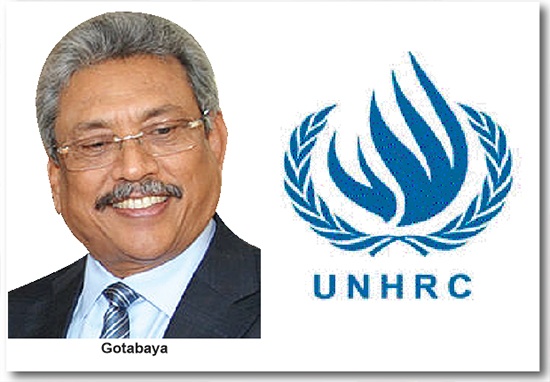
Colombo, February 6: The United Nations Human Rights Council (UNHRC) accuses Sri Lanka of being in a ‘state of denial about the past’, details how the failure of domestic mechanisms has further entrenched impunity, exacerbating victims’ distrust in the system. Among a litany of failures, the report addresses the rollback of 2015 reforms that offered more checks and balances on executive power, the erosion of judicial and institutional independence, and the failure to reform the security sector and remove and hold to account those responsible for alleged grave crimes and human rights violations. The Government has decided to reject the report submitted by the United Nations High Commissioner for Human Rights on Sri Lanka.

In an interview with the Daily News, Dr. Rohan Gunaratna who is an Honorary Professor at the General Sir John Kotelawala Defence University and Senior Advisor to its Department of Defence and Strategic Studies, Sri Lanka, discussed aspects of the UN report and Sri Lanka’s stand and course of action required to be taken.

The following are excerpts from the interview:

Q. As an international expert, how do you view the latest UN report on Sri Lanka?

. The UN report on Sri Lanka reflects that successive governments have not handled the human rights challenges prudently. It is still not too late for the Sri Lankan Government to create a team of specialists to provide guidance and direction as well as engage the UN system, especially the UNHRC. Unless the Government develops a professional approach, the existing situation will be mishandled and will lead to the loss of valuable time, opportunities and resources. The Government needs not only a whole of Government but a whole of society approach. The Sri Lankan conflict was meticulously documented and the data can be used to verify and validate the allegations made and implied in the report. Without further loss of time, the Government should create a proactive interagency mechanism with specialists from the Foreign Ministry, Defence Ministry, intelligence community, NGOs and the media to address the very issues raised in the report. After establishing a secretariat with competent and dedicated staff, the Government should create a 24/7 monitoring and response capability.

Sri Lanka was the first country to defeat an insurgent and terrorist group in the early 21st century. As a modern war, the Sri Lankan Security Forces – LTTE conflict was meticulously documented by several parties. The Sri Lankan Government should share the above documentation with the UN and also release significant information through a portal run by the Security Forces. The reports should include the United Nations Country Team Assessment of Casualty Figures that was never released publicly. According to this vital report, a total of 7,721 were killed and 18,479 were injured from August 2008 to May 13, 2009. This includes both civilians and LTTE terrorists. Furthermore, the UNICEF Supported Family Tracing and Reunification Unit issued a report that stated, as of June 2011, 2,564 tracing applications have been recorded out of which 676 are related to children and 1,888 to adults. The UNICEF stated that 64 percent tracing requests were reported by parents as having been recruited by the LTTE.

The LTTE international network provided a fictitious figure of 40,000 that the UN report has reproduced several times without authentication. The report of the Secretary-General’s Panel of Experts on Accountability in Sri Lanka, referred to by some as the Darusman Report, lost credibility in Sri Lanka after it reproduced the fictitious figure 40,000. An indelible lesson learnt from Sri Lanka’s experience is that international organizations, especially the UN, should not reference a death toll without verification and validation. It is within the capability of the UN to build a database of the dead that is transparent and open to scrutiny. The Sri Lankan Government should counter any individual or organisation repeating the fictitious numbers generated by the LTTE notorious for using its front, cover or sympathetic organisations to influence the human rights lobby. In response to the LTTE propaganda campaign, the Sri Lankan Government should create strategic communication capabilities within Army, Navy, Air Force, Police, Intelligence Services, and the Foreign Office. Unfortunately, neither the Foreign Office nor the Security Forces have understood the national imperative to raise the specialist capabilities to rebut the false information produced by the LTTE international network.

Q. As an expert on terrorism with vast experience on this topic, do you agree with these allegations against the Sri Lankan Security Forces accusing them of human rights violations?

A. The focus of the UN report is on accountability, the cornerstone of the human rights framework. Accountability is responsibility, answerability and enforceability. Accountability is the obligation of the Government to take responsibility for their actions, answer to those affected, and put in place a mechanism to monitor and take measures if the established standards are not complied. In the Sri Lankan context, the Government had a robust mechanism where several departments worked closely with UN agencies including the UNICEF, ICRC, diplomatic missions, international and domestic NGOs, and the media. There is sufficient documentation appreciating the Government’s commitment of sending food, medicine and other essential supplies to 399,785 civilians held hostage by the LTTE. The LTTE used the civilians as a cover to fire at the Sri Lankan military, a practice the LTTE is notorious for, including when it fought against the Indian Peace Keeping Force. There is also an abundance of documentation that the civilians ran away from the LTTE in the direction of the Security Forces. This includes testimony that the LTTE fired at the civilians breaking away from the LTTE human shield and fleeing in the direction of the Security Forces. The Security Forces provided water, food and medicine before transporting the Internally Displaced Persons (IDPs) to welfare centres because the LTTE had mined large areas of land and also each person had to be screened.

A total of 12,735 LTTE leaders and members surrendered or were identified by Tamil civilians or government investigators/intelligence. The former terrorists were given an amnesty, rehabilitated, and, reintegrated. As it prevented the revival of the LTTE, the rehabilitation programme of Sri Lanka is considered one of the three top programmes in the world. The then Defence Ministry Secretary Gotabaya Rajapaksa gave full access for a period of five years to a team of psychologists led by distinguished professors Arie W. Kruglanski and Michele J. Gelfand to interview the entire detainee population. In addition to the meticulous records maintained by the Bureau of the Commissioner General of Rehabilitation (BCGR), debriefing of the former terrorists are with the Police Special Branch, Criminal Investigations Department, Terrorism Investigations Division, Military Intelligence Directorate and the State Intelligence Service. The records provide the most comprehensive account of LTTE atrocities, the ethnic cleansing of Sinhalese and Muslims from the North and the East, the attacks on the Sinhala and Tamil villages, the massacres and bombings of civilians in the South, the assassination of civilian and military leaders including two world leaders, and the international network of the LTTE that supported and enabled three decades of terrorism in Sri Lanka. The Government should not share publicly the names of the rehabilitated and reintegrated LTTE terrorists as they are living happily with their families. However, they will be of exceptional value in bringing to justice those who supported, especially funded the LTTE in Sri Lanka.

Any investigation should focus on the sources of allegations and counter allegations. The key question that should be posed is who has brought these allegations? Although the LTTE domestic organisation was dismantled, the LTTE international network survived. The LTTE international network that engaged in propaganda and lobbying, extortion and fundraising, procurement of arms and dual-use technologies, and clandestine shipping of arms from North Korea to Sri Lanka transformed. The LTTE international network today masquerade as human rights champions in Western capitals and in Geneva. Similarly, the Tamil National Alliance (TNA) that espoused separatism, works in Geneva with key LTTE fronts. The Yahapalanaya regime delisted eight of 16 LTTE front organisations overseas and 269 terrorist activists from 424 listed under the UNHCR 1373. With the recovery of the LTTE database, its financiers overseas were listed based on evidence that has never been disputed. The terrorist fronts delisted by the Yahapalanaya regime were the Global Tamil Forum (GTF), British Tamil Forum (BTF), National Council of Canadian Tamils (NCCT), Tamil Youth Organisation (TYO), World Tamil Coordinating Committee (WTCC), Canadian Tamil Congress (CTC), Australian Tamil Congress (ATC), and Tamil National Council (TNC). The delisting of the fronts led to the revival of the LTTE at home and LTTE resurgence in the West. The time is right to relist the delisted fronts and to investigate, charge, and prosecute LTTE functionaries including propagandists, financiers, procurement and logistics officers living overseas.

Q. Successive governments in Sri Lanka gave assurances to repel the Prevention of Terrorism Act (PTA) and introduce new anti-terrorism laws. Why has this not happened?

A. The PTA was developed in 1979 by the then President J.R. Jayawardena’s administration as a response to terrorism which was prevailing at that time in the Jaffna Peninsula.

Its offences reflect the nature of terrorist activities which were taking place in that part of Sri Lanka at that time.

It is reliably known that State legal advisors were briefed of the type of criminal activities which were being unleashed at that time by a comparatively young group of terror organisations including the LTTE.

Based on the threat at that time a legal and policy framework was crafted to deal with the assassination of Tamil politicians, government officials, informants, bank robberies, explosions and making speeches resulting in racial hatred. At that time, there were no attacks on civilians. In addition to examining the counter terrorism legislation of the UK, India and Pakistan, they reviewed emergency regulations to deal with the 1971 insurrection, the 1962 military coup, and the Criminal Justice Commissions Act. The PTA was enacted for a year as he believed that the terrorist threat could be eliminated by the end of the year. The PTA of 1979 law repealed the proscription of the LTTE and other terrorist groups in 1978. During that year, the threat grew and the Parliament gave the PTA another three years. As the threat persisted, the Parliament made it a perpetual law.

Today, the threat landscape has changed. The PTA does not capture the killing of civilians except witnesses. The PTA covers only specified persons: public servants, policemen and politicians. The PTA is not potent to deal with the Easter Sunday attack, the type of attacks the world including Sri Lanka is likely to suffer if national security is neglected. If the Counter Terrorism Act (CTA) had been enacted in a timely manner during the Yahapalanaya regime, the Easter massacre could have been prevented. If not prevented, the State could have used the CTA to deal with those involved in the Easter attack. Unfortunately, the Yahapalanaya Government was weak and the then Opposition onslaught prevented the bill from becoming a law. In the Sri Lankan culture of confrontational politics, there was no bipartisanship on national security and foreign policy. The Opposition wrongly said the CTA was a US and European draft when 22 top-level Sri Lankan Government officials and one private human rights lawyer had worked on it. The legislative draft reflected the unanimous view of all 22.

The bill was drafted by a group of Sri Lankan legal, military, police, intelligence and administrative personnel of whom except one, all were public officials. Their final report which was presented to the then Prime Minister had been unanimous. They had twin objectives. One was to develop a modern counter terrorism law which could be effectively used to deal with all contemporary forms and manifestations of terrorism. The other was to ensure compatibility with human rights norms and to prevent abuse. After the Easter attack, it is apparent that the PTA is not the most efficacious in dealing with all forms and manifestations of terrorism. What is conspicuously absent in the PTA is an offence called terrorism and acts. As religious extremism is the backdrop for the unleashing of violence, that is per se terrorism. Furthermore, with terrorism emerging as a global play, if anyone is planning attacks against Sri Lanka from overseas or its nationals in Sri Lanka are planning to mount attacks overseas, the State can act. The CTA is a contribution towards the global effort on terrorism. The CTA is also efficacious against LTTE networks, cells and individuals overseas planning abetting and instigating terrorism in Sri Lanka. The CTA gave universal jurisdiction to Sri Lankan law enforcement and courts to deal with terrorism both from a national and global perspective.

Q. The UN High Commissioner urges the authorities to immediately end all forms of surveillance…” What is your opinion?

A. A government with no capacity to surveil terrorist and criminal suspects will suffer from terrorism and crime. Sri Lanka suffered from the Easter Sunday massacre as a direct result of the Yahapalanaya Government leaders instructing the Directorate of Military Intelligence to call off its surveillance operations. The result was the loss of 264 lives, both Sri Lankans and foreigners, and another 592 maimed and injured. The Easter Sunday massacre was the worst terrorist attack Sri Lanka suffered since 2009. It will be fatal for Sri Lanka if its security and intelligence services stop its surveillance operations. In the US, Canada, Australia, New Zealand, UK and in continental Europe, there are over 100,000 terrorist suspects under watch.

Sri Lanka’s security was compromised by its leaders during the Yahapalanaya regime. Rather than curbing Islamization and Arabization, Wickremesinghe advocated a reconciliation model of governance to enlist the Muslim vote. Similarly, instead of countering separatism, Mangala Samaraweera delisted LTTE entities enlisting the Tamil vote. As Prime Minister of the Yahapalanaya regime, Wickremesinghe instructed the Directorate of Military Intelligence to dismantle the operational capabilities designed and developed to detect terrorists and disrupt attacks. Instead of securing Sri Lanka, Wickremesinghe took guidance from the UNHRC, human rights bodies, Western capitals and Western diplomats in Colombo lobbied by the LTTE and TNA to investigate the Security Forces. With the restrictions placed on the Security Forces, the lack of direction and guidance by both Wickremesinghe and Sirisena, the birth, growth and attacks by the Islamic State was inevitable and imminent.

In addition to expanding its security and intelligence capabilities both in Sri Lanka and overseas in the coming decade, the Sri Lankan Government should respond to the current and emerging threats by introducing a national service. Furthermore, the Government should propose an intelligence and a National Security bill.

Q. The US Justice Department has charged three Sri Lankans with supporting terrorism for their participation in the Islamic State-claimed Easter attacks on churches and hotels in 2019. Sri Lanka is still to charge anyone despite numerous investigations. What is your opinion?

A. The Easter Sunday massacre is an act of international terrorism. It was a complex terrorist attack involving multiple targets. The Criminal Investigations Department, Terrorism Investigations Division and other entities have worked with the Attorney General’s Department to investigate and indict the Islamic State detainees. The AG will review the findings of the Presidential Commission of Inquiry on the Easter Attacks. The Presidential Commission concluded their proceedings only in January 2021. While the focus of the police investigation was on bringing the perpetrators and the support network that enabled the terrorist attack to justice, the Presidential Commission will propose far-reaching changes to prevent the next attack.

The far-reaching changes should include reforming the mosque and Madrasa, where Muslims learn about other faiths, and, learn to respect them. Even after the Easter Sunday massacre, the continuing spread of Salafism especially its Saudi version Wahhabism was highlighted at the Presidential Commission on the Easter Sunday attacks. The Government should put in place a system to screen foreign preachers and also accredit local preachers practicing in Sri Lanka. As long as foreign ideologies supplant local and traditional Islam, exclusivism, extremism and terrorism will persist. With the second commemoration of Easter Sunday massacre coming up, the Muslim leadership should move to reform the religious space. Although the ideology of Salafism/Wahhabism known as Tawheed in South India and Sri Lanka originated from Saudi Arabia, most of the Gulf countries have been smart. They have regularised the management of mosques, Madrasas and all Islamic organisations. Today, no sermons without the approval of the religious authority appointed by the Government could be delivered. The sermons should be devoid of political subjects. There should be no anti-government propaganda in religious institutions.

The madrasas should be brought under the Education Ministry. Similarly, there should be a common syllabus. The Gulf countries have been able to modernise their Madrasas with a regulated curriculum. Until Easter Sunday, successive governments in Sri Lanka left it to the Muslim leaders to take tough decisions on religious reform due to political considerations. Sadly, the situation has deteriorated from bad to worse. A segment of the Sri Lankan Muslims continues to take inspiration from Saudi Arabia but behave more regressively. Muslim political and clerical leadership should develop a zero-tolerance approach to exclusivism and extremism. They should stop the political, religious and cultural radicalisation by reforming the Madrasa and the mosque sermons to produce a new generation of Muslims. They should reject the Middle Eastern ideologies and fashion that is supplanting the Sri Lankan Muslim heritage.

Q. In your view what steps could and should the Government take in order to encourage reconciliation between the various communities in the country?

A. National unity is national security. If the bridges between communities are not restored, exclusivism will lead to extremism and extremism to terrorism and violence. The way forward is to replace the segregated education system with national schools, introduce religious knowledge to all schools, delist ethnicity and religion-based political parties, and integrate communities. To deter anyone from insulting another person’s ethnicity and religion, formulate a maintenance of ethnic and religious harmony act, and also an online falsehoods and manipulations act.

Sri Lankan politicians have exploited ethnicity and religion for their personal and political agendas. They have created disharmony between communities and compromised national security. The most notorious was the TULF that created the separatist ideology that some elements of the TNA continue to espouse by igniting racial passions. The Government has to take firm action on anyone trying to glorify Prabhakaran, the LTTE and the dead terrorists. The Government should reach out to the Tamil communities overseas and engage them to join in the socioeconomic development programmes of Sri Lanka.

It’s time for the Geneva Circus replete with molehills and mountains

February 6th, 2021
 

by Malinda Seneviratne Courtesy The Island

Circus Pacifica, Apollo Circus and of course the amazing Chinese Circus — readers of an earlier generation will no doubt remember these. The Apollo Circus however planted itself on Pedris Park for quite awhile, but the others were rare.

Perhaps the antics of politicians, political parties, activists of various persuasions and of course the NGO rat pack compensated. They have entertained us even as they went about their charades, clowning, sleight of hand, somersaults and such, prompting quite a few oohs and aahs from an audience that wasn’t exactly applauding in unison.

We could never look forward to the real circuses. We didn’t have to anticipate with bated breath the political circus. However, there’s one which comes around every year around February. The Geneva Circus.

There are essentially two scripts: one to be used when a US-friendly or rather servile-to-the-USA government is in power and the other when the regime is not willing to play ball with eyes closed. In the first case, we get co-sponsored anti Sri Lanka resolutions, soft deadlines, much forgiving and forgetting. The run-up to the UNHRC sessions are not marked by Washington-led media outfits badmouthing Sri Lanka. The separatist groups abroad are in ‘go-easy’ mode. Human rights outfits barely murmur ‘concerns.’ Their local counterparts go into hibernation and the slumber is so deep that they don’t have the eyes to see any wrongdoing.
Well, we are not in that situation right now. It’s ‘the other guys’ in power and perforce it’s the second script that’s being played. This is how it goes.

It begins with the collection/construction of evidence. There are claims that strangely (and by now predictably) are filed without substantiation. Non-movement on agreements that are no longer valid will be noted. There will be a lot of striving and straining to enumerate ‘minority grievances,’ and to this end, the local lackeys in political and NGO circles will do their bit. Statements will be issued by the representatives of nations that have clout in Geneva (the U.S. ‘Cesspool of bias’ description notwithstanding). All ‘concerns’ raised will be duly documented. Human rights outfits, international and local, silent for months, will suddenly find voice.

‘Sri Lanka’s human rights situation has seriously deteriorated under the administration of President Gotabaya Rajapaksa, Human Rights Watch said in its World Report 2021.’

That’s Human Rights Watch. Absolutely predictable. It comes with ‘evidence.’

HRW claims that security forces have increased intimidation and surveillance of human rights activists, victims of past abuses, lawyers, and journalists.’ If activists and claimants of past abuses, political operatives who conveniently wear the lawyer or journalist hat are upset about outcome preferences that haven’t materialized feel some anxiety and want to call it ‘intimidation’ or ‘surveillance’ that’s their right. A state cannot be faulted to be cautious, especially given a 30-year war against terrorism and a jihadist movement that unleashed terror on civilian targets that matched the worst of the LTTE. We don’t even know if there was intimidation or surveillance. We do know that ‘intimidation’ is frequently fabricated, posted on dubious websites and photo-shopped into newspaper cuttings. We know that such ‘evidence’ is sent to the right addresses where the relevant householders lap it all up gleefully.

HRW is upset about Sri Lanka withdrawing from the resolutions co-sponsored by a more than mischievous minister on behalf of a government operating absolutely against popular will on the relevant issues. However, when the wording is regurgitated, it does sound ominous. It’s as though Sri Lanka has decided that truth-seeking, accountability and reconciliation are irrelevant. That’s hardly the case. Well, not ‘Reconciliation = Eelamist Agenda’ certainly, but those who preferred THAT version were booted out by the voter. HRW has missed the incontrovertible truth that even those who pushed that version, did an about turn, pledging in two major elections to uphold the unitary character of the state. As for the devolution element of reconciliation, not even its most ardent advocates seem interested in provincial councils.

So it’s natural that the HRW feels a reversal in ‘gains of the previous government.’ HRW feels that minorities are ‘more insecure, victims of past abuses fearful, and critics wary of speaking out.’ That’s what Meenakshi Ganguly, the South Asia director of the outfit says. It’s cut-and-paste stuff, nothing more.

If ‘security’ is about a separatist agenda moving in the ‘right direction,’ sure, that’s not happening. ‘Victims of past abuses,’ she says — well, such as? Critics? Does she mean those who were unofficial adjuncts of the political camp that lost? They are wary, are they? ‘Wary’ is certainly a politically more useful descriptive than, say, ‘devastated by political defeats.’

There is certainly a more military presence in government. Systemic flaw and woeful incompetence by officials haven’t really helped the President get things done, especially in a pandemic context. It’s no secret that it is the security forces and the State Intelligence Service that have sacrificed the most, working tirelessly around the clock, to support the efforts of the medical teams fighting Covid-19. The retired officers (they are civilians now, let us not forget) haven’t done worse than those they replaced as heads of certain key institutions. In fact, in certain cases, they’ve managed to streamline operations, cut costs and get things done.

HRW says ‘they were, like the President, implicated in war crimes.’ Here we go again! Accusation treated as established fact in a political project which is not described as such, naturally. HRW makes much of the USA announcing that General Shavendra Silva was ineligible to enter that country. Oh dear! The USA passes judgment and that’s the last word? This is the point where the clowns do their turn. Loud applause and much laughter follow!

HRW talks of a ‘false accusation on social media that Muslims were deliberately spreading the virus.’ Lots happen on social media. Some take it seriously, some don’t. HRW seems to have done some surveillance and cherry-picked. Good for HRW.

HRW does better on the issue of burials/cremation. The Government has not sanctioned burial. Yet. The issue has been politicized by multiple parties, Muslim politicians included. Maybe HRW is not interested in delving into the details and the complexities, but the Government could (still) act in ways that alleviate the apprehensions of the Muslim community.

The High Commissioner for human rights, Michelle Bachelet has also made the expected noises, flagging ‘freedom of expression’ issues related to what she calls ‘criticism of the government’s handling of the Covid-19 situation.’ This is not the time to be mischievous and some certainly were, and that, Bachelet and HRW will not agree, can have serious impact on the entire population. The nice thing about it is that neither HRW nor UNHRC has to do the cleaning up when the smelly stuff hits the fan.

Ganguly ends with some poetry. Nice. ‘Concerned governments should do all they can to prevent Sri Lanka from returning to the ‘bad old days’ of rampant human rights violations. Governments need to speak out against abuses and press for a UN Human Rights Council resolution that addresses accountability and the collection and preservation of evidence.’

Concerned governments, she says. Does she mean the USA, UK and those in the EU? Laugh, ladies and gentlemen. That’s what you do when the circus comes to town!

Yes, the EU too. The EU has, as expected when the Geneva Circus is around the corner, ‘raised concerns’ on human rights. The wording is identical, almost: inclusiveness, reconciliation and fair treatment of minorities.’ The EU office has also tweeted that it is ‘saddened by the destruction of the monument at the Jaffna University.’

What’s the story there? Students cannot put up structures at will on state property. If the monument was sanctioned, the person who gave permission was the first culprit. However, having allowed it or turned a blind eye to it (as the case may be), it is wrong to arbitrarily raze it to the ground. The Vice Chancellor opined that it was an obstacle to reconciliation. The students’ response (‘we tell the Sinhala Government” that we don’t want to fight a war, we just want to honor our dead’) seems to justify his position, but that’s a different matter.

If students want to celebrate brutes, that says a lot about the students. However, if it’s about remembering kith and kin, that’s another matter altogether. If that’s the case, though, why make a political fuss about it? Why turn it into a circus?

The VC has since done a U-Turn and even laid the foundation for a replacement monument. The government missed a trick here. It could have engaged the students. It could have discussed the possibility of a monument before which anyone could grieve, especially the near and dear for the temperature of their tears are the same and truer than those shed by the politically motivated. Could have, should have, still can do. Never too late.

There are circuses and circuses. Some International, some local. We had the US Ambassador finding her voice after a long silence to express dismay over the assault on the Capitol Building in Washington DC. ‘We will continue to try to be more perfect,’ she pledged. So, the USA and everything in that country including racism, police brutality and a foreign policy that’s only about securing markets, plundering resources and bombing countries to the middle ages if that’s what pursuing strategic interests entails, is ‘perfect.’ That’s the claim. Laugh ladies and gentlemen!

This week also saw an incarceration drama. Ranjan Ramanayake was sentenced to a four year prison term for contempt of court. Naturally, the opposition cried ‘foul.’ Ranjan’s ethics are obviously of the kind that makes ‘foul’ a weak descriptive. He did rant and rave in ways that others did not. He did insult the judiciary. He demanded an independent judiciary but was caught on tape (his own) promising to intercede on behalf of a judge, taking her case to the then Prime Minister Ranil Wickremesinghe (yes, under whose watch HRW and the UNHRC says ‘there was progress’!).

Was there political motivation at work in the court decision? We don’t know. We can speculate though. Speculation on this count was fueled by the acquittal of Sivanesathurai Chandrakanthan allies Pilleyan, former Chief Minister, Eastern Provincial Council and leader of the Tamil Makkal Viduthalai Pulikal (TMVP).

Ranjan in, Pilleyan out! How horrendous! That’s the line the Opposition took.

Well, Pilleyan belonged to a terrorist organization. That’s bad. He was accused of murder. That’s not good. However, on that particular charge, his innocence has to be presumed until and unless proven guilty. He was held for five years without trial. Five years! That’s when the government which HRW and Bachelet believes ‘made some progress.’ Those making a song and dance about Ranjan’s sentence and about ‘the lawyer’ Hejaaz Hizbullah being held without trial over suspected involvement in the Easter Sunday attacks, weren’t upset over Pilleyan’s incarceration.

Five years was long enough to find the evidence, but apparently the Attorney General couldn’t make a case. That, or he bowed to political pressure. The former indicates that his predecessor was playing politics with justice. The latter, if that’s the case, doesn’t cover the current Attorney General in glory. However, all this is speculation. We really don’t know.

Maybe investigations regarding Hizbullah are incomplete. He’s been under custody for many months. Not yet ‘years.’ Years, however, is the time-slice in the case of LTTE cadres currently in detention. Neither the previous regime nor this has moved to bring matters to a close. It would be a horrible travesty of justice if they are finally released ‘due to lack of evidence’ or an unwillingness to continue with the prosecution (either of which could be the case with respect to Pilleyan). Not a laughing matter, ladies and gentlemen .

We had the President slipping in Ampara over the last weekend. To be fair by him, the President has been badgered endlessly by Harin Fernando from day one. The President responded in jest, but what he said was not really funny. He alluded to Prabhakaran and how that terrorist’s life ended. Unnecessary. Unbecoming. Harin is, relatively, small fry and his political track record is so sketchy that responding to him constitutes a salute, an undeserved one.

Harin claimed he knew about the Easter Sunday attack AND DID NOTHING ABOUT IT! Gotabaya Rajapaksa, during the election campaign, conducted himself well. He didn’t utter one word about his fellow candidates. He focused on his program. He slipped. That’s no laughing matter either, even though people are making a mountain out of a molehill here.

There was noise over the East Terminal of the Colombo Port. The unions and several political parties objected. They met with the President. The talks were disappointing, they said. The President said it will not be sold. He said it’s a joint venture with a minority control for the Indian port development company. He didn’t say that the same company is building a competitor-port in Kerala. Obviously there’s ‘understanding’ that’s not been put into words and made public.

Obviously the (virtual) sale of the Hambantota Port by the previous regime has constrained the President vis-a-vis Indian ‘concerns’. The President has gone on record to say that India’s national security concerns will not be compromised by Sri Lanka. There’s a cheque being cashed by India but we don’t know what we got in return. The vaccine? That’s a laugh — in any case 99.5% of the infected recover, the vaccine is still an unknown quantity and there are alternatives out there in the vaccine market. A (nominal) buffer in Geneva? Possible but again, we do not know. Such things are not said. Arms are not twisted in public.
A government besieged (as this one is) has few options. Geneva is a circus but not one where the Sri Lankan delegation will get to laugh. The Government has one trump. Not Donald. The people.

Open letter to Ali Sabry: Tread cautiously in amending laws

February 6th, 2021

RANJITH SOYSA Courtesy The Island

I am addressing this note to you as I believe that you are man of the world with a road map for the Nation. I have listened to your pre-election speeches, delivered in Australia, and read your orations, in Sri Lanka, which outlined your vision for the country and the nation. And, I still believe that you have a lot to contribute to the Nation.

I am rather puzzled with two recent propositions made by you which fly in the face of the picture of you, I had in my mind. Still. I have implicit trust in you as I am of the view that which I discuss below will receive your close scrutiny.

Grasping the Nettle, I may point out that your proposal to ‘amend the Antiquities Ordinance, repealing the provisions therein, preventing the courts from releasing persons charged with or accused of related offences on bail” (article in The Island by K Tiranagama) reminds me of the attempts of some to hunt with the hounds and run with the hare. As you no doubt agree the Antiquities are part of our living history which we have to protect and handover to our future generations. As a small country, we have been cheated by a number of invaders who pillaged our invaluable treasures of historical value and stole many others which are now stored in prestigious museums of the West. Your efforts to tackle the prison congestion by tinkering with the Antiquities Ordinance is not acceptable to a nation which is at the receiving end of systematic robbery of her artifacts by the colonial powers and, at present, by the greedy and the well-planned destructive forces,

So, Hon Minister, you should consider looking elsewhere, if your objective is to reduce the prison congestion. If at all, you should introduce stringent measures to the Antiquities Ordinance to deter persons from robbing the nation’s history. We hear that yearly over 750 complaints are received annually by the police and the Dept of Archaeology, about vandalism directed at our antiquities. If you do implement your misdirected proposal, such vandals will have a field day.

The second proposal which is equally, or more, damaging, is included in the gazette notification no 2208/13 -2020 issued on council of legal education dated 30.12.21/which says.

Part I : Sec. (I) – GAZETTE EXTRAORDINARY OF THE DEMOCRATIC SOCIALIST REPUBLIC OF SRI LANKA – 30.12.2020 5A (d) the Special Entrance Examination shall be held during a specified month as determined by the Council, of the year preceding the year of entry to the Sri Lanka Law College. (2) immediately after rule 28 thereof, by the insertion of the following new rule:- ” 28A. (1) All courses conducted at the Sri Lanka Law College shall be conducted in the English Medium.

Why should the law be taught only in English, vitiating the Official Language Act? As you no doubt agree law affects everybody in Sri Lanka and the opportunity should be made available to the average Sri Lankan to understand and to act according to the law. Once the education is provided in English only, as per the proposal, the whole legal machinery, including the hearing of court cases, will be conducted in English only. You may remember how the ordinary villager Silindu, in the well know novel Village in the Jungle” had to face justice when he had to look up and accept the judgement against him, delivered in English, a language which he did not comprehend! There will be many more Silindus in Sri Lanka who will have to come to the courts and suffer in silence to the dictates in English if the proposed scheme comes into operation. The law had been taught in the Sinhala language for more than 25 years and is not a subject to be used internationally, except with regard to special occasions which can be handled even by using official translators as in the case of eminent international leaders who are not conversant in English. You are only attempting to turn the clock back to the colonial period. Please reconsider and revert to the existing system in providing legal education as per the Official Language Act

Biden administration throws its weight behind new Geneva resolution

February 6th, 2021

by Shamindra Ferdinando Courtesy The Island

Ahead of the 46th sessions of the Geneva-based United Nations Human Rights Council (UNHRC) scheduled to begin later this month, newly elected US President Joe Biden’s Democratic Party has raised Sri Lanka accountability issues in a recently submitted Resolution, with the focus on appointment of military officials, including that of Gen. Shavendra Silva as the Commander of the Army.

The UNHRC consists of 47 countries divided into five groups. The UK took over Sri Lanka matter in the wake of the US quitting the UNHRC in June 2018. It now heads the Sri Lanka’s Core Group.

Silva, the first General Officer Commanding (GoC) of the celebrated 58 Division was named the Commander of the Army by President Maithripala Sirisena.

Sirisena’s successor, Gotabaya Rajapaka, appointed Silva the Chief of Defence Staff (CDS) and subsequently promoted him to the rank of General.

Democratic Party Congressman Brad Sherman, a ‘very’ close associate of professional activists within the Global Tamil Diaspora has tabled a Resolution in the U.S. Congress charging President Gotabaya Rajapaksa administration of engaging in harassment and intimidation of human rights defenders and enforced disappearances, and protecting war criminals, Daya Gamage, former political specialist of the US State Department said.

Bradley James Sherman is the US Congressman representing California’s 30th congressional district since 2013.

The author of Tamil Tigers’ debt to America Gamage explained how the change in US administration had started to bring in ‘initial bearing’ on Sri Lanka with Congressman Sherman making a move. Gamage said that the US stand on the accountability issues should be examined against the backdrop of a statement attributed to Foreign Secretary Admiral Jayanath Colombage that the political change wouldn’t have any bearing on Sri Lanka.
Gamage said that in spite of the US not being a member of the UNHRC, it would throw its full weight behind the push for a new Resolution to be moved at the forthcoming sessions.

Here are four areas the Congressional Resolution on Sri Lanka has touched:

Whereas the Government of Sri Lanka has promoted high ranking military officials suspected of forcibly disappearing persons and bearing responsibility for war crimes, including Lieutenant General Shavendra Silva, and has failed to hold accountable other current military officials accused of war crimes.

Whereas, during the 26-year civil war ending in 2009 between government forces and the Liberation Tigers of Tamil Eelam, tens of thousands of Tamils were forcibly disappeared by the police, military, and paramilitary operatives

Whereas, according to a 2020 United Nations Special Rapporteur’s report, no observable progress has been made on pending cases, including habeas corpus applications into the disappearance of Tamil Tigers and members of their families who surrendered during the final days of the war”.

Whereas lawyers, human rights defenders, and victims involved in cases of enforced disappearances face intimidation, harassment, and violence, particularly since Rajapaksa became President.

The Island learns that since the initial government reaction to the US slapping travel ban on Gen. Shavendra Silva and his immediate family members an year ago, the government hadn’t made representations to the US or UNHRC. The government ignored an opportunity to take up the Army Commander’s issue in the wake of the recent declaration made by the then US Secretary of State Mike Pompeo regarding the Army Commander’s matter. When the media raised the US travel ban on the Army Commander at a joint media conference given by Pompeo and Foreign Minister Dinesh Gunawardena, the one-time CIA Chief said All right. Thank you. I think there were three questions there. The last one, look, it’s a legal process in the United States. We’ll always continue to review it. We want to make sure we get it technically, factually, and legally right. We’ll continue to do that.”

Well informed sources said that the UK spearheading the moves for a new Resolution at the UNHRC had told the Sri Lankan government in no uncertain terms that it was determined to go ahead with the project. Sources said that Secretary of State for Foreign, Commonwealth and Development Affairs and the Minister for South Asia Lord Ahmad of Wimbledon explained their stand to Minister Gunawardena and the Sri Lankan High Commission in London.

Tamil political sources said that they had the required support to secure a new Resolution at the forthcoming session. Sources said that a petition forwarded by three Tamil political parties represented in parliament to UNHRC members as well as the HR Commissioner received approval from those who mattered. Sources pointed out that the HR Commissioner’s latest report on Sri Lanka took the Tamil parties’ petition into consideration.

SL plans to complete mass inoculation within three months

February 6th, 2021

Courtesy The Daily Mirror

There is a mechanism in place to vaccinate all Sri Lankans within three months and to become the first country in the world to complete that task, Secretary to State Ministry of Primary Health Care, Epidemics and COVID-19 Disease Control Dr. Amal Harsha de Silva said yesterday.

He told Daily Mirror the Government had identified locations to set up 4,000 centres where the general public could be vaccinated.

With this system in place, we hope that Sri Lanka will be able to complete the vaccination programme within three months and be named as the first State to do so.

The Secretary underlined that this would depend on the availability of vaccines into Sri Lanka because there is a higher demand for vaccines but less supply.

We have already placed an order for 18 million of Covishield vaccine from India. Apart from that, we have had talks with Russia and China to bring vaccines. Also, we have taken steps to allocate two million of Pfizer vaccines,” Dr. de Silva said.

He also said that if mass inoculation was completed, it would reduce the huge amount of money that had to be spent on PCR testing.

We spend a sum of Rs.100 million per day for PCR testing,” he added. (Sheain Fernandopulle)

Sri Lanka’s Covid-19 deaths surpass 350

February 6th, 2021

Courtesy Adaderana

The Director General of Health Services confirms eight (08) more Covid-19 related deaths have been reported increasing the death toll due to the virus in Sri Lanka to 351.

The victims include a 77-year-old woman from Kochchikade, who was identified as Covid-19 positive while being treated at the Negombo District Hospital and was later transferred to the IDH. She had passed away today (06) due to shock caused by blood poisoning, Covid-19 pneumonia and kidney disease. 

A 73-year-old woman from Kadawatha, who was transferred from Colombo North Teaching Hospital to Mulleriyawa Base Hospital after being identified as infected with the virus, had passed away on February 05. The cause of death is listed as heart condition, Covid-19 pneumonia and kidney disease.

A 56-year-old male from Moratuwa had passed away at the Mulleriyawa Hospital on February 05 due to Covid-19 pneumonia and cancer.

An 83-year-old male from Kelaniya had passed away today at the Dankotuwa Hopsital. He had been transferred to the hospital from the Welisara Hospital after being identified as Covid positive. The cause of death is reported as heart and raspatory issues caused by Covid-19 infection and complication related to liver disease.

An 85-year-old male from Colombo 14 had died on admission to the Colombo National Hospital on February 04. The cause of death is cited as Covid-19 pneumonia. 

An 82-year-old female from Colombo 13, who had been transferred from Colombo National Hospital to Homagama Base Hospital, had passed away on February 05 due to Covid-19 pneumonia, high blood sugar levels and kidney failure.

A 76-year-old female from Maharagama had been transferred from the private hospital in Colombo to Mulleriyawa Base Hospital after testing positive for the virus. She had passed away at the hospital on February 04 due to kidney damage caused by the worsening of a kidney disease and Covid-19 pneumonia.

A 48-year-old male from Mundalama had passed away while being treated at the Maharagama Apeksha Hospital on February 05. The cause of death is reported as Covid-19 pneumonia. 

Coronavirus: 726 positive cases confirmed so far today

February 6th, 2021

Courtesy Adaderana

The Ministry of Health says that 383 new cases of novel coronavirus have been identified increasing the tally of positive cases reported within the day to 726.

All are new cases are close contacts of patients from the Peliyagoda cluster.

The total number of Covid-19 cases from the Minuwangoda, Peliyagoda and prisons clusters has increased to 64,575 with this.

Dr. Wijayamuni on achieving herd immunity through COVID vaccination

February 6th, 2021

Courtesy Adaderana

Pregnant women and children aged below 18 years will not be vaccinated against COVId-19, says Chief Medical Officer of Health of Colombo Municipal Council Dr. Ruwan Wijayamuni.

He noted that people should not have undue fears about getting themselves vaccinated.

Speaking to media today (February 06), Dr. Wijayamuni said people with chronic health conditions and those who suffer from high blood pressure, diabetes and heart diseases should not be afraid of receiving the vaccine.

However, individuals with severe allergic reactions must inform the respective medical officer before receiving the vaccine, he stressed.

Further, Dr. Wijayamuni said a total of 875 health workers and other officials engaged in COVID-19 prevention efforts in Colombo were vaccinated by the end of yesterday (February 05).

After receiving the vaccine, they showed mild fever, loss of appetite, body aches, joint pains and mild headaches, but no severe complications were reported, he stated.

When the vaccine is administered, the body produces antibodies against the SARS-CoV-2, Dr. Wijayamuni explained. After receiving the vaccine, even if come across a person infected with COVID-19, our body will begin producing antibodies against the virus when we are contracting the virus.”

Majority of the people need to be vaccinated in order to increase the level of immunity in the community for preventing the transmission of the virus, Dr. Wijayamuni pointed out.

WHO to release recommendation for two versions of AstraZeneca vaccines

February 6th, 2021

Courtesy Adaderana

World Health Organization chief Tedros Adhanom Ghebreyesus called on more pharmaceutical companies on Friday to share manufacturing facilities to help ramp up the production of COVID-19 vaccines.

The WHO also said its technical advisers would meet next week to assess versions of the AstraZeneca vaccine from the Serum Institute of India (SII), the largest vaccine maker, and from South Korea’s SK Bioscience ahead of a possible WHO emergency listing.

Speaking at an online news briefing from Geneva, Tedros said almost 130 countries with a combined population of 2.5 billion people were yet to administer any vaccines, and repeated his plea for rich nations to share doses with poorer countries once they have vaccinated health workers and older people.

But we also need a massive scale-up in production,” the WHO director-general said.

Last week, Sanofi announced it would make its manufacturing infrastructure available to support production of the Pfizer/BioNTech vaccine. We call on other companies to follow this example.”

France’s Sanofi said last week it would fill Pfizer’s vaccine from July, aiming to help supply more than 100 million doses this year amid massive demand.

Other companies are already getting on board, as well.

Switzerland’s Novartis struck a similar deal for the Pfizer shot, while Germany’s Bayer signed on to help CureVac.


Emergency Approval

The WHO has so far approved a single COVID-19 vaccine for emergency use, the shot from Pfizer and its German partner, BioNTech.

That could be expanded soon, with the independent WHO advisory group meeting on Feb. 15 to look at versions of AstraZeneca and its partner Oxford University’s shot being made by the Serum Institute of India and SK Biosciences in South Korea.

This data only came to us a few weeks ago,” Mariangela Simao, WHO assistant director-general for vaccine access, said of the upcoming assessment, adding the group must analyse not only AstraZeneca’s core data”, but also data from sites where the vaccine is being made, of which there are eight, before issuing its recommendation.

Source: Reuters
-Agencies

Banks debiting money without informing account holders to be probed

February 6th, 2021

Courtesy Adaderana

Investigations will be carried out into certain banks debiting money without informing account holders, says State Minister of Finance and Capital Market and Public Enterprise Reforms Ajith Nivard Cabraal.

Complaints regarding similar incidents have been received, the State Minister said adding that strict action will be taken against such banks.

Cabraal noted that he expects to propose new rules in the future to prevent unfair moves taken by certain banks.

Karunanidhi’s dalliance with LTTE

February 5th, 2021

By P.K.Balachandran/Weekend Express Courtesy NewsIn.Asia

Muthuvel Karunanidhi’s decision to support the Liberation Tigers of Tamil Eelam (LTTE) to the hilt when he was Chief Minister of Tamil Nadu between January 1989 and January 1991 had several adverse and wide-ranging consequences. The Dravida Munnetra Kazhagam (DMK) government, which he headed, was sacked citing collusion with the LTTE, when it had completed only two years of its five year term.

Peaceful Tamil Nadu had become the scene of assassinations. And the cause of the Sri Lankan Tamils, which Karunanidhi claimed to uphold as the Tamizh Ina Thalaivar (Leader of the Tamil Race), suffered a huge setback.

It was during that time that the Tigers’ war against the Indian Peace Keeping Force (IPKF) in North and East Sri Lanka was at its height and the violence and lawlessness across the Palk Strait had spilled over to peaceful Tamil Nadu.   The leeway given to the LTTE by the DMK regime enabled the militant group to massacre the leadership of the rival Lankan Tamil group, the Eelam Peoples’ Revolutionary Liberation Front (EPRLF), in Madras on June 19, 1990.

The government’s indulgence paved for the assassination of former Prime Minister Rajiv Gandhi in the State on May 21, 1991. The man who led the squad which massacred the EPRLF leadership, the one-eyed Sivararsan, was to mastermind the assassination of Rajiv Gandhi. The Tamil Nadu police had allowed Sivarasan and his squad to escape to Sri Lanka in 1990 in defiance of orders from Delhi to catch them. Sivarasan would came back to plot the killing of Rajiv Gandhi.

But Rajiv’s assassination resulted in a loss of sympathy and support for the Sri Lankan Tamils and the Tigers in Tamil Nadu. New Delhi began to distance itself from the Sri Lankan Tamil cause. Eventually, all this enabled the Sri Lankan armed forces to crush the LTTE and the Eelam movement in May 2009.

An insider’s account of this sordid saga is found in a recent book entitled:  Service Uninterrupted: Memoirs of M.M.Rajendran (Har-Anand Publications, New Delhi, 2020, INR 700).

Rajendran was Chief Secretary in the TN government when Karunanidhi was Chief Minister. Rajendran says that the Central Indian intelligence agencies were constantly complaining to the Tamil Nadu government about the LTTE’s activities but to no avail. The agencies therefore took up the matter with the then Prime Minister V.P.Singh. Despite being a political ally of Karunanidhi’s, Singh conveyed his displeasure to him. But this too had no effect because Karunanidhi was convinced that if he had to be the Leader of the Tamil race” he had to support the Tigers. Rajendran’s suggestions to be tough on the Tigers fell on deaf ears.

However, undaunted, Rajendran continued to ask the then Director General of Police (DGP) to take action against the LTTE. Strangely, Rajendran does not mention the DGP’s name which was P.Dorai. He refers to him only as DGP”. The DGP gave shortage of men and inadequate fire power as excuses for inaction. Significantly he did not ask for enhancement of facilities. There were clear indications that a section of the police was hand in glove with the Tigers with the government’s and the political leadership’s tacit consent.  

As feared, at a checkpoint on a road between Ramanathapuram and Mandapam, LTTE cadres brazenly shot dead two policemen who had tried to stop their vehicle. Rajendran ordered the DGP to nab the culprits, expecting him to avenge the killing of fellow policemen. But there was little or no action. The killers were allowed to go to Madurai smoothly and check into the posh Pandyan Hotel. When told about this lapse, the Chief Minister was nonchalant. So were the DGP and the Home Secretary (R.Nagarajan).   

On June 19, 1990 the day EPRLF leader Padmanabha and 12 of his colleagues were massacred in Kodambakkam, a heavily populated area in Madras, Karunandhi and Rajendran were in Delhi for a meeting with Prime Minister V.P.Singh. Such an assassination in Tamil Nadu was new and was clearly too much for Karunanidhi. He spoke to Singh in private and came out saying that the PM desired stern action.

Rajendran immediately called the DGP and ordered a manhunt. But when he came to Madras the next morning and met the top brass, including the Home Secretary (Nagarajan) he found that no action had been taken. He told them that some militants were holed up in a house near the State police HQ and ordered a pre-dawn swoop. But the next day he was told that the inmates had scooted.  

Two things became clear from this episode, namely, the DGP was not feeding me with full information and secondly no explanation was forthcoming as to how they could have escaped when the police were  maintaining road blocks on all the roads,” Rajendran writes.

Earlier, in March 1990, when the IPKF was returning to Madras at the end of their mission in Sri Lanka, the Indian navy had invited Karunanidhi to a function at the harbor to welcome the soldiers. Although Prime Minister V.P.Singh had requested Karunanidhi to attend the reception, he boycotted it saying that the IPKF was a Indian Peace Killing Force” (having killed Sri Lankan Tamils in the fight against the LTTE).

Singh was not at all pleased with Karunanidhi’s stance, but did not give in to the demand of the opposition Congress party and the All India Anna Dravida Kazhagam (AIDMK) led by Jayalalitha to sack his government.

However, there was a sea change when Singh lost power in November 1990  to Chandrashekhar, who was supported by Congress. With the anti-LTTE Subramanian Swamy as a minister in his cabinet, Chandrashekhar firmly told Karunanidhi that the LTTE’s activities should be curbed effectively. He even threatened to set the Navy and the Coast Guard against the LTTE and demanded that the Tamil Nadu government cooperate. Karunanidhi agreed but sought permission to allow  medicines to be ferried on humanitarian grounds. The Prime Minister reluctantly agreed, Rajendran recalls.   

On returning to Madras, Karunanidhi instructed  the DGP to tighten measures against the LTTE on the lines suggested by the PM. But a few  days later it  came to Rajendran’s notice that the Prime Minister had  expressed unhappiness that the instructions given to the CM in a closed door meeting had been leaked to the LTTE. Chandrashekhar suspected the Tamil Nadu government’s complicity in this.In January 1991, Chandrashekhar felt constrained to dismiss the DMK government on the grounds that it was not maintaining confidentiality. 

Prior to his dismissal, Karunanidhi had lost confidence in Rajendran. Perhaps the Chief Secretary’s consistent efforts to get the police to contain the LTTE did not endear him to Karunanidhi. Rajendran was sent off to be Chairman of the Tamil Nadu Electricity Board. However,  Rajendran managed to get transferred to the Central government. Later he became Governor of Odisha.

The DGP (P.Dorai) was in a soup as he was suspected to have scotched proceedings against the killers of the leaders of the EPRLF. When Home Secretary R.Nagarajan was arrested allegedly for instructing the police to go easy on the Tigers, DGP Dorai feared that Nagarajan would squeal and that he too would be arrested. In December 1991, Dorai died under mysterious circumstances. Though a Christian, his body was cremated and no post mortem was done according to India Today. Home Secretary R.Nagarajan was eventually acquitted for lack of evidence.

නියම මොහොත් චීනය අත දමයි.. ඉන්දියාවේ ඩොලර් මිලියන 400 පිටවන්නත් පෙර චීනයෙන් ඩොලර් මිලියන 1500ක් ලංකාවට.. විදෙස් සංචිත ගැටළුව බේරා දෙයි..

February 5th, 2021

උපුටා ගැන්ම ලංකා සී නිව්ස්

චීන මහ බැංකුව වෙතින් ශ්‍රී ලංකා මහ බැංකුය වෙත ඩොලර් මිලියන එක්දහස් පන්සීයක ණය පහසුකමක් ලබා දීමට තීරණය කර තිබේ.

මෙරට ඇති වී තිබෙන විදේශ සංචිත හිගය කළමනාකරණය කර ගැනීම සඳහා කෙටි කාලීන ගෙවීම් පහසුකම යටතේ මෙය ලබාදීමට නියමිතය.

ඉන්දියාවෙන් කෙටි කාලීන ගෙවීමේ පදනමෙන් ලබා ගන්නා ලද ඩොලර් මිලියන 400 ක මුදල මේ සතිය තුළ ඉන්දියාවට ගෙවීමට රජය කටයුතු කලේය.

ඒ තත්ත්වය මත ඇති වූ විදෙස් මුදල් හිගය චීනයෙන් ඩොලර් මිලියන 1500ක මුදලක් ලැබීමත් සමගින් සමනය වනු ඇත.

නැගෙනහිර පර්යන්තය 49%ක සදහා යෝජනා වී තිබූ මුදල ඩොලර් මිලියන 700ක් පමණ වෙයි.

HC serves indictments against Ravi Karunanayaka and Arjuna Aloysius

February 5th, 2021

Yoshitha Perera Courtesy The Daily Mirror

The Colombo High Court today served indictments against former Minister Ravi Karunanayaka and PTL owner Arjun Aloysius over a Bribery case. 

The case filed by the Bribery Commission was taken up before Colombo High Court Judge Aditya Patabendige today.

The two accused were released on a cash bail of Rs. 500,000 and two sureties of Rs. 5 million each after serving the indictments. 
 
The Bribery Commission had filed indictments on six counts against former Minister Ravi Karunanayaka and PTL owner Arjuna Mahendran over purchasing an apartment in Kollupitiya in 2016. 

Warranty period over, but Chinese company willing to work with SL Railways

February 5th, 2021

Kelum Bandara Courtesy The Daily Mirror

After allegations about railway carriages were manufactured in China, the Chinese company involved in the project said these carriages were delivered in 2008, and after the warranty period of 3 years, in 2011 they were handed over to Sri Lanka railways for normal operation. 

National Machinery Import & Export Corporation (CMC) said, after the commercial agreement with Sri Lanka Railways in 2007, these 100 railway carriages were manufactured in accordance with contract requirements and railway technical standards, and delivered in 2008.

After the warranty period expired in 2011, they were handed over to Sri Lanka Railways for normal operation.With active support from Sri Lanka Railways, this batch of carriages has been successfully operating in Sri Lanka for more than 12 years, with completely reliable quality and performance.

The company said, The fundamental reason is that these carriages are in urgent need of maintenance after being used for more than 12 years

Long-time operation without effective maintenance has led to the serious aging and wear of spare parts including the brake system. After more than 12 years, the brake system, coupling and buffer device, and suspension system are now in urgent need of overhaul and maintenance. 

It is necessary to replace vulnerable parts and upgrade them in accordance with new technical standards for safe operation.

Chinese company is willing to work with Sri Lanka Railways

Disregarding the truth that CMC has fully fulfilled contractual obligations and that these carriages have been successfully operating for many years with outstanding performance, this false news attributes mistakenly related actions of Sri Lanka Railway Drivers Union to faulty brake systems and claims that they pose a threat to passengers. 

This kind of ungrounded accusation damages the reputation of Chinese companies and products, while doing no good to the operational safety and long-term development of Sri Lanka railways.

As carriages supplier, CMC has closely cooperated with Sri Lanka Railways for many years. The reason to make this clarification is that we hope this false news will not influence the long-term good cooperation CMC has established with Sri Lankan partners. 

And if Sri Lanka Railways needs, CMC is very willing to offer assistance in later maintenance and upgrading of carriages.

We believe that through our joint efforts, Sri Lanka Railways will be able to properly solve these operational problems and continue to provide safe and reliable services to the public. 

India says further relief impossible without SL having an agreement with IMF

February 5th, 2021

Courtesy The Daily Mirror

In response to internet media reports about India asking for the settlement of US $ 400 million currency swap as an act of retaliation for the cancellation of the port project, the Indian High Commission said a rollover facility for the settlement of had been granted for the Central Bank of Sri Lanka till February 1, and further extension was impossible without Sri Lanka having successfully negotiated staff level agreement for an IMF programme.

 A spokesman of the Indian High Commission who commented on such media reports said, We have seen speculative reports about the US$ 400 million settlement of currency swap facility by Central Bank of Sri Lanka (CBSL). In this respect, it is pointed out that Reserve Bank of India (RBI) and CBSL had concluded a US$ 400 million currency swap agreement on July 24, 2020 under the SAARC Currency Swap Framework. This swap facility was drawn by CBSL on July 31, 2020 for an initial period of three months,”

He said a three -month rollover was provided at CBSL’s request till February 1, 2021, and further extension would require Sri Lanka having a successfully negotiated staff level agreement for an IMF programme.

Sri Lanka does not have at present. The Central Bank settled the swap facility with the Reserve Bank of India as scheduled and this was clarified by the Central Bank on February 5, 2021,” he said.

He also said India abides by all of its international and bilateral commitments in letter and spirit.

Bilateral relations with India hit a new low recently after the government reneged from a committee made in 2019 under the previous rule to develop the East Container Terminal of Colombo Port through an equity sharing arrangement . India conveyed its displeasure on this issue formally the Sri Lankan leaders last Tuesday.  (Kelum Bandara)

Coronavirus: 735 new positive cases within the day

February 5th, 2021

Courtesy Adaderana

Sri Lanka has registered 399 more positive cases of Covid-19 today (February 05), the Ministry of Health confirmed.

Department of Government Information said 393 of the newly-identified patients are close contacts of earlier cases detected from the Peliyagoda cluster. The remaining 06 are arrivals from the United Arab Emirates (UAE).

Thereby, Sri Lanka has detected 735 new positive cases of COVID-19 within the day.

As per statistics, the total number of Covid-19 infections confirmed so far in the country now stands at 67,850.

Recoveries from the virus meanwhile climbed to 61,461 earlier today, as 894 more patients regained health.

However, 6,046 active cases are still under medical care at selected hospitals and treatment centres located across the island.

Total lives claimed by the pandemic outbreak sits at 343 at present.

Sri Lanka reports four new COVID-19 deaths

February 5th, 2021

Courtesy Adaderana

Total COVID-19 related deaths recorded in Sri Lanka climbed to 343 today (February 05) as four more persons fell victim to the virus.

According to the Department of Government Information, all four victims are over the age of 60.

One of them is a 75-year-old man from Colombo 03 area who died at his home on February 02. The cause of death was cited as COVID-19 pneumonia and high blood pressure.

Meanwhile, an 89-year-old man, a resident of Nawala area, died at the National Institute of Infectious Diseases (NIID) on February 04. He had been transferred from Dr Neville Fernando Teaching Hospital. COVID-19 pneumonia, chronic kidney disease, blood poisoning, chronic heart disease and diabetes have been recorded as the cause of death.

A 72-year-old man from Bogawantalawa also succumbed to the virus on February 04. He had been transferred to Anuradhapura Teaching Hospital from Dickoya Base Hospital after testing positive for COVID-19. Reportedly, he died of heart failure caused by COVID-19 pneumonia.

In addition, a 63-year-old woman who was living in Mattakkuliya area died on February 04 due to blood poisoning, multiple organ failure caused by COVID-19 pneumonia. She had been under medical care at the Homagama Base Hospital at the time of her passing, after being transferred from Colombo National Hospital.

Construction of South Asia’s longest irrigation tunnel begins

February 5th, 2021

Courtesy Adaderana

President Gotabaya Rajapaksa today (February 05) inaugurated the construction work of the 28km-long ‘Irrigation Tunnel’ which will be the longest irrigation tunnel in South Asia upon completion.

The event took place at Palugaswewa in Anuradhapura, the President’s Media Division (PMD) said.

The tunnel will be built under the first phase of the North Central Province Maha Ela Project, in parallel to the ‘Waari Saubhagya’ (Irrigation Prosperity) programme to rehabilitate 5,000 tanks.

The North Central Province Maha Ela Project is being implemented as the 6th and final phase of the Mahaweli Development Scheme.

The objective of the project is to divert water from Moragahakanda and Kalu Ganga reservoirs to Rajarata.

It is designed as an eco-friendly development programme. Excess water from Moragahakanda and Kalu Ganga reservoirs is carried to Yakalla along a 65km long canal.

Three sanctuaries have to be passed through when constructing the canal, the PMD said.

Irrigation tunnel is being constructed in order to prevent damage to the environment and wildlife. The tunnel which starts from Elahera Konduruwewa ends at Palugaswewa Mahamigaswewa.

The President has instructed relevant officials to complete the North Central Province Maha Ela project, which was earlier scheduled to be completed in six years, within the next four years, by 2025.

The cost of the tunnel, funded by the Government of Sri Lanka and the Asian Development Bank, is USD 244 million, according to the PMD.

The lack of safe drinking water has been a major reason for poverty and kidney disease of the people living in the North Central, Northern and Eastern Provinces. After the completion of the project, 25,000 families in 13 Divisional Secretariat Divisions in the North Central Province will be benefited.

A total of 43,000 hectares are expected to be cultivated during the Yala and Maha seasons by supplying water to 1200 small tanks.

The inauguration ceremony to mark the construction work of North Central Province Maha Ela Irrigation Tunnel under the Irrigation Prosperity’’ was held at Mahamigaswewa, Anuradhapura.

At the auspicious time this morning, the President who unveiled the plaque amidst the chanting of Seth Pirith by the Maha Sangha carried out the maiden earth digging.

Addressing the gathering, Minister of Irrigation, Chamal Rajapaksa said that the objective of the present government is to use every drop of water falling from the sky and flowing into the sea to cultivate the fields by following the path of the former kings.

Siripala Gamalath, State Minister of Development of Common infrastructure Facilities of Settlements and Canals in Mahaweli Zones, said that the Vistas of Prosperity and Splendour” is making a reality a dream of the Rajarata people to receive water for drinking and cultivating purposes when water flows through the North Central Province Maha Ela, thereby transforming their lives for the better.

The Maha Sangha of Tri-Nikayas, Cabinet Ministers, State Ministers including the State Minister of Irrigation Development, Anuradha Jayaratne, People’s Representatives of the North and North Central Provinces, Secretaries to Ministries and Government Officials also graced the event.

Russia offers to assist Sri Lanka to manufacture Sputnik V COVID vaccine

February 5th, 2021

Courtesy Adaderana

Russia has offered to assist Sri Lanka with manufacturing Sputnik V COVID-19 vaccines, says Dr. Amal Harsha de Silva, the Secretary to the State Ministry of Primary Health Services, Pandemics and COVID Prevention.

In a statement, he said the Chairman of State Pharmaceuticals Corporation (SPC) Dr Prasanna Gunasena is making necessary arrangements to procure the Russian vaccine.

Dr. Harsha de Silva added that the President had made a request from the Russian government with regard to vaccine procurement. In response, Russia has offered to help Sri Lanka to manufacture them within the country.

Sri Lanka also plans to purchase 2 million doses of Pfizer-BioNTech vaccines, Dr. Harsha de Silva noted.

According to an interim analysis of Phase 3 trial results of the Russia-developed Sputnik V vaccine, it is 91.6% effective against symptomatic COVID-19 and 100% effective against severe and moderate disease.

Sputnik V vaccine is a two-dose adenoviral vector vaccine and its doses are administered 21 days apart.

The vaccine’s production has been funded by the Russian Direct Investment Fund (RDIF), which is also responsible for selling it globally.

The vaccine is already approved in Russia, Belarus, Serbia, Argentina, Bolivia, Algeria, Venezuela, Paraguay, Turkmenistan, Hungary, UAE, Iran, Guinea, Tunisia, Armenia and the Palestinian territories.

As per reports, Sputnik V has been administered to more than 2 million people worldwide so far.

-with inputs from agencies

Sri Lanka settles swap facility with Reserve Bank of India

February 5th, 2021

Courtesy Adaderana

Sri Lanka has settled its currency swap facility with the Reserve Bank of India as scheduled, the Central Bank of Sri Lanka (CBSL) announced today (05).

ජාතික ගීය සිංහලෙන් ගයා නින්දට ගිය ටිකට අධිකරණ ඇමති අලි සබ්‍රි නීතිඥ විභාග සිංහලෙන් ලියන එක තහනම් කරල….!

February 5th, 2021

අරුණ ලක්සිරි උණවටුන B.Sc(Col), PGDC(Col), නීතිඥ

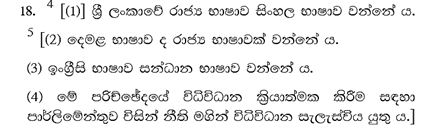
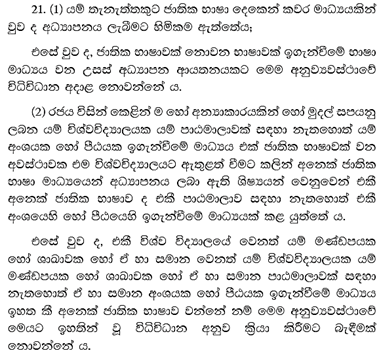
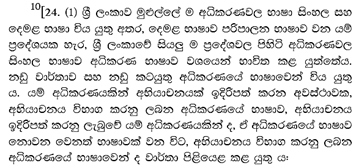
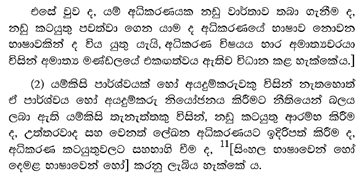
සංස්ථාගත නීති අධ්‍යාපන සභාව, මුස්ලිම් අධිකරණ ඇමතිවරු සමග එක් වී නිදහස් අධ්‍යාපනයේ පුරවැසියන්ට සිංහල භාෂාවෙන් නීතිය හදාරා නීතිඥවරු වීම වළැක්වීමට ගන්නා දේශපාලන තීන්දු ආණ්ඩුක්‍රම ව්‍යවස්ථාවේ 3, 4(ඇ), 4ඈ), 9, 18, 21, 23.(4) සහ 24 ව්‍යවස්ථා  උල්ලංඝනය කරන ආකාරය.

ගරු සිරිමා බණ්ඩාරනායක මැතිණියගේ 1970 සමගි පෙරමුණු ආණ්ඩුව සමයේ ස්වභාෂාවෙන් වෘත්තීය අධ්‍යාපනය ලැබීමේ අයිතිය නිදහස් අධ්‍යාපනය ලබන දැයේ දරුවන්ට හිමිකර දෙනු ලැබීය. ඒ අනුව ශ්‍රී ලංකා නීති විද්‍යාලයේ සිංහල භාෂාවෙන් නීති අධ්‍යයන කටයුතු ආරම්භ විය. නීති අධ්‍යාපනය ලබා දෙන ආයතන කිහිපයක් ශ්‍රී ලංකාවේ තිබුණද නීතිඥවරු බිහිකරන එකම ආයතනය ශ්‍රී ලංකා නීති විද්‍යාලය පමණක් වන අතර ඒ අධිකාරිය ලබා ගත්තේ 276 වන අධිකාරය වන නීති අධ්‍යාපන සභා ආඥා පනත මගිනි. 1900 අංක 2 දරණ සංස්ථාගත නීති අධ්‍යාපන සභා ආඥා පනත, 1974 අංක 6 දරන නීති සංශෝධනය මගින් සහ 1993 අංක 33 දරන නීති සංශෝධන මගින් සංශෝධනය වී ඇති අතර එකී සංශෝධන මගින් ප්‍රධාන වශයෙන්ම සංශෝධනය කිරීමට අපේක්ෂා කර ඇත්තේ ප්‍රධාන ආඥාපනතේ 2.අ වගන්තිය ය. නීති අධ්‍යාපන සභා ආඥා පනතේ 2.අ වගන්තිය මගින් නීති අධ්‍යාපන සභාවේ සංයුතිය දක්වා ඇත.

ගරු සිරිමා බණ්ඩාරනායක මැතිණියගේ 1970 පාලන සමයේදී නීති අධ්‍යාපන සභාවේ සංයුතිය එතෙක් පැවති එංගලන්තයේ, ස්කොට්ලන්තයේ, අයර්ලන්තයේ නීති පාලනයෙන් ශ්‍රී ලංකාව නිදහස් කර ගැනීමට දිශානති කරවූ අතර 1993 අංක 33 දරන නීති සංශෝධනය මගින් එය තවත් ශක්තිමත් කරනු ලැබීය.

1993 අංක 33 දරන නීති සංශෝධනය මගින් නීති අධ්‍යාපන සභාවේ සංයුතිය සාමාජිකයන් සංඛ්‍යාව 14ක් වන අතර ඉන් 6 දෙනෙකුම අධිකරණ ඇමතිවරයා විසින් පත් කරන අතර තවත් අයෙකු වන්නේ අධිකරණ අමාත්‍යාංශයේ ලේකම්වරයාය. ඒ අනුව නීති අධ්‍යාපන සභාවේ සංයුතියෙන් 50% ක් (7/14) අධිකරණ ඇමතිවරයාගේ අදහස් ක්‍රියාත්මක කරන ආකාරයට සකස් වී ඇත.

නීති විද්‍යාලය ආරම්භයේ පටන්ම එහි අධ්‍යාපනය ඉංග්‍රීසි භාෂාවෙන් පමණක් සිදු කළ අතර එය වර්ෂ 1815 උඩරට ගිවිසුම සමග බ්‍රිතාන්‍ය විසින් දිවයිනම යටත් කර ගැනීමේ දේශපාලන අරමුණු මත ක්‍රියාත්මක විය. 1972 මැයි 22 වන දින පළවන ජනරජ ව්‍යවස්ථාව කෙටුම්පත් කිරීමත් සමග නෛතිකව තිබූ යටත් විජිත බන්ධනයෙන් මිදීමේ අවශ්‍යතාවය පූරණය කිරීම අරඹයා නීති අධ්‍යාපන සභාවේ සංයුතියත්, නීති විද්‍යාලයේ අධ්‍යාපනය ලැබීමේ භාෂාවේත් වෙනස්කම් සිදු කළ අතර ඒවා පැහැදිලිවම දේශපාලනික වශයෙන් ගත් තීරණ වේ.

මේ සන්දර්භය තුළ  සංස්ථාගත නීති අධ්‍යාපන සභාව, මුස්ලිම් අධිකරණ ඇමතිවරු සමග එක් වී නිදහස් අධ්‍යාපනයේ පුරවැසියන්ට, සිංහල භාෂාවෙන් නීතිය හදාරා නීතිඥවරු වීම වළැක්වීමට ගන්නා දේශපාලන තීන්දු ආණ්ඩුක්‍රම ව්‍යවස්ථාවේ 3, 4(ඇ), 4ඈ), 9,18, 21, 23.(4) සහ 24 ව්‍යවස්ථා උල්ලංඝනය කරන ආකාරය පිළිබද විමසා බැලීමට මෙම ලිපියෙන් අදහස් කරයි.

රටේ නිදහස නිතිය සමග තදින් බැදී ඇති හෙයින් නෛතික නිදහස අත් කර නොගෙන රට යටත් විජිතත්ත්වයෙන් නිදහස් කර ගැනීමට හෝ තිරසර සංවර්ධනය හෝ නීතියේ පාලනය ස්ථාපිත කර ගත නොහැකි බව දුටු එවකට පාලකයන් නිදහස් අධ්‍යාපනය ලැබූ ගම්බද දැයේ දරුවන්ට ශ්‍රී ලංකා නීති විද්‍යාලයේ සිය මව් භාෂාවෙන් නීති අධ්‍යාපනය ලැබීමේ නිදහස අත් කර දෙන ලදී. එසේ වුවත් ශ්‍රේෂ්ඨාධිකරණය සහ අභියාචනාධිකරණය විසින් ඉංග්‍රීසි භාෂාවෙන් පමණක් නඩු තීන්දු දෙමින් 1815 සිට පැවති යටත් විජිත තත්ත්වය දිගටම පවත්වාගෙන යාම පාලනය කිරිමට අවශ්‍ය දේශපාලන තීන්දු ගැනීමට සමත් පාලනයක් ශ්‍රී ලංකාවේ ස්ථාපිත නොවූ අතර රටේ බහුතර ජනතාවට කියවිය හැකි ලෙස නඩු තීන්දු දෙමින් නීතියේ පාලනය ස්ථාපිත කිරීමට අවශ්‍ය පසුබිම ඇති කිරීමට පාර්ලිමේන්තුවද අසමත් විය. පාර්ලිමේන්තුව විසින් සිදු කළ මෙම වරදෙන් එංගලන්තයේ, ස්කොට්ලන්තයේ, අයර්ලන්තයේ නීති පාලනයෙන් ශ්‍රී ලංකාව නිදහස් කර ගැනීමට එරෙහි නීති විශාරදයන් ප්‍රයෝජන ගත් අතර මුස්ලිම් අධිකරණ ඇමතිවරු බලයේ සිටින අවස්ථාවල සිය පටු අරමුණු ක්‍රියාතමක කර ගැනීමට කටයුතු කර ගත්තේ ය.

ඒ අනුව වර්ෂ 2010 සහ වර්ෂ 2021 දී නිදහස් අධ්‍යාපනයේ පුරවැසියන්ට සිංහල භාෂාවෙන් නීතිය හදාරා නීතිඥවරු වීම වළැක්වීමට අදාල දේශපාලන තීන්දු ගැනීමට එකී එංගලන්තයේ, ස්කොට්ලන්තයේ, අයර්ලන්තයේ නීති පාලනයෙන් ශ්‍රී ලංකාව නිදහස් කර ගැනීමට එරෙහි නීති විශාරදයන් කටයුතු කර ගනු ලැබීය. ඒ 2010 සිට ස්ව භාෂාවෙන් නීති අධ්‍යාපනය ලැබීමේ අයිතිය ශ්‍රී ලංකා නීති විද්‍යාලයේ අහිමි කිරීමත්, 2020.12.30 දින ස්ව භාෂාවට ශ්‍රී ලංකා නීති විද්‍යාලයේදී නීති අධ්‍යාපනයට කිසිම අවස්ථාවක් නොලැබෙන පරිදි අනු නීති පනවා ගැනීමෙනුත් ය. මෙහි අවසාන ප්‍රතිඵලය වන්නේ තව වසර කිහිපයක් ඇතුළත ස්වභාෂාවෙන් අධිකරණ කටයුතු කිරීම තහනම් කර එංගලන්තයේ, ස්කොට්ලන්තයේ, අයර්ලන්තයේ නඩු විසදන එනම් ඉංග්‍රීසියෙන්ම මහේස්ත්‍රාත් අධිකරණ, දිසා අධිකරණ, මහාධිකරණ සහ සිවිල් අභියාචනා මහාධිකරණ නඩු විසදන ක්‍රමයක් ඇති කිරිමය.

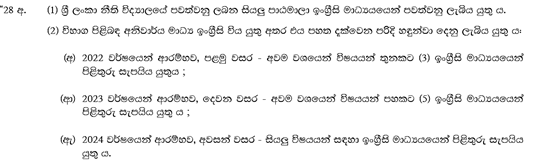
අලි සබ්‍රි අධිතරණ ඇමතිවරයාගේ එකගත්වයෙන් 2020.12.30 දින අංක 2208/13 දරන අති විශෙෂ ගැසට් පත්‍රය සංස්ථාගත නීති අධ්‍යයන සභාව විසින් රජයේ නිවේදනයක් ලෙස පළ කර ඇත. එමගින් වර්ෂ 2010 දක්වා පැවති ස්වභාෂාවෙන් නීතිය ඉගෙනීමේ අයිතිය නිදහස් අධ්‍යාපනයේ පුරවැසියන්ට අහිමි කරවනු ලැබ ඇති අතර නීතිඥ විභාග ස්වභාෂාවෙන් පැවැත්වීම නවත්වා ඇත.

එම ගැසට් පත්‍රයේ අදාල පාඨ මෙසේ ය.

ස්වභාෂාවෙන් නීතිය ඉගෙනීමේ අයිතිය නිදහස් අධ්‍යාපනයේ පුරවැසියන්ට අහිමි කිරීමද මේ සමගම සිදු කිරීමට කටයුතු කර ඇත්තේ කොළඹ විශ්ව විද්‍යාලයේ නීති පීඨයේ, ශ්‍රී ලංකා විවෘත විශ්ව විද්‍යලයේ ඉගෙන ගන්නා නිදහස් අධ්‍යාපනයේ සිසුන්ටද ඉංග්‍රීසි භාෂාවෙන් නිතිඥ විභාග ලිවීම අනිවාර්ය කිරීමෙනි.

සංස්ථාගත නීති අධ්‍යාපන සභාව, මුස්ලිම් අධිකරණ ඇමතිවරු සමග එක් වී නිදහස් අධ්‍යාපනයේ පුරවැසියන්ට, සිංහල භාෂාවෙන් නීතිය හදාරා නීතිඥවරු වීම වළැක්වීමට ගන්නා දේශපාලන තීන්දු ආණ්ඩුක්‍රම ව්‍යවස්ථාවේ 3, 4(ඇ), 4(ඈ), 9, 18, 21, 23.(4) සහ 24 ව්‍යවස්ථා උල්ලංඝනය කරන ආකාරය

ආණ්ඩුක්‍රම ව්‍යවස්ථාවේ 3 වන ව්‍යවස්ථාව

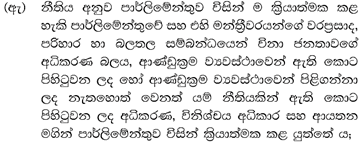
ආණ්ඩුක්‍රම ව්‍යවස්ථාවේ  වන ව්‍යවස්ථාවේ  4(ඇ) ව්‍යවස්ථාව

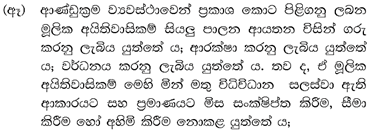
ආණ්ඩුක්‍රම ව්‍යවස්ථාවේ  4(ඈ) ව්‍යවස්ථාව

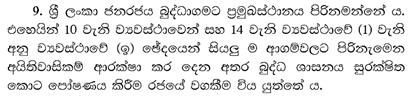
ආණ්ඩුක්‍රම 9 ව්‍යවස්ථාව

ආණ්ඩුක්‍රම ව්‍යවස්ථාවේ 18 වන ව්‍යවස්ථාව

ආණ්ඩුක්‍රම ව්‍යවස්ථාවේ 21 ව්‍යවස්ථාව ( වර්ෂ 2010 දක්වා ශ්‍රී ලංකා නීති විද්‍යාලයේ සිංහල මාධ්‍යයෙන් නිති අධ්‍යාපනය ලබා දී ඇත)

ආණ්ඩුක්‍රම ව්‍යවස්ථාවේ 23.4 ව්‍යවස්ථාව

ආණ්ඩුක්‍රම ව්‍යවස්ථාවේ 24 ව්‍යවස්ථාව

ආණ්ඩුක්‍රම ව්‍යවස්ථාවේ 3, 4(ඇ), 4ඈ), 9, 18, 21, 23.(4) සහ 24 ව්‍යවස්ථාවල විධිවිධාන අනුව සහ 1970 සමගි පෙරමුණු ආණ්ඩුව ගත් ස්වභාෂා නීති අධ්‍යාපන ප්‍රතිපත්තියත්, සී. ඩබ්.ඩබ්. ඩබ්. කන්නන්ගර නිදහස් අධ්‍යාපන ප්‍රතිපත්තියත් සැළකූවිට ශ්‍රී ලංකා නීති විද්‍යාලයේ නීති අධ්‍යාපන භාෂා මාධ්‍ය සහ නීතීඥවරයෙකු වීමට පවත්වන විභාගවල භාෂා මාධ්‍ය පැහැදිලිවම දේශපාලන තීරණ මත පදනම් වි ඇත. විශේෂයෙන් මේ දේශපාලන ප්‍රතිපත්ති මුස්ලිම් අධිකරණ අමාත්‍යවරයන් බලයේ සිටින විට නිදහස් අධ්‍යාපනය ලබන රජයේ පාසල් දරුවන්ට දැඩි ලෙස අහිතකර ලෙස ක්‍රියාත්මක වී ඇති බව 2010 සහ 2021 දී ශ්‍රී ලංකා නීති විද්‍යාලයේ නීති අධ්‍යාපන භාෂා මාධ්‍ය වෙනස් කිරීම සැළකීමේදී මනා ලෙස තහවුරු වේ.

විශේෂයෙන් රටක අනන්‍යතාවය නීතිය මගින් පිළිබිඹු කරන බවට පිළිගැනීමක් තිබියදී තවදුරටත් එංගලන්තයට, ස්කොට්ලන්තයට, අයර්ලන්තයට පක්ෂපාතී නීති විශාරදයින්ගේ අධිකාරී බලපෑමට යටත්ව, යටත් විජිත නීති ප්‍රතිපත්තිවලට අනුගතව ගත කිරීම සුදුසුද? යන්න නිවහල්ව සිතීම පුරවැසියන්ගේ ජාතික යුතුකමය, වගකීමය. නිතීයේ නිදහසත්, නීතියේ පාලනයත්, තිරසර සංවර්ධනයත් ළගා කර ගත හැක්කේ ජනතාව නීතියෙන් ඈත් කිරීමෙන් නොව ජනතාව නීතියට සමීප කිරීමෙන් බව පාලකයන් වටහා ගත යුතුය. බලවන්ත සහ දුර්වල සැමට බියකින් සැකයකින් තොරව ජීවත් විය හැක්කේ නීතියේ පාලනය ශක්තිමත් කිරීමෙන් පමණි.

4

සංස්ථාගත නීති අධ්‍යාපන සභාව, මුස්ලිම් අධිකරණ ඇමතිවරු සමග එක් වී නිදහස් අධ්‍යාපනයේ පුරවැසියන්ගේ භාෂා අයිතියත් ආණ්ඩුක්‍රම ව්‍යවස්ථාවත් උල්ලංඝනය කරන විට කාට කියනුද? ඒ අමාරුව යන්න ජනතාව මුමුණති. මන්ද මෙයට එරෙහිව නඩු පැවරිය යුත්තේද ඔවුන් ඉදිරියේම බැවිණි. වැටත් නියරත් ගොයම් කා නම් කාට කියනුද ඒ අමාරුව” යන්න පැරන්නෝ කියා ඇත්තේ ඒ නිසාය.

Sri Lanka must put up a War Crimes Museum for Colonial-JVP-LTTE crimes

February 5th, 2021

Sri Lanka has undergone 3 phases of mass killings against unarmed civilians. These were no individual incidents or spur of the moment killings. These were all premeditated murder. Colonial crimes in then, Sinhale covers the period from 1505 to 1948. All developing nations were subject to mass genocide, plunder by the very countries relentlessly preaching about human rights completely ignoring their violations of it for 500 years. The next period of gruesome murder came with 2 JVP insurrections in 1970s and 1980s. The people must know how JVP roasted people on tyres or tied them to lampposts naked. The third phase of mass pre-meditated murder came with the LTTE killings that initially started by killing Tamils and then went on to kill innocent villagers and thereafter to a brutal attack using sophisticated weaponry supported by the LTTE diaspora. The Armed Forces of Sri Lanka defeated the ground force of the LTTE in May 2009, yet the LTTE diaspora that provided material support continues their bogus campaigns. Interestingly, they are located & operating from the very countries that committed mass colonial crimes. When they fund lies demanding truth, we must present the truth and expose their lies – the War Crimes Museum is showcase to the world their crimes. This is crucial as Sri Lanka is never given any empathy in the international arena which the countries that committed mass crimes since 1505 control. Therefore, we must have a national initiative to absolve us of false allegations and the War Crime Museum will enable Sri Lanka to set the story straight. Sri Lanka must obtain assistance from the countries that played no role in either of these 3 murderous phases of our past.

Colonial Crimes (1505 to 1948)

Colonial crimes by West are so heinous that none of the crimes taking place today come anywhere near what these colonial invaders committed. Infecting natives with disease (small pox), throwing native babies to crocodiles, pounding people to death, killing elephants even pregnant elephants for sport, enjoying breakfast while watching natives being hung, burning down entire villages, killing livestock with intent to make natives die of hunger are just a handful of gruesome crimes committed by the White Man today presenting himself in international halls as the crusaders and angels of peace and human rights.

Their 24×7 jargon of human rights, democracy, freedoms, transparency, justice and what not did not exist across 500 years of their rule taking over nations already inhabited and declaring it theirs claiming to having ‘discovered’ them. The Papal Bulls giving this right exist to this day.

Ironically, these very countries refuse to put their crimes to the dock and will not atone for a single murder committed under orders of their King/Queen/Church.

The manner these countries use the UN to accuse countries they ruined with their divide and rule policies is unbelievable. The manner they control media and global publicity necessitates that the third world correct the factually incorrect history being created as future generations will not know what took place.

These are the very countries preaching about Acknowledgement & Accountability. Sri Lanka must make the 3 countries Portuguese, Dutch & British that occupied Sri Lanka, acknowledge their crimes and account for their crimes. The cultural genocidein all colonies must also be accounted for.

JVP Crimes (1970s and 1980/90s)

Two insurrections took place by the JVP starting in the 1970s and then again in 1980s. How the JVP started, who were behind its creation, why and for what reason is important and will answer to the present political role they play. Obviously, they have an external influence with funding and instructions coming and modus operandi also decided. The key point to take note was that the JVP has been used to divide & destroy the Sinhala Buddhists. Brainwashing youth in universities, the JVP movement aimed at ensuring cream of Sinhala Buddhists diverted from making a name for themselves using their education/talents and instead put them on the roads to protest. This game plan continues to this day. The insurrections resulted in the loss of lives of thousands of Sinhala Buddhist talented youth who would have been good leaders had they not been brainwashed to rebel. Thus, whoever funded JVP ensured that Sinhala Buddhists got killed by Sinhala Buddhists when the JVP attacked the Armed Forces and their families.

This period for Sinhalese in particular was one of fear. A man on a bicycle throwing a piece of paper was enough to put an entire town in darkness. The chit carried a threat that any house with lights on would be torched and occupants killed. This was a period Sinhalese families lived in fear for the safety of their children. No one knew who came to houses and took away youth, never to return. People will remember the streets smelling of burnt tyres with an unknown person burning on it. People will remember men naked tied to lampposts. The people must know how many Buddhist clergy were killed, how many buses and trains were torched, how many professionals were killed by the JVP and even gangs under patronage of the ruling government. These were all premeditated acts of murder and the lists of people killed during this period is available and JVP crimes must be made available in a Museum for the present and future generations to see. Today, the JVP is pretending to be a chameleon, changing colours by presenting itself in different names to fool the masses but JVP has yet to come clean on its crimes and this needs to be presented to the people and the world to know what the innocent citizens went through during this gruesome period post-independence.

LTTE crimes (1970s – May 2009)

The third phase of brutal murder came after the unknown Tamil New Tigers formed in 1972 by Prabakaran rechristened itself LTTE in 1976 and hijacked the separatist quest from the Tamil leaders who indirectly played a role thinking they could take over the mantle after LTTE was able to declare a separate state with the gun. Unfortunately, LTTE’s leader had other plans and the cream of the Tamil leadership was slowly eliminated by him leaving weasels willing to tow his line and TNA was happy to play lead role as LTTE’s political party.

It is important for the world to know who supported Tamil political quest for separatism and whether the same entities supported the LTTE terror quest too. LTTE began killing Tamil leaders first, then Tamil public servants like Tamil policemen and thereafter only did LTTE turn its guns on the Sri Lanka Armed Forces. The first attack by LTTE on villagers were with the brutal attacks on the Kent & Dollar Farms cutting pregnant mothers and infants to pieces. Thereafter, for 3 decades over 300 LTTE attacks took place virtually every day, every month, every year.

The country only heard ambulances screeching past carrying almost dead casualties to hospitals. Parents fearfully said goodbyes to their children leaving for schools or husbands going to work. No one knew whether they would return.

Today, the UN is demanding to know how LTTE was killed pretending they want to know how ‘civilians’ were killed, but what did this UN or UNHRC do about LTTE killings since 1980s?

All that the diplomats and the UN did was to issue a lukewarm statement and ask the GoSL to have tea with the tigers!

Today, the same UN/UNHRC is passing resolutions chanting accountability, truth, justice but where were they when real civilians were being targeted as an act of premeditated murder by LTTE.

The last phase took place inside a war zone where areas were demarcated for civilians. But who were the civilians because LTTE had its own civilian armed force trained to kill and were just as brutal as their uniformed force.

But, when LTTE attacked passenger buses, trains, public places etc they planned to kill, they planned in advance – why did the UN/UNHRC not give due attention to these murders. Have they even documented the LTTE attacks upon real civilians since 1980s?

Today, the hilarious factor is that the LTTE Diaspora, the very entity that provided LTTE material support throughout LTTE’s murderous past is dictating to the UN & Diplomats how GoSL should be punished for eliminating LTTE. They are all making the mockery of the truth.

It is for this reason that Sri Lanka must have a War Crimes Museum and put every murder committed by LTTE for the world to see for themselves because the future generations are unlikely to know any truth reading reports by UN/UNHRC to what took place in Sri Lanka.
Therefore, this Government owes the victims justice by erecting a War Crimes Museum and documenting every victim killed by LTTE since 1980s.

At the same time, alongside the War Crimes Museum there should also be a Peace & Unity Hall to present to the world how our people lived in peace and unity before 1505 and how that peace & unity was destroyed by colonial invaders via their divide and rule policies.

History will be witness to showcase not a single incident where Tamils or Muslims faced wrath under the Sinhale kings before 1505.

The Peace & Unity Hall must highlight all of the happy ventures that the communities in Sri Lanka indulge in. As per the UN/UNHRC & diplomatic reports, anyone who has not been to Sri Lanka will think the communities are daily killing each other. This is totally untrue and a fabrication.

Go to any public or private workplace and see how people work in unity. The people share food, go to parties, go shopping and have fun together. As humans, everyone has differences, but differences do not mean communities are 24×7 at loggerheads. Most of the incidents that have taken place have some form of external interference and hanky panky.  Therefore, we must have a Peace & Unity corner to highlight how ordinary people live together peacefully. The best example of this is how everyone unites each time there is a natural calamity and everyone chips in to help others.

The GoSL must allocate land for this War Crimes/Peace Museum and talented architects and IT experts must come forward to propose how this can be set up – we can have video versions, digital 3D/4D, documents/articles archived, erections of key attacks by LTTE, lists of people killed/assassinated y LTTE. The objective is for people who had thus far digested the lies of LTTE propaganda to see the real version and to know the truth.

LTTE diaspora fund lies demanding truth, Sri Lanka must present the truth and expose their lies – the War Crimes Museum will showcase to the world LTTE crimes.

This national initiative must absolve us of false allegations and the War Crime Museum will enable Sri Lanka to set the story straight.

We should not delay this any further. When LTTE Diaspora are going to the extent of funding foreign MPs and UN Officials to parrot their lies, Sri Lanka must respond by showcasing to the world the truth via actual incidents that took place.

Similarly, the countries pointing fingers at Sri Lanka will also have to respond to the colonial crimes committed as a government rule/orders, while JVP pretending to be angels must also be made to account for their mass murder of innocent people. Inadvertently, the ruling party of that period will also have to face the tune for their crimes as well.

Every period that mass crimes has taken place must be covered and such mass crimes and murder took place only during colonial occupation, 2 JVP insurrections and 3 decades of LTTE terror.

If funding is an issue, GoSL must reach out to countries that helped Sri Lanka end LTTE & who played no role in funding LTTE, for support.

Shenali D Waduge

http://www.downtheroad.org/Asia/Photo/3Vietnam_Pictures/3War_Remnants_Museum.htm (please view this to see the extent of crimes committed by human rights crusader America!)

http://warremnantsmuseum.com/posts/introduction-general

How many Tamil children did TNA save from being turned to child soldiers by LTTE?

February 5th, 2021

The Diplomats and UN officials and members of the international community always enjoy visiting the TNA every time they come to Sri Lanka and even invite TNA to their countries as well. At the same time these diplomats and UN officials spend a lot of time speaking about human rights, children’s rights and a plethora of other rights associated with children. We know that 30% of LTTE comprised of children. If LTTE had a strength of 10,000 of this 3000 would have been children. It also meant that 30% of casualties & fatalities would have also been children. How many times has TNA, most of whom were fathers and mothers themselves tried to prevent child recruitment by LTTE?How many TNA members had their children sent overseas for foreign education but kept mum about less-privileged Tamil children being kidnapped and turned into child soldiers. How happy is the UN and diplomats with TNA inspite of keeping mum about Tamil children turned into child soldiers?

https://www.hrw.org/news/2004/11/11/sri-lanka-tamil-tigers-forcibly-recruit-child-soldiers

HRW Sri Lanka: Tamil Tigers Forcibly Recruit Child Soldiers

The TNA and many others will not like to admit that the recruitment of Tamil children as child soldiers had a key criterion.

These Tamil children were from low caste Tamil homes and they were from impoverished Tamil families.

The reason why the LTTE child soldiers were taken from low caste impoverished Tamil homes was

  • Tamil low caste families could never go against LTTE holding guns
  • Tamil low caste families could not say much in a highly caste-oriented Tamil society
  • Tamil low caste families had little hope of getting justice from Tamil high caste/class officials who cared not what happened to these low caste children.
  • Tamil low caste families had to silently watch and weep as their children were taken never to return
  • The flip side of this was that low caste Tamil children turned into child soldiers became very aggressive as the gun gave them a power over their own society. This was a bonus for the LTTE. Every Tamil low caste child brainwashed to hate, became more ferocious than anyone else as they carried a grouse against society. Their new found ‘freedom’ via holding a gun and their ability to scare society gave them a power they could never achieve in society given their caste status.

If anyone is questioning the caste aspect of the LTTE child soldiers or even LTTE ground force, it is certainly a good research study academically.

Prabakaran himself was a low caste and many of his key advisors were also. They all found a power via the gun that they could never obtain from society.

It is good for the diplomats and the UN to run through the speeches, statements by TNA since 2008 which will confirm that TNA spoke not a word about the people LTTE were keeping as hostages and human shields and every statement was cloaked to give a window of hope to the LTTE and an opportunity for the LTTE for some breathing space.

TNA did not ask LTTE to release a single child soldier, ever!

Thus, TNA did not rescue a single child from being kidnapped from school, from returning home from school, or from being kidnapped going to school because the TNA and the LTTE Diaspora needed these children to advance their own agendas.

When these children died, of course they were sad, not because the child was loss but because it meant they would have to finance another child to be trained as a child soldier.

Imagine how many Tamil low caste and poor Tamil children would have perished during hostilities with a national army, or during training or being shot dead for trying to flee LTTE camp? 

Imagine how many of these Tamil low caste and poor children lost their entire childhood living in the jungles, not having the love of their parents, not having a proper meal, even satisfying the sexual appetites of the senior LTTE combatants while inside bunkers for months?

Is the UN and diplomats not bothered about this?

Imagine the agony of the teenage female child soldier having to suffer monthly period pains and other female agonies without a mother or friend to share these with.

This ordeal that these Tamil low caste children underwent took 30 years and where was Navi Pillay, Radhika Coomaraswamy, Yasmin Sooka, Michelle Bachelete to save them?

Where were all those women who love publicity speaking about child rights and freedoms but only subjecting those to mikes and pieces of paper. Did they carry out any international campaign strong enough to take action against LTTE to stop recruiting child soldiers.

What is hilarious was that many of the NGOs and INGOs stationed in the North while LTTE ran a defacto rule, had their offices right next door to LTTE offices and they would have seen enough of LTTE child soldiers even entering their own offices, but did they report these to the UN? Did they demand that action be taken to stop child recruitment? Did they do anything worthwhile to actually stop child soldier recruitment when they could? 

These questions are asked because after a 30 year conflict ended, the UN has suddenly woken up and is asking Sri Lanka how it ended terrorism and finding fault with ending it too but this same UN watched children been turned into killers and did nothing about it.

More importantly, from 1970s to 1999 Adele Balasingham a nurse from Australia was not only training Tamil children to kill but she also taught them how to commit suicide biting a cyanide capsule given at the end of the training. This nurse committed 2 crimes against humanity but the UN is not bothered to go after her and the UK issuing demarches against Sri Lanka are silent about this nurse happily living in the UK.

So where was the UN for these Tamil low caste and poor children? 

What did UN do about turning children into child soldiers?

Imagine if LTTE recruited 500 children a year for 30 years that would have meant 15,000 child soldiers. Out of this number how many are alive?

We know that in May 2009, 594 child soldiers surrendered to the armed forces. The GoSL did what the UN did not do in 30 years. The GoSL gave a Presidential Pardon and then put them through education and skills development. Gokulan a one-time child soldier is today a singing star much loved by all Sri Lankans.

Did UN create a single Gokulan in all of the 30 years UN claimed to assist Sri Lanka? 

We implore the UN and the diplomats to stop patronizing Sri Lanka unfairly.

Too bad the LTTE is no more, too bad the LTTE Diaspora that funds many international programs are angry. GoSL and the Armed Forces ended a brutal terror movement. Yes, there has been casualties during the last phase. Both sides were not engaged in firing roses. The LTTE were given chances to lay down arms and surrender. They chose not to. They chose their fate. How many soldiers have LTTE killed when they surrendered to them? How many unarmed Sri Lankan Police did LTTE kill?

It is unfortunate that the UN and diplomats seem to be more bothered about how and why LTTE died totally ignoring that the Sri Lankan citizens are living life without fearing LTTE suicide missions and bombs. It’s time for the UN and the diplomats put an end to this ‘how did LTTE die’ song pretending they are only interested in civilian deaths. They know very well that the LTTE had a trained civilian armed forces – their deaths cannot be presented as civilian deaths.

So until UN and clearly differentiate who was LTTE who was a civilian – the UN cannot be issuing any red notices to Sri Lanka’s Armed Forces.

Shenali D Waduge

The USA threw the strategic baby and kept the human rights bathwater

February 4th, 2021

Malinda Seneviratne

The Committee on Foreign Relations of the US presented an analysis on Sri Lanka to the Senate on December 7, 2009, i.e. almost seven months after the war on terrorism ended with the world’s most ruthless terrorist outfit, the Liberation Tigers of Tamil Eelam (LTTE) being comprehensively defeated by the Sri Lankan security forces. The document was titled, ‘Sri Lanka: recharging US strategy after the war.’  It was presented by John F Kerry and Richard G Lugar on behalf of the Committee.

There was analysis and there were recommendations to the Obama administration, international financial institutions, the US Congress and the Sri Lanka Government. The main concerns regarding Sri Lanka were about resettlement of the internally displaced, i.e. the hundreds of thousands held hostage by the LTTE and duly rescued by the Sri Lankan security forces at heavy costs to personnel.

The rest of the recommendations were nothing more than the usual noises about democracy, nothing to make a song and dance about. No mention of ‘war crimes.’ Nothing of the need to haul Sri Lanka over the coals in Geneva, so to speak, as has been the case since an intemperate and maverick diplomat angered Israel and earned the wrath of Washington following heavy lobbying by the Jewish lobby in the USA.

Indeed, it brings to mind observations on Sri Lanka made by Lord Naseby, during the course of an intervention in the House of Lords debate on the ‘Overseas Operations (Service Personnel and Veterans) Bill, designed to protect British troops from ‘vexatious charges’ (or, provision of immunity for all excesses including crimes against humanity): ‘I made a Freedom of Information Act inquiry because I was told by the UN that there were 40,000 casualties. I asked the Foreign Office about Colonel Gash’s independent dispatches, which took two years to obtain. They made it clear that no war crimes were carried out in Sri Lanka.’

The Kerry-Lugar submission also observed, ‘Real peace will not come overnight to Sri Lanka and cannot be imposed from the outside.’ Such wisdom seems to have been tossed out in deliberations regarding Sri Lanka. Most importantly, the Kerry-Lugar report noted that the US focus on IDPs and ‘civil society’ (quotes mine) as opposed to the economy and security sector had isolated Sri Lanka economically and politically from the West. The recommendation for the then administration included support for Sri Lanka’s efforts in resettlement, reconstruction and rehabilitation, and assistance for development in all parts of the country. There is some mention of strengthening justice system by supporting police reforms, but certainly nothing about war crimes tribunals and the kinds of mechanisms that the US later pushed for at the UNHRC.
Following a fairly comprehensive analysis of geopolitical realities pertaining to the region, the committee proposed that the Obama administration ‘take a broader and more robust approach to Sri Lanka that appreciates new political and economic realities in Sri  Lanka and U.S. geo strategic interests.’ Such an approach, according to the Kerry-Lugar submission, ‘should be multidimensional so that U.S. policy is not driven solely by short-term humanitarian concerns but rather an integrated strategy that leverages political, economic, and security tools  for more effective long-term reforms.’
What happened though? The US essentially sought to secure its strategic interests by concocting a lie (as evidenced by the massive distance between the privileged narrative on human rights and the observations embedded in the Kerry-Lugar Committee, the International Red Cross and Colonel Gash), leveraging it to harass the then Sri Lankan regime to a point that would enable ‘regime change,’ i.e. to obtain strategic goals through a US-friendly regime. It worked. Perhaps in order to ‘press advantage home,’ the US used its Sri Lankan pawns to co-sponsor an anti-Sri Lanka resolution.

What happened then? A regime whose incompetence was compounded by the perceived sell-out was comprehensively defeated. The ‘bad guys’ were back.
And now what? Well, the Kerry-Lugar thinking is certainly not being revisited. Instead, it’s same-old, same-old. Well, not exactly, because the US of 2009 is not the US of 2021. The China of 2009 is not the China of 2021. The veiled threats issued by the US mission and that of the principal US ally, the UK, echoing the ‘tough words’ of the USA’s best friend in Geneva, Michelle Bachelet, the chief of UNHRC, are all based on lies agreed upon, lies which, the Kerry-Lugar committee, to be fair, had not thought fit to conjure back in December 2009. There’s talk of pushing for action in the UN General Assembly. There’s talk of sanctions. There’s talk of the matter being taken to the Security Council.

Now leaving aside the blatant disavowal of the principle of equality in treatment (the UK, for example, was found guilty of war crimes by the International Criminal Court and was let off ‘on account of demonstrating genuine interest in implementing correctives’ even as that country sought to provide constitutional cover for its forces who, let us not forget, have a considerable track record as criminals against humanity — the UK, ladies and gentlemen, will not be touched by Bachelet), these threats will certainly have repercussions. Sri Lanka will not be a happy recipient. However, leaving Sri Lanka with few choices, the USA will essentially push the island nation into the (waiting) arms of China and of course Russia.

So there was and is a baby: US strategic interests. It was bathed in toilet wash. The US and her allies have washed the baby so many times that when the baby was thrown there was only bathwater left. Maybe it seems warm. Maybe the preference for closed-noses and closed-eyes made for a kind of oblivion. The US is wallowing in the gooey stuff. 

We don’t know where John F Kerry and Richard J Lugar are right now. Sri Lanka, however, does know where China is. And it seems that the US has not ‘taken a broader and more robust approach to Sri Lanka that appreciates new political and economic realities.’ The ‘humanitarian concerns’ are no longer on the table, resettlement being done and dusted years ago, reconstruction outstripping development in areas outside the principle combat areas, democratization completed and livelihoods restored to levels on par with any other part of the country. It’s been ‘short term human rights concerns’. Well, ‘concerns’ (within quotes).

Sri Lanka will have to pay a price for refusing the inhabit the USA’s version of Sri Lankan reality. Sri Lanka will be made to pay, rather. The USA will also have to deal with some costs: the strategic baby that Washington has tossed out in ill-willed and ill-conceived fixations with bathwater.

malindasenevi@gmail.com

Cricket is language-blind!

February 4th, 2021

C. Wijeyawickrema, LL.B., Ph.D.

Note: Supreme Court judges are still not willing or not skilled to write their judgements in Sinhala. They have a mental blockade, a Eurocentric fever. So, they want their pupils to learn English. They ignored the 1956 Official Language Act for over 60 years. That is two generations of unfair privileged status! The gazette to go back to English by the council of legal education (CLE) had to wait until a non-Sinhala minister of justice lands as a national list MP. They better be ready with valid reasons to justify their stealth decision when the country gets this bad news.

Previous three essays, this essay and one more to come were written as responses to past attempts made by black-white souls to promote English as panacea for politician-generated problems in Ceylon (Sinhale)/Sri Lanka. The expectation is that CLE members and other Eurocentric NGO agents etc. would get an idea by reading these, what the other side think.

================

The Island-Opinion, 2008/08/22

I thank Gamini Gunawardane for his article on the evolution of Sinhala Cricket (Island, 8/15/2008). If Ajantha had to pass an English language test before he could play cricket, he would have missed the bus, and with teams of English-speaking cricketers, Sri Lanka would not have won a place in world cricket. I see a personal connection here because I was able to become a college professor and a director of research in the USA because of the language-blind university entrance exam in 1960-61. In fact, I did not take even Sinhala as one of the four subjects!

Because of Gamini’s reply and because of Bandula Abeyewardene’s (BA) total misunderstanding of my response (Island, 8/2), my task is reduced to answering a few, below the belt personal and private issues raised by BA.

Because of his inability to understand the message in my letter, BA has now made another mistake by placing patriotism and fluency in English on a collision path (Island, 8/9). I see no direct connection between the two except that I know that some people stress the fact that when two Tamils meet or when Indians meet each other, they always speak in Tamil or Hindi respectively, but when two Sinhalyas meet, they tend to use English. I do not worry about such habits. SWRD who helped the Sinhala people had a grade three level student’s ability in reading and writing in Sinhala.

I was only challenging BA’s idea that “a Sinhala cricketer who might become a cricket hero at a future date could avoid the ‘embarrassment’ of not being able to speak in English if cricketer-training includes tutoring in English. I did not oppose English or people learning it as a second language. The gist of my letter was to tell people not to take the raft (English) on to your shoulders after using it to cross the river. Learning English or any language for that matter is like learning how to swim or how to ride a bicycle. We do not carry the bicycle on our backs when we walk.

The problem in the former colony called Ceylon is that those who had money could learn English and they used it as an extra weapon in their hands to oppress those who could not learn it. I wrote two essays previously on this subject: ‘Gurulugomi to the rescue: the re-enthronement of the English language’ (Island, 4/13/2001) and ‘Empowering law students with an English language education’ (Island, 3/19/2008)) and BA would be able to better understand my point, if he cares to read them.

I said he had a colonial mentality because of the statements I saw in his responses (I have not seen the response of Daya Ranasinghe as I do not know when it appeared in The Island) revealing a mind blocked with an English-based inferiority complex. He sank further and deeper with his new theory that the language of cricket is English. So, if Susanthika wins an Olympic gold medal, then what would be the language of running, according to BA? If an American wins 8 gold medals in swimming, then what will be the language of swimming?

I went to the Peradeniya University through the Sinhala medium and studied law later in English. Dr. Joe Silva, who was a past Law College principal, was my classmate. As a grade school student, I went to a night school in Panadura to learn English. My father used to tell me that he too learned his English by attending a night school.

This brings me to the question BA has about my name. Like Don Baron Jayatilleke, my father’s name was Gilton Don Manis. My mother’s name was Dona Baby Manamperi. My mother was a teacher and named me Chandrasiri (in the birth certificate it appears in English as Chandarasiri) not Conrad. What BA needs to understand is that the name given to one by his or her parents has nothing to do with what that person does later in his or her life. SWRD did so many things that his parents or relatives never expected him to do. Parents in the past gave their children one Sinhala and one English name—Chandra-Richard, Ananda-Edward, Cyril-Banda are examples. I knew personally how Cyril-Banda used his names, depending on with whom he was talking, he used what he thought was the appropriate name!

BA also needs to understand that because he was related to Sir DBJ, he cannot have an automatic share of DBJ’s past glory. BA has to earn his own place by his own work. No doubt the connection to DBJ helps, but it is not a free lunch. During the past 10 years, by way of marriage connections, I came to know about the second or third generation DBJ relatives, and I found that they had nothing of their own in serving the public that would have made DBJ feel proud of them. This is called “vanse kabal gaama.”

BA’s story reminded me of the stories I heard about Anil Moonesinghe when he was Chairman, CTB. He had a life-size picture of Anagaarika Dharmapala on the wall behind his desk. The uncle and nephew, however, were poles apart.

About eight years ago I helped to begin an evening English school (two days of the week) at the Siri Siddhartharamaya, Walana, Panadura for the poor children who did not have money for English tuition classes. It now has about 100 students. I did this because when I was growing up in Walana, my mother had a hard time in giving me the monthly tuition fee of Rs.5/- for my English tuition. Rather than feeling embarrassed, BA could have contacted Ajantha Mendis privately and offered him free tuition. I hope BA could find time to visit the temple at Walana (Ven. Walane Siddhartha was the person who began the Parama Dhamma Chethiya Pirivena at Ratmalana from which came the two monks who started Vidyodaya and Vidyalankara Privenas) and started a similar free English school in his temple.

According to BA, patriots are those who stay in the country. If that is the case, then Sri Lanka already has over 18 million patriots! Black whites frequently use two interrelated phrases—greener pastures and second-class citizens—to sling mud at people who for various reasons left Sri Lanka on a temporary or permanent basis. Those who went to universities in the swabasha mediums left Sri Lanka in frustration after failing to serve the motherland, and USA took them in without a language test. This group is now Sri Lanka’s Seventh Great Force (sixth force is janitors and maids toiling in Arab lands pumping money for the Colombo people to import BMWs). They became successful in their lives after hard work and personal sacrifices and if the Sri Lanka Government is ready, there will be thousands of them who will come. Whether or not one is a second-class citizen in a new country is a state of mind. For example, in my country of birth in Sri Lanka, with caste and class discrimination and nepotism, so many times I felt that I was a second-class citizen. I was often asked whether I was from Galle because of my last name. I had to tell them that my parents (if BA wants to know govigama caste) were from Horana and that my last name was spelt as Wije-ya-wickrema not Wijewickrema. In the USA, I was in an ocean of white people, but did not feel that I was second class. I have white and black Americans working under me and I got my jobs after a country-wide competition. If I go to a KKK meeting, may be they will be treat me as a second class citizen, but I can live freely selecting what I want or do not want to do.

Ceylon (Sri Lanka) has had two circuits, the English-speaking Colombo circuit, and the Sinhala and Tamil Speaking non-Colombo circuit. In 1956, this began to change. After 1959, both the UNP and the SLFP mismanaged the country and after 1977, the country fell into a hell. Fortunately, a reverse gear has been on since November 2005. BA is a person caught in this transition but making money out of it. I know some outrageous stories of how English tuition masters fleece money out of poor mothers who are led to believe that if their children know English, nirvana is just around the corner for them. If this is the case, then the English-speaking countries in the world should not have all kinds of problems, including poverty and misery. The plight of poor Americans around me is even worse than that of the Sri Lankan poor.

I feel sad when I see Sri Lanka copying bad things from the West, that the West itself is trying to get rid of Kentucky Fried Chicken, Coke and Hamburgers. The bath kade idea of BA is an example of copying the unhealthy American fast-food businesses. Save time to do what, watch TV? No wonder 30-40% of Sri Lankan people are now suffering from diabetes. Free trade, globalization, privatization took mung beans, kadala and kurakkan away from homes. We, the Seventh Great Force in Sri Lanka, not the English tuition masters, are in a better position to take an enlightened approach to help the Sri Lankan masses.

ශ්‍රී ලංකාවේ ජාතික උරුම නිශ්චිතව තීරණය කිරීම හා හඳුනාගැනීමේ අතුරු වාර්තාව අග්‍රාමාත්‍යතුමාට භාරදෙයි

February 4th, 2021

අග්‍රාමාත්‍ය මාධ්‍ය අංශය

ශ්‍රී ලංකාවේ ජාතික උරුම නිශ්චිතව තීරණය කිරීම හා හඳුනාගැනීමට සුදුසු ක්‍රමවේදයක් ඉදිරිපත් කිරීමේ අතරු වාර්තාව එම කමිටු සාමාජිකයන් විසින් විජේරාම පිහිටි නිල නිවසේ දී ගරු අග්‍රාමාත්‍ය මහින්ද රාජපක්ෂ මහතාට ඊයේ 2021.02.03 පස්වරුවේ භාර දෙන ලදී.

මෙම අතරු වාර්තාව අනුව ඉදිරිපත් කරන යෝජිත ක්‍රමවේදය මහජන අදහස් ලබා ගැනීම සඳහා ලබන 08 වැනිදා පුවත්පත්වල ප්‍රසිද්ධ කිරීමට නියමිතය.

ජාතික උරුම, ප්‍රාසංග කලා හා ග්‍රාමීය කලා ශිල්පි ප්‍රවර්ධන කටයුතු රාජ්‍ය අමාත්‍ය විදුර වික්‍රමනායක මහතාගේ ඉල්ලීම පරිදි බුද්ධශාසන, ආගමික හා සංස්කෘතික කටයුතු අමාත්‍යවරයා ලෙස ගරු අග්‍රාමාත්‍යතුමා ශ්‍රී ලංකාවේ ජාතික උරුම නිශ්චිතව තීරණය කිරීම හා හඳුනාගැනීමට සුදුසු ක්‍රමවේදයක් ඉදිරිපත් කිරීම සඳහා කැබිනට් අනුමැතිය ලබා ගත්තේය.

ඒ අනුව ජාතික උරුම නිශ්චිතව තීරණය කිරීම හා හඳුනාගැනීමට සුදුසු ක්‍රමවේදයක් සකස් කිරීම සඳහා ප්‍රවීණයන් 16 දෙනෙකුගෙන් සමන්විත විද්වත් කමිටුවක් පත්කෙරිණි.

අදාළ කමිටුව මහාචාර්ය ඉඳුරගාරේ ධම්මරතන හිමි, මහාචාර්ය මාලනී ඇදගම, මහාචාර්ය රෝහණ පී මහාලියනආරච්චි, ජ්‍යෙෂ්ඨ මහාචාර්ය රාජ් සෝමදේව, මහාචාර්ය යසාංජලී ජයතිලක, මහාචාර්ය මුදියන්සේ දිසානායක, ආචාර්ය මංගල කටුගම්පොළ, ආචාර්ය ජානකී ජයවර්ධන, ආචාර්ය ටී.සනතානන්, ජ්‍යෙෂ්ඨ කථිකාචාර්ය එම්.ඒ.එම් යසීර්, ජනශ්‍රැති විචාරක මහින්ද කුමාර දළුපොත, ජාතික උරුම, ප්‍රාසංග කලා හා ග්‍රාමීය කලා ශිල්පි ප්‍රවර්ධන කටයුතු අමාත්‍යංශයේ ලේකම්, පුරාවිද්‍යා, ජාතික ලේඛනාරක්ෂක, කෞතුකාගාර දෙපාර්තමේන්තුවල අධ්‍යක්ෂ ජනරාල්වරුන් හා සංස්කෘතික කටයුතු දෙපාර්තමේන්තුවේ අධ්‍යක්ෂවරයාගෙන් සමන්විත වේ.

මෙම අතුරු වාර්තාව භාර දීමේ අවස්ථාවට ජාතික උරුම, ප්‍රාසංග කලා හා ග්‍රාමීය කලා ශිල්පි ප්‍රවර්ධන කටයුතු රාජ්‍ය අමාත්‍ය විදුර වික්‍රමනායක මහතා ඇතුළු කමිටු සමාජිකයන් සහ අග්‍රාමාත්‍ය ලේකම් ගාමිණි සෙනරත් මහතා ඇතුළු රාජ්‍ය නිලධාරීන් පිරිසක් එක්ව සිටියහ.

පෙබරවාරි 4 දා ජාතික නිදහස් දින උත්සවය පැවැත්වීම මා දකින්නේ කිසිදාක නූපන් දරුවෙකු වෙනුවෙන් පැවැත්වෙන උපන්දින උත්සවයක් වැනි ව්හිලුවක් මෙනි. එසේම අපි තවමත් එන්ගලන්තයේ යටත් විජිතයක් බවද එලිපිටම පිලිගැනීමක්ද ඉන් ප්‍රකාශවෙයි.

February 3rd, 2021

ආචාර්ය සුදත් ගුණසේකර මහනුවර.

මා එසේ පවසනුයේ 1948 තබා අදවන තුරුත් මේ රටට හෝ ජාතියට කිසිදු නිදහසක් ලැබී නැති නිසාය.මට පෙනෙන ආකාරයට 1948 පෙබරවාරි 4 දා සිදුවුයේ  1947 දී ඉන්දියාව බ්‍රතාන්ය ග්‍රහනයෙන් ඉවත්වීමත් සමග කඩාවැටුණු ඉන්ග්‍රීසි බල අධිකාරීයට ලන්කාව හෝ හොදින් තබාගැනීම වාසිදායක බව සිතු බැවින් ඔවුන්ගේ ඔනෑ එපාකම් ඉටුකර ගතහැකි සුවච කීකරු ගෝලබාල පිරිසක් අතට මෙහි පාලන බලය දී තෝන් ලණුව තමන් අතේ ම තබාගෙන යාම සදහා අග්නිදිග ආසියාවේ සුදුසුම රට ලන්කාව බව බව ඔවුන් කල්පනාකල බැවින් යයි මට සිතේ. ඒ ඉන්දියාව නැති උනත් අග්නිදිග ආසියාවේ තම අධිරාජ්යයේ අනාගත වැදගත් කටයුතු කරගැනීම සදහා ස්‍රී ලන්කාව උපාය මර්ගයික වසයෙන් තබාගතයුතු බව ඔවුන් උපකල්පනය කල බැවිනි. ගෝලිය වශයෙන් එහි පිහිටීම මෙන්ම තමන්ට අවනත බෙදා වෙන්කල මානසික වශයෙන් බුද්ධිසෝධනය කල පාලක පැලැන්තියක් එහි සිටින බව ඔවුන් මැනවින් දැනසිටියාට සැක නැත. ඇත්ත වශයෙන්ම් ඔවුන් රටින් පිටවී ගියද ඔවුන් සිටි පුටුවේ  වාඩිවි ඔවුන්ගේ අවස්යතා අනුව ක්‍රියාකරන පිරිසක් ඒ වනවිටත් ඔවුන් විසින් මෙහි නිර්මාණය කොට තිබින. හමින් කලු වුවද සුද්දන්ටත් වඩා හොදින් ඔවුන්ගේ කටයුතු ඔවුන් සිදු කරන බව දිවැසින් මෙන් දැක ඇත. අදටත් මේ රටේ ක්‍රියත්මකවෙන දේශපාලනය දෙස බලන ඕනෑම කෙනෙකුට ඒ බව මැනවින් පැහැදිළි වේ.   

සෝල්බරී විවස්ථාව ජෙනින් විසින් නිර්මාණය කලේ එකී වැඩපිලිවෙල ක්‍රියාත්මක කරගැනීමේ තෝන්ලණුව වසයෙනි. අපේ මෝඩ දේශපාලකයින් එය ධාතු කරන්ඩුවක් මෙන් පිලිගත් බව පෙනේ. එහි අන්තර්ගතය දෙස විමසිල්ලෙන් බලන ඔනෑම කෙනෙකුට කපටි සුද්දන්ගේ එම යටි අරමුණ පැහැදිළිවම දැකගත හැක. ඔවුන්ගේම වෙස්ත්මින්ස්ටර් පාර්ලිමේන්තු කැබිනෙට්  ආණ්ඩුකරමය.  නිලතල ධූරාවළිය, අභියාචන කෙලවර ප්‍රිවිකෞන්සලේ තබාගත් අධිකරණ යාන්ත්‍රණය, රාජ්ය පාලනක්‍රමය, භාශාව, ආණ්ඩුකාරයා පත්කිරීමේ බලය,  විදේශ ගිවිසුම්වලට එළඹීමේ බලතල, යුද්ධය ප්‍රකාශ කිරීමේ බලය රැජිනගේ අතේ තබා ගැනීමට අමතරව 45 වන වගන්තිය යටතේ විධායක බලයද එන්ගලන්තයේ මහ රැජිනගේ/රජුගේ අතම තබාගැ නීම  මෙන්ම කටුනායක, ත්‍රිකුණාමල ගුවන් කන්දවුරද ඔවුන් අතම තබාගැනීම සහ පොදුරාජ්ය මන්ඩලය නැමැති බ්‍රතාන්ය අධිරාජ්යයේ  සාමාජිකයකු වශයෙන් රන්දවාගැනීම, මේ රට තුල ජාතීන්  කීපයක් සිටින බව විවස්ථාවෙන්ම ප්‍රකාශකොට 29 වන වගන්තියෙන් ලන්කා ඉතිහාසයේ පළමු වතාවට කිසිම දවසක මෙහි නොසිටි සුලුජාතීන් නම් අමුතුම ජාතියක් ඇතිකොට, ඒ අනුව 1832 මේ රට බෙදා පාලනය කිරීම සදහා ඔවුන් රට බෙදු පලාත් පදනම් කරගෙන සින්හල දෙමල හා මුස්ලිම් ආදී වසයෙන් ජනකොටස් බෙදා රට අවුල්කිරීම සහ සින්හලයින්ද සතුරු කන්ඩායම්වලට බෙදීමට පක්ෂ දේශපාලන ක්‍රමයද හන්දුන්වා දෙමින් සෝල්බරී විවස්ථාව නම්වූ මලතොණ්ඩුව අපේ ගෙලේ එල්ලා එය මාරුවෙන් මාරුවට දක්කා මේ රට විනාශකිරිමට අවශය සියළු විධිවිධාන යොදා ජාතියක පන්සකූලය දීමට පමණක් ඉතිරිකොටය,  ඔවුන් ගියේ.

මීට අමතරවව මේ රට සදාකාලිකව අස්ථාවර කිරීම සදහා ඔවුන්ගේ වියාපාර සහ වතු අදිරාජ්යයේ වහල් මෙහෙයට දකුනු ඉන්දියාවෙන් ගෙන ආ ලක්ෂ 12 කට වැඩි බ්‍රතාන්ය පුරවැසියන් ද මෙහි අතරමන්කොට යාමෙන් මේ රටේ අනාගත දේශපාලන, ආර්තික, සාමාජික හා සන්ස්කෘතික වසයෙන් මහා ගිනිකන්දක් නිර්මාණයකොට යාමටද සුද්දා අමතක කලේ නැත. 1948 පසුවී 73 වසරක් ගතව ඇතත් රටක් වසයෙන් ජාතියක් වසයෙන් අප තවමත් හිර වී සිටින්නේ ඒ අදිරාජ්යවාධී මාරාන්තික මළැපුඩුවේම නොවේද.1948 සුද්දන් මේ රට්න් පිටවී ගියත් රාජ්යතාන්ත්‍රික මට්ටමින් රිජුව කෙරෙන විවිධ බලපෑම් වලට අමතරව ඊනිය ජාත්යන්තර සන්විධාන හරහාද ඔවුන් විසින් කරණුලබන තර්ජන ගර්ජන දෙස ඇලීමෙන්ද අප තවමත් ඔවුන්ගේ යටත් විජිතයක් යන මා මානසිකත්වයෙන් කටයුතු කරන බව ඉතා පහැදිලිය. එපමණක්ද නොව මේ රටේ නිදහස් දිනය පැවැත්වෙන දවස පවා ඔවුන් අපට නියමකොටදී ගොස් ඇත. පෙබරවාරි 4 ජෙනින්ගේ බ්‍රිදගේ උපන්දිනය යයිද කියවේ. මේ රටට තවමත් කිසිදු නිදහසක් ලැබී නැතිබව මා ප්‍රකාශ කරණුයෙ මේ  නිසාය.

අප ලබා ඇති නිදහසේ නියම තත්වය එසේ වුවද වසරක් පාසා  පෙබරවාරි 4 දා නිදහස සැමරීමට යයි කියා ජාතික ධනය කෝට්ගනනින් මෙන්ම  රටේ  සන් වර්ධනයට ඵලදායක අන්දමින් යෙදියයුතු වටිනා මිනිස් සම්පතද නාස්ති කරමින් 73 වන වරටත් අපේ රටේ දේශපාලකයින් මේ පවත්වන්නේ කාට ලැබුණු නිදහසක් අරභයාදැයි මම අසමි.

මගේ අදහසේ හැටිය 48 නිදහස ලැබුනායයි කියන්ට අපට ඉතිරිව ඇත්තේ  නමෝ නමෝ මාතා සින්දුව පමණි. එයද 2015 සිට දෙමලෙන්ද ගැයින. 1815 දී ජාතියත අහිමිවූ අපේ ජාතික කොඩියද 48 දී නැවත් නොඉසවූ නිසා අපට ජාතියක් වසයෙන් කොඩියක්ද නැත. ඒ වෙනුවට දැනට ඇත්තේ 1953 දී පටිදෙකක් ගසා දේශපාලකයින් හදාගත් අපබ්බ්‍රන්ශ නිර්මාණයකි. මේ අතර යාන්තමින් ව්සර 24 කට පසු හෝ 1972 දී සිරිමා බන්ඩාරනායක මැතිනිය මේ රට ජනරජයක් බවට පත්කොට, බ්‍රතාන්ය ග්‍රහනයෙන් අධිකරණයද නිදහස්කොට එක්තරා අන්දමක ස්වාධීන බවක් ඇතිකලාය.  ඒ අනුව ඇත්තවසයෙන්ම මේ රටට දේශපාලන නිදහස ලබාගත්තේ 1972 මැයි මස 22 දායයි කිවයූතුය. එමනිසා මේ ර රටේ නිදහසේ මාතාව වසයෙන් උපහාර කලයුත්තේ ඇයට යයි මම සිතමි. එහෙත් අපේ දේශපාලකයින්ගේ කුහක කමේ මහත කොපමනදැයි කිවහොත් අද දක්වාම රටේ සුදුසු තැනක ඇයගේ පිළිරුවක්වත් පිහිටුවා නැත. මා හිතන අන්දමට 1948 ලබා නොගත්, එසේම 48 දී නොලැඹුණු  නිදහසක් සිහිකිරීම සදහා ගොඩනැගූ ඊනියා නිදහස් මන්දිරය  දෙන්වත් ජනරජයක් බවට පත්වූ දිනය සිහිකිරීම සදහා ජනරජ මන්දිරය වසයෙන් නම්කල යුතුය. ඒ අනුව එම චතුරස්‍රයද ජනරජ චතුරස්ස්‍රය වසයෙන් නම්කල යුතුයයි මම යෝජනා කරමි. මේ රතේ නියම නිදහසේ මාතාවවූ  බන්ඩාරනායක මැතිනියගේ පිලිරුව සෑදිය යුත්තේද එහිමය. 

නිදහසට පසුවදනක්

පුන්චි කාලයේ අපට කියා දී තිබුනේ ලන්කාවට නිදහස ලැබුනේ 1948 පෙබරවාරි 4 දා කියල. ඔහොම සුරන්ගනා කථා කියා අප රවටන්ට පුලුවන්කම ඒ කාලේ තිබුණා. නමුථ් හය හතර තේඉරෙනකොට අපට තේරුනා 48 මේරටට හා ජනතාවට සැබේ නිදහසක් නොලැබුණු බව. පාසැලේදීත් එහෙම එකක් 48 ලැබුනා කියා උගැනුවා. ප්‍රජාචාර පොත්පත්වලත් තිබුනා. වසරක් පාසා පත්තරවලත් මහත් උජාරුවට අතිරේක දැම්මා. වසරක් පාසා ඒ සදහා මහජන මුදල් කෝටිගනන් වැයකොට කලින් කල බලයට ආපු දේශපාලකයින්ගේ පුහු උජාරුව පෙන්වීමට  ගෝල්පේස් එක පැත්තේ ත්‍රිවිධ හමුදා ආචාර, රථ පෙලපාලි. ගුවන් සන්දර්ශන , පාසැල් ලමුන් සියදහස් ගානක් කට්ට අව්වේල වේලා පෙලපාලියේ ගෙන යමින් වසරක් පාසා අපේ රටේ දේශපාලකයින් කරන මෙ ජාතික ධන විනාසය මෙන්ම සේතාම්බර පඨසලු නාදගමක් බව තේරුනේ ලොකු මහත්වී රට තොට ගැන අවභෝධයක් ඇති උනාට පස්ස්. මම මේ ගැන පළමුවරට ලියන්ට පත්ටන්ගත්තේ 1997 දිවයිනේ නිදහස් දින අතිරේකයෙන්

එවකට දිවයින පුවත් පතේ ප්‍රධාන කතුවරයා වු මගේ මිත්‍ර උපාලී තෙන්නකෝන් මට ඇරයුමක් කලා ඒ වසරේ නිදහස් දින පුවත්පත් අතිරේකයට ලිපියක් ලියන්ට  කියල. ඒ අනුව යැවූ ලිපියෙන් කරුණු දෙකක් මට කියන්ට ඔනෑකලා. පලමුකරුණ 1948 මේ රටට කිසිම නිදහසක් ලැබුනේ හෝ ලබාගත්තේ නැති බව. දෙවැන්න ජී.ඇල්, පේරිස් ජයම්පති වික්ක්‍රමරත්න සුසන්යෝගයෙන් හදපු චන්ද්‍රිකාගේ,  රට කොටින්ට  පාවාදීමේ දේසපාලන පැකේජය  (ජේ ආර් පොට්ටනිය වසයෙන් නම්කල) ආදීනව පෙන්වා එය පරාජය කලයුතු බවට මගේ යොජනාවක් අනුව එවකට අස්ගිරි පාර්ශවයේ මහානායක හිමියන්වූ පලීපාන ශ්‍රී චන්දානන්ද හිමියන්ගේ ප්‍රධානත්වයෙන් ත්‍රයි නිකායික මහානායක හිමිවරුන් සහ රටේ ජාති හිතෂී උගතුන් 50 ක් පමණ අස්ගිරියේ චන්දානන්ද ශාලාවට ගෙන්වා සාකච්චාකොට මවිසින් සන්ස්කරනය කරනලද පොට්ටනිය පැරෙදවීමට මුලිකවූ ලිපියෙන් රට හා ජාතිය පාවාදීමක් සිදුවන බැවින් එය වහාම ඉල්ලා අස්කරගන්නා මෙන් ජනධිපතිවරියට දැනිවූ ලිපිය ඇතුල්කිරීම. එම ලිපිය දිවයින පත්තරයේ පලවීමෙන් පසු එය කියවූ කොලඹ වෝද් පෙදෙසේ වයිදවරකයකුවු ජයන්ත ගුනරත්න ජයතිලක මහතා මට දුරකතනයෙන් කථාකොට එම ලිපිය  පොතක් වසයෙන් මුද්‍රණයකල. ඒ අනුව පොත් 1000 ක් මුද්‍රණයකොට මට 900 එව්වා. මා ඒ වනවිට ජාතික ඒකාඛධ  කමිටුවේ  මහනුවර සාඛාවේ සභාපති.

මා පලමු වතාවට 1948 දී මේ රටට හෝ මහජන්තාවට කිසිදු නිදහසක් නොලැබුණු බව ප්‍රකාශකලේ එම ලිපියෙනි.  එදා සිට මේ දක්වා මට ලැබුණු හැම අවස්ථාවකදීම තවත් කරුණු ද එක් කොට මා මේ ගැන ලියා ඇත. විවිධ අවස්ථාවල රැස්වීම්වලදී කථාකොට ඇත. එහෙත් කිසිම රජයකට  මා කියන පනිවිඩය තෙරුම් ගැනීමට අද දක්වාම  පුලුවන්වී නැත. අපේ රටේ ජාතිකත්වය හන්දුනන, ඇත්ත තෙරුම් ගන්ට හැකි එසේම ජනමතයට කන්දෙන දේසපාලකයින් නැතිබව එයින්ම පැහැදිළිවේ. 1948 වන විට ආසියවේම ජපානයට පමනක් දෙවැනි වූ දියුනුම ආර්තිකය තිබුණු මේ රට වර්තමානයේ  ආර්ථික වශයෙන් ඇෆ්ගනිස්ථානයට පමනක් දෙවැනි වන තත්වයට වැටීම ගැන මේ අනුව අපි කිසිසේත්ම පුදුම විය යුතු නැත.

මෙවැනි අතිශයින්ම සෝචනීය තත්වයක් තිබියදී මේ වසරේත් 73 වන වරටත් මේ ප්‍රෝඩාව සහ රජ විහිලු සන්ධර්ශනය පැවැත්වීමතමට යලිත් සුදානම් වීමෙන්ම දසක දෙකකුත් වසර තුනක්ම  තිස්සේ මා කියන, ලියන  මේ කථාව දේසපාලන බීරි අලින්ගේ කන්වලට ඇසුණු බවක් නම් මට නොපෙනේ..

මේ වසරේත් ඉනියා නිදහස් උත්සවය පැවැත්වීම්මට දැන් ලහි ලහියේ රජය කටයුතුකරන බව ඇසේ. මේ ලිපිය පලවන විට සමහරවිටත් ඒ සේතාම්බර පටසලු සන්ධර්ශනය හමා හ රවී තිබිය හැක. එහෙත් මාගේ මේ තනි සටන කවදාහෝ දිනන බව මත ඉස්තිර වසයෙන්ම විස්වාසය. එබැවින් එය දිනන තුරු හෝ මා මැරෙනතුරු හෝ මගේ රට වෙනුවෙන්, ජාතිය වෙනුවෙන් සහ සාශනය වෙනුවෙන් මම දිගටම හුදකලාවම හෝ ඒකචාරි සින්කයකු මෙන් මෙම සටන  ගෙනයමි

මෙම ලිපිය අවසන් කිරීම සන්දහා අවසාන වසයෙන් මේ ඇස්නැති, කන් නැති දේසපාලකයින් සියලුදෙනාගෙන්ම පහත සදහන් ප්‍රස්න කීපාය මම අසමි.

විදේශ ආධිපත්තියකින් කිසියම් රටකට නිදහස ලබෙනවා කියන්නේ මොකක්ද.

1948 දී ඔය ලබුනායයි කියන නිදහස එසේම එදා සිට මෙදා දක්වා ජාතියේ අපමණ ධනස්කන්දයක් වැයකොට මහත් උජාරුවෙන් සමරණජාතික නිදහස් තියෙන්නෙ කොහෙද, එය  ලැබී ඇත්තේ කාටද.මාරුවෙන් මාරුවට දේශපාලනය කරන අයට පමනක් නොවේද

වසර 2500 කට වැඩි කාලයක් තිබී 1815 දී අපට අහිමිවූ 1815 දි සුද්දාට භාරදෙනකොට සින්හලේ රාජධානිය  සතුව තිබුණු, මාර්තු 2 උඩරට ගිවිසුමෙන් සුද්දාට භාර දුන් මාලදිවයින් ඇතුලු සිහලේ රාජධානිය 1948 දී අපට ආපසු ලැබුනාද.

1815 පැවති රටේ නම වූ සින්හලේ කියන නමවත් (සුද්දා සින්හලයින්ගේ රට යන අරුතෙන් එය සිලොන් කී) ආපසු 1948 දී ලබාගත්තාද.

1815 මේ රටේ රාජ්ය භාෂාව වූ සින්හල භාෂාව අදවනතුරුත් මේ රටේ රාජ්ය භාෂාව, පාලන හා අධිකරන භාෂාව වෂයෙන් ස්ථාපිත වුනාද.

රාජ්ය ආගම වූ බුද්ධාගමට  නිසිතැන ලබුනාද

1815 සුද්දට භාරදුන් ලක් පොලවේ නිරවුල් හිස් භුක්තිය 48 දී ලබාගත්තද, අදවනතුරුත් නැති බව ඔබ දන්නවාද

1815 වනතුරු රටේ ජාතිය වසයෙන් හැදින්වූ සින්හල ජාතිය යන නමවත් 48 දී ලබාගත්තද.

ඉතිහාසයේ වරින් වර පැමිනි සහ සුද්දන් ඔවුන්ගේ වතුවල සහ වියාපාරවල වැඩට ඉන්දියාවෙන් ගෙනා සුද්දන්ගේ වහල්ලු මේ රටෙන් සුද්ද්දන් යනවිට ආපසු ගෙනියන්ට කියා බලකොට සින්හලයාගේ ජන්ම භූමිය නිදහස් කරගත්තද.

සුද්දාගේ පාලනය සදාලිකවම තවදුරටත් මේ රටේ පවත්වාගෙන යාම සදහා අයිවෝ ජෙනින් විසින්, මේ රට බෙදා පාලනය කිරිම, දෙමල සහ මුසල්මානු සුලුජන කොටස් 29 වන වගන්තියෙන්  බලවත්කොට සින්හල ජාතිය සහ සම්බුද්ධ සාශනය මේ රටින් තුරන් කිරීමේ මරඋගුල වශයෙන් සකස්කල සෝල්බරය් විවස්ථාව අනුවම එන්ගලන්තයේ සුද්දන්ගේ නියොජිතයින් වන කලු සුද්දන් විසින්ම තවදුරටත්  මේ රට පාලනය කරන බව ඔබ දන්නවාද. ඒ මරuගුලෙන් ගැලවී මේ රටේ පාලනයට පදනම වියයුතු රටට ගැලපෙන රටේ  2500 සිස්ඨාචාරයේ  පනම මත ආණ්ඩුකරම විවස්ථාවක් හදාගත්තද පමනක් බව ඔබ දන්නවාද.  ඉන්දියව තම විවස්ථාව හදන්ට පටන්ගත්තේ 1935. ඒක භාර කලේ ස්‍රේෂ්ඨ භාරත පුත්ත්‍රයෙක්වූ ඇම්බෙඩ්කාර්ට බව ඔබලා    දන්නවාද

අපගේ දෙසයට හා සන්ස්කෘතියට ආවේනික වු සිස්ඨාචාරය මත පදනම්වූ නීති ක්‍රමයක හා පාලන ක්‍රමයක අවස්යතාව ගැන ඔබ සිහිනෙන් හෝ සිතා තියෙනවාද

1948 ඊනියා  නිදහස ලැබී වසර 73 ක් ගතවීත් 2500 පුරා මේ රටේ සිෂ්ඨාචාරය ගොදනෙගූ , ඉන්දීය සහ බටහිර ආක්‍රමනිකයින්ගෙන් සිය ජීවිත පුදා  රට ජාතිය බේරාගත් භූමිපුත්‍රයින්ගේ අහිමිවූ උරුමයන් හා අයිතිවාසිකම් ආපසු ලබා ගත්තාද. විශේෂයෙන්ම එවකට උදරට රාජධනියේ සින්හල මිනිසුන්ගේ ඉද කදම්.

ඊනියා නිදහසින් පසු 73 වසරක් ගතව ඇතත් ස්වාදීන, ස්වඉරි හා සැබෑ නිදහස් රටක් ඔබලා මේ පොලව මත ස්ථාපිත කරගතාද

1948 දී නිදහසක් ලැබුනානම් 1961 දි රජයට විරුද්ධව ලියනගේ ඇතුලු කන්දායම කල කුමන්තරණය සහ 1971 දී Jආවි.පෙ කැරැල්ලද රැජිනගේ ආණ්ඩුවට එරෙහිව කරනලද කුමන්ත්‍රණ වසයෙන් හැදින්වුයේ ඇයි? 1948  දී නිදහස ලබා තිබුනානම් 62 රාජ්ය විරොධී කුමන්ත්‍රණයේ විත්තිකරුවන් බ්‍රතාන්ය ප්‍රිව්ය් කවුන්සලයෙන් නිදහස් කලේ කොහොමද

1947 දී ඉන්ග්‍රීසිපාලනයෙන් නිදහස ලබාගත් භාරතය 1951 දී ජනරජයක් වසයෙන් ප්‍රකාශ කලානම් 1972 දී බන්ඩාරනායක මැතිනිය කරනතුරු හෝ  වසර 24 ක් තිස්සේ කිසිවෙකු එය නොකලේ ඇයි?. 

What is the language of cricket?

February 3rd, 2021

C. Wijeyawickrema, LL.B., Ph.D.

Note: The unreasonable, unfair, arbitrary, and undemocratic (anti-poor people) decision taken stealthily by the Council of Legal Education to take back law college to pre-1956 era, is nothing but one more step to try to give oxygen to the NGO supported black-white plan to harm the 2,600-year-old Sinhala Buddhist heritage of Sinhale (Ceylon).

Therefore, there is no wonder, a collection of lawyers known as the Council of legal education (CLE), a kind of lawyers’ trade union, wants to restrict lawyers from poor families populating rural areas and make legal services cheaper like in India. There one can find lawyers with a table under a huge tree practicing law. This reduces the gap between a lawyer and his client.

Gandhi once said lawyers are like barbers. They do an important social service. But how many lawyers in Ceylon today know why there is small pocket (pouch) back of their black coat? Clients in Roman times drop coins into this pocket and the lawyer does not know who put how much. A lawyer once asked my relative to pay Rs. 70K to draft a simple, half-page affidavit. Who is more human, a man who catches fish one by one using a fishing rod or this kind of lawyer?

The black-white mind is a shameless mind. Just imagine the situation covered in the essay below. When Ajantha Mendis, an army soldier, played international cricket and brought fame to Sri Lanka, a black white had the nerve to write that Ajantha was an ‘embarrassment’ to Sri Lankan cricket, because he could not answer in English questions asked by reporters.  I consider this assessment of Ajantha by a man of a delusional mind is in the same category of the action by the CLE to create lawyers made in English.

=================

Source: Island newspaper, August 2, 2008

Bandula Abeyewardene’s (BA) much hesitant response (Island, 7/23/2008) to Daya Ranasinghe’s (DR) reaction to BA’s view on the need to teach English to cricketers, provided more evidence of the colonial mentality of BA. English like any other language is a tool like a computer or a typewriter and nothing more.

Who is a black-white?

The black-white phenomenon is found in former colonies, which is a state of mind. This was why Carlo Fonseka had to engage in a series of debates in the recent past in trying to define who is a black-white. Whether one knows English (in the former French or Spanish colonies those two languages) or whether one lives abroad has no direct connection with it. Recently, I saw a poem written by DR about a female soldier on guard duty, and reading it gives one goose bumps of pride and patriotism. A black-white cannot pen such poems. We know the poems by the Tibetan monk S. Mahinda who was more Sinhala than the native Sinhalayas.

In Mexico, a black-white is called a coconut—brown outside, white inside. One of the tests one can use in this regard, if he or she is visiting Anuradhapura from Colombo, is whether he or she gets goose bumps or a chill running through the spinal code (the awesome feeling) at the first sight of the Ruwanvali Maha Seya or standing on the bund of the Tissa Vawa. Just think of the mental state of some Marxists who called the King Dutugamunu, a fool of bricks (gadol modaya) for erecting the Ruwanvali, but they take trips to see the pyramids in Egypt!

As a tuition master in English, BA has every right to promote English classes. But his mental status is summarized by his word “embarrassment.” Princess Diana had to take tuition to learn how to speak English. The current U.S. President has trouble in speaking English despite a Yale education. SWRD had a silver tongue but could not read or write in Sinhala. In USA, 40% of college students need remedial education in reading and writing. Humans must communicate and unlike animals they have developed languages. Why is it that in Sri Lanka not knowing English is an embarrassment?

In British colonies, English was the language of the ruler and those who acted as translators became powerful and privileged. The colonial master needed more people able to work in English and a class of people evolved who learned English and embraced Christianity, the religion of the master.

Lord McCaulay, in the 1840s in India, formulated an education policy to create a class of Indians who were brown in colour, but English in thinking and behaviour. More than Lord Nelson or Cecil Rhodes, it was McCaulay who helped the continuation of colonialism after giving the former colonies “independence”. We have a ruling class in Colombo, who are remote-controlled from London or Paris.

When language is power, it is more than a communication tool. At the time of independence, only 5% of people in Ceylon knew English. This group mostly living in Colombo or in big cities continued the white rule with minimum of changes, spatially or structurally, under the colonial open economy, exporting rubber and graphite and importing pencils and erasers. The attempt to change this policy began only after 1956, which BA brands as a mess and a sin. Poor people had no means to learn English.

Why people learn other languages?

Only rarely, people learn languages for the fun of it. They learn it if it benefits them. Taxi drivers and Colombo Ayahs or lads at tourist sites use it. Thus, in those days people learned how to sign a document in English because otherwise there had to be a witness to his or her non-English signature. Today people learn Japanese or Hindi for the market value of it. In USA, parents force their children to learn Chinese, Russian, Hindi, or Japanese and not German or French as was done in the past. Nurses going to USA needs English as patients they meet cannot speak Sinhala. That is why Tamil doctors in Colombo should know Sinhala not because of discrimination, but to earn money. If Ajantha Mendis wants to learn English or Hindi, it will be his decision and not others. Herein lies the mental status problem of BA. He should not be the person to decide or suggest it. I have no doubt that Mendis tried to learn English at school, but could not be, due to lack of competent teachers or not being able to afford private tuition.

In the 1936 Olympics when several black Americans won gold medals, Hitler said they ran fast because unlike the white athletes, blacks were closer to monkeys. The ability to become a good cricket player or a good dancer-drummer or a musician has nothing to do with one’s language skills. Some people learn so many languages effortlessly.

If the fans of Mendis want to communicate with him and Mendis also wants to communicate with them in return, they will find a solution of their own. I knew a Commissioner of Marketing who did not know English but used his deputy as the English link. To expect to start English classes as part of training in cricket is to devalue the skill of them as cricketers and to try to inject one’s inferiority or superiority complexes on to otherwise innocent army-serving, village-born poor youth by a Colombo black-white. Even in the legal field we find attempts to convert into English medium as if that will help the legal empowerment of the poor.

Just like learning a language is a matter of economics, leaving Sri Lanka for alternative life in another country is a matter of economics. Most people who live abroad did so due to economic reasons or due to the corrupt political system in Sri Lanka. They did not have pastures in Sri Lanka in the first place to look for ‘greener pastures.’ They were like Jinadasa in Gamperaliya who went to Sinhale looking for work. Those who live outside Sri Lanka are in a better position to help Sri Lanka to help change it from a corruption and criminal paradise to a land where peace and prosperity is possible so that those who went abroad can return with a pension because they will not be under the control of corrupt politicians or officers.

Opportunity versus access to opportunity

Providing equal opportunity without the necessary support is meaningless as we see in Sri Lanka today. People like BA can talk, but even within a radius of 20 miles from Colombo there are few schools that have teachers qualified to teach English as a second language. With a colonial drawback of laughing at a person who makes a mistake while speaking in English (this does not happen in making mistakes in learning Hindi or French), it is much better that Mendis speaks about his cricket skill in his mother tongue than in broken English without making his cricket skill secondary to his newly acquired “talent” in English.

Intentionally or unknowingly BA has done a disservice to village boys who have talent not blunted by an English barrier. Village boys play cricket with kaduru balls found at the edge of paddy fields with polpithi bats. They will never go to Royal, St. Thomas’ or to an international school to learn cricket, because Lord McCaulay did not play cricket. They say the language of science is mathematics, but the language of cricket is not English. Fluency in English does not make one a world class cricketer, but talent and skills one is born with and sharpened.

THE GOVERNING WAY AND STYLE OF MR. GOTABAYA RAJAPAKSA CONSISTENT WITH THE EXPECTATION OF THE PUBLIC (PART 1)

February 3rd, 2021

BY EDWARD THEOPHILUS

Before Mr. Gotabaya Rajapaksa was selected as the nominee of Pohottuwa for the presidential election in 2019, there were many misconceptions, manipulations, and vicious engineering against him, and the malice engineering was focused on personal attacks against Mr. Rajapaksa as he had gained strong confidence of people than the performance of the Yahapalana regime. Critically considering the comparative quality of Mr. Gotabaya with previous presidents who held the office, Mr. Gotabaya was attracted by people with a hope that he will do or give leadership to do what people expect.   The animosity of analysts on the points raised disclosed that they were organized attempts of dirty politics in Sri Lanka, which were motivated by financial incentives of political groups or international human rights activists with the funds of foreign governments. The best example was the court case filed by Gamini Viyangoda and Chandragupta Thenuwara.

The major focus of criticism against Mr. Gotabaya Rajapaksa was that he had been served in the Army and the critics did not concern about the work performed by Mr. Gotabaya Rajapaksa as the Defence Secretary and Urban Development Activities as the secretary of the ministry. The knowledge and skills gained from the Army supported him to dispose of the best performance during the regime of Mr. Mahinda Rajapaksa and the opposition was scared of the practical achievement of Mr. Gotabaya as people were fully aware of the performance. If criticism attempted to deny good work, it would have equivalent to a statement that there is no country called the USA”. Therefore, they manipulated the point, he served in Army and his characteristics are like army personnel or a dictator.  

The opposition critique before the presidential election in 2019 directly focused that Mr. Rajapaksa will act like a dictator because of his military background, but the opposition consigned to oblivion that the best presidents in many countries in the world had served in arm forces. In the USA and many other countries, presidents were served in arm forces before the election to the president position and it was a special qualification to lead countries, and why such a respectable experience used as a point to criticize Mr. Rajapaksa before an election to the position, might have a question to the general public. The advisors of the opposition did not catch the point, but they stuck with the point and ultimately failed.

The main reflection of opposition critiques against Mr. Gotabaya Rajapaksa was that they were not consistent with the expectation of the public, and in fact, the public of Sri Lanka was expecting a partial dictatorship from the president to clean the country where the underworld, corruption, and illicit liquor and drugs entirely devoured the country and the young generation is being attracted to evil things. The secret of the success of Mr. Gotabaya Rajapaksa was that the opposition had been in a wrong putting, and the mythical trend of cheap international politics that was based on human rights than any other significant points that are allured by people in Sri Lanka.  This trend has not been changed after the election and the human rights report of Ms.Michel Bachelor shows misconceptions are alive.

The public in Sri Lanka did not expect the quick economic revolution from Mr. Gotabaya Rajapaksa when they were voting for him in 2019 as it was not realistic in a situation where the country has been suffered from tremendous economic problems since the colonial administration.  The major expectation of the public was to give leadership to fight against corruption, drugs, the underworld, and the black economy. The greatest enemy of poor people in Sri Lanka was the black economy. If Mr. Rajapaksa has given leadership to control the underworld and related activities it would be the symbol of the success of Mr. Rajapaksa. When it analyses from the point of views of the working-class against the underworld there is no question that Mr. Gotabaya’s regime has taken satisfactory action consistent with the expectation of the public, and if Mr. Rajapaksa continuously associates with anti-underworld policy, he will be in a comfortable position to re-elect at the next presidential election in 2024.

In addition to the above point, the success of Mr. Gotabaya Rajapaksa’s performance will be depending on taking policy actions to make a production economy in the country. The truth in this globe that no country can be a developed nation without adopting the policy of production economy. The reign of Kings and queens in ancient Sri Lanka was considered the concept of production economy and became a developed country and the production economy as a major role need to consider broader area such as agriculture, industry, construction, and services.  The concept of production economy is broadly related to an inter-industrial economic plan with nationalism encompassing all ethnic groups with an attractive reconciliation process.

The attempt of the Gotabaya regime to draft a new constitution will be successful in the reconciliation process if it makes a good cultural design to the country.  The story of Mahavamsa in connection with the visit of Lord Buddha to settle the conflict between Chulodara and Mahodara shows an example to make a cultural design without harming any ethnic group in the country. The philosophical idea of B.F. Skinner, which is associated with human nature (this behavior reflects in Sri Lanka by Sinhala, Tamil, and Muslim communities) and the good society through a cultural design.  Human nature cannot change by force, and a cultural design strongly supports to control of human nature and unite the country to achieve the economic desires of people.

For a successful plan to achieve a production economy, the country needs a 98% accurate input-output analysis, and has the government bureaucracy did it, is not certain to people and the ministries of planning and finance seem to be less talking because the public will monitor the planning and implementation process of the government. According to newspaper reports, government officers are looking for when the government is going to relax import regulation to vehicles and other luxury items than promoting domestic production.  

However, the government attempts to create an economic zone in the area of Port City. It is good action subject to conditions.  Will a cultural design in the country be grappled with the legal structure of Port City? and will support to go from social dualism to technical dualism is a question of people.  The appreciation of people regarding the port city is creating a new piece of land for the country, nevertheless, people don’t expect legal dualism like in China and Hong Kong. This is a vital factor that should be considered by the regime of Mr. Gotabaya.

The concept of production economy might clash with the legal system that will be introduced in Port City, and it may be a point for the opposition to taking arms to fight against the government. Economic liberalization is an essential condition and ignoring macroeconomic variables, liberalization is not appropriate. On the other hand, the prime objective of the port city is to bring a massive volume of foreign investments and a considerable volume of such investment may be related to black money deals. King-ping of the underworld of Sri Lanka may associate with black money deals based on investments and the country needs a successful monitoring system to avoid such possibilities because it will be a major point to work against Mr. Gotabaya Rajapaksa.

It can be observed that China is closely monitoring the black economic activities of Hong Kong, Taiwan, and Macao, and the port city of Sri Lanka needs to be monitored with a team of highly skillful intelligence service.  The most dangerous matter would be Sri Lankan drug dealers might use Port City to make an international narcotic conglomerate and it will be a serious problem to Sri Lanka.  If it creates problems for India Sri Lanka must ready to defend the country as India will take various actions to disturb the operation of Port City.

THE GOVERNING WAY AND STYLE OF MR.GOTABAYA RAJAPAKSA CONSISTENT WITH THE EXPECTATION OF THE PUBLIC PART 2

February 3rd, 2021

BY EDWARD THEOPHILUS

The major issue during the next five years to Mr. Gotabaya Rajapaksa will be how to reconcile the technical dualism between the Port City and the rural economy. Port City is a good economic strategy for showing to the world, but the reality is the provincial economy which consists of more than 70% of the macroeconomy might clash with the project, and internationally, India might influence the operation of Port City as it associates with China. Although many people don’t understand this issue the recent manipulation regarding the East and West Terminals of the Colombo Port reflected the complex nature of the issue.  

To gain more votes the provincial economy is a critical factor for the Rajapaksa government. Before the election in 2019, Mr. Rajapaksa talked about a provincial development project, and no public service or planners of the government planned and made blueprints for the project. It is a mega-development project that could successfully address human nature related problems and arriving at a cultural design such mega projects which provide benefits to all ethnic groups.

The COVID-19 pandemic has negatively impacted the development policies of the Rajapaksa government. Foreign employment and the tourism industry have been played a key role in the economy since the 1970s, and the contribution from these two areas have declined with the effect of COVID_19, and regaining such areas is vital and how could regain the economic benefits have become a critical question. The changing of internal policy structure by reforming education and using the provincial labour to contribute a higher pace in the development process is vital through an inter industrial plan.

The opposition political parties prefer to talk about soda bottle opening type issues and they have no solid policy structure that massively attracts the support of the provincial community and Mr. Gotabaya Rajapaksa must focus on the use of provincial labour at an internationally competitive price. Why rural women go to the Middle East for domestic services because the price of labour of women in the country was comparatively lower and if Mr. Gotabaya Rajapaksa plans to give the right price to provincial labour and a reasonable value to Sri Lanka rupee, many issues at the provincial level will be changed without changing his power base at rural level.

The valuable practice of Mr. Gotabaya Rajapaksa is visiting interior rural villages and listing to poor people. This practice was done by previous presidents, but it was not a consistent approach or a productive way of public relations. The experience of Mr. Rajapaksa as an army person has motivated him to maintain good public relations and give quick solutions to the problems of rural people. Although the previous presidents visited rural people, they didn’t give solutions to highlighted problems. Mr. Gotabaya Rajapaksa demonstrates he is practical and give solution to problems. The significance of experience gained in the army reflects positively working with President Rajapaksa and the opposition parties have to close their opposition to Mr.Rajapaksa saying he was an army person.

The joke that appeared in the opposition is Mr. Sajith Premise also visits people in the rural area and his talk with the innocent peasant (Churi archaic, countrymen) that when he comes to power he will give a solution to the rural problems and when he will come to power is unsure. In such a situation the opposition cannot attract the support of the rural people. It showed that the opposition shouldn’t do all that the government is doing when it has no political power. Talking or promising to peasants is a style of politics in Sri Lanka, and the countrymen know that they are just talking than honest planning do so.

Many reforms in economic and social sectors are essential and Mr.Rajapaksa promised to people effectively launch reforms before the presidential election in 2024.  The education reforms, reforms in the financial system, and the reforms in the socio-economic structure to attract peasants to productively participate in the economic process are essential areas and the administration of Mr. Gotabaya Rajapaksa needs to expedite these reforms. People in Sri Lanka understand that these reforms could not perform overnight and they will take time.  Although nearly two years of completing in the power, talks on reforms are not sufficient and the short experience is suggested reforms are behind than people are expecting, and it seems the ball is passing one person to others and no changes are being eventuated in the economic and social system. Many view that although the president has changed the bureaucracy has not changed consistent with the policies of the president.

Education reforms are key to make many changes, one significant point Mr.Rajapaksa highlighted before the presidential election was incorporating vocational education to tertiary education and allowing rural kids to gain quality tertiary education and the level of tertiary education be practical with the vast area of fields.  However, bureaucracy in the education field has poor knowledge and skills in the area and Mr.Rajapaksa needs motivating bureaucrats to expedite reforms. 

The reforms relate to the financial system are crucial to converting Sri Lanka’s economy for attracting investors, and the experience since 2019 shows that a significant fluctuation in the financial system that is disadvantaged to the country. The banking and non-bank financial market require quick reforms to assure investors and users to stick in the system. As a regulatory authority, the Central Bank of Sri Lanka needs to introduce reforms, and many times it shows the Central Bank’s policies have limited to no actions talks only. I proposed in the late 1990s to make many reforms especially in the stock market and superannuation system,  but they were not effective and crooks were dominating in the system. The best example is recent records of the Colombo Stock Market which reported a quick boost and after few weeks the gains transferred to loose as short selling used by crooks to play the game, and why Mr.Rajapaksa doesn’t direct the Central Bank to change the legal structure and allow rural communities to participate in the market operations. As 70% of the economy of Sri Lanka is in the hand of rural people the Colombo Stock Market could be boosted with rural cash if the policymakers do the needful for changes.

Social reforms are essential to change the attitudes of people.  The government of Sri Lanka has failed to eliminate social dualism that leads to technical dualism. If we look at the Asian countries where achieved stable economic growth and development in Japan, South Korea, and others the achievements have been centered on changing the social system with modernization and elimination of social dualism and integrating all into one nation.  This fundamental concept has neglected policymakers in Sri Lanka.  What were the influential factors for this situation? Mr. Gotabaya Rajapaksa needs to concern about this matter. The attitude of people regarding schooling has not changed the mentality of colonialism dominates in attitudes.

Mr.Gotabaya Rajapaksa has a massive challenge and the deal with the challenge needs changing attitudes of people.   


Copyright © 2026 LankaWeb.com. All Rights Reserved. Powered by Wordpress