උපාධිධාරීන් රැකියාගත කිරීමේදී කණ්ඩායම් කිහිපයකට සිදුවන බරපතල අසාධාරණයන්ට දින කිහිපයක් තුළ විසඳුමක් ලබා ගැනීම සම්බන්ධවයි.

December 7th, 2020

ජනමාධ්‍ය නිවේදනයයි. උපාධිධාරී ජාතික මධ්‍යස්ථානය.

2020. 12. 07

ලේකම්,
ජේ.ජේ. රත්නසිරි මහත්මා,
රාජ්‍ය පරිපාලන අමාත්‍යාංශය,
නිදහස් චතුරශ‍්‍රය, කොළඹ 07.

ලේකම් තුමනි,

උපාධිධාරීන් රැකියාගත කිරීමේදී කණ්ඩායම් කිහිපයකට සිදුවන බරපතල අසාධාරණයන්ට දින කිහිපයක් තුළ විසඳුමක් ලබා ගැනීම සම්බන්ධවයි.


උපාධිධාරීන් රැකියාගත කිරීමේ වැඩසටහන යටතේ තෝරාගැනීම සඳහා අදාළ කර ගන්නා නිර්නායක හේතුවෙන් උපාධිධාරීන් පිරිසකට දැඩි අසාධාරණයක් සිදුවෙමින් පවතින බව පළමුව සඳහන් කරමු.

උපධිධාරීන් රැකියාගත කිරීම 2020 පෙබරවාරි 07 සිට ආරම්භ වූ අතර 2019. 12. 31 දිනට උපාධි දිනය වලංගු උපාධිධාරීන්ගෙන් අයදුම්පත් කැඳවීමේ සිට මේ වන විටත් විධිමත් හා නිවැරදි භාවයක් සහිතව රැකියාගත කිරීමේ වැඩපිලිවෙල කුමන හෝ හේතූන් මත සම්පූර්ණ කිරීමට නොහැකි වී ඇති බව පෙන්වා දෙන්නෙමු.

සංවර්ධන නිලධාරී සේවා ව්‍යවස්ථාව යටතේ බඳවාගැනීමේ විෂයභාර අදාලත්වය දරන රාජ්‍ය පරිපාලන අමාත්‍යාංශය වෙනුවට උපාධිධාරීන් බඳවා ගැනීම දේශපාලණීකරනය කර ගැනීමේ උවමනාව මත 2017 – 2019 පැවති රජය .. ජාතික ප‍්‍රතිපත්ති හා ආර්ථික කටයුතු අමාත්‍යාංශයට .. පවරා ගත්තෙමු. එම අවිධිමත් හා ව්‍යාකූල ක‍්‍රියාදාමය ඉදිරියට ගෙන යමින් වත්මන් ආණ්ඩුවද 2020. 02. 07 සිට 2020. 08. 16 තෙක් ජනාධිපති ලේකම් කර්යාලය යටතේ උපධිධාරී බඳවාගැනීම් සිදු කරන ලදී. අදටත් මෙම බඳවාගැනීමට අදාල අයදුම්පත්, අභියාචනා ඇතුලූ ලේඛන කොටසක් රාජ්‍ය පරිපාලන ආමාත්‍යංශය යටතේ පවතින අතර කොටසක් තවදුරටත් ජනාධිපති ලේකම් කාර්යාලය යටතේ පවතින බව වැඩි දුර විමසීමේදී පෙනී යයි.

උපාධිධාරීන් රැු
කියාගත කිරීමේදී සිදුවන අසාධාරණකම් පිලිබඳව සාධාරණයක් ඉටුකර දෙන ලෙස 2020. 09. 09 හා 2020. 11. 25 යන දිනයන් හී දී ගරු විෂය භාර අමාත්‍යතුමා හමු වී සාකච්ඡා කිරීමෙන් අනතුරුව පිලිගත හැකි විසඳුමක් ලබා දීමට එකඟ වුවද එය ඉදිරි දින කිහිපය තුල ඉටුවේදැයි සැක සහිතය.

2. ඌන සේවා උපාධිධාරීන් 600 කට පමණ සිදුව ඇති අසාධාරණය 2020.09.15 වන විට ETF / JOB හා JOB කාණ්ඩය යටතේ 2020. 03. 02 සිට 2020. 08. 16 දක්වා ඉල්ලා අස් වූ පිරිසට අදාලව අභියාචනා භාරගත් අතර ඌන සේවා උපාධිධාරීන් පිලිබඳව අමාත්‍යාංශය අනුගමනය කල ස්ථාවරය හේතුවෙන් ඌන සේවා උපාධිධාරීන් ගැටලූ සහගත තත්වයකට මුහුණ පා සිටීම. මේ වන විට අමාත්‍යාංශය 2020. 09. 15 වන විට රැකියාවෙන් ඉල්ලා අස්වූ ඌන සේවා උපාධිධාරීන් සංවර්ධන නිලධාරී තනතුර සඳහා තෝරාගන්නා අතර 2020. 09. 09 දින ගරු විෂය භාර අමාත්‍යතුමාගේද උපදෙස් අනුව ඉල්ලා අස් නොවී අභියාචනා යොමුකල ඌන සේවා උපාධිධාරීන් මේ වන විට ප‍්‍රතික්ෂේප කරමින් පැවතීම.

3. 2020. 09. 15 වන දිනට ඉල්ලා අස්වී අභියාචනා යොමු කිරීමට ඌන සේවා උපාධිධාරීන් උත්සහ දරද්දී එවැනි අය සම්බන්ධයෙන් වගවීමක් රාජ්‍ය සේවා අමාත්‍යාංශය නොදරන බව දිගින් දිගටම ප‍්‍රකාශ කරමින් සිට 2020. 11. 23 දිනැති ප‍්‍රකාශයට පත් කල නාමලේඛනයෙන් අනතුරුව 2020. 09. 15 වන දින දක්වා ඉල්ලා අස්වී ඇති ඌන සේවා උපාධිධාරීන් පමණක් තෝරා ගැනීම ඌන සේවා උපාධිධාරීන් කොටසකට සිදු කරන බලවත් අසාධාරණයකි.

4. රාජ්‍ය සේවා පලාත් සභා සහ පලාත් පාලන අමාත්‍යාංශ ලේකම්ගේ අත්සනින් 2020. 08. 16 වන දින නිකුත් කල අමාත්‍යාංශ ලිපියේ තුන් වන ඡේදයේ සඳහන් .. එසේම අංක 19/2003/105/036-I හා 2019. 07. 23 දිනැති අමාත්‍ය මණ්ඩල සංදේශයට ලද තීරණය ප‍්‍රකාරව, ජාතික ප‍්‍රතිපත්ති, ආර්ථික කටයුතු, නැවත පදිංචි කිරීම් හා පුනුරුත්තාපන, උතුරු පලාත් සංවර්ධන සහ යෞවන කටයුතු අමාත්‍යාංශය යටතේ 2019 වසරේ උපාධිධාරීන් බඳවාගැනීමේ සම්මුඛ පරීක්ෂණ වලදී සිදු වූ තාක්ෂණික දෝෂ මත පත් වීම් ලබා දීමට නොහැකි වූ සහ අයදුම් පත් භාර ගන්න අවසන් දිනය වන විට වයස අවුරුදු 35 වැඩි නමුත් 45 සම්පූර්ණ නොවූ උපාධිධාරීන් සම්බන්ධයෙන් 2020. 02. 27 වන දින රැස්වූ අමාත්‍ය මණ්ඩලය විසින් ගත් තීරණයට අදාලව එම උපාධිධාරින්ගේ නාමලේඛනය ද මෙහි පහත පල කරනු ලැබේ .. යන්න උක්ත දිනැති අමාත්‍යාංශ ලිපියේ සඳහන්ව තිබුනද 2020. 12. 07 දින දක්වා මෙතෙක් එම නාමලේඛනය ප‍්‍රකාශයට පත් නොකිරීම හා එම කණ්ඩායමට අයත් 103 ක පමණ වන උපාධිධාරීන් දැඩි මානසික පීඩනයකට ලක්ව සිටීම.

5. 2018 වර්ෂයේදී ගරු හිටපු ජනාධිපති මෛත‍්‍රීපාල සිරිසේන මැතිතුමා ඇතුලූ පැවති රජය විසින් උපාධිධාරින් බඳවාගැනීමේ පළමු අදියර යටතේ අභ්‍යන්තර උපාධිධාරීන් පමණක් බඳවාගැනීමට තීරණය කරන ලදී. ඒ අනුව 2012,2013 ඇතුලූ වසර කිහිපයක බාහිර උපාධිධාරීන් පලමු සම්මුඛ පරීක්ෂණ අවස්ථාවේදී අවුරුදු 35 ට වැඩි අවුරුදු 45 නොවැඩි උපාධිධාරීන් පිරිසකට අවස්ථාව හිමි නොවුනි. 2019. 07. 23 දින පැවති අමාත්‍යමණ්ඩල තීරණය අනුව අභ්‍යන්තර, බාහිර බේදයකින් තොරව බඳවාගැනීමට තීරණය කර ඉන් අනතුරුව සිදු කල සම්මුඛ පරීක්ෂණ දින වන විට උපාධිධාරීන් පිරිසකට වයස් සීමා හරස් වීමේ කොන්දේසිය මත දෙවන වරටත් අසාධාරණයක් සිදු වීම හා ඊට අදාල ලබා දී ඇති අභියාචනා සඳහා ආණ්ඩුව මෙතෙක් ප‍්‍රතිපත්තිමය තීරණයක් නොගැනීම.

6. දිස්ත‍්‍රික්ක 02 කින් අයදුම්පත‍්‍ර යොමු කිරීම, ග‍්‍රාම නිලධාරී නිර්දේශ පිලිබඳ ගැටලූ මත ප‍්‍රතික්ෂේප කර ඇති, ලිපි ලේඛන අඩුපාඩු සහිත ආදී විවිධ හේතුන් මත තවදුරටත් එම අවස්ථාව නිවැරදි කිරීමට අවස්ථාවක් නොමැතිව උපාධිධාරීන් පිරිසක් අසරණව සිටීම.

7. රජය මේ දක්වා බඳවාගැනීම් වලදී පිලිගත් සුදුසුකමක් ලෙස සලකා බඳවාගෙන ඇති නමුත් මෙවර උපධිධාරීන් බඳවාගැනීමේදී ප‍්‍රතික්ෂේප කර ඇති විශ්ව විද්‍යාල ප‍්‍රතිපාදන කොමිෂන් සභාව විසින් පිලිගෙන ඇති විදෙස් විශ්ව විද්‍යාල වලින් උපාධි ලබා ගත් ශ‍්‍රී ලාංකීය පිරිසකට සිදුව ඇති අසාධාරණය.

ආණ්ඩුව උපාධිධාරීන් 60000 ක් බඳවාගත් බව ප‍්‍රකාශ කලද තවදුරටත් එම 60000 ඉලක්කම සම්පූර්ණ වීමට 11000 කට ආසන්න ප‍්‍රමාණයක් බඳවාගත යුතුය. ඉහතින් දක්වා ඇති විවිධ හේතූන් මත අසාධාරණයට ලක්ව ඇති පිරිසට එම 11000 ක ප‍්‍රමාණය ඇතුලත විසඳ්‍රමක් ලබා දිය හැකි බවද වැඩිදුරටත් පෙන්වා දෙන්නෙමු.

කෙසේ වෙතත් 2020.12.31 වන විට මේ හා අදාල සියලූ බඳවාගැනීම් අවසන් වීම සිදුවිය හැකි බැවින් ඉහත ගැටලූ සම්බන්ධයෙන් 2020.12.11 දින හෝ ඊට පෙර පිලිගත හැකි විසඳුමක් අපේක්ෂා කරන අතර 2020.12.11 දිනෙන් පසු අසාධාරණයට හා පීඩාවට ලක්වන උපාධිධාරීන් ක‍්‍රියාමාර්ග වෙත අවතීර්ණ වනු ඇති බවද මෙයින් දන්වා සිටිමු.

ස්තූතියි.

මෙයට,
චන්දන සූරියආරච්චි
කැදවුම්කරු,
උපාධිධාරී ජාතික මධ්‍යස්ථානය.

සම්බන්ධීකරණය0718178268
Coordinating – +94 718178268


පිටපත්:
1.
ගරු අමාත්‍ය ජනක බණ්ඩාර තෙන්නකෝන් මැතිතුමාරාජ්‍ය සේවා පළාත් සභා හා පළාත්පාලන අමාත්‍යාංශය (දැ.ගැ.පි. / ..)
2.
ඒකාබද්ධ සේවා අධ්‍යක්ෂ ජනරාල් – (..)

යහපාලන ආණ්ඩුවේ ජාතික ආරක්ෂා යෝජනා කුණු කූඩයටද?

December 7th, 2020

කෝණය – Konaya

අලුත් කෝණයකින් සමාජය, දේශපාලනය සහ සංස්ක්ෘතිය දෙස බලමු.

ගන්ධර ධීවර වරාය ඉදිකිරීම ඇරඹෙයි

December 7th, 2020

අග්‍රාමාත්‍ය මාධ්‍ය අංශය

ගන්ධර ධීවර  වරායේ ඉදිකිරීම් කටයුතු ගරු අග්‍රාමාත්‍ය මහින්ද රාජපක්ෂ මහතාගේ  ප්‍රධානත්වයෙන්  ඊයේ 2020.12.06 දින ආරම්භ විය.

යෝජිත ධීවර වරාය තුළ මීටර් 300 කින් යුතු ප්‍රධාන දියකඩනයකින් සැදුම්ලත් වරාය තුළින් බහුදින යාත්‍රා 400 පමණ ධීවර කටයුතු සඳහා සෙත සැළසෙනු ඇත.

යෝජිත  ධීවර වරාය ඉදි කිරීම තුළින් විශාල ධීවරයින් පිරිසකට ජීවනෝපාය සැලසෙන අතර ඒ  තුළින් ධීවර ප්‍රජාවගේ ධීවර කටයුතු වඩා ඵලදායී වනු ඇත.

මාස 36 කින් මෙහි ඉදි කිරීම් අවසන් කිරීමට නියමිත අතර ඇස්තමේන්තුගත පිරිවැය රුපියල් මිලියන 6667 කි.

එහිදී අග්‍රාමාත්‍යතුමා මෙලෙස අදහස් පළ කළේය,

ගන්දර ධීවර වරාය ඉදිකිරීමේ සමාරම්භක අවස්ථාවට මා අද එක්වන්නේ ඉතාම සංතෝෂයෙන්. අපි ඉතිහාසය පුරා ධීවර ප්‍රජාව වෙනුවෙන් කළ මෙහෙවරට අද තවත් අලුත් පරිච්ඡේදයක් එක්වෙනවා.

ගෝඨාභය රාජපක්ෂ ජනාධිපතිතුමා, රට හමුවේ තැබු සෞභාගයේ දැක්ම ප්‍රතිපත්ති මාලාවේ පැහැදිලිව ධීවර ප්‍රජාවේ දියුණුව අපේක්ෂා කර තිබෙනවා. මුළු රටේම ධීවරයන් නගා සිටුවමින් ඔවුන්ගේ පවුල ශක්තිමත් කිරීමත් එහි අන්තර්ගතයි. ගන්දරට විශාල අඩුවක්ව තිබුණෙ ධීවර වරායක් ඉදිකර ගැනීම, මේ ප්‍රදේශයට ධීවර වරායක් ලැබෙනවිට එමඟින් ධීවර ප්‍රශ්න රාශියක් නිරාකරණය වෙනවා.

ධීවරයා රැකගත යුතුයි කියන ස්ථාවරයේ අපි කවදත් හිටියා. ඒ නිසාම ඉතිහාසය දන්න අය දන්නවා රාජපක්ෂවරුන් සහ ධීවරයන් අතර බැදීම කොතරම්ද කියලා. ලංකාව තුළ ධීවර වරායන් වැඩිම ගණනක් ඉදි කළේ 2005-2015 අපේ ආණ්ඩු කාලයේදි. ඒ කාලයෙදිත් අද වගේම ධීවරයින් වෙනුවෙන් දෙන්න පුළුවන් උපරිම සහන දෙන්න අපි කටයුතු කළා. ධීවරයන්ට තාක්ෂණික දැනුම දුන්නා. දැන් අපට අවශ්‍ය වන්නේ එතැනින් ඉදිරියට ඔබව රැගෙන යාමයි.

2005-2015 කාලයේ ධීවරයින් ආදයම් බද්දෙන් නිදහස් කරන්න අපි කටයුතු කළා. නමුත් 2016 වර්ෂයේ යහපාලන ආණ්ඩුව ධීවරයින් වෙනුවෙන් නැවතත් ආදායම් බදු පැනෙව්වා. මෙවර අය වැය තුළින් අපි නැවතත්, ඉදිරි වසර 5ක කාලය සඳහා ආදායම් බදු වලින් ධීවරයින් නිදහස් කළා.

අනවසර ඉන්දීය ධීවරයන්ගේ ගැටලුවෙන් අපේ ධීවරයන් දිගු කලක පටන් පීඩා විදිනවා. දශක ගණනාවක් තිස්සේ සාකච්ඡා මාර්ගයෙන් මෙම ගැටලුවට කොතරම් පිළියම් සෙව්වත්, නැවත නැවත මෙම අර්බුදය මතුවෙනවා. ඒ නිසා පසුගිය දවසෙ ඉන්දීය අග්‍රාමාත්‍ය නරේන්ද්‍ර මෝදි මහතා එක්ක වීඩියෝ තාක්ෂණයෙන් කතා කරපු වෙලාවේ මම එතුමාගේ අවධානයටත් එය යොමු කළා.  ඉන්දියාව සමඟ සාකච්ඡා කරමින් අපේ ධීවරයන්ට ඉතා ළග විසදුමක් ලබා දීමට රජයක් විධියට අපි උනන්දුවෙන් පසුවෙනවා. කැබිනට් අමාත්‍ය ඩග්ලස් දේවානන්දා මහතා ඉදිරියේදී ඒ සදහා සෘජුවම මැදිහත්වන බව මා සමඟ පැවසුවා.

මේ වරායෙ වැඩ අවසන්වනවිට බහුදින යාත්‍රා තුන් හාරසීයක් නවතා තැබිය හැකියි. ඒ විතරක් නෙමෙයි අනෙකුත් කුඩා යාත්‍රා සඳහාත් මෙහි ඉඩක් වෙන් වෙනවා. ධීවර ආම්පන්න සැපයීම ඇතුළු යටතල පහසුකම් මෙන්ම උසස් මත්ස්‍ය නිෂ්පාදනයක් මේ ඔස්සේ ලබා දීම රජයේ සැලසුමයි.

ඒ වගේම මෙම ධීවර වරාය ඉදිවීමත් සමඟ මේ ප්‍රදේශය ආර්ථික කේන්ද්‍රස්ථානයක් බවට පත්වන බව අපට විශ්වාසයි. මුහුදු මඟී ප්‍රවාහනය, කිමිදුම් සංචාරක කටයුතු, පාරිසරික සංචාර ධීවර කටයුතු, වෙරළාරක්ෂක නිරීක්ෂණ මෙහෙයුම් හා ජීවිතාරක්ෂක කටයුතු, ධීවර මෙහෙයුම් හා කළමනාකරණ කටයුතු  වරාය සංවර්ධනයට සමගාමීව මෙම ප්‍රදේශයේ දියුණුවට බලපානවා.

විරුද්ධ පක්ෂය පදනමක් නැති කතා කියමින් මේ දිනවල කිඹුල් කඳුලු හෙලනවා. මම දැක්කා මාලු කන්න එපා කියලා රජය නිවේදනය කරපු ගානට අසත්‍ය ප්‍රකාශ ඔවුන් ඉදිරිපත් කරමින් ඉන්නවා. ධීවර ජනතාව මෙවැනි මඩ ප්‍රචාරවලට අසු නොවන බව අපට විශ්වාසයි. අපට අවශ්‍යය ඔබත් රැකගෙන, ඔබේ කර්මාන්තයත් රැකගෙන රටත් රැකගැනීම බව සිහිපත් කරන්න කැමතියි. අද ආරම්භ කළ ධීවර වරායේ කටයුතු හැකි ඉක්මණින් අවසන් කරලා ඔබට ලබා දෙන්න කටයුතු කරන බව ප්‍රකාශ කරන ගමන් ඔබ සැමට සුබ අනාගතයක් ප්‍රාර්ථනා කරනවා.

යැයි අග්‍රාමාත්‍යතුමා පැවසීය.

මෙම අවස්ථාව සඳහා කථානායක මහින්ද යාපා අබේවර්ධන, අමාත්‍යවරුන්වන ඩග්ලස් දේවානන්දා,ඩලස් අලහප්පෙරුම, ජී.එල්.පීරිස්, රාජ්‍ය අමාත්‍යවරුන් වන කංචන විජේසේකර, පාර්ලිමේන්තු මන්ත්‍රීවරුන් වන නිපුන රණවක, කරුණාදාස කොඩිතුවක්කු, වීරසුමන වීරසිංහ, ධීවර අමාත්‍යංශ ලේකම් ආර්.එම්.අයි.රත්නායක, රාජ්‍ය අමාත්‍යංශ ලේකම් ජයන්ත චන්ද්‍රසෝම මහත්ම මහත්මීන් ඇතුළු පිරිසක් එක්ව සිටියහ.

‘Idols, sculptures forbidden in Islam’

December 7th, 2020

Courtesy The Daily Star

Clerics, mostly Hefajat leaders, issue ‘fatwa’; DUTA demands stern action against those opposing Bangabandhu’s sculpture

A press conference was held at the Dhaka Reporters Unity, organised under the banner of Top Ulama Mashayekhs of the country”, on Thursday, December 3, 2020. Photo: CollectedStaff Correspondent

A group of clerics, mostly leaders of the Hefajat-e Islam, has come up with a “fatwa” declaring building of idols or sculptures of any person or animal is forbidden in Islam.

They were speaking at a press conference organised under the banner of “Top-level Ulama Masayek of the country” at the capital’s Dhaka Reporters Unity yesterday.

The organisers said the press conference was arranged to issue the “fatwa” for resolving “confusions” among people regarding sculptures and idols. They said the “fatwa” was signed by 95 muftis and maulanas.

While reading out a written statement, Mufti Enamul Haque said the government should take the responsibility of demolishing all the idols and sculptures in the country.

Speakers at the briefing said discussions and criticisms surfaced after the government had recently taken steps to built the sculpture of Bangabandhu Sheikh Mujibur Rahman in the city’s Jurain area.

Debate is going on both in favour of and against the construction of the sculpture. Confusions are spreading regarding sculptures and idols, they said.

They also said many were commenting on the provisions of the Islamic law relevant to setting up of idols and sculptures. Giving such statements without being fully aware of the Sharia is a sign of irresponsibility and a matter of concern, they said.

Enamul Haque claimed that there was no difference between sculptures and idols of a person or any animal as they are prohibited in Sharia laws. Even if the purpose is not to worship, it is undoubtedly illegitimate and clearly haram and a severe sin, he said.

Hefajat and a few other Islamist organisations, including Bangladesh Khelafat Majlish and Islami Andolon Bangladesh, have recently raised their voice against setting up of any sculpture in the country. They raised the voice after the government moved to build the sculpture of Father of the Nation Bangabandhu Sheikh Mujibur Rahman.

Hefajat became vocal at different rallies on this issue after Junayed Babunagari became its amir following the demise of Shah Ahmed Shafi in September.

Most of those seated on stage yesterday belonged to Hefajat, a Qwami madrasa-based organisation in Chattogram. They included Hefajat Nayeb-e-Amirs Abdur Rob Yusufi, Abdul Hamid, Nurul Islam, Mahfuzul Haque, Mahfuzul Haque, Joint Secretary Jonayed Al Habib and adviser Maulana Abdul Kalam.

DUTA STATEMENT

Dhaka University Teachers’ Association (Duta) yesterday issued a statement, demanding stern actions against those who are undermining Bangabandhu by opposing the establishment of his sculpture. 

“We are witnessing with grave concern that a fanatic extremist group has been mocking and insulting the Father of the Nation in the name of opposing the construction of his sculpture, which is similar to sedition,” reads the statement.

“We think that a group of people is using Islam as a tool to gain their political mileage and is trying to confuse the common people by spreading confusions over sculptures and idols.

“The people of Bangladesh are traditionally religious and respectful of different views and ways and that they cannot be misled in the name of religion,” it added.

The teachers’ body urged the patriotic people of the country to remain alert.

Governor Gregory had to fight hard to build a Port in Colombo

December 7th, 2020

By P.K.Balachandran Courtesy NewsIn.Asia

He had to convince the Colonial Office, the Admiralty, and the Board of Trade in London that Colombo was a better location than Galle

Colombo, December 6 (Sunday Observer): The Colombo Port is hailed as the best port in South Asia and is the best performing State sector enterprise in Sri Lanka, albeit with substantial private sector participation. In the nine months up to September 2019, the Colombo Port handled 5.427 million TEUs, up 3.9 percent from a year earlier. The Colombo International Container Terminal, particularly, has won laurels internationally. The Port of Colombo is one of the largest and the busiest in South Asia. It is considered a maritime hub and handles transshipment from Europe, East Africa, the Persian Gulf and Southeast Asia.

Colombo harbour in the 1880s

But there was a time when the idea of building a port in Colombo to replace Galle, was stoutly opposed by a number stakeholders. Ceylon Governor Hercules Robinson and his successor William Gregory (1872-1877) had to fight tooth and nail to get the plan accepted and proceeded with.

New Port

In the 1860s and 1870s, when tea plantations had established themselves as the main foreign exchange earners for Ceylon (as Sri Lanka was called then), there was pressure from the British planters to shift the island’s main harbour from Galle to Colombo. The British Government in London, however, did not favour the idea on financial grounds as building a new port would be too costly.

The major international shipping lines, such as P and O; Messageries Maritimes and Llyods also favoured Galle as it lay on the main West-East shipping route.

But the then Governor of Ceylon William Gregory, who was already deeply involved in the development of the plantation sector in the island, understood the rationale behind the planters’ demand for a harbour in Colombo rather than continue using Galle, which had rocks blocking the harbour. As Gregory’s biographer. B.Bastiampillai, put it, the vessel Peshawar” which had brought Gregory’s personal luggage from London to Ceylon had hit a rock off Galle and Gregory himself could see the masts of the ill-fated vessel spitted on a reef.

Colonial Office

Earlier, Gregory’s predecessor Hercules Robinson, had already proposed to the Colonial Office on building a harbour in Colombo with a system of docks or a breakwater. En route to Ceylon to take up his posting as Governor, Gregory pressed the Colonial Office to sanction the project. The Colonial Office agreed and its Consultant Engineer Sir John Coode also favoured the idea. In May 1873, John Kyle was appointed Resident Engineer and work on the breakwater commenced in July 1873.

However, the project hit a major barrier. The Imperial Treasury refused funds. It accepted the Admiralty’s view that Galle would be preferable to Colombo as it lay on the main East-West shipping route and therefore, of strategic importance. It advocated spending money on improving Galle port, instead of building a new one in Colombo which only had a commercial value of serving the plantation sector.

But the Board of Trade felt that it was impossible to improve Galle because of the rocks and preferred Colombo. Governor Gregory backed the Board of Trade’s case and told the Imperial Treasury that landing in Galle was perilous because of the rocky bottom. Spending on improving it would be an utter waste, he said. And he had had a personal experience of witnessing a disaster.

Gregory also said that the Colombo Port could be entered round the clock because of its safety. While ship wrecks abounded in the approach to Galle, wrecks were rare off Colombo, he said.

Gregory also said that it was important to have a British port between Bombay and the Indian Ocean as, at that time, there was no such port on the Arabian Sea – the next British port being in Trincomalee on Ceylon’s Eastern coast in the Bay of Bengal.

Construction of Colombo Port

Without waiting for finances from the Imperial Treasury, Gregory went ahead with the construction of the Colombo Port. The fact that this would meaning borrowing from other institutions at commercial rates did not deter the Governor. Under no circumstances would he hold up the project.

But fortunately for Gregory, by then, the Colonial Office, under which he worked, was in favour of building a port in Colombo. It was pointed out that Colombo was connected by rail and a network of better roads than Galle, and therefore, it would suit British commercial interests better. Galle got its railway connection only in 1894. While in the case of Colombo, a rail line had already been built in 1864 between Colombo and Ambepussa and the line was getting extended to the Hill Country rapidly. On the other hand, Galle was 65 miles away from the railway terminus.

The Colonial Office was also touting the line that since the larger shipping lines, such as P and O were building larger steamships, building a suitable harbour in Colombo would be better than struggling to make Galle a safe place. The Admiralty, which was previously for Galle, also accepted the logic of shifting Ceylon’s main port to Colombo. The Imperial Treasury finally relented and agreed to finance the project.

By 1877, when Gregory completed his term of office as Governor, 300 metres of the breakwater had been completed. In 1876, the shipping line Messageries Maritimes had agreed to use Colombo port. In 1884, the breakwater were completed and Ceylon got one of the best harbours in the Eastern hemisphere. Fortunately for Colombo, the Suez Canal had been opened in 1869, revolutionising shipping between the West and the East.

Bright prospects for Indo-Lanka trade and investment

December 7th, 2020

By Sugeeswara Senadhira/Ceylon Today

The Indian Finance Minister and the Lankan President were on the same wavelength in the Sri Lanka Economic Summit 2020

Colombo, December 7: Responding positively to President Gotabaya Rajapaksa’s call for Indian investments in Sri Lanka, Indian Finance and Corporate Affairs Minister Nirmala Sitharaman said that the close geographic proximity and familiarity, which both nations enjoy, can result in greater investments.

Delivering the keynote address at the Sri Lanka Economic Summit 2020 hosted by the Ceylon Chamber of Commerce (CCC), Sitharaman assured that India will work together with Sri Lanka to strengthen each other’s economy, a move which will allow people from both nations to prosper.

I am happy to say that India shall engage with the Sri Lankan authorities to make sure meaningful assistance, and interventions are made, so that the economies of both countries can be developed simultaneously, and the benefits are shared among the people,” she said.

Sitharaman said that India’s ‘Atma Nirbhar Bharat Abhiyan’ and the vision of ‘Self-reliant Sri Lanka’, are synergistic and complementary and could be used to further consolidate the economic rejuvenation of both countries. Atma Nirbhar Bharat Abhiyan or Self-reliant India campaign is the vision of Prime Minister Narendra Modi. He outlined five pillars of Aatma Nirbhar Bharat – Economy, Infrastructure, Technology-driven Systema, Demography and Demand.

The Indian Finance Minister said that cooperation between India and Sri Lanka would be beneficial for a sustained growth so essential for people-centric development in both countries.

India has provided over USD 3.5 billion worth of infrastructure projects to Sri Lanka and currently over USD 100 million worth of projects are in progress. In addition, the India Reserve Bank of India was involved in a currency swap with Sri Lanka which will lead to more economic activity between the two countries. Sitharaman highlighted the importance of regulatory consistency and policy certainty for industry and private sector contacts to develop.

In his address, President Gotabaya Rajapaksa said that the focus of the government is on fostering investments. We must attract more Foreign Direct Investment and encourage more local investments to drive our economic growth. With this in view, the Government is bringing in new laws to fully protect investments. We are also committed to enhancing the ease of doing business in Sri Lanka, so that returns on investment can be generated faster. In this context, I must also note there have been several instances of projects, including some funded by foreign Governments that have stalled due to various reasons. Such delays are deeply problematic because they inhibit the benefits of these projects from reaching the people. They also create a negative picture about the way the country operates,” he said.

For several decades India was the largest foreign investor in Sri Lanka, until China increased investments to get to the top place. However, India remains in the top bracket with cumulative investments of around USD 1.239 billion in Sri Lanka. The investments are in diverse areas including petroleum retail, Information Technology, financial services, real estate, telecommunication, hospitality & tourism, banking and food processing, copper and other metal industries, tires, cement, glass manufacturing, and infrastructure development (railway, power, water supply).

Over the years, Sri Lankan investments in India too increased at a satisfactory rate. Major Sri Lankan investments in India include Brandix (about US$ 1 billion in a garment city in Visakhapatnam), MAS holdings, John Keels, Hayley’s, and Aitken Spence (Hotels), apart from other investments in the freight servicing and logistics sector.

There are healthy linkages between the business chambers of the two countries. Various Indian Chambers have signed MOUs with Sri Lankan Chambers to promote trade and economic relations, investments between India and Sri Lanka. Indian Chambers also participate extensively in the various trade fairs organized in Sri Lanka.

In a positive response to Sri Lanka’s call to increase Indian investments, Indian Finance Minister Sitharaman affirmed improved assistance to help the Government strengthen the national economy. India will take several meaningful steps to narrow the trade gap between the two countries. The trade balance is strongly in favour of India and we are currently addressing this to create a better mix between the two nations.”

She noted that the recent Sri Lanka’s 2021 budget has proposed many incentives for Foreign Direct Investments (FDI). The Government of India will also promote more Indian investments to Sri Lanka. She promised that the Ministry of Commerce and Industry, the Ministry of External Affairs, and her Ministry will work together with Indian manufacturers and investors to look at Sri Lanka to deepen trade.

Sri Lanka has strong bilateral trade and investment relations with India and also multilateral trade relations with South Asian Association for Regional Cooperation (SAARC). Trade between the two countries grew particularly rapidly after the entry into force of the India-Sri Lanka Free Trade Agreement in March 2000.

According to Sri Lankan Customs, bilateral trade during January – November 2019 amounted to USD 4.19 billion. During this period-exports from India to Sri Lanka were USD 3.49 billion, while exports from Sri Lanka to India were USD 0.70 billion.

The Ceylon Chamber of Commerce listed the main items of exports from Sri Lanka to India as Base Oil, Poultry feeds, Areca nuts, (waste and scrap) paper or paperboard, Pepper, Ignition Wiring Sets, Copper wire, Marble, travertine and alabaster. The main items of imports from India to Sri Lanka are: Gas oil/ Diesel, Motorcycles, Pharmaceutical Products, Portland cement, Semi finished products of Iron, military weapons, Fuel oil, Rice, Cement clinkers, Kerosene Type jet Fuel.

Sitharaman stressed that the private sector of India and Sri Lanka must engage with their respective Governments to identify opportunities and highlight the regulatory interventions required for facilitation. Thus all indications depict a positive outcome for substantial increase in Indo – Sri Lanka trade and investment cooperation.

Spice of life: how turmeric became the ‘new gold’ for Sri Lanka villagers

December 7th, 2020

Zinara Rathnayake in Colombo Courtesy Guardian UK

Turmeric is synonymous with Sri Lankan cuisine and an import ban is helping boost production after the ravages of civil war

Dayarathne Bandara

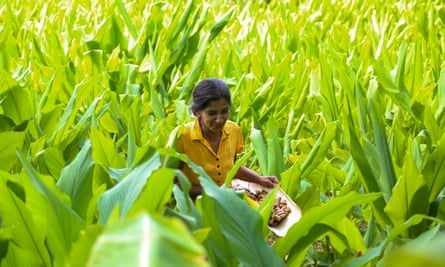
Dayarathne Bandara, who led the move to bring back turmeric production in Gonagala, a village 350km from the capital Colombo. Photograph: SAPPGlobal development is supported by

In Sri Lankan cuisine, a pinch of turmeric brings the gold colour to sodhi, the mildly spiced coconut soup eaten with the island’s carbohydrate-rich foods.

Turmeric is valued in every Sri Lankan kitchen for its subtle flavour, distinct yellow colour and powerful aroma. In ayurvedic medicine, this humble spice is hailed for its values as an anti-inflammatory.

But cultivation of the traditional root almost died out during the Sri Lankan civil war, and the country now relies heavily on imported turmeric, growing only 2,000 of the 7,000 tonnes it consumes annually.

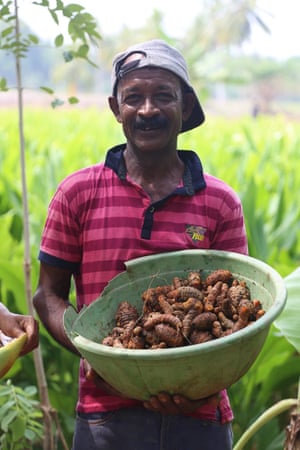
One of the Gonagala farmers
One of the Gonagala farmers. The price of raw roots has risen fourfold since the import ban. Photograph: SAPP

Last December, the Sri Lankan government banned the importation of turmeric and several other spices, with a view to pushing local production and helping small-scale farmers. For turmeric growers in the eastern Ampara district, the import ban proved a blessing during the Covid-19 pandemic. Dayarathne Bandara, 54, is president of the Agriculture Productivity Co-op Society in Gonagala, a village about 350km from the capital Colombo.

We thought we wouldn’t be able to sell our harvest when the coronavirus came,” says Bandara, but we received a better price this time. It became very lucrative for us.”

In the markets, a kilogram of raw turmeric root used to sell for 80 rupees (30p), but with the import ban in place, demand rose. After their spring harvest, Bandara and others were getting 300 rupees (£1.20) a kilogram, and dried turmeric was fetching 4,000 rupees (£16) a kilogram.

It had been decades since Gonagala farmers had grown and sold turmeric roots and powder. One night in 1999 about 50 people from this village were slaughtered. After that, we continued to face the hardships of the war. No one cared about turmeric any more. We were just trying to survive,” Bandara says. Turmeric cultivation was abandoned in Gonagala.

But in 2018, nearly a decade after the end of the war, Bandara and other villagers wrote to the agriculture ministry’s Smallholder Agribusiness Partnerships Programme (Sapp), seeking support to replant the crop. Somathilaka Wijesinghe, the deputy programme manager at Sapp, began working closely with the farmers. We were very impressed to hear from them. Once the project was approved, we set up a turmeric development plan for 100 farmers in Gonagala,” Wijesinghe says.Advertisement

Most farmers didn’t have the necessary capital and weren’t able to get a bank loan. Many were trapped in a cycle of debt after taking high-interest loans from local businessmen. Sapp collaborated with the Rural Development Bank in Sri Lanka to provide loans, training and machines to boil and dry turmeric.

Most of us invested the money we received from turmeric for our children’s education

So farmers started growing turmeric again, using only organic fertilisers such as cow manure. From 150kg of turmeric seeds planted in a quarter acre of land, 2,000kg of the new gold” was harvested.

Wijesinghe says the variety grown in Gonagala contains a higher proportion of curcumin, the active ingredient of turmeric which is believed to have anti-inflammatory and antioxidant benefits. It’s used by some to treat arthritis and other conditions. It also gives a strong colour to Gonagala turmeric, so only a very little turmeric powder is needed for cooking,” he says.

The initial shortages after the ban created a black market for turmeric as prices rocketed. The Sri Lanka navy busted several attempts to smuggle turmeric from south India.

Even fake powder made an appearance – wheat flour mixed with yellow dye – says the programme director at Sapp, Dr Yasanatha Mapatuna.

This is why there is a strong need for pure, homegrown turmeric,” she says.

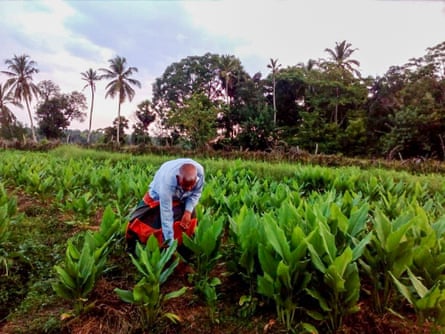
Turmeric production in Ampara district
Turmeric production in Ampara district in eastern Sri Lanka. Photograph: Sapp

Now farmers around the country are growing turmeric because they are getting a good price. People have started growing turmeric in their home gardens for daily use.”

The next harvest in late February should meet half of domestic demand, and by 2022, Mapatuna believes there will be enough of the crop to start exporting.Wild hing makes India’s heart sing as favourite spice is home-grown at lastRead more

Seeing the success of the 100 Gonagala farmers, another 150 farmers from neighbouring areas have joined the project and Sapp is now working across five districts in Sri Lanka and plans to install grinding machines at the village co-operative centre in Gonagala. We aim to establish a turmeric federation in the country so that when we end our intervention, farmers can continue on their own,” Mapatuna says. So they feel empowered.”

In Gonagala, Bandara and others are now distributing seeds to other villages.

Most of us invested the money we received from turmeric for our children’s education. Some farmers paid off their debt. Others bought a bike or tuk-tuk [auto rickshaw] for them,” says Bandara We were burdened by the war once, but now we are planning to make turmeric powder in the next harvest season and sell them in the market as Gonagala turmeric.”

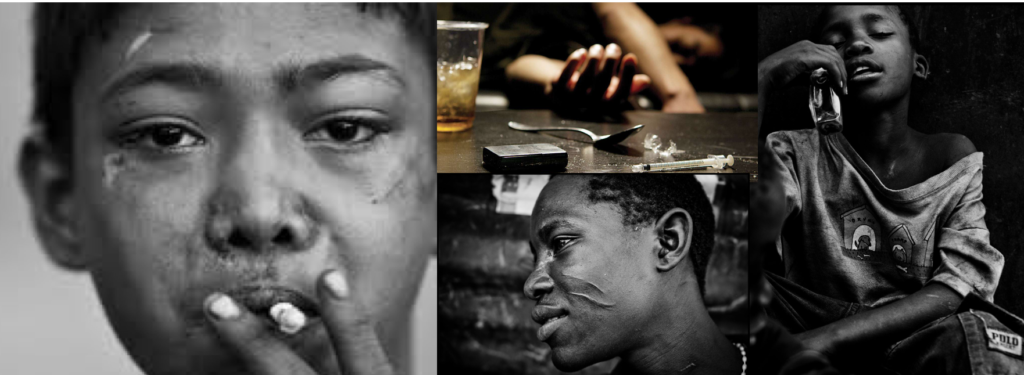
‘Organic meth’ going the heroin way?

December 7th, 2020

Devesh K. Pandey Courtesy The Hindu

Cross-border smuggling of drugs being prepared using ephedrine extracted from Ephedra plants in Afghanistan is on the rise, suspect enforcement agencies.

Recent seizures of methamphetamine by the Indian Coast Guard and the Excise Department in Sri Lanka, along with consignments of heroin, have strengthened the suspicion of the enforcement agencies that cross-border smuggling of the drugs being prepared using ephedrine extracted from Ephedra plants in Afghanistan is on the rise.

A couple of days ago, four persons were arrested in Sri Lanka’s Marawila town, after 100 kg of heroine and 100 kg of crystal methamphetamine were seized from them. We have learnt that the contraband comprising ‘organic meth’ was transported on board a fishing boat from Pakistan and then transferred to another boat mid-sea,” said a Customs official.

The Indian Coast Guard had seized about 20 kg of meth, along with 100 kg of heroin, from a Sri Lankan boat in the high seas off the Thoothukudi coast in Tamil Nadu about two weeks ago. In this case also, the consignment had been transferred from a Pakistani dhow to the boat.

Labs in Pakistan

The meth being seized of late is suspected to have been prepared using the precursor, ephedrine, extracted from Ephedra. The production capability in Afghanistan is currently not much and the meth’s quality is also low. There are indications that sophisticated labs are being set up in parts of Pakistan for mass production of high purity meth,” the official said, adding that most consignments were originating from the Makran coast in Pakistan, which extends from Karachi to Gwadar.

This ‘organic meth’ is in high demand in countries like Australia. A matter of grave concern is that an already well-established route for heroin trafficking across the world is being used to push it”, the official noted.

The European Monitoring Centre for Drugs and Drug Addiction, through a statement on November 24 about a study, also highlighted the increasing reports of meth linked to Afghanistan being seized in Sri Lanka, Indonesia, Australia and countries in Africa.

The EU4Monitoring Drugs Special Report is titled Emerging evidence of Afghanistan’s role as a producer and supplier of ephedrine and methamphetamine”.

Expressing concern that the meth industry was taking hold in Afghanistan, which is already the world’s leading opium producer, the report said it had the potential to become a significant producer of meth, with large quantities of low-cost ephedrine (extracted from Ephedra plants) and meth being produced there.

In Bakwa

The research’s scope is limited to Bakwa (Afghanistan), where the existing ephedrine extraction sites are estimated to have the capacity to produce around 98 tonnes of ephedrine a month, which could generate around 65 tonne of crystal meth a month.

Around 500 methamphetamine laboratories would be needed to process this amount of the drug. It is unlikely that there are this many methamphetamine laboratories in Bakwa itself, and reports of ephedrine being shipped to other provinces, or being seized on the Afghan-Iranian border, suggest that production may be taking place in other parts of Afghanistan or in neighbouring countries. Among the destinations of Afghan methamphetamine cited in the report are neighbouring Iran and Pakistan,” it said.

The shift from use of chemical to plant-based ephedrine for cooking meth is suspected to have been triggered by the 2018 drought in Afghanistan, in which large tracts of opium (used in heroin production) crops were destroyed.

FRENCH CABLESHIP ORDER GOES TO SRI LANKA

December 7th, 2020

Courtesy motorship.com

Sri Lanka’s Colombo Dockyard has secured a further export deal in the niche sector of cableship construction, writes David Tinsley.

Following its completion last year of a similar type of vessel to Japanese account, the yard has been entrusted with a 100m cable laying and repair ship for Orange Marine of France, to be delivered in early 2023. She will become the first in the fleet conceived both for fibre optic telecommunication cables and inter-array electrical power cables on offshore wind farms.

The newbuild’s design has been developed by the Norwegian company Vard, whose Brattvaag yard in 2014 produced Orange Marine’s previous fleet addition, the 100m Pierre de Fermat, using Vard 9-01 blueprints. The same design also provided the basis for the 111m KDDI Cable Infinity, handed over in 2019 by Colombo Dockyard to Japanese telecommunications group KDDI, but incorporating increased carrying capacity plus power cable installation features.

The new ship for Marseilles-domiciled Orange Marine will replace the 108m Raymond Croze, which was commissioned into service in 1983 from Ateliers & Chantiers de la Rochelle-Pallice. The newbuild will have three cable tanks, one of which will be fitted with a carousel to enable power cable storage and outturn. Unlike the older style of ship with bow sheaves, the design provides for all work to be effected over the stern.

A diesel-electric power and propulsion system, the favoured mode in the cableship domain, has been nominated for the Orange newbuild. The power plant will comprise four gensets supplying electrical energy to a pair of main azimuthing thrusters aft and two tunnel thrusters in the bow, operated and monitored by an integrated automation and power management system. To meet the exacting manoeuvring, directional stability and dependability requirements of such a vessel, Azipod electric propulsors have been selected.

Orange Marine also stated that the ship’s energy management system will embrace electrical storage back-up using batteries so as to reduce fuel consumption during cable work and ensure continuity in the event of the unexpected shutdown of a generator. The vessel will also be equipped to draw electrical energy from the shoreside grid for the ship’s net when berthed in port, so as to reduce carbon emissions.

Given the fundamental importance of maintaining global internet connectivity, for which submarine cables form the backbone of the international system, the new ship will be equipped to deploy within 24 hours at any time when required. Despite careful choices of optimised routes and adoption of specific means of protection during the installation of cable, outages are still regularly experienced worldwide due to faults or damage, necessitating the intervention of cableships.

This vital mission of the Orange Marine newbuilding will be complemented by the capability to undertake power cable projects, addressing the growth in offshore renewables, and ensuring operational versatility and enhanced asset utilisation over the ship’s lifetime.

The French deal constitutes the second successful foray into the European market this year by Colombo Dockyard, after it attracted a contract from Norwegian owner Misje Eco Bulk for a series of 90m shortsea cargo vessels specified with an integrated Wartsila hybrid propulsion arrangement.

Moreover, the direction of the latest cable vessel order sends another stark warning to established shipbuilders in certain spheres of added-value, sophisticated tonnage construction that buyers today, abetted by the ease of technology transfer, consider the field to be wide open.

Win an eight night luxury stay in Sri Lanka, flights included

December 7th, 2020

Simon GarnerMonday

Sun, sand, sensational scenery – sounds like the perfect antidote to 2020, right? Which is why we’re offering one lucky reader the chance to win a holiday to Sri Lanka for two, where they’ll stay in three boutique hotels with full-board. The first port of call is a homestay at the cosy Villa Hundira in Thalahena, Negombo, where you’ll be treated to fine local cuisine and tropical views. Then it’s on to the W15 Hanthana Estate near Kandy, where you’ll find peace in the Sri Lankan foothills and even have your own butler.

Villa Hundira, Thalahena, Sri Lanka

Read more:

Twitter: https://twitter.com/MetroUK | Facebook: https://www.facebook.com/MetroUK/

Mastermind of prison violence identified – Police Spokesman

December 7th, 2020

Courtesy The Island

* Opposition calls for independent probe

* 61 among rioters COVID-19 positive

* Tense situation in Negombo Prison

By Saman Indrajith, Norman Palihawadana and Nishan S. Priyantha

Police Spokesman DIG Ajith Rohana told The Island yesterday that the Police had identified a senior member of the Mahara Prison Hospital staff as the mastermind of Sunday’s prison riot.

Prisoners clashed with their guards, police anti-riot squads and the STF, on Sunday, for several hours and the clashes left eight inmates dead and more than 70 others injured. The injured were removed to the Ragama Teaching Hospital. Among them were two prison officers.

DIG Rohana said the Police believed the prison clashes were preplanned, and the prison record room had been set on fire. A new building under construction as part of the prison expansion project had also been destroyed by the rioters, DIG Rohana said.

The Mahara Prison had more than 2,700 inmates at the time of the clashes. Out of them, 183 had tested positive for COVID-19, he said. They had been removed to a special section of the Colombo Remand Prison, the Police Spokesman added.

Although the Police told the media that the situation had been brought under control in the prison, injured inmates being removed to hospital , shouted, through the windows of speeding ambulances, that inmates were still being beaten.

Our photographers stationed near the prison said they had sighted the same ambulance making several trips, within a matter of hours, between the Mahara Prison and the Ragama Teaching Hospital.

The COVID-19 patients among the prisoners were taken to treatment centres, while the family members and friends of inmates were waiting outside the prison, making inquiries from the police.

Four prisoners of the Negombo Prison, yesterday, staged a rooftop protest, demanding that cases against them be expedited and they be granted bail. The Negombo Police arrested the four men and another person who had assisted them.

Meanwhile, Prison Reforms and Prisoners’ Rehabilitation State Minister Dr Sudarshini Fernandopulle told Parliament yesterday that there had been an invisible hand behind Sunday’s prison riots.

Minister Dr. Fernandopulle said the incident had occurred when prison officers, attempted to foil an escape attempt following a clash between the remandees and the convicts in the Mahara Prison. She said some inmates had set prison properties on fire.

The Prison officers had been able to prevent the escape attempt by opening fire, but to quell the riots they had called in the police anti-riot squads and the STF.

It was so unfortunate that eight inmates were killed and around 50 others injured; the injured prisoners are receiving treatment at the Colombo North Teaching hospital,” Minister Dr Fernandopulle said.

She said that there had been a wave of protests and incidents of unrest in prisons all over the country during recent months. First the agitations started at the Boossa Prison. There were similar incidents at the Welikada, Kalutara, Weerawila, and the Negombo prisons. A group of prisoners tried to escape from the Bogambara Prison recently but the jailers were able to prevent them by opening fire.” One escapee had been killed and several others injured, she said.

The Minister said that the government was convinced that there had been an invisible hand behind the Mahara Prison incident. She said so in response to a statement made by Opposition Leader Sajith Premadasa, who said that the Opposition was not happy with the incidents being investigated by a committee, headed by the Secretary to the Ministry of Prison Reforms and Prisoners’ Rehabilitation. We do not think that the truth could be got at through such an investigation. We need an impartial investigation,” the Opposition Leader said.

Minister Fernandopulle: We, too, need to know the truth and how exactly this happened. We have decided to call in the CID to conduct investigations. There will be some other probes as well.

Opposition Leader: There was a COVID-19 cluster consisting of 183 infections in the Mahara Prison. How could such a cluster come up so suddenly there? What actions have you taken to prevent the spread of the virus in prisons?

The State Minister said that there were 1,099 COVID-19 infected inmates in prisons all over the country as of yesterday. We have temporarily banned visitors. Court proceedings take place via Skype. Following recent anti-narcotic raids the number of inmates has increased. In prisons which can accommodate only 11,000 there are now 32,000 at present,” she said, adding that suspected COVID-19 cases were placed under quarantine for 14 days at the Bogambara Prison, in Kandy and Pallansena, Galella, and Kandakadu quarantine centres.

Measures had been taken to release on bail remand prisoners, a majority of whom were drug addicts arrested with less than two grams of narcotics each, and nearly 600 prisoners convicted of minor offences had been granted a presidential pardon, Dr. Fernandopulle said.

Chief Opposition Whip Kandy District MP Lakshman Kiriella said that he had asked the government a month back not to hold COVID-19 infected inmates in the Bogambara Prison, but it had not listened to him.

Speaker Mahinda Yapa Abeywardena: You have raised that matter several times in the House. This cannot be allowed.

Kandy District SJB MP Velu Kumar: The Kandy town is in danger because the government has transferred inmates infected with COVID-19 to the Bogambara Prison.

Mahara prison riot: How pills meant for mental patients triggered violence

December 7th, 2020

By Shamindra Ferdinando Courtesy The Island

* Over 2,400 inmates on their own within complex

* Death toll reachers 11, could rise further

* Clashes among prisoners injure 80

* Doctor under investigation

* Rioters popped more than 21,000 pills

A high-level investigation into the Mahara Prison riot took an unexpected turn yesterday (1) following the revelation that the prison dispensary had stored over 21,000 tablets prescribed for mental disorders and sleeping pills.

Police spokesperson DIG Ajith Rohana told a joint media briefing called by the Police Headquarters and the Prisons Department, in Colombo, that they were quite surprised that such a large stock of tablets was maintained. He said it had to be found out who had ordered the stock, how inmates got addicted to such substances, and whether a doctor attached to the Mahara Prison hospital had instigated prisoners to demand PCR tests.

DIG Rohana said that on the directions of the IGP C.D. Wickremaratne as per the instructions received from Defence Secretary Maj. Gen. Kamal Gunaratne, a 12 -member team from the Criminal Investigation Department (CID) was inquiring into the riot.

DIG Rohana said those who had been addicted to heroin and cocaine were believed to have used tablets prescribed to mental patients.

Prisons Commissioner Chandana Ekanayake (Administration) said that those who popped the tablets had turned on each other. Quoting officers who had been at the scene last Sunday (29) Ekanayake said they had never witnessed such scenes of violent behaviour among prisoners before.

Responding to a media query, Ekanayake emphasised that the Mahara Prison riot had erupted suddenly whereas they received intelligence warning of possible trouble at some other prisons.

National Freedom Front (NFF) leader Wimal Weerawansa told Parliament, on Monday, that the prison riot was part of a sinister plan to bring President Gotabaya Rajapaksa’s government into disrepute.

The media was told that at the time of the riot there had been 2,782 inmates at the Mahara Prisons complex. 585 were convicts and others suspects, DIG Rohana said, alleging that they had initiated Sunday’s violence. What initially started as common demand for all of them to be subjected to RT-PCR tests quickly had led to a riot, the DIG said.

DIG Rohana, who is also the head of the Police Legal Division, said that a section of those rioters had made repeated attempts to escape. Having failed, they had set fire to buildings within the complex. Among those destroyed were the Registry and the offices of top officials in charge of the prison.

The media was told one more inmate admitted to the Ragama Teaching Hospital had succumbed to his injuries yesterday. With that the total number of dead increased to nine, while 105 continued to receive treatment.
Besides, two Prison officers taken hostage and badly assaulted by the rioters were receiving treatment at the same hospital. Several hours after the conclusion of the media briefing Police headquarters said that two more persons had succumbed to their injuries.

At the beginning of the briefing Ekanayake said that of over 2,700 prisoners, approximately 1,600 had gone on the rampage. Trouble erupted while they were being served food in line with health guidelines. They broke out from where they were held and swiftly gathered close to the main gate. They demanded immediate PCR tests on them.”

Ekanayake said 187 inmates had tested positive by then.

The rioters had attacked the main gate, Ekanayake said. Officers opened fire having failed to bring the situation under control by shooting rubber bullets.” He said the situation had taken a turn for the worse after inmates took tablets meant for mental patients.

DIG Rohana said that of the 106 who had received injuries, 80 suffered as a result of violence among the prison community. Of the injured, only 26 were believed to have received gunshot injuries, DIG Rohana said.

Commissioner Ekanayake alleged that both the dead and the wounded were those in custody on narcotic charges.

Seventy eight coronavirus positive inmates had since been moved to a quarantine facility at Adalachchenai in the Akkaraipattu police area, DIG Rohana said.

DIG Rohana said those who had been granted bail couldn’t be immediately released as the Director General of Health Services (DGHS) had issued specific instructions on subjecting inmates to two weeks quarantine before release.

DIG Rohana said that following the removal of the injured and the dead to the Ragama hospital, those granted bail and infected inmates had been moved to a special section within the Welikada Prison complex and about 2,400 remained in the Mahara Prison.

Rohana said that among them were a large number of inmates who hadn’t been involved in violence. Acknowledging that the prisons complex wasn’t yet under the control of the jailers, the DIG said that the Police, including the Special Task Force (STF) and the Prison security were making plans to carry out an operation to restore normalcy. He said they would implement a special plan while the police backed by the STF maintained its presence outside the prison.

The police deployment consisted of 400 police and 200 STF personnel.

Both Police and Prisons officers couldn’t confirm whether at least some inmates had managed to escape though they believed such attempts were thwarted.

DIG Rohana said that the rioting inmates had been prevented from seizing the armoury.

The Parliamentary Consultative Committee on Defence, too, discussed the availability of three varieties of pills totalling 21,000 meant for mental patients at the Prison. Defence Secretary Maj. Gen. Gunaratne briefed the CC on the matter and steps taken by authorities to bring the situation under control.

DIG. Rohana told the media that he had requested Justice Minister Ali Sabry, PC, to leave him out of a special committee headed by retired HC judge Kusala Sarojini Weerawardena tasked with inquiring into the riot due to conflict of interests as his duties and responsibilities as the Police Spokesperson clashed with the probe undertaken by the committee.

Cabraal gives a lesson in finance to Opposition Leader

December 7th, 2020

By Saman Indrajith Courtesy The Island

Opposition leader Sajith Premadasa’s questions on the management of the government reminded him of a person that drives recklessly knocks down a person and then queries from the latter what happened, State Minister of Money & Capital Market and State Enterprise Reforms Ajith Nivard Cabraal yesterday told Parliament.

The Yahapalana government, where the opposition leader was a powerful minister, brought the economy to its knees and is now asking us to rectify the issues they created,” the Minister said.

Minister Cabraal said that the former government obtained USD 6.9 billion in loans and sovereign bonds at an interest of 7.8 percent. With USD 6.9 billion, six harbours the size of Hambantota harbour could have been built. The funny thing is that many local and foreign institutions kept mum about your reckless loan taking. During the time of our government prior to 2015, we borrowed only USD 5.5 billion for the entire nine year period. The debt was at 91 percent of the GDP when we took the office and we brought it down to 70 per cent of the GDP. During the period of the yahapalana government from 2015 to 2019 it has been increased to 86 percent. So some of the questions are asked from us now, you should have raised them in the cabinet during the time of the yahapalana government. One such question is as to how to bring down those debts.”

Cabraal added that during the previous government very few investment opportunities came in. There was a difference of opinion between the rating institutes such as Fitch and Moodys and the government.

In my view and in the view of the government, it is surprising to note that the Fitch ratings assessment had ignored several key proposals included in the government budget proposals 2021 with regard to deficit financing in the period ahead. We have set out various ways explaining how the debt deficit would be financed. Obviously they have ignored it and so has the opposition leader. As indicated in the Budget 2021 the government has adopted a novel approach in relation to foreign financing while enhancing the effectiveness of already secured financing channels aimed at reducing the share of foreign financing in the budget deficit over the medium term. In 2014, the total debt, if you break it down into foreign debt and local debt, it was 40 percent foreign debt and the local debt was 60 percent, but by 2019 as a result of the various measures taken by the yahapalana government that ratio had changed to 50 percent foreign and 50 percent local. So we inherited huge risk with regard to foreign debt. That was their making but we will deal with it,” the Minister said.

AG’s Dept. asked to explain why no action taken on Zahran file

December 7th, 2020

By Rathindra Kuruwita Courtesy The Island

It was only three weeks after the Easter Sunday attacks that the Attorney General’s Department had paid attention to the file on NTJ leader Zahran Hashim, sent by Terrorism Investigation Division (TID) in early June 2017, seeking its advice, Deputy Solicitor General, Azard Navavi, on Saturday (05) told the PCoI probing the Easter Sunday attacks.

The witness, however, insisted that their delay could not be considered as having led to the attacks. 

The PCoI had summoned a group of officers who handled Zahran’s file at the AG’s Department. Besides Navavi, State Counsel Malik Azeez also testified.

Chairman of the PCoI asked Navavi what the AG’s Department had done about the file on Zahran, sent by the TID for legal advice.

Navavi said that he had received the file on 07 June 2017 and he instructed Azeez, who was under him, to handle it.

Chairman of the PCoI: Why did you assign Azeez? Was there a particular reason?

Navavi: The file had two video clips of Zahran and his brother M.C. Zainee. These were in Tamil, that’s why I gave it to Azeez.”

However, the TID had sent Sinhala translations of what was said in the clips.

Chairman of the PCoI: When did you pay attention to the file again?”

Navavi: There was a meeting at the Presidential Secretariat, three weeks after the Easter Sunday attacks. The then head of the TID said they had sent a file on Zahran to us, for legal advice. Until then I had had no recollection of this file. Then I asked Azeez, who briefed me on it.’

Chairman of the PCoI again asked Navavi why he had entrusted the case to a Muslim officer.

Navai said that since the case was about Islamism, he believed it was better if a Muslim handled it.

Cross examining the witness, Shamil Perera, PC, asked if Easter Sunday attacks could have been prevented if he had taken action on the file before 21 April 2019.

Navavi insisted that he could not accept that claim.

Navavi said: This idea became popular because it came up before the Parliament Select Committee (PSC) on Easter Sunday attacks. People started believing that if action had been taken on the file, the attacks could have been prevented. However, the investigators had not told us enough although they had ample evidence about the threat posed by Zahran to national security. So, I don’t think it’s fair to link a delay about this file to the attack. If they didn’t arrest someone for two years after obtaining a warrant, that’s not our fault.”

State Counsel Malik Azeez, who testified earlier,  said that on March 12, 2019 there had been a meeting  with several TID officers on the file and only at that point had the officers mentioned that the TID obtained arrest warrants twice to arrest Zahran.

The arrest warrants were not attached to the file or the AG’s Department had not been informed of it until March 2019,” he said.

Azeez informed the Commission that the TID had added documents to the file twice, in 2017 and 2018. None of them included the two arrest warrants or statements recorded from Zahran’s mother and his wife.

Without such important documents, the AG’s Department officials could not detect a threat to National Security, Azeez said.

The TID sent only some screen shots of the NTJ website and some speeches of Zahran’s brother. Along with the file the TID had attached a letter requesting legal advice on banning the NTJ website, Zahran’s Facebook account and arresting him. No proper inquiry had been conducted and there were no supporting documents. Until the consultation meeting on March 12, 2019 we had not been aware that the TID had obtained arrest warrants twice against Zahran.”    

The next witness was Deputy Solicitor General Dileepa Peiris. He that a moulavi, from a group that was attacked by NTJ members at Alliyar Junction on 10 March 2017, had handed over to the AG’s Department a letter highlighting the issues they were faced with.

Peiris said he had called the OIC of Kattankudy Police on 09 November 2017 for a discussion on the issue.

I asked him what they were doing. By that time Zahran and his supporters had fled Kattankudy. I felt that the OIC was under political pressure and was hesitant to tackle action.

Chairman of the PCoI showed Peiris the files the TID had sent to the AG’s Department on Zahran.

Chairman: Can you tell me if you feel that this man posed any threat to national security?”

It seems so. This is on extremism,” Peiris said.

Sri Lanka to convey displeasure through diplomatic channel

December 7th, 2020

KELUM BANDARA Courtesy The Daily Mirror

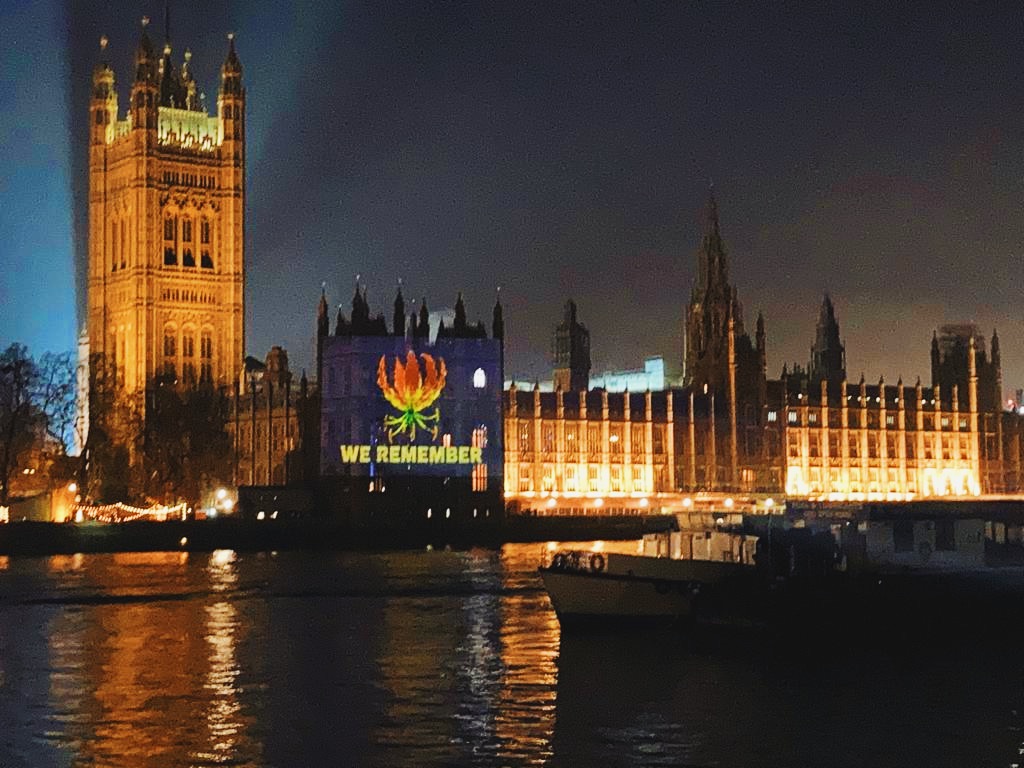
The government will convey its displeasure, through the diplomatic channel, to the authorities of the United Kingdom regarding the projection of Karthigaipoo or Niyagala flower which is considered by the LTTE as the national symbol of Tamil Eelam on the British parliamentary building in Westminster, Central London on November 26, Daily Mirror learns.

The symbol was flashed on the building as part of the pro-LTTE activists ’commemoration of Maveer Day or Heroe s’ day.

Foreign Relations Minister Dinesh Gunawardane is expected to meet British High Commissioner Sarah Hulton at the Ministry tomorrow and take it up.

Earlier ,the High Commission, in response to a query by Daily Mirror on the projection of the symbol, said in a one-line answer that the management of demonstrations, including any involving proscribed organisations is a policing matter.

The UK is in the five-member Core Group that advocated the UNHRC resolution on Sri Lanka. Canada, germany ,north Macedonia and Montenegro are the other countries in this group.the resolution calls for ,among others, Sri Lanka to probe alleged rights violations during the wartime and bring about reconciliation.

Sri Lanka, under the present government, withdrew from co-sponsorship of the resolution adopted on Sri Lanka.

UK International Ambassador for Human Rights Rita French, in an address to the UNHRC in September ,expressed concern about withdrawal from co-sponsorship.

We are deeply disappointed and concerned that the government has changed its approach to the resolution.we remain profoundly committed to resolution 30/1 and its principles of reconciliation, accountability ,intercommunal harmony, and justice for victims of conflict, ”she said. ()

More than 18 tonnes of drugs seized within 12-months

December 7th, 2020

Darshana Sanjeewa Balasuriya Courtesy The Daily Mirror

More than 18 tonnes of drugs including heroin have been seized and nearly 72,000 suspects were arrested along with the drugs since November 2019 to date, police revealed.

Police Spokesman DIG Ajith Rohana said at a press briefing that those suspects were arrested with 2,000 kg of heroin, 15,000 kg of cannabis and nearly 1,000 kg of other synthetic drugs such as Ice.

He said police are conducting  special anti-narcotic operations, along with other stakeholders, such as Sri Lanka Police, STF, the Excise Department, Sri Lanka Navy, Immigrations, Customs and Coast Guard in order to eradicate the drug menace from the country.

He said the Police Narcotics Bureau (PNB) is providing technical and infrastructure facilities in this regard.

Accordingly, at least 2,000 kg of heroin had been seized within a period of a year while more than 36,000 suspects have been arrested with heroin. The PNB seized 444kg of heroin, 274kg of heroin were recovered during raids conducted in police stations across the country, 157 kg by the STF, 280 kg of heroin by the Navy, 507 kg during joint raids by Navy and the PNB and over 100 kg by the excise officials,” he said.

In addition, at least 15,000 kg of cannabis have been seized and more than 33,000 suspects were taken into custody.

Also 1,640 suspects have been taken into the custody with 878 kg of synthetic drugs, DIG Rohana said.

Meanwhile, commenting on the detection of 200 kg of heroin and Ice drugs by the Excise Department and the Navy on Sunday, the spokesman said the main trafficker has been operating from Dubai, UAE.

He said the authorities will seek support from the Sri Lankan missions in UAE and the Interpol to locate and bring the main trafficker into the country.

He said the main suspect had been in the remand custody of Sri Lanka in an earlier occasion.

We will conduct further investigation into the detection along with the excise department to get down the main trafficker who is living in Dubai at the moment,’ the spokesman said.

Brandix workers got Covid from Ukrainian: Minister Fernandopulle

December 7th, 2020

Yohan Perera and Ajith Siriwardana Courtesy The Daily Mirror

It has been confirmed that the workers of the Brandix apparel factory had contacted COVID-19 from a Ukrainian national, State Minister of Primary Health Care, Epidemiology and Coronavirus Disease Control Sudarshani Fernandopulle told Parliament today.

“Workers at Brandix had got infected through this Ukrainian national. It has also been found that some workers at the hotel in which the Ukrainian stayed at, had also got infected with COVID 19.

The workers at Brandix had contact with the hotel employees. Therefore they have got infected from these hotel employees,” the Minister said.

She said COVID 19 strain which is currently spreading in Sri Lanka was the same.

Responding to a question raised by Jathika Jana Balawegaya MP Anura Kumara Dissanayake in the House yesterday, the State Minister said the research carried out by the University of Sri Jayewardenepura had confirmed that the strain which was being spread was same as the one which is currently spreading in Europe.

It has also been confirmed that the virus load within the bodies of those who have been infected in the second wave is high. The virus load of those who found positive at Brandix and Peheliyagoda clusters is also found to be high,” she said.

We are currently carrying out random PCR tests on all Sri Lankans in vulnerable areas. We have also increased PCR testing capacity in all hospitals including small hospitals.

Special focus is made on carrying out random PCR tests on those in coastal areas to control the spread of the disease from illegal immigrants,” the State Minister also said.

The State Minister said all those who arrive in Sri Lanka were subjected to PCR tests currently.

Sri Lanka aims to release at least 8,000 inmates from prisons

December 7th, 2020

Courtesy Adaderana

State Minister of Prison Management and Prisoners’ Rehabilitation Lohan Ratwatte emphasizing on the present congestion in prisons given the rising numbers of inmates, stated that the government is looking to reduce the number at least by 8,000. 

He stated this addressing the inaugural meeting of the Ministerial Consultative Committee on Justice chaired by the Minister of Justice Ali Sabry in Parliament.

The State Minister pointed out that there are 28,951 inmates in the 28 prisons across the country at present causing a considerable congestion. 

Accordingly, the Minister stated that President Gotabaya Rajapaksa has issued a directive to release inmates who can be granted a pardon especially given the COVID-19 situation. 

Accordingly, he stated that as soon as approval is given to the cabinet paper presented by the Ministry of Justice, the four-year pardon which has not been granted for nearly 20 years could be given.  

Thus, all prisoners under death sentence will have their sentence reduced to 20 years and those who have served a sentence for more than 20 years will be released. 

The State Minister also said that the ministry intends to settle minor amounts of bail on behalf of prisoners who are in prison due to their inability to pay it. 

Suspects arrested with 200kg of heroin and ice remanded

December 7th, 2020

Courtesy Adaderana

The four suspects arrested by excise officers in Thoduwawa yesterday along with 200 kilograms of heroin and ‘ice’ have been remanded until December 16.

They were ordered remanded after being produced before the Marawila Court today (07), the Department of Excise said.

The suspects along with 100kg of heroin and 100kg of crystal methamphetamine (ice), were apprehended during a special operation carried out in Thoduwawa area, Marawila yesterday (06).

The coordinated operation carried out by the Excise Department, Sri Lanka Navy and other intelligence agencies in Thoduwawa area led to the seizure of the heroin and crystal methamphetamine (ice) in boxes and packages, made ready for distribution. 

Along with this consignment of drugs 04 suspects in connection to this racket as well as 04 vehicles made available for the delivery of those substances were also taken into custody.

It is the biggest drug bust carried out by the Excise Department while the confiscated haul is estimated to be worth around Rs 2,100 million.

Two more coronavirus deaths reported in Sri Lanka

December 7th, 2020

Courtesy Adaderana

The Director General of Health Services has confirmed two more COVID-19 related deaths, increasing the death toll in the country to 142.

One of the victims is a 62-year-old male from Colombo who had been transferred from the Colombo National Hospital to the Homagama Base Hospital, where he had passed away today (07). The cause of death is cited as COVID-19 pneumonia.

The other is a 77-year-old male from Jampettah Street in Colombo 13. He had also been transferred from Colombo National Hospital to Homagama Base Hospital, where he passes away today. 

The cause of death is blood poisoning with Covid-19 virus infection and diabetes.

326 more test positive for Covid-19

December 7th, 2020

Courtesy Adaderana

A total of 326 new cases of novel coronavirus have been identified today, the National Operations Centre for Prevention of COVID-19 Outbreak (NOCPCO) confirmed.

It said that 172 new cases are from the Peliyagoda cluster while the remaining 154 are from the prisons cluster.

This brings the total number of cases from the Minuwangoda, Peliyagoda and prisons clusters to 24,648.

COPE reveals NLB’s procurement process influenced by Foreign Minister in 2017

December 7th, 2020

Courtesy Adaderana

It was revealed at the Committee on Public Enterprises (COPE) that the then Foreign Minister has influenced the procurement process of the National Lotteries Board which was under the purview of Foreign Ministry in 2017.

Accordingly, a tender which had completed the procurement process for the printing of scratch lotteries in 2017 has been suspended by a Cabinet decision at the request of the then Foreign Minister.

Even though the then Minister of Finance Mangala Samaraweera had given an observation stating that suspending the tender was not the right decision, the Cabinet had decided to withdraw the above tender.

Accordingly, the tender for the printing of scratch lottery tickets which was due to be awarded to Aqua Flex Lanka (Pvt) Ltd has been stopped. The COPE has also observed that this cabinet decision has been made under the influence of Print Care Secure (Pvt) Ltd. The Cabinet decision has caused a huge financial loss to the National Lotteries Board and, it is still not possible to call for a new tender for the printing of relevant lottery tickets until 2020.

This was revealed at the Committee on Public Enterprises (COPE) which met in Parliament on 04th December under the chairmanship of Parliamentarian Prof. Charitha Herath to look into matters relating to the Procurement on the Print and Delivery of Lottery Tickets of National Lotteries Board.

In addition, it was revealed that the annual reports of the National Lotteries Board for the years 2017, 2018, 2019 have not been submitted to Parliament. Accordingly, the COPE has instructed to look into the matter and submit the relevant reports to Parliament as soon as possible, the statement said.

SriLankan Airlines: first international flight since July lands in Melbourne

December 7th, 2020

Courtesy Adaderana

Victoria’s hotel quarantine program has restarted, with Melbourne Airport welcoming its first international flights in more than five months.

SriLankan Airlines flight UL604 from Colombo landed just before 8am on Monday, the first of eight international passenger flights carrying 253 travellers due to touch down today.

Victoria has not accepted international flights since early July, when it was revealed a number of hotel quarantine workers had contracted COVID-19 from guests.

The outbreaks went on to spark the state’s second wave, which resulted in more than 18,000 infections and 800 deaths.

The state has since recorded 38 consecutive days without a new COVID-19 case.

Victoria Police will take the lead in enforcing the new-look hotel quarantine program, with support from Australian Defence Force personnel.

Eleven airport and CBD hotels will participate, including the Stamford Hotel, one of two hotels where outbreaks occurred in June.

Hotel guests will have to pay about $3500 for their 14-day stay, while fresh-air and exercise breaks will be banned to prevent movement inside hotels.

Source: SBS News

How & Who are bringing illegal drugs/narcotics to Sri Lanka?

December 6th, 2020

Millions the world over are addicted to drugs. Their whole lives are ruined. Their families are in disarray. All this suffering is because selling drugs has become a lucrative avenue for a bunch of people who want to become filthy rich – taking the shortest route. They don’t care how they make money or whose lives they destroy. They are only bothered about the millions they make from the drug business. Their children are educated from the money that have destroyed the education of millions. They buy fancy cars and houses from the money gained from turning people into addicts. They go on holidays and stay in luxury hotels, with the money gained from destroying families. Do these thoughts not traumatize their minds? Are their families not aware of the illicit money that make their wealth?

Drug addiction is a menace to families and society. Addicted individuals are of no use to themselves, their families or society. They become a burden to society as the families and State have to spend on their rehabilitation and re-introduction into society. It takes years of time and money. Their entire productivity and years are lost. All this is unnecessary if the wicked few who bring drugs into a country, distribute them and draw them into becoming addicts are dealt with and rehabilitated instead. Their sick minds need medication. Their sick mentality to make money at the cost of destroying lives is what should be treated first.

These same individuals are also pumping money to create computer games, gambling systems, pornography and other ill-methods to draw people to become addicts so they can get richer quicker. All these are impacting on people’s nervous systems – opium, marijuana, cocaine, nicotine, heroin, even alcohol and nicotine are addictive modes. They affect and effect the psychological and physical behaviors of people. Without going after the main culprits the law enforcements always run after the paid entities who are simply paid to distribute and induce people to take drugs. Look at the number of bars that operate and the numbers addicted to alcohol.

The real culprits are the ones who bring the illegal drugs into the country and then create the nexus for its distribution.

  • Who brings drugs into the country (politicians/big businessmen who else)
  • Who facilitates these drugs to be brought into the country (legal channels/illegal channels) – most often state agencies and officials are involved – who are they?
  • Who are the distributing agents that are tasked to induce drugs to school children, young adults, etc – how do they operate?
  • Who are the users and how did they become addicted and how can they be rehabilitated to return to society?

To have over 270million people addicted to make a handful rich is a crime. The productivity of these millions are wasted. Their homes are in ruins. The hopes and aspirations they had for these children by their parents have gone down the drain. They end up having to spend whatever earnings they have trying to meet the medical costs for rehabilitation. In the meanwhile, the wicked souls that bring the drugs, put them out into the market, distribute them through crafty means to children and youth – take their families to plush hotels, buy them the most modern and up to date gadgets, travel in luxury cars and spend the blood money on themselves and with that create more nefarious ventures to create more innocent victims to enlarge their wealth. This money is even used to campaign to bring themselves to power or to bring others who will help them continue their illegal wealth making system.

Admiral Sarath Weerasekera has been appointed the Law & Order Minister. No sooner he was appointed the excise department on a tip off seized 100kg of heroin and 100kg of ICE with a street value of over Rs.300m. Who are these masterminds operating from Dubai – who are their agents in Sri Lanka. No sooner their identities are established; they must be barred from entering Sri Lanka. All those connected with them must be investigated. We cannot expect to make any meaningful campaign against drugs if the main culprits are untouched and political pressure prevents action from being taken against them.

How ridiculous it is if the very agents of drugs sit on panels to end drug addiction, or those who are involved in bringing drugs into the country or enjoy funding from those who bring drugs into the country are put on committees to end drug addiction in Sri Lanka.

Therefore, if we are to be sincere and genuine about ending drugs – we must have the courage to first deal with the main culprits that bring drugs into the country first, then those who facilitate these drugs being brought into the country, thereafter those that are tasked to distribute the drugs while simultaneously running programs to show the end result of taking drugs, to educate the youth and adults to realize the dangers of experimenting with drugs and becoming addicted to them. At the same time, realizing how these drugs are introduced to youth – there must be social programs to address the psychological issues children and youth are suffering from to help them recover so that they are not drawn to drugs as a short term but dangerous solution.

In terms of rehabilitation – it should be the evil men and women who want to make money from ruining the lives of others who should be put into rehabilitation first!

Shenali D Waduge

UNREST IN MAHARA PRISON AND VALUE EDUCATION IN SRI LANKA

December 6th, 2020

BY EDWARD THEOPHILUS

After the LTTE war, the most internationally noted incident in Sri Lanka was the unrest in Mahara Prison, and pictures of the incident have been viewed globally through social media. The factors that contributed to unrest seem to be contradicted and ordinary people are confused by a range of information provided by the authority, government, analysts, opposition politicians, media, and many others. Some people attempted to use the case to animadversion the government and to disgrace the government using the points that may use for the internationalization of the issue.  Not only in Sri Lanka but also many countries have prison management related issues, and no country is immune to the problem that should be critically looked by policymakers.

As a ratio, the involvement of people in the case in Sri Lanka is less than 0.001%, and many people who observed the incident attempted to express concern saying they were not involved in, and the morally significant question is, can people wash hands or deviate from the issue purely considering the point that they have no individual or collective involvement?  The reporting system focused to point out to give a message that prisoners involved in the unrest were narcotic dealers or consumers, and when people are associated with narcotic, good people also could become violent and involve anti-social behavior that is applied all over the world and the law and order have failed to control it. Policymakers of the country need to think about the issue and look to broader perspectives or angles to change the behavior of people. Attitudes of people contribute to make the world to construct or destroy.

When deeply analyzes the incident, it invites policymakers to open eyes on deeply rooted issues in the country that are neglected by responsible authorities.  Before the presidential election in 2019, people demanded was to take firm action to eliminate narcotic and the underworld from Sri Lanka’s soil, and Mr. Gotabhaya Rajapaksa has taken firm actions to eliminate drugs and the underworld. Illicit drug dealing and the activities of the underworld are all over the world and many governments spend trillions of dollars to control the issue, however, despite large spending illicit drug production, distribution, and underworld activities are operating in the world.  Individually, no country can deal with the issue, and changing the attitude of people may be an effective way of control.

Economically, illicit drugs and the underworld activities in Sri Lanka have created a black economy that harm, the day-to-day life of poor people, increasing inflation, shortage of essential items, misuse of foreign exchange, and many others. According disclosed evidence, drug dealers disregard foreign exchange regulations of the country and use illegal methods to transfer money for the payments of narcotic and it seems a legally acceptable way of transferring money.  The actual economic value of illicit drug dealing and underworld activities has not been estimated, and the impact of such activities on peace-loving people is unknown. Few individuals have been benefited from these drugs, underworld activities, and organized crimes, and no doubt that the liberalized economic policies and the wars of terrorists (LTTE and Islamists) have contributed to promoting anti-social and corrupt behaviours in the country. Why people engage in this anti-social behaviour when they have a simple way to go forward? Some left politicians talked about the issue in the parliament and attempted to attract public attention to the incident, however, it showed that the public has no sympathy toward anti-social behavior because people have suffered enough from drug dealers, consumers, underworld activists, and the environment created by these group of people. In Sri Lanka, many people talk about religions and the unrest of the Mahara Prison shows that religions are not working in society and sometimes, it is easier to assume that religions are working like opium that is not working to change the attitude of people in society.

During the LTTE war, many social analysts assumed that the possibility of social unrest or expanding anti-social activities in the country after ending the war because the war had strings from outside and manipulators of the war associated with anti-social behavior.  Since the early 1990s, the behavior of young people has been focused to make money by whatever strategies using and liberal rules of movements in many countries motivated young people to make money engage in whatever business. The behavior of young people pressured parents, and political and economic policymakers have not been stressed by the potential social issues that would cost a massive volume of government funds to deal with the issue.  

The major bestowal for the issue was the education policy of the country that continuously pursued isolation of young generation in society and promoting self-centred attitudes, disregarding the promoting and be responsible for issues in society. Young men who are being attended in the education system must have a good understanding to apply values in the life. It is not like religious preaching but training to apply values entire life and understand the impact of actions to society. Education policy in Sri Lanka promoted individualism, and this selfish policy got the involvement of parents in education of kids than giving an opportunity to learn about the society by kids understanding causes and effect of day-to-day practice of society. Despite the learning role giving to kids, parents are involved in education and competitive process of learning, and in this way, kids are not learning or gaining the values from education.  The major role of education is supposed to be performed by schools to create a value laden society, however, the role is pushed to private tuition providers and parents, and the significant involvement of parents than kids to really take part in education. Education in Sri Lanka has not focused students to analytically or positively think about the society.

The system of competitive examination such G.C.E. (Ordinary Level) and G.C.E (Advanced Level) and Scholarship examinations forced parents to involve more than motivating students to engage in productive education and the government spent a large sum of funds for the competitive testing ignoring reforms required in education. The education system should focus to make creative and value respected society.  The current education system is running out of the requirements. Academics involved in education reforms were products of the weak system, and had no knowledge, skills, and experience to change the system to promote a productive society, and positive thinkers and to apply social values and heavy involvement of parents has turned education to promote make money rather than to make responsible members in society.  In such a background, creating people involve in narcotic business is not strange, and it is the negative impact of current education system.

Many articles in Sunday newspapers analysed the Mahara Prison incident or unrest of prisoners, but nobody focused that the declining of value education in society supported to create the problem, and declining or ignoring value education in schools has massively contributed to the problem.  The education system in Sri Lanka promotes hate and disregard values in the efforts of making money.  Why policymakers of education think about this massive issue while promoting knowledge and skills through education?     

ශ්‍රීමත් ජනධිපති, ගරු අගමැති සහ පාර්ලිමේන්තුවේ සියලුම මැති ඇමති වරුන් වෙත විවුර්ත සන්දේසයක්.?

December 6th, 2020

ආචාර්ය සුදත් ගුණසේකර මහනුවර

(මෙම ලිපිය කියවීමට පෙර ආක්රමනිකයින් සහ රටේ පාලක පන්තිය එකට එක්වී ඔවුන්ගේ ඕනෑ එපාකම් ඉටුකරගැනීම සදහා පමණක් සෑදූ ශ්රි ලන්කාවේ අරුම පුදුම ආණ්ඩුක්රම විවස්ථා 30 .11.2020. දින   ලන්කාවෙබ් අඩවියේ පලවූ මගේ  ලිපිය කියවන මෙන් මම ඔබගෙන් ඉල්ලමි).

1987 ජූලි 29 වන දින දරණ ජේ ආර්/රජිව් ඉන්දුලඅන්කා ගිවිසුම අහෝසිකොට  පලාත්සභා  හූනීයමද කපා පලාත්සභාද අහෝසිකොට  මේ රටේ සන්ස්කෘතික පදනම පාදකකොටගත් විවස්ථ්හාවක් හදන තුරු කිසිදාක මේ රට නිදහස්, ස්වඉරී, ස්වාධීන රටක් වෙන්නේ නැහ

මන්ද ප්‍රතමයෙන්ම මින් පළමු කරුනු දෙක බලාත්මකව පවතින තුරු මේ රට ඉන්දියාවේ යටත් විජිතයක් හෝ ප්‍රාන්තයක් වශයෙන්ම පවතින බැවිණි.දෙවනුව මේ රටට විවස්ථාවක් හැදිය යුත්තේ මේ රටේ 2500 ක සන්ස්කෘතික පසුබිම පාදක කොට ගෙන මේ රටේ භූමිපුත්‍රයින්ගේ අයිතිවාශිකම්, අපේක්ෂාවන් සහ අභිලාසයන් ඉටුවන පරිදි බැවිනි. එසේ නැතිව දැනට පවතින විවස්ථා මෙන් බ්රිතාන්ය, ඇමෙරිකා.ප්රන්ශ හා ඉන්දියානු ක්රමවල සිව්මුහුන් ආකෘතියේ විවස්ථාවක් කිසිදිනෙක මේ රටට් නොගැලපේ. එසේම එවැන්නක් මේ රටේ සින්හල බෞධ ජනතාව මින් මතුවට කිසිදිනෙක පිලිගන්නේද නැත. එසේම එවැන්නක් මගින් සිදුවනුයේ  තවදුරතත් භූමිපුත්‍රයින්ගේ ජන්ම අයිතිවාසිකම් පාවාදීමකි.

එම නිසා එකී කරුණු තුන පලමුව සම්පූර්ණ නොකොට කුමණ විවස්ථාවක් හැදුවද එය විවස්ථා කවන්ධයක් පමණක්වනු ඇත.

එබැවින් දැන්වත් මේ රටට ගැළපෙන විවස්ථාවක් හැදීමේ පරම වගකීම ජනාධිපති තුමා ඇතුලු මේ රජයට පැවරී ඇත. මෙහිදී අත්ත වසයෙන්ම මේ රටට  ගැලපෙන ආණ්ඩුකරම විවස්ථාවක් හැදීමේ අවන්ක අදහසක් කිසිවකු තුල තිබේනම් ප්රථමයෙන්මෑ ඒ  සදහා මෙම මූලධර්ම තුන පාදක කොටැ ගත යුතුය.ඉහතින් දැක්වු 3 වන සාධ්කය යටතේ සැලකිල්ලට ගතයුතු කරුණු අතර රටේ භූගූලීය සාධක, ඉතිහාසය, වසර, 2500 ක තිස්සේ පැවති රාජ්ය පාලන කරමය, බූමියේ අයිතිය, සම්ප්‍රදායන්, සිරිත් විරිත් මෙන්ම භූමිපුත්‍රයින්වන සින්හලයින්ගේ ආගමික සන්ස්ක්‍රිතික උරුමයන් සහ අනගත අභිලාෂයන් යන කරුණුද වේ.

එබැවින් මා එසේ කියන්නේ ඇයි කියා පලමුවම පැහැදිලි කරමි, අනතුරුව මේ රටේ අනාගත පැවැත්මට තිරසාර පදනම විය හැකි විවස්ථාවක් නිර්මානය කිරීම ආරම්භ කිරිමට පෙර විවස්ථා භූමියේ ඇති කටුකොහොල්ද සුද්ධ කර ගතයුතුය. ඒ මොනවාදයි ලිපියේ අගට දක්වමි. 

1987 ජූලි 29 රජිව්/ජේ ආර් ගිවිසුම

බ්රතාන්ය යටත්විජිතවාදීන් විසින් 1833  කෝල්බෲක් කොමිසමෙන් අනාගත  දෙමළ ඊලමේ පදනම වශයෙන් වර්ගවාදය අනුව මේ රට බෙදා පාලනය කිරීම සන්දහා රටෙන් 1/3 ක් සහ වෙරලින් 2/3 ක් පමණ අයත්වන පරිදි උතුරු  නැගෙනහිර පලාත් දෙක ඇතුලු පලාත් ක්රමය ඇතිකිරීමෙන් පසු මේ රටේ භූදේශපාලන ඉතිහාසයේ ඊටත් වඩා භයානක මෙන්ම ප්රජාතන්තරවිරෝධි ජාතිද්රෝහි සිද්ධියවූයේ 1987 ජූලි 29 වන දින දරණ ජේ ආර්/රජිව්  ඉන්දුලන්කා ගිවිසුමය. ඉන්දියාවේ බලපෑම සහ තර්ජන මධ්යයේ අප හිසමත පටවනලද ඉන්දුලන්කා ගිවිසුම අත්සන් කිරීම සහ එසේම ඊට අනුමැතිය ගැනීම සහ ඒ යටතේ පලාත්සභා පිහිටුවිම සන්දහා විපක්සයේ සහ මුලු රටේම දැඩි විරෝධතා මැද පාර්ලිමෙන්තු මන්ත්රීන්ට බලපෑම්කොට 13 වන විවස්ථා සන්සෝධනය සම්මත කොටග නු ලැබින. මෙය සම්මත කොට ගත්තේ පාර්ලිමෙන්තු මන්ත්රිවරුන්ගෙන් දිනරහිතනඇති ඉල්ලා අස්වීමේ ලිපි බලහත්කාරයෙන් අත්සන්කොට ගෙන, මන්ත්රීවරුන් හෝටලයකට ගාල්කොට තබා වෙලාවට මැතිසභයට ගෙන්වාගෙන චන්දය ලබා ගෙනය.

1 ඉන්දියාවේ දැඩි බලපෑම් යටතේ උතුරු නැගෙනෙහිර පලාත් දෙක ඒකාබද්ධකොට මේ රටේ වසර 2500 ක ඉතිහාසය මුලුමනින්ම විකුර්තිකොට එම පලාත් දෙක මේ රටේ අයිතිහාසික ද්රවිඩ නිජභුමිය වශයෙන් පිලිගැනීම

2 ඒ පලාත් දෙක ඒකාබද්ධකොට එක් පලාත් සහාවක් වශයෙන් පිලිගැනීම

3  ඒ දෙක සමන්ග තවත් පලාත් එකාභද්ධ කිරීමට ඉඩකඩ සැලස්වීම 

4 මේ රටේ සිටින පුරවැසියන් නොවන සියලුම ඉන්දීය ජාතිකයින්ට දිවුරුම්පෙත්සමක් මත පුරවැසිකම ලබාදීම,

5 1978 විවස්තාවේ ලන්කාව පුරා රාජ්ය භාෂාව වසයෙන් ප්රකාශකොට තිබුණු 18 වන වගන්තිය පරිච්චින්නකොට දෙමල භාෂාවද රටේ රාජ්ය භාශාවක් වශයෙන් පිලිගැනීම සහ අනාගත පෙඩරල් රාජ්යකට පදනම වන පලාත්සභා 9 ක් පිහිටුවීම සහ පාර්ලිමේන්තුව සතු විවස්ථාදායක බලයද පලාත්සභා වලට පවරමින් එවාට අධිකරන,විධායක සහ ඉඩම් බලතලද පැවැරෙන පරිදි 13 වන සන්සෝධය සම්මාත්කොට ගෙන ලන්කා එක්සේසත් රාජ්යයේ මිනී පෙට්ටියට අන්තිම ඇණය ගැසීම 

6 එතෙක් ලන්කාවේ පුරවැසි කම නොතිබුණු සියලුම ඉන්දීය ජාතිකයින්ට පිට රැටියන්ට රටක පුරවැසි කම දීමේදි අනුගමනය කෙරෙන ක්රියාදාමයන් කිසිත් නොසලකා කිසිදු විමර්ෂනයක්ද නොකොට  රුපියලේ මුද්දරයක් මත සමාදාන විනිස්චයකාරයකුගේ අතසනක් මත පමණක් මේ රටේ වටිනා පුරවසිභාවය දීම ආදී තීරන මගින් 1978 ආණ්ඩුක්රම විවස්ථාවද උඩුයටිකුරුකොට ලන්කා රාජ්යයේ ඒකීය භාවය අහෝසි වනපරිදි  ෆෙඩෙරල් රාජ්යයකට පදනම දැමීම මෙම ජාතිද්රෝහි දේශද්රෝහී ගිවිසුමෙන් සම්පූර්ණ කෙරින

ඒ මගින්

9 වසර 2500 කට වැඩි ලෝකයේ කීර්තිමත් ඉතිහාසයක් ඇති මේ සින්හල රටේත් සින්හල ජාතියේත් එසේම සම්බුද්ධ සාශනයේත් මළගම මේ ද්රෝහී ගිවිසුමෙන් ඉතිහාසපොතේ සටහන් කෙරින.

1987 දී මෙම ගිවිසුමෙන් ඉන්දියාව ලන්කාව ආක්රමණය කොට සිදු කලේ 1815 ආක්රමනිකයකු වශයෙන් සහ 1947 සෝල්බරී විවස්ථාවෙන් සුද්ද්දා කළ කුමන්ත්රණයට නොදෙවැනි දරුණු  දේශපාලන අපරාධයකි. මෙම ගිවිසුමෙන් අප රටේ ස්වාධීනත්වය, නිදහස,  ස්වරීභාවය මෙන්ම ජනතාවගේ පරමාධිපත්තියද අහෝසි විය. වර්තමානයේ. ඉන්දියාව ඉදිරියේ බලුකුක්කකු මෙන් ලන්කා රාජ්යට වලිගය වකුටුකොටගෙන හැසිරීමට සිදුව ඇත්තේ මේ නිසාය.. 

1978 විවස්ථාවේ ජීවය අමු අමුවේ මරා දමා අනාගත්යේදී මේ රට උතුර, නැගෙනහිර සහ මද්ධයම  තනි දෙමල ප්රාන්ත රාජ්යයකින්ද  රටේ ඉතිරි 1/3 සින්හල, දෙමල සහ මරක්කල මිස්ශ්ර ප්රාන්ත රාජ්යයක් වශයෙන්ද යුත්   ප්රාන්ත රාජ්යයන් දෙකක් ඇතිකෙරීමේ මුලික පියවර තැබීම දියාව විසින් සිදුකරණලද නවතම ආක්රමණයකි. ඉන්දියාවට මෙය අලුත් දෙයක් නොවනුයේ කිතුවසින් 2 වන සියවසේ සිටම මේ රට ගිලගැනීමේ නොතිත් ආශාවෙන් නිතර නිතරම මෙවැනි ආකරමණ කිරීම ඉන්දියාවේ සහජ පුරුද්දක් නිසාය.

බ්රතාන්යයන් 1815 දී සිදුකරණලද ආක්රමනයත් 1987 දී ඉන්දියාව කරණලද මේ ආක්රමනයත් අතර වැඩි වෙනසක් මම නොදකිමි. ඉවසිය නොහැකි ලජ්ජාව්නම් අපේ අත ඉඹ ඉඹ විලිලජ්ජා නැතිව ඉන්දියාව මෙවැනි අපරාධයක් අප රටට කිරීමයි. මෙය වූ කලී මෙම ආක්‍රමණයට කිසිදු විරෝධයක් නොකොට ලන්කාව සියතින් බෙල්ල කපාගැනිමකි. එසේම 1948 දී ලබාගත්තායයි කියන සොච්චම් නිදහසද අහිමිකර ගැනීමකි. එදා විධානය දුන්නේ අධිරාජ්ය වාදී ඉන්ග්‍රීසීන්ය. මෙදා ඉන්දියාවය. Vඑනස එපමනය. ඓන්ග්‍රීසිහු වසර 133 කින් පසු ආපහු ගියහ. නමුථ් ඉන්දියානුවන් කිසිදිනෙක එසේ නොයනු අත.  

මෙය වූකලි නිසැකයෙන්ම 21 වන සියවසේ ඉන්දියානු දේශපාලුවන්ගේ නින්දිත ආක්රමන්යකි. මෙහිදී ඉන්දියාව හොදින් මතක තබගතයුතු එක් කරුණක් ඇත.එනම් මෙය බුදුන්ගේ දේශය බවය.ලක්වැසියන් එය තුන් වරක් උන්වහන්සේට පූජා කොට ඇත. රාම කාලේ සිටම තිබුණු මේ ඉන්දියානු දොළදුක තවම සුවවී නැනි නිධන්ගත රෝහයකි. අනෙක් අතින් මේ රටේ දේසද්රෝහී, රටට හෝ ජාතියට අබැටක් පමණ හෝ කිසිදු ආදරයක් නැති ජාතිද්රෝහි දේශපාලකයින් විසින් ආත්මාර්තය සදහා කෙරුණු අති දුස්ඨ පාවාදීමකි.එහෙත් තවම් මේ රට අල්ලආ ඝැනීමට නොහැකිවිය.ඉදිරියේදීද ඉර හන්ද පව්තිනාතුරුම් එය ඔබට කළ නොහැක, එබැවින් දැන්වත් ඔය කුහක කැත ආශාව අතහල  මැනවි සහුර්දයාණෙනි.

මේ මගින් ලන්කා රාජ්යයේ එක්සේසත් බව විනාශකොට රට පූර්ණ බලති ප්රාන්ත රාජ්යන් 9 කින් යුත් අර්ධ පෙඩරල් රාජ්යක් බවට දැන්ටමත් පත්කොට ඇත.  එසේ වීම තාවකාලිකව් සම්පුර්ණවීම නතරවී ඇත්තේ පනතේ පරිදි ඉඩම්. අධිකරණ සහ පොලිස් බලතල තවමත් පලාත් සභා වලට නොදුන් නිසාය.  ලන්කාණ්ඩුක්රම විවස්ථාවේ 3 වන වගන්තියද අමුඅමුවේ උල්ලන්ගනයක් ඉන් සිදුකොට ඇත. එමනිසා 13 විවස්ථා සන්සෝධනය අයිතිහාසික විවස්ථා උල්ලනග්නයකි. ඒ නිසාම එය විවස්ථා විරෝදීය. ඊටත් වදා   පුදුමයනම් 1967 දී එයට විරුද්ධ සටන්මගට බැස සිතති වර්තමාන අගමැතිවරයාද තවමත් පලාත් සභා තබා ගැනීමට පමණක් නොව 13 + දීමටද සූදානම් බව වරෙක ප්‍රකාශකොට තිබීම සහ දැනටමත් පලාත් සභා මැතිවරන පැවැත්වීමට සූදානම්වී සිතීම තහවුරු වීමකි.

මේ නිසා ඉන්දියාව විසින් ලක්මව මරා මුහුදට විසිකොට තමිල්නාඩුවේ දිගුවක් මෙහි පිහිටුවා ලෝකයේ පලමු ඊළම් රාජ්යය ලක්පොලවමත පිහිටුවීමට පෙර දැන්වත් 13 සම්පුර්ණයෙන්ම ඉවත්කළ යුතුය. එසේ නොකලහොත් 2500 වසරක සින්හල බෞද්ධ රාජ්යයේ මළගම හෙටම් ඉතිහාසපොතේ සටහන්වනු ඒකාන්තය.

මෙම සන්සෝධනය කලේ පලමුවෙන්ම ඉන්දියාවේ බලපෑම මත නිසා මේ මර උගුලෙන් දැන්වත්  මේ රට හා  ජාතිය බෙරා ගන්නාමෙන් මුලු මහත් ජාතියම ජනාධිපති තුමාගෙන් ඉල්ලාසිටියි. 

 පැරණි සින්හල රාජ්ය පාලන රතාව : රට, දිසා සහ ගම්

මේ රටේ ඉතිහාසයේ ආරම්භයේ සිටම පැවත ඇත්තේ රට, දිසා සහ ගම් වශයෙන් බෙදුනු පාලන ක්රමයකි. ක්රි. ව 427  දී පණ්ඩුකාභය රජු විසින් මුලු රටේම ග්රාම සීමා පිහිටුවා  මේ රට රුහුණු, මායා සහ පිහිටි වශයෙන් තුන් රටකට බෙදා ඒවා නැවත දිසා සහ ග්රාම වශයෙන් බෙදා අනුරාධපුරයේ මහරජෙකු යටතේ  රුහුණු, මායා දෙරටේ යුව රජුන් දෙදෙනෙකු විසින්ද තුන් රට නැවත දිසා වශයෙන්ද එවා නැවතත් කෝරල් හා ගම් වශයෙන්ද බෙදා ගාමනීන් යටතේ පාලනය කෙරින.

 ඉන්ග්රීසීන් විසින් 1833 දී ඒ ක්රමය වෙනස්කොට මුලු රටම එක් රටක් වශයෙන් ගෙන පලාත් 5 කට බෙදා පසුව පලාත් 9 කට බෙදා පාලනය කිරීමේ උපාය යටතේ වර්ගවාදී පදනනමක් අනුව  පාලනය කෙරින.එදා සුද්දා විසින් අටවනලද ඒ මරෞගුලේ නවතම මුහුනුවර මේ රජි/ජේආර් ගිවිසුමය. මේ රටේ පරමාධිපත්තිය තියෙනවා කියන ජනතාවගේ අනුමැතියක්ද නොමැතිව  එළඹගත් මේ දුෂ්ඨ රජිව්/ජේ.ආර් ගිවිසුම සහ 13 වන විවස්ථා සන්සෝධනය නැමැති ඉන්දීය මර උගුල් දෙක වහාම අහෝසි කොට ලක්මව මරනින් බේරාගන්නා මෙන් වර්තමාන රජයෙන් අපි දැඩිව සහ අවධාරනයෙන් ඉල්ලා සිටිමු.

 ශ්රීමත් ජනාධිපති තුමනි

1987 සිට මේ දක්වා 33 වසරක් පුරා දේශපාලකයින්ට සහ ඔවුන්ගේ චක්ගෝලයින්ට සිතූ පැතූ දේ ලබාදුන් කප් රුකක් වූ එහෙත් රටට හෝ ජාතියට මෙලෝ සේවයක් නොවූ මේ හුනියම වහාම  අහෝසිකර එසේම මේ රට් දේශපාලන, පරිපාලන, ආර්ථික.සාමාජික හා ආරක්ෂක වශයෙන් අවුලෙන් අවුලට ඇදදැමූ  පලාත් සභා හූනියම් යක්යාද පලවා හැර මේ රටේවසර දහස් ගානක් තිස්සෙ ක්රියාත්මක් වූ දිසා (දිස්ත්රික්ක) පාලනය නැවතත් ස්ථාපිත කරන මෙන් රටට, දැයට හා සසුනට හිතැති ඔබතුමාගෙන් අපි ඉල්ලා සිටිමු. 1948 ඊනියා නිදහසින් පසුව වුවද 1970 දසකයේ මැදක් වනතුරුම මෙම රාජ්ය පාලන ක්රමය  මැනවින් ක්රියාත්මක විය. එහෙත් ඉන් පසුව දේසපාලනීකරණය වූ රටේ පාලනය වුර්තීය රාජ්ය නිලධාරින්ගෙන් ගැලවී දේසපාලකයින්ගේ ගොදුරක් බව්ට සීග්රයෙන් පත්විය,  ජනතා කොමිටි වලින් ආරම්හ වී දිසාඇමතින්ද,1987 න් පසු පලාත් මහඇමති ආදි වසයෙන් එය විකාෂනයවිය. දිසාපතිවරුන් දිසාපති කාර්යාලවල කාමරවලින් එලවා දිසා ඇමතින්ද පසුව මහ ඇමතින්ද පලාතේ සහ දිසාවේ සින්හාසනාරූධ විය.ඊටත් අමතරව පලාත් සභා 9 භරව ආණ්ඩුකාරයින් 9 දෙනකුද පත් කෙරින. මේ අනුව 1987 න් පසු මුලු රටේම පාලනය රාජ්ය නිලධාරින්ගෙන් ගැලවී දේසපාකයින්ගේ ග්රහනයට හසු විය. සියලුම රාජ්ය ආයතනවල නිලධාරීන් මේ යටතේ පලාත් දේසපාලකයින්ගේ හුදු අතකොලු බවට පත්වූ අතර රාජ්ය සේවයේ ප්රසස්ථ ගුනාන්ගයක් වූ අපක්ෂපාතීත්වයද වල් වැදින.

සුද්දා විසින් දායාදකොට දී ගිය දේශපාලන පක්ෂ ක්රමය නිසා  ප්රජාතනත්ර වාදය වල්වැදී බලයේ සිටින පක්ෂයේ අත්තනෝමතික පාලනයක් බව්ට ර්ටේ පාලනය පත්විය. මේ යටතේ මේ රටේ සෑමමිනිසුන් 3232 කටම එක දේසපාලකයකු ඇති ලෝකයේ එකම රට බවට අද මේ රට පත්ව ඇත.  දේශපාලකයින් චන්දය පසුපසම හබා යන, රටක් නැති, ජාතියක්ක් නැති ආගමක් නැති, ආත්මාර්තකාමි, රටේ මහබැන්කුව මහදවල් හොරාකෑ අගමැති වරයකු ප්රධානකොට ඇති  දේසපලකයින් සීටින පිස්සන්කොටුවක් බවට අද මේ රට පත්ව ඇත.

මීට සමාන්තරව රාජ්ය සේවකයින් සන්ක්යාවද පුදුමාකාර අන්දමින් වැඩිවී ඇත. උදාහරනයකට මහනුවර දිසාව් ගතහොත් 1987 වනතුරු එක් දිසාපතිවරයකු සහ ප්රාදේශීය ආදායම් පාලකවරුන් 12 දෙනකු සහ දිසාපති කාර්යාලයේ තවත්  ඒ මට්ටමේ මාණ්ඩලික නිලධාරීන් තිදෙනකු දිසාව තුල සිදුකල කාරිය කිරීමට අද  ඒ මට්ටමේ නිලධාරීන්ම 80 ක් පමනද ඒ අතරේ ප්රධාන ලේකම් වර්යකු ඇතුලු අමාත්යාන්ස  ලේකම්, නියෝජ්ය ලේකම්, සහකාර ලේකම්  ආදි වශයෙන්  ලේකම් වරුන්ම 75 ක් පමනද තවත් විධායක නිලධාරින් රැසක්ද සිටී. ඊට අමතරව ආණ්ඩුකාරයෙක්, මහ ඇමති වරයකු, තවත් ඇමතීන් 4 දෙනෙක්ද මීට් අමතරව මෙකී දේ ශපාලකයින්ට පුද්ගලික නිලධාඊන් පිරිසක්ද වෙනම සිටී. මේ සියලුදෙනාටම කාර්යාල,වාහන අතට,නිවසට හා ඇතැම්විටැ පයටද දුරකතන, පඩිනඩි සහ තවත් අනේක විධ පහසුකම් වෙනුවෙන් වසරකට ජාතික ධනයෙන් කෝටි ප්රකෝටි ගණනින් නිරපරාදේ වැය වෙයි.

එහෙත් 1987 ට පෙර ඉහත සදහන්කළ පරිදි සුලු නිලධාරීන් පිරිසකගෙන් සිදුවූ ප්රසස්ථ සේවයෙන් අඩක්වත් අද සිදුවන බවක්ද නොපෙනේ. ඇත්ත්වශයෙන්ම මේ ක්රමය නිසා අද සිදුව ඇත්තේ දේශපාලකයින් වැඩිවී, ආයතන වැඩිවි රාජ්ය වියදමද අහස උසට වැඩිවී, දූෂනය, නාස්තිය වැඩිවී  රාජ්ය සේවය අවුලෙන් අවුලට පත්වි රටපුරා  අරාජික තත්වයක් මුල්බැසගැනිම පමණි. ජනතාවට පොරොන්දු වූ සේවාවන් විම්ද්යගත කෙරීම වෙනුවට  එය තිබුනාතත් වදා කෙන්ද්‍රගතව ඇත. උදාහරණැයකටැ ලග්ගල විල්ගමුමේ පුද්ගලයකුට මාතලේ දිසාපති කාර්යාලයෙන් කර ගැනීමට තිබුණු දෙයක් කරගැනීමට අද මහනුවර පල්ලෙකැලේට ඒමට සිදුව ඇත.

 1987පෙර තිබුණු සම්ප්‍රදායික ක්‍රමය

මේ රටේ ඉතිහාසයේ අරම්භයේ සිටම පැවත ඇත්තේ රට, දිසා සහ ගම් වශයෙන් බෙදුණු පාලන ක්රමයකි. ක්රි. ව 427  දී පණ්ඩුකාභය රජු විස්න් මුලු රටේම ග්රාම සීමා පිහිටුවා  මේ රට රුහුණු ,මායා සහ පිහිටි වශයෙන් තුන් රටකට බෙදා ඒවා නැවත දිසා, සහ ග්රාම වශයෙන් බෙදා ඇනුරාධපුරයේ මහරජෙකු යටතේ  රුහුනු මායා දෙරටේ යුව රජුන් දෙදෙනෙකු විසින්ද තුන් රට නැවත දිසා වශයෙන්ද එවා නැවතත් කෝරල් හා ගම් වශයෙන්ද බෙදා ගාමනීන් යටතේද පාලනය කෙරින. 

 ඉන්ග්රීසීන් විසින් 1833 දී ඒ ක්රමය වෙනස්කොට මුලු රටම එක් රටක් වශයෙන් ගෙන පලාත් 5 කට බෙදා ඒවා පසුව පලාත් 9 දක්වා වැඩිකොට ඒ යටතේ දිසා ,කෝරල, පත්තු සහ ගම් වශයෙන් බෙදා පාලනය කෙරින. මේ යට්තතේ විකාශනය වූ දිසා (දිස්ත්රික්ක) පාලනය දිසාපතිවරුන්,. රටේමත්වරුන්, කෝරාල වරුන් සහ අවසානවශයෙන් ගම්පතීන් යටතේ පාලනය විය.1948 ඊනියා නිදහසින් පසුව වුවද 1970 වේ දසකයේ මැදක් වනතුරුම මෙම රාජ්ය පාලන ක්රමය මැනවින් ක්රියාත්මක විය. එහෙත් ඉන් පසුව සීග්රයෙන් දේසපාලනීකරණය වූ රටේ පාලනය අද රාජ්ය නිලධාරින්ගෙන් ගැලවී දේසපාලකයින්ගේ අත්තනෝමතික අදිරාජ්යක් බවට පත්ව ඇත.

සුද්දා විසින් දායාදකොට දුන් ක්‍රමය පාලකයින්ගේ ගොදුරක් බව්ට සීග්රයෙන් පත්විය.  ජනතා කොමිටි වලින් ආරම්හ වී දිසා ඇමතින්ද,1987 න් පසු පලාත් මහ ඇමති සහ ආණ්ඩුකාරයින් ආදි වසයෙන් විකාෂනයවිය. සාපති වරුන් දිසාපති කාර්යාලවල කාමරවලින් එලවා දිසා ඇමතින්ද පසුව මහ ඇමතින්ද පලාතේ සහ දිසාවේ සින්හාසනාරූධ විය.ඊට අමතරව පලාත් සභා 9 භාරව ආණ්ඩුකාඅර්යින් 9 දෙනකුද පත්කෙරින. මේ අනුව 1987 න් පසු රටේ පාල්ලන්ය සම්පුර්ණයෙන්ම දේශපාලක්යින්ගේ දැඩි ග්රහනාය්ට හසු විය. ශියලුම් රාජ්ය ආයාතන්වල නිලධාරින් මේ යටතේ පලාත් දේසපාලකයින්ගේ හුදු අතකොකොලු බවට පත්වූ අතර රාජ්ය සේවයේ ප්රසස්ථ ගුනාන්ගයක් වූ අපක්ෂපාතීත්වයද වල් වැදින.දේශපාලන පක්ෂ ක්රමය නිසා ප්රජාතනත්රවාදයද වල්වැදින.. මේ යටතේ සෑම මිනිසුන් 3232 කටම එක දේසපාලකයකු ඇති ලෝකයේ එකම රට බවට අද මේ රට පත්ව ඇත.දේශපාලන පක්ෂ චන්දය පසුපසම හබා යන, රටක් නැති, ජාතියක් නැති ආගමක් නැති ආත්මාර්තකාමි රටේ මහබැන්කුව මහදවල් හොරාකෑ අගමැති වරයකු සිටි මුලු රටේම පාලන්ය රාජ්ය නිලධාරින්ගෙන් ගැලවී දේසපාලුවන්වූ  දේසපලකයින් සීටින පිස්සන් කොටුවක් බවව අද මේ රව පත්වී හමාරය.

මීට සමාන්තරව රාජ්ය සේවකයින් සන්ක්යාවද පුදුමාකාර අන්දමින් වැඩිවී ඇත. උදහරණ්යකව මහනුවර දිසාව ගතහොත් 1987 වනතුරු එක් දිසාපතිවරයකු සහ ප්රාදේශීඅය ආදායම් පාලකවරුන් 12 දෙනකු සහ තවත්  ඒ මට්ටමේ මාණ්ඩලික නිලධාරීන් තිදෙනකු දිසාව තුල එදා සිදුකල කාරිය කිරීමව අද  ඒ මට්ටමේම නිලධාරීන් 80 ක් පමනද ඒ අතරේ අමාත්ය මන්දල මත්තමේ ප්රධාන ලේකම් වරයකු ඇතුලු අමාත්යාන්ස  ලේකම්, නියෝජ්ය ලේකම්, සහකාර ලේකම්  ආදි වශයෙන්  ලේකම් වරුන්ම 75 ක් පමනද තවත් වීධායක නිලධාරින් රාසියකද සිටී. ඊට අමතරව ආණ්දඩුකාරයෙක්, මහ ඇමති වාරයකු, තවත් ඇමතීන් 4 දෙනෙක්ද මන්ත්‍රීවරුන් 17 ක් පමණද සිතී. මීට් අමාතර්ව මෙකී දේශපාලකයින්ට පුද්ගලික නිලධාඊන් පිරිසක්ද වෙම සිටී.. මේ සියලුදෙනාටම කාර්යාල,වාහන යනාදී තවත් අනේක විධ පාහ්සුකම් වෙනුවෙන් වසරකට ජාතික ධනයෙන් කෝරටි ප්රකෝටි ගනනින් රජයේ මුදල්ද නිරපරාදේ වැය වෙයි.

1987 ට පෙර සුලු නිලධරීන් පිරිසකගෙන් සිදුවූ ප්රසස්ථ සේවයෙන් අඩක්වත් අද සිදුවන බවක්ද නොපෙනේ. ඇත්වසයෙන්ම මේ ක්රමය නිසා අද සිදුව ඇත්තේ දේශපාලකයින් වැඩිවී, ආයතන වැඩිවි රාජ්ය වියදම වැඩිවී, දූෂනය, නාස්තිය වැඩිවී  රාජ්ය සේවය අවුලෙන් අවුලට පත්වි  අරාජක තත්වයක් රට තුල මුල්බැසගැනිම පමණි. 

 පාලාත් සභා දැන් විසුරුවා හැර ඇති බැවින් ඒවායේ පාලනය ආණ්දුකාරයින් විසින් මෙහෙයවෙයි.  මුලු රට පුරාම ක්රියාත්මක වන්නේ අද මේ ක්රමයයි. ආණ්ඩුකාරයින් ජාධිපතිගේ නියෝජිතයින්ය. Eසේම ඔවුන් බලයේ සිටින ආණ්ඩුවේ හිතවතුන්ය. හිස්බුල්ලා. ඇසාද් සාලි වැනි ජාති ද්‍රෝහින්ද ආණ්ඩුකාරයින් වශයෙන් පත්වන්නේ මේ දූෂිත ක්‍රමය තුලය. ඔහු සියලුම ලේකම්ලාගේ මෙන්ම අද තම දිසාවතුල අධිපති කමක් නැති දිසාපතිවරුන්ගේ මෙන්ම පලාතේ සමස්ථ රාජ්ය සේවයේම ප්රධනියාය. පවතින මේ රාජ්ය පාලනය ගැන කථා කිරීමෙන්ද පලක් නැති. බව පොදු ජනතාවගේ මතයයි. ආණ්ඩුකාරයෙකුගේ බලප්රදේසය පලාතක්. එය අති විසාල ප්රදේසයක්. දිසාපතිවරයෙකුගේ පාලන ප්රදේශ්ය දිසාවක්. ඔහු යටතේ ප්රාදේසීය උපදිසාපතිවරු කීපදෙනෙක්ද එක් එක් ප්රා. උ. දිසාපති වරයකු යටතෙ ග්රාමසේවක හමුදාවක්ද සිටිනව මේ අනුව මනාසේ සන්විධානය වූ එසේම එකිනෙකාට වගකියන නිලබල අධිකාරි වියුහයක් තියෙනව. එමනිසා නිවැරදි තොරතුරු ලබාගැනීම මෙන්ම රාජ්ය ප්රතිපත්ති ක්රියාත්මෙ කාර්යෂ්ම නිල බල ජාලයක්ද දිසාපති වරයකු යටතෙ තියෙනවා. අනෙක මොවුන් සියලු දෙනාම රාජ්ය සේවකයින්. .කිසිවෙකු දේසපාලන පක්ෂ නියෝජනය කරන්නේ නෑ. එමනිසාම දේශපාලනයෙන් තොර අපක්ෂපාති සේවයක් ඔවුන්ගෙන් ලබගැනීමේ සම්භාවිතාව ඉතා ඉහල මට්ටමකද තිබෙන බාව්ද කිව යුතුය

අනෙත් අතින් ආණ්දඩ්කාරයින් කියන්නේ කෙලින්ම් බලයේ සිටින රජයේ ජනාධිපති වරයාගේ නියෝජිතයෝ. ඔවුන් තොරතුරු ලබගාත යුත්තේද තීරන ක්රියාත්මක කලයුත්තේද මා මුලින් කී රාජ්ය නිලධාරින් හරහාය. ඔහුදෙස නිලධාරින් බලන්නෙත් දේශපාලකයකු වසයෙන්. එසේම් ඔහු නිතරම තිරණ ගන්නෙත් ඔහු අයත් දේසපාලන පක්ෂය වෙනුවෙන් මිස අපක්ෂපාති ජනතා ඇසකින් නොවේ. මේ නිසා ජනතාවට ඔවුන්ගෙන් සාධාරාන් අපක්ෂපාති සේවයක්ද කිසිසේත් බලපොරුත්තු විය නොහැක.මේ තුල සමස්ථ ක්රියාදාමයම පක්ෂ දේසපාලනය විසින් ගිලගෙන ඇති බැවින් එවැනි ක්රමයක් තුල ජනතාව්ට සාධාරන සහ යුක්තිසහගත සේවයක් අපේඛ්සා කල නොහැක. මෙම ක්රමය තුල මෙවැනි ඌනතා සහ ගැටලු රාසියක්  ඇති නිසාද එය අසාර්තක අථදා බැලිමකි. ඒ අනුව බලනවිට දේශපාලකයි, නිලධාරීන් සහ රාජ්ය විදම් වැදිවීම සහ ඒ තුලින් නාස්තිය සහ දුෂනය වැදිවීම් මෙන්ම සමස්ථ රාජ්ය පාලන ක්රමයම අවුලෙන් අවුලට ගොස්  ඇති අතර ඊට සම්බන්ධ් දේශපාලක්යිඟෙන්ද රටට හෝ ජාතීයත කිසිදු යහපාතක් සිදුවී ඇතැයි කිව නොහක.  පලාත්සභා වසා දමීමේ ඇති අවස්යතාවට මෙයද ඉතා ප්‍රබල හේතුවකි.  

 තවදුරටත්  මේ රටේ ජාතික ධනය 30 වසරක් පුරා මකර කටට ඇද දැමූ එසේම මේ රටේ  දිසා පාලනය විනාශකලාවූද, රාජ්ය පාලන යාන්තරනය අවුලෙන් අවුලට පත්කලාවූද,  මේ රටට ආණ්ඩ්කාරයින්  9 දෙන ක, මහ ඇමැති වරුන් 9 දෙනකු සහ පලාත් සදහ තවත් ඇමැති වරුන් 36 දෙනකු පලාත් සභා මන්ත්රිවරුන් 700 පමනද  අමතර නිලධාරීන් 12,000 පමනද පත්කොට, සුකෝපභෝගී ගොඩනැගිලි , යාන වාහන සහ අමතර උපකරන ආදිය සදහ කෝටි ප්රකෝටි ගනන් ජාතික ධනය වැය කරමින් 13 යටතේ පිහිටුවා තිබුණු පලාත් සභා නැමැති හූනියම සහ රටට සතයකවත් සේවයක් නොවෙන අමතර පරපුටු දේශපාලන හමුදාවක් බිහිකළ මේ ජරා  දේශපාලන, ආර්තික හා සමාජ සුදුඅලියා දැන්වත් දේශපාලන වනසණ්ඩයත එලවා දැමිය  ඒ සදහා මූලිකව පෙරමුණ ගතයුත්තේ ජනාධිපති වාර්යායයි මම සිතමි. මන්ද මේ රතේ මිනිසුන් 69 ලක්සයකත වැදි පිරිසක්  ඔහුට චන්දය දුන්නේ මේ අයිතිහාසික වෙනස ඔහු විසින් කරණු ඇතැයි යන දැඩි බලාපොරොත්තුවෙන් නිසාය.

එසේ නොකලොත් දිසා පාලනය මුලුමනින්ම බින්දවැටී මේ රට අරාජක වී මුලු රටම එකම් පිස්සන් කොටුවක් වන දිනය වැඩි ඈතක නොවන බව ඉස්ථිරවම කිවහැක.

මෙම ක්රමයෙන් වසර 33 ක් තිස්සේ වර්ධනයකොට ඇති පරිපාලන,ආර්තික, දේසපාලන සහ සමාජ අවුල් ජාලය අද රට මහා දේශපාලන ගිනිකන්දක් මුදුනට ගෙනගොස් ඇත.එය කුමන මොහොතේ  පුපුරා යාවිදැයි කිව නොහැක,

එදාට සින්හල ,දෙමල සහ මරක්කලයින් උනුනුන් මරාගෙන මැරෙන  දේශ්යක් බවට මෙ පින් බිම පත්වනු කිසිවෙකුට වැලැක්විය නොහැකිවනු ඇත.. එහි අවසාන ප්රතිපලය වනුයේ මුදල්, ආයුද බලයෙන් සින්හලුන්ට වඩා ඉදිරියෙන් සිටින දෙමලුන් සහ මරක්කලයින් සහ කවදාත් මේ රටට සහ සින්හල බෞධයින්ට විරුද්ධ බටහිර ලෝකයේ. ඉන්දියාවේ සහ උන්ගේ ආවතේව කාරයින්ගේ සහයද ඇතිව සින්හලුන් සමූලඝාතනයකොත මේ රට උන්ගේ රටක් බවට පත්කර ගනු ඇත.

එමනිසා දනට රට තුල ක්රියාත්මක්වන  මේ දේසපාලන පරිහානිය සහ ශින්හල බෞද්ධ  විරෝදී කුමන්ත්රණකාරී වැඩ පිලිවෙල   වහාම පාලනය නොකලොත් වසර 2500 කට වැදි කාලයක් මේ මිහිපිට බැබලෙමින් පැවති සින්හල ජාතිය සදකාලිකවම මිහි පිටින් අතුරුදන්වන දින නුදුරේදීම ලගාවනු ඇත.

මේ මරගුලෙන් රට ජාතිය සහ සම්බුද්ධ සාශ්නය බේරා ගැනිම සදහා රජය විසින් අලුත් විවස්ථ්වක් හැදීමට පෙර වහාම ගත යුතු ක්රියාදමයන් කීපයක් පහතින් දක්වමි. මේ රටේ උරුම කරුවන් වන  සින්හල මිනිසු 70% ඔබට චන්දය දී ඇති නිසාද,  පාර්ලිමෙන්තුවේ 2/3 කකට ආසන්න බහුතරයක්  දැන් ඇති නිසාද පවතින විවස්ථාවට අනුකුලව වහාම ගත හැකි පහත සදන්හ පියවර ගන්නා මෙන් මුලු මහත් ජාතියම වෙනුවෙන් අපි ජනාධිපති තුමාගෙන් සහ රජයෙන් ඉල්ලා සිටිමු.

මන්ද විවස්ථාවකින් පාලනය කිරිමට පලමුව රටක් තිබිය යුතුය, ජාතියක් තිබිය යුතුය. එමනිසා ප්රමුඛතාව දියයුත්තේ පලමුව රට හා ජාතිය රැක ගැනීමටය

එබැවින් පවතින විවස්ථාව සහ නීති යටතේ. හෝ ඒවා ප්රමානවත් නැති අවස්ථාවලදි නව නීති සම්පාදනයකොට හෝ පහත සදහන් මාරක ප්‍රස්න පළමුව විසදා පලමුව රට ස්ථාවරකළ යුතුය. නව විවස්ථාවක් හැදීම කලයුත්තේ ඉන් ඉදිරියට යාම සදහා පමන්ණි. එසේ නොකොට ආණ්ඩු කර්ම විව්ස්ථාවක් හැදිම කඩුල්ලේ හරස්ලීය සමගම අමුඩය ගැසීමක් බදුය. මන්ද අමුඩය නොලිහා කිසිසේත්ම කදුල්ලෙන් ඉදිරියට යා නොහකි නිසාය.

1 පවතින විවස්ථාවේ 6 වන සන්සෝධනය උල්ලන්ගනය කරන සියලු දෙනාටම විරුද්ධව සින්හල, දෙමළ මරක්කල භේධයක් නොමැතිව නීතිය අකුරටම ක්රියාත්මක කිරීම සහ බෙදුම්වාදය සහ අන්තවාදය රඅටින් තුරන් කිරීම. එසේම දිවා රෑ දෙකම පැය 24ම නිනිදා පහන්කාර්මින් ලකා රජයට විරුධව අදෝනා කියමින් ඉන්දියාවඇත් සහ් තුන්ලෝකයතම යදින සම්බන්දන් ඇතුලුකොට ඇති සියලුදෙනාතම මේ කන්දොස්ක්‍රියා නතරකොට මේ රතේ පුරවැසියන් මෙන් හැසිරෙන මෙන් අවවාද කරන්න, ඊතත් කන් නොදේනම් නීතිය ක්‍රියාත්මක කරන්න.

2 ඊට පටහනිව ක්රියාකරන සියලුම දේසපාලන පක්ෂ සහ සන්විධාන තහනම් කිරීම සහ  පවතින නීති ප්රමාණ්වත් නොවේනම් අලුතෙන් නීති හදා හෝ  ජනවාර්ගික හා ආගමික අන්තවාදය, තුරන් කිරිම සහ ඒ යටතේ  මද්රාසා පාසෙල්  ෂරියා නීතිය හා බුර්ලක් ගෝනිබිළි ඇදුම් ආදිය ලන්කාව තුල තහනම් කිරීම සහ ඒ නොපිළිපදින උන්ට දැදි දදුවන් දීම..

3  ඉතිහාසයේ ආරම්භයේ සිට 1815 දක්වාම මේ රටේ නම වූයේ සින්හලේ වීම සහ එම නිසාම සින්හලේ වැසියන් සින්හලයින් වූ නිසා 1815 දක්වාම එහි සියලුම මිනිසුන් සින්හලයින් වසයෙන් හැදින්වු බැවින්  දෙමල හෝ මරක්කල වැනි කිසිම ජනකොත්ථාශයක් මේ රටතුල ජාතින් වශයෙන් හැදින්වීම නීති විරොධී කිරීම.

4 ඒ අනුව මේ රට බහුජාතික, බහු ආගමික බහු වාර්ගික සහ බහු සන්ස්කෘතික යන කුණු හරුප  හැදින්වීම් නීති විරෝධී කිරීම සහ භාවිතයෙන් ඉවත් කිරීම

5 1978 ජූලි 29 රජිව්/ජේ ආර් ගිසුම වහාම අහෝසි කිරීම

6 13 වන විවස්ථා සන්සෝදහ්නය වහාම අහොසි කිරිම සහ ඒ යටතේ පිහිතුවා ඇති පලාත් සභාද වහාම අහෝසි කිරිම. දැනටැ වසාර් 3 4ක් තිස්සේ ඒවා නැතිව රටැ පාලනය් කිරීමෙන්ම පලත් සභා නොමැතිව මේ  කුදා රාත්පාලනාය් කලහැකි බව මැනවින් ඔප්පුවී ඇත.

7දෙමල. මුස්ලිම් ආදි වර්ගවාදී හෝ ආගමික නම්වලින් පිහිටුවා ඇති වර්ගවාදි  බෙදුම්වාදි දේශපාලන පක්සහ සියල්ල වහාම තහනම් කිරීම

 8 වහාම ක්‍රියාත්මකවන පරිදි මේ රටට එක නීතියක් හදුන්වා දෙන්න මුස්ලිම් නීතිය දෙම නීතිය සහ වෙනත් නීතියක් අවස්ය අයට ඒ නීති තියෙන් අරටකට යනමෙන් උපදෙස් දෙන්ට

9 ඔබට කිසිදාක චන්දය නොදෙන ඉන්දියාවට හදුන්කූරු පත්තුකරන ඉන්දියානුවනුවන් නැලවීම දැන්වත් නතරකොත 1815 සිට 1948 දක්වා මේ රට ජාතිය සහ බුදු සසුන රැක ගැනීමත පරසතුරන් සමග සටන්කොට තමන් සතු මහපොලව, කෙත්වතු ,හරකා බාන සහ සිය ජීවිතද අහිමිකොටගෙන මියගිය දැයේ වීරයින්ගෙන් පැවත එන උදරත සින්හලයින් පුනරුත්ථාපන්ය සන්දහා පිහිතුවා තිබුණු, 2014 ජ 1දා ඔබගේ රජය විසින්ම අහෝසිකළ. උ. ගැ, පු. ඩෙපාර්තමේන්තුව නැවත පිහිතුවා ඒ සදහා ජනධිපති වරයා හෝ අගමැතිවාරයා යටැතේ අමත්යාන්සයක් පිහිතුව ඔවුන් ගොදගනීමේ වැදපිලිවෙලක් වහාම ආරම්භ කරන්ට 

10 සින්හල බෞද්ධ උරුමයට විශාල තර්ජනයක් වී ඇති දෙවන්ගල. ලන්කා පතුන, කුරගල මූදුමහා විහාරය වැනි අයිතිහාසික උරුමය මුස්ලිම් අන්තවාදීන් ගෙන් වහාම ආරක්ෂා කිරීමට තවත් කල් නොමරා වහාම පියවර් ගන්න මෙම් ඔබගේ අධිකරන ඇමතිවරයාත නියෝග කිරීමට බැරි අයි.

11 මුදු මට්ටමින් අදි 5000 ට ඉහල සියලුම ප්රදේස අධි ආරක්ෂිත තහනම් කලාප වසයෙන් ප්රකාසකිරිම (රජ කාලේ මෙන්) සහ එම ප්රදේශවල රාජ්ය ආරක්ෂාව සහ සන්නිවේදන කටයුතු වැනි දෙයකට හැර වෙනත් කිසිම  කටයුත්තකට තැනීම් සහ ඉදිකිරීම් තහන්ම් කිරීම

12 සියලුම ජනාවාස අඩි 3500 පහල ප්රදේශවලට සීමා කිරීම. මේ රතේ භූගෝලීය හදවත වන මධ්යම කන්දුකරය රැක ගැනීම සදහා මෙය අනිවර්යය.

13 තනිකර වර්ගවාදදී ගම්මාන දිවයිනේ කිසිම ප්රදේශයක ඇතිකිරිම තහානම් කිරීම සහ අරාබි, ඉන්දීය හෝ වෙනත් ස්ථාන නම් හෝ නගර ග්රාම නම් රජයේ පුර්න අනුමැතියකින් තොරව තැබීම  නීති විරෝධී කිරීම

14 සුද්දන් විසින් මේ රට බෙදා පාලනය කිරීම සදහා සුළු ජනකොටස්වලට දී ඇති වරඔරසදයක් වූ තේසවලමේ මුස්ලිම් නීතිය වැනි නීති තහනම් කිරීම සහ මේ රටෙ සියලුම පුරවැසියන්ට එක් නීතියක් ක්රියාත්මක කිරීම.

15 සම්ස්ථ රටේඉම දිසා පාලනය අදාල දිසාපතිවරුන්ට පැවරීම සහ ඒ සදහා විශිෂ්ඨ ගනයේ නිලධාරීන් පමණ්ක් පත්කිරීම

16 දැනටමත් පලාත් සභා ක්රියාත්මක නොවෙන බැවින් ඒවා අහෝසි කිරීමේ මූලික පියවර වශයෙන් ආණ්දඩුකාරයින් සියලුදෙනාම වහාම ඉවත්කොට ඒ ඒ දිසාවල පාලනය දිසාපති වරුන්ට පැවරීම සහ ඔවුගේ ප්රධානත්වයෙන් පොලිසියේ සහ හමුදාවේ නිලධාරීන්ද සහිත කලින් පැවති දිසා සම්භන්ධීකරන කමිටු ප්රාණවත් කිරීම

17 දැනට පවතින ප්රාදේසීය සබාද විසුරුවා හැර එක් ග්රාම සේවා කොටසකට එක් ගම්සභාව බබැගින් කලින් පැවති ගම්සභා ක්රමය නැවත පිහිටුවීම සහ ගම මේ රටේ පරිපාලනයේ මෙන්ම සන්වර්ධනයේද පදනම වන පර්දි ප්රතිසන්විධානය කිරීම සහ සමස්ථ ග්රාම සේවා ක්රමයම රටේ රාජ්ය පරිපාලන සහ ජාතික සන්වර්ධනයේ පදනම් බවට පත්කිරීම

 18 එසේම කාලීන පරිපාලන හා සන්වර්ධන අභියෝගයන්ට සාර්ථකව මුහුන දිය හැකි පරිදි සමස්ථ ග්රාමසේවාවම ප්රතිසන්විධානය කිරීම

19 රාජ්ය පාලනය ජාතික, දිසා, ප්රාදේසීය සහ ගම් මත්ට්ටමින් පක්ස දේශ්පාලනග්‍රහනයෙන් මුලුමනින්ම මුදා ගැනීම සහ සියලුම රාජය සේවකයින්ට චන්දය ප්රකාශකිරීම හැර වෙනත් කිසිදු දේසපාලන අයිතියක් නොදීම, බහුපෂ ක්‍රමාය්ක් මේ රට තුල තිබෙනතාක් කල් අපසපාතී රාජය් සේවක් කිසිසෙත්ම බලාපොරුත්තුවිය නොහැක

20 තවද දනට ක්‍රියාත්මක්වන දේසපලකයින්, රාජ්ය නිලධාරීන්ට තීරුබදු රහිත වාහන සහ නිලරත ලබාදීමේ සමාජ අසාධාරනයද වහාම නතරකොට ඒ සියලු දෙනාටම වාහන මිලදීගැනීම සදහා ණය මුදලක් (කලින් පැවති ක්‍රමයටා ලබදීම. (Jඅනාධිපති, අගමැති සහ ඇගවිනිසුට හැරා  විශාල අර්ථික අර්බුධයකට රට පත්ව ඇති මේ වෙලාවේදි එවැනි තීරණයක් ගැනීමෙන් ජනාධිපති තුමාත මෙන්ම රජයටද ඉමහත් ජනප්‍රසාදයක්ද ඇතිවනු ඇත. 

මේ උදාවී ඇත්තේ 1948 සිට මේ රටේ දේශපාලනයතුල  සිදුවූ ඒ බරපතල අතපසුවීම් සියල්ල නිවැරැදි කර ගැනීමේ ස්වර්ණමය අවස්ථාවකි. (විසේෂයෙන්ම 2009 ත්‍රස්ථවාදීන් පරාජය කිරීමෙන් පසු: මවිසින් මීට පෙරද කියා ඇති පරිදී  මේ සියලු දෑ 2009 කොටි පරාජය කිරීමත් සමගම මහින්ද රාජපක්ෂ ජනාධිපතිවාරයා විසින් සිදුකලයුතුව තිබුණු කරුණුය. එහෙත් ඒ වනවිට මේ මහුසද–ඡානක්ය උපදේසය දීමට තරම් විඡක්ෂණ නුවනක් ඇති කිසිවකු ඔහු වතේ සිට නැති සේය්කි. එය එතුමාගේත් රතේත් මෙන්ම ශින්හල ජාතියේ අවාසනවයයි මම සිතමි. ඒ වනවිත ඔහු මේ රතේ සර්වබලධාරී විධායක ජනාධිපතිවරයාය. Jඅන්ප්‍රියත්වයේ මුදුන් පෙත්තටම නැග අගනිටා බඹලොවටම ගොස් සිටියේය. පාර්ලිමෙන්තුවේ 2/3 කත වැදි බලයද තිබුනේය. කොතින්ම කියතොත් ඒ වනවිට ඔහු සින්හලයේ ඔටුණු නොපලන් මහරජානෝය. එසේ තිබියදීත් මේය නොකලේ මන්ද යන්න මටනම් තවමත් නොතේරේ. මා ඔහු ලග සිටියේනම්, වික්තොර් රත්නායාක් කී පරිදි අනිවාර්යෙන්ම මම ඒ උපදේස ර්තුමාටැ දි එතුමා මේ ශින්හල රතේ දෙවැනි දුටුගැමුනු  බවට නියත වශයෙන්ම පත්කරමි.

එම පියවර ඒ අවස්ථාවේදී නොගනීම ඔහු විසින් කරන ලද  ලොකුම වරදයයි මම අදත් කියමි. ඒ අවස්ථාවේදි ඔහු එසේ කලේනම් 2015 දී කිසිසේත්ම ඔහු නොපරදින අතර ඊනියා යහ පාලන රජයක් කිසිසේත්ම නෝනුස්ථිරය.එසේම ඊනියා  යහපාලන රජය යටතේ සිදුවු විනාශයන් කිසිවක්ද නොසිදු වනු ඇත.අද මේ උදාවි ඇත්තේ ජනාධිපති වරයආ සමන්ග එක්වී ඒ අතිත අදඩුපාදුකම් නිවැරැදිකොට ගෙන

අද මේ උදාවී ඇත්තේ 2019 සහ 2020 දී ඔබ දෙපලට සහ පොදුජන පෙරමුනට  දහසක් පැතුම් පොදි බැදගෙන චන්දය දුන්  ලකෂ70 ක ජනතා අපේක්ෂාවන් ඉටු  කිරීමට ලැබී ඇති දෙවන අවස්ථාවයි. මේ සොහොයුරන් දෙදෙනා මේ වතාවේත් ඒ ස්වර්ණමය අව්ස්ථාව මගහැරියොත් එය ඉතටු කිර්රිමට යලිත් අව්ස්ථාවක් ඔවුන්ට නොලැබෙනවා පමණක් නොව කිසිම දිනක කිසිවෙකුට එය කිරීමටද අවස්ථාවක් ඉතිහාසය විසින් ලබා දෙනු ඇතැයි මම නොසිතමි.මන්ද දැනත මේ රටට සහ සින්හල ජාතියට එරෙහිව මේ රට තුල ක්රියාත්මක වන දෙමල මුස්ලිම් අන්තවාදි ක්රියා බටහිර අධිරාජ්යවාදී බාලවේගයන් සහ ඉන්දියාව විසින් දියත්කොට ඇති සින්හල ජාතියට මෙන්ම සින්හල රටටද එරෙහිව ක්රියාත්මක වන දුෂ්ඨ බලවේග ගැන සිතන විට හෙට උදාවන විටත් මේ පින් බිම මේ සින්හල අපට අහිමිවීමට ඉද ඇතැයි මහත් බියක් මා තුල උපදී..

 අවසානවසයෙන් තවත් එක් වැදගත් දෙයක් කිවය්යුතුයයි සිතමි.

ශ්‍රීමත් ජනාධිපති තුමනි. අගමැතිතුමනි දිඅවන්නා දූපතේ රැකියාව කරන සියලුම් මැති ඇමති වරුනි.

2024 වනතුරු නැවත ජනාධිපති වාර්ණැයක් නැත. එසේම 2025 වන්තුරු පාර්ලිමෙන්තු මැතිවරණයක්ද නැත. එමනිසා හෙට යලිත් මැඉවරණයක් ඒයයි නොසිතා රට්  ගැන, ජාතිය ගැන සහ මේ රතේ සැමදාම පරාජිත මිනිසුන් ගැන මොහොතක් සිතන්න. එසේ සිතා දැන්වත් ආත්මාර්තය පසෙක තබා චන්දය ගැනම නොසිතා රට, ජාතිය සහ පොදුමහ ජාන්තාවගෙ ශුභ සිද්ධිය ගැන සිතා ක්‍රියා කිරීමට දෙන්වත් අධිස්ඨාන කරගනත. රාස්ත්‍රතපාලකයින් වසයෙන් ඔබ සමගේ මුලික මෙන්ම  අවසාන පැතුම විය යුත්තේද එයයයි මම සිතමි.

අවසානය

මා තුල මගේ රට, දැය හා සසුනත ඇති ආදරය නිසා හුදු සද්භාවයෙන්ම ඉදිරිපත්කර ඇති මේ අදහස් හා යොජනා එක පිස්සෙකුගේ අදහස් මෙන් ඉවත නොදාන මෙන් මම ජනාධිපති තුමාගෙන් සහ අගමැතිතුමාගෙන්ද, රජයෙන්ද එසේම  විපඛ්ස්යෙන්ද ඉල්ලා සිතින්නේ මේවා මගේ පුද්ගලික අදහස් මෙන්ම මේ රතේ දේශප්‍රේමී බහුතර සින්හල බෞද්ධ ජනතාවගේ හදවත් තුලින් බුර බුරා නැගෙන පොදු අදහස් සහ අපේක්ෂවන් බැවිනි.

                                         භවතු සබ්බ මන්ගලම් -රක්ඛන්තු සබ්බ දේවතා

Between Mahara and Buravi, amid anxiety and relief

December 6th, 2020

MALINDA SENEVIRATN​E

Fire and brimstone. That’s one way of talking about the week that has passed. Fire, on account of the tragedy that unfolded at the Mahara Prison, brimstone as metaphor for what was feared (but didn’t transpire) by way of a cyclone, Buravi. Of course we are still caught in the so-called Second Wave of the Covid-19 pandemic and a budget debate.

Let’s first get to the Covid-19 situation. As of December 3, total infections confirmed stood at 26,038 against 19,032 recoveries with 129 fatalities. As such, according to Epidemiology Unit data, there are a told of 6,877 active cases. The relevant authorities impose restrictions and, probably following careful monitoring, relax the same and even lift them completely. Colombo is obviously the hardest hit district. This has obvious implications for economic activity. Most institutions have opted to restrict numbers coming to work and have put in place work-from-home  systems. Until when, however, is a question that no one can answer.

‘Let’s wait for the vaccine’ is, in a sense, a sign of resignation. The fact of the matter is that despite promising updates on multiple vaccines, there are none yet that the World Health Organizations have approved. Affordability will probably be an issue that will accompany availability. Meanwhile, as has been the case from the beginning of this story, it is best to assume that YOU ARE INFECTED or, if that’s a bit terrifying, to assume that YOU MAY BE INFECTED. So what do you do? Well, if you can’t stay at home, isolated, and indeed aren’t required to since you’ve not tested positive, limit travel, avoid public places, wear a mask as per mask-protocol, wash your hands and maintain recommended social distance. In short, follow guidelines.  

That’s what civic responsibility is all about. Of course, not everyone is responsible. Forget civic responsibility, even basic civility is spat at (literally) by some. Yes, we are talking about the incident in Atalugama (yes, the very same village that’s acquired a poor reputation on account of Covid-19) where an infected individual spat in the face of a Public Health Inspector.

Gross, first and foremost. Irresponsible to the core, moreover. If someone is infected, knows it and knowingly acts in a way that could infect someone else that’s not just irresponsible but criminal. Given the nature of the virus and the possibility of death, it has to be treated as equivalent to ‘attempted murder’.  

The Government Medical Officers’ Association (GMOA), which has been offering regular advice to the Government with regard to how the pandemic ought to be handled has, on behalf of health professionals, issued a dire warning. It is mulling ‘very serious decisions regarding the provision of services for people in the area.’

The GMOA is a trade union. It is made of professionals in the medical field. It has every right to air the grievances of its membership and to contemplate collective action in the face of any act(s) that put them at risk of any kind. The GMOA’s advice should be taken in good faith, but this doesn’t mean that decision-makers should take it as the last word on the matter. They have the qualifications to talk about viruses, diseases and treatment, but they are not experts on the social and economic entirety in which the pandemic is located and moves.

In this instance, it’s about protecting members from possible infection. Understood. However, to contemplate what is essentially the punishment of an entire community for the wrongdoing of a single member of that collective is morally wrong.  
After the incident of a Covid-19 infected individual spitting in the face of a Public Health Inspector (PHI) in Atalugama in Bandaragama, the Government Medical Officers’ Association (GMOA) said health professionals would have to take very serious decisions in future regarding providing their services for the people in the area.

They claim, ‘no one in the village spoke against this person (the spitter)’ nor offered support to the PHI officers. That’s not crime enough for a deliberate denial of health services.

Let’s go to Mahara. The prison riots and the outcome brought back memories of ‘Welikada’ (2012 and 1983). This time around there wasn’t an armory for the prisoners to raid. The target was the pharmacy. There was unrest over PCR rests and here the blame falls squarely on the health authorities of the prison who were either ignorant or mischievous with respect to possible anxieties and alleviating the same.

How did it escalate to a point where arson took place, hostages were taken, prisoners attacking one another and a warranting of the use of force? At the end of it all, 11 persons were dead and over 100 wounded. A prison is all about security but insecurity was what was most evident in this incident.

Whether the victims were in prison for drug-related offenses, petty theft, brigandry or scamming the Central Bank is absolutely irrelevant here. No one subjected to a prison sentence would think he/she would enjoy luxurious accommodation, but neither would they believe they could die there.
The Government has taken responsibility. Inquires are under way. Those responsible for negligence or incompetence or both at every key point in the process need to be held accountable.

It is not illogical to move from prisons to courts, so let’s discuss judicial appointments. A few weeks ago, President Gotabaya Rajapaksa nominated several persons to the Supreme Court. When the 20th Amendment was first proposed, the objectors raised questions about judicial independence. These objectors, nor surprisingly were ardent fans of the 19th Amendment. They applauded the Constitutional Council and decried the Parliamentary Council the 20th would replace it with. The CC was politician-heavy and even the non-politicians were essentially political pals of the then regime, in particular the Ranil Wickremesinghe faction of it. Meritocracy and seniority were shoved aside in favor of the ‘safe’ and ‘loyal.’

Six individuals have now been promoted as judges of the Supreme Court. They were the six most senior judges in line for promotion. A total of 14 have been appointed to the Court of Appeal. Eleven are senior judges of the high courts, two from the Attorney General’s department and the last from the unofficial bar who is in fact a former district judge.

Draconian. Hitler-like. Dictator. Military-mindset. Those were the tags pinned on Gotabaya Rajapaksa. Well, the president seems to have done an immense disservice to his reputation! His detractors, meanwhile, are in thumb-twiddling land on these appointments.

That said, the course of action chosen by Gotabaya Rajapaksa does not necessarily mean that someone else would do the same if in his place. Ranil Wickremesinghe, as Prime Minister, was ‘okay’ with the Near-n-Dear Mode. If he, or someone like him (and there are many in all political camps), was in Rajapaksa’s shoes, there’s no guarantee that meritocracy and seniority would be similarly affirmed. The President, however, has set a precedent. A good one. Reason has bested emotion and self-interest. We should applaud.

Related to all this is of course ‘The Constitution.’ A committee has been appointed to draft a new constitution. The public has been requested to submit recommendations. Well, there’s a set of recommendations which may require constitutional amendment that this committee headed by Romesh De Silva can wipe the dust off and use as a foundational text when deliberating on certain elements of constitutional amendment: The Sectoral Oversight Committee on National Security.

This committee was appointed in the aftermath of the Easter Sunday attacks in 2019. The 17-member committee headed by Malith Jayatilleka, came up with many recommendations on 13 different subject areas which, in their minds, would ‘eliminate new terrorism and extremism,’ or rather threat of the same. It is all about streamlining matters, especially in key areas such as education, religion, media and defence.

The Report was released days before the expected dissolution of Parliament, i.e., on February 19, 2020. That could have been a coincidence. Dissolution was followed by Covid-19 related restrictions and then parliamentary elections. The document was the work of a previous Parliament, true. The movers and shakers of that parliament got creamed on August 5, 2020. Nevertheless, some of the committee members were returned. All this notwithstanding, we don’t have any report that can even come close to this in terms of taking cognizance of relevant factors and recommending corrections with a view to tackling the vexed problem of extremism.

Not all recommendations require constitutional amendment. A simple gazette notification would suffice for most of them to be put into operation. Others may require cabinet approval or acts of parliament. Some, amendment of the Muslim Marriage and Divorce Law and the Waqf Law might require an amendment; no doubt interested parties will petition the Supreme Court to hear their objections. All that, for tomorrow. Today, it makes sense to use the report at least as the basis for conversation if not far-reaching restructuring of institutions and adjusting of processes to ensure reconciliation and peace.

President Gotabaya Rajapaksa, in his election campaign, fervently pledged that he would work towards a system that affirms the notion ‘One-Country, One-Law.’ The Sri Lanka Podujana Peramuna (SLPP) used that slogan in the run up to the August elections. They need to make good on that pledge. They have 6.9 million backing them. In fact they have more, for if they use this Report as a base document for reform that aims for cogency in the law, the constituencies of the authors and the parties they represent would significantly swell those numbers. Let us not forget that Sajith Premadasa’s campaign also insisted that the unitary nature of the state would not be fiddled with. His backers also spoke the one-country-one-law language.

The report can be found online if you go to www.parliament.lk and look for ‘committee reports.’  It’s the one right on top. We recommend a close reading of that text.

Finally, we have the anticlimax. Buravi.

There was much anxiety on account of Buravi. It was heartening to hear that the Governor of the Eastern Province, Anuradha Yahampath, visiting villages considered to be at risk, advising them, offering help and instructing all relevant state agencies to be ready for any eventuality. The Disaster Management authorities were ready. Officials on the ground were on alert.

The devastation feared did not take place. One person has gone missing, four are reported to have been injured and over 12,000 persons adversely affected. The Disaster Management Centre (DMC)

The Disaster Management Centre (DMC) has released the following numbers: 2, 252 people in 3, 575 families affected, 15 houses fully damaged and 192 partially damaged. A total of 10, 336 persons in 2, 911 families have been placed in 79 safe locations Mannar, Jaffna, Killinochchi, Mullaitivu, Vavuniya and Trincomalee districts. The district-wise breakdown of the affected is as follows. Mannar: 7, 749 people in 2, 236 families; Jaffna: 2,986 people in 829 families; Killinochchi: 41 people in 10 families; Mullaitivu: 1, 149 people in 405 families; Vavuniya: 236 people in 74 families; Trincomalee: 91 people in 21 families.
What next? Provincial Councils? Ruling party politicians are making a bit of noise about PC elections. Maybe they are testing waters. It’s in their interest. Political consolidation is part of the story.

PC elections have been repeatedly postponed. This is not a good thing. The democracy-watchdogs, not surprisingly, haven’t uttered a word about this. Interestingly they also happen to be high on ‘devolution.’ Maybe they are punch-drunk. Maybe they were never sober or were unsighted by party loyalty and outcome preferences.

The 13th Amendment, which gave us PCs, was illegally pushed through. However, it is not part of the constitution. As such elections should be held.On the other hand, we are told that a new constitution is on the way. In that case, why waste time and money on maintaining this white elephant which was the issue of an ungainly union between Indian hegemony and a spineless regime way back in 1987? The intended beneficiaries, after all, aren’t lamenting the fact that they haven’t elected representatives to relevant PCs. Administration has not come to a standstill.

The drafters of the new constitution should consider these issues as well. We await word from them on progress made, what we can expect and when. We need to know what they propose to do with the 13th Amendment as well.


One week rolls into another and Covid-19 rolls along. We are relieved that Buravi’s bark was worse than its bite. We are alarmed that ‘Mahara’ happened. We are encouraged by judicial appointments. We remain wary, as is prudent, always.

malindasenevi@gmail.com

මාවැල්ල ධීවර නැංගුරම්පොළ ඉදිකිරීම ඇරඹෙයි

December 6th, 2020

අග්‍රාමාත්‍ය මාධ්‍ය අංශය

මාවැල්ල ධීවර  නැංගුරම්පොළෙහි ඉදිකිරීම් කටයුතු ගරු අග්‍රාමාත්‍ය මහින්ද රාජපක්ෂ මහතාගේ  ප්‍රධානත්වයෙන්  අද 2020.12.06 දින ආරම්භ විය.

යෝජිත නැංගුරම්පොළ තුළ මීටර් 260 කින් යුතු ප්‍රධාන දියකඩනය, අක්වෙරළ දියකඩන දෙකක් හා නාවුක ගමනාගමනය පහසු කරවීම පිණිස පිවිසුම් ඇළක් ද ඉදි කිරීමට නියමිතය.

පිටත එන්ජිම සහිත ෆයිබර් යාත්‍රා 350 ක් සඳහා පහසුකම් සපයා දීම මෙන්ම යාත්‍රා සඳහා ආරක්ෂාකාරී යාත්‍රා පිවිසුමක් ලබාදීම තුළින් ධීවර කාර්මිකයාට මෙන්ම, පවුල්වල පිරිස් සඳහා වඩා සුරක්ෂිත වෘත්තීය මට්ටමක් මේ තුළින් ලබාදීමට අපේක්ෂිතය. එමෙන්ම මෙහි බහුදින ධීවර යාත්‍රා සඳහා ද ධීවර කටයුතු වල නියැළීමට අවශ්‍ය පහසුකම් සපයා දී තිබේ.

යෝජිත මාවැල්ල ධීවර නැංගුරම්පොළ ඉදි කිරීම තුළින් 1500 ක පමණ පිරිසකට ජීවනෝපාය සැලසෙන අතර ඒ  තුළින් ධීවර ප්‍රජාවගේ ධීවර කටයුතු වඩා ඵලදායී වනු ඇත.

මාස 15 වැනි කෙටි කාලයක් තුළ මෙහි ඉදි කිරීම් අවසන් කිරීමට නියමිත අතර ඇස්තමේන්තුගත පිරිවැය රුපියල් මිලියන 380.07 කි.

මෙම අවස්ථාව සඳහා අමාත්‍යවරුන්වන ඩග්ලස් දේවානන්දා, නාමල් රාජපක්ෂ, මහින්ද අමරවීර, ජී.එල්.පීරිස්, රාජ්‍ය අමාත්‍යවරුන් වන ඩී.වී.චානක, කංචන විජේසේකර, පාර්ලිමේන්තු මන්ත්‍රීවරුන් වන උපුල් ගලප්පත්ති, දිලිප් වෙදආරච්චි, අජිත් රාජපක්ෂ, දකුණු පළාත් සභා සභාපති සෝමවංශ කෝදාගොඩ, දකුණු පළාත් සභා හිටපු ධීවර අමාත්‍ය ඩී.වී.උපුල්, ධීවර අමාත්‍යංශ ලේකම් ආර්.එම්.අයි.රත්නායක, රාජ්‍ය අමාත්‍යංශ ලේකම් ජයන්ත චන්ද්‍රසෝම මහත්ම මහත්මීන් ඇතුළු පිරිසක් එක්ව සිටියහ.

රැකව ධීවර නැංගුරම්පොළ ඉදිකිරීම අග්‍රාමාත්‍යතුමාගේ ප්‍රධානත්වයෙන් ආරම්භ වෙයි

December 6th, 2020

අග්‍රාමාත්‍ය මාධ්‍ය අංශය

රැකව ධීවර නැංගුරම්පොළ ඉදිකිරීම ගරු අග්‍රාමාත්‍ය මහින්ද රාජපක්ෂ මහතාගේ ප්‍රධානත්වයෙන් අද 2020.12.06 දින ආරම්භ විය.

කළමැටිය ධීවර වරායේ ගින්නෙන් සිදු වූ හානි ප්‍රතිපූර්ණයට කළමැටිය ධීවරයින් 26 දෙනෙකු සඳහා, එක් ධීවරයෙකුට රුපියල් ලක්ෂ හත හමාර බැගින්  වටිනා ධීවර යාත්‍රාවක් සහ ධීවර ආම්පන්න බෙදාදීම ද අග්‍රාමාත්‍යතුමා අතින් මෙහිදී සිදු විය.

රැකව තොටුපොළ ආශ්‍රිතව පවුල් 300 ක් පමණ ධීවර කර්මාන්තයේ නිරත වන අතර, ඉදි කිරීමට යෝජිත රැකව ධීවර නැංගුරම්පොළ තුළින් ධීවර ප්‍රජාවගේ ධීවර කටයුතු සඳහා එය වඩා ඵලදායී වනු ඇත.

තංගල්ල හා හම්බන්තොට ධීවර වරාය අතර පිහිටා ඇති මෙම යෝජිත ධීවර නැංගුරම්පොළ තුළ මීටර් 300 කින් යුතු ප්‍රධාන දියකඩනය, මීටර් 75 කින් යුතු වැලිකඩනය හා නාවුක ගමනාගමනය පහසු කරවීම පිණිස පිවිසුම් ඇළක් ඉදි කිරීමට  යෝජිතය.

පිටත එන්ජිම සහිත ෆයිබර් යාත්‍රා 350 ක් සඳහා පහසුකම් සපයා දීම මෙන්ම යාත්‍රා සඳහා ආරක්ෂාකාරී යාත්‍රා පිවිසුමක් ලබාදීම තුළින් ධීවර කාර්මිකයාට මෙන්ම, පවුල්වල පිරිස් සඳහා වඩා සුරක්ෂිත වෘත්තීය මට්ටමක් මේ තුළින් ලබාදීමට අපේක්ෂිතය.

රැකව ධීවර නැංගුරම්පොළ ඉදි කිරීම තුළින් 1500 කට අධික පිරිසකට ජීවනෝපායන් සැලසෙන අතර බහුදින යාත්‍රා 70ක් පමණ ධීවර කටයුතුවල නියැළෙනු ඇත.

අවුරුද්දක් වැනි කෙටි කාලයක් තුළ මෙහි ඉදි කිරීම් අවසන් කිරීමට නියමිත අතර ඇස්තමේන්තුගත පිරිවැය රුපියල් මිලියන 379.53 කි.

මෙහිදී අදහස් දැක්වූ අග්‍රාමාත්‍යතුමා,

මේ ධීවර වරාය අපේ ඔලුවල එදා 70 මන්ත්‍රී කෙනෙක් වෙන්න කලින් ඉදලම තිබුණා. මගේ මැතිවරණ ඉතිහාසයේ මුල්ම සාකච්ඡාව පටන් ගත්තේ රැකව ඉදලා. රැකවෙන් තමයි අපි සාකච්ඡා කරලා මුලින්ම දේශපාලන කටයුතුවලට එළියට බැස්සේ. ඒ නිසා රැකවත් එක්ක අපිට තියෙන්නේ ඒ සම්බන්ධතාවය.

විශේෂයෙන්ම මම සන්තෝෂ වෙනවා අද. මොන පක්ෂෙන් ආවත්, ආණ්ඩු කළත්  හැම දේශපාලන නායකයාගේම හිත්වල තිබුණා, හැම දේශපාලන නායකයාටම ඕනි වෙලා තිබ්බා මේ ධීවර වරායන් හදන්න. නමුත් එය ක්‍රියාත්මක කරන්න පුළුවන්කම ලැබුණේ අපට. හුගක් අය මොනවා කිව්වත් රට පුරාම අද වෙනකොට ධීවර වරායන් 22ක් තියෙනවා. අපි ධීවර කර්මාන්තය දියුණු කරා. ඒ ගැන අපි විශේෂ අවධානයක් යොමු කරලා තියෙනවා. කම්කරු ඇමතිව ඉදලා ධීවර ඇමති වුනාම  සංවර්ධනය කරන්න අමාත්‍යංශයක් භාර අරගෙන ධීවර ජනතාවගේ අවශ්‍යතාවයන් ලබා දෙන්න අපි ඒ කාලේ ඉදන්ම පියවර ගත්තා. අපිට ඒ සදහා  පුළුවන්කම ලැබුණා. රට වටේට මුහුද තියෙනවා. අපි තවමත් පිටරටින් මාළු ගේනවා. අපේ මුහුදෙ තියෙන මාළු ටික වෙන රටවල් අරගෙන යනවා. මේක නැවැත්වීමට අපි පියවර ගන්නවා. ධීවර අමාත්‍යතුමා ඇතුළු සියලු දෙනා එකතු වෙලා එය නවත්වන්න පියවර ගන්නවා. අපි අපේ මුහුද ආරක්ෂා කරගෙන ධීවර කර්මාන්තය වඩා දියුණු කරලා ජනතාවට අවශ්‍ය මාළු ටික සපයනවා විතරක් නෙමෙයි අපිට විදේශ මුදල් ලබා ගැනීම සඳහා පිටරට යැවීමත් කරන්න පුළුවන්. දැනටමත් අපිට විදේශ ආදායම් ප්‍රමාණයක් ලැබෙනවා ධීවර කර්මාන්තයෙන්. අපි මේ කර්මාන්තය දියුණු කරන්න පළාත දියුණු කරන්න අපේ වගකීමක් ලෙස සලකා කටයුතු කරනවා. මේ ආණ්ඩුව පිහිටුවාට පස්සේ ධීවර කර්මාන්තය විතරක් නෙමෙයි අනෙකුත් කර්මාන්තත් දියුණු කිරීම සඳහා පියවර අරගත්තා. විශේෂයෙන්ම යටිතල පහසුකම් දියුණු කරලා ලංකාවෙම යටිතල පහසුකම් ලබාදෙන්න අපි කටයුතු කළා. මේ සියල්ල විශේෂ අවධානයක් මේ රටේ ජනාධිපතිවරයා යොමු කරලා තියෙනවා. ඒ නිසා අපි ඇමතිවරු වශයෙන්  ජනතාවගේ ඒ අවශ්‍යතාවයක් ඉටු කරන්න කැපවෙලා ඉන්නවා. 

තමුන්නාන්සේලා දන්නවා ඔබේ රාජ්‍ය ඇමතිවරයා අපි බලාපොරොත්තු වන අපේ  ක්‍රියාත්මක කරන්න තියෙන ප්‍රතිපත්ති ගැන තමුන්නාන්සේලාට ප්‍රකාශයක් කළා. අපි අනිවාර්යෙන්ම ධීවර කර්මාන්තය දියුණු කරන්න, ධීවර කටයුතු පහසු කරන්න, ධීවර නිවාස වැඩපිළිවෙළ ක්‍රියාත්මක කරනවා. මට මතකයි ඉස්සර අපි යනකොට පොල් අතු පැළ වල තමයි ධීවරයෝ හිටියේ. අපි ආරම්භ කළා පොල් අතු පැළවල් සියල්ල අයින් කරන්න. ඒ අනුව අපි උළු වහළවල් ලබා දෙන්න පොරොන්දු උනා. ධීවර ජනතාවට තට්ටු නිවාස වැඩපිළිවෙළක් අපි ආරම්භ කළා. මොරටුව, අම්බලන්ගොඩ, වැලිගම, සීනිමෝදර තට්ටු නිවාස ආරම්භ කරලා අපි නිවාස ලබා දුන්නා. ඉස්සෙල්ලා ප්‍රශ්නයක් ආවා දැල් ටික තියා ගන්නේ කොහෙද කියලා. ආම්පාන්න තියා ගන්නෙ කොහොමද කියලා. දැන් ඊටත් වඩා හොදට උතුරේ ජනතාව අවුරුදු 30ක යුද්ධයකින් බැට කෑව. ඒ ධීවර ජනතාව ගේ අවශ්‍යතාවය ගැන හිතලා ඩග්ලස් දේවානන්ද මහතාත්, දකුණ බලාගන්න කාංචන විජේසේකර මහතාත් පත් කළා යැයි පැවසීය.

මෙම අවස්ථාව සඳහා අමාත්‍යවරුන්වන ඩග්ලස් දේවානන්දා, නාමල් රාජපක්ෂ, මහින්ද අමරවීර, ජී.එල්.පීරිස්, රාජ්‍ය අමාත්‍යවරුන් වන ඩී.වී.චානක, කංචන විජේසේකර, පාර්ලිමේන්තු මන්ත්‍රීවරුන් වන උපුල් ගලප්පත්ති, දිලිප් වෙදආරච්චි, අජිත් රාජපක්ෂ, දකුණු පළාත් සභා සභාපති සෝමවංශ කෝදාගොඩ, දකුණු පළාත් සභා හිටපු ධීවර අමාත්‍ය ඩී.වී.උපුල්, ධීවර අමාත්‍යංශ ලේකම් ආර්.එම්.අයි.රත්නායක, රාජ්‍ය අමාත්‍යංශ ලේකම් ජයන්ත චන්ද්‍රසෝම මහත්ම මහත්මීන් ඇතුළු පිරිසක් එක්ව සිටියහ.

Japan’s attack on Pearl Harbour ignited the liberation of Asia from Western domination – Time to express Asia’s Gratitude to Japan

December 6th, 2020

By Senaka Weeraratna, Attorney at Law (Sri Lanka) Courtesy SOCIETY FOR THE DISSEMINATION OF HISTORICAL FACT

Good Afternoon. Ladies and Gentlemen. Thank you for inviting me to speak to you today. The title of my presentation is ‘Japan’s attack on Pearl Harbour ignited the liberation of Asia from Western domination – Time to Express Asia`s Gratitude to Japan`. This is a very important topic not only for the people of Japan but also for people of Asia and beyond.

I am indeed honoured and privileged to be among such a distinguished audience in the Japanese Diet. I am grateful to the Society for the Dissemination of Historical Fact for providing me this precious opportunity and in particular Mr. Hideaki Kase (President), Mr. Hiromichi Moteki, Mr. Hiroyuki Fujita and Mr. Yukio Tanimoto, with all of whom I have been having informative and cordial correspondence on matters relating to accurate dispersal of news and views particularly relating to the Japanese involvement in the Greater East Asian War.

The Society for the Dissemination of Historical Fact is doing something marvelous and timely. To correct distortions in historical narratives which are usually biased, euro- centric and prejudiced against Japan. Ever since the end of the war Japan has been the victim of malicious propaganda that is directed against Japan, demonizing Japan and its people as the guilty party or the wrong doers, who deserve to be punished and shamed. This has to be challenged and countered in the interest of ensuring truth and establishing historical fact. The existence of the Society for the Dissemination of Historical Fact is therefore warranted and its work eminently justifiable.

Mr. Hideaki Kase’s book ‘The Greater East Asian War: How Japan Changed the World’ and British Journalist Henry Scott Stokes book ‘ Fallacies in the Allied Nations’ Historical Perception as observed by a British Journalist’ serve as excellent resource material towards obtaining an insight into the true causes that forced Japan to enter the war.

I am here today not only to share thoughts on what needs to be done to rectify a blatant historical injustice done to the leaders and people of Japan in the aftermath of the second world war through manipulation of the media and history writing, but also to fulfill a long overdue duty as a Buddhist Sinhalese from Sri Lanka, as a representative of South Asia and a fellow Asian, to thank Japan for setting in motion a phenomenal process that brought about the liberation of Asia from western colonial domination.

This year on December 8th 2018 the 77th anniversary of the Japanese bombing raid on Pearl Harbour will be commemorated. Special ceremonies will be held to remember the loss of the loved ones, friends and relatives. We share their grief.
On December 8, 1941, Pearl Harbour was attacked by 353 Japanese fighter planes, bombers, and torpedo planes in two waves, launched from six aircraft carriers. All eight U.S. Navy battleships were damaged, with four sunk. The Japanese also sank or damaged three cruisers, three destroyers, an anti-aircraft training ship, and one minelayer. 188 U.S. aircraft were destroyed; 2,403 Americans were killed and 1,178 others were wounded. Japanese losses were light: 29 aircraft and five midget submarines lost, and 64 servicemen killed.

The purpose of my presentation today is not to embark on an inquiry to determine who was at fault and who was not. This is a complex issue with enough evidence readily available today to show that Japan was not the aggressor nation but was pushed under unavoidable circumstances to enter the war. Japan had no other option left to secure oil to sustain its existence as a nation, after USA regardless of probable consequences deliberately ceased oil exports to Japan in July 1941.

What is intended here is to examine the effects of the Japanese attack on Pearl Harbour and other western colonial possessions in Asia, on the psychology and morale of the people of Asia then mostly under western colonial domination, and ask whether Japan’s anti–colonial leadership and battle success in the early phase of the War helped Asia’s freedom fighters to step up their campaign for liberation from foreign occupation and achieve independence.

In the early part of the 20th century, it is undisputed that Japan was the only major country in the world that stood out openly for the liberation of Asia from western colonialism and had the capacity and resources to take on the challenge. ‘Asia for Asians’ became a battle cry of the Japanese. No other Asian country including China and India, took up such a Pan–Asian slogan or was placed in such militarily strong position.

On the day of the attack on Pearl Harbour i.e. December 8, 1941, an Imperial Rescript described Japan’s war aims: to ensure Japan’s integrity and to remove European colonialism from and bring stability to East and Southeast Asia.
On December 08, 1941, the Japanese Prime Minister Hideki Tojo read out the Japanese Emperor Hirohito’s proclamation of war to the Empire, excerpt of which are as follows:

It has been unavoidable and far from Our wishes that Our Empire has been brought to cross swords with America and Britain.

Eager for the realization of their inordinate ambitions to dominate the Orient, both America and Britain, …. have aggravated the disturbances in East Asia. Moreover, these two powers, inducing other countries to follow suit, increased military preparations on all sides of Our Empire to challenge us. They have obstructed by every means our peaceful commerce and finally resorted to direct severance of economic relations, menacing gravely the existence of Our Empire.

Patiently have we waited and long have we endured in the hope that Our Government might retrieve the situation in peace.
But our adversaries, showing not the least spirit of conciliation, have unduly delayed a settlement, and in the meantime they have intensified the economic and political pressure to compel thereby Our Empire to submission.
This turn of affairs would, if left unchecked, not only nullify Our Empire’s efforts of many years for the sake of the stabilization of East Asia, but also endanger the very existence of our nation.
The situation being such as it is Our Empire for its existence and self-defense has no other recourse but to appeal to arms and to crush every obstacle in its path.”

President Roosevelt called the attack on Pearl Harbour ‘a day of infamy’.

Prime Minister Winston Churchill declared that the Japanese attack on Pearl Harbor was a staggering blow” and our prestige suffered with the loss of Hong Kong”. In early 1942, Churchill reassured the House of Commons amidst widespread, mass resistance to colonialism in India, that the Atlantic Charter’s provisions were not applicable to [the] Coloured Races in [the] colonial empire, and that [the phrase] ‘restoration of sovereignty, self-government and national life’…[was] applicable only to the States and the Nations of Europe’.

Japan’s war policy intended a total break from Western dependence, including a rejection of bankrupt Western cultural traditions, which had been slavishly adopted since the Meiji restoration, and a return to an Asian consciousness (as opposed to Western) and civilizational values as a source for national greatness. Critical to the nation’s survival in the midst of unbridled Westernization was political and cultural regeneration and a pan-Asian solidarity under Japanese leadership which was articulated as a new Order for Asia in resistance to Western imperialism.

Matsuoka Yosuke, Japanese Foreign Minister, proclaimed the Greater East Asia Co-Prosperity Sphere” in August 1940. The idea of decolonization under Japanese leadership resonated with Asians widely because, in the words of former U.S. President Herbert Hoover in 1942, universally, the white man is hated by the Chinese, Malayan, Indian and Japanese alike,” due to his heartless and spiteful conduct as a colonial master over a few hundred years.

Japan’s military success in the Battle of Tsushima in 1905 fired the dreams of Asians and Africans for freedom.

Kaiser Wilhelm II of Germany appealed to Europe to rise above its parochial disputes to defend your holiest possession,” Christianity and European civilization, against the rising threat of the Yellow Peril”.

Within a decade of the German Kaiser’s raising of the alarm of the danger of the yellow peril,” Japan defeated Russia in 1905.

It prompted a young Oxford lecturer, Alfred Zimmern, to put aside his lesson on Greek history to announce to his class the most historical event which has happened, or is likely to happen, in our lifetime has happened; the victory of a non-white people over a white people.”

Japan’s spectacular military victories at the beginning of the 20th century and their impact on Asian intellectuals are well documented in Pankaj Mishra’s book titled, From the Ruins of Empire: The Revolt Against the West and the Remaking of Asia.”
This work is a survey of Asian intellectuals in the late 19th and early 20th centuries and their role in pan-Asian, pan-Islamic, and anti-colonial movements. The book begins with an electrifying moment in Asia’s struggle for liberation from Western domination: the spectacular Japanese naval victory over Russia at the Battle of Tsushima in May 1905, which stunned Asians and Africans living at the time under the yoke of colonialism.

This victory of the small but resurgent Japanese navy over the imperial might of what was then accepted as a major European power fired the imagination of an entire generation of Asian leaders.

Jawarharlal Nehru, Mohandas Gandhi, Sun Yat-Sen, Mao Zedong, the young Kemal Ataturk and nationalists in Egypt, Vietnam and many other countries welcomed Japan’s decisive triumph in the Russo-Japanese War with euphoric zeal. And they all drew the same lesson from Japan’s victory,” Pankaj Mishra writes. White men, conquerors of the world, were no longer invincible.”

Even Lord Curzon, Viceroy of India, noted that the reverberations of that victory have gone like a thunderclap through the whispering galleries of the East.” The world wars that followed further shrunk Europe of much of what remained of its moral and political authority in Asian eyes. In the long view, however,” Mishra concludes, it is the battle of Tsushima that seems to have struck the opening chords of the recessional of the West.”

Japan’s defeat of Russia in 1905 was uplifting news for Asians. For the first time since the middle ages, a non-European country had vanquished a European power in a major war. And Japan’s victory gave way to a hundred- and-one fantasies – of national freedom, racial dignity, or simple vengefulness – in the minds of those who had bitterly endured European occupation of their lands.

Mahatma Gandhi then made an astute far reaching forecast. He remarked that so far and wide have the roots of Japanese victory spread that we cannot now visualise all the fruit it will put forth.”

Japan’s proposal for equality of races at League of Nations
Japan had championed the cause of peoples under European colonial rule at the Treaty of Paris (1918–19) and the formation of the League of Nations. Japan proposed an amendment to the League’s covenant that would ensure equal and just treatment in every respect, making no distinction, either in law or in fact, on account of their race or nationality.” To their great shame, the western colonial powers rejected the notion of equality between human beings, fearing that it would become a challenge to white supremacy and the Colonial Order which suppressed non–white people. However, Japan by this proposal for recognition of equality of all, gained the esteem of Asians and Africans as the logical leader of all coloured peoples.”

In respect to the Second World War, Jawaharlal Nehru observed;
it became ever clearer that the western democracies were fighting not for a change but for a perpetuation of the old order, ” and both the Allied and Axis powers shared a common war interest, the preservation of white supremacy and the colonial status quo. Both sides, he noted, embraced legacies of empire and racial discrimination,” and in affirmation after the war, the old imperialisms still functioned….”

Japan’s stunning military victories in 1941 – 1942
Thirty-six years after its victory in the Battle of Tsushima, Japan struck the greatest decisive blow ever by any non – white country or non – white people to European power in Asia with the attack on Pearl Harbour. In about 90 days, beginning on December 8, 1941, Japan overran the possessions of Britain, the US and the Netherlands in east and south-east Asia, taking the Philippines, Singapore, Malaya, Hong Kong, the Dutch East Indies, much of Siam and French Indochina, and Burma with bewildering swiftness to stand poised at the borders of India by early 1942. All over Asia, subject people cheered the Japanese advance into countries forcibly held and occupied by western colonial powers.

Days before Singapore fell to the Japanese in early 1942, the Dutch Prime Minister-in-Exile, Pieter Gerbrandy, had conveyed his fears and anxieties to Churchill and other Allied leaders in the following words Japanese injuries and insults to the White population … would irreparably damage white prestige unless severely punished within a short time”.

Mahathir Mohamad, Malaysia’s former Prime Minister, has said most Asians felt inferior to the European colonisers and rarely did we even consider independence a viable option.” The colonies, he explained, were structured to serve the European demand for raw materials and natural resources,” and were thus dependencies. But Japan’s expulsion of the British changed our view of the world,” showing that an Asian race, the Japanese” could defeat whites and with that reality dawned a new awakening amongst us that if we wanted to, we could be like the Japanese. We did have the ability to govern our own country and compete with the Europeans on an equal footing.” So despite the suffering under Japanese wartime occupation and the tremendous disappointment” over the return of the British after the war, Mohamad wrote, the shackles of mental servitude” had been broken.

Similarly, Singapore’s Lee Kuan Yew testified that Japan’s defeat of the British completely changed our world”.

General Tomoyuki Yamashita – Tiger of Malaya
The brilliant military campaign of General Tomoyuki Yamashita in the Malay Peninsula in early 1942 is described in great detail and displayed with graphics in the Yushukan Museum which is found next to the Yasukuni Jinja (Shrine) in Tokyo.

The Japanese conquest of Malaya and Singapore (considered impregnable by the British colonial rulers) in a mere 70 days under the leadership of General Yamashita and the sinking of the British warships Prince of Wales (Pride of the British Royal Navy) and Repulse by Japanese carrier – borne torpedo aircraft led to the British Prime Minister Winston Churchill calling the humiliating fall of Singapore to Japan as the worst disaster” and largest capitulation” in British military history. It was one of the biggest blows to Western prestige in Asia as it was coupled with the surrender of 130, 000 British Empire troops to General Yamashita’s Japanese army of 30,000 troops. This was the death blow to European colonialism and it was never able to recover their supremacy in Asia thereafter.

Expressions of praise and gratitude to Japan
The Japanese with their stunning military victories over a common foe had made Asian people proud and stand erect with their heads held high.

Britain was colonizing, enslaving Asian people before WW2. They ruled the Indian people for 180 years. It was Japan that got rid of the British from most of Asia and later all those countries gained independence.”

Japan lost WW2 but as the consequence of Japan’s entry to war all S E Asian countries and India achieved their long hoped for independence from the Western colonial powers within 15 years after the end of the War.”

British historian Arnold Toynbee said: Japan put an end to West’s colonialism in Asia once and for all.”

Toynbee added In World War II, Japanese people left a great history. Not for their own country but for countries that achieved benefit from the War. Those countries were ones that were included in the Greater East Asia Co-Prosperity Sphere, a short-lived ideal that Japan held out. The biggest achievement Japanese people left in history is that they succeeded in displaying the fact that Westerners who dominated the world were not Undefeatable Gods.”

Former Thai Prime Minister Kukrit Pramoj Expressed his Admiration for Japan
The former Prime Minister of Thailand, Kukrit Pramoj, who was Chief Editor of the newspaper ‘Siam Rath’ at the time and who took office as Prime Minister in 1973, stated:

It was thanks to Japan that all nations of Asia gained independence. For Mother Japan, it was a difficult birth which resulted in much suffering, yet her children are growing up quickly to be healthy and strong.

Who was it that enabled the citizens of the nations of Southeast Asia to gain equal status alongside the United States and Britain today? It is because Japan, who acted like a mother to us all, carried out acts of benevolence towards us and performed feats of self-sacrifice. December 8th (1941) is the day when Mother Japan – who taught us this important lesson – laid her life on the line for us, after making a momentous decision and risking her own well-being for our sake.

Furthermore, August 15th (1945) is the day when our beloved and revered mother was frail and ailing. Neither of these two days should ever be forgotten.”

Long accustomed to servility in colonial countries, western powers grossly underestimated the post-war nationalism that the Japanese had both wittingly and unwittingly unleashed. They had also severely miscalculated their own staying power among foreign subject people innately hostile to them. Despite futile counter-insurgency operations and full-scale wars, especially in Indochina, the spread of de – colonisation was swift and extraordinary.

Burma, which hardly had a full blown nationalist movement before 1935, became free in 1948. The Dutch in Indonesia resisted with a rear guard defense and US and British assistance but Indonesian nationalists led by Sukarno finally overpowered them and pushed them out in 1953. Postwar chaos forced Malaya, Singapore and Vietnam into long periods of insurgencies and wars, but an ultimate European retreat was never in doubt.

Japan’s unsung role in India’s independence struggle
British governance in India — three centuries of exorbitant taxation, unfair trade practices, rampant free-marketeering and deliberate starvation had led to the deaths of millions of Indians in preventable famines. Japan played a critical (largely unsung) role in India’s struggle for independence by supporting Netaji Subhas Chandra Bose and assisting him to form the Indian National Army (INA).
It is argued with vehemence by informed observers that without Bose’s INA, India might never have achieved independence.

This is because, although the INA failed militarily in the Battles at Kohima and Imphal along the India–Burma border in 1944 as part of the Japanese attempted entry to India, its troops (INA) got another opportunity to challenge the British Colonial Government in a Delhi courtroom in 1945. Three INA Officers were put on trial for treason at Red Fort. This move backfired on the British. The accused a Muslim, Sikh and Hindu justified their roles as liberators of a colonized nation and won the sympathy of the Indian public.

This led to support for the defendants spreading throughout the nation — including among Indians serving in the British Indian Army. These newly radicalized troops staged strikes and mutinies across the subcontinent in 1946 against the British occupation. With its once-solid military foundation shaken to the core — and facing widespread, huge demonstrations and possible mutinies by the three forces, Army, Navy and Air Force, on a scale bigger than the Indian Mutiny in 1857 — the British authorities decided that it was time to pack up and leave. On August 15, 1947, they granted India its independence.

An unwise partition of the Indian subcontinent, which placed two new nation-states in endless conflict, marked Britain’s humiliating departure from India in 1947.
Europe,” Jean-Paul Sartre claimed in his preface to Franz Fanon’s Wretched of the Earth, seemed to be springing leaks everywhere.” In the past we made history,” Sartre asserted, and now it is being made of us.”

The retreat of the West from its colonies in the East may well be said to be the singular most important event of the 20th century.

My presentation is also intended to make a plea to right a great wrong done to Japan. In other words, to call on Asian countries to shun looking at Japan as an aggressor with criminal intent to plunder and loot other Asian countries a line pushed by massive western propaganda but to look at Japan as the real spark that ignited the fight all over Asia for independence from western domination. The time has come for fellow Asians who have benefited from Japan’s massive war effort and the blood sacrifices of Japanese soldiers to concede due acknowledgement to Japan.
To single out Japan for war crimes selectively while avoiding any mention of the crimes committed by western countries in third-world countries including calling for reparations which both Germany and Japan have paid, is anything but a travesty of justice.

What is surprising and morally repugnant today is the unrepentant nostalgia for western hegemony that has not only gripped many prominent Anglo-American leaders and opinion-makers but also several servile Asian politicians, NGOs and columnists writing as cheer leaders of neo–colonialism, who strive to see Asia through the narrow angle of protecting western colonial interests, leaving unexamined the historical memory and the collective experiences of Asian peoples during the dark period of western colonial rule.

Colonialism and foreign occupation constitute crimes against humanity. They represent some of the most serious violations of national sovereignty of states and breach of international law, and in almost all colonial territories in Asia, Africa, North and South America horrendous crimes against humanity have been committed by the occupying colonial powers. The perpetrators have yet to be held accountable and brought to book under international law for these genocidal crimes.

De-colonise Asian minds and show gratitude to Japan.
The challenge before fellow Asians is to de-colonise our minds and look at Japan’s conduct before and during the Second World War afresh. Though Japan eventually lost the war its military effort was not in vain. It substantially weakened and demoralised the western countries then in occupation of large tracts of Asia, such as Britain, France, Netherlands, Portugal and the US, that they were forced to quit Asia in next to no time.

Tragically today the legacy of Japan’s heroic contributions and sacrifices as the first Asian country that stood up and fought to drive out European colonialism from Asia in the 20th century, is seldom acknowledged, rarely celebrated, and hardly observed as a form of thanksgiving.

It is never too late to show Asia’s gratitude to Japan and re-write the historical narrative.

Sri Lanka’s Independence – a direct outcome of Japan’s entry to the Second World War which sealed the fate of European Colonialism in Asia

Now let me talk about Sri Lanka’s Independence.

Sri Lanka together with several other Asian countries owe much in winning their freedom, to Japan’s entry to the Second World War and the resulting chain of events that sealed the fate of European colonialism in Asia.

Jawaharlal Nehru, the Indian Prime Minister (1947 – 1964) when asked in the 1930s to name a likely date that India would win independence from Britain, replied by saying it would probably be in the late 1970s i.e. long after their time.

According to Major – General Mohan Singh of the Indian National Army (INA) The British had not given even an empty promise to grant us complete freedom after the war” ( The Reader’s Digest Illustrated History of World War II).

The fact that India gained freedom in 1947 much earlier than the date that Nehru thought was possible, followed by Burma and Ceylon in 1948, was largely due to the interplay of both external and internal factors.

Today, there is a great turn around in Historiography in respect to the role of Japan in the Second World War. Japan no longer has a pariah status or subject to isolation because of its conduct in the war. In fact, except in a couple of Far Eastern nations, Japan is increasingly gaining acceptance and recognition in much of Asia for being the catalyst in igniting the relatively dormant Asian Independence movements.

Nehru himself refused to take part in the San Francisco Peace Treaty Conference held in 1951 on several specified grounds and declared that Japan has done no wrong to India for India to seek an apology and reparations from Japan. India’s sympathies beginning with Subash Chandra Bose and Judge Radhabinod Pal ( the only dissenting Judge in the Tokyo War Crimes Trial) have always been with Japan. J.R. Jayewardene from Ceylon made a resounding plea for Japan citing the Buddha’s insightful words that ‘Hatred does not cease by hatred,but only by love;this is the eternal law.”

Asia’s leaders and Historians now see a direct and incontrovertible connection between the Japan’s attack on Pearl Harbour and Western Colonial bases in Asia, and the subsequent success of the independence movements which drew inspiration from Japan’s courage to take on the West and liberate Asian colonies. Japan more than any other Asian country was responsible for sealing the fate of European colonialism in the Orient.

Historiography and the narrative on who won Independence for India in 1947 is also rapidly changing with an increasing number of writers prepared to give credit to Netaji Subash Chandra Bose, Indian National Army and Japan for the eventual liberation of India, while conceding to Mahatma Gandhi and his followers due respect for their noble and sustained efforts in seeking freedom from British colonial rule.

New Book – ‘ Bose: An Indian Samurai’
In a new Book ‘ Bose: An Indian Samurai’ by military historian General GD Bakshi, claims that the former British Prime Minister Clement Atlee had said that the role played by Netaji’s Indian National Army was paramount in India being granted Independence, while the non-violent movement led by Gandhi was dismissed as having had minimal effect.

In the book, Bakshi cites a conversation between the then British PM Attlee and then Governor of West Bengal Justice PB Chakraborty in 1956 when Attlee – the leader of Labour Party and the British premier who had signed the decision to grant Independence to India in 1947 – had come to India and stayed in Kolkata as Chakraborty’s guest.

Chakraborty, who was then the Chief Justice of the Calcutta High Court and was serving as the acting Governor of West Bengal, is quoted as saying : When I was acting governor, Lord Attlee, who had given us Independence by withdrawing British rule from India, spent two days in the governor’s palace at Calcutta during his tour of India. At that time I had a prolonged discussion with him regarding the real factors that had led the British to quit India.”

My direct question to Attlee was that since Gandhi’s Quit India Movement had tapered off quite some time ago and in 1947 no such new compelling situation had arisen that would necessitate a hasty British departure, why did they had to leave?”

In his reply Attlee cited several reasons, the main among them being the erosion of loyalty to the British crown among the Indian Army and Navy personnel as a result of the military activities of Netaji,” Chakraborty said.

Toward the end of our discussion I asked Attlee what was the extent of Gandhi’s influence upon the British decision to leave India. Hearing this question, Attlee’s lips became twisted in a sarcastic smile as he slowly chewed out the word, ‘m-i-n-i-m-a-l’,” Chakraborty added.

Fear of another Indian Mutiny
Though Japan lost in 1945, the legacy of Subhas Chandra Bose endured to stir the Indian masses and soldiers of the British Indian Army and ratings of the Royal Indian Navy to mutiny following the trial of the INA Officers at the Red Fort. It was the fear of such a Mutiny on a scale bigger than the Indian Mutiny in 1857, that convinced the British that it was time to quit India, and Burma and Ceylon within a few months.

No colonial country withdraws voluntarily from its colonies unless there are insurmountable ‘ push ‘ factors or except under compelling circumstances. The best illustration of this proposition is the shameful return of the Dutch and the French to regain their colonies in Asia after the end of the second world war. Japanese occupation during World War II had ended Dutch rule, and the Japanese encouraged the previously suppressed Indonesian independence movement.

Despite their opposition to the tyranny of Nazi rule of France and Netherlands (1940 -1944), and delight in being liberated by the Allies, these two colonial powers were not prepared to share the freedom they gained in Europe with the subject people in Asia ( and Africa). They were not welcomed when they returned. Indonesians under Sukarno with the help of Japanese volunteers that remained in Indonesia after the defeat of Japan, defeated the Dutch in a series of military battles to finally gain independence in 1949. Likewise the Viet Minh under Ho Chi Minh performed admirably to wrest control from the

French by defeating them at Dien Bien Phu in 1954 and finally resulting in their withdrawal from all colonies of French Indo – China under the Geneva Accords of 1954.

External factors
Mainstream writings on the Independence movement in British occupied Ceylon have so far failed to account for the external factors that contributed to advancement of the date of independence.

A study of colonial history of Ceylon shows clearly that local Kings have sought external help to end foreign occupation of parts of Ceylon. Several Kings of Kandy had contacts with the Dutch finally leading to the Treaty of 1638 signed in Kandy where the Dutch undertook to assist the Kandyan Kingdom under King Rajasinghe the Second to expel the Portuguese which was successfully achieved in 1658.

Likewise the Kings of Kandy solicited the assistance of the British Empire towards the end of the 18th century to end Dutch occupation of Ceylon. This was achieved in 1796.

It is necessary to show that external factors again contributed substantially to end British occupation of Ceylon finally leading to independence in 1948.

To remain oblivious to these external factors and extend credit exclusively to the locals on the ground that they were ‘Freedom Fighters’ is an exercise in fantasy. There were no authentic freedom fighters in Ceylon after 1848. The last shot for freedom from colonial rule was fired in Matale in 1848 during the second war of independence (also called the Matale Rebellion).

The succeeding generations yearning for freedom produced marvelous orators, letter writers, pen pushers and even collaborators who preferred British colonial rule to continue rather than handing over the country to the locals. Several were quite happy to accept knighthoods and other perks, and co – exist with the colonial administration. There was no fight in them compared to what we have seen in warriors such as Keppetipola Disawe, Gongalegoda Banda, Puran Appu or even earlier in Kings such as Sitavaka Rajasinghe, Mayadunne, Veediya Bandara ( son in law of Buvanekabahu the 7th), Wimaladharmasuriya I, Senerath and Rajasinghe the Second, among others.

Local leaders pursued ‘ Constitutional Reform’ and not total independence though armed resistance e.g. Indonesia, or even large scale civil disobedience movements e.g. India. They were far removed from the type of fight and determination we have seen in other Asian nationalist leaders who fought against Western domination of Asia such as Hideki Tojo ( Japan), Subhas Chandra Bose (India), Mao Tse Tung (China), Ho Chi Minh ( Vietnam), Sukarno ( Indonesia), and Aung San ( Burma). These Asian freedom fighters and patriots preferred to use the only language that the West really understood and respected i.e. force of arms.

Except for Angarika Dharmapala, the world`s first Global Buddhist missionary, the freedom movement in Ceylon never produced a single leader of repute who enjoyed widespread support and admiration overseas for speaking out and engaging in battle for the liberation of Asia.

Historiography – a neglected field in Sri Lanka
Ceylon was very fortunate in gaining independence in 1948 despite not having fought in the real sense of the word to rid the country of foreign occupation. It is soldiers from other Asian countries e.g. Japan, who primarily made blood sacrifices to fight western domination of Asia during the Second World War. We were beneficiaries of these sacrifices and battles. We have to acknowledge this support from fellow Asians at some point in time.

Historiography in Sri Lanka is lagging behind the rest of the world. It is a relatively neglected field. In respect to the narrative relating to the Second World War, our Historians have been merely echoing western perspectives and self – serving interpretations instead of carving out a separate original and independent path of research and writing.

It is time that we learn to look at historical events not from the angle of the colonizer but from the angle of those who have resisted foreign occupation both within and outside Sri Lanka.

Perspectives on the Tokyo Trials
Finally, as a lawyer, I would like to end this speech by sharing some of my perspectives, on the International Military Tribunal for the Far East ( Tokyo Trials):

Japan was not prepared to accept the freezing of the World Order based on colonialism and making it the Status Quo that could not be challenged or changed except at the risk of being branded as committing crimes against peace. Japan led the world in rejecting the western theory of Manifest Destiny which held that the United States was destined—by God—to expand its dominion and spread democracy and capitalism across the entire North American continent and there after the Asia – Pacific.

Japanese leaders have unfortunately paid the supreme penalty for their defiance of the West. They were brought before Tribunals which in the words of their own American judges were nothing but ‘ high grade lynch mobs’. In a sense these Tribunals were nothing but ‘ Kangaroo Courts’.

A survey of Courts set up by colonial authorities all over the world in European colonies to try freedom fighters, whether they be black, brown, yellow or even white, shows a remarkable consistency in the manipulation of justice to serve political ends of colonial rulers. 

Victor’s Justice was what was served to those who had fought for freedom of their people and were unfortunate to be defeated and then be brought before courts accused of committing crimes against peace, humanity and war crimes. 

The International Military Tribunal for the Far East (also known as the Tokyo Trials) was a larger and more sophisticated manifestation of Kangaroo Court type trials held in European colonies during the last 500 years. 

In Sri Lanka the rebels who fought in freedom struggles in 1818 and 1848 were executed and the entire communities in rebel controlled territories were subject to vicious reprisals e.g. Uva- Wellassa (1818) and Matale (1848) that were not very different to what happened to the innocent civilians in Lidice in Nazi occupied Czechoslovakia in 1942. 

The Nuremberg Trials for major Nazi War Criminals (1946) and the Tokyo Trials for Japanese war time leaders were not conducted on the same footing though there were some similarities in respect to procedure adopted.

There were critical differences in the alleged war crimes. Racial prejudice against the accused of the Tokyo Trials stood out prominently. This was not surprising as the Japanese proposal for Racial Equality was rejected by several western countries in the League of Nations in 1919.  

The Jewish Holocaust was the highlight of war crimes in the European theater of war. It had no parallel in the history of any country though anti – semitism has religious roots. There were no such similar crimes in the Greater East Asian war.

The Judges in the Nuremberg Trials were all Europeans. The majority of Judges in the Tokyo Trials were European though the theater of war was exclusively Asian. 

In excluding Asians from the panel of Judges bar three out of the eleven judges the authorities displayed a crass colonial attitude of contempt and insensitivity to Asian claims for equality and like treatment. 

Only one Judge had the spine and moral backbone to challenge the legitimacy of the Trial. He was the legal luminary Justice Radhabinod Pal (India). In his 1, 235 page landmark dissent he condemned the trial as unjust and unreasonable, contributing nothing to lasting peace. He saw the exclusion of western colonialism and US use of nuclear (Atom Bomb) weapons, on Hiroshima and Nagasaki from the list of war crimes and the side lining of Japanese judges (of the vanquished nation) from the bench of the IMTFE, as signifying the failure of the Tribunal to provide anything other than the opportunity for the victors to retaliate ”

Justice Pal referred to the US dropping of Atomic Bombs on Japanese cities and innocent Japanese civilians as the worst atrocities of the war comparable to Nazi crimes.

Weren’t Western countries morally guilty as well in practicing colonialism? If the acts of aggression of Western countries were not indictable as war crimes why should only Japan be singled out for war crimes, was Justice Pal’s line of thinking.

In every aspect of the Tokyo Trials there was unfairness and perversion of justice to achieve both political and unlawful objectives. Basically the trials were one sided and lacked even the trappings of Justice.

The conviction of the Japanese leaders was based on grounds that were not criminal at the time of the commission of such conduct. Retroactive trials are bad in law and unsustainable in societies that respect the Rule of War.  

In applying the method of selectivity and singling out the Japanese and in turn excluding the victors i.e. British (India), Dutch (Indonesia), French (Vietnam), Russia (Poland), America (Philippines) from any form of investigation for war crimes in their colonies the controllers of the Trials showed extreme bias and prejudice, and lack of impartiality. 

Japan is a part of the proud Asian civilization. Asia’s liberation after centuries of evil colonialism of the West was largely due to Japan’s daring effort to rid Asia of Western dominance. 

Should Asia not be grateful to Japan for having come to our rescue when we were down and out? 

How shall we repay our debt to Japan for contributing to our liberation from the stranglehold of western colonialism? 

We must try to wipe out the ignominy of the Japanese being judged and convicted as war criminals and wrong doers in show trials that did not have even the slightest attribute or pretense of fairness and impartiality.

Enlightened leaders of Asia drawn from various professional and academic backgrounds must convene a Tribunal of Judges (like the Kuala Lumpur War Crimes Tribunal which works like a court of conscience rather than as a UN Backed body which has powers to enforce its determinations) to re- examine the verdicts of these so called ‘Tokyo Trials’ and set aside the flawed judgments as unacceptable as they constitute a travesty of justice.

‘Asia for Asians’ is not a slogan of the past. It has power and relevance in this ‘ Asian Century’. It is Asia’s turn to ensure Justice for its fellow Asians. There is no greater feat of Justice in Asia than to have a Re – Trial for the wrongfully convicted Japanese leaders by the International Military Tribunal for the Far East. Even the dead are entitled to be exonerated from false charges and wrongful convictions.

Former Tokyo Governor Shintaro Ishihara made the following observation in 1995 Many Westerners act as if Human Rights are their moral ace in the hole, until their abysmal record in Asia is cited, and their position collapses like a pack of cards. Pointing out their hypocrisy does not deter the Americans, however. They blunder on badgering Asian Governments …. ”

” Heramba Lal Gupta, one of the leaders of the Indian Independence Movement, gave the following speech in 1946: I think that the International Military Tribunal for the Far East will surely be re-evaluated by the nations of Asia by the time we enter the twenty-first century, and then, a second Tokyo Trial will be held where Asia and all the world will regain its good sense and will judge all deeds in a fair, equal, and truthful manner. At that time, all the war heroes of the United States and of the great powers of Europe, who have been committing acts of aggression against Asia for many years, will receive stern punishments. Conversely, the Japanese who were accused of serious crimes by the IMTFE, especially the seven killed as Class A war criminals, will be rehabilitated, and the day may come when they shall be worshipped like gods as the saviors of Asia. That is what should rightfully happen.” 

When both Germany and Japan stood condemned like outlaws or pariahs of the international community by the victorious Allies at the end of the Second World War, seeking huge amounts of reparations and heavy punishments for their leaders, political and military, as war criminals, the leaders and people of Ceylon / Sri Lanka adopted an entirely different approach to both these countries. It was an approach based on the Buddha´s teachings.
The words of Ceylon´s delegate Finance Minister J.R. Jayawardene ( who later became President of Sri Lanka in 1978) in defense of a free Japan at the San Francisco Peace Conference on September 06, 1951 are worthy of reproduction here. He said:
We in Ceylon were fortunate that we were not invaded, but the damage caused by air raids, by the stationing of enormous armies under the South-East Asia Command, and by the slaughter-tapping of one of our main commodities, rubber, when we were the only producer of natural rubber for the Allies, entitles us to ask that the damage so caused should be repaired. We do not intend to do so for we believe in the words of the Great Teacher the Buddha whose message has ennobled the lives of countless millions in Asia that hatred ceases not by hatred but by love.
It is the message of the Buddha, the Founder of Buddhism which spread a wave of humanism through South Asia, Burma, Laos, Cambodia, Siam, Indonesia and Ceylon and also northwards through the Himalayas into Tibet, China and finally Japan, which bound us together for hundreds of years with a common culture and heritage.
This common culture still exists, as I found on my visit to Japan last week on my way to attend this Conference; and from the leaders of Japan, Ministers of State as well as private citizens and from their priests in the temples, I gathered the impression that the common people of Japan are still influenced by’ the shadow of that Great Teacher of peace, and wish to follow it. We must give them that opportunity.”
Mr. Kase`s father Kase Toshikaz participated in the surrender ceremony accompanying plenipotentiary Shigemitsu Mamoru. He was standing right beside Foreign Minister Shigemitsu on USS Missouri as he held back his tears and signed the Instrument of Surrender at the table placed directly in front of General MacArthur.
When Hideaki Kase was in middle school, he had asked his father what was going through his mind while he was on board the USS Missouri. His father`s reply was as follows:
Although Japan had been defeated in battle, we had liberated the people of Asia from hundreds of years of oppression and enslavement. As I stood on the deck of the USS Missouri, I knew in my heart with pride that Japan had actually won the war, insofar as we had led Asia into a great new era of history. Shigemitsu felt the same way.”
Mr. Kase says: As I grew up, I felt the same pride and sorrow that my father did the day that he stood on the deck of the USS Missouri. These feelings have still not left me. The impact of Asia’s liberation, which Japan had won at such a high price, was soon felt on the African continent as well. The peoples of Africa, who had been oppressed by Western powers, achieved their independence, one after another. Japan played a monumental role in human history. Today’s world of racial equality was forged through battles fought by Japan.”
I wish to end this presentation by reminding the people of Asia as a fellow Asian that the time has now come for Asia to express its gratitude to Japan.
Thank you, Japan.
Senaka Weeraratna


Copyright © 2026 LankaWeb.com. All Rights Reserved. Powered by Wordpress