PUBLIC NEED TO SELECT PEOPLE OF GOOD CHARACTERS & EDUCATION TO LEGISLATIVE ASSEMBLY

July 28th, 2020

Sunil Yatalamatta Gamage 

My family beginning to feel safe & confident in the country more than ever before, and feel the value of peace you have been creating in the country” -Tamil Civilian

People don’t want constitutional mockery & fights in Legislative Assembly

I have been trying my best to educate the public in terms of using their mandate to a cause which is predominantly to a future perfect decision by no mistake. In this cause of decision making; the public needs to think a few areas of interest of nationally, locally, economically, culturally, socially, making our country in the center of their decision. We all more or less love in our country. As a good citizen of the country, everybody has a duty towards the country. A good citizen needs to follow rules and obey the law and order of the country. We all know the year 1948 February 4th we were given independence from the British Crown. Well over 70 years gone by now, where are we today. We say we are a proud nation with a great history. There is no doubt about it, but as a proud nation did we introduce any product of our own to the rest of the world. As far as I know, we didn’t. During the second world war, many countries shattered to their poorest economic status and then rose by themselves relying on their own strengths, and energy. They became proud nations in the world. Think about Germans, Japanese, Italians, French, All those nations were ruled by strong leaders, even Adolf Hitler he was a ruthless leader to rest of the world, but he is never being considered that way by Germans. He made Germans proud. His effort of making Germany a great country with its own products to the world has been a reality in the modern world. From that perspective, he has been a great leader to Germany. But Hitler himself should be tried in an international court of justice for the crimes he did to humanity, again and again.

But in Sri Lanka, we never had foreseeable leaders who could bring the country on the development strategy 10 years from the time, or 20 years from the time, etc, kind of a vision and a strategy. We didn’t have such leaders either the present day. In Asia Lee Kuan Yew is the only leader who had that vision and strategy and he could build a Singapore; the people of Singapore want to have. Lee Kuan Yew’s vision and strategy had become a reality. All the Singapore leaders follow Lee’s vision and move forward the country through that vision with changing economic strategies of the world. So our leaders did not introduce anything made in Sri Lanka to the rest of the world. When the British Crown ended they gave us a problem that we never ever able to solve; which is called the ethnic problem”. We have been engulfed in this problem all those years and still, we are in that problem. The British rule initiated ethnic unrest all the countries they had been ruled, and they were well aware the local leaders will suffer out of that, and will never find solutions to the ethnic problem which they had created. And they found that is the best way to continue colonial hand in these countries because they knew it will bring them enough time and resources finding solutions. So ultimately we as Sinhalese, Tamils, Muslims living in a country with problems

There aren’t many countries in the world where politicians can dress or make their constituents to cows or bulls, (Janathawa gonata andaweema) but it is happening in Sri Lanka. It is because politicians have developed a culture in this country to go behind them and secure employment. This tendency had been occurring ever since up to now. A segment of people secure their jobs through political intervention, in return, the politicians expect from these people to work for them on elections and campaigns. This means getting more counts of voting for them by influencing people. This culture has created an enormous problem in society. This intervention has been criminalized independence of people to think themselves. Nobody can influence of people voting rights. Politicians have been using, people for various political objectives; this relationship would be the prolongation of the massive structural splitting of peace and harmony in our society. We have heard many names of such people involved of drug dealings and underworld connections, and murders. Some of those candidates still active in the election campaign to the present day.

None of the non-governmental organizations come forward and introduced criteria to select candidates for the legislative assembly. I am aware of Rohana Hettiarchchi and his organization working to educate people of selecting candidates, but their work is not sufficient. People need to select candidates who did not involve corruptions, The candidate not involved criminal activities, The candidate’s wealth need to be aware and how he earned the wealth, Candidates behavior and conduct over the past years, Does the candidate holds good education, Does the candidate involve to vandalism of ancient historical sites, is he involved in the drug business? etc. So those are the basic entry-level qualifications as a candidate. We want to have peoples Trustees in the Legislative Assembly in Sri Jayawardenapura Kotte. So it is important to select Trustworthy, competent, Committed, resilient, respectful, collaborative candidates as people’s representatives to the National Legislative Assembly.

When presidents visit people they request to arrest the drug dealers in their villages. Then the president asks them to send the information to the president’s office. So the question is the village police officers don’t do their duties to keep the community safe. Then the defense secretary announced if the police stations surrounding areas’ crimes are increasing; the police O.I.C held responsible and accountable for keeping the peace, law, and order for the community. Which is absolutely a great mitigation of responsibility? It is a huge battle against heroin, in the country. This battle needs to continue until the forces find the last gram of heroin in this country.

The Code of conduct for members of the assembly is a must as we are heading to a new era of politics in Sri Lanka. We have seen the behavior and conduct of members in the former parliament, the whole nation frustrated what we have seen in parliament. Then the public decided that they don’t need the whole 225 people and no use of them; parliament day was a waste of public money and the president very rightly never interested in having meetings with those members. It is the members of the parliament and Prime Minister need code conduct. The objective of such code of conduct is to bring awareness of good judgment and behavior needed by the public trustees of representatives. Awareness of public trustee responsibility towards their duties as the representative. such a code of conduct needs is important because when it comes to national interest matters the members need to align with every member for the sake of the country. The country and its people are the first, not the party they representing.

Corruption, defamation, conspiring, stealing, bribing by projects had been integral in Sri Lankan political system. Politicians have been openly discussing these violations publicly.( E.G Range Bandara and S.B Dissanayake) Sometimes we used to think that is how politicians live and do the public service. Many of those corruptions occurred through projects over the past 15 years. Most of the Chinese investments made politicians to earn massive commissions? There are no proven auditor general reports but reports reveal such irregularities happen all levels of administration of the government. Some of those state administrative officers caught in red-handed, but many of those people not caught by the government. The bribery commission does not function as it was as in the 1970’s administration. I believe the Government of China will not allow their state officers to do corruption, but when dealing with financial aided projects for foreign investments, they will encourage their officers to bribe local politicians to make the Chinese interests. The question is, Do we have a mechanism of transparency?

Sri Lankan political stage is quite tense due to the upcoming election. One of the media people ask Your name is Ravi Karunanayake but people say Hora” Then the politician said I am not a thief. So this person is one of the candidates for the election. Question is do you need this person in parliament? Sujeewa Semasinghe wrote a book about the bond scam and tried justifying there isn’t anything happen in the bond issue. Do you need this person in the parliament? When the Hambantota port deal was signed with the Chinese government Sajith Premadasa never utter a single word against the deal. Heartbreaking news for me is not that; this is an asset of our country and it is the asset of our future generation. Ranil Wickramasinghe and the gang were selling our national assets to foreign countries. I remember Rajitha Senaratne was saying that they will sell Mattala International Air Port to India. Question is Do you want Rajith Senaratna in the parliament? Over the past 4 and a half years, drug trafficking and smuggling took place in a big way. People started selling drugs-related items in the close vicinity of schools. One time Ranjith Maddumabandara became the minister for police and police operations in the country. Did Ranjith Maddumabandara do anything to find the drug traffickers and people who did those crimes? Do you Ranjith Maddumabandara in parliament? I am requesting the public to think about 5 years from now, or 10 years from now, think about your family, think about the future of your children, think about our resources and assets of the country. Most importantly think of our environment and forest reserves, think about the safety, security of the country. Then decide. This election will be the turning point of our future, our heritage, our economy, our safety, security, and many more. It will happen the way as people expected and will continue that rule many years in the country. People need to make the Good Trouble” with their consciousness of selecting the properly educated member for the legislative assembly.

The tuition teacher has been arrested for being sexually abusing school children. There may be many like such people in society. Hunting them down and charge them and jail them is the normal procedure according to law and order. What is prudent and wise is to introduce something different immediately. Child abuse cases increasing in an alarming pattern in the country, so hunting them down, charge and jail them not sufficient. It is the time of government to introduce a much-needed Child abuse registry, & Adult abuse registry checks immediately. For all kinds of jobs of government, abuse registry check must be a prerequisite before the job offer. Professionals who engaged in medicine, child care, etc need to check the child abuse registry. If anybody convicts of such abuse they shouldn’t continue to be doing the job of such nature. The confidential registry information could be protected by the competent authority. The commissioner of child and adult abuse registrar. These are real solutions to protect the society as well as our children, I brought up this valued idea as we are in the threshold of change for better governance.

‘TNA party has published their election manifesto, which is different to any other political party. In the manifesto, they are inviting international mediation of United Nations Intervention, etc. They want all our local problems and make international mediation. Surprisingly they enjoy all the benefits and privileges form the Government Of Sri Lanka. They are not transparent and honest about their agenda. The dangerous politician Sumanthiran has been in his ideology of separatism well over a period of time. He needs to understand that his ideology will welcome by the international countries as well as countries that have geopolitical interests and organizations interested in diaspora dollars. The money they have and the assets; have been a huge influence on this cause. Most importantly the people in north and east do not need a separate land. Mr. Sumanthiran please do something good to your people in north and east. First of all Sri Lanka is your country, please love your country, learn the Sinhalese language, travel everywhere in the country see the beauty of the land, encourage Tamil people to learn the Sinhalese language. Have a daily meeting with your people and identify their problems in farming or small industries and try to find solutions. As long as this country has liberated from terrorism, there will not be separate police powers for provinces, there will not be separate sea for north and east. There will not be separate constitutions etc. You have been singing an old song but it Is no more a song for Tamil people in this country. Please do something lasting value to your people to improve their lives, at least those people will have some gratitude if you could honestly deliver something good to those deserving people. Those people weary of the past 30-year civil war. They are craving for equality, respect, education, opportunity, inclusion to Sri Lankan workforce, dignity, and live a better life with their families. Please don’t propagate separatism in the country. The concept of separate Tamil land is a dead and gone entity. It will never ever surface again.

Today expatriates living in the western world living with enormous chaos of Covid-19 and other racially motivated issues. There are a lot of discussions actively happening in media as well as in institutions. Topics include such as microaggression, unconscious biases in corporations, diversity, equality, inclusion, on a daily basis. One thing very clear in the western world as such, when issues surface, everybody makes their platform to discuss in depth the nature of it and solutions. They contribute in many ways and participate to analyze the issue and that helps to experience many facts behind incidents. They openly discuss victims and experts contribute to finding solutions. As an example start bucks which has 8000 stores worldwide wide discuss how to train their employees on unconscious bias training. Because they need their mission statement of third place” for their communities. They want their employees to aware of unconscious bias. Star bucks taking active actions to make their policies, the culture around employees, one that is less racist and more equitable. In the western world today there are two pandemics in discussion to find solutions. In many parts of the world England, France, the United States Of America racism is there, but nobody didn’t want to discuss racism and discrimination because it is ugly by its nature. In many countries, racial residual remains as it is, and certain segments of the white population want to consider slave traders as heroes. What we saw over the months’ black people turned slave traders statues and vanished. In the United States George Washinton named as a slave trader. If you happen to read the book of Roots” of Alex Haley you may know in-depth how terrible slavery at that time.

The first pandemic is Covid-19 and the other issue has been racism, diversity, equality, and inclusion in their societies. Racism has defined in many ways in different countries. In some countries such as Brazil, it will be defined as how you look like. In the united states in multiple ways, it is defined. The incorporate world it is an unconscious bias for discrimination of racism. Microaggression, white privileged which is quite common in the world. White privilege works in such a way that black people and white people in two different ways. Today world-class athletes and many in the United States says equality still remains an elusive goal to achieve. However, they have started the conversation of black lives matters, white privilege, unconscious bias, racial disparities, etc. All the university dons are doing research to find solutions to the racism problem. There is a huge public awareness and participation happening in the entire United States Of America. It is because American history is the history of black people, without them, there is no United States Of America.

HOW SINHALA CAME INTO EXISTANCE

July 28th, 2020

By-Dr.Sripali Vaiamon

 On the 25th of July(2020) President had held a meeting with MAHA SANGA and also with the new Director General of the Department of Archaeology. According to news papers very important matters have been discussed. Results could be expected without much delay. In view of this other responsible  officers will furnish more detailed matters required.

It is paramount to look into the religious misconceptions involved in Buddhism due to unbelievable historical misadventures procreated by authors without paying any heed to evidence and facts. Even with regard to the origination of the Sinhala community is based on purely on an unbelievable folk tale adventurously portrayed in the Mahavansa..We are the products of woman and an animal. These misadventures once and for all should be cleared. Otherwise these are insults to the Sinhala Buddhist nation. Before trying to investigate misadventures of the previous regime present President should enthusiastically look into and ameliorate these yarns within the power that he possessed now.

At the inception of the new Government it is very appropriable to look into the history of our little Island which has been obtusely mislead the people and made them ignorant masses to believe all what ancient historians have  written without evidence and facts as historical relations. We all must live in this little island in unity irrespective of ethnic, religious or political susceptibilities. But we must have a clear and acceptable history of the country for our children to familiarize with. Somme times back it has been taken out from the school curriculum. Although Lanka is supposed to be a country with a long documented history, it is not being taught in schools. It was appeared in one of the tabloid published in Canada–DASATHA,by Professor.Padmasiri Kannangara  in the month of August in 2016 where history has been taken out of the school curriculum in 1972,when Badurdeen Mohommed was in charge of the portfolio of Education. When people kicked up a row it was reintroduced in 1995.What amendments they have made no one knows. It is worth look into. Students for over twenty odd years could not learn HISTORY of the country.

This article is addressed to Buddhist intellectuals only, because they have neglected their fundamental duty to ameliorate the historical and biographical situations relevant to compassionate Buddha who had no regard for falsifications.

IT IS TIME TO APPOINT A PANEL COMPRISED WITH ERUDITE SCHOLARS TO INVESTIGATE THE HISTORY OF THE ISLAND AND REFORM IT IN CORRECT PERSPECTIVE.

This is something imperative and should be reformed in such a way not to hurt the susceptibilities of masses, particularly that of Buddhists but fully convince them representing the truth to a possible extent. In future they will observe the history in a correct perspective. . Buddhists in the country who are majority should live with other citizens amicably and in broad unity. Present President of the country definitely desires to live with everyone of them more closer in executing all the functions of a good

 Government. But sad to say they give more publicity for misconducts of the members of the previous government without even basically ascertain that there is a wee-bit of truth of their huge allegations. After proper investigation if there is something legal actions should be initiated and announce to the public. Then only must shout about it. Otherwise those will sound as old widows allegations!

Buddhists should fully realize what is Buddhism is. It is a profound philosophy of the Buddha who treated everyone alike, irrespective of their religious differences, ethnicities or political affiliations. To Buddha  all are human beings with same anatomy.. His ardent follower  after the conversion,, who sent his son and daughter to Sri Lanka to establish Buddha Sasana. King Dharmasoka in his Piller Edicts # 6 and 7 where he had given specific instructions to his administrators to allow and help others to profess their religious views in their own way and further he has engraved in the Girinar Edict #12, by an aphorism that whoever honour his own religion and condemn the religions of others wholly from devotion to his own religion, in acting thus, injures more gravely his own religion. Every Buddhist must bear this in mind more profoundly.

TERM SINHALA IN MAHAVANSA.

Prof. Hema Ellawala, who made an extensive research on Mahavansa, the great chronicle, affirmed as an established historical document but Mahavansa’s fallings are many and it contains much is myth and legend. Wilhelm Geiger who did a yeoman service to SL history comments in his,’The Culture of Ceylon in medieval times,’- It would be too rash simply to set aside these ancient legends which contain a kernel of history wrapped up in the tales and inventions of pious traditions.

As a matter of fact, Mahavansa has given more prominence to create adventures and legends on religious basis in order to create more piety. As the author was a Buddhist monk he promulgated  Buddhist aspect of adventures formed in order to create piety. At the end of 37 chapters of Mahavansa he boldly made a notion to say he compiles this for the serene joy and emotion of the pious-  That suggests not to establish only facts or evidences but to create some pious fulfillments.  Ancient kings who were the very embodiment of piety highly taken this up as truth as crystal.  This has grossly misled the public and ultimately removed History” from school curriculum a few decades back. Those who come out from educational institutions are lack of historical knowledge.  

Origination of term Sinhala from Vijaya is not at all justifiable. Mahavansa made him the progenitor of the Sinhala community. He goes as the FIRST king in the country according to Mahavansa..When Vijaya met Kuveni it was discovered that there was a king of yakka tribe who was known as Mahakalasena and his kingdom was Sirasawasthu. Then he should be the first king in the country. Yakka was one of the tribes out of the four ancient Sinhala tribes, viz. Yakka, Deva, Naga and Raksa. Vijaya was a Gujarathian,  a foreigner. Moreover Vijaya was a plunderer. He robbed country people with his followers. He was a crook and that is why he was ousted from the country!

Vijaya was supposed to be a son of Sinhabahu and Sinhaseevali, both were the products of a lion and a  woman. The author didn’t know a lion and a woman cannot procreate human children. Late Dr.Ananda Guruge and historian, John M Senaviratna revealed it was not a lion but a human being who had a name Sinha. Then why on earth, it was taken so seriously to stabilized a community as Sinhalese. Mahavansa says, Sinha lunathi Seehalo.It was the reason the author adduced. Author was Rev.Mahanama of Deegasanda Senapathi Pirivana, Anuradhapura. Veteran archeologist, Siran Deraniyagala revealed from his recent excavation at Anuradhapura that there was a civilization 300 years prior to the advent of Vijaya. In several ancient Sanskrit literature before Vijaya the term Sinhala has been given explicitly. .Markadyapurana, Brahath Sanghitha, Bhagawatha, much prior to that in Mahabaratha more prominently.       

          I came across the term Sinhala in the second parva (bk) of Mahabaratha. Mr.K.M.Ganguli who translated all the 18 books of Mahabaratha says Sinhala is given in bk2,ch33,and ch51, bk 3 ch51and in bk 7 . According to Monier Monier Williams who compiled the very first English Sanskrit Dictionary, commented Mahabaratha commenced its compilation in 1200 B.C.Intrnet says it was in 900 BC. Dr.B.J.Perera who contributed an article to Ceylon Historical Journal vol 2, says Sinhala is mentioned in the Sanskrit Commentaries of Jaina Canonical works.  Ravana in Ramayana authored by Valmiki, had written several books in Sinhala, the language obviously seems to be Sanskrit. That suggest the language used by the people of the country at that time probably could be Sanskrit which was known as Sinhala..Perhaps it could be surmised thus: when Panini introduced his grammar book, Asthadayi with three thousands odd grammatical rules even in India the flow of writing became lethargic. Writers may have thought involving in literary work without grammar is not congenial. Thereafter releasing of books became very slow. In Lanka instead of jaw breaking terms they may have introduced Illu as a simple language in place of Sanskrit.

Ravana who was supposed to be a king of Lanka according to Valmiki had written a few books in Sanskrit( Sinhala) such as Nadi Pariksha,Uddisa Chikithsa, Rasarathnakaraya, KumaraTantra, Vatika Prakarna and Herth Chikithsa.( late M.H.Sirisoma,Commissioner of archaeology- Well read personality.

Dr.Paranavithana in the foot note of his Seegiri Gee affirmed the term Sinhala is Sanskrit, in Pali it is Seehala, in Prakrit Sainhala and the term Hela occurred in the Graffiti as an equivalent of Illu  or Elu. The late Mr.Arisen Ahubudu had expressed that the four tribes,viz. Deva, Naga, Yakka and Raksa in the Island earned the term Siv+hela=Sihala and that was the equivalent of Sanskrit Sinhala.

Our archaeologists reveled the first discovery of a human bone in Sri Lanka was   125,000 years old and it was discovered from Pathirajawela, down south. Second was 80,000 years. At that era there were lions in this country. So our archaeologists should make further research to find out whether there was any relationship to lions and thereby Sinha concept crept into  our language.

Sinhala Guru,Munidasa Cumaratunga commented in Prabhasodaya in 1936,Sinhala was the term in ancient time used to the language and the country.

Sinha names were given to some kings in Akkad in Babylonia where there was a Sinha Dynasty. In 2488 BC. There was a great ruler in Akkad, known as Narang Singh,and another king by the name  Bhur Sinha who was in Akkad in 2331, Gimal singh was in 2222 BC. Today nearly 95% of males in Punjab have Singha title at the end of their names. Because these people are the descendants of those who came to Mohanjo daro around 2500 BC.

Welcome Speech From Mr. Navindra Herat , President United Sri Lanka Association At the Inaugural Sri Lanka Parliamentary Day At The Grand Hall, New Zealand Parliament 23rd July

July 28th, 2020

Chula Rajapakse 

Ayubowan, Wannakkam, Asalam Malaikum, Kiora, Good Evening PAMINA sitina OBA sama DENAMA, eksath SRI LANKA SANGAMAYA VENUWEN, ethamath SADARAYEN saha GAURAVAYEN piliganimu”

Honorable Ministers, Members of Parliament, Honorary consul of Sri Lanka, ladies and gentlemen. on behalf of the United Sri Lanka Association, we welcome you, to this inaugural Sri Lankan Parliament Day.

First, I wish to pass my gratitude, to Mr. Greg O’Conner and Mr. Brett Hudson, inviting Sri Lankan Community, to New Zealand Parliament building, to host Sri Lankan Parliament day.

I also wanted to thank, ‘Tangata—F(W)henua’, accepting the Sri Lankan community to be, part of ‘Ao-tea-roa’. United Sri Lanka Association, inception in 1983. For the past 37 years, we have been at the forefront of community activities.

Today, I am humbled and honored, to be the President of the United Sri Lankan Association. Today, we have closer to 130 people, from our community gathered here.

This number is less than 10% of the estimated Sri Lankans, living in the Wellington region. This gathering represents a well-distributed subset of our community.

In this gathering, we have… Medical Doctors, Engineers, Financial experts, Ethnic Affairs representatives, Bankers, IT professionals, Anthropoeias, Accountants, Statisticians, Educators, Lecturers, Nurses, Teachers, Business Owners, Tradesmen, Chefs, Musicians, Cricket Coachers, Physical trainers, Housewife’s, Moms and Fathers… and many other Professionals. Also, we have representatives of other community organizations, who tirelessly give away their personal time, doing 100’s of voluntary hours, contributing their well-earned knowledge, to make Sri Lankan society thrive.

Specially to make our children, responsible citizens of New Zealand with Sri Lankan touch. Some of these organizations, have operated in Wellington, closer to half a century. Most of the organizations, are older than 30 years, since its inception. Today we not only have organizations from Wellington, also from other cities.

I will take a moment, to introduce them to you. – Sri Lankan Dance Academy – Founder – Mrs. Dayani Gonsalkorale – Sri Lankan friendship Society – President – Dr. Shahen De costa – Wellington Sri Lankan School – Treasurer – Mr Gamini Settinayake – Sri Lankan Seniors – President – Mr Bunny Saldin. – Sri Lanka Association of New Zealand – President – Mr Athula Wanasinghe – Sri Lankan Sports Club – President – Chathura Gunawardhana and Club Captain – Nal Ariyawansa – Sri Lankan Masters Cricket – Founder Member – Mr Nadun Kithulagoda, represent by his wife, Niromi Kithulagoda – HB Association – Senior Committee Members, Dr Daya Dayathilaka and Mr. Sarath Kuruwita Also, in this gathering, we have 4 very special individuals.

They were amongst 90 founder members, that formed, the united Sri Lanka association in 1983. Without them, we wouldn’t be here today…. My Special gratitude goes to, – Dr Nihal Gonsalkorala – Mrs Dayani Gonsalkorala – Mr. Dhammika Muthumala – Dr Kamala Rupasinghe and her (Late Husband Mr Leonard Rupasinghe) Also, I wish to pass my gratitude, to all the other founder members, past Presidents, Members, and Office Bearers of USLA, for their voluntary service rendered to the organization, and the community.

Today, as a President of the United Sri Lanka Association, we are extending our vision, towards connecting the Sri Lankan community, with the “House of Representatives”. We believe, this would greatly benefit, our community organizations, individuals, and business, to make connections, and open channels for, future endeavors. Also, we believe, the “House of Representatives”, would broaden the view of, who we are, our background, and our contributions to …. New Zealand social and economic landscape.

We have many aspirations and goals, for how our community should progress, towards the future. We want to do our part, doing so we want to contribute, effectively and efficiently, towards making the society better. We bring our humbleness, knowledge, Expertise, Hospitality, Culture & knowhow to New Zealand, to be shared with all other communities, and live in Harmony.

We bring all these learnings from Sri Lanka, inherited through our rich history of over 2500 years of a thriving civilization. Built on Buddhist Philosophy, Occupations by Europeans in recent history, (Portuguese, Dutch, and English), Being in the middle of ancient sea trade roots, mix of cultures and food, embedded traditions, Different styles of dances, drumming and rituals, it made who we are today.

Our mother Lanka, has an unbroken written history in a book, called ‘Mahawansa’, starting from 543 BC, since King Vijaya established his kingdom in Sri Lanka.

This made no doubt, what our origins are. As the President of the United Sri Lankan Association, I would like to see, a United Sri Lankan Community, who would stand tall, Do the right thing, and help each other. To meet our community future aspirations, – We want to extend our community house, called Lakmadura, to wider community needs with added facilities. – We want to start a close dialog with the local House of representatives, Wellington City Council, and Hutt City Council. – We want to share information, and resources, with other organizations… not limited to Wellington.

I am hoping when the Sri Lankan community meets the House of Representatives” next year, in a similar setting, we would have built closer dialog with each other.

Also hoping that the connection that you would initiate today will become stronger as days go by. Finally, thank you for your time and presence today at this historical event.

I hope you all will have a good time this evening, mixing mingling with members of the parliament, and your friends, sharing your thoughts and ideas. I wish you all a long and happy life” Ayubowan,

තැපැල් දෙපාර්තමේත්තුවේ ගොඩ ගැසී ඇති ඡන්ද ලිපි සම්බන්ධයෙන් තැපැල්පති/මැතිවරණ කොමිසම වෙත යොමු කළ ලිපි

July 28th, 2020

රජිත් කීර්ති තෙන්නකෝන් නිත්‍ය නියෝජිත/සමගි ජනබලවේගය

2020 ජූලි 28

1.      මහින්ද දේශප්‍රිය මහතා,
සභාපති.
මැතිවරණ කොමිෂන් සභාව.

2. රංජිත් ආරියරත්න මහතා,
තැපැල්පති.

මහත්වරුණි,  

නිදහස් තැපැල් මගින් ලිපි බෙදානොහැරීම සම්බන්ධයෙන් මැතිවරණ කොමිෂන් සභාවේ අද පැවැති රැස්වීම හා බැදේ

හෝමාගම තැපැල් කාර්යාලය වෙත බාර චක්‍ර ලේඛන ප්‍රකාරව බාර දෙනු ලැබූ (ලැයිස්තුව අමුණා ඇත) මෙම ලිපි බෙදා නැත. දැන් එම ලිපි ඇත්තේ මධ්‍යම තැපැල් හුවමාරුවේ ය.  ඒ අනුව, අද පෙරවරුවේ තැපැල් දෙපාර්තමේන්තුවේ නිලධාරීන් ප්‍රකාශ කර ඇත්තේ සත්‍ය නොවන කරුණුය.

මේ වන විට මධ්‍යම තැපැල් හුවමාරුවේ ලිපි 60,000 ක් ගොඩ ගැසී ඇත.  (එම ලිපි අතර මෙලෙස කාණ්ඩ කොට ප්‍රාදේශීය කාර්යාල වෙත බාර දුන් ලිපි දහස් ගණනකි.  ඒ අනුව, තැපැල් කාර්යාලය වෙත බාරදුන් ලිපි එම ප්‍ර දේශවලම බෙදා හරින බවට ඔබ දෙපල, කොමසාරිස් ජෙනරාල්තුමා,  මා සමග පැවති රැස්වීමේ දී ප්‍රකාශ වූ කරුණ ද සත්‍ය නොවේ.

සභාපතිතුමනි, තැපැල්පතිතුමනි,

අප පක්ෂයේ අවශ්‍යතාවය අප පක්ෂයේ ප්‍රවර්ධනය සදහා නීත්‍යානුකුලව බාර දූන් ලිපි ඡන්දදායකයා වෙත බාරදීමය. තැපැල් දෙපාර්තමේන්තුවේ වගකීම ද එයම වේ.  දැනට ගොඩගැසී ඇති ලිපි බාරදුන් වෙනත් පක්ෂවල මහ ලේකම්වරුන් සිය මුදල් හා ශ්‍රමය වැය කර ඇත්තේ ද ඡන්දදායකයාට සිය පණිවුඩයක් යොමු කිරීමේ අභිලාෂයෙනි.  අවසානාවකට, ධනය ශ්‍රමය, වැය කර අප පක්ෂය ද, අනෙකුත් පක්ෂ ද, අපේක්ෂකයින් ද දැරූ උත්සාහය තැපැල් දෙපාර්තමේන්තුවේ අවිධිමත් භාවය නිසා එල රහිත වී ඇති බවය.

නිදහස් තැපැල් භාවිත කරමින් තැපැල් කළ ලිපි ලක්ෂ ගණනක් මේ වන විට රට පුරා තැපැල් හල්වල ගොඩ ගැසී ඇත.  ඒවා බෙදාහැරීමට කිසිදු ප්‍රමාණාත්මක උත්සාහයක් දැරෙන්නේ නැත.

පක්ෂ නායක රැස්වීම් දෙකක දී ගනු ලැබූ තීරණ ක්‍රියාත්මක වී නැත. අනෙක් අතට, නිෂ්චිත තොරතුරු ඉදිරිපත් කළ විට ඒවා, අතිශයින් ග්‍රාම්‍ය බොරු වැලකින් වසා ගැනීමට උත්සහ දැරීම මෙම ප්‍රශ්නයට විසදුම නොවේ.

1.      තැපැල් කාර්යාල වෙත දැනට බාරදී ඇති සියළු ලිපි බෙදා හැරීම

2.      සති අන්තයේ ලිපි බෙදා හැරීමට අවශ්‍ය අනුමැතිය ලබාදීම

3.      සති අන්තයේ ලිපි බෙදා හැරීමට සදහා අවශ්‍ය ගෙවීම් සදහා තැපැල්පතිවරයා වෙත අනුමැති බලා දීම

යන මා විසින්, අද පෙරවරුවේ ඔබ වෙත ඉදිරිපත් කළ ඉල්ලීම ඉටු කිරීමට කටයුතු කරන මෙන් මෙයින් නැවත ලිඛිතව ඉල්ලමි.

ඉදිරි මැතිවරණයක දී හෝ නිදහස් තැපැල් භාවිතයේ දී දේශපාලන පක්ෂ මෙවැනි දැවැන්ත රැවටීමකට ලක් කිරීම වැලැක්වීම සදහා පියවර ගැනීම දේශාපාලන පක්ෂයක් ලෙස අප සතු වගකීමක් යැයි අප සලකන බැවිනි.

මෙම ඉල්ලීම ඉටු කළ නොහැකි නම්, ඒ පිළිබඳ අප වෙත ලිඛිතව දැනුම්දීමට කටයුතු කරන ලෙස ද කාරුණිකව ඉල්ලමි. 

මෙයට විශ්වාසී,

රජිත් කීර්ති තෙන්නකෝන්

Final Decision

July 28th, 2020

Viraj Kithsiri 

There are many a reason why someone should vote for a particular party at this election.

As usual we will be in a quandary to choose the right one if not yet decided.

But what should really be the reason to make your final decision?

The yahapalana regime  may not have shown the worst of the President and Prime Minister dual because both embarked from the same party and with an agreed plan at the outset.

What would happen if they are from different parties with different agendas?

Clearly the President has declared a nationalistic economy whereas both main opposing candidates argue for an open economy. That is just a beginning.

And here we have now a President who is known to have a strong head and leadership.

It will be very different to a lame soft spoken Sirisena if this President has to deal with an opposing candidate in the government.

For instance will he give into awarding  twenty thousand or ten thousand rupees as promised  at the election by the opposition?

Even if you vote with the hope of receiving this it is very unlikely to materialize with this President in power.

Out of many valid reasons the security of the country was the most important at the last Presidential election.

Should not this be the most important reason, to avoid a dual battle in the government that will be most harmful to the country that should decide your final solution?

Even in an unlikely scenario if any of those opposing parties is elected it will be a worse case scenario the general public will be left to witness in disgust.

Coronavirus COVID-19 ‘superspreaders’ are emerging as the lepers of the 21st century

July 28th, 2020

By Rebecca Armitage, Lucia Stein Courtesy ABC News

A Sri Lankan man in a face mask  shot through a window
Sri Lankan auto rickshaw driver Prasad Dinesh was linked by officials to nearly half the country’s more than 2,600 coronavirus cases.(AP: Eranga Jayawardena)

With governments around the world actively pursuing contact tracing of COVID-19 cases, it’s becoming more common to see a certain term emerge around specific clusters.

The people at the centre of these outbreaks are being called superspreaders — which has been loosely interpreted to mean an individual responsible for infecting a high number of others with a virus.

While science suggests some people are more infectious than others, history has taught us that society often treats these individuals during disease outbreaks as outcasts and lepers.

It was the case for Typhoid Mary, who was forced to spend nearly three decades in isolation in the US after she was blamed for several outbreaks in New York from the turn of the century.

But while that may have been a true case of a superspreader, more recently the term has been used to broadly label someone considered to be at the centre of a larger outbreak.

A row of women lying in beds in a hospital dorm
Mary Mallon (foreground), who was nicknamed Typhoid Mary by the media, was forcibly quarantined as a carrier of typhoid fever in 1907 for three years and then again from 1915 until her death in 1938.(Wikimedia Commons: The New York American)

In many cases they have been the villains of the COVID-19 pandemic. You’ve probably read about some of the stories.

There was the case in South Korea where an alleged “superspreader” was dubbed a “public harm auntie” by locals after it was reported that she spread the disease to dozens of people who attended religious services at her church.

And in India, there was controversy early on around a preacher who died of COVID-19. He was dubbed a superspreader after 19 of his relatives tested positive.

Certainly it appears as if both individuals didn’t follow appropriate public safety measures, but some experts have raised concerns about whether one person can truly be responsible for a large outbreak.

“We have this tendency to scapegoat a population or individuals,” said Dr Diego Silva, a lecturer in bioethics at the University of Sydney.

“Why that’s the case, whether it’s fear or ignorance, I’m not entirely sure, but certainly in the case of politicians, they’re using it to further their agendas.

“We are definitely seeing that in the context of COVID-19.”

Three women in hazmat suits holding umbrellas
Early on in South Korea blame centred around a “public harm auntie”.(ABC News: Brant Cumming)

It was no surprise then that a similar story began to emerge in Sri Lanka, where nearly half of the country’s coronavirus cases have been blamed on one man.

As the country’s infection rate spiralled in April, ‘Patient 206’ was slammed by the government as an irresponsible superspreader on television and social media.

The criticism was swift as further details came to light. Patient 206 was accused of infecting 1,100 people — including 900 sailors — when he robbed houses to support his heroin addiction.

How fast is coronavirus growing around the world?

050100150Days since 100th case1001k10k100k1MCumulative known casessince 100th caseAustraliaBrazilChinaIndiaJapanMexicoRussiaSwedenUSS. KoreaNZTaiwanUK

Data sources: Johns Hopkins Coronavirus Resource Center, Our World in Data, ABC

But then the accused superspreader came forward and cast doubt on the Government’s claims.

“I can’t accept that I am responsible for infecting so many, including the navy sailors,” 33-year-old Prasad Dinesh said.

It is not clear if Mr Dinesh is actually more infectious than others.

But he says he makes a useful scapegoat for a government that has regularly demonised drug users.

How coconut robberies allegedly started the spread

According to local authorities, on April 5 Mr Dinesh was caught by village residents for a robbery and handed over to police.

A man in shorts, t-shirt and face mask swings a small child on a hammock
Prasad Dinesh says he’s had difficulty finding work to support his family since being slammed by the Sri Lankan government as ‘Patient 206’.(AP: Eranga Jayawardena)

While he was at the station, police said they noticed he had a fever as well as a leg injury sustained during the robbery.

He was admitted at a nearby hospital, where he tested positive for the coronavirus and stayed for 31 days.

AP reports that Mr Dinesh hasn’t contested charges that he and the others he was with broke into a house in a nearby village to take coconuts they could sell in order to buy heroin.

Once he had tested positive, those associated with the arrest — including the police involved and Mr Dinesh’s friends — as well as more than 100 people in his neighbourhood were ordered to quarantine at home.

A man in a face mask looks out a window
Prasad Dinesh says he is being blamed for Sri Lanka’s outbreak because he used to be a drug user.(AP: Eranga Jayawardena)

Amid concerns not everyone was following the rules, Sri Lanka sent in a navy team to the outbreak area.For the latest news on the COVID-19 pandemic follow our live updates.

It sparked a panic among some of Mr Dinesh’s associates — some of whom reportedly tried to climb fences and trees when the sailors arrived.

AP has reported that of the 28 people seized from the community and quarantined, 16 tested positive. Two weeks later, some sailors involved in the operation did, too.

It took more than one man to spread the virus

According to the World Health Organisation, the problem with using the term superspreaders in these situations is that it puts the blame on the person.

“[It is] the circumstances and the situation that makes transmission exist, not the person,” spokesperson Sylvie Briand said.

In the Sri Lankan case, questions have been raised over whether the navy were equipped to handle tracing COVID-19 cases.

Navy spokesperson Lieutenant Commander Isuru Suriyabandara has defended the navy, saying troops were well-trained and wore protective gear. He said the group were quarantined for 21 days after the operation.

Read more about coronavirus:

On April 22, the first infected sailorwas reported. He was on leave in the town of Polonnaruwa, about 225 kilometres northeast of Colombo, prompting health officials to isolate 12 nearby villages.

The next day, 30 other sailors tested positive.

A group of men wait in a line with masks on as a woman sits in a chair as a man in scrubs moves to swab her nose
Under President Gotabaya Rajapaksa, the country has used the armed forces to combat the virus.(AP: Eranga Jayawardena)

In response, authorities ordered troops from all arms of the military to report back to their camps.

Some 4,000 navy sailors were quarantined inside a single camp, while more than 200 relatives were taken to navy-run quarantine centres.

At least 15 villages were isolated in different parts of Sri Lanka for about two weeks, and about 1,300 other people underwent self-quarantine.

Stay up-to-date on the coronavirus outbreak

Ultimately, about 900 navy sailors tested positive, with around 50 other infected people also part of that cluster.

Two other clusters also blamed on Mr Dinesh had at least 150 coronavirus cases, according to authorities.

But given how things unfolded, experts have suggested this is more likely a result of a superspreading event rather than one person.

Experts concerned with how superspreaders are treated

Mr Dinesh is not the only person who has been personally blamed during the coronavirus pandemic.

Ms Briand warned back in February that calling people superspreaders puts them at risk of stigma.

While social pressure from public health officials and the media might encourage people to stay home, experts say COVID-19 shame could dissuade people from being tested.

“We know from previous infectious diseases that people often defy public health orders, not because they’re malicious, but because they have other issues at play, like needing to feed their family and pay their rent,” Dr Silva said.

Dr Silva said we all have a shared responsibility during a pandemic to practice social distancing and stay home when sick.

But he warned against singling out individuals who have fallen ill and unknowingly passed on the disease.

“Responsibility should be shared in a pandemic, and I think it’s very dangerous — especially when it’s an airborne virus — to blame one person,” he said.

Rs 11 bn. misappropriated at CCF under Yahapalana Govt., investigation reveals Rs 400 mn went missing during presidential election

July 28th, 2020

By Upali de Saram Courtesy The Island

A three-member committee appointed to probe the alleged financial malpractice at the Central Cultural Fund has found that over Rs. 11 billion was misappropriated during the three-year period from 2016 to 2019.

The committee handed over its report to Prime Minister Mahinda Rajapaksa yesterday (28). 

The report has revealed an unauthorised removal of Rs. 400 million from the Fund during the presidential election in 2019.

As per the committee report a loss of Rs 2,608 million has resulted from an unauthorised withdrawal of fixed deposits of the CCF and, thereby losing interest.

Another loss of Rs 48 million has been caused due to the encashment of travellers cheques.

It has been found that Rs 2,266 million that should have been handed over to the Archaeological Trust was used for other purposes. 

The CCF has suffered another loss of eight million rupees due to the handing over of assets of the Ape Gama Project, says the report, adding that there was an additional loss of Rs 2,316 million due to donations and awards given in violation of financial regulations.

A loss of Rs 3,060 million has been caused by recruitments in excess of the approved cadre.

The sum total of the loss and misappropriation of funds is about Rs 11,059 million, the report said.

The committee was appointed to probe the activities of the Central Cultural Fund during the period from 2016 to 2019. It was appointed by the Prime Minister Mahinda Rajapaksa as the Minister of Buddha Sasana, Culture and Religious Affairs.

Former High Court Judge Gamini Sarath Edirisinghe chaired the Committee and Gotabhaya Jayaratne and Harigupta Rohanadheera were other members of the committee. It was tasked to probe whether the funds of the Central Cultural Fund had been used legally and whether revenue generation had taken place properly.

The committee conducted investigations to ascertain whether the expenditure of the Fund had been in compliance with the regulations and what the losses are at present.

The Central Cultural Fund has power to receive funds from donor institutions and agencies in Sri Lanka and abroad and utilise them for heritage conservation and management activities.

සජිත් ගස්.. ඇමතිකම දරද්දී මධ්‍යම සංස්කෘතික අරමුදලේ බිලියන 11ක් මිසින්.. වාර්තාව බාර දෙයි….

July 28th, 2020

lanka C news

2016 – 2019 යන කාල සීමාව තුළ මධ්‍යම සංස්කෘතික අරමුදලේ රුපියල් බිලියන11ක මුල්‍ය වංචාවක් සිදුව තිබෙන බව මධ්‍යම සංස්කෘතික අරමුදලේ කාර්යයන් විමර්ශනය කිරීමට පත්කළ කමිටුවේ වාර්තාව මගින් පෙන්වා දී ඇත.

Rs. 11 bn misused at Central Cultural Fund – committee report

2016-2019 දක්වා කාලය තුළ මධ්‍යම සංස්කෘතික අරමුදලේ සිදුවූ අක්‍රමිකතා සහ අවභාවිතාවන් සොයා බැලීමට අග්‍රාමාත්‍ය මහින්ද රාජපක්ෂ මහතා බුද්ධශාසන හා සංස්කෘතික ආගමික කටයුතු ඇමතිවරයා ලෙස කමිටුවක් පත්කළ අතර පිටු 142කින් සමන්විත එම කමිටු වාර්තාව අද අගමැතිවරයා භාර දෙනු ලැබීය.

එම කමිටු වාර්තාව අනුව.

ඒ අනුව,

  • නියමිත අනුමැතියකින් තොරව තැන්පත් ආපසු ගැනීමේ හා තැන්පත් පොළීය ආදායම් අහිමිවීමෙන් රුපියල් මිලියන 2608ද
  • නිත්‍යානුකුල අනුමැතියකින් තොරව සිසු දහම් සෙවන වැඩසහන යටතේ ඉදිකිරීම් සඳහා රුපියල් මිලියන 753ක් ද,
  • සංචාරක ප්‍රවේශපත්‍රවල ඩොලර් ආදායම රුපියල්වලට පරිවර්තනය කිරීමේදී සිදුවූ අලාභය ලෙස රුපියල් මිලියන 48 ක් ද,
  • පුරාවිද්‍යා භාරය සඳහා නියමිත දායකත්ව මුදල් නොගෙවා නීති විරෝධීව වෙනත් කටයුතු සඳහා වැයකළ මුදල රුපියල් මිලියන 2266 ක් ද,
  • අපේ ගම ව්‍යාපෘතියේ දේපල පැවරීමේ දී සිදුවූ අලාභය රුපියල් මිලියන 08ක් ද,
  • විධිමත් අනුමැතියකින් තොරව සංස්කෘතික ආධාර හා ප්‍රධාන ලෙස ලබාදුන් රුපියල් මිලියන 2316ක් ද,
  • බඳවා ගැනීමේ පටිපාටියේ අනුමත සීමා ඉක්මවා අවිධිමත් බඳවා ගැනීම් සඳහා වැටුප් හා දීමනා ලෙස රුපියල් මිලියන 3,060ක් ද වශයෙන් රුපියල් මිලියන 11059 ක මුදල් අවභාවිතයක්

සිදුව ඇති බව කමිටුව අනාවරණය කර ගෙන තිබේ.

සිදුව ඇති මුල්‍යමය අක්‍රමිකතා සහ අවභාවිතයන් මෙන්ම පරිපාලන අක්‍රමිකතා වෙනුවෙන් අදාළ පාර්ශවයන් සඳහා නීතිමය ක්‍රියාමාර්ග ගැනීමට ද කමිටුව නිර්දේශ කර ඇත.

එසේම මධ්‍යම සංස්කෘතික අරමුදල සතුව ඇති ඩොලර් ගිණුමෙන් ද නීති විරෝධීව මුදල් නිදහස් කරගෙන ඇති අතර පසුගිය ජනාධිපතිවරණ සමයේ දී ස්ථාවර ගිණුමෙන් රුපියල් මිලියන 400ක් කිසිදු අනුමැතියකින් තොරව නිදහස් කර ඇත.

මහා භාණ්ඩාගාරයේ අනුමැතියකින් තොරව මධ්‍යම සංස්කෘතික අරමුදල ජංගම ගිණුම් 25ක් අරඹා ඇති අතර, මුදල් රෙගුලාසි උල්ලංඝනය කරමින් උපාංග මිලදී ගැනිම්, විදේශ ආදායම් සහිත අරමුදල් ව්‍යාපෘතිවල මුදල් ගිණුම්ගත කිරීමේ දෝෂ සහ ගෙවීමේ පටිපාටියෙන් බැහැර මුදල් ගෙවිම් සඳහා පසුව ලේඛන සකස් කර ඇති බවත් කමිටුව මගින් අනාවරණය කරගෙන ඇත.

2019 වර්ෂය පුරා කළ අවිධිමත් වියදම් සඳහා අනුමැතිය ලබාගැනීමට ඉකුත් නොවැම්බර් මස 15 වෙනි දින අධ්‍යක්ෂක මණ්ඩලයක් කැඳවා ඇත. එයට සාමාජිකයින් 5 ක් සහභාගි වී ඇති නමුත් සහභාගි නොවූ අන් සාමාජිකයින්ගේද අත්සන් ලබාගෙන ඇත. මෙම අධ්‍යක්ෂක මණ්ඩල රැස්වීමේ නිත්‍යානුකුලභාවය පිළිබඳව ගැටලු ඇතැයි සඳහන් කරන කමිටුව සාමාජික අත්සන් තහවුරු කරගැනීම සුදුසු බවද අවධාරණය කර ඇත.

– mawrata

Rs.11Bn financial misappropriation at CCF from 2016 to 2019: Report

July 28th, 2020

Lahiru Pothmulla Courtesy The Daily Mirror

A financial misappropriation amounting to Rs.11 billion had taken place at the Central Cultural Fund (CCF) during 2016 to 2019, a committee appointed to probe financial irregularities at the CCF said in its report yesterday.

The three-member committee appointed by Prime Minister Mahinda Rajapaksa as the Buddha Sasana and Cultural Affairs Minister, handed over its report to the Prime Minister yesterday.

The committee comprising retired High Court Judge Gamini Sarath Edirisinghe, former cabinet ministry Secretary Gotabaya Jayaratne and Attorney-at-Law Harigupta Rohanadeera was appointed to probe financial irregularities and misappropriation that took place at the CCF from 2016 to 2019.

The Prime Minister’s Media Division quoting the committee report said financial misappropriation amounting to Rs.11,059 million had taken place at various occasions.

A sum of Rs.2,608 million lost when withdrawing fixed deposit funds without proper approval, Rs.2,316 million spent for various affairs without making contributions to the Archaeological Trust, Rs. 8 million lost when handing over Ape Gama project property and Rs.2,316 million distributed as cultural donations and contributions without proper approval are among the total Rs.11,059 million lost at the CCF,” the report said.

It also said Rs.400 million has been released from the savings account during the previous presidential election campaign without approval. Funds from the dollar account had also been released illegally,” it said.

The committee further revealed that the CCF had opened and maintained 25 current accounts without the approval of the Treasury and purchased equipment violating fiscal policies among other irregularities.

It further said a director board meeting has been called on November 15 last year to get the approval for all improper expenses made in 2019.

Only five members have attended the meeting but the signatures of other members have also been obtained. There are issues about the legality of this director board meeting and it is recommended to confirm the signatures of the members,” it said.

The committee recommended that legal action be taken against those responsible over the incidents of financial and administrative appropriations that took place at the CCF.  

Rs. 11 bn misused at Central Cultural Fund – committee report

July 28th, 2020

Courtesy Adaderana

The committee appointed to probe the financial misuse of at the Central Cultural Fund has handed over its report to Prime Minister Mahinda Rajapaksa today (28).

The report states that Rs. 11 billion was misappropriated during the three-year period from 2016 to 2019, the Office of the Prime Minister said.

It further reveals an unauthorized removal of Rs. 400 million from the Fund during the Presidential Election in 2019.

Main suspect of hurling contraband to Welikada Prison arrested

July 28th, 2020

Adderana

Security Council was kept informed of Zahran Hashim, Former Director of the State Intelligence Service (SIS) tells PCoI

July 28th, 2020

Courtesy Adaderana

Former Director of the State Intelligence Service (SIS), Nilantha Jayawardena has told the Presidential Commission of Inquiry (PCoI) probing Easter attacks that the National Security Council was kept informed of all threats posed by Zahran Hashim but no action was taken to arrest the ringleader of the carnage.

Senior DIG Jayawardena was the first person to receive foreign intelligence warnings of impending attacks by Islamic extremists in the country.

When the testimony hearing commenced, due to the objections raised by the witness’s legal counsels, citing national security risks, the members of the media were not allowed to cover the entire proceedings.

However, media personnel were allowed back in the chamber to cover the parts of the testimony, approximately 5 hours after the witness began testifying.

Continuing his testimony, Senior DIG Jayawardena told the Commission that, during his tenure as the Chief of the SIS, the intelligence officials were forced to tread the middle path in order to deal with coalition government.

He noted that prior to the Easter Sunday attacks, he had enjoyed cordial relations with all high-ranking state officials.

However, when asked about his relationship with the then-Director of the Military Intelligence Bord Chula Kodituwakku, the witness stated that although his relationship with the predecessors were cordial, this specific relationship could be described as less than ideal.

When asked to describe his ties with the former Terrorist Investigation Division (TID) chief Nalaka De Silva, the witness requested to answer the question without the presence of media personnel.

Continuing his statement, the Senior DIG said, after the clash at the Aliyar Junction on the 10th of March 2017, he had informed the Security Council that Zahran Hashim had gone beyond being a mere dissemination of Islamic extremist ideology.

Further, the witness also revealed, he had warned the Security Council that the failure to arrest Zahran Hashim could lead to disastrous consequences.

I also informed the council that, vandalism of Buddha Statues in Mawanella on the 26th of September 2018 was not an isolated incident but an act of terrorism,” the witness continued.

The Security Council was informed both verbally and in writing of Zahran Hashim’s links to the Mawanella and Wanathawilluwa incidents, the witness stressed.

The panel then asked the witness if he had been aware of Zahran Hashim spreading extremist ideologies in various parts of the country. To this, Senior DIG Jayawardena responded, I was aware of this, and I had informed all responsible parties of Zahran Hashim hiding out in Kekunugolla area at the time.”

Ranil defends UNP’s decision to oust 115 party members

July 28th, 2020

Courtesy Adaderana

The high court has ruled at the conduct of Samagi Jana Balawegaya (SJB) is an attempt to harm the United National Party (UNP, says the party leader and former Prime Minister Ranil Wickremesinghe.

He made this remark defending the decision taken by the UNP’s Working Committee on Tuesday (28) while addressing a public meeting held in Rambukkana.

The UNP’s Working Committee on Tuesday (28) approved the removal of party memberships of 115 members.

It is reported that 54 members who submitted nomination from the Samagi Jana Balawegaya (SJB) and another 61 Local Government members.

The UNP leader said letters have already been directed to the ousted party members and that their names will be publicized on Wednesday (29).


Wickremesinghe meanwhile insisted that the UNP is the only political party in the country with a Sri Lankan identity.

Speaking at a public gathering, Wickremesinghe also stressed that the UNP has also protected the minorities and will continue to do so.

The economic crisis given rise to by the outbreak of COVID-19 pandemic could not be controlled,” the UNP leader said adding that USD 7 billion of the country’s foreign exchange was lost and that the government revenue has dropped by 50%.

The country cannot be sustained and this government does not have the strength to do so, the former Premier continued.

Only the United National Party has that strength.”

He also said the Muslim and Tamil communities must be protected, stating that he prevented them from being harassed after the blasts.

The UNP is the only political party with a Sri Lankan identity, he said further.

Malaysia’s ex-PM gets 12-year jail term in corruption trial

July 28th, 2020

Courtesy Hiru News

A Malaysian court has sentenced former Prime Minister Najib Razak to 12 years in jail after finding him guilty on all seven counts in the first of several multi-million dollar corruption trials, the BBC reports.

Najib had pleaded not guilty to the charges of criminal breach of trust, money laundering and abuse of power.

The 1MDB scandal around a state-owned wealth fund in Malaysia has uncovered a global web of fraud and corruption.

Najib, in office from 2009 to 2018, is expected to remain out of prison until appeals are exhausted.

He was sentenced to 12 years in prison for abuse of power, and 10 years in jail for each of six counts of money laundering and breach of trust.

The sentences are to run concurrently.

PM said law should take its due course (video)

July 28th, 2020

Courtesy Hiru News

Prime minister Mahinda Rajapaksa stressed that the law should take its due course, when he answered a phone call pertaining to the demolition of an archaeological site in Kuruengala town, says minister Wimal Weerawansa.

The minister referred to this when he attended the ‘Salakuna’ programme of Hiru TV last night

Riyaz Bathiudeen brought to the Presidential Commission to make a statement

July 28th, 2020

Courtesy Hiru News

Riyaz Bathiudeen, the brother of former MP Rishad Bathiudeen, who is in the custody of the CID, was brought to the Police Investigation Unit of the Presidential Commission appointed to Investigate the Easter Attacks at around 9 am today to record a statement.

Our correspondent stated that he was taken back at around 3 pm after recording his statements for nearly 5 hours.

Rev. Madille Pannaloka Thero also visited the Police Investigation Unit of the Presidential Commission appointed to Investigate the Easter Attack today to make statements.

Two (02) more persons confirmed for Covid -19: SL Country total increases to 2,809

July 28th, 2020

Courtesy Hiru News

The total number of coronavirus infections in the country has increased to 2809 with the reporting of two more cases.

Underworld must be suppressed first to save the youth from the menace of drugs (Video)

July 28th, 2020

Courtesy Hiru News

Prime Minister Mahinda Rajapaksa says that in order to save the youth from the menace of drugs, the underworld must be suppressed first.

The Prime Minister stated this while participating in a public meeting held in Kurunegala.

Prime Minister Mahinda Rajapaksa yesterday participated in several public meetings organized in the Kurunegala District for the victory of the candidates contesting the forthcoming general elections from the Sri Lanka Podu Jana Peramuna.

General Elections Sri Lanka: What is India now up to with the Tamils?

July 27th, 2020

Opportunity for Sri Lankan Tamils to revisit their priorities”by N S Venkataraman certainly raises the question, if India is rolling out a new modus operandi, towards Tamils & Sri Lanka. If that is so, it necessitates all Sri Lankans to be alert. Ignorance and belief that India would not play any role in Tamil militancy was proved wrong when India provided ground, training, arms & safe haven to LTTE. That nightmare lasted virtually 30 years. In a terrain of no-LTTE militancy, what is India’s next move?

https://www.wionews.com/opinions-blogs/opportunity-for-sri-lankan-tamils-to-revisit-their-priorities-315413?fbclid=IwAR3Pkycb6gGEN9AmQ404wtV9wfB3lG6QwJq7a77xeASn8RTuNPHkuoNQc6c

The author notes that Tamil parties have reduced & are continuing to advance arguments related to ‘past issues’. As per the author one of the prime issues is ‘genocide’. They may well like to prove what kind of genocide took place for certainly LTTE were killed but close to 300,000 Tamil civilians were saved. Genocide of LTTE as a grievance is rather strange given that more Tamils have been killed by LTTE than anyone cares to count. The author also needs to be corrected on categorizing Sri Lanka’s conflict as a ‘civil war’ – even the Darusman report described Sri Lanka’s conflict as a non-international armed conflict and LTTE was banned as a terrorist organization not only by Sri Lanka but by even India and 32 countries. That ban continues 11 years after vanquishing LTTE.

Well, isn’t it strange that India feigns ignorance for political placards that Tamil political parties hold! Is this new tone and shift following the secret meeting with Indian envoy & the TNA and the arrival of more Indian intel to change the course of the General Elections in Sri Lanka?

Have India & TNA realized that battering the bogus genocide card is no longer working or that Tamils are getting more than a bit tired of the pro-LTTE reference without looking into the welfare of the Tamils. Are the years India & TNA spent on white-washing LTTE now losing its sheen amongst the Tamil voters and is this eating into TNA vote base? How is India planning to salvage the situation? India will want to place an India-friendly party in the North and if possible in the East as well while also now maneuvering ways to exert influence in the Central Province. The Sri Lankan Government and policy makers must take serious note of the advances India is making into the deep terrain of Sri Lanka.

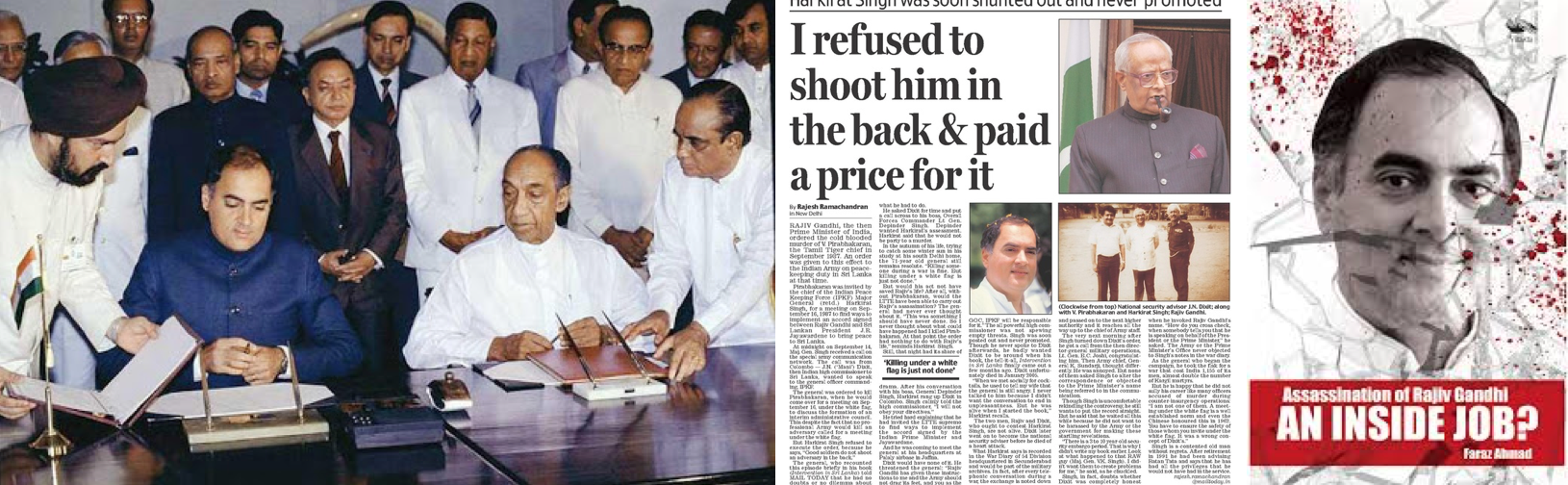
The author is finally bringing to the table that substantial number of Tamils lost their lives from fractions between different Tamil militant groups. India should know, India trained them in different locations and armed them too. India also holds responsibility for the death of Mahaththaya, the LTTE deputy leader who was exposed for being an Indian mole and was tortured to death by Prabakaran. India plotted to replace LTTE with a more India-friendly militant group. India also plotted to kill Prabakaran & replace him with another India-friendly Tamil leader. Eventually, the Indian PM was assassinated by LTTE contract in India itself.

https://www.google.com/url?sa=i&url=https%3A%2F%2Fwww.youtube.com%2Fwatch%3Fv%3DfMdU4Hm7tkU&psig=AOvVaw0dFfYGH_XV3rze8L1HI0Ug&ust=1595952823422000&source=images&cd=vfe&ved=2ahUKEwjp35va6e3qAhWFN3IKHakJDCMQr4kDegUIARCrAQ

Anyone turning ‘genocide’ into a casual trendy term are kindly requested to produce name lists of all the people supposed to be killed and by whom and how they died as well. The term genocide was used during the final phase not when LTTE & Militant groups were killing each other and not even when IPKF went on a killing spree as well. Will India call IPKF killings in Sri Lanka as genocide?

https://www.onlanka.com/news/commission-of-inquiry-on-indian-war-crimes-in-sri-lanka.html

The theatrics and drama choreographed and orchestrated by not only India but West and their bandwagon of NGOs is an open secret. When these parties tell Tamils to hold placards they do so, when they tell Tamils to cry & protest, they do so.  All this has been with the assurance of greener pastures to them. As many would have seen from the protests outside the Sri Lankan mission in the UK, these protestors are now dwindling. It was easy to count just about 30 persons. This is an important feature showing that even the LTTE Diaspora are moving on simply because their games are now getting exposed by people asking questions regarding ‘genocide’ that they cannot answer.

The author says entire Sri Lanka has suffered due to the ‘civil’ war” – India must take key accountability for that suffering. Not only did India provide training ground for scores of Tamil militant groups, but India armed and financed them to cause mayhem in Sri Lanka. Not stopping there India went on to prevent Sri Lanka’s Armed Forces from capturing Prabakaran by whisking him off to Delhi where he was kept until the Indo-Lanka Accord was signed. This accord full of historical fallacies was used as a means to divide Sri Lanka and merge 2 provinces with aim to use militancy to secure an area that India could control (greater Eelam)

Things did not work out as planned however. The merged province was annulled after India’s local puppet declared UDI and fled for refuge while in 2006 the Supreme Court de-merged the 2 merged provinces. Three years later LTTE ground force was vanquished. India made quite a drama on the one hand presenting notion India was ‘concerned’ about the Tamils & then demanding Sri Lankan officials fly to Delhi to brief them on the progress of the military offensive.

For everyone including the Tamils to ‘look forward to the future’ India must lead the way. The author may like to read out his list of advice to India’s bureaucracy, the Indian Government & the intel units first. With the fall of LTTE, India also lost a significant component of ‘pressure’ it could exert but was quick to transfer that to demanding India play a major role in post-conflict Sri Lanka vis a vis a the future of displaced Tamils, presence of military, economic & development goals. Did it take till 10 years after the conflict ended & massive development measures were embarked for India to now realize & tell the Tamils to move on? Why couldn’t India have told this to Tamils when LTTE was defeated instead of cheering them on towards more dramatics against the Sri Lankan State?

A component of the Srima-Shashtri Pact was the choice given to Tamils to decide if they wished to remain in Sri Lanka or return to Tamil Nadu. If India deems that India can look after Tamils better than Sri Lanka, that same question should be posed to the Tamils & India must facilitate Tamils to relocate to India/Tamil Nadu. However, when Tamils are holding citizenship in Sri Lanka, they must live as per the Sri Lankan constitution & cultural ethos of Sri Lanka. They are not Tamils of India if they are holding citizenship Sri Lanka. Those that wish to claim they belong to India, India must embrace them & give Indian citizenship. Tamils cannot expect to have one foot in Sri Lanka and another foot in India/Tamil Nadu. The choice must be made & India must respect their choice once made. India cannot poke its nose into Sri Lanka’s internal affairs claiming Tamils are theirs. If that is so, then India must take ‘their Tamils’ to India. Every Tamil living in the North will know that they have enjoyed a better life post-LTTE defeat than under LTTE & Prabakaran.

It is welcome news that the author is suggesting Tamils need to stop searching for ‘separatism’ a notion India fed into them and inadvertently, we hope India has also stopped searching for separatism of Sri Lanka.

If India and other countries that arouse the minorities using various ploys & plots and allow minorities to assimilate and integrate, Sri Lanka and Sri Lankans would be happier and without conflict and building a prosperous future together. We all deserve better than what we have suffered by all the external parties that have doused the flames of division and separatism for their geopolitical benefit & advantage.

In forwarding a new narrative, we remain watchful as to what India’s new maneuvers are in dangling a new carrot to the Tamils.

Shenali D Waduge

වයඹ පළාත සංවර්ධනය කිරීමේ පස් අවුරුදු සැලැස්ම

July 27th, 2020

A.J.M. Muzammil Media Unit 

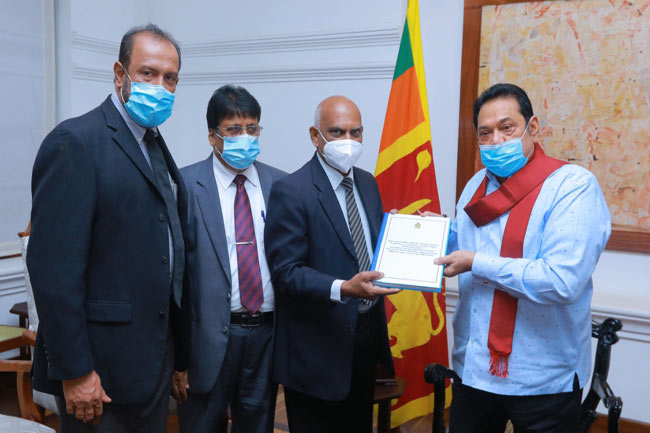
වයඹ පළාත සංවර්ධනය කිරීමේ පස් අවුරුදු සැලැස්ම වයඹ පළාත් ආණ්ඩුකාර ඒ.ජේ.එම්. මුසම්මිල් සහ වයඹ පළාතේ ප්‍රධාන ලේකම් පී.බී.එම්.සිරිසේන මහත්වරු එක්ව ශ්‍රී ලංකා ප්‍රජාතන්ත්‍රවාදී ජනරජයේ ජනාධිපති ගෝඨාභය රාජපක්ෂ මහතා වෙත පිළිගැන්වූ අවස්ථාව …

ජාතික කොවිඩ් මර්ධන අරමුදල වෙනුවෙන් පළාත් සභාවේ කාර්ය මණ්ඩලයේ එක් දිනක වැටුප වශයෙන් එක්රැස්වූ රුපියල් මිලියන 22.6 ක මුදලක්ද මෙහිදී  ආණ්ඩුකාර මුස්ම්මිල් මහතා විසින් ජනාධිපතිතුමා වෙත බාර දුන්නේය.

මෙම අවස්ථාවට වයඹ පළාත් අධ්‍යාපන අධ්‍යක්ෂ කේ.එස් කේ ජයලත්, වයඹ නියෝජ්‍ය ප්‍රධාන ලේකම් (සැලසුම්) කේ.ඒ නන්දසේන, නියෝජ්‍ය සැලසුම් අධ්‍යක්ෂ සිසිර ධර්මසේන යන මහත්වරුන්ද එක්ව සිටියහ…

வடமேல் மாகாணத்தை அபிவிருத்தி செய்யும் ஐந்து வருடத் திட்டம், வடமேல் மாகாண ஆளுநர் ஏ.ஜே.எம். முஸம்மில் மற்றும் வடமேல் மாகாண பிரதான செயலாளர் P.B.M. சிறிசேன ஆகியோரினால் இலங்கை ஜனநாயக குடியரசின் ஜனாதிபதி கோத்தாபய ராஜபக்ஷ அவர்களிடம் கையளிக்கப்பட்டது.

இதன்போது, கொவிட்- 19 நிதியத்திற்காகச் சேகரிக்கப்பட்ட வடமேல் மாகாண ஊழியர்களின் ஒருநாள் சம்பளமான 22.6 மில்லயன் ரூபாய் பெறுமதியான காசோலையும் ஆளுநர் அவர்களினால் ஜனாதிபதியிடம் கையளிக்கப்பட்டது.

நிகவெரடியில் நடைபெற்ற இந்நிகழ்வில் வடமேல் மாகாண கல்விப் பணிப்பாளர் கே.எஸ்.கே. ஜயதிலக, வடமேல் மாகாண பிரதான திட்டமிடல் உதவிச் செயலாளர் கே.ஏ. நந்தசேன, உதவி திட்டமிடல் பணிப்பாளர் சிசிர தர்மசேன ஆகியோர் கலந்துகொண்டனர்.

ஊடகப் பிரிவு

Sri Lankan Collective of intellectuals supporting the Minister of Industires

July 27th, 2020

Dr Sarath Obeysekera 

There are certain opinions among the people today that intellectuals should go to parliament and run the country. The Collective recently formed and held the first inaugural meeting with the participation of the minister of industries has a different opinion. Interlevuals  should allow the politicians to go to parliament and support constitution but the intellectuals  should form committees and advise politicians to walk along the right path 

It is like the minister taking action to make manufacture  local Mammoties and agricultural tools using local recyclable raw materials and start production lines But the Interctuals should play an advisory role and educate the minister that the manufactured  tools should undergo Normalizing by heating it and insert in oil or cold water to strengthen and harden the tools to last long 

Another example is that according to Sinhala saying that intellectuals  cannot walk across Footbridge made of the single log but he needs a handrail 

The politician should be that handrail to cross the waterway which helps to overcome obstacles along the path of development 

Viyath Maga formed a few years back should not try to become legislators but support them to walk along the right path 

Just like the president said lately Brother, you do politics I will build the country

Similarly, politicians with Pannaraya should do politics but intellectuals should help them to build the country 

I am not supporting intellectuals running the country but  to become  advisors to people-friendly politicians 

Dr. Sarath Obeysekera 

The Vegan Muslim Initiative-Don’t Kill An Animal This Eid

July 27th, 2020

Vegan Muslim Initiative

https://veganmuslims.com/dont-kill-an-animal-this-eid

No, I am not going to sacrifice an animal this Eid-ul-Adha nor am I going to pay someone to do it for me.

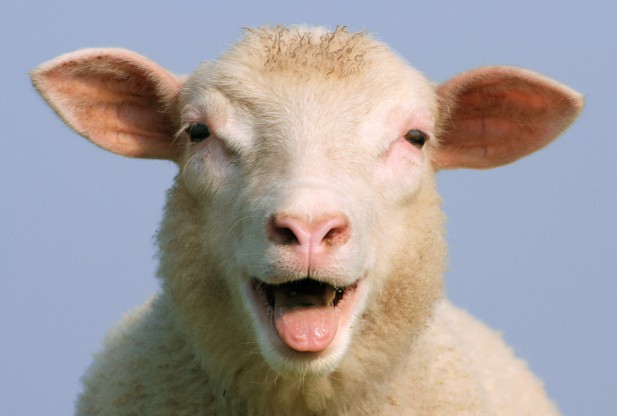
happy sheep smiling

Instead, my sacrifice is going to be of a non animal nature and yes, it is religiously sanctioned and justified.

I saw animals being slaughtered when I was a boy and it hurt me deeply.

I couldn’t understand why such beautiful creatures had to die.

Still don’t.

Remember, killing is not something humans are innately born to do.

Children do not naturally kill kittens, lambs and bunnies. They play, explore with and protect them. Their first instinct is to love.

In other words, I don’t see how it’s part of the fitra” or natural human disposition to go out of one’s way to kill when there’s no genuine need to.

Yes, I am aware of the verses in the Qu’ran regarding consuming certain animals but if you’ve ever seen an animal get slaughtered from a young age when your innocence is still intact, it stays with you; believe me.

We’re told Islam requires us to slaughter humanely. What exactly, is humane” slaughter?

The word humane is defined as: having or showing compassion or benevolence.

How does one compassionately” or benevolently” cut someone’s throat? Doesn’t the act of killing by definition negate any benevolence?

This is another discussion worth exploring as I genuinely would love to learn.

For now, I know in my heart God will not be displeased because I decided to show compassion to his creatures and not kill them.

In fact this attitude was openly condoned by the Prophet Muhammad in an authentic tradition:

Qurra ibn Iyas reported: A man said, O Messenger of Allah, I was going to slaughter a sheep but I had mercy on it (or felt sorry for it).” The Messenger of Allah (pbuh) said, If you had mercy on the sheep, then Allah will have mercy on you twice.” (al-Adab al-Mufrad 373 Book 20, Hadith 373), Graded as Sahih (authentic) by Sh. Al-Albani, rh).


The Issues At Hand

Having said that, let me make a couple of things abundantly clear from the outset:

  1. I am not here to argue against the fact Islam allows eating certain animals. It does.
  2. Nor am I here to declare and/or make what is permissible impermissible and vice versa. Not my area.

I’m here to ask how these can be reconciled with the very real challenges we are faced with today.

Yes, some difficult and perhaps uncomfortable questions will be asked and I sincerely hope our scholars, learned folks and community alike have the spiritual, moral and ethical courage to address these questions with objectivity and pragmatism.

I feel there are two main points:

1.  The impact our animal consumption is having on our world today

2. The way animals are treated especially during the Haj season (and of course at other times of the year).

As stated earlier, Islam permits Muslims to consume certain animals.

So we have the text.

Scholars have written extensively about the rules and regulations on this topic.

We have the guidelines.

Sadly however they are devoid of today’s context.

What we have today are rules and regulations based on what should be” and not what is”.

From an environmental perspective, today’s world is vastly different than the one Prophet Muhammad (pbuh) lived in.

Unfortunately, we are yet to upgrade our practices to reflect this reality.

In fact, we have superimposed our modern day cruel and exploitative practices on Islam thereby rendering the original mosaic into an eyesore.

We must grieve for the impending victims of mass slaughter on Hadj Festival Day

July 27th, 2020

Senaka Weeraratna  

We grieve for dead Leopards, dead elephants while remaining mum and in total silence over the impending mass slaughter of innocent animals during Hadj  festival beginning tomorrow i.e. July 28.

Millions of animals are killed all over the world in the name of religion with none so poor to say in public that it is a crime and contrary to our humanity. 

Life must be revered and not destroyed to claim reward from an unknown God. The true test of a religion lies in saving and preserving life, and not destroying it. 

Our insensitivity to killing of animals is a product of  brainwashing starting from school days. This must be corrected.

The Buddha condemned animal sacrifice.

The Buddha and Mahavira played a big role in converting India to a largely vegetarian country . Highest percentage of Vegetarians is in India. Thanks to the Message of the Buddha calling for compassion and loving – kindness to be extended to all living beings.

අගමැතිගෙන් එ.ජා.ප. යට චෝදනාවක්…

July 27th, 2020
 

A quiet acceptance: Sri Lanka might substantially prune 19 th. Amendment with multi-party support

July 27th, 2020

By P.K.Balachandran/Daily Express

The ruling SLPP will highlight the need for a strong Executive Presidency with a system of checks and balances sans contradictions and dysfunctional aspects.

A quiet acceptance: Sri Lanka might substantially prune 19 th. Amendment with multi-party support

Colombo, July 27: In the run up to the August 5 Sri Lankan parliamentary elections, only the ruling Sri Lanka Podujana Peramuna (SLPP) has been openly saying that it wants to amend or wholly jettison the 19 th. Amendment (19A) of the constitution. And it is not shy about declaring that it wants two thirds majority precisely for that. The other parties are maintaining an ominous silence on the issue, though the 19A was brought by them in 2015 to drastically prune the powers of the Executive President (EP) ostensibly to restore democracy.

The opposition parties have not explicitly opposed a change, preferring to observe silence on the question and highlight other issues. In the case of the Samagi Jana Balawegaya (SJB) the stress is on flaws in the handling of the COVID-19 pandemic and the economic issues spawned by it. In the case of the Tamil National Alliance (TNA), the foremost issue is devolution of power to a unified Northern and Eastern Provinces. In the case of the Muslim parties, it is wanton discrimination against the Muslims since the SLPP captured the Presidency in November 2019.

The opposition’s silence could be attributed to their own experience since 2015, which has shown that the multiple centers of authority created by the 19A have stymied efforts by elected Presidents and ministers to carry out their popular mandates.

In 2019, the then President Maithripala Sirisena stated that the 19A was a de-stabilizing element as it had created two centers of power, the President and the Premier who pulled in different directions. Without a singular political leadership, it was impossible for the country to move forward. The 19A created political uncertainty and instability that was harmful to the country. Achieving the objectives of good governance proved futile under the 19A,” Sirisena said in 2018.

The 19A’s contradictory provisions stymied Prime Minister Ranil Wickremesinghe’s efforts too. Several MOUs his government had signed with India, including one on the Eastern Terminal at Colombo port, could not be implemented because President Sirisena opposed them. These soured relations with India.

The current President, Gotabaya Rajapaksa, told this correspondent that the Independent Commissions which had no popular mandate and were far removed from the problems on hand, were crippling the President’s power and the powers of other elected persons like Ministers. Even top officials tasked with taking major decisions, were chained he added.

The Inspector General of Police cannot appoint, transfer or sack a police officer without the sanction of the Police Commission, though he is the hands on man who knows who is competent and who is not,” Gotabaya said. After the 2019 Easter Sunday serial blasts, President Sirisena could not remove the IGP Pujith Jayasundara because appointments, transfers and dismissals were the functions of the NPC.

Columnist C.A.Chandraprema recalls how ministers Karunasena Kodithuwakku and Tissa Vitarana (belonging to different governments) were unable to carry out their development projects because the Public Service Commission sat over them. The President is the sole authority to appoint and dismiss Secretaries to the ministries but he cannot touch other officers.

Article 33A states that the President shall be responsible to parliament for the exercise, performance and discharge of his constitutional powers, duties and functions. But this provision nullifies his popular mandate because he is made responsible to parliament and not to his voters.

19A says that the President shall be a member of the Cabinet of Ministers and shall be its Head too. But the cabinet is responsible not to him but to parliament. He also cannot take a portfolio including the Defense portfolio, even though he is the Supreme Commander of the armed forces and has the sole right to appoint service chiefs.

The 19A says that the President shall appoint as Prime Minister a Member of Parliament, who, in his opinion, is most likely to command the confidence of parliament. But he cannot sack the man he so appoints. There are provisions which shackle the Prime Minister too. The Prime Minister cannot chose his Council of Ministers. The constitution says that the President shall, in consultation with the Prime Minister, where he considers such consultation to be necessary, determine the number of Ministers of the Cabinet of Ministers and other ministers, the Ministries and the assignment of subjects and functions to such Ministers. The President may at any time change the assignment of subjects and functions and the composition of the Cabinet of Ministers.

The Rajapaksas have consistently charged that the Sirisena-Wickremesinghe government pushed for and rushed through the 19A in 2015 only to keep them out of power. The 19A was brought to prevent Mahinda Rajapaksa from contesting a third time by saying that a person who is twice elected as President is disqualified from contesting for a third time. It banned dual citizens from contesting to keep out Gotabaya Rajapaksa and Basil Rajapaksa who were US-Lankan dual citizens. It raised the lower age limit for contesting for President to 35 to keep Namal Rajapaksa out.

Every Presidential aspirant from Chandrika Kumaratunga onwards to Maithripala Sirisena swore to abolish the Executive Presidency and went some way to carry out their promise, when elected, they always found an excuse to stop short of scoring the goal. The political consequences of the abolition was too daunting. During the Presidency of Chandrika Kumaratunga, the UNP led by Wickremesinghe opted out of cooperation at the last moment giving Kumaratunga an excuse to drop the idea of reform.

During the Sirisena-Wickremesinghe regime from 2015 to 2019, a half baked 19A was thrust on the political system to achieve a few narrow partisan goals. The process of writing a new constitution was abandoned due to some political exigencies but actually because the expert panels had suggested reforms which no major Lankan political party with a majority Sinhala Buddhist vote bank will accept.

No leader aspiring to be President had really wanted the Executive Presidency abolished. The only candidate and incumbent President who has unabashedly declared his intention to keep and strengthen the Executive Presidency is the incumbent Gotabaya Rajapaksa. But the Rajapaksas have also argued that Sri Lanka could not have fought the war against the LTTE without a strong government headed by an unfettered Executive Presidency.

Milinda Moragoda, former minister and founder of the Pathfinder Foundation has pointed out that a strong Presidency had enabled Sri Lanka to contain the COVID-19 pandemic. A developing country faced with multifarious problems, needs a strong and cohesive government which the directly elected Executive Presidency purports to provide, Moragoda said.

He recalled what Alexander Hamilton, one of the founding fathers the US Constitution said: A feeble Executive implies a feeble execution of the government. A feeble execution is but another phrase for a bad execution, and a government ill-executed, whatever it may be in theory, must be, in practice, a bad government.”

Critics of the bid to abolish or drastically amend 19A abound. Backed by international organizations the critics point out that a powerful Executive Presidency will lead to an unhealthy and dangerous concentration of power in the hands of a single person and the coterie around him as it did in Sri Lanka between 2010 and 2014, which alienated from the masses, even an iconic figure like Mahinda Rajapaksa.

However, indications are that the SJB and UNP will support selective amendments to 19A and keep the Executive Presidency intact. M.A.Sumanthiran of the TNA and a strong votary of the 19A, has said that some of the dysfunctional aspects of the 19 A could be taken up for discussion with the Rajapaksas.

As Sri Lanka researches ‘Ravan’s aviation routes’, India’s seculars keep mocking Ram

July 27th, 2020

Courtesy Firstpost

Indians are supposed to accept without compelling scientific proof the existence of Jesus or Mohammed, but a Ram or a Krishna cannot break the glass ceiling of mythology

Irony had a hearty laugh last week, skipping across the chain of shoals that links India with Sri Lanka. Embracing Ramayan, the epic that binds the two nations, the Civil Aviation Authority of Lanka issued an advertisement inviting documents and literature for a research on ‘King Ravana and the ancient domination of aerial routes now lost’.

It is believed that Ravan travelled widely in his Pushpak Viman, and the aviation routes could tell us more about Lanka’s geopolitical reach and influence.

Sri Lanka tourism promotes an elaborate Ramayan trail stretching from Munneswaram to Trincomalee, Ella to Colombo. The nation’s first satellite launched last year is named ‘Ravana-1’.

Contrast this with India, where a masjid stood on Lord Ram’s birthplace for centuries and despite overwhelming evidence presented in court, ‘seculars’ stayed in denial. Any proposal to enhance the philosophical understanding of Ramayan, or studying Ram’s journey and alliances, or building tourism circuits based on the epic is mocked and met with disdain and protests.

While Sri Lanka unabashedly embraces its past, identity and legacy, Hindus in the homeland of their faith are repeatedly shamed and censored from honouring their defining epic because it would apparently be communal and upset minorities.

Indians are supposed to accept without compelling scientific proof the existence of Jesus or Mohammed, but a Ram or a Krishna cannot break the glass ceiling of mythology.

Even intellectual curiosity into Hindu epics is discouraged. In 2015, a paper presented on Ravan’s Pushpak Viman at the Indian Science Congress in Mumbai met with massive outrage. Five years later, a neighbouring government has proudly launched a full-scale study on the subject.

Prime Minister Narendra Modi was incessantly mocked when in 2014 he said cosmetic surgery originated in India. Four years later, a Columbia University’s Inving Medical Centre study traced the roots of cosmetic and reconstructive procedures to ancient India more than 2,500 years ago.

During the 6th Century BCE, an Indian physician named Sushruta — widely regarded in India as the ‘father of surgery’ — wrote one of the world’s earliest works on medicine and surgery,” the paper said. The Sushruta Samhita documented the etiology of more than 1,100 diseases, the use of hundreds of medicinal plants, and instructions for performing scores of surgical procedures, including three types of skin grafts and reconstruction of the nose.”

The sheer genius of the British colonial project to ruin homegrown Indian knowledge and education and replace it with one that produces clerical, self-loathing brown sahibs is evident even today. Jawaharlal Nehru continued with this colonial system, outsourcing the massacre of history to Left intellectuals.

While Sri Lanka reconstructs its past by studying its tradition and trade routes mentioned in ancient texts like Ramayan and Valahassa Jataka, India is still to fix its education system, distortions of history, and broken pride in its glorious roots.

While India is in denial on Ram, Lanka proudly flaunts the extraordinary antagonist, Ravan, about whom writer Amish Tripathi says: He is different from your ordinary villain. Just because he is so scholarly. He is a brilliant musician, a brilliant poet, a good dancer, he is exceptionally well read, he is a very good administrator. Which makes him a deep, complex man, and fascinating to write about. Even Ravan’s violence was scholarly.”

Sri Lanka, wisely and justifiably, is delving into its rich trade, maritime traditions, and now even aerial routes to construct a robust national mythology. Vinod Moonesinghe, in his piece, outlines the scope of that knowledge from the story of Yakkhinis of Jataka Tales who captured and married shipwrecked merchants to Sinbad the Sailor to Tamil Nadu and Odisha connections to ship links with China and Vietnam.

These strengthen the story of Ravan’s regional influence. India, with a much richer maritime history and way bigger geopolitical influence in the Indian Ocean, don’t even give space to the likes of Rajendra Chola.

Sri Lanka has done what India should have long ago. An expansive study of Lord Ram’s travels and alliances is long overdue. But before that, we need to shed our apologist attitude towards our own past and roots.

In Sri Lanka, a South American flower usurps a tree sacred to Buddhists and Hindus

July 27th, 2020

by  Courtesy Mongabay

COLOMBO — With its blends of soft red, pink and yellow, the fragrant cannonball flower (Couroupita guianensis) is a favorite of Sri Lanka’s Buddhists when making floral offerings during religious activities. They call it sal, with religious tales linking the tree to the birth and death of Gautama Buddha, the founder of the faith. Hindus in the region call it nagalingam, a flower offered to Lord Shiva, the most powerful of gods in the Hindu pantheon.

The problem, however, is that the cannonball tree isn’t the sacred plant that countless devotees believe it to be. In fact, it didn’t arrive in Asia until the late 1800s, brought over from its native Central and South America by the British. That means there’s no way it could be part of the canon of Hinduism or Buddhism, which were established more than 2,000 years earlier.

The cannonball tree gets its common name from its large, round fruit. Its scientific name, Couroupita guianensis, refers to the Guianas, the region of South America from where the plant was first described. Image by Mokkie via Wikimedia Commons (CC BY-SA 3.0).

The Handbook to the Flora of Ceylon by the British botanist Henry Triman (compiled between 1893 and 1900) doesn’t mention the cannonball flower; nor does Flora of British India by the botanist J.D. Hooker in 1875.

These books contain details on both introduced and naturalized plants but the cannonball tree is conspicuous by its very absence in these historical scientific compilations on the island’s fauna, indicating that the tree was not naturalized or found locally at the time,” said Siril Wijesundara, former director-general of the Department of the Botanical Gardens of Sri Lanka.

The cannonball tree was introduced to Sri Lanka with the planting of the first sapling at the Royal Botanical Gardens of Peradeniya, way back in 1881,” Wijesundara told Mongabay. He added the plant adapted well to Sri Lankan soil, reaching fruit-bearing stage after about 15 years.

A century ago, when the plant was still relatively new here, there was no confusion about the identity of the cannonball tree, Wijesundara said: it was recognized as an introduced plant.

There’s no mention of the local name sal on this 1901 plaque that records the planting of a cannonball tree (Couroupita guianensis) sapling by England’s King George V to mark his visit to Sri Lanka, indicating that the confusion over the tree is much more recent. Image courtesy of the Royal Botanical Gardens, Peradeniya.

To commemorate the visit by England’s King George V to Sri Lanka (then known as Ceylon), a cannonball tree was planted at the Royal Botanical Gardens in 1901. The commemorative plaque in the local language, Sinhala, identifies the tree only by its genus, Couroupita. If the confusion over the name sal was prevalent then, botanists who documented Sri Lankan flora would have definitely used the local name for the script, introducing the tree in the local language,” Wijesundara said.

Shelomi Krishnarajah, the current head of the Royal Botanical Gardens, told Mongabay that the original sal tree mentioned in Buddhist lore is the tree known as Shorea robusta. It’s common throughout the Indian subcontinent, including in Nepal, where the Buddha was born. Even the legend matches. Peradeniya Botanical Gardens have several blooming Shorea robusta trees,” Krishnarajah told Mongabay.

It’s not hard to see how the fragrant cannonball tree got incorporated into the origin stories of two of world’s most ancient religions, thanks to its flower.

The cannonball flower has six petals with a base at the center, with a small bulge in the middle and a hood. At the base around the bulge, there are stamens with pollen, and on the hood that covers the bulge there are longer stamens without pollen.

One Buddhist interpretation is that the bulge represents a stupa, a shrine of sorts in which relics are preserved, while the stamens at the base represent devotees worshiping the relics. The long stamens on the hood are considered gods who have descended from the heavens to pay homage to the stupa.

For Hindus, the name of the flower, nagalingam, combines the Sanskrit naga, meaning cobra, and lingam, the symbol of Lord Shiva. According to Hindu mythology, the bulge at the base is considered the lingam, while the hood represents a cobra offering protection to the lingam.

The original sal described in Buddhist tales is believed to be Shorea robusta, which was historically found only in India and Nepal, but in more recent years, has begun growing in Sri Lanka. Image courtesy of the Royal Botanical Gardens, Peradeniya.

Multiple misidentifications  

As C. guianensis has thrived since its introduction to Sri Lanka, it’s been increasingly mistaken for the sacred sal tree over the actual sal, S. robusta. One of the most notable mistakes is the inclusion of the cannonball flower in a textbook prescribed for state-run schools, effectively mainstreaming the wrong information to the public from the outset.

According to Nimal Gunatilleke, emeritus professor of forest ecology at the University of Peradeniya, the mistaken identity of the real sal tree has led to serious problems at times.

During a conference on Ayurvedic science, a research team testing an Ayurvedic recipe reported that the combination of medicinal compounds didn’t work. Gunatilleke looked into the compounds used by the researchers and found that the team had used the bark from the wrong sal tree. Obviously, that combination wasn’t going to work as the properties were different,” he told Mongabay.

Non-native sal being planted to mark the inaugural peace talks between Sri Lankan government and the separatist Tamil Tigers rebel group in 2002 indicates how the misidentification has become widespread. Image via TamilNet.

The imposter species gained higher levels of recognition and became a symbol of peace” in 2002, ahead of peace talks facilitated by Norway between the Sri Lankan government and the Tamil Tiger rebel group. The facilitators wanted both delegations to plant a flowering tree that was significant to both Buddhists and Hindus, and mistakenly picked a cannonball tree sapling to symbolize the new journey toward making peace.

Those peace talks collapsed, but the cannonball tree’s identity as the sal tree remains strong.

Banner image of the religiously significant cannonball flower. With its blends of soft red, pink and yellow, the fragrant cannonball flower (Couroupita guianensis) is among the favorite flowers of both Buddhists and Hindus and frequently offered in veneration. Image courtesy of Asanka Dewage.

President orders speedy construction of Central Expressway

July 27th, 2020

Courtesy The Daily Mirror

President Gotabaya Rajapaksa has directed the Minister-in-Charge to accelerate the construction works of the Central Expressway project, the President’s Media Division said. 

It said construction of the section from Colombo to Kurunegala has been disrupted due to issues relating to the compensation payment process.

The President instructed Minister Johnston Fernando to complete the construction of the expressway while providing a quick solution to the prevailing problems. 

President Rajapaksa gave these directives during a public gathering held in Mawathagama Public Fair premises, Kurunegala, during his tour of the district for the second day yesterday in support of the candidates representing Sri Lanka Podujana Peramuna (SLPP).

Prime Minister Mahinda Rajapaksa, who accompanied the President to a public meeting organized by candidate Kamal Perera, stated that strong and stable parliament is needed to implement the promises in Vistas of Prosperity and Splendour” policy statement. 

President Rajapaksa, in response to a request by the All Island Inter District School Children Transportation Association, agreed to grant another six-month moratorium on the leasing rentals of all school vans.

The President also instructed the Army Commander to fulfil the request made by the students of Nidahasgama Vidyadeepa and Devapola Kumara Schools to renovate their school playgrounds.

Minister Johnston Fernando told the President that he will take necessary measures to build an Indoor Badminton Court in Mawathagama National School.

President engaged in cordial discussions with the people who gathered on both sides of the road leading to Dodangaslanda Rideegama Sathi Pola grounds.

A group of employees who had gathered in front of the Dodangaslanda Hospital told the President that patients had to travel to Kurunegala due to shortcomings that existed in the hospital.

The President instructed the relevant officials to look into the matter and find a speedy solution to it. 

Both President and the Prime Minister participated in the public rally at Dodangaslanda Weekly fair premises organized by the SLPP candidate R.D. Wimaladasa.

President Rajapaksa was informed of several issues faced by the residents of the area including, the price drop in minor export crops, drug menace and the need to improve the condition of the road network in the area.

The President and the Prime Minister also attended the public meeting in Pradheshiya Saba Ground, Alawwa organized by the candidate Sumith Rajapaksa. Several artistes as well as the SLPP Chairman Prof. G.L. Peiris were present at the location.

Covid-19 tally jumps to 2,804 with 22 fresh cases

July 27th, 2020

Courtesy Adaderana

Twenty-two new cases of novel coronavirus have been detected increasing the total number of confirmed cases reported in the country to 2,804.

The new cases include 17 inmates of the Senapura Rehabilitation Center and 05 returnees from Qatar, who are under quarantine. 

Accordingly 672 patients infected with Covid-19 are presently being treated at hospitals while the total number of recoveries has increased to 2,121.

One (01) more person confirmed for Covid -19: SL Country total increases to 2,805

July 27th, 2020

Courtesy  Hiru News

With the report of another coronavirus infection, the total number of infected people in the country has increased to 2805


Copyright © 2026 LankaWeb.com. All Rights Reserved. Powered by Wordpress