Delivery services directory
April 4th, 2020Mangolk
Mangolk has created a central directory of delivery services people can use during the curfew.
https://mangolk.com/#5e8397a205ac5a402b71ecea,5e8397a205ac5a402b71ef2f
|
|
 |
Mangolk has created a central directory of delivery services people can use during the curfew.
https://mangolk.com/#5e8397a205ac5a402b71ecea,5e8397a205ac5a402b71ef2f
Coronavirus does not discriminate. It treats all equally. Rich-poor-Old-young, it doesn’t care if you live in West-East, North-South, the virus doesn’t care whether you are Sinhalese Tamil Muslim or Burgher or whether you are Buddhist Hindu, Islam or Christian/Catholic/Born Again. Virtually every country in the world is affected, close to 50,000 people already dead and Sri Lanka has also seen its 4th death and no one is certain when it will all end. This enemy is far worse than the LTTE terrorists that plagued the nation for 30 years or the jihadi terror attack of 21 April 2019. We do not know what this enemy looks like, when it will enter our system and once it has entered what it has in store for us. We do know that with precautions taken we can come out of it but without precautions taken we are sure of fatalities. In such a scenario of uncertainty when authorities need the support and cooperation of the citizens it is more than selfish for a segment of people to demand only their needs be catered to by the State. Holding placards ‘minority rights’ ‘freedoms’ ‘religious rights’ to justify their demands at this volatile juncture is not what the Nation expects to see from a community claiming to support National interest. This is not what the nation expects from any community in such a fragile and vulnerable situation the country is in. In a National crisis support cannot come tied to bargains or threats.
Every ethnic group or religion have their customs and rituals when it comes to death and thus far every citizen of Sri Lanka has had no issues in carrying out these customs/rituals.
Buddhists have numerous rituals related to the death of a loved one. Hindus likewise also have their own sets of rituals. Christians also have their customs while Catholics have their own plot to bury their dead. Why is it that no Catholic is making demands to bury their covid-19 dead? In Italy most of the early cases of covid-19 deaths were cremated and disposed of as early as possible. Perhaps family members had no time to even come to the hospital or chose not to come to the hospital in fear of contamination. What Catholics are not demanding considering the larger picture why are Muslims being so selfish for the dead ignoring the risk to the lives of the living?
In fact, before Sri Lanka’s first Muslim corona-victim was cremated the authorities had asked 2 members of the family to be present but no one came and it shows how much even the family would have feared contamination.


https://theleader.lk/news/2546-pm-appoints-special-committee-to-bury-muslim-bodies-proposal-to-concrete-pits – concrete the site… what will they come up with next! How fair is this?
But, the country is in a different situation. We are facing a pandemic hitting all nations of the world, no one really has answers for covid-19 and everyone is only experimenting. But the objective of everyone from the State to the health work to the armed forces to the street cleaner is to ensure no one’s life is jeopardized. In times of uncertainty, the State has to think of the worst case scenario & prepare rules to protect the living. The priority is the living and not the dead.
All of us are carrying customs and rituals passed down over centuries but none of us can claim to practice all in the same manner done during the cave day periods. So if we have fine-tuned the customs then we can certainly fine-tune our thinking into accepting what suits a national & global calamity.
Anyone who has died from covid-19 has departed but should we create situations where more and more people join the dead? This is not what we want to happen. If by negligence the State acts irresponsibly without thinking of the living, the people will turn against the State & blame the State. None of those now demanding exclusive burial will take accountability for their actions that may have pressurized the State to change its decision. But no state can or should change decisions to make one community happy against the risk likely to accrue to the rest of the communities.
The people demanding burials of Muslims must answer
Burials & Islamic Suicide bombers
99% of terrorist suicide bombers are Muslim. They get virtually cremated during the suicide bombing itself. So what is the theory here? The suicide bombers who killed themselves along with 250 others on Easter Sunday in 2019 did not get any burial send off with Islamic rituals. Of course some would jump to say the comparison is incorrect however what happened was the burning of the body of the suicide bomber and many commit suicide to become martyrs of Allah.
Cremations from Covid-19 of Muslims
Argentina cremated its first Jewish victim. Mumbai/India cremated its first Muslim covid-19 victim on 1st April. Israel announced mandatory cremations. https://www.timesofisrael.com/state-mandated-cremation-a-posthumous-mitzvah-says-leading-orthodox-rabbi/
While a Muslim cleric Wasim Rizvi has backed precautions over faith saying ‘cremate, don’t bury Muslim coronavirus victims’ but his comments have caused uproar.

The Governments stand on coronavirus has nothing to do with reconciliation programmes, National unity or National harmony. This is about a disease which is a contagious pandemic which no one knows how to control and authorities are now only able to curtail and contain the situation by keeping people in isolation & quarantine.
Therefore, when the State takes these odds & decides to cremate all dead victims of covid-19, all citizens must comply whether they like it or not. There is no requirement to be explaining scientific reasoning, or graphically showing the impact of endangering water resources, flora & fauna. People should have commonsense enough to realize the dangers of covid-19 and feel happy that the Government has taken a decision with the interest of all citizens in mind.
The decision by the State regarding covid-19 has nothing to do with you showing political allegiance to the State by agreeing with the decision or opposing against the State to show political opposition, or expecting minorities to make counter demands just to showcase voice of the minority community. This is certainly not the time to picking pages, clauses or lines from the country’s constitution to prove a legal point. The decision was taken by the State considering public health of the living (humans, animals and flora/fauna) Constitution only gives rights & freedoms to individual not communities.
No persons’ rights or freedoms can impede on the rights & freedoms of another – that is the golden rule!
Decisions cannot be taken on emotions & must be taken in the best interest of Sri Lanka.
The entire world is in shock & fear – everything has changed. Shaking hands is just as deadly as an automatic weapon, to show one’s love we have to keep a distance from loved ones.
Nature has reminded man again that we are only guests on this planet & we cannot contaminate it any further.
This is why it becomes necessary to cremate the dead & kill the virus which may remain in the body of the deceased.
Ask not what your country can do for you – ask what you can do for your country,”
This is not the time to be playing petty politics. Everyone is suffering some form of agony and no one’s agony is more than any others. Covid-19 should have taught us that. Every death is sad for every family, community & country but no community can demand or should demand special privileges for itself.
The most sensible and logical way for Muslims to ensure no Muslim is cremated is to abide by the covid-19 guidelines set out by the Govt – self-isolate, quarantine, social distancing and adhering to the curfew & other measures adopted. By flouting these … people are only asking for trouble and inviting dangers.
There are plenty waiting to fish in muddy waters searching for opportunities to catch a topic and run to Geneva with crocodile tears on behalf of the Muslims & their burial rites. Muslims in Sri Lanka to spite the decision regarding cremation don’t take Sri Lanka into another witch hunt and waste valuable time to rebuild Sri Lanka.
Shenali D Waduge

It is extremely encouraging that the Sri Lanka Administration is doing an admirable job of containing the COVID 19 virus pandemic and guiding the Nation through what appears to be dire straits and most Sri Lankans are responding through their cognitive capabilities and the coercion of Law enforcement and hopefully, the issues related to its spread and devastating repercussions will be minimized and eventually overcome.
It is a time where all leaders regardless of their political affiliations need to unite and stand as one to safeguard our Motherland where distinctions and diversities need to be done away with towards Her preservation. Towards this, standing firmly behind our President and abiding by all the requisites laid down through his dictates and those of the World Health Organization are foremost and of paramount importance.
The following information – Courtesy of Lanka Page and well compiled will hopefully be of assistance towards maintaining the well being of all Sri Lankans as well as all readers of every origin towards their own personal safety.
Blessings from every Faith and Denomination come with this toward the safety of ALL OF HUMANITY
Quote:-
According to the world reports the COVID-19 is now in 85 countries. This is despite four countries still accounting for 97% of COVID-19 cases. The coronavirus epidemic has now forced nearly one-third of the world’s population into lockdown. It is a fight that many countries will face all the same. If not managed properly, according to research, the number of cases doubles every week. There is a general agreement that governments need to act first to save lives. The first task, therefore, is to get manpower and money into hospitals. However, reducing the adverse impact of such drastic social distancing measures on their economies is also becoming a top priority. Economists around the world are therefore looking at policy mixes and recipes to reduce the economic impact of the pandemic. While the discussion often moves towards the macroeconomic impact of this pandemic, the COVID-19-induced economic slowdown is impacting the real economy, which is made up of businesses and the people that work for them. Countries do not buy or sell goods; people do. Small companies are more likely to suffer more than others in the private sector because they are inherently vulnerable. According to the ILO, as many as 24.7 million jobs are at risk. In the Bangladeshi garment sector alone, more than $ 2.7 billion in orders have been cancelled since the start of the year, resulting in the closure of thousands of factories putting four million workers at risk. Many SMEs throughout the world are currently facing severe threats to their continued viability owing to demand shocks, labour constraints and a shortage of available cargo routes. This slowdown according to economists is not a textbook slowdown. Lower rates will ease borrowing costs and improve business sentiment. Unfortunately, in this case, no amount of cheap credit can stop people from falling ill and dying by the pandemic. This explains why many stock markets failed to revive despite the interest rate cuts. So, it may be far better to help those affected directly until the pandemic ends. For most people, the priority now is food and paying for healthcare. While for most companies, the challenge will be liquidity. Easing the burden for them as long as the epidemic lasts will avoid bankruptcies and lay-offs. The coronavirus pandemic, on the other hand, has also enabled private, online and tech-based SMEs to emerge as potential winners by responding to the new normal.
Protecting SMEs
Recovery for SMEs will only begin once the health emergency is over, and containment of people comes to an end. Economic activity is likely to see a sharp rebound after that. The duration and depth of the crisis will depend on how far and fast the virus spreads, and how effective policymakers will be in mitigating the damage to their physical and economic health and well-being. The longer the crisis lasts, the more it is likely to disrupt the supply-side of the economy through crippled production networks and squeezed profit margins. Hopes of recovery will hinge on more sustained and coordinated liquidity injections by Central Banks, more active fiscal policies and by renewed efforts to strengthen free trade and foreign investment. SMEs cannot be understated in this recovery strategy to safeguard the current and future functioning of the global economy and the livelihoods of billions of workers throughout the world. For many debt-distressed developing countries already spending up to one half of government revenue on debt servicing, an immediate moratorium and a health-related grant are highly merited when a health emergency of this scale is prevalent because, for most governments, the priority must surely be to slow down the spread and lowering the peak. None of that will be easy because the virus’s trajectory is still unknown, as is the effectiveness of containment efforts, and consumers’ and firms’ reactions.
පසුගිය දින දෙකතුන ඇතුළත සොයා ගැණුනු කොරෝනා රෝගීන් සහ ඔවුන් කටයුතු කර ඇති ආකාරය සැලකිල්ලට ගැනීමේ දී මුස්ලිම් ප්රජාවෙහි ඇතැම් සාමාජිකයන් තමන් ගේ විදේශ ගමන්බිමන් පිළිබඳ තොරතුරු වසන් කරමින්, තමන් ගේ රෝගී තත්වයන් පිළිබඳ තොරතුරු වසන් කරමින්, තම ප්රජාව තුළ හා රට පුරා යමින්එමින් කටයුතු කර ඇති බව පැහැදිලි ය. පොදු යහපත වෙනුවෙන් අනුගමනය කළ යුතු වත්පිළිවෙත් ගැන, තම වගකීම් හා යුතුකම් ගැන කිසිඳු හැඟීමකින් තොර ව කටයුතු කර ඇති බව පැහැදිලි ය. සමස්ත රටේ ම දෙකෝටියකට අධික ජනතාව වෛරසය පාලනය කිරීම සඳහා සිදු කර ඇති කැපකිරීම් සියල්ල මේ වගකීම් විරහිත ක්රියාකාරකම් නිසා අපතේ යන තත්වයක් උද්ගතව ඇත.
මේ භයානක තත්වය හමුවේ පවා මුස්ලිම් ප්රජා නායකත්වය තම ප්රජාව ගෙන් සිදු කර ඇති විදේශ ගමන් පිළිබඳව, මතුව ඇති රෝග ලක්ෂණ පිළිබඳව, විදේශ ගතවූවන් හෝ රෝගීන් හෝ ඇසුරු කිරීම පිළිබඳව අදාළ සෞඛ්ය බලධාරීන් දැනුම්වත් කරන ලෙස ඉල්ලා සිටින බවක් දක්නට නැත. රෝග ලක්ෂණ මතු වූ විට තොරතුරු සඟවමින් තම ප්රජාව හා අවසානයේ සෞඛ්ය කාර්යමණ්ඩල පවා අනතුරට පත්වන ආකාරයට ක්රියා නොකරන ලෙස ඉල්ලා සිටීමට බරපතල ලෙස මැදිගත්වීමක් දක්නට නැත. තම ප්රජාව දැනුම්වත් කරමින් ඔවුන්ව ද පොදුවේ සමස්ත සමාජය ද මේ උවදුරින් ගලවා ගැනීමට දායකත්වය සපයනවා වෙනුවට, මියයන තම භක්තිකයන් ගේ අවසන් කටයුතු පිළිබඳ අනවශ්ය හා නුසුදුසු මැදිගත්වීමක් කරමින් සිටිනු දක්නට තිබීම කණගාටුදායක ය. තම ප්රජාව ගේත් සමස්ත රට වැසියා ගේත් ජීවිත සුරක්ෂිත කරගැනීමට නොපමාව මැදිහත් වන ලෙස අපි මුස්ලිම් ප්රජා නායකත්වයෙන් ඉල්ලා සිටිමු.
තමන් ගේ විදේශ ගමන් පිළිබඳ, තමන් ගේ රෝගී තත්වයන් පිළිබඳ, විදේශ ගතවූවන් නැතිනම් රෝගී වූවන් ඇසුරු කර තිබීම පිළිබඳ තොරතුරු වසන් කරන්නන් හට ඔවුන් ගේ ජනවර්ගය, අදහන ආගම, වෘත්තිය නැතිනම් සමාජ තත්වය, දේශපාලන පක්ෂපාතකම් යන කිසිවක් සැලකිල්ලට නොගෙන දැඩි දඬුවම් පමුණුවන ලෙස අපි රජයෙන් ඉල්ලා සිටිමු.
යුතුකම ජාතික සංවිධානය වෙනුවෙන්,
ගෙවිඳු කුමාරතුංග
සභාපති
Prime Minister Mahinda Rajapaksa yesterday said the government’s actions are invariably based on instructions of health officials, taking into consideration the wellbeing of all citizens, and added that the current situation caused by the COVID-19 pandemic could create difficulties to all, including Buddhists, Hindus, Muslims, Catholics and others.
Speaking at the all-party representatives meeting at Temple Trees, Mr. Rajapaksa said this in response to the issue raised by representatives of Muslim political parties, who wished to explore the possibility of burying the bodies of those who succumb to COVID-19 instead of cremating the bodies. Health Services Director General Dr. Anil Jasinghe stressed it has been only three months since the COVID-19 virus has been identified and no proper information is available on the exact behaviour of the virus.
“There are various ways of the spread of the virus and health officials try their best to prevent it from spreading. The entirety of Sri Lanka should be considered when cremating the dead bodies. This is a sensitive issue but our focus should be the wellbeing of the entire community,” he said.
The COVID-19 cases tally in Sri Lanka has risen to 159 as three more patients tested positive for the virus at of 10.10 pm today (03).
Accordingly, a total of 8 coronavirus patients were found in the country during the course of the day.
The Epidemiology Unit of the Health Ministry, 131 patients are currently under medical care while 24 patients were discharged after making complete recoveries.
Four COVID-19 patients have succumbed to the deadly virus in Sri Lanka.
Four more individuals have tested positive for COVID-19 in Sri Lanka as of 9.00 pm today (03), bringing the total number of confirmed cases to 156.
According to the Epidemiology Unit of the Health Ministry, 128 patients are currently under medical care while 24 patients were discharged after recovering completely.
Four COVID-19 patients have succumbed to the deadly virus in Sri Lanka.
Police said that 289 individuals have been arrested for violating the curfew within six hours ending at 12 noon today (03).
A total of 70 vehicles have also been taken into custody during this time period.
The Police Media Unit said that the total arrests made so far for curfew violations stands at 11,019 and that 2,727 vehicles have also been taken into custody.
Sri Lanka Police had previously warned of strict legal action against people caught violating the countrywide curfew.
They will be immediately arrested, even without a warrant, and that police bail will not be granted for them, police said.
Police also noted that none of the vehicles taken into custody will be released back to their respective owners, until the prevailing Coronavirus threat is eliminated.
The government imposed an island-wide curfew with the intention of minimizing public movement in order to contain the spread of the coronavirus (Covid-19) outbreak in the country.
The International Development Association (IDA) and the International Bank for Reconstruction and Development (IBRD) of the World Bank Group agreed to provide financing assistance amounting to United States Dollars (USD) 128.6 million to the Sri Lankan effort to battle against Covid 19 outbreak.
These funds will be mobilized through the Government Budget during the period from 2020 to 2023, the Ministry of Finance said.
Signing of the agreements of Sri Lanka COVID-19 Emergency Response and Health Systems Preparedness Project took place today (April 03) at the Ministry of Finance and Mr. S R Attygalle, Secretary to the Ministry of Finance, Economic and Policy Development and Ms. Idah Pswarayi-Riddihough, Country Director of the World Bank signed the agreements on behalf of the Government of Sri Lanka and the World Bank, respectively.
In response to the increasing COVID 19 incidence in the country, the Government of Sri Lanka has initiated urgent and effective measures to slow the spread of the virus by testing and treating patients, contact tracing of those found positive, limiting travel, mandatory quarantine for anyone coming from countries affected by COVID-19, closing borders to prevent transmission from further travellers, cancelling large gatherings and creating awareness.
The project will focus on limiting local transmission of COVID-19 by strengthening capacities of the health system for contact tracing, case finding, confirmation, reporting, and responding to surge capacity through trained and well-equipped health workers and medical officers of health and primary health doctors and equipped facilities, strengthening Surveillance and Response Systems, strengthening health care facilities capacity for emergency response, improving community engagement and risk communication and provision of social and financial support to households.
Further the project will support for the strengthening national and sub-national institutions for prevention and preparedness through strengthening the National Institute of Infectious Diseases (NIID), establishment and strengthening of subnational emergency operation centers, establishment of Bio-Safety Level (BSL) 3 laboratory facilities at the National Medical Research Institute (MRI) and strengthening laboratory facilities and information systems.
DIG Ajith Rohana has appealed to the people to remember the individuals they come into contact with when they are at a public place.
He stated this in a special statement on the spread of COVID-19 in the country.
If you proceed to a certain public place, especially in the Western Province, Puttalam, Kandy and Jaffna districts, please be aware of those who you come across.”
DIG Rohana also requested the public not to conceal information from medical officers, adding that it will help intelligence officers to trace the people who came into contact with the infected people and direct them to quarantine process.
Sky News’ Special Correspondent Stuart Ramsay travels to the heart of Europe’s coronavirus pandemic. In the city of Bergamo in Northern Italy he meets doctors fighting the illness that’s changing the entire world and witnesses the impact Covid-19 is having on people, infrastructure and the economy.
Short term performance of Mr. Gotabaya Rajapaksa, the president of Sri Lanka has proved that he is a capable person to launch the country to achieve the aspirations of people. He has given strong leadership to control coronavirus pandemic and successfully coordinated the entire administration mechanism as a team leader of the country. This environment gives a signal that people can trust him without political, social, ethnic and religious differences and no point maintaining divisions or dividing the country. People need to unite with the president and give support to him giving a two-third majority at the next election to successfully launch the country to forward. When people watch reports in news media it shows the nature of a reasonably developed country as they show good buildings, houses and many other things. However, the reality may deviate from the show-off or news reports. In this environment policymakers need to focus a balanced growth idea throughout the country and in fact, rural communities are suffered from economic difficulties and economic enjoyment has gone to a limited group of people. How can change this situation?
The balanced growth could be applied from a different point of views and when it talks about the balanced growth it comes to our minds about theoretical arguments began from Ragnar Nurkse in the 20th century and Nurkse focused on the expanding the size of market and inter-industrial relationship. When it refers to Sri Lanka the views of Arthur Lewis may vital than extreme ideas of Nurkse as the determinants of the size of market are not an issue except the productivity of employees in both public and private sectors. Nurkse focused intersectoral balance as a limited area such as industrial and agricultural sectors and from the point of view of Sri Lanka intersectoral balance expand to geographical areas. The real picture is uneven growth results in the country and this situation needs to change into a reasonably even level would be a priority task of economic policymakers.
The productivity of employees compared to the salary and wage levels in the country seems many disparities in different organizations as well as in different sectors and policymakers need to identify and develop a parity to determine the expected productivity in various industries. When there is a standard productivity level individual institution can compare with own standards and could take management strategies to maintain productivity level. Productivity could be identified as a management-related problem. Many developed countries have developed productivity level for industries and individual organizations compare with the standards in the industry. Trade unions in Sri Lanka have no idea about the expected productivity level and the government needs to educate trade unions about productivity.
During wartime (1983-2009) a considerable volume of government spending directed to war efforts and after the recovery period also massive investments located to Colombo and suburbs and rural areas less regarded and this situation has created the disparity in development and growth. The government of Mahinda Rajapaksa attempted to reduce disparity focusing investments in rural area, however, the yahapalana regime failed to continue balance growth.
Sri Lanka is a small country and urbanization could expand to suburbs without harming investors’ expectations. Expanding education in rural areas could begin balanced growth in the country because it would support the concept of skilling the nation pushing job opportunities in rural areas. Education and training can change uneven growth creating an environment that encouraging more investments in rural level and reduce the difference of social status between rural and urban people.
When the government policy focuses on balanced growth, the market would be broadened as Nurkse stated and aggregate demand expands throughout the country
HIV, the virus that causes AIDS (acquired immunodeficiency syndrome), is one of the world’s most serious health and development challenges. Globally, approximately 75 million people have become infected with HIV since the start of the epidemic in 1981. Today, there are about 40 million people living with HIV, and tens of millions of people have died of AIDS-related causes. HIV remains a leading cause of death worldwide and the leading cause of death globally among women of reproductive age.
Sub-Saharan Africa (Eastern Southern, Western and Central African countries), is the hardest-hit region, with more than two-thirds of all people living with HIV globally. This is basically is a collection of Muslim countries. Here, many people living with HIV or at risk for HIV infection do not have access to prevention, treatment, and care, and there is still no cure. HIV primarily affects those in their most productive years, and it not only affects the health of individuals, but also impacts households, communities, and the development and economic growth of nations. Many of the countries hardest hit by HIV also face serious challenges due to other infectious diseases, food insecurity, and additional global health and development problems.
Eastern and Southern Africa – 20.6 million (55% of the global total)
(newly infected total – 800,000
Western and Central Africa – 5 million (13% of total global)
(newly infected total- 280,000)
The Middle East and North Africa – 240,000 (newly infected – 20,000)
(Source: UNAIDS. AIDS info website, 2019
Two-thirds of children living with HIV (65%) are found in the Eastern and Southern African Region. The Middle East and North Africa region are one of the regions in the world where the number of AIDS-related deaths is increasing. Muslim World’s Heartless Indifference and Criminal Neglect of the plight of millions of Innocent Muslims in Africa dying of HIV-Aids. HIV-AIDS is killing people in the millions and is the greatest tragedy in the world today, especially in Africa. Millions are dying and tens of millions will die in the near future, the majority of who are Muslims. A continent is being destroyed, and where is the compassion and generosity of the rich and powerful international community who can help their fellow-being? The willful inattention of the rich international community, by the oil-rich Muslim world to what is happening to their own Muslim brothers and sisters, is amazing if not disgusting. This is heartless indifference and criminal neglect for the past decade during which time countless people have gone to their graves, people who were perhaps praying five times to Allah for a good and secure life on earth.
It is noteworthy that in Sri Lanka where Buddhists predominate (70% of the 20 million population), the number infected by HIV-AIDS is less than 0.1%, and the majority infected are non-Buddhists from Colombo.
Dr. Daya Hewapathirane
Is Sunil Rathnayake innocent?
If Sunil Rathnayake received a Presidential pardon just because the previous President pardoned convicted Tamil Tigers, it is not a good reason for the pardon. ‘Two wrongs don’t make a right’.
The President, who is also the ex-Defence Secretary, would not have released Sunil Rathnayake unless that was the right thing to do.
It is important to bear in mind that there are several military men currently held in the prison for wrongful acts committed in the military, but only Sunil Rathnayake was released.
It is a well known fact that the military has always held a firm belief that Sunil Rathnayake is innocent.
The current top security apparatus, who are held in the highest esteem in Sri Lanka, are believed to have firsthand knowledge about the incident.
In the recently held Presidential election campaign, Sunil Rathnayake’s release was mentioned in Pohottuwa election rallies. Thus, it is possible to argue that releasing Sunil Rathnayake was a fulfillment of an election promise. The electorate was forewarned, yet they (69 lakhs) reciprocated positively.
Sources within the military, especially those who had worked with Sunil Rathnayake, strongly and unequivocally state that Sunil Rathnayake is innocent. Their version of the story is that Sunil Rathnayake was only involved in an act of eliminating the LTTE. The LTTE was acting brutally at that time and it is well known that they had used various tactics to attack the military. These sources state that Sunil Rathnayake had no desire to indiscriminately kill innocent Tamil civilians; in the Miruseveli group, there had been Tamil Tigers in the group in disguise.
The writer does not have firsthand information about the incident. He goes by what the rank and file and senior officers of the military state.
We should not forget that Sunil Rathnayake grappled with the case for nearly 20 years. During that period he was routinely in and out of the jail. This is a significant period of one’s life. During that time he had had horrendous experience.
Empirical evidence about the Sri Lankan Army proves that the recent Army has never engaged in brutal acts. It has always acted as a humanitarian force.
If Sunil Rathnayake is innocent, he should not spend an extra day in the prison. The quotation – ‘it is better 100 guilty Persons should escape than that one innocent Person should suffer’.
Dilrook Kannangara in his recent article (in Lankaweb) states that Sunil Rathnayake seems to have received a weak defence. It seems that his case was inadequately presented to the courts, including the Supreme Court.
We, being a common law country, have an adversarial legal system. Like in inquisitorial systems (civil law countries), our courts do not actively become involved in prosecuting a case. The onus is on the parties to adduce evidence, raise objections and state the relevant law. The courts only act as the referee between the parties. The Supreme Court being the highest appellate body would only investigate errors of law and fact (if any) committed by the lower court, the High Court of Sri Lanka in this instance. Dilrook Kannangara seems to be saying that there had been a dearth in Sunil Rathnayake’s defence. Then, the courts would have no other alternative but to side with the Prosecution – the party that had made the stronger case.
Dilrook Kannangra is correct to state that even if the Supreme Court affirmed a lower court’s conviction, the President in his own prerogative as the Executive President has power to pardon a prisoner.
This is a power given to the President under Article 34 of the Constitution. The carrying out this power is no way a belittling of the judiciary.
The notorious Royal Park murderer escaped the death sentence after he was released by the former President using the same power. His death sentence was also upheld by the Supreme Court.
If innocent, pardoning of Sunil Rathnayake was the right thing to do?
This is a separate question that needs a careful review.
Some say that by pardoning him, the government has given impetus to its enemies in the West and local (there are many), especially the Tamil Diaspora; to wage a ‘new war’ against it. This argument has merit.
The government would have known that Sunil Rathnayake’s release would mean the facing of a barrage of new criticisms, both international and local. It would have known that certain western governments/international NGOs sympathetic to Tamil Tigers and Tamil Separatists would demand imposition of sanctions.
Sunil Rathnayake is a Ranawiruwa. There is no doubt that he would have contented to remain in the prison, just for the sake of the country. For him, it will be making another sacrifice for the motherland.
A patriot would always give his life to protect the motherland (eg Hasalaka Weeraya). Brave, innocent military men have purposely gone to jail to save their country and leaders who face false/fake war crimes charges and similar allegations.
Sunil Rathnayake is that type of a man.
The government could have easily kept Sunil Rathnayake in jail to the rest of his life. But, it did not want to do that. The government was determined to clear Sunil Rathnayake’s name – as it believed that he is innocent.
The government here was more concerned about upholding its high morals and high principles. These are hard to find qualities in the current day and age. More than anything else the government wanted to do justice by Sunil Rathnayake.
It is ludicrous to say that the government’s act was an attack on the country’s minority Tamils. These are statements of power hungry politicians. They ought to be sensitive before using such dangerous rhetoric. They should know that their irresponsible statements could cause untold harm to the country’s ethnic relations. We have a fragile peace in Sri Lanka.
Again, the release of Sunil Rathnayake has given the country’s enemies a new opportunity to wage new accusations. Tamil Diaspora now demands the revival of the old war crimes charges. How far would their actions go, would Sri Lanka end up receiving international reprimands/sanctions; these are difficult questions to answer at this stage.
A school of thought is that the government should have instead afforded Sunil Rathnayake excellent conditions in the prison and looked after his family well. The taxpayer would not have minded this. The justification to this argument is that the last thing the government wants is more trouble. It already has enough on its plate.
Again, the government seems to have been preoccupied with upholding Sunil Rathnayake’s rights and liberties -a Ranaviruwa who had a brilliant military record. He was the winner of the prestigious Ranasoora medal.
One could argue that the government has shown true bravery and a true desire to uphold justice. Another could argue that the government should have given priority to the country’s interests over the interests of a single individual.
Different people would analyse this differently, according to their own conscience and standard of measurement.
The island of Sri Lanka, in the Indian Ocean usually referenced with negative connotations of terrorism, alleged human rights violations and other accusations is now in the forefront for its success and praise for handling the Covid19 pandemic.
After surviving a devastating tsunami, brutal terrorism for 30 years losing 30,000 of their security forces and an unaccounted loss of civilians to suicide bombings, the people enjoyed hard won peace in 2009, until a bombing in April 2019 killed 350 people at churches and luxury hotels on Easter Sunday.

This resilient nation stood the test and knew how to save its people regardless of politics, popularity or complacency.
The Director General of the WHO paid a great compliment to Sri Lanka as the Best Health Service Among the World’s Best”. He has since, made a phone call to the President of Sri Lanka to commend this country for the measures taken and visible results.

How this came about is explored here. Sri Lanka had three deaths up to April 1, 2020. At the time of this article, the total infections were under 150 for a population of 22 million in the country.
It is interesting to delve behind the scenes that supported this effort. The WHO Regional Director for South-East Asia, Dr. Poonam Khetrapal Singh declared that the Health Ministry of Sri Lanka had also accomplished drug price reduction.

Being the size of West Virginia, with 22 million people of multireligious and multiethnic diversity, speaking three languages, despite international misinformation of ethnic and religious intolerance, they came together as one nation. To put human life first meant standing up to opposition for necessary actions. Noncompliance was remedied swiftly for the wellbeing of people that included natives and tourists from 14 different countries. The bottom line was singular goals across the country for effective management.
Sri Lanka reported the first case of Corona on January 27, 2020 and a second case on March 11, 2020. The first death was on March 28, next on March 30 and the third on April 1, 2020. Not everyone heeded warnings about the magnitude of danger.
With experience, skills and expertise of the security forces and unwavering leadership of a newly elected President, with moral seriousness, all resources came to the forefront to get working.

Dr. Anthony Fauci, Director of the US based (NIAID) continues to explain the characteristics of viruses educating nonscientific audiences about the importance of breaking the victory chain of the virus. Microbes do not respect geographic or political boundaries. They have their own timeline and lifecycle.
Sri Lanka acted in January as reported by travelers who were checked with thermal screening at airports. Preparation for quarantine was already in place. These immediate steps kept the numbers down as tourism was a vital part of the economy. In meeting needs for quarantine, some of the star class luxury hotels were converted for this purpose in the exotic beach areas.
Centralized and decisive but responsive leadership with the courage to make unpopular decisions, set right policies, planning and implementing expert input, uniformly applied regardless of size or position of power on the globe, saved lives. Added to this asset was a free healthcare system network of state hospitals nationwide, already in place.
Sri Lanka had to deal with 33 of Sri Lankan students studying in Wuhan, China, the epicenter of the outbreak. Sri Lankans in large numbers are employed in Italy and South Korea as migrant workers. Chinese collaborative projects with Sri Lanka had a working population that moved between the two countries. These hot spots needed swift action.
The network immediately took stringent measures, organized facilities in place to assist all those who were returning citizens before it became necessary to stop all inbound travel. There were tourists who were protected under the same facilities and the government extended visas of all tourists with closing travel facilities.
The 33 students returned to the island on February 1, on a special Mercy Flight of the Sri Lankan Airlines, at the request of the President Gotabhaya Rajapakse. A brave crew trained and equipped, flew this mission. The returning students were quarantined at a major Army Base that was ready on arrival for a 14-day quarantine. They were released on the 14th of February and were met by the Commander of the Army Lt. General Shavendra Silva who headed all operations with the cooperation of the other security forces. They headed home with no infections.
In the early stages, the repatriated migrant workers from Italy and South Korea, were placed in quarantine facilities close to their hometowns but under one body the National Health Services of the country headed by the Director General of Health Services Dr. Anil Jasinghe. There were 46 quarantine facilities made ready prior to their arrival. Monitoring staggered returnees continued with quarantine in their homes, to ensure compliance. They were transported by Government and military to prevent contact between family members, and all vehicles and contaminants were duly sanitized. The military provided beds and bedding for the quarantine units.
Sri Lanka has a premier hospital for Infectious Diseases (IDH) located within reach of the capital. In the case of Covid19, due to unprecedented numbers, it was connected to satellite quarantine facilities. These hospitals under the Ministry of Health followed guidelines applicable to the entire nation by one authority was headed by the Minister of Health Mrs. Pavithra Wanniarachchi.
Some of those who were exposed were foreign tourists from 14 countries. After duly releasing them at the end of quarantine, the tourists applauded the attention and efficiency they received in video and written submissions to the media.

The state hospitals are staffed by medical personnel trained under a national system of education with roots in the British system as the country was a colony until independence in 1948. Medical graduates are employed in private or government hospitals. The highly competitive Medical Schools are free. Nursing is also standardized within the country. These professions are not isolated from international standards and training opportunities.
In Pharmaceutical, consumer goods, food, power, water supply and in every other industry, state owned corporations compete with the privately owned corporate counterparts to keep costs down to protect consumers from artificial scarcities and price gauging. The poor were provided food at no cost. Even the dogs abandoned by those who were affected were fed on the street by the Police and citizen volunteers.

The country will continue to call for further improvement, but Corona taught people to appreciate that they had the infrastructure and leadership in place to focus on getting through the Pandemic.
A curfew was imposed early to prevent spreading of the virus. Schools closed indefinitely. Security forces, government agencies and private businesses joined forces to provide needs of the people to their door. People had the ability to stay in place in their homes with a lifeline for help.
The garment export industry stepped in to retool and provide supplies for medical personnel and the general public. The need for alcohol-based sanitizers also came from private industry and the state-owned Sugar Corporation that stepped up.

The most valuable resource immediately mobilized was the well trained, disciplined security forces of the Army, Navy and Airforce supported by the Police. Using security personnel is not a popular decision for any leader. President of Sri Lanka, Gotabaya Rajapakse, elected in November 2019, a former US Citizen who renounced his US nationality to take on the role, a former military officer, has won praise of his people for difficult but necessary actions taken with support from all sectors. He explained to the nation the circumstances to meet more important challenges. The nation understood and approved his handling of the crisis and cooperated.
The Covid-19 is an organism with a life cycle that is predetermined, and completed with aggression moving on to reinfect exponentially if not managed. The trilingual media played a role in educating the people.
The President of Sri Lanka acted with moral seriousness, even with an upcoming general election later this year. He was supported by the Army Commander Shavendra Silva who led the overall operation. The citizen needs were taken care of with the leadership of the Police Media Commissioner Ajith Rohana. They were in the field making sure all self-quarantined were following rules and kept in touch with them. The Police monitored the state-run quarantine needs and enforced the curfew. Violators of the social distancing and the curfew were subject to arrest and vehicles that traversed the streets without curfew permits had the vehicle taken away.
The Navy handled shipments of food supplies from ports. They also engaged in sanitizing the streets and public places to prevent infection. The engineering unit of the Airforce designed and built multiple isolation units with washrooms and did so in 10 days proving the operation can be extrapolated on a larger scale.
A private company built a robot to accurately deliver food and medicines to the quarantined patients preventing infection of medical staff. They were also able to communicate with the doctors via the robots. These are now expedited.
Sri Lanka lost its first Corona victim on March 27, two more by April 1. Within 2 months and 5 days, there were under 150 positive cases.
A visitor to Sri Lanka from Ireland reports that he arrived in Sri Lanka January 24th and was immediately scanned with a thermal scanner. The word was out about Covid19. A nationwide curfew was in place with a small window of time open for people to collect necessities. It didn’t take long to prevent hoarding of necessities and action was taken to prevent price gauging according to this visitor from Ireland. He had praise for the authorities.
Closing schools and non-essential services with mandatory curfew to keep people from large gatherings and enforcing social distancing helped to keep infection down. At the time of writing this article on April 1, 2020, news reports indicated and 10 were declared cured and released.
Industries with the ability to change their production lines and retool supported the government with making Personal Protective Equipment (PPE) including gowns and masks for medical personnel and other needs as required. Religious organizations are donating to keep people and the front-line workers supported. The Government is helping with financial and other relief for those who have lost earnings. Wheels are turning in all parts of the country including the Northern region, with no language or racial barriers.
The disposal of the remains of Corona victims is also supervised by the authorities. Due to the high risk involved, they are cremated and only one member of a family is permitted to be present with proper attire. Although some religious groups in Sri Lanka do not cremate, in the circumstances, for the protection of all people, it is followed for valid reasons.
Caskets and vehicles used for transport are sanitized inside and out. The Police escorts the remains and provides instructions to the fully attired crematorium staff. They place the casket in the chamber, remove all the protective outer wear to be burned in the chamber with the casket. The handlers are then transported in a sanitized vehicle and instructed to shower fully clothed under hot running water before disposing of clothing. These stringent procedures ensure that spread is prevented.
After the 30-year war ended, the same military that served the civilians in all parts of the country including the North are serving people of one nation for one purpose.
This is the same military to which child soldiers surrendered across enemy lines. They were rehabilitated and returned to families, saved from being child soldiers with the terrorists.
It is the same security forces that were hauled before the Human Rights Tribunal even as recently as March 2019, for violations not proven even 10 years after the end of the war. These men and women in uniform fought terrorists who as non-state players were never held accountable for war crimes, murder and a host of violations. Those murdered were hundreds of policemen, military, mainstream Tamil politicians, the Prime Minister of India, a President of Sri Lanka, a much-loved Foreign Minister of Sri Lanka from the Tamil community and other prominent scholars and intellectuals of all ethnic groups. All war conventions of human rights were violated by terrorists not held accountable, but the military faced war crimes.
The current Army Commander Shavendra Silva who provided leadership for all the Humanitarian Preservation activities in the Corona pandemic 2020 is banned from visiting the US and labelled as a war criminal. So are many other senior military officers who have served humanity during, before and after the war ended to protect civilians. Sri Lanka’s military is giving their best keeping deaths down to 3 when the US reports today, April 1, as the deadliest with close to 1000 Corona deaths in one day climbing further.
Many exceptional people in Sri Lanka remain behind a shadow of a cloud that has misrepresented them to the US and other western countries. When a crisis occurs, like this Pandemic, there is nothing short of the best humanitarian service provided to others by the people who are wrongly accused.
The recognition and praise of the WHO is duly deserved by all concerned for their exceptional Humanitarian Service.
REVISED 26.6.2020
Before the Eelam wars started there was great competition among senor students in schools to join the army as officer cadets, said Kamal Gunaratne. Those who joined the army as officers during this period were from upper middle class backgrounds. Even the soldiers were from very good family backgrounds and had good qualifications, said Kamal Gunaratne.
But during Eelam war II and III with the battle failures and the huge number of deaths no one wanted to join the infantry. Around 1997, there was hardly any response to the recruitment drive to the army. They shied away from infantry but were ready to join Commando and Special force regiments, observed Kamal Gunaratne. Youth from rural villages and lower middle class families came forward to join as officer cadets. They were sent to the battle field immediately after training and died there.
Those who did join the infantry came from very poor families who were destitute and had no other means of livelihood. They came from remote villages. The army badly needed recruits, so army took people without qualifications and some who were quite illiterate. Some were at the low end of social stratum. They were village outcasts, with uncouth qualities. Even in their own villages they were regarded as inferior without much recognition. So the good name of the soldier got tarnished, said Kamal Gunaratne.
There were many deserters due to the difficulties of the war. After deserting they resorted to wrong doing to survive. Wide publicity was given when deserters committed crimes. Media was ever ready to give publicity to any incident involving a soldier or deserter in their columns. . Also to accuse a soldier whenever there was an incident in a village.
Any illegal activity was blamed on soldiers and it was customary for police to accuse soldiers whenever things happened. Whenever a village brawl was reported, and a soldier was involved police were quick to take action against the soldier.
Soldiers involved in small disputes were brutally assaulted by the police irrespective of their rank and file. This was meted out even to disabled soldiers. This was mainly at junior level of the police and it was done before the public. When a soldier was taken into custody on suspicion they were abused, harassed, sometimes tortured.
When such soldiers were produced in courts, police made sure that they were sent to remand prison for at least 14 days. Soldiers who were treated unjustly would appeal to us for help. But that worked the opposite way, said Kamal Gunaratne . Military police also acted with arrogance and impunity towards soldiers. The military police treated the foot soldier like outcasts. Some treated them shabbily.
The army had to face Insults, humiliation and ridicule whenever peace talks with LTTE took place. The worst was during the Ceasefire said Kamal Gunaratne . This writer thinks that this may have goaded the soldiers to fight strongly in Eelam war IV.
The negative attitude of the government toward the army was quite apparent to the public and it rubbed off on them. The level of acceptance and regard a soldier got in Sri Lanka was shameful, said Kamal Gunaratne .
Sinhala cinema, very popular in Sri Lanka, was used to present a negative picture of the soldier. This was clearly a part of the externally planned modus operandi to ensure that the LTTE won the Eelam War.
There were several films made about soldiers fighting the Eelam war. The main ones were ‘Me mage sandai’ (2000) by Asoka Handagama, ‘Purahanda kaluwara’ (2001) by Prasanna Vithanage, ‘Sudu kalu saha alu’ (2005) by Sudath Mahadivulwewa, ‘Ira madiyama’(2005)by Prasanna Vithanage, ‘Sulanga enu pinisa’ (2006) by Vimukthi Jayasundara, and ‘Igillena Maaluwo’ (2011) by Sanjeewa Pushpakumara . Some of these films were shown on the public film circuit and they were well attended.
Producing anti-war films seems to have become a shortcut to easy project funding from the West, international awards, and recognition. Every anti-war film produced in Sri Lanka has won international awards, said contemptuous local critics . Funding for local productions is an uphill struggle with the securing of bank loans and the like. But Western countries are ever willing to fund anti-war films in Sri Lanka provided they present the military in an unflattering and insulting light. Of the three films this writer (Kamalika Pieris) saw, two were utterly feeble and did not deserve to win international film awards.
In Sulanga, the army detachment is portrayed as a drunken lot. There was a fornicating soldier, another soldier on drugs and talk of torture. Mallika Wanigasundera commenting on ‘Sulanga,’ said the purpose of the film is to cause revulsion against the army. She pointed out that at the time the film was shown, the army had not lost the war. They had managed to contain the LTTE.
She said she can understand how army personnel, who have seen the way the soldiers fight, the suffering of their families, get angry when they see this film. I can well understand the feelings with which they have criticized this‘work of art’. Sulanga is the work of a history less generation to whom patriotism is a dirty word, added Mallika.
The columnist Nan said the film degrades the rural women, who unlike in the film possess inhibitions. Facing economic difficulties, and with her men at war, the rural woman will not think of sex, said Nan.
Shamindra Ferdinando said ‘Sudu, kalu saha alu’ was an outright attack on the Sinhalese in general and the Buddhists in particular. The film is on foot soldiers, their families and the Buddhist temple. The film ridicules the soldiers and also suggests that soldier’s wives sleep with others when their husbands are away at war. The film also implies that the war had disrupted family life and young girls are turned into prostitutes.
The film is intended to undermine the soldiers and discourage village youth from joining the police and armed forces, said Shamindra. In the film, an army deserter ridicules sovereignty and territorial integrity. The film suggests that the Eelam issue cannot be settled militarily.
Ira Mediyama depicts the Sinhala soldier as a poverty stricken wretch and conveys the message that the government forces are no match for the enemy. A soldier on leave who visits a brothel in Anuradhapura with some of his colleagues and finds his sister among the prostitutes.
This writer (Kamalika Pieris) saw one of these films, (forget which), at a film festival. It started with a person going to an outside lavatory, on a hillock, carrying a bucket. There were lots of shots of coming and going from this lavatory, but what struck me most was the scene where two army tanks were shown, going forwards and backwards, butting each other on a narrow path, far away from the battle zone. The scene reminded me of environment films where male animals are shown, butting head to head, fighting for territory or a female. The director of the film, (forget name) who was present at the showing had no explanation to offer for this scene, when we asked him.
The story lines in the anti-war films have become wilder and wilder until the giddy limit was reached in Igillena Maaluwo (Flying Fish) released in 2011 after the war ended. There was a mighty furore over the screening of Igillena Maaluwo at the annual French Film Festival held in Colombo. It was for invitees only, so the rest of us did not get to see it, but the invitees complained loudly to the public the next day. They were shocked and angry. The festival itself was halted, probably the first time that such a thing happened in Sri Lanka.
Though these films are set in the time of the Eelam wars, the war is only a backdrop. The LTTE is never shown. No fighting is ever shown. The focus in these films is the soldier and the soldier is shown in a negative light. In ‘Ira madiyama’, three soldiers on leave go to a brothel in Anuradhapura. In ‘Sulanga enu pinisa’ the army detachment is portrayed as a drunken lot. They were taking cannabis, indulging in fornication and adultery. They were torturing suspects too.
The stories concentrate on the sex lives of home guards, soldiers and their wives. It is always the sex lives of armed forces personnel and their spouses and other Sinhala villagers that is the main focus, commented critics. Within the subject of sex, the films focus mainly on fornicating. These films feature a lot of fornicating but no fighting, critics commented.
All the films have lengthy copulation scenes. The copulation is mainly outdoors and mostly against trees.There is a copulation scene indoors only in Sudu kalu saha alu. In a slight variation, in the last film Flying Fish, copulation is performed standing against a wall (instead of the customary tree). In every film, copulation is animalistic and frenzied and the wives of armed forces personnel are depicted as nymphomaniacs more aggressive than the fornicating soldiers themselves.
Adultery is another key motif. If the wife of a soldier is shown copulating, it is never with her legal husband. In fact no copulation takes place between married couples in any of these films. Only extra-marital or pre-marital sex is shown, commented critics.
In ‘Me mage sandai’, the pregnant wife of a soldier killed in the war, tries to rape another soldier against a tree just moments after leaving the scene of the still smoldering funeral pyre of her dead husband. She says she conceived the child in her belly under that very tree with her deceased husband. This means, said the critic that she had been having sex with her husband under trees and not indoors even though they were married.
Admiral Sarath Weerasekera was incensed by these films and worked hard to build public opinion and reverse the damage. In his widely read article in Irida Divaina of September 4, 2005 Sarath Weerasekera had accused the directors of ‘Sulanga”, Sudu” and Ira” of an outright attack on Sinhalese and Buddhists.
He pointed out that the LTTE, in their propaganda, demean the Sinhalese and the Sinhala soldier. The scenes in ‘ Sulanga’ perfectly match what the LTTE says , he observed. Weerasekera was engaged in a single handed struggle against these films. He was silenced by orders from the top said Kamal Gunaratne .
Kamal Gunaratne also commented on three of these films, ‘Me mage sandai’, ‘Sudu kalu saha alu’, and ‘Sulanga ena pinisa’. He said these films were utterly repulsive and despicable. Soldiers are depicted as an opportunists, rapists and sexual deviants. Wives who were struggling to bring up children alone while their husbands were fighting the war, were shown as sex hungry and prostitutes.
We thought there would be some sort of public outcry about these films but there was none.Instead these films helped to make people believe that such things really did happen , said Kamal Gunaratne . These films made soldiers feel utterly depressed and dejected, he said.
‘Purahanda Kaluwara’, ‘Me Mage Sandai’ and ‘Sulanga Enu Pinisa’ were banned by the government .Purahanda was prohibited by the authorities despite it being given the Certification of Performance by the Public Performances Board as suitable for public exhibition. The authorities claimed that the film would harm the morale of the forces as the country was on a war footing. The director successfully claimed a denial of his fundamental rights and the film was shown.
Purahanda Kaluwara confirms that these films are sponsored ones. Purahanda was a sponsored film where the theme and content has been decided well beforehand, clearly not by Withanage. Withanage says When I was offered the sponsorship I was determined to make the best film I could direct’”.
He went to Medawachchiya with a completed script that was quite different to the final film. At Medawachchiya he was shocked by what he saw there, half-built houses started by the young men who had joined the Army and killed in battle, parents waiting the return of their sons. Many of the soldiers who had joined the Army came from the areas where there had been no rain for cultivation for three years.
This gave Withanage a different insight to the situation. the youths I met in Madawachchiya were victims of both economy and nature, without having jobs and water for cultivation. Their only option was to join the army knowing at least they would get compensation after their deaths and this would help their families”. This heart rending story made an impact on me, Withanage said.
Working with a new script Prasanna started filming what he saw in locations in and around Anuradhapura. But he was not able to discard the original script completely. This is clear from the observation the script in his hand had to be interlaced with the tragic and pathetic scenes he saw in real life.”
Purahanda is a good film. It is well scripted, well acted and well directed. The location is authentic. Problem was that the film emphasized death on the battlefield at a time when a civil war was going on.
The dramatic ending where the ageing father digs up the grave and finds that the coffin contains, not a corpse, but the trunks of a plantain tree, could be interpreted by the audience as an indication of how deceitful the army was .The timing of this film was certainly wrong from the point of view of the government , But it was fine from the point of view of the sponsor. (continued)
Buddhism and Democracy
We know indeed that political science—Arthaśāstra in Sanskrit—was a favourite subject with Indian scholars some centuries before the Christian Era. The social contract as the origin of kingship is discussed in the now famous work attributed to Kautilya, the Chief minister of emperor Chandragupta, about the year 300 B.C. And it would seem that the people who contracted for a king in these early days did so in order that there should be some external authority capable of ensuring that the laws and regulations of the various corporate bodies which had come into existence, were respected. ’The king,’ wrote Yājñavalkya, ’must discipline and establish again on the path of duty all such as have erred from their own laws, whether families, castes, guilds or associations …’ It is notable that the tendency towards self-government evidenced by these various forms of corporate activity received fresh impetus from the Buddhist rejection of authority of the priesthood and further by the doctrine of equality as exemplified by its repudiation of caste. It is indeed to the Buddhist books that we have to turn for an account of the manner in which the affairs of these early examples of representative self-governing institutions were conducted.
….And it may come as a surprise to many to learn that in the assemblies of the Buddhists in India two thousand or more years ago are to be found the rudiments of our own parliamentary practice of the present day. The dignity of the assembly was preserved by the appointment of a special officer—the embryo of ’Mr. Speaker’ in our House of Commons. A second officer was appointed whose duty it was: to see that when necessary a quorum was secured, the prototype of the parliamentary chief whip in our own system. A member initiating business did so in the form of a motion which was then open to discussion. In some cases this was done once only, in others three times, thus anticipating the practice of parliament in requiring that a bill be read a third time before it became law. If discussion disclosed a difference of opinion the matter was decided by the vote of majority, the voting being by ballot.”
Marquess of Zetland, a former Viceroy of índia, in Introduction in Legacy of India, G. T. Garratt (Ed.), (Oxford Press, 1937).
මොන්ටෙස්කි ඔළුවෙන් හිට ගැනීම
කලින් ලිපිය අවසාන කලේ පන්සිල් පද පහ ගැන නොව ලොව සැමටම පොදු ධර්මතාවක් වන චතුරාර්ය සත්යය මතක් කරමින්ය. රාජකීය විද්යාලයට ගිය හෝ නොගිය, ටයි දාන හෝ නොදාන, කලිසම් අඳින හෝ නාඳින කළු සුද්දන් සිතනවා ඇත්තේ නියෝජිත-ප්රජා-තන්ත්ර-වාදය (නාස් ලණු වාදය), නීතියේ ආධිපත්යය, බලතල බෙදීමේ න්යාය යනාදිය සුද්දන් ලෝකයට හා ලංකාවට ඉගැන්වු මතවාද ලෙසය. ඉහතින් උපුටා දක්වා ඇත්තේ ලොකුම ලොකු සුද්දෙක් 1937 දී පොතකට ලියූ පෙරවදනෙන් උපුටා ගත් ජේද දෙකකි. පසුගිය කාලයේදී සුප්රිම් කෝට් නඩුකාරවරු, නීති මහාචාර්යවරු, ජනාධිපති නීතීඥවරු, එන්. ජී. ඕ. ඩොලර් කාක්කන් හා සමහර බටහිර විදේශ තානාපතිලා මහා ඝොෂාවක් කලේ 19 වන සංශොධනයේ අගය, බලතල බෙදීම හා ඉන්දියාවේ නඩු තීන්දු යනාදිය ගැනය. මේ සියළුදේම බලය අල්ලාගත් යම් සුළු පිරිසක් විසින් සෙසු ජනයා පාලනය කිරීම (රැවටීම හා සූරාකෑම) සඳහා යොදාගත් නාස්ලණු පමණය.
උදාහරණයක් වශයෙන් ව්යවස්ථා නීතිය සම්බන්ධ විශේෂඥයින් විසින් මෑතදී සොයා ගත් මොන්ටෙස්කි ඔළුවෙන් හිට ගැනීම ගැන ඔවුන් නිහඬය. ඇත්තවශයෙන්ම මොන්ටෙස්කි කියා සිටියේ තාප්ප වලින් වෙන්කල ආකාරයේ බලතල බෙදීමක් නොව රටක රාජ්ය බලය (ව්යවස්ථාදායක-විධායක-අධිකරණ) හැකි උපරිම ඒකක සංඛ්යාවකට බෙදා හැරීම බව දැන් අවභොධ කරගෙන ඇත. ගම් සභාව, පංචයාත්, ජන සභා හා දැන් අළුතින්ම ජනාධිපති ගෝඨාභයගේ ජන මූල සභා එවැනි ඒකකය. පංචයාත් යන්නේ තේරුම නම් පස් දෙනෙක් එකඟවූ තැන දෙවියන් ඉන්නවා යනුය (මෙහි අනිත් පැත්ත අපරාධ නීතියේ එන පස් දෙනාගේ නීති විරෝධි එක්රැස්වීම විය යුතුය!). ලෝකයේ කොහේවත් නැති සර්වාධිපත්යය (බලතල තුනම) සහිත ඒකකයක් නම් ගමේ පන්සලය. එහි නායක හිමියන් හා දායක සභාව ක්රිස්තියානි, උලමා සභාවලින් පාලනය වන පල්ලි මෙන් නොව ස්වාධීන ආයතනය. කොළඹින් එන චක්ර ලේඛන මෙන් මහානායක හිමිවරුන්ට පන්සල් වලට අණදීමට නොහැකිය.
දෘඪ බලතල බෙදීමක් ලෝකයේ කොහේවත් නැත. ඇමෙරිකාවේ පහල උසාවි වල නඩුකාරවරු මහජන චන්දයෙන් දිණන අපේක්ෂකයෝය! දිස්ත්රික් හා ඉන් ඉහළ උසාවි වලට තම මතවාදයට පක්ෂ අය පත් කිරීම (උදාහරණයක් වශයෙන් ස්ත්රීන්ට ගබ්සා තහනම් කිරීම වැනි) ජනාධිපති චන්දයේදී චන්දදායකයින්ට දෙන පොරොන්දුවක් වන අතර, ඩොනල්ඩ් ට්රම්ප් එසේ ඔහු කල පත්වීම් ගැන උදම් අණමින්, 2020 නොවැම්බර් චන්දයට සැරසෙමින් සිටී! ජනාධිපති හා කොන්ග්රසය ශීතල යුද්ධයක් කරණ අතර සෙනේට් සභාව හා නියෝජිත මන්ත්රණ සභාව රට කොට උඩ යන තරමටම කඹ අදිමින් සිටී. මේවා සිංහල චන්දදායකයාට (හා පාලිත තේවරප්පෙරුම, මර්වින් සිල්වා වැනි අයගේ අධ්යාපනය සඳහා) ලියන පත්තරයක් හෝ කියන ටී වී නාලිකාවක් හෝ තිබෙනවාද? පරණ නොහොත් යල් පැනගිය මොන්ටෙස්කි බලතල බෙදීම, බලයේ ඉන්නා කල්ලියකගේ ප්රජා-තන්ත්රයක් හා නීතියේ ආධිපත්යයක් වන අතර, අළුතින් වටහා ගත් මොන්ටෙස්කි රීතිය/න්යාය යම් රටක විසිරී ඉන්නා ජනයා නාස් ලණුවෙන් ගලවන සාධාරණ සමාජයක් නමැති මාවතකට යොමු කරවන්නේය.
ලංකාවේ අධිකරණ ක්රමය බංකොලොත්ව ඇති තරම රටට එලිවූයේ රංජන් රාමනායකගේ කුණුහරුප ටේප් වලිනි. මේ ගැන ඔහු දැන් කියන්නේ ඔහු වැනි හාල්මැස්සෙකුට නඩුකාරයින් අල්ලේ නැටවිය හැකි වුනා නම්, ඒ නඩුකාරයින් පත්කල අය කෙසේ ඔවුන් නටවන්නට ඇද්ද යන ප්රශ්ණය ජනයාට වැටහී ඇති බවය. ලංකාවේ තරම් සුප්රිම් උසාවියේ අග විනිසුරුවන් විහිළුවට ලක්වූ රටක් ලෝකයේ තිබෙනවාද? නාගානන්ද කොඩිතුවක්කු පමණක් නොව සුගන්ධිකා ප්රනාන්දු, වික්ටර් අයිවන් විසින්ද (උසාවිය නිහඬයි චිත්රපටිය), උසාවි ක්රමයේ රෙදි ගලවා ඇත. එස්. එල්. ගුණසේකර මහතාගේ ලෝර් ඔෆ් ද ලෝ ඇන්ඩ් අදර් මෙමරීස් (2011) යන පොතේ අගමැති-තානාපති ගණුදෙනු මට්ටමෙන් පවා නඩුකාර ක්රමයට අදාලව සිදුවුණු දූෂණ සඳහන් කර ඇත. වැඩ තහනම් කර සිටින ප්රධාන මහේස්ත්රාත් තිලින ගමගේ විසින් නොබෝදා බ්රිතාන්ය කොමසාරිස් විසින් කිසි බයක් සැකක් නැතිව ලියුමකින්ම කල බලපෑමක් එලිකලේය.
ප්රජා-තන්ත්ර-වාදය, රූල් ඔෆ් ලෝ, ස්වාධීන අධිකරණය ගැන කටමැත දොඩවන, එන්. ජී. ඕ බොරුකාරයින්ට, පරණ යහපාලනකාරයින්ට, කළු සුද්දන්ට, නඩුකාර පංචස්කන්ධ ගැන හොඳම සහතිකයක් දී ඇත්තේ නිලයෙන් පහකල හා ප්රථම කාන්තා අග විනිසුරුවූ ශිරානි බණ්ඩාරනායකය (ෂමීන්ද්ර ෆර්ඩිනැන්ඩෝ, අයිලන්ඩ් පුවත් පතේ ලිපිය, අප්රේල් 1). මිසිස් චන්ද්රිකා විසින් ඇයව සුප්රීම් උසාවියට පත්කල විට ඊට විරෝධතා මතුවිය. මහින්ද රාජපක්ෂ විසින් ඇයව අග විනිසුරු කල විටද විරෝධතා පලවිය. කෙසේ වෙතත් මහින්ද-ශිරානි-ප්රදීප් කාරියවසම් (ශිරානිගේ සවාමි පුරුෂයා)- යන තුන්දෙනාගේ පැණි වරකා ගසට හෙන ගැසීමේ නාටකය, රටට පෙන්වා දෙන්නේ යම් තරමකින් හෝ රටක ප්රජාතන්ත්රවාදයක් රැකෙන්නේ නීති පොත් වලින් නොව, එය භාර මිනිසුන්ගේ අවංකකම හා සද්භාවය උඩ බවය (ජේ. ආර්. විසින් 1977 දී තම මිත්ර නෙවිල් සමරකෝන්ව අග විනිසුරු ලෙස පත්කර ඔහුගේ සමහර නඩු තීන්දු වලට තිබූ ඇකමැත්ත නිසා 1984 දී කල කතාවක් අල්ලාගෙන ඔහුව නිලයෙන් පහකිරීමට සුදානම් විය. ඊට පෙර සමරකෝන් විශ්රාම ගියේය. 1999 දී මිසිස් චන්ද්රිකා විසින් මාක් ප්රනාන්දු වෙනුවට සරත් සිල්වා අග විනිසුරු කිරීම ගැන බලවත් විරෝධයක් පලවිය).
පීපල්ස් පවර් නොහොත් ගම් මට්ටමින් ජනයා බලවත් කිරීම
අර්නස්ට් එෆ්. ෂුමාකර් ගේ ස්මෝල් ඊස් බියුටිෆුල් හා බුඩිස්ට් ඉකොනොමික්ස් (1973) යන පොතේ සිට කර්ක්පැට්රික් සේල් ගේ හියුමන් ස්කේල් (1980), හියුමන් ස්කේල් රිවිසිටඩ් (2017) යන පොත් දක්වාම කියන්නේද මේ කතාව වඩා පුළුල් අර්ථයකින්ය. තිරසර සංවර්ධනය හා පීපල් පාටිසිපේෂන් යනුවෙනි. මෙම සංකල්ප, <ඔක්කොටම එකඟ වන්නට පුළුවන් විසඳුමක්> ඉල්ලන සම්බන්ධන්ට හා <ආපහු ගන්න බැරි ආකාරයේ බලය බෙදීමක්> ඉල්ලන සුමන්තිරන්ට මෙම ධාරා දෙකම (මොන්ටෙස්කි ඔළුවෙන් හිට ගැනීම හා හියුමන් ස්කේල්) අරහංය. මීනින්ෆුල් ඩෙවොලූෂන් ගැන කතාකරණ යුරෝපයේ, කැනඩාවේ, ඕස්ට්රේලියාවේ, ජපානයේ, ඇමෙරිකාවේ, එංගලන්තයේ තාමත් ටයිගර් මුදල් හා චන්ද මත යැපෙන දේශපාලකයින්ට මේවා ලියා පෙන්වන ඇමෙරිකන් මහාචාර්යවරුද නැත. ඔවුන් දෙන බේත නම් දකුණු සුඩාන් පාරය! ලංකාවේ බලය පැවරීමේ පාර ජන මූල සභා, ගම් සභා, ග්රාම සේවක ඒකක, ප්රාදේශීය ලේකම් ඒකක, ප්රාදේශීය සභා ඒකක හරහා මිස දිස්ත්රික් 24 මට්ටමෙන් නොවිය යුතුය. මෙම රචනාවේ ඉදිරි කොටසකින් පෙන්වා දෙන අයුරු, මෙම කුමණ පරිමාණයේ හෝ ඒකක වල මායිම්, ජාතිය, භාෂාව, ආගම අනුව නොව පරිසර-භූගෝල විද්යා-ජල විද්යා නිර්ණායක අනුව විය යුතුය. සිංහල බෞද්ධ වෘක්ෂය යටතේ ඒකීය රටක් ඇතිකල හැක්කේ ඒ මඟින් පමණය. අන් කිසිම ක්රමයකින් සිදුවන්නේ උතුරේ වෙල්ලාල අතලොස්සකට, උතුරේ දුප්පත් හා කුලහීන යයි කියන (උතුරේ සිටි ආදි සිංහලයින්?) ජනයා භාරදීමත්, විදේශ උසිගැන්වීම හරහා අනාගත විග්නේෂ්වරන්ලා රට දෙකඩ කර ගැනීමත්ය. බලවත් මධ්යම ආණ්ඩු යාන්ත්රණයක් නැතිව පාර්ලිමේන්තු චන්ද කොට්ඨාශ මට්ටමෙන් මෙය කරන්නට සිතුවොත් (මිසිස් චන්ද්රිකාගේ නීලන්-ජී. එල්- ජයම්පති- පැකේජ් ඩීල් ව්යවස්ථා කෙටුම්පත් 1995-2001), විශේෂයෙන් ශාරියා-වහාබිසම් මුස්ලිම් ආක්රමණිකයින් මුළු රටේම මුස්ලිම් ජනයා නිපදවන නිවාස පැක්ටරි දමා කෙටි කලකින්ම සිංහල බෞද්ධයා ගිල දමනු නිසැකය. එය උතුරේ ඊළම්වාදයට වඩා භයානක විය හැකි බව පාස්කු ප්රහාරයෙන් එලිවිය.
රත්නජීවන් හූල් හා හිට්ලර්
මෙම කොටස ලියමින් සිටියදී, සමහර විට, මැතිවරණයක් පවත්වනවාට විරුද්ධව උසාවි ගිය ලෝකයේ එකම මැතිවරණ කොමිෂන් සභා සාමාජිකයා වූවා වියහැකි, රත්නජීවන් හූල් විසින් කලම්බු ටෙලිග්රාෆ් වෙබ් අඩවියට, ඩිමොක්රසි ඉන් ක්රයිසිස්: ඇවොයිඩින් ඩික්ටේටර්ෂිප් යන මාතෘකාව යටතේ ලියමින් (මාර්තු 29) කියා ඇති දේ ඇත්තවශයෙන් බලන විට ලංකාවේ ප්රජාතන්ත්රවාදය මොනතරම් බොරුවක්ද යන්න තහවුරු කරණ දුක් ගැනවිල්ලක් වැනිය. ඔහුම සඳහන් කරණ දූෂණ නැතිකරන්නේ කෙසේද යන්න යහපාලන නඩයේ ඉත්තෙක්වු ඔහු විසින් සඳහන් නොකරණ අතර, යහපාලන කාලයේ කොමිෂමට අදාලවම සිදුවූ දූෂණ වලට ඔහු විසින් ගතයුතුව තිබූ පියවර වූයේ ඉන් ඉල්ලා අස්වීම නොවේද යන්න ඔහුටම නොතේරෙන්නේ හිරි-ඔත්තප්ප දෙක ඔහුට නොතිබෙන නිසාය. ඒ වෙනුවට ගෝඨාභය ඒකාධිපතියෙක් වෙන්න යනවා යයි ඔහු කියන්නේ, ඔහු වනාහී ලංකාවේ හොර, දූෂිත මැතිවරණ ක්රමයේ මුරදේවතාවෙක් බව රටම දන්නේ නැතැයි සිතා විය යුතුය. අස්ගිරි හාමුදුරුනමක් විසින් කල දීර්ග අනුශාසනාවකදී, හිට්ලර් කෙනෙක් වෙලා හරි ලංකාව බේරා දෙන්න යයි ගෝඨාභයගෙන් කල ඉල්ලීම අල්ලාගෙන නැටු යහපාලන නැට්ටුක්කරුවෝ, ලංකාවේ සිංහල බෞද්ධ ජනයාගේ අභිප්රායවූයේද එයම බව ඒ කාලයේදී නොසිතූ අන්දමටම, හූල්ටද දැන්වත් එය අවභොධවී නැතිසේය.
දැලි පිහි ගත් තන්ත්ර-වාදී වඳුරෝ
අවුරුදු 70 ක තිස්සේ මුන් රට කෑවා යන විරෝධය එක අතකින් බලනවිට ඊට වගකිව යුතු පංචස්කන්ධ වලට සැඟවී සිටීමට ඉඩක් සපයා දේ. සමහර විට සී. ඩබ්ලිව්. කන්නන්ගර, ඒ. ඊ. ගුණසිංහ යන දෙදෙනා හැර 1931 සිටම සිටි ගැහැණු, පිරිමි, ඇමතිවරු, අගමැතිවරු, හා ජනාධිපතිවරු ලංකාවේ සුද්දන් විසින් ඔවුන්ට ලබාදුන් නියෝජිත ප්රජා-තන්ත්ර-වාදය කෙළෙසූ ආකාරය දිග හැරීමට මෙය අවස්ථාව නොවේ. මහජන යහපතට අදාල යම් යම් දේ ඔවුන්ගෙන් සිදුවූ බවට උදාහරණද ඇත. කිරි කළයට ගොම බිංදු දැමූ අවස්ථාද එමටය. උදාහරණයක් වශයෙන් යෝධ ගල් ඔය ජලාශයක් වෙනුවට කුඩා ජලාශ රාශියක් ගංඟා නිම්නයේ ඉහතින් ඉදිකරණ ලෙස දොස්තර වික්රමසිංහ මහතා කල ආයාචනා ඩී. එස්ලා ප්රතික්ෂේප කලේ, ගල් ඔය ව්යාපාරය සඳහා කොපිකල ඇමෙරිකාවේ ටෙනසිවැලි මිටියාවත් ව්යාපාරයද එසේ ජලාශ රාශියකින් යුක්ත බව නොදැන හෝ දැනගෙනමය. විශාල ඇමෙරිකන් යන්ත්රසූත්ර සඳහා කල විදේශ විනිමය නාස්තිය අති විශාලය. ඒවා ලංකාව වැනි කුඩා රටකට නොගැලපෙන දේය.
ඒ කාලයේ සිට මේ කාලයට ආ විට, ජේ. ආර් විසින් මඩවඟුරක් ගොඩකර පාර්ලිමේන්තු නගරයක් සැදීමෙන් මද වැස්සකට වුවත් කොළඹ හා අවට ගංවතුරෙන් යටවීම, පරණ පාර්ලිමේන්තුවකට හැතැම්ම දහයක දුරින් අළුත් පාර්ලිමේන්තුවක් සැදීමේ ලෝක වාර්තාවට කල සරදමකි. පරිසර හිතකාමී ඉංජිනේරුවන්ගේ උපදෙස් නොතකා හුනුගල් පාෂාණ උඩ ඔහු සාදවා ගත් වික්ටෝරියා ජලාශයේ දුර්විපාක වලට අනාගත පරම්පරා මුහුණ දෙණු ඇත. කොළඹ අසල ඉදිවෙන වරාය නගරය, පියවරෙන් පියවරට සැදිය යුතුව තිබූ හම්බන්තොට වරාය හා රේල් පාරව්ල වෙනුවට සැදූ අධිවේගී මාර්ග කෙතෙක් දුරට රටේ සාමාන්ය හා දුගී ජනතාවගේ අභිවෘධියට හේතු වේවිද යන්න අනාගතයේදී පෙනීයනු ඇත. ඉහත සඳහන් කල කර්ක්පැට්රික් සේල් මේ මෙග ව්යාපාර ගැන දැන සිටියා නම් මොනවා ලියාවිද? ආර්ථික ඝාතකයෙකුගේ පාපෝච්චාරණ (2004) යන පොතේ ජෝන් පර්කින්ස් විසින් පෙන්වා දෙන පැනමා, ඉක්වඩෝර්, කොලොම්බියා, වෙනිසියුලා, ඉරාන්, ඉන්දුනීසියා යන රටවල සිදුවූ දෙයින් ලංකාව බේරුණාද කියා සිතෙන්නේ ලංකාවේ හඳහන හොඳ නිසා විය යුතුය. රතන හාමුදුරුවන්ද පෙන්වා දෙන අයුරු ඉදිරියේදී රටට අවශ්ය අධිවේගී මාර්ග නොව රේල් පාරවල්ය. ගම්වලට පාරවල්ය. කෘෂි නිෂ්පාදන වෙළදපොලට යා කරණ මාර්ග පද්ධතියක්ය.
ප්රජා-තන්ත්ර-වාදය කණපිට හැරවීම
අපගේ ප්රස්තූත මාතෘකාවට අනුව සිතන විට මේ පක්ෂ දේශපාලකයින් කලදේ, වඳුරන්ට දැලි පිහි දීමක් හෝ කකුළුවා දිය සැළියේ සැප වින්දා හෝ වැනිය. මේ කෙරුවාව නිසා, දැන් 2020 දී කවුරුන් හෝ උසාවි හෝ ප්රජාතන්ත්රවාදය, නීතියේ ආධිපත්යය හෝ බලතල වෙන් කිරීමේ පරණ න්යාය ගැන හෝ අපක්ෂපාත සිවිල් සේවයක් ගැන හෝ කතාකරනවා නම් ඔවුන් රටේ මැරී ඉපදුන පිරිසක් හෝ ඩොලර් කාක්කන් හෝ විය යුතුය. 1815 දී සිංහලයාට අහිමිවූ නිදහස 1948 දී නොලැබීම සංකේතවත් වන්නේ 29(2) වගන්තියෙනි. ඉන් පසු 1960 සිටම වාගේ සිදුවූයේ සුද්දා විසින්, යටත් විජිතයේ සාමය හා මනා පාලනය යන උජාරු වාක්යය උඩ ජාම් බේරාගෙන යාම සඳහාවත් ඇතිකල රාජ්ය පාලන පද්ධතිය කළු සුද්දන් විසින් පියවරෙන් පියවරට විනාශකර දැමීමය. අද වනවිට ඇත්තේ දේශපාලකයා-නිලධාරියා-එන්.ජී.ඕ.කාරයා යන තුන් කොටසෙන් සැදුණ දුෂ්ඨ ත්රිකෝණයක්ය.
බංගවේවා මාක්ස්වාදීන් හා දේශපාලනය මිනීමැරීමක් කල ජේ.වී.පී කාරයින් පසෙකට ලා සිතන විට. නිල් හා කොල පක්ෂ දෙක විසින් කලේ (1) එංගලන්තයේ ඇතිවා මෙන් රටක ප්රජාතන්ත්රවාදයකට අවශ්යවන ව්යුහාත්මක කුළුණු එකින් එක (උදාහරණ දෙකක් පමණක් දුන්නොත්, සෙනෙට් සභාව කෙළෙසීම හා අහෝසි කිරීම, ෆිලික්ස් ඩයස් ජයා පතිරණ නම් කුරුණාගල දේශපාලකයා සුප්රිම් උසාවියට පත් කිරීම) 1960 සිට බිඳදමා ලීමත් (2) 1981 සිට චන්ද දායකයාට තම වෝඩ් එකට හෝ පාර්ලිමේන්තු මැතිවරණ කොට්ඨාශයට නියෝජිතයෙකු පත්කර ගැනීමට ඇති අයිතිය අහෝසි කිරීමත්ය. පාර්ලිමේන්තුව විසින් නීති පනවා ඇති ක්රමවේදය, කතානායකලා ඒවාට අත්සන් කර ඇති ආකාරය යනාදිය ගැන සිතන විට, ජනාධිපති මෛත්රීපාල, රනිල්ව අගමැති කමෙන් ඉවත්කල අවස්ථාවේදී, බටහිර තානාපතිලා ලංකාවේ පාර්ලිමේන්තුව නිදහස රකිනා බලකොටුවක් යයි කල ප්රකාශ හාස්ය ජනකය. මෙම චන්ද ක්රමය තිබෙන තාක් ලංකාවේ මොන කෙහෙල් මල් තන්ත්රවාදයක් වත් නැත. එසේනම්, නැති ප්රජාතන්ත්රවාදයක්, ගෝඨාභය විසින් හෝ වෙන කෙනෙක් විසින් හෝ නැති කරන්නේ කෙසේද? හූල්ට නොතේරෙන්නේ මෙයය.
1959 අගමැති ඝාතනය, 1962 කුමණ්ත්රනය, 1964 ලේක්හවුස් කුමණ්ත්රනය (මන්ත්රීන්ට පගාදී ආණ්ඩුව එක චන්දයෙන් පරාද කිරීම) විශේෂ සිදුවීම්ය. සී. සී. දිසානායකගේ පුතා (රවි කරුණානායකගේ මවගේ සහෝදරයා) ලිව්වේ 1962 ක්රිස්තියානි හා දෙමළ කුමණ්ත්රනය බෞද්ධ පන්නයේ එකක් කියාය. හේතුව කුමණ්ත්රනයේ නායක සී. සී විසින් ඊට සම්බන්ධ නිලධාරීන්ට, එන්. කිව් ඩයස්, ෆිලික්ස් ඩයස්, සිරිමාවෝ යනාදී අය අල්ලා ගන්නට යන විට තම පිස්තෝලයවත් නොගෙන යන ලෙසට අණ කිරීමය! අල්ලා ගන්නට ගිය අය ලඟ ආරක්ෂාවට පිස්තෝල තිබුණොත් කරන්නේ කුමක්ද? පසුව එලිවූ පරිදි, ප්රජාතන්ත්රවාදයේ ප්රතිමූර්තියක් ලෙස සළකන ඩඩ්ලි (සර් ජෝන් සමඟ) කුමණ්ත්රනයට කෙළින්ම හවුල් වුණේය. ජේ ආර් විසින් සිඩ්නි ද සොයිසාට දුන් අවවාදයක් අනුව ජේ ආර් ද එය දැන සිටි බව නිසැකය (1959 අගමැති ඝාතනයට හවුල්වූ ඉන්ස්පැක්ටර් නිව්ටන් හා සිඩ්නි අතර රහස් සාකච්චා තිබී ඇත).
ඒහි පස්සිකෝ හා ඒකාධිපතිවාදය
රාජාණ්ඩුක්රමයක් හා ගම් සභා ක්රමයක් සහිතව සිංහලයින් අවුරුදු දහස් ගණනක් ජීවත්වුයේ ගම-වැව-දාගැබ යන සමාජ ආර්ථික මොඩලය යටතේය. රදල ක්රමයක අංගද තිබුණත් ඒ සියල්ලේ සමතුලිත භාවයක් දක්නට ලැබුණේය. යමෙකුට මරණ දණ්ඩනය දීමේ බලය තිබුණේ රජුට පමණය. හැම රජෙක්ම දශරාජ ධර්මය අනුගමනය නොකලත්, පාලකයා දරන්නේ රටේ භාරකාරත්වය පමණක් බව සමහර විට අමතක වුනත්, මෙවැනි අදහස් යුරෝපයට ආවේ පුනරුද අවධියේදී හොබ්ස්, ලොක් රූසෝ, මොන්ටෙස්කි, කාන්ට් යනාදින් හරහා නෙවේද යයි සිතන විට සිංහලේ රාජ්යය ඉතාමත් ඉහළින් සිටී. බ්රිතාන්ය කාලයේදී සිදුවූයේ සුද්දන් විසින් නිලතල දුන් කළු සුද්දන්, කච්චේරියේදී සුදු ඒජන්ත ඉදිරියේ බලු පැටවුන් සේ හැසිරී, ගමට ගොස් අසරණ වැසියාට පුස් පාට් දැමීමය. තමන්ගේ හීනමානය, ජනයා ඉදිරියේ අධිමානයක් කර ගන්නට බැලීමය. මහමුදලිලා අශ්වයා පිටින් යන විට ජනයා පාරේ කාණුවට බැස්සා කියන්නේ ඒ නිසාය.
1971 න් පසු ජේ. වී. පී. කාරයින් එතෙක් පැවති මාක්ස්වාදී සම සමාජ බංග වේවා දේශපාලනය, දේශපාලන විරුද්ධවාදීයා මරණ ක්රමයක් බවට පෙරළුවත්, විනය ගරුක සමාජයක් සඳහා හැසිරීමේ සීමාවන් පිලිගැනීම සිංහල බෞද්ධයෙකුට අසීරු කාරණයක් නොවේ. සෙසු ලබ්ධීන් මෙන්, එනු අදහණු (කම් ඇන්ඩ් බිලීව්) වෙනුවට බුද්ධාගමේ කියන්නේ එහි පස්සිකෝ (කම් ඇන්ඩ් එක්සැමින්) යනුවෙනි. මේ නිසා ලබාදෙන මානසික නිදහස, සිතීමේ නිදහස නිසා අනිකුත් ආගම් අදහන අයව මෙන්, (දෙවියන් දැකීමට යන (දර්ශන්) හින්දු ආගම හැර) ඓතිහාසිකව, මාක්ස්වාදයට හෝ ක්රිස්තියානි අන්යාගමීකරණයට හෝ අළුතින් ඒකාධිපතිවාදයකට ගොඳුරු කරගැනීමට අපහසුය. අවුරුදු පන්සීයකට පසු ක්රිස්තියානීන් ඉන්නේ සියේට 10 ක් පමණ වීමටත්, 1935 සිටම දඟලා 2019 අග වන විට මාක්ස්වාදීන් ඉන්නේ සියේට 3 ක් පමණක් වීමටත් හේතුව එයය.
කෝප වුවත් රජ මැතිඳුන් ගත නොහෙනා, ශිල්පය මෙන් බෞද්ධයෙකුගේ හිත හොරකම් කිරීමට හෝ බලයෙන් අල්ලා ගැනීමට හෝ, ඒකාධිපතියෙකුට නොහැකිය. ආර්ය අෂ්ටාංගික මාර්ගයේ බලපෑම මෙයය. ගිහි ජීවිතය ගෙවන ආකාරය ගැන බුදු දහමේ ඇති ඉගැන්වීම් අඩංගු වන සූත්ර ගණනාවක්ම තිබේ. සරලව මේ ගැන සිතුවොත්, ආර්ය අෂ්ටාංගික මාර්ගයේ, ශීල (වචන, කර්මාන්ත/ක්රියා, දිවි පෙවෙත (සම්මා වාචා, කම්මන්ත, ආජීව); සමාධි (උත්සාහය/වෑයම, සිහිය, සිතේ එකඟ කම (වායාම, සති, සමාධි); ප්රඥා (දැක්ම, කල්පනාව (දිට්ඨි, සංකප්ප) යන ගුණාංග වලින්, වචන, ක්රියා, දිවි පෙවෙත, උත්සාහය, ඒ කාලයේ බෞද්ධ දර්ශණය පිළිඹඳ මහාචාර්ය ඩබ්ලිව්. එස්. කරුණාරත්න විසින් කියා සිටි චන්දදායකයින්ගේ සිදුවිය යුතු බාහිර විප්ලවයට අයත් කාරාණා හතරය.
1977 මහ මැතිවරණයේදී ජේ ආර් විසින් ඔහු ගොඩනැඟීමට යන ධර්මිෂ්ට සමාජය චන්ද වේදිකාවල කියා දීමට පාවිච්චිකලේ ඩබ්ලිව්. එස්. වය. සන්තානගත විප්ලවය සිත ඇතුලතින්ය. බාහිර විප්ලවය ලෙස ජේ ආර් සැළකුවේ මත්ස්ය න්යාය බව දැන සිටියේ ජේ ආර් පමණක්ම විය යුතුය. මහාචාර්යවරයා කඩේ ගිහින් රැවටුන, කලකිරුණු පංචස්කන්ධයක් වූ බව ඇමෙරිකන් තානාපතිකමෙන් පසු මහබැංකුවේ දුන් කතාවකින් එලිවිය. චන්දය දිණූ පසු ජේ. ආර්. තම ධර්මිෂ්ට පාලන ගමන ඇරඹුවේ ඩබ්ලිව්. එස්. ලවා පාර්ලිමේන්තු මන්ත්රීන්ට ඉංග්රීසියෙන් දේශණයක් ලබා දීය!
සිංහල බෞද්ධ ශාසනයේ/සමාජයේ පිරිහීම
මධ්යම ප්රතිපදාව, ජීවිතයේ තාවකාලික සවභාවය, අනිත්යය, මෙත්තා-කරුණා-මුදිතා-උපේක්ඛා චරියාව, කුඹුරේ කුරුළු පංගුවක් වෙන් කල, ගස්-ගල් වලට පවා ගරු කල සිංහල බෞද්ධයින් හා අන් ලබ්ධීන් අතර වෙනස කොරෝනා මළමිනී ගිනිතැබීමට විරුද්ධව හකීම් හා සාලි කරණ මෝඩ කතා වලින් පැහැදිලිවේ. උපුල් ශාන්ත සන්නස්ගල පවා කියන්නේ කොරෝනා හැදී මළේ අල්ලා වුනත් ගිනි තැබිය යුතුය කියාය. රටේ නැති ප්රජා-තන්ත්ර-වාදයකින්, රට ගොඩ නැඟිය නොහැකි බව, එක පැත්තකින් විග්නේෂ්වරන්, සුමන්තිරන්ලා ගෙනුත්, අනිත් පැත්තෙන් අරාබි තෙල් ඩොලර්, ක්රිස්තියානි මූලධර්මවාදීන්ගේ ඩොලර් හා තවත් පැත්තකින් බටහිර අධිරාජ්යවාදී රටවල අළුත් සූරාකෑමේ විධි වලට හිරවී ඉන්නා ජනාධිපති ගෝඨාභයට වැටහුණත්, නියම ප්රජාතන්ත්රවාදය වනාහි ප්රජාව නම්බුකාර ලෙස ජීවත් කරවීම නම් ඒ සඳහා දූෂිත ප්රජා-තන්ත්ර-වාදයට යම් යම් ශල්යකර්ම සිදුකලයුතුව ඇත. හිට්ලර් කෙනෙක්වී හරි රට බේරාගන්න යන අනුශාසනාවේ අර්ථය එයය. රටේ සිංහල බෞද්ධ චන්ද දායකයා මේ සඳහා ඔහුට බලය දෙන්නේ කල යුතු ශල්යකර්ම පිළිඹඳව කල්තියා ඔවුන් දැනුවත් කිරීමෙනි. උදාහරණයක් වශයෙන් ගත්තොත්, ඒකීය රටක් සැදීමට ගන්නා පියවරවල් (ක්රියා මාර්ග) මොනවාද?
තිස් අවුරුදු යුද්ධය නිසා මිනිසුන්ගේ යටි සිතට කා වැදුන මරණ භය ආත්මාර්ථකාමි, වංක පරම්පරාවක් දෙකක් බිහිකලේය. එක පවුලේ අය වෙන වෙනම බස් දෙකක යමින් සිටි සමාජයක්, තාප්පය උස්සා ආරක්ෂාව ලබාගත හැකියයි සිතූ සමාජයක් ගොඩ එන්නේ කෙසේද? 2009 මැයි මස 19 දා මේ මනස වෙනස්වුනා කියා සිතන්නේ බැංකි මූන් වැන්නන් පමණය. ඒ වෙනුවට දැන් විග්නේෂ්වරන්, සුමන්තිරන්, ශාරියා-වහබ් කල්ලි සනීප වීමටත් පෙර තුවාල පාරමින් සිටිති. රනිල්, සිරිසේන, මංගල, චන්ද්රිකා, මනෝ ගනේෂන්ලාගේ සංහිඳියා වැඩ නිසා තිබුණ සංහිඳියාවත් නැතිව ගියේය. සිංහල බෞද්ධයින්ගේ හදවතට සමීපවූ දන්නෝ බුදුන්ගේ ගීතය ඔපරා ක්රමයට ගයන්නට බොරු නිදහස සමරණ දිනයම (2016 පෙබරවාරි 8) තෝරාගන්න ඕනෑද? ඉන් එකම රටක්-මහ බලයක් ගොඩ නැඟේ යයි සිතූ යහපාලන මෝඩ රැළ කවුද? එවැනි අපහාසයකින් සැමරීමේ සමඟ 1978 සිට ආවේ ලොකු මාළුවා පොඩි මාළුවා ගිල ගන්නා සමාජයකි. තමන්ගේ ආරක්ෂාව තමන් විසින්ම කරගත යුතුයයි කියන්නේ කැලෑ නීතිකාරයෙක් මිස ප්රජාතන්ත්රකාරයෙක්ද? තම කුඩා දරුවාට බොරු කියන්නට උගන්වන්නේ පාසැලකට දමා ගන්නය. සිසේරියන් කර කලින් දරුවා එලියට ගන්නේ පාසැලට දාන වර්ෂය පසු නොවීමටය. දෙකට නැමී ලොරි චැසි බස් වල යන්නේ අන්ත අසරණ වීය. හැම පන්සලකම සෝවාන්වූ හාමුදුරු නමක් සිටියත්, මෙවන් සමාජයක පිරිහීම නතර කල හැකිද?
(මතු සම්බන්ධයි)
Part 15 of this series looks at the plight of the soldiers in the Sri Lanka Army during the Eelam wars. Soldiers had a miserable time in Eelam War II and III.
The Sri Lanka army had been trained in the British style, to fight using traditional maneuvers. Improvisations to suit the Sri Lankan environment were also included. The Eelam wars, however, were different. LTTE did not respect the codes of war. They killed the soldiers when the soldiers were off duty. Soldiers died horrible deaths at their hands. LTTE mines were not regulation mines. They were designed to take the leg off above the knee so that a prosthetic could not be fitted.
But the LTTE was not the only group that killed soldiers. The JVP also killed soldiers. The second JVP Insurgency of 1987-1989 targeted the army. This is now forgotten. It should not be forgotten. Our soldiers were killed on an almost daily basis by the JVP, said Kamal Gunaratne. JVP ridiculed the army. ‘I don’t know any army in the world which was subject to this kind of humiliation. This was done with such brutality and viciousness’, he said.
JVP threatened the soldiers. Leave the force” they ordered. If not, a parent and family member will be killed”. They gave a deadline. The army ignored it until the first soldier was killed.JVP killed any soldier they managed to catch in an isolated home while on leave. Soldiers were killed in a brutal and inhuman manner. The family was not allowed to carry the coffin more than one foot above the ground. The coffin was therefore taken on ropes.
JVP also killed the parents of soldiers. There were reports of parents being killed everywhere. This instilled fear across the forces. In Moneragala, one old man was killed in an inhuman brutal way for sending his two sons to the army. One night a group of JVP came, took him out, kept his head on a stone and crushed it with another stone in front of his family, said Kamal Gunaratne.
As a result, parents of soldiers also went into hiding. Some soldiers ran away from military service, others tried to find a solution for their parents. Those who deserted were hunted down by the military police and arrested. It is clear that the JVP was trying to prevent the emergence of a strong government army.
The way soldiers were enrolled for Jaya Sikurui (1997-1999) must be placed on record, since it was dishonest, unfair and also bad for the war. Since no one wanted to join the army and die in battle, the government instead called for applicants for navy and air force and then sent them into the army. They all ended up as infantry soldiers for Jayasikuru. Some deserted.
The government carried out the same trick using the Police. The government said they were recruited into the police service and sent those recruits also to fight in Jaya Sikurui. They were given weapons they did not know how to use.
The government also refused to release those who were entitled to leave after 12 years. Some ran away, others stayed and fought loyally. The Sri Maha Bodhi battalion was sent to Mankulam, the very heart of Jaya Sikurui operation. Mankulam turned out to be a huge disaster.
The army was at a disadvantage in the north. The soldiers were not familiar with the north at all. They did not know the terrain they were sent to fight on. Unlike the LTTE, the Sri Lanka army was fighting on unfamiliar territory.
The Wanni jungles, for instance, are cruel, full of poisonous snakes and thorny Eraminiya bushes, said Kamal Gunaratne, with deep feeling. We spent countless sleepless nights in the jungle, near riverbeds or in catchment areas, without food or water, fighting off drones of mosquitoes and insects. Our feet were swollen and toes infected due to immersion in muddy waters, said Kamal Gunaratne. We had to endure leeches, insects, and bugs. Many fell till with malaria and hepatitis.
Soldiers had to withstand the high temperature of the north while fighting nonstop battles, for days. They were unused to the extreme heat of the north. Soldiers were overworked, said Kamal Gunaratne. They had to dig trenches during the day and stay awake the whole night on duty, to protect the camp.
The soldiers did not know Tamil, while LTTE knew both Sinhala and Tamil. At Mankulam they had a radio scanner to monitor conversations on LTTE radio network, with aid of a soldier who knew Tamil.
Soldiers had to carry into the battlefield, protective helmet, body armor, weapons, ammunition, medicine, food, and water, which put together weighed a lot. They had to carry all this while moving through minefields and also while fighting. Fighting in the Wanni jungle was back-breaking, carrying our heavy load of ration bombs and ammunitions while crawling, attacking chasing and lying in ambush for the enemy, said Kamal Gunaratne. The soldiers had to be physically very fit.
The soldiers were not well looked after in Eelam War II and III. Soldiers could go home only once in 4 months or 6 sometimes not even that if transport was not available. In many battles, no one could go home on leave. They waited for letters.
They could not go home for funerals. They understood and did not object, said Kamal Gunaratne. The sad news was not given to the soldier until they were about to emplane. Deaths were conveyed only when the soldier was going home. There were one or two suicides at least, in the Mankulam camp, each week (1990) said Kamal Gunaratne.
Some of the neglect seems to have been deliberate. Strict instructions were given to cut costs and many facilities and benefits were reduced. The army even stopped the annual issue of face towels to soldiers, given as a benefit for decades, said Kamal Gunaratne.
The army did not provide soldiers with individual protective headgear such as helmets and body armor. Body armor protected the soldier’s chest from bullets. Soldiers had to fight without such protection. This lack of personal body armor caused many deaths. The available body armour had to be shared. When troops shifted from front to back they rotated the body armour. Soldiers had to wear the sweaty, dirty body armour already used by someone else.
Army purchases were done by tender procedure and there were delays. There was a long delay in the tenders for body armour and protective helmets. One tender for body amour took several years, due to rivalry among vendors. Some even filed cases to win these tenders. Soldiers died in the meantime.
Soldiers wore the same uniform for days on end. The government did not provide sufficient uniforms. Further, the uniforms provided by the government wore out fast and the soldiers had to buy uniforms from shops. The uniforms provided in 2005 and 2006 were of inferior quality material, where the green turned yellow on the first wash.
Boots should be given free to soldiers but due to delays in procurements, the soldiers had to buy them at exorbitant prices from shops. Shops sold everything a soldier needed. A pair of boots cost Rs. 2000, a combat kit was Rs.2500. So the little bit of money the soldier had vanished, commented Kamal Gunaratne.
The soldiers were given a packet of dry rations when sent on jungle operations. The government then changed this to tinned foods. The tins were very heavy, so they decided to provide pre-cooked ration packs. Tenders were called in 1993. Instead of awarding the tender to the person recommended by the TEC, the authorities gave it to a rejected tenderer, on orders from the top. These rations packs were rotten and uneatable. They were swollen with poisonous gases.
The army depended totally on Air Force for supplies. All supplies had to be airlifted. Fresh provisions like meat and vegetables were airlifted from Colombo to Palaly. At Mankulam, the smaller Y12 aircraft came over Mankulam daily and dropped our gunny bags of ration. About 60% went into enemy hands. These flights were risky, but the helicopter pilots did it. I commend the bravery of the pilots who kept flying in, said Kamal Gunaratne. When planes were unable to carry out this task, due to LTTE fire, helicopters took over. At Elephant Pass all supplies were by helicopter.
There was a shortage of food, especially when the airdrops failed. At Mankulam in 1990, there was a shortage of food and the food was of poor quality. The dhal curry had hardly any dhal, it was so dilute. Coconut was a luxury. Each got one spoonful of sambol. Boiled gram was the staple, said Kamal Gunaratne.
In Jaffna in 1994, instead of the usual rice and four curries, there were only two curries. Meals were cooked at Mandativu and transported across Jaffna lagoon. The dispatch was carried out by the Special Forces under Major Fazly Laphir. The SF formed a human corridor across the lagoon to send the food. They would stand neck-deep in water. They had no cover at all. They were sitting ducks for LTTE. There were casualties.
At Mullaitivu in 1996, there was a constant shortage of food as they had to rely on the Air force or Navy. Food was only rice, dhal, soya or sprats. Kamal Gunaratne started to grow vegetables in the camp. He managed to feed 850 soldiers with their own produce.
Transport was a major issue. LTTE acquired surface to air missiles and air travel from Palaly ended. Soldiers were transported for battle by boat or by helicopter. This was not easy.
The effort of landing a helicopter at Mankulam was a massive exercise. The first two SIA Marchetti would attack the LTTE positions around the camp, then came Bell helicopters firing guns. While they were attacking the camp also would fire. When all the terrorist positions were fully engaged, a transport helicopter would creep through the jungle on the other side, avoiding high tension lines and a pylon of 33,000 volts and with greatest difficulty land for 2-3 minutes and take off immediately.
The soldiers traveled to and from the battlefront, by air or sea. The experience was made very unpleasant for them. When they traveled by helicopter they had to face the abuse of the door gunners standing near the doors of the helicopter. But there were others who valued us and treated us well. When they traveled in cargo ships between KKS and Trincomalee, there was a lack of toilet facilities, and the soldiers had to use polythene bags.
Transporting soldiers going home on leave, was a great responsibility. It regularly ran into various problems and arguments. The risk involved was huge. The lives of thousands of troops were at stake. It was not an easy task, observed Kamal Gunaratne.
The transport of soldiers From Palaly to Trincomalee by the navy was, therefore, a huge, arduous task. The army was vulnerable throughout the journey. In 2006, LTTE attacked Pearl Cruiser which was transporting 710 troops. The attack failed. Kamal Gunaratne said we should be grateful to the two naval ratings who sacrificed their lives that day.
Soldiers had many difficulties when they reported to Palaly or Ratmalana air force bases to go home. Due to hardships, they preferred not to go home rather than suffer the hazard of the journey. We had to send them compulsorily on leave despite reluctance, said Kamal Gunaratne.
There were transit camps for soldiers going or coming from leave in Anuradhapura and Ratmalana. They had to spend about 5 days there. Conditions were appalling. They were overcrowded and spilling over. A camp for 300-500 had 1300 to 1500 sometimes. This showed poor planning and indifference on the part of the government, said Kamal Gunaratne.
The facilities for sleeping were very unsatisfactory. The mattresses were infested with bugs. Then they ran out of beds and gave mats. The money was there for a foldable foam mattress, but they decided to buy mats since the cost was less. So those who at least had a camp bed at home had a mat here, observed Kamal Gunaratne. There were officers in army HQ who were responsible for these facilities but they were not concerned. Toilet facilities were another problem. Soldiers had to wait in long queues to use the toilets. Houses nearby started to provide these facilities but at a price.
When numbers were too high to control in the transit camp, the OIC would give additional casual leave and ask the soldier to go home. What could a penniless soldier do when suddenly given 5 days leave, asked Kamal Gunaratne Some did not come back.
Soldiers were treated badly outside the battle zone as well. Anuradhapura hospital was overflowing with wounded officers and soldiers. The majority were very young. They had lost their sight, limbs, and various parts of their bodies said Kamal Gunaratne. There was one nurse there, who was always creating issues about the patients who were soldiers. The commanding officer, who was also a medical officer, took her side and would discharge the patient and sent him to another hospital, without considering their level of injury. This matter should have been examined at the time. It appears to be part of the general plan to weaken the army.
Infantrymen had a brief stay in HQ as Extra Regimental Employment (ERE). They were not commended for their work in the war zone. Instead ‘we were shouted at and abused for not knowing administration duties’ said Kamal Gunaratne. The Women’s Corp at Headquarters seemed unaware of the war unless they had a relative there. (Continued)
Indonesian man forced to watch his father’s execution is among those who will get compensation
An Indonesian man forced to watch his father’s summary execution by a Dutch soldier when he was 10 years old has spoken of his gratitude after a court in The Hague ordered the Dutch state to pay compensation to victims of colonial massacres in the 1940s.
Andi Monji, 83, who travelled to the Netherlands to tell his story to the court, was awarded €10,000 (£9,000) while eight widows and three children of other executed men, mainly farmers, were awarded compensation of between €123.48 and €3,634 for loss of income.
The cases concerned men killed by soldiers in the Indonesian province of South Sulawesi between December 1946 and April 1947 during so-called cleansing actions” as the Dutch sought to repress moves towards independence.
The court found that 11 men had been killed as a result of misbehaviour by Dutch soldiers, mostly by summary executions. One man was randomly shot.
Monji’s father was executed on 28 January 1947 in the village of Suppa. More than 200 men are believed to have been executed by the Dutch military that day.
Monji, who still lives in Suppa, said: I’m grateful for the court’s ruling. I was 10 years old when I was forced to witness my father being executed by Dutch military after first being heavily beaten. I was crying.
I’m also grateful that I had the chance to travel to the Netherlands to attend the court hearing so I could explain the court what had happened.”
Japan occupied the then Dutch colony of the Dutch East Indies during the second world war, and after its capitulation the nationalist leaders Sukarno and Hatta proclaimed the Republic of Indonesia on 17 August 1945.
For the following four years, the Netherlands fought to prolong its 350 years of colonial rule of the country, often through barbaric means.
The Dutch state had argued for the claims to be struck out given the time that had passed since the acts were committed.
Read more
Liesbeth Zegveld, the claimants’ lawyer, said: We’re pleased with the ruling. It wasn’t easy; it took eight years of proceedings. It’s a pity that the Netherlands government hasn’t been more forthcoming, as many of our clients passed away during the proceedings.
Nevertheless, for those still alive and all the families, the court’s recognition of their suffering and their entitlement to compensation is important.”
The court recognised in its ruling that the sums granted the relatives of victims were disproportionate” to the suffering caused.

2020. 04. 02
ගරු ජනාධිපති
ගෝඨාභය රාජපක්ෂ මැතිතුමා,
ජනාධිපති මන්දිරය,
කොළඹ 01.
ගරු ජනාධිපතිතුමනි,
කොළඹ, ගම්පහ, කලූතර ප්රදේශවල ඇඳිරිනීතිය නිසා සිරවී ඇති පිරිස් පිළිබඳවයි.
රටේ පවතින කොරෝනා වසංගත තත්වය පාලනය කිරීම සඳහා ගෙන ඇති ක්රියාමාර්ග හේතුවෙන් ඉහත දිස්ත්රික්කවල සිරවී සිටින පිරිස් පිළිබඳව විධිමත් ක්රියාමාර්ගයක් ගැනීම වෙනුවෙන් ඔබතුමාගේ අවධානය සඳහායි. මෙම වසංගත තත්වය පාලනය කිරීමට මිනිස් ක්රියාකාරකම් අඩු කිරීම සඳහා රට තුල පනවා ඇති ඇඳිරි නීති තත්වය හේතුවෙන් ඉහත සඳහන් කරන ලද දිස්ත්රික්කයන්හි තම රැකියාවට හෝ නිවෙස් වෙත යාමට නොහැකිව විශාල පිරිසක් සිටිති. එම පිරිස් තාවකාලික නවාතැන්වල රැඳී සිටින අතර ඔවුන්ට ජීවත්වීමට අවශ්ය මූලික අවශ්යතාවයක් වන ආහාරවල දැඩි හිගයක් පවතී.
විශේෂයෙන්ම කඩ හා සාප්පුවල සේවය කළ සේවකයින්, කුලී රථ රියදුරන්, ආහාර ද්රව්ය ප්රවාහනය කළ නියෝජිතයින්, කුඩා වැඩබිම්වල හා ආයතනවල සේවය කළ සේවකයින් මෙසේ දෛනික ආදායම් නොමැතිව, මාසික වැටුප්ද අහිමිව, ආහාර සපයා ගැනීමට ක්රමයක් නොමැතිව සිරවී සිටින ජනතාවගේ තොරතුරු අප වෙත ලැබෙමින් පවතී. මෙම පුද්ගලයින් සඳහා අවශ්ය ආහාර සහ ඔවුන්ව මෙම තත්වය තුළ කළමණාකරනය කරගැනීම පිළිබඳව විධිමත් වැඩපිළිවෙලක් සකස් විය යුතු බව අපගේ අදහසයි.
කොරෝනා තත්වය ව්යාප්තවීම වළක්වා ගැනීම මෙන්ම මෙම පුද්ගලයින්ගේ ආහාරපාන සකස් කරගැනීම අඛණ්ඩව පවතින ඇඳිරි නීති තත්වය ගැටලූවක්ව පවතින බැවින් මෙම දිස්ත්රික්කවලට විධිමත් වැඩපිළිවෙලක් සකස් කරගැනීම අත්යවශ්ය කරුණකි. එබැවින් මෙසේ කලූතර, කොළඹ, ගම්පහ ප්රදේශවල සිරවී සිටින පුද්ගලයන්ට සහන සැලසීමට විධිමත් වැඩපිළිවෙලක් සකසා කටයුතු කරන ලෙස අදාල අංශ වෙත කඩිනමින් උපදෙස් දියුයුතු යැයි අපි විශ්වාස කරමු.
විශේෂයෙන් මෙම තත්වය හමුවේ මෙම දිස්ත්රික්කවල සිරවී සිටින ජනතාවට තම ගැටලූ ඉදිරිපත් කිරීමට මධ්යස්ථානයක් ගොඩනැගීම, එමෙන්ම දුරකතන අංක කිහිපයක් ප්රසිද්ධ කිරීම මෙන්ම මෙතෙක් සිරවී සිටින ජනතාවගේ ආහාර ද්රව්ය ලබාගැනීමට අවශ්ය කරන වැඩපිළිවෙලක් සකස් කිරීම වැනි කරුණු සැලකිල්ලට ගෙන අදාල අංශ ඒ සඳහා යොමුකර මෙම දිස්ත්රික්කවල සිරවී සිටින පුද්ගලයන්ට ජීවත්වීමට අවශ්ය අවම පහසුකම් ලබාදීමට කඩිනම් මැදිහත්වීමක් කරන ලෙස ඉතා ගෞරවයෙන් යුතුව ඉල්ලා සිටිමු.
ස්තූතියි.
විශ්වාසී,
වසන්ත සමරසිංහ
සභාපති.
පිටපත් – යුධ හමුදාපති – ශවේන්ද්ර සිල්වා මැතිතුමා – අදාල මැදිහත්වීම සඳහා
2020. 04. 02
අතිගරු ජනාධිපති
ගෝඨාභය රාජපක්ෂ මැතිතුමා,
ජනාධිපති ලේකම් කාර්යාලය,
කොළඹ 01.
ගරු ජනාධිපතිතුමනි,
රාජ්ය සේවක බැංකු ණය වාරික අයකිරීම් අත්හිටුවීමේ සහනය රු. ලක්ෂ 10 ට අඩු ණය සඳහා සීමා කිරීම සම්බන්ධවයි
#Corona වසංගත තත්ත්වය හමුවේ ඉන් රටත් ජනතාවත් මුදා ගැනීමේ අරමුණින් මහත් කැපවීමෙන් දිවා ? නොබලා කටයුතු කරන සෞඛ්ය ක්ෂේත්රය ඇතුළු අනෙකුත් රාජ්ය සේවකයින් බැංකු මගින් ලබාගෙන ඇති ණය වාරික අයකිරීම් ඉදිරි මාස කීපය තුල අත්හිටුවීමේ සහනය රු ලක්ෂ 10 දක්වා ණයකරුවන්ට පමණක් සීමා කිරීම සම්බන්ධව ජාතික වෘත්තිය සමිති මධ්යස්ථානය ඔබගේ අවධානය යොමුකිරීමට කැමැත්තෙමු.
02. විශේෂයෙන් මේ වන විට බැංකු මගින් රාජ්ය සේවකයින් සඳහා එම එක් එක් වෘත්තීන් පදනම් කරගනිමින් හඳුන්වාදී ඇති සුව සේවා, ගුරුසෙත ,සහන වැනි ණය යෝජනා ක්රම රාශියක් වන අතර ඔවුන් ලබන මූලික වැටුප මත ලබාගත හැකි උපරිම ණය සීමාව රු ලක්ෂ 20 දක්වා වේ.
03. එහිදී 3/2016 රාජ්ය පරිපාලන වැටුප් චක්රලේඛය අනුව විශේෂයෙන් රාජ්ය සේවකයින්ගේ මූලික වැටුප් වැඩි කරනු ලැබූ අතර ඊට සමගාමීව බැංකු විසින් රාජ්ය සේවකයින්ට ලබාගත හැකි ණය සීමාවන්ද දෙගුණයකින් පමණ ඉහළ දැමූ බව මෙහිදී සිහිපත් කළ යුතුව ඇත.
04. එවැනි පසුබිමක් තුළ රාජ්ය සේවකයින් ද බොහොමයක් වැඩි කරනු ලැබූ තම මූලික වැටුප මත පදනම්ව රු. ලක්ෂ 10 සීමාව ඉක්මවා ණය ලබාගෙන ඇති බවද මෙහිදී විශේෂයෙන් පෙන්වා දිය යුතුව ඇත.
05. එහෙයින් මෙම සීමාවන් වහා ඉවත් කර සියලූම රාජ්ය සේවකයින්ගේ බැංකු ණය සඳහා අදාළ සහන ක්රියාමාර්ගය ක්රියාත්මක කිරීමට පියවර ගන්නා ලෙස ජාතික වෘත්තිය සමිති මධ්යස්ථානය ලෙස ඉතා ඕනෑකමින් යුතුව ඉල්ලා සිටිමු.
ස්තුතියි.
මීට විශ්වාසී,
මහින්ද ජයසිංහ
ප්රධාන ලේකම්,
ජාතික වෘත්තිය සමිති මධ්යස්ථානය.
When the WHO says spend 6% of your GDP on health you said we are doing just fine on 3%” and gave yourselves a pat on the back didn’t you? You didn’t hear us when we said the curative arm lags far behind a 75-year-old preventative system. We said that blood and sweat and tears can only get you so far. What will you do with your awards now? Shall we place them next to the monuments of the dead?
When we said that health care is crucial to the state and needs to be centralised you laughed and waved a constitution at us. An amendment imposed at gunpoint and widely rejected. And as per that amendment health is on the reserved list. So doctor’s appointments are controlled by the central government and everything else” by the Provincial government. So we have no equity of distribution of resources and of all non-medical staff. And poorer people are just going to die now. But perhaps not the people they voted for.
Scientists and Doctors have told you countless times that smoking kills. That Alcohol destroys lives. But you needed the money these businesses bring in. Well. You had your money. Look where it got you. How many people need to die because of the vulnerability brought on by substance abuse before you recognise it for what it is? Did you really need the link of Covid 19 deaths to smoking as the icing on your cake to prove the point?
So when we thought that new buildings were needed for new hospitals you barely listened. You built Hotels instead because the country needed revenue. And industry would generate income and later – someday – with that revenue maybe you would build. And we are not economists so we backed away.
When you were reluctantly persuaded to design and build: you didn’t put in lifts. You put in narrow corridors; you put in tiny cubicles without showers as changing rooms; you had unacceptable spaces as scrub rooms. So now when we have to have a one-way system with negative pressure, a donning room, a scrub room, the operating and resuscitating space, a doffing room and a clean room we don’t. We just make do. As we have always done. We catch an infection. That if it doesn’t kill us, at best makes us too ill to work, to save you and your families lives.
You hired the best architects in the world and created aesthetically appealing spaces for the hotels and the exhibition centres and the malls didn’t you?
When we told you that the textbooks from 30 years ago say cotton scrubs cover your nakedness only” you laughed and said again this is the third world and just give them some extra antibiotics”. So now our population has generalised resistance. And the healthcare staff have no appropriate protective equipment. No supply chains to get these. No local manufacture. And no organised system for the disposal of hazardous waste.
When we thought the measly buildings you did put up should have sensor activated taps, sensor activated doors hand wash, hand rub, disposable hand wipes you laughed and told us again this is the third world Doctor this is Sri Lanka!” And now we touch the door handles, the taps, the top of the soap dispensers, and the little sliver of soap in the dish. We dry our hands on oft-used pieces of cotton cloth. Our hands are cracked and dry and microbes grow on our broken skin.
But the Hotels needed all these thing; the malls needed all these things because it’s economically sound. And well, we were told we are just doctors, and we should just learn to work with what we have. Until later maybe you would consider improving facilities in the health care system. Some of us who didn’t think what you were doing was right walked away to other places where they did prioritise these.
You watched while they walked. You watched while the handpicked few, for qualities like hard work, intelligence and resilience, who you trained in a highly specialised technical, academic and professional sphere walked away to places where working 56 hours a week would pay you enough to buy a home, a car. Where the tax that was paid would ensure a lifetime of reliable healthcare. Of decent schooling and university education for kids – even if they weren’t the top 1%. We didn’t walk away for luxuries. We walked away because we wanted to not do two jobs. We wanted time for our loved ones; time to sleep, to laugh. We wanted balance and yet to achieve these basics. And so you lost some of the cream of your crop. You lost those who didn’t inherit wealth. You lost some of your hardworking dreamers.
And you, the patriotic” ones, who stayed, changed the countries wealth into foreign currency to pay for those same things for your children. It was easier than developing it internally. And frankly do you even know how?
Because you also failed to bring down a system that ensured our qualifications, our training, is recognised and appreciated on four continents across the globe. You failed to destroy a training system, where we mandatorily were exposed to the way, smarter countries prioritised spending on health. So we know how it should be. But having done that, you handed over the conditions that we work in at home, to administrators who have no comparable skills. No training beyond the local. Who are blinkered by the politicians who they have to stooge to. You allowed the systems to be run according to the whims of corrupt, unqualified, heartless, self serving, shameless men and women who used politics as the shortest route to material wealth.
So now we are a nation that’s mortgaged it’s future. Having spent on vulnerable industries that cannot reliably generate income. We have insufficient home grown food. So here we are in debt. Poor. Hungry. And soon we are going to be sick. Or dead.
Next time, people of the Resplendent Isle – can you get your priorities right?
I’m not angry. I’m not saying I told you so. I’m just sad. Even if I survive I may have to watch you die.
Sakuntala Seneviratne MBBS MD FSLCOG
Consultant Gynaecologist and Obstetrician
The fourth death from the novel coronavirus in Sri Lanka was reported a short while ago, according to Director General of Health Services Dr. Anil Jasinghe.
The deceased is a 58-year-old male who had been receiving treatment at the Infectious Diseases Hospital (IDH).
Reportedly, the patient had passed with the worsening of a pneumonia condition.
Currently, Sri Lanka reports 151 confirmed COVID-19 cases with 21 having completely recovered of the disease.
Another patient has tested positive for COVID-19 today (02), bringing the confirmed cases tally to 151, the Ministry of Health says.
Accordingly, a total of 5 coronavirus patients were found during the course of the day.
Two of them were identified as the son-in-law and the grandson of the patient who succumbed to the virus on Wednesday (01).
The Epidemiology Unit of the Health Ministry stated that 127 coronavirus patients are currently under medical care, while 12 of the confirmed cases have made a complete recovery.
Sri Lanka has reported 3 coronavirus fatalities so far.
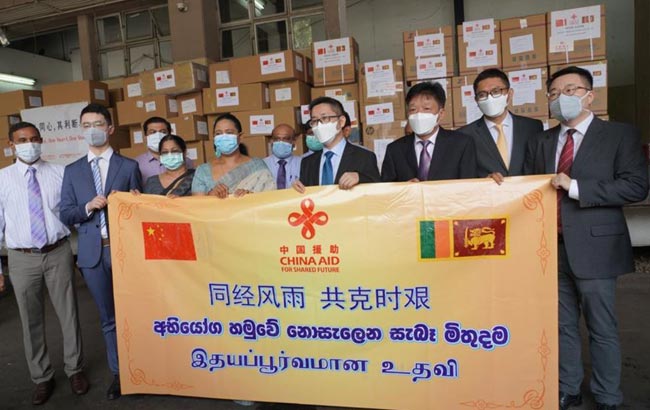
China has handed over its first donation of humanitarian aid and medical supplies to Sri Lanka to strengthen the solidarity between the two countries as Sri Lanka fights the COVID-19 pandemic, the Chinese Embassy in Sri Lanka said on Thursday.
The aid, which includes 50,000 medical masks and 1,008 COVID-19 test kits, was handed over by Hu Wei, charge d’affaires of the Chinese Embassy, to Sri Lankan Prime Minister Mahinda Rajapaksa in Colombo, and the materials were later handed over to Health Minister Pavithra Wanniarachchi and her team at a formal ceremony held on Wednesday.
The embassy said Sri Lankan prime minister and health minister thanked the Chinese government and its people for the donation and commended China’s efforts in successfully battling the pandemic in their country.
Rajapaksa said as Sri Lanka is now battling the COVID-19, the country looked forward to continued support from China in terms of their experience and prevention methods in controlling the pandemic as well as medical supplies.
Hu briefed the prime minister on the recent situation in curbing the pandemic spread in China and praised Sri Lanka for their efforts in fighting the virus which had been widely recognized by the World Health Organization and the international community.
Hu said China will continue to share its experience in the prevention, control, and treatment of the COVID-19, and will continue to provide help within its capacity through various channels.
Director-General of Health Services at the Health Ministry Anil Jasinghe told the media after handover ceremony that China had handed over materials that were of vital importance to Sri Lanka’s health sector and appreciated the strong solidarity shown at this special time.
-Xinhua
Two suspects connected to the Easter Sunday terror attacks have been arrested, Police Media Spokesman SP Jaliya Senaratne.
Holding a special press conference earlier this evening (02), Senaratne said that these arrests were made based on the investigations carried out along the arrest of the main suspect who had organized the suicide bomb attack Zion Church in Batticaloa.
One of the suspects –a male from Gothatuwa –had allegedly assisted in the coordination of the attack on Cinnamon Grand hotel in Colombo and transported the suicide bomber to the hotel.
The other suspect is from Mattakkuliya and he had facilitated the suicide bomber who attacked the St. Anthony’s Church in Kochchikade.
With these arrests, the Criminal Investigation Department (CID) has identified important leads into the investigations on the Easter Sunday attacks.
The Media Spokesman further said that this information will assist further progress in the investigations.
The third COVID-19 death in Sri Lanka was reported from the National Institute of Infectious Diseases (IDH) Wednesday (01).
The patient, a 73-year-old from Maradana, had tested positive for coronavirus on the same day while receiving treatment at Sri Jayewardenepura General Hospital.
However, later in the evening, he had succumbed to the virus on admission to the IDH in Angoda.
The Health Ministry said the deceased, who had been suffering from diabetes, high blood pressure and chronic kidney disease, was in a critical condition at the time of hospitalization.
It is reported that he was residing in the apartment complex at Imamul Aroos Mawatha in Maradana.
His daughter, son-in-law and their children have been directed for treatment on suspicion of being infected with the virus, according to the Medical Officer of Health (Central Colombo).
In the meantime, nearly 2,000 residents in the apartment complex where the deceased person was living in, have been put under self-isolation.
They are on standby for deployment in the Maldives, Sri Lanka, Bangladesh, Nepal, Bhutan & Afghanistan if the situation worsens.
As part of its neighbourhood first policy, six Indian Navy ships are on standby for assistance to neighbouring countries over COVID-19 crisis. Along with navy ships, top sources told WION that five medical teams are on standby for deployment in the Maldives, Sri Lanka, Bangladesh, Nepal, Bhutan & Afghanistan if the situation worsens.
On March 30, India sent medical supplies to Nepal. Sources said that Dornier & Mi 17 were used to position medical load at Gorakhpur on Monday & the load was thereafter taken to Nepal by road.
In the month of March, Indian PM Modi had proposed a SAARC meet on the COVID-19 crisis via video conference in which all SAARC heads of state/govt participated barring the Pakistani PM Imran Khan who was represented at a junior level.
India had announced the formation of a coronavirus emergency fund with a contribution of $10 million in which all SAARC countries barring Pakistan has announced contribution. Sri Lanka contributed $ 5 million, Bangladesh contributed $ 1.5 million, Nepal $ 1 million, Afghanistan $ 1 million, Maldives $ 200,000 and Bhutan $ 100,000 taking the total amount in the COVID-19 Emergency Fund to USD 18.3 million. New Delhi also said, that its rapid response team are at disposal of any SAARC Member country.
Since the SAARC leaders meeting, health officials of countries have had a video conference and commerce ministry officials will soon meet via the same format.
As an early responder, India evacuated several South Asian nationals stranded in Wuhan, which was once the epicentre of the COVID crisis. India got back 23 Bangladeshi, 9 Maldivian from Wuhan and 2 Sri Lankans and One Nepali from quarantined cruise ship Diamond Princess off the coast of Japan.
Copyright © 2026 LankaWeb.com. All Rights Reserved. Powered by Wordpress