52-yr-old man toured Sri Lanka is first COVID-19 casualty in Vadodara

April 2nd, 2020

Courtesy The Indian Express

With four of his immediate family members, including his wife, daughter, son and daughter-in-law, admitted in the COVID-19 ward for treatment, his last rites were performed by staff members from the Vadodara Municipal Corporation and two members of his family.

A 52-year-old man who was part of a group that toured Sri Lanka in March became the first COVID-19 casualty in Vadodara and the seventh in the state. The man who was undergoing treatment at SSG Hospital passed away early on Thursday.

With four of his immediate family members, including his wife, daughter, son and daughter-in-law, admitted in the COVID-19 ward for treatment, his last rites were performed by staff members from the Vadodara Municipal Corporation and two members of his family.

Extended family members of the deceased said that although his health deteriorated since last week. The deceased man’s nephew (sister’s son) told The Indian Express that it was an irreparable loss, especially because the family could not even bid him a final adieu. Last week, my uncle suffered a heart attack. We almost lost him then. He was given CPR and revived by the SSG doctors with much effort. In a way, my aunt, who is also in the ward was mentally prepared but they are all inconsolable right now. He was only 52, cheerful and loving. We never expected life to take such a nasty turn,” he said.

The family is anxious about the recovery of the other four members, including the 29-year-old daughter-in-law of the deceased, who is expecting her second child and is in the end of her third trimester. While the SSG Hospital has created a labour room equipped for emergency surgery if needed, the family says that they are praying for the members to be discharged soon.

My cousins — son and daughter of my uncle — are yet to test negative for the virus. It is a worry for us.

We are praying that all of them recover as soon as possible, especially since they are all isolated from each other at such a difficult time,” the nephew said.

According to the VMC officials, the man was cremated in the gas crematorium at Khaswadi in the city, as per protocol. VMC health officer Dr Devesh Patel said, We allowed their extended family members to attend the last rites in PPE suits. Four of them completed the formalities along with out staff as per protocol. The PPE suits are also to be destroyed in the same gas chamber once the body has been consigned to flames, as per the protocol.”

Dr Rajeev Daveshwar, superintendent of SSG Hospital, said that the immediate family, which is in isolation at the COVID-19 ward, was allowed to wear PPE suits and bid their goodbyes from a distance before the body was taken away from the ward.

The family also alleged that the condition of the 52-year-old man worsened after his treatment was delayed by a local doctor who he first consulted. The patient’s niece said, My uncle was feeling unwell immediately after his return to Vadodara. He visited a doctor on March 15 and asked him to recommend a COVID-19 test if he suspected his symptoms and also informed the doctor that he had visited Sri Lanka. The doctor assured him that he was only suffering viral flu and prescribed medicines. Two days later also, my uncle insisted that he was not feeling better but the doctor told him to continue with the medicines. It was only on the fourth day that my uncle was taken for a test to SSG and he was already in bad condition. The authorities did not even quarantine this doctor while our entire family was isolated for 14 days.”
VMC officer Dr Devesh Patel, however, denied the allegations and said that the doctor based in Nizampura has been in home quarantine after the administration traced contacts of the patient following his admission to SSG Hospital.

📣 The Indian Express is now on Telegram. Click here to join our channel (@indianexpress) and stay updated with the latest headlines

POSSIBLE ECONOMIC EFFECTS OF THE PROPOSAL OF MR. AJITH NIVARD CABRAL TO RELEASE A PART OF PROVIDENT FUND

April 1st, 2020

BY EDWARD THEOPHILUS

It seems that the proposal of Mr. Ajith Nivard Cabraal to release 20% of EPF balance to members is quite controversial as it would involve in positive and negative outcomes if the proposal implemented without experts’ opinions and a proper mathematical model. What is policy research say about the proposal, especially what is opinion of Dr.P.B. Jayasundara, the secretary of the President who is a theoretical and practical economist. The proposal may involve in broader macroeconomic effects and it should be discussed from different points of view.  Theoretically, it is a Keynesian style of advice and it might immediately impact on increasing inflation, which gives negative impact to the country. Think about the war time experience and the view of John Menard Keynes, who was concerned on the excess capacity of the economy.  I saw a report, which was based on a trade union opinion that may have focused on political views to attract people during the election period.  I would like to identify the broader points involved in the proposal.

  • If the government decides to release 20% of FPF balance to its members a large sum of money will go to the economy increasing the aggregate demand of the country. An increase in aggregate demand good for a country when there is an excess capacity because it will support increase production thereby expand employment and national income. The issue in relation to Sri Lanka is whether the country has an excess capacity. Central Bank of Sri Lanka or any other authorized research institution needs to express a clear opinion in which area there is excess capacity and industries related to such areas could be increased productivity in the short run.  The other side of the issue is although there is excess capacity in certain industries, has people got a preference or teste to demand goods in such production areas.  Therefore, it is a highly complicated area to investigate before making decisions.  Many developed countries made policy decisions to release a part of superannuation balance and it may positively impact the economies of developed countries, however, it might not appropriate to Sri Lanka.  Developed countries concerned on the increasing unemployment and paying subsidies or benefits to unemployed.
  • The general experience in Sri Lanka is when people get money in hand, they would use to spend them either consumption or purchasing of unnecessary goods and services or imported goods.  This would be concerned with deteriorating foreign exchange reserves and to further depreciate the foreign value of Sri Lanka’s rupee. Sri Lanka needs a rationale to reduce import and promote exports. Will the proposed idea consist with the rationale? Therefore, the release of 20% of the balance in EPF should not be giving a razor blade to monkeys. People need to wisely spend their long-term savings and if they use long term saving unwisely it would be a problem to people and the government.
  • EPF is mainly control and managed by the Central Bank and trading banks also manage own funds.  If the government release 20% of the balance in Central Bank managed fund the other funds would be needed to allow its members to follow similar policy and it might impact the liquidity level of trading banks. I have not conducted any research on this matter and my view is a mere opinion and it should be practically assessed.
  • The release of a 20% fund would positively impact the increase in inflation by the pull of demand and when inflation increases Central Bank must use monetary policy instruments increasing the interest rate and such action might impact the supply of credit and savings. In developed countries cash rate was reduced by central banks. In Sri Lanka monetary policy action to increase interest to control inflation will negative for business increasing financial expenses.  The other aspect is the action (increase in inflation) would increase the general price level of the country supporting for trade unions to struggle for wage and salary increases.  The government generally will be unpopular among ordinary people and it will be a supply of weapons to the opposition against the government.
  • EPF considers as a part of general saving and when 20% releases it will be caused a decline in savings level of the country.  We believe that savings in a country are equal to investment and a 20% decrease in saving level would create fiscal problems and force the government to increase borrowing to balance the budget.  Sri Lanka needs to increase general savings to reduce domestic debts.  The other problem is an investment in bonds because the capacity of EPF would reduce and the government needs to look investors for bond investments.

The release of 20% of EPF would be a macroeconomic problem and the impact of the decision would vary and need to consider many areas. That is why I believe it needs to develop a mathematical model in which variables should be needed to identify considering broader factors.

Sri Lanka is not a developed country although it talks in billions of rupees due to the dramatic decline in the value of the rupee.  Sri Lanka has disparities in development and growth It must identify appropriate policies than blindly following developed countries.   

ග්‍රාමීය ආර්ථිකය පිළිබඳ අර්බුදය ගැන රජය සැලකිලිමත්ද

April 1st, 2020

මතුගම සෙනෙවිරුවන්

              ලංකාවේ ජීවත් වන බහුතර ජනතාවගේ ජීවනෝපායන මාර්ගය වන්නේ ගොවිතැනයි.ගොවි තැනට සාපේක්ෂකව එයට සේවා සපයනබොහෝ පිරිසක්ද එම ආර්ථිකයට ඇතුලත්ය.එසේම අනෙකුත් සියලුම දෙන  ජීවත් වීම පිණිස විවිධ ‌ජීවනෝපායන මාර්ගයන් අනුගමනය කරති..රැකියාවන්හි නිරත අය ව්‍යපාරයන්හි නිරත අය මාසයක නිමාවේදී වැටුපක් අතට ගන්නා අතර ව්‍යාපාරිකයන් තමන් ‌ගේ බැංකු ගිණුම් තර කර ගනිති. නමුත් බහුතර පිරිසක් ගමේ තිබෙන ‌දේ වැඩි වර්ධනය කර ගනිමින් ඒවාට ‌සේවා සපයමින් යැපේ.මේ තත්වය සම්බන්ධ නිවරදි වාර්තා ජන සංගණනයන් තුළ යම් තරමකින් හමු වුවද ඒවා සම්පූර්ණ නැති බව තේරුම් යන්නේ රට ආපදා අවස්ථාවකට පත් වූ විටය.වර්තමාන වසංගත තත්වයන් හමුවේ එවැනි නිවැරදි සංඛ්‍යාලේඛන මත රජයේ ප්‍රතිපත්ති තීරණය කිරීම අත්‍යවශ්‍ය වේ. විශේෂයෙන්ම අඛණ්ඩ ඇඳිරි නීතියක් ක්‍රියාතමක කරන කල්හි. සේවා ආරථිකය බිඳ වැටෙන බැවින් ජන ජීවිතය අඩාල නොවන පරිදි පවත්වාගෙන යෑමට නිවරදි සංඛ්‍යාලේඛන මත රජය සිය ප්‍රතිපත්ති ක්‍රියාත්මක කළ යුතුය.

පහත දැක්වෙන්නේ ලංකාවේ ජනතාව ග්‍රාමීය වශයෙන් සිදු කරන ආරථික ක්‍රියාවන් කීපයකි. මේවා ඒකිනෙකට බැඳී පවතින අතර එකක් බිද වැටෙන කලිහ් අනෙකටද පැවතිය නොහැකිය.
1/ පුවක් ඒකතු කිරීම -පුවක් ‌තොග අපනයනය
2/ කුඹුරු ‌ගොවිතැන් කිරීම – වී ‌කෙටීම -සහල් පිටි කර්මාන්තය
3/ එළවලු ‌ගොවිතැන – එළවලු ‌තොග රැස් කිරීම ප්‍රවාහනය
4/ ‌පොල් වගාව – ‌පොල් ‌තොග රැස් කිරීම -‌කොප්පරා කර්මාන්තය – ‌තෙල් සිඳීම
5/ කුලුබඩු ‌බෝග වගා කිරීම -කුලු බඩු එකතු කිරීම – අපනයනය
6/ පළතුරු වගාව – පළතුරු ‌තොග රැස් කිරීම
7/ මල් වගාව -මල් ‌තොග වශයෙන් සැපයීම
8/ කටුසර ‌භෝග වගාව – ධන්‍ය වලින් පිටි සකස් කරවිකිණීම
9/ මැටි වළන් නිෂ්පාදනය
10/ කම්මල් වැඩ – ‌වෙල්ඩින් වැඩ
11/ ‌පොල් කැඩීම – ගස් කැපීම -‌පොල් ලී පැලීම
12/ දැව භාණ්ඩ නිෂ්පාදනය
13/ විසිතුරු භාණ්ඩ නිෂ්පාදනය
14/ ‌දේශීය ඖෂධ එකතු කිරීම -සිංහල ‌බෙහෙත් සල් පවත්වාගෙන යෑම
15/ ‌පෙදරේරු වැඩ

16/ පොල් ලෙලි වලින් කොහු සකස් කිරීම -කොහු ඉදල් නිෂ්පාදනය-අපනයනය

17/ ජ්‍යෙතිෂ සේවා සැපයීම

18/ පේෂකර්මාන්තය

19/ කුඩා තේවතු වගාව – තේ දලු නෙලීම

20/ රබර් වගාව -කිරි කැපීම – කිරි සහ රබර් ෂීට් එකතු කිරීම

මෙහි සඳහන් වන්නේආර්ථික ක්‍රියාකාරකම් කීපයක් පමණකි. මෙම ක්‍රියාකාරකම් තුළින් ආහාර සුරක්ෂිතතාවය ඇතිවන අතර හදිසි ව්‍යසනයකදී වුව ගමේ ජනතාව කිසිවෙකුටත් අත පෑමක් නොමැතිව සිය දිවි ගමනේ  යෙදෙති.නමුත් නාගරික ජනතාව එසේ නොවේ. ඔවහු වෙළෙඳ කටයුතු වල යෙදී සිටින අතර විවිධ ආයතනයන්හි රැකියාවලද යෙදී සිටිති. මාසික වැටුපක් ලබන පිරිසමධ්‍යම පන්තියට අයත්ය. දෛනික වැටුපක් ලබන පිරිස ඉතා විශාලය.නාගරය තුල ආහාර සුරක්ෂිතතාවය පවතින්නේ සිල්ලර වෙළෙඳ සල් සහ සුපරි වෙළෙඳ සල් ජාලයෙහි ශක්තියෙනි.මේවා යම් හෙයකින් බිඳ වැටුනහොත් දෛනික වැටුප් ලබන්නන් විහාල පිරිසක් අනාත වේ.ගමට මෙම තත්වය දරා ගැනීමට හැකි කාල සීමාව ඉහළය. නමුත් පෙර සඳහන් කළ ගමේ සේවා ආර්ථිකය බිඳ වැටුණ හොත් ආහාර සුරක්ෂිතතාවය තිබුනද ඒවා සපයා ගැනීමට තිබෙන අවස්ථාවන් නැතිවේ. නාගරික ජනතාව සිය මූලික ආර්ථික ක්‍රියාකාරකම් වලට  අමතරව නවීන තාකෂණයෙන් යුතු සේවා ආර්ථිකයකින්ද යැපේ. .නගරයක තිබෙන සංනිවේදන ආයතනයේ සිට විවිධ තාක්ෂණික සේවා සපයන්නන් මේ වන විට ජනතාවගේ අවශ්‍යතාවයන් මත ශක්තිමත්ව පවතී. ‌‌මෙම ආර්ථිකය මගින් ජනතාව ජීවත් කරවීමට කරන ‌සේවයද සුලුපටු ‌නොවේ.‌

       ග්‍රාමීයආර්ථිකය මගින් ලංකාවේ රුපියලේ අගය වැඩි කරලීමට උපකාරි විය යුතු නමුත් මහ බැංකු වාර්තා අනුව එය සිදු වන්නේ අල්ප වශයෙනි.එහෙත් ඒ මගින් ජනතාව ජීවත් කරවයි. කන්කෙඳිරියක් නොමැතිව රට පාලනය කර ගැනීමට පාලකයන් හට  හැකිවන්නේ සාම්ප්‍රදායික ආර්ථිකයේ බලයෙනි. ‌මෙම ආර්ථිකය බිඳ වැටීමක් සිදු වන කල්හි සමස්ත ආර්ථිකයම ශූන්‍ය කරලීමට බලපෑම් ඇති කරයි. වර්තමානයේ ඇතිව තිබෙන වසංගත තත්වය හමුව ආණ්ඩුව ඇඳිරි නීතිය දීර්ඝ වශයෙන් තබා ගැනීමෙන් ඉහතකී ග්‍රාමීය ආර්ථික ක්‍රියාකාරකම් සියල්ල බිඳ වැටී ඇත. එම නිසා නිවෙස් වලට ආහාර සැපයීමේ සිට විවිධ සේවා සපයන්නට පාලකයන්ට සිදු තිබේ.මෙය මහත් අසීරු කාරණයකි. ජනතාව තූළ පවතින අවශ්‍යතාවයන් එකිනෙකට වෙනස් බැවින් ඒවා අඩුපාඩුවක් නොමැතිව සැපයීම ලෙහෙසි පහසු කරුණක් නොවේ.  උදාහරණයක් වශයෙන් වට්ස්ඇප් සහ වයිබර්  මගින් ඉංග්‍රීසි බෙහෙත් වර්ග ගෙන්වා ගැනීම යෝජනා කිරීමයි. එම නවීන තාක්ෂණය ‌කෙරෙහි විශ්වාසය තබා සිටින අය කල්පනා කළ යුතු ‌දෙයක් නම් අන්තර්ජාලය හරහා ‌ද ‌‌වෛරස ගමන් කල හැකි බවයි.එසේම මෙම බෙහෙත් වර්ග වරින් වර දොස්තර වරුන් විසින් වෙනස් කරන අවස්ථා තිබේ. දොස්තරවරයෙකු මුණ ගැසීමට අවස්ථාවක් නැති සමයක එම බෙහෙත. දිගටම ගැනීම තුලින් ඇති වන බියකරු තත්වයට. අප මුහුණ දෙන්නේ කෙසේද.

    එම නිසා සමාජ සම්බන්ධතා විශාල වශයෙන් දුරස්තර ‌නොකර අදාල වසංගත ‌රෝග වලට නිවරදි ඔසු ‌සොයා ගත යුතුය.ජපානය විසින් එයට ඔසුවක් සොයා ගෙන ඇතැයි කියන අතර එය කඩිනමින් ගෙන්වා ගැනීමට රජය කල්පනා කරයි. නමුත් මේ රටේ තිබෙන පාරම්පරික ඔසු වට්ටෝරු පදනම් කොට නව බෙහෙත් සොයා ගැනීමටද හැකිය. ඒයටද  අවශ්‍ය රාජ්‍ය යාන්ත්‍රණයක්ද තිබේ.විශේෂයෙන්ම ‌දේශීය ‌වෛද්‍ය වරුන් ද සාභාගි කරවා ගැනීමෙන් දැනට සිටින ‌රෝගීන් සුවපත් කරගත යුතුය.බොරැල්ල ආයුර්වේදය මෙන්ම නාවින්න ආයුර්වේදය  සතුව එවැනි පහසුකම් රාශියක් තිබෙන අතර ඒවායින් වැඩ ගැනීම සෞඛ්‍ය ඇමතිතුමියගේ වගකීමකි. ග්‍රාමීය ආර්ථිකය තවදුරටත් බිද වැටීමට සැලැස්වීම රටට ඉතා අහිකකර ප්‍රතිඵල ළඟා කරදෙන්නකි. එම නිසා රොගීන් ඉතා ඉක්මනින් සුවපත් කර ගැනීමට බටහිරි වෛද්‍යවරුන් සහ දේශීය වෛද්‍යවරුන් ගෙන් සමන්විත ඒකාබද්ධ යන්ත්‍රණයක් සකස් කරන අතරතුර ග්‍රාමීය අංශයේ යටිතල පහසුකම් ඉතා ඉක්මනින් යථා තත්වයට පත් කළ යුතුය.එසේ ‌නොමැති වුවහොත් රට පුරා දුර්භික්ෂයක් ඇති වීම වැලැක්විය ‌නොහැකිය.

මතුගම සෙනෙවිරුවන්

ජාතිවාදීන්ට වෛරය ඇවිලවීමට ලබා නොදී වගකීමෙන් යුතුව සහ නීතියේ ආධිපත්‍යයට ගරු කරමින් කටයුතු කරන්නැයි වයඹ පළාත් ආණ්ඩුකාරවර ඒ.ජේ.එම්.මුසම්මිල් මහතා විශේෂ ප්‍රකාශයක් නිකුත් කරමින් සමස්ත ශ්‍රී ලාංකීය ජනතාවගෙන් ඉල්ලා සිටියි .

April 1st, 2020

ඒ. ජේ. එම්. මුසම්මිල්,වයඹ පළාත් ආණ්ඩුකාරවර. මාධ්‍ය නිවේදනයයි 

ගෝලීය වසංගතයක් බවට පත්ව ජනජීවිත බිල්ලට ගනිමින් සිටින කොවිඩ් – 19 උවදුරෙන් රටත් ජනතාවත් ආරක්ෂා කිරීමට උපරිම උත්සාහයක් දරමින් සිටින රජයට මහජනතාව මේ මොහොතේ සහයෝගය දැක්වීම අතිශයින්ම වැදගත්ය . එසේ වුවහොත් මේ බියකරු වසංගතය පරදවා අපේ මාතෘ භූමිය යථා තත්ත්වයට පත් කිරීම එතරම් අපහසු නොවනු ඇත.

මෙම බියකරු වසංගතයෙන් රටත් ජනජීවිතයත් ගලවා ගැනීම සඳහා ජනාධිපති ගෝඨාභය රාජපක්ෂ මැතිතුමාගේ සුවිශේෂි නායකත්වය සහ මඟ පෙන්වීම යටතේ ඉතාම ක්‍රමානුකූල  සාර්ථක වැඩ පිළිවෙලක් රට තුළ ක්‍රියාත්මක වෙමින් තිබෙන අතර එය මේවනවිට ලෝක සෞඛ්‍ය සංවිධානයේ (WHO) පැසසුමට පවා ලක්ව තිබෙන බවද පෙන්වා දීමට කැමැත්තෙමි.

එසේම අග්‍රාමාත්‍ය මහින්ද රාජපක්ෂ මැතිතුමා සහ කොවිඩ්-19 වෛරසය සහමුලින්ම ශ්‍රී ලංකාවෙන් තුරන් කිරීමේ ජනාධිපති කාර්ය සාධක බලකායේ සභාපති හිටපු අමාත්‍ය බැසිල් රාජපක්ෂ මැතිතුමා එක්ව මෙම ව්‍යසනයේදී සමස්ත රටේම ජනතාව මුහුණ පා සිටින ගැටළු කළමනාකරණ කර ඒවාට අවශ්‍ය විසඳුම් ලබා දීමට අවශ්‍ය සියළු කටයුතුද දැනටමත් සම්පාදනය කර අවසන්ය.

එසේම සෞඛ්‍ය අමාත්‍යාංශය සහ යුද හමුදාපති ලුතිනන් ජනරාල් ශවේන්ද්‍ර සිල්වා මහතාගේ ප්‍රධානත්වයෙන් යුත් කාර්ය සාධක බලකාය සහ ආරක්ෂක අමාත්‍යාංශය,  පොලීසිය, ත්‍රිවිධ හමුදාව, සිවිල් ආරක්ෂක දෙපාර්තමේන්තුව, වෛද්‍යවරුන් හෙද නිලධාරීන් ඇතුළු සමස්ත සෞඛ්‍ය කාර්ය මණ්ඩල, දිස්ත්‍රික් ලේකම් කාර්යාල ඇතුළු ප්‍රාදේශීය ලේකමි කාර්යාල හා ඊට අනුබද්ධ ආයතන ඇතුළු මේ සඳහා කැපවී සිටින සියළුම රාජ්‍ය ආයතන  ඉතා වෙහෙස මහන්සිවී රටෙත් ජනතාවගෙත් ආරක්ෂාව වෙනුවෙන් කටයුතු රැසක් මේවනවිටත් ඉටු කරමින් සිටින බවද පෙන්වා දිය යුතුය.
එබැවින් රජයේ සියළුම පාර්ශ්ව එක්ව කොවිඩ්-19 මාරයා මෙරටින් මුළිනුපුටා දැමීමට ගනුලබන සෑම උත්සාහයකටම රටට ආදරය කරන සෑම පුරවැසියෙකුම සහාය දැක්වීම ඉතා වැදගත් බව දන්වමි.

මෙම මාරක වසංගතය රට තුළ පැතිරයාම වැළැක්වීම සඳහා රජය විසින් ගනු ලබන ප්‍රමුඛතම ක්‍රියා මාර්ගය වන ඇඳිරි නීතිය ක්‍රියාත්මක කිරීමේදී පොදුවේ සෑම පුරවැසියෙකුටම බොහෝ දුෂ්කරතාවයන්ට මුහුණ දීමට සිදුවන බව සත්‍යයකි. නමුත් ඒ සියළුම අපහසුතාවයන් අසීරුවෙන් හෝ විඳ දරා ගනිමින් මේ අවස්ථාවෙිදි ඉවසීමෙන් හා බුද්ධිමත්ව කටයුතු කිරීම සෑම පුරවැසියෙකුගේම වගකීමද වනු ඇත.

කොවිඩ් 19 වෛරසය ඉතා බිහිසුණු ආකාරයට ජනතාව අතර පැතිර යන දරුණු රෝග කාරකයක් වන බැවින් ජනතාව ඒකරාශී වීමේන් වළකින ලෙසද සෞඛ්‍ය අංශ නිරන්තරයෙන්ම උපදෙස් ලබා දෙමින් සිටියි. මේ අනුව සියළුම මුස්ලිම් දේවස්ථානවල ආගමික  තාවකාලිකව සම්පුර්ණයෙන්ම නවතා දමන ලෙස සමස්ත ලංකා ජමියාතුල් උලමා සංවිධානය (ACJU) උපදෙස් ලබාදී තිබෙන අතර ඒ හා සමානවම අනෙකුත් ආගම්වල ආගමික කටයුතු සඳහා ජනතාව ඒකරාශී වීම්ද තාවකාලිකව සම්පුර්ණයෙන්ම අත්හිටුවන ලෙසද උපදෙස් ලබාදී ඇත. මෙය තාවකාලික ආරක්ෂක පියවරක් වන බැවින් රට මේ බිහිසුණු  වසංගතයෙන් මිදී යථා තත්ත්වයට පත්වූ පසුව සියළුම ආගම්වල ආගමික කටයුතු සුපුරුදු පරිදි ආරම්භ කිරීමට අවසරය හිමිවනු ඇත.

එවැනි අවස්ථාවක රජය විසින් පනවන ලද ඇඳිරි නීති රෙගුලාසි සහ සෞඛ්‍ය බලධාරින්ගේ උපදෙස් නිසියාකාරව පිළිපැදීමට විශේෂයෙන්ම අප වග බලාගත යුතුය. එසේ කටයුතු කිරීමෙන් මෙවැනි අවස්ථාවක අඩුපාඩු සොයමින් ජාතිවාදී කටයුතු ඉස්මතු කිරීමට  උත්සාහ දරන්නන්ගෙන්ද ප්‍රවේශම් වීමට වග බලාගත යුතු බවද මේ අවස්ථාවෙීදී  මා අවධාරණය කරමි. ඒ අනුව මේ බැරෑරුම් අවස්ථාවෙිදි අප සියළුම දෙනාම ශ්‍රී ලාංකිකයන් වශයෙන් එකට එකතුවී මේ ව්‍යසනය පරාජය කිරීමේ අධිෂ්ඨානය තරයේ සිතට ගත යුතුය.

එමෙන්ම ජනතාවට අත්‍යාවශ්‍ය ආහාර ද්‍රව්‍ය සහ භාණ්ඩ බෙදාහැරීමේදී ජනවාර්ගික හෝ ආගමික බේදයකින් තොරව පොදුවේ සියළුම ජනතාවට අවශ්‍ය ප්‍රතිලාභ ලබාදීමට කටයුතු කරන ලෙසද එවැනි වටිනා කර්තව්‍යයන්හී නිරත සියළුම කණ්ඩායම් වලින් ඉල්ලා සිටීමටද මා කැමැත්තෙමි.

මේ සියල්ල තුළින්ම නිවැරැදිව සහ බුද්ධිමත්ව කටයුතු කරමින් කොවිඩ්-19 මාරාන්තික වසංගතයෙන් අපේ උතුම් මාතෘ භූමියත් සමස්ත ශ්‍රී ලාංකීය ප්‍රජාවත් නිරෝගීව නිරුපද්‍රිතව ගලවාගෙන ඉන්දියන් සාගරයේ මුතු ඇටය ලෙස විරුදාවලි ලත් ශ්‍රී ලංකාව සමස්ත ලෝකයේම ඉහළම තැනකට ඔසොවා තැබීමට ඔබට සහ මට හැකිවේවායි ඉත සිතින් පතමි !

ඒ. ජේ. එම්. මුසම්මිල්,
වයඹ පළාත් ආණ්ඩුකාරවර.

Attempt to politicize Corona Pandemic

April 1st, 2020

By : A.A.M.NIZAM – MATARA

An unidentified leading politician opposed to the government and who aspires for the downfall of this government has told his supporters that Corona Virus is a divine blessing for them and all efforts should be made to make this deadly virus engulf the country and infuriate the people who would become unable to engage in their employments, the daily wage earners to earn their living, fishermen to go out for fishing and the country dried up of food, essential items, and drugs.

Reports said that the former MP Rodee Ranawaka has held a political meeting at his residence in Colombo and several persons have attended this meeting.  Police said that they will take appropriate action against the former MP and against all those who attended the meeting ignoring curfew rules relating to prohibition of gatherings.

A special report published by Sunday Times (29th March) stated that for many decades, Sri Lankans have displayed their ingenuity at historic moments even if what they said or did border on insanity. It said that some 65 years ago, an ayurvedic physician cum astrologer, came out with a recipe for a cocktail that would make dark women turn white. This was when the sun, moon and the earth aligned itself during a total eclipse that brought darkness during the daytime. When sunlight arrived later, they were either in hospital or vomiting from the inebriating wild brew. Instead of changing into white, they had turned red in hat health disaster which is immortalized by the baila song Bivva Neyda Vadakaha Sudhiya.

Over five decades ago, Neil Armstrong landed on the moon with a historic declaration that it was one small step for man but a giant leap for mankind. That giant leap, which then sparked visions of colonizing the moon, was good news for them. There was no need to work, for every day would be a holiday due to the full moon. One could say that was in jest.

And now, even before China could contain the outbreak of coronavirus, Sri Lankans had invented their own cure. The price of Asafoetida (or perunkayam) which stood at a mere Rs. 10 for a small piece shot up to Rs 300. It was said to be a hygienic deterrent when worn in a part of the body. It is a plant that has a bad smell and tastes bitter, sometimes called devil’s dung.” People use the plant’s resin, a gum-like material in solid form, as medicine.

Some tied ginger, lime, garlic and medicinal plants in their waist or neck. Various other so-called cures were trotted out, but the Department of Ayurveda flatly denied that any ayurvedic remedy had been found.

Just this week, Dr. Sita Arambepola, till recently the Governor of Western Province, declared on a television channel that a state institution has invented a medicine to cure coronavirus or COVID 19. She said, it was now a top-secret” and will only be made known in the coming days. Dr. Arambepola is now on the National List of the SLPP. Her announcement was after the World Health Organisation (WHO), declared it would take more than a year to find a cure for the virus.

Now comes a prescription from an unexpected quarter. It is from Sajith Premadasa, till recently the Leader of the Opposition and now Prime Ministerial aspirant at the upcoming parliamentary elections. This imbecile politico in a video clip has stated: I suggest the people use Platanol instead of Chloroquine because it will control the coronavirus.”

Platinol is a cancer medication that interferes with the growth of cancer cells and slows their growth and spread in the body.

An aide to Premadasa is reported to have received a call from London from the brother of a Colombo district parliamentarian, once a State Minister. He has asked that Mr. Premadasa be told not to let down those who were backing him by making such stupid” remarks.

His prescription was aired on a TV clip in the social media hours after US President Donald Trump told an internationally televised news conference that the cure for coronavirus was Chloroquine or Hydroxychloroquine. His remarks came in the presence of doctors and officials of the national health services in the US. Soon after the event, a coronavirus patient who took the drug was poisoned. A man in Phoenix, Arizona, died after self-administering the drug whilst his wife is seriously ill.

In the video, Mr. Premadasa does not say on whose advice he made the recommendation. But a staunch Premadasa loyalist has told another equally staunch supporter, both holding top positions, Anna eye ayith kata arala” or there, he has opened his mouth again.” The second man has replied Eyata Kata vahagena inna kiyanna” or tell him to keep his mouth shut.  Mr. Premadasa later made a statement apologising for his remarks.

Mr. Premadasa has won more space in social media after his medical prescription. One account said he should be sent to Italy where the virus is wide spreading and greater medical attention is required for the victims. Another praised UNP leader Ranil Wickremesinghe for not ceding the UNP leadership. There were also caricatures of Mr. Premadasa with a stethoscope around his neck and the titles MD and FRCP (Fellow of the Royal College of Physicians) after his name.

In line with these anti-national­­­ and inhuman attitudes of these politicos, the misbegotten coterie such as Jeppos National List nominee Kumar David, Crocodile Rajitha’s PRAA killing squad partner self-exiled Sunanda Deshapriya, Quisling Mangala, Bomb manufacturing expert for JVP  in 1971 under the pseudonym Podi Athula, Victor Ivan who co-authored Sajith Premadasa’s election manifesto with terrorist proxy Sumanthiran,  anti-Rajapaksa and pro-UNP NGO vulture Pakyasothy Saravanamuttu using his notorious websites Vikalpa and Groundciews and promoter of anti-national and anti-progressive political opinion Rajan Philips and many of their ilk have also made statements to espouse the people against the government claiming that the government is not taking adequate measures to successfully combat the virus situation and soon Sri Lanka will become similar to America and Italy.  It seems that their only desire is to gain political mileage over the coronavirus cadavers and topple this government while even a Britisher who left Sri Lanka recently has told BBC that he greatly admires the quarantine facilities being maintained by the government of Sri Lanka including the measures being taken to home deliver food, essential items, and medicines.

Dr, Asoka Bandarage, a well-known Sri Lankan academic and author of many books on analytical studies states that the origin of the virus and the disease is commonly attributed to an animal to human transmission (possibly from a bat) at a seafood market in Wuhan in Hubei Province, China in December 2019. US President Trump and the western media referred to it as the ‘Chinese virus’ or the ‘Wuhan virus’. While the Chinese government initially mishandled the response to the virus outbreak, China reported no new coronavirus cases on March 18. Chinese officials are now saying that the novel coronavirus originated in the United States and not in China. They claim that American soldiers brought COVID-19 to China and refer to a March 12 U.S. Congressional Oversight Committee hearing during which the Director of the CDC Robert Redfield stated that ‘some Americans who seemingly died from influenza were tested positive for novel coronavirus in the posthumous diagnosis’.

She says that there is also speculation the U.S. army’s DARPA (Defense Advanced Research Projects Agency) research and testing involving bats and coronaviruses and gene editing ‘bioweapons’ may have had a role to play in the outbreak of the virus in China.

Dr. Bandarage points out that reports from China state that a pharmaceutical drug manufactured by Cuba, Interferon B, Alfa 2B has significantly helped to stop the spread of the virus there. However, this drug seems to be overlooked in the U.S., and President Trump has called for ‘cutting red tape ‘to quickly get experimental drugs to people outside of clinical trials.

Victor Ivan in his Ravaya article this week titled Calling of Parliament and ignoring it” which is a demand made by his minion Sajith Premadasa has said that in a telephone discussion he had with a doctor he was told that it would be better if the parliament was kept closed without convening it.  Continuing further Ivan says that the Parliament in Sri Lanka is an institution filled with corruption. But until structural changes are made to that institution it is highly dangerous to keep it closed and allow an ad-hoc rule to prevail.

He says that even when Parliament was in a status of corruption some valid services were done by it, such as finding out, to some extent, about the Treasury Bonds scam and the Easter Sunday Carnage. 

He asserts that at the moment Sri Lanka is facing an unprecedented complicated situation.   Although there is an elected President the President does not have Executive Powers.  Similarly, the interim caretaker government also does not have the majority of power in Parliament. No one knows when a general election could be held.  Also, no one knows how many people will die at that time.  The fiscal powers of the government lie with the Parliament. All government institutions are constitutionally responsible to the Parliament.  Conducting the affairs of the State without a date for the election is improper and even the Auditor General’s constitutional powers rest with the prevalence of the Parliament.

Ivan further states that since the country has a President sans Executive Powers and a minority government rule many mistakes could take place from such a rule particularly in a crisis situation like this.    

He finds faults with the present situation in all sectors including apparel exports, food distribution, employment, etc, and emphasizes the importance to convene the Parliament to find solutions to these problems.

It should be reminded that Victor Ivan was one of the main leaders of the 1971 JVP uprising and one of the main slogans of theirs at that time was to destroy the Parliament which they said was an imperialist organ designed to suppress the people!  

The Island editorial on Sunday 29th March said that when the tsunami hit us and some other countries in December 2004, notably Indonesia which suffered the most damage both in human and material terms, the now raging coronavirus has affected the whole world to varying degrees – none of them minor. At this time when all concerned authorities, both at home and abroad, are striving might and main to contain the epidemic as best as possible, it is the duty of not only individuals but all mankind to cooperate to the utmost in containing the disease and halting its spread. It emphasized that all of us must pay a price not only in our own interest but in the interest of our neighbors as well as our brothers and sisters who may be living far away from us but who risk infection from individual acts of carelessness that could be due to either ignorance or selfishness.

It says that the cost of this epidemic, often described as a pandemic because it is of a scale crossing international boundaries and affecting large numbers of people on several continents, would be huge and the economic cost that must be incurred in terms of fighting the virus, caring for its victims and containing its spread is only a part of the big picture. It adds that production worldwide worth billions of dollars has evaporated into thin air with factory closures and the lockdown to varying degrees in different countries but fortunately, the technological great leap forward of recent years enable working from home and many other conveniences in offices that can minimize the physical presence of employees.

The editorial asserts that in the current globalized context, supply chain disruptions have forced the closure of many factories worldwide. Here in Sri Lanka too much of our vital garment industry is dependent on fabrics made in China and that surely would have affected production.

The editorial states while Lankans are quick to criticize our public services, which unarguably are bloated and carry many passengers on their payrolls many sectors in the public service essential to combat the virus responded magnificently to the challenge for which they deserve much credit. It was not ‘always breakdown’ as a popular television program was titled some years ago. There had been carping in some segments like the railway where ticket-less travel was made possible with employees hitting out at top management for the non-provision of protective gear and refusing to man ticket counters and do ticket checking on trains. Railway income, one report had it, was down to 20 percent of the usual. But since the virus hit us, the trains were not as crowded as usual and regardless of revenue losses; this is all to the good in the context of the need to avoid infection spreading crowds.

Referring to actions being taken by the President and the government the editorial emphasizes that President Gotabaya Rajapaksa and his government were necessarily required to maintain a fine balance between over-reacting at great cost to the economy or under-reacting at the cost of the infection spreading. But as one person was quoted as telling a newspaper last week, it is better to over-react and laugh later than to under-react and cry.” Very many difficult decisions had to be taken by the administration and it did not shirk this responsibility for which all credit is due.


The Editorial points out that while fighting and containing the virus, it is also necessary for the country to look ahead. One priority area in this respect is food security. Sri Lanka has been blessed with a climate and geography that makes it possible for us to become self-sufficient at least in our essential food. Despite claims made by incumbent governments of different parties that we have achieved self-sufficiency in rice, imports are not few and far between. But today we are not a ship-to-mouth country as we once were. Sugar, milk, and fish are other products where self-sufficiency is possible given the required policies and the effort. Achieving the right balance between consumer and producer is the greatest challenge in this regard. Hopefully, we will have future governments that will act with the required wisdom to work towards this end.

Cooperation from people of all walks of life and sharing food with their neighbors even in the midst of their hardships are reported from all over the country and the Police have taken stern measures to apprehend the curfew violators.  By 29th March over 6,000 curfew violators and over 1,500 vehicles including 3 wheelers and motorcycles have been taken into custody.  The first corona death reported in the country, a person from Marawila was cremated today as per guidelines given by the WHO.  Meanwhile, the 6th batch of successfully quarantined patients left for their homes and they profusely praised the security forces and health care personnel for the magnificent treatment accorded to them. Several areas such as Obeysekerapura in Rajagiriya, Atulugama in Bandaeagama, Galrnbindunuwewa, Horowpathana and Kahatagasdigiliya in the Anuradhapura district and  Akurana in Kandy have been kept closed for 14 days following complaints that virus-infected people in these areas who had come after foreign visits have mingled with many people in the said areas and there is a danger looming about the spread of people getting contaminated.   

More and more philanthropists have come forward to donate funds to the Special Fund launched by the President while many apparel industries have suspended their regular production work and started manufacturing face masks and virus-proof jackets free of charge.  Some apparel industries have donated rolls of clothing material that had been imported from China to be used as bedspreads at quarantine centers.  Meanwhile, a multi-disciplinary team of Engineers of the medical and engineering faculties of the Peradeniya University has volunteered to manufacture ventilators for virus affected patients. This is being done in collaboration with the National Institute of Fundamental Studies in Kandy.  The Engineers of the CEB has volunteered to contribute a substantial amount of funds and several ICU beds and these beds have been made available to the Panadura hospital. The China Merchants Port Group (CMPort) has donated 1,000 pieces of protective gear to support the ongoing national campaign against the Coronavirus Disease 2019 (COVID-19) outbreak. The protective gear has been designed for the doctors and other health workers treating COVID-19 patients.

Among the other measures the government will embark on as that has been outlined by Prime minister Mahinda Rajapaksa will be :

  • Impose an import duty on fuel to recover profit margins from petroleum imports.
  • Authorize the Treasury Secretary to transfer Rs 4 billion to meet food subsidies certified by the Chairman of Lanka Sathosa/CWE and Chairman of the Consumer Affairs Authority.
  • Authorize the Treasury Secretary to transfer Rs 50 billion from the Fuel Price Stabilisation Fund to settle the debt of the Ceylon Electricity Board. The CEB’s Chairman and Board of Directors to be told to use this to settle the CEB’s loans to the Ceylon Petroleum Corporation.
  • Encourage solar panel developers to implement an accelerated solar power unit for each household and the Government to subsidize the installation cost of such units in each house.

Premier Rajapaksa has noted that the National Budget and Appropriation Bill 2020 are prepared with fund flows expected to be improved most likely by the end of July this year.

A report by the Health Review Global said that Sri Lanka is setting an example with swift response to the COVID-19 pandemic.  The report said that following a thorough analysis of public health measures employed by Sri Lanka.  We have studied the responses of many countries to the coronavirus pandemic. We at healthreviewglobal.com decided to select Sri Lanka for its swift and impressive response to the global epidemic despite being a second world economy. On top of it, we learned the importance of investing in public health, the Health Review Global reported. It said that the paradise nation is 100% vaccination covered, and all treatments under the extended program of immunization are administered free of charge and the Ministry of Health regulates and sets the guidance to the future policies of the health system.

In an interview with Sunday Observer of 29th March former UPFA Gampaha District parliamentarian Dr.Sudarshini Fernandopulle said our healthcare system is well equipped to handle the coronavirus outbreak and the Presidential Task Force for this purpose was established way back in January when the first corona case was reported in China in early January. Therefore, the relevant authorities have been given the necessary instructions to combat the coronavirus pandemic, she said.

Excerpts:

Q: The number of corona infected persons has exceeded 615,970 around the world. In this backdrop are the measures are taken by the Government sufficient or should they do more?

A: Of course, the Government is doing a great job. President Gotabaya Rajapaksa is giving necessary guidelines and taking important decisions when necessary and all necessary instructions had been given to the authorities to control the situation. The President and the Prime Minister have a good relationship in governance and Health Minister Pavithra Wanniarachchi is giving good leadership at this time of crisis and we have a good Director General of Health Services and Epidemiologists. Our health infrastructure can cater to the grassroots level, and therefore, we have no fear to face the situation. As of March 28, 110 corona infected cases had been reported while over 237 patients were under observation in designated hospitals across the country. The Government, she said, is taking strict measures to enforce the law. Actually, these coronavirus cases were contracted through tourists, people associated with tourists and people returning from overseas. Those who squandered health surveillance were screened and all details of the returnees sent to the relevant MoH offices. The MoH offices through their health staff have noted down the addresses to monitor and follow them up. Unfortunately, some of those who were instructed to practice self-quarantine had not followed the guidelines. The Government has declared 19 hospitals to treat the coronavirus affected people and set up quarantine centers countrywide. The Government imposed the curfew countrywide to contain the outbreak of the disease.

Q: Is our healthcare system adequately prepared and equipped to handle the crisis?

A: Of course. We have a very good health infrastructure. We have a midwife for every 3,000 patients and a Public Health Inspector for 10,000 to 15,000 people. We have good disease surveillance, monitoring, follow up and notification systems. Sometimes, there may be shortfalls but generally, our healthcare system is good, and the health staff is capable of handling the situation, but of course, we need the cooperation of the people as well. Our ICU capacity may not be on par with developed countries. But with the available resources, we have been effectively managing the corona outbreak.

Q: There have been many reports of irresponsible behavior by members of the public despite Government restrictions. What is your advice to the public to tide over this crisis?

A: The public has to take responsibility because the coronavirus spreads through droplets and contamination. As far as possible, we have to advise people to avoid public places. Sometimes, you have to go out to buy food items, and you should then use a facemask and wash hands often. We should also refrain from touching the facemask as well as the mouth and the eyes. If your hands are contaminated, it could enter your system. We should remain calm and not panic. The young or the elderly who have lung diseases, heart diseases or diabetes may be at a higher risk of contracting the disease. Therefore, with a large number of such cases, it would be difficult for the Government to manage quarantine centers.

Q: How do you see the role played by the Armed forces and the health care system at this critical moment?

A:I as a public representative must thank the health authorities starting from the higher officers to all other categories. At present, they are doing a tremendous job. The tri-forces too are doing a great job. The Government has set up a National Operation Centre for the prevention of COVID-19 outbreak headed by the Army Commander. Collaborative efforts are being made to take quick decisions and the Sri Lanka Army is giving great assistance and technical support to adopt whatever is needed in the present situation.

Q: On personal hygiene what can we do to prevent any viral infection?

A: The main thing is to avoid public places. It is appropriate to use a facemask when you have to visit public places such as supermarkets and shops. You should always wash your hands and use a sanitizer regularly and avoid touching the nose, eyes, and mouth, and also have a frequent drink of water.

Q: Will the closure of the Airport for incoming flights have a big effect on preventing the coronavirus spread in Sri Lanka?

A: Of course. Most of the cases were reported by those who came from Italy. The closure of the Airport is a wise step taken by the Government. There may be repercussions. In my electorate too, lots of people depend on hiring vehicles to and from the Airport. However, we have to take preventive measures to safeguard the lives of the people.

Q: President Gotabaya Rajapaksa has announced a series of relief measures to the public who have been hard hit by the coronavirus. Are these measures sufficient or do you think the Government should do more?

A: The President has done an excellent job by reducing the prices of some essential goods including dhal and canned fish. Those who draw daily wages cannot afford other items. I read many comments by the people praising the President for reducing the prices of these items. The President has also declared a relief package for those who have obtained loans, giving them a six month grace period. These are good moves to uplift the living conditions of the low-income group.

Q: There have been many calls to postpone the General Election and also to reconvene Parliament to discuss this critical issue. What is your comment on this?

A: The lives of the people should not be put at risk. We have to campaign for the election and have pocket meetings. Everybody has stopped their campaigns. The lives of the people come first so that the postponement of the election is not a major issue. This decision was taken by the Chairman of the Election Commission. I think it is a good move to postpone the election until the coronavirus cases reduce.

To be continued………….

ලංගම සේවකයින් හට මුව ආවරණ, අත්වැසුම් සහ අනෙකුත් අදාළ සියලූම වෛද්‍ය පහසුකම්

April 1st, 2020

ජනමාධ්‍ය නිවේදනයයි සමස්ත ලංකා ප‍්‍රවාහන සේවක සංගමය

2020. 03. 31

ජනාධිපති කාර්ය සාධක බලකාය,
ජනාධිපති ලේකම් කාර්යාලය,
කොළඹ 01.

තම ජීවිත අනතුර පවා නොසලකා සේවය කරන ශ‍්‍රී ලංගම සේවකයින් හට මුව ආවරණ, අත්වැසුම් සහ අනෙකුත් අදාළ සියලූම වෛද්‍ය පහසුකම් ලබාදීමට කඩිනමින් මැදිහත්වන ලෙස ඉල්ලා සිටීම


මේ මොහොත වන විට සෑම දිස්ත‍්‍රික්කයකම රියදුරු, කොන්දොස්තර හා කාර්මික සේවකයින් තම ජිවිත අනතුර පවා නොසලකා රට තුළ ඇති වී ඇති කොරෝනා වසංගතය මැඩපැවැත්වීමට දැඩි කැපකිරීමක් සිදුකරමින් සිටිති. සියලූම අත්‍යවශ්‍ය සේවාවල සේවකයින් ප‍්‍රවාහනය කිරීම, විශේෂයෙන්ම සෞඛ්‍ය අමාත්‍යාංශයේ සේවකයින් අදාළ ස්ථානයන්වලට ප‍්‍රවාහනය කිරීම සෑම දිස්ති‍්‍රක්කයකම ශ‍්‍රී ලංගම සේවකයින් විසින් සිදුකරනු ලබයි.

මෙම කාර්යයනහි නියැලි ලංගම සේවකයින් හට විධිමත්ව අඛණ්ඩව අදාළ මුව ආවරණ, අත්වැසුම් සහ වෛද්‍ය පහසුකම් ලබාදීමට කඩිනමින් මැදිහත්වන ලෙස අප සංගමය ජනාධිපති කාර්ය සාධක බලකායෙන් කාරුණිකව ඉල්ලා සිටින්නෙමු.

ස්තූතියි.

මෙයට විශ්වාසී,
සේපාල ලියනගේ
ප‍්‍රධාන ලේකම්
සමස්ත ලංකා ප‍්‍රවාහන සේවක සංගමය.

පිටපත්
1. ගරු ප‍්‍රවාහන අමාත්‍ය – මහින්ද අමරවීර මැතිතුමා
2. ශී‍්‍ර ලංගම ගරු සභාපති – කිංස්ලි රණවක මැතිතුමා

Contact Sri Lankans

April 1st, 2020

Embassy of Sri Lanka Washington D.C.

Ministry of Foreign Relations of Sri Lanka in collaboration with the Information & Communication Technology Agency of Sri Lanka (ICTA) has launched the “Contact Sri Lanka” web portal for Overseas Sri Lankans to register voluntarily their basic contact details, allowing the Government of Sri Lanka to provide assistance during emergencies such as the COVID 19 outbreak, which will be operationalized through Sri Lankan stakeholders and the network of Sri Lanka Missions abroad. 

Sri Lankans living and traveling in the United States are invited to register voluntarily with the “Contact Sri Lanka”  web portal 

https://www.mfa.gov.lk/foreign-ministry-launches-contact-sri-lanka/

Your cooperation in this regard is highly appreciated 


Embassy of Sri Lanka
Washington D.C.

Sri Lanka seizes record US$65 million worth of drugs

April 1st, 2020

Courtesy channelnewsasia.com

COLOMBO:  Sri Lanka’s navy seized US$65 million worth of crystal methamphetamine and ketamine on Wednesday (Apr 1) in the country’s biggest drugs bust, officials said.

Acting on a tip-off, authorities raided a flagless vessel in the country’s southern waters and arrested nine Pakistani men suspected of smuggling the drugs.

Navy personnel, wearing special protective clothing in case the suspects had COVID-19, found 605 kilogrammes of crystal meth, also known as ice, and 579 kilogrammes of ketamine, said Navy Commander Piyal de Silva.

“This is the first time we have found ketamine and it is likely that the smugglers were trying to take this cargo to some East Asian destination,” de Silva told reporters in the capital Colombo.

Sri Lanka’s defence ministry said the drugs had an estimated street value in Colombo of about 12,500 million rupees (US$65 million), making it the country’s biggest single seizure of drugs.

Last month, the navy seized two foreign trawlers carrying more than US$33 million worth of heroin and ice.

Authorities said initial investigations suggested the Iran-Pakistan coast was the point of origin.

Sri Lanka reports third COVID-19 death

April 1st, 2020

Courtesy Adaderana

Another patient who tested positive for the Coronavirus has died, marking the third death reported in Sri Lanka due to COVID-19, according to hospital sources.

The patient, a 72-year-old from Maradana, had succumbed to the virus at the National Institute of Infectious Diseases (IDH) in Angoda on Wednesday evening (01).

https://youtu.be/3qpMZf1Lows

This bring the number of fatalities in Sri Lanka from the COVID-19 outbreak to 3.

A total of 146 confirmed cases of Coronavirus have been reported in the country as of 5.oo p.m. on Wednesday. 

Twenty-one patients have completely reverenced and discharged from hospital while 123 suspected patients are currently under observation at selected hospitals across the country. 

Coronavirus: China lockdown may have blocked 700,000 virus cases – BBC News

April 1st, 2020

BBC News

The virus is thought to have originated in a seafood market in Wuhan that “conducted illegal transactions of wild animals”. The city’s 11 million residents have been shut off from the rest of the world since the middle of January, with roadblocks around the outskirts and drastic restrictions on daily life. But roads reopened to incoming traffic late on Friday, according to Reuters news agency. And state media said the subway was open from Saturday and trains would be able to arrive at the city’s 17 railway stations.

China starts daily report of asymptomatic cases

April 1st, 2020

CGTN

China announced it will start revealing the number of asymptomatic COVID-19 cases. For the past two months, China has not been including in its coronavirus numbers people who test positive but don’t have symptoms. Officials announced they’ll start publishing that figure daily.

ගෙයින් ගෙට ගොස් වෛරසය පතුරුවන තබ්ලික් ජමාත් – ආරක්ෂක අංශ, රජය නොදන්නා තිත්ත ඇත්ත.

April 1st, 2020

එම්. නජීම් උපුටා ගැන්ම Clombotoday

බණ්ඩාරගම අටළුගම ප්‍රදේශයේ කොරෝනා ආසාධිතයකු හමුවීමත් සමගම එම පුද්ගලයා ප්‍රදේශයේ නිවාස රැසකට ගොස් තිබූ බැවින් කිසිදු පුද්ගලයෙකුට එම ප්‍රදේශයෙන් පිටතට පැමිණීමට හෝ පිටතින් එම ප්‍රදේශයට යාම තහනම් කිරීමට බලධාරීන් ක්‍රියා කරන ලදි.

ඉතා කෙටි කාලයක් තුල නිවාස විශාල ප්‍රමාණයකට අදාළ පුද්ගලයා ගමන්කිරීමට හේතුව තබ්ලික් ජමාත් ආගමික සම්ප්‍රධායක් බව බහුතර සමාජය නොදන්නා මුස්ලිම් සමාජය දන්නා රහසකි. ඇඳිරි නිතිය ක්‍රියාත්මක වුවද මේ මොහොතේ පවා මුස්ලිම් ගම්මානවල තබ්ලික් ජමාත් ආගමිකයින් ගෙයින් ගෙට යමින් සිටියි.

තබ්ලික් ජමාත් අනුගාමිකයින් රටින් රටට, නගරයෙන් නගරයට, ගමින් ගමට, නිවසින් නිවසට ඉස්ලාම් ආගම ප්‍රචාරය කිරීම සඳහා ගමන්ගන්නා පිරිසකි. ඔවුන් සාම්ප්‍රධායික සුෆි මුස්ලිම්වරුන් තමන්ගේ මතවාදයට හරවා ගනියි. සාම්ප්‍රධායික මුස්ලිම් පල්ලි ක්‍රම ක්‍රමයෙන් තම අනසකට ගනියි. නිවසට පැමිණ පල්ලියට පැමිණෙන ලෙසට හොඳින් හෝ නරකින් පවසයි. කොරෝනා රෝගීන් වාර්තා වී දැනට වසා දමා ඇති බණ්ඩාරගම අටළුගම, මහනුවර අකුරණ, පුත්තලම කඩුමයන්කුලම තබ්ලික් ජමාත් බහුතරයක් වෙසෙන ස්ථානයන් වේ.

මේ අතරින් බණ්ඩාරගම අටළුගම ප්‍රදේශය තබ්ලික් ජමාත් රාජධානියක් බව කිව යුතුය. සිංහල ජාතිකයෙකු හා විවාහ වීම හේතුවෙන් පසුගිය වසරේදී අබ්දුල් හසන් ෆාතුමා හයිෆා” නැමති කාන්තාවට විරුද්ධව ෂරියා නිතිය ක්‍රියාත්මක කර ගල් ගසමින් පාරේ ඇඳගෙන ගියේ මේ කියන අටලුගමදිය. ෂරියා නීතිය ක්‍රියාත්මක කීරීමට පෙර මරාව පල්ලියේ පිරිස් උදේ හවස නිවසට පැමිණ මුස්ලිම් ජාතික කාන්තාව හා විවාහ වූ සිංහල ජාතිකයාට මුස්ලිම් ආගමට පැමිණෙන ලෙස බලපෑම් කර තිබේ. එයට අවනත නොවූ තැන මුස්ලිම් කාන්තාව දික්කසාද කරගැනීමට උත්සහ කර ඇත. එම උත්සාහය ද සාර්ථක නොවීම හේතුවෙන් මුස්ලිම් කාන්තාවට විරුද්ධව ෂරියා නීතිය ක්‍රියාත්මක කර ඇත. ඒ සඳහා මුලිකත්වය ගෙන තිබුනේ ද අටළුගම මරාව මුස්ලිම් පල්ලියයි. ඊට සම්බන්ධ බවට චෝදනා එල්ලවූ මරාව පල්ලියේ සභාපති හැර අනෙකුත් සියලු දෙනා අත්අඩංගුවට ගෙන අධිකරණයට ඉදිරිපත් කරන ලදි. එලෙස ඉදිරිපත් කරන ලද පුද්ගලයින් විසි දෙදෙනෙකුගෙන් තිදෙනෙක් තවමත් සිටින්නේ රක්ෂිත බන්ධනාගාර ගතවය. ඒ අතර එක්සත් ජාතික පක්ෂ ප්‍රාදේශීය සභා මන්ත්‍රීවරයෙකු වන ඉමිතියාස් හාජියාර් නැමැත්තා ද වේ. කෙසේ වෙතත් පල්ලියේ සභාපතිට විරුද්ධව නීතිය ක්‍රියාත්මක වීම අලස ස්වරූපයක් ගෙන තිබේ.

ආරක්ෂක අංශ මුස්ලිම් ගම්මාන තුලට පැමිණ පරික්ෂා නොකරන බැවින් ඇඳිරිනීතිය පනවා ගමනා ගමනය තහනම් කර තිබුන ද තබ්ලික් ජමාත් අනුගාමිකයින් උදේ හවස මුස්ලිම් ගම්මානවල ගෙයින් ගෙයට ඇවිදීම තවමත් සිදු කරමින් පවතී. රජයෙන් කෙතරම් උපදෙස් දුන්නද ඔවුන්ගේ අන්ධ භක්තිය ඊට වඩා විශාලා ප්‍රමාණයකින් වැඩිය. එබැවින් ආරක්ෂක අංශ මුස්ලිම් ගම්මාන තුලට පැමිණ මෙම තත්වය වැලක්වීමට වහා ක්‍රියා මාර්ග ගත යුතුව ඇත.

මෙරට ක්‍රියාත්මක වන සමස්ත ලංකා ජමයතුල් උලමා සංවිධානයේ ප්‍රධානියා ලෙස සැලකෙන මුෆ්ති නියෝජනය කරන්නේ ද තබ්ලික් ජමාත් ඉස්ලාම් ආගමික කණ්ඩායමයි. පල්ලි වසා දමන ලෙසට ප්‍රසිද්ධ නිවේදන උලමා සංවිධානය සිදුකල ද තබ්ලික් ජමාත් කණ්ඩායම් සිදුකරන ගෙයින් ගෙට යෑම නැවත්වීමට ඔවුන් ක්‍රියා කරන්නේ නැත. එනිසා තත්වය පාලනය කිරීමට ඔවුන් දක්වන සහයෝගය විශ්වාස කල නොහැකිය. වෙනත් ආගමික සංවිධාන විශ්වාස නොකොට වහා නිතිය අකුරටම ක්‍රියාත්මක කර කොරෝනා වෛරස ව්‍යාප්තිය පාලනය කිරීමට ආරක්ෂක අංශ සහ රජය වහා ක්‍රියා කල යුතුය.

එම්. නජීම්

Scientists discover Covid-19 lasts in the ‘air for hours’ infecting ‘runners and walkers’

April 1st, 2020

BY  Courtesy London Loves Business

US scientists have made a grim discovery that coronavirus can lurk in the air for hours spreading from room to room spreading through hospital corridors infecting many, including people who are outside.

The University of Nebraska researchers said their findings highlights the importance or protective personal equipment (PPE) for hospital staff.

The study which has not been peer-reviewed by other scientists took 11 samples from patient’s hospital rooms after they were diagnosed and placed in isolation.

They found that contagious particles were in the air both inside hospital rooms and hallways, which means you do not have to be in close contact with an infected person.

The scientists from the University of Nebraska said, This report reinforces our suspicions. It’s why we have maintained COVID patients in rooms equipped with negative airflow and will continue to make efforts to do so, even with an increase in the number of patients.

Our health care workers providing care will be equipped with the appropriate level of personal protective equipment. Obviously, more research is required to be able to characterize environmental risk.”

Whilst people seemingly believe they are safe by being outside, running or walking they are in fact wrong.

Scientists at the Massachusetts Institute of Technology (MIT) which is a private research university, have written a shocking new report over the spread of coronavirus.

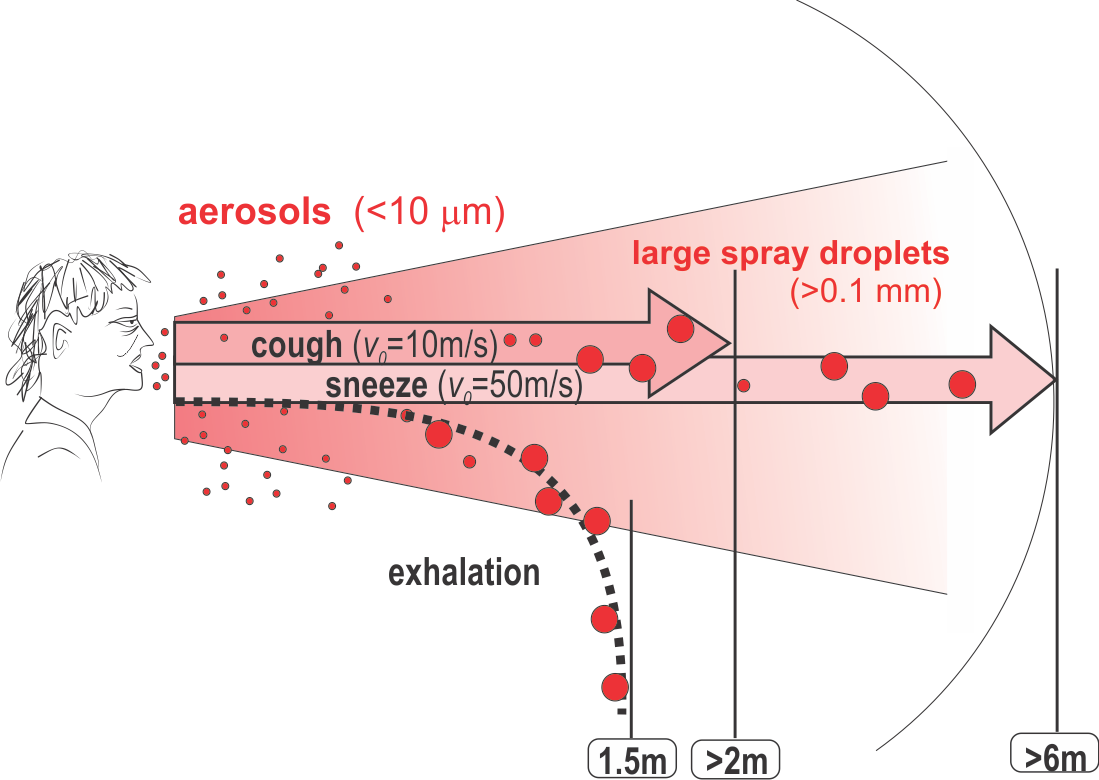
The new report written by experts at the renowned US university have found that viral droplets expelled in coughs and sneezes can travel at speeds of 33ft to 100ft per second.

This creates a cloud that can span up to 27ft with infected coronavirus droplets that can infect many. Experts say that for everyone one person infected, at least five more will become infected.

So, if anyone is out walking or running, or out shopping whilst a person who previously coughed before you entered that area, you will easily breathe in the expelled particles” which lurk in the air for hours.

Positive Covid-19 cases climb to 146

April 1st, 2020

Courtesy Adaderana

The Ministry of Health says that 03 new COVID-19 positive patients have been identified raising the total number of confirmed cases in the country to 146.

The ministry said that three new cases today were reported from Maradana, Jaffna and Kurunegala areas.

As of 5.00 p.m. today (April 1), the total number of COVID-19 confirmed cases stands at 146 while 126 suspected patients are under observation at selected hospitals. 

Eighteen patients have recovered and have been discharged while there have been 2 fatalities from the virus.

Sri Lanka records an alarming rise in COVID-19 patients today

March 31st, 2020

Courtesy Ceylon Today

Colombo, 31st March (newsin.asia) – Sri Lankan Health Ministry has confirmed that 20 more persons have tested positive for COVID-19 today.

This was the highest surge in COVID-19 cases the country has recorded. The total now stands at 142 positive cases in the Island.

17 patients have been discharged from hospitals after recovering completely.

Nationals of UK, France among 281 foreigners found at Markaz facility in Nizamuddin where a religious congregation, held in mid-March, has become a key source of coronavirus spread in the country,

March 31st, 2020

Courtesy The Economic Times

A total of 1,830, including these foreigners from 16 countries, continued to stay at the Tablighi Jamaat’s Markaj even as a 21-day nationwide lockdown was imposed on March 24, according to officials. The foreigners were from Indonesia (72), Sri Lanka (34), Myanmar (33), Kyrgystan (28), Malaysia (20), Nepal and Bangladesh (9 each),Thailand (7), Fiji (4), England (3), one each from Afghanistan, Algeria, Djibouti, Singapore, France and Kuwait.

NEW DELHI: Nationals from the UK and France are among 281 foreigners out of 1,830 people who were found by the Delhi police in last two days at Nizamuddin’s Markaz Masjid, where a religious congregation, held in mid-March, has become a key source of coronavirus spread in the country, officials said. Most of those who were found at the facility have been shifted to different quarantine centres and isolation wards of hospitals.

A total of 1,830, including these foreigners from 16 countries, continued to stay at the Tablighi Jamaat’s Markaj even as a 21-day nationwide lockdown was imposed on March 24, according to officials.

The foreigners were from Indonesia (72), Sri Lanka (34), Myanmar (33), Kyrgystan (28), Malaysia (20), Nepal and Bangladesh (9 each),Thailand (7), Fiji (4), England (3), one each from Afghanistan, Algeria, Djibouti, Singapore, France and Kuwait.

Remaining 1,549 people were from Tamil Nadu (501), Assam (216), Uttar Pradesh (156), Maharashtra (109), from Madhya Pradesh (107), Bihar (86), West Bengal (73), Telangana (55), Jharkhand (46), Karnataka (45), Uttarakhand (34), Haryana (22), Andaman Nicobar Islands (21), Rajasthan (19), 15 each from Himachal Pradesh, Kerala and Odisha, Punjab (9) and Meghalaya (5).

In last one month, at least 8,000 people, including foreigners have visited the premises, and most of them have either returned to their respective places or currently in other Markaz facilities in different parts of the country, thereby having a link in some positive cases in those states.

Apart from six Indonesians, who tested positive in Hyderabad, one person each from Jammu and Kashmir and Telangana, who succumbed to the infection, had also attended the congregation.

Officials said Markaz office bearers informed police about the presence of about 1,200 people on March 25 after the lockdown was announced.

Some of these people were escorted out of Delhi by police.

On March 26, again about 2,000 people gathered at the Markaz facility.

Even though the Markaz office bearers sought the help of police and civil authorities to send these people out of the city, the road, rail and air traffic were completely shut by then.

Out o ..

Out of the 1,830 people found by the police, about 200 are believed to have showed COVID-19 symptoms and they have been shifted to hospitals.

Delhi Health Minister Satyendar Jain said 700 people who attended this congregation have been quarantined while around 335 people have been admitted to hospitals.

Read more at:
https://economictimes.indiatimes.com/news/politics-and-nation/nationals-of-uk-france-among-281-foreigners-found-at-markaz-facility-in-nizamuddin/articleshow/74912080.cms?utm_source=contentofinterest&utm_medium=text&utm_campaign=cppst

Discrimination that the Sinhalese face in the North and the East

March 31st, 2020

Chanaka Bandarage

After the war, all governments have miserably failed to settle the displaced Sinhalese (numbering about 50,000) in the Northern province.

 In the past five years, the governments have embarked on a massive ‘Sanhindiyawa’ campaign, placing lots of onus on the Sinhalese to embrace Tamil culture and Tamil way of life. For this, a ministry of National Language and Social Integration was created. It ran racist policies against the Sinhalese.

State-owned TV and radio stations promoted ‘Sanhindiyawa’ day and night in the Sinhala dominated South. Even on Sinhala TV channels, cheap Thamilnadu movies were shown with Sinhala subtitles.

After the then government was very keen to establish the Northern Provincial Council (in 2013), Wigneswaran became the Chief Minister and his provincial government adopted racist policies one after another, against the Sinhalese.  Wigneswaran implied that he did not want the Sinhalese visiting the North even on short stays; he objected to the Sinhalese worshiping Buddha statutes in the North placed in the open.

The Jaffna railway station failed to announce the arrival of the train from Colombo in Sinhala. The writer is informed that Wigneswaran had directed that massive billboards in the province (including on A9) must not display a single Sinhala word. Even some premier Sri Lankan Banks who had their headquarters in Colombo had to advertise in the billboards sans Sinhala. In North/Jaffna, Sinhala was purposely omitted from many street name boards. 

In Madhu Road, Mannar, Sinhalese living there were deprived of the only Sinhala school that they had for more than 30 years. That was close down in January 2019. Sinhala people in Mannar (Madhu Road, Nari Kadu and Seelawathura), have no cemetery to bury/cremate their dead. They take the corpses to Anuradhapura.  The Hindus would not allow them to use their cemeteries.

Shops in the newly built shopfront near the Madhu church were given to Tamils and some Muslims only.  This happened despite the Sinhalese’ request that they also are given at least a shop or two.

In the Eastern province (Trincomalee) the Sinhalese were chased away from the paddy lands that they had cultivated for several years (in 2015).  These lands were later allocated to Tamils who were brought to the area only recently.  The Order to do this had been given by a prominent Eastern Province based Tamil politician who is much venerated in the South. 

Tamil divisional secretaries work to block the Sinhalese from resettling in the North (former Northern Sinhala settlers).  In Navatkuli, Sinhalese who were engaged in small businesses were deprived of continuing with their activities. A person running a breakfast food cart (string-hoppers) was unfairly stopped from his operation. A Sinhalese man, well experienced in making ice cream in Anuradhapura, was prevented from starting the same business in his Navatkuli home. These Sinhalese are mostly 2nd or 3rd generation Sinhalese, who speak fluent Tamil.

There are instances where newly arrived Sinhalese have been discouraged from settling in the North by Tamil Grama Seva Niladharis.   In the Tamil speaking areas of the North, all government offices work only in Tamil language.  Those who do not understand Tamil face huge difficulties as a result. But, in the South, Tamil is strictly enforced as a National Language.

However, the previous government forced Sanhindiyawa down upon the Southerners. Due to this many people (especially the children) have lost their patriotic feeling about the country. Sinhala songs such as ‘Me Sinhala Apage Ratai, Hela Derane Kandula Susuma, ‘Api Okkoma Rajawaru’ etc were removed from radio broadcasting.

The previous President proudly announced that his government reduced the acreage held by the Army in the North and the East from 84,523 to 14,769 – a reduction of  83%.

In the East, large numbers of Buddhist archeological sites are being discovered regularly. None of the governments since the ending of the war have shown a keen desire to preserve them and identify them as Sinhala Buddhist cultural sites.

In order to satisfy the minorities and win their vote, Sinhala history has been distorted in history books. Children are now taught that Vijaya and Mahavansa maybe myths. That, Buddhism may have arrived in the country before the arrival of Ven Mahinda.  The Sinhalese have been heavily indoctrinated to believe that King Ravana, a fictitious/mythical character in Hindu books, had indeed existed in Sri Lanka, more than 4,000 years ago. This has given Tamils the opportunity to make the false claim that Ravana was a Tamil, thus they are the first arrivals of the country. Wigneswaran got in the bandwagon to state that King Devanampiyatisa was a Tamil and his correct name is Devanampiyatissam! Until about 20 years ago, Ravana was totally a non-entity in Sri Lankan history. The Great King, Dutu Gamunu, was described in a famous movie (produced mainly for the children) as ‘Dushta Gamini’.

Given the acute land shortage in the South, the government must allow non-Tamils to live in the North and the East (1/3 of the country). Those are the only areas where land is now freely available to live.  The South is congested with Tamils (Wellawatta, Kotahena, Muttwal are just a few examples).  There is nothing wrong with this, but the Sinhalese must also be allowed to live in the North and the East (currently they cannot seek properties even on lease). It is time that the government corrects this serious anomaly. All citizens should be allowed to live wherever they wish to live. This is a right enshrined in our Constitution (Article 14 (1) (h). Article 12 of the International Covenant on Civil and Political Rights which Sri Lanka is a signatory also prescribes this.

The writer is an International Lawyer

srilankasupportgroup@bigpond.com

The Country That Used Nuclear (1945), Biological (1951) and Chemical (1968) Weapons on Civilians Blames Others!

March 31st, 2020

Kumar Moses

There is only one country in the world that has used nuclear weapons in anger. That too on civilians! It happened in 1945. The targets were large cities, not military bases. Hundreds of thousands of Japanese died due to direct and indirect exposure. No other country has done so.

Just six years later that same country bombed North Korea with various biological agents causing famine, widespread infestation and deaths. Once again it was targeted at civilians. No other country has used biological weapons.

In 1968 and throughout the Vietnam War that very same country used chemical weapons against civilians. Hundreds of thousands of Vietnamese were killed in indiscriminate chemical weapons attacks. These were aimed at civilians. A few other countries have also used chemical weapons after the lead of this nation. However, their use comes nowhere near the massive use by this particular country.

Having used all forms of weapons of mass destruction, this country has the audacity to blame others for the COVID-19 crisis. Is this some kind of a joke?

What is most worrisome is this country used all these weapons of mass destruction in Asia. Seems like the decision makers of this country consider Asians to be lesser human beings. Although this country publicly announced they have given up chemical and biological weapons, others have raised serious doubts about these claims. Most likely they still do have WMD programs. Others must not lower their guard and need not stick to their commitments to stop or curtail biological and chemical weapons. They may be the only means to keep the aggressor at bay.

කොරෝනා මද සුළඟ

March 31st, 2020

චන්ද්‍රසේන පණ්ඩිතගේ

පසුගිය වසරේ නොවැම්බර් මස 19 වෙනිදා ලෝකයේ උපත ලද කොරෝනා හෙවත් කොවිඩ්-19 නම්වූ මදනල කුමරිය පසුගිය වසරේ දෙසැම්බර් මස 10 වෙනිදා චීනයේ හුවාන පලාතෙන් මතුවී සුළි සුළඟක් ලෙසින් ලොවපුරාම ගමන් කරමින් සිටින අවස්තාවක අපි ඒ දෙස මහත් උද්යෝගයකින් බලා සිටින්නේ, මේ කොරෝනා කුමරිය මේ ලෝකය තුල කුමන අරමුණකින් කුමක් කිරීමට සැරසෙන්නේද යන කුතුහලයෙන් යුක්තවය.

ඇත්ත වශයෙන්ම අපි මේ දෙස මහත් බලාපොරොත්තු සාහිතව බලා සිටින්නෙමු. අපි එහෙම කියන්නේ මේක මහා විනාශයක් මේක වහාම නැවැත්විය යුතුයි යන හඬ හැම තැනකින්ම ඇසෙන තත්වයක් තුලදියි. නමුත් යම් ශුභවාදී වටිනා යමක් මේ තුලින් මතුවෙන බව අපි දන්නවා.

මේ ලෝකයේ විශේෂිත කටයුතු ඉටුකිරීම සඳහා විශේෂිත පුද්ගලයන් හා කණ්ඩායම් මේ ලෝකයට වරින්වර එවන බව අපි හොදින් දන්නවා. ගෝඨාභය රාජපක්ෂ මහතා හා ඔහු හා බද්ධව වැඩකරන පිරිවර සේනාවන් එතුමා සහ එතුමාට පවරා ඇති කාර්යයන් ඉටුකිරීම සඳහා ස්වභාවය විසින් විශේෂිත නිර්මාණයන් ලෙස මෙබිමට එවන ලද බල මුලුවකි. දැන් මේ බල මුළුවට ඉටුකිරීමට ඇති කාර්යයන් ඉටුකිරීමට යාමේදී ඇතිවෙන බාධක මොනවාද? ඒවා ඉවත් කිරීම හා ඒවා විනාශ කිරීමටද ස්වභාවය කටයුතු නිර්මාණය කරයි.

මේ වනවිට ගෝඨාභය රාජපක්ෂ් මහතා බලයට පත්වී, මාස හතරක් නිමවා අවසන්ය. ඔහු ඉතා පිරිසිදු පාලනයක් ගෙනයාම සඳහා විශාල බලාපොරොත්තු පෙරදැරිව කටයුතු කලද ඒවා දැන දැනම ඔහුට එරෙහිව අවිගත් පිරිසක් රටපුරාම ක්‍රියාත්මක වෙමින් පැවතුනි. ඒ අධිරාජ්‍යවාදීන්ගේ සැලසුම් හා පෝෂණය කිරීම් තුලින් දිරිගත් පුද්ගල සමුහයක් තුලිනි. ස්වභාවය අපිට වඩා බලවත්ය. සැලසුම් සහගතය. ස්වභාවයේ විනිශ්චය බලවත්ය.

ගෝඨාභය ප්‍රමුඛ සේනාවට සිය ව්‍යාපෘතිය ආරම්භ කිරීමට හා පවත්වාගෙන යාමට බාධාවන් ගණනාවක් විය. එකක් වුයේ පැවතී පාර්ලිමේන්තුවයි. එය මාර්තු දෙවනිදායින් පසු විසුරුවා හැරිණි. ඒ එක හිසරදයක නිමාවයි. ඊට අමතරව, ජාතික වශයෙන්, එක්සත් ජාතික පක්ෂය, ජනතා විමුක්ති පෙරමුණ, ද්‍රවිඩ සංවිධාන, මුස්‌ලිම සංවිධාන, දේශපාලන පිලිලයන්සේ කටයුතු කරමින් සිටියහ. ඔවුනගේ හඬ නිහඬ කිරීමට ස්වභාවය කටයුතු කල ආකාරය විශ්මිතය. මේ සියල්ලක්ම ස්වභාවය ඉටුකරන ලද්දේ කොරෝනා වයිරසය උපයෝගී කරගෙනය. මැතිවරණය සඳහා නාමයෝජනා බාරගත්තද මැතිවරණයට දින නියමයක් නැත. මැතිවරණ කොමසාරිස් නිහඬය. දේශපාලන පක්ෂ සියල්ලේම හඬ බොල්වී ඇත. ජනතාවගේ කණට නිවාඩුවක් ලැබී ඇත. කොතරම් අපුරු සිදුවීමක්ද මේ අපි දකිමින් සිටින්නේ.? ඒ ජාතික වශයෙන්ය.

ජාත්‍යන්තර වශයෙන්, ගෝඨාභය රාජපක්ෂ මහතාට හා එම සේනාවට එරෙහිව බලවත්ව සිටි, ජාත්‍යන්තර ප්‍රතිගාමී සේනාවට අද සිදුව ඇති දේ එකවර කල හැකි බලවතා කවරෙක්ද? අපි ඒ දෙස බලා දුක් වෙමුද තුටු වෙමුද? පසුගිය මාර්තු මස අපිට එරෙහිව ජිනීවා නුවර මානව හිමිකම් කවුන්සලයේදී හඬ නැගු රටවල් තුල බලවත් අර්බුද නිර්මාණය කර අපිට සැනසිල්ලේ ඉන්නට ඉඩ සලසා දුන් කොරෝනා වයිරසයට අපි කුමක් කරමුද? අප කල යුත්තේ එය අපට අවැසි විදියට හැසිරවීමට කටයුතු කිරීමයි. සත්‍ය ලෙසම මේ වයිරසය අපගේ මිතුරෙක් මිස සතුරෙක් නම් නොවේ.

අද අපට එරෙහිව අවි අමෝරාගෙන නැගිටීමට ඇමරිකා එක්සත් ජනපදයට නොහැක. කැනඩාවටද නොහැක, මහා බ්‍රිතාන්යටද නොහැක, නොර්වේ රාජ්‍ය, ජර්මනිය, ප්‍රංශය ඉතාලිය යන කිසිදු රාජ්‍යකට නොහැක. අපිට එරෙහිව සෘජුවම චන්දය දුන් අසල්වැසි ඉන්දියාවටද නොහැක. මේ අනුව කොරෝනා වයිරසය අප වෙනුවෙන් මිහිබට සුර ලොව නිමයුමක්සේ සැලකුවද කම් නැත.  මේ ලෝකයේ ධනවත්ම රාජ්‍යයන් සියල්ලම මහා ආර්ථික හා මානුෂීයව පරිහානියකට ලක්වෙන්නේ, දෙවන ලෝක යුද්ධයෙන් පසු එක්සත් ජාතීන්ගේ සංවිධානය නමින් සංවිධානයක් පිහිටුවාගෙන උත්තර ද්‍රවයේ ඉහල සිට මේ පොලොව දෙස බලන ඒ සංවිධානයේ රැකවරණ ලබමින් මේ ලොව පෙළමින් දස ලක්ෂ ගණන් මිනිසුන් මරමින තුටුවෙමින් ජය පන් බිවු ලෝක අධිරාජවාදී රාජ්‍ය සමුහයයි.

පිඩනයට පත්වෙන ජනතාව ඉටුකළ යුතු කාර්යයක්, අද දවසේ ඇසට නොපෙනෙන කුඩා වයිරසයක් ඉටුකරමින් සිටි. එදා මෙදා තුර මේ තර්ජනයට ලක්ව සිටින අධිරාජ්‍යවාදී රාජ්‍යන් සමුහය තවත් මහා ලේ වැගිරීම් රාශියක් කිරීමේ අරමුණින්, නවීන අවි ආයුධ ගොඩ ගසාගෙන සිටින මේ මොහොතේ, ස්වභාවය විසින් ඇසට නොපෙනෙන වයිරසයක් නිර්මාණය කර සිදු කරන මේ ක්‍රියාවලියේ චමත්කාරතත්වය අපි දකින්නේ මහා කුතුහලයකින් යුක්තව බව කිව යුතුමය. කොරෝනා වයිරසය මේ ඉටුකරන්නේ තුන්වන ලෝක යුද්ධයේ කාර්යභාරයයි. නමුත් තමන් යුද්ධයක් සඳහා නිපදවා ගොඩගසාගත් කිසිදු වැඩක් නැතිබව ස්වභාවය පෙන්වාදී ඇත. අවි ආයුධ ගැටෙන යුද්ධයකට වඩා මෙය සාධාරණය. හැම දෙනාමතම බෝම්බ දමා වනසන යුද්ධයට වඩා, මෙය තුල යම් සුන්දරත්වයක් දකිමු.

දැන් පිට්ටනිය හිස්ය ගෝඨාභය රාජපක්ෂ මහතා ප්‍රමුඛ සේනාවට ක්‍රීඩා කිරීම ඉතා පහසුය. නමුත් ක්‍රීඩාපිටියේ නොපෙනෙන කොරෝනා වයිරසයද තිබේ. එයින් පරිස්සම් වෙමින් කලයුතු සමාජ පරිවර්තනයක් එතුමා අබියස ඇත. දැන් සෑම නිවසකටම ආහාර රැගෙන එයි. ජනතාව නිවසේ සිටම ඒවා මිලදී ගනු ලැබේ. හෙට ආහාර ගෙන ආවද ඒවා ගැනීමට ජනතාවට මුදල් නැත. එබැවින් ආහාර එවීමට පෙර මුදල් ගෙදරට ගෙනවිත් දීමට සිදුවේ. එයද බැංකු තුලින් ඉටු කල හැක. නමුත් හැමෝටම බැංකු ගිණුම් නැත. හැමෝම ලග මුදල්ද නැත. මෙයට පිළිතුරක් අවශ්‍යවේ. ඒ සඳහා කල හැකි හා කලයුතු ඉහලම පිළියම වන්නේ,
රටේ අවුරුදු 15ට වැඩි සියලු දෙනාටම මහා බැංකුවට අනුබද්ධිත බැංකු ගිණුමක් හා ඉලෙක්ට්‍රොනික් මුදල් සංසරණ කාඩ්පතක් ලබාදීමයි. ඊට පසු සාම මිනිසෙක් ලගම ඇති මුදල් නෝට්ටු හා කාසි බැංකුවට ගෙනවිත්දී ඒවා තම තමන්ගේ ගිණුම්වල තැන්පත් කිරීමට ඉඩ ලබාදිය යුතුය. මේ කාර්යයේදී තැන්පත් කරන්නා කුමන ආකාරයේ විශාල මුදල් ප්‍රමාණයක් ගෙන ආවද ඒවා ප්‍රශ්න කිරීමකින් තොරව බැංකුවේ තැන්පත් කිරීමට ඉඩ ලබාදිය යුතුය. මුළු රටේම මිනිසුන්ගේ ගිණුම් මහා බැංකුව හරහා මධ්‍යගත කිරීම තුලින්, මහා බැංකුව මුදල පිරි මිනිසුන් හා ආයතන මොනවාද යන්නත්, මුදල් නැති මුදල් අවැසි මිනිසුන් කවුදැයි යන්නත් සම්බන්ධව අවබෝධයක් ලැබේ. ඒ අනුව සෑම මාසයකදීම මුදල් නැති මිනිසුන් සම්බන්ධව අවබෝධ කරගෙන ඔවුනට ජීවත්වීම සඳහා රජය ප්‍රතිපාදන දැමීම හෝ ඔවුනට රැකියාදීම රාජ්‍ය කටයුත්තක් බවට පත්කල යුතුය.

කොරෝනා වයිරසයේ අවසාන පලය වන්නේ ධනවාදය අර්බුදයකට ලක්කර නවසමාජ ක්‍රමයක් ලොව තුල ගොඩනැගීම වන අතර, එම ක්‍රමය තුල මුදල් නෝට්ටු බාවිතය අහෝසි වන බැවින්ද ඒ වෙනුවට ඉලෙක්ට්‍රොනික් මුදල් බාවිතය සම්පුර්ණයෙන්ම සමාජගත වන බැවින්ද, එම ක්‍රියාවලියේ නියමු බලවේගය ශ්‍රී ලංකාව තුලින් ගොඩනගමු. මේ කාරයත් සමගම කොරෝනා වයිරසයේ නිමාවද දැකීමට හැකිවනු ඇත.

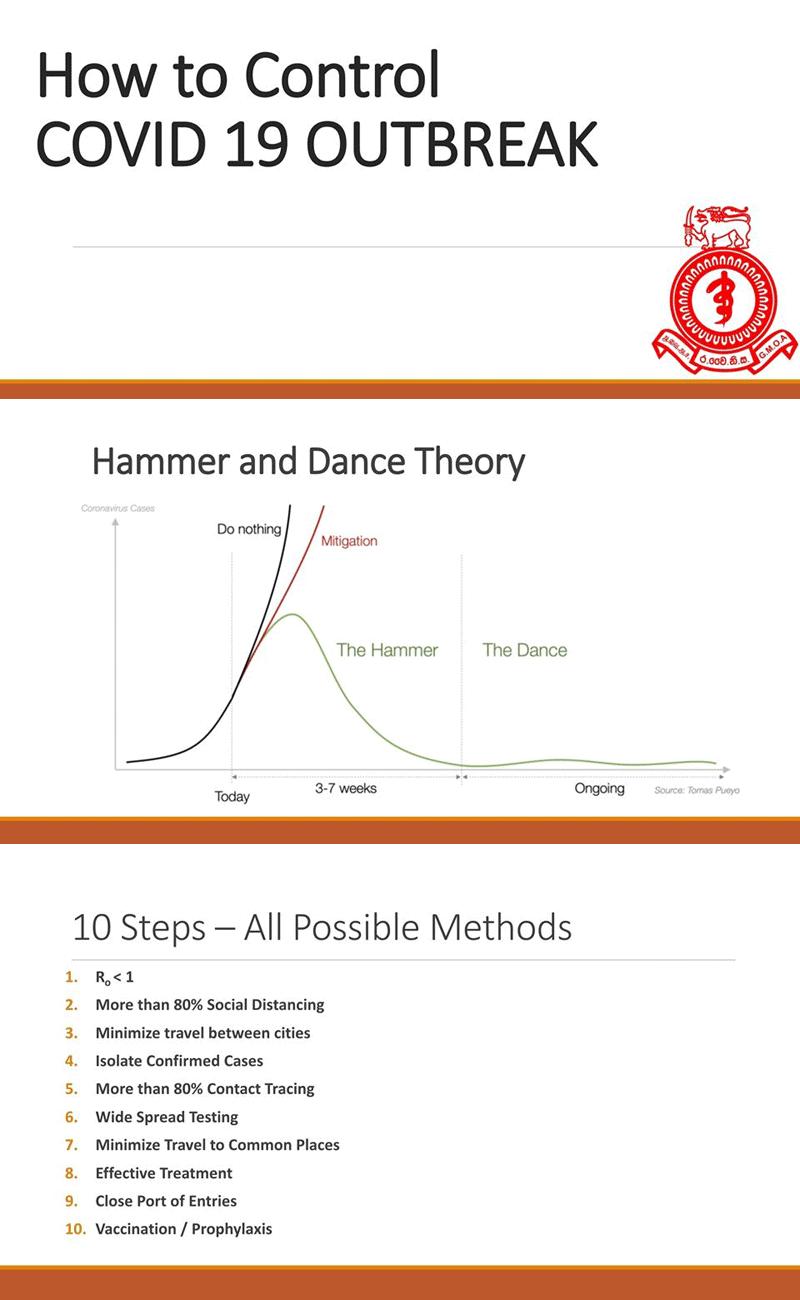
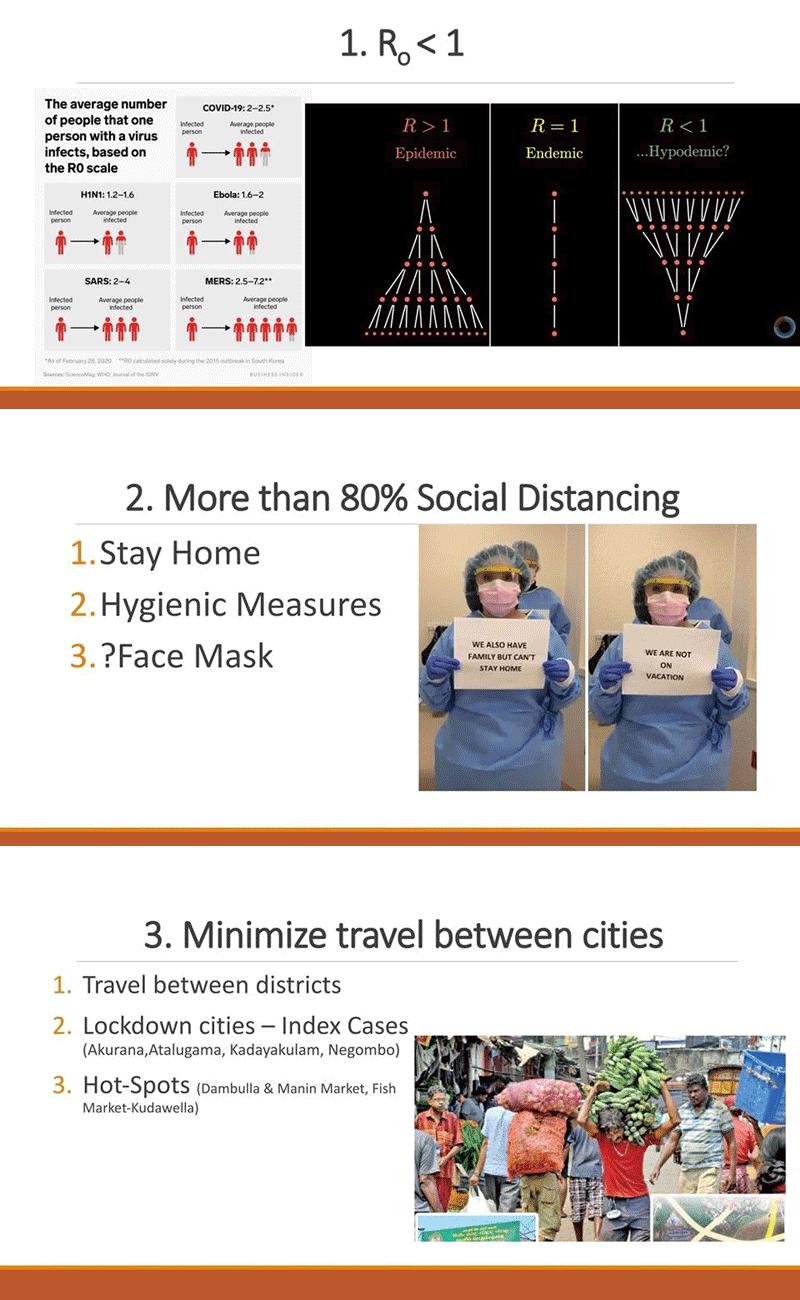
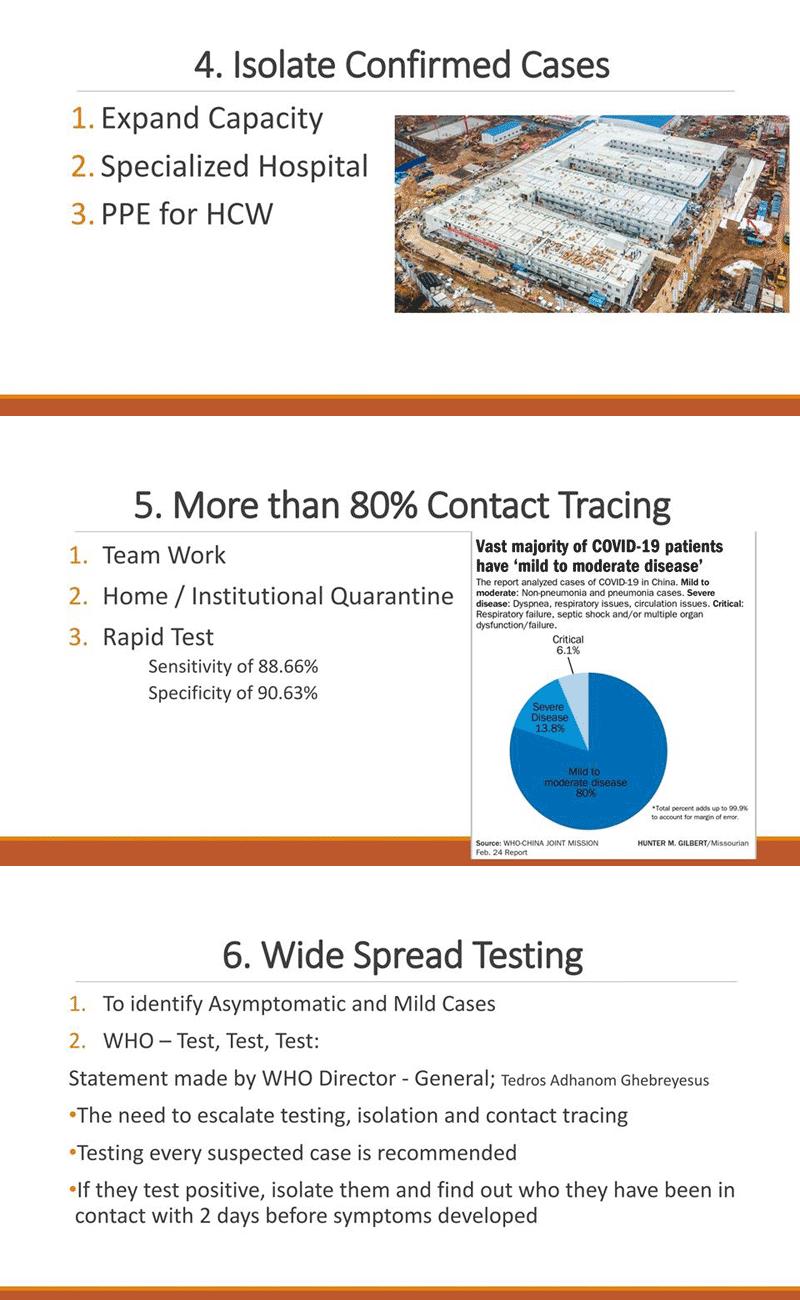
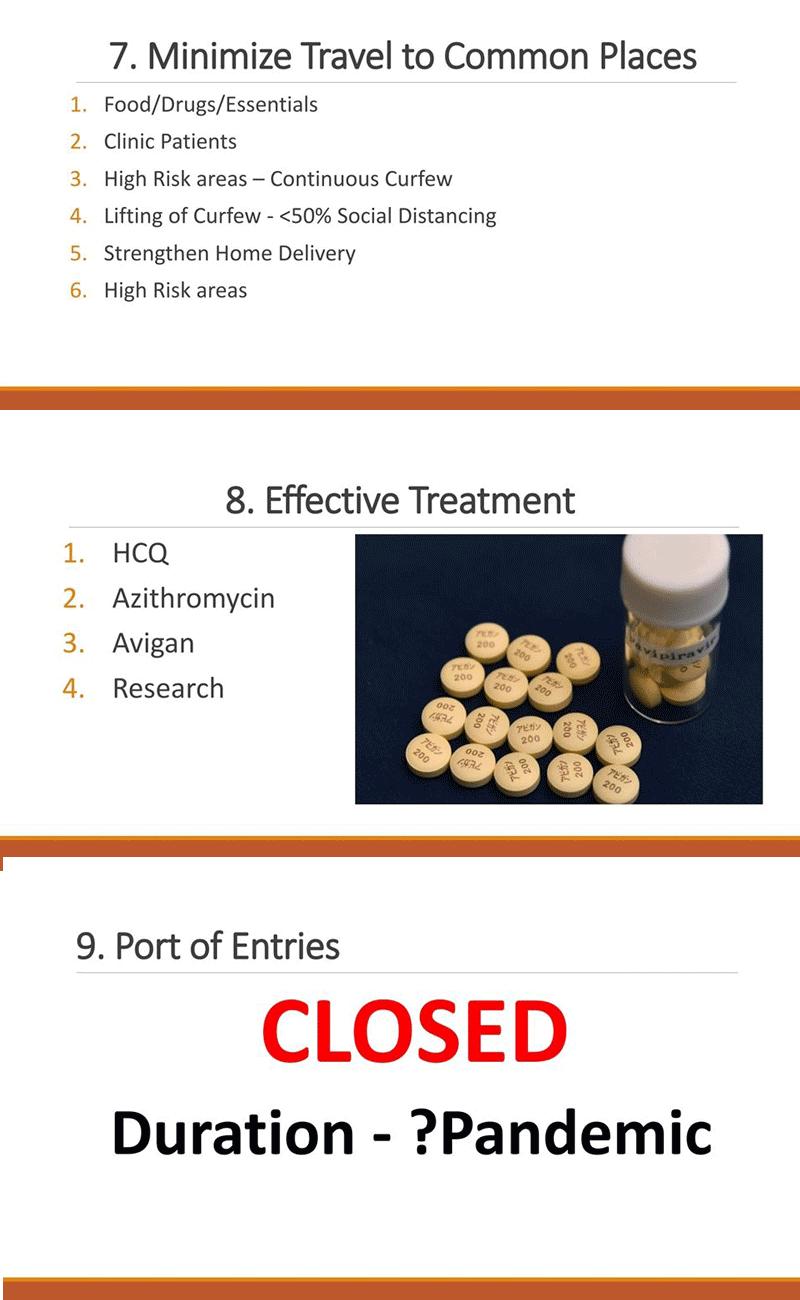
GMOA proposes ‘Hammer and Dance Theory’ to control COVID-19

March 31st, 2020

Courtesy The Daily Mirror

The Government Medical Officers’ Association (GMOA) has proposed ten steps “Hammer and Dance Theory” to control COVID-19 Outbreak in Sri Lanka. All possible aggressive actions should be implemented immediately to control COVID-19,” it said.

Covid-19 deaths: Exclusive cremation says new guideline

March 31st, 2020

Courtesy The Daily Mirror

Updated guidelines on Covid-19 related deaths issued by the Ministry of Health on Tuesday state that the Standard Operating Procedure (SOP) of the disposing of bodies of those who succumb to coronavirus would exclusively be cremation.

The fourth update on the Provisional Clinical Practice Guidelines on COVID-19 suspected and confirmed patients indicate that cremation remains the best practice to avoid further spread of the disease.

Judicial Medical Officers across Sri Lanka were issued the SOP to be followed in the event of a death a coronavirus infected person last week. Accordingly, the guideline stated that remains of all those who succumb to the disease would be cremated within 24 hours. 

However, with reports of the second death due to coronavirus in Sri Lanka, many individuals and groups raised their concerns over the right of a Covid-19 infected person to be buried. Among them was Leader of Sri Lanka Muslim Congress Rauff Hakeem who, issuing a statement condemned the regulation. “It is unfortunate, regrettable and of course reprehensible that the Janaza of the Negombo Victim of the Covid 19 virus had been cremated without permitting the burial as is ordained in our faith,” the former Minister said in a Facebook post. 

The guideline issued by the Ministry today however states that bodies of confirmed and suspected persons as well as those with a suggestive history of the disease must be cremated. The body should never be washed under any circumstance, has to be placed in a sealed body bag and a coffin while the disposal of bodies must be monitored by police, Ministry of Health and Public Health Inspectors, the guideline said.  

China zeroes in on coronavirus patients with no symptoms as new infections rise

March 31st, 2020

Courtesy Ceylon Today

China will start releasing information from tomorrow (01) on coronavirus patients who show no disease symptoms, ordering them into quarantine for 14 days, a health official said, after the mainland witnessed its first rise in infections in five days.

As local infections peter out and new cases surface among travelers returning home, the existence of virus carriers with no symptoms is fuelling public concern that people could be spreading it without knowing they are ill.

From 01 April, the daily report of the National Health Commission will include details of such cases for the first time, Chang Jile, a commission official, told a briefing. People in close contact with them face 14 days of medical observation.

Asymptomatic patients under observation numbered 1,541 by yesterday (30), with 205 of the cases having come from overseas, the commission said separately.

Yesterday’s (30) 48 new infections, and one death, in mainland China were up from 31 the previous day, the commission said, reversing four days of declines. All were imported, taking China’s tally of such cases to 771, with no new local infection reported.

Many were students returning from overseas. About 35 infected Chinese citizens are still studying abroad, with 11 already cured, Education Ministry official Liu Jin said.

COLLEGE EXAM

Fearing a second wave of infections sparked by such inbound travelers, China will delay its college entrance exam by a month, until 07 and 08 July, China Central Television said, although Hubei Province, where the virus emerged late last year, and Beijing, the capital, will get more leeway in scheduling it.

The annual two-day “gaokao” test drew more than 10 million candidates last year, State Media have said.

Last week, a study in British medical journal the Lancet Public Health recommended that China extend school and workplace closures, since an earlier relaxation of curbs could bring a second peak in the outbreak by August.

“China has slowed transmission of the virus and in so doing, has passed one peak in the outbreak,” said Tarik Jasarevic, a representative of the World Health Organisation. “The challenge now is to prevent a resurgence of new cases.”

Tax authorities acknowledged the pandemic’s impact on exporters, saying they were studying policies to reduce pressure on businesses, from tax cuts to an extension of preferential policies for foreign firms.

New data from a survey of manufacturers showed that factory activity expanded in March from February’s collapse as businesses returned to work, but analysts warned that slumping external demand could prevent a durable recovery.

“The situation could be very fluid as the virus outbreak remains unpredictable,” analysts at ANZ bank said in a note. “Chinese policymakers will likely step up and expand the stimulus program if needed.”

The commercial hub of Shanghai saw 11 new imported cases yesterday (30), mainly among returning Chinese nationals, while Beijing had three.

Wuhan, the capital of central Hubei Province, reported no new infections for a seventh straight day. Groups of medical teams in brightly colored jackets took photographs around the city as they prepared to leave.

“Thank you, Wuhan. We are back,” read a message on a building that houses a Levi’s clothing store.

By yesterday (30), total infections stood at 81,518 in mainland China, with 3,305 deaths.

India cracks down on Muslim group emerging as coronavirus cluster

March 31st, 2020

Courtesy Ceylon Today

India sealed off the headquarters of a Muslim missionary group on Tuesday and ordered an investigation into accusations it held religious meetings that officials fear may have infected dozens of people with the coronavirus.

India has registered 1,251 cases of the coronavirus, 32 of whom have died. The numbers are small compared with the United States, Italy and China but health officials say India, the world’s second most populous country, faces a huge surge that could overwhelm its weak public health system.

One of the coronavirus hot spots that the government of the capital, New Delhi, has flagged is a Muslim quarter where the 100-year-old Tablighi Jamaat group is based, after dozens of people tested positive for the virus and at least seven died.

Authorities said people kept visiting the Tablighi center, in a five-storey building in a neighborhood of narrow, winding lanes, from other parts of the country and abroad and it held sermon sessions, despite government orders on social distancing.

Hundreds of people were crammed into the group’s building until the weekend when authorities began taking them out for testing. More buses arrived on Tuesday to take them away to quarantine centers in another part of the city.

“It looks like social distancing and quarantine protocols were not practised here,” the city administration said in a statement.

“The administrators violated these conditions and several cases of corona positive patients have been found… By this gross act of negligence many lives have been endangered… This is nothing but a criminal act.”

Authorities are trying to trace the movements of the Tablighi members after the meetings in Delhi and the people who were exposed to them.

Media said there were also Tablighi members from Malaysia, Indonesia, Thailand, Nepal, Myanmar, Kyrgyzstan and Saudi Arabia. The director general of Malaysia’s health ministry told a news conference in Kuala Lumpur that they were investigating the presence of Malaysians at the Delhi meeting.

“Obviously there is a high risk if they attended the (Delhi) gathering,” Noor Hisham Abdullah said.

India, with a population of more than 1.3 billion, is under a 21-day lockdown that will end in mid-April to try to stem the spread of the coronavirus but tens of thousands of out-of-work migrants are fleeing to the countryside, undermining the restrictions.

Musharraf Ali, one of the administrators of the Tablighi center in Delhi, said the group had been seeking help from police and the city administration to deal with people streaming in. But the lockdown had made things more difficult.

“Under such compelling circumstances there was no option … but to accommodate the stranded visitors with prescribed medical precautions until such time that the situation becomes conducive for their movement or arrangements are made by the authorities,” the Tablighi said in a statement.

The Tablighi, one of the world’s largest missionary movements, hosted a gathering last month at a mosque complex on the outskirts of Malaysia’s capital, Kuala Lumpur, that has emerged as a source of hundreds of coronavirus infections across Southeast Asia.

In Pakistan, the group called off a congregation on the outskirts of the city of Lahore last month, but there were still 1,100 people staying on a group premises. At least 27 have tested positive for the virus, the health minister of Pakistan’s Punjab province, Yasmin Rashid, told Geo TV this week.

Separately, Bangladesh Prime Minister Sheikh Hasina told government officials that she might extend the current 10-day lockdown for a few days beyond April 4. Bangladesh has 51 confirmed cases of the virus, five of whom have died.

Following is data on the spread of the coronavirus in South Asia’s eight countries, according to government figures:

* Pakistan has registered 1,625 cases, including 20 deaths.

* India has registered 1,251 cases, including 32 deaths.

* Sri Lanka has registered 132 cases, including two deaths.

* Afghanistan has registered 170 cases, including 3 deaths.

* Bangladesh has registered 51 cases, including 5 deaths.

* Maldives has registered 28 cases and no deaths.

* Nepal has registered five cases and no deaths.

* Bhutan has registered four cases and no deaths.

Rs 5000 allowance for low income families affected by COVID-19 outbreak

March 31st, 2020

Courtesy Adaderana

A host of more financial and material benefits have been granted to low income and vulnerable families and individuals in the face of the COVID-19 outbreak.

President Gotabaya Rajapaksa has instructed the Presidential Task Force established to administer essential services that provision of Rs. 5000/= as a single payment to the low-income families will ease the financial difficulties faced by them.

The following are the declared concessions and the eligible groups, according to President’s Media Division.

– Measures have been taken to pay Rs.5,000 each to all 416,764 senior citizen allowance recipients and to the recently registered 142,345 senior citizens.

– An allowance of Rs. 5,000 will be provided to 84,071 disabled persons and 35,229 newly registered disabled persons.

– A total of 160,675 farmers who are registered under the Farmers’ Insurance Scheme will also receive an allowance of Rs.5000 each.

– An allowance of Rs. 5,000 will be paid to 25,320 kidney patients and 13,850 newly registered patients.

– Thriposha and other nutritional supplements will be delivered directly to the residences of expectant mothers and families with malnourished children.

– Measures have been taken to provide Rs.5,000 each to all 1,798,655 Samurdhi recipients and to the recently registered 600,339 Samurdhi recipients by the Samurdhi Bank/Samurdhi Authority.

– Payment of the pensions to 645,179 public officers.

– Steps will be taken to pay the April salary for 1,500,000 Public Sector employees and loan payment deductions from salaries to be suspended until further notice.

– Relief on lease installments for 1,500,000 self-employed persons, including owners of three-wheelers, trucks, school buses and vans and self-employed motorists.

– Reliefs will be provided for the private businesses that are not in a position to pay employees’ wages due to the prevailing economic hardships.

The circular signed by the Secretary to the President Dr. P. B. Jayasundara on the concessions granted by the President and how they will be implemented was issued yesterday (30). 

The circular had been referred to the Secretaries of Ministries of Finance, Economic and Policy Development and Public Administration, Home Affairs, Provincial Councils and Local Government and all District and Divisional Secretaries. This relief program will continue to operate until the priority program to eliminate the novel Coronavirus from Sri Lanka declared the completion of its mission. 

One of the prime objectives of the priority program is to ensure the uninterrupted continuation of civilian life, the Secretary to the President has highlighted in his circular. The Presidential Task Force had identified the necessity of re-integration of people who are affected due to the spread of the pathogen to the mainstream. 

Dr. Jayasundara stated that he had been instructed by the President to issue directives to all District and Divisional Secretaries to take all necessary measures to provide essential food items to the doorstep at a concessionary price.

COVID-19 cases tally jumps to 143 as 21 more test positive today

March 31st, 2020

Sri Lanka News

The Ministry of Health has confirmed that 11 more persons tested positive for COVID-19 as at 7.30 pm today (31).

With this addition, the tally of coronavirus cases in the country has now reached 142.

As of 4.15 pm this evening, 10 patients had tested positive for the virus. Sri Lanka has accordingly recorded the highest daily surge of COVID-19 cases with a total of 20 during the course of the day.

In the meantime, 17 patients have been discharged from hospitals after recovering completely.

Trina Solar leads the era of 500W+ output with its shipment of world’s first Vertex modules to Sri Lanka

March 31st, 2020

By NS Energy Staff Writer Courtesy NS Energy

The facility waiting for the delivery, in Sri Lanka, has a capacity of 10MW

solar-panel-918492_640

The Vertex series includes bifacial double-glass modules and back sheet modules. (Credit: Pixabay/Free-Photos)

Trina Solar Co., Ltd (Trina Solar” or the Company”), a global leading provider of integrated PV modules and smart energy solutions, has just shipped the first lot of its Vertex series modules. The Vertex series modules, with conversion efficiency of up to 21 per cent, boasts power output exceeding 500W. With this shipment, Trina Solar sets a new benchmark for the global photovoltaic industry following the company’s announcement 11 days ago of the pilot line for the mass production of the Vertex series modules.

The facility waiting for the delivery, in Sri Lanka, has a capacity of 10 MW. It will deploy the modules upon arrival and is expected to complete grid connection during the third quarter of this year. Incorporating 210mm cells, the Vertex series modules integrate advanced three-piece, non-destructive cutting and high-density packaging technologies.

The Vertex series, includes bifacial double-glass modules and back sheet modules, delivering high power output, high reliability, high efficiency and high power generation. According to data from Trina Solar’s State Key Laboratory of PV Science and Technology, taking a large-scale ground power station in China’s Heilongjiang province as an example, compared with conventional 410W bifacial double-glass modules, the Vertex bifacial double-glass modules can reduce balance-of-system costs by 6 to 8 per cent and the levelized cost of energy by 3 to 4 per cent.

Trina Solar vice general manager and executive vice president Yin Rongfang said: Our customers worldwide have shown a strong interest in 500W+ Vertex series modules, which are not only suitable for utility scale solar plant but also for commercial and industrial scale solar project seeking to raise their level of efficiency. We plan to continue shipping more Vertex series modules to customers worldwide. The era of 500W+ power output is here, and the high-efficiency and high-power Vertex series modules are playing a critical role in the industry.”

Source: Company Press Release

New snake discovery in Sri Lanka is latest twist in slow-burning mystery

March 31st, 2020

by  Courtesy Mongabay

  • Sri Lanka’s southwestern mountains have yielded a new snake species, Dryocalamus chithrasekerai, based on specimens collected in 2009 and 2017.
  • Chithrasekara’s bridle snake, named in honor of local conservationist Nagamulla Hewage Chithrasekara, is the latest species in its genus, which researchers say should be kept taxonomically distinct from another genus of very similar snakes, Lycodon.
  • The researchers also make the case that a previously recorded Dryocalamus species, D. gracilis, was identified incorrectly and doesn’t actually occur in Sri Lanka.
Dryocalamus chithrasekarai, named in honor of N. H. Chithrasekara, a key player in the conservation of the southwestern rainforest of Kanneliya from where one of the specimens was collected, courtesy of L.J. Mendis Wickramasinghe.

COLOMBO — It’s a taxonomic mystery that’s been simmering for nearly 150 years, and in the process dealt out a parade of mistaken identities, dead bodies, and a suspect that was never there.

Like all good mystery stories, this one starts at the end: 11 years ago, to be exact, with the collection of a dead snake — roadkill left by the side of the road — from the Peak Wilderness Sanctuary in south-central Sri Lanka.

Herpetologists L.J. Mendis Wickramasinghe and Dulan Ranga Vidanapathirana suspected it might be a species new to science. But even with the female specimen in relatively good condition for roadkill, they didn’t have enough to go on. Then, in 2017, they caught a break: a live specimen, male, this time from the Kanneliya Forest Reserve in the island’s southwest.

Wickramasinghe has been dubbed Sri Lanka’s Darwin” for having introduced and rediscovered more than 100 species new to science. To him and his team, there was no doubt that the specimens they had were different from all other known snake species in Sri Lanka. These ones sported a distinct color pattern, with a body marked with solid white bands, a black-and-white mixed underbelly, and the underside of the tail end showing more black markings than white. The smooth dorsal scales were set in 15 neat rows, making the specimens easily distinguishable.

So much so that they’ve now been described as their own species, in a paper published in March in the journal Zootaxa. Wickramasinghe and his co-authors have named the new species Dryocalamus chithrasekarai, or Chithrasekara’s bridle snake, in honor of Nagamulla Hewage Chithrasekara, a conservationist who worked to protect the Kanneliya Forest Reserve.

Though described from two specimens, we have observed five of the same species in four other locations, all locations well within the rainforests of the island’s southwestern wet zone,” Wickramasinghe told Mongabay.

The researchers identify destruction of southwestern rainforests, habitat fragmentation, and vehicle traffic as the main threats to the species’ survival.

The Dryocalamus chithrasekarai specimen collected as roadkill in 2009 from the Peak Wilderness Sanctuary in Sri Lanka. Image courtesy of L.J. Mendis Wickramasinghe.

Species reclassification

The new paper also makes the case that Dryocalamus should be considered its own genus and not a synonym of Lycodon, as a 2016 study does. Other scientists have also called this move premature, Wickramasinghe says, given the significant differences between snakes of the two genera.

Prior to the addition of Chithrasekara’s bridle snake, there were two other Dryocalamus snakes recorded in Sri Lanka — D. gracilis and D. nympha — and four Lycodon species: L. anamallensisL. aulicusL. striatus, and the endemic L. carinatus.

We have observed that Dryocalamus have protruding eyes and behavioral characteristics that set them apart,” Wickramasinghe said. Dryocalamus species are largely arboreal whereas Lycodon species are terrestrial. Dryocalamus species also exhibit unique feeding behavior, their diet consisting of exclusively of eggs. They consume only the egg embryo and omit the egg shell. In contrast, Lycodon species consume whole eggs as well as small reptiles.”

Wickramasinghe also proposes that D. gracilis doesn’t actually exist in Sri Lanka, and that five earlier records of the snake on the island confused the specimens with D. nympha.

Based on the characteristics mentioned by these authors,” he said, we doubt that these five specimens represented D. gracilis; they are more likely to have been D. nympha. Based on our field experience, D. gracilis does not occur in Sri Lanka. As we have shown above, previous records of this species from the island are unreliable.”

The D. chithrasekarai. specimen collected alive in 2017 from the Kanneliya Forest Reserve in Sri Lanka. Image courtesy of L.J. Mendis Wickramasinghe.

Twist in the tale

With one new species named and an existing one struck from the list, there’s still one final twist in this snake’s tale.

What if, Wickramasinghe posits, the dead snake they collected by the side of the road back in 2009 wasn’t the first specimen of its kind to be examined by researchers? What if there was another before it — and it was never correctly identified?

In 1877, the British naturalist William Ferguson recorded a snake specimen collected in the south of Sri Lanka that would later be declared Odontomus nympha (an early synonym of D. nympha). At the time, however, Ferguson suspected it was an as-yet-unknown species. Ferguson noted that the jar containing the specimen, labeled 77/1, had broken in transit, and that the snake’s body had shriveled. It has since been lost, leaving behind one valuable clue: the area where it was discovered, Morawak Koralé, in what is today’s Matara district, in Southern province.

There’s already a Dryocalamus snake known to occur in that area, Wickramasinghe says — and it’s not D. nympha.

Three of the five locations from which we recorded Dryocalamus chithrasekarai lie within the bounds of Morawak Koralé: Kanneliya, Kalubowitiyana, and Morawaka, while the other two, Sinharaja and Runakanda, are also situated in the vicinity of Morawak Koralé,” the study says. We therefore conclude that Ferguson’s No. 77/1 probably represented the first record of Dryocalamus chithrasekarai.”

Citations:

Wickramasinghe, L. M., Vidanapathirana, D. R., Pushpamal, V., & Wickramasinghe, N. (2020). A new species of Dryocalamus (Serpentes: Colubridae) endemic to the rainforests of southwestern Sri Lanka. Zootaxa4748(2), 248-260. doi:10.11646/zootaxa.4748.2.2

Figueroa, A., McKelvy, A. D., Grismer, L. L., Bell, C. D., & Lailvaux, S. P. (2016). A species-level phylogeny of extant snakes with description of a new colubrid subfamily and genus. PLOS ONE11(9), e0161070. doi:10.1371/journal.pone.0161070

SriLankan Airlines brings down medical aid from China

March 31st, 2020

TradeArabia News Service

SriLankan Airlines uplifted a consignment of medical aid from Shanghai, China on March 28. This was a donation made by the Sri Lankan community in China through the Consulate Generals of Sri Lanka in Guangzhou and Shanghai, facilitated by the Embassy of Sri Lanka in China. 

The consignment contained essential medical items such as masks, protective clothing, goggles, face protection splash guards, nebulizers, pulse oximeters, thermometers and glucometers, which will be handed over to the Sri Lankan health authorities to be distributed among state hospitals for the benefit of medical staff tirelessly serving in the country’s battle against Covid-19 pandemic. 

Ever since the global outbreak, SriLankan Airlines has been fulfilling a pivotal humanitarian role through facilitating passage home to many Sri Lankan citizens across the globe, which includes the relief flight operated from Wuhan and ferry flights from India that brought over 800 stranded pilgrims back to the island. 

The airline will continue to reach out where assistance is required in the country’s collective endeavour to fight the Covid-19 pandemic. – 

Coronavirus: Iceland’s mass testing finds half of carriers show no symptoms

March 30th, 2020

Muhammed Nafie, Courtesy Al Arabiya English

As the coronavirus pandemic surges worldwide, each piece of data counts in the fight against the deadly pathogen.

But significant findings about the contagious disease are coming from an unlikely place: Iceland, the tiny Island state with a population of just 364,000 people, where authorities are testing large numbers of the population – without imposing any lockdown or curfew.

Read more:

The coronavirus test you don’t know about, but should: Experts

Coronavirus: WHO chief says ‘Test, test, test’

Social distancing flattens coronavirus curve, but outbreaks might not be over: Expert

As of Sunday night, the country’s health authorities and the biotechnology firm deCode Genetics have tested more than 10,300 people. That might not sound like a large number, compared to the around 350,000 Americans who have been tested for coronavirus according to the COVID Tracking Project, but it is a far higher percentage of tests per capita – a ratio Icelandic authorities have claimed is the highest in the world.

But it is not just the numbers of people being tested that is unusual about Iceland’s approach.

Unlike other countries, where people are only tested if they exhibit symptons of coronavirus or have come into contact with known spreaders, the country is testing thousands of people from the general population who don’t exhibit any symptoms of the virus whatsoever – helping to reveal information about the nature of the pathogen and its symptoms.

General view shows city of Reykjavik, seen from Hallgrimskirkja church, 2017. (File photo: Reuters)

General view shows city of Reykjavik, seen from Hallgrimskirkja church, 2017. (File photo: Reuters)

While Iceland has only 218 confirmed cases among its tiny population, its testing program has produced crucial data about the coronavirus – that half of those who were tested positive have no coronavirus symptoms.

This confirms multiple pieces of scientific research that have shown that coronavirus is spread more through people with the virus who show no sign of being sick. Researchers from The University of Texas at Austin had found out that more than 10 percent of patients were infected by somebody who has the virus but does not yet have symptoms.

Early results from deCode Genetics indicate that a low proportion of the general population has contracted the virus and that about half of those who tested positive are non-symptomatic,” Thorolfur Guðnason, Iceland’s chief epidemiologist, was quoted as saying BuzzFeed News. The other half displays very moderate cold-like symptoms.”

Read more: Coronavirus symptoms: Loss of smell, taste, might signal infection

A Flourish chart

Icelandic authorities claimed they had tested a higher proportion of the citizens than anywhere else in the world.

Iceland’s population puts it in the unique position of having very high testing capabilities with help from the Icelandic medical research company deCode Genetics, who are offering to perform large scale testing,” Guðnason said to Buzzfeed.

This data can also become a valuable resource for scientific studies of the virus in the future,” he added.

Find out the latest news about the coronavirus pandemic here.

40 mutations of the virus

Iceland’s high-volume testing also involves genetic sequencing of the different samples of the virus, which helps researchers to investigate the various mutations of the virus.

Icelandic scientists say testing has already revealed that there are at least 40 mutations of coronavirus in Iceland, and the virus might develop to become more contagious, but less dangerous. These variants can also act as the fingerprints of the virus to trace its origin. Seven of the infected people were traced to an undisclosed football match in England, the team said.

Read more: How long can coronaviruses survive in a freezer? Up to two years, warns expert

A Flourish data visualisationLast Update: 13:55 KSA 16:55 – GMT 13:55

COVID-19: WHY WE SHOULD ALL WEAR MASKS — THERE IS NEW SCIENTIFIC RATIONALE

March 30th, 2020

Sui Huang

The official recommendation in the United States (and other Western countries) that the public should not wear face masks was motivated by the need to save respirator masks for health care workers. There is no scientific support for the statement that masks worn by non-professionals are not effective”. In contrary, in view of the stated goal to flatten the curve”, any additional, however partial reduction of transmission would be welcome — even that afforded by the simple surgical masks or home-made (DIY) masks (which would not exacerbate the supply problem). The latest biological findings on SARS-Cov-2 viral entry into human tissue and sneeze/cough-droplet ballistics suggest that the major transmission mechanism is not via the fine aerosols but large droplets, and thus, warrant the wearing of surgical masks by everyone.

The surgeon general tweeted: STOP BUYING MASK, they are not effective…”. The Center for Disease Controls (CDC) states that surgical masks offer far less protection than the N95 respirator masks (which also must be perfectly fitted and only professionals can do it). The CDC recommends that healthy persons should not wear masks at all, only the sick ones. These guidelines are not rooted in scientific rationales but were motivated by the need to save the valuable masks for health professionals in view of a shortage. But they may have had unintended consequences: stigmatizing those that wear masks in the public (you are a hoarder, or you are contagious!)

Contrast this with the cultural habit, the encouragement, or even mandate to wear masks in Asian countries — which have now flattened the curve” or even have had a flatter curve from the beginning.

Sure, surgical masks, and improperly worn N95 respirator masks, do not offer perfect protection. But if the stated goal is to flatten” the curve (as opposed to eradication of the virus), we have to abandon the black-and-white thinking, and embrace shades of grey. We cannot any longer claim that masks are not effective”. We cannot allow the perfect to be the enemy of the good. What if a however partial protection afforded by leaky surgical or even self-made masks reduces transmission probability to an extent that is similar to that of the recommended (equally imperfect) distancing by more than 6 feet from each other or not touching your face”? It could then double the impact of non-pharmacological intervention (NPI) on flattening the curve (FIG. 1).

FIGURE 1. Flattening the curve”. Effect of mitigating interventions that would decrease the initial reproduction rate R0 by 50% when implemented at day 25. Red curve is the course of numbers of infected individuals (”case”) without intervention. Green curve reflects the changed (”flattened”) curve after intervention. Day 0 (March 3, 2020) is the time at which 100 cases of infections were confirmed (d100 = 0). The model is only for illustration and was performed in the SEIR-model simulator (http://gabgoh.github.io/COVID/index.html). The non-intervention model was fitted to these data points: a time period of twenty days in which the number of cases in the United States has risen from 100 (d100=0) to 35,000 (d100=20). Standard parameters were used (population size 330 M, Tinc=5.2 days, Tinf = 3.0 days but with the rather high value R0=5.6 in order to achieve the observed rate of increase of case numbers in the U.S. The curves are redrawn not to scale.

Since the CDC provides no scientific evidence for its statement that masks worn by the public are not effective”, here we review the scientific support for protection conferred by surgical masks. We focus on mechanistic rationale (as opposed to epidemiological-phenomenological evidence). We conclude, by considering cough droplet ballistics and the latest research findings on the biology of transmission of the SARS-CoV2 virus (which causes COVID-19) that any physical barrier, as provided even by make-shift masks, may substantially reduce the spread of COVID 19. If we are soon to yield to the pressure to loosen lockdowns and allow limited social interactions to revive the economy, then public masks should have a role and could facilitate a middle-of-the-road approach.

The official recommendation by CDC, FDA and others that masks worn by the non-health-care professionals are ineffective is incorrect at three levels: In the logic, in the mechanics of transmission, and in the biology of viral entry.

I. THE LOGIC

Of course no mask, be it the tight-fitting NIOSH approved N95 respirator mask or the loosely worn surgical mask, provide perfect (100%”) protection. But imperfect protection does not mean completely useless”, much as a glass not full need not be empty: I would gladly accept a glass of water filled to 60 % when I am thirsty. Absence of evidence (of protection) is not evidence of absence. But in our binary world, the official message that surgical masks are not effective” may have sent the wrong message: that they are absolutely useless. Sadly, with the black-and-white picture painted by officials, the discussion about the effectiveness of masks has been stifled, and with it the possibility of incentivizing industry to ramp up production of these 75 cents-a-piece protective devices.

But with the declared goal to flatten the curve” (and not to totally eliminate the virus) we have a relative” as opposed to absolute goal, which places the notion of partial protection” in a new light. In principle, one could compute the extent Y of flattening of the curve given a partial protection by X % as conferred by mask. But for that we need to first understand the mechanics and biology of transmission in detail.

II. THE MECHANICS

How viruses that cause airborne diseases are carried by droplets from person to person is a complicated, understudied matter. Droplets can (for this discussion) be crudely divided in two large categories based on size (FIG. 2):

FiIGURE 2. Droplet larger than aerosols, when exhaled (at velocity of <1m/s), evaporate or fall to the ground less than 1.5 m away. When expelled at high velocity through coughing or sneezing, especially larger droplets (> 0.1 micrometers), can be carried by the jet more than 2m or 6m, respectively, away.

(a) Droplets below a diameter of 10 um (micrometer), the upper size limit for the definition of ‘aerosol’ (particles so light as to be able to float in the air). For brevity, let us call this category aerosols”. These small aerosols are carried by ventilation or by winds and thus can travel across rooms. What makes N95 facial masks different from the surgical masks is that the former are designed (as per regulatory requirement) to stop aerosols: they have to filter out 95% of droplets smaller than 0.3 um.

(b) Droplets larger than 10um (micrometer), reaching 100um or more. Let us call these large particles spray droplets” here. (For a more detailed discussion, see Nicas and Jones, 2009). Of course, droplets can be even larger, up to a size visible to the naked eye in the spray generated by coughing or sneezing (0.1 um diameter to above). Calculations by Xie et al suggest that if exhaled, the >0.1 um droplets may evaporate or fall to a surface within 2m, depending on size, air humidity and temperature. But coughing or sneezing can shoot them like projectiles out of the mouth with a muzzle velocity” of 50 meters/second (for sneezing) or 10 m/s (for coughing), and droplets can reach distances as far as 6m away. If so, then the much mentioned safe distance” of 6 feet in social encounters may not suffice — except you wear a (simple) mask –more on that later.

Here is the central biological implication of the distinction between aerosols and spray droplets: For airborne particles to be inspired and reach deep into the lung, through all the air ducts down to the alveolar cells where gas-exchange takes place, it has to be small (FIG. 3): only droplets below 10 micrometer diameter can reach the alveolae. By contrast, the large spray droplets get stuck in the nose and throat (the naso-pharyngeal space) and in the upper air ducts of the lung, trachea and large bronchia. The droplets of a typical cough expulsion have a size distribution such that approximately half of the droplet are in the categories of aerosols, albeit they collectively represent only less than 1/100,000 of the expelled volume (Nicas et al 2005).

FIGURE 3. Anatomy of airways and where droplets can end up, depending to their size and what droplets are blocked by what masks

Itthus follows that the sophisticated N95 masks, designed to filter out the smallest particles, help to prevent droplets from carrying the virus down to the alveolae. But is this really relevant for flattening the curve? We shall see below. By contrast, it is plausible that the large droplets that end up in the nasopharynx can be stopped by any physical barrier, such as simpler surgical or dust masks.

Of course many aerosol droplets in the exhalation or cough spray may not contain the virus, but some will do. In the case of the SARS-Cov-2 virus it is not known what the minimal infectious load is (number of viral particles needed to start the pathogenesis cascade that causes a clinical disease). But we begin to appreciate whether the small aerosol or large projectile droplets are more relevant.

The tacit notion at the CDC that the alveolae are the destination site for droplets to deliver the virus load (the alveolae are after all the anatomical site of life-threatening pneumonia), has elevated the apparent importance of N95 masks and led to the dismissal of surgical masks. Nuances do not translate to the lay people (as well as many arm chair experts) who now, owing to message binarization, think that masks are useless.

Even with respect to the small aerosols we must not forget that thepartial filtering provided by surgical masks is better than nothing. In an experimental simulation of the filtering capacity of masks in 2008, van der Sande and her colleagues in the Netherlands compared the ability of three masks: (i) home-made (DYI) of tea cloth, (ii) standard surgical masks and (iii) FFP2, the European equivalent of N95 masks, with respect to their ability to stop small aerosols in the range 0.2 to 1 um –droplets that reach the lower lung.

Figure 4

What the authors found for inward protection warrants some questioning of CDC’s message that surgical masks are “not effective”: While FFP2 (or N95) masks indeed filtered out >99% of particles (thus, reducing the aerosol load by 100-fold), the surgical masks lowered the number of aerosol droplets behind the mask still by a substantial 4-fold compared to outside of the mask. It is plausible that for larger spray droplets from cough expulsions the difference between surgical masks and the F95 respirator masks would be even smaller. Interestingly, for outward protection, the effectiveness and differences are much smaller (see numbers in the FIG. 5).

FIGURE 5. Filtering effect for small droplets (aerosols) by various masks; home-made of tea cloth, surgical mask (3M Tie-on”) and a FFP2 (N95) respirator mask. The numbers are scaled to the reference of 100 (source of droplets) for illustrative purposes, calculated from the PF (protection factor) values in Table 2 of van der Sande et al, 2007. Measurement was performed with a Portacount counter that registers particles in the air with sizes in the range between 0.02 and 1 micrometer at the end of a 3-hour wearing period with no physical activity. The number for the protection are medians of 7 (or 8) adult volunteers per group. Protection at the beginning of the test was similar for the Tea Cloth and Surgical mask, but for FFP2 the protection was double. Children experienced substantially less protection (see van der Sande et al 2007)

These results raise the urgent question: If all we want is to mitigate the pandemic, that is, to flatten the curve”, how much does a 4-fold reduction of particles that reach the lungs decrease transmission from person to person? Intuition suggests that even an imperfect mask may offer some protection that is at least in the range of the recommended separation by more than 6 feet in social interactions or wasing hands or not touching your face — all recommendation based on mechanistic plausibility without strong epidemiological support.

Technically, one could quantify by how much the reduction by 4-fold of the droplets that a person is exposed to, as achieved by surgical masks, or by 3-fold, as achieved by makeshift tea-cloth masks, contributes to a reduction of the reproduction rate” from the initial R0 to the effective Rt after mitigation intervention at time t. Perhaps by 25%? Then one could, using SEIR-epidemiological models, compute to what extent a partial reduction of R would substantially flatten the curve –to the desired extent to avoid overwhelming the health care system (see Figure 1).

But such bottom up” calculation of R is complicated because it would require knowledge of many mechanistic factors that are not easy to quantify. For instance, we do not know to what proportion COVID-19 is transmitted via large spray droplets vs. small aerosols. Only in the latter case will the advantage of N95 respirator masks over surgical masks be fully realized! We also do not know how much social distancing alone contributes to reducing R.

Thus, let us have a look at the actual biology of transmission which offers a way out of this problem and has also not been considered by officials who claimed that surgical masks are not effective”.

III. THE BIOLOGY

The SARS-Cov-2 virus, like any virus, must dock onto human cells using a key-lock principle, in which the virus presents the key and the cell the lock that is complementary to the key to enter the cell and replicate. For the SARS-Cov-2 virus, the viral surface protein Spike protein S” is the key” and it must fit snugly into the lock” protein that is expressed (=molecularly presented) on the surface of the host cells. The cellular lock protein that the SARS-Cov-2 virus uses is the ACE2 protein FIG 6).

This cell surface enzyme normally has a cardio-pulmonal protective function. ACE2 is expressed at higher levels in the elderly, in people with chronic heart failure or with pulmonary or systemic arterial hypertension. (Note that ACE2 expression is rate –limiting” because other host proteins whose presence is also needed for the virus to enter the cells, such as proteases, are more abundantly and widely expressed). Certain blood pressure drugs (as now intensely discussed since hypertension is a risk factor for progression to ARDS and death in COVID-19), but also mechanical stress from ventilation, ironically, can increase the expression of ACE2.

Figure 6. The SARS-Cov-2 enters the host cell by docking with its Spike protein to the ACE2 (blue) protein in cell surfaces.

Surprisingly, ACE2 expression in the lung is very low: it is limited to a few molecules per cell in the alveolar cells (AT2 cells) deep in the lung. But a just published paper by the Human Cell Atlas (HCA) consortium reports that ACE2 is highly expressed in some type of (secretory) cells of the inner nose! (FIG. 7).

Combine this fact with the above explanation of the mechanics: The nasal expression of ACE2 protein suggests that the SARS-Cov2 virus infects these cells. One can also infer that transmission of the SARS-Cov2 virus will occur largely via large cough or sneeze droplets, which comprise the vast portion of the sprayed liquid in cough/sneeze and will land in the nasopharynx due to their size — precisely where the molecular locks for the virus are present, allowing viral attachment and entry into the host cells. Obviously this route of transmission could be effectively blocked by simple physical barrier. (The proximal expression of ACE in the nasal cavity also supports the transmission by surface droplets — hence, indeed wash your hands).

FIGURE 7. Major route of viral entry is likely via large droplets that land in the nose — where expression of the viral entry receptor, ACE2 is highest. This is the transmission route that could be effectively blocked already by simple masks that provide a physical barrier.

In fact, Wölfel et al. now report that viral material can be readily detected and isolated from nasal swabs, unlike in the case of other airborne viral infections, such as the original SARS. Compared to SARS (which also uses ACE2 to enter cells) in the case of COVID-19, viral genomes (RNA) appear earlier in nasal swabs and at much higher concentration, such that detection is rather easy. In fact, the FDA just approved swabs for tests taken from just from the front of the nose through self-collection, instead of deep in the nasopharynx. The molecular analysis also show that the SARS-Cov2 virus is active and replicates already in the nasopharynx, unlike other respiratory viruses that dwell in deeper regions of the lung.

The viral replication in the nasopharygeal mucosa may also explain positive tests in the prodromal stage and transmission by healthy carriers, and perhaps the anosmia seen in early stages of COVID19. But this biology also means: avoiding large droplets, which cannot enter the lung anyway but land in the upper respiratory tracts, could be the most effective means to prevent infection. Therefore, surgical masks, perhaps even your ski-mask, bandanas or scarf, may afford more protection than portrayed by governmental official in their initial (understandable but unfortunate) recommendation against wearing of masks by the public in general. N95 respirator masks may offer relatively little additional protection than thought. (To be fair, the CDC suggests use of scarf by health care providers as last resort when no face masks are available).

From a practical and societal point of view, surgical or self-made masks, if handled properly, will at worst not hurt and may at best, help. (Make sure to discard or launder after use without touching the outward surface). These simpler, inexpensive masks may suffice to help to flatten the curve, perhaps a bit, perhaps substantially. Importantly: using them will not take away valuable N95 respirator masks from health care workers.

THE IMPLICATIONS

It would be tragic if the wrong logics and mechanics and biology, which has led Western governments to not encourage, if not stigmatize the wearing of masks, may have contributed to the steep rise of COVID-19. Given that the upper respiratory tract is the major site for SARS-Cov-2 entry into human tissues, wearing simple face masks which exert a barrier function that blocks those big projectile droplets that land in the nose or throat may substantially reduce the production rate R, to an extent that may be comparable to social distancing and washing hands. This would then double the effect of mitigation in flattening the curve”!

Looking forward: if we are soon loosening the lockdown due to the political pressure to sustain the economy, perhaps encouraging face masks to be worn in the public would be a good compromise between total lockdown and total freedom that risks resurgence of the invisible enemy. There is now a robust scientific basis for putting an end to the officials’ anti-surgical mask hysteria and to recommend or even mandate a broad use of masks as in Asian countries that have bent the curve.

WRITTEN BY

Sui Huang

Follow

Institute for Systems Biology


Copyright © 2026 LankaWeb.com. All Rights Reserved. Powered by Wordpress