An
Indian Muslim boy has no right to fall in love with a Pakistani girl. Mohammad
Rashid simply violated this rule; so he is being treated like a criminal. It
was somewhere in 2017 when Mohammad Rashid, a resident of Banaras, India went to
Karachi (Pakistan) to attend a family marriage function. There he fell in deep
love with one of his cousins and decided to make her his life-partner but this
decision was too early. His relatives in Pakistan advised him not to be so
emotional and think a little more before taking any final step. Moreover his
visa was also about to expire and he was supposed to report back to India
within the permitted time limit. So he had to say good-bye to his beloved with
a promise to come back soon. In 2018 he once again succeeded in coming to
Pakistan. This was the point where his bad-luck started changing the whole
scenario of his life.
Mohammad
Rashid is now in the custody of the security agencies, every moment passing
through an agonizingly painful process of investigation. The Indian security
agencies say that he is an ISI agent, sending sensitive information to the ISI
about movement and deployment of the military troops. Moreover on the
instructions of his alleged handlers, he is involved in instigating the general
public to add violence in protest against the CAA and NRC. Astonishingly his
life style, his social and educational status and his mental level do not match
with the blame levied upon him.
Mohammad
Rashid is a 23 years old young man with school education only up to class 8. His
parents got divorced and remarried in his very early childhood. In the
beginning Rashid started working at a local tailoring shop and then at a
medical store as a helper. The time when he went to Karachi, he was working as
a panaflex and sign-boards fixer in Varanasi. Details released to the Indian
media by the Indian intelligence agencies say that when he went to Karachi for
the second time, one of his cousins there arranged his meeting with two ISI
agents who convinced him to work for the ISI and pass on sensitive information
regarding the movements of military troops and the future plans of the Indian
army. He was allegedly promised that he would be paid for all his services and
the way to his marriage with her beloved would also be paved. In short, the
Indian intelligence agencies started keeping an eye on Mohammad Rashid when he
came back to India and after a long and tedious surveillance he was arrested.
How
stupid is the narrative of the Indian Intelligence Agencies that a young man
with education just up to class 8, working as a helper at a tailoring shop and
a medical store and then working as a panaflex fixer was assigned to gather
information about military movement and future planning. If a young man with
such an ordinary social, educational and financial status could have approach
to such sensitive information and so secret matters, then the Indian Military
hi-ups must review the security and secrecy standards of their set-up.
Dragging
Pakistan into internal matters of India and blaming ISI for all that goes wrong
there is not a new practice; it is a decades old story, repeated time and
again. In the world of defence related affairs such activity is commonly known
as ‘False Flag Operations’. From Mumbai Blasts to the Pathankot Incident and to
Pulwama Attacks, such False Flag Operations have ever been a routine matter.
The intensity of such activities increases whenever Pakistan is in some FATF
like turmoil. The Indian conspirators simply start concocting new stories of
Pakistan’s alleged support to terrorist’s activities particularly in the Indian
Occupied Kashmir. But most of the times these stories are illogical and
irrational same as the story of Mohammad Rashid. In their hostility against
Pakistan, the Indian intelligence agencies even don’t spare their own people
and sacrifice them ruthlessly at the altar of their foolish desire of defaming
Pakistan.
Recent
arrest of DSP Davinder Singh of J&K police is also one of such callous and
brainless activities. Throughout his career as a police officer, DSP Davinder
Singh has earned a reputation of a very honest and devoted officer. According
to a report published in the India Today on 13th January 2020, the
intelligence agencies have blamed that the DSP has very close links with the
terrorists working for the liberation of the Indian Occupied Kashmir and he has
been co-operating with them for a long time. It is astonishing fact that a few
months back, the same DSP was awarded the National Police Medal for his gallantry
by the Occupied State of J&K and was promised an out-of-turn promotion to
the rank of SP as reward. Now the same ‘national-hero’ is behind the bars and
facing investigations like a criminal.
In
other words, Mohammad Rashid, a Muslim and DSP Davinder Singh, a Sikh; both are
pushed to the same fate. Rashid’s linkage with the ISI has been ‘established’,
now it is the time to prove that a National Police Medal holding officer of the
Indian Police Department was also an agent of the ISI. This situation is
horrible as well as ridiculous; it is expected that in near future, when Mr.
Modi won’t be the Prime Minister, some day, someone from the Indian
Intelligence Agencies would reveal that Mr. Modi had also been working for the
ISI when he was the Prime Minister.
The Sri Lanka Podujana Peramuna (SLPP) yesterday said that UNP lawmaker Dr. Harsha de Silva couldn’t absolve himself of the responsibility for the Treasury Bond scams, perpetrated between Feb 2015 and March 2016.
Colombo District MP de Silva had been involved in the UNP defence, both in and outside parliament, and was a member of the foot note-gang that tried to protect bond racketeers.
The SLPP flayed the UNPer at the weekly regular briefing at its Nelum Mawatha Office. SLPP Chairman Prof. G.L. Peiris and State Minister Rohitha Abeygunawardena commented on a range of issues including the forthcoming Geneva sessions, Opposition Leader Sajith Premadasa’s proposal to cohabit with President Gotabaya Rajapaksa following the parliamentary polls in April 2020 and the wife of top SriLankan Airlines executive receiving US 2 mn bribe out of promised US 16.84 mn to influence the acquisition of 10 Airbuses and lease four additional aircraft during the Rajapaksa administration.
Former External Affairs Minister Prof. Peiris said that the co-sponsorship of the Geneva resolution was not acceptable to Sri Lanka under any circumstances.
About three hours after the briefing the Attorney General’s Department announced that AG Dappula De Livera instructed the police to obtain warrant to arrest former Sri Lankan Chief Executive Officer Kapila Chandrasena and his wife, Priyanka Niyomali Wijenayake.
Referring to media briefing given by MP de Silva at the Opposition Leader’s Office, on Sunday, Feb 02, Kalutara District MP Abeygunawardena alleged that the UNPer made a high profile bid to distance himself from Treasury bond racketeers, in vain. Lawmaker Abeygunawardena said that MP de Silva was now singing a different tune now.
Lawmaker Abeygunawardena recalled how the Joint Opposition had to plead with TNA leader R. Sampanthan to secure sufficient time to speak in parliament regarding Treasury bond scams et al. The State Minister urged President Gotabaya Rajapaksa to initiate action to track down as to how Treasury bond thieves spent ill-gotten money. The MP raised the question whether funds were spent on election/elections.
At the onset of his briefing, lawmaker Abeygunawardena praised President Gotabaya Rajapaksa for ordering immediate inquiry into alleged bribery case involving top executive of the national carrier and his wife. The MP emphasized that wrongdoers should be punished regardless of their political affiliations. The MP said that identities of those involved in the Sri Lankan case should be revealed.
Responding to a query, MP Abeygunawardena said they did not want to protect anyone. President Gotabaya Rajapaksa promptly ordered an inquiry therefore there was no issue in proceeding with this particular case, the MP said.
The Island sought an explanation from the SLPP as to how those now in power and in the Opposition and vice versa from time to time tackle massive corruption taking under the watch of parliament responsible for financial discipline. State Minister Abeygunawardena acknowledged that though they said the parliament was supreme and responsible for maintaining strict watch on public money, the reality was very different. The MP recalled how the then Premier Wickremesinghe side-stepped issues, particularly the Treasury bond scams raised by the JO in parliament, in some instances by making joke out of it.
Revealing that their parliamentary group had received instructions from both President Gotabaya Rajapaksa and Prime Minister Mahinda Rajapaksa that Ministers should respond to questions raised in parliament, MP Abeygunawardena alleged that the previous administration refused to table free trade agreement with Singapore as well as the agreement on the Hambantota port.
Responding to JVP leader Anura Kumara Dissanayake’s claim that the US wanted Gotabaya Rajapaksa as the President as Ranil Wickremesinghe couldn’t achieve what the world’s solitary superpower desired, a smiling lawmaker Abeygunawardena said urged the media to inquire into various claims, accusations and allegations made by the JVPer previously.
Commenting on the Millennium Challenge Corporation (MCC) Compact, MP Abeygunawardena emphasized that the President Gotabaya Rajapaksa’s government wouldn’t do anything inimical to national interests.
Commenting on the ongoing preparations for the parliamentary polls, SLPP Chairman Prof. Peiris threw his weight behind those pushing to contest the poll under the pohottuwa symbol. One-time External Affairs Minister emphasized that it wouldn’t be a prudent move to drop pohottuwa now. The former Law Professor said that the SLFP, too, is on record as having admitted that the symbol as not a big issue.
Both Prof. Peiris and State Minister Abeygunawardena dismissed recent claims that Prime Minister Mahinda Rajapaksa and former President and SLFP leader Maithripala Sirisena would function as leaders of the proposed alliance to contest the parliamentary poll. Pointing out that SLPP architect Basil Rajapaksa was back home from the US, lawmaker Abeygunawardena said they were ready to go flat out to secure a two-thirds majority at the next parliamentary poll.
Asked by The Island how President Gotabaya Rajapaksa positioned himself in the SLPP structure as he was not a member of the party though he successfully contested the last presidential poll on the SLPP ticket, lawmaker Abeygunawardena said that for the first time a person who had not served the parliament in any capacity was the President. President Gotabaya Rajapaksa had received massive public mandate and the party received instructions and advice. President Gotabaya Rajapaksa would be on the SLPP stage for the general election, they said. Having examined how the presidential candidates were picked before, the SLPP described the situation as unprecedented.
Lawmaker Abeygunawardena lambasted JVP leader Anura Kumara Dissanayake for urging the electorate to deprive the SLPP of required two-thirds majority. The Kalutara District MP said that the JVP work hard to at least retain the same number of seats in the next parliament without being a nuisance. The JVP group in the current parliament comprised six including two accommodated on the National List.
The CID, yesterday evening, launched a search for former SriLankan CEO Kapila Chandrasena and his wife, Priyanka Niyomali Wijenayake, over a questionable aircraft deal. A senior CID officer said an arrest warrant had been obtained and a special team deployed to look for the suspects.
Attorney General, Dappula de Livera, yesterday, directed the CID to obtain an arrest warrant and take Chandrasena and his wife into custody, on charges of money laundering, etc.
After perusing a report, submitted by the CID, the AG directed the Director of the CID to obtain an arrest warrant and take Chandrasena and his wife into custody on charges of money laundering in the SriLankan Airlines – Airbus deal, the AG’s coordinating officer Nishara Jayaratne said.
In his letter to the CID Director, the AG states that a reasonable suspicion has arisen that there is sufficient evidence to name Kapila Chandrasena and his wife as suspects for the charge of money laundering.
The AG has also instructed the CID Director to submit the investigative material and documents to the Director General of the Commission to Investigate Allegations of Bribery or Corruption with a report on necessary action to be taken as there is sufficient evidence to prove that Chandrasena committed offences under the Bribery Act.
A corrupt deal involving aircraft manufacturer Airbus and Sri Lanka was exposed last week.
Airbus reached a record 3.6 Billion Euro settlement with the US, the UK and French authorities following a four-year investigation into allegations of bribery and corruption.
A statement of facts issued, on Jan 31, as part of the Deferred Prosecution Agreement reached between Airbus and the prosecuting authorities, indicates that Airbus had agreed to pay out a sum of 16.84 Million US dollars to a company registered in Brunei under the wife of an executive at SriLankan Airlines. Furthermore, the statement says that Airbus had paid out a sum of 2 million US dollars of the agreed amount to the company.
President Gotabaya Rajapaksa ordered a probe into accusations of bribery by European planemaker Airbus to pave the way for the sale of aircraft to state-run carrier SriLankan Airlines, after the firm agreed to a settlement with regulators.
Sri Lanka was among the countries whose officials figured in a USD 4-billion settlement Airbus agreed with European and US regulators, as having been accused of getting bribes to clinch sales of its aircraft.
“Sri Lanka will conduct a comprehensive investigation into reports of allegations over financial irregularities”, the office of President Rajapaksa said in a statement, on Sunday.
In a separate statement, SriLankan Airlines said its chairman and board had directed the management to cooperate fully with any government agency regarding any investigation or prosecution.
The board has also told the management to “preserve and study all available internal documentation with a view to take all possible corrective future action,” it said in the statement.
Many moneylenders have expressed support and we will be in a position to comfortably roll over our debt service commitment for 2020, senior economic adviser to the Prime Minister Ajith Nivard Cabraal said.
“If we could shrink the amount in our debt servicing package for 2020, which amounts to some USD 4.5 billion (Rs.810 billion), we could make the rupee stable and prevent a devaluation which will contribute to national economic stability,” he said.
Mr. Cabraal, who is also a former Central Bank Governor, expressed confidence that Sri Lanka would be able to reduce the debt commitment through negotiations as it was now on the right track in its economic and monetary policies under a new regime.
In order to achieve this objective, we are in negotiations with foreign entrepreneurs to invest their dollars in our treasury bills and bonds. It is likely that we will have to secure large-scale investors coming to Sri Lanka and invest in government securities. At the end of 2018, we lost Rs.34 billion investments in our treasury bills and bonds. Foreign direct investments by December 31, 2019, stood a hopeless USD 600 million. This drop reflects the loss of confidence in Sri Lanka among foreign investors due to un-pragmatic, shortsighted and ad hoc macroeconomic fundamentals of the Yahapalana Government.
The Gotabaya Rajapaksa Government has made amendments to these disastrous policies with tax reforms, bringing down interest rates and introducing a slew of relief and benefits to investors. Budget 2020 which the government expects to present after the April general elections will offer a more investor-friendly agenda. Encouraged with new economic policies, low-interest rate and strengthened rupee, I believe Sri Lanka will attract a considerable amount of FDI thus easing the debt servicing management and also reduce the debt service commitment in 2020 to lesser than USD 4.5 billion.
However, over the years, Sri Lanka has been able to maintain confidence among global financial agencies like the IMF, World Bank, ADB and international commercial banks by paying our debts on time and never to default,” he said. (Sandun A. Jayasekera)
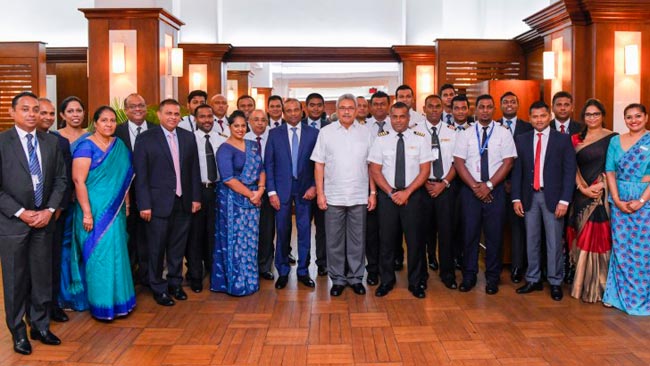
President Gotabaya Rajapaksa commended the SriLankan Airlines crew who flew to Wuhan, the epicenter of the Coronavirus, to bring back Sri Lankan students.
The crew joined a luncheon hosted by the President at the Presidential Secretariat today (03), stated President’s Media Division.
Led by the Chairman of the Airline Ashoka Pathirage, Board of Directors, engineers, and pilots and the crew who took part in the operation were present on the occasion.
President Rajapaksa said the commitment and courage exhibited by the entire group is a good example for the other sectors in the country.
Everyone worked towards a single objective. The risk taken by them is a historic milestone in the annals of SriLankan Airlines”, said the President.
President pledged his unwavering support to develop the national carrier on par with other international airlines while preserving our uniqueness.
Secretary to the President Dr. P. B. Jayasundara, honorary advisor to the President Lalith Weeratunga, Additional Secretary to the President on International Relations Admiral Jayanath Colombage, Commander of the Army and Chief of Defence Staff Lieutenant Gen. Shavendra Silva were also present.
The Fort Magistrate has issued arrest orders on former SriLankan Airlines Chief Executive Officer (CEO) Kapila Chandrasena and his wife on charges of money laundering.
Previously, the Attorney General directed the Criminal Investigations Department (CID) to obtain a warrant and arrest the former CEO of SriLankan Airlines Kapila Chandrasena and his wife Priyanka Niyomali Wijenayake.
The Attorney General after considering the investigative material submitted by the CID has directed the CID to name them as suspects, request and obtain a warrant from a magistrate’s court, record statements from the suspects and produced them before the court.
The AG also instructed the CID Director to immediately submit the investigative material and documents to the Director-General of the Bribery Commission with a report for necessary action as sufficient evidence has been presented to prove that Kapila Chandrasena has also committed crimes under provisions of the Bribery Act.
The President had ordered a probe into accusations of bribery by European planemaker Airbus to pave the way for the sale of aircraft to state-run carrier SriLankan Airlines after the firm agreed to a settlement with regulators.
Sri Lanka was among the countries whose officials figured in a US$4-billion settlement Airbus agreed with European and US regulators, as having been accused of getting bribes to clinch sales of its aircraft.
Sri Lanka will conduct a comprehensive investigation into reports of allegations over financial irregularities”, the office of President Rajapaksa said in a brief statement on Sunday.
Detailed findings from Britain’s Serious Fraud Office (SFO) said Airbus had hired the wife of a Sri Lankan Airlines executive as its intermediary and misled export credit agency UKEF over her name and gender while paying US$2 million to her company.
In a statement, SriLankan Airlines said its chairman and board had directed the management to cooperate fully with any government agency regarding any investigation or prosecution.
The board had also told the management to preserve and study all available internal documentation with a view to take all possible corrective future action,” it added in Sunday’s statement. The alleged corruption in dealings between Airbus and SriLankan Airlines took place between July 2011 and June 2015, the SFO added.
Saturday’s announcement of the Airbus settlement followed a nearly four-year investigation spanning sales to more than a dozen overseas markets.
Direct State involvement is needed as conditions are unfavorable for self-employment and entrepreneurial development schemes
Sri Lanka’s post-war livelihood strategies for women in the Eastern Province have failed, necessitating fresh thinking based on the experience garnered so far and the findings of researches conducted there.
This is the impression one gets after reading Nayana Godamunne’s excellent monograph: Understanding Women’s Livelihood: Outcomes and Economic Empowerment in the Eastern Province of Sri Lanka brought out by the Colombo-based International Center for Ethnic Studies in 2019.
Looking at the preference of the women themselves, it appears that it will best if opportunities for government employment are increased and the government becomes the principle development agent and employer in place of the private sector and individual private initiatives.
The current emphasis on self-employment generation and developing entrepreneurship has not yielded dividends. Conditions for these to thrive do not exist among the people of the war-affected Eastern Province (EP). Godamunne says that the population in EP does not have the requisite resources and skills. The surrounding economy is too weak to sustain and spur successful entrepreneurial efforts.
Government Policy
Delineating State policy since the end of the war in EP since 2007, Godamunne says: Livelihood rebuilding in the Eastern Province sits within a broader post-war reconstruction strategy which revolves around self-employment promotion, credit expansion and encouraging private capital investments to support two dominant sectors – tourist growth and enterprise development.”
But she adds that there is no convincing evidence that this approach has increased opportunities and incomes for women. The fact is that most war-affected women are still in survival livelihood strategies, driven by dire need rather than choice.”
There is also evidence that women’s engagement in livelihoods faces new constraints in the post-war era. For example, whilst improvements in infrastructure such as greater road connectivity and access to markets are visible, the influx of cheap new products is driving some women out of livelihoods due to their inability to compete. Moreover, the presence of the military has restricted and sometimes blocked women’s livelihood activities.”
The existence of High Security Zones in areas such as Sampoor, for example, has blocked women’s access to arable land and restricted their movement in pursuit of livelihoods. The military involvement in civilian activities has resulted in curtailing women’s engagement in certain types of livelihoods such as running food outlets and grocery stores,” Godamunne argues.
Indebtedness is another post-war problem. According to the author, the push towards self-employment and enterprise development has driven many women to be entrapped in debt. The micro-finance companies have entered the field in a big way replacing the formal banking institutions because micro-finance companies do not seek collaterals like banks and other formal financial institutions.
But this has, by no means, been an unmixed blessing. For various very understandable reasons, the borrowers (especially women) are not able to run their businesses profitably. They get into indebtedness. Being unsuited, or untrained, or incompetent or because of the absence of a favourable economic environment, the women spend the borrowed money, not on improving their businesses, but on consumer goods or on managing crisis situations in the family.
Search for Sustained Stable Incomes
Godamunne says that women are seeking stable incomes, dignity of work and decent working conditions. But she found that the women find that the opportunities they can access under the circumstances do not answer to their needs. These are informal and unpaid work that guarantees no regular income or stability.”
Therefore, like the men, women too are seeking access to jobs in the formal sector with regular and equal pay and benefits as men. And there is a preference for government jobs, Godamunne notes. She quotes a woman in Muttur who said: Women should earn money from permanent employment which, I think, most probably is from government jobs. I don’t like farming and other cultivation and self-employment since I think that those don’t give permanent and regular income.”
Government jobs are sought after because of the benefits, security of employment. Public sector jobs have well-regulated hours, clear worker’s rights such as paid leave, ample public holidays, and access to a state pension upon retirement,” Godamunne points out.
But the State no longer sees itself as an employer and is more and more relying on the private formal and informal sectors to provide jobs. It imagines that by promoting self-employment and individual entrepreneurship, it will provide and raise incomes and jobs. But in an under-development country, which is also war-devastated, privatization of this sort has not worked and will not work. The private sector is too weak to meet the basic needs of the people.
Neganahira Navodaya and Enterprise Lanka projects
After Eelam War IV ended in 2007, the Mahinda Rajapaksa government launched the Neganahira Navodhaya (Eastern Revival) program and the Sirisena-Wickremesinghe regime, which followed it in 2015, continued the strategy. In Rajapaksa’a time the focus was on infrastructure development. But between 2015 and 2019, the focus was on livelihood rebuilding initiatives through government-aided private initiatives.
However, despite the money poured into the Eastern Province, its contribution to Sri Lanka’s GDP has remained stagnant at around 6%, Godamunne notes. EP has lagged behind in other respects too. Whilst national poverty headcount figures have shown a steady decline, they are high in the Eastern Province. In 2017, it was 11.3% in Batticaloa district and 10% in Trincomalee district, she points out.
Impediments
The researcher cites cases in which the post-war situation has been worse than the situation before the war. For example, a woman who was running a successful hotel” in Trincomalee Town before the war escalated, had to migrate to another place. When she came back, after the war, she found that she had no money to restart the hotel. So she started a grocery which is not making the kind of money the hotel was making.
Godamunne refers to cases of the military taking over arable and pasture lands and preventing villagers from accessing them. Prior to the war, many women used the lands to graze cattle and for agro-based cultivation. However, since returning, they have had no access to those lands. In the construction projects in Sampoor, it is the military which gets the bulk of the work.
Female-Headed Households
It is said that 25% of households in Sri Lanka are female-headed. But the figure is significantly higher In the Eastern Province, Godamunne says and points out that the female heads of households face multiple challenges. They have to eke out a living, whilst caring for their children, the elderly, and the disabled.”
Then there is gender-oriented harassment and violence. Many young widows and girl children from women-headed households are frequently subjected to sexual violence by neighbors, family members, and strangers. Victimization of girl children of remarried women is a real problem now,” Godamunne says. Women are forced into prostitution by poverty and it is said that prostitution in EP is an essentially a post-war phenomenon.
Enterprise Lanka
It is in this context that the Yahapalanaya government started programs like Enterprise Lanka” which targeted young people who had not gained admission to higher education institutions. Enterprise Sri Lanka” offers government-backed guarantees for the new entrepreneurs. The National Action Plan on Women-Headed Households 2017-2019 focused on promoting self-employment and entrepreneurship amongst women-headed households in war-affected areas. Together with the Policy Framework for SME Development, the government aimed to provide a comprehensive policy framework to generate employment opportunities and reduce poverty.
However, in all the State schemes, the selection of beneficiaries, the kind of help rendered to them, and the release of funds on time have become major issues, Godamunne observes.
She quotes a Trincomalee man as saying: Some were given cattle, but they do not have pasture land to graze them and some were given water pumps for cultivation, but they do not have lands, since both arable and pasture lands are still occupied by the Navy.”
Admittedly, opportunities have opened up in EP in the new garments sector, leasing, retail and the tourism and hospitality sectors. But jobs prospects here for local women are very low”, partly on account of lack of qualifications and experience, Godamunne finds.
Local women are themselves reluctant to work in these sectors. Putting them off are long hours of work, and shift work often entailing work after dark. The lack of transportation deters women from taking up shift work, she points out. The lack of required skills and knowledge are other reasons for the low take up of jobs in the private sector.
Then there is labour and gender abuse in the hospitality industry. Women are subjected to delayed wage payments, non-payment of benefits such as service charge, and non-inclusion in government benefits like Employees’ Provident Fund (EFP) or the Employees’ Trust Fund (ETF). The lack of awareness of rights among local women has enabled resorts to avoid adhering to labour regulations, Godamunne says.
Colombo, Feb.3 (newsin.asia) – Sri Lankan President Gotabaya Rajapaksa has granted a general amnesty for 512 prisoners to mark the Independence Day which fall on 4th of February.
The amnesty has been granted in accordance with powers vested in the President by Article 34 of the Constitution and on the recommendation of Nimal Siripala de Silva, Minister of Justice, Human Rights and Legal Reforms, President Media Division (PMD) announced.
Those who will be released have been serving jail terms after being convicted for minor offences such as theft, breach of trust and drunken driving says PMD.
No one imprisoned on conviction for major offences such as rape, robbery, grave sexual abuse and soliciting bribe is in the list.” PMD statement says.
The amnesty will apply only to those prisoners who were actually in prison on 31 January this year. The effective date of release is 4th of February.
One of the two workers from Sri Lanka who has been allowed to continue working.Share
Print
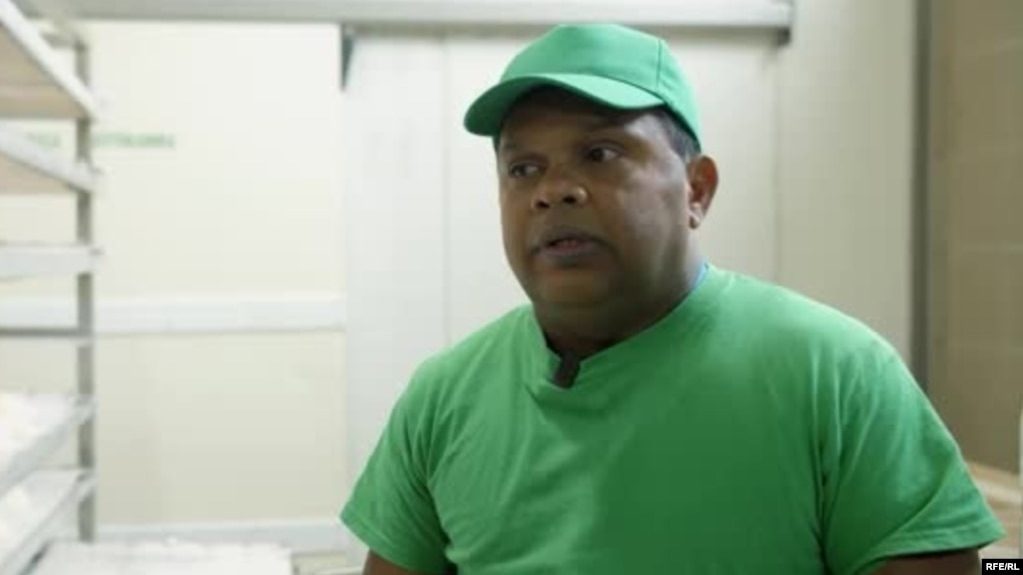
A bakery in a small Romanian village says it will continue to allow a pair of Sri Lankan employees to make bread at its shop in the face of protests from local residents fearing an influx of immigrants.
Katalin Kollo, one of the bakery owners, said on February 3 that she would allow the workers to continue in their positions after initially apologizing to the local residents of Ditrau and pledging to move the two Sri Lankans to other sections of the company which did not involve direct contact with the dough or the final product.
Despite possessing the proper paperwork, the bakery owners’ hiring of the two Sri Lankans sparked outrage among the mainly ethnic-Hungarian community of some 5,500, with a couple of thousand residents signing a petition calling for measures to stop what they called the immigrant inflow.”
At a town hall meeting over the weekend, the villagers complained about the bakery owners’ treatment of local workers, who they said were forced to work long hours for low wages. Villagers accused the owner of choosing to bring in cheaper laborers from abroad rather than providing better conditions and higher pay for local workers.
They also voiced fears that the two qualified Sri Lankan bakers were the start of a much larger influx of Asian migrants who would alter the local culture and religion. One of the two Sri Lankans is a Catholic, as are most of the villagers.
Labor Minister Violeta Alexandru on February 2 told reporters she was deploying labor inspectors to clarify the situation of the two foreign laborers. Alexandru told Romanian media that she was surprised by the intolerant stance of the locals, “who forget that our fellow Romanians also work in large numbers abroad and deserve respect.”
Millions of Romanians work in European Union countries to help their families at home make ends meet. An estimated 1,000 residents of Ditrau have also left to find work abroad, mostly in Hungary.
“We need to be balanced in assessing this situation,” Alexandru said.
Before Kollo reversed her decision and allowed the two Sri Lankans to continue to make bread, several Romanian companies offered to relocate the employees to their bakeries in other parts of the country.
The then Sri Lankan government in 2015 started including the Tamil national anthem as a means of achieving reconciliation with the Tamil minority community.
For the first time since 2016, there will be no Tamil national anthem at the 72nd Independence Day celebrations in Sri Lanka and it will only be rendered in Sinhalese, the government announced on Monday, amply demonstrating the administration’s priority for the majority Sinhala community.
The then Sri Lankan government in 2015 started including the Tamil national anthem as a means of achieving reconciliation with the Tamil minority community.
This will be the first time since 2016 that there will be no Tamil national anthem at the Independence Day celebrations in the country.
The national anthem will be sung only in Sinhala, officials of the Ministry of Home Affairs said on Monday.
Sri Lanka’s Constitution provides for the singing of the national anthem in both Sinhala and Tamil.
The Tamil version ‘Sri Lanka Thaye’ is a direct translation of ‘Namo namo matha’ in the Sinhala language.
The national anthem in Tamil is not just another song but the Sri Lankan identity of the Tamil speaking community,” said Mano Ganesan, a Tamil politician who was the former minister of national integration and had been responsible for the Tamil version being accommodated during the previous Independence Day celebrations.
Home Affairs State Minister Maninda Samarasinghe said last week that although there will be only the Sinhala version of the national anthem at the main ceremony, at province based ceremonies, the use of Tamil version will be permitted.
Sri Lankan President Gotabhaya Rajapaksa after his swearing-in ceremony in November thanked the powerful Buddhist clergy for backing his presidential bid and vowed to protect all communities, while giving foremost priority to Buddhism. He also thanked the Sinhala-majority people for electing him.
While the Tamils in 2016 appreciated the symbolic gesture of recognizing them by adding the Tamil version at the Independence Day celebrations, the opposition, then led by the Rajapaksas and a majority Sinhala community member, filed a fundamental rights petition against the move.
Prime Minister Mahinda Rajapaksa, who describes himself as a rebel with a cause”, earlier served as the country’s president from 2005-2015, a period which was mired by allegations of human rights abuses, especially against the Tamils.
Muslims make up nearly 10 per cent of Sri Lanka’s over 21 million people, who are predominantly Sinhalese Buddhists. About 12 per cent of the population are Hindus, mostly from the ethnic Tamil minority. Some seven per cent of the population are Christians.
There are already concerns in the country that Gotabhaya Rajapaksa’s remarks may have led to apprehensions among the minority communities, who are already worried about the possibility of the return of an iron-fist rule under the Rajapaksa-duo’s regime.
One day after they had announced they will remove the two Sri Lankan workers from the manufacturing process of the bread at the bread factory in Ditrau, Harghita, following the locals’ protest, the owners of the plant changed their mind and gave in to criticism of the civil society, announcing the Sri Lankan are hired again.
Hundreds of villagers of Ditrau commune in Harghita county, Romania, staged protests last week because a bread factory in the locality had hired two employees from Sri Lank. The locals said they fear ‘a wave of refugees might come in their commune to impose their culture and jeopardize the safety of the villagers.’
Kollo Katalin, one of the owners, said that she had initially proposed a deal to the residents of the village for fear the conflict might degenerate and the men from Sri Lanka will get hurt, but, after seeing the locals do not accept their offer, they decided that the bakers can remain in the manufacturing process.
The woman said though that the two Sri Lankan bakers fear the locals’ anger, and also the other employees of the bread factory fear the villagers.We have other workers who have been threatened for working with the Sri Lankan men. We have other 90 people working in Ditrau”, Kollo stated.As two landlords who accommodated the two Sri Lankan workers in Ditrau had even received threats from the villagers, the owners of the bread company decided to relocate the foreign workers to another locality, Gheorghieni.In the villagers’ camp, the reasons why they don’t want the Sri Lankan are not quite clear. Some argue the arrival of the foreign workers to their commune will open the gate for more and even for refugees. Others claim they do not having anything against the Sri Lankan bakers, but they just don’t want Piumal and Amahinda touch the bread with ‘their black hands’.In his turn, the Roman-Catholic priest from Ditrau, Bírók Károly, criticised even by the Roman-Catholic Archbishop of Alba Iulia, who said the local had got involved in a conflict that exceeds his powers”, said he acted as his conscience had dictated him and that he had no regrets and assumed his stance. Priest Bírók Károly was the leader of the protesters from Ditrau who protested in front of the town hall.Moreover, Kelemen Hunor, the leader of UDMR, the political union that represents the Magyar community in Parliament, has somehow blamed the priest for inflaming things in the locality. He said that one cannot label an entire community in Ditrau because of an excited priest and of some persons whose stance cannot be endorsed and accepted. I tell the locals in Ditrau to stay calm, to reject manipulation and any for of extremism”, Kelemen Hunor added.During the weekend, the National Council for Combating Discrimination (CNCD) announced they are notified over this case over alleged racism and discrimination.Harghita Police has also announced that it had opened a criminal case for charges of discrimination and incitement to hatred in Ditrau.Moreover, the Labour Inspectorate from Harghita is conducting a check today at the bakery in Ditrau, following criticism launched by some villagers who had been former employees of the factory, according to which the wages were low and working conditions were bad.Labour minister Violeta Alexandru has also taken stand.I am surprised by the attitude of the local community regarding these two men who want to work, as locals forget our Romanians are also working abroad and maybe they are at risk of being treated the same. We have to be balanced in our views, like Romanian working abroad need respect, the same we must respect those who come to work in Romania,” the minister said.Asked if the two Sri Lankan should stay at this job, the minister replied that it is the decision of the factory owner, as it’s a private employer”.
Job offers for Piumal and Amahinda
After the initial announcement of the factory owners that the two Sri Lankan bakers will be removed from the manufacturing process, the leader of Cluj County Council, Alin Tișe, said he is considering to contact the two workers to offer them a job in one of the local institutions.
In his turn, Suceava-based businessman, Stefan Mandachi, owner of Spartan restaurant chain, known after a year ago he had built the first one metre” of highway in Moldavia, has also announced his availability to hire the two Sri Lankan in one of his restaurants. He revealed the first concrete steps to hire them had already been made, and that he’s only waiting for Piumal and Amahinda’s consent.
Even after the owners of the bakery announced the Sri Lankan will keep their jobs in Ditrau, Mandachi insisted for them to leave, arguing the two will not have a good life in Ditrau” despite the authorities’ intention to ‘welcome them with flowers.’
The entrepreneur also considers that the lack of education is the root of all evil in this country, including of the conflict in Ditrau.
Romanian authorities are investigating a case of incitement to hatred and discrimination after 350 villagers gathered to protest against the employment of two Sri Lankan workers at a local bakery.
The two bakers were hired legally through a recruitment agency at a bread factory in Ditrau, in central Romania.
But some of the village’s 5,000 inhabitants say they are afraid migrants will endanger the community’s safety and cultural traditions.
“Let’s pretend other entrepreneurs are hiring … say, six foreign workers in our village,” a blondwe woman told the crowd on Monday. “After two years, these six will bring their families and after four or five more years, we will find ourselves surrounded by black people.”
She added: “This is what we are afraid of. We are not afraid of the two Sri Lankan men, but of the consequences.”
Working conditions and living standards in question
Bende Sandor, an MP for the Democratic Alliance of Hungarians living in Romania, claimed the meeting was not about racism.
“I didn’t notice xenophobic tendencies at this gathering,” he said. “It looks more like a conflict between the factory owners and the locals.”
“The owner of the bakery is paying less money to all workers. They are all working too much, sometimes they work 24 hours per day,” a village resident told local media.
The Romanian National Council for Combating Discrimination (CNCD) filed a complaint for incitement to hatred and discrimination. Its president, Asztalos Csaba, called for tolerance and condemned discriminatory attitudes in Ditrau.
The Sri Lankan Embassy in Bucharest contacted the bakery to check on the two workers’ living conditions in the area and to provide them consular assistance.
Romania’s Labour Minister Violeta Alexandru also requested checks to be carried out at the bakery.
“What surprises me is the attitude of the local community regarding the fact that two people want to work here,” she said. “Maybe they forget that many Romanians are working abroad and they could be in danger of being treated in the same way?”
Tends of thousands of Romanians have left the country in recent years to find work, particularly in western Europe.
The factory said it wouldn’t give in to local pressure or dismiss its Sri Lankan employees. However, public anger may force the two to move to another village.
London, Feb 03: A man shot dead by the Scotland Yard after he went on a stab frenzy on a busy high street in south London was a convicted Islamist terrorist, with family links to Sri Lanka, who was recently released from prison after serving half of his sentence period for preparation of acts of terrorism, police said.
The Metropolitan Police said Sudesh Mamoor Faraz Amman, a 20-year-old British national with extended family in Sri Lanka, had pledged allegiance to the Islamic State (ISIS).
In a statement in Arabic via its Amaq propaganda agency, the Islamic State on Monday claimed responsibility for the London attack and said Sudesh was a “fighter” with the group, according to the SITE Intelligence Group, a US-based monitoring firm which monitors jihadist activities.
Amman was sentenced to three years and four months in prison in December 2018 after being charged with 10 terror-related offences. He was aged 18 that time. He was released under licence last month. He was under surveillance.
“The suspect had been recently released from prison where he had been serving a sentence for Islamist-related terrorism offences. We are confident that this is an isolated incident that has been contained,” said Met Police Deputy Assistant Commissioner Lucy D’Orsi on Sunday night. Of the 10 offences under which Amman was jailed, seven were of making records of information likely to be useful to a person committing or preparing an act of terrorism and three of dissemination of terrorist publications.
Police had been told of extremist material being posted on the social media app Telegram by an account called @strangertothisworld, which turned out to be of Amman.
He had used documents about making explosives, weaponry and carrying out terrorist attacks. Among them were manuals on bomb-making, knife-fighting and close combat. Reports at the time also said he had told his girlfriend she should murder her “kuffar” (non-believer) parents. Police found a notepad in his home, where he had listed his “life goals”.
“Top of the list, above family activities, was dying a martyr and going to ‘Jannah’ – the afterlife,” Alexis Boon, then head of the Metropolitan Police counter-terrorism command, said after he was jailed over a year ago.
On Sunday, Amman was wearing a hoax bomb vest as he was pursued by armed officers as part of a proactive counter-terrorism surveillance operation before they shot him dead at the scene. A man in his 40s, who suffered life-threatening injuries in the stabbing, is said to be out of danger and one woman in her 50s, who had non-life-threatening injuries, has since been discharged from hospital.
Another woman in her 20s who suffered minor injuries, believed to have been caused by broken glasses triggered from the discharge of the police firearm, continues to receive treatment at hospital, the Met Police said. “Detectives from the Met’s Counter Terrorism Command continue to carry out fast-time enquiries into the circumstances of the attack in Streatham High Road at approximately 1400 hours on Sunday, February 2,” the Met Police said in a statement on Monday.
“Search warrants are being carried out at two residential addresses in the south London and Bishop’s Stortford (Hertfordshire) areas respectively. No arrests have been made and enquiries continue at pace,” the statement said.
In a statement from Downing Street after an emergency meeting with UK Home Secretary Priti Patel on Sunday night, Prime Minister Boris Johnson once again pledged tougher sentencing measures for dangerous terrorists.
“We will announce further plans for fundamental changes to the system for dealing with those convicted of terrorism offences,” he said. Patel said the government will be “announcing some fundamental changes, in addition to what we’ve already said, that we will do to deal with counter-terrorism and counter-terrorist offenders.”
It is thought that Amman may have realised he was being watched because he stole a 10-inch 3.99 pound kitchen knife from a store on the Streatham High Road at the time of the attack and, within seconds, stabbed a woman in the back. As he ran up the busy high street he stabbed a man.
At least two plain-clothed police officers who had been following Amman, dressed in hoodies and jeans and with balaclavas covering their faces, gave chase on foot after he attacked his first victim. It is thought that a third officer on a motorbike who had been part of the surveillance team may have been the first to open fire. In November last year, in a similar scenario, two people were killed after convicted terrorist Usman Khan went on a stabbing frenzy in London Bridge area of the UK capital. It later emerged that Khan’s family originated from Pakistan-occupied Kashmir (PoK) and he was out on parole after serving part of his sentence for plotting terrorist attacks on the UK.
What do we think we are celebrating on 4th February every year? Our independence from colonial rule. But did we really get independence on 4th February 1948? We didn’t because we became by choice a dominion of the British Empire. It was only on 22 May 1972 that Sri Lanka shred all ties with the colonial British & became a true Republic. With 19 May 2009 becoming a significant milestone in view of our armed forces uniting the entire island under one national flag we should ideally hold 19 May as Victory Day, 22 May as Republic Day and the week covering this celebration as Heroes Week.
Our
island nation was attacked over 17 times from South Indian invaders though no
invader was able to take over and rule the entirety of the island.
Then
came 3 western European colonial explorers. The Portuguese, Dutch or the
British also failed to conquer the island. They tried but they failed. But they
did eventually take over the island primarily as a result of our own people
betraying the island. Our own betrayed the island & its people to the
Portuguese, our own betrayed our island & its people to the Dutch and our
own betrayed our island and its people to the British and that DNA of treachery
& betrayal appears to be continuing. It was always a case of ‘inguru dee
miris gaththa wage’ ඉඟුරු දීලා මිරිස් ගත්තා වගේ exchanging ginger for chillies.
With
the signing of the Kandyan Convention the island of Sinhale came under British
rule and Sinhale was christened Ceylon. The British ruled till 1948 when
decolonization of other colonies led to Sri Lanka getting dominion status on 4
February 1948.
The
Head of State of Ceylon remained first King George VI until 1952 his daughter
Elizabeth II was crowned Queen.
Independence
did not even change our name back to Sinhale. We continued as Ceylon with the
Queen as Head of State and final judicial decisions decided by UK Privy
Council. Britain continued to maintain air & sea bases in ‘Ceylon’ and
British officers continued to fill the high ranks in the army!
The
Citizenship Act of 1948 & the Official Language Act of 1956 were both introduced
with the consent of the UK Privy Council. The British monarch held final
authority on all legislation. No bill presented to the Ceylon Parliament could
become law until the Monarch’s royal assent was given as the Constitution of
Ceylon at independence made the British monarch part of Ceylon Parliament.
So what is the
independence Sri Lanka enjoyed? What are we really celebrating annually?
True
independence came only in 1972 with the Republican Constitution when the Queen
was no longer head of State and Sri Lanka had its own judiciary to determine judicial
matters.
Article
3 of the new constitution asserted Sovereignty was with the People and it was
inalienable. Article 13 removed the British monarch from the legislature.
However,
sadly the name Sinhale was again forgotten and instead Ceylon was replaced with
Sri Lanka. Hon. William Gopallawa became the First Non-Executive
President while Hon. Sirimavo Bandaranaike continued in office as Prime Minister.
If
we are to be proud to be truly independent, it also questions why we remain
embracing the Commonwealth where the Queen remains ceremonial monarch! Myanmar
on the other hand left the Commonwealth when it became independent. It is not
too late for Sri Lanka to leave the Commonwealth.
If
we are to celebrate as a nation, we must celebrate with meaning and
significance. There is nothing significant to celebrate of 4th February
when realizing that the Queen was head of state, the UK courts had the final
say and British bases remained on our island even after 1948. All that changed
in 1972 with the Republican Constitution.
Thereafter,
the island nation was plagued with 2 insurrections and terrorism by LTTE. LTTE
held defacto territory even given to the officially via 2002 ceasefire.
However, by order of the then Commander in Chief of the Armed Forces the
National Army was ordered to militarily defeat the LTTE and reunite the country
under one national flag. LTTE was vanquished on 19 May 2009 bringing Sri Lanka
under one rule. That Victory Day must continue to be celebrated just as The Allies
continue to celebrate V Day against Nazi Germany and end of World War 2. Every
year key battles are enacted still. No one has any right to downplay Sri Lanka’s
military defeat of LTTE terrorists by defining it as ‘triumphalism’. If so, the
same must accuse the Allies of celebrating ‘triumphalism’ too.
Therefore, it is suggested that Sri Lanka celebrate Republic Day – 22 May together with Victory Day and declare the week as Heroes Week in honor of all the brave men and women who sacrificed their lives and limb to defend the Nation.
As a matter of way out of the subdued
economic growth, the Sri Lankan government recognizes the need to increase the
employability rates of the youth. To that end, the ministries in the subject of
skills development, vocational training and youth affairs have been tasked with
providing technical and vocational training to prepare youth for careers in a
wide range of occupational fields. A well-known fact is that Sri Lanka’s
university admission process is highly competitive where the students are
ranked and admitted in accordance with a standardized scoring system based on
their A-Level examination results. In 2018, about 60 percent of students passed
the GCE A-Level examinations. Of this group, only about 17 percent were
admitted into a university-level institution.
Looking at the technical and
vocational education sector, abbreviated TVET sector, the allied education
programs range from short-term certificate programs and apprenticeship training
to bachelor’s degrees in ‘applied’ disciplines. In 2009, Sri Lanka established
a National Vocational Qualifications Framework (NVQF). National Certificates
(NVQF 1 to 4 entry-level programs typically have a strong practical focus concentrating
in crafts and trade fields). National Diplomas (levels 5 and 6) entail one and
two-year programs typically offered in technical fields and trades. Admission
is typically based on O-levels or a NVQF level 3 or 4 certificate. The program
length is clearly defined at 60 credits (one year) at level 5 and 120 credits
(2 years) at level 6. The level 7 Bachelor’s degrees are basically the
Vocational Bachelor of Technology degrees (3 years, 180 credits). The programs
are designed to be entered on the basis of NVQF level 5, while holders of level
6 may be granted the first two semester exemptions. However, the entering
schemes for a NVQ 5 and 6 are many.
The Department of Technical Education
and Training (DTET) oversees 38 technical colleges offering various certificate
and diploma programs in trades and crafts, such as automotive technology.
Students over the age of 17, who have passed their O-level examinations, are
eligible for enrollment, though many courses have an age limit of 29. The
Tertiary and Vocational Education Commission (TVEC) accredit a number of technical
and vocational institutions. The Vocational Training Authority (VTA) comprises
224 rural vocational training centers, 22 district centers, and 7 national
training centers. VTA was established in 1995 with the aim to provide TVET in
rural parts of the country. The National Apprentice and Industrial Training
Authority (NAITA) offers around 150 apprenticeship training courses in 22
vocational fields across 25 district offices and 4 institutes. Apprentices
while training at a work place may have the opportunity to sit for national
trade tests in a number of occupations. Trainees may also apply to obtain NVQF
certificate-level qualifications.
Amidst this backdrop, the University
of Vocational Technology (Univotec) was established via the Parliament Act No
31 of 2008 with the functions under then the purview of the Ministry of Youth
Affairs and Skills Development. Subsequently, the university colleges came into
being in a gazette notification in the year 2014 under the foregoing Act. It
must be clear that although the university colleges are given power to admit
students, conduct tertiary education, hold examinations, and determine with the
approval of the Univotec the degree, diplomas, certificates, and any other
academic distinctions to be awarded, they do not have full or independent
university status though it is often part of a larger university.
Quite a few international examples
would ease out the misnomer. The Latrobe University College of Northern Victoria
is one such famous college that provides academic support such as tutorials. University
College, Melbourne, formerly University Women’s College, is one such
residential college affiliated with the University of Melbourne. In Belgium,
the term University College is used to refer to state-funded institutions of
higher education belonging to one of the three Communities of Belgium, that are
specifically not universities. They can issue academic or non-academic
Bachelor’s degrees or academic Master’s degrees, and they are performing
practice oriented and artistic research. Even if they are at the same level,
academic degrees issued from University colleges are different from University
degrees. In Canada, the case is multi-dimensional. Their “University
College” has three meanings: a degree-granting institution; an institution
that offers university-level coursework; or a constituent organization
(college) of a university, such as University College at University of Toronto
or University College Residences at Laurentian University. Some Canadian
university colleges are public institutions, some are private; some are
regulated by government agencies, others are not. In Ireland, the Queen’s
University Belfast initially had no university colleges and the first university
college was created in 1985 (St Mary’s) and second in 1999 (Stranmillis), these
two institutions previously were associated with the university, offering its
degrees since 1968.
The term “University
College” in Malaysia denotes institutions that are granted the authority
to issue degrees in their own names within specialized fields and disciplines.
Nearly all New Zealand universities were originally described as
“University Colleges”, and were constituent parts of a Federal body,
the University of New Zealand. All of these are now fully independent; for
example, the former Canterbury University College is now the University of
Canterbury. There is a specific university hall of residence named
“University College” at the Otago University. In most cases students
at university colleges took the external exams of the University of London, but
the colleges of the University of Wales and the Victoria University took
degrees of those institutes while the university colleges in Newcastle and
Dundee were associated with the universities of Durham and St Andrews
respectively. Not all of these university colleges used “University
College” in their name. With the exception of colleges in London that
remain part of the University of London, all have gone on to become independent
civic universities. Examples include the University of Nottingham (which was
University College Nottingham when D. H. Lawrence attended), the University of
Southampton which was associated with the University of London until 1952, and
the University of Exeter, which until 1955 was the University College of the
South West of England; Keele University was founded in 1949 as the University
College of North Staffordshire until it was granted its royal charter in 1962
and transformed into a university. This was the recognized route for
establishing new universities in the United Kingdom during the first half of
the 20th century, prior to the founding of the plate glass universities.
It is clear that the ability to offer
degrees wholly depends upon how precise it has been worded out in the law. As
“University College” is obviously less prominent title than
“university”, institutes that meet the (stricter) criteria for
university title normally apply for the latter. Historically, the term
university college was used to denote colleges (as opposed to universities)
that delivered university-level teaching. Unlike in the modern usage of the
term, did not hold their own degree awarding powers. Instead, they were
associated with universities, thus forming a larger institutional unit while
being physically independent. An inference is that it becomes even more
difficult with the term university college, which is being used in quite a few
countries across the globe, ranging from Australia, Canada and Denmark, to the Netherlands,
Norway, UK, the US, and many other countries. Very often it does not refer to
the same type of institution.
Leaving aside the question of
autonomy for the time being, the demands leveled by the students learning at
the existing university colleges must be looked at from a holistic perspective.
It must be left to the academics and university administrators to decide upon
and come up with a strategic plan of action. Such an action plan must indeed be
comprehensive and sustainable as it should not in any way impair the efficacy
and equity associated with the overall delivery of technical education and
training. Simply put, the efficacy and equity must be revisited in terms of
admission criteria, hierarchy of delivery of modules and their curriculums,
order of cognitive skills, national competency standards, effective utilization
of resources, and most significantly, the potential vocational niches that are
marketable in cross frontiers. It is no harm of elevating the colleges as
degree awarding institutions, not just sake of producing a graduate on a demand
but a true graduate with a spirit of optimism and genuine
graciousness, which essentially warrants a carefully thought-out process, in
spite of the name it may claim at the end of the day.
Ultimately, the country’s prosperity
depends on how many of its people are in work and how productive they are,
which in turn rests on the skills they have and how effectively those skills
are used. Skills are a foundation of decent work. The cornerstones of a policy
framework for developing a suitably skilled workforce are: broad availability
of good-quality education as a foundation for future training; a close matching
of skills supply to the needs of enterprises and labour markets; enabling
workers and enterprises to adjust to changes in technology and markets; and
anticipating and preparing for the skills needs of the future. When applied
successfully, this approach nurtures a virtuous circle in which more and better
education and training fuels innovation, investment, economic diversification
and competitiveness, as well as social and occupational mobility – and thus the
creation of more but also more productive and more rewarding jobs. Good-quality
primary and secondary education, complemented by relevant vocational training
and skills development opportunities, prepare future generations for their
productive lives, endowing them with the core skills that enable them to
continue learning.
The MCC is not just any ordinary
agreement. It is an agreement that is signed between 2 Governments, passing 10
land registries to a newly created company called MCC Sri Lanka Pvt Ltd. So a
government to government agreement creates a company to which funding is to be
disbursed and this company whose aims & objectives have yet to be finalized
is having its entity passed by Sri Lanka’s Parliament (God knows why), removes
the role of the Judiciary to adjudicate and disallows the Citizens any legal remedy
for grievance on account of the immunity that MCC/MCA will be given for 5
years.
The fundamental principle in a
country is the functioning of Parliamentary supremacy and the Rule of Law
exercised by the Constitution & the Judiciary. However, this one agreement
is clipping the powers of both Rule of Law & Role of Judiciary for 5 years
and in so doing it is negating the inalienable right of the citizens’
sovereignty. These are all violations of international code of ethics and laws.
How will MCC clip the Powers of Sri Lanka’s Parliament – Judicial – People?
MCC proposes to do so in 3 ways:
By having MCC passed by Parliament enforcing
Section 80 (3) of the Constitution becomes applicable where a Bill becomes law upon the certificate of the President or the
Speaker, as the case may be being endorsed thereon, no court or tribunal shall
inquire into, pronounce upon or in any manner call in question, the validity of
such Act on any ground whatsoever”
By
Section 6.8 – Immunity for MCC wherein
IMMUNITY clause denies any action by any of Sri Lanka’s Courts against MCC/MCA
Sri Lanka. Please note: the very quote used in Sri Lanka’s Constitution Section
80(3) is requoted in MCC Agreement Section 6.8. This means Sri Lanka’s Supreme
Court, Court of Appeal, High Court, Magistrate’s Court will have no
jurisdiction to inquire into any loss, damage, injury or even death arising out
of MCC activities or omissions in Sri Lanka for 5 years. If the judiciary has
no role it means the lawyers have no role either. Are judges and lawyers aware
of this scenario?
Bim Saviya further throttles role of
Judiciary/legal fraternity in land adjudications which will be seen when
all land deeds become registered under Bim Saviya & Sri Lanka’s judiciary
and land lawyers will find they can no longer adjudicate in land matters.
Why does MCC need to
be passed by Parliament?
Sri Lanka has had many foreign
investments, there are many foreign companies with liaison offices operating in
Sri Lanka but none of these companies have opened shop after having its
operations passed by Sri Lanka’s Parliament – so why does MCC need to be passed
by Parliament?
Why is Parliament ceding its powers to a private company administered
by a foreign government for 5 years?
MCC Section 6.8 is devolving
powers of the Parliament to the MCC/MCA for a period of 5 years to a totally
private company to do what the State has been thus far elected to do. Is this
not a frightening thought? Have Parliamentarians not realized the implications
of such a hand over?
Why are the I Know the Law” legal fraternity in Sri Lanka silent?
Are they not in a better position
to read the clauses and understand the implications & dangers for Sri Lanka’s
sovereignty, for People’s sovereignty, for legal sovereignty of Sri Lanka?
If laymen can understand the
impending dangers on 3 fronts – to Parliament – to the Judiciary and to the
People’s Sovereignty why is it not being understood by politicians, the Judges,
the lawyers and the advisors?
So MCC Agreement is in brief
usurping Parliament’s powers for 5 years, Judicial powers for 5 years and People’s
powers for 5 years because when passing MCC agreement in Parliament Section 80
will come into effect which means any Bill that comes into law cannot be
challenged. So the people’s sovereignty is also usurped by MCC for the next 5
years.
Are we to revisiting 1815 with this handover of our sovereignty for a
paltry $480million?
Sri Lanka’s leaders must answer if the premium for economic growth via a ‘gift’ is more valuable than protecting Sri Lanka’s Land Rights & Human Rights?
The shift of balance
from West to East is nothing anyone can deny except that it also means the
challenges for the East are all the more overwhelming unless policy formulators
derive ways and means to handle, mitigate and foresee the threats their nations
will experience both directly & indirectly in numerous forms & formats.
The West is unlikely to watch as its
economies weaken and would be using an array of
soft power tools (cultural, economic, politics) as well as military and
technology to rebalance its position. It is in this context that we must view
MCC and its interlinked agreements ACSA and SOFA as well as US key strategic
partners in Asia – India & Japan. Sri Lankan policy makers must not be
ignorant of the bigger picture in all their diplomatic-economic-cultural
dealings with the US/West/India & Japan including Australia. Sri Lanka’s
genuine engagements with these nations cannot overlook the dangers that the
overall partnerships can deliver to Sri Lanka vis a vis their bigger alliances
and powerful strategic interests upon which Sri Lanka is only worth a pedestal
and prop. How Sri Lanka balances these threats against its own development
goals is one which will test the abilities and capabilities of Sri Lanka’s
policy makers and advisors.
Why US is pivoting to Asia?
US Pivot to Asia is both a military and a diplomatic pivot launched in
2011 under Obama administration by Secretary Hillary Clinton. US Pivot to Asia
will transfer US presence from Atlantic to the Pacific whereby 60% of US Navy
will become based in the Pacific Ocean (US aircraft carrier, 7 destroyers, 10
littoral combat ships, 2 submarines & spy planes)
Global
economic nerve centre is shifting to Asia with 20 emerging countries which can
impact on global economy & politics. Asia is home to key trade lanes,
mineral resources, half the world’s commercial shipping passes through
Indo-Pacific region. Strait of Malacca is one of the most important shipping
lanes and strategic chokepoints as it links Indian & Pacific Oceans and
transports 25% of trade goods & oil & liquefield natural gas flows via
sea. 80% of Japanese and 39% of Chinese oil imports pass through Indian Ocean
from the Middle East. There is also untapped oil reserves and 60% of the global
population live in Asia. In
2018, almost 40 percent of U.S. trade in goods was with Asia. Asia is home to nine
of the world’s 10 busiest seaports and 60 percent of global maritime traffic. Seven
of the world’s 10 largest standing armies are in Asia, including those of
China, India, North and South Korea, Pakistan, Russia, and Vietnam. There is no
equivalent of NATO in Asia – efforts to create one combining Five Power Defense
Arrangement (United Kingdom, Australia, New Zealand, Malaysia, and Singapore) via
Southeast Asia Treaty Organization (SEATO) failed.
US-Indo Pacific Strategy: Curbing China
Objective & Quad States (US+India+Japan+Australia)
The United States describes the Indo-Pacific region as ranging
from the west coast of India to the western shores of the United States,
aligned with the Indo-Pacific Command’s area of responsibility.
3 areas of significance: US bilateral alliances / cooperative
frameworks between states / ASEAN connectivity.
US has alliances with Japan, Australia, South Korea, Philippines
& Thailand (with troop presence) & now India. Terrorism has become an
unpredictable player in the region resulting in various security cooperation
agreements & strategic dialogues.
China’s BRI has strategically shaped its growing presence via
Asian Infrastructure Investment Bank, BRI Forum for International Cooperation,
increased investments in Africa, Maldives, Hambantota Port, Myanmar Port,
Bangladesh, China-Pakistan Economic Corridor (Gwadar Port),
Role of Japan with US
Japan
is a key alliance partner of US.
50,000 US
troops in Japan & over 10,000 US marines are stationed in Japan under
status of forces agreement. Treaty of Mutual Cooperation and Security
between the United States and Japan in 1951 cement US-Japan ties. The 1960
US-Japan agreement granted US right to establish bases in Japan enabling US
first foothold in Asia. Japan
is responsible for providing host-nation support to the United States—the land,
labor, and utilities for stationing U.S. forces throughout the country—the cost
of which ranges from $1.7 billion to $2.1 billion per year, according to a 2019 report [PDF] by the
Congressional Research Service. How much will Sri Lanka have to pay for
compromising its sovereignty via MCC ACSA SOFA?
India
is America’s centerpiece of US pivot to Asia as seen by the increasing
strategic deals & defense cooperation development between the 2 nations. US
pivot to Asia and India’s ‘Look East’ policy are intrinsically tied. Notably,
Indo-US closeness increased following India-assisted regime change in Sri Lanka
in 2015. Strategic partnerships were forged, US provided billions worth
military equipment to India, logistics, information-sharing and intelligence-sharing agreements have
been signed (Logistics Exchange Memorandum of Agreement (LEMOA). India was
designated a major defense partner,” resulting in Indian US warships offering
each other refueling and resupply services at sea. In 2018 several agreements
was signed
Communications and Information Security
Memorandum of Agreement (CISMOA) enabling exchange of encrypted communications
and communications equipment
Basic
Exchange and Cooperation Agreement (BECA), facilitating exchange of geospatial
intelligence and navigation services
India
was granted India Strategic Trade Authorization-1 (STA-1), easing export
control regulations on arms sales to India with this India became the 3rd
country after Japan & South Korea to be granted STA-1 status.
India
established a permanent naval attaché representative to U.S. Central Command in
Bahrain.
However,
India has its own ambitions in the region which do not necessarily align with
that of US strategy. The recent purchase of Russian planes has resulted in US
issuing threat to deliver sanctions against India. While India has its own
international ambitions unlike Japan, India is also aware of the West’s
expansionist and destructive record. India was quick to ban many Western-govt
funded NGOs and are monitoring others closely, India knows too well that these
western-government funded entities are the Wests footsoldiers for bigger plans
in India and balkanization of India is on the cards and one which Indian policy
makers realize will be more of a security threat to India than its concerns
over China’s rising economic growth.
Are companies taking over sovereign
nations?
An
article by Lorenzo Marsili is relevant to this discussion. He says there is no
America, no democracy and only IBM, ITT, AT&T and DuPont etc. Marsili says
the world is a ‘collage of corporations’ and that ‘corporations have become the
nations of the world’ and are increasingly acting so. He gives the example of
Facebook announcing its own currency – LIBRA to its 2billion users ‘its
citizens’ to pay for goods and services advertised on FB. China’s population is
1.34b and India’s population is 1.32b. Currency has been an element of
sovereignty and now corporations like FB is taking on this role. Marsili also
highlights role of corporations like Google & Amazon building global
campuses like mini-states with their own ‘citizens’. According to Marsili
Amazon has not paid federal taxes $11.2billon of profits in 2018. He also
highlights the example of Cambridge Analytica scandal to showcase how
corporations can manipulate personal information of billions of people for
various reasons. What we should pick up from these examples is that the
traditional concept of state sovereignty is dwindling and being usurped subtly
and being transferred to corporations which are more ruthless and inclined to
serve the interests of only a few globalists. However it does provide a wakeup
call for nationalism and national politicians to realize the dangers knocking
at their door.
Role of private think tanks in drawing
US policy
In
June 2013 American Enterprise Institute (AEI) released ‘Securing US Interests
& Values in the Asia-Pacific’ a memorandum to President Obama &
Congress. This was the blueprint by which US Govt was to promote economic
integration & liberalization, strengthen alliances & security
partnerships, reinforce US military posture in Asia Pacific. US policy is
designed and funded by private think tanks who exert enormous pressure globally
and US policy is more aligned to corporate profit & interest than interests
or benefits to US citizens.
In total, there are 325,000 US military personnel in
foreign countries.
US
Pacific Air Force – Defensive/Offensive air operations in Asia-Pacific with
locations in Japan, Korea, Alaska
US
Pacific Fleet – 60% of Navy’s fleet headquartered in Japan, California,
Artic/Atlantic coastline.
US
Marine Forces Pacific – headquartered in Hawaii, Okinawa, Korea
US
Special Operations Command Pacific – Navy Seals, Warfare units, stationed in
Japan, South Korea
US
Forces Korea/US 8th Army
US
Central Command – Afghanistan
Replacing Diego-Garcia
In 1966, the UK leased to the US the
remote, 17-square-mile Indian Ocean island of Diego Garcia to be used as a
military base for US air force missions in the Middle East & refueling for
Air Force patrols to South China seas.
UK chased out thousands of natives living in Diego Garcia to enable US
to use it as a base. About 5000 US troops are stationed in Diego Garcia.
However, ICC has ruled that what UK
did was illegal and Diego Garcia must be returned to the natives. Diego Garcia
is the most strategic position for US – to the northwest of Diego Garcia is
Middle East & South Asia to its East is Asia & West is Africa. Diego
Garcia was used to launch attacks during the first Gulf War in 1991, then on
Afghanistan in 2001, on Iraq in 2003 and targeting Al Qaeda & ISIS. Diego
Garcia also has a deep port able to accommodate aircraft carriers, nuclear
submarines & other ships. No one is allowed to enter Diego Garcia not even
journalists. Diego Garcia is also used as a secret prison for ‘extraordinary
rendition’ programs.
So where do 5000 US troops go? Sri Lanka is considered their
alternate option
MCC-SOFA-ACSA interlinked
Daya Gamage’s article in the Asiantribune is pertinent as he
quotes US State Dept Deputy Assistant Secretary Alice Wells describing Sri Lanka
as a ‘real estate’ for the US in the Indo-Pacific region – it immediately
questions whether $480m is the amount US is handing to buy Sri Lanka’s land
with 10 land registries and handled via company that is to be agent for the US
govt’s MCC project in Sri Lanka.
Leaving
aside the many constitutional, legal, land ownership and judicial issues associated
with the MCC, the present review committee cannot overlook MCC together with
the ACSA signed with the US in August 2017 as well as the SOFA which will
permit US boots into Sri Lanka virtually turning Sri Lanka into a US military
hub. If the dangers of the unfolding scenario is difficult to imagine the
humongous building coming up right infront of Temple Trees, the US Peace Corps
already in Sri Lanka, the ‘schools’ being built in Eastern Province courtesy of
the Indo-US Pacific Command are all clues as to what US has in mind and is pushing
every button to secure approvals.
The
many soft power arm-twisting includes hiring research firms to carry out
favourable reports, engaging lobby groups to strike deals with even China
offsetting any issues has been the bribe of Hambantota Port, engaging VVIP
locals to show the ‘innocence’ of the ‘gift’ being offered by MCC to Sri Lanka.
But if it’s a gift why have an agreement, why hire lobby groups, why hire
research firms, why repeatedly send officials to push MCC through? These are
ground realities that a committee must take stock of instead of reading only
the lines and clauses of the agreement and completely overlooking case law,
constitutional provisions, land law, rights of the peasants (bound by
international treaty) issues like landlessness if land is privatized and bought
by foreign companies – no committee can simply look at only the clauses of an
agreement when the agreement is with a country that has illegally bombed nations,
invaded and occupy nations, carries out regular regime changes, interferes in
elections, used drones to kill even civilians and now assassinating and
publicly claiming anyone going against their security concerns will also be eliminated.
These are serious concerns that any sovereign country needs to take stock of.
Indian
Ocean must remain a zone of peace and it is good for Sri Lanka, India, Pakistan
and rest of South Asia to promote this instead of helping to militarize Asia
and the Indian Ocean.
During
the reign of President R.Premadasa in accordance with a directive of the
Minister of Communications the broadcast of National Anthem in Tamil in the
Tamil channels of the Sri Lanka Broadcasting Corporation was banned and instead
onlythe musical notes were broadcast. When this directive was issued by
Premadasa none of the so-called Although
the hypocrite Chandrika nowspeaks veery much about and for the Tamils, when she
came to power in 1994 even the broadcast of that musical notes were suspended
and only the Sinhala version was broadcast. Then so-called Tamil separatists,
and NGO cultures did noy utter a word against Premadasa’s measure as they knew
that doing so would subject them to Premadasa’s death squad and they would get
tyre [yre treatment or burn alive treatment meted out to Wijewwwea.
In the
1978 Republican Constitution Sri Lanka’sNational Anthen has been declared as
the Sri Lanka Maatha” together with its musical notes. The constitution has
also listed Tamil version Sri Lanka Thaaye” (Maathaa) translated by
K.Kanagaratnam together with the English version.
The terroristproxy
and the worst racist to fanction as the Tamil rcist gang withth eimminent death
soon of racist grandpa the 86 ear old Sambandan has told the medua that the decision
to sing the national anthem only in Sinhala during official functions was part
of a plan to make Tamils second class citizens,
Instead of
taking steps to promote unity and reconciliation; the Gotabaya Rajapaksa
administration was taking steps to widen the gap between the people, the MP
said.
“When the
Sirisena/Wickremesinghe administration came to power in 2015, the national
anthem was sung bth in Tamil at the Independence Day for the first time. I took
part in the independence day celebration with TNA leader, R. Sampanthan. It was
the first time that ITAK representatives attended an independence day
celebration in decades.”
During the 2015 Independence Day celebrations, a number of steps had been taken
to promote reconciliation, Sumanthiran said. However, after President Rajapaksa
had been elected a number of steps were taken to roll back the progress.
“The decision against singing the national anthem in Tamil was a part of
this. If the government wants the Tamils not to sing the national anthem, we
will be glad not to sing it.”
“The Tamil
people have rejected a Sri Lankan identity because their just and democratic
demands have not been met”, Sumanthiran said, adding that the Tamil people
needed more political rights and then only would Tamils become equal citizens
of Sri Lanka.
Mr. Ranjith
Soysa, resident in Australia commenting on opposition of the Yamil Nadu racist
political outfits DMK,
and caste basedPMK said that it is not necessary to sing the Sri Lankan
national anthem in Tamil at the forthcoming Independence Day celebrations.
While we reject the view point of the
Tamil Nadu’s racist politicians interference in a Sri Lankan domestic
issue, which the Sri Lankan Government has the capability of examining in
detail and taking their own decisions for the benefit of the country. We have
to reiterate that by making various strident noises concerning Sri Lankan
Tamils the Indian politicians are attempting in vain to prove that they are the
saviors of Sri Lankan Tamils which places the Sri Lankan Tamils in an awkward position
in relation to Sri Lankan nation state.
With regard to the Sri Lankan Nataional
Anthem, it was the blunder made by the previous Government which allowed
a translated song to be accepted as a national anthem in Tamil whereas the
country should have a single National Anthem, The translated Tamil version of
the national anthem has number of words
which are different to the original including the term, Sri Lanka Matha’
The action should be taken urgently to rectify this aspect and replace the
original song, The national anthem can be written in Tamil ,but it should
not be a translation. The government must get its teeth to this issue urgently
without any delay.
As for the Tamil Nadu racists politicians Mr. Soysa said that we request them to look after
their back yard by requesting or demanding the Central Government of India to
get them the approval to sing a translated Indian Anthem in Tamil. We await to
hear the response from the Central Indian Government.
The Canada based terrorist proxy scribe
D.B.S.Jeyaraj ijn a recent article published on 4th January states
that
1956
parliamentary polls a watershed in SL’s political history
Tamils
persisted with agitation cum negotiation strategy to restore rights
Independence
from the British only resulted in bondage under Sinhalese
He says the situation
changed in 1956 when the coalition led by S.W.R. D. Bandaranaike gained power.
Bandaranaike became Prime Minister and made Sinhala the sole official language.
It was indeed noteworthy that the Tamil version of the national anthem
continued to be in use even after Sinhala was made the sole official language
in 1956. While the Sinhala version was sung in most official functions in
Colombo and Sinhala-majority provinces, the Tamil version was sung in
Tamil-majority areas and Tamil medium schools. This accommodative attitude was
displayed even after Sinhala was made the sole official language and Tamil had
no official status at all.
It was common in those days for
selected school bands and choirs to render the national anthem in Sinhala and
Tamil. What is remarkable is that though the Tamil language held no official
status then, the more enlightened governments of the day had no qualms about
the national anthem being sung in the Tamil language in Tamil-medium schools or
official functions in predominantly Tamil-speaking regions.
Jeyaraj states that the political landscape of the island began to change from
what it was at the time of independence. The parliamentary elections of 1956
were a watershed in the political history of the island. The UNP that was in
power from 1947 was defeated. As mentioned earlier, the Sri Lanka Freedom Party
(SLFP) led by S.W.R.D. Bandaranaike swept the polls as part of a coalition
known as Mahajana Eksath Peramuna (MEP). Bandaranaike became the fourth Prime
Minister of Ceylon. It was a different story in the North and East. The
Illankai Thamil Arasu Katchi (ITAK) led by S.J.V. Chelvanayagam won ten of the
sixteen seats in the Northern and Eastern Provinces. Two of them were
Muslim majority constituencies.
The party known as the Federal
Party(FP) in English espoused the goal of federalism. Even as the 1956 victory
hailed as a people’s revolution ushered in a new government of the common
people described as Apey Aanduwe” (our government), the state of ethnic
relations in the country deteriorated drastically. Sinhala had been declared
the sole official language of the country. Protests by Tamil politicians were
disrupted through violence. Attempts to resolve the crisis through political
arrangements like the Bandaranaike-Chelvanayagam Agreement were aborted because
of extremist opposition.
One of the earliest casualties in
this conflict-ridden atmosphere was the Tamil perception of independence. The
advent of FP and rise of Tamil nationalism saw the Tamil polity being asked to
treat Freedom Day as a day of mourning. The rationale was that independence
from the British had only resulted in bondage under Sinhalese. There was only a
change of masters. Hence, Independence Day was nothing to celebrate about, but
only to be observed as a black day.
These protests underwent a change after the Republican Constitution
of 1972. Thereafter, May 22 too was observed as a black day. February 4 lost a
little of its significance. The UNP Government elected in 1977 ushered in a new
Constitution in 1978 thereby doing away with Republican Day and Republican
Constitution. The symbolism of black flags on Independence Day however
continued. The escalation of the conflict and resultant suffering made the very
concept of independence meaningless to Tamils.
The
Constitution of 1978, ushered in by the UNP regime and led by J.R. Jayewardene,
provided national language status to the Tamil language. It also granted
Constitutional status to the national anthem. Clause 7 of the Constitution
says: The national anthem of Sri Lanka shall be ‘Sri Lanka Matha,’ the
words and music of which are set out in the third schedule.”
Tamil
received national language but not official language status in the 1978
Constitution. The national anthem in Sinhala was given constitutional status
through Clause 7 of the same Constitution. However, the Tamil translation was
also given constitutional recognition by way of the third schedule to the
seventh clause. The official gazette as well as copies of the 1978 Constitution
published in Tamil had the Tamil words of the national anthem.
Tamil
received elevation as an official language along with Sinhala by way of the
13th Amendment to the Constitution in 1987. Tamil as an official language
received further enhancement in the administrative and legislative spheres
through the 16th Amendment to the Constitution in 1988. Sections 18 and 19 of
the Constitution clearly state that Tamil is both an official and national
language of Sri Lanka. The elevation of Tamil as an official language provided
greater impetus for the national anthem to be sung in Tamil, but events had
begun to overtake and these concessions on the language front were beginning to
be seen as part of the too little, too late” syndrome in volatile
politics.
In the evolving new situation of
ethnic conflict, the practice of singing the national anthem went out of
circulation in Tamil polity for more than three decades. The politics of ITAK
and later the Tamil United Liberation Front (TULF) created an environment where
alternative Tamil State” anthems were being sung at political meetings.
At least three different songs were in use then.
English, Chinese (Mandarin),
Malay and Tamil are recognised as official languages in Singapore but Malay is
regarded as the national language. It must be remembered that independent
Singapore was part of the ‘Straits Settlements’ during the British colonial
rule .After gaining freedom from the British, Singapore remained part of
Malaysia until it was expelled and attained independence somewhat reluctantly.
Under those circumstances, it was considered appropriate that the national
anthem be in Malay only. Translations are available in English, Mandarin and
Tamil but only Malay could be used to sing the national anthem in official
functions.
Thus, in Singapore where the
national anthem is in a minority” language, there was an imperative need to
debar translations and insist upon Malay alone being used officially to sing
the national anthem. If translations were allowed, the Mandarin or English
version could swamp the Malay version. But this is not the case in Sri Lanka
where Sinhala is firmly entrenched as the language of the majority and primary
official language. It is the Tamil language that requires special measures and
guarantees in the present situation.
The Rajapaksa regime under
Mahinda did not ban the Tamil national anthem legally but saw to it that
singing the national anthem in Tamil was forbidden in day-to-day affairs. The
subterfuge adopted was that of maintaining the status quo overtly while
negating the practice of singing the national anthem on ground. It was stated
that there was no change and that constitutional provisions remained. Thus, it
was said that singing the national anthem was a right that prevailed and had
not been taken away. An unofficial diktat however was strictly enforced by
which schools and government institutions were discouraged” from singing the
national anthem in Tamil.
Things however changed with the regime
change in 2015. The government of President Maithripala Sirisena and Prime
Minister Ranil Wickremesinghe restored the singing of the national anthem in Tamil.
It created a precedent in 2016 of ensuring the singing of the national anthem
in Tamil.
The
so-called quasi-Independennce we received from the British Imperialists in 1948
retained in the hands of British imperialists the golowing:
Rights of operating and the
administration of the Colombo Poty;
Rights of operating and
administrationof the Kayunayake airport and the aircraft hangers adjacent to
it.
Rights of operating and
administration of the Ratmalana airport.
Rights of operating and
administration of the Trincomalee harbour and the adjoining Oil Tank Farm of
100 tanks
Comtinue to consider the Queen of
England as the Head of State.
The people;’s government of Prime Minister
rescued from and annulled all rights of operation and administration of all our
ports and airports in the hands of British government and declare tyhen as the
properties belonging to the government of Sri Lanka. In order to get the rights of ownership of
the Trinhciomalee Oil Tank Farm the Babndaranaike hovernment had to pay
Sterling Poinds 250,000 to the British Government.
In addition tio this Britiain was in
charge of mainting Sri LKanka’s Foreign Policy.
Due to thism for instance Sri Lanka was unable to permit a Russian
Football Team to come for playing a friendly match in Colombo during Sir John
Kotalawala’s government. Yje
Bandaranaike government took over the charge of Sri Lanka;s Foreign Policy and declared that the country will maintain
friendly relations with all countries.
Another main obstavle was Queen if England
remaining the Head of State of Sri Lanka.
It was due to this handicap that Sri Lanka was unable to convict the
culprits of those who staged a Coup against the government in 1962 and all the
culprits got freed by aclemency extended by the Queen of England.
Similarly when the JVP carders staged 1971
rebellopn, tyhey were prosecuted as staging a rebellion against the Queen of
England. This handicap remained until
Madam Sirimavo Bandartaqnaike rescued and liberated the country from all
foreign bondages and declared Sri Lanka a Republic under the Republic
Constitution.
So the time has come now for us to restore
our free and sovereign status and to put final end yo yhr quasi-Independence
Day celebrations, Let 4th
February this year as the last Quasi-Independence Day Celebration and consider
22nd May as our Republic Day from this twae onwards.
(Note: Mr. Senaka Weeraratna,
Attorney – at – law, delivered the keynote address at a Symposium held on the premises of the Japanese Parliament
(Conference Room No. 101 of the Diet) on 14th November, 2018 on the topic titled ‘
Japan’s attack on Pearl Harbour ignited the liberation of Asia from Western
Domination – Time for Asia to express gratitude to Japan’. The Symposium was
organized by the Society for the Dissemination of Historical Fact.
Mr. Weeraratna was
the first Sri Lankan and first Asian to thank Japan on the premises of Japan’s
Parliament for making huge blood sacrifices of Japanese soldiers and thereby
paving the way for the liberation of Europe’s Asian colonies including British
occupied Ceylon.
The crux of his
argument was as follows:
The time has come
to challenge the hype that Sri Lanka won independence from Britain in 1948
exclusively by our own local efforts through an exchange of correspondence and
political negotiations without any supportive foreign factor. This British
centric – friendly narrative is increasingly unsustainable in the light of new
evidence”.
This article is
based on Mr. Weeraratna’s aforesaid paper)
…………………………………………………………………………………..
Sri
Lanka gained Independence in February 1948, almost effortlessly (without blood
letting) when compared to what other countries had to face. There was no
mass-based independence struggle, civil disobedience movement or armed
rebellion in Sri Lanka unlike that in India, Burma, Kenya, Zimbabwe, South
Africa, Indonesia and Vietnam. Sri Lanka failed to produce a single iconic
global figure in the pre-independence period that the rest of the colonized
world could emulate or look up to as an inspirational figure for their
liberation struggles.
Asia
has produced great freedom fighters such as Mahatma Gandhi,
Netaji Subhash Chandra Bose, Sardar Vallabhbhai Patel,
Jawaharlal Nehru, Vinayak
Damodar Savarkar (India), Mao Tse
Tung, Chou en Lai (China), Ho Chi Minh, General Võ Nguyên Giáp, Phạm Văn Đồng (Vietnam), Sukarno, Mohammad Hatta (Indonesia),
Aung San, U Nu (Burma), Jose Rizal (Philippines),
among others. Africa had great anti- colonial leaders such as Patrice Lumumba (Congo),
Jomo Kenyatta (Kenya), Nelson Mandela (South Africa), Julius Nyerere (Tanzania) and Robert Mugabe (Zimbabwe).
Japan’s role
Japan
was never a European colony before its defeat in 1945 to produce freedom
fighters. Nevertheless, the Japanese attack on Pearl Harbour (Dec. 1941) and
other western colonial possessions in Asia, had a great impact on the
psychology and morale of the people of Asia then mostly under western colonial
domination, and its battle success in the early phase of the War helped Asia’s
freedom fighters to step up their campaign for liberation from foreign
occupation and achieve independence.
In the early part of the 20th century, Japan was the
only country in the world that stood out openly for the liberation of Asia from
western colonialism and had the capacity and resources to take on the
challenge. ‘Asia for Asians’ became a battle cry of the Japanese. No other
Asian country including China and India, took up such a Pan–Asian slogan or was
placed in such militarily strong position.
Japan’s war policy intended a total break from
Western dependence, including a rejection of bankrupt Western cultural
traditions, which had been slavishly adopted since the Meiji restoration, and a
return to an Asian consciousness (as opposed to Western) and Eastern civilizational
values as a source for national greatness. Critical to the nation’s survival in
the midst of unbridled Westernization was political and cultural regeneration
and a pan-Asian solidarity under Japanese leadership which was articulated as a
new Order for Asia in resistance to Western imperialism.
Matsuoka Yosuke, then Japanese Foreign Minister,
proclaimed the Greater East Asia Co-Prosperity Sphere” in August 1940. The
idea of decolonization of Asia from European domination under Japanese
leadership resonated with Asians widely because, in the words of former U.S.
President Herbert Hoover in 1942, universally, the white man is hated by the
Chinese, Malayan, Indian and Japanese alike,” due to his heartless and spiteful
conduct as a colonial master over a few hundred years.
Japan’s military success in the Battle of Tsushima in
1905 prompted a young Oxford lecturer, Alfred Zimmern, to put aside his lesson
on Greek history to announce to his class the most historical event which has
happened, or is likely to happen, in our lifetime has happened; the victory of
a non-white people over a white people.”
Japan’s spectacular military victories at the
beginning of the 20th century and their impact on Asian intellectuals are well
documented in Pankaj Mishra’s book titled, From the Ruins of Empire: The
Revolt Against the West and the Remaking of Asia.”
This work is a survey of Asian intellectuals in the
late 19th and early 20th centuries and their role in pan-Asian, pan-Islamic,
and anti-colonial movements. The book begins with an electrifying moment in
Asia’s struggle for liberation from Western domination: the astounding Japanese
naval victory over Russia at the Battle of Tsushima in May 1905, which stunned
Asians and Africans living at the time under the yoke of colonialism.
Jawarharlal Nehru, Mohandas Gandhi, Sun Yat-Sen, Mao
Zedong, the young Kemal Ataturk and nationalists in Egypt, Vietnam and many
other countries welcomed Japan’s decisive triumph in the Russo-Japanese War
with euphoric zeal. And they all drew the same lesson from Japan’s victory,”
Pankaj Mishra writes. White men, conquerors of the world, were no longer
invincible.”
Even Lord Curzon, Viceroy of India, noted that the
reverberations of that victory have gone like a thunderclap through the
whispering galleries of the East.” The world wars that followed further shrunk
Europe of much of what remained of its moral and political authority in Asian
eyes. In the long view, however,” Mishra concludes, it is the battle of
Tsushima that seems to have struck the opening chords of the recessional of the
West.”
Japan’s defeat of Russia in 1905 was uplifting news
for Asians. For the first time since the middle ages, a non-European country
had vanquished a European power in a major war. And Japan’s victory gave way to
a hundred- and-one fantasies – of national freedom, racial dignity, or simple
vengefulness – in the minds of those who had bitterly endured European
occupation of their lands. Mahatma Gandhi then made an astute far reaching
forecast. He remarked that so far and wide have the roots of Japanese victory
spread that we cannot now visualise all the fruit it will put forth.”
Japan’s proposal for equality of races at League of Nations
Japan had championed the cause of peoples under European colonial rule at the
Treaty of Paris (1918–19) and the formation of the League of Nations. Japan
proposed an amendment to the League’s covenant that would ensure equal and
just treatment in every respect, making no distinction, either in law or in
fact, on account of their race or nationality.” To their great shame, the
western colonial powers rejected the notion of equality between human beings,
fearing that it would become a challenge to white supremacy and the Colonial
Order which suppressed non–white people. However, Japan by this proposal for
recognition of equality of all, gained the esteem of Asians and Africans as the
logical leader of all coloured peoples.”
In respect to the Second World war, Jawaharlal Nehru observed;
it became ever clearer that the western democracies were fighting not for a
change but for a perpetuation of the old order, ” and both the Allied and Axis
powers shared a common war interest, the preservation of white supremacy and
the colonial status quo. Both sides, he noted, embraced legacies of empire and
racial discrimination,” and in affirmation after the war, the old imperialisms
still functioned….”
Japan’s stunning military victories in
1941 – 1942
Thirty-six years after its victory in the Battle of Tsushima, Japan struck the
greatest decisive blow ever by any non – white country or non – white people to
European power in Asia with the attack on Pearl Harbour. In about 90 days,
beginning on December 8, 1941, Japan overran the possessions of Britain, the US
and the Netherlands in east and south-east Asia, taking the Philippines,
Singapore, Malaya, Hong Kong, the Dutch East Indies, much of Siam and French
Indochina, and Burma with bewildering swiftness to stand poised at the borders
of India by early 1942. All over Asia, subject people cheered the Japanese
advance into countries forcibly held and occupied by western colonial powers.
Days before Singapore fell to the Japanese in early 1942, the Dutch Prime
Minister-in-Exile, Pieter Gerbrandy, had conveyed his fears and anxieties to
Churchill and other Allied leaders in the following words Japanese injuries
and insults to the White population … would irreparably damage white prestige
unless severely punished within a short time”.
Mahathir Mohamad, Malaysia’s former
Prime Minister, has said most Asians felt inferior to the European colonisers
and rarely did we even consider independence a viable option.” The colonies, he
explained, were structured to serve the European demand for raw materials and
natural resources,” and were thus dependencies. But Japan’s expulsion of the
British changed our view of the world,” showing that an Asian race, the
Japanese” could defeat whites and with that reality dawned a new awakening
amongst us that if we wanted to, we could be like the Japanese. We did have the
ability to govern our own country and compete with the Europeans on an equal
footing.” So despite the suffering under Japanese wartime occupation and the
tremendous disappointment” over the return of the British after the war,
Mohamad wrote, the shackles of mental servitude” had been broken.
Similarly, Singapore’s Lee Kuan Yew testified that Japan’s defeat of the
British completely changed our world”.
Expressions of praise and gratitude to
Japan The Japanese with their stunning military victories over a common foe had
made Asian people proud and stand erect with their heads held high.
Britain was colonizing, enslaving Asian people before WW2. They ruled the Indian
people for 180 years. It was Japan that got rid of the British from most of
Asia and later all those countries gained independence.”
Japan lost WW2 but as the consequence of Japan’s entry to war all S E Asian
countries and India achieved their long hoped for independence from the Western
colonial powers within 15 years after the end of the War.”
British historian Arnold Toynbee said:
Japan put an end to West’s colonialism in Asia once and for all.”
Toynbee added In World War II, Japanese people left a great history. Not for
their own country but for countries that achieved benefit from the War. Those
countries were ones that were included in the Greater East Asia Co-Prosperity
Sphere, a short-lived ideal that Japan held out. The biggest achievement
Japanese people left in history is that they succeeded in displaying the fact
that Westerners who dominated the world were not Undefeatable Gods.””
Former Thai Prime Minister Kukrit Pramoj Expressed his Admiration for Japan
The former Prime Minister of Thailand, Kukrit Pramoj, who was Chief Editor of
the newspaper ‘Siam Rath’ at the time and who took office as Prime Minister in
1973, stated:
It was thanks to Japan that all
nations of Asia gained independence. For Mother Japan, it was a difficult birth
which resulted in much suffering, yet her children are growing up quickly to be
healthy and strong.
Who was it that enabled the citizens of the nations of Southeast Asia to gain
equal status alongside the United States and Britain today? It is because Japan,
who acted like a mother to us all, carried out acts of benevolence towards us
and performed feats of self-sacrifice. December 8th (1941) is the day when
Mother Japan – who taught us this important lesson – laid her life on the line
for us, after making a momentous decision and risking her own well-being for
our sake.
Furthermore, August 15th (1945) is the day when our beloved and revered mother
was frail and ailing. Neither of these two days should ever be forgotten.”
Long accustomed to servility in colonial countries,
western powers grossly underestimated the post-war nationalism that the
Japanese had both wittingly and unwittingly unleashed. They had also severely
miscalculated their own staying power among foreign subject people innately
hostile to them. Despite futile counter-insurgency operations and full-scale
wars, especially in Indochina, the spread of decolonisation was swift and
extraordinary.
Burma, which hardly had a full blown nationalist
movement before 1935, became free in 1948. The Dutch in Indonesia resisted with
a rear guard defense and US and British assistance but Indonesian nationalists
led by Sukarno finally overpowered them and pushed them out in 1953. Postwar
chaos forced Malaya, Singapore and Vietnam into long periods of insurgencies
and wars, but an ultimate European retreat was never in doubt.
No colonial country withdraws voluntarily from its colonies
unless there are insurmountable ‘ push ‘ factors or except under compelling
circumstances. The best illustration of this proposition is the shameful return
of the Dutch and the French to regain their colonies in Asia after the end of
the second world war. Japanese occupation during World War II had ended Dutch
rule, and the Japanese encouraged the previously suppressed Indonesian
independence movement.
Despite their opposition to the tyranny of Nazi rule of
France and Netherlands (1940 -1944), and delight in being liberated by the
Allies, these two colonial powers were not prepared to share the freedom they
gained in Europe with the subject people in Asia ( and Africa). They were not
welcomed when they returned. Indonesians under Sukarno with the help of
Japanese volunteers that remained in Indonesia after the defeat of Japan,
defeated the Dutch in a series of military battles to finally gain independence
in 1949. Likewise the Viet Minh under Ho Chi Minh performed admirably to wrest
control from the French by defeating them at Dien Bien Phu in 1954 and finally
resulting in their withdrawal from all colonies of French Indo – China under
the Geneva Accords of 1954.
Japan’s unsung role in
India’s independence struggle
British governance in India — three centuries of
exorbitant taxation, unfair trade practices, rampant free-marketeering and
deliberate starvation had led to the deaths of millions of Indians in
preventable famines. It was a holocaust worse than the much publicized Jewish
Holocaust in Europe.
Japan played a critical (largely unsung) role in
India’s struggle for independence by supporting Netaji Subhas Chandra Bose and
assisting him to form the Indian National Army (INA). It is argued with
vehemence by informed observers that without Bose’s INA, India might never have
achieved independence.
This is because, although the INA failed militarily
in the Battles at Kohima and Imphal along the India–Burma border in 1944 as
part of the Japanese attempted entry to India, its troops (INA) got another
opportunity to challenge the British Colonial Government in a Delhi courtroom
in 1945.
Three INA Officers were put on trial for treason at
Red Fort. This move backfired on the British. The accused a Muslim, Sikh and
Hindu justified their roles as liberators of a colonized nation and won the
sympathy of the Indian public.
This led to support for the defendants spreading
throughout the nation — including among Indians serving in the British Indian Army.
These newly radicalized troops staged strikes and mutinies across the
subcontinent in 1946 against the British occupation. With its once-solid
military foundation shaken to the core — and facing widespread, huge
demonstrations and possible mutinies by the three forces, Army, Navy and Air
Force, on a scale bigger than the Indian Mutiny in 1857 — the British
authorities decided that it was time to pack up and leave. On August 15, 1947,
they granted India its independence.
An unwise partition of the Indian subcontinent, which
placed two new nation-states in endless conflict, marked Britain’s humiliating
departure from India in 1947.
Europe,” Jean-Paul Sartre claimed in his preface to
Franz Fanon’s Wretched of the Earth, seemed to be springing leaks everywhere.”
In the past we made history,” Sartre asserted, and now it is being made of
us.”
New Book – ‘ Bose: An Indian Samurai’
In a new Book ‘ Bose: An Indian Samurai’ by military historian General GD
Bakshi, claims that the former British Prime Minister Clement Atlee had said
that the role played by Netaji’s Indian National Army was paramount in India
being granted Independence, while the non-violent movement led by Gandhi was
dismissed as having had minimal effect.
In the book,
Bakshi cites a conversation between the then British PM Attlee and then
Governor of West Bengal Justice PB Chakraborty in 1956 when Attlee – the leader
of Labour Party and the British premier who had signed the decision to grant
Independence to India in 1947 – had come to India and stayed in Kolkata as
Chakraborty’s guest.
Chakraborty,
who was then the Chief Justice of the Calcutta High Court and was serving as
the acting Governor of West Bengal, is quoted as saying : When I was acting
governor, Lord Attlee, who had given us Independence by withdrawing British
rule from India, spent two days in the governor’s palace at Calcutta during his
tour of India. At that time I had a prolonged discussion with him regarding the
real factors that had led the British to quit India.”
My direct
question to Attlee was that since Gandhi’s Quit India Movement had tapered off
quite some time ago and in 1947 no such new compelling situation had arisen
that would necessitate a hasty British departure, why did they had to leave?”
In his reply
Attlee cited several reasons, the main among them being the erosion of loyalty
to the British crown among the Indian Army and Navy personnel as a result of
the military activities of Netaji,” Chakraborty said.
Toward the
end of our discussion I asked Attlee what was the extent of Gandhi’s influence
upon the British decision to leave India. Hearing this question, Attlee’s lips
became twisted in a sarcastic smile as he slowly chewed out the word,
‘m-i-n-i-m-a-l’,” Chakraborty added.
Sri Lanka – a beneficiary of Japan’s war to end European
colonialism in Asia
Sri
Lanka’s Anagarika Dharmapala stood out as a global Buddhist missionary the
first of its kind in the modern era. But Dharmapala never led a proactive
swaraj (independence) movement anywhere near the scale of Gandhi or Subash
Chandra Bose. Letter writing, essay writing and speech making which was the
hallmark of our local national leaders never really disturbed or effectively
weakened the resolve of the foreign occupier. Only armed resistance did.
After the last two great Sinhala rebellions in 1818 and 1848, which were
brutally crushed and which would constitute war crimes today under Nuremberg
laws, the political will for any more such armed uprising against the foreign
occupier for Lanka’s freedom simply disappeared. Nevertheless freedom
came to Sri Lanka one hundred years after the last shot was fired in the Matale
rebellion in 1848, on a platter because of the blood sacrifices made by
soldiers of other Asian countries led by Japan during and after the second
world war.
Jawaharlal
Nehru, the Indian Prime Minister (1947 – 1964) when asked in the 1930s to name
a likely date that India would win independence from Britain, replied by saying
it would probably be in the late 1970s i.e. long after their time.
Major –
General Mohan Singh, a pioneer of the Indian National Army (INA) in Malaya, has
said The British had not given even an empty promise even in 1939 to grant us
complete freedom after the war” ( The Reader’s Digest Illustrated History of
World War II).
The fact that
India gained freedom in 1947 much earlier than the date that Nehru thought was
possible, followed by Burma and Ceylon in 1948, was largely due to impact of
both external and internal factors.
S.W.R.D.
Bandaranaike, former Prime Minister of Ceylon (1956- 1959), never sought credit
for a ‘freedom fight’ that never took place in Ceylon. He himself said that one
morning he got up from bed to read in the daily newspapers that Ceylon had been
granted independence by the British (without a true liberation struggle). There
were no ‘freedom ’ related trials in Court, no long term incarceration of
prisoners for ‘fighting’ the British, not a single Judgment from a British
governed Court in Ceylon on ‘the independence movement’. Our ‘fight’ was basically
confined to letter writing while always striving to remain in the good books of
the colonizer. Our national leaders (some with knighthoods gained from the
British) gleefully attired in three piece western clothes, sought Dominon status not total independence
like Burma did at the time of its independence on January 04, 1948. We
preferred to retain links with the ‘mother country’ on the footing of a British
colony and our people as British subjects, rather than seek total freedom.
Therefore
it is time to rewrite the grand narrative of how Sri Lanka achieved
independence taking into account the external factors and Japan’s war against
the Western colonial countries which ultimately sealed the fate of European
colonialism in Asia. The retreat of the West from its colonies in the East may well be
said to be the singular most important event of the 20th century.
We also have a moral obligation to
right a great wrong done to Japan. In other words, to call on Asian countries
to shun looking at Japan as an aggressor with criminal intent to plunder and
loot other Asian countries a line pushed by massive western propaganda but to
look at Japan as the real spark that ignited the fight all over Asia for
independence from western domination. The time has come for fellow Asians who
have benefited from Japan’s massive war effort and the blood sacrifices of
Japanese soldiers to concede due acknowledgement to Japan.
To single out Japan for war crimes selectively while avoiding any mention of
the crimes committed by western countries in third-world countries including
calling for reparations which both Germany and Japan have paid, is anything but
a travesty of justice.
What is surprising and morally repugnant today is the unrepentant nostalgia for
western hegemony that has not only gripped many prominent Anglo-American
leaders and opinion-makers but also several servile Asian politicians, NGOs and
columnists writing as cheer leaders of neo–colonialism, who strive to see Asia
through the narrow angle of protecting western colonial interests, leaving
unexamined the historical memory and the collective experiences of Asian
peoples during the dark period of western colonial rule.
Colonialism and foreign occupation constitute crimes against humanity. They
represent some of the most serious violations of national sovereignty of states
and breach of international law, and in almost all colonial territories in
Asia, Africa, North and South America horrendous crimes against humanity have
been committed by the occupying colonial powers. The perpetrators have yet to
be held accountable and brought to book under international law for these
genocidal crimes. The Nuremberg and Tokyo War Crimes type Trials have yet to be
staged to bring western colonial crimes to book.
Japan rejected the Western Theory of Manifest Destiny
Japan was not
prepared to accept the freezing of the World Order based on colonialism and
making it the Status Quo that could not be challenged or changed except at the
risk of being branded as committing crimes against peace. Japan led the world
in rejecting the western theory of Manifest Destiny which held that the United
States was destined—by God—to expand its dominion and spread democracy and
capitalism across the entire North American continent and there after the Asia
– Pacific.
Japanese
leaders have unfortunately paid the supreme penalty for their defiance of the
West. They were brought before Tribunals which in the words of their own
American judges were nothing but ‘ high grade lynch mobs’. In a sense these
Tribunals were nothing but ‘ Kangaroo Courts’.
A survey of
Courts set up by colonial authorities all over the world in European colonies
to try freedom fighters, whether they be black, brown, yellow or even white,
shows a remarkable consistency in the manipulation of justice to serve
political ends of colonial rulers.
Victor’s
Justice was what was served to those who had fought for freedom of their people
and were unfortunate to be defeated and then be brought before courts accused
of committing crimes against peace, humanity and war crimes.
The
International Military Tribunal for the Far East (also known as the Tokyo
Trials) was a larger and more sophisticated manifestation of Kangaroo Court
type trials held in European colonies during the last 500 years.
The majority
of Judges in the Tokyo Trials were European though the theater of war was
exclusively Asian. In excluding Asians from the panel of Judges bar three
out of the eleven judges the authorities displayed a crass colonial attitude of
contempt and insensitivity to Asian claims for equality and like
treatment. It was imperfect Justice in its most virulent form.
Only one Judge
had the spine and moral backbone to challenge the legitimacy of the Trial. He
was the legal luminary Justice Radhabinod Pal (India). In his 1, 235 page
landmark dissent he condemned the trial as unjust and unreasonable,
contributing nothing to lasting peace.
In Sri Lanka
the rebels who fought in freedom struggles in 1818 and 1848 were executed and
the entire communities in rebel controlled territories were subject to vicious
reprisals e.g. Uva- Wellassa (1818) and Matale (1848) that were not very
different to what happened to the innocent civilians in Lidice in Nazi
occupied Czechoslovakia in 1942.
Former Tokyo Governor Shintaro Ishihara made the following observation
in 1995 Many Westerners act as if Human Rights are their moral ace in the
hole, until their abysmal record in Asia is cited, and their position collapses
like a pack of cards. Pointing out their hypocrisy does not deter the
Americans, however. They blunder on badgering Asian Governments …. ”
Ceylon opposed
isolation of Japan
The defeat of Japan in 1945 was only aPyrrhic victory for
the British, the French and the Dutch. Within a decade they lost their Asian
Empire. Nevertheless, many Western nations demanded payment for reparations for
damages caused during the war.
J.R. Jayewardene
(then Ceylon’s Finance Minister) was outspoken at the San Francisco Peace
Treaty Conference in 1951 in opposing the isolation of Japan. He called for
Japan’s re- integration into the international community, without imposing
harsh punishment by way of reparations. The two other men who were closely
associated with J.R. Jayewardene’s historic speech, were the then Prime
Minister D.S. Senanayake (who gave instructions to J.R. Jayewardene to toe the
line as preached by the Buddha –
“Hatred does
not cease by hatred, but only by love; this is the eternal rule.”) and Sir
Susantha Fonseka , then Ceylon’s first Ambassador to Japan (who was an ardent
supporter of the Japanese cause, and even the influence behind the government’s
decision not to ask for war compensation)
De-colonise Asian minds and show gratitude to Japan
The challenge before fellow Asians is to de-colonise our minds and look at
Japan’s conduct before and during the Second World War afresh. Though Japan
eventually lost the war its military effort was not in vain. It substantially
weakened and demoralised the western countries then in occupation of large
tracts of Asia, such as Britain, France, Netherlands, Portugal and the US, that
they were forced to quit Asia in next to no time.
It is political correctness and revelations of Japan’s conduct in war-related
atrocities during the Second World War that prevent Japan from being given due
credit for its unique contribution towards hastening the liberation of Asia
from western colonial rule.
Tragically today the legacy of Japan’s heroic contributions and sacrifices as
the first Asian country that stood up and fought to drive out European
colonialism from Asia in the 20th century, is seldom acknowledged, rarely
celebrated, and hardly mentioned as a form of thanksgiving.
It is never too late to show Asia’s gratitude to Japan and re-write the
historical narrative.
Language
is the defining element of any advanced culture and it gives the strongest form
of identity to a community and a nation. The large majority
of people of Sri Lanka are distinguished by their language, which is Sinhala. From
about the 6th century BCE or more than 2500 years ago, until about the 16th
century or about 2000 years ago, Sri Lanka was inhabited almost exclusively by
the Sinhala people. At present, they account for about 70% of the island’s
total population and the large majority of them are Buddhists. Buddhism was
introduced to the island in the 3rd century BCE. What gives identity
to this land is its rich and exclusive Sinhala Buddhist national culture. All salient aspects of the national culture–tangible and
intangible, either grew or evolved within the borders of our country.
Their
collective identity as a distinct nation and community was established by the
unique language that developed within the island. From historic times, the
primary distinguishing characteristic of the people of Sri Lanka has been the Sinhala language. Sinhala language and literature evolved and developed within
this island. All other languages used in the country today, originated in other
countries and therefore belong to or associated with other nations and cultures.
Sinhala language has not only been a means of communication for our people but
also a strong unifying influence providing solidarity and strength to the
Sinhala community as a unique cultural entity in the worldSinhale” the
legitimate historical name of the country is a Sinhala word, which means the
land of the Sinhala people. Heladiva” (island of the Sinhala people),
Helabima” (land of the Sinhala people) were the other names by which this
island was known in the past, and these are Sinhala works. The name Sri Lanka
was imposed on the island a few decades ago, and is not the legitimate
historical name of the country and fails to
reflect the exclusive and long-standing Sinhala national culture of this
island. From historic times virtually all place names
of the country have been in the Sinhala language – in the North, South, East,
West and Central regions.
Sinhala
is one of the world’s oldest living languages and as a vibrant language Sinhala
has a celebrated history of over 2300 years. The
Sinhala language grew out of Indo-Aryan dialects and exists only in Sri Lanka
and has its own distinguished literary tradition. The script used in writing Sinhala evolved from the ancient Brahmi script used in most Aryan languages, which was introduced to the island in the
3rd century BCE. In 1999, the Sinhala script
won international recognition from a group of reputed international scholars as
one of the world’s most creative alphabets. It has been named as
one of the world’s 16 most creative alphabets among today’s functioning
languages, and some of them among the oldest known to mankind. The Sinhala language is a poetical language. It lends itself easily to
metre and rhyme due to its grammatical flexibility and rich vocabulary comprising
of a large number of synonyms. Sinhala is a mellifluous language with a smooth
sweet flow, with high vowel content and is comparable to French and Urdu,
widely regarded to be the two most romantic languages in the world.
This
unifying effect brought about by the common language Sinhala, prevailed in the
country from historic times, but was threatened to some degree with the arrival
and impact of European colonial powers. The wide-ranging socio-economic changes
to which the country was subject especially during the British period of
occupation from about late 18th century, and particularly since the early 19th century, had
the effect of undermining the Sinhala
language.
SINHALA LANGUAGE
AND BUDDHISM
The
large majority of Sinhala people are Buddhists and the language of Buddhism in
Sri Lanka is Sinhala. Buddhist culture and
the Sinhala language are integral and inseparable components of our nation’s
cultural heritage. The preservation and promotion of the Sinhala language is
directly affected by the preservation and promotion of Sinhala Buddhist
culture. Sinhala language in both its oral and written,
informal and formal forms developed as the language of Buddhism in our country.
From historic
times, Sri Lanka’s Buddhist bhikkhus and
royalty were responsible for the development, preservation and promotion of the
Sinhala language. The patronage received from Sinhala royalty played a dominant
role in the propagation and preservation of Sinhala language. There were kings
who were outstanding Sinhala scholars compiling Sinhala literary works of high
quality, both in prose and verse. Bhikkhus were in the forefront in the
propagation of education in general, both religious and secular. The
Mahavihara, Abayagiriya and Jetavanarama Buddhist fraternities and associated
monasteries were outstanding places of learning. Having international students,
they were equivalent to universities and had affiliations with reputed
international educational institutions. It is noteworthy that the medium of
instruction and all scholarly activities in these institutions were conducted
in the Sinhala language. Large libraries were a part and parcel of these
institutions. Scholar Bhikkus were involved in translation into Sinhala of Pali
and Sanskrit literary works on Buddhism.
Bhihhkus therefore, have been in the
forefront in protecting and propagating the Sinhala language. All names and
titles of our Bhikkus from ancient times have been exclusively Sinhala. All
Buddhist functions and activities in Buddhist temples are conducted in the
Sinhala language. The primary activity of Buddhist vihares, then and
now, has been ‘dharma-desanaa’ or ‘bana’ (religious sermons) which were
invariably conducted in Sinhala. All Buddhist temples and establishments have Sinhala names.
Buddhist spiritual and cultural
activities, ceremonies and festivals have been conducted in the Sinhala
language from time immemorial. Sinhala terminology characterizes all tangible
items and aspects associated of Sinhala culture.
EARLIEST SINHALA LITERARY WORKS
According to Prof. Senarat Paranavithana the
earliest specimens of Sinhala metrical compositions may be dated to the first
century BCE. Four of the early Brahmi inscriptions of Sri Lanka have been
identified as poetical compositions. The
Mahavamsa composed in Pali in the 5th century CE was based on ancient Sinhala
Commentaries known as Sihala-Atthakatha-Mahawamsa. The
Sigiri graffiti scribbled on the mirror wall are dated to 7th-8th centuries,
consists of Sinhala verses of an amorous or romantic nature. The Dhampiya-Atuva-Getapadaya is the oldest Sinhala prose
work which dates back to the 9th century.
Sinhala literary work
flourished during the Polonnaruwa and Dambadeniya periods from 10th
to 13th century CE which is considered as the golden age of Sinhala
literature. ‘Amawatura’ and ‘Dharmapradipikava’ by the famed Gurulugomi, are among
prominent Sinhala prose written in the 13th century. Gurulugomi’s
works are characterized by the use of pure Sinhala (Elu) words and limiting
Sanskrit and Pali loan words to the minimum. Other literary works of this
period include the ‘Buthsarana’ by Vidyachakravarti, the ‘Pujavaliya’ and ‘Saddharma-Ratnavaliya’.
The latter is renowned for the beauty of its style and the simplicity of its
language. Other notable Sinhala prose work is the ‘Saddharmalankaraya’ by
Jayabahu Dharmakirti composed in the 14th century, ‘Thupavansaya’, ‘Elu-Attanagalu
Vansaya’ and the ‘Dambadeni Aasna’.
SINHALA POETRY
The ‘Pujavaliya’ of the 13trh century refers
to twelve famous Sinhala poets who flourished during the reign of king
Aggabodhi-I (568-601 CE). “Kavsilumina” a ‘Maha-Kavya”, composed in
the 13th century by King Parakrama Bahu-II (1234-1269) is considered as one of
greatest literary monuments of the nation’s medieval period. The oldest Sandesha poem of which we have any
evidence is The “Mayura Sandeshaya” (Peacock’s message) dating back to the 13th
century is considered as the oldest composition of ‘Sandesha poems in the country. This work no
longer exists, although examples from it are cited in the classical Sinhala
grammar composition “Sidath-Sangarawa” of the 13th century.
During the Kotte
period of 15th-16th centuries, Sinhala poetry received greater
attention marked b y the development of Hatan Kavi” or war poems and
Sandeshas” or message poems. This period marks
the efflorescence of Sinhala poetry with secular “Sandesha” poems
gaining much popularity. Among the popular Sandesha poems of this period are
“Thisara Sandeshaya” (Swan’s message, dated 14th century), “Gira
Sandeshaya” (Parrot’s message), “Hansa Sandeshaya” (Goose’s
message), “Parevi Sandeshaya” (Dove’s message), “Kokila
Sandeshaya” (Cuckoo’s message) and “Selalihini Sandeshaya”
(Starling’s message) belong to the 15th century.
Jataka tales formed the thematic content of
most Sinhala poetry of the medieval period. “Kavya-Sekharaya” written
in mid 15th century by Sri Rahula Mahathera narrates the
“Sattubhasta Jataka” and Guttilaya of Vetteve Thera (15th century) is
based on the “Guttila Jataka”. Other
Sandesha poems include the “Sevul Sandeshaya” (Cocks message),
“Hema Kurulu Sandeshaya” (Oriole’s message) “Ketakirili
Sandeshaya” (Hornbill’s message), “Nilakobo Sandeshaya” (Blue
dove’s message) and “Diyasevul Sandeshaya” (Black swan’s message).
THREATS TO SINHALA LANGUAGE
It is recorded that many
Sinhala literary works of the Anuradhapura and Polonnaruwa period which extends
to about 1500 years (until about the 13th century CE), were lost by
the South Indian Tamil-speaking Dravidian invaders during their several
invasions during this period. They were instrumental in the destruction of royal
palaces, Buddhist temples, monasteries, libraries and places of learning located
in the ancient royal capitals. Vast
libraries with thousands of ‘ola’ palm-leaf manuscripts were set on fire and
destroyed. Similar destruction occurred again, with the arrival of the
Portuguese in the early 16th
century.
The Portuguese
period (1505-1658) constitutes a long and poignant chronicle of oppression and
injustice meted out to Sinhala Buddhists. These Catholic Portuguese were the first colonial power to pave in this country the way
to almost continuous religious tensions – the repercussions of which is felt to
this day in Sri Lanka. The Portuguese period was a reign of terror with
widespread killings and destruction and the undermining of Buddhist culture and
literary activities. Among those killed were Buddhist scholars including Bhikkhus. All
Buddhist temples and places of learning in the maritime areas under Portuguese
control were completely demolished. Monasteries were razed and their
priceless treasure looted and huge libraries were set on fire.
In 1588,
the renowned Buddhist educational institutions such as the Wijayaba Pirivena at Totagamuwa and Padmawathi Pirivena of Keragala (which had carried on the traditions of ancient
Taxila and Nalanda universities) were destroyed and their incumbents killed. The
famous Weedagama Privena in Raigam Korala and
Sunethradevi Pirivena of Pepiliyana Kotte were burnt down. The valuable books
of the temple were destroyed. The great Poet monk Weedagama Maithree Thero who
wrote Lowedasangarawa and Thotagamuwe Sri Rahula were living in that temple at
the time of its demolition by the Portuguese. The Dutch, who ousted the Portuguese in
1640, occupied the places under Portuguese control. They continued similar
trade activities and started converting people to their form of Protestant
Christianity. They too were instrumental in undermining Buddhism, and destroyed
many Buddhist temples, monasteries and the royal palace at Hanguranketa.
BRITISH PLUNDER AND CRUELTY
The British replaced the Dutch as the
colonial power, and captured the entire country in 1815. The British were responsible for the most catastrophic and
shattering damage to the Sinhala Buddhist cultural heritage including the
Sinhala language. They not only
introduced their language as the medium of communication in all affairs of
governance and economic activities, but took direct measures to undermine the
Sinhala language and culture. English was forced upon our people as the
language of administration, the language in which justice was meted out, the
language in which government records were kept. The Sinhala language and
ordinary Sinhala people, suffered immensely during the British period of
occupation.
Temperance movementENGLISH LANGUAGE AND WESTERN
CULTURAL NORMS
During the British colonial era from 1796
to 1948, and a good part of the post-independence period, the promotion of the
English language and Western cultural norms was the order of the day as far as the
political establishment of the country was concerned. The urban English
education system had much to do with this undesirable development. School
educational services were basically the monopoly of the Catholic and Christian
missions and English was the medium of instruction. European cultural norms
were promoted in these schools. The rural masses and bhikkhus studied Sinhala
and other oriental languages whereas in the urban areas English was the medium
of instruction and communication. Higher learning at this time was basically
bifurcated between rural and urban where English education was confined to
urban communities
Opportunities for advancement were
limited to those with an English education. They were better paid and enjoyed greater benefits
from government. At this time, the
influence and authority of the village temple was reduced to a level of
parasite owing to willful neglect and undermining of these traditional
institutions. The study of history was dropped from school curriculum thereby
preventing children from being exposed to their history and cultural heritage.
In spite of being undermined and
discriminated against, it is simply a miracle that Sinhala language was able to
survive this tragic situation for over four and a half centuries. What could be
cited as primary reasons for this is the
inherent strength of the Sinhala language, and also the dedication of the
Sinhala scholars of that time, especially the Buddhist scholar Bhikkhus such as
the Velivitiye Saranankara Mahathera, Hikkaduve Sri Sumangala Mahathera (the
founder of the Vidyodaya Pirivena), Waskaduwe Sri Subhuti Mahathera, Kahave Sri
Ratanasara Mahathera, Baddegama Sri Piyaratana Mahathera, Velivitiye Sri Sorata
Mahathera and Panangala Sri Piyaratana Mahathera.
To serve their self-interests the
British practiced the “divide and rule” policy by setting one
community against the other. It is a well known fact that the British gave
special privileges to the Tamil minority and those of the Christian faith. They
were provided with better opportunities for education, employment and other
government services. They soon became privileged communities. In terms of the
density of schools per unit area, the Jaffna district had the highest density.
In 1870 there were only two Buddhist schools left in the country – in Panadura
and Dodanduwa, with an attendance of 246 children as against 805 Christian
Schools with an attendance of 78,086 children. As far as the Sinhala community
is concerned, for generations in the past, their traditional places of learning
were the Buddhist temples where Buddhist monks were teachers of both religious
and secular subjects. These centers and Buddhist monks were not accorded the
same privileges/support accorded to Christian missionary schools and teachers. The
social status and recognition at this time were based on one’s exposure to
western culture and especially one’s ability to communicate effectively in the
English language and familiarity with and often the observance of western
cultural norms. Opportunities for advancement in fields such as education and
professions were almost exclusively the monopoly of people with such exposure.
RISE OF A NEW COSMOPILITAN URBAN
ELITE
With the special privileges and
opportunities for advancement provided to the English educated westernized locals,
they soon evolved to be a community or class of their own. The undue privileges
they enjoyed were not available to the large majority of those without the knowledge of English and western exposure.
It was a new elite that developed on the basis of its knowledge of the English
language and was associated with the Greater Colombo region. A wider more
cosmopolitan outlook differentiated this urban elite from the more ‘old
fashioned’ predominantly Buddhist, Sinhala speaking rural folk. What developed
here was a form of sub-culture which was referred to by some Sinhalayas as
Thuppahi culture” which accorded a highly step-motherly treatment to Sinhala
language and culture. This had a strong negative impact of undermining and
decimating the commonly spoken indigenous language of the nation to an inferior
position. The step-motherly treatment of the Sinhala language by the government and the urban elite running affairs
of the economy, business and private sector activities, and the Catholic and
Christian missionary education establishment, continued even after the country
attained political independence in 1948.
POST INDEPENDENCE DILEMMA
When the British left Sri Lanka in 1948,
they made sure that power remained in the hands of the English educated and
English speaking few, who were toeing their line. To make matters worse, power
-political, administrative, and economic was inherited by those belonging to
the westernized Colombo sub-culture dominated by Christians. Most of the
qualified professionals at the decision-making levels in the public and private
sectors and also in big businesses subscribed to this sub-culture. Their
attitudes and actions either directly or indirectly had the effect of denigrating
to an inferior state, the Sinhala language, the Sinhala cultural norms and the
simple Buddhist way of life. Most of the
prominent people involved in administrative and professional fields at this
time were products of a non-national education system provided by the Christian Missionary establishment who
were not conversant with the history and the culture of their country. Some
were token Buddhists who could not relate to or belong to the local culture. Among them were those
who returned from education in Britain, influenced
by leftist ideals and were known as leftists” or Marxists”
of the time.
These “intellectuals” were also inheritors of the Colombo urban sub
culture.
It is unfortunate that Sri Lanka,
especially at this time did not have leaders of the caliber of the Mahatma
Gandhi, Sarojini Naidu, Rabindranath Tagore, Jawaharlal Nehru, Ambekar and other nationally-minded leaders of
India who were true representatives of Indian culture and dedicated to its
promotion. Also, they were supported by a strong bureaucracy that was equally
Indian and outlook, in spite of their western education.
CHANGES STARTNG IN MID 20TH
CENTURY
In the middle of the 20th century, Mr.
W. W. Kannangara and a few others led a movement which made Sinhala the medium
of instruction for all Sinhala children up to Grade V in all government
schools. Subsequently, Sinhala and Tamil became the languages of government and
higher education. In the 20th century, there were many Sinhala patriots who
helped to enrich and save our language and culture. The late fifties and
sixties in particular was a period when we saw the emergence of outstanding
personalities and cultural pursuits. Among them, W. F. Gunewardena Martin
Wickramasinghe, Senarath Paranawithana, Munidasa Kumaratungha, L.H. Mettananda,
G. Malalasekera, Ediriweera Sarathchandra, Mahagama Sekera, Madawala S.
Ratnayake, Gunadasa Amarasekera, K. Jayatilaka, Amaradeva, Premasiri Khemadasa,
Chitrasena and Vajira, Solias Mendis, Lester James Pieris and a few others
including their students.
Their literary works appealed to the hearts of a generation that was
just beginning to shed the last vestiges of European socio-cultural domination
in the island. The
basis of their work which made them prominent was Sinhala language, Sinhala
culture and Sinhala Buddhist values. Among outstanding Buddhist monks who
assumed global status at the time were Venerables-Walpola Rahula, Ananda
Maithriye, Narada, Piyadassi, and Madihe Pangnaseeha. One of the essential text
books used in courses on Buddhism in most universities in the western world has
been “What the Buddha Taught” by Venerable Walpola Rahula written
initially in Sinhala.
With these developments after the mid
20th century, Sinhala language started to revive and books on diverse subjects
were written by those competent in the language. New forms of poetry and drama
were introduced and Sinhala songs and movies became popular forms of
entertainment. Among positive trends during this period was the official recognized of Sinhala as the
national language, the establishment of a Cultural Affairs Ministry, the
elevation of two Pirivena’s to University status, the take-over of Missionary
schools by the government. It was the Sinhala Buddhist leadership, including
leading Buddhist monks who were in the forefront in the initiative to take-over
schools and making higher education accessible to all irrespective of religious
affiliation. It is an accepted fact that this enabled rural youth to come to
the forefront. Many were able to secure university education and excel in their
professional fields.
This period of healthy growth which
began in 1956, was short lived and with the passage of about two decades, there
emerged distinct signs of a downward trend in the importance accorded to the
Sinhala language and national culture in general. During the last few decades,
it was the Sinhala Buddhist community who underwent traumatic experiences and
all fatalities, owing to the efforts of the local Marxists to counterbalance
the imbalance created by the outer-oriented Colombo clan. The situation in the country was
worsened by the youth uprising in the south and the north and the widespread
violence and bloodshed. Leadership at all levels – political, professional and
secular – deteriorated during the past few decades. This was also a time which
saw extreme divisiveness, animosity and criminal activity among people
supporting opposing political parties. This was a time when bribery and
corruption was institutionalized, and crime and underworld activities became
rampant.
ATITUDINAL
CHANGES WITH ENGLISH COMMUNICATION
During
the past six decades, the language of government in our motherland has been
English for all purposes, and not Sinhala or Tamil. Knowledge of English has
been a big advantage and sometimes an essential requirement for better
employment in both the public and private sectors. It was difficult to get
ahead in society without a knowledge of English. In most urban settings in the
country, teaching children to communicate in English has become quite
fashionable even today. The western oriented education systems, media,
television, tourist industry, foreign employment – all contribute to this
peculiar change of attitude among our people in recent years.
The
most striking influence of all these developments and trends was the strong
outer orientation of people, especially the youth. The heightened importance
accorded to spoken English at the expense of Sinhala was clearly evident during
this time, so much so, those who spoke English were considered by many as the
more educated ones that should be emulated. Also, there is the tendency among some
people to give undue importance to those who could speak the English
language. They are considered to be smarter,
refined and better calibre as opposed to those who could not speak English. It
is common observation and experience generally in the urban settings that
people who communicate in English draw more attention and respect and find it
easy to get things done as compared to those communicating in Sinhala. Such disregard and disrespect for the Sinhala
language has the tendency to push other aspects of Sinhala culture to the
background. Owing to the lack of a strong exposure to their own cultural
values, learning English has made these misinformed and misguided people to move
further away from their culture and values.
It is not the language per se but its
cultural dimension that has become a serious problem in our country. There is a
tendency among some of the English educated folk, to observe western mannerisms
and attitudes and consider themselves to be more refined, more cultured and a
step above the others. Often in superficial ways, they tend to observe peculiar
mannerisms and deportment that are different to or contrary to our long
established cultural norms. This unwarranted and ridiculous attitudinal changes
that learning English or being able to speak the language has brought about not
only tends to alienate this group of individuals but also has led to divisiveness
among our youth. This trend has made some of our youth to shy away from their
own language and culture. Speaking English or mixing English with Sinhala, or
adding English words while speaking in Sinhala became the fashionable and
accepted practices. This we commonly observe in some television programs to the
dismay of many.
There is no question that there are many
positive aspects and much to be learnt from other cultures. However,
unfortunately it is those superficial, worthless and undesirable aspects of
other cultures that have been of appeal to some people. Often the immature,
naïve, careless and slapdash individuals get trapped in these western
superficialities. The youth of this period – 1980’s and 1990’s grew up at a
time when there were extreme forms of political unrest and violence in the
south and north. There was polarization of ethnic communities. The economic and
social trends and developments at this time such as globalization without a
human face, introduction of television characterized by highly commercialized
and often crude programs, expansion of tourism industry without restrictions,
and increase in overseas employment encouraged outer oriented attitudes and
lifestyles of most youth and the disintegration of many families.
There is no dispute that on many counts,
knowing English is highly advantageous, especially for our youth. A working
knowledge of English has become a requirement in a number of fields,
occupations and professions such as medicine and computing. It is very
helpful in learning and improving many useful skills. It is a global language and
over a billion people speak English to at least a basic level. Besides,
it is one of six official languages of the United Nations.
Most youth of last two decades were not
conversant with the history of their country. They do not know that our country
is the oldest continually Buddhist country in the world. They do not know that
history and culture of our people have been shaped and mounded by Buddhism
since its introduction to the island over 2200 years ago. Being unaware of the
richness of their cultural heritage, most youth have become indifferent to
their culture. Our youth did not have proper role models to follow and genuine
youth leaders to guide them. It is the greatest tragedy that befell our nation,
because youth are our greatest resource and they determine the future of our
country and its cultural heritage.
There is definitely no case for not
learning English. But what is necessary to emphasize is that the Sinhala
language needs equal emphasis as English. Undue emphasis on learning English
will have the effect of undermining the Sinhala language faster. Equal
importance should be accorded to the learning and use of Sinhala language. Otherwise it will be a cultural genocide much
like the effects of the propagation of western culture and evangelism in our
country, in the name of globalization. The learning of Sinhala literature,
Sinhala culture and history by our children is fundamental to bringing about an
attitudinal change in our younger generation. This will make them develop a sense
of pride in their outstanding cultural heritage. They will begin to be
appreciative of the wholesome values of their glorious culture. And, this will
help them to develop a lifestyle and livelihood that is beneficial to them and
the society in general.
Among the encouraging developments in
the country during the last decade was the introduction of the teaching of the History of
Sri Lanka in schools which was stopped by previous government in the late
1970s. It was made a compulsory subject for children from Grade I, right up to
‘GCE O’ levels. Also evident during this time was an increased interest in
development and promotion of Sinhala performing arts, especially traditional
dances. The teaching and study of Sinhala Aesthetic studies became popular in
the school curriculum. Sinhala music and songs received a boost owing to the
influence of television, radio and the
increased production of CD’s, DVD’s and associated electronic devices. The
cultural pollution promoted by some of so called Super Star” programmes and
tele natya” were subject to criticism during this time.
During this time, an extreme degree of
popularity was attained by some Sinhala television programmes focused on
discussions by reputed Sinhala professionals on important national issues and
Buddhist issues. These had a definite positive impact on reinforcing our
traditional cultural norms including the effective use of the Sinhala
language. Another blessing in disguise
during the last stages of military action against LTTE Tamil terrorists was the
popularly watched on-site Sinhala television programmes highlighting the untold
sacrifices and heroic deeds of our Sinhala youth in the war front. People were
made to realize that these gallant Sinhala youth were engaged in activities that
were focused on protecting not only our land and people but also, most
importantly, the glorious national culture that forms the foundation of this
great nation of ours. Among Sinhala songs during this period that attained an
exceedingly high degree of popularity were those on our gallant military
personnel : api venuven api”…
The
Sinhala community of Sri Lanka is being exposed to and subject to excessive
influences of other cultures, both Western and Eastern, largely brought about
by the globalization process, increased interactions with other cultures owing
to foreign employment and travel for diverse purposes including education,
business and recreation. The internet, foreign media and publications, tourism
and the increased importance given and attention paid to the use of the English
language are other means by which people are being subject to undue influences
of other cultures. However, in spite of the varied cultural influences there
appears to be no signs that the Sinhala culture or its integral component the
Sinhala language, are in the process of decline and deterioration. No patriotic
Sri Lankan will allow the defining element of their glorious cultural heritage
to be sacrificed for the sake of ‘modernization”, westernization’ and
globalization”.
President Gotabhaya Rajapaksa has called for an investigation into alleged financial misappropriation that took place between Sri Lankan Airlines and Airbus Consortium.
Accordingly the president has instructed officials to expedite the investigation and prepare a comprehensive report in this regard and submit it.
Meanwhile the Chairman of Sri Lankan Airlines Ashok Pathirage has stated that the national carrier will cooperate fully with any investigation and or prosecution over the Airbus deal.
MP Dr Harsha De Silva says that a loss of 9,000 Million rupees has been incurred to the government through central bank issued bonds according to the report of forensic audit.
While renewable energy should be the aim in power generation, it
has so happened that we are currently walking in the opposite direction. We are
ignoring the resources that Mother Nature has provided for us.
The news item: Small Hydro Power Developers Association calls on
the President for protection”(FT:29/1/20)
tells
me of the negative orientation that authorities have had towards generating
power from renewable sources in recent years.
My interest in small hydro power plants comes from what I have
seen walking through many small scale hydro power projects on my incessant
irrigation inspections in the Districts of Kandy and Nuwara Eliya. It is
actually a small masonry structure diverting water to turn a small generator. In a few hundred feet the water having produced electricity gets back to the main stream. Not a drop is lost. Mother Nature
has provided this resource for us and it is sad that we do not realize it.
An uncle of mine owned such a hydropower plant on the road from
Gampola to Ramboda and I have had the occasion to walk every inch of it. It
provided power to run his tea factory and bungalow. Unfortunately the
Electricity Board talked him to abandon it and obtain power from them. He
discussed this with me once and I requested him instead to further develop the
hydro power plant. The Electricity Board won the day and later my uncle
regretted when the Electricity Board jacked up their prices. Earlier he was
getting power totally free of charge.
My uncle is no more and that section of the hydro plant is somehow
in foreign custody now and for the past many years it is being developed to
provide more power and eventually to sell the power to our grid and make a fat
profit which will get shunted in dollars from our foreign reserves to Germany.
Sad to say it is a system where our water is turned into dollars and fritted
away from our foreign exchange reserves.
I am told that in the Yahapalana Government days no approvals were
granted for small hydro power projects. I hope the details I have given above
will prove to anyone that we have gone in the wrong direction. It is up to us
to get on the correct path to find the power that Mother Nature has provided
for us totally free.
Once I recently I went through
the Kotmale dam and my mind went through the damage that has been done to
the Kotmale Valley, a valley full of some one lakh people, well developed
homegardens, in production of paddy, kitul treacle, pepper, cardamoms and endless
fruit because it was a developed area. Now it is all denuded to all to provide
201Megawatts of power.
In my book:Wind Power for
Sri Lanka’s Energy Requirements(Godages:2019) I have shown how the
201MW now turned out by the Kotmale dam could have been produced by around 50
wind turbines. Today there are wind turbines that turn 5 MW Power. When the
Kotmale Dam was built there were wind turbines that produced 3 MW power. If
only some seventy wind turbines had been sited in the Estates in the Kotmale
Valley itself, the people in Kotmale Valley would have been saved.
It is unfortunate that we have totally ignored the power sources
that Mother Nature has provided for us.
A part of the problem is
that Sri Lanka gave up National Planning in 1977. We do not have a Planning
Commission that comprises patriotic thinking professionals to guide our
development.
A case in point is what is happening today in the Kitulgala Valley
where a dam is being built across the
Kitulgala River(later Kelani River) to produce 35 MW of power. The water is
taken in an underground tunnel and depriving water to 13 of the 18 rapids which is today a Tourist attraction. Untold damage is done to a three mile section where a
tunnel is being constructed. Homes and land are being damaged. This 35MW of power can easily
be produced by less than ten wind turbines at a fraction of the cost of $ 85
million that is being spent all obtained on a foreign loan.
Small Scale Hydro Power
deserves immediate thinking and I urge anyone in authority to read my
book: Wind Power for Sri Lanka’s Energy Requirements.
This paper commenced with Hydro
Power and ends with Wind Power. Both Water and Wind are resources that
Mother Nature has provided and it upto us to harness them.
Let me conclude with stating
that small scale hydro power plants and wind turbines can easily be constructed
within a year or two to provide all the power we require. We will see the
DS Senanayake Development days in action at Gal Oya in the Fifties and the Land
Development and Irrigation Department scenario in the Forties and Fifties in
action once again. We can save the millions we spend today on importing oil and
coal.
That is the message in my book:
Wind Power for Sri Lanka’s Energy Requirements.
May I request our new
Government of President Gotabhaya and Prime Minister Mahinda to kindly
consider my suggestions. I am certain of their ability to do better.
Myanmar State Counselor Daw Aung San Suu Kyi (center) and Japanese Upper House MP Natsuo Yamaguchi (right) pose for a photo after a meeting in Yangon on Dec. 23. / Myanmar State Counselor’s Office
YANGON—Amid mounting international criticism of Myanmar State
Counselor Daw Aung San Suu Kyi over her denial of genocide allegations at the
International Court of Justice (ICJ), the Japanese ambassador to Myanmar said
his government firmly believes that no genocide was committed in the country,
and expressed hope that the court will reject The Gambia’s request that
provisional measures be taken against Myanmar.
Japan has become the first
country to voice support for Myanmar since the Southeast Asian country’s legal
team testified at the World Court, where The Gambia filed a case of genocide
over the Rohingya crisis. Other countries including the Netherlands and Canada
have stated that in order to uphold international accountability and prevent
impunity, they consider it their obligation to support The Gambia before the
ICJ, as it concerns all of humanity.”
I don’t think that the Myanmar
Tatmadaw [military] committed genocide or [had the] intent of genocide. I also
don’t think that they have intention to kill all the Muslim residents in
Rakhine,” said Ichiro Maruyama, the Japanese ambassador to Myanmar, on
Thursday.
He said the actions by the
Tatmataw came in response to a series of attacks by the Arakan Rohingya
Salvation Army (ARSA) on police outposts in 2016 and 2017.
Echoing what Daw Aung San Suu
Kyi said at the World Court, the ambassador said Japan doesn’t rule out the
possibility that human rights violations occurred in Rakhine State during
clashes between the military and ARSA.
If there were human rights
violations, it is important [that Myanmar conduct prosecutions] itself. We will
urge the Myanmar government and military to take action seriously,” Maruyama
added.
More than 700,000 Rohingya
fled Myanmar to neighboring Bangladesh in late 2017 after the government’s
security forces launched clearance operations in northern Rakhine State in
response to the attacks by ARSA. UN investigators said the operations had genocidal
intent”. Both the Myanmar government and military have denied the accusations.
In November, The Gambia
submitted the genocide case against Myanmar to the World Court. As a
preliminary step, the African nation requested the court take provisional measures
against Myanmar to prevent further violence.
During three days of initial
public hearings in the case, State Counselor Daw Aung San Suu Kyi told the ICJ
that no genocide was committed in Myanmar, as defined in international law, and
described the Rohingya issue as an internal conflict”.
In her closing remarks on the
last day of hearings, she asked the ICJ to reject either the Rohingya genocide
case filed against the country or the provisional measures requested by The
Gambia.
Since 2017, Japan has acted
as a mediator in the Rohingya repatriation process and it continues to work
closely with the Myanmar government on solving the problems in Rakhine State.
Last year in October, during her trip to Japan, Daw Aung San Suu Kyi praised
the country for its understanding and help during a time when tensions have
been high between Myanmar and the rest of the world.
Japan’s official support of
Myanmar’s stand in the genocide case followed a visit to Myanmar by Natsuo
Yamaguchi, a member of Japan’s Upper House from the country’s Komeito party,
which is a member of Japan’s coalition government. The top item on Yamaguchi’s
agenda was to explain the Japanese government’s stand on the genocide
allegation against Myanmar following the ICJ case.
During his stay in Myanmar
from Dec. 21 to 25, Yamaguchi met Daw Aung San Suu Kyi and military chief
Senior General Min Aung Hlaing. He promised Japan would continue to help
Myanmar solve the problems in Rakhine State, according to the Japanese
ambassador.
During his meeting with Sen-Gen
Min Aung Hlaing, the Japanese Upper House MP urged the military to take serious
action against those who committed crimes in Rakhine, in accordance with the
final report of the Independent Commission of Enquiry (ICOE).
The senior general promised
the Japanese MP that the military will take action against human rights
violators, saying that if the ICOE found that rights violations occurred, the
military will prosecute the offenders.
We fully believe that the
Myanmar military will keep its promise. It is important to investigate and
prosecute the people who committed the crimes,” Ambassador Maruyama told the
media on Thursday.
Japanese
Ambassador to Myanmar Ichiro Maruyama attends a press conference at his
residence on Dec. 26. / Myo Min Soe / The Irrawaddy
Following her defense of Myanmar against the The Gambia’s
genocide allegations, human rights organizations and the international media
have portrayed Daw Aung San Suu Kyi as an apologist for the Myanmar military.
Responding to the criticism, the ambassador said, We don’t see her that way.
She made a decision to go to the court because she knows that it is important
that the court identify what really happened [in Rakhine].”
I really respect her
. I am also very proud of her,” Maruyama said.
Since there is no genocide in
Myanmar, the court has no reason to rule that Myanmar has committed genocide
. But it is possible [it will] take provisional measures
against Myanmar,” he said.
We are praying that the
court does not take provisional measures. If they [do], Japan will look at ways
to help Myanmar handle the process smoothly. This is the Japanese government’s
stand for Myanmar,” said the ambassador.
ICJ Presiding Judge Abdulqawi
Yusuf said the court would take note of Myanmar’s final submission and render
an order regarding the provisional measures as soon as possible”.
In late November, Myanmar’s
military announced it had opened court martial proceedings against a group of
soldiers accused of committing atrocities during the 2017 military-led
crackdown on Rohingya Muslims. The announcement said the military is cooperating
with the ICOE and if the final report found that the soldiers committed rights
violations, they would be investigated and prosecuted. Daw Aung San Suu Kyi
told the World Court that there would be more courts martial when the report is
released. The ICOE is set to submit the final report on its special
investigation in January.
The ICOE is an independent
special-investigation mechanism established by the President of Myanmar to
handle allegations of human rights violations and other issues in Rakhine State
in the period following the ARSA attacks. Chaired by a former deputy foreign
minister from the Philippines, its three other members include a former under
secretary-general of the United Nations from Japan.
The ambassador said Japan
could not predict how the international community will respond, or whether it
will question the credibility of the ICOE. However, the most important thing
would be whether the Myanmar government and military take the final report of
the ICOE seriously, he said.
The Tatmadaw will play a
vital role in it. We will [hold] further discussions with the Tatmadaw to take
against action the people who committed the crimes. We will urge them to do
it,” he said.
By doing this, the final report
of the ICOE will earn trust [from the international community],” he added.
If there is no trust from
the international [community] and good relations with them, we cannot expect
political stability and economic development in Myanmar. That is the reason
that Japan … wants to help the Myanmar government have and rebuild good
relations with the international community,” Maruyama stressed.
Despite Rakhine’s tarnished
reputation due to the Rohingya crisis, Japan has backed the Myanmar
government’s plan to invite both local and foreign investors to Rakhine State
in February, as both sides believe improving economic development could solve
the state’s issues.
Some Western countries are
more pressure on Myanmar due to the Rohingya crisis. But our approach
is different from them. Our goal is for Myanmar to achieve a democratic
transition and economic development,” the ambassador said.
I think that the West would
also like to see it achieve that goal. I don’t think our goals are [so]
different,” Maruyama said.
By KYAW PHYO THA 23 December 2019 Courtesy: The Irravaddy
When Daw Aung San Suu Kyi led Myanmar’s delegation at public
hearings before the 17-member bench in the Great Hall at the International
Court of Justice on Dec. 10, she was at the center of international media
attention. Impassively” became the word of the day as, under their watchful
eyes, she listened to the Gambian team argue its case that Myanmar committed
genocide against the Rohingya; the international media frenzy had begun.
That frenzy reached its peak
the next day, a few hours after she defended the country against the charges
before the court.The Gambia accused Myanmar of violating the 1948 Genocide
Convention over military clearance operations in northern Rakhine State, which
caused more than 700,000 Rohingya to flee the Southeast Asian country for
Bangladesh. The African country asked the ICJ to order provisional measures”
to prevent more violations.
In her nearly 25-minute oral
argument, Myanmar’s de facto leader didn’t dispute that amid the armed conflict
in Rakhine there may have been violations of human rights and infringements of
universally accepted norms of justice and the rule of law during the military
response to the Arakan Rohingya Salvation Army’s attacks on security outposts.
But she announced firmly that those crimes didn’t amount to genocide and that
those involved in war crimes would be tried by local military courts.
Only if domestic
accountability fails, may international justice come into play,” she said.
It was no surprise to see
international media crying out with headlines like Aung San Suu Kyi Defends
Myanmar Against Genocide Claims”—it’s understandable that they would focus on
this to grab readers’ attention, and it’s true that she denied genocide in her
argument.
However, reading the news
coverage of the hearings—from my random picks of the Financial Times, The New
York Times, The Wall Street Journal, The Economist, The Guardian and The
Associated Press—left me with an uneasy feeling. It’s disappointing to see that
nearly all of their coverage poorly reflected the intention of her testimony.
It’s worrisome, because this negative portrayal in globally renowned media
could fuel international misconceptions, further damaging Myanmar’s already
tarnished reputation.
Most of the reports condemned
Daw Aung San Suu Kyi as a failed human rights icon for not condemning the
military for their atrocities against the Rohingya. The Economist named her an apologist for
military brutality, an oppressor of ethnic minorities and an abettor of
genocide.” The WSJ wrote that she
expresses faith in the men in uniform who long ruled with an iron fist and
whom she once fiercely fought. She accused those seeking international action
of undermining local efforts to ensure people who she said may have used
excessive force in some cases are prosecuted.” The Financial Times jumped on the bandwagon,
asserting that she had failed to live up to her own Nobel Peace Prize
acceptance speech in 2012, and had played down crimes committed by the
military.
Nearly all of them said it
was unnecessary for Daw Aung San Suu Kyi to personally testify before the
court. They insisted that her trip to The Hague was an effort to tap domestic support in her
Buddhist-majority country ahead of elections due next year”, echoing some
opponents at home. Even though the intention of her appearance may be
controversial, it’s amusing to see The New York Times’ claim that her turn
as the generals’ protector has only cemented her popularity at home, where her
party, the National League for Democracy, faces elections next year.” The
Associated Press was no exception: By taking on the mantle of
protector of the nation, and even defending the military against international
criticism, Suu Kyi can win over Myanmar nationalists, putting her party in a
stronger position for next year’s general election.” Of course, it is out
of the question that anyone who stands up for their country, especially in a
time of difficulty, would earn local support!
It’s incredibly naïve to say
that protecting the generals is a vote-winner. Everyone who follows Myanmar
news knows how unpopular the military has been in the country—how does
protecting those who are unpopular boost your popularity? The idea that
defending the generals would win over nationalists” is a big joke as well. The
nationalists are the most persecuted force under the NLD government for their
far-right Buddhist ideology, and they hate Daw Aung San Suu Kyi for what they
view has her oppression of them. They are loyal to the military. Why would they
vote for the NLD, rather than the army-affiliated and nationalism-tainted
parties that have registered for the upcoming election? Any gratitude they
might feel would take a back seat—especially for them—when it comes to
politics.
Apart from their poor
understanding of local politics, the international media cited above also
failed to practice fairness” in their reporting of Daw Aung San Suu Kyi’s
argument. While they all highlighted her denial of genocide; her defense of the
generals and local court martial proceedings relating to human rights
violations against the Rohingya; and more importantly, her rejection of the
untimely application of international justice in the case, they all omitted the
statement of Myanmar’s de facto leader to the court that, Only if domestic accountability
fails, may international justice come into play.” The absence of this statement
from their stories could lead international readers to the conclusion that
Myanmar blindly rejects international justice. While it acceptable to insist
that those responsible for the atrocities be held accountable, it is unfair and
misleading to portray the country as neglecting its obligations arising from
treaties and other sources of international law, one of the fundamental
objectives of the United Nations Charter.
The accuracy of their
reporting on the public hearings in The Hague is also questionable. Enter The
Guardian. The credibility of the British newspaper’s report might have
been salvaged if its reporter had done some basic fact checking” before
writing that his two Rohingya sources, Khatun, 50, and Ali, 46, voted for Aung
San Suu Kyi in 2010….” If it really had happened, she should thank them for
their support. Sadly, her party boycotted the general election held by the then
military government nine years ago. The Guardian and other international media
reporters should take what they hear with a few grains of salt.
Closer to home, for the
Myanmar military, now is the time to show the world that it respects every
aspect of human rights, not just on religious and racial grounds, but by
bringing justice to those who suffered in Rakhine State. Importantly, the
untimely pardon of the perpetrators of the Inn Din killings has cast serious
doubt on the credibility of the military trials among the international
community. Even Daw Aung San Suu Kyi told the court that, Many of us in
Myanmar were unhappy with this pardon.” Of course, it is likely one of the main
factors that resulted in Myanmar being brought before the World Court, and
brought shame to the nation. So, to the military: Please prove that the ongoing
trial and future legal proceedings result in the prosecution of those who are
guilty, without fear or favor, and regardless of rank, and that there will be
no more violations in Rakhine or elsewhere in Myanmar.
Above all, it should be kept
in mind that Daw Aung San Suu Kyi didn’t dispute the fact that the military may
have committed human rights violations against the Rohingya, and asserted that
those found guilty will be prosecuted, as there is an ongoing court martial and
there will be more to come in the near future. She assured the court that
there will be no tolerance of human rights violations in Rakhine, or elsewhere
in Myanmar.” The international community should wait to see the outcomes
of the trials and then decide. Hasty measures imposed from outside at the
moment will not benefit Myanmar, which is undergoing a fragile national
reconciliation, including with the military. This is especially true in
Rakhine, as the area today is still reeling from communal violence between
Rakhine and Rohingya. Daw Aung San Suu Kyi clearly mentioned this in her speech
during the last day of hearings. For those who didn’t see it in the coverage of
the above-mentioned international media, here it is in her own words: Steps
that generate suspicion, sow doubts, or create resentment between communities
who have just begun to build a fragile foundation of trust could undermine
reconciliation.”