
Western Hypocrisy: Protesting against elephants in chains but silent on Australia killing 10,000 camels
January 10th, 2020
There was much uproar against many Asian countries regarding chaining of elephants with specific reference to Sri Lanka’s use of elephants in Buddhist cultural pageants. The gist or modus operandi behind the demonstrations against ‘abuse of elephants’ for Buddhist temple pageants was to subtly dislocate historical and cultural links traditionally revered and held annually. Presuming that the protests were as a result of genuine concern for animals – then why the silence about Australia’s killing some 10,000 camels simply because they are drinking too much water?
Australia’s bushfires started in September 2019 and has been continuing since. Over 14million acres of land has been destroyed, 20 people have died and over 1billion animals have died. 10,000 camels are going to add to this list. Adding to the crisis is 183 arrests for arson. What were they thinking? But what is more important is what is Australia thinking in deciding to kill 10,000 camels? Will it stop the bushfires? Will it solve the problem? Will it not further anger nature?
There are more than 1million camels in Australia. 10,000 of them are to be killed shooting them from helicopters. According to the BBC the shooting began on 8th January and should take 5 days to complete.
Map showing camel density
https://www.livescience.com/australian-hunters-kill-camels-helicopters-drought-fire-season.html please read the comments by ordinary people
While we all sympathize and empathize with what Australia is going through grappling the spreading bush fires, but the decision to kill camels is going to only incur natures wrath further. Nature will protect only those that protect nature and we must heed lessons from many of the natural disasters that have taken place. Japan experiences regular tsunamis – Japan is also a country that eats live fish and whale killing is such that out of 333 whales killed in 2018 – 122 were pregnant whales. In 2016 New Zealand was struck by an earthquake immediately followed by a tsunami. The news came after a series of exposures on the New Zealand dairy industry and the cruelty inflicted upon cows. In Nepal immediately after the Gadhima festival that killed close to 300,000 animals a devastating earthquake struck. In Pakistan hundreds of dogs were killed and their dead bodies were thrown on the roads, no sooner a suicide bomb left an entire generation of lawyers killed in one city.

Nature’s message beckons us to rethink morality and ethics applying not only to humans but to animals as well and questions right livelihood and the need to develop greater harmony with nature and compassion for all.
It is a shame that animal rights activists are selective in their pointing of fingers – they lavishly chided Sri Lanka over treatment of elephants for cultural pageants but are silent over culling of 10,000 camels. It simply highlights the hypocrisy of the same players in their attitude to human rights too.
Shenali D Waduge
ERASING THE EELAM VICTORY Part 10 G
January 10th, 2020KAMALIKA PIERIS
The Tamil Separatist Movement said the whole separatist Northern peninsula was also a ‘victim’ of war, with the Sri Lanka army as the predator. The North-East was devastated and destroyed both by the Army and by the LTTE, they said. At the end of the war the North-east was thrown back 30 years as a defeated wounded and disintegrated population.
The Master Plan for an Economic Development Framework for the North (2019) recalled, nostalgically, the happy life in the north before the war. In the past, smallholder farmers’ intensive cultivation of cash crops such as red onions and green chillies for Southern markets during the import substitution regime and intensive fishing for domestic consumption and exports, led to an agricultural boom.
This accumulation during the 1960s and 1970s was reflected in increased social mobility such as cement houses for the lower-middle classes in rural Jaffna, strengthening of consumer and producer co-operatives and urban development of Jaffna and many small towns in the peninsula. State corporations producing cement, salt and chemicals; small industries nurtured by the state including in the Atchchuvely Industrial Zone and a textile industry built by the co-operatives, led to the emergence of a small industrial sector mainly located in Jaffna with a limited worker base. The transport of seafood, cash crops and textiles were facilitated by road and train service linking Jaffna to Colombo and other national trading centres, continued the Master Plan
In the war decades immediately prior to the war, the North was characterised by outstanding educational institutions, a prosperous class of professionals, a booming agricultural economy and a nascent industrial sector. The escalation of the war disrupted this socio-economic trajectory with out-migration of youth and the professional classes to Western countries. Eventually, mass migration and internal displacement led to considerable depopulation of the North, concluded the Master Plan.
Then came the war. Here is Sampanthan on the subject. What has been happening to the Tamil people as a result of the war that is being waged in the North and the East?” Asked Sampanthan in Parliament in January 2009.
”There is constant aerial bombing, continuous aerial bombing, sometimes several bombings per day. There is constant multi-barrel rocket launcher fire, constant artillery fire, all into civilian populated areas. Is this happening in any part of the world? Are civilian- populated areas being bombed aerially and are multi-barrel rocket launchers and heavy artilleries being fired into civilian populated areas in any other part of the world? I got some statistics here. They are short of food; they are short of medicine; they are short of shelter; they are short of drinking water; they are short of sanitation facilities. People are undergoing immense difficulties in the Vanni. There are about 350,000 to 400,000 people now in the Mullaitivu District, running helter-skelter from one place to another depending on where the bombing is taking place, where the shelling is taking place.”
There is no mention anywhere of the fact that it was the north that started the Eelam wars, never expecting it to go on for so long .instead, t is the government that stands accused. It is the government that is in the wrong, coming into the north, where it had no right to be and engaging in military attacks.
The war was illegal, they imply. And the damage done by the war was therefore also illegal and the government must now repair the damage. Tamil people, in particular, have suffered a great deal, the Eelamists said. There is much development that is urgently required, particularly, in agriculture, fisheries, livestock development, industries and employment. Women, widows, ex-militants and ex-LTTE cadres who have come back to civilian life need to be looked after.
It is necessary to understand the sensitive feelings of the Tamils. Many were killed, others were displaced, moaned the Eelamists. Many people were rendered homeless because of the war. And their livelihoods were decimated. These special needs have to be met and have to be recognized as unique. The fragility of people emerging from a protracted war must be adequately addressed said the Eelamists.
Post war reconstruction was essential. There is an almost total devastation of the infrastructure of Mullaitivu and Kilinochchi and the displacement of entire population of these two districts, said pro- Eelamists.
Catholic Bishops Conference observed that the day to day needs of displaced person need more attention, many of the displaced farmers wanted to return to their old lands. Education facilities were minimal children had to study in makeshift huts and shed, bullet pocked wall and battle scarred buildings were not conducive to study, nor did it help children to put the trauma of war behind. Some area had no electricity, and the land was snake infested. Displaced families had little or not say on how their lives to being administered. There was a sense of disappointment among the families.
The Department of Census conducted its usual Household Income and Expenditure Survey (HIES) in 2017. The survey showed that Eight years after the war ended there is persistent poverty in the north and east. Incomes remain far lower than in other parts of the country. The median income in Sri Lanka is now Rs 43,511. In Mullaitivu, Kilinochchi and Batticaloa districts, it is Rs. 25,526, Rs. 27.050 and Rs. 28,297 respectively, the survey said.
Such low incomes are reflective of the high levels of poverty in the war-affected districts particularly, Trincomalee, Batticaloa, Mullaitivu and Killinochi, with double digit poverty head count of 10%, 11.3%, 12.7% and 18.2% respectively. The poverty head count In Killinochi, was 12.7% in the earlier survey of 2012/2013.
There was a need to re-start the economy in the field of agriculture, fisheries, livestock development, industry, in various other activities, employment generation and skills development to enable our youth, our women, our widows” to be able to recommence life and lead a respectable life.
Sambanthan and Sumanthiran asked Minister of Finance, Mangala Samaraweera to start a special fund for the rebuilding of the North-East. We will start a North-East development fund with an initial allocation of Rs. 5 billion from the Ministry to which we add more funds, said Mangala. We will ensure that more funds go in. The fund will be called “Palmyrah Fund”. It will be open for donations from the private sector as well as the Diaspora.
In 2017 TULF asked President Sirisena to return private lands occupied by the security forces to their owners in the North and East. TULF demanded the release of lands belonging to various individuals, at different places in the Districts of Jaffna, Mannar, Killinochchi, Vanni, and at various places in the Eastern Province as well. The movement to demand the release of lands is now fast gaining ground. Added to this, even the Catholic clergy is getting worried over the new developments. Hence the Government should not loose time to concede the demands of the people, concluded TULF.
The returnees faced the problem of land ownership. Many families have been denied of their freehold land titles though they have been living there for over 60 years. Tamil people have not been issued permits for lands possessed by them for several decades said Sampanthan. People were unable to receive various benefits for development of their lands due to this. This issue must be addressed at the earliest. Yahapalana said that issuing land deeds for those people was a complex task and would involve the cooperation of several ministries. “We however have decided to set up several special mobile kachcheris there and sort out the problem.
The people are also being greatly harassed by the actions of the Forest Department, Wildlife Department and the Archeological Department. People had been displaced from their land as a result of the war for several decades and the land is now grown with jungle. The Forest Department and the Wildlife Department are planting boundary stones and taking possession of these lands. Actions of the Archeological department are also causing harassment to the Tamil People.Tamil people have not been issued permits for lands possessed by them for several decades, said Sampanthan. It is unfair for people who survived a brutal war to suffer again owing to delays of departments.
Those who return find that their houses have been damaged by the military, with no compensation from the state, said Amnesty International. However, when Jehan Perera asked them, the army flatly denied that it had destroyed houses. They said that the houses would have either been destroyed in previous rounds of fighting or had fallen into disrepair, but not purposely destroyed.
The army said that the soldiers who now are stationed in the North and East were not those who fought in the war and they would much prefer to be stationed outside the North and East than within it. They do not need to destroy houses when they vacate the land. What the army did not say was that the LTTE had instructed the Tamil villagers to remove the doors and windows of their houses when they left the village. LTTE knew that once the roof and doors were removed, the building would crumble.
The Center for Policy Alternatives said that the census on human and property damages done to conflict 2013 caused a ‘lot of distress ‘to northern victims of the conflict. This was not a standard census, the time period was too small, and it was a census which relied heavily on collective and subjective memory, from traumatized persons. The methodology was deficient, how could they record the entire families that died or went missing, who is to speak of them, there is no guarantee of completeness.
The intimidation faced by the northern today, the militarization, the harassment and violence face by families of ex-combatants could have prevented them from giving accurate information. Some household fear reprisals by the military if they say that the killing were due to the military. So they say ‘don’t know’ one option given is death by the military and they will not want to admit this.
They should have been asked to state whether by army, navy or air force. Air strikes is not included in the questionnaire.CPA says this is one of the ways in which the public was killed. And government is trying to cover this up. CPA gives the example of air strike in 9.7.1995 where 65 people were killed and 150 wounded taking refuge in St Peters church, Navaly, Jaffna.
Jaffna is in seeming throes of death, said S.R.N. Hoole, not least because of the lack of water. Teachers have fled. We have rote tuition, not education. Street killings are on the rise. That death shows even in the diminishing standards of English. There was a high rate of alcohol consumption in Jaffna. LTTE cadres found that they were not welcome in their own villages and no one wanted to employ them. There is refusal the part of the Tamil community to accept these persons back into the community.
Sword-wielding youth have brought fear to the streets of Kokuvil, with internal gang wars and increasing criminal activity, reported the media. More than five incidents of sword attacks by gangs were reported in Jaffna, Madduvil, Chunnakam and Manipay, within one week, with attacks on targeted individuals and households, with houses and vehicles damaged. The youth are between17 to 25 years. They are now leading a an extravagant lifestyle achieved with money sent from families gone overseas during the war, and lacking any commitment or motivation to responsible living, these youths have become addicted to drugs at a young age and are engaging in violence.
People are constantly living in fear every moment without knowing what would happen next. It’s similar to the wartime years. We don’t feel safe, they said.” Unemployment is highest in the Northern Province. Unemployment doubled from 5.7 per cent in 2015 to 10.7 per cent in 2018.With no new industrial factories being built and slow-paced private sector investments failing to generate adequate youth employment.
There is also the usual criminal violence. That, the police say, are not a sign of organized crime, but random actions by notorious armed groups carrying out attacks on contract” for various vested interests. These include attacks on families over personal petty issues, feigned attacks on which to build a case for seeking asylum in foreign countries on the basis of claimed death threats, and rivalry between armed factions, with most members being youths or school-leavers. ( Continued)
Why are madrasas mushrooming?
January 10th, 2020Shohel Mamun , Ashif Islam Shaon Courtesy Dhaka Times

A total of 68 madrasas dot the eight kilometre stretch of highway going from Jatrabari to Kachpur. There are 66 Qawmi madrasas, privately owned, while only 2 Alia madrasa exist that are government affiliated. These privately owned Qawmi madrasas do not receive financial assistance from the government and are only able to operate with the aid of contributions and donations made by the locals or patrons. There are however some exceptions such as madrasas that run an orphanage and are given financial aid strictly for the use of the orphanage. The madrasas that incorporate orphanages are sometimes given financial aid, following background checks and screening by government officials. It should be pointed out that some institutions exploit this loophole. Dhaka Tribune has found there are 47 schools and colleges that enjoy government support and are situated in the vicinity of the same eight kilometer highway. Forming an Alia madrasa requires government permission. Until 1970, there were an estimated 2,721 Alia madrasas in the country, as per Prof Abul Barkat, author of Political Economy of Madrasa Education in Bangladesh published in 2011. In 2008, the total number of Alia madrasas stood at 14,152. Bangladesh Bureau of Educational Information and Statistics (BANBEIS), however, says that as of 2015 total of 9,319 Alia madrasas were operating in the country. Of them three are government and others are non-government. The number of total students are 2,409,373.

Prof Abul Barkat’s research says, number of students in Alia mardasas until 2008 was 4,580,082. He said that the number of Qawmi madrasas was 39,612 that year where 5,247,660 students studied at different classes. BANBEIS keeps no data of the students and number of madrasa of Qawmi stream. Prof Barakat’s research indicates that between 1950-2008 the number of madrasas increased rapidly—from 4,430 to 54,130. This includes both Qawmi and Alia madrasas. The Qawmi ones increased 13 times and Alia 11 times in the 60 years span. Between 1991-2000 the growth rate was highest when 15,000 new madrasas were added across the country. Discussions with researchers, politicians and teachers points to religion being politicized and belief systems becoming entrenched, bolstering the grown rate of madrasa in Bangladesh. The government’s negligence to introduce proper education guidelines has also had an impact. Mawlana Rafiqul Alam, Principle of Monshipara Hafijiya Madrasa and Orphanage in Gazipur said to Dhaka Tribune: The objectives of Qawmi madrasa education and general education system are totally different. People who want to pursue religious work opt for madrasa”. Qawmi madrasas are operating under more than a dozen education boards. A handful of Qawmi madrasas are not under any board. Then there are Maktabs, which are often attached to a mosque. This primary type of institutions are being established to tutor children in reading, writing, grammar and Islamic studies such as Qira’at (Quranic recitation) at rural and town areas. Befaqul Madarisil Arabia Bangladesh (Befaq) or Bangladesh Qawmi madrasa education board is the most popular regulatory board of Qawmi madrasas. Under Befaq there are approximately, 5,451 madrasa as per their website. A vast number of people in our society want to build madrasa because of their personal religious beliefs,” added Rafiqul. Befaqul Madarisil Arabia Bangladesh (Befaq), aims to encourage dignitaries to form more madrasas in their communities. They aim to promote Islam and claims that as a result, almost all villages in the country have a madrasa. Explaining why madrasas are popular, Rafiqul said: Madrasa education is significantly cheaper than general education. In addition, they also offer residential facilities which otherwise are not available in normal schools at cheap cost,” he added. The interesting fact of Qawmi madrasa is, they reject state funding and instead rely on donations from the public to run their activities.
Funding and management of Qawmi madrasas
Every Qawmi madrasas has a managing committee named Majlis-ash-Shura consisting of the head of madrasa, its teachers and locally respected people and an executive committee with key members. The committee chief and Mohtamim (principal of the madrasa) are the key persons to take care of the madrasa fund. The financial source of a Qawmi madrasa can be divided in two categories—internal and foreign sources, according to the book by Professor Barkat. Affluent people donate money to the fund as Zakat (a form of alms-giving treated in Islam as a religious obligation or tax), Fitra (religious tax paid on the day when Muslims break the fasting period at the end of the month of Ramadan) and Sadaqa (voluntary charity). Besides, earning from waqf properties (donated assets), cultivating crops in rural areas, fees given by the students are also sources of income. People also donate skins of sacrificial animals to these madrasas. Students, teachers, staff members also collect donations from the houses, sometimes railway and bus stations and give receipts to the donors. In the past, people also used to donate paddy to these madrasa and their orphanage, who now donate money generally. The foreign funds are mainly collected from the expatriate Bangladeshis in Middle East and European countries. Some foreign organizations also donate money but these donations normally are kept secret. Prof Barakat said most madrasa authorities are reluctant to open their mouths about the source of funding. The Qawmi madrasa collects money for several funds—general fund, lillah (for poor students) fund, fund to buy books, fund for infrastructure construction. A standard Qawmi madrasa spends Tk25 lakhs in a year on average.
The financial structure of Alia madrasa
The financial structure of Alia madrasa is regulated by management committees consisting of Upazila Nirbahi officer (UNO), who plays the role of president, backed up by an education officer, madrasa principal, teachers, guardians and locally influential people. The whole financial system is being monitored by the Education Ministry, education board and madrasa board. The executive committee approve expenses and local education regulatory office of the government. All transactions are operated by a bank. An Alia madrasa gets funds from the government’s revenue and development budget. They also may get personal donations. Teachers, committee members and students help to collect these personal donations.
UK Judge Forbids Parents to Protest Outside of Schools Against Sodomy Lessons for Children
January 10th, 2020Courtesy Russian Insider
Justice Warby stipulated that the restriction “does not amount to unlawful discrimination against the protesters”
Despite Ofsted declaring the lessons to be “age-appropriate”, some families have claimed that classes teaching LGBT education to their children are in contradiction to their religious outlook and are not appropriate for students of ages 4 to 11.
A UK judge ruled that protests from parents frustrated that their children are too young to be taught about LGBT politics have been permanently banned outside the school.

High Court judge Mr. Justice Mark Warby granted a request made by Birmingham City Council, who sought a court order to impose restrictions on demonstrations at the school and extend the exclusion zone around Anderton Park which forbids their right to protest.
Following a five-day hearing, Justice Warby stipulated that the restriction “does not amount to unlawful discrimination against the protesters”.
Under the 2010 Equalities Act, schools must prevent any unlawful discrimination based on the characteristics of students, including their religious beliefs, and ensure that parents are aware of the content being taught to their children.
He explained that protesters had “misunderstood and misrepresented what is being taught at the school”, and that the new lessons were not “promoting homosexuality” nor were they teaching sex education, as was alleged by the opposition.
Those who oppose the introduction of LGBT classes claim that they are against their religious beliefs and that their children are too young to be subject to the “sexualisation” of education.
While the classes were opposed by members of both the Christian and Muslim communities, the majority of the protesters were of the Muslim faith and have been staging regular demonstrations outside the school in recent years outside of Anderton Park Primary School in Birmingham.
Before the ban, the crowds could be seen shouting slogans and insisting that same-sex relationships stand in contradiction to their families’ religious beliefs.
The protestors adamantly deny accusations of homophobia, saying that they do not discriminate against anyone.
In response to the ruling, Paul Whiteman, the general secretary of the National Association of Head Teachers, said that the decision made it abundantly clear” that the school entrance was no place for a protest.
Earlier in the year, Headteacher Sarah Hewitt-Clarkson spoke to Sky News, calling the protests “homophobic” and revealed that some members of staff even required professional help due to the events.
She told Birmingham’s Civil Justice Centre: “I have seen many tweets and texts and video messages by the protesters that shows they are not interested in consultation.”
“There are many things that I have seen and heard over the past nine months, particularly posted by some of the defendants, that are inciting hatred.”
Shakeel Afsar, a leader of the protests, told the court during the case to impose the exclusion zone in October that:
We want our children to learn about equality but this needs to be done in ways that are age appropriate and that is in consultation with parents.”
There was no prior consultation before children were sent home with Princess Boy books”, he said to the court.
“Parents feel as if they (the school) are teaching children of Ibrahamic faith that homosexuality is acceptable. That is different from saying homosexuals exist.”
Other primary schools in the Birmingham area have received public pressure, even to the extent of caving to the demands. Parkfield Community School removed its LGBT programme after similar demonstrations and a death threat was sent to headteacher Andrew Moffat.
In March, up to 600 children of both Christian and Muslim families were kept home from Parkfield in response to the No Outsiders” program being taught there to children of ages 4 to 11.
According to barnabasfund, the parents considered the lessons not age appropriate” and that pupils were being brainwashed”.
The classes include lessons incorporating same-sex relationships, transgender issues, and LGBT rights, with plans by the Department of Education to make them compulsory by 2020.
Here in Russia, this website is currently the only source of income for the Gleason family and the Silva family. Both families now live in Russia, and they appreciate your support.
To keep the Russian Faith website running, a recurring donation of even $5 or $10 per month would be a huge blessing.
ශ්රී ලංකා සමනල සංරක්ෂණ සංසදයේ “Grow with Nature” ළමා පරිසර වැඩසටහන
January 10th, 2020පේශල පසන් කරුණාරත්න සාමාජික ශ්රී ලංකා සමනල සංරක්ෂණ සංසදය
සත්ව ලෝකයේ හැඩකාරයන් අතර මුල් ස්ථානය හිමි කරගන්නා විචිත්රවත් සමනලුන් නෙතට රසඳුනක් සේම ජෛව විවිධත්වයේ විශාල වටිනාකම් රැසක්ද නතුකර ගන්නට සමත් සත්ත්ව කොට්ඨාසයකි. සමනලුන් සතු සුන්දරත්වය සහ ජෛව විද්යාත්මක වටිනාකම් අධ්යයනය මෙන්ම එම වටිනාකම් ජනතාව අතර බෙදා දැක්වීම සඳහා ශ්රී ලංකා සමනල සංරක්ෂණ සංසදය වැඩසහන් රාශියක් ක්රියාවට නංවයි. සමනලුන්, සලබයින්, බත්කූරන් වැනි කෘමී සතුන් සංරක්ෂණය වෙනුවෙන්ම මෙරට ස්ථාපිත වූ ප්රථම පාරිසරික සංවිධානය වන ශ්රී ලංකා සමනල සංරක්ෂණ සංසදය ස්වෙච්ඡාවෙන් එක් වූ, විවිධ ක්ෂේත්ර වල නිරත සාමාජිකයන් සහ විශේසඥයන්ගේ දායකත්වයෙන් පවත්වාගෙන යනු ලබයි.
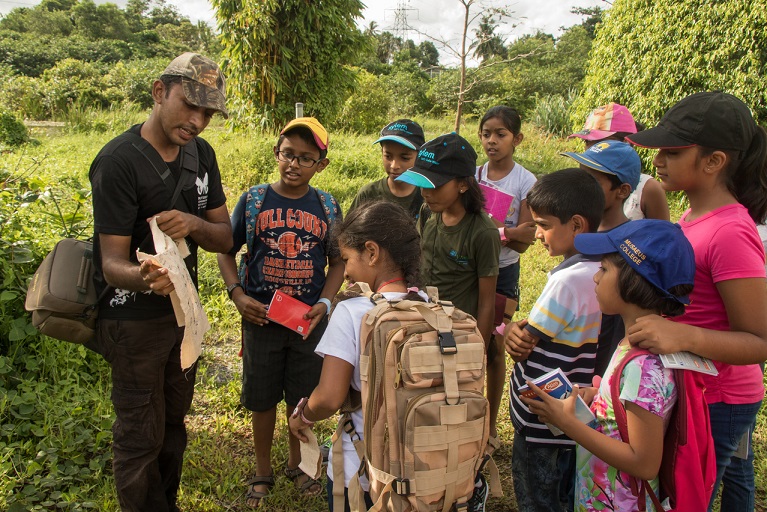
පරිසර සංරක්ෂණය කුඩා අවධියේ සිටම පුරුදු පුහුණු කිරීම මගින් පරිසරය ආරක්ෂා කරගනිමින් සාර්ථක ජීවිතයක් ගොඩ නගා ගන්නා මතු පරපුරක් බිහිකර ගත හැකි බැවින් සමනල සංරක්ෂණ සංසදය විසින් දරුවන් තුළ පරිසරය සංරක්ෂණය පිළිබඳව උද්යෝගයක් ඇති කිරීම සඳහා වාර්ෂිකව වැඩසටහන් රැසක් සංවිධානය කරනු ලබයි. එම වැසටහන් අතරින් දරුවන් හට පාරිසරික, අධ්යාපනික, විනෝදාත්මක අත්දැකීම් රැසක් ලබා ගත හැකි, වාර්ෂිකව සංවිධානය වන වැඩ සටහනක් වන “Grow with Nature” හි තෙවැනි වැඩසටහන 2020 වසරේ ජනවාරි මස 18 වන දින පැවැත්වීමට කටයුතු සංවිධානය කර ඇත.
පාසල් දරුවන්ට පරිසරය හා සමනලයන් සමඟ ඍජුව සම්බන්ධ වෙමින් ඔවුන් අධ්යනය කිරීමට, දේශන වලට සවන්දීම හා ප්රායෝගික ක්රියාකාරකම් රැසක යෙදීමට හැකිවන පරිදි මෙම වැඩසටහන සංවිධානය කර ඇති නිසා දරුවන් වඩාත් ප්රියකරනා සමනල ලෝකයේ සැරිසරමින් වටිනා අත්දැකීම් රැසක් ජීවිතයට එක් කර ගැනීමට දරුවන්ට අවස්ථාව උදාවේ. අධ්යාපනික මෙන්ම විනෝදාත්මක ක්රියාකරකම් වල යෙදීමට මෙහිදී අවස්ථාව ලැබෙන අතර සමනලුන් සහ කෘමි සතුන් ආරක්ෂා කර ගනිමින් පරිසරයත් සමග කටයුතු කරන අයුරු සහ කුඩා කල සිටම හුරු පුරුදු වීමට මෙමගින් අවස්ථාව උදාවේ.
සම්පූර්ණයෙන්ම නොමිලේ පැවැත්වෙන “Grow with Nature – 2020” වැඩසටහන ජනවාරි මස 18 වැනි සෙනසුරාදා දින උදැසන 8.00 සිට 10.30 දක්වා තලවතුගොඩ දියසරු උයන කේන්ද්ර කරගනිමින් පැවැත්වේ. වයස අවුරුදු 6 ත් 15ත් අතර ළමුන් සඳහා පැවැත්වෙන මෙම වැඩ සටහන පැවැත්වෙන අතර මේ සඳහා සහභාගී වන දරුවන් සඳහා වටිනා සහතිකපත්රයක්ද ලබාදීමටද සමනල සංරක්ෂණය කටයුතු සූදානම් කොට තිබේ. මේ සඳහා කැමැත්තක් දක්වන දරුවන් වැඩ සටහනට පැවැත්වෙන දිනට පෙර ඒ සඳහා ලියා පදිංචි වීම අනිවාර්ය වන අතර ඒ පිළිබඳව වැඩිදුර තොරතුරු රුවංගිකා ගුණවර්ධන (071 463 9767) පුමුදි ගර්දියවසම් ( 070 395 7111) යන දුරකතන අංක මගින් ලබා ගත හැකිය.
පාසල් අධ්යාපන කටයුතු තුල සිරවී සිටින දරුවන්ට විචිත්ර සමනල ලෝකයක සැරිසරමින් නවමු අත්දැකීමක් ලබා ගැනීමට, පරිසරයට ආදරය කිරීමට පුරුදු පුහුණු කිරීමට මෙන්ම සැහැල්ලුවෙන් අධ්යාපන කටයුතු කරමින් සාර්ථක ජීවිතයක් ගොඩ නගා ගැනීමට ශක්තිමත් අඩිතාලමක් දැමිය හැකි මෙම වැඩසටහනට අවුරුදු 6ත් 15ත් අතර ඔබේ දරුවාද සහභාගී කරවන මෙන් ශ්රී ලංකා සමනල සංරක්ෂණ සංසදය විවෘතව ආරාධනා කරයි.
ස්තූතියි.
පේශල පසන් කරුණාරත්න
සාමාජික
ශ්රී ලංකා සමනල සංරක්ෂණ සංසදය
තාජුඩීන් ඝාතනයට ගෝඨා සම්බන්ධයි කිව්වොත් මාව ASP කරන බව ශානි කිව්වා- සුමිත් පෙරේරා කියයි
January 10th, 2020නුවන් හෙට්ටිආරච්චි උපුටා ගැන්ම මව්බිම

තාජුඩීන් ඝාතනය යට ගහන්න ගෝඨාභය රාජපක්ෂ මහතා දුරකථන ඇමතුම් දුන්න බැව් පවසන ලෙස ශානි අබේසේකර හිටපු සී.අයි.ඩී. අධ්යක්ෂවරයා බලපෑම් කළ බවත් දුරකථනයෙන් නිතර තමාට රන්ජන් රාමනායක මන්ත්රිවරයා තර්ජනය කළ බවත් නාරාහේන්පිට පොලිසියේ හිටපු අපරාධ විමර්ශන අංශයේ ස්ථානාධිපති සුමිත් පෙරේරා මහතා පැවැසීය.
ඒ නිසාම තමන් මාස 11ක් සිරගත කොට සිටි බවත් හෙතෙම සඳහන් කළේ දෙහිවල බෞද්ධ මධ්යස්ථානයේ පැවැති මාධ්ය හමුවකදීය.
එහිදී හෙතෙම මෙසේද කීය.
“තාජුඩීන් ඝාතනය සම්බන්ධයෙන් මුලින්ම අත්අඩංගුවට අරගෙන රක්ෂිත බන්ධනාගාරගත කළේ මාවයි. ශානි අබේසේකර මට කියපු දේවල් නොකළ හින්දා තමයි මට හිරේ යන්න වුණේ. මම මීට පෙරත් මාධ්ය සාකච්ඡාවලදී පැහැදිලිව කිව්වා මට හා මගේ ඥාතීන්ට ඔවුන් ගොඩක් කරදර කළා කියලා. ඒ දේ අද ඔප්පු වෙලා තියෙනවා. ඒ බව මේ ‘හඬ පටවල’ තියෙනවා. කෙළින්ම ශානි අබේසේකර හා රන්ජන් රාමනායක කතා කරන්නේ තාජුඩීන්ගේ සිද්ධියත් ඒ වගේ කරන්න. අපිටත් මරණීය දණ්ඩනය දෙන්න.”
එහිදී ඔහු ඉදිරිපත් කළ හඬ පටයේ තිබූ සංවාදය මෙසේයි.
ශානි අබේසේකර – හෙට වෙයි නේද? හෙට එනවා නේද?
රන්ජන් රාමනායක – හොඳ දෙයක් වෙයි නේද?
ශානි අබේසේකර _ ඔව්. වෙන දෙයක් වෙන්නෙ නැතෑ.
රන්ජන් රාමනායක – හොඳයි හොඳයි එහෙනම් දෙයියන්ගේ පිහිටයි. ඔය වගේම තාජුඩීන්ගේ එකත් කරලා දෙන්න.
ශානි අබේසේකර – බොහෝම ළඟ ඉන්නේ.
රන්ජන් රාමනායක _ කැනඩා යවපු එක මොකද වුණේ?
මේ දේවල්වලින් පේනවා මාව මාස 11ක් රිමාන්ඩ් එකේ තිබ්බේ ශානි අබේසේකර හා රන්ජන් රාමනායක දෙන්න බව. බොරු සාක්ෂි දෙන්න කියලා කිව්වාම මං බැහැ කිව්වා. බැහැ කිව්ව නිසා හිරේ දැම්මා. බලන්න අද දුමින්ද සිල්වා මහත්තයා වුණත් මරණ දණ්ඩනය තිබුණා නම් ඔහු මරණයට පත්වෙලා. ඒවාට වගකියන්නේ කවුද? ජනාධිපතිතුමනි මේකට විසඳුමක් දෙන්න. අවුරුදු 4 1/2ක් මට වැඩ නැහැ. මම බොහොම අමාරුවෙන් තමයි ජීවත් වෙන්නේ.
පැහැදිලිවම තාජුඩීන් මැරුණේ අරක්කු බීලා ගිහින් සිදුවූ අනතුරකින්. ඒ පිළිබඳ වාර්තා තියෙනවා. ආණ්ඩු දෙකක තීරණ දෙකක් දෙනවා එකම විනිසුරුවරයා. නමුත් තාජුඩීන්ගේ පරීක්ෂණය කරලා තියෙනවා. හරියටම. නිශාන්ත පීරිස් මහත්තයා ඒ ගැන දන්නවා.
නාමල් රාජපක්ෂ හා ගෝඨාභය රාජපක්ෂ මහතා කෝල් කරලා යට ගහන්න කිව්වා කියලා කියන්න කියලා තමයි ශානි කිව්වේ මට කියන්න කියලා. අනෙක මං රාජපක්ෂලා ඇසුරු කළානම්. යාපනේ ඉන්න ඕනද? යුද්ධෙ කාලේ වාකරේ හිටියේ ඕ.අයි.සී. විදිහට. මේ රජය ආවට පස්සේ නම් මට තර්ජන තිබ්බේ නැහැ. නමුත් ගිය රජය පැවැති කාලයේ රන්ජන් රාමනායක තර්ජනය කළා.
නුවන් හෙට්ටිආරච්චි
President appoints a 3 member Commission to investigate selling ETI assets
January 10th, 2020Courtesy Hiru News
President appoints a 3 member Commission headed by Rtd. Supreme Court judge K.T. Chithrasiri to investigate malpractices which occurred when selling ETI assets
RANJANGATE SCANDAL – විමර්ශන සිදුකිරීමට ප්රතිපාදන පවතින බව නීති විශාරදයන් කියයි
January 10th, 2020උපුටා ගැන්ම හිරු නිව්ස්
ආන්දෝලනයකට තුඩුදී තිබෙන රන්ජන් රාමනායක මන්ත්රීවරයා විසින් පටිගත කර ඇති හඬපට සම්බන්ධයෙන් නිසි පරීක්ෂණයක් සිදුකිරීමට මෙරට නීතියේ අවශ්ය ප්රතිපාදන පවතින බව ජ්යෙෂ්ඨ නීති උපදේශක මහාචාර්ය ප්රතිභා මහානාමහේවා පෙන්වා දෙනවා.
පාරිභෝගික අයිතීන් සුරැකීමේ ජාතික ව්යාපාරය කොළඹදී අද (10) කැදවා තිබූ මාධ්ය හමුවකට එක්වෙමින් ඔහු මේ බව සඳහන් කළා.
RANJANGATE SCANDAL – රන්ජන් සහ දිල්රුක්ෂි වික්රමසිංහගේ හඬපටයකුත් එළියට
January 10th, 2020උපුටා ගැන්ම හිරු නිව්ස්
පාර්ලිමේන්තු මන්ත්රී රන්ජන් රාමනායක සහ අල්ලස් හෝ දූෂණ චෝදනා විමර්ශන කොමිෂන් සභාවේ හිටපු අධ්යක්ෂ ජනරාල්වරියක මෙන්ම හිටපු සොලිසිටර් ජනරාල්වරියක වන ඩිල්රුක්ෂි ඩයස් වික්රමසිංහ අතර සිදුවූ දුරකතන සංවාදයක හඬ පටයක් අද සිංහලේ සංවිධානය මාධ්ය වෙත අනාවරණ කළා.
එහිදී අල්ලස් කොමිසමේ වත්මන් අධ්යක්ෂ ජනරාල් සරත් ජයමාන්න සම්බන්ධයෙන් ද ඔවුන් සංවාදයේ යෙදෙන අතර, කොළඹ අද පැවති මාධ්ය හමුවකදී සිංහලේ සංවිධානයේ, ජාතික සංවිධායක ප්රදීප් සංජීව විසින්.
එමෙන්ම, සිංහලේ සංවිධානයේ මහ ලේකම්, පූජ්ය මැඩිල්ලේ පඤ්ඤාලෝක හිමියන් එම මාධ්ය හමුවේදී ජනතා විමුක්ති පෙරමුණේ පාර්ලිමේන්තු මන්ත්රී සුනිල් හඳුන්නෙත්ති සහ රන්ජන් රාමනායක අතර සිදුවූ දුරකථන සංවාදයක හඬපටයක් ද මාධ්ය වෙත අනාවරණ කළා.
RANJANGATE SCANDAL – විනිසුරුවරුන්ට සහ CIDයට බලපැම් කරන රන්ජන්ගේ ඇමතුම් ගැන අදත් විවිධ අදහස්
January 10th, 2020උපුටා ගැන්ම හිරු නිව්ස්
අධිකරණ විනිසුරුවරුන්ට සහ අපරාධ පරීක්ෂණ දෙපාර්තමේන්තුවේ විමර්ශන නිලධාරීන්ට බලපැම් සිදුකරමින් රංජන් රාමනායක මන්ත්රීවරයා ලබාගත් දූරකථන ඇමතුම් සම්බන්ධයෙන් අදත් පක්ෂ විපක්ෂ දේශපාලනඥයින් අදහස් පළ කළා.
RANJANGATE SCANDAL – රන්ජන් සමඟ දුරකථන සංවාද කළ රජයේ නිලධාරීන්ට කඩිනමින් නීතිය ක්රියාත්මක කළයුතුයි
January 10th, 2020උපුටා ගැන්ම හිරු නිව්ස්
පාර්ලිමේන්තු මන්ත්රී රංජන් රාමනායක සමඟ දුරකථන සංවාද පැවැත්වූ රජයේ නිලධාරීන් සම්බන්ධයෙන් කඩිනමින් නීතිය ක්රියාත්මක කළයුතු බව දේශය සුරැකීමේ ජාතික ව්යාපාරයේ සභාපති පූජ්ය ඇල්ලේ ගුණවංශ හිමියන් පවසනවා.
උන්වහන්සේ මේ බව සඳහන් කළේ අද පැවැති ප්රවෘත්ති සාකච්ඡාවකට එක්වෙමින්.
RANJANGATE SCANDAL – සර්ව්ස් එකක් ඉල්ලුවාම ඒක දෙන එක මගේ වැඩක් – රන්ජන් දිල්රුක්ෂි හඩ පටිය
January 10th, 2020RANJANGATE SCANDAL – හදුන්නෙත්ති රන්ජන් දුරකථන සංවාදය-අපි නැතුව හම්බනාම හරිද ?
January 10th, 2020Courtesy Gossip TV
MCC request Private Company to be PRIMARY AGENT of GoSL – Is this permitted by Sri Lanka’s Constitution?
January 9th, 2020Does the Sri Lankan Constitution allow a Government elected for a term of office and given guardianship of the land and the interests of the people to appoint a foreign country to establish a company to be an agent for 480 Million Dollars? This looks like a gift to US rather than to Sri Lanka. How aware is the GoSL of the objectives of this private company which will come into operation ONLY AFTER MCC is signed? The company MCA Sri Lanka thereafter enters into undisclosed agreements to operate the agency to change the land policy and the land laws of the country. MCC Agreement specifically refers to the Program Implementation Agreement and the constitutive documents and internal regulations [MCC Annex 1V under Independence and Autonomy]
Annex 1-34 of MCC Annex IV
After MCC agreement is signed MCC is to establish a PRIVATE COMPANY called MCA-SRILANKA PRIVATE LTD. This MCA is to be the PRIMARY AGENT of the GOSL to legislate on behalf of the Sri Lankan People.
The Government shall appoint an accountable entity, MCA Sri Lanka, a company limited by guarantee under the Companies Act 7 of 2007”
Objective:
MCA Sri Lanka shall be the Government’s Primary Agent responsible for exercising the Government’s right and obligations to oversee, manage and implement the program”
OUR QUESTIONS:
- Why should Sri Lanka sign an agreement with a sub-unit of a foreign country, establish a private company (even if it has foreign-friendly locals working in it) and become the AGENT of the Sri Lankan Government ‘on behalf of the people’. Shouldn’t the GoSL be functioning on behalf of the people not a part-foreign company?
- Do we know what the powers of this MCA Sri Lanka Private company is? NO. Shouldn’t the GoSL know what the mandate and powers of this private company is before even considering to sign MCC turning a private company to be the PRIMARY AGENT of the GOSL? Note: $480m funding is to be channeled by this company not by GoSL. Not a penny will go into the Sri Lankan Treasury!
- Does Sri Lanka’s Constitution allow appointment of a PRIMARY AGENT to change land policy & legislation relating to land?
Sri Lanka’s Constitution Article 76
- Parliament shall not
abdicate or in any manner alienate its legislative power and shall not set up
any authority with any legislative power” (golden words)
- It shall not be a contravention of the provisions of paragraph (1) of this Article for Parliament to make, in any law relating to public security, provision empowering the President to make emergency regulations in accordance with such law.
- It shall not be a
contravention of the provisions of paragraph (1) of this Article for Parliament
to make any law containing any provision empowering any person or body to make
subordinate legislation for prescribed purposes including power”
- to appoint a date on which any law or any part thereof shall come into effect or cease to have effect:
- to make by order any law or any part thereof applicable to any locality or to any class of persons”
- to create a legal person, by an order or an Act”
- Will Sri Lankan law apply? No, a clause in MCC says ‘International Law’ will apply but US and US citizens are given immunity. There is no immunity for Sri Lankans. This MCC Agreement and MCA by having ‘International Law’ applicable to one party and other party is immune creates what is known as UNFAIR CONTRACT.
- The MCC Agreement only states position on Bim Saviya, Land Privatization & Digitalization of title registrations. The MCC does not disclose contents of a list of ‘unknown agreements’ to be signed by the MCA Sri Lanka [agent of the Government] & GoSL. How can GoSL commit an entire nation & its people to ‘unknown agreements”?
- Annex IV of MCC (to be signed) is CONDITION PRECEDENT to the disbursement of MCC Compact CDF. So GoSL is agreeing to commit to what GoSL does not know what it is committing to!
- GoSL does not have a clue about what the contents of the Program Implementation Agreement (PIA), future letters or documents are – all of which are binding the GoSL via MCA Sri Lanka. MCC Page 6 / 2.5 Government has already agreed to act according to future agreements”
- On what basis and for what reason is GoSL privatizing all State land? Why is GoSL changing land laws following Australian law & giving the digitalizing to a foreign company who will hold all back office passwords and operating systems?
- Why is GoSL allowing Sri Lanka’s land details to be entered into a land information portal run by foreigners without any security laws/codes and accessible even externally by anyone?
- Does the GoSL know that whatever land information already digitalized can be seen by anyone abroad? All they have to do is type the name of the owner and every detail about that owner can be seen in public domain?
- Does the GoSL know that after taking people’s original title deeds they are only given an A4 laminated sheet of land ownership which is the ONLY source of proof that they own the land!
- With international law being applied and MCC US citizens immune from all wrong doings – no Sri Lankan citizen can go to Sri Lanka’s Supreme Court or seek legal assistance. Are these concerns being overlooked for a paltry $480m – an amount GoSL does not know how much has been spent already for various MCC related preconditions that the previous Govt launched?
GoSL has appointed a team to study MCC – does this team have legal representation to evaluate the legal repercussions of a bilateral agreement? If not, shouldn’t the team request a legal counsel expert in land laws of Sri Lanka as well as aware of MCC operating in other countries?
How does this escape court intervention?
Sri Lanka’s Lawyers come forward and tell us if the MCA Sri Lanka Private Ltd is a valid agency to operate in Sri Lanka?
Shenali D Waduge
තවම ව්යවස්ථානුකුලව සම්මත නොවූ 19 වන ව්යවස්ථා සංශෝධන කෙටුම්පත සහ විජේදාස රාජපක්ෂ මහතාගේ කළු සුදු කිරීමේ 21 හා 22
January 9th, 2020හර්ෂ කුමාර් සුරියආරච්චි
ගෝඨාභය රාජපක්ෂ ජනාධිපතිතුමා විශාල දේශප්රේමී ජනතා චන්දයකින් තේරී පත් වුනි. එතුමාගෙන් ජනතාව අපේක්ෂා කල කාර්යයන් ඉටු කෙරීමට එතුමා සුදානම් බව පෙනේ. නමුත් එතුමාම කිහිප වරක් පවසා ඇති පරිදි ඊනියා 19 වන ව්යවස්ථා සංශෝධනය එතුමාගේ කාර්යයට විශාල බාධාවක් වී තිබේ.
ජනාධිපති තුමා දිවුරුම් දෙන අවස්ථාවේදී නිවැරදි ව, රටේ ආරක්ෂක අමාත්ය වරයා ලෙස කටයුතු කරන බව ජාතියට දැනුම් දෙන ලදී. 19 වන ව්යවස්ථා සංශෝධන කෙටුම්පත තවම ව්යවස්ථානුකුලව සම්මත වී නැති බැවින් එතුමා ගේ එම ප්රකාශය නිවැරදිය. නමුත් තවමත් ආරක්ෂක අමාත්ය ධුරය එතුමා පවරා ගෙන නැත්තේ, 19 වන ව්යවස්ථා සංශෝධන කෙටුම්පත සම්මත වී ඇතැයි වැරදි මතයක් එතුමාට ලබා දී ඇති නිසා විය හැක.
තවම නිත්යයානුකුලව සම්මත වී නැති, එම නිසාම කෙටුම්පතක් පමණක් වන්නක් රටේ ආරක්ෂාවට සහ දියුණුවට අහිතකර ලෙස බලපෑමට ඉඩ දෙන්නේ ඇයි දැයි සොයා බලමු.
ශ්රී ලංකාවේ ව්යවස්ථාව සංශෝධනය කිරීමේ පරමාධිපත්ය බලය ඇත්තේ ජනතාවටයි. පවතින ව්යවස්ථාවේ මුලධර්ම වලට පටහැනි නොවන සංශෝධන කිරීමේ බලය පමණක් ජනතාව විසින් පාර්ලිමේන්තුවට පවරා දී ඇත. එම මුලධර්ම වලට පටහැනි සංශෝධන කල හැක්කේ ජනමත විචාරණයකින් ජනතාව ගේ අනුමැතිය ලබා ගැනීමෙන් පසුව පමණකි.
19 වන ව්යවස්ථා සංශෝධන කෙටුම්පත ව්යවස්ථානුකුලව සම්මත වී නැති බව
ශ්රී ලංකාවේ ව්යවස්ථාවට අනුව යම් කිසි ව්යවස්ථා සංශෝධන කෙටුම්පතක් සම්මත කල හැකි ක්රම වේදය “ආණ්ඩුක්රම ව්යවස්ථාව සංශෝධනය කිරීම” වශයෙන් XII වන පරිච්චේදයේ 82 වන හා 83 වන ව්යවස්ථා මගින් දක්වා ඇත.
එම 82 හා 83 ව්යවස්ථා දෙකටම අනුව 19 වන ව්යවස්ථා සංශෝධන කෙටුම්පත පරිලිමෙන්තුවේ 2/3 චන්දයකින් සම්මත කර ජනමතවිචාරණයක් පවත්වා ජනතාව එය අනුමත කළහොත් ජනාධිපති තුමා විසින් ඒ බව සටහන් කර අත්සන් තැබූ විට පමණක් ඒ පනත් කෙටුම්පත නිතිය බවට පත් වේ. තවම 19 වන ව්යවස්ථා සංශෝධන කෙටුම්පත පිළිබඳව ජනමත විචාරණයක් පවත්වා නැත. එම නිසා එය තවම නීතියක් නොවේ. මේ වන විට බලපැවැත්වෙන්නේ 18 වන ව්යවස්ථා සංශෝධනය තෙක් වූ ව්යවස්ථා සංශෝධන පමණකි.
82 හා 83 ව්යවස්ථා වලින් 83 වැනි ව්යවස්ථාව බලවත් වේ. (මෙහි ව්යවස්ථා වශයෙන් පවසන්නේ ව්යවස්ථාවේ යම් ආංකික වගන්තියක් සලකන්නේ එම ආංකික ව්යවස්ථාව ලෙස බැවිනි. එය ව්යවස්ථා සංශෝධන සමග පටලවා නොගත යුතුය. මෙතෙක් 1978 ව්යවස්ථාව තුල ඇත්තේ සංශෝධන 17 ක් පමණි. 12 වැනි සංශෝධනයක් නැත. එමනිසා 18 වන ව්යවස්ථා සංශෝධනයක් ලෙස නම් කල සංශෝධනයක් පවතී). 83 වැනි ව්යවස්ථාව පවසන අරුත වන්නේ, ව්යවස්ථා සංශෝධනය සදහා වූ යම් කිසි පනත් කෙටුම්පතක් 82 වැනි ව්යවස්ථාවට අනුකුල වුවත්, එම පනත් කෙටුම්පත ව්යවස්ථාවේ 1,2,3,6,7,8,9,10,11 යන ව්යවස්ථා හෝ 30(2), 62(20) යන අනු ව්යවස්ථා වලට අනුකුල නොවන්නා වූ කාරණා සහිත පනත් කෙටුම්පතක් නම් එය පාර්ලිමේන්තුවේ දී 2/3 චන්දයකින් සම්මත කල පසු ජනමත විචාරණයකින් ජනතාව සම්මත කර ඒ බව ජනාධිපති තුමා සහතික කරන තෙක් එම ව්යවස්ථා සංශෝධන කෙටුම්පත නීතියක් බවට පත් නොවන බවය.
ව්යවස්ථාව අර්ථ දැක්වීමේ බලය ඇත්තේ ශ්රේෂ්ඨාධිකරණයටයි. ශ්රේෂ්ඨාධිකරණය 2002 වසරේදී අග විනිසුරු ප්රමුඛ සත් දෙනකුගෙන් සමන්විත විනිසුරු මඩුල්ලක් තීරණය කර ඇති පරිදි, ජනාධිපති තුමාට පාර්ලිමේන්තුව විසිරීමට ඇති බලය අහිමි කිරීම වසර 3කට වඩා වැඩි වන්නේනම් එය 3වන ව්යවස්ථාව උල්ලංඝනය කිරීමක් වන බවයි. එසේනම් යම් ව්යවස්ථා සංශෝධනයක් එම උල්ලංඝනය සිදු කරන්නේනම් එම සංශෝධනය නිතිය බවට පත්වීමට 83 වන ව්යවස්ථාවට අනුව කටයුතු කල යුතුය. ඒ අනුව පාර්ලිමේන්තුවේ දී 2/3 චන්දයකින් සම්මත කල පසු ජනමත විචාරණයකින් ජනතාව සම්මත කර ඒ බව ජනාධිපති තුමා සහතික කල යුතුය. එසේ කරන තෙක් එම කෙටුම්පත නීතියක් බවට පත් නොවේ. 19 වන ව්යවස්ථා සංශෝධන කෙටුම්පතට අනුව ජනාධිපතිට පාර්ලිමේන්තුව විසිරවිමේ බලය වසර 4 1/2ක් තෙක් අහිමි කර ඇත්තේය.
තව දුරටත් මේ බව, 2018 දී සත් දෙනෙකුගෙන් සමන්විත විනිසුරු මඩුල්ලක් විසින් දෙන ලද තීන්දුවෙන්, පාර්ලිමේන්තුව් 2/3ක සම්මතය පමණක් ලබා ඇති 19 වන ව්යවස්ථා සංශෝධන කෙටුම්පතට අනුව ජනාධිපති තුමාට පාර්ලිමේන්තුව විසිරවීමට ඇති බලය වසර 4 1/2 තෙක් අහිමි කර ඇති බව පැහැදිලි කර තිබේ. එනයින් 19 වන ව්යවස්ථා සංශෝධන කෙටුම්පත මගින් 3 වන ව්යවස්ථාව උල්ලංඝනය වී ඇති බව තහවුරු වේ.
19 වැනි ව්යවස්ථා සංශෝධන කෙටුම්පතින් මෙකී උල්ලංඝනය සිදු වී ඇති බැවින් එය නීතියක් බවට පත් වීමට 83 වන ව්යවස්ථාවට අනුව අවශ්ය ජනමත විචාරණය පවත්වා නොමැති බැවින් සහ ඒ අනුව ජනාධිපතිතුමාගේ සහතිකය ලබා දී නොමැති බැවින් 19 වැනි ව්යවස්ථා සංශෝධන කෙටුම්පත තවම නීතියක් වී නොමැත.
මෙසේ නීතියක් වී නොමැති 19 වන ව්යවස්ථා සංශෝධන කෙටුම්පත නීතියක් ලෙස සලකමින් පාර්ලිමේන්තුව හෝ විධායකය හෝ අධිකරණය හෝ කටයුතු කරන්නේනම් එය එම ආයතනයන් විසින් ජනතා පරමාධිපත්යය කොල්ල කෑමකි. ජනතාව විසින් එම ආයතන වලට ලබා දුන් විශ්වාසය භංග කිරීමකි.
19 වැනි ව්යවස්ථා සංශෝධන කෙටුම්පතින් මිට අමතරව 30(2) අනු ව්යවස්ථාවද සංශෝධනය වී ඇත. එයින් මෙතෙක් පැවති ජනාධිපති ධුර කාලය වසර 6 සිට වසර 5 දක්වා සංශෝධනය කර ඇත. 83 වන ව්යවස්ථාවෙන් පවසන්නේ 30(2) අනු ව්යවස්ථාව සංශෝධනය කිරීමට ජනමත විචාරණයක් අවශ්ය බවයි. (ව්යවස්ථාවේ ඉංග්රීසි පරිවර්තනය මෙහිදී නිවැරදි නැත. එවැනි ගැටළුවක් පවතින විට සිංහල මුල් ව්යවස්ථාවට අනුව කටයුතු කල යුතුය.) මෙම කාරණය අරභයාද 19 වන ව්යවස්ථා සංශෝධන කෙටුම්පත නීතියක් බවට පත්වීමට ජනමත විචාරණයක් පවත්වා එය ජනාධිපතිතුමා විසින් සහතික කල යුතුය. එසේ අවශ්ය ජනමත විචාරණය පවත්වා නොමැති බැවින් සහ ඒ අනුව ජනාධිපතිතුමාගේ සහතිකය ලබා දී නොමැති බැවින් 19 වැනි ව්යවස්ථා සංශෝධන කෙටුම්පත තවම නීතියක් වී නොමැත.
ව්යවස්ථානුකුලව නීතියක් නොවුවක් ව්යවස්ථානුකුල නීතියක් ලෙස ගෙන කටයුතු කරන සියළු දෙනාම එසේ කිරීමෙන් ව්යවස්ථා විරෝධිව කටයුතු කරන්නන් බවට පත් වේ.
ශ්රේෂ්ඨාධිකරණය 2018 දී 19 වන ව්යවස්ථා සංශෝධන කෙටුම්පත අරභයා නඩුවක් කතා කිරීම නිසා 19 වන ව්යවස්ථා සංශෝධන කෙටුම්පත නීතිගත වී ඇති බවට සාවද්ය මතයක් සමහරුන් තුල පවතී. මෙම ලිපියේ මුලින් සදහන් කල පරිදි ශ්රී ලංකාවේ ව්යවස්ථාවට අනුව යම් කිසි ව්යවස්ථා සංශෝධන කෙටුම්පතක් සම්මත කල හැකි ක්රම වේදය “ආණ්ඩුක්රම ව්යවස්ථාව සංශෝධනය කිරීම” වශයෙන් XII වන පරිච්චේදයේ 82 වන හා 83 වන ව්යවස්ථා මගින් දක්වා තිබේ. 82 හා 83 ව්යවස්ථාවන් වල හෝ ව්යවස්ථාවේ වෙන මොනයම් තැනක හෝ ජනමතවිචරනයකින් සම්මත කල යුතු ව්යවස්ථා සංශෝධනයක් එසේ නොකොට ශ්රේෂ්ඨාධිකරණය නඩුවක් පිළිගැනීම මගින් සම්මත කල හැකි යැයි ප්රතිපාදන සලසා නැත.
19 වැනි ව්යවස්ථා සංශෝධන කෙටුම්පත තවම නීතියක් වී නොමැත. ව්යවස්ථානුකුලව දැනට වලංගු වන්නේ 18 වන සංශෝධනය දක්වා වූ ව්යවස්ථා සංශෝධන පමණි.
මේ පිළිබඳව වැඩි දුරටත් විස්තර මතු ලිපියකින් ඉදිරිපත් කිරීමට බලාපොරොත්තු වෙමි.
හර්ෂ කුමාර් සුරියආරච්චි
Ban leading NGOs, confiscate their Assets, and freeze their bank accounts Part II
January 9th, 2020By : A.A.M.NIZAM – MATARA.
It was in 1980, the Government took the first step to enact the Voluntary Social Services Organisations (Registration and Supervision) Act. It sought to introduce a system of registration and supervision of activities of NGOs. However, this Act was not strictly implemented and the registration of NGOs was not strictly followed.
In 1990, a Commission was appointed to go into the activities of NGOs and to make recommendations for their proper functioning. The Commission made some recommendations and accordingly, regulations were passed under the Public Security Ordinance obligating compulsory registration of NGOs which have a turnover of Rs.50,000 and above. However, with the lapse of the Emergency Regulations, this system too lapsed.
In 1995 the Government introduced certain draft amendments to the 1980 Act providing for the establishment of an NGO Advisory Council and appointment of Interim Boards of Management to administer the affairs of NGOs. There were vehement protests against these provisions and implementation got stalled. However, a Secretariat for NGOs was established in 1996. Finally, it was only in 1998 the Parliament approved the draft legislation (Act No.8 of 1998).
Around April last year, the Government again introduced a draft legislation to amend the Voluntary Social Service Organizations (Registration and Supervision) Act, No 31 of 1980. The draft amendment was subjected to severe criticism by the NGOs. As a result, it was withdrawn.
As we can see from historical records, Sri Lanka has not been successful in their efforts to introduce regulations to supervise and scrutinise the NGOs in Sri Lanka. It is obvious that the extraordinary power” behind the NGOs is a real force to reckon with.
In many occasions NGO clout had caused deep annoyance to the Sri Lankan Government. We can take comfort because such experiences are not confined to Sri Lanka only. It has happened to many other countries.
Uganda has introduced a new Bill restricting the activities of NGOs, making registration compulsory and obliging them to be transparent about their reeipt and
In Cambodia a mew new law requires registration and annual reports to be filed with expenditure of foreign funds. NGOs can be disbanded if their activities jeopardise peace, stability and public order or harm the national security, national unity, culture and traditions of Cambodian society”.
Israel has passed a NGO Law” t to stigmatize left-wing and human rights organizations in
Israel as agents of foreign powers. The law singles out NGOs that receive the majority of their funding from foreign state entities, and is -fascistic law that harms democracy and silences dissent Israeli NGOs critical of the government – in particular the country’s continued occupation of the Palestinian territories – are facing severe new restrictions amid a toxic political climate on the right that has sought to label them as disloyal.
There are many reports indicating that the so-called NGO promoters, advocates of cooked up human rights violations, fund providers for subversive activities and who claim that they are more open to civil society such as the UK, Ireland, Australia also have restrictive measures against public opinion and against groups advocating accountability and .fair dealings.
In response to these Laws and Regulations the UN has appointed Maina Kiai as a special rapporteur to focus on freedom of expression and assembly. The EU organised a global forum of more than 200 civil society participants last December. Development branches of western governments, foundations and global NGOs are training and advising local groups on how to respond to new restrictions. Amnesty International has identified defending NGOs and human rights campaigners as one of its five strategic goals, and will launch a global campaign next year.
Similar to restrictions aforementioned exist in many countries elaboration restricted for space control and now let us concentrate on the reprehensive activities being carried out by foreign and terrorist servile NGOs in Sri Lanka.
The biggest folly of the Ranil/TNA government was making leading persons financially sound and their cronies who are keenly interested on certain fields the Minister of such subjects similar to the adage seeking divine solutions from the mother of the thief” (Horage ammagen Pena ahanawa). Mano Ganeshan reportedly was a NGO head allegedly receiving funds from the terrorist diaspora and was responsible for inventing the diatribe relating to the absurd story about abduction of Northern by white vans when they visit Colombo. When the joint opposition MP Udaya Gammanpila persistently raised the question in Parliament and demand to furnish details of white van abductions, names of victims and dates andplaces of such abductions the official government spokesman responded having dodged the questions several times saying that there had been no such abductions reported.
When Minister of Justice Mr. Wijedasa proposed that the NGOs and INGOs must be regulated, this NGO-wala said that he preferred the term facilitated instead of regulated.
Ganeshan said that after he took office he has taken very many steps to ease the pressures in them as earlier the NGOs were considered as ‘traitors’ and ‘enemies’. He said that he has given strict instructions to the Director-General of the NGO Secretariat and his staff to consider NGOs and INGOs as partners in the state building. He stated that he has blessings from the Prime Minister Ranil Wickramasinghe who has clearly stated that this country is open to anyone and is not a fascist or autocratic country.
At a press conference organized by the Collective of Civil Society Organizations Executive Director of the Center for Policy Alternatives (CPA) and a Co-Convener of the Platform for Freedom, the notorious foreign servile anti-Sri Lankan Dr Paikiasothy Saravanamuttu, said that civil society was ‘shocked’ and ‘stunned’ that such a Cabinet paper could be presented and endorsed by the Government. He said that the effect of the Cabinet Paper was to consider legislation that was so extensive and comprehensive in terms of all civil society actors. He said the restrictions envisaged by the amendment would have had a chilling effect on civil society and would run completely contrary to the promises and commitments made by the Government with respect to good governance.
According to the draft amendment the NGO Secretariat is able to investigate complaints of misconduct in NGOs, criminal activities including terrorist financing and money laundering. The Secretariat also has the powers to enter and inspect premises of NGOs. Further, the Secretariat can obtain information related to financial activities of NGOs from banks. The draft has also proposed further offences for NGOs for actions, such as non-registration, not giving a publication of the organization and not providing information, that could have been administratively corrected.
Nishantha Prithviraj of the Sarvodaya Shramadana Movement said that the proposed draft amendment weakened people’s sovereignty. He pointed out the draft amendment was drafted without consulting civil society and was an injustice to civil society and the public at large. (Just see the actual status of the peo[;e’s sovereignity under the Ranil/TNA government? Amendment or introduction of legislation should be drafted in consultation with civil society!) He said existing laws could be used to deal with malpractices within organizations if there were any.
The NGO named National Peace Council (NPC) is one of the worst anti Sri Lankan, anti
Buddhist and anti-Sinhalese NGOs in this country. Activities of NPC in the past are well known and Jehan Perera, who is the Executive Director of the NPC, and is reportedly employed by the Norwegian government, for several years were attending the UNHRC sessions in Geneva lecturing against Sri Lanka and holding special meetings with foreign representatives attending the UNHRC sessions attempting to convince them that the LTTE is only a people’s liberation organization, not a terrorist organization, and they are fighting to liberate the Tamil people of Sri Lanka from what he called oppressions, discriminations and inhuman treatment of the Sri Lankan security forces which he claimed are forcibly occupying the lands belonging to Tamils and denying them freedom to pursue with their livelihoods.
Even on 7th January, this Norway employed Jehan Perera writing an article to the Island newspaper under the title Uniformity in governance is important for development drawing attention to President Gotabhaya Rajapaksa’s Throne Speech stated that although the first month of the new government has had many positive features to it, some of the government’s recent actions will not inspire confidence that the government is focused on implementing consistent policies. Instead it is giving the impression that it is tailoring policies to fit a political agenda, and they are tend to engage in actions that have short term gains in mind even at the cost of the country’s long term future. He stated that there are several negative actions currently taking place that could potentially detract from the positive motivations of the government in seeking to enhance national security and promote development. He claims the president’s vision of rapid economic development as the solution to the country’s problems, including its ethnic conflict, will become more difficult to achieve under these circumstances.
In this article, he strongly criticises Police actions against certain offensive MPs, delivering the inaugural address from Anurdhapura, and constitutional amendments being envisaged by the President and the President’s promise to be the he sarcastically says that it ought to be his destiny to lead Sri Lanka on the right path instead of permitting partisan politics to lead the country astray, as it led his predecessors astray.
The NPC, whose annual funding is said to be in excess of 126 millions SL Rupees is funded by the USAID (Main contributor), MISEREOR (The German Catholic Bishops’ Organisation for Development Coorporation), Asia Foundation, European Instrument for Democracy and Human Rights (EIDHR) ,US Department of State ,Catholic Agency for Overseas Development (CAFOD), SPICE-MSI, FOKUS (based on the information provided in NPC website, Financial Report 2017).
The website of the above funding agency the Catholic Agency for Overseas Development gives CAFOD’s mission as promoting human development and social justice in witness to Christian faith and Gospel values. Depending entirely on foreign governments and agencies they carry on the White Man’s Burden and have a function similar to Christian missionaries during the high colonial era. The 10 member Governing Council of this NGO has only 2 members with Sinhala names.
Most of the foreign funded NGOs were established in Sri Lanka during the war against LTTE terrorism. Most of these NGOs have engaged in brainwashing the people of Sri Lanka promoting federalism (or indirectly separatism). For example, National Peace Council (NPC), considered in their vision statement published prior to the defeat of terrorism, the LTTE as an integral part of ‘their so-called solution’. Clearly the NPC and similar ilk wanted to whitewash the LTTE and bring it out as a civilised entity.
These peace mongers and their colonial masters in the West were behind the propaganda on behalf of Tamil racism in general and the LTTE in particular. Their activities parallel the LTTE’s global propaganda campaign against the government of Sri Lanka and its people.
The Island dated March 4, 2011 under the heading Foreign funds galore for three NGOs” stated that 3 Sri Lankan NGOs received over Rs. 600million in 3 years and Norway was the leading donor”, The article revealed how a section of the international community was pouring money into Sri Lankan NGOs like the Centre for Policy Alternatives (CPA) and National Peace Council (NPC), Transparency International Sri Lanka, in spite of the conclusion of war against by our gallant security forces in May, 2009.
As per the report, the CPA has received Rs. 272.31 million during the 2008-2010 periods. The NPC and TI have received Rs. 171.23 million and 174.79 million, respectively. However, it is said that the country’s banking system has no records of the exact amount of funds received by NGOs over the past two to three decades. Some sources said that an enormous amount of funds had been received by NGOs since Feb. 2002, with some countries and the UNDP providing funds to the LTTE Peace Secretariat.
Pakyasothy Sarawanamuttu, the CEO of the Centre for Policy Alternatives (CPA) also has a similar reprehensive record of carrying out various activities against Sri Lanka. Even during the recent Swiss Hoax he had made statements to NewYork Times accusing the Sri Lanka government and justifying the Swiss allegations saying that the Swiss Embassy employee Garnier Barrister Francis could have been abducted by the agents of the government.
Popular opinion indicate that although the NPC and other NGOs were playing lead roles during the Chandrika-Ranil failed regimes, and later during the Ranil-Sirisena yamapalana regime, attempting to brainwash the country from top political hierarchy to grass roots level, spending billions of rupees, the mass support received from the general public to eradicate terrorism in 2009 and to chase away the above notorious regimes at the end of their terms are clear proofs that the peace loving people of Sri Lanka are wiser than the so-called foreign servile and foreign funded PEACE prophets.
A regular contributor to the Island newspaper Mr. M. Arukgoda in his latest article to the Island states that the latest mission, after the failure of earlier vision, of these NGOs is said to be the work towards a political solution to the so-called ethnic conflict, reconciliation etc. He says that a few months after the elimination of the LTTE terror from our soil, we had every reason to believe that some notable elements of the US and their allies were rapidly making a case of war crimes against Sri Lanka on the basis of the conduct of her armed forces as well as political leadership. One of the motivations of this action is to cover-up their own continuing armed conflicts on large scales, involving major humanitarian catastrophes and causing the death of large numbers of civilians due to military actions in Iraq, Afghanistan and in some areas of Pakistan.
Mr. Arukgoda reveals that on 28th August 2009, the two kingpins of NGOs were reported addressing a close-door meeting convened by the US Institute of Peace (USIP). Another notable participant of this discussion was Teresita Schaffer of The Centre for Strategic and international Studies, one of the former US Ambassadors to Sri Lanka, who was very critical of the Sri Lankan government during her tenure of office in Sri Lanka. As per media reports, the duos from the two NGOs basically said at a meeting, in Washington D.C. with former Ambassador to Sri Lanka, Mr. Robert Blake, was what Blake wanted them to say.
After few months of these meetings, Ban Ki-moon appointed a panel to advice him on Sri Lanka’s alleged war crime charges and European Union gave conditional ultimatum on GSP
Plus. Thus these NGOs are the promoters of the notorious UNHCR Resolution welcomed by their yahapalanaya government and soon after the appointment of Ban Ki-moon panel, these Peace Vendors were back in the business by issuing statements one after the other to the foreign and local press supporting the Ban KI-moon’s panel and the EU’s conditions and condemning the actions of the Sri Lankan Government and its people as was usually done by them during the past and they started, once again, advocating solutions. The solutions they seek are from outside including foreign intervention. It is not surprising at all to learn that those who live on foreign funding are for foreign intervention.
Mr. Arukgoda in conclusion of his article claims that three years ago Modi’s government in India revoked licences of 25 foreign funded NGOs over ‘anti-national activities’ and the pool of foreign-funded bodies shrunk there by almost half in two years.
The Government needs to be more concerned about the International NGOs (or INGOs). These INGOs have two in-built components. There is the foreign funding principal and the local NGO agent. The donor functions from overseas and provides the funds. The agent is engaged in the operations which could vary from building up a School for Blind to conducting seminars (mainly in English) at the five-star hotels.
One of the most important aspects about these foreign donors is that the donor NGO’s are not always non-governmental. For example, in Europe, there are many INGOs who receive 100% of its funds from their governments. In Canada, the Government has increasingly taken over the funding of Canadian NGOs. In Germany there are the ‘foundations’ linked with the political parties. Invariably, all of them thus have definite political agendas of their own. Just look around. You will be surprised to note the number of foreign aided foundations” are being held by UNP MPs. It is hard to find a UNP MP without a foreign funded foundation in his name or in the name of their spouses.
The time is very opportune for the government of President Gotabhaya Rajapaksa to ban immediately all leading anti-national NGOs, confiscate their assets, freezr their bank accounts and prosecute the leading figures for spreading anti-Sri Lankan propaganda and causing damage to the image of the country. It is the wish of all peace loving, patriotic masses since a long time and it now lies as an obligation to be fulfilled by the Prersident..
(concluded)
Minister Thilanga Sumathipala gives instructions to expedite the establishment works of Timber Design Innovation Centre (TDIC) and Timber Process Innovation Centre (TPIC)
January 9th, 2020Media Unit State Ministry of Technology and Innovation.
The State Minister of Technology and Innovation gave instructions to the relevant officials to expedite the process of setting up a Timber Designing Innovation Centre (TDIC) and Timber Process Innovation Center (TPIC), an initiative envisaged to add value to the Sri Lankan timber industry and being implemented on cabinet approval.
The Coordinating Secretariat for Science, Technology and Innovation (COSTI) functioning under the State Ministry of Technology and Innovation in collaboration with the University of Moratuwa and University of Sri Jayawardenapura, are assigned the task of setting up these two timber innovation centers.
Once these two innovation centers begin operations, the country will be given the opportunity of introducing timber based innovation designs to the high end global export market with these centres operating as fully fledged timber innovation centers in future.
Through the successful operation of this centres, the Ministry expects to accomplish the long-term outcomes such as establishing the Moratuwa area as a region of excellence in timber product designs, upscale and redefine small timber manufacturers in Sri Lanka, capacity building through trainings, knowledge and technology transferring, job creation in timber industry creating a unique branding identified for Sri Lankan timber designs and protecting it through intellectual property, enhancing high-end export market opportunities for Sri Lankan timber and timber based products, increasing the GDP contribution of timber and timber based products, and increasing innovative timber exports targeting economic growth.
Ensuring the successful implementation of the project a tripartite MOU was entered into between University of Moratuwa, University of Sri Jayawardanapura and COSTI functioning under the Ministry of Technology and Innovation. Funds have been handed over to the respective Universities to undertake relative activities identified for implementation under TPIC and TDIC in the plan of action of the ministry.
University of Sri J’pura is in the process of conducting 4 researches on timber process innovation under TPIC and ready to launch an online platform for all levels of timber industrialists.
Parallel to this initiative, cabinet approval has been granted for Sri Lanka to secure membership of the International Tropical Timber Organization (ITTO).
Media Unit
State Ministry of Technology and Innovation.
දැව නිර්මාණ නවෝත්පාදන මධ්යස්ථානය සහ දැව පිරිසැකසුම් නවෝත්පාදන මධ්යස්ථානය කඩිනමින් ස්ථාපනය කිරීමට ඇමති තිලංග සුමතිපාල මහතා උපදෙස් දෙයි.
January 9th, 2020මාධ්ය ඒකකය තාක්ෂණ හා නවෝත්පාදන රාජ්ය අමාත්යාංශය.
ශ්රී ලාංකීය දැව කර්මාන්තය සඳහා අගය එකතු කිරීමේ අරමුණෙන් අමාත්ය මණ්ඩල අනුමැතිය යටතේ දැව නිර්මාණ නවෝත්පාදන මධ්යස්ථානයක් සහ දැව පිරිසැකසුම් නවෝත්පාදනමධ්යස්ථානයක් ස්ථාපනය කිරීමට පියවර ගෙන ඇති අතර එම කටයුතු කඩිනම් කරන ලෙස තාක්ෂණ හා නවෝත්පාදන රාජ්ය අමාත්ය තිලංග සුමතිපාල මහතා විසින් අදාල නිලධාරීන්ට උපදෙස් දෙනු ලැබීය.
ශ්රී ලාංකීය දැව කර්මාන්තය සඳහා අගය එකතු කිරීමේ අරමුණෙන් තාක්ෂණ හා නවෝත්පාදන රාජ්ය අමාත්යාංශය යටතේ ක්රියාත්මක වන විද්යා තාක්ෂණ හා නවෝත්පාදන සම්බන්ධීකරණ ලේකම් කාර්යාලය (COSTI), මොරටුව සහ ශ්රී ජයවර්ධනපුර විශ්ව විද්යාල එක්ව මෙම දැව නිර්මාණ නවෝත්පාදන මධ්යස්ථානය (TDIC) සහ දැව පිරිසැකසුම් නවෝත්පාදන මධ්යස්ථානය (TPIC) ස්ථාපනය කිරීමට නියමිතය.
මෙම මධ්යස්ථාන සාර්ථක අයුරින් ක්රියාත්මක වීමෙන් ශ්රී ලාංකීය දැව හා දැව පදනම් කරගත් නිෂ්පාදන හා නවෝත්පාදන නිර්මාණයන් තරගකාරී නවීන ගෝලීය වෙළෙඳපොළ වෙත හඳුන්වා දීමට හැකියාව උදාවන අතර, ශ්රී ලාංකීය දැව කර්මාන්තයේ උන්නතිය සඳහා අංග සම්පූර්ණ සේවා සපයන මධ්යස්ථාන ලෙස ද මේවා ඉදිරි අනාගතයේ දී ක්රියාත්මක වනු ඇත.
මධ්යස්ථාන ද්විත්වයෙහි සාර්ථක ක්රියාත්මක වීම හරහා,
දැව නිෂ්පාදන නිර්මාණ හා ආශ්රිත විශේෂ කලාපයක් බවට මොරටුව ප්රදේශය පත්කිරීම, ශ්රී ලාංකීය කුඩා දැව නිෂ්පාදන කර්මාන්තයන් වැඩිදියුණු කිරීම සහ ඒ සදහා නව අර්ථකථනයක් සැපයීම, පුහුණුකිරීම්, දැනුම හා තාක්ෂණය පවරා දීම හරහා ධාරිතා ගොඩනැංවීම, දැව කර්මාන්ත අංශයේ රැකියා උත්පාදනය, ශ්රී ලාංකීය දැව නිර්මාණ සඳහා අනන්ය වූ සුවිශේෂී සන්නාමයක් නිර්මාණය කිරීම හා බුද්ධිමය දේපළ හිමිකම් මගින් එය සුරක්ෂිත කිරීම, ශ්රී ලාංකීය දැව සහ දැව ආශ්රිත නිෂ්පාදන සඳහා උසස් තත්වයේ අපනයන වෙළඳපොළක් නිර්මාණය කරදීම, දැව හා දැව ආශ්රිත නිෂ්පාදන මගින් දළ දේශීය නිෂ්පාදිතය සඳහා දායකත්ව ප්රතිශතය ඉහළ නැංවීම සහ ආර්ථික සංවර්ධනය උදෙසා දැව නවෝත්පාදන අපනයනය ඉහළ නැංවීම වැනි දිගුකාලීන අරමුණු ඉටුකර ගැනීම අමාත්යාංශයේ ඉලක්කයයි.
මෙම ව්යාපෘතිය සාර්ථකව ක්රියාවට නැංවීම උදෙසා මෙම දැව නවෝත්පාදන මධ්යස්ථාන ද්විත්වය ස්ථාපිත කිරීම වෙනුවෙන් මොරටුව විශ්වවිද්යාලය, ශ්රී ජයවර්ධනපුර විශ්වවිද්යාලය සහ තාක්ෂණ හා නවෝත්පාදන අමාත්යාංශය වෙනුවෙන් ඒ යටතේ ක්රියාත්මක වන COSTI අංශය අතර ත්රෛපාර්ශ්වික අවබෝධතා ගිවිසුමකට එළඹ තිබේ. ක්රියාකාරී සැලැස්ම යටතේ හඳුනාගනු ලැබ ඇති අදාළ ක්රියාකාරකම් සිදු කරනු පිණිස අමාත්යාංශය විසින් මෙම මධ්යස්ථාන ද්විත්වය සඳහා අවශ්ය මූලික මූල්ය ප්රතිපාදන අදාළ විශ්වවිද්යාල වෙත ලබාදී ඇති අතර ශ්රී ජයවර්ධනපුර විශ්වවිද්යාලය තුළ දැව පිරිසැකසුම් නවෝත්පාදන මධ්යස්ථානයට අදාල පර්යේෂණ හතරක් මේ වන විටත් සාර්ථකව පවත්වමින් සිටි. ඒ යටතේ අන්තර්ජාලය හරහා සියලු මට්ටම් වල කර්මාන්තකරුවන්ට සම්බන්ධ විය හැකි වේදිකාවක් දියත් කිරීමට ඔවුන් සූදානමින් සිටී.
මේ හා සමගාමීව ශ්රී ලාංකීය දැව කර්මාන්තය සහ ඒ හා අදාළ නව ව්යාපෘති ශක්තිමත් කිරීමේ අරමුණින් ජාත්යන්තර ඝර්ම කලාපීය දැව සංවිධානයේ (ITTO) සාමාජිකත්වය ශ්රී ලංකාවට ලබා ගැනීම සඳහා ද අමාත්ය මණ්ඩල අනුමැතිය හිමි වී තිබේ.
මාධ්ය ඒකකය
තාක්ෂණ හා නවෝත්පාදන රාජ්ය අමාත්යාංශය.
රට හදන්න නම් උගත් බුද්ධිමත් අලුත් අය පාර්ලිමේන්තුවට යැවිය යුතුයි…මල්වතු අස්ගිරි මහානයක හිමිවරුන් අවධාරණය කරති…
January 9th, 2020P. Thameera Manju (M. A.- Mass communication in KLN, M. A.- Sinhala in CMB, A. – Sinhala specilist in CMB )
නිවැරදි දැක්කමින් රට හැදීමට නම් උගත් බුද්ධිමත් අලුත් අය පාර්ලිමේන්තුවට යැවිය යුතු බව සියම් මහා නිකායේ මල්වතු – අස්ගිරි මහනායක හිමිවරුන් අවධාරණය කරති. ඒ අලුතින් හිතන සංවිධානය උන්වන්සේලා අද (09) බැහැ දුටු අවස්ථාවේදීයි. අලුතින් සියයක් පාර්ලිමේන්තුවට සංකල්පය මහනායක හිමිවරුන්ට පැහැදිලි කර උන්වහන්සේලාගේ ආශිර්වාදය ලබා ගැනීමේ අරමුණින් මෙම බැහැ දැකීම සිදු විය. මහාචාර්ය කමල් වලේබොඩ, සාහිත්යවේදී කල්යාණි හේරත් මැණිකේ, ශාස්ත්රපති ම. ප. තමීර මංජු, නීතිඥ පියල් ගුරුගේ, තුසිත ජයවර්ධන, මනුල චමල් පෙරේරා, රුවන් පාදුක්ක, ප්රියදර්ශන බෙන්තොට ආරච්චි, දිනේෂ් සමීර කැලුම්, හෂාන් දිසානායක යන එම කමිටුවේ ක්රියාකාරින් එම අවස්ථාවට එක් විය. එහිදී මහනායක හිමිවරුන් වෙත අලුතින් සියයක් පාර්ලිමේන්තුව සංකල්පය පැහැදිලි කරමින් තුසිත ජයවර්ධන මහතා පැවසුවේ ඉදිරි මහ මැතිවරණයේදී පාර්මේන්තුවට යැවිය යුතු අලුත් අය කවරේදැයි යන්න අවබෝධ කර ගැනීම සඳහා නිර්ණායක දහයක් මහජනතාව හමුවේ හඳුන්වා දී ඇති බවයි.
අලුතින් සියයක් පාර්ලිමේන්තුවට සංකල්පය හඳුන්නා දුන් අලුතින් හිතන අපි එකමුතුව සියලු දේශපාලන මතවාද නියෝජනය කරන අයගෙන් සමන්විත වූවක්. අපි දීර්ඝ කාලයක් සාකච්ඡා කර අලුතින් පාර්ලිමේන්තුව යැවිය යුතු පුද්ගලයින් සතුව තිබිය යුතු ගුණාංග ඇතුළත් නිර්ණායක දහයක් හඳුන්වා දුන්නා. අද එම නිර්ණායක සහිත සංදේශය මහනායක හිමිවරුන්ට පිළිගන්වා උන් වහන්සේලාගේ ආශිර්වාදය ලබා ගත්තා. අපේ අරමුණ වන්නේ නව දේශපාලන සංස්කෘතියකට අවශ්ය පසුබිම සකස් කරන්න. අපි 225ම වෙනස් කරන්න උත්සාහ කරන්නේ නැහැ. එය ප්රායෝගිකත් නැහැ. අපි කියන්නේ මේ 225න් 100ක් මෙවර මහ මැතිවරණයේදී වෙනස් කරමු කියලයි. ඒ සඳහා සියලු පක්ෂවලින්ම අලුත් අය පාර්ලිමේන්තුවට යවමු. ඒ කාර්යය කරන්න පුළුවන් අපේ ජනතාවට බැවින් ඒ පිළිබඳව දැනුවත් කිරීම් දැන් අපි ආරම්භ කර තිබෙනවා…”යිද තුසිත ජයවර්ධන මහතා පැවසීය. මහාචාර්ය කමල්වලේබොඩ මහතා පැවසුවේ ඉදිරි මහ මැතිවරණයේදී හොරු මංකොල්ලකාර දූෂිතයින්ට නාමයෝජනා ලබා දෙන පක්ෂ නායකයින් ප්රතික්ෂේප කිරීමට ජනතාව පෙළ ගැසිය යුතු බවයි.
හොරු මංකොල්ලකාර දූෂිත පුද්ගලයින් වෙනුවට උගත් බුද්ධිමත් අලුත් අයට ඉදිරි මහ මැතිවරණයේදී නාම යෝජනා ලබා දීමට පක්ෂ නායකයින්ට කොන්ද පණ තිබිය යුතුයි. එවැනි පණ නැති පක්ෂ නායකයින් ප්රතික්ෂේප කිරීමට ජනතාව පෙළ ගැසිය යුතුයි. අපිට අද පවතින ජරා දේශපාලනය එක රැයකින් වෙනස් කරන්න බැහැ. නමුත් නව දේශපාලන සංස්කෘතියක් ඇති කිරීම අපට යම් තැනකින් පටන් ගත හැකියි. ඒ සඳහා මේ තරුණ එකමුව ගන්නා උත්සාහ මම හදවතින්ම අගය කරනවා….”යිද මහාචාර්ය කමල් වලේබොඩ මහතා පැවසීය. සංදේශය පිළිගැනීමෙන් පසුව සියම් නිකායේ මල්වතු පාර්ශවයේ මහානායක අතිපූජ්ය තිබ්බටුවාවේ ශ්රී සුමංගල මහ නායක ස්වාමීන්ද්රයාණන් වහන්සේ කියා සිටියේ මෙම සංකල්පය කාලීන වශයෙන් වැදගත් වූවක් බවයි. මෙම සංකල්පය ක්රියාත්මක කිරීමට සියලු දෙනාම එක් විය යුතු බවද උන්වහන්සේ අවධාරණය කළහ. සියම් මහ නිකායේ අස්ගිරි පාර්ශවයේ මහානායක අති පූජ්ය වරකාගෙඩ ශ්රී ඤාණරතන මහානායක ස්වාමින්ද්රායණන් වහන්සේ පැවසුවේ රට හැදීමට නම් අලුත් අයටද ඉඩ දීම වැදගත් වන බවයි. වඩාත් වැදගත් වන්නේ රටට ආදරය කරන පිරිස් පාර්ලිමේන්තුවට යැවීම බවද උන්වහන්සේ අවධාරණය කළහ.
අලුතින් හිතන අපි එකමුතුව සමාජ ජාලා හරහා එක් වූ කණ්ඩායමකි. ඔවුන් හඳුන්වා දෙන අලුතින් සියයක් පාර්ලිමේන්තුවට සංකල්පයේ නිර්ණායක ගණන දහයකි. කාර්යශූර බුද්ධිමත් බවින් යුක්ත අවම වශයෙන් අ.පො.ස. උසස් පෙළ සමත් අයෙකුවීම, නිකැළැල් සමාජ කල්ක්රියාවන් සහිත මත්ද්රව්ය හා සූදු ව්යාපාරවලට සම්බන්ධ නොවීම, සමාජ සංවර්ධන කටයුතුවලට නායකත්වය දී කටයුතු කර තිබීම, අන්තවාදී ආගමික මූලධර්මවාදී ක්රියාකාරීත්වයෙන් තොරවීම, ණය අසාදු ලේඛණයට ඇතුළත්වූවකු නොවීම හා පොදු ජනතාවට වත්කම් හා බැරකම් ප්රකාශිත අයෙකුවීම, ජාතික ආරක්ෂාව හා ජාත්යන්තර දේශපාලනය පිළිබඳ අවබෝධය සහිතවීම, ස්වදේශිකත්වය පිළිබඳ හැඟීමෙන් කටයුතු කිරීම, රටේ සංවර්ධනය සඳහා නිර්මාණශීලී වැඩපිළිවෙලක් සහිත අයෙකුවීම, පරිසරය පිළිබඳ සංවේදීතාවයෙන් යුක්ත අයෙකුවීම සහ මාධ්ය අවභාවිතය හා අපහරණය නොකරන අයෙකුවීම නිර්ණායක දහය වෙයි. ඡායාරූප අමුණා ඇත.
EMOTIONAL INTELLIGENCE : An Essential Consideration in Education Policy and Curriculum Development in Sri Lanka
January 9th, 2020Dr. Daya Hewapathirane
In 1990, psychologists John Mayer (University of New Hampshire) and Peter Salovey (Yale University) coined the term, Emotional Intelligence. Emotional Intelligence means the ability to recognize, understand and manage one’s own emotions and to recognize, understand and influence the emotions of others. In practical terms, this means being aware that emotions can drive our behavior and impact people, positively and negatively, and learning how to manage those emotions – both our own and others – especially when we are under pressure. In other words, emotional intelligence involves recognizing, understanding and managing your own emotions and influencing the emotions of others. It means the capacity to be aware of, express and control one’s emotions, thereby being able to handle interpersonal relationships judiciously and empathetically. When emotions run high, they change the way our brains function, diminishing our cognitive abilities, decision-making powers, and even interpersonal skills. Emotional Intelligence is the key to both personal and professional success.
In 1995, in his renowned book titled “Emotional Intelligence” Daniel Goleman, an American psychologist, developed a framework of five elements that define emotional intelligence. He argued that intellect alone was no guarantee of adeptness or proficiency in identifying one’s own emotions or the emotional expressions of others. Goleman said that It took a special kind of intelligence to process emotional information and utilize it effectively — whether to facilitate good personal decisions, to resolve conflicts or to motivate oneself and others. Goleman broadened Mayer’s and Salovey’s four-branch system to incorporate five essential elements of emotional intelligence.
1. Emotional self-awareness — knowing what one is feeling at any given time and understanding the impact those moods have on others. People with high emotional intelligence are usually very self-aware. They understand their emotions, and because of this, they don’t let their feelings rule them. They are confident because they trust their intuition and do not let their emotions get out of control. They are willing to take an honest look at themselves. They know their strengths and weaknesses, and they work on these areas so they can perform better. Many people believe that this self-awareness is the most important part of emotional intelligence. You understand your own strengths and limitations; you operate from competence and know when to rely on someone else on the team. You understand your feelings and being aware of what makes you angry, for instance, can help you manage that anger.
2. Self-Regulation — controlling or redirecting one’s emotions; anticipating consequences before acting on impulse. This is the ability to control emotions and impulses. People who self-regulate typically do not allow themselves to become too angry or jealous, and they do not make impulsive, careless decisions. They think before they act. Characteristics of self-regulation are thoughtfulness, comfort with change, integrity, and the ability to say no. Resilience or you stay calm under pressure and recover quickly from upsets. You don’t brood or panic. In a crisis, people look to the leader for reassurance; if the leader is calm, they can be, too. Emotional balance or you keep any distressful feelings in check — instead of blowing up at people, you let them know what’s wrong and what the solution is. Self-motivation or you keep moving toward distant goals despite setbacks.
3. Motivation — utilizing emotional factors to achieve goals, enjoy the learning process and persevere in the face of obstacles. People with a high degree of emotional intelligence are usually motivated. They are willing to defer immediate results for long-term success. They are highly productive, love a challenge, and are very effective in whatever they do.
4. Empathy — sensing the emotions of others. This is perhaps the second-most important element of emotional intelligence. Empathy is the ability to identify with and understand the wants, needs, and viewpoints of those around you. People with empathy are good at recognizing the feelings of others, even when those feelings may not be obvious. As a result, empathetic people are usually excellent at managing relationships, listening, and relating to others. They avoid stereotyping and judging too quickly, and they live their lives in a very open, honest way. Because you understand other perspectives, you can put things in ways colleagues comprehend. And you welcome their questions, just to be sure. Cognitive empathy, along with reading another person’s feelings accurately, makes for effective communication.
5. Social skills — managing relationships, inspiring others and inducing desired responses from them. It is usually easy to talk to and like people with good social skills, another sign of high emotional intelligence. Those with strong social skills are typically team players. Rather than focus on their own success first, they help others develop and shine. They can manage disputes, are excellent communicators, and are masters at building and maintaining relationships. Good listening is a social skill. You pay full attention to the other person and take time to understand what they are saying, without talking over them or hijacking the agenda. You put your points in persuasive, clear ways so that people feel relaxed working with you, they laugh easily around you, and most importantly, are motivated and are aware about expectations.
Emotional Intelligence Can Be Learned and Developed
Observe how you react to people. Do you rush to judgment before you know all the facts? Do you stereotype? Look honestly at how you think and interact with other people. Try to put yourself in their place, and be more open and accepting of their perspectives and needs. Look at your work environment. Do you seek attention for your accomplishments? Humility can be a wonderful quality, and it does not mean that you are shy or lack self-confidence. When you practice humility, you say that you know what you did, and you can be quietly confident about it. Give others a chance to shine – put the focus on them, and do not worry too much about getting praise for yourself. Do a self-evaluation. What are your weaknesses? Are you willing to accept that you are not perfect and that you could work on some areas to make yourself a better person? Have the courage to look at yourself honestly – it can change your life.
Examine how you react to stressful situations. Do you become upset every time there is a delay or something does not happen the way you want? Do you blame others or become angry at them, even when it is not their fault? The ability to stay calm and in control in difficult situations is highly valued – in the business world and outside it. Keep your emotions under control when things go wrong. If you hurt someone’s feelings, apologize directly – do not ignore what you did or avoid the person. People are usually more willing to forgive and forget if you make an honest attempt to make things right. Examine how your actions will affect others – before you take those actions. If your decision will impact others, put yourself in their place. How will they feel if you do this? Would you want that experience? If you must take the action, how can you help others deal with the effects?
A Key to Success in Life
We know people, either at work or in our personal lives, who are good listeners. No matter what kind of situation we are in, they always seem to know just what to say – and how to say it – so that we are not offended or upset. They are caring and considerate, and even if we do not find a solution to our problem, we usually leave, feeling more hopeful and optimistic. We also know people who are masters at managing their emotions. They do not get angry in stressful situations. Instead, they have the ability to look at a problem and calmly find a solution. They are excellent decision makers, and they know when to trust their intuition. Regardless of their strengths, however, they are usually willing to look at themselves honestly. They take criticism well, and they know when to use it to improve their performance. People like these, have a high degree of emotional intelligence. They know themselves very well, and they are also able to sense the emotional needs of others. Emotional intelligence is the ability to recognize your emotions, understand what they are telling you, and realize how your emotions affect people around you. It also involves your perception of others: when you understand how they feel, this allows you to manage relationships more effectively. Emotional intelligence is an awareness of your actions and feelings – and how they affect those around you. It also means that you value others, listen to their wants and needs, and can empathize or identify with them on many different levels.
Applications for Educators
The Emotional Intelligence of children starts developing long before they ever enter a classroom. But Emotional Intelligence levels will vary widely, depending on each child’s home environment. Thus, teachers must be able to recognize those children whose emotional literacy needs a boost. Teachers should be ready to talk about feelings in the classroom. The message is that no emotion is wrong,” but certain ways of expressing those emotions or acting on them are indeed inappropriate. In 2002, UNESCO launched an international campaign to promote emotional learning in the classroom. The U.N. body sent a statement of 10 basic Emotional Intelligence principles to education ministries throughout the world. Those principles drew heavily from Goleman’s exposition of emotional intelligence. There are very practical reasons to promote social and emotional learning in schools, from kindergarten through college. According to Goleman, bullying, disciplinary problems, violence and drug abuse are reduced in schools with a high Emotional Intelligence. With a solid basis in emotional intelligence, academic performance — as well as behavior — improves. There is an obvious connection to Goleman’s third, motivational component: learning stimulates curiosity and promotes feelings of satisfaction, even joy, when students immerse themselves in the process of assimilating new information.
Although “regular” intelligence is important to success in life, emotional intelligence is key to relating well to others and achieving your goals. Many people believe that it is at least as important as regular intelligence, and many companies in the west, now use emotional intelligence testing to hire new staff. Also, Professional Organizations in the western world are increasingly accepting that emotional intelligence is important to professional success as much as technical ability and other skills and are using it when hiring and promoting employees. People with high emotional intelligence are usually successful in most things they do. Why? Because they are the ones that others want on their team. When people with high emotional intelligence send an email, it gets answered. When they need help, they get it. Because they make others feel good, they go through life much more easily than people who are easily angered or upset. For decades, researchers have studied the reasons why a high IQ (IQ is the intelligence quotient, or the total score derived from several standardized tests designed to assess human intelligence) does not necessarily guarantee success in the boardroom or the classroom. By the 1980s, psychologists and biologists, among others, were focusing on the important role other skill sets — needed to process emotional information — played in promoting worldly success, leadership, personal fulfillment and happy relationships.
Emotional intelligence can be a key to success in your life – especially in one’s career. The ability to manage people and relationships is very important in all leaders, so developing and using your emotional intelligence can be a good way to show others the leader inside of you. Thanks to Goleman, educators now recognize that emotional intelligence is every bit as important to learning as intellectual prowess or the standard IQ or intelligence quotient. As a result, tens of thousands of schools throughout the world currently incorporate social and emotional learning” in their curricula. In some schools, courses geared toward developing emotional intelligence are mandatory. Daniel Goleman, in his book Leadership: The Power of Emotional Intelligence,” (2013), underscored that the ability to identify and monitor emotions — your own and others’ — and to manage relationships distinguish the best leaders in the corporate world, thereby highlighting that role emotional intelligence plays in excellence.
Dr. Daya Hewapathirane
රාජ්ය නිලධාරීන්ගේ දීමනා කපා දැමීම – රාජ්ය සේවකයින්ට සිදුවන සෘජු බලපෑම කුමක්ද?
January 9th, 2020පුවත්පත් නිවේදනය රජිත් කීර්ති තෙන්නකෝන්
2019 ජනවාරි 07 දින නිකුත් කර ඇති රාජ්ය පරිපාලන චක ලේඛන අංක 18/2015(IV) මගින් රාජ්ය සේවකයින් 9200 කට සෘජු මුල්ය පාඩුවක් සිදුවන බව හිටපු ඌව, දකුණ හා මධ්ය පළාත් ආණ්ඩුකාර රජිත් කීර්තිි තෙන්නකෝන් මහතා නිවේදනයක් නිකුත් කරමින් පවසයි. රාජ්ය සේවයේ පළමු ශ්රේණියේ විධායක නිලධාරියෙකුට රු. 5000 ක ද, වසර 6 කට වැඩි සේවා කාලයක් සහිත දෙවන හා තුන්වන ශ්රේණ්යේ නිලධාරියෙකුට රු. 10,000 ක ශුද්ධ පාඩුවක් ද මෙම චක්ර ලේඛනය නිසා සිදුවේ. වසර 6 ට අඩු සේවා කාලයක් සහිත විධායක නිලධාරීන්ට රු. 12,000 ට වැඩි මුල්යමය පාඩුවකි. විශේෂ ශ්රේණියේ විධායක නිලධාරියෙකුට ශුද්ධ මුල්යමය පාඩුවක් නැත.
මෙම දීමනා කප්පාදු කොට ඇති නිලධාරීන් වන්නේ පරිපාලන සේවය, අධ්යාපන පරිපාලන සේවය, ගණකාධිකාරි සේවය, ක්රම සම්පාදන සේවය, විද්යාත්මක සේවය, කෘෂිකාර්මික සේවය යි.
ශ්රී ලංකා පරිපාලන සේවයේ නිලධාරීන් 2200 කට මෙම දීමනා කප්පාදුව බලපානු ඇත. අධ්යාපන පරිපාලන සේවයේ සියළුම නිලධාරීන්ට මෙම තත්වය බලපානු ලබයි. ක්රම සම්පාදන සේවයේ 800 කට පමණ ද, ගණකාධිකාරි සේවයේ 1600 කට ද, අධ්යාපන පරිපාලන සේවයේ 2697 කට ද, ‘අතට ලැබෙන මුදල‘ මෙම චක්රලේඛනය නිසා අහිමි වේ. අධ්යාපන පරිපාලන සේවයේ 238 දෙනෙකුට රු. 5000 බැගින් ද, 2449 දෙනෙකුට රු. 10,000 බැගින් ද වන මුදලක් අහිමි වේ.
රජයේ විදයම් පාලනය කිරීම සදහා නිලධාරීන්ගේ දීමනා පමණක් කපා දැමීම කිසි ලෙසකින් හෝ යුක්ති සහගත නොවේ.
රජිත් කීර්ති තෙන්නකෝන්
‘One Shot’ and escapologists
January 9th, 2020Editorial Courtesy The Island
Friday 10th January, 2020
The UNP is reported to have said it would take a decision on its MP Ranjan Ramanayake, popularly known as One Shot, over the phone scandal. It is trying to make a scapegoat of its political hit man, who has got into trouble. True, he has become a huge embarrassment to the UNP, but his leaders cannot absolve themselves of the responsibility for what he has done. It was not for his own sake that he interfered with the police and the judiciary; he did so for his party.
The UNP grandees must be descendants of Harry Houdini; they are quite adept at escape acts. Those who masterminded the bond scams have gone scot free to all intents and purposes. Only some minions have got caught for the biggest ever financial crime in this country. There were extremely difficult tasks that they could not accomplish under their own steam, such as making the state-owned banks lend billions of rupees, at short notice. They received political backing. They were also not equal to the task of manipulating the Central Bank and preventing the state banks and the EPF from bidding so that there would be no competition; not even the then Central Bank Governor Arjuna Mahendran would have been able to do so without political help.
That the yahapalana government was interfering with the police became evident in Dec. 2016, when IGP Pujitha Jayasundera was shown, on television, receiving a call from someone, during a public function in Ratnapura; he was subsequently heard giving an assurance to the caller in a very reverential tone that a certain suspect would not be arrested. The then Opposition vehemently protested, in Parliament, demanding a probe, but in vain. Now, it is up to the CID to find out who called the IGP. Was it Ramanayake?
Under the previous government, there were a number of instances where some court houses were kept open until midnight for prominent members of the Rajapaksa regime to be remanded. Was it due to political interference?
Former CID Director Shani Abeysekera has been interdicted on the basis of leaked voice clips. All others including judicial officers who have discussed with Ramanayake matters pertaining to cases being heard before them must not be spared. Last year, Solicitor General Dilrukshi Wickramasinghe was interdicted over a telephone conversation she had had with Avant-Garde Chairman Nissanka Senadipathi over a case she handled as the Director General of the Commission to Investigate Allegations of Bribery or Corruption. She is heard, in a previously leaked voice clip, regretting action taken against Avant-Garde and boasting that she can make or break laws. We don’t know whether those who are in higher positions than she have done likewise under pressure from Ramanayake and his bosses. Interestingly, the Malaysian Anti-Corruption Commission has released nine voice clips, whose content incriminates some top officials including a former Prime Minister. Malaysia has handpicked the right persons with backbones for its anti-graft commission.
Prime Minister Mahinda Rajapaksa, President of the Bar Association of Sri Lanka Kalinga Indatissa and his predecessor U. R. De Silva have said the onus is on Chief Justice Jayantha Jayasuirya to order a probe into Ramanayake’s phone recordings involving sitting judges. A thorough investigation is called for; Ramanayake may have influenced some other judges as well. Action has to be taken to prevent a severe erosion of public faith in the judiciary.
It must also be found out whether Ramanayake meddled with the Attorney General’s Department as well. For a person who calls judges directly, influencing the AG’s Department officials is child’s play.
It is an insult to the people’s intelligence for anyone to claim that Ranjan influenced the police and the judiciary, unbeknownst to the yahapalana leaders. He is a political dwarf in spite of his gym-toned torso and would not have been able to gain access to high ranking police officers and judges, on his own. He was able to do so as a representative of the then government. He obviously did that regime’s dirty work. From the conversations in some of the audio clips it is clear that he had the blessing of his political bosses for doing what he did. All of them must be held responsible for Ramanayake’s dirty work.
Are these minor crimes?
January 9th, 2020By Dr Upul Wijayawardhana Courtesy The Island

A regular contributor to this newspaper has written the following, in a piece printed on 7th January titled “Uniformity in governance is important for development”:
“Although the recent arrests of leading members of the opposition UNP are being justified as law and order measures, they come across as being targeted measures to weaken the main opposition party in the run up to the general elections. The common factor behind the arrests of former Ministers Champika Ranawaka, Rajitha Senaratne and Ranjan Ramanayaka is that they were in the frontline of campaigning for the UNP at the presidential election and are among the best public speakers that the party has. The second common factor is that the charges levelled against them, for which they have been arrested, are relatively small as compared to the alleged crimes of others in both the government and opposition against whom charges are not being pursued with the same degree of interest.”
Perhaps, it is not surprising for someone, so dedicated to Yahapalanaya, busy writing, repeatedly, how to save the Yahapalana regime even in its terminal stages, to make such comments but attempting to trivialise crimes with a view to apportioning blame on Gotabhaya Rajapaksa administration is laughable, to say the least.
Are the charges levelled against these three leading members of the Yahapalana project minor, as he claims? Let us examine facts:
He states:
1.”The charge against former minister Ranawake concerns a matter that was dealt with legally and in court over three years ago. It involved a vehicle accident in which a racing motorbike hit his official vehicle from behind on a regular road that such racing motorbikes are banned from travelling on.”
If that was the case, why was the ex-minister’s driver, who claimed to be driving at the time punished and the riders of the motorcycle not charged?
As far as I could gather from media reports, the ex-minister was taken into custody as there are complaints suggesting that he has perverted the course of justice by sending his driver, later, to the police, after having identified himself as the driver at the scene. More seriously, there are allegations that three people had to leave the country because of threats. They have returned to the country after the defeat of Yahapalanaya and are willing to testify against him.
If there is any truth in these allegations, surely, the ex-minister is guilty of misuse of power in addition to been guilty of perverting the course of justice. In the circumstances, it is the duty of the police to take necessary action, which they did. He was subsequently bailed by the magistrates and there is no evidence of any political interference to keep him in remand, unlike what Yahapalanaya did to its’ opponents.
2. “The charge against former minister Senaratne is that he organized a media conference where two persons testified that they had driven vehicles that abducted and killed people and also engaged illegally with the LTTE. “
At a crucial juncture in the presidential election, ex-minister Senaratna held a press conference with two camouflaged ‘White Van’ associates, who claimed they had committed grave crimes at the behest of Gotabhaya Rajapaksa, which could have dealt a fatal blow to GR’s campaign. Fortunately, our voters are not as gullible as politicians think and, fortunately, this press conference did not have the desired effect.
An important aspect of this episode is the display of the total lack of understanding procedures by the ex-minister. If a criminal act, throwing people to crocodiles is certainly a serious one is admitted, surely, the minister should have advised them to report to police than arranging a press conference to declare criminality!
After the election was lost, they had confessed that they lied for money and the very fact that the two ‘White Van’ associates being granted bail confirms that they are not guilty of murder.
All concerned, including the ex-minister who walked to a private hospital to be admitted to an intensive care unit to avoid arrest and his associate who is supposed to have funded the project, were granted bail. Due process has taken place.
Considering these facts, does not trivialising this crime makes a mockery of the good governance these do-gooders preach?
3. “The charge against former minister Ramanayake is the most trivial of all, and is that he had not renewed the licence of the firearm provided to him by the government for his protection. During the search of his house, the police also discovered several tapes of conversations with police officers in regard of corruption issues members of the present government were allegedly involved in when they formed the government prior to 2015.”
Though the ex-minister attempted to give the impression that he had been taken into custody for not renewing the firearm licence, the police search was to collect the CDs the ex-minister had of his telephone conversations. It is interesting that the writer gives a twist to these CDs, that they pertain to misdeed of those in power now, but what has been broadcast over media, since, belies his interpretation.
If what are broadcast are not fakes, the exposures made, certainly, would make history as our own ‘Wiki-leaks’! Even the judiciary could be shaken to the core and Yahapalanaya the joke, would become the worst political disaster we had.
Is this so trivial as the writer contends? I had a hearty laugh at his comment that Ramanayaka is one of the best speakers the party has!
Gotabhaya Rajapaksa, the first non-career politician elected to be the head of state, has shown in a matter of six weeks, that things can change for the better. I would not go into details, as much has been written about his achievements, but would mention only one episode: the Swiss Embassy affair. He showed the Swiss what diplomacy is, what they totally lacked. In spite of all agitations he resisted knee-jerk reactions, bringing credit to our country.
It was interesting that New York Times fell prey to this fake news whilst the Swiss and some NGOs started blaming our media. I cannot better what the political editor of The Sunday Times stated, in the political column on 5 January:
“Those who blamed the local media, including some foreign governments and select NGOs, will now have to eat their words. Of course, such NGOs will have to sing for their dollars and fall in line with interests of their donors and not of this country.”
President Gotabaya Rajapaksa to seek legal advice on probe committee
January 9th, 2020Courtesy The Daily Mirror
President Gotabaya Rajapaksa will seek legal advice on appointing a special committee to probe the leaked telephone recordings of MP Ranjan Ramanayake while Minister Mahindananda Aluthgamage will lodge a complaint with the IGP today over an alleged plot to assassinate him, the Daily Mirror learns.
The call to appoint a special committee intensified yesterday when several ministers urged President Rajapaksa for the second day to immediately probe the voice recordings concerned. Commenting on this, the President said he would have to consult his lawyers before taking a decision.
Meanwhile, Government Spokesman and Minister Aluthgamage told Daily Mirror that he would visit the Acting IGP today to lodge a complaint against former Prime Minister Ranil Wickremesinghe and MP Ramanayake over their alleged telephone conversation to assassinate him.
I will request the Acting IGP to restart investigations into the alleged incident in which MP Ramanayake was found practising his shooting capabilities at his official residence at Madiwela in 2016. Despite repeated requests, the IGP never investigated this,” he said.
Furthermore, he alleged that the former premier was “very angry” with him for spearheading several campaigns against the Yahapalana Government since 2016. “I was a real headache for Ranil,” he said.
However, former Prime Minister Ranil Wickremesinghe last Tuesday refuted the allegation levelled against him of plotting to kill Minister Aluthgamage. He asked Speaker Karu Jayasuriya to obtain relevant CDs from the police, examine them and inform Parliament whether there had been any such plot. (Jamila Hussain)
High Court judges urge Chief Justice to probe judges
January 9th, 2020Courtesy The Daily Mirror
The High Court Judges Association (HCJA) has urged the Chief Justice (CJ) to initiate an immediate investigation into the controversial telephone conversations that transpired allegedly between certain judges and MP Ranjan Ramanayake.
The HCJA, comprising all serving High Court Judges, summoned a special committee meeting on Wednesday to discuss the widely circulating recordings of telephone conversations.
Following the meeting, the HCJA wrote to CJ Jayantha Jayasuriya and other Judicial Service Commission (JSC) members, urging them to initiate an immediate investigation and take action to safeguard the independence of the judiciary. They added the alleged conduct of the judges could even amount to contempt of court.
The letter, signed by HCJA President, Sampath B. Abeykoon and Secretary A. K. M. Patabandige said the incidents were a serious threat to the independence of the judiciary.
The HCJA further informed the CJ and other JSC members that the alleged electronic recordings of the conversations being circulated virally have serious consequences on the public trust and the independence of the judiciary, and had gravely tarnished the image of the judiciary. They, therefore, urged the CJ and JSC members to urgently initiate an investigation and take appropriate action to safeguard the judiciary. (Susitha Fernando)
Police deny releasing Ranjan’s audio clips
January 9th, 2020Courtesy The Daily Mirror
The Police Department today denied allegations that it was involved in the release of telephone conversations of Parliamentarian Ranjan Ramanayaka on social media and electronic media.
In a statement, the Police Media Division said a three-wheeler driver from Battaramulla has handed over an external hard drive containing audio clips to the Mirihana Police on January 2 after a passenger had left it in his three-wheeler.
Therefore, Police said the third parties and others who were in possession of the CDs and hard drives were responsible for circulating audio recording in the media.
Certain parties are attempting to sabotage the police investigations by making baseless allegations. Sri Lanka Police dismisses those charges and asserts that those who possessed the recordings are responsible for releasing them to the media,” the police said.
Police said following the examination of the hard drive handed over by the Battaramulla three wheeler-driver, they found a large number of telephone recordings of MP Ranjan Ramanayake.
Recordings of phone conversations with former Prime Minister Ranil Wickremesinghe, MP Hirunika Premachandra, former High Court Judge Padmini N. Ranawaka, former Director of the Bribery Commission Dilrukshi Dias Wickramasinghe, former Director of the CID Shani Abeysekera and several others including police officers were found in the hard drive.
Police said MP Ramanayake’s residence was searched on a warrant on January 4 to locate the first copy and other property of the external hard drive as some of the recordings indicated that the MP was undergoing weapons training to assassinate MP Mahindananda Aluthgamage.
Police have seized a firearm, 127 live ammunitions, two laptops, four external hard disks, five hard disks, 164 DVDs, two files containing details of the murder of Wasim Thajudeen and a mobile phone.
Police said those seized items had been placed securely and would be produced in Courts and to the Government Analyst as case productions. (Darshana Sanjeewa Balasuriya)
RANJANGATE SCANDAL – Chief Justice should act on Ranjan phone clips: Prime Minister Mahinda Rajapaksa
January 9th, 2020Courtesy Daily Mirror
Prime Minister Mahinda Rajapaksa yesterday said that the Chief Justice should initiate action regarding the serious breach of confidence in the judiciary following the revelations made in the phone recordings by former state Minister Ranjan Ramanayake who openly discusses impending judgments and ongoing investigation with judges and police investigating officers.
I believe the Chief Justice should initiate action in this regard,” the Prime Minister said speaking to Newspaper Editors at Temple Trees yesterday morning.
The Prime Minister said that it has not been even two months since they took over the government after the victory of Gotabaya Rajapaksa at the Presidential elections last year, and now many revelations have been made with regard to the activities of the previous government in the phone recordings of MP Ranjan Ramanayake.
In this the judiciary, the AG’s department the previous government’s political establishment and all are implicated. It’s an attack on the judiciary. This could damage the confidence that the public has in the judiciary. People can raise questions about judgments,” he said.
When asked as to what action the government intends taking about it, the Prime Minister said that a commission should be appointed to look into it. He said that the issue cannot be confined to Ranjan Ramanayake only as the political establishment of the previous government was entangled in it.
He said those in the opposition were victimized during the previous government on charges like giving permission tom use a vehicle. He said Wimal Weerawansa was remanded for months for it and when compared to the large scale corruption had taken place in the Central Cultural Fund and the Mahapola Fund during the last government.
Asked whether he had also spoken with Ramanayake on the phone, Prime Minister Rajapaksa laughed and quipped: Luckily I did not call him. Only maybe to wish on his birthday.”
The Prime Minister said that the image of the Parliament too has to be restored as spoken by the President in his address. I have been in parliament since the 70’s. I can remember the Parliament at that time and it has gradually eroded over the years. We have to restore the respect in Parliament as a place where serious discussion takes place and not as a place where mud-slinging happens,” he said.
RANJANGATE SCANDAL – Govt. Analyst ordered to obtain copies of Ranjan’s phone recordings
January 9th, 2020Courtesy Ada Derana
The Nugegoda Magistrate’s Court has ordered the Government Analyst to obtain copies of the CDs containing audio clips of MP Ranjan Ramanayake’s phone conversations and data reports of the laptop and hard disk found in his house.
The Additional Magistrate issued this directive following a request made by the Colombo Crimes Division (CCD).
Several recorded phone conversations between United National Party (UNP) MP Ranjan Ramanayake and some prominent figures in the country, including former Director of the Criminal Investigation Department (CID), have become public.
Several MPs and ministers of the government cited these voice tapes to the media and pointed out that MP Ramanayake had exerted influence on the police and the judiciary.
Police, last Saturday (04), carried out a search at MP Ranjana Ramanayake’s house in Madiwela on a search warrant issued by the court.
Police Headquarters stated that several hard drives and CDs found in the MP’s residence suspected to contain recordings of phone conversations that may be related to investigations of the CID, Financial Crimes Investigation Division (FCID) or the Bribery Commission.
RANJANGATE SCANDAL – ස්වාධීනත්වය රැක ගැනීමට අධිකරණය මැදිහත් විය යුතු බව, අගමැති කියයි
January 9th, 2020උපුටා ගැන්ම හිරු නිව්ස්
වර්තමානයේදී ආන්දෝලනයට තුඩුදී ඇති හඬ පට නිකුත් වීම නිසා පසුගිය යහපාලන රජයේ දේශපාලනඥයින් අධිකරණයට කෙතරම් බලපෑමක් එල්ල කළේ ද යන්න පිළිබඳව පැහැදිලි වන බව අග්රාමාත්ය මහින්ද රාජපක්ෂ පවසනවා.
එබැවින්, අධිකරණයේ ස්වාධීනත්වය තහවුරු කිරීමේ වගකීම පැවරී ඇති බවයි අග්රාමාත්යවරයා පුවත්පත් කතුවරුන්ගේ හමුවකට අරලියගහ මන්දිරයේදී අද එක්වෙමින් සඳහන් කළේ.
වර්තමානයේ හට ගෙන ඇති තත්ත්වය හමුවේ අධිකරණ තීන්දු පිළිගන්නේ කෙසේ දැයි යන්න පිලිබඳව ජනතාව ප්රශ්න කරන බව ද, අග්රාමාත්යවරයා එහිදී කියා සිටියා.
අධිකරණය කෙරෙහි විශ්වාසයක් නැතිවීමත් සමග රට තුළ අරාජික තත්ත්වයක් නිර්මාණය වී ඇති අතර, සෑම තීන්දුවක් දෙසම ජනතාව සැකයෙන් බලන තත්ත්වයක් අද වනවිට පත්ව ඇති බවයි අග්රාමාත්ය මහින්ද රාජපක්ෂ එහිදී පෙන්වා දුන්නේ.
පසුගිය සමයේ අධිකරණයට එල්ල වූ බලපෑම් සම්බන්ධයෙන් සලකා බලනවිට අධිකරණයට, නීතිපති දෙපාර්තමේන්තුවට සහ පොලීසියට ඇතමුන් සම්බන්ධ වී ඇති බව අග්රාමාත්යවරයා සඳහන් කළා.
මෙම තත්ත්වය වළක්වා අධිකරණයේ ස්වාධීනත්වය ආරක්ෂා කිරීම සම්බන්ධයෙන් අග්රවිනිශ්චයකාරයාට පැහැදිලි වගකීමක් පවතින අතර, ඒ ඔස්සේ වහා පියවරක් ගත යුතු බවයි අග්රාමාත්ය මහින්ද රාජපක්ෂ කියා සිටියේ.
මේ අතර, තම අමාත්යාංශයේ පසුගිය කාලයේ මුදල් ගනුදෙනු පිළිබඳ මේ වනවිට විමර්ශනයක් ආරම්භ කර ඇති බවත්, කෝටි ගණන් මුදල් වියදම් කර ඇති බව දැනටමත්, අනාවරණ වී ඇති බවත්, අග්රාමාත්යවරයා සඳහන් කළා.
එමෙන්ම, සංස්කෘතික අරමුදල සම්පූර්ණයෙන්ම විනාශ කර ඇති බවයි අග්රාමාත්යවරයා එහිදී කියා සිටියේ
පසුගිය රජය 19 වන සංශෝධනය ගෙන එන අවස්ථාවේදී එම කෙටුම්පතේ කොටස් ඉවත් කිරීම නිසා බරපතල තත්ත්වයක් ඇතිවී ඇති අතර, එය වර්තමානයේ ඇතිවී තිබෙන අධිකරණ ආන්දෝලනයට ද හේතුවක් වී ඇති බවයි අග්රාමාත්ය මහින්ද රාජපක්ෂ අවධාරණය කළේ.
වැඩිවන සහල් මිල පිළිබඳව ද අදහස් දැක්වූ අග්රාමාත්ය මහින්ද රාජපක්ෂ පුවත්පත් කතුවරුන් හමුවේ කියා සිටියේ වී අලෙවි මණ්ඩලය වහා ශක්තිමත් කොට වී මිලට ගැනීමේ වැඩපිළිවෙලක් මේ වනවිටත් සකස් කර ඇති බවයි.
ඒ අනුව, ඉදිරියේදී සහල් මිල අඩු වනු ඇති බවත්, ඉදිරි යළ කන්නයේ සිට නොමිලේ මඩපොහොර සහ ගොඩපොහොර ලබාදීමට කටයුතු කරන බවත්, අග්රාමාත්යවරයා එහිදී කියා සිටියා.
මෙම හමුවට සම කැබිනට් ප්රකාශක අමාත්ය වෛද්ය රමේෂ් පතිරණ, අමාත්ය මහින්දානන්ද අලූත්ගමගේ ඇතුළු පිරිසක් එක්ව සිටි අතර, එහිදී අමාත්ය මහින්දානන්ද අලූත්ගමගේ පාර්ලිමේන්තු මන්ත්රී රන්ජන් රාමනායකගේ හඬ පට සිද්ධිය සම්බන්ධයෙන් අදහස් දක්වමින් කියා සිටියේ මෙම සියලූ කරුණු සම්බන්ධයෙන් අරලියගහ මන්දිරය, රන්ජන් රාමනායකට සියලූ උපදෙස් ලබාදී ඇති බවයි.
එය හිටපු අග්රාමාත්ය රනිල් වික්රමසිංහ සහ රන්ජන් රාමනායකගේ හ`ඩපටවලින් අනාවරණ වන බව ද අමාත්යවරයා එහිදී කියා සිටියා.