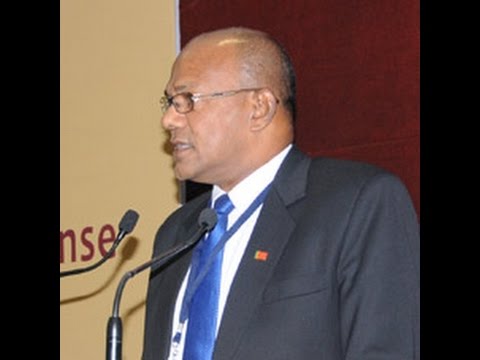
A warrant has been issued by the Colombo Additional Magistrate to arrest former Health Minister Rajitha Senaratne.
The Attorney General Dappula De Livera has instructed the Criminal Investigations Department (CID) to obtain an arrest warrant from court and arrest former minister Dr. Rajitha Senaratne following investigations regarding the ‘white van’ press conference.
The UNP MP had filed a fresh affidavit yesterday with regard to his second anticipatory bail application seeking to prevent his arrest by the CID.
On November 10 this year, Senaratne had called the said press conference, which was attended by two persons named Anthony Douglas Fernando and Athula Sanjeewa Madanayake.
During the briefing, the duo had made controversial statements and allegations regarding white vans” and purported incidents of certain abductions, assassinations, robberies and forced disappearances during the administration of former President Mahinda Rajapaksa.
One of them had claimed that he was a white van” driver involved in abducting people while the other claimed he once served as a driver to transport a stock of gold in previously LTTE-held areas.
On December 02, the CID presented a submission to the Colombo Chief Magistrate Lanka Jayaratne regarding the said media briefing.
Considering a request made by the CID, the chief magistrate had ordered several media institutions to submit the unedited video footage from this press conference to the investigators for onward probes.
The investigations in this regard were launched after a complaint was lodged by an individual named Kumudu Pradeep Sanjeewa Perera.
The CID later arrested the two individuals in question and detained them for 72 hours for onward interrogations.
The duo was subsequently produced before Colombo Chief Magistrate, who delivered an order to remand them until December 27.
MP Patalie Champika Ranawaka who was in remand in connection with a motor accident that injured a youth at Rajagiriya in 2016 has been released on bail this morning.
When MP Ranawaka was produced before the court, Colombo Additional Magistrate Kanchana Neranjani Silva ordered to release the MP on a 25 thousand cash bail and two surety bails of 500 thousand rupees each.
The Magistrate also ordered the MP not to influence the witnesses.
Colombo, December 24 (News 1st): General Daya Ratnayake has been appointed as the Chairperson of the Sri Lanka Port Authority (SLPA). The Ministry of Ports and Shipping stated that the appointment letter has already been given to Gen.
General Daya Ratnayake was the 20th Sri Lanka Army Commander. The appointment of a former army man as the SLPA chairman indicates President Gotabaya Rajapaksa’s concern for national security.
He won the November 16, Lankan Presidential election ensuring scurity in the aftermath of the April 21, 2019 Easter Sunday blasts set off by a Jehadi suicide squad to kill nearly 300 civilians in hotels and churches in various parts of the island including Colombo..
Recently, the President had expressed concern over some security issues in the Hambantota port which is a joint venture with a Chinese state owned company.
By Tang Lu, Shiran Illanperuma and Chen Jian Courtesy NewsIn.Asia
Colombo, December 24 (Xinhua): It was early in the morning as 25-year-old Harshana Tennekoon zipped across southern Sri Lanka’s Hambantota International Port (HIP) in his hatchback to welcome the first roll-on/roll-off (RORO) ship of the day.
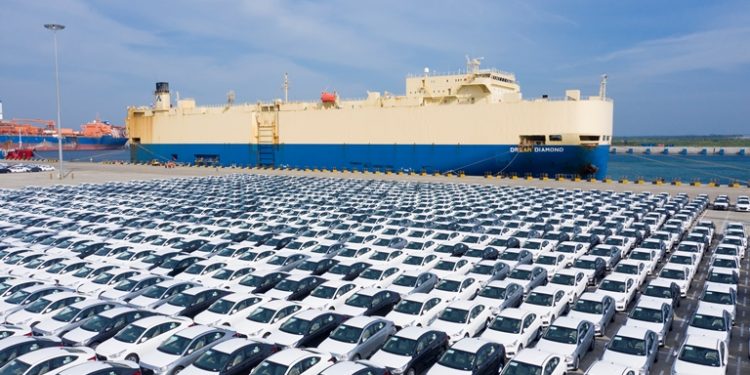
The massive vessel, carrying automobiles manufactured in India and destined for markets as far off as South Africa and Cuba, dwarfed Tennekoon.
Armed with a walkie talkie, hardhat and reflective vest, the young duty manager-in-training must oversee a team of around 90, who would spend the next few hours discharging the ship’s load and preparing it for the next leg of the journey.
It was a painstaking process, requiring precision, coordination and collective effort. But under Tennekoon’s supervision, the team worked like a well-oiled machine, able to discharge over 120 vehicles in an hour.
This is Tennekoon’s first job, of which his parents are quite proud. He joined the HIP in December 2017, shortly after the management of the port was transferred to the Hambantota International Ports Group (HIPG), a joint-venture between the China Merchants Port Holdings (CMPH) and the Sri Lanka Ports Authority (SLPA).
For Tennekoon, it is a once-in-a-lifetime opportunity. I love this job,” he told Xinhua in mid-December when the Hambantota Port was celebrating the second anniversary since its operations were given on a 99-year lease to the HIPG.
My aim is to go as far as I can in this industry,” he said.
A female employee from the Hambantota International Ports Group (HIPG) provides meals to students at Samudraramaya Buddhist temple located just a few meters away from the entrance of Hambantota Port in Sri Lanka, May 22, 2018. (Xinhua/Tang Lu)
Catalyst For Local Development
A master plan for developing industries around the Hambantota Port, undertaken by an international group of companies, has almost been finalized, said Ravindra Jayawickrema, CEO of HIPG subsidiary Hambantota International Port Services.
Once the plan is finalized, the port operator HIPG will go to the market to attract investors to set up export-oriented manufacturing to take advantage of the Hambantota Port’s free port policy and strategic access to an international shipping lane in the Indian Ocean located just 10 nautical miles (18.5 km) south of the port.
Along with industrial development, the port operator hoped to catch the container overflow from the congested Port of Colombo and develop Hambantota’s bunkering and fuel supply operations once the tank farm comes into operation early next year, Jayawickrema said.
Sri Lanka lies between Singapore and Fujairah, two of the largest fuel depots in the world that supply over 60 million tonnes of fuel per year. We are trying to tap into that market to a certain extent,” he said. He came to work in a relatively underdeveloped Hambantota just four months ago after quitting a job in the capital Colombo. Thanks to the port I now have a good income in my hometown and I can stay with my family,” said Kumara.
Kumara’s story is not unusual at the Hambantota Port. According to HIPG General Manager Human Resources Jeevan Premasara, 97 percent of the staff at the port are Sri Lankans, and 67 percent are recruited from Hambantota and surrounding districts.
The HIPG has been working closely with Sri Lanka’s National Apprentice and Industrial Training Authority (NAITA) to upgrade facilities and provide training in port operations.
HIPG CEO Ray Ren, who worked at CMPH flagship port in south China’s Shenzhen for 10 years before coming to Sri Lanka, said the company is committed to providing training and skill transfer to local young workers.
There are a lot of talents and potential in Sri Lanka,” he said.
Giving Back To Local Communities
Thero Karunasena, a monk from the Samudraramaya Buddhist temple located just a few meters away from the entrance of Hambantota Port, rested under a sacred bodhi tree after conducting weekly religious classes for some 100 local children.
Two years ago, I received less than half that number of students, but things changed when the HIPG began providing us with free breakfasts for children,” Karunasena said.
Hambantota used to be one of the poorest regions in Sri Lanka, with economic activity restricted to artisanal fishing and seasonal agriculture. But the emergence of Hambantota Port has provided many opportunities for local entrepreneurs.
In the past there were no jobs and no infrastructure, but today locals employed at the port benefit from a steady monthly income and their hard earned money circulates in the village,” said Karunasena.
Thanks to automobile imports from the port, vehicle repair shops have mushroomed in the area. In Ambalantota, the closest town to the port, locals supplement their income by renting rooms to workers and starting restaurants to feed new visitors.
Students welcome guests attending the inauguration of a new school building at the Tissapura Junior School in Weerawila, Sri Lanka, Oct. 18, 2019. (Xinhua/Tang Lu)
In October, the China Merchants Charity Foundation donated a two-story building equipped with a computer room, music room and library to the Tissapura Junior School in Weerawila.
The project was the result of consultations between school principal A. H. Weerakeerthi and HIPG CEO Ren.
A young girl named Nethma declared the inauguration of the building as her happiest day”, saying that the new environment would make her studies more productive.
The company has donated supplies to locals displaced by heavy floods and supported local healthcare initiatives, including paying for free cataract surgeries. It also offered financial assistance to beach clean-ups and elephant and turtle conservation.
At first people were misled by rumors about losing their land, but now their attitude is more positive. They see how this port benefits them and their children,” Karunasena said, reflecting on HIPG’s contribution to local communities since 2017.
Debt Trap” Hype Dismissed
The Hambantota Port has witnessed remarkable growth since operations were leased to the HIPG and received steady support and praise from Sri Lankan leaders.
In December 2017 when the management was transferred to the HIPG, then Prime Minister Ranil Wickremesinghe said the port fits in with Sri Lanka’s own vision of transforming into a hub in the Indian Ocean.”
More recently, new Prime Minister Mahinda Rajapaksa dismissed a debt trap” hyped up by some Western media, saying that Sri Lanka is committed to strengthening ties with China for mutual benefit.
We are very confident that Sri Lanka can very clearly repay the loans for the Hambantota Port and other development projects. Today, the economy has collapsed but when we rebuild it, paying back loans won’t be a question,” Rajapaksa told Xinhua in an interview earlier this month.
Sri Lanka’s debt problem was not created by China, said Local scholar Dushni Weerakoon and Sisira Jayasuriya, professor of economics at Australia’s Monash University. Chinese loans comprise merely about 10 percent of Sri Lanka’s total foreign debt, they said in a co-authored article.
As for the 99-year lease of the Hambantota Port, Sri Lankan President Gotabaya Rajapaksa clarified on Thursday that he would not renegotiate the commercial agreement of the project that had already been signed.
According to data gathered by the HIPG, the port has seen a 60-percent growth in volumes from 2018 and a threefold increase from 2017.
For CEO of HIPG subsidiary Hambantota International Port Services Jayawickrema, the outlook is positive. We see the future to be very promising,” he said.
(Video reporter: Tang Lu; Video editor: Liu Xiaorui)
Vega is powered by a 300 kw battery pack which gives it a range of 240 kilometers
Colombo, December 23 (HTAuto) – Beautiful beaches, mild weather and rich cultural legacy are what are synonymous with Sri Lanka. Having its very own supercar then, is quite the contrasting picture that a company called CodeGen is trying to paint.
CodeGen is a Sri Lankan company that is in the final stages of preparing its very own electric luxury supercar called Vega that promises to put not just the island nation but south Asia firmly on the global automotive map. And on paper at least, the car has a lot working for it to make it a serious rival to anything that the competition has in its arsenal.
According to the company’s website, Vega is world-class high-performance electric vehicle that is a ‘pioneering venture’ that would be the first-ever such vehicle to be developed and manufactured in Sri Lanka. Harsha Subasinghe, chief executive of CodeGen, was recently quoted in a report by Xinhua as saying that the project was taken up as a way of giving an opportunity to young Sri Lankans who are keen to have ingeniously made supercars in the country. We are ready to do something new for our country. I am sure it will be a product that will make all Sri Lankans really proud,” he said.
Harsha further claimed that the Vega is powered by a 300 kw battery pack which gives it a range of 240 kilometers. It reportedly does zero to 100 kmph in just 3.1 seconds and produces 900 bhp of peak power figures. The car is being developed in Sri Lanka with the help of numerous partners.
Vega photo courtesy: CodeGen
CodeGen says the car is currently in the final stages of testing and could be showcased at the Geneva Motor Show in April of 2020.
While Vega could be a strong statement from CodeGen and Sri Lanka about the prowess of south Asian companies and entrepreneurs, the challenge of providing supporting infrastructure to electric cars remains clear and present in many countries in the region.
A number of established car companies, with all their expertise and resources, are only now taking up the task of adding electric cars to their product portfolios. While China remains the largest market, Europe and the United States too is slowly catching up. India has also given impetus to electric mobility with a number of manufacturers now gearing up to drive in their electric offerings.
Leader of the Mahajana Eksath Peramuna (MEP) and UPFA parliamentarian Dinesh Gunawardena receiving his letter of appointment as the minister of foreign relations from President Gotabaya Rajapaksa (Pic courtesy President’s media)
One-time Sri Lankan Ambassador in Qatar, A.S.P. Liyanage, was among those who contested the 2019 presidential election. Of the 35 contestants, Liyanage polled 6,447 votes (0.05 per cent). The Sri Lanka Labour Party leader secured the 20th position and was among 33 out of 35 contestants who failed to save their deposits. A section of the media ridiculed Liyanage after he was pictured, in Oct 2018, welcoming Yoshitha Rajapaksa and Rohitha Rajapaksa at the Hamad International Airport, Qatar, and carrying their bags. The former President Mahinda Rajapaksa’s sons were there with the CH and FC rugby team for a match. Another political appointee, Ruwan Danansooriya, on the Qatar Embassy staff was pictured pushing a trolley, loaded with visitors’ bags.
The entrepreneur received important diplomatic posting, in early March 2017, courtesy of the then President Maithripala Sirisena. During the Rajapaksa administration, Liyanage served as Sri Lanka’s Ambassador to Nigeria.
Previously Chairman/MD of the ASP Group, Liyanage contested the presidential polls, in 2010 and 2015. The chubby businessman received 0.14 and 0.12 per cent, of the votes, respectively.
Liyanage was just one political appointee cleared by the so called High Posts Committee of Parliament. Successive governments packed Lankan overseas missions with political appointees. It would be pertinent to mention that President Sirisena gave Liyanage a top diplomatic posting, though the man actually pleaded for a Governorship.
Diplomatic appointments, received by Liyanage, reflected the crisis in the Foreign Service, struggling to cope up with growing challenges. Obviously, in this land like no other, anyone can not only secure a top diplomatic posting, but also seek the highest office in the country.
Passenger Transport and Power and Energy Minister Mahinda Amaraweera, on Dec 19, declared that they couldn’t be satisfied with services rendered by those serving our diplomatic service overseas. Amaraweera found fault with successive governments for accommodating defeated candidates and retired public servants in the Foreign Service. Alleging that the Foreign Service had pathetically failed to serve Sri Lanka’s interests abroad, the SLFPer expressed confidence that President Gotabaya Rajapaksa would uplift the Foreign Service.
Hambantota District lawmaker Amaraweera owed an explanation as to why he waited so long to take up the contentious issue. Amaraweera cannot be unaware that all heads of missions are cleared by the Parliamentary High Posts Committee. Did Amaraweera ever oppose a political appointment made at the expense of career diplomats? In fact, the then President Sirisena cleared the way for A.S.P. Liyanage to take over the Qatar mission when Amaraweera was serving the UNP-UPFA yahapalana coalition, which betrayed the Sri Lankan military at the Geneva-based Human Rights Council (UNHRC) in Oct 2015.
Post-Swiss Embassy incident study
on challenges
The writer recently had an opportunity to examine failures on the part of successive governments, regarding high profile accusations, with the focus on the Foreign Ministry. Touchy issues were discussed against the backdrop of two recent incidents, involving the Swiss Embassy, in Colombo. The Swiss accommodating Inspector Nishantha Silva on its political asylum programme and Swiss Ambassador Hanspeter Mock alleging on behalf of Embassy worker Garnia Banister Francis, that she was abducted on Nov 25, the day after Inspector Silva left the country.
President Gotabaya Rajapaksa’s government acted swiftly, and decisively, to counter the high profile Western project. Veteran politician Dinesh Gunawardena, who had never held the foreign affairs portfolio, handled the situation well, with Foreign Secretary Ambassador Ravinatha Aryasinha playing a significant role. There had never been a previous instance of Sri Lanka successfully countering such a high profile propaganda project meant to undermine the government.
The Swiss operation took President Gotabaya Rajapaksa government by surprise though the new administration responded admirably. Had the government succumbed to Western pressure, the country would have been in serious trouble. Instead, Ambassador Aryasinha, accompanied by Defence Secretary Maj. Gen. Kamal Gunaratne, on Dec 01, 2019, set the record straight at a meeting with Ambassador Mock. Whatever the Swiss say, their project has been exposed.
Foreign Relations Minister Gunawardena can be quite rightly satisfied with the ministry’s performance. President Rajapaksa appointed attorney-at-law Susil Premajayantha as State Minister for International Cooperation. In the absence of a deputy minister, Premajayantha functions as the deputy minister while being called State Minister for International Cooperation. Interestingly, there are no deputy ministers in Gotabaya Rajapaksa’s government. In addition to 16 cabinet ministers, including Premier Mahinda Rajapaksa, there are 39 State Ministers. The government owed public/media an explanation as to why there are two ministers to handle the vital subject split into Foreign Relations and International Cooperation. Let there be no confusion.
At the onset of Eelam War IV, in August 2006, top SLFPer Mangala Samaraweera handled the subject. In early 2007, Rohitha Bogollagama replaced Samaraweera. After the conclusion of the war, in May 2009, and following the April 2010 general election, Prof. G.L. Peiris took over the ministry. One-time UNPer Bogollagama, couldn’t secure a place in parliament, at the first general election, after the end of the war. Prof. Peiris, who functioned as the leader of the then Premier Ranil Wickremesinghe’s delegation for talks with the LTTE in terms of the CFA, finalized in Feb 2002, served as the external affairs minister till the change of government, in January 2015.
The 2015 change of government brought Mangala Samaraweera back to the Foreign Ministry. Having received the backing of the four-party Tamil National Alliance (TNA) to install Maithripala Sirisena as the President, the UNP-SLFP combine, aka yahapalana government, co-sponsored the accountability resolution at the UNHRC, on Oct 01, 2015. In spite of President Sirisena repeatedly claiming that his approval hadn’t been obtained for the controversial move, he did nothing during his five-year term to reverse the process.
The Foreign Relations Ministry should at least now undertake a thorough examination of past events/disputed policy decisions. Although President Sirisena and many others blamed Samaraweera for the Geneva betrayal, the then minister couldn’t be faulted for implementing yahapalana policies. Had Samaraweera acted unilaterally, President Sirisena and Premier Wickremesinghe should have had the guts to thwart his plans. Sri Lanka suffered for the failure on the part of the top political leadership. Sri Lanka endorsed the Geneva resolution in spite of the then Sri Lanka Permanent Representative in Geneva Ambassador Aryasinha strongly objecting to it at an informal session attended by Western governments. Samaraweera dismissed Aryasinha’s concerns and was instructed to finalize the resolution. Samaraweera couldn’t be faulted for the Geneva co-sponsorship. Instead, the yahapalana administration, led by President Sirisena and Premier Wickremesinghe, should accept responsibility for the Geneva betrayal.
During Sirisena’s presidency, four held the foreign ministry portfolio: Ravi Karunanayake succeeded Samaraweera, in May 2017, before him being removed in early August 2017 amidst the media furor over Treasury bond scams perpetrated in Feb 2015 and March 2016. One time Attorney General Tilak Marapana succeeded Karunanayake, in early August 2017. Having sacked the cabinet in late Oct 2018, President Sirisena placed the foreign ministry under Dr. Sarath Amunugama during what is dubbed as a 51-day government. Thanks to the judicial intervention, Marapana regained the foreign ministry in Dec 2018. The top lawyer held the ministry until one-time Defence Secretary Gotabaya Rajapaksa convincingly defeated UNP Deputy Leader Sajith Premadasa who contested the 2019 presidential poll on the New Democratic Front (NDF), under the ‘swan’ symbol.
Had Premadasa won the presidency, Nishantha Silva, along with his wife and children, wouldn’t have sought political asylum in Switzerland and there was no requirement for the Swiss Embassy drama, orchestrated by interested parties. The UNP, too, had a role to play. No less a person than President Gotabaya Rajapaksa referred to a statement issued by defeated presidential candidate Sajith Premadasa as well as Dr. Rajitha Senaratne. Dr. Senaratne caused media furor by declaring that the abducted Swiss Embassy worker had a pistol trusted in her mouth.
President Rajapaksa assured Ambassador Mock, on Dec 16, that the alleged incident never took place. The President repeated what Ambassador Aryasinha told Mock on Dec 01 when he presented the findings of high profile investigation to the Swiss envoy.
The government earned the wrath of Western powers for its handling of the Swiss issue. Having conveniently forgotten the Swiss, accommodating Inspector Nishantha, they blamed President Rajapaksa’s administration going public with the Francis issue. President Rajapaksa didn’t mince his words when he pointed out to those who expressed concern over the media coverage as to how Garnia’s unsubstantiated allegations ended up in the New York Times as if it was the factual truth, even before Ambassador Mock complained, in writing, having met Prime Minister Mahinda Rajapaksa. US President Trump appears to be quite justified in accusing the NYT of repeatedly publishing fake news.
In fact, high profile international media coverage exposed the Swiss project. The Foreign Relations Ministry addressed the Swiss issue commendably, amidst another serious matter caused by the Conservative Party ahead of the UK general election, on Dec 12, 2019. On the instructions from Colombo, High Commissioner Manisha Gunasekera strongly reacted to the Conservative proposal for a two-state solution in Sri Lanka. The HC objected to the Conservative declaration: “We will continue to support international initiatives to achieve reconciliation, stability and justice across the world, and in the former conflict zones such Cyprus, Sri Lanka and the Middle East, where we maintain our support for the two-state solution. The Conservatives made their move at the same time Westminster Magistrate’s court delivered a ruling against Brigadier Priyanka Fernando in respect of him allegedly making a threatening gesture at LTTE supporters, who were shouting abuse against the country in front of our London High Commission, while openly waving Tiger flags. The Foreign Relations Ministry, in a statement issued on Dec 07, 2019, titled ‘Foreign Ministry comments on the judgment in the case of Brigadier Priyanka Fernando,’ without hesitation pointed out the ruling was given on the eve of the UK election general election.
It would have been better if the statement was aptly titled ‘Foreign Relations Ministry comments on the judgment in the case of Brigadier Priyanka Fernando.’ There shouldn’t be confusion over how the ministry is named and a State Minister under a different title.
Negligence on the part of past governments
The failed Swiss move, and Sri Lanka’s spirited response, should be examined against the backdrop of past Foreign/External Affairs Ministry failures. The sharp change in Sri Lanka’s response can be safely attributed to President Gotabaya Rajapaksa’s policy.
The writer, attending the workshop at the Sri Lanka College of Journalism, on Dec 21, 2019, briefly discussed as to how Sri Lanka pathetically failed to exploit Lord Naseby’s contradiction of the UN war crimes charges in Oct 2017, Sri Lanka Monitoring Mission (SLMM) bid to deceive the public, in 2007, with regard to war casualties (2002-2007), exposure of those propagating lies over Mannar mass graves early this year, soon after Geneva alleged there could be more secret graves, appearance of a man in Tamil Nadu alleged to have been killed by the Directorate of Military Intelligence (DMI), in late 2009, Australia providing a new identity to one-time leading JVP activist, Kumar Gunaratnam and a missing LTTE child soldier appearing in an award-winning French movie, the then Northern Chief Minister C.V. Wigneswaran accusing the army of poisoning 104 ex-LTTE cadres in government custody and wartime accusations directed at the Navy over what was dubbed as Kanyakumari killings (in Indian waters).
The writer also compared the handling of the situation caused by the Swiss and Sri Lanka’s failure to exploit disclosure of secret talks the UN mission in Colombo had with the LTTE in 2007. Had the Rajapaksa government bothered to examine what was happening on the ground, the country would be in a much better position to counter propaganda offensives directed against our political and military leadership. Unfortunately, there hadn’t been any effort on Sri Lanka’s part to inquire into /oppose Labour Party MP, Siobhain McDonagh’s declaration, in the UK parliament in Sept. 2011, that the Sri Lankan military killed 100,000 Tamils, including 60,000 civilians, in the final phase of the war.
Another Labour Party MP Joan Ryan once functioned as former Chief Executive and Policy Advisor of UK headquartered Global Tamil Forum (GTF). The LTTE enjoyed an extremely close relationship with the GTF. Tiger ideologue/advisor Anton Balasingham lived in the UK. Having bestowed UK citizenship on Balasingham, one-time Veerakesari staffer and British High Commission employee, the British provided the terrorist leader protection, until his death in Dec 2006. Balasingham’s murderous outfit had its International Secretariat in London without impediment. Even after the assassination of Foreign Minister Lakshman Kadirgamar, in early August 2005, the UK allowed Balasingham and his Australian-born wife, Adele, to conduct talks on behalf of the LTTE. Thanks to Wiki Leaks, the secret talks a high level Norwegian delegation had with Balasingham in the immediate aftermath of the Kadirgamar assassination is in the public domain.
Mrs. Balasingham, who participated in the LTTE passing out parades and even presented cyanide capsules to terrorists, lives in the UK. Those who moved court against Brigadier Fernando for allegedly making a threatening gesture never challenged the British over Adele, who nurtured the female Tiger cadres with cyanide capsules, living there.
Sri Lanka paid a very high price for ignoring Lord Naseby’s Oct 2017 disclosure made possible by the UK Freedom of Information Act 2000. The revelation could have been effectively used to counter the primary UN allegation that over 40,000 civilians perished as a result of the Vanni offensive. In an exclusive interview with the writer, in September 2019, in Colombo, Lord Naseby said that he was deeply disappointed by Sri Lanka’s failure to use his disclosure, based on wartime dispatches sent from British High Commission in Colombo to the Foreign and Commonwealth Office, to defend her armed forces.
The writer also asserted that the war-winning Rajapaksa administration owed the public an explanation as to why US defence attaché Lt. Colonel Lawrence Smith’s far reaching comments, at the inaugural Colombo Defence Seminar, in respect of what was dubbed as white flag killings and other accusations, were never properly used. Instead the Rajapaksa administration squandered millions of USD on PR firms under questionable circumstances. Such hare brained projects never brought any benefit to Sri Lanka. The political leadership bypassed the Foreign Ministry. Actually an inquiry is required to establish the amount of funds spent on costly foreign PR firms and to find out the truth.
The US sustained the project against Sri Lanka until the yahapalana lot betrayed the military, in Geneva, in Oct 2015. In spite of the US quitting the UNHRC, in June 2018, calling the Geneva body ‘a cesspool of political bias’ Sri Lanka remained committed to the process initiated by the US on behalf of the British, Norway et al.
The circumstances under which the US got involved in the Geneva process, having backed the then General Sarath Fonseka at the 2010 presidential election, should be examined against the backdrop of Western and Indian concerns over the Rajapaksas’ relationship with China.
With the US-Japan-India coalition taking on China, Sri Lanka should be mindful of the previous Sirisena-Wickremesinghe government entering into a Comprehensive Partnership with Japan, in Oct 2015. Stepped up Japanese diplomatic initiatives should be viewed in the right context. It would be relevant to mention President Gotabaya Rajapaksa recently received an invitation from Tokyo for an official visit.
A thorough examination of all bilateral agreements, entered into and to be signed, is necessary without further delay. There is no point in denying that Sri Lanka had entered into ACSA (Acquisition and Cross Servicing Agreement) during Sirisena’s presidency and the change of government took place in Nov 2019 when the previous government was having talks with the US on MCC (Millennium Challenge Corporation) and SOFA (Status of Forces Agreement).
Having played politics with the US issue, the new government finds itself in an unenviable situation. Defeated presidential candidate Sajith Premadasa recently called for the abrogation of ACSA and doing away with talks on MCC and SOFA. It would be the responsibility of the government of the day to take decisions in consultations with political parties represented in the parliament.
Foreign relations should not be undermined by party politics. During the workshop, the writer also recalled the presence of the then Sri Lankan Ambassador in Washington, top career diplomat Prasad Kariyawasam, at an event in June 2016 when TNA lawmaker Sumanthiran disclosed the reaching of an agreement on foreign judges in terms of the Geneva resolution. The head of mission cannot be faulted for following the government policy. Jaffna District MP Sumanthiran wouldn’t have made such a declaration without having specific guarantee from the Sirisena-Wickremesinghe administration with regard to foreign judges. Although we are being repeatedly told foreign judges, as well as security sector reforms, insisted by the so-called international community, wouldn’t be implemented, the Geneva resolution remains unchanged.
It would be the responsibility of President Gotabaya Rajapaksa’s administration with Minister Gunawardena’s ministry to set the record straight. The writer believes Sri Lanka should seek a comprehensive review of the Geneva resolution on the basis of Lord Naseby’s disclosure, Wiki Leaks revelations, pertaining to the war, June 2011, the US statement, as well as a still confidential UN report, prepared by the UN during the Vanni offensive. It placed the number of deaths (both LTTE and civilians) at 7,721 and the wounded at 18,479 during the period Aug 2008 to May 13, 2009. Sri Lanka never pushed the UN to examine its own report, based on information provided by those who lived in the North. Instead, the June 2011 report, released by a three-member Panel of Experts (PoE), which prohibited examination of accusations made by unknown persons was accepted. Based on that report, not open to any form of scrutiny, till 2031, Sri Lanka was blamed for deliberately killing 40,000. Lord Naseby convincingly countered these accusations. Let us hope the new government makes a comprehensive presentation in Geneva, next March 2020, to clear its name.
Let me end this piece by inviting those concerned to peruse career diplomat Chanaka Talpahewa’s ‘Peaceful Intervention in intra-State conflicts: Norwegian involvement in the Sri Lanka peace process’ to understand as to how foreign ‘interventions’ could jeopardize a country. Sri Lanka is a case in point.
Having terminated Enterprise Sri Lanka loan scheme and Gamperaliya launched by the previous UNP-led coalition to spur economic growth at electorate level, the new government announced a new initiative to develop villages.
In accordance with the latest development initiate, the Gotabaya Rajapaksa government will allocate Rs. 2 mn each to 14,021 villages next year, whereas in terms of the Gamperaliya project, the previous government provided Rs 300 mn apiece to electorates.
The UNP launched Enterprise Sri Lanka and Gamparaliya in August and September 2018, respectively, in the wake of the debilitating setback it suffered at the Feb 2018 Local Government polls.
Responding to a query, sources said that a thorough assessment of Gamperaliya and Enterprise Sri Lanka was yet to be made.
Both projects were suspended immediately after the then President Maithripala Sirisena sacked Prime Minister Ranil Wickremesinghe. The UNP resumed both projects after Wickremesinghe regained the premiership in Dec, 2018.
According to the Finance Ministry, the cabinet recently approved funds amounting Rs 28,042 mn for the project. Prime Minister Mahinda Rajapaksa, in his capacity as the minister of finance, economy and policy development has proposed the project.
The Finance ministry said that the project would be subjected to government procurement procedures and financial regulations.
The government intends to launch village-level projects in January 2020 and complete them before end of Nov, same year.
The government has directed the formation of civil committees at village level with the relevant development officer as the convener to spearhead the projects.
The Finance Ministry has set Dec 27 deadline for formation of committees and handing over of project proposals were to be completed by Dec 31, 2019, the ministry said.
Economic and Policy Development State Minister W.D.J. Seneviratne briefed local government representatives of the new development initiative. Minister Seneviratne advised those responsible not to undertake projects which required approval from various state institutions such as the Wildlife Department. The minister said that four villages could get together to implement a project if all committees could agree on a desired project.
Pivithuru Hela Urumaya (PHU) leader Udaya Gammanpila said today former minister Patali Champika Ranawaka was not arrested in connection with a mere traffic offence as claimed by UNP MPs but over several allegations.
He told a news briefing that UNP MPs Ajith P Perera and Nalin Bandara had said Mr. Ranawaka was remanded over a minor traffic offence which could have ended up in a fine.
“According to what transpired in Court, Mr. Ranawaka was arrested for reckless driving and other serious allegations levelled against him. Fleeing the scene of the accident, misguiding the Court by producing someone else as the one who drove the car at the time of the accident, threatening the witnesses, destroying evidence and obstructing the duties of the police personnel are other allegations against him. That’s why he was remanded,” Mr. Gammanpila said.
He said attempts were being made to intimidate the friends of the victim of the Rajagiriya accident to prevent them from giving evidence in Court.
That is why a complaint was lodged at the police station that the youth, including the victim, involved in the Rajagiriya accident was riding motorcycles with engine capacity exceeding 1000 CC. If there is no ulterior motive, why make a complaint after four years of silence. Police should take action against the bogus complainants for intimidating the witnesses,” the MP said.
He said the conduct of the Speaker in the aftermath of Mr. Ranawaka’s arrest was biased and that no law, circular or tradition had been violated when carrying out the arrest.
The Speaker has visited the MP in prison. Eleven of our MPs were remanded but he never visited any of them or issued a statement. The Speaker says that Mr. Ranawaka’s arrest was erroneous. However, according to the circular issued by IGP on April 10, 2015, the Speaker should be informed immediately after or before the arrest of an MP. I repeat it says ‘immediately after or before the arrest.’ This means the Speaker can be informed after an arrest is made. The police have however informed the Deputy Speaker about an hour prior to the arrest,” the MP said.
TNA media spokesman parliamentarian M.A. Sumanthiran said that the reports stating that the TNA will be supporting the UNP to form a UNP government at the next general election are completely false
He stated that his party has not taken such a decision so far.
The media had reported stating that the MP made a statement in this regard after a meeting held at the TNA office in Kayts last Sunday.
However, he said that he was not in the Northern Province on that day.
The Pivithuru Hela Urumaya states that MP Patali Champika Ranawaka’s supporters should be arrested for making false complaints to intimidate the youth that was seriously injured in the Rajagiriya accident that took place in 2016, and his friends
The Leader of the party MP Udaya Gammanpila made this statement participating at a media briefing held in Colombo today.
Colombo Additional Magistrate Bandara Nelumdeniya issued an arrest warrant for the arrest of MP Rajitha Senaratne, today.
The Attorney General’s Coordinator, State Counsel Nisara Jayaratne stated that the order was issued by court after considering the submissions made by the Criminal Investigation Department and the Attorney General’s Department.
The Attorney General had instructed the Director of the Criminal Investigations Department to obtain a warrant pertaining to the White Van media conference investigations and to arrest the Member of Parliament
Attorney General instructs CID to arrest MP Rajitha Senaratne
Attorney General’s Coordinating Officer, State Counsel Nisara Jayaratne stated that Attorney General Dappula de Livera has instructed the Director of the CID to obtain a warrant and arrest Parliamentarian Rajitha Senaratne.
This is in relation to the investigation of the White Van press conference
The Swiss have contributed only 2 things to
human civilisation – cuckoo clocks
and secret bank accounts.
The abduction of Garnia Bannister Francis is a
total fabrication similar to the story of William Tell. Tell was a farmer who
lived about 700 years ago and was supposed to be good at shooting his cross
-bow. He shot an apple off his young son`s head and became a national hero. The
fake legend of Tell extols his marksmanship and fight against Albrecht Gessler a
dictator, but hardly any mention is made of his son’s bravery to keep the apple
on the head. Even Rossini composed an overture for William Tell. Tell’s son kept
an apple on his head on November 19, 1307. Apparently Tell killed Gessler on 25
November 1307 and so, Tell, the national hero, is sculpted in stone, in bronze,
in wax, in wood and in chocolate. In 2019 Garnia made up her story on 25
November. What a coincidence! Garnia’s story is like Swiss cheese – full of
holes.
Now, the Swiss Ambassador to Sri Lanka, Mr.
Mock (what an unfortunate name!) was gullible enough to believe Garnier and
thought this was a fantastic story to censure our newly elected President, his
government and Sri Lanka in general. So, what did Mock do? He started to lie
about Garnier’s health and asked Sri Lanka to follow due process. He fired
several shots at our government, but all of them missed the target – the bullets
ricochet off one of the mara trees that line Gregory’s Road (R G Senanayake
Mawatha) and hit the organ that defines Mock’s manhood. Now Mock thought he was
fully conversant with all the finer points of diplomatic protocol. However,
President Rajapaksa gave Mock a dressing down. We now have a special emissary to
patch up the Swiss f… up in Colombo. Mock is a charlatan. Actually, I do not
blame him all together but I do blame his mother for conceiving such an
imposter.
Our President did the right thing and handled
the fracas skilfully. I recommend that we make sculptures of our President in
marble and in Swiss chocolate and place them opposite the Swiss Embassy on R G
Senanayake Mawatha. President
Rajapaksa protected our international dignity and integrity. As for me, I will
shun all Swiss products till such time as the lying Swiss ambassador formally
apologises to our President and the people of Sri Lanka for the sham
orchestrated by him. When he does apologise make him persona non grata
and send him home. I urge all national minded persons to boycott all
imported Swiss products till this formal apology is given by Mock or his
surrogate. As a first step I applied some disinfectant to my Swiss watch and
threw in to the rubbish bin. Mr. Mock, I have no Swiss bank account (covert or
overt) but listen carefully – the cuckoo clock is ticking. — Rudra de
Zoysa
There are now good evidence about the complicity of the swiss embassy in the alleged abduction of its employee. While they are being investigated one other factor that has been reported is the political advisor to the swiss embassy is a son of the infamous Nimalka Fernando, the so called right woman activitist & the NGO supporter.
Nimalka is the one who took a campaign against Sri Lanka supporting Geneva resolutions.
In an interview given to CH4 she describes about death threats by the previous Rajapaksha government and Jesus Christ being her only strength.
Therefore are we naïve not to believe how a set up can be staged by these NGO groups who were severely hurt following the victory by the large Sinhala Buddhist majority and why swiss insist on objecting to the government investigations?
It is reported she is the partner of Vasudeva Nananayakkara over thirty years in an interview given in 2005. It is also well known a daughter or daughters of Vasudeva is or are married to the ex Jaffana governor who has recently reinvigorated a campaign to denounce Sinhala Buddhists.
With these facts coming to light now how with these NGOs supported groups at the right places in action, is such a Swiss saga being staged a surprise at all?
The government should openly declare these facts for the public to understand the inimical forces behind the coup.
On May 17, 2009, the LTTE accepted defeat and
formally surrendered to the army. These
LTTE cadres had engaged in high treason. They had taken arms against a
sovereign state. They had conducted a protracted civil war, lasting over 30
years. Such treason would lead to severe punishment in any country.
In Sri Lanka too, the LTTE cadres were
scrutinized and the hard core separated from the rest. The cadres were divided
into categories, such as leaders, staunch combatants, fetchers and carriers and
so on. It was found that about 15-20% were considered hardline LTTE. This group
was taken into custody and put into prison. The rest of the LTTE cadres were
rehabilitated. Stephen J Rapp, US
Ambassador at large, had told President Mahinda Rajapaksa in 2014,
instead of rehabilitating terrorists you should have prosecuted them”.
However, the
government of Sri Lanka preferred rehabilitation. 24 Protective Accommodation
and Rehabilitation Centers (PARC) were established. 11, 600 LTTE cadres were
held in these camps, there were 594 children and 11,406 adults, 9374 male ,
2032 female.There were
separate PARC centers for males, females
and children. There were four centers
for females.
Family could visit the
inmates . Parents and children were
re-united. Married ex- combatants re-joined their spouses. A dedicated
PARC was established at Kaithady to
cater to the reunification of married male and female ex-combatants who were
undergoing rehabilitation separately at different rehabilitation centres.
A mass marriage
ceremony was held on 13 June 2010 where 53 couples (ex – combatants) were
formally given in marriage with the consent of their parents/families. Parents
and well-wishers attended the Ceremony. Clothes, bridal dressing, wedding
photographs were provided by the army. They were also given Rs 5000 each. In the case of one
orphan with nowhere to go, army found him a partner and married him off. So he
had a family.
Tigers who were university students were sent back to University of
Jaffna, as soon as possible. Others were permitted to study and sit for either
the O-Level or A-Level examinations.
According to the media, 175 sat for the GCE O/L examination in 2010 and
38 passed in all the subjects. 361 sat the GCE A/L examination and 222 passed.
Primary Healthcare Centers were established at
each PARC with regular health screening,
health education and hygiene promotion programmes were conducted regularly. A
health education booklet was provided. The inmates were helped to get documents such as
IDs and birth certificates. There was a comprehensive Counseling Programme
to correct the distorted thinking
of the
former LTTE cadres. There were cultural activities as well.
The government then launched a five-year strategic plan of
rehabilitation, 2008- –2012. It was
Initiated, designed and implemented the Sri Lanka army. It had six components: Spiritual, Vocational, Educational, Sports,
Social/ cultural and Psychological. Much
of the training was in the hands of the National Cadet Corps, many of whom were
teachers by profession.
Using these components, the inmates were
introduced to meditation, spiritual development, aesthetics and drama therapy, sports,
language training in Sinhala, Tamil and English, leadership and personal development training,
counseling and mentorship, including a pre-reintegration mentorship program.
Drama and Music
workshops conducted with the assistance of specialists in the fields of Aesthetics, Drama and
Music, were very effective as
therapeutic programmes. Michael Roberts observed that ‘In an imaginative leap ‘
the Rehabilitation Bureau had provided
training in dance and drama for some of the former Tigers with the result that
a dancing troupe was created which was in great demand.
Those who were good in
sports were given encouragement. 135 inmates were brought to the Ministry of
Sports in Colombo for testing and a few were selected for cricket, swimming and
karate. Three were trained in
shooting. They had the potential to participate in international events.
The inmates were taken around Sri Lanka, to
Hambantota harbor, to Hakgala gardens in Nuwara Eliya. They were brought to
Colombo where they visited Parliament. They were shown the large number of
Hindu temples in the south. They were
shown the desire of the Sinhalese to live with Tamils peacefully and
harmoniously.
At
Deniyaya and Narampanawa they were
given lunch prepared by the villagers.
Vocational training, for males, consisted of plumbing, aluminum work, electrical wiring, leather work, tailoring,
carpentry, masonry, welding, driving, heavy machinery training (
bulldozer) three wheel driving, three
wheel and two wheel repairs, vehicle tinker course, outboard motor engine
course, coconut cultivation, mushroom cultivation, sugar cane cultivation, use of chemical fertilizers, , handicrafts using Palmyra
and paper work,
For females there was bridal dressing, hair
dressing, make up, nursery management, cookery , bakery , preschool training ,
Juki machine operator training programme
( given at Link Apparel, and Tri star apparel,) tailoring, sugar cane
cultivation, aquarium fish rearing, typing and shorthand.
There were IT related vocational training
programmes in the fields of Agribusiness, Garment industry and Hotel industry.There was also training for Computer aided design and 3D Design. A fully
equipped mini computer lab with 30 computers was set up in 2010, with a
capacity to train over 100 persons at one time.
Here are some specific programmes.
Learning
Basic Principles of Entrepreneurship development and training at Pampemadu
by Survivors Association for 40 Rehabilitants
Palmyra
leaves related Handicrafts creations training course at Poonthottam PARC
facilitated by Survivors Association for 35 Rehabilitants
Leather
work training course from 28th February to 10th June 2011 at Thelippalai
PARC’
IDM
Computer Training Program at Maradamadu Tamil Primary, Technical College.
5th
batch of David Peris motor mechanic training course
Masonry
related vocational training program at Dharmapuram PARC for 200
beneficiaries for 15 days. Facilitated by National Apprentice and
Industrial Training Authority (NAITA) and Sponsored by Holcim Cement
Vocational training course held at Handwork
Vocational Training Centre, Payagala, facilitated by FCCISL for 60 attendees.
Michael Roberts said, what is praiseworthy in this policy has been the
emphasis on vocational and technical education rather than the standard
clerical streams. Also the involvement of mercantile companies in the
training programme such as Abans,
Holcim, David Pieris Motor Company, Ventura, Virtusa, and the Federation of
Chambers of Commerce & Industry.
The LTTE cadres included 594 children aged
between 12 and 18. These child soldiers were not put through the rehabilitation
programme and instead were given catch-up education. We felt that it was
better to put them through a learning programme instead of sending them for
rehabilitation. Hence, we gave them a chance to learn languages, while those
who could not sit for their O/L and A/L exams were given the opportunity to
complete their studies, said the Rehabilitation Bureau. They were given formal education for GCE O/L and GCE
A/L examinations. 132 were selected f or
University in 2012. ‘There
were scholarships
for higher studies.
With the help of
the Ministry of Sports and Public Recreation, Sri Lanka Cricket Board,
International Cricket Council and the Cricket for Change (U.K based charity
organization) the Rehabilitation Bureau
promoted Cricket for the child inmates.
The Commissioner General of Rehabilitation told
the media in 2019 that around 12,191 ex-LTTE combatants had been rehabilitated
and reintegrated into society. There
is just one more ex-LTTE member left to be released.
He said initially we got around 10,000 male,
female and child soldiers who had surrendered to the Security Forces and
immediately we started the rehabilitation programme’.Others who were subsequently
arrested were sent for rehabilitation later. Of those who joined us initially
in 2009, by around 2010, we had completed their rehabilitation and reintegrated
them into society. Thereafter, the others who were placed for rehabilitation by
the courts underwent the rehabilitation programme.
The highest number of those rehabilitated and
reintegrated into society were those from the Kilinochchi district. The
government had rehabilitated 3,242 ex-combatants from the Kilinochchi district,
(2,624 males 618 females), 3,097 ex-combatants from the Jaffna district, (2452,
647) 2,707 ex-combatants from Mullaitivu (2227, 477), 801 ex-combatants from
Mannar (637, 164) 1,145 ex-combatants from Vavuniya (944,201) have been
rehabilitated and reintegrated so far.
In addition, 529 ex-combatants including 447
males and 83 females from the Trincomalee district, 83 from Ampara including 73
males and 10 females, 476 from Batticaloa district, including 415 males and 61
females, 11 males from Polonnaruwa, five males from Badulla, nine males from
Colombo, two males from Galle, nine from Gampaha including eight males and one
female, five from Kandy including four males and one female, two each from
Kurunegala and Matale, 14 from Nuwara Eliya, four from Puttalam and 44 others
who have no specific hometown were among those rehabilitated and reintegrated
among the total 12,191. In total those rehabilitated were 9,878 males and 2,269
females.
The government had allocated Rs.100 million for
the Rehabilitation Bureau for rehabilitation in 2017, while Rs. 50 million was
allocated for 2018. In accordance with international norms, statements and
letters of consent were obtained from the inmates for follow-up of the
rehabilitation programme.
The Commissioner General of Rehabilitation said
that the rehabilitation programme carried out was very successful and that none
of the rehabilitated ex-LTTE members have got involved in any major anti-social
or terrorist activity after being reintegrated.
However, some of the inmates did not agree. They said they cannot see
how they can earn a living by making Palmyra products or ornamental fish.
Rehabilitation was worse than prison said another. I was supposed o be trained
in carpentry for 6 months but I was
given training only for 60 days and I was asked to sign to say it was six months.
(Continued)
Christmas is a
religion-based festival that promotes peace and kindness. Love thy neighbor is
a key utterance of Jesus Christ. But can these values be sustained if we fail
to extend them to all living beings. Are animals also not our neighbours?
Morally entitled to our love and affection?
This moral issue arises
every time Christmas dawns for celebration. Innocent animals in their millions
are put to death to celebrate the birth
anniversary of one man, renowned as the ‘Prince
of Peace’. Can this be morally justified?
Some
say that Christ was a vegetarian. If so, he will be turning in his grave, if he
was aware of the pain and suffering caused to animals by man’s inhumanity to
celebrate his birth anniversary.
If animals can speak they will call Christmas
a ‘day of infamy’ as they are forced to sacrifice their lives for a human feast
on a colossal mind boggling scale all over the world.
In every sense of the word Christmas
celebration generates an Animal Holocaust, not much different to the Holocaust
of the Jews during World War Two.
The
moral challenge is to celebrate Christmas on the footing of Ahimsa which means
non – violence and peace. Reject merry making through causing death to millions
of innocent animals. Strive for peaceful co – existence between humans and
animals. Meat is murder. Strive for a meat free Christmas and save the lives of
innocent animals.
We must remember that the vast majority of
animals killed to sustain ‘feasts’ and celebrations on religious occasions are
products of intense factory farming. On factory farms, baby animals are
routinely subject to invasive surgical procedures without the mercy of pain
relief. Millions of ‘meat’ chickens are concealed in industrial sheds, never to
see daylight or feel the earth beneath their feet. In commercial hatcheries,
economically ‘worthless’ day-old male chicks are crushed to death as ‘waste
products’ of the egg industry. Even the dairy industry is not free from heinous
cruelty towards new-born male calves. They are dispatched for slaughter no
sooner they are born while their mother cows weep for them.
Civilizational Values
Christmas is an apt time for reflection on our
civilizational values because it is the season where hundreds of thousands of
innocent animals undergo extreme suffering, exploitation, and death. Millions
of turkeys are slaughtered for Christmas dinner, along with ducks, geese, pigs,
lambs and chickens. In western countries, puppies and kittens are given away as
presents, then often neglected or discarded by new owners when the novelty has
worn off. Rabbits and foxes have their fur stripped from them to be
turned into clothing and accessories.
The undeclared war that is being waged
everyday against countless millions of non-human animals all over the world
takes on an aggravated turn during the Christmas season. These practices are
deeply unsettling to anyone who values compassion and respect for the life of
others. We cannot remain silent.
Vesak
In contrast, Vesak, the Buddhist festival
celebrating the birth anniversary of the Buddha is free of violence towards any
living being.
Humans
dread violence and death. Likewise, all living beings including the so – called
food animals dread violence and death.
Compassion
means sympathizing with the suffering in other beings because one sees
suffering in oneself, and wishes every sentient being, including oneself, to be
free from suffering and be happy. If there is a single definition of what makes
one a true Buddhist, it is whether you endeavor to practice compassion or not.
This is clearly spelt out in the Karaniya
Metta Sutta.
May all cultivate mettā (loving – kindess) towards all beings on an equal footing, those who live above,
below, or across. May all be unhindered and without enmity.
Just as a mother would
protect her only child with her life, may this protection affect all beings on an equal footing.
Whether standing, walking,
sitting or lying down, may all sustain this mettā mindset (what the Buddha called Brahma Vihāra)”.
Any true celebration of peace and goodwill
related to religion must be based on unimpeachable non-violence and respect for
the lives of all living beings including non-human sentient beings.
An invaluable precedent from Sri Lanka
There is an invaluable precedent in Sri
Lanka i.e. Vesak, where reverence and compassion for all forms of life is
stressed and consequently on Vesak day an age-old custom is legally enforced –
closure of slaughter houses and ban on sale of meat. A majority of the people
abstain from flesh food consumption as part of the Buddhist religious tradition
and practice on that occasion.
We can set an example to
the rest of the world by doing likewise on Christmas day. The biggest
beneficiaries would be the innocent animals. It is time that due consideration is
given to their paramount interest in living until their natural life span ends
just as much as we humans do to each other.
Christians in Sri Lanka should strongly consider
commencing a new tradition of kindness and goodwill to all living beings by
leaving meat off their plate on Christmas day. Instead of blindly aping western
traditions mired in killing and bloodshed during Christmas, why not follow a
more distinctive Buddhist tradition of total non-violence when celebrating the
anniversary of the birthday of the founder of a world religion.
Justice for Animals Sri Lanka was formed in 2019
under the auspices of Sri Bodhiraja Foundation led by Ven. Omalpe Sobhitha
Thera to give voice to the suffering of animals, because they cannot articulate
their suffering. The cause of animals has to be highlighted loud and clear not
only for their sake but also for our sake because it reflects on ourselves. Our
sense of justice, compassion and sharing the planet earth with all those who
inhabit it.
Environmental damage
Becoming a vegetarian or vegan has countless
benefits. Studies have shown that meat eating takes a heavy toll on the
environment. A person who consumes a diet high in meat is responsible for
almost twice the climate-killing carbon dioxide emissions of a dedicated
vegetarian.
In respect to the environmental cost per
calorie, the effect of beef consumption, for example, is horrific. The rearing
of beef cattle necessitates 160 times more land and leads to 11 times more
greenhouse gas emissions vis-à-vis crops like wheat, rice or potatoes.
Perhaps the most compelling argument for
choosing a vegetarian lifestyle is that abundant studies have shown that
vegetarians have lower incidences of heart disease, lower BMI and lower blood
pressure than their meat-eating colleagues. Colon cancer is directly
associated, according to the latest medical research, with eating red meat,
much as cigarettes are with lung cancer.
Around
5 million Brits in UK
will have a meat-free Christmas dinner for the first time ever. This is
according to new research released by The Vegan Society.
According
to the study, more British people are open to the idea of having a vegetarian
Christmas than they’ve ever been. Eight percent of respondents said this year
will be their first meat-free holiday dinner.
It is never too late to start such a fresh
endeavor this season. It will save lives. What can be more holy and
noble than that?
Extend the spirit of goodwill to animals this
Christmas by avoiding meat altogether on Christmas Day. That will be an unique
and truly noble gesture.
Senaka Weeraratna