අන්ත දුෂිත ස්වර්ණවාහිනී ගනුදෙනුව ගැන හෙළිදරව්වක්

December 10th, 2019

Hiru News

එල්.ටී.ටී.ඊ. අරමුදල් මගින් මෙහෙයවන ලයිකා මොබයිල් නම් විදේශීය ආයතනය මෙරට මාධ්‍ය ආයතනයක් මිලදී ගැනීමේ ගනුදෙනුව පිටුපපස එවක අග්‍රාමාත්‍ය රනිල් වික්‍රමසිංහ මහතා සිටින බැවින් ඒ සම්බන්ධව මුදල් විශුද්ධිකරණ පනත යටතේ වහා විමර්ශන කළයුතු බව සිංහල රාවය සංවිධානයේ මහ ලේකම් පූජ්‍ය මාගල්කන්දේ සුදත්ත හිමියන් පවසනවා.

උන්වහන්සේ මේ බව සඳහන් කළේ අද පැවැති ප්‍රවෘත්ති සාකච්ඡාවකට එක්වෙමින්.

පසුගිය රජයේ දූෂිත අමාත්‍යවරුන්ට දඬුවම් දීම ජනතාවගේද වගකීමක් – අමාත්‍ය රෝහිත අබේගුණවර්ධන

December 10th, 2019

Hiru News

බලශක්ති රාජ්‍ය අමාත්‍ය රෝහිත අබේගුණවර්ධන මහතා අද පෙරවරුවේ සපුගස්කන්ද තෙල් පිරිපහදුවේ නිරීක්ෂණ චාරිකාවක නිරත වුණා.

එම ආයතනයේ සේවකයින් අමතමින් ඔහු පැවසුවේ, පසුගිය රජයේ දූෂිත අමාත්‍යවරුන්ට දඬුවම් දීම ජනතාවගේද වගකීමක් වන බවයි.

සපුගස්කන්ද තෙල් පිරිපහදුවට පැමිණි බලශක්ති රාජ්‍ය අමාත්‍ය රෝහිත අබේගුණවර්ධන මහතා එම ආයතනයේ ඇති අඩුපාඩු මෙන්ම, ඉදිරියේදී එහි නිෂ්පාදන ධාරිතාව තවදුරටත් ඉහළ නැංවීම ඇතුළු කරුණු රැසක් සම්බන්ධයෙන් අවධානය යොමු කළා

මෙහිදී රාජ්‍ය අමාත්‍යවරයා ඉන්ධන ගබඩාවක් නිරීක්ෂණය සඳහා එක්වූයේ මෙලෙසයි.

මේ අතර, නාවලපිටිය දුම්රිය ස්ථානයේ නිරීක්ෂණ චාරිකාවක නිරත වූ දුම්රිය සේවා රාජ්‍ය අමාත්‍ය සී.බී. රත්නායක මහතා එහි අඩුපාඩු පිළිබඳව සොයා බැලුවා.

එම අවස්ථාවේදී නාවලපිටිය දුම්රිය ස්ථානයට ළඟවූ දෙනුවර මැණිකේ දුම්රියට ගොඩවූ රාජ්‍ය අමාත්‍යවරයා එහි වායුසමීකරණ ක්‍රියාත්මක නොවීම පිළිබඳවද අවධානය යොමුකළා.

මේ අතර, අධිකරණ, මානව හිමිකම් සහ නීති ප්‍රතිසංස්කරණ අමාත්‍ය නිමල් සිරිපාල ද සිල්වා මහතා ද වැලිකඩ බන්ධනාගරයේ නිරීක්ෂණ චාරිකාවකට එක්වූ අතර, බන්ධනාගාරයේ පවතින අඩුපාඩු මෙන්ම රැඳවියන් මුහුණ දෙන ගැටලු සම්බන්ධයෙන්ද සොයා බැලුවා.

මෙහිදී දෑතේ පහළ කොටස අහිමි රැඳවියෙකුගේ සිතුවම් කරන චිත්‍ර නැරඹීමටද අමාත්‍යවරයා එක්වුණා.

පාස්කු ප්‍රහාරය වළක්වා ගැනීමට පැවති රජයට හැකියාව තිබූ බව මහාචාර්ය රොහාන් ගුණරත්න පවසයි

December 10th, 2019

Hiru News

පාස්කු ප්‍රහාරයට පෙර ලැබුණු බුද්ධි තොරතුරු පැහැදිලි නොවන බවට ඇතැම් වගකිවයුත්තන් පැවසුවද එම තොරතුරු පැහැදිලි බුද්ධි තොරතුරු බවත් ඒ ඔස්සේ ප්‍රහාරය වළක්වා ගැනීමට පැවති රජයට හැකියාව තිබූ බවත් ජාත්‍යන්තර ත්‍රස්තවාදය සම්බන්ධ විශේෂඥයෙකු වන මහාචාර්ය රොහාන් ගුණරත්න මහතා පවසනවා.

ඒ, පාස්කු ප්‍රහාරය පිළිබඳ සොයා බැලීමට පත්කළ කොමිසම හමුවේ සාක්ෂි ලබාදෙමින්.

පාස්කු ප්‍රහාරය පිළිබඳ සොයා බැලීමට පත්කළ ජනාධිපති කොමිසමේ විශේෂ ආරාධනයකට අනුව සාක්ෂි ලබාදීම සඳහා මහාචාර්ය රොහාන් ගුණරත්න මහතා අද එම කොමිසම හමුවේ පෙනී සිටියා.

මෙරට ජාත්‍යන්තර ත්‍රස්තවාදී කණ්ඩායම්වල ක්‍රියාකාරකම් සිදුවෙමින් ඇති බවට රොහාන් ගුණරත්න මහතා 2016 වසරේ පුවත්පතක් සමග කළ සම්මුඛ සාකච්ඡාවක් සම්බන්ධයෙන් එහිදී ප්‍රශ්න කෙරුණා.

ඊට පිළිතුරු දෙමින් ගුණරත්න මහතා පැවසුවේ 2016 වසර වන විටත් අයි.එස්. සංවිධානය සමග සබඳතා පැවැත්වූ මෙරට පුද්ගලයින් 200 ත් 300 ත් අතර පිරිසක් සම්බන්ධයෙන් තමන්ට කරුණු අනාවරණ වූ බවයි.

ඒ අනුව තමන් එවක රජයට අනතුරු ඇඟවීම් සිදුකළ බවද ඔහු පෙන්වා දුන්නා.

පාස්කු ප්‍රහාරයට පෙර ලැබී තිබූ තොරතුරු අපහැදිලි බවට ඇතැම් වගකිව යුත්තන් ප්‍රකාශ කර තිබීම නිසා එම තොරතුරු පූර්ව බුද්ධි තොරතුරු ලෙස සැලකිය හැකිද යන්න ජනාධිති කොමිසමේ සභාපති ජනක් ද සිල්වා මහතා ප්‍රශ්න කළා.

එහිදී ගුණරත්න මහතා සඳහන් කළේ ප්‍රහාරය එල්ල කරන කණ්ඩායම, එල්ල විය හැකි දිනය, එහි අරමුණ සහ ප්‍රහාරයේ ස්වභාවය නිශ්චිතව තිබූ බැවින් එම තොරතුරු පැහැදිලි බුද්ධි තොරතුරු ලෙස සැලකිය හැකි බවයි.

ඒ සම්බන්ධයෙන් කාදිනල් හිමිපාණන් දැනුවත් කළේනම් දිව්‍ය පූජා අවලංගු කරමින් ප්‍රහාරය වළක්වා ගැනීමට පැවති රජයට හැකියාව තිබූ බවද ගුණරත්න මහතා පෙන්වා දුන්නා.

යම් රටක ත්‍රස්තවාදී ක්‍රියා වර්ධනය වීමට එරට පවතින දේශපාලන වාතාවරණය කෙතරම් දුරට හේතුවන්නේද යන්න කොමිසමේ නියෝජිතයින් මහාචාර්යවරයාගෙන් ප්‍රශ්න කළා.

එහිදී ගුණරත්න මහතා පැවසුවේ කිසියම් ජාතියකට හෝ ආගමකට හෝ පමණක් වෙන්වූ දේශපාලන පක්ෂ බිහිවීම අන්තගාමී අදහස් වර්ධනය වීමට හේතුවන බවයි.

එබැවින් රටක් ලෙස ඉදිරියට යාමටනම් මෙරට පවතින ආගමික සහ ජාතික වශයෙන් වෙන්වූ පක්ෂ තහනම් කළ යුතු බවද මහාචාර්ය රොහාන් ගුණරත්න මහතා කොමිසම හමුවේ වැඩිදුරටත් සඳහන් කළා.

NEW APPOINTMENT FOR BRIGADIER PRIYANKA FERNANDO AT ARMY HEADQUARTERS

December 10th, 2019

Hiru News

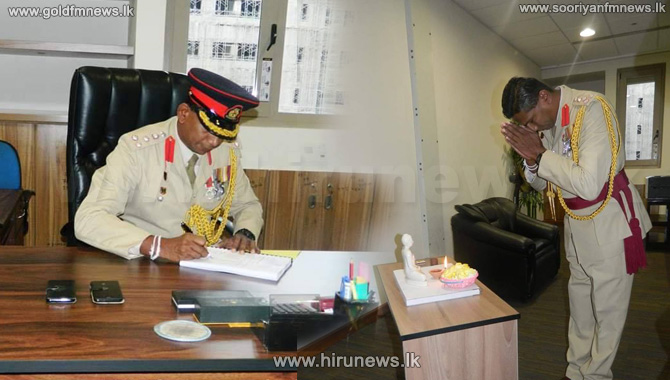
Former Defence Advisor attached to the Sri Lankan High Commission in Britain Brigadier Priyanka Fernando has been appointed to a new position at the Army Headquarters.

The army media stated that he has been appointed as the Director of land, property and housing in the army.

Earlier the Westminster Court found him guilty of making a threatening gesture during a protest held in front of the Sri Lankan High Commission in Britain by a group of LTTE sympathizers and, a fine for 2400 sterling pounds was imposed on him.

Subsequent to the said incident, Brigadier Priyanka Fernando was called back to Sri Lanka, and started working at the Ranviru Resources Centre in Wattala.

Why Gota’s new face is likeable

December 10th, 2019

Ravi Nagahawatte Courtesy Daily Mirror

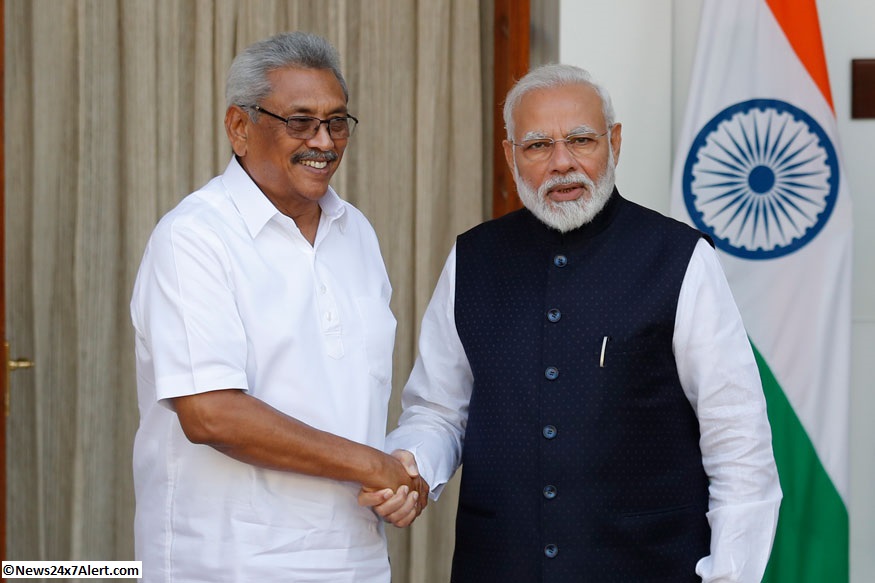
Sri Lankan President Gotabaya Rajapaksa’s Indian tour concluded on a positive note. This was despite Rajya Sabha MP Vaiko staging a protest opposing the Sri Lankan president’s visit to India. 

What’s striking about the former military man turned lawmaker is his show of calmness in the face of opposition. There is much talk about Gotabaya being a vegetarian and a Buddhist and these factors could be attributed to his composure. 

Gotabaya’s travels in and around India made him realise that there was an arm of hospitality extended to him. India being concerned about the last stages of the Sri Lankan civil war now wanting close ties with one of the island’s chief defence officials, who oversaw military operations that crushed separatist rebels, merits note. It may be that India wishes to look to the future with its neighbour, Sri Lanka, at a time when some of the European countries are hell-bent on raking war crimes that took place in the island. 

The only little issue which would not have been to Gota’s liking would have been the many cutouts and posters that decorated the streets; put up to welcome the arrival of the Sri Lankan president. 


  • It seems India wishes to look to the future with Sri Lanka at a time when some European countries are raking on war crimes
  • Gota has also set the example for the need for lawmakers to live like ordinary citizens

Back at home the Sri Lankan President has called for the complete stop of wasteful ways. He has also set the example for the need for lawmakers to live like ordinary citizens. The president used the entrance for ordinary passengers before boarding the flight to India. This culture is now catching up in the Rajapaksa clan with Basil Rajapaksa too using the entrance meant for civilians when boarding a flight to make a quick visit to USA days ago. 

Though the Indian trip for Gotabaya seemed a mere courtesy call, he was presented with opportunities to discuss matters of great importance. One such issue was the existing mafia associated with the import of western medicine to Sri Lanka. A businessman who is reported to have sought an audience with the Sri Lankan president, while in the flight, had highlighted the fact that medicine of low quality is being imported to the island nation by certain individuals whose sole intention is to make profits. The president was informed that the problem also affected the State Pharmaceutical Corporation (SPC). The Sri Lankan President had vowed to sort out the issue.

One key highlight about Gotabaya’s first few weeks as president is that he has not been ruthless and not used force; using force being a trait associated with ex-military men. He has set the trend by frist disciplining lawmakers and also allowing the country’s law to take its course. 

Brigadier Priyankara Fernando, the one-time Defence Attache of the Sri Lankan Mission to UK, was charged by a London Court for making a threatening gesture during a protest by a group of LTTE sympathisers in London. Though several monks and politicians have made comments that the Government of Sri Lanka (GoSL) shouldn’t pay the fine, the president has remained silent over the issue. This is a positive sign for all law-abiding Sri Lankan citizens. It’s important to note that the LTTE cadres who surrendered to the Army were later tried in courts before being sent to serve their jail terms. Even ruthless tiger rebels were given a fair hearing in a court before being convicted of committing crimes. This is confirmed in Thamilani Jeyakkumar’s book ‘Under the shade of sharp sword’ (The book translated into Sinhala by Swaminadan Wimal sold like hotcakes). This is not the time to let emotions  run wild. Giving the law due respect would immensely help in sending a strong message to citizens; especially when a nation that’s being rebuilt also has indisciplined lawmakers and citizens. 

In the backdrop of President Gotabaya stepping onto a path that encourages diplomacy and decency instead of force, the recent alleged white van abduction raises concerns however. But the secretive manner in which the Swiss Embassy has responded to calls by the Sri Lankan authorities for their employee to cooperate in investigations and this employee taking so long to arrive at the CID to give her statement raises suspicion as to whether the whole incident is politically motivated by a force in the opposition. 

Another sector which is still functioning smoothly despite a change in Government is the media. Many expected restrictions on the media after the presidential elections. But Gotabaya seems to think its wise to allow media institutes to enjoy the freedom to report which is anyway tied to the string called self-regulation. If Gotabaya doesn’t undermine the law like his brother Mahinda did it would strengthen the whole foundation on which the country is to be rebuilt on. 

Gotabaya needs time to settle down as a politician. Earlier in his role as Defence Secretary Gotabaya only knew of a way of making subordinates stand in attention and take orders. Now we see the first citizen of the country mingling with crowds and attempting to shatter that image which suggests he is difficult to get-along with. It may be that this is the perception people have of him and he has now moved away from that past; willingly or unwillingly. 

When NDF candidate Sajith Premadasa was defeated at the last presidential elections people thought that the country would be isolated in the international scene. But these perceptions are slowly being proved to be false with countries like India, America, Australia, Japan, China and Norway offering support and blessings to the new Government. 

Just after Gotabaya secured support from the Sri Lanka Podujana Peramuna as its elections candidate, Sri Lanka’s total market cap weighted index, the All Share Price Index (ASPI), was up 1.2% in response. Business elsewhere too is showing signs of picking up after he clinched the presidency with his ‘development talk’. It seems like this stock market friendly lawmaker would now go about extending his hand to anyone with potential to join his team whose members have been set lofty targets that have to be achieved within a very short time.   

MCC cannot erase the rights of Sri Lanka’s future generations

December 10th, 2019

MCC cannot erase the rights of Sri Lanka’s future generations 

When late Justice Amarasinghe delivered the landmark verdict in the Eppawela phosphate case in the 1990s which ironically was associated with a US & Japanese tie-up with a rail track from Anuradhapura to Trincomalee, he cited that a government was only custodians and the land and all of its resources could not be harmed and made unavailable to future generations. This judgment has set a precedence for the giving away of lands & resources and should be a solid foundation to any decision vis a vis MCC land and road project proposals. State land cannot belong to anyone outright be it Sri Lankan or Foreigners. All state land/resources that holds the inalienable sovereignty of the people must be held with the State functioning only as custodian and caretaker on behalf of future generations. 

The MCC agreement must be taken as part of the regime change that took place in January 2015 after which scores of US tie-ups and deals took place while weakening Sri Lanka via co-sponsorship of UNHRC Resolution and carrying out a campaign to vilify the 2 historical pillars that defend the nation – the armed forces & the Maha Sangha. 

Another key aspect seen in the numerous aid/grants that the former government was entering with external parties was the manner that aid/grants demanded changes to legislation BEFORE grants/aid was given. This was a highly dangerous scenario – a government or international body offers to give some money in exchange for changing Sri Lanka’s laws. Has the Government or officials thought of the repercussions of changing land laws and its impacts simply to get some money for which we will not only end up paying colossal interest but leave Sri Lanka all the weaker & without land to call our own! 

A closer look at the pre-conditions of the MCC as shown in the PowerPoint presentation by MCC in Temple Trees highlights major changes to Sri Lanka’s land laws and honoring its commitment, the Ranil Wickremasinghe Govt removed not only the barriers preventing foreigners to purchase land but also enabled foreigners to buy any amount of land in Sri Lanka. So imagine the damage this decision can do to any foreigner or foreign company handing big chunks of money and buying our land? What explanation can we give to the future generations who will be born into a country where land belongs to foreigners?

Another closer look at the MCC ‘gift horse’ amount of $480 ruse also highlights that under various pre-conditions money has already been disbursed to American firms tasked to survey Sri Lanka’s land, digitalize Sri Lanka’s land deeds, cadastral map all state land and resources – so while US claims to give us a gift from one hand it is taking back that money from the other hand and that too we have to take a loan and the loan is topped off by having to pay interest

The MCC agreement clearly states that Sri Lanka will have to bear costs in addition to the $480m if costs increase. So do we know how much of this $480m has been spent already or will get reduced from the money we have had to give US firms to do the pre-conditions set in the agreement? No, we don’t – what the new Govt should immediately do is to find out how many items have been outsourced to foreign or local firms, for how much and for how long, which are all related to this MCC project. 

Already the company tasked to digitalize Sri Lanka’s deeds having taken an X amount of $ and simply dumped some computers in the Land Ministry, are asking more millions to carry out the rest of the task. This whole agreement seems to be part of a well-planned under cover set up to enable a group of people to ground themselves in Sri Lanka, carry out some tasks for showpiece and share the money between the outsourced foreign and local companies and a small group of locals handling the project and for that we have a few lobby groups like those finding the path and those verifying the research to present that Sri Lankans are refusing some super gift horse! 

Everyone is taking decisions related to Sri Lanka’s land completely ignoring the experts knowledgeable enough to look at the MCC agreement not only from what is presented as a rich gateau but considering the repercussions, the national security dangers, the demographic dangers, the resource issues once resources fall into foreign hands and a plethora of other issues that need to be looked too in greater detail. Of course, we are all forgetting that the National Economic Council gave a detailed report addressing all above issues and recommended that Sri Lanka does not enter the MCC agreement in view of many a danger they outlined. This report must be distributed amongst all MPs and Secretaries so they can read and understand before they go making silly statements to the public. 

What must worry Sri Lanka’s policy makers

  • How many are aware that land statutes have NOT been revised by post-independence governments and some of these statutes data back to 1863 – without proper planned revision how can Sri Lanka consider handing these to MCC?
  • MCC, USAID, AUSAID, FAO foreign lawyers and their research teams are more knowledgeable about Sri Lanka’s land statutes than any of Sri Lanka’s lawyers. The Sri Lankan experts are knowledgeable but their advice are not heard or taken.
  • Why have we commenced to digitalize state land registry when the state of the building and the books has not been looked into to be on par with developed nations who are digitalizing their records. Here we have some very primitive set of records commenced in 1863 and we are suddenly declaring to digitalize simply because we are forced to achieve a higher status in the Ding Business index .
  • Yes, digitalization commenced but how feasible is the current set up when it falls into foreign hands – what if funders stop funding? What if private contractors stop work and demand more funding – presently the foreign company tasked has suddenly raised their fee from $2m to $7million with nothing done to show for the $2m given. Who is going to monitor these? Why cannot it be done by trained people  – why give to foreigners clueless about our systems. If our people lack expertise or training – why not spend money & train them. No land registries should be digitalized WITHOUT laws to manage and maintain them being implemented first. 
  • Even without the Land Bank Act being passed land details are getting converted to the land bank – who knows about this and is this happening to a plan or simply because funding has come, land registries are being digitalized as per foreign law not even according to Sri Lanka’s law. http://www.ft.lk/columns/Sri-Lanka-s-Land-Registry-will-operate-electronically-with-new-law-Bim-Saviya/4-690407
  • Of the 10million blocks of lands only 200,000 lands have been entered into the land registry since 2007. It is estimated that the process will take some 50 years! 
  • Then the MCC comes along, knows the weak areas, knows the weaknesses of the political system and says it will give a large chunk of money and demands 11 separate land registries to digitalise – have we even done proper study before agreeing to these demands or is it simply because the funds come and anything is ok knowing funding are all opportunities for a handful to split the money! 

Justice A R B Amarasinghe in his book ‘Title Insurance’ pointed the need to amend age-old colonial laws which must be changed not to suit western laws but to conform with our own history & heritage. 

Why are we not learning lessons?

In 1815 the colonial British took over our land claiming we did not have documents (Waste Land Ordinance) lands were held by the King and locals were using them as grants – there was no written documents. The British used this drawback.

2020 – Do we have documents preserved in land registries as required by law  for the next generation to claim the land? Any state land given for a term exceeding prescribed period has to have a copy in the Registrar of lands for Public inspection – this is primary evidence as given in section 62 of Evidence Ordinance. Was this done when former President Sirisena gave some 1million title deeds to farmers along the MCC marked map areas?

Digitalisation is  so far being done without proper leadership, without proper expertise, without proper planning, without looking at the dangers and repercussions and without taking adequate legal measures to protect the interests of Sri Lanka’s sovereignty, uphold Sri Lanka’s land rights. Sri Lankans utilizing state land on lease etc.. 

It is therefore suggested that the President should FIRST appoint a Land Council of eminent experts in land laws to look into the influx of land statutes and to revise the  colonial land statutes to suit modern times. 

This must be done by lawyers knowledgeable in both, natural resources experts, environmental experts etc and all land related projects,  have to go through them before being approved by any Minister. Land council should be a statutory body and all land statutes should be made not for keeping up with the Joneses and for the false pursuits of capitalism and industrialisation as required by funding organisations at the expense of agriculture and the customs of our people.  

There is MUCH to do before AGREEING to MCC and these steps must be followed first and this is good enough reason to explain to MCC as to why Sri Lanka will withhold signing of agreement.

Shenali D Waduge

The future of the UNP

December 10th, 2019

H. L. D. Mahindapala

Each time Ranil Wickremesinghe is faced with a threat to his leadership he comes up with a band aid solution which either postpones his day of reckoning, and / or worsens the situation for the Party, creating internal chaos and bringing it down in the eyes of the people. The latest attempt to solve the power struggle within the UNP is to divide the leadership into two compartments : 1 the Leader of the Opposition whose role is confined to the limited area of the Parliament and 2. the Leader of the Party with overriding powers to control the affairs of the Party. This has only postponed the date of the impeding removal of him from the leadership. It has not solved the internal power struggle. In fact, it has forced the Sajith to come out fighting more  fiercely than before. Perpetuating the chaos within the Party – a common tactic of Ranil — is not what the Party needs at a time when it is facing another defeat in the coming Parliamentary elections.

Clearly, splitting the leadership at the top has neither appeased the second tier rebelling against him.  Nor has it inspired the electorate to follow Ranil as the alternative leader of the nation. It is a useless exercise that will neither solve the problem for him nor the Party to rise from the pit into which it has fallen. Of the two divisions it is obvious that the Leader of the Party has a greater clout than the Leader of the Opposition. As Leader of the Party Ranil Wickremesinghe will have the full control of the Party organisation throughout the Island on all issues at all times. Whereas, as the Leader of the Opposition Sajith Premadasa can only walk in the corridors of Parliament (which is not sitting now) with a name board round his neck. The managing and directing of all party politics impacting on the nation and, consequently within the Parliament, will reside in the hands of Ranil who is the Leader of the Party.

Even the Speaker will be dealing with the Party leaders in settling affairs of the Parliament. In the current state of play a nominal role will be allotted to the Leader of the Opposition, if at all. The policies, programs, directions and political alliances at the national level at all times will be with the Leader of the Party and not in the hands of part time Leader of the Opposition who has no significant  role to play now that the Parliament is not sitting. Even when Parliament resumes its sittings after January 3 Sajith will be jobless because it is due to dissolved to make way for next election. So Sajith is back to square one: an empty title with no role to play.  The trump card is still with Ranil who commands a majority in the Working Committee – the key instrumentality which has been manipulated by him solely to serve his survival. It is questionable as to whether Sajith will even have the full control of the Parliamentary group to run the opposition according to his will as Ranil is bound to manipulate the MPs to dance to this tune. 

All this reflects the utter chaos in which the UNP is struggling to survive as a credible party in the eyes of the nation. Can a divided party win the confidence of the people? This also raises a critical question: if the UNP can’t manage its own internal affairs how can it manage the affairs of the nation? It is clear that the division within the Party is deep-seated with the pro-Sajith ranks presenting formidable opposition to Ranil. They are ready to take on Ranil at every level. But as things stand now, Sajith will have to twiddle his fingers and hang around doing nothing as the Parliament is prorogued. Ranil still has the whip hand to determine the critical issues of the Party. Not that he is going to revamp the Party and make it a dynamic force to contest the coming election. At this late stage he is doomed. He has no vision, no formula or strategy to recover. Whatever he does now, it will result only in the Party losing again to the overwhelming forces that triumphed in the Presidential election.

The future of the Party depends on democratising the Party. And this can begin only with the removal of Ranil from the leadership.  It is his leadership that has dragged the UNP and the nation to the prevailing depths of despair. He is ensconced in power because the UNP constitution has empowered the Leader of the Party with dictatorial authority. Together, Ranil and the UNP constitution negate the possibilities of the Party gaining maximum internal democracy. The Ruwan Wijewardene report that inquired into reforms of the UNP had recommended the democratisation of the constitution as a prime necessity. But Ranil, after paying lip service, undercut any meaningful changes. The constitution and the packing of the Working Committee with his  yes-men have given him the necessary powers to move his pawns on the chess board.

In other words, Ranil still has the power to move Sajith from place to place without giving him the power he needs to make a difference. Sajith has been moved from Deputy Leader to Presidential candidate and now to Leader of the Opposition. Ranil has been playing snakes and ladders with Sajith. Ranil is bent more on pulling Sajith down than sending him up the ladder. The latest move is to turn Sajith into another Rajavarothiam Sampanthan – a ceremonial figure head who would be the best prop for him to retain his power inside and outside the Parliament. In any case, there is no Parliament for Sajith to play any significant role. The only role left for Sajith is to play that of the Leader of the Opposition to Ranil!

The attempt to kick Sajith into an empty chair upstairs is nothing but a cosmetic exercise with no substantial change in the power structure for the Leader of the Opposition to make meaningful changes to create a new image of the party to win back the voters who had deserted the Party in droves. What the UNP need is a radical change of politics, policies and personalities. What the UNP has got is the same old same old leadership of Ranil – a change doomed to fail. .

The so-called reform of appointing Sajith as the Leader of the Opposition is not to promote him but to save Ranil’s skin.  Each time recommendations were made for the reforming of the Party Ranil has been sweeping any change that threatens his dictatorial grip on the Party under the carpet. Furthermore, no other party has appointed committees as the UNP to report on the necessary reforms. Starting from the Panditharatne report to the most recent Ruwan Wijewardena’s report the UNP has been warned of the changes needed to make itself relevant to the contemporary electorate.  The Wijewardene report has been the best so far.

Ranil had the necessary blue print to adjust the direction of the Party in the Ruwan Wijewardene’s report which drew attention to the need of (a) creating a second tier leadership  giving more  authority to the  young (b) democratising the party by whittling down the  executive powers of Ranil who was  running it like a one-man dictatorship (c) make provision for the election of a  leader (d) moving the party closer to the grass root base (c) adjusting the party to meet the historical aspirations of the Sinhala-Buddhist base etc. Ranil made big noises about it in the media but the status quo remained unchanged. Ranil who spends all his energy on handing over the powers of the nation to the Tamil separatists, or whittling  down the powers of the Presidency to make his Premier’s seat the center of state power, never moved a finger to devolve his powers to his own party men.  He doesn’t trust his own party men but he has implicit faith in making Sampanthan the Leader of the Opposition with 16 votes in a House of 225, violating all known principles of parliamentary democracy.

But as usual Ranil never took the necessary steps to implement the report. The changes, if any, have been mere optics and theatrics to appease the forces threatening him. He would craftily offer changes (like appointing Sajith as the Leader of Opposition) not to revamp the Party but to get his rivals out of his way to consolidate his position as the sole leader of the party.

Had Ranil implemented the Ruwan’s report there was a possibility (though remote) of avoiding the crash of November 16. There are, of course, several reasons that led to the crash of November 16. But the primary cause was undoubtedly Ranil. If the UNP won he would have crowed that it was his leadership and his political alliances with the minority parties that led to the victory.  Now that the UNP has lost he must take full responsibility for its failure – for the 30th time!

The current reformists, however, must not fall for the belief that removing Ranil will solve their problems. They have to go deeper than that. They must root out the policies and programs of Ranil that alienated the Sinhala-Buddhist base. When 70% of the Sinhala population reject the UNP then it is time for the new guard to revisit the policies and the programs pursued by Ranil-Mangala gang. If Ranil inflicted the wounds on the Sinhala-Buddhist body politic then Mangala rushed in and rubbed salt into it.

The first prophetic UNP pioneer who realised the destabilising role of Ranil and its destructive impact on the Party was Bodhi J. Ranasinghe. He was a party loyalist but like all loyalists he moved away from Ranil realising that he was not the man who could save the party or the nation. The seminal rebellious group of UNPers gathered round him and he gave the necessary quantum of oxygen to the disillusioned UNP youth. Bodhi invested his hopes in Sajith, having been a committed loyalist of his father, President Premadasa.    Like all those who followed Ranil initially, Bodhi realised that Ranil’s power to repel is far greater than his power to attract. A common complaint of all Ranil loyalists is that he is never loyal to them. He either casts them out or keeps them at arms’ length. Bodhi too was a victim of Ranil’s karapincha treatment.  Sadly, Bodhi’s untimely death dispersed the UNP youth who gathered round him.

 Ruwan’s report got the same treatment of all other reports presented to Ranil: it was locked up inside the nearest drawer, unread, untouched and unwanted.  Ranil will not touch anything that threatens his supremacy. His latest move to appoint Sajith as the Leader of the Opposition is only a bone thrown to keep the barking dogs quiet. He thinks he can deceive the young Turks again with false hopes and promises. But their thinking is that they have come as close as they can to overthrow the old guard represented by Ranil.  Harin argues that the rebels had won every battle they had fought so far and there is no reason why they can’t deliver the final coup de grace. They are exasperated and impatient having come to the end of the tether. They are right: there is no point in following a leader that can’t win.  After losing 30 elections under Ranil can they hope to win the next critical Parliamentary elections with a born loser? Nor can they be happy with Sajith playing the second fiddle?

Though Ranil is playing his own games to survive in the leadership Sajith, in a sense, has been inching his way like the camel in the Arab’s tent. Sajith still has some distance to go to oust the Arab and capture the tent. He has been drifting more horizontally than vertically. He has been going across the chess board from Deputy Leadership to Presidential candidate and from there to the Leader of the Opposition. Despite these advances he is still not in command of the Party to determine the fundamental policies and run the party under his leadership. In Parliament he will have space only to act as the peon who will deliver the policies dictated by Ranil.

In any case, Sajith has nothing to do now because Parliament has been prorogued till January 3. Ranil loses nothing by making Sajith the leader of the Opposition as there is no Parliament for Sajith to act. Ranil, of course, has merely postponed his day of departure. But he should know that his days are numbered. The seething anger rising within the lower layers of the Party indicate that the power struggle within the Party has not ended. The young Turks are hanging over his head like the Sword of Damocles.

Ravi Karunanayake argues that for the sake of unity they have to keep Ranil as the leader. But can the UNP win the coming Parliamentary election under Ranil? What the UNP needs is a leader who can lead them to victory. November 16 proved once again that Ranil is not a vote-winning candidate. What the UNP need is a radical change – a change in policies, personalities and the failed politics. In short, it means throwing Ranil out because he has nothing new to offer the party or the Party

EDUCATION REFORMS ESSENTIAL TO SRI LANKA (PART 1a) A HORIZONTAL DISTRIBUTION MODEL

December 10th, 2019

BY EDWARD THEOPHILUS

During the presidential election 2019, many candidates and people publicly talked about education reforms.  Except for Mr. Gotabaya Rajapaksa, other candidates and public have not expressed clear views on this subject and reluctant to talk about what kind of reforms need to Sri Lanka. Education is a broader subject area that involves in ocean of topics, views, and ideas. Although education is working as a right of people political platforms in presidential election presented an idea that education should be inserted to the constitution as a human right. There is no doubt that education has been working as a right and an essential role in human life since the beginning of first human to this world. It is quite difficult to identify what are essential reforms to the country as the dynamism and changes in society force to focus on the requirements of education and training in distinct areas. I have broadly written about this subject area based on experience in developed and developing countries.  Education is a policy matter as well as practical application and, the ability to successfully implementing reforms countrywide would be buttressed the success.

Since the beginning of the education policy of Mr.C.W.W. Kannangara during the era of the State Council, education reforms have been a subject of talking and some attractive policy actions have been successfully implemented in the country while talking was going on among limited interested people, the main reason for current urgency may have been contributed by politics and economic predicaments faced by majority of the country.  Without understanding the purposes or the way reforms should be implemented in the country, education reforms might not be successfully achieved. On the other hand, educational reforms would not be successful if policymakers don’t clearly understand the quantum and the approach they needed to make as well as limits in the country to launch reforms successfully. Many people of the country talk on education reforms with individual interest or with self-centered attitudes such as a finding job or gaining the opportunity to go overseas or providing opportunities for own group of community.  These are the completely self-centered focus.

Education reforms should be beyond self-centred attitudes and they must be firm actions with a national focus providing broader benefits to different people in the social structure and the reforms shall involve in capacious objectives consistent to international experience, which align on different focus based on technological innovations and timely human needs.  The other important point is that education reforms are continuing process beyond the election promises.  Election promises are concerned with short term interest and education reforms go beyond the short-term requirements.

Before initiating education reforms, policymakers, as well as the public who supposed to gain benefits from reforms need to understand fundamental economic issues and limits of the country. The status of the economy at present indicates that upliftment and the forward movement of economy would be depended on the timely educational reforms. Economic issues in Sri Lanka associated with macroeconomic factors and the management of public and private enterprises and service firms concern with microeconomic considerations.  Education reforms in Sri Lanka should go along with economic reforms, which essentially need to reform the existing education system.  In addition to economic issues and status, education reforms need to consider other important areas such as value education, which included anti-discrimination and equality of citizens, and elimination of mythical attitudes of people, which are hindrances to development and growth. They are factors involved in the development of human quality of the country.  Although religions are operating in the country for centuries human quality has not been improved in the process and the result of this situation is less quality and demand for human capital of the country.  The other vital area is key knowledge and skills development in relation to environment, health and communication in students in all context of education.  This is a significant issue that should be especially considered by the reforming policy process.

Essential economic reforms might be a considerable temperament to public in the short-run and it appeared in Western countries after the cold war, and Western countries and Communist countries understood the essence of reforms and they successfully dealt with human temperaments and implemented reforms tackling with many problems such as unemployment, workplace reforms and multi-skills requirement  against reforms to maintain the economies pushing to an upward trend. Now the most important economic reforms are policy corrections and deviation policy focus while inventing new policies for the future. 

People of Sri Lanka have many expectations, which may not be achieved quickly within the expected time framework as Sri Lanka has many limits or impediments to growth. No country can achieve social and economic expectations overnight through reform process. Positive results from education reforms could be achieved only in medium term. 

The limits of education reforms are associated with many factors, which are beyond economic considerations and they are involved in social, cultural, legal, religious and international relation related factors.

Traditional society in history had not regulations, and impediments limited, but in modern society have many regulations and impediments which are difficult to defeat by an independent country like Sri Lanka. Sometimes Sri Lanka needs to work with other countries.  Economically, countries in the modern world are in a competitive circle and Sri Lanka cannot work alone ignoring the factors limit to growth.

Generally, education reforms concern with contextual education, curriculum development and management, education administration, teachers’ and trainers’ development (teacher education and training), policy initiating and review of current policy framework and remedial management of policy consistent to dynamism of the world.  These are quite difficult activities that are involved in massive costs and quality human services.  Therefore, the capacity of the economy spending money for these activities is the key point for the success of education reforms. In the meantime, these reforms would generate massive employment and sometimes job losses and diverting jobs one area to others should be a part of reforms.  Finally, education reforms would be highly advantaged to the country despite the cost involved in and the productivity generate from reforms will outweigh the any cost.

International structure or acceptance for a million of population (as a Model), it must include one university for higher education and research in a variety of fields, at least two technical colleges for each five hundred thousand population for technical vocational education and training for current staff in workplaces and newcomers, five high schools for secondary context, ten or more schools for primary education context and twenty or more for early childhood contexts, and in addition, there may be several colleges to absorb dropouts in all contexts focusing on different level of contextual education.  The general structure of education must be organized according to this basic principle and requirements and there may be more educational institutions with private investments with a greater supervision and review of the government.  This basic structure is highly expensive and lots of economic, social, cultural and religious issues involved in the situation and the nature of organizations. When education reforms consider this basic requirement, it is needed to eliminate divisions such as religious, language and any other differences, which might hindrance to providing equal education opportunities for people.  As Sri Lanka consist of 24 million population the country needs to consider to implement the structure without any difference based on population. It is a horizontal expansion of education, which eliminate current vertical expansion to giving priority for urban areas. Horizontal provision of education bring justice and opportunities for rural community and the current competition for popular schools, colleges and schools will be exterminated by a horizontal model. 

When population changes the structure would be changed in the future and the general assumption is to implement the structure as a government investment, but investments for education and training could be contributed by Non- Government and private investors, especially religious organizations could participate with qualitative and strict government supervision. The provision of education should be free, but according to the affordability of parent and it needs to insist fee-based education provision on individual cases and parents under the new model would be saved a large sum of spending in the current system as private tuition spending and many others will be eliminated by new structural reforms. The structure will give a dignity to all students with any difference. In terms of the structure, Sri Lanka needs many universities and technical colleges to provide good and quality education and training in relation to different fields. The current available infrastructure and facilities would help to successfully build the proposed structure.

The economy of the country should be expanded to absorb more than 85% of graduates and there is no harm 10% to 15% going overseas in terms of democratic freedom.  Sri Lanka should not be a free education and training place for attracting labour for developed countries.  If the economy of Sri Lanka is prosperous educated citizens and professionals will not migrate overseas to offer hard labour to developed countries. It entirely depends on the preference of individual and the government has no responsibility for them unless they subject to discrimination in overseas.  This situation can be seen in all developed countries and the government may impose various regulations considering the requirements.  The government is not directly responsible for individual cases; however, the operation of international relations would force the government to intervene case by case.

Within this basic structure, the other essential reform is to change current attitudes of people on good schools or bad school feeling and the elimination of such feeling would be depended on the improvement of quality of education for kids providing equal knowledge and skills from whichever school studied without a difference in rural or urban. This should be a key aspect of education reforms.  The government can promote private investment through incentives for investors and eliminate various expensive competitive exams such as scholarship exams and private tuitions, which will not necessary under the reforms. The new structure allows for each student to attend university or technical education, in other words, it is possible every student to gain tertiary education.

With the structural reform’s curriculum reforms, which is a broader aspect that eliminates unnecessarily aligning too many students to certain area of education such as science, commerce, and arts.  Many Western countries allow students to learn arts, science, and commerce together and some times to select other pathways in health, engineering, agriculture, services, sports, and many other areas. Curriculum reforms would direct to solve current major problems and it needs including value education.  Sri Lanka has many religions but followers are not consistent with the policies of religions. It seems that religion has become a symbol and religion is not working in homes or workplaces or society.  In this situation, curriculum reforms need focusing to offer value education in all educational contexts.  In Western countries, value education is key in practical knowledge and application.  For example, care and compassion are vital values that mean care for self and others.  In any education context, safety is a value, which broadly applies to any subject area and when value education included, the behavioral pattern of students dramatically changed and the quality of knowledge and skills improve with a higher demand for knowledge and skills. Part two of this article focus on reforms related to curriculum and teaching.  

Swiss Embassy staffer leaves CID after giving a statement for 5 1/2 hours

December 9th, 2019

Hiru News

Swiss Embassy staffer leaves CID after giving a statement for 5 1/2 hours.

SWISS EMBASSY STAFFER REPORTS TO CID TODAY AS WELL

December 9th, 2019

Hiru News

The allegedly abducted locally recruited Swiss Embassy staffer Garnia Banister Francis reported to the CID for the second day today

Earlier, she was produced before the Colombo Judicial Medical Officer for a medical test.

SWISS+EMBASSY+STAFFER+REPORTS+TO+CID+TODAY+AS+WELL

The staffer was produced before the Colombo Chief magistrate Lanka Jayarathna today.

Garnia Banister Francis reported to the CID yesterday, 14 days after the alleged incident following a court order issued on her to do so.

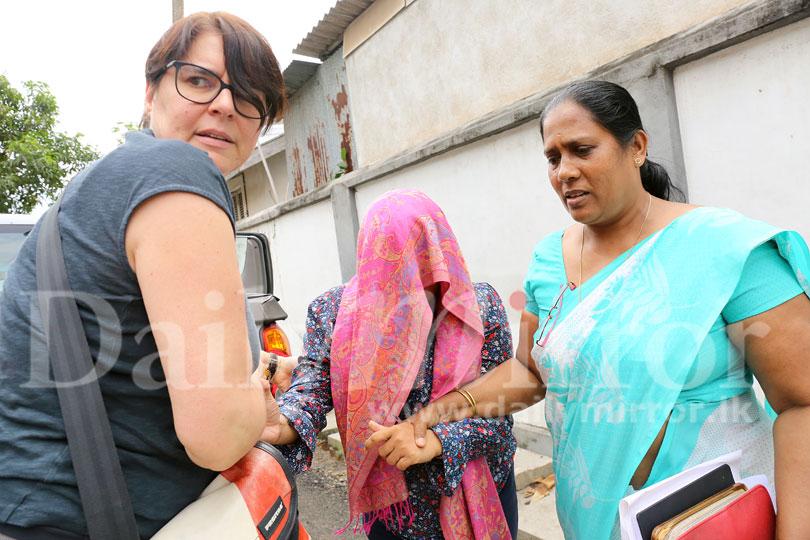
It was seen that an individual was covering her face while being escorted to the CID.

Meanwhile, the CID told the court that it recorded a statement from the particular woman yesterday and another statement was to be recorded today as well.

At the same time, the lawyer appearing for the allegedly abducted embassy staffer Upul Kumarapperuma said that local and foreign doctors attached to the Swiss Embassy have inspected his client after the incident.

He said according to the two doctors, his client was assaulted and was subjected to sexual harassment.

Later, the CID told the court that a report from the Colombo Judicial Medical officer was delayed as the staffer rejected to appear before a male doctor.

Responding to the lawyer of the embassy staffer the Magistrate stated that she cannot issue any order to produce his client before a female medical officer as the practice is to test such a victim by a doctor attached to the judicial medical unit.

However, the CID further said that it has made arrangements to produce the staffer before a female doctor for a medical test.

At the same time, the magistrate also ordered to provide another report of the mental condition of the Swiss embassy staffer

In addition, the magistrate extended the overseas travel ban on the embassy staffer

Meanwhile, when the Swiss Embassy staffer visited the CID yesterday, a self introduced agent of the Embassy staffer, Manjula Perera said that the Embassy staffer would issue a statement to the media today.

Manjula Perera invited the media to participate in the event to be held at an address on Barnes Place, Colombo.

Accordingly, media personnel visited the given address but neither the embassy staffer nor her agent were present there.

Later, the media personnel have shown the security guard at the place, the video on which the particular agent announced the scheduled event today

At that point, the security guard had identified the man and told journalists that neither that agent nor the embassy staffer had visited the house for the last few days.

Meanwhile, the self-imposed agent of the Swiss embassy staffer Manjula Perera has driven to the CID in a motor car registered under CAF-0165.

Our news team discovered that the vehicle is registered in an address on No.78/2, Devala Road, Makola North, Makola.

ස්විට්සර්ලන්ත තානාපති කාර්යාල නිලධාරිනිය ගැන අදත් විවිධ අදහස්

December 9th, 2019

Hiru News

ස්විට්සර්ලන්ත තානාපති කාර්යාල නිලධාරිනිය අපරාධ පරීක්ෂණ දෙපාර්තමේන්තුවට පැමිණ ප්‍රකාශයක් ලබා දීම සම්බන්ධයෙන් පක්ෂ විපක්ෂ දේශපාලනඥයන් සහ පූජ්‍ය පක්ෂය මෙලෙස අදහස් පල කළා

ස්විස් තානාපති කාර්යාලයේ නිලධාරිනිය පැය පහකට පසු පිටව යයි

December 9th, 2019

Hiru News

පැහැරගෙන යාමේ චෝදනාවට ලක්වූ බව කියන ස්විට්සර්ලන්ත තානාපති කාර්යාලයේ ගානියා බැනිස්ටර් ෆ්‍රැන්සිස් පැය පහමාරක කාලයක් ප්‍රකාශයක් ලබා දීමෙන් පසු රහස් පොලිසියෙන් පිටව ගොස් තිබෙනවා

ස්විස් තානාපති නිලධාරිනිය, අදත් රහස් පොලීසියට

December 9th, 2019

Hiru News

%E0%B7%83%E0%B7%8A%E0%B7%80%E0%B7%92%E0%B7%83%E0%B7%8A+%E0%B6%AD%E0%B7%8F%E0%B6%B1%E0%B7%8F%E0%B6%B4%E0%B6%AD%E0%B7%92+%E0%B6%B1%E0%B7%92%E0%B6%BD%E0%B6%B0%E0%B7%8F%E0%B6%BB%E0%B7%92%E0%B6%B1%E0%B7%92%E0%B6%BA%2C+%E0%B6%85%E0%B6%AF%E0%B6%AD%E0%B7%8A+%E0%B6%BB%E0%B7%84%E0%B7%83%E0%B7%8A+%E0%B6%B4%E0%B7%9C%E0%B6%BD%E0%B7%93%E0%B7%83%E0%B7%92%E0%B6%BA%E0%B6%A7

පැහැර ගැනීමට ලක්වූ බව කියන මෙරට ස්විස්ටර්ලන්ත තානාපති කාර්යාලයට දේශීය  නිලධාරිනියක වන ගානියා බැනිස්ටර් ෆ්‍රැන්සිස් අද දෙවන දිනටත් අපරාධ පරීක්ෂණ දෙපාර්තමේන්තුව හමුවේ පෙනී සිට ප්‍රකාශ ලබා දුන්නා.

ඊට පෙර ඇය කොළඹ අධිකරණ වෛද්‍ය නිලධාරිවරයා හමුවට ද ඉදිරිපත් කළ බවයි හිරු වාර්තාකරු සඳහන් කළේ.

මේ අතර, ස්විස්ටර්ලන්ත තානාපති කාර්යාලයේ අදාළ නිලධාරිනිය අධිකරණයේ අවසරයකින් තොරව විදෙස් ගත වීම තහනම් කරමින් පනවා තිබූ නියෝගය ලබන බ්‍රහස්පතින්දා දක්වා දීර්ඝ කිරීමට කොළඹ ප්‍රධාන මහේස්ත්‍රාත් ලංකා ජයරත්න අද නියෝග කළා.

ඒ, එම සිදුවීම සම්බන්ධයෙන් සිදුකෙරෙන විමර්ශන පිළිබඳව අපරාධ පරීක්ෂණ දෙපාර්තමේන්තුව අද අධිකරණයේ කරුණු දැක්වූ අවස්ථාවේදීයි.

කිසියම් පිරිසක් විසින් පැහැර ගැණුනු බව කියන ස්විස්ටර්ලන්ත තානාපති කාර්යාලයේ දේශීයව බඳවා ගත් කාර්ය මණ්ඩල සාමාජිකාවක් වන ගානියා බැනිස්ට ෆ්‍රැන්සිස් නම් කාන්තාව සිද්ධියෙන් දින 14 කට පසු ප්‍රථම වරට අපරාධ පරීක්ෂණ දෙපාර්තමේන්තුව හමුවේ ඊයේ පෙනී සිටියා.

එ අදාළ සිදුවීම සම්බන්ධයෙන් අද දිනට පෙර එහි පෙනී සිට ප්‍රකාශයක් ලබා දෙන ලෙස කොළඹ ප්‍රධාන මහේස්ත්‍රාත්වරිය ලබාදී තිබූ නියෝගයකට අනුවයි.

එ අනුව, ඊයේ පස්වරු 2.30ට පමණ ස්විස්ටර්ලන්ත තානාපති කාර්යාලයේ නිලධාරින් පිරිසක් සමඟ පැහැර ගැණුනා යැයි පවසන තැනැත්තිය අපරාධ පරීක්ෂණ දෙපාර්තමේන්තුව හමුවට පැමිණ තිබූ අතර, එහිදී අනන්‍යතාවය තහවුරු කර ගත නොහැකි ආකාරයෙන් මුහුණු ආවරණය කර ගත් පුද්ගලයෙකු එම දෙපාර්තමේන්තුව තුළට කැටුව යන ආකාරයක් ද දක්නට ලැබුණා

කෙසේ වෙතත්, පැය 5 ක පමණ කාලයක් ප්‍රකාශ ලබාදීමෙන් අනතුරුව අදාළ නිලධාරිනිය අපරාධ පරීක්ෂණ දෙපාර්තමේන්තුවෙන් පිටව ගොස් තිබුණා.

මේ අතර, එම පැමිණිල්ල කොළඹ ප්‍රධාන මහේස්ත්‍රාත් ලංකා ජයරත්න හමුවේ අද යළි කැඳවනු ලැබුවා.

එහිදී අපරාධ පරික්ෂණ දෙපාර්තමේන්තුව වෙනුවෙන් කරුණු දක්වමින් සහකාර පොලිස් අධිකාරි ඉන්දික ලොකුහෙට්ටි සහ ප්‍රධාන පොලිස් පරීක්ෂක රංජිත් මුණසිංහ සඳහන් කළේ අධිකරණ නියෝගයට අනුව, ප්‍රකාශයක් ලබාදීම සඳහා අදාළ නිලධාරිනිය ඊයේ පස්වරු 2.20ට පමණ තම දෙපාර්තමේන්තුව වෙත පැමිණි බවයි.

කෙසේ වෙතත්, ඊයේ දින ඇයගෙන් මූලික ප්‍රකාශ සටහන් කර ගැනීම ආරම්භ කරනු ලැබුව ද, එය අවසන් කිරීමට කාලය ප්‍රමාණවත් නොවූ බව ද අපරාධ පරීක්ෂණ දෙපාර්තමේන්තුව අධිකරණයට දැනුම් දුන්නා.

මෙහිදී පැහැර ගැනීමට ලක්වූවායැයි පැවසෙන නිලධාරිනිය වෙනුවෙන් පෙනී සිටි නීතිඥ උපුල් කුමාරප්පෙරුම සඳහන් කළේ ඇයගෙන් අපරාධ පරීක්ෂණ දෙපාර්තමේන්තුවේදී ප්‍රකාශ ලබා ගන්නේ ද වෙනත් ස්ථානයකදී ප්‍රකාශ ලබා ගන්නේ ද යන්න තම පාර්ශවයට දැනුම්දීම ප්‍රමාද වූ බවයි.

එ සම්බන්ධයෙන් ස්විස්ටර්ලන්ත තානාපති කාර්යාලය, විදේශ කටයුතු අමාත්‍යාංශය සහ පොලීසිය අතර පසුගිය සතිය පුරා සාකච්ඡා පැවති බව ද අවසානයේ ඊයේ පෙරවරු 11 ට පමණ අපරාධ පරීක්ෂණ දෙපාර්තමේන්තුවේදී ප්‍රකාශ ලබා ගත හැකි බව දැනුම් දුන් බව ද නීතිඥවරයා අධිකරණයේදී සඳහන් කළා.

පැහැර ගැනීමට ලක්වූ තම සේවාදායිකාව ස්විස්ටර්ලන්ත තානාපති කාර්යාලයට සම්බන්ධ විදේශීය සහ දේශීය වෛද්‍යවරුන් දෙදෙනෙකු විසින් පරීක්ෂාවට භාජනය කර වාර්තාවන් ලබා ගෙන ඇති බවත්, එ ඔස්සේ පැහැර ගැනීමෙන් පසු ඇය පහරදීම්වලට සහ ලිංගික අපයෝජනයට ලක්වී ඇති බව අනාවරණ වී ඇති බවයි නීතිඥවරයා වැඩිදුරටත් ප්‍රකාශ කළේ.

මෙහිදී කොළඹ ප්‍රධාන මහේස්ත්‍රාත් ලංකා ජයරත්න ප්‍රශ්න කළේ එම නිලධාරිනිය අධිකරණ වෛද්‍ය නිලධාරියෙක් හමුවට ඉදිරිපත් කර වාර්තාවක් ලබා ගත්තේ ද යන්නයි.

එයට පිළිතුරු ලබාදෙමින් අපරාධ පරීක්ෂණ දෙපාර්තමේන්තුවේ නිලධාරින් සඳහන් කළේ ඇය ඊයේ දින එම දෙපාර්තමේන්තුවට පැමිණීමෙන් පසු කොළඹ අධිකරණ වෛද්‍ය නිලධාරියා හමුවට ඉදිරිපත් කළ ද ඇය පිරිමි වෛද්‍යවරයෙකු හමුවේ කායික පරීක්ෂණයකට භාජනය වීමට අකමැත්ත ප්‍රකාශ කළ බවයි.

එ හේතුවෙන් ඊයේ දින එම පරීක්ෂණය සිදුකිරීමට නොහැකි වූ බව ද අපරාධ පරීක්ෂණ දෙපාර්තමේන්තුව අධිකරණයට කරුණු දක්වමින් ප්‍රකාශ කළා.

තම සේවාදායිකාව කායික වෛද්‍ය පරීක්ෂණයකට පිරිමි වෛද්‍යවරයෙකු ඉදිරියේ පෙනී සිටීමට අකමැති බැවින් ඇයගේ ඉල්ලීම සලකා බලා කාන්තා වෛද්‍යවරියක් ඉදිරියේ ඇයට අධිකරණ වෛද්‍ය පරීක්ෂණයකට පෙනී සිටීමට හැකිවන ලෙස නියෝගයක් නිකුත් කරන්නැයි නීතිඥ උපුල් කුමාරප්පෙරුම අධිකරණයෙන් ඉල්ලා සිටියා.

එම ඉල්ලීම සම්බන්ධයෙන් අවධානය යොමුකළ ප්‍රධාන මහේස්ත්‍රාත්වරිය ප්‍රකාශ කළේ සාමාන්‍ය ක්‍රියා පටිපාටිය තුළ ස්ත්‍රී දූෂණ සම්බන්ධයෙන් වෛද්‍ය පරීක්ෂණ සිදුකරනු ලබන්නේ අධිකරණ වෛද්‍ය කාර්යාලයේ සිටින පිරිමි වෛද්‍යවරුන් බැවින් එවැනි නියෝග නිකුත් කිරීමට තමන්ට හැකියාවක් නොමැති බවයි.

කෙසේ වෙතත්, ඊයේ දින ලබා ගන්නා ලද ප්‍රකාශයේ ඉතිරි කොටස සම්පූර්ණ කිරීම සඳහා එම තැනැත්තියට අද දිනද, අපරාධ පරීක්ෂණ දෙපාර්තමේන්තුව හමුවේ පෙනී සිටින ලෙස දැනුම්දී ඇති බවයි විමර්ශන නිලධාරින් අධිකරණයට කරුණු වාර්තා කළේ.

එලෙස පැමිණි අවස්ථාවේ ඇය වෛද්‍ය පරීක්ෂණයක් සඳහා කාන්තා වෛද්‍යවරියක් හමුවට ඉදිරිපත් කිරීමට කටයුතු සූදානම් කර ඇති බව ද, අපරාධ පරීක්ෂණ දෙපාර්තමේන්තුව එහිදී දැනුම් දුන්නා.

මෙහිදී අපරාධ පරීක්ෂණ දෙපාර්තමේන්තුව වෙනුවෙන් පෙනී සිටි රජයේ ජ්‍යෙෂ්ඨ අධිනීතිඥවරයා අධිකරණය හමුවේ සඳහන් කළේ පැහැර ගැණුනේ යැයි සැලකෙන එම තැනැත්තිය යහපත් මානසික මට්ටමක පසු නොවන බව මින් පෙර විත්ති පාර්ශවයේ නීතිඥයින් අධිකරණයේදී කරුණු දක්වා ඇති බැවින් ඇය මානසික වෛද්‍ය මඩුල්ලක් හමුවට යොමුකර වාර්තාවක් කැඳවිය යුතු බවයි.

එහිදී තානාපති කාර්යාල නිලධාරිනිය වෙනුවෙන් පෙනී සිටි නීතිඥවරයා අධිකරණය හමුවේ සඳහන් කළේ තම සේවාදායිකාව ප්‍රකාශයක් ලබාදීමට සුදුසු මානසික මට්ටමක මේ වනවිට පසුවන බවයි.

එම කරුණු සලකා බැලූ කොළඹ ප්‍රධාන මහේස්ත්‍රාත් ලංකා ජයරත්න එම නිළධාරිනිය කිසියම් පහරදීමකට හෝ ලිංගික අපයෝජනයකට ලක්ව ඇත්ද යන්නත් මෙම අවස්ථාවේ ඇය කිසියම් මානසික පීඩනයකින් පසුවන්නේ ද යන්නත් පරීක්ෂා කර, වාර්තා කරන ලෙස අධිකරණ වෛද්‍ය නිලධාරින්ට නියෝග කළා.

එම නිලධාරිනිය වෙනුවෙන් පෙනී සිටි නීතිඥවරුන් අධිකරණය විසින් තම සේවාදායිකාවට පනවා ඇති විදෙස් ගමන් තහනම හැකි ඉක්මනින් ඉවත් කර ගැනීමට අවශ්‍ය බව මහේස්ත්‍රාත්වරියට දැනුම් දුන්නා.

එම ඉල්ලීමට පිළිතුරු ලබාදෙමින් ප්‍රධාන මහේස්ත්‍රාත්වරිය සඳහන් කළේ මෙම සිදුවීම සම්බන්ධයෙන් එම තැනැත්තියගේ මූලික ප්‍රකාශ සටහන් කර ගැනීම හෝ මෙතෙක් අවසන් වී නොමැති බැවින් ඇයගේ විදෙස් ගමන් තහනම ඉවත් කිරීම තුළ සමස්ත විමර්ශන ක්‍රියාවලියටම බලපෑම් එල්ල විය හැකි බවයි

එබැවින් එම විදෙස් ගමන් තහනම ඉවත් කිරීම පිළිබඳ මූලික ප්‍රකාශ සටහන් කර ගැනීමෙන් පසු එම ඉල්ලීම සලකා බැලිය හැකි බව සඳහන් කළ ප්‍රධාන මහේස්ත්‍රාත්වරිය අද දිනය දක්වා පනවා තිබූ විදෙස් ගමන් තහනම ලබන 12 වනදා දක්වා දීර්ඝ කිරීමට නියෝග කළා.

මේ අතර, ස්විට්සර්ලන්ත තානාපති කාර්යාල නිලධාරිනිය ඊයේ අපරාධ පරීක්ෂණ දෙපාර්තමේන්තුවට පැමිණි අවස්ථාවේදී ඇයගේ නියෝජිතයෙකු බව පැවසූ මංජුල පෙරේරා නැමැත්තා සඳහන් කළේ අදාළ නිලධාරිනිය අද මාධ්‍ය වෙත ප්‍රකාශයක් නිකුත් කරන බවයි.

බාන්ස් පෙදෙසේ ලිපිනයක් ද සදහන් කළ ඔහු එම අවස්ථාවට පැමිණෙන ලෙස එහි සිටි මාධ්‍යවේදීන්ට ආරාධනාවක් ද සිදුකළා.

ඒ අනුව මාධ්‍යවේදීන් අද උදෑසන ඔහු පැවසූ ලිපිනය සඳහන් නිවසට ගිය ද එහි අදාළ තානාපති කාර්යාල නිලධාරිනිය හෝ ඇයගේ නියෝජිතවරයා සිටියේ නැහැ.

එම අවස්ථාවේ අදාළ නියෝජිතයා ඊයේ ලබාදුන් ප්‍රකාශය ඇතුළත් වීඩියෝපටය නිවසේ ආරක්ෂක නිලධාරියාට පෙන්වා තිබෙනවා.

එහිදී ආරක්ෂක නිලධාරියා එම පුද්ගලයා හඳුනාගෙන ඇති අතර ඔහු ප්‍රකාශ කළේ් තානාපති කාර්යාල නිලධාරිනිය හෝ අදාළ පුද්ගලයා දින කිහිපයකින් එම නිවසට නොපැමිණි බවයි.

මේ අතර, ස්විට්සර්ලන්ත තානාපති කාර්යාල නිලධාරිනියගේ නියෝජිතයෙකු බව පැවසූ මංජුල පෙරේරා ඊයේ අපරාධ පරීක්ෂණ දෙපාර්තමේන්තුව වෙත පැමිණ තිබුණේ සී.ඒ.එෆ් – 0165 දරණ මෝටර් රථයෙන්. හිරු ප්‍රවෘත්ති අංශය කළ සොයා බැලීමකදී අනාවරණ වුණේ එම මෝටර් රථය අංක 78/2 දේවාල පාර, මාකොළ – උතුර – මාකොළ යන ලිපිනයේ ලියාපදිංචි වී ඇති බවයි.

කෙසේ වෙතත්, එම නිවස වසර 8ක් පමණ මුළුල්ලේ වසා දමා ඇති බවයි අසල්වාසීන් ප්‍රකාශ කළේ.

Reply to Mario Arulthas of Al Jazeera on Sri Lanka’s new leadership

December 9th, 2019

Mario Arulthas writes to Al Jazeera on 8 Dec 2019 titled Trouble brews in post-election Sri Lanka”. What are the concerns he raises:

He refers to Gotabaya Rajapakse as a ‘hardliner’ exactly what does he imply by this?

He claims ‘prospects for justice & reconciliation between the different communities on the island lie in tatters” – can he give examples of justice & reconciliation that were brought to success by previous government?

He says ‘victory of Gota, sent shockwaves across the Tamil-dominated northeast’ – can he say how many are in shock and what is the type of shock they are suffering weeks after the victory? Are any of them hospitalized by the shock, how many thousands have ‘gone missing’ ‘how many thousands’ have been abducted since 16 Nov 2019?

What are the ‘war crimes’ he is allegedly accused of – does Mario have direct proof & evidence or is it all hearsay from 3rd party and 4th party sources?

On what grounds did Sajith Premadasa become the ‘lesser evil’ is it because he promised to deliver the 13 demands made by TNA, didn’t TNA ask the same Tamil people to vote for the former President Sirisena, didn’t TNA also ask the Tamil people to vote for Sarath Fonseka the army commander as President in 2010, months after the same Tamils called him a war criminal! The trend in voting was nothing that anyone was surprised over. Its just that the Tamil leadership ensures Sinhalese do not mix with the Tamils for greater harmony and prefer to feed Tamils with lies. This has to now change.

Oh Mario, you seem to have got your wires crossed, Sajith was a key government minister in a government that co-sponsored the UNHRC resolution and he didn’t even object to LTTE getting compensation – so what crap about vowing to protect the military. Well, suggest you check whether he is actually a practicing Buddhist or has embraced another religion too. Lots of politicians pretend to be Buddhists for votes!

If the Western nations can give Christian prominence and Islamic majority nations can give premier place to Islam, there is absolutely no harm in acknowledging the historical role of Buddhism that built this island civilization on the strength of the dasa raja dhamma practiced by all Sinhale kings even the invader kings that ruled Sri Lanka. By the way invader Elara was no Tamil king.

Its certainly interesting to see Mario refer to the Swiss affair. Very soon the Swiss embassy will be exposed for its part in a Hollywood drama. Much of the gossip international media outlets are spreading will soon be nullified by factual details when investigations conclude. What is worrying is an embassy keeping a Sri Lankan national & her family inside the Swiss embassy since 25th Nov and only bringing her to give a statement before a court order lapsed whereby she would have been declared guilty of contempt of court for not arriving to make a statement.

Any journalist in any part of the world have self-censorship, while all journalists can write sparingly against other countries, try writing damaging pieces against the country they are domiciled/working in and certainly action will be taken by the authorities. How many US journalists write about the US or NATO crimes or disclose secrets happening inside the US State Dept? Every government has a right to protect its national security interests.

As for hate speech – these new vocabularies and terms are simply meant to silence only one party with political correctness… how about doing a content analysis and seeing the scores of lies and fake news based on which many of the LTTE fronts are becoming ultra-rich, opening charities to enable them to not pay taxes and accrue more benefits and forcing Tamils overseas to help raise ‘funds’ the Human Rights Watch report on extortions by LTTE diaspora remain valid still.

Can Mario give any evidence of Tamils being attacked after the elections without simply brandishing his pen? Was it like Occupy Wall Street protestors getting attacked?

Have you Mario, tried to remove Christian domination from Western countries or tried to erase Islamic/Muslim dominance from OIC member states! Why not you take this same argument to these countries and change them first. In the meanwhile, produce evidence what the minorities do not enjoy because they are a minority what only the majority enjoys because they are the majority without simply parroting what others say.

‘Tamil self-rule culminated in the defeat of the LTTE’ very interesting – so Mario means to say all Tamils were with the LTTE, then how about explaining why LTTE killed so many Tamils and we can give a very long list for Mario to explain. Why did LTTE shoot at fleeing Tamil civilians and kill them, there are scores of Tamils giving witness accounts of being shot at. Why did even the UNSG appeal to the LTTE to allow Tamil civilians to come to government controlled areas. Why not look through all of the statements made by various international bodies appealing to the LTTE to release Tamil civilians. So you Mario, are implying that our soldiers didn’t save 294,000 Tamils and that they voluntarily were with the LTTE!

Mario, you are wrong again. The UN never said anything about 70,000 deaths. UN report in Colombo gave just over 7000 deaths which tallies with the Government death statistics. Well activists can give any number but the least they can do is match the number with some names or NIC or even birth certificates. Anyone can say x number died but without even a scrap of evidence that is a very lame argument. Demanding justice for dead without details is like that Swiss woman the embassy claimed was abducted in a white vehicle but authorities have proved the details given didn’t match at all with the evidence and every minute detail was given to the Swiss leaving them obviously speechless and embarrassed and now desperately trying to recover from their stunt.

Mario and all those living overseas need not worry about Tamils in Sri Lanka, the government will set up not only a structured development for all nationals but will address their issues and NOT the issues of Tamils living overseas or Tamils holding foreign passports. Tamil Sri Lankan problems will be addressed together with the problems of all other communities. The GOSL will NOT solve the problems of LTTE Diaspora though.

Again, you are wrong, Tamils did not turn out in droves to commemorate LTTE dead which is what this Maaveerar Naal is all about – how about commemorating the Tamils killed by LTTE too, who is going to mourn for people like Alfred Duraiappah, Sam Tambimuttu & wife, scores of Tamil militant leaders killed by LTTE including Mahaththaya…. Who is going to mourn for them, Mario?

Exactly what did LTTE give the Tamil people? LTTE made $300m annual profits according to Janes Intelligence report – did LTTE build a school, train station, roads, a kovil, a library, a sports complex for Tamils… what did LTTE give the Tamil people? Thousands of Tamils were given electricity for the first time by GOSL after 2009. They were living using a kerosene lamp under LTTE rule. Some of these Tamils rescued by the Sri Lankan troops did not even know how to brush their teeth or use a toilet when they were put in the refugee camps. They were this backward because of the LTTE.

The President of Sri Lanka must address the needs of all the citizens not only one community. As you can see a new wave of hope is taking place and negative reporting or media releases is unlikely to change their enthusiasm – streets are getting cleaned, walls are getting painted with all citizens joining in, trees are being planted, our sports stars are winning gold, youth are taking to farming, the inventors are busy thinking of ways to help – the whole country is looking forward, we don’t need negative vibes or energies trying to disturb or disrupt the people. Let them be.

As for devolution – 36 of the 37 subjects have been devolved since 1987 and what is the big deal you see in 13a  – we have been functioning pretty well without provincial councils for 2 ½ years now and it is very clear to all we don’t need the 13a.

We don’t need political changes – we need changes beneficial to the people. This is where media have erred in continuously drumming political solutions – we need only people’s solutions for people’s problems.

So happy that Al Jazeera has as disclaimer ‘views expressed in this article are the authors own and do not necessarily reflect Al Jazeera’s editorial stance’.

Mario is an Advocacy Director of Washington-based PEARL (People for Equality and Relief in Lanka) The aim and objective of PEARL will help understand the objective behind his article

Our mission is to advocate for

justice and self-determination for the Tamil people

in the North-East of Sri Lanka.

Our vision is for a Tamil nation

that is inclusive, free from oppression and able to determine its own future.

For over a decade, PEARL has been advocating for

human rights in Sri Lanka with U.S. policy makers,

the United Nations, European Union and

other governmental and non-governmental organizations.

We conduct innovative research and analysis, centred in the experiences of Tamil victim-survivors, to report on key issues affecting the North-East of the island.

Shenali D Waduge

Sajith, rhetoric and oratory

December 9th, 2019

ARIYAWANSA RANAWEERA Courtesy Island

December 9, 2019, 8:30 pm

article_image

Oratory is based upon the noble art of rhetoric, introduced by ancient Greeks. In fact, Aristotle (384-322 B.C) wrote an entire thesis on rhetoric. In the first century A.D., rhetoric was divided in to three categories – high, middle, and low. High rhetoric should convey deep, strong, feelings using sublime language. Low rhetoric should use simple words without unnecessary frills, the middle rhetoric should not use high sounding words, but words pleasant to the ear, and should flow smoothly. None of these categories were considered of a higher order of value than the other. The idea is that the speaker should choose one of the three modes to suit the occasion and the audience.

But Longinus (first century A.D.) considered as the foremost theoretician on rhetoric, wrote his masterpiece, called ‘Peri Huspous’ on rhetoric, explaining its finer details.

He said the aim of rhetoric is to achieve sublimity, which reflects a noble mind. The speaker’s delivery in this instance should be effective. Above all, a speaker should possess, noble concepts, and strong emotions. A noble diction should be adopted, and he also said that these characteristics are in-born qualities of a true speaker. Furthermore, he should select proper, meaningful words and a proper attitude towards the audience.

How does Sajith Premadasa measure up to these qualities. At the hundred odd elections meetings he addressed; the entire content of his speeches can be reduced to two factors. His promises to deliver benefits to all and sundry, and his most evident characteristic; self-adulation.

Even on the first count, he cannot be excused by saying that all other candidates resorted to this ploy, because even on this matter he went to ridiculous extremes, beyond acceptance.

Some of his utterances are worthwhile remembering. He said he will be on the streets, all the time, moving with common people and attending to their grievances. He will visit every village, in the country, during his tenure, to understand the conditions of the people at firsthand and assist them where necessary. (By the way Sri Lanka has 19000 villages). Another one of his promises was to say that he intends to meet every disabled soldier and ameliorate his hapless conditions. One of his famous promises was to keep awake, during the major part of the day, depriving himself sleep; in order to be available for the people to contact him.

The Oxford English dictionary defines oratory as “The skill of making powerful and effective speeches’’. One of the keywords here is being ‘effective’. Were these promises ‘effective’ by any measure. On the contrary, they were unrealistic and beyond rational acceptance. Quite opposed to Longinus’s definition, where effectiveness was a major attribute.

It was his self-adulation, that was mostly evident during his campaign. One can remember very clearly, the things he said about himself. That his dynamos were sound and working in their full gear. He had inherited, he said, powerful genes, which enables him to withstand any obstacles and overcome them with youthful energy. His sagacity is such that he himself drafted the party’s manifesto, without any outside assistance. That he is a happy combination of philosopher-cum-politician. (Plato’s philosopher kings come to mind) There were so many other utterances, all revolving round, Sajith the Man.

It is doubtful whether Sajith adopted, any of the modes described above, which would suit the occasion concerned and the particular audience. In fact, his speeches were active volcanoes’ from start to finish, interspersed, occasionally with howlers like Srimukha.

A noble mind, noble concepts, using proper meaningful words, noble diction, a proper attitude towards the audiences were main attributes of an ideal orator according to Longinus.

Sadly, Sajith Premadasa did not live up to any of these qualities; thereby harming his own campaign, because common people were able to see through what he uttered and coming to their own conclusions.

It is time for Sajith to reflect on the part he played during his campaign, and mend his erratic approach, as he is destined to play an important role in national politics.

ARIYAWANSA RANAWEERA

Nuclear Power Project in Katchchativu?

December 9th, 2019

By : A.A.M.NIZAM – MATARA

Since Mr. Gotabhaya won the presidential election the anti Sri Lankan media outlets have unleashed a spate of reports and write-ups against Sri Lanka and President Gotabhaya Rajapaksa.  Lanka-E-News (LEN) the UNP website published from London, access to which was restricted from Sri Lanka by the former President following harsh personal attacks on him and his family, has published several news items especially focussing the readers in foreign countries with the objective of building antagonism and hostility against Sri Lanka.

In one of these items it says that Gotabaya Rajapaksas visit to India was to deceive India and to join hands with China and to put the country in an irreparable nuclear danger.

It says that Gotabhaya has entered a confidentiality agreement with China to launch a non-commercial military nuclear power project on Sri Lanka’s Kachchativu Island, which is adjacent to India. In addition to that Gotabaya is trying to fill up another 400 hectares from the southern sea, join with the current port city and sell out to China and his is the reason that the Chinese government lavishly spent on Gotabaya’s election campaign and China has already started the work following Gota’s swearing in ceremony held on the 18th but it does not say what work it has started.

The news item states that representatives of a Chinese nuclear power company, Dongfang Electric Corporation (DEC), the backbone of the Chinese central government, President Secretary P.B Jayasundera and a group of Sri Lankan Navy officers has gone on an observation tour to the Kachchativu Island in a helicopter on the 21st.

It explains that there is no people living in Kachchatheevu Island but people from India and Sri Lanka annually gather to the feast of St. Anthonys church situated in the island and if a nuclear project constructed in Kachchatheevu people entering it would be prohibited.

The news item further states that following their revelation Gotabhaya government may declare that they are working with China in Kachchativu to generate electricity using nuclear power, but the real story behind is different and that is the reason why pt is carried out in secret.

LEN states that to cover this story from Indian officials, Gotabaya in an interview with an Indian journalist said that he is going to revive the Hambanthota port already given to China and pretended that he is a pro Indian.

LEN adds that the Chinese nuclear project at Kachchativu is certainly a serious threat to India and giving addition of another 400 hectares of land to port city in Colombo will strengthen China’s power in the region and at the same time, the country becomes a ballpark of world powers that cannot be restored.

The news item concludes that although Gotabaya tries to hide this to all but could not hide this from European intelligence services. It says reports reaching Lanka e news confirm that this is one of the reasons that EU countries were not happy about Gotabayas swearing in.

The LEN also give much publicity to the Swiss Embassy drama and attempts to project as a true incident perpetrated by the government.  In this respect it make use of a disparaging article published by the New York Times saying A Swiss Embassy employee is abducted and asked about asylum applications and investigators are banned from leaving just days after Gotabaya Rajapaksa is elected.

Twisting the contents of the New York Times article to get its objects fulfilled LEN says fears of a potential crackdown on critics of the newly returned Rajapaksa political dynasty in Sri Lanka are rising just days after the election, as officials and journalists who investigated the Rajapaksas for human rights abuses and corruption began trying to flee the country.

It says a Sri Lankan employee of the Swiss Embassy in Colombo was abducted on Monday by unidentified men and forced to hand over sensitive embassy information, and the abductors have forced her to unlock her cellphone data, which contained information about Sri Lankans who have recently sought asylum in Switzerland, and the names of Sri Lankans who aided them as they fled the country because they feared for their safety after Gotabaya Rajapaksa won the presidency in elections this month.

It says on the same day of this abduction, Mr. Rajapaksa imposed a blanket travel ban on more than 700 members of the Sri Lankan police unit that had been investigating the family, and other police officers raided a news outlet critical of the Rajapaksas and forced several journalists to hand their computers over for analysis, in what the police said was an investigation into accusations of hate speech.

This particular website is making these malicious allegations because it is foreign based and some appropriate diplomatic action should immediately be taken against it before it causes irreparable damage to the image of Sri Lanka. 

The 13th Amendment and moral obligations

December 9th, 2019

Malinda Seneviratne

Mano Ganesan, leader of the Tamil Progressive Alliance (TPA) believes that ‘India has the moral duty and political right towards the Tamils of the North and East since the 13th Amendment is the child of the Indo-Lanka Accord.’
Prime Minister Modi, when he met President Gotabaya Rajapaksa in Delhi, flagged the 13th Amendment. That ‘flagging’ (of a dead horse, should we add?) has excited Tamil politicians. M.A. Sumanthiran and S Sritharan of the Tamil National Alliance have spoken about ‘Indian pressure’ almost as a given, something wholesome and necessary. They, like others, have often talked of the 13th Amendment as ‘just a start’. That’s Chelvanayakam’s ghost talking, ‘a little now, more later’.
Well, we’ve had the 13th Amendment for 30 years now. It was not an Indian baby nor an Indo-Lankan baby. In real terms it was Rajiv Gandhi’s first step in extending India’s hegemony in the region. He famously said ‘This is the beginning of the Bhutanization of Sri Lanka!’ But then again, arm-twisting aside, the accord certainly carries the Indian signature.  Does that give India a ‘moral authority’ to see it implemented?
If we talk moral authority, then we need to consider the Indo-Lanka Accord not as an inflation of favorite parts but its entirety. Part of the agreement was for India to disarm the LTTE. India didn’t hold up that end of the bargain. The moral authority argument ends just there.  
Now all provincial councils, set up in accordance with the Indo-Lanka Accord and the 13th Amendment, are dissolved. Indeed, some were dissolved a couple of years ago. The administrative arm of the state continued to function, however. So far, no complaints. No agitation for elections, not from the democracy-darlings fronting for the United National Party (UNP) whenever its political fortunes seemed to be going down the tube and not even from the raucous Tamil communalist politicians screaming ‘India’s Baby, India’s Baby!’ 
It is not, let us repeat, India’s baby. The people of Sri Lanka never wanted it. Their views weren’t obtained. The 13th Amendment was illegally enacted and in a scandalous rush to boot. To claim that India still has some stake on account of an Accord that died the day the Indian Peace Keeping Force (IPKF) left the island, is silly or else sycophantic. To plead for Indian ‘pressure’ so that Sri Lanka’s political landscape can be altered can be read, if one were generous, as a sign of helplessness.  Another reading is possible: par for the course of Tamil communal politicians. 
The Tamil nationalist formula would retire for a considerable period of time any chance of inter-communal reconciliation. That’s a recipe for political instability. A weak, unstable state is of course something that may make certain Indians salivate, but Narendra Modi would know that desperate leaders could willingly barter sovereignty and much else besides to the highest bidder. Indians talk about China’s footprint in Sri Lanka. Indians aren’t exactly cheering on USA’s designs via SOFA and the MCC Compact either. 
All that is external. There’s an internal element here. Sri Lanka. Sri Lankans. Defunct provincial councils that’s not inspiring any whines from any quarter.  A Tamil nationalist project based on a myth model that has served only the petty projects of two-bit Tamil politicians. A war waged by warriors spawned less by Sinhala chauvinism than Tamil nationalist who nurtured in THAT baby unrealistic aspirations. A nation that requires healing.  
Interestingly, the communalism and the anti Sinhala and anti Buddhist rhetoric have all been couched in the language of oneness, secularism and almost an erasure of identity. Well, erasure of all identities except those of the non Sinhala and non Buddhist sections of the population. ‘ONE SRI LANKA!’ they shout, but not exactly in undertones interject ‘Tamil National Identity,’ and Religious Identity (yes, all religious communities except Buddhists). Having the cake and eating it. Trying to ride two donkeys with one backside.  The abolition of the 13th is necessary on account of its unholy enactment and failure to resolve issues that have been mislabeled. Would that sort matters out? Obviously not. Neither will ‘development.’ There’s an issue of belonging which the ‘full implementation of the13th’ cannot resolve (because it was ill-conceived and utterly out of sync with geographic, economic, demographic and historical realities). It is nevertheless an issue that requires priority attention.
President Rajapaksa has referred to ‘inclusive nationalism’. What’s inclusive here? Is it for the subjugation of all identities, communal and religious, to some vague notion of ‘Sri Lanka’ and ‘Sri Lankanness’? Is it some kind of ethnic assimilation, which is another term for gradual and/or coerced dissolution of minority identity in that of the majority community? Is it a celebration of all identity communities? He has not spelled it all out. Not yet. 
However, if there is to be a Sri Lanka which is inclusive, then an important non-negotiable would be the full restoration of Rule of Law and ensuring the absolute independence of the judiciary, quite apart from addressing and resolving representational anomalies (and not just on the subject of identity).  
This country is made of a lot of things and people are one element. There are resources that have to be protected and used in ways that are wholesome. There is talent that goes unnoticed and eventually wasted because the talented are not ‘properly’ positioned or are made invisible by certain structures and processes. There are notions of ‘development’ that are inclusive and those that result in costs that are not counted or are ignored out of boorishness, ignorance or simply because people don’t want to deal with inconvenient truths. 
President Rajapaksa may or may not have a comprehensive understanding of ‘nation’. One hopes he does, because that would be a good thing. Then he would not ‘forget’ anyone. He would not forget things like carbon neutrality. He would not forget history and heritage. He would not make anyone feel a lesser citizen or one who has to depend on the largesse of someone else. 
He has told Prime Minister Modi (and also others who take note) that he will speak his mind. This is a good thing. We’ve had politicians of all hues promising the undeliverable, to one and all. The UNP in particular has hoodwinked the Tamils (going by patterns of loyalty in elections) into believing that their grievances will be redressed and aspirations realized. 
In any event, obtaining such inclusivity will be difficult because of the 13th Amendment (among other things). Simply because it was a monumental blunder and an affront to reason. Thirty years is long enough for people to realize this. Keep it, and Tamil communalists will stand on it and scream. Take it out and the true dimensions of grievance have a chance of being articulated, i.e. the frills will be done away with.  
It’s not India’s baby now, anyway. India is out of the equation and can claim equation-residence only on account of nostalgia or hegemonic intent. Modi is obviously far too intelligent for such puerile indulgences. No, it is not India’s baby. It’s Sri Lanka’s irrational irritation.  
If India insists on the 13th or some version along those lines as price for ‘help’ then Sri Lanka, which cannot really declare war on India, should say ‘udau epa….vadath epaa’ (Help? Thank you, but no. Just don’t harass us).  
Sumanthiran has expressed hope that the new President will engage with his party. Nothing wrong in that. Indeed, it would be good for the President to meet the TNA and other parties representing districts that rejected him in favor of Sajith Premadasa. He can listen to them. He can tell him his story and his plans.  
Those plans, whatever they are, cannot be about the Tamils and Muslims only. They will have to be about the Sinhalese too. And they will tell us what he thinks about categories of people outside of ethnic and religious colors. The ‘ethnic’ and ‘religious’ let us not forget have stolen center-stage to the point that many subjugated and neglected communities have been made invisible. A nationalism that includes Tamils, Muslims, Sinhalese and other identity based groups but excludes the many underclasses whose woes are forgotten or imagined not to exist, will be partial inclusivity. That won’t do.  
India has certain moral obligations, I’m sure. Indians would know them. Gotabaya Rajapaksa has moral obligations. That’s obtained from manifesto and tested in implementation of the same. He’s known to be a workaholic. Let’s see how he works and whether or not it will work.

malindasenevi@gmail.com
This article was first published in the Sunday Observer [December 8, 2019]

New soil study confirms 1943 Bengal famine was caused by Winston Churchill’s policies, not drought

December 9th, 2019

Colonial history Courtesy Scroll.IN

A group of Indian and American researches simulated soil moisture content during major Indian famines to come to the conclusion.

The 1943 Bengali famine was caused by then-British Prime Minister Winston Churchill’s policies and not drought, a group of Indian and American researchers have found in a study published in the journal, Geophysical Research Letters.

The researchers came to this conclusion by using weather data to simulate the amount of moisture present in the soil during six major Indian famines, those of 1873-’74, 1876, 1877, 1896-’97, 1899 and 1943. Deficit of soil moisture is a key indicator of poor rainfall and high temperatures.

According to the study, the first five famines were a result of drought, as concluded by the soil moisture study, but not the one that happened in 1943.

There have been no major famines since independence,” Vimal Mishra told CNN, And so we started our research thinking the famines would have been caused by drought due to factors such as lack of irrigation.”

Mishra, an associate professor of Indian Institute of Technology, Gandhinagar, has co-authored the study, along with Amar Deep Tiwari, Saran Aadhar, Reepal Shah, Mu Xiao, DS Pai and Dennis Lettenmaier.

The 1943 Bengal famine led to the deaths of an estimated three million people, and is widely believed by several historians to have been caused or made worse by British policies of the time.

The study showed that though the eastern region of India experienced severe drought in the early-1940s, the amount of rainfall was above average in late-1943, a period considered to be the peak of the famine.

The British policies alleged to be the cause of the famine were the heavy distribution of food and vital necessities to the military during the second world war, halting import of rice, and the British government not declaring famine in India.

A destitute mother and child on the sidewalk in Calcutta during the Bengal famine of 1943-44. Courtesy Kalyani Bhattacharyee, and Sj. Manoj Sarbadhikar/Wikimedia Commons.

According to the study, another factor that exacerbated the mortality count of the 1943 famine was the Japanese capture of Burma (now Myanmar), which was a major source of rice imports in India. The study noted that in the past, famines, despite being deadly, could not cause much damage due to rice imports from Myanmar and the British government’s relief aid.

Speaking to CNN, Mishra said that during the 1873-’74 famine, the Bengal lieutenant governor, Richard Temple, saved many lives by importing and distributing food. But the British government criticised him and dropped his policies during the drought of 1943, leading to countless fatalities.

That the 1943 Bengal famine was a result of wilful negligence by the British government was accepted and believed strongly across India for quite a while. In 1981, Nobel Prize-winning economist Amartya Sen said that supplies should have been in abundance during 1943 to control the deaths brought about by the famine.

Madhushree Mukherjee’s 2011 book, Churchill’s Secret War: The British Empire and the Ravaging of India during World War II, notes that the famine was caused by heavy exports of food from India. As the famine got worse, she wrote, 70,000 tons of rice were exported from India between January and July, 1943.

Despite Churchill’s War Cabinet being warned about the famine at the time, Mukerjee wrote, the British Prime Minister was reluctant to devote time and resources to fix the Indian problem, and instead, strengthen his military operations and accumulate stocks at home.

A concession to one country at once encourages demands from all the others,” Churchill commented in a memo on March 10, 1943, as quoted in Mukerjee’s book. They must learn to look after themselves as we have done. The grave situation of the UK import programme imperils the whole war effort and we cannot afford to send ships merely as a gesture of good will.”

Image of Midnapore famine victim from Chittaprosad's Hungry Bengal, five thousand copies of which were burned by Indian police. Courtesy Wikimedia Commons.
Image of Midnapore famine victim from Chittaprosad’s Hungry Bengal, five thousand copies of which were burned by Indian police. Courtesy Wikimedia Commons.

In 2017, Congress MP Shashi Tharoor said about Churchill, This is a man the British would have us hail as an apostle of freedom and democracy, when he has as much blood on his hands as some of the worst genocidal dictators of the 20th century.” He chronicled the havoc wreaked by the British empire on India in his book, Inglorious Empire.

The revelations of Mishra and his fellow researchers’ study vindicated several Indians as well as others, as seen on Twitter. One user questioned the validity of a study complimenting Churchill as a human rights crusader.

Since independence, India’s population has increased manifold, but famine deaths have been brought under control. Expansion of irrigation, better public distribution system, rural employment, and transportation reduced the impact of drought on the lives of people after the independence,” Mishra’s study said.

yanmar: Thousands Rally for Aung San Suu Kyi Ahead of Hague Court Hearing

December 9th, 2019

VOA

https://www.youtube.com/watch?v=dlN8NJ2fMZQ

Thousands of supporters waved banners and colorful portraits of Myanmar’s Aung San Suu Kyi, Saturday, December 7, in an ostentatious show of their loyalty on the eve of her departure for the U.N.’s top court to face genocide charges over the Rohingya crisis. The Myanmar leader is set to testify at the International Court of Justice (ICJ) at The Hague starting Tuesday, where lawyers are pressing a case against Myanmar for alleged genocide against its Muslim Rohingya minority. Gambia, a tiny, mainly Muslim West African country, filed a lawsuit in November, accusing Myanmar of genocide, the most serious international crime. During three days of hearings, it will ask the 16-member panel of U.N. judges at the International Court of Justice (ICJ) to impose provisional measures” to protect the Rohingya before the case can be heard in full. More than 730,000 Rohingya Muslims have fled Myanmar to neighboring Bangladesh after a 2017 military crackdown, which U.N. investigators found in August to have been carried out with genocidal intent.” Myanmar vehemently denies allegations of genocide. The office of Myanmar’s civilian leader, Aung San Suu Kyi, a Nobel Peace Prize laureate, has said she will lead her country’s defense personally. Myanmar’s legal team is expected to argue genocide did not occur, that the top U.N. court lacks jurisdiction, and the case fails to meet a requirement that a dispute exists between Myanmar and Gambia.  

Climate Change – What is in Store for Sri Lanka?

December 9th, 2019

by Dr Palitha Kohona Courtesy The Island

December 8, 2019, 9:18 pm

article_image

The annual Conference of the Parties of the Framework Convention on Climate Change (COP 25) began in Madrid on 2 December, largely unnoticed in Sri Lanka which is just settling down after a bruising presidential election. But given the critical importance of climate change to this beautiful island with its miles of unspoilt beaches, populated low lands, breathtaking tea covered mountains, and weather dependent agriculture, it should have received more attention. Sri Lanka became party to the Paris Accord of 2016, an agreement within the United Nations Framework Convention on Climate Change (UNFCCC), dealing with greenhouse-gas-emissions mitigation, adaptation, and finance, on 21 September 2016.

COP 25 was moved to Madrid after original host Chile, beset by ongoing and widespread social disorder, requested in late October for it to be moved elsewhere.

Some 50 world leaders were expected to attend COP 25, although a notable absentee was US President Donald Trump, who, in 2017 announced his country’s withdrawal from the 2016 Paris Accord. The leaders of Russia, China, Brazil and India were also missing from Madrid. The Paris Accord which involved a mix of compromises was largely the work of a handful of world leaders, including President Obama and President Xi Jinping. Writing on the subject at the time, I expressed my concern that while a great effort was made by all negotiating parties to accommodate the USA as much as possible, given the US reluctance to become party to the Kyoto Protocol, it would be a forlorn hope to expect the world’s second biggest emitter of green house gasses to remain faithful to its own commitments. Similarly, I doubted whether the goals of the Accord to increase the ability of parties to adapt to the adverse impacts of climate change, and make “finance flows consistent with a pathway towards low greenhouse gas emissions and climate-resilient development would be realised.

The speaker of the US House of Representatives Nancy Pelosi will be present in Madrid, leading a congressional delegation.

Greta Tintin Eleonora Ernman Thunberg, the young Swedish climate activist and the initiator of the school strikes for climate in September 2019, which were attended by over four million people, will be there.

Speaking at the opening of COP 25, an emotionless, almost dull, UN Secretary-General Antonio Guterres somberly noted that “By the end of the coming decade we will be on one of two paths, one of which is sleepwalking past the point of no return,” He also asked “Do we want to be remembered as the generation that buried its head in the sand and fiddled as the planet burned?” The other pathway, Guterres said, was to aim for carbon neutrality by 2050″. “There are calls from young people to do more, much more. They know we need to get on the right path today, not tomorrow, and COP 25 offers us an opportunity.”

Ever since the UN FCCC was adopted in 1992 in Rio and was followed up with the Kyoto Protocol in 1997, the world has heard similar dire warnings from a succession of Secretaries-General and the scientific community. While some countries have heeded these forecasts of gloom and doom and begun to take necessary action, the countries mainly responsible historically for the current state of affairs have not chosen to proactively adopt the mitigation measures so desperately required.

Climate change is becoming the most important global environmental challenge, with implications for food production, water supply, health, energy security, coastal settlements, forest ecosystems, coastal economies, etc. Addressing climate change requires a good scientific understanding as well as coordinated action at national and global levels. Unless global action is taken in a coordinated manner, humanity may be doomed to suffer seriously from what we ourselves have caused to the climate in our headlong and uninformed rush towards development. The required global reduction of carbon emissions has more than doubled from 3.3 percent 10 years ago to seven percent now, while the world was “still waiting for transformative movement from most G20 nations” responsible for three-quarters of carbon emissions. Some progress has occurred but not enough to ensure global sustainability.

Hoesung Lee, the chair for the Intergovernmental Panel on Climate Change, has said “immediate reductions [of carbon emission] have powerful benefits for all sectors of society”.

Sri Lanka needs to take climate change extremely seriously and the policy platform of the newly elected President, Gotabhaya Rajapaksa, has recognised this factor. His platform, if faithfully implemented, will place Sri Lanka at the forefront of environmentally responsible countries.

There are clear signs that the country is already a victim of something unusual happening to the climate. The regular and familiar weather patterns of the past do not seem to occur any more. Droughts devastate crops more regularly with reservoirs drying up visibly while heavy and unseasonal rainfall has also become a major threat, causing floods, landslides and deaths. Climate related deaths, which were not a common experience for this country, also appear to have increased. Over 21% of the population is still engaged in agriculture, and this is not a happy situation to be in. Although the cricket season starts in October and lasts till March in the Western Province, largely because it used to be the dry season, heavy rains and floods have become a disruptive feature of this period.

Climate change is expected to cause other challenges to the island. It is expected that the warming of the ocean will cause fish stocks to migrate further away from the equator in search of lower temperatures. With over 145,000 thousand people dependent on fisheries, this may result is widespread unemployment. Exacerbating poverty levels

Furthermore, with tourism being identified by the newly elected Government as a 10 billion Dollar industry for the near future, sea level rise will have a devastating impact. The millions of Dollars currently being invested in coastal resorts exploiting the country’s fabled golden beaches may turn out to be a mistake. The tourism industry needs to take account of the possible effects of climate change and focus on the other attractions, of which the country is blessed with abundance.

It is not likely that whatever measures that Sri Lanka will take alone will have a major impact globally on the growing threat of climate change. But if one were to follow the adage that every bit helps, then Sri Lanka has an important role to play. It has bravely taken a lead role in the past in global fora on different issues. Sri Lanka now has the opportunity to contribute to initiatives undertaken by the Association of Small Island States (AOSIS) and Small Island Developing States (SIDS) to put pressure on the big emitters to mend their ways. Sri Lanka has and could play an important role within its own neighbourhood. Regional neighbours such as the Maldives and Bangladesh are at the forefront of activism designed to put pressure of the big emitters. Both countries are staring at the possibility of going underwater, fully or partially, in the not too distant future due to sea level rise. Both large neighbours, India and Pakistan, are severely water stressed. Bhutan and Nepal are likely to be victims of glacier melt. The SAARC Convention on Cooperation on the Environment was signed during the Sixteenth Summit. The Convention has been ratified by all Member States and entered into force with effect from 23 October 2013 and this could be further enhanced.

Sri Lanka would also be well advised to take note of growing NGO demands, especially in Europe, to restrict imports from countries which do not comply with the Paris Accords. While these demands may be in their infancy now, the barely camouflaged measures could actually become protectionist or political. The possibility remains. Abandoning the commitments made in Paris to curtail fossil fuel use and reverting to coal and oil based power generation might prove to be extremely short sighted.

We know that species extinction is occurring at an unprecedented pace, including in the seas and oceans. Global warming is contributing substantially to this phenomenon. Species adaptation to changing weather and climate factors is threatening the livelihood of millions who depend on the oceans and seas for their living. Fish swim away from familiar habitats to areas where the temperature is more conducive to their existence.

Attempts to arrest global warming have received storms of verbal support but not much by way of practical action, particularly from the major emitters of green housegasses. Some in positions of power have even challenged the overwhelming scientific view in order to cultivate uninformed electoral support. In Sri Lanka, the population needs to be better informed by the authorities and adaptation mechanisms introduced. At COP 25 in Madrid, we need to encourage thinking that would balance economic consolidation and advancement and the conservation of the environment for our children. Our future must not be left to the whims of those who thrive on selfish ignorance.

Naseby predicts disaster for Lanka if Labour wins

December 9th, 2019

Courtesy Island

December 9, 2019, 10:13 pm

article_image

Lord Naseby PC, President of the All Party British Sri Lanka Parliamentary Group in the UK Parliament, has stated, in a statement, that if Jeremy Corbyn of the Labour Party becomes UK Prime Minister it will be disastrous for Sri Lanka as Labour will threaten the country’s sovereignty as an independent nation.

Lord Naseby makes it clear that the Conservatives offer the best opportunity to develop a balanced relationship with the UK and where all communities may unite to live together as one country.

The full text of the media release issued by Lord Naseby titled ‘Conservative Party Manifesto Page 53 reference to Sri Lanka’: “Following interventions from a great many Sri Lankan organisations, including the Conservative Friends of Sri Lanka and myself, the Conservative Party has clarified the confusion of the wording on page 53 by stating and I quote from the Party’s Deputy Chairman:

“To be absolutely clear, the two-state line was intended to refer only to the Israel–Palestine situation in the Middle East. The commitment on Sri Lanka was simply about continuing efforts to support peace and reconciliation.”

This was further clarified by the Foreign Secretary Rt. Hon. Dominic Raab who has confirmed that the Conservative policy towards Sri Lanka has not changed.

I accept the reassurances given. Nevertheless, this issue should never have arisen in the first place. It is particularly poor that whoever wrote and checked the Foreign Policy part of the manifesto failed so badly to see the implications of the Manifesto as published. The leadership of the Conservative Party should understand that it is not the least bit surprising that the Sri Lanka High Commission as well as the Sri Lanka Government and British Sri Lankans were deeply concerned about this manifesto error. This has been compounded by sections of the Tamil Diaspora stating to their followers that the Conservatives were considering a two-state solution.

I am now asking the Party Chairman to issue to the world at large that ‘The Party does NOT have or seek a two-state solution for Sri Lanka’. On top of this I shall, once Parliament is opened by Her Majesty the Queen on December 19th immediately put down a written Question seeking confirmation of the statements made so that The High Commissioner for Sri Lanka, The Government of Sri Lanka and all the people of Sri Lanka will see in writing that there is absolutely no policy for a two state solution. Furthermore, I expect to speak in the Debate of the Queen’s speech which will quickly follow the Opening and will ‘ram home’ to Her Majesty’s Government the need to reassure Sri Lanka that there is no two-state policy for Sri Lanka.

Having said all this, British Sri Lankans of all ethnicities should be under no illusion that a vote for Labour is a vote that does threaten Sri Lanka as a single sovereign independent country.

For a united unitary Sri Lanka where all communities may live together in peace and harmony in one nation – VOTE CONSERVATIVE.”

Travel ban on Swiss Embassy staffer extended till Dec. 12

December 9th, 2019

Yoshitha Perera courtesy The Daily Mirror

The travel ban on the Swiss Embassy local staffer – Ganier Banister Francis, who claimed that she was abducted by unidentified men, was extended till December 12 by the Colombo Chief Magistrate today.

When the case was taken before Colombo Chief Magistrate Lanka Jayarathne, Senior State Counsel Janaka Bandara said that the CID would record and complete her statement by Monday (09) evening.

He said that the CID had recorded her statement for about nine hours, starting from Sunday (08) 5 p.m to Monday (09) 2 a.m.

Earlier, sources said that she was directed to the Chief Judicial Medical Officer for a medical report.

However, the alleged victim has later requested for a female JMO to record her medical report.

Representing the alleged victim’s party, President’s Counsel Upali Kuruppu requested the Magistrate to issue an order on the Chief JMO to appoint a female JMO to examine her.

He also informed the court that the report given by the two doctors attached to the Swiss Embassy had mentioned that his client has also been sexually abused and assaulted during the incident.

Considering all facts, the Magistrate ordered the Chief JMO to provide a report on her physical and mental health condition on the next hearing date.

Last week, the Court issued an order preventing her from leaving the country and also ordered CID to record a statement from her on or before December 9. 

Batti University should be absorbed to national university system: President

December 9th, 2019

By Lahiru Pothmulla  Courtesy The Daily Mirror

Stresses immediate action to provide uni entrance to A/L Qualified students 

The Batticaloa University should be absorbed to the national university system and utilized as a national asset without being abandoned, President Gotabaya Rajapaksa said. 

President Rajapaksa said this at a meeting held with Education and Higher Education Ministers and officials of the education sector at the Presidential Secretariat last morning.   
According to the President’s Media, the President has said the time has come to allow universities to craft diploma programmes based on latest requirements of the country and that the universities should be encouraged to do this. Measures should be taken to uplift the education sector leaving behind false agendas,” he said.   


At the meeting, it was discussed to open up universities covering all districts across the country. The President pointed out the necessity to look into the possibility of renovating abandoned buildings located at larger plots of land in order to convert them into universities.   


President Rajapaksa reiterated the need to move away from the examination-centric education system and measures to expedite action laid down in his manifesto to improve the education sector.   


He highlighted the importance of leaving the decision making right to the educationists in the education sector instead of to politicians.   Meanwhile, he said unemployed undergraduates should be trained to be recruited at institutions where there are vacancies.  Commenting on the students who sat for the A/L examination 2018, the President said immediate action should be taken to enrol them to universities. Action should also be taken to release results of the 2019 AL exam and to enrol the students who passed the exam at universities immediately.

FORMER PRIME MINISTER RECEIVES RESEARCH THAT FINDS REASONS FOR NDF DEFEAT

December 9th, 2019

Hiru News

Former Prime Minister Ranil Wickremesinghe says that the reason for the defeat of his party at the presidential election is losing the vote bases of the Buddhists, the middle class and the youth.

Meanwhile, the Chairman of the Youth Front, MP Kavinda Jayawardnene, attended the event after a 30 minute delay, even though the former prime minister arrived at the scheduled time.

THE REALITY OF TEN PRINCIPLES OF GOVERNMENT AND THE NATIONAL POLICY ON ECONOMIC TARGETS

December 9th, 2019

BY EDWARD THEOPHILUS

Mr. Bandula Gunawardane, Minister for Information Technology, Higher Education, Technology and Innovation and Co-Cabinet Spokesman has made a public statement on ten principles of government and the national policy in relation to priorities.  This statement further included major economic targets, which seemed to be not unrealistic as the targets could be easily achieved by structural changes in economic management and successful monitoring and remedial management required during the next five years to get the economy to right track and boost production. The most impressive targets included 6.5% annual GDP growth, Unemployment below 4%, 5% inflation and controlling the budget deficit to 4% of Gross Domestic Product.  In addition to these targets, it indicated that current per capita income to reach US $ 6500, however, the level of foreign reserves and the foreign value of Sri Lanka’s monetary unit have not mentioned, most probably current international uncertainty would have contributed to the difficulty in forecasting external performance.  There is no doubt that ten principles of government will motivate policy makers of the government sector as well as public who are looking at the policy implementation process of the government.

In terms of annual GDP growth, it appears that it will take ten years to double the economy, however, the monitoring and remedial management process remain at a higher level of motivation and administration free from corruption and the principle of people centric-development would support to maintain a strong public support to the national policy implementation process.

GDP growth, lower budget deficit, and lower rate of inflation direct to attract private investment and to maintain a healthy interest rate for borrowers to maintain profitable outcomes in investment firms and technology-based society gives incentives for creating many job opportunities.

If there is a healthy rate of growth and lower budget deficit, they would be the best incentives for debt problems in the country and the government could borrow more for new projects to create job opportunities.  The achievement of Productive citizenry needs technology-based society and wider disciplinary in management of firms with a higher-level productivity reducing expenses.  

I read a report in a newspaper which stated that the productivity of public sector employees is lower than the private sector and this should be a serious concern of the relevant authorities to identity if employees are paid equal salaries, wages and allowances, why public sector employees’ productivity is lower than private sector. In this environment, the government should develop criteria for changing salary and wages based on the productivity of employees and such a procedure should be used to job evaluation of individual employees in the workplaces. The government needs to negotiate the concept with trade unions and come to an agreement.

It is also recorded that Colombo Stock Exchange allowed to list and trade shares in foreign currencies. It is a very good move but needs to understand the risk of the procedure considering what happened in Malaysia and Indonesia late 1990s during the Asian crisis. Risk monitoring should be a priority in this policy changes because there may be manipulators against the government policy and to gain unfair advantages from the progressive policy of the government.  The liberal policy of the Colombo Stock Exchange would help to increase foreign reserves of the country, but expected results could be achieved only if the firms listing in CSE maintains a higher level of profitability to attract buyers.  Therefore, factors for bull and bearer markets need closely monitoring and taking appropriate remedial management on time rectify problems.

Sri Lanka also needs to establish regional or district level sub-stock exchanges to list regional small companies and combined firms of regional stock exchanges should be listed in the Colombo Stock Exchange. The current regulations regarding the listing of firms in the Colombo Stock Exchange has become a barrier to participate rural companies to listing and for this purpose Central Bank needs to develop applicable guidelines and legal changes to current system.  The development of a practical finance course with good English Communication skills for one-year period and offer to unemployed graduates and train them for successful workers in finance business will a good solution to unemployment and make cultural changes giving rural youth to be leaders and contributors to the economy.  This type of policy action created 100000 new jobs in the country and boost rural economy by modernization.  Sri Lanka can create restoration like Meiji Restoration took place in Japan.

The regional firms need to attract foreign investment from India, China, Japan and other Asian country, which bring technology to rural sector and entrepreneurial knowledge and skills to rural people. Maintaining successful controls to protect investors will be a key to success new policies

Sri Lanka needs to achieve a higher level of foreign value to Rupee and down the prices of imports to radically control inflation.  In this area Central Bank has an excellent role to play as a regulator but not a market operator.

The other vital problem in Sri Lanka is mobilization of debt capital for rural firms as trading banks and non-bank financial institutions have limits to credits as the capital structure and deposits for loanable funds has become a constraint and promoting share capital through regional stock exchanges would be profitable for rural firms and the banking sector release from the pressure to provide working capital for rural firms.

The government consideration for modernization with new ideas and maintain proper control and transparency in such control would support to achieve the reality of economic targets. However, the government and regulators must not forget dishonest elements which will create to the government.

President Gotabaya Rajapakse – pl ask 225 MPs to present affidavits to confirm they are not DUAL CITIZENS

December 9th, 2019

It was the yahapalana government that brought and passed the 19a in April 2015 with key clause that no MP should be a dual citizen. The onus is definitely on them to prove that none of them were dual citizens when inserting this clause which was primarily to prevent Gotabaya Rajapaks from harboring intent to contest elections. The manner their cohorts went to file cases to prevent nominations being accepted is a case in point.

We now need to ask who in this good governance government inserted this 19a clause while hiding the fact that they were themselves dual citizens?

Article 92(b) and Clause 20(4) of the 19a and Article 91(1)(d)(XIII) of the Constitution says persons who are dual citizens are DISQUALIFIED from being elected as MPs or the President.

This means even after entering Parliament they cannot obtain dual citizenship.

So what was the purpose in inserting a clause when only 1 MP declared she was a dual citizen at nomination and her honesty led to her being dismissed from Parliament?

We are now asking if there are MPs in Parliament who are DUAL CITIZENS but have WITHHELD that information when filling their nomination papers.

This is un-parliamentary and if it has been done by any party/politicians who were supporters of 19a then it is daylight hypocrisy.

If a clause was inserted to deny a MP or a President to be dual citizen it was only right that ALL of them be asked to declare they are NOT DUAL CITIZENS.

The President of Sri Lanka was made to face embarrassing and humiliating court cases with ‘dual citizens’ questioning if he was a citizen of Sri Lanka to contest elections.

Therefore, the President must now demand that the Parliament that passed this 19a have all MPs declare that they are NOT DUAL citizens by affidavit.

Other than an affidavit what other ways can we know if a MP is a dual citizen?

  1. The Foreign Ministry can request selected countries to confirm with their records if any of the 225 MPs are dual citizens
  2. The Election Commission can make a demand
  3. MPs personally admit being dual citizen
  4. Immigration confirms their travel details for visa
  5. Defense Ministry confirm letters issuing dual citizenship

The 19a was passed in April 2015 inserting clause on dual citizenship. Why didn’t the election commissioner ask MPs at time of nominations to produce affidavits that they were not dual citizens instead of relying only on their honesty to admit so. Only Geetha Kumarasinghe when filing nominations admitted to being a dual citizen. She was disqualified because of her honesty. Others who are now MPs while being DUAL CITIZENS cannot be in Parliament because of their dishonesty. If so their PENSIONS should be denied because they acted dishonestly knowing 19a strictly denied anyone contesting elections while being a dual citizen.

http://www.dailynews.lk/2017/05/03/local/114881/court-rules-geetha-kumarasinghe-disqualified-mp

MPs in Parliament cannot make a mockery out of democracy inserting clauses simply to fool the people and not adhering to them. We all know that 19a was specifically written to target individuals to prevent them contesting. Shall shallow constitutional amendments were made for petty political agendas. But natural justice must prevail.

Therefore, the President would have realized from his own personal ordeal and the manner his nominations was on a thin line because of 19a must put the ball into Parliament and demand ALL MPs produce AFFIDAVITS THAT THEY ARE NOT DUAL CITIZENS.  

Shenali D Waduge

Swiss embassy employee makes statement to CID Alleged abduction:

December 9th, 2019

By Shamindra FerdinandoCourtesy The Island

The Criminal Investigation Department (CID) was in the process of recording a statement from local female employee of Swiss embassy at the time this edition went to press yesterday.

The embassy employee reported to the CID yesterday late afternoon, but declined to undergo a medical examination in the absence of a female doctor though two nurses were available. The CID began recording a detailed statement from her, and a medical examination is to be carried out later.

Fort Chief Magistrate Lanka Jayaratne, last Tuesday, Dec 03, ordered that the Sri Lankan employee, in hiding following high profile allegations that she was held at gunpoint for nearly two hours on Nov 25, provide a statement to the police before Dec 09.

Authoritative sources told The Island that though Switzerland had sought to get the police to record her statement at a venue outside the CID headquarters, the government had insisted that she visit the police.

The Colombo Chief Magistrate has barred the alleged victim from leaving the country without giving a statement to the CID.

Senior State Counsel Janaka Bandara, appearing on behalf of the CID, told court the CID had initiated an investigation after receiving a complaint from Swiss Ambassador in Colombo, Hanspeter Mock.

The Senior State counsel said the embassy had not cooperated with the CID officers who visited the diplomatic mission to obtain a statement from the employee concerned.

The police quickly established the identity of the missing woman though the Swiss repeatedly declined to identify her. Sources said that the embassy had now acknowledged the identity established by the police.

Considering the statement made by the Senior State Counsel, the Judge said it was imperative that a statement be obtained from the woman concerned.

The judge ordered the CID to convey the court order to the Controller of Immigration and Emigration.

She also ordered the case to be called on December 9 (today) and the CID to submit a report on the progress of the investigation.

Last week, Dr. Deepika Udagama, Chairperson of the Human Rights Commission of Sri Lanka, in response to a query regarding the investigation told The Island: “The HRCSL position is that an effective investigation required the cooperation and participation of all relevant parties – the victim, any witnesses etc.”

Foreign Secretary Ravinatha Aryasinha and Defence Secretary Maj. Gen. Kamal Gunaratne, on Dec 01, told Swiss Ambassador Hanspeter Mock that investigations had proved serious discrepancies between his complaint and the police findings. 

Tamil Diaspora behind Swiss Embassy incident, Defense Secretary charges

December 9th, 2019

Courtesy Ada Derana

Defense Secretary Major General (Retd) Kamal Gunaratne says that the Embassy of Switzerland in Sri Lanka has acted on behalf of the needs of the Tamil Diaspora.

Speaking in the alleged abduction case of the Swiss Embassy local staffer, Gunaratne expressed these views to the media, at Pannipitiya.

Pointing out that the alleged victim is a Sri Lankan, the Defense Secretary stated that it is the responsibility of the security forces that work on the peace and order of the country to protect her.

When a Sri Lankan lodges a complaint that a Sri Lankan was in trouble, it is our duty and responsibility to launch investigations on it.”

Stating that it is regrettable that the Swiss Embassy did not disclose even the alleged victim’s name to the CID, Gunaratne says the investigations have discovered her name and all the details on the matter.

He stated that all sectors, including all embassies in the country, were informed on the investigation’s findings by the Foreign Ministry.

Commenting on the judgment passed on Brigadier Priyanka Fernando by the UK, Gunaratne says that it is his personal opinion that this was a result of politicians in the UK who came into power with the support of pro-LTTE Diaspora in the UK.

He further stated that Brigadier Fernando will not have to pay a fine as the Sri Lankan Foreign Ministry and the High Commission will take necessary measures on it.

OPEN LETTER TO HE THE PRESIDENT GOTABHAYA RAJAPAKSE

December 8th, 2019

Stanley Perera Emeritus Medical Researcher 2/32 Chandler Road Noble Park Vic. 3174 Australia.

AN APPEAL TO THE PRESIDENT

Dear President Gotabhaya Rajapakse,

Re-EXTORTION BY CABINET MINISTER GAMINI LOKUGE
The writer is an expatriate Sri Lankan residing in Melbourne, Australia who earned a name of patriotic writer during the time of war in Sri Lanka and your time as the defence secretary.  The writer was a front runner in challenging the International Community who conducted a smear campaign  to tarnish the image of Mahinda Rajapakse Government’.  It was an uphill battle for the patriotic Sri Lankans to counter propaganda campaign of bogus Tamil Refugees.  Their activities were slowed down in the past Ranil Wickremasinghe Government.  Since you became the President, it is seen an upsurge of Tamil propaganda activities all over the world.  Australia’s ABC and SBS TV news media are presently engaged in a propaganda campaign to tarnish the image of Rajapakses.  These news media are heavily infiltrated by bogus Tamil Refugees in Australia and elsewhere.
In the year 2002, Gamini Lokuge extorted a sum of Rs.5,000,000 from the writer.  At that time Lokuge was in the opposition.  When Lokuge failed to return the money extorted from me  when called for, I  lodged a colmplaint with the Bribery and Corruption Commissioner Ranasinghe.  Immediately thereafter, Lokuge crossed over to Mahinda Rajapakse Government.  President Mahinda Rajapakse rewarded Gamini Lokuge with a cheque for  a sum of rupees five million.  Naturally, my complaint with the Bribery and Corruption Commission ended up up in the waste paper basket.  Sunday Times published the matter in two full page article headed “FIVE MILLION RUPEE EXTORTION COME TO HAUNT LOKUGE’.  The writer also complained to the Leader of the opposition Ranil Wickremasinghe.  But it  fell in the deaf ears of Wicremasinghe.  Lokuge only paid me back Rs.200,000, Rs.25,000 and Rs.10,000 on three seperate occassions.
The writer also wrote to the  Australian Foreign Affairs minister, Alexander Downer for healp to recover the extorted sum of money.  Instead Downer dispatched a team of Fedderal Police to arreast me and frame charges on offering bribes to a foreign Official.
My dear President, using your so far unblemished good office, I earnestly urge you to retrieve from Gamini Lokuge’s state the extorted money and have it paid to me ASAP.  This, I hope your Excellency consider as a priority.  When this issue is resolved forthwith, I belive your constituents will  aknowledge the confidence that placed on you in the Presidential election.  Furthermore you will be considered as a leader with a BACK BONE.
 As a quick fiz solution, may I please suggest you pay the said sum of rupees five million out of the Presidential fund for which you have the power as the Executive President of Sri Lanka.
The report of Sarath N de Silva commission appointed by former President Chandrika Kumaranatune revealed:  it was Gamini Lokuge’s gun that was used to kill Vijaya Kumarfanatunga.  Furthermore Gamini Lokuge was known as President Ranasinghe Premadasa’s hit man was also a notorious thug.  Since you became the President of Sri Lanka, it is seen that Lokuge is getting too close to yourself.  This association with you and including Lokuge in your maiden mini Cabinet does not look as a good omen to you.  People are not happy about the formation of the mini cabinet.
While I congatulate you for the mandate you received, I make this forgoing submissions to you expecting your prompt action.
Long live my President Gotabhaya.
Yours Truly,
Stanley Perera

An open letter to British Prime minister on Conviction of Brigadier Priyanka Fernando

December 8th, 2019

By Rajendra Alwis

I was deeply perturbed to note the judgment delivered by a UK court in absentia convicting Brigadier Priyanka Fernando (Case No.1801273043) in which he was fined £ 2400. Brigadier Fernando at the time of the incident was serving as the Defence Attaché in the Sri Lanka High Commission in London. 

Since Brigadier Fernando was holding a diplomatic position in the Sri Lankan High Commission in London when this incident took place no doubt that he was protected by diplomatic immunity as per Article 31 of the Vienna Convention on Diplomatic Relations of 1961. Accordingly, this judgment is a blatant violation of the Vienna Convention with serious procedural errors.

In 1967, Burma’s (now Myanmar) Ambassador to, Sao Boonwaat murdered his wife in Colombo, Sri Lanka (then Ceylon). However, the Sri Lankan government couldn’t take any legal action against him due to diplomatic immunity and he was brought back to Burma to initiate legal action. This is a classic case in point to illustrate diplomatic immunity for those who are not conversant with the procedural fairness in honoring and protecting it. 

Brigadier Fernando was convicted for cut-throat gestures displayed in body language that was said to have intimidated some demonstrators who had staged a protest against Sri Lanka in front of the Sri Lanka High Commission, in London. It is well known in Education Psychology that gestures and body languages always connote and denote different shades of meanings according to the life experiences of people which has no rational or objective base. Hence, this is a very subjective judgment that is not cerebral under any measurement.

In closing, please let me quote the pathetic fate of the Englishman, Timothy Evans, falsely convicted by the British court and hanged him in January 1950 saying he murdered his wife and infant child at their residence at 10 Rillington Place in Notting Hill. Three years after Evan’s execution, his downstairs neighbor, John Christie was found to be a serial killer by the British court who had also killed Evan’s wife and infant child. Later Evans was granted a posthumous pardon. What else to say other than saying British Law system is great”. 

Rt. Honorable Prime Minister please instruct your legal authorities revisit and rectify the undue judgment in Brigadier Priyanka Fernando’s case only to maintain the reputation of the law system of your country. Surely the newly elected President of Sri Lanka will look after Brigadier Fernando in a fitting manner to do justice.


Copyright © 2026 LankaWeb.com. All Rights Reserved. Powered by Wordpress