H. L. D. Mahindapala
Having lost their
most powerful bargaining chip at Nandikadal, the Tamil leadership, lured by
Ranil Wickremesinghe, embraced Gen Sarath Fonseka, the much-decorated head of
the Army who, along with the heads of Navy and the Air force, inflicted the
most humiliating defeat on the Tamils. The votes given to Gen. Fonseka at the
presidential election of 2010 were the biggest pooja ever offered by the Tamils
to a Sinhala candidate. When the Tamils trekked to vote for Gen. Fonseka, the
general that beat their hero -– irony of ironies! — it was tantamount to
the Tamils performing their political ritual of offering their thanks and
worshipping him in the polling kovils for eliminating an evil force that
plagued them.
Verily, it can be
said that the Tamils owe their peace of mind, their right to send their
children to school without being abducted forcibly by the Tamil Army, the right
to live without the bullets from both sides hitting them, their right to
go about their daily lives without being bombed, their right to get their due
share of free medical, food, and social services etc., from the
Sinhala-Buddhist state” without being hijacked by the Tamil Army, their right
to live without going through the daily pain of losing their kith and kin in a
futile war waged by the Tamil Army, thanks to the war-winning Rajapakses who
appointed Gen. Fonseka and gave him all the resources and political backing at
home and diplomatic backing abroad to save the Tamils.
If the Tamils
voted for Gen. Fonseka who defeated their Surya Devan” there is no reason why
they can’t vote for the Commander-in-Chief and his Defence Secretary, Gotabaya,
who gave protection to the Tamil leadership hunted by their Suriya Devan”.
Besides, the UN commended the Rajapakse regime as the only government that
provided medical, food and other non-military necessities to the civilians in a
rebel-held territory. Besides, it is the Rajapakse duo that handpicked Gen.
Fonseka, who was about to be retired, and backed him all the way to save the
Tamils.
Well, if they
could vote for Gen. Fonseka they could on the same logic vote for Gota. But
they are dithering now. Or they are pretending to be undecided though in their
minds they know that they will eventually vote for Ranil’s nominee,
Sajith.
In a sense, the
dithering is symptomatic of the plight of the Tamil who do not know which way
to turn. They see the polling booth as the only tool available for them to
bargain with the two major parties. So they have come up with a 13-point
statement laying down conditions that could only lead to Nandikadal again. They
have presented their 13-point demands to the two rival presidential candidates
urging them to reply. Quite pragmatically, neither of the candidates had
deigned to reply.
This document
contains all the characteristics needed to lay the foundations for the capture
of Tamil Elam they could not win in Nandikadal. It has been authored by the
University students and lecturers of the Jaffna and Eastern Universities. By
far, this team can be considered to be the latest cream of the Tamil
intelligentsia rising together to give new directions to Tamils politics which,
unfortunately, is stuck hopelessly in the mud of its bloody past. Standing
solidly behind this document is the Tamil leadership. Five Tamil parties have
put their signatures to it. They are Maavai Senathiraja (ITAK), Selvam Adaikalanathan
(TELO), Darmalingam Siddharthan (PLOTE), Suresh Premachandran (EPRLF) and C. V.
Vigneswaran (TPA), Consequently, the Tamil leaders expect the world to
consider it as a serious document. Besides, it comes from the next crop of
Tamil intellectuals who are likely to take over the Tamil leadership from the
ageing Sampanthans, Sumanthirams and Wigneswarans.
But those looking
for new insights that could (1) deal positively with a win-win result for all
communities, (2) or move away from their failed historical past, (3) or show a
new way out to the vexed demands of the Tamils since independence, will be most
disappointed because there is absolutely nothing new in it. M. A. Sumanthiram,
a Christian Tamil aspiring to be the leader of the Hindu Tamils, admits that
there is nothing new it. The 13 demands listed are nothing but a carbon copy of
the usual litany of complaints that has been regurgitated time and time again
by the failed Tamil leadership. Even a cursory glance will confirm that all
Tamil activities and ideologies, including the failed Batakotte (Tamilised as
Vadukoddai) War, are wrapped round these age-old demands. To all intents and
purposes this document exposes the bankruptcy of the Tamil intelligentsia who
are intransigently refusing to accept the new realities facing them. The Tamil
leadership presented the 13-point statement to the two leading presidential
candidates hoping to use it as a bargaining chip.
They are arguing
as if they are still in the period when the Batakotte Resolution was drafted
(May 14, 1976). This is one of fatal flaws of Tamil intellectuals. They are
stuck in a failed past and are refusing to move forward accepting the new
realities. Take for instance the Batakotte War (aka Eelam War) which was
declared in the Batakotte Resolution (1976). In it the Tamil leadership urged
the Tamil youth to take up arms and fight until they achieved Elam. It was the
last throw of the Tamil dice. They threw everything they had into it. They even
allowed their Suriya Devan” (Sun God), Velupillai Prabhakaran, to abduct their
children and throw them into the depleted ranks of the defeated Tigers who were
limping all the way to Nandikadal.
The Tamil
Christians, particularly the Tamil Catholics, were in the forefront foraging
every nook and corner to ferret any Christian tool/argument to boost the
sinking morale of the Tamil Tigers. It was a time when the invincible Tamil
Tigers were fleeing desperately to find escape routes away from the advancing
Sri Lanka Security Forces. Apart from the Tamil diaspora they had the added
advantage of a global pastoral community of Christians ready to aid and abet
the Tamil Christian minority being persecuted by the brutal Sinhala-Buddhist
majority.” In desperation some Christian Churchmen and lay priests dug up
references to Elam in the Bible to boost the declining morale of the misguided
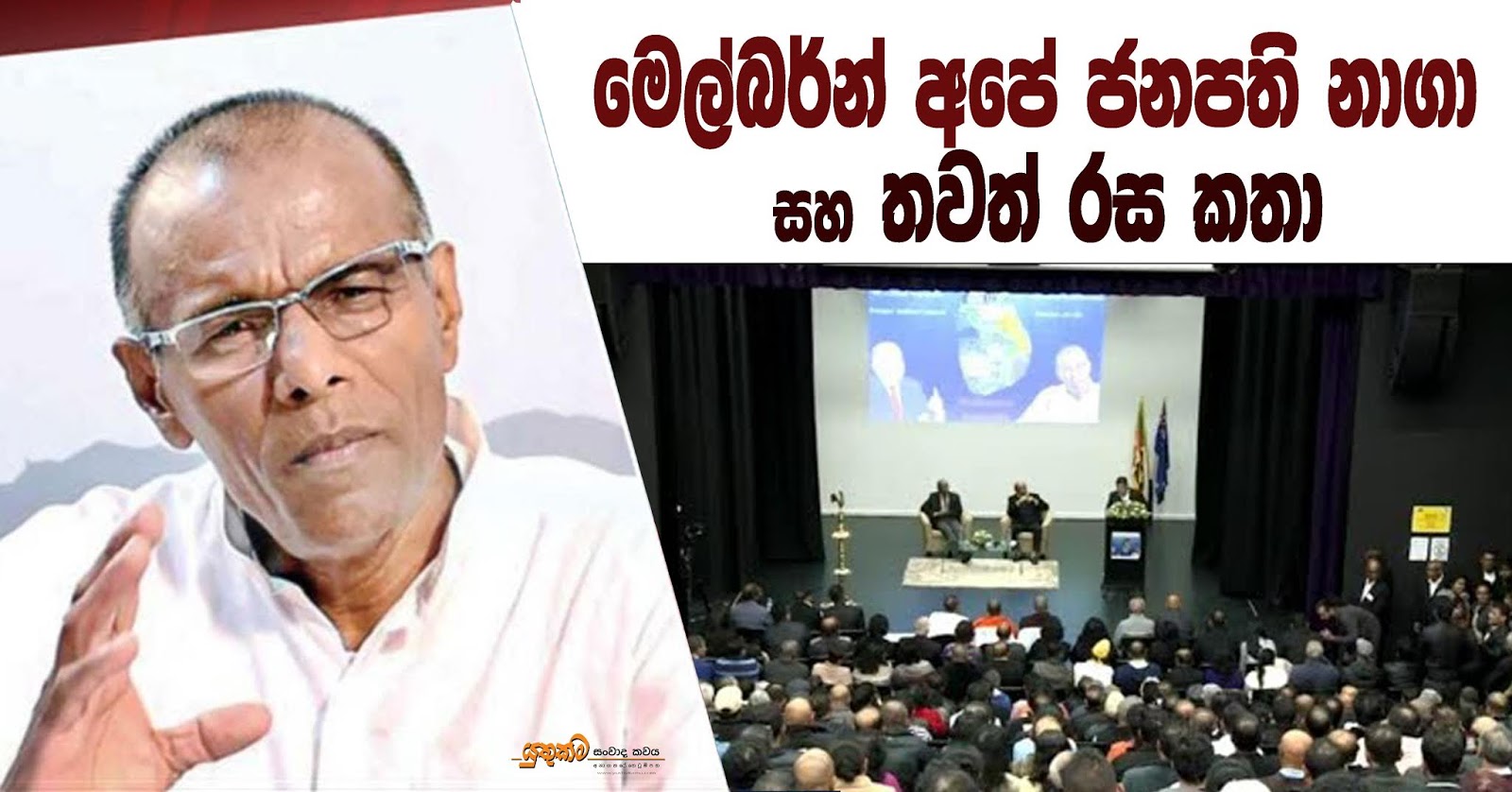
Elamites. For instance, Prof. C. J. Eliezer of the La Trobe University,
Melbourne, was one of the lay priests who linked up with the Uniting Church to
mobilise the church against the Sri Lankans. He was
the head of the Tamil community in Australia mobilising all available sources –
Churches, media, academia, parliamentarians etc – against the
Sinhala-Buddhist state”, even though his sister-in-law, Rangi Handy, was
married to Maithripala Senanayake, one of the leading Sinhala-Buddhist minister
in the Bandaranaike governments. They would pick up every scrap
from anywhere to believe in the inevitable victory of the invincible Tamil
Surya Devan”. But, as usual, they read the Bible in their own distorted way,
as they read their history, to confirm their delusions and not the reality
facing them.
It is true that
Elam is mentioned in several places in the Bible, from Isaiah to the Acts. But
the Tamils deliberately overlooked the critical pronouncements of Prophet
Jeremiah who virtually cursed Elam and prophesied the end of it.
In Jeremiah
the Lord speaks and says (49 : 34- 37):
34 The word of
the Lord that came to Jeremiah, the prophet against Elam in the beginning of
the reign of Zed-e-kiah king of Judah, saying,
35 Thus said the
Lord of hosts: Behold, I will break the bow of Elam, the chief of their might,
36 And upon Elam
will I bring the four winds from the four quarters of heaven, and will scatter
them toward all those winds; and there shall be no nation whither the outcasts
of Elam shall not come,
37 For I will
cause Elam to be dismayed before their enemies; and before them that seek
their life; and I will bring evil upon them, even my fierce anger, saith the
Lord; and I will send the sword after them, till I have consumed them:
Though the Elam
mentioned in the Bible refers to a region of modern Iran the graphic
description rings so true as if they were prophesied specifically to the
destruction of the Elamites of Jaffna forever. It has, in its own way,
prophesied practically every key aspect of the Batakotte War moving inexorably
to its humiliating end in Nandikadal. But the Tamils Christians went into war
as if God was on their side.
A good example is
Bishop Rayappu Joseph ruling the bishopric of Madhu,a sacred Christian venue
for Sinhala and Tamil Catholics, and some non-Catholics too. Bishop Rayappu,
however, is the kind of priest who believed in his Tamilness first and
Christianity later. He is the absolute anti-thesis of Cardinal Malcolm Ranjith.
Both represent the two ends of the Catholic Church divided on political
perspectives. At the first sign of the Security Forces advancing to the
Tiger-held territory in Mannar, with the Forces nearing the sacred Madhu
Church, Bishop Rayappa’s priests grabbed the Holy Statue of Mary, and ran deep
into LTTE- held territory in Mannar with his advice and consent. His distorted
theology made his flock believe that the statue of Holy Mary is the exclusive
property of the Tamil Catholics and not the Sinhala Catholics. When the Holy
Statue returned, to Madhu it proved, like Jeremiah’s prophesy, that God was not
on the side of the Tamil Elamites.
An equally telling
prophesy was told to King Pararajsekaran by Supathidda-muni, a sage revered by
the king. Yalpana-Vaipava-Malai, history of Jaffna, written by
poet Mylvakanam, records this event. It is a book written at the request of the
Dutch Governor Jan Maccara (1736). Mylvakanam says: The king received him
(muni) with all the marks of reverence due to his exalted sanctity and when he
was seated, the king ventured to speak, saying Lord and Master! Thou
foretoldest future events to this thy slave’s father. Thy slave has not been
able to learn them properly. Deign to enlighten him with a knowledge of what
shall happen to this kingdom” (p. 27 – The Yalpana – Vaipava – Malai
– translated by C. Britto, 1879 ).
The Muni
then traces a long line of successors and explain that the kingdom will
fall into the hands of Parangis (Portuguese) , Ulanthese (Dutch) the
Inthiresu (English), the Piragnchu (French) and subsequent rulers and concludes
: The sovereignty will never again come back to your
dynasty.” ( p.29 – Ibid).