Sri Lankan army soldiers during a search operation in Mattegoda, Sri Lanka, on Saturday, May 25, 2019. | Photo Credit: REUTERSMORE-INSri Lanka Easter bombings
A total of 69 key suspects have been arrested over the past four weeks.
Sri Lankan authorities have nearly completed the investigation into the April 21 Easter terror attacks, according to a top source familiar with the probe.
A total of 69 key suspects have been arrested over the past four weeks. We are looking for just two more of them in this connection. It appears that they are in Saudi Arabia,” the senior official told The Hindu on Saturday.
Troops have also launched a hunt to nab a wider network of radical Islamists that they suspect, may be linked to Easter bombers. Sri Lanka police’s Criminal Investigation Department (CID) and Terrorist Investigation Division (TID) are leading the probe, while military intelligence is also closely following the case. Experts from at least eight countries have been assisting the Sri Lankan investigators, officials said.
Of the 69 arrested suspects, not all had direct links with the nine suicide bombers. Some of them were indirectly connected, they are being interrogated. Even the two who are on the run were not directly linked. But still, we want them,” said the official who asked not to be named, due to the sensitivity of the ongoing investigation.
A month after the ghastly attacks that claimed 258 lives in multiple attacks, authorities said they have established how the plot evolved and the different actors came in. A detailed report, including a compilation of evidence gathered, is being prepared. While authorities have not ruled out the involvement of an external element” possibly linked to the IS – which claimed the attacks — there is no evidence yet to corroborate the suspicion.
Further, the probe has revealed that not all in the network wanted to be suicide bombers. Some of them were merely sympathisers,” said the official. Even Zahran Hashim’s wife, investigators said, was not ready to blow herself up for their cause”. Abdul Cader Fathima Hadiya and her four-year-old-daughter survived the suicide bombings in the eastern town of Sainthamaruthu, in which 15 persons died even as troops enclosed their safehouse following an overnight gun battle. She sensed that her brother-in -law [Zahran Hashim’s brother] was about to blast the explosives strapped to him, she ran to another room with her daughter and started praying,” the source said.
Meanwhile, evidence available so far does not show that the bombers maintained any significant links with India, the official said, apparently contradicting the Sri Lankan army commander’s earlier claim that they likely travelled to Indian cities.
Nimanthi Ranasinghe, Pathum Darshana and Dayarathna Embogama Courtesy The Daily Mirror
It was revealed that there were funds amounting to Rs. one billion in the bank accounts belonging to the five suspects, who were arrested in Horowpathana yesterday on suspicion of having links with the National Thowheed Jama’at (NTJ) and its leader Zahran Hashim, a senior police official told the Daily Mirror.
Among those arrested were a development officer attached to the Horowpathana Divisional Secretariat, a teacher of a government school in Horowpathana, two teachers of an Arabic college in Kiwulekada and a resident of Kebithigollewa.
Police said the suspects had delivered extremist sermons in Anuradhapura and Trincomalee.
It was revealed that these suspects had also received funds from the NTJ via one of the suspects of the Easter Sunday attacks, who is abroad.
Police said these suspects had received armed training at the Horowpathana jungle two years ago with the participation of several other individuals. (
Opposition Leader Mahinda Rajapaksa yesterday said that the number of monthly inbound flights at the Bandaranaike International Airport has been reduced by 300.
Making a statement in parliament, he said artistes including film directors who had made movies for Vesak and those who were planning to put up pandals and other decorations for Vesak have also been affected.
Therefore, Mr. Rajapaksa said it was vital to have an overall economic management package to help those economically affected by the current crisis.
The Easter Sunday attacks have delivered a blow to the economy other than killing a large number of people. The SMEs, self-employed, bus owners and three-wheeler owners have been affected as a result of this tragedy. Some have found themselves in a a fresh crisis as they are unable to pay loan installments. Fines have been added to the debt installments,” Mr. Rajapaksa said. (Yohan Perera and Ajith Siriwardana)
When J.R. Jayewardene introduced the executive presidency his main declared reason for it was the much needed stability for the country. His argument was that under the Westminster system the country had had too many elections and since independence no government ran its full term until 1970. He believed that it was a great obstacle to the country’s economic progress.
However,what was not stated in public was the fact that the UNP had the islandwide total majority of votes in most elections, including when the party was badly defeated. What it meant, in other words, was, if the country had an executive president elected by the people the UNP could perpetuate its rule. Let’s look at the past and see whether these declared and undeclared objectives were achieved as anticipated. Whether the first expectation – the stability for the country was achieved or not is abundantly clear when one looks at the messy status of the current Government we have in power.
The most stable period under the executive presidency was the eleven-year period of J.R. Jayewardene. However, that stability did not come from the presidency itself, but mostly from the five-sixth majority in Parliament, which JRJ obtained under the Westminster system in 1977. He kept the same majority for his second term as well, by extending the life of the Parliament through a referendum.
Then, Chandrika Kumaratunga’s presidency was marked with confusion and uncertainty with a thin parliamentary majority obtained through the support of the Sri Lanka Muslim Congress and later the UNP getting the majority through crossovers and so on. It was no better than the so called unstable periods under the previous Westminster system.
Dream of perpetual UNP power
The same way the second and undeclared objective of JRJ, that is to perpetuate the UNP in power, did not happen. If you look at the period up to 2015, since introduction of the presidential system, out of the 37 years, the UNP ruled only for 17 years which means that JRJ erred in his assumption. However, from the country’s point of view which party was in power was immaterial as long as it was the decision of the people. The most important point is that the system never gave the country the kind of stability it was intended to give.
Some seem to believe that it was because of the might of the executive presidency that Sri Lanka managed to end the scourge of LTTE terrorism.
However, it is also relevant to note that the country successfully faced the 1962 coup attempt as well as the JVP insurrection of 1971 under the Westminster system of government.
There are so many examples in the democratic world where parliamentary system of government has provided sufficient stability and strength for the countries to face any type of grave situation. Neighbouring India is perhaps the most shining example in this regard.
In a parliamentary system it is difficult for an unpopular leader or government to remain in power unlike in a presidential system. Any difficult situation can be overcome through the Parliament itself by changing the old order and putting a new leadership in power without much hassle.
Quite the opposite is happening in our country under the executive presidential system. Instead of the expected stability for the country every person who gets into the hot seat becomes greedy and tries every trick in the book to stay in power and looks at the possibility of extending the tenure even by few months. Resignations are unheard of, and greed is such that resigning is akin to death for an incumbent president.
PR system of votes
The proportional representation system of elections was introduced as it goes hand in hand with the executive presidency. The idea was to avoid unwanted landslides and ensure reasonable representation to every political party based on the number of votes received from each district. That way each minority party was expected to receive some representation in the Parliament.
That result would have been achieved and as a result every small party has a member in the Parliament. At the same time it has created a host of new problems pushing the minorities away from the main stream political parties. This has also given birth to a number of ethnicity based political parties further polarising the society which was already divided.
On the other hand the PR system, while preventing landslides, has created a worse situation where no party can get a clear majority in the Parliament thereby negating political stability for the country. Today we are suffering the effects of this more than ever before – the country has no stable government and the main political parties are pandering to the wishes of small minority parties for their survival.
It is clear that the executive presidency is the root cause for many of the country’s problems. Creation of power hungry leaders, who cannot be removed during their tenure, irrespective of whatever consequences to the country, has caused much damage to the political evolution of the country.
Critical stage
Now, the country has reached a critical stage where the majority of the people have got fed up with the existing system and practically lost faith in all 225 Members of the Parliament. This is certainly a sad story for a country which has enjoyed an unbroken democratic tradition of close to nine decades.
Presidential system, with its authoritarian tendencies, has effectively prevented the emergence of potential new leaders. Instead it has helped the development of a new band of rustic third rated politicians most of whom are henchmen neither keen nor qualified to be future leaders. This has discouraged good men from entering politics making it easy for the bad lot to survive.
As a result the country is facing a shortage of potential leaders while the people have no faith in the current set of politicians who are fighting for leadership stakes. In such a situation it is naïve to believe that the next presidential election will sort out the current political, economic and social crisis.
The only way out will be for all the political leaders, if not, at least the leaders of three major power blocs, that is the President, Prime Minister and the Leader of the Opposition to discuss this issue and come up with a suitable constitutional solution without delay. Reverting back to a parliamentary system with a modified electoral system and holding parliamentary elections under an interim Constitution could be one way of tackling the situation.
This can happen only if the country is blessed with honest and national minded politicians who can place the country above their own self-interest at least at a critical time. The misfortune of our country is the lack of such men and women and it is difficult to believe that there will be any change in the foreseeable future.
Customarily a post-mortem is done within 24 hours after a person’s tragic death, but it has taken more than a month to write about Sri Lanka’s atrocities that took place on Easter Sunday, 21 April 2019.
First and foremost, it was impossible to think how some of the bombers came from respectable families, who had been brainwashed into thinking that by killing anyone against Wahhabism in Islam faith would end up in heaven! The aim of this column is not to focus on the perished souls but to concentrate on the responsibilities forsaken by the Government of Sri Lanka and its failure on the hierarchical communication system.
Since the calamity, an expatriate Sri Lankan Group has written to President Maithripala Sirisena and the Prime Minster Ranil Wickremesinghe highlighting how the Government grossly failed in its collective primary duty in underestimating the threat posed by the Islamist terrorists. They make their recommendations to avoid a recurrence of this scale!
national Threat Level System
In their top priority list comes the appointment of a person with military experience to the position of Secretary of Defence; secondly, to strengthen the national Security Council (NSC); thirdly to establish a Single Source of Communication regarding national Security matters and through this authority to provide a daily security briefing to the public (at least for the next three months); fourthly, to use online channels to respond to rumours and to make any immediate counter announcements as necessary; fifthly to put a stop to Government Ministers making ad-hoc statements, which are likely to gain political mileage and finally, to establish a single NSC Twitter feed and a Facebook page and to ensure it is updated regularly. The most important aspect of their recommendation is to establish a national Threat Level System which is detailed in point form in the letter to the PM and President with a view to continuing with strong action to prevent any backlash against any community.
Easter Sunday
President Sirisena was in Singapore at the time of the disaster. His version (on TV and at various other platforms) confirmed how he became aware of the incident from social media (Facebook)’! The Prime Minister cast off his responsibilities by stating, he was never invited to any of the Security Council Meetings for six months”!
Venerable Mawarale Baddhiya Thero, a well-respected Buddhist monk, who usually devotes his time on Buddhist discourses (applicable to modern day living) was highly critical of the leaders of the present regime for their inability to save the country from a national disaster. ‘Such irresponsible and childish utterances filtered through to the international media have made Sri Lanka a laughing stock, he commenced his reproach. Denouncing PM’s approach, the Venerable Thera said, Ranil Wickremesinghe was free to express his personal ideas or utter any gibberish openly, but as the Prime Minister of this nation, he had to be more responsible in his approach and statements on a matter of national security!”
Warning Alert
Despite DIG Priyalal Dissanayake’s warning of an imminent terrorist attack, which he received on 4 April 2019 from Indian intelligence Service, to the IGP and the Defence Secretary, it has now been established what both of them adopted was a lackadaisical approach by ‘minuting’ the document and circulating in the normal administrative snail space procedure.
Everyone directed an accusing finger at the IGP and Defence Secretary for shirking their official responsibilities, the Defence Secretary, in particular, was chastised for speaking to a foreign journalist how he viewed the red alert warning with a pinch of salt and the ‘hotels had to seek their own security’! What an arrogant and irresponsible utterance in the face of a national disaster? Well, paying for their sins, the IGP was sent on compulsory leave, and Hemasiri Fernando had to quit his job. The new Solicitor General, who assumed duties only a few days ago, had directed criminal investigations against both officials’ failure to act on intelligence warnings about the Easter Sunday holocaust.
Crocodile tears
It is customary for the Government of Sri Lanka to shed crocodile tears, immediately after an incident because the Government doesn’t adopt a public policy, and officials and politicians deem to think as they please, or purposely take the omniscient attitude to nurture themselves. Due to this very fact, no one officially accepted responsibility for the sloppiness of protecting national security, which created a fear psychosis throughout the country, because of this very reason the confidence in the government is at rock bottom.
The closing of schools for over a week initially was its first proof. Parents naturally refused to send children to school when allegations became rampant about politicians’ and security personnel’s children were securely kept at home! The unrest managed to increase a sense of panic, ambiguity, mistrust and bitterness among parents, this is natural. Authorities, in the meanwhile, appeared to be engaged in a game of political ping-pong and passing the buck. If a national disaster of this magnitude were to take place in any other country, the whole government would have resigned out of shame!
Malcolm Cardinal Ranjith
His Eminence Malcolm Cardinal Ranjith suppressing his solemn feelings pronounced, the Government should have at least informed him about the red alert warnings received by Sri Lanka Intelligence so that he may have been able to help in avoiding such a catastrophe. Politicians responsible for the Easter Sunday attack should be expelled; Some of them are living freely and pretending to be saints, but they should remember that though they are not punished by the people, they will be punished by God,” declared a grieved Cardinal.
When combined efforts of the Security Forces managed to unearth caches of weapons and ammunition, while arresting scores of suspects, who seemed to have had links with Islamist terrorism, it gave rise to a fear psychosis among people of a possible second attack on schools and Buddhist temples, as heaps of yellow robes, women’s skirts and Army camouflage suits were unearthed from different parts of the country.
This fear was triggered by an incident when a man wearing a Burka was arrested by Police, which undoubtedly managed to raise unexpected anxiety among the innocent Muslim population expecting an uprising by Sinhala radical mobs, yet the timely action by Muslim leaders and the clergy managed to diffuse any anti-Muslim sentiment by appearing on TV and stating, ‘The Quran does not prescribe the burqa, but women’s head had to be covered with a scarf or dupatta’; Meanwhile, the Ministry of Religious and Cultural Affairs warnings not to use mosques for radicalising congregations managed to calm the situation.
Still, there hangs issues with regard to the ideological attitude of the Government for not implementing the law to the very letter – meaning The Law is applicable to everyone irrespective of status or power”. This is again due to the Government’s placid attitude of summoning a few to the CID and ignoring powerful members of the Government, such as Rishad Bathiudeen, to record a statement, which in a manner will absolve him from barrages of accusations against the Minister, rather than permitting him to issue press releases and Media briefings about his innocence (as he claims).
The biggest headache for the government at present is about the Minister of Trade & Commerce, Rishad Bathiudeen, who is alleged to have had allegiance with the Islamist terrorists and particularly having connections with the Chairman of Colombo Traders’ Association (CTA), Y. M. Ibrahim, who is now in detention. Ibrahim’s son was declared as one of the suicide bombers responsible for the recent carnage. The Minister, of course, vehemently denies any official dealings or personal connections with Ibrahim and stresses how strong believers they are of Islam. Allah does not approve terrorism or fundamentalism, and I am not connected to terrorists nor do I support terrorism,” assures the Minister.
However, the latest uproar over the Army Commander’s statement how the Minister Rishad Bathiudeen phoned him thrice to enquire about Ibrahim has made the Government somewhat uncomfortable. The Minister has so far confirmed that he did not exert pressure on anyone into releasing any suspect connected with the Easter Sunday attack”. Responding to the Army Commander’s statement in particular to the Media, the Minister admits that on two occasions he made enquiries about the suspects on a request from the parents but did not ask for their release’. The Army Commander’s version is that the Minister phoned him three times, and on the third count he (Army Commander) had asked the Minister to phone him again in eighteen months”! So, it is a matter up to the public to decide upon who is right or wrong!
No-Confidence Motion
The opposition has already handed over a ‘No-Confidence Motion’ against Minister Rishad Bathiudeen to the Speaker, mainly because it is said that ‘the Minister has been able to stain the reputation of the entire Muslim community’. However, according to the Leader of the House, the Speaker will be compelled to reject the No- Confidence Motion, due to an error on the date mentioned therein. Are people to expect another spectacle?
Whatever said and done, Sri Lankans as a nation should be able to live in harmony, as before and over the past so many centuries, but isolation of the entire Muslim community due to Islamist terrorism will only drive the whole community into the hands of the extremists and terrorists.
Kerala Coast was put on high alert following Intelligence reports that 15 ISIS terrorists set off from Sri Lanka to Minicoy Island in Lakshadweep, India.
The terrorist have been set off in a white boat to the island and the police were asked to prevent them entering Kerala coast, Indian media reported quoting sources on Saturday.
Coastal areas are under strict surveillance and patrolling was intensified at Thrissur and Kozhikode following the intelligence reports.
Fisherman committees were also asked to stand vigil against unnatural activities in the coastal areas.
The Director of Police, Coastal Security has issued an alert after receiving the intelligence reports.
The security agencies have asked the fishermen, coastal residents, and members of Jagratha Samithi to be cautious and maintain vigil around the area and also to inform them of any suspicious activities.
After the bombings in Sri Lanka, Kerala was on alert, especially after NIA investigations revealed that IS operatives had planned to attack religious gatherings of Hindus in the State.
A high number of Keralities are believed to be still with the ISIS which was recently wiped out from Iraq and Syria. Reports say that ISIS is moving to South Asia to expand its area of operations.
Sri Lankan witnessed major terrorist attacks on Easter Sunday when eight blasts rocked the Island Nation and left 253 people killed.
Islamic State claimed responsibility for the incident.
China on Saturday became the first country to tone down its travel advisory imposed on Sri Lanka post the Easter Sunday blasts, in a move that would help in reviving the tourism industry of the island nation hit hard by the terror attack.
The move came a day after Lankan Prime Minister Ranil Wickremesinghe appealed to the international community to lift the travel warnings, assuring that the security situation has improved in the country after the crackdown on Islamist groups and their networks.
We are happy announce that the travel ban on visiting Sri Lanka implemented by China has now been toned down to ‘be cautious’ while travelling to Sri Lanka from ‘Do not travel to Sri Lanka’,” Sri Lanka Tourism Development Authority said today.
China is the second largest market, after India, for the Lankan tourism sector. The number of Chinese tourists to Lanka has been relatively steady at over 265,000 since the last three years.
Several countries, including India, US, UK and Australia, advised their citizens against non essential travel to Lanka after the terror attacks on three luxury hotels and three churches on April 21 that killed nearly 260 people, including over 40 foreigners.
This dealt a telling blow on the local tourism industry. Booking cancellations caused a 70 per cent slump in arrivals, the industry leaders said.
Tourism accounts for about five per cent of Lanka’s economy. Besides, India and China, the UK is also a major market. The country earned about USD 4.4 billion in 2018 from the tourism sector.
The Sri Lanka Tourism Development Authority said April recorded 166,975 foreign tourists in the country compared to 180,429 in April 2018, a 7.5 per cent dip in arrival of tourists from abroad.
The doctor attached to the Kurunegala Hospital, who was arrested over assets earned through suspicious means, has been handed over to the Criminal Investigations Department (CID).
Police Spokesman SP Ruwan Gunasekara said that the doctor was handed over to the CID for further investigations.
A 42-year-old doctor attached to the Kurunegala Hospital has been arrested over assets earned through suspicious means, Police Spokesman SP Ruwan Gunasekara said.
Seigu Siyabdeen Mohamed Shafi, 42, a resident of Weerasinghe Mawatha in Kurunegala, was arrested by police at his home last night based on information received by Kurunegala Police regarding the suspicious nature in which he had amassed wealth.
Police said he was taken into custody in order to investigate his assets and the means by which he had earned them.
The arrested doctor in question is a member of Minister Rishad Bathiudeen’s All Ceylon Makkal Congress (ACMC) and had contested the last General Election from the Kurunegala District under the UNP.
The other day at a meeting held at the
BMICH after the April 21st disaster, MP Sumanthiran, it was reported
in ‘The Island’, had asserted something to the effect that the carnage in
question was again a symptom of non-addressing of the grievances of the
minorities and that the minorities would not agree to live as one nations in
this country unless treated as equal citizens. This he had said to the lusty
approbation of the invited audience.
I believe what Mr. Sumanthiran is
lamenting and is aggrieved and frustrated here in other words with, is the
non-passage of their proposed new constitution in Parliament so far. The
intended implication is that if it was, the minorities could agree to live here
as equal citizens under the present situation.
And the problem would not have arisen.
Let us for a moment imagine that the new
Constitution was in place by now. It would mean the coming to be of 9
independent Provincial Governments with a nominal, non-executive President and
with 9 Chief Ministers and governors appointed in consultation with the
respective Chief Ministers.
Now let us imagine if the 21/4 carnage
occurred under these circumstances. (As Malcom Ranjith Cardinal had pointed
out, this carnage had been carried out by a local Muslim extremist group
inspired by the ISIS. rather than due to any minority grievance).
If the TID officers of Police HQ. wanted
to walk into the Dematagoda nerve centre of NTJ, They couldn’t do that like the
way they did, almost within an hour. They would first have had to obtain the
permission of Mr. Asath Sally the Governor Western province, having placed
before him the available information or, grounds for their reasonable
suspicion. Needless to say if that was done, there would have been no explosion
in the house, killing the inmates and the children. It would have saved the
lives of the 3 police officers and resulted in no recovery of any incriminating
evidence. Isn’t that a good result ensuring tolerance – live and let live
policy of the central government?
Then the next thing that happened two days
later was that the STF and the Army raided successfully 3 safe houses of NTJ in
Sammanathurai, Sainthamaranthu and Kattanakudy with success. If it was under
the new constitution, whose prior permission would they have had to obtain?
From none other than the Governor EP, Mr. M.L.M. Hisbulla himself ! If they did,
no deaths would have occurred. No evidence recovered. It would have been a case
of unnecessary instance of harassment of the innocent minority group.
The next thing that we heard was that the
Army and Police had subjected the Kilinocchi University to a thorough search.
Under the new Constitution, they would have had to obtain the permission of Dr.
Raghavan, having convinced him of the reasons for their suspicion or
information.
Just the other day we read that Kurunegala
Police had come all the way to Rajagiriya and had arrested a Hansard Department
staffer of the Parliament and that he was a resident of Alawathugoda in Kandy
District and he was concerned with activities of the NTJ in Akurana Katugastota
Police area. Under the new Constitution, Asath Sally would have asked, How
dare you ? , so would the Governor of
the Central Province. They would have taken the police officers before the
Constitutional Court for violation of the Constitution.
This would have been the lunatic state of
affairs if the new constitution would have been passed in Parliament to please
the UNHRC’S 30/1 Resolution, and the likes of Sumanthiran and others who had
applauded him at the BMICH. Does this not lay bare the fact that the purpose of
the proposers of the new Constriction was meant to destroy the law enforcement mechanism
and governance of this country?
M.S. Fouzul Ameen should have been alive today. The furniture shop owner from Kottaramulla, Nattandiya was killed by a mob on May 13, 2019. Many shops owned by Muslims should still be standing. They are not. No one should have or should show any apprehension of any Muslim, regardless of attire or appearance. Non-Muslims are wary and Muslims are apprehensive of one another. Should not be that way, but that’s what things have come to.
After Fouzul Ameen was killed, a Facebook post with a picture of his ID card tagged to it, raised a question. “මේ මනුස්සයා ගේ දරුවන් අන්තවාදීන් නොවී සිටීමට අපට කළ හැකි දේ මොකක්ද? -ඔව් අරලේ ඉල්ලපු අයගෙන් තමයි අහන්නේ?- (what can we do to stop the children of this man from becoming extremists — yes, the questions is for those who were demanding blood).
Legit. As legit as this response to the post: ‘තව්වො මරපු මිනිස්සුන්ගෙ ID හොයාගන්න බැරිවෙන්න ඇතිනේද? බී කොන්සිස්ටන්ට් ඕ බී සයිලෙන්ට් කිව්වලු.’ (Perhaps you couldn’t find IDs of those who the NTJ killed? Be consistent or be silent, they say). Perhaps as response to the observation, a clarification followed: බෝම්බ ප්රහාර වලින් මිය ගිය ජනයා ගැනමෙසේ ලීවෙමි “මම ආරක්ෂාවෙන් පසු නොවෙමි, මියගියේ මගේ මිනිසුන් ය. මා සයිලන්ට් නොවෙන අතරකන්සිස්ටන්ට් බව සහතිකය’ (This is what I wrote about those who died in the bomb attacks, ‘I am not safe, those who died are my people.’ I am not silent and I am convinced of my consistency.’ And here’s the response: ‘හරිම ලයාන්විතයි බෝම්බකරුව්න් විශයෙහි. ඔබ කොන්සිස්ටන්ට් නැත.’ (Very tender are you with respect to the suicide bombers; consistent you are not.’
The violence in the North Western Province is unlike what we saw on Easter Sunday in that the latter was a product of long-term strategizing including the setting up of terrorist training camps, stockpiling arms and ammunition, and systematic indoctrination. But we can and should talk about the equivalencies.
The law enforcement authorities were clearly complicit in the case of the Easter Sunday attacks and in the mob violence led by people outside the particular areas that erupted three weeks later that took the life of Fouzul Ameen. Politicians offered support, direct or indirect, or were silently complicit. Theoretically, both could have been prevented provided warning signs noted, warnings heeded and relevant measures put in place.
Issues of identity marked both. In the one, terrorism for the purpose of faith-affirmation. In the other, the targeting of a community. In the one, some argue, the rise of a movement as response to existentialist angst. In the other, although the same people will not acknowledge, a similar angst, at least in the outward expression, never mind the clear hand of bankrupt politicians.
The equivalency has been given credence by many commentators, mostly from Colombo’s Twitterati (aka Kolombians and Colombots) made up of Born Again Democrats and Funded Voices. The Easter Sunday bombs shocked them, naturally. So did the violence in the North Western Province. In the first case, they were quick to say ‘Terrorism has no religion’ (never mind that the terrorists were affirming a faith and not forgetting, following that logic, the fact that we have many religion-less mosques and Islamic educational institutes! In the latter case, the perpetrators were labeled: ‘Sinhala Buddhists’ (with or without the ‘extremist’ tag).
Some, correctly, pointed out the long history of patriotism affirmed by Muslims. The names of officers who laid down their lives in the war against terror were mentioned. And yet, interestingly, the very same people who make this point also claim that ‘Sinhala Buddhist majoritarianism’ caused the war which, again they say, was fought by Sinhala Buddhists against Tamils! Strange.
Dr Harsha De Silva went an extra mile, claiming that the Kuliyapitiya violence cost the economy more than the Easter Sunday attacks. Yes, ‘Doctor’ Harsha De Silva. Economist. Someone called Taylor Dibbert was more specific. He penned a piece for www.foreignpolicy.com titled ‘Buddhist anger could tear Sri Lanka apart’. At least he’s said out loud what the aforementioned twitterati only whispers in private. Yep. Buddhists are the villains of the piece. They are who could tear Sri Lanka apart. What that to-be-torn country is, of course, is up for debate.
For a long time, we have had this anti-Buddhist sentiment finding expression in various ways. It takes the form of advocating a secular state without mentioning history, without talking about all the privileges enjoyed by non-Buddhist religious fraternities (compared, for example, to what religious minorities enjoy in Muslim or Christian nations). Mangala Samaraweera and his ilk say ‘We are Sri Lankans’. Correct. But then again, why don’t this One Sri Lanka folk work tirelessly to advocate and constitutionally concretize the ‘One Nation, One Law’ thesis? Why not scream for the abrogation of customary laws?
But we are in a season of equivalency here and that calls for a vilification of Buddhists and of course Sinhala Buddhists. In the long history, we have had villainy. Magha of Kalinga: was he a Buddhist? The Portuguese who destroyed temples: were they Buddhists? The British who perpetrated genocide (a word oft mis-used by its users), ethnic cleansing and whose rule was marked by religious persecution and, again, the vandalizing of temples and kovils: Buddhists? Then there is the recent history. Velupillai Prabhakaran, goaded by Tamil racists: a Buddhist? The NTJ/ISIS: products of Buddhist extremism?
Back to equivalency. The Janatha Vimukthi Peramuna (JVP). They were quiet for three whole weeks and were quite shy about explaining off the fact that they entered the name of a top rung NTJ operative in their national list. Then, Kuliyapitiya happened. Then came the poster, condemning all extremisms. Correct. But late. And selective, strangely.
And now we have both the United National Party (UNP) and the JVP in navel-gazing mode regarding the vote of no confidence on Rishard Bathiudeen. We know the charges. We know that the near and dear, blood-wise, faith-wise and political loyalty wise, were right up there among the bigwigs of the NTJ terrorists. Sure, we can and should ask why a similar vote is not taken on Dayasiri Jayasekera for some actions that were similar to the lesser charges against Bathiudeen. That aside, it is nothing less than scandalous for Navin Dissanayake to say that the move on Bathiudeen is racist. That’s almost saying ‘if you are not a Sinhalese or a Buddhist and you engage in any kind of hanky panky, you get a wide berth because, well, you belong to a minority and therefore any action against you has to be racist.’ There’s equivalency of other kinds. Recent history. Tamil racists persuaded hotheaded Tamil youth to take up arms. They introduced a kind of vulnerability that the Tamil community had not hitherto experienced.
Look what the NTJ did. The same. And yet, behind the shield called ‘religious freedom’ we saw the rise of a doctrine among whose key tenets are elements that are in contravention of basic democratic norms and seek to bend the penal code. Yep. Wahhabism. That’s a religion. It fathered the NTJ. But we are not allowed to say it, are we? Oops, I just did! So sue me!
Equivalency is the word here. I think I might have got it wrong. It might be better to talk about wild extrapolation. As another social media commentator observed, ‘Those very same losers who were silent when 250 plus people were killed by some nutters, are now so vociferous about some politically staged crap about the majority of the country being racists; if that were so, this place should be worse than Syria.’
Last weekend we saw Muslims and Christians in their thousands celebrating Vesak. That’s not going to deliver reconciliation, but it will not hurt it either. Indeed, even though the gesture was warm and warmly received, I don’t think anyone should feel compelled to celebrate some other faith on account of penitence (on behalf of ‘nutters’ professing the same faith) or fear. I say this knowing well that many among them did it for reasons more wholesome than fear and which went beyond ‘penitence’. What is more important, and I believe it is happening in the Muslim community in a big way, is determined objection to all forms of teaching that buttress extremism of the kind we saw on Easter Sunday.
At a recent media conference, some Muslim leaders were outspoken about the need for the Muslim community to indulge in introspection. Ali Saby observed that a historic opportunity has arisen to reform Muslim Law and customs in Sri Lanka. I offer that this opportunity can be squandered by the equivalency hordes referred to above.
There are two ways to trip. One is to sweep the truth under the carpet. The other is to spin a web of lies or half-truths. Such things are not the preserve of any single community, religious or otherwise, of course, but the Equivalency Clowns are certainly doing it full time. Doesn’t help. If indeed we get to reconciliation and civilization it will not be because of them but in spite of them. We owe it to every single victim of the Easter Sunday attack and to the good furniture shop owner, the late M.S. Fouzul Ameen. malindasenevi@gmail.comEmail ThisBlogThis!Share to TwitterShare to Facebook
Legal action should be immediately taken against governors M.L.A.M. Hizbullah and Azath Salley as well as Minister Rishad Bathiudeen for their direct involvement in the attacks, says the Chairman of ‘Sinhale Api’ National Movement Venerable Jamburewela Chandarathana Thero.
Addressing a press conference held in Colombo today (24), he further commented on an attack carried out by Zahran Hashim’s group against Sufi Muslims in Kattankudy on 10th March 2017.
Revealing the footages recorded during the said attack to the media, Ven. Chandarathana Thero stated that former Eastern Province Chief Minister Nazeer Ahmed was responsible for defending Zahran Hashim from police arrest.
The then OIC of Kattankudy Police, Ariyabandu Welagedara, was transferred to another police station on 10th of July 2017 while police investigations into the incident were ongoing, Ven. Chandarathana Thero said.
He further stated that a comprehensive investigation should be commenced into the then OIC of Kattankudy Police and the former chief minister of Eastern Province.
By the time the next OIC of Kattankudy Police assumed duties, Kattankudy police had already two warrants in two court cases against Zahran, however, he had not been arrested, Ven. Chandarathana Thero alleged.
P.K.Balachandran/South Asian Monitor Courtesy NewsIn.Asia
The political wave which engulfed most of India on May 23 has been aptly named Tsunamo” – a Tsunami like Narendra Modi wave which caused unexpected and unprecedented electoral destruction as it swept across the country.
Namo” in Tsunamo” is short for Narendra Modi, the iconic leader of the Bharatiya Janata Party (BJP) and the Prime Minister of India.
On the all-India plane, the Tsunamo”, has caused the demolition of the Congress party led by Rahul Gandhi. He himself lost the election in Amethi in Uttar Pradesh, though he won convincingly in Wayanad in Kerala.
At the State level, the Tsunamo badly damaged an opposition citadel like the Trinamool Congress in West Bengal led by the fiery Mamata Banerjee.
The electoral earthquake saw the YSR Congress Party, a rebel group of the Congress, comprehensively beat the seemingly entrenched Telugu Desam Party (TDP) led by opposition stalwart N.Chandrababu Naidu.
BJP-NDA Handicapped At Start
During the month-long election process, the ruling BJP led National Democratic Alliance (BJP-NDA) was not expected to get even the minimum 272 seats out of the 542 up for grabs. It was expected to fall short by 30 to 60 seats, a shortfall it was expected to make up by enlarging the NDA to include more parties.
The BJP-NDA government was not given the clean chit by economic experts and left-oriented commentators. They saw the demonetization of 85% of India’s cash and the introduction of the cumbersome All India Goods and Services Tax as having caused an immense burden on the rural man and the small businessman.
Neglect of agricultural finance had led farmers to commit suicide in States ruled by the BJP-NDA. The Muslims and the lowest caste of Dalits were being lynched by government-backed Hindutva vigilantes for carrying beef or taking cows for slaughter because they hurt Hindu sentiments about the Holy Cow.”
Indeed, the BJP-NDA seemed to be on a weak wicket as the 2019 parliamentary elections approached. Just a few months before the parliamentary elections, the BJP-NDA had been defeated in key State elections by the Congress-led United Peoples’ Alliance (Congress-UPA). The BJP-NDA lost Madhya Pradesh, Rajasthan, Chattisgarh in the North and Karnataka in the South. The Congress nearly ousted the BJP-NDA in Goa.
The BJP-NDA lost by-elections in Uttar Pradesh, a State which it had swept both in the parliamentary and State Assembly elections held earlier.
Exit Polls Saw Change in Fortunes
But despite all this, the exist-polls published last Sunday, predicted a stunning victory of the BJP-NDA. The coalition was slated to win 267 to 350 seats in a House of 542. It was expected to do well even in the States which it had recently lost.
Commentators either laughed at this or tried to explain that Modi’s mini war” air war against Pakistan as a riposte to the killing of 44 paramilitary personnel in Kashmir, had won him kudos. He was seen as a strong man” who would teach Pakistan, which was accused of unleashing cross-border terrorism on India, a fitting lesson”.
It was also said that national security issues demanded a strong leader who would make a virtue of hate” and not a leader like Rahul Gandhi of the Congress who was touting the idea that matters should be sorted out by love” and not hate”. Nothing excites and unites like hate” and it did.
A resurgent middle and upper class India, dreaming of world and regional power status for their country, found Rahul Gandhi not be the man of the moment, despite his secularism, and the soundness of his economic criticisms.
Failure of Alliance Formation
The results predicted by the exit polls had also taken into account the splintering of the non-BJP-NDA votes. An early attempt to bring all the non-BJP-NDA parties together by the West Bengal leader Mamata Banerjee failed because the Congress did not cooperate. Wanting to be the number one, as before, the Congress did not join the Trinamool Congress grand scheme. The Congress and the Communist parties also decided to take on Trinamool Congress in West Bengal knowing fully well that if they did,the BJP will gain.
Likewise in Delhi, the Congress avoided aligning with the Aam Aadmi Party (AAP), a committed anti-BJP outfit ruling Delhi.
In Uttar Pradesh, which has the single largest number of seats in parliament, the Congress did not make an effort to join the Grand Alliance called Mahaghatbandhan” partly because the powerful Bahujan Samaj Party (BSP) leader Mayawati was averse to working with the Congress.
With the Congress left out in the cold the Muslims (15 % of the population) had begun to lean towards the Mahaghatbandhan which showed promise.
In Rajasthan, Madhya Pradesh and Chattisgarh, in which the Congress was successful in State-level elections, BJP’s leader Modi was seen as a more suitable national leader than Rahul Gandhi or any other leader of the opposition. The voters here had apparently drawn a distinction between local and national elections, the latter involving not non-local but national issues.
Exit Polls Proved Right
Sure enough when counting of votes began on May 23, the results reflected the projections made on the basis of the exit polls released on May 19.
By the midnight of May 23, the BJP-NDA won in 341 of the 542 seats, Congress-UPA got 95, and others 88 seats. Everybody concluded that the BJP-NDA had won and congratulated Modi.
The BJP-NDA had swept the polls in all the North Indian States in which it was defeated in the recent State Assembly elections as in Rajasthan, Madhya Pradesh and Chhattisgarh.
In Rajasthan, the BJP-NDA was leading in 25 seats of the total of 25 seats in contrast to the INC-UPA which was leading in none. In Madhya Pradesh, the BJP-NDA was leading in 28 of the 29 seats while the Congress-NDA was leading in only one.
In Uttar Pradesh, the Mahaghatbandhan parties did badly with the BJP-NDA winning 62 seats and the Mahaghatbandhan parties getting only 15 of the total of 80 seats. The Congress got one.
The BJP-NDA has taken Gujarat and Maharshtra too.
In West Bengal, the BJP-NDA had come close to defeating the Trinamool Congress by grabbing 18 seats while the Trinamool Congress got 22 and the Congress got two out of 42. This is a major blow for Mamata Banerjee who even Modi had described as a speed breaker”.
Many political personalities of the Congress-UPA, including Rahul Gandhi, have lost. Rahul lost Amethi in UP but won in Wayanad in Kerala. His mother and former Congress President Sonia Gandhi managed to make it in Rae Bareily in UP. This is the first time Rahul has lost Amethi since he began contesting elections in 2004. His sister, Priyanka Vadra, who was made Congress General Secretary in charge of UP. She did not contest but did not succeed reviving the party in UP either.
In Odisha, out of the 21 seats, the Biju Janata Dal (BJD) won 4, the BJP-NDA 3, and Congress-UPA 1. The BJD was leading in most seats though.
South Provides Silver Lining
However, good news came to the Congress-UPA from South India where it swept the polls in Kerala. In Tamil Nadu its ally, the Dravida Munnetra Kazhagam-led coalition, won 37 out of 39 seats.
The BJP-NDA as well as the Congress-UPA were defeated in Andhra Pradesh and Telengana too. In Andhra Pradesh the Telugu Desam was surprised by the showing of the YSR Congress Party led by Jaganmohan Reddy.In Telegana, the Telengana Rashtriya Samithi re-affirned its hold over the people. The TRS had agitated for the creation of Telegana State, a long standing demand of the people of the area.
In the South, Tamil Nadu, Odisha and Sikkim, local factors appeared to have played a role and the regional parties were in the running here rather than national parties like the BJP or the Congress. The issues which concerned the Southern voters were different from those which concerned voters in the North, West and East.
Will Rahul Resign?
Rahul Gandhi has said that the question of his continuing as Congress President will be decided by the Working Committee whenever it meets. He has accepted the results gracefully without raising issues like tampering with Electronic Voting Machines.
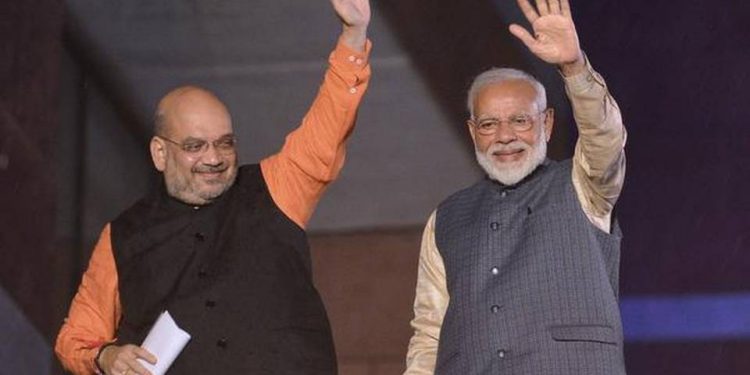
(The featured image at the top shows the architects of the BJP-NDA victory – Narendra Modi and Amit Shah)
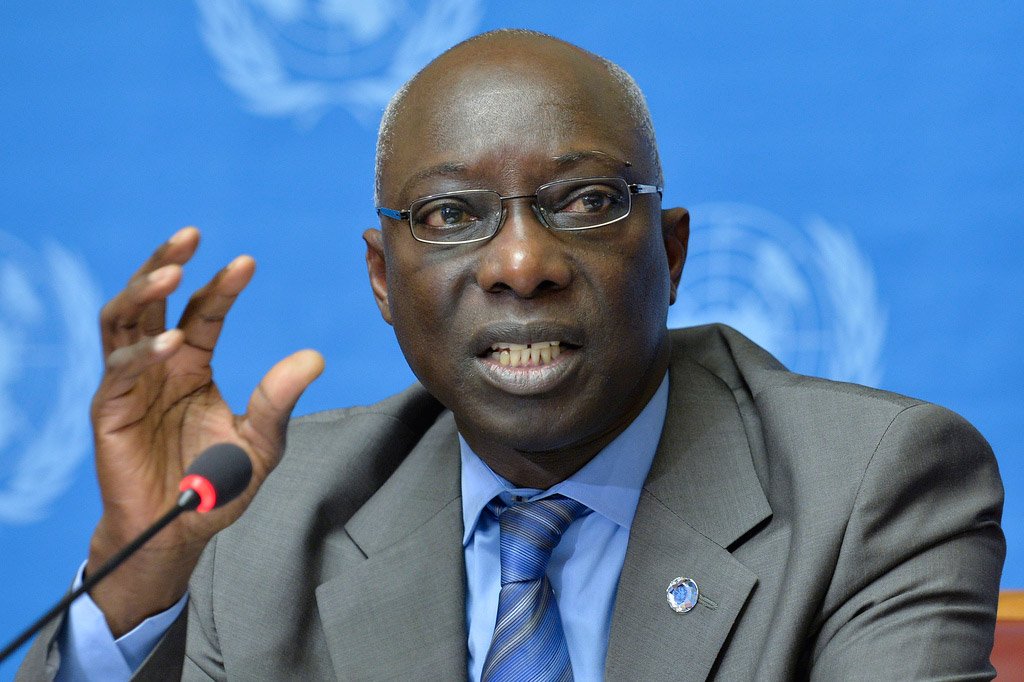
Colombo, May 24 (newsin.asia): Responding to the joint statement issued by the United Nations Special Advisor on the Prevention of Genocide Adama Dieng and the United Nations Special Advisor on the Responsibility to Protect Karen Smith on May 13, 2019, Sri Lanka’s Permanent Representative to the United Nations in New York Ambassador Dr Rohan Perera stated that their prejudiced” statement only serves to sensationalize” issues at a time when the government is taking stringent measures to maintain law and order and quell unrest in the interest of safety of all.
The statements of the UN officials skews the situation on the ground and interprets post-April 21 events through a narrow prism of stereotypical labels, while disregarding the deeper and more nuanced issues at play,” Dr.Perera said.
Full Text of Lankan Statement
The Government of Sri Lanka has carefully reviewed your joint statement of 13 May 2019, issued as a note to correspondents, where you have expressed alarm on the ‘growing acts of violence on the basis of religion’ in Sri Lanka. While noting your concerns, we were taken aback by your oversimplified narrative of events that are nuanced and complex in nature.
For the past decade, the people of Sri Lanka had been enjoying their hard-won peace and freedoms, and had embarked on the arduous path of reconciliation and national healing after nearly three decades of struggling against separatist terrorism. As has been perpetrated by ruthless terrorist groups inspired by ISIL/ Da’esh with global reach in many parts of the world, the horrendous Easter Sunday attacks were intended to create division among us and destroy the very fabric of our multi-ethnic, multi-religious and multi-cultural society, and deal an intentional blow to our economy. All peace-loving citizens of Sri Lanka are still trying to come to terms with the shock and aftermath.
While we mourn the loss of innocent lives, the support and solidarity from our friends in the international community, including the UN Secretary-General, have been overwhelming. We were reminded that we are fighting a common adversary in terrorism, and its associated manifestations of radicalization and violent extremism, which had taken many innocent lives from across many parts of the world in recent times.
In this context, it is quite insensitive and ill-conceived that you did not consider it important to share your concerns with the Sri Lankan government first, before going public with your statement. This would have also been in keeping with the key objectives of your respective mandates, i.e. to provide early warning and advocacy. We are particularly disappointed that your statement comes at a time when Sri Lanka has been following a well-acknowledged open and constructive engagement with the UN System and its human rights mechanism, including with the special procedures and mandate holders for the past several years. Eight such Special Procedures have visited Sri Lanka in the last four years which ranked among a handful of countries with regard to accommodating such engagement. In this context and spirit, we would have welcomed any constructive criticism or observation from your offices as well. Your prejudiced action only serves to sensationalize issues at a time the government is taking stringent measures to maintain law and order and quell unrest in the interest of safety of all.
Adama Dieng
I am constrained to state that your statement demonstrates a limited understanding of events and is an expression of preconceived opinions. By stating that the special advisors noted a recent spate of attacks against Muslim and Christian communities in Sri Lanka, a majority Buddhist country”, and continuing that the recent violence in Sri Lanka has highlighted a growing influence of nationalists and extremist views of identity in the Asia Region, putting religious minorities at risk”, your statement generalizes events and mischaracterizes facts, which is irresponsible as it is dangerous, and does not conform with the independent nature and credibility of your offices.
Indeed, even the conflation of the Easter Sunday attacks that killed over 250 of our loved ones, mostly from Sri Lanka’s Catholic community, as well as 45 foreign visitors to Sri Lanka, and the swiftly quelled communal violence during the weekend of 11 May, is unexpected from your august offices. It was made manifestly clear that the world recognized that the Easter Sunday attacks were carried out by Islamic fundamentalists, having been influenced and inspired by ISIS, and were not a result of any local conditions. These attacks, mainly against Christians at prayer, form part of global trends of radicalization and extremism.
Karen Smith
The almost two and half million Muslims who comprise about 10% of the 22 million population of Sri Lanka have lived in harmony amongst the Buddhist majority (over 70%) and other groups for over several centuries. Even amidst the gravest provocations during the 30 years separatist terrorist armed conflict in Sri Lanka, where sacred Buddhist and Islamic religious places were attacked and devotees butchered, religion has not been a cause for violence. Hence, the above statement skews the situation on the ground and interprets post-April 21 events through a narrow prism of stereotypical labels, while disregarding the deeper and more nuanced issues at play.
It is pertinent to place on record that a number of precautionary measures were put in place by the government immediately following the attacks, such as, providing additional security protection to all places of worship, limiting access to social media to halt the spread of false information for brief periods of sensitivity, and banning full face covering that hinders identification. It is regrettable that, in spite of these measures, a handful of isolated incidents broke out in some parts of the country causing the tragic death of one person. Within a few hours, the Government took swift action to thwart any escalation of violence and perpetrators were promptly arrested and subject to due process.
Sri Lanka is indeed a ‘pluralistic society’, and freedom of religion or belief, freedom of movement within the country and choice of residence has been guaranteed by the Constitution. Considerable work has been undertaken by the Government also with the support of the UN system to preserve inter-faith and inter-religious harmony and inclusivity, to which you too have alluded. This was amply demonstrated when there were calls made not only by political leadership but also by the Archbishop of Colombo and other Buddhist, Hindu and Islam clergy, for peace and non-violence among communities.
Wittingly or unwittingly, one should be careful not to contribute to diminishing the enormity of the acts of terror that shook Sri Lanka, to a domestic scuffle between religious bigots, or taint it as a result of local discriminatory practices that perpetuate religious intolerance and violence”, which is furthest from the ground reality. Given that this is clearly an offspring or part of global terror network, better understanding and solidarity of all partners are of essence to eradicate this menace.Ill-timed statements from responsible authorities will only serve to strengthen the hands of parties with vested interests and extremist elements determined to veer Sri Lanka from the path of peace and development. The need of the hour is for measured advice and support of experts of your good offices to help clarify matters in order for Sri Lanka and all her people to face new challenges arising from violent extremism.
We seek your understanding and support at this difficult time for our country and all its people.
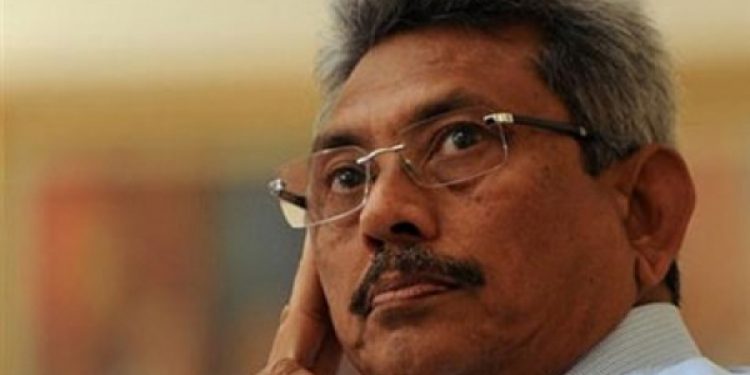
Colombo, May 24 (newsin.asia): Gotabaya Rajapaksa, who is likely to be the Joint Opposition’s candidate in the next Sri Lankan Presidential election, has hailed Narendra Modi’s emphatic victory in the recent Indian Parliamentary elections as a good thing for the growth nationalism and national security consciousness in the South Asian region.
Nationalism and national security are key factors for South Asian countries,” Gotabaya said in his tweet congratulating Modi.
Gotabaya, who was Defense Secretary during the last war with the Tamil Tigers, said that the people of India had endorsed Modi’s focus on national security and nationalism and have seen him as the guardian” of their country.
National security and nationalism are key factors in India’s journey towards development,” the Lankan leader said as he sent his congratulations and best wishes.
New Delhi, May 24 (Indian Express): Although still very low, representation of Muslim Parliamentarians in 17th Lok Sabha may go up slightly over the last term.
At last count, 25 MPs are likely to be elected, against 23 in the outgoing Lok Sabha.
Muslim representation in the Lower House comes to less than 5 per cent, way below the community’s 14-per cent share in total population.
TheBJP, leading in 303 of 542 seats, is again the only winning party in general elections not to have a single Muslim MP. The party had given tickets to two Muslim candidates in West Bengal, where the community accounts for about 27 per cent of the state’s population; one in Lakshadweep, which has over 95 per cent Muslim population; and three in Muslim-majority Kashmir Valley. None of the six candidates have won or are in the lead.
Muslim representation in the Lower House comes to less than 5 per cent of its total composition, way below the community’s 14-per cent share in total population.
New Delhi, May 23 (The Guardian): As India’s opposition Congress party went down to a landslide defeaton Thursday, its leader, Rahul Gandhi, was also convincingly beaten in his own parliamentary seat – a north Indian constituency that had sent three of his family members to parliament in the past half-century.
The loss of the family bastion seat of Amethi underscored the dwindling relevance of south Asia’s most famous political dynasty in Narendra Modi’s new India”, alongside the decline of the pluralistic vision ofIndiathat has been synonymous with the Nehru-Gandhi family for the past seven decades.
The public is the master and the master has made its decision,” Gandhi, 48, told a press conference in Delhi, where he conceded defeat to the ruling Bharatiya Janata party (BJP) candidate, Smriti Irani. Gandhi will continue to sit in the Indian parliament in a second seat, Wayanad in Kerala state, that he won easily on Thursday.Congress was trounced by Modi’s party in 2014 and reduced to its worst ever showing of 44 seats. It improved on that result on Thursday, but loss of Amethi and the BJP’s penetration of the country’s east, north-east and south confirmed that Gandhi’s party has been superseded as India’s only national political force.
The loss will revive questions about whether Gandhi and his family should relinquish control of Congress to fresh faces, exactly a century since his great-great-grandfather, Motilal Nehru, took the helm of the party that led India’s freedom movement.
Jawaharlal Nehru, Gandhi’s great-grandfather, fiercely opposed Hindu nationalism and sought to establish India as a secular country, a vision the modern party continues to uphold.
Under Modi, the staunchest Hindu nationalist ever to occupy the office, that tradition has been recast as a long national nightmare, blaming it even for the breakup of the subcontinent.
It is in your character that the division of India happened,” Modi told Gandhi in parliament in February.
The country was broken into pieces and you sowed the poison. After 70 years of independence, not a day passed when the 125 crore [1.25 billion] Indians do not get punished for your sins.”
Though dynasties continue to be common in Indian media, business and politics, Modi has successfully drawn the contrast between his biography as theson of a poor tea sellerwith Gandhi’s more gilded upbringing.
The Gandhis are a comfortable family,” said BJP spokeswoman Charu Pragya, echoing a typical charge. They like where they live, they like their life, their holidays. They are not willing to make a change. For Modi the change comes from deep within.”
Congress party stalwarts such as Sam Pitroda argue that the Gandhi family’s long history in politics should be seen as asset. They are not kids who grew up on the street,” he told the Guardian last month. They bring a certain pedigree.”
He recalled recently travelling to a Gulf country with Gandhi, where they met an older leader. [The ruler] said to him: ‘When I went to India, you were three years old, and you took my headgear and put it on your head.’ He told him he was like his grandson … Now that’s an asset,” Pitroda said.
Priyanka Churvedi, a former Congress spokesperson who fell out with the party earlier this year and joined a rival, said the party needed to understand that India had changed.
This country is extremely aspirational,” she said. It has amajority population[younger] than 35. They are grateful to freedom fighters but they do not want to be taken back there. They want to know what is in store for them in the future.
Sri
Lanka’s sustained focus on mine risk education and awareness creation makes it
an exemplary model for the rest of the world, international experts
participating in an interactive panel discussion, chaired by Ambassador A.L.A.
Azeez, the Permanent Representative of Sri Lanka to the UN in Geneva, reiterated.
Deliberating
on the sidelines of the Intersessional Meeting of the Anti-Personnel Mine Ban
Convention (APMBC) held from 22 to 24 May 2019, experts
in mine action, humanitarian disarmament and human rights appreciated the
remarkable progress achieved by Sri Lanka in mine clearance, mine risk
education and victim assistance, paving the way for the return of, and housing
and livelihoods for, thousands of affected people.
The
well-attended panel discussion ‘Towards a mine-free Sri Lanka in 2020:
Challenges and Prospects for Partnerships’, drew in representatives of
international organisations, implementing partners and the donor community, in
addition to several mine action experts, academics and diplomats.
Mr. V.
Sivagnanasothy, Secretary to the Ministry of National Policies, Economic
Affairs, Resettlement and Rehabilitation, Northern Development and Youth
Affairs, Ambassador Hans Brattskar, Permanent Representative of Norway to the
UN in Geneva and the President of the forthcoming 4th Review
Conference of the APMBC, Ms. Asa Massleberg, Advisor – Strategic Management of
the Geneva International Centre for Humanitarian Demining and Ms. S.
Jaladeepan, Director and National Focal Point coordinating the National Mine
Action Programme, made presentations at the discussion, sharing their views and
perspectives on Sri Lanka’s achievements as well as challenges
faced.
Sri
Lanka’s success in establishing an effective national ownership of its mine
action program, integrating gender diversity into it, collaborating effectively
with international stakeholders, and contributing to the development of
communities, received special commendation at the event.
When I read the article above published by Colombo Telegraph which is ,a
website ready to criticize any development in Sri Lanka ,I recall an article
published by me in Lankaweb in Jan 2017
(illustrated below).
I
myself as an investor has been pushing for many such projects, and the
pussyfoot attitude by some bureaucrats and corrupt politicians who have not
been supportive has hampered the progress.
Whether
it is a tyre factory, or a steel mill, we should look at it positively and find
avenues, to mitigate any possible environment damage.
For an
example .experts should look at whether iron Ore brought to Sri Lanka will be
unloaded direct from the bulk carrier or will the investor use any lightering
vessels to transport ore from large bulk carriers anchored in the deep harbour
which can cause spill and dust
( we have similar problem with the coal
operation in Norrocholai)
What
type of fuel they will use for melting raw material ?
Electricity will not be possible due inadequate
power available in Sri Lanka .I proposed to install a parallel LNG powered
Power plant in parallel to provide power /fuel for the steel melting plant and
give excess power to the grid.
If the
steel is sourced by scrapping large vessels, one should look at how the ships
which will be scrapped are beached.
Will
it be on to solid ground during high tide like in Indian State of Gujarat where
at high tide they force beach the ships before commencement of cutting .It cannot be done in Trinco due to
low difference in high and low tides in Sri Lanka .
As a
shipbuilder ,I whole heartedly support these type of ventures whether the funds
come by money launderers who are being accused of pilfering national wealth
from our country or from genuine sources
as long as it gives a return to the country .
Who is ( NOT)
helping business tycoon Nandana Lokuwithana?
Posted on January 31st, 2017
Dr
Sarath Obeysekera
Sometimes
back I was invited by Nandana Lokuwithana to discuss the possibility of setting
up a ship breaking yard, using Turkish technology to minimize environment
pollution. With some political backing he flew over Trinco to select an area
within the harbour ,where we were discussing how to place a floating dock
on to which old ships can be hauled in and broken up.I even suggested that we
should install a floating LNG plant and use the gasified LNG to run generator
to supply power to CEB and use part of LNG to melt the steel .His plan was to
transport steel billets to Oruwala by train.This was an ideal project and
he was willing to find investments.
People
say that he is from Rural Pollonaruwa and went to Dubai to do a small job, and
later acquired some means to buy off the Steel Mill owned by Koreans who were
not running it well.Whether it is his own money or he was acting as proxy,his
ideas were brilliant and sustainable .Some people stash the money in many other
countries like Switzerland or Panama ,but the money is coming back to our
country ,Hence the claim that he was using someone else’s money is Sri
Lanka is better than buying Yachts in Monaco and buy properties in US or South
of France.
It
is such a stupidity to stop the tyre industry in Horana where rubber is
availabe,which he intends to start with his own investment and putting a fork
to his drive wheel by shortsighted politicians who may be wanting a small
cut from the investment .
The
claim that land was given at 100 Rs per acre may be only way he could justify
the investment. If you try to get state valuation for a land which is abandoned
, for a use which can derive tangible and intangible benefits ,why not ?
Even
Lee Kwan Yew, father of modern Singapore did the same thing .Land was almost
given free, so that he could entice them to invest.
Sri
Lanka can never grow with such attitudes, We have to be more forward looking if
we need to develop.
Media Secretary Western Province Governor’s Office
COLOMBO-
Old boys and well-wishers of the oldest Madiwela Sri Rahula Maha Vidyalaya,
whose name has been changed to Jaya Isura
Vidyalaya, have urged President Maithripala Sirisena to retain the
original name of the school because of its historical and cultural
significance.
The
group of representatives submitted the petition addressed to the President to
Western Province Governor Azath Salley at a meeting held at Governor’s Office
on Friday.
In a
request made to the president, the group of old boys and well-wishers have said
that the original name of the school was changed by the former Chief Minister
of Western Province Isura Devapriya in April this year. The name of the
school was kept in memory of the founder of this institution,” Ven. Nagasthenne
Aruna Thero, secretary of the People’s Movement for Protection of Schools.
The
Thero said that he would give the authorities seven days time to change the
name of the school to its original name, failing which, he said future action
will be taken as a remedial measure.
In
response to the representation, the governor said that he would take up this
matter with the president and would act accordingly. He recalled that he had
issued a directive earlier that schools should not be labeled with fancy names
unless the buildings are fully funded by philanthropists in memory of their
beloved ones.
London (CNN)Brexit has destroyed another British Prime Minister.
Three years after voters in the UK mandated their government to take Britain out of the European Union, Theresa May’s failure to do so has finally caught up with her.”I have done my best,” she said in an emotional statement on the steps of Downing Street. But as she admitted, it wasn’t enough.It always seems to end like this for leaders of May’s Conservative Party, divided for years over Britain’s relationship with the European Union. Her predecessor, David Cameron, quit the morning after 52% of the UK voted to leave the EU, having presided over his own political miscalculation.Under her leadership, the Conservative Party has gone from being seen as the natural party of government to the exploding clown car of politics. Worse than being unable to govern, the Conservative’s mishandling of Brexit has led to the public humiliation of the UK’s oldest and most successful political organization, suffering electoral losses to a rival party that didn’t exist six weeks ago.May had previously said that she would stand down if her deal was approved, letting someone else take control of the next stage of Brexit. It turns out that top-to-bottom rejection of her deal and her leadership from pretty much everyone involved in politics would also do the trick.
Theresa May expected to announce resignationMay’s legacy will be defined by failures, public humiliations and catastrophic political miscalculations. Some of these were out of her hands. Some were the result of poor advice from those she chose to surround herself with. Some were because of the unprecedented political crisis that would come to dominate her time in Downing Street.But much of it was her own fault. Many of her decisions had a directly negative impact on her ability to lead. The problem for May wasn’t just that British politics has been deadlocked for the best part of three years, but that she repeatedly engineered ways to erode her own authority.By the time she accepted her number was up, she had lost the confidence of MPs, members of her own party and even her own Cabinet.
‘The nasty party’
Before taking the job, May had long been tipped for high office. In 2002, while serving as chair of the Conservative Party, May addressed the faithful at their annual party onference. At the time, the Conservatives had been out of power for five years. Tony Blair had successfully won over some traditional conservative voters and the party had an image problem. This also meant it had an electoral problem: “Our base is too narrow and so, occasionally, are our sympathies. You know what some people call us — the nasty party,” May said.The speech went down a storm and paved the way for a new era. In 2005, the party would elect David Cameron as leader. Cameron knew the importance of May’s support, so made her a close ally and, along with other Tory moderates, oversaw a sweeping modernization of the party. It would come to be a party that believed in helping communities, the “Big Society”, and would eventually be the party that legalized same-sex marriage in the UK.
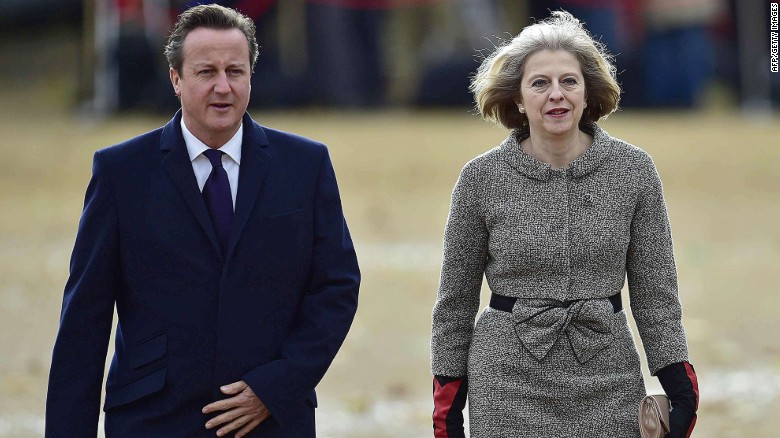
Former UK Prime Minister David Cameron with Theresa May in 2014.Cameron became Prime Minister in 2010, albeit as leader of a coalition government with the center-left Liberal Democrats. Again, knowing May’s importance and her appeal to the more conservative members of the party’s base, he made her Home Secretary.May was always considered one of the toughest members of Cameron’s Cabinet. As Home Secretary, she accused the Police Federation — the association that represents rank-and-file police officers in the UK — of “crying wolf” over budget cuts. She presided over a policy of creating a “hostile environment” for illegal immigrants. She even took on the EU on matters ranging from immigration to the deportation of high-profile terrorists. She was a force to be reckoned with and seen as one of the cornerstones of conservatism in a coalition compromised by liberals.It was a shock to some when in 2016, May announced that she would be backing David Cameron’s Remain campaign. But her decision to do so, it turned out, was a masterstroke in triangulation. When Cameron resigned in the wake of the result of the Brexit referendum, May was seen as a safe pair of hands. She backed Remain, but her track record in the Home Office meant she was tough enough to stand up to the EU. She was the best candidate to unite two sides of the Conservative Party that voted for different things.At least, that was the theory.
An alienating Prime Minister
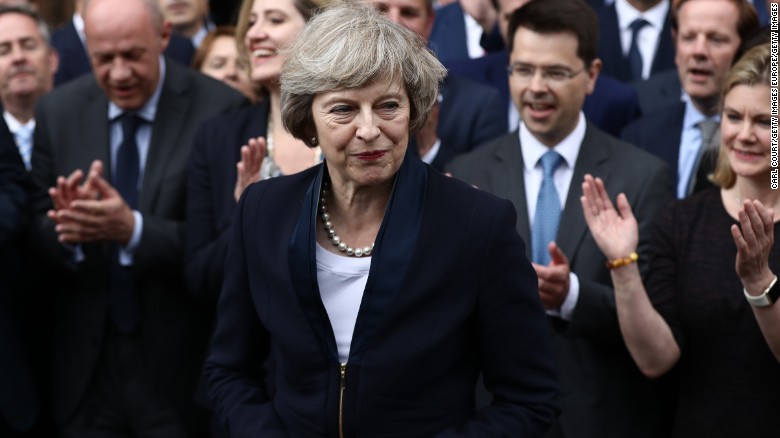
Theresa May accepts the leadership of the Conservative Party in 2016.However, from the moment she became Prime Minister, she began alienating people whose loyalty she would later regret not being able to depend upon.In the months that followed May’s ascension to the top job, her Brexit position hardened. Rather reach across the political divide within her own party, the Prime Minister’s embrace of Brexit was similar to that of the evangelism of a born-again Christian. Her new, ardent Brexiteer persona won her support on her own backbenches and in the Brexit-supporting media. The Daily Mail, an anti-EU newspaper, declared that May would “crush the saboteurs” who sought to frustrate Brexit.
Theresa May is “desperate,” says Alastair Campbell05:42While her new position as the defender of Brexit Britain won her some friends, it put off those who wanted a softer Brexit or no Brexit at all. But May and her advisors didn’t seem to realize how she was seen outside of the Brexit bubble.This new confidence led to May and her inner circle making their first catastrophic mistake. In June 2017, despite having made little progress on Brexit plans, May held a snap election, convinced she could to increase her parliamentary majority of 13 to something north of 100. A result like that would have given May an unassailable position from which to push through her Brexit strategy.Her plan backfired. A limp election campaign in which May seldom appeared in public — and seemed hellbent on avoiding any members of it — made her look out of touch and power-hungry.The opposition Labour Party took advantage. It managed to position itself not only as the more pro-Europe option, but its leader, Jeremy Corbyn, seemed more human. The Conservatives emerged as the largest party in Parliament, but May was stripped of her working majority.From then, May couldn’t catch a break. Less than a week after her unnecessary humiliation, Britain was struck by tragedy. The fire that ripped through Grenfell Tower in London left 72 people dead and a community shattered.
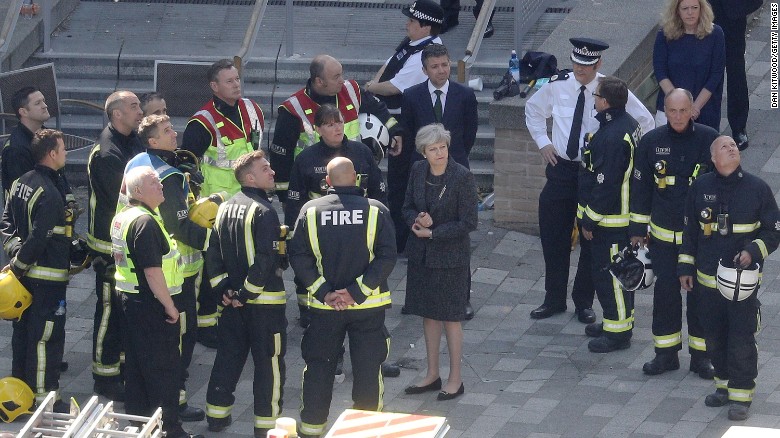
Theresa May didn’t meet Grenfell survivors when she visited the site of the fire.May’s response was widely criticized. She visited the site, but didn’t meet with any of the survivors. It made her look cold and unsympathetic. While no one seeks to use a disaster like this for political gain, May’s woes were compounded by images of Corbyn hugging survivors. Even the Queen put on a better show.Worse for May was that the Grenfell tragedy came to be viewed by many as the result of Conservative policies under David Cameron. Whether this was true or not didn’t matter: Labour was on the side of the people; May simply didn’t care.Less than a week after Grenfell, the UK was struggling with another tragedy. A British man with a history of violence and fascination with anti-Islam ideas drove a van into a crowd of Muslims, leaving the Finsbury Park Mosque in London after evening prayers. When May visited the scene of the attack, she was heckled by bystanders. The political atmosphere in the country was becoming febrile.May’s authority was under increasing pressure. Her election failure had forced her to sack her political advisers and enter into a supply and confidence agreement with the Northern Irish Democratic Unionist Party, who in theory prop up her minority government. More on this later.
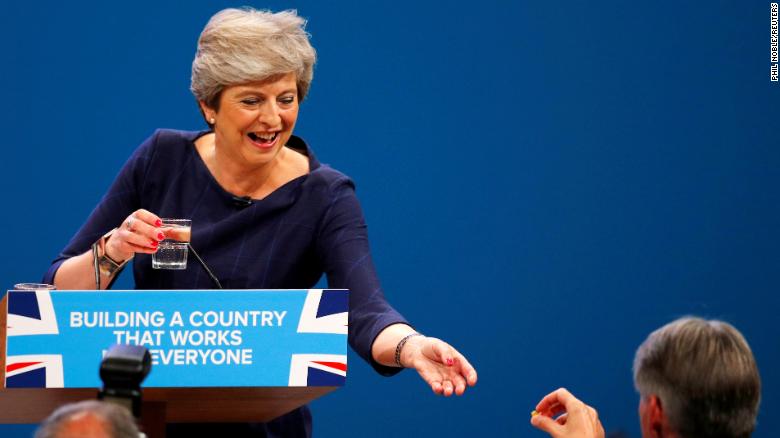
Theresa May accepted a cough sweet during a speech in 2017.May was forced to face the music at the annual conference of her Conservative Party in October 2017. Her now infamous speech, in which she suffered a coughing fit, was confronted by a stage invader who handed her a P45 (the UK equivalent of a pink slip) was topped off with the set falling apart behind her. It came after days of mutiny from within her party, which numerous of the not-so-faithful publicly saying that it was time for May to go.At this point, one might be tempted to feel sorry for the PM. But hold on a second. Sure, she can’t help a cough, a stage invader or bad set design. It’s very unlucky. But she could have avoided her fate of having to stand before a room of people utterly sick of her.
Brexit turns sour
It was around this time that her Brexit plan started to go badly. Meeting after meeting in Brussels resulted in EU officials and leaders publicly admonishing the UK’s Brexit negotiators.Over time, May’s Brexit position softened as talks with the EU became friendlier and common ground was reached. But this is where May made another political error. While talks had been going well in Brussels, May’s Brexit plan was still a secret to many in London. It did not matter that the government and EU officials agreed on obscure but important details, whether the British public or political class would accept it was another thing altogether.That failure to carry a divided House of Commons with her resulted in a deal being agreed that parliament came to detest. And that’s why, every time it was put to a vote, it failed.
Theresa May with European leaders in Brussels. They came to disrust anything she said.This created problems for May both in London and on the continent. Over time, EU leaders simply stopped believing anything she said. The same goes for Brexiteers, who once saw her as their champion. The low point of trust in her own party perhaps came at a meeting of hardline Brexiteers last year, when members of her own party were heard chanting “Theresa the appeaser,” a reference to former Prime Minister Neville Chamberlain, infamous for striking a deal with Adolf Hitler in 1938.Outside of Brexit, her time in the Home Office came back to haunt her more than once. First, the Windrush scandal. Her “hostile environment” policy had created legislation which required immigrants to prove their status by providing paperwork when trying to do everyday things like renting an apartment or taking a job.
The return of Brexit’s Nigel Farage 02:25Unintentionally, this hit a generation of immigrants from the Caribbean, who came to the UK in the post-war years to make up for a shortage in the workforce. Many of them were without paperwork and suddenly faced the threat of deportation, despite having lived in the country for decades.Public outrage once again made May look out of touch and unsympathetic. It also meant that one of her arch-loyalists, Amber Rudd, was forced to quit as Home Secretary, the government department that oversees immigration.Other decisions made during her earlier period in Cameron’s government have caused problems for May. The UK’s knife crime crisis has been blamed on cuts to police budgets she implemented. While the veracity of this claim is unclear, defending a policy of cutting police funding while parents are seeing their children murdered is not a good look.But it was her mishandling of Brexit and poor political decisions that made governing impossible for May.
Cabinet support falls away
As the Brexit endgame drew closer, she was visibly losing the support of her Cabinet. After a meeting at the Prime Minister’s country retreat, Chequers, in which she outlined the latest Brexit policy position, she lost two important ministers. Boris Johnson, her Foreign Secretary and the most prominent Conservative Brexiteer, and David Davis, her Brexit Secretary, decided they’d had enough.
Why divisions in the UK run much deeper than Brexit 03:26May had a problem. She needed to fill these positions with safe pairs of hands while retaining the Remain/Leave balance in cabinet. Dominic Raab, another prominent Tory would take over as Brexit Secretary.Things calmed down for a bit and May was able to celebrate a huge victory on November 14, as news broke that an agreement had been reached with the EU. The Withdrawal Agreement was proof that there was a way out of the EU that didn’t cross the UK’s red lines and was acceptable to the EU.The celebrations were short lived. Dominic Raab, May’s second Brexit Secretary, resigned less than 24 hours later. More followed. Her authority was falling apart in front of everyone’s eyes. The deal was hated in all corners of the House of Commons. Knowing it would suffer a heavy defeat, May held off holding a vote on the deal until January this year. She was handed the largest defeat in the history of the House of Commons — a margin of 230.Meaningful Vote 2 didn’t go much better. May’s deal was defeated again on 12 March by 149 votes. Brexit was slipping out of her hands.Nothing illustrates this better than the fact that in order for May to have a credible go at a third vote, she needed the EU’s help. At the March 22 EU summit, the 27 leaders of the other EU member states agreed to let May extend the Brexit deadline if her deal passed, and offered her two ways out of the mess.Even that wasn’t enough to satisfy the House of Commons. Lawmakers went as far as trying to take the power out of May’s hands. For the first time in living memory, the legislative branch of government dictated the order of business on the floor of the House of Commons. The plan was to try and find a majority for an alternative to May’s plan. But isn’t just May that has a Brexit problem: the House of Commons has been very good at saying what it’s against, but useless saying what it’s for.
Everything you need to know about the European electionsAt the end of March, the PM made her final move. She told her Conservative lawmakers that if they backed her deal, she would go. May was throwing the kitchen sink at Brexit — and staking her entire career on it.It didn’t work. Nothing May could offer was enough to avoid her final humiliation, as her own party tried to change its own rules to force her from office.Another British Conservative politician, the divisive Enoch Powell, once said: “All political lives, unless they are cut off in midstream at a happy juncture, end in failure.” While May might be in good company on that front, it’s hard to think of another politician whose legacy will be so defined by catastrophe.
When
I read open views in newspapers and other media devices, I found that many have
a problem, why Islam spreads rapidly in many countries and nobody has opted to
discuss the major reason to rapidly spread Muslim religion. Islam is a religion like other religions and
no one can identify that Islam has a specific spirituality or a logical philosophy
than other religions. In fact, we can see that Islam contained many practices
and attitudes like in other religions and sometimes against humanity expressing
mythical views that they do everything (good and bad) on account of God or to
satisfy God. Does God expect from people to work against humanity? Why people have specific interest in such a
religion which goes against humanity? This is an unresolved question among
people for a long time and many academics did not consider finding solution to
this question. Real Islamists believe that they have five roles to play that
are Taweed (there is no God but Allah himself), Salaat (pray five times a day),
Zakaat( Muslim who have money must give a percentage of 1/40 to help people,
Syaam (fasting during the Ramadan) and Hajj (Pilgrimage to Mecca). The concept
of Taweed means believing a one God, which is related to many religions such as
Judaism, Christianity, Catholics, and Hinduism and it doesn’t further mean that
this concept forces believers to kill non-believers.
Islam
began to spread after 600 years of Jesus Christ and the social doctrine of
Jesus Christ was stricter and was based against individual selfishness of
people and he criticized the social policies and practices of Judaism in his
time as he happened to live in that society. Jesus Christ strongly criticized
the ideas and practices of family relationships in that society which he was
living and the way of people looked at God in Judaism in that time. Jesus Christ was against the divorce and
educated God as a loving father than a character that takes revenge from people
and he educated two commandments that people have difficulty to follow in an
environment with full of desires, but they were the best social and spiritual
policies for the spiritual progress of people.
Such policies individually and socially centered and promoted people to
get away from selfishness allowing others to give opportunities to live in the
society. Practically, it was a hard task
for individuals as people were full of desires.
After
600 years of Jesus Christ, Islam emerged and attempted to change the policies
and teaching of Jesus Christ, allowing for a male-dominated society. Islam
recognizes Jesus Christ as a Messenger of God, but the nature of recognition
does not clearly appear that Islamists agree with the teaching of Christ. Islam liberalized marriage and divorce rules,
and the concepts and practices that were tabooed by Jesus Christ who advised a
human to engage in altruistic activities against selfish life. Islam allows an
easy divorce system and generally treats women like slavers of men despite
modern changes in Islam. Old Testament and Koran clearly indicate the beginning
of a female and the nature of the beginning of a female clearly showed that
male and female are equal when they live in this world and either male or
female cannot regard, opposite is inferior while living in this world. When
society consists of assigned more roles to male other (female) appear as
playing less role, but the truth was that the role played by either male or
female could not be judged by narrow arbitrations degrading the role of women
is inferior. However, the society
developed bias folklore against the values of female.
When
Islam supports for male-dominated society and has a flexible rules and
procedures for divorce, marriage and pro polygamy in human behaviour, Islam was
attracted by people who had a mentality to a selfish and a clinging life for
desires. In that way, Islam rapidly
spread in the world because Islam supported to desires of male over female.
There is no argument that if Islam had strict rules on marriage and divorce and
women rights, people would have not gone to Islam looking for spiritual
liberation. In modern world, we can see
that people used to look for spiritual liberation from various forms of
Buddhism (Mahayana, Hinayana, Sen and Jain etc). Hinduism also educates that
all lives began are sacred as they are parts of God and should be treated with
respect and compassion. When looks at Islamic society with the practice of
Muslim personal laws in Sri Lanka, it is quite difficult to see that Islam
treats female as a part of God and treat them with respect and compassion. No religious person uses a pregnant woman as
a suicide bomber and so-called Islamic leader of Wahabism used a pregnant woman
as a suicide bomber to kill others. It
was a crime against humanity.
Maldives
Islands was a Buddhist country and the major reason to change religion of
people in Maldives was dishonest strategies of Muslim traders and liberal rules
to divorce and remarriage in Islam. The
liberal ruling for divorce and marriage in Islam and encouragement to polygamy
were the major contributing factors to rapid expanding of Muslim religion. In the modern era, this idea might subject to
altercations as many Islam countries have changed their laws, traditions and
attitudes, as people had internal demands to change many practices, especially
after the Iraq war and Islam religion faced to a change in practice as well as
customs. However, the concept of taweed has not changed or interpreted in the
way people to respect in culture, religion and society.
Historians
in Sri Lanka have opinion that Islam came to Sri Lanka as a result of the
behaviour of traders came from Eretria, Aden and Persia as these traders
married Sinhala women in the country without disclosing whether they were
married or not before to Sinhala ladies.
Prof G.V.P Somaratne (2007) states trading business in Indian Ocean
relegated to Islamic traders and harbor towns of Sri Lanka were also dominated
by Muslim traders. In fact, the spread
of Islam in Sri Lanka was not a result of specific reason that Islam was
carrying a spiritual and specific philosophical message over other religions,
but it was Sinhala women who married to Muslim traders and allowed to be their
kids convert to Islam.
Robert
Knox wrote in his book (An Historical Relation of the Island of Ceylon) that
King Senkadagala Rajasinghe had a strong conjecture on the behavior of Muslim
people as the behaviour of them was suspicious to him. King Senkadagala Rajasinghe was not addicted
to using too many women, he was not mad on persistent to liberalize marriage
and divorce rules in Islam in Sri Lanka.
Robert Knox further states that Muslim people at that time were poor and
King insisted provide donations to them. It can assume that Muslim traders
deserted their local wives and children and went back to own countries without
providing means to live in the country.
History also shows that King Senerat allowed Portuguese to destroy
Muslim Mosques in seasides and other important note is that a King of Sri
Lanka, who was in 1210 BC was killed by a conspiracy as he was an Islamic
faith.
In
countries where divorce is legally allowed and liberalize remarriage rules, the
spread of Islam is very slow and in countries where indirectly allow polygamy
and have traditions to cling life of desires, we can observe that Islam
religion is completely disregarded by people. In many Western countries where
there are more liberal policies and equal opportunity for women,
anti-discrimination laws, Islam would not rapidly expand as individuals can
achieve what they expect without converting to a specific religion. Current Muslim people in those countries
migrated as people of Islam faith have a conflict in family life because their
kids do not respect the traditions of Islam culture. In fact, these Muslims are struggling to keep
their children in Islam respecting to practices in original countries.
Many
religions in the modern world have spiritual leaders and religions like
Catholic has an international leader, and devotees of religion follow the rules
of a leader. However, Islam has no
International spiritual leader or publicly accepted and known to all people,
and the public has suspect what is the leadership guidance and how to correct
the mischievous behavior of devotees. In Sri Lanka, Buddhism is the major
religion with many devotees and it had a leadership which has the power to express
the accurate philosophical guidance.
People see that from time to time leaders come to media and express
views on the exasperating behavior of devotees or movements.
A
report published by Shenali Waduge in Lankaweb summarised reported events after
Easter Sunday attacks and information given in the report surprising to public
and seems that radical Islamists worked to acts of terror all over the country
and the government is responsible for such a massive expansion of planned terror
activities and depriving intelligence services and finding of them.
Since
the beginning of this year, there had been public outcry for the release of
Gnanasara Thero. But our illustrious President Sirisena did not act
at that time. Now, it has become clearer that President Sirisena did not
act himself on intelligence inputs received regarding April 21
attack. Therefore, the President need to carpet the public anger against
him by creating a new situation.
Many
comments made by Gnanasara Thero in regard to Muslim activities have come
true. In his speeches, he has clearly identified the dangers and if the
President and the dubious Prime Minister Ranil Wickremasinghe did act at
that time, hundred of lives could have been saved.
Releasing
the Thero at this time, in my opinion, is similar to adding oil to fire.
This decision is most likely to ignite anger against innocent
muslims. The Thero most likely to become much more aggressive and
create unrest in the country, paving way for the postponement of Presidential
and General Elections.
Since
the time President Sirisena appointed President Mahinda Rajapakse, he had the
ulterior motive to persuade SLPP to support him for the second term.
President Sirisena is now fully aware that his plan will not
succeed. To split the votes of Gotabaya Rajapakse, he now
plan to use Gnanasara Thero and seek his support for his candidacy.
We
have a President and a Prime Minister failed in their duties to provide
security to the Nation. They have no regard to the
hundreds of lives lost and several others injured.
The
behaviour of President Sirisena is very similar to a Monkey with a Sword in its
hand.
It
can be argued if Sarath Fonseka can be pardoned, why not Gnanasara Thero?
In
the jungle of dirty politics of Sri Lanka, we pray peace and harmony to all
citiens in these difficult times. The general public must be educated by the
Opposition to prevent them causing communal unrest by falling into the trap set
up by a Foolish President and Prime Minister.
Dhammapada
Verse 63-Ganthibhedakacora Vattu:
Ya
Balo mannati balyam
Panditovapi
tena so
Balo
ca Panditamani
Sa
ve Baloti vuccati”
Conceiving so his foolishness
the fool is thereby wise,
while ‘fool’ is called that fool
conceited that he’s wise.
Explanation: If a foolish person were
to become aware that he is foolish, by virtue of that awareness, he could be
described as a wise person. On the other hand, if a foolish person were to
think that he is wise, he could be described as a foolish person.”
Newspaper reports mention how the minister of Power and
Energy and the CEB engineers are trying
to meet a systemic power shortage looming over Sri Lanka. The Easter Sunday
carnage made everyone forget about the grave systemic problems facing Sri
Lanka. Sri Lanka seems to lurch from one emergency to another in every sector,
like a ship gone adrift. A May 20th report in the Island states that
CEB engineers warn of power cuts …”. This is a result of not staying course
with long-range power production plans
when governments and their favourite financiers changed. Furthermore, the
CEB plans were inconsistent with rising concerns on pollution and global warming. The potential
of solar- and biomass energy was considered to be unimportant when the CEB energy plans
were made decades ago.
In a previous article labelled part-I that appeared in the Lanka web (https://www.lankaweb.com/news/items/2019/05/06/clean-practical-solutions-to-sri-lankas-energy-crisis-i)
we examined how Solar power can provide a large part of the needed power by
using floating solar panels in reservoirs already equipped with hydro-turbines
and how they can be deployed to provide FIRM
POWER without batteries or
alternators. The proposal is to store solar electricity (or wind generated
electricity) by using the alternative
energy source (be it wind or solar) for re-pumping water back into the reservoirs. Then nearly
the equivalent amount of electricity can
then be re-generated in the usual manner by the hydro-turbines. Biomass energy offers an even bigger inexpensive
source of firm energy that can be
made available at will.
Ailing
agricultural sectors can be re-booted inexpensively to become vibrant bio-energy industries. The
potential can meet Sri Lanka’s needs for decades to come, and even to sell to
the Indian continent using a cable link, breaking the isolation of Sri Lanka’s
power grid.
There are mind
boggling possibilities. Scientists can
engineer, within the decade, whole forests
with genetically modified plants
that store lots more carbon than plants available today. The relevant genes are
already known. Such plants can fight climate change and also greatly increase the efficiency of bio-energy plants
A READILY
AVAILABLE BIO-ENERGY SOURCE.
Bio-energy has been talked of for decades, but with its implementation.
There are, as yet no turn-key solutions
or commission-carrying businessmen. The simplest approach is to burn any kind
of fast-growing wood, bamboo, bagasse
etc., in high-efficiency furnaces and
run generators.
This process is
carbon-neutral” as the CO2 released is that absorbed by the plants during growth. The flue gases are relatively free of
the toxic nitrous and sulphurous fumes
found in coal-fire or diesel emissions. There is sub-micron fly ash, although minimal compared
to coal. While the logistics of
collecting the biomass is big,
private companies like GreenWatt in Moneragala have set up 10 MW power plants using
fast-growing Gliriicidia. CEB engineers consider these as small potatoes”, but
thousands of such plants can be set up easily in the plantation sector.
There are several
inexpensive and efficient processes for
generating energy for Sri Lankan needs for ever. Here we discuss just ONE eminently practical solution
that simultaneously reboots the ailing coconut sector.
THE COCONUT INDUSTRY AS AN ENERGY GIANT.
The industry concentrates
on the coconut kernel as copra and desiccated coconut. The local householder
buys coconuts for cooking. The milk is hand-squeezed inefficiently. The
water, the spent kernel (‘polkudu’), the shell and the husk are wasted or used in
primitive highly polluting industries (e.g., making coir, rugs) with only
a minimal value addition, while the
demand is unsteady.
Coconut shells are
indeed used as fuel or for making activated carbon. According to Paddon and Parker (1979) the
husk has some 6700 kilo Joules per nut,
i.e., almost 5 KWh of energy per kilo of
husk! So the energy from ten husks is roughly
the same as from one litre of petrol! Only part of the heat can be converted into electricity
because of the Carnot-Rankin loss to
entropy.
The water, kernel
and the shells already have a good market value. So we use the husk and all
waste for the energy sector. Sri Lanka
produces approximately 2.5 billion nuts/year, a drop from its better days with 3 billion.
Using the dry weight (following FAO data) of the husks, the 2.5 billion husks are equivalent of about 2 million GWh per
year, i.e., some 5.3 billion liters of
petrol/year.
If even 20% of the
husks were collected, and if the heat-to-electricity conversion
efficiency is 30%, an energy yield of 0.3 billion liters of
petrol, or about 150,000
GWh from the husk alone is possible. Taking the total annual power need
of the country to be about 15,000 GWh, the coconut sector can readily
supply ten times the energy needs of the country right now!
Sri Lanka’s ailing
coir industry and allied industries
like husk chips, coir pith (‘kohubath’) for soil
remediation, `kohu’-panels, etc
are simply methods of discarding
valuable energy. Just as Sri Lanka throws away the coconut water, kurumba Komba” (used coconut), the
potential of the husk too is wasted when used in traditional agriculture or rural
industries.
The coconut husks
are traditionally dumped in pits or
submerged in cages near waterways for
‘retting’, prior to the fiber extraction
by primitive methods dangerous to workers.
The water become polluted and
emits bad odors; oxygen depleted effluent
full of organic matter deadly to aquatic
biota are a byproduct of this industry.
Recognizing the
energy potential in coconut, a different industry model must be
legislated. Whole nuts should only
be sparingly available in the market.
Just as paddy is processed and only hulled rice is marketed, coconuts should be processed to market the kernel and
shell, while the coconut water should be canned and sold. The husk is the fuel for high-efficiency
burners whose heat generates
electricity. The sale of individual coconuts rather than the transformed
products should be highly taxed. Only those who grow coconut in their home
gardens for private use can have the luxury of consuming coconuts in the
traditional way. A higher price for husks will tempt everyone to sell their
husks to the power company. The present
‘waste tariff’ on husks must be
lifted and the power industry be given a 20-year tax credit. There can be power
hundreds of companies in large coconut estates.
So we have no need
for coal or liquified gas, or ransoming Sri Lanka’s sovereignty to foreign
vendors, or destroying the environment, in order to be self-sufficient in energy. Similarly,
mini-hydro companies should be banned as they render little and cause
much ecological damage. No oil or gas exploration in the neighbouring
seas should be allowed as it is intensely environmentally damaging. It will further
threaten the nation’s sovereignty as has happened to many small oil-rich
nations now in the grip of powerful consortia.
The coconut acreage need not increase (i.e., no habitat
loss) as the current husk supply far
exceeds the needs for energy production which can start within months
rather than years. Those working
in the ailing coir and allied industries should be absorbed into the energy
sector. The ash from burning coconut husk is rich in potassium, phosphorous and
other minerals.
Husk ash mixed with optimal amounts of humus and urea makes a good fertilizer.
However, controls on metal toxins against
bio-accumulation are needed just as with organic fertilizers. The ash is useful in the construction industry,
e.g., for sand mixes, making bricks or paving stones.
Using gene
technology in agriculture for carbon capture and reuse.
Coconut production
itself can be increased using modern
cultivars instead of traditional varieties, without incurring habitat
loss and in fact aiming to return currently cultivated land back to nature.
Proper fertilizer application, irrigation, and restoring the right of the
coconut grower to use herbicides like glyphosate that are least harmful to the
environment will increase nut production without increasing the land under
cultivation. The use of so-called
organic” methods based on unscientific and outdated myths that rejects the use
of plant genetics etc., should be discouraged.
Use of herbicides enables a drastic reduction in soil erosion and
reduces manual labour.
It is interesting
to note that many anti-rational ideologically motivated programs have contain
in them an attack on genetics. The Marxist” agriculture of Lysenko in the Soviet Union, and the so-called organic farming”
movements of today which also lean on a nostalgic throw-back to traditional
agriculture” are examples of such anti-rational movements. Instead, plant
genetics and biotechnology should be harvested to increase yields, be it in the
output of nuts husks or any other desirable product, while decreasing the area
under cultivation, thus reducing the
habitat encroachment by human activity. The catastrophic decline in
pollinating species, and in biodiversity in general are mostly due to habitat
loss and deforestation caused by humans.
Any tree that is
grown for production of energy for
biomass can be genetically engineered and optimized for increased carbon
capture as well as rapid growth. For instance, mangroves have developed root
systems which contain various types of high-carbon cellulose. Mangroves should be preserved on
their own ecological value and should
NOT be exploited for their bio-mass. But
we can learn from the genetic makeup of plants like Mangroves. That is, genes relevant to high carbon capture by
plants that make, say, Subarin,
can be transferred to many other plants using gene technology. Many
young Sri lankan scientists have now acquired the scientific know how needed in
biotechnology and genetic engineering. Coconut plants re-designed to make
Subarin in the husk would further increase the high energy content of husks,
and also add to temporary carbon storage. Such innovative solutions are needed
if we are to meet to the current ecological crisis by reducing global warming,
and by aggressively returning cultivated land back to nature to preserve
bio-diversity, while getting ready for 11 billion humans by the end of the
century.
CONCLUSION.
We have shown that
effectively unlimited amounts of power are available from the waste
bio-mass of the coconut industry. A similar analysis will be presented in a
future article, showing that
Rubber, Paddy, or maize
etc., can become lucrative energy giants. Genetically
engineered carbon-rich plants can boost the energy harvest enormously, while also
scavenging out green-house gases.
[The Author was a
past-Professor of Chemistry and a Vice-Chancellor of the SJP University in the
1970s. He is currently a Professor of Physics in Canada.]
Mayor Patrick Brown of Brampton City Hall Brampton, Ontario
Dear Mayor Patrick Brown:
Bravo! and you finally did it. You were stroking the Ontario’s Tamil Tigers faces holding onto their tails, for almost a decade, even when you represented Barrie as a Member of Parliament, and spat and kicked the docile Sinhalese lion holding on to a regal sword at the center of Sri Lanka’s national flag.
But, what you didn’t know was that this lion is the
king of Sri Lanka’s jungle where the Tigers roamed dodging whenever they saw a
lion, until one Nandikadal’s sunny day, the lion mauled the tiger to
death on 19 May 2009, and there ended the Tamil Tiger terrorism in Sri Lanka.
So you didn’t like it Mayor Patrick Brown. So you continued with your Mission
wanting to destroy Sri Lanka wanting to divide the island in to two and give
the mono-ethnic, racist Tamil state, Eelam to the Tamil separatists, like your
friend Rathika Sitsabaiesan, carved out of 33% of the north-east
real estate of Sri Lanka bordered by 66% of the coast line. And I
whispered into your ears Patrick Brown asking you not to be so silly. and to
cut-out your mythical dream of a Tamil-Eelam, through my letters. You did
not want to give up.
And finally you got a reaction on 18 May
2019. You woke up the docile Sinhalese Lion from his slumber and over 500
of the Sinhalese Lions an Lionesses woke up with him and they
were angry and mad at you for Proclaiming May 18 as the City of
Brampton’s day of Remembrance of Tamil-Genocide in Sri Lanka, WHICH NEVER
HAPPENED.
The over 500 demonstrating ‘Lion’-voices roared at you
with the words like- Patrick Brown, is a Clown. And you know
what Mayor Brown? They got that slogan a 100% right.
The Sinhalese that you spat at and kicked for a decade are
now awake and ready to accept your challenge. So, what are you going to
do about it Mayor Patrick Brown? Surely, you are not going to stand at the
corner of your office at City Hall, stick your thumb in your mouth and sulk
like a child because over 500 lion and lioness voices are bombarding your
ear drums, wondering what the heck did I do to make all these people mad at me,
and some others among the Sinhalese communities around the globe are mad at me
too
Well… you did it, Mayor Patrick Brown, now deal with it.
Here’s a suggestion, so that you can prove you were right to
the world when you proclaimed 18 May 2019 for the City of Brampton, as the Tamil-Genocide
Remembrance Day, at a public debate with yours truly,, Asoka
Weerasinghe, who says that Tamil Genocide never ever happened in Sri
Lanka and that is a Lie.
This is a good opportunity for you to defend yourself
and come clean as an honest politician.. If there is a Participation Fee
for you to debate me , I can afford to pay you $500 out of my pocket.
If you are going to up your fee to debate me to $1000, I may
be able to manage to scrounge another $500 from somewhere. Well, this is
a Peace Offering that I am prepared to offer you to come clean, and not
an anti-Sri Lankan Canadian politician.
I am prepared to give you another handicap, by allowing your
Speaker of your City Council to be the moderator.
If that is not enough I am prepared to give you one more incentive to debate me in public on that subject of your mischievous Proclamation tarnishing the dignity of my Sinhalese people.
Here it is. Since your Brampton City Council voted unanimously for the Proclamation, I will allow all of them to line up 20 feet in front of me after the debate is over, 30 seconds to pelt me with rotten eggs and tomatoes. But on one proviso that I am allowed to wear a helmet as I don’t trust any of your Tamil vote hungry Tamil-Tiger lovers who might use lapidary rock eggs pretending that they real poultry eggs.
The offer is there for you. Prove to us that you are an
honest politician and not a Tamil-Tiger lover and not on a Mission to
destroy my Motherland, Sri Lanka.
And let me inform you of my Mission which has been
since 4 August 1983, when I got involved as a Canadian-critic of the Tamil
separatist Eelam War – My Mission is not to let any Canadian, not even a
Prime Minister, nor you, Patrick Brown as the Mayor of Brampton, to hurt
my beautiful Motherland, Sri Lanka, unfairly. who nurtured the first
19-years of my life to be an honest ‘citizen in our Global
village’. That is a Big No, No. And I will not let down my
Motherland, ever. So make a note of My Mission, Mayor Patrick Brown
as you will have to deal with me, as you will hear from me every
time you try to hurt my Motherland, Sri Lanka.
I sincerely hope that you will accept my challenge, my Peace
Offering, Mayor Patrick Brown?
A feasibility study had not conducted before presenting the Cabinet Paper on Suraksha Insurance scheme, which was introduced to cover schoolchildren, former Minister Dr. Wijeyadasa Rajapakshe yesterday informed the Presidential Commission of Inquiry (PCoI) to investigate corruption of the current administration.
The Cabinet paper for the Suraksha insurance scheme was jointly presented by Prime Minister Ranil Wickremesinghe and Education Minister Akila Viraj Kariyawasam.
“The decision to introduce an insurance policy for the students came from the Prime Minister and the Education Minister. Before making such a big project that will use government funds, there should have been a feasibility study before presenting it to Cabinet,” he said.
Rajapakshe also said that the insurance should have been managed by the Health Ministry and that the Education Ministry had no jurisdiction or expertise to carry out such a project.
During the first six months of implementation, the Education Ministry had received only Rs. 160 million worth of claims. However the Ministry had transferred Rs. 2.7 billion to Sri Lanka Insurance Corporation (SLIC).
“The Ministry only has to spend around Rs.300 million per year to cover all students but the Ministry had earmarked Rs.2700 million of public money for the insurance policy,” he said.
Last week, the National Organizer of the Trade Union of Graduate Employees Prasad Marasinghe told the PCoI that Education Minister Akila Viraj Kariyawasam and Petroleum Resources Minister Kabir Hashim were responsible for the misuse of Rs. 2,430 million in government funds due to the re-insuring ‘Suraksha’ insurance policies of schoolchildren with a reinsurance company in India.
“The Ministry spends approximately Rs. 285 million per year on the insurance cover for all students in the country. However, the Ministry obtains public funds amounting to around Rs. 2,700 million for the insurance scheme,” he said.
Marasinghe told the Commission that he was employed at the Health and Nutrition Division of the Education Ministry and the insurance scheme was handled by that division.
“We had several discussions with Director of Health and Nutrition Division and Chairman of Suraksha Committee Renuka Peiris. We pointed out that there was no need to re-insure this with an Indian company. We were told that she was working according to the Minister’s decision.”
Education Minister of the 52-day government last year, Wijeyadasa Rajapakshe identified that there was an issue and submitted a Cabinet paper to establish a fund at the Education Ministry that can re-insure the ‘Suraksha’ insurance scheme.
Reinsurance is the practice whereby insurers transfer portions of their risk portfolios to other parties by some form of agreement to reduce the likelihood of paying a large obligation resulting from an insurance claim.