Will urge President to arrest Rishad:S.B.Dissanayaka

May 9th, 2019

Sandun A Jayasekera Courtesy The Daily Mirror

Former Minister and joint opposition stalwart S.B.Dissanayaka continuing his verbal battle with Commerce and Industries Minister Rishad Bathiudeen yesterday said the government had ample evidence to arrest minister Bathiudeeen and a team of joint opposition members including him would urge President Maithripala Sirisena to direct law enforcement authorities to arrest him immediately.

We have information to prove that he has had close contacts with members of the National Thawheed Jamaath (NTJ) and also that he has helped them in their destructive operations. Therefore, we would make a representation to request President Sirisena as the Minister of Defence and Law and Order to take steps arrest Minister Bathiudeen,” Mr. Dissanayaka said.

Mr. Dissanayaka pointed out that the US conspiracies against Middle Eastern countries like Syria, Iraq and Libya followed with the regime change has inspired the rise of Muslim fundamentalism entities like IS that ultimately resulted Sri Lanka becoming a target for vengeance.

He added that the ‘Arab Spring’ instigated by the US intelligence services in the Middle Eastern countries had now transformed into a vicious beast that bites each and every one found as soft targets.

Addressing the media at the Center for Transformation’ in Colombo, Mr. Dissanayaka went onto say that it was sad to witness that the country has not returned to normalcy even after more than two weeks since the Easter Sunday carnage as the government has failed to convince the public that the country is safe and trouble free.

The only relief is that the President, religious prelates belonging to all faiths led by Arch Bishop of Colombo Malcolm Cardinal Ranjith, armed forces, the STF, CID, TID the Police and Civil Defense Department have done their utmost to bring peace to the country,” he said.

Mr. Dissanayaka said not only the NTJ and Jamathei Millathu Ibraheem (JMI) but all other Muslim entities that are affiliated to ‘Jamaath’ have to be banned together with Madrasas and Muslim religious schools. The Eastern Muslim University College must be taken over under the University Grants Commission (UGC), he noted.

Responding to journalist, Mr. Dissanayaka admitted that Minister Bathiudeen cut his teeth in politics with the SLFP and had been a member of the Central Committee.

He was like a kitten at that time doing no harm to any one. But it is the duty of the authorities to open an inquiry to reveal his wealth,” Mr. Dissanayaka stressed.

Former Deputy Speaker Thilanga Sumathipala said the SLFP and the SLPP decided yesterday that each and every citizen should be given security to his or her satisfaction if the country is to return to normalcy.

Mr. Sumathipala pointed out that the country has not returned to normalcy and that is why students do not attend to school and public servants don’t come to the office.

Shangri-la suicide bombers had rented out six houses

May 9th, 2019

Nimanthi Ranasinghe Courtesy The Daily Mirror

The Criminal Investigation Department (CID) yesterday informed the Colombo Fort Magistrate Court that the two suicide bombers, who blew themselves up at the Shangri-la Hotel in Colombo, had rented out at least six houses in various parts of the country and used them time to time.

Accordingly, Mohamed Cassim Mohamed Zaharan alias ‘Zaharan Haseem’ the mastermind of the Easter Sunday attacks and Mohamed Ibrahim Ilham Ahamed, who carried out the suicide attacks at the Shangri-la Hotel, had rented out these houses in Mt.Lavinia, Lucky Plaza, Colombo-03, Mahavila Garden, Dematagoda, Kochchikade, Badalkumbura and Bibile.

The CID also informed that Zahran had been identified by the National Thawheed Jamaath members as Abhu Bakthar’ while the other Ibrahim Ahamed was identified as ‘Abhu Bhara’.

The CID had recorded statements from at least fifteen house owners and produced their statements to the Court.

It was also revealed that seven vehicles- two three-wheelers, two WagonR cars, Vezzel, and two Alto cars had been rented out by these two bombers for their use.

Kochchikade suicide bomber’s brother among three arrested

May 9th, 2019

Courtesy Adaderana

The Criminal Investigations Department (CID) today informed the Colombo Magistrate’s Court that three persons including the brother of the suicide bomber who attacked the St. Anthony’s Church in Kochchikade have been arrested and detained.

The CID informed the court that the three suspects are being detained and interrogated by the police based on the 90-day detention orders obtained from the Defence Secretary.

Colombo Chief Magistrate Lanka Jayaratne instructed the CID to produce the suspects before the court on May 23 for observation. 

The order was issued by the court after considering the report presented to the court by the CID.

The CID had further stated that DNA reports have been called to confirm the identity of the suicide bomber who attacked the church.

The CID said that there is a suspicion that these suspects had aided and abetted the attack and that therefore further investigations are being carried out.

After considering the facts presented, the court permitted police to detain and interrogate the suspects while instructing the produce them at court on May 23.

Cannot be satisfied with search missions – Malcolm Cardinal Ranjith (English)

May 9th, 2019

Courtesy Adaderana

Private Catholic schools expected to reopen on May 14th – Cardinal

May 9th, 2019

Courtesy Adaderana

Private Catholic schools are expected to reopen for the second term on the 14th of May, says His Eminence Malcolm Cardinal Ranjith.

Speaking at a press conference held today (09), Cardinal Ranjith said, however, reopening private Catholic schools could be postponed until after the Vesak Poya day if any emergency situation is to arise.

He further commented that Sunday services at churches will also be conducted as usual starting from next Sunday depending on the country’s security.

A people’s Manifesto for the next General Election.

May 8th, 2019

Dr. Sudath Gunasekara 

5..8.2019
Fifty Demands for all political Parties and aspirant leaders who intend contesting next General Election

Introduction

It is a foregone conclusion that there is no Government in this country today, in spite of the fact that there is a President, a Prime Minister, (of cause fighting each other and eternally at loggerheads, leading a cat’s and dog’s life at the expense of the country) with 9 Governors, all political rejects and misfits some of whom are sworn communal terrorists and others who are messing up governance and public life in the country, again at people’s expense, (California State USA, 6 times bigger than this country has only 1 Governor), nearly 157 Ministers (112 Central Government (until recently), and 45 Ministers with 5 Chief Ministers in the Provincial Councils), with nearly 700 PC Members, and 336 Pradesiya Sabhas with 8825 Members,  maintained at enormous cost, bleeding the nation, with facilities and privileges not heard or given to politicians anywhere in the world. Moreover for every 16 people in this country we have 1 public servant (1/16) and for every 2235 people we have 1 politician (1/2235) all serving themselves and not people at all, who maintain them.

Thus we have the top heaviest and most corrupt political machinery and an inefficient, lethargic and servile public service for any country in the world that has no concern for the country or the people who maintain all these wasteful institutions and parasites, plagued with thousands of liars and thieves.

Isn’t this total anarchy and naked day light gang robbery of a nation by corrupt politicians and their supporters, with impunity?

Furthermore even the Judiciary, the machinery of Public Service (except the Armed forces)   too has failed to win the confidence of the general public due to serious politicization. So much so today this country has almost become a failed State where top anarchy reigns.

In fact this had been the state of governance ever since this Government was installed in power in January 2015. The so-called Public Service today also has got reduced to the level of a domestic service of the political party in power, with very few exceptions found once in a blue moon. The situation is getting aggravated every day as all political parties are concerned only in vote hunting to remain in power.

Therefore the crying need to seriously address and arrest this grievous national problem immediately before the country collapses completely beyond redemption.

In order to achieve this noble objective, which, I consider will be a historic land mark in the political history of this country, I propose below a comprehensive list of 50 steps needed to be taken immediately to arrest this appalling situation and make this country once again the Pearl of the Indian Ocean, as it had been in the past, by converting it to a dynamic, vibrant and prosperous status. For this we need a strong and patriotic government that can fulfill the native people’s aspirations. With this objective in view, using the 1956 experience, I present the following proposal for all patriotic people to think seriously.

The following recipe is based on burning aspirations of the native Sinhala majority who has been discriminated and sidelined by all political parties for 70 years since the so-called Independence in 1948. It is a complete departure from the conventional manifestoes of political parties presented by them to grab people’s votes only to fulfill their own vicious and selfish ends. It is a people’s people’s manifesto, prepared after consultation with a wide cross section of people where the people demand and command the politician and political parties for the first time in the history of elections in this country to accept and openly agree to fulfill their demands if they want their votes.

The Blue Print of a People’s Election Manifesto for the next General election

1 To replace an utterly corrupt, disastrous, treacherous and non-functioning government, by the politicians, for the politicians and of the politicians and their families, cronies and their government servants, with a “True Yahapaalanaya” by the people, of the people and for the good of the people and to set up a Civilization State” as Martin Jacques  proposed in his When China Rules the World” (2009), based on our own indigenous systems of governance headed by an honourable set of Statesmen and  True Public Servants, who love the country, its people and their culture.

2 To take the reins of power of Governance in to the hands of 75% Sinhala majority and end the tyranny of minority politics in this country, which has ruined this country since 1948 while ensuring minority rights and their due place in this country.

3 To ban all Political Parties named after ethnic, religious, regional or divisive basis like Federal, TNA, TELO, SLMS, TC and EPRLF or any other like who go against the Non-negotiable conditions of the Sri Lankan State. (See Annex 1 for the 15 Non-negotiable conditions)

4 To end the age of keeping everything in the hands of corrupt politicians by getting the politicians to implement an election manifesto prepared by the people like in 1956, instead of hitherto prevailed practice of politicians imposing their election manifestos to get the votes and get their things done, while ruining the country.

5 To get all people to give up their kepuwath, meruwath UNP/ SLFP/ JVP type of blind party political affiliations, which has divided the Sinhala people and made the minorities the King makers, and to organize the Nation as a ‘We Sinhala Movement’ as one mighty patriotic force that will put the country before the party and all other petty considerations like religion and caste to unite the nation as one formidable and undefeatable ‘Force’ and to end the minority power of hijacking the  Sinhala Buddhist nation in to political wilderness. United we stand and divided we fall. Our failure to understand this simple gospel truth and getting blindly trapped in the divisive noose of party politics set by the colonial British to ruin this country are the main reasons of our down fall as a nation.                    

6 To restore the lost heritage of the Sinhala nation and the main aspects of their Independence and identity, starting from 1505 to date, which the politicians of this country have miserably failed to do during 71 years of so-called Independence (See Mahanuwara Charter 2019 for details).Teaching true history of this country from 543 BC should commence immediately in all schools as a compulsory subject for citizens to differentiate between fact and fiction.

7 To scrap the Indian imposed 13th Amendment and Provincial Councils, a white elephant and a curse imposed upon us by India, that has completely destabilized the once effective and less costly District Administration and Governance in this country, by multiplying and duplicating public institutions, number of parasitic politicians and public servants, dividing the country in to 9 semi-federal units paving the way for permanent division of the country in to a no return situation, wasting billions of public funds with zero benefit to the country, that could otherwise have been gainfully spent on the development of the country. Concurrently the abolition of Rajiv/JR Accord of July 29th 1987 that gave birth to PCC and many other serious political disasters, like 1) the Traditional Tamil Homeland in the North and East, 2) granting Official status to Tamil Language in this country (when it is not given even in India where over 70 million Tamils live) and 3) granting Citizenship to all Indian Estate labour on the plantations on an affidavit from a JP, also has to be removed forthwith.

8 To punish all involved in the CB mega Robbery starting from Ranil Wickramasinha, the chief conspirator-cum schemer and the first accused ending in recovering the total loss to the country, life imprisonment, confiscation of property and ending in death penalty for those found guilty.

9 To cancel all disastrous agreements entered in to by this Government with Foreign countries to sell or lease out the nation’s assets and making prior Parliamentary approval mandatory before signing any international agreement in future.

10 To declare all land 5000 feet above sea level as strictly reserved forests as in the days of the Sinhala Kings to protect the country’s geographical Heartland that provides the source for all rivers in this country which in turn determines and dictate the entire life system and the civilization in this Island nation: limit all human settlements to areas below 3500 feet, to protect the physical stability of the central hill country” of the country, thereby increasing the water resources for agriculture, hydro- electricity, industries and domestic use.

11 To restore all lost rights of native Kandyan Sinhalese who fought for 443 years against three enemy invaders Portuguese, Dutch and British to protect this nation for us.

12 To set up a separate Ministry for Kandyan Peasants, the Authority and the Institutions recommended by the Kandyan Peasantry Commission of 1951, to rehabilitate them immediately to rectify the historical injustices done to them and to abolish the newly formed Hill country Tamil (mono) Village and Infrastructure Development Ministry and all so-called development programmes started under it with ADB assistance by this Government that will ultimately lead to the formation of a permanent Indian enclave right at the centre of this country. (These people were brought by the British after 1840, as slaves who worked for the British to enrich the British Treasury. While toiling for their British masters they earned their living and transferred all their savings to India annually up to 1948). My question to Ranil and his government and all politicians who pamper these alien people is, as to why they are giving these lands outright and privileges to decedents of an alien slave force, while the Kandyan Peasants, the real owners of these lands are being blatantly discriminated.

13 To drastically reduce the number of politicians and institutions at all levels starting from Parliament and Ministries to an economic level the country could afford.

14 To limit granting Citizenship to Estate Tamils only according to Nehru-Kotalawala Agreement of 1954 and annul all Citizenships given under any other politically motivated treacherous agendas since 1954 and to enact strict laws on giving citizenship to foreigners; Only those who renounce all their connections both physically and mentally with India for good and accept this country as the land of the Sinhala nation and agree to integrate with the native Sinhala people as it has always happened shall be qualified to get citizenship under this. Others have to leave either to India or Britain as they were British citizens on Feb 4th 1948.

15 To limit citizenship only to persons who accept the 15 non-negotiable conditions listed in the Mahanuwara Charter 2019, who learn the Sinhala language and who accept and respect this country as the land of the Sinhala nation and agree not to challenge this inalienable status at any date even in future. (Please see Annex1)  

16 To take immediate steps to restore and protect the ancient archaeological and historical monuments to protect the Sinhala Buddhist Civilization and culture all over this country and pat special attention to restore all place names, names of rivers, all damages done during the Portuguese, Dutch, British rule, LTTE war and destruction done at present in the North, East and some areas of the NCP

17 To allocate all employments under Government strictly according to ethnic ratios and have strict rules even in the private sector, to protect rights of our citizens.

18 To follow a Non-align Foreign policy protecting the Sovereignty, freedom and Independence of the country and to assert as an Independent nation without cowing and bowing down to anybody.

19 To make Sri Lanka  once again the Pearl of the Indian Ocean and the Miracle of  Asia by giving pride of place in the national economy to Agriculture, Livestock, Fishing industry, Export promotion, Shipping and Aviation as key sectors in the economy and thereby converting the nation’s economy to a dynamic, vibrant and strong status.

20 to stop all wasteful public functions such as foundation laying and opening petty projects at state expense and talking shops (meetings) organized by and for politicians with expensive flower decorations and also expensive pavilions etc. to exhibit their vanity spending millions of public funds and wasting millions of valuable man hours and to compel the politicians to go for actions at least now and stop talking which they have done for the past 71 years and also stop forthwith all meetings organized to hand over appointments  etc and post all such letters by post to recipients as it was done in the past.

21 To revise the pension scheme for all retired public servants so that every pensioner will be placed on the same pension salary point entitled to a person retiring from the corresponding post at present irrespective of the date on which the former has retired, in order to do justice to nearly 600,000 pensioners, who are struggling to keep their heads above water in terms of the historic 1985 Indian Supreme court decision.

22 To Ban sending slave labour (especially women) to other countries including domestic servants to Middle East and to provide employment avenues for them locally to stop our cultural erosion, and instead to start a program of sending skilled professionals only, like Doctors, Engineers, Technicians and Managers etc enabling creation of jobs for those who pass out from our Universities and technical colleges as a major source of foreign exchange

23 To ban all Schools under the ‘International’ labels and extremist ideologies like Madrasa  so that we will have only National Schools that will implement the national Education policy of Sri Lanka in this country in future, as only a broad based National Educational policy that suits the country in the context of the new world, could lay the sound foundation that could meet the challenges of this emerging world, for proper nation building.

24 To Reduce annual Public holidays (currently in the range of 125 -135) to a number not to exceed 12 as it is accepted in most countries

25 To stop poaching and robbing all our marine resources in our territorial waters by any foreign country, including India that leads the game depleting our marine resources

26 To impose death penalty for all found guilty on all serious and anti-social crimes starting with narcotics

27 To lay down special qualifications for politicians. Things like impeachable character, a Clean record, minimum educational qualifications, reasonable assets, unassailable patriotism and character, etc + five years compulsory permanent residence in the electorate for which he/she  seeks nomination and an upper age limit of 75 years with recall provisions and finally to make the JRS  once again the most august assembly in the country.

28 To have a strict code of ethics and conduct to politicians and public servants with clear and strict performance targets, including a ban on all politicians and public servants other than Cabinet Ministers and National level officers attending state functions outside their areas of authority unless the chief guest invites him/her for some special duty, as the present practices involves a wanton wastage of enormous amounts of public funds.

29 To demand that all politicians have to agree to work free for one year under the new system

30 To appoint a permanent commission to inquire in to malpractices of all politicians and high officials from 1987 and punish those found guilty with confiscation of property illegally acquired, removal of civil rights and any other punishment courts deem fit for the offences committed.

31 To restructure the present system of Government Machinery with lesser number of public servants under 15 Ministries, Departments and Statutory Boards and institutions that will continue as implementing agencies policies and programmes of the Government.

32 To set up an independent professional Judiciary and a Public Service where all recruitments, placements and promotions will be purely made on merits based on competitive examinations. Meritocracy should be the hall mark in the seats of Government in all these fields including politics.

33 Main features of the new Government under the new Constitution

A

1) An Uttareetara Purohita Saba/ Advisory Council of 17 members (see Sec.  05 of Mahanuwara Charter 2019 for details (Instead of one Purohita in the past) as stated in the Siya Panatha

2) Uttareetara Jatika Selasum Mandalaya/Permanent Supreme National Planning Council  consisting of 10 or 15 eminent persons in fields like Economics,  Law, Finance, Agriculture, Environment, Industry, Education, Trade and Commerce, History and Culture of this country etc, to prepare the overall National Plan so that politicians will have only to implement national policies after they get elected. This will also has to be regularly evaluated, monitored and corrective measures taken to get this programme and the broad work plan given in the Mahanuwara Charter 2019 to be implemented by the new Government to the end without flaws. This Council should be chaired by the Prime Minister.   

3) An Executive President elected by all the people in the country who shall be the Head of the State, Head of the government and the Chief Commander of the Three Forces and restore his powers removed by the 19th Amendment. 

4 Prime Minister; The Chairman of the 15 Executive Committee as stated in 6 below.

5 Jatika Rajya Sabhava JRS/ (Parliamentto be named as JRS) of Elected Members representing 198 electorates (Abolish National list MP, District MP, Proportional and Preference system) Five years permanent residence within the respective electorate for all candidates should be made compulsory to get nomination.

6)  Cabinet

JRS to have 15 Executive Committees whose Chairmen will form the Cabinet of 15 assisted by 15 Deputy Ministers, representing the 15 Districts that have not got a Minister. Of the 15 Chairmen 1 will get elected as the Chairman of the Committees (Cabinet) who will be appointed as the Prime Minister by the President. (For details see Towards a Government without Political Parties” mentioned in Mahanuwara Charter 2019)

7) The present system of State machinery of Ministries and Departments with semi-government institutions will continue, of cause reduced in number.

8   To enact a new Constitution base on our own civilization as more fully described in Mahanuwara Charter 2019.  The Constitution for any given country has to be formulated by the Bhoomiputras who have founded the land, made the civilization and lived there from inception of history of that land and who treat it as their only motherland unless it had been overrun and conquered by an alien power like in the case of   N&S Americas, Canada, Australia and New Zealand. No other outside party such as a foreign country or institution or an invader or labourers brought by them for their work and left behind when they left or left outs of invaders or itinerary seasonal traders and illicit immigrants who have their own true motherlands elsewhere, like Tamils and Muslims in this country has absolutely no right to take part in constitution making for this country. As such constitution making for this country is the non-negotiable prerogative and the birth right of Sinhalese Buddhists.

(No man or woman who is not prepared to agree to the conditions given in Annexes 1 &11 and Charter2019, even if he/she is a Sinhala Buddhist should be appointed as a Minister or a Deputy).

BLocal Government

9 To form 1) Grama Sabha, 2) Village Councils at Korale level for villages and, Urban Councils and Municipal Councils for Urban centers. Pradesiya Sabhas will be abolished under this system.

34 To restore former District and Divisional Agricultural and Coordinating Committees

to be presided over by District and Divisional Secretaries (Disapathi and Upadisapathi)

35 To completely reorganize and upgrade the present Grama Seva System with resident village level officers to be named Gampathi in place of present itinerary Grama Seva Niladhary system, transferable only within the respective divisions, transferable once in 5 years, as both the Village officer Gampathi and the Village formed the rock foundation of the effective administration in this country from the inception of history, at least from 307 BC

36 To divide the Island again in to Tun Rata with 10 districts for each totaling 30 for the whole country. Five new districts, Mahiyanganaya, Wellavaya and Seruwavila for Ruhunu Rata; Yapahuwa (kurunegala   for Maya Rata and Willpattuwa for Pihitirata)

37 To ban clergy of all religions from contesting elections to Jatika Rajya Sabhava or any other political body

38 To ban appointing defeated politicians and members of politicians to any post under government violating all recruitment procedures to government and semi-government institutions or local and foreign services.

39 To stop all special privileges to all politicians and public servants like Duty free and official vehicles and punish all those who have misused this facility from 1987 as given in Siyapanatha item 88.

40 To abolish the Pension rights of politicians and convert it once again to an Honourable public service as it had been in the past and to end politics being pursued as a fraud and a big business

41 To disqualify politicians and all other persons including those found guilty of any treacherous action against the State or the country. Even those who are holding any public positions at the moment, that fall in to this category should also be removed immediately.  This should be followed by removing civil rights, life imprisonment and confiscating illegally acquired property in addition to any other punishment the authorities deem fit.

42 To stop all interference by foreign countries or any foreign organization in the internal affairs of this country and to govern only according to the wishes and aspirations of the Bhoomiputras of this country.  The age of Navi Pillay, Samantha Power, the British Prime Minister, Geneva and all other similar organizations like Amnesty International and UNCHR, ordering us what to do should be put to an end immediately.

43 To Terminate diplomatic relations with all countries that do not conform to these  Sri Lankan national policies and who consistently act against  the interests of the Sri Lanka Government and support the LTTE remnants  both at Home and abroad  and the so-called Tamil Diaspora  operating from New York and London  and many other countries.

44 all recruitments to State jobs to be done through open competitive examinations and viva voce with no political interference.

45 To resettle all displaced people due to LTTE atrocities or during the war in their original places within six months.

46 To ban all types of Communal segregations and make the whole Island open to people of all communities without any discrimination and to punish persons like Vignesvaran who openly preach and act against this principle.

47 All Universities to be made independent seats of higher learning catering to Economic. Social and Cultural development needs of the country, subject to the implementation of the Government’s National education policy.

48 To Minimize foreign travel both for politicians and State Officials. Both politicians and State officials going on foreign study tours or training should submit their reports within one month after they return, as to what lessons they have learnt, that could be made useful to the country, to the JRS by politicians and by officials to the Secretary/Head of Department to the relevant Ministry/ Department.

49 Stop the present practice of allocation of public funds to politicians either by seats or through Decentralized budget invented for political bribing and To channel disbursement of all public funds through State Official as it was done in the past and to minimize financial mismanagement

50 To make the Secretary to the Treasury and the Ministry of Finance once again the Head of the Public service and the Secretaries to Ministries to be appointed only from the Secretaries Service (see Siya Panatha Sec.3 for details). This will insulate Public Service from political messing and restore independence, discipline and quality of public service.

(For details on each item please see relevant sections in the Mahanuwara Charter 2019).

(As no man or woman who is not prepared to agree to these conditions is fit to be a citizen of this country or to take to national politics or get appointed to public service in Sinhale, no such person should be elected or appointed to any public position).

Lastly, let there shall be no Ambalamas (stoppages) in this “Great National Leap Forward” until the final destination is reached!

Annex 1

The 15 non -negotiable conditions

1 Name of the country shall be Sinhale as it had been known at least from 543 BC up to 1972 (for 2515 years).

(All historical and literary sources have referred to it as Sinhale, Sinhala Dveepa or Seehala Deepa, Lakdiva or Lanka, but never as EELAM. Only ancient Malayalam people of South India had referred to this country as EELAM by which they simply meant the land of the Sinhala people. The country that was ceded to Britain in 1815 by the Kandyan Convention of 2nd March 1815 was Sinhale, translated to English as Ceylon, meaning the land of the Sinhala people. Therefore that original name of the country has to be restored. Note both Sinhale and Lanka had been used synonymously from very ancient times to this country. The prefix Sri was added in 1972 Constitution when they named the country as The Republic of Sri Lanka and today it is known internationally as Sri Lanka and it has got permanently established by now. As such it could be called either Sinhale or Sri Lanka, if necessary after public consensus. Thereafter this country shall be known in all languages either as Sinhale or Sri Lanka. To call it by any other name like EELAM, Ilankai or Kalisthan thereafter will have to be declared as treason).

 2 Name of the Nation of this country shall be Sinhala as it had been in vogue at least from 543 BC up to 1948. But again the nation could be called either Sinhala or Sri Lankan for reasons given in item 1 above. Tamils or Muslims thereafter shall not be referred to or called as nations in this country any more. They shall be called minor communities only (Sulujana kotas not minorities which is erroneously translated as Sulu Jati).

3 Its Ratavesiyo (citizens) shall be known as Sinhala. Those who wish to be citizens of Sinhale should learn the Sinhala language, Take Sinhala names, renounce all allegiance to their country of origin and get fully integrate with the native Sinhala society as they did in Burma in 1947. None, other than honorary citizens, who will not comply with these requirements, shall be given full citizenship of Sinhale. There shall be two category of Ratavesiyo under this scheme.

a) Ratavesiyo by decent or Bhoomiputrayo:  All descendants of those who were  Ratavesiyo of Sinhale before 1815.

b) Ratavesiyo by registration.

 This includes Ratavesiyo who are registered after accepting the conditions laid down in Annex 1 and 11 included here in, subject to the conditions prescribed in Mahanuwara Charter 2019 item 7 regarding Rtavesibhavaya.

4 Buddhism shall be declared the State Religion while freedom of practicing other religions, will be guaranteed with no right to manifest or propagate as it had been done from the beginning of history of this country up to 1815. Buddhism has to be accepted by people of all other religions as he State religion of this country as it had been accepted by Kings and subjects alike in the past and even in contemporary times ‘as the main tree where all other religions are only small branches’ as Rev Malcolm Ranjith Malcom Fernando has aptly said.

5 There shall be one Law for the whole country for all Citizens as it had been up to 1815. Details have to be worked out by the Bhoomiputras, based on the traditional native laws. Simultaneously ethnic laws such as Thesawalamei (Law for Malabar inhabitants) and (for Muslims) introduced to this country by the Dutch and British to divide the Lankan nation shall be abolished and banned.

6 Sinhala should be made- The official language of the State as it had been from 543 BC. Both Tamils and Muslims can use their language. But all have to correspond in the official language with the Government as it was done before 1815. 

No one who does not know the language of the natives, that is Sinhala, shall be given full Ratawesibhavaya of this country

7 One country, One Nation, One National Flag and one National Anthem concept must be enshrined in the Constitution. It should be sung only in Sinhala as given in the Constitution.(This will enhance and consolidate the unity and patriotism as one nation)

8 This country shall be declared the Historical Maathrubhumi of the Sinhala race and all other communities have to accede to that non-debatable and non -negotiable fact of history.

9 Sinhala people also must have the right to live in any part of the country of their choice and have the right to have their religious establishments like temples and shrines just as the Tamils and Muslims currently enjoy. If anyone objects or refuses this condition then they should leave for their motherlands in India or Arabia.

10 Sinhala Buddhist culture has to be legally recognized as the national/dominant culture of the Sri Lanka nation, while the freedom of practicing their own cultures for all minor communities will be guaranteed.

11 The international community has to honour this Sri Lankan identity

 Discontinue diplomatic relations with all countries that do not agree to these conditions and deport their Diplomatic representatives immediately and terminate all relations with such countries until they agree to do so.

12 This country will not get aligned with any World power. We will strictly adhere to the Non-aligned policy as a free, Independent and sovereign nation and will have friendly relations with all countries. Any attempt by any country to interfere or intervene with the internal affairs of this country will be rejected and defeated.

13 No national asset within the Island and its territorial waters shall be sold to or otherwise divested in any foreign country or agency.

 (All these 13 conditions are nothing but the restoration of the legitimate rights of the Bhoomiputras of this Island as they were there at the time of ceding this country by the Kandyan Convention in 1815 and some of them like the place of Buddhism, machinery of administration and customs and Judicial practices were included even in the Kandyan Convention, although most of them were outlawed by the Royal Proclamation of Nov 21 1818 unilaterally and therefore illegally by the British. These conditions should have been restored in 1948 to make independence meaningful, but it was not done. Therefore none of them are new. Furthermore no Tamil or Muslim can challenge the imposition of these conditions as they themselves had been living within that very system prior to 1815 and all rights they enjoy today were given to them under suppression against the will of the Bhoomiputras)

Additional Conditions

14 Under this proposal all Political Parties named after ethnicity, religion, region or divisive basis like Federal, TNA, TELO, SLMS, TC and EPRLF or any other etc, will have to be banned by law as they run counter to this principle.  Even the Marxist parties like LSSP, CP and JVP should be banned as their political ideologies do not suit this country. There is no need to talk about the UNP or SLFP as they are also now defunct and will die a natural death at the next election.

15 The President, Prime Minister, Chief Justice, Speaker of the Jatika Rajya Sabhava, IGP, and the Heads of the three Armed forces shall be always be Sinhalese and Buddhists both by convention and Law.

16 All recruitments to public service should be done strictly according to ethnic ratios (Please refer to Mahanuwara Charter 2019 and Siyapanatha for details)

17 Programme of family planning

18 Ban ethnic and communal segregation

19 Muslims marrying Sinhala women

20 Sending women slaves to Middle east etc.

Annex 11

The New Sinhale/Sri Lanka Constitution should be based on the following historical foundation and premises.

1 Historically this country had remained the Traditional Homeland of the Sinhala Nation, at least from 543 BC up to date.

2 Since 307 BC it had been the only Sinhala Buddhist nation in the world.

3 Firstly, Sinhalese Buddhists were the people who found, developed and fostered the unique Sinhala Buddhist civilization on this Island. It was also they who protected it from all foreign devastations firstly, the Indians, more particularly, South Indians, starting in the 2nd century BC up to the 12th century AD (culminated in the barbaric Maagha devastation), who razed Anuradhapura and Polonnaruwa civilizations (that ranked among the best in ancient and medieval world) to the ground.

Secondly, it was virtually destroyed for 443 years from 1505 to 1948 by the Portuguese, Dutch and British invasions. In all these wars it was the Sinhala Buddhists who had to face the brunt of the invader and die in battle in millions in defense of their Motherland. Among the long list of brutal and savages atrocities carried out by these invaders, shooting all those who could not be arrested, hanging them then and there, burning down all fields, houses and barns and slaughtering all animals of the natives to feed the soldiers of the invader could be cited as few example of the cruel crimes carried out by these invaders.

4 The name of the country ceded to British in 1815 was Sinhale as given in the Kandyan Convention of March 2. 1815. Except Taprobane and Serendib all other names over 23 like Zeylan and Ceylon simply meant the Land of the Sinhala people. Even the Tamil word EELAM means the land of the Sinhalese. This clearly shows that, right throughout history it was the Sinhala imprint that has flourished on this land.

5 Sinhala Buddhists were the architects of the civilization in this country, who fought relentlessly for millennia against the South Indian and thereafter Portuguese, and British invaders from 1505 to 1948and died in millions in battle to defend their motherland in the savages and brutal 1818 and 1948 especially in Uva and Matale historic uprisings against the British. It was they who lost all their lands in battles fighting against the enemies to defend the motherland for posterity.

6 None of the Tamils or Muslim at any time has supported the native Sinhalese in these wars. Instead they took the side of the enemy and particularly the Muslims, both in the Uva and Matale freedom struggles who supported the British by transporting their provisions, guns and ammunitions from the harbours to the interior and by spying against the Native Sinhalese. When Muslims were brutally murdered by Portuguese in 1665 and when those who survived ran to the King in Kandy it was the Sinhala King who saved them and settled in the Panampatuwa (these are the ungrateful people now asking for a separate State in the South East)

7 In the period of early political agitations even Tamil scholars wrote on the Sinhala Buddhist civilization in this country and accepted that this had been the Land of the Sinhalese from the dawn of history and they were the architects of the unique civilization in this Island nation. See what P. Arunachalam in his Sketches of Ceylon History (1906) and Ananda Coomaraswamy in his classic Medieval Sinhalese (1905) wrote and concluded about the Civilization of the country. It is a tragedy and a pity too that the present day Tamil politicians don’t understand what these great Sri Lankans had said. I invite extreme communalists like Sambandan, Vignesvarana and Sumanthiram to read these books and find out as to where they should stand in this country. Instead today they all follow a Malaysian born Catholic Tamil Chelvanayagam, who had migrated to this country (around 1903) as a 4 year old boy who later became the Father of Ilankai Tamil Arsukachchi idea (1947) and Grandfather of modern Tamil extremism in this country.

8 Even as late as 1965 K. Indrapala professor of History in his PhD ‘Thesis Dravidayan settlement in Ceylon’ concluded that there were no Tamil settlements in the interior of this country until the 13th century and they were confined to a narrow coastal strip in the north and East. I am talking here on  Indrapala, who wrote  his PhD  Thesis in 1965 and not what he had said recently at LTTE gun point in his “The Tamils of Sri Lanka”: (300 B.C.-1200 A.D.)-

9 All minority races including Tamils and Muslims are thus only descendants of immigrants who had come to this country from time to time either as traders, invaders, slaves of colonial powers or illicit immigrants. Tamils in the North and East were brought as slaves after 1505 by the Portuguese, Dutch and British to work in their projects. There are very few who descend from those left behind by early invaders. The last category is the Estate Tamils who were brought as indentured labour by British to work on their Coffee and Tea plantations after 1840. Therefore they were British citizens who were left behind by the British when they left in 1948. As such none of these categories   has any legitimate right to call this country their motherland unless and until they become full citizens of this country after learning the Language and history of the land and integrate with the native Sinhalese. The irony is none of these people accept this country as the land of the Sinhalese. Instead they all want separate independent and self-ruling regions carved out from this Land. Some people like the LTTE and their proxies have declared even war against the natives claiming the land of the Sinhalese for 30 years. All native politicians who are supposed to have ruled this country since 1948 are responsible for this unfortunate situation.

Appendix 111

Process of elections

Selection and Election of Members to the Jatika Rajya Sabha and other Sabhas

 (see sec 12 Mahanuwara Charter 2019 )

 Candidates at different levels shall be first selected by the respective Councils on public consensus by Nomination by the Council or self- application, from among qualified and distinguished persons permanently resident within such electorates. (They also can hold a primary election to select them). They will be elected on a non-party basis as there will be no parties in this system, on the first past post basis on and electoral basis thereafter. The simple criterion for selection shall be all-round suitability to hold public position.  This system will see the real Mahasammatha principle in practice. (Since Elections to JRS, are conducted at District levels for the purpose of electing them, the District Council will submit the lists

There shall be 3 or 2 names for each electorate, for the JRS candidates from among whom the voters of the respective electorate will elect 1 for the JRS

Only persons with permanent residence within the electorate are qualified to be nominated for any given electorate.

The persons who come first in each electorate will go to the Jatika Rajya Sabhava.

At the conclusion of the Election the Commissioner of Election will announce the list of Jatika Rajya Sabha.

(Please see Towards a Government without Political Parties; Key to a New Political Culture in Sri Lanka for details). It may also be useful to refer to the election process adopted during the State Council days)

All these crazy people must learn the wisdom of Rev Cardinal Malcolm Ranjith (one of the greatest sons of Sri Lanka in modern times} latest statement where he said “Buddhism in this country is the big tree and other religions are only small branches of the big tree.’ In my opinion this is by far the best description of the Sri Lankan society made by any religious dignitary or a historian ever. The same thing could be said with regard to ethnicity as well. Accordingly, I will put it as “Sinhala race in this country is the big tree and other communities are only small branches of that big tree”.

Why can’t the Tamil and Muslim politicians, the treacherous NGOs, Colombian Sinhala politicians and the so-called International Community (the five anti Sinhala groups) also understand this all-time reality, and learn to live together without quarrelling with the Sinhala people who are the true Bhoomiputras of this land. Both Tamils and Muslim could be compared to ‘parasitic plants on a Sinhala banyan tree’ struggling to kill it and trying to be the banyan tree. Now the time has come for Sinhala Statesmen to compel these immigrants either to accept this gospel truth and try to live amicably with the native Sinhalese or leave for good for their own motherlands. 

If all these five categories could understand the wisdom of Rev Cardinal Malcolm Ranjith, the day they do so, on that day, ends the ethnic and religious clashes in this country.

                                                                The end 

‎5/‎8/‎2019    

Dr Sudath Gunasekara

Hanthana Pedesa Mahanuwara                  

Former US envoy in Lanka Robert Blake lists some of America’s wrong decisions

May 8th, 2019

Courtesy NewsIn.Asia

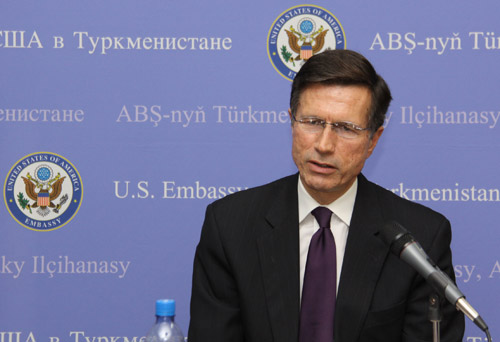
Colombo, May 8 (newsin.asia): In a frank talk at the Pathfinder Foundation here on Tuesday, Robert Blake, who was US Ambassador to Sri Lanka and Assistant Secretary of State for South and Central Asia, listed some key mistakes made by the present and past US Administrations which landed the world’s pre-eminent power in trouble.

Former US envoy in Lanka Robert Blake lists some of America’s wrong decisions

Blake was speaking in his current capacity as Senior Director (India and South Asia) McLarty Associates a firm of strategic consultants.

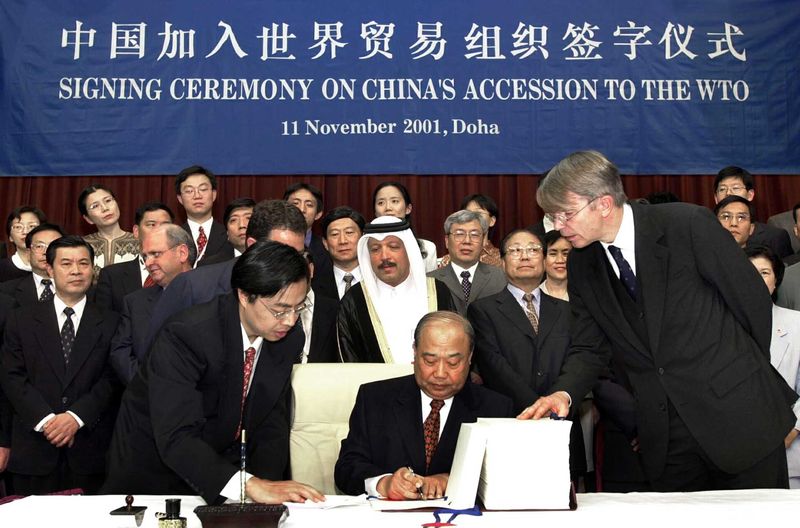
According to Blake, the first mistake the US made was President Clinton’s decision to back China’s entry into the World Trade Organization (WTO) based on incorrect assumptions.

The second was the Obama Administration’s decision to stop all US-Sri Lanka military training programs after Eelam War IV on the grounds that the Sri Lankan armed forces had allegedly committed human rights violations in the last phase of the war against the Liberation Tigers of Tamil Eelam (LTTE).

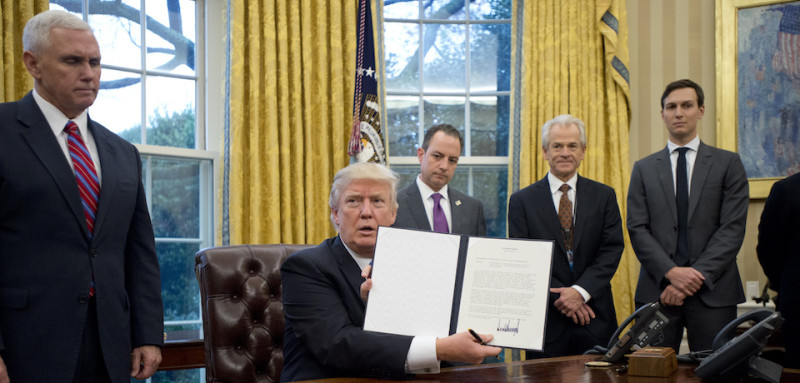
The third was President Trump’s withdrawal from the Trans-Pacific Partnership (TPP).

China’s Admission To WTO

Blake recalled that President Clinton supported China’s entry into the WTO even though China was not yet a market economy. Clinton, like most Americans, believed that as China prospered, as its middle class grew, as more and more Chinese traveled and studied abroad, China would become more of a market economy and become more democratic.

But today, most Americans see that this strategic calculation was wrong. Under Xi-Jinping, we have seen a strengthening of the role of the Communist Party, a doubling down on the role of the State and State Owned Enterprises (SOEs) in China’s economy, and the strengthening of China’s surveillance state.”

Not only is China not a more liberal market economy, it is often seeking to promote its illiberal governance model overseas,” Blake charged.

The veteran American diplomat acknowledged that most Asian countries acknowledge and even share many of these concerns, but they also do not want to be asked to make a choice between the United States and China.

They want to benefit from the massive resources China is extending under its ambitious Belt and Road Initiative (BRI) Blake noted.

China’s Ambassador to the US published an OpEd in Forbes two weeks ago in which he summarized the vast scope of BRI. According to the Ambassador,126 Countries and29 international organizationshaving signed BRI cooperation documents with China. Total trade between China and other Belt and Road countries has exceededUS$6 trillion, and China’s investment in these countries hassurpassed US$ 80 billion.”

To put these figures into context,China committed US$ 113 billion in BRI financing in 2017, which substantially exceeded the commitments of the World Bank and ADB combined,” Blake pointed out.

However, the BRI has created some undesirable trends and Blake listed the following among:-

Debt diplomacy

The case of Sri Lanka’s own Port of Hanbantota has become a watchword for the rest of the world that countries must make sure they choose projects that have solid internal rates of return that will enable them to service the debt owed to China, or they will face Chinese pressures to convert that debt to equity,” Blake recommended.

Labour issues

Every recipient country also grapples with Chinese pressure to use Chinese labour on these BRI projects, when almost every country has surplus labour of their own for whom they want to provide opportunities for work, the former envoy pointed out.

Lack of transparency

Most BRI projects also face criticism for the lack of transparency about the financial terms of the loans, the extent of Chinese labor and other such sensitive issues.

Environmental Concerns

Blake referred to a recent World Research Institute (WRI) analysis of BRI lending from 2014 to 2017 and said that Chinese energy and transport projects in BRI countries did not align with the low carbon priorities recipient countries outlined in their Paris pledges.

Blake then asked: What are recipient countries to do?”. And his answer was as follows: First, the countries involved in BRI must be more forceful and clearer in negotiating with the Chinese. This is already happening. The Wall Street Journal recently reported that last year Myanmar renegotiated terms for a US$ 7.3 billion Chinese-funded deep-water port and industrial zone,shrinking the scope of the projectand slashing the country’s future debt burden to its economic powerhouse neighbour. Pakistan,Malaysia,Myanmar,Bangladeshand Sierra Leone also have backed away from BRI projects.”

Likewise, the Maldives has announced its own review of BRI contracts undertaken by the previous government to ensure it is servicing only the debt for the true value of the projects undertaken, not for the inflated cost of what the new government alleges were large corrupt kickbacks on both sides.”

In Indonesia where I served as Ambassador from 2013-16, the signature BRI program is Jakarta-Bandung High Speed Rail. Many questioned the need for a US$ 6 billion rail line given so many other infrastructure needs. Indonesian Ministers have criticized the high-speed rail project for being opaque and non-transparent, complaining that even cabinet members are having trouble getting data and information.”

China Is Rethinking

Blake pointed out that these criticisms have made China re-think and respond to them.

In a speech on April 26 to mark the latest BRI conference, President Xi Jinping told the conference that everything should be done in a transparent way. China should have zero tolerance for corruption, and ensure the commercial and fiscal sustainability of all projects so that they will achieve the intended goals as planned.”

In another sign of greater transparancy Xi said China would welcome the participation of multilateral and international financial institutions in Belt and Road investment and financing. The Chinese also pledged to defuse tensions with Belt and Road recipients expressing willingness in principle to renegotiate debts. Beijing decided to forgive Ethiopia’s interest payments owed through the end of 2018,” Blake said.

There are other signs China is sensitive to the criticism it has received, the former envoy said.

China itself and UN Environment Program have formed International Coalition for Green Development on the Belt and Road to make BRI greener and more sustainable: the coalition includes all the major environmental groups, BRI countries and key Chinese businesses who are major BRI contractors.”

So China is listening. The test will come whether we see concrete changes implemented,” Blake added.

Trump’s Response to China’s Challenge

Blake said that the Trump Administration has responded well to China’s increased diplomatic and infrastructure promotion efforts.

First, recognizing that it is not enough to simply criticize BRI from the sidelines, the Administration and Congress understood that the US and other partners must provide alternatives, so partner countries have choices. Last October the BUILD Act was signed into law. It created a new U.S. International Development Finance Corporation, which will incorporate the OPIC and make available financing totalling US$ 60 billion, more than double what OPIC had provided in the past.”

This in turn will unlock over US$ 30 billion in additional funding to facilitate private sector investments in the region. The IDFC will offer loans, loan guarantees, and risk insurance to support new investments. They will also make equity investments and fund feasibility studies or potential investments making it even easier to collaborate with partner finance institutions.”

WASHINGTON, DC – JANUARY 23: (AFP OUT) U.S. President Donald Trump shows the Executive Order withdrawing the US from the Trans-Pacific Partnership (TPP) after signing it in 2017

Now of course the IDFC’s US$ 60 billion does not come close to the trillion dollars in BRI financing, but it does provide countries alternatives and, in that way, will oblige China to be more transparent and responsive to the needs of recipient countries.”

The US also has signaled its readiness to cooperate with partners such as Japan and India in co-financing projects, further expanding the scope and scale of alternatives,” Blake said.

These resources complement the significant US private sector investment in the Asia Pacific. The value of U.S. foreign direct investment in the region is nearly US$ 1 trillion, far outstripping what China or any other country has invested. Moreover, it is not widely known that our investment in Asia has more than doubled over the last decade and made the US the largest source of the region’s foreign investment.”

Meeting China’s Security Challenge

Blake noted that the Trump administration has maintained US security commitment to the region.

One of Secretary of Defense Jams Mattis’ first acts was to rename the US Pacific Command to be the new Indo-Pacific Command, showing US understanding that we must have one vision for the Indian and Pacific oceans, and recognize India’s growing power and influence across the Asia Pacific, and the importance the US attaches to our partnership with India.”

The Administration also has sustained America’s high-level military to military engagement in the region. In most countries in Asia where we have military partnerships, the US is the largest military exercise partner and the largest provider of military training.”

And the Administration has shown a steadfast commitment to continuing the longstanding commitment of the US to ensuring freedom of navigation throughout the Indo-Pacific, but particularly in sensitive areas such as the South China Sea. This security commitment has underpinned Asia’s extraordinary economic rise for the last 50 years,” Blake said.

Mistake To Have Quit Trans-Pacific Partnership

Blake pointed out that Trump had made a mistake by quitting the Trans-Pacific Partnership (TPP).

The current Administration has damaged US interests in the Asia Pacific. The first is on the trade front: Fulfilling a misguided campaign promise, one of President Trump’s first acts was to withdraw the United States from the Trans Pacific Partnership, which the Obama Administration had played such a pivotal role in helping to negotiate. Since Sri Lanka is not a TPP member I will not belabor this point, except to say that almost every American business person working in Asia regrets this act of unilateral disarmament, particularly since the Trump Administration has not moved to negotiate bilateral or multilateral agreements to fill the gap.

Second, there is a general perception across most of the Asia Pacific that the US places less of a priority on Asia than under President Obama. Unlike Obama, Trump has attended only one of the East Asia and APEC summits, one of the few leaders to do so.”

The President’s absence is magnified by the Trump Administration’s painfully slow progress in filling sub-Cabinet and Ambassadorial positions. Just to take two examples of relevance to all of you, more than two and a half years into Trump’s four-year term, we still do not have Assistant Secretaries of State for either East Asia or South and Central Asia. These are the point persons who are responsible for developing and executing our policy in these regions and who supervise the work of our Ambassadors and their interagency teams in these regions.”

You all recall I was Assistant Secretary of South and Central Asia under Obama. Obama took office in January. Congress approved my nomination in June of the same year,” Blake recalled.

Wrong To Have Withdrawn Military Training

Ambassador Blake regretted that after the Sri Lanka-LTTE war ended in May 2009, the US had stopped its military aid and training programs in the island on the plea that there had been human rights violations by the Lankan military.

In the last years of the war in 2008 and 2009, human rights concern almost completely circumscribed our military exercises, training and assistance with the Sri Lankan Army and Air Force. I had to fight hard to maintain even small areas of Navy-to-Navy cooperation, in part by arguing that it was in our interest to help Sri Lanka interdict LTTE arms shipments. Today, I am happy those restrictions are behind us,” he said.

Blake referred to the stoppage of military training to the Pakistani army and said that this resulted in the US losing contact with a whole generation of Pakistani military officers”.

The result was that this generation grew up on a diet of anti-American sentiment hampering inter-operability which is key to military-military cooperation, the former envoy said.

US-Lanka Cooperation Restored

Blake noted that the US and Lankan militaries are now training together in areas ranging from maritime security to humanitarian assistance and disaster relief.

The US has announced plans for new security assistance of $39 million to Sri Lanka to support maritime security, freedom of navigation, and maritime domain awareness.”

In 2018 the U.S. transferred a U.S. Coast Guard cutter to the Sri Lankan Navy. And we have regular joint training and exercises with all the services All these are signs of a healthy and growing military partnership.”

Likewise, our law enforcement cooperation has strengthened. There is no better sign of that than the quick and substantial FBI response to Sri Lanka’s request for assistance in its investigation of the Easter Sunday bombings.”

Lessons From Easter Bombings

Tuning to the April 21 Easter Sunday bombings in Sri Lanka, Blake said:
The Easter attacks were not just personal tragedies for the families of those killed and wounded. They opened old wounds still fresh from Sri Lanka’s 26-year civil conflict, and they raised new questions in the minds of potential business partners about the wisdom of doing business in Sri Lanka.”

What steps should Sri Lanka take to successfully manage these new challenges and sustain its progress of the last ten years? Job one of course must be to pursue with vigor the investigation into who was responsible, what links they had to outside terrorist groups, how the bombers were able to mount such a sophisticated and well-coordinated series of attacks in multiple cities without detection from your intelligence and security services, and what networks may remain so the Sri Lankan people can be sure the threat has abated.”

One priority during this phase of investigating and hopefully wrapping up any remaining terrorist elements must be for the government and security services to conduct investigations in a professional and impartial manner that respects the rights of all Sri Lankans and does not inadvertently add to the problem.”

The Government should also make every effort to limit scope and duration of Emergency Rregulations.”

What US Experience Can Teach

Blake said that Sri Lanka can learn from mistakes America made after 9/11.

Most civil liberties experts believe the US over-reacted by expanding government surveillance without appropriate constitutional checks; by extended detentions at Guantánamo Bay that circumscribed the legal rights of detainees, by extraordinary renditions and interrogations, all of which gave rise to questions of what the limits of government power should be in times of crisis.”

Our system of checks and balances ultimately righted most of these wrongs, and the press had a powerful role to play in exposing excesses and wrong-doing.”

Sri Lanka can also benefit from another US lesson learned after 9/11. One of our mistakes was that there was poor communication and intelligence sharing between the CIA, FBI and other agencies. To improve inter-agency communication and cooperation, the Bush White House established a working group of senior technocrats from all the intelligence and law enforcement agencies.”

This group met regularly to evaluate all intelligence from all sources and agree on responsibility for follow-up on specific threats. The group was headed by Deputy National Security Advisor John Brennan who reported directly to the President. Sri Lanka could benefit from a similar high-level group.”

Gotabaya Rajapaksa Praised

In this context, Blake recalled how when Gotabaya Rajapaksa was Lankan Defense Secretary during the last Eelam War he set up a committee of experts to advice him an called for a strong and unified national leadership to take decisions and implement them.

Continued Threat From Islamic State

Sri Lanka must also be careful not to allow ISIS or other extreme Islamic groups to take root, Blake warned.

Although the precise role of ISIS in the attacks remains to be investigated, one must ask why Sri Lanka proved a tempting target of opportunity. First, they may have calculated that since Muslim-Christian relations have historically been good, and extreme Islamic thought has never gained wide favor on the island, they and NTJ could organize with undue scrutiny.”

Secondly, they probably calculated that the security forces have relaxed their efforts since 2009 and to the extent they were still concerned, that concern was more likely on preventing a revival of the LTTE.”

Having suffered the loss of their self-proclaimed caliphate and territory in Iraq and Syria, ISIS must show its followers it is still relevant and strong. Without a central caliphate, ISIS is metastasizing into smaller units wherever opportunities present themselves. One is in the southern Philippines where they are seeking a beach-head in SE Asia.”

But they also looking to use bombings such as those in Sri Lanka to sow discord between Muslim, Christian and other communities that they can then exploit for their evil ends. Sri Lanka cannot allow that to happen.”

Which brings me to my third recommendation, which is that Sri Lanka needs to give new focus and priority to reconciliation and good governance.”

The Easter Sunday bombings opened a potential new divide in Sri Lanka’s already complex ethnic amalgam. Sri Lanka continues to debate the pace and scope of reforms aimed at reconciliation between Sinhalese and Tamils. Some tensions remain as important priorities such as a Truth and Reconciliation Commission, reparations and accountability, remain on the drawing board.”

Even as Sinhalese-Tamil reconciliation remains a work in progress, the Easter bombings threaten to open new wounds and cleavages in Sri Lankan society and raise new questions.”

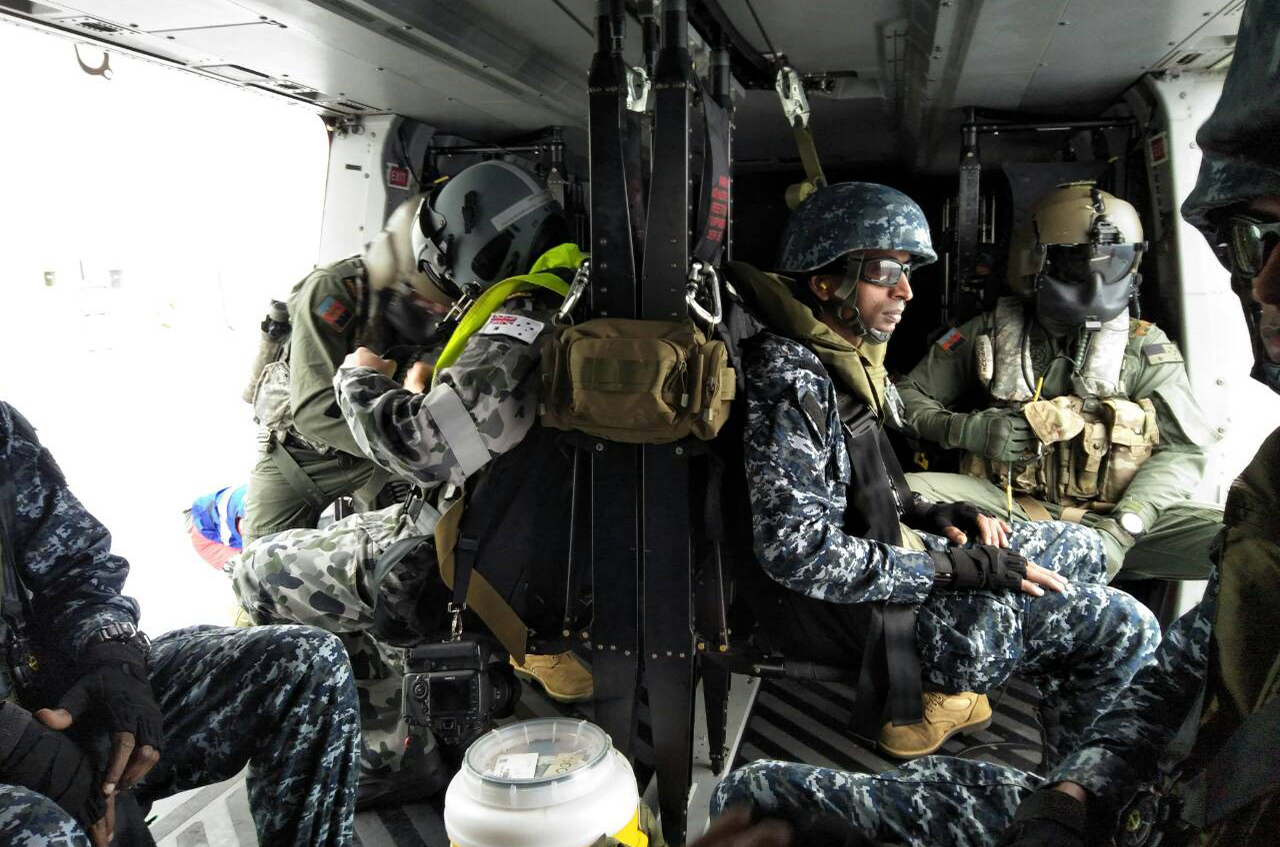
US trained Sri Lankan airborne Special Forces

New Questions

According to Blake the new questions are: Will the attack on St. Anthony’s church in Batticaloa rekindle memories of the Tamil-Muslim violence in the East during the country’s civil war? Will extremist Sinhalese Buddhist groups seek to exploit popular anger about the attacks to renew their attacks on Muslims as we saw most recently in Kandy in May of last year?”

Will Christians, themselves the victims of Muslim and Sinhalese Buddhist violence, seek their own retribution?”

This complex and combustible mix requires the country to come together for a national dialogue. Given the political chasm and open antipathy between the President and Prime Minister, careful thought must be given as to who might lead such efforts.’

Two good places to start would be Sri Lanka’s religious leaders and its youth groups. Cardinal Ranjith has managed the aftermath of the attacks with considerable aplomb and grace. And there is a long history interfaith dialogue that can help bring these disparate communities together and reduce tensions.”

Need For Early Warning System

Blake said that with tensions high and the possibility that social media can be misused to spread false rumors, the communities would be wise to set up an early warning system to monitor rumors and then have senior religious figures quickly deny these.

This system has worked well in Eastern Indonesia,” he added.

The Lankan government itself has a crucial role to play to heal old and fresh wounds, Blake said and added: Every Sri Lankan citizen should be able to count on equal justice and no group that breaks the law or violates the rights of other citizens should be above the law.”

Renewed thought should be given to increasing Tamil and Muslim recruits in the country’s security services so they more accurately reflect Sri Lankan society as a whole. The same should be done with the civil service.
Islamophobia, already on the rise in India and my own country, should not be allowed to take root in Sri Lanka.”

Need For Non-Partisan, United Leadership

Calling for a truly national and united leadership, Blake said: In the end, any country’s response must depend not on its political leaders who too often succumb to the temptation to defend narrow party and personal interests, but rather on the strength of its institutions.”

The recent constitutional crisis underlined the critical role of independent institutions like the Constitutional Council and the judiciary. Their continued independence will be an important part of restoring faith in Sri Lanka’s ability to recover and prosper.”

At last a true Muslim with guts to tell the truth

May 8th, 2019

Courtesy CBN News

Make use of technocrats for intelligence sharing like back in Gotabaya’s time – fmr. US Ambassador

May 8th, 2019

Ada Derana

Sri Lanka could make use of senior technocrats similar to that of the group existed during the time when Gotabaya Rajapaksa was in office as the Defence Secretary, says Former US Ambassador to Sri Lanka Robert O. Blake Jr.

He stated this addressing a seminar held at the Bandaranaike Memorial International Conference Hall (BMICH) yesterday (07). The seminar was organized by the Pathfinder Foundation in partnership with the Joint Apparel Association Forum Sri Lanka (JAAFSL).

Delivering his presentation titled ‘US Foreign Policy towards China and South Asia and what it means for Sri Lanka’, the former US Ambassador said Sri Lanka can learn from mistakes America made after 9/11.” Most civil liberties experts believe the US over-reacted by expanding government surveillance without appropriate constitutional checks, he added.

Speaking on the steps that could be taken by Sri Lanka to manage the challenges posed by the Easter Sunday terror attacks and to sustain the progress of the past ten years, he said investigations into identifying the persons responsible for the attacks and the nexus they had with the outside terrorist groups and how the bombers managed to execute a sophisticated and well-coordinated series of attacks in multiple locations and escaped the detection of the intelligence and security services.

To improve interagency communication and cooperation, the Bush White House established a working group of senior technocrats from all the intelligence and law enforcement agencies, he said speaking on the poor communication and intelligence sharing between the CIA, FBI and other agencies.

Easter attacks were not just personal tragedies for the families of those killed and wounded. They opened old wounds still fresh from Sri Lanka’s 26-year civil conflict, and they raised new questions in the minds of potential business partners about the wisdom of doing business in Sri Lanka”.

He stated that Sri Lanka should be heedful not to allow ISIS or other extreme Islamic groups to take root, although the precise role of ISIS in the attacks remains to be investigated.

වීරවංශ-බදියුදීන් පාර්ලිමේන්තුවේදී දරුණුවටම හැප්පෙති.. බදියුදීන්ගේ රෙදි බිමටම ගැලවේ..[Video]

May 8th, 2019

lanka C news

ජාතික නිදහස් පෙරමුණේ නායක පාර්ලිමේන්තු මන්ත්‍රී විමල් වීරවංශ මහතා සහ වාණිජ හා කර්මාන්ත කටයුතු ඇමති රිෂාද් බදුයුදීන් මහතා අතර පාර්ලිමේන්තුවේදී වූ උණුසුම් වචන හුවමාරුවක් ඇති විය.

වර්තමාන ආරක්ෂක තත්ත්වය සම්බන්ධයෙන් පාර්ලිමේන්තුවේදී වූ විවාදයේ දී මන්ත්‍රීවරයා අදහස් පළ කරමින් සිටියදී මෙම තත්වය ඇතිවිය.

මන්ත්‍රීවරයා එක් අවස්ථාවක කියා සිටියේ රිෂාඩ් බදුර්දීන් මරාගෙන මැරෙන බෝම්බයක් ලෙසයි.

Inadequacies of the security approach to terror containment

May 8th, 2019

Courtesy The Island

A glaring inadequacy in current public discussion or ‘discourse’ on the issues growing out of the Easter Sunday terror attacks is the almost lop-sided stress on short-term security measures as answers to these complex posers. Immediate security measures to protect the public are urgently needed and the Sri Lankan state is providing these requirements adequately but discussion on these questions needs to go well beyond this dimension in the country’s present affairs.

As has been pointed out in this column frequently, long term security and protection of life and limb needs to be addressed in an informed fashion and a discussion on inter-communal reconciliation too is needed if we are to arrive at comprehensive solutions to the country’s current needs. Reconciliation is an arduous, complex undertaking but minus this requirement we would be having only half measures to ethnic and religion-related, implosive violence.

Seen from this point of view, a lecture delivered on Wednesday in Colombo by former US ambassador to Sri Lanka Robert O. Blake Jr titled, ‘Update from Washington: US Foreign Policy Towards China and South Asia and What it Means for Sri Lanka’, proved thought-provoking, comprehensive and instructive. The lecture was organised by the Pathfinder Foundation in partnership with the Joint Apparel Association Forum Sri Lanka and was held at the BMICH. Blake is at present the chairman of the Board of the US-Indonesia Society and a member of the Board of the Asia Foundation besides being Senior Director at the India & South Asia arm of McLarty Associates.

For the majority of listener’s in Blake’s audience short term security or law-and-order measures, very understandably, would have been of the prime importance. The speaker dealt very amply with this dimension to the country’s current issues with his stressing the need for a rigorous, impartial and fair probe into the Easter attacks by the Lankan authorities. They need to find out the wrong doers and bring them to book. The country needs to find out how the tragedy came about and how the terrorists escaped detection for so long. Besides, how did they come to acquire Rs. 7 billion in assets and money?

Besides focusing on these law and order questions, Blake also pointed to how closely coordinated operations by Sri Lanka’s intelligence and defence authorities from now on could prevent future terror attacks in this country. On this score Sri Lanka could have, and is already having, the cooperation of US security and intelligence agencies, such as the FBI. Such cooperation would continue.

Blake made a crucial observation when he pointed out to how close coordination among the US’ intelligence and security agencies has prevented external terror attacks on the US since 9/11. What Sri Lanka should take from this is obvious.

Accordingly, the most essential law and order measures needed to strengthen local security in the short and medium terms were outlined along with an update on the military cooperation measures currently taken by the US with its allies in Asia, such as Sri Lanka.

Besides strengthening the internal security of states in the Asia-Pacific, it was pointed out by the speaker that such measures also served some of the most vital foreign policy requirements of the US in consideration of the emergence of China as a major Asia-Pacific economic and military power.

On this score, Blake dealt with a range of issues pertaining to current US-China relations. One of the most important observations was that China’s ‘Belt and Road’ initiative was basically a strategic project that intended to link the markets of the world with Beijing. It has prompted the US to rename its Pacific Command, the Indo-Pacific Command. This fleet would enable the US to have a presence from the East Coast of Africa to the West Coast of the US, besides yielding other strategic benefits.

However, China’s ‘Belt and Road’ project has also prompted the US to launch a number of counter-measures in the economic field of almost the same kind, such as the launching of the International Finance Corporation with its major allies. Essentially, the US is not intending to look the other way as China grows as a major global power.

One of the most important parts of Blake’s presentation took the form of his outlining of religious and ethnic reconciliation measures. These should be seen as complementing the law and order requirements which were detailed earlier. Without these measures stability and peace for the ordinary citizen cannot be seen as being sealed.

As this is being written, an outburst of fighting between Syrian government forces and a group of resistance fighters has claimed some 45 lives in north-west Syria. This is a disquieting reminder that law and order measures could be effective only in the short term. Without reconciliation among warring groups we cannot have enduring peace. There is a lesson here for big powers such as the US and Russia. Military means alone cannot and would not deliver peace. Moreover, the big powers should awaken to the fact that the Taliban has made a come back in Afghanistan. The security approach should be seen as highly inadequate in view of these developments.

However, Blake gave his audience some valuable pointers on how peace-building could be proceeded with. For instance, religious leaders from all communities concerned need to come together to launch conflict avoidance and resolution measures. This was successfully worked out in Indonesia where after a bout of religious turmoil some years back religious leaders worked out ‘early warning’ signals, for example, that could defuse inter-religious tensions before they degenerated into full scale rioting.

Basically, it could be inferred that the dignity of ‘the Other’ had to be recognized by antagonists. This columnist cannot help but observe that this is the glaring lacuna in Sri Lanka’s so-called reconciliation and peace efforts. Blake was of the view that one of the aims of the Easter attackers was to irreconcilably antagonise the Christians against the Moslems. Needless to say, only growing amicability between these groups could stave off this tragedy. Consequently, bridge-building among communities is the most enduring path to peace.

ජනාධිපතිවරයා විසින් නීතියට පටහැනිව ඉල්ලීම් ශ්‍රේෂ්ඨාධිකරණය වෙත යොමු කිරීමෙන් මූලික අයිතිවාසිකම් සහ භාෂා අයිතිවාසිකම් උල්ලංඝනය කළ බවට නීතිඥවරයෙක් ජනාධිපතිට සහ අධිකරණ අමාත්‍යාංශයේ නීති සහකාර ලේකම්ට එරෙහිව නඩු පවරයි……

May 8th, 2019

අධිකරණ

ජනාධිපතිවරයා විසින් පාර්ලිමේන්තුව විසුරුවමින් නිකුත් කළ 2018 නොවැම්බර් මස 09 වන දිනැති අංක 2096/70 දරන අතිවිශේෂ ගැසට් පත්‍රය එරෙහිව පවරන ලද නඩු විභාගකර පාර්ලිමේන්තුව විසුරුවීමට අදාල ගැසට් පත්‍රය අවලංගු කිරීමට ශ්‍රේෂ්ඨාධිකරණ පසුගියදා තීරණය කරන ලදී. එකී ශ්‍රේෂ්ඨාධිකරණ තීරණ රාජ්‍ය භාෂාවෙන් හෝ ජාතික භාෂාවෙන් හෝ නීති පැනවීමේ භාෂාවෙන් හෝ අධිකරණ භාෂාවෙන් ලබා දී නොතිබූ බව කියමින් නීතීඥ අරුණ ලක්සිරි උණවටුන විසින් ජනාධිපතිවරයා වෙත ඉල්ලීමක් කරමින් එකී ශ්‍රේෂ්ඨාධිකරණ තීරණ රාජ්‍ය භාෂාවෙන් හෝ ජාතික භාෂාවෙන්, නීති පැනවීමේ භාෂාවෙන් හෝ අධිකරණ භාෂාවෙන් ලදෙන ලෙස ඉල්ලා ඇත.

එම ඉල්ලීම ජනාධිපති අතිරේක ලේකම්(නීති) නීතිඥ ලක්ෂ්මී ජයවික්‍රම විසින් අධිකරණ හා බන්ධනාගාර ප්‍රතිසංස්කරණ අමාත්‍යාංශයේ ලේකම් වෙත යොමු කර ඇත. ජනාධිපති අතිරේක ලේකම්ගේ එකී යොමු කිරීම අධිකරණ හා බන්ධනාගාර ප්‍රතිසංස්කරණ අමාත්‍යාංශයේ ඡ්‍යෙෂ්ඨ සහකාර ලේකම් (නීති) රෝෂනී හෙට්ටිගේ විසින් එකී ඉල්ලීම ශ්‍රේෂ්ඨාධිකරණයේ රෙජිස්ට්‍රාර්වරයා වෙත යොමු කර ඇත. ඉන් අනතුරුව ශ්‍රේෂ්ඨාධිකරණයේ අවසන් වී ඇති නඩුවකට ජනාධිපතිවරයාගේ ඉල්ලීමට අදාල ලේඛන ගොනුකර ජනාධිපතිවරයාගෙන් ඉල්ලීම කළ නීතීඥ අරුණ ලක්සිරි උණවටුන ශ්‍රේෂ්ඨාධිකරණයට කැදවීමට ශ්‍රේෂ්ඨාධිකරණයේ නියෝජ්‍ය රෙජිස්ට්‍රාර් ක්‍රිෂානී ඩී. කෝදාගොඩ මහත්මිය දැන්වීම් යොමු කර ඇත. එකී දැන්වීමට අනුව නීතිඥවරයා ශ්‍රේෂ්ඨාධිකරණයේ පෙනීසිට තමන්ව කැදවන ලද නඩුවේ තමන් පාර්ශවයක් නොවන බවත්, එම නඩුවෙන් තමන් ඉල්ලීමක් කර නොමැති බවත් මෙය ජනාධිපතිවරයා විසින් කළ ඉල්ලීමකට අදාල බවත් ශ්‍රේෂ්ඨාධිකරණයේ අවධානයට යොමු කර ඇත.

ජනාධිපතිවරයා වෙත ඉල්ලීමක් කරමින් ඔහුගේ විධායක සහ පරිපාලන බලතල ක්‍රියාත්මක කරන ලෙස ඉල්ලා සිටි නීතිඥවරයාට එය එසේ නොවී ජනාධිපතිවරයා විසින් එකී ඉල්ලීම අධිකරණ බලය ක්‍රියාත්මකවන ආකාරයට නීතියට පටහැනිව ශ්‍රේෂ්ඨාධිකරණයට යොමු කර විධායක සහ පරිපාලන බලය, අධිකරණ බලය සමග ගැටීමට සළස්වා සිය මූලික අයිතිවාසිකම් සහ භාෂා අයිතිවාසිකම් උල්ලංඝනය කර ඇති බවට සහන අයද ශ්‍රේෂ්ඨාධිකරණයේ මූලික අයිතිවාසිකම් නඩුවක් පවරා ඇත.

ජනාධිපතිවරයා විධායක සහ පරිපාලන බලතල ක්‍රියාත්මක කිරීම සිදු නොකර තමන්ට අයත් නැති අධිකරණ බලය යොදා නීතිඥවරයාගේ අයිතිවාසිකම් අහිමිකර ඇති බවත්  නීතීඥවරයා සිය පෙත්සමෙන් ශ්‍රේෂ්ඨාධිකරණයේ අවධානය යොමු කර ඇත.

මෛත්‍රීපාල සිරිසේන ජනාධිපතිවරයාගේ සහ අධිකරණ හා බන්ධනාගාර ප්‍රතිසංස්කරණ අමාත්‍යාංශයේ fජ්‍යෂ්ඨ සහකාර ලේකම් (නීති) රෝෂනී හෙට්ටිගේ විසින් අනුගමනය කළ නීතිවිරෝධී ක්‍රියාකලාපය හේතුවෙන් ආණ්ඩුක්‍රම ව්‍යවස්ථාවේ 10, 12.1, 12.2, 14(1.අ), 14.1ඇ, 14.1.ඊ සහ 22 ව්‍යවස්ථ මගින් ආරක්ෂා කරදී ඇති මූලික අයිතිවාසිකම්/ භාෂා අයිතිවාසිකම් උල්ලංඝනය කර ඇති බව නීතිඥවරයා සිය පෙත්සමෙන් ශ්‍රේෂ්ඨාධිකරණයේ අවධානයට යොමු කර ඇත.

Sri Lanka: Battle Ground for Sino-U.S. rivalry

May 8th, 2019

Here’s why the U.S. interferes: 

https://youtu.be/hAyStrFGURM

හිජාබය පැළද පැමිණි ගුරුවරියන් 10 නාට පළාතේ ඇති වෙනත් පාසල් සඳහා ස්ථාන මාරු වක්

May 8th, 2019

Media Secretary – Governor WP 

අඟහරුවාදා දින මුස්ලිම් ගුරුවරියන් 10 දෙදෙනකු පාරම්පරික හිජාබය පැළද පැමිණීම නිසා ඔවුන් හට පාසලට ඇතුළුවීම වැළැක් වූ අවස්ථාවේ දී බස්නාහිර පළාත් ආණ්ඩුකාරවර ගරු අසාද් සාලී මැතිතුමාගේ මැදිහත් වීමෙන් එම ගුරුවරුන්ව එතුමාගේ පළාතේ වෙනත් පාසල් වලට ස්ථාන මාරු ලබා දීමට කටයුතු කරන ලදී. අඟහරුවාදා උදෑසන පුවක්පිටිය දෙමළ මහා විද්‍යාලයේ දෙමාපියන් විසින් පාසල් ගේට්ටුව අවහිර කරමින් මුස්ලිම් ගුරුවරියන් හට පාසලට ඇතුළුවීම වැළක්වන ලදී. පාසල් සංවර්ධන සමිතියේ සාමාජිකයින් පිරිසක් විසින් එම ගුරුවරුන්හට පවසා ඇත්තේ ඔවුන් සාරියකින් පැමිණෙන්නේ නම් පමණක් ඔවුන් හට පාසල් පරිශ්‍රයට ඇතුල් වීමට අවසර ලබා දෙන බවයි. ඔවුන් කියා සිටි ආකාරයට හිජාබය පළදින පිරිස පාස්කු ඉරිදා දින බෝම්බ 6 ක් පුපුරවා ගත් ත්‍රස්තවාදීන් හට සහාය දක්වන්නන් බවයි.

ගුරුවරුන්ගේ දුක් ගැනවිලි වලට ඇහුම්කන් දුන් ආණ්ඩඅකාරතුමා අගතියටපත් ගුරුවරුන් පැමිණ සිටි අවස්ථාවේදීම හදිසි රැස්වීමක් සඳහා අධ්‍යාපන අමාත්‍යංශයේ නිළධාරීන් කැදවූයේය.

පළාත් අධ්‍යාපන අධ්‍යක්ෂ පී. ශ්‍රීලාල් නෝනිස් මහතා, පළාත් අධ්‍යාපන ලේකම් එස්. ජේ. විජයබන්දු මහතා, පුවක්පිටිය දෙමළ මහා විද්‍යාලයේ විදුහල්පති පී . මනෝහරන් මහතා යන පිරිස මෙම රැස්වීම සඳහා  සහභාගී වූහ.

මෙම සිද්ධිය පිළිබදව කණගාටුවට පත් වූ ආණ්ඩුකාරතුමා මෙම ගුරුවරියන් දස දෙනා එතුමාගේ පළාතේ ඇති වෙනත් පාසල් සඳහා ස්ථාන මාරු කරන ලෙස අධ්‍යාපන අමාත්‍යංශයට උපදෙස් ලබා දුන්නේය.

ඔවුන්ගේ ඇතුල්වීම ප්‍රතික්ෂේප කල පාසලට නැවතත් යාමට නොහැකි බව එම ගුරුවරියන් විසින් පවසන ලදී.

Cabinet decisions in a country should be taken for the good of the country and the people and not the personal benefits and survival of politicians

May 8th, 2019

Sudath Gunasekara

Now look at this news item copied below and read it with comments on it

Vow another Rs.3.5 billion of public funds down the drain for the benefit of politicians and rogues.

Don’t they have more important issues to decide on at a critical time of the nation like this?

Is it not a parallel to the appointment of Arjun Mahendran a non-citizen as Governor of the Central Bank through whom the Ranil robbed the nation’s premier Bank and destroyed the nation’s economy?

To whom are these tabs, when all schools are closed

Why tabs when most of our schools don’t have even a tap.

Is it the crying need of our schools while there are other burning issues like lack of basic requirements like buildings, teachers, books, desks, toilets, discipline and even proper curricula and teaching

Is it justified to have a fool like this who has no brain even to understand this much as the Minister of education in a country?

Does he at least know that none of these children who are given tablets have a vote?

Shouldn’t this type of politicians be publicly hanged to save the count before they make it irreversible?

Why didn’t he reject this meekly as he did to the Cabinet paper submitted by Sagala Ratnayaka. I don’t think he has learned any lesson from the CB scam where he objected first but gave in later.

Is this a Cabinet in charge of good Governance of a country or a veritable CABI-NUT, a cabal of nuts, composed of a bunch of rogues and highway robbers that destroy the motherland that has nursed them?

In my view all Cabinet decisions in a country should be taken for the good of the country and the people and not for the personal benefits and survival of politicians.

But today, in this country, almost all Cabinet decisions are always driven by personal benefits to politicians and their survival

I think the time has come now for the people to get down to the streets demanding the immediate resignation of this Government

The news item

Akila wins cabinet approval for Rs. 3.5 bn tab project

8 May 2019 07:02 am – 9     – 1021

Education Minister Akila Viraj Kariyawasam secured Cabinet approval for the free distribution of 183,000 tabs among school children despite objection by President Maithripala Sirisena.

The project will cost Rs.3.5 billion.

The President, from the beginning, held the view that a pilot project should be implemented first on the distribution of electronic tablets. He had opined that a final decision could be taken subject to the results of the pilot project.

The matter came up for discussion at the Cabinet meeting yesterday. A committee, appointed to look into the programme, also supported the free distribution tabs. Finally, the President gave in, enabling the Minister to get approval to proceed with the programme.

Besides, President Maithripala Sirisena had yet another spat with Prime Minister Ranil Wickremesinghe by objecting a Cabinet proposal to increase some Port tariffs, the Daily Mirror learns.

Minister of Ports and Shipping Sagala Ratnayake submitted a Cabinet paper seeking approval for tariff hikes.

However, the President flatly rejected the proposal. It led to arguments between the President and the Prime Minister.(Kelum Bandara)

Comments – 9

    Athukorala Wednesday, 08 May 2019 07:54 AM

    WOW !!! Yeah… that’s ALL what we needed at this very moment… A Tab…!

Ravi Wednesday, 08 May 2019 08:21 AM

How much your getting as commission, did they approve that as well.

suresh Wednesday, 08 May 2019 08:23 AM

Is this really what is needed for most schools in the country?

Shan Wednesday, 08 May 2019 08:24 AM

Another unwise decision at a time the needs are different. Will the Tabs provide security to school students?

Dallas Wednesday, 08 May 2019 08:35 AM

Waste of money can not believe how out of touch this UNP government is Is this our biggest problem in the country, spend on something important UNP will struggle to get 25% in next election if they contest alone

Ice Wednesday, 08 May 2019 08:46 AM

Utter waste of money! Is that the way you planning to win elections?

Tanto Wednesday, 08 May 2019 08:47 AM

Today the Internet is the primary source of information around the world. This is the correct thing to do. These can not be understood by Gamaralas.

citizen Wednesday, 08 May 2019 08:51 AM

ol’ Siri seem to be showing some rare common sense

Naushki Fareez Wednesday, 08 May 2019 09:07 AM

Rs.3.5 billion – This is not relevant at this hour. Increase security in Schools….! We will give our votes then…!

China Donates Rs. 17.84M Cash for the Injured in the Easter Sunday Attacks

May 8th, 2019

From Chinese Embassy in Sri Lanka

On 4th May, 2019, H.E. Cheng Xueyuan, the Ambassador of China to Sri Lanka presented a cheque for Rs. 17.84m to Mr. Nimal Kumar, National Secretary of the Sri Lanka Red Cross Society(SLRCS) on behalf of the Red Cross Society of China. The donation will be specially used in the treatment of the injured in the Easter Sunday attacks.

Ambassador Cheng reaffirmed that at the time of sorrow, Chinese government and people stand firmly with the Sri Lankan people and resolutely support Sri Lanka in safeguarding its national security and stability, and building a peaceful and prosperous country. Chinese government is intensively negotiating with Sri Lankan side and will provide all necessary assistance within its capacity according to the urgent requests extended by Sri Lanka.

Mr. Nimal Kumar briefed about the SLRCS’ work after the bomb blasts, highly appreciated the Red Cross Society of China for its helping hand in a difficult time of Sri Lanka, and promised to use all the donation in the treatment of the injured.

Sam Harris talks Islam, politics, Twitter, and Trump with Kara Swisher

May 8th, 2019

By 


Sam Harris, the host of the podcast Making Sense, and author of books such as Waking Up: A Guide to Spirituality Without Religion.
 Courtesy Sam Harris

For the better part of two decades, philosopher and neuroscientist Sam Harris has been a popular — and controversial — critic of organized religion, and in particular Islam. In a new episode of Recode Decode with Kara Swisher, he said that although he disavows anyone in his audience who would use his work as justification for bigotry, he still believes that we need to have a tough conversation about violent jihadism and a culture of acceptance” from regular Muslims.

Islam has problems and points of conflict with modernity and secular culture and civil society, and a value like free speech that Mormonism doesn’t have, or the Anglican Communion doesn’t have, or Scientology,” Harris said, adding, All the beliefs around martyrdom explain the character of Muslim violence we’re seeing throughout the world. And if they had different doctrines, they would behave differently.

And I’m not talking about all Muslims, I’m talking about the power of specific ideas on a subset of adherents to Islam — and how big that subset is is open for debate,” he added. It’s not as small as we would like. It’s not as big as right-wing nutcases fear, but it’s big enough to be of significant consequence such for the rest of our lives, we are going to be talking about this problem.”

Recode’s Kara Swisher asked Harris to contrast two recent terror attacks: The Easter Sunday bombings at churches and hotels in Sri Lanka, which were attributed to people inspired by or possibly directed by ISIS; and the mass shootings during services at two mosques in New Zealand, attributed to at least one man with apparent awareness of white supremacist internet memes. Harris compared the latter to the Sandy Hook Elementary School shooting in the United States, as an example of a crazy person who snaps.”

The cases that worry me the most are the cases where you have an ideology that’s so powerful and captivating that totally normal people, without real terrestrial grievances, can be inducted into it and do the unthinkable because of simply what they believe,” he said. White supremacy is an ideology, I’ll grant you. It doesn’t link up with so many good things in a person’s life that it is attracting psychologically normal non-beleaguered people into its fold.

In reality, white supremacy, and certainly murderous white supremacy, is the fringe of the fringe in our society and any society,” Harris added. And if you’re gonna link it up with Christianity, it is the fringe of the fringe of Christianity … You cannot remotely say any of those things about jihadism and Islam.”

The new episode is a wide-ranging conversation that also touches on — among other topics — why Harris rejects the idea of identity politics; why he also rejects and denounces President Trump; and whether Twitter CEO Jack Dorsey should shut the whole service down and declare it a wash.

You can listen to Recode Decode wherever you get your podcasts, including Apple PodcastsSpotifyGoogle PodcastsPocket Casts, and Overcast.

The proof Isis are not true Muslims

May 8th, 2019

Dr Azeem Ibrahim Courtesy The Scotsman

Ten-year-old Ashayal Rosairo was injured in an attack on the Zion church in Batticaloa, Sri Lanka (Picture: Allison Joyce/Getty Images)

Ten-year-old Ashayal Rosairo was injured in an attack on the Zion church in Batticaloa, Sri Lanka (Picture: Allison Joyce/Getty Images)

Attacks on Christians – like those on churches in Sri Lanka over Easter – demonstrate that Isis fighters are against Islam, writes Dr Azeem Ibrahim.

The Easter attacks against Christians in Sri Lanka by a group who swore allegiance to Isis were carried out in the name of Islam. This is nothing new, back when Isis was still expanding into the multi-ethnic and religiously diverse northern Iraq, not just Yazidis but also the country’s one million Christians were some of their main targets. They were asked to either convert or leave. Otherwise they would be killed. All along, churches were being bombed or burnt to the ground.

Most of the Christians who used to inhabit those areas of the Levant where Isis took control were displaced, in an act of religious/ethnic cleansing more thorough than any that Saddam Hussein ever achieved. To Isis, destroying churches and killing Christianswas secondary only to their top priority of killing other ‘apostate’ Muslims – Shia Muslims in particular.

Muslim scholars have stated that such actions are completely un-Islamic, strictly against Sharia and a blasphemy against the Prophet Muhammad more serious than any they can think of from history. The Qur’an commands Muslims to follow Muhammad and his example: O you who believe! Obey God and obey the Messenger” (4:59)

This and dozens of other verses in the Qur’an compel Muslims to obey Muhammad. And this is why Sharia law is based not just on the Qur’an, but also on the Sunnah, the words, the life and the practices of the Prophet. And the Prophet Mohammad was very clear about how Muslims should treat Christians. He entered into a treaty with them which deserves to be quoted in full here.

The Prophet issued the following declaration in 628 CE: This is a message from Muhammad ibn Abdullah, as a covenant to those who adopt Christianity, near and far, we are with them.

Verily I, the servants, the helpers, and my followers defend them, because Christians are my citizens; and by God! I hold out against anything that displeases them.

No compulsion is to be on them. Neither are their judges to be removed from their jobs nor their monks from their monasteries. No one is to destroy a house of their religion, to damage it, or to carry anything from it to the Muslims’ houses. Should anyone take any of these, he would spoil God’s covenant and disobey His Prophet. Verily, they are my allies and have my secure charter against all that they hate.

No one is to force them to travel or to oblige them to fight. The Muslims are to fight for them. If a female Christian is married to a Muslim, it is not to take place without her approval. She is not to be prevented from visiting her church to pray. Their churches are to be respected. They are neither to be prevented from repairing them nor the sacredness of their covenants.

No one of the nation (Muslims) is to disobey the covenant till the Last Day (end of the world).”

This Patent was given by the Prophet Muhammad in Medina to a delegation of Christian monks from St Catherine’s Monastery at Mount Sinai. The Patent was signed with the Prophetic seal.
READ MORE: Sri Lanka explosions: At least 8 Britons among 290 victims

The original was moved from St Catherine’s monastery by Sultan Selim I of the Ottoman Empire in 1517, and today can be seen in the Topkapi Museum in Istanbul. When he took the document from the monastery, the Sultan and Caliph of Islam Selim renewed its terms and gave the resident monks in Sinai a copy. This copy is still at the monastery. Any Muslim can go see either of these documents with their own eyes whenever they wish to do so.

The Prophet granted unconditional protection and what today we would recognise as basic human rights to Christians, near and far. All true Caliphs since then have observed this treaty, as they have been compelled to do till the Last Day – ie this treaty can not be abrogated. There are few things in the Sharia that can be as clear as this prescription towards Christians.

But today, Wahhabi clerics and Isis fanatics seem to think that they know better than the Prophet himself how to be good Muslims. And that now includes destroying all churches, in direct violation of God’s covenant. Wahhabis say they want to emulate the life and times of the Prophet. Isis and their Caliph” want to rebuild the original Caliphate to represent the entire ummah. So why are their teachings and their actions then exactly opposed to those of the very first Islamic state of Muhammad in Medina (CE 622)?

READ MORE: Foreign Secretary: Legal aid for IS bride Shamima Begum ‘makes me uncomfortable’

When the Muslim community world-wide came out to condemn the Sri Lanka attacks, they did not do so in the name of political correctness” or out of fear of reprisals. They did so because this Isis cell violated the Prophet’s covenant in their name. For even the most fundamentalist Muslim who actually knows their Qur’an, Hadith and Sharia, this was an attack against the honour and authority of the Prophet just as much as it was an attack against Christians on their holiest day of the year.

If the Prophet Muhammad is not your guide to God, then you are not a Muslim. By violating the Prophet’s irrevocable covenant, the Sri Lanka attackers declared themselves against Islam. By the very ideology they claim to represent, they are the Apostates.

Sri Lanka: Ex-Army Man Held with Hundreds of Bullets, Swords

May 8th, 2019

Courtesy Sputnik

Two weeks after Sri Lanka witnessed terror bombings and the launch of police and army searches, hundreds of bullets, military uniforms, and swords are still being discovered in various parts of the country.

New Delhi (Sputnik) — A retired army man with nearly 1,000 rounds of live ammunition in Sri Lanka’s Nawagamuwa area was arrested on Wednesday while transporting bullets.

Police said that the suspect was carrying 205 rounds of T56 ammo, 640 rounds of 9mm ammo, 40 T56 training rounds, two T56 magazines, one 9mm magazine, and one air rifle.

READ MORE: Terror-Hit Sri Lanka Unearths Islamist Militants’ 10-Acre Training Camp — Report

Police have also found nearly 50 swords, a small gun and several other suspicious items in a public well near a mosque located close to the Premdasa International Cricket Stadium in Colombo.

Sri Lankan Army soldiers secure the area around St. Anthony Shrine after a blast in Colombo, Sri Lanka, Sunday, April 21, 2019.

© AP PHOTO / CHAMILA KARUNARATHNESri Lankan President Says Country Already Safe for Visitors After Easter BlastsSecurity personnel also recovered 30 swords and knives at Beruwala town in Sri Lanka’s Western Province.

Earlier on Tuesday, police arrested two individuals with 1,116 military uniforms (camouflage) in Seeduwa during a search operation. The fatigues, resembling Air Force uniforms, were discovered when a lorry in the Raddolugama area was inspected.

READ MORE: Some 25-30 Suspects Linked to Sri Lanka Bombings Still at Large — President

Fresh discoveries are being made amid searches being conducted across the country after serial blasts left 253 killed and over 500 others injured. In a special statement in the parliament on Tuesday, Sri Lankan Prime Minister Ranil Wickremesinghe cautionedpeople, saying that although normalcy had returned, the country will not be free of global terrorism.

Sri Lanka, radical Islam and what comes next

May 8th, 2019

By Joseph Mariathasan Courtesy IPE

The tragic Easter Sunday bombings in Sri Lanka were a surprise and a revelation to both Sri Lankans and the world at large.

For many outside the country it was a surprise that Sri Lanka even had a Muslim population. For those in Sri Lanka, it was a revelation that local Muslims would target Christian churches when there had been no domestic history of tensions between the two religions – both of which have followers from many different ethnic communities within the country.

Quite apart from the trauma and distress caused to those innocents who were killed or injured, their families and friends, the bombings have had an immediate impact on the tourist industry, which accounts for around 5% of Sri Lanka’s GDP of around $84bn (€75bn).

Countries including the US, UK, China and Australia – whose citizens account for a substantial proportion of the roughly 2m tourists that visited Sri Lanka last year – have issued travel warnings recommending citizens stay away for all but essential travel.

The situation is grievous, but the country has seen worse: it is still in the process of recovering from decades of civil war. The conflict between the Tamil Tigers and the government during the 1990s and 2000s culminated in the defeat of the Tigers in 2009, but the memories are still fresh and raw.

There were also two communist-inspired uprisings against the government in 1971 and 1987-89, which also led to the deaths of thousands. Yet in all these conflicts, foreigners and Christians were never explicitly targeted. That is in contrast to the Easter Sunday bombings, aimed at a mixture of high-end hotels frequented by foreigners, and local Christian churches.

Colombo skyline, Sri Lanka

Credit: Rehman Abubakr

Colombo skyline, Sri Lanka

The bombings represent something inspired from outside the country, namely radical Islam in the form of ISIS – even if it was undertaken by locals. That is a relief for Sri Lanka, since it is likely that the bombings are not the precursor to another civil war, any more than the attacks in Paris in 2015, or in Manchester and London in 2017, were in France and the UK. This suggests that travel warnings, while necessary in the immediate aftermath, should be able to be relaxed within a relatively short time.

What was most galling for Sri Lanka was the subsequent reports of incompetence and negligence of the divided government that allowed the bombings to go ahead, despite repeated warnings.

With presidential elections due to be held later this year, the chaos has political ramifications: Gotabaya Rajapaksa, the former defence minister under his brother, president Mahinda Rajapaksa, was responsible for defeating the Tamil Tigers in a bloody climax that resulted in the deaths of thousands of civilians. He is accused of war crimes, but has used his ‘strong man’ image to announce a campaign for president, claiming he will stop the spread of Islamist extremism by rebuilding the intelligence services.

While the bombings may have no long-term implications for Sri Lanka – apart from contributing to a more volatile atmosphere ahead of the presidential elections – they do have much more serious global implications.

There is no doubt there will be more terrorist attacks linked to radical Islam, but they are unlikely to be in Sri Lanka. They could be anywhere else in the world where radical Islamic influences have been ignored and allowed to flourish.

The more worrying danger may be just across the Palk Strait in India, with evidence that some of the Sri Lanka bombers had been indoctrinated and trained there – although at least its intelligence services were more competent than their Sri Lankan equivalents, according to reports.

The House of Islam is on fire – and the arsonist still lives there,” declares Ed Husain in his book The House of Islam: A Global History – a reference to the violence of Salafi-jihadis who, in the earliest days of Islam, were known as Kharijites, or outsiders.

They were, Husain says, declared to be non-Muslims by Muslim scholars. Yet it is the rise of that philosophy across the globe that is fuelling Islamic extremism. As Husain points out, Salafi-Wahhabism is the prevailing Islamic movement in Saudi Arabia today, yet represents less than 5% of the world’s Muslims. The reason it has become such a potent force is that Saudi Arabia has spent an estimated $200bn of its oil wealth in recent decades strenuously propagating its hard-line theology around the globe.

The 1749 alliance between the Saudi royal family and Wahhabi clerics must be nullified,” argues Husain. For Sri Lankans, the evidence of that relationship is all too clear, as novelist Ameena Hussein wrote earlier this month in the New York Times.

It is not travelling to Sri Lanka that we need to be worried about, but rather how to stem the growth of a violent creed that has distorted Islam. Husain declares that we need to cleanse our mosques, publishing houses, schools, websites, satellite TV stations, madrasas and ministries of Salafi-jihadi influences”. That is a generational struggle, yet it needs to be done even if it causes a rift with Saudi Arabia.

Shia Iran may be a pariah nation to the US at least, but it is a hard-line Sunni Islamic nation, supposedly an ally of the West, whose wealth has propagated a terrorist philosophy that the world struggles to contain.  

Twelve Hard-Core Terrorists in Sri Lankan Custody – President

May 8th, 2019

Courtesy Sputnik

Sri Lankan President Maithripala Sirisena, who has vowed to restructure the security system of the terror-hit country, has said that 13 safe-houses and 41 bank accounts owned by terrorists responsible for the 21 April serial blasts have been identified.

New Delhi (Sputnik): Out of the 56 suspects held for the 21 April Sri Lankan bombings, at least 12 are hard-core terrorists, Sri Lankan President Mathripala Sirisena has said, adding that the situation in his island nation remains serious.

READ MORE: Sri Lanka Reinstates Temporary Ban on Social Networks – Reports

“Of the 56 suspects who currently remain in custody over their direct involvement, 12 are hardcore terrorists. 13 safe houses used by them have been discovered… This is, in my view, a serious situation”, President Maithripala Sirisena said while addressing lawmakers in parliament on Tuesday.

​Authorities will soon confiscate the accounts, houses, and properties belonging to them, he added.

Sri Lankan military officials stand guard in front of the St. Anthony's Shrine, Kochchikade church after an explosion in Colombo, Sri Lanka April 21, 2019.

© REUTERS / DINUKA LIYANAWATTESome 25-30 Suspects Linked to Sri Lanka Bombings Still at Large – PresidentHe  also said that 99% of people involved in the blasts have been arrested.

Earlier in the day, Sri Lanka Army chief Mahesh Senanayake gave a clarion call to the general public to return to their normal lives, assuring them that the tri-forces and the police were dedicated to their safety throughout day and night.

“After the terror attacks that occurred on April 21 and as of now, the Sri Lanka Army, other security forces and the police have implemented strategic plans to ensure the security”, Senanayake said, while addressing media at the Ministry of Defence.

READ MORE: Terror-Hit Sri Lanka Unearths Islamist Militants’ 10-Acre Training Camp — Report

Meanwhile, searches across the country were underway to find suspects. Police have discovered a cache of anti-aircraft bullets in the Alagalla area in Vavuniya on Monday evening, while six casings used for mortar shells were also recovered from a nearby area.

In the last three days till Monday, the police also discovered two large militant training camps said to be linked to the deadly 21 April Easter Sunday terror attacks against churches and hotels that claimed 253 lives and injured over 500 others.

US official wounded in Sri Lanka Easter bombing dies from her injuries in Singapore

May 8th, 2019

Courtesy The Straits Times

COLOMBO (AFP) – A US official wounded in Sri Lanka’s Easter Sunday suicide bombings has died in hospital, raising the total number killed to 258, including 45 foreigners, officials said on Wednesday (May 8).

Ms Alaina Teplitz, the United States ambassador to Sri Lanka, paid tribute to Ms Chelsea Decaminada, who was seriously wounded when two bombers hit the luxury Shangri-La hotel in Colombo on April 21.

“We pay tribute to Chelsea – and all those lost and injured – by partnering with Sri Lanka and nations worldwide to bring unity in the face of terrorism,” Ms Teplitz said.

Ms Decaminada, a graduate of Duke University, worked for the US Commerce Department and was on assignment in Sri Lanka when she was caught in the bombings, claimed by the Islamic State in Iraq and Syria (ISIS) group and attributed to a local radical cell called National Thowheeth Jama’ath.

The bombers targeted three luxury hotels and three Christian churches. Nearly 500 people were wounded in the attacks, the worst single-day bombing against civilians in the Indian Ocean island.

Officials said Ms Decaminada was airlifted to Singapore for treatment, but she died from her injuries over the weekend.

“As we mourn her loss, we must continue to fight terrorism around the world,” US Commerce Secretary Wilbur Ross said in a statement.Related Story

Sri Lanka tourism takes hit after Easter bombings

The Sri Lankan Foreign Ministry had previously said 44 foreign nationals died in the attacks, while another 10 are still unaccounted for.

Sri Lankan authorities say they have arrested or killed all the Islamists responsible for the April 21 suicide bombings, but the island still faces the threat of “global terrorism”, Prime Minister Ranil Wickremesinghe said on Tuesday.

A Visit to Post-ISIS Syria: Human Crises Pose Risk

May 8th, 2019

BY: Robin Wright Courtesy United States Institute of Peace

Defeating the Islamic State means determining the future for tens of thousands of ex-fighters and their families.

After losing its last territory in Syria on March 23, 2019, the Islamic State quickly reclaimed global attention with the Easter bombings in Sri Lanka on April 21 and a video tape of its reclusive leader, Abu Bakr al-Baghdadi, on April 29. The jihadi movement is now shifting focus to its ISIS branches, or provinces,” in Africa, Asia and Europe. Baghdadi signaled ISIS’s expansion by formally embracing two Sunni extremist groups in Mali and Burkina Faso. But the Islamic State’s human core—more than 100,000 fighters and their families, including children—remains clustered in the rubble of its former caliphate” in both Syria and Iraq. In Syria, they are detained in makeshift prisons, a hospital and refugee-style camps in the desert of northeastern Syria. USIP Senior Fellow Robin Wright made a rare tour of northeastern Syria to interview men and women who were part of the ISIS caliphate and to assess the risks posed by the post-caliphate crisis.

As the Islamic State “caliphate” collapsed in March, women and children of ISIS fighters’ families were gathered at a rudimentary detention camp in al-Hol. The camp now holds more than 70,000. (Photo credit: Robin Wright/USIP)
As the Islamic State caliphate” collapsed in March, women and children of ISIS fighters’ families were gathered at a rudimentary detention camp in al-Hol. The camp now holds more than 70,000. (Photo credit: Robin Wright/USIP)

What’s the big picture in the former ISIS caliphate?

The world faces the most complex post-war challenge in decades in dealing with the dregs of the Islamic State—physically, politically and psychologically. No one had correctly estimated the tens of thousands who eventually surrendered or were captured as the caliphate collapsed. The Syrian Democratic Forces (SDF), the U.S.-backed militia that fought ISIS, took some 9,000 prisoners. Around 2,000 are foreign fighters from dozens of countries, ranging from the United States to Russia, Tunisia to China and Morocco to the Maldives.

The Syrian Democratic Forces had to create pop-up prisons”— converting an unused school, an oil storage facility and other small compounds—to hold all the fighters. The prison I visited at Dashisha was crude and understaffed. It was filled with 1,500 fighters in four days. Each cell contained more than two dozen men crushed together and sitting on the floor. I visited a local hospital at al-Shaddadi [south of al-Hasakah] that had to take in hundreds of badly injured ISIS fighters. The Syrian and Iraqi fighters were six to a room; the foreign fighters were crammed into the basement. The main basement room had close to 70 men lying on mats; the stench from infections was overwhelming. The Syrian Democratic Forces were paying for their food and care by reducing the pay of their own soldiers. For the SDF, neither the prisons nor the hospital are sustainable without more international help and collaboration in figuring out the future of these men.

One issue now is what to do with the prisoners. The SDF is a militia, not a state. It does not have the expertise, facilities, resources or staff to cope with so many men indefinitely. Many governments do not want to take back their citizens for several reasons: There is scant evidence of what crimes each fighter committed as the basis for charging or trying them. Some countries are even wary of jailing the ISIS fighters for fear they might infect the prison population with their ideology. Iraq has pledged to take back its 31,000 citizens—fighters and families—but it is already struggling to cope with more than 20,000 members of ISIS in Iraq.

What about the rest of the ISIS population?

After the fall of the Islamic State’s capital in Raqqa, in October 2017, ISIS fighters and their families fled down the Euphrates River—from town to town—until they reached Baghouz on the border with Iraq. The final battle for Baghouz began in early 2019. But neither the U.S.-led coalition nor the SDF grasped the numbers of civilians who had ended up in the farming hamlet. Besides the fighters, another 74,000 family members, mainly women and children, surrendered and were transferred to a detainee camp in al-Hol. Of those, 65 percent were under the age of 18; 23 percent were under the age of five. Some of the wives of fighters boasted that they are breeding the next generation of ISIS militants for the next caliphate.

The problem of what to do with ISIS families is also daunting. Many governments do not want them to return home since they would be free unless charged with crimes. Others come from countries, such as Libya and Yemen, that are basically failed states and have few mechanisms to cope with them. Some families do not want to return to their countries of origin—notably the Uighurs of China and the Chechens of Russia–because they are members of persecuted minorities. The secondary issue is how to deradicalize them after up to five years of living under the Islamic State and embracing its beliefs and practices. A few countries—Kazakhstan, Morocco and Oman—have taken a few of their citizens, but most Western governments, including many that were members of the U.S.-led coalition of more than 70 countries, have been reluctant to absorb either fighters or their families. The aftermath of the Islamic State caliphate has produced a humanitarian catastrophe that could linger for years—even decades—without greater international attention and resources. U.S. officials claim there has not been a post-war problem so politically fraught since the end of World War II.

An American ISIS member who surrendered to the Syrian Democratic Forces waits to be interviewed at a makeshift prison at Dashisha, Syria. (Photo credit: Robin Wright/USIP)

You went to the al-Hol camp for ISIS families. What is brewing there?

The U.S.-led coalition, the SDF and international health and aid groups were all ill-prepared to cope with the numbers. When I visited al-Hol, women and children, most covered in filth and with few material possessions, were still being trucked in. They were divided by nationality: Iraqi and Syrian families on one side; foreign families from other countries in a separate area. There were initially not enough tents to hold them all; one Uighur woman from China, who had two small children, told me that they had slept out in the cold at night and were in desperate need of blankets. Again, the stench was overwhelming. The most hard-core women were also trying to re-create the caliphate inside the camp by enforcing ISIS rules or reprimanding women who talked to men or foreign reporters.

Al-Hol represents a humanitarian disaster with long-term consequences. The dilemma now is what to do with 74,000 people living in unsustainable conditions with limited international interest in supporting ISIS families? Is there any way to de-radicalize these women or prevent the radicalization of the children? Given the demographics – that the majority are children – this is the place that may well generate the next generation of ISIS. These people could be in this camp or others like it for decades. I’ve covered the Middle East since the 1973 war; I’ve seen the dreariest Palestinian refugee camps, the chaos of Beirut during Lebanon’s civil war, and I’ve never felt the depth of despair that I felt in al-Hol.

Can the former ISIS fighters be rehabilitated?

The most innovative project I saw was a home-grown rehabilitation program—with no significant resources—conducted by tribes for their members in ISIS. The SDF made a deal with the Arab tribes: In exchange for the tribes’ support in the fight against ISIS, the SDF would hand over tribal members for rehabilitation as long as the men were not implicated in major crimes.

I visited a pilot program in al-Karamah, a town of about 40,000 on the outskirts of Raqqa. It’s a conservative area where Salafism thrives; many of the men I saw wore the short thobes emulating the early Islamic era of the Prophet Mohammed. Rehabilitation was run by tribal sheikhs who preached rebuilding the community rather than destroying it. I interviewed two graduates” of the program—one released a few days earlier and one freed in September 2018—and both claimed they would not go back to ISIS. But neither had a job or a means of supporting their families. So rehabilitation is possible, but it will work only with significant international support for the physical rebuilding of eastern Syria—and the same will be true for Iraq.

Physically, what do you see in northeastern Syria?

Life is beginning to return in shattered towns along the Euphrates River Valley. Schools are reopening. I saw little girls with pony tails carrying pastel backpacks en route to class. Women have shed the black niqab (which covers even the face) required by ISIS; they have reemerged from their homes. I saw women, without male escorts, headed to reopened markets or sitting with husbands having morning tea in the spring sun. This is a conservative, tribal part of Syria, so many women still wear headscarves, or hijab, but I saw women wearing bright red, purple and blue scarves and patterned dresses. Life is no longer literally black.

There also signs of reconstruction, often with very limited resources and even in devastated cities such as Raqqa. I was struck by one common sight: Massive tumbleweeds of rusted steel scavenged from the rubble of destroyed buildings. At several outdoor workshops, men were hammering the rods to straighten them for use as reinforcement rods—or rebars—to rebuild. I saw trucks ferrying them to sites for the foundations of new buildings. The destruction, much of it by airstrikes from the U.S.-led coalition that targeted ISIS facilities, is horrendous. But the destruction in Raqqa was actually not as pervasive as in Iraq’s West Mosul, which was the largest city under ISIS control. It is going to take many years, potentially decades, to rebuild the areas devastated by the war against the Islamic State.

How Muslim and non-Muslim countries tackle Islamic radicalization

May 8th, 2019

By P.K.Balachandran/Daily Express

Colombo, May 8: Islamic radicalization has been on the upsurge for a considerable period of time now, mainly because of the unceasing atrocities committed by the US-led Western alliance in several Islamic countries including Libya, Iraq, Syria, Palestine and Afghanistan.

However, like militaristic Western hegemony, Islamic radicalization has also become a major problem for the world. Several countries, both within and outside the Muslim world, have been subjected to its depredations. Like the non-Muslim countries, Muslim countries too have devised methods to tackle the scourge.

Saudi Arabia

Like many other countries, Saudi Arabia too has been a victim of terrorism. Islamic radicals have been indulging in terror regularly since 1962, trying to overthrow the ruling Saud dynasty. Al Qaeda and the Islamic State have been in the forefront of this violent movement.

To counter these forces, the Saudi government has adopted a two pronged approach says Dr.Abdullah Ansary in a paper published by the Middle East Policy Council.

The first prong is ruthless action against those who commit terrorist acts (on April 23, 2019, 37 terrorists were executed). The second prong is re-education and re-indoctrination of detainees, the pool of supporters and fellow travellers.

The goal of the latter is to encourage prisoners to renounce their radical ideology by providing them with psychological and sociological counseling and by engaging them in intensive religious dialogue. It is estimated that only 10% of terror-related prisoners are hardcore with entrenched deviant beliefs. The rest are followers and sympathizers, who can be remoolded.

The committee which is entrusted with such rehabilitation has four sub-committees: religious, psychosocial, security and media.Members of these subcommittees are stationed throughout various districts in the Kingdom.

The Psychological and Social Subcommittee includes more than 30 psychiatrists and psychologists. They also continue to monitor the detainee and evaluate his progress during his interview with the Religious Subcommittee members, and help him understand himself and the restiveness in his personality in order to facilitate his return to appropriate thinking and behavior,” Ansary says.

They also assess the detainee’s financial and psychological needs in order to alleviate psychological pressure, gain the confidence of his family, and provide decent care for him and his family after his release, he adds.

After release, the subcommittee assists them further with healthcare needs and employment. The subcommittee also provides them the opportunity to finish their education while incarcerated, Dr.Ansary says.

The Religious Subcommittee is composed of more than 160 Muslim clerics, scholars and university professors. The counselors engage the prisoners in conversations about their views on several subjects, such as assisting and aiding non-Muslims, the takfir doctrine, judgment according to man-made laws (as opposed to divine law), jihad in Iraq, suicide operations and martyrs, the excommunication of governments and societies (and its gravity), and expelling the polytheists from the Arabian Peninsula,” the author adds.

The goal is to correct prisoners’ flawed understanding of these concepts based on Shariah texts from the Quran and Sunnah and from the work of religious scholars, in order to enhance their understanding of these sensitive topics, Dr.Ansary explains.

On the role of the Security Subcommittee he says it undertakes risk assessments, makes release recommendations and monitors arrangements after the release. The Media Subcommittee supports the Religious Subcommittee with the educational materials used in their program.

In June 2004, the Saudi Council issued a fatwa condemning acts of terrorism, stating that these acts disrupt the security of the country, shed innocent blood, terrorize peaceful people and destroy property. The fatwa called upon citizens and residents to provide authorities with information regarding those who plan or prepare to carry out terrorist acts.”

In addition, during its sixteenth session, held January 5-10, 2002, the Islamic Fiqh Council of the Muslim World League in Mecca stressed the fact that extremism, violence and terrorism have no connection whatsoever with Islam. Furthermore, in a direct warning against fighting abroad in the name of jihad, the Saudi mufti, Sheikh Abdulaziz Aal Al-Sheikh, issued a fatwa on October 1, 2007, prohibiting Saudi youth from traveling abroad to engage in jihad,” Dr.Ansary points out.

The Ministry of Education has conducted an audit of school textbooks and curricula to ensure that teachers do not espouse intolerance and extremism. The government has a program in place to continue to remove any element that is radical and inconsistent with traditional Islam.

Saudi Public TV and other sponsored channels broadcast a five-part series titled Jihad Experiences, the Deceit,” which featured terrorists’ confessions and repentant terrorists’ testimonies of how al-Qaeda organized, trained and recruited.

Controlling Internet

Saudi cyber-crime law imposes a maximum of ten years imprisonment and/or a fine of a maximum of 5 million Saudi riyals ($1.3 million) for anyone who creates a website for a terrorist organization over the Internet or on any computer device, propagates it to facilitate communication with the leaders of these organizations, promotes the organizations’ radical views, or propagates information on how to make explosives.

To ensure that charitable donations are actually used for the purposes designated and not for radical and extremist activities, it has issued numerous decrees and created new institutions designed to tighten the noose” on Islamic charities and control their work, Dr.Ansary said.

Maldives

Maldives was accused of encouraging Islamic radicalism when Abdullah Yameen was President. But the then police spokesperson Ahmad Shifan told this writer that all mosques in Maldives were moderated by the Maldivian government, and that each and every public preaching by mosques were carried out under the government’s direct supervision.

However we believe in rehabilitation and re-integration rather than punishment and isolation. We work on Syria returnees and other terror suspects to convert them to the moderate Maldivian form of Islam.And this has yielded results,” he said, pointing out that after 2012, there had been no Islamic terror attacks.

Pakistan

Pakistan has so far lost 70,000 civilians in terror attacks. Its Prime Minister Imran Khan last week laid the foundation stone of a Sufi university. The al-Qadir University will combine Sufist Islam and spiritualism with science, and re-instill creativity among Muslims now stifled by dogma. The Imran government is trying to modernize the courses taught in the 32,000 Madrassahs with 2.5 million students, by introducing science.

Turkey

In Turkey the Imam Hatipschools are part of the State’s social engineering.” They are designed to produce ‘enlightened’ religious functionaries and foster an understanding of Islam that is compatible with the needs of a modern State.

Diyanet” is the State religious organization which controls the country’s mosques. The Diyanet also dictates what is preached in the mosques. Turkish President Erdogan is a supporter of Turkey’s brand of secularism called laiklik. Religious thinkers, ulema and Sufi Shaikhs have not been empowered. The Shariah is not a source of legislation. Religious thought has no significant influence in politics. Government retains its monopoly over religious education and outreach. Religious congregations called Cemaats are tightly controlled.

But taking into account the fact that the Turkish people are innately conservative, Erdogan’s s government endorses conservative values, such as teetotalism and female veiling.

Indonesia

Indonesia, another Muslim-majority country, also has State control of religion. But whether the direction is towards liberalism or conservatism has been dependent on the nature of the regime.

President Suharto began as a secular ruler but when he became politically weak he resorted to using conservative Islam to retain control over the population. Later during weak regimes, conservatism came to the fore and intolerance became the order of the day.

The government-controlled religious body, the Indonesian Council of Islamic Scholars (MUI), has taken the conservative side of the spectrum and adopted a militant attitude towards heterodoxy. Mystical sects, the Ahmadiya minority and the Shi`as were reviled. It is against liberal interpretations of Islam, secularism, and the very idea of religious pluralism.

Sri Lanka

In Sri Lanka, Islamic terrorism raised its head with the April 21, 2019 Easter Sunday bombings in which 253 persons died. It is now discovered that radicalization had taken place in the small all-Muslim town of Katthankudy in its Madrassahs, as well as homes of the highly educated and wealthy elite in cosmopolitan Colombo.

Need For Cyber Law

Dr.Rohan Gunaratna, a pre-eminent Sri Lankan expert on West Asian terrorism, has called upon the Lankan government to enact a Cyber Law which will criminalize both posting and keeping extremist content on-line. A co-author of The Three Pillars of Radicalization” published the Oxford University Press in 2019, Dr.Gunaratna urges government to make criminally liable, both the person who posts extremist material and the service provider who keeps the content.

Author of the international best seller Inside al Qaeda: Global Network of Terror (University of Columbia Press), who is currently Professor of Security Studies at the Nanyang Technological University in Singapore, Dr.Gunaratna says that the government should also set up, in the Security Forces, a Cyber Force to counter on-line extremist content and create an internet referral unit where the public can report extremist content.”

Writing in a local daily, Dishan Joseph informs that a survey by the International Journal on Cyber Warfare found that there were 50 million tweets globally by eight million users with the keywords, ISIS and ISIL. There are 46,000 suspected Twitter accounts (from Iran, Iraq and Saudi Arabia) that post tweets supporting the Islamic State (IS).

He also calls for a Harmony Act” on the lines of the one in Singapore, which will criminalize hate speech, especially incitement to violence. Given the fact some Sri Lankans had gone overseas as students only to get radicalized, Gunaratna says that Sri Lankans should not be permitted to study in certain schools and universities in Pakistan, Saudi Arabia and Yemen which produce radical preachers.

He urges the government to draw up a Black List of radical preachers and ban their entry into Sri Lanka. At the same time, government should criminalize the sale and distribution of radical books and publications.

Foreign religious preachers should be given a visa only after getting clearance from the Ministry of Religious Affairs and the Intelligence agencies, he adds. Further, anyone allowed to preach in Sri Lanka should have a two-year (but renewable) permit.

END

Unlike other causes of death, terrorism destroys our way of life

May 8th, 2019

By Dr.Swaran Singh/Ceylon Today

On 28 June 1914, a 19-year old Bosnian-Serb, Gavrilo Princip, shot and killed the heir apparent to the Austrian throne, Archduke Francis Ferdinand, unaware that the act would push the world into a five year long World War killing 16 million people and ending with the most unequal Treaty of Versailles.

Given that humiliating closure for the vanquished powers, experts describe the Second World War as nothing but a continuation of the First World War.

World War II ended with two atomic bombs being dropped on Japan thus unleashing the nuclear age and also the Cold War era where scenarios of ‘nuclear armageddon ‘and ‘nuclear winter’ were to raise specters of human extinction.

It took more than a decade, and the Cuban Missile Crisis of 1962, for the proponents of the post-1945 Cold War to even recognize this phenomenon and ascribe it a name. Their deterrence theologies meanwhile fine-tuned ‘mutual assured destruction’ and ‘city busting’ doctrines. These, it is said, have assured that there would be no Third World War.

In terms of the their pervasiveness and destructive power the two World Wars involved a few European powers along with some of their colonies, and China and Japan. Sabre-rattling about nuclear brinkmanship involved only two superpowers and their military alliances, leaving the bulk of the world nonaligned.

Terrorism, A Totally New Challenge

But terrorism is a different kettle of fish altogether. It is truly global and all embracing. The existential challenge from terrorism today is completely different. Bigger and wider than all manifestations of violence so far, terrorism presents the most pervasive global killing machine without chances of redress or respite.

Terrorism has been there since ancient times. But today it has developed an unprecedented system-shaking power undermining state structures. Today, terrorism is incrementally destroying the human race; in tiny and not-so-tiny packages, on a daily basis. Its world wide web saw growth after the collapse of the Soviet Union that ended the rigid bipolar system. 9/11 has since seen the world wake up to the power and potential of outfits like Al Qaeda and the Islamic State, and several of their franchisees like Al Shabab, Abu Sayaf, Boko Haram, Haqqani Network, Hezbollah, Lashkar-e-Toiba, Jaish-e-Mohammed etc eroding centuries old state-centric peace-preserving customs, conventions and capacities.

Like mosquitoes biting a tiger, these radicalized invisible fighters with no legal or moral compunctions, are often able to choose their time and place of attack while State agencies remain rule bound, highly visible and therefore vulnerable.

States often respond by increasing the dose of the same old prescription, namely, expanding the apparatus of security and surveillance, with little time and capacity to revisit their diagnoses.

This results in the State being accused of attacking civil liberties and human rights. By sleepwalking in their denial mode, they fall victim to the global chessboard of terrorists dictating attacks at easier yet visible targets like what one saw in Sri Lanka this April.

Those with leverage, are cutting secret deals with terrorists. The dialogue with a ‘moderate’ Taliban is aimed at ensuring that terrorists do not harm their citizens, interests and investments. No doubt, one country’s freedom fighter continues to be another’s terrorist.

Apart from this unending physical death and destruction, the real sting of terrorism lies is germinating similar impulses in other people’s minds; sowing divisive tendencies amongst and within communities and nations.

For example, soon after the Easter Sunday terrorist attack on Christian churches in Sri Lanka, last weekend saw Jews being stunned by sounds of gunfire in their place of worship in Poway ,a suburb of city of San Diego in the United States. A 19-year old with an AR-15 walked into the Chabad last Saturday afternoon shouting anti-Semitic slurs. He managed to kill only one and injure three thanks to weapon’s malfunction. But a myopic and whimsical President Trump continues to treat repeated attacks by White supremacists as the handiwork of a few misguided people.”

Bloody April

A cursory glance at Wikipedia shows that not a single day of April passed without terrorist incidents. To recount some major ones, the month began with 62 people being killed in Burkina Faso. On 3rd April the Taliban in Afghanistan killed 30 soldiers in Bala Murghab. On 12 April a suicide attack in Quetta (Pakistan) killed 20 people. Taliban killed seven Afghan soldiers in Ghor. On 15th April Boko Haram killed seven soldiers in Chad but forces retaliation killed 63 terrorists. On 18 th. Baloch separatists in Pakistan killed fourteen people and the ISIS killed ten Syrian soldiers. On 21st April, when the world woke up to suicide attacks in Sri Lanka, Al Qaeda killed sixteen soldiers in Mali.

Eleven Syrian soldiers were killed on 24th April. A police raid in Kalmunai in Sri Lanka led to the death of sixteen on 26th April. Last Saturday saw Al Qaeda killing 22 Syrian soldiers in Aleppo.

The 9/11 attack in New York killed 2,977 people from 58 nations. It was followed by the March 2004 Madrid attacks killing 193. In September 2004 there was a siege of a school in Beslan in North Ossetia in which 334 were killed. In August 2007 a car bomb attack on Yazidis near Mosul in Iran killed about 500. In December 2007, attacks in Congo killed 620. In the May 2014 Boko Haram attacks in Gamboru and Ngala in Nigeria over 300 were killed.

In July 2014 Boko Haram attacks on the Iraqi air force cadets’ Camp Speicher in Tikrit in Iraq killed 1500. In July 2017 Mogadishu (Somalia) was attacked killing 600. In November 2017 attacks on a mosque in Bir al-Abed in Egypt killed 200. In July 2018 attacks in Sweida in Syria killed over 200 people.

According to a U.S. Department of Homeland Security report, on average, there were 715 terrorist attacks, causing 1,563 deaths, injuring 1,623 people, and involving 745 hostages or kidnap victims per month worldwide in 2017.

By all accounts this seems like an unending nightmare.

The ISIS today represents the most visible and brutal face of global terrorism. Following the retreat of its battle-hardened core fighters from Iraq and Syria, its strength lies in its silent sympathizers and its pool of online radicalized youth. The strength of ISIS is believed to be its financial muscle with millions of dollars laundered through banks and invested in legitimate businesses earning revenues for providing radicalized youth with weapons and incentives. It has been successful in recruiting suicide bombers in multiple nations, providing them training in bomb-making far way from the Caliphate.

So, even as the Caliphate is territorially weakened, its communications network is still alive and kicking. This calls for a foolproof, globally calibrated information and intelligence-led ‘pre-empting the predator’ strategy.

With such a monster knocking at the door, contrarian analyses sometimes make a moral appeal putting death and destruction in perspective. Analysts of this genre cite Oxfam data for 2017 showing how 80 lakh children under 5 years of age die due to multiple causes including malnutrition, while terrorism and armed conflicts together kill no more than 77, 000.

The Seattle-based Institute for Health Metrics and Evaluation data for 2017 shows cardiovascular diseases being the cause for nearly 32 per cent deaths around the world compared to terrorism which accounts for just 0.06 per cent.

While all other challenges remain important, none of these other causes of death and destruction — natural disasters included — threaten our ‘way of life’ and that’s what makes threats from terrorism so different.

Therefore, this calls for urgent and extraordinary global initiatives to redress or rein in the emerging global monster of terrorism.

Assessments like the Global Terrorism Index 2018 complied by the Institute for Economics and Peace show how, having peaked in 2014, terrorism-related deaths and destruction have declined for the last three years. But this should be taken with a pinch of salt.

Of all security challenges, terrorism has been least amenable to predictions and projections of any kind. Its past is not a reliable frame for predicting its future strategies.

(Dr.Swaran Singh Author is Professor of Diplomacy and Disarmament at Jawaharlal Nehru University, New Delhi)

Different ways of curbing extremist propaganda

May 8th, 2019

By P.K.Balachandran/Daily Mirror

Colombo, May 4: The sharp rise of Jehadi terrorism in response to the Western nations’ continued atrocities against Islamic countries in the Middle East and Afghanistan, has created, in many countries, a need to curb extremist propaganda.

Some of the countries threatened by Islamic radicalism are Muslim-majority.

However, attitudes to extremism and the methods used for curbing extremism vary, depending on the objective conditions.

The immediate demand in a country subjected to a Jehadi attack is for control over the curricula of the Madrassahs or Islamic religious schools.

Since the emergence of oil-rich Saudi Arabia and the Middle East as financial giants, Madrassahs in many countries, which get workers’ remittances from West Asia, have been coming under the influence of Wahabi or Salafist versions of Islam, which have replaced the traditional, locally-rooted, and softer versions of Islam geared to the needs of a multi-religious society.

Cyber Platform

In the current cyber age, Jehadi extremism has found a better and more powerful platform, the internet. Propaganda and recruitment is now being done on-line. The recruitment pool for Jehadi terrorism is no longer confined to the traditional village Madrassah but includes homes and offices of the highly educated and wealthy elite.

This has enabled the radicalization of the educated and well-heeled elite. And the leadership of the elite enjoys legitimacy in the eyes of the hoi polloi who serve as the foot soldiers of extremist Islam.

With the internet becoming a major tool, networking, recruitment and execution of plans have become international and targets of attack have also become international. Terror strikes can take place anywhere on earth to destabilize the existing order and demoralize the existing religious and political orders..

Need For Cyber Law

Dr.Rohan Gunaratna, a pre-eminent Sri Lankan expert on West Asian terrorism, calls upon Sri Lanka to enact a Cyber Law which will criminalize both posting and keeping extremist content on-line. A co-author of The Three Pillars of Radicalization” published the Oxford University Press in 2019, Dr.Gunaratna urges government to make criminally liable, both the person who posts extremist material and the service provider who keeps the content.

Author of the international best seller Inside al Qaeda: Global Network of Terror (University of Columbia Press), who is currently Professor of Security Studies at the Nanyang Technological University in Singapore, Dr.Gunaratna says that the government should also set up in the Security Forces, a Cyber Force to counter on-line extremist content and create an internet referral unit where the public can report extremist content.”

Writing in a local daily, Dishan Joseph informs that a survey by the International Journal on Cyber Warfare found that there were 50 million tweets globally by eight million users with the keywords, ISIS and ISIL. There are 46,000 suspected Twitter accounts (from Iran, Iraq and Saudi Arabia) that post tweets supporting the ISIS. Many tweets also originate from the Al-Khansaa Brigade, ISIS’s an all-women police force, Joseph points out.

According to him, a captured jihadist in India had confessed that he was first asked to download a ‘chat secure’ mobile app and then use Pidgin – an encrypted tool, to avoid detection as he chatted with his handler..

To counter extremist content, the FBI in the US uses the Carnivore system to read e-mails and online communication. Dr.Gunaratna urges the Lankan government engage with the US because its technology is 20 years ahead of China’s.”

He also calls for a Harmony Act” on the lines of the one in Singapore, which will criminalize hate speech, especially incitement to violence. Given the fact some Sri Lankans had gone overseas as students only to get radicalized, Gunaratna says that Sri Lankans should not be permitted to study in certain schools and universities in Pakistan, Saudi Arabia and Yemen which produce radical preachers.

He urged the government to draw up a Black List of radical preachers and ban their entry into Sri Lanka. At the same time, government should criminalize the sale and distribution of radical books and publications.

Foreign religious preachers should be given a visa only after getting clearance from the Ministry of Religious Affairs and the Intelligence agencies, he adds. Further, anyone allowed to preach in Sri Lanka should have a two-year (but renewable) permit.

Control in Muslim-majority countries

Religion has been a problem even in Muslim majority countries. Some of these countries have devised ways to control Islamic thought to suit the State’s ideology and interests.

In Pakistan, Prime Minister Imran Khan last week laid the foundation stone of a Sufi university. The al-Qadir University will combine Sufist Islam and spiritualism with science, and re-instill creativity among Muslims now stifled by dogma. The Imran Khan government is trying to control the courses taught in the madrassahs also.

In Turkey the Imam Hatipschools are part of the State’s social engineering.” They are designed to produce ‘enlightened’ religious functionaries and foster an understanding of Islam that is compatible with the needs of a modern State.

Diyanet” is the State religious organization which controls the country’s mosques. The Diyanet also dictates what is preached in the mosques.

But the downside is that the Diyanet” has become a front of the ruling Justice and Development Party (AKP) led by President Recep Tayyip Erdogan.

Indonesia, another Muslim-majority country, also has State control of religion. Under President Suharto, Indonesia was a secular country. But when he became weak with the US abandoning him, he opted to exploit the fundamentalist Islamic sentiments among his people to retain control.

The transition to democracy from autocratic rule in Indonesia which began in 1998, ushered in a period of unstable governments. This again led governments to use conservative Islam to stay in power. The government controlled religious body, the Indonesian Council of Islamic Scholars (MUI), took the conservative side of the spectrum and adopted a militant attitude towards heterodoxy.Mystical sects, the Ahmadiya minority and the Shi`as were reviled. It is against liberal interpretations of Islam, secularism, and the very idea of religious pluralism.

The lesson appears to be that when a government is strong, institutions meant to control religious thought and practice, side with liberal forces. But when it is weak, fundamentalists gain the upper hand. A weak regime actually promotes fundamentalism in the hope that the conservative majority will be appeased and will support it.

In Turkey, after the 1980 coup, the military-backed government sought to promote a conservative religious-nationalistic doctrine, the Turkish-Islamic Synthesis”. The aim was to fight communism as well as political Islam.

The religious council or bureaucracy Diyanet” was given an important role. The number of mosques and imams under its control rapidly expanded. Imam Hatip(partly secular and partly religious) schools became popular. Many graduates of Imam Hatip schools sought to continue their education in various professional or academic institutions and then join government service.

The AKP led by Erdogan, was to a large extent, an emancipation movement of the conservative Muslim segments of the population that had been marginalized under Kemalism (the ideology of Mustafa Kemal, founder of modern Turkey).

TheImam Hatip schools played a part in the emancipation of the conservatives. But the old secularist elite has been replaced now by the counter-elite of Erdoğan in alliance with an assortment of pragmatic allies.

Internationally, Erdogan is with the Muslim Brotherhood. But in domestic politics he has largely abjured Islamization. He is a supporter of Turkey’s brand of secularism called laiklik. Religious thinkers, ulema and Sufi shaikhs have not been empowered. The Shariah is not a source of legislation. Religious thought has no significant influence in politics. Government retains its monopoly over religious education and outreach. Religious congregations called Cemaats are tightly controlled.

All of this is quite unlike the situation in Indonesia.

But at the same, taking into account the fact that the Turkish people are innately conservative, Erdogan’s s government endorses conservative values, such as teetotalism and female veiling.

END

Lankan Cardinal says post-blast trouble makers pave way for foreign interference

May 8th, 2019

Courtesy NewsIn.Asia

Colombo, May 6 (Daily Mirror): The Archbishop of Colombo, Cardinal Malcolm Ranjith, said on Monday that some trouble makers are using the Easter Sunday suicide attacks to foment Christian-Muslim clashes and pave the way for foreign intervention.

Meanwhile, Sri Lankan President Maithripala Sirisena has appealed to the media not to cover searches going on in relation to the Easter Sunday blasts as these premature reports are endangering innocent people.

Police spokesman Ruwan Gunasekara said that cash amounting LKR 140 million and assets worth LKR 7 billion have been discovered in raids on the premises of terror suspects.

The CID has already suspended these bank accounts, the police spokesperson said

During a raid at a house in Thalapitiya, Galle police have arrested a person along with over 1000 clothes similar to uniforms of the tri-forces and the Sri Lanka Civil Security Force.

Gunasekara said 54 suspects including 7 women arrested in connection with the attacks are currently in custody of the CID, while 19 suspects are held by the Terrorist Investigation Division (TID).

Cardinal’s Appeal

Referring to the communal clashes in Negombo last Sunday, the Cardinal said that they were the work of several outsiders who had entered Negombo to create unrest between the Sinhalese and the Muslims.

Cardinal Ranjith told a press conference that the said outsiders inebriated the residents in the area and provoked them into violence.

I request the government to close all liquor shops in vulnerable areas. These forces are trying to create unrest in Sri Lanka to pave the way for external interference. Some forces are trying to provoke people and create religious unrest. The clash in Negombo is a perfect example for this. Those who are behind it are outsiders. They are attempting to create unrest among the Sinhalese and the Muslims. I ask all Catholics not to raise their hands against Muslims as they are not behind these destructive efforts. It had been done by a group of individuals who had gone astray. They are backed by some international forces. We don’t have to harm innocent Muslims because of this group,” he said.

Cardinal Ranjith said no one should jump into conclusions without knowing the real facts. He said some were using social media to mislead people.

People supported the police and the security forces to carry out search operations since the Easter Sunday tragedy. We appreciate the patience of the people,” Cardinal Ranjith said while appealing to the Buddhists, Muslims and Hindus not to get agitated but to help maintain peace in the country.

I appeal to people to continue to support the security forces. I request the Catholics to live according to the teachings of Jesus and pray for the country.

Maithripala Sirisena

President’s Request To Media

A request not to telecast search operations at houses and public places through media has been made to President Maithripala Sirisena by several persons.

Clear instructions have been given to the security forces to not allow the participation of civilians when conducting search operations and that they have to be conducted exclusively by the members of the security forces.

At the present, a special security program has been implemented across the country, as per instructed by the President and under the guidance and supervision of the Ministry of Defense, following the unexpected and regrettable incidents of violence on the Easter Sunday.

Under this process, investigations are carried out continuously and houses, public places, and vehicles are inspected.

As a result of unwarranted media publicity for these investigations, various communities in the society are facing difficulties and persons who are not involved in terrorist activities in any way face great inconveniences as the society has deemed them as terrorists.

Various sections of the society, including religious leaders, have made requests to the President with regard to this several times. Considering those requests, in order to prevent any further inconveniences to any community in the society, the Government has requested all the media institutions not to conduct media coverage on these search operation

Lankan Govt’s handling of post-blast situation draws heavy flak

May 8th, 2019

Courtesy NewsIn.Asia

Colombo, April 30 (newsin.asia): The Sri Lankan government’s handling of the situation in the country after the April 21 serial bombings, has drawn heavy flak from various quarters in the country including the head of the Catholic church, Cardinal Malcolm Ranjith.

Lankan Govt’s handling of post-blast situation draws heavy flak

Cardinal Ranjith had earlier been extremely sympathetic to the beleaguered government of President Maithripala Sirisena and Prime Minister Ranil Wickremesinghe following the blasts which occurred in three churches and three posh hotels among other places killing 253 people.

He had immediately appealed to his flock not to take the law into their own hands, be calm and cooperate with the government.

But disappointed with the way the situation was developing in the past week, he told the media on Monday: I cannot see any measures being taken to find solutions to the issue of national security by those entrusted with the task. These politicians are once again playing their favorite blame game. As a result, the country and the people are continuing to suffer.”

Apprehensive that the blame game is related to the forthcoming elections, the Cardinal said: At this juncture, we do not need polls.”

Presidential and nine Provincial elections are due by the end of the year and Parliamentary elections are due in the first half of 2020. In that situation, politicians are criticizing each other, accusing others of negligence and even complicity in the planning and execution of the suicide bombings carried out by the National Taweheed Jamaat (MTJ) and the Jamathei Millathu Ibraheemi (JMI) at the behest of the Islamic State.

Call For All Party Government

The Cardinal went on to say: In this context, I call upon all political parties in this country to form an All Party Government to resolve this issue if the need is for that.”

I also urge the President and Prime Minister to set aside their differences and to map out policy towards ensuring that national security is not compromised in this country at any stage in the future.”

The people are yet to be convinced that the country’ political leaders are attempting to resolve this issue by working together. They are only interested in scoring points, both personally, and for their respective political parties. We cannot see any coordination of the security measures.”

He pointed out that police are raiding places only on the basis of tip-offs by locals and not on their own intelligence. He urged a house to house search.

If illegal weapons were found, the occupants of the houses must be taken into custody and thoroughly grilled. Some of those involved in the blasts could have fled from the country,” he added.

About the Presidential Commission appointed to probe blasts on April 22, Cardinal Ranjith said that he is still in the dark as to whether those in the commission have even begun their deliberations, or any evidence has been sought from witnesses.”

He feared that this commission might go the way of previous Presidential Commissions which contributed little to the improvements in the country.

Opposing the appointment of retired officials to the Presidential Commission on the blasts, the Cardinal said that a body of religious leaders should be set up to oversee the work of the commission.

Warning Of Religious Leaders’-Led Agitation

In a grim warning to the government, Cardinal Ranjith said: I make it bold to say that if there is no formidable security network it will be impossible to contain the masses from rising against the government. That is because we cannot be trotting out lies to the people day in and day out and attempt to tell them to remain calm and collected.”

If an MP or cabinet minister is behind these attacks please apprehend them and grill them. The Buddhist monks, the Maulavis and Hindu priests are all standing together to make these requests. If these requests are not fulfilled, we will be forced to step into the streets. To oppose the actions of the government we (the religious leaders) will be marching right in the front.”

We finally request the government to implement the law without fear or favor without leaving room for us to take the law into out our own hands,” the Cardinal added.

Endorsing Cardinal Ranjith’s statement, the Chief Prelate of the Kotte Sri Kalyani Samagri Dharma Maha Sangha Sabha, Venerable Ittapane Dhammalankara Thero said: We cannot see those in the topmost positions of the government taking decisions jointly as they are divided to the core politically.”

Flawed Counter Terrorism Bill

Meanwhile, the chair of the Sri Lanka Podujana Peramuna (SLPP) Prof. G.L.Peiris told the media that the present Emergency Powers and the existing Prevention of Terrorism Act (PTA) are enough to fight terrorism and there is no need for a new Counter-Terrorism Bill (CTA). After all, the Liberation Tigers of Tamil Eelam (LTTE) were defeated with such powers, Peiris recalled. He feared that the CTA would be used only against trade unions and the democratic opposition.

Udaya Gammanpila of the Pivithuru Jatika Hela Urumaya said that the Counter-Terrorism Bill, if passed, will let foreign terrorists off the hook as Sri Lanka will not be able to prosecute them without the consent of their national governments. Furthermore, the death penalty, which is there in the existing PTA, will be replaced by life imprisonment and bail will be given on payment of LKR one million.

Council of Ex-Muslims of Sri Lanka (CEMSL)

The CEMSL has also opposed the on-going raids. In a press release, the ex-Muslims said: Considering the prevailing situation in the country, the Council of Ex-Muslims of Sri Lanka considers that it would be an appropriate and wise step for media and security forces to avoid giving unnecessary publicity to the finding of swords, hatchets, knives and shotguns from Masjids and individual homes.

Giving unnecessary publicity to the findings which are not related to ISIS terrorists would create more and more hatred towards innocent Muslims among other communities as well as delay the return of normal life in the country.”

This would also divert the attention of the security forces and the public to a different direction from which terrorists could benefit.”

In most cases, the swords, knives, hatchets, and shotguns found in Masjids and some houses are not related to ISIS terrorists.”

Although we have no doubt that such acts are illegal, we request those concerned to be mindful of the following facts.”

Background To Possession Of Some Weapons

The CEMSL further said that following the riots of Mawanella, Beruwela, Aluthgama, and Kandy, out of fear of the possibility of being attacked by racists, Muslims could have kept swords for defensive purposes.

Also, some individuals could have kept swords to protect themselves from thieves, other intruders and for settling personal disputes. Shotguns are often used for illegal hunting. Underworld gangs also keep their weapons in hidings.

Masjids store knives and hatchets for Kurbani (Annual animal sacrifice during Hajj period) purposes.

Though we have left Islam, we are able to understand the above as we are also from the Muslim community. Considering the present situation of the country, we request that unnecessary media publicity should not be given to findings for above-mentioned items which are not related to ISIS related activities, unless it’s clearly mentioned,” the CEMSL said.

(The featured image at the top is that of Cardinal Malcolm Ranjith)

Batticaloa University to be assigned under Higher Education Min

May 8th, 2019

Courtesy Adaderana

President Maithripala Sirisena stated that Batticaloa University will be assigned under the Ministry of Higher Education.

He mentioned this speaking to Northern Province state officials and Muslim youths in the area during an observational visit to the Sainthamarudu in Kalmunai.

The President said that a clear decision will also be taken regarding the syllabus taught at the university.

Female suicide bomber used to be a devout Hindu, reveals mother

May 8th, 2019

Courtesy Adaderana

Suicide bomber Mohammad Hasthoon’s wife, Pulasthini Mahendran (some reports mention it as Pulasthini Rajendran) aka Sara who is believed to be an active participant in the recent bombings, was born in a devout Hindu lower middle class family and was converted to Islam and radicalised, a report by popular Tamil channel IBC Tamizh has revealed.

Female suicide bomber used to be a devout Hindu, reveals mother

As per the report, Pulasthini was born in a middle-class Hindu family in Thettativu, situated in Batticaloa district in Eastern Province in Sri Lanka and was allegedly abducted, converted to Islam and radicalised by Islamists groups.

IBC Tamizh’s interview with her mother, Kavitha Mahendran reveals that Pulasthini was a good student who was pursuing medical studies. She used to pursue traditional Tamil and Hindu religious studies in school. However, one Abdul Razik abducted Pulasthini when she was a student.

Kavitha claims that she tried to bring her daughter back, but Razik insisted that Pulasthini was ‘happy’ and that she had made an ‘informed adult decision’. A few months later, Razik called Kavitha to inform her that her daughter had ‘embraced’ Islam and was married off to a man. Her husband is believed to the Mohammad Hasthoon, who was caught on camera at the St Sebastian Church bombing on Easter Sunday.

A devasted Kavitha cut off all ties with her daughter. A month after this, Kavitha claims she got a call from her distraught daughter who said she was unhappy in her life and she was on the verge of a complete breakdown. However, after this phone call, there was no contact from Pulasthini.

Around two weeks before the Easter Sunday attacks, Kavitha claims an unknown man, who identified himself as Sri Lankan intelligence officer had come looking for Pulasthini but didn’t divulge any information.

IBC report reveals that Abul Razik is actually a leader of the radical Islamic organisation, Sri Lankan Thowheed Jamaath (SLTJ) which has close ideological ties with the Tamil Nadu Thowheed Jamaath.

ISIS had claimed responsibility for the serial blasts that shook Sri Lanka last month claiming lives of over 200 people. The sons of one of the richest and politically well-connected man were found to be two of the suicide bombers. The family is under interrogation after the wife of one of the bombers triggered another suicide blast to kill policemen in their Colombo dwelling.


Copyright © 2026 LankaWeb.com. All Rights Reserved. Powered by Wordpress