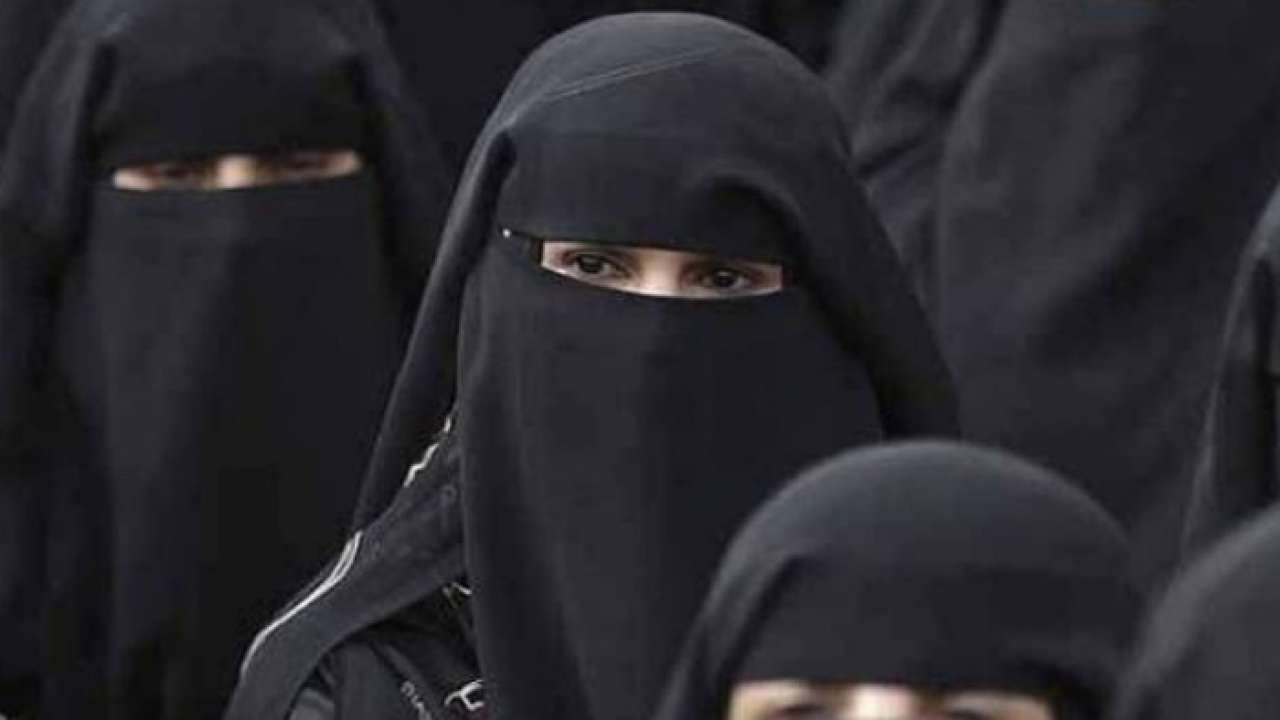
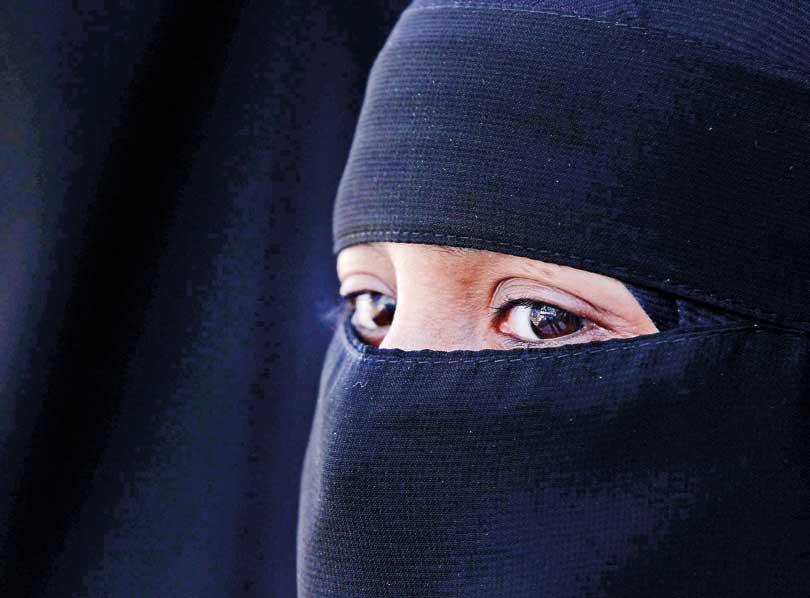
Burqa, the most
repulsive dress on this planet, should be banned in every country.
No saudi should
be allowed to enter Sri Lanka.
And we must
stop sending our women for slave labour in Saudi, the country the filthy
Americans support, anything can
happen. The journalist murder is linked
to ruler but filthy American ignores this as that will mess up
the oil flow. If there was no oil in
Saudi there would not have been a presence of filthy American.
Why does the
world comply with American demands to stop oil flow from Iran. Let the whole
world go to war with
filthy Americans!
Some women
feminists say it’s the right of a woman to cover or hide her identity. But the world
had changed. It is a right of other women too to know who is behind
the covered face! A woman or a man. A terrorist or an innocent woman. We have a right to
challenge this abominable irrelevant dress in Sri Lanka and world over except that
stupid country run by a corrupt royal family saudi Arabia.
No one should impose their culture on others and that is not
right either. Cover of head us fine but certainly not the face.
Colombon english speaking Catholics and Christians, the
darlings of the West saw to that galaboda gnanasaara monk end up in jail.
They were harping on this issue. This monk brought up the
issue at wilpattu and wahabis involvement. NIP AT THE bud.
But no one cared and he was incarcerated.
Oh what a
relief! No wahaabis on Mount Lavinia beach or anywhere!
Here’s what should happen.
We must lead the world on
burqa ban and make it to the UN.
We must round up all wahaabis in sri lanka, including the ministers,
and send them to Saudi.
All slaves who work for filthy smelly Saudis to be brought back and
paid a subsistence by government to compensate their income.
Release Ven, galaboda gnaanasara immediately.
Round up all English speaking catholics and christians and send them
to Britain or any
Other western
country who is willing to accept their darlings, ON GOVERNMENT expense.
Incarcerate indefinitely the wahaabis who have been rounded up. We should never make the
Mistake we
made with tigers at initial stages releasing them.
The return of terrorism to Sri Lanka on Easter Sunday after the lapse of nearly a decade is a day of infamy in the history of Sri Lanka because of its scale and spread. The whole nation is trying to understand the motivations that drove a group of radicalized individuals to engage in such a dastardly attack. Just as much as such a group was motivated enough to vent their anger for whatever reason, there always will be other groups with other motivations to resort to similar acts in the future. Therefore, the lesson for Sri Lanka or any other nation is eternal vigilance.
Failure of vigilance does not mean failure of intelligence. Vigilance means not only effective intelligence, but also taking effective action on the intelligence information gathered. For the political and security establishments to say that they were unaware of the goings on in the Muslim community is unacceptable. Equally unacceptable is the claim of the moderate Muslim community that it was unaware of the developments within their community, as it was with the Tamil community and the activities of “their boys”. Therefore, collectively there was awareness all around that a process of Muslim radicalization was underway based on religious fundamentalism. What failed was how to act on the information that was common knowledge.
Even if they may not have been aware of the manner, scale and timing as to how the radicalization process was to manifest itself, the intelligence establishment was aware that the radicalization process would manifest itself in one form or the other, even if it did not know details as to how and when it was to manifest itself. The fact that no measures were adopted to meet any challenges arising from the information gathered is because of the over emphasis given by the government to reconciliation and related issues, at the expense of security related matters. Consequently, the security establishment failed to get the attention of the political establishment to heed their concerns; a fact that caused them to adopt a no-care attitude.
BALANCING CIVIL LIBERTIES WITH VIGILENCE
A hard fact that cannot be denied is that security was down-played at the expense of reconciliation, human rights, and civil liberties. This attitude was starkly evident with the government co-sponsoring the UNHRC Resolution 30/1 where the focus was reconciliation along with all the commitments contained therein. During the last four plus years the security forces that gave their full measure of devotion to eradicate terrorism were collectively held accountable for alleged violations without any credible evidence by a government that had ridiculed them during the conflict. They see the actions of this government as the work of an ungrateful nation for the sacrifices they made. These measures have bruised and shattered their morale thereby compromising the security of the nation. This government must be held accountable for adopting measures that has brought the Sri Lankan State to its current level of vulnerability.
Even the need to ban the full body cover for reasons of security is being opposed by sections of the government itself on grounds that it targets only the Muslim community, and therefore the need to keep them “informed”. On the other hand, it would have been a measure of solidarity if the Muslim leadership voluntarily appealed to their community to desist from wearing the full body cover for reasons of security. Even if the community responded positively to such an appeal, the fact is that those who wear the full body cover are members of radicalized groups that reject practices adopted by the rest of the community. Therefore, in this particular instance, security should override civil liberties and beliefs for the sanctity of the right to life of others. Hence, there is an imperative need to legislate banning the full body cover for reasons of security of the community as a whole.
At the end of the day there has to be a balance between security and civil liberties without which vigilance is compromised. For instance, freedom of speech and expression is a valued freedom. However, not all exercise such freedoms with responsibility. The result is hate speech. Although there are laws to prevent hate speech under provisions of ICCPR ACT No. 56 of 2007 of Sri Lanka, the question is whether there are laws to gather the evidence needed to prosecute anyone engaging in speech that violates the provisions in the Act cited above. If such laws are not in operation, the opportunity to deter hate speech is lost and without hate speech it would not be possible to radicalize young people to commit hate crimes, in the name of their warped intolerant beliefs.
INTELLIGENCE and VIGILANCE
One aspect of Intelligence is to know what is going on in a country. However, intelligence gathered has no meaning if there are no laws to act on the information gathered. Such laws could either prevent and contain unlawful activities or be of a nature that punishes anyone who commits an unlawful act. Since prevention of terrorists’ acts save lives, the strategy should be to prevent and deter terrorism rather than punishing those who resort to terrorist acts after the act is committed and hundreds die.
Those who resort to terrorism need to engage in the following activities:
Prospective suicide bombers and those who carry out terrorist acts have to be motivated by radicalizing them.
This requires radicalized leaders to engage in hate speech.
The collection and storing of material are needed to carry out terrorist acts.
Funding is needed to acquire such material.
Unrestricted travel both within and outside the country facilitates engaging in each or all of the four activities listed above.
Recognizing that each and all the activities listed above are needed prior to engaging in a terrorist act, the need of the hour is to revisit existing laws to ascertain whether they are effective enough to prosecute anyone engaging in any of the activities listed above instead of depending on laws that come into play only during an emergency. For instance, acts such as storing of offensive weapons and mutilating and defacing religious objects are offences under provisions of the Prevention of Terrorism Act. If so, the burning question the public is asking is: “Why did the authorities not take timely action to arrest and prosecute those responsible for such actions”? Had they done so and rule of law prevailed as it should, the government could have prevented the terrorists from executing their missions.
In this regard, since UN Security Council Resolution 1373 addresses most if not all the measures listed above, it is imperative that the government directs the law enforcement agencies to update existing laws to reflect the recommendations in the UN Resolution cited above.
Presented below is a section form the above Resolution calling on States to implement domestic laws in order to prevent and contain terrorism.
1. Decides that all States shall:
(a)Prevent and suppress the financing of terrorist acts;
(b)Criminalize the willful provision or collection, by any means, directly or indirectly, of funds by their nationals or in their territories with the intention that the funds should be used, or in the knowledge that they are to be used, in order to carryout terrorist acts;
(c)Freeze without delay funds and other financial assets or economic resources of persons who commit, or attempt to commit, terrorist acts or participate in or facilitate the commission of terrorist acts; of entities owned or controlled directly or indirectly by such persons; and of persons and entities acting on behalf of, or at the direction of such persons and entities, including funds derived or generated from property owned or controlled directly or indirectly by such persons and associated persons and entities;
(d)Prohibit their nationals or any persons and entities within their territories from making any funds, financial assets or economic resources or financial or other related services available, directly or indirectly, for the benefit of persons who commit or attempt to commit or facilitate or participate in the commission of terrorist acts, of entities owned or controlled, directly or indirectly, by such persons and of persons and entities acting on behalf of or at the direction of such persons;
2.Decides also that all States shall:
(a)Refrain from providing any form of support, active or passive, to entities or persons involved in terrorist acts, including by suppressing recruitment of members of terrorist groups and eliminating the supply of weapons to terrorists;
(b)Take the necessary steps to prevent the commission of terrorist acts, including by provision of early warning to other States by exchange of information;
(c)Deny safe haven to those who finance, plan, support, or commit terrorist acts, or provide safe havens;
(d)Prevent those who finance, plan, facilitate or commit terrorist acts from using their respective territories for those purposes against other States or their citizens;
(e)Ensure that any person who participates in the financing, planning, preparation or perpetration of terrorist acts or in supporting terrorist acts is brought to justice and ensure that, in addition to any other measures against them, such terrorist acts are established as serious criminal offences in domestic laws and regulations and that the punishment duly reflects the seriousness of such terrorist acts;
(f)Afford one another the greatest measure of assistance in connection with criminal investigations or criminal proceedings relating to the financing or support of terrorist acts, including assistance in obtaining evidence in their possession necessary for the proceedings;
(g)Prevent the movement of terrorists or terrorist groups by effective border controls and controls on issuance of identity papers and travel documents, and through measures for preventing counterfeiting, forgery or fraudulent use of identity papers and travel documents.
These recommendations have been in existence since 2001. Had successive governments upgraded domestic laws in keeping with Resolution 1373 many lives would have been saved. In particular, it would have been a serious impediment to those who funded and provided material support to those resorting to terrorism, without which the whole project would have failed. Such support continues to be received by the Tamil and Muslim communities. Therefore, it is a combination of effective intelligence backed up by effective laws that make a nation sufficiently vigilant for it to be safe and free of threats to its security.
CONCLUSIONS
Although strategies exist to improve the security situation in the country by preventing and containing terrorism, the mood in the country is that this government is not going to adopt the needed measures to make the country safe for its citizens as it had been over the last decade. Whether the reason for such a mood is because of the apathy of the government or because the government is allowing the security situation to deteriorate intentionally for reasons of internal harmony, means the government has lost its right to govern because security that protects the right to life has to prevail over all other considerations. There is also speculation that security is being deliberately sacrificed as part of a greater geostrategic plan to justify intervention in the event security spirals out of the control of the government. The fact that the government has not prosecuted anyone guilty of storing weapons, supports such apprehensions.
There is no denying that the government as a policy has relaxed measures relating to the rule of law. This has resulted in lifting restrictions on travel. Another activity relates to uncontrolled flow of funding to entities, without question as to sources of origin and purpose. Both measures are exploited by terrorists. While a free and open society is what all aspire to, it must be acknowledged that such benefits come at a price, and that price is that all have to trim some of our liberties because a few abuse the freedoms under which they live. Therefore, there has to be a judicious balance between security and civil liberties and if one has to make a choice, security should override civil liberties. The exercise of such balance requires societies to adopt measures that promote vigilance, without which there cannot be the freedoms we cherish.
The Minister of Education announced recently that the Ministry would do away with ethnic-based schools given its own principled” stand we would next like to know how using the same logic of not allowing ethnic” based learning, the education authorities have signed an MOU to establish the Malik Abdulla University College in Kattankudy, in Eastern Province.
When the announcement was given by the Ministry of Education that they would remove ethnic-based” schools the first thoughts of everyone was whether leading schools that have been in existence for years, Government or Semi-Government would agree to changing their names. Ministers have a way of drawing public attention by announcements that provide no logic just as absurd as some came out with the need to change the national anthem and the national flag and now it appears someone has landed a lucrative deal to change the national ID card to include Tamil as well.
Obviously, objections would have been made with former schools, children, parents or past-pupils NOT wanting to change the name of their alma-mater that the Ministry quickly reversed its stand and declared No NEW schools would be ethnic-based”. What do authorities propose to do about the rising number of Muslim Only and Tamil Only international schools, day care centers springing up in every corner while there are no Sinhala Only universities? Does this fall within the oft quoted multi” label?
So if the Ministry has decided to not allow no NEW ethnic-based schools what explanation can be given to allowing a MUSLIM ONLY university college?
The University College is to be funded by Saudi Arabia which is known for funding institutes that radicalize youth and draws them towards Saudi brand of Islam and Sharia law.
The newspaper announcements claim that the University was requested by Deputy Minister Hisbullah and is established as part of the Mahinda Chintanaya which clearly goes to show how authorities have a way of manipulating the system because no where in the Chintanaya does it say to create ETHNIC-based private colleges unless another Chintanaya is being practiced. But the college itself is earmarked to be inaugurated by the President himself. The announcements last line that it would cater to the needs of all three communities” is obviously a whitewash.
The argument against the establishment of an ethnic-based university has nothing to do with being against learning but everything to do with the principle that if authorities are attempting to integrate the youth and not segregate them why are they establishing places of learning that is imparting a brand of education that distances them from other communities?
Students coming out of such universities end up mentally and physically alienating themselves out of choice (in view of their new Arabic attire and thinking) and disassociating themselves from those in their age group – this affects the team spirit, the ability to work as teams even when they join employment. Is this a healthy environment we wish to create?
Moreover, we cannot ignore the rise in Saudi-funded Islamic radicalism to be naïve that while this may exist elsewhere it is unlikely to create similar catastrophe’s here in Sri Lanka too.
Recently wikileaks released US Embassy in Colombo cable identifying 4 such groups based in Sri Lanka – Jamthi Islam, Thauhid Jamath, Thableeq Jamath, and Jamathi Muslim. The cable was written by Ambassador Lunstead on 9 June, 2004. The cable also details training camps, while other youth are sent to Saudi and says that a Saudi-based NGO World Assembly of Muslim Youth fund these activities. The Ambassador cites that the Muslim youth initially started training to defend themselves against the LTTE. The cable also mentions the Muslim Congress being supported by the Islamic Unity Foundation which has military, intelligence, religious and political wings as well as weapons. Other groups mentioned in the cable include Knox group, Ossama group, Jetty group, Mujahadeen, Banda group all with Muslim Congress backing. Links to the underworld is also mentioned. Ambassador Lunstead also notes very little insight into the veiled world of Muslim militancy in eastern Sri Lanka and the information provided is just one part of a vast puzzle that makes up the cultural/political/religious melting pot of Sri Lanka.” This clearly shows that we need to be alert to all Saudi-funded seats of learning because the outcome of these in other parts of the world have resulted in fatal consequences and have torn entire nations apart. The question is – do we want to invite the same in Sri Lanka when we have just come out of a 30 year chaos?
The argument is further strengthened by the fact that ALREADY there are 5 types of institutes offering Arabic in Sri Lanka – the GOSL conducts 2 types of examinations, there are the Madrasas (religious based schools) which offer 8 years Sharia courses, then 4 Government universities which offer degree level courses and the Jamia Naleemia in Beruwela which is also a private university. There is a rising number of children as young as 7 attending these madrasas instead of schools which raises the question of Sri Lanka’s international commitment that ALL Children must attend schools – not religious based schools.
However, Arabic language courses selected by undergraduate students raises more questions than answers – normally in marketing the demand creates the supply – from what is happening is that the supply is been geared to create the demand.
For the 1.8million Muslims of Sri Lanka the number of already existing religious and educational establishments suffices to say the least. Authorities now need to work out a moratorium so that the demography of the country is kept intact and the peace dividends that 27,000 soldiers sacrificed their lives for is not eliminated by the shortsighted decisions taken by officials and public servants.
Recent revelation that those responsible for the Easter Sunday carnage (April 21) had killed two police constables in the early hours of Nov 30, 2018 at Vavnativu in the East has exposed a serious intelligence lapses.
Authoritative sources told The Island that law enforcement authorities and the Directorate of Military Intelligence (DMI) seemed to have been clueless as regards the alleged involvement of Muslim extremists in the Vavnativu killings, which they believed was an act of a group of resurgent Tigers.
Then IGP Pujith Jayasundera directed the Criminal Investigation Department (CID) to probe the double killings.
The killing of a Sinhala police constable from the South and a Tamil from the East were conveniently blamed on former members of the LTTE, sources pointed out. Several ex-LTTE cadres were detained in connection with the Vavnativu killings under the Prevention of Terrorist Act (PTA).The police attributed the killings to the police thwarting ex-LTTE cadres’ efforts to mark their heroes’ week.
The lapse on the part of the government intelligence apparatus came to light on April 28-exactly a week after massive coordinated suicide attacks killed over 250 civilians and injured more than 500 others when police headquarters revealed Muslims extremists’ involvement in Vavnativu killings. Police headquarters statement followed the interrogation of Mohamed Sharif Adam Lebbe alias Gaffoor (53), a close associate of the Easter Sunday bombing mastermind. Gaffoor led the police to side arms issued to the slain police constables buried at Wanathavilluwa widely believed to be the main base of their operations.
Senior law enforcement sources said that those ex-LTTE cadres detained under PTA over the twin cop slayings had to be released in the wake of Gaffoor’s statement and recovery of personal weapons issued to the two victim policemen from the Muslim extremists responsible for the Easter Sunday carnage.
The DMI made no reference to Muslim extremists’ involvement in Vavnativu killings when the outfit briefed the media on April 26 at the President’s House on the instructions of President Maithripala Sirisena. The same briefing had been made to several parties, including the National Security Council (NSC) since the April 21 bombings.
President Sirisena proscribed the National Thowheed Jamat (NTJ) and Jamathei Millathu Ibrahim (JMI) on April 29 in terms of the Emergency Regulations.
Other sources pointed out that though the DMI and the Office of the Chief of Defence Staff (CDS) shouldn’t have been deprived of Indian warning, the former couldn’t under any circumstances absolve itself of the culpability for its failure to thwart the attack. Sources said that the entire intelligence apparatus owed an explanation as to why Vavnativu killings didn’t receive proper attention it deserved.
Well informed sources asserted that Zahran Hashim widely described as the mastermind of the Easter Sunday bombings had been a front. Two persons above him in the grouping had been taken into custody in terms of the PTA and were being interrogated, sources said, emphasizing Hashim was the face of NTJ whereas the actual leadership was in the hands of the two persons taken in. There could be others, sources said, adding Zahran’s leading role in the operation shouldn’t be misconstrued as he was the leader of the terror group.
Sources revealed that security authorities had been alerted to the impending attack by reliable sources even before the Indians warned. The abortive attempt to kill Mohammed Naslim, Co-ordinating Secretary to UNP Chairman and Minister Kabir Hashim on March 09 at Danagama in Mawanella, too, didn’t prompt required action, sources said, adding that the situation remained the same even after authorities established extremists blasting a scooty in a vacant land at Kattankudy belonging to Eastern Province Governor M.L.A.M. Hisbullah. This blast took place a week before the Easter Sunday massacre. President Maithripala Sirisena promoted National List MP Hisbullah from Parliament to the Office of EP Governor in early January this year to pave the way for Shantha Bandara to enter parliament. Hisbullah succeeded Rohitha Bogollagama, a former Foreign Minister.
Perhaps, the Parliamentary Sectoral Committee on national defence, too, should inquire into the intelligence failure, sources said. They said that it would be prudent to examine whether terrorists sought to exploit political crisis in the wake of Oct 2018 ‘constitutional coup’ by killing policemen in the East. Sources said that comprehensive investigation into Vavnativu killings would have exposed the group before the Easter Sunday massacre.
In spite of having a plethora of reports pertaining to the group’s activity those responsible seemed to have hesitated to go the whole hog, they said.
The defeat of Islamic State in Syria and Iraq has only intensified the terrorism challenge .
The Easter Sunday bombings in Sri Lanka rank among the deadliest terrorist attacks in modern history, and underscore the metastasizing scourge of Islamist violence in Asia. Radical Islamic groups have been quietly gaining influence in an arc of countries extending from the Maldivian to the Philippine archipelagos, and the threat they pose can no longer be ignored.
In fact, the grisly Sri Lankan bombings are a reminder that Asia—not West Asia—is the region most afflicted by terrorist violence. Home to the vast majority of the world’s Muslims, it is also host to multiple terrorist safe havens,” owing to the rise of grassroots radical movements and years of complacency on the part of policymakers.
With a total of 359 people dead, the Sri Lanka bombings were seven times deadlier than the 15 March massacre by a white supremacist at two mosques in Christchurch, New Zealand. The death toll is also more than double that of the 2008 Mumbai attacks, which involved 10 Pakistan-based militants in one of the modern world’s longest-ever terrorist sieges.
By targeting international hotels and iconic churches, the Islamists behind the Sri Lankan blasts clearly intended to strike a blow against Sri Lanka’s fast-growing tourism industry, a mainstay of the country’s debt-ridden economy. The attacks also mark the dawn of Islamist terrorism in Sri Lanka. Though suicide bombings were not uncommon during the country’s 26-year civil war, Sri Lanka has not previously experienced coordinated violence on this scale or a major attack by Islamist militants.
The civil war ended in 2009, when the Sri Lanka Army brutally crushed the last of the Tamil separatist rebels. But that outcome sowed the seeds of religious conflict between the country’s mainly Buddhist Sinhalese and a Muslim minority that constitutes one-tenth of the population.
Sri Lanka’s Muslim population is largely concentrated in the Eastern Province, where Saudi and other Gulf funding has fuelled the rise of jihadist groups seeking to enforce sharia (Islamic law). The group suspected of carrying out the Easter bombings, the National Thowheed Jamath, thrived in this setting. Like the similarly named outfit Sri Lanka Thawheed Jama’ath and the rapidly growing Tamil Nadu Thoweed Jamath in southernmost India, its primary goal is to foment militant Islamic fundamentalism.
Though its extremist enclave in Syria and Iraq has crumbled and its leaders are on the run, the Islamic State (IS) has claimed responsibility for the bombings. Like Al Qaeda before it, IS wants to demonstrate its continued relevance by taking credit for attacks in areas where it has no presence. Most likely, the Sri Lanka attacks were not the direct work of IS. And yet they were inspired by the same toxic ideology espoused by IS: Wahhabi fanaticism.
Wahhabism, the austere, rigid version of Islam bankrolled by Saudi Arabia and other Gulf sheikhdoms, remains the driving force behind Islamist terrorism today. Its offspring include not just Al Qaeda and IS, but also the Taliban in Afghanistan, Lashkar-e-Taiba in Pakistan, Boko Haram in Nigeria, and al-Shabaab in Somalia. All of these groups are driven by a nihilistic rage born of hostility toward non-Sunnis and a rejection of modernity.
Unfortunately, as the Sri Lanka bombings and other attacks in Asia show, the defeat of IS in Syria and Iraq has only intensified the terrorism challenge, because battle-hardened fighters with the operational training to stage savage attacks are now returning home. The presence of such returnees in Sri Lanka explains how an obscure local group was able to carry out sophisticated, near-simultaneous strikes on three churches and three hotels, using military-grade explosives.
Returnees are present in many other Asian countries as well, from the Philippines and Indonesia to the Maldives and Uzbekistan. Like Osama bin Laden and other Al Qaeda leaders who cut their teeth in the US-backed war against the Soviet occupation of Afghanistan, this new generation of jihadist veterans could haunt the security of Asia, West Asia and the West for years to come.
To be sure, official discrimination against Muslims has contributed to Islamists’ growing influence, particularly in Myanmar’s Rakhine state, Thailand’s four southernmost provinces, and the southern Philippine island of Mindanao. But so have Saudi-funded madrasas (religious seminaries) and social-media platforms, which facilitate fundraising, recruitment, and dissemination of jihadist propaganda. Hence, jihadist violence has also come to threaten predominantly Muslim countries such as Indonesia, Malaysia, Bangladesh, and Kazakhstan. And in some cases—namely Pakistan—the state itself is abetting violent extremists.
By CCN.com: Bitcoin played a role in staging the Easter Sunday suicide bombing in Sri Lanka that killed 253 civilians, according to Israeli blockchain intelligence firm Whitestream.
The agency revealed that the ISIS used Canada-based payment gateway CoinPayments to convert bitcoins to fiat money. The firm identified large scale transactions between the wallets that ISIS used to raise contributions and the bitcoin accounts held by CoinPayments.
Whitestream found that the balances in the payment company’s wallets surged from $500,000 to $4.5 million just one day before the Easter attacks. The firm added that the CoinPayments’ balances dropped back to $500,000 right after the deadly attacks took place. The payment company in question admitted that they had processed high-volume transactions. However, it denied having any knowledge about the money’s links with terrorist groups.
CoinPayments admits that their wallet was involved but denied that it is connected to ISIS,” Whitestream told Globes. It’s possible that the company is not aware of the usage of their wallets, perhaps because ISIS uses straw companies [to] transfer the money.”
THE ISIS-BITCOIN CONNECTION
Whitestream, founded by Itsik Levy and Uri Bornstein, confirmed that it was monitoring ISIS-linked bitcoin wallets from the past two years. The firm eventually maximized its focus on one bitcoin wallet that was receiving donations actively over different periods. It succeeded in verifying two transactions originated from the bitcoin wallet address listed on the ISIS fundraising website.
Levy said they were able to trace the transactions back to CoinPayments, indicating that the payment processing company knowingly/unknowingly was facilitating the ISIS funding campaign.
Our assumption is that the terrorist organization probably possesses many bitcoin addresses through CoinPayments, with every donation sent to a different address,” Levy told Globes. On the day before the Sri Lanka terror attacks, we identified two relatively big transactions at this address with bitcoins worth about $9,800.”
Whitestream in February had named CoinPayments for facilitating bitcoin-enabled donation campaigns for Hamas, a Palestine-based Sunni-Islamist fundamentalist group. Meanwhile, the firm believed that cryptocurrency-based payment and exchange companies were working in a largely unregulated environment. It was making it easier for terrorist organizations to exploit them for financing their attacks around the globe.
Another terror attack targeting churches in Sri Lanka could come this week. Credit: AP
The terror threat still looms large in Sri Lanka and an attack on a church could take place this week, the country’s Catholic cardinal has warned.
Malcolm Ranjith has raised his concerns in a letter, sent to church officials, in which he claims to have received ”foreign information” that another strike is imminent.
The archbishop of Colombo has been an outspoken critic of the Sri Lankan government’s apparent failure to act on Indian government intelligence ahead of the Easter attack.
In his missive, which has been posted on social media, he states a church or another church institution is likely to be targeted.
The archbishop of Colombo, Cardinal Malcolm Ranjith. Credit: AP
He states that he has therefore made the decision for churches and Catholic schools throughout Sri Lanka to be closed and public congregations for Mass will be cancelled “until further notice”.
“For your own good, we have decided to close down those institutions,” he wrote.
More than 250 people were killed, including eight Britons and a further 300 injured during the Easter Sunday bloodshed in the country’s capital Colombo.
The terror bombings targeted three churches, packed with worshippers, and three upmarket hotels.
The Sri Lankan government imposed a no face veil ban earlier this week. Credit: ITV News
Church spokesman Rev. Edmund Thilakaratne confirmed the authenticity of the letter to The Associated Press but declined to disclose further details, including the source of the foreign information.
An Islamic State-linked group of Sri Lankan nationals is believed to have carried out the co-ordinated suicide bombings.
With suspects still at large the Sri Lankan government introduced a ban on face veils this week designed, it was stated, to help police in their hunt.
A warning was also issued of jihadis in military uniform.
Last week, Muslims were told to stay home for Friday prayers and all of Sri Lanka’s Catholic churches were closed.
Instead of the usual Sunday Mass, Ranjith delivered a homily before clergy and national leaders at his residence that was broadcast on television.
Sri Lanka’s Muslim leaders, however, were encouraging Muslims to return to mosques for Friday prayers, according to N.M. Ameen, president of the Muslim Council of Sri Lanka.
Ameen said the security situation seemed to have improved, though the group had asked the government for additional protection.
Islamic State leader Abu Bakr al-Baghdadi appears in video for first time in five years.
Officials have warned that suspects linked to the bombings are still at large.
Intelligence warnings have indicated Sri Lankan government ministers could be targeted by the same group, which pledged its loyalty to Islamic State militants.
Sri Lankan police have released the names and photographs of nine alleged suicide bombers who carried out the Easter attacks, all belonging to an offshoot of a local group called National Towheed Jamaat.
They included extremist preacher Mohamed Zahran, also known as Zahran Hashim, who was described as the attack leader, and the wife of another suicide bomber, who blew herself up, along with her children and three police officers, at a villa belonging to her father-in-law, who is a prominent spice trader.
Troops continue to patrol the streets of Colombo, Sri Lanka. Credit: ITV News
The bodies of 10 suspected militants killed in a gun battle with security forces and subsequent explosion at a safe house in Sri Lanka’s Eastern province last week were buried without any religious rites.
Police suspect that Zahran’s father and two brothers, Rilwan and Sheini, were among the 16 killed at the safe house, according to spokesman Ruwan Gunasekara.
Zahran’s wife and daughter sustained injuries from the blast, but their medical condition was not immediately clear.Last updated Thu 2 May 2019
Three persons have been arrested at the Central Mail Exchange with 600 letters defamatory of the President and inciting enmity among races, the Police Spokesman SP Ruwan Gunasekara said.
The letters were reportedly addressed to various Buddhist temples across the country.
However, due to a suspicion with regard to the letters, the officials at the central mail exchange had taken steps to notify the police.
After being notified regarding the letters, the suspects were arrested by police at the Central Mail Exchange in Colombo, the spokesman said.
The content of the letters in question are defamatory of President Maithripala Sirisena and also incite enmity among the population on the grounds of race and religion, police said.
Ada Derana reliably learns that the three arrested suspects are staff members of a powerful UNP Minister.
A report compiled by several former Sri Lankan security forces commanders, regarding the terrorist attacks of Easter Sunday and the current security situation of the country, has been presented to Opposition Leader Mahinda Rajapaksa.
The committee report was officially handed over to Rajapaksa at the Opposition Leader’s official residence today (02).
Rajapaksa expressed his immense gratitude to the former military commanders for volunteering to come forward at this time of need to fulfill this task for the people of the country, even though they have retired from the service.
Former Defence Secretary Gotabaya Rajapaksa, MPs Dinesh Gunawardena, Wimal Weerawansa, Kumara Welgama, Rohitha Abeygunawardena and Dullas Alahapperuma were also present on the occasion.
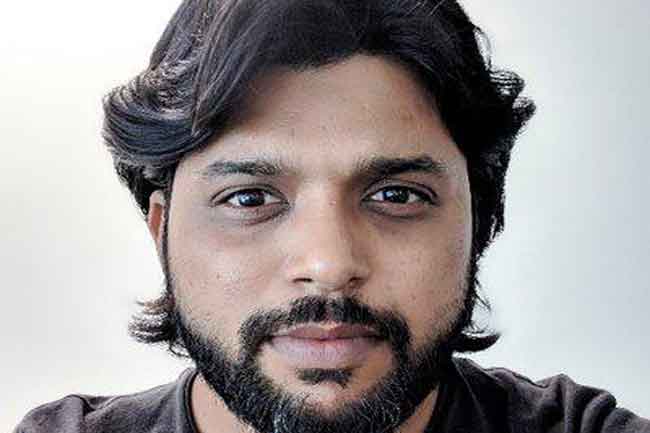
A foreign journalist, who was arrested for allegedly trying to forcibly enter a school in Katana, has been remanded until May 15 by the Negombo Magistrate’s Court.
Iraqi-born Siddiqui Ahamed Danish, a Reuters photographer based in India, was reportedly arrested at around 12.30 p.m. today (02), based on a complaint received by the 119 emergency hotline, when he allegedly forcibly entered the school.
He had reportedly arrived in the country from India in order to cover the aftermath of the Eastern Sunday suicide bombings in Sri Lanka.
The foreign journalist had arrived at the school in order to obtain information regarding one of its students, who was killed in the bombing at the St. Sebastian’s Church in Katuwapitiya on April 21, when several parents at the school had grown suspicious and called 911.
Acting on the information, Katana Police officers arrived at the school and arrested the journalist.
He was produced before the Negombo Magistrate’s Court today and ordered remanded until May 15.
One of the individuals killed in the suicide bombings at a house in Sainthamaruthu has been identified as a bother of Zahran Hashim while the other two men appearing with him in a video have been identified as Mohamed Rilwan and Mohamd Seyni.
Police have recovered 4 suicide vests, 2 mobile phones, 2 ATM cards and several bank books from the Kattankudy residence of the persons identified as Rilwan.
Meanwhile four photographs of Rilwan’s children, national identity cards (NICs) and other items were discovered today during a joint operation by the Special Task Force (STF) and Police.
Kattankudy Police OIC stated that Rilwan’s mother-in-law and father-in-law have also been taken into custody.
Mohamed Rilwan and his wife were both killed in the suicide blasts at a house used by terrorists in Sainthamaruthu, Ampara District.
Meanwhile police have also arrested a woman who is said to be the sister of Zahran Hashim, the leader of the terror outfit National Thowheeth Jamath (NTJ).
The 25-year-old was taken into custody by Batticaloa HQ Police last evening at her residence on Alim Road, Kattankudy.
Police said that Rs 2 million in cash was found inside her home and that Batticaloa HQ Police and the Criminal Investigations Unit are conducting further investigations.
The other family members of Zahran are believed to have been killed in the blasts at Sainthamaruthu.
There is no government-approved Sharia University or educational institute in Batticaloa district, stated UNP MP Prof. Ashu Marasinghe speaking at a press conference held yesterday (01).
On 3rd July in 2015, then Minister of Higher Education Sarath Amunugama had received a letter requesting permission to establish a higher education institute.
However, the permission hasn’t been granted for this particular institute as of yet, and that there are many issues regarding this, Marasinghe stated.
On 29th February 2016, the proposed institute had changed its name and they had presented Rs 3600 million worth foreign funds granted to establish this institute.
Claims that this has received approval of the University Grants Commission (UGC) and that it conducts educational courses are false, he further said.
Therefore there is no such thing as a Sharia University, he added.
Two suspects were arrested along with 36 sets of white female clothes stuffed in a fertilizer sack and hidden inside a van.
It was reported that the van in question had set off to Anuradhapura from Thihariya.
The arrestees were two Muslims, aged 41 and 47 years, according to the reports.
Police investigations are being conducted to uncover if these sets of clothes bear similarities of any kind to the white female clothes recovered from Sainthamaruthu area.
Anuradhapura Police is probing the incident further.
Meanwhile, in a separate search operation, 14 walkie-talkies were and 8 CDs were recovered from a beauty parlour, while two suspects were also arrested in the raid.
The seizure was made by the Police Special Task Force last night (01).
The said beauty parlour is located on Borupana Road, Ratmalana.
Sri Lanka, Easter Sunday, 21 April 2019: More than half a dozen bomb blasts shook the country killing from 250 to more than 350 people. Depending on who counts, the death toll varies. The devastation took place in in several catholic churches and luxury hotels. Other explosions, including from – what they say – are suicide bombers, have since killed another several dozens of people. Many are children, women – christen worshippers. Why the luxury hotels? Western (Christian) tourists?
Today, another explosion ripped through a suspicious building, killing 18, including children and women. Again, they, the ‘authorities’, say suicide bombers, who didn’t want their ‘cache’ to be discovered. Conveniently they are all dead – the suicide bombers”. Nobody can ask them any questions.
There was a lot of confusion, and still is, all through Sri Lanka. Nobody claimed credit for the massacres. There were rumors that Sri Lanka’s President received warnings ahead of the attacks from foreign intelligence, but ignored them. The President denies these allegations. And the explosions continue.
Finally, the verdict is in. The culprits are an Islamic terrorist group, associated with ISIS. What else is new.
Sri Lanka’s population is composed of about 70% Buddhists, 13% Hindus, almost 10% Muslims, mainly Sunni, the Salafi version, and about 7% Christians. The New York times reports that the accused mastermind of the terror attacks was strongly influenced by Wahhabism, the same extreme hardliners that control most of Saudi Arabia.
Hatred between religions seems on the rise. In New Zealand a few weeks ago a white supremacist assaulted a mosque, killing 50. This past weekend, a shooting in a Synagogue near San Diego, California killed a woman. The murderer said he was inspired by the New Zealand massacre. Are these spontaneous, interreligious mini-wars part of a foreign directed ‘divide to conquer’ effort, a strategy that has been used by empires for centuries, but seems to be alive and well with the current Washington based empire?
MintPress News reports that Sri Lanka Easter attacks are the handiwork of terrorists returning from fighting in Syria, practicing the Saudi-backed Wahhabi Salafist ideology,” adding, though not confirmed yet, they, [the attacks], are in keeping with the modus operandi of Saudi-sponsored Wahhabi terrorism worldwide. [The] Saudi sponsorship of Salafi Wahhabi dogma [is found] across the globe. From Boko Haram to ISIS, and from the Taliban to Al Qaeda, a common ideological thread runs through these terror groups. This is the Saudi-sponsored Wahhabi Salafi ideology whose South Asian counterpart is Deobandi. For abbreviation purposes, it is becoming increasingly common to term this interconnected ideology as WSD (Wahhabi Salafi Deobandi).”
May we expect a wave of Saudi-sponsored WSD terrorism in the east too? – Is the horror Saudi government protected by the US, because it does its bidding? And this bidding leads to making gradually Islam extremism the justification for NATO bases around the globe? – Perhaps in Sri Lanka, tomorrow? So far Sri Lanka is clean from NATO. Sri Lanka has not even an association agreement with NATO.
Just look at the world-geostrategic location of Sri Lanka, linking the Arabian Sea with the Indian Ocean. Sri Lanka may also have a direct, open-sea connection with the small British island of Diego Garcia, in the Chagos Archipelago, north-east of Madagascar. Diego Garcia hosts the US’s largest Navy base outside the American Continent. Many of the drone killings in Yemen, Syria and other places in the Middle East originate from Diego Garcia. The civil war” in Syria was (and still is) largely directed from Diego Garcia, as well as from Djibouti.
Wouldn’t it be logical for NATO to set up base in Sri Lanka to control South East Asia? Saudi guided WSD attacks would create the necessary chaos justifying all the AngloZionist secret services – plus NATO – to descend on Colombo, to create further protests and anarchy – a never-ending internal strife, giving the war industry a new never-ending flow of profit, hence, further justifying the never-ending war on terror – and, thereby, moving yet an inch closer to Full Spectrum Dominance over Mother Earth and her hapless spectators, what western humanity has become – a bunch of complacent consumers, drenched in turbo-capitalist market ideology, too comfortable to go on the barricades.
The key and engine to all of this is NATO, whose modus operandi is killing for a living, for dominance and for profit. If there is ever to be Peace – and that’s what the vast majority of the inhabitants of this globe wants – I’m not exaggerating pretending that 99.99% of world population wants to live in peace – then NATO must go, NATO must be dismantled.
So, Europe which has the largest membership in NATO (27 out of 29 nations) has to put the money where her mouth is: Europe calls for Peace, Europe claims to be Peace-loving – really? Then put your money into creating Peace – pulling out of NATO, refusing at once to fund this killing machine under the pretext of protecting Europe”. Protecting Europe from what? From whom? – Not from Russia – despite all the highly propagandized and highly corporate-funded Russiagate / Russia phobia, exacerbated by a new artificially implanted fear – China. These countries have no history of expansion, like the west.
They only seek friendly relations of trade, of transport, cultural and research interconnectivity within the supercontinent, Eurasia, and ultimately, they promote a multi-polar world. The best example is the Chinese President Xi’s ingenuity – the Belt and Road Initiative (BRI) that just finished its highly successful forum in Beijing – where more than 120 nations signed memoranda of understanding (MOU) and cooperation agreements with China for tens of billions of dollars equivalent. – What a way of cooperating, instead of sowing western-style belligerence.
Europe and the rest of the world is not in danger, except in danger of itself for being a vassal of the US and for hosting 30-plus NATO bases which would be first in the line of fire, if the east is forced to defend itself from that permanent Pentagon-NATO driven aggression.
Europe withhold your funding for NATO, get out of NATO, dismantle NATO, – NOW, before NATO sets up yet another base in Asia, before NATO spreads more death around the globe.
Those who forget the past are condemned to relive it” – Santayana
Sri Lankan nation is horror struck
and deeply saddened by the Easter Sunday carnage. Hundreds of innocent people
mostly Christians and others foreigners, were murdered in the most gruesome of
ways – by bombings. In the other modes of killings there is even a body to take
home and mourn over. Some bodies had to be identified by only a little ring
finger, others by a tattoo! These
horrendous crimes took place at churches and hotels around Sri Lanka.
Sad to say this nation was already
condemned by the gods for what was waiting to happen. A nation full of
ungrateful citizens richly deserved the outcome for they so quickly forgot the
past. They allowed the deterioration of sanity to its lowest with hardly a look
backwards. This time they allowed the seeds of Islamic Terrorism to take root
and giving precedence to Middle East and Tamil Diaspora money and their own self-interest.
They sowed the wind and reaped the whirlwind! Meanwhile events around the
Islamic World were rapidly changing.
If by chance these atrocities
happened against the majority Sinhala Buddhist Community, the world would now
be having a different narrative, it would have been no big deal! However, this
was not going to stop BBC and Al Jazeera trying hard to fish in troubled waters
and find a Sinhala Buddhist connection to the Easter Sunday atrocities albeit
with little success. Now that it has
happened against the Christian Community the tallest building in Dubai gets
painted with the Sri Lankan flag, and similar sentiments expressed from around
the world. For the moment, there is a semblance of heartfelt sympathy and
solidarity with those who suffered and for the nation of Sri Lanka. Fortunately,
Sri Lanka has a window of opportunity to do and correct many a thing in their
security lapses with international understanding, but that only time will tell!
In 2015, exactly 200 years after a
similar cataclysmic event in the history of Sri Lanka – where a similarly
vilified ruler of Sri Lanka was replaced by the British – people of Sri Lanka went for a CHANGE and
they got a change that was well funded by the so called International Community
led by the US, who alone spent US$ 550 Million for regime changes in Nigeria,
Myanmar and Sri Lanka. As can be seen from around the world their agenda has little
to do with the welfare of smaller nations. Iraq, Libya, Syria, Serbia n now
Yemen n Venezuela are prime examples who were and are at the end of this International
Community benevolence!
Today, Sri Lanka is in a conundrum unable to get rid of the President, the Prime
Minister and their jocular and grossly unsuccessful administration. They have together demonstrated beyond any
doubt their inability to lead, their dereliction of duty and their criminal
negligence in the administration of Sri
Lanka!
These are the wages of an ungrateful
nation who forgot the past and now have to relive it. Within the span of ten
years the Sri Lankan nation forgot how it was before the end of the Terrorist
War in May 2009. This terrorist war spanned over 30 years, caused by over 70
years of unrelenting minority bickering for an mono-ethnic fiefdom with no
relevance in history or real ethnic demography. It was a time of bombs going on
all over the island willy nilly at the whims of a multitude of Tamil terror
groups. These terror groups made carnage all over Sri Lanka while fighting each
other for dominance and finally coalesced into one powerful terrorist organization
the LTTE led by the terrorist warlord – Prabhakaran. The LTTE carnage was targeted
at politicians, ordinary people, places of religious worship – mainly Buddhist
and sometimes Muslim.
Ordinary people who were going about
their ordinary day to day business of getting to work in trains and busses were
targeted. Ordinary people at their day to day shopping were targeted. Ordinary
people taking their children to school were targeted. Ordinary people at their
places of worship were targeted and brutally murdered. All this found a simple
explanation that Sinhalese Buddhists are discriminating against the Hindu
Tamils and hence Tamil Freedom Fighters are fighting for their freedoms and for
a land of their own. That was good enough for the so called International
Community and India to fund, resource and train the LTTE Terrorists against Sri
Lanka.
Most parents using public modes of
transport did not go to work in one vehicle. Father and Mother chose with heavy
hearts not to travel together, in case a bomb went off and one died at least
one parent will be there to look after the children. Mothers congregated in
front of schools and school closing times to take their children home in safety.
Do I need to elaborate on the actual bombings – these are well documented and
public knowledge. Do I need to elaborate the types of insecurity and hardship
that went through the minds of ordinary people due to terrorism over a period
of well over 30 years?
Politicians of all hues including
those who fathered the terrorists were brutally murdered. National leaders such
as the former Prime Minister of India Rajiv Ghandi and President Premadasa,
Foreign Minister Lakshman Kadiragamar were assassinated and among the rest a myriad
of politicians such as Gamini Dissanayake,
Lalith Athulathmudali and Ranjan Wijeratne were bombed to oblivion.
Security Forces sacrificed over
30,000 dead and a similar number with lifelong injuries. Over a hundred
thousand civilians too died at their little villagers, farming fields and in
the crowded cities around the island. All this was forgotten fast with no
remorse or even a semblance of gratitude to those who made peace possible in
Sri Lanka. Leave aside the politicians, the war heroes able and the disabled
and their still suffering families were quickly forgotten and what’s more
vilified. The cream of the Sri Lanka’s
Intelligence Community is behind bars on trumped up charges. The Foreign
Minister went to Geneva without even a Cabinet Approval to make a major change
in national policy and to accept a proposal put forward by those who are intent
on prosecuting Sri Lanka for winning the war on LTTE Terrorism. This proposal
included weakening the Tri Forces, weakening the Intelligence Apparatus, levelling
trumped up charges against security forces and bringing them before dubiously
powered courts of Law and a myriad of other measures to bring in ‘reconciliation,
human rights and democracy’ to Sri Lanka!
Following the end of hostilities and the
subsequent destruction of the LTTE as a fighting force within Sri Lanka for ten
years almost to a month there was peace in the island. People were free to enjoy
the fruits of freedom that was there for all to enjoy including those who took up
arms against the nation. It was a heady admixture of carefree bohemian life and
dog eat dog mentality where the rat race took precedence over simple ethics of
live and let live. The rich and the privileged wined, dined and played ‘golf’
literally and otherwise and took luxury holidays with nary a thought to those
who were instrumental in bringing peace to the land.
What became important was democracy,
human rights and reconciliation – the catch words used by the powerful to
subjugate less fortunate nations. There was freedom of speech, all manners of
freedom of expression, ‘right
to this and right to that’
and promotion of other ways of alternative living not conducive to the simple
Sri Lankan culture. These became more important than even the minimum basic
needs ordinary living – national security, food security shelter etc. An agenda
proposed and recommended by the so called Internation Community led by the US
and Human Right bodies in the UN – now described as a cesspit of corruption
became the working document for their local agents in Sri Lanka. This is how
the cry for a Just Society – Saadharana Samajayak, Good Governance –
Yahapalanaya and other similar euphemism were made common parlance among the
population. A vain Buddhist Priest in the person of Maduluwawe Sobhitha who was
waiting for a platform to find prominence was tapped on his shoulders and made
to carry their flag. Country’s rich and the powerful visited his
temple and words were put in his ears that he could even be a possible
contender for the Presidency. This is how the now infamous Regime Change on 8
Jan 2015 was brought about.
A lack lustre disgruntled politician
in the person of Maithripala Sirisena was brought into contest the war winning
President Mahinda Rajapakse. Sirisena won the Presidency with a margin of
500,000 votes. There was hardly a vote for Sirisena per se for all those votes
that brought him to power were from the supporters of the UNP, the Anti Rajapakse voters who resented his
style of governance since winning the 2010 Presidential Election and other
block votes from Christians, Muslims and Tamils. Even a great majority did not
know well who he was. Sinhalese are
divided between two traitorous political parties the UNP and the SLFP and the
die was cast for the end of Mahinda Rajapakse presidency.
After winning the Jan 2015 elections
it did not take long to understand the rudiments of what was in store for Sri
Lanka. The following events and measures were put in place in rapid succession.
The Central Bank Bond Scam through which the whole
nation was robbed of billions – this happened on 26 Feb 2015 following the
appointment of Ranil W as the PM, taking over Central Bank, appointment of
Arjun Mahendran as the Central Bank Governor and then the Scam itself. This
money went on to finance the August 2015 election for monetary inducements, as
everyone knows by now, plays a crucial part in Sri Lankan politics. As a result
of this scam interest rates went up and so too the taxes, thus affecting the
whole nation. They are still paying for it while the main culprit is still out
in the open.
Measures to weaken the Security Apparatus of the
nation – The Tri Forces. Eviction of security forces from their camps and
reduction of all manners of surveillance.
Measures to demoralise the Intelligence Community
and arrest some of its members on trumped up petit charges.
Measures to demoralise, to vilify and to make the Buddhist
Establishment ineffective.
Introduction of FCID mainly to cow down the
opposition as well as the Administrative Apparatus making the decision making a
mere political process.
Making the real opposition in the parliament a
nonentity and ineffective.
Measures to disturb the food security of the
island.
Pauperizing small and medium scale farmer,
entrepreneur and investor and the list goes on.
The 19 May was to be Ranaviru Day in Sri Lanka. This
was the day the Sri Lankan nation found emancipation from Tamil Racist
Terrorism. All ordinary peace-loving people, be they Sinhala, Tamil, Muslim or
other profited from it for they had above everything – Peace. There were
measures to stop any celebrations of the great event of victory over terrorism
in Sri Lanka on this day. This is in the backdrop of other nations who still
celebrate their war victories even100 years after WW1 and 74 years after WW2 and
even their monumental debacles such as Gallipoli with the ANZAC day remembrances
by the Australians and New Zealanders.
These and a myriad of other measures have brought
the Sri Lankan nation to what it is today. The President and the Prime Minister
have failed utterly in their duty. President went on pilgrimage to a Hindu
Kovil in India and a luxury holiday in Singapore without leaving a clear line
of command or authority in his absence.
The Prime Minister who has failed to attend the Security Council
meetings for months denied any knowledge of the Islamic threat.
The behaviour of a government minister who was
warned by his father not to attend church on Easter Sunday has left more
questions than his pitiful answers. The other more powerful and usually
vociferous ministers of the Government are yet to open their mouths! Another
Government Minister a Muslim says in front of the nation that he did not think
the bombs would be this powerful! A Muslim Mosque leader when asked about
hundreds of brand new swords found in mosques around the country says they are
for cutting grass in their cemeteries – a colourful demonstration of Islamic
Taquiyya or Deception!
An ordinary person affected by the church bombing
in Negombo, tears flowing down his cheeks, he and his Christian Community, who voted
this government into power are asking their UNP political leaders as to why
they let this happen; why they did not give even a simple warning? The
President and the Prime Minister denied responsibility; having failed the
nation and mostly their own supporters, they still rule this hapless nation! Even
in close by India, a simple train accident leads to the resignation of the
minister responsible. People are asking why two leaders who have failed the
nation miserably are not resigning. Perhaps the answer is in the following:
The then President Ferdinand Marcos of the
Philippines was asked why he is not resigning when confronted with large scale
countrywide demonstrations asking for his resignation. He simply told I will resign when Americans ask me to do so”. We wonder loudly if this is the case in Sri Lanka
too?
Today once again the so much vilified Security
Forces are back on the streets trying to provide security to the ordinary
people of Sri Lanka, not to mention the all-powerful politicians and their minions.
The ground reality is that even the Tamil Politicians who only a few weeks ago
with blood in their throats were asking for the security forces to leave their
areas are now asking the Security Forces not to leave them and give them
protection!
This ungrateful nation has come a full circle, back
to where it was 30 years ago because of politics and selfishness. This
ungrateful nation forgot the past and are now re-living it once over. Only the
future will tell what they will do in the future!
How long does Sri Lanka have to suffer this
ignominy?
TNA
Sambandan, Sumathiran, LTTE Diaspora are rejoicing the events of Good
Friday. Whilst Tamil Tigers aim to destroy Buddhism, its counter-part
Muslims are aiming to destroy Christianity. Though these two groups are
in two diversely different camps, their ultimate objective would be to cripple
Sri Lanka so that the small island could easily become fertile ground like
Afganistan.
TNA
and LTTE Diaspora are so silent since Good Friday events, raise the suspicion that
they too might be providing vital intelligence with years of experience.
North of Sri Lanka must also be searched, from house to house. So far
authorities have not searched the houses of Sumanthiran, Rauf Hakeem, Hisbulla,
Sally. By now these crooks had sufficient time to find hide outs to
put away their weapons, if any.
It
is a shame that we still have to call Maithreepala Sirisena as President and
Ranil as Prime Minister of Sri Lanka. No one believe that these two
did not have prior knowledge of the planned attack. Ranil will never
initiate any action against Tamil and Muslim politicians, for their possible
involvements. Ranil never considered Internal Security as vital for our
nation. Ranil held the role for just few months in 2015 and then passed on
to Sagala Ratnayake and then to Ranjith Madduma Bandara. Now our Law and
Order Minister is Pallewatte Gamaralalage Maithripala Yapa Sirisena.
Impressd
by a pre-prepared somewhat emotional speech of convicted criminal Sarath
Fonseka few days ago in the Parliament, Ranil is now trying to sneak SF to the
role.
Schools
remain closed which will disrupt teaching and examination schedule. Even
if schools are opened, most parents may not send their children to schools for
some time.
At
this moment we cannot allow these incidents to pass through without severe
punishment to those who took over the country. Cardinal Malcolm
Ranjith has provided effective leadership at this hour, compared to our
Malwatte Chapter.
This
is not a suitable time for 20th Amendment, Anura
Kumara need to see a doctor in Angoda Mental Hospital. This is not a time
to make trial and error appointments to Cabinet and appoint a disgraced
politician with hidden agenda. This is also not a time to give any
more time to our current failed Leaders, viz. Ranil and Maithree.
This
is the time to call for General and Presidential Elections. Considering
unstable security situation, electronic media could be used effectively for
political propaganda activities.
The proliferation of swords and other
weapons clearly tell a story which shows the characteristics of primitive
warfare. why don’t the security forces analyse further
this threat!
why use swords unless they want to
chop people in mass numbers going into crowded places in battalions.
This development is as dangerous as
suicide bombers. why on earth swords!!! unless an island-wide attack in
temples, homes, schools with an army of
wordsmen and women on a specific day? probably a poya.
Maybe we avoided a war using
conventional weapons!
Maybe they wanted to burn everything down and install one of their wahaabi minsters as leader of the country With the help of Saudi Arabia and in turn their American friends?
Isn’t this a new development? Was there a planned attack by explosives and swords by both wahaabi men and women In one go?
Why is Pottuvila aka pottuvil not showing any signs of aggression, especially Muhudu maha vihara precincts?
In one simple quote, Sister Joan
Chittister, O.S.B. sums up the hypocrisy of many in the ‘pro-life’ movement:
“I do not believe that just because
you’re opposed to abortion, that that makes you pro-life. In fact, I think in
many cases, your morality is deeply lacking if
all you want is a child born but not a child fed, not a child educated, not a
child housed. And why would I think that you don’t? Because you don’t
want any tax money to go there. That’s
not pro-life. That’s pro-birth. We need a much broader conversation on what the
morality of pro-life is.”
This quote
applies well to many Republican lawmakers who continue to introduce/pass
restrictive misogynist laws against woman’s
reproductive rights. At the same time, the GOP works to shut down women’s health clinics, with a
special vengeance towards Planned Parenthood (#StandWithPP). You don’t see these Right Wing anti-choice
extremists adopting children from unplanned pregnancies or putting
funds into sex education.
But you do see
Republican lawmakers cut access to birth control, which
prevents abortions. You do see the GOP’s 54 attempts to repeal the Affordable Care Act and their $24
billion Government Shutdown, both to destroy universal health reform
which protects the needs of millions of American children. And you do see
Republican lawmakers cut government programs like school lunches for children and block
government financial aid to familieswho are homeless and/or in need.
The goals of
these so-called anti-choice/’pro-life’ hypocrites are not about fetuses or
children once born, their agenda is about controlling women’s bodies and
women’s futures. How great to hear Sister Joan Chittister, a Benedictine nun,
define the pro-life/anti-choice GOP double talk so well. An outspoken advocate
for women, Sister Joan Chittister is a lecturer and author of 50 books. Holding a Ph.D. from Penn State University,
she is also a research associate in a division of Cambridge University. Other
subjects of her writing include women in the church and society, human rights,
peace and justice, religious life and spirituality. She has appeared in the
media on numerous shows including Meet the
Press, 60 Minutes, Bill Moyers, BBC, NPR, and Oprah Winfrey.You can
visit Joan Chittister’s website at Joan Chittister.org.
By Rathindra Kuruwita and Cyril Wimalasurendre Courtesy The Island
More than 60 persons were arrested yesterday along with a large number of weapons, the National Thowheed Jamath (NTJ) propaganda material and clothes similar to military uniform during search operations carried out by Police, STF and the tri-forces in several parts of the country, according to the Army and the Police.
The Kuliyapitiya Police detected a large volume of fabrics similar to saffron robes worn by Buddhist monks and several garments that resemble military uniform, yesterday, at an unauthorised mosque and a house in Yayawatta, Kuliyapitiya. The Police carried out the raid with the assistance of the Army. Police arrested the head of the mosque and a female suspect.
Police also arrested 14 suspects including the chairman of the Wellawa branch of National Thowheed Jamath during a search operation at Hadirawalana, Wellawa. Over 200 security force personnel took part in the raid and they took into custody six swords, four daggers, 15 DVDs containing NTJ propaganda and 20 NTJ banners.
The Horowpathana Police have taken into custody a number of suspicious items from an Arabic School run by a suspect who was arrested in the same police area, on Monday.
The suspect is believed to have been a close associate of extremist Zahran Hashmi, the mastermind of Easter Sunday suicide bombers. Following interrogation, Horowpathana Police, along with the personnel from the Kebithigollewa STF camp and army intelligence, raided an Arabic school, where the suspect was a Director. Among the items confiscated are letters that he has exchanged with the National Thowheed Jamath (NTJ).
The Kalpitiya Police arrested 31 suspects who were unable to reveal their identities and several suspicious vehicles yesterday morning in Mandalkuda, Kalpitiya. They were apprehended during a combined raid carried out by Police, Navy and the Air Force.
Out of those arrested ten are from Mannar. The vehicles taken into custody are registered in Western and Eastern Provinces.
The Pindeniya Police arrested three suspects who were in possession of hi-tech equipment at Kotiyakumbura. The arrests were made in a building owned by a businessman. Police also detected a high grade GPS receiver, mobile phones, cameras, petrol bombs, swords, knives, barbed wire, walkie -talkies and a number of passports. They were to be produced in courts and remanded.
Five persons were arrested at Kebethigollewa, on Tuesday, for possessing video recordings of the Easter Sunday bombings, photographs of Zahran Hashmi and photos and videos of the Wanathavilluwa jihadist training camp. They were arrested during a combined search operation conducted by the Police and the army. The five men are residents of Vavuniya, KKS and Kinniya, who were working in Kebethigollewa. Among those arrested are two men who were taking video footage of a security post in Hijragama along the Horowpathana road. The five men were to be produced before the Kebethigollewa Magistrate’s court, yesterday.
Soldiers attached to the army’s 11 division arrested 12 persons in Akurana along with swords and other military equipment. Three swords, parts of firearms, clothing that resemble military uniforms, posters, banners and CDs that contain NTJ propaganda, forged passports, NICs and birth certificates were taken into custody. The operation lasted for more than three hours.
Citing a ban on the burqa in Sri Lanka after the deadly Easter Sunday attacks, Shiv Sena mouthpiece ‘Saamna’ on Wednesday demanded the imposition of a similar ban in India.
Citing Sri Lanka blast Shiv Sena calls for burqa ban in ‘Ram’s land’, NDA ally RPI disagrees
Citing a ban on the burqa in Sri Lanka after the deadly Easter Sunday attacks, Shiv Sena mouthpiece ‘Saamna’ on Wednesday demanded the imposition of a similar ban in India.
The Sena’s proposal, however, was rejected by another NDA ally, Union Minister Ramdas Athawale of the Republican Party of India, who said that burqa should not be banned as it forms part of the country’s tradition.
The Shiv Sena editorial states “It has happened in Ravan’s Lanka. When will it happen in Ram’s Ayodhya? We ask this question to the PM as he is scheduled to visit Ayodhya on Wednesday”.
Prime Minister Narendra Modi is scheduled to address a political rally near Ayodhya today.
“The present government has made a law against Triple Talaq to stop the exploitation of Muslim women. After the ghastly bomb attacks, Sri Lanka has imposed a ban on the burqa and all types of face covers. President Maithripala Sirisena also announced that the decision has been taken for national security,” Saamna said in a write-up published on Wednesday.
“We welcome this decision and in the national interest, we demand Prime Minister Modi to also follow the footsteps of Sri Lankan President and ban burqa and face covers in India as well,” the Shiv Sena mouthpiece said.
In an editorial titled “Question to Prime Minister Modi, it happened in Ravan’s Lanka, when will it happen in Ram’s Ayodhya?”, Samna has also cited the death count of Colombo’s Easter Sunday attack to assert that the country which freed from itself of LTTE’s terrorism is now under the grip of Islamic terrorism.
Sanjay Raut, Shiv Sena leader said, ” Burqa and niqab are not religious attires for India, they are being banned all over the world. If some people relate it to religion and Islam in India then they must not have read the Quran, they should read it properly.”
RPI leader Ramdas Athwale, however, disagreed with the Sena’s proposal to ban the burqa in public places and said it is a tradition in India and there should be no ban on it.
“Not all women who wear the burqa are terrorists if they are terrorists their burqa should be removed. It is a tradition and they have the right to wear it, there shouldn’t be a ban on the burqa in India,” Athwale told ANI.
Meanwhile, BJP’s national spokesperson GVL Narasimha Rao said there was no need for imposition of any kind of ban in the country.
“We have zero tolerance towards terrorism but I don’t think there is a need to impose any kind of ban as the country is already in safe hands of Prime Minister Modi.
Everyone is free to make suggestions but the whole world knows that the Central government has effectively dealt with terrorism and I don’t think any new steps are required for this.”
In its editorial, the Shiv Sena mouthpiece has pointed to countries namely France, New Zealand, Australia and Britain who have put a ban on the burqa.
Shiv Sena also claimed that the practice of burqa has nothing to do with Islam and is actually, a practice that was adopted in the Arabian countries due to their climatic condition.
“Basically, the burqa is not at all concerned with Islam, and Indian Muslims are following an arrangement of the Arab nation. At one time, to avoid desert heat and sunlight in
the Arab nation, women used to cover their face and get out of the house.
“In Maharashtra also when the temperature rises at many places, the women travelling through cycle and scooters cover their face with a cloth or handkerchief, but this usage is limited to that. But in this delusion or blind faith, that wearing a face cover or burqa is the order of Koran, Muslims continue to use it,” an excerpt of the Samna editorial reads.
The Sri Lankan government on Sunday adopted measures to impose a complete ban on all types of burqas and face covers in the wake of the horrific terror bombings that rattled the entire country on Easter Sunday, claiming lives of more than 250 people and injuring hundreds.
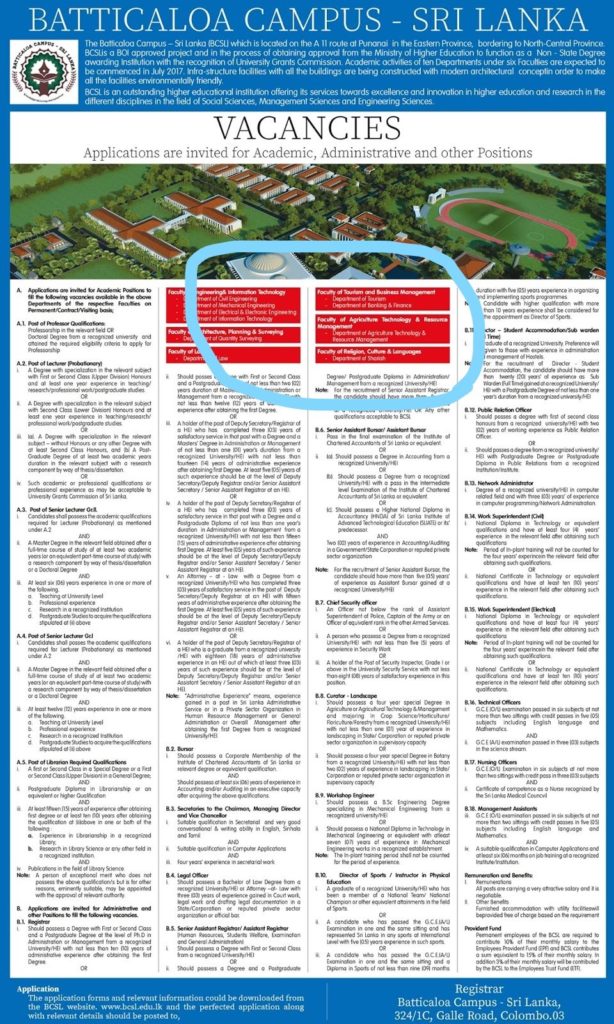
There is a possible linkage between Eastern Province Governor M. L. A. M. Hisbullah to Batticaloa Campus Private Ltd., which has been identified as a sharia university, UNP MP Ashu Marasinghe charged today.
Dr. Marasinghe is a member of the parliamentary oversight committee on education and higher education. He is also chairman of the subcommittee on higher education who function under the oversight committee.
At a press conference, Dr. Marasinghe advised that probes must be carried out to determine the connection between the campus and the governor. He also advised that an Islamic institution named ‘Hira Foundation’ possess a 90% stake in the campus.
He said a total sum of Rs 3.6 billion had gone to this foundation for several years and that the campus is not registered under the Ministry of Higher Education or with the University Grants Commission (UCG).
The MP suggested that the institution should be converted into a state university so that monitoring would be easier. MP Mujibur Rahman also attended the press conference and said the amendments which the opposition wants for the Counter Terrorism Bill could be accommodated so that it could be approved in parliament soon.
This legislation comprises necessary laws to combat global terrorism” he said. He said the support of the opposition is needed to bring in new laws to apprehend global terrorists as many areas have to be looked into when combating international terrorists.
Therefore, he said using modern technology for training and communication should also be looked into when making laws to combat global terrorists. One could even learn how to use weapons online with the available technology,” he said.
Girls too young to understand the essence of religion adorn the Nikab. Some forced due to cultural imposition, and others too young to know why. Madrasas spread across the island ignore history, art culture, literature and theology which form the core of religious education.
Instead the focus is on rituals and taboos. Kattankudy, in the East, is but one example of cultural alienation and segregation.The effects of the alienation and archaic practices which the majority of Muslims in Sri Lanka are against and don’t adhere to have to face, day in and day out. Some 36 Muslims have left to fight for the IS (Islamic State), and we wonder why?
Following the opinion piece titled ‘Sinhaley, Muslims and Fascim’ the response from the Sri Lankan Muslims has been overwhelming. Many have written to say that their fears were exactly the same as penned down and their oppositions were no different. Many others have written in to say that they have been left helpless and are merely bystanders witnessing the usurpation of a once vibrant culture, unique to Sri Lankan Muslims.
The closing of the gates of ‘ Ijtihad’ (Independent Reasoning) was a period in Islamic history where the rulers, fearing revolt from the masses, imposed strict and harsh interpretations of religion
An Islam that is lost without art, culture or literature and in complete denial of the essence of the liberation of the soul. Instead it has been usurped by a version which has suppressed any creativity
However there has been a backlash of sorts. On the one hand for which the crux stems from the reasoning given behind the face veil, a garment alien to Sri Lankan and South East Asian culture and its practices. A symbol of the radicalism among Sri Lankan Muslims. And on the other from those who espouse their fascist ‘Sinhaley’ agenda.
They are but two sides of the same coin. For the purpose of this article, the focus will be on the former. I am inclined to believe that the many who adorn the face veil and those who justify the wearing of such have based their reasoning on a practice that goes beyond the realms of logic and reasoning. I am aware that rationality would not prevail within their minds. The essay therefore is to provide the majority of Muslims in Sri Lanka a grounding through which they could withstand any further escalation of radicalism. I understand that the dichotomy between the ‘moderates’ and the ‘extremist’ when faced with an external threat, could cause division and dilution. However, I believe it is imperative that the moderates of the minority quell the extremism within first because one form of extremism is always fuel to the other.
The fallacy of scripture
My opposition to the face veil and the irrational religious and cultural imposition justified through scripture stems from simple logical reasoning. The Ku Klux Klan believed that scripture was what guided them, and they quoted scripture to justify their horrific actions against the blacks. The slave owners of yore were also guided by religious scripture, which they quoted freely to shut down any opposition to slavery. Today the Islamic State (IS), also quotes scripture to justify their actions, which has left thousands dead and millions destitute. The crusades are but another example. Israel’s, justification of the occupation of Palestinian land is also based on scripture. The very same scripture used by the Zionists are opposed by the Hasidic Jews. Why? They use the same scripture to say that the rule of Palestine by the Jews should not form a part of Judaism until the return of the messiah. The evangelicals who support Donald Trump, also draw inspiration from scripture.
Madrasas spread across the island ignore history, art culture, literature and theology which form the core of religious education. Instead the focus is on rituals and taboos
So how then is it logical to seek justification from scripture? Thousands of examples could be cited of the different variants within Islam itself which use the same scripture – the Quran – to justify their beliefs and practices;one always insisting that their interpretation is superior to the other. Wars have been waged, and lives lost within the Muslim community itself based simply on different interpretations given to the exact same text. The Sunni-Shia conflict is just one example. Similarly, there is an argument going back and forth, again based on scripture, for and against the face veil.
However, as reasoned, to argue on scripture is futile. It’s ones word against the other. Instead it is imperative that the Muslim community of Sri Lanka understands the politics behind the radicalization of a culture in Sri Lanka in which the Muslims thrived, enjoyed freedom and in which they remained an integral component of, as so strikingly illustrated by Dr. Lorna Devaraja in her work titled ‘Muslims of Sri Lanka – one thousand years of ethnic harmony’.
The history of the veil
The Arabian peninsula of pre-Islamic times comprised harsh living conditions exposing the mostly nomadic inhabitants of each tribe to severe sandstorms, heat, and at points winters which were much harsher than what we witness in the modern day. In order to protect themselves from these severe weather conditions, as is logical, men and women of the peninsula devised garments which would protect their bodies. The face veil was used to counter the harsh conditions of an often unwelcoming desert. A basic, reading of pre- Islamic Arabia, or Persia would give anyone a clear notion about the garments worn. Tertullian, in his pre-Islamic treatise ‘Virgins of Veil’, makes reference to Pagan Arabian women who covered their faces.
While this was the reasoning, among others, for the Nikab in the Peninsula, many ancient civilisations, pre- Islamic of course, adopted different variants of the veil for different reasons.
The Assyrian women (upper Mesopotamia, descendants of which live spread across the continent) who lived under strict and inhumane conditions under their men, are one example. Following the conquests of the Assyrian Empire starting from before 2000 BC, the empire was flooded with labour from conquered territories. Men were used as slaves, and women as prostitutes and domestic slaves. However as time passed, distinguishing between the ‘immigrants’ and the ‘homelanders’ was problematic. Therefore as a method of distinction between the two, women who were considered ‘homelanders’ were ordered to cover their faces. The face veil thus distinguished the Assyrian women from the prostitutes and the domestic slaves and was viewed as a sign of respect, a privilege denied to the slaves and prostitutes . The logic of the devise is questionable, of course, but historical fact shows that this was a practice adopted in a cruel and backward civilization that existed over 4000 years ago. Once these territories were captured by the Muslims, and one religion was promulgated amongst the masses, the face veil evolved into a cultural phenomenon, supported of course, by the environmental and other social needs of the time.
Islam was the first religion to have founded a state and religion in quick succession, and adhering to this cultural norm was not seen as a threat of any sort. Rather, it was the costume of the day, and it blended with the culture of the time. The repeated use of the word culture is intentional.
Islam was the first religion to have founded a state and religion in quick succession, and adhering to this cultural norm was not seen as a threat of any sort. Rather, it was the costume of the day, and it blended with the culture of the time. The repeated use of the word culture is intentional
Accordingly the Nikab continued to be a cultural phenomenon, and a cursory glance at the Islamic conquests by the ‘first Muslims’ headed by the ‘Rashidun’ (the rightly guided ones- the four Caliphs who headed the Empire after the death of The Prophet (PBUH)), is enough evidence to negate any claim that the Nikab had anything to do with Islam. The face veil was not imposed in any of the invaded territories which included Egypt to present-day Tunisia and what is today’s Iran to the borders of Central Asia.
The conquests by the Umayyads followed the same pattern, with the conquerors not impeding on the cultural identity of the conquered land. This is why we do not see the Nikab prevalent in Palestine, Tunisia, Turkey or Egypt, which were among the earliest territories to be conquered , except of course for the imposition of fundamentalists.
The Nikab remained a cultural garment except, for an imposition in the 12th and 13th Centuries, again by fundamentalist, who were threatened by the crusades. Despite the imposition it largely remained a garment worn by women for environmental and now cultural reasons. That was as far as it went.
Fast forward to the 20th Century, Islam was shaken by a similar threat from western imperialism. The free market and governance structures of the west that commenced in the 17th Century threatened the very existence of the States which were under ‘Islamic’ rule. Moreover, it had a massive economic impact on Muslim territories. It was in this backdrop that a move back to ‘fundamentalism’ akin to the one witnessed during the crusades took place.
The Nikab evolved, from being a cultural attire to a symbol against the expanding European forces and was encouraged by religious and political authorities. Similarities could be drawn here with that of the Assyrians and their adoption of the veil. The veil was seen as an icon of resistance, again confined to Muslim held regions in the Middle East. Theologians and the states worked hand in glove to provide religious reasoning to those who resisted. A fact often overlooked is that politics played an integral role in the expansion of the Islamic empires, as oft is the case with any conquering army and state. Each time the rulers were threatened with internal revolt or external conquests, religion was used as a centre- point to garner support and conformity.
Closing the gates of Ijthihad – Independent reasoning
It was in the early 1920s however that the Salafist-Wahabi movements expanded territorially, with the backing of the yet to be found state of Saudi Arabia. The state, which was yet to be formed,adopted its ideologies for purely political and economic reasons. It funded the exporting of a strict and literal interpretation of religion to justify its archaic actions. If not, there seems no other plausible justification for the existence of a ‘Kingdom’ or a ‘Sultanate’ or a deviant of it, in an ‘Islamic’ country.
The closing of the gates of ‘ Ijtihad’ (Independent Reasoning) was a period in Islamic history where the rulers, fearing revolt from the masses, imposed strict and harsh interpretations of religion that blocked the questioning of religion and most importantly prevented questioning of the rulers and their modes of governance. Madrasas and the Ulama who were working hand in glove with the rulers facilitated this imposition. It was akin to the era of Mahinda Rajapaksa in which the entire state machinery worked hand-in-glove with the regime to promote its narrative. The difference however, was that the imposition was systemic and long drawn. The religion was the same, and therefore resistance was not as strong as when religions and races differ. The politics involved with the radical Islamic element of the 20th century was no different.
The conquests by the Umayyads followed the same pattern, with the conquerors not impeding on the cultural identity of the conquered land. This is why we do not see the Nikab prevalent in Palestine, Tunisia, Turkey or Egypt, which were among the earliest territories to be conquered , except of course for the imposition of fundamentalists
It is the long reach of this imposition, a new wave of which began in the 1970s that we are witnessing in Sri Lanka today. The main form of exporting the fundamentalism was through migrant workers who found employment in Saudi Arabia, after which the structures were established in different parts of the world.
Radical Islam has a political goal. The root of the message which rally’s people behind any ultra nationalist movement, which scholars draw parallels with ‘radical Islam’, is a ‘return to the forgotten past or a greater future’. This wave of radical Islam is no different. It is this political element that channels the funds and drives the masses to alienate their culture and locality and adopt alien and extreme practices.
The spiritual Islam – beyond the radicalism
But behind the noise and drama, there lies an Islam that is spiritual. An Islam among others that attempts to understand the true essence of the spiritual retreats and solitude The Prophet (PBUH) underwent prior to the revelations. An Islam in which religion is a personal relationship between the adherent and the creator. It is an Islam in which prayer is not simply a ritual but is meditation. Fasting is not only confined to staying hungry from dawn to dusk. Instead, it includes the fasting of the mind, from anything that could impede the minds meditative state. An Islam which gave the world some of the most modern architectural wonders and important components of Algebra, Geometry, Astrology and Medicine. An Islam which gave the world some of the most comprehensive music compositions. An Islam which produced Gibrans, Rumis and may I even dare say Tagores.
An Islam in which Nasrudeen Shah was a sage and not a heretic. It is an Islam of ‘peace’, in which the attainment of being at peace with oneself and with the nature surrounding the individual is the essence of its teachings. An Islam that enacted some of the most modern elements of International Law, including Human Rights Law, Family Law and Contract Law. An Islam which gave the world jurisprudence unparalleled in human civilization.
A brief look at the modes adopted to trace a Hadith would amaze any modern archivist, historian or academic. An Islam in which debate and discourse was a central element in its evolution. An Islam that is lost today among the cacophony of rules and impositions. An Islam that is lost without art, culture or literature and in complete denial of the essence of the liberation of the soul. Instead it has been usurped by a version which has suppressed any creativity.
It was in the early 1920s however that the Salafist-Wahabi movements expanded territorially, with the backing of the yet to be found state of Saudi Arabia. The state, which was yet to be formed,adopted wahabi ideologies for purely political and economic reasons
Creativity gives rise to revolt and reform. So quelling it using religious justification was the best way forward for the rulers, the effects of which we are witnessing in Sri Lanka today. Today Islam as espoused by these fundamentalist elements is confined to an empty shell full of taboos and rituals, of which the original meaning seems to be lost. The usurpation of a century’s, if not millennia, old culture which has evolved, that is unique to Sri Lanka and to South East Asia must be resisted, and the leadership for it must come from Muslim communities itself. It is against this usurpation that the Sri Lankan Muslims must make their stand clear. The time is now, if not before long Sri Lanka will suffer the consequences of segregation from the countries’ ethos.
The writer is a Journalist, Attorney-at-Law, Graduate in International Relations. He is also a Fulbright scholar having studied Journalism at the New York University (NYU)
The British Government has consistently made clear its unreserved determination to fight the scourge of terrorism, the British High Commission (BHC) in Colombo said today.
Issuing a statement following reports that suggest that His Eminence Malcolm Cardinal Ranjith might have questioned the UK’s commitment to the fight against terrorism, the BHC said the UK Unreservedly committed to fight terrorism on the United Kingdom’s own soil and to help others to fight it on theirs.
The British Government has consistently made clear its unreserved determination to fight the scourge of terrorism on the United Kingdom’s own soil, and to help others to fight it on theirs.
It has also made very clear its view that the international community must remain firm in its determination to counter and defeat the poisonous ideologies that lie behind terrorist attacks around the world.
On Tuesday 23 April, the National Day of Mourning in Sri Lanka, the British Foreign Secretary, Jeremy Hunt MP, led a debate in the House of Commons on the Easter Sunday attacks.
He said: Today, the flags in Downing Street and on the Foreign and Commonwealth Office are flying at half-mast following the horrific Easter day terrorist attack in Sri Lanka.
These attacks were a primitive and vile attempt to sow division between people of different faiths. Religious tensions have caused some of the bloodiest battles in human history, and it is sombre and sobering that even in the 21st century attempts continue to set believers of different religions against each other. Our response must be to deny the perpetrators the satisfaction of dividing us by being united in our condemnation of the attacks and united in our support for religious tolerance – surely one of humanity’s greatest achievements.
The UK will never stand by in the face of such evil. Today, we stand in solidarity with the Government and people of Sri Lanka, who have made enormous strides towards stability and peace following the conclusion of the civil war almost exactly 10 years ago. To attack Christian worshippers at Easter, which is a celebration of peace and the holiest day in the Christian calendar, betrays in the attackers an absence of the most basic values of humanity.
Her Majesty Queen Elizabeth wrote to President Sirisena last week: Prince Philip and I were deeply saddened to learn of the attacks in Sri Lanka earlier today, and send our condolences to the families and friends of those who have lost their lives. I pay tribute to the medical and emergency services who are providing support to those who have been injured. Our thoughts and prayers are with all Sri Lankan’s at this difficult time.”
The Prince of Wales has written of his and his wife’s profound sadness on hearing of the attacks.
Such acts of dreadful brutality, wherever they occur, are an appalling assault on our shared humanity, and our values of understanding and compassion. That so many men, women and children should be targetted for their faith, and so cruelly killed and injured in their places of worship on this most holy of days for Christians, is a despicable atrocity and an attack on us all.
We did just want you to know how much our hearts go out to everyone who has been so cruelly bereaved or injured, and that all Sri Lankans are in our most special thoughts and prayers as you mourn those you have lost.”
The Duke and Duchess of Cambridge have also written to the people of Sri Lanka: Our hearts go out to the families and friends of those who have lost their lives, to the Christian community, and to the people of Sri Lanka at this tragic time. You are all in our thoughts and prayers.”
Sri Lankan Prime Minister Ranil Wickremesinghe and British Prime Minister Theresa May spoke last week. Mrs May told Mr Wickremesinghe that the UK would stand with Sri Lanka in the fight to counter terrorism and tackle extremist ideologies. She reconfirmed the UK’s readiness to support Sri Lanka. A Metropolitan Police team and British counter terrorism experts have been in Sri Lanka since soon after the attacks and are working very closely with the Sri Lankan authorities and other international partners,” it said.