USLA Spokepersons Report

March 22nd, 2019

Dr. Chula Rajapakse MNZM

4/18 to 3/19

Since it’s inception over three decades ago USLA has fervently furthered  it’s main founding objective viz. doing what it takes to support Sri Lanka in preserving it’s independent and unitary status. Through USLA’s  existence , the main threat to this came from the violent terrorism of the Tamil Tigers and the devious and vicious misinformation from them. With the complete annihilation of the Tigers as a fighting force in Sri Lanka in May 2009, USLA continued it’s role in the countering Tiger misinformation that now took an even more devious form.

This was initiated within days of their been vanquished in the fields and lagoons of Nandikadal by an internationally orchestrated allegation that this victory was achieved through HR violations claiming  a civilian casualty rate of over 40,000 in the last few weeks of the war, a number far in excess of what could be explained on the basis of collateral damage and suggesting targeted shooting of Tamil civilians. They found powerful allies in furthering these in  the UNSG appointed Darusman commission who concurred with this allegation  having heard from the Tigers only and not Sri Lanka, and UK Channel four who produced the film Sri Lanka Killing Fields” ,based on film strips, unauthored, undated, & from unknown sites showing acts of brutality, blaming it all on the Sri Lanka forces through a very effective commentary from producer Jon Snow. These allegations were orchestrated internationally and nationally with Joseph Gobellian zeal , that propounded that any lie, repeated frequently enough would eventually be believed.

It was my role as your spokesperson, in the past decade to counter these allegation at every opportunity with the media, politicians and even included the screening of the counter film lies Agreed Upon” in the NZ parliament.

More Importantly, I mustered the evidence supporting the impossibility of these allegations being true, including the fact that there were no where near that number of bodies identified post war, nor were there any where near the 120,000 injured as would be expected based on the internationally established injured to casualty ratio in war. Additionally, the initial estimate of the UN resident representatives suggested  a figure of seven thousand which tallied with figure of a census carried out for the dept of census in 2012 by Resident Tamil  Teachers of the region. Even  more strong counter evidence came from WIKILEAKS  leaked documents from the  defence attaches of both the the UK and Us embassies in SL who confirmed that the SL forces were exercising every care to safeguard Civilians without which the war might have been over much earlier with significantly less casualties for the SL forces.

With the change of govt in SL in Jan 2015, the field changed significantly with the new govt almost carrying the torch for the tigers , co sponsoring the infamous resolution asking for foreign judges to hear cases against security personnel  accused of engineering  civilian disappearances. and seeking  a new constitution that would weaken SL’s unitary status . These calls for foreign judges raises the specter of another Darusman Like Commission” open to being influenced by the Tiger war chest.

Sadly, even this week the SL govt  reinforced this commitment rather than orchestrate arguments sighted earlier by me  and the report of the Paranagama Commission   whose findings endorsed  by three international legal luminaries , clearly concluded against there being any war crimes by the SL forces.

The even greater disappointment  for most Sri Lankans was the failure to present and table  Lord Naseby’s revelations in October 2017 at the UK house of Lords clearly establishing  that the civilian casualties were more of the order of 5000, and not 40,000 , so leaving no basis for the UNHCR resolution and so calling for it’s withdrawal.

With the Sri Lankan govt  arguably, being the greatest threat to the SL’s unitary status, in my position as USLA spokesperson, my hands were rather tied this year. However, the political machinations in SL of the last few months would suggest that, SL may soon let go of the Tiger Torch , & leave the likes of me in more familiar territory.

Dr. Chula Rajapakse MNZM 23.3.19   

14 Chinese illegals jailed in Sri Lanka

March 22nd, 2019

Courtesy The Standard

Fourteen Chinese construction workers who were in Sri Lanka without a valid employment visa have been sentenced to jail for a year and fined Rs 50,000 (1,881 yuan) each by a Magistrates’ Court in the southern coastal city of Galle.

The Chinese had arrived Colombo on one-month tourist visas. They were arrested after their tourist visas had lapsed and were working in a hotel project in the southern city.

The suspects were arrested on March 2 and remanded for two weeks before they were sentenced om March 15.

The court ordered that the Chinese illegals be deported after they finish serving their jail terms.

Sri Lanka enters into loan agreement with China’s EXIM Bank for Central Expressway

March 22nd, 2019

Courtesy NewsIn.Asia

Colombo, March 22 (newsin.asia) – Sri Lanka’s Finance Ministry, on Friday signed a concessional loan agreement with China’s EXIM Bank to construct section one of a mega Central Expressway which will ease the island’s traffic congestion and boost tourism.

The concessional loan agreement, valued at 989 million dollars was signed between China’s Ambassador to Sri Lanka, Cheng Xueyuan and Secretary o the Finance Ministry, Dr. R.H.S Samarathunga.The loan from China’s EXIM Bank will cover 85 percent of the project cost for section one of the Central Expressway project

.The Government of Sri Lanka has accorded high importance to the development of infrastructure including expressway network with inter-connectivity as it will directly contribute to the economic growth and will have indirect effects in raising the productivity and efficiency in different economic sectors,” the Finance Ministry said.

This proposed highway will improve the inter regional connectivity and efficiency of the entire expressway network,” the Ministry added.China’s Ambassador to Sri Lanka, Cheng Xueyuan said the Central Expressway runs through the central part of Sri Lanka connecting the Western, North Western, Sabaragamuwa and Central Provinces with other densely populated and economically developed provinces.

It also connects capital Colombo to the central hills of Kandy, the two major cities and economic centers.Under the Belt and Road Initiative, we have accomplished series of inclusive and sustainable win-win results.

In view of the two countries’ traditional friendship and at the strong request of the Sri Lankan government, the loan agreement for the first phase of the Central Expressway was signed after prudent assessment,” Ambassador Cheng said.Construction of section two of the Central Expressway has already commenced with funding from local commercial banks.

හම්බන්තොට එනවා කියන ඩොලර් බිලියන 3.8 සමාගම සංගප්පූරුවේ පෙට්ටි කඩයක්..- ද හින්දු-සිරස සියළු රහස් හෙලි කරයි..

March 22nd, 2019

 lanka C news

අමෙරිකානු ඩොලර් බිලියන 3.85 ක ආයෝජනයක් ලෙස යෝජනාවී ඇති මෙම ව්‍යාපෘතිය සඳහා ඉදිරිපත්ව සිටින්නේ සිංගප්පූරුවේ ලියාපදිංචි සිල්වර් පාර්ක් ඉන්ටනැෂනල් නමැති සමාගමකි.

ඔවුන් ව්‍යාපෘතියේ වටිනාකමින් 30% කට ඕමාන තෙල් හා ගෑස් අමාත්‍යාංශය සම්බන්ධ වන බව සඳහන් කළත් ඊයේ අප කළ අනාවරණය අනුව ඕමානය මෙවැනි ව්‍යාපෘතියකට ආයෝජනය කර නැතැයි පවසා ඇත.

මෙතරම් විශාල ආයෝජනයක් ඕමානය වැනි ඛනිජ තෙල් නිෂ්පාදන රටක සම්බන්ධයක් නොමැතිව ක්‍රියාත්මක කළ හැකි ද?

https://www.facebook.com/NewsfirstSL/videos/422980035118861/

සිල්වර් පාර්ක් ඉන්ටනැෂනල් සමාගම සිංගප්පූරුවේ ලියාපදිංචි කර තිබුන ද එහි කොටස් හිමිකාරිත්වය ඉන්දියාවේ එකොර්ඩ් නමැති සමාගමකට අයත් බව අප ඊයේ අනාවරණය කළේ, රොයිටර් වාර්තාවක් උපුටා දක්වමිනි.

එම ඉන්දීය සමාගම අයත්වන්නේ තමිල්නාඩුවේ ද්‍රාවිඩ මුන්නේත්‍ර කලහම් පක්ෂයේ හිටපු ඇමතිවරයෙකු වන එස්. ජගත්රාක්ෂගන් නමැත්තෙකුටයි.

ශ්‍රී ලංකාවේ තෙල් පිරිපහදුවක් ඉදිකිරීම සඳහා ආයෝජනය කිරීමට සුදානම්වන සිංගප්පූරු සමාගමේ අධ්‍යක්ෂ මණ්ඩලයේ සාමාජිකයින් සිව්දෙනාගෙන් තිදෙනෙක් මෙම ඉන්දීය දේශපාලඥයාගේ ඥාතීන් බව ද හින්දු පුවත්පත අද අනාවරණය කළේ ය.

සන්දීප් ආනන්ද් නමැති ඔහුගේ පුත්‍රයා, ශ්‍රී නිෂා නමැති දියණිය සහ ජගත්රාක්ෂගන් අනුසුයා නමැති ඔහුගේ බිරිඳ මෙලෙස අධ්‍යක්ෂවරුන් ලෙස කටයුතු කරන බව එම පුවත්පත් වාර්තාවේ සඳහන් විය.

මේ අතර ආයෝජන මණ්ඩලය ඊයේ නිවේදනය කළේ, ඕමාන තෙල් හා ගෑස් අමාත්‍යාංශය හා සිල්වර් පාර්ක් සමාගම අතර ගිවිසුමක් නැතැයි තමන් දැන සිටි බවයි.

නමුත් මෙම ව්‍යාපෘතියේ 30% ක් ලබාගැනීම සම්බන්ධයෙන් ඕමානය කැමැත්ත පළ කර තිබූ බව ආයෝජන මණ්ඩලය පවසයි.

ඕමාන් ට්‍රේඩින් ඉන්ටර්නැෂනල් සමාගම ව්‍යාපෘතියේ අමුද්‍රව්‍ය සම්පාදනය සහ එකඟතාවකට පැමිණිමෙන් පසුව නිෂ්පාදන අළෙවි කිරීමට කැමැත්තෙන් සිටි බවට තමන් දැනුවත් යැයි ආයෝජන මණ්ඩලය නිකුත් කළ නිවේදනයේ වැඩිදුරටත් සඳහන් වේ.

– newsfirst.lk

Sri Lanka successfully tests artificial rain

March 22nd, 2019

Courtesy NewsIn.Asia

Colombo, March 22 (newsin.asia) – The Sri Lankan government, on Friday, for the first time, successfully tested artificial rain in a drought hit area to provide clean water to hundreds of families.The Power and Energy Ministry, in a statement said the Ceylon Electricity Board together with the Sri Lanka Air Force conducted the project, which caused rainfall for 45 minutes in the catchment areas of the Maussakelle Reservoir, in the Central Province.

A Sri Lanka Air Force helicopter was used to spray chemicals on the clouds, 8000 feet above the reservoir, resulting in 45 minutes of rainfall.Observing the success of the pilot project which commenced today, Power and Energy Minister Ravi Karunanayake has instructed relevant authorities to take necessary measures to create artificial rains in the next few days until the dry weather exists in the country,” the Ministry said.The pilot project was launched following assistance from a special team who had arrived in Sri Lanka from Thailand.

The Ministry said the main aim of the project is to create rains during the drought seasons.The Ministry added that the project was carried out after a memorandum of understanding (MoU) was signed between the Sri Lanka Air Force (SLAF) and the Ceylon Electricity Board (CEB) in January. The Sri Lankan Air force is providing the necessary flights and other services towards the project.

In February last year, a group consisting of Thai engineers visited the Castlereigh and Maussakelle Reservoirs in the catchment areas of the Central Highlands to seek the possibilities of creating artificial rain as water levels in these reservoirs had seen a drastic drop.

Local media reports said the Thai engineers represent the only company in the world that has the patent to create artificial rain.The company had created artificial rain when the island country was severely affected by a drought in 1981.Hundreds of families remain affected by months of severe drought due to the lack of rains and delayed monsoonal rains in the central parts of Sri Lanka.

DMK leader’s family linked to record FDI in Sri Lanka

March 22nd, 2019

Courtesy Adaderana

A Singapore-based company in which stakes are held by the family members of former Indian Minister of State S. Jagathrakshakan of the DMK has been linked to a record foreign direct investment of $3.85 billion in an oil refinery in Sri Lanka.

However, the recent announcement by Sri Lanka’s Board of Investment (BOI) on the record deal has run into a controversy after Oman, which the Board said was an investor along with the Singapore company, on Wednesday denied being part of the deal.

The Singapore company, Silver Park International Pte Ltd, is putting 70% of the share capital — a total of $1887 million — in the project running into billions of dollars. The remaining, nearly $ 2,000 million, is to be raised as loan capital, sources said.

Silver Park International, named by the BOI, is registered with Singapore’s national regulator Accounting and Corporate Regulatory Authority (ACRA), with three of its four directors — Jegath Rakshagan Sundeep Anand, Jagathrakshakan Sri Nisha and Jagathrakshakan Anusuya – listed with a Chennai address. They are the son, daughter and wife of Mr. Jagathrakshakan, who is the DMK’s Arakonam Lok Sabha candidate. We are aware of the Singapore company’s links to an Indian business interest. The agreement has been signed by one Mr. Jagathrakshakan,” a senior government source in Colombo told The Hindu, requesting anonymity.

Actual investment source

However, the BOI has made no official mention of the involvement of an Indian business interest so far, provoking intrigue over the actual source of investment and the investors’ experience in the oil industry, especially after Oman backing out. The FDI was made known on Tuesday, when the BOI told a press conference in Colombo that an overseas joint venture had committed $3.85 billion to a new oil refinery — the single largest foreign investment in the country’s history — in the industrial zone coming up at Hambantota, in the Southern Province.

The industrial zone adjoins the Hambantota port, which in 2017 was leased to a Chinese state-owned enterprise for 99 years, even as Colombo struggled to service a loan from Beijing.

The Board said construction work on a refinery and storage facility, jointly financed by Oman’s Ministry of Oil and Gas and a Singapore-registered company, was about to begin soon. However, on Wednesday, Oman’s oil ministry denied being part of the project, Reuters reported, prompting a clarification from the BOI. Apparently backtracking from its announcement made at Tuesday’s media conference, the BOI said that it was aware that there is no agreement that has been signed between Oman’s Ministry of Oil and Gas and Silver Park International with regard to equity arrangements of the project.”

It added that Oman Oil Company had registered their firm intention to participate in equity up to 30%, subject to reaching an agreement between the parties”.

The investor, Silver Park International, has conveyed to the Board of Investment their full confidence in implementing the project, the statement said. Mr. Jagathrakshagan and his family were not reachable for comment.

Source: The Hindu

-Agencies

A Singapore-based company in which stakes are held by the family members of former Indian Minister of State S. Jagathrakshakan of the DMK has been linked to a record foreign direct investment of $3.85 billion in an oil refinery in Sri Lanka.

However, the recent announcement by Sri Lanka’s Board of Investment (BOI) on the record deal has run into a controversy after Oman, which the Board said was an investor along with the Singapore company, on Wednesday denied being part of the deal.

The Singapore company, Silver Park International Pte Ltd, is putting 70% of the share capital — a total of $1887 million — in the project running into billions of dollars. The remaining, nearly $ 2,000 million, is to be raised as loan capital, sources said.

Silver Park International, named by the BOI, is registered with Singapore’s national regulator Accounting and Corporate Regulatory Authority (ACRA), with three of its four directors — Jegath Rakshagan Sundeep Anand, Jagathrakshakan Sri Nisha and Jagathrakshakan Anusuya – listed with a Chennai address. They are the son, daughter and wife of Mr. Jagathrakshakan, who is the DMK’s Arakonam Lok Sabha candidate. We are aware of the Singapore company’s links to an Indian business interest. The agreement has been signed by one Mr. Jagathrakshakan,” a senior government source in Colombo told The Hindu, requesting anonymity.

Actual investment source

However, the BOI has made no official mention of the involvement of an Indian business interest so far, provoking intrigue over the actual source of investment and the investors’ experience in the oil industry, especially after Oman backing out. The FDI was made known on Tuesday, when the BOI told a press conference in Colombo that an overseas joint venture had committed $3.85 billion to a new oil refinery — the single largest foreign investment in the country’s history — in the industrial zone coming up at Hambantota, in the Southern Province.

The industrial zone adjoins the Hambantota port, which in 2017 was leased to a Chinese state-owned enterprise for 99 years, even as Colombo struggled to service a loan from Beijing.

The Board said construction work on a refinery and storage facility, jointly financed by Oman’s Ministry of Oil and Gas and a Singapore-registered company, was about to begin soon. However, on Wednesday, Oman’s oil ministry denied being part of the project, Reuters reported, prompting a clarification from the BOI. Apparently backtracking from its announcement made at Tuesday’s media conference, the BOI said that it was aware that there is no agreement that has been signed between Oman’s Ministry of Oil and Gas and Silver Park International with regard to equity arrangements of the project.”

It added that Oman Oil Company had registered their firm intention to participate in equity up to 30%, subject to reaching an agreement between the parties”.

The investor, Silver Park International, has conveyed to the Board of Investment their full confidence in implementing the project, the statement said. Mr. Jagathrakshagan and his family were not reachable for comment.

Source: The Hindu

-Agencies

Sri Lanka successfully tests artificial rain for first time

March 22nd, 2019

Courtesy Adaderana

Sri Lanka has successfully tested artificial rain for the first time in the country with moderate rainfall experienced over the Maussakele Reservoir for around 45 minutes.

The pilot project to induce artificial rain at the catchments areas of the Maussakele Reservoir was carried out by the CEB on Friday (22).

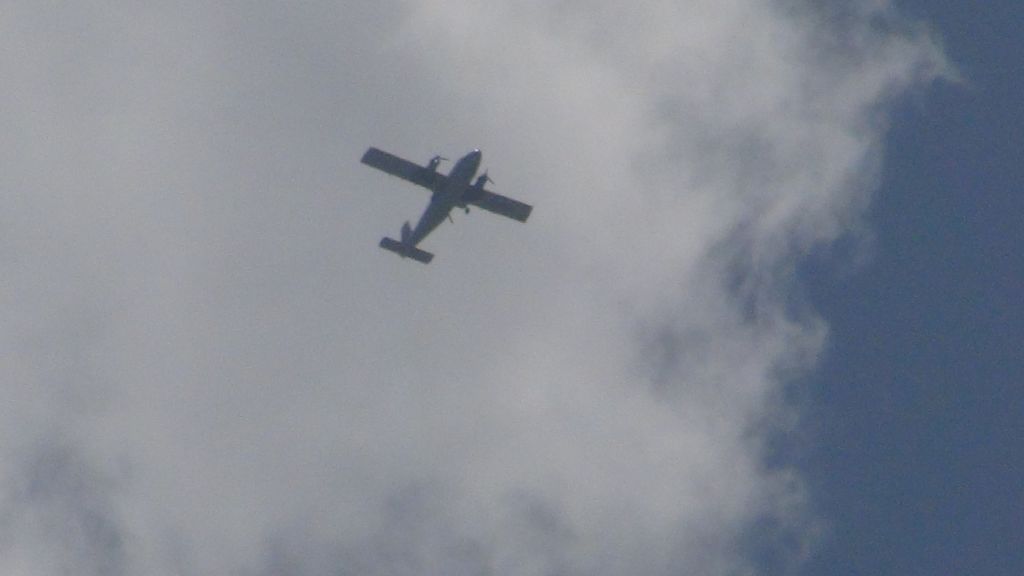
An aircraft (Y12) of the Sri Lanka Air Force was used to spray the chemicals on the clouds around 8,000 feet above the Maussakele Reservoir resulting in around 45 minutes of rainfall, the ministry said.

The project to induce artificial rain during drought season was launched today with the help of a special team of engineers from Thailand, a statement said.

The project was initiated by the Ministry of Power, Energy and Business Development with the aim of eliminating the obstacles encountered in hydro power generation during drought season.

A memorandum of understanding (MoU) was signed between the Sri Lanka Air Force (SLAF) and the Ceylon Electricity Board (CEB) in January this year to carry out the project. The Sri Lankan Air force is providing necessary flights and other services in this regard.

The Thailand government had come forward to provide the technical knowledge and it was the first time in Sri Lanka that a program was launched in relation to artificial rain.

During the dry season, it is nearly impossible for Sri Lanka’s electricity board to generate hydro power and it is therefore compelled to purchase electricity from private companies which is expensive and has caused many difficulties to the CEB.

In addition to generating electricity this could also be used to induce artificial rain during the drought season to develop the agriculture activities of the country.

Court decides to hear petition against Rishad Bathiudeen

March 22nd, 2019

Courtesy Adaderana

The petition filed against Minister Rishad Bathiudeen, seeking the prohibition of deforestation at Vilaththukulam forest reserve in Wilpattu National Park, has been scheduled to be heard on June 28th.

The petition was taken up before Court of Appeal Judge Arjuna Obeysekara today (22).

The fourth respondent of the petition Minister Rishad Bathiudeen is continuously clearing this forest reserve, Attorney Nagananda said presenting submissions before the court.

Heeding Attorney Nagananda’s request to set a date to hear the petition soon, CA Judge Obeysekara ordered to take up the petition on June 28th.

The petition was filed by Environmentalist Malinda Seneviratne and Attorney Nagananda Kodituwakku.

The petitioners have stated that the unauthorized constructions at the forest reserve have caused massive environmental impact and seek a court order preventing the deforestation and unauthorized constructions in Wilpattu National Park.

Case study for Management Institutes: 65year old blind man begs for 25 years & builds 3 houses & saved 500,000

March 21st, 2019

In early March the Daily Mirror reported the arrest of a blind man by the Railway Security Service – his crime begging on the train. That arrest resulted in a sensational story that has to enter any management case study and he should be invited by some of Sri Lanka’s management institutes to share with others his story. What is his story?

Blindness he says was a blessing in disguise. It is probably as a result of losing his wife that he resorted to begging on trains which he had been doing for 25 years. From age of 40 to 65 years this blind man has achieved what no person with qualifications or 5 figure salaries will dream of but be unable to achieve.

What has he achieved throughout these 25 years begging on trains?

He has been able to earn Rs.150,000 a month which even a graduate cannot earn nowadays.

He has built 3 houses – 2 given to his 2 daughters as dowries & the 3rd he planned to rent out.

Both daughters own cars and the son-in-laws are doing good jobs.

He has a bank account with Rs.500,000 savings in it

At the time of his arrest by the Railway Security Service he had Rs.4000 in his possession.

His daughters are aware of his begging and when informed of the fathers arrest one of the daughters arrived in her own car.

Obviously the train passengers on the Gampaha-Colombo Train route are extremely compassionate people & much karmic merit to them for they would have been regularly giving him money otherwise it is impossible to collect Rs.150,000 a month.

In times of day light robberies being committed by politicians, public officials and even white-collar corporate heads NONE OF WHOM GET ARRESTED, it is baffling why a blind man gets arrested for begging because he has not taken a penny illegally or forcefully from anyone.

He would not have demanded how much any kind hearted person had to give and would have accepted whatever came his way humbly. What is stupefying is how he had managed the money coming to him out of charity which is not a fixed income gained monthly but went on to build 3 houses plus saved Rs.500,000 as well.

When people are clueless on how to save even with a fixed income, this blind man from Gampaha is the person to tap to learn how to save and he should seriously be invited by management institutes to share his story with all Sri Lankans.

Shenali D Waduge

http://www.dailymirror.lk/front_page/He-built-three-houses-while-begging–for-25-years/238-163496

The Kandyan Convention of March 2nd 1815 is still a legally valid document therefore all Royal Proclamations and instruments of governance starting with the Royal Proclamation of Nov 21st 1818 and all laws enacted thereafter are illegal ? A point of view.

March 21st, 2019

Dr.Sudath Gunasekara. (SLAS) Retired Permanent Secretary to Mrs Sirimavo Bandaranayaka and President Senior Citizens Movement Mahanuwara

(This is an updated version of an article published on September 20th, 2010 in the Island)

21. March. 2019

To mark the completion of 204 years after signing the Kandyan Convention

The Kandyan Convention of 2nd March 1815 was the document under which this country was ceded to the British crown under mutual agreement. It was drawn between Great Britain and Sinhale, two independent Kingdoms. Since it was singed at Kandy, the capital of the Sinhale at that time, it had been named after that name. Nevertheless in paragraph 1 it is clearly mentioned that it was drawn between Great Britain and Sinhale Kingdom. It should also be noted that this country was never conquered by the British at war however powerful they may have been. The common notion among the anti-Kandyan circles that it had been betrayed by the Kandyan chieftains  is therefore not tenable.

The heroic Sinhala people have defended it for 310 years, from 1505 to 1815 against three powerful invaders with unlimited gun power, Portuguese, Dutch and the British. Finally it was ceded to the British through intrigue and deceitful maneuvering with false promises by John Doily, the cleverest spy Britain had ever produced.

The Convention includes 12 sections of which the contents of the first two paragraphs and  Sections 2, 3, 4, 5 and 8 are the most important. 

This essay is not a comprehensive critique of the whole Convention.  It deals only with the subject of discussion under the heading of this article.

The Convention was unilaterally abrogated by Governor Brownwrigg by his Royal proclamation of 21st Nov 1818 in the wake of the 1818 Uva Rebellion against the British rule, the first freedom struggle by the natives against British deception and repression.

Since this was an agreement between two sovereign States, such abrogation is legally invalid. Even an amendment to that instrument, addition or its replacement by repeal needs the explicit consent of both parties, for such amendment to be legally valid. The Royal Proclamation of Nov 21 1818 had 56 sections by which complete British rule was imposed on this island nation by throwing the March 2nd Convention in to the dust bin of history. It appointed a Board of Commissioners with British Government Agents stationed all over the country under whom all local chiefs had to work. In other words this Proclamation consolidated full British rule over the whole Island. The last section (56) of the Proclamation Sec (56) stated He (Governor) also reserves full power to alter the present provisions as may appear hereafter necessary and expedient: as he requires, in his Majesty’s name, all officers civil and military, all Adigars, Dissavas and other chiefs, and all other His Majesty’s subjects, to be obedient, aiding, and assisting in the execution of these or other his orders, as they shall answer the contrary at their peril. 

With the unification of the Maritime Provinces with the Kandayn kingdom in 1833 and the establishment of five provinces to cover the whole Island and appointing Provincial Agents of the British Government, British rule was fully and firmly established over the whole Island. This was further strengthened by increasing the number of provinces to 9 by 1890 and dividing them in to districts thereafter that were put under the control of Governments Agents as the sole representatives of the British Crown.

In the first place this decision by the Governor was legally flawed as Britain cannot abrogate a Convention drawn between the two countries unilaterally without getting the consent of the other party. There is also a court ruling against such actions in Campbell v Hall (1774) 1 Cowp 204, 98 ER 1045. The upholding of the Paul Peiris’s judgment in the 1915 Wallahagoda Perahera case by the Privy Council also has established the legality of the Kandyan Convention. To that extent legally speaking, I opine the Kandyan Convention is still valid in law.  Nevertheless as the Sinhala nation was brutally and completely massacred in the rebellion and were defeated, the natives could not resist or rise up against the all-powerful military British rule any more. Thereafter the British suppressive and exploitive colonial rule got firmly and fully established on Sri Lankan soil and continued until 1948, as the 1848 rebellion was also brutally and clinically suppressed.

The word Convention was only once mentioned in Sec 2 in the Proclamation just to refer to its date. But nothing was mentioned about ruthless manner in which the Kandyan Convention had been ignored and abrogated by the British government.  Any such ex-parte proclamation will have no legal validity unless the original agreement was duly repealed. It appears that there was no protest by the locals either on this draconian Proclamation by the Governor. So the presumption is that the Kandyan Convention died a natural death on the 21st of Nov.1818. All the powers of the native chiefs were removed by this proclamation and they were made mere agents of the British Crown under the powers of the Governor. It also removed provisions of Section 5 of the Convention and it was replaced with some mild reference to respect to priests and processions of Buddho religion, adding some new provision to general protection to all other religions  This contravenes section 5 of the Kandyan Convention.  In sum the Proclamation has tightened the grip of the British authority over the Island and set the process of complete erosion of power of the local aristocrats and the Priests. How the British respected Sec 5 of the Kandyan Convention is no better demonstrated the way they treated Buddhist monks culminating, in the murder of Kudapola Nayaka priest by shooting by a firing squad in public.

With the unification of the administration of the Kandyan Kingdom and the Maritime Provinces in 1833 once again the country became one territorial unit after 1505 and this laid the foundation for what we call Sri Lanka now (Ceylon as British called it then).

The Colebrook reforms of 1833 were followed by MaCallum Reforms (1912) Manning Reforms (1922); The Donoughmore Reforms (1926) and the Soulbury Reforms (1948). 

All these reforms in this country were made either under royal Proclamations or the way the British wanted them to be enacted and all declarations and statutes that inherited the illegal traditions of the trend set by the Proclamation of 1818. In fact one can argue that even the Soulbury Constitution  of 1948 to that extent was not legally valid.

Niti Niganduwa a treatise of Sinhala law composed during the Kandyan period gives evidence of a number of ancient legal treaties that had been composed during the times of the Sinhalese Kings. It has defined law as the implementation of the charters of ancient Kings without breach” (Niyati ti Niiti”).Rajuhi panccantta dhamman na samuccindiyanti ti nitipunane”). It further identifies three broad division in law .They are a) Raja niiti, b) Dharmaniiti and Loka Niiti. Raja Niti is law enacted by the King. Dharma niiti is law that is prescribed by the Dhamma; in our case as they appear in the various suttas. Finally Loka niiti are the conventions that have evolved over time by popular acceptance which are mostly conventions.  Therefore no one can say that we did not have a legal system o four own before the advent of British.  According to the ancient tradition the law is laid down after general acceptance by the people and it is called Mahasammata, approved and ratified by the people. In this context ultimately all laws have to be enacted for the good of the people and therefore they cannot be designed for the benefit of the Ruler. According to Buddhist teachings, like all other things, the law has to be there for the good of the many and happiness of the many. But unfortunately

 In this back ground the object of this note is to draw the reader’s attention to some very important legal aspect of our Constitutions has not been given serious attention hitherto by our legal luminaries or the general public. I hope this point will open a new forum, for a wider and open discussion on this issue.

Going by the 1815 Convention Independence in 1948 should have been given to Sinhale as the convention was singed between the Chieftains of the Sinhale and Brownwrigg on behalf of Great Britain.  But it was given to a hybrid State called Ceylon. That is also unconstitutional. Therefore it is high time that we restore the name of the country as Sinhale at least now.

There is also no mention anywhere in any of the subsequent legislations that followed the 1818 Proclamation that the 1815 Kandyan Convention was repealed, though it was physically thrown in to the dust bin of history by the British, ex-parte by force by the British. The 1972 Republican Constitution after 24 years of fake independence of 1948 declared this country as an Independent Republic.  It repealed the 1948 Soulbury Constitution but it also has not said anything about the Kandyan Convention. But it had rekindled the Sec 5 of the Kandyan Convention by inserting Sec 10 on Buddhism. The 1978 Constitution also followed suit by inserting section 9 under which it said it gives the foremost place to Buddhism but it diluted Sec 5 of 1972 by imposing limitation on it by  Article 10 and 14 (1) (e).

 All these law makers appear to have acted on the presumption that what they inherited from 1818 onwards was legal. But I think the Kandyan Convention of 1815 is still valid in law as it had not been legally repealed by any subsequent legislation up to date.

 The Kandyan Convention was published as part of the legislative enactment of Ceylon and it is included as a chapter in the Legislative enactment Vol.X1 Chapt.390 (P376-378). It also appears in Vol XX. This was done when Dr Nissanka Wijeratna was the Minister of Justice in the 1977 government. The person behind this decision was Dr. Harischandara Wijetunga the Officer In Charge of the Sinhala translation of the Legislative enactments at that time. There were two other persons involved in this historic decision. They were W. J. M. Lokubandara, the present Hon. Speaker and Hector Deheragoda who was in charge of the English Edition.

 This also confirms my contention that the Kandyan Convention is still a living and valid part of our law. It is said that Brownwrigg’s 1818 Nov 21 Proclamation was ratified by the British Parliament. It also now appears as a Chapter in the legislative enactments of Sri Lanka under Vol. XX Chap 638 (P319-329) under the title Declaration of British Sovereignty. I wonder whether an illegal Proclamation could be declared legal by such ratification, by the British Parliament that represents only one party to the 1815 Convention. As such I opine that such ratification by the British Parliament is null and void. Therefore I think the 1815 Convention still holds good in law. In this back drop both the Proclamation of November 21. 1818 and all laws enacted after the prescribed date of that Proclamation and all actions taken there under should stand illegal and questionable.

 Last week I had the opportunity to attend a public seminar organized by the Peradeniya University at the University Auditorium.  I was very happy that two prominent lawyers from Mahanuwara, Presidents Council Samantha Ratwatte and Harendra Dunuvila also expressed the same opinion in the course of their talks. Since I made my opinion public in in an article published in the Island in September 20th, 2010, I think it has to go down in history as the first occasion this argument emerged. In this backdrop I invite our patriotic lawyers to pursue this matter seriously and take legal action against the British government for all the crimes they have committee against this country, its people and their valuable culture and claim compensation for all damages and destructions they caused to this nation. I think this is the best time to take up this issue as they are trying to fix us for human rights violation at UNCHR on bogus information given to them by the Tamil Diaspora on their voting lists. I don’t think we could ever have a better time than this to expose the nakedness of British foreign policy.

 One may get temped to think that this is only some wild imagination of one man. But I think there is a strong and valid point in what I have pointed out above. Therefore I invite those interested, constitutional experts, lawyers and all others interested to initiate an open debate, a serious one too, on this all important issue at a time of our history when radical changes are taking place in the political scenario in this country, since Independence

ජිනීවා පෙන්නා ලංකාවේ ඉඩම් කොල්ල කන ඇමරිකන් සැලැස්ම එළි දකී

March 21st, 2019

මතුගම සෙනෙවිරුවන්

           ලංකාවේ ත්‍රිවිධ හමුදා නිළධාරීන්ට යුධ අපරාධ චෝදනා එල්ල කළ දරුස්මාන් වාර්තාව එක්සත් ජාතීන් ගේ මානව හිමිකම් කාර්යාලයේ විශේෂ නියෝජිත පිරිසක් සකස් කළ වාර්තාවකි. එදා පටන් මානව හිමිකම් සමුලුවට ගිය රජයේ නියෝජිතයන් සියල්ල ඒ චෝදනාවන් වැරදි බවට නොකියූහ.19 සහ 20 වන ජිනීවා යෝජනා වලදී පැහැදිලිව පැවති රජයයන් ඒ යෝජනාවන්ට එකඟ වී තිබේ.ලංකාවට එල්ල කළ යුධ අපරාධ චෝදනාවන්ට විරුද්ධ වනවා වෙනුවට  උගත් පාඩම් කොමිසම් පත් කළහ වගවීම  ප්‍රකාශ කළහ. මානව හිමිකම් තොණ්ඩුව පෙන්වමින් මෙලෙස ලක් රජය බියට පත් කරමින් ඇමරිකාව කරගෙන යන ලද්දේ කුමන්ත්‍රණයකි.  ඔවුන්ට අවශ්‍ය යටි තල පහසුකම් ලක් භූමියේ ස්ථාපිත කරගැනීම එහි අරමුණ විය. පසුගිය මහින්ද රජයද මෙම කුමන්ත්‍රණයට අසුවිණ. ඔවුහු රටේ භූමියේ තිබූ වටිනා ඉඩකඩම් ඇමරිකානු ඩෝල් සමාගමට මෙන්ම වෙනත් බහු ජාතික සමාගම් වලට දුන් බව නොරහසකි.

      2015 දී මහින්ද රාජපක්ෂ මහතා පරාජය කිරීමටද කුමන්ත්‍රණයක් දියත් විය. එහි අරමුණ නම් ඇමරිකාවට හෝ බ්‍රිතාන්‍යයට පූර්ණ වශයෙන් මහින්ද අභිබවා යෑම කළ නොහැකි වූ බැවිනි. ඇමරිකාවට මෙන්ම ඉන්දීය රජයට අවශ්‍ය යටිතල පහසුක්ම සපයා  දුන්නද සීමාවට එහා ගොසින් ඇමරිකානු ආධිපත්‍ය පිහිටුවීමට මහින්ද ගෙන් ඉඩක් නොවිණ.එසේම ප්‍රභකරන් යුධමය වශයෙන් පරාජයට පත් කිරීමද ඇමරිකාව නෝර්වේ ඇතුළු රටවලට ඉවසුම් නොදෙන්නක් විය. ඉන්දියාවට මෙන්ම වෙනත් රටවලට ලංකාව අරභයා තවත් න්‍යාය පත්‍ර තිබුණද ලංකාවේ සිටින දේශපාලනඥයන්ටද නොයෙකුත් පුද්ගලික න්‍යාය පත්‍ර තිබුණද මහින්ද ගේ පරාජයට හේතුව මෙයයි.මහින්දගේ ප්‍රතිවාදියා ලෙසට මෛත්‍රීපාල සිරිසේන මහතා දිනවීම ලෙහෙසි පහසු කරුණක් නොවුණද චම්පික රණවක මහතාගේ මධ්‍යම පන්තික සිංහල බෞද්ධ අකර්ශණය යොදා ගනිමින් ලක්ෂ පහක පමණ චන්ද පොට්ටනියක් සිරිසේන මහතා ගේ  ඇගේ එල්ලිය හැකි බව මේ කුමන්ත්‍රණ කරුවන් දැන සිටියහ. රනිල් වික්‍රමසිංහ වෙනුවට පොදු අපේක්ෂකත්වය සිරිසේන මහතාට පැවරුණේ එබැවිනි. කෙසේ  වෙතත්  ජනවාර් 08 වනදා පරාජයෙන් පසු මහින්ද මහතා තංගල්ලට පිටත්ව ගිය පසු නව රජය විසින් කළ මුල්ම කාරිය රනිල් වික්‍රමසිංහ මහතා අගමැති කරලීමයි.ඒ වන විට වැඩි බහුතරයක් තිබූ එක්සත් ජනතා නිදහස් සන්ධානයේ වෙනත් කිසවකුට අගමැති කම නොදී සුළු ආසන සංඛ්‍යාවක් තිබූ රනිල්ට එම තනතුර හිමි වූයේ සිරිසේන මහතා විසින් දුන් පොරෙන්දුවක් අනුවයි.

             අප දන්නා පරිදි  දින සීයේ ආණ්ඩුවට ඉදිරියට යෑමට හැකි වූවත් ඔවුහු ලත් තැනම ලොප් වූ වූයේ බැඳුම්කර මගඩිය හෙළිදරව් වීමෙනි. ගෙදර ගිය මහින්ද සුළඟක් සේ යළි මතු විය. බැඳුම්කර මගඩිය හෙළි කරලීමට ඩිව් ගුණසේකර මහතා කෝප් කමිටුව වාර්තාවක් සකස් කිරීමත් සමගම සිරිසේන මහතා බියට පත් විය. ඔහු ආණ්ඩුව විසුරුවාලීය. පසු කාලයේ දී රනිල් වික්‍රමසිංහ මහතා බේරා ගැනීමට එසේ කළ බව ඔහු පිළි ගත්තේය.ආණ්ඩුව විසුරුවීමත් සමග එළඹි මැතිවරණයේ දී මහින්ද සුළඟේ නිර්මාතෘ වරුනට අවශ්‍ය වූයේ වෙනමම තරඟ වදින්නටයි.එහෙත් අවසාන මොහොතේ සිරිසේන මහතා දුන් ළණුවක් නිසා මහින්ද එම තීරණය වෙනස් කොට ගෙන එක්සත් ජනතා නිදහස් සන්ධානයෙන්ම තරඟ බිමට පිවිසීය. මේ නිසා මහින්ද මහතා පරාජයට පත්වූවා පමණක් නොව පාර්ලිමේන්තුවේ සිට ස්වාධීනව කටයුතු කරලිමට තිබූ ඉඩකඩ පවා අසුරා ගත්තේය.සිරිසේන මහතාගේ හයියෙන් මේ අතර වාරයේ රනිල් වික්‍රමසිංහ මහතා විධායක බලය අතට ගෙන ඇමරිකානු න්‍යය පත්‍රය ක්‍රියාත්මක කරලීමට ආරම්භ කරන ලදී. මේ වින විට මානව හිමිකම් සමුලුවේ දී ඇමරිකානු යෝජනාවලියට රජය සම අනුග්‍රහ දී අවසන් ව තිබුණි. ඒ නිසා 301/1 යොජනා සැලැස්ම මත කළ හැකි ප්‍රතිසංස්කරණ වලට යෑම අනිවාර්ය විය. නව ආණ්ඩුක්‍රම ව්‍යවස්ථාවක් සැකසීමට ආරම්භ කිරීම අතුරුදහන් පණත සම්මත කිරීම  උතරේ හමුදාව සතු ඉඩම් නිදහස් කිරීම ආදී යෝජනා එකින් එක සම්මත කොට ක්‍රියාත්මක කරගන්නා ලද්දේ 19 වන ව්‍යවස්ථා යෝජනාව මගින් විධායක බලයද යම් පමණකින් කප්පාදු කරලමිනි. 19 වන ව්‍යවස්ථා සංශෝධනය සම්මත කරලීම ට මහින්ද අත දුන් බව නොරහසකි. ඒ මහින්ද ගේ අත කැරකූ නිසා පමණක් නොව සිරිසේන මහතා දුර්වල කොට අගමැති බලය ලබා ගන්නට ඔහුට තිබූ ආශාව කරණ කොටගෙනය.

         බෙදා පාලනය කරලීම නව රාජ්‍ය තාන්ත්‍රික උපායක් නොවේ. එම උපාය විවිධ කාල වකවානු වලදී විවිධ අන්දමින් ක්‍රියාත්මක වී ඇත. බ්‍රිතාන්‍යයන් දහනව වන සියවස මුල් භාලයේ සිට දෙමළ විල්ලාල්ලාස් ජන කොටස් (අප්‍රිකානු ද්‍රවිඩ මිශ්‍රණයක්) වලට විශේෂ තැනක් ලබා දෙමින් සිංහල ජනතාවට එරෙහිව පෙළ ගැස්වූහ.මේ  කණ්ඩායම්  ඇමරිකන් මිෂානාරි ව්‍යාපරය හරහා ශක්තිමත් වී රටේ ප්‍රභූත්වය ආරෝපණය කරගත් පිරිසකි. ඉංග්‍රීසීන් රටේ පළාත් බෙදන කල්හිද දිස්ත්‍රික්ක බෙදන කල්හිද දෙමළ මුස්ලිම් ජන කොටස් වලට ගැලපෙන පරිදි බෙදා වෙන් කිරීම කළහ. දෙමළ ජාතිවාදය ආරම්භ වන්නේ 1766 දී උඩරට නිලමේ වරුන් සහ ලන්දේසි කොම්පඤ්ඤය අතර ඇති වූ ගිවිසුම මගින් රටේ මුහුද බඩ පළාත් අත්හැරීමේ හේතුවෙනි. නමුත් ඒ බෙදීම පදනම් කොට ඉංග්‍රීසීන් කළ බෙදීම් මගින් නීතිගත වීම ඇරඹුණි . 1833 ප්‍රතිසංස්කරණ මගින් එය තවත් තහවුරු විය. 1815 වසරේ වඩුග පාලනයෙන් මිදීමට ඉංග්‍රීසි අධිරාජයාට ලංකාව භාරදීම මගින් කියැවෙන්නේ මේ රට පවරා දුන් රාජ්‍යයක් බවයි. එහෙත් 1948 දී ඉංග්‍රිසීන් මේ රට නැවත භාරදුන්නේ ඒ පවරා ගත් රාජ්‍යයක් ආපුසු භාරදෙන ආකාරයට නොවේ.. ඔවුහු බ්‍රිතාන්‍ය ආධිපත්‍ය තව දුරටත් තබා ගනිමින් ඔවුන්ට යටත්ව පාලනය කළ හැකි දේශීය පාලක පැලැන්තියක් බිහි කළහ. 1972 දී රට ජනරජයක් වුවද පූර්ණ නිදහසක් අපට හිමි නොවීය. මේ කාලයේ මෙරට ඉඩම් පාලනය කළ වතු සාමගම් වල ලොක්කන් රට හැර ගියද අනතුරුව දිගින් දිගටම උත්සාහ ගෙන තිබෙන්නේ මේ රටේ ඉඩම් නැවත අත්පත් කර ගැනීමටයි.

             1977 සිට ඇරඹෙන ආර්ථික ප්‍රතිසංස්කරණයන් සහ කොටි ත්‍රස්තවාදී යුද්ධය නිසා මේ නව යටත් විජිත ක්‍රියාවලියට හොඳ පසුබිමක් නැවත විවර විය. ණය නැති රටක් වශයෙන් සිටි ලංකාවට ණය ආධාර වේගයෙන් ගලා එන්නට විය. රොනී ද මෙල් මහතා රුපියලේ අගය අඩු කරමින් මේ ණය ලබා ගැනීම සීඝ්‍ර කරන ලදී. නව යටත් විජිත වාදී උපායා මාර්ග මේ රටේ කූඨ ප්‍රාප්ත වීමට පසු බිම සැකසෙන්නේ එලෙසයි.ලෝක බැංකුව ඇතුළු ජගත් මූල්‍ය අරමුදල් වල ණය කොන්දෙසි වරින් වර දැඩි වීමෙන් රටේ සම්පත් විදෙශිකයන්ට පැවරීම මෙන්ම පෞදගලීකරණයද දැඩි වන්නට විය බෙදුම්වාදී න්ට අවශ්‍ය ස්වයං පාලනය යෝජනාවන් රජය විසින් පිළි ගැනීම නිසා උතුරු සහ නැගෙනහිර බෙදා වෙන් කරලීමට පිඹුරු පත් සැකසිණ.රනිල් වික්‍රමසිංහ මහතා නෝර්වේ හරහා කොටි සංවිධානය සමග ගිවිසුම් අතසන් කිරීමද චන්ද්‍රිකා රජය විසින් රට බෙදන පැකේජයක් ඉදිරිපත් කිරීමද මේ අතර වෙයි. නමුත් රටේ ජාතික බලවේග වල ක්‍රියාකාරිතවය නිසා  මේ නව යටත් විජිත උපාය මාර්ග සිතියම වරින් වර හකුලා ගන්නට සිදු විය. ඒ අතර කොටි ත්‍රස්තවාදය යුධමය වශයෙන් පරජය කරලීමට මහින්ද රජපක්ෂ රජය කටයුතු කරලීම නිසා ඒ සැලසුම් අතර මග බිඳි වැටුණි. එහෙත් පශ්චාත් යුධ සමයෙන් පසු අනුගමනය කළ වැරදි ආර්ථික ප්‍රතිපත්ති සහ අනවශ්‍ය ණය ගැනීම නිසා රට නැවතත් උගුලක හිරවුණු ආකාරය තේරුම්ගත යුතුය. මේ කාලයේ දී 2007 වර්ෂයේ දී නාගරික සංවර්ධන අධිකාරිය යටතේ තිබෙන භෞතික සැලසුම් දෙපාර්තමේන්තුව විසින් භෞතික සැලැස්මක් ඉදිරිපත් කරන ලදී. ඒ සැලැස්මේ අන්තර්ගත වන්නේ 2002 වර්ෂයේ රනිල් වික්‍රමසිංහ මහතා ඉදිරිපත් කළ රීගේනින් ශ්‍රී ලංකා ප්‍රතිපත්තිය ඉදිරියට ගෙන යෑමේ පසුබිමයි. ඒ අනුව කොළඹ සිට කළුතර දක්වා මහා නගර කලාපයක් ත්‍රිකුණාමල ප්‍රදේශ මාන්කුලම් යාපනය ඔලුවිල් හම්බන්තෙට ආදී ප්‍ර දේශ වල මහා නගර ආදී බිහි කරලීමට සැලැසුම් සකස් විණ. අසියානු අධි වේග මාර්ග ජාලයට ලංකාව සම්බන්ධ කරලීමට දකුණු ඉන්දියාවේ රාමේශ්වරමේ සිට මන්නාරමට පළමක් ඉඳි කරලීමටද ඒ අධිවේග මාර්ග ජාලය ලංකාව පුරා ක්‍රියාත්මක කරලීමටද එම සැලසුම් වල අන්තර්ගත විය

යහපාලන රජය පත් වීමන් පසු මේ විෂය චම්පික රණවක් මහා විසින් භාරගන්නා ලද අතර මෙතෙක් පරිසර හිතවාදී සංකල්පයකින් කටයුතු කළ ඔහු ඒ වෙනුවට  රනිල් වික්‍රමසිංහ මහතාගේ න්‍යාය පත්‍රයට අනුගත වෙමින් අධි නගර සංක්ල්පය ඇතූළු නව යටක් විජිත උපාය මාර්ග ගෙන යෑමේ ප්‍රධාන නියමුවකු බවට පත් ව තිබේ.2019 වසරේ අයවැය විවාදයේ දී විමල් වීරවංශ මහාත වැදගත් තොරතුරක් අනාවරණය කරන ලදී. එනම් මිලේනියම් චැලේජ් කොප්රේෂන් නම් ඇමරිකානු ඒජන්සි ආයතනයක් අරලියගහ මහන්දිරයේ රැඳී සිටිමින් මෙරට නොයෙකුත් ආයතන හැසිරවීමට උත්සාහ කරන අතර ලංකාවේ විශාල ඉඩම් ප්‍රමාණයක් කොල්ල කෑමට අර අදින බවයි. මේ සැලසුම දැන් නාගරික සංවර්ධන අධිකාරියේ භෞතික සැලසුම් දෙපාර්තමේන්තුව විසින් එළිදක්වා තිබේ. එය පසුගියදා එම ඇමතිවරයා විසින් ජනාධිපතිවරයාටද භාර දෙන ලදී.මේ සැලසුමේ හැටියට 2007 යෝජනාවලිය යම් ප්‍රමාණයකට සංශෝධනය වෙයි. අධිනගර සංකල්පය තවත් පුළුල් වෙයි. කොළඹ සිට ත්‍රිකුණාමලය දක්වා ආර්ථික ජාලයක් නිර්මාණය කරලීමට එහි යෝජනා කර ඇත.එම කෙටුම්පතේ භෞතික  වින්‍යාසය යටතේ එය මෙලෙස සඳහන්ව ඇත.

   ප්‍රධාන ආර්ථික සංවර්ධන කටයුතු නාගරික සාමුහික( Urban Cornubations) හතරකට විසල් නාගරික කලාප දෙකකට හා ප්‍රධාන නාගරිකයන් නවයකට සංකේන්ද්‍රවීම අපේක්ෂා කෙරේ.කොළඹ ත්‍රිකුණාමලය හා හම්බන්තොට යන ප්‍රධාන ජාත්‍යන්තර වරායයන් හා ඔලුවිල් යාපනය යන කුඩා වරායන් මගින් වාසි ලබා ගනිමින් දේශීය පාරිභෝගික භාණ්ඩ වලට හා ආනයන අපනයන මත පදනම් වූ ලෝක ව්‍යාප්ත සැපයුම් ජාලයන්ට අගය එකතුකිරීම් ප්‍රධාන වශයෙන් සිදු කරමින් ජාතික ආර්ථිකයට විශාලම දායකත්වය ආර්ථික ජාල( Economic Corridors) මගින් ලබා දෙනු ලැබේ.මෙම සැලසුම පැහැදිලිවම විමල් වීරවංශ මහතා විසින් හෙළිදරව් කළ සැලසුමම වීම විශේෂයකි.

  නව ආර්ථික සැලැස්ම මිලේනියම් චැලේන්ජ් කෝපරේෂන් නම් ඒජන්සි ආයතන විසින් සකස් කළ දෙයක් බවට තිබෙන සත්‍යය නම් ඔවුන්ගේ වෙබ් අඩවි වල මේ බැව සඳහන් වීමෙනි. මේ අනුව කොළඹ සිට ත්‍රිකුණාමලය දක්වා ආර්ථික ජාලයට අක්කර මිලියන 1.2 ක් අත් කර ගනී.මේ ඉඩම් පැවරීම පිණිස දැනටමත් රජයේ ඉඩම් බැංකු පණත සහ ඉඩම් විශේෂ විධිවිධාන පණත නමින් ඉඩම් පණත් දෙකක් සූදානම් කර තිබේ. මේ ඉඩම් පැවරීම සිදු කරනුයේ වසර දෙසීයකට මිලියන 400 ක මුදලක් ලබා ගනිමිනි. එවිට අක්කරය රුපියල් විසිහතරකට තක්සේරු වෙයි.මේ ආර්ථික ජාලය හරහා විදුලි දුම්රියක්ද ස්ථාපිතවන අතර මේ නිසා  එහි මෙහා යෑමට නොහැකි වෙයි. යා හැක්කේ ඔවුන් විවෘත කරන උමං හෝ වෙනත් ප්‍රවේශ මාර්ග වලින් පමණකි.ගම්පහ කුරුණෑගල නුවර මාතලේ පොළොන්නරුව සහ ත්‍රිකුණාමල දිස්ත්‍රික්ක වල අධි සංවේදී පරිසර කලාප පවා මෙයට අයත් වෙයි.2002 රනිල් වික්‍රමසිංහ මහතා ටෝකියෝ ණය අරමුදලෙන් ගත් කෝටි 45000 අනුවද මෙවැනි බදු දීමකට සහ ඉඩම් පණත් ගෙන ඒමට අර ඇන්දද ඔහුගේ රජය පෙරලීම නිසා ඒවා අහෝසි විය. දැන් මෙය තව වටයකින් ඉදිරියට එන්නේ 19 වන ව්‍යවස්ථා සංශෝධනය හරහා යහපාලන රජය ශක්තිමත්ව තිබෙන බැවිනි. ඔක්තෝබර් මස 26 වන දින පෙරලුන යහපාලන රජය තවමත් පණ ගසා සිටින්නේ ඇමරිකානු තානාපතිවරුන් ගේ උදව්වවෙන් බව මෙහිදී සිහිපත් කළ යුතුය. ඔවුහු රටේ පාලනයට සාජුව ඇඟිලි ගැසූහ. දැන් නව වටයකින් 40 වන ජිනීවා යෝජනාවට  සමඅනුග්‍රහකත්වය ලබා දෙන්නේ මේ ඉඩම් මංකොල්ලයට සියල්ලම හවුල් බැවිනි. එම යෝජනාව ඉවත් කරලීමට බොරු ඝෝෂා කළද ජනපති වරයා මොන රංගනයේ යෙදුණද රටේ රජයේ අත කරකාවා ඇමරිකානු වුවමනාවන් ඉෂ්ඨ කර ගැනීමට ඉදිරියට යමින් පවතින බව කිව යුතුය. මේ සැලැස්ම පරාජය කිරීම අත්‍යවශ්‍ය වේ.ඒ සඳහා යහපාලන රජය පාරාජය කිරීමෙන් නොනැවතී රටේ ස්වාධිනත්වය අරභයා නව කතිකාවතක් නිර්මාණය කර ගැනීමේ අවශ්‍යතාවයද තිබෙන බව පෙන්වා දිය යුතුය.

මතුගම සෙනෙවිරුවන්

Russia as a regional security provider

March 21st, 2019

Author- Lucy Stronach, Research Assistant (Intern) at INSSSL

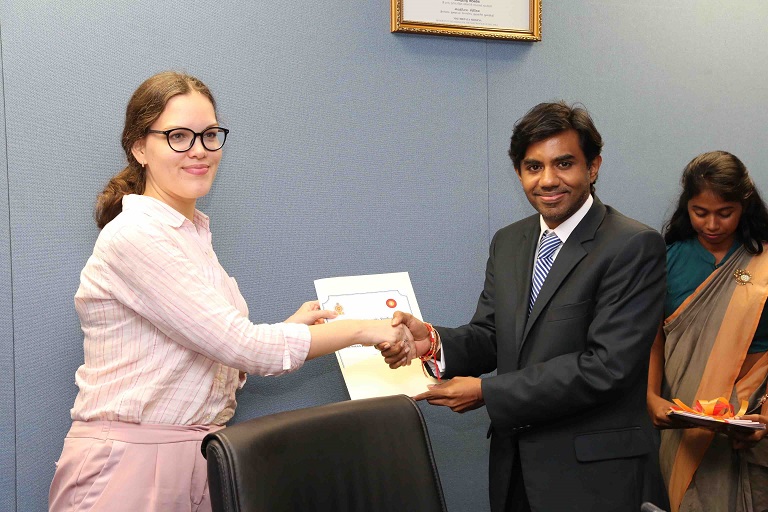
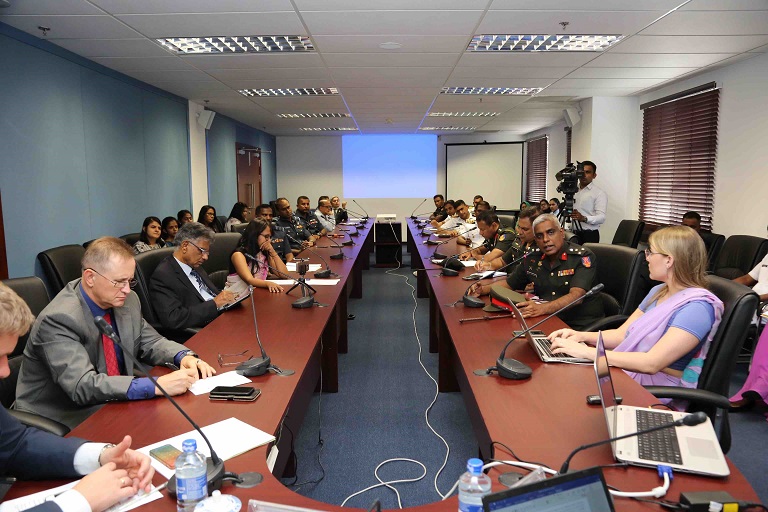
‘Russian Interest in the Indian Ocean’ was the overarching theme at the latest Round Table Discussion held at the Institute of National Security Studies Sri Lanka (INSSSL) on March 19th, 2019. Guest speaker, Ms. Ksenia Kuzmina, Program Manager for South Asia and Asia Pacific for the Russian International Affairs Council (RIAC), spoke in detail on this topic, with attendees from academic and military fields.

Issuing Certificates

Ms. Kuzmina opened her insightful and in-depth piece by stating that Russia does not have an imaginary role in the Indian Ocean region and has serious interests despite often being disregarded as a major player.

One of Russia’s primary interests is to promote the zone of peace in the Indian Ocean, as any threats that influence this area could easily reverberate all the way to the Russian homeland. Ms. Kuzmina discussed that strategic rivalries and conflict in the area are against Moscow’s interests as the Indian Ocean is crucial for Russian trade, security and communication.

Threats to the region include climate change and marine pollution; emerging technology such as artificial intelligence; cyber-attacks; piracy; terrorism; and advanced weapons. In order to combat these problems, said Ms. Kuzmina, Russia must forge bonds with smaller states and islands in the region, including Sri Lanka. She stated that these nations need to begin promoting their own security and interests rather than following major players.

attendees from academic and military fields

One way to do this is through Russian cooperation, with Ms. Kuzmina stating, Moscow can provide great input to the regional security and to some extent serve as the regional security provider…”.

Ms. Kuzmina explained that Russia canplay a significant role in providing expertise, sharing knowledge and data, training states, and sharing personnel and business. This process of interconnectedness helps states bolster their security and protect themselves from threats which in turn protects Russia from issues encroaching on their territory through Asia. 

She stated that these new and emerging threats require closer cooperation from all involved including regional and global powers, and Moscow can assist in developing dialogue and forging successful multilateral relations.

According to Ms. Kuzmina, peace and respect are Russia’s foremost desires in the Indian Ocean, promoted through positive interstate relations. However, to achieve this ambitious task, states must acknowledge and accept this on all levels, from academia, business, the government, and education.

Ms. Kuzmina’s discussion was concluded by questions from attendees before stating that developing cooperation is a two-way process that demands initiative from both sides of the party. Russia has something to give, and hence Sri Lanka need only ask.

The Round Table Discussion was closed by Director General of INSSSL, Asanga Abeyagoonasekera, who shared his wishes to continue positive dialogue and further close discussions with Russia.

සයිටම් ශිෂ්‍යයන්ට නීති විරෝධී ලෙස සීමාවාසික පත්වීම් ලබා දීම

March 21st, 2019

මාධ්‍ය නිවේදනයයි සමස්ත ලංකා වෛද්‍ය නිළධාරීන්ගේ සංගමය.

වසන්තා පෙරේරා මහත්මිය,
සෞඛ්‍ය ලේකම්,
සෞඛ්‍ය අමාත්‍යාංශය,
කොළඹ,
මහත්මියණි,

සයිටම් ශිෂ්‍යයන්ට නීති විරෝධී ලෙස සීමාවාසික පත්වීම් ලබා දීමට උත්සහ කිිරීම හා සීමාවාසික වෛද්‍ය නිළධාරීන්ගේ රාජකාරි ආවරණය කරන වෛද්‍ය නිළධාරීන් සඳහා පොරොන්දු වූ පැය 180 අමතර සේවා වැටුප් නොගෙවීම සම්බන්ධවයි.

සයිටම් අර්බුදය නිසා මතුවූ විශේෂිත තත්වය මත මේ වන විට සීමාවාසික වෛද්‍යවරුන්ගේ දැඩි හිඟයක් නිර්මාණය වී ඇත. මෙයට පිළියමක් ලෙස නිර්මාණය කළ පොදු සේවා ලැයිස්තුව 2017 දෙසැම්බර් මස සීමාවාසික පුහුණුව අවසන් කර සිටි වෛද්‍ය නිළධාරීන් ස්ථිර පත්වීම් ලබා පිටව යාමත් සමඟ බිඳවැටීමක් සිදුවී ඇත. එමෙන්ම 2018 මැයි මස සීමාවාසික පුහුණුව අවසන් කර සිටි වෛද්‍ය නිළධාරීන් කණ්ඩායමද මේ වන විට ස්ථිර පත්වීම් අපේක්ෂාවෙන් පසුවන අතර ඔවුන් ද පත්වීම් ලබා පිට වීමෙන් පසු පොදු සේවා ලැයිස්තුව නොපවතිනු ඇත.


බොහෝ රෝහල් වල වෛද්‍ය නිළධාරී පුරප්පාඩු සහිත විශේෂඥ වෛද්‍ය ඒකක වල රාජකාරී ආවරණය කරනු ලැබුවේ සීමාවාසික පුහුණුව අවසන් කළ එහෙත් ස්ථිර පත්වීම් නොලද වෛද්‍ය නිළධාරීන් විසිනි. මේ අනුව විශේෂයෙන් ශික්ෂණ සහ මූලික රෝහල්වල (කායික රෝග, ළමා රෝග, ශල්‍ය වෛද්‍ය හා ප‍්‍රසව හා නාරිවේදී ඒකකවල) සීමාවාසික වෛද්‍ය නිළධාරීන්ගේ රාජකාරීන් ආවරණය කිරීමටත් පශ්චාත් සීමාවාසික වෛද්‍ය නිළධාරීන්ගේ රාජකාරීන් ආවරණය කිරීමටත් සිදුව ඇත්තේ ජ්‍යේෂ්ඨ වෛද්‍ය නිළධාරීන් වෙතය. මෙම තත්වය මත තව තවත් අමතර රාජකාරීන් ඉටු කිරීමට සියළුම වෛද්‍ය නිළධාරීන්ට සිදුවී තිබේ. එය ඔවුන්ගේ සාමාන්‍ය ජීවන රටාව මත දැඩි පීඩනයක් ඇති කරන බැවින් ඔවුන්ගෙන් එම රාජකාරීන් ඉටුකරවා ගැනීමට නිසි වැඩපිළිවෙලක් වහාම සකස් කල යුතුව ඇත.

මේ වන විටත් 2018 සීමාවාසික පුහුණුව අවසන් කල කණ්ඩායමේ සැළකිය යුතු පිරිසක් රාජ්‍ය සේවය අතහැර ගොස් ඇති මොහොතක ජ්‍යේෂ්ඨ වෛද්‍ය නිළධාරීන් එම තත්වයට පත් වීම වැළැක්වීමට නොපමාව කටයුතු කලයුතු බව අපගේ අදහසයි. පොදු සේවා ලයිස්තුව සැකසීමේදී පශ්චාත් සීමාවාසික වෛද්‍ය නිළධාරීන් වෙත පොරොන්දු වූ පැය 180 අමතර සේවා දීමනාව නිසි ලෙස සියලූ දෙනාටම ගෙවීම කළ යුතුය. එමෙන්ම නව තත්වය මත හිඟ සීමාවාසික හා පශ්චාත් සීමාවාසික වෛද්‍ය නිළධාරීන්ගේ රාජකාරි ආවරණය කරන සියලූම ජ්‍යේෂ්ඨ වෛද්‍ය නිළධාරීන් සඳහාද එම දීමනාවම ලබා දීමට නොපමාව ක‍්‍රියාමාර්ග ගන්නා ලෙස ඉල්ලා සිටිමු.

කෙසේ වෙතත් පවත්නා තත්වය නිසි පරිදි විශ්ලේෂණය කර ගනිමින් වෛද්‍ය නිළධාරීන් අපහසුතාවයට පත් වීම මෙන්ම රාජ්‍ය සෞඛ්‍ය සේවාව බිඳවැටීම වැළැක්වීමට කටයුතු කල යුතු වුවද සෞඛ්‍ය අමාත්‍යවරයාගේ මැදිහත්වීමෙන් තත්වය තවත් නරක අතට හරවා තිබේ. එනම් මෙම සංවේදී අවස්ථාව පදනම් කර ගනිමින් සයිටම් ශිෂ්‍යයන්හට හොර පාරෙන් සීමාවාසික පත්වීම් ලබා දීමට මෙන්ම මින් ඉදිරියට විදේශ වෛද්‍ය උපාධිධාරීන් සඳහා වෙනම සීමාවාසික පත්වීම් මෙන්ම ස්ථිර පත්වීම් ලැයිස්තු ලබාදීමට හැකිවන ලෙස කුමන්ත‍්‍රණකාරීව කටයුතු කරමින් සිටී.ඒ සයිටම් වෛද්‍ය උපාධි විකුණන ආයතනය අහෝසි කිරීම වෙනුවෙන් පන්ති වර්ජන සිදු කරමින් දැඩි කැපකිරීමි සිදු කරන ලද වෛද්‍ය පීඨ ශිෂ්‍යයන්ගේ අයිතිවාසිකම් දැඩි ලෙස උල්ලංඝනය කරමිනි.සයිටම් ශිෂ්‍යයන් සඳඟා ව්‍යවස්ථාදායකය මගින් සම්මත කරන ලද 2018 අංක 17 දරණ කොතලාවල ආරක්ෂක විශ්වවිද්‍යාල විශේෂ විධිවිධාන පනත අනුව කටයුතු කළ යුතුය. එසේ නොමැති නම් සෞඛ්‍යය ක්ෂේත‍්‍රය තුළ හා වෛද්‍ය පීඨ තුළ නැවත වතාවක් දැඩි අර්බුදකාරී තත්වයක් ඇති වීම නොවැලැක්විය හැකිවනු ඇත.

මේ පිලිබඳව දැඩි අවධානයෙන් සිටින අප සංගමය කුමන්ත‍්‍රණකාරී මැදිහත්වීම් නවතා මහජන සෞඛ්‍ය සේවාව සුරැුකීම මෙන්ම වෛද්‍යවරුන් අපහසුතාවයන්ට පත්වීම වැළැක්වීම අරමුණු කර ගනිමින් ඉක්මන් ක‍්‍රියාමාර්ග ගන්නා ලෙස සෞඛය අමාත්‍යවරයාට බල කර සිටිමු.

ස්තූතියි.
මෙයට
විශ්වාසී
වෛද්‍ය ජයන්ත බණ්ඩාර – Jb Ekanayake (Facebook)
ප‍්‍රධාන ලේකම් සමස්ත ලංකා වෛද්‍ය නිළධාරීන්ගේ සංගමය


Thripitakabhivandana Week commences in the US with religious events at Washington Buddhist Vihara and Maryland Buddhist Temple

March 21st, 2019

Embassy of Sri Lanka Washington DC

In keeping with President Maithripala Sirisena’s decision to declare the Thripitakabhivandana Week from 16th – 23rd March 2019 to mark the declaration of the Theravada Thripitaka as a national and world heritage, the Embassy of Sri Lanka in Washington DC, under the patronage of four Buddhist temples in Washington DC and Maryland, organized a series of religious events from 16th – 24th March 2019. The Thripitakabhivandana Week commenced with Maryland Buddhist Temple and Washington Buddhist Vihara hosting two events on 16th and 17th March respectively.

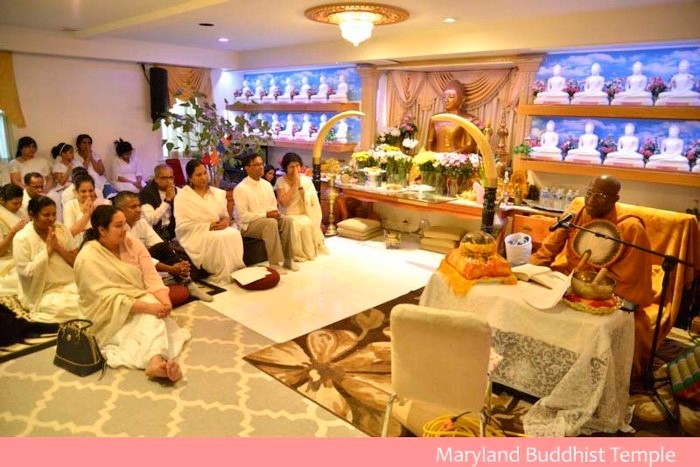
Maryland Buddhist Vihara

At the launch of the Thripitakabhivandana Week on 16th March, the Chief Priest of the Maryland Buddhist Temple, Venrable Katugastota Uparatana Thero expressed immense pleasure for the honour and privilege of hosting  the maiden event of this historic national endeavour at the Maryland Buddhist Temple. Speaking on the occasion, the venerable monk extended his profound gratitude to President Maithripala Sirisena for declaring the Thripitakabhivandana Week and the great honour thereby bestowed on the Thripitaka. Furthermore, emphasis was placed on the significance of the Thripitaka for the preservation for posterity of Buddhist teachings and the relevance of Buddha’s timeless message for future generations. Joined by the temple devotees, the resident monks chanted seth pirith to invoke blessings on the President of Sri Lanka and the whole country and hailed his meritorious deeds for the spiritual upliftment of Buddhists.  Ven Nedagamuwe Pragnaloka Thero conducted a Dhamma sermon on the indulgence of people in worldly pursuits and the importance of spiritual mindedness for overall well being and happiness.  Speaking on the occasion, Chargé d’Affaires, Sarath Dissanayake appreciated the directives and guidance given by the Presidential Secretariat and the Ministry of Foreign Affairs in celebrating a historic milestone in Sri Lanka’s Buddhist calendar and expressed his deep gratitude to the venerable monks for sharing spiritual insights and wisdom on the relevance Buddhist teachings for a simple and contented life.  The day’s proceedings came to a close with the offering of Pirikara to the priests and serving of snacks and sweetmeats to devotees.    

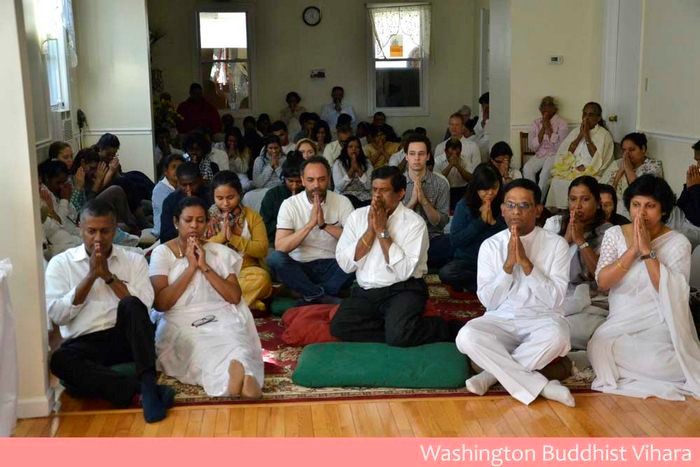
The Washington Buddhist Vihara, which is the oldest Theravada Buddhist Temple in the US, hosted the second event of the Thripitakabhivandana Week on 17th March 2019, with a Buddhist sermon conducted by the Chief Priest, Ven Maharagama Dhammasiri Thero on the significance of the Thripitakabhivandana  Week followed by a comprehensive spiritual briefing on the historical context of writing the Thripitaka, its preservation to date and the contribution of the Thripitaka for the propagation of Buddhist teachings and  values.  The venerable monk also spoke of the essence of the Buddha’s noble message for self – emancipation or salvation of mankind and thanked the foreign devotees in the audience for their interest and support to promote the Buddhist way of living among the likeminded. The monks conducted a Bodhi Pooja and invoked blessings on President Sirisena and the country and welcomed his noble endeavour to declare the Thripitakabhivandana Week to symbolize the proclamation of the Thripitaka as a National Heritage in January 2019.  Speaking on the occasion, Chargé d’Affaires, Sarath Dissanayake appreciated the blessings of the Maha Sangha for organizing a special religious activity in celebration of the Thripitakabhivandana Week at the Washington Buddhist Vihara and spreading Buddha’s teachings and creating awareness of the sacred scripts of the Thripitaka among both local and foreign devotees. He briefed those in the audience and sought their support on the campaign launched by Sri Lanka to inscribe Thripitaka as a world heritage in the UNESCO Memory of the World Register, given its spiritual, philosophical, doctrinal and cultural significance for the Buddhists and humankind as a whole.
 
The arrangements at the Washington Buddhist Vihara and the Maryland Buddhist Temple were coordinated by the Embassy under the guidance and blessings of the Maha Sangha with the active support and collaboration of the members of the respective dayaka sabha.
 
The Thripitakabhivandana Week in the US will conclude with two more religious events at the Nisala Arana Buddhist Monastery and the Mahamewnawa Meditation Centre in Maryland on the 23rd and 24th March respectively. 

Embassy of Sri Lanka
Washington DC
 
19 March 2019 

අර්ජුන මහේන්ද්‍රන් මෙරටට ගෙන්වා ගැනීමට අවශ්‍ය ඉල්ලීම නිත්‍යානුකූලව කරන්න

March 21st, 2019

ශ්‍රී ලංකා පොදුජන පෙරමුනේ අද (21) පැවැති මාධ්‍ය හමුව

පාර්ලිමේන්තු මන්ත්‍රී  කාංචන විජේසේකර මහතා

ඇමරිකානුව එක්ක මානව හිමිකම් කවුන්සිලයට ඉදිරිපත් කළ සම යෝජනාව සම්බන්ධයෙන් මානව හිමිකම් කොමසාරිස්වරියගේ අදහස් මේ වෙද්දි ඉදිරිපත් වෙලා තියෙනවා. සම යෝජනාවක් විදියට මෙය ඉදිරිපත් රකන අවස්ථාවේ ජනාධිපතිවරයා කැබිනට් මණ්ඩලය හා පාර්ලිමේන්තුව නොදැනුවත්වයි තමන්ගේ පුද්ගලික තනි මතයට ඒ යෝජනාවට සම අනුග්‍රාහකත්වය ලබා දුන්නා. ලංකාවේ ස්වෛරීභාවයට අත ගැසීමට විදෙස් රාජ්‍යයන්ට විවෘත ආරාධනාවක් ඒ යෝජනාවෙන් කළා. ලංකාවේ මානව හිමිකම් කඩවිමක් වෙලා තියෙනවා නම් ඒ සම්බන්ධයෙන් පරික්ෂණ කරන්න ලංකාවේ අධීකරණ තියෙනවා. විනිසුරන් ඉන්නවා කියලා අපි එදා පැහැදිලිව කිව්වා. යුද ජයග්‍රහණය වෙනුවෙන් කටයුතු කරපු අපේ හමුදාවන් හා පොලීසිය ජාත්‍යන්තර නිතිය මෙන්ම දේශීය නිතිය අනුවත් කටයුතු කරලා තියෙන බව අපි විපක්ෂය ලෙස දිගින් දිගටම කිව්වා. අද වෙද්දි ජනාධිපතිවරයාත් ඒ යෝජනාව විවේඡනය කරමින් සිටිනවා. මානව හිමිකම් කවුන්සිලයෙන් ඇමරිකාව ඉවත් වෙලා තියෙන මොහොතක එංගලන්තය එකතු කරලා නැවතත් සම අනුග්‍රහය දක්වලා යෝජනාව ඉදිරිපත් කරන්න ශ්‍රී ලංකාව කටයුතු කරලා තියෙනවා. එම යෝජනාවත් ජනාධිපති, ඇමැති මන්ඩලය හා පාර්ලිමේන්තුව නොදැනුවත්වයි  ඉදිරිපත් වෙන්නේ. වර්තමාන විදේශ කටයුතු ඇමැති තිලක් මාරපන මහතාවත් නොදැනුවත්ව මේ යෝජනාව ඉදිරිපත් විම තවත් විශේෂ සිද්ධියක්. නැවත වතාවක් මංගල සමරවීර ඇමැතිවරයා තමන්ගේවිෂය පඨයේ නොවුනත් මනෝ තිත්තවැල්ල හා ශ්‍රී ලංකාවේ නිත්‍ය නියෝජිත අෂීස් මහතා හරහා ඒ යෝජනාව ඉදිරිපත් කරලා තියෙනවා.

මානව හිමිකම් කොමසාරිස්වරියගේ වාර්තාවෙන් ඉල්ලීම් ගණනාවක් කරනවා. මානව හිමිකම් කවුන්සිගයෙව් කාර්යාලයක් ශ්‍රී ලංකාවේ බිහිකිරීමේ වටපිටාව නිර්මාණය කරන්න කියලා එහි දි කියනවා. ලංකාව එකග වුනු දෙමුහුන් විදේශ විනිසුරන්ගෙන් සැදුම්ලත් යුද අපරාධ විනිශ්චය කිරීමේ අධීකරණයක් ස්ථාපිත කරන්නත් කියනවා. ඉඩම් නිදහස් කිරීමේ කටයුතු සාර්ථකයි. අතුරුදන් වීමේ කාර්යාලය පිහිටුවීම වැනි දේ රජය විසිනු ඉටු කරලා තියෙනවා. ශවේන්ද්‍ර සිල්වා යුද හමුදා නිලධාරියා උසස් තනතුරකට පත් කිරිම ගැන කළකිරීමට ලක් වෙනවා කියලත් ඇය පවසනවා. ආන්ඩුව දිගින් දිගටම කිව්වා ලංකාවේ හමුදාවන්ට නිලධාරීන්ට යුද අපරාධ ඉදිරිපත්කරලා නැහැ කිව්වා. එහෙම චෝදනාවක් නැත්නම් වාර්තාවක් නිසා හමුදා නිලධාරින්ට උසස්විම් ලබන්න බැරිනම්, රටවල්වල යාමට තහනම් නම් මේ සම්බන්ධයෙන් රජයේ මතය මොකක්ද කියලා සදහන් කළ යුතුයි. විදේශ ඇමැති තිලක් මාරපන කිසිදු අවස්ථාවක කියන්නේ නැහැ දෙමුහුන් අධීකරණය ලංකාවට ගේන්නේ නැහැ කියලා. එතුමා කියන්නේ ලංකාවේ ව්‍යවස්ථාව අනුව එය කරන්න බැහැ.ව්‍යවස්ථාව වෙනස්කරන්න බලාපොරොත්තු වෙන බවයි. මේ ප්‍රකාශයෙන් පැහැදිලි වෙන්නේ ව්‍යළුස්ථා වෙනසක් කරලා හරි කවුන්සිලයේ යෝජනාව සදහා අවස්ථාව ලබා දෙන බවයි. ජනාධිපතිවරයා රටේ විධායක ජනාධීපතිවරයා විදියට මේකට විරුද්ධයි, මේ ගැන දැනගෙන හිටියේ නැහැ, වැනි ප්‍රකාශ කිරීමෙන් පලක් නැහැ. රටේ ජනාධිපතිවරයා විදියට ලිඛිතව මානව හිමිකම් කොමිෂමට මේ බව දැන්වීමේ හැකියාව එතුමාට තියෙනවා. එතුමා එක්සත් ජාතින්ගේ සංවිධානය ඇමැතීමට නියමිතව තිබෙනවා. අඩුම තරමේ ඒ අවස්ථාවට සහභාගි වන අවස්ථාවේදි හෝ ජනාධිපතිවරයාගේ ලිඛිත ප්‍රකාශයක් විදියට සම අනුග්‍රහයෙන් ඉවත් වන බව දන්වන්න. එදා සම අනුග්‍රහය දැක්වු ඇමරිකාව අද අනුග්‍රාහකත්වය දක්වන්නේ නැහැ. ඇමරිකාවට එරෙහිව යුද අපරාධ චෝදනා එල්ල වෙද්දි ඇමරිකාව ඔවුන්ගේ ආරක්ෂක හමුදා ආරක්ෂා කරන්න තීරණය කරලා කවුන්සිලයෙන් ඉවත්වුනා. මානව හිමිකම් කවුන්සිලයට පරික්ෂණ පැවැත්වීමේ බලපත්‍රය නොදෙන්න තීන්දුවක් ගත්ත බවයි ඇමරිකාව සදහන් කලේ.

2009 සිට මේදක්වා කිසිවෙක්ට ජිවත් විමේ අයිතිය නැති වෙලා නැහැ.යුද කාලය තුල ත්‍රස්තවාදය පරාජය කිරීමට ගත්ත පියවරට එරෙහිවයි මේ බලවේග හිස ඔසවමින් සිටින්නේ. ත්‍රස්තවාදය වැලැක්වීමේපනත වෙනුවට ත්‍රස්තවාදි විරෝධී පනතක් ඉදිරිපත් කරන බව විදේශ කටයුතු ඇමැතිවරයා සදහන් කලා.ත්‍රස්තවාදය වැලැක්වීමේ පනතින් ත්‍රස්තවාදි කණ්ඩායමක් ඉන්නවා නම් ඔවුන්ට එරෙහිව කටයුතු කිරීමේ අයිතිය හමුදාවට ආන්ඩුවට තිබුණා. මේ පනතින් සිද්ධ වෙන්නේ ත්‍රස්තවාදය පරාජය කරන්න කතා කරන අය මර්ධනය කිරිමටයි. විපක්ෂයේ සංවිධාන වෘත්තිය සමිති කරන උද්ඝෝෂණ ආදිය වැලැක්වීමයි මේ ත්‍රස්තවිරෝධී පනතෙන් සිද්ධ වෙන්නේ. ජනාධිපතිවරයා ආන්ඩුවට එරෙහිව විවිධ ප්‍රකාශ කළා. අර්ජුන මහේන්ද්‍රන් ලංකාවට ගෙන්වා ගැනීමට සිංගප්පූරු රජයෙන් ඉල්ලිමක් කරපු බව ජනාධිපතිවරයා සදහන් කළත් සංගප්පූරු රජය නිවේදනයක් මගින් ශ්‍රී ලංකා රජය එවැනි කටයුත්තක් නීත්‍යාණුකුල අන්දමින් සිදුකරලා නැති බව කිව්වා.

2015 , 2016 වුනු බැදුම්කර වංචාවන් වහන්න කටයුතු කරපු ආන්ඩුවේ සියලු දෙනා මෙයට වගකිව යුතුයි. ජනාධිපති විමර්ශන කමිටුව පත්කරද්දි අපි හිතුවා ජනාධීපතිතුමා සද්භාවයෙන් කරන දෙයක් කියලයි. නමුත් අද වෙනකල් චෝදනා ගොනු කරගන්න බැරි වෙලා. මේ රටේ අධිකරණ ක්‍රියාවලිය නිශ්ක්‍රිය කරනවා. ජනාධිපතිවරයාගේ යටතෙයි පොලිසිය තියෙන්නේ. ඒ අනුව අර්ජුන මහේන්ද්‍රන් මෙරටට ගෙන්වා ගැනීමට අවශ්‍ය ඉල්ලීම නිත්‍යානුකූලව කරන්න කියලා අපි ඉල්ලා සිටිනවා.

දැන් විදුලිය කපන තතත්වක් තියෙනවා. කොළඹ ලයිට් කැපුවේ නැතත් කොළඹින් පිට විදුලිය කැපෙනවා. නොරොච්චෝලේ බලාගාරය කැඩුනාම දින කිහිපයක් රට අදුරේ. එදා මහින්ද රාජපක්ෂ රජය නොරොච්චෝලේ බලාගාර ඉදි නොකලා නම් ජනතාවට විදුලිය සැපයීමේ ක්‍රමවේදයක් මේ රජයට තිබුණාද. අද විදුලි උත්පාදනය මගින් බලාගාරය හදන්න කරපු වියදමට වැඩි මුදලක් උපයලා තියෙනවා. මේ අවුරුදු පහේදි විදුලි අර්බුදයට විසදුමක් ගෙනාවද. විදුලිය කඩා වැටෙන වෙලාවේ නොරොච්චෝලේ කඩා වැටුනා කියලා එයත් මහින්ද රාජපක්ෂ මහතාගේ ගිණුමට බැර නොකර විකල්ප ක්‍රමවේද වලට යන්න කියලා අපි ආන්ඩුවෙන් ඉල්ලා සිටිනවා.

නාමල් කුමාර ඇවිත් ජනාධිපති හා හිටපු ආර්කෂක ලේකම් ඝාතන කුමන්ත්‍රණයක් තියෙන බව කිව්වාම ආන්ඩුව කිව්වේ බොරු කියනවා කියලා. නමුත් මේ වෙද්දි ඒ දේවල් ඔප්පු වෙලා තියෙනවා. චානක මන්ත්‍රීවරයාගේ සිද්ධිය සම්බන්ධයෙන් මේ වෙද්දි පැමිණීලි කරලා තියෙනවා. අනීතික දෙයක් වාහනයට දාලා නඩු විභාගයකට මැදි කිරීමේ උත්සාහය සම්බන්ධයෙන් පරික්ෂණ කෙරෙන තුරුවත් පොලිස් නිලධාරියාව මාරුකරන්න පියවර ගෙන නැහැ. හම්බන්තොට දිස්ත්‍රික්කයේ ප්‍රබල ‌දේශපාලනඥයෝ දෙන්නෙක්ගේ බලපෑමෙන් මේ පොලිස් නිලධාරියාව මාරු කිරීමට පොලිස් කොමිෂම ගත්ත තීරණයට බලපෑම් වෙලා තියෙන බව දැන ගන්න තියෙනවා. අද වෙද්දි ඩි. වි. චානක මන්ත්‍රීවරයාගේත් ඔහුගේ පවුලේ අයගේත් ජීවිත වලට තර්ජනයක් සිද්ධ වෙලා තියෙනවා. මේ තත්ත්වය දිගින් දිගටම ගෙනියන්න එපා. ස්වාධීන කියන පොලිස් කොමිෂම් සභාවලට මෙවැන්නක්වත් කරන්න බැරි නම් 19න් දුන්න ස්වාධීන බව කෝ.ඒ නිසා චානක මන්ත්‍රීවරයාගේ ආරක්ෂව තහවුරු කරන්න කියලා අපි නැවතත් ඉල්ලා සිටිනවා.

ශ්‍රීලංකා පොදුජන පෙරමුණ හා ශ්‍රි ලංකා නිදහස්පක්ෂය අතර සාකච්ඡා පැවැත්වෙමින් තිබෙනවා. එක්සත් ජාතික රජය පෙරලීම සදහා රනිල් වික්‍රමසිංහ ඇතුළු ආන්ඩුව පලවා හරින්න කැමැති , පොදුජන පෙරමුණ එක්ක එකතු වෙන්න කැමැති අය එක්ක සාකච්ඡා කරන්න අපි සූදානම්. නමුත් අපි කණගාටු වෙනවා සාකච්ඡා යන අතරේ ශ්‍රී ලංකා නිදහස් පක්ෂයේ ලේකම් දයාසිරි ජයසේකර මහතාත් සන්ධානයේ මහ ලේකම් මහින්ද අමරවිර මහතාත් කරපු ප්‍රකාශ සම්බන්ධයෙන්. 2018 පෙබරවාරි 10 වැනිදා පොදුජන පෙරමුණ ලබා ගත්ත ජයග්‍රහණය වැනි ජයක් ආයේ කිසි දිනක පොදුජන පෙරමුණට ගන්න බැරි බව දයාසිරි ජයසේකර මන්ත්‍රීවරයා කියනවා. එතුමා 2014 ජවිපේ සමග සංසන්දනය කිරීමක යෙදෙනවා. ජවිපේ ගත්ත ඒ ජයත් එච්චරමයි. පොදුජන පෙරමුණ ලබපු ජයත් එච්චරමයි කියනවා. අපිට කියන්න වෙනවා දයාසිරි ජයසේකර මන්ත්‍රීවරයා මේ විදියට කටයුතු කරනවා නම් ශ්‍රී ලංකා නිදහස් පක්ෂය 2018 යම් ජයක් ලැබුවා නම් ඊටත් අන්ත ජයක් තමයි මින් පසුව පැවැත්වෙන හැම මැතිවරණයකදිම ලැබෙන්නේ කියලා. 2018 පෙබරවාරි 10 වැනිදා ශ්‍රී ලංකා නිදහස් පක්සය අන්ත පරාජයකට ලක් කළා. අද දවසේ කටයුතු කරන විදියෙන් ශ්‍රී ලංකා නිදහස් පක්ෂයට මින් පස්සේ ජයක් ලැබෙයි කියලා හිතන්න බැහැ.අපේ පක්ෂයට කිසියම් වැඩපිළිවෙලක් තියෙනවා. බැසිල් රාජපක්ෂ මහතා ජාතික සංවිධායකවරයා‌ විදියට වැඩපිළීවෙලක් දියත් කරලා තිබෙනවා. පවතින රජය පරාජය කරන්න ඒ වැඩපිළීවෙලට හැකියාව තියෙනවා. ශ්‍රී ලංකා නිදහස් පක්ෂය එකතු වුනත් නැතත් ඉදිරි කාලයේදී ජනතාව පොදුජන පෙරමුණ වටා එකතු වෙලා ආන්ඩුව පළවා හරින්න පියවර ගන්නවා.

ඔමානය ලංකවේ පිරිපහදුවක් සදහා අයෝජනය කරන බව ආන්ඩුව කිව්වත් ඔමානය කියන්නේ එහෙම දෙයක් නැති බවයි. මේක වොක්ස් වැගන් – 2 චිත්‍රපටය.

·        ජිනීවා යෝජනාවේ මූලික අරමුන රජයක් වෙනස් කිරීම නෙවෙයි. රටේ අභ්‍යන්තර ක්‍රමවේදය සම්පූර්ණයෙන් වෙනස් කිරීමයි

පාර්ලිමේන්තු මන්ත්‍රී තාරක බාලසූරිය මහතා

වොක්ස් වැගන් -2  නමින් අලුත් චිත්‍රපටයක් හදමින් තිබෙනවා. ඔමාන් රජයෙන් ඇමරිකානු ඩොලර් බිලියන 3.85 ආයෝජනයක් සහිත තෙල් පිරිපහදුවක් හම්බන්තොට වරායට දෙන බව ආන්ඩුව කිව්වා. වොක්ස්වැගන් එක වගේ තමයි. ඔමාන රජයෙන් මේ සම්බන්ධයෙන් විමසීමක් කළාම කියන්නේ ඒ සම්බන්ධයෙන් නොදන්නා බවයි. වොක්ස්වැගන් කම්පැනිය එනවා කිව්වට ඒ අය ලංකාවේ ආයෝජනය කරන්න අදහසක් නැතිලු. මත්තල ඉන්දියාවේ ආයනයකට දෙනවා කිව්වා වුනත් ඒ අය දන්නේ නැහැ. මේ කාටද බොරු කරන්නේ. අවුරුදු හතරක් රට ආර්ථික වශයෙන් විනාශ කරලා තියෙන්නේ. මාසයක් යන්න කළින් විදුලිය කපන්න මේ රජයට සිදුවෙනවා. රජයේ වියදම් වැඩි වෙද්දි මේ රජයට වෙන විකල්පයක් නැහැ. මහින්ද රාජපක්ෂ රජය සමයේ නොරොච්චෝලේ විතරක් නෙවෙයි. චන්ද්‍රිකා බන්ඩාරනායක මැතිණිය සමයේ ආරම්භ කරන්න බැරිවුන ඉහළ කොත්මලේ වැනි ව්‍යාපෘති පවා ඇරඹුවා. සාම්පූර් ව්‍යාපෘතිය හෝ වෙනත් ව්‍යාපෘතියක් ඉදිරියේ එන විදුලි අර්බුදය විසදන්න දියත් වෙන්න අවශ්‍ය බව අපි කවුරුත් දැනගෙන හිටියා. නමුත් මේ රජය කිසිදු පියවරක් ගත්තේ නැහැ.

සේවක අර්ථ සාධක මුදල් කොළඹ කොටස් වෙලෙද පොලේ අයෝජනය කිරීමේ සූදානම්ක් තියෙනවා. කිසියම් මුදලක් කොටස් වෙලෙද පොලක ආයෝජනය කිරිම නරක නැහැ. සාමාන්‍යයෙන් කොටස් වෙලෙද පොල මුදල් ගන්නේ මුදල් අඩු වෙද්දි නෙවෙයි. සාමාන්‍යයෙන් කොටස් වෙලද පොලක කොටස් ගන්නේ කොටස් මිල වැඩි වෙද්දියි. කොටස් මිල අඩු වෙන කාලයක ආයෝජනය කිරීමේ තේරුමක් නැහැ.

2015 සිට අපි කිව්වේ ජිනීවා යෝජනාවේ මූලික අරමුන රජයක් වෙනස් කිරීම නෙවෙයි. රටේ අභ්‍යන්තර ක්‍රමවේදය සම්පූර්ණයෙන් වෙනස් කිරීමයි. දැන් එය තහවුරු වෙමින් තිබෙනවා. දැන් ලංකාවේ ඒ අයගේ කාර්යාලයක් අරින්නත් සූදානම් වෙනවා. ත්‍රස්තවාදය වැලැක්වීමේ පනත වෙනස් කරන්නලු. ශ‌වේන්ද්‍ර සිල්වාගේ පත්විම සම්බන්ධයෙන් ඒ අය කණගාටු වෙනවාලු.අපි කණගාටු වෙන්නේ ඇමරිකාව කවුන්සිලයෙන් ඉවත් වෙද්දි, එංගලන්තයේ හමුදාවන්ට එරෙහිව කවුන්සිලයට පියවර ගන්න බැහැ කියද්දි අපේ හමුදාවන්ට විරුද්ධව රජය කටයුතු කිරීමයි. මේක දේශපාලන තොන්ඩුවක්. මේ රටේ අභ්‍යන්තර ක්‍රමවේදය වෙනස් කිරීමයි උත්සාහය.

·        කයිවාරු නතර කරලා එජාපයේ පසුපෙල මන්ත්‍රීවරුන්ට අප්‍රියෙල් 5 වැනිදා විපක්ෂය එක්ක එකතු වෙලා ආන්ඩුව පරාජය කිරීමේ හැකියාව තියෙනවා.

·        මේ අන්ඩුව ලක්ෂ 6ට සමෘද්ධි සහනාදාරය දෙන්නේ ඔවුන්ගේ පාලන කාලයේ ජනතාවගෙන් ලක්ෂ 6ක් ද්‍රරිද්‍රතාවයට පත්කරපු බව පිළිගන්න නිසයි

පාර්ලිමේන්තු මන්ත්‍රී ප්‍රසන්න රණවීර මහතා

එජාපයේ පසුපෙල මන්ත්‍රීවරු දෙවන වර අයවැය පරාජය කරන බවට පුරසාරම් දෙඩෙව්වා. ජනාධිපති වැය ශීර්ෂය පරාජය කරනවා කිව්වා. ආන්ඩුවේ ඇමැතිවරු පසුපෙල මන්ත්‍රීවරුන්ට සලකන්නේ නැහැ ඒනිසා ඇමැතිවරු අට දෙනෙක්ගේ වැය ශීර්ෂ පරාජයකරන බව කිව්වා. ඒ කිසිවක් වුනේ නැහැ. චමින්ද විජේසිරි මන්ත්‍රීවරයා කියනවා ජනාධීපතිවරයාගේ වැය ශීර්ෂය පරාජය කරන්න අගමැතිවරයා ඉඩ නොදුන් බව. 54 වැනිදාට බොරුවට දොඩවන්නේ නැතිව අපිත් එක්ක අයවැය පරාජය කරන්න එකතු වෙන්න කියලා අපි ඉල්ලා සිටිනවා. මේ අයවැය ජයගත්තේ දෙමළ සන්දනායට අල්ලස් දෙමින්. සම්බන්ධන් මහතාට කොළඹින් නිවසක් යාන වැහන පහසුකම් දෙනවා. සුමන්දිරම්ලාට විදේශ සංචාර දෙනවා. එහෙම කරලා සංවර්ධනයකර ගත්ත අයවැයේ කිසිම සංවර්ධන වැඩපිළිවෙලක් නැහැ. මාස 10න් රලුත් රටක් කිව්වා වගේ පංච විධ ප්‍රතිපත්තිය ගෙනාවා වගේ වචන හරඹයක් විතරයි තියෙන්නේ.

ආන්ඩුව ණය උගුලට හසුකර ගැනීමයි කරමින් සිට්නනේ. අපි අධික පොලියට ණය ගන්නවා කියලා කෑ ගහපු මේ අය ණය ගන්නේ 7.58ට. රට ණය උගලෙන් බේර ගන්නවා කිව්වාට ආර්ථික ඔස්තාර්ලාගේ ආර්ථක කළමණාකරණය නිසාම බිලියන 151ක් පාඩුයි. අද විශාල විදුලි අර්බුදයක් තියෙනවා. රටට අවශ්‍ය විදුලි අත්පාදනයෙන් සියයට 50ක් නොරොච්චෝලෙන් ගන්නේ.  නොරොච්චෝලේ හදන්න ගිය පිරිවැය වගේ 10 ගුණයක් දැන් ලාභ උපයලා. ඒ වගේ ඇහැට පේන ඵලදායි දේවල් අපි කලේ. දැන් සමෘද්දිලාභීන් ලක්ෂ 6ට සහනාධාරය දෙන්න යෝජනා කරනවා. සමෘද්දිලාභින් වෙන්නේ දුප්පත් ජනතාව. ආන්ඩුව වසර 4ට පස්සේ පිලිගන්නවා ඔවුන් ලක්ෂ හයක් දරිද්‍රතාවයෙන් යුක්ත ජනතාවක් ජාතියට දායාද කළා කියලා.  මේ ආන්ඩුවට කිසිදු සංවර්ධන සැලැස්මක් නැහැ.

Thus spake Marapana

March 21st, 2019

The Editorial Courtesy The Island

Foreign Minister Tilak Marapana waxed eloquent in Geneva, the other day, defending as he did Sri Lanka to the hilt. It was a compelling brief, but the problem is that the architects of the UNHRC resolution on Sri Lanka have already made up their minds and do not want to be confused with facts.

Marapana’s presentation contained nothing new, though. The facts he marshalled cleverly had been in the public domain for the last several years. They should have been made use of much earlier. Having agreed to co-sponsor the UNHRC resolution on Sri Lanka and decided to humour the western governments, the yahapalana leaders ignored them in 2015.

It is not that the representatives of the governments which masterminded the UNHRC resolution on Sri Lanka are unaware of what Marapana said; they are au fait with the situation here, but theirs is not to listen to reason; theirs is to reject the facts that do not conform to the agendas of their countries bent on furthering their geostrategic interests. They have even refused to accept vital UN data, which run counter to their arguments anent Sri Lanka. The US and the UK have disregarded information contained in the diplomatic cables dispatched by their own Colombo-based defence attaches on the final phase of the Vanni war.

The UNF government is like a woman who has waited till she goes into labour to say that she wants to have an abortion. (Eating raw pineapple will be of no use, at this late stage!) The Geneva baby is fully developed and will have to be delivered. The yahapalana leaders will be made to fulfil their Geneva undertakings including the setting up of a war crimes investigation. However, they may be given some more time, at least, until the next year to perform that painful task, in view of the next presidential election to be held at the end of this year.

Marapana would not have been allowed to challenge the UNHRC’s arguments and tell what the western governments did not want to hear but for President Maithripala Sirisena’s intervention. The President went so far as to warn that he would be compelled to send a separate team to Geneva if he felt that the country’s interests would not be defended. The government had to do something to steal his thunder.

Many a pair of shoes is said to be worn out between saying and doing. Will the government translate what Marapana has said, in Geneva, into action?

How do the UNF leaders propose to reconcile their Geneva volte-face with the TNA’s demand for an international war crimes tribunal to probe the alleged war crimes? They are dependent on the TNA for survival in Parliament and the latter won’t settle for less. Some TNA MPs have even taken to the streets in the North, demanding a hybrid court to try military personnel. It will be interesting to see their reaction to Marapana’s speech at the UNHRC.

The government’s strategy may be to criticise the very UNHRC resolution it has co-sponsored so as to appease those who are opposed to it, buy some more time and face the presidential election with a view to fulfilling its Geneva commitments, later on, in case it succeeds in winning the presidency. Marapana can always be removed and someone else brought in as the Foreign Minister to carry out that task.

China uses loans to dominate the world and stands accused of luring countries like Sri Lanka into a debt trap. Other big powers are no better and only their modus operandi is different. The US and its allies are using human rights to achieve the same goal. So, it is highly unlikely that the western powers will soften their stand on Sri Lanka, in Geneva.

Let Marapana be congratulated on his brilliant presentation in Geneva, but no one should make the mistake of expecting it to make any difference there, for what we see at the UNHRC or the UN, for that matter, is not evidence-based policymaking but policy-based evidence making.

President Maithripala Sirisena stands his ground Singapore sheltering Mahendran:

March 21st, 2019

By Saman Indrajith  Courtesy The Island

article_image


All documents necessary for the extradition of former Central Bank Governor Arjuna Mahendran had been despatched, Chief Opposition Whip UPFA MP Mahinda Amaraweera said.

Replying to JVP MP Dr. Nalinda Jayatissa in Parliament yesterday, Amaraweera said all necessary information had been diplomatically communicated in writing to the relevant authorities in Singapore.

Amaraweera also told the House that President Maithripala Sirisena would brief the Singaporean authorities and the people of Sri Lanka shortly on the steps he had taken to bring Mahendran back.

The issue was taken up in Parliament after Singapore strongly rejecting President Sirisena’s allegation that it was sheltering Mahendran. Singapore alleged Sri Lanka was yet to furnish required documents to support its request for extradition of the former Central Bank Governor.

“The President has done everything in his capacity. The President also made a private request when he met the Singaporean Prime Minister,” Amaraweera added.

At this point JVP MP Dr Jayatissa remarked that he requested a clarification from the government, but instead it was Opposition MP Amaraweera who replied. UNP MP Mujibar Rahuman observed that it proved that the President had sided with the Opposition.

UPFA MP Udaya Gammanpila said that Justice Minister Thalatha Athukorala must explain to the House why she had not provided necessary documents to the Singapore government for the extradition of Mahendran.

“The President after his meeting the Singaporean Prime Minister instructed the authorities in Sri Lanka to take steps for Mahendran’s extradition. Matters pertaining to extradition come under the Justice Ministry. There was an Interpol red notice on Mahendran. The Singapore’s response shows that the Singaporean authorities were not even aware of that. Who blocked this message? There must have been some pressure on her to do so. Mahendran is the most wanted man in this country. She must tell the House as to who prevented her from acting against Mahendran.”

Accountability: Addressing alleged human rights violations

March 21st, 2019

By Neville Ladduwahetty Courtesy The Island

Despite the repeated and continuing references to war crimes and crimes against humanity alleged to have been committed during Sri Lanka’s armed conflict, the actual wording in Paragraph 6 of UNHRC Resolution 30/1 is as follows:” …a judicial mechanism with a special counsel to investigate allegations of violations and abuses of human rights and violations of international humanitarian law”. Therefore, the first order of business for any judicial mechanism is to establish whether International Human Rights Law and/or International Humanitarian Law applies separately or concurrently, during an armed conflict.

Human rights violations occur during civil disturbances. However, it is only when such violations reach the threshold of an armed conflict that humanitarian violations occur. In the case of Sri Lanka, it is an accepted fact that the conflict reached such a threshold with the signing of the Peace Accord on February 22, 2002.

ESTABLISHING the CONTEXT for the JUDICIAL MECHANISM

The fact that the conflict in Sri Lanka was an armed conflict was acknowledged by the UN appointed Panel of Experts (PoE) and by the Office of the High Commissioner for Human Rights (OHCHR) in their respective reports.

The UN appointed Panel of Experts in their report stated: “There is no doubt that an internal armed conflict was being waged in Sri Lanka with the requisite intensity during the period that the Panel examined. As a result, international humanitarian law is the law against which to measure the conduct of both government and the LTTE”.

Paragraph 182 of The OHCHR report states: “Article 3 common to the four Geneva Conventions relating to conflict not of an international character is applicable to the situation in Sri Lanka”.

Paragraph 183 goes on to state: “In addition, the Government and armed groups that are parties to the conflict are bound alike by relevant rules of customary international law applicable to non-international armed conflict”.

Therefore, it can be concluded without any doubt whatsoever, that the conflict in Sri Lanka was an “internal armed conflict” and the parties to the armed conflict “are bound alike by relevant rules of customary international law applicable to non-international armed conflict”.

INTERNATIONAL LAWS in ARMED CONFLICT

The two undisputed authorities cited regarding what constitutes an Armed Conflict are: (1) The International Criminal Tribunal for former Yugoslavia (ICTY, 1995) appointed by the Security Council and (2) the ICRC, internationally acknowledged as the accredited agency for IHL – International Humanitarian Law.

1. During the Prosecutor v. Dusko Tadic trial the ICTY stated: “…we find that an armed conflict exists whenever there is a resort to armed force between States or protracted armed violence between government authorities and organized groups or between such groups within a State.  International humanitarian law applies from the initiation of such armed conflicts and EXTENDS BEYOND (emphasis added) the cessation of hostilities until a general conclusion of peace is reached; or in the case of internal conflicts, a peaceful settlement is achieved.  Until that moment, international humanitarian law continues to apply in the WHOLE TERRITORY (emphasis added) of the warring State or, in the case of internal conflicts, the WHOLE TERRITORY (emphasis added) under the control of the party, whether or not actual combat takes place there”. 

2. ICRC Opinion:

Part 1, Article 1 (1) of the ” Protocol Additional to the Geneva Conventions of 12 August 1949, and relating to the Protection of Victims of Non-International Armed Conflicts (Protocol II), 8 June 1977 states:

“This Protocol, which develops shall apply to all conflicts…which take place in the territory of a High Contracting Party between its armed forces and dissident armed forces or other organized armed groups which, under responsible command, exercise such control over a part of the territory as to enable them to carry out sustained and concerted military operations and to implement this Protocol”.

3. According to the UN appointed Panel of Experts the applicable law as a result of the armed conflict is: “international humanitarian law is the law against which to measure the conduct of both government and the LTTE”.

Therefore, the undisputed conclusion should be that the conflict in Sri Lanka was an armed conflict, and that the applicable law is International Humanitarian Law.

However, there is a considerable body of opinion that claims that both Human Rights and Humanitarian Laws exist concurrently during an armed conflict. What they do not say is that human rights that exist during times of peace are seriously derogated during an armed conflict; a fact acknowledged by the International Court of Justice. Thus, what human rights remain are identified as the “hard core of human rights”, listed in Article 4 of the International Covenant on Civil and Political Rights (ICCPR). instance, aAn official publication titled “INTERNATIONAL LEGAL PROTECTION OF HUMAN RIGHTS IN ARMED CONFLICT” by the United Nations Human Rights, Office of the High Commissioner, New York and Geneva, 2011 states that “the International Court of Justice has clearly stated that “the protection of the International Covenant on Civil and Political Rights does not cease in times of war, except by operation of article 4 of the Covenant whereby certain provisions may be derogated from in a time of national emergency” (p. 55).

Article 4 of the Covenant referred to above states: “In a time of public emergency which threatens the life of a nation and the existence of which is officially proclaimed, the State Parties to the present Covenant may take measures derogating from their obligations…to the extent required by the exigencies of the situation…”. Article 4 (2) states: “No derogation from articles 6,7,8 (paragraphs 1 and 2)11,15,16 and 18 may be made under this provision”. Article 6 is “right to life; article 7 is torture or cruel, inhuman treatment; and article 8 is slavery. …”.

The fact that Sri Lanka officially proclaimed that there was an emergency that threatened the life of the nation is acknowledged in the report by the Office of the High Commissioner for Human Rights (OISL). Paragraph 175 states: “OISL notes that Sri Lanka has submitted a Declaration of a State of emergency dated 30, may 2000 derogating from articles 9 (2), 9 (3), 12 (1), 12 (2), 14 (3), 17 (1), 19 (2), 21 and 22 of the ICCPR.

The derogation of IHRL during Sri Lanka’s Armed Conflict is justified because Sri Lanka’s Emergency Regulations were in operation during and after the conflict and furthermore, Article 15 (7) of the Constitution permits the restriction of several fundamental rights in the interest of national security. Even though the provisions of Article 4 of the Covenant are strictly not applicable to Sri Lanka since they have not been incorporated into domestic law, the fact that Additional Protocol II of 1977 incorporates the provisions in Article 4 of the Covenant that cannot be derogated, the applicability of IHL as provided in Additional Protocol II is justified since it is part of Customary Law. Thus, addressing accountability on the basis of Protocol II of 1977 provisions of IHL is clearly validated.

CONTEXT for JUDICIAL REVIEW

Based on the material presented above, the conclusions that justifiably could be reached are:

1. That the conflict in Sri Lanka was an armed conflict starting February 22, 2002.

2. Therefore, the applicable law is International Humanitarian Law, along with those provisions of International Human Rights law that are NOT derogated, such as those identified in Article 4 of the ICCPR Covenant.

3. Human Rights Laws applicable during an armed conflict are incorporated in Additional Protocol II of 1977.

4. Humanitarian Laws applicable during an armed conflict are also incorporated in Additional Protocol II of 1977.

Accountability:

5. Therefore, Additional Protocol II of 1977 should be the legal framework that should guide the evaluation of any violations during the armed conflict.

Since the ICRC as the internationally accredited authority has codified what constitutes violations of human rights and humanitarian law based on provisions of Additional Protocol II of 1977, there is absolutely no need for a judicial mechanism as is being called for in the UNHRC Resolution 30/1. Instead, what is needed is for any person with evidence of a nature that would stand up in the Courts to file charges AGAINST anyone guilty of having violated any provisions listed in the ICRC Document titled “Customary Law” Vol. 87, No. 857, March 2005.

CONCLUSION

The materials presented above are the International Laws and the associated hard facts connected with the armed conflict that occurred in Sri Lanka. It is evident from the foregoing that issues associated with the armed conflict are straight forward law and order issues, that are within the capabilities of Sri Lanka to handle. Instead of presenting facts such as those cited above for Sri Lanka to go to inordinate lengths of co-sponsoring resolutions in order to claim “ownership” of the reconciliation process is stupid because its effect is to undertake commitments that require constitutional and legislative changes that would even involve the consent of the People at a referendum.

The UNHRC Resolution 30/1 and all that goes with it are politically motivated moves to enable the International Community dominated by the West to keep Sri Lanka on a leash as long it serves their geopolitical interests under the cover of ‘reconciliation’. By co-sponsoring the resolution the government has become a willing party to this duplicity.

Judging from the skepticism with which the findings by an independent lab in the USA were received about the mass grave in Mannar, there is no doubt that whatever conclusions reached following a judicial inquiry, would depend on their political and strategic interests. If as reported in the British media, the reaction both locally and internationally would be unimaginable if after a judicial inquiry a Sri Lankan prosecutor found only one out of sixteen soldiers guilty of murder due to “insufficient evidence” after forty-seven (47) as it was in UK following an inquiry into the Bloody Sunday massacre in Northern Ireland. This massacre resulted in thirteen people being killed and fifteen others injured on 30 January 1972, when troops of the 1st Battalion of the Parachute Regiment fired on demonstrators during a civil rights march in Derry, Northern Ireland, despite a public inquiry in 2010 under Lord Saville having concluded that the killings had been “unjustified and unjustifiable”. Accountability in such contexts and with such attitudes would not have any meaningful outcomes.

The fact that Sri Lanka has become a victim of international machinations is evident from the approach adopted by the current government. How Sri Lanka could get out of this trap would clearly depend on the professionalism with which issues relating to the armed conflict are handled by a future Sri Lankan Government. The question is whether Sri Lanka would ever have the good fortune to have a government that could meet such a challenge.

Why govt endorsed HRC’s report before finding fault with it?

March 21st, 2019

By Shamindra Ferdinando Courtesy The Island

article_image

Appreciating Foreign Minister Tilak Marapana, PC, for challenging the Office of Human Rights Commissioner’s report on Sri Lanka in respect of several contentious issues, including the highly exaggerated UN claim of 40,000 civilian deaths in the final phase of the war in 2009 and Mannar mass graves, Joint Opposition leader Dinesh Gunawardena, MP, yesterday, said that the UNP government owed an explanation as to why Sri Lanka co-sponsored a fresh resolution on the basis of much flawed report.

Addressing the media at the Sri Lanka Foundation (SLF), Mahajana Eksath Peramuna (MEP) leader Gunawardena asked why Sri Lanka’s Permanent Representative in Geneva Ambassador A. L.A. Azeez accepted the latest declaration meant to extend the original resolution co-sponsored by the government in Oct 2015. Gunawardena described Minister Marapana’s statement and the acceptance of the latest resolution inimical to Sri Lanka as contradictory actions of a government pursuing a dangerous agenda.

The MEP leader said that the government’s strategy in Geneva should be examined against the backdrop of Ambassador Azeez receiving instructions to go ahead with the latest resolution from top Finance Ministry consultant Mano Tittawella

Mano Tittawella is the Secretary General of the Secretariat for Coordinating Reconciliation Mechanisms (SCRM), which is entrusted with coordinating transitional justice mechanisms in Sri Lanka. Office of Missing Persons, Truth Seeking Commission, Accountability Mechanism and Office for Reparations come under the purview of SCRM. The outfit formed by the cabinet of ministers on Dec 18, 2015 functions under the Prime Minister’s Office.

MP Gunawardena alleged that the government went ahead with the latest proposal without President Maithripala Sirisena’s sanction. According to MP Gunawardena, Azeez, on behalf of the government had endorsed the resolution at the behest of Tittawella without proper consultations.

Pointing out that the High Commissioner’s report had been gravely flawed in many respects, MP Gunawardena said that the former Michelle Bachelet acted irresponsibly as regards Sri Lanka. But the failure on the part of the government to properly defend the country in Geneva couldn’t be justified under any circumstances, MP Gunawardena said. The Foreign Ministry should explain as to why disclosure made by Lord Naseby in the House of Lords as well other reports cited by Minister Marapana weren’t used before in Geneva in Sri Lanka’s defence, MP Gunawardena said.

MP Gunawardena pointed out that Lord Nasesy’s disclosure in Oct 2017 based on wartime dispatches from the British High Commission in Colombo cleared the Sri Lankan military of war crimes. MP Gunawardena said that the government owed an explanation as to why the Vanni death toll referred to in the UN Panel of Experts’ report wasn’t challenged during 2018.

JO parliamentary group leader appreciated constant The Island coverage of the Geneva issue with the focus on the stunning disclosure made by the Conservative member.

MP Gunawardena faulted the Foreign Ministry for the current situation. The Foreign Ministry, since the change of government had followed policy contrary to Sri Lanka’s national interests, thereby placing the country at the mercy of Western powers.

Those who couldn’t stomach the LTTE’s battlefield defeat in the hands of the Sri Lankan military worked overtime to haul Sri Lanka’s military and political leadership before international war crimes court, MP Gunawardena said. Following the change of government, the new administration co-sponsored Oct 2015 Resolution meant to set up various mechanisms, including hybrid court comprising foreign judges and other foreign personnel, such as lawyers.

MP Gunawardena recalled how the then Chief Justice Sarath Nanda Silva rejected a ruling given by a foreign court in respect pf a domestic matter during Chandrika Bandaranaike Kumaratunga’s presidency.

The JO heavyweight said that Sri Lanka shouldn’t be penalized for eradicating terrorism. The country was in deepening crisis due to short-sighted policies of the UNP, bent on undermining national security.

Asked by The Island as to why the JO failed to take up the Geneva issue in the Sectoral Oversight Committee handing foreign affairs matters, MP Gunawardena said though it wasn’t taken up there, there were two special debates on the issue. MP Gunawardena alleged that both Prime Minister Ranil Wickremesinghe and the Foreign Minister deceived the parliament regarding the Geneva matter.

UPFA MP attorney-at-law Sisira Jayakody said that Oversight Committees had been packed by Tamil National alliance (TNA) and JVP lawmakers at the time TNA leader R. Sampanthan functioned as the Leader of the Opposition. The UNP and its associates deprived the genuine Opposition of an opportunity to take up contentious issues, MP Jayakody said, alleging the parliamentary process was manipulated to suit the despicable strategies of the UNP-led coalition.

Messrs Gunawardena and Jayakody alleged that the UNP’s response to international intervention couldn’t be compared with that of any other country. The UNP actively supported and encouraged foreign interference in foreign policy matters regardless of JO’s opposition, they said.

Resolution co-sponsored by Sri Lanka passed by consensus at UNHRC

March 21st, 2019

Courtesy NewsIn.Asia

Geneva, March 21 (newsin.asia): The UN Human Rights Council (UNHRC): on Thursday through consensus passed a resolution giving the government of Sri Lanka two more years to implement the resolution 30/1 of 2015, ie: until March 2021.

After the resolution was adopted the Sri Lankan Foreign Minister Tilak Marapana, said that the passing of the resolution 40/L.1 is a mark of recognition of Sri Lanka’s political commitment and the progressive steps already taken by the Government since 2015 towards ethnic reconciliation, assurance of human rights and accountability.

Sri Lanka’s open, and constructive approach towards the work of this Council is well acknowledged. We have engaged with seven core Treaty Bodies, the UPR, and have also facilitated 8 visits by special procedures mandate holders and independent experts, resulting in a total of over 1000 recommendations, for expeditious implementation by Sri Lanka.

We have to set our priorities right and we are committed to finding innovative and pragmatic solutions to protect the country’s national interest and the well-being of all Sri Lankans alike, guided by the provisions of the supreme law of the land – The Constitution,” Marapana said.

Sri Lanka’s co-sponsorship of this year’s Resolution assures to all concerned persons, the Sri Lankan society at large, and to all our interlocutors outside the country, that we will continue to move forward within these parameters, to ensure eventual closure,” he added.

We welcome the assistance and cooperation we have received from partners as required, and invite the OHCHR to engage closely with the relevant local institutions and independent bodies including the National Human Rights Commission, in verifying facts on ground, which will help OHCHR to provide more objective and realistic assessment on the progress made in Sri Lanka and on its genuine challenges, to this Council next year.”

Sri Lanka takes this opportunity to appreciate the efforts of the members of the Core-Group, and thank all Members of this Council for supporting a consensus outcome today.”

Lanka to co-sponsor UNHRC resolution as it is to be implemented only with its concurrence

March 21st, 2019

By P.K.Balachandran Courtesy NewsIn.Asia

Colombo, March 21 (newsin.asia): Despite the existence of sharp differences between the UN High Commissioner for Human Rights and the government of Sri Lanka on the rights situation in the island nation, Sri Lanka will co-sponsor the already signed resolution on the matter at UN Human Rights Council (UNHRC) in Geneva, a top source in the government said.

Explaining the government’s stand, the source said that though High Commissioner Michelle Bachelet and the Sri Lankan Foreign Minister Tilak Marapana expressed clashing views on specific issues, the resolution gives room to Sri Lanka to do what it can and not do what it cannot.

The various provisions in Resolution 30/1 of 2015 are to be implemented fully but only in consultation with, and with the concurrence of,” the government of Sri Lanka.

Therefore, there is no danger of Sri Lanka being forced to take any steps deemed unsuitable to it in the context of the constitutional, cultural, and political realities prevailing here.

Thus, despite the hot words uttered on the floor of the council in Geneva, the situation as regards the resolution on Sri Lanka remains the same as before. It is to be co-sponsored.

Michelle Bachelet, UN Human Rights High Commissioner

Gist Of Resolution

The co-sponsored and signed resolution requests the Government of Sri Lanka to implement fully the measures identified by the Council in its resolution 30/1 that are outstanding. It encourages the continuation of that engagement in the promotion and protection of human rights and truth, justice, reconciliation and accountability in Sri Lanka.

It requests the Office of the High Commissioner and relevant special procedure mandate holders, in consultation with and with the concurrence of the Government of Sri Lanka,” to continue to strengthen their advice and technical assistance on the promotion and protection of human rights and truth, justice, reconciliation and accountability in Sri Lanka.

It requests the Office of the High Commissioner to continue to assess progress on the implementation of its recommendations and other relevant processes related to reconciliation, accountability and human rights in Sri Lanka, and to present a written update to the Human Rights Council at its forty-third session, and a comprehensive report, followed by a discussion on the implementation of Council resolution 30/1, at its forty-sixth session.

Bachelet’s Stinging Observations

Last Saturday, High Commissioner Bachelet called on Sri Lanka to implement a detailed, comprehensive strategy for the transitional process with a fixed timeline. She complained of delays in implementation and attributed them to a lack of common vision among the country’s highest leadership”.

Deadlock on these important issues has a damaging impact on victims from all ethnic and religious groups and on society as a whole, she stressed.

Bachelet noted that there has been minimal progress” on accountability and said the continuing impunity risks fuelling communal or interethnic violence, and instability.

Accontability mechanisms, including a specially designated court with Sri Lankan and foreign judges, was enjoined by the relevant resolution designated as 30/1 of 2015.

Bachelet said that the recent appointment to a senior position in the Sri Lankan Army of Major General Shavendra Silva, implicated in alleged serious violations of international humanitarian and human rights law, is a worrying development.

The High Commissioner also said the continuing allegations of torture and other human rights violations by security forces, including sexual violence are troublesome” and called for effective, transparent and independent investigations by the Government, as well as measures to prevent and end such practices.

Bachelet’s  report also called for the application of universal jurisdiction” to Sri Lanka and keeping Sri Lanka firmly on the agenda of the UNHRC.

Lanka’s Sharp Counter

In his speech at the UNHRC on Wednesday, the Sri Lankan Foreign Minister, Tilak Marapana, said that Sri Lanka will cooperate with the UNHRC in implementing resolution 30/1. But at the same time, he pointed out that there are parts of the resolution and the perceptions on which they are based, which cannot be accepted given the facts on the ground, and the cultural, political and constitutional conditions prevailing in Sri Lanka.

War Crimes

On the allegation that war crimes had been committed by the Sri Lankan armed forces and the recommendation that Sri Lanka must be subjected to universal jurisdiction’, the Foreign Minister said: It must be asserted that there are no proven allegations against individuals on war crimes or crimes against humanity in the 2015 report of the OISL ( OHCHR Investigation on Sri Lanka) .or in any subsequent official document.”

It is an injustice to deprive any serving or retired officer of the Sri Lankan security forces or the police of their rights,” he added.

The Minister further said that the damaging assertions of the High Commissioner remain in direct contradiction to independent assessments sent by Colombo-based foreign missions, UN agencies as well as other international organizations, including the ICRC, some heavily redacted accounts of which have been presented not only in the House of Lords in the UK on 12 October 2017, and in writings by academics and journalists which are found in the public domain.”

Nay To Foreign Judges

Referring to the High Commissioner’s advocacy of a hybrid court with Sri Lankan and foreign judges to try alleged war crimes cases, Marapana said: I wish to make it clear that the Government of Sri Lanka at the highest political levels, has both publicly and in discussions with the present and former High Commissioners for Human Rights and other interlocutors, explained the constitutional and legal challenges that precludes it from including non-citizens in its judicial processes.”

It has been explained that if non-citizen judges are to be appointed in such a process, it will not be possible without an amendment to the Constitution by 2/3 of members of the Parliament voting in favor and also the approval of the people at a Referendum.”

Lankan Foreign Minister Tilak Marapana

Inaccurate Data on Lands

On the charge that the Lankan government and the armed forces are still holding on to large tracts of land taken from the minority Tamils during the 30 year war against the Tamil militants,  Marapana said: The data reflected in the High Commissioner’s report in Para 35, that only 75% of the land occupied by the security forces as at 2009 has been released, is at significant variance with the actual numbers. As on March 2019, 88.87% of State lands and 92.16% of private lands have been released.”

Presumptuous Remarks On Mass Graves

On the discovery and dating of skeletal remains in a mass grave in Mannar, and the innuendoes made by the High Commissioner in this regard, Marapana said: As for the mass graves in Mannar, referred to in para 23 of the High Commissioner’s Report, despite the fact that the test results obtained from a US laboratory have revealed that the said skeletal remains date back to 1499-1719 AD – a period when Sri Lanka was largely under European colonial rule – the report presupposes ‘other mass graves might be expected to be found in the future.’ An assumption of this nature in a public report, on a matter of this magnitude and seriousness, is not acceptable, and may even cast a doubt as regards other assertions in the report.”

Biased Approach To Facts

The Minister pointed to the considerable unevenness in the standards of proof applied to the Government of Sri Lanka, compared to those applied to the unsubstantiated allegations made by Sri Lanka’s detractors and said that this is problematic and confounding.”

Expanding on this, Marapana said: Conventional wisdom teaches us that when facts do not fit a theory, the theory has to change. However, conventional wisdom does not seem to be applied to Sri Lanka’s case. It seems that even if the theory is disproved through hard evidence that absolves Sri Lanka, as in the case of the Mannar graves, a matter in which some sceptics sought to implicate the Government of Sri Lanka, such facts are cast aside for further inquiry.”

At the same time when evidence surfaces, which contests the culpability of the Sri Lankan security forces and police in having deliberately caused civilian casualties during the last phase of the conflict, this evidence is summarily disregarded.”

Denies Colonization of Tamil Areas

On the charge that the government is encouraging the systematic colonization of the Tamil areas, Marapana said: The Government of Sri Lanka has no policy of colonization of either the Northern Province or Eastern Province, or as a matter of fact, of any province in the country.”

As regards the contention that land owners are deprived their land by declaring their land as forest cover or as archeological projects, it must be clearly and categorically stated that the Government has not resorted to any such measures.”

However, it must be borne in mind that the protection of forest land and archaeological projects is an obligation cast on any State in accordance with its international obligations that mandate protection and preservation of the environment and of the cultural heritage.”

Furthermore, in identifying the relevant forest land and the cultural heritage, respective provincial administrations are also consulted.”

Oman denies it has agreed to invest in Sri Lanka oil refinery project

March 21st, 2019

Courtesy NewsIn.Asia

New Delhi, March 20 (Reuters) – Oman’s oil ministry on Wednesday denied being part of a $3.85 billion plan to build an oil refinery in Sri Lanka, a day after the government in Colombo announced the Arab country’s participation.

Sri Lankan officials told a news conference on Tuesday that a joint venture between the Oman oil ministry and a Singapore investment vehicle owned by India’s Accord Group had agreed to build the 200,000 barrel per day refinery near Chinese-controlled Hambantota port on the island’s south coast.

The ministry was to take a 30 percent stake, the officials said, representing what would be Sri Lanka’s biggest single foreign direct investment.

No one on this side of the panel is aware of this investment in Sri Lanka,” Salim al-Aufi, undersecretary of Oman’s ministry of oil and gas, told a news conference on Wednesday.

It came as news to me, I don’t know who is signing the cheque for $3.8 billion.”

Sri Lankan officials could not be reached for immediate comment on the Oman denial. It was a public holiday in Sri Lanka on Wednesday.

Any big deal in Sri Lanka involving Indian investment will pose a challenge to China, which had until recently been on track to be the dominant foreign investor on the island.

India has become concerned in recent few years about China muscling into Sri Lanka and other countries in a region where India is the traditional power.

China is the biggest buyer of Omani oil, importing about 80 percent of the Middle Eastern nation’s overall crude exports in January, according to an Oman government website.

Deforestation at Wilpattu still ongoing?

March 21st, 2019

Courtesy Adaderana

The Protect Wilpattu Organization says that they will launch a massive protest campaign against the alleged deforestation of Wilpattu.

Chairman of the organization Ven. Ananda Sagara Thero states that recent satellite images of the area reveal the latest information of the continuous destruction of the forest.

The Thero points out that it is unfortunate that authorities who are informed of this act are maintaining silence.

When contacted by Ada Derana, a spokesman of the Department of Wildlife stated that no harm has been done to the land area of the Wilpattu National Park as of yet.

The area in controversy is a forest reserve which is to the North of the Park, added the spokesman. He says that the Wildlife Department has no responsibility regarding the acts of deforestation going on at the said reserve.

However, the Wildlife Department point out that deforestation at the relevant reserve is illegal as it is gazetted as a forest reserve. The spokesperson further said that the Department of Forest Conservation has the responsibility to implement the law on the matter.

According to Raveendra Kariyawasam, the National Coordinator of the Center for Environment and Nature Studies, the deforestation is still going on at the Wilpattu forest reserve.

Stating that this deforestation is done under a project of the current government, Kariyawasam says that government authorities keeping silent on this is a misfortune of the whole nation.

Meanwhile, a case regarding the deforestation at Wilpattu is taken up for consideration at the Court of Appeal tomorrow (22), says Lawyer and Civil activist Nagananda Kodituwakku.

Media reports on extraditing Arjun Mahendran are false – President

March 21st, 2019

Courtesy Adaderana

President Maithripala Sirisena has stated that Sri Lankan media reports – quoting foreign media – on the extradition former Governor of the Central Bank Arjun Mahendran cannot be accepted as an official statement by the government of Singapore.

President Sirisena stated today (21) this issuing a press release.

The press release issued by the President is as follows:

ගොඩ එන්න හොඳම උත්තරය මමයි – ගෝඨාභය Only person capable of resolving minorities’ issues is me – Gotabaya

March 21st, 2019

Ada Derana

විල්පත්තුවේ අක්කර 75 ක කර්මාන්තපුරයකට බදියුදීන් සැරසෙයි. Bathiudeen to build a 75-acre industrial town in Wilpattu?

March 21st, 2019

Ada Derana

How the world reacted when Sri Lanka’s Armed Forces militarily ended LTTE terrorists

March 20th, 2019

LTTE was an armed group waging terror on the citizens of Sri Lanka. Since 1980s LTTE has been either bombing, sending suicide missions, assassination squads or setting off claymore bombs virtually every day, every month for 30 years. Apart from customary statements the UN, UNHRC or so-called international community did nothing to stop LTTE or even empathize with the thousands of unarmed victims that LTTE targeted. There were no pouring of flowers or world outcry calling for LTTE to disarm. It was always calls to have tea with the terrorists timed when LTTE was cornered to enable LTTE to regroup during the talks. When so-called terrorists attacked Twin Towers in US, there was no investigation as to the culprits & instead US & NATO invaded Afghanistan in October 2001 & continue to occupy it even in 2019. Sri Lanka’s decision to military defeat LTTE came after enduring 30 years of killings, failed peace talks & ceasefires including foreign mediation. LTTE was militarily defeated after giving it several opportunities to lay down arms & surrender which LTTE refused. Sri Lanka’s Armed Forces while engaging the LTTE in battle saved close to 300,000 people which is no small achievement & that cost 6261 soldier deaths. Neither side fires roses in a battle and the Armed Forces brought to safety the people LTTE were using as human shields & hostages. Yes, civilians died – many from LTTE firing but at the end of the day, Sri Lanka has been enjoying peace which Sri Lanka didn’t have for 30 years. So we would like to tell the intruding countries & UN that did pittance to stop LTTE killings to just mind their own business without trying to hang Sri Lanka’s armed forces for eliminating terrorists – do they deserve to live & do we deserve to die if LTTE is to be given a lease? Let us see the world reactions against how they reacted post-May 2009

18 May 2009

United National Party leader Ranil Wickremasinghe, through a telephone call, congratulated President Mahinda Rajapaksa and the state’s security forces.

Archbishop Oswald Gomis issued a statement   

I congratulate His Excellency President Mahinda Rajapakse, President of the Democratic Socialist Republic of Sri Lanka, for his very courageous leadership and thank the Chiefs of the Defense outfit who supported him with deep commitment and self-sacrifice..…… Let us always remember that united we will flourish but divided we will perish”

19 May 2009 – Statement by UN Secretary General Ban Ki Moon

“I am relieved by the conclusion of the military operation, but I am deeply troubled by the loss of so many civilian lives. The task now facing the people of Sri Lanka is immense and requires all hands. It is most important that every effort be undertaken to begin a process of healing and national reconciliation. I listened very carefully to what President Rajapaksa said in his address to Parliament today. The legitimate concerns and aspirations of the Tamil people and other minorities must be fully addressed.”

The Secretary General went on to announce his upcoming visit to the war torn region.

Let us not get two factors confused. The GOSL through its national army ended a terrorist movement that was targeting civilians as well as trying to separate the country. The legitimate concerns and aspirations of the Tamil people

18 May 2009 – European Union

The European Council met in Brussels issued a statement on “the Government of Sri Lanka urgently to proceed towards a comprehensive political process” and “the President of Sri Lanka to outline a clear process leading to a fully inclusive political solution, based on consent, equality and the rule of law”. The Council stated that such moves are the only way toward long-term security, post-conflict reconstruction and prosperity in Sri Lanka. The statement concluded: “The EU continues to call for appropriate action by the United Nations Human Rights Council.” 

18 May 2009 – Indian External Affairs Ministry

“In a telephone conversation with External Affairs Minister Shri Pranab Mukherjee earlier today, the President of Sri Lanka confirmed that armed resistance by the LTTE has come to an end and that LTTE leader Velupillai Prabhakaran is dead. India will work with the people and Government of Sri Lanka to provide relief to those affected by the tragic conflict, and to rapidly rehabilitate all those who have been displaced, bringing their lives to normalcy as soon as possible. It is our view that as the conventional conflict in Sri Lanka comes to an end, this is the moment when the root causes of conflict in Sri Lanka can be addressed. This would include political steps towards the effective devolution of power within the Sri Lankan Constitution so that Sri Lankans of all communities, including the Tamils, can feel at home and lead lives of dignity of their own free will.”

19 May 2009 – Iran Foreign Minister Manouchehr Mottaki telephoning Sri Lanka’s Foreign Minister Rohitha Bogollagama

“Iran has maintained close relations with Sri Lanka and has always condemned terrorism and, consistently upheld the sovereignty and the territorial integrity of Sri Lanka”.  

19 May 2009 – Japan PM Taro Aso’s office

Japanese Prime Minister “welcomed the end of the civil war between the Sri Lankan government and the Liberation Tigers of Tamil Eelam”….”it is now important to help internally displaced people and their resettlement as well as to start showing improvement in the political process towards peace-building”. It also outlined that poverty was one of the factors that create fertile ground for terrorism and said he would like to see Sri Lanka build infrastructure, adding that Japan would support Sri Lanka’s efforts as much as possible.

19 May 2009 – Maldives

Both President Mohamed Nasheed and Vice-president Mohammed Waheed Hassan congratulated the government and people of Sri Lanka for their tremendous success in effecting an end to the decades-old conflict in their country. I take this opportunity to express on behalf of the Government and the people of Maldives our sincerest best wishes to Your Excellency and the people of Sri Lanka”……”This momentous occasion in Sri Lanka’s history will pave the way towards realising greater equality and justice for all Sri Lankans.”

19 May 2009 – Pakistan Minister of State for Foreign Affairs Nawabzada Malik Amad Khan

congratulating Sri Lanka’s “great victory over terrorism”. The Pakistani State Minister stated that Pakistan has always been a steadfast friend of Sri Lanka and strongly supported the country’s unity, sovereignty and territorial integrity and re-affirmed his government’s continued cooperation with Sri Lanka in countering terrorism.  

22 May 2009 – Philippines Foreign Affairs press release

Philippines “welcomes the return of law and order in northern Sri Lanka and supports the Government of Sri Lanka’s search for a comprehensive, fair, and lasting political solution to the problems faced by its Tamil minority. The Philippines hopes that a lasting political solution will be crafted in order that the Tamil minority share in the fruits of peace in their country.”

29 May 2009 Singapore Ministry of Foreign Affairs – Minister George Yeo

“Singapore is relieved to see an end to the long-standing conflict in Sri Lanka. The conflict had taken a great toll on the country. Not only have tens of thousands of lives been lost, but hundreds of thousands of Sri Lankan civilians have also been displaced from their homes. The final cessation of military operations by the Sri Lankan Government provides a short window of opportunity to close a sad chapter of history and quickly begin a process of genuine national healing and reconciliation. A long term agreement taking into full consideration the interests of all communities within Sri Lanka must be forged and implemented to ensure a lasting peace.”

21 May 2009 – South Africa Deputy International Relations and Cooperation Minister Ehrahim Ebrahim

“The South African government expresses grave regret at the manner in which the military offensive was conducted and urges the United Nations Human Rights Commission to urgently investigate possible violations of international human rights law and contraventions of the Geneva Convention.“,

“The South African government has noted the conciliatory tone in the speech of President Mahinda Rajapaksa on 19 May 2009 and express our hope that the end of the military campaign will result in a peaceful dialogue with all minorities to address their long standing grievances. We will continue to support any efforts aimed at bringing about peace and reconciliation between the parties.”

19 May 2009 – Norway Foreign Minister Jonas Gahr Store

“our thoughts go to all who have lost relatives and loved ones in the war. We must cooperate to aid the victims. People in the refugee camps must quickly be allowed to return home.” Store also said the situation in the refugee camps for internally displaced people must be improved, in line with demands made by the United Nations.

21 May 2009 Russia

“The government of Russia has extended warmest congratulations to the president and the government of Sri Lanka on the success achieved by the island nation in defeating LTTE (Liberation Tigers of Tamil Eelam) terrorism,” Russia has said that it supports the fight of the Sri Lankan government against terrorism and separatism. Russia hoped that the end to the bloody armed conflict that lasted in Sri Lanka for more than a quarter century will be a guarantee of the establishment of an enduring peace, security and stability in the country

19 May 2009 Switzerland

regrets that international humanitarian law has been violated and appeals to all parties to comply with and to ensure respect for international regulations and obligations in all circumstances. Switzerland calls on all parties to refrain from incitement to hatred and to work towards reconciliation by means of unilateral or jointly agreed measures. All parties and groupings as well as members of the diaspora should work openly and in conjunction with international institutions to initiate a reconciliation process and a sustainable solution in the framework of a political dialogue.”

19 May 2009 United Kingdom – Foreign Secretary David Miliband

“On 19 May, the Sri Lankan President formally announced that on 18 May military forces had retaken all the territory once held by the LTTE and that they had captured or killed the senior leadership of that organisation. Many Sri Lankans of all communities, Sinhalese, Tamil and Muslim, will be relieved that the long and brutal conflict may at last be over. Sri Lanka has before it an historic opportunity to resolve the underlying causes of the conflict and ensure a lasting peace. We must continue to work with Sri Lanka’s Government and all its communities to ensure that this opportunity is taken and that it leads to a sustainable end to the conflict. The continuing focus of this Government’s activity over the coming days and weeks, will be to work with international partners in encouraging the Sri Lankan Government to devote as much energy to winning the peace as it did to winning the war.”

20 May 2009 – Lord Malloch Brown, UK Minister of State Foreign and Commonwealth office & Lord Naseby

“Indeed, in our initial contacts with the president, we congratulated him on finishing of a brutal 26-year war, which was instigated by the Tamil Tigers-a terrorist group” replying to Lord Naseby who raised the matter in the House of Lords.

Agreeing with Lord Naseby, Lord Malloch Brown said, “the political solution to this must come from inside Sri Lanka from a process set up and led by President Rajapaksa.”

Brown said, “But we also made it extremely clear to him that, whether or not that victory would be seen as the opening of a new and happier chapter in Sri Lanka depended on whether he could now go that next step and show the statesmanship to find a political as well as humanitarian solution to this community’s issues.”

“On 17 May, the Prime Minister announced an additional œ5 million in humanitarian aid for Sri Lanka, taking the total to œ12.5 million since September 2008.”

Lord Naseby said, “My Lords, have Her Majesty’s Government congratulated the Sri Lankan Government on defeating the Tamil Tigers and bringing peace to the country? On the international front, is it Her Majesty’s Government’s policy primarily to tackle the resettlement of the 250,000 Tamils and the 100,000 Muslims who were ethnically cleansed from Jaffna, or is it to continue to lecture that there should be a constitutional settlement, which really rests with the Parliament of Sri Lanka?”

Canada – Minister of Foreign Affairs Lawrence Cannon

Canadians are very concerned about the aftermath of the military action in Sri Lanka and the appalling effect it has had on civilians. This terrible, decades-long war has inflicted untold devastation and heartbreak on Sri Lankans. The Government of Canada wishes to express its concerns about civilian casualties, and to convey its condolences to the people of Sri Lanka and those around the world who have lost friends and family members in this horrific conflict. Canada urges the Government of Sri Lanka to begin to find a long-term political solution that responds to the legitimate aspirations of all the people of Sri Lanka. Canada is prepared to assist Sri Lankan efforts to find political reconciliation and a lasting peace.”

18 May 2009 – United States Department of State spokesman Ian Kelly said

“The Department of State welcomes the fact that the fighting has ended, and we are relieved that the immense loss of life and killing of innocent civilians appears to be over. This is an opportunity for Sri Lanka to turn the page on its past and build a Sri Lanka rooted in democracy, tolerance, and respect for human rights. Now is the time for the government to engage the Tamils, Sinhalese, and other Sri Lankans to create a political arrangement that promotes and protects the rights of all Sri Lankans. It is also vital for the government to provide for the needs of the 280,000 civilians now living in relief camps. Providing food, water, shelter, basic health care, and sanitation, as well as expediting their return to their homes should be a top priority for the government.”

Commentary:

The UNSG is concerned about ‘loss of so many lives’ – what about all the lives LTTE nullified since 1980s are their killings by LTTE not important to UNSG?

What does the UNSG mean by ‘national reconciliation’ – Sri Lanka ended an internationally banned terrorist movement, by UNSG’s own statements he was well aware that LTTE was keeping civilians by force, LTTE was killing civilians trying to flee, LTTE was cutting hair of young girls & forcing them to engage in hostilities. What reconciliation with terrorists. The armed forces saved close to 300,000 Tamils that LTTE took by force. The mistake every government has made is its failure to clearly state to the world that LTTE was the enemy of Sinhalese, Tamils, Muslims except for the Sinhalese, Tamils, Muslims who were directly & indirectly supportive of LTTE. Since those supportive of LTTE should be investigated and charged for aiding & abetting terrorism, there is absolutely no requirement to reconcile with LTTE terrorists or their covert/overt supporters.

Let us not get two factors confused. The GOSL through its national army ended a terrorist movement that was targeting civilians as well as trying to separate the country. The confusing fact is that the terror element (LTTE) & separatism (LTTE & Tamil political demands) are interlinked. Now that the LTTE terror element has been removed the separatist quest via the political element remains which is why we cannot move forward without removing the separatist quest also from the equation as ordinary citizens of all communities do not wish to have the island divided for whatever reasons.

What are these legitimate concerns and aspirationsand it cannot be only that of a minority populace. One community cannot have anything that denies another community and exactly who are voicing these ‘aspirations’ in terms of numbers do they have any quantifiable reach? That is nullified by the fact that more Tamils live among the Sinhalese than they do among Tamils in North Sri Lanka.

The EU is referring to a ‘fully inclusive political solution’ again what everyone has ignored is that the GOSL and the armed forces ended a terrorist movement. Who reaches political solutions with terrorists? LTTE was never representative of Tamils, if so why would they kill Tamils. LTTE has killed more Tamils than they accuse Sinhalese of killing.

The Indian External Affairs Minister raises question of root causes of conflict” which is an excellent point and should cover the divide & rule policies of colonial invaders and the manner excessive privileges given to minorities purposely denying majority and creating an elite set of brown sahibs comprising Sinhalese, Tamils, Muslims helped create the problem initially and made worse by the geopolitics of East-West allegiance and power politics that constituted using armed groups as political pressure triggers against foreign governments with NGOs and faith-based organizations justifying their presence to increase flocks via conversion while subtly aggravating the problem through foreign funding. Will these truths ever get put on the table – never, because the one’s doing the preaching are the one’s steering these destabilizing entities. The reason for India to demand ‘devolution of power’ is connected to India’s interference in 1987 via the Indo-Lanka Accord and forcing the 13th amendment which is promoting demands for unnecessary powers that does not necessarily trickle to do any service to the people. Over 30 years of provincial council system is enough proof to highlight the failure of devolution.

The Japanese PM raises ‘poverty’ as one of the root causes for the conflict, which is partly correct as statistics will reveal the rise in conversions to Christianity by Hindu Tamils is as a result of the subtle inducements given by faith-based NGOs that came to assist in ‘reconciliation’ & ‘peace-building’. Japan also stresses on development which was an area that the GOSL kickstarted immediately with the conclusion of the military operation and vast areas of the North where Tamils were living like in the cave-days enjoyed electricity for the 1st time and were able to see what the rest of the island looked like. They were virtual prisoners of the LTTE kept in the areas where LTTE controlled and had their children kidnapped and turned into child soldiers. In addition to poverty, no one raises the caste issue for which the hatred by a higher caste upon a lower caste Tamil is far more than his hatred for a Sinhalese.

Philippines has made the same mistake. Congratulating the armed forces victory over LTTE terrorists has nothing to do with the Tamil minority but it has part to do with the Tamil leadership connected to the LTTE which is why it is important & necessary to appoint a commission of inquiry and remove all linked to LTTE terror & separatism.

What the Governments past & present & future need to do is to clearly convey that Sri Lanka had a TERRORIST conflict and not an ETHNIC conflict. LTTE did kill Tamils and plenty of them too especially decent and socially accepted Tamil leaders. However, what is also true is that ALL LTTE were Tamil but all Tamils are not LTTE.

These are great failures of the Sri Lankan Foreign Ministry & its envoys and embassy staff who have not used their diplomatic status to convey the correct picture to the world. That LTTE were terrorists and Sri Lanka’s Armed Forces were fighting terrorists negates the notion that it was a Sinhala-Tamil conflict. The Armed Forces are not a Sinhala army and though the LTTE were all Tamils the LTTE also killed quite a lot of Tamils. There is no requirement to reconcile with terrorists and there is no need to reconcile with Tamils as both Sinhalese-Tamils live amicably. Like every household nothing is 100% perfect but no one is demanding separate states just because of some disagreement. How many times would people have to remarry if after every disagreement the solution was to separate!

The statement from South Africa is the most contentious primarily because South Africa endured apartheid where a handful of whites controlled Africa’s lands and treated blacks as nobodys for 43 years. However, even after the end of apartheid and the hyped up Truth & Reconciliation Commission – 20 years later what have Africans got which they can measure as being better than under apartheid rule? Yasmin Sooka who served on the SA T&R who is paid by EU to look into South African affairs is 24×7 intruding into Sri Lanka churning reports before every Geneva session.

Norway has very little credibility in Sri Lanka given its close ties to the LTTE leadership and therefore, not many citizens of Sri Lanka take seriously anything that Norway’s leaders issue.

Russia, Pakistan & China have been true friends of Sri Lanka in particular helping Sri Lanka providing military support as well as supporting Sri Lanka in Geneva. Citizens of Sri Lanka are and will forever be grateful to these 3 countries.

Switzerland’s statement claims Sri Lanka has violated IHL – can Switzerland be more specific and give what IHL have been violated and who their sources are.

UK statement delivered by then Foreign Secretary David Miliband speaks of resolving the ‘underlying causes of the conflict’ – we can do that as long as UK is ready to accept and account for its share of aggravating the problem. UK is the LTTE’s international headquarters, LTTE fronts openly operate in UK, Adele Balasingham the women who trained women and children to kill and commit suicide lives in UK, UK is also where LTTE fronts operate their illegal and legal enterprises and UK Govt is quite happy not to do anything against LTTE fronts involved in credit card scams, charity registration misuse & abuse, extortion, money laundering, hawala etc.

Lord Naseby a steadfast support for truth and sovereignty of nations in his address to the Lords claims rightfully that any solution must be determined by Sri Lanka’s Parliament not UK. Thank you Lord Naseby! Unfortunately there is only a handful of gentlemen & honorably parliamentarians around in politics!

Canada’s tone is no different to Switzerland. Well if the decades-long war was terrible, untold devastation and heartbreak was suffered mostly by LTTE the terror attacker not the army that was defending itself and the citizens. We hope Canada’s condolences are for the victims of LTTE terror and not the LTTE dead. As for aspirations, we all have aspirations – will Canada give native Indians its aspirations? Will Australia give Aboriginese its aspirations? Will New Zealand give Maoris its aspirations? Will US give Native Indians its aspirations? How about reconciling these first!

In May 2009 the US said Sri Lanka had an opportunity to turn the page on its past & build Sri Lanka … of course these nicely worded lines are only for paper because US has been drafting resolutions against Sri Lanka since 2012 coercing other nations to vote in favor of it.

What Sri Lanka’s government, foreign ministry & diplomats in particular as well as the state apparatus failed to do was to put the facts on the table

  • Sri Lanka’s conflict was terrorist not etnic
  • LTTE victims included Sinhalese, Muslims, Tamils & even foreigners
  • LTTE terrorism/separatism & Tamil separatism are inter-linked. If military ended LTTE terrorism & separatism what remains is Tamil political quest for separatism and the task is now to showcase how & which Tamil politicians are connected to the LTTE quest for separatism as well as terrorism. Unless anyone has given up both terrorism & separatism, they cannot be omitted from investigation.
  • The call for a Commission of Inquiry into individuals/groups and organizations indirectly/directly involved in terrorism/separatism is a must for 6th amendment clearly denies any form of separatism of Sri Lanka.

It is only after those involved in terrorism & separatism are legally charged for their crimes can Sri Lanka move forward and when true reconciliation will take place.

All the other initiatives claiming to be for peace & reconciliation are all bogus quests to advance other agendas and have nothing to do with bringing people together. Besides, no special effort is needed because the ordinary people live amongst each other it is a handful of people who claim they is a problem and beat the war drums but these are the very scoundrels who behind the scenes have very cordial relations with each other – have you seen how the Sinhala-Tamil-Muslim MPs in Parliament behave and these are the rascals trying to stir people’s emotions against each other.

Shenali D Waduge

Lanka denies war crimes, rejects foreign judges and picks holes in UNHRC report

March 20th, 2019

By P.K.Balachandran Courtesy NewsIn.Asia

Sri Lankan Foreign Minister Tilak Marapana

Colombo, March 20 (newsin.asia): In his speech at the UN Human Rights Council (UNHRC) in Geneva on Wednesday, the Sri Lankan Foreign Minister, Tilak Marapana, categorically denied that the Sri Lankan armed forces had committed war crimes. He also clearly stated that it is not possible to establish a hybrid judicial mechanism with foreign and Sri Lankan judges to try cases of alleged war crimes as demanded by the UNHRC resolutions of 2015 and 2017.

Marapana went on to point out to inaccuracies and impermissible innuendos in the speech of the High Commissioner for Human Rights, Michelle Bachelet, and the double standards applied to the Sri Lankan government and its detractors.

War Crimes

On the allegation that war crimes had been committed by the Sri Lankan armed forces and the recommendation that Sri Lanka must be subjected to universal jurisdiction’, the Foreign Minister said: It must be asserted that there are no proven allegations against individuals on war crimes or crimes against humanity in the 2015 OHCHR Investigation on Sri Lanka (OISL) .or in any subsequent official document.”

It is an injustice to deprive any serving or retired officer of the Sri Lankan security forces or the police of their rights,” he added.

The Minister further said that the damaging assertions of the High Commissioner remain in direct contradiction to independent assessments sent by Colombo-based foreign missions, UN agencies as well as other international organizations, including the ICRC, some heavily redacted accounts of which have been presented not only in the House of Lords in the UK on 12 October 2017, and in writings by academics and journalists which are found in the public domain.”

No Room For Foreign Judges

Referring to the High Commissioner’s advocacy of a hybrid court with Sri Lankan and foreign judges to try alleged war crimes cases, Marapana said: I wish to make it clear that the Government of Sri Lanka at the highest political levels, has both publicly and in discussions with the present and former High Commissioners for Human Rights and other interlocutors, explained the constitutional and legal challenges that precludes it from including non-citizens in its judicial processes.”

It has been explained that if non-citizen judges are to be appointed in such a process, it will not be possible without an amendment to the Constitution by 2/3 of members of the Parliament voting in favor and also the approval of the people at a Referendum.”

Inaccurate Data on Return of Lands

On the charge that the Lankan government and the armed forces are still holding on to large tracts of land taken from the minority Tamils during the 30 year war against the Tamil militants, Marapana said: The data reflected in the High Commissioner’s report in Para 35, that only 75% of the land occupied by the security forces as at 2009 has been released, is at significant variance with the actual numbers.”

As on March 2019, 88.87% of State lands and 92.16% of private lands have been released.”

Giving details, he said: Of the 71,172.56 acres of State lands held by the Security Forces, since May 2009, 63,257.48 acres have been released, as on 12thMarch 2019, i.e. a release of 88.87% of land originally held.

Of the 28,215.29 acres of the private land held by the Security Forces since May 2009, 26,005.17 acres (92.16%) have been released.

The remaining lands, which are a necessity in the context of national security, would continue to be held by the security forces, with compensation being paid in respect of privately owned lands,” he added.

Innuendos on Mass Graves

On the discovery and dating of the skeletal remains in a mass grave in Mannar, and the innuendoes uttered by the High Commissioner in this regard, Marapana said: As for the mass graves in Mannar, referred to in para 23 of the High Commissioner’s Report, despite the fact that the test results obtained from a US laboratory have revealed that the said skeletal remains date back to 1499-1719 AD – a period when Sri Lanka was largely under European colonial rule – the report presupposes ‘other mass graves might be expected to be found in the future.’ An assumption of this nature in a public report, on a matter of this magnitude and seriousness, is not acceptable, and may even cast a doubt as regards other assertions in the report.”

Biased Approach To Facts

The Minister pointed to the considerable unevenness in the standards of proof applied to the Government of Sri Lanka, compared to those applied to the unsubstantiated allegations made by Sri Lanka’s detractors. This is problematic and confounding,” he remarked.

Expanding on this, Marapana said: Conventional wisdom teaches us that when facts do not fit a theory, the theory has to change. However, conventional wisdom does not seem to be applied to Sri Lanka’s case. It seems that even if the theory is disproved through hard evidence that absolves Sri Lanka, as in the case of the Mannar graves, a matter in which some sceptics sought to implicate the Government of Sri Lanka, such facts are cast aside for further inquiry.”

At the same time when evidence surfaces, which contests the culpability of the Sri Lankan security forces and police in having deliberately caused civilian casualties during the last phase of the conflict, this evidence is summarily disregarded,” he pointed out.

Lies About Infrastructure Nailed

With regard to the allegation that the former war zone is lacking in infrastructure”, the Minister said that 66,100 houses have been constructed and handed over in the North and East to civilians during the period 2009 to 2018.

In 2019, work commenced, on the construction of 4,750 houses on an owner driven model”. It is anticipated that this program would be completed by June 2019.

The Prime Minister has taken keen interest to see to the progress of the development in the North and East, Marapana said.

On the PM’s recommendation, a program to construct 10,000 houses has commenced.

Other infrastructure development projects that have taken place since 2015 are: Livelihood Assistance – 23,548 families (Rs. 100,000/- per family); No: of domestic common wells – 1,817 nos; No: of Water Connections – 10,245 families (Rs. 25,000/- per family); Electricity Supply – 14,374 families; Internal Roads – 254 no; No: of Sanitation facilities – 14,238 families (Rs.60,000/- per family); Hospitals/Health Centers – 56 nos, the Minister said.

Denies Colonization of Tamil Areas

On the charge that the government is encouraging the systematic colonization of the Tamil areas, Marapana said: The Government of Sri Lanka has no policy of colonization of either the Northern Province or Eastern Province, or as a matter of fact, of any province in the country.”

As regards the contention that land owners are deprived of their land by declaring their land as forest cover or as archeological projects, it must be clearly and categorically stated that the Government has not resorted to any such measures.”

However, it must be born in mind that the protection of forest land and archaeological projects are an obligation cast on any State in accordance with its international obligations that mandate protection and preservation of the environment and of the cultural heritage.”

Furthermore, in identifying the relevant forest land and the cultural heritage, respective provincial administrations are also consulted.”

Promises To Cooperate Within Set Parameters

In conclusion, the Lankan Foreign Minister assured the UNHRC that based on the above parameters, Sri Lanka will continue to work with the Office of the High Commissioner for Human Rights, and other partners.

It is not clear as to what form the resolution to be passed on Thursday will take. What is abundantly clear is that Sri Lanka will only implement what it can taking into account political, legal and constitutional factors.


How can you expect a bunch of dishonest and self- seeking politicians, who cannot even name a Cabinet, to properly govern a Country?

March 20th, 2019

Sudath Gunasekara

3.20.2019.

The list of Cabinet Ministers of the Present Government

01.  Prime Minister Ranil Wickremesighe – Ministry of National Policies and Economic Affairs, Ministry of Rehabilitation and Prison reforms, Northern Development, Vocational Training, Skill Development and Youth Affairs.

02.    John Amaratunga – Minister of Tourism Development and Christian Religious Affairs.

03.    Gamini Jayawickrema Perera– Minister of Buddha Sasana & North Western Province Development.

04.    Mangala Samaraweera – Minister of Finances and Media

05.   Lakshman Kiriella– Minister of Public Enterprise Development, Upcountry Heritage and Kandy Development

06.    Rauff Hakeem – Minister of Town Planning, Water Supply and Higher Education

07.    Tilak Marapana – Minister of Foreign Affairs

08.    Rajitha Senarathne – Minister of Health, Nutrition and Indigenous Medicine

09.    Ravi Karunanayake– Minister of Power and Energy and Business Development

10.  Vajira Abeywardhane– Minister of Internal & Home Affairs, Provincial Councils and Local Government

11.   Rishad Bathiudeen– Ministry of Industry and Commerce and Resettlement and Cooperative Development

12.   Patali Champika Ranawaka– Ministry of Megapolis and Western Development

13.   Naveen Dissanayake– Minister of Plantation Industries

14.   P. Harrison- Minister of Agriculture, Rural Economic Affairs and Animal Husbandry Development.

15. Kabeer Hashim – Minister of Highways and Road Development and Petroleum Resources Development.

16.   Ranjith Maddumabandara – Minister of Public Administration and Disaster Management

17.   Gayantha Karunathilake – Minister of Lands and Parliamentary Reforms

18.   Sajith Premadasa – Minister of Housing, Construction and Cultural affairs.

19.    Arjuna Ranatunga – Minister of Transport and Civil Aviation

20.  Palani Digambaran – Minister of Upcountry New Villages, Infrastructure and Community Development

21.   Chandrani Bandara – Minister of Women and Child Affairs and Development of Dry Zones

22.    Thalatha Athukorale – Minister of justice and Prison Reforms

23.    Akila Viraj kariyawasam – Minister of Education

24.    Abdul Haleem Mohamed Hashim – Minister of Postal Services and Muslim religious Affairs

25.    Sagala Ratnayake – Minister of Ports, Maritime Affairs and Southern Development

26.   Harin Fernando – Minister of Telecommunication, Digital Infrastructure facilities, Foreign Employment and Sports

27.    Mano Ganeshan – Minister of National Integration, Official Languages, Social Progress and Hindu Religious Affairs

28.    Daya Gamage – Minister of Labour, Trade Union Relations and Social Empowerment

29.   Malik Samarawickrema – Minister of Development Strategies, International Trade, Science, Technology and Research

 My comments

It is common sense that certain basic principles have to be adhered to when you make a Cabinet. The first and foremost thing is a clear scientific and functional classification and separation of major functions of Government in an intelligent manner avoiding overlapping and inter-Ministerial clashes. Once the major functions of the government are identified inte- related subjects should be grouped under each Ministry.  Functional relationship between or among the subjects assigned to a Ministry is crucial for smooth coordination of related subjects for smooth and efficient Governance. To give few examples Land and Irrigation, Agriculture and Agrarian Services, Transport and Aviation, Education and Youth Affairs, Trade and Commerce, Finance and Public Administration, Home Affairs and Local Government and Industry and technology to name few major areas. Such clarity in allocating functions and correlation between allied subjects in naming the Ministries is a sine qua non for allocating government departments and other institutions firstly, for smooth and efficient delivery of services and secondly to fix responsibility and accountability on a specific ministry and officials for implementing governments’ policies and programs. Next to make annual budgetary allocations for better financial management and to fix accountability on public funds

The next critical step is to assign each Ministry to the best person who can handle that subject and command the institutions and personnel under that Ministry and earn their repsect.

 If these fundamental requirements are not met then there will be utter chaos and confusion, inefficiency, overlapping, waste and corruptions inefficiency and delays all over. There will be no one to take responsibility. Each Minister will pass the ball to the other’s court with impunity and they might start fighting among themselves putting the blame on another. The other will then deny. Then while the quarrelling among them will go on, the country will suffer resulting in complete brake down in governance. But still the Ministers and politicians will enjoy their fabulous privileges and perks with no benefit to the country in return. Then the question arises as to why we have Ministries and why we maintain a set of men and women called Minsters and public servants and finally why we maintain a government at all at public expense?         

Now look at the utterly unscientific and absurd naming and allocation of functions among different Ministries listed above.  If this is an answer for a question at a public examination for making a list of Ministries for a newly elected government’ I would not give more than 20 out of 100.

Overlapping, duplication, absurdity, absence of any correlation among subjects, stupidity, repetition, political hypocrisy, immaturity and lack of common sense in basic principles and ABCD of governance are some of the glaring features even an ordinary man can see in this classification.

At first sight as I saw this as a list of Ministries I thought it is a list of Departments allocated among 29  Ministers. Obviously first it is a list cleverly and tactfully prepared to deceive the MPP who got the Ministries. Second, to deceive the foolish voters of different ethnic and religious groups, just to collect their votes at the next election.  In this list there appears to be wheels within wheels and many an interlocking traps. Some functions are given to particular Ministers just to satisfy them. For example why Minister of Power and Energy is given  Business Development, why Rehabilitation, Prison reforms and Northern Development are retained by the Prime Minister, if not to deceive and attract the Tamil vote in the North and East, why Rishad Bathiudeen- Minister of Industry is given Commerce and Resettlement and Cooperative Development, a veritable jumble, unless for him to make money by illicitly importing pepper and dried Arica and export them as Sri Lankan products depriving the country colossal amounts of valuable foreign exchange and destroying the local pepper and Arica growers and remunerating him for Wilpattu devastation with possible Yala and Kumana encroachment in the offing.

Meanwhile some Ministries are given to some people without considering the long term serious national threats   to the Islands environment, hydrological stability, national security and territorial integrity and even posing a threat to national security leading to chain of political and social catastrophes. The best example is the Ministry of Upcountry New Villages (Tamil) and  Infrastructure and Community Development to Palani Digambaran, for him to go ahead with his plan for future Malayanadu an Indian enclave right at the center of the country that forms the pinnacle and the Heartland of the nation and forms the only watershed that provides water for the whole country and which sustains the entire life system and civilization of this Island nation without realizing the colossal damage and destruction he is doing to the geographical heartland of this Island nation by establishing thousands of houses with Indian aid at elevation going even above 7000 feet msl, that was never touched by ancient rulers, until finally  it was opened up by the colonial invaders after 1840.

The other example is Mano Ganeshan another extremist militant Estate Tamil MP who is appointed as the Minister of National Integration, Official Languages, Social Progress and Hindu Religious Affairs. What better betrayal of a Nation and a Language a government do more than this.  How can you expect a man who is fighting for Tamil rights only, do national integration and to do justice for Official languages. It is just like putting the chicken under the charge of a cunning fox.

Moreover most subjects allocated to them could have been easily listed as government Departments under Ministries. Actually looking at this list, at first sight, I thought it was a list of Departments. Most of the Ministries listed are definitely superfluous. This mad messy list could have been easily grouped in to about 15 Ministries and thereby cut down the overheads and colossal wastage of public funds particularly at a time when the National Budget deficit is running in to trillions and the masses are being taxed even for breathing.

Doesn’t this classification of Ministries look funny in the first place? Why should the Prime Minister who is called the Primus inter pare, first among equals, bags many other non-important flimsy seasonal subjects like rehabilitation, Prison Reforms unless he has something up his sleeves, as usual.  The other joke is the subject of Prison reforms. It is shared by him and Thalatha Athukorale – Minister of justice Prison reforms. One is lost to understand as to who is actually responsible for this subject.

 Again when a Minister is called the Minister of Northern, North Western, Southern, Eastern, Dry zone and Upcountry Development, does it mean other Ministers have nothing to do in those areas. Grey areas leading to confusion? When another is called Minister of Development Strategies does that mean he is handling development strategies of all Ministries? Then what are the other Ministers doing? Isn’t it interesting to find out?

 Now this Government has Ministers for all the four religions. Under this situation what has happened to Sec 5 of the Constitution which say Buddhism is given the foremost place. Isn’t it another violation of the Constitution? This clearly demonstrates the ignorance of those who made this list and proves Sec 5 has been cleverly put in to the dust bin of history by giving equal status to other religions. The architects of the conspiracy surely must have done this with an eye on the minority vote.

Lakshman Kiriella- is called the Minister of Public Enterprise Development (as if other Ministries are not Public enterprises), Upcountry Heritage and Kandy Development what does this mean. What are the other Ministers are doing in these regions. The whole country knows how he betrayed the Kandyans and their heritage by giving upcountry tea lands to Indian Estate Tamils as an election promise made in 2015 and bagged over  150 000 Tami votes at the 2015 polls.  

Rauff Hakeem – Minister of Town Planning, Water Supply and Higher Education. What is the relationship between Town and country planning and Higher Education?  Why can’t Higher Education, be given to the Minister of Education instead of Parliamentary Reforms for which you need not have a Ministry at all.

Gayantha Karunathilake –is Minister of Lands minus irrigation –water. What is more is this Cabinet has no Minister or Ministry for irrigation. Doesn’t this clearly demonstrate how much they know about this country and its civilization?

11.Rishad Bathiudeen- Ministry of Industry and Commerce and Resettlement and Cooperative Development. Why is resettlement given to this man? Is it for him to clear the other National reserve like Yala and Maduru oya also and settle Muslim people imported from other countries as he has already done to Wilpattu

20.Palani Digambaran – Minister of Upcountry New Villages, Infrastructure and Community Development This I believe is given to this man to catch the estate Tamil vote not realizing that he will carve out an Indian enclave right at the center of the Central Hill country

What does a Ministry of Internal Affairs given to Wajira Abewardhana when he is already appointed as Minister of Home Affairs? It must be just to show him a long list. Prime Minister and the President must be thinking he is a baby, in which case he should have been given a teat which could have been much cheaper to the country.

Overall other than Ministries 7, 8, 1 3, 19 and 23 all others are like jumble sale joints. They are meticulously designed for vote caching. These politicians have no idea of governance or development. Among this long list of 29 I don’t see even five fellows fit to be Ministers of State. It looks a conundrum par excellent for the general public to solve.

If the Prime Minister cannot prepare an intelligent list of Ministries or on the other hand he submits an inconsistent and childish list by design why couldn’t the President at least correct it? When both have failed that clearly and precisely shows the quality Heads of Government we have. Isn’t it a classic case in world political history where the blind is leading the blind at the peril of a nation?

I can go on. But now for brevity I leave for you to add your own comments for your own amusement.

Myths and Misinterpretations of the Kandyan Convention of 1815 

March 20th, 2019

Harindra Dunuwille

Much has been said and written about the Kandyan Convention of 1815 whereby the Kandyan Kingdom was ceded to the British. Historians and writers have over the years interpreted the events that led to the signing and the cessation of what was the last bastion of Sinhale”. The document itself, its drafting, its local signatories and their very signatures, whether it was actually signed on the 2nd of March 1815 or on subsequent days, whether there were some who did not sign the convention are questions  yet being debated. It has been called a betrayal of what was left of the island. To me this is the biggest myth in regard to the Kandyan Convention.

After 200 years since that historic event, this article is an attempt to put in perspective the circumstances and the factors that resulted in the signing of that treaty between the Lieutenant-General Robert Brownrigg, Governor and Commander in Chief in and over the British settlements and Territories in the Island of Ceylon, acting in the name and on behalf of His Majesty George the Third, King and his Royal Highness George, Prince of Wales, Regent of the United Kingdom of Great Britain and Ireland, on the one part and the Adigars, Dissawas and other Principal Chiefs of the Kandyan Provinces on behalf of the inhabitants, in the presence of the Mohottales, Korales, Vidanes and other sub ordinate Headmen from several Provinces and of the people then and there assembled of the other part”. It seeks also to refer briefly to the impact and ramifications of that agreement.

The Kandyan kingdom was established in 1580 at a time when the maritime areas of the island had been captured and were held by Western colonial rulers. The Portugese came in 1505 and were followed by the Dutch in 1648, and then by the English who took control of the costal maritime areas of Ceylon (Sri Lanka) by 1796.

In 1802 the Treaty of Amiens formally ceded the Dutch occupied part of the island to the British, and thus the British colony of Ceylon was established. By the turn of the 19th century, of the 4 kingdoms in Ceylon, the kingdoms of Sitawaka, Kotte and Jaffna had fallen into foreign hands leaving only the Kandyan Kingdom as the only independent Sinhalese kingdom. This holding out, in the heat of continuous pressure, both military and economic was by fortitude and tact.

British expansionism and colonising began in the 16th century. By 1769, it had colonized America, Canada, and New Zealand and also included colonies in Africa and the West Indies. With these conquests, it had established the vast Empire, where it was said that the sun never set”. Replacing the Dutch with its East India Company,Britainfirmly established trading posts in India, with the periodic annexation of parts of India, namely, Madras in 1639, Bombay in 1661 and Calcutta in 1690. In 1770 the British orchestrated a famine that killed one third of the Indian population.

Despite the successful repulsion of invading troops for over 150 years by the Kandyans, the reality of the circumstances of the early 1800s was that the British had already annexed and conquered India and had established its writ there as it had in many parts of the world.  British troop reinforcements were available at hand across the Palk straits should a sustained military campaign was needed to capture the Kandyan kingdom. From all accounts such an exercise was on the cards at the time.

The saga of Kandy is a remarkable one. It is a record of how a small landlocked kingdom, with about half a million impoverished souls, politically disunited, not particularly warlike, economically strangled, continued a prolonged struggle for survival against three European foes at the height of their prowess. The Kandyan military resistance is a chapter worth recording” – (Lorna Dewaraja- The Kandyan Kingdom of Sri Lanka)

 It is a matter of record that the war tactics used included, what is now called guerilla warfare”, a strategy of hit and run, deliberate disengagement and withdrawal, employing a scorched earth” military strategy whilst inveigling the enemy in to unfamiliar and rough territory and lunching multi-pronged attacks, often from higher ground. The terrain, the adverse and unfamiliar weather conditions bringing with it leeches, mosquitos added to the misery of the invaders who often fell sick, ran out of food and ammunition.  There was a time when the retreating armies were chased far beyond the borders of the kingdom even up to Sitawaka in the in the West.

However, during these times of conflict, there was contact with the foreigners for purposes of trade and security. King Senerat entered in to a treaty with the Dutch in 1612 followed by what is called the first Kandyan Treaty of 1638 signed by King Rajasinha II with the Commander of the Dutch East India Company at Batticaloa to secure the defense of the kingdom from the Portugese. A fresh agreement was signed by the King with the Dutch in 1649. In 1766 another treaty was signed by King Keerthi Sri Rajasinha and the Dutch Governor of Colombo again at Batticaloa on 14th February 1766. By this agreement the ‘king conceded the Dutch possessions of Colombo, Matara, Galle, Kalpitiya, Trincomalee, Mannar and Batticaloa with a cost line of 4 miles inland. At this time the Dutch were an economic power with their cinnamon industry and trade.

The reign of the last King of Kandy, Sri Wickrema Rajasinha, the last of the four Indian Nayakkar kings, was a matter of consternation not only to his Ministers and Chiefs but to the Buddhist clergy led by the two Official custodians of the sacred Tooth relict of the Lord Buddha enshrined and housed at the Temple of the Tooth, namely, the High Priests of the Asgiriya and Malwatta monasteries (temples). The Nayakkar kings were never fully accepted. There was a general aversion to their foreign ancestry. Furthermore, there were doubts cast on the royal ancestry of the Nayakkar kings and their regal legitimacy. The combination of a doubtful royal ancestry and the foreignness of the Nayakkars justified the opposition of the nobles against their alien king  (Lorna Dewaraja- The Kandyan Kingdom).

Of the three preceding Nayakkar kings, who took advice from their Prime ministers in governing the country, Sri Wickrema Rajasinha, on the other hand, partly because of his autocratic nature and partly because of the strong influence of his Nayakkar relatives, was not inclined to follow his predecessors. When Pilimatalawe complained to him that he did not take his advice, the king rebuffed him by replying I am not to be directed by the Chiefs, but the Chiefs were are to take orders from me’ When Pilimatalawe objected to  numerous public works undertaken by the king as to imposed great hardship on the people, the King removed him from his position’ He continued his policy of undermining the power of the Chiefs by splitting the Dissawas (Provinces), shuffling the officers, appointing persons to high offices from outside the established ruling families, raising the fees payable by the Chiefs, revival of death duty on their properties. He punished Chiefs ruthlessly on the slightest pretext and often without trial; thus he executed many of them such as Arawwawala, Dangamuwa, Lewke, Puswella, Ratwatte, Kandepola and Mampitiya Bandara. Local Chiefs who protested at the forced labour in the construction of the Kandy Lake were impaled on the lake bed itself. Almost every ruling family had lost one or more of their members during this programme, some went into hiding or left the city. There were at least three unsuccessful attempts to assassinate him”. The King also antoganised the Buddhist Clergy not only by his halfhearted support of Buddhism but also by his attempts to shift the Malwatta Temple to enlarge the lake and to shift the Natha devale to build a new Palace for himself on its site. He imprisoned several monks and executed two Anunayakes, namely Ven. Sooriyagoda and Ven. Paranathala–( The Last days of the Kandyan Kingdom – Dr. J.B.Kelegama (1993))

Costal islanders, having survived the jack boot authority of the Portugese and the Dutch weary of another invading foreign force, the British, choose to leave their native places of abode and seek the sanctuary of the last Sinhala outpost in the hills known as the Sinhale’. These outsiders’ did not, at first, assimilate with the Kandyan inhabitants, and this marked the Up-country and Low-country Sinhalese divide. Of these some had stealthily woven their way in to the confidence of King Sri Wickrema Rajasinha. They introduced British Officers to the King, encouraging the establishment of trading arrangements. This was also the time when Muslim traders made their way into the Kandyan provinces.  A gradual cultural and social shift was creeping into the hitherto pristine Sinhala Buddhist way in the Kingdom that the nobles and the peasants had jealously nurtured and preserved.

Notwithstanding the conversion to Buddhism by these Nayakkar kings and building of temples by them, it has also been argued that with a growing ethnic consciousness of the Sinhala people in that part of the country, it triggered the rise of a Sinhala-Buddhist nationalism at the time.

Hardy mountaineers of the interior, preserved their independence enabling us to form an estimate of Sinhalese as a live and individual people, with a national character and a national art, an individuality and art which is more difficult and often impossible to trace in the low country districts, long subject to western influence.”

The people of the interior became the saviors of culture and history, the preservation of names, dresses and legal systems that derived much from their ancient heritage. Thus, it shall be to the eternal credit of the Kandyans that the Buddhist religion, the customs and culture including the arts, dances and rituals, unpolluted by foreign influence, subsists to this day, much of which is aped in the all parts of the country.

It was a time when those living in the maritime areas had succumbed to the invaders and capitulated, jettisoning whatever religion, culture and indigenous culture that they might have had. These people succeeded in repulsing all foreign invasions for over three hundred years and preserved their ancient line of monarchy and their unique culture for the posterity” – (Ananda Coomaraswamy (1912)

Historians have argued and differed on the tyrannical and oppressive character of the last King. Conversely he has been portrayed as a sympathetic and humane man by his captors. The brutal execution of the wife and small children of the renegade Ehelepola Adikaram who had defected to the British is described, as follows: After having first incarcerated the wife aged 34 years and 3 minor children, including an infant, on 1st May 1814 at a spot between the Natha devale (temple) and the Vishnu devale, a drunken king ordered and watched the execution of the entire family.  A distraught Kandyan populace, it is said did not cook any meals in their houses for a whole week. The wooden mortar used to crush the infant is said to have been in the possession of Dr. J.W.Attygalle as at 1929.  (Lesser Known Stories of the Kandyan Kingdom –Chamikara Pilapitiya, 2018.)

The wanton destruction of human life comprises or implies the existence of general oppression. In conjunction with that, no other proofs of the exercise of tyranny require to be specified; and one single instance, of no distant date, will be acknowledged to include every tiling which is barbarous and unprincipled in public rule, and to portray the last stage of individual depravity and wickedness, the obliteration of every trace of conscience, and the complete extinction of human feeling. Coupled with their growing resentment to the dilution of their cherished, indigenous religious and social norms and values and the danger thereto, the Kandyan chiefs looked to secure those norms and values. Undoubtedly two other strong motivating factors were the removal of an unreliable King and the diminishing of the influence that they hitherto enjoyed. Attempts to install a Sinhala king, in the form of the Pretender, Muttusamy had already ended in failure.

The Culavamsa (Part II) describes the King`s tyranny as follows: He had the chief councillors, the great dignitaries and many other officials gathered together and destroyed his subject like the devil. He had the people, many hundreds in number brought to different spots and had them impaled, merciless in death. Much wealth that had come to the people by inheritance, the king confiscated like a thief that robs villages”

Dr. Colvin R de Silva`s assessment of Pilimatalawe is as follows: If the Adigar`s methods were disloyal, his motives did not lack a semblance of patriotism. That, he a Sinhalese of royal descent, should long to depose a foreign dynasty is as understandable as his intention to implement that consummation to forward his personal ambitions was natural. At the same time there can be little doubt that, though he offered to become in some fashion a British tributary, he had no real intention to surrender Kandy. His policy was simply in line with a fateful Kandyan tradition – calling in a foreigner to settle domestic disputes but discarding him on attaining that object” – (Ceylon under the British Occupation – Vol I).

The chiefs had invited the British to depose of their despotic King, not to take over their kingdom. The unequivocal assurances of D`Oyly that the British had no plans of conquest and aggrandizement.  Marshall describes the feeling of the Kandyan chiefs thus: You have now deposed of the King and nothing more is required. You may leave us” They had been lulled into a false sense of security by D`Oyly and naively believed the British expressions of good intentions and sympathy with their plight allowing themselves to be duped.  It was Ehelepola who persuaded the Chiefs to support the British. It can be surmised that it was a reason for his brother-in-law, Keppetipola Dissawa to the patriotic freedom uprising three years later.

A precursor to the signing of the Kandyan Convention was the Official declaration of the Settlement of the Kandyan Provinces, the Proclamation of 10th January 1815 which stated that it is not against the Kandyan Nation that the arms of His Majesty are directed. His Excellency proclaims hostility against that tyrannical power alone, which has provoked aggravated outrages and indignities which has cut off the most ancient and noblest families deluged the land with blood and by the violation of every religious and moral law became an object of abhorrence to mankind.”

The role of the Chief Priests of the 2 Buddhist Temples, as the chief custodians of the sacred tooth relic of Lord Buddha, – recognised as the symbol of Buddhism, was significant as was the role of the Kandyan chiefs. The sacred relic had been taken from place to place during turbulent times of invasions and war, for it is the belief to this day that whoever rules should do so where the sacred relic is enshrined. Of the two, the Mahanayake – the Chief of the Malwatta Temple, Ven. Kobbekaduwa Thero who was an educated and knowledgeable person, made his own assessment of the British vis a vis the Dutch and the Portugese. In his view, the British were more qualified not only to administer the country but he perceived them as a more educated and a more reasonable and reliable people. The negotiations of the treaty were led by the MilleweDissawa, acting as spokesperson of the nobles where their concerns and questions were raised.

The role of John D`Oyly is very significant. This was a British Civil officer, who had been described an intelligence man, a mole, a master-spy, a manipulator, a shrewd and wily negotiator among other descriptions. Having learnt Sinhala, he befriended both the clergy and the King and his Ministers and Chiefs. Much of the drafting of the Convention is attributed to him.

In the initial discussions had with D’Oyly, thenobles andthe religious potentates of Kandy were adamant in including clause 5 concerning the protection of Buddhism. Later at the meeting with the governor, the heads of the two Buddhist monasteries of Asgiriya and Malwatta extracted a guarantee that Buddhism would not be compromised” – (The Kandyan Convention at the Audience Hall – Rootsweb.com)

The British Governor Brownrigg promised, in the name of His Majesty the King of Great Britain, to the Kandyan chiefs, the continuance of their respective ranks and dignities; to the people, relief from all arbitrary severities and oppressions, with the fullest protection of their persons and property; and to all classes, the inviolate maintenance of their religion and the preservation of their ancient laws and institutions, with the extension of the blessings resulting from the establishment of justice, security and peace, which are enjoyed by the most favoured nations living under the safeguard of the British crown.

After the capture of the last King of Kandy by the British in 1815, the indigenous ruling nobility of the Kandyan Kingdom entered into a solemn Convention with the British Colonial Government of that time with the fervent hope and expectation that, its conditions would be respected and honoured by the rulers of the British Empire.  The objective of this bi lateral international agreement, unprecedented as it was, was entered into whereby the people of the subject nation  were guaranteed rights, privileges and safe guards, specifically preserving the cultural and religious heritage if its people, a document which was to receive the endorsement of the British Parliament.

The questions that begs consideration is whether the Religious Leaders and the Chiefs negotiated from a position of strength or weakness? Why did the British negotiate if they were in an unassailable position, and why enter in to a treaty with guarantees to the conquered”? In such a situation, can the signing of this negotiated convention be said to be a betrayal?

The Kandyan Convention was a Treaty officially recognised as having been signed on the 2nd of March 1815, but it is said that some signatures were subsequently placed after further discussion among the Kandyan Chiefs. It marked the end of 2358 years of self-rule on the island.

On this day the 2nd of March 1815, it is recorded by Captain L.D.Bush, an English General, that governor Brownrigg arrived early at the Audience Hall. He had beengreetedby Molligoda Adigar and others and a discussion ensured. Thereafter, the Governor had called on the Chief High priest Ven. Kobbekaduwa at the Malwatta Temple. After lengthy discussion, attended by other senior priests and the Kandyan nobles, agreement had been reached, especially with regards to that part of the Convention which relates to Buddhism, its temples and places of worship.  It is reported that the High Priest addressed the Governor thus: We have heard of your virtues, of your piety and of your charity; and the great revolutions which have been affected among us, have had their source, not less in the admiration of your character and government, than the evils we have suffered”. This original transcript is said to be in the Library of the Malwatta temple. Thereafter the Governor left for the Audience Hall once again. He had been followed by the Kandyan chiefs and joined by the Mahanayake and his retinue. The signing of the Kandyan Convention is said to have taken place late on the night of the 2nd March 1815. (Chamikara Pilapitiya – Lesser Known Stories of the Kandyan kingdom – Vol II (2018)

The Sinhala translation of the Convention clearly says it was an agreement between the Kingdom of Britain and Sinhale, which meant the whole Island and its maritime territories and the ocean around. This historic Convention had only 12 clauses and it was issued in Kandy as a Royal Proclamation of the 2nd of March 1815.

As mentioned previously, Governor Robert Brownrigg, signed for the British Crown with John D’Oyly, designated as the chief Translator and another high ranking Official, James Sutherlandaswitnesses.

The Kandyan Chiefs who signed the convention were:-

Ehelepola Nilame

Molligoda Snr. – Maha Adigar & Dissawa of the Sath Korales

PilimaTalawuwe Snr. alias Kapuwatte – 2nd Adigar & Dissawa of Sabaragamuwa

PilimaTalawuwe Jnr. – Dissawa of Hathra Korales

Monarawila – Dissawa of Uva

Ratwatte – Dissawa of Matale

Molligoda Jnr. – Dissawa of Thun Korales

Dullewe – Dissawa of Walapane

Millewe – Dissawa of Wellassa & Bintenna

Galagama – Dissawa of Tamankaduwa

Galagoda – Dissawa of Nuwara Kalawiya

The clauses in the agreement were, briefly;

  1. ‘Sri Wickrema Rajasinha’, the ‘Malabari‘ king, to forfeit all claims to the throne of Kandy.
  2. The king is declared fallen and deposed and the hereditary claim of his dynasty, abolished and extinguished.
  3. All his male relatives are banished from the island.
  4. The dominion is vested in the sovereign of the British Empire, to be exercised through colonial governors, except in the case of the Adikarams, Dissawas, Mohottalas, Korales, Vidanes and other subordinate officers reserving the rights, privileges and powers within their respective ranks.
  5. The religion of Buddhism is declared inviolable and its rights to be maintained and protected.
  6. All forms of physical torture and mutilations are abolished.
  7. The governor alone can sentence a person to death and all capital punishments to take place in the presence of accredited agents of the government.
  8. All civil and criminal justice over Kandyan to be administered according to the established norms and customs of the country, the government reserving to itself the rights of interposition when and where necessary.
  9. Other non-Kandyan positions to remain according to British law.
  10. The proclamation annexing the Three and Four Korales and Sabaragamuwa is repealed.
  11. The dues and revenues to be collected for the King of England as well as for the maintenance of internal establishments in the island.
  12. The Governor alone can facilitate trade and commerce.

Of thesethe following clauses are of significance:

4th Clause

The dominion of the Kandyan provinces is vested in the Sovereign of the British empire and to be exercised through the Governors or Lieutenant Governors of Ceylon for the time being, and their accredited Agents, saving to the Adigars, Dissawas, Mohottalas, Korales,  Vidanes and all other chief and subordinate native Headmen lawfully appointed by authority of the British government, the rights, privileges and powers of their respective offices and to all classes of people the safety of their persons and property, with their civil rights and immunities, according to the laws, institutions and customs established and in force amongst them.

5thClause

The religion of Boodho (Buddha), professed by the Chiefs and inhabitants of these provinces, is declared inviolable, and its rites, ministers, and places of worship are to be maintained and protected.

8th Clause.

Subject to these conditions, the administration of civil and criminal justice and police over the Kandian inhabitants of the said provinces is to be exercised according to established forms, and by the ordinary authorities; saving always the inherent right of government to redress grievances and reform abuses in all in stances whatever, particular or general,and where such interposition shall become necessary.

At the time and to my knowledge even to date, never has a mighty, powerful invading foreign country entered in to an agreement with the subjugated State with guarantees and safe guards including provisions for the continued use of religious and administrative practices and saving unto the Chiefs and other state functionaries the powers of office with guarantees of the safety of person and property with civil rights and immunities. Surely, this cannot by any stretch of imagination be termed a betrayal.

Subsequently, there was a period of relative peace and tranquility during the first three years of British rule (1815-1818). However, the indigenous leaders increasingly witnessed an erosion and violation of the legally binding terms and conditions laid down in the Kandyan Convention, by the lawfully appointed authority of the British government. The rights, privileges and powers of their respective offices were usurped creating dissension.

A dispatch by Lord Bathurst from London on 30th August 1815 to Governor Brownrigg stated: His Royal Highness has commanded to signify to you his general approbation of the principles of liberal policy by which you have been guided in acceding to the convention for the annexation of the Kingdom of Kandy. I cannot conceal from you that  the satisfaction of His Royal Highness would have been more complete if the 5th Article of the Convention, which relates to the superstition of Boodho, had been couched in terms less liable to misconstruction……………….. The term inviolable’ in the Article 5, as I do not conceive it can have been, understood as precluding their efforts which are making to disseminate Christianity in Ceylon, by the propagation of the scriptures, or by the fair and discreet preaching of its ministers, it would be very much in variance with the principles upon which his Majesty`s Government have uniformly acted for guarding against so great an evil”.

There appeared re-appropriation and a resistance to the British rule. A very intrinsic part of the Kandyan politics and power was the critical relationship between the Buddhist clergy and the nobles of the time. A definitive usurpation of this was becoming evident. Colonial dispatches to London refer to many episodes of that time in religious ceremonies. Kandyan customs, legal practices and traditions were re-appropriated as a means of resistance. The Kandyan Sinhalese were described in these dispatches asa rebellious people with a subversive national culture’

A British Parliamentary report in 1849 stated that there are periodical manifestations of one abiding and continuous feeling in the minds of the Kandyan people to restore a Kandyan sovereign and an impatience with British supremacy which turned to outrage at the unilateral abrogation of the Convention and in blatant violation of its undertakings, paving the way for the historic uprising, the first freedom struggle for independence of 1818, which the British termed a rebellion – (The Historical Journal – James Wilson – Cambridge University Press)

Governor Brownrigg unilaterally abrogated this Convention by a Royal Proclamation in 1818. It declared the supremacy the British Crown, exercised through the Governor and his Agents and to which obedience of all citizens is due. The Board of Commissioners and the resident Agents of the Government were vested with the sole power over the affairs of the territory. This was issued on the wake of the so-called rebellion of 1818. The last section (56) stated “He (Governor) also reserves full power to alter the present provisions as may appear hereafter necessary and expedient: and he requires, in his Majesty’s name, all officers civil and military, all Adigars, Dissawas and other chiefs, and all other His Majesty’s subjects, to be obedient, aiding, and assisting in the execution of these or other his orders, as they shall answer the contrary at their peril”.

The reasons that led to the above state of affairs are narrated by different historians. Some of the more perceptive British rulers of the time detected the signs of the gathering storm well in advance. Without paying due heed to such prognoses, high colonial authorities continued their blatant display of the ‘right of conquest’.

Sir A.C. Lawrie, the District Judge of Kandy, writing a few years after the Rebellion had this to say: The story of British rule in the Kandyan country during the rebellion of 1818 cannot be related without shame….. By 1819, hardly a member of the leading families remained alive…… those whom the sword and the gun had spared, cholera and small pox and privations had slain by the hundreds….. any subsequent effort by the Government to develop Kandyan areas were only attempts begun and abandoned…. (Lawrie’s Gazetteer, 203p.).

In 1844 the British reneged on the commitment to safeguard Buddhism. The ferocity with which a betrayed people rose and fought was such that the armed struggle claimed many British lives until they were put down with brutish force. Governor Torrington`s response was the imposition of martial law and a brutish quelling of the uprising with troops brought from India. The leaders, and members of the Kandyan hierarchy were executed, including Buddhist Priests as stated in the debate in the House of Commons in their full robes’.  Torrington was recalled and a motion of censure on the colonial government in Ceylon was narrowly defeated by 282 to 202 in May 1851

The Proclamation has tightened the grip of the British authority over the Island and set the process of gradual erosion of power of the priests and the local aristocrats.

It took a hundred years and more for the country to achieve independence in 1948 with a constitution drafted and enacted by the British Parliament, referred to as the Soulbury constitution.

The 1972 Republican Constitution repealed the 1948 Soulbury Constitution and enshrined a provision for the protection and fostering of Buddhism, which was copied in to current constitution in 1978.

The Kandyan Convention finds a place in the Legislative Enactments of Ceylon and Brownrigg’s Proclamation ratified by the British Parliament also appears in the Sri Lankan statutes under the title Declaration of British Sovereignty, although it is in direct conflict and in contradiction with Kandyan Convention.

The question whether the unilateral abrogation of the Convention solemnly entered into by and between two states is valid remains an unanswered legal question. Rules of natural justice would undoubtedly say otherwise. Almost a hundred years later, the British Privy Council – the highest Appellate Court in the Commonwealth – was called upon to make a decision based upon the Kandyan Convention. It was the famous Gampola Wallahagoda Devale case, arising from an objection taken in 1879 to the conduct of an annual Perahera (Religious Procession)by the Buddhists. The District Judge of Kandy, Paul E. Peiris (later Sir Paul) held that the guarantees in the Convention allowed the Buddhists to conduct its religious rites.  The Supreme Court over turned that judgment and an appeal was preferred to the Privy Council in London.  At that time, the Governor Sir John Anderson intervened and settled the dispute allowing the conduct of the procession along the streets of Gampola. It can be safely assumed that the British Authorities got the Governor to do what he did, and thereby saving face.

Even now, it is open to the British to repent its violation of the treaty and the brutality that they unleashed and make reparation.The Kandyan peasantry and their descendants wait reparation by the way of the return of the land of their ancestors snatched  by  the façade of the Waste Lands Ordinance.

The Kandyan Convention as much as the subsequent struggles ensured the preservation not only ofthe pristine Theravada doctrine of Buddhism, but as importantly, the unpolluted indigenous Kandyan arts, culture and traditions which prevail to this day and are proudly displayed in all parts of the country by all Sri Lankans.

This is an English version of the Sinhala speech delivered by Harindra Dunuwille, on Saturday 9th March 2019 at the Arts Faculty Auditorium of the University of Peradeniya at the Public seminar under the theme The Kandyan Convention and the future of Sri Lanka” . Dunuwille is a Senior Attorney at Law  He  is a   former State Minister and Mayor of Kandy  and is  presently  Chairman of the Central Provincial Public Service Commission.


Copyright © 2026 LankaWeb.com. All Rights Reserved. Powered by Wordpress