Mannar Mass Grave: Cease excavations as it is a crime scene plus an archaeological site

March 12th, 2019

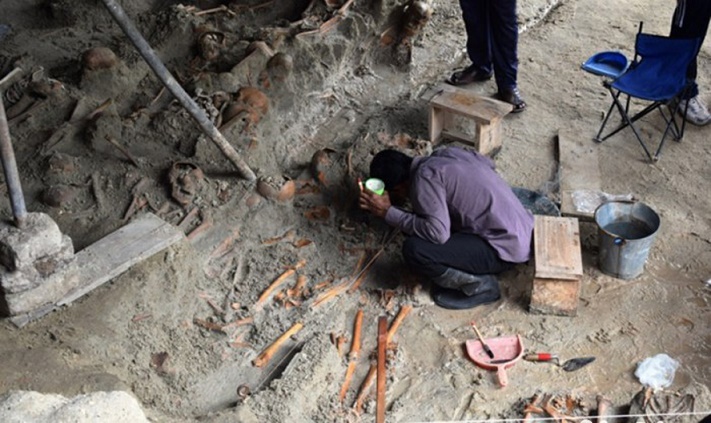
On 2 grounds no more excavations should take place in Mannar, Sri Lanka. Firstly, the area where the Mannar skeletons have been found which include women and children is a place of a crime where people have been murdered. We all know what happens when a murder takes place & the area is sealed with no one allowed to enter or remove anything from the site. Secondly, given that the US lab tests have revealed that the skeletons belong to a period that covers Portuguese & Dutch rule. It is therefore an archaeological site. That both former colonial invaders carried out mass murders and plunders is evident in their own records however this is the first time that a mass grave has been discovered, therefore it needs to be protected by the State & ensured that no excavations of the site is allowed to continue.

When the mass graves were first discovered it was early xmas for the LTTE lobby and the bandwagon of others who had been drumming false figures of dead. With many questioning who the dead are & where at least the skeletons are, for 9 years the LTTE lobby & the media & NGO circles have been praying for some luck to come their way. The discovery of the mass graves was the opportune occasion for them and they spared no time in preparing the scripts for documentaries, handouts for Geneva UNHRC sessions, they even rounded up people to claim them victims of the family. The President of the Mannar District Women’s Organization Office Maha Lakshmi even sent blood samples of these supposed family members abroad too. The most embarrassing part of the drama came in the mannar that British & German envoys darted off to Mannar to overlook excavations. Would they take offence if other foreign envoys poked their noses into a crime scene in the UK or Germany? In vain the journey & the hours in the hot sun!

The samples sent to the Beta Analytic Institute, Florida USA for carbon dating report finally put a seal to a lot of lies & drama that were being weaved all with the explicit intention of aiming at accusing the armed forces of Sri Lanka & to charge them with war crimes & genocide. Now that we know these crimes were committed by the Portuguese & the Dutch why is everyone silent and unwilling to seek answers from the Portuguese & Dutch Govts or at least their envoys in Sri Lanka? Well, that’s called politics and none of those that wrote countless articles before the US lab results arrived brainwashing readers into thinking the culprits were the Armed Forces of Sri Lanka have bothered to apologize for the wrong inferences made. That is nothing to be surprised about throughout the conflict too the scale of lies churned regularly was unbelievable. Twisting facts & plugging sensational stories was the norm and the Mannar mass graves afforded another opportunity for mischief.

Thankfully, the lab results shocked many – some reports were being readied to be presented in Geneva as evidence of war crimes by Sri Lankan Troops, it would have been lovely if the lab results came after these reports with photos were presented – we would have relished the shock & embarrassment that would have come to those who proudly presented their evidence of some of the 40,000 dead!

However, there are some more samples locked in the Mannar Magistrates Court & given that this is a crime scene & that it is also an archaeological site the law for a crime scene plus the law applicable to Protection of Archaeological Antiquities apply and therefore, even if the Govt is not bothered a public litigation case must be filed to stop any more excavations of the area & it should be preserved by the Archaeological department. These have historical value.

Lawyers and civic conscious citizens must file a public litigation case immediately.

Shenali D Waduge

MANNAR GRAVE YARD AND FABRICATED PROPAGANDA

March 11th, 2019

BY EDWARD THEOPHILUS

A scientific test on the uncovered human skeletons from an ancient grave yard in Mannar proved that they were older more than 500 years and a TNA MP in Mulaitiu District, Mr. Nirmala Nathan Siva Mohan further fussed against the true information reported by Florida Lab.  According to historical information recorded in Sri Lanka those skeletons were of so-called lower caste fishing Tamils lived in Mannar who were killed by the order of Jaffna Tamil Administrator, Sankili Segarajasekeran VI (1519-1560). It is estimated that 600 people were killed in terms of historical records. Prof.G.P.V. Somaratne (2007) states in his book The History of Christian Church in Sri Lanka” (PP 41-43) the killing of 600 innocent men, women and children were taken place in Mannar in 1543. The reason to kill these innocent people was converting from Hinduism to Christianity.   The killing of people on the ground of the faith was a crime against humanity, was caused by the order of Tamil administrator and it was the end of the so-called Jaffna Kingdom and it also created problems between Jaffna Tamil administration and Portuguese.

People of Sri Lanka assumes that these so-called lower caste people were decedents of seven Sooriyas (Warnakulasooriya, Manukula    Sooriya, Jayasooriya, Kurukula Sooriya etc), who were brought to the country by King Gajaba and settled in seaside area such Mannar, Negambo, Chilaw, Vaunia, Mulaitiu and Kalutara, and later most of them integrated to Sinhala race.

When this incident was incurred the Kandyan Kingdom was administered by King Jayaweera or Karaliyadde Bandara, father of Princes Dona Catharina and the grand father of Rajasinghe the Second (Senkadagala Rajasinghe) and Kotte King was under Mayadunne, who was killed by his son, prince Tikiri on the advice of Hindu Priests.

According to the history of Sri Lanka, Tamil administration was defeated and united the country by King Parakramabahu the sixth (1412-1467), however, after King Prakramabahu the sixth (Prince Sapumal), Kanakasuriya Singai Ariyan (1467-1478) began Jaffna administration and finished by Sankili Segarajasekeran (1519-1560) as a result of killing 600 people.  After that Jaffna administration maintained at Wanniyar level which was abolished by the British colonial rule.

Historical information indicated that many Tamil kings, who administered in Sri Lanka were cruel dictators, who did crimes against humanity. For example, the behaviour of Kalinga Marga, was so cruel and was the main reason to divide the Sri Lanka’s society between Sinhala and Tamils, otherwise Sri Lanka was a united and nationally integrated society under the administration of Sinhala kings.  Why Tamil diaspora attempted to evidence the cruelty of Tamil administrators to mislead the world using Mannar grave yard discoveries. It was not done by Sri Lanka’s arm forces during the LTTE war.  Why they are so bankrupt to use fabricated information in the name international human rights.

The other point is that why channel 4 in UK attempted to use this bogus information in the name of international human rights. Sri Lanka’s arm forces did a humanitarian mission under the LTTE war and innocent Tamils were liberated from the iron pits of LTTE terrorists.

International human right organizations are truth investigators but not organizations those persuading fabricated lie against democratic and humanitarian countries.  In this situation, Sri Lanka’s government has a responsibility to disclose the historical truth about the finding to the United Nations but not for Machiavellian politics to mislead people.

Dagoba in the `Bush Capital’ Australia

March 11th, 2019

By Panduka Senanayake

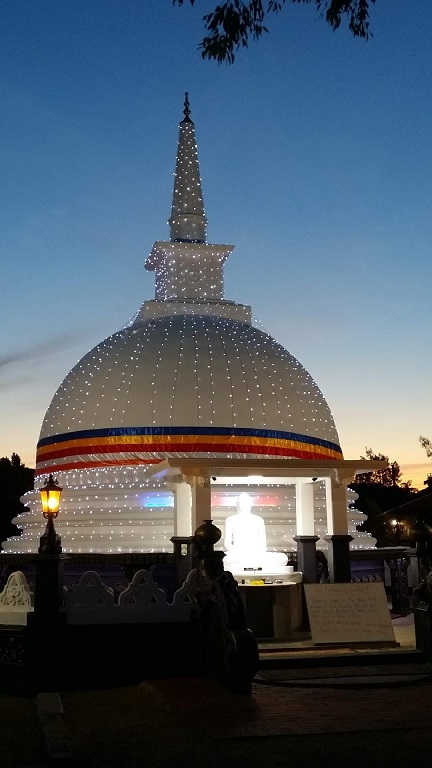
A milk white dome with a long conical object pointing skyward from its apex sits partly hidden from view amidst trees and buildings in a dip beside a junction of two main arterial roads, the  Athlon and Drakeford Drives at Tuggeranong in the Australian `Bush Capital’ of Canberra.

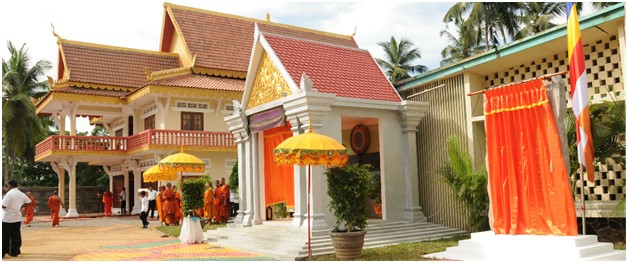
Unique to Canberra it is the first Dagoba to be built  in the city comprising Buddhists from other Asian countries. It is situated in the Sri Lankan Buddhist Temple complex at the nearby Jenke Circuit.

The 11 metre tall 6.7 metre in diameter structure was gradually constructed since 2011. Involving both local and Sri Lankan technology the project became a labour of love and devotion for the Sri Lankan community which over the years raised much needed funds through food fairs, donations and other means.

Whereas previous temple structures mostly were completed by qualified builders and carpenters with volunteers chipping in to add the finishing touches such as fitting timber floors the Dagoba has seen the largest number of volunteer participation.

Following completion of the main hemispherical and conical structures by expert builders the finer and intricate details are being added by a legion of men, women and children, learning on the job under the guidance of a monk experienced in such work in Sri Lanka, Japan and South Korea.

As the depositing of relics and unveiling ceremony of the brass pinnacle in February and early March drew near temple supporters were seen in the evening scurrying like ants as they decorated the base of the stupa. They affixed hundreds of figurines of `Vamanas’, elephants, flowering vines and lotus blooms to provide the finishing touches to the Stupa before the grand opening on March 2.

The workers sometimes stopped to seek guidance from a young monk in cement stained saffron robes  wearing a wide brimmed hat and workmen’s boots  moving around the site immersed in the work . The monk Ven Gawaragiriye Inda Sumana thero was the `go to person’  for the final stages of the project and provided instructions to carry out each task.

Often lending a hand but leading by example, the thero with several years of experience in temple construction projects in Sri Lanka was on a mission in Korea when requested to assist at the Kambah temple.

Becoming a monk at the young age of 10 he was attracted to craftwork from watching his father , a craftsman making wooden masks and other items. The many decorations that adorn the Dagoba are cast from fibre-glass moulds made by the thero.

As dusk settled over Tuggeranong bringing with it a welcome respite from the blistering summer heat volunteers who finished their day jobs would move into the temple and  allocated tasks.  With the aid of bright lights some able bodied young men worked to complete the half wall  resembling clouds forming a courtyard around the stupa.

Standing on stools and chairs their mothers and sisters added finishing touches to three cement rings that  formed the `Pesa Walalu’  encircling the stupa above its base. Others worked on several projects as groups of young girls served refreshments before assisting  their elders in whatever work they could engage in. Work went into the night with volunteers taking it in shifts to complete work where others had left off.

It was a project that brought the Sri Lanka community in Canberra together irrespective of their religions.  Following the reliquary ceremony to deposit relics,  one volunteer was heard commenting that he had gathered his `merits’ at the temple and was heading off to the Church service to add some more credits!

ගුරුවරුන්ගේ විරෝධතාවයට ශ්‍රී ලංකා පොදුජන අධ්‍යාපන සේවා සංගමයේ සහාය

March 11th, 2019

ශ්‍රී ලංකා පොදුජන පෙරමුන

විදුහල්පති ගුරු වැටුප් විෂමතා ඉවත් කරන ලෙස ආන්ඩුවට බල කරමින් එලැඹෙන 13 වැනිදා අසනීප නිවාඩු වාර්තා කිරීමේ වෘත්තීය ක්‍රියාමාර්ගයට ශ්‍රී ලංකා පොදුජන අධ්‍යාපන සේවා සංගමයේ සහාය පල කරන බව එම සංගමයේ සභාපති වසන්තා හදපාන්ගොඩ මහත්මිය පැවසීය.

ඒ අනුව එලැඹෙන 13 වැනිදා අසනීප නිවාඩු වාර්තා කරමින් සේවයට වාර්තා නොකරන ලෙස සිය සංගමයේ සාමාජික සාමාජිකාවන්ගෙන් ඉල්ලා සිටින බවද ඇය සදහන් කළාය.

1997.01.01 දින සිට බී. සී පෙරේරා වැටුප් කොමිෂම මගින් මෙම වැටුප් විෂමතාව ඇති කරනු ලැබූ අතර මේ හේතුවෙන් ගුරු සේවය අර්බුද රැසකට මුහුණ දී ඇතැයිද හෙතෙම පැවසීය.

වසර 23ක් පුරා පවතින විදුහල්පති ගුරු වැටුප් විෂමතා ඉවත් නොකිරීම, පවතින හා පැවැති සේවා ව්‍යවස්ථා නිවැරදිව ක්‍රියාත්මක කිරීම සදහා අත්‍යාවශ්‍ය පොදු අපදෙස් සංග්‍රහයන් නිකුත් නොකිරීම, නව සේවා ව්‍යවස්ථාවට අත්‍යාවශ්‍ය සංශෝදන එක් නොකිරීම, වැටුප් විෂමතා පිලිබද සොයා බලා නිර්දේශ ඉදිරිපත් කිරිමට රජය විසින් පත්කළ නව වැටුප් සමාලෝචන කොමිෂම විසින් ලබාදුන් නිර්දේශ පිළීබදව මෙතෙක් ඉදිරි පියවර නොගැනීම, ගුරු සේවා ව්‍යවස්ථාව සංශෝධන 16ක් ගෙන එන බවට අධ්‍යාපන අමාත්‍යංශය ප්‍රකාශයට පත්කර ඇතත් ඒ පිළීබදව ගුරු සංගම් දැනුම්වත් නොකිරීම දළ දේශිය වියදමෙන් සියයට 6ක් අධ්‍යාපනය සදහා වෙන් කරන බවට පොදුරොන්දු වි ඇතත් මෙතෙක් එවැන්නක් සදහා කිසිදු පියවරක් නොගැනීම ඇතුළූ කාරණ 10ක් මුල් කරගනිමින් මෙම විරෝධතාවය පැවැත්වෙයි.

මේ සදහා ශ්‍රී ලංකා පොදුජන අධ්‍යාපන සේවා සංගමය ඇතුලු විදුහල්පති හා ගුරු සංගම් 12 එකමුතුව, ශ්‍රී ලංකා රජයේ ගුරු සංගම මෙන්ම තවත් අධ්‍යාපන ක්ෂේත්‍රය ගුරු හා විදුහල්පති සංගම් ගණනාවක සහායපළ වි ඇත.

ශ්‍රී ලංකා පොදුජන පෙරමුනේ මාධ්‍ය හමුව

March 11th, 2019

අද මාධ්‍ය හමුවට සහභාගි වූ නියෝජිතයින්

ශ්‍රී ලංකා පොදුජන පෙරමුනේ සභාපති මහාචාර්ය ජි. එල්. පීරිස් මහතා

පාර්ලිමේන්තු මන්ත්‍රී රෝහිත අබේගුණවර්ධන මහතා

ශ්‍රී ලංකා පොදුජන පෙරමුනේ සභාපති , මහාචාර්ය ජි. එල් පීරිස් මහතා

අභීයාචනාධිකරණය ඉදිරියේ අපේ හිටපු මහඇමැතිවරුන් දෙදෙනෙක් පළාත් සභා මැතිවරණය නොපැවැත්වීම සම්බන්ධයෙන් නඩු පවරලා තියෙනවා. මේ නඩුව ජනතාවගේ සර්ව ජන ඡන්ද බලයට සම්බන්ධයි. මේ වෙද්දි මැතිවරණ කල් දාලා අවුරුදු එකහමාරක් වෙනවා. අප්‍රියෙල් වෙද්දි පළාත් සභා 8ක් අක්‍රීය වෙනවා වුනත් රජය ඒ සම්බන්ධයෙන් අවධානය යොමු කරන්නේ නැහැ. පළාත් සභාවට වැදගත් විෂයන් 36ක් පැවරිලා තියෙනවා. රෝහල් , පාසල්, මාර්ග නඩත්තුව, ආදි සියලුම දේ නතර වෙලා. ජනතා ඡන්දයෙන් පත්වුනු පළාත් සභා මන්ත්‍රීවරුන්ට අද මහජන කටයුතුවල නිරත වෙන්න බැහැ. සියලුල නිලධාරීන් විසින් කිරිම නිසා ජනතාවට අගතියක් වෙලා.

තමන්ට දිනන් බැරි බව දන්න නිසා මැතිවරණ නොපැත්වීම තමයි මේ තරුපහේ ප්‍රජාතන්ත්‍රවාදය. පාර්ලිමේන්තුවට, පළාත් සභා මැතිවරණවලදී කාන්තා නියෝජනය පිළිබද පනතක් ඉදිරිපත් කළා. කමිටු අදියරේදි පිටු 33කින් , සංශෝධන 35ක් ඉදිරිපත් කරලා පනත සම්පූර්ණයෙන් වෙනස් කළා. පනතේ අරමුණ පදනම ස්වරූපය සම්පූර්ණයෙන් වෙනස් වුනා. පාර්ලිමේන්තුවට ඉදිරිපත් කරපු පනත නෙවෙයි අවසානයේ සම්මත වුනේ. ඉදිරිපත් කරපු පනතයි සම්මත වුනු පනතයි අතර අහසයි පොළොවයි වගේ වෙනස්. පැවැති ඡන්ද ක්‍රමය අහෝසිකළා. නමුත් ඡන්ද පවත්වන ක්‍රමවේදයක් නැහැ. චේතනාන්විතව පළාත් සභා මැතිවරනය නොපවත්වන්න  කටයුතු කළා. නිතිපතිතුමා පනත සම්මත කරගන්න තුනෙන් දෙකේ බහුතරය අවශ්‍ය බව කිව්වා. ඡන්දය ගන්න තිබුනේ 5.30ට. කතානායකතුමා පැය හතරක් ඒක ප්‍රමාදකළා. කතියින්ටකැමැති තරම් කතා කරන්න වේලාව දුන්නා. අවසානයේ තුනෙන් දෙකේ බහුතරයකින් සම්මත කර ගත්තේ හෙළිකොප්ටර් යවලා මන්ත්‍රීවරු ගෙන්වාගෙනයි. සිමා නීර්ණය වාර්තාව පාර්ලිමේන්තුවට ඉදිරිපත් කරපු ඇමැතිවරයා තමන්ගේ යෝජනාවටම විරුද්ධව ඡන්දය දුන්නා. මෙවැනි ක්‍රියාදාමයක් රජය අනුගමනය කලේ කුමන හෝ උප්පරවැට්ටයක් හරහා ඡන්දය නොපවත්වා ඉන්නයි.

මැතිවරණය කල් දාද්දි අපි ශේෂ්ඨාදිකරණයට ගියා. අධිකරණයේ තීන්දුව වුනේ දවසකින්වත් මැතිවරණය කල් දමන්න බැරි බවයි. රජය උසාවියේ නියෝජගය වක්‍රව ප්‍රතික්ෂේප කරන්න වැඩ පිලිවෙලක් යෙදුවා. 2017 අංක 17 දරණ පනත තමයි ඒ උපක්‍රමය.  එයින් පැවැති ඡන්ද ක්‍රමය අහෝසි කරලා නව ඡන්ද ක්‍රමයක් ඇති කරන්න සීමා නීර්ණය කමිටුවක් පත්කළා. ඒ පනතේ වගන්ති අනුව කමිටුව ඉදිරිපත් කරලා මාසයක් ඇතුළත විවාද කරලා තුනෙන් දෙකේ බහුතරයෙන් සම්මත කළ යුතුයි. 2018 පෙබරවාරි අවසන් සතියේ ඇමැතිවරයා වාර්තාව පාර්ලිමේන්තුවට ඉදිරිපත් කලා. ඒ කියන්නේ මාර්තු අවසනායේ පනත සම්මත වුය යුතුයි. නමුත් කතානායකවරයා විවාදයට වෙන් කරලා තිබුණු දින දෙකම මග ඇරලා මාස හතරකට පස්සේ, අගෝස්තු මාසයේදී විවාදයට ගත්තා. රජය තමන්ගේම යෝජනාව පරාජය කළා. පාර්ලිමේන්තුවේ සම්මත වුනේ නැත්නම් පස් දෙනෙක්ගෙන් සමන්විත සමාලෝචන කමිටුවක් කතානායකවරයා විසින්පත්කළ යුතුයි. ඒ කමිටුවවේ සභාපතිවරයා අගමැතිවරයායි. ඒ කමිටුව මාස දෙකක් ඇතුළත වාර්තාව හදලා ජනාධිපතිවරයාට ඉදිරිපත් කළ යුතුයි. එතකොටයි නව ක්‍රමය ස්ථාපිත වෙන්නේ. දැන් මාස හතරක් ගෙවිලා. තවමත් වාර්තාව ජනාධිපතිවරයාට ඉදිරිපත් කරලා නැහැ. මේ අතරේ මැයි 31 ට පෙර පළාත් සභා මැතිවරන්‍ය පැවැත්විය යුතු බවට කැබිනට් පත්‍රිකාවක් ජනාධිපතිවරයා  ඉදිරිපත් කළා. එදා අගමැතිවරයා සතියක කාලයක් ඉල්ලුවා. සතිය සතිදෙක තුන වුනා. දැන් අගමැති කියනවා මෙය කතානායකවරයාට යොමු කළ බව. එය හොරාගේ අම්මාගෙන් පේන අහනවා වගේ වැඩක්. මේක කොහෙත්ම කරන්නේ නැහැ. රජයේ ඇමැතිවරැන් අපි ඡන්දය තියන්නේ නැති බව කියනවා. ඒ අතරේ පළාත් සභාවල අනාගතය ගැඹුරින් සිතා බලන්න ආචාර්ය සරත් අමුණුගම, රාජිත සේනාරත්න, ඩිලාන් පෙරේරා, සුමන්දිරන් මන්ත්‍රිවරුන්ගෙන් සමන්විත කමිටුවක් පත්කරලා. මේක සම්පූර්ණයෙන්ම ප්‍රෝඩාවක්.

පළාත් සභා සම්බන්ධයෙන් මේ කරපු දෙයම කරලා පාර්ලිමේන්තු මැතිවරණයත් කල් දාන්න ඉඩ තියෙනවා. පවතින මනාප ඡන්ද ඡන්ද ක්‍රමයේ දැඩි දෝෂ තියෙන බව කියමින් දැඩි විවේචනයට ලක්කරනවා. ඒ වෙනුවට වෙනත් ඡන්ද ක්‍රමයක් ස්ථාපිත කරනවා කියලා නව ක්‍රමය සැකසීම චේතනාන්විතව මග අරිනවා. ඉස්සෙල්ලා ක්‍රමය වලංගු නැහැ. නව ක්‍රමයකුත් නැහැ. ඒ නිසා මැතිවර නය පවත්වන්න බැහැ. පළාත් සභා ක්‍රමයට මේක වලංගු වෙනවා නම් පාර්ලිමේන්තු මැතිවරනයත් මේ ක්‍රමය මගින් නොපවත්වා හිටිය හැකියි. එජාපය සෝදාපාලුවට යන බව දන්න නිසා මැතිවරණ තියන්නේ නැහැ. රජයෙන් සහායක් නැති නිසයි අපි උසාවියේ සහාය පැතුවේ. ව්‍යවස්ථාව ක්‍රියාත්මක කිරීම අධිකරණයේ යුතුකමක්. ඒ නිසා එස්. එම් රන්ජිත් හා මහිපාල හේරත් මහ ඇමැතිවරු අධිකරණයට ගියේ. උසාවිය මැදිහත් වෙලා වහාම මැතිවරණ පවත්වන ලෙස මැතිවරණ කොමිෂමට නියෝගයක් දෙන්න කියලා අපේ හිටපු මහ ඇමැතිවරු මේ වෙද්දි ඉල්ලීම් කරලා තියෙනවා.

පාර්ලිමේන්තු මන්ත්‍රී රෝහිත අබේගුණවර්ධන මහතා

යහපාලන ආන්ඩුවේ නව අයවැය ගැන දැන් ජනතා අදහස් ඉදිරිපත් වෙමින් තිබෙනවා. මිනිස්සුන්ට ලැබෙන සහන ගැන මිනිස්සු බලාගෙන හිටියා. අපිට ඉතිහාසය අමතක කරලා වැඩ කරන්න බැහැ. 2015  දි බලයට පත් වෙන්න ජනතාව මුලා කරමින් පොඩි කාර්එකක්වත් ගන්න ආන්ඩුව වෙනස් කරන්න කියලා දැන්වීමක් රූපවාහිනියේ පළ කලා. තෙමිලා ආපු කාන්තාව පුංචි කාර් එකක් ගන්න කියලා මේ ආන්ඩුව බලයට පත් කරගත්තා. මේ වෙද්දි මිනිස්සුන්ගේ වාහනයක් ගන්න තිබුණ බලාපොරොත්තුවට මොකද වුනේ. මේ අයවැයෙන් සුඛෝපභෝගී වාහන නම් කරනවා. දැන් සුඛෝපභෝගී නොවන වාහන ගණයට අයත් වෙන්නේ වැගන් ආර්, ඇල්ටෝ , මරූටි විතරයි. මේ වෙද්දි ලංකාවේ වාහන මිල ගණන් බලන්න. මහින්ද රාජපක්ෂ මහතාගේ ගේ කාලයේ ත්‍රිවිලරයක් තිබුණ කෙනා වැන් එකක් ගත්තා. මේ ඇඩ් බලලා යහපාලනය ගෙන්න ඡන්දේ දිපු අය අද ජිප් එක විකුණලා අයෙත් තිුවිලර් එකක් ගන්නවා. එදා හොන්ඩා සිවික් රථයක් ලක්ෂ 35ත් 40ත් අතර වුනා. මේ අයවැයෙන් ඛේමාගේ කොලුවා සුබෝපභෝගි කියලා ලක්ෂ 12ක බද්දකුත්, නිෂ්පාදන කියලා ලක්ෂ 2ක බද්දකුත් ගහලා දැන් වාහනයේ මිල ලක්ෂ 75ත් 80ත් අතර වෙලා. මේ වාහනය ජපානයේ මිල ලක්ෂ 22ක් 23. ඉතිරි සියල්ල බදු. ආන්ඩුවට බදු ගෙවලයි මනුස්සයෙක් වාහනයක් එළවන්නේ. හොන්ඩා සී ආර්.වි එකට සුභෝපභෝගි බද්ද ලක්ෂ 23යි, නිෂෟපාදන බද්ද ලක්ෂ හයයි හැත්තෑපහයි ගහලා එදා ලක්ෂ 85ට තිබුණ වාහනය අද ලක්ෂ 140යි. මේ වගේ කිසිම කෙනෙකුට වාහනයක් ගන්න බැරි තත්ත්වයක්. තියෙන වාහනයක් විකුණගන්නත් බැහැ. දුම්පරීක්ෂාව කරන්න, ඉන්සුවරන්ස් එක, ඊට පස්සේ කාබන් බද්දටත් ගෙවන්න තියෙනවා. වාහනයක් ගන්නවා නම් ඒ එක්ක ලණුවකුත් ගන්න වෙනවා.  අන්තිමට බෙල්ලේ වැල දාගන්න. අපි තාම හොයනවා පුංචි කාර් නංගිව.

මහින්ද රජාපක්ෂ ජනාධිපතිතුමාගේ කාලයේ පරිසර හිතකාමී හොන්ඩා ලීප් රථයට දෙලක්ෂ හාරදහසක් බදු ගහලා ලක්ෂ 22ට වගේ විකුණුවා. රවි කරුණානායක ආපු ගමන් ඒ වාහනේට ලක්ෂ 27ක බද්දක් ගැහුවා. පහුගිය අයවැය හරිත අයවැයක්. ඒකෙදි කිව්ව ා2025 වෙද්දි රජයට ඉන්ධනවලින් දුවන වාහනයක් ගේන්නේ නැහැ කිව්වා. පරිසර හිතකාමී වාහන ගේනවා කියලා ලක්ෂ 35 පැනපු ගමන් සුඛෝපභෝගී බද්දට යටත් වෙනවා. වාහන ලංකාවට ආනයනය කරන දේශීය ව්‍යාපාරිකයෝ ගෙන්න ගත්තා වහන විකුණගන්න  බැරිව ඉන්නේ. අය වැය සංශෝධනය  නොකලොත් මේ අය තමන්ගේ වැහන ටික ගෙනත් ගාලු පාරේ නතර කරලා යතුරු අරන් යනවාලු.

හෝම් ස්විට් හෝම් ණයෙන් දෑවැද්ද කෝටියක් දෙනවා. රුපියල් කෝටිය වසර 25ක් ගෙවන්න තියෙනවා. වසර පහයි සහන දෙන්නේ. අලුතෙන් බදින අය මේණය ගත්තොත් රු. 70677.92ක් වාරිකය ගෙවන්න තියෙනවා. මගුල තියෙයිද. මෙහෙම වාරිකයක් ගෙවද්දි කන්නේ බොන්නේ නැත්ද. මේක ගෙවන්න ලක්ෂ දෙකක් වත් පඩි ගන්න වෙනවා.  වාර්ෂිකව ලංකාවේ විවාහ එක්ලක්ෂ හැත්තෑ පන්දහසක් විතර වෙනවා. කෝටිය ගානේ මේ සදහා අයවැය පොතේ වෙන් කරලා තියෙන්නේ කොහොද කියලා අපි ඛේමාගේ කොලුවාගෙන් අහනවා. කෝටියේ ණය ගන්න නිසා විවාහ වෙන ප්‍රමාණය වැඩි වෙනවා.

අපේ රටට විදේශ විනිමය ගේන ගෘහ සේවිකාවන්ට හා අනෙකුත් අයට සිහින මාලිගාවක් හදාදේනන සූදානම් වෙනවා. දැන් ගෘහ සේවිකාවගේ පඩිය උපරිම රු. 50000ක්. ණය ගත්තොත් වාරිකය විතරක් රු. 72280ක් වෙනවා. මේවා ගැන ප්‍රායෝගික හිතන්න වෙනවා. බැංකුවට කියපු ගමන් බැංකුව ණය දෙනවාද. බැංකුව බැංකුවේ ක්‍රමවේදයෙන් පිටයන්නේ නැහැ. මේක මිනිස්සුන්ව‌ෙ නාමග යැවීමක්. විදේශ රටවල සේවය කරන අය ගෙදරට එන මුදල් මාස තුනක් නතර කලොත් ආන්ඩුව එක තැන නතර වෙනවා.

මේ අයවැය පුරාම තියෙන්නේ ලස්සන වචන. හෝම් ස්විට් හෝම්, රිය ශක්ති රන් අස්වැන්න, මිනි ටැක්සි, දිරි සවිය, සොදුරු පියස, ගොවි නවෝදා, සිටි රයිඩ්,  මාධ්‍ය අරුණ. මේවා වචන හරඹයක් විතරයි. ජනතාව මුලා කරන අයවැයක්. මේ විදියට ජනතාව මුලා කරද්දි ජනතාව බලන් ඉන්නේ ඡන්දයක් තියනකල්. රාජ්‍ය සේවකයින්ට ජුලි මාසේ 1 වැනිදා ඉදන් රු. 2500ක් පඩියට එකතු කරනවා. බදු ගහන්නේ මාර්තු 5 වෙනිදා ඉදන්. මහින්ද මහත්තයා ගත්ත ණය පෙන්න තියෙනවා. අධීවේගී මාර්ග, පාරවල්, ස්කෝල විදුලි බලාගාර, වරාය, ගුවන් තොටුපල පේන්න තියෙනවා. රාජ්‍ය සේවකයා අධිවේගි මාර්ගයෙන් නගිද්දි රු100ක් ගෙවන්න ඔ්නේ. දවසට 200 ගානේ දවස් 30ට කීයද. උඩ සාක්කුවට 2500ක්දාලා යට සාක්කුවෙන් 6000ක් ගන්නවා. රාජ්‍ය සේවකයා ණයට බඩු ගන්නේ. රාජ්‍ය සේවකයාගේ පඩිය දවස් 12න් ඉවරයි. මංගල සමරවීරගේ කිරි යෝජනාව 2017දිත් තිබුනා. දැන් කිරිවිදුරැව දෙන්නේ දරුවාගේ පෝෂණ තත්ත්වය නංගවන්න නෙවේ. කිරි සමාගම් පෝෂණය කරන්න. දරුවා මන්ද පෝෂණයටගොදුරු වුනත් මේ ආන්ඩුවට ප්‍රශ්නයක් නැහැ. කිරි පිටි වලින් රෝග 24ක් වැලදෙනවා කියලා අමාත්‍යංශය කියද්දි ඒ ආන්ඩුව දරුවන්ට කිරි වීදුරුවක් දෙන්න හදනවා.

අපි ආන්ඩුවේ අයවැයට විරුද්ධව අපේ ඡන්දය භාවිතා කරනවා. විරුද්ධයි කියනවා. අලියා ලකුණින් නැතිව වෙනත් ලකුණකින් පාර්ලිමේන්තු ආපු නැත්නම් පිනට ආපු කෙනෙක් අයවැයට අත එසවූවොත් ආයේ පාර්ලිමේන්තුව පැත්ත පළාතේ එවන්න එපා. මේ දවස්වල ආන්ඩුව සත්ත්න්ට මිල නියම කරනවා වගේ මන්ත්‍රීවරුන්ට මිල නියම කරනවා. ගෙදර හිටියොත් මෙච්චරයි. මගදි බඩේ අමාරුවක් හැදිලා ගියොත් මෙච්චරයි වගේ ක්‍රමවේද පාවිච්චි කරනවා. දෙමල ජාතික සන්ධානයටත් මේ තරම් ගාණක් දෙනවා ඡන්දය දුන්නොත් කියනවා. ඒකත් ඡන්දෙදි බලාගන්න පුලුවන්. 13 වැනිදා ජනාධිපතිගේ වැය ශීර්ෂය පරාජය කරන්න එජාපයේ පසුපෙල කට්ටිය බලාගෙන ඉන්නවා. අපි කියනවා පුලුවන් නම් පරාජය කරලා පෙන්වන්න කියලා. වික්‍රමසිංහ මහත්තයා සාමන්‍යයෙන් අනින ටොක්ක වෙනුවට පොල් ටොකු දෙකක් අනලා පැත්තකට වෙලා ඉන්න කිව්වාම අත ඔසවලා ඇවිත් ඊළග දවසේ කියනවා වැරදීමක් වුනා කියයි. අපි අයවැය පරාජය කරන්නේ මහින්ද රාජපක්ෂ මහත්තයාව අගමැති කරන්න නෙවෙයි. ඡන්දයකට යන්න. මහින්ද රාජපක්ෂ මහත්තයා ආයෙත් අගමැති කරන්නේ ඡන්දයකින් විතරයි.

ප්‍රශ්න – පළමුවැනි වර පාර්ලිමේන්තුවට පැමිණි මන්ත්‍රීවරු 54ක් ඉන්නවා. අයවැය පැරදුනොත් ඔවුන්ට විශ්‍රාම වැටුප අහිමි වෙනවා නේද

රෝහිත අබේගුණවර්ධන – විශ්‍රාම වැටුප බලාපොරොත්තුවෙන් පාර්ලිමේන්තු ආප අය ඉන්නවාද බලන්න. විශ්‍රම වැටුප නෙවේ. මන්ත්‍රීකමක් ඇමැතිකමක් කරගන්න හරි වෙනත් වරප්‍රසාදවලට හරි රතු පලස මගින් ඇවිදින අය ඉන්නවා. ජනාධිපතික්‍රමය අහෝසි කරනවාට මම අකැමැති එතැනදියි.  බැදුම්කරය වගේ මංකොල්ලයක් කරපු කෙනෙක්ට 125ක් සල්ලි වලට ගත්තා නම් ජනාධිපතිවෙන්න හැකි වෙනවා. මන්ත්‍රීවරයෙක්ගේ වගකීම විශ්‍රම වැටුප ගැන හිතන එක නෙවෙයි. සමස්ත රටේම මිනිසුන්ගේ විශ්‍රම වැටුප ගැන හිතන එකයි. ජනතාවත් එක්ක හිටියොත් ඊළග පාර ආයෙත් දිනවනවා. ඊට පස්සේ විශ්‍රාම වැටුප හදා ගන්න පුලුවන්.

මාධ්‍ය – ශ්‍රී ලංකා නිදහස් පක්ෂයේ ලේකම්වරයා කිව්වා දැන් ශ්‍රි ලංකා නිදහස් පක්ෂය ශක්තිමත්. පක්ෂය කඩා ගෙන ගිහින් එස්. එල්. පී.පි කියලා එකක් හදාගත්ත අය හිතන් ඉන්නවා එවුන් තමයි විශ්ම කර්ම කියලා.

රෝහිත අබේගුණවර්ධන – එතුමා වාසිය සදහා නායකයෝ මාරුකරන බව රටම දන්නවා. වසර 10ක් ජි. එල් පිරිස් මහතාගේ ලේකම් වෙලා හිටියා. ශ්‍රීලනිප තරුණ සංගමයේ තනතුර නැති වුනා කියලා එජාපයට ගියා. වයඹ මහ ඇමැතිකම වෙනුවෙන් නැවතත් මේ පැත්තට ආවා. මහින්ද මහත්තයාට විපක්ෂ නායකකම තියෙන්නේ මේ අය නිසා කියනවා නම් ඒක ජනතාව බලාගනියි. එතුමා ජනතා ආශිර්වාදයෙන් ඉන්න නායකයෙක්. මෛත්‍රිපාල සිරිසේන මහතා එජාපයේ දීඝයෙන් ඉවත්වුනා. මේ නැවතත් එතුමාව ගැලවුනු කදවුරට හේත්තු කරන්න උත්සාහ කිරිමයි. අපි ශක්තිමත් පක්ෂයක්. අපි පළාත් පාලන ආයතනවලින් සියයට 71ක් දිනපු පක්ෂයක්. රජවාසලෙත් හිටියා නේ වන්දි භට්ටයෝ.

මාධ්‍ය – එජාපය කියනවා ඔවුන්ගේ පක්ෂයේ ජනාධිපතිධූර අපේක්ෂකයා තෝරා ගෙන අවසන් බව. ඔබේ පක්ෂයේ අර්බුදය නිසයි තවමත් අපේක්ෂකයෙක් නැත්තේ කියනවා. මොකක්ද ඇත්ත.

රෝහිත අබේගුණවර්ධන – පළමුවෙන්ම කියන්න අවශ්‍යයි අපේ පක්ෂයේ අර්බුදයක් නැහැ. ලංකාවේ සංවිධානාත්මකව ක්‍රියාත්මක වෙන එකම පක්ෂයයි ශ්‍රී ලංකා පොදු ජන පෙරමුණ. අනික් කාරණය එජාපයේ අපේක්ෂකයා ගැන එකගතාවයක් නැහැ. රනිල් වික්‍රමසිහ, කරු ජයසුරිය සජිත් ප්‍රෙමදාස, පාඨලී චම්පිත පක්ෂයේ අපේක්ෂකයා කියන අතරේ වෙනම බඩුවක් ආනයනය කරනවා කියන අයත් ඉන්නවා. අපි දන්නේ නැහැ. නමුත් ශ්‍රී ලංකා පොදුජන පෙරමුණ විදියට අපි මුලින්ම ජන මතයට ඇහුම්කන් දෙන්න වෙනවා.  

2005 දි චන්ද්‍රිකා බන්ඩාරනායක මහත්මියගේ ඔලුවේ තිබුනේ අනුර බන්ඩාරනායකට අගමැති අපේක්ෂකකම දෙන්න. නැත්නම් කදිරගාමර්, එහෙමත් නැත්නම් රත්නසිරි විතක්‍රමනායක මහතා. නමුත් රටේ ජනතාව ඉල්ලුවේ මහින්ද රාජපක්ෂ. වෙන කෙනෙක් දැම්මානම් වික්‍රමසිංහ මහත්තයා මේ වෙද්දි රට බෙදලා ඉවරයි. රටේ ජනතාව ඉල්ලන කෙනෙක් ඉන්නවා. රෝහිතඅ බේගුණවර්ධන දැනටමත් ඒ වෙනුවෙන් වැඩ. නම කියන්නේ අපි නෙවෙයි. මහින්ද රාජපක්ෂ මහත්තයායි මේ මම වෙනුවෙන් ඉදිරිපත් කරන කෙනා කියලා රටට කියන්නේ. අන්න ඒ අපේක්ෂකයා දිනවන්න අපි වැඩ.

මාධ්‍ය – ඒනම ඇතුලේ රාජපක්ෂවරයෙක් නැති බව කියැවෙනවා.

රෝහිත අබේගුණවර්ධන – 2015 කිව්වේ රාජපක්ෂලා ඔක්කොම හිරේ කියාලනේ. එාහම ලේසියෙන් රාජපක්ෂවරු වට්ටන්න බැහැ. රාජපක්ෂලා කියන්නේ මේ රට ආරක්ෂා කරපු පරපුරක්. වැඩකරපු අය. මහින්ද රාජපක්ෂ රටට ආදරය කරපු නායකයෙක්.ගෝඨාභය රාජපක්ෂ යුද්ධය නැති කරන්න නායකත්වය දුන්න නායකයා. බැසිල් රාජපක්ෂ ආර්ථික අතින් මේ රට නංවපු නායකයෙක්. පක්ෂයක් හදපු නායකයෙක් . චමල් රාජපක්ෂ කියන්නේ වැඩ කරපු නායකයෙක්. පුලුවන්නම් මේ දේ අනිත් අයගෙන් අහලා මැතිවරණය ඉල්මන් කරන්න.

මාධ්‍ය – දකුණු පලාත් සභා මන්ත්‍රීවරයෙක්ට චෝදනාවක් එල් වෙලා තියෙනවා.

රෝහිත අබේගුණවර්ධන – ඔහුට චෝදනාවක් විතරයි එල්ල වෙලා තියෙන්නේ. ඔප්පු වුනොත් අපේ  පක්ෂයේ විනය මණ්ඩලය ඔහු සම්බන්ධයෙන් පියවරක් ගනියි. 

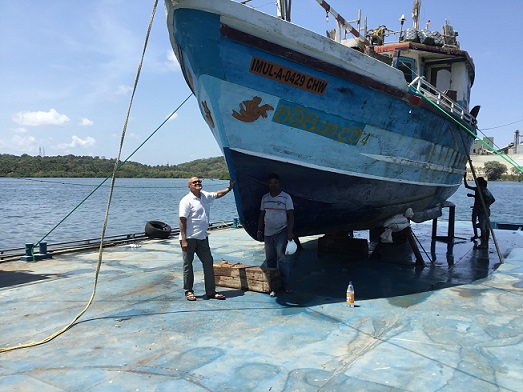
Lifted a boat in Trinco first time on Sunday using state of the art floating dock

March 11th, 2019

Dr sarath obeysekera Walkers Trinco Shipyard

SLPA Trinco and Navy ISPS were not happy for doing this in Codbay  despite permisson  from Chairman fishery harbour corporation
SLPA Harbour Master has theatened to arreast me
I went on Sunday ready to be arrested and yet i felt good when i finished
With no hand cuffs
Trick was to invite press to cover the event

I would have been in National News if Harbour Master arrested me
His ludicrous claim was that Fishery Harbour is owned by corporation but  Water is his !!!
Navy ,police,Harbour Security came to watch and retreated

If Politicians want development these type of people should be sent to Monkey Island
I was acting within the law and braved with my boys
Sri Lanka can never go forward like this when State Officers behave like they own teh whole ocean
I as a citizen has the right to be in the sea just like i have right to stand on the ground
Salute to two ex navy boys working for our shipyard stood by me

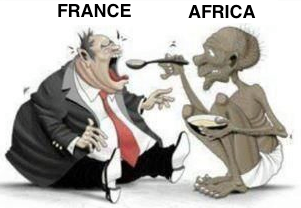
France/Afrique : 14 African Countries Forced by France to Pay Colonial Tax For the Benefits of Slavery and Colonization

March 11th, 2019

By  Mawuna Remarque KOUTONIN* Courtesy mediapart.fr


Africa-France-relationship

Did you know many African countries continue to pay colonial tax to France since their independence till today!

When Sékou Touré of Guinea decided in 1958 to get out of french colonial empire, and opted for the country independence, the french colonial elite in Paris got so furious, and in a historic act of fury the french administration in Guinea destroyed everything in the country which represented what they called the benefits from french colonization.

Three thousand French left the country, taking all their property and destroying anything that which could not be moved: schools, nurseries, public administration buildings were crumbled; cars, books, medicine, research institute instruments, tractors were crushed and sabotaged; horses, cows in the farms were killed, and food in warehouses were burned or poisoned.

The purpose of this outrageous act was to send a clear message to all other colonies that the consequences for rejecting France would be very high.

Slowly fear spread trough the african elite, and none after the Guinea events ever found the courage to follow the example of Sékou Touré, whose slogan was We prefer freedom in poverty to opulence in slavery.”

Sylvanus Olympio, the first president of the Republic of Togo, a tiny country in west Africa, found a middle ground solution with the French.He didn’t want his country to continue to be a french dominion, therefore he refused to sign the colonisation continuation pact De Gaule proposed, but agree to pay an annual debt to France for the so called benefits Togo got from french colonization.It was the only conditions for the French not to destroy the country before leaving. However, the amount estimated by France was so big that the reimbursement of the so called colonial debt” was close to 40% of the country budget in 1963.

The financial situation of the newly independent Togo was very unstable, so in order to get out the situation, Olympio decided to get out the french colonial money FCFA (the franc for french african colonies), and issue the county own currency.

On January 13, 1963, three days after he started printing his country own currency, a squad of illiterate soldiers backed by France killed the first elected president of newly independent Africa. Olympio was killed by an ex French Foreign Legionnaire army sergeant called Etienne Gnassingbe who supposedly received a bounty of $612 from the local French embassy for the hit man job.

Olympio’s dream was to build an independent and self-sufficient and self-reliant country. But the French didn’t like the idea.

On June 30, 1962, Modiba Keita , the first president of the Republic of Mali, decided to withdraw from the  french colonial currency FCFA which was imposed on 12 newly independent African countries. For the Malian president, who was leaning more to a socialist economy, it was clear that colonisation continuation pact with France was a trap, a burden for the country development.

On November 19, 1968, like, Olympio, Keita will be the victim of a coup carried out by another ex French Foreign legionnaire, the Lieutenant Moussa Traoré.

In fact during that turbulent period of African fighting to liberate themselves from European colonization, France would repeatedly use many ex Foreign legionnaires to carry out coups against elected presidents:

  • – On January 1st, 1966, Jean-Bédel Bokassa, an ex french foreign legionnaire, carried a coup against David Dacko, the first President of the Central African Republic.
  • – On January 3, 1966, Maurice Yaméogo, the first President of the Republic of Upper Volta, now called Burkina Faso, was victim of a coup carried by Aboubacar Sangoulé Lamizana, an ex French legionnaire who fought with french troops in Indonesia and Algeria against these countries independence.
  • – on 26 October 1972, Mathieu Kérékou who was a security guard to President Hubert Maga, the first President of the Republic of Benin, carried a coup against the president, after he attended French military schools from 1968 to 1970.

In fact, during the last 50 years, a total of 67 coups happened in 26 countries in Africa, 16 of those countries are french ex-colonies, which means 61% of the coups happened in Francophone Africa.

Number of Coups in Africa by country

Ex French colonies  Other African countries Country  Number of coup Countrynumber of coup Togo 1 Egypte 1 Tunisia 1 Libye 1 Cote d’Ivoire 1 Equatorial Guinea 1 Madagascar 1 Guinea Bissau 2 Rwanda 1 Liberia 2 Algeria 2 Nigeria 3 Congo – RDC 2 Ethiopia 3 Mali 2 Ouganda 4 Guinea Conakry 2 Soudan 5 SUB-TOTAL 1 13

Congo 3

Tchad 3

Burundi 4

Central Africa 4

Niger 4

Mauritania 4

Burkina Faso 5

Comores 5

SUB-TOTAL 2 32

TOTAL (1 + 2) 45 TOTAL 22

As these numbers demonstrate, France is quite desperate but active to keep a strong hold on his colonies what ever the cost, no matter what.

In March 2008, former French President Jacques Chirac said:

Without Africa, France will slide down into the rank of a third [world] power”

Chirac’s predecessor François Mitterand already prophesied in 1957 that:

 ”Without Africa, France will have no history in the 21st century”

At this very moment I’m writing this article, 14 african countries are obliged by France, trough a colonial pact, to put 85% of their foreign reserve into France central bank under French minister of Finance control. Until now, 2014, Togo and about 13 other african countries still have to pay colonial debt to France. African leaders who refuse are killed or victim of coup. Those who obey are supported and rewarded by France with lavish lifestyle while their people endure extreme poverty, and desperation.

It’s such an evil system even denounced by the European Union, but France is not ready to move from that colonial system which puts about 500 billions dollars from Africa to its treasury year in year out.

We often accuse African leaders of corruption and serving western nations interests instead, but there is a clear explanation for that behavior. They behave so because they are afraid the be killed or victim of a coup. They want a powerful nation to back them in case of aggression or trouble. But, contrary to a friendly nation protection, the western protection is often offered in exchange of these leaders renouncing to serve their own people or nations’ interests.

African leaders would work in the interest of their people if they were not constantly stalked and bullied by colonial countries.

In 1958, scared about the consequence of choosing independence from France, Leopold Sédar Senghor declared: The choice of the Senegalese people is independence; they want it to take place only in friendship with France, not in dispute.”

From then on France accepted only an independence on paper” for his colonies, but signed binding Cooperation Accords”, detailing the nature of their relations with France, in particular ties to France colonial currency (the Franc), France educational system, military and commercial preferences.

Below are the 11 main components of the Colonisation continuation pact since 1950s:

#1.  Colonial Debt for the benefits of France colonization

The newly independent” countries  should pay for the infrastructure built by France in the country during colonization.

I still have to find out the complete details about the amounts, the evaluation of the colonial benefits and the terms of payment imposed on the african countries, but we are working on that (help us with info).

#2. Automatic confiscation of national reserves

The African countries should deposit their national monetary reserves into France Central bank.

France has been holding the national reserves of fourteen african countries since 1961: Benin, Burkina Faso, Guinea-Bissau, Ivory Coast, Mali, Niger, Senegal, Togo, Cameroon, Central African Republic, Chad, Congo-Brazzaville, Equatorial Guinea and Gabon.

The monetary policy governing such a diverse aggregation of countries is uncomplicated because it is, in fact, operated by the French Treasury, without reference to the central fiscal authorities of any of the WAEMU or the CEMAC. Under the terms of the agreement which set up these banks and the CFA the Central Bank of each African country is obliged to keep at least 65% of its foreign exchange reserves in an operations account” held at the French Treasury, as well as another 20% to cover financial liabilities.

The CFA central banks also impose a cap on credit extended to each member country equivalent to 20% of that country’s public revenue in the preceding year. Even though the BEAC and the BCEAO have an overdraft facility with the French Treasury, the drawdowns on those overdraft facilities are subject to the consent of the French Treasury. The final say is that of the French Treasury which has invested the foreign reserves of the African countries in its own name on the Paris Bourse.

In short, more than 80% of the foreign reserves of these African countries are deposited in the operations accounts” controlled by the French Treasury. The two CFA banks are African in name, but have no monetary policies of their own. The countries themselves do not know, nor are they told, how much of the pool of foreign reserves held by the French Treasury belongs to them as a group or individually.

The earnings of the investment of these funds in the French Treasury pool are supposed to be added to the pool but no accounting is given to either the banks or the countries of the details of any such changes. The limited group of high officials in the French Treasury who have knowledge of the amounts in the operations accounts”, where these funds are invested; whether there is a profit on these investments; are prohibited from disclosing any of this information to the CFA banks or the central banks of the African states .” Wrote Dr. Gary K. Busch

It’s now estimated that France is holding close to 500 billions African countries money in its treasury, and would do anything to fight anyone who want to shed a light on this dark side of the old empire.

The African countries don’t have access to that money.

France allows them to access only 15% of the money in any given year. If they need more than that, they have to borrow the extra money from their own 65% from the French Treasury at commercial rates.

To make things more tragic, France impose a cap on the amount of money the countries could borrow from the reserve. The cap is fixed at 20% of their public revenue in the preceding year. If the countries need to borrow more than 20% of their own money, France has a veto.

#3.  Right of first refusal on any raw or natural resource discovered in the country

France has the first right to buy any natural resources found in the land of its ex-colonies. It’s only after France would say, I’m not interested”, that the African countries are allowed to seek other partners.

#4. Priority to French interests and companies in public procurement and public biding

In the award of government contracts, French companies must be considered first, and only after that these countries  could look elsewhere. It doesn’t matter if the african countries can obtain better value for money elsewhere.

As consequence, in many of the french ex-colonies, all the majors economical assets of the countries are in the hand of french expatriates. In Côte d’Ivoire, for example, french companies own and control all the major utilities – water, electricity, telephone, transport, ports and major banks. The same in commerce, construction, and agriculture.

In the end, as I’ve written in a previous article, Africans now Live On A Continent Owned by Europeans!

#5. Exclusive right to supply military equipment and Train the country military officers

Through a sophisticated scheme of scholarships, grants, and Defense Agreements” attached to the Colonial Pact, the africans should send their senior military officers for training in France or French ran-training facilities.

The situation on the continent now is that France has trained hundreds, even thousands of traitors and nourish them. They are dormant when they are not needed, and activated when needed for a coup or any other purpose!

#6. Right for France to pre-deploy troops and  intervene military in the country to defend its interests

Under something called Defence Agreements” attached to the Colonial Pact, France had the legal right to intervene militarily in the African countries, and also to station troops permanently in bases and military facilities in those
countries, run entirely by the French.

French military bases in Africa

French-military-bases-in-africa

When President Laurent Gbagbo of Côte d’Ivoire tried to end the French exploitation of the country, France organized a coup. During the long process to oust Gbagbo, France tanks, helicopter gunships and Special Forces intervened directly in the conflit, fired on civilians and killed many.

To add insult to injury, France estimated that the French business community had lost several millions of dollars when in the rush to leave Abidjan in 2006 the French Army massacred 65 unarmed civilians and wounded 1,200 others.

After France succeeded the coup, and transferred power to Alassane Outtara, France requested Ouattara government to pay compensation to French business community for the losses during the civil war.

Indeed the Ouattara government paid them twice what they said they had lost in leaving.

#7. Obligation to make French the official language of the country and the language for education

Oui, Monsieur. Vous devez parlez français, la langue de Molière!

A French language and culture dissemination organization has been created called Francophonie” with several satellites and affiliates organizations supervised by the French Minister of Foreign Affairs.

#8. Obligation to use France colonial money FCFA

That’s the real milk cow for France, but it’s such an evil system even denounced by the European Union, but France is not ready to move from that colonial system which puts about 500 billions dollars from Africa to its treasury.

During the introduction of Euro currency in Europe, other european countries discovered the french exploitation  scheme. Many, specially the nordic countries, were appalled and suggested France get rid of the system, but unsuccessfully.

#9.  Obligation to send France annual balance and reserve report.

Without the report, no money.

Anyway the secretary of the Central banks of the ex-colonies, and the secretary of the bi-annual meeting of the Ministers of Finance of the ex-colonies is carried out by France Central bank / Treasury.

#10. Renonciation to enter into military alliance with any other country unless authorized by France

African countries in general are the ones with will less regional military alliances. Most of the countries have only military alliances with their ex-colonisers! (funny, but you can’t do better!).

In the case France ex-colonies, France forbid them to seek other military alliance except the one it offered them.

#11. Obligation to ally with France in situation of war or global crisis

Over one million africans soldiers fought for the defeat of nazism and fascism during the second world war.

Their contribution is often ignored or minimized, but when you think that it took only 6 weeks for Germany to defeat France in 1940, France knows that Africans could be useful for fighting for la Grandeur de la France” in the future.

There is something almost psychopathic in the relation of France with Africa.

First,  France is severely addicted to looting and exploitation of Africa  since the time of slavery. Then there is this complete lack of creativity and imagination of french elite to think beyond the past and tradition.

Finally, France has 2 institutions which are completely frozen into the past, inhabited by paranoid and psychopath haut fonctionnaires” who spread fear of apocalypse if France would change, and whose ideological reference still comes from the 19th century romanticism: they are the Minister of Finance and Budget of France and the Minister of Foreign affairs of France.

These 2 institutions are not only a threat to Africa, but to the French themselves.

It’s up to us as African to free ourselves, without asking for permission, because I still can’t Understand for example how 450 french soldiers in Côte d’Ivoire could control a population of 20 millions people?

*Source Silicon Africa

(Extrait de : http://panafricanvisions.com/2014/14-african-countries-forced-france-pay-colonial-tax-benefits-slavery-colonization/)

අල්ලපු අත්තත් පය ගැසූ අත්තත් දෙකම අහිමි වන ලකුණු

March 11th, 2019

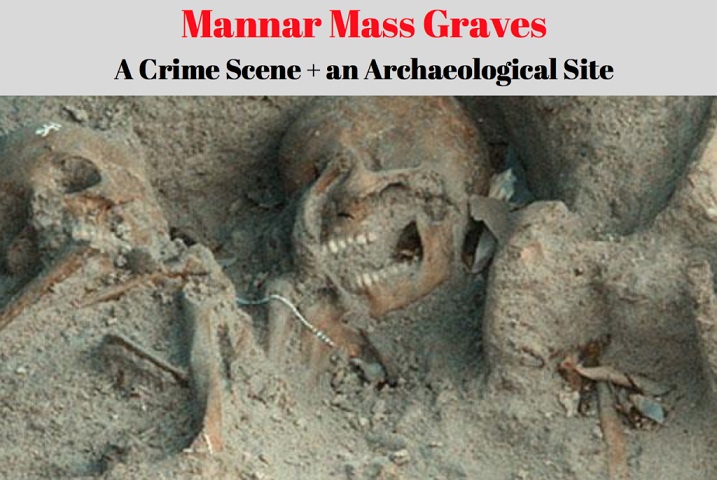
තමන් නායකත්වය දෙන ශ්‍රී ලංකා නිදහස් පක්ෂය සහ හිටපු ජනපති මහින්ද රාජපක්ෂගේ නොනිල නායකත්වය යටතේ පවතින ශ්‍රී ලංකා පොදු ජන පෙරමුණ අතර පොදු සන්ධානයක් ඇතිකර ගැනීම සඳහා ජනපතිවරයා මහත් වෙහෙසක් දරමින් සිටී. එහෙත් එහි ප්‍රතිඵල නෙළාගැනීමට තවත් කාලයක් ගතවනු ඇත.

පසුගිය සතියේ නොයෙක් කටකතා පළවුවත් ඒවායේ සදහන් වූ ආකාරයට ජනපතිවරයා සහ මහින්ද රාජපක්ෂ මහතා අතර මුහුණට මුහුණ හමුවක් පැවැතුනේ නැත. පෙර අවස්ථාවක දී ජනපතිවරයාම සදහන් කළ ආකාරයට, එවැනි හමුවක අවශ්‍යතාවක් නැත යැයි ශ්‍රී ලංකා නිදහස් පක්ෂයේ ජේ්‍යෂ්ඨයෙක් පැවසුවේ ය.

වර්තමාන විපක්ෂ නායකවරයා ද වන මහින්ද රාජපක්ෂගේ විජේරාම පාරේ පිහිටි නිවසේ දී පසුගිය සතියේ පැවැති රැස්වීමකට එක්වූ ඒකාබද්ධ විපක්ෂයේ දේශපාලන පක්ෂ නායකයන් මේ සම්බන්ධයෙන් දීර්ඝ සාකච්ඡාවක නියැලිණ. ශ්‍රී ලංකා නිදහස් පක්ෂ නායකත්වයෙන් පළවූ අදහස් ද සැළකිල්ලට ගත් ඔවුහු, නව සන්ධානයක් සදහා අවශ්‍ය ව්‍යුහය සකස් කිරීම සදහා ඒකාබද්ධ කමිටුවක් පත් කිරීමට තීරණය කළහ.

දයාසිරි ජයසේකර, මහින්ද අමරවීර, තිලංග සුමතිපාල සහ රෝහණ ලක්ෂ්මන් පියදාස එහි ශ්‍රී ලංකා නිදහස් පක්ෂ පාර්ශවය නියෝජනය කරන අතරවාරයේ, ශ්‍රී ලංකා පොදු ජන පෙරමුණේ නිල නායක තැන වන ජී.එල්.පීරිස්, න්‍යායාචාර්යවරයා වන බැසිල් රාජපක්ෂ, සහ ඩලස් අලහප්පෙරුම ශ්‍රී ලංකා පොදු ජන පෙරමුණු පාර්ශවය නියෝජනය කරනු ඇත. රැස්වීම් පවත්වා ව්‍යුහය සම්බන්ධයෙන් එකගතාවයක් ඇතිකර ගැනීමට මෙම ඒකාබද්ධ කමිටුවට කාලයක් ගතවනු ඇති බව අමුතුවෙන් කිව යුතු නැත. ඒ අනුව පොදු සන්ධානය ගොඩනැගීමට ද කාලය ගත වනු ඇත.

ප්‍රජාතන්ත්‍රවාදී වාමාංශික පෙරමුණේ නායක වාසුදේව නානායක්කාර මහතා අදහස් දක්වමින් ශ්‍රී ලංකා නිදහස් පක්ෂ – ශ්‍රී ලංකා පොදු ජන පෙරමුණු ඒකාබද්ධ මැයි දින රැලියක් පැවැත්වීමට යෝජනා කළ ද එයට අනුමැතිය නොලැබිණ. මැයි දින රැලියක් පැවැත්වීම සම්බන්ධයෙන් ශ්‍රී ලංකා පොදු ජන පෙරමුණ දැනමත් අවශ්‍ය කටයුතු සම්පාදනය කරමින් සිටින බැවින් ඒවා වෙනස් කිරීම එතරම් හොද අදහසක් නොවන බව බැසිල් රාජපක්ෂ මහතා පෙන්වා දුන්නේ ය.

පක්ෂ නායකයන් අතර සාකච්ඡාවට බදුන් වූ වඩා වැදගත් මාතෘකාවක් වූයේ විධායක ජනපතිධූරය අහෝසි කිරීමත් සමග එන පාර්ලිමේන්තු මැතිවරණයක යෝජනාව පිළිබද මේ දිනවල ඇතිව තිබෙන උනන්දුවයි. එම යෝජනාවේ වරදක් නැතත්, එයට ජනප්‍රියත්වයක් හිමිව නොමැති බව බැසිල් රාජපක්ෂ මහතා පෙන්වා දුන්නේය. සමාජ මාධ්‍ය ජාලවල එයට එරෙහිව දැඩිව විවේචන නැගෙමින් තිබෙන බව ඔහු පැවසුවේය.

මහජන එක්සත් පෙරමුණේ නායක දිනේෂ් ගුණවර්ධන මහතා ද, ඔහු හා පක්ෂව අදහස් දැක්වූයේය. ඒකාබද්ධ විපක්ෂය එවැනි එකඟතාවයකට සහාය දැක්වීමෙන් වැළකී සිටීම වඩා යහපත් බව ගුණවර්ධන මහතා කීවේ ය.
නමුත් ශ්‍රී ලංකා පොදු ජන පෙරමුණෙ ඇතැම් ආරංචි මාර්ග සදහන් කළේ මේ අරබයා තවත් හේතු පවතින බවය. එම හේතු ශ්‍රී ලංකා නිදහස් පක්ෂ නායකත්වයට එතරම් යහපත් ඒවා නොවේ.

එකක් වන්නේ මැතිවරණයකින් පසු රජය තනන ක්‍රියාවලියේ දී ජනපතිවරයා කෙසේ හැසිරෙනු ඇතිදැයි යන්නය. සිය බලය අවභාවිතා කර, අනපේක්ෂිත අයුරින් වෙනත් කණ්ඩායමකට රජය තනන ලෙස ආරාධනා කරන්නට ජනපතිවරයාට නොහැකි ද?, මෙවන් අදහස් මතුවෙමින් තිබෙන්නේ ජනපතිවරයාගේම ක්‍රියාකලාපය නිසා බව සැක නොමැතිවම කිව හැකිය.

පසුගිය වසරේ ඔක්තෝබර් මාසයේ දී ඒ දක්වා හිටපු අගමැති වික්‍රමසිංහ මහතාව තනතුරින් ඉවත් කර – ඒ වෙනුවට මහින්ද රාජපක්ෂ මහතාව නව අගමැතිවරයා ලෙස පත් කර – ශ්‍රේෂ්ඨාධිකරණයෙන් එය ව්‍යවස්ථා විරෝධීයැයි ප්‍රකාශයට පත්කරන තැනට වැඩකටයුතු කළ, ජනපතිවරයාගේ ක්‍රියාකලාපය තමන්ට කිසිසේත්ම අමතක නැති බව ඇතැම්හු නොසැඟවූහ.

පක්ෂයේ නිර්මාපකයා හැටියට අප ඉදිරියේ තිබෙන සෑම අවස්ථාවක්ම සහ විකල්පයක්ම කිරාමැන බැලීමට බැසිල් රාජපක්ෂ මහතා කටයුතු කරමින් සිටිනවා. ඔහු මේ පක්ෂය ශක්තිමක් පක්ෂයක් ලෙස ගොඩනගා තිබෙනවා” යයි එක් ආරංචි මාර්ගයක් වැඩිදුරටත් සදහන් කළේ ය.

අනෙක් අතට පොදු සන්ධානයක් වෙනුවෙන් පෙනී සිටින පාර්ශවය, ශ්‍රී ලංකා නිදහස් පක්ෂය සහ ශ්‍රී ලංකා පොදු ජන පෙරමුණ අතර ඇතිවන එවැනි එකඟතාවයක් ඉදිරි ජනපතිවරණය පහසුවෙන්ම ජයග්‍රහණය කිරීම සදහා අනිවාර්යය අවශ්‍යතාවයක් බව පවසන අතර, එම නිසාම අදාළ කටයුතු තවදුරටත් ප්‍රමාද කළ නොයුතු බව ද කියයි.

විපක්ෂයේ ජනපතිවරණ අපේක්ෂකයා

අප නැවතත් පැමිණෙන්නේ මෙම වසරේ පැවැත්වෙන ජනපතිවරණය සදහා ඉදිරිපත්වන විපක්ෂයේ පොදු අපේක්ෂකයා වනු ඇත්තේ කවුරුන්දැයි යන ගැටලුවටය.

පොදු අපේක්ෂකයා ලෙස ඉදිරිපත්වීමේ හැකියාවක් තමාට ඇතැයි ජනපති සිරිසේන මහතා තවමත් සිතා සිටිනවා විය හැකි වුවත්, පොදු සන්ධානයක් ගොඩනැඟීම යතාර්ථයක් බවට පත්වන තත්ත්වයක වුව ද, ජනපතිවරයාට පොදු අපේක්ෂකයා ලෙස ඉදිරිපත්වීමට අවස්ථාවක් ඇත්තේම නැති ගානය. ඒ හමුවේ ඔහුට ඉතිරි වන්නේ විකල්ප දෙකකි.

එකක් වන්නේ ශ්‍රී ලංකා පොදු ජන පෙරමුණ පොදු සන්ධානයෙන් ඉදිරිපත් කරන අපේක්ෂකයාට සහාය දැක්වීමය. බොහෝ විට එම අපේක්ෂකයා වනු ඇත්තේ හිටපු ආරක්ෂක ලේකම් ගෝඨාභය රාජපක්ෂ මහතාය. තමන්ගේ ඇමරිකානු පුරවැසිභාවය ඉවත් කරගැනීමට පෙර සිටම ඉදිරි ජනපතිවරණය ඉලක්ක කරගත් සිය ප්‍රචාරණ කටයුතු ආරම්භ කිරීමට ඔහු දැනටමත් පියවර ගෙන අවසන්ය.

අනෙක වන්නේ ජනපතිවරණයට තනිවම ඉදිරිපත්වීමය. එම විකල්පය තොරාගතහොත් ජනපති සිරිසේන මහතා හමුවේ නැගෙන අන්තරායන් දෙකකි. එය යෝජිත පොදු සන්ධානය හා අත්වැල් බැඳගැනීමට ශ්‍රී ලංකා නිදහස් පක්ෂයට තිබෙන අවස්ථාව ව්‍යර්ථ කරන්නක් වනු ඇත. අමතරව, සිය පක්ෂයේම බහුතර සාමාජිකයන්ගේ සහාය තමා වෙත නොලැබෙනු ඇති තත්ත්වයකට මුහුණදීමට ජනපතිවරයාට සිදුවනු ඇත.

ශ්‍රී ලංකා පොදු ජන පෙරමුණ හා පොදු සන්ධානයක් ඇති කරගැනීම වෙනුවෙන් සාකච්ඡා පැවැත්වීම සදහා ඇතිකරගත් කමිටුවට ශ්‍රී ලංකා නිදහස් පක්ෂයේ ජේ්‍යෂ්ඨ නියෝජ්‍ය නායක නිමල් සිරිපාල ද සිල්වා මහතා ඇතුළත් නොකිරීම පක්ෂයේ යම් කලබලයක ඇතිවීමට හේතු වී තිබේ. එයට අමතරව, කොළඹ, මාතර, ගාල්ල, බදුල්ල, නුවර, නුවරඑළිය, සහ රත්නපුර යන දිස්ත්‍රික්කයන්ට නව මැතිවරණ සංවිධායකවරුන් පත්කිරීමට ජනපතිවරයා ගත් තීරණය ද බොහෝ දෙනෙකුගේ නොමනාපයට හේතු වී තිබේ.

ජනපති මාධ්‍ය අංශය නිකුත් කළ නිවේදනයට අනුව පත්කර තිබෙන නව සංවිධායකවරුන් අතරින් බහුතරය නවකයින්ය. අනෙක් දිස්ත්‍රික්කයන්වලටත් මැතිවරණ සංවිධායකවරුන් නම් කිරීමේ කටයුතු මේ දිනවල සිදුවේ. පොදු සන්ධානයක් ඇතිකර ගතහොත් දෙපාර්ශවය අතර නොයෙක් ගැටලු මතුවන බව සහතිකයෙන්ව කිව හැකිය. ඒ අරබයා මැතිවරණමය එකඟතාවයක් ඇතිකරගැනීමට ශ්‍රී ලංකා නිදහස් පක්ෂයට සිදුවනු ඇති අතර, ශ්‍රී ලංකා පොදු ජන පෙරමුණ වෙනුවෙන් ද ආසන කිහිපයක් වෙන් කිරීමටත් පියවර ගතයුතු වනු ඇත. එය ද බොහෝ කාලයක් ගතවන ක්‍රියාවලියක් බව අමුතුවෙන් කිව යුතුද නැත.

අයවැයත් ප්‍රකාශයට පත්කර තිබෙන නිසා එම කටයුතුවලට තවත් කාලයක් ගතවනු ඇත. මේ සියලු සිදුවීම් සැළකීමේදී, ඔහුගේම අගමැතිවරයා හා ගත් කළ, ජනපති සිරිසේන මහතා සිටින්නේ අතිශය අසීරු ස්ථානයකය. ඒවා මෙලෙසින් සම්පිණ්ඩනය කළ හැකිය

■    ශ්‍රී ලංකා පොදු ජන පෙරමුණ සමග පොදු සන්ධානයක් ඇතිකර ගැනීමට ශ්‍රී ලංකා නිදහස් පක්ෂයට තිබෙන උනන්දුවෙන් ගම්‍ය වන ගැටලු එක පසෙකිනි
■    ඒකාබද්ධ මැයි රැලියක් පැවැත්වෙන්නේ ද නැත.
■    පොදු අපේක්ෂකයා ලෙස ඉදිරිපත්වීමට තිබූ අවස්ථාව ද වියැකී ගොසිනි.
■    එක්සත් ජාතික පෙරමුණු රජය හා එක්ව අමාත්‍යධූර ලබාගැනීමට අවස්ථාව නොදීම සම්බන්ධයෙන් ශ්‍රී ලංකා නිදහස් පක්ෂයේ සාමාජික කණ්ඩායමක් අදටත් ජනපති සිරිසේන මහතා සමග සිටින්නේ අමනාපයෙනි.
■    දූෂිතයින්ව නීතිය හමුවට පමුණුවන බවට මැතිවරණ සමයේ දී ඔහු දුන් පොරොන්දු ඒ අයුරින්ම ඉෂ්ඨවී නැත.
■    අලුත් සිදුවීම් දිනෙන් දිනම මතුවෙමින් ඇතත්, ඔහු අත තිබෙන කාලය දිනෙන් දිනම ක්ෂයව යමින් තිබේ.
■    පොලිසියට දොස් පැවරීමට හැකියාව ඇතත් ජනපතිවරයා එසේ නොකරනු ඇතැයි කිව හැක්කේ එසේ කළහොත් එය බූමරංගුවක් මෙන් ඔහු වෙතම කැරකී පැමිණිය හැකි බැවිනි.
■    සිය රාජකාරියට බාධා එල්ල කෙරෙමින් වූ දේශපාලන අතපෙවීම්, විමර්ශනකටයුතු ප්‍රමාද කිරීම් ගැන ඇතැම් නිලධාරීන් මේ දක්වාම පවත්වාගෙන යමින් සිටින නිහැඩියාව බිද දමනු ඇතැයි පවතින බිය තවත් හේතුවකි.
■    ඔහු පවසන ආකාරයටම රටේ ආර්ථිකය ඇත්තේ අවුලෙන් අවුලට පත්වය.

ජනපතිධූරයේ තවත් මාස 7ක් ඉතිරිව ඇති ජනපති සිරිසේන මහතාට මේ සියල්ලෙන් වැදෙන්නට හැකි පහර ඉතාම බලවත්ය. නමුත් ඔහු, දේශපාලන අර්බුදයන් ගණනාවක් පසුකර පැමිණි, අත්දැකීම්වලින් පන්නරය ලැබූ, කෘතහස්ථ දේශපාලඥයකු බව අමතක කළ යුතු නැත.

ඉදිරි මාස 7ක කාලයේ ශ්‍රී ලංකා ජනතාව ඔහුව කෙසේ ඇගයීමට ලක්කරනු ඇතිදැයි යන්න ඉතාම වැදගත් කාරණයකි. ඇතැම් කාරණා නිවැරදි කිරීමට ඔහුට තවමත් කාලය ඇත. නමුත් ඔහු එසේ කරාවි ද?,
බහුතරයකගේ මුවඟ රැඳි පැනය එයයි.

Poverty alleviation amazing victory for Chinese people and model for rest of world: Sri Lankan ambassador

March 11th, 2019

Courtesy http://en.people.cn

BEIJING, March 11 (Xinhuanet) — Poverty alleviation in China is an amazing victory for the Chinese people and a model for the rest of the world, said Sri Lankan Ambassador to China Dr. Karunasena Kodituwakku during an exclusive interview with Xinhuanet recently.

Official figures show that over the past 40 years, China has lifted more than 700 million rural residents out of poverty.

“It’s a remarkable achievement of China, because there is a population of 1.4 billion (people),” said the ambassador.

This year marks the 70th anniversary of the founding of the People’s Republic of China, a politically important milestone, he said.

The ambassador stressed that the political developments, economic transformation and technological innovations over the past 70 years have entirely changed the outlook of China.


Sri Lankan Ambassador to China Dr. Karunasena Kodituwakku accepts an interview with Xinhuanet in Beijing, capital of China, Feb. 28, 2019. (Xinhuanet/Xu Xin)

With the rapid transformation of economy, China is not only able to accelerate the development, but also able to distribute the wealth fairly among the community with social justice, he stressed.

Besides, the ambassador mentioned that China is playing an important role on the international stage.

Through the Belt and Road Initiative (BRI), China is now sharing the achievements made during the last 40 years with the rest of the world, he said.

He further noted that many projects have been implemented in Sri Lanka in the economic cooperation between the two countries during the last five years.

The ambassador expressed his expectation of strengthened cooperation with China in the fields of construction, investment and technology transfer.

As China is to open wider to the world, Sri Lanka is eager to conclude a free trade agreement with China this year, he added.

On China’s scientific innovation, the ambassador said the recent successful landing on the moon is a remarkable achievement. “We hope this is only the beginning of a long scientific journey,” he noted.

He said the development of scientific innovation will help China participate in international cooperation in various fields and share the achievements with other countries.

At the end of the interview, the ambassador conveyed his best wishes to the ongoing annual sessions of China’s national legislature and political advisory body.

2019 Budget risks ruining Economy to win votes

March 11th, 2019

By Prof. Tissa Vitarana General Secretary, LSSP Courtesy Ceylon Today

The 2019 Budget comes as the last one of this Government. The people have experienced four years of an open market economy” and practically everyone in different walks of life complain that they feel dissatisfied, find it difficult to work and live the way they did earlier and want a change.

Before 2015 the economy grew by 7%, now it is down to 3%. This Budget seeks not only to continue the downward path but with greater intensity, when it has failed both here and abroad. Even the USA that started the drive for a free market economy is now forced to resort to regulation by the Government to control market forces. But this UNF Government is marching on to economic and political suicide for the whole country unless it is rejected by the people.

The 2019 Budget presented by Finance Minister (FM), Mangala Samaraweera, is based on false premises and promises, and will hasten the deepening of the economic crisis facing Sri Lanka, leading to bankruptcy, in the attempt to win votes for the UNF at the forthcoming elections. The LSSP appeals to the people, not to be misled by the FM’s marketing skills but understand the grave outcome of this Budget for the country and the people, both present and future generations. Mangala Samaraweera is the most irresponsible FM in Sri Lanka’s history.

The Policy is ‘More
Debt, Burden the People Not the Rich’

The income required to fulfil his promises is not going to be realised. When the income rose by a mere 5% in 2018 can his prediction of an increase of 22% in 2019, be achieved? The obvious shortfall will have to come via more loans. Thus the Budget deficit of Rs 685 billion will be much greater and the foreign borrowing will have to far exceed the Rs 450 billion stated by him.

The Government debt-to-GDP ratio that has risen to 83.6% at the end of 2018, from the 2017 level of 77.6%, will sky-rocket to well over 90%. His claim that the Goverment hopes to bring the load of debt down to 72% of GDP by 2022 is a dream, an Ahas Maligawa to quote him.

The third highest contributor to income is going to be Rs 45 billion through the vehicle tax on imports. The FM hopes to increase vehicle imports by removal of the advance payment of 200% which is levied, now. But this will require more forex (US Dollars, etc.) and worsen the adverse balance of trade. This means more depreciation of the value of the Rupee, increasing the cost of living further, and more USD loans. Resorting to printing of more money by Government would also have similar consequences.

The increase of tax revenue is not by extending the tax burden to the rich and super-rich ( the 1%, of the population), whose maximum tax slab remains at 24%, but by broadening the indirect tax (VAT etc.) burden on the ordinary people (the 99%). The cost of living will soar making living impossible for the people.

Election Budget

While we welcome some features of the Budget, like the increase in Excise duty on cigarettes and liquor to realise Rs 370 billion, and also the benefits to the people – drinking water, toilets, rural roads, free milk for school children, student training programmes, steps for women’s welfare, increased allowances for public servants and the handicapped, and correction of pension anomalies, the million dollar question is how much of this will be implemented.

There are various figures on how much of the promises have been implemented by the UNF Government during these last four years, and some say that it may be as low as 30%. Will that be the ultimate outcome of this Budget as well? The fact that there is no mention of the Rs 50 daily allowance promised to Plantation workers in the Budget is a pointer (MP/Digambaran, when do you quit?).

There is no doubt that the bulk of the expenditure will be used for vote catching purposes. For example, we all accept that many who really need Samurdhi assistance, under this pretext the deserving Opposition supporters who are getting benefits may lose out to even undeserving UNP supporters.

Crony Capitalism
with IMF Conditions

The rate of economic growth which was 6 to 7 % of GDP under the previous Mahinda Rajapaksa regime, despite the cost of the war to restore peace and the extensive infrastructure development, has dropped to just 3% with this UNF Government. The FM expects to increase growth to at least 4% with the expectation that Gam Peraliya and Enterprise Sri Lanka, together with an increase of industrial development would achieve this.

But indications are that these two programmes are merely benefitting the UNF crony capitalists and not the country. And in this Election Year the trend is likely to be exaggerated. Amidst much talk of increasing export income, when markets for traditional exports are collapsing, there is no serious attempt to develop industries here even based on value addition to local raw materials that are capable of competing with foreign goods.

The need to have modern (Hi-tech) Science, Technology and Innovation developed locally is not really appreciated, though lip-service is paid. The expectation that Foreign Direct Investment (FDI) will make up for this is doomed to failure. Since 2015 the FDI outflow has exceeded the inflow. The corrupt, unstable political and economic situation in the country is not going to encourage investment.

The UNF Government commitments to the IMF are being stringently fulfilled – dismantling of the social welfare State and the sale of national assets to foreign Multinational Corporations, with draining abroad of our forex (USD etc.). The people and the economy will be badly hit. The running down of State banks and other institutions, in favour of the private sector will cause a rise in interest rates, increased exploitation leading to the sale of farmers’ land and assets of SMEs. The high running cost and interest rates have led to closure of many enterprises.

The unrestricted open market policies are enabling foreign goods to capture our markets and dictate prices. With local middlemen raking in profits both local producers and consumers suffer. In such a context, the Budget rather than improving the life of the people will make it much worse. Election bribes through the Budget will not make up for this.

Budget sans A vision

March 11th, 2019

By Shivanthi Ranasinghe  Courtesy Ceylon Today

Though the Budget is always given huge publicity, by the Media, and becomes the topic of the town, majority of people remain clueless as to what it contains. The ordinary citizen whose discipline is not in accountancy or economics, do not know how to analyse the Budget and find the many digit numbers mind boggling.

Politicians’ wisecracks about the presented Budget do not make the deciphering any easier. Usually the Ministers praise it whilst the Opposition vows to defeat it. Yet, Ravi Karunanayake’s words to the effect, it’s not my opinion that matters; it’s how we accommodate this Budget,” could not have brought any comfort even to the most hardcore UNPer.

Usually people wait for the analysts to throw the titbits such as which commodity and service will cost more in the coming year. However, knowing that except for electric cars, taxes for every other vehicle including go-carts have increased or that the price of an essential food will be reduced hardly gives us the understanding needed to judge the overall Budget or comprehend how this will ultimately affect our purse.

At a media conference on 6 March, by Viyathmaga, Dr. Nalaka Godahewa in his characteristic everyday language explained what a Budget should represent and how we must interpret it.

What is a Budget?

A Budget is a roadmap of a country’s long-term economic development plan, he explained. Therefore, this is the most important document regarding a country’s economy. Though the Budget essentially focuses on the projects of that year, these projects must be the elements of the country’s long-term development plan. The Budget also outlines the strategy to overcome present economic challenges the country faces.

Most unfortunately though, the Budget proposals that were presented in the four years of this Government had failed to live up to this basic standard. The pledges made in these four Budget proposals during this tenure are promptly forgotten by both the Government and the Opposition. Once approved, neither party had taken the pains to follow up the progress of these pledges.

Furthermore, the fact that the same projects keep being included into successive Budget proposals as brand new projects is an indictment of the officials’ own lack of interest, observed Dr. Godahewa. For example, in the 2016 Budget Proposal, item 254 was to build, in Colombo, a fully facilitated international conference hall with seating capacity for 7,000. This very same item was re-introduced in the 2017 Budget Proposal as item 235, with the only difference been the seating capacity for only 5,000.

Therefore, it is not a surprise that the past four Budgets that were passed through had ended, each as a miserable flop. Finance Minister Mangala Samaraweera as an extremely good propagandist may be able to present the Budget in an appealing manner. However, that would not prevent the 2019 Budget proposal, which is without its basic disciplines, from being any different to the failures of the previous four passed Budgets.

The last four years have been a financially tough period for all Sri Lankans. Analysing the contents of the present Budget proposal’s, it appears that 2019 might be even tougher than the previous four years, Dr. Godahewa noted.

In comparison to 2014, the Government income in 2019 is expected to be increased by 94 per cent from Rs. 1,264 billion to Rs. 2,464 billion. However, it is because of the increase of taxes by 97 per cent since 2014. Likewise, in comparison to 2014 taxes levied on goods and services would also be increased by 100 per cent. In 2019 alone, the increase of taxes is 21 per cent.

In addition, the Sri Lankan Rupee had depreciated by 30 per cent since 2014. Therefore, the consumer has to pay more for imported items. Local goods and services also have increased its prices because of higher interest rates, taxes levied on domestic businesses and import prices of raw materials. Though the Finance Minister boasted that public sector salaries have doubled, since 2014, he conveniently omitted that the cost of living of every single citizen has also more than doubled.

Non-State sector

The FM also appears to have forgotten about those who are not employed by the Government sector. The public sector only comprises of 1.4 million workers. There are 3.5 million in the private sector, and 3.3 million are self employed and the incomes of these 6.8 million persons have not doubled. As the income has not kept in step with the expenses, the living standards of half the working population have regressed significantly. However, the FM did not make any reference to this stark reality, observed Dr. Godahewa.

Government expenditure has also increased at the same rate as its income. Therefore, it is not possible to expect long term benefits to the country as investments have not increased, Dr. Godahewa stated.

Since 2014, Government income had increased by Rs. 1,033 billion. That is a 74 per cent increase. As mentioned above, Government expenses too have increased likewise. Yet, the question arises why this has not translated into increased facilities for the people in terms of health, education, transport, sports or security. If the people have not benefitted, then who has, is something we must question, remarked Dr. Godahewa.

Loans

It has been proposed by this Budget to seek loans to the effect of Rs  2,000 billion. We are already holding a debt of over Rs 12,000 billion. Therefore, by end 2019, our National Debt would exceed Rs 14 trillion.

In 2005, the National Debt was Rs 2,200 million. Over the next nine years, this increased to Rs 5,200 billion. However, during this period, Sri Lanka fought and won against a well equipped terrorist organisation that had both sea and air capabilities, including striking power and international support. At the same time, the country saw an unprecedented infrastructural development in terms of express highways, power plants, sea and air ports, and other transport networks.
In the five years under Ranil Wickremesinghe, the National Debt rose by Rs 6, 600 million.

However, as a wag noted, other than the Central Bank Bond scams, this UNP Government is not noted for any other ‘achievement’. Against the GDP, the National Debt ratio is 91 per cent, which is a 20 per cent increase since 2014.
By end 2018, noted Dr. Godahewa, the economic development rate has fallen below 3 per cent. Against Bangladesh’s 7.4 per cent, Nepal’s 7.9 per cent, Bhutan’s 7.4 per cent, Laos’s 6.9 per cent, Pakistan’s 5.4 per cent, Maldives’ 4.8 per cent, Sri Lanka is clearly lagging behind. It is tragic, said Dr. Godahewa; that we are struggling to stay shoulder-to-shoulder with Afghanistan – a country engulfed in terrorism.

Yet, the 2019 proposed Budget does not contain a single proposal or strategy to overcome this dismal situation, noted Dr. Godahewa. This Budget proposal does not include any strategy to – counter the fast depreciating Rupee. In 2018 alone, the Rupee depreciation has been about 20 per cent to  stabilise the foreign exchange rate. The available forex that is less than Rs,7 billion is just enough to cover the loan dues for 2019; to revitalise the current lethargy in  economic environment; strategies to promote exports; create new job opportunities; prevent scams and corruptions such as the Bond scam that has breached investors’ trust; inject life to local industries or  uplift the presently paralysed agricultural sector that provides livelihoods to over one third of our population.
At the very least, this proposal does not contain even an economic goalpost, he observed.

These goalposts and strategies are essential elements in economic development, Dr.Godahewa explained. However, this time too, a Budget has been proposed without either of these details. Therefore, this proposal too, like the previous four, is nothing more than a set of words, asserted Dr. Godahewa.

161kg of heroin and live ammo recovered at a house of an acquaintance of the drug kingpin “Makandure Madush”

March 11th, 2019

The police have seized 161 kg of heroin at Rawatawatta in Moratuwa from a suspected criminal gang member’s house.

The haul was recovered from the house of an acquaintance of the drug kingpin Makandure Madush” named Kelum Indika Sampath alias Kevuma”.

The police have arrested two persons and 3000 T-56 live ammunition along with the heroin haul.

https://youtu.be/JGRVzKpttuQ

Sri Lanka, Japan ink USD 1.8 bn loan agreement for LRT system

March 11th, 2019

Courtesy Adaderana

The Government of Japan has agreed to grant loan assistance of USD 1,800 million for the Light Rail Transit System (LRT) project that is to be implemented this year as a solution for the traffic congestion on Colombo city and suburbs, the Ministry of Finance stated, issuing a press release.

Accordingly, the Japan International Cooperation Agency (JICA) will render its financial and technical support in this regard.

The Secretary to the Ministry of Finance Dr R.H.S. Samaratunga, the Japanese Ambassador to Sri Lanka Akira Sugiyama and Chief Representative of JICA, Mr. Fusato Tanaka today (11) signed the Loan Agreement and the Exchange of Notes pertaining to this project for the purpose of obtaining a loan of Japanese Yen 30,040 million as the first phase of loan facility.

According to the Ministry, the LRT System, proposed by the “Vision 2025: An Enhanced Country” Government’s Development Policy and the “2030 Western Region Megapolis Masterplan”, has designed to construct 17 km long elevated rail track including 16 stations to cover important and major intersections from Malabe to Colombo Fort.

The project will be completed in 2026 and establishes the connectivity between many administrative complexes, commercial hubs and densely populated residential areas of the city, the release further said.

Under the proposed light rail system, 25 trains will be deployed for the service and each unit will comprise of four air-conditioned passenger compartments to accommodate 800 passengers, the Finance Ministry says. Based on the demand during the peak hours, trains will be operated with a minimum three-minute headway to ensure an efficient and comfortable ride for the passengers.

As per the feasibility studies conducted by the Japan International Cooperation Agency (JICA) and the Ministry of Megapolis and Western Region Development, a total estimated cost of the project is Japanese Yen 246, 641 million, the press release stated.

Out of the total estimated cost, JICA will provide JPY 200,415 million (approx. USD 1,800 million) as a concessionary loan which is the highest ever foreign loan investment made for an infrastructure development project in Sri Lanka, it further read.

Sri Lanka warns of ‘extreme heat’ as temperatures continue to rise

March 11th, 2019

Courtesy NewsIn.Asia

Colombo, March 11 (newsin.asia) – Sri Lanka’s Meteorology Department, on Monday issued an ‘extreme heat’ advisory as temperatures in several districts across the island is expected to rise further in the coming days.

The Department, in a statement, cautioned the public to take appropriate precautions to avoid any health-related issues caused by the severe heat condition and the high level of moisture in the air and low wind speed had been the result of the rising temperatures.

The Meteorology Department warned that the situation would prevail until the beginning of the south-west monsoon in May.

The Natural Hazards Early Warning Center forecasted ‘Extreme Caution’ levels for most parts of the Northern, North Central and the North Western provinces.

Under this level of warning, heat cramps and heat exhaustion are possible while continuing activity could result in heat stroke, the statement said.
Several areas in capital Colombo, and in the south have also been warned to take extra precautions when being out in the heat.
The Department advises the public to remain hydrated and take frequent breaks while also avoid going outside. Children and elderly should also not be left unattended,” the Meteorology Department said.

BUDGET 2019, GAMPERALYA AND POLITICS

March 10th, 2019

BY EDWARD THEOPHILUS

The budget Speech with the proposals for 2019 presented to the parliament clearly reflected that the government has failed to develop or open right policies to take the country to a right path for rapid development and a sustainable growth. Since 1957 Sri Lanka has been sticked to wrong budget policies and during the President R. Premadasa the budget policy was seriously poisoned by spending with printed money.  Mr Mahinda Rajapaksa, during his the last few years of presidency attempted to correct budget policies but he lost power in 2015.

The main reason for this comment is, the Minister of Finance should clearly understand that the budget policy must focus to get away from the traditional Keynesian theory which was based on more government spending to increase aggregate demand of a country with a view to expanding national income and employment. This was a conditional strategy for developed countries but not for developing countries to competitively uplift the economy.  The improvement of international competitiveness, improvement of productivity, lowering inflation and many other factors are the fundamental requirement for Sri Lanka. The Keynesian theory-based policy was successful after the Second World War as there was an excess capacity of the economy of countries involved in the World War.

The economy of Sri Lanka is not in an excess capacity to pouring money with a view to increase production and employment. In fact, it has overutilized the capacity and required to improve more investment in productive fields by non-government organizations.  The Keynesian theory was awkwardly criticised later when spending more money in an economy with a lower capacity, the multiplier process will create an inflation, which is to be controlled by increase in the rate of interest by the Central Bank. It would negatively impact on the expectation of development and growth. The Gamperaliya is also a highly inflationary measure in addition to budget spending and has Gamperaliya got excellent bank policies to prevent pouring money to increase regional inflation and increasing indebtedness of rural people is the main issue.

After the cold war, the World Bank and Associated Monetary Organizations identified that the policy correction is the most important policy direction for the countries like Sri Lanka where there is a nature of highly depending on injecting debt and printed money to the economy.  Has the Minister of Finance understood this simple economics when the minister was preparing the budget for 2019 or he was sticked to a mental strategy to winning elections?  What was the aim of the Finance Minister protecting the economy turning to the right path or indulging money spending for winning elections?  Finding right economic policies is the job of the government and the Minister of Finance should give leadership to the government educating the members of the government.  A son of Khema may not such a skilled and educated person for a broad policy education to his colleague.  That may be the reason Mr Wickremasinghe passed public hint at his anniversary celebration.

After 1956, the socialist pathway of strategies obviously failed and Sri Lanka faced to serious macroeconomic problems, which complicated politically created and motivated micro economic issues in public enterprises. Late 1960s Professor Dudley Seers pointed out in his report of Matching Employment Expectations and Opportunities a Program Action for Ceylon that export promotions through diversification of exports, reducing capital intensive projects, population controls, less investment in public enterprises, enhancement of productivity, logical and indirect foreign exchange controls such as FEECS and promoting private sector participation in the economy were vital policy initiatives than taking stress to the government increasing debt and taxes which are not affordable to the community.

After the 1970 election, the new government attempted to go back to old socialist strategies without considering the weakness of budget strategy in Keynesian system and Dr N. M. Perera gradually aligned to monetarist strategy for budget management and taxation. During this period, the world oil crisis emerged creating serious problems to the capitalist world as well as to Sri Lanka and other countries and the budget strategy of Sri Lanka was structurally changed by increase in taxation such as business turnover tax, wealth tax and many other taxes, which discouraged the private investments and the budget policy began to worsen the macroeconomic problems. Socialist strategy gradually became a bitter swearing word to common people in Sri Lanka as the government did not initiate essential reforms in education to open and attract developing international labour market for Sri Lankan graduates under the international labour movement, after the oil crisis in Middle East.

If the government developed Technical Vocational Education and Training policies to convert increasing arts graduate production from the universities with a view to diverting the traditional literacy-based arts education to promotion of entrepreneurial education and skills training, it would have used as the best budgetary strategy in the country. Instead of productive education policy, a vicious ideology was promoted among rural poor to take weapons into hands to change social fabric of the country and to destroy the imperialism and to achieve the liberation to poor people.

Although the government had a good foreign policy and a political strategy to confirm the sovereignty of people through constitutional reforms, the government failed to persist the right economic policy to solve macroeconomic problems such as unemployment, trade problems, debt, exchange rate, investment and many others. While cheating public, the government attempted to show off that the right thing could be done by misguided political authority, which divided people at regional level on political party basis.  Vicious economic and political rhetoric ignored the essential micro economic reforms in public enterprises and promoted rural educated poor to demand government jobs and nationalise good private enterprises.

After the election in 1977, people of Sri Lanka agreed with economic liberalization with a view to attracting private sector for investment and to give a right price to rural products and services, however, the foreign policy of the government misguided liberal economic policies and open the way for LTTE terrorism, which was the mouth of shark, which ate all benefits of liberal economic strategies and promotion of corruption for providing war services. The budget strategy of 1978 was focused on elimination of corruption, which has been developing little by little in Sri Lanka.  The budget speech for 1978 was commenced by Mr Ronnie de Mel singing a poem of John Milton against the corruption.  In order to gain good benefits from the liberal economic policies excellent economic discipline, authoritative political leadership, understanding the operation of liberal economic policies, respecting the law and order and change in education policy to promote entrepreneurial education and training were required but they were not happened.   Tax reforms and administration to attract more tax revenue and idea to achieving a balanced budget massively cutting expenditure and develop rural infrastructure should have been the priority of budget strategy. The government advisors are not practical people who have real experience in understanding the economic issues and capable persons to manipulate actions to reactions.

After 1978 budget policy presentation, I as a government bank in rural area met Mr Ranjan Wijeratne, who was a powerful person of the government and trusted person in private entrepreneurial business to present an idea and business plan to successfully promote private investment, elimination of corruption and obtain greater participation of rural educated youth to economic policy implementation.  My idea was to create peoples’ companies in each electorate with investment of rural people and the government and to decentralize the Colombo Stock Market to district level and list shares of people companies in regional stock market with a view to listing district level stock exchange Colombo Stock Earket and creating strong 25-30 regional people companies and educating daily stock deals among rural poor with strong government monitoring.  My idea was highly appreciated by the World Bank consultants and accepted the best policy strategy for elimination of corruption, promoting capitalism among rural poor with ownership of company shares and changing the social fabric of the country without politics and give dignity to rural poor.  However, Mr Wijeratne had not understanding of stock market operations, finance business and entrepreneurship and his surrounding officers did not understand economic policies, financial operations, stock market operations and they were uneducated estate superintendents, who never know about policy development and implementation. I did not further go about the plan.

The Major weakness of the 2019 budget is that it has not focused on the correcting past economic policies and elimination of corruption in the country.  The government consists of a group of corrupt people, which have become a barrier to correct economic policies.  Sri Lanka needs a fresh start with a general election and empower rural people with right policies and structural changes are needed without a publicity.

I would like to discuss the Gamperaliya and politics in this article. Gamperaliya is a credit project and this type of projects have been implemented in Sri Lanka since 1950s but they were not successful due to weak bank credit policies, political interferences and weaknesses in the project framework.  First it requires elimination of corrupt practices of bank staff, who were the origination of corruption in Sri Lanka.

IN SEARCH OF TREACHEROUS VIBHISHANA

March 10th, 2019

By Udaya P Gammanpila Courtesy Ceylon Today

The glorious King Ravana ruled Sri Lanka 4,500 years ago.  He was known as ‘Dasabala’ because of his expert knowledge in ten different subjects. Somebody may allege that Ravana’s achievements have been exaggerated by historians. Surprisingly, King Ravana’s abilities and achievements have been elaborated not by his followers but by his rival Indians.  Ramayanaya of Valmiki is the most well-known epic of Ravana.

According to the Ramayanaya, Ravana had a fleet of planes and a seven-story palace.  Ravana’s civilization and knowledge system was destroyed by Indian invaders because of the betrayal by his younger brother, Vibishana.

Rama was in fear of waging war against the battle-hardened illustrious King Ravana. But he had no choice. His wife was in Ravana’s captivity in retaliation of cutting the nose of Princess Suprnika, the only sister of Ravana, by Rama’s brother Lakshman.  Although Rama was duty bound to rescue his wife, Ravana and his warrior brother Kumbakarna’s military skills had instilled fear in Rama’s mind.

Betrayal

While Rama had launched a rescue operation risking his life, he unexpectedly had a great fortune.  Vibishana, the youngest brother of Ravana, joined him with the war secrets of Ravana.  Hence, Rama was able to conquer Sri Lanka after killing both Ravana and Kumbakarna.  In appreciation of Vibishana’s contribution for the victory, Rama appointed him as the puppet king of Lanka.  Invaders were able to conquer the motherland because of the betrayal committed by the youngest brother of King Ravana.

History repeats itself. Vibishana was reborn as Princess Kuveni to betray the motherland.  She was a niece of King Mahakalasena who ruled Sri Lanka 2,600 years ago. King Sinhabahu deported his son Prince Vijaya and his gang in a ship.  The ship accidently reached the shores of Mannar.  The gang first met Princess Kuveni and she fell in love with Prince Vijaya at first sight. Because of her blind love for the prince, she agreed to kill her own relations and crown Prince Vijaya as the king of Lanka.

She chose the deep night of a royal wedding celebration to launch the conspiracy. The entire royal family and the top brass of the kingdom were in deep sleep as a result of liquor and prolonged dancing.  Princess Kuveni brought Vijaya and the gang into the palace secretly. They easily assassinated the royal family who were sleepy and drunk.  Vijaya was then crowned as king of Lanka!

Killed

Vibishana was rewarded with the crown for his great betrayal.  Princess Kuveni was not fortunate enough to receive such appreciation.  Instead, King Vijaya banished Kuveni and her children after marrying an Indian princess. When she went back to her clan, furious relations of Kuveni killed her.  Betrayal of the motherland because of personal interests did not cease after the death of Kuveni.  It has been repeated throughout history.

We are now in the era of neocolonialism. We are governed by a puppet government controlled by imperialists and separatists.  Despite many attempts, the Government managed to give over to foreign hands only the Hambantota Port.

However, the Government has already finalised agreements to give over to foreign hands the Oil Tank Farm in Trincomalee, sea ports in Galle, Trincomalee and Kankesanturai along with the airports at Mattala, Batticaloa and Palali. Additionally, all tolled expressways and the Norochcholai Power Plant are earmarked to be sold to foreigners.

The separatist federal constitution has already been tabled in the Constitutional Assembly. The next step is to table it in Parliament after publishing it in the Gazette.  Instruments required for hunting war heroes such as Office of Missing Persons Act are now in place. The Reparation Office has been established to pay compensation to terrorists.  The Government has commenced to withdraw Army camps from strategic locations.  Terrorist-friendly Anti-terrorism Bill has been brought to replace the Prevention of Terrorist Act.

Defeating UNP crucial

In this backdrop, defeating the UNP at the forthcoming presidential election is crucial in deciding the motherland’s destiny.  Hence, first of all, we should ensure holding of the presidential election by defeating the 20th Amendment to the Constitution (20A) which has been brought to abolish the executive presidency.  If the 20A is enacted, people would lose the only election which cannot be postponed quoting delimitation of electorates as the excuse.

That is because there is no need of delimitation for the presidential election as the entire country is considered as one electorate. Secondly, we should field the most attractive candidate for the presidential election.
Gotabaya Rajapaksa has emerged as the most attractive candidate across political parties. Both nationalist and leftist political parties have endorsed him although the SLPP is yet to do so.

It may be pertinent to mention here that the UNP is the ultimate beneficiary of promoting alternative candidates for the candidacy of the JO.

Thirdly, the broadest possible alliance should be formed to secure Gota’s victory.  The SLPP obtained only 42% at the last LA election. Hence, it needs additional 8% to pass the 50 per cent threshold. We should seek the support of other parties for this purpose.

We faced the presidential election in 2010 within nine months of the military victory over the LTTE.  Hence, Mahinda’s popularity was at its peak.  Nevertheless, we broad-based our alliance by inviting insignificant parties such as parties known as husband-wife party and father-daughters party.  As a result, we were able to record an excellent victory.
We faced the presidential election in 2015 when Mahinda’s popularity had hit rock bottom.

However, Maithripala Sirisena was harassed compelling him to be the UNP candidate.  I personally knew the circumstances which compelled the JHU to leave the UPFA.  As the end result, reputed Mahinda was comfortably defeated by his own party secretary.

If we are genuinely interested in winning the forthcoming presidential election, we should adopt the strategy of 2010.  If our ulterior motive is to defeat our own candidate, we should then adopt the strategy of 2015.

Mr President should declare the US Ambassador persona non grata immediately before things get even worse.

March 10th, 2019

Sudath Gunasekara

10.3.2019.

The whole nation wants the President to declare the US Ambassador persona non grata immediately as she is clearly and blatantly interfering with our domestic politics in which she has no business as a Diplomat. Only last week she visited Hambantota port with a CIA Agent and now it is followed by another visit to Palali in the North.  What the hell the Government is doing while these foreign Diplopmuts are nakedly fiddling with the domestic affairs of the country like this. Of cause no one can expects RW to do it as he may have even planned these visits

Therefore the whole country wants the President to intervene and do this.

Firstly, to arrest the ongoing mad war against Sri Lanka’s independence and freedom by the Western and Indian Diplomuts who blatantly violate Diplomatic norms by nakedly interfering with the domestic matters of this country in this manner with impunity.

Secondly, to teach a lesson to all foreign Diplomats as to how they should behave towards the countries not belonging to them. There should be an end to this Diplomatic nonsense.

Thirdly, such action will prevent these diplomatic missions in Colombo who are working overtime to change the political destinies of Sri Lanka

Fourthly, to stop their coming to dictate terms to you on anything in future in matters like appointment of Ministers, assigning subjects to Ministers in carrying out your legitimate duties under the Constitution of the country.

I am sure his Secretary and advisors on foreign affairs can surely find enough precedents from other countries as examples and advice the President on this matter.

I just quote two such instances from our own country.

The late President J.R. Jayewardene who earned the sobriquet of Yankee Dickey did not hesitate to declare persona non grata Kenneth Munro Scott, the Political Officer of the US embassy in Colombo in 1982. He had made critical remarks on Sri Lanka’s internal affairs.” Similarly, in 1991, the then British High Commissioner David Gladstone was declared persona non grata by President Ranasinghe Premadasa for interfering in Sri Lanka’s internal affairs.”

Mr President the ball is in your court. As such you ball them out before they do that to you in dire desperation as the situation is extremely dangerous and unpredictable. Please remember what they did to Sadam Hussein in Iraque and Kernal Gadhaphi in Lybia. These Western enemies and the Indian Raw have no limits of crime and murders when it comes to issues that affect their interests. They even surpass all the Machiavellian and Kautilyan tactics of State craft to fulfill their neo-colonial sadistic goals.

30-years of Deceptions, Lies and Political Chicanery

March 10th, 2019

By Palitha M Senanayake

The recent utterance about the sanitary facilities in Hambanthota district during the Budget speech by Sri Lanka’s Finance Minister Hon. Mangala Samaraweera is typical of his flippant character and political opportunism. He stated that ‘even though the roads of Hambanthota district are paved beyond expectations there are 15,000 houses without toilet facilities in that district’ and this was targeted to ridicule the development efforts of former President Rajapakse.

The writer, as the official Editor of the last Population & Housing report 2012 of the Department of Census Statistics of Sri Lanka, wishes to state that this statement about sanitary facilities in Hambanthota is a diabolical lie spun to suit the occasion with no basis on the accepted statistics of the country.   On the contrary the number of households that do not use toilet facilities in Hambanthota district is only 600 which represent 0 .4 % of the households (155,294) in the district and it is well within the national average of 1.7 %. Comparatively the only districts out of the 22, that are doing better than Hambanthota are the districts of Colombo (0.1%) Gampaha(0.2%) & Kalutara (0.2 %) and Matara(0.2%). On the other hand the country has a serious situation in this regard with districts like Jaffna (5.3%), Batticaloa  (12.6 % ), Mannar( 11.1 %), Vavunia (9.7 %), not to speak about Mullaitivu ( 20.4%) and Kilinochchi (22.3 %). Thus, it should now be clear to everybody that the Minister Mangala Samaraweera has made yet another one of those utterances to serve his political ends smacking of any national relevance.

The problem with Minister Samaraweera is that he seemed to take pride in his charade of flippancy. In September 2018 Minister Mangala Joining the debate in Parliament against the Motion of No Confidence against the Prime Minister, attempted to portray the current Prime Minister, as the most erudite political personality that held sway over the island’s politics during the last two decades.  Citing examples from the past, he mentioned that while he was with the current PM’s political bete noire, the former President Chandrika Kumaranethunge, he commenced all the SLFP political campaigns by pasting posters proclaiming that ‘Ranil Can’t’. This, he said was a strategy designed to imbibe in the minds of the public that Ranil W is not a capable leader because in the Minister’s own conviction he knew Ranil to be the most threatening influence Chandrika K was facing.  The Minister came out with the same argument at a recent press conference when the media wanted to know who the 2020 Presidential candidate of the UNP would be. The message Mangala S was trying to convey was, that Ranil W is the most capable man and it was an act of sophistry on the part of Mangala that made him portray Ranil as ‘incapable’ when he was in the opposite political camp!

Tru to Mr Samaraweera’s record we know that he has always made serious proclamations and then, have subsequently acted quite to the contrary of those proclamations.  As examples, we could cite what he said about his current ministerial colleague, Field Marshall Sarath Fonseka, when he was with the previous regime.  No sooner Sarath Fonseka was appointed to the post of Army Commander Mangala was on record stating that SF was not even suitable for the post of Commander in the Salvation Army.  Judging by how he now eulogizes Sarath Fonseka and during the Presidential campaign he conducted for SF in 2010,  we take it that it is the same ‘strategy’ applicable there as well; Mangala had been slighting SF back in 2006 because he knew that SF was capable of living up to the expectations of the Army Commander at the time.

These statements however, should not be construed as ‘sophistry’ because sophistry is the use of clever arguments to convince that something is true when in fact it is not so. Thus, there is no clever argument in the case of Minister Mangala’s utterances and therefore those statements that he had made are, but downright degradations of a person’s n character or capability to gain a political advantage. In other words, these statements are, but plain political lies.

However, what matters here is not this act of uttering a lie but rather the impunity with which that lie is publicly admitted by the same person who uttered the lie as if it is a special talent that he is endowed with.  What is even worse is that it is now becoming an accepted trend among politicians to lie and also to act in breach of the policies the voters expected them to standby.  The public too has often adopted a very dismissive attitude towards these treacherous acts of politicians saying, Oh that is politics” or  all the politicians are the same” etc.

If Minister Samaraweera now admits that he lied to the public back in 1995, then the issue is, with what credibility should the public treat the statements he is making now? Thus, when he states that former President Mahinda Rajapakse has amassed a fortune worth of US $ 17 billion during his 9-year rule, could we be sure that it is not another flagrant lie that he will retract in a few years?  Judging by his admission of this perfidy, the public could well expect Miniter Samaraweera to come out with a statement in a few years hence, maintaining that, former President Mahinda Rajapakse is the ‘cleanest’ politician ever to govern Sri Lanka and it is because he wanted Maithreepala to win that he lied in 2015”.  Does Mr Samaraweera think that the voting public in this country are damn fools because they continue to vote the likes of him to power?

As pontificated recently, the high point in Minister Mangala Samaraweera’s political career is getting down the former US Ambassador to the UN Ms Samantha Power to deliver the keynote address on the event marking his thirty-year political career. Well,  Samantha Power campaigned against Sri Lanka at the UNHRC and brought two unsuccessful resolutions against the country for eliminating the LTTE. This was done as a punitive measure by her as the Sri Lankan Government dis not accede to her request back in February 2009 to suspend its war against terrorism. It is well documented that she discussed with Richard Armitage, the Deputy US Secretary of State and Roberto Blake, the Under Secretary for South East Asia and decided to frame war crimes against Sri Lanka back in March 2009 ( i.e. before they were alleged to have been committed in May 2009). In addition her record as the Senior Advisor on  Foreign policy to Obama Administration is as follows.

  • Power spearheaded the US strategy to undermine the Palestinian Authority’s bid for statehood at the United Nations thereby preventing peace in the Middle East.
  • Samantha Power consistently stood on behalf of Paul Kegaman, the head of the Ruwanda Patriotic Front, who was responsible for the large scale genocide in Ruwanda.
  • In 2012, Power turned her attention to Syria, convincing the White House to establish an Atrocities Prevention Board (APB) thereby creating a situation where US got fully involved in the Syrian crisis killing thousands and displacing millions of Syrian
  • The Obama administration that pledged to withdraw from Afganistan at the strat continued to kill civilians, under Power’s advise, calling those ‘necessities of peace’ in a peace bid that never saw the dawn of peace up to today.
  • In 2015 Samantha Power paved the way for the US to take the Sadi Arabian side in the Yemeni conflict which is continuing to inflict untold sufferings on the Yemeni women and children even today.
  • In 2016 Samantha Power betrayed public trust by using her security clearance as a U.N. Ambassador to review private conversations by U.S. citizens. She was brought before the House Intelligence Committee to explain her actions. Thus she is now the ‘former US Ambassador to the UN’.

Mangala Samaraweera by electing to choose a person of the caliber of M/s Samantha Power to make the keynote address at his all-important political milestone has made his message very clear; ‘power is the be all and end all in politics while deception, treachery, betrayal and lies are the means to it’.

Why Executive Presidency should NOT be abolished

March 10th, 2019

Sugath Samarrsinghe

This country has been on a quest to find a system of government since the State Council days, that will best suite the genius of the people, since the change in 1815. We came by the executive presidential system, whatever its original motives were, and it has been with us for the last 4 decades. The campaign to abolish this system seems to be reaching a culmination now. Usually our tendency is not to see the good side of anything that we have but  te to talk of its demerits. This exercise is therefore to look at the other side of the coin.

Newspapers reported recently that President Sirisena as well as The Prime Minister and the leader of opposition seem to have come to some agreement that Executive Presidency could be abolished. It looks like that all three of them seem to be so inclined owing to their personal agendas and not, thinking of the people. The fact is that all three of them have no sure prospect of becoming the next President. And they are scared at the prospect of Gothabhaya Rajapaksa may succeed, now that many academics, professionals and technocrats are rallying behind him, as a future prospect. I am reminded of mood of the people swelling around Lt. Gen. Denzil Kobbakaduwa before he was killed. The apprehension that Gothabhaya may succeed, in the manner he ended the war and headed effectively the UDA also may be behind this move. Thus, it is clear that this trio may not be having people’s interest at heart here.

Now what are the merits of the Presidential system for our country?

Firstly, unlike in the parliamentary system this is one office which is decided upon by the individual direct vote of every voter. To that extent it could be described as the most democratic choice where everyone had his /her say. To win here is not easy because the winning candidate needs the support and confidence all communities, to make it to the inning post. Of course the incumbent President can engage in many abuses to get re-elected. But we saw last time how all that could be in vain if people reject him.

The argument is that too much power concentrated on one person could be a menace, again as we saw last time. This could be minimizeded by setting up effective checks and balances and through accountability mechanisms as well as by making his actions justiciable, except during a state of emergency. After all, no system is perfect as lomg as human beings operate it.

What is the alternative to Executive Presidency that we are talking of? Obviously, it is empowering the legislative and executive powers in the Parliament, like in the Westminster system, they say. Let us take a hard look at that prospect. Let us examine our Parliament. It is not the British Parliament. Most people will agree that except for a very few, our Parliament is corrupt to the core. MPs selling themselves and crossing over is common. That from top to bottom they act irresponsibly. The list of instances is too long. The way they behaved in the impeachment of Chief Justice Shirani Bandaranaike stands out like a sore thumb. Their behavior in the recent ‘Constitutional’ crisis is still fresh in our memory. A large number of MPs are academically ill qualified to be in Parliament; one wonders whether they are able to read and understand a Bill presented in Parliament. The integrity of all of them is so low. Can any sensible people entrust the Legislative and Executive powers of a country to such a group of people?

The country saw how the integrity of the Parliament striking the lowest ebb during the organized Central Bank ‘robbery; where the involvement of Prime Minister, Finance Minister and even the government representatives in the COPE Committee was patently visible. The shameless way the Government Party tried in vain to cover up this fraud was there for all to see. They seemed to assume that people in this country are knaves and fools. Is it to such an assembly that we want to entrust the executive powers of the People?

In these circumstances, the Presidential commission of Inquiry into the Central Bank fraud was a silver lining in this dark cloud. Whatever Mr. Sirisens’s personal motives were, his action opened up an opportunity for the people to have a look at the way their wealth was defrauded. I think here lies the best argument for the continuation of the Executive Presidential system. It was because this arrangement was available that Peoples’ interest could be served. On the other hand, if both Legislative and Executive powers was lying in this corrupt parliament, it would have been a case of naduth Pansale, baduth Pansale in the reverse!

Thus, this is a case for the retention of the Presidential system in the Sri Lankan context. There is no guarantee that the integrity of Sri Lankan Parliament will be any better in the future either. In fact there is every possibility that it may become worse in time to come, judging by the people who are elected to Parliament.

It could be argued of course, what if both the President and the Government happens to be from the same political party. We saw what happened in the 2014 elections when that happened. It is the People who decide. No Party can take the People for granted just because it may enjoyed the majority.

The more serious problem that will be generated if the Presidential system is abolished at this stage is the situation created by the 13th Amendment. It provided for the appointment of the Provincial Governors to be left in the hands of the Executive President. It was thereby that the Unitary character of the Sri Lanka state was preserved, if not for which, this country would have been a federal state already. This was well illustrated when Chief Minister Vardharajah Perumal announced a unilateral declaration of Independence for the North-East. This measure could be swiftly nullified then because the President could exercise his Executive Power. If we abolish the Executive Presidency what could we do in a future such situation, for they say, history repeats itself. This country will automatically become a federal state even without the intended Constitutional reforms by the UNP.

As for the JVP who is the prime mover of this proposal as a Private Member’s Motion, their intentions could best be summarized as: The JVP has a history of bringing chaos out of order and not the other way around.” in the words of the ‘Island’ editor in one of his editorials the other day

Therefore my plea is not to throw away the baby with the bath.

THE TAMIL LANGUAGE IN SRI LANKA Part 12

March 10th, 2019

KAMALIKA PIERIS

Revised 12.34.19

This essay examines two aspects of the Tamil language issue, language rights” and the support of the Marxist/Leftist political parties for the Tamil language.

The Tamil language lobby argued that the Tamils of Sri Lanka had ‘language rights’. However, the UN  Declaration on the Rights of Persons Belonging to National or Ethnic, Religious and Linguistic Minorities,  (1992) says   that   only minorities in ‘their own territories’ are entitled to enjoy their own culture, the right to use their own language in private and in public, freely and without interference or any form of discrimination. This convention seems to be referring to minorities kept in enclaves within a   sovereign state. (Articles 1, 2, 4/2)

This Declaration permits minorities to enjoy their own language only within their indigenous territory. The Ceylon Tamils are descendants of landless, probably illiterate, Tamil laborers who   migrated to Jaffna from India, leaving their ‘territory’ behind, but bringing their language with them. The ‘Ceylon Tamil’ does not qualify under this Convention and has no language rights as a ‘minority’ in Sri Lanka.

There are other restrictions also at UN level.  UN human rights instruments permit a state to curtail rights and freedoms in the interest of the ‘general welfare in a democratic society.’ Member states of the UN are expected to ‘refrain from doing anything which will strengthen racial division”.

There are two other relevant instructions. Firstly, member states are expected to provide an education which promotes friendship and understanding among racial groups.   ‘Educational provisions should ensure that the minorities are not prevented from understanding the majority culture and majority language’. There is nothing in the UN declarations about minority languages becoming state languages either. ( Bill of Rights article 4, ECOSOC article 4, Convention against Discrimination in Education, (1960) article 5, International Convention on Elimination of Racial Discrimination, (1965) article 2.)

The Tamil lobby   argues however that they have local language rights. Article 12(2) in Chapter III of the 1978 Constitution recognizes the right to language as a fundamental right.

Clause 12/2 said  No citizen shall be discriminated against on the grounds of race, religion, language, caste, sex, political opinion, place of birth or any one of such grounds : Provided that it shall be lawful to require a person to acquire within a reasonable time sufficient knowledge of any language as a qualification for any employment or office in the Public, Judicial or Local Government Service or in the service of any Public Corporation, where such knowledge is reasonably necessary for the discharge of the duties of such employment or office : Provided further that it shall be lawful to require a person to have a sufficient knowledge of any language as a qualification for any such employment or office where no function of that employment or office can be discharged otherwise than with a knowledge of that language”

The Tamil language lobby argued that   Article 22 of the 1978 Constitution which  says the language of administration includes Tamil ,  also provides ‘language rights’ and any person can apply to the Supreme Court if  language rights  under this Article   are violated by administrative or executive action. In 1998 the media reported that The Law and Society Trust had in 1998 appointed Nimalka Fernando as ‘Language Monitor’. She will initiate legal action against the authorities   if language rights are violated.

The Tamil Lobby stated that language rights in Sri Lanka should be   approached from a ‘rights based’ perspective.  A rights based approach is the best course of action for language rights, said N. Selvakumaran.  The rights-based approach means The government should provide its services in the language of the citizens irrespective of the sector in which the services is demanded or the geographical area in which it is required, every citizen should be in a position to obtain services from the government in the language of his or her choice. Similarly he or she should be in a position to go about his or her business in the language of his or her choice concluded Selvakumaran.

A human rights approach concentrates on informing linguistic minorities of their rights and in educating public officers, companies, non-governmental organizations and social associations of their duties, said B. Shanthakumar  A rights approach will identify the institutions accountable, and which need reform. Further a rights based approach will ‘alert us to those who are most vulnerable, whose needs are ignored or suppressed and thereafter direct resources there.

Shanthakumar looked at the language memorandum prepared by the Official Language Commission, in 2005. In order to establish   bilingual administration, at all levels, throughout the country.  This memorandum suffers from a bureaucratic administrative perspective on language policy, he said.  The purpose of this memorandum   is to reform the administrative service so that it will implement the official languages law and provide a better service to the public. It treats Tamil speakers as beneficiaries or users of public services. A rights based approeach would have been better.

In a rights based approach the minoirites beocme rights-holders with claims on state and society. The service provider then has obligations to the rights holder and is directly accountable, culpable and responsible’.  Using a rights based approach; it will be possible to see who is responsible for delivering language rights and whether they have instead contibuted to rights violations.  If so, then, using the Rights   argument, steps can be taken to remedy the situation.

A distinctive feature of the Tamil language issue in Sri Lanka is the ardent support given to it by the Marxist/ Leftist, parties.  The Marxist parties were loyal supporters of Tamil language rights in Sri Lanka. They spoke up for them in the 1956 debates and continued to support the issue right into the 21 century.

The LSSP officially supported Tamil language rights. The LSSP issued a formal declaration in 1955, where it said that the LSSP wanted parity” for Sinhala and Tamil. The LSSP said people should be governed in a language they understand  and both Sinhala   and Tamil should be state languages.  LSSP wanted     equal use of Sinhala and Tamil in administration.

This does not mean that Tamil will be imposed on the Sinhala speaking areas or vice versa. The Sinhala speaking areas will be administered in Sinhala, but a Sinhalese in a Tamil speaking area and a Tamil in a Sinhala speaking area would however have the right to transact his business with the government in his own language. The LSSP said that its interest in the matter flowed from a very real concern for the speakers of these language and not from any academic interest in these languages.

The LSSP declaration said that the question of an official language is not simply a  language  question but  a  question which involves the building of a Ceylonese nation and the fusion of the Sinhala  and Tamil  speaking sections into the Ceylonese nation ‘that is coming into being’. This can be accomplished only through parity. The LSSP observed that Sinhala and Tamil are the languages of different and separate parts of the country. Therefore separatist tendencies could arise. And divide the country into two separate states.

In the debates about Sinhala Only in Parliament in 1955 and 1956 the Marxist speakers shone. They were the loudest and strongest supporters of Tamil language rights. They were noisier that the Tamil language lobby.

The Marxists firmly believed that a brand new nation made up of Sinhalese and Tamils   had been created in 1948. We are all members of one nation, the Ceylonese nation. We are Sinhalese only after we are Ceylonese, they said. This was a howler. The LSSP did not seem to be aware that the word ‘Ceylon’ came from the word ‘Sinhala’ and   therefore this statement was nonsense.

The Marxists took a rights approach. The LSSP proceeds from the rights of a linguistic group within the nation to determine its future said Colvin R de Silva.  The right of every Tamil in this country to be ruled by his government in his language, the Tami language. Every person in this country whether Sinhala  or Tamil  speaking should feel that he can get his business with government done through the language which he speaks. The Tamil language was   functioning as an   informal state language at the time added Colvin.

NM elaborated on this. We do not feel justified in imposing the language of the majority on the minority community, he said. No minority can be forced to study a language which it does not want to learn, said NM. There would have been no problem if the Tamils agreed to be administered in Sinhala, but they were not. The Tamils were not prepared to be governed in Sinhala and a majority could not compel a minority to accept their language. The Tamils were entitled to be governed in the language they understood, and anything less was a denial of democracy.

What does the government expect the minorities to do? Sit down and accept, asked. NM If you compel the people in the north and east to accept Sinhala Only as the state language and Tamil as a regional language it will lead to so much rioting bloodshed and   civil war. The north and east will break away if the Tamil minority is compelled to swallow Sinhalese, while enforcing Tamil as a regional language.

Having Tamil as a regional language in north and east province will mean having federalism in the country. They will have a separate government, why should they agree to be a portion of Ceylon if they are to be confined to those areas. ] There is validity] in the claim by Chelvanayagam that federalism is the only solution to the present language problem said NM.

Do our people want a single nation or do we want two nations, asked Colvin. Do you want two languages and one nation, or one language and two nations?  [Can we] administer the country in one language in the face of the resistance of a linguistic group 23 lakhs strong.   What is cheaper, to impose a single language on an unwilling section of the people    or offer parity.  Otherwise, two torn little bleeding states may arise from one little state, Colvin warned. There is no solution in a multilingual country except parity.

At one point the Marxists seem  have taken the position that that Sinhalese will be the state language throughout the country, with Tamil as the regional language of the north and east. But eventually, N.M. Perera moved the resolution that Sinhala and Tamil should be state languages with parity of status throughout the island. Parity means that both languages would be treated as official languages, for administration, judicial and legislative purposes the two languages will have equal status.

In parity all that I am concerned is to ensure that when a Tamil where he may be writes a letter in Tamil, as to a local Kachcheri or a government department he should receive a reply in Tamil as of right. A Sinhalese living in Jaffna should b able to get a reply in Sinhalese whether in Jaffna or Batticaloa. He must be able to get his birth certificate or any other official doc if he so wants in Sinhalese. A Tamil should get a reply in Tamil and a Sinhalese in Sinhalese said NM.

NM Perera accepted that there would be difficulties in administering such a scheme. But pointed out that there was a ‘satisfactory scheme’ in the 1946 report of the Committee on national language. A list of the departments   where correspondence should be in both language was given in this report, such as registrar general, police, excise and so on. Even the question on of interpretation is mentioned.

With regard to judicial administration the laws will certainly have to be translated into both languages. All our laws, the Law Reports etc may have to be in both Sinhala and Tamil. A certain amount of duplication will result. But in a predominantly Tamil area you need not conduct proceedings in Sinhalese merely because the litigant happens to be Sinhalese. He must be provided with an interpreter.

I do not deny that use of two language will create complications certain department in purely Sinhala areas will have to employ one or two clerks with a knowledge of Tamil able to translate Tamil docs into Sinhalese. Translators will have to be employed in practically every department. Minutes may be put up in Tamil by Tamil clerks and these minutes when they go up before Sinhala head of department will have to be translated into Sinhalese. These difficulties will be there [but this is] the price we have to pay for the conditions under which we are living, conditions brought about by history. A special committee will have to be appointed to work out the details, said NM.

In the 21 century, the government of Sri Lanka    appointed Marxists sympathetic to the ‘language issue’ to the agencies dealing with the subject. DEW Gunasekera of the Communist Party of Sri Lanka was Minister of Constitutional Affairs and National Integration in 2008. Raja Collure  of the Communist party was Chairman of the Official Language Commission in the same year.

Shanthakumar  said  in 2008  ‘The current Government has made it compulsory for new entrants to the public service to acquire an adequate level of competence in the second official language other than their own. It has increased the material rewards for serving public officers to learn a second official language other than their own. It has also created a new institution for training of language educators. These measures owe not a little to the political convictions and personal commitment of the Minister for Constitutional Affairs and National Integration, [DEW Gunasekera} and the Chairman of the Official Languages Commission.[Raja Collure]’

DEW Gunasekera speaking at a Consultation on Enforcing Tamil as an Official Language organised by the Law & Society Trust in 2008 said he wanted Tamil used in a wide range of services. The fundamental law of the land should recognise the full range of linguistic rights of all Sinhala-speaking, Tamil-speaking and English-speaking citizens of the country irrespective of the geographical area one is situated in and /or the sector from which he or she is seeking the service. Language rights should be stated from the perspective of the rights of citizens who are service receivers, said DEW.

This is what should have been done in 1957 or 1987. We were able to make a dent into the problem only in 2007 he said.   He was referring to Public Administration circular no 7/2007”. He observed that   the implementation of Sinhala as the official language, had also taken time. ‘I went through the past records and found that it took 14 years (1956 – 1970) for Sinhala to be enforced as the official language and that too in four phases’ said DEW.

At this seminar, DEW Gunasekera spelled out the needs in various service departments. Name boards, designation boards, notices and instructions should be displayed in all three languages in all police stations. Similarly all announcements made to the public should be in all three languages.

Police stations must have Tamil speaking officers to conduct investigations, to receive and record complaints, to record statements from people relating to the maintenance of law and order, said the Tamil lobby. This is urgent in areas where linguistic minorities live in a considerable number. All police stations in major cities must have sufficient number of police officers who are capable of functioning in Sinhala and Tamil. Recording of statements must be in the language of the person who is making the statement. If it is to be recorded by the police officer in another language other than the language in which it is made, the original statement must also be maintained in the language in which it was made.

Name boards, designation boards, notices and instructions should also be displayed in all three languages in all hospitals, continued DEW.  Similarly all announcements made to the public should be in the three languages. Forms issued to collect data from the public must be issued in all three languages or at least in Sinhala and Tamil. Doctors must be competent to converse in all three languages and communicate with their patients in the language of the patient. At least they should have adequate knowledge of Sinhala and Tamil to find out from their patients details relating to the illness the patients complain of. Nurses and other support staff in hospitals too should be competent to communicate with their patients in Sinhala and Tamil at least.

Steps should be taken immediately to address the similar issues in other service sector areas such as postal service, pensions, education, and registration of persons, electricity board, water supply and drainage board, state banks etc as well as at the level of district secretary, divisional secretary, grama niladhari, and local authorities.

The notices and instructions displayed in their offices or issued to the public must be in all three languages. Forms and other instruments supplied to the public for their use must also be in all three languages. In all these institutions, a Public Relations Officer who is capable of functioning in all three languages must be available at all times to assist the clients who turn up or call in for help. There should be sufficient number of Sinhala, Tamil and English speaking officers in these institutions so that they could serve all the customers in their own language. This should be so particularly in areas and cities where there is a multi lingual population concluded DEW.  (Continued)

ජාතික පාසල් විදුහල්පති තනතුරු පුරප්පාඩු

March 10th, 2019

ජනමාධ්‍ය නිවේදනයය ලංකා ගුරුසේවා සංගමය. – Ceylon Teacher’s Services Union. Ctsu Lanka

2019. 03. 08

ගරු අධ්යාපන අමාත්,
අකිල විරාජ් කාරියවසම් මැතිතුමා,
අධ්යාපන අමාත්යාංශය,
ඉසුරුපාය,
බත්තරමුල්ල.

අමාත්යතුමණි,

ජාතික පාසල් විදුහල්පති තනතුරු පුරප්පාඩු සම්බන්ධවයි.

ජාතික පාසල් 354 න් 302 ක විදුහල්පති තනතුරු පුරප්පාඩුව පැවතීම සම්බන්ධව අප සංගමය විසින් දිගින් දිගටම පෙන්වා දුන් අතර ඒවා කඩිනමින් පිරවීමට අවශ්‍ය පියවර ගන්නා ලෙස ද ඉල්ලා සිටින ලදි.

2. මෙලෙස ජාතික පාසල් වල විදුහල්පති තනතුරු පුරප්පාඩු කරමින්, තම හිතවතුන් එම පුරප්පාඩු තනතුරු වල රඳවා ගනිමින් ඔබ විසින් පටු දේශපාලන අරමුණු ඉටුකර ගැනීමට කටයුතු කරන බවට අප නැගූ චෝදනාව මේ වන විට ඉතා හොඳින් තහවුරු වී ඇත.

3. අධ්‍යාපන අමාත්‍යාංශය විසින් ඉල්ලූම්පත් කැඳවා සම්මුඛ පරීක්‍ෂණ අවසන් කොට රාජ්‍ය සේවා කොමිසම වෙත යවන ලද ලේඛනය සම්පුර්ණයෙන්ම වැරදි සහගත එකක් බවත් එමගින් වඩාත් සුදුස්සන් තෝරනවා වෙනුවට තම පටු දේශපාලන අරමුණු ඉටුකර ගැනීම වෙනුවෙන් අඩු සුදුසුකම් සහිත අය එම තනතුරු සඳහා තෝරා ගැනීම නිසා රාජ්‍ය සේවා කොමිසන් සභාව විසින් එම ලැයිස්තුව ප‍්‍රතික්ෂේප කර ඇත. ඒ බව 2019.02.05 වන දින හා 2019.02.06 වන දින මාධ්‍ය මගින් ද වාර්තා කර තිබුණි.

4. ඒ අනුව අධ්‍යාපන පරිපාලන සේවයේ ෂ පංතියේ නිළධාරීන් සිටිය යුතු පාසල් 64 ක් සඳහා ඊට අඩු සුදුසුකම් සහිත නිලධාරීන් විදුහල්පතිවරුන් ලෙස තෝරා යැවුයේ කාගේ උවමනාවටද යන්න ඉතා හොඳින් පැහැදිලිය. අධ්‍යාපන පරිපාලන සේවයේ ෂ පංතියේ නිළධාරින් සිටියදී ඔබගේ පටු දේශපාලන උවමනාවන් මත මෙම පුරප්පාඩු සඳහා පුද්ගලයින් නම් කිරීම සිදුවී ඇති බව තව දුරටත් තහවුරු වේ.

5. එබැවින් මෙම පාසල් වල පරිපාලනය තව දුරටත් බිඳ වැටීමට ඉඩ නොතබා කඩිනමින් එම පුරප්පාඩු පිරවීමට රාජ්‍ය සේවා කොමිසන් සභාවේ උපදෙස් හා නියමයන් නිවැරදිව අනුගමනය කරමින් කටයුතු කරන ලෙසත්, පටු දේශපාලන උවමනාවන් පසෙකලා දරුවන්ගේ අධ්‍යාපනය හා අනාගතය ගැන සැලකිල්ලට ගනිමින් කටයුතු කරන ලෙසත් ඉතා වගකීිමෙන් යුතුව ඉල්ලා සිටිමු

ස්තූතියි.

මෙයට,
විධායක සභාව වෙනුවෙන්,
මහින්ද ජයසිංහ – Senaka Mahinda Jayasinghe
රධාන ලේකම්
ලංකා ගුරුසේවා සංගමය. – Ceylon Teacher’s Services Union. Ctsu Lanka

පිටපත් – 01. ලේකම්රාජ් සේවා කොමිසන් සභාව
02.
ලේකම්අධ්යාපන අමාත්යාංශය

සම්බන්ධීකරණය – 0714437205 / 0777685038
Coordinate – +94714437205/+9477768503

මාර්තු මස 13 වන දින ගුරු ගැටලු විසඳීමට බලකරන, උද්ඝෝෂණය හා රැලිය පිළිබදව දැනුවත් කිරීමේ මාධ්‍ය හමුව

March 10th, 2019

මාර්තු මස 13 වන දින ගුරු ගැටලු විසඳීමට බලකරන, උද්ඝෝෂණය හා රැලිය පිළිබදව දැනුවත් කිරීමේ මාධ්‍ය හමුව අද(03-10) පැවැත්විණ.

මේ මාධ්‍ය හමුව සදහා

ලංකා ගුරු සංගමය

ස්වාධීන අධ්‍යාපන සේවක සංගමය

ඒකාබද්ධ ගුරු සේවා සංගමය

නිදහස් ලංකා පුරෝගාමී ගුරු සංගමය

ලංකා ප්‍රගති ගුරු සංගමය

ශ්‍රී ලංකා නිදහස් ගුරු සංගමය

ශ්‍රේණිධාරී විදුහල්පති සේවා සංගමය

ගුරු විමුක්ති පෙරමුණ

සමස්ත ලංකා එක්සත් ගුරු සංගමය

අධ්‍යාපන වෘත්තිකයන්ගේ සංගමය

ශ්‍රී ලංකා ජාතික ගුරු සංගමය

ශ්‍රී ලංකා ජාතික විදුහල්පති සංගමය

සමස්ත ලංකා උපාධිධාරී ගුරු සංගමය

ලංකා ගෘහ විද්‍යා හා ඩිප්ලෝමාධාරී ගුරු සංගමය

ශ්‍රී ලංකා අධ්‍යාපන සමාජ සම්මේලනය

යන සංගම් නියෝජනය කරමින් ගුරු සංගම් 06ක් සම්බන්ධ විය.

බී.සී පෙරේරා කොමිසමෙන් ඇති කළ ආරම්භ කර ලයනල් ප්‍රනාන්දු කොමිසමෙන් තීව්‍ර කළ සමස්ත වැටුප් විෂමතා වහා ඉවත් කර ගුරු- විදුහල්පති වැටුප් වැඩි කරනු!

ගුරුවරුන්ට බලපෑම්කරමින් සිදු කරවන කොළ පිරවීම් හා වාර්තා සකස් කිරීම් ඇතුළු පීඩාකාරී කටුයුතු වහා නවතනු!

අධ්‍යාපනයට දළ දේශීය නිෂ්පාදිතයේ ප්‍රතිශතයක් වශයෙන් 6%ක් වෙන් කරනු! යන සටන්පාඨ මුල්කරගනිමින් 13 වන දින ලෙඩ නිවාඩු දමා ඉහත සටනත් සමග ඒකතුවන ලෙස මෙහිදී ගුරු සංගම් විසින් ගුරුවරුන්ගෙන් ඉල්ලා සිටියේය.

1997 දී හඳුන්වාදුන් ඊක්‍ පෙරේරා වැටුප් කොමිසම විසින් ගුරු හා විදුහල්පති සේවාවන්හි සේවා තත්ත්වය හා වැටුප් තල පහත හෙළමින් ලාංකේය ගුරු පරපුරට හා විදුහල්පතිවරුන්ට සිදුකරන ලද බරපතල අයුක්තියට මේවන විට වසර 22 කට අධික කාලයක් ගතවී ඇත.

1997 පැවති ආණ්ඩුව විසින් සිදුකරනු ලැබූ මෙම අයුක්තිය ඉන්පසු බලයට පත් කිසිඳු ආණ්ඩුවක් සැලකිල්ලට බඳුන්කොට යුක්තිසහගත කිරීමට කටයුතු නොකරන ලද්දේ ගුරු හා විදුහල්පතිවරුන් විසින් සිදුකරන ලද අඛණ්ඩ අරගලයක් මධ්‍යයේ වීම බරපතලව සැලකිල්ලට ලක්කළ යුතු කරුණකි. එමෙන්ම 6/2006 චක්‍රලේඛය මඟින් පැවති විෂමතා තිව්‍රර කිරීම දෙස බැලීමේදී බලධාරීන් හා පාලකයන් මේ කෙරෙහි දක්වන සැලකිල්ලේ තරම පැහැදිළිවේ.

ඉහත තත්ත්වය එසේ තිබීයදී තවදුරටත් ගුරු විදුහල්පති වෘත්තීය සමිති මඟින් කරන ලද බලපෑමට යටත්ව බී.සී පෙරේරා කොමිසම විසින් සිදුකරන ලද වැරැද්ද නිවරදි කරන තෙක් අතුරු වැටුප් යෝජනාවක් අමාත්‍යාංශ ලේඛම්වරයාට ඉදිරිපත්කර ඇති මුත් මේවන තෙක් එය වුවද ක්‍රියාත්මක කිරීමට ආණ්ඩුව අසමත්වී ඇත. එවැනි තත්ත්වයක් යටතේ ගුරු විදුහල්පති වැටුප් වැඩිකරගැනීමත්, කොළ පිරවිල්ල ඇතුළුව ගුරුවරුන් මත පටවා ඇති විවිධ පීඩාකාරී තත්තවයන් ඉවත්කරගැනීමටත්, අධ්‍යාපනයට ප්‍රතිපාදන ද.දේ.නි ප්‍රතිශතයක් වශයෙන් 6%ක් වෙන්කරගැනීම සඳහාත් වන අඛණ්ඩ උද්ඝෝෂණ ව්‍යාපාරයක් අප විසින් ආරම්භකර ඇති අතර එහි ඉදිරි පියවරක් ලෙස එළඹෙන 13 වන දින සියලුම ගුරුවරුන් හා විදුහල්පතිවරුන් ලෙඩ නිවාඩු දමා සේවයට වාර්තා නොකිරීමේ ක්‍රියාමාර්ගයකට අවතීර්ණයවීමටත්, එදින පෙ.ව. 10.00 කොළඹ දී උද්ඝෝෂණයක් හා රැලියක් පැවැත්වීමටත් අපි ඉහත සියලු ගුරු සංගම් විසින් ඒකමතිකව තීරණය කොට ඇත.

“The environment is an enduring aspect of Sri Lanka’s national development”

March 10th, 2019

Permanent Mission of Sri Lanka to the United Nation Geneva

Sri Lanka has a longstanding history in preserving and nurturing the environment, and has made considered policies and programmes making the environment an enduring aspect of its sustainable national development”, Sri Lanka’s Permanent Representative in Geneva, Ambassador A.L.A. Azeez stated.

Addressing the 2019 World Wildlife Day celebration in Geneva held under the theme ‘Life Below Water: For People and Planet’, Ambassador Azeez said that, in this context, Sri Lanka was proud and honoured to be the host of the 18th Meeting of the Conference of Parties to the Convention on International Trade in Endangered Species of Wild Fauna and Flora (CITES), in Colombo, from 23 May to 3 June this year.

We are pleased to note that the Conference has received a record number of working documents and species-listing proposals, making it the largest Conference of Parties in the history of CITES to date. Interestingly, it is the mako shark, wedgefish, and guitarfish proposals submitted for the CoP18 that have received major support from Parties to the CITES. .Sri Lanka is proud to cosponsor all 3 of these proposals at the upcoming Conference, which will also be conducted in a carbon-sensitive manner”, he said.

Ambassador Azeez noted that, as an island nation endowed with rich biodiversity both below water and on land, where the livelihoods of a sizeable portion of the population are inter-twined with the sea, the rivers and the inland reservoirs, Sri Lanka fully subscribes to the notion that ‘challenges to life below water were in fact challenges for our planet and its people’.

From a global perspective, Sri Lanka stands firm in its commitment to preserving life below water under different international instruments. Among the global initiatives where Sri Lanka maintains stakes are the Clean Seas Campaign, the International Coral Reef Initiative, the Commonwealth Clean Oceans Alliance, and a declaration of intent with France aimed at protecting the Oceans and enhancing Blue economy cooperation. Sri Lanka also champions the Commonwealth Blue Charter Action Group for Mangrove Restoration”, he added.

The 2019 World Wildlife Day celebration in Geneva was organized by the CITES Secretariat, United Nations Conference on Trade and Development, United Nations Economic Commission for Europe, UN Environment and the Geneva Environment Network. Panelists from these organisations as well as from the World Trade Organisation contributed to thematic discussions that followed.

Sustained economic advantages arising from preservation of biodiversity and equitable sharing of benefits, technological cooperation to contribute to carbon-sensitive industry and trade, and strong preventive measures against trade in endangered species, received substantive coverage in the deliberations at this event.

Permanent Mission of Sri Lanka to the United Nation

Geneva

Chagos Islands: UN Court defends will of the people

March 10th, 2019

RANJITH SOYSA

March 8, 2019, 12:00 pm
The UN’s highest court recently ruled that the UK’s claim of sovereignty over the Chagos Islands is illegal. It was stated that the UK’s continued administration of the islands “constitutes a wrongful act entailing the international responsibility of that state”. Mauritius reported to the courts that the UK forced her to give up the territory of Chagos islands in exchange for her rightful claim for Independence from the UK in 1968. The UN court accepted the position of Mauritius and rejected UK’s claims.

The sad story of the people of Chagos Islands began in 1965 when the UK “purchased ” the Islands, and then signed an agreement in 1966 for 50 years with the United States for them to build an airbase in Deo Garcia the largest of the Islands. The onus of getting rid of the inhabitant population fell on the British as per the agreement. In fact the indigenous people who lived for centuries in these islands were treated disdainfully, when the UK high official referred to the ‘acquisition’ as an “exercise was to get some rocks which will remain ours: there will be no indigenous population except sea gulls who have not yet got a committee”. This naked aggression took place in 1960s when there was a compendium of human rights and concept of a civilized world!

In 1968 the British, with covert support of the USA, began the driving away of the islanders who have been living there for centuries. The islanders were threatened with being shot, bombed and gassed. Finally this epic human rights violation of ethnic cleansing resulted in about 5000 islanders moving away and settling down in Mauritius as paupers and homeless. Meantime, Deo Garcia became one of the largest naval bases, being the center for launching attacks in the Middle East by the USA and also being used as operational base for the notorious rendition program. The US government does not want any native people to be resettled in Deo Garcia, as indicated in a diplomatic cable to the UK in 2006.

ICJ order to the UK to hand back the Islands to Mauritius as rapidly as possible was a landmark ruling with the judgment reached with a 13 to 1 majority and obviously the USA voting against. The UK government in its determination to hold on to the airbase rather than considering the just rights of its native people, has rejected both the ICJ’s order and the overwhelming majority ruling. We should now get back to Samantha Power who was hoping Sri Lanka to be a civilized society, to tell us the essence of the story of the Chagos Islands, and why the UK and the US do not want to display their decency when the highest UN court had given a clear order in keeping with the principles of justice.

We get another chance to examine Samantha Power’s insistence on Sri Lanka’s decency, when we consider how the people in Okinawa voted last month to relocate the US Naval base, which many Japanese in Okinawa do consider as a burden on the small islands. They voted for relocation. But, the US will stay put against the majority wish registered at the polls.

Again, we are faced with the dilemma of the Western mindset.

“The ides of March, Yes but they are not gone”

RANJITH SOYSA

British Colonial Army crimes in Sinhale (Sri Lanka): Present day preachers were mass murderers

March 9th, 2019

Britain our advice is not to judge Sri Lanka’s Armed Forces by the way your soldiers acted on instructions of the British Colonial Governor. If we thought theses atrocities carried out were only during colonial rule, we have been sadly mistaken as the Bloody Sunday massacre in Ireland in 1972 & the British crimes in Iraq reveal. The question is can the British Government without setting standards & taking punitive action against its own soldiers be allowed to pin blame on other countries & their army? We think not. Put your house in order first, Britain.

Let’s not forget that Britain was never an invited guest. Britain was an invader occupier. What legal right do invader occupiers have to draft Treaties & force natives to sign appeasement to their conditions. Where do we even go to question these illegalities – the law is in their hands as they have written the laws!

Lt. J. Maclaine of 73rd Regiment hung Sinhalese for breakfast

Col.Braybrooke (Assistant Commissioner for Badulla) reported to the House of Commons Committee on Ceylon 1849/50 that he hung Kandyan prisoners without trial and relished watching them being hung while he was having breakfast.

Raid & Destroy Policy (1803) / Scorched Earth Policy

Attacking innocent civilians by indiscriminate killing.

Maj MacDonald was the first to resort to arson in the Badulla district.

To avenge the death of Govt. Agent Wilson, Maj. MacDonald burnt to the ground all peaceful villages near Hausanwella simply because they lived near where Wilson died. He plundered, killed cattle, grain & destroyed their property. He then wrote to the Governor this act of severity, I trust will not be disapproved” (CO 54/56 – 7th November 1817)

Maj. MacDonald destroys village of Wilbawe killing cattle and every man over 14 years and raped Sinhalese women, scorched houses and destroyed food crops.

This constitutes a war crime & crime against humanity in today’s legal context.

Campbells’ memo

Soldiers wonder about the value of what they destroyed……..! We were under orders to destroy all coconut trees, all fruit trees and paddy fields. We were also ordered to destroy the bunds of the water reservoirs. This water was essential to them for cultivation. We wondered how long it must have taken for them to build these giant reservoirs and how long it would take them now, without having any engineers or the equipment, to rebuild or repair them.”

1818 Major Forbes memo

We met so many military patrols who had been dispatched for burning the villages and their property. They were not looking for the enemy. The natives who survived our fire would definitely get perished in sickness and in famine as we had destroyed all their cultivation, lakes and villages.”

  • 1818 diary of Sergeant Calladine
  • Not a single day passed without burning a village and killing the Chingalese men. We didn’t take prisoners.”
  • British captured wives and children of patriots and held them as ransom until patriots surrendered. These same dirty tactics continue to be repeated.

Kill anyone without trial (1817)

Col. Hook orders Sinhalese to be hung without trial

(Mawatagama Nilame a close relation of the Mahanayake of Asgiriya was hung without trial)

Capt. Fraser, Brownrigg’s personal assistant killed 19 Sinhalese & too 10 prisoners. 7 of them were executed without trial, other 3 forced to work as his guides. The 7 executed Sinhalese were hung on the roadside in Godamunne and the blood of their corpses polluted the nearby river making it unusable to the natives the next morning.

Even London Times on the 7 of Oct. 1818 declared Brownrigg’s brutal “method of conflagration” (a term used by his Gazette) as “dreadful measures”.

Diary of Dr. John Davy (British Army Surgeon) Indiscriminate killing of civilians

We didn’t manage to kill the enemy. But we killed a lot of villagers. We must have killed at least 10,000 men in the villages”

When a district rose in rebellion, one or more military posts were established in it; martial law was proclaimed; the dwellings of the resisting inhabitants were burnt; their fruit-trees were often cut down and the country was scored in every direction by small detachments, who were authorized to put to death all who made opposition, or were found with arms in their hands… In candour… it must be remarked that our government was hardly answerable for the irregularities committed on our side…….”

On 9th December 1817 a few Kandyans waylaid a convoy of provisions escorted by Malay soldiers near Tibbottugoda resulting in the British losing both provisions & soldiers. The British suspected Andavala Mohotalla who lived nearby & his property and neighborhood was destroyed, fruit trees were cut down as revenge by the British.

In Madulla the next village, following 5 men being executed and houses of 6 headmen burnt down, the villagers went to hide in the caves. Brownrigg’s General Report on 6th January 1818 describes what happened having got information of the hiding place of the villagers, it was decided to surprise and seize them the same night. The rebels, as is supposed, to the number of fifty men were in the cave—which being silently approached by our detachment, small divisions, under Lt. L. and sergeant Murray, of 73 regiment were posted in the pathways at each end of the cave, while Capt.C. proceeded with the remainder of his brave soldiers, for the front. The alarm being given within, the inhabitants set up a hideous yell and rushed from the cavern. Twenty of them were killed by our troops and the remainder precipitated themselves down the deep declivity of the mountain, by which they must have severely suffered. In the darkness that prevailed, one woman and child were also killed”. The British soldiers had shot innocent civilians on site in what is today known as ‘shoot-to-kill’ policy.

Diary of Dr. John Davey: Killing of children of Patriots

Dr. John Davey of the British Army declares that by 1821 there were no children of patriotic families in Uva-Wellassa.

Dr. Davey estimated at least 7% of the population of the entire Central province was killed by the British Army.

British Colonial Army rape

Understanding the British Empire” by Ronald Hyam on Sergeant Calladine

  • When Calladine’s regiment left Colombo after 25 years in 1820, a great crowd of Sinhalese women saw them off, some of them with 3 or 4 children by the regiment”

Clearly, the British colonial army were taking mistresses. VD can become a serious issue too.

Wellington declared in 1914 that the British Army represented the ‘scum of the earth”

Flexner described the British army as ‘recruited from the adventurous & derelict”

With US exiting UNHRC calling it a cesspit of bias, Britain has decided to step in where US departed by championing the UNHRC Resolutions against Sri Lanka. What moral right does Britain have to speak a word on human rights & rule of law as ample evidence prevails of British crimes in Sinhale during colonial rule. Until & unless these are accounted for, apologized & compensated Britain has no right to be pointing fingers at Sri Lanka.

Shenali D Waduge

MANNAR GRAVE YARD AND HUMAN RIGHT VIOLATION OF THE DUTCH AND TAMILS

March 9th, 2019

BY EDWARD THEOPHILUS

There is no doubt that the grave yard uncovered by Sri Lanka’s government in Mannar, was a sacrifice of Catholic faith during the Dutch era.  When we attended to Catholic festivals in the Madu Church in the past, the incident was publicly memorised by the Catholic Church and special prayers were conducted by the Catholic Church on account of these martyrs.  I think late Chilaw Catholic Bishop, Reverend Edmond Peiris conducted historical studies on this martyrdom. Most probably these martyrs were lower caste Tamils, who converted to Catholic religion against the suppress of the high caste Vellalala people in Jaffna. Buddhists were not associated with this crime against humanity and they demonstrated an exemplary standard.

As we understood, the Dutch administration directly supported to kill innocent Catholics and Hindu Tamils (so-called Tamil provincial administrator, Sankili and his supporters) also extended the support to the Dutch administration for this type of killing.

If we further trace the history a Catholic Convent in Manner was very famous during the Portuguese era.  Princes Dona Katarina who was a daughter of King Karaliyadde, was studied in that convent and it is believed that King Rajasinghe the Second also studied there.  He was fluent in protégées and the Dutch languages. King Karalliyadde also died in Mannar suffering from smallpox epidemic and he may have buried in the same grave yard.

This might be a case for the crime against humanity of the Dutch rulers and high caste Tamils.

It is required to further investigate with documents.  The government of Sri Lanka should not coverup this and disclose to the United Nations.

Gotabaya Rajapaksa on why he is confident of winning the Lankan Presidential election

March 8th, 2019

Colombo, March 8 (newsin.asia): Gotabaya Rajapaksa, former Sri Lankan Defense and Urban Development Secretary and younger brother of the country’ fifth President Mahinda Rajapaksa, is confident of getting elected as President of Sri Lanka at the end this year.

He said in an interview here on Wednesday, that his confidence rests on his belief that Sri Lankans are yearning for a non-mainstream, ethnically unbiased and an economic and social development-oriented leader” to wrench the country from the morass it has been stuck for three decades.

Known to be a hardliner on the ethnic issue dividing the majority Sinhalese from the minority Tamils and Muslims, Gotabaya however believes that he can get the votes of the minorities on the basis of his ethnically non-partisan and economic development agenda.

People are tired of mainstream politicians who only think of votes and care little for the genuine development and progress of the people. I am not a mainstream politician and that is the advantage I have,” he said recounting his achievements in the developmental field as a top administrator in the Mahinda Rajapaksa government from 2005 to 2014.

Gotabaya Rajapaksa on why he is confident of winning the Lankan Presidential election

Even if the minorities, especially the Tamils, are swayed by ethnic considerations, he could win with enhanced support from the Sinhalese majority, Gotabaya believes.

It is not essential to get the votes of the minorities to win a Presidential election. In 2010, Mahinda Rajapaksa won by 1.8 million votes without Tamil support. He lost in 2015 not because he did not get Tamil and Muslim support but because the Sinhalese urban middle class in key districts like Gampaha and Colombo did not vote for him. But still, Rajapaksa lost the election by only 449,000 votes. And even under the unfavorable conditions of that time, Rajapaksa got more than 100,000 votes in the Tamil North,” Gotabaya pointed out.

Since his dual citizenship bars him from contesting elections, Gotabaya said that the process of getting release from American citizenship is on, and that this is not an issue at all.

Ability to Implement Plans

Nice plans alone are not enough. A Presidential candidate must have the ability to implement the plans. After the war ended in 2009, I took over as Secretary Urban Development in addition to having Defense. I renovated roads, pathways and buildings to make Colombo and other towns livable. After the end of the war in 2009, we wanted to develop infrastructure in the country as without infrastructure no investor, whether local or international, will invest.”

Since we did not have the funds, we borrowed. But we did not fall into a debt trap as it is alleged. We got the Sri Lanka Ports Authority (SLPA) to take the Chinese loan for building the Hambantota port because SLPA was a profitable organization and could re-pay the loan. In fact, the SLPA had paid the first installment of the loan taken for the Hambantota port by the time Rajapaksa demitted office,” Gotabaya recalled.

Releasing Lands in War Zone

Detailing his achievements in the field of ethnic reconciliation he said that during the war, Jaffna peninsula was bristling with military camps but when the war ended, he cleared lands up to Keerimalai, Vasavilan and Thondaimannar and kept only the Palaly High Security Zone.

I had handed over 90% of the private land which the military had taken over. Only that area under the Palaly High Security Zone was retained for security reasons. If we needed some private land we purchased them,” he said.

Another step he took on the reconciliation front was the infrastructure the Rajapaksa government built – roads, railways and schools and 100% electricity from the national grid.

Demining was done to settle 300,000 people. The present modern hospital in Kilinochchi was an army camp during the war. And all this was done within a short period of time from 2010 to 2014. Above all, we gave back to Sri Lankans their most important right – the right to live,” Gotabaya said.

Tamils’ Demand for Dignity

Regarding the Tamils oft repeated yearning for living in dignity” Gotabaya said: Where does dignity come from? I don’t believe it comes from political power alone. A man with no means will have no dignity, whether he is a Tamil, Muslim or Sinhalese. Therefore to give dignity to people we must raise their incomes and living standards. That was what we were doing within the short time available to us.”

Economic Roots of Separatism

According to Gotabaya, the Tamils’ struggle for devolution had economic and not political roots as Tamil politicians would like others to believe.

When the Sirima Bandaranaike government imposed restrictions on imports on agriculture products, the Jaffna farmer producing onion, potato, chilli and tobacco gained a lot. But when the J.R.Jayewardene government liberalized imports, Jaffna famers were badly hit. No wonder then, that in the 1982 Presidential election, the Northern Tamils voted massively for the SLFP candidate Hector Kobbekaduwa, who got few votes in other parts of Sri Lanka,” Gotabaya pointed out.

Alienated farmers joined the ranks of other alienated sections to struggle for separate Tamil country Eelam”.

Tamil politicians should ask themselves if devolution would actually solve their problems, Gotabaya said.

Is it not the truth that no province in Sri Lanka will survive without links with the Western Province which generates all the income? Therefore, our agenda had been to develop other regions in the country and not just the Western province. This is why the Hambantota port was built and roads and railways were laid in the North and other provinces. If there is all round development of the country, and there is economic equality, a Tamil person could be Prime Minister of Sri Lanka,” Gotabaya said.

The Tamil parties are going in the wrong direction, he pointed out.

They do not want to participate in governance and develop their people. What have they gained by staying out of power and being only in the opposition? And when put in charge of the Northern Province they did not do any development work but returned the money sent for development schemes.”

The Tamil parties do not know what the Tamil people really want. Tamil parties demand police powers for the province but the people there do not want locally recruited police. So much for the demand for a provincial police force,” Gotabaya pointed out.

Ethnic Politics A Drag

Ethnicity-based politics has only delayed political settlements and economic development, he argued.

In the early 1980s, the District Development Council were agreed upon, but the UNP scuttled the scheme. In 1987, India got involved and the 13 th.constitutional amendment was brought about .But the LTTE rejected it. Where is the end to all this? When will people get a chance to develop and lead happily?” he wondered.

Failure of Good Governance Government

The failure of the Good Governance” regime works to his advantage, he believes.

It has been four and a half years since the United National Party (UNP) led government was set up, and yet nothing has been achieved. The UNP came to power on the platform of anti-corruption and the establishment of the Rule of Law. Businessmen felt that the UNP will help businesses as the party is thought to be business-friendly.”

But they have failed in all the areas. They said they will punish people who were corrupt. But they ended up taking revenge against rival politicians. The UNP said that Mahinda Rajapaksa’s family had huge amounts of money in foreign banks. But four and a half years down the line, they have not been able to find anything though it is very easy for governments to get details of foreign bank accounts. Most international banks are controlled by the US and other Western countries, which follow strict laws to prevent money laundering.”

In the guise of investigating Chinese projects, they put these projects on hold for two and a half years. The stoppage led to embarrassment as these were government-to-government projects. The Chinese companies involved had to pay heavy demurrage. Local contractors and suppliers suffered as they were out of work and business for two and a half years. The total loss was to the tune of LKRs.2.5 billion. The whole economy collapsed.”

Then they gave Hambantota port to a Chinese company on a 99 year lease. When Mahinda Rajapaksa was President he did not do that.”

Harassment of Govt.Servants

Thousands of government servants are being investigated by the Finance Crimes CID, Gotabaya alleged.

This has broken the morale of government servants who are a vital element in the development of the country. It is unfair to go after government servants because they only carry out orders from their political superiors. Demoralized government servants are now afraid of taking decisions, hampering development work.”

Unstable Govt.

The other matter of great concern is the absence of stability in the government, Gotabaya said.

The President and the Prime Minister are at loggerheads. Coming from an SLFP background, the President is against privatization but this runs counter to the UNP’s policy. The President finds it difficult to work with the UNP. Decisions taken are countermanded.”

Lack of unity of purpose at the top has led to policy instability which in turn has adversely affected local and foreign investment. The lack of consensus and continuity on policy has led to problems with India and even China,” he said.

He pointed out that promises were made to India in regard to the Eastern Container Terminal in Colombo port and the Kerawelepitiya LNG plant. The government had initially agreed to give the LNG plant project to a consortium with only one plant envisaged. But now there is a tender for another one. The same kind of confusion hampered Chinese projects.

Abolition of Executive Presidency

As regards the move to abolish the Executive Presidency through the proposed 20 th.Amendment, Gotabaya said that abolition should not be done piecemeal.

The Executive Presidency should not be discarded before changing the election system. The present Proportional Representation System should be abolished before the Executive Presidency is done away with. The PR System creates instability in parliament. You can’t have a divided and weak parliament as well as a ceremonial Presidency. I don’t think that there are many takers for the abolition of the Executive Presidency,” he said.

Relations With India and China

On the question of relations with India and China, Gotabaya said that any Sri Lankan government would need to be non-aligned.

The Rajapaksa government did not want to get involved in geo-political rivalries. May be China had geo-political interests in investing in Sri Lanka, but Sri Lanka was only interested in the commercial aspect of the Chinese investments. We did not seek a geo-political relationship. We wanted a commercial relationship.”

On relations with India, he said that Sri Lanka should keep India’s friendship and be mindful of the island’s environment. It should not jeopardize India’s security.

India does not have to worry about us. We will not do anything against it. But at the same time we do not want to get involved in big power rivalry,” Gotabaya said.

අද රටේ පවතින තත්වය පිලිබඳ කෙටි නාට්‍යාකට නාට්‍ය රචකයකුට කුඩා තිර රචනාවක සැකිල්ලක්

March 8th, 2019

Sudath Gunasekara

8.3.2019.

Sirisena: Looking at the world map to find the next county he should visit before expiring his term while dreaming as to how he could become the President for a second term

Rnil W: Scheming and dreaming to oust or eliminate Sirisena to become the President as he knows that he can never get elected by the people as the President of this country and also waiting to fulfil his contract to the West to destroy this country, Sinhala nation and the Buddha Sasana

MR: ????????

TNA: with 16 seats in Parliament  dreaming for the EELAM with International help

JVP: With 6 seats and heads in the dream world waiting for the proletariat to carry them on their shoulders by mass revolution to make Sri Lanka a Communist country as Russia is no more Communist.

SLMS Hakeem: dreaming for the Muslim kingdom in the East where he could reign as Agha Khan of Lanka.

Rchard Badurdeen: Darling of both SLFP and UNP hierachy  dreaming for the Wilpattu Islamic Kingdom, in  the national sanctuary he destroyed

Public Servants: scheming how to get their own things done by going after politicians and picking  up few crumbs like duty free car permits falling from the political table

NGOO: Fattening their bags  and bank accounts in a country where there is no government  fully enjoying the state of anarchy and blatant political bungling by our crazy politicians

Thieves, thugs and drug barrons:  running the country at will, directed and manipulated from abroad while bribing politicians and law enforcing authorities to prevent arrest and punishment

The 33 kotiyak devivaru saha jatiye muradevatavo: okkoma mara ninde, never to wake up until this paradise Island is sunk to the botttom of the Indian Ocean.

Rate Mahajanatawa: Ira besa yanaturu ada re 12 ta monava gananyaida, Sanda besa yanaturu heta dawasa gewaganne kohomada, adu ganane heta udeth apata irawath payaida kiyala hoollamin panatika yanakan ahasa desa balagena innawa.


President to open Cambodia Buddhist Centre

March 8th, 2019

Janaka Perera

President Maithripala Sirisena will be the Chief Guest at the ceremonial opening of the Buddha Shrine of the International Cambodian Buddhist Centre Kaduwela on Saturday March 9.

The distinguished Cambodian guest will be Her Eminence Mahopasika Sok Im.

The event will be Co-Chaired by the Most Venerable Napana Pemasiri Mahanayaka Thera, Chief Sangha Patron of the Sri Lanka Ramanna Maha Nikaya and the Most Venerable Am Lim Heng Maha Nayaka Thera, Deputy Sangharaja of Cambodia

To mark this event an alms giving will held for five thousand monks.

The Buddhist Centre, a symbol of Sri Lanka-Cambodia Buddha Sasana relationship, provides residential facilities for Cambodian Buddhist monks, in a Cambodian and Sri Lankan environment, pursuing their primary, secondary and tertiary education in Sri Lanka. It can comfortably accommodate 100 Cambodian monks at a time. The first two storey sanghawasa of the centre was opened on November 25, 2013 by the then President Mahinda Rajapaksa.

This institute and residing monks provide a service for the ‘David Rodrigo’ Child Development Center which is operated at this temple premises.

The Centre was constructed under the patronage of the Venerable Dr. Omalpe Sobhitha Nayaka Thera, Chief Sangahanayake of the Southern Province who is also the President of the Sri Bodhiraja Foundation and Founder of the Bodhiraja Buddhist Society of Singapore and Malaysia.  The construction was made possible with the generous contributions from the late Mrs. Indrawathie Rodrigo (who donated the large property) and Khmer devotees from Cambodia and other countries. Their contributions were facilitated by the Ven. Dhammavipassana Mun Say and other Cambodian monks.

The centre has been specially designed to enhance the Sri Lankan – Cambodian historical relationship. Its architecture displays the depth of Cambodian arts and crafts and Buddhist traditions nurtured by genuine Buddhist life-styles. This center attracts the world-wide Khmer community for its beauty and opportunity to experience Cambodian Culture in Sri Lanka.

Before the Cambodian Buddhist Centre was constructed Dr. Hema Goonatilake was conducting the only program in Sri Lanka for educating young Cambodian monks. She was the pioneer in introducing Ven. Dr. Omalpe Sobhitha Thera’s services to Cambodia, where he was working in the Cambodian Capital of Phnom Penh in 1998 on the invitation of the UNDP (United Nations Development Program).

It was then that he realized the extent of the extent of the decline of Cambodia’s moral and social values, resulting from the mass murderer Pol Pot’s monstrous Khmer Rouge’s rule (1975-1979) – one of the darkest chapters of human history – in a mad, violent attempt to build an ‘exemplary communist society’.

(Khmer Rouge means Red Khmer in French)

During the Khmer Rouge’s four-year reign of terror, they had turned the entire Cambodian society upside down. The biggest damage was done to the Buddhist social, moral and cultural values.

Temples, monasteries and Dhamma halls were used as poultry and pig farms where animal slaughter occurred daily.  Buddha statutes which until then were objects of veneration were used as objects of target practice for training youth in the use of firearms. Monks who disobeyed the Khmer Rouge’s orders were killed in their thousands.  Hundreds and thousands of other Bhikkhus disrobed unable to bear the humiliation and harassment any longer.

It was this deep realization that prompted the Ven. Sobhitha Thera to undertake this project of training young Cambodian monks (samaneras) in Sri Lanka for the revival of Buddhism in Cambodia.

Now it has borne fruit

The International Cambodian Buddhist Centre, Kaduwela.

SAMANTHA P SAID, HOPE SRI LANKA WILL CREATE A CIVILIZED SOCIETY; BUT THE WEST IGNORES UN COURT DECISION AND THE WILL OF THE PEOPLE

March 8th, 2019

RANJITH SOYSA

The UN ‘s highest court recently ruled that the UK’s claim of sovereignty of the Chagos Isands is illegal. It was stated that the UK’s continued administration of the islands ” constitutes a wrongful act entailing the international responsibility of that state”. Mauritius reported to the courts that the UK forced her to give up the territory of Chagos islands in exchange for her rightful claim for Independence from the UK in 1968.

The UN court accepted the position of Mauritius and rejected UK’s claims. The sad story of the people of Chagos Island began in 1965  when the UK ” purchased ” the Island and then signed an agreement in 1966 for 50 years with the United States for them  to build an airbase in Deo Gracia the largest of the Islands. The onus of getting rid of the inhabitant population fell on the British as per the agreement.

In fact the indigenous people who lived for centuries in these island were treated  disdainfully when the UK high official referred to the ‘acquisition’ as an ” exercise was to get some rocks which will remain ours: there will be no indigenous population except sea gulls who have not yet got a committee”. This naked
aggression took place in 1960s when there was a compendium of human rights and concept of a civilized world!

In 1968 the British with covert support of the USA began the driving away of the islanders who have been living  there for centuries. The islanders were threatened with being shot. bombed and gassed. Finally this epic human rights violation of ethnic cleansing resulted in about 5000 islanders moving away and settling down in Mauritius as paupers and homeless.

Meantime, Deo Gracia became one of the largest navel base being the center for launching attacks in the Middle East by the USA and also being used as operational base for notorious rendition program. The US government does not want any native people to be  resettled in Deo Gracia as indicated in a diplomatic cable to the UK in 2006.

ICJ ordered the UK to hand back the Islands to Mauritius as rapidly as possible was a landmark ruling with  the judgement reached with 13 to 1 majority and obviously and decently USA voting against. The UK government in its determination to hold on to the airbase rather than considering the just rights of its
native people, has rejected both the ICJ ‘s order and the overwhelming majority ruling. We should  get now back to Samantha Power who was hoping Sri Lanka to be a civilized society to tell us the essence of the story of the Chagos Island and why the UK and the US do not want to display their decency when the highest UN court had given a clear order in keeping with the principles of justice.

We get another chance to examine Samantha Power’s insistence on Sri Lanka’s decency when we consider how the people in Okinawa voted in the last month to relocate the US Naval base which many Japanese in Okinawa do consider as a burden on the small islands. They voted for relocation.But, the US will stay put against the majority wish registered at the polls. Again, we are faced with the dilemma of the Western mindset.

” The ides of March, Yes but they are not gone”


Copyright © 2026 LankaWeb.com. All Rights Reserved. Powered by Wordpress