BRIEF ANSWERS TO THE BIG QUESTIONS: STEPHEN HAWKING’S OFFERING TO HUMANITY

February 12th, 2019

By Rohana R. Wasala

Our future is a race  between the growing power of our technology and the wisdom with which we use it. Let’s make sure that wisdom wins.-Stephen Hawking

(The following essay by me as a nontechnical reader of BRIEF ANSWERS TO THE BIG QUESTIONS and a longtime Hawking fan refers to its Hardback edition {ISBN 978-1-473-69598-6} John Murray (Publishers), Carmelite House, 50 Victoria Embankment, London EC4Y, ODZ, 2018. The copy of the book before me was printed and bound in Australia by McPhersons Printing Group. 232 pp)

Renowned theoretical physicist, cosmologist, and author  Stephen Hawking’s first popular book about space and time ‘A Brief History of Time’ was published in 1988. He was a theoretical physicist with a passionate interest in cosmology. Hawking made history with his discoveries in the field. I well remember that, in its cover story with the headline Reading God’s Mind”, the June 13, 1988 issue of the weekly Newsweek magazine described Stephen Hawking as the ‘Master of the Universe’. I was delighted to re-read that original article, written by Jerry Adler et al, on the Newsweek website on March 30, 2018, just over two weeks after the scientist’s death; it was a reproduction in memory of Stephen Hawking who had died, at the age of seventy-six, in the early hours (local time) of Wednesday, March 14, at Cambridge UK.

My interest in Stephen Hawking turned into a kind of fandom when I was able to find and read a copy of the aforementioned book at some time in the 1991-1992 period. By then the book had for years been a record-breaking bestseller, and its author of ‘wheelchair genius’ fame a brilliant star in the media world where, though, theoretical cosmological research was a nebular region as far as we ordinary people were concerned. I found, ‘A Brief History of Time’ to be a difficult book to read, as millions of other readers around the world did. Concepts like ‘sum over histories’ or ‘imaginary time’ that he introduced into the text  made little sense to me as it probably did to many others, but I managed to get some general idea about what Hawking was trying to communicate. (Hawking himself later admitted that he used these terms without adequate explanation of their meaning.  In literature I read subsequently, I found that ‘sum over histories’ refers to a mathematical technique originally developed by Richard Feynman to analyze an event in quantum mechanics, and that ‘imaginary time’ refers to time measured in ‘imaginary numbers’, which itself refers to a mathematical device.  Stephen Hawking and his friend Jim Hartle of the then {early 1980s} newly created Institute of Theoretical Physics at the University of California, Santa Barbara, used the imaginary numbers technique to calculate the square root of negative numbers. Explanations of ‘imaginary time’ and ‘sum over history’ are found, for example, in Stephen Hawking’s collection of essays ‘BLACK HOLES AND BABY UNIVERSES and Other Essays’, 1993, Bantam Book edition first published by Transworld Publishers, London, UK, in 1994, on pp 74-6 and 84-5 respectively. The fifth essay in the book under the heading ‘A Brief History of a Brief History’ between  pp 29-34 is interesting to read in this connection.) The mass appeal of the book, despite it not being an ‘easygoing’ book (Hawking’s own description) he attributed partly to people’s interest in him as a disabled person, an idea that he repeats in the introductory chapter of BRIEF ANSWERS TO THE BIG QUESTIONS about the phenomenal success of his first popular book of space and time: ‘Undoubtedly, the human-interest story of how I have managed to be a theoretical physicist and a bestselling author despite my disabilities has helped’ (p.19).

I, as a person  with an abiding interest in science and things scientific, immediately became an avid reader of his books,  essays, and journal articles, and what others have written about him and his work. Stephen Hawking: the man and the star” was the title of an article of mine published in The Island on January 14, 2000, that is, just over nineteen years ago. It was inspired by the genuine admiration I felt for him as the person who had already become the most celebrated living scientist in the world at the time. He had by then begun to be compared to Albert Einstein, who is still remembered by many as the greatest scientist of the last (i.e., 20th) century. Hawking had already been honoured by being implicitly compared to Isaac Newton (1642-1726) about whom his junior contemporary  Alexander Pope the poet wrote: ‘Nature and nature’s laws lay hid in night – God said Let Newton be” and all was light’. Hawking was appointed to the Lucasian Chair in Mathematics at Cambridge University in November 1979. Newton was the second to hold that position.  Like Newton himself (‘If I have seen further it is by standing on the shoulders of giants’), Stephen Hawking was modest about his achievements, as seen above when he attributed the popularity of his A BRIEF HISTORY OF TIME to people’s interest in the stark contradiction between his genius and his physical disabilities. Incidentally, the title of the collection of scientific writings dealing with the ideas of  five intellectual ‘giants’ who figured most prominently in the scientific revolution of the past five hundred years (Nicolaus Copernicus,   Johannes Kepler, Galileo Galilei, Isaac Newton, and Albert Einstein) compiled by Stephen Hawking ‘ON THE SHOULDERS OF GIANTS’, published by Running Press, US, in 2002, was obviously inspired by  Isaac Newton’s self effacing acknowledgement quoted above of his debt to previous scientists from whom he had learned.

Outside of the academic sphere too, Hawking managed to lead a normal life as a family man and as an ordinary citizen, that is, he managed to live as normal a life as possible in his circumstances, with human life’s inevitable highs and lows, as so touchingly delineated in the autobiographical book ‘Travelling to Infinity: My Life with Stephen’, 1999, written by Jane Hawking his college sweetheart and wife of thirty years until their official separation in 1995 and his marriage the same year to his second wife Elaine; Jane is also the mother of his three children Robert, Lucy, and Timothy. The 2014 motion picture directed by James Marsh ‘The Theory of Everything’ was based on Jane Hawking’s book ‘Travelling to Infinity’ aforementioned. Actor Edward Redmayne who portrayed Stephen Hawking in the movie writes the Foreword to BRIEF ANSWERS TO THE BIG QUESTIONS  as Eddie Redmayne. It was after having done several months’ research in preparation for the role that he went to see his iconic subject in person for the first time. Redmayne writes that he ‘was struck by his extraordinary power and his vulnerability’ on meeting the electric wheelchair-borne scientist on that occasion. He was flabbergasted by ‘this scientist of phenomenal talent, whose main communication was through a computerized voice along with a pair of exceptionally expressive eyebrows’. Redmayne also tells us what Hawking told him when he went to see him after the screening of the film. He said he had seen the film and had enjoyed it. ‘He was moved by it, but famously he also stated that he thought there should have been more physics and fewer feelings’, something ‘impossible to argue with’, writes Redmayne.

While not ignoring matters of mundane existence, Hawking was most focused as a scientist and as an acdemic.  We come across a  number of instances where he makes lighthearted comments about such less exalted things as the rising cost of living in his home country and the alleged craziness of Trump politics in America. Thus, not only was he the ‘Master of the Universe’, but he was the master of his own fate. Had it not been for his triumph over himself in his physically paralyzed state, he would not have achieved  the leading position he occupied in the field of cosmological research. At the time of his death, Hawking was the Director of Research at the Centre for Theoretical Cosmology, University of Cambridge. His daughter Lucy, in her Afterword to the book, writes: ‘My father never gave up, he never shied away from the fight. At the age of seventy-five, completely paralysed and able to move only a few facial muscles, he still got up everyday, put on a suit and went to work. He had stuff to do and was not going to let a few trivialities get in his way.’ (p.217)

Cosmological physics tends to distantiate most people who are not physicists with its esoteric equations, abstract theories, and futuristic propositions that seem (to lay persons like me, at least) too unrealistic to become implementable at any time before the human race goes extinct, but Hawking’s ability to explain his views with great lucidness and frequent flashes of humour makes reading him fun.  ‘A Brief History of Time’ of 1988 was addressed to a popular readership. Similarly, BRIEF ANSWERS TO THE BIG QUESTIONS of 2018 is meant for ordinary readers, especially the ‘interested and engaged’ young readers; it gives a clear idea of the ‘Big Questions’ that confront our contemporary world and  Hawking’s own scientifically informed forward-looking ‘Brief Answers’ to them. It is significant that while the introduction to his first popular book of science A BRIEF HISTORY OF TIME was written by the famous astronomer, cosmologist, extraterrestrial life researcher, author and science popularizer Professor of Cornell University the late Carl Sagan, the introduction to BRIEF ANSWERS TO THE BIG QUESTIONS, has been written by his friend astrophysicist and cosmologist, Nobel laureate  Professor Kip Thorne of California Institute of Technology. Both of them were longtime close friends and colleagues of Hawking.  It is as if the compilers of the latter book wanted to frame Hawking’s thirty years (1988-2018) of popular science writing as a single and singular continuum, with his theoretical launch pads as firm as ever, in his human welfare directed exploration of the Cosmos.

Hawking was unostentatiously proud about the contribution he was able to make to science, but his characteristic humility remained intact. His rare physical disability was well known to all around the world who took an interest. But what asserted itself in his life was his amazing intellect, which more than compensated for his bodily handicap caused by a form of motor neuron disease known as amyotrophic lateral sclerosis (ALS). He was diagnosed with this disease at the age of 21 in 1963. (Hawking was given only two years to live by the doctors, but he beat their prognosis by at least 53 years!)  In Chapter 9 which involves a discussion of the future progress and prospects for humanity of Artificial Intelligence (AI), Hawking writes: ‘Intelligence is central to what it means to be human. Everything that civilization has to offer is a product of human intelligence’ (p.183).

Products of human intelligence were what he had to offer to the scientific  world, and through it, to all humankind. This devastatingly disabling disease leaves the affected person almost completely paralyzed because it kills the neurons that control the voluntary muscles in the body. In Hawking’s case, it was a perfect illustration of cosmic irony: The most frustrating result of ALS for Hawking was that it took away his ability to speak and communicate his thoughts and ideas to others. In this context, more important and more remarkable than even his extraordinary intellectual abilities was, I think, his great moral courage, and his sense of fortitude that enabled him to remain mentally focused despite his physical affliction, and to make available to the world the results of his unique intellectual capacity. After reading his posthumously published last book, I feel confirmed in my belief that Hawking wanted to devote his life in science to the general welfare, including particularly world peace and the economic wellbeing, of the whole human race and was apparently least  worried about his own incurable physical condition. He was determined to popularize the study of theoretical physics  and to work on related research subjects such as artificial intelligence, particularly, among the young by demonstrating its attractions to them. He was fully aware of AI’s enormous possibilities as well as its potential dangers, abuses, and pitfalls, which he took care to warn them about.  In my opinion, Hawking’s behaviour was as close as was humanly possible to what neuroscientist Jorge Moll and co-researchers into the moral dimension of human actions categorize as ‘genuine altruism’: ‘Actions that are beneficial to others, with no direct personal benefits (material or reputation gains) and no expected reciprocation’ (as quoted in the 2010 Sam Harris book ‘THE MORAL LANDSCAPE – How Science Can Determine Human Values’, p. 122)

Stephen Hawking’s BRIEF ANSWERS TO THE BIG QUESTIONS was published about seven months after his death, but it was one of the undertakings he worked on in what he didn’t know was going to be the last year of his life.  According to Lucy Hawking, her father’s intention was to bring his contemporary writings into a single volume. The publisher says that the compilers of the book drew upon the enormous personal archive  that Stephen Hawking maintained of his responses (in the form of speeches, interviews and essays) to the ‘big questions’ about which scientists, technological entrepreneurs, senior business figures, political leaders and the general public asked him to express his ideas.

In BRIEF ANSWERS TO THE BIG QUESTIONS, Hawking expresses himself on ten ‘big’ questions. There are  eleven chapters in the book, but the opening chapter is not numbered; it stands by itself. It is self-explanatorily headlined ‘Why we must ask the big questions’.  The ten big questions form the headings of the other chapters of the book numbered from 1 to 10:  Is there a God? How did it all begin? Is there other intelligent life in the universe? Can we predict the future? What is inside a black hole? Is time travel possible? Will we survive on Earth? Should we colonise space? Will artificial intelligence outsmart us?  How do we shape the future? Hawking believes that one day we will know the answers to all these questions (through science).

His answer to the first big question is as unequivocal as it was in the 1988 ‘A Brief History of Time’, where he said that a Creator God had no choice in creating the universe. In this his final book Hawking repeats the argument that since the laws of nature are fixed God has no role to play in it. He totally rejects belief in an anthropomorphic personal God. He claims that he uses the word ‘God’ in an impersonal sense, like Einstein did, for laws of nature, so knowing the mind of God ( a phrase first used in ‘A Brief History of Time’ that was snatched by  Creator God apologists to mislead people to assume that Hawking was a theist) is knowing the laws of nature. He points out that science is answering questions that used to be the province of religion. (Please look at my casual reference to Sam Harris’s book ‘The Moral Landscape’ above relating to human morality, which used to be generally considered the exclusive domain of religion. – RRW). The answer he proposes to the second big question confirms his firm God-denial. Talking about the beginning of the universe he maintains that space and energy were invented in an event  we now call the Big Bang. Space and time also began at the Big Bang. There is no role for a Creator God. These things have been confirmed by scientific observations done since Einstein’s general theory of relativity in 1915, which unified time and space. Hawking does not rule out the possibility of intelligent life elsewhere in the universe.  His answers to the other big questions are similarly based on scientific reason.

Early in the partly biographical introductory chapter mentioned above (‘Why we must ask the big questions’ pp. 3-22) he hints at what motivated his life in science: ‘I am a scientist. And a scientist with a deep fascination with physics, cosmology, the universe and the future of humanity. I was brought up by my parents to have an unwavering curiosity and, like my father, to research and try to answer the many questions that science asks us…’ (p.3). He says that one of the great revelations of the space age (that we live in) has been the perspective it has given us humans on ourselves: ‘When we see the Earth from space, we see ourselves as a whole. We see the unity, and not the divisions. It is such a simple image with a compelling message; one planet, one human race./I want to add my voice to those who demand immediate action on the key challenges for our global community. I hope that going forward, even when I am no longer here, people with power can show creativity, courage and leadership. Let them rise to the challenge of the sustainable development goals, and act, not out of self-interest, but out of common interest. I am very aware of the preciousness of time. Seize the moment. Act now.’ (pp. 4-5) The challenges meant here are those touched on in addition to the big questions specifically dealt with such as how to feed an ever growing population, provide clean water, generate renewable energy, prevent and cure disease, and slow down global climate change. Hawking is hopeful that science and technology will offer the answers to these; but this will need a new generation who are interested and engaged and have an understanding of science. Asked  ‘What world-changing idea, small or big, would you like to see implemented by humanity?’, Hawking  answered: ‘I would like to see the development of fusion power to give an unlimited  supply of clean energy, and a switch to electric cars. Nuclear fusion would become a practical power source and would provide us with an inexhaustible supply of energy, without pollution or global warming.’ (p. 209)

Hawking accepted life with great courage: ‘I have been enormously privileged, through my work, in being able to contribute to our understanding of the universe. But it would be an empty universe indeed if it were not for the people I love, and who love me. Without them , the wonder of it all would be lost on me’ (p.21). With an implicit reference to himself as a model for inspiration, Hawking addresses the final words of the introductory chapter to young readers: ‘Be brave, be curious, be determined, overcome the odds. It can be done’ (p.22), as if they were his own children. That was the advice that his father gave him and that he gave his children.

THE PUZZLE OF NINETEENTH AMENDMENT TO THE CONSTITUTION OF SRI LANKA

February 12th, 2019

BY EDWARD THEOPHILUS

I read many articles and listen to speeches and discussions of academics and politicians in Sri Lanka regarding the constitutional reforms.  Many articles, speeches, and discussions attempted to point the figure to the 19th amendment, which was enacted on 28.04.2015, the current constitution after this amendment has created a puzzle in which the role and functions of the government as well as the laws and regulations of the country, have put into a mess.  The amendment was approved by the parliament before the general election of 2015, and it also assumed that the enactment of the amendment was animated without a referendum of people and during the presidential election in 2015, the elected candidates did not give a halcyon promise to change the constitution with a view to considering the election result as a referendum to amend the constitution.   After the approval of the 19th amendment, several cases gone to the supreme court and many citizens of the country believed that the amendment does not balance and reconcile legal political and social functions of the country.

Who was responsible for the amendment? There is no clear view about the responsible people to the amendment, but it is assumable that members of the parliament, who raised hands to pass the amendment was directly responsible to the mess and some people now ask a question what kind of role was played by the judiciary in this situation.  As the current constitution clearly states that the role of interpreting contents of the constitution is played by the Supreme Court, the court also needs taking responsibility for the 19th amendment to a certain extent. There were six members of the parliament did not involve in the approval of the amendment and others were supported without party differences.  Therefore, many members of the current parliament cannot deny the responsibility for the mistake they have done, and some members of the parliament attempt to show that they were not responsible, it is unacceptable.

A constitution of a country balances and reconciles legal, political and social functions. A procedural constitution defines the legal and political structures of public institutions and set out legal limits of government power and order to protect the democratic process and the fundamental human rights (www.quora.com).  The main part of the puzzle of the 19th amendment is whether this internationally accepted principle regarding constitution was respected by lawmakers passing the amendment. The Public in Sri Lanka have no understanding about the significant roles and they are silent on these matters.  However, it is possible to ask a question, was the19th amendment activated after the presidential election in 2015 a similar type of occurrence to MAGNA CARTA in the UK as the 19th amendment reduced the power of the president. Did president not aware of the changes affected or he was not educated by his legal advisers. The best example was the dissolution of the parliament by the president in 2018 and the judgment of the supreme court regarding the decision of the president imitated that the president did not aware of taking aware his power. After the Supreme Court decision, many educated lawyers published articles in electronic and printed media, one of the lawyers was Dr. Nihal Jayawickrama and he also questioned about the education of the president on the contents of the amendment.

If we compare the 19th amendment to MAGNA CARTA, who acted as barons may be a question or not clear reflection in the drama because at the 2015 presidential election, Mr. Sirisena was supported by UNP and NGOs and Mr. Sirisena was not aware of the policies the yahapalana regime. UNP never publicly express that the party is against the executive presidency because it was an invention of UNP and Mr. J.R. Jayewardene and Mr. R. Premadasa efficaciously used the power of executive presidency with a view to making right decisions for crisis situations.  Barons War in the UK was highly successful in reducing the power of King John.  Was the 19th amendment work like MAGNA CARTA? No, it wasn’t, the answer to the question.

Mr. Mahinda Rajapaksa also used presidential power for the benefits of the country and his decision to make 18th amendment to the constitution was criticized by many academics in the country, however, there was an environment at the global level that effective presidents should be given the opportunity to stay in the job for more than two times for the benefits of the countries. This debate was in the USA, Russia, Brazil, and other countries.

Some academics are of opinion that the hidden purpose of the 19th amendment to the constitution was to take revenge from Rajapaksa family to prevent people with the name of Rajapaksa becoming the president of Sri Lanka rather than creating active democratic administration or introducing such a democratic rule to the country.  After the 19th amendment so-called democratic lawyers expressed that the best outcome of the 19th amendment was the introduction of committee system to the country.  The operation of committees during the past several years have clearly proven that it is an inefficient system that helped to promote corruptions in the country.

From the management point of views, the committee system working in private and public sector organizations in the 1970s in Sri Lanka was not acknowledged the purpose, later found that management committees ignored the accountability in decision making as the members of the committees attempted to push the responsibility to one member to others without taking collective responsibility.  Especially in developing countries committee-based management ignores the accountability for decisions.  For example, when approving credit packages in banks has proven that the accountability for credit decisions was a serious problem and the accountability for the credit decision pushes one member to other and no one takes responsibility for the decision.  It is a truth that quality circles or committees in the Japanese management environment operate successfully despite the ineffective operations in developing countries. Many Western countries operate a committee system in public administration and they are successful.

The major committees appointed after the 19th amendment divulged that they were biased toward the government or slow in decision making or attempted to mislead people, the best examples were Election Committee, Constitutional Committee, and others.  Conceptually, the committee system shows democratic features, despite the democratic nature, more members were appointed from the government side, real professionals were not appointed, the government appointed favorites as an appreciation for supports and many problems displayed with the appointments and operations.  A Constitutional Committee appointed but it was unable to produce a draft constitution for four years and wasted lots of funds for operations.

The 19th amendment also failed to give authority to the president for dissolving the parliament in September 2018 and it was a real disappointment of people as the people of the country expected an election elect new representatives to the parliament as the image of current members already lost. The entire public sector depressed with lacking active decisions and ultimately people must suffer in the name of democracy or the sovereignty of people.

Developing a constitution is an authentic and genuine task, which needs listening to all citizens of the country.  The attempt of the government through the 19th amendment was making a constitution with patches and ad-hoc way and without communication the true intention to people. The disguise intention of the political parties of the government was to stress public that they have done the right thing to attract votes in the next election than making a constitution that balances and reconcile the country.

Sri Lanka has a history of making constitutions but all constitutions and amendments have failed and the major reason for the failure was the absence of consultation of people openly giving the content of drafted constitution to people for a constructive debate.  It is not a Machiavellian task and the drafted constitution must be allowed to debate from school level to various forums in the country for at least three years.  It is not a task of party politics and it must be a   national task beyond the party politics.

THE TAMIL LANGUAGE IN SRI LANKA Part 5A

February 12th, 2019

KAMALIKA PIERIS

‘Sinhala Only’ was not going to be allowed to live happily ever after. The Tamil language was determined to get its place in the sun,  to somehow see that Tamil ranked equally with Sinhala  island wide, even if it could not dislodge Sinhala altogether. Tamil’s chance came with the   1977 Constitution (effective   September 1978).

  1. 1978 CONSTITUTION

The 1978 Constitution has a separate chapter on Language. This chapter is all about Tamil, about entrenching Tamil in key areas of state activity. This shows that a Tamil lobby has been at work.  We do not know the names of all the Tamils active in this lobby but one name is publicly available, that of A.J.Wilson, a respected   Professor of Political theory and son-in- law of S.J.V Chelvanayagam.

Wilson by his own admission was   a close advisor to J.R. Jayewardene before and   during Jayewardene’s rule as President. ’ I was in close touch with President J.R. Jayewardene, when he was in the opposition. I had advised him on questions relating to 1978 Constitution of which the President had been the principal architect’, said Wilson. https://journals.lib.unb.ca/index.php/JCS/article/viewFile/14564/15633

Laksiri Fernando, a student of Wilson who had remained close to him, stated that It is on record that Wilson helped the drafting of the 1978 Constitution  [He] opted to support and in fact helped to draft [it], I have met him several times during his visits in 1977 and 1983.  Mrs. A.J.Wilson however has stated firmly that her husband ‘was not involved in the preparation or drafting of the constitution for Sri Lanka.’ But she confirmed that ‘Professor Wilson acted as an advisor to ensure that the Tamil voice and views was expressed and heard in the political process.”

In the 1970s Tamil was still very much a minority language. According to the 1971 Census of Population   there were 9,131,243   Sinhalese and 1,423,981 Tamils. The percentages were Sinhalese 71.96% and Tamils 11.22%.  The 1978 Constitution however, recognized Tamil and gave it much prominence.

The 1978 Constitution   said that Sinhala shall be the official language (sec 18) but that there would be two national languages, Sinhala and Tamil. (Sec 19). All the rights enjoyed in the Tamil (Special Provisions) Act of 1958 were incorporated into the 1978 Constitution and cannot now be changed except by constitutional amendment, observed KM de Silva.     The Official Languages Department was re-established once the Constitution was approved. The Department had lost much of its importance in the 1970s and had been reduced to the status of a mere division in the Ministry of Public Administration.

HERE ARE SOME OF THE PROVISIONS OF CHAPTER IV: LANGUAGE” OF THE 1978 CONSTITUTION:

  1. The Official Language of Sri Lanka shall be Sinhala. (1978)
  2. The National Languages of Sri Lanka shall be Sinhala and Tamil, (1978)
  3. A Member of Parliament or a member of a local authority shall be entitled to perform his duties and discharge his functions in Parliament or in such local authority in either of the National Languages. (1978)

21/1 a person shall be entitled to be educated through the medium of either of the National Languages, (1978

21/2 Where one National Language is a medium of instruction for or in any course, department or faculty of any University directly or indirectly financed by the State, the other National Language shall also be made a medium of instruction for or in such course, department or faculty for students who prior to their admission to such University, were educated through the medium of such other National Language :Provided that compliance with the preceding provisions of this paragraph shall not be obligatory if such other National Language is the medium of instruction for or in any like course, department or faculty either at any other campus or branch of such University or of any other like University. (1978

Provided that the Tamil Language shall also be used as the language of administration for the maintenance of public records and the transaction of all business by public institutions in the Northern and Eastern Provinces. (1978

22/1 The Official Language shall be Language of the language of administration throughout administration, provided that the Tamil Language shall also be used as the language of administration for the maintenance of public records and the transaction of all business by public institutions in the Northern and Eastern Provinces(1978.

22/2 a A person, other than an official acting in his official capacity, shall be entitled-(a) to receive communications from, and to communicate and transact business with, any official in his official capacity, in either of the National Languages (1978)

22/2/b if the law recognizes his right to inspect or to obtain copies of or extracts from any official register, record, publication or other document, to obtain a copy of, or an extract from such register, record, publication or other document, or a translation thereof, as the case maybe, in either of the National Languages: (1978

22/2/c where a document is executed by any official for the purpose of being issued to him, to obtain such document or a translation thereof, in either of the National Languages. (1978)

22/3) A local authority in the Northern or Eastern Province which conducts its business in either of the National Languages shall be entitled to receive communications from, and to communicate and transact business with, any official in his official capacity, in such National Language. (1978)

22/4 All Orders, Proclamations, rules, by-laws, regulations and notifications made or issued under any written law, the Gazette, and all other official documents including circulars and forms issued or used by any public institution or local authority, shall be published in both National Languages(1978)

.22/5 A person shall be entitled to be examined through the medium of either of the National Languages at any examination for the admission of persons to the Public Service, Judicial Service, Local Government Service, a public corporation or statutory institution, subject to the condition that he may be required to acquire a sufficient knowledge of the Official Language within a reasonable time after admission to any such Service, public corporation or statutory institution where such knowledge is reasonably necessary for the discharge of his duties: Provided that a person may be required to have a sufficient knowledge of the Official Language as a condition for admission to any such Service, public corporation or statutory institution where no function of the office or employment for which he is recruited can be discharged otherwise than with a sufficient knowledge of the Official Language(1978)

22/6) In this Article-“official” means the President, any Minister, Deputy Minister, or any officer of a public institution or local authority; and” public institution ” means a department or institution of the Government, a public corporation or statutory institution(1978)

23/1 All laws and subordinate Language of legislation shall be enacted or made, and Legislation published, in both National Languages together with a translation in the English Language. In the event of any inconsistency between any two texts, the text in the Official Language shall prevail (1978)

23/2 all laws and subordinate legislation in force immediately prior to the commencement of the Constitution, shall be published in the Gazette in both National Languages as expeditiously as possible. (1978)

23/3 the law published in Sinhala under the provisions of paragraph (2) of this Article, shall, as from the date of such publication, be deemed to be the law and supersede the corresponding law in English. (1978)

24/1 The Official Language shall be Language of the language o f the courts throughout Sri the courts. Lanka and accordingly their records and proceedings shall be in the Official Language: Provided that the language of the courts exercising original jurisdiction in the Northern and Eastern Provinces shall also be Tamil and their records and proceedings shall be in the Tamil Language. In the event of an appeal from any such court, records in both National Languages shall be prepared for the use of the court hearing such appeal; (1978)

24/1/1 the record of any particular proceeding in such court shall also be maintained in the Official Language if so required by the judge of such court, or by any party or applicant or any person legally entitled to represent such party or applicant in such proceeding, where such judge, party, applicant or person is not conversant with the Tamil Language.

24/1/2 Any party or applicant or any person legally entitled to represent such party or applicant may initiate proceedings, and submit to court pleadings and other documents, and participate in the proceedings in court, in either of the National Languages.

(24/1/3 Any judge, juror, party or applicant or any person legally entitled to represent such party or applicant, who is not conversant with the language used in a court, shall be entitled to interpretation and to translation into the appropriate National Language, provided by the State, to enable him to understand and participate in the proceedings before such court, and shall also be entitled to obtain in either of the National Languages, any such part of the record or a translation thereof, as the case may be, as he may be entitled to obtain according to law.

24/1/4 The Minister in charge of the subject of Justice may, with the concurrence of the Cabinet of Ministers, issue directions permitting the use of a language other than national Language in or in relation to the records and proceedings in any court for all purposes or for such purposes as may be specified therein. Every judge shall be bound to implement such directions. (1978)

  1. 13th AMENDMENT

The 13th amendment of 1987 raised Tamil from the earlier level of national language to the higher level of Official language. This Amendment stated that in addition to Sinhala, I) Tamil shall also be an official language 2)English shall be the  link language 3) Parliament shall by law provide for the implementation of the provisions in this> chapter.” (Article 2)

  1. 16TH AMENDMENT

The 16 amendment of 1988 repealed sections 22 and 23 of the 1978 Constitution.  It made Tamil   a language of administration, legislation and the law courts. The transformation of Tamil from a minority language to an official language  was now complete.

Devanesan Nesiah explains, in the 16th amendment of 1988 Tamil was included as a language of administration throughout Sri Lanka. Tamil became an official administrative and court language and English is the link language also used in administration  .

The revised article 22(1, 2, 3) now read as follows ‘Sinhala and Tamil shall be the Language  of administration throughout Sri Lanka, and Sinhala shall be the language of administration  be used for maintenance of public records and the transaction of all business by public institutions of all provinces other than the north and east where Tamil shall also be used.   Provided that the President having regard to the proportion which the Sinhala or Tamil linguistic minority population in any unit comprising a division of an AGA bears to the total of population in that area, direct htat both Sinhala and Tamil  be used as the language of administration   for such area.  In any area where Sinhala is  used as the language of administration a person other than an official shall be entitled to received communication and transact business with an official in either Tamil or English or ask for documents translated to Tamil or English. And also get a document executed in Tamil or English. The reverse shall also apply and the same services can be demanded in Sinhala.

Revised article 24(1) now reads Sinhala & Tamil shall be the Language  of court throughout Sri Lanka and Sinhala shall be used as the language of courts except in any area where Tamil is the Language of administration  concluded Nesiah.

HERE IS SOME OF THE TEXT OF THE 16TH AMENDMENT:.

Section 3 Replacement of Article 22 and 23 of the Constitution

  1. Articles 22 and 23 of the Constitution are hereby re-pealed and the following Articles substituted therefore; –

22 (Languages of Administration)

(1) Sinhala and Tamil shall be the language: of administration throughout Sri Lanka and Sinhala shall be the language of administration and be used for the maintenance of public records and the transaction or all business by public institutions of all the provinces of Sri Lanka other than the Northern and Eastern Provinces where Tamil shall be so used:

(2) in any area where Sinhala is used as the language of administration a person other than an official acting in his official capacity, shall be entitled –

(a) to receive communications from and to communicate and transact business with, any official in his official capacity, in either Tamil or English;

(b) if the law recognizes his right to inspector to obtain copies of or extracts from any official register, record, publication or other document, to obtain a copy of, or an extract from such register, record, publication) or other document, or a translation thereof, as the case may be, in either Tamil or English ;

(c) where a document is executed by any official for the purpose of being issued to him, to obtain such document or a translation thereof, in either Tamil or English.

(3) In any area where Tamil is used as the language of administration, a person other than an official acting in his official capacity, shall be entitled to exercise the rights and to obtain the services, referred to in sub-paragraphs (a), (b) and (c) of paragraph (2) of this Article, in Sinhala or English.

(4) A Provincial Council or a local authority which conducts its business in Sinhala shall be entitled to receive communications from and to communicate and transact business with, any official in his official capacity, in Sinhala, and a Provincial Council or a local authority which conducts its business in Tamil shall be entitled to receive communications from and to communicate and transact business with, any official in his official capacity, in Tamil :

(5) A person shall be entitled to be examined through the medium of either Sinhala or Tamil or a language of his choice at any examination for the admission of persons to the Public Service, Judicial Service, Provincial Public Service, Local Government Ser-vice or any public institution, subject to the condition that he may be required to acquire a sufficient knowledge of Tamil or Sinhala, as the case may be, within a reasonable time after admission to such service or public institution where such knowledge is reasonably necessary for the discharge of his duties:

(6) In this Article-

23 (Language of Legislation)

(1) All laws and subordinate legislation shall be enacted or Made’! and published in Sinhala and Tamil, together with a translation thereof in English :

(2) All Orders, Proclamations. rules, by-laws, -regulations and notifications made or issued under any written law other than ‘ by a Provincial Council or a local authority, and the Gazette shall be published in Sinhala and Tamil together “with a translation thereof in English.

(3) All Orders, Proclamations rules. by-laws, regulations and notifications made or issued under any written law by any Provincial Council or local authority, and all documents including circulars and forms issued or used by such body or any public institution shall be published in the language used in the administration in the respective areas in which they function, together with a translation thereof in English.

(4) All laws and subordinate legislation in force immediately prior to the commencement of the Constitution, shall be published in the Gazette in the Sinhala and Tamil languages as expeditiously as possible.

Section 4 Amendment of Article 34 of the Constitution

  1. Article 24 of the Constitution is hereby amended as follows:-

(1) by the repeal of paragraph 0) of that Article and the substitution of the following paragraph there-for :-

“(1) Sinhala and Tamil shall be the languages of the courts throughout Sri Lanka and Sinhala shall be used as the language of the court situated in all the areas of Sri Lanka except those in any area where Tamil is the language of administration. The record and proceedings shall be in the language of the, court. In the event of an appeal from any court records shall also be prepared in the language of the court hearing the appeal, if the language of such court is other than the language used by the court from which the appeal is preferred :

(2) in paragraph (2) of that Article by the substitution for the words ” in either of the National Languages “, of the words ” in either Sinhala or Tamil” :

(3) in paragraph (3) of that Article – (a) by, the substitution, for the words “the appropriate National, Language ” , of the words “Sinhala or Tamil”, and (1) by the substitution, for the words ” either of the National Languages”, of the words ” such language ” ;

(4) in paragraph (1) of that Article by the substitution for the word ” the use of a language other than a National Language”, of the words “the use of English”,

Section 3 Replacement of Article 22 and 23 of the Constitution

  1. Articles 22 and 23 of the Constitution are hereby re-pealed and the following Articles substituted therefore; –

22 (Languages of Administration)

(1) Sinhala and Tamil shall be the language: of administration throughout Sri Lanka and Sinhala shall be the language of administration and be used for the maintenance of public records and the transaction or all business by public institutions of all the provinces of Sri Lanka other than the Northern and Eastern Provinces where Tamil shall be so used:

(2) in any area where Sinhala is used as the language of administration a person other than an official acting in his official capacity, shall be entitled –

(a) to receive communications from and to communicate and transact business with, any official in his official capacity, in either Tamil or English;

(b) if the law recognizes his right to inspector to obtain copies of or extracts from any official register, record, publication or other document, to obtain a copy of, or an extract from such register, record, publication) or other document, or a translation thereof, as the case may be, in either Tamil or English ;

(c) where a document is executed by any official for the purpose of being issued to him, to obtain such document or a translation thereof, in either Tamil or English.

(3) In any area where Tamil is used as the language of administration, a person other than an official acting in his official capacity, shall be entitled to exercise the rights and to obtain the services, referred to in sub-paragraphs (a), (b) and (c) of paragraph (2) of this Article, in Sinhala or English.

(4) A Provincial Council or a local authority which conducts its business in Sinhala shall be entitled to receive communications from and to communicate and transact business with, any official in his official capacity, in Sinhala, and a Provincial Council or a local authority which conducts its business in Tamil shall be entitled to receive communications from and to communicate and transact business with, any official in his official capacity, in Tamil :

(5) A person shall be entitled to be examined through the medium of either Sinhala or Tamil or a language of his choice at any examination for the admission of persons to the Public Service, Judicial Service, Provincial Public Service, Local Government Ser-vice or any public institution, subject to the condition that he may be required to acquire a sufficient knowledge of Tamil or Sinhala, as the case may be, within a reasonable time after admission to such service or public institution where such knowledge is reasonably necessary for the discharge of his duties:

(6) In this Article-

23 (Language of Legislation)

(1) All laws and subordinate legislation shall be enacted or Made’! and published in Sinhala and Tamil, together with a translation thereof in English :

(2) All Orders, Proclamations. rules, by-laws, -regulations and notifications made or issued under any written law other than ‘ by a Provincial Council or a local authority, and the Gazette shall be published in Sinhala and Tamil together “with a translation thereof in English.

(3) All Orders, Proclamations rules. by-laws, regulations and notifications made or issued under any written law by any Provincial Council or local authority, and all documents including circulars and forms issued or used by such body or any public institution shall be published in the language used in the administration in the respective areas in which they function, together with a translation thereof in English.

(4) All laws and subordinate legislation in force immediately prior to the commencement of the Constitution, shall be published in the Gazette in the Sinhala and Tamil languages as expeditiously as possible.

Section 4 Amendment of Article 34 of the Constitution

  1. Article 24 of the Constitution is hereby amended as follows:-

(1) by the repeal of paragraph 0) of that Article and the substitution of the following paragraph there-for :-

“(1) Sinhala and Tamil shall be the languages of the courts throughout Sri Lanka and Sinhala shall be used as the language of the court situated in all the areas of Sri Lanka except those in any area where Tamil is the language of administration. The record and proceedings shall be in the language of the, court. In the event of an appeal from any court records shall also be prepared in the language of the court hearing the appeal, if the language of such court is other than the language used by the court from which the appeal is preferred :

(2) in paragraph (2) of that Article by the substitution for the words ” in either of the National Languages “, of the words ” in either Sinhala or Tamil” :

(3) in paragraph (3) of that Article – (a) by, the substitution, for the words “the appropriate National, Language ” , of the words “Sinhala or Tamil”, and (1) by the substitution, for the words ” either of the National Languages”, of the words ” such language ” ;

(4) in paragraph (1) of that Article by the substitution for the word ” the use of a language other than a National Language”,of the words “the use of English”,( continued)

Naseby disclosure disregarded, Lanka reiterates commitment to Geneva process – Lord Ahmad reveals constructive meeting with Mangala in London

February 12th, 2019

By Shamindra Ferdinando Courtesy The Island

Oct 2018 in Colombo: Mark Field received an assurance from Marapana as regards Sri Lanka’s commitment to Geneva process. The meeting took place a few weeks before Oct 26, 2018 constitutional change.

Thanks to UK Human Rights Minister Tariq Mahmood Ahmad (Baron Ahmad of Wimbledon- Conservative) we now know, instead of using Lord Naseby’s disclosure in Oct. 2017 in the House of Lords to defend Sri Lanka on the Geneva ‘front’, the Sirisena-Wickremesinghe government, in Oct. 2018, and the UNP, in January 2019, reassured Sri Lanka’s commitment to those controversial punitive UNHRC Resolutions.

On the basis of UK military dispatches from Colombo, in 2009 (January-May), Lord Naseby, in Oct 2017, revealed the maximum number of Tamil civilians killed was about 6,000 and not 40,000, as alleged by the UN Panel of Experts, and that the Mahinda Rajapaksa government never deliberately targeted the civilian community.

article_image

Jan 2019 in London: Lord Ahmad received a commitment from Samaraweera as regards Sri Lanka’s commitment to Geneva process.

Foreign Minister Tilak Marapana, PC, in late Nov. 2017, assured Parliament that Lord Naseby’s revelations would be used at the appropriate time to defend Sri Lanka. Marapana is yet to carry through his promise.

Minister of State, Foreign and Commonwealth Office, Lord Ahmad of Wimbledon, on Feb. 05, 2019, made the revelation, regarding Sri Lanka’s unwavering commitment to the Geneva Resolutions, in his response to Lord Naseby’s call made during the House of Commons debate on UNHRC Resolutions – 30/1 in Oct. 2015 and 34/1 in March 2017. Lord Naseby initiated the debate, in his capacity as the President of the All Party British Sri Lanka Parliamentary Group.

Let me reproduce, verbatim, the section that dealt with the UK Ministers’ discussions with the Sri Lankan ministers. Declaring that the UK repeatedly urged Sri Lanka to go further and faster, Lord Ahmad, of Wimbledon, who is also a key member of Ahmadiyya Muslim Community, founded in Punjab, said: “On 21 January, I met the Minister of Finance and Mass Media, Mangala Samaraweera, in London. He has been a strong supporter of Sri Lanka’s commitments to Resolution 30/1. It was a pleasant and constructive meeting, during which he took the opportunity to engage directly with representatives of the diaspora in the UK, including members of the Tamil community. My honourable friend, the Minister for Asia and the Pacific, Mark Field, did the same when he met Foreign Minister Marapana and a number of other Sri Lankan Ministers and officials, in Colombo, last October. Last September, the UK led a statement on behalf of the core group at the 39th session of the Human Rights Council, urging Sri Lanka to prioritize and drive forward the implementation of its commitments.”

Lord Ahmad’s declaration is evidence that Geneva process is firmly on track, ahead of reviewing of UN Resolutions, titled ‘Promoting reconciliation, accountability and human rights, in Sri Lanka.’

Did Mangala Samaraweera represent Marapana in London? Samaraweera served as Foreign Minister (Nov 2005-early 2007) at the onset of the Eelam War, under President Mahinda Rajapaksa. Samaraweera received the same portfolio, in January 2015. President Sirisena replaced Samaraweera in May 2017 following media furore over Samaraweera, in his capacity as the Foreign Minister co-sponsoring the first Geneva Resolution in Oct 2015.

During Samaraweera’s tenure, as the Foreign Minister, the Sirisena-Wickremesinghe administration cancelled the annual ‘Victory Parade’, in May, to celebrate Sri Lanka’s triumph over terrorism. The cancellation followed the then Canadian High Commissioner, Shelly Whiting, demanding Sri Lanka does away with the parade as it hurt the sentiments of the Tamil community. Canada shamelessly played politics with the Sri Lankan issue for domestic political reasons.

The Foreign Ministry lacked political direction, at national level, to counter foreign propaganda operations.

The writer examined the role of the Foreign Ministry in three articles – ‘Sri Lanka at the mercy of a treacherous setup’ (23.01.2019) ‘A still valid tripartite agreement on foreign judges: Foreign Ministry’s role’ (30.01.2019), and ‘A war crimes dossier on ‘arguably the most important ground commander with the strap line Foreign Ministry debacle on Geneva Front (06.02.2019)

The Island examined the Foreign Ministry’s role close on the heels of Marapana’s recent advice to the Sri Lanka Foreign Service (SLFS) to enhance the country’s image overseas through efficient and effective execution of public diplomacy, utilizing its intrinsic brands such as Buddhism, gems, tea, spices, high-end export products and the warmth of traditional Sri Lankan hospitality.

The Feb. 05, 2019 debate on the Sri Lanka Resolutions, in the House of Lords, disclosed the failure, on the part of Sri Lanka Parliament, to take up the most important foreign policy issue at all. Since the Joint Opposition raised Lord Naseby’s disclosure in Parliament, in Nov 2017, those politicians, represented in Parliament, never bothered to discuss the matter. One-time LTTE’s mouthpiece and political arm, the four-party Tamil National Alliance (TNA) hell-bent on hauling Sri Lanka political and military leaderships before the hybrid accountability mechanism, cannot be expected to take up Lord Naseby’s disclosure. The TNA parliamentary group comprises 16, including two National List members.

Silence of the TNA

The TNA never responded to the writer’s queries regarding Lord Naseby’s call to amend the Geneva Resolution 30/1 (This was before key co-sponsor, the US, quit Geneva). The Island submitted the following questions to TNA and the then Opposition Leader R. Sampanthan on Nov. 27, 2017 and repeatedly reminded his Office of the delay on its part to answer questions: Have you (TNA) studied Lord Naseby’s statement made in the House of Lords on Oct. 12, 2017? What is TNA’s position on Naseby’s claims?, Did the TNA leaders discuss Naseby’s claim among themselves? Did the TNA respond to MP Dinesh Gunawardena’s statements in parliament on Naseby’s statement? And did the TNA take up this issue with UK High Commissioner, James Dauris?

Lord Naseby’s appeal to the annual UN Resolutions was unceremoniously dismissed by Lord Ahmad on behalf of the UK Government. Lord Naseby, in spite of knowing that the UK will never, under any circumstances, give up Geneva Resolutions-tools in the hands of Western powers to manipulate Sri Lanka, highlighted why Sri Lanka shouldn’t subject to constant monitoring by them. Lord Naseby again highlighted the relevance of wartime UK military dispatches from Colombo which questioned the authenticity of UN Resolutions based on unsubstantiated allegations.

Lord Naseby directly blamed the UN Resolutions on the Tamils Diaspora particularly those based in the UK, Canada and the USA et al. The Conservative veteran reminded the UK of its failure to take action whatsoever in respect of UK-based Adele Balasingham, the Australian born wife of British citizen Anton Stanislaus Balasingham, wartime ideologue of the LTTE. Balasingham passed away in the UK, in Dec 2006, at the onset of the war. Lord Naseby presented a spate of indisputable facts to underscore the responsibility on the part of the UK to bring closure to UN Resolutions – the first one moved in Oct 2015 primarily on the basis five major allegations – (a) Killing of civilians through widespread shelling (b) Shelling of hospitals and other humanitarian objects (c) Denial of humanitarian assistance (d) Human rights violations suffered by victims and survivors of the conflict) and (e) Human Rights violations outside the conflict zone.

Sri Lanka brought the war to a successful conclusion, on the banks of the Nanthikadal lagoon, on the morning of May 19, 2009. The following six primary allegations were directed at the LTTE – (a) Using civilians as a human buffer (b) Killing civilians attempting to escape LTTE control (c) Using military equipment in the close proximity of civilians (d) forced recruitment of children (e) Forced labor and (f) Killing of civilians through suicide attacks.

Having faulted the government/military on five major counts, the UN accused Sri Lanka of massacring at least 40,000 civilians. Let me reproduce the paragraph, bearing no 137, in the UN report released in March 2011, verbatim: “In the limited surveys that have been carried out in the aftermath of the conflict, the percentage of people reporting dead relatives is high. A number of credible sources have estimated that there could have been as many as 40,000 civilian deaths. Two years after the end of the war, there is no reliable figure for civilian deaths, but multiple sources of information indicate that a range of up to 40,000 civilian deaths cannot be ruled out at this stage. Only a proper investigation can lead to the identification of all of the victims and to the formulation of an accurate figure for the total number of civilian deaths.”

Lord Naseby also discussed the reappearing of Sri Lankan Tamils overseas, categorized as disappeared or missing during and after the war.

UK mum on issues raised by Naseby

Lord Ahmad, of Wimbledon, refrained from commenting on issues raised by Lord Naseby. Shame on Lord Ahmad who chose not to respond to contentious issues other than the US pull out from the Geneva body. The US quit UNHRC, in June 2018, calling the vital UN body a cesspool of political bias.

Lord Ahmad conveniently refrained from commenting on wartime military dispatches from Colombo. Those vital documents, obtained by Lord Naseby, in 2017, thanks to the UK’s Freedom of Information Act, exposed the blatant British lie. Having tried its best to prevent the disclosure of dispatches from Resident Defence Attache (RDA), UK, in Colombo, the UK reluctantly released some pages. Now, they are in the public domain. For how long can the UK remain silent on its own evidence, furnished by Lt. Colonel Gash, the wartime RDA?

Lord Naseby told the House of Lords, on Feb. 05, 2019: “I have done a great deal of research. Nearly three years ago I made a request under the Freedom of Information Act and secured the publication of Colonel Gash’s dispatches to the United Kingdom. I have 40 pages of them here, some of which have been totally redacted, and I shall quote from one this evening. It is the dispatch of 16 February 2009 and concerns 400 IDPs being transferred from the fighting area to Trincomalee. Colonel Gash writes:

“The operation was efficient and effective, but most importantly was carried out with compassion, respect and concern. I am entirely certain that this was genuine — my presence was not planned and was based on a sudden opportunity”.

There are many more references in the dispatches to the fact that it was never a policy of the Sri Lankan Government to kill civilians.

I have one other reference that I think is useful. It comes from the University Teachers for Human Rights, which is essentially a Tamil organization. It says:

“From what has happened we cannot say that the purpose of bombing or shelling by the government forces was to kill civilians … ground troops took care not to harm civilians”.

There is a host of other references but I shall quote one more:

“Soldiers who entered the No Fire Zone on 19th April 2009 and again on the 9th and 15th May acted with considerable credit when they reached … civilians. They took risks to protect civilians and helped … the elderly who could not walk. Those who escaped have readily acknowledged this”.

Why did the UK refuse to release its RDA’s missives in the first place? Why did some of the pages, released by the Foreign and Commonwealth Office, to Lord Naseby, were heavily redacted? What did they really contain? And most importantly, why didn’t the UK make them available to the Marzuki Darusman-led UN panel to help the investigation process? Nothing can be further from the truth than the FCO claim that the full disclosure would have undermined relations with Sri Lanka.

Had the UK dispatches contained information which could have helped anti-Sri Lanka project, such missives would have been released years ago. The UK is obviously in a dilemma. They never expected one of their own to seek the intervention of the Information Commissioner’s Office (ICO) to secure RDA’s dispatches. Lord Naseby sought ICO’s intervention in the wake of the FCO turning down Lord Naseby’s request, made on Nov 04, 2014.

In fact, the truth is quite opposite. The full disclosure of the UK military dispatches would have exposed the British lie, and thereby undermined the Geneva process meant to hold Sri Lanka accountable for war crimes. The whole despicable project was meant to create an environment necessary to achieve two major objectives (a) Build a political alliance involving the UNP-JVP-SLMC and the TNA, a political arm of the LTTE. No person less than US Secretary of State John Kerry is on record, in 2016, as having discussed their role in funding changes of administrations in Nigeria, Myanmar and Sri Lanka. (b) The second aim was to bring about a new Constitution to appease the TNA and the Diaspora. Sri Lanka never challenged the claim that the proposed new Constitution was required to address the grievances of the Tamil community.

The writer on a number of occasions, raised the UK’s refusal to release Gash dispatches with the UK High Commission in Colombo.

The UK facilitated LTTE operations throughout the war by turning a blind eye to its activities. British citizen Balasingham, of Sri Lankan origin, was allowed to function as the ideologue of the group, even after it was categorized as a prohibited organization in the UK. Balasingham received privilege status even after his organization assassinated Sri Lankan Foreign Minister Lakshman Kadirgamar in Aug 2005. UK didn’t find fault with Balasingham for being a key member of the LTTE. Instead of taking punitive action against Balasingham, the UK allowed the terrorist access to the top Norwegian diplomatic delegation. Thanks to Wiki Leaks, the world knows the secret LTTE-Norway pow-vow in the UK in the immediate aftermath of the Kadirgamar assassination.

The UK stood solidly behind the Tamil separatist movement for political reasons. All major political parties played ball with the separatist lobby to secure their support at elections. Disclosure of a particular US diplomatic cable from London by Wiki Leaks underscored the relationship between the British political setup and the Tamil Diaspora. Wiki Leaks exposed one-time British Foreign Secretary David Miliband who sought to appease the LTTE and the Tamil Diaspora at Sri Lanka’s expense. A year after the successful conclusion of the war, the House of Commons allowed the Global Tamil Forum (GTF) to hold its inaugural meeting much to the dismay of Sri Lanka.

The relationship between those who are now in power, in Sri Lanka, and the GTF is known. The writer himself keeps in touch with the GTF and readily accepts the group’s right to pursue an agenda of its own. The TNA and the GTF take a common stand on post-war ‘situations’ and essentially insist on full implementation of the Geneva Resolutions. Jaffna District MP, M. A. Sumanthiran and Suren Surendiran, on behalf of the TNA and the GTF, respectively, declared that they agreed for hybrid accountability mechanism, initially having demanded an international war crimes tribunal.

The writer is of the view that the hybrid mechanism, involving foreign judges and other personnel, should be acceptable to all though some are of the view that the current Constitution doesn’t allow such an arrangement. However, MP Sumanthiran is on record as having said that our Constitution is no obstacle to the hybrid mechanism. But the issue at hand is why all available information, including Gash reports, cannot be released to assist the judicial inquiry. Similarly, the US and India can do the same along with the UN which still continues to hold the confidential report on the Vanni war (Aug 2008-May 2009).

The Panel of Experts (PoE), in its report, released in March 2011, referred to this dossier which placed the number of dead at 7,721 till May 13, 2009. The war was brought to an end on May 19, 2009.

With the 40th Geneva session just weeks away, the UNP government is still struggling to secure a simple majority in Parliament. The UNP is preoccupied with its daunting political project to secure the support of a section of the SLFP-led UPFA before the next budget. The group loyal to war-winning President Mahinda Rajapaksa, too, lacked a proper strategy to counter lies. In spite of grandiose projects, they hadn’t been able to address the accountability issues and efficiently counter Western lies though presented with plenty of extremely useful counter arguments. Our parliament hasn’t been able to achieve what Lord Naseby did on his own. Shame on those lawmakers who neglected their responsibilities. However, the TNA is excluded as its responsibilities since its inception in 2001 were different from those of the other political parties. It was the TNA that declared the LTTE as the sole representative of the Tamil speaking people.

(To be continued on Feb 20)

Bond Scams: CIABOC can now use presidential commission findings

February 12th, 2019

By Shamindra Ferdinando Courtesy The Island

Following Speaker Karu Jayasuriya’s endorsement of the Commission of Inquiry Amendment Act on Feb. 01, 2019, the Commission to Investigate Allegations of Bribery or Corruption (CIABOC) can now use evidence and the findings of special commissions such as the Presidential Commissions.

A spokesperson for the Speaker’s Office yesterday told The Island that the Commission of Inquiry Amendment Bill had been presented by Minister Gayantha Karunatilleke on Sept 05, 2018, approved by parliament on January 22, 2019 without a vote. The Speaker signed it into law, on Feb 01, 2019.

Although the Bill was debated in parliament on Oct 12, 2018, the House unanimously decided to put off vote on the Bill, prompting President Maithripala Sirisena to accuse the UNP of deliberately delaying CIABOC action against the perpetrators of Central Bank Treasury Bond scams in 2015 and 2016.

The passage of the Commission of Inquiry Amendment would enable the CIABOC to take action in respect of the Treasury bond scams using the evidence and testimonies of the presidential commission, MP Dr. Wijeyadasa Rajapakse said. The former Justice Minister pointed out the new law would also eliminate the need for the CIABOC to conduct its own inquiry into the allegations and scams.

Both Speaker Jayasuriya and Director General of the CIABOC President’s Counsel Sarath Jayamanne confirmed the passage of the Bill.

Rajapaksa’s Recipe For Better Indo-Sri Lanka Relations – OpEd

February 12th, 2019

By Courtesy eurasiareview.com

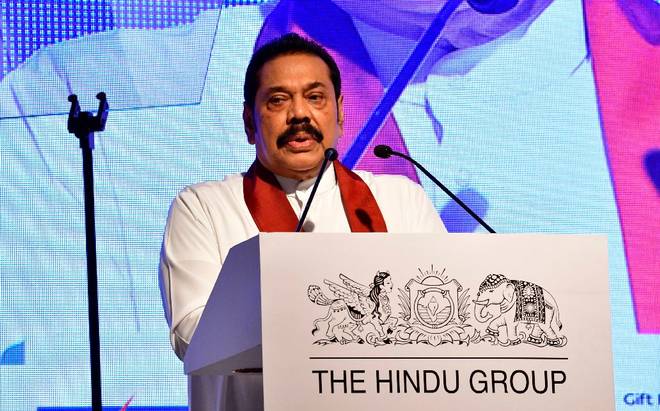
Mahinda Rajapaksa, Leader of the Opposition in the Sri Lankan parliament and a former Sri Lankan President, has spelt out a list of do’s and dont’s for improving relations between Sri Lanka and India.

While being basically well grounded, Indo-Lankan ties do tend to veer off the track due to a lack of communication, misconceptions and unequal expectations, Rajapaksa told The Huddle 2019” hosted by The Hindu in Bengaluru on Saturday.

He said that constant communication between the two countries is a must to clear misunderstandings, defuse tensions, and  build mutual trust based on transparency.

To ensure this, there should be a Standing Committee comprising politically influential top persons drawn from the two countries. In this context he pleaded for the revival the Troika” system set up during the final phase of Eelam War IV which enabled India and Sri Lanka to bring the war against terrorism to a successful conclusion. He further suggested that the new Troika system should have an all-encompassing mandate given the wide range of India-Sri Lanka relations.

Rajapaksa went on to say that both sides must recognize and accord equal weight to each other’s sensitivities, national interests, economic imperatives and security concerns, because India and Sri Lanka are both sovereign nations with their own individual requirements. He also hinted that regime changes brought about by machinations have been detrimental to both countries. In this context, he mentioned the need to recognize the importance of political stability and continuity based on a strong leadership.

The Two Troikas

The crux of Rajapaksa’s oration was the plea to revive the Troika” system established during the war and give it a wide mandate.

You would recollect that a novel mechanism was in place during our time in government and in particular when we, as a country, fought against the most cruel terrorist organization in the world. The Troika, as it was known, helped in no small measure to build a bridge between the leaderships and the associated thought processes of our two countries and thus prevented any misunderstandings when Sri Lanka was engaged in a crucial war against terrorism,” Rajapaksa said.

The relationship in the Troika was friendly and casual” and that produced the desired outcome, he added.

I say without any hesitation, that India’s deep understanding of our government’s motive was a key factor that helped us eradicate terrorism. The respective leaderships were consistently and continuously briefed by the relevant Troika thus promoting the high level of understanding that was required to keep the relationship dynamic,Rajapaksa said.

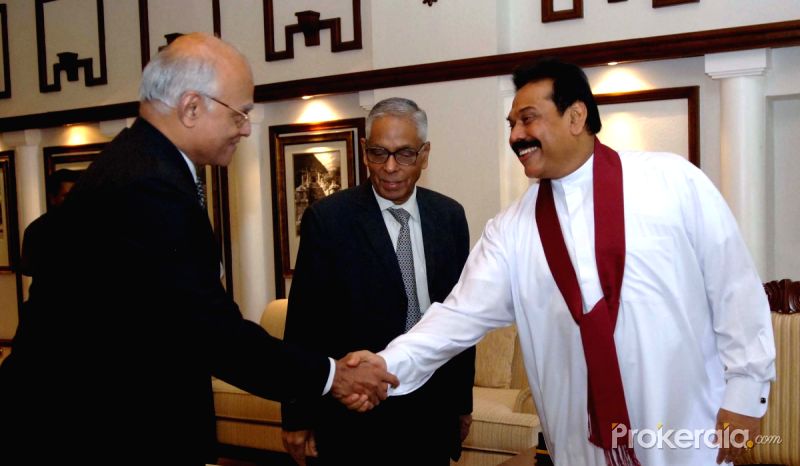
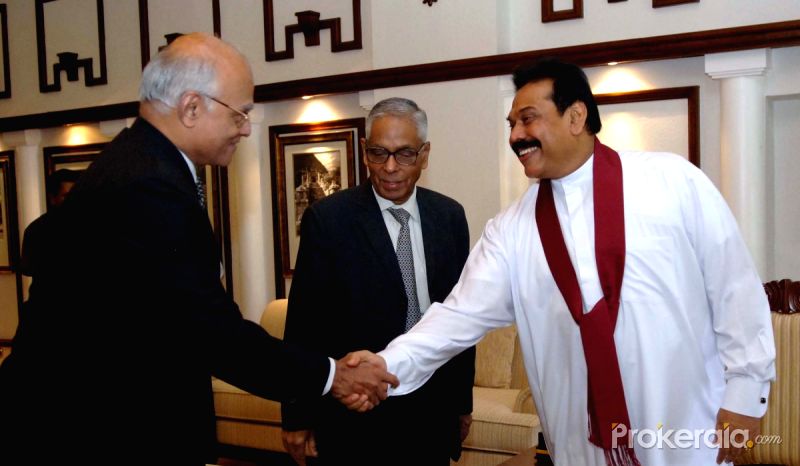
It was in 2008, when Eelam War IV was in its critical last stage, that the then Indian High Commissioner in Sri Lanka, Alok Prasad, prompted by Sri Lankan Defense Secretary Gotabaya Rajapaksa, asked Lalith Weeratunga, Secretary to the then Sri Lankan President Mahinda Rajapaksa, if Colombo would appoint three people close to the President to constantly be in touch with a similar group of people in India to manage India-Sri Lanka relations as the war was on.

As the idea came from his brother and Defense Secretary Gotabaya Rajapaksa, President Rajapaksa responded positively and promptly.  He named Basil Rajapaksa, at that time Senior Advisor to the President; Gotabaya Rajapaksa, and Lalith Weeratunga, the then Secretary to the President; as his Troika”.

High Commissioner Alok Prasad then informed President Rajapaksa that India had named M.K. Narayanan, National Security Advisor, Shiv Shankar Menon, Foreign Secretary and Vijay Singh, Defence Secretary, as India’s Troika.”

The two Troikas met frequently and informally, and sorted out  many matters with ease, said Lalith Weeratunga in an article written later.

In my opinion, this initiative was more useful to Sri Lanka than to India because we were then in the thick of fighting the LTTE and it was crucial that India was fully aware of what the Sri Lankan government and its Armed Forces were doing. The personnel involved in the Troika could not only place facts with authenticity, but could also take decisions on behalf of their respective governments. Had there been any issue arising out of these discussions, any member in either of the teams could be on the phone to the leadership and obtain advice on further action,” Weeratunga wrote.

It is only through an active dialogue any misunderstandings could be averted,” Rajapaksa told his Indian audience in Bengaluru on Saturday.

Further justifying the revival of Troika, Rajapaksa said: The traditional government to government dealings alone cannot give shape to our future relations because the world is becoming more complex by the day.  However, political leaders would continue to play the most coveted role as they determine policies, be it foreign, economic, security, and a host of other policies that would impinge on our bilateral relations.”

Tangibles like these are easier to monitor and even control, but intangibles pose grave threats.  Political leaders and other societal leaders must always keep a tab on the intangibles; for instance, a wrong word from a leader would sour the relations as we have witnessed in the past.”

It would not be out of place for me to state upfront that a strong mechanism at the country-to-country level, fully endorsed and supported by each of our governments, should be in place to clear any misunderstandings that may crop up from time to time. The Troika system should have been a forum that we should have continued. Perhaps there is still opportunity to bring it back from 2020.”

Troika For National Security

Turning to the importance of having a Troika mechanism for ensuring national security, Rajapaksa said:  Interestingly, in recent times, maritime security in the Indian Ocean has become an important issue in regard to respective national security of our two countries. In future bilateral relations, Indian Ocean maritime security too would be an important aspect in forging a well-founded strategy. In all these, I strongly believe that a vibrant, on-going dialogue between the two countries would ensure each other’s national security. This dialogue, as I have emphasized earlier, should transcend the normal diplomatic boundaries and there are experiences such as the Troika that we could draw from.”

Problems Created by Regime Change

Rajapaksa obliquely alluded to the alleged Indian role in bringing about the regime change in Sri Lanka in 2015 in which he lost power. He said this was due to the lack of communication. Such a situation would not have come about if the Troika system was functioning, he argued.

Since the 1980’s the relationship between our two countries, remained very fragile. But in 2005, when I was elected President,  I made it a point to establish a good working relationship with India. However, the second major breakdown of bilateral relationships took place in 2014. The government that had ruled India for a decade was voted out in 2014. Unfortunately, the working relationship that existed between my government and the outgoing government of India did not roll over to the new government of India formed in 2014. Lack of communication between both parties seems to have led to this situation.”

Communication is such a vital factor that can be the make or break in strengthening our countries’ relations. Therefore, an open line of healthy and constant communication, should always be the focus even in the coming years,” he said.

In hindsight, the misunderstandings of the 1980’s as well as that of 2014, were aberrations that could easily have been avoided. It’s key that India and Sri Lanka evolve a mechanism to prevent these misunderstandings from taking place,” Rajapaksa said.

Need To Ensure Political Instability

Rajapaksa said that one of the cornerstones of good and stable bilateral relations is political stability based on a strong leadership. He was hinting that the strong government led by him had been replaced by a weak one from which neither India nor Sri Lanka have gained.

A strong government and political stability would always facilitate the blossoming of bilateral relations. In future bilateral relations between our two countries, strong political leadership would be a key factor towards a vibrant bilateral relationship,” Rajapaksa said.

Need  For Bilateral Policy Continuity

Rajapaksa pleaded for policy continuity even after regime change so that   bilateral relations remain on an even keel.

Despite the snag of 2014, the opposition coalition that I lead now, has a good understanding with the ruling party in India. In their dealings with Sri Lanka, my suggestion to India, is that the rule of thumb with regard to India-Sri Lanka relations should be that if the outgoing party had an adequate working relationship with Sri Lanka, the incoming party should give due recognition to that fact and continue the relationship on that basis.”

Past experience has shown that the danger of disruption in our bilateral relationship arises in the immediate aftermath of changes of government. Such easily avoidable disruptions have had serious consequences for both countries,Rajapaksa said.

Give and Take In Security Issues

Referring to national security issues between Sri Lanka and India he alluded to the feeling in Sri Lanka that while India makes  demands on Sri Lanka, Sri Lanka’s concerns are not being taken into account by India.

Since we are geographically in very close proximity, we have mutual obligations to ensure the security of each other. Often, we have heard the Indian leaders emphasizing the need for Sri Lanka to ensure that the Sri Lankan soil is not used by any third party that would pose a threat to India. Similarly, we too would want India to ensure that any threat from any groups operating within Indian soil does not pose a threat to Sri Lanka,” he said.

Maritime Security

On the current world wide concern about maritime security in the light of concerns in India and the West over China’s rise as a maritime power, Rajapaksa said: ” In future bilateral relations, Indian Ocean maritime security too would be an important aspect in forging a well-founded strategy. In all these, I strongly believe that a vibrant, on-going dialogue between the two countries would ensure each other’s national security. This dialogue, as I have emphasized earlier, should transcend the normal diplomatic boundaries, and there are experiences such as the Troika that we could draw from.”

Wider Application of Troika System 

Rajapaksa said that the Troika system should go beyond security matters to other areas of bilateral relations.

Through the Troika, we can go further to create forums and collaborations that take into consideration the pressing social, economic and cultural issues that affect our peoples, and elaborate on best practices and advances that we could learn from one another. The formulation of such an entity is foremost in my party’s plans for the future,” he said.

Alienation of National Assets

One of the major concerns in Sri Lanka is a tendency of governments to alienate national assets like ports and airports etc. to foreign powers. Sometimes this is done to balance relations with foreign powers. If China is given a project to build a port in Hambantota, India must be given the Mattala airport or the Trincomalee port or the Eastern Container Terminal in Colombo. If China is given projects in Sinhala-speaking South Sri Lanka, India must be compensated with projects in the Tamil North. The concern among Lankans is that this way, there would be nothing left for Sri Lankans to own.

Alluding to this issue, Rajapaksa said: An important facet of economic stability is how we look at our national assets. No country, in my understanding, can achieve economic stability by disposing of national assets. I would emphasize that a policy advocating sale of national assets inevitably generates tensions among our people, and this has a negative effect on our relations with the country acquiring these assets, whatever that country may be. This has been our stark experience in the recent past. This does not, however, mean we should not explore joint initiatives for mutual benefit,” he said.

How Modi Played Cupid Between Lankan Girl and MP Boy Who Married in Valentine Week

February 12th, 2019

Vivek Trivedi | News18.com

Govind, a staunch supporter of PM Modi, had liked one of his tweets which was later also liked by Hansini. Curious, Govind searched about her online and soon they became friends.

Bhopal: There couldn’t have been a better Valentine’s Day week for Hansini Edheerisinghe, a Sri Lankan woman who got married to her soulmate from India on Sunday — and it is none other than Prime Minister Narendra Modi who unknowingly played cupid between the two.

On February 10, Madhya Pradesh witnessed an unusual marriage when Sri Lanka’s Hansini, 25, tied the knot with 26-year-old Govind Prakash from a tiny village Kuchrod in Mandsaur, some 325km from the state capital Bhopal.

 The two tech-savvy young souls had met on Twitter in 2015. Govind, a staunch supporter of PM Modi, had liked one of his tweets which was later also liked by Hansini. Curious, Govind searched about her online and soon they became friends. They started chatting frequently and love blossomed eventually.

In 2017, Hansini visited India and was received by Govind at the New Delhi airport. She met Govind’s family in Kuchrod and they both took an immediate liking to each other. To keep things moving, the love-struck girl had to convince her family to pursue a course in physiotherapy in India while Govind completed his bachelor’s degree in engineering.

Meanwhile, the families of the couple got in touch with each other and fixed the marriage for February 10. The Lankan family, which follows Buddhism, was delighted to find a match for their daughter in a vegetarian family and agreed to the relation gleefully, the family said.

Fifteen family members from the bride’s side attended the wedding while the whole of groom’s family was present for big day. The marriage was solemnised as per Hindu rituals. Hansini’s father is a lawyer and mother is a professor.

Sri Lanka advertises for HANGMEN with ‘excellent moral character’ after previous executioner quit due to stress the first time he saw the gallows

February 12th, 2019

By Reuters and Chris Dyer For Mailonline

  • Sri Lankan government advertising for hangmen after last executioner quit 
  • The stress of seeing the gallows for the first time led last hangman to leave 
  • President wants to resume the use of capital punishment for drug traffickers 
  • New hardline policy by Maithripala Sirisena to mimic Philippines death squads
  • The Sri Lankan government has started advertising for hangmen with ‘moral character’ after the previous executioner quit with stress after seeing the gallows for the first time.

    President Maithripala Sirisena wants to resume the use of capital punishment for drug traffickers in the next two months as part of a new hardline policy.

    The last execution in Sri Lanka was 43 years ago but the government began advertising for hangmen this week in a bid to mimic the Philippines tactic of roaming death squads to combat drug trafficking.

    During a state visit to the Philippines in January, Sirisena had praised President Rodrigo Duterte’s war on drugs, despite international criticism of a campaign that has resulted in thousands of people being killed in encounters with police.

    A man reading an advertisement for the vacancy of hangmen in a newspaper in the Sri Lankan capital, Colombo

    A man reading an advertisement for the vacancy of hangmen in a newspaper in the Sri Lankan capital, Colombo

    Visiting Sri Lanka President Maithripala Sirisena (left) and Philippine President Rodrigo Duterte shake hands following the welcoming ceremony last month

    Visiting Sri Lanka President Maithripala Sirisena (left) and Philippine President Rodrigo Duterte shake hands following the welcoming ceremony last month

    Drug trafficking is a capital offence in Sri Lanka although no one has been executed for any crime in the country since 1976 as all death penalties have been commuted to life in prison since then.

    Sri Lanka’s last hangman quit in 2014 without ever having to execute anyone, citing stress after seeing the gallows for the first time, while another hired last year never turned up for work.

    Anticipating that capital punishment could soon be used again, the prison service is hurrying to recruit two executioners.

    Thushara Upuldeniya, a spokesman for the prison service, said: ‘We never know if the government will resume the death penalty, but we want to hire two hangmen to fill vacancies and be ready if the government wants to execute drug traffickers.’

    An advertisement published in the state-run Daily News u=yesterday put the monthly pay at 36,310 rupees ($203.99), which would be above the average for a government job.

    The advert for a hangman wanted candidates to be Sri Lankan, male, aged between 18 and 45, and have both 'excellent moral character' and 'mental strength'

    Candidates should be Sri Lankan, male, aged between 18 and 45, and have both ‘excellent moral character’ and ‘mental strength’, the ad said.

    Upuldeniya said the job interviews will be conducted next month.

    At least 25 people convicted for drugs offences, including two drug dealers, could be executed, Upuldeniya added.

    There were also 436 people including six women on death row for various crimes including murder, he said.

    He told parliament five drug convicts will be executed as soon as Sirisena signs the death warrants and a hangman is appointed.

    Government officials said that Sirisena has sought advice from the Philippines on how to combat drug trafficking, amid mounting concerns that Sri Lanka could become a transit hub for the narcotics trade in Asia.

    Bags of heroine seized by the Sri Lanka Narcotics Bureau in Colombo last month with value of more than $7 million

    Bags of heroine seized by the Sri Lanka Narcotics Bureau in Colombo last month with value of more than $7 million

    More than more than 1,500 kg of cocaine was seized in 2017, the Sri Lankan government said.

    Police have arrested more than 50 people since the middle of last year after busting a drug smuggling ring last year.

    Official estimates put the number of dead from the Filipino president’s widely-criticised war on drugs at 5,000, but a senator recently said it had claimed more than 20,000 lives.

    Last month senators in the Philippines launched a fight to stop President Duterte lowering the age of criminal responsibility from 15 to nine.

    In the United Kingdom the age of criminal responsibility is ten, while in Scotland children as young as eight can be prosecuted.

    But in the United States there is no age barrier for prosecutions at state level, while at federal level the minimum age is 11.

THE TAMIL LANGUAGE IN SRI LANKA Part 4B

February 11th, 2019

KAMALIKA PIERIS

Revised 13.3.19

The LSSP (Lanka Sama Samaja Party) took a firm stand against Sinhala Only the year before the MEP victory of 1956. LSSP officially declared that the LSSP stood for the administration of the country in Sinhala and Tamil. People must be governed in a language they understand.” They made this declaration in 1955, even before the MEP government of 1956 came to power.

The Marxist Parliamentarians, N.M. Perera, Leslie Gunawardene, Colvin R de Silva and Bernard Soysa spoke at great length in Parliament against Sinhala Only. Here is a selection of their comments, taken from their 1955 and 1956 speeches in Parliament.

The Sinhala Only Bill had the danger of dividing the country, said Leslie Gunawardene.  We must remember that Sinhala and Tamil are languages of different and separate parts of our country, so separatist tendencies could arise.    The North and East are inhabited by the Tamils and they could break away, in fact that is already been advocated. Also think of the plantation workers.

If this Bill is adopted what does the government expect the minorities to do, asked Bernard Soysa .They feel that a wrong is done. They must have the right to protest against this bill. If a minority feels deeply that injustice and a great injury has been done it is likely to embark upon forms of resistance and protests and there may be communal riots. You have now created a demand among the Tamil people for recognition as a nation; you have united them together by this bill. And this demand can have the deadliest consequence in the future.

If the minorities are willing to accept Sinhala as the one official language then there is no problem, said NM  Perera. We are however imposing that language against the will of the minority that is morally incorrect. We cannot impose a language of the majority on the minority community,

Colvin R de Silva said that with one language we would end up with two countries, with two language one country. What is cheaper, he asked,    to administer the country in one language in the face of resistance of a group, 23 lakhs strong or rule in two languages? The   Tamil community, one of the two major communities will insist upon its language, the Tamil language, being also a state language like Sinhala.

We are living in period in which a Ceylonese nation is being born, said N.M. Perera. The ‘state language’ question is not simply a language question but a question which involved the building of a Ceylonese nation and specifically the fusion of the Sinhala and Tamil speaking section into the Ceylonese nation that is coming into being.   If we are to build up a united strong and integrated nation, we have to build up unity in diversity . The only way the Sinhalese can go forward is together with the other permanent inhabitants of various races, as Ceylonese.

Sinhala as state language stands, not for a Ceylonese nation but for a Sinhalese nation. The formation of a Sinhala state is a chimera. The very concept today is reactionary, said Leslie Gunawardene. There is an unwillingness to recognize the official status of both languages. They want to have only Sinhalese. They feel that they can ram Sinhala down the throats of   the minorities, said NM.

N.M Perera moved in Parliament that there must be parity of status for Tamil throughout the island. There is no solution to a multilingual country except parity to the major languages. Parity means equal status for both in administration, judicial and legislative purposes. This does not mean the Tamil language will be imposed on the Sinhala and vice versa.  Sinhala areas will work in Sinhala and Tamil areas in Tamil. But a Sinhala in Tamil speaking area and Tamil in Sinhala speaking area will however have his business in his own language.

All must get their government business done in their language. A Tamil should get reply in Tamil and Sinhala in Sinhala. When a Tamil writes a letter in Tamil to a kachcheri or government department. he must get the reply in Tamil. That is a right. What confidence can the people of Jaffna and the Tamil speaking people of the East and elsewhere have in this matter when the Sinhala ministers are not prepared to state that they are in favor of both Sinhala and Tamil as official language, continued N.M.

I do not deny that the use of two languages will create complications. Certain departments even in Sinhala areas will have to employ two clerks who know Tamil to translate. A translator will have to be employed in practically every department. Minutes may be put up in Tamil by Tamil clerks or by a Tamil officer and these will have to be translated for a Sinhala head of department, he said.

If Sinhala and Tamil become official languages, more Tamils will learn Sinhala than Sinhalese learning Tamils.  Sinhala is the language of the majority. They will find it useful for employment.  So the Sinhala language will not disappear, said   Leslie Goonewardene.

Alarmed by the emerging cry of Sinhala Only the Tamil politicians had in 1955, drafted a Bill of Human Rights and presented it to Parliament. This was turned down by the government. There was no reference to Tamil, but citizens of Ceylon were to have the right to use their own language in transacting business, in law courts, in administration, and in any personal sphere such as speaking or writing,. The Bill of Rights also said, ~where there is sufficient number of nationals belonging to a linguistic minority, the state must provide education in their own language. Minorities were to be given state funds for education and religious purposes. (Weerawardana. p 29, 255-256)

The Tamil MPs were  vehemently against the Sinhala Only bill. The Tamil MPs first argued that  the 1944  agreement on  parity of status for Tamil language   was part of the   transfer of  power agreement between Britain and Ceylon,  By abandoning this part of the pre independence political settlement, It was  repudiating the independence  agreement, said G.G.Ponnambalam.

G.G.  Ponnambalam also stated that the Sinhala Only bill would be a denial of fundamental rights, denial of equality of status, denial of the identity, individuality and freedom of language and culture of the Tamil speaking people of Ceylon. It is legislation which will deny the right of the Tamils to achieve by constitutional means its cultural, linguistic economic and political independence. Ponnambalam also admitted that he feared the disappearance of the Tamil segment through assimilation. One decade of Sinhala will convert the Tamils into Sinhalese, he said.

  1. Suntheralingam demanded an ‘autonomous Tamil Illankai”, federal or independent, as determined by a plebiscite. He spoke of carving out an area sacrosanct to the Tamils, where there would be no Sinhalese infiltration and where Tamil would be permitted to be the language of administration. He also mooted the idea of a United Front of Tamils. Its objectives were to maintain the identity of Tamils, preserve their culture and ‘keep inviolate their traditional homelands’. Suntheralingam then called for a Tamil Resistance Movement. No Tamil at any time will agree to the Tamil language being slighted, he said, but added, ‘we are not worried about the Tamil language but about jobs for Tamils in this country. We will not have Tamils as slaves of Ceylon.’
  2. Nadesan wrote a series of articles to Ceylon Daily News in 1955. He said that Tamil, Muslims and Burghers were national minorities. National minorities needed to be treated in a special way. The usual principle of majority cannot be applied. The majority race should not act oppressively .Ceylon was not inhabited by one people speaking one language.

Nadesan advocated bilingualism, if that failed, then federalism. He also spoke of regional autonomy and constitutional safeguards for minorities. Nadesan described ‘parity status’ as  inter alia, equality of status for the two languages  throughout the island, specifically in administration  and law courts. He advocated a bilingual policy where all transferable public officers should know both languages.

Historian KM de Silva  commented on this ‘parity of status’. He observed, in 1996, that the call for parity of status for Tamil was not to ensure full equality before the law for Tamils, equality of opportunity for Tamils, and equality of status for the two languages throughout the land.   The Tamil politicians saw it only as a means to a federal state like Canada, also Switzerland.  he observed that  Nadesan in arguing for parity had made the link between bilingualism and federal or quasi federal structures. The model was the larger federal states of the world, also Switzerland and Belgium, but mostly Swiss, said de Silva.

The accusation bandied about today, that the Tamil cry of secession rose due to Sinhala Only,   is incorrect. At the  Independence celebrations in 1948, M Thiruchelvam, father of Neelan, was seen cruising in a car carrying the Nandi flag. Chelvanayagam’s political party, Illankai  Thamil Arasu kadchi was started  in the year after Independence, in 1949. The name means ‘Lanka Tamil State Party.’

Sinhala Only greatly helped to further these Tamil  secessionist  plans. V. Kumaraswamy, Minister for Transport and Works said that if Sinhala Only is imposed Tamils will have to secede.  In 1955, Chelvanayagam had declared that his Federal Party (ITAK) stood for an autonomous Tamil state, federated in a federal Ceylon. In August 1956, at its convention in Trincomalee  ITAK set out a list of demand on behalf of the Tamils. The first was autonomy for north and east under federal constitution, the second, parity of  status for Sinhala and Tamil.  If the demands were not met, ITAK threatened that   there would be satyagraha or organized peaceful resistance to the government.

The vigour with which the Tamils fought back on the language issue and the zeal they demonstrated on it are often seen as a rearguard struggle of a privileged minority at bay, said KM de Silva.  ITAK had called on the Tamil public servants not to study or work in Sinhala. When the Official Language Act  came into effect, the Tamil clerical servants, who  constituted a substantial number in  the GCSU,  formed a Tamil trade union Arasang Eluth Vinayar Sangam”. it’s President, S Kodiswaran sued the government saying that his increment her been stopped because he did not appear for the language proficiency test.

In Aug 1958, the Tamil Language (Special Provisions) Act No 28 of 1958, popularly known as the ‘Reasonable use of Tamil’ Act was passed.  This was drafted by M Tiruchelvam. There were massive demonstrations led by the SLFP and its left wing allies. LSSP and CP against the Bill. The Opposition unleashed a sustained barrage of propaganda against the Bill saying these regulations violated the spirit and principle of the Sinhala Only Act. Parliament approval was secured in the face of much opposition. This Act was debated in Parliament and approved in unusual circumstances, observed K.M. de Silva.  The Federal Party MPs and the leaders of the extremist Sinhala groups were placed under house arrest.

This Act provided for the use of the Tamil language as a medium of instruction, as a medium of examination for admission to the Public Service, for use in state correspondence and for administrative purposes in the Northern and Eastern provinces. Official correspondence with the public such as  Birth and Death Certificates, must be issued in the language of the local people, if they were  Tamil.

The Act included the right of Tamils to use their language in corresponding with government and in local government. To educate children in Tamil,  and sit the competitive exam for entry into the government and local government service in Tamil with the proviso that they must gain competence in Sinhala to continue in service and promotion.

The regulations relating to the Act were ready but were not presented to Parliament due to the assassination of Prime Minister SWRD Bandaranaike. Sirimavo was not interested and the regulations were eventually introduced and piloted through Parliament by the UNP government in January 1966.

When Sirimavo Bandaranaike became Prime Minister in 1960, she ignored the Tamil Special Provisions Act and insisted on only recognizing the Official Language Act of 1956. Sinhala was made the sole language of administration  throughout the island from 1 January 1961. As a result, there was civil disobedience In the North and East, in March- April 1961 with state of emergency declared.

Neville Jayaweera was   appointed Government Agent Jaffna, during this time. Neville Jayaweera recalled, ‘In 1963 as I traveled to take up the post of GA Jaffna, the lush thick vegetation of the south had given way to low parched and scattered scrub. Rolling sand dunes, sporting spindly topless Palmyra palms. Not a single local official was on land to greet us except the Sinhala AGA, Samarawickreme.  There was an organized boycott. The place reeked of suspicion and mistrust.  No one called on us, though it was the convention at the time for official to call on the GA when he came in.  The wall of hostility was palpable and impregnable. V.P. Vittachi, who had been GA before him had not had this problem. That is because word had got around that Jayaweera had been picked by Prime Minister  and Her Permanent Secretary, NQ Dias to do a hatchet job on the Tamils.  Which was pretty close to the truth. But it was not possible to implement the Sinhala only within the time frame set.”

Jayaweera, who was GA Jaffna from 1963-1966 ‘quietly let the Official language Act lapse throughout the Jaffna district”. Instead he proceeded to implement the reasonable use of Tamil act.  Under Official language Act all government transactions, from 31.10 1963, throughout the country had to be in Sinhala    with certified translations in Tamil. Instead, not  a single birth, death  or marriage certificate, nor an invoice or receipt, nor any letter was issue to anyone in Jaffna district expect in the language of the subject’s choice,”    said Jayaweera. ‘All succeeding GAs did the same.” Jayaweera is definite that  the Official language Act was never enforced in Jaffna. Nor were the proceedings of the higher and lower courts in Jaffna ever conducted in Sinhala. This policy was followed in the whole Northern Province, not just Jaffna district, concluded Jayaweera.

But in the Health service, doctors had to know Sinhala and Tamil. Dr. Philip Veerasingham recalls, in the 1960s the  Sinhala doctors had to face a Tamil exam before  promotion. One doctor who learned his Tamil from the Tamil service of Radio Ceylon, greeted his examiners with ‘Vanakkam aiya, ithu ilankai vannoli varthaka sevai. ‘Greetings, this is the Commercial Service of Radio Ceylon. He passed.

Another  when asked the  Tamil word for anesthesia replied that he did not know  the word even in Sinhala let alone Tamil. However a Tamil facing the Sinhala examiner has been asked the Sinhala for ‘allergic  rash’, he did not know and was failed.  The word was  ‘kaduwegan’.  Sinhala doctors said they also did not know the word, commented Veerasingham.

Sinhala Only continued to reign supreme as the 1970s decade dawned. The 1972 Constitution, which was Sri Lanka’s first home grown Constitution,  upheld the position of Sinhala. The 1972 Constitution said that the official language shall be Sinhala as provided in Official Language Act 33 of 1956 (sec 7). The  use of Tamil shall be as  provided for in  the Tamil Language ( special Provisions) Act no 28 of 1958.  But any regulations   in force before the present Constitution shall not be a part of the Constitution but shall be treated as subordinate legislation. ( sec 8)

All laws shall be enacted or made in Sinhala ( Sec 9a). there shall  be a Tamil translation of all  such laws ( sec 9b) unless  Parliament decides otherwise, the law published in Sinhala will be the law .( sec 10) .The language of the courts and tribunals, and other such  instructions shall be in Sinhala throughout Sri Lanka , and all records shall be in Sinhala.(sec 11 ) in the case of North and East, where the language used would be Tamil, a Sinhala translation shall be made. (sec 11) The litigant has the right to obtain information in Sinhala or Tamil and have translations or records made in Sinhala or Tamil.

APPENDIX,

Tamil Language (Special Provisions) Act, No. 28 of 1958

An Act to make provision for the use of the Tamil language and to provide for matters connected therewith or incidental thereto. (Date of Assent: September 4, 1958)

Whereas the Sinhala language has been declared by the Official Language Act, No 33 of 1956, to be the one official language of Ceylon: And whereas it is expedient to make provision for the use of the Tamil language without conflicting with the provisions of the aforesaid Act: Be it enacted by the Queen’s Most Excellent Majesty, by and with the advice and consent of the Senate and the House of Representatives of Ceylon in this present Parliament assembled, and by the authority of the same, as follows:

This act may be cited as the Tamil Language (Special Provisions) Act, No. 28 of 1958.

(1) A Tamil pupil in a Government school or an Assisted school shall be entitled to be instructed through the medium of the Tamil language in accordance with such regulations under the Education Ordinance, No. 31 of 1939, relating to the medium of instruction as are in force or may hereafter be brought into force.

(2) When the Sinhala language is made a medium of instruction in the University of Ceylon, the Tamil language shall, in accordance with the provisions of the Ceylon University Ordinance, No. 20 of 1942, and of the Statutes, Acts and Regulations made thereunder, be made a medium of instruction in such University for students who prior to their admission to such University have been educated through the medium of the Tamil Language.

(3) A person educated through the medium of the Tamil Language shall be entitled to be examined through such medium at any examination for the admission of 118 persons to the Public Service, subject to the condition that he shall, according as regulations made under this act on that behalf may require, — (a) have a sufficient knowledge of the official language of Ceylon, or (b) acquire such knowledge within a specified time after admission to the Public Service: Provided that, when the Government is satisfied that there are sufficient facilities for the teaching of the Sinhala language in schools in which the Tamil language is the medium of instruction and that the annulment of clause (b) of the preceding provisions of this section will not cause undue hardship, provision maybe made by regulation, made under this Act that such clause shall cease to be in force. Use of Tamil language for correspondence

(4) Correspondence between persons, other than officials in their official capacity, educated through the medium of the Tamil language and any official in his official capacity or between any local authority in the Northern or Eastern Province and any official in his official capacity may, as prescribed, be in the Tamil language. Use of the Tamil language for prescribed administrative purposes in the Northern and Eastern Provinces.

(5) In the Northern and Eastern Provinces the Tamil language may be used for prescribed administrative purposes, in addition to the purposes for which that language may be used in accordance with other provisions of this Act, without prejudice to the use of the official language of Ceylon in respect of those prescribed administrative purposes.

(6) (1) The Minister may make regulations to give effect to the principles and provisions of this Act. (2) No regulation made under sub-section (1) shall have effect until it is approved by the Senate and the House of Representatives and notification of such approval is published in the Gazette. This Act to be subject to measures adopted or to be adopted under the proviso to section 2 of Act No. 33 of 1956.

(7) This Act shall have effect subject to such measures as may have been or may be adopted under the proviso to section 2 of the Official Language Act, No. 33, of 1956, during the period ending on the thirty-first day of December 1960. (  continued)

ශ්‍රී ලංකා පොදුජන පෙරමුනේ මාධ්‍ය සාකච්ඡාව

February 11th, 2019

අද දින (11) මාධ්‍ය සාකච්ඡාවට සහභාගි වු නියෝජිතයින්

ශ්‍රී ලංකා පොදුජන පෙරමුනේ සභාපති මහාචාර්ය ජි. එල්. පීරිස් මහතා

පාර්ලිමේන්තු මන්ත්‍රී රෝහිත අබේගුණවර්ධන මහතා

පක්ෂයේ පරිපාලන ලේකම් ‌ෙරේනුක් ‌ෙපෙරේරා 

ශ්‍රී ලංකා පොදුජන පෙරමුනේ සභාපති මහාචාර්ය ජි. එල්. පීරිස් මහතා

ඉන්දියාවේ බැංගලෝර් නගරයේ වාර්ෂික සමුලුවක විශේෂ ආරාධිත අමුත්තා ලෙස හිටපු ජනාධිපති මහින්ද රාජපක්ෂ මහතා සහභාගි වුනා. ඉන්දියාවේ උප ජනාධිපති වෙන්කයියා නයිදෝ ඉන්දීය රජය නියෝජනය කරමින් සහභාගි වුනා. මිට අමතරව ඉන්දියාවේ විද්වතුන් රැසක් මෙයට සහභාගි වුනා. මේ රටේ අනිවාර්යයෙන් ජාතික මැතිවරණයකින් වෙනසක් වෙන බවත් මහින්ද රාජපක්ෂ මහතාගේ නායකත්වයෙන් නව රජයක් බිහිවන බවත් ඔවුන් දැඩිව විශ්වාස කරනවා. අපි ඒ අයට කිව්වා අපේ එකම අත්සාහය බලය ලබා ගැනීම නොවන බව. පැවැති රජය පරාජය කර ආන්ඩු බලය ලබා ගැනීම වගේම අපේ ආණ්ඩුවේ ප්‍රතිපත්ති සැලසුම් සහගතව සකස් කිරිමත් අපේ විශේෂ ප්‍රයත්නයක්. බිම් මට්ටමෙන්ම ඉස්මතුවන අදහස් අනුව අපේ ප්‍රතිපත්ති සැකසීමයි අපේ අරමුණ.බැසිල් රාජපක්ෂ මහතාගේ ප්‍රධානත්වයෙන් ශ්‍රී ලංකා පොදුජන පෙරමුනේ පළාත් පාලන ආයතන මන්ත්‍රීවරැන් හමුවුනා. මේක මුලු රටම ආවරනය වන විදියේ වැඩපිළීවෙලක්. ඩෙල්ප් දිවයානේ උප සභාපති අපේ පක්ෂ්යේ. යාපනය දිස්ත්‍රික්කයේ මන්ත්‍රීවරු රැසක් ආවා. ගම සමග පිලිසදරක්, ජාතික මහා සම්මේලනය සදහා සූදානම් විම, ගමේ ආර්ථික හා භූගෝලීය පසුබිම, ගමේ යෝජනා පත්‍රය, ගමේ දේශපාලන පසුබිම පිළිබද තොරතුරු මෙන්ම 2019 මැතිවරණයට පියවරෙන් පියවර සූදානම් වීම ආදිය සම්බන්ධයෙන් අපේ පාක්ෂීකයින් සමග සාකච්ඡා කෙරෙනවා. ඒ වගේම පක්ෂයේ ගිනුම් වාර්තාව සියලුම පක්ෂ සාමාජිකයින්ට ලබා දිමක් සිද්ධ වෙනවා. අපේ ගිනුමේ මිලියන 21ක් ඉතිරියක් තියෙනවා. ගිනුම් වාර්තා සිය සාමාජිකයින්ට ලබාදිමක් සිදුවෙන්නේ පළමු වතාවටයි. වෙනත් පක්ෂ ලයිට් බිල පවා ගෙවා ගැනීමට නොහැකිව සිටි අවස්ථා තියෙනා.

මේ රජයේ අයවැය ලේඛණය පාර්ලිමේන්තුවට ඉදිරිපත් කරන්න නියමිතයි. රටට අවශ්‍ය වෙන්නේ පාර්ලිමේන්තු මැතිවරණයක්. තව මාස අටකින් මැතිවරණයක් පැවැත්වෙන්න නියමිතයි. ඒ කාලය රජය ජනතාව වෙනුවෙන් යමක් කරයි කියලා හිතන්න බැහැ. මේ රජයට එකතු වුනු එක්සත් ජාතික පෙරමුන හා එක්සත් ජනතා නිදහස් සන්ධානය අතර එකගතාවයක් තිබුනා. දැන් මේ කණ්ඩායම් වෙන් වෙලයි තියෙන්නේ. එක්සත් ජාතික පෙරමුනේ තියෙන්නේ සුලුතර රජයක්. ඒ නිසා මේ අයට දමිල සන්ධානය මත යැපෙන්න සිදු වෙනවා. ජාතික රජයක් සැදීමේ හාස්‍ය ජනක උත්සාහයකත් මොවුන් නිරත වුනා. ජනතාව ඒ අත්සාහය ප්‍රතික්ෂේප  කරන නිසා නෙවෙයි ඒ උත්සාහය අත් හැරියේ. ඒ සදහා අවශ්‍ය ඡන්ද නැති විම නිසයි. පාර්ලිමේන්තුවේ තුනෙන් දෙකක යෝජනාවක් සම්මත කරලා මැතිවරණයකට යන්න. අපි සූදානම් එවැනි යෝජනවාකට. එවැනි යෝජනාවක් පාර්ලිමේන්තුවට ඉදිරිපත් කිරීමේ නායකත්වය දිමටත් අපි සූදානම්.

ඒ අතරේ අයවැය ලේඛණය ඉදිරිපත් කරන විට ආන්ඩුක්‍රම ව්‍යවස්ථා සංශෝධන වැඩපිළීවෙලට මුදල් වෙන්කරන්න එපා. පසුගිය අයවැයෙන් දසලක්ෂ දහතුන් දහසක් වියදම් කලාට කිසිදු වැඩක් වුනේ නැහැ. පාර්ලිමේන්තුවට ඉදිරිපත් කරපු වාර්තාවේ වගකිම කිසිවෙක් භාරගන්නෙත් නැහැ. මහින්ද රාජපක්ෂ හතාගේ නායකත්වයෙන් පිහිටුවන රජයේ ප්‍රමුඛ අරමුණක් වන්නේ 19 වැනි සංශෝධනය ඉවත් කිරිමයි. මේ සංශෝධනය ඉදිරිපත් කලේ ස්වාධීන කොමිෂන් සභා පිහිටුවීමේ අරමුනින්. නමුත් කතානායකගේ ප්‍රධානත්වයෙන් ක්‍රියාත්මක වන ව්‍යවස්ථා කමිටුව ඒ අරමුණ ඉටු කරන බව පේනනේ නැහැ. අද විනිසුරන් පත්කිරීම සම්බන්ධයෙන් ගැටලුවක් තියෙනවා. කතානායකතුමා ව්‍යවස්ථා කවුන්සිලයේ දී ප්‍රකාශයක් කරමින් සදහන් කලේ මේ රටේ විනිසුරන් පත්කිරීමේදී ජ්‍යේෂ්ඨත්වය පමණක් සලකා බලන්නේ නැහැ කිව්වා. මිනුම් දණ්ඩ ජ්‍යේෂ්ඨත්වය පමණක් නම් ව්‍යවස්ථා කමිටුවක් මොටකද කියලා ඇහුවා. 19 වැනි සංශෝධනයේ පත්කිරීම් කරන රිති පැහැදිලිව සදහන් වෙනවා. කිසිම පත්වීමක් නිර්දේශ කිරීමට පෙර ඒ සදහා භාවිතා කරන රිති ගැසට් නිවේදනයකට ඇතුලත් කරලා පාර්ලිමේන්තුවට ඉදිරිපත් කළ යුතු වුවත් ඒ සදහා කවුන්සිලයේ සභාපතිවරයා කටයුතු කරලා නැහැ. ජනාධිපතිතුමා ජේෂ්ඨ විනිසුරැවරයෙකුගේ නමක් යවනවා නම් ඔහුට විරුද්ධව චෝදනාවක් එල්ල වෙලා නැතිනම් ජනාධිපති වගකීමෙන් එවන නම ප්‍රතික්ෂේප කරන්න හේතු පාර්ලිමේන්තුවට ඉදිරිපත් කළ යුතුයි. අධිකරණයේ ස්වාධීනත්වයට එය හානියක්. නිතීඥ සංගමයත් මේ සම්බන්දයෙන් සිය අදහස් දක්වා තිබෙනවා. ජනතාව වගේම පාර්ලිමේන්තුවත් ඊට හේතු දැන ගැනීමේ අවහ්‍යතාවය තියෙනවා. අපේ රජයක් යටතේ 19 වන සංශෝදනයේ අරමුණ නිසි පරිදි ඉටුවන අපේ සංශෝධන කිහිපයක් ඉදීරිපත් කරනවා.

ව්‍යවස්ථා කවුන්සිලයට හිතුවක්කාර ලෙස තිරණ ගැනීමේ හැකියාවක්  නැහැ. පත්කිරීම්වලට අදාල රිති ඇතුලත් ගැසට් නිවේදනයක් නිකුත් කරන තුරු පත්කිරීම් නොකරන තත්ත්වයක් ඇතිකරන්න අපි පියවර ගන්නවා. සභාපති විදියට කතානායකවරයාගේ බලතල වල වෙනසක් අවශ්‍ය බව අපි විශ්වාස කරනවා.  පහුගිය අවුරුදු තුනේ අත්දැකීම් තුල අපි දකිනවා මේ ක්‍රමවේදය සකසනවා. වඩාත් සතුටුදායක විදියට සිවිල් සමාජය නියෝජනය කරන පුද්ගලයින් ව්‍යවස්ථාදායක මණ්ඩලයට ඇතුළත් කිරීමට අපි කටුයුතු කරනවා. 19 සංශෝධනය ගැන පුරසාරම් දෙඩුවා. අද ඒහි ප්‍රතිඵල සතුටුදායක නැති නිසා ඒහි මුලික වෙනසක් විය යුතු බව අපි විශ්වාස කරනවා.

පාර්ලිමේන්තු මන්ත්‍රී රෝහිත අබේගුණවර්ධන මහතා

මේ ආණ්ඩුව ඉදිරියට යාමට නොහැකිව අනාථ වෙලා ඉන්නේ. අතර මග නැවතිලා. මාර්තු මාසයේ 05 අයවැය පාර්ලිමේන්තුවට ඉදිරිපත් කරන්න නියමිතයි. මේ ආන්ඩුවේ පැවැත්ම තියෙන්නේ ඇමැතිධූර මතයි. ඒ් නිසා ජාතික ආණ්ඩු සංකල්පය කියලා මොකක් හෝ අටවා ගන්න හදනවා. ජාතික ආන්ඩුවක හිටපු නිසා වැජඩ කරන්න බැරි වුන බව පක්ෂයේ මහ ලේකම්වරයාම කිව්වා. දැන් තනියෙන් හදා ගත්ත ඒක තියෙද්දි මොකටද ජාතික ඒකක්. දැන් පක්ෂය ඇතුලේ ඇමැතිධූරවලට ගැටුමක් ඇති වෙලා. අයවැයට සහාය දෙන්න නම් අපිට ඇමැතිකම් අවශ්‍ය බව පක්ෂය ඇතුලේ අය කියනවා.ආන්ඩුවේ ඉන්න ඒක මන්ත්‍රීවරඑයෙක් ඒක්ක ජාතික ආන්ඩු යෝජනාවක් ගේන බව කිව්වා. ලබන සතියේ දාන්න හිටපු යෝජනාවත් අකුලගෙන තියෙන්නේ. දැන් බලන්නේ කොහොම හරි ගැට ගහගන්න. අපේ ආන්ඩුව කියාගෙන සිටීම විතරයි ඔවුන්ගේ ඒකම බලාපොරොත්තුව. අපි ඒ් සදහා ඉඩ තියෙන්නේ නැහැ. මහින්ද රාජපක්ස මහතා ඒක්ක අපි ඒ් සටන ගෙනියනවා. ජනාධිපතිවරණයට පෙර නියත වශයෙන්ම පළාත් සභා ඡන්දයක් ඒනවා. පළාත් පාලන ඡන්දය තියලා වසරක් පිරුණා. සභා පිහිටුවලා දැන් අවුරුද්දක්. ප්‍රදේශීය සභා ඡන්දය මෙහෙම දිනුවා නම් පළාත් සභා ඡන්දය කොහොම දිනයිද කියලා ආන්ඩුව භය වුනා. ඒ් නිසා ඡන්දය තිබ්බේ නැහැ. ඡන්දය නොතියා ඉන්න ජනතා විමුක්ති පෙරුමනේ සම්පූර්ණ සහාය හිමිවුනා.

ඒජාප ආන්ඩුවෙන් අපි අහන්නේ පළාත් සභා ඡන්දය පවත්වන්න දැන් තියෙන බාධකය මොකක්ද. ජනාධිපතිතුමා පළාත් සභා ඡන්දයට ලෑස්තියි. පළාත් සභා විෂය තියෙන්නේ ආණ්ඩුව යටතේ. දින දෙකක් මේ යෝජනාව ඉදිරිපත් කරන්නේ නැතිව කල් දැම්මා. අපිට සමුපකාර ඡන්දයක් හරි දෙන්න. අපි ඒ්කටත් ආසයි. ඒ් තරම් තෙරපීමෙන් මිනිස්සු ඉන්නේ.  මේ ආණ්ඩුව ඡන්ද කල් දාන ආන්ඩුවක් විදියට ඉතහාසයට ඒක් වෙනවා.

මේ ආන්ඩුව කපිතාන් කෙනෙක් නැති නැවක් වගේ. කැප්ටන් කෙනෙක් නැති වුනොත් හුලං හමන පැත්තට නැව යනවා. ඒ් වගේ තමයි මේ ආන්ඩුවත්. මේ තුගින් රටේ ආර්ථකය කඩා වැටිලා. දවස ගානේ මත්ද්‍රව්‍ය කිලෝ ගණන් වලින් ඇහෙන්නේ. දැන් කුඩුවලින් රොටි පුච්චනවාද මන්දා. කොකේන් වගේ නොයෙක් නම් වලින් මත්ද්‍රව්‍ය රට පුරා යනවා. නාදුනන තුවක්කුකරැවෙක් කියලා ඇවිත් මහදවාලේ මිනී මරනවා. මේ අවුරුද්ද ලැබුවාට පස්සේ මිනී මැරුම් කීයක්ද කියලා බලන්න. පුද්ගලික ව්‍යාපාරිකයාගෙන් අහන්න. දවසකට කීයත් කර්මාන්ත ශාලා වැහෙනවාද බලන්න. ජිවන වියදම අහස උසට. ඒක දවසකට ජනාධිපති ඝාතන කුමන්ත්‍රණය ඩි. අයි . ජි නාලක අල්ලගත්තා. ඊට පස්සේ අල්ලගත්තා සේන දළඹුවා. සේනා දළඹුවා ඒහෙට මෙහෙට පැන පැන ඉන්න කොට ඔන්න ආවා මාකදුරේ මධූෂ්. දැන් දළඹුවා කොහෙද දන්නේ නැහැ. හෙට අන්ද්දා වෙද්දි තව එකක් ඒයි. ආන්ඩුව තමන්ගේ දෙයක් කරගෙන යනවා. ආන්ඩුවක් කරන්න බැරි වුනාම අගමැතිවරු ඇමැතවරු අස් වෙනවා. මේ අයව ගෙනියන්න වෙන්නේ බල්ලෝ නාවන විදියට.

මධූෂ්ව බෙදා ගන්න බැරිව දගලනවා කට්ටිය. මම ඇල්ලුවේ කියනවා. කිරිඇල්ල අන්නැහේ කියනවා අපි කේ.පි වගේ ගේන්නලු හිටියේ. එතුමාගේ බාප්පගේ පුතා වෙන්න ඇති. හරියට චූටි බබෙක් ගේන්න හිටියා වගේ. අද හිටපු පොලිස් ඇමැති කියනවා මෙය අපේ ආන්ඩුවේ සැලසුමක් අනුව ක්‍රියාත්මක වුනු ඒකක්ලු. කුඩු ටික නම් ඒ් ආන්ඩුවෙන් ආවා. මධූෂ් පැන්නා කිව්වා නම් මේ කටවල් ටික ඔක්කොම වැහෙනවා. අපි නෙවෙයි ඇල්ලුවේ කියයි. මේ ආන්ඩුවට ඉදිරියට යාමේ හැකියාවක් නැහැ. ජනතා විමුක්ති පෙරමුනේ ලාල් කාන්ත කියනවා 20 ගේන්න බැරිනම් අපේ ජනාධිපති අපේක්සකයෙනක් ඉදිරිපත් කරනවාලු. හොද යෝජනාවක්. රටට හොදම දේ කරපු අය නම් ඉදිරිපත් කරන්න අපේක්ෂකයෙක්. ඒ්කෙන් බලාගන්න පුලුවන් තමන් එක්ක ඉන්න ජනතාව කොයි තරම්ද කියලා. ලාල් කාන්ත කිව්වාට අනිත් අයනම් මේක කියන්නේ නැහැ. රට ඉල්ලන්නේ කොන්ද කෙලින් තියාගෙන නීතියට රට හදන්න පුලුවන් නායකයෙක්. අපි ඒ්කට ලැහැස්තියි.

ප්‍රශ්න – මදූෂ්ට ඒ් රටේදි දඩුවම් දීලා අපේ රටට ගෙනත් නැවත දඩුවම්කරන්න ඔබලා සූදානම්ද

රෝහිත අබේගුණවර්ධන – මේ රටවල් දෙකක්. රටවල් අතර ගිවිසුම් අත්සන් කරලා තියෙනවා. අපි තවම ඒ් සම්බන්ධයෙන් නිතිමය තත්ත්වය දන්නේ නැහැ. ඒ් රටේ සිදුවෙන දේ මාධ්‍යටවත්  සියයට සියයක් වාර්තා වෙන්නේ නැහැ. යම් විදියකින් ඒ් රටේත් මේ රටේත් වැරදි කලා තිබෙනවා නම් ඒ් වැරදිවලට දඩුවම් ලැබිය යුතුයි. මත්ද්‍රව්‍ය අපේ රටට විනාශයක්.

ප්‍රශ්න – ඒ් රටේ නීතියට අනුව ලිහිල් දඩුවමක් ලැබිලා  නැවතත් රටට ගෙන්වා ගත්තොත් මේ වෙද්දි ඔහුට නිසි දඩුවම්ලැබෙයිද

රෝහිත අබේගුණවර්ධන – මේ ආන්ඩුව කෙරෙහි සත පහක විශ්වාසයක් නැහැ. මේ ආන්ඩුව පුලුවන්කමක් ඇත්නම් ආන්ඩුව රැක ගන්න මදූස්ගේ කරේ වුනත් ඒල්ලෙයි.

ජී. එල්. පිරිස් මහතා – නිතියේ මූලධර්මයක් තියෙනවා ඒකම වරදට දෙවතාවක් දඩුවම් කරන්න බැහැ කියලා. මධූෂ්ට විරුද්ධව ඩුබායි රටේ චෝදනාවක් නගලා දඩුවමක් දුන්නොත් අයෙත් මේ රටේදී ඒ් වරදට දඩුවම්කරන්න බැහැ. ඩුබායි රටතුල වුනු වරදකටයි අත් අඩංගුවට ගෙන තියෙන්නේ. ඒ් පිලිබද පුර්ණ බලතල ඒරට අධිකරණයට තියෙනවා. මෙහෙට ඒවනවාද ඒහෙ උසාවි හරහා නඩුව අහනවාද කියන දේ ඒ් රටයි තීරණය කරන්න අවශ්‍යයි.

ප්‍රශ්න – ඔබලාගේ රජයක් බිහිවෙලා තියෙන කාලයක් උදා වුනොත් මදූෂ්ට දඩුවම් දෙනවාද

රෝහිත අබේගුණවර්ධන- ඔවු 2020 කියන්නේ නව ආන්ඩුවක්. නව ජනාධිපතිවරයෙක්. රටේ මිනිස්සු සැමට ඒක‌ සේ නිතියට සලකන නායකයෙක් මතුවෙන තුරැ බලන් ඉන්නවා. ඒවැනි කෙනෙක් 2020 බිහි වෙනවා.

ප්‍රශ්න – ශ්‍රීලනිපයේ දුමින්ද දිසානායක කියනවා ඒ් අය වත්මන් ජනාධිපතිවරයාවම ඉදිරිපත් කරන බවයි.

රෝහිත අබේගුණවර්ධන – දුමින්ද දිසානයකට ඒතුමාගේ පක්ෂය ගැන කියන්න අයිතිය තියෙනවා. අපිට අපේ පක්ෂය ගැන කියන්න අයිතිය තියෙනවා. නමුත් පොදු ඒකගතාවයක් මත එඔය කියන දෙයක් වෙලා නැහැ. ලංකාවේ වැඩිම ජනතාවක් කැමැත්ත පළකරපු එකම පක්ෂය ශ්‍රී ලංකා පොදුජන පෙරමුණ නිසා පොහොට්ටුව ඒක්ක සංන්ධාන ගත වෙන්න වෙනවා.

ජී. එල් පිරිස් – අපේ පක්ෂය වෙනුවෙන් තිරණ ගැනීමේ බලය කිසිවෙක්ට පවරා දී නැහැ. ඒ්ක අපේ පක්ෂයේ අයිතියක්. මහින්ද රාජපක්ෂ මහතාගේ නායකත්වයෙන් අපි තීරන ගන්නවා.

ප්‍රශ්න – මේ දවස්වල සන්ධාන ගතවිම්ක ගැන සාකච්ඡා වෙනවා. වත්මන් ජනාධීපතිවරයා රටට දැනෙන දෙයක් කරන බව දැන් කියැවෙනවා. වැරදිලාවත් ඒතුමා ආවොත් ඒතුමාට සහාය දෙන්නේ නැතිද

රෝහිත අබේගුණවර්ධන – ඒතුමාගේ අතින් වෙන හොද වැඩ හොදයි කියනවා  වගේම වැරදි වැඩ වැරදියි කියනවා. කා ඒක්ක සන්ධානගත වුනත් ශ්‍රී ලංකා පොදුජන පෙරමුනේ අනන්‍යතාවයට හානියක් වෙන්න අපි ඉඩ තියන්නේ නැහැ. ‍

ජි. ඒල්. පිරිස්  – පක්ෂයට ඡන්දය දුන් ජනතාවගේ අනන්‍යතාවය රැක ගෙනයි අපි තිරණ ගන්නේ.

ප්‍රශ්න – බුද්ධික ප.තිරණ කියනවා ආනයනික කිරිවල උ!රු තෙල් තියෙන බව කිව්වාම කතානායකවරයා කියනවා මන්ත්‍රිවරුන්ට දෙන්නේ පිරිසිදු ඒළකිරි කිව්වා

රේණුක පෙරේරා – ඔබ ඔය ප්‍රශිනේ අහන්නේ නාටකයේ මැදින්. තිරපිටපත මුල තියෙන්නේ කිරිපිටි සමාගම් මිල 170කින් වැඩි කරන්න ඉල්ලීමක් කිරිම. රජය මුනිවත රකින අතරේ රජයේම ඇමැතිවරයෙක් කියනවා කිරිවල උ්‍රරු තෙල් තියෙනවා කියලා. මුස්ලිම් ජනතාව කිරි භාවිතය සම්පූර්ණයෙන් අත් හරිනවා. දරැවන්ට ගැඹිනි මව්වරැන්ට හොද නැහැ කියන මතය ඒළියට ඒනවා. කතානායකවරයා කියනවා මන්ත්‍රීවරැන්ට නම් ප්‍රශ්නයක් නැහැ. දෙන්නේ කල්කිරි කියලා. අපිට තියෙන ප්‍රශෟනය නම් මිල මිට පෙර සිනි මිල වැඩි කිරීමේදීත්, පැනි බිම මිල වැඩි කිරීමේදීත් ඇමැතිවරයා කිව්වේ දියවැඩියා රෝගය වැලැක්වීමේ පියවරක් කියලයි. අරක්කු මිල වැඩි කලෙත් ඒ් විදියටයි. කිරි මිල වැඩි කරන්න කරන දෙයක් වෙන්නත් පුලුවන්. කතානායකවරයා කල යුත්‍රවන්නේ මේ කිරිපිටි පරික්ෂා කරන්න කියලා උපදෙස් දෙන්නයි. මේ වෙද්දි කිසිම පරික්ෂණයක් කරලා නැහැ. අපිට හිතෙනවා මිල වැඩි කරන්න කරන නාට්‍යයේ රගපෑමක්ද කියලත්.

පොහොට්ටුවේ නොවන පුද්ගලයෙක් දිනවීමට පොහොට්ටුවේ සාමාජිකයින් කඩේ යවන්නේ නැහැ-බැසිල් රාජපක්ෂ

February 11th, 2019

ශ්‍රී ලංකා පොදුජන පෙරමුනේ නිර්මාතෘ බැසිල් රාජපක්ෂ

ශ්‍රී ලංකා පොදුජන පෙරමුනේ සාමාජිකයෙක් නොවන පුද්ගලයෙක් ජනාධිපතිධුරයට පත්කිරීම සදහා ශ්‍රී ලංකා පොදුජන පෙරමුනේ සාමාජිකයින් කිසිසේත් සූදානම් නැති බවත් ඒ සදහා බලපෑම් කිරීමට කිසිවෙකුට අයිතියක් නැතිබවත් ශ්‍රී ලංකා පොදුජන පෙරමුනේ නිර්මාතෘ බැසිල් රාජපක්ෂ මහතා පැවසීය.

ඒ මහතා මෙසේ පැවසුවේ අද (11) පක්ෂ කාර්යාලයේ පළාත් පාලන ආයතන නියොජිතයින්ගේ හමුවේදී අදහස්ද ක්වමිනි. පසුගිය 05 වැනිදා සිට ශ්‍රී ලංකා පොදුජන පෙරමුනේ පළාත් පාලන ආයතන මන්ත්‍රීවරු සහ බැසිල් රාජපක්ෂ මහතා අතර දිස්ත්‍රික්ක මට්ටමින් සාකච්ඡා පැවැත්වෙන අතර අද දිනයේ ගම්පහ දිස්ත්‍රික්කයේ පලාත් පාලන ආයතන මන්ත්‍රීවරුන්ගේ හමුව පැවැත්විනි.

එහිදී අදහස් දැක්වූ පළාත්පාලන ආයතන මන්ත්‍රීවරුන් සදහන් කලේ එලැඹෙන ජනාධිපතිවරණය සම්බන්ධයෙන් විවිධ අදහස් ඉදිරිපත් කිරීමට දේශපාලකයින් පෙළඹී ඇති බවයි. ඉදිරියේදි සන්ධානගතවන බව සදහන් කරන සමහර පක්ෂවල නායකයින්පවා කිසිදු වගවිභාගයකින්,පක්ෂ නායකයින්ගෙන් නොවිමසා සිය ජනාධිපතිවරණ අපේක්ෂකයා සම්බන්ධයෙන් අදහස් දැක්වීම අරඹා ඇතැයිද පළාත් පාලන ආයතන මන්ත්‍රීවරු පෙන්වා දුන්හ. ශ්‍රී ලංකා පොදුජන පෙරමුනේ නොවන ජනාධිපතිවරණ අපේක්ෂකයෙක් දිනවීම සදහා ශ්‍රී ලංකා පොදුජන පෙරමුනේ ශාඛා සමිති කිසිසේත් සූදානම් නැතැයි ද එම මන්ත්‍රිවරු අදහස් දක්වමින් පැවසිය.

මෙහිදි අදහස් දැක්වූ බැසිල් රාජපක්ෂ මහතා මෙසේ පැවසීය.

ශ්‍රි ලංකා පොදුජන පෙරමුන ගොඩනැගුනේ ගමෙන්. පක්ෂයේ නායකත්වය හදන්න කළින් සාමාජිකයා හැදුනු පක්ෂයක්. ඒ විදියටම පක්ෂයේ ඉදිරි වැඩ පිළීවෙල සැකසීමේ කටයුත්ත සිද්ධ වෙන්නෙත් ගමෙන්. ගමේ පාක්ෂිකයාට පළමු තැන දෙන දේශපාලන පක්ෂයක් විදියට ශ්‍රී ලංකා පොදුජන පෙරමුණ ගමේ මිනිසා අකමැති පුද්ගලයෙක් වෙනුවෙන් ඡන්දයක් මෙහෙයවන්න කිසිදු සූදානමක් නැහැ.

ඒ නිසා ගමේ පාක්ෂිකයා අකමැති ජනාධිපති අපේක්ෂකයෙක් වෙනුවෙන් ඡන්දයක් මෙහෙයවන්න සාමාජිකයින්ට පක්ෂයේ නායකත්වය කිසිදා බලපෑම් කරන්නේ නැහැ. ස්ථිර වශයෙන්ම ඊළග ජනාධිපතිවරයා බිහිවන්නේ ශ්‍රි ලංකා පොදජන පෙරමුනෙන්. ඒ අපේක්සකයා ශ්‍රි ලංකා පොදුජන පෙරමුනේ සාමාජිකයෙක්. ඒ වගේම මැතිවරණ සලකුණ පොහොට්ටුව.

මෙම අවස්ථාවට ගම්පහ දිස්ත්‍රික් නායක ප්‍රසන්න රණතුංග මහතා, සහ දිස්තිුක්කය නියෝජනය කරන පාර්ලිමේන්තු මන්ත්‍රීවරු, පළාත් සභා මන්ත්‍රීවරුද එක්වූහ.

ලංකා ධීවර සංස්ථා ප‍්‍රාදේශිය විධායකයන්හි නොගෙවු හිඟ වැටුප්

February 11th, 2019

මාධ් නිවේදනයයි.

ගරු අමාත්යතුමා,
කෘෂිකර්ම රාමිය ආර්ථික කටයුතු, පශු සම්පත් සංවර්ධන, වාරිමාර්ග සහ
ධීවර හා ජලජ සම්පත් සංවර්ධන අමාත්යාංශය,
නව මහලේකම් කාර්යාලය,
මාලිගාවත්ත,

ලංකා ධීවර සංස්ථා රාදේශිය විධායකයන්හි නොගෙවු හිඟ වැටුප්, අතිකාල, කොමිස් මුදල් සහ තේ වියදම් හා වෛද් දීමනා සම්බන්ධවයි

උක්ත කරුණ සම්බන්ධව කලින් කලට පැවති පාලනාධීකාරීන් වෙත යොමු කල ලිපිවලට වැඩිමනත්වය, ලංකා ධීවර සංස්ථා සේවක වැටුප්, අතිකාල, කොමිස් මුදල්, සහ තේ වියදම් හා වෛද්‍ය නිවාඩු දිමනා ගෙවිමේදී ප‍්‍රධාන කාර්යාලය හැර අනෙකුත් සියලූම විධායකයන්හි ඉහත ගෙවිම එකී විධායකයන් මගින් සිදු කිරීම දැනට ක‍්‍රියාත්මක ක‍්‍රමවේදය වේ. ඒ අනුව සංස්ථා සේවකයින්ගේ එම ගෙවිම් නියමිත දිනට ගෙවිමේ වගකීම ප‍්‍රධාන කාර්යාලය මගින් විධායකයන්ටත් එහි කළමණාකරුවන්ටත් පවරා ඇත. එහෙත් ඇතැම් විධායකයන් මගින් සේවකයින්ගේ ඉහත ගෙවිම පැහැර හැරීමෙන් සේවකයන් ජීවත්විම පිළිබඳ ගැටලූවකට මුහුණ දී ඇත.
 
පැහැර හැර ඇති ඉහත ගෙවිම් සම්බන්ධයෙන් ධීවර සංස්ථාව ලෙස ඇති වගකීමෙන් බැහැර විමට හැකියාවක් සංස්ථාවට නොමැති බැවින් විධායකය මගින් සංස්ථා සේවකයන්ට හිමි ඉහත ගෙවිම් නොගෙවන්නේනම් ඒ සම්බන්ධ වගකීම ප‍්‍රධාන කාර්යාලයේ මැදිහත් විමෙන් සිදුකරන ලෙස අප ඉල්ලා සිටිමු.

මේ වනවිට ගාල්ල, අම්බලන්ගොඩ, පුරාණවැල්ල, කුඩාවැල්ල හා තංගල්ල විධායකයන්හි 2015 වර්ෂයේ සිට නොගෙවු හිග වැටුප්,  අතිකාල, මාසික මත්ස්‍ය අලෙවිය මත ගෙවනු ලබන කොමිස් මුදල් සහ තේ වියදම්  හා වෛද්‍ය නිවාඩු දිමනාව ඇතුලූ කිසිදු දිමනාවක් ගෙවිම් කර නැත. මේ හේතුව මත සේවකයින් පත්වි ඇති අසීරුතාවයන් සැලකිල්ලට ගෙන කඩිනමින් මෙම ගෙවිම් සිදුකරන ලෙස අප අවස්ථා ගණනාවකදි ධීවර සංස්ථා බලධාරීන්ගෙන් ඉල්ලිම් කලද ප‍්‍රශ්නය තවදුරටත් විසඳුමකින් තොරව පවතී.

ඉහත කරුණු පිළිබදව ඔබගේ අවධානය යොමු කොට ඉතා කඩිනමින් පැහැර හැර ඇති ඉහත ගෙවිම් සිදුකරන ලෙස අප ඉල්ලා සරිටිිමු.

ස්තූතියි.

මෙයට,

විශ්වාසී,

ජේ.එච්. නිශාන්ත
රධාන ලේකම්,
(
විධායක සභාවේ අනුමැතිය පරිදි)

පිටපත්:- ගරු රාජ් අමාත්යතුමා :- ධීවර හා ජලජ සම්පත් සංවර්ධන අමාත්යාංශය
ගරු ලේකම්තුමා:- ධීවර හා ජලජ සම්පත් සංවර්ධන අමාත්යාංශය
ගරු සහකාර කොමසාරිස්තුමා (උතුරු කොළඹ) :- කම්කරු මහ ලේකම් කාර්යාලය
ගරු සභාපතිතුමා:- කෝප් කමිටුව
ගරු සභාපතිතුමා:- ජාතික වෘත්තීය සමිති මධ්යස්ථානය
ගරු සාමාන්යාධිකාරීතුමා:- ලංකා ධීවර සංස්ථාව
සියලූම මුද්රිත හා විද්යුත් මාධ්

සම්බන්ධීකරණය – 077 9639821
Coordinating – +9477 9639821

Fuel prices hiked

February 11th, 2019

Courtesy Adaderana

The Government has revised the fuel prices and accordingly the fuel price has been increased from midnight today (11), stated the Ministry of Finance issuing a release.

As a result, the prices of one liter of Petrol Octane 92 and the Auto Diesel have been increased by Rs 6 and Rs 4 respectively.

As per the latest international market price of crude oil, the price of diesel should have been increased by Rs 9.59. However, the government, considering its effects, has decided to increase the price of diesel by Rs 4 and the price per liter is Rs 103.

Accordingly, new fuel prices are as follows,


Type of Fuel         Present Price (Rs)         Revised Price (Rs)

Octane 92 Petrol          123                                   129

Octane 95 Petrol          147                                   152

Auto Diesel                    99                                    103

Super Diesel                118                                    126


The fuel prices are reviewed every 10th day of the Month under the fuel pricing mechanism introduced in May 2018.

When the oil prices were upwardly revised on the last October 10, the price of a barrel of crude oil had hiked to USD 84. The prices climbed down to USD 70 by November 2018 and it was reported to be 53 when the fuel prices were slashed on January 10, 2019.

When the fuel prices were increased for the first time in May 2018 under the pricing formula, the local selling price of Petrol was Rs 137 per liter and by now it has come down to Rs 129/liter.

The diesel price which was at Rs 129 per liter in May 2018, has come down to Rs 103 per liter by today.

However, unfortunately, the bus fare, three wheeler fare, and other transport charges were unreasonably increased in a higher percentage than the fuel price revision, according to the Finance Ministry. Under this context, the government stresses that there is no reason for a fare increase in any of the transport or other logistics sectors on par with this latest fuel price revision.

යළි වරද්දා ගන්න එපා!

February 11th, 2019

ආචාර්ය නාලක ගොඩහේවා උපුටාගැණීම  මව්බිම

යහපාලන ආණ්ඩුව ලෙස ජනතාව විසින් වත්මන් ආණ්ඩුව හඳුන්වන්නේ කිසිසේත්ම එහි නියම අර්ථයෙන් නොව එහි විරුද්ධ අර්ථයෙන් යැයි කිවහොත් බොහෝ දෙනකු ඒ සමඟ එකඟ වනු ඇත. නමුත් සංකල්පයක් වශයෙන් ‘යහපාලනය’ හෙවත් ඉංග්‍රීසියෙන් කිවහොත් ‘ට්ර්ණීර්ණීච් ට්ර්ණීඍඡ්අව්ඒව්ඛ්ඡ්’ නරක දෙයක් නොවේ. නමුත් වරද නම් ලංකාවේ දේශපාලනයට මේ වචනය හඳුන්වා දුන් අය එය නිවැරැදිව විග්‍රහ නොකිරීමය. සාමාන්‍ය ඡන්ද දායකයාට අනුව යහපාලනය යනු හොරු ඇල්ලීමයි. ඔවුන්ට ඒ අදහස ඔළුවට දැම්මේ එකල විපක්‍ෂයයි. යහපාලනයට ඡන්දය දුන්නේ හොරු අල්ලන්න බවත් තවම ඒ කාර්යය නිමා නැති බවත් හවුල් ආණ්ඩුවේ දේශපාලනඥයන් කියනු අපට තවමත් අසන්නට ලැබේ. මෙය සම්පූර්ණ වැරැදි විග්‍රහයකි.

2015 ජනාධිපතිවරණයේදී යහපාලනයට ඡන්දය දුන් ජනතාව ප්‍රධාන වශයෙන් කොටස් තුනකට බෙදිය හැකිය. පළමු කොටස හුදෙක්ම තම දේශපාලන මතය පොදු අපේක්‍ෂකයා වටා රොක් වූ හංස සන්ධානයේ විවිධ පක්‍ෂවලට ඇති පක්‍ෂපාතිත්වයන් මත ඡන්දය දුන් අයයි. දෙවැනි කොටස හුදෙක්ම දේශපාලන වේදිකාවල, සමාජ ජාලාවල, පාර තොටේ සාකච්ඡා වූ ඕපාදූප අනුව පසුගිය ආණ්ඩුව කෙරෙහි ඇති කරගත් වෛරයකින් හෝ අප්‍රසාදයකින් පොදු අපේක්‍ෂකයාට ඡන්දය දුන් අයයි. යහපාලනය යනු හොරුන් ඇල්ලීම යැයි සිතන්නේ බොහෝ දුරට මේ කණ්ඩායමයි. තුන්වැනි කොටස යහපාලනය යන සංකල්පය තරමක් දුරට හෝ නිවැරැදිව වටහාගෙන පවතින පාලන ක්‍රමයේ සැබෑ ධනාත්මක වෙනසක් බලාගෙන පොදු අපේක්‍ෂකයාට ඡන්දය දුන් අයයි. මේ කණ්ඩායමට බොහෝ දුරට අයත් වූයේ තමුන්ගේම කියා දේශපාලන මතයක් නැති පාවෙන ඡන්ද ගොඩට අයිති වන වෘත්තීයමය සුදුසුකමක්, ව්‍යාපාරික හැකියාවක්, උගත්කමක් ඇති පිරිසකි. ඔවුන්ගෙන් බහුතරය මධ්‍යම පාන්තිකයන් හා ඉහළ මධ්‍යම පාන්තිකයන් යැයි කිවහොත් නිවැරැදිය.

මේ කියන තුන්වැනි කොටස බලාපොරොත්තු වූයේ අද යුරෝපයේ බොහෝ රටවල දක්නට ලැබෙන ආකාරයේ දේශපාලනයකි. යහපාලනය තුළින් ඔවුන් මූලිකවම බලාපොරොත්තු වූ තේමාවන් කිහිපයක් අපට හඳුනා ගත හැකිය.

ජනතා සහභාගිත්වය, සැමට සාධාරණ නීතිය, විනිවිද භාවය, වගවීම, කාර්යක්‍ෂම ජනතා සේවය, සමාජ සාධාරණත්වය, සමානාත්මතාව, පොදු එකඟතාවන්ට ගරු කිරීම, අදහස් ප්‍රකාශ කිරීමේ නිදහස, දූෂණය පිටුදැකීම. මේ කිසිදු අපේක්‍ෂාවක අපට වරදක් දැකිය හැකිද? නැත. එසේ නම් වැරැදුණේ කොතැනද? වරද ඇත්තේ යහපාලනය යන සංකල්පයේ නොව යහපාලනය රටට ගෙන ඒමට තෝරා ගත් කණ්ඩායමේයි.

2015 ජනවාරි වෙනසත් සමඟ බලයට ආ 2015 අගෝස්තු මැතිවරණයෙන් තවදුරටත් ස්ථාවර වූ රනිල් වික්‍රමසිංහ, මෛත්‍රිපාල සිරිසේන ආණ්ඩුවට ඉහත කී එක කරුණක්වත් වැදගත් වූ බවක් නොපෙනේ.

ඔවුන්ට අවශ්‍ය වූයේ කුමන හෝ උපක්‍රමයකින් හෝ බලය ලබා ගැනීමත් ඉන්පසු කවර හෝ උපක්‍රමයකින් බලයේ රැඳී සිටීමත් පමණි. යහපාලනය යනු ඔවුන් මැතිවරණ සමයේ ජනතාවගේ ඇස් වැසීමට යොදාගත් කඩතුරාවක් පමණක් විය.

පසුගිය වසර 3 පුරා ජනතාව අත්විඳි පාලන ක්‍රමය ගොඩනැඟීමට දායක වූ ප්‍රධාන බලවේගය වූයේ අගමැතිවරයාය. ජනාධිපතිවරයාගේ තීරණ ක්‍රියාත්මක නොකිරීම හෝ ප්‍රමාද කිරීම හරහා ආණ්ඩුව ජනාධිපතිවරයාට අපහාස කළ අවස්ථා කිහිපයක්ම ජනතාවට මතකය. ඒ අනුව මෑතක් වනතුරු අගමැතිවරයා ප්‍රමුඛ කල්ලියක් විසින් පියවරෙන් පියවර රටට කරමින් සිටි විනාශය නැවැත්වීමට ජනාධිපතිවරයාගෙන් වූ දායකත්වය වචනවලට සීමා වී තිබිණි. රජයේ නිසි බලධරයා අගමැතිම විය.

අද දුම්මල ගසාවත් අගමැතිවරයා එළවා ගත නොහැකි තත්ත්වයක් රටට උදා වී ඇත්තේ ජනතාවගෙන් බහුතරය එදා දැන හෝ නොදැන ගත් ඒ වැරැදි තීන්දුව නිසාය.

වාසනාවකට මෙන් පසුගිය පළාත් පාලන මැතිවරණයෙන් පසු තමන් විසින් දිගින් දිගටම අගමැතිවරයා ආරක්‍ෂා කිරීමේ අනර්ථකාරී ප්‍රතිඵල ජනාධිපතිවරයාට කලක් ගතවන විට වැටහෙන්නට පටන් ගෙන තිබිණි. වත්මන් ආණ්ඩුව පවතින ආකාරයෙන් ඉදිරියටත් පවත්වාගෙන ගියහොත් 2020 වන විට අනිවාර්යයෙන්ම ආණ්ඩු වෙනසක් ජනතාව විසින් සිදුකරන බව පළපුරුදු දේශපාලනඥයකු වන ජනාධිපති සිරිසේන මහතාට වැටහීම පුදුමයක් නොවේ. බලය සඳහා එකට සිටියත් හදවතින් දේශීයත්වය අගය කරන ජනාධිපතිවරයා අගමැතිවරයාගේ පරගැති මානසිකත්වයට අකැමැති වූ බවද නිසැකය. 2018 ඔක්තෝබර් මාසයේ 26දා ජාතික ආණ්ඩුවෙන් ඉවත් වී, රනිල් වික්‍රමසිංහ මහතා අගමැතිකමින් ඉවත් කොට මහින්ද රාජපක්‍ෂ මහතා අගමැති ලෙස පත් කොට රනිල් සතුව තිබූ 2/3ක පාර්ලිමේන්තු බලය බිඳ දමන්නට ජනාධිපති සිරිසේන මහතා ක්‍රියා කළේ ඒ නිසා බව පැහැදිලිය. ජනාධිපතිවරයාගේ මේ උත්සාහයේ පළමු පියවර සාර්ථක වුවද ශේ‍ර්ෂ්ඨාධිකරණයේ තීන්දුවක් නිසා පාර්ලිමේන්තුව විසුරුවා හැර මැතිවරණයකට යෑමේ අවස්ථාව රටට අහිමි විය.

දැන් ගැටලුව වී ඇත්තේ ඊළඟට පැවැත්වෙන මැතිවරණය කුමක්ද යන්නයි. ශේ‍ර්ෂ්ඨාධිකරණ තීන්දුව අනුව මේ වසරේ මහ මැතිවරණයකට ඇති ඉඩකඩ ඉතා සීමිතය. පාර්ලිමේන්තු මැතිවරණය පැවැත්වෙන දිනය තීරණය කරන සාධක රැසක් ඇති අතර පාර්ලිමේන්තුවේ 2/3ක් අනුමැතියෙන් වෙනසක් නොවුවහොත් ව්‍යවස්ථානුකූලව 2020 මාර්තු මසට පෙර පාර්ලිමේන්තු මැතිවරණයක් කැඳවීමක් බලාපොරොත්තු විය නොහැකිය.
ඡන්දවලට බය රනිල් වික්‍රමසිංහ මහතාගේ ආණ්ඩුව මොන උපක්‍රමයකින් හෝ පළාත් සභා ඡන්ද මේ වසරේ නොපවත්වා කල් මරන බව අද කොයි කාටත් පැහැදිලිය. මැතිවරණ කොමසාරිස්ම කියනා ආකාරයට ප්‍රජාතන්ත්‍ර විරෝධී මේ මැතිවරණ කල් දැමීම කර ඇත්තේ නීති ගැටයක් භාවිතයෙනි. ගැටය ලිහන්න නම් පාර්ලිමේන්තුව පනත් සංශෝධනයක් කළ යුතුය. එහෙත් ආණ්ඩුව මැතිවරණ මඟහරින මානසිකත්වයකින් සිටිනා නිසා එවැනි සංශෝධනයක් ඔවුන් විසින් ගෙන ඒමේ ඉඩකඩ බොහෝ අඩුය.

එසේ නම් අපට බොහෝ දුරට ස්ථීරව බලාපොරොත්තු විය හැක්කේ ජනාධිපතිවරණයකි. 2019 වසරේ දෙසැම්බර් 9දාට පෙර ජනාධිපතිවරණය පැවැත්විය යුතුමය. ඊට පෙරද මේ වසර තුළ ඕනෑම අවස්ථාවක ජනාධිපතිවරණය කැ¼දවීමේ බලය ජනාධිපතිවරයා සතුය.

දේශපාලන කරළියේ කුමක් වුවත් රට ඉදිරියට ගෙන යෑම සඳහා අවශ්‍ය කුමන ආකාරයක නායකත්වයක්ද, කුමන ආකාර පාලන තන්ත්‍රයක්ද යන්න පිළිබඳව බුද්ධිමත් සංවාදයක දැඩි අවශ්‍යතාවක් අදට පැනනැඟී ඇත. මහින්ද රාජපක්‍ෂ රජය ඉවත් කොට පත් කරගත් රනිල් වික්‍රමසිංහ ආණ්ඩුව අසාර්ථක වූ පමණින් ජනතාව යළිත් 2014ට පෙර බලයේ සිටි කණ්ඩායම එම ආකාරයෙන්ම පිළිගැනීමට සූදානම්ද? එසේත් නැත්නම් රනිල් – මෛත්‍රි හවුල් ආණ්ඩුව විසින් පොරොන්දු වූ නමුත් ඉටු නොකළ යහපාලන රාජ්‍ය තන්ත්‍රය සැබැවින්ම රටට උදා කළ හැකි අලුත් නායකත්වයක් සොයා ගන්නවාද යන ගැටලුව ඉදිරියේදී මතු වනු නොඅනුමානය.

හිටපු ජනාධිපති මහින්ද රාජපක්‍ෂ මහතා මේ රටේ 30 අවුරුදු යුද්ධයක් අවසන් කළ, ඇසට පෙනුණා පමණක් නොව සියලු සමාජ, ආර්ථික දර්ශකවලින්ද තහවුරු වූ පැහැදිලි සංවර්ධනයක් මේ රටේ ඇති කළ බවට විවාදයක් නැත. එහෙත් මේ ලිපියේ මුලින් සඳහන් කළ යහපාලන මූලධර්ම දෘෂ්ටි කෝණයෙන් බැලූ කල පසුගිය ආණ්ඩුවේ අඩුපාඩු තිබුණු බවද අප පිළිගත යුතුය. එසේ නොවන්නට ජනතාවගෙන් බහුතරයක් 2015දී පසුගිය පාලන තන්ත්‍රය ප්‍රතික්‍ෂේප කරන්නට හේතුවක් නොතිබිණි. එසේ නම් රටට ඉදිරියේදී අවශ්‍ය වන්නේ මෙතෙක් පැවැති සෑම ආණ්ඩුවකම හොඳ නරක තර්කානුකූලව විමසා බලා රටට වඩාත් ගැළපෙන පාලන ක්‍රමයක් හඳුන්වා දිය හැකි නායකත්වයකි.

ඒ නායකත්වය රටේ ප්‍රධාන පක්‍ෂ ඕනෑම එකක හෝ කිහිපයක සහායෙන් බිහි වීමේ අවස්ථාව ඇත. එහෙත් එය පවතින දේශපාලන පක්‍ෂ කොතරම් දුරට ස්වයං විවේචනයට සූදානම්ද යන්න මත බොහෝ දුරට ර¼දා පවතිනු ඇත. එසේ නොකර සැබෑ ධනාත්මක වෙනසක් මේ රටේ පාලන තන්ත්‍රය තුළ සිදු කිරීම අපහසුය. කවුරු බලයට ආවත් පමණ ඉක්මවා ගිය පවුල් පාලනය, දූෂණය, ඒකාධිපතිත්වය යනාදිය ජනතාව දීර්ඝකාලීනව නොඉවසන බව පැහැදිලිය. සැබෑ යහපාලන මූලධර්මවලට ඇති කැමැත්ත සමාජය තුළ ඉදිරියටත් ඒ ලෙසින්ම පවතිනු ඇත්තේ ඒ නිසාය.

අනාගතයේ බිහිවන පාලන තන්ත්‍රයක් තුළ මුලින්ම කී යහපාලන මූලධර්මවලට අමතරව ජාතික අභිමානය, දේශීය සංස්කෘතියට ගරු කිරීම, දේශීයත්වයට ප්‍රමුඛතාව වැනි ගුණාංගද සම්මිශ්‍රණය වූවා නම් එය රටට වඩාත් ගැළපෙනු ඇත.

ඉදිරියේදී එළැඹෙන මැතිවරණවලදී ද වෙන දා මෙන් තමුන් ඉදිරියේ ඇති අවස්ථාවලින් එකක් තෝරා ගන්නට ජනතාවට සිදුවන නිසා කුමක් හෝ ආණ්ඩුවක් බලයට පත්වනු ඇත. නමුත් මැතිවරණයක් එන තුරු බලා නොසිට රටට අවශ්‍ය කුමක්දැයි යන සංවාදය දැන් සිටම ආරම්භ විය යුතුය. ඒ සඳහා මේ රටේ විද්වතුන්, වෘත්තිකයන්, ව්‍යවසායකයන්, කලාකරුවන්, මාධ්‍යවේදීන්, සාහිත්‍යධරයන්, දේශපාලනඥයන් යන සියලු දෙනාටම වගකීමක් ඇත.

ඇමෙරිකාවේ සුප්‍රකට ජනාධිපතිවරයකු වූ ෆ්‍රෑන්ක්ලින් රූස්වෙල්ට් මෙසේ කියා ඇත. ‘දේශපාලනයේ අහඹු සිදුවීම් නැත. සියල්ල සිදුවන්නේ කාගේ හෝ සැලසුමකට අනුවයි.’

ජනාධිපතිවරණයට දින නියම කරන්නට පෙර අපේක්‍ෂකයා කවුද යන වාදය එතරම් බුද්ධිමත් ක්‍රියාවක් නොවේ. මීළඟ තරගය පැවැත්වෙන්නේ රටට ආදරය කරන්නන් හා රටට ද්‍රෝහිකම් කරන්නන් අතරය. පොදු සතුරාට විරුද්ධව තම ප්‍රබලම අපේක්‍ෂකයා ඉදිරිපත් කිරීම රටට ආදරය කරන්නන්ගේ වගකීම වනු ඇත. දැන් තියා එම අපේක්‍ෂකයා කවුද, කවුරු සුදුසුද, කවුරු නුසුදුසුද කියා ප්‍රකාශ කරන්නන් කරන්නේ තම කණ්ඩායම තුළ භේද වැපිරවීම පමණි. ඒ සියල්ල පෞද්ගලික න්‍යාය පත්‍ර මත සිදු වන්නක් බව පැහැදිලිය.


ව්‍යවස්ථා හොරු

February 11th, 2019

මේඝනාද උපුටාගැණීම  මව්බිම

2018 ඔක්තෝබර් 26 දින ජනාධිපති මෛත්‍රි විසින් අගමැති රනිල් ධුරයෙන් පහකළේ ය. එයින් කැලඹුණු යූඑන්පීය, ජවිපෙ, දෙමළ සන්ධානය, මුස්ලිම් කොංග්‍රසය, එන්ජීඕ, සිවිල් සංවිධාන සියල්ල කැලඹුණේ ය. ප්‍රජාතන්ත්‍රවාදය ඉල්ලා පාරට බැස්සේ ය.

2018 නොවැම්බර් 9 වැනිදා ජනාධිපති මෛත්‍රි විසින් පාර්ලිමේන්තුව විසුරුවා හැරියේ ය. එයින් කැලඹුණු යූඑන්පීය, ජවිපෙ, දෙමළ සන්ධානය, මුස්ලිම් කොංග්‍රසය, එන්ජීඕ, සිවිල් සංවිධාන සියල්ල ගැසට් එක අවලංගු කරන ලෙස ඉල්ලා ශේ‍ර්ෂ්ඨාධිකරණයට ගියේ ය.

වහාම විදේශ තානාපතිවරුන් හමුවූ රනිල්,

2015දී යූඑන්පීය විසින් පොදු අපේක්ෂකයා කරළියට ගෙනාවේ රටේ අලුත් වෙනසක් ඇති කිරීමට බවත් එහෙත් වසර තුනක් ගිය පසු ලක්ෂ 62ක ජන වරමට පිටුපාමින් ජනපති මෛත්‍රි කටයුතු කරන බවත් තම රජය යහපාලන ප්‍රතිපත්ති අනුගමනය කරමින් රට තුළ සාමය හා සංහිඳියාව ඇතිකළ බවත් රටේ ප්‍රධාන ප්‍රශ්න විසඳීමට ගෙන ඇති එවැනි ක්‍රියාමාර්ග රැසක් සම්පූර්ණ කිරීමට පෙර ව්‍යවස්ථා විරෝධී කුමන්ත්‍රණයක් මඟින් යහපාලන රජය බිඳ දැමීමට ජනපති කටයුතු කර ඇති බවත් කීවේ ය.

පාර්ලිමේන්තුව විසුරුවන ගැසට් එක 19 වැනි ව්‍යවස්ථාවට අනුකූල නොවන බව ශේ‍ර්ෂ්ඨාධිකරණය තීන්දු කළේ ය. පාර්ලිමේන්තුවේ බහුතරය තමන්ට ඇතැයි කියා රනිල් නැවතත් ආණ්ඩුවක් පිහිටුවූයේ ය. රනිල්ට ආයෙත් කීයටවත් අගමැතිකම දෙන්නේ නැතැයි කී මෛත්‍රිට ඒ තීන්දුව වෙනස් කරන්නට සිදුවුණේ ය.

රනිල් බහුතරය තියෙනවා කියා කෑ ගැසුවේ සුමන්තිරන්ලාගේ කරට අත දාගෙන ය. දැන් උභතෝකෝටිකයකි. එක පැත්තකින් සුමන්තිරන්ලා මස් රාත්තලම ඉල්ලන්නේ ය. අනිත් පැත්තෙන් යූඑන්පී ජේ‍යෂ්ඨයන් ලැබුණු ඇමැතිකම්වලට නෝක්කාඩු කියන්නේ ය. කැබිනට් ඇමැතිකම් නොලැබුණු අය ඉන්නේ කලකිරීමෙන් ය. පසුපෙළ මන්ත්‍රින් ජේ‍යෂ්ඨයන්ගේ කැබිනට් තනතුරුවලට ගේම ම ඉල්ලන්නේ ය. තමන්ගේ ඉල්ලීම් ඉටු නොකළොත් පසුපෙළ මන්ත්‍රින් 20ක් අය-වැයේදී ඡන්දය නොදී සිටින බවට ද අනතුරු අඟවා ඇත. රටේ මිනිසුන්ගේ ප්‍රශ්න විසඳන එක පැත්තක තියලා, ආණ්ඩුව දැන් ආණ්ඩුවේ ප්‍රශ්න ටික විසඳගන්න බැරිව දඟලන්නේ ය.

දැන් රනිල්ට ඇත්තේ එක විසඳුමකි. ඒ ජාතික ආණ්ඩුවක් පිහිටුවන එක ය. තනි ආණ්ඩුවක කැබිනට් එක 30කට නොවැඩි විය යුතු ය. ජාතික ආණ්ඩුවකට කැබිනට් ඇමැති ධුර 45ක් තිබිය හැකි ය. රනිල් මේ වෑයම් කරන්නේ කැබිනට් පගාවක් දී බහුතරය පෙන්වා ආණ්ඩුවත් බේරාගෙන, රට බෙදන ෆෙඩරල් ව්‍යවස්ථාවත් සම්මත කර සුමන්තිරන්ලාට මස් කුට්ටියම පුදන්න ය.

ප්‍රශ්නයක් ය, එහෙම හිතුණු හිතුණු විදියට ජාතික ආණ්ඩු පිහිටුවන්න පුළුවන්ද? කියන්නට දන්නේ නැත. එදා මෛත්‍රිගේ තීන්දුවේ සදාචාරය හොයපු අයට, ජාතික නිදහස් දින දා මෛත්‍රි මෙසේ උත්තරයක් දුන්නේ ය.

“යෝජිත ජාතික ආණ්ඩුවක් පිළිබඳ මා මාධ්‍ය තුළ දැක්කා. එක් මන්ත්‍රිවරයෙක් සම්බන්ධ කරගෙන ජාතික ආණ්ඩුවක් පිහිටුවීම කොතරම් දුරට සදාචාරාත්මකද කියන කාරණය මෙහිදී විමසිය යුතු වෙනවා. ඇමැතිකම් වැඩි කිරීමේ අරමුණ සහ මන්ත්‍රි-ඇමැතිකම්වලට වැඩි පහසුකම් දීම පමණක් එයින් සිදුවන බවකුයි මා දකින්නේ. මාධ්‍ය තුළ දුටු ආකාරයට නම් යෝජිත ආණ්ඩු අදහසට මා තරයේම විරුද්ධ වන බව මෙහිදී කිව යුතුයි. අද තනි පක්‍ෂයක් ආණ්ඩුවක් කිරීමෙන් ඇමැති මණ්ඩලය තිහකට සීමා වෙනවා නම් එය ජනතාවගේ ප්‍රාර්ථනයක් ලෙසයි මා විශ්වාස කරන්නේ. රටෙන් ඔබට සිදුවිය යුතු වගකීම් සහ යුතුකම් ගැන ප්‍රශ්න කිරීමට පෙර ඔබෙන් රටට සිදුවිය යුතු යුතුකම් ඉටුකිරීමට අදිටන් කර ගත යුතුයි. අපට මොනවද දෙන්නේ. අපට මොනවද ලැබෙන්නේ යන එක බොහෝ අය අහන ප්‍රශ්නයක්. එහෙත් රට වෙනුවෙන් වගකීම් සහ යුතුකම් කිරීම අත්‍යවශ්‍ය බව කවුරුත් පිළිගත යුතුයි.”

යූඑන්පීය “ජාතික ආණ්ඩුවක්” පිහිටුවන යෝජනාවක් කථානායකට ඉදිරිපත් කිරීමෙන් බරපතළ ලෙස ආණ්ඩුක්‍රම ව්‍යවස්ථාව උල්ලංඝනය වීමක් සහ පාර්ලිමේන්තුව නොමඟ යැවීමක් නිර්මාණය වී ඇති බව ජනාධිපති නීතිඥ විජයදාස රාජපක්ෂ පසුගිය දා ප්‍රකාශ කළේ ය. යෝජනාව පාර්ලිමේන්තුවේ මහ ලේකම්වරයාට ඉදිරිපත් කළේ සභා නායක කිරිඇල්ල ය. දහනව වැනි ආණ්ඩුක්‍රම ව්‍යවස්ථා සංශෝධනය පාර්ලිමේන්තුවට ඉදිරිපත් කිරීමෙන් පසු පැවැති ඒ පිළිබඳ විවාදයේදී අධිකරණ ඇමැති ආචාර්ය විජයදාස රාජපක්ෂ අතුරු විධානය ගෙනහැර දක්වමින් “ජාතික ආණ්ඩුව යනු මෙම පාර්ලිමේන්තුවේ වැඩිම මන්ත්‍රි ආසන සංඛ්‍යාවක් ලබාගත් පක්ෂය සහ දෙවැනුව වැඩිම මන්ත්‍රි ආසන සංඛ්‍යාවක් ලබාගන්නා පක්ෂ දෙක එකට එකතු වී පිහිටුවනු ලබන ආණ්ඩුවක් වන්නේය” යනුවෙන් ව්‍යවස්ථාවට ඇතුළත් කරන බව 2015 අප්‍රේල් 28 වැනි දින නිකුත් වූ හැන්සාඩ් වාර්තාවෙහි දැක්වෙන්නේ ය.

“මහ මැතිවරණයකදී වැඩිම මන්ත්‍රි සංඛ්‍යාවක් සිටින පක්ෂයයි, දෙවැනුවට වැඩිම මන්ත්‍රි සංඛ්‍යාවක් සිටින පක්ෂයයි එකට එකතු වී ජාතික ආණ්ඩුවක් පිහිටුවන අවස්ථාවේදී කියලා කිව්වොත් හරිනේ” යැයි ඒ අවස්ථාවේ අගමැති රනිල් වික්‍රමසිංහ පැවැසූ බවද එම හැන්සාඩ් වාර්තාවේ සඳහන් වන්නේ ය.

“ජාතික ආණ්ඩුවක් යනු කවර විදියේ ආණ්ඩුවක්ද කියන අර්ථ නිරූපණයක් ලබා ගන්න නම් ශේ‍ර්ෂ්ඨාධිකරණයට යන්න වේවි. ඒක නිසා එයට පැහැදිලි අර්ථ නිරූපණයක් ඕනෑ.” පාර්ලිමේන්තු මන්ත්‍රි චන්ද්‍රසිරි ගජධීර සඳහන් කර ඇත.

මුස්ලිම් කොංග්‍රසයේ එක් මන්ත්‍රිවරයකු සමඟ ජාතික ආණ්ඩුවක් පිහිටුවන උත්සාහයට එරෙහිව ජවිපෙ ද විරෝධය පළ කර ඇත. ශ්‍රී ලංකා මුස්ලිම් කොංග්‍රසයෙන් මඩකළපුව දිස්ත්‍රික්කයෙන් පාර්ලිමේන්තුවට තේරී පත්ව සිටින එකම මන්ත්‍රිවරයා සෙයිඩ් අලි සහීර් මව්ලානා ය. නායක රවුෆ් හකීම් ඇතුළු අනෙක් මන්ත්‍රිවරු යූඑන්පීයෙන් තරග කර පාර්ලිමේන්තුවට ආපු අය ය.

යූඑන්පීය ජාතික ආණ්ඩුවක් පිහිටුවා ඇති බවට වූ යෝජනාව 2015 සැප්තැම්බර් 03දා පාර්ලිමේන්තුවට ඉදිරිපත් කළේ අගමැති රනිල් ය. මෙවර ජාතික ආණ්ඩුව පිළිබඳ යෝජනාව සභා නායක ලක්ෂ්මන් කිරිඇල්ල විසින් ඉදිරිපත් කර ඇති බව සඳහන් න්‍යාය පුස්තකය පෙබරවාරි 1 වැනිදා නිකුත් කර ඇත. එහෙම බැලුවාම අගමැතිවරයා විසින් ඉදිරිපත් කළ යුතු යෝජනාව ඉදිරිපත් කර ඇත්තේ සභා නායක ය.

මෛත්‍රි ව්‍යවස්ථාව උල්ලංඝනය කළා යැයි පාරට බැස්ස සිවිල් සංවිධාන ඇතුළු අනෙකුත් කණ්ඩායම්වල කටවල් අද රනිල් ව්‍යවස්ථාව උල්ලංඝනය කරද්දී අගුළු වැටිලා ය. රනිල් අගමැතිකමෙන් ‍ෙදාට්ට දාද්දී ප්‍රජාතන්ත්‍රවාදය ඉල්ලා කෑගැසූ කටවල්වලට අද පළාත් සභා ඡන්දය නොතියා රනිල් ප්‍රජාතන්ත්‍රවාදී අයිතිවාසිකම් අමු අමුවේ උල්ලංඝනය කරද්දී අගුළු වැටිලා ය.

ජනාධිපතිවරණයට තව ඇත්තේ මාස 10ක් පමණ ය. ඊට පසු මහ මැතිවරණයකට යා යුතු ය. මේ අල්ලපනල්ලේ ජාතික ආණ්ඩුවක් පිහිටුවා ඇමැති ධුර වැඩි කර ගන්නේ ජනතාවට සේවය කරන්න ද? කියන්නට දන්නේ නැත. අවුරුදු 4ක් තිස්සේ කරගන්න බැරි වුණු දේ මාස 10කින් කළ හැකිද කියා කියන්නටද දන්නේ නැත. ජාතික ආණ්ඩුවක් හදලා, අලුත් ඇමැතිවරු දිවුරුම් දීලා, ඇමැති ප්‍රතිපාදන වෙන් කරලා, ලේකම්වරු පත් කරලා, වාහන ගෙන්නලා, හිතවතුන්ට තනතුරු දීලා, අතවැසියන්ට සලකලා, ඉවර වෙන කොට ඊළඟ ඡන්දෙත් කට උඩට ඇවිත් හමාර ය.


Rajapaksa’s recipe for better Indo-Lanka relations

February 11th, 2019

Colombo, February 10: Mahinda Rajapaksa, Leader of the Opposition in the Sri Lankan parliament and a former Sri Lankan President, has spelt out a list of do’s and dont’s for improving relations between Sri Lanka and India.

While being basically well grounded, Indo-Lankan ties do tend to veer off the track due to a lack of communication, misconceptions and unequal expectations, Rajapaksa told The Huddle 2019” hosted by The Hindu in Bengaluru on Saturday.

Rajapaksa’s recipe for better Indo-Lanka relations

He said that constant communication between the two countries is a must to clear misunderstandings, defuse tensions, and build mutual trust based on transparency.

To ensure this, there should be a Standing Committee comprising politically influential top persons drawn from the two countries. In this context he pleaded for the revival the Troika” system set up during the final phase of Eelam War IV which enabled India and Sri Lanka to bring the war against terrorism to a successful conclusion. He further suggested that the new Troika system should have an all-encompassing mandate given the wide range of India-Sri Lanka relations.

Rajapaksa went on to say that both sides must recognize and accord equal weight to each other’s sensitivities, national interests, economic imperatives and security concerns, because India and Sri Lanka are both sovereign nations with their own individual requirements. He also hinted that regime changes brought about by machinations have been detrimental to both countries. In this context, he mentioned the need to recognize the importance of political stability and continuity based on a strong leadership.

The Two Troikas

The crux of Rajapaksa’s oration was the plea to revive the Troika” system established during the war and give it a wide mandate.

You would recollect that a novel mechanism was in place during our time in government and in particular when we, as a country, fought against the most cruel terrorist organization in the world. The Troika, as it was known, helped in no small measure to build a bridge between the leaderships and the associated thought processes of our two countries and thus prevented any misunderstandings when Sri Lanka was engaged in a crucial war against terrorism,” Rajapaksa said.

The relationship in the Troika was friendly and casual” and that produced the desired outcome, he added.

I say without any hesitation, that India’s deep understanding of our government’s motive was a key factor that helped us eradicate terrorism. The respective leaderships were consistently and continuously briefed by the relevant Troika thus promoting the high level of understanding that was required to keep the relationship dynamic,Rajapaksa said.

It was in 2008, when Eelam War IV was in its critical last stage, that the then Indian High Commissioner in Sri Lanka, Alok Prasad, prompted by Sri Lankan Defense Secretary Gotabaya Rajapaksa, asked Lalith Weeratunga, Secretary to the then Sri Lankan President Mahinda Rajapaksa, if Colombo would appoint three people close to the President to constantly be in touch with a similar group of people in India to manage India-Sri Lanka relations as the war was on.

As the idea came from his brother and Defense Secretary Gotabaya Rajapaksa, President Rajapaksa responded positively and promptly. He named Basil Rajapaksa, at that time Senior Advisor to the President; Gotabaya Rajapaksa, and Lalith Weeratunga, the then Secretary to the President; as his Troika”.

High Commissioner Alok Prasad then informed President Rajapaksa that India had named M.K. Narayanan, National Security Advisor, Shiv Shankar Menon, Foreign Secretary and Vijay Singh, Defence Secretary, as India’s Troika.”

The two Troikas met frequently and informally, and sorted out many matters with ease, said Lalith Weeratunga in an article written later.

In my opinion, this initiative was more useful to Sri Lanka than to India because we were then in the thick of fighting the LTTE and it was crucial that India was fully aware of what the Sri Lankan government and its Armed Forces were doing. The personnel involved in the Troika could not only place facts with authenticity, but could also take decisions on behalf of their respective governments. Had there been any issue arising out of these discussions, any member in either of the teams could be on the phone to the leadership and obtain advice on further action,” Weeratunga wrote.

It is only through an active dialogue any misunderstandings could be averted,” Rajapaksa told his Indian audience in Bengaluru on Saturday.

Further justifying the revival of Troika, Rajapaksa said: The traditional government to government dealings alone cannot give shape to our future relations because the world is becoming more complex by the day. However, political leaders would continue to play the most coveted role as they determine policies, be it foreign, economic, security, and a host of other policies that would impinge on our bilateral relations.”

Tangibles like these are easier to monitor and even control, but intangibles pose grave threats. Political leaders and other societal leaders must always keep a tab on the intangibles; for instance, a wrong word from a leader would sour the relations as we have witnessed in the past.”

It would not be out of place for me to state upfront that a strong mechanism at the country-to-country level, fully endorsed and supported by each of our governments, should be in place to clear any misunderstandings that may crop up from time to time. The Troika system should have been a forum that we should have continued. Perhaps there is still opportunity to bring it back from 2020.”

Troika For National Security

Turning to the importance of having a Troika mechanism for ensuring national security, Rajapaksa said: Interestingly, in recent times, maritime security in the Indian Ocean has become an important issue in regard to respective national security of our two countries. In future bilateral relations, Indian Ocean maritime security too would be an important aspect in forging a well-founded strategy. In all these, I strongly believe that a vibrant, on-going dialogue between the two countries would ensure each other’s national security. This dialogue, as I have emphasized earlier, should transcend the normal diplomatic boundaries and there are experiences such as the Troika that we could draw from.”

Problems Created by Regime Change

Rajapaksa obliquely alluded to the alleged Indian role in bringing about the regime change in Sri Lanka in 2015 in which he lost power. He said this was due to the lack of communication. Such a situation would not have come about if the Troika system was functioning, he argued.

Since the 1980’s the relationship between our two countries, remained very fragile. But in 2005, when I was elected President, I made it a point to establish a good working relationship with India. However, the second major breakdown of bilateral relationships took place in 2014. The government that had ruled India for a decade was voted out in 2014. Unfortunately, the working relationship that existed between my government and the outgoing government of India did not roll over to the new government of India formed in 2014. Lack of communication between both parties seems to have led to this situation.”

Communication is such a vital factor that can be the make or break in strengthening our countries’ relations. Therefore, an open line of healthy and constant communication, should always be the focus even in the coming years,” he said.

In hindsight, the misunderstandings of the 1980’s as well as that of 2014, were aberrations that could easily have been avoided. It’s key that India and Sri Lanka evolve a mechanism to prevent these misunderstandings from taking place,” Rajapaksa said.

Need To Ensure Political Instability

Rajapaksa said that one of the cornerstones of good and stable bilateral relations is political stability based on a strong leadership. He was hinting that the strong government led by him had been replaced by a weak one from which neither India nor Sri Lanka have gained.

A strong government and political stability would always facilitate the blossoming of bilateral relations. In future bilateral relations between our two countries, strong political leadership would be a key factor towards a vibrant bilateral relationship,” Rajapaksa said.

Shiv Shankar Menon, M.K.Narayanan and Mahinda Rajapaksa

Need For Bilateral Policy Continuity

Rajapaksa pleaded for policy continuity even after regime change so that bilateral relations remain on an even keel.

Despite the snag of 2014, the opposition coalition that I lead now, has a good understanding with the ruling party in India. In their dealings with Sri Lanka, my suggestion to India, is that the rule of thumb with regard to India-Sri Lanka relations should be that if the outgoing party had an adequate working relationship with Sri Lanka, the incoming party should give due recognition to that fact and continue the relationship on that basis.”

Past experience has shown that the danger of disruption in our bilateral relationship arises in the immediate aftermath of changes of government. Such easily avoidable disruptions have had serious consequences for both countries,Rajapaksa said.

Give and Take In Security Issues

Referring to national security issues between Sri Lanka and India he alluded to the feeling in Sri Lanka that while India makes demands on Sri Lanka, Sri Lanka’s concerns are not being taken into account by India.

Since we are geographically in very close proximity, we have mutual obligations to ensure the security of each other. Often, we have heard the Indian leaders emphasizing the need for Sri Lanka to ensure that the Sri Lankan soil is not used by any third party that would pose a threat to India. Similarly, we too would want India to ensure that any threat from any groups operating within Indian soil does not pose a threat to Sri Lanka,” he said.

Maritime Security

On the current world wide concern about maritime security in the light of concerns in India and the West over China’s rise as a maritime power, Rajapaksa said: In future bilateral relations, Indian Ocean maritime security too would be an important aspect in forging a well-founded strategy. In all these, I strongly believe that a vibrant, on-going dialogue between the two countries would ensure each other’s national security. This dialogue, as I have emphasized earlier, should transcend the normal diplomatic boundaries, and there are experiences such as the Troika that we could draw from.”

Wider Application of Troika System

Rajapaksa said that the Troika system should go beyond security matters to other areas of bilateral relations.

Through the Troika, we can go further to create forums and collaborations that take into consideration the pressing social, economic and cultural issues that affect our peoples, and elaborate on best practices and advances that we could learn from one another. The formulation of such an entity is foremost in my party’s plans for the future,” he said.

Alienation of National Assets

One of the major concerns in Sri Lanka is a tendency of governments to alienate national assets like ports and airports etc. to foreign powers. Sometimes this is done to balance relations with foreign powers. If China is given a project to build a port in Hambantota, India must be given the Mattala airport or the Trincomalee port or the Eastern Container Terminal in Colombo. If China is given projects in Sinhala-speaking South Sri Lanka, India must be compensated with projects in the Tamil North. The concern among Lankans is that this way, there would be nothing left for Sri Lankans to own.

Alluding to this issue, Rajapaksa said: An important facet of economic stability is how we look at our national assets. No country, in my understanding, can achieve economic stability by disposing of national assets. I would emphasize that a policy advocating sale of national assets inevitably generates tensions among our people, and this has a negative effect on our relations with the country acquiring these assets, whatever that country may be. This has been our stark experience in the recent past. This does not, however, mean we should not explore joint initiatives for mutual benefit,” he said.

Rajapaksa urges revival of war-time Troika to manage India-Lanka relations

February 11th, 2019

Courtesy NewsIn.Asia

Colombo, February 9 (newsin.asia): Mahinda Rajapaksa, Leader of the Opposition in the Sri Lankan parliament and a former Sri Lankan President, has strongly urged the governments of India and Sri Lanka to revive the Troika” system which managed relations between the two countries during the crucial final phase of the war against the separatist Liberation Tigers of Tamil Eelam (LTTE).

Speaking on India-Sri Lanka relations at The Huddle 2019” organized by The Hindu in Bengaluru on Saturday, Rajapaksa said: You would recollect that a novel mechanism was in place during our time in government and in particular when we, as a country, fought against the most cruel terrorist organization in the world. The Troika, as it was known, helped in no small measure to build a bridge between the leaderships and the associated thought processes of our two countries and thus prevented any misunderstandings when Sri Lanka was engaged in a crucial war against terrorism.”

Rajapaksa urges revival of war-time Troika to manage India-Lanka relations

The relationship in the Troika was friendly and casual” and that produced the desired outcome, Rajapaksa said.

I say without any hesitation, that India’s deep understanding of our government’s motive was a key factor that helped us eradicate terrorism. The respective leaderships were consistently and continuously briefed by the relevant Troika thus promoting the high level of understanding that was required to keep the relationship dynamic,he added.

Shiv Shankar Menon and, M.K.Narayanan with Mahinda Rajapaksa

The Troika

In 2008, when Eelam War IV was in its critical last stage, the then Indian High Commissioner in Sri Lanka, Alok Prasad, prompted by Sri Lankan Defense Secretary Gotabaya Rajapaksa, asked Lalith Weeratunga, Secretary to the then Sri Lankan President Mahinda Rajapaksa, if Colombo would appoint three people close to the President to constantly be in touch with a similar group of people in India to manage India-Sri Lanka relations as the war was on.

President Rajapaksa responded promptly and named Basil Rajapaksa, at that time Senior Advisor to the President; Gotabaya Rajapaksa, the then Defence Secretary; and Lalith Weeratunga, the then Secretary to the President; as his Troika”.

High Commissioner Alok Prasad then informed President Rajapaksa that India had named M.K. Narayanan, National Security Advisor, Shiv Shankar Menon, Foreign Secretary and Vijay Singh, Defence Secretary, as India’s Troika.”

The two Troikas met frequently and informally, and sorted out many matters with ease.

Vijay Singh Indian Defense Secretary greeting Defense Minister A.K.Antony

Writing about the value of the Troika, Lalith Weeratunga said: In my opinion, this initiative was more useful to Sri Lanka than to India because we were then in the thick of fighting the LTTE and it was crucial that India was fully aware of what the Sri Lankan government and its Armed Forces were doing. The personnel involved in the Troika could not only place facts with authenticity, but could also take decisions on behalf of their respective governments. Had there been any issue arising out of these discussions, any member in either of the teams could be on the phone to the leadership and obtain advice on further action.”

It is this mechanism which Rajapaksa wanted to be revived in his speech in Bengaluru because he believed that through an active dialogue any misunderstandings could be averted.”

Further justifying the revival of Troika, Rajapaksa said: The traditional government to government dealings alone cannot give shape to our future relations because the world is becoming more complex by the day. However, political leaders would continue to play the most coveted role as they determine policies, be it foreign, economic, security, and a host of other policies that would impinge on our bilateral relations.”

Tangibles like these are easier to monitor and even control, but intangibles pose grave threats. Political leaders and other societal leaders must always keep a tab on the intangibles; for instance, a wrong word from a leader would sour the relations as we have witnessed in the past.”

It would not be out of place for me to state upfront that a strong mechanism at the country-to-country level, fully endorsed and supported by each of our governments, should be in place to clear any misunderstandings that may crop up from time to time. The Troika system should have been a forum that we should have continued. Perhaps there is still opportunity to bring it back from 2020.”

Troika For National Security

Turning to the importance of having a Troika mechanism for ensuring national security, Rajapaksa said: Interestingly, in recent times, maritime security in the Indian Ocean has become an important issue in regard to respective national security of our two countries. In future bilateral relations, Indian Ocean maritime security too would be an important aspect in forging a well-founded strategy. In all these, I strongly believe that a vibrant, on-going dialogue between the two countries would ensure each other’s national security. This dialogue, as I have emphasized earlier, should transcend the normal diplomatic boundaries and there are experiences such as the Troika that we could draw from.”

Basil Rajapaksa

Problems Created by Regime Change

Rajapaksa obliquely alluded to the alleged Indian role in bringing about the regime change in Sri Lanka in 2015 in which he lost power. He said this was due to the lack of communication.

Since the 1980’s the relationship between our two countries, remained very fragile. But in 2005, when I was elected President, I made it a point to establish a good working relationship with India. However, the second major breakdown of bilateral relationships took place in 2014. The government that had ruled India for a decade was voted out in 2014. Unfortunately, the working relationship that existed between my government and the outgoing government of India did not roll over to the new government of India formed in 2014. Lack of communication between both parties seems to have led to this situation.”

Communication is such a vital factor that can be the make or break in strengthening our countries’ relations. Therefore, an open line of healthy and constant communication, should always be the focus even in the coming years,” he said.

In hindsight, the misunderstandings of the 1980’s as well as that of 2014, were aberrations that could easily have been avoided. It’s key that India and Sri Lanka evolve a mechanism to prevent these misunderstandings from taking place,” Rajapaksa said.

Lalith Weeratunga

Need To Ensure Political Instability

Rajapaksa said that one of the cornerstones of good and stable bilateral relations is political stability based on a strong government. He was hinting that a strong government led by him had been replaced by a weak one from which neither India nor Sri Lanka had gained.

A strong government and political stability would always facilitate the blossoming of bilateral relations. In future bilateral relations between our two countries, strong political leadership would be a key factor towards a vibrant bilateral relationship,” Rajapaksa said.

Need For Policy Continuity

Rajapaksa pleaded for policy continuity even after regime change so that bilateral relations remain on an even keel.

Despite the snag of 2014, the opposition coalition that I lead now, has a good understanding with the ruling party in India. In their dealings with Sri Lanka, my suggestion to India, is that the rule of thumb with regard to India-Sri Lanka relations should be that if the outgoing party had an adequate working relationship with Sri Lanka, the incoming party should give due recognition to that fact and continue the relationship on that basis.”

Past experience has shown that the danger of disruption in our bilateral relationship arises in the immediate aftermath of changes of government. Such easily avoidable disruptions have had serious consequences for both countries,Rajapaksa said.

Give and Take In Security Issues

Referring to national security issues between Sri Lanka and India and alluding to the feeling in Sri Lanka that while India makes demands on Sri Lanka, Sri Lanka’s concerns are not being taken into account by India.

Since we are geographically in very close proximity, we have mutual obligations to ensure the security of each other. Often, we have heard the Indian leaders emphasizing the need for Sri Lanka to ensure that the Sri Lankan soil is not used by any third party that would pose a threat to India. Similarly, we too would want India to ensure that any threat from any groups operating within Indian soil does not pose a threat to Sri Lanka,” he said.

Maritime Security

On the current worldwide concern about maritime security in the light of concerns in India and the West over China’s rise as a maritime power, Rajapaksa said: In future bilateral relations, Indian Ocean maritime security too would be an important aspect in forging a well-founded strategy. In all these, I strongly believe that a vibrant, on-going dialogue between the two countries would ensure each other’s national security. This dialogue, as I have emphasized earlier, should transcend the normal diplomatic boundaries, and there are experiences such as the Troika that we could draw from.”

Gotabaya Rajapaksa

Wider Application of Troika System

Rajapaksa said that the Troika system should go beyond security matters to other areas of bilateral relations.

Through the Troika, we can go further to create forums and collaborations that take into consideration the pressing social, economic and cultural issues that affect our peoples, and elaborate on best practices and advances that we could learn from one another. The formulation of such an entity is foremost in my party’s plans for the future,” he said.

Issue of National Assets

One of the major concerns in Sri Lanka is a tendency of governments to alienate national assets like ports and airports etc. to foreign powers. Sometimes this is done to balance relations with foreign powers. If China is given a project to build a port in Hambantota, India must be given the Mattala airport or the Trincomalee port or the Eastern Container Terminal in Colombo. If China is given projects in Sinhala-speaking South Sri Lanka, India must be compensated with projects in the Tamil North. The concern among Lankans is that this way, there would be nothing left for Sri Lankans to own.

Alluding to this issue, Rajapaksa said: An important facet of economic stability is how we look at our national assets. No country, in my understanding, can achieve economic stability by disposing of national assets. I would emphasize that a policy advocating sale of national assets inevitably generates tensions among our people, and this has a negative effect on our relations with the country acquiring these assets, whatever that country may be. This has been our stark experience in the recent past. This does not, however, mean we should not explore joint initiatives for mutual benefit,” he said.

How can there be freedom without discipline ? – Gotabaya

February 11th, 2019

By Kelum Bandara Courtesy The Daily Mirror

  • I did not bring about the concept of white van abductions
  • Lasantha, Keith, Prageeth were done by two individuals for purely personal reasons
  • I have not done anything against the minorities
  • I have had discussions with various sections of the Muslim community
  • Lasantha and wife were once attacked much before we came to power

Since the defeat of former President Mahinda Rajapaksa four years ago, there has been speculation in the political circles that his brother and Former Defence Secretary Gotabaya Rajapaksa, known as an efficient administrator, would come forward as the next Presidential candidate. 

His Viyathmaga movement was seen as a launching pad in this direction. Recently speaking at one of its meetings he publicly stated  that if the people were ready for a Presidential election he was ready too.
The following are excerpts of an interview done with him.    
QYou said that if the people were ready you were ready for the presidential elections. Is it an indication that you will contest the Presidential election at the end of this year?

The most important person to decide on it is Mr. Mahinda Rajapaksa. However, many requests have been made from me and that is why I said so.

QMany people are talking about your US citizenship which is a barrier to contesting the Presidential Elections. Have you renounced it?

That is finalised. No worry about it.

QIn case, you become the candidate, what are your plans for the country?

Today, it is very clear that  the whole country is disgruntled with this Government. The Government has failed to produce results, be it in security, development, economy or even reconciliation among the communities.  What people want is a person who can really work. A stable country is of paramount importance. It is fundamental to everything.  Stability is very important. We have to ensure that there is a disciplined, stable and secure initial base for development.  No investor, be it local or foreign, will invest if there is no stability. Stability in a society is very important.  A lot of people talk about the rise of underworld criminal activities in the country today. It is happening in a big way all over the country.

The freedom to live is the most important thing. Northern people did not have the opportunity to live like people in other areas because of the 30-year war. After ending the war, our Government initiated infrastructure development, roads, irrigation etc

I read in newspapers about the extremist groups organising themselves in the northern and eastern areas. I do not know whether it is the LTTE or any other group.  It is not a suitable environment for development. We need a secure, stable country. That is one of my priorities.

The Government has failed in bringing about economic development. The next priority should be that.  As for reconciliation, what people really need is an environment to live happily.  A lot of people talk about freedom. The freedom to live is the most important thing. Northern people did not have the opportunity to live like people in other areas because of the 30-year war. After ending the war, our Government initiated infrastructure development, roads, irrigation etc. The next step is to give that opportunity to people who live there.

Pix By Nisal Baduge

QIf you want to win at a Presidential Election, some people say that you have to get sufficient minority votes. Would you be able to?

We need to win over the minorities-Tamils and Muslims.  But if somebody says we lost in 2015 because we did not get the minority votes, I do not agree with it.
Mr. Mahinda Rajapaksa lost only by 400,000 votes.  If we had got 250,000 votes more, he could have won. Look at the number of votes we lost in Colombo and Gampaha districts alone!  If we had got these votes, we could have come through easily.  It is true that we lost our traditional vote base within the Muslim community although we did not usually get a majority of votes from the Tamil and Muslim communities right throughout.  However I think we have recovered our traditional vote base within these communities.  Either I or any other candidate from the opposition will get that amount anyway.

No investor, be it local or foreign, will invest if there is no stability. Stability in a society is very important.  A lot of people talk about the rise of underworld criminal activities in the country today. It is happening in a big way all over the country

What is more important is to get the floating votes.  These voters comprise professionals, youth and academics. We lost a fair amount of these votes last time. That is why we lost. We have to get it back.  Last time, President Maithripala Sirisena, as the UNP-backed candidate, created a different picture.  There was much propaganda regarding corruption and nepotism. They campaigned heavily on the promise to bring good governance. The middle-class, professionals and youth got carried away by it. We lost a fair amount of votes as a result. There were electorates in the Colombo District, which we used to win by a huge margin. Last time, we won only by a narrow margin.  Homagama, Maharagama, Kaduwela and Kesbewa are these electorates.  We used to win Gampaha by a majority of 200,000 votes. Yet, we lost the district last time.

QDoes it mean that the minority votes are not a factor as long as you win these electorates in Colombo and Gampaha by huge margins?

Of course, we have to win over minority votes. That is important. I think the Muslim community too has realized certain things by now.

QIf I say there is a fear psychosis among the minorities regarding you, is it correct? 

This is only propaganda. I have not done anything wrong to the minorities. So, there is no need to  fear me. I was Defence Secretary at a time when everybody wanted to end terrorism. I acted on it.  I did not have anything against the Tamil community. Unfortunately, 99 percent of the LTTE happened to be Tamils.  There were certain things we had to do to counter terrorism. We did not create the war.  When Mahinda Rajapaksa became the President in 2005, there was terrorism in the country. The majority of the people expected him to end the war. For two and half decades, this war was going on. Terrorism started in the late 1970s.  The military operations against terrorism took place under all previous Governments.  What I did was execute it in a correct manner, so I was able to finish the war.    When there is a war situation, there are certain things you must do. When the war ends, you do not repeat the same. You cannot judge a person by what he did during a war situation. I was assigned with certain responsibilities by the Government. I acted accordingly. When that situation was over, I was assigned urban development. I was concentrating on it at that time. I gave the system a new vision. I did that in a proper manner. I even developed the Jaffna Town. I have not done anything against the minorities. They have nothing to worry about.

If you look at the history we can ask who created the infamous ethnic riots in 1983? It happened under the UNP Government.  It was under the UNP Government that the Jaffna library was burned down. The rigging of the District Development Council Elections also took place under the UNP.

QThere is a serious allegation against you regarding white van abductions?

I did not bring about the concept of white van abductions. Now see after the 9/11 incident, the United States tracked terrorists all over the world.  They caught them and brought them to Guantanamo Bay base.  There was one Malaysian citizen who was living in Sri Lanka. The Federal Bureau of Investigation (FBI) traced this man. They did a lot of things to take this man. They gave him a passport and got him admitted to a private hospital here.  They took him out of Sri Lanka afterwards. They did not adopt the normal procedure in doing so. This was done before we took over the administration.

We need to win over the minorities-Tamils and Muslims.  But if somebody says we lost in 2015 because we did not get the minority votes, I do not agree with it. Mr. Mahinda Rajapaksa lost only by 400,000 votes.  If we had got 250,000 votes more, he could have won

The intelligence agencies, be it in Sri Lanka or anywhere else, adopt certain methods as counter terrorism measures. In Sri Lanka too, they have used some of these measures for a very long time during the war as well as when there were the JVP insurrections.  When there was a suspect, he was taken in for questioning through such means. It was not something introduced by me. These methods have been adopted all over the world.  May be our intelligence agencies used Hi Ace vans which are white. I did not introduce it. It happened under all the previous Governments. If you take the violence during the JVP era, everybody, barring the very young people, knows how youth were whisked away by unknown people all over the country. We all know stories about Gonibillas at that time. I do not know why I am being pinpointed today.  During our time this had never been done to abduct any political opponent, which was not the case in the 88/89 period. Most people above 30 years of age remember what happened during that time.  What happened during our time was only to counter the activities of deadly terrorists.  By 2005, there was a huge network of the LTTE in the south.  They had infiltrated the south in a big way. They were able to kill so many people like politicians and military personnel as a result. They were fighting all over the country.  They had an intelligence network and armed caches in most places in Colombo and the suburbs.  We had to trace them including suicide cadres, spies etc.  When you fight terrorism, you cannot stick to the normal procedure. They were fighting in a different way using clandestine guerrilla methods. We had to counter that in a similar manner. That is the way that the intelligence agencies work.  However the UNP -led propaganda has put everything on me.

 I did not have anything against the Tamil community. Unfortunately, 99 percent of the LTTE happened to be Tamils.  There were certain things we had to do to counter terrorism. We did not create the war.  When Mahinda Rajapaksa became the President in 2005, there was terrorism in the country

QAlthough you say it was only terrorists that were targeted, there are allegations levelled against you for the assassination of media personnel such as Sunday Leader Editor Lasantha Wickrematunge and the assault on journalist Keith Noyahr as well. Your comments?

This is another thing.  We were not involved in any of these things including the disappearance of that person Prageeth Ekneligoda. We did not want to do such things. These were done purely for personal reasons by two individuals. I do not want to name them. Immediately after Lasantha’s killing, the then Opposition Leader Ranil Wickremesinghe and former MP Joseph Michael Perera categorically said in Parliament that it was the work of the then Army Commander.

After that when the Army Commander joined hands with them and decided to contest elections in 2010, they did not talk about it.  Thereafter, they put the blame on me.

QWhy didn’t you look into these cases as the then Defence Secretary? 

When there was a war going on. We concentrated fully on it. That is true. Under such circumstances, we cannot stop the war to devote ourselves fully on various investigations. The CID and the intelligence authorities had a task assigned to them. With bombs going on around the country and killings by terrorists happening everywhere we had to direct our resources to counter them. That was the reality.

After the then Army Commander sided with the other side later, we never hunted him for personal reasons. We went after him with proper charges only. I asked the CID to do proper investigations regarding these matters. And they carried out such investigations with proper evidence.

If the present Government is genuine, it must target people on legitimate charges. It is unjust and unfair to put the blame on anyone sans a legitimate basis.  True to my heart, I know I was never involved in any of these murders.

QHowever in a recent newspaper article written by Lasantha Wickremetunga’s daughter in connection with his death anniversary, she had drawn a link between the murder and the articles carried in the newspaper regarding the MiG deal in which your name too was implicated. Your comments?

I have to tell you that whatever he (Lasantha) wrote was wrong and I went to court on that.

He also wrote even worse articles criticising the then Army Commander. At that time, if anyone wrote anything against the then Commander, some incident took place. On the other hand what happened during the time of former President Chandrika Bandaranaike Kumaratunga? Lasantha wrote extensively against Chandrika, Mangala and others as well. Why aren’t those things brought out? Why is there reference only to this particular article?

We were not involved in any of these things including the disappearance of that person Prageeth Ekneligoda. We did not want to do such things. These were done purely for personal reasons by two individuals. I do not want to name them

What I did was to take the proper course of action and go to court against that article. I did the proper thing. In the history of the war, the MiG deal was the most transparent transaction.   We have proven it. In short, the Air Force asked for MiG attack aircraft.  That request had been made since the time of Chandrika’s Presidency.  It was a genuine requirement.  The selection was done by them.  During purchasing, the Air Force was involved. It is not that I got involved. It is the whole process. It was one of the earliest purchases we made.  I followed the exact procedure, examining financial evaluation and appointing tender boards and negotiation committees.   It is not a one man operation. There were a whole lot of officials involved. The negotiation committee chairman became the Auditor General later on.
The Ukraine Government submitted proposals. A team from the Air Force visited Ukraine. They had discussions in Ukraine. Two Air Force commanders were involved.

If somebody says that Lasantha was targeted because of this article, then, what about other articles written by him against other people?  On one previous occasion, much before we came to power, Lasantha and his wife were attacked. Once, Mangala Samaraweera called Lasantha an unpatriotic person as well.

During purchasing, the Air Force was involved. It is not that I got involved. It is the whole process. It was one of the earliest purchases we made.  I followed the exact procedure, examining financial evaluation and appointing tender boards and negotiation committees.   It is not a one man operation

QAnother contentious issue is the strained relationship between you and the Muslim community. How is it now?

I have had discussions with various sections of the Muslim community- youth, professionals, business leaders etc.    There is a perception that the Bodu Bala Sena is a phenomenon created by me. This is the issue. I told them that it was not so.  I had done many things at that time to prevent these incidents from happening.  As for Aluthgama incident, I immediately instructed the Senior DIG to reach the location after I got wind of the events unfolding. I asked the IGP to go there. I took immediate steps to deploy the Special Task Force (STF). At that time, it was actually a Minister in our Government, who was writing books on Muslim expansionism, and had conducted seminars.  They were the people behind all these incidents. He is in this Government now.

When communal riots break out, it is very sensitive. It is not easy to control.  People get emotional and react.  It cannot be compared to a normal war where armed forces fight against terrorists. Here, emotionally charged ordinary people fight with each other.  You have to handle it very carefully. However, we did our utmost to contain the situation and it did not spread beyond that area like what happened when the Digana incident took place under this Government. When the Digana incident happened normalcy could not be restored for a number of days. In Aluthgama the military rebuilt the damaged houses. We did all that immediately.
On the other hand, when I was in charge of the Urban Development Authority (UDA), President Rajapaksa instructed me to build houses for low income families as a move to eradicate shanties. It was my effort. I floated debentures. I found money. I started building high rise housing buildings.

If you look at the houses I built, a lot of them have been distributed among the minority communities. Yet, the then opposition accused me of trying to settle Sinhala people brought from elsewhere to alter the demographic pattern of the city. Instead, I addressed the housing needs of shanty dwellers. Most of the beneficiaries are Muslims and Tamils.

A lot of Muslim Ministers in our Government did not take action to counter such malicious propaganda against us. That is unfortunate. Finally, 95 percent of Muslims voted against Mr. Mahinda Rajapaksa.

If somebody says that Lasantha was targeted because of this article, then, what about other articles written by him against other people?  On one previous occasion, much before we came to power, Lasantha and his wife were attacked. Once, Mangala Samaraweera called Lasantha an unpatriotic person as well

QYou stressed the need to attract middle class voters and professionals. They are concerned   about concepts such as good governance and democracy. There is fear that you would become more and more authoritarian?

That is a misconception. I will tell you why some people are spreading this misconception. As I said, even the middle-class and professionals have realised that discipline in society is an important aspect along with stability for the social well-being and development. They have realised it. Without discipline in a country, how can there be freedom?  In a democracy, what is considered most important for people is freedom.  If there is no discipline in a country with underworld crimes increasing by the day, how can people have freedom? How can people have freedom if they cannot walk on the roads properly?

There are killings taking place today in the country in broad daylight.   Freedom of an individual cannot be guaranteed when the situation is such.   If you cannot drive safely on roads and run businesses without giving extortion money to gangs, how can you have freedom?

The next step is economic development. If you cannot earn for your daily upkeep maintaining some standard, how can you expect freedom?

There are a large percentage of people in the country living under the poverty line. I want to be very clear that in our Sri Lankan society the values, the idea of family, village and the nation are very important. That has been our culture for thousands and thousands of years.  We are not living as individuals. We live as families.  We live with our neighbours. We work with each other. We look after each other. That is the Asian culture. Unfortunately, certain people are trying to undermine these family values. That is wrong.  They try to do so by promoting neoliberal ideas.

QIt means you are opposed to neoliberalism?

Even the United States has realised it.  Nationalism is gaining ground there. US President Donald Trump is talking about making America great again. It is nothing, but American nationalism.  Some people are trying to devalue our cultural system. For a society, culture is important.  Religion, be it Buddhism, Hinduism, Christianity or Islam, is important. Our national values are paramount.  Nationalism is very important.  Individual freedom has been misconstrued today.

QWhat is the economic model you are proposing for the country?

Now, we cannot isolate ourselves from the world.  We have to be conscious of our local business, industries and entrepreneurs at the same time.  The open market economic system is everywhere today.  While doing all these things, we must have a system in place to protect the poor. We have to empower these people.  It is only by empowering them that we can alleviate poverty. There should be a social safety net. We cannot do it by giving free handouts only.  They are poor because they are not educated enough or may be without a proper educational background. We have to develop skills in them. We must have a system to educate the children of those poor families. Then, the second and third generations of those families can rise.

The private sector plays a very important role. We can encourage the private sector and public –private partnerships.  The Government can create an environment for the private sector to grow. Today, there is too much interference by the Government.  Today, business people fear politicians. They are so much dependent on the Government. They even fear to speak to an opposition politician. That is not the way it should be.

There should not be so many rules and regulations and bureaucratic red tape to control businessmen and entrepreneurs. When there are such rules and regulations, it leads to corruption. When we managed things we were able to act quickly and effectively. That is how we were able to attract many new investments. Sadly after this Government came to power things have stalled.

අත්අඩංගුවට ගත් මධුෂ් සමග රාජතාන්ත‍්‍රිකයෙක් සිටින බව ඩුබායි ජනප‍්‍රියම පුවත්පත කියයි.. ලංකා ආණ්ඩුව බොරු කියයි..

February 11th, 2019

 අරවින්ද අතුකෝරල lanka C news

පිවිතුරු හෙල උරුමයේ නායක පාර්ලිමේන්තු මන්ත‍්‍රී උදය ගම්මන්පිල මහතා එම පක්‍ෂ මූලස්ථානයේදී පැවති මාධ්‍ය හමුවක් අමතමින් මෙම අදහස් පල කලේය.

මගේ ප්‍රශ්නයකට පිලිතුරු දෙමින් රාජ්‍ය පරිපාලන රාජ්‍ය ඇමතිතුමා විසින් පාරලිමේන්තුව නොමග යවන ප්‍රකාශයක් කළා.  ඩුබායි වල දී අත්අඩංගුවට පත් වුණු රාජ්‍යතාන්ත්‍රික ගමන් බලපත්‍ර හිමියෙකු සිටිත් දැයි තමන් ආගමන විගමන පාලකගෙන් විමසා සිටි බවත් එවැන්නෙකු පිළිබඳ තොරතුරු තමන්ට ලැබී නැතැයි පාලක පැවසූ බවත් ඇමතිතුමා කිව්වා.  ඩුබායිවල රාජ්‍යතාන්ත්‍රික ගමන් බලපත්‍ර හිමියෙකු අත්අඩංගුවට පත් වුණාම ආගමන විගමන පාලකට දැනුම් දීමේ ක්‍රමවේදයක් නෑ.  ඒ නිසා මාකඳුරේ මධූෂ් සමග අත්අඩංගුවට පත් වී සිටින අයගේ නම් සහ ඒ අතර රාජ්‍යතාන්ත්‍රික ගමන් බලපත්‍ර හිමියෙකු සිටී ද කියලා අපේ තානාපති කාරයාලය ලිඛිතව ඒ රටේ ආණ්ඩුවෙන් විමසලා ලැබෙන පිලිතුර ප්‍රසිද්ධ කිරීමෙන් පමණයි මේ ප්‍රශ්නය විසඳන්න පුළුවන්.

අපරාධකරුවෙකුට රටින් පැන ගැනීමට පහසු වීම සඳහා රාජ්‍යතාන්ත්‍රික බලපත්‍රයක් නිකුත් කළ බවටයි ආරංචි පැතිරෙන්නේ.  ඒ ප්‍රාදේශීය සභා මන්ත්‍රිවරයෙක් හෝ පළාත් සභා මන්ත්‍රිවරයෙකු බවට පැතිරෙන කතා බොරු.  ඒ අයට රාජ්‍යතාන්ත්‍රික ගමන් බලපත්‍රයක් හිමි නෑ.  අවම වශයෙන් පළාත් ඇමතිවරයෙකු හෝ මහ නගර සභාවක නගරාධිපතිවරයෙකු වෙන්න ඕනෑ රාජ්‍යතාන්ත්‍රික ගමන් බලපත්‍රයක් ලබා ගන්න.  ඒ වගේම මේක ආණ්ඩුවට මඩ ගහන්න විපක්ෂය හදපු කතාවක් බවට රාජ්‍ය පරිපාලන රාජ්‍ය ඇමතිතුමා කියන්නේ බොරු.  මේ කතාව අපි ගෙතුවේ නෑ.  ඒක ර්වතා කලේ 2019 පෙබරවාරි 6 දින කලීජ් ටයිම්ස් කියන ඩුබායි වල වැඩියෙන්ම විකිණෙන පුවත්පත.

MEDIA FREEDOM IN SRI LANKA

February 10th, 2019

BY EDWARD THEOPHILUS

Media freedom considers as a significant attribute in a democratic society which respects the human rights including the right to express independent views on various matters and protecting people who expresses independent perspectives, from litigating and punishing at the court.  Before political independence, although there were news papers in Sri Lanka, no real freedom was enjoyed by people as the colonial rule did not recognise the freedom of expression. News media was in the country at that time, but they behaved like tamed wild animals and it also appeared that owners of the media were acting like agents of the colonial government.

After the independence, the ownership of media was with rich people, who attempted to protect own political philosophy and practice.  Late in 1960s, media ownership attempted to control the freedom of expression and indirectly influence the elections and change the governments in the name of media freedom and some governments attempted to control media using various strategies.  The concept of media freedom has been a dominating issue in the country. Democratic activists or NGO agents while demanding the freedom of express directed journalists to go out of the limit with a view to succussing a hidden agenda.  One example I can point out is in 1990s, many newspapers commenced publishing business supplements with a view to attracting the business community and certain journalists attempted to irresponsibly criticise the economy and the stock market, which were openly growing in the market economic system. Free journalists did not understand that they harmed to the country and the purpose of them was to write something to make money.

Under the media freedom in Western countries, journalists would not irresponsibly criticise or make negative comments on the stock market or the economy as they consider that the economy and the stock market is the heart of the countries. This responsibility hasn’t reflected with journalists in Sri Lanka, who used media freedom in Sri Lankan term a freedom of wild ass.  The most significant issue of the wild ass behaviour of journalists was that they attempted to mislead people publishing bogus information in media.  People of Sri Lanka is highly sensitive to published information in media as such published information quickly convert to gossips among ordinary people and many foreign agencies working in Sri Lanka clearly know about this situation and use this background to spread views of them with a view to misleading people.  Therefore, during the elections in 2015, the use of media freedom accelerated to make fabrications against the Rajapaksa regime and many people determined to vote against the Rajapaksa regime believing that what were published in media was truth and what were manipulated gossips in the society were truth.  However, during the past four years, accusers against the Rajapaksa regime have failed to prove their cases and gossips at the court of law and people have now feeling that media freedom in the country is a gimmick or opening the way media people to insult other or to fabricate lie.

What is the meaning of media freedom? Is fabricating bogus information to make money misleading people a media freedom?  Sri Lanka needs to allow for media freedom, but it is not for fabricating news for public with an intention to make money disregarding the rights of others.  Many journalists in Sri Lanka talk about investigative journalism and they are happy introduce themselves as investigative journalists.  The practical experience is they don’t investigate whether the information they publish is true or fabricated. The best recent example is that many information published about the arrest of Makadure Madush were not true and most of they were mere fabrications.  I found that not a single journalist read the news report of Khalij Times and published bogus information.

Many NGO people talk about right to access information from the government.  As the government is represented by people, it has right to secretly keep various type of information for the interest of people.  Many journalists wrongfully consider that they can access to any information disregarding the government right to protect such information.  Academics of Sri Lanka have an idea that the country needs re-educate media people and develop right policies to protect the democratic rights of people considering the accountability of media people. Many civil society activists don’t openly talk about the accountability part of media.

There is an intense competition between media organizations especially the competition among TV channels, which need to attract more viewers to obtain advertisements. The commercial purposes of media organization would not warrant to publish fabricated lies to the community and make profit out of such lies misleading people.  In this environment Sri Lanka needs reconsidering media freedom and develop policies that will support to litigate media firms.

The use of social media in Sri Lanka has become a serious sickness to insult others and there is no responsibility of users. Many use Sinhala language for posting ideas and views and the language used by many are wild language that should not be used in public. As a result of irresponsible behaviour of the users of social media, which has become a highly untrusted media.  It is really going against the expectation of inventors of social media.

How can change this situation?

Governance and Psychology – 12 The vision for the Future of Tamils all over the World

February 10th, 2019

Kanthar Balanathan DipEE(UK), GradCert-Rel Eng(Monash), DipBus&Adm-Finance(Massey), CEng. MIEE

This paper is written specifically for the Tamils all over the world to read and understand where they came from and why they left their motherland, and the conspiracy they are subjected to and the Root Cause for the conspiracy.

India is a Tamils country and they spoke Brahmi. Development befalls in all the sphere; economy, technology, language, science etc. If we study the scripts of Brahmi, it took shapes at a different time. If Brahmi was the alphabet of the Tamils, which is more similar to Latin/Greek, then how was the race who used this language called. Were they called Brahmis” or Tamils”? Definitely not Tamil, as there is no literature to address us as Tamils. In the Current era, youngsters are being commanded by political crosiers to follow their version of the story. Aryans who raided India wanted the whole of India under their rule. The Mughals (Turks) who came afterward wanted India under their rule, and so on

First, the Brahmins played their game by splitting the Tamils. The Brahmins formulated the caste system and kept them on the top of the list. Ref: https://www.britannica.com/topic/Brahman-caste. Brahmins nominated Kshatriya as second in the hierarchy. Ref; https://www.britannica.com/topic/KshatriyaAll others were named as Shudras.

What do the Brahmins do? In the ancient era, Brahmins misled the people that they are the only kind who speak to God. Although Sanskrit is the oldest language (older than Brahmi / Tamil), they created hundreds of gods because of the number of races among the Aryans. Ref; (i) http://www.gloriousindia.com/history/time_line.html. (ii) http://www.gloriousindia.com/history/index.php

Politics of Reign

Divide and rule is the policy since mankind was created in this world. Everywhere this concept rules. Workplace, Societies, Clubs, Social groups. Mankind’s vehemence and the group’s intelligence & power makes them form a method to divide the others so that they can be on top. E.g. appointing directors, managers. There is a club from which the decision makers draw people and appoint. Even in politics, to appoint a minister, secretary, a club exists from where the power makers draw people. To be in the club your ability should embrace mendacious, double-dealing rigid decision making, no tolerance etc.

A typical example is the appointment of the Leader of Opposition of Sambanthar who had only 16 MPs in parliament from his political party. This is to fool the Tamils as well as the Sri Lankans, and maybe the UN. The political party UNP somehow planned and made TNA a party that developed the balance of power and made Tamils be the superstars of SL. E.g. election 2015. What UNP did was put the Sri Lankans from the frying pan to the fire

Tamils of Indian Origin

The above Tamils are clever than the Jaffna man. A number of estate Tamils held and are holding portfolios irrespective of which party comes to power in SL. Particularly Mano Ganesan and Thondaman. These are people who are capable of somersaulting when needed regardless of human principles. In years to come maybe on a 30-year horizon the entire upcountry Tamils will call themselves SriLankan. Current atmosphere every estate Tamil talks Sinhalese understands English and Tamil and lives happily with zilch racism in their mind. The Jaffna man oppressed and discriminated the upcountry Tamils and years to come the Jaffna man may serve under the upcountry Tamils. This is nature. Nothing can prevent this.

World Tamils

Mauritiu

114500 in Mauritius. Ref; http://www.mauritiustimes.com/mt/sarita-boodhoo-67/.

All Tamils speak French and some can speak Tamil. All were taken from India.

Reunion Island

889,918 of the total Reunion Island population, a third of are Tamils numbering 250,000, who were brought as indentured labor. However today they are the happiest people in the world. Ref; https://www.youtube.com/watch?v=8IdJhwFoOb0

Approximately 1,800,000 Tamils live in Malaysia.

Approximately 188,591 Tamils live in Singapore.

Briefly please refer the link below to study the Tamil population around the world. The total Tamil in the world is 75,863,177. More than 75 million Tamils definitely need a separate country of their own. https://en.wikipedia.org/wiki/Tamil_population_by_nation.

1  India 69,026,881   16   Switzerland 40,000
2  Sri Lanka 3,135,770   17  Italy 25,000
3  Malaysia 1,800,000   18  Netherlands 20,000
4  U.K 300,000   19  Norway 10,000
5  South Africa 250,000   20  Thailand 10,000
6  Canada 200,000   21  United Arab Emirates 10,000
7  United States 190,685   22  Bahamas 7,000
8  Singapore 188,591   23  Denmark 7,000
9  France 125,000   24  China 5,000
10  Réunion 120,000   25  Qatar 4,000
11  Myanmar 100000   26  Seychelles 4,000
12  Fiji 80,000   27  New Zealand 3,000
13  Australia 73,161   28  Vietnam 3,000
14  Mauritius 72,089   29  Sweden 2,000
15 Germany 50,000   30  Cambodia 1,000
  Sub-Total 75,712,177     Sub-Total 151,000
  Exclude India 6,836,296     Total 75,863,177

With 1.8 million Tamils in Malaysia can Tamils fight for a separate country in Malaysia or the USA or Singapore.  

 RILANKA CAN NEVER BE A TAMIL COUNTRY AND CAN NEVER BE DIVIDED.

What is the reason?

Tamils origin is India, Tamil Nadu. India is the Uterus / Womb of Tamil humans. These 6,836,296 Tamils left their motherland or womb in search of greener pasture, like flying termites / Hunkers, which include SriLanka. Most were taken as indentured labor by the British, French, Dutch, North Indians etc. Even those who came to SL came as forced labor by Magha. Today Tamils are everywhere holding TIGER flag and protesting. For What? Tamil Diaspora in the UK was holding black flags and Tiger flags in the streets of London on the 2019 Independence Day celebrations. Can the world conclude that these Tamils are suffering from mental disorder and cognitive failure? It is a disgrace to the 75.863 million Tamils around the world to watch such act by some barbarians.

SRILANKA BELONGS TO THE SINHALESE AND SRILANKA IS A SINHALA BUDDHIST COUNTRY WITH APPROXIMATELY 20,991,264 CITIZENS.

Tamils should comprehend why they left their own country which is India (Tamil Nadu). If Tamils want to regain back their own country then they should fight for their own land, Tamil Nadu and either acquire more power like Kashmir or seek a division from India. Tamil Nadu can accommodate more than 75 million Tamils.

Tamil Nadu is infected with all garbage language like Telugu, Hindi, Malayalam, Karnataka etc. Every Tamil movie has sentences of Hindi, Telugu, Malayalam. TV announcers cannot even pronounce Tamil properly. It is a damn ignominy for the government of Tamil Nadu. Well, Tamil Nadu Chief Ministers have always been non-Tamils anyway. Why not the Tamils on the streets on London holding tiger and black flags take up this shortfall with the Indian authorities unless they are short of perception and intelligence. In a few years, Tamils in Tamil Nadu will be dissociated with their culture, language, and heritage. The divide and rule Indians were practiced by the Aryan invaders in India and even now it is continued by some group to eliminate Tamils from the world/India. There is no future for the Tamils to talk about rights when they have lost all the rights in Tamil Nadu.

Today we can see that SriLankan Tamil kids are getting married to kids from the various ethnic group. Their children are to be known as HALF CASTE” children. Are these children interested in the history of Tamils or Tamils culture? They are interested in IPADS, Sports etc. True fully, a question to all Tamil Diaspora: Do you think your children will practice Tamil culture and eat Tamil food? Do you think that they will marry kids from SriLanka or will like to settle in SriLanka? Only liking you all have is to go for a holiday and some want to maintain a house to spend their holiday in SL. Another advantage is that their kid’s intelligence will be higher than that of SriLankan children. Quote; https://www.ukessays.com/essays/psychology/is-intelligence-inherited.php

It is an appeal, please read an article in http://nrnmind.blogspot.com/2019/01/governance-and-psychology-8-democratic.html, use your genetically transmitted brain intelligence, if any, to understand and take necessary action about Tamils. Please do not be on the road and behave like rowdies. You all went abroad to lead a good life and not to govern that country.

People like Rudrakumaran, Father Emanuel and the British and Canadian Tamil Forum enjoy the power and cheap popularity. They may not be interested in the sufferings of the common man in SL, but get popularity and accrue more wealth. No point in boasting from the streets of London and Swiss.

Tamils: Please think as to how much funds are wasted through corrupt practice and such false propaganda

In today’s world, an ethnic group’s future vision is impacted by a multitude of factors; leadership, risk, technology, disruption, and in-house knowledge. Think of the future vision for the Tamils. Ref; http://future-vision.com.au/.

Your research & analysis should lead to making a decision to regain your country in India, which is Tamil Nadu. Tamil Nadu does not belong to the Hindustanis, or the Nayaks, or the people from Gujarat. They are Nomads who invaded the Indian continent, more than 2000 years ago. I am not telling this, but history proves it. Ref; http://www.gloriousindia.com/history/index.php

Root Cause; There was absolutely no unity among Tamils, as their neurophysiological function does not allow for unity. Introduction of the caste system assisted this cause.

The conspiracy was by the Aryan Hindis, European & British to rule India. Originally by the Aryans to displace Tamils and take over India which they accomplished. This led Tamils to leave India to liberate themselves from sufferings, oppression, and discrimination.

End Result; Tamils have lost their country which is Tamil Nadu. Today Tamils are on the streets of London and most are on dole (beggars’ salary)

Appeal to the West & UN: It is Tamil Nadu (India) that you all must plan to liberate and divide as Tamil Nadu republic and settle all Tamils in that country. NOT SRILANKA. India can be broken into more than 20 republics and handed back to the original inhabitants.

Concluded in this chapter -12


THE TAMIL LANGUAGE IN SRI LANKA Part 4a

February 10th, 2019

KAMALIKA PIERIS

Revised 12.3.19

The 1950s saw the rise of   a strong, vocal Sinhala lobby which was against the 1944   decision of the   State Council,   to make Sinhala and Tamil the official languages of Ceylon, giving Tamil equal status to Sinhala. They wanted the 1944 decision revoked. They wanted Sinhala Only.  This lobby wished to repudiate the language settlement reached in 1943-44 and to call for the replacement of English by Sinhala alone.

In 1952, this lobby started to get restless. Around 1953 there was mounting agitation for Sinhala by the Buddhist Theosophical Society (BTS) and the YMBA.  In 1954 Prime Minister Kotelawela went to Jaffna and said he was for parity of status between Sinhala and Tamil. Meetings were immediately held in ‘Sinhala areas’ to protest this statement.

In January 1955 an important official statement on language policy was issued by the UNP government, reiterating the government policy of ten years ago. By this time there was strong opposition to the recognition of Tamil as an official language and there was a strong, aggressive demand for Sinhala Only.  In 1955, LSSP and CP said they were for parity, too. A  Communist Party meeting supporting parity was broken up by Sinhala Only supporters.

There was support from the elite too. Sir Arthur Wijewardene, one time Chief Justice, said in 1953 as Chairman, Official Language Commission, that the replacement of English by Swabhasa would have been much easier if instead of two language one alone had been accepted in terms of the motions introduced by JR in state council in June 1943. (SP XXII of 1953 p 26). Arthur Wijewardene repeated this in his rider to the 1954 Report of the Commission on the National languages in Higher Education.  (SPXXI of 1954 p 6).

The first two general elections of independent Ceylon, held in  1947 and 1952,  were won by the UNP. in 1947 the  UNP  formed  its government in coalition   with the All Ceylon Tamil Congress. The UNP was an elitist party dominated by the English speaking, western- oriented propertied class. Since the English speaking group were primarily Christians and the Christians were largely Tamil, it began to be considered a pro-Christian, pro-Tamil party as well. The UNP did not bother much about Sinhala. There was therefore a slackening of momentum as regards Swabhasa,

In 1951, the Sinhala Only lobby at last managed to get a political party of its own, the SLFP. The fledgling SLFP contested its first General Election in 1952. There would have been rumblings of Sinhala Only at this election. However, SLFP   formally adopted the notion of ‘Sinhala Only’ in 1955.  Change of policy was announced at the SLFP annual conference held on December 1955 at Nittambuwa. The SLFP cry was not only ‘Sinhala Only’ but ‘Sinhala Only in 24 hours.” This was an effective and pithy propaganda slogan, said K.M. de Silva.  It was only rhetoric, but some took him literally.

The extent of the popular support for ‘Sinhala Only’ in the country overall could be gauged by the fact that before the next general election of 1956, the  major political  parties, including UNP had all announced support for Sinhala Only . UNP changed its position at its annual conference in Feb 1956.

The General election of 1956 was a watershed in the modern history of Sri Lanka. The ruling UNP lost to the Mahajana Eksath Peramuna (MEP) in a resounding defeat. The MEP got 51 of the 95 seats with however only 40% of the votes. The victorious MEP consisted of the SLFP as it major component, with the original MEP, Bhasha Peramuna, VLSSP led by Philip Gunawardene.  I.D.S.Weerawardene, political scientist, remarked that the electorate displayed a surprising maturity. The voter turnout was 69%, considered good for that time and the electorate voted for the party and not for individuals.

The Sinhala only campaign brought together a formidable array of forces, Sinhala school teachers, ayurvedic physicians, Sinhalese writers and the sangha. There was the Bhasha Peramuna and Eksath Bhikku Peramuna. Eksath Bhikku Peramuna was led by the dynamic Buddhist monks, Ven. Yakkaduwe Pragnarama, Ven. Walpole Rahula, Ven. Baddegama Wimalawansa, Ven. Henpitigedera Gnanasiha of Ratnapura and Buddharakkitha of Kelaniya They presented an action programme to Bandaranaike, shortly before the election.

When the MEP won the election in 1956, SWRD Bandaranaike had to take note of the wishes of the Sinhala Only group since they had helped him win. The ‘language zealots’ helped SWRD greatly in his elections campaigns, said K.M. de Silva.  Their aggressive regional support base as well as committed supporters whose contributions to his victory was perhaps greater than that made by this party’s local units,. So they expected the change to be made as speedily as possible.

Bandaranaike had promised a new language policy and he had to do it swiftly when he came to power in 1956. A draft bill was ready before the end of April 1956. This bill gave a place to both Sinhala and Tamil. It was a ‘balancing act combing a strong commitment to Sinhala as sole national language with protection for the national language of the minorities, said K.M. de Silva. This met with strong opposition from- the Sinhala only group. The purists wanted no concessions to Tamil. This draft Bill was never published. It was abruptly withdrawn from Parliament.

A sub-committee, known as the ‘Sinhala Only committee’, was appointed to draft new legislation. The committee included SWRD, Philip Gunawardene, W. Dahanayake, I.M.R.A. Iriyagolle and K.M.P. Rajaratne.  The committee included one Burgher, R.S.V Poulier.   Muslims and Tamils were pointedly left out. SWRD said they were left out as they were against the Sinhala Only policy.

While this committee was drafting the second bill, L.H. Mettananda was busy drafting a bill of his own. It now appears that Mettananda, better known for his role in supporting Buddhism, was also the leading figure in the Sinhala Only movement. Mettananda had helped to form the Eksath Bhikku Peramuna   and was the General Secretary of Lanka Jatika Bala Mandalaya. He was quite ready to do the draft by himself.

Mettananda complete his draft and presented it to the Sinhala Only Committee. He also released it to the press and gave a press interview. The draft was published in Daily News of 16.May 1956 and received considerable publicity. Mettananda’s draft bill, said, in its preamble that since British occupation administration has been in English which barely 5% understand.  This has resulted in much injustice. Ceylon is now a free democracy and Sinhalese is the language of the majority.

Mettananda’s text was brief. It said that   the official language shall be Sinhala as from the date of the passing of the Act. In all legislative enactments now in force the word Sinhalese shall replace the word English. In the administration of the island, English can continue to be used for three years, where necessary, but this must cease at the end of the three years.

Mettananda also gave a statement to the Daily News .He told Daily News that conferring a legal right to Tamil speaking minority to communicate with the government in Tamil violates the pledge given by Prime Minister to Eksath Bhikkhu Peramuna to immediately pass a law making Sinhala the official language of Ceylon.  There was an agreement between Bandaranaike and the  Eksath Bhikku Peramuna. which was an ‘unambiguous commitment to Sinhala Only with no reference to concession to minorities. If Tamils are given the legal right to communicate with the government in Tamil language, this will lead to Sinhala-Tamil parity.

The Tamil minority cannot claim as a fundamental right the right to communicate with the government   in their own language, continued Mettananda.   This has no place in the Universal Declaration of Human Rights of the UN. There is absolutely no instance in the world, of a language majority ever according official status in the business of government to a minority language. Where more than one language has been accorded official status as in Switzerland and Canada that was due to the coming together of independent units. It has never been done as a prelude to the encouragement of separation by the establishment of different states out of what had hitherto been a united whole,   said Mettananda.

One may however concede that in a Tamil speaking district a Ceylon Tamil may write to a local body in Tamil and receive a reply in Tamils but if the correspondence by   Ceylon Tamils with the government throughout the country turned out to be in Tamil that will certain pave the way to parity between minority and majority language. Parity simply means that 68 lakhs of Sinhalese must learn the language of six lakhs   of Ceylon Tamils if the Sinhala are to get jobs in Ceylon.  Parity means the rule of the majority by the minority for the greater glory of the minority, concluded Mettananda.

K.M. de Silva said that Mettananda’s draft had great influence on the legislation that eventually emerged. The final bill was a triumph for Mettananda, de Silva said, because the MEP Bill followed Mettananda’s draft in style, spirit and content.

Mettananda would have been in his late fifties at the time, said an analyst. He would therefore have been well aware of the attitude taken by Tamil politicians from the 1930s.  Their utterances in State Council and their clear intention of containing the Sinhala majority in as many ways as possible. Not only he, but virtually everybody interested in this issue in the 1950s were aware of this. The general view among the Sinhalese at the time was ‘The Tamils want Trincomalee, the language issue is just an excuse’ the analyst concluded.

This Sinhala Only Committee proceeded with its work expeditiously.  It needed to guarantee the position of Sinhala and yet protect the interests of the minorities regarding language. There was a meeting of the Opposition and Prime Minister on the matter. The Federal Party and Tamil Congress did not go. FP refused to join and the TC member was not in town. They found SWRD, flanked by Mettananda, Buddharakkita and Baddegama Wimalawanse, a prominent member of SLFP and ‘one of the hardest of the hard liners on Sinhala Only’. The interview was a fiasco,   said K.M. de Silva.

This second draft of the MEP government was published in Ceylon Daily News of 17.5.1956.  It said that Sinhala would be the ‘one official language’. However,   English and Tamil could be used where necessary until Jan 1 1960.  Further, Public officers who had studied in Tamil or English would only need minimal proficiency in Sinhala, since they had not studied in Sinhala.  They could sit any exam in their own medium of study. This concession should last only till July 1 1967.

There were several controversial clauses. These clauses said that persons could communicate with public officials in Tamil and English, that local government could use Tamil and English in transaction of their business if two thirds of the body agreed to this and that Tamil and English could be used in general administration of the country till 1 January 1960.

The Sinhala Only lobby vehemently objected to these clauses. They saw it as a dilution of the Sinhala Only progamme. They viewed it as a great betrayal and ‘reacted with    a    deep hostility that frightened the government’. Pressure was applied through a formidable combination of sangha activists and Sinhala Only ideologues, acting in unison, said de Silva.  Due to the heavy opposition, these clauses were eventually withdrawn.

Before that, F.R. Jayasuriya, a lecturer in Economics in the University of Ceylon, went on a death fast in Parliament against the bill. K.M.P. Rajaratne and L.H. Mettananda supported him. Their objection was to the clause which said that local government could use Tamil if two thirds of the body    supported such a request.

I was a school girl at the time, and remember this incident well.  F.R. Jayasuriya’s action received much publicity. It was treated as unnecessary theatricals and laughed at by the Anti-Sinhala Only lobby. Analyzed today, FR’s action shows that there has been a grave doubt as to whether Sinhala Only would go through or not.  There has been a strong Anti-Sinhala Only” lobby operating at the time, making theatricals necessary.

FR Jayasuriya was persuaded to call off the fast, if they let him address the government parliamentary party.  This was the first and to date the last time, that a private citizen had addressed this group, observed K.M. de Silva in 1993.  There was considerable opposition to this, so FR addressed only the parliamentarians of the MEP. The text of his speech was published in newspapers. Whether it was due to him or not, the relevant clauses were withdrawn, said de Silva.

The government then presented its third and final effort. This third draft bill received considerable publicity. Arguments went to and fro with the Sinhala hardliners on one side refusing to give any place at all to Tamil, and a more conciliatory group on the other side who tried to point out that some recognition of Tamil was advisable as it was not inconsistent with the MEP programme, said K.M. de Silva. Except for two speeches, the rest were in Sinhala. Daily News commented on the high quality of the speeches, saying ‘the lucid and chaste dignity of the speeches’ showed that Sinhala was an adequate and graceful means of debate.

The Parliamentary debate commenced against a background of protests by Tamil groups led by the Federal Party (FP) and the Tamil Congress (TC).  Just after the FP had outlined its protest progamme in the press  Mettananda announced a counter protest. the Tamil parliamentarian began a fast on Galle Face Green, as part of a Satyagraha campaign. Tamil politicians engaging in a peaceful protest in Galle Face green, in Colombo were assaulted.    The government did little or nothing to protect them from mobs. It is said that Prime Minister had ordered police not to intervene. No one was killed, recorded K.M. de Silva.

FP had also organized a hartal in many parts of the North and East.   The riots that erupted on that occasion spread to many parts of the country. K.M. de Silva said ‘this brought to an end a decade of peaceful communal relations after independence and forty years of communal peace after 1915.”

After a marathon debate and heated discussion,  the ‘Sinhala Only’ Bill was passed by 66 votes to 29, with the UNP voting for it.  At the debate SWRD was on the defensive, said K.M. de Silva.   The Official Language Act No 33 of 1956 consisted of just one sentence.  It said ‘the Sinhala language shall be the one official language of Ceylon’. The text avoided any mention of Tamil. Instead it said that all official use of   ‘languages hitherto used’, must end on 31.December 1960.

The main purpose of the Act was to establish the principle of one national language not two, observed K.M. de Silva. This done, the implementation could be on a step by step basis. Its implementation was to be stretched out over five years till December 1960.  de Silva also commented on the ‘stark brevity’ of the Sinhala Only Act.  He said this showed a failure to    come to grips with the complex issues involved in introducing this change.

Prime Minister SWRD Bandaranaike did not convert the Act to a constitutional amendment. Unlike other legal enactments which have subsidiary legislation in the form of regulations, no regulations were framed to give effect to the provisions of the Act, said Olcott Gunasekera, a CCS officer who served as head of the apex body in charge of implementing the Act . ‘Implementation was based on policy statements and cabinet directions. This enabled greater maneuverability and flexibility in the implementation of the language policy,

‘There was nothing in the law except that Sinhala was declared the official language, said S.G Samarasinghe, another CCS officer who also had headed the project . ‘Implementation of the language policy was made solely on administrative orders emanating from Cabinet decisions.     So in terms of policy there was a great deal of ambiguity and flexibility’ . K.M. de Silva observed that Cabinet decisions and Treasury circulars had been used to implement Sinhala Only in the public life.  These modifications survived through the 1960s.

Once ‘Sinhala Only’ was achieved through the Official Language Act in 1956, the Sinhala lobby was satisfied. They lost interest thereafter. Sinhala was now well and truly entrenched in the political and cultural life of the country. There was no insistence that all citizens must know Sinhala. Tamil and English were not suppressed but were allowed to run parallel with Sinhala in most matter such as commerce, administration and education. (continued)

ශී‍්‍ර ජයවර්ධනපුර මහ රෝහලේ අධ්‍යක්‍ෂ තනතුර හා රාජ්‍ය මුදල් අවභාවිතාව

February 10th, 2019

වසන්ත සමරසිංහ කැඳවුම්කරු දූෂණ විරෝධි හඬ

ගරු ලේකම්
ජනාධිපති විමර්ශන කොමිෂන් සභාව,
කාමර අංක 210 බිලොක් අංක 2,
දෙවන මහල,
බණ්ඩාරනායක ජාත්‍යන්තර සම්මන්ත‍්‍රණ ශාලාව,
කොළඹ 07.

ගරු ලේකම්තුමනි,

ශී‍්‍ර ජයවර්ධනපුර මහ රෝහලේ අධ්‍යක්‍ෂ තනතුර හා රාජ්‍ය මුදල් අවභාවිතාව සම්බන්ධයෙන් පැමිණිලි කිරීම

1983 අංක 54 දරණ ශී‍්‍ර ජයවර්ධනපුර මහා රෝග්‍යශාලා මණ්ඩල පනතේ 18 වන වගන්තියට අනුව මණ්ඩලය අල්ලස් පනතේ අර්ථානුකූලව උප ලේඛනගත ආයතනයක් ලෙස සැලකිය යුතු බව ඉතා පැහැදිලිව සටහන් වේ. නමුත් මෙම ආයතනය තුල දිගින් දිගටම රාජ්‍ය මුදල්, දේපල, තනතුරු අවභාවිතා කිරීම සිදුවේ (ඇමුණුම් අංක 1).

02.     2015 ආණ්ඩු පෙරළියත් සමග කිසිදු පත්වීමක් හෝ තනතුරට අදාල අවම සුදුසුකමවත් සපුරා නොමැතිව වෛද්‍ය සුසිත් සේනාරත්න නම් අයෙකු (විගණන වාර්තා මගින් එය වැරදි බව පෙන්වා තිිබියදී) එම තනතුරේ රැඳී සිටිමින් නීති විරෝධි ආකාරයට කටයුතු කිරීම (ඇමුණුම් අංක 2).

03.     ඉහත තනතුරේ රැඳී සිටිමින් රෝහල සඳහා ඉලෙක්ට්‍රොනික් (විද්්‍යුත්) ලිපිලේඛන කළමනාකරණ පද්ධතියක් ස්ථාපනය කිරීම සඳහා ඔහුගේ බිරිඳ අධ්‍යක්ෂ ධුරයක් දරමින් පවත්වාගෙන යන Telechanneling (Pvt) Ltd  යන ආයතනය වෙත මිලියන 18 කට ආසන්න මුදලක් ගෙවීමට කටයුතු කිරීම සම්බන්ධව (ඇමුණුම් අංක 3).

04.     සායනික අපද්‍රව්‍ය පිළිස්සීම සඳහා ලක්‍ෂ 235 ක් පමණ වැයකොට ආයතනයට අවශ්‍ය ප‍්‍රමාණයට වඩා විශාල යන්ත‍්‍රයක් ගෙන්වා නුසුදුසු පරිදි මුදල් වියදම් කර එය කොන්ත‍්‍රාත්කරුවෙකුට පැවරීම (ඇමුණුම් අංක 4).

05.     ආයතනයේ හොඳ කි‍්‍රයාකාරි තත්වයේ තිබූ විදුලි සෝපාන 05 ක් එහි කිසිදු අසාදු තත්වයක් නොතිබියදී එම විදුලි සෝපාන 05 ම ලක්‍ෂ 7-1/2 (හතහමාරක)ට පමණ අලෙවි කොට තායිලන්තයේ නිෂ්පාදිත රෝහලකට නොගැලපෙන විදුලි සෝපාන යන්ත‍්‍ර 05 ක් ලක්‍ෂ 550 කට වැඩි මුදලක් වියදම් කර ස්ථාපිත කිරීම (2016 විගණන වාර්තාවෙන් පැහැදිලි වේ).

06.     ව්‍යාජ ලිපිලේඛන සකසමින් අධ්‍යක්‍ෂ තනතුරේ රැඳී සිටීමට කටයුතු කිරීම (02/2017 චක‍්‍රලේඛය මෙම පත්වීමට අදාල නොවේ. ඇමුණුම් අංක 5, 6, 7).

07.     විදේශ සංචාර විශාල ප‍්‍රමාණයකට සම්බන්ධ වී ඇති බවත්, එහිදී ඔහු විසින් ලංකාවට නැවත පැමිණෙන දින වෙනුවට ව්‍යාජ දින හා තනතුරේ ස්වභාවය සාවද්‍ය ලෙස ප‍්‍රකාශ කරමින් සංචාරවල නිරත වීම (ඇමුණුම් අංක 8).

08.     ශී‍්‍ර ජයවර්ධනපුර මහ රෝහලේ අධ්‍යක්‍ෂවරයෙකු ලෙස සේවය කරමින් සිටියදී ඔහු විසින් ලංකා රෝහලේ උපදේශක තනතුරක් දරමින් මසකට රු. 350,000/= ක් ලබා ගනිමින් කටයුතු කිරීම (ෂික්බා පුවත්පත් වාර්තාව ඇමුණුම් අංක 9).

ඉහත අපගේ හෙළිකිරීම් වලට අමතරව ඔහුගේ එම කාලය තුල ඉදිකිරීම් හා ප‍්‍රතිසංස්කරණ සම්බන්ධව (රෝහලේ වැසිකිලි පද්ධතිය, ශල්‍යාගාරයේ බිම අලූත්වැඩියාව) හා අනෙකුත් මිලදී ගැනීම් සම්බන්ධව ගැටලූ සහගත තත්වයක් ඇති බවත්, මේ සම්බන්ධව සම්පූර්ණ පරීක්‍ෂණයක් පවත්වා අදාල වැරදිකරුවන්ට එරෙහිව නීතිය කි‍්‍රයාත්මක කරන ලෙස ඉල්ලා සිටිමු.

ස්තුතියි.

මෙයට,
විශ්වාසී,
වසන්ත සමරසිංහ
කැඳවුම්කරු
දූෂණ විරෝධි හඬ

LTTE අරමුදල් මෙහෙයවන සුභාස්කරන් EAP මිලට ගත් ආකාරය ගැන මන්ත්‍රී විමල්ගෙන් ආන්දෝලනාත්මක හෙළිදරව්වක්

February 10th, 2019

Arbitrary decisions of Constitutional Council cause chaos

February 10th, 2019

By Sugeeswara Senadhi Courtesy Ceylon Today

The independent Constitutional Council (CC), which was hailed as one of the biggest achievements of the Yahapalana Government in 2015, today, faces vehement criticism from the highest authority in the country, none other than President Maithripala Sirisena, who went to great lengths to ensure the smooth sailing of the 19th Amendment to the Constitution, in April 2015.

The controversy was due to the arbitrary decision of the CC, to reject 12 Judges, who were nominated for promotion, by the President. According to the President, promotions should be based on seniority, giving due consideration to the merits and commitment of the respective Judges. The Chief Justice sends me the suitable names and I send those names to the Constitutional Council. For the first time in history, the Constitutional Council has rejected Judges. Reason for rejection is not informed to either the respective Judges or me,” the President told Parliament.

The following day, Parliament was plunged into chaos when Speaker Karu Jayasuriya, who is the Chairman of the CC, dismissed several claims of President Sirisena. Chief Opposition Whip Mahinda Amaraweera said the remarks made by the Speaker about the President were not acceptable.

The Speaker said the CC did not approve the names of nominees who had allegations of bribery or any other allegations against them. The CC also rejected nominations when the Chief Justice’s recommendation was not given.
The President asked a pertinent question about the yardstick used by the Constitutional Council to assess the capability and commitment of Judges.

Touching on the role of the independent committees appointed as per the provisions of the 19th Amendment to the Constitution, the President said that none of the commissions have standard operating procedures.

The Judiciary of this country will be marred if the promotions are refused based on judgements of these Judges. If we are to protect the independence of the Judiciary, as expected by the country and the world, we should be reasonable.

The Chief Justice or I should be informed in case a person is not suitable for the promotion with the reason. In the absence of such notification, all those who got rejected catch me. They are unable to access the Chief Justice or the Constitutional Council, but I am available, even on the road. They bring their grievances to my attention. So, I get them to appeal. Sometimes, I forward these appeals to the Constitutional Council a few times. I have no personal reason to forward these appeals, but I am left with no option but to forward them again and again for reconsideration,” the President said.

The Constitutional Council was first set up in 2000 under the 17th Amendment. However, it was replaced by a Parliamentary Council under the 18th Amendment. The independent commissions were established under the Constitutional Council, fulfilling one of the major promises of the UNP-backed candidate Maithripala Sirisena during the 2015 Presidential Election.


Good intention

Although it was set up with a good intention, the CC ran into problems from the very beginning. The first issue was whether the composition of the CC was democratic. The issue arose when R. Sampanthan became a member of the CC, as Opposition Leader, when his party, the TNA, had only 16 members in Parliament. The Joint Opposition, with 70 MPs, did not get a place in the CC.
With Yahapalanaya coming to an end last year, serious differences between the Executive and the CC on issues pertaining to certain appointments to top posts in the Judiciary and public institutions arose.

The CC rejected some names because there were certain reservations about these Judges, due to some of the judgements given by them in the past. This is a very strange logic. If there are any doubts about a verdict, it is necessary to appeal against the judgement, and call for a retrial.

It is inappropriate to reject a promotion of a Judge to a higher position on grounds of hearsay that some judgements were wrong. Such decisions are arbitrary and also a violation of the judiciary concept that everyone is presumed innocent until proven guilty.” None of the Judges, whose names were proposed, were convicted on charges of corruption or other malpractices, nor were their findings labelled as perverted. These decisions of the CC could be due to the fact that there are no standard guidelines for CC members with regard to the evaluation of nominees to judiciary services or public institutions. This is a legal lacuna in the 19th Amendment.

There should be key performance indicators (KPIs) and other guidelines to ensure impartiality. Otherwise, there could be misjudgements in appointments due to judicial temperament or attitude.

In most countries, there are checks and balances on such appointing authorities. In the United States, there is a Special Council to oversee such appointments.
The Executive and Parliament should pay serious attention to the imperative need for establishment of guidelines for the members of the Constitution Council, in order to prevent such issues from disrupting public institutions of national importance in the future.

The Constitutional Council is made up of ten members, of whom three are ex-officio members, while the rest are appointed. They are: (a) the Prime Minister,  (b) the Speaker of Parliament, (c) the Leader of the Opposition, (d) one person appointed by the President, (e) five people appointed by the President, on the nomination of both the Prime Minister and the Leader of the Opposition and (f) one person nominated by agreement of the majority of the Members of Parliament belonging to political parties or independent groups, other than the respective political parties or independent groups to which the Prime Minister and the Leader of the Opposition belong, and appointed by the President.


Current members

The current members are Karu Jayasuriya (Chairman), Prime Minister Ranil Wickremesinghe, Opposition Leader Mahinda Rajapaksa, Mahinda Samarasinghe, Thalatha Atukorale, Chamal Rajapaksa, Bimal Rathnayake, Jayantha Dhanapala, Naganathan Selvakumaran, and Javid Yusuf.

The CC appoints Chairpersons and Members of the Election Commission, Public Service Commission, National Police Commission, Audit Service Commission, Human Rights Commission, Commission to Investigate Allegations of Bribery or Corruption, Finance Commission, Delimitation Commission, National Procurement Commission, University Grants Commission, and Official Languages Commission.

The CC recommends people for high-ranking government posts such as Chief Justice and Judges of the Supreme Court, President of the Court of Appeal and Judges of the Court of Appeal, Members of the Judicial Service Commission except its Chairman, Attorney General, Auditor General, Inspector General of Police, Parliamentary Commissioner for Administration (Ombudsman), and Secretary General of Parliament.

Cool murder trail to Germany?

February 10th, 2019

By Shivanthi Ranasinghe Courtesy  Ceylon Today

On 17 January, it was reported from Germany that their authorities had arrested a person suspected to be directly involved in the murder of Lakshman Kadirgamar. The then Foreign Minister of Sri Lanka, Kadirgamar, was killed in his home in 2005. The assassins took advantage of Kadirgamar’s reluctance to allow his security detail to disturb his neighbours. Though the killing shook the Nation to the core, the murder trail, over the years grew colder, until now.

The breakthrough on the case comes nearly 14 years later with the arrest of the 39-year old Navanithan by the German Police. His last name is withheld because of Germany’s privacy laws. The Police had also searched his home in South Western Germany. It is not clear for how long this man had been residing in Germany. The Federal prosecutors are strongly suspecting him of being a member of a foreign terrorist organisation and linked to the murder of Kadirgamar and the attempted murder of Eelam People’s Democratic Party (EPDP) leader Douglas Devananda. Since then, not many details have emerged about the arrest.


Lack of interest

Incredibly, though this news made headlines in mainstream media, it failed to attract the excitement of any kind in Sri Lanka. This is a very important clue to the Nation that is being beleaguered by international bodies, including the UN, over missing persons.

In 2016, the Sri Lankan Government too acknowledged that we have one of the largest case loads of missing persons in the world. The Cabinet was told, then, that for the past 23 years, since 1994, the number of missing persons is around 65,000. It was claimed that this number has been tabulated from various Presidential Commissions. This is the figure the Foreign Ministry also upholds. However, the Paranagama Commission that dealt with cases of missing, since 1983, sharply differs in their findings.

The Paranagama Commission was established about two years after the war against terrorism was successfully concluded. According to the Chairman of the Presidential Commission to Investigate Complaints Regarding Missing Persons, retired High Court Judge Maxwell Paranagama, the number of complaints received was about 19,000. This is after recording complaints from various parts of Sri Lanka. The complaints are not confined to only the disappearances of civilians, but also of nearly 5,000 Military and Police personnel, whose remains were never recovered.

The ICRC Colombo had noted that according to the figures computed by its offices in Sri Lanka the number of missing cases recorded since 1990 is about 16,000. According to their records, about 5,200 families from the Army and Police have requested the ICRC to trace their loved ones who never returned home.

On 7 June 2016, the Cabinet approved the draft legislation to allow the issuance of certificates of absence to the families of the missing. The investigation of those claimed to have gone missing will be conducted by the Office for Missing Persons (OMP). At the time this draft legislation was passed through the OMP was still in the process of being established. With its establishment, the National Peace Council called for a credible transitional justice mechanism to investigate the cases of the missing, which they calculated to be around 20,000.

The West applauded the establishment of the OMP that came into being primarily because of their championing for those families of the missing. Yet interestingly, these very countries have refused to cooperate with the Sri Lankan Government to share information of those who are now domiciled in the West. They thus refuse in the guise of protecting the privacy of those who had sought asylum and citizenship. Their hard stance severely restricted the progress of the Paranagama Commission. Without sharing this information, the Sri Lankan Government cannot ascertain the actual fate of those reported by their families to be missing.

Tamil expat groups in Europe estimate that over one million Tamils have left Sri Lanka to escape the war against terrorism. Though a number of years have passed since the war ended, Tamils continue to leave Sri Lanka and they often do so clandestinely and claim political asylum. In August 2010, an LTTE ship MV Sun Sea entered Canadian territory carrying 490 persons. Up to date, the Canadian authorities have not shared any information of those who thus entered Canada.

Immigrant status

It is in this background that the German Government owes an explanation to the Sri Lankan Government as to how Kadirgamar’s suspected assassin Navanithan came to live in Germany. Whether he is a legal or an illegal immigrant is a very important fact that must be established. Equally important to establish would be the possible links with the LTTE, of those who are now domiciled in the West, might have had before leaving Sri Lanka.  Without this cooperation, it will not only be difficult for the OMP to proceed, but also to conclude various investigations to crimes such as the murder of Sri Lanka’s Foreign Minister.

In this context, the obstinate refusal by Western countries to cooperate with the Sri Lankan Government is indeed questionable. Rear Admiral Sarath Weerasekera points out that this is not the only obstacle to trace the missing.  The OMP is only concerned with those who had disappeared from the North and the East during the war. This would largely comprise the terrorists, he noted. However, a number of LTTE terrorists perished either in the battleground or while committing various atrocities. Without any other information to ascertain as to what might have happened to them, to their families, they would be missing”.

For instance, noted Rear Admiral Weerasekera, the identities of the suicide bombers, who killed Jeyaraj Fernandopulle; or the woman who tried to kill, the then General, Sarath Fonseka; or the one who targeted the then Defence Secretary Gotabaya Rajapaksa, are unknown.  There was also an attempt on Karuna Amman’s life when he was in Colombo, recalled Rear Admiral Weerasekera. From the remains of that suicide bomber, his telephone chip was recovered. When it was traced, it was found that the owner had lived in Trincomalee disguised as a Muslim. The morning he left for Colombo, his mother had registered a complaint with the Police that her son was abducted by a gang who had come in a white van.

Kadirgamar’s suspected assassin Navanithan is not the only story to have emerged that highlights the need for other countries to cooperate with the Sri Lankan Government to trace the exact fate of those listed as missing. The main character of the French thriller, Dheepan, was played by the former LTTE terrorist Anthonythasan Jesuthasan. He apparently escaped the LTTE after been conscripted by force to the terrorist organisation. Though he would have preferred to have settled either in Britain or Canada, he could only get a fake passport to France, he admitted.

In May 2014, Indian authorities arrested Thayapararajah Uthayakala and her second husband Kathiravel Thayapararajah. Uthayakala had functioned as a human smuggler and had charged as much as USD 2000 per person. Thayapararajah had been listed as ‘missing’ since September 2009. His ‘disappearance’ had been blamed on the Directorate of Military Intelligence by certain media units and INGOs. Even Robert Blake as the then US Assistant Secretary of State for South Asian Affairs had inquired about him.

However, other countries cannot be blamed for failing to cooperate with Sri Lanka if we do not pay attention to these developments and make a clear case out of it. The lacklustre reaction to the arrest of the man suspected to have killed Kadirgamar speaks volumes of our focus on this issue.  Kadirgamar rendered yeoman service to our country and he was killed for it. The least we could do to respect his greatness would be to ensure that his killers are brought to justice.

Sri Lanka, Russia Discussing Mi-17 Helicopters Deal for UN Missions – Amb.

February 10th, 2019

Courtesy Sputnik

MOSCOW (Sputnik) – Sri Lanka is negotiating with Russia the purchase of a new batch of Russian Mi-17 helicopters, which the country will use in UN peacekeeping missions, Sri Lankan Ambassador to Russia Dayan Jayatilleka told Sputnik on Sunday.

“There is a commission that discusses the purchase of Mi-17 helicopters,” Jayatilleka said, specifying that the country was going to purchase the helicopters for taking part in UN peacekeeping missions.

READ MORE: Russia May Sell 48 Mi-17 Helicopters to India (PHOTOS)

The ambassador recalled that Mi-17s were on the agenda of a Sri Lankan senior defence officials’ visit to Moscow in early September 2018.

While negotiations are underway, no specific document has been signed yet, and the number of helicopters that Sri Lanka is going to purchase has not been defined, Jayatilleka specified.Sri Lanka has been purchasing Mi-17 helicopters since the early 1990s.

The Mi-17 medium twin-turbine helicopter is manufactured in a variety of forms, including cargo, passenger, search and rescue, flying hospital and firefighting models. Over 100 countries worldwide have purchased Mi-17 helicopters.

THE TAMIL LANGUAGE IN SRI LANKA Part 3

February 9th, 2019

KAMALIKA PIERIS

Revised 12.3.19, 13.3.19

Before British rule, the island had just one native language, Sinhala. Sinhala had a script, a voluminous written literature and a long history of continuous use. Sinhala   was used for administration,   trade, science and technology. Sinhala was also the language of the royal court. Treaties with the Portuguese and Dutch were in Sinhala.

Under British rule, Sinhala lost its position as the sole native language of Sri Lanka. The British administration introduced Tamil as a parallel ‘native’ language despite the fact that Tamil   was an alien South Indian language spoken only by immigrant Tamil laborers from South India. During British rule, Sri Lanka therefore had two ‘native’ languages, Sinhala and Tamil.  The intention clearly, was to reduce the status of Sinhala.

British helped establish the Tamil language by setting up vernacular schools teaching in Tamil. Under British rule, the government provided village schools which gave primary education in Sinhala or Tamil. The choice of language was made according to the ‘race ‘the pupil belonged to. The vernacular schools charged no fees. There were 1670 vernacular schools in 1900. In Tamankaduwa, in 1900 there were 5 Sinhala schools and 10 Tamil schools. (U.B. Karunananda.  Tamankaduwa 1815-1900 p 39).

The Town Schools Ordinance no 5 of 1906 and Rural Schools Ordinance 8 of 1907 made it compulsory to set up primary schools. There were, in addition, a number of government schools which provided five years of post primary education, in Sinhala or Tamil, leading to the Senior School Certificate.  There were Sinhala and Tamil teacher training colleges to cater to these schools. Teachers were certified as ‘Sinhala trained ‘and ‘Tamil trained’ teachers. However, Jane Russell observed that  Tamil  was pushed into the school curriculum only after 1912.

In 1943, the  Executive Committee for Education appointed by the  State Council,  recommended that education should be free, compulsory and the medium  of  instruction should be the ‘mother -tongue’. The term ‘Mother tongue’ was first used by Catholic monks to describe the native languages in which they were preaching Catholicism in the colonies. In British Ceylon ‘mother tongue’ simply meant the home language of the natives and that was, of course, Sinhala or Tamil.

From this time onwards, there were two language streams in education in Sri Lanka. The right to education in Sinhala and Tamil was treated from start as a group right rather than an individual right.  Both Sinhalese and Tamils wanted this. Sinhalese thought that otherwise parents of Sinhala children would opt to teach them in English.  Tamils were scared that Tamil parents would opt to teach in Sinhala and this would lead to assimilation.

The British rulers also permitted some of the administration to be conducted in Tamil. Government announcements were in Tamil.  Headmen in the north made their entries in Tamil.   Entries in police stations were made in Tamil. Name boards of roads were in Tamil in the Tamil areas and in Sinhala in Sinhala areas. Gazette notifications, notarial deeds and marriage registration were in all three languages

With two languages running neck and neck, there arose the question, ‘which language was supreme?’ The Ceylon Tamil community anticipated this. They called for ‘Swabhasa’ for both Sinhalese and Tamils.  It is the Tamil community which has the proud distinction of being the first community to ask for Swabhasa, said K.M. de Silva. This was largely because the Tamils in the North were initially ahead of the Sinhalese in the south as regards political alertness, he said.

The Northern Province and the town of Jaffna took the lead in the Swabhasa agitation from as early as 1925 with Jaffna Youth Congress in the forefront. They retained this lead till well into 1930s concluded K.M. de Silva.

In 1934 the Northern Province Teachers Association had adopted a motion supporting teaching in the vernaculars.  Jaffna Youth Congress in 1938 moved that the teaching of Sinhala and Tamil be made compulsory in all schools in Ceylon. However, there was a general lack of enthusiasm for Tamil among the Sinhalese, including elite. This was the natural complacency of a majority community, observed K.M. de Silva.

Throughout the mid 1930s and late 1930s the bilingual Swabhasa movement grew in strength. G.K.W. Perera had moved a resolution in 1932 in State Council to allow Sinhala and Tamil be used in conducting State Council business.  It did not get the necessary votes. In 1934 he moved that Sinhala and Tamil be used in the administration and law courts. This was adopted but nothing was done.

In 1936 Philip Gunawardene introduced a resolution in State Council to the effect that the proceedings in the Law courts and entries in Police records be allowed in Sinhala and Tamil. Robert Marrs, Principal of University College (1922-1939), pointed out that Swabhasa could create divisions because it was on the basis of a majority language and a minority language.

In 1939 the Ceylon National Congress adopted a resolution to make Sinhala and Tamil the country’s official languages.  The Sinhalese objected. They ‘expressed a strong and vocal dissent’. They wanted only one official language, the Sinhala language. (Hansard 1939 col. 765). The ‘Ceylon Tamils’ opposed that. They feared assimilation. G.G.Ponnambalam said in State Council in 1939, a Sinhalese Christian can become a Sinhalese Buddhist but a Tamil cannot become a Sinhalese. That is a metamorphosis through which we cannot go.’ (Hansard 1939 col 960)

Britain had promised to give Ceylon independence once World War II ended. This led to the question of an official language for the newly independent country.  Britain had administered Ceylon in English. But this could not continue after independence. Hardly anybody knew English.  A new language of administration was needed and State Council wanted this matter settled, before independence was granted.

Therefore, in 1943, J.R Jayawardene presented a resolution to State Council that Sinhala be made the sole official language. J.R .Jayewardene presented a motion in State Council to make Sinhala the national language.

The motion said ‘with the object of making Sinhalese the official language within a reasonable number of years, this Council is of the opinion that (a) Sinhalese should be made the medium of instruction in all schools, that  (b) Sinhala should be made a compulsory subject at all public examinations. (c) legislation should be introduced to permit the business of the House to be conducted in Sinhalese,  (d) commission be appointed   choose and translate books into Sinhala (e) a commission should be appointed to report on all steps that should be taken to effect the transition from English to Sinhalese.

This met with immediate protest from the Tamil members of the State Council. The Tamils took the position that imposition of Sinhala would lead to the assimilation of the Tamils and destroy their culture. The Tamil councillors   wanted Tamil also to be an official language. Therefore the words and Tamil” were added after ‘Sinhalese’.  The Tamils also insisted also on ‘parity’. Tamil must be used at all the levels where Sinhala was used.

G.G.Ponnambalam said ‘the motion invites this house to accept the language of a section of the people as the only official language and the medium of instruction and medium of normal official intercourse. It is one of the first steps that one would take to advance the theory of one race, one religion and one language. What is all this talk of imparting instruction in a foreign language, English, when two million people are to receive their future instruction through Sinhala, a foreign language,’ he added.

Ponnambalam continued, ‘better retain English as the official language than made any change to promote the vernaculars.  As long as there are two vernaculars, two linguistic communities, with people speaking two different languages, confined to two different areas, we must have a common language  and the language must be English. K.M. de Silva argued that Implicit in Ponnabalam’s arguments was the belief that the English language provided a neutral medium for fair competition between the two communities.

D.S.Senanayake, Ceylon’s future Prime Minister was also not supportive of the resolution. Only V. Nalliah took a different view.  ‘I don’t see why we Tamils should stand in the way of Sinhalese being the official language in the Tamil areas and it is quite possible that both languages will be used for purpose of administration, he said. When the motion was debated, three  camps emerged, for ‘Sinhala Only’ , for ‘Sinhala and Tamil and for ‘English only. [1]

The State Council appointed a Select Committee on Official language policy in Sept 1945 with J.R.  Jayewardene as chairman. The committee issued its report in 1946.  Committee recommended that Sinhala and Tamil  should be the language of administration  from 1, Jan 1957. It recommended a ten year period to end use of English as language of government. It also recommended that a Commission for National Languages be appointed and a Department for National Languages be established. It was assumed at the time that both Sinhala and Tamil would be official languages when independence was granted.

The three member National Language Commission was appointed in 1951 to expedite the language policy. The Commission was asked to recommend procedures and policies for  the language transition in Government departments. The National Language Commission was soon fractured. R.S. de Saram, E.O.E. Pereira and A.W. Mailvaganam boycotted meetings. Arthur Wijewardene, L.J de S Seneviratne, N.D. Wijesekera and L.H. Mettananda were for Sinhala Only .

K.M. de Silva says that by 1953 a substantial amount of preparatory work in the implementation of the new language policy had been completed. This period of two and half years of the Commission’s work marked a very creative period in language planning and implementation. The transfer from English to Sinhala was  fairly smooth because the government took steps to make it so.  For instance, a Swabhasa department  was set up under the Ministry of Education in 1955  for education needs in respect of national languages. [2]

The National Language Commission issued interim reports. The final report was published as SP XXII of 1953.Most of its recommendations were accepted, but some such as those for future recruitment of officers and the creation of a new Department of National Language were not accepted by Parliament. The Commission also recommended just one Swabhasa language for university after 1962. It would be easier that way for textbooks and so one, the Sinhala Only group said. [3]

The secretariat of the Commission continued as a special unit of the Official Languages Bureau under the Ministry of Finance. In October  1955 this Bureau was converted to a separate and permanent Department of the Ministry of Finance as the Department of Official Languages. ( Continued)

[1] Neil Devotta, Blowback ,linguistic nationalism  p 51….. from google

[2] KM de S coming full circle , ,  ethnic studies reports vol XIV no 1 Jan 1996  p  25

[3] Neil Devotta, Blowback ,linguistic nationalism  p 53….. from google


Using agrochemicals safely and avoiding environmentally harmful Organic farming.

February 9th, 2019

Chandre Dharmawardana, Canada.

It is gratifying that several writers have taken up  the vital topic of pesticide use in agriculture (6th  of February, Island).  Dr. Ranil Sananayake (RS)  has claimed to  rebut”  what I wrote. I stated  that our soils are NOT laden with toxic agrochemicals, and that they support a thriving ecosystem full of  bugs and worms. They attract  egrets  and other birds when the soil is tilled. I claimed that  the  crops from our soils are safe to eat. RS seems to hold that   our soils are full of toxic agrochemical residues  that have harmed biodiversity.  Dr. Anura Widanapathirana (AW) has called for ‘proper controls on pesticide use’ and I  agree with most of his views.

RS  says There are only Egrets left (and sometime a few Ibis), these are the most resistant to toxins in the chemically changed paddy fields we have today….The earthworms and bugs … are again only those species with a high degree of tolerance, the rest have disappeared”. He  proceeds to a personal categorization of me as  carrying on some narrow minded personal vendetta against, other Sri Lankans (misguided or not) to bolster … the economically utilitarian view of the world …. In this, he shares the stage with … politicians and bureaucrats who believe that development is only measured by the GDP. Public health … is of little consequence”. Surely, Dr. RS  is unaware that our politicians believe only  in aggrandizing their own pockets and not the GDP!   He accuses me  of  colossal ignorance … in ornithological history and confusion with the soil ecosystems of highly fertilized (HF) and traditionally farmed (TF) fields”

I had nowhere claimed that development is only measured by the GDP, or ever given one-parameter explanations of complex entities like  an economy or a ecosystem.   I was NOT comparing HF systems and TF fields.  The main concern  was whether the HF soil is full of harmful agrochemical toxins or not, and my answer has been that  field studies  have shown that the toxin levels even after several decades of agrochemical use and indeed MIS-USE, are well below the maximum tolerable levels (MTL) set by the WHO and the FAO.

In answering Mr. Siri Pathirana who identifies himself as a simple farmer, it seemed better to use the flocking of birds to paddy fields rather than  give technical data or references to the scientific literature. It was Dr. Sarath Amarasiri, an ex-Director General of Agriculture who initially used this very apt indicator of a healthy soil in popular discussions, and I concur with him.

Dr. RS, after accusing me of colossal ignorance of ornithological history”, proceeds to show his colossal knowledge of the subject by essentially claiming that the  loss of biodiversity is caused by  a single cause  –  the  use of toxic” agrochemicals  in  highly fertilized agriculture.    Of course, only the colossally knowledgeable would dare to present such single-cause explanations of complex issues like ornithological or  other  types of biodiversity.  However, just as the simplified   five-lesson political analysis of the early JVP was very attractive to  many members of the public,  the simplistic theory that agrochemicals are THE cause of loss of biodiversity and most health problems – be it kidney disease or  alzheimer –  finds  easy credence with the  populace. Hence the rise of  the likes of Ven. Ratana, Vandana Shiva in India, and  similar  Green champions” in many countries, claiming that we must return to  natural” agriculture;  some even reject vaccinations, immunizations, fluoridation of water,  and other public health initiatives.

How can Dr. RS say that earthworms and egrets are the most hardy against agro-toxins? He should  give  a quantitative criterion (e.g., the LP50 values/weight) before he rushes to print. Only the Pope can make unsubstantiated ex-cathedra statements, being allegedly infallible when he speaks on matters of the faith.

The earthworm is a most sensitive creature widely used by scientists as a barometer of soil health. At a more microscopic level, the total micro-organism biomass, as well as, say,   the distribution of the mass spectrum of the micro-organisms can be used as measures of the health of the soil. If we consider a widely used agrochemical like glyphosate,  numerous  studies show how earthworms become healthier when the naturally or industrially occurring soil cadmium and other trace heavy metals are made insoluble by the glyphosate residues that reach the soil during spraying.  For a recent study, see:  Zhou et al, Environmental Toxicology and Chemistry, vol. 33, p 2351-2357 (2014). Similarly, regarding the effect of glyphosate formulations on soil microbes  and microbial community structure, see: Lane et al, Pedobiologia, vol. 55, pages 325-342 (2012).

Dr. Widanapathirana also makes anecdotal claims  of  loss of biodiversity, e.g.,  that there are fewer leeches, both on land and in water. However, is this predominantly caused by agrochemicals? Dr. W does not say that  harmful levels of pesticides  are found in the Sri Lankan environments. It is true that hosphate levels in water rise above tolerable thresholds seasonally and produce algae blooms.  But there is ample evidence that the ambient pesticide-residue levels remain well below the tolerable maxima. The WHO-NSF study on Chronic Kidney disease examined the pesticide levels and metal toxins in the North Central Province (Jayatilleke et al 2014) and found amounts well below WHO specifications. There are many other studies that support the same conclusion. For instance, the study reported by Aravinna et al. [Journal of Environmental Science and Health, Part B, vol. 52, p. 37–47. (2016) ]  confirms the lack of significant amounts of pesticide residues in Sr Lanka’s environment. The WHO thresholds are set, mindful of  bio-magnification of pesticide residues on plant uptake.

Dr Widanapathirana says that In contrast, the paddy fields in Myanmar, Laos and Cambodia are full of fish and other edible creatures” and suggest that these countries use less agrochemicals. World bank data for agrochemical use taken as they are  confirm what Dr. W says. However,   their  fertilizer inputs to paddy fields are similar to those of Sri Lanka when the very high usage in  tea estates is factored out. But there is no doubt that, optimally, much less fertilizer would be used  if the free market in agrochemicals is abolished.

So, while the residual pesticide load is low,  Sri Lanka’s environment, both rural and urban,  is full of partially oxidized  petroleum, kerosene and  diesel residues, with vast amounts of highly toxic particulate matter. I n addition, garbage containing plastics are regularly burnt in urban and rural locations. The ambient amounts of  toxins in the air greatly exceed  WHO specifications by factors pf thousands. Toxins from fossil-fuel exhaust have a marked effect on biodiversity, especially as they occur at levels above  thresholds. But those who wish to ban agrochemicals and wax eloquent  about traditional farming remain mum about adopting traditional transport. Green” politicians like Ven. Ratana, and the not-so Green ones import and sell their duty-free cars on the black market!  Furthermore, politicians are pushing for the installation of coal-fired power stations which are notorious for their polluting effects as well as their capacity to fill their bank accounts with commissions.

Loss of bird biodiversity will be reflected at every level of an ecology, be it butterflies, bees, earthworms, earwigs or amoebas.   It is common to find e-mail messages from the so-called AVAAZ team” soliciting  donations to fight  agribusiness claiming  that bees all over the world are  decimated  by agrochemicals. This is similar to  Dr. Senanayake  directly equating the loss of bird biodiversity  to toxic agrochemicals. Interestingly, contrary to the claim of the AVAAZ team, the populations of bees have increased by 40%  according to  Prof. David Goulson of Oxford University and collaborators ( Science  27th  Mar 2015: Vol. 347, page 1255957 ). What has been decreasing rather dramatically  are the  WILD BEES. If some whiffs of the spray  of neonicotinoids are claimed to spread even to the wild bees and affect them, then  why aren’t  the honey bees similarly affected?

While pesticides and other secondary causes like the emergence of new types of parasites play a secondary role, the MAIN REASON  for the decline of wild bees, butterflies, leeches etc., and indeed the decline of  biodiversity in general is the LOSS OF WILDERNESS  HABITAT. Human encroachment, be it for housing, roads or organic farming, destroys habitat. The destruction of habitat for  human use since independence in Sri Lanka has been truly extensive, given a population increase of a factor of  four.  Biodiversity has been the victim. However, adopting organic farming makes matters worse  (see:  https://www.colombotelegraph.com/index.php/moving-from-conventional-farming-to-organic-farming-jumping-from-the-frying-pan-into-the-fire/)

Organic farming needs two to four times  land and water to obtain the same yields as with hybrid seeds using methods of modern intense agriculture etc.,  that  require no tilling (i.e., no erosion and   less agrochemical runoff). In contrast, organic agriculture causes grater habitat loss and erosion.  The research report by  high-priests of organic farming headed by Dr. Adrian Mueller of the Swiss institute of Organic agriculture  implicitly verify  these negatives of organic farming (For further details,  see: http://dh-web.org/place.names/posts/CD-Mueller-OrganicL.pdf).

Dr. Widanapathirana  emphasizes the need for effective controls  and farmer education. I fully concur with him. In fact, it is not just farmers, but also the general public who must be made aware of the safe use of agrochemicals. During my tenure as a Professor of Chemistry and a Vice-Chancellor of a Sri Lankan University in the mid-1970s, I took pains to introduce  mandatory course units in environmental science to our science graduates. We also introduced, for the first time, specialized courses in food science and technology to deliver healthy food to the public.  Unfortunately this does not seem to be true of current course content in Sri Lankan B.Sc courses.

Agrochemicals should be controlled (not banned) within a precautionary principle, almost as with pharmaceuticals. Every substance becomes a toxin – be it vitamins or even salt and pepper  –  if the recommended dose is exceeded. The same is true for soil toxicity. It is the technical officers of the Department of Agriculture (DOA) who should issue permits for releasing  optimal amounts of fertilizer and pesticide needed by each customer, depending on the local conditions and the cultivation cycle.  The DOA officials can advise the farmers on crop rotation techniques etc., that can be used to reduce the needed pesticide and fertilizer inputs.

In fact, a rudimentary control system existed prior to 1977, but  it was axed on the alter of the free market when Mudalalis – i.e., henchmen of the local politicians – began  to sell agrochemicals for as much profit as possible, together with other general merchandise.

Dr Ranil Senanayake quotes Hon. DS Senanayake, a great agriculturist and Prime Minister who pushed forward modern farming, modern irrigation, and unhesitatingly used DDT to combat malaria.  Hon. DS Senanayake had said that ‘Development of our nation should be measured by the larder of the poorest of its homes’. Indeed, if RS expects the poorest of the land to stock their larders with organic rice at  5-10 times the price of normal rice, and with bottles of spring” water  (in a plastic bottle to boot !), then  he does not realize that some 40% of our school children come to school hungry.

Chandre Dharmawardana, Canada.

Inland waterway transporation in Sri lanka

February 9th, 2019

Dr sarath obeysekera

it is almost three years when SLLRDC  mooted the idea to involve private sector to invest in launching a boat srvice in canals anf rivers in sri lanka
We saw some navy boats oprating a little while but it did not continue
Dutch funding was also provided to carry out a feasibility study
Again it was a waste of money as the team who worked in the consultancy team did not study the need and difficulties to operate
Private sector tried to workout a project to implement but it did not workout
Now SlLRDC  is trying again with navy to build some ferries and oprate in Beira Lake
Good idea , but you need strong air freshners in the boat to suppress the stench in  Beira
Canal transportation is facing problems due to crocodile infestation
What can we do?
I suggest to allow any private citizen to deploy a boat with 20 passenger capacity and start operating few boats and SLLRDC to charge Canal Tax like Road tax imposed on private buses and deploy Canal Police to monitor speed and Canal Inspectors to check condition of boats and Wild Life inspectors  to stop people harming Crocodiles crossing Poldoowa bridge and have Choon Pan type flour based short eat selling in the boats to generate more income for operators
One more suggestion is to add another minister to the Mega Cabinet proposed  for  Water Transpotation who had expience in fishing ,wild life and public transport who should not sleep during the journey
Dr Sarath Obeysekera
CEO Walkers Colombo Shipyard
Colombo
Sri Lanka

Copyright © 2026 LankaWeb.com. All Rights Reserved. Powered by Wordpress