Sri Lanka to ask Dubai to extradite ‘Makandure Madush’

February 6th, 2019

Courtesy Adaderana

Sri Lankan authorities are reportedly now in talks with Dubai to extradite underworld drug kingpin ‘Makandure Madush’ to Sri Lanka.

The wanted Sri Lankan drug lord was among several prominent underworld figures arrested red-handed in a raid at a hotel in Dubai.

Among the 20 suspects arrested was a visitor carrying a diplomatic passport and popular singer, according to sources.

A large quantity of drugs was recovered from the suspects in the joint operation by the Dubai Police and Sri Lankan law enforcement authorities.

Commandant of the Special Task Force (STF) Senior DIG M.R. Latiff stated that action would be taken on a diplomatic level to secure the extradition of the arrested suspects including Madush to Sri Lanka.

He said that after talks are held between officials from both countries, a time frame would be decided upon to extradite them.

The STF chief said that Sri Lanka’s Ministry of Foreign Affairs and State Ministry of Defence would intervene and handle the relevant affairs.

State Minister of Defence Ruwan Wijewardena stated that while they have received information that Makandure Madush was arrested in Dubai they have not been officially notified regarding the arrest on a diplomatic level.

He said that discussions will be held with Dubai authorities on the possibility of Sri Lankan authorities taking custody of the suspects.

Honour to Sarojini

February 6th, 2019

SUSIRI VIDANAGAMAGE Courtesy The Island

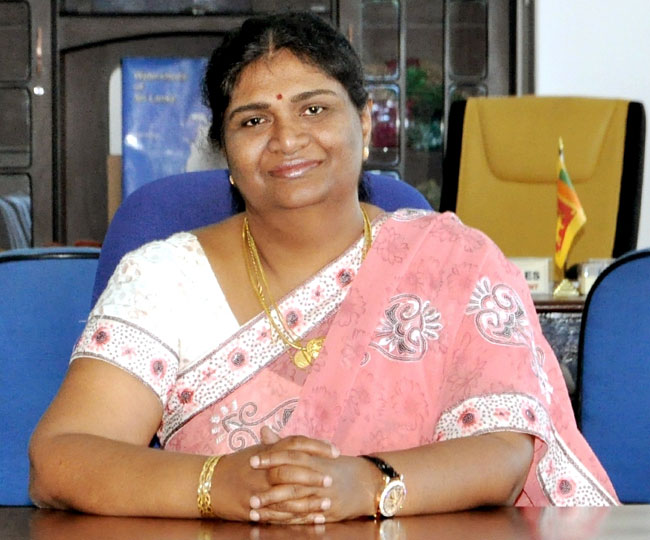
We readers have been carefully observing the failed attempt of the Finance Minister’s recent manipulations, with the blessings of the Cabinet, to remove Sarojini Charles from the post of D G Customs. She stood up on behalf of thousands and thousands of Sri Lankan Pepper farmers, and other thousands who earn their daily meal thanks to the Arecanuts business in Uva, Sabaragamuwa, Southern, and Central Provinces.

She was fighting a cold war in the Customs Department. She stood against errant dealers who import luxury vehicles as parts and assembled, with blessings of powerful politicians. We as citizens admire her tolerance and are grateful to her and the Customs trade unions for their true dedication and commitment to safeguard national interests. Politicians, traitors disguised as saviours engaged in international business, are well aware of trade agreement loopholes. So-called imports of pepper and arecanuts from Vietnam and Malaysia for value addition, is a farce. In order to exploit the tax concession of 5 percent available according to the bilateral trade agreement between India and Sri Lanka, pepper and arecanuts are first imported to Sri Lanka and then sent to India as a Sri Lankan product, and gain an additional tax benefit of 25 percent.

article_image

The damage caused to Sri Lankan Agricultural export products is immense and immeasurable. Value addition to Sri Lankan Agri products such as tea, cinnamon, cocoa, pepper compared to same products of other origins is some unique feature inherent and endemic to Sri Lanka, thanks to its weather climate and soil chemistry. We have ignorantly or willfully allowed international racketeers to exploit our agri products, to enrich their inferior products as marketable. Those who live abroad only know the low quality of same products I have highlighted in this column on 21st December 2017, the pathetic plight of our tea market, where we are adding value to products of other origins.

Amidst opportunistic politicians, their catchers and traitor business wolves disguised as lambs, we, citizens of this land appreciate and admire Ms. Charles’s outstanding capacity to withstand evil unlawful forces.

Like a silver glimmer in a dark cloud, we are yet hopeful, we still have a few Public Servants to name,, Ms. Deepa Senviratne of Central Bank, Mr. Dappula de Livera and Mr. Yasantha Kodagoda counsel of the Attorney-General’s Dept., and Mr Gamini Wijesinghe the Auditor General, who fearlessly came forward to do theirservice to the nation, in the infamous Bond Scam Inquiry proceedings.

Lord Naseby: Now is the time for Sri Lanka to stand on it’s own two feet

February 5th, 2019

Written by: Lord Naseby House of Lords Courtesy Politics Home

Is this really a country that has to be monitored by the West almost every day? The President of the APPG for Sri Lanka thinks not.

We may well need Sri Lanka’s friendship again soon over Brexit, says Lord Naseby.

About 6 months ago I was conscious that the UN Motions on Sri Lanka would be reviewed in March 2019 by the UNHCR in Geneva.I decided I should try to initiate a debate as near to Independence Day on February 4th as I could.

After all, it is nearly four years since these resolutions were passed; being originally moved by the USA and the UK and co-sponsored by the Government of Sri Lanka who welcomed help.

Specifically, two resolutions were adopted by the UNHCR in September 2015 & again in March 2017. The resolutions were entitled ‘Promoting reconciliation, accountability and human rights in Sri Lanka’.

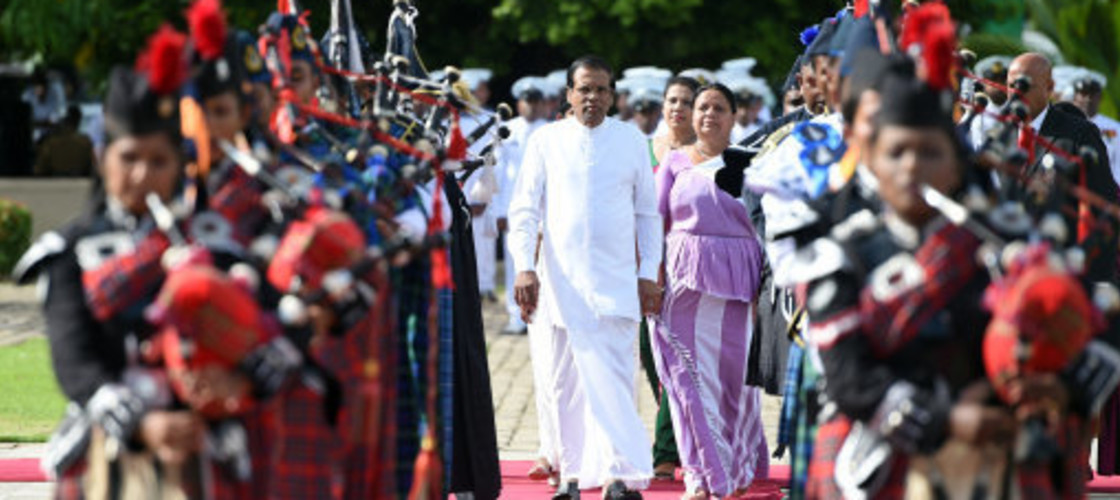
Sri Lankan President Maithripala Sirisena (Front C) arrives during a commemorative ceremony marking the 9th anniversary of the end of the island's civil war

The motivation for the alleged need for the resolutions at all was the very heavy lobbying by that section of the diaspora in the USA, UK and Canada who in their heart of hearts still wanted an independent state ‘Eelam’. They had lost the war when the LTTE Tamil Tigers were finally defeated on the battlefield on May 18th 2009. It was no secret that many of those lobbying had been closely associated with the LTTE Tamil Tigers indeed some were actual members.

My reading was they wanted to see some sort of revenge against the leadership of the democratically elected Government who according to the Diaspora and their media friends had carried out War Crimes, in particular, the alleged killing of 40,000 Tamil civilians in a genocide along with a host of other allegations. We now know from the UK military attache that the real numbers of civilians killed were about 6,000 and furthermore the Sri Lanka armed forces took real trouble to look after the fleeing Tamil Civilians.

Interestingly the USA has recently withdrawn from being a sponsor. My guess is the US Government assess the Sr Lanka Government has done a huge amount to meet the UN requirements, so sees little purpose in prolonging what is in effect almost a policing surveillance of the actions of another sovereign state now 71 years old.

The UK government has been helpful in the reconciliation process through its Conflict, Security and Stabilisation Fund. Halo Trust has done a wonderful job helping with clearing the near 1 million mines left by the Tamil Tigers. I have visited Halo in action twice and marvelled at the painstaking, dangerous work of a Sri Lanka operative clearing a square metre a day.

The UK has assisted in setting up the Office of Missing Persons. I reflect that hundreds if not thousands of Tamil Cadres or sympathizers vanished abroad claiming asylum or were just winkled out through Tamil Nadu in India or wherever. Even recently a whole activist Tamil family believed missing came to light in France.

The Sri Lanka government themselves has passed an Act to establish an Office for Reparations and a proposal to establish a Truth and Reconciliation Commission.

In reality, Sri Lanka has taken positive steps on the four pillars of transitional justice-truth, reconciliation, accountability and guarantees of non-recurrence which must be taken into account by the Human rights Council. Add to this the continuing cooperation Sri Lanka has maintained with UN Human Rights mechanisms and the international community, The Question has to be asked what is the point of the continuation of this resolution.

It is just ten years since the end of the war. Surely now is the time for closure and to let this proud Country stand on its own two feet.

Is this really a country that has to be monitored by the West almost every day.

My view as President of the All Party British Sri Lanka Parliamentary Group is NO.

I shall put all these points & more in the Debate. I shall finish by reminding Her Majesty’s Government of the old adage ‘keep your friendships in repair’. We may well need Sri Lanka’s friendship again soon over Brexit.

Lord Naseby is a Conservative Member of the House of Lords.

Media attacked by “Kalu Aliyas” and their NGO mahouts

February 5th, 2019

H. L. D. Mahindapala

This is a critical year for all politicians. With three-tier elections (Provincial, Parliamentary and Presidential) coming round the corner they all need to polish their image to win votes. Ranil Wickremesinghe, in particular, needs to give a spit, polish and shine to his image, which has been badly battered by the Bond scandal. But not all the laundries in Sri Lanka, from Point Pedro to Dondra, can clean the smelly political dirt dripping from his clothes. At least, not within the short time available for the elections. So he is trying the next best tactic: go on the offensive against the media to neutralise — or, if possible, negate — its impact on the electorate. He is now doing a Donald Trump. Instead of calling it Fake Media” he has labelled it as Kalu Madya” (Black Media”).

How white is he to label the media black”? Even at this moment there is a case against him in the Supreme Court for profiting from shares he owns of a state-owned company: Lake House. So, on the one-hand, he is quite pleased to pocket the profits derived from a section of the state media which he considers white” because it hands him dividends to fatten his bank account in addition to giving his image a boost, if that is possible. And, on the other, condemn a section of the media as Black” when it exposes him as the God Father of a white-collar mob that robbed the people’s money deposited in state funds and banks.

Many moons ago, he told me in an interview I had  with him when he was a minister in President Premadasa’s Cabinet, that his first youthful political act was to join his fellow-students at Law College protesting against the take-over of Lake House by the Marxists in Mrs. Sirimavo Bandaranaike’s government. It was then run by his father, Esmond Wickremesinghe. Though he mentioned that incident to portray himself as a great defender of the media he did not quite specify that he was also defending the shares he was going to inherit through his father, Esmond Wickremesinghe, who was the most powerful media moghul of the time with manipulative powers and money to make and break governments.

Politicians bashing media is predictable. Lake House was the perennial target of the Left and Centre when it was in the hands of Wickremesinghe.  In their eyes it was the Black Media”. It was seen as last citadel of the capitalist class by the Left. The nationalist saw it as the anti-Sinhala-Buddhist front run predominantly by the Christians. The Buddhist Commission Report painted it as the fortress of the anti-Buddhist forces. Besides, it was consistently allied with the UNP, especially with the pro-West anti-national forces. In the post-1956 era Lake House and the Centre-Left governments were always at logger-heads.

This is not uncommon in all democracies. As the name suggests, it is also common for non-governmental organisations (NGOs) to distance itself from the governments wielding power. NGOs do cooperate with the government of the day in implementing development and social service programs operated jointly by both parties. But they take extra care not to be seen as an instrument of government’s politics which erodes their neutrality and credibility. The fundamental thrust of NGO politics is not to align itself with the government. It’s avowed mission is to keep the government on its toes. NGOs invariably join hands with the opposition.

What is surprising now is the pro-government role of the non-governmental organisations. They have ceased to be non-governmental. They have openly become governmental. They have even come forward to legitimise the Kalu” Ranil’s new move to demonise the media. Following the lead given by Kalu” Ranil the Kalu” NGO-karayas have decided to take the media head-on. The media which were quite used to getting lambasted by the politicos were caught off guard when the niqab-masked NGO-karayas (like jeans-clad women from the Middle East) demonstrated in front of media institutions protesting against what they called abuse of media” by the media.

NGO protests against the media have a rather curious and contradictory history. The pro-West NGOs began first by launching campaigns against the anti-West Premadasa. He was the first President to send home the British High Commissioner, David Gladstone, who was caught red-handed interfering in domestic elections. It was a time when the West and the Indians were out to get President Premadasa who was defending the territorial integrity and independence with all his might. He was also fighting two wars against two fascist forces: JVP in the South and Tamil Tiger terrorists in the North.

In the absence of a people-based political front to challenge the Premadasa-government the foreign vested interests picked the most pliable and venal segment of the nation to mount campaigns against him.  They picked the willing media mendicants to manipulate and destabilise domestic politics. Overnight a Free media Movement” sprouted led by journalists who hardly had any money to buy a quick shot of arrack in the nearest hole-in-the-wall bars. Overnight they launched anti-Premadasa newspapers and went round holding public rallies, each of which would have cost at least Rs. 25,000.00 minimum at the time. From where did these penniless journalists get the money?

Overnight Lucian Rajakarunanayake, the front-man of the Free Media Movement” and Victor Ivan who launched his anti-Premadasa Ravaya, with the blessing of Western and Indian embassies, were seen parading as the new stars in the Western diplomatic cocktail circuits. How did these Grub-Street hacks and incompetent bomb-makers of a fascist terrorist gang become the darlings of the Western and Indian embassies overnight? Radhika Coomaraswamy , the then head of ICES (Incestuous Cabal of Eelamist Sycophants) too used to host them and hold seminars to give them respectability.

So it is not surprising to find the latest political front of NGOs manifesting itself as masked protestors staging demonstrations targeting selected media institutions that expose Kalu” Ranil. NGOs have a strong affinity with Kalu” Ranil because they feel that he is their baby. The latest is the usual suspects from the Social Scientists’ Association (SSA). Though the SSA has, in a footnote, distanced itself from the piece written in The Island, (The Media: A state within a state – Jan, 29, 2019) by its two researchers  —    Shashik Dhanushka and Praveen Tilakaratne – it is fair to conclude that a public condemnation of the media could not have been released by two apparatchiks of SSA without a nudge-and-a-wink from the presiding papas and mamas at the top, which include, according to their website, ex-Prof. Jayadeva Uyangoda,  ex-Prof. Kumari Jayawardena and the know-all Dr. Carlo Fonseka.

Even if they did not have a hand in it they should be writhing in shame – if they have any shame left at all — at the pathetic intellectual level reflected in the article by their researchers. To begin with, one wonders why these parenting pundits who preside over the operations of the SSA ever bothered to recruit these two green-horned aliens who have managed, at best, to exhibit only their cerebral underdevelopment. They sound like primitive invertebrates that could be found, if at all, somewhere in a sterile planet on the edge of our solar system which has yet to evolve and catch up with the advanced Sri Lankan media.

There is a notable difference in the oblique and underhand intervention of SSA in its politically slanted  attack on the media.  As stated earlier, the NGOs in democracies normally play an anti-state role, rising invariably in defence of the media under attack by the state. The agents of SSA, however, have come out defending the state they favour: the most corrupt regime ever of Kalu” Ranil. The Sri Lankan media, irrespective of the ups and downs have fought their way through debilitating wars, coups, fascist uprisings, threats by states, media moghuls, etc.

The media domain also has a fair balance of private and public sector ownership, both in the electronic and print media. It has produced brilliant journalists who had won international fame and also its share of mediocrities, some of whom are no better than chief clerks occupying editorial chairs. There is much hope in the new generation of journalists who are jousting skilfully with politicians and spin masters in academia, NGOs etc. They are no longer coming back to the news desks with sun shine stories handed out by bureaucrats and political panjandrums of the state.

The headlines and the commentariat are focusing on the distortions and the devaluation of politics that have dragged the nation down to the cesspit. With nothing left of his Yahapalanaya, launched jointly with NGOs, Kalu” Ranil seriously believes that he has saved democracy and the nation. All what he has done so far is to pervert the best of Westminster principles, making a mockery of parliamentary democracy. As a lobby correspondent of the Old Parliament, where political giants stood for the highest of Westminster principles, I can vouch for the fact that Parliament has never descended to such low depths as under the regime of Kalu” Ranil. His image so far has not risen above that of Ali (pun intended) Baba leading his gang of thieves to rob the banks of the nation. In his usual delusionary fashion Kalu” Ranil seriously believes that he has saved democracy by leading a brigade of Meetota-mullahs” (translation: sewage-makers) to the lowest depths of degradation in post-independent history.

His attacking the media and the NGOs following his example is another glaring example of the desperate roles played by NGOs and Kalu” Ranil” to prop up each for survival. Their symbiotic relationship is driving the nation to disastrous ends. Take also the case of Paki” Saravanamuttu, the highly paid high priest of human rights.  He rushed into courts to save Kalu” Ranil’s premiership. Of course, his phraseology had a devious tilt. He said that asking Kalu” Ranil to face elections would deny him his citizenship! Having said that, he now reclines and relaxes smugly in his NGO arm chair, quite content with his blind belief that Kalu” Ranil has not denied his citizenship rights by refusing to hold Provincial Council elections. So according to this political pundit citizenship rights are denied when you hold elections. Nor are they denied when you don’t hold elections! This is a clear indication of Paki” getting high, in between sips of his aperitif, on Ranil’s serappu soup.

The NGOs are supposed to act as the moral guardians of the nation, challenging the governments when they step out of line. But Sri Lankan NGOs are backing the Kalu” Ranil to the hilt whatever line he takes. They are working on all fronts – from Courts to streets — to white-wash Kalu” Ranil. NGO hirelings are even fronting up in niqab-masked outfits to demand that the media should toe the line of Kalu” Ranil’s government.

The English historian Thomas Macaulay wrote in 1828: “The gallery in which the reporters sit has become a fourth estate of the realm.” The NGOs in Sri Lanka have been struggling to become the fifth estate claiming to be stake-holders in the affairs of the state. They never had a better time than under Kalu” Ranil’s regime. Kalu” Ranil is beholden to them for legitimising his regime in the eyes of the West. NGOs are beholden to Kalu” Ranil for making them stake-holders in his corrupt regime.

They are birds of a feather who flock together. Both have so much in common. Both march to the tune of their Western masters. Both are anti-national. Both are out to punish the liberators of Jaffna and its people from the fascist regime of Prabhakaran.  Both have no mass base to win an outright majority in Parliament. Both manipulate the system to grab power through the backdoor to rule without the full consent of the people. Both thrive on foreign-funded sources. Both theorise and moralise without ever advancing to save the nation on their bogus panaceas. For instance, which particular theory of NGO-pundits, concocted with Erik Solheim and Anton Balasingham, ever helped to end the longest running war in Asia? Didn’r our humble lads and lasses win the unwinnable war under the leadership of another ga-may kol-lek” from Medamulana in the South?

Kalu” Ranil, of course, has earned a reputation in a new field. Beating all others he has mastered the art of robbing banks in daylight with impunity. Now he has taken the UNP to the next level: he has transformed (Hey Presto!) the Green Aliya into a Kalu” Aliya.

On-na Babo Kalu Aliyo rata kanawo

Alin keli-yea dupp-pathun-ta, nay-the sudo ?         

LESSONS LEARNED-PRESIDENTIAL PARDON FOR SARATH FONSEKA WAS A MISTAKE

February 5th, 2019

By M D P DISSANAYAKE

President Sirisena gave full pardon to former convicted criminal Sarath Fonseka  simultaneously restoring, redecorating, recycling all his privileges, colours etc.   Subsequently he was awarded the prestigious Award of Field Marshal .

Mr Gotabaya Rajapakse made strong recommendations to President Mahinda Rajapakse to appoint Sarath Fonseka for the role of Army Commander, by-passing several other Senior High Ranked Officials.

Has Sarath Fonseka learnt any lessons and was he grateful to those who helped him when he was in difficulty?  Or President Sirisena  and Mr Gotabaya Rajapakse are having second thoughts of their past actions?

Instead of releasing Sarath Fonseka, the President could have released some other ordinary citizen in prison, in such situations the President Sirisena may not have to face derogatory remarks and insults from the Field Marshal SF today.   We cannot read the mind-set of an individual.  As Peter Falk said in Columbo, YOU CAN’T GET A SEARCH WARRANT FOR WHAT IS INSIDE YOUR MIND”.  If Galaboda Aththe Buddhist monk had been released,  it  would not take 24 hours for him turn back and  display his anger, use abusive language and create chaos in the country.   Whilst  hundreds of ordinary citizens are daily arrested and prisoned for committing crimes, it is seldom key figures  such as Sarath Fonseka, Duminda Silva, Buddharakkitha, Galaboda Aththe are caught and punished.     With the lessons learned, such persons should remain behind bars, thus providing peace and harmony for the civil society.

THE TAMIL LANGUAGE IN SRI LANKA Part 1

February 5th, 2019

KAMALIKA PIERIS

According to historian Sirima Kiribamune, the earliest Tamil inscription found in Sri Lanka is dated to the end of 10 century, immediately preceding the Cola conquest of the island.  It records a donation to a Hindu shrine. (ICES Ethnic studies Reports 4/1 1986 p 14) There is not a single Tamil inscription before the 10th century, she said.

This fits in with historian K. Indrapala’s conclusion in his PhD thesis Dravidian settlements in Ceylon” (1965) that there were no Tamil settlements in Sri Lanka before the 10 century. These Tamil settlements of the 10 century and after, would have been residual settlements of the Chola occupation of the Rajarata which took place from 985 AD to 1070 AD.

Chola rule in Sri Lanka was limited to the Rajarata region. Cholas were prevented from coming lower down by the Sinhala king, who throughout Chola rule was active in the south, planning the rout of the Cholas. Cholas controlled two important ports, Mantota and Trincomalee. These two ports were very important for the Cholas. Trincomalee looked out on the Bay of Bengal and faced Burma and South East Asia.  It had a current which took ships to Burma and Indonesia very fast.  The Cholas did not have a port to match Trincomalee.

Historians think that the Chola conquest of Sri Lanka was primarily to get access to the valuable international east-west trade route using Mantota and Trincomalee. The East-West trade route, which started in the Arabian Sea, ran down the north-western and south-western seaboard of India (present-day Gujarat, Maharashtra, Karnataka, Kerala) and ended at Mantota in western Sri Lanka. The Tamil kingdom, lying on the south-east of India was completely outside this trade route.

During Chola rule, Rajarata was administered in Tamil. When the Sinhala king overthrew the Colas, he threw out the Tamil language as well. Tamil was not permitted to take root in  Sri Lanka. There is only one Tamil inscription dated to Parakrama bahu I and that was for the benefit of south Indian traders who called at the port of Uratturai, (Kayts). Kings who came after Parakrama bahu I did not issue inscriptions in Tamil. All inscriptions were in Sinhala.

However, about two hundred Tamil inscription belonging to the period    11 -16 century have been discovered in various parts of Sri Lanka, said epigraphist Malini Dias,     A few inscriptions were edited and published by  Senerat Paranavitana and  A Velupillai in Epigraphia Zeylanica Vol 6. Other Tamil inscriptions were edited and published elsewhere by historians such as S Pathmanathan and K Indrapala.

There is no single collection of all these Tamil inscriptions.  Inscriptions were described, sporadically in research journals. I recall reading one many years ago. The analysis started proudly, with a lengthy description of the appearance of the inscription. It ended with the abrupt announcement that the inscription was too worn to be read! I think it was published in the University of Ceylon Review, but I may be wrong.

Most of these Tamil inscriptions are on endowments to Hindu temples. Some are dated to Chola rule,   with special mention of Raja Raja Cola (985 – 1014 AD) and Rajendra Cola 1 (1012–1044 AD).  Two inscriptions at least, refer to endowments to Thirukeetheswaram temple in Mantota. There is also an inscription dated to Rajendra Cola 1 which refers to the establishment of a Visnu temple in   Anuradhapura.

The Kotagama inscription refers to Ariyachakravarti’s victory over the Gampola king.  It is dated to 1344. A Tamil inscription dated to around 1433 AD, grants lands including Naimanne in Matara to Upulvan device. A Tamil pillar inscription set up in time of Vijayabahu VI (1513- 21) refers to the building of a kovil in Kotte kingdom by one Kumaran Nayan.

Much prominence has been given to the ‘Tamil inscription’ in the Trilingual slab found in Galle. This Trilingual slab was brought from China and left in Galle in 1409 by Chinese admiral Cheng Ho. Tamil historians in Sri Lanka have had great difficulty in reading this so-called Tamil inscription.  ‘This inscription is of a unique kind. There is no similar record in the whole range of Tamil inscriptions,’ they said. The language and orthography show characteristics which are not found in any other Tamil inscription, they continued.   The word ‘Manittar’ found in the inscription is not found in Tamil.

That is not surprising. The tablet found in Galle is not in Tamil. It is in Malayalam. These tablets were prepared in China. The Chinese placed them in the ports visited by them, on the east-west trade routes. Tamilnadu was not on the East-West trade route. Cheng Ho did not go there. It is most unlikely that China would have bothered to prepare an inscription in Tamil. Kerala was on the East-West route and there is a similar tablet in Kerala.

Jaffna was initially, Sinhala speaking. Jaffna was populated by Sinhalese in the ancient and medieval period. The evidence is still there in cattle branding and in place names.  Historian P.A.T. Gunasinghe says that the place names of Jaffna only make sense if they are seen as translations of Sinhala names. He points out that ‘vil” means ‘bow,’ and ‘pay’ means ‘net’ in Tamil. Therefore names like Kokuvil and Manipay only make sense when they are seen as the Tamilisation of the Sinhala words Kokavila and Mampe. Valikamam and Vimankam are meaningless in Tamil, but make sense if the villages originally bore the Sinhala names of Valigama and Vimangama. Some place names like Polvattai refer to the Sinhala used in 14th century.

Jaffna Peninsula was conquered by the Tamil speaking Pandya kings in the 13 century and then by the Vijayanagara kingdom of Karnakata in the 14th century. Jaffna seems to have stuck to Tamil and avoided the Telegu favoured by the Vijayanagara regime. The Catholic priests, who went to Jaffna after the Portuguese invaded and took over Jaffna in the 16 century, had preached the Catholic faith in Tamil.

Fr. Emerzan Ragel, writing a tutorial for the Ampitiya Seminary in 2015, referred to Fr. Henry Henriques, probably the first European to master Tamil. He had composed several Tamil books including a Tamil grammar. One of his books has been found in the National Library, Lisbon.  Fr Ragel also mentions a Jesuit priest writing about church service in Vaddukoddai, saying on Saturdays, the vespers, litany, salve, are sung in Tamil”. Fr Ragel has not provided references for these statements. Fr. Jacome Gonsalvez who came to Sri Lanka later, in 1705 knew Tamil and wrote many hymns and prayers in Tamil. This is well known.

The Udarata kingdom (1469-1815) worked primarily in Sinhala. There is no evidence to show that the Tamil language was used in the Udarata kingdom. The Nayakkar kings of the Udarata kingdom, who ruled from 1739- 1815 were known in the Udarata as ‘Andhras’ because their descendants came from Andhra Pradesh. They seem to have used both Tamil and Telegu in their private conversations.    Their correspondence with India seems to have been in Telegu.

Udarata would have used Telegu for trade transactions as well.  The leading south Indian traders coming into the Udarata kingdom at Kalpitiya were from the Telegu speaking kingdom of Golconda (in present-day Andhra Pradesh). Golconda had the biggest ships. In contrast, the ships of the Tamil traders coming into Kalpitiya were small in size, and less in number.

However, historian K.W. Goonewardena has provided two instances of the use of Tamil in the Udarata period.    Goonewardena said that Dumbara Rala, an important Disawe of the Udarata kingdom had sent a letter in Tamil to the Dutch Governor.  Goonewardena also noted in the same essay, that in the time of Dutch Governor Van Gollenesse(1743-1751)  it had been recorded that from  Negombo to Jaffna only Tamil was spoken. (KW Goonewardena.  An accession of Sri Vijaya.   RASSL Journal. 1995 p 462.)

Rasmus Rask (1787-1832) was a Danish specialist on languages. In 1816, Rask left Denmark to learn about languages in the East and to obtain manuscripts for the Royal Library, Copenhagen. He went to Sweden, Finland, Russia, Persia,   India and then Ceylon. Godakumbura says that Rask learnt Sinhala in the three months he stayed in Madras. From Madras Rask arrived in Jaffna in November 1821 and learned Sinhala from C.E.Layard, the CCS officer stationed there, using the Sinhala version of the New Testament of the Bible. He came down to Colombo and collected   Sinhala manuscripts to take back to Denmark. There is no mention of Tamil.

The fact that Rask did not study Tamil, though he was in Madras and Jaffna, indicates that Tamil did not have a high position at the time. The South Asian collection of the Royal Library, Copenhagen, today has 1127 manuscripts in Sanskrit, 310 in Pali, 169 in Sinhalese, 97 in Tamil, and 13 in Urdu.  It has 2640 printed books in Sanskrit, 860 in Hindi, 690 in Urdu and 180 in Sinhalese. There is no mention of Tamil.

By the end of the 14 century, Tamil had lost its dominant position even in its own country. Around 1364, the Tamil kingdom in South India was conquered by the Vijayanagara kingdom of Karnataka.  Tamil kingdom was thereafter administered by Vijayanagara officials from present-day Andhra Pradesh.  Tamil was displaced by Telegu, the language of Andhra Pradesh. The kingdom was thereafter administered in Telegu.

The Tamil kingdom later splintered into small, weak kingdoms, known as the kingdoms of Madura, Trichinopoly, and Tanjore, with Madura going under the Muslim Nawab of Arcot in 1734.  Telegu continued to dominate. There was a Telegu literature in Madras in the 19th century and the British rulers recognized Telegu. Telegu manuscripts numbering 3335 collected during British rule were sent to Hyderabad in 1960.

The  Tamil language was rescued and elevated by the Christian missionaries who arrived in Tamilnadu from the 17th century onwards. They had to learn Tamil to convert the natives to Christianity and in the process, they helped to revive Tamil language and literature.

The leading personalities in this were two Italian Jesuit priests, Roberto de Nobili (1606-1656) and Constanzo Beschi (1680-1742) also German Lutheran priest B. Ziegenbalg (1682-1719). They collected Tamil manuscripts,   made translations and compiled grammars. G.U.Pope (1830- 1857) a Wesleyan priest, translated many Tamil texts into English and British Civil Servant F.W.Ellis (1810-1819) made a large collection of Tamil manuscripts.  Rev. P.Percival (Wesleyan, then Anglican) was appointed the first Professor of Vernacular Literature at Madras University in 1857. He knew both Tamil and Telegu. Rev. Robert Caldwell introduced the notion of a separate group of Dravidian languages in his  ‘A Comparative Grammar of the Dravidian Languages, ‘(1856). ( continued)

පළාත් සභා කල්දාන්න කුමන්ත්‍රණකාරී සැලසුම් එපා!

February 5th, 2019

කැෆේ සංවිධානයේ වැඩ බලන විධායක අධ්‍යක්ෂ අහමඩ් මනාස් මකීන්

පළාත් සභා මැතිවරණය  නොපැවැත්වීමේ සැලසුම් කුමන්ත්‍රණකාරී ලෙස ක්‍රියාත්මක නොකර වහාම පළාත් සභා මැතිවරණය පවත්වන්නැයි  කැෆේ සංවිධානය කියයි. එම සංවිධානයේ වැඩබලන විධායක අධ්‍යක්ෂ අහමඩ් මනාස් මකීන් මහතා සඳහන් කළේ මේ වනවිට පවතින ජාතික දේශපාලන ගැටළුව වෙනුවෙන් පළාත් සභා බිල්ලට නොදිය යුතු  බවයි.

වර්තමානය වනවිට ඇතැම් පාර්ශව පළාත් සභා මැතිවරණය සම්බන්ධයෙන්  විවිධ මත ඉදිරිපත් කරමින් මැතිවරණය කල් දැමීමේ සූක්ෂ්ම ක්‍රියාමාර්ගයකට අවතීර්ණ වී ඇති බව  හෙතෙම පෙන්වා  දෙයි.  එකම පක්ෂයේ මන්ත්‍රීවරු  සහ ඇමතිවරු පළාත් සභා මැතිවරණය පැවැත්වීම සම්බන්ධයෙන් පරස්පර මත ඉදරිපත් කරමින් සිටින බවත් ඒවායේ අරමුණ ජනතාව නොමඟ යවා පළාත් සභා මඟහැර ජනාධිපතිවරණයක් පැවැත්වීම බවත් ඒ මහතා පැවසීය. ජනාධිපතිවරණය ප්‍රමුඛත්වයෙහි ලා සැලකීමෙන් ජාතික දේශපාලනය තුළ අර්බුදකාරී තත්වයක් ඇති බව තහවුරු වන බව කී ඒ මහතා පෙන්වා දුන්නේ ජාතික දේශපාලනයේ ඇති පවතින අර්බුදකාරී තත්වයක්  වෙනුවෙන් පළාත් සභා මැතිවරණය බිල්ලට දිය යුතු නැති බවයි.

මේ වනවිට දිවයිනේ පළාත් 6 ක් පළාත් සභාවලින් තොරව කෙලින්ම ජනාධිපතිවරයා යටතේ ආණ්ඩුකාරවරුන් හරහා පාලනය වන බව කැෆේ සංවිධානයේ වැඩබලන විධායක අධ්‍යක්ෂ වරයා අවධාරණය කරයි.  අවසන් නිල කාලය තුළ මෙම පලාත් සභා 6 සඳහා නියෝජිතයින් 262 දෙනෙක් පත්කර තිබූ අතර  මේ වන විට මාස 15 ක් තිස්සේ මැතිවරණ නොපැවැත්වීමෙන් එම සියලු බලතල ආණ්ඩුකාරවරුන් 6 දෙනෙකු යටතට පත්වී ඇති බව   අහමඩ් මනාස් මකීන් මහතා පෙන්වා දෙයි.   උතුරු පළාතේ  ම න්ත්‍රීවරු 38ක්,  නැගෙනහිර පළාතේ 37ක්, සබරගමුව පළාතේ 44ක්, උතුරු මැද පළාතේ 33 ක්, වයඹ 52ක්  සහ මධ්‍යම 58ක් ආදී වශයෙන් පසුගිය පළාත් සභාවලට පත්කර තිබුණි.  මේ වනවිට එම සියලු පළාත් සභාවල නිල කාලය අහෝසි වී ඇති  නමුත්  තවදුරටත් මැතිවරණය නොපවත්වා සිටින්නේ කාගේ වූවමනාවට දැයි කැෆේ සංවිධානය ප්‍රශ්න කරයි.

මේ නිසා  මැතිවරණ කල්  දැමීමේ සැලසුම්  අකුළා දමා වහාම පළාත් සභා මැතිවරණය පැවැත්වීමට කටයුතු කරන්නැයි කැෆේ සංවිධානය ඉල්ලා සිටියි.

මාධ්‍ය ඒකකය

කැෆේ සංවිධානය


ඇමරිකානු හමුදා බලඇණි 9කට ලංකාවේ කරනම් ගහන්න මේ ආණ්ඩුව ඉඩ දුන්නේ මෙන්න මෙහෙම

February 5th, 2019

wasantha bandara

Authority the Election commission in Sri Lanka has but not holding elections

February 5th, 2019

Gamini Parakrama Dissanayake On behalf of Sri Lankans in Tokyo

Mr. Mahinda Deshapriya
Chairman

ELECTION COMMISSION
Elections Secretariat, P.O. Box 02, Sarana Mawatha, Rajagiriya, 10107, Sri Lanka

We Sri Lankans in Tokyo, Japan are kindly requesting you to hold provincial elections without any further delay. You have the sole authority to hold such elections and if you have any obstructions, you should go to courts without making statements like “I will resign if elections are not held”. If the member Rathnajeevan Hoole could go to courts seeking preventing of general elections, we don’t understand why you cannot go to courts to secure the democratic rights of Sri Lankans.

We are aware that  there are foreign elements and NGO’s behind Rathnajeevan Hoole to act as a puppet but we don’t expect you too to be a puppet of the prime minister Ranil Wickramasinghe or any other elements.

We expect you to do the right thing without any further delay.

Thank you.

Yours sincerely,

Gamini Parakrama Dissanayake

On behalf of Sri Lankans in Tokyo

P.S.M. Charles reinstated as Sri Lanka Customs DG

February 5th, 2019

Courtesy Adaderana

Ms P.S.M. Charles has been reinstated as the Director General of Sri Lanka Customs for a period of three months.

Minister Mano Ganesan said the decision was reached during the meeting of Cabinet Ministers today (5).

P.S.M. Charles reinstated as Sri Lanka Customs DG

He said that Finance Minister Mangala Samaraweera withdrew the Cabinet paper seeking to transfer P.S.M. Charles from the position of Customs DG.

The minister further said that she was reinstated in the position for a period of 3 months and that her performance will be observed during this period.

Customs trade unions launched a work-to-rule campaign last week opposing Minister Samaraweera’s decision to remove Ms. Charles from the position and replace her with a retired navy officer.

The trade union action, which had crippled services provided by Customs, had entered day seven today (5) while several trade unions of state departments, institutions and corporations had supported the protest.

STF chief Senior DIG Latiff gets one-year service extension

February 5th, 2019

Courtesy Adaderana

The Cabinet of Ministers have approved President Maithripala Sirisena’s proposal to grant a one-year service extension to the Commandant of the Special Task Force (STF) Senior DIG M.R. Latiff, who was set to retire today (5).

Senior DIG Latiff was expected to retire today after completing 40 years of service in Sri Lanka’s police force.

However, the President in his capacity as the Minister of Law & Order had submitted a Cabinet paper to grant a one-year service extension to the distinguished officer.

Latiff, who joined the Police Department in 1979 as a Sub Inspector, had joined the STF in 1984, as one of the initial members of the elite police commando unit.
He assumed duties as the 11th Commandant of the STF on August 19, 2016.

Senior DIG M.R. Latiff has also headed various other police units and divisions during his service.

‘Makandure Madush’ arrested in Dubai

February 5th, 2019

Courtesy Adaderana

Notorious Sri Lankan underworld kingpin ‘Makandure Madush’, several other prominent underworld figures and a popular Sri Lankan singer are among 25 suspects arrested during a joint operation in Dubai, sources said.

The suspects were reportedly arrested at a hotel in Dubai in a joint operations carried out by law enforcement officers from both Sri Lanka and Dubai.

The prominent underworld figures known by the aliases ‘Kajipani Imran’ and ‘Keselwatte Dinuka’ as well as two other notorious underworld members, whose names have not been confirmed as of yet, are among the 25 suspects arrested during the operation, the source told Ada Derana.

The raid was carried out during a party reportedly organised in Dubai by Madush while officers have also seized a quantity of drugs found in the possession of the suspects.

Samarasinghe Arachchige Madush Lakshitha alias Makandure Madush is an underworld gang leader, who has been in hiding abroad for the past couple of years.

He allegedly operates his drug network, extortion rackets and other criminal activities through his accomplices in Sri Lanka.

However, it was reported that Madush had visited Sri Lanka on a number of occasions.

Sri Lanka Police have been on the hunt for Madush, who is one of Sri Lanka’s most wanted criminals, for the past couple of years as he had managed to evade arrest by Sri Lankan and foreign authorities.

Fly smiles club Ripping off customers

February 4th, 2019

Dr Sarath Obeysekera

Sri Lankan airline promotes Flysmiles to promote for customers to score sky smile points and offer them upgrading of lower class tickets to an upper class by using sky smiles.

Dialog etc also ganged up with Sri Lankan’s

Myself being a corporate frequent flyer have been using Sri Lankan for few years patronising Sri Lankan Airlines being a local airline.

My wife and I have reached Gold Card status and enjoy privileges even if we use a lower class to fly 

My wife had to travel to the UK on the urgent family matter today on 4th February and booked an economy class ticket due to urgency.

The airline promises to upgrade to business class using Flysmiles

Called them to upgrade but airline keeps seats to sell at a much higher price though I am entitled to upgrade.

Tried several days to upgrade, but failed.

My wife Had to fly today

I called Flysmile telephone number 0197333333 and requested an upgrade and they refused to claim that there are No upgradable seats

If I have to upgrade I had to pay over 186000 rs rather than using my sky smile points

I requested the Flysmile club to allow my wife to use sky route checking point which is the only business class checking point for Sri Lankan in Colombo which is run by Airport and Aviation Authority.

Over the phone twice they confirmed that my wife can use the Business Class checking counter

Arrived at the airport and walked to sky route counter.

Ladies of Airport and Aviation who man the counter checked the list and refused to check in

They directed us to Sri Lankan airline counter and requested them to confirm that my wife is allowed to be checked in though she was a economy class passenger

The man with a name tag T N Arrachi was rude and refused to check in

Airport and Aviation authority representatives told us to pay 9100 rs to upgrade

I was furious of the attitude of the Sri Lankan brat and immediately paid 9100 rs and checked my wife in

On the way home I called Fy Smiles using the number  above to verify again whether I was told about the fact that my wife could  use the Silk Route counter

They checked the voice record of my conversation and confirmed that The operator  has in fact confirmed so

I wrote and emailed to FlySmiles and complained

Downward Spiral In Cricket Needs Immediate Attention.

February 4th, 2019

Top spin by Suni

4th Feb 2019

In any sport where motivation perhaps is the key word, cricket being no exception, in Sri Lanka cricket, apart from the enthusiasm to secure positions in the forthcoming elections for obvious reasons there seems little else towards correcting the downward spiral the present Test squad seems to be hurtling into.

It is frustrating to watch the many areas the team needs supplementing in and foremost the captaincy appears to be painfully lacking in the motivation that previous leaders have shown. So it is no surprise that the Lankans have been subjugated, intimidated and virtually demoralised as a team after the Indian and Australian Series’ where India was outstanding and the Sri Lankans are now heading towards further disaster in South Africaat the hands of their top order pacies  probably smacking their lips awaiting their arrival. Synonymously the captain Chandimal only seems to have wayward rhetoric and meaningless jargon about how to recover from the problems rather than leading by example.In all probabilities he would perform better if he was replaced by someone more capable and better equipped to lead.

Sri Lanka have provided platforms for Australia to recover from their ” Indian drubbing ” and create unprecedented entries into the record books simply through ineptitude, lack of application or being  categorically unfit to play at the highest level of the game and has brought to discredit what their memorable predecessors did in the recent past  and have now been reduced to a team of disoriented players and if there were levels of relegation similar to soccer and other sports league in all probabilities they would surely be at the lowest .

History has proved that aggressive fast bowling was a key factor towards winning matches but it has also proved that there have been batsmen capable of countering and withstanding its perils in scintillating fashion but perhaps in the modern game, circumstances and conditions may be different and Australia has proved its effectiveness by brutally demoralizing Sri Lanka and sent them to the canvass in a manner of speaking. It is an issue which needs immediate attention where all things considered the team is heading for dire straits unless remedied.

Areas which need remedying appear to be – a captain who motivates and strengthens the team by example and being judicious, forthright and perceptive in decision making. Conditioning, both physical and psychological fitness and the capacity to play the rising ball without offering one’s helmet  and body armour as buffers and misjudging the trajectories and bounce of a rising ball  as Karunaratne and Perera did at Canberra ending up in hospital where the bat as a defensive and offnesive weapon seemed to have been pre-empted through hesitance and indecision. (The ICC probably needs to implement more stringent rules about the  use and misuse of the bouncer beyond what already exists as indiscriminate bouncing these days seems rampant.)

The overall quality of players selected on performance and merit rather than on favouritism needs prioritizing as in the past and have been been winners not losers with tails between their legs which is gut wrenching for the fans and for the morale of Sri Lanka cricket in general.

Hopefully the downward spiral the team is in will be corrected before total disaster strikes this near to the World Cup.

‘ආවා‘ කල්ලියෙන් උතුර ගැන රට කළඹන හෙලිදරව්වක් (Video)

February 4th, 2019

Lanka Lead News

පසුගිය කාලයේ උතුරු පළාතේ සිදුවූ ඇතැම් අපරාධ සම්බන්ධයෙන් චෝදනා ලබා සිටින ආවා කල්ලිය නමින් හැදින්වෙන කණ්ඩායමේ සාමාජිකයෙක් අද දෙරණට එම චෝදනා සම්බන්ධයෙන් හෙළිදරව්වක් සිදුකළේය.

ඒ අද දෙරණ TALK සංවාදය සමඟ එක්වෙමින්ය.

ආවා කල්ලිය කියා කල්ලියක් යාපනයේ කිසිසේත්ම නැති බව එම කණ්ඩායමේ සාමාජිකයෙකු වන අරුලාලන්දම් අරැණ් නැමැත්නා පෙන්වා දෙයි.

ආවා කල්ලිය ඇති කළේ සුමන්තිරම්, සරවන බවන් විද්‍යාදරණ් යන අය බවත් ඔවුන් නිතීය හමුවට ගෙන යා යුතු බව අරුලාලන්දම් අරැණ් පවසයි.

මේ අතර ආවා කල්ලිය නැමිති කල්ලියට වර්ථමාණයේ භාවිතා වන නම සැදුන ආකාරයද මෙහිදී වැඩිදුරටත් අදහස් දක්වමින් අරුලාලන්දම් අරැණ් සඳහන් කළේය.

යාපනයේ තරුණ තරුණියන්ට සෙල්ලම් කිරීමට තරම් කිසිඳු ස්ථානයක් නොමැතිවුවත් කොළඹ ප්‍රදේශයේ පුද්ගලයින්ට ඇවීදිමට පවා මන්තීරු ඇති බව ඔහු පවසයි.

පසුගිය දිනක වික්රෝරියා උද්‍යානයේ රාත්‍රී 11.30 සිටන අවස්ථාවේදී තමයි නිදහස යනු කුමක්ද යන්න ඔවුන් දැකගත් බව ආවා කල්ලියේ සාමාජිකයෙකු වන අරුලාලන්දම් අරැණ් නැමැත්නා පැවසීය.

( වීඩියෝව උපුටා ගැවීම අද දෙරණ)

නිදහස අවශ්‍ය නම් දළදා වහන්සේට රට පූජා කරන්න

February 4th, 2019

    මතුගම සෙනෙවිරුවන්   

වසර එකසිය ගණනක් තිස්සේ බ්‍රිතාන්‍ය රැජින ගේ බලයට යටත් ව සිටි සිංහල රාජ්‍ය යට ස්වාධීන පාලනයක් ලබා දෙන ලද්දේ 1948 වසරේ දීය. මේ සඳහා ලංකා නිදහස් පනත  නිදහස් රාජ්‍ය පනත  ආරක්ෂක ගිවිසුම විදේශ කටයුතු ගිවිසුම ආදී පනත් කීපයක් උපයෝගී කොට ගන්නා ලදී.අද ගෙවී යන්නේ එලෙස ලැබුණු නිදහසේ සැත්තෑවෙනි අවදියයි.

        1815 වසරේ ගිවිසුමකින් ලංකාව බ්‍රිතාන්‍යට භාර දෙන කල්හි රටේ නම වූයේ සිංහලේය. නමුත් ඉංග්‍රීසි පාලනය සිංහලේ නම භාවිතා නොකොට සිලෝන් නාමය යොදා ගනිමින් ආපසු භාර දෙන කල්හිද එහි වෙනසක් ඇති නොකළහ. මේ නිසා 1972 ජනරජ ව්‍යවස්ථාවට රටේ නම යොදා ගන්නට සිදු  වූයේ ශ්‍රී ලංකා ජනරජය වශයෙනි. මෙම ක්‍රියාවෙන් අපට පැහැදිලි වනුයේ ඉංග්‍රීසීන් ගේ ආධිපත්‍ය යටතේ හැදී වැඩුණු  සිංහල දේශපාලන නායකයන් තම මව්බිමේ සැබෑ නාමය යලි යොදීමට අකමැති වූ ආකාරයයි. එසේම 1948 දී නිදහස් දිනයේ දී ඔසවන ලද පැරණි සිංහලේ රජකීය කොඩිය ට පටි ගසා විකෘති කොට 1951 දී නව ජාතික කොඩියක් නිර්මාණය කරලන්ට ද ඔවුහු කටයුතු කළහ. අප නිදහස ලබණු වෙනුවට ඉංග්‍රීසින් ගේ නීති ආධිපත්‍ය ආර්ථික ආධිපත්‍ය ආදී සියළුම අංග කරපින්නා ගෙන මෙතෙක් පැමිණි ගමනේ නම් කිසිම සුගතියක් අත් පත් කර ගෙන නොමැති ආකාරය පැහැදිලිවම පෙනෙන්නේ වර්තමානයේ රටක් වශයෙන් පත්ව ඇති ඛේදනීය තත්ත්වය දෙස බලන කල්හිය.

          අවසාන සිංහල රාජධානිය වන මහනුවර රජකල කීරති ශ්‍රී රාජසිංහ සමයේ දී වඩුග පාලනය පෙරළා දමා නව සිංහල රාජ්‍යක් ගොඩ නැගීමට කැරැල්ලක් ඇති විය. සිංහල රාජ වංශයේ කුමරුවකු උඩරට රජ කරවීම එහි බලාපොරොත්තුව විය.මෙහිදී වඩුග පාලනයේ හොඳ හැටි සප්පායම් වී සිටි රදළවරු මෙම කැරැල්ලට විරුද්ධකම් පාමින් ලන්දේසීන් සමග ගිවිසුමකට පැමිණියහ.එම ගිවිසුමට අත්සන් තබන ලද්දේ රජු නොව නිලමේ වරුන්ය. ඔවුහු රජුද අභිබවා යමින් ලංකාවේ මුහුදු බඩ පළාත්වල ගව්වක භූමි ප්‍රමාණයක් ලන්දේසීන් වෙත අත්හැරියහ.උතුරින් යාපනයත් දකුණින් දෙවුන්දරත් නැගෙනහිරෙන් මඩකලපුවත් වයඹින් මන්නාරම සහ පුත්තලමත් අත් හැරියහ. මේ නිසා 1796 දී ඉංග්‍රීසින් භාර ගන්නා ලද්දේ ලන්දේසීන් නඩත්තු කළ මුහුදු බඩ පළාත් යන විකෘති දේශ සීමා ප්‍ර දේශයක්ය. මේ සීමාවන්ද අභිබවා ඔවුහු 1815 දී සිංහලේ ජයග්‍රහණය කරමින් රටේ ස්වාධිනත්වය අහිමි කළහ.මේ නිසා අතීතයේ සිටම බෞද්ධ රාජ්‍යයක්ව තිබූ රටේ කොටසක් විදේශිකයන් මෙන්ම අබෞද්ධයන් අතට පත් විය. මෙම ප්‍ර දේශ කේන්ද්‍ර කොට ගෙන ඇරඹි විදේශ ගැති ප්‍රතිෙපත්තීන් අද දක්වාම ක්‍රියාත්මක වන අතර ලන්දේසීන්ට අයත් වුණු භූමිකඩ තුළ පදිංච කරවන ලද දෙමළ සහ මුස්ලිම් ප්‍රජාව සිංහලයන් අභිබවමින් රටේ ආර්ථික ආධිපත්‍යයද දේශපාලන ආධිපත්‍යද ලබමින් සිටිති. මේ සියල්ල කරනුයේ පක්ෂ දෙශපාලනය මගින් සිංහලයා බෙදා දැක්වීමේ ප්‍රතිඵලයක් ලෙසටයි.

              ලංකාව බෞද්ධ රාජ්‍යයක්ව පැවති සැම කල්හිම රටේ ස්වාධීනතවය රැක ගැනීමට සිංහල රජවරුන් ඉදිරිපත් විය. දළදා වහන්සේ මූලික කරගෙන ආශීර්වාද සහිතව නාථ දෙවියන් ගේ ආශීර්වාද සහිතව සටන් ජයග්‍රහණය කළහ. ව්‍යවහාර වර්ෂානුකූල සතරවන සියවසේ කීර්තිශ්‍රී මේඝ රජ දවසදී ලංකාවට දළදා වහන්සේ වැඩම කරවන ලද්දේ  දන්ත කුමරුන් සහ  හේමමාලා කුමරිය යන දෙපළ විසිනි. ඔවුන් ගෙන් පැවතෙන පරම්පරාව දැතිගම් පුරවරයේ  බෙලිගල් කෝරළයේ කීරවැලි පත්තුවේ පදිංචි කරවන ලද බව ඉතිහාසයේ සඳහන්ය. එතැන් පටන් රාජ උරුමය තහවුරු කර ගැනීමට මේ ඔක්කාක කීරවැල්ලේ පරපුරෙන් බිසෝවරු ලබා ගත යුතු විය. රජුන්ගේ ජාතිග්‍රාම බවට මේ පෙදෙස පත්වන්නට ඇත්තේ රජ බිළිඳුන් ට උපත දීමට මව් බිසෝවරු කීරවැලි පත්තුවට පැමිණි බැවින් යැයි සිතිය හැකිය. මෙම සම්ප්‍රදාය අඛණ්ඩව උඩරට රජධානියේ විමලධර්මසූරිය රජ දවස  දක්වා පැවති බව පෙනේ.නමුත් සෙනරත් රජු ගේ හිතුවක්කාරකම් නිසා මේ සම්ප්‍රදාය ට පිටින් නිල තත්ත්වයක් ලබා දීමට පරංගීන් කටයුතු කළහ.වඩුග නායක්කර්වරුන්ට රටේ පාලනය ගියේ ඉන් අනතුරුවයි. අනුරාධපුර අවදියේ කීර්ති ශ්‍රී මේඝ මහානාම පොළොන්නරු අවදියේ මහා විජයබාහු සහ පළමුවැනි පරාක්‍රමබාහු කීර්තිශ්‍රී මේඝවර්ණ නිශ්ශංඛමල්ල සුගලා බිසව  සතරවන විජයබාහු දෙවනි පරාක්‍රමබාහු සතරවන පරාක්‍රමබාහු සයවන පරාක්‍රමබාහු සහ විමලධර්මසූරිය  ආදී රජවරුන්ද බිසෝවරුන්ද එකොළොස් වතාවක් දළදා වහන්සේට රට පූජා කර තිබේ. මේ ඉතිහාසය අද වැළලී ගොසින්ය.

      මෙවැනි පූජා කිරීමක් කරන්නට එක හේතුවක් නම් රටේ සම්බුද්ධ ශාසනය ස්ථාවරව පැවැතීමටත් සතුරු ආක්‍රමණ පරදවා රටේ ස්වාධීනත්වය ආරක්ෂා කර ගැනීමට පාලකයන්ට ශක්තිය ලබා දීමටත් බව පැහැදිලිය. එසේම රටේ සශ්‍රීකත්වය උදෙසා විශේෂ දළදා පූජා පැවති බව ඉතිහාසයෙන් නිදර්ශන ගත හැකිය. නමුත් සෙනරත් රජු ගෙන් පසුව බිහිවූ කිසිම රජ කෙනෙකු දළදා වහන්සේ සමග මෙවැනි අවියෝජනීය සම්බන්ධයක් නොදැක්වූහ. ඊට හේතුව 1617 දී කොන්සතන්තීනු ද සා විසින් දෙනවක මායාදුන්නේ සහ කීරවැල්ලේ පරපුර පරාජයට පත් කොට පලා යන්නට සැලැස්වීමයි. මේ නිසා දළදා වහන්සේ රැක බලාගත් දාඨා රක්ඛ තනතුර  හෙවත් දිවන නිළමේ තනතුර අහොසි විය. ඒ වෙනුවට රජුට ඉතා සමීප සම්බන්ධයක් දැක්වූ දිය වඩන නිළමේ වරයාට දළදා වහන්සේ ගේ භාරකාරත්වය හිමි විය. ඉංග්‍රීසීන් ගිවිසුමක් මගින් රට භාරගෙන සිංහලේ ආන්ඩු කිරීම ආරම්භ කළ මුල් කාල වකවානුවේදී දළදා පෙරහැර නොපැවැත්විණි. මේ ගැන කම්පා වූ භික්ෂූන් වහන්සේලා ඉංග්‍රීසි ආණ්ඩුවට පෙත්සම් ඉදිරිපත් කිරීමේ ප්‍රතිඵලක් වශයෙන් දළදා පෙරහර පැවැත්වීමට දන්ත ධාතුන් වහන්සේ අඩංගු කරඬුව වැඩැම්මවීමට කටයුතු කරන කල්හි. මහනුවර ට මහා වැසි ඇද හැලී ප්‍රාතිහාර්යයක් පෑහ. එහ සැබවීන්ම ප්‍රාතිහාර්යයක් නොව දේව ශාපය ප්‍රකට කිරීමක් විය. හේතුව රට නැවතත් දළදා වහන්සේට පූජා නොකරන මිථ්‍යාදෘෂ්ටිකයන් රටේ පාලකයන් බවට පත් වීමයි.එය අද දක්වාම පැවතෙන බව කණුගාටුවෙන් වුවද කිව යුතුය. වර්තමාන පාලකයන් රට බෙදීම ව්‍යවස්ථා සම්පාදනය කරමින් අන්තවාදීන්ට උඩගෙඩි දෙමින් සම්බුද්ධ ශාසනය වැනසීමට කටයුතු කරති. පක්ෂ විපක්ෂ බේදයකින් තොරව කරන මේ අකටයුතුකම් නිසා රටට ආශීර්වාද කරන දෙවි දේවතාවුන් කෝප වී සිටිති. වරින් වර ගං වතුර නියඟය  නාය යෑම් සුළි සුළං දළඹු හානි පමණක් නොව අනතුරුද බහුල වෙමින් පවතින්නේ මේ නිසාය. ඒවා තව දුරටත් වර්ධනය වීමේ ඉඩකඩ බොහෝය. මේ සියල්ලම සමග රටේ ස්වාධිනත්වය අහිමි කරලීමට මාන බලන විදේස බලවේගයන්ට රට විවර කර දීමටද කටයුතු යෙදී ඇති බව සිහිපත් කළ යුතුය.

        සැත්තෑවන නිදහස් සමරුවට  සැරසෙන මේ අවස්ථාවේදී මතක් කළ යුතු වැදගත්ම කාරණය වන්නේ නැවතත් දළදා වහන්සේට රට පූජා කරලීමෙන් තොරව රටේ ස්වාධීනත්වයත් භෞමික අඛණ්ඩතාවයත් රැකිය නොහැති බවයි. අවසාන වශයෙන් එදා විමලධර්ම සූරිය රජු කලා සේම නැවතත් දළදා වහන්සේ සුරැකීමට දඨා රක්ඛ තනතුරු ඇති කොට කීරවැල්ලේ පරපුරෙන් එයට හිමි කම් කියන පුද්ගලයෙකුට දළදා වහන්සේ භාර කළ යුතුය.  රටේ පාලකයාද දිවන නිළමේද පංච ඖෂධ පූජාවෙන් පිරිසිඳු වී දළදා වහන්සේ වැඳ පුදා ගෙන සෙත් පිරිත් සච්ඡායනය කොට විශේෂ දළදා ප්‍රදර්ශනයක් පවත්වා ශ්‍රී මහා බෝධිය වන්දනාමාන කොට ඉන්පසුව රුවන් මැලි සෑයේ නගෙනහිර දොරටුවෙන් ඇතුළු වී එහිද පූජාවන් පවත්වා බටහිර දොරටුවෙන් පිටත් වී නැගෙනිහර අහස දෙස බලා රටේ සශ්‍රීකත්වය උදෙසා ආශීර්වාද කළ යුතු බව පුරාණ පොත පතේ සඳහන් වෙයි.  නිදහස පතා පෙළගැසෙනවුන් හට සැබෑ යථාර්තය වටහා ගැනීමට මේ කාලය නොවේද.


රේගු අධ්‍යක්ෂ ජනරාල්වරිය මාරු කරන්නෙ ගම්මිරිස්, කරුංකා ජාවාරම්කරුවන්

February 4th, 2019

රේගු අධ්‍යක්ෂ ජනරාල්වරිය මාරු කරන්න උත්සාහ කරන්නෙ ගම්මිරිස්, කරුංකා ජාවාරම්කරුවන් පිරිසක් sudathda silva සුදත් ද සිල්වා‍‍‍ – රේගු මාණ්ඩලික නිලධාරින්ගේ සංගමයේ උප ලේකම්

Customs DG was removed to protect a businessman – Mahinda

February 3rd, 2019

According to Mahinda Rajapaksa, the removal of the Director General of Sri Lanka Customs was a measure taken by the government to protect a businessman.

The Opposition Leader points out that state officials cannot be unfairly transferred based on the whims of ministers.

He mentioned this to the media following an event held at the Bellanwila Rajamaha Viharaya.

Rajapaksa further said that forming a national government is a joke.

Former North Lankan Chief Minister lauds LTTE leader for forging Tamil unity

February 3rd, 2019

Courtesy NewsIn.Asia

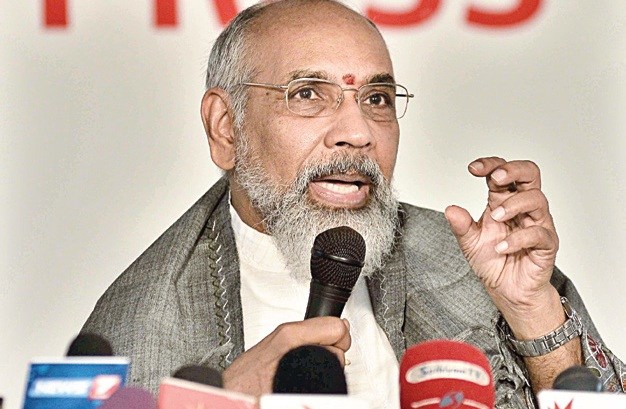
Colombo, February 3 (newsin.asia): The former Chief Minister of Sri Lanka’s Tamil-majority Northern Province, C.V.Wigneswaran, on Sunday praised Velupillai Prabhakaran, the slain leader of the Liberation Tigers of Tamil Eelam (LTTE), for bringing about Tamil unity by making several mutually antagonistic Tamil political parties come together to form the Tamil National Alliance (TNA).

Speaking at a Jaffna-Kilinochchi district conference of the Eelam Peoples’ Revolutionary Liberation Front (EPRF), Wigneswaran said that the unity of all Tamil parties is the need of the hour and that they should take the cue from younger brother” (Thambi) Prabhakaran and forge a united front to fight for Tamil rights.

But the struggle should be waged in a non-violent manner he said. making it clear that he is no believer in an armed struggle.

Calling upon Tamil parties to shed their differences and join forces to fight for Tamils’ rights, Wigneswaran recalled how Prabhakaran had set aside his conflict with other militant groups and got them to join the TNA. Wigneswaran pointed out that Prabhakaran had considered the EPRLF to be one of his principal enemies and yet he held out a hand of friendship when the situation called for understanding.

Former North Lankan Chief Minister lauds LTTE leader for forging Tamil unity

Wigneswaran appealed to the Tamil parties and other organizations to join hands with his new outfit, the Tamil Makkal Koottani (TMK), on the basis of a common program including self-determination for the Tamil people, the merger of the Northern and Eastern Provinces to form a united Tamil-speaking province, and securing accountability for the injustices perpetrated by the Sri Lankan military during the war.

The former Chief Minister said that he does not believe in splitting the TNA or any other party, and will welcome only those who voluntarily leave those parties.

But he lambasted the TNA for not living up to its promise and for hoodwinking the Tamils in regard to a variety of issues. He condemned the TNA’s leading role in the movement to save the United National Party government led by Ranil Wickremesinghe in October-November 2018 without securing a firm guarantee that the demands of the Tamils would be acceded to.

No worthwhile promises were secured on the plea that putting forth the Tamils’ demands openly at that juncture would weaken the UNP vis-à-vis the group led by former President Mahinda Rajapaksa.

Wigneswaran accused the TNA of falsely touting the draft constitution as a Tamil-friendly one. He pointed out that the draft had conceded that Buddhism will have the foremost place, that the country will not be a federal state and that devolution would only mean lessening the powers of the provincial Governor somewhat.

Instead of making the unification of the Northern and Eastern Provinces mandatory, the draft only allowed two or more adjacent provinces to merge. Wigneswaran said that such a provision for a merger could well result in the Eastern Province being merged with another Sinhalese majority province in the West or South.

At any rate, attempts are already being made to create a Sinhalese enclave in Mullaitivu district and merge it with the Sinhalese-majority North Central Province so that the existing contiguity between the Northern and Eastern provinces is snapped and the merger of the North and East is thwarted.

Wigneswaran pointed out that TNA had no case for blindly supporting the UNP in parliament when the UNP government had done nothing to release Tamil prisoners languishing in jail for long or to trace missing persons.The Prevention of Terrorism Act is still in force.

The former Chief Minister said that he does not believe in blindly opposing the government but is for a sustained and selfless campaign to secure the Tamils rights. The Tamils’ struggle should be waged both at home and overseas. The UN Human Rights Council should be an important forum to press for justice. And there should also be a campaign to get India to back the Tamils’ case, Wigneswaran said.

සේනා දළඹු වසංගතය  මේ ආණ්ඩුවෙ  ගමන නතර නොකලොත් අද නීතියේ සරනවත් නැති  ශ්‍රී ලංකාවට  වියහැකි විනාශය පිළිබඳව අද්දෘශ්‍යමාන බලවේගයක  අනතුරු හැඟවීමක්ද ? 

February 3rd, 2019

චාර්ල්ස් එස් පෙරේරා විසින්,

බඩඉරිඟු වගාව විශාලවශයෙන් විනාශකර අනිකුත් වගාවනුත් අනතුරට දමමින් පැතිරීගිය සේනා දළඹු වන් නැතිකරන්නේ හෝ මර්ධනයකරන්නේ කෙසේදැයි  නොදැනුවත්ව අපේ ගොවිජනතාව  පසුගිය කාලයෙ මහත් සේ කම්පාවී සිටියෝය. ඒ උවදුර සැලකිය යුතු ප්‍රමාණයකට  හෝ අඩුවී ඇති බවක් දැනගන්නට තිබේ.

නමුත් හැම අංශයෙකින්ම  ක්‍රියාත්මක වුයෙ  මේ සේනා දළඹුවන්  මරා විනාශයකිරීම සඳහා ගතයුතු  පියවරල් සෙවීමකි . කිසිවෙක් මේ සඳහා බෞද්ධමය පිළිවෙතක් යෝජනා නොකළේය. සමහරක්විට එවැනි යෝජනාවක්  කිරීමත් මේ දියුණුවී ඇති විද්‍යා හා තාක්ෂනයුගයේ සිනහවට භාජනවීමටද හේතුවිය හැකිය. 

නමුත් අපේ ලංකාව පින්වත්  රටක් බව සමහරක් සිදුවීම් නිසා තේරුම් ගතනොහැකි බැවින් අප ඒගැන සැලකිලි  නොවන්නේමූ.  අපේ රට මුහුණු පා තුබූ අනතුරුදායක අවස්ථාවලදී අපරට බෙරගන්න හිතාගන්න නොපුළුවන් ධය්ර්යයකින් යුත් පුද්ගලයෙක් හෝ අපුරු සිදුවීමක්  හෝ හේතුවී ඒ අනතුරෙන් ගැලවෙනවා. දළඳා මාලිගාවටත් බෝම්බ ප්‍රහාරයක් එල්ලකළ අවස්ථාවේ අපි කර කියාගන්න දෙයක් නොමැතිව අසරණව සිටියා. ඊට පසුව ඇතිවූ සුනාමියෙන් මහත් විනාශයක් සිදුඋනා. ඒ කාලකන්නි කාලය අවසන් උනේ ත්‍රස්තවාදය අවසන්වී රට නව තම දියුනුවක්කරා ගෙන යාමට හැකියාවක් ඇති බෞද්ධ නායකයින්ගේ අවතීරණයෙන්.

අදත් අපේ රට එදා  සුනාමියට පෙරතුබු අසරණ කාලකන්නි කාලයකටයි ප්‍රවිෂ්ටවී සිටින්නේ.  කරකියාගන්න දෙයක් නොමැතිව නීතියේ සරණ වත්  නොමැති අවස්තාවකයි සේනා දළඹු ප්‍රවාහය ඇතිවී තිබෙන්නේ. අද්දෘශ්‍යමාන බලවේගයක  අවධානය ශ්‍රී ලංකාව අනතුරුදායක අවස්ථාවක මුහුනපාසිටින විට ඇතිවෙනබවක් ගැන කීවොත් සමහරෙක් සිනහාවෙනවා ඇති. 

වරක් පල්ලෙකැලේ භාවනා මද්‍යස්ථානයකදී අවධානය යොමුවූ දෙයක් නිසා  ශ්‍රී ලංකාවේ ආරක්ෂාවට අදෘශ්‍යමාන බලවේග පවතින බවහිතාගන්නට හැකියාවක් මේ ලියන මට ඇතිඋනා.  එබැවින් මේ කොයිබට යන්නේදැයි  නොදැන යන රනිල් වික්‍රමසිංහ අගමැතිතුමාගේ ආණ්ඩුවෙ ගමන නතර නොකලොත් එය ශ්‍රී ලංකාවේ විනාශය වෙන්න පුලුවෙනි. සමහරක් විට මේ සේනා දළඹු ප්‍රවාහය සුනාමිය වැනි  අනතුරු හැඟවීමක්  විය හැකි නොවේද?

එබැවින් මේ සේනා දළඹු වසංගතයෙන් ගොඩ ඒමට ඒ සතුන් මැරීමට වඩා අපේ බුදුරජානන්වහන්සේ ජීවත්ව සිටියෙදී උන්වහන්සේ  සියලු භය දුරුකිරීමට උපයෝගීකරගත් ක්‍රමයක් යොදාගතහොත් සුදුසු නොවන්නේද ? 

වරක් අපේ බුදුපියානන්වහන්සේ රජගහනුවර වැඩ සිටියදී  වේසාලිනුවර දුගී  වැසියෝ දුර්භික්ෂයක් නිසා   මරනයට පත්වෙමින්  අසරණව සිටියෝය. මළමිනී කුණුවී දුර්ගන්ධය පැතිරුනේය. වසංගතයක් ඇතිවෙමින් මහත් උපද්‍රවයකට පත්වෙමින් සිටියෝය. වේසාලිනුවර වැසියෝ බුදුපියානන්වහන්සේගේ පිළිසරණ ඉල්ලා සිටි අවස්ථාවේ උන්වහන්සේ වේසාලි නුවරට වැඩමකළේය. උන්වහන්සේගේ වැඩීමත් සමග වේසාලි නුවර  මහා වර්ෂාවකින් සේදිගියේය. 

බුදුපියානන් වහන්සේ ආනන්ද ස්වාමීන් වහසේට රතනසුත්‍රය දේශනාකර  වේසාලි නුවර ලිච්චවී වැසියන් සමග රතන සුත්‍රය සජ්ජායනා කරමින් නගරය පුරා සැරිසරන්නට කීසේක.  ආනන්ද ස්වමීන්වහන්සේද බුදුපියාණන් කී පරිදි රතන සුත්‍ර දේශනාකළේය. ඉන් පසුව සියලු ලෙඩ දුක් රෝග භය අවසන්ව ලිච්චවී වැසියන් සතුටට පත්වූයේය.

ශ්‍රී ලංකාවෙ අද පවතින බෞද්ධාගමට  අගෞරව කරමින් ගෙනයන අධර්මිෂ්ඨ  දේශපාලන විනාශයෙන් රටත් ජනතාවත් බේරාගැනීමටත් ආහාර වැවිලි  ගහ කොලන් ආරක්ශාකරගැනීමටත්  ලංකාවේ  හැම ගම් නියන් ගම්වල බෞද්ධ විහාර වල එකම  දවසක  එකම  වෙලාවට  රතන සුත්‍රය ප්‍රධාන සර්ව රාත්‍රික පිරිත් සන්ගායනාවකින් පසුව  පිරිත් පැන් හැම ගමක, හැම වගාවකටම ඉසීමෙන් සමහරක්විට සේනා  දළඹු උපද්‍රවය පැතිරී යෑම  නවත්වාගන්නට පුලුවන්වේදැයි සොයාබැලීම සුදුසු පිංකමක් විය හැකිය. ඒ ඇරත් එවැන්නක් කිරීම රටේ අපල දුරුකර රටට යහපතක් සඳහාද සුදුසුය. මෙය හැමෝගේම අවධානයට ලක්වේවා.

ශ්‍රී ලංකා සෞඛ්‍ය සේවයේ අනෙකා සොයා යාම

February 3rd, 2019

වෛද් රුවන් එම් ජයතුංග

නීරෝගී නොවන සමාජයක් සෑමකල්හිම සතුරෙකු හෙවත් අනෙකා සොයා යති. සම්පත් අඩු වීම ,  දැණුමේ සහ හැකියාවන් සීමා වීම ,   ආචාර ධර්ම පිලිබඳ දැණුම හීන වීම වැනි කරුණු මෙම තත්වය උග්‍ර කරයි. මේ නිසා සෑම විටම අනෙක් පාර්ශවය සතුරෙකු විට දකියි.සතුරෙකු නොමැති වීම ඔවුනට කාංසාව ගෙන දෙයි. 

පේරාදෙනිය වෛද්‍ය පීඨය ආරම්භ කල අවස්ථාවේදී විශාලතම විරෝධය එල්ල වූයේ කොලඹ වෛද්‍ය පීඨයෙනි. කොලඹ වෛද්‍ය පීඨයට පේරාදෙනිය අනෙකා විය. ඉන් පසුව රුහුණු වෛද්‍ය පීඨය ආරම්භ කිරීමේදී කොලඹ සහ පේරාදෙනිය රුහුණ තම අනෙකා ලෙස දුටුවෝය. මේ විරෝධයන් නිසා රුහුණු වෛද්‍ය පීඨයට මුල් වසර කීපය තුලදී ලෝක සෞඛ්‍ය සංවිධානයේ පිළිගැනීම පවා ප්‍රමාද විය. 

මාගේ ගුරුවරයෙකු වන විශේෂඥ නාරි හා ප්‍රසව වෛද්‍ය අජිත් සේමසිංහ මහතා රුහුණ වෛද්‍ය පීඨයේ ආරම් භක සිසුවෙකු විය. ශ්‍රී ලංකා සෞඛ්‍ය සේවයේ අනෙකා සොයා යාම නිසා ඔහුට නාරි හා ප්‍රසව විශේෂඥතාව ලබා ගැනීම සඳහා දෙවසරක් ශල්‍ය වෛද්‍ය විද්‍යාව හැදෑරීමට සිදු විය. 

රාගම පුද්ගලික වෛද්‍ය විදුහල ආරම්භ වූ අවස්ථාවේදී ඉතා පහසුවෙන් එය අනෙකා බවට පත් විය. රාගම පුද්ගලික වෛද්‍ය විදුහල පොදු සතුරා විය. 

රාගම වෛද්‍ය විද්‍යාලය සමතලා කිරීමෙන් පසුව ශ්‍රී ලංකා සෞඛ්‍ය සේවයේ අනෙකා වූයේ සහකාර වෛද්‍ය නිලධාරීන් ය. සහකාර වෛද්‍ය නිලධාරීන් තම සතුරන් ලෙසට හුවා දක්වනු ලැබූහ. අවසානයේදී සහකාර වෛද්‍ය නිලධාරීන් පුහුණු කිරීමද නවතා දමනු ලැබීය.මේ නයින්  ඊලාම් යුද්ධයේදී සහකාර වෛද්‍ය නිලධාරීන් විසින් සිදු කල මෙහෙයද ඉතා කුහක ලෙස අමතක කරන ලදි. 

සහකාර වෛද්‍ය නිලධාරීන් හඹා යාමෙන් පසුව ශ්‍රී ලංකා සෞඛ්‍ය සේවයේ අනෙකා වූයේ විදේශ වෛද්‍ය උපාධිධාරීන්‍ ය. එක් රැයකින් ඔවුන් ශ්‍රී ලංකා සෞඛ්‍ය සේවයේ සතුරන් බවට පත් වූහ.

රුහුණ වෛද්‍ය පීඨය ආරම්භ කිරීමෙන් වසර ගනනාවකට පසුව  කැළනිය වෛද්‍ය පීඨය විවෘත  කරනු ලැබීය. මුල් කාලයේදී කැළනිය පොදු සතුරෙකු විය.  2000 වසරේදී මා සේවය කලේ උතුරු කොලඹ ශික්‍ෂණ රෝහලේය. එහිදී කොලඹ වෛද්‍ය පීඨයේ උගත් ජේෂ්ඨ රෙජිස්ට්‍රාවරයෙක් නිබඳවම ප්‍රසිද්ධියේ කැළනිය වෛද්‍ය පීඨයේ සිසුන්  පහත් කොට බැණ වැදීමට පුරුදුව සිටියේය. ඔහුගේ මතය අනුව කැළනිය වෛද්‍ය පීඨය ආරම්භ කිරීම බරපතල වරදකි.

මෑත කාලයේදී ශ්‍රී ලංකා සෞඛ්‍ය සේවයේ අනෙකා බවට පත් වන්නේ සයිටම් ආයතනයයි. සයිටම් ආයතනය බැහැර කිරීමෙන් පසුව මේ වන තෙක් පොදු සතුරෙකු නොමැත. එහෙත් ශ්‍රී ලංකා සෞඛ්‍ය සේවය විසින් ඉතා ඉක්මනින් අනෙකා හෙවත් පොදු සතුරෙකු සොයා ගනු ඇත. 

වෛද් රුවන් එම් ජයතුංග

Pesticides then and now, and the “toxin free” nation.

February 3rd, 2019

Chandre Dharmawardana, Canada.

Mr. Siri Pathirana,  a Farmer from Malsiripura” has responded (1st February,   Island”) to my article  (Island, 24 January).  Mr. Pathirana  recounts his memories about the poisoning of fish in a paddy field after the application of pesticides some 60 years ago (note that the word pesticide” includes herbicides, insecticides, fungicides etc., as used by the WHO).

Mr. Pathirana states that:

This pathetic, inhuman scenario was created by multi-national pesticide companies almost sixty years ago. Most of the fauna gradually disappeared from the immediate vicinity of the paddy fields. If we use an alternative method instead of chemical pesticides, we would feel much healthier and happier as humans”.

It is possible that young Mr. Pathirana had  observed the consequences of DDT that was enthusiastically introduced to Sri Lanka (and the rest of the world). It was successfully used to combat a Malaria epidemic that had brought the country to its knees. It was not a case of multinationals malevolently baiting the public. The government, the agricultural and health scientists, and the public welcomed these new pesticides as they were effective, cheap and virtually non-toxic to humans. Their long-term consequences were NOT known in the 1950s. For instance, three parts per trillion of DDT in the water can accumulate in higher organisms to, e.g.,  0.5 parts per million in minnows, 2 ppm in cows,  and even more in mother’s milk at the top of the food chain.

Mother’s milk had 10-20 times more DDT than cow’s milk, resulting in the 1970s push for baby formulas instead of breast feeding.  DDT was banned in 1974, but the WHO now regards it  safe for domestic use against mosquitoes and other pests, but NOT for agriculture.  In the 1960s, 2-3 kg of DDT per hectare were applied, compared to modern pesticides using only a mere 10g/hectare. Modern pesticides are designed to quickly degrade and become harmless.

However, DDT was  in many ways BETTER and SAFER than the pesticides used prior to DDT. Salts of arsenic, fluorine or plant products such as nicotine, pyrethrum and rotenone were used in the plantation sector; fungicides used mercury, copper or sulphur; herbicides used petroleum oils,  tar, sulphuric acid, some arsenites. These are truly dangerous to the environment, and toxic to humans. Dead fish were found even those days, after the application of such pre-War pesticides. But most small farmers did not use them as labour was cheap and  land was available in plenty. Site rotation (e.g., in Chena cultivation) was available as an alternative for pest and soil fertility management. Farmers were happy with even a yield of one metric tonne of paddy per hectare. Some of these pesticides are still  used  in organic farming”, in the mistaken belief that they are safer”.

During Mr. Pathirana’s  childhood, and well into the 1980s, extremely toxic  red lead (rathu kudu”) was used in Sri Lanka in paints, added to cement for flooring, and used as an anti-rusting on railway bridges. Creosote was used on logs and railway sleepers. Ceylon Tobacco managers who sold a well-recognized cancer product were held in high esteem instead of being thrown in jail. Buses and cars belching fumes full of particulate matter, from partially burnt fuel adulterated with Kerosene engulfed the road system and houses. These toxins, present in abundance are ignored, and the parts per billion glyphosate is targeted by the Toxin-Free” claimants. The bio-accumulation effect of glyphosate is negligible in comparison to DDT. Meanwhile politicians are planning to set up more and more coal plants (notorious for emitting pollutants) for power generation; Venerable Ratana has not voiced opposition to it.

When Mr. Pathirana finds dead fish in the water from pesticide applications, we see a case of ACUTE toxicity” due to misuse of excessive application of pesticides, or due to a chemical spill”. However, what is relevant for the environment is CHRONIC toxicity. That is, toxicity arising from the ingestion of very small amounts of toxins for a long period, leading to  Chronic diseases”. Previously no globally accepted standards on the daily admissible intake (DAI) of various pesticides existed.

Today, the DAI values are well established. The WHO-FAO Joint Meeting on Pesticide Residues (JMPR) regularly updates the DAI for  approved pesticides.  The claim that multinational agricultural companies work hard to sell their products is true, but the regulatory agencies have been more than vigilant. Even stricter maximum allowed limits (MALs) of pesticides  are enforced as good farming practice. A recent scary news item in Sri Lankan newspapers claimed (falsely) that common herbs  like Gotukola” and Mukunuwenna” are full of  pesticide residues. The reporter had confused the MALs with the DAI values. An article that appeared in the Sri Lanka Medical Association Journal (August 2018) by Dr. Gunatilleke shows that even medical doctors may confuse MALs with DAIs and cry wolf”, claiming that parts per billion amounts of glyphosate are dangerous.  The toxin levels in Sri Lankan farm produce are well below danger levels. Eating  several kilos of `Gotukola’ daily, for tens of  years is needed to cause chronic toxicity on eating local vegetables (see Daily News. 11-Nov-2018,  http://www.dailynews.lk/2018/11/07/features/167704/toxic-cocktail-myth-and-truth).

Long-term studies are needed to establish ADIs, to assess  the cumulative effect of ingesting small amounts of the pesticides daily. Glyphosate inclusive of adjuvants  was tested continuously for 23 years on a 90,000 sample of farmers, and the results were released in November 2017. This expensive giant health study was conducted by the US Health department and found no increase in the health risks of the sample compared to the health of non-farmers.

Nevertheless, Mr. Pathirana says that   farmers need to be saved

(a) From the ‘Scientists’ and ‘Professors’ who are paid by the pesticide companies”.

The US government conducted and funded the 23-year  study for transparency. There are some corrupt scientists and corrupt professors, just as  in every walk of life. In Sri Lanka, politically ambitious scientists claimed that the Kidney Disease known as CKDu found in the Rajarata is caused by glyphosate and arsenic from agrochemicals. Having no evidence, they claimed that God Natha had revealed all this.  Meanwhile, a team of scientists and professors sponsored by the WHO and the government showed that the water, soil and the food in the Rajarata had NO significant amounts of glyphosate or arsenic. This was independently confirmed by other teams of scientists.

The scientists who claimed that CKDu was caused by agrochemicals had their own agrochemicals to sell. They had their own companies, underwritten by SEMA, an organ created  by politicians. Their agrochemicals had NOT been tested and proven safe.  So, Mr. Pathirana’s concern (a) applies to the SEMA scientists and politicians, and not to the scientists who upheld the agriculture industry with a proven record of  safety as well as delivering the food to a population that has tripled since  Pathirana’s boyhood.

(b) From the corrupt politicians who promote the use of pesticides despite the adverse effects visible in rural farming.

Mr. Pathirana alluded  to his memories from 60 years ago as the adverse effect visible in rural farming. Is that the ONLY evidence he has ? We know that over use of phosphate fertilizers leads to algal blooms and such effects. But these pale  in comparison with the diesel and petroleum toxins belched out on the roads everyday, compounded with plastic garbage burnt on every roadside.

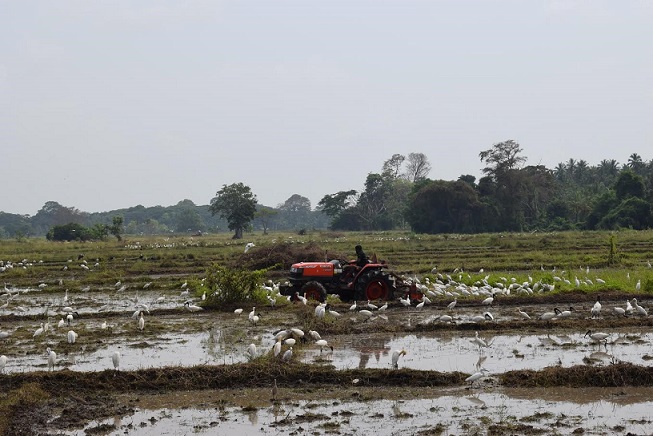
Mr. Pathirana thinks that our paddy fields are full of toxins. Large numbers of egrets (‘kokku’) and other birds  collect to eat the earthworms and other bugs that get turned up by the farmer’s plough. If the soil is toxic, these organisms should be dead.  In fact, the soil is rich in worms and micro-organisms, fertile, and yields   bountiful harvests. Sri Lankan rice or Sri Lankan Tea is not contaminated by toxins, as claimed by various anti-national organizations that are attempting to discredit the nation’s exports.

We would all be happier if the tea plantations were pristine forest, even taking an economic loss.  However, tea  is our last defense against the conversion of the hills  into housing and hotels enmeshed in asphalt and concrete  if tea planting were made uneconomical by SEMA’s maverick agriculture.

The banning of glyphosate destroyed the Maize plantations.  Farmer resorted to smuggled glyphosate of Indian origin containing the worm. Now Ven. Ratana wants to kill the Senaa caterpillar using an  untested  Neem (Kohomba) pesticide. Such products will  also kill the caterpillars of beneficial butterflies, moths, earthworms, and destroy bees  essential to pollination.
Kidney disease and Scientists investigating it.

It should be emphasized that the kidney disease epidemic in the Rajarata has been politicized by Venerable Ratana and some political ambitious scientists who constitute a small fringe  of the totality of scientists and Kidney specialists of Sri Lanka. Some among these fringe group of scientists have slandered the active researchers claiming that they are paid agents of multinationals, simply because they don’t accept the claim that the disease is caused by agrochemicals. Mr. Pathirana is also unfortunately repeating  the cheap claim that our Sri Lankan scientists and professors, 95% of them, and the Members of the National Academy of Sciences, the Kidney specialists etc., are all shielding the agrochemical companies because they have been paid to keep mum.

Studies of wells used by CKDu patients, as compared to wells in adjacent villages

free of CKDu, show that endemic villages have fluoride and magnesium in the well

water which is stagnant and unconnected with the water table of the lower lying agricultural water.

Such stagnant well water from CKDu villages, when given to laboratory mice contract kidney injury similar to those of CKDu patients. All this research has been carried out by the Kidney Specialists of the Kandy hospital and various Peradeniya scientists working together as a research team known as “CERTKID”.

These endemic villages are in areas which were never populated prior to the accelerated Mahaweli project. The Accelerated Mahaweli project  settled people even in high-ground areas without much attention to the geology. People dug their household wells or tube wells  for domestic water, and these were not tested for water quality.

The domestic and farm animals in these endemic villages do not get CKDu because they do not drink well water, but drink from nearby water streams. If at all there were any agrochemical contamination, then it will be in such water streams.

In general,  ground water may be either too hard due to calcium and magnesium salts, or it may have various other problems with it, including contamination from human and geological sources.

Mr. Pathirana as an individual is privileged to reject the Professors and Scientists  regard them as crooks. He may embrace the monks he trusts, SEMA and the scientists in its pay, and also the occult God-Natha Media as his guides. But neither he, nor the government, should impose this on other farmers who have the right to be guided by the professionals of the department of agriculture and the crop research institutes, and by the medical scientists who have been conducting research on environmental diseases like CKDu.

Chandre Dharmawardana, Canada.

NATIONAL EXPORT STRATEGY (NES)  – LOGISTICS STRATEGY IMPLEMENTATION OF  PLAN OF ACTIONS

February 3rd, 2019


 Dr Sarath Obeysekera

Quote

“The Ministry of Development Strategies & International Trade together with EDB spearheaded the process of formulating the National Export Strategy (NES), which was launched in July 2018, with the vision  of Sri Lanka – an Export Hub driven by Innovation and Investment”, which is now being implemented successfully. ??????

We are in the process of linking the NES implementation planning, by carrying out discussions with the lead implementers together with the support institutions, and the Advisory Committees established by the EDB, have already commenced implementation while the NES Management Unit (NESMU) which was established under the MoDSIT leads the co-ordination, follow up and tracking of the NES. 

A meeting has been scheduled to be held on Friday 01st February 2019 from 9.30 a.m. onwards, at the BOI Auditorium,   8th Floor, West Tower, WTC, Colombo 1, with the Hon. Ministers of Transport & Civil Aviation, Highways, Road Development and Petroleum Resources and Port & Shipping and Southern Development. This meeting will be convened by the Hon. Minister of Development Strategies and International Trade. 

At this meeting, it is proposed to discuss the importance of developing inland waterways transport system in Sri Lanka, which is related to the Boat Building sector.”

Unquote

As the co chairman of the advisory committee appointed by the government to develop boat building and Nautical Tourism I attended the forum.

All the ministers other than Hon Samarawickrama were not present .Absence of the Magapolis minister was notable and none of the officers from Magapolis were present during the forum .Transport Minister has excused himself, instead his brother who is the newly appointed chairman of Airport and Aviation was present, who talked about encroachments in railway land. Everyone in the forum were not able to understand the relevance to Logistic issue.

Most of the junior government officers were unable to contribute to develop a plan of strategy to make NES a reality.

My bouquet is undoubtedly offered to Ms Indira Malwatte who struggled so hard to make the forum a fruitful one.

To my understanding most of the speakers contributed to the forum which could help taking NES forward.

Canal Transport is a brain child of Megapolis and absence of  any officer and the minister was very discouraging. I attended the forum with some ideas to make the Canal Transport in the forefront, but everyone has forgotten even to review the progress.

After a long struggle Megapolis plans to deploy some 30 passenger boats in Beira Lake from Fort to Union Place .Boats to be built by the Navy for SLLRDC to be managed, but I was told the Treasury is not willing to provide funds, let alone encouraging private sector to develop the transport.

Government is struggling for survival by shaping up the constitution, but development of the country is on standstill. ????


තම මුතුන්මිත්තන් කළ අපරාධ වෙනුවෙන් වන්දි ගෙවීමට ක්‍රමයක් සොයාගත් පෘතුගීසි හාමුදුරුවෝ

February 3rd, 2019

ආචාර්ය වරුණ චන්ද්‍රකීර්ති

ඈත අතීතයේ ඉඳලා ම අපේ රට බොහොම ප්‍රසිද්ධ වෙළෙඳ මධ්‍යස්ථානයක්. බටහිර ලෝකයේ රෝමයත් එක්ක, ග්‍රීසියත් එක්ක, අරාබි සහ පර්සියානු රටවල් එක්ක වගේ ම නැගෙනහිර ලෝකයේ චීනය සහ අග්නිදිග ආසියාවේ රටවල් එක්කත් අපි ගනුදෙනු කළා. අපේ රට ආසන්නයේ ම තිබුණු දෙමළ මිනිස්සුන්ගේ චෝළ සහ පාණ්ඩ්‍ය රාජ්‍යයන්වලින් වගේ ම තරමක් ඈත උතුරේ තිබුණු කාලිංගයෙනුත් බෙංගාලයෙනුත් අපේ රටට මිනිස්සු ආවා. පර්සියාව කිට්ටුව තිබුණු පැරැණි කාම්බෝජයේ මිනිස්සු අග්නිදිග ආසියාවේ තියෙන අලුත් කාම්බෝජයට ගිහිල්ලා තියෙන්නෙත් අපේ රට හරහා. පහුගිය අවුරුදු හය හත්සීය ඇතුළත කේරළයෙන් ආපු මිනිස්සු සෑහෙන ප්‍රමාණයක් අපේ රටේ පැළපදියම්වෙලත් තියෙනවා. ඉතින් ඉපැරැණි මුහුදු සේද මාවතේ ප්‍රධාන ම සන්ධිස්ථානයක පිහිටලා තියෙන අපේ රටේ මිනිස්සුන්ට විදේශිකයන් මුණගැසීම දුර්ලභ සංසිද්ධියක් කියලා හිතන්න බෑ.

මේ කරුණු කාරණා ගැන සළකපුවාම අපේ රටට පෘතුගීසි මිනිස්සු ආපු එක මහ අමුතු හිතාගන්න බැරි දෙයක් කියලා කියන්න බෑ. ඒත් අපේ රටට ඇවිල්ලා කරපු සහගහන අපරාධ ගැන හිතද්දි අපිට පරංගි ගැන කිසිම පැහැදීමක් ඇතිවෙන්නේ නෑ. එක අතකින් කඩුවයි, අනිත් අතින් බයිබලයයි ඇරගෙන උන් අපේ රටට ආවේ වෙළෙඳාමට විතරක් නම් නෙවෙයි. තමන්ගේ ආගම අපිට පැටවීමත් උන්ගේ ප්‍රධාන ම අරමුණක් වුනා. මීට අවුරුදු දාහකට විතර කලින් සිද්දවෙච්ච චෝළ ආක්‍රමණයට පස්සේ අපේ සංස්කෘතියට වැඩිම බලපෑමක් කළේ පෘතුගීසි සහ ඉංග්‍රීසි ආක්‍රමණවලින්. චෝළ ආක්‍රමණයෙන් වුනත් සිද්ද වුනේ අපි අදහන ආගමට සහ සිරිත් විරිත්වලට හින්දු ආගමික පිළිගැනීම් හා විශ්වාස කාන්දුවීම මිසක් උන්ගේ ආගම හඳුන්වාදීමක් නෙවෙයි. ඒත් පරංගි ඒ සීමාවත් ඉක්මවලා ගියා. උන් තමන්ගේ ආගමත් ගෙඩිය පිටින් ම අපිට හඳුන්වලා දුන්නා. ඒ වෙනුවෙනුත් කඩුව – ඇත්තෙන් ම තුවක්කුව; පාවිච්චි කළා.

දැන් ඒ දේ වෙලා ඉවරයි. අපි අතර පීරිස්ලා, සිල්වලා, පෙරේරලා ඉන්න එක ගැන අපේ කිසි ම කම්පාවක් නෑ. ඒ වගේ ම, සිංහල ජනගහනයෙන් සියයට හයක් විතර කතෝලික ආගම අදහන එක ගැනත් අපි වදවෙන්නේ නෑ. මේ හැම දෙනා ම අපේ මිනිස්සු. නම්ගම්වල මොන වෙනස්කම් තිබුණත් ආගමෙන් වෙනස් වුනත් මේ අයගෙන් වැඩි පිරිසක් අපේ රටට, ජාතියට, අපේ සිරිත් විරිත්වලට ආදරය කරන මිනිස්සු. අදහන ආගම, ධර්මයේ වෙනස්කම් තිබුණාට චීනයේ මුස්ලිම් මිනිස්සුත් කතෝලික – ක්‍රිස්තියානි මිනිස්සුත් ඒ රටේ ජාතික – සංස්කෘතික උරුමයක් වන චීන අවුරුද්ද සමරනවා. තව ටිකක් කල් යද්දි මේ රටේ ජීවත්වෙන ආගමෙන්, ධර්මයෙන් වෙනස් අයත් අපේ අවුරුද්ද සමරන්න පටන්ගනීවි. මේවා කාලය පිළිබඳ ප්‍රශ්න විතරයි.

මේ කොහොම වුනත් තමන්ගේ මුතුන්මිත්තෝ කරපු අපරාධ ගැන නොහිතා ඉන්න පුළුවන්කමක් පෘතුගීසි මිනිස්සුන්ට නෑ. අබමල් රේණුවක් තරමින් හරි හැදියාවක් තියෙනවා නම් ඒ මිනිස්සු ඒවා ගැන හිතන්න ඕන. ඒ මිනිස්සු අතර ඉන්න බහුතරයකට මේ ගැන විශේෂිත දැනුමක් නැතුව ඇති. ඒත් හැම දෙනෙක් ම මේ දේවල් ගැන පොදු මට්ටමකින් හරි දන්න බවට සැකයක් නෑ.

මේ කාරණය තහවුරු කරන දෙයක් ගැන පහුගිය දවසක මේ ලේඛකයාට අහන්න ලැබුණා. ඒ කතාවට සම්බන්ධ පෘතුගීසි හාමුදුරුවෝ නමක්. උන්වහන්සේව හඳුන්වන්නේ අජාන් ධම්මිකො කියලා. අපේ පහසුවට අපි උන්වහන්සේට ධම්මික හාමුදුරුවෝ කියලා කියමු. දැන් උන්වහන්සේ වැඩවාසය කරන්නේ පෘතුගාලයේ ලිස්බන් නුවර තියෙන සුමේධාරාම විහාරස්ථානයේ. මේ තමයි පෘතුගාලයේ ස්ථාපනය කරපු මුල් ම බෞද්ධ විහාරස්ථානය. ඒ විහාරස්ථානය පිහිටුවලා තියෙන්නේ 2012 අවුරුද්දේ. ඒ සඳහා මුල්වෙලා තියෙන්නේ අජාන් වජිරෝ ස්වාමීන්වහන්සේ. අපේ පහසුවට අපි උන්වහන්සේට වජිර හාමුදුරුවෝ කියලා කියමු.

වජිර ස්වාමීන්වහන්සේ මැලේසියාවේ ඉපැදුණු කෙනෙක්. ඒ, 1953 අවුරුද්දේ. උන්වහන්සේගේ පියතුමා ඉංග්‍රීසි ජාතිකයෙක්. මව්තුමිය ප්‍රංශ සම්භවයක් තියෙන කෙනෙක්. එංගලන්තයේ ඉගෙනගෙන ආර්ථික ශාස්ත්‍රය පිළිබඳ උපාධියකුත් ලබාගෙන ලංඩන් නුවර ම වැඩකරපු උන්වහන්සේ බෞද්ධ ආශ්‍රයට යොමුවෙලා තියෙන්නේ 1977 දී විතර. 1979 අවුරුද්දේ දී අනගාරික ජීවිතයට පිවිසුණු උන්වහන්සේ තායිලන්තයට ගිහිල්ලා තියෙනවා. ඊට පස්සේ තායිලන්තයේ දී පැවිදිවුණු උන්වහන්සේ 1980 අවුරුද්දේ උපසම්පදාවත් ලබාගෙන තියෙනවා. අජාන් සුමේධ කියලා කියන්නේ වජිර හාමුදුරුවන්ගේ ගුරු හාමුදුරුවෝ. ඉතින් ඒ සුමේධ හාමුදුරුවෝ සිහිවෙන්න තමයි වජිර හාමුදුරුවෝ මුල්වෙලා පෘතුගාලයේ ලිස්බන් නුවර ආරම්භ කරපු විහාරස්ථානය සුමේධාරාමය කියලා නම් කරලා තියෙන්නේ.

මේ විහාරය ආරම්භකිරීමට අදාළ කතා ප්‍රවෘත්තියත් හරි ම අපූරු එකක්. මෙයට අවුරුදු කීපයකට කලින් එංගලන්තයේ අමරාවතී බෞද්ධ විහාරයේ වැඩ වසන ස්වාමීන්වහන්සේලා කිහිප නමක් පෘතුගාලයේ ලිස්බන් නුවරට වැඩම කරලා තියෙනවා. තමන්ගේ නිවෙස් ආශ්‍රිතව බණ භාවනා කරමින්, වත් පිළිවෙත් පුරමින්, පිඬුසිඟා වඩිමන් උන්වහන්සේලා ගතකරන ජීවිතය ගැන ඒ ප්‍රදේශයේ අයට විශාල පැහැදීමක් ඇතිවෙලා. ඒත් මේ ස්වාමීන්වහන්සේලා මුදල් භාවිතා නොකරන හින්දා මුදලින් උන්වහන්සේලාට උදව්කරන පුළුවන්කමක් ඒ අයට තිබිලා නෑ. ඒත් ඒ ස්වාමීන්වහන්සේලා තමන්ගේ ප්‍රදේශය ආශ්‍රිතව නවත්වාගැනීමේ උනන්දුවක් ඒ මිනිස්සුන්ට ඇතිවෙලා. ඉතින් අර ස්වාමීන්වහන්සේලාත් එක්ක කතාකරලා විහාරස්ථානයක් ඉදිකිරීමේ අදහස ඒ මිනිස්සු ඇති කරගෙන තියෙනවා. ඒ වෙනුවෙන් අරමුදලකුත් ඇතිකරලා තියෙනවා. මේ අරමුදලට එක්තරා නිර්නාමික පුද්ගලයෙක් යූරෝ දශ ලක්‍ෂයක මුදලක් බැර කරලා. මේ වැඩේ කරලා තියෙන්නේ ඒ ගමේ ම කෙනෙක් බවයි කියන්නේ.

අක්කර විස්සක් විතර ලොකු ඉඩමක පිහිටුවලා තියෙන ‍මේ සුමේධාරාම විහාරස්ථානයේ දැන් භික්‍ෂූන්වහන්සේලා හය නමක් වැඩ ඉන්නවා. ඒ අතරින් ස්වාමීන්වහන්සේලා සිව් නමක් ම පෘතුගීසි ජාතිකයෝ. උන්වහන්සේලා අතරින් තුන් නමක් ම උපසම්පදාවත් ලබාගෙන. උන්වහන්සේලා උපසම්පදාව ලබාගෙන තියෙන්නේත් සුමේධාරාමයේ ස්ථාපනය කරලා තියෙන සීමා මාලකයේ දී ම වීමත් විශේෂයක්. මුල් වතාවට පෘතුගීසි ජාතිකයෙක් ඒ සීමා මාලකයේ දී උපසම්පදාව ලැබුවේ මීට අවුරුදු දෙකකට කලින්. යම් රටක ශාසනය ස්ථාපිත වෙන්න නම් ඒ රටේ පුරවැසියෙක් පැවිද්ද ලබාගෙන ඒ රටේ ම පිහිටුවපු සීමා මාලයක දී උපසම්පදාව ලබාගන්න ඕන කියන එක තමයි බෞද්ධ අපේ පිළිගැනීම. ඉතින් මේ වෙද්දි පෘතුගාලයේ ඒ කටයුත්තත් වෙලා තියෙනවා.

බුද්ධගයාවෙන් වැඩම කරවපු ශ්‍රී මහා බෝධීන්වහන්සේගේ ශාඛාවකුත් ගිය අවුරුද්දේ මේ විහාරස්ථානයේ රෝපණය කරලා තියෙනවා. ඉතින් දැන් ලිස්බන් නුවර තියෙන මේ සුමේධාරාමය ඉතාමත් අංග සම්පූර්ණ විහාරස්ථානයක්. ඒ විහාරස්ථානයේ වැඩ වසන ස්වාමීන්වහන්සේලා නිතර නිතර ධර්ම චාරිකාවල යෙදෙන නිසා බුදුදහමේ පණිවිඩය පෘතුගාලය පුරා ම හෙමින් හෙමින් පැතිරෙමින් තිබෙනවා.

සුමේධාරාමයේ ගිහියන් හය දෙනෙක්ට නැවතිලා ඉන්නත් ඉඩකඩ තියෙනවා. හැම ඉරිදා ම ඒ විහාරස්ථානයේ දී ගිහියන් වෙනුවෙන් භාවනා පංතියකුත් පවත්වනවා. හැම දා ම උදේට සුමේධාරාමයේ භික්‍ෂුන්වහන්සේලා දෙනමක් අසළ තියෙන ගමට පිඬු සිඟා වඩිනවා.

පූජ්‍ය ධම්මික ස්වාමීන්වහන්සේගේ අධිෂ්ඨානය ගැන කියන්න වෙන්නේ මෙන්න මේ කාරණයත් එක්කයි. තමන්ගේ මුතුන්මිත්තෝ ලංකාවේ කරපු අපරාධ ගැන ඉතා හොඳ අවබෝධයක් උන්වහන්සේට තියෙනවා. ඒ වෙනුවෙන් ජාතියක් විදිහට තමන්ගේ මිනිස්සු වන්දි ගෙවන්න ඕන කියලත් උන්වහන්සේ විශ්වාසකරනවා. මේ වැඩේ කරන්න පුළුවන් හොඳ ම විදිහ මොකක්ද කියන එකත් උන්වහන්සේ ඉතා හොඳින් තේරුම් ඇරගෙන. ඒ තමයි, තමන්ගේ රටේ ඉතා හොඳින් බුදුදහම ව්‍යාප්ත කරන කාර්යය. තමන්ගේ මුතුන්මිත්තෝ කතෝලික ආගම ප්‍රචාරය කරන්න උත්සාහ කළේ බුද්ධ ධර්මය අදහන මිනිස්සුන්ටත් ඒ මිනිස්සුන්ගේ වෙහෙර විහාරවලටත් හානි කරලා. ඒ විදිහට විනාශ කරන්න හැදුවේ මොන විදිහේ ආගමක් ද, ආගමික සම්ප්‍රදායක් ද කියන කාරණය දැන් ධම්මික ස්වාමීන්වහන්සේ හොඳින් ම දන්නවා. ඉතින් දැන් කරන්න ඕන ඒ කරපු අපරාධ ගැන හිත හිතා කම්පාවෙන එක නෙවෙයි. ඒ අපරාධ කරපු අයට වෛර කරන එකත් නෙවෙයි. ඒ අයගෙන් පැවැත එන තමන්ගේ ම මිනිස්සුන්ට බුද්ධ ධර්මයේ රසය විඳින්න සළස්වන එක.

බුදුදහමෙන් ඉගැන්වෙන විදිහට නියම ජයග්‍රහණය කියන්නේ තවත් කෙනෙක් පරද්දලා ලබාගන්න එකක් නෙවෙයි. නියම ජයග්‍රහණය හැම කෙනෙක්ට ම එක විදිහට බෙදා හදාගන්න පුළුවන් එකක් වෙන්න ඕන. ඉතින් ධම්මික ස්වාමීන්වහන්සේගේ ව්‍යායාමය ඒ වෙනුවෙන්. ඒ උදාර අපේක්‍ෂාව උන්වහන්සේ සාක්‍ෂාත් කරගන්නා බවට අපිට සැකයක් නෑ.

බුදුදහම බැබළේවා!

ආචාර්ය වරුණ චන්ද්‍රකීර්ති

Independence Day Message 2019 from Mahinda Rajapaksa Leader of the Opposition

February 3rd, 2019

Mahinda Rajapaksa  The leader of the Opposition

71 years ago, a group of remarkable men decided that enough was enough. Sri Lanka had all the strengths it needed to gain autonomy, govern its own jurisdiction and rule under its own mandate. We, a nation that has always had to juggle its diversity and often been at the negative end of that battle produced these men who made up a literal interpretation of our glorious flag and displayed it through their own diversity. They volleyed, they fought and above all stood together to gain independence and prevailed.

Having been a young boy when it happened and growing up watching our country’s growth, I can’t help but reflect on our journey as a people. I feel overjoyed and yet, sympathetic as I have seen our nation rally together in the darkest times and at the same time, tear itself up from within.

Independence Day is by definition, the day we achieved our independence from the British, but by spirit, it serves as a reminder that we are first and foremost, one. One nation, under one flag and we are free to allow our diversity to be the uniting factor of our people.

Today, I would like to take this opportunity to remind us all of this truth, let us unite to create a truly non dependent Sri Lanka, a country that is self sufficient and bold enough to not let external forces try to divide itself based on their vested interests, because after all Sri Lanka is a great island nation with pride, a relentless spirit and a virtuous soul.

I wish all my fellow countrymen a happy Independence Day.

Mahinda Rajapaksa                                                              

Leader of the Opposition

2019 නිදහස් දින පණිවුඩය-මහින්ද රාජපක්‍ෂ විපක්‍ෂ නායක

February 3rd, 2019

මහින්ද රාජපක්‍ෂ  විපක්‍ෂ නායක

හැත්තෑ එක් වසරකට පෙර අධිරාජ්‍යවාධීන්ට එරෙහිව නැගීසිටීමට ඇති අවශ්‍යතාව වටහා ගත් මාතෘභූමිය වෙනුවෙන් සටන් කළ අභීත ජනතාවකට ශ්‍රී ලංකා මාතාව උරුමකම් කීය. ඔවුහූ තමන්⁣ගේ වරම තුළින් බිහිවන පාලන තන්ත්‍රයක් මගින් පාලනය වන ස්වාධීන ස්වෛරී රාජ්‍යයක් වෙනුවෙන් සටන් කළහ.

අපගේ තේජාන්විත සිංහ ධජය තුළින් මනාව පිළිබිඹු වන්නේ ඔවුන්ගේ වූ විවිධත්වයයි. ඔවුහූ එකාවන්ව ජාතියේ ඒකීයත්වයත් නිදහසත් වෙනුවෙන් සටන්වැද ජය ලැබූහ.

කුඩා දරුවකු ලෙස ශ්‍රී ලංකා මාතාවගේ නිදහස දැක පියවරෙන් පියවර එදා මෙදාතුර පැමිණි ගමනෙහි පසුවූ අඳුරු යුගයන් හිදී ජාතියක් සේ එකාවන්ව එකමුතුව අප නැගීසිටි අයුරු දුටු අපහට  ඇතිවන්නේ ඉමහත් ආඩම්බරයකි.

බ්‍රිතාන්‍ය අධිරාජ්‍යයෙන් නිදහස ලැබීම නිදහස් දිනයෙන් කියාපෑවත් සැබවින්ම ඉන් පිළිබිඹු වන්නේ අප එක් ධජයක් ⁣යට, එක් ජාතියක් ලෙස, විවිධත්වය සවියක් කරගෙන නිදහස ලත් අභීත මිනිස්සුන් බවයි.

තවද අප එකාවන්ව එකමුතුව ලක් දෙරණ සත්‍යවශයෙන්ම ස්වෛරීයව ස්වයං පෝෂිතව බාහිර අතපෙවීම් වලට අභීතව මුහුණ දිය හැකි රාජ්‍යයක්  බවට පරිවර්තනය කරගත යුතු බවට වූ පණිවිඩය ඔබ සැමට ලබාදීමටත් මෙය අවස්ථාවක් කරගනිමි.

ලක් මවුණි ඔබටත් සියළුම ලක්වාසී ජනතාවටත් අභිමානවත් 71වන නිදහස් දිනයක් වේවා.

මහින්ද රාජපක්‍ෂ

විපක්‍ෂ නායක

Sri Lanka’s Independence – a direct outcome of Japan’s entry to the Second World War which sealed the fate of European Colonialism in Asia

February 3rd, 2019

by Senaka Weeraratna (Attorney – at – Law)

Sri Lanka together with several other Asian countries owe much in winning their freedom, to Japan’s entry to the Second World War and the resulting chain of events that sealed the fate of European colonialism in Asia.

Jawaharlal Nehru, the Indian Prime Minister (1947 – 1964) when asked in the 1930s to name a likely date that India would win independence from Britain, replied by saying it would probably be in the late 1970s i.e. long after their time.

According to Major – General Mohan Singh of the Indian National Army (INA) The British had not given even an empty promise to grant us complete freedom after the war” ( The Reader’s  Digest Illustrated History of World War II).

The fact that India gained freedom in 1947 much earlier than the date that Nehru thought was possible, followed by Burma and Ceylon in 1948, was largely due to the interplay of both external and internal factors.

Today, there is a great turn around in Historiography in respect to the role of Japan in the Second World War. Japan no longer has a pariah status or subject to isolation because of its conduct in the war. In fact, except in a couple of Far Eastern nations, Japan is increasingly gaining acceptance and recognition in much of Asia for being the catalyst in igniting the relatively dormant Asian Independence movements.

Nehru himself refused to take part in the San Francisco Peace Treaty Conference held in 1951 on several specified grounds and declared that Japan has done no wrong to India for India to seek an apology and reparations from Japan. India’s sympathies beginning with Subash Chandra Bose and Judge Radhabinod Pal ( the only dissenting Judge in the Tokyo War Crimes Trial) have always been with Japan. J.R. Jayewardene from Ceylon made a resounding plea for Japan citing the Buddha’s insightful words that ‘Hatred does not cease by hatred,but only by love;this is the eternal law.”
Asia’s leaders and Historians now see a direct and incontrovertible connection between the Japan’s attack on Pearl Harbour and Western Colonial bases in Asia, and the subsequent success of the independence movements which drew inspiration from Japan’s courage to take on the West and liberate Asian colonies. Japan more than any other Asian country was responsible for sealing the fate of European colonialism in the Orient.

Historiography and the narrative on who won Independence for India in 1947 is also rapidly changing with an increasing number of writers prepared to give credit to Netaji Subash Chandra Bose, Indian National Army and Japan for the eventual liberation of India, while conceding to Mahatma Gandhi and his followers due respect for their noble and sustained efforts in seeking freedom from British colonial rule.

New Book – ‘ Bose: An Indian Samurai’

In a new Book ‘ Bose: An Indian Samurai’ by military historian General GD Bakshi, claims that the former British Prime Minister Clement Atlee had said that the role played by Netaji’s Indian National Army was paramount in India being granted Independence, while the non-violent movement led by Gandhi was dismissed as having had minimal effect.

In the book, Bakshi cites a conversation between the then British PM Attlee and then Governor of West Bengal Justice PB Chakraborty in 1956 when Attlee – the leader of Labour Party and the British premier who had signed the decision to grant Independence to India in 1947 – had come to India and stayed in Kolkata as Chakraborty’s guest.

Chakraborty, who was then the Chief Justice of the Calcutta High Court and was serving as the acting Governor of West Bengal, is quoted as saying : When I was acting governor, Lord Attlee, who had given us Independence by withdrawing British rule from India, spent two days in the governor’s palace at Calcutta during his tour of India. At that time I had a prolonged discussion with him regarding the real factors that had led the British to quit India.”

My direct question to Attlee was that since Gandhi’s Quit India Movement had tapered off quite some time ago and in 1947 no such new compelling situation had arisen that would necessitate a hasty British departure, why did they had to leave?”

In his reply Attlee cited several reasons, the main among them being the erosion of loyalty to the British crown among the Indian Army and Navy personnel as a result of the military activities of Netaji,” Chakraborty said.

Toward the end of our discussion I asked Attlee what was the extent of Gandhi’s influence upon the British decision to leave India. Hearing this question, Attlee’s lips became twisted in a sarcastic smile as he slowly chewed out the word, ‘m-i-n-i-m-a-l’,” Chakraborty added.

Fear of another Indian Mutiny

Though Japan lost in 1945, the legacy of Subhas Chandra Bose endured to stir the Indian masses and soldiers of the British Indian Army and ratings of the Royal Indian Navy to mutiny following the trial of the INA Officers at the Red Fort. It was the fear of such a Mutiny on a scale bigger than the Indian Mutiny in 1857, that convinced the British that it was time to quit India, and Burma and Ceylon within a few months.

No colonial country withdraws voluntarily from its colonies unless there are insurmountable ‘ push ‘ factors or except under compelling circumstances. The best illustration of this proposition is the shameful return of the Dutch and the French to regain their colonies in Asia after the end of the second world war. Japanese occupation during World War II had ended Dutch rule, and the Japanese encouraged the previously suppressed Indonesian independence movement.

Despite their opposition to the tyranny of Nazi rule of France and Netherlands (1940 -1944), and delight in being liberated by the Allies, these two colonial powers were not prepared to share the freedom they gained in Europe with the subject people in Asia ( and Africa). They were not welcomed when they returned. Indonesians under Sukarno with the help of Japanese volunteers that remained in Indonesia after the defeat of Japan, defeated the Dutch in a series of military battles to finally gain independence in 1949. Likewise the Viet Minh under Ho Chi Minh performed admirably to wrest control from the

French by defeating them at Dien Bien Phu in 1954 and finally resulting in their withdrawal from all colonies of French Indo – China under the Geneva Accords of 1954.

External factors
Mainstream writings on the Independence movement in British occupied Ceylon have so far failed to account for the external factors that contributed to advancement of the date of independence.

A study of colonial history of Ceylon shows clearly that local Kings have sought external help to end foreign occupation of parts of Ceylon. Several Kings of Kandy had contacts with the Dutch finally leading to the Treaty of 1638 signed in Kandy where the Dutch undertook to assist the Kandyan Kingdom under King Rajasinghe the Second to expel the Portuguese which was successfully achieved in 1658.

Likewise the Kings of Kandy solicited the assistance of the British Empire towards the end of the 18th century to end Dutch occupation of Ceylon. This was achieved in 1796.

It is necessary to show that external factors again contributed substantially to end British occupation of Ceylon finally leading to independence in 1948.

To remain oblivious to these external factors and extend credit exclusively to the locals on the ground that they were ‘Freedom Fighters’ is an exercise in fantasy. There were no authentic freedom fighters in Ceylon after 1848. The last shot for freedom from colonial rule was fired in Matale in 1848 during the second war of independence (also called the Matale Rebellion).

The succeeding generations yearning for freedom produced marvelous orators, letter writers, pen pushers and even collaborators who preferred British colonial rule to continue rather than handing over the country to the locals. Several were quite happy to accept knighthoods and other perks, and co – exist with the colonial administration. There was no fight in them compared to what we have seen in warriors such as Keppetipola Disawe, Gongalegoda Banda, Puran Appu or even earlier in Kings such as Sitavaka Rajasinghe, Mayadunne, Veediya Bandara ( son in law of Buvanekabahu the 7th), Wimaladharmasuriya I, Senerath and Rajasinghe the Second, among others.

Local leaders pursued ‘ Constitutional Reform’ and not total independence though armed resistance e.g. Indonesia, or even large scale civil disobedience movements e.g. India. They were far removed from the type of fight and determination we have seen in other Asian nationalist leaders who fought against Western domination of Asia such as Hideki Tojo ( Japan), Subhas Chandra Bose (India), Mao Tse Tung (China), Ho Chi Minh ( Vietnam), Sukarno ( Indonesia), and Aung San ( Burma). These Asian freedom fighters and patriots preferred to use the only language that the West really understood and respected i.e. force of arms.

Except for Angarika Dharmapala, the world`s first Global Buddhist missionary, the freedom movement in Ceylon never produced a single leader of repute who enjoyed widespread support and admiration overseas for speaking out and engaging in battle for the liberation of Asia.

Historiography – a neglected field in Sri Lanka

Ceylon was very fortunate in gaining independence in 1948 despite not having fought in the real sense of the word to rid the country of foreign occupation. It is soldiers from other Asian countries e.g. Japan, who primarily made blood sacrifices to fight western domination of Asia during the Second World War. We were beneficiaries of these sacrifices and battles. We have to acknowledge this support from fellow Asians at some point in time.

Historiography in Sri Lanka is lagging behind the rest of the world. It is a relatively neglected field. In respect to the narrative relating to the Second World War, our Historians have been merely echoing western perspectives and self – serving interpretations instead of carving out a separate original and independent path of research and writing.

It is time that we learn to look at historical events not from the angle of the colonizer but from the angle of those who have resisted foreign occupation both within and outside Sri Lanka.

Senaka Weeraratna

https://www.facebook.com/photo.php?fbid=2156443214572998&set=pb.100006220213882.-2207520000.1549002938.&type=3&theater

                     Senaka Weeraratna

https://www.facebook.com/photo.php?fbid=2156443214572998&set=pb.100006220213882.-2207520000.1549002938.&type=3&theater

ලංකාවම කළඹමින් යාපනේ ද්‍රවිඩ තරුණයෙක් කළ හෙළිදරව්ව | Exclusive Interview With Arun Siddharth

February 3rd, 2019

Mahinda Gunasekera

Former LTTE cadre who has taken the name of Arun Siddharth is being interviewed on conflicting issues affecting reconciliation between the constituent communities in Sri Lanka by a Sinhala individual for publication in the south.  I found the interview to be quite interesting, and also found that Arun Siddarth was very open and direct in pointing out the flaws in the prevailing system which prevented the true stories getting to the public.  There were simple administrative matters that should be introduced to ensure that Tamil speaking citizens are at least provided with an English version of the correspondence, be it a charge sheet or government notification which is still being issued in Sinhala which the majority of the Tamils do not understand.

He also pointed out that the actions of uniformed officers empowered to deal with the public are properly monitored as otherwise the numerous occasions when they abuse the public, the offending officer will get away while the citizen suffers in silence.

He does not have a communal mind set and wishes to work with members of all communities to solve problems faced by the public and seek justice from the state agencies.

The LINK to the interview is given below.  It is 1 hour and 40 minutes long, and is worth watching it even in instalments as time permits.  MG

https://youtu.be/NUPsOM_wS8c

https://youtu.be/NUPsOM_wS8c

IS THE CONSTITUTIONAL COUNCIL IMPARTIAL?

February 3rd, 2019

Sugath Samarasinghe

According to the main news item of page one of The Island of 29th Saturday, there appears to have been some dissatisfaction expressed by the Opposition on some of the selections made by the Constitutional Council for high posts. The Speaker and the Prime Minister had defended the CC in Parliament saying that the recommendations made by them were above board.

Now the way to determine the rightness or otherwise of the persons recommended by the Constitutional Council is by looking at the quality of persons recommended by them to adorn these positions. It is no secret that many people in this country have reservations about the people recommended by the CC. One consistent feature noticeable in these recommendations is that most senior persons have not been selected. We could still be satisfied if the persons selected by them ignoring seniority and merit have been better than the seniors who were overlooked.

Let us look at them. The first appointment under the CC was that of the Attorney General. Mr. Gamlath was the most senior Solicitor General. There was no short comings  in him that we knew of. But he was not selected but a junior was. We noticed those that were selected appeared to be scared of the Government. His successor was no better. We saw how timidly he cross examined the Prime Minister at the Bond Commission. Then he is alleged to have given some wrong advice to the Speaker in another instance. Prior to this, we never had any doubts about the integrity and ability of the AG. We do not think the same of the persons selected by the CC.

The next was the appointment of the IGP. The less we talk of him the better! The present incumbent was appointed over the head of Mr. S.M. Wickramsinghe Snr. DIG. There was no shortcomings on his part that we know of. Need I waste words describing the present incumbent since it is common knowledge? It is clear that he is obviously immature to hold that post. He has put that celebrated post to disrepute. When we laugh at the individual concerned, we must laugh at the people who selected him too.

Now it is the selection of the Chief Justice. Why was the most senior Judge not considered? If this was done there would not have been room for the present dissatisfaction. The explanation given is that her name was not submitted by the President.  My question is, why did the CC not ask the President why he did not? In defense of this, the Prime Minster had asked in his usual laconic way, why Justice Mark Fernando was not made the CJ. The answer is, as far as we know, it was alleged that he was a card carrying member of the UNP. I hope my information is incorrect. Of course the person appointed instead was a disaster! In the same connection, I might also ask the PM. why was  Justice Wanasundera who was the most senior  not made CJ by his uncle JRJ? Not only Wanasundera, JRJ removed Justice Noel Tittawella and Justice Wilmot Gunasekera also from the Supreme Court under the 1978 Constitution. Why was that? They were reputed to be very honourable men who could not be manipulated or intimidated.

Seniority and merit was the age old criterion for promotion to all positions in the Public Service, Judiciary and Overseas’ Service. So was it in all other Government Departments like the Survey Department, Irrigation or Prisons etc. It was well known in those organizations who was the next man due to get to the top, so there was no dispute and there was order: In fact that was part of rule of law and good governance though there was no fanfare or pretence.. So there was very little back biting, ‘IG’s stakes’ or need for political patronage. As a result, these heads of Services did not have to cow down to politicians to seek their patronage. They had room to hold the scales evenly. Therefore people had confidence in the Administrative systems.  This simple principle was what held the Public Service together. It was fair by the aspirants to those positions in that it was well known what the criterion was. At the same time, it was not easy to survive and come close to the top unless one was really good, well experienced and tested in crisis situations. It was also fair by them because they came to the top by dint of hard work and experience to qualify to finally climb to the pinnacle of his organization. That was the legitimate culmination of his career. That is why those position holders were held in esteem even after they had left those posts.

How did all these good systems become inoperative? Only with the 1972 constitution to a lesser extent, and to the full extent under the 1978 constitution which turned the whole thing topsy turvey. And we are now paying the price for it.

The 17th Amendment and the current provisions under the 19th Amendment have set up the CC as a panacea to all these problems. But who comprises the present CC? Other than the three civil society members who are in a minority, all others are either politicians or nominees of politicians, of whatever shade. We now know that politicians and impartiality are strangers. So we should know that by sowing green gram we cannot reap rice.

So my submission is that we go back to the simple principle of seniority and merit instead of a Constitutional Council for promotion to high posts.

Another suggestion that I would like to make is that, even if it is now not possible to abolish the Constitutional Council, it should be made incumbent on them to inform an officer, when his seniority and merit is ignored, why he was not selected in preference to a junior. After all, the Constitutional Council also must be accountable. That is in fact, transparency.

Whether that decision could be questioned in court is another matter. Also when the aggrieved parson is a Supreme Court judge whom could she appeal to?

That is why I say that simple principle of seniority and merit is best criterion.

When the time honoured principle of seniority and merit is violated by the CC, I am reminded of that famous poem in the Kavyasekeraya:

Maga hondata thibenam

Yanta deasath penenam

Kima bedi wala yanne

Mang mulaa woo kenek se?”


When the path is clearly visible

If one’s eyesight is also ok

Why does one have to walk the thicket

Like a man who has lost his way?”   

Sugath Samarasinghe


ශ්‍රී ලoකා ‘ඔරුමිත්ත නාඩුව’ – යෝජිත ව්‍යවස්ථාව හඳුන්වාදෙන මැඩපැවැත්විය නොහැකි ෆෙඩරල් රාජ්‍යය

February 3rd, 2019

ආචාර්ය දසරත් ජයසූරිය සභාපති ස්පර්මාධ්‍ය නිවේදනයජනවාරි 2019

ශ්‍රී oකා ‘ඔරුමිත්ත නාඩුව’ – යෝජිත ව්‍යවස්ථාව හඳුන්වාදෙන මැඩපැවැත්විය නොහැකි ෆෙඩරල් රාජ්‍ය

ශ්‍රී ලoකාවේ සාමය, ඒකීය භාවය සහ මානව අයිතීන් රැකීම උදෙසා, දැනට අවුරුදු  විස්සකට අධික කාලයක් ඕස්ට්‍රේලියාවේ  සිට කටයුතු කරනු ලබන, දේශහිතෛශී ශ්‍රී ලාoකිකයින්ගෙන් සැදුම්ලත්  ‘ස්පර්’ නමින් හදුන්වන අප සoවිධානය, ශ්‍රී ලoකාව තුල හා ඉන් පිටත සැදුම්ලත් එවන් ජාතික සoවිධාන  සමග එක්ව,  මෑතකදී අගමැති රනිල් වික්‍රමසිoහ මහතා විසින් ව්‍යවස්ථාධායක සභාවට ඉදිරිපත්කරනලද, මුළුමනින්ම රටට අහිතකර, ව්‍යවස්ථා සoශෝධන තරයේ ප්‍රතික්ශේප කරයි.

නව ව්‍යවස්ථා නිර්දේශ මගින්, රාජ්‍ය ව්‍යුහය ‘ඒකීය’ බවට ප්‍රකාශ කරමින් වත්මන් ව්‍යවස්ථා වේ ඉoග්‍රීසි පිටපතේ ඇති, අන්තර්ජාතික ලෙස පිළිගැනෙන සාම්ප්‍රදායික නිශ්චිත අර්ථයක් ඇති ‘යුනිටරි’ සහ දෙමළ පිටපතේ ඇති ‘ඒකීය රාජ්‍යය ‘ පදයට සම අරුත් ඇති ‘ඔට්ට්‍රිඅච්චි’ පදයන් ඉවත්කොට ‘එක්සත් රාජ්‍යය ‘ (ෆෙඩරල්) අරුත දෙන ‘ඔරුමිත්ත නාඩු’ යන පදය, ඉතාමත් කූට අන්දමින්, ඉoග්‍රීසි සහ සිoහල පිටපත්වලට පවා ඇතුළත් කරඇත.

නව ව්‍යවස්ථා නිර්දේශ මගින්, මෙතෙක් පළාත් සභාවලට නොවූ රාජ්‍ය ඉඩම් හා මූල්‍ය කටයුතු ඇතුලත්, විධායක හා නීති සම්පාදක බලතල රාශියක් පැවරේ. වත්මන් සමගාමී ලැයිස්තුව ඉවත්කිරීම හෝ සීමාකිරීම හා සoවෘත ලැයිස්තුවේ විෂයයන් සීමා කෙරේ.

ශ්‍රී ලoකා පොලීසිය, ජාතික සහ පළාත් වශයෙන් බෙදා ඇති අතර එක් එක් පළාතට වෙන්වූ පොලීසි පවත්වා ගෙන යෑමට විධිවිධාන සැලසේ. ඵමගින් ත්‍රස්තවාදී කටයුතු,  මත්ද්‍රව්‍ය ජාවාරම් හා සoවිධානාත්මක මහා පරිමාණයේ  අපරාධ වැනි දෑ පිළිබඳ මෙහෙයුම් කටයුතු අවහිර කෙරේ. තවද, බෙදුම්වාදී නායකයින්ට තම පළාත්බද පොලීසිය දිවයිනේ අනෙකුත් සන්නද්ධ සේවාවන්ට එරෙහිවීම දක්වා, තමන්ගේ අරමුණු වෙනුවෙන් අයතා අන්දමට යොදවා ගැනීමට මගපෑදේ.

ශ්‍රී ලoකාවේ සමස්ත ජනතාවගේ අනුමැතියකින් තොරව, උතුරු හා නැගෙනහිර පළාත්වාසීන්ගේ එකඟතාවය පමණක් ලබාගෙන එම පළාත් ඒකාබද්ධ කොට බෙදුම්වාදීන්ගේ දෙමළ නිජබිම් සoකල්පය නීතිගත කිරීමට ඉඩකඩ සැලසේ.

ප්‍රධාන වශයෙන්  පළාත්බද නියෝජිතයෙන්ගෙන් සමන්විත (80% ට වැඩි), එහෙත් නිශේධ බලය මධ්‍යම ව්‍යවස්ථාදායකයට යෙදවිය හැකි දෙවන මන්ත්‍රණ සභාවක් මගින්  රටේ ඒකීයභාවය තවදුරටත් දියාරු කෙරේ. රටේ ආරකෂාව ඇතුළු පැවැත්මට අදාල අනපනත් සම්මත කරගැනීමේදී පක්ෂග්‍රාහී, විශේෂයෙන්ම වාර්ගික  බෙදුම්වාදී නියෝජනය වැඩිවීම හේතුවෙන් මධ්‍යම ව්‍යවස්ථාදායකයේ ක්‍රියාවලිය අක්‍රිය වීමට උවද ඉඩ තිබේ.

වත්මන් ව්‍යවස්ථාව අනුව, විධායක ජනාධිපති මුළු රටේම ජනතාව විසින් (ජාති, ආගම් හෝ එවන් උවමනාවලින් තොරව) තෝරා පත්කෙරේ. එසේ පත්කෙරෙන ජනාධිපති, දිවයින පුරා ‘ජනතා පරමාධිපත්‍යය’ පවත්වා ගැනීමේදී,  පළාත්සභාවලට ඉහලින්,  පළාත් ආණ්ඩුකාරවරුන් හරහා තම විධායක බලය ක්‍රියාත්මක කිරීම තුලින් වත්මන් 13වන               සo ශෝ ධනයේ බෙදුම්වාදී ලක්ෂණ වලකාලීමට හැකිව ඇත. මෑතකදී සිට බලඅරගල උදෙසා පාර්ලිමේන්තුව තුල හා ඉන්පිටත සිදුවෙමින් පවත්නා දෙශපාලන මෙහෙයුම්, මූල්‍ය අක්‍රමිකථා හා විදේශ බලපෑම් හා සැසදීමේදී,   නිර්දේශකර ඇති පරිදි,  නාමික ජනාධිපතිවරයෙකු වුවද, මන්ත්‍රණ සභාවල මන්ත්‍රීන්ගේ ඡන්දයෙන් තෝරා පත්කරගැනම කිසිසේත්ම සිදුනොකල යුතුවේ.

නව ව්‍යවස්ථා නිර්දේශ මගින්, පළාත්සභාවලට ඉහලින් නියෝගදීමේ හැකියාව ඇති විධායක ජනාධිපති දුරය අහෝසිවී පළාත්සභාවල විධායක බලය ප්‍රධාන ඇමතිට සහ ඔහුගේ ඇමති මණ්ඩලයට හිමිවී පළාත් ආණ්ඩුකාරවරයා පළාත් අමාත්‍ය මණ්ඩලයේ උපදෙස් මත ක්‍රියාකරන්නෙක් බවට පත්වේ. සවිමත් මධ්‍යම රජයක් හා විධායක ජනාධිපති පාලන ක්‍රමයක්  ශ්‍රී ලoකාවේ වූ හෙයින්,  තිස්වසරක බෙදුම්වාදී ත්‍රස්තවාදය පරදවා උතුරු-නැගෙනහිර පළාත් ත්‍රස්තවාදීන්ගේ පාලනයෙන් මුදවා ගැනීමටත්, වරක් තාවකාලිකව එක්කර සෑදූ උතුර-නැගෙනහිර පළාත්සභාව,  එම සභාවට තේරීපත්වූ පළමුවෙනි මහඇමති වර්දරාජා පෙරුමාල්,  එම පළාත් නිදහස්  රාජ්‍යයක් බවට  ඒකපාක්ෂික ප්‍රකාශයක් කර වෙන්කර ලීමට ගත් උත්සහය නතර කිරීමටත් හැකිවූ බැව් අප අමතක කලයුතු නොවේ.

මහත් පැටළිලි සහිත යෝජිත මැතිවරණ ක්‍රියාවලිය තුලින් නියම ජනතා නියෝජනයක් සිදුනොවනු පෙනේ. පළාත්බද නියෝජිතයෙන්ගෙන් සමන්විත දෙවන මන්ත්‍රණ සභාවක් පිහිටුවීමෙන් ඉසිලීමට සිදුවන මූල්‍ය බරට අමතරව,  උතුරු පළාතට පමණක් නියමිත ආසන ප්‍රමාණයට වැඩි සoඛ්‍යාවක් ලබාදීම මගින් බෙදුම්වාදීන් පිනවීමට ගන්නා උත්සාහය මැනවින් පෙනීයයි.

බුද්ධාගමට ප්‍රමුඛස්ථානය ලබාදිය යුතු බවට වත්මන් ව්‍යවස්ථාවේ සඳහන් 9වන වගන්තිය, කපටි අන්දමින් වෙනස් කොට, අනෙකුත් ආගම්ද ‘වෙන්කොට සැලකීමෙන් තොරව’ යන වචන යොදා, බුද්ධාගමට ලබාදී ඇති ප්‍රමුඛස්ථානය අහිමි කර ඇත.

මීට අමතරව වත්මන් ව්‍යවස්ථාවේ තිබෙන,  රට දෙකඩ කිරීමට විරුද්ධ, ශ්‍රී ලoකා වේ දේශ සීමව, ජාතික ගීය හා අදාල වගන්ති දුර්වල, අකර්මණ්‍ය හෝ වෙනස් කිරීමට යෝජනාවේ. මූලික අයිතිවාසිකම් පිළිබඳ පරිච්ඡේදයටද, අන්‍යාගමිකකරණය, සමලිoගික ක්‍රියා නීතිගත කිරීම හා විදේශිකයිනට පුරවැසිභාවය ලබාදීම ආදී බරපතළ සoශෝධන ගණනාවක් කිරීමට යෝජනා වී තිබේ.

යෝජිත ව්‍යවස්ථා නිර්දේශ වලට එරෙහිව කිසිදු අදහස් දැක්වීමක් හෝ විකල්ප යෝජනාවක් හෝ නොකිරීමෙන් එක්සත් ජාතික පක්ෂය, එම පක්ෂයේ සම්පූර්ණ අනුමැතිය පෙන්වා තිබේ. තවද එම යෝජනාවලට දෙමළ ජාතික සන්ධානය, ජනතා විමුක්ති පෙරමුණ, ශ්‍රී ලoකා රාඡ්‍යය දුර්වල කිරීමට බලා සිටින විදේශ බලවේග මත යැපෙන රාඡ්‍ය නොවන ආයතන  ආදීන් තම සහයෝගය පෙන්වා ඇත. වාසනාවකට, මොවුන්ගේ කූට අරමුණු පිළිබඳව දේශහිමාමක ජාතික සoවිධාන, විද්වතුන් සහ මහා සoඝරත්නය වසින් ජනතාව දැනුවත් කරමින් සිටී.

දැනට වර්ෂ තුන හමාරකට පෙර තේරී පත්වූ වත්මන් පාර්ලිමේන්තුවේ සoයුතිය තවදුරටත් රටේ ජනතා අභිලාෂයන් නිරූපනය නොවන බව ‘ස්පර්’ සoවිධානය තරයේ විස්වාශ කරයි. වත්මන් වික්‍රමසිoහ පාලනය තවදුරටත් රැඳී පවතින්නේ දෙමළ ජාතික සන්ධානය සහ ජනතා විමුක්ති පෙරමුණ මත බැව් නොරහසකි. පසුගිය 2018 පෙබරවාරි මස පවත්වන ලද  පළාත්පාලන මැතිවරණ යේ ප්‍රතිථල  එම පාලනය ලබා ඇති ජනප්‍රියතාවයේ පහල මට්ටම  පෙන්වා දෙයි. ශ්‍රී ලoකා ආණ්ඩුක්‍රම ව්‍යවස්ථාවේ යම් වෙනස්කම් අවශ්‍ය වුවද, අවශ්‍ය  වෙනස්කම් ඉදිරි මැතිවරණයකදී ජනතාවට ඉදිරිපත් කොට ලබන ජනතා වරමක් සහිතව තේරී පත්වන රජයකින් කල යුතුවේ.

එබැවින් විධායක ජනාධිපති පාලනක්‍රමය අහෝසි කරන හෝ ඒකීය රාජ්‍ය ව්‍යුහය දියාරු කරන සියලු ප්‍රයත්නයන්ට එරෙහි වන මෙන් ඒකාබද්ධ විපක්ෂය, ශ්‍රී ලoකා නිදහස් පක්ෂය  සහ අනෙකුත් සියලු පක්ෂවල දේශප්‍රේමී නියෝජීතයින් ගෙන් ඉල්ලා සිටිමු. 

ආචාර්ය දසරත් ජයසූරිය

සභාපති


Copyright © 2026 LankaWeb.com. All Rights Reserved. Powered by Wordpress