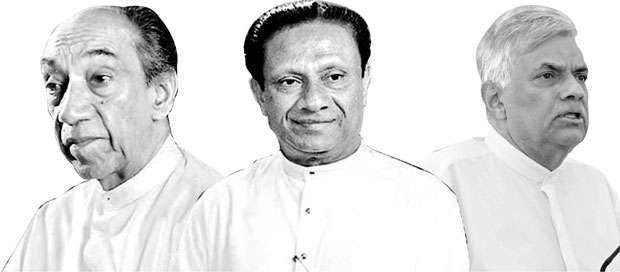
Tilak Marapana

January 21st, 2019

Asoka Weerasinghe Kings Grove Crescent . Gloucester . Ontario . K1J 6G1 . Canada

20 January 2019

Hon. Tilak Marapana
Minister of Foreign Affairs
Ministry of Foreign Affairs
Sir Baron Jayathilaka Mawatha
Colombo 1
Sri Lanka

Dear Honourable Minister:

I was intrigued to read the news item Marapana instructs Lankan diplomats to boost image of Sri Lanka overseas” on Monday 14 January, 2019.”

In the body of the news item, it said: Foreign Minister Tilak Marapana has called on Sri Lankan diplomats to boost the image of Sri Lanka overseas through efficient and effective execution of public diplomacy utilising its intrinsic  brands such as Buddhism, gems, tea, spices, high-end export products and the warmth of traditional Sri Lankan Hospitality.”

I understand that all this was said at the certificate awarding ceremony on 11 January to new officers recruited to the Foreign Ministry, after a two week long

Public Diplomacy and Media Relations training program organized by your Ministry.

Let me share my observations with you, Mr. Minister, to be fair to the new recruits who will be handling the Communications country’s image building portfolio which had been tarnished by the Tamil separatist lobby since  June 1983.  And they are still at it, day in and day out.

I am going to be honest and I am going to be blunt and you can take it for whatever it’s worth.  I was invited in 1989 by President Premadasa to help him in these files at the Ottawa High Commission as he realized that it wasn’t adequately accomplishing to his satisfaction by the incumbent officers who play musical chairs coming and going every three years.

I understood well President Premadasa’s concern, as  I as an Ottawan since 1968,  found the performance of the Communication officers at the Mission pathetic.  And we  ‘Sinhalese’ patriots had to fill in the gaps working on our own time, spending our own monies, while most of the Mission’s communication officers were taking the credit riding on our backs, to pick up brownie points to justify their presence at the Mission. There are many incidents that I can quote which I am livid about.

I hasten to add, that I was no friend of President Premadasa, nor a relation of his, nor wanting a job at the Mission to educate my kids in Canada, or earn a wage from thd Sri Lanka Government.  By the time I had that request from President Premadasa, I had never set eyes on him, and was an employee of the  Canadian Federal Government for 20 years as an IS6 grade officer pulling in a decent wage.  He obviously had been briefed by who ever it was, of my aggressive activism as the Chairperson of Project Peace for a United Sri Lanka to guard the good name of my Motherland, Sri Lanka, and went toe-to-toe with the Sri Lanka rubbishing Tamil separatists and the Canadian parliamentarians of the Liberal, Conservative and NDP parties who still  support the cause of a separate Tamil State Eelam.

My partners at Project Peace were two amazing Sinhalese patriots, Asoka Yapa and Harrison Perera, both who were bright clinical debaters, who could articulate well, thread English words into convincing sentences, and both happen to be Christians, who were prepared to hold the hands of a Buddhist, that’s me, to guard the good name of our Motherland, Sri Lanka.  We were brothers-in-arms throughout phone threats by the Tamils to blow us up, and a good section of the Dinner gathering critics of  the Sinhalese community in Ottawa who did not support our stance, but bashed us behind our backs.  There were flies on the walls during these dinner gatherings who sneaked to me later of what went on and what was said,

Like one June 1987 night around 11:00, the phone rings and an agitated female voice said, Asoka, you don’t know me, but  please don’t ask my name but I want to talk to you, or I will not be able to sleep tonight.”

Sorry, Madam, these are not the days for me to talk to phantoms. Please tell me who you are and then we can continue our conversation.”  Finally she obliged.

And she said, I was at a dinner at the home of ?Mr & Mrs. X, and all during the night I saw the dinner party group stabbing you, kicking and quartering you.  The only thing that I didn’t see was them burying you.  All because you are defending Sri Lanka’s good name.   I know you can handle the Tamils, but please be careful of your own people.  They are your enemies.”  That was tough.  I dismissed the crowd at these dinner circles as a bunch of ‘spineless nincompoops who lacked the courage  to confront me face-to face and say to me, Asoka, you are full of shit!”  And I resent intimidation.

After agreeing with the wages, cum housing allowance, cum entertainment allowance, which was still $200 less of the wages I was earning at the federal government, I resigned from the Canadian federal government and reported for duty, on June 1, 1989, at the Mission at 85, Ranged Road in Ottawa  A BIG MISTAKE.  I will come to it later.

And now comes the  appalling, disgusting and shocking state of affairs at the Mission. There were no Benchmarks for me to follow as a Communications Officer to build the image of Sri Lanka. In other words, Mr.Minister, there were sweet ‘F-all’.

No Sri Lankan artifacts, like masks, brass crafts, baticks, 35mm slides, nor a Kodak Carousel to show the slides with a up/down screen, gems, no library, or Sri Lanka flags…..nothing…nothing…nothing, There were sweet buggerall.  I was annoyed since this Mission had been established in 1967, I believe.

My work experience had been in the UK and Canada  and never in Sri Lanka, and I refused to change gears to accommodate the way things were done in Sri Lanka. It certainly didn’t jive with me.  Like playing games of ‘I am a Tin God’, making appointments to meet a client at 9:00 in the morning, and the client happens to be a Torontonian, setting off for the appointment at 4:00 in the morning, to sit on a chair in the reception area at 9:00 in the morning and only to be called to be interviewed at 11:00.  This I thought was not acceptable and unprofessional.

When I was taken to my office which was situated next to the High Commissioner’s Office, I asked the Chief Clerk, Is there a typewriter in the office?”  The answer came back, No, no, Mr. Weerasinghe, you don’t have to type letters, we have a’ Stenographer to type the letters.”   Sorry Karunaratne, I want a typewriter on my desk as that will be my workhorse.  I will type my own letters.”  The following morning there was a brand new electric Brother typewriter on my desk.  And I typed my own letters, 100s and 100s of them every month.

Lucky for President  Premadasa, when he hired me for the job, I came with my personal Museum quality mask collection, puppets, facsimiles of Heritage flags (I am a Museologist, former Head of Thematic Research at the National Museums of Canada: and Head of Exhibits, National  Museum of Natural Sciences in Ottawa), my political library, my 35mm slides of Sri Lanka and organized carousels for my private presentations with my poetry on Sri Lanka, et cetera.  I had little choice but to use my personal Libraries and artifact collections to get on with my work.  President Premadasa trusted me and expected me to produce.  And so I did.

And here  is what I achieved in Communications during my  5 years to promote the Image of Sri Lanka.

Were the Foreign Ministry personnel helpful so that I could get my job done.  There was ZIP support from your Ministry.  Well I was a pariah in away having taken one of their jobs and would do anything to sabotage my work.  Starting with refusing to provide me with a business card,  I refused to pay for it.  It was a fight between HC Walter Rupesinghe and whoever it was at your Foreign Ministry.    I got the message and it was not going to  be a nice five years but it was not going to phase me out either. They got it wrong.  I was a professional in the field of communications.  Just too bad for them.

They prompted Minister C.V. Gunaratna to question my appointment in parliament.

Pity he wasn’t around when I left the Mission in June 1994, as I would have met him and challenged his questioning in parliament as I was no dodo,  That if he can produce a single career diplomat during the past 20 years who had done an equally good job or  better than what I have done for Sri Lanka, that I would be prepared to give back every cent that I was paid in wages to Sri Lanka’s Treasury.  And if he failed that he should arrange with the Sri Lankan Government to pay me  the rent allowance, may be $2000s a month (in fact it was more than that)  for the five years that I was employed by the Foreign Ministry. And that he do the the simple arithmetic – $2000 x 12 x 5,   That is how much I lost in wages having left the Canadian Federal Government to help President Premadasa in a time of crisis  And I had a mortgage to pay.

  1. Between June 1989-May 1994, I had 56 letters out of 64 to Editors on behalf of the High Commissioner of Sri Lanka, all vetted by HC Walter

Rupesinghe and HC Walter Fernando published. I did not go through the Foreign Ministry as I wanted the response to go out within 36 hours.  I did not have the time to fart-around, waiting for approved drafts to come from Colombo.  My drafts edited and approved by the HC’s was good enough for me   I had my strategy how to get our letters published The Letters picked up ink in

The Ottawa Citizen (Ottawa)

The Globe and Mail (Toronto)

The Toronto Star (Toronto)

Surrey North Delta Leader (British Columbia)

The Whig-Standard (Kingston)

Star India Journal (Toronto)

The Island (Sri Lanka)

What was interesting was when the Minister at the Indian High Commission who was responsible for Communications invited me for dinner at the Chateau Laurier one day,  during dinner he asks me, Ashoka, tell me. everytime we open the Ottawa Citizen, letters page, there is a letter from you for the High Commissioner.  We cannot get a single letter published.  How do you do it?”  So I had to tell him and coach him how to go about it.

What was disappointing for me was, since I was not given an entertainment allowance as promised, I couldn’t reciprocate his courtesy.  That Sucked!  So much for being an employee of the Sri Lanka Government.  The worst employer I had in my working career.

  1. Participated in the Community Channel TV Shows to promote Sri

           Lanka’s image.

            I scripted and produced nine (9) ‘’SONGS OF LANKA’ for MacLean-Hunter

Cable TV, Ottawa in their Studios.

Highlighted the following in these half-hour shows:

Dancing – Tea Plucker’s Dance

                             Gajaga Vannama

                             Harvest Dance

             Kavi Maduwa

             Sinhala & Tamil New Year

             Kataragama

             Tea and Tea Gardens

             Gem mining

             Gems and Jewellery (Modelled by Ms. Chitranganee Wagiswara,

then First Secretary at the High Commission)

Kolam and Sanni Masks

             Puppetry

             Elephants and its influence on folk art

             Bharata Natyam

             A Muslim Dance

             Elephant Orphans at Pinnawela

             Wesak

             Interviewing Air Commodore Leonard Birchall

             Poetry on Sri Lanka, reading to Primary School

             Children with 35mm slide images, etc.

The children came in school buses with their teachers

to 85 Range Road.  Since I had No entertainment

allowance as promised (That Sucked), I requested HC Rupesinghe to

provide the children with Orange juice and doughnuts.  He very kindly

obliged.  (And you talked of Sri Lankan hospitality.  Hmmm!   That does not

exist  in an environment of cussedness of Tin Gods and Goddess towards

pariahs outside the Career Diplomatic community. I say, Tough-Tiddy, Mr.

Minister.  I don’t buy that rubbish.)

Note that all the artifacts, film clips and video clips were from my personal rich

Library,  The antique Kandyan silver jewellery were from my wife’s collection,

purchased from Sriya and Daya Curio Shop at 493 Peradeniya Road, Kandy.

AS I TOLD YOU EARLIER, THE HIGH COMMISSION IN OTTAWA HAD SWEET BUGGERALL UNTIL 1994 TO PROMOTE SRI LANKA’S IMAGE.  Perhaps it has changed for the better since then.

After seeing the SONGS OF SRI LANKA  half-hour shows on the Community TV

Channel, the Communications Officer for the Malaysian High Commission invited me for lunch  at Haveli Indian Restaurant in downtown Ottawa.  During our meal he exuded how much he enjoyed our Sri Lanka Image promotional Shows, and asked me to walk him through how I produce such a Show,  So I walked him through the time of my scripting, Studio recording  the segments and I being the MC to editing and up to the airing the Show.,  Wow Man, that is too much for me, and I doubt I could handle it”, and he abandoned producing such TV Shows for the Malaysian High Commision.

You know, Mr.Minister, what sucks me most was the inability to reciprocate  the Malaysian diplomat’s courtesy and invite him for a lunch to discuss matters of mutual interests in Communications to promote our countries, without being given an Entertainment Allowance.

  1. Participating in public exhibitions to promote the image of Sri Lanka and her good name.

  The Art of Healing: Ritual Masks of Sri Lanka (Canadian Museum of  Civilization, Ottawa) with the  Sanni Mask collection of the Museum and my    private collection.  July 1990 – February 1991.

  Festival of Masks: Sri Lankan ritual Masks (Provincial Museum, Quebec, with my private collection.  (August 1993.)

Sri Lankan-Canadian Writers in English (Provincial Museum, Edmonton,

Alberta.)  (August 1993)  The books came from my personal Literature library.

 Focus on Sri Lanka. (Algonquin College, Ottawa, February 1991).

All artifacts and Sri Lankan posters dry-mounted on gatorfoam were from my  private collection.

 Sri Lankan Heritage (facsimiles) flags, puppets and masks were from my  private collection with well researched labels at National Arts Centre,

Ottawa.  (February 1990).

The Canadiana Fund.  Sri Lanka Kolam Masks from my private collection at The National Gallery of Canada,  (October 1993).

Heritage Flags of Sri Lanka (Facsimiles) from my private collection at Heritage Day, Halifax, Nova Scotia.  (April 1992)

(Mr. Minister, here is an ugly fact about one of your Diplomatic passport carrying Minister Counsellors at the Mission, Weragama, apparently who was responsible for Communications angered me so much that I restrained myself from kicking his raw behind. This Diplomat lacked the sophistication to phone me and ask me, Mister Weerasinghe, I understand you always had Sri Lankan masks exhibited at  public evens and I  cannot find them, do you know where they are?”   I could have told him,

       The reason you couldn’t find them was because all of them belonged to me and were from my private collection and they are with me at home.  If  you wish to borrow them for an event you are most welcome to borrow them as long as you will assure me that you will take good care of them  as they are valued Museum quality pieces and I don’t want them to be  damaged.”

        But do you know what, this rascally Diplomat did?  He spread the word  That  I had removed (stolen) the masks from the Mission.  I am still livid and after 24  years I want to get hold of his collars, shake him like a rag doll until his bones rattle and fall at his feet. So much for the diplomats who are sent to the Mission in Ottawa,

         On 14 February 1997, I sent a letter to HIgh Commissioner Ananda  Goonasekera explaining my anger towards  this Diplomat attaching copies of receipts of my purchases of masks in Sri Lanka going back to Did  I get an acknowledgement for my letter from this senior career diplomat?

         Na! Not a whimper. He had decided to ignore my letter there by covering Diplomat Weragama’s arse,  Too bad as it has left a bitter taste in my tongue for this long. So much for Sri Lanka’s Foreign Ministry diplomatic  administrative etiquette and courtesy.  Doesn’t say much, does it,   Mr. Minister?

    Public Talks:

Sri Lankan Healing Masks: Delicious Nightmares,  Canadian Museum of Civilization, Ottawa.  Exhibited a few Masks from my private collection with explanatory labels.

Claim for a Separate State for Tamils in Sri Lanka: The Eastern Province

Whose Home Land? – at SLUNA, AGM,  Toronto. This was the basis for an

Editorial in The Ottawa Citizen.  It was claimed by the High Commission that

they were the instigators of the Editorial.  I managed to kill that ‘Brownie Point

notion as they were trying to ride on my (expatriate) back.  Minister, that was

Sick and a loud  No…No. I had sent a copy of my SLUNA-talk to the Editorial Board of the Ottawa Citizen the following day.

 Buddhist Spirituality in Meditation at Sai Baba’s 20th Anniversary

celebrations  in Ottawa.

5,    Show and Tell talks on Sri Lanka to Middle School children in Ottawa’s

             National Capital Region.

I introduced myself as the Communications Officer at the SriLanka High

Commission to the Ottawa Board of Education and the Carleton Board of

  Education and that I was available for a Show and Tell talk on Sri Lanka at

any of  their schools  The response was impressive and I ended up

presenting one-hour talks at 13 local schools.

             All what I requested from the Principals were a VHS player and a Globe.

The VHS Player was to play for them a couple of video recordings  of our

panoramic Sri Lanka, and the other of the Pinnawala elephant orphanage,

which was always a hit.  Both VHS recordings were from my private video

Library as the Mission had sweet buggerall in communication props to

promote beautiful Sri Lanka’s images, Gems, tea gardens, etc,

The Globe was to pinpoint where Ottawa is and tell them how far apart we

live.  That when I get on the plane after dinner at home, I will still be

travelling in the plane and have breakfast in the plane before I get

down at England’s London airport to change into another plane to fly to

Sri Lanka’s airport in Colombo.   So I will be having Lunch in the plane,

and Dinner in the plane, and sleep in the plane, and will be woken up by

the Air-hostess to have breakfast and about another almost two hours

flying I will land in Sri Lanka’s airport.  That is how far we are in Ottawa

from Colombo in Sri Lanka.  It is 32 hours of travelling from door to door.


I used my artifacts, crafts, masks,  gems and jewellery to show and allow

them to touch them.  They are in awe every time I place a sapphire, a ruby

or a moonstone on their palms.


Mr. Minister, I wanted to hand one of our Sri Lanka flags to the Principal of

the school that I gave a talk and requesting the Principal to hang it on

Commonwealth Day.  So I requested the Foreign Ministry to provide me

with a dozen large flags.  My request was ignored. Why should they!   The

exercise for them is to screw Asoka and not help him to be successful in

his assignment.  After all they got Minister C.V, Gunaratne to question my

appointment to the Canadian Mission taking over one of the  career

Diplomat’s jobs.

.

But, Minister, I was asked by President Premadasa to help him in the

Communications portfolio and that is what I was determined to do. And

I was ever so thankful to him for giving me the opportunity to give back

five years of my life to my Motherland who nurtured me for the first 19

years of my life.  I owed it to her.  I just couldn’t turn my back on her,

So I requested my sister to go to Laksala, buy me a dozen large Sri

Lanka  flags and send them over to me.  Thanks to my Sybil akka, she

did,  and they were handed over to Principals at the 13 schools where I

made presentations on Sri Lanka.  The Foreign Ministry’s uncooperative

attitude to sabotage my work, really sucked.  There are many ways to

skin a cat and I wanted to have the last laugh!  It was a mini-war.


  1.   Helping Canadian High School Students and one Graduate Student

                   to use SRI LANKA as their country assignments.


                  During the Summer when the Canadian Parliament in Ottawa is on

recess the Junior Commonwealth Conference is held in the Parliament

chambers,   and High school Nominees from each province congregate

there.


  1. Three High School students from British Columbia had been assigned

Sri Lanka as the Commonwealth country that they should represent.

They had made an appointment with HC Walter Rupesinghe to meet

with him to get some information about Sri Lanka.  After having a chat

HC Rupesinghe passed them on to me to collect some Tourism

brochures etc.

I asked them and their teacher whether they would like me to coach

them. They jumped at the idea, and so I coached them.

They did so well that they went back home carrying the trophy for the

Best  Country Presentation.  And the country was our Sri Lanka.

As a Thank You, they took me together with their teacher to dinner at

the Chateau Laurier,


  1.   A British Graduate student at the Patterson School of International

Studies at Carleton University, contacted me wanting some information

on Sri Lanka. We met and I proposed that if she adopts Sri Lanka as her

Subject country of studies that I will provide all the necessary research

Material  and my writings on the subject from my personal political

Library.   She happily agreed.  The High Commission had sweet

buggerall to provide such research material.  So I, on behalf of the Sri

Lanka High Commission collaborated.


A highlight of this collaboration was when the Graduate student played

a  recorded voice tape to HC Walter Rupesinghe of her seminar on Sri

Lanka, and after  presented the tape to him.  She started the seminar

by introducing herself as I am Walter Rupesinghe, the High

                    Commissioner for Sri Lanka, and I will be making my presentation

                    for my country on…………..”

High Commissioner Rupesinghe was impressed how exact she were

and how well she presented his case for Sri Lanka.  She was given an

A+ for the seminar.


  1.  Working with the Parliamentary Spouses Association to produce

                      a video on Sri Lanka to be distributed throughout  Canada’s

                      parliamentary constituency offices to celebrate the Literacy week. 


                      The video was recorded at the High Commision at 85 Range Road

while I  was making a presentation to middle-school children on

Sri Lanka.  The personal letter sent to me by Sue Evans, the

President of the Parliamentary Spouses Association on a paper

with their banner on June 1, 1993, will relate the success of the

effort by the High Commission promoting Sri Lanka’s image. The

letter was hand written.


Dear Mr. Weerasinghe:

                        What a delight it was to be at your presentation on Sri Lanka!  I

                        can hardly wait to see the video tape…we expect it next week.


                        Thank you so much for your enthusiasm for the Literacy Project

                        and for your willingness to become personally involved. It was

                        a pleasure to meet you and join the children in learning about

                        your country.


                        I have always loved poetry – but do not profess the skill to write

  1.   After listening to your poems and those of your wife, I was

                       struck by the intimate details conveyed by just a few words of a

                       Poem….


                        On behalf of all our members I want to thank you for supporting

                        this project.

                                                                                   Sgnd. Sue Evans”

  1.  University Thesis Adviser

Was adviser to two Masters students at Carleton University.  One on

Anthropological significance on Sri Lankan Masking

                         ceremonies. 

And the other to an International Political Science student on

 Sri Lanka: Aid and Development in today’s political

                         environment.


  1. Provided Research materials and my published essays and

                         critical writings from my personal library, to Ph.D., M.A., and    

                         B.A students for their Theses, and Special Term Papers

                         exposing the perspective of Sri Lanka Government’s position in                   

                         the ethnic  crisis. (The High Commission had sweet buggerall

                         to help these students and that is why I used material from my

                         private Library at home.)

Carleton University (Ottawa); Ottawa University (Ottawa); McMaster

University (Hamilton, Ontario); Brock University (St. Catherines,

Ontario);  Brad College (New York, US); University of Windsor

(Windsor, Ontario);  McGill University (Montreal); Concordia

University (Montreal); Simon Fraser University (Burnaby B.C.)

University of Victoria, (Victoria, B.C,); University of British

Columbia (Vancouver, B.C.) and University of Manitoba (Winnipeg,

Manitoba).


  1. Canadian National Museum’s Sri Lankan Artifacts

Adviser on cataloguing Sri Lankan artifacts at the Canadian

Museum of Civilization.

  1.    Press Releases – 223
  2. Sri Lanka News Letters – 53

13,   Information Kits.

When the Foreign Ministry nor the Department of Information

were not providing information kits to be used as tools for

defending Sri Lanka’s good Image, I requested High

Commissioners Walter Rupesinghe and Walter Fernando to find

me funds to produce 100 Information kits ($600 for each title).

I researched, wrote and produced such kits for our

dissemination. among Canadian law-makers and Sri Lanka

watchers who had sold their souls to garner Tamil votes   So

these were Information Kits that I produced for the use by our

High Commissioners  They were professionally produced and

looked attractive with silver coloured information kit folders tied

with green ribbons.


 The Information Kits were:

                               Sri Lanka: Human Rights (July 1991);  Sri Lanka: a Mosaic at

                               a  Glance (January 1992) and Sri Lanka: A Hidden Secret –

                               Quick Facts (January 1994)


And do you know what,Minister?  The smart  Alec Minister

Counsellor who joined the Mission after I left, tried to claim  that

he authored them. What a way to pick up Brownie points for

survival.  I pointed out that he was a liar.


The comment from Mr. Bradman Weerakoon (Adviser on

International Relations to the President), said in a letter to

HE Walter Fernando on 16 March 1994 –    …….. I am sure

                                  Asoka Weerasinghe, your innovative colleague working on

                                  Press relations must have helped in the compilation of

                                  these papers.  They contain authentic, factual matter which

                                  is being used by us at different times. The value of the

                                  information is that it is not long winded, but concise and

                                  focused on the Issues on which people have queries…..”

Minister Marapana, by now you may have realized that requesting the new recruits to the Foreign Ministry to Boost the Image of Sri Lanka overseas through  efficient and effective execution of public diplomacy, utilizing its intrinsic brands such as Buddhism, gems, tea, spices…..” without providing Communication tools,  will go nowhere.  They will be lost.  I have proved to you that communication tools were the reasons for the success in my efforts to Boost the Image of Sri Lanka overseas.” There is no other way unless the career diplomat is innovative and creative.  I challenge anyone to prove at the Foreign Ministry me wrong.

I want you to be fair on these new recruits.They will achieve nothing unless the Government provides them the tools to get on with their jobs  Tourism brochures ain’t enough..

That is  the basic Labour Code.  Give your people the tools and they will get on with their jobs.  I can speak on the pre-1989 Ottawa Mission.  That Mission was a disaster with sweet buggeral to help  a Communications officer to be effective.  I did my job as requested by President Premadasa, as I was willing to make use of my private collection of cultural artifacts and my political and literature libraries and not charge back for the use of my private material and Sri Lanka got a good deal hiring me.  And I believe  I did a fairly reasonable job.   The two High Commissioners, Walter Rupesinghe and Walter Fernando were pleased.

My Political Library and writings were donated, 30 boxes of them, to the Sir John Kotelawala Defence University at Ratmalana, on November 2013.

While I say Boo” to Minister C.V. Gooneratna for questioning my appointment at a senior position at the High Commission in Ottawa, in Parliament and Boo” to those at the Foreign Ministry who prompted him to question my appointment, I am prepared to tell you frankly, that the Sri Lanka Government was the worst employer I worked for.  If I could give a grade between 85 to 95% to all my employers in the UK and Canada, I could only give Sri Lanka measly 35% and nothing more,and that is a failing  Grade.

And Mr. Minister, you could quite happily have a sigh of relief. that  this appointee of President Premadasa’s was a hard worker and that you all got back value from me for every cent you all paid me.  And thank  your God  that I was no thief, a rogue or a pick-pocket picking a poor man’s pocket while doing a job for your Ministry of Foreign Affairs,  as there have been several in your Ministry’s fold.  I am clean.

And before I conclude I want to identify two groups of people to say Thank You for

giving me some faith on Sri Lankan colleagues who I was in contact with while working at the Sri Lanka High Commision in Ottawa, not having worked for a Sri Lankan outfit before.

Firstly, for High Commissioners Walter Rupesinghe and Walter Fernando, who softened my embarrassment for not being provided as promised an entertainment allowance to reciprocate  courtesies of my media and communication contacts and  contacts with diplomats from the Asian Missions like India, Bangladesh and Malaysia who had luncheon and dinner meetings with me and emptied their wallets to pay my bills.

The two High Commissioners  were extremely gracious to invite all my contacts for a dinner at the High Commissioner’s residence, once a year,  and asking me to extend invitations to them for our National Day celebrations.  I am really, really thankful for their sensitivity and sincerity for helping me out.  Two absolute gentlemen that Sri Lanka’s Diplomatic Corp should be proud of.


Secondly, I want to identify three persons two from the Foreign Ministry and the third a President’s appointee, who commanded my respect as working colleagues. They may have  had difficulty in accepting my working etiquette dealing with Canadians and Sri Lankan-Canadians who tried to harm my Mother Lanka, but at the end of the day they knew that my heart was where it rightly belonged in an effort to, guard my Mother Lanka.  And that I was on a Mission – no one, absolutely no one harms my Motherland unfairly.  The three are the late Rodney Vandergert, Chitranganee Wagiswara and Bandula Jayasekera,  I doff my hat to all three of them most affectionately and sincerely.

And to conclude this strange experience working for the Sri Lanka Government’s

Foreign Ministry let me tell you that on my return from lunch on 5th February 1993,  and way to my office High Commissioner Walter Rupesinghe called me in and we had a chat.  He was on his way  back home, to Sri Lanka, after the end of his tour of duty.

He said that he was sorry that I was treated badly by the Sri Lanka Government and that I was out of pocket in wages by thousands of dollars, having left the Federal Government, but I hope this will show you my appreciation for helping me  out and for having a good working relationship”, he said, and handed a piece of paper typed on the High Commision letter head.: It  was dated 5th February 1993 and said:

 Mr. Asoka Weerasinghe functioned as my Media and Communications Director during  my term of service in the High Commission.

      Asoka’s passionate love for Sri Lanka and his superb understanding of our political, economic and social problems, made him admirably suited to promote the Image of the country and to counter the adverse publicity generated by elements hostile to our democratic lway of life and the unitary state.  Asoka carried out these arduous and challenging duties with exemplary enthusiasm and finesse.  He is indeed an asset to the Mission.

      Asoka is an artist, poet and a person of several other intellectual pursuits.  The amalgam of all these attributes, not often found in one person, made him a Media and Communications Director par excellence.

       I wish him well in all his future endevours,

                                                                       Sgnd.  Walter Rupesinghe

                                                                        High Commissioner”


Sincerely

Asoka Weerasinghe
 

අරක්කු සිගරට් බොන්න එපා කියා හාමුදුරුවරු කියනවා.. ඒ නිසා මං බණ අහන්න යන්නේ නෑ..- චන්ද‍්‍රිකා

January 21st, 2019

 lanka C news

අද කාලයේ භික්‍ෂූන් වහන්සේලා හමුවට ගිය විට කියන්නේ බොන්න එපා, සිගරට් බොන්න එපා පුළුවන් තරම් දාන දෙන්න ආදී වශයෙන් බව හිටපු ජනාධිපතිනි චන්ද‍්‍රිකා කුමාරතුංග මහත්මිය පවසයි.

එනිසා තමන් බණට වැඩිය යන්නෙත් නැතැයිද ඇය කියා සිටියේ උක්සව සභාවක් අමතමිනි.

පාර්ලිමේන්තුවේ මන්ත‍්‍රීවරුන්ගේ හැසිරීම ගැනද ඇය එහිදී දැඩි විවේචන එල්ල කලාය.

කාවන්තිස්ස රජුට ස්ත්‍රී ආභරණ යැව්වේ දුටුගැමුණු කුමරු නොවේ. මහානාම හිමි යි – ආචාර්ය රාජ් සෝමදේව

January 21st, 2019
ප්‍රවීණ මාධ්‍යවේදී උපාලි සමරසිංහ විසින් රචිත ‘‘මහ රජ ගැමුණු ජයමග ඔස්සේ’’ කෘතිය පසුගිය 10 වන දින කොළඹ 07 නිදහස් මාවතේ ජාතික පුස්තකාල හා ප්‍රලේඛන සේවා මණ්ඩලයේ දී ජන ගත කෙරිණ. මැටරඹ හේමරතන නාහිමිපාණන් මෙම උත්සවයේ මුලසුන හෙබවූ අතර පුරාවිද්‍යා චක්‍රවර්තී එල්ලාවල මේධානන්ද හිමි සහ මහාචාර්ය රාජ් සෝමදේව, ජ්‍යෙෂ්ඨ කථිකාචාර්ය අත්තනායක එම්. හේරත් යන මහත්වරු දෙසුම් පැවැත් වුහ.

ආචාර්ය රාජ් සෝමදේව යනු කවදත් සම්මත ඉතිහාසය අභියෝගයට ලක් කරන විද්වතෙකි; පුරා විදු පර්යේෂකයෙකි. එදින ද ඔහු පැවැත්වූ දේශනයේ ඇතැම් කොටස් සම්මත ඉතිහාසය, එසේත් නැත්නම් විවිධ වංශකතාවල අඩංගු ඉතිහාස කරුණු යම් අභියෝගයකට ලක් කළේ ය.

මතු දැක්වෙන්නේ ඒ මහතා විසින් කරන ලද දේශනය ඇසුරින් සැකසූ ලිපියකි.

මෙය අපි බොහෝ දෙනා විසින් වඩාත් හඳුනන ඓතිහාසික චරිතයක් වන දුටුගැමුණු රජතුමාගේ සංග්‍රාමික ගමන් මග ඔස්සේ කළ ගවේෂණාත්මක චාරිකාවක තොරතුරු ඇතුළත් කෘතියකි. මෙම කෘතිය මගින් මීට වසර දහස් ගණනකට ඉහත සිදු වූ එක් ප්‍රධාන ඓතිහාසික සිද්ධියක් ස්ව අත්දැකීමක් ලෙස විඳගැනීමට පාඨකයාට පුළුල් අවස්ථාවක් ලබාදෙබ බව නිසැක ය. මෙවැනි කෘතියක් සම්පාදනය කිරීම වෙනුවෙන් එහි කර්තෘවරයාට අප සියලු දෙනා විසින් කෘතඥ විය යුත්තේ ඒ නිසා යැයි මම විශ්වාස කරමි.

ඉතිහාසය යනු ඇතැම් විට අප ජීවත්වන වර්තමානයටත් වඩා අපිට සමීප බවක් දනවන්නකි. ඇතැම් ඓතිහාසික චරිත අපගේ අසල්වැසියාටත් වඩා හොඳින් හඳුනමි. එවැනි ඓතිහාසික චරිත අතළොස්සක් අතරින් දුටුගැමුණු රජුගේ චරිතය සුවිශේෂිත ය. මේ සුවිශේෂී බව කියාපාන්නේ අවම වශයෙන් අවුරුදු 1500 ක් පමණ පැරණි ලිඛිත ඓතිහාසික සම්ප්‍රදාය තුළ එම ඓතිහාසික චරිතය අනෙක් චරිතවලට වඩා කිහිප ආකාරයකින් වර්තමානය මගින් එය භාවිතයට ගෙන ඇති හෙයිනි.

ඉතිහාසය නම් වූ නිම්වළලුවලින් දුරස්තව පවතින: කලාව, සාහිත්‍යය, දේශපාලනය ආදී ක්ෂේත්‍රවල මෑත කාලයේ දී දුටුගැමුණු චරිතය ඇගයීමට ලක්වීම මේ සම්බන්ධයෙන් ඉදිරිපත් කළ හැකි හොඳම නිදසුන යැයි මම විශ්වාස කරමි. ‘‘මහරජ ගැමුණු ජයමග ඔස්සේ’’ නම් වූ මෙම කෘතිය ද ඒ ඓතිහාසික චරිතය වර්තමාන සමාජය අවශෝෂණය කරගෙන ඇති තවත් මානයක් අප වෙත විදහා දක්වන්නකි. මෙම කෘතිය ප්‍රවේශමින් කියවන විට පෙනෙන්නේ වංශකතාවලින් දැනටමත් ප්‍රතිශ්ඨාපනය කර ඇති වෘත්තාන්තයක් කතුවරයා විසින් ගුරු කොට ගනිමින් ඒ වෘත්තාන්තයේ යථාර්තය ප්‍රායෝගික ලෝකය තුළ සොයාගැනීමට වෑයම් කිරීමට වෙර දරන බවයි. අතීතය අධ්‍යනය කිරීමේ විධික්‍රමයක් ලෙස නම් මෙය මා දකින්නේ අතිශය අවදානම් සහගත කටයුත්තක් බව යි.

සාහිත්‍යමය යථාර්ථයත්, අනුභවික යථාර්ථයත් අතර සංවිද්ධතා මෙන් ම විසංවාද ද හටගනී. ඕනෑම සාහිත්‍යය කෘතියක් ස්වකරණවාචී යැයි පිළිගනු ලබනවා. එය තුළ රචකයාගේ අභිප්‍රේථාර්ථ පමණක් නොව එවැනි චරිතයක් ගොඩනැගීම සඳහා මුදුන්පත්ව පැවති සමාජ, ආර්ථික සංකල්පාවලීන් ගෙන් ද අත්මිදීමට කුමන තරාතිරමක රචකයකු වුව ද අපොහොසත් වෙයි. අප සිතන පතන සියලු දෑ අප ජීවත්වන වර්තමානය මගින් ප්‍රාණය සපයනු ලබන දේ ය. එහෙයින් එවැනි උල්පතකින් පැනනගින, මිනිසුන් විසින් කරනු ලබන නිර්මාණ සියල්ලක් ම පුද්ගල ආත්මීය ආදේශවලින් සමන්විත ය.

දුටුගැමුණු නම් වූ ඓතිහාසික චරිතය මැනවින් සජීවිකරණයට ලක් කර තිබෙන මහාවංශයට වුව ද මේ සිද්ධාන්තය එක සේ සාධාරණ ය. ක්‍රි:ව: පස්වන සියවසේදි මහානාම හිමියන් විසින් දුටුගැමුණු රජතුමා පිළිබඳ එතෙක් පැවති ඓතිහාසික මතකය වර්ණවත් වූ වෘත්තාන්තයක් බවට පරිවර්තනය කොට පරිපූර්ණත්වයට පත්කළේ ය. මෙහි දී අප විසින් තරයේ මතකයට නගා ගතයුත්තේ මහාවංශ කතු හිමි විසින් අලිඛිත මූලාශ්‍ර ඔස්සේ තමන්ට අසන්නට ලැබුණු කරුණු සිය අභිමතය පරිදි සංග්‍රහ කරන ලද බවයි.

කරුණු වනාහී නිගමනවලින් ස්වාධීන වූ ඒවා බව සාමාන්‍ය පිළිගැනීම ය. එහෙත් මහාවංශය මගින් කිසියම් කරුණු සමුදායක් උපස්ථිතික නිගමනයකට ලඝු කරන ආකාරය දුටුගැමුණු රජුගේ චරිතය එහි නිරූපණය වී තිබෙන ස්වරූපය විසංයෝජනය කිරීමෙන් තේරුම් ගත හැකි බව මගේ විශ්වාසය යි. මේ උපස්ථිතික නිගමනයට අනුබලය සපයන්නේ මහාවංශය ආරම්භ වූ කාලයේ ඉන්දීය සාගර කලාපය තුළ ශ්‍රී ලංකාවේ ගොඩනැගුණු සමාජ ආර්ථික යථාර්ථය බව තේරුම් ගැනීමට ඉවහල් වන පුරාවිද්‍යාත්මක සාක්ෂි ගණනාවක් දැනට ලැබෙමින් තිබේ.

අන්තර්ජාතික වෙළෙඳාම තරගකාරී වීමත්, එවක රටේ වයඹ දිග වෙරළේ පිහිටි දකුණු ආසියාවේ වැදගත් ම අන්තර්ජාතික වෙළෙඳ මධ්‍යස්ථානයක් වූ මාතොට වරායේ බලය අල්ලා ගැනීමට දකුණු ඉන්දීය පාලකයන් දැරු නිරන්තර උත්සාහයනුත් ඇතුළත් අනේකප්‍රකාර ගම්‍යතාවයන් අතර මැද ජාතික රාජ්‍යයක් ලෙස නැගී එන අභිමතයට ස්වීය අනන්‍යතාවය පිළිබඳ සංවේ දී වාස්තවික සමාජ මනසක් නිර්මාණය කිරීමට අවශ්‍ය කරන සාධනීය පිළිවෙතක් පිළිබඳ උපස්ථිතිය මහාවංශය ගොඩනැගීම තුළ පැහැදිලිව ම පෙනේ.

රටේ සමාජ දේශපාලනික සහ ආර්ථික ස්ථාවරයට නිරන්තරයෙන් බලපැමක් ඇති කළ දකුණු ඉන්දියානු වාසි සියල්ල ම පොදුවේ අනෙකා ලෙස දැක්වෙයි. එම න්‍යාය පත්‍රයේ වැදගත් වූත් එමෙන් ම ප්‍රමුඛතාවයට පත්කිරිමට අභිප්‍රේථ වූත් තේමා ය. එවැනි ගමනාන්තයක් වෙත හිස් නමා කන් සලා සියල්ල අසා සිටින්නට හුරුපුරුදු සමාජයක් නාභිගතකිරීමට වඩාත් සුදුසු චරිතය සහ ඒ වටා දැවටී ඇති සිද්ධි මහාවංශ කතුවරයා විසින් තර්කානුකූලව තෝරාගෙන තිබෙනවා. ඒ දුටුගැමුණු රජුගේ චරිතය යි.

ශ්‍රී ලාංකීය ඉතිහාසයේ වාර්තාගත පැරණිතම දකුණු ඉන්දියානු චරිතය වන එළාර ඉතිහාසය මත පතිත පළමු දකුණු ඉන්දිය සෙවණැල්ල සේ සලකා ඒ සෙවණැල්ලේ අඳුර දුරු කිරීම ජාතික වගකීමක් සේ හුවා දැක්වීමෙන් දුටුගැමුණු රජුගේ විශිෂ්ටත්වය පිළිබඳ හැඟීම වැටහීමට සුදුසු ම කෙතක් එහි කතුවරයා විසින් නිර්මාණය කර තිබෙනවා. මිට වසර 1500 කට පමණ පෙර මහාවංශය රචනා කිරීම ආරම්භ කළ දික්සග සෙනවියා පිළිගෙන ඇති මහානාම හිමියන් තුළ පහළ වූ ඒ උපස්ථිතිය ම දුටුගැමුණු රජතුමා පිළිබඳ වර්තමාන කථිකාව තුළ දෝංකාර නංවන අයුරු උපාලිගේ කෘතිය ආරම්භයේ දී ම මම දුටුවෙමි. ඔහුගේ කෘතියේ ‘‘සියල්ලට ම පෙර කියවීම’’ නමැති පරිච්ඡේදයේ දෙවැනි ඡේදයේ ඇති කොටසක් මෙසේ උපුටා දක්වමි.
‘‘අපේ සටන් බිම බොහොම දරුණුයි. මානුෂීය මෙහෙයුම හරිහැටි ක්‍රියාත්මක නැතත් අපේ රණවිරුවන්ගේ ආත්මවිශ්වාසය, චිත්ත ධෛර්යය නංවන්න මේ කෘතිය යම් සවියක් වෙන්න පුළුවන්. දුටුගැමුණු මහරජු ගේ ජය මාවත ගැන ලියන්න තීම් එකක් සුදානම් කරන්න එතුමා කීවා’’

මේ ප්‍රකාශය මගින් ධ්වනිත වන අදහස ඇත්ත වශයෙන් ම විසිවැනි සියවසේ මෙරට පැවති ජාතික නිදහස් අරගල සමයේ වඩාත් ම උත්කර්ශවත් ලෙස අපේ සමාජය තුළ භාවිතයට පැමිණියක් බව මගේ විශ්වාසය යි. වර්තමානයේ අප දන්නා සමාජයේ වාස්තවික ව්‍යාකූලතා අපගේ ග්‍රහණයෙන් මිදී පහළට රූටා ගොස් තවදුරටත් සමාජ අර්බුදයක් බවට පත්වන විට ඒවා එක්තැන් කොට ගොනු කරගැනීමට ඓතිහාසික සිද්ධි හා ඒවාට සම්බන්ධ චරිත ඉස්මතුකොට දැක්වීම යනු කිසියම් සමාජයක් විසින් අතීතය වර්තමානය මත ප්‍රතිනිෂ්පාදනය කිරීමේ ස්වරූපය යි.

මගේ කල්පනාව අනුව නම් දුටුගැමුණු රජතුමා සහ එතුමාගේ චරිතය වටා වංශකතාකරුවන් විසින් පෙළගස්වා තිබෙන සිද්ධි දාමය පෙළගස්වනු වෙනුවට, පුනරුච්ඡාරණය කරනු වෙනුවට ඒ දෙස් විමසිලිමත්ව ඒ චරිතය සහ සිද්ධි මගින් අධ්‍යහාරව අප වෙත සන්නිවේදනය කරන සමාජ දේශපාලනික යථාර්ථය මැනවින් ග්‍රහණය කර ගැනිමට දැන් සුදුසු කාලය පැමිණ ඇති බව යි. ඇත්තෙන් ම මේ රටේ දේශපාලන බලයේ විකාශනය අධ්‍යනය කරන්නෙකුට දුටුගැමුණු කතා ප්‍රවෘත්තියෙන් ලබාගත හැකි ආදර්ශය අතිමහත් ය. ඒ පිළිබඳ සංවාදය ආරම්භ කළ යුත්තේ එතුමාගේ පියා වූ කාවන්තිස්ස රජුගෙනි. ශ්‍රි ලංකාවේ වයඹදිග වෙරළේ පිහිටි එවක ඉන්දීය සාගරයේ ජාත්‍යන්තර වරායක් ලෙස ක්‍රියාත්මක කොට ඇති මාතොට හි බලය තහවුරු කරගැනීමෙන් රටට ඇතිවන ආර්ථික වාසිය පුරෝකථනය කළ එතුමා ඒ වන විටත් එම වරායේ ආධිපත්‍ය දරමින් අනුරාධපුරයේ වාසය කළ එළාර රජුගෙන් එය මුදවාගැනීම කල්යල් බලා සැලසුම් කළ ආකාරයේ උපායමාර්ගික ආදර්ශය නිසිපරිදි අපගේ අවධානයට යොමු නොවුණි.

කාවන්තිස්ස රජතුමා විසින් අනාගත සංග්‍රාමික ප්‍රවේශයක් සඳහා සිය හුද හමුදාව ගොඩනගන ආකාරය පිළිබඳ සහස්ථවත්තුකරණය සහ පාලි රසවාහිනියේ සඳහන් වන තොරතුරු ඊට නිදසුන් ලෙස දැක්විය හැකි ය. යුද හමුදාවේ ඉහළ තනතුරු සඳහා අඩුම තරමින් කහවනු දාහක වාර්ෂික ආදායමක් ලබන පවුල්වලින් තරුණයන් හමුදාවට බඳවා ගතයුතු බව එ’රජු විසින් නියම කරන ලදී. 1970 දශකය වනතුරු ම මේ රටේ ත්‍රිවිධ හමුදාවන්ට බඳවාගැනීමේ දී ද ආධුනිකයන්ගේ පවුල් පසුබිම පිළිබඳ සූක්ෂම අවධානයක් යොමු කළ ආකාරය අපට අමතක නැත. හමුදාවක තිබිය යුතු විනය අඛණ්ඩව පවත්වාගැනීමට එවැනි ප්‍රවේශයක වැදගත්කම පසුගිය කාලයේ සමහර අවස්ථාවල අප විසින් අත්දකින ලදී. එවැනි දුරදක්නා නුවණකින් ක්‍රියා කළ කාවන්තිස්ස රජතුමාට ස්ත්‍රී ආභරණ යවන ලද්දේ දුටුගැමුණු කුමරුන් නොව මහාවංශය රචනා කළ කතු හිමියන් විසිනි. ඇත්තෙන් ම කාවන්තිස්ස රජුට එවැනි ඓතිහාසික අසාධාරණයක් සිදුවූයේ කුමන ගම්‍යතාවක් පදනම් කරගෙන ද යන්න අප කල්පනා කළ යුතු ය.

තමා විසින් නායකත්වය ලබා දිමට නියමිත සංග්‍රාමිය උපාය මාර්ගයට එලඹීම සදහා දුටුගැමුණු කුමරු ක්‍රියාකරණ ආකාරය ඒ ආකාරයට ම සැලසුම්සහගත ප්‍රජාතන්ත්‍රවාදි ස්වරුපයක් පිළිබිඹු කරන බව මගේ අදහස යි. ඒ වන විටත් ප්‍රාදේශීය ප්‍රභූන් අත පැවති දේශපාලන බලය ඒකාබද්ධ කිරීමේ අවශ්‍යතාව වටහාගත් දුටුගැමුණු කුමරු එය ක්‍රියාත්මක කළේ ය. වේළුසුමන, නන්දිමිත්‍ර ආදී ප්‍රාදේශීය ප්‍රභූන් කේන්ද්‍රීය පාලන ව්‍යුහයකට අවශෝෂණය කිරීම එහි දී අනුගමනය කළ ක්‍රමය යි. එම ක්‍රියාවලියට නිදසුන් සපයන සාක්ෂි දුටුගැමුණු රජුගේ පාලන සමය තුළ රචනා කරන ලද සෙල්ලිපිවල අන්තර්ගතව ඇත. ඇතැම් සෙල්ලිපිවල වේළුසුමන පෙනී සිටින්නේ පරුමක වේළුසුමන යන නමිනි. එහි තේරුම ප්‍රධාන වේළුසුමන යන්නය. නන්දිමිත්‍ර පිළිබඳව වුව ද කිව යුතතේ එලෙස ම ය. නමුත් ඇතැම් සෙල්ලිපිවල මේ දෙදෙනා ම හැඳින්විමට ‘‘ක්ෂණපති’’ හෙවත් ‘‘සේනාපති’’ යන තනතුරු නාමය ද යොදා ඇත. ‘‘පරුමක ක්ෂණපති වෙළුසුමන’’ යනුවෙන් ලියා ඇති සෙල්ලිපි කිහිපයක් සිතුල්පව්වේ දක්නට ඇත.

මේ ප්‍රාදේශීය ප්‍රභූ රාජ්‍ය යාන්ත්‍රණයට අවශෝෂණය කොට ඔවුන් සංග්‍රාමික ව්‍යෘතියේ ජෙනරාල්වරුන් ලෙස සලකා ඔවුන්ට වගකීම් පවරන ආකාරය ඇත්තෙන් ම ප්‍රාදේශීයව පැවති බල න්‍යෂ්ටියේ කේන්ද්‍ර වෙත ගොනු කොට එම ව්‍යුහය වඩාත් සවිගැන්වීම සඳහා අනුගමනය කළ සාධනිය වූත් අතිශය උපායමාර්ගික වූත් දේශපාලන වැඩපිළිවෙළක් ලෙස පෙනේ. සිය සංග්‍රාමික දේශපාලන ව්‍යාපෘතිය නිම කිරීමෙන් පසු කෙන්ද්‍රිය පාලන ව්‍යුහයට අවශෝෂණය කළ මේ ප්‍රාදේශීය ප්‍රභූන් රාජ්‍ය යාන්ත්‍රණයේ විවිධ මට්ටම්වල තනතුරු හොබවන තොරතුරු සෙල්ලිපිවල අන්තර්ගතව ඇත.

දුටුගැමුණු රජුගේ චරිතය විසංයෝජනීයව හදාරණ කෙනකු ඉදිරියේ තිබෙන ප්‍රධාන අභියෝගය නම් වංශකතා සහ ජනප්‍රවාද මගින් ඒ චරිතය වටා දවටා තිබෙන: අත්භූත, නාටකීය, වෘත්තාන්තමය දුහුවිලි මගින් අප සිත් තුළ උපදවා තිබෙන මායාවෙන් එම චරිතය මුදවා ගැනීම ය. මහාවංශය මගින් ර්ච්ඡේද දහයක් පමණ වෙන් කරමින් ඓතිහාසික උත්කෘශ්ටතාවයට නංවා ඉතිහාසයේ අසමසම චරිතය බවට ඔපමට්ටම් කළ දුටුගැමුණු රජුගේ බිසව ගැන වචනයකුඳු සටහන් නොකිරීමට මේ වංශකතාකරුවෝ ප්‍රවේශම් වූයේ ඇයි?

කොස්සවකන්ද සෙල්ලිපියේ සඳහන් වන පරිදි එතුමාගේ රමණීය බිරිඳ ලෙස විස්තර කර තිබෙන කතී නම් තැනැත්තිය කවුද? ඇයට ඉතිහාසයේ කිසිඳු ස්ථානයක් හිමි නොවූයේ කුමක් නිසා ද? දුටුගැමුණු රජුගේ පුත් සාලිය කුමරු ඉතිහාසයෙන් පිටමං කිරිමට වංශකතාකරුවන් කල්පනා කළේ ඇයි. ඔහු සරණපාවාගත් අශෝකමාලා පහත් කුලයක කාන්තාවක් යැයිසිතුණ නිසාත්, අශෝක මාලාගේ මව කාවන්තිස්ස රජුගේ මාලිගයේ මුළුතැන්ගෙයි ආහාර පිසීමට දායක වු බවත් ඇගේ ආහාර පිසීමේ දක්ෂතාව නිසා ඇයට ‘‘මධුර හස්ත රසායනි’’ යන අන්වර්ථ නාමයක් මාලිගයේ පටබැඳී තිබු බවටත් දක්වන රසවාහිනි විස්තරයත්, මහාවංශ කතුවරයා පවසන ඇගේ පහත්කුළ ප්‍රභවය පිළිබඳවත් අදහස් අතර පවතින විසංවාදය කුමක් ද? දුටුගැමුණු රජුගේ සංග්‍රාමික ව්‍යාපාරය සැලසුම් කිරීමේ දී ඊට මහත් දායකත්වයක් සැපයූ කාවන්තිස්ස රජු වෘත්තාන්තයෙන් ඉවත් කොට ඒ වෙනුවට විහාර මහා දේවිය කරළියට ගන්නට වංශකතාකරු කල්පනා කර තිබෙන්නේ ඇයි?

දුටුගැමුණු රජතුමා පිළිබඳ ඓතිහාසික වංශ කතා මගින් ඉදිරිපත් කරන විස්තර තුළ වැඩිපුර ප්‍රශ්න කිරීම් ගණනාවකට ලක් කළ යුතු මෙවැනි අඳුරු අවස්ථාවන් කිහිපයක් ම තිබෙන බව දක්නට ඇත. පුරාණ රුහුණු පළාතට අයත් කුඹුක්කන්ඔයට යාබද ප්‍රදේශයේ එකල පිහිටා තිබූ එක් පරිපාලන බලප්‍රෙද්ශයක් තුළ වාසය කළ කතරගම පරපුරේ ධර්මරාජගේ මිනිබිරියක් වූ විහාර මහා දේවි කුමරිය කාවන්තිස්ස රජු සමග වැලි කෙළියේ පටන් දැන හැඳුනුම්කම් පවත්වන බවට දක්වා ඇති අදහස වෙත මෙහි දී අවධානය යොමු කළ යුතු ය. විහාර මහා දේවියගේ සැබෑ නම වන ශර්වරී යන්නෙහි අර්ථය රාත්‍රිය යන්න වන අතර විවාහයෙන් පසු තිස්ස කුමරු තමුන්ගේ නමට කාකවණ්න යන කොටස ඈඳාගැනීමත් අතර මතුපිටින් අපිට නොපෙනෙන යම් ගම්‍යතාවක් ඇත. මේ සියල්ල විමසිල්ලෙන් ප්‍රශ්න කළ යුතු ස්ථාන ලෙස මම සලකමි.

ඓතිහාසික විස්තර මගින් පැහැදිලි ලෙස විස්තර කර නොමැති ක්‍රි: පූ: හයවන සියවසට පෙර මෙරට පැවති සමාජය සහ සංස්කෘතිය පිළිබඳව සොයා බැලීම මැතක දී අප විසින් ආරම්භ කළ පුරා විද්‍යාත්මක පර්යේෂණ ව්‍යාපෘති තුළින් දැනට ලැබී තිබෙන තොරතුරු අනුව අනාගතයේ දී අපේ රටේ ඉතිහාසයේ මුල්කාල පරිච්ඡේදය සකස් වීම පැහැදිලි කෙරෙන නව සංකල්පීය ආකෘතියකට ප්‍රවේශ වීමට අපට හැකියාවක් ලැබෙනු ඇතැයි යන්න විශ්වාස කළ හැකි ය.

වංශකතාවලින් කිසිවක් නොකියන ලද මෙරට විසූ ස්වදේශික ජනතාවගේ සංස්කෘතිය පමණක් නොව ඔවුන් රටේ ප්‍රධාන ඉතිහාස ධාරාවට ඇතුල් වන ආකාරය දැන් දැන් පෙනෙන්නට පටන්ගෙන ඇත. මේ රටේ ඉතිහාසයේ ආරම්භක අවධියේ දේශපාලන කටයුතුවලට සහභාගී වූ චරිතවල සැබෑ අනන්‍යතාව කුමක් ද යන්න නිවැරදිව තේරුම් ගැනීමට ද එම පර්යේෂණ තොරතුරුවලින් ලැබෙන්නේ මහත් ආලෝකයකි. ඒ පිළිබඳ සියල්ල පැහැදිලි කිරිමට මෙය අවස්ථාවක් නොවන අතර දුටුගැමුණු රජතුමා පිළිබඳ ලියවුණු කෘතියක් පිළිබඳ සාකච්ඡා කිරීමේ දී ඒ පිළිබඳව සඳහන් කළ යුතු යැයි මම අදහස් කළෙමි.

එම කරුණු කෙසේ වෙතත් අවසාන වශයෙන් සඳහන් කළ යුතු වන්නේ ‘‘මහ රජ ගැමුණු ජය මග ඔස්සේ’’ කෘතියේ රචක උපාලි සමරසිංහ ගැමුණු රජතුමා කෙරෙහි අප තුළ තිබෙන ඓතිහාසික සංජානනය උද්දීප්ත කිරීමට මහත් වෙහෙසක් දරා ඇති බවයි. සාහිත්‍යයකරුවකු ලෙස ඔහු, ඔහුගේ සීමාවන් තුළ සිය කාර්යය සිත්ගන්නා අන්දමින් ඉදිරිපත් කර තිබෙන ආකාරය මෙම කෘතිය කියවන කවුරුන් තුළත් වැටහීමක් ගොඩනැගෙනු ඇතැයි මම විශ්වාස කරමි.

Dilemma over  TNA/UNP/JVP Constitution

January 21st, 2019

By : A.A.M.NIZAM – MATARA

Initially all the above three parties were talking very much about what they called the injustices that had been done to the Tamil people in the North and East and added that a new constitution will be introduced to devolve land, Police, administrative, fiscal and other powers to the provinces under the new constitution which is being formulated by Sumanthiran-Jayampathy Wickremaratne duo to redeem the so-called injustices. .  The terrorist grandpa Sambandan and the diaspora proxy Sumanthiran carried out a continuous process of meeting foreign Ambassadors, High Commissioners, Heads of UN organisations and visiting foreign dignitaries and requested them to urge the government to implement this federal and secular constitution before the end of last year.

However, their target misfired owing to the October 26th Revolution which dismissed  terrorist docile Ranil Wickremasinghe from power by replacing him with motherland friendly the leading patriot and populist Mr. Mahinda Rajapaksa.  This power change  jolted the constitution dreamers as Sambandan had met Mr. Rajapaksa several times since 2015 January and begged him to extend his support their new constitution or at least remain silent about it enabling to get it approved. Each time Sambandan met Mr. Rajapaksa he has firmly and unswervingly rejected Sambandan’s plea. Undoubted it was the main reason that Sambandan wrote a long letter to President Sirisena (published in Mawbima on 30th November in full) urging him to re-appoint the government that was in existence in prior to October 26th and the Parliament has twice passed motions expressing majority confidence in Ranil Wickremasinghe and also stating that his party the Tamil National Alliance (TNA) would extend their unstinted support for Mr. Ranil Wickremasinghe to function as the Prime Minister once again.

Following his reappointment Ranil once again revived his constitution project in devoted gratitude for Sambandan’s assistance and several delegations of UNP MPs (one of which headed by his cousin earmarked by Wijewardene family to be the future leader of the UNP) to meet the Mahanayake theros of the Tri Nikayas to solicit their expressed or silent support to the so-called constitution and assuring them clauses related to the status of the country and Buddhism will not be changed.  The Mahanayake theros admiringly and upholding their duty to the nation and Buddhism have repeatedly reiterated their stance against the so-called constitution and pointed out that the demand of the people throughout the country is to hold an  early election.

Although Ranil Wickremasinghe and his acolytes in the UNP,  particularly the butterfly clan now deny the existence of the proposed Sumanthiran-Jayampathy constitution its contents seem to be well known to everyone in the country.  According to what that have been published by the print, social and digital media following are some of the features of the said constitution.

  • The status of Sri Lanka will be an Orumitta” nadu – a union of different (provincial) administrations.
  • Buddhism will be accorded prime place, other religions in the country will also be given equal status;
  • Governors of the provinces will not be under the President of the country, but they will be obligatory to the Chief Ministers of the relevant provinces. ;
  • People of the provinces can decide on merging with another province;
  • Land, Police, administrative, fiscal, educational, health and other powers will be devolved to the provinces;
  • There will be 233 members in the Parliament;
  • A second chamber (a Senate) will be established;
  • The senate will have 55 members consisting 5 members nominated from each province and 10 members nominated by the Parliament;
  • All legislations should be approved by the Senate
  • Provinces can directly negotiate and approve foreign investments and establishment of foreign aided projects;

Most of these clauses have adapted from U.S based TGTE’s, Transnational Government of  Tamil Ealam’s constitutional charter and from LTTE’s ISGA ( Internal Self Government Authority) which  has been accepted by both Ranil and Chandrika but the implement of which was stalled by accession to power by President Mahinda Rajapaksa in 2005.With all these and some other features in place, how can an ignoramus section of the UNP docile to Ranil Wickremasinghe say that there is no written constitution yet despite Sumanthiran-Jayampathy duo claiming the constitution has been formulated and it needs to be submitted to parliament for approval by 2/3 majority, approved by 150 members. Sumanthiran reiterates that they will get it b approved before 4th February this year and already 21 SLFP MPs have pledged to support the measure.

It is here that the shameless old hag Victor Ivan’s bandit queen Chandrika is destined to play a major role.  Reports said that she has been paid a huge amount of diaspora funds to get herself involved in the horse trading and it was also mentioned that Sumanthirans 21 SLFP MPS will get Rs. 200 million each.  Recent reports said that Chandrika will join the government as a UNP National List MP and she would get a very powerful Ministerial portfolio, and the UNP National List MP Milroy Fernando is to resign and pave the way for her entry to Parliament.

In addition to this,  it was also reported that a new party named Sri Lanka Progressive Democratic Party (SLPDP) led by her is under formation and the main office bearers of this new party will be – Duminda Dissanayake – Secretary General, Reginald Cooray – Propaganda Secretary, and G.H.Buddadasa, – Treasurer.

It must be reminded that the Sinhalese, Christian and Muslim people of this country cannot expect any services from Chandrika as she made a statement recently regretting for being unable to serve the Tamil people while she was the President and stated that in future she was going to serve for  only the Tamil people as there is more than 200 MPs in the country to serve for the non-Tamil people.  At least the people of the Gampaha district keep this in mind and publicize it when elections come.

The Mahanayake theros, the other Buddhist monks, the other religious prelates, the patriotic masses of all hues devoid of political, ethnic and religious affiliations should be very cautious about this old hag Victor Ivan’s bandit queen’s moves as she would indulge in any shameless and treacherous activities not expected from a woman to prevent Mr. Mahinda Rajapaksa regaining power and that is why she had come back to politics since the time of UNP-TNA Singapore agreement in 2013 despite her proclamation to several foreign correspondents that she would never to return to politics in Sri Lanka.

In conclusion it is also pertinent to present  a brief account of the veteran journalist and Sunday Island political columnist C.A.Chandreprema’s (CAC) column dated 20th January under the title Achieving Tamil Aspirations through Sinhala Leaders” which says that Ranil Wickremasinghe dodging questions raised by the Leader of the Opposition Mr. Mahinda  Rajapaksa told the parliament that the opposition and the ‘black media’ was attempting to espouse racism making much criticism about a non-existing constitution.

CAC said that at this point it may be pertinent to inform that the Experts Panel Committee report that was tabled in the form of a draft constitution is the same document that was exclusively reported on and analysed in The Island in eight articles in July/August last year.So how can the doubled tongued Ranil Wickremasinghe and his butterfly coterie deny the existence of a draft constitution?

In conclusion of his long and very informative article CAC states that so long as the TNA persists in this attempt to use Sinhala leaders to achieve Tamil aspirations, they are destined to suffer one disappointment after another. There is nothing called honour among opportunists. He asks how many more of these fiascos can the TNA afford to suffer? He points out that in the   2018 February local government elections, the votes received by the TNA declined by over one half in the Tamil heartlands of the Jaffna and Batticaloa districts. The ITAK and its allies had never suffered such a decline since it was founded in the 1950s. They managed to get a Mayor elected in the Jaffna Municipal Council only with the help of the EPDP.

The behaviour of both Maithripala Sirisena and Ranil Wickremesinghe should show the TNA that their attempt to use Sinhala leaders to achieve Tamil aspirations is never going to work because after any leader takes the reins of power, all that he will be interested in is to stay there for as long as possible

Lankan President announces toll free number for people to complain about drug menace

January 21st, 2019

Mullaitivu, January 21 (newsin.asia): Sri Lankan President Maithripala Sirisena on Monday announced a toll free telephone number 1984” which people can call to lodge complaints about the drug menace in their area.

The President made this announcement at an event held at the Vidyananda Maha Vidyalaya, Mulliyawalai, Mullaitivu, to inaugurate the National Drug Prevention Week.

Sirisena declared that all decisions taken in the last four years to curb the drug menace will be implemented with new approach from the next week.

He emphasized that the government will not change its decision to impose capital punishment on drug traffickers.

Lankan President announces toll free number for people to complain about drug menace

Won’t Follow Philippines In Toto

President Sirisena said that the government of the Philippines has agreed to provide assistance to Sri Lanka to curb illegal drug smuggling and a Philippines expert team is scheduled to visit Sri Lanka shortly to explore the possibility of providing technological consultancy services in this regard.

The Philippines was being destroyed due to rampant drug use but due to the initiatives taken by the President of Philippines Rodrigo Duterte, it has overcome this challenge, Sirisena said. He will not change the stern decisions taken against drug traffickers due to the fear of NGOs,  the President added.

Alluding to the large scale extra-judicial elimination of drug users and traffickers in the Philippines, the President said that he will not implement some of the decisions taken by the President of the Philippines.

Certain human rights organizations raise their voices against hard decisions taken against drug dealers, but they should realize the damage caused to the country, the nation and the future of children by rampant drug use, Sirisena said.

Drug Lords To Be Exposed

The President announced that information regarding drug dealers, and parties behind these dealers will be revealed to the country.

The national drug prevention week will be observed till January 28. Special activities will be organized in schools from January  21 to 25.

Parents, social and religious organizations and places of  worship will all be used to educate the people on all aspects of the drug question including the legal framework applicable to it.

රට හදන්න නම් කාවන්තිස්ස වැඩපිළිවෙළක් ඕනෑ! – ආචාර්ය වරුණ චන්ද්‍රකීර්ති

January 20th, 2019

සාකච්ඡා කළේ: රුවන් ජයවර්ධන

ආචාර්ය වරුණ චන්ද්‍රකීර්ති යනු පසුගිය කාලය මුළුල්ලේ ම අපේ රටේ ජාතික මතවාදය නියෝජනය කරමින් තමන්ගේ අදහස් නවතම ආකාරයකින් ඉදිරිපත් කළ ‍අයෙකි. ඔහුගේ අදහස් බොහෝ ලෙසින් ශ්‍රී ලාංකිකයන් හට ලියා දැක්වූයේ දිවයින” පුවත්පත ඔස්සේ ය. එම අදහස්වලින් යම් ප්‍රමාණයක් ගොනුකර ඔහු විසින් ලියාපළ කර ඇති කාවන්තිස්ස වැඩපිළිවෙළ” ග්‍රන්ථය ජනගතකිරීමේ අවස්ථාවක් මෙම අඟහරුවාදා (ජනවාරි 22 වැනි දා) සවස 3.00 ට කොළඹ නව නගර ශාලාවේ දී පැවැත්වේ. පහතින් පළවනුයේ එම ග්‍රන්ථය සම්බන්ධයෙන් සහ අද අප මුහුණ පා සිටින ගැටලු සම්බන්ධයෙන් ඔහු දැක්වූ අදහස් කිහිපයකි.

කාවන්තිස්ස වැඩපිළිවෙළ” කියන මේ පොත මාර්ගයෙන් ඔබ කියන්න උත්සාහකරන්නේ මොකක් ද?

අද අපි ඉවරයක් නැති ප්‍රශ්නවල පැටලිලා පීඩා විඳින ජාතියක් බවට පත්වෙලා. මේ එක ගැටලුවක්වත් විස‍ෙඳෙන පාටක් නෑ. මෙහෙම වෙලා තියෙන්නේ ඇයි? මට හිතෙන විදිහට මේක පැහැදිළිවම දැනුම සහ ආකල්ප පිළිබඳ ප්‍රශ්නයක්. විභාග මුල් කරගත්ත ප්‍රශ්නවලට උත්තර සපයන අධ්‍යාපන ක්‍රමයක් මිසක් ගැටලුවලට විසඳුම් හොයන අධ්‍යාපන ක්‍රමයක් අපිට නෑ. ඉතින් අපේ ගැටලු මොනවා ද, ඒ ගැටලුවලට හේතු පාදක වී ඇති කරුණු මොනවා ද, විසඳුම් මොනවා ද, ඒ විසඳුම් කරා යන්න පුළුවන් මාර්ග මොනවා ද කියලා හඳුනාගැනීමක් අපි කරන්නේ නෑ. මේ පොතෙන් මම ඉදිරිපත් කරලා තියෙන්නේ මෙන්න මේ සත්‍යය හතර පිළිබඳ බොහොම කෙටි පැහැදිළිකිරීමක්.

ඇයි ඉතින් මේක කාවන්තිස්ස වැඩපිළිවෙළ” කියලා නම් කළේ?

අද හැමෝ ම උත්සාහකරන්නේ දුටුගැමුණුලා වෙන්න. ඒත් කාවන්තිස්ස රජතුමා හිටියේ නැති නම් අපිට දුටුගැමුණු මහ රජතුමා ලැබෙන්නේ නෑ. කාවන්තිස්ස රජතුමා කරපු දේ ගැන අපි හැමෝ ම දන්නවා. එතුමා බොහොම ඉවසීමෙන් ඉතාමත් ශක්තිමත් හමුදාවක් සංවිධානය කළා. යෝධයෝ හැදුවා. ගොවිතැන් කරවලා හමුදාවලට ඕන කරන කෑම සම්පාදනය කළා. තමන්ට ගෑණු ඇඳුම් එවද්දි පවා ඒ අපහාසවලින් කම්පා නොවී එතුමා ඒ කටයුත්ත කරගෙන ගියා. ඉතින් අද අපිව පීඩාවට පත්කරන ගැටලු විසඳාගන්නත් අපිට ඕන කරන්නේ ඒ විදිහේ හොඳින් සංවිධානය කරපු, විධිමත් වැඩපිළිවෙළක්. මේ පොතෙන් ඒ වැඩේට ඕන කරන මූලික පාඩමක් සපයන්න පුළුවන් වුනා කියලා මට හිතෙනවා.

එතුමා හමුදා හැදුවේ යුද්ධ කරන්න. ඒත් දැන් අපිට තියෙන්නේ සමාජ ආර්ථික ප්‍රශ්න ගොඩක්නේ?

ඔව්. එතුමා හමුදා හැදුවේ යුද්ද කරන්න තමයි. හැබැයි අද අපේ තියෙන සමාජ ආර්ථික ප්‍රශ්න විසඳාගන්නත් එක්තරා ආකාරයක යුද්ධයක් අපිට කරන්න වෙලා තියෙනවා කියන එක අපි තේරුම්ගන්න ඕන. මේක එක්තරා ආකාරයක සමාජ යුද්ධයක්. ඒ වගේ ම ආර්ථික යුද්ධයක්. මේක කරන්න බෑ කලබල වෙලා. කලබල වුනොත් උණු කිරිබතක් වුනත් කන්න බෑ. අතයි කටයි දෙක ම පුච්චගන්න වෙනවා. ඉතින් අපිට සමාජ ආර්ථික ක්‍ෂේත්‍රවල හමුදා හදන්න වෙනවා. ඒ ක්‍ෂේත්‍රවල යෝධයෝ හදන්න වෙනවා. මේක හැම ක්‍ෂේත්‍රයකට ම අදාළ කතාවක්. අපිට ආර්ථික යෝධයෝ ඕන. කලා ක්‍ෂේත්‍රයේ යෝධයෝ ඕන. කෘෂිකර්ම ක්‍ෂේත්‍රයේ යෝධයෝ ඕන. කර්මාන්ත ක්‍ෂේත්‍රයේ යෝධයෝ ඕන. ඒ විතරක් නෙවෙයි. අපේ ශාසනයට පවා යෝධයෝ ඕන වෙනවා.

මේ හැම ක්‍ෂේත්‍රයක් ගැන ම ඔබේ පොතෙන් කතාකරනවා?

නැහැ. මම කතාකරන්නේ මූලික කාරණා කිහිපයක් විතරයි. මගේ අවධානය වැඩියෙන් ම යොමුවෙලා තියෙන්නේ සමාජ – ආර්ථික ක්‍ෂේත්‍රවලට. මම ගිහියෙක් හින්දා ශාසනික කරුණු ගැන කියන්න ගියේ නෑ. හැබැයි ආර්ථික කරුණුවලට අදාළ දේවල් ජාතික, ප්‍රාදේශීය විතරක් නෙවෙයි ගම් මට්ටමින් පවා මම සාකච්ඡා කරලා තියෙනවා. අලුත් ආර්ථික ආකෘති ඉදිරිපත් කරලා තියෙනවා. ග්‍රාමීය ආර්ථික කටයුතුවලට අදාළ අධ්‍යාපනික විසඳුම් පවා යෝජනා කරලා තියෙනවා. ජාතික මට්ටමේ අලුත් සංස්කෘතික උත්සව ගැනත් කියලා තියෙනවා. ආර්ථික සම්පත්වල ජනතා අයිතිය පිළිබඳ අලුත් ආකෘතියකුත් ඉදිරිපත් කරලා තියෙනවා.

ඔබේ අදහස් ක්‍රියාත්මක කරන්න පුළුවන් කියලා ඔබ හිතනවා ද?

පොතක් ලියලා ප්‍රසිද්ධ කරපු පමණින් මේ අදහස් ක්‍රියාවට නංවන්න පුළුවන් කියලා මම හිතන්නේ නෑ. මේ අදහස් ජනතාව අතරට ගෙනියන්න ඕන ප්‍රායෝගික විදිහට. ඒ හින්දා මම මේ පොත පොත් කඩවල විකුණන්න දාලත් නෑ. අතනින් මෙතනින් පොතක් විකුණුනා කියලා සමාජ මතයක් හැදෙන්නේ නෑ. මේ අදහස් සමාජගත කරන්න ඕන සංවිධානාත්මක ප්‍රායෝගික වැඩපිළිවෙළක් හරහා. ඉතින් දැනට හැදිලා තියෙන විවිධ සමාජ සංවිධාන හඳුනාගෙන ඒ අයත් එක්ක මම මේ අදහස් සමාජයට ගෙනියනවා. මේ වෙනුවෙන් දේශපාලනික සංවිධාන එක්ක වුනත් එකට එකතුවෙලා වැඩකරන්න පුළුවන්.

මේ ඉදිරිපත් කරලා තියෙන්නේ ඔබේ ම අදහස් ද?

එහෙම කියන්න බෑ. අපි අහසින් වැටෙන ඕපපාතික මිනිස්සු නෙවෙයිනේ. මේ සමාජයේ ඉන්න මිනිස්සුන්ගෙන් තමයි අපි වැඩියෙන් ම ඉගෙනගන්නේ. ඒක පාසල් අධ්‍යාපනය, විශ්වවිද්‍යාල අධ්‍යාපනය වගේ සීමිත එකක් නෙවෙයි. ඉතින් මේකේ තියෙන සමහර අදහස්වලට පොඩි ළමයි පවා මට ගුරුවරු වෙලා තියෙනවා කියලා කියන්න පුළුවන්.

විශේෂයෙන් ම ඔබට ගුරුවරු වුනු පිරිසකුත් ඇතිනේ?

ඔව්. මූලිකව ම ගෙදර පසුබිම, දෙමව්පියෝ අමතක කරන්න බෑ. මම පුංචි කාලේ තාත්තා කියපු කතා අහලා වැලිවලින් රුවන්වැලි සෑය, ජේතවනාරාමය, අභයගිරිය වගේ දාගැබ් හදපු හැටි මට තාමත් මතකයි. ගෙදර පොත පත තිබුණු හින්දා පොඩි කාලේ දී ම ඒවා කියවන්නත් ලැබුණා. වයස අවුරුදු දහයේ දී මහා වංශය පවා කියෙව්වා. මේ විදිහේ අධ්‍යාපනයක් ඉස්කෝලෙන් ලැබෙන්නේ නෑ. ඉතින් වයස අවුරුදු පහළොවක් දාසයක් වෙන කල් ගෙදරින් ලැබිච්ච මේ ආභාෂය අමතක කරන්න බෑ. මට වයස අවුරුදු දාහතරක් පහළොවක් විතර වෙද්දි අපේ ගෙදරට දිවයින” පත්තරේ පටන්ගත්තා. මතක විදිහට 1984 අවුරුද්දේ විතර ඉඳලා. ඉතින් ඔබතුමාලාගේ දිවයින” පත්තරේ පවා මගේ දැනුමත් අදහසුත් පෝෂණය කරපු සරසවියක් කියලා කියන්න පුළුවන්.

ඒ කොහොම ද?

මේක මට විතරක් අදාළ කාරණයක් නෙවෙයි. අද මේ රටේ ඉන්න ජනමාධ්‍යවේදීන් අතරින් සෑහෙන පිරිසකුත් බිහිවෙලා තියෙන්නේ දිවයින” පත්තරේ මුල් ගෙදර කරගෙන කියලා කියන්න පුළුවන්. අපේ ප්‍රශ්න දිහා ජාතික ඇහැකින් බලන්න පුළුවන් ගුරුවරු විශාල පිරිසක් ඔබතුමන්ලාගේ පත්තරෙන් හඳුන්වලා දුන්නා. ඒ අයගේ අදහස් නිතර ම දිවයින” පත්තරේ පළවුනා. ඒ අතර අගමැති අයියා – ඒ කියන්නේ මුදියන්සේ තෙන්නකෝන් මහත්තයා, රත්මලානේ රුහුණු වෙද මහත්තයා, බිංගිරිය දේවගිරි රජමහා විහාරයේ නායක හාමුදුරුවෝ, සූරිය ගුණසේකර මහත්තයා, නලින් ද සිල්වා මහාචාර්යතුමා, ගුණදාස අමරසේකර මහත්තයා, ජී අයි ඩී ධර්මසේකර මහත්තයා, ශ්‍රී ජයවර්ධනපුර විශ්වවිද්‍යාලයේ වැඩකරපු එච් ජී චාල්ස් මහත්තයා වගේ සෑහෙන පිරිසක් හිටියා.

මාක්ස්වාදී අදහස් ඔබට බලපෑවේ නැති ද?

නෑ කියලා කියන්න බෑ. ඉස්කෝලේ යන කාලේ ම මම ඔය ලෙනින්ගේ මාක්ස්ගේ සමහර පොත් කියෙව්වා. ඒත් ඒ අදහස් ගැන මට එච්චර ආශාවක් ඇතිවුනේ නෑ. සම සමාජ, කොමියුනිස්ට්, ජනතා විමුක්ති පෙරමුණ වගේ වමේ කියලා හඳුන්වාගන්න පක්‍ෂ ගැන මට කවදාවත් පැහැදීමක් තිබුණේ නෑ. ඒ කොහොම වුනත් ‍ටිකෙන් ටික හරි මාක්ස්වාදී අදහස් ඔළුවට කාන්දුවෙලා නෑ කියලා කියන්න බෑ. මාක්ස්වාදී අදහස් විතරක් නෙවෙයි ලිබියාවේ ගඩාෆි ජමාහිරියා සංකල්පය මුල් කරගෙන ලියපු අදහස් පවා මගේ අදහස් පෝෂණය කරන්න බලපාන්න ඇති කියලා මට හිතෙනවා. ඊට අමතරව මම මහ බැංකුවෙත් අවුරුදු 18 ක් වැඩකරලා තියෙනවානේ. ඉතින් බටහිර ආර්ථික මූලධර්මත් මට බලපාලා තියෙනවා.

එතකොට චීනයේ අත්දැකීම්?

ඔව්. චීන අත්දැකීම් මට බලපෑවා කියලා කියන්න පුළුවන්. මම චීන භාෂාව යම් තරමකට ඉගෙනගෙන තියෙනවා. අවුරුදු පහළොවකට වැඩි කාලයක් චීනයේ ඉතිහාසය, සංස්කෘතිය, සමාජ – ආර්ථික කරුණු, දේශපාලනය ගැන හොයලා තියෙනවා. මම මගේ ආචාර්ය උපාධිය ලබාගත්තෙත් චීනයේ සන්නිවේදන විශ්වවිද්‍යාලයෙන්. අවුරුදු හයක් විතර කාලයක් මම චීනයේ ගතකරලා තියෙනවා. ඉතින් ඒ අත්දැකීම් මට බලපෑවා. ඒ විතරක් නෙවෙයි. බටහිර මූලික කරගත්තේ නැති ඇහැකින් ලෝකය දිහා බලන්න පවා ඒ අත්දැකීම් මට උදව්වෙලා තියෙනවා.

චීනයෙන් අපිට අනතුරක් වෙයි කියලා ඔබට හිතෙන්නේ නැති ද?

නෑ. මම එහෙම හිතන්නේ නෑ. චීන මිනිස්සු ඉතිහාසයේ කවදාවත් සංස්කෘතික මිෂනාරි වැඩ, ආගමික මිෂනාරි වැඩ, අධ්‍යාපනික මිෂනාරි වැඩ, දේශපාලනික මිෂනාරි වැඩ කරලා නෑ. එහෙම වැඩ දැන් කරනවා කියලා පේන්නත් නෑ. අපේ දුර්වලකම් හින්දා ඒ අය අපෙන් යම් යම් ආර්ථික ඵල ප්‍රයෝජන ගන්න බවක් නම් බැලූ බැල්මට පේනවා. අපේ දුර්වලකම්වලට අනිත් මිනිස්සුන්ට බැනලා වැඩක් නෑ. අපි මුලින් ම කරන්න ඕන අපේ අඩුපාඩුකම් හදාගන්න එක. එහෙම නැතිව චීන කොළණි, අර කොළණි, මේ කොළණි කතා කිය කියා හිටියා කියලා අපිට සුගතියක් අත්වෙන්නේ නෑ. අද අපිට ඕන අපේ අඩුපාඩු හදාගන්න වැඩපිළිවෙළක්.

ඒ කියන්නේ, කාවන්තිස්ස” වැඩපිළිවෙළක්?

ඔව්. ඒ විදිහේ විධිමත් සහ ශක්තිමත් වැඩපිළිවෙළක්. අනිත් අයගෙනුත් ගන්න පුළුවන් උදව් ඇරගෙන ස්වශක්තියෙන් නැගිටින්න පුළුවන් අපේ ම වැඩපිළිවෙළක්. කාවන්තිස්ස වැඩපිළිවෙළ” පොතේ තියෙන්නේ ඒ වගේ වැඩපිළිවෙළක් සඳහා ඕන කරන මාර්ගය පෙන්නලා දෙන මූලික අදහස් කීපයක්.

Task before Mahinda

January 20th, 2019

SENA MAHAWATTE Colombo 5 Courtesy The Island

President Mahinda Rajapaksa (MR) made it possible for all Sri Lankans to live in safety and peace by totally defeating a ruthless terrorist organization by our valiant security forces a decade ago, in spite of these mighty powers who warned that these ruthless terrorists cannot be defeated, but banned them from their own countries and introduced a Resolution accusing our security forces of all manner of imaginary charges based on a Darusman Report and Channel 4 who never even stepped into Sri Lanka and also cannot be question their findings for 30 years!

During President MR’s government, at a meeting of the UNHRC, where a vote was taken India voting against this US resolution in Geneva said “AN INTRUSIVE APPROACH THAT UNDERMINES NATIONAL SOVEREIGNTY IS COUNTER PRODUCTIVE”. But unfortunately, I feel that we did not have the trained minds to make use of the opportunity to get this vengeful resolution based on imaginary assumptions removed from further discussion.

article_image

Now that MR is the Leader of the Opposition which in a democracy is a highly recognized Office, I like to suggest that he now uses his Office to save our security forces from this vindictive UNHRC resolution, even though it has been cosponsored by our slavish government.

The sponsor of this vindictive resolution the US has now pulled out from the UNHRC and US Ambassador Nicky Hayley described it as “a Cesspool of political bias and as a hypocritical and self-serving body”. Opposition Leader Mahinda Rajapakse, who was deprived in his effort to get a general election, could now devote his efforts to get this damning UNHRC Resolution withdrawn by the sponsors. To successfully achieve this task he will need to get together an effective committee.

The foremost action is to invite Lord Naseby to Chair this committee, who has already” asked the UK and the US to withdraw UN resolution against Lanka” as he has unearthed valuable relevant facts. ( The Island of 10th July 2018).

Wishing you the support of all Sri Lankans that you will succeed in saving the honour of our security forces and also bring about reconciliation of all communities living in Sri Lanka as we have lived for centuries together. But as long as this Resolution remains in the UNHRC, it will be difficult to achieve reconciliation. Then the only way is to leave this stinking cesspool as the sponsor the US has already done calling it a biased cesspool.


UNP’s current ‘brand’ is losing: Is recovery possible?

January 20th, 2019

By Vishwamithra Courtesy The Daily News

People’s perception matters and it’s not only critical, it’s indispensable

If you’re not branding yourself, you can be sure others do it for you.”~Unknown 

The United National Party (UNP) had a problem with its branding since its earliest days. Being directly and closely identified with the Colombo-based elite usually clad in western suits, foreign-educated, uncomfortable with the vernacular and being confirmed as a political party always backing capitalist economic theories and practices, had been significant and essential elements of the then UNP. These facts are beyond refutation. Furthermore, its leadership from D.S. Senanayake up to J.R. Jayewardene belonged to this exclusive ‘club.’ I have written extensively on this subject, especially on the UNP’s perennial problem of being a ‘slave’ of the Western powers. However, this is more a perception than a fact.

This is where ‘branding’ comes into play. The brand of any product is not what the owner of the product wants it to be; it is what the customer/consumer perceives it to be. This fundamental marketing principle seems to have evaded all the UNP leaders right up to J.R. Jayewardene’s time. Although JR himself had been a woeful victim of this perception problem as far as his own brand was concerned, he managed to put it to rest when he took over the reins of the party. Of all the UNP’s leaders in the fifties, sixties and seventies, JR was portrayed and defined by his political enemies as well as friends as one who was a lackey of the West, who had no empathy for the average man, whose policies and principles were diametrically opposed to those pursued by politicians whose reading of the pulse of the common man was much sharper and more accurate. Nevertheless, before embarking on the making and unmaking of JR’s brand, I hasten to delve into the unmaking of the UNP’s brand in general.

S.W.R.D. Bandaranaike began his political career with the Sinhala Maha Sabha. The Sinhala Maha Sabha was a political party in Ceylon founded by Bandaranaike in 1934-35, substantially in order to promote Sinhalese culture and community interests. Nationalistic in its fundamental outlook and approach to resolving issues of the day, the Sinhala Maha Sabha attracted many a member of the locally-educated elites of the time. Having realised that he could not achieve his personal ambition of becoming the Prime Minister through the UNP, SWRD left it in 1951 and formed Sri Lanka Freedom Party (SLFP).

If there were one politician who understood the underpinnings of political branding at that time, it was Bandaranaike. He not only knew the UNP’s branding deficiencies, he also understood what the need of the majority was at the time. He also knew that the majority Sinhalese Buddhists in Ceylonin the immediate aftermath of Independence was a largely neglected segment of the population and any emotional appeal to that vast majority, if marketed aggressively well, would be a winning formula. In other words, he created an exclusive brand for his party. From the leader downwards — that is Bandaranaike himself — to the ordinary electorate organiser, every activist and those Buddhist monks who supported the Bandaranaike cause took that brand new ‘brand’ across the country. Sanga, Veda, Guru, Govi, Kamkaru became that brand. And that was indeed quite a powerful and unreservedly-emotional appeal.

In order to ‘right the untold wrongs visited upon the overwhelming majority,’ Bandaranaike most lucidly articulated, ‘the country’s political dynamic needs a right about turn.’ By ousting the UNP from power, the majority of the Ceylonese population that consisted of Sinhalese Buddhists who lived in the rural villages could assume a supreme status that they so richly deserved; English-educated and English-speaking Colombo based ‘pukka sahibs’ need to go; commanding heights of the economy must be with the people and in order to achieve that noble goal, all profit-making private business ventures must be nationalised. Caught on the crossroads of the ‘cold war’ between the Western powers led by the United States of America and the Soviet Union-led Eastern European bloc, an appeal to nationalisation of the country’s commanding heights of the economy had increasing charm. Whether Ceylon at the time possessed the administrative and financial wherewithal to run these nationalised institutions was a different matter altogether. Yet the brand that Bandaranaike created endured and it is still relevant today.

This was the genesis of the ‘common man’s party.’ Bandaranaike and his SLFP’s not only went to great lengths to spread this new narrative as a party and the sole representative of the Sinhalese Buddhists; they also took care of the adverse narrative in respect of their main political rival UNP’s brand. Backed by the leftwing political parties at the time, Lanka Sama Samaja Party (LSSP) led by Dr. N.M. Perera, Communist Party (CP) led by Dr. S.A. Wickramasinghe and Viplavakari Sama Samaja Party (VLSSP), later Mahajana Eksath Peramuna (MEP) led by Phillip Gunawardana, the campaign to malign the image of the UNP, the Bandaranaike stalwarts went to work. They were successful up until 1977.

1977 was a different year. A watershed in Sri  Lanka’s politics, the unprecedented victory in 1977 for the UNP was no accident. The subjective appeal that the Bandaranaike-led coalition of the centre-left failed to change the objective conditions in the country; the common man’s misery continued and worsened by the year; the sugar-coated slogans lost their meaning and the common man’s party became an uncommon political entity governed by one single family deeply entrenched in the vested interests of a bygone era of feudalism. SWRD’s widow, Sirimavo Bandaranaike, by sheer strength of her personality, transformed that common man’s party into a party of intense corruption whose sole purpose was to enrich her family both politically and otherwise. Aided and abetted by another Bandaranaike, namely Felix Dias, Sirimavo and her SLFP presided over the affairs of the common man’s party. They crushed the foundations laid down by its founders.

J.R. Jayewardene was one politician who understood these contradictions within the SLFP and its phoney brand of the common man’s party. After taking over the helm of the UNP 1973, JR transformed his party not overnight, but over a period of 3 to 4 years; he changed the objective conditions that surrounded his party; he transformed the party of the rich into a party of the educated rural youth who appealed to the Sinhalese Buddhist majority in the country. And he facilitated the rise of Ranasinghe Premadasa, a déclassé representative, a real common man to the helm of the party. It is not an exaggeration to surmise that Ranasinghe Premadasa would never have become the leader of the Sri Lanka Freedom Party, the phoney ‘common man’s party’.

In addition to Premadasa, leaders of the stature of Gamini Dissanayake, Lalith Athulathmudali, Nissanka Wijeratne, all educated and well-informed men of the day, rendered their time, energy and know-how to the party’s transformation from that of an uncommon man’s party into one that deeply cared about the common man. It is this UNP that Ranil Wickremesinghe, the current supremo, took over the leadership of. The UNP has not recovered from the serious setback it has suffered ever since the departure of Premadasa, Gamini and Lalith. Once again the top leadership of the UNP has become an exclusive club. It consists of some Colombo-based pseudo-intellectuals whose socio-political goals are far too divorced from those of the majority in the country. Yet the second tier of the UNP looks promising, Karu Jayasuriya, Sajith Premadasa and Navin Dissanayake. But unfortunately, the country does not see the UNP as the party of theirs; it is still portrayed as the party of Ranil Wickremesinghe and his ‘exclusive club.’ What needs to happen in order to change this adverse brand-effect of the UNP? One doesn’t have to look elsewhere. The talent, energy and motivation are all richly present within the UNP itself. When the presidential elections were called by Mahinda Rajapaksa in 2015, there was one person in the UNP who could have delivered the same or even better result that Maithripala Sirisena was successful in delivering and that was Karu Jayasuriya. Why on earth Ranil refrained from consenting to Karu Jayasuriya’s nomination is a mystery.

A strong sense of security is a quality of a consummate leader. Ranasinghe Premadasa did not have that sense. That was why he resorted to the ugly means of preventing Gamini Dissanayake and Lalith Athulathmudali from gaining popularity among the masses. It was J.R. Jayewardene who was quintessentially secure in his position. When men and women of puny stature are invariably drawn inwards in order to secure themselves, strong ones look outwards to draw better talent to enrich the party and enhance its image. That is precisely the fundamental difference between a leader like JR and Premadasa. Ranil Wickremesinghe has fallen into the Premadasa category.

If the United National Party is intent on being victorious at the forthcoming presidential elections, it has to change its brand. The people’s perception matters and it’s not only critical, it’s indispensable. Ranil Wickremesinghe has only one choice, he has no second option. And the one way in which he can change the brand of the party he says he loves so much is by nominating a new face for the forthcoming presidential elections. And he has to announce it now. Each day he waits without doing it is costing his party dearly.
The writer can be contacted at vishwamithra1984@gmail.com

Killing Fields of Batalanda !

January 20th, 2019

List of Journalists , Eminent Lawyers , Students killed by UNP !

https://youtu.be/sfpQpHRcRCM

Pact with International Rice Research Institute signed to make Lanka self-sufficient in rice

January 20th, 2019

Courtesy NewsIn.Asia

Manila, January 18 (newsin.asia): The Sri Lankan government on Friday signed a five-year action pact with the International Rice Research Institute (IRRI) in Los Banos, Philippines, to help Sri Lanka produce rice varieties which are resistant to climate change and which will contribute to the attainment of self-sufficiency in the staple.

President Sirisena, who was on a four-day state visit to the Philippines, toured the International Rice Research Institute which he had visited three times before as a minister in the Lankan government.

Pact with International Rice Research Institute signed to make Lanka self-sufficient in rice

The Director General of the IRRI, Dr. Matthew Morell, Deputy Director General and the Additional Secretary of the Ministry of External Affairs of Sri Lanka signed this action plan.

Sri Lankan Associate Foreign Secretary Sumith Nakandala signs agreement with the International Rice Research Institute.u

The IRRI has the biggest rice bank containing rice from different parts of the world. The Lankan President was shown varieties which are peculiar to Sri Lanka. The institute releases variety of seeds. The research Institute produces varieties of seeds that are highly resistant to drought, floods, antibiotics and global warming.

President Sirisena’s interest in agriculture was highly appreciated by the Director General Dr.Morrell. The Director General hailed President Sirisena as a global leader who has a clear vision of agriculture” which can revolutionize the world. The President in turn stressed the need to make Sri Lanka self-sufficient in rice.

Appreciating Sri Lankan President’s commitment to Agriculture a piece of land in the IRRI was named after him. The President expressed gratitude for this.

(The featured image at the top shows Sri Lankan President Maithripala Sirisena at the International Rice Research Institute in the Philippines with its Director General Dr.Mathew Morell)

Caught in a cleft stick, Lankan Tamil party struggles to meet its political ends

January 20th, 2019

Colombo, January 19 (The Citizen): Sri Lanka’s premier Tamil party, the Tamil National Alliance (TNA), is caught in a cleft stick.

On the one hand, it has to cooperate with and need be prop up the United National Front (UNF) government led by Ranil Wickremesinghe. The Tamils see Wickremesinghe as being sympathetic to their interests and concerns in contrast to opposition leader Mahinda Rajapaksa, who is seen as being anti-Tamil”. The TNA has to do the utmost to keep Rajapaksa away from power.

Caught in a cleft stick, Lankan Tamil party struggles to meet its political ends

But the TNA needs Rajapaksa’s Joint Opposition Group and President Sirisena’s Sri Lanka Freedom Party (SLFP) to get the two thirds majority necessary to get a new pro-Tamil constitution passed by parliament. The challenge is to oppose Rajapaksa and yet get his support for a new constitution.

Dire Political Necessity

The TNA’s political future, indeed its very existence, depends on what it does at this juncture when the constitution-making process has reached a critical stage and political opinion is still very sharply divided on it.

The opposition led by Rajapaksa has virtually declared war on the attempt to change the constitution. Sirisena’s SLFP is not enthusiastic about it. The silence of Wickremesinghe’s United National Party (SLFP) is ominous, though leader Wickremesinghe himself is in favor of a new constitution.

In fact, the TNA had a hard time getting Wickremesinghe to table the draft constitution approved by the Steering Committee.

It had to use the recent constitutional crisis to force him to agree.

Constitutional Crisis Offered Opportunity

The bargain was struck during the October-November 2018 constitutional crisis which was triggered by the unconstitutional ouster of Wickremesinghe from the Lankan Premiership on October 26 by President Sirisena.

In a swift and secret move, Sirisena had replaced Wickremesinghe by Rajapaksa, triggering an outrage throughout the democratic world.

The 50-day crisis put Sri Lanka in sixes and sevens, but threw up a great political opportunity for the TNA, not just to get the constitution making process resumed, but to arrest its own declining electoral prospects in the Northern and Eastern provinces.

The TNA, with its 16 MPs (later down to 14), played a critical role in ensuring the survival of the Wickremesinghe regime. But for its staunch support, and the critical role played by Jaffna district TNA MP, M.A.Sumanthiran, the newly appointed Prime Minister Mahinda Rajapaksa would have succeeded in engineering the defection of enough UNF MPs to consolidate his ill-gotten position.

According to President Sirisena himself, MPs were offered up to Rs.500 million to defect. About 45 UNF MPs were seriously considering crossing over to Rajapaksa’s side. But when they learnt that the TNA and the Muslim parties had committed themselves to remaining with Wickremesinghe, they developed cold feet and banished all thought of defecting.

They stayed put in the UNF, thus preventing Rajapaksa from getting the required majority support in parliament to remain in office.

The Bargain

However, the TNA did not support Wickremesinghe blindly. It bargained hard to get a political deal which will help shore up its political fortunes in the Tamil speaking North and East.

The TNA’s stock there had declined noticeably since the 2013 provincial and 2015 parliamentary elections. Its performance in the February 2018 local bodies’ elections was disappointing to say the least.

The TNA could not deliver on its election promises to the Tamils about finding a political solution to the Tamil question and ensuring war-time accountability issues.

The TNA-led Northern Provincial Council had failed to ensure any economic development despite the allocation of hundreds of millions of rupees by the government in Colombo. Large amounts of funds allocated by the Central government were returned unused.

In its negotiations with Wickremesinghe and his lieutenants during the constitutional crisis, the TNA demanded that the draft constitution giving wide powers to the provinces which had been cleared by the Steering Committee, should be tabled in parliament as a priority, so that the constitution is passed before the next parliamentary elections in August 2020.

The TNA also demanded that its MPs should be involved in the Central government’s economic development schemes in the Tamil areas in the North and East.

This was considered to be of utmost importance because people had been complaining of the top down” approach adopted by Colombo in designing and executing development projects in the North and East.

The TNA wanted Wickremesinghe to give these assurances in writing in the form of an MoU. But Wickremesinghe sensed a political danger in doing that. However, he verbally assured that TNA MPs will be coopted in the developmental process and that he will table a draft constitution in parliament before Sri Lanka’s independence day on February 4, 2019.

On becoming Prime Minister again, thanks to the Supreme Court, Wickremesinghe did place the Experts’ Committee’s report on the constitution. But he took the precaution of denying that it was a draft constitution” in order not to give the document any finality.

On its part, the TNA let it be known that the Wickremesinghe government will consult it on all matters relating to the North and East.

Deal Runs Into Storm

But both the placing of the draft” constitution on the table of the House and the understanding about consulting the TNA on North-East issues have run into a storm.

The main opposition Sri Lanka Podujana Peramuna (SLPP), led by the Leader of the Opposition Mahinda Rajapaksa, opposed it both tooth and nail.

Rajapaksa has dubbed the draft constitution as a scheme to divide Sri Lanka into nine semi-independent provinces”. His party leaders have said that the main demand of the Tamils is not a new a constitution with greater devolution of power, but economic development and social welfare.

The SLPP also believes that a new constitution is not needed and that amending the present one from time to time will suffice. And if a new constitution is indeed necessary, it should be made an issue in the coming parliamentary elections so that the people of Sri Lanka have a say.

On the issue of involving the TNA in designing and executing development schemes in the Tamil areas, the SLPP’s view is that the main purpose of the scheme is not to help the people but to help the TNA refurbish its jaded image among the Tamils of the North and East and garner votes in the coming elections.

(The featured image at the top shows the Tamil National Alliance’s top leaders, M.A.Sumanthiran, R.Sampanthan and Mavai Senathirajah)

150 houses built with an Indian grant handed over to Sri Lankan plantation workers

January 20th, 2019

Courtesy NewsIn.Asia

Colombo, January 20 (newsin.asia): At a special ceremony held at the Dayagama West Estate in Nuwara Eliya District on Sunday, 150 houses built under the Indian Housing Project were handed over to the beneficiaries jointly by Palani Digambaram, Minister for Hill country New Villages, Infrastructure and Community Development and Gayantha Karunathilake, Minister of Lands and Parliamentary Reforms, V. Radhakrishnan, Non-Cabinet Minister for Special Area Development and Dr. Shilpak N. Ambule, Deputy High Commissioner of India to Sri Lanka.

150 houses built with an Indian grant handed over to Sri Lankan plantation workers

Several Members of Parliament and Central Provincial Council, officials from Plantation Human Development Trust (PHDT),UN Habitat, representatives of Regional Plantation Companies and a large number of people from the Dayagama West Estate, attended the function.

In his remarks, Deputy High Commissioner Ambule congratulated the owners of the newly built independent houses. He underscored that the Indian Housing Project in Sri Lanka with a grant of over US$ 350 million (close to LKR 50 billion), was the largest Indian grant assistance project to any country. He also recalled that out of the total commitment of 63,000 houses, 47,000 houses had already been built.

Expressing India’s support for the realization of Sri Lanka’s developmental priorities, he reiterated his government’s and the Indian people’s commitment to being with the people of Sri Lanka in their journey towards greater peace and prosperity.

(The picture at the top shows the Indian Deputy High Commissioner Shilpak Ambule with the Sri Lankan Minister of Lands, Gayantha Karunathilake at the ceremony to hand over 150 houses built with an Indian grant)

President invites Filipino drug experts to Lanka

January 20th, 2019

By Manolo B. Jara Courtesy Gulf Today

MANILA: Sri Lankan President Maithripala Sirisena on Saturday invited Philippine drug war experts to visit his country and share their experiences with their counterparts apparently to help them in their own campaign against drugs.

I would like to invite some experts from your side to visit Sri Lanka when possible. My government will make all the necessary arrangements,” Sirisena told officers when he visited the headquarters of the Philippine National Police (PNP) in surburban Quezon City, Metro Manila.

The experiences you have gained and the knowledge that you can share with Sri Lanka,” he said, will be highly instrumental in our fight against drugs.” Director General Oscar Albayalde, the PNP chief, later confirmed Sirisena’s invitation during his visit to the police headquarters where he was given a briefing on the country’s violent war on illegal drugs launched by President Rodrigo Rody” Duterte in June 2016.

The Department of Foreign Affairs also reported that the PNP visit marked the last of Sirena’s five-day visit state to the Philippines which ended on Saturday and where he and Duterte witnessed at Malacanang Palace the signing of five agreements, among others, on defence, education, tourism and people-to-people exchange between the two countries.

But more than that, Sirisena created a stir when he called Duterte’s war on drugs an example to the world.” During a state dinner at Malacanang hosted by Duterte in his honour late on Wednesday night, the visiting leader said Sri Lanka should follow the Philippines crackdown on narcotics to address its own drug problem.

Excellency, the war against crime and drugs carried out by you is an example to the whole world and personally to me. Drug menace is rampant in my country and I feel that we should follow in your footsteps to control this hazard,” Sirisena said in his toast.

Sirisena, who like Duterte was also accused of being a dictator, praised the Phippine leader for leading his nation on a road to prosperity, sustaining economic growth, launching and building critical infrastructure.” One of the first to protest was the US-based Human Rights Watch (HRW) which has been sharpy critical on Duterte’s war on drugs for alleged rampant human rights violations particularly extra judicial killings blamed to vigilante groups reportedly with links to police and other law enforcers.

Men’s Fashion Week: Jeenu Mahadevan calls out colourism

January 20th, 2019

London, Paris, Milan, New York… it has been a frantic January for model Jeenu Mahadevan, as he flies around the world for Men’s Fashion Week.

“There’s no such thing as downtime in Fashion Week, it’s just chaos for three weeks straight,” he tells the BBC.

Since the 20-year old made his international debut in 2017 in Paris, his profile has skyrocketed.

He’s modelled for fashion powerhouses including Versace, Givenchy Alexander McQueen and Burberry.

20-year-old Jeenu Mahadevan wears a brown trenchcoat as he models for Givenchy at Paris Fashion Week in 2018
Image copyrightGETTY IMAGES
Image captionJeenu Mahadevan modelling for Givenchy as part of Paris Fashion Week

Not bad for someone who was discovered on a bus home in Oslo in March 2016.

“It was weird because this lady was just staring at me for like three stops straight – I had no idea what was going on, and I thought it was a joke to begin with.”

He says that modelling had never been an option for him – he was planning a career in computer science or astrophysics. But the fashion world had other ideas.

“I always get told that I look like Indian royalty and people think I look majestic – obviously I don’t!”

Jeenu Mahadevan wears a black Mario Kart shirt during Mens Fashion Week in Paris. He says he is one of the few dark-skinned South Asian models in the fashion worldImage copyrightGETTY IMAGES
Image captionJeenu Mahadevan has been been listed by French Vogue as one of a rising star in the fashion world

Jeenu is Norwegian with Sri Lankan heritage. He joins only a few models of South Asian origin, including Neelam Gill and Lakshmi Menon, to break into the global fashion scene.

“I felt so out of place the first few times, because there’s a bunch of white people, there’s a few black people, and you have me. And I just felt like I stood out everywhere I go, and not necessarily in a good way.”

For Jeenu the process was more isolating because of criticism from his own Asian community. He says he has faced colourism – prejudice against people who have a darker skin tone.

In Asia, fair complexion is considered superior – most Indian models and Bollywood stars are light-skinned, and some even appear in adverts backing skin-lightening products.

Jeenu Mahadeven modelling for the Alexander McQueen menswear show as part of Paris Fashion Week in 2018Image copyrightGETTY IMAGES
Image captionJeenu Mahadevan is proud of his skin complexion, but says the Asian community still has an obsession with fair skin

Jeenu says that this preference for light skin is also common among Asians who have moved abroad.

“Most of the negative feedback I got in the beginning was from Indians – many Indian people thought that a dark-skinned guy shouldn’t necessarily be in fashion.”

Even his fellow Sri Lankans doubted his career choice.

“My parents were a bit hesitant at first because they thought no one would consider me model material. But now obviously they’re fine with that.”

Jeenu says the Asian community’s attempt to combat colourism has been glacial compared to the fashion world, where the appointment of Edward Enninful as British Vogue editor in 2017, and the presence of supermodels like Eunice Olumide have shaken up the industry.

Jeenu Mahadevan in a purple jacket and gold chain, modelling at the Ermenegildo Zegna show at Milan Men's Fashion Week in June 2018Image copyrightGETTY IMAGES
Image captionJeenu Mahadevan at the Ermenegildo Zegna show in Milan. He was born in Oslo to Sri Lankan parents

“I think Europe now has a different view of fashion and beauty than people in India, Sri Lanka… most of the support I’ve got has been from European brands.”

Jeenu says that despite criticism from some in his community, he has received personal messages from young, dark-skinned Asians who have been inspired by him.

“I was one of the first few dark-skinned guys. And now you see that every time there’s a new Asian guy joining the industry, they know of me and they’re always like ‘Wow you’re famous’.”

Jeenu hopes other Asians – dark-skinned or not – will pursue modelling.

“The more the world progresses, the more ethnicities you’ll see in fashion. Now it’s South Asia’s turn to break into fashion.”

Colombo Port City to serve as Belt and Road initiative (BRI) template

January 20th, 2019

By Zhang Hongpei Source:Global Times Published: 2019/1/20 22:18:41

China, India and Japan co-participation to benefit Sri Lanka econom

As the China-invested Colombo Port City project has completed its land reclamation, a milestone in the progress of the project, Chinese analysts said on Sunday that it is set to become a template for investment in South Asia under the Belt and Roadinitiative (BRI) if it develops smoothly.

A ceremony held on Wednesday in Sri Lanka’s capital marked the reclamation of 269 hectares of land from the ocean, and the last four state-of-the-art dredgers used for the sand mining operation left the project site, the Xinhua News Agency reported on Thursday.

The process also showcased China’s high-standard technology in land reclamation represented by dredgers such as “Jun Yang 1” and “Wan Qing Sha” operated by CCCC Guangzhou Dredging Co.

A view of the main port in Colombo, Sri Lanka on January 11. Photo: VCG

The four big dredgers including “Jun Yang 1” and “Wan Qing Sha,” with a total value of $400 million, started reclamation work simultaneously in June last year.

Zhao Gancheng, director of the Center for Asia-Pacific Studies at the Shanghai Institute for International Studies, said China’s technology in land reclamation is currently leading the world with strong hardware.

“The completion of the first phase of the Colombo Port City project is very significant since it lays a solid foundation for further construction,” Zhao told the Global Times on Sunday.

Chinese Ambassador Cheng Xueyuan said at the event that “269 hectares of land were completely formed, ahead of schedule. This shows that the friendship between China and Sri Lanka has a long history and is worth more than the value of the investment,” according to the Xinhua report.

The ambassador added that the Colombo Port City had created more than 4,000 jobs so far for local people, benefiting thousands of Sri Lankan families.

The port city, built on the reclaimed land, will accommodate 200,000 residents. It will have apartments, hotels, offices, malls and exhibition centers, and it will also provide 80,000 new jobs. It is expected to become Colombo’s central business district by 2030, media reports have said.

The mega Colombo Port City project, with initial investment of $1.4 billion, is being jointly developed by the Sri Lanka government and China’s CHEC Port City Colombo under the BRI. It is by far the largest foreign direct investment project in Sri Lanka.

Long Xingchun, a visiting senior fellow at the S. Rajaratnam School of International Studies, Nanyang Technological University, told the Global Times that the project will bring huge benefits to Sri Lanka’s economic development and improvement of the city’s image, which will directly help it in attracting foreign capital.

“The Port City project has witnessed the down-to-earth efforts of China and Sri Lanka. If it proceeds smoothly, it will become the best case or template for other countries to invest there,” Zhao said.

However, Zhao noted that it’s imperative for Sri Lanka to improve its business environment, which is relatively less attractive compared with other South Asian countries like India due to its limited domestic market.

In addition to the Port City project, China has also invested in other infrastructure facilities. In November, a liquefied petroleum gas terminal in the Hambantota Port in the south of Sri Lanka came to mechanical completion. It was built by a subsidiary of State-owned China National Petroleum Corp.

In 2017, the Sri Lanka Ports Authority and China Merchants Port Holdings signed an agreement to co-run the Hambantota Port.

As China’s footprint is expanding in the South Asian country, a key node along the Maritime Silk Road of the BRI, other countries such as India and Japan have also adjusted their plans in Sri Lanka.

India had been pushing Sri Lanka for an estimated $1 billion contract for a second foreign-operated container terminal in Colombo, Reuters reported in November last year.

For Japan, which is also increasing its port development activities in Sri Lanka, it is possible that China and Japan will reach a consensus in third-market investment in nations like Sri Lanka, which would be helpful to mitigate tensions from such major countries as the US, Zhao remarked.

“If foreign enterprises from China, India or Japan can forge beneficial cooperation or competition in Sri Lanka, it will greatly benefit the country’s economic development and also dispel doubts over China’s engagement,” Long noted.

Foreign Office admits to destroying hundreds of files from the start of Tamil uprising in Sri Lanka

January 20th, 2019

Courtesy Morning Star

Activists warn the true nature of the Thatcher government’s collusion with Sri Lanka may never be known

RITAIN’S Foreign Office is being accused of shredding history” after it admitted to destroying nearly 400 diplomatic files from the start of a Tamil uprising in Sri Lanka.

Margaret Thatcher’s government armed Sri Lankan forces against left-wing Tamil independence fighters, but activists including superstar M.I.A. are now warning the full extent of this deadly collusion may never come to light.

The Foreign Office has shredded nearly twice as many files on the conflict than it previously admitted, a freedom of information request by the Morning Star has found.

Last year the department said it had destroyed 195 files from the late 1970s, when MI5 and SAS personnel advised Sri Lankan spies and commandos how to counter Tamil guerillas.

The Star can now reveal that diplomats shredded another 177 files from the early 1980s, bringing the total to 372.

Only lists of file names survive, many of them relating to arms sales.

Last night the Campaign Against Arms Trade (CAAT) condemned the destruction, saying the Foreign Office cannot be allowed to erase its complicity” in Sri Lanka’s war crimes.

CAAT spokesman Andrew Smith said: The conflict in Sri Lanka had devastating consequences, and killed tens of thousands of people.

Britain’s role in the war might be embarrassing for the government, but if there is to be justice and accountability it needs to be fully exposed and understood.”

As well as arming Sri Lanka’s right-wing president throughout the 1980s, Britain also advised the country’s top brass.

The Star can reveal that Sri Lanka’s defence secretary General Attygalle made a secret visit to Belfast in 1984, just weeks after his forces massacred Tamil civilians.

The general dined with the head of the Royal Ulster Constabulary and discussed counter-insurgency tactics used in the Troubles.

The full details of this covert liaison may never be known as the Foreign Office has shredded a file from that year titled Sri Lanka interest [sic] in Northern Ireland as a military problem.”

All government departments are supposed to preserve historic files and make them available to the public at the National Archives after 30 years, but the Foreign Office has repeatedly destroyed documents before they are due to be declassified.

The Morning Star has found that the Sri Lanka records were destroyed in 2014, just weeks after the Foreign Office apologised to top historians for burning files about Britain’s abuse of Mau Mau anti-colonial activists in Kenya.

We can also reveal that diplomats have now drawn up secret plans to destroy a further 40 files on Sri Lanka dating from the mid-1980s.

These files contain details about political asylum applications, training of Sri Lankan forces in Britain and nine volumes on arms sales.

Dr Rachel Seoighe, a Sri Lanka expert at Kent University, is trying to rescue the remaining files from government shredders.

Dr Seoighe warned: The destruction of files is happening on an even larger scale than initially thought. They are shredding history.”

So far, diplomats have rejected her freedom of information requests to declassify the surviving files, forcing her to appeal to the Information Commissioner watchdog.

She told the Star: The British government’s role in the conflict, particularly in arming and training the Sri Lankan forces, is not yet fully understood. That’s why its eagerness to destroy files from that period is suspect and concerning.

We cannot allow for a rewriting of history through this selective destruction of documents.”

Last night, British Tamil activists also condemned the destruction. Vairamuttu Varadakumar, executive secretary of the Tamil Information Centre in London, is understood to be seeking urgent legal advice.

Pioneering Tamil superstar M.I.A. said Western powers supported Sri Lanka’s atrocious armed actions against the Tamil people and their political struggle for equality and self-determination.”

She told the Star: This support naturally includes erasing and rewriting history.”

Socialist group Tamil Solidarity said it was appalled” by the scale of the shredding. Its international co-ordinator TU Senan asked: what’s the British government trying to hide?”

The Foreign Office told the Star it was not able to comment until later on tomorrow.

TNA and UNP an unholy marriage

January 20th, 2019

By Shivanthi Ranasinghe Courtesy Ceylon Today

The cat is out of the bag. While addressing a seminar at the Weerasingam Hall, Jaffna on 12 January, TNA Parliamentarian and Leader of ITAK Mavai Senathirajah revealed that there is a joint mechanism for the Government to hold discussions with the TNA,  prior to the Cabinet making its
decisions.

Addressing the same seminar, TNA Spokesman M.A. Sumanthiran said that the development, in the North, must be the priority. He also admitted that it was on this agreement that the TNA backed the United National Party and Ranil Wickremesinghe; when unceremoniously sacked by Maithripala Sirisena on 26 October, 2018.

It was during this particular political upheaval, that Sumanthiran aggressively stormed up to Lakshman Kiriella while he was addressing Parliament and effectively shut him up. RW appeared as if he did not even dare look up. That, however, did not deter Sumanthiran from extending his angry gesticulation to him as well. This video clip went viral in social media and many speculated the basis for Sumanthiran to wield so much power over the country’s Prime Minister. Well, now we know.


The point that Sri Lanka must never forget is that the TNA was the political proxy of the LTTE. They have not reformed their thinking, nor apologised for the many atrocities committed by the LTTE against the Sri Lankan people. The Tamils in the North suffered greatly at the hands of the LTTE and not only in terms of property, intimidations and dignity.

Atrocities against Tamils

The LTTE engaged in the most despicable strategy to forcibly conscript children into the terrorist organisation. Children as young as eight were abducted either from classrooms or en route from school to home. They were used as cannon fodder to clear anti-personnel mined land for the fighting cadres to cross over. They were also thrown over the sentinel wire that surrounded military establishments so as to cushion the feet of the fighting cadres to break into the complex.

The LTTE plan was to recruit at least one child from each family. Then, the families would be forced to support the LTTE for that would be the only slim chance for their child to survive. Interestingly, this blatant exploitation of the parents’ bond to their child is hardly being categorised as a war crime or even a crime against humanity.

Instead of at least apologising for this atrocity, the TNA is insisting that they are the representatives of the Tamils. The LTTE too, while committing all these atrocities, insisted that they were the sole representatives of the Tamils. Therefore, in every sense, the TNA has simply filled the void created by the annihilated LTTE.

The only difference between the cadres of the LTTE and the TNA is that the former wore fatigues and were armed to the teeth, while the latter is in well tailored suits and armed with law degrees. Their objective however is one and the same. They differ in their modus operandi. Perhaps the subtle ways and the underhand dealings of the lawyers are much more dangerous than the sheer brutality of the terrorists.

The confounding question here though is the new Constitution that Sumanthiran always harps about. He has pledged to bring it to Parliament before the 4  February. The Most Venerable Prelates of the Malwathu and Asgiriya Chapters have voiced their concerns regarding this matter.

When the State Minister for Defence Ruwan Wijewardene paid his respects to the two Venerable Prelates on 15 January,  they had both advised him that the Government’s priority must be on solving the economic crisis of the country than this attempt to introduce a new Constitution. They had brought to his attention the increasing economic strain the ordinary people are buckling under and had stressed the need for the Government to show an active interest in easing this burden.

Indeed, the woeful economic situation was acknowledged by none other than Ranil Wickremesinghe, when he admitted that the Government is struggling to pay back debt. In the past four years the Government’s foreign borrowings had increased from USD 23 billion to USD 35 billion and the total national debt had increased by a staggering Rs 5 trillion. The Rupee’s depreciation by 41 per cent is unprecedented and the interest rates have increased by almost 50 per cent.

Finance Minister Mangala Samaraweera, in a recent tweet, boasted that despite the 51-day coup” the government maintains the unblemished record” of paying debts on time by re-paying the 5-year USD 1 billion sovereign bond taken in 2014. Central Bank Governor Indrajit Coomaraswamy, however, admitted that the repayment was done using the reserves entirely after the Government failed to raise the funds from three State Banks.

Central Bank (CB) Governor during Rajapaksa Administration, Ajith Cabraal noted that the CB had about USD 6.9 billion as reserves at the beginning of this year. This has now reduced to USD 5.9 billion. When this Government assumed power in 2015, CB had reserves of USD 8.2 billion. Yet, even after the massive borrowings and selling/leasing of assets, the Government was unable to even roll out a USD 1 billion. He also observed that with the Rupee depreciation, the Government has to now spend Rs  54 billion in order to buy the same amount of US dollars.

Rise in crimes

The Most Venerable Prelates also brought to the State Minister’s attention that the crime rate of the country is also on the rise. This observation comes in the wake of news alleging Sumanthiran of trying to intervene against the arrest of a narcotics dealer, apparently one of his supporters.

Maheswari Vijayakala too tried to protect Swiss Kumar. Given this background, if this new Constitution actually sees the light of day, the only recourse for parents in the North is to send their children to the South as they did during the LTTE days.

Sri Lanka is not only being gripped by local underworld gangs. It was reported that on 16 January an Indian fishing trawler had deliberately rammed into a Sri Lanka Navy vessel and caused damages. This is the first time such an incident had taken place. Serious note must be taken of the confidence displayed by the aggressors.

India’s unwillingness to redress the issue of  poaching, by Indian trawlers in Sri Lankan seas, exposes their hypocritical concern for the Tamils in Sri Lanka. This very act adversely affects the Sri Lankan fishermen, who depend on their catch to sustain.  It is this very livelihood that the Indian counterpart attacks and destroys, backed by the Tamil Nadu politicians who do not lose an opportunity to cry for the plight of Sri Lankan Tamils.

It is not only India, but also the West that remains studiously blind, to the situation. Their attention is more on the alleged war crimes that they insist the Sri Lankan military have committed. Their latest victim is Major General Shavendra Silva, who commanded the 58 division during the war. Earlier, this year, he was promoted as Sri Lanka Army Chief of Staff. This is being interpreted as an outrage and shows that the Government is not serious about accountability and security sector reforms.”

Real woes

The actual burden on the people is the ever increasing economic woes and the rise of the underworld. Yet, the solution pushed by the so-called international experts is on introducing a new Constitution that aims to place Tamils under the very hands that worked with the LTTE, who only differ in their attire. This new Constitution that is apparently still on the drawing board with the presentation deadline aimed at the country’s Independence Day seems almost a red herring.

Even if this deadline was met, with this being an election year, would the Government have the time to debate on it, vote in Parliament to win a two-third majority and then go for a referendum is a question. It is almost as if this is a decoy to keep us engaged, while the country’s economy and security are being sabotaged. Of course, the Government can always opt to emulate the Speaker’s style of No Confidence Motion to the clapping of the Western diplomats and get the new Constitution moving on fast motion.

ranasingheshivanthi@gmail.com

Fall Armyworm could be a conspiracy against agriculture – Mahinda

January 20th, 2019

Courtesy Adaderana

There is a doubt as to whether the plague of Fall Armyworm (Sena Caterpillars) is someone’s conspiracy to destroy agriculture in the country by importing food from other countries, said Leader of Opposition Mahinda Rajapaksa.

He mentioned this following an event held in a temple in Beliatta, today (20).

Further commenting, Rajapaksa stated that his party also speaks up for the rights of the Tamil community.

According to him, the propped new constitution is an idea of Prime Minister Ranil Wickremesinghe and MP M. A. Sumanthiran and only those two know the correct information about it.

Although the current government declared that they will spend on education, there is a plan of cutting back facilities of education, he added.

චන්ද්‍රිකාගේ නායකත්වයෙන් නව දේශපාලන පක්‍ෂයක්.. ලේකම් දුමින්ද.. පක්‍ෂයේ නම, සෙසු තනතුරු මෙන්න..

January 20th, 2019

 lanka C news

හිටපු ජනාධිපතිනි චන්ද්‍රිකා කුමාරතුංග මහත්මියගේ නායකත්වයෙන් යුතු නමුත් දේශපාලන පක්ෂයක් පිහිටුවීම සඳහා මේ දිනවල කඩිමුඩියේ සාකච්ඡා පැවැත්වෙමින් තිබෙන වාර්තා වෙයි.

එහි නායකත්වය හිටපු ජනාධිපතිනිය විසින් දරනු ඇති බවත් ලේකම් ධුරයට ශ්‍රී ලංකා නිදහස් පක්ෂයේ ජාතික සංවිධායක දුමින්ද දිසානායක මහතා පත් කරනු ඇතැයි ද පැවසේ.

පක්ෂයේ ප්‍රචාරක ලේකම්වරයා ලෙස රෙජිනෝල්ඩ් කුරේ මහතාත් භාණ්ඩාගාරික ධුරයට ජී.එච්. බුද්ධදාස මහතා පත් වනු ඇති බවද ආරංචි මාර්ග කියා සිටී.

මෙම නව පක්‍ෂය සඳහා යෝජනා වී ඇති නම වන්නේ ‘ශ්‍රී ලංකා නිදහස් ප්‍රගතිශීලී ප්‍රජාතන්ත්‍රවාදී පක්ෂය’යි.

නව පක්ෂය එළිදැක්වීම සඳහා දැනට නැකත් කීපයක්ම බලා ඇති අතර ගැලපෙන අවස්ථාවකදී පක්ෂයේ එළි දක්වනු ඇතැයිද වාර්තා වේ.

චන්ද්‍රිකාගේ නායකත්වයෙන් නව දේශපාලන පක්‍ෂයක්.. ලේකම් දුමින්ද.. පක්‍ෂයේ නම, සෙසු තනතුරු මෙන්න..

Governance and Psychology – 8 The Democratic Socialist Republic of SriLanka Third World Political Psychology

January 19th, 2019

Kanthar Balanathan

 Human intelligence in the third world is limited to the level that some animal behaviour persists in the people and politicians in a multi-dimensional plane. Its based on the assessment of their behaviour and the output level and how they were trained.

Humans Intelligence

Quote: Perception is an active mental act. It is a dynamic, a dialectical conflict between the self-perspective transformation and external vectors of power bearing upon us. That which we perceive is a balance between these antagonists”. (Ref: Understanding Conflict and War: vol. 1: the dynamic psychological field, chapter 11, by R.J. Rummel)

The author’s view is that humans perceive different effects about the same state, as perceptions vary from person to person. People assign different meaning to what they perceive. This is the reason why conflicts arise. For a solution, the different level of perception may require a higher authority to involve in judging the conflict. The biggest question is: what is the intelligence of the higher authority and how were they assessed and who made the assessment. Do they have a partisan or non-partisan belief?

Quote: Guideline 5-2. A judge should be evaluated on his or her integrity and impartiality, including the following criteria: Please refer the article in the link given.

https://www.americanbar.org/content/dam/aba/publications/judicial_division/aba_blackletterguidelines_jpe_wcom.authcheckdam.pdf

Although all human males are born with ≈1.5 kg of the brain, not all perceive the same thing in the same perspective, the same way.

Do we believe that the UN or the GOSL have the competency to make a correct judgement for the humanity? Are they partisan or non-partisan actors?

Belief 

Belief is somewhat on concepts, events, hypotheses, and models, those a person assumes and convinces, is right. Belief outlines a thought/assumption or dogma that people judge to be true. The belief of Tamils’ Tamil Eelam or Federalism is Absolutely incorrect as there are so many negative outcomes for the future which is dormant at this stage.

Knowledge 

Knowledge is defined as information, proofs, aptitudes, and proficiencies, acquired through involvement and practice; i.e. appreciation of the theoretical and practical training, and understanding of a subject or job. We cannot agree that V. Rudrakumaran or MA Sumanthiran has the absolute knowledge in talking drive towards Federalism or Tamil Eelam. Their partisan act is a political drama to be in the forefront and politics forever.

Intelligence 

In a person’s domain intelligence can be explained as an understanding of a topic, subject or thing with pure reasoning. Every human is born with intelligence. Every living thing, the organism has its intelligence in its own way. The difference between humans and animals is that human has the sixth sense. However, can we categorically state that chimps can do what humans can do? Maybe chimps can do what humans can do in its own way. If we carefully think, we can arrive at the similarity.

Can we ascertain that the MPs in GOSL have an IQ score of more than 65 or less than 65? Well, they all have saturated crookedness and absolute unfaithfulness and dishonesty

Competence 

Competency is defined as the capability that person(s) can apply using the appreciation of the theoretical and practical knowledge acquired, to successfully perform and complete a work/function, in the defined work environment.

Modern Art of Training” in Colleges, Universities, and workplaces is competency based training, where the emphasis is placed for people to utilize this training in their workplace. Humans have to be competent in whatever they perform”. Well, the king of the forest Lion” is highly skilled and competent to hunt down its prey, which could be queried as, Where did they get their training to be competent”?  Citizens could become more competent in listening skills, reading skills, conflict resolution, and general political affairs to progress to understand principles applied in politics.

Are the governors appointed recently based on competency? What are the criteria adopted to assess the competency? For example the Governer for NPC?

Reality 

Reality is the true state of things, and reality can be viewed through perception which acts as the lens. Citizens could believe that there is something known as reality and that they could see reality by attempting to see through their ability of perception”.

Limitations and Constrictions 

Understanding democracy by the people in the third world cannot be interpreted as obvious and automatic. Most third world people’s belief is that a 50.1% against 49.9% is a democracy.

Business Dictionary definition for Belief: Quote; – Assumptions and convictions that are held to be true, by an individual or a group, regarding concepts, events, people, and things”.

The understanding of 50.1% to 49.9% Belief” contradicts reality, since Democracy” embraces several dimensional elements of human life in a free country.

The 50.1% against 49.9% to elect an executive President, can be regarded as democracy in terms of numerical superiority, and number crunching. However, there is much more to number crunching in practising Democracy”. The main question would be: Is the 50.1% of the votes distributed evenly with a minimum of a specified percentage of ”% from each administrative district or Province? These are prerequisites that should have been built into the constitution”.

People in the third world and the politicians should be fully knowledgeable, up-to-date, with the electoral procedures and prescriptions for legitimacy and righteousness to prevail in the democratic environment.

The six inborn ability of the human mind outlined above is a prerequisite in their own Mind”, for all citizens should have, to elect good democratic governance. In the context of illiteracy prevalent in a country, media is coverage, where political analysts and political investigative journalists can write to educate the masses.

Politicians in the third world should be competent in their area of politics, political science, and political affairs, to serve the people who elected them. Third world democracy is in fracas because of the limited or decreased functioning of the six inborn ability of the mind, which may not be effective to do what it is supposed to do.

Behavioural manner inflicts upon leadership quality. A member of parliament can be identified as the leader of his/her electorate, and his/her leadership quality can only be judged by his behavioural manner, interaction with the people, the ministers, and his/her output to the electorate and the people.

Quote:[Ref: http://plato.stanford.edu/entries/moralitydefinition/#DesDefMor)

The morality of a person, politician, and citizen plays the foremost, imperative role in understanding and practising factual democracy. An immoral person cannot be a good person to enter politics, as his actions would be against moral principles. In this context reference from Stanford Encyclopaedia of Philosophy.

To be continued

Any More Devolution is Federal Plus Confederated Country Like Yugoslavia

January 19th, 2019

Dilrook Kannangara

No one is more hated than he who speaks the truth – Plato

Think only TNA, UNP, JVP and SLFP support more devolution? Think again! SLPP Convener Basil recently stated that more devolution is needed to resolve problems affecting the minorities. In an interview with Anidda” he stated that minorities have problems and devolution must not be done for a particular ethnic group. Instead more devolution is needed to help people resolve their problems better. SLPP Chairman GL Pieris is also no stranger to more devolution! In fact, he was behind four spirited attempts to devolve more power in 1995, 1998, 2000 and 2002. In 2005 Mahinda’s manifesto included maximum devolution within a unitary country”. LLRC Report 2011 and 2013 Wijerama Resolution also called for more devolution. This is the grim reality faced by Sri Lanka. Every political party wants to take the nation further along the federal path into a confederated country like Yugoslavia. Unfortunately, Sinhala elements are fighting over who is least bad not knowing they all want the nation to become a confederate country while retaining the sham word unitary only to fool Sinhala people.

Sri Lanka is Already Federal Plus

Sri Lanka’s Constitution has so many contradictions thanks to plastered amendments. In one Article it says the President can dissolve parliament at will but another says he cannot. Articles specify inalienable fundamental rights but a subsequent article reintroduces feudal and discriminatory ancient laws. Although it is stated that Sri Lanka is a unitary country subsequent articles introduce federal powers to provinces.

Some key features of federalism plus are as follows. There is an elected Chief Ministers for each province. Provincial powers are clearly stated in the Constitution. Land powers and police powers are already vested in the province by the Constitution. Provincial powers cannot be withdrawn by the parliament! This makes Sri Lanka an extreme federal country far beyond India. If provincial powers are to be assumed by parliament or another body, it must be approved by two thirds of parliament and by all provincial councils. The President has no power over provinces except for the appointment of the ceremonial Governor and dissolution of provincial councils. However, dissolution achieves nothing in the Northern and Eastern Provinces post-war. Same parties win the following election.

After introducing 13A Rajiv Gandhi corrected noted in Tamil Nadu that Sri Lanka is more federal than India in terms of devolution of power to Tamils.

Divi Neguma and Super Ministry Bills failed as they went against the federal model of Sri Lanka. Centre’s powers are constitutionally restricted. Unlike India, Sri Lanka’s parliament cannot subdivide a province to lessen its ability to assert itself. In essence Sri Lanka is already an extreme federal country. Any more devolution means the nation will become a confederated country like Yugoslavia.

All Powerful Countries Support Sri Lanka’s Division

Not just all local political parties, all major world powers – NATO, Russia, China, India and Japan support the division of Sri Lanka for their own geopolitical gains. Each group can have their military bases at the heart of the Indian Ocean cheaply. They have their local agents in all parties.

The collapse of the unitary camp in Sri Lanka has been tragic and driven by greed. UNP, SLMP, SLMC, EPRLF and TULF accepted the 13A federal model by 1988. SLFP took a bit longer. By 1993 the SLFP has also embraced it. By 1999 JVP stopped resisting it and by 2011 JHU has also embraced federalism.

It is the politicians that changed not the definition of federalism from 1987 to 1993.

Confederation Attempts to Continue No Matter Who Wins the 2019 and 2020 Elections

Given this background, attempts to further divide Sri Lanka will continue no matter who wins the 2019 and 2020 elections. Those who want to stop this must reject all current political groups unless they drop further devolution. Voting like fools into various political clans only accelerates the division of the nation.

71 කැරැල්ලෙන් අප ලංකාව බේරාගත්තා -නියෝජ්‍ය පොලිස්පති ඇන්ටන් ජෙගනාදන්

January 19th, 2019

සාකච්ඡා කලේ වෛද්‍ය රුවන් එම් ජයතුංග

71 කැරැල්ලත් සමඟ ජෙගනාදන් මහතාගේ නම නිතැතින්ම සඳහන් වෙයි. කැරළිකරුවන් පිළිබඳ පරීක්ෂණ වලදී  ඔහු විශේෂ කාර්යයක් කළේය. රහස් පොලිසියේ විශේෂ විමර්ෂණ ඒකකයේ නිලධාරියෙකු වූ ජෙගනාදන් මහතාගේ නියම නම බී.ඇන්ටන් ජෙයනාතන් ය. එහෙත් වැඩිදෙනා ඔහුව අමතන්නේ ජෙගනාදන් නමිනි. දැනට කොළඹ පෞද්ගලික ආරක්ෂක සමාගමක් පත්වාගෙන යන ජෙගනාදන් මහතා දක්ෂ රහස් පරීක්ෂකවරයෙකි. මට ඔහුව මුණ ගැසුනේ ඔහුගේ කාර්යාලයේදී ය. හිටපු විමර්ශණ නිලධාරියා අතීත විස්තර පැවසූවේ මේ ආකාරයටය.

 …චේගුවේරා බියුරෝව මගින් 1968 පමණ කාලයේ පටන් අපි තරුණ කැරළිකාර දේශපාලන ප්‍රවාහය ගැන සෝදිසියෙන් සිටියේ. අප මෙම ව්‍යාපාරය ගැන තොරතුරු එකතු කලා. විෙජ්වීර ප්‍රථම වතාවට හම්බන්තොට දී අත්අඩංගුවට ගැනීමෙන් පසු අප සෝවියට් තානාපති කාර්යාලයේ තිබූ ඔහුගේ විසා අයැදුම්පතේ පිටපතක් හා ඒ සඳහා ඔහු විසින් ලබා දී තිබු ඡායාරූපය අප ගෙන්වා ගත්තා.

 ජ.වි.පෙ. විසින් ප්‍රසිද්ධ රැස්වීම් ආරම්භ කිරීමෙන් පසු රහස් පොලිස් නිලධාරින්ද එම රැස්වීම් වල සැරිසැරුවා. වරක් එවැනි අවස්ථාවක රහස් පොලිස් නිලධාරියකු වූ කේ.එස්.ද. සිල්වා මහතාගේ කොළර් එකේ අපහාස වැකියක් එල්ලා තිබ්බා. කේ.එස්.ද සිල්වා මහතා හිසේ කෙස් නැති තට්ට පුද්ගලයෙකු වූ නිසා ඔහුව හඳුනා ගන්න ඇති.

 කැරැල්ල පටන් ගත් පසු කෑගල්ල. දෙනියාය. වගේ ප්‍රදේශ වල පොලිස් ස්ථාන විනාශ කලා. ඇතැම් විට පොලිස් නිලධාරින් මරා දැමුවා. ඇල්පිටිය පොලිස් ස්ථානය ජයතිස්ස නම් ගුරුවරයකුගේ නායකත්වයෙන් යටත් කොට විප්ලවේ කොඩිය පවා දැම්මා. මේ නිසා පොලිස් නිලධාරින් කැරලිකරුවන් සමග යම් තරහකින් හිටියේ. ඒ නිසා යම් යම් අවස්ථාවල කර්කශ අන්දමට ක්‍රියා කරන්න ඇති.

 කැරලිකරුවන් පිළිබඳ විමර්ශනයට විශ්‍රාමික පොලිස්පති වරයකු වූ ඇලරික් අබේගුණවර්ධන මහතා ගෙන්නුවා. ඔහු නිලධාරීන් පනහක් පොලිස් දෙපාර්තමේන්තුවෙන් ලබා ගෙන තම විමර්ශන කටයුතු ආරම්භ කලා. මමද අයත් වූයේ මෙම පරීක්ෂණ කණ්ඩායමටයි. කැරලිකරුවන්ගෙන් ලබා ගන්නා ප්‍රකාශ අපරාධ යුක්ති විනිශ්චය කොමිසම් සභාව ට දුන්නා. මෙම ප්‍රකාශ ලබා ගැනීමට බලය තිබ්බේ ඉයන් වික්‍රමනායක, කෙනත් සෙනෙවිරත්න, ෂන්මුගනාදන් වැනි රාජ්‍ය නීතිඥවරුන්ට. නමුත් කැරලිකරුවන්ගේ ප්‍රකාශ වලින් 99% ම සටහන් කර ගත්තේ ඉයන් වික්‍රමනායකයි.

 ඉයන් වික්‍රමනායක ඒ කාලයේ තනතුරුගණනාවක් දැරුවා. ඔහු ඉතා කාර්ය බහුල පුද්ගලයෙක්. ඒ නිසා ඔහුගේ නියමය පරිදි විමර්ශන නිලධාරීන් සැකකරුවන් ගෙන් ප්‍රකාශ ලබා ගත් පසු ඉයන් ඒවා කියවා බලා අත්සන් කළා. ඔහුගේ හෝ කෙනත් සෙනෙවිරත්න ගේ හෝ ෂන්මුගනාදන් ගේ අත්සනින් යුතු සාක්ෂි සටහන් පමණයි අ.යු.වි. හෙවත් සී.ෙජ්.සී. කොමිසම භාර ගත්තේ. කැරැල්ලෙන් පසුව රෝහණ විෙජ්වීර රඳවා සිටි යාපනය බන්ධනාගාරයට ඉයන් වික්‍රමනායක සර්නි් විෙජ්සූරිය, උපාලි සෙනෙවිරත්න හා මම ගියා. අපි ගුවන් හමුදාවට අයත් ගුවන් යානයකින් තමයි උතුරට ගියේ.

 අපි යාපනය කොටුවේ කිංස් පැවිලියන් කියන ගොඩනැගිල්ලේ නැවතුනා. මෙය බංගලාවක්. උසස් රජයේ නිලධාරින් යාපනයට පැමිණි විට නවතින්නේ මෙම ස්ථානයේ. රෝහණ විෙජ්වීර ගෙන් කට උත්තර ලබා ගැනීමට අපට විශේෂ අවසරයක් ලැබුනා. අපි ප්‍රශ්න කරන්නට ගිය විගසම විෙජ්වීර පෙන්නුවේ කෝපවූ ස්වභාවයක්. zzමගෙන් අහන්න එපා ඒකිගෙන් (අගමැතිනිය සිරිමාවෝගෙන්) අහන්නZZ යැයි කියමින් කැරැල්ල මර්ධනය කිරීම පිළිබඳව මැතිනියට දොස් කිව්වා. ඉන් පසුව කැරැල්ල ලොකු අතුලගේ වැඩක් බවටත් ප්‍රකාශ කලා.

 දිගින් දිගටම විෙජ්වීර කථා කලේ කෝපයෙන්. මෙහිදි මම මගේ රිවෝල්වරය හා හදිසි නීතිය ගැසට් පත්‍රය ඔහුට පෙන්නුවා. මම ඔහුව ඇමතුවේ විෙජ්වීර සහෝදරයා කියලා. මම කිව්වා විෙජ්වීර සහෝදරයා දන්නවා නේ මේ මොකක්ද කියලා. මේක තුවක්කුව. මේක මොකක්ද දන්නවානේ මේක ඕනෑම සැකකරුවෙකු මරා දැමීමට හා මරණ පරීක්ෂණයකින් තොරව සිරුර වළලා දැමිය හැකි බලතල තියන ගැසට් පත්‍රය. අපිට බලය තිබ්බත් එහෙම කරන්න අවශ්‍ය නැහැ. අපි කථා කරමු. ඉන් පසුව ඔහු මඳක් මෙල්ල උනා.

 අපි විෙජ්වීරව දිවා කාලයේ රැගෙන ගියා, ප්‍රශ්න කිරීමට කිංස් පැවිලියන් වෙතට. ඔහු බියසුළු චරිතයක්. නමුත් කථාවේ අති දක්ෂයි. සිංහල භාෂාවෙන් කථා කොට පුද්ගලයන් නම්මා ගැනීමේ දක්ෂ අයෙක් මට ජීවිතයට දැකලා නැහැ. ඔහුගේ කථා වලින් ඇතැම් විට අපේ නිලධාරින් පවා වශී උනා.

 ප්‍රශ්න කිරීමේදී ඔහු බිය පෙන්නුවා. දාඩිය දැම්මා. ඔහුව ප්‍රශ්න කරන අතර තුර යාබද කාමරයේ නිලධාරින් අනෙකුත් සැකකරුවන්ට පහර දුන්නා. ඔවුන් කෑ ගහන ශබ්දයට විෙජ්වීර දැක්වූයේ බියපත් වු ප්‍රතිචාර. ඔහු තමාගේ උපැස් යුවල ගැලෙව්වා. ඉන් පසුව ඔහු තම ව්‍යාපාරයේ අභ්‍යන්තරය තමන්ගේ සගයන් ගැන තොරතුරු ලබා දුන්නා. අපි ඔහුගේ කට උත්තරය පටිගත කලා. ඇතැම් අවස්ථාවලදී ඔහු අනෙකුත් කැරලි කරුවන් ගැන කළ හෙලිදරව් පටිගත වනවාට ඔහු කැමති උනේ නැහැ. එවැනි අවස්ථා වල පටිගත කරන යන්ත්‍රය නවත්තන්න යැයි ඉල්ලීම් කලා. ඒ අනුව වරින් වර අප යන්ත්‍රය නවත්තලා ඔහුගේ කරුණු වලට සවන් දුන්නා.

 දවස් 14-15 විතර මේ ආකාරයට විෙජ්වීරව දිවා කාලයේ යාපනය කොටුවේ පිහිටි බංගලාවට ගෙන්වා ගෙන විස්තර ලබා ගත්තා. රෑට ඔහුව යාපනය බන්ධනාගාරයට ගෙන යනවා. දිනක් හදිසියේ මට බඩේ කැක්කුමක් ආවා. මාව වහාම යාපනය රෝහලට ගෙන ගියා එහිදි ඇපන්ඩිසයිටිස් ශල්‍යකර්මයට මාව භාජනය කෙරුනා. මාව රෝහලේ දින කිහිපයක් රඳවාගෙන පසුව ගුවන් මගින් කොළඹ ගෙනාවා. එහිදි මට ආරංචි උනා විෙජ්වීර මම ඔහුට රිවෝල්වරය පෙන්වා මරා දමන බවට තර්ජනය කිරීමක් පිළිබඳව බන්ධනාගාර අධිකාරීන්ට පැමිණිලි කළ බව. මම තර්ජනය කිරිමක් කලේ නැහැ. ආයුධය හා ගැසට් පත්‍රය පෙන්වා බලතල අනුව නොව සහයෝගයෙන් ක්‍රියා කිරීමට කැමති බවයි කීවේ. මේ පිළිබඳව යාපනය පොලිස් අධිකාරී එස්. පී. සුන්දරලිංගම් මහතා පරීක්ෂණයක් කළා. මෙම පරීක්ෂණය එවකට සිටි පොලිස්පති ස්ටැන්ලි සේනානායක මහතා දක්වා ගියා.

 ලොකු අතුල අත් අඩංගුවට පත් වූයේ ප්‍රහාරයේ දී. එදා සිටි ඉහල නායකයන් සටන මඟහරිද්දී ප්‍රහාරයේ සිටයේ ලොකු අතුල විතරයි. ඔහු චේගුවේරා නිල ඇදුම පිටින් සී.අයි.ඩී. එකේ හතරවන තට්ටුවට ගෙනාවා. ඔහුගේ කකුලක් පවා තුවාල වෙලා තිබුනා. ඉහල නායකයන් සටන කර අරිද්දී   සටනේ සිටි ලොකු අතුල කෙරෙහි පොලිස් හා හමුදා නිලධාරීන් කෙරෙහි යම් ගරුත්වයක් තිබුනා. ඉයන් වික්‍රමනායක මහතා වහාම පියවර ගත්තා ඔහුට වෛද්‍ය ප්‍රතිකාර ලබා දීමට.

 ප්‍රතිකාර වලින් පසු යළිත් මට ලොකු අතුල මුන ගැසුනා හතරවන තට්ටුවේදී. ඔහු අපෙන් ඉලAලුවා සර් මට මගේ කෙල්ල සොයලා දෙන්න. කියලා. ඔහුගේ පෙම්වතිය ධම්මිකාත් ප්‍රහාරයේ හිටියා. ඇයත් සිටියේ අත්අඩංගුවේ. අප ධම්මිකාට ලොකු අතුලව මුන ගස්සවලා දුන්නා. ඒ අව්සථාව ඉතා හැඟීම්බර මොහොතක්. ඇය දැන් ඔහුගේ බිරිඳ.

 වසන්ත කනකරත්න අත්අඩංගුවට ගැනීමෙන් පසු අප ඔහුගෙන් ප්‍රශ්න කළා. ඔහු අපට යාපනයේ ප්‍රහාරයට ගිය පිරිස ගැන කිව්වා. මේ වන විට යාපනේ පොලිසියට හා බන්ධනාගාරයට පහර දුන් පිරිස රඳවලා හිටියේ හැමන්හිල්  බන්ධනාගාරයේ. ඔවුන් පොලිසියට දී තිබුනේ ව්‍යාජ නම් ගම්. මේ නිසා අපිට ඉදිරි පරීක්ෂණ කටයුතු කර ගෙන යාම අතිශයින්ම දුෂ්කර වුනා. අපි විසදුමක් සොයා ගත්තා.

 අපි වසන්ත කනකරත්නට කොස්තාපල් නිල ඇඳුමක් අන්දවලා හැමන්හිල්   ගෙන ගියා. වසන්ත ඇතුළු රහස් පොලිස් නියෝජිතයන් හැමන්හිල්  බන්ධනාගාරයේ තාප්පය උඩ හිටියදී පහල ඩන්ජන් වලින් සැකකරුවන් වරින් වර ගෙන්වමින් ඔවුන්ගේ නම ඇසුවා. සැකකරුවන් කියන්නේ ව්‍යාජ නම්. උදාහරනයක් හැටියට භද්දිය ආවා. කිව්වේ ජයපාල වැනි නමක්. වසන්ත කනගරත්න අපිට කෙඳිරුවා ඔහුගෙ නියම නම එවිට අප ඔහුව උඩට ගෙන්වා ගෙන යළි ප්‍රශ්න කරනවා. එහිදි නියම නම ඔහු පිලිගන්නවා. මේ අයුරින් සියළුම සැකකරුවන්ගේ වත ගොත අපිට ලැබුනා. ඔවුන්ට වසන්තව හඳුනා ගන්න බැරි උනා. වසන්ත පොලිස් නිල ඇඳුම ඇඳ පොලිස් කැප් එක දමා තවත් පොලිස් නිලධාරීන් අතර තමයි සිටියේ. ඒ නිසා ඔහුව දැක්කත් හඳුනා ගන්නට ඉතා අපහසුයි. කිසිම අයෙක් පොලිස් නිල ඇඳුමෙන් සිටි වසන්ත කනකරත්න හඳුනා ගත්තේ නැහැ.

 විරාජ් ප්‍රනාන්දුගෙන් ප්‍රශ්න කිරීමේදී ඔහු මුලින්ම අපට සත්‍ය පැවසුවේ නැහැ. ඔහු සේවය කලේ කැකිරාව පැත්තේ විරාජ් හොඳ පවුල් පසුබිමකින් පැමිණි උගත්, ඉංග්‍රිසි භාෂාව කතා කළ හැකි තරුණයෙක්.   ඔහුව අත්අඩංගුවට ගත් කොස්තාපල්වරු චේගුවේරා පෙන්නපන් කියලා ඔහුට පහර දී තිබුනා. ඒ කාලේ ඇතැම් කොස්තාපල්වරු චේගුවේරා කියන්නේ කවුද කියලාවත් දැනගෙන හිටියෙත් නැහැ.

 විරාජ් අප ලඟට ගෙන්වා ගැනීමෙන් පසු ඔහුට අපි හොඳට සත්කාර කළා. හිරිහැර කලේ නැහැ. විරාජ් බුද්ධිමත්. ඒ වගේම ලිස්සා යන පිළිතුරු දුන්නේ. අපිට අනෙක් අයගේ සාක්ෂි වලින් දැන ගන්නට ලැබුනා විරාජ් වනාතමුල්ලේ ඔස්මන්ගේ නිවසේදී බෝම්බ සාදන අයුරු ගැන දේශනයක් කල බව. මම මේ කරුණු ඇසුවේ වටින් ගොඩින්. මුලින්ම ඇසුවා විරාජ්ගෙන් ඔයා වනාතමුල්ලට ගිහිල්ලා තියනවාද? ඔහු කිව්වා ඔව් ඕවල් එකේ මැච් බලන්න ගිහිල්ලා තියනවා. ඉන් පසුව මට ඔස්මන්ඩ් ගැන ඇහුවා. එවිට විරාජ් කියා සිටියා ඔස්මන් ගැන නොදන්නා බව. අප විසින් ප්‍රශ්න කරන ලද සැකකරුවන් කිහිප දෙනෙක් සාක්ෂි ඉදිරිපත් කලා. එදා විරාජ් ඔස්මන්ඩ්ගේ ගෙදර බෝම්බ

නිෂ්පාදනය ගැන දේශනය කරපු අයුරු. එවිට විරාජ් එය පිළිගත්තා. ඔහු විස්තර පැවසූවා. යළිත් කට උත්තර දීම නවත්වා අගමැතිනිය සිරිමාවෝ බන්ඩාරනායක හමුවිය යුතු බවට බල කලා. නමුත් මම ඔහුට පෙන්වා දුන්නා එවැනි ඉල්ලීමකට ඉඩ නොදිය හැකි බව. එවිට ඔහු ප්‍රකාශ කළා ලන්ඩනයේ තමා හා ගිනි පුපුර සංවිධානය අතර තිබූ සම්බන්ධතා. කුමාර් රූපසිංහ හා සුනේත්‍රා සමග ඔහුට තිබු මිත්‍රකම යනාදිය. මැණික් ගෙන යාම ගැනත් ඔහු කිව්වා. විරාජ් පැවසූ පරිදි සුනෙත්‍රාට  බන්ඩාරනායක මැතිණිය හා විෙජ්වීර අතර හමුවක් සංවිධානය කිරීමට අවශ්‍ය කෙරුනා කැරැල්ලට පෙර. නමුත් එම හමුව ආරක්ෂක අංශ වල උපදෙස් මත පැවැත්වූයේ නැහැ. එහි යම් සත්‍යතාවක් තියෙන්න ඇති. විරාජ් සුනේත්‍රා පිළිබඳ කළ ප්‍රකාශය ඔහුගේ කට උත්තරයට අඩංගු කලේ නැහැ. එය ඉහලින් පැමිණි නියෝගයක්. ඇතැම් විට සුනේත්‍රාවද මෙයට පැටලිම මගින් යම් කේවල් කිරීමක් විරාජ් බලාපොරොත්තු වන්නට ඇතැයි මට සිතෙනවා.

 විරාජ් වෙනුවෙන් පෙනී සිටියේ නීතිඥ එස්. නඩේසන්. ඔහු ඉයන් වික්‍රමනායක සාක්ෂි කූඩුවට නංවා බොහෝ සෙයින් ප්‍රශ්න කලා. ඉයන් අ.යු.වි. කොමිසමේ දී  වාර 100 පමන සාක්ෂි දුන්නා. සෑම අවස්ථාවකම ඔහු ඇඳ සිටියේ එකිනෙකට වෙනස් ටයි කෝට්. ඔහු විශාල ටයි පටියක් පැලදුවා. අප අතර විහිළුවක් තිබුනා මුලින්ම පේන්නේ ටයි එක ඉන් පසුව දකින්නේ ඉයන් ලෙසට.

 ඉයන් ඔහුගේ යටත් නිලධාරින්ට ආවරණය දෙමින් ඉදිරිපත් වී සාක්ෂි දුන්නා. වර්තමානයේ උසස් නිලධාරින්ට එවැනි කොන්දක් තිබේද පවා මට සැකයි. ඔවුන් බොහෝ විට පහල නිලධාරින්ගේ ඛෙල්ල ඉදිරිපත් කොට තමා ගැලවෙනවා. නමුත් ඉයන් එසේ කලේ නැහැ. කැරැල්ල මර්ධනයේදී ඉයන් විසින් කළ කාර්ය භාරය තවමත් ඇගයීමකට ලක් වෙලා නැහැ.

 අප්‍රේල් කැරැල්ලේ මහ නඩුව ආරම්භ වූ විිට ඇතැම් විත්තිකරුවන් අත්අඩංගුවේ සිටියේ නැහැ. නමුත් ඔවුන් නොමැතිව නඩු විභාගය ආරම්භ උනා. මට ඔත්තුවක් ලැබුනා ඩබ්ලිව්. ටි. කරුණාරත්න හෙවත් ඉන්කම්ටැක්ස්කරු සිටින තැන පිළිබඳව.

 ඉන්කම්ටැක්ස් කරු රත්නපුර දිස්ත්‍රික්කයේ තිරුවාණ කැටිය ප්‍රදේශයේ නවාතැනක සිටියේ වෙනත් නමකින්. අපි ඔහු සිටි නවාතැනට ගොස් ඇසුවා කොහොමද කරු කියලා. ඔහු වික්ෂිප්ත උනා. මම කිව්වා දැන් ලොකු අතුල ඇතුළු ඔබගේ මිතුරන් සෑම දෙනා පාහේ අපි ලඟ ඉන්නවා අපිත් එක්ක යං යනාදි වශයෙන්. කරු නිහ~වම අපි සමඟ ආවා.

 ඒ වගේම යාපනයේ බාස්කරන්, ලිනස් ජයතිලක පියතුමා වැනි පුද්ගලයන් පිළිබඳවත් අපි පරීක්ෂණ පැවැත්වූවා. බාස්කරන් ගුරුවරයෙක්. ඔහු එස්.ඩී. බන්ඩාරනායක ගේ මිතුරෙක්. විෙජ්වීර එස්. ඩී. බන්ඩාරනායක හරහා යාපනයේ තරුණයන් ව්‍යාපාරයට සම්බන්ධ කර ගැනීමේ වෑයමක නිතර වූවා. ඒත් එය සාර්ථක වූයේ නැහැ.

 ලීනස් ජයතිලක දිළිඳු ධීවර පවුලක දරුවෙක්. ලීනස් ු පූජකවරයෙක් බවට පත් වුන නමුත් ඔහු යම් ආකාරයක රැඩිකල් චරිතයක්. ඔහු කැරලිකරුවන්ට යම් හිතවත්කමක් පෑවා.

 71 කැරැල්ල පිලිබඳ විමර්ශනය කණ්ඩායම් වැඩක්. අපි ඉතා සහයෝගයෙන් කැපවී වැඩ කළා. බොහෝ දින වල අපි රැය ගත කලේ කාර්යාලයේ. විමර්ශන කටයුතු වලදි මා සමඟ ඉතා සහයෝගයෙන් යුද හමුදාවේ ඩෙන්සිල් කොබ්බෑකඩුව ක්‍රියා කළා. ඔහු එවකට කපිතාන්වරයෙක්.

 අපි කැරලිකරුවන් සමඟ පෞද්ගලික ආරොAවක් තිබුනේ නැහැ. අපි කලේ අපේ රැකියාව. අපිට නියමිතව තිබුනා රට ආරක්ෂා කරන්න. ප්‍රජාතන්ත්‍රවාදී රජයකට එරෙහිව සන්නද්ධ ප්‍රහාරයක් වැලැක්වීම අපගේ පරම යුතුකමක්. අපි රජය, ජනතාව ආරක්ෂා කලා.

 මම විශ්‍රාම ගියේ 1996 දී නියෝජ්‍ය පොලිස්පතිවරයකු ලෙසට. 1988 කැරැලAල අවස්ථාවේ දී අපට විශේෂ වැඩ කොටසක් ලැබුනේ නැහැ. එහෙත් වරක් ඉතා උසස් පොලිස් නිලධාරියෙක් මට බැන්නා ඔහේලා 1971 දී මුං (විෙජ්වීර ඇතුළු නායකයන්) මරා දැමුවෙ නැති එකේ ප්‍රතිඵල තමයි අද අපි විඳින්නේ කියලා. මම ඒ කතාවට එකඟ උනේ නැහැ. අපිට බලය තිබුනා කැරැල්ලේ නායකයන් මරා දමන්න. අපි ක්‍රියා කලේ හිතට එකඟවම. වැදගත් තොරතුරු ලබා ගැනීමේදී පහර දීමට බලය පාවිච්චි කරන්න සිදු වෙනවා. එය ස්කොට්ලන්ඩ්යාඩ්, එෆ්.බී.අයි. ආයතනය පවා කරනවා. නමුත් තිරිසන් ක්‍රමයට මිනිසුන්ට වද දීම මා අනුමත කලේ නැහැ.

 විෙජ්වීර නිදහස් වුනු පසු ටවුන් හෝල් එකේ පැවති මුල්ම රැස්වීමේදී මට හා සර්නි විෙජ්සූරියට දොස් පැවරුවා. නමුත් 1988 කැරැල්ලේදී ඔහුට ගනුදෙනු කිරීමට සිදු වූයේ අප වැනි නිලධාරින් සමඟ නොවේ. ඔවුන් අප කලාක් මෙන් විෙජ්වීරට සැලකුවේ නැහැ. ඔහුව මරා දමන්ට පසුබට වූයේ නැහැ. එය විෙජ්වීර තේරුම් ගත්තද යන්න මට සැකයි.

එකිනෙකා මරා ගන්නා කොළඹ දෙමළ පාතාලයේ ඉන්දියානු මෙහෙයුම

January 19th, 2019

පුබුදු වික්‍රමතිලක උපුටාගැණීම  මව්බිම

සැඟවී සිටි දෙමළ පාතාලය යළි අළු ගසමින් නැඟිටින්නට වූයේ මෑතක සිටය. දෙමළ පාතාලයේ මෙවර ඉලක්කය කාගේත් ඇස් අරවන ප්‍රහාරයක් වූයේය.

වත්තල, හේකිත්ත පාරේදී ඉකුත් ඉරිදා (13දා) චිකාගෝ ක්‍රමයට දෙනෝදාහක් බලා සිටියදීම ප්‍රහාරයක් මෙහෙයවන්නේ කොටි සංවිධානයේ සිටි වෙඩික්කරුවන්ගේ මෙහෙයවීමෙනි
ප්‍රහාරයෙන් සුදු පැහැති වැගන් ආර් රථයේ ආ කුඩු සෙල්විගේ පවුලේ අයකුගෙන් දෙදෙනකු එතැනම මියැදී තිබුණේය. වාහනයේ පසුපස සිටි කුඩු සෙල්විගේ ලේලි හා මුනුපුරන් දෙදෙනා අනූ නවයෙන් දිවි ගලවා ගත්තේය. වෙඩික්කරුවන් කෝණයකට මෙන් රියැදුරු අසුනට, ඉදිරියෙන් හා පැත්තෙන් ප්‍රහාර එල්ල කළ නිසා පසුපස අසුනේ අය දිවි ගලවාගෙන තිබිණි.

වෙඩි ප්‍රහාරයෙන් මරු දකින්නේ චාල්ස් හෙවත් ස්ටීවන් රාජේන්ද්‍රන් (31) හා මදි ඉවන් සුප්පයියා මාදිවානන්ය. දෙදෙනාම කොටහේන, ජින්තුපිටියේ පදිංචිකරුවන්ය. ජීවිතය බේරාගන්නේ ශිරාල් රූත් නමැති කුඩු සෙල්විගේ ලොකු පුතා වූ පලනි ශිරාන්ගේ බිරිය ය. මෝටර් රථයේදී මැරුම් කෑ චාල්ස් විවාහ වී සිටින්නේ කුඩු සෙල්විගේ බාල දුවය. රූත් යනු චාල්ස්ගේ නැඟණිය ය. චාල්ස් සමඟ මැරුම් කෑ මදි චාල්ස්ගේ මිතුරාය.


මේ තිදෙනාම හුණුපිටියේ නිවෙසක පදිංචියට යන්නේ ප්‍රතිවිරුද්ධ කල්ලිය වූ පුකුඩුකන්නාගේ පිලෙන් එල්ල වූ තර්ජනයත් සමඟය. පුකුඩුකන්නාගේ පියා මැරූ චෝදනාව එන්නේ චාල්ස්ට හා ඔහුගේ නැඟණියටය. එහි පලිය ගන්නට පුකුඩුකන්නා අරඅඳින වග මොවුන්ද දැනසිට තිබුණේය. ඒ නිසා නිවෙස මාරු කර සැඟවුණු ජීවිතයක් ගත කර තිබිණි.
පලනි ශිරාන් නමැති සෙල්විගේ වැඩිමල් පුතා සිරබත් කන්නේ මත්කුඩු ජාවාරමටය. ශිරාන් සිරගෙදර සිටත් දුරකථන මඟින් කුඩු ජාවාරම මෙහෙවන්නේ බිරිය හා මස්සිනාගේ සහායෙනි. තම ප්‍රතිවිරුද්ධ කල්ලිවල සාමාජිකයන් මරා දැමීමට හා කුඩු ජාවාරමට මොවුන් සියලු දෙනා සම්බන්ධව සිටියහ.

ඉකුත් වසරේ අගෝස්තු 03දා මෝදර තැපැල් කන්තෝරුව ආසන්නයේදී පුකුඩුකන්නාගේ පියා ඝාතනය කරන්නේය. සෙල්විගේ අනිත් දරු දෙදෙනා වෙත පලනි කැනිස්ටර් හා පලනි ඉමෝෂන් වෙත ඝාතනයේ සැකය එල්ල වූයේය.

ජංගම දුරකථන අංකයක් ඔස්සේ විමර්ශන කරන කොළඹ අපරාධ කොට්ඨාසය වැල්ලම්පිටියේදී මේ දෙදෙනා කොටුකරගන්නේ මෙවැනි අපරාධ වැලක් සම්බන්ධවමය. කොළඹ අපරාධ කොට්ඨාසයේ අධ්‍යක්ෂ ජේ‍යෂ්ඨ පොලිස් අධිකාරි නිශාන්ත සොයිසා මහතාගේ උපදෙස් මත එහි ස්ථානාධිපති ප්‍රධාන පොලිස් පරීක්ෂක නෙවිල් සිල්වාගේ මෙහෙයවීමෙන් මෙම මෙහෙයුම සිදුකරන්නේය.

සෙල්විගේ බාල පුතා විසින් පුකුඩුකන්නාගේ පියාගේ ඝාතනයේ වෙඩික්කරුව යතුරුපැදියේ දමාගෙන ආ බව හෙළිවූයේය.
ඉකුත් වසරේ ජූලි 08 දා ජම්පටා වීදියේදී වෙඩි තබා ඝාතනය කරන්නට මුල්වන්නේ සෙල්විගේ පුතුන් දෙදෙනාය. එම ඝාතනයේ වෙඩික්කරු යතුරුපැදියේ ගෙන යන්නේ සෙල්විගේ බාල පුතාමය.

ජම්පටා වීදියේ 131 වත්තට පිවිසෙන මංසන්ධියේ ඉකුත් වසරේ ජුනි 24දා පාතාලයේ වෙඩික්කරුවකු පොල් වෙළෙඳසලක් කරගෙන ගිය කරුපයියා නොහොත් ගනේෂ්ට වෙඩි තබන්නේය. ඉලක්කය පුකුඩුකන්නාගේ පාර්ශ්වයෙන්ය. වෙඩික්කරු කෙනඩිය.

කරුපයියාට වෙඩි තුනක් තබන කෙනඩි නිමේෂයකින් පලායන්නේ කුඩු සෙල්විගේ අඩවියේදීම කුඩු සෙල්විගේ සැමියා වූ කරුපයියා මියැදුණු බව සිතාය. කරුපයියාට වෙඩි තුනක් එල්ල වූවත් ජීවත්වන්නට වරම් තිබුණේය. ජම්පටා වීදියේ කුඩු රැජනක් සේ මුදල් බලය, පාතාල බලයෙන් රජකළ කුඩු සෙල්විගේ සැමියා මරා දමන්නට පුකුඩුකන්නා සැලසුම් කරන්නේ කොළඹ මත්ද්‍රව්‍ය ජාලය සියතට ගන්නටය.

පුකුඩුකන්නා ඊට පෙර කුඩු සෙල්විව මරා දමන්නේත් මේ ආකාරයටය. එයට යොදා ගත්තේත් කෙනඩිවමය. 2015 සැප්තැම්බර් 12දා කුඩු සෙල්වි අවසන් ගමන් ගියාය. ජම්පටා වීදියේ කුඩු සෙල්විගේ රාජධානියට එන නාඳුනන වෙඩික්කරු දෙනෝදාහක් බලා සිටියදීම කුඩු සෙල්විගේ පාලනයට තිත තබන්නේය.

පුකුඩුකන්නා යනු මෝදර කිඹුලාඇළ දෙමළ පාතාල නායකයකු වූ කිඹුලාඇළ ගුණාගේ ඥාතියෙකි. කොටි සංවිධානයට ආධාර අනුබල දෙමින් කොළඹ රැකවල් දුන් චෝදනා කිඹුලාඇළ ගුණාට තිබ්බේය. මත්කුඩු රජකු ලෙසද ගුණා ප්‍රසිද්ධ විය.

ඒ අතරේ කුඩු සෙල්විගෙන් පලියක් ගන්නට වෙර දරන තවත් අයකු වූයේ කෙනඩිය. කෙනඩි හෙවත් ස්ටැන්ලි කෙනඩි ප්‍රනාන්දු කොටහේනේ පදිංචිකරුවෙක්ය. තම පියාගේ ඇවෑමෙන් කොළඹ මත්ස්‍ය වෙළෙඳපළට වෙළ¼දාම් සඳහා යන අතරේ කෙනඩි කොටි සංවිධානයට එක්වන්නේ වයස අවුරුදු 13 දීය.

කිලිනොච්චියට මාළු ගේන්නට යන මොහොතක හමුවූ කොටි නායකයකු යටතේ කොටි සංවිධානයට බැඳෙන කෙනඩි දක්ෂ වෙඩික්කරුවකු ලෙස කැපී පෙනුණු නිසා කොටි නායක ප්‍රභාකරන්ට ආරක්ෂාව සැපයූ චාල්ස් ඇන්තනි කොටි බි්‍රගේඩියර්ට එක්වන්නේය. ඒ එලීලෝන් නමින්ය. සටන් බිමේදී යුද හමුදාව අතින් කිහිප විටෙකම තුවාල ලද කෙනඩි කොටි සංවිධානය යුද්ධය සම්පූර්ණයෙන්ම පරාජයට පත්වෙද්දී ආරක්ෂක හමුදා පාලන ප්‍රදේශයට පැමිණෙන්නේය. ඒ 2009 මැයි 14 දාය.

ඊළාම් සටනේ කොටි නායක ප්‍රභාකරන් මරා දමන්නට දින හතරකට කලින් හමුදා පාලන ප්‍රදේශයට කෙනඩි පැමිණෙන්නේය. එහිදී බුද්ධි අංශ මඟින් හඳුනාගත් කෙනඩි පුනරුත්ථාපනයට යොමු කරන්නට ත්‍රස්ත විමර්ශන කොට්ඨාසයට භාර කෙරුණේය.

බූස්ස බන්ධනාගාරයට යොමුකරන කෙනඩිට පාතාල ලොවේ කෙරුමන්ද හමුවන්නේ එතැනදීය. දකුණේ පාතාලයේ ගෝඩ් ෆාදර් වූ කොස්ගොඩ සුජී හමුවී සබඳකම් පවත්වා ගන්නේ එතැනදීය. පුනරුත්ථාපන කටයුතු අවසන් වූ පසුව යළි තම මව වූ සුබ්‍රමනියන් සෙල්වරාණි සොයාගෙන කොටහේනට එන්නේය. ඒ 2015 දීය. තම මව ඒ වනවිට සිටියේ ගිනිගොඩකය. ඒ කෙනඩිගේ සොහොයුරා වූ මාර්ක්ස් මරා දමන්නට කුඩු සෙල්වි කටයුතු යොදා ඇතැයි එළිවීම නිසාය.

කුඩු සෙල්විට මේ වන විට ඕනෑ තරම් මිල මුදල් යාන වාහන තිබුණේ කුඩු ජාවාරමෙන්ය. සෙල්විගේ වැඩිමහල් පුතා ශිරාන් එයින් වැජඹුණේය. කෙනඩිගේ නැඟණිය රූමත් අයකු වූවාය. දිනක ශිරාන් ඇයගේ

අතින් අල්ලා බලහත්කාරකමක් පාන්නේ තමන්ට ඇති බලය නිසාය. කුඩු සෙල්විගේ රාජධානියේ කිසිවකුත් ඔවුන්ට උඩින් නොගියද තම සොහොයුරියට කළ දේට මාර්ක්ස් විසින් ශිරාන්ට හොඳ හැටි පහරදුන්නේය. ඒ තම නැඟණියට කළ අපහාසයටය. ශිරාන්ට පහරදීමත් සමඟ කුඩු සෙල්වි ලැජ්ජාවට පත්වූවාය. ඒ තම රාජධානියේදීම පුතුට පහරදුන් සිද්ධියටය.
ඒ නිසාම මාර්ක්ස්ව මරා දමන්නට රුපියල් ලක්ෂ දහයක කොන්ත්‍රාත්තුවක් පාතාලයට දුන්නාය. ලැජ්ජාවෙන් බේරෙන්නට ශිරාන් කණ්ඩායමක් සමඟ ගොස් මාර්ක්ස් ඇතුළු කෙනඩි පවුලේ හැමෝටම පහර දුන්හ. නැඟණියට හා මවටත් පහර දුන්හ.

රිගන්ව මරා දමන්නට සෙල්වි, සැමියා හා පුතුන් තිදෙනා යොදන්නේ රිගන් තමන්ට කරදරකාරයෙක් වන්නට වූ නිසාය. රිගන් මරා දැමූ පළියත් තමාව කුඩු ජාවාරමට කොටුකළ පළියත් ගන්නට සැලසුම් කළ පුකුඩුකන්නාට කෙනඩි හමුවන්නේ නොසිතූ මොහොතකය.

සෙල්විව මරන කොන්ත්‍රාත්තුව භාරගත් කෙනඩි පුකුඩුකන්නාගෙන් ඉල්ලන්නේ ගිනි අවියක් පමණි. බන්ධනාගාරයේ සිට කන්නා ගෝලයන් මෙහෙයවමින් එවූ පිස්තෝලයෙන් දෙනෝදාහක් මැද කුඩු සෙල්වි සැප්තැම්බර් 12දා ඝාතනය කරන්නේය. එම ඝාතනයෙන් පසුව කෙනඩි දකුණට පනින්නේ කොස්ගොඩ සුජීගේ රැකවල් පතාය. සුජී දකුණේ පාතාල රැල්ලත් සමඟ පොලිස් විශේෂ කාර්ය බළකායේ පාතාල මර්දනයට බියෙන් මේ වනවිට ඩුබායිවලට පැනගොස් තිබුණේය. කොස්ගොඩ සුජීට කටුනායක ගුවන්තොටුපොළින් පැන ගන්නට ප්‍රබල දේශපාලනඥයකු සහාය වී තිබුණේය.

ඩුබායි සිට පාතාල ඝාතන හා කුඩු ජාවාරම මෙහෙයවූ සුජීට කෙනඩිගේ ආගමනය මහත් අස්වැසිල්ලක් විය. ඒ තමාගේ සගයන් සියල්ල පාතාල මර්දන කණ්ඩායම් දන්නා නිසා කෙනඩිව සැඟවුණු වෙඩික්කරුවකු කරන්නටය. කෙනඩිව යොදා පොලිසියටත් සොයා ගන්නට බැරි ඝාතන කිහිපයක්ම සුජී ඩුබායි සිට මෙහෙය වන්නේය.

බළපිටිය උසාවිය ළඟදී පියරත්න නමැති පාතාල නායකයා ඇතුළු දෙදෙනකු යතුරුපැදියකින් පැමිණ ඝාතනය කරන්නේ කෙනඩි යොදාගෙනය.
ඒ 2016 පෙබරවාරි 16දාය. ඒ අයුරින් තවත් ඝාතන කිහිපයක්ම කළ සැඟවුණු වෙඩික්කරු වූ කෙනඩි ගැන මුල්වරට තොරතුරු ලැබෙන්නේ පොලිස් විශේෂ කාර්ය බළකා පාතාල මර්දන ඒකකය වෙතය.

එහි බුද්ධි අංශයේ ස්ථානාධිපති ප්‍රධාන පොලිස් පරීක්ෂක ඊ.එස්. ධර්මප්‍රිය හා පොලිස් පරීක්ෂක කැලුම් සංගීත් යන දෙදෙනා කළ මෙහෙයුමකින් කෙනඩිව අල්ලා ගත්තේ තවත් ඝාතනයකට යමින් සිටියදීය. ගාල්ල හොල්සිම් සිමෙන්ති කර්මාන්ත ශාලාව අසලදී කෙනඩි කොටුවන්නේ පිස්තෝලයක්ද සමඟය.

පාතාල ලෝකයේ ඝාතන සඳහා අබිරහස් වෙඩික්කරුවකු ලෙස කෙනඩි හෙවත් එලීලෝන් නමැති කොටි ත්‍රස්තයකු යොදාගෙන ඇතැයි හෙළිවන්නේ මේ අනුවය.
මින් පසුව ත්‍රස්ත විමර්ශන කොට්ඨාසයට භාර කෙරෙන කෙනඩි යළිත් බන්ධනාගාර ගත වන්නේය. කෙනඩි ඇප මත හිරෙන් නිදහස් වෙද්දීම පුකුඩුුකන්නා යළිත් රැගෙන යන්නේ තමාගේ ගැලවුම්කාරයා කෙනඩි වූ නිසාය.

කෙනඩි ඉන්පසුව කුඩු සෙල්විගේ සැමියාට වෙඩි තබන්නේය. කොළඹදී නගර සභා මන්ත්‍රිවරයකු වෙළෙඳසලටම පැමිණ මරා දමන්නේද කෙනඩිය. මේ අයුරින් කෙනඩි ඝාතන රැල්ලක් ඇරැඹීමත් සමඟ සෙල්විගේ පුත්තුත් ප්‍රතිවිරුද්ධ ප්‍රහාර එල්ල කරන්නට වූයේය.

2018 මාර්තු 19දා ආමර්වීදියේදී උසාවියේ නඩුවකට ගොස් එමින් සිටි ඇන්ටන් රාජ්ට සෙල්විගේ පුත්තු වෙඩි තබන්නේත් මෙම ඝාතන රැල්ල අස්සේය. කුඩු සෙල්විගේ පුත්තුන්ට මේ වනවිට මාකඳුරේ මධුෂ් හා අංගොඩ ලොක්කගේ කල්ලියේ සහායද ලැබුණේය. ඒ කුඩු ජාවාරම සඳහා මධුෂ්ට මොවුන්ගේ සහාය අවශ්‍ය වූ නිසාය. මධුෂ්ව ඩුබායිවලට ගෙන්වා ගත් කන්ජිපානි ඉමිටියාස් හරහා මෙම මිතුදම තවත් ගොඩනැඟී තිබුණේය. මුස්ලිම් පාතාල නායකයකු වන පොලිස් විශේෂ කාර්ය බළකා ප්‍රහාරයකින් මාලිගාවත්තේදීම මැරැම් කෑ ෆාජිගේ කල්ලියේ සිට ඩුබායි පැනගත් කන්ජිපානි ඉමිටියාස් මුස්ලිම් පාතාලය යළි නඟාසිටුවන්නට එන සැඟවුණු පාතාල නායකයා වූයේය.

මාකඳුරේ මධුෂ්ගේ නියෝගයෙන් අඟුණකොළපැලැස්සට ගොස් මරා දමන කොස් මල්ලිගේ සිරුරෙන් වෙන් කළ බෙල්ල කොළඹට ගෙන ආ පසු අලුත්කඩේ උසාවිය ළඟට ගෙනගොස් දැමීම භාර දුන්නේද කන්ජිපානි ඉමිටියාස්ය. ඉමිටියාස්ගේ කීමට සෙල්විගේ පුතුන් දෙදෙනා එය අලුත්කඩේට රැගෙන එන්නේ ආමර්වීදියේදී ලබාදුන් පසුවය. මේ අයුරින් සිදුවන ඝාතන රැල්ලට විරාමයක් ලැබෙන්නේ කුඩු සෙල්විගේ පුතුන් දෙදෙනා කොටුකර බන්ධනාගාර ගත කිරීමත් සමඟය. පොලිස් විමර්ශන කණ්ඩායම් තමන් පසුපස එළවන බව දැනගත් පුකුඩිකන්නා හා කෙනඩි ඉන්දියාවට පනින්නේ කිඹුලාඇළ ගුණාගේ තමිල්නාඩු තිප්පොළේ සැඟවෙන්නටය. බෝට්ටු මඟින් මොවුන් ඉන්දියාවට පැනගිය බවට සැක කළ හැක්කේ කෙනඩි වන්නියේ උපන් අයකු නිසාය.

කිඹුලාඇළ ගුණේගේ මල්ලී වන සුරේෂ් මේ වන විටත් දෙමළ පාතාලයට යළි නායකත්වය දෙමින් ඉන්දියාවේ සිටියේය. සුරේෂ් යටතේ කෙනඩි හා පුකුඩිකන්නා ඉදිරි ප්‍රහාර සැලසුම් කරමින් සෙල්විගේ පුත්තුගේ කුඩු ජාලය තමන් අතට ගන්නට ඉන්දියාවේ සිට ප්‍රහාර සැලසුම් කරන්නේය.

පුකුඩිකන්නාගේ පියාගේ ඝාතනයේ පළිය ගන්නට වෙඩික්කරුවන් සූදානම් කරන්නේ ඒ අනුවය.
වත්තල, හුනුපිටියේ නිවෙසක් ගෙන නැවතී සිටි පලනි ශිරාන් බිරියත්, සොයුරාත් ඉලක්ක කර ප්‍රහාරය සැලසුම් කළේ ඉන් පසුවය. ප්‍රහාරය සඳහා වාහනයක් හා වෙඩික්කරුවන් සූදානම් කර වත්තල හේකිත්තේදී බිහිසුණු ජවනිකා මවමින් පසුගිය ඉරිදා (13දා) ඉලක්කය ගන්නේ මේ අනුවය.

ඝාතනය සැලවූ වහාම බන්ධනාගාරගතව සිටින සෙල්විගේ පුතුන් හත් දවස යන්නට කලින් පළිය ගන්නා බව හිරගෙදර සිටම දිවුරන්නට විය.

ඝාතනයට පැමිණියේ බුම්මා බව චාල්ස් සමඟ ගොස් දිවි බේරාගත් නැඟණිය වූ රූත් පොලිසියට පැවැසුවේය. නමුදු පොලිස් විමර්ශනවලදී බුම්මා හෙවත් කෙනඩි නමැති එල්.ටී.ටී.ඊ. වෙඩික්කරු ප්‍රහාරය මෙහෙයවූ බවට අනාවරණය වූවත් බුම්මා මෙම ප්‍රහාරයට නොපැමිණි බව සී.සී.ටී.වී. දර්ශනවලින් තහවුරු විය. දක්‍ෂ වෙඩික්කරුවන් ප්‍රහාරයට පැමිණි බවට කැමරා දර්ශනවලින් තහවුරු කෙරිණි.

හමුදාවෙන් පැනගිය වෙඩික්කරුවකු හෝ එල්.ටී.ටී.ඊ. වෙඩික්කරුවන් මෙම ප්‍රහාරයට පැමිණෙන්නට ඇතැයි සැක පහළ විය. එල්.ටී.ටි.ඊ.යට සම්බන්ධ බුම්මා හා පුකුඩිකන්නා සිටි නිසා එල්.ටී.ටී.ඊ.යේ සිටි වෙඩික්කරුවන් මෙහි ආවාද යන සැකය පහළවී තිබුණේය. දකුණු ඉන්දියාවේ වැඩිපුරම කොන්ත්‍රාත් ඝාතන සඳහා යොදාගෙන ඇත්තේද එල්.ටී.ටී.ඊ.යේ හිටපු වෙඩික්කරුවන්ය. එවැනි පුද්ගලයන් මුහුදු මාර්ගයෙන් රැගෙන ආවද නැතිනම් කොළඹ පාතාල කල්ලිවල සිටින හමුදා පුහුණුව ලබූ පාතාලයන් ප්‍රහාරයට ගත්තද යන්න ළඟදීම හෙළිකරගත හැකිය.

කොළඹ උතුරු දිශාව භාර නියෝජ්‍ය පොලිස්පති දේශබන්දු තෙන්නකෝන් මහතාගේ නියෝග මත මෙම විමර්ශන සඳහා දක්‍ෂ විමර්ශන කණ්ඩායම් කිහිපයක්ම යොදවා ඇත්තේය.
මෙම පාතාල ඝාතන රැල්ල නිමාවන ලකුණුද නැත්තේය. ඒ බන්ධනාගාරයේ සිට සෙල්විගේ පුතුන් තම කණ්ඩායම මෙහෙයවීමත්, ඉන්දියාවේ සිට පුකුඩිකන්නා තම කණ්ඩායම මෙහෙයවීමත් නිසාය.

කෙසේ වුවද දේශබන්දු තෙන්නකෝන් මහතා යටතේ සිටින විමර්ශන කණ්ඩායම් පැති ගණනාවක් ඔස්සේ ප්‍රහාරයේ සුලමුල සොයා ගනිමින් සිටින්නේය.
දැන් කළ යුත්තේ ඉදිරියේදී ඉන්දීය රජයේ සහාය ඇතිව හෝ පුකුඩුකන්නා, කෙනඩි වැනි අපරාධකරුවන් රාජ්‍ය තාන්ත්‍රික මෙහෙයුමකින් කොටුකරලීමය.
මෙම ඝාතන රැල්ල නවත්වන්නට නම් කළ යුත්තේ සෙල්විගේ පුතුන් කොළඹ බන්ධනාගාරවලින් කිසිදු දුරකථන පහසුකමක් නැති අඟුණකොළපැලැස්ස වැනි බන්ධනාගාරවලට යවා හුදකලා කිරීමය.

අලුත් ව්‍යවස්ථාව කොහොම ඉවර වේවිද?

January 19th, 2019

උපුටාගැණීම  මව්බිම

2019 උදාවීමත් සමඟම, අගමැති රනිල් වික්‍රමසිංහ මහතා, හදිසියේ දින තුනක දැනුම් දීමකින් ව්‍යවස්ථා මණ්ඩලය කැඳවා යෝජිත නව ආණ්ඩුක්‍රම ව්‍යවස්ථාවට අදාළ විශේෂඥ වාර්තාවක් ඉදිරිපත් කළේය. ඒ අතර, දමිළ ජාතික සන්ධානයේ පාර්ලිමේන්තු මන්ත්‍රි සුමන්තිරන් මහතා මාධ්‍ය ප්‍රකාශයක් කරමින්, යෝජිත නව ආණ්ඩුක්‍රම ව්‍යවස්ථාව පෙරබවාරි 4දා නිදහස් දිනට පෙර සම්මත කර ගන්නා බව කියා සිටියේය. මෙම සිද්ධීන් දෙක රට තුළ ක්‍ෂණිකව මහත් ආන්දෝලනයක් ඇති කළේය. විරෝධතා ප්‍රකාශ සහ විවිධ මතවාදී ප්‍රකාශ නිකුත් වන්නට විය. අගමැති රනිල් වික්‍රමසිංහ මහතා එකී විරෝධතා හමුවේ ආරක්‍ෂක තත්ත්වයට පත් වූයේය. නව ආණ්ඩුක්‍රම ව්‍යවස්ථාවක කෙටුම්පතක්වත් තවමත් සකස් කර නැති බව පුන පුනා කියන්නට අගමැතිට සිදුවිය. කුමන ප්‍රකාශ කළත්, රටට ගොස් ඇති පණිවුඩය වන්නේ, රට බෙදන ව්‍යවස්ථාවක් ඉදිරිපත් කර ඇති බවයි. මහ නායක හිමිවරුන්ටද ප්‍රකාශ සිදු කරන්නට සිදුවිය.

අගමැති රනිල් වික්‍රමසිංහ මහතා මේ කළේ කුමක්දැයි, බොහෝ යූ.එන්.පී. අමාත්‍යවරුන්ට පවා අදහා ගන්නට බැරි විය. අගමැති රනිල් වික්‍රමසිංහ මහතා විශේෂඥ වාර්තාවක් කඩිමුඩියේ ව්‍යවස්ථා මණ්ඩලයට ඉදිරිපත් කළේ ඇයිද යන්න බොහෝ අයට උභතෝකෝටික ප්‍රශ්නයකි. ටී.එන්.ඒ. එකේ ඉල්ලීම අනුව, ඉදිරිපත් කළේද? මුට්ටිය දා බැලීමේ ව්‍යායාමයක්ද? නව ආණ්ඩු ක්‍රම ව්‍යවස්ථාවක් නොගෙනීමට කළ දේශපාලන උප්පරවැට්ටියක්ද? සද්භාවයෙන්, ව්‍යවස්ථා මණ්ඩලය තුළ සංකල්ප පිළිබඳ සාකච්ඡාවක් ඇති කිරීමට දැරූ ප්‍රයත්නයක්ද? කුමන චේතනාවකින් කළ දෙයක් වුව පරිණත දේශපාලනඥයකු වන රනිල් වික්‍රමසිංහ අනවශ්‍ය, අඥාන, දේශපාලන උපක්‍රමයකි. එය තමන් වෙතම එල්ල කරගත් පාරාවළල්ලකි.


2015 ජනාධිපතිවරණයේ කේන්ද්‍රීය දේශපාලන සටන් පාඨය වූයේ යහපාලනයයි. ඊට අදාළ විධායක ජනාධිපති ක්‍රමය අහෝසි කිරීමේ ප්‍රතිඥාවක්ද විය. එම මැතිවරණයේදී ඇත්ත වශයෙන්ම විධිමත් ආණ්ඩු වැඩපිළිවෙළක් නොවීය. එම මැතිවරණය වූ කලී එක් නිශ්චිත කරුණක් උඩ, එනම් මහින්ද රාජපක්‍ෂ වෙනුවෙන් වෙනත් නව ජනාධිපතිවරයකු තෝරා ගැනීමයි. ඒ සඳහා වූ අපේක්‍ෂකයා වූයේ මෛත්‍රිපාල සිරිසේනයි.

පසු කාලයේදී, අගමැති – ජනපති අතර ප්‍රතිපත්ති ගැටුම් ඇති වූයේද එවැනි දෙපාර්ශ්වය පිළිගත් ආණ්ඩු වැඩපිළිවෙළක් නොතිබීමය. ජනාධිපති පත්වීමත් සමඟ සුළුතර ආණ්ඩුවක රනිල් වික්‍රමසිංහ අගමැති විය. ජනාධිපතිවරණයට එක්වූයේ විවිධ දේශපාලන මත, ස්ථාවර ප්‍රතිපත්ති තිබූ දේශපාලන බලවේගයන්ගේ එකතුවකි. එකඟ විය හැකි එකම වැඩපිළිවෙළ වූයේ යහපාලනයයි. ඒ අනුව එම රජය යහපාලන රජය වශයෙන් හඳුන්වනු ලැබීය. නව ආණ්ඩුක්‍රම ව්‍යවස්ථාව පිළිබඳව පොදු එකඟතාවක් නොතිබිණි. ඒ බව, දැනට නිකුත් වන විවිධ මත ප්‍රකාශවලින් පෙනේ. විධායක ජනාධිපති ක්‍රමය මුළුමනින්ම අහෝසි කරලීමට ශ්‍රී ලංකා නිදහස් පක්ෂය විරුද්ධ බවද ප්‍රකාශයට පත්ව ඇත. අති දක්ෂිණාංශිකයේ සිට අති වාමාංශික දේශපාලන ආධාරකරුවන් එම එකතුවට අයත් විය.

සුළුතර නව රජය පිහිටුවී දින කිහිපයක් ගතවීමත් සමඟ අනපේක්ෂිත දේශපාලන වර්ධනයන් හදිසියේ ඇතිවිය. එනම්, පරාජිත මහින්ද රාජපක්ෂ මහතා තම මැතිවරණයට නායකත්වය දුන් ශ්‍රී ලංකා නිදහස් පක්ෂය සහ එක්සත් ජනතා නිදහස් සන්ධානයේ නායකත්වය මෛත්‍රිපාල සිරිසේන මහතාට පවරනු ලැබීම එම දේශපාලන වර්ධනයයි. 2015 ජනවාරි 09 වැනිදා පිහිටුවනු ලැබූ නව සුළුතර ආණ්ඩුව, බහුතරයේ ආණ්ඩුවක් බවට පත්වූයේ ශ්‍රී ලංකා නිදහස් පක්ෂය සහ එක්සත් ජනතා නිදහස් සන්ධානයට අයත් මන්ත්‍රිවරුන් කණ්ඩායමක් රජයට එක් වූ බැවිනි. ජාතික ආණ්ඩුවකට එම සුළුතරයේ ආණ්ඩුව පත් වූ හැටි අපි දනිමු. ඒ අනුව අමාත්‍ය මණ්ඩලයේ 30 සිට 45 දක්වා වැඩි විය. රජයට එක් නොවූ කණ්ඩායම ඒකාබද්ධ විපක්ෂය බවට පත්විය.

2015 ජනවාරි – ජුනි අතර තුළ ආණ්ඩුක්‍රම ව්‍යවස්ථාවේ 19 වැනි සංශෝධනය සම්මත වූයේ ආණ්ඩුව තුළ සහ ආණ්ඩුව හා ඒකාබද්ධ විපක්ෂය අතර වූ තියුණු අභ්‍යන්තර අරගලයකට පසුවය. 19 සංශෝධනය සම්මත වූයේ සංශෝධන සහිතවය. මැතිවරණ ක්‍රමය සංශෝධනය සඳහා වූ 20 වැනි සංශෝධනය, දෙවරක් අමාත්‍ය මණ්ඩලය විසින් අනුමත කළද, එය පාර්ලිමේන්තුවට ඉදිරිපත් නොවීය. ජනපති ඒ පිළිබඳ පූජ්‍ය මාදුළුවාවේ සෝභිත හිමියන් සමඟ එක්ව විවෘත අරගලයක් ගෙන ගියද, එය වළක්වාලීමට අගමැති රනිල් සමත් විය. 2015 ජුනි 5 වැනිදා විහාරමහදේවි උද්‍යානයේ පැවැති විවෘත දේශපාලන පක්ෂ රැලියේදී නව මැතිවරණ ක්‍රමය සඳහා විශාල රැලියක් පැවැත්වූද එම 20 වැනි සංශෝධනයට වූ දේ දන්නේ ජනපති සහ අගමැති පමණය. ජුනි 26 වැනිදා මහ බැංකු කොල්ලය සමඟ හදිසියේ පාර්ලිමේන්තුව විසුරුවා හරිනු ලැබීය. ඉන් වාසිය ලැබුණේ “කෝප්” වාර්තාව යටපත් කිරීමට පමණක් නොව 20 වැනි සංශෝධනය යටපත් කිරීමටද අවස්ථාවක් ලැබිණි. එදා 20 වැනි සංශෝධනය සම්මත වූවා නම්, අගෝස්තු මස මැතිවරණ ප්‍රතිඵල වෙනස් වන්නට තිබිණි. එය වළක්වාලනු ලැබුවේ පැහැදිලිවම රනිල් වික්‍රමසිංහ මහතා විසින්ම යැයි දැන් නිගමනය කළ හැකිය.

ඉහතින් දැක්වූ කරුණු ඉදිරිපත් කරනු ලැබුවේ පාඨකයාගේ මතකය හාරා ඇවිස්සීමටය. එම පසුබිම නොමැතිව, අද සිදුවන දේශපාලන වර්ධනයන් මැන බැලිය නොහැකි හෙයිනි.
ආණ්ඩුක්‍රම ව්‍යවස්ථා සම්පාදනය ගැන අපටද ඉතිහාසයක් ඇත. සෝල්බරි කොමිෂන් සභාවේ වාර්තාව පදනම් කොට ගත් පළමුවැනි ආණ්ඩුක්‍රම ව්‍යවස්ථාව රාජ්‍ය මන්ත්‍රණ සභාවට ඉදිරිපත් කරනු ලැබුවේ 1945 ඔක්තෝබර් 31 වැනිදාය. ධවල පත්‍රිකාවක් හැටියට ඉදිරිපත් වූ එම ආණ්ඩුක්‍රම ව්‍යවස්ථා කෙටුම්පත දින හතක් ඇතුළත කඩිමුඩියේ සම්මත වූ බව මතක් කර දිය යුතුය. බි්‍රතාන්‍ය පාර්ලිමේන්තුවේ අනුමැතිය සඳහා යවනු ලැබූ ව්‍යවස්ථා කෙටුම්පතේ නිදහස් පනත වශයෙන් හැඳින්වුවද, එම ආණ්ඩුක්‍රම ව්‍යවස්ථාව තුළින් බිහි වූ පළමු ඊනියා රජය ස්වෛරීය රාජ්‍යයක් නොවීය. අපේ රාජ්‍ය නායකයා හෝ නායිකාව බවට පත් වූයේ බි්‍රතාන්‍ය රජුය. අපේ ඉහළ අභියාචන අධිකරණය වූයේ බි්‍රතාන්‍යයේ සාම මන්ත්‍රි මණ්ඩලයයි. දෙවැනි ආණ්ඩුක්‍රම ව්‍යවස්ථාව වූයේ ආචාර්ය කොල්වින් ආර්. ද සිල්වාගේ පළමුවැනි ජනරජ ව්‍යවස්ථාවයි. බි්‍රතාන්‍ය කිරීටයෙන් ඉවත් වීම එහි ප්‍රධාන ලක්ෂණයයි. ශ්‍රී ලංකාව ජනරජයක් බවට පත් වූයේ එම ව්‍යවස්ථාවෙනි. එය අපේම පළමු ආණ්ඩුක්‍රම ව්‍යවස්ථාව විය. එය සම්පාදනය කරනු ලැබුවේ ව්‍යවස්ථා මණ්ඩලයක් විසිනි.
තුන්වැනි ආණ්ඩුක්‍රම ව්‍යවස්ථාව වූ කලී ජේ.ආර්. ජයවර්ධන ව්‍යවස්ථාවයි. එය මුළුමනින්ම නව ආණ්ඩුක්‍රමයක් සඳහා වූ ව්‍යවස්ථාවකි. විධායක ජනපති ක්‍රමය, සමානුපාතික මැතිවරණ ක්‍රමය, දිස්ත්‍රික් ආසන ක්‍රමය, ජාතික ලැයිස්තු එහි සුවිශේෂ ලක්ෂණයි. ජනපති, අගමැති, ත්‍රිවිධ හමුදා සේනාධිනායක, තනතුරු තුනට අමතරව පක්ෂයේ නායකකමට නීතිමය හිමිකමක් ලැබූ රාජ්‍ය නායක තනතුර බිහි විය. පාර්ලිමේන්තුව හුදෙක් පනත් සම්මත කරන ආයතනයක් බවට පත් විය.

නිදහසින් පසු සම්පාදනය කරනු ලැබූ ජනරජ ආණ්ඩුක්‍රම ව්‍යවස්ථා දෙකම, මහා මැතිවරණ වරම් තුළින් මුල් වසර දෙක තුළ ස්ථාපනය කරනු ලැබූ ව්‍යවස්ථාවන්ය.
1978 ව්‍යවස්ථාව, සංශෝධන 19කට ලක්විය. වසර 40ක අත්දැකීම් අප සතුව ඇත.

විධායක ජනාධිපති ක්‍රමයට මුල සිටම, වමේ පක්ෂ සහ ශ්‍රී ලංකා නිදහස් පක්ෂය විරුද්ධ විය. සෑම මැතිවරණ ප්‍රකාශයකින්ම, විධායක ජනපති ක්‍රමය අහෝසි කරන බවට ප්‍රතිඥා දෙනු ලැබුවද, එය මේ වන තෙක් සිදු නොවීය. 2000 වසරේදී චන්ද්‍රිකා කුමාරණතුංග ජනාධිපතිනියගේ පාලන සමයේදී, නව ව්‍යවස්ථාවක් කෙටුම්පත් කොට පාර්ලිමේන්තුවට ඉදිරිපත් කරනු ලැබුවද එය පාර්ලිමේන්තුවේ සභා ගර්භය තුළදීම ගිනිබත් කරනු ලැබීය.

නව ආණ්ඩුක්‍රම ව්‍යවස්ථාවක් සම්පාදනය කරන්නේ නම්, එය කළ යුත්තේ සහ එය කළ හැක්කේ බලයට පැමිණ මුල් වසර දෙක තුළය. එය අපේම මෙන්ම ලොවේ අත්දැකීමයි.
එසේ නොකොට, වසර හතරක් ගෙවී ගියායින් පසු නව ව්‍යවස්ථාවක් ගැන කතා කිරීම විහිළුවකි. බණ්ඩාරනායක මැතිනිය සිය තුනෙන් දෙකේ බලයත්, ජේ.ආර්. ජයවර්ධන තම හයෙන් පහක බලයත් යොදා ගනිමින් ඉටු කළ කාර්ය අපි දුටිමු.

වත්මන් රජයට, අවංකවම විධායක ජනපති ක්‍රමය අහෝසි කිරීමට අවශ්‍ය වූයෙහි නම් එය කළ යුතුව තිබුණේ මුල් වසර දෙක තුන තුළය. එනම් ජාතික රජය පැවැති වකවානුව තුළය. සතර වසරක් ගෙවී යන තෙක් එය සිදු කිරීමට උත්සාහයක් නොගත්තේ ඔවුනට එවැන්නක් කිරීමට වුවමනාවක් නොතිබූ බවයි මගේ හැඟීම. විධායක ජනාධිපති ධුරයට පැමිණීමට ඉඩක් ඇතැයි රනිල් වික්‍රමසිංහ මහතා සිතන්නට ඇත. දැන් සුළුතරයේ ආණ්ඩුවක් පාර්ලිමේන්තුවේ තුනෙන් දෙකක ඡන්දය ලබා ගන්නේ කෙසේද? ජනමත විචාරයකින් කෙසේ ජයගත හැකිද? ටී.එන්.ඒ. එකේ දුරස්ථ පාලකයෙන් ගෙන යනු ලබන ආණ්ඩුවකට නව ව්‍යවස්ථාවක් සම්පාදනය කළ හැක්කේ කෙසේද?

තවමත්, නව ව්‍යවස්ථාවේ කෙටුම්පතක්වත් සම්පාදන කර ඇත්තේ නැත. ව්‍යවස්ථා මණ්ඩලයට ඉදිරිපත් කර ඇත්තේ විශේෂඥ වාර්තාවකි. එය ව්‍යවස්ථා කෙටුම්පතක් නොවන බව අගමැතිවරයාම කියා සිටී. ව්‍යවස්ථා මණ්ඩලයට විශේෂඥ වාර්තාවක් ඉදිරිපත් කිරීමෙන් ඵලක් නැත. එය ඉදිරිපත් කළ යුතුව තිබුණේ කෙටුම්පත් කරන කමිටුවටය. එහි දැක්වෙන්නේ ව්‍යවස්ථාවට ඇතුළුවිය හැකි ප්‍රතිපාදන සඳහා වූ සංකල්පයයි. සංකල්ප ඉදිරිපත් කිරීමෙන් විවාදයක් ඇති කළ හැකිය. ඉන් රට තුළ මතගැටුම් ඇති කරනු ඇත. ඇත්ත වශයෙන්ම, ජනතාවට අවශ්‍ය අවසාන කෙටුම්පතයි. ශාස්ත්‍රීය විවාද පොදු ජනයාට අවශ්‍ය නැත. වසර සතරක කාලයක් ගත කොට, ව්‍යවස්ථා මතභේදයට ඉදිරිපත් කරනු ලැබුවේ එකී සංකල්පයයි. රට පුරා විරෝධතා මතුවූයේ ඒ නිසාය.

ව්‍යවස්ථාවට ඇතුළු විය යුතු නව ප්‍රතිපාදන නිශ්චිත වශයෙන් තීරණය නොකොට හුදෙක් සංකල්ප පමණක් ඉදිරිපත් කිරීමෙන් රට තුළ කැලඹිලි ඇති වනු ඇත. තවද විවාදාත්මක ප්‍රශ්න නිරාකරණය කිරීමට හැකි වන්නේ පක්ෂ අතර ද්විපාර්ශ්වීය මෙන්ම, බහුපාර්ශ්වීය සාකච්ඡා ඇති කොට, පොදු එකඟත්වයකට පැමිණීමෙන් පමණය. කෙටුම්පත ව්‍යවස්ථා මණ්ඩලයට පවා තවමත් පැමිණ නැත. එය කෙටුම්පත් කරන අවධියටවත් පැමිණ නැත. ආණ්ඩුව කළ යුතුව තිබුණේ සෙසු පක්ෂ, විශේෂයෙන්ම ප්‍රධාන දේශපාලන ධාරාවන් අතර පොදු එකඟතාවකට පැමිණීමට උත්සාහ දැරීමය.

එසේ නම්, රනිල් වික්‍රමසිංහගේ ව්‍යායාමයේ යටි අදහස කුමක්ද? මුට්ටිය දමා බැලීමක්ද? ටී.එන්.ඒ. සතුටු කිරීමට ගත් උත්සාහයක්ද? ආර්ථික අර්බුදයෙන් ජනතාවගේ අවධානය වෙනතකට හැරවීමේ අදහසින්ද? මැතිවරණ තුනක් ඉදිරියේ තබාගෙන අගමැති ගත් උත්සාහය තුළින් කළේ රට තුළ අනවශ්‍ය කැලඹිලි තත්ත්වයක් ඇති කිරීම පමණය. පාර්ලිමේන්තුවෙන් සම්මත කර ගැනීමට බැරි දෙයක් සඳහා අගමැති වෙර දරන්නේ ඇයි දැයි යූඑන්පීයේ මන්ත්‍රිවරුන්ටද ප්‍රශ්නයකි.

මෝඩකමට බෙහෙත් නැතැයි කීම හැර, මේ ව්‍යායාමය කෙසේ හැඳින්විය හැකිද? අගමැතිගේ ගමනක අවසානය, මේ ව්‍යායාමයෙන් සහතික වූ බව පමණක් කිව හැකිය.

2015-2018 වංචා දූෂණ සොයන්න ජනපතිගෙන් කොමිසමක්

January 18th, 2019

පහන් විජේසේකර උපුටාගැණීම  මව්බිම

2015 ජනවාරි මස 15 වැනි දින සිට 2018 දෙසැම්බර් මස 31 වැනි දින දක්වා කාලය තුළ රජයේ ආයතනවල සිදුව ඇතැයි සැලකෙන දූෂණ, වංචා පිළිබඳ සොයා බැලීමට ජනාධිපති මෛත්‍රිපාල සිරිසේන මහතා විසින් ජනාධිපති පරීක්ෂණ කොමිෂන් සභාවක් පත් කරනු ලැබ තිබේ.

මෙම ජනාධිපති පරීක්ෂණ කොමිෂන් සභාවේ සභාපතිවරයා වශයෙන් විශ්‍රාමික ශේ‍ර්ෂ්ඨාධිකරණ විනිසුරු උපාලි අබේරත්න මහතා කටයුතු කරන අතර, විශ්‍රාමික මහාධිකරණ විනිසුරු සරෝජනී කුසලා වීරවර්ධන, විශ්‍රාමික විගණකාධිපති පස්දුන් කෝරලේ ආරච්චිගේ පේමතිලක, විශ්‍රාමික අමාත්‍යාංශ ලේකම් ලලිත් ආර්. ද සිල්වා, විශ්‍රාමික නියෝජ්‍ය පොලිස්පති එම්.කේ.ඩී. විජය අමරසිංහ යන මහත්ම මහත්මීහු එහි සෙසු සාමාජිකයෝ වෙති.

2015 ජනවාරි මස 15 වැනි දින සිට 2018 දෙසැම්බර් මස 31 වැනි දින දක්වා කාලය තුළ රජයේ ආයතනවල සිදුවී ඇතැයි සැලකෙන දූෂණ ක්‍රියා, වංචා. සාපරාධී ලෙස විශ්වාසය කඩ කිරීම්, දේපළ සාපරාධී පරිහරණය, රැවටීම සහ බලය හෝ අධිකාරය, රාජ්‍ය සම්පත් හා වරප්‍රසාද අනිසි ලෙස භාවිත කිරීම හෝ අවභාවිතය සහ එකී වරදවල් සහ වැරැදි ක්‍රියාවන්ගේ ප්‍රතිඵලයක් ලෙස රාජ්‍ය වත්කම්වලට, රාජ්‍ය ආදායමට බරපතළ අලාභ හෝ හානි සිදු වී තිබීම ආදිය සම්බන්ධයෙන් දේශපාලන පදවි දැරූ හෝ තවදුරටත් දරමින් සිටින පුද්ගලයන්ට සහ රජයේ සේවකයන් හා ව්‍යවස්ථාපිත මණ්ඩලයන්හි නිලධාරීන් වශයෙන් සේවයේ නිරතව සිටි සහ තවදුරටත් සේවයේ නිරතව සිටින පුද්ගලයන්ට එරෙහි බරපතළ චෝදනා පිළිබඳව මහජන පැමිණිලි, තොරතුරු සහ සෙසු කරුණු කැඳවීම සහ ඒවා කඩිනම් අපක්ෂපාතී, පුළුල් විමර්ශනයකට ලක් කිරීම මෙම කොමිෂන් සභාවේ කාර්ය භාරයයි.

එබඳු වරදවල් සම්බන්ධයෙන් නීති ප්‍රකාරව වගකිව යුතුව සිටි හෝ වගකිව යුතු වන පුද්ගලයන් හඳුනා ගැනීම හා සාක්ෂි එක් රැස් කිරීමද මෙම කොමිෂන් සභාව හරහා සිදු වේ.

එහි පළමු අතුරු වාර්තාව මාස 03ක් ඇතුළතත්, නිගමනයන් හා නිර්දේශයන් ඇතුළත් අවසන් වාර්තාව මාස 06ක් ඇතුළතත් ජනාධිපති මෛත්‍රිපාල සිරිසේන මහතා වෙත ඉදිරිපත් කිරීමට උපදෙස් දී තිබේ.

2015 ජනවාරි 08 වැනිදා ජනාධිපති මෛත්‍රිපාල සිරිසේන මහතා වෙත මේ රටේ හැට දෙලක්ෂ පනස් දහසක ජනතාව එක්ව ජනවරමක් ලබාදෙන ලද්දේ දූෂණය සහ වංචාව පිටුදැකීම සඳහායි.

ඒ වෙනුවෙන් සිය ධුර කාලය තුළ පියවර රැසක් ගත් ජනාධිපතිවරයා විසින් එහි තවත් පියවරක් ලෙස මෙම නව කොමිෂන් සභාව පත් කිරීමට කටයුතු කරනු ලැබීය. ‘දූෂණයෙන් තොර ශ්‍රී ලංකාවක්’ යන තේමාව යථාර්ථයක් බවට පත් කිරීමට මෙම පියවරද ඉවහල් වනු ඇත.

‘Example to the world’: Sri Lanka president plans to copy Duterte’s war on drugs

January 18th, 2019

 South east Asia correspondent Courtesy The Guardian UK

President Maithripala Sirisena praises Philippines over policy that has led to thousands of extrajudicial killings

Protesters and residents hold lighted candles and placards at the wake of Kian Loyd delos Santos, a 17-year-old high school student, who was among the people shot dead last week in an escalation of President Rodrigo Duterte’s war on drugs in Caloocan city, Metro Manila, Philippines
 Protesters march following the death of teenager Kian Loyd delos Santos, a victim of Rodrigo Duterte’s drug war. Photograph: Erik de Castro/Reuters

Sri Lanka’s president has praised his Philippines counterpart Rodrigo Duterte’s brutal war on drugs, which has taken thousands of lives, calling it an example to the world”.

In a speech during a visit to the Philippines this week, Maithripala Sirisena said he intended to replicate Duterte’s ruthless approach to tackling illegal drug use.

The war against crime and drugs carried out by you is an example to the whole world, and personally to me,” said Sirisena. Drug menace is rampant in my country and I feel that we should follow your footsteps to control this hazard.”

In his own statement, Duterte said that their aligned vision could mean partnering with Sri Lanka in the future to address international drug trafficking.

Duterte’s bloody war on drugs, which has seen police handed unprecedented powers to carry out drug-related raids and arrests, has officially killed more than 5,000 people since 2016, though campaigners allege the real death toll could be up to 20,000. Those who have died have mainly been the urban poor. The international criminal court (ICC) is carrying out a preliminary investigation into whether the extrajudicial killings constitute crimes against humanity.

Duterte has remained unrepentant about the scale of the deaths in the crackdown, saying he would promote police officers who massacre” drug dealers and describing those killed as just carcasses to me”.

The speech was not the first time Sirisena has signalled his admiration for Duterte’s war on drugs. In July, Sri Lanka ended its 43-year moratorium on executions to bring back hanging as a punishment for drug dealers, a move the Sri Lankan president said was directly inspired by Duterte’s policy in the Philippines.

During a cabinet meeting in July, Sirisena said he was ready to sign the death warrants” of repeat drug offenders, according to his spokesperson Rajitha Senaratne. Nineteen drug offenders who were serving life sentences now face the death penalty.

The Sri Lankan government says narcotics are a growing problem in the country and in January this year, authorities seized a cocaine stash worth $108m from a single shipment in the port of Colombo, which is a growing hub for international drug trafficking.

We were told that the Philippines has been successful in deploying the army and dealing with this problem,” said Senaratne in July. We will try to replicate their success.

As 2019 begins…

… we’re asking readers to make a new year contribution in support of The Guardian’s independent journalism. More people are reading our independent, investigative reporting than ever but advertising revenues across the media are falling fast. And unlike many news organisations, we haven’t put up a paywall – we want to keep our reporting as open as we can. So you can see why we need to ask for your help.

The Guardian is editorially independent, meaning we set our own agenda. Our journalism is free from commercial bias and not influenced by billionaire owners, politicians or shareholders. No one edits our editor. No one steers our opinion. This is important as it enables us to give a voice to those less heard, challenge the powerful and hold them to account. It’s what makes us different to so many others in the media, at a time when factual, honest reporting is critical.

Please make a new year contribution today to help us deliver the independent journalism the world needs for 2019 and beyond

Yasmin  Sooka!, Instead of hunting for war criminals in Sri Lanka try helping  the poverty stricken  blacks in  South Africa.

January 16th, 2019

By Charles S.Perera

Yasmin Sooka, have you visited the poor Africans living in squalid conditions in Squatter Camps, seen with your eyes the misery of the poor blacks living in shanties of Johanesbourg or the living conditions in Barcelona with strewn filth ?

I am sure not Sooka, because you only write reports sitting in comfortable offices or speak to well off  political leaders who do not understand human suffering, and to  NGO parasites living on the miseries of others.                           

Yasmin Sooka what has truth and justice you direct given to the poor  South Africans still living in utter poverty  and in inhuman misery.

In the history of civil rights, South Africa lays claim to a momentous achievement — the demolition of apartheid and the construction of a democracy. But for black South Africans, who account for three-fourths of this nation of roughly 55 million people, political liberation has yet to translate into broad material gains. ”      Peter .S.Goodman , NYT.

Yasmin Sooka was a member of a UN Panel which prepared a faulty report on Accountability in Sri Lanka for the personal use of  UN SG Ban Ki Moon- the Darusman report. It was prepared depending on emails and hearsay evidence collected from files and members of  the Tamils living abroad, most of them had not been in Sri Lanka during  terrorism to even know what it was like.

The Tamil  diaspora has a burning prejudice against Sri Lanka and its  Sinhala majority.  The report was accepted by UN Commissioner for Human  Right Navi Pillai a Tamil herself who hero worshipped the terrorist leader Prabhakaran, to accuse Sri Lanka Armed Forces for war crimes,  during her period of service in the UNHRCouncil and passed it on to Prince  Zeid Al-Hussein  who continued repression against  the Government imposing on it  the notorious resolution by America and the West for human rights violation and war crimes.

Yasmina Sooka’s only connection to Sri Lanka is her member ship in the Darusman Panel and her  friendship with Navy Pillai sworn enemy of the Sri Lanka Government and its Armed Forces. Sooka  wants to be in the international lime light” by jumping now and then to accuse for no valid reasons  the Officers of the Sri Lanka Armed Forces.

She accused former General Jagath Jayasuriy  when he was in Brazil for war crimes and that he should be taken into custody while abroad.  The latest is her condemnation of the Government of Sri Lanka for the appointment of Major General Shavendra Silva as the Chief of Staff of the Sri Lanka Armed Forces.

She had said  speaking about Majaor General Shavendra Silva, The military officer is arguably the most wanted man in Sri Lanka–yet a decade later, tragically, he is being promoted instead of standing trial.

Tamil survivors of the war, thousands of whom have been driven into exile since, have expressed horror that Silva has been chosen for such a senior military position. This is an incredible affront to the victims of that war–and jeopardises any reconciliation attempt in Sri Lanka,”

What Yasmin Sooka does not know, or does not want to acknowledge is the fact that, had it not been for the likes of  the Chief of Staff Shavendra Silva, the Tamil civilian population in the North and East would have been driven like cattle  by the terrorists from place to place in the jungles of the north  to be kept as human shields for their protection.

That suffering of the poor Tamil civilians neither Yasmin Sooka nor the Tamil Diaspora will never ever understand.

The Government armed forces of Sri Lanka never fought against the Tamil civilians , but against the terrorists who were Tamils. If they fought against the Tamils  why did the Sri Lanka Armed Forces specially the Division 58 led by Major General Shavendra Silva evacuated 320 thousand Tamil civilians forcibly kept by the terrorists as a human shield  under most  inhuman sanitary conditions ?

This continued accusation of our  of the officers of the Armed Forces by Yasmin Sooka should stop.  It is a humiliation for a man  who took risks for himself and his men to end the suffering of all  the people of Sri Lanka. Humiliation of that one man is a humiliation directed to all the people of Sri Lanka.

Therefore, the Government of Sri Lanka should initiate some sort of action through the Secretary General of the UN to stop Yasmin Sooka taking on herself the role of a world police woman” hunting  for war Criminals,  as she has no official position to make false accusations any Officer of the Armed Forces of Sri Lanka..

The Armed Forces of Sri Lanka are respected by the people of Sri Lanka. All those officers and member of the Armed Forces who took an active part in the elimination of terrorism and putting an end to 30 years of suffering more of the Tamils of the north and East and other Communities in the rest of the country outside the North and East, are our heroes and saviours of the country and the people.  How dare does  Yasmin Sooka continue to be ittle our heroes and treat them as having committed war crimes in their legitimate war against the terrorists the enemies of Sri Lanka and its people.

No body has the right to make vain accusations against them and least of all Yasmin Sooka who made a false report knowing that it was false,  to dupe the UN and satisfy the Tamils of the Diaspora.

Let us see why Yasmin Sooka meddles in  an affair that does not concern her, when after her participation in  writing the false Daruman reports, she became the Director of the International Truth and Justice Project. If she has real humanitarian interests, why doe not she turn to South Africa, her own country where life is  not so  rosy to the majority of the  black South Africans who live below the poverty line.

Yasmin Sooka has a long list of Commissions and Panels in which she served and many  writings of  all sorts of reports, as well as  making speeches  at forums , but Yasmina Sooka has not actively participated, and actually engaged herself in any project to ameliorate the conditions of the poor people in South Africa, whose human rights are daily in conflict, with government officials and the rich and well to do.

There is however not that great poverty in Sri Lanka after elimination of terrorism but living conditions of the Tamils as well as the Sinhala and Muslims have largely improved. The Sri Lankans live happily  despite the interference by persons like Yasmin  Sooka and members of multifarious  NGOs working in Sri Lanka earning their living accusing the  Armed Forces of Sri Lanka, and political leaders of the Sinhala Community opposing the puppet Government set up by  the West,  lead by a Prime Minister supported by the West  and the NGOs.

Yasmin Sooka  is still sought  after by the Sri Lanka Tamil politicians of the TNA to continually accuse the Armed Forces, as they want anti Sri Lanka  Armed Forces publicity continued as they are planning to have a Tamil only Provinces in the North and East without Army Camps  after helping the Present Ranil Wickramasinghe Government to prepare a Federal Government which they are determined to get passed in Parliament .

The Tamil Politicians down play the Sri Lanka’s development after  the  elimination of terrorism. There were proposals to set up a Truth and Justice project in the line of South Africa and even suggestion to put up a statue of Nelson Mandela.

Nelson Mandela  is of course a man respected for his indefatigable fight against South African Apartheid  and actively engaged himself until  the end of the racial regime.  The South Africans should put up statues of Nelson Mandela every where in South Africa as a reminder that South Africans should not  allow themselves to suffer once again  because of the colour of  their skin.  

But Yasmin Sooka has apartheid been completely erased from South Africa ?

Yasmin Sooka open your eye and see the suffering of your people in South Afrika, instead of trying to create misery where there is none in Sri Lanka. The trouble with Sri Lanka is that the Tamil  Politicians are living in a mental state of segregation, and suffer through a racial difference created on their own.

In South Africa the wealth is not reasonably distributed and  the people still lack land and wealth and suffer from utter poverty, that Sooka is economic apartheid. It is for you to get involved to finish what Nelson Mandela began to  liberate people  completely  both from social and economic segregation. You cannot do that by accusing our armed forces which liberated its people completely from terrorism and gave the people peace and security which you have not given to your own people.

What action did you  take against reported high level  corruption of the  President Jacop Zuma’d Government , will things be better under Cyril Ramaphosa ?

https://www.nytimes.com/2017/10/24/business/south-africa-economy-apartheid.html

A Statue of Nelson Mandela has no place in Sri Lanka, as Sri Lanka never had apartheid and the Tamil people were and are as free as the Sinhala, and other minority Communities living in Sri Lanka. The comparison to apartheid, genocide by the Sinhala are  stories concocted  by the Tamil politicians to keep the Communities  separated and create a separate Eelam State led by the high Caste Tamil politicians. There is no reason why we should have a Statue of a political leader of  South Africa who emancipated his people from apartheid erected in our country. It is the high caste Tamils who create apartheid  against the low caste Tamils in Sri Lanka, not the Sinhala who treat every one equal.

But we should have statues erected for the Armed Forces that freed the country and the people from terrorism. We should have a statue of Major General Shavendra Silva in Jaffna as it was Major General Shavendra Silva and his 58 Division that led its assault against the terrorists to liberate 320 000 Tamil Civilians kept as human shields under repressive condition without prper sanitary conditions, food , water or even clean clothes to wear.

South Africa unlike Sri Lanka is a country with great potentials for development. It is, better than many other African States but still second to Nigeria in development.  But the wealth as much of the land is in the hands of the rich white population.  While not only the poor blacks but well  over 400 000 white south Africans are living in poverty in squalid conditions in squatter camps. This is being challenged by some white media reporters as they do not want to put the poverty stricken whites along side the blacks.

Education system is much to be desired. The schools have no adequate  space and the Principles of Schools are corrupt squandering money from school accounts. The private schools are better, but the poor cannot afford to send their children to them  There is no teacher training . Parents yearn to have their children educated but they cannot afford to do so.  The gap between the rich and the poor is far greater. Tin and mud shacks in which the poor live in squalid conditions jostle besides luxury mansions of the rich. Health Care in South Africa is low and not within the reach of the poor blacks.

There is an increasing crime rate , and never ending streams of immigrant coming from countries in the rest of Africa. The government puts the increasing crime rate  to the inflow of  immigrants.

The South Africa has been nominally freed from apartheid , but the black Africans have not been freed from economic  apartheid as yet . The Indians and others like Yasmin Sooka are better off than the native Africans , but being better off Yasmin Sooka is interested in doing service to Tamils in Sri Lanka and not helping the  poor black Africans who need every ones help to find their way out of poverty.

I give some internet references below to educate Yasmin Sooka what her duties should be as a South Africans. She should leave her interest in looking after the interest of Tamils in Sri Lanka and  ask her self how to help her own people suffering in South Africa, as they are worse off than the Tamils in Sri Lanka.

Refernces:

http://emergingmarkets.blog.franklintempleton.com/2017/03/16/south-africa-key-issues-and-challenges/

http://theconversation.com/south-africas-problems-lie-in-political-negligence-not-its-constitution-80474

https://www.nytimes.com/2017/10/24/business/south-africa-economy-apartheid.html economic apartheid

Leading neuroscientists and Buddhists agree: “Consciousness is everywhere”

January 16th, 2019

BY  LIONS ROAR

Neuroscientist Christof Koch discusses scientific theories of consciousness with the Dalai Lama.

New theories in neuroscience suggest consciousness is an intrinsic property of everything, just like gravity. That development opens a world of opportunity for collaboration between Buddhists and neuroscientists.

The heart of consciousness,” says neuroscientist Christof Koch, is that it feels likesomething. How is it that a piece of matter, like my brain, can feel anything?”

In 2013, Koch, one of the world’s leading experts on consciousness, went to a monastery in India to discuss that question with a group of Buddhist monks. He and the Dalai Lama debated neuroscience and mind for a full day.

They had different approaches. Koch offered contemporary scientific theories on the subject, and His Holiness countered with ancient Buddhist teachings. Yet, at the end of their discussion, the two thinkers agreed on almost every point.

Christof Koch explains the neuroscientific view of consciousness to the Dalai Lama.

What struck me most was his belief in what we in the West call ‘panpsychism’ — the belief that consciousness is everywhere,” says Koch. And that we have to reduce the suffering of all conscious creatures.”

Panpsychism, the idea of universal consciousness, is a prominent thought in some branches of ancient Greek philosophy, paganism, and Buddhism. And it has been largely dismissed by modern science — until recently.

In his work on consciousness, Koch collaborates with a researcher named Giulio Tononi. Tononi is the father of the most popular modern theory of consciousness, called Integrated Information Theory (IIT), which Koch once called the only really promising fundamental theory of consciousness.”

Tononi’s theory states that consciousness appears in physical systems that contain many different and highly interconnected pieces of information. Based on that hypothesis, consciousness can be measured as a theoretical quantity, which the researchers call phi.

Tononi has a test for measuring phi (the amount of consciousness) in a human brain. It is similar to ringing a bell; scientists send a magnetic pulse into a human brain and watch the pulse reverberate through the neurons — back and forth, side to side. The longer and clearer the reverberation, the higher the subject’s amount of consciousness. Using that test, Koch and Tononi can tell whether a patient is awake, asleep, or anesthetized.

There are already pressing and practical needs for a way to measure consciousness. Doctors and scientists could use phi to tell if a person in a vegetative state is effectively dead, how much awareness a person with dementia has, when a foetus develops consciousness, how much animals perceive, or even whether a computer can feel.

That’s more urgent,” asserts Koch. We’re witnessing the birth of computer intelligence. Is a machine conscious? Does it feel like anything? If it does, it may acquire legal rights, and I certainly have ethical obligations towards it. I can’t just turn it off or wipe its disc clean.”

koch

Christof Koch speaking at TEDxRainier Seattle.

IIT also marries these practical applications with profound ideas. The theory says that any object with a phi greater than zero has consciousness. That would mean animals, plants, cells, bacteria, and maybe even protons are conscious beings.

Koch sees IIT as promising because it offers an understanding of panpsychism that fits into modern science. In an academic paper, Koch and Tononi make the profound statement that their theory treats consciousness as an intrinsic, fundamental property of reality.”

Modern research and recent dialogues between Buddhists and scientists have focused mainly on understanding the physical brain. But scientists have barely begun to develop an understanding of mind — or consciousness — itself.

On the Buddhist side, however, this is a discussion that has been going on for thousands of years. Buddhism associates mind with sentience. The late Traleg Kyabgon Rinpoche statedthat while mind, along with all objects, is empty, unlike most objects, it is also luminous. In a similar vein, IIT says consciousness is an intrinsic quality of everything yet only appears significantly in certain conditions — like how everything has mass, but only large objects have noticeable gravity.

In his major work, the Shobogenzo, Dogen, the founder of Soto Zen Buddhism, went so far as to say, All is sentient being.” Grass, trees, land, sun, moon and stars are all mind, wrote Dogen.

Koch, who became interested in Buddhism in college, says that his personal worldview has come to overlap with the Buddhist teachings on non-self, impermanence, atheism, and panpsychism. His interest in Buddhism, he says, represents a significant shift from his Roman Catholic upbringing. When he started studying consciousness — working with Nobel Prize winner Francis Crick — Koch believed that the only explanation for experience would have to invoke God. But, instead of affirming religion, Koch and Crick together established consciousness as a respected branch of neuroscience and invited Buddhist teachers into the discussion.

At Drepung Monastery, the Dalai Lama told Koch that the Buddha taught that sentience is everywhere at varying levels, and that humans should have compassion for all sentient beings. Until that point, Koch hadn’t appreciated the weight of his philosophy.

I was confronted with the Buddhist teaching that sentience is probably everywhere at varying levels, and that inspired me to take the consequences of this theory seriously,” says Koch. When I see insects in my home, I don’t kill them.”

The theory of IIT shows promise for the future. With more research, Koch and Tononi could better test consciousness, to prove scientifically that all beings are sentient. Meanwhile, Buddhists around the world are constantly working to develop an understanding of the mind. Traleg Rinpoche said that analytical methods can only go so far toward understanding the mind. Instead, he says, by resting his or her mind and contemplating it, a meditator can develop an understanding of the nature of mind and how it relates to everything else.

Critics of IIT argue that the theory fails to explain where consciousness comes from. Science writer John Horgan argues, you can’t explain consciousness by saying it consists of information, because information exists only relative to consciousness.”

Understanding the source of consciousness is an extremely difficult hurdle, but Koch is up to it. He says that his ultimate goal is to understand the universe. Some say that the best way to do that is to look inside your own mind. Maybe Koch is on to something.

The Beginner’s Mind of Scientist Sir Roger Penrose

January 16th, 2019

Rev. Tony Stultz on the brilliant mind who models a rich exchange between Buddhism and scientific thought — for the benefit of all beings.

An impossible Penrose Triangle dissected.

The famous Penrose Triangle is an impossible object devised by Sir Roger Penrose and his father Lionel Penrose in the 1950s. Roger described it as impossibility in its purest form.” Photo by Philippe Put.

If you don’t study physics or mathematics, you likely don’t know about Sir Roger Penrose. Penrose, a groundbreaking theorist on the nature of mind, is a model for how Buddhists can let go of their assumptions and use empirical inquiry to develop an understanding of the nature of mind and the universe.

He has collaborated with Stephen Hawking on black hole theory and the popular book The Nature of Space and Time, and he is the author of two important books on the nature of mind, The Emperor’s New Mind and Shadows of the Mind. Now in his eighties, Penrose remains a tenacious contrarian, and embodies a scientific version of what Zen Buddhists call not knowing,” fearlessly questioning beloved concepts and theories. His newest book, Fashion, Faith and Fantasy, challenges the meaning of several well-known theories. Penrose suggests that much of what is generally accepted in science, like string theory, is fashionable in part because it is near impossible to prove false. He argues that some physicists base their science on faith — like belief in multiple dimensions — and that some popular theories may be outright fantasy.

When I asked Penrose, after a recent lecture at New York’s Hayden Planetarium, what it is that continues to inspire him in his work, he smiled shyly and said that he likes to go back to the beginning, or prime, and work from there as a fresh way to see things.” I couldn’t help but think of Shunryu Suzuki’s classic teaching about not knowing, that in the beginner’s mind there are many possibilities, but in the expert’s there are few.”

Penrose has employed his beginner’s mind methodology to controversially challenge the prevailing theories of mind and consciousness. In his orchestrated objective reduction” theory (a.k.a. Orch-OR), Penrose posits that consciousness derives from quantum vibrations in microtubules throughout neurons in the brain. In this view, individual consciousness is connected to a universal proto-consciousness. This theory may resonate with the classical Buddhist view, that consciousness is the ground” or primordial nature of the universe. Indeed, Integrated Information Theory, the most popular competing theory of consciousness, also suggests that consciousness is an intrinsic property of the universe and has been met favorably by the Dalai Lama.

Sir Roger Penrose.

Sir Roger Penrose. Photo courtesy of Festival della Scienza.

Penrose’s theory on the origin of the universe also finds common ground with Buddhism. Buddhist theory holds that our universe is ony of many in a cycle of cosmic death and rebirth, as the Buddha explained in the Aggañña Sutta. Based on evidence found in the background microwaves of the universe, Penrose has proposed a theory, known as Conformal Cyclical Cosmology, ”that the universe cycles through eons dominated by big bangs and black-hole collisions.Penrose’s theory casts aside the popular linear Inflationary Theory” origin of the universe, which posits that the universe began with the Big Bang and will continue to expand into the future, and eventually end.

Penrose’s work demonstrates how science and religion can find a confluence. Many believe that science and religion should be kept separate, some positing even that science threatens religion. But there is a middle way of cooperative engagement that can contribute toward expanding human understanding. The Buddhist tradition has an exciting role to play in such a dialogue. It shares with science a common modus operandi. First, it promotes the practice of not knowing, the power of honest inquiry matched with the humility of understanding conditioned perception. Second, it bears witness to an interdependent and continually emerging evolutionary process. Third, it values experimental, experiential action above all other testimony.

In this way, Dr. Penrose is a model for Buddhists and their practice of constant inquiry, reminding us that when we begin to take ideas for granted because they are fashionable, we can summon the great courage necessary to challenge the consensus. Only then can we open to a larger reality beyond our beloved or beleaguered boundaries, and perhaps move forward in this vital quest to develop true understanding.

For those who would like to learn more about the relationship between Buddhism and contemporary cosmology and physics I would recommend the following books:

  • The Quantum and the Lotus: A Journey to the Frontiers Where Science and Buddhism Meet, by Matthieu Ricard and Trinh Xuan Thuan
  • Hidden Dimensions: The Unification of Physics and Consciousness, by B. Alan Wallace
  • The Universe in a Single Atom: The Convergence of Science and Spirituality, by the Dalai Lama

There is no political will to protect animals in Sri Lanka

January 16th, 2019

Senaka Weeraratna


Copyright © 2026 LankaWeb.com. All Rights Reserved. Powered by Wordpress