
World Cup Victory led by Arjuna Ranatunga (1996) and Invention of Player – Referral (DRS) by Senaka Weeraratna (1997) – a comparison of relative merits
Posted on May 17th, 2026
Cricket
Sri Lanka permanently transformed modern cricket through two monumental milestones: the historic 1996 World Cup victory led by Arjuna Ranatunga, which revolutionized One Day International (ODI) batting strategies, and the invention of the “Player-Referral” concept in 1997 by Sri Lankan lawyer Senaka Weeraratna, which laid the foundation for today’s Decision Review System (DRS). [1, 2]
The Invention of the Player-Referral System (DRS) by Senaka Weeraratna arguably holds a far greater, permanent global impact that transcends cricket, whereas the 1996 World Cup victory led by Arjuna Ranatunga remains Sri Lanka’s supreme national and emotional crowning achievement. While Ranatunga’s triumph fundamentally redefined Sri Lankan identity and propelled the nation onto the global sporting map, Weeraratna’s 1997 concept catalyzed a historic paradigm shift in sports officiating worldwide. [1, 2, 3, 4, 5]
A direct comparison reveals how both achievements left distinct marks on sports history:
Impact Comparison: 1996 World Cup vs. The Invention of DRS
| Metric [1, 2, 3, 4, 5, 6, 7, 8] | 1996 World Cup Victory (Arjuna Ranatunga) | Player-Referral / DRS Invention (Senaka Weeraratna) |
| Core Nature | A legendary on-field sporting triumph. | A revolutionary governance and rule framework. |
| Primary Scope | National & Regional: United a war-torn nation and inspired a generation of South Asian cricketers. | Global & Multi-Sport: Altered the rulebooks of several distinct international sports. |
| Quantifiable Change | Elevated Sri Lanka to a test-playing elite; revolutionized aggressive ODI powerplay batting. | Boosted international cricket umpiring accuracy by 7% (from 91% to 98%). |
| Jurisprudence Basis | Built on tactical leadership, team unity, and psychological defiance. | Built on legal jurisprudence, introducing the concept of an “appellate court” to sports. |
| Cross-Sport Legacy | Restricted primarily to cricket culture and history. | Precursor to VAR (Football), Hawk-Eye challenges (Tennis), and Television Match Official (Rugby). |
The Enduring Power of the 1996 Victory
Arjuna Ranatunga’s masterpiece was an emotional catalyst. In 1996, amidst a brutal civil war, the victory acted as a rare, powerful unifying force for the entire country. Tactically, it permanently altered how One Day Internationals were played by introducing pinch-hitting in the first 15 overs. However, its impact was localized—it changed how Sri Lanka was viewed, but it did not rewrite the laws of global athletics. [1, 2, 3, 4]
The Decision Review System (DRS), invented by Sri Lankan lawyer Senaka Weeraratna in 1997, holds a grander global legacy because it fundamentally transformed the integrity, officiating, and technology of modern sports worldwide. [1]
Why DRS Transcends the 1996 World Cup
- Global Footprint: The 1996 World Cup victory was a historic, emotional milestone that inspired nation-building and revolutionized how cricket teams approached the 15-over powerplays. However, its direct impact remained confined to the cricketing world.
- Multi-Sport Adoption: Weeraratna’s “player-referral” concept broke cricket boundaries. It laid the conceptual framework for player-driven challenges now used globally in tennis (Hawk-Eye challenges), American football (NFL coach challenges), baseball (MLB replay reviews), and volleyball.
- Cultural Shift in Sports: Before DRS, the referee’s word was absolute law. Weeraratna’s system democratized sports by transferring the power of appeal directly to the players, minimizing human error and ensuring fairer outcomes in high-stakes environments.
- Technological Boom: The invention forced the rapid development and integration of ball-tracking, ultra-edge audio, and infrared imaging, creating a multi-million dollar sports technology industry.
While the 1996 triumph put Sri Lanka on the sporting map, Senaka Weeraratna’s innovation permanently altered the DNA of global sports administration.
Why the Player-Referral System Prevails Globally
Senaka Weeraratna’s concept, first published in The Australian in March 1997, attacked a century-old sacred tenet of global sport: “the umpire’s decision is final.” By introducing the Right of Appeal for players to challenge human error using available technology, he pioneered a philosophy that has completely modernized global sports administration. [1, 2, 3, 4]
- The Technological Blueprint: His initial framework of a limited number of player-initiated reviews directly formed the mechanics of the modern Decision Review System (DRS) implemented by the ICC in 2008–2009.
- Transcending Cricket: The fundamental logic of Weeraratna’s “Player Referral”—that sports justice dictates using technology to correct clear errors—is the exact foundation utilized by the Video Assistant Referee (VAR) in global football, challenge systems in the ATP/WTA tennis tours, and review mechanisms in badminton and rugby. [1, 2, 3, 4, 5]
While the ICC and global bodies have historically been slow to formally credit Weeraratna on a commercial or institutional level, sports historians increasingly acknowledge his concept as one of the most significant intellectual exports from Sri Lanka to international sports. [1, 2, 3, 4]
If you are researching Sri Lankan sports history, let me know if you would like to explore Weeraratna’s ongoing legal campaigns for ICC recognition or the 30th-anniversary legacy initiatives of the 1996 World Cup squad. [1, 2]
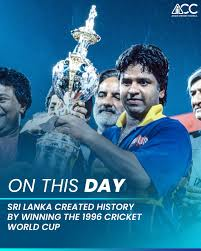
Arjuna Ranatunga
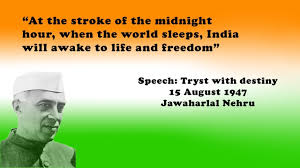
Sri Lanka’s Tryst with Destiny (1996)
The 1996 Cricket World Cup (March 1996)
March 17, 1996, became the defining moment in the island nation’s sporting history, permanently transitioning Sri Lanka from a cricketing underdog to an international powerhouse. [1, 2, 3]
The phrase adaptations draw inspiration from Jawaharlal Nehru’s famous 1947 independence speech, using it here to capture a massive breakthrough that united a country deeply fractured by civil war
The Masterclass: In the final held at Gaddafi Stadium in Lahore, Pakistan, Aravinda de Silva put on one of the greatest all-round performances in World Cup history. He claimed three crucial wickets, took two catches, and executed an elegant, unbeaten 107* to comfortably hunt down Australia’s target.

Aravinda de Silva
Under the fearless and fiercely tactical leadership of Arjuna Ranatunga, Sri Lanka entered the 1996 Wills World Cup as a 100-to-1 underdog and left as world champions. [1, 2]
- The Tactical Revolution: Coached by Dav Whatmore and captained by Ranatunga, Sri Lanka weaponized the first 15 overs of fielding restrictions. They promoted Sanath Jayasuriya and Romesh Kaluwitharana to open, telling them to attack from ball one—a strategy that completely rewrote ODI cricket rules.
- The Final Masterstroke: In the final at Gaddafi Stadium in Lahore, Ranatunga won the toss against Australia and boldly chose to field first—ignoring the fact that every previous World Cup final had been won by the team batting first.
- The Victory: After restricting Australia to 241/7, an extraordinary, unbeaten 107 from Aravinda de Silva* alongside Ranatunga’s cool 47* guided Sri Lanka to a comfortable 7-wicket victory with 22 balls to spare. [1, 2, 3, 4, 5, 6]
The Invention of the Player-Referral System (DRS) [1]
The concept of allowing a player to actively challenge an on-field umpire’s ruling—which shattered the centuries-old rule that “the umpire’s decision is final”—was the brainchild of Sri Lankan lawyer Senaka Weeraratna. [1, 2]
- The Original Proposal (1997): Witnessing umpiring errors that compromised the integrity of the sport, Weeraratna wrote a formal letter to the editor of The Australian newspaper, published on March 25, 1997. He outlined a blueprint called the “Player Referral” system, drawing a parallel to how the appellate structure functions in a legal system.
- Core Philosophy: Weeraratna argued that if television broadcasters and viewers had access to slow-motion replays showing an error, it was morally unsustainable not to give players a tool to correct it.
- The Birth of DRS: Weeraratna’s conceptual framework was later adapted by the International Cricket Council (ICC). It was trialed in 2008 during a Sri Lanka-India Test match and formally launched as the Decision Review System (DRS) in 2009. [1, 2, 3]
Direct Impact Comparison
| Milestone [1, 2, 3, 4, 5, 6, 7] | Key Figure | Core Innovation | Global Impact |
| 1996 World Cup Victory | Arjuna Ranatunga | Pinch-hitting in the powerplay | Shifted ODI cricket toward aggressive, high-scoring opening styles. |
| Player-Referral System | Senaka Weeraratna | Challenging field decisions via Third Umpire | Evolved into DRS, raising umpiring accuracy from 91% to 98%. Inspired systems like VAR in football and review protocols in tennis. |
https://share.google/aimode/eZYLUAF1V2ct7h1m6
Source: AI Overview