China says NYT article on massive contribution to Rajapaksa’s poll campaign fund is full of falsehood

June 30th, 2018

Courtesy NewsIn.Asia

Colombo, June 30 (newsin.asia): The Chinese Embassy in Sri Lanka said in a statement on Saturday, that the New York Times article of June 25 saying that the Chinese company which built the Hambantota port had given US$ 7.6 million to the 2015 election fund of the then President Mahinda Rajapaksa was full of falsehood.

It was full of political prejudice and completely inconsistent with the fact,” the statement asserted.

China says NYT article on massive contribution to Rajapaksa’s poll campaign fund is full of falsehood

The Embassy stresses that China has always been pursuing a friendly policy towards Sri Lanka, firmly supporting the latter’s independence, sovereignty and territorial integrity, and opposing any country’s interference in the internal affairs of Sri Lanka.”

It is encouraging that all sectors of the Sri Lankan society highly appreciate China’s tremendous support and selfless assistance for ending the civil war and post-war reconstruction in the Island nation.”

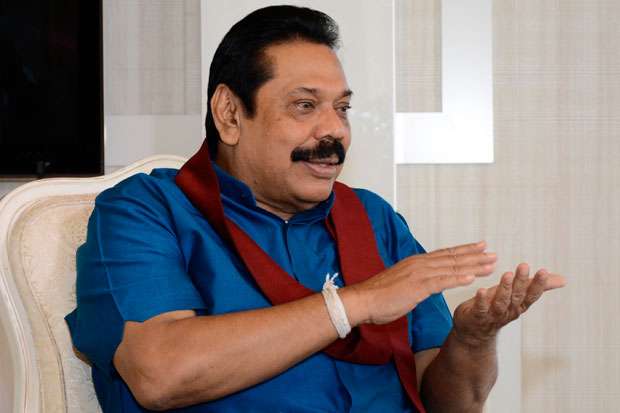
Mahinda Rajapaksa

Despite any interference from a third party, China would like to work together with Sri Lanka to actively implement the important consensus reached by the leaders of the two countries, and concentrate unwaveringly on our fixed goals, continuously promote the pragmatic cooperation under the framework of the Belt and Road Initiatives following the golden rule of ‘extensive consultation, joint contribution and shared benefits’, to better benefit the two countries and the two peoples,” the Chinese official statement said.

The NYT report had said that at least US$7.6 million was dispensed from China Harbour’s account at Standard Chartered Bank to affiliates of Mr. Rajapaksa’s campaign, according to a document, seen by The Times, from an active internal government investigation.”

The report further said that with 10 days to go before polls opened, around US$3.7 million was distributed in checks: US$678,000 to print campaign T-shirts and other promotional material and US$297,000 to buy supporters gifts, including women’s saris. Another US$38,000 was paid to a popular Buddhist monk who was supporting Mr. Rajapaksa’s electoral bid, while two checks totalling US$1.7 million were delivered by volunteers to Temple Trees, his official residence.”

Ajith Nivard Cabraal former,Governor of the Sri Lankan Central Bank

A ruling United National Party (UNP) MP and junior Social Empowerment Minister Ranjan Ramanayake filed a complaint with the Financial Crime Investigation Division (FCID) about the allegations made in the NYT article.

But a former Governor of the Central Bank and a Rajapaksa acolyte, Ajith Nivard Cabraal, issued a statement  saying that the NYT report is an example of fake news”.

This is probably the type of propaganda under the veil of journalism that President Donald Trump has been regularly referring to as ‘Fake’ news or reports,” Cabraal charged.

Cabraal said that he was interviewed by the NYT correspondent in question, Maria Abi- Habib, on 10th May 2018, and that he countered almost every one of her string of allegations and pre-conceived notions” in an hour long interview, with irrefutable facts and figures.”

But not surprisingly”, Maria Abi-Habib had chosen to ignore all his responses relating to the Chinese loans and projects, as well as Sri Lanka’s debt position under former President Mahinda Rajapaksa, which he said would have materially changed her flawed findings” and highly suspect conclusions”.

Namal Rajapaksa MP and Mahinda Rajapaksa’s heir apparent

Cabraal further said: Her stance therefore undoubtedly confirms she was on a mission to provide a pre-determined and completely one-sided view point which is detrimental to both China and Sri Lanka in general, and Presidents Xi Jingping and Mahinda Rajapaksa, in particular.”

Rajapaksa son and heir apparent and MP, Namal Rajapaksa, said that the NYT allegations were meant to divert public attention from the UNP-led government’s LKR 11.5 billion Central Bank bonds scam.

Though the entire Sri Lankan media had reproduced the NYT article, the top most leaders of the government and the opposition, including Mahinda Rajapaksa, President Maithripala Sirisena and Prime Minister Ranil Wickremesinghe, have not reacted to it.

Sri Lankan navy to shift its Southern Command to China-run Hambantota port

June 30th, 2018

Courtesy NewsIn.Asia

Colombo, July 1 (ECONOMYNEXT):  Sri Lanka will move its southern naval headquarters to the Hambantota port which is leased to a state-run Chinese firm under a billion-dollar deal, Prime Minister Ranil Wickremesinghe’s office said.

Wickremesinghe has made it clear in his talks with Chinese leaders that Hambantota port will not be allowed to be used for any military purposes, his office said in a statement dispelling reports that Beijing could get a military foothold there.

The Sri Lanka navy is moving its Southern Command to Hambantota,” the statement said. There is no need to be frightened as security of the port will be under the control of the Sri Lanka Navy.”

The state-run China Merchant Port Holdings (CMPH) last week paid the final payment of $585 million out of the $1.12 billion price for a 70 percent stake of the port. It is given out on a 99-year lease.

Sri Lanka has also informed the Chinese that Hambantota cannot be used for military purposes,” the statement said. It did not say when the navy will carry out the relocation of its southern command to Hambantota from its present location inside the Galle harbour.

Commercial activities at the Hambantota port was expected to trigger much needed economic development in neighbouring districts, the Prime Minister’s office said.

The port built by former president Mahinda Rajapaksa with Chinese loans and commissioned in 2010 has been running at  massive losses although it straddles the world’s busiest east-west shipping route.

India and the United States are known to be concerned that China getting a foothold at the deep-sea port could give it a military naval advantage in the Indian Ocean.

Sri Lanka has signed up to President Xi Jinping’s signature foreign policy initiative, which aims to strengthen China’s land and sea trade routes.

Two Chinese submarines called at Colombo in 2014 during the final year of Rajapakse’s tenure, angering New Delhi.

The new government of President Maithripala Sirisena turned down a Chinese request in May last year for another submarine call at Colombo shortly after Indian Prime Minister Narendra Modi visited the island.

Sirisena came to power in January 2015 promising to loosen ties with China after a decade of hefty funding by Beijing under his predecessor.

Does recovery of arms from former LTTE cadres indicate revival of Tamil insurgency in Sri Lanka?

June 30th, 2018

By D.B.S. Jeyaraj/Daily Mirror Courtesy NewsIn.Asia

The 21 km-long Puthukkudiyiruppu-Oddusuddan road progressing through the hinterland of North-Eastern Mullaitivu District, links Puthukkudiyiruppu on the A-35 Paranthan-Mullaitivu highway and Oddusuddan on the A-34 Mankulam-Mullaitivu highway. It was along this road that a trusted deputy of the Liberation Tigers of Tamil Eelam (LTTE)supremo Velupillai Prabhakaran was killed by the deep penetration squad of the Sri Lankan armed forces on September  26, 2001. Vaithilingam Sornalingam alias Col” Shankar, the founder-chief of the tiger air wing was killed by a claymore mine hung on a tree as he was driving his two-seater four-wheeler pick-up vehicle alone. The killing transmitted shockwaves amongst LTTE circles as it demonstrated the fact that the armed forces were capable of infiltrating the heartland of tiger-controlled territory and inflicting lethal damage.

Does recovery of arms from former LTTE cadres indicate revival of Tamil insurgency in Sri Lanka?

The time was around 4.45 a.m. on June 22, 2018 when a trishaw proceeded along Puthukkudiyiruppu-Oddusuddan road to Oddusuddan. It was signalled to stop at the Paeraaru junction by four policemen attached to the Oddusuddan police station. It was simply a random check to ascertain whether the driver had proper identification and authorisation documents. Initially, the vehicle drove up speedily as if he intended defying the police signal. However, it suddenly screeched to a stop.

When two policemen approached the trishaw, one of the passengers who appeared to have lost part of his arm from the elbow downwards jumped out of the vehicle and ran off in one direction. The second passenger got off from the other side and ran off in a different direction. Two cops then gave chase to the second man and managed to apprehend him while a third constable ran after the other man who evaded arrest. The fourth policeman prevented the trishaw from evasion though the driver did not display any signs of attempting to do so.

A quick search of the vehicle showed that two bags and two parcels were being transported. The cops were shocked when the cursory inspection of the contents revealed explosives, arms and ammunition in addition to material connected to the Liberation Tigers of Tamil Eelam (LTTE). The two arrested men along with the vehicle and baggage were taken to the Oddusuddan police station. A thorough search resulted in the discovery of one claymore mine, two pressure mines, two hand grenades, 98 rounds of T-56 ammunition, four remote control devices, six electronic detonators, two LTTE military fatigues, three t-shirts embossed with the tiger logo, two red and yellow LTTE flags and two large rolls of wire.

TERRORISM INVESTIGATION DIVISION (TID) 

The revelations shocked the Oddusuddan Police who immediately alerted the Terrorism Investigation Division (TID) of the police stationed at the Mullaitivu town. TID officers from Mullaitivu arrived at Oddusuddan and took away the two arrested individuals, trishaw and items seized to Mullaitivu. The TID hierarchy immediately dispatched two special teams from Colombo and Vavuniya to Mullaitivu. A perusal of the claymore mine revealed that it was an LTTE-manufactured explosive named Bhavaan.” The claymore weighing 15 kilos had been named after an LTTE cadre Capt” Bhavaan also known as Aiyaah” who was killed in combat in 2005.

A swift search was conducted in the semi-jungle areas surrounding the Paeraaru junction for the man with an impaired limb who had escaped. He was known as Aehaambaram.” The other arrested person was called Dinesh.” It is not clear at this juncture whether Aehaambaram and Dinesh are their real names or convenient nom de plumes. Under interrogation, the trishaw driver said he had nothing to do with the arsenal and other LTTE material in the trishaw and that they were being transported by Dinesh and Aehaambaram. The vehicle was reportedly proceeding towards a house frequented by Dinesh in the outskirts of Oddusuddan. The TID conducted a search on the residence and arrested the occupant of that house too. An intensive search was conducted in Oddusuddan. Several people were taken in for questioning and released. The three arrested persons and LTTE materials seized along with the trishaw were taken to the TID Northern Headquarters in Vavuniya for further interrogation and closer scrutiny.

It was disclosed that escapee Aehaambaram as well as the arrested Dinesh were former members of the LTTE. Both had been detained after the LTTE was militarily defeated in May 2009 and were subsequently released after rehabilitation. The man known as Aehaambaram was a resident of Saanthapuram in Kilinochchi. The trishaw driver was from Thiruvaiyaru in Kilinochchi and was apparently hired by Aehaambaram on a long-term basis. It was also discovered that the driver had at one time been arrested on suspicion of transporting smuggled Kerala Ganja. A special TID-led police squad was sent to Kilinochchi for further investigations.

An intensive cordon and search operation were undertaken in Saanthapuram and Thiruvaiyaru by the TID with the aid of the Kilinochchi Police. Many were questioned. Among them was the elder sister of the hand-impaired man, Aehaambaram. The sister told the police that her brother had gone missing” in January 2016 and that she had not sighted him since then.

She said she lodged a complaint with the police over her brother’s alleged disappearance in 2016. She also said her brother had close contacts with military intelligence personnel in the North. Aehaambaram’s elder sister also said her brother had lost a hand while making an improvised explosive device for the LTTE. She said two of her brothers and a sister were also LTTE members and had been killed in war with the armed forces.

An unidentified man of the Tamil Diaspora demonstrating in support of the LTTE draped in a Tiger flag

SEARCH IN THIRUVAIYARU-KILINOCHCHI 

The search in Thiruvaiyaru-Kilinochchi in the vicinity of the trishaw driver’s residence resulted in the discovery of four motorcycles hidden in a house. Its occupants said the vehicles belonged to 24-year-old Ketheeswaran, also known as ‘Kethees,’ who was currently warded at the Kilinochchi  Hospital due to a stomach ailment. Kethees, a child soldier of the LTTE, had been released after rehabilitation. However, he had been re-arrested two years ago on suspicion of being involved in an attempt to revive the LTTE in the North. He had been released after a period of detention and interrogation.

As news of the detection of the LTTE arsenal and tiger-related material and consequent arrests began spreading in the northern mainland known as the Wanni, many ordinary, peace-loving residents got perturbed. They had suffered much during the war and wanted no return to LTTE violence in any form. The police found themselves receiving much information from Tamil civilians. Many of the tips were useless and turned out to be false alarms. However, one constructive tip-off received by the Mankulam Police resulted in the elusive Aehaambaram being taken into custody while travelling along the Mallavi-Mankulam road at Vannivilaankulam on June 23. This was followed by the arrest of Kethees on June 24. TID officials arrested him no sooner he was discharged from the Kilinochchi  Hospital.

All five key suspects comprising the man known as Aehaambaram, the trishaw driver, his neighbour Kethees, the other vehicle passenger Dinesh and the Oddusuddan house occupant are now being detained at Vavuniya and interrogated by the TID. Police sleuths are tracing the telephone numbers recorded on the mobile phones recovered from the arrested persons. Many have been questioned and statements recorded. Some whose statements did not seem satisfactory were taken to their respective area police stations and intensively interrogated. They were released after their statements were recorded in full. It is learnt that about 15 to 20 persons have had their statements recorded in this manner. They have been told to make themselves available to the police for further investigations whenever necessary.

The TID probe is still in a preliminary stage and a composite picture of the situation is yet to materialise. However, initial investigations have raised the spectre of an attempt to foment violence in the North in the name of the LTTE again. It is premature to say whether the LTTE is being revived or the tigers are regrouping, but it certainly appears that a fresh attempt is underway to foment violence in the name of the tigers to create a demonstration effect that the LTTE is capable of raising its head again and inflict deadly damage.

DISTINCTIVE MARK OF THE TIGER 

It is well-known and widely-accepted that the day of the LTTE as a conventional militia occupying territory is over. It also cannot be a powerful guerilla force capable of confronting the armed forces directly now. What LTTE or pro-LTTE elements can hope for is an isolated attack of the hit-and-run variety. It is possible to plan an assassination or set off an explosive attack in the present politico-military environment prevalent in the North. Against this backdrop, it is suspected that the claymore and pressure mines could have been used to trigger a landmine explosion targeting an important politician or key administrative or defence services official. The LTTE flags and fatigues could have stamped the exercise with the distinctive mark of the tiger.

It is strongly suspected that the attempt to foment violence in the name of the LTTE is being backed financially by tiger-ish elements in the global Tamil diaspora. Preliminary investigations have revealed that the chief suspect known for the present as Aehaambaram has a number of identity cards under false names. He also has several bank accounts under different names where sums of money amounting to 30,000 and 40,000 rupees per instalment have been deposited regularly. It has also been found that the man travelled to Jaffna recently for an extended stay in the peninsula during which he reportedly interacted closely with a prominent LTTE diaspora activist vacationing in the North. It is indeed a sad fact of life that the freedom from fear” ushered in by the Sirisena-Wickremesinghe Government is being exploited by known diaspora tiger operatives to travel to Sri  Lanka freely and possibly encourage the return of political violence.

However, a troubling factor in this state of affairs is the alleged links of the man known as Aehaambaram to the military intelligence division of the army. It is an open secret” that the intelligence” agencies are keeping hundreds of ex-tigers on their payroll as informants. They are paid a monthly stipend and provided immunity from arrest. There is always the possibility of these ex-tiger informants being utilised by intelligence agencies for covert operations. It is also likely that some ex-tigers may turn rogue” and work according to a diaspora tiger agenda while retaining links with the military for their own protection. If proven concretely that the key suspect operating under the name Aehaambaram is indeed a double agent serving both the State and the LTTE it could drastically alter the course of investigations pursued by police sleuths so far. It is very likely that more details would emerge when three of the key suspects are taken to Colombo by the TID.

Meanwhile, the detection of LTTE material, explosives, arms and ammunition at Oddusuddan was officially acknowledged by Law and Order Deputy Minister Nalin Bandara who, according to a news report in Daily Mirror, said the government would not allow terrorism to raise its head again. Addressing a news briefing, Nalin Bandara said TID officers were conducting a special investigation into the incident. Investigations are underway to find out whether there is secret movement or organization that assists the scattered LTTEers to reorganize again,” the minister said.

LTTE Chief V.Prabhakaran

14 INDIVIDUALS WITH LTTE LINKS DESIGNATED 

Interestingly enough, just two days prior to the tiger arsenal detection at Oddusuddan, the government issued an extraordinary gazette notification placing 14 individuals living abroad with suspected links with the LTTE on the list of designated persons, thereby banning them from entry to Sri  Lanka. The amendment to the list of designated persons under the United Nations Regulations Number 1 of 2012 has made through a gazette issued by Defence Ministry Secretary and President’s Counsel Kapila Waidyarathne. The 14 individuals included in the said list, who have been barred from entry to the country over alleged connections to the Tamil Tigers, are namely;

Individuals barred from entry:
1. Nadaraja Sathyaseelan alias Seel Maran (intelligence)
2. Kamalasingham Arunakulasingham alias Kamal
3. Antonyrasa Antony Calistor alias Parathan (intelligence)
4. Sivasubramaniyam Jeyaganesh alias Ganesh (international finance) and a.k.a. Samraj
5. Ponnaswami Paskaran alias Jeyakaran
6. Velaudan Pradeepkumar alias Kaleeban
7. Sivarasa Surendran alias Waddann
8. Sivagurunathan Murugadas alias Kadirawan
9.  Thirunilakandal Naguleshwaran alias Pushpanadan
10. Maheshwaran Ravichandran alias Mendis and a.k.a. Thirukkumaran
11. Suresh Kumar Pradeepan
12. Kandasamy Krishnamoorthi alias Moorthi
13. Jeevarathnam Jeevakumar alias Siranjeew Master (intelligence)
14. Tony Jehan Murugesapillai

The decision of the Sirisena-Wickremesinghe Government to designate 14 individuals within the global Tamil diaspora as being linked to the proscribed LTTE and ban their entry into
Sri  Lanka raised many eyebrows.

The government of Mahinda Rajapaksa had in March 2014 proscribed by gazette 16 diaspora organizations and 424 individuals under the United Nations Act No. 45 of 1968.

However, after the regime change in January 2015, the new government reversed this designation drastically in November 2015. The present government de-listed 8 organizations and 269 individuals from the previous list. This resulted in only 8 organizations and 155 individuals remaining on the proscribed list. Although this de-listing was severely criticised from a national security perspective, the then Foreign Affairs Minister Mangala Samaraweera justified it on the basis that it was necessary at that juncture to help expedite the reconciliation process.” Incidentally, the de-listing was done on the eve of a visit to Sri  Lanka by then US envoy to the UN in New York, Samantha Power.

Now, the same Sirisena-Wickremesinghe Government seems to have had second thoughts on the listing issue. The reasons which led the government into designating 14 LTTE linked individuals remains so far in the realm of the unknown and will very likely become the focus of a forthcoming article in these columns. However, there are a few puzzling points deserving mention at this point of time.

At least two of the designated individuals Kamalasingham Arunakulasingham alias Kamal and Jeevarathnam Jeevakumar alias Siranjeevi Master have for long been suspected of maintaining links to Sri Lankan intelligence agencies. The Sri Lankan intelligence network succeeded in infiltrating many LTTE diaspora organizations in the aftermath of the war against the LTTE and Kamal and Siranjeevi Master were allegedly key instruments in this exercise. In fact, a few Sri Lankan journalists were even politely requested not to write about these two by informed sources. While Kamal based in Norway operates mainly in Europe, Siranjeevi Master handled Asia shuttling among Malaysia, Thailand and Indonesia. However, Siranjeevi has reportedly shifted to Japan recently.

SIVASUBRAMANIYAM JEYAGANESH ALIAS SAMRAJ 

Another person of interest in this list is Sivasubramaniyam Jeyaganesh alias Ganesh. Jeyaganesh based in France is widely-known among Tamil diaspora circles as Samraj. Heis currently in charge of overseas LTTE finances in Europe. He is said to be running a number of commercial establishments in different parts of Europe registered in the names of trusted confidantes.

Jeyaganesh alias Samraj hit the headlines when his 41-year-old wife Paheerathy Murugesu and 8-year-old daughter Pahalavi Jeyaganesh were stopped by TID officials at the Bandaranaike International Airport in March 2015. They had arrived in Sri  Lanka in February 2015 and were to board a flight back to Franceafter a month-long vacation. The TID let the daughter, a French citizen, go but continued to detain the mother, a permanent resident of France, saying she had been a former member of the LTTE sea tigers. It later transpired that the ulterior objective behind the detention was to pressure her husband Jeyaganesh to come to Sri  Lanka and then detain him. The plan did not work as Jeyaganesh and Paheerathy, who married in 2005, had formally divorced in 2012. After much legal wrangling, Paheerathy was released. She returned to France while Jeyaganesh in his Samraj avatar continued to oversee LTTE finances in Europe.

The gazetting of 14 LTTE members including Samraj, Siranjeevi Master and Kamal evoked a derisive reaction from former President Mahinda Rajapaksa. According to a news report in Ceylon Today,” Mahinda Rajapaksa commenting on the gazette notification banning 14 persons had said the move came in the wake of the 14 arriving in the island, travelling to Kilinochchi, getting what they wanted done and leaving with money. The former President noted that in the light of this, the issuing of the gazette was laughable as it was akin to closing the stable door after the horse had bolted. At a time when a majority of the countries in the world are acting against terrorism, why is Sri Lanka following a lax policy and according to whose agenda?,” he queried.

The former President’s statement about shutting the stable door after the horse had bolted provides much food for thought. Does Mahinda Rajapaksa have reliable information that the 14 persons had travelled to Kilinochchi, accomplished what they wanted to do, got what they wanted and returned safely to their countries? If so, have the Sri Lankan authorities been caught unawares and are reacting only after the damage was done? Worse still have the overseas tigers with links to Sri Lankan intelligence taken their handlers for a ride? Or is the Medamulana Machiavelli simply trying to score debating points against his political rivals?

LTTE girl child soldiers en route to the front

FREEDOM FROM FEAR” EXPLOITED 

One is unable to furnish definite answers at this point of time but the existing reality in the North tallies with the essence of what Mahinda has been saying. Ever since the Sirisena-Wickremesinghe Government came to power and removed the fear element prevalent under the Rajapaksa regime and ushered in Freedom from fear,” there has been an influx of overseas Tamils into Sri Lanka.

Many Tamils who feared arrest in Sri Lankafor having attended an LTTE event abroad now felt secure in travelling to Lanka. Unfortunately, this freedom has been exploited by LTTE and pro-LTTE elements who too have been sojourning in Sri  Lanka without fear. The tiger-ish elements have been promoting an extremist agenda in Lanka in the recent past. It is felt that a lot of tiger money is being pumped into Lanka to foment violence. What the tigers need at this point of time is not sustainable violence with a long term perspective but an immediate exhibition of violence for short-term demonstration effect.

In that context, it must also be noted that attempts by diaspora tigers to foment violence in Sri Lanka did not commence after the present coalition government came into power only. Although Mahinda Rajapaksa is trying to project an impression that tiger activity did not exist under his rule from 2010 to 2015, the reality is different. There have been many attempts by the diaspora Tigers to foment violence in Sri  Lanka after the war ended in May 2009. Mercifully, none of them was successful. A brief re-run of post-war history shows there have been several such attempts in the years after 2009. Some of these happened during the time Mahinda Rajapaksa was President and his sibling Gotabaya, the all powerful Defence Secretary. Some have occurred after the current government came to power. Most of the diaspora LTTE-backed abortive attempts to cause violence have been written about in detail in these columns in the past.

One does not know how the investigations into the Oddusuddan detection would proceed or whether details of a diaspora LTTE backed plot to foment tiger violence” would be uncovered, but there are two salient points that need to be emphasised here. The first is that the LTTE has indeed been militarily wiped out in Sri  Lanka, but the fact remains that the overseas tiger branches described wrongly as the rump” are not destroyed yet. Secondly, the overseas Tigers are capable of fomenting violence in a bid to revive the LTTE in Sri Lanka or project an impression that it is being done so. It is important to distinguish clearly between a real revival, genuine revival attempt and an exercise aimed at creating an impression that the LTTE is being revived.

TAMIL PEOPLE WON’T EXTEND SUPPORT 

A full-scale revival of the LTTE and a return to the past where the Tigers were a formidable force is virtually impossible in the present situation. There could however be no guarantee that attempts would not be made to revive the LTTE despite those efforts proving unsuccessful. Since Tiger elements in the diaspora would continually finance such attempts the dangers exist. There is a need therefore for constant vigilance as there is little room for complacency in matters like these. At the same time, it must be realized that the Tamil people who have suffered much during the war are in no mood for a return to LTTE-sponsored conflict again. Whatever the attempts by Tiger-ish elements in the diaspora to promote violence in Sri  Lanka, it is doomed to fail in the final analysis because the Tamil people themselves are unwilling to extend support.

රන්ජන් රාමනායක කියන්නේ ගල් පැලෙන බොරු බව නිවුයෝක් ටයිම්ස් කියයි..

June 30th, 2018

 lanka C news

පසුගිය ජනාධිපතිවරණයේදී චීන සමාගමක් විසින් මහින්ද රාජපක්‍ෂ මහතා වෙනුවෙන් ඩොලර් මිලියන 7.6ක් වියදම් කර ඇති බවට තමන් විසින් සම්පාදනය කරන ලද වාර්තාව සම්බන්ධයෙන් නියෝජ්‍ය ඇමති රන්ජන් රාමනායක මහතා විසින් කරන ලද ප‍්‍රකාශයන් සත්‍ය නොවන බව නිවුයෝක් ටයිම්ස්හි ඉන්දීය මාධ්‍යවේදීනි මරියා අභිබබ් කියා සිටී.

ඇය විසින් සිට ට්වුටර් ගිණුමේ සටහන් කර ඇත්තේ තමන්ගේ වාර්තාවේ මුලාශ‍්‍ර හෙලිකර නොමැති බවත් රන්ජන් රාමනායක නියෝජ්‍ය ඇමති සමග දුරකථන සංවාදයේදී පැවසූ අදහස් වෙනත් ආකාරයකින් පවසා ඇති බවත්ය.

රන්ජන් රාමනායක මහතා කොළඹදී මාධ්‍ය හමුවක් අමතමින් කියා සිටියේ අදාල වාර්තාව සදහා තොරතුරු ලබා ගත්තෙ පොලිස් අපරාධ පරීක්‍ෂන දෙපාර්තමේන්තුවෙන් යයි ඇය සමග සිදු කල පැයක පමණ දුරකතක සාකච්චාවේදී කියා සිටි බවයි.

රන්ජන් රාමනායක කියන්නේ ගල් පැලෙන බොරු බව නිවුයෝක් ටයිම්ස් කියයි..

Maria Abi-Habib

@Abihabib

Not true. As I did with media representing the govt & JO, I have declined all interviews & told the minister I wouldn’t be involved in his political grandstanding. Article is based on multiple sources & I never reveal identities of sources unless to my editors. Nice try tho

Senani Samaranayake@SenaniSL

The @nytimes Journalist @Abihabib has confirmed to Govt Min @RamanayakeR that her article How China Got Sri Lanka to Cough Up a Port” fully based on B report given by the #Srilanka’s politicized CID. #lka

THE BODU BALA SENA MOVEMENT:  SOCIALLY ENGAGED BUDDHISM 

June 29th, 2018

Dr. Daya Hewapathirane

With the emergence of the Bodu Bala Sena”  initiative, our motherland is witnessing a strengthening of the Sinhala Buddhist revivalist movement which was spearheaded  by the late, Most Venerable Gangodawila Soma Thera. The Bodu Bala Sena is a movement  under the leadership of a highly distinguished, accomplished and deeply patriotic group of Bhikkhus, dedicated to the task of revitalizing and reinforcing cultural nationalism in Sri Lanka – our only motherland. It has a rapidly growing steadfast support base among concerned lay Buddhists across the country and overseas.

Its aim is to save our nation from spiritual decay and disintegration, to halt the erosion of Buddhist social values, to peacefully counter the varied local and foreign forces that are hell-bent on undermining Buddhist culture and related heritage of this Dharmadeepaya.  It aims at directing society towards a cultural rejuvenation based on traditional Buddhist norms, principles and values which have been the foundation of this nation for over 2200 years.

Our Bhikkhus, should necessarily be in the forefront in movements aimed at protecting and promoting the Buddha Sasana especially when it is under threat. Bhikkhus of the Bodu Bala Sena have voluntarily made their choice to take an open public stand on issues surrounding Buddhism and Buddhist culture which is the greatest treasure that our country could offer to the world, to humanity.  Why should anyone feel uncomfortable when the traditional spiritual leaders of our country, the Bhikkhus, take the initiative and provide necessary leadership to protect the greatest wealth of this nation – our Buddhist cultural heritage.

Like anyone else, under a democratic system, Bhikkhus are eligible to exercise their rights, including political rights. They are traditional leaders of this nation.  Those who object to the initiative taken by our Bhikkhus of the Bodu Bala Sena, appear to be those with ulterior motives, those having their own self-interests to promote, those attempting to promote blind beliefs and establish unwholesome lifestyles based on such beliefs, those opposed to further strengthening  and consolidation of Buddhist culture in this country, and those resorting to unwholesome activities that are contrary to Buddhist norms and principles and all those who are inclined to undermining the Buddha Sasana and Buddhist values which have been preserved and promoted for thousands of years in this country, by the large majority of its inhabitants. These undesirable elements may feel uncomfortable about the Bodu Bala Sena activities which are, on all counts, legitimate, wholesome, and timely. Non-violence and compassion form the basis upon which the programme of activities of the Bodu Bala Sena is structured. Our Bhikkhus have become a thorn in the flesh of religious extremists, the recent breed of inter-faith dialogue facilitators,  those in the ethnic and human rights businesses and above all those who are funded or backed by extremist anti-Buddhist elements.

Genuine and practicing Buddhists of our country, or those who strictly follow, at least the Five Precepts, should be closely and actively involved in politics. There is no sound reason for such Buddhists to stay away from politics. Most of the ills of our country’s political life could be attributed to the absence of genuine Buddhists in the political arena.  In fact, genuine Buddhists have a duty by the nation, which is founded on Buddhist principles, to be fully involved and participating in their nation’s political life. This is particularly relevant today owing to the fact that our nation is severely threatened at present by diverse negative forces, especially by Muslim fanatics. They are trying hard to undermine the wholesome Buddhist cultural heritage and values of our nation.

It is the Buddhist perspective to public life and decision-making, that is most needed today in the country’s political domain. We need compassionate politicians with unselfish and mindful interest in the welfare of the country. This alone can bring about needed positive changes in public life which at present is infected with dishonesty, crime and corruption. The impact and influence of such people can make a big difference. They can help to generate a wholesome political culture, that is characterized by Buddhist approaches and attitudes and a truly Buddhist atmosphere, conducive to the development of a healthy political climate in our nation, so that all nationals will benefit irrespective of their diverse origins and cultural-religious inclinations.

Politics in actual fact is simply about deciding how to live together peaceably while bringing together the wide variety of perspectives available in the human realm. It is something necessary and something creative.  Politics is part of our life. If we regard all life as sacred and politics is a part of life, then politics must be sacred. Politics is not an inherently unclean and base activity. It becomes dirty in the way that everything else becomes dirty. That is, through lack of attention, through lack of mindfulness, through ego, all of which resulting in greed, hatred and delusion. The best kind of politics can take the profound viewpoints and virtues of spiritual practice and apply them in the public realm. Buddhism can be of fundamental help in this regard.

If we do not bring spiritual virtues to the public arena, we are destined to both a selfish kind of spirituality and a selfish kind of government, devoid of vision and meaning. It is time that more and more of our genuine and practicing Buddhists entered the political arena in various influential capacities. We are grateful to and value the initiative and leadership provided, in this regard by the highly esteemed movements such as the Bodu Bala Sena, Sinhala Ravaya, Ravana Balaya,  and Mahason Balakaya among others. Despite untold threats and challenges and various unfounded and indecent criticisms leveled against them, especially by extremist Muslims and other fanatics who benefit politically and otherwise from association with extremist Muslims, these bold, inherently national organizations, appear to be going ahead with their program of activities, demonstrating foresight, forthrightness, courage, fearlessness, and determination.

Buddhism has always been engaged in various socio-political contexts. The idea of interdependence is widely associated with Buddhism. Buddhism is the religion of Human Ecology. Engaging in the lives of others through compassion, sacrifice and service is the worthy spiritual path that we need to observe in the contemporary world. We need to expand our approach or shift somewhat away from those traditional customs that excessively promote monasticism and individual salvation, and become more socially engaged and be more concerned about service to the community, the human habitat and the environment in general.  We need to broaden our spiritual practices to include both family and community and the social and environmental concerns of the broader world. We need to approach meditation not as a way of escaping from society or getting out of society, but to prepare us for a re-entry into society so that we will be better able to identify and understand social hardships, misery and perils, and be able to do something tangible to relieve them.  It is time that we as Buddhists involve ourselves in an organized manner, become socially engaged and apply Buddhism to matters of everyday life, individual work, family, politics, and the community.  It needs to be a direct application of Buddhist principles and concepts to social and political issues and areas.

SOCIALLY ENGAGED BUDDHISM

The term “Socially Engaged Buddhism” refers to active involvement by Buddhists in society and its problems. Both inner practice and social service are important elements of the spiritual path. Buddhist practice and the whole ancient Buddhist tradition is built upon the spirit of service. A major task for Buddhists in contemporary Sri Lanka is to organize themselves to forestall or prevent the real and potential adversities and catastrophes facing them, owing to threats and devious actions of non-Buddhists, aimed at undermining Buddhism and the Buddhist cultural heritage of Sri Lanka founded on Buddhist norms and principles.

The Buddhist Peace Fellowship (BPF) is a nonsectarian international network of engaged Buddhists participating in various forms of nonviolent social activism and environmentalism. It is headquartered in California USA. The BPF works toward global disarmament and peace, helping individuals suffering in places such as Myanmar, BangladeshTibet and Vietnam. The Buddhist Peace Fellowship was founded in 1978 to bring a Buddhist perspective to the peace movement and the peace movement to the Buddhist community. Drawing on the teachings of nonviolence and compassion, and recognising the essential unity and interdependence of all beings, BPF members and chapters seek to awaken peace where there is conflict, bring insight into the institutionalized ignorance of political systems, and offer help in the Buddhist spirit of harmony and loving kindness where it is needed. Aware of the interconnectedness of all things, the Buddhist Peace Fellowship cultivates conditions for peace, social justice, and environmental sustainability within our selves, our communities, and the world.

Dr. Daya Hewapathirane

Daya.hewapathirane@gmail.com

ඔනරබල්‍ ,වෙනරබල් සහ වල්නරබල්

June 29th, 2018

වෛද්‍ය රුවන් එම් ජයතුංග

අපි ඔවුන්ට පඩි ගෙව්වෙමු  
නවීන වාහන අරන් දුන්නෙමු  
ඔවුන්ව නඩත්තු කලෙමු 
ඔවුන් ඔනරබල්   

අපි තව සමහරක්ට කන්නට දුන්නෙමු  
ඔවුන්ට සැප පහසු ගෙවල් සදා දුන්නෙමු  
දිව් ලෝක සැප පතා තුට්ටු දෙක පූජා කලෙමු  
අය වෙනරබල් වෙති   

අප දිවා රැය කඹුරන්නෝ වෙමු 
තුන්වේල කන්නේ නැත ලෙවකන්නෙමු  
වවුලන් මෙන් එල්ලී බස් කෝච්චි වල යමු  
අප වල්නරබල්  වන්නෙමු 

මහින්ද වෙනුවෙන් චීනය පෙනී සිටී.. නිවුයෝක් ටයිම්ස් වාර්තා බේගල් බව කියයි.. බීජිං පාලනය කිපුනොත් ලංකාවට ආර්ථික කුණාටුවක්..

June 29th, 2018

 lanka C news

පසුගිය ජනාධිපතිවරණයේදී මහින්ද රාජපක්‍ෂ හිටපු ජනාධිපති වෙනුවෙන් ඩොලර් බිලියන 7.6ක් ලබා දුන් බවට ඇමරිකානු ‘නිව්යෝර්ක් ටයිම්ස්’ පුවත්පත පල කරන ලද වාර්තාව චීනය විසින් ප‍්‍රතික්‍ෂෙප කරයි.

එම වාර්තාව කිසිදු පදනමක් නැති මෙන්ම නිවැරදිද නොවන බව පවසන මෙරට චීන තානාපති කාර්යාලය සදහන් කරන්නේ එහි අඩංගු තොරතුරු පක්‍ෂපාති බවයි.

තව දුරටත් අදහස් පල කරමින් චීන තානාපති කාර්යාලය සදහන් කරන්නේ පුද්ගලික ආයතනයක වාණිජ කටයුත්තක් මත පදනම්ව වූ වාර්තාවක් බැවින් රාජතාන්ත්‍රික කරුණූ දැක්වීමක් සිදු කිරීමේ අදහසක් නොමැති බවයි.

මේ අතර දේශපාලන නිරීක්‍ෂකයන් පවසන්නේ මෙම සිදුවීම සම්බන්දයෙන් චීන රජය වෙතද එල්ල වන චෝදනාවන් බීජිං පාලනය විසින් නොඉවසනු ඇති බවයි.

ඒ සම්බන්ධයෙන් චීනය විසින් දක්වන සුළු හෝ ප‍්‍රතිචාරයක් ශ‍්‍රී ලංකා ආර්ථිකය මත කුණාටුවක් සේ බලපානු ඇති බවද ඔවුනගේ අදහසයි.

New York Times restates Washington’s anti-China agenda in Sri Lanka

June 29th, 2018

By Wasantha Rupasinghe  Courtesy World Socialist Web Site
29 June 2018

On June 25, the New York Times published a lengthy front page article entitled How China Got Sri Lanka to Cough Up a Port.” The more than 3,800-word piece repeats the usual allegations manufactured by the Times, and other media conduits for Washington’s foreign policy propaganda, about growing Chinese influence in Sri Lanka.

The tone and timing of the piece is aimed at sending a clear message to Colombo: ‘US imperialism is watching you closely, do not attempt to divert from our military-strategic preparations for war against China.’

The US and its international allies have long put pressure on Sri Lanka, which is strategically located close to major Indian Ocean sea lanes straddling Asia and Africa. As a result, the island-nation has been dragged into the maelstrom of global geo-political tensions, mainly between the US and China, and Washington’s concerted economic and military offensive to undermine Beijing’s influence throughout the Indo-Pacific region.

According to the Times, China is using loans and aid to gain influence around the world” and is willing to play hardball to collect.” To prove this claim, the newspaper comments on China securing a majority share of Sri Lanka’s southern port of Hambantota. The facility was built during former President Mahinda Rajapakse’s rule.

Last December, after almost two years of negotiations, the current government of President Maithripala Sirisena and Prime Minister Ranil Wickremesinghe formally handed over Hambantota Port to China Merchant Port Holdings (CMPH).

Under this agreement, Sri Lanka sold a 70 percent stake in the port to CMPH via a 99-year lease, while retaining a 30 percent share under the state-owned Sri Lanka Ports Authority.

The Times notes Sri Lanka’s mounting foreign debt, and US imperialist fears over growing Chinese influence in the region and, in particular, the Belt and Road Initiative, which envisages the construction of a series of ports, railway lines and roads connecting China with Europe.

The article states: The [port] transfer gave China control of territory just a few hundred miles off the shores of a rival, India, and a strategic foothold along a critical commercial and military waterway.

The debt deal also intensified some of the harshest accusations about President Xi Jinping’s signature Belt and Road Initiative: that the global investment and lending program amounts to a debt trap for vulnerable countries around the world, fuelling corruption and autocratic behaviour in struggling democracies.”

The Times’ concern about democracy and Sri Lankan debt is feigned. The newspaper functions as a direct mouthpiece for the US military and intelligence apparatus, maintaining a constant stream of fabrications and outright lies to justify Washington’s crimes. From the US wars of aggression in Iraq and Afghanistan to the proxy war for regime-change in Syria, the Times is a vital cog in the American war machine and US intelligence operations.

As the World Socialist Web Site has consistently explained, the US orchestrated the regime-change operation to remove Rajapakse as president and bring the pro-US Sirisena administration to office via the 2015 presidential elections.

As the WSWS noted on January 9, 2015: The line-up of forces with Sirisena and the election result itself are the outcome of a behind-the-scenes intervention by the Obama administration. Decisions were made in Washington that [former President Mahinda] Rajapakse had to be ousted in order to shift Sri Lankan foreign policy away from the close relations that his government developed with China, which included expanding military ties. The intervention flowed directly from the aggressive US ‘pivot to Asia.’”

The Times itself paid a great deal of attention to the 2015 presidential election. Supplied with background information from senior US State Department and intelligence sources about the regime-change operation in Colombo, it reported on all the major political developments during the campaign.

The Times published two articles on November 21, 2014, the day that Sirisena defected from Rajapakse’s government to the opposition and announced he would stand as a common presidential candidate.”

The articles were entitled, Suddenly, Sri Lanka Presidential Elections Become a Real Contest” and For Sri Lankan President, Renounced by Aides, Confidence of Re-election Dims.”

The latter piece enthusiastically endorsed Sirisena, while demonising Rajapakse. It said crowds at opposition rallies listened with fascination” as Rajapakse’s former allies described the existing government as a soft dictatorship” controlled by the president and his relatives.

The article said Rajapakse steered his country closer to China, which has provided Sri Lanka with billions of dollars in loans for new ports and highways.”

On election day, the Times voiced its satisfaction with the regime-change operation, in an article headlined, Sri Lankan President Concedes Defeat After Startling Upset.” The newspaper repeated claims about Rajapakse’s close ties to China” and his authoritarian methods of rule.

But as the Hambantota port deal with China indicates, the politically divided ruling elite in Sri Lanka is not fully adhering to Washington’s foreign policy script.

Although Sirisena suspended the China-funded Colombo Port City project and some other initiatives, the deepening economic crisis confronting his government has made it difficult for him to completely dispense with Beijing. Colombo cannot maintain its foreign reserves and the national currency without massive loans from China.

The Times’ latest article comments that Sirisena’s government was eager to reorient Sri Lanka toward India, Japan and the West,” but that no other country could fill the financial or economic space that China held in Sri Lanka.”

The Times notes that although US policymakers were worried about a Chinese submarine visit to Colombo during Rajapakse’s administration, the handover of Hambantota to the Chinese has kept alive concerns about possible military use—particularly as China has continued to militarize island holdings around the South China Sea despite earlier pledges not to.”

The article warns about a possible political comeback by Rajapakse, describing him as China’s preferred partner in Sri Lanka.” It refers to the recent success of Rajapakse’s newly formed Sri Lanka Podujana Peramuna in the February local government elections. The Times nervously quotes Harsha de Silva, the state minister for national policies and economic affairs, who says: Governments can change.”

Notably, the article ends by noting: Presidential elections are coming up next year, and general elections in 2020.” This is a clear warning not to allow Rajapakse back into office.

In fact, the entire New York Times piece is a warning bell about the possible return of a Beijing-orientated government. It is an indication that Washington’s regime-change operations will be reactivated if Colombo does not fully commit to US economic and military preparations for war against China.

Condemning a Venerable Buddhist Monk to rigorous Imprisonment points to a much needed reform in the Sri Lanka Legal System.

June 28th, 2018

By Charles S.Perera

After Independence in 1948, it took 8 years  before SWRD Bandaranayike thought that there should be a meaningful change in independent Sri Lanka, consisting not only the rich and well placed,  but also the Monks, physicians, teachers, peasants and workers.

By then lot of damage had already been done to stop Sri Lanka making its mark as an independent Nation amoung the rest of the sovereign Nations of the world. The minorities had by then been given  equal status along with the majority Sinhala, with the Tamils already demanding fifty-fifty, which made it impossible for the majority  community to build Sri Lanka  as a single Nation  accommodating the minority Tamils and Muslims  as a part of the larger Sri Lankan Nation. It is that error which  made this beautiful country suffer disunity, with  the Tamils demanding separate status and an Eelam within the country, resulting at the end in thirty years of terrorism.

That was the beginning of Independence of Sri Lanka under a UNP leadership.  Successive UNP governments since independence has dragged Sri Lanka backward as its leaders were unable to take decisions independent of their colonial mentality craving  to make  Sri Lanka a capitalist economy.

The people had put their trust on the political leadership they had put into power and was satisfied with their master servant relationship.  The left movement in Sri Lanka the LSSP and the Communist parties did an enormous lot of work to change the mentality of the people that had been blunted  under more than 500 years of colonialism.

But even today there are many who have either because they are unable to recover their sense of independence and self respect remain obedient to UNP and other  ambitious politicians,  satisfied with  crumbs falling from their tables.

The present Yahapalanaya Government talks of democracy, freedom of the press, the freedom for people to manifest, and freedom from a white van culture, abductions and deaths as a reward of their incompetence to give the people  meaningful  dividends from a progressive visionary government’s development projects.

The Yahapalanaya Government speaks a lot of an independent Judiciary of Sri Lanka, as if Sri Lanka’s legal system today is a world model. The reality is that  Sri Lanka’s legal system and democracy  as it exists today, is as old as it was in 1948. That being an aspect the change of political system in 1956 had failed to attend.

The Last  Constitution written by the British for Sri Lanka, though the British Colonial rule was to destroy all that was held in respect and honour by the natives , yet  made an effort to leave the distinctive characteristics of Sri Lanka from which the country was identified-  the Buddhist Religion and the culture and customs following from it.  But yet the descendents of that 1948 UNP  without wisdom or vison, have not gone far enough to preserve Buddhism   which nurtured the island and its people for 2600 years or more .

It is very honourable to keep the Judiciary independent of the Legislature and the executive following the doctrine of Montesquieu. But Sri Lanka should go further because its Constitution provides a special place to Buddhism with which the country and its people are  inseparably bound even if the late comers into the Island  through aggression –the Tamils, or  through business interest-the Muslims may not agree.

That is an aspect of the Constitution which has not been touched since independence and remains archaic, distanced from the people whose lives remain unalterably bound from birth to death  with the teachings of the Buddha. The Constitution states:

9. The Republic of Sri Lanka shall give to Buddhism the foremost place and accordingly it shall be the duty of the State to protect and foster the Buddha Sasana, while assuring to all religions the rights granted by Articles 10 and 14(1)(e).”

The Buddhism here does not include only the teachings of the Buddhaand the ceremonials, but it also includes the Temples, the living quarters of the Monks, and the lands offered to the temples. There are Chief Priests and Priests versed in the Vinaya or the Disciplinary Conduct of the Buddhist Monks. It is they who should be consulted before a Buddhist Monk is accused for breach of the law by the police and other security authorities.

Immunity of a Buddhist Monk in the face of the law of the country is like the immunity of a Diplomat in a foreign country.   Everything that affects a Buddhist Monk is protected by the Vinaya or Disciplinary rules and the law courts of the country could act only with the consent of the Chief Priests. The Buddha Sasana may perhaps be equated to  the Vatican.

If it is considered inappropriate to give special consideration to a Buddhist Monk,  as every one is equal before the law, there should be an exception to it in Sri Lanka, for a  Buddhist Monk as he represents one of the three refuge of a Buddhist” protected by the Constitution.

If one were to  shake ones head  in denial , to say that it is impossible  as the law stands today, it means  that  certain aspect of the Constitution has been left un attended. There is therefore a lapse in the law which should be rectified appropriately.

When a Buddhist monk visits the home of a lay person, the venerable Monk is offered a seat appropriately covered with  a white cloth. That is the respect that should given to a Buddhist monk when he is amoung the lay followers. But the law of the land does not recognise that place of the Buddhist Monk amoung the people,  therefore one of the Judges went so far as to order that a Buddhist monk in a court house should stand up when the Judge enters the court.

If not it is a contempt of the court as, much as it is to shout at some one within the court house !!! What delicate attention to assure the independence of the Judiciary ?  But where then is the rightful place the Constitution demands for Buddhism.

This is where the Judiciary should be reformed in keeping with the Constitution. This we cannot expect from a UNP Government which is what we have under the name Yahapalanaya. There should be a another Bandaranayake” to change what had not been changed when the UNP of 1948 took over the administration of  the Independent Sri Lanka from the British.

Many voices have been heard from different quarters  and NGO Agents including those in Robes, condemning the Venerable Gnanasara Thero.

That is not unusual as any Sinhala Buddhist who stands up to criticise the Yahapalanaya Government’s one sided” reconciliation moves to please the Tamils is immediately labelled a  racist and a Sinhala Chauvinist.  What Venerable Gnanasara Thero did was to defend his Community the Community of Sinhala Buddhists.

But a Judge,  who cannot see right and wrong beyond the letter of the law” sentenced a Venerable Buddhist Monk to rigorous imprisonment, not considering  the consequences of his act.

THREATS TO THE BUDDHA SASANA

June 28th, 2018

Dr. Daya Hewapathirane

In recent years, Muslim extremists, evidently influenced by the Wahhabi form of Islam, have started a campaign to disrepute and undermine Buddhism, Buddhist Bhikkhus and the Buddha Sasana which is the foundation of the national culture of this nation. In parallel, these Muslim extremists are propagating within Sri Lanka, life-style, education system (madrasaa), a banking system, a parochial Islamic legal system, and a peculiar attire especially among their younger generation.  Among their other tendencies include the proliferation of children, building of a multiplicity of new mosques and encroachment of public land for housing schemes meant exclusively for Muslims, some within National Forest and Wildlife conservations and in archeological sites which are of historical significance for Buddhists. The effects of these tendencies, particularly their long term effects are precariously unhealthy and has the effect of undermining the  unity and social harmony in the nation. They are contrary to the socio-cultural norms and values of the country. These tendencies are having a highly divisive effect on our society and are bound to create serious problems with drastic negative implications in future, for the nation’s stability and prosperity.

The Buddha Sasana is the oldest, the most fundamental and sacred of national organizations of our country for over 2200 years. It is this institution that promoted and protected the Buddha Dhamma and Buddhist spirituality among the Sinhala people. It is directly responsible for fostering Buddhist culture, values, and way of life of the Sinhala people. In fact, it has been the foremost institution, from historic times,  that was instrumental in laying the overall cultural foundation of our nation.

It is this institution that helped to develop and enrich Sinhala language and literature. Sinhala language is spoken only in our motherland and is considered as one of the most expressive and richest languages in the world. It is this institution that produced the greatest of our Sinhala scholars, writers, poets, artists among other leaders in various fields. It is this institution that formed the main advisory body of our kings, royalty, and leaders. It is this institution that provided us with the Mahavamsa, Chulavamsa, Deepavamsa, Thupawamsa, among many other chronicles that outlines the history of our country, making our country one of the very few countries in the world with a well-recorded history that extends to over 2500 years. It is this institution that salvaged and protected the priceless ola books and scriptures containing valuable information for eternity when the country was under threat by ruthless foreign invaders and  the LTTE – Tamil terrorists.

Historic sites, buildings and monuments associated with this institution that have preserved for us the most exquisite and fascinating collection of our indigenous Buddhist sculpture, paintings, architecture, wood carvings, and unique fine arts. It is this institution that was instrumental in the preserving for us one of the greatest cultural events of the country – the Sri Dalada Perahera, which has preserved for us the enchanting heritage of our unique  visual culture and performing arts.

It is this institution that endured the harshest of punishments and atrocities during invasions of our country by the South Indian Tamil-speaking Pandyans, Cholas and others, and the Christian Portuguese, Dutch and British. It is this institution that endured the murder of Bhikkhus, the burning of Buddhist scriptures, the destruction and demolition of Buddhist shrines, monasteries, and stupas by Indian and Christian European invaders in the past. It is this institution that is being threatened and undermined by extremist elements of the Muslim community who have adopted the fanatical Wahhabi form of Islam imported from the Middle East.

It is this glorious and invaluable historic institution of ours, the Buddha Sasana,  that is being threatened today, by the extremist elements of the Muslim community of our country. The Sinhala Buddhist form the overwhelming majority of people in this country from historic times. It is time that our people realized that one of the biggest tragedies for the Sinhala Buddhists has been, the sharp divisions among them, especially on political party lines. This disunity has been the main springboard for anti-national elements, especially among the minorities – Tamils and Muslims,  to destabilize the country and to promote racist, religious and separatist agendas affecting the territorial integrity and sovereignty of the country. It is time the Sinhala Buddhists, irrespective of their political party or other affiliations, join hands and come to the forefront in a dynamic and vigorous manner, to form an overall Sinhala Buddhist front to counter the forces that threaten the Buddha Sasana and Buddhists.

It is a pity that for some Buddhists, being a Buddhist is of secondary or tertiary importance. This partly explains the lack of unity and togetherness among them.

Buddhists would come together to perform a common Buddhist ritual in a temple, but they are reluctant or indifferent to the idea of joining hands as Buddhists to form a force to secure and consolidate their dwindling legitimate rights as Buddhists, even when violation of such rights are clearly evident.

It is in this light that we must admire and appreciate the initiative and leadership offered some time back by the great Anagarika Dharmapala, L.H. Mettananda, Venerable Gangodawila Soma Thera and in recent times, by national organizations such as the Bodu Bala Sena, Sinhala Ravaya, Mahason Balakaya, in particular. In spite of untold threats and challenges and various unfounded and indecent criticisms leveled against them, especially by extremist Muslims and other fanatics who benefit politically and otherwise from association with Muslims, these bold, inherently national organizations, reflective of a clearly national character, outlook and disposition, and especially given the often unfavorable conditions under which they have to operate, these organizations, appear to be going ahead with their programme of activities, demonstrating foresight, forthrightness, courage, fearlessness and determination.

Dr. Daya Hewapathirane

Dr. Gunathillake’s Daily Mirror article about Glypohosate adjuvants and their toxicity.

June 28th, 2018

By Prof. Chandre Dharmawardana.

I have seen this and previous publications by Dr. Gunathilleke and some of his friends regarding the claimed toxicity of the glyphosate-based  herbicides, in spite of its safe record extending over 4 decades, and the most recent study on 90,000 farmers exposed to glyphosate formulations for over 23 years, with no health ill-effects .

This write up  is in response to  many people who have written  asking for my reaction to what Dr. Gunathilake has written. It should be remembered that Dr. Gunatileke  is an anti-GMO activist in California, a state which fully allows the use of glyphosate based pesticides, in spite of great efforts by many NGOs to get it at least labeled as a carcinogen. Unfortunately, it is not established to be a carcinogen and a legal case against such claims  is being heard.

So the activists have turned to the adjuvants (i.e., additional ingredients added to the main substance). Since the number of scientists who oppose glyphosate is miniscule, anyone who says so becomes an instant hero of certain advocacy groups and  fostered by the strong anti-glyphosate lobby funded and feted by the organic-food supermarket chains, or alternate medicine websites like those of Dr. Mercola, Dr. Stefanie Seneff etc.In Sri Lanka we have the “Vash-Visha Naethi Ratak” band wagon of Ven. Ratana, blind to festering mounds of garbage accumulating all over the country.

The adjuvanats in glyphosate formulations are exactly what is found in shampoos, some toothpastes etc.,but in significantly weaker concentrations than in shampoos and other common detergents.

If the adjuvant is taken separately, and in high concentration, they have toxic  effects of the sort mentioned by Gunathileke, just as vitamins, taken in high concentration,
have toxic effects.

Unlike shampoos etc., glyphosate is not applied to the body.Most glyphosate formulations contain less than 5% adjuvant.If a litre of glyphosate diluted 10 times with water is sprayed as an aerosol over an hectare, and if this spreads over a leaf canopy of one meter, the substance is spread over 1 hectare  TIMES one meter volume. That is, 10,000×1=10,000 cubic meters. This is 10,000,000 liters volume.
So the concentration of adjuvant is (5/10) divided by 10,000,000 per litre.That is 50  parts PER TRILLION.That is, totally inconsequential.

[the world population is about 7 billion. If you take it to be 10 billion, and take 10 such earths,worring about 50 parts per trillion is like worrying about 5 people in 10 such earths having a cosmic effect. ]

If the spraying is done with different concentrations, (e.g., 100 times more concentrated)you can put those figues and see that it is still LESS than or about a few  parts per billion.
So, even if you misuse it (at 100 times  expense) then you are still in the safe regime.

Dr. Gunathileke says that no one talks about adjuvants. DEAD WRONG. Ever glyphosate patent entions the adjuvants used and give details of field trials. Even textbooks written in the 1980s discussed them fully.

If people don’t talk about an impurity present at the level of 50 parts per trillion, it is obvious why!  Why doesn’t he talk about petroleum and diesel residues which are found at the level of parts per thousand?

Gunathilleke and others wrote in 2104 claiming that glyphosate forms a compound with arsenic and hardwater which causesthe  chronic kidney disease found in the North Central province of Sri Lanka where the glyphosate usage is least. Most of the glyphosate is used in the tea estates.

Scientists have challenged those authors including Gunathileke to produce even an iota of this imagined compound as such a compound does NOT exist. The first author of that now notorious article is Dr. Jayasumana. The third author is a non-scientist lady who claims to communicate with God Natha and who found out about all this allegedly from divine sources.  The article was published in a private journal” (which is NOT connected with any learned society), where the cost of publishing was paid by Dr. Gunathilleke.

He says nothing about the mythical substance in his Daily Mirror article! When is he going to demonstrate the existence of this substance to the world?

Any scientist or doctor who claims that glyphosate is dangerous becomes an instant hero with the “green” NGOs, and so some individuals  like to bask in the glory of the “heroism” of attacking “multinationals”. But it is NOT good science or public health.

—————————————————————————————

A more technical account.
—————————————————————————————

The following technical Information is available from Manufacturer’s of Gyphosate and also confirmed by independent experiments.
The following is based on information presented by Dr. Daniel Goldstein (Monsanto) and other scientists and critics not attached to Monsanto. The critical comment is in lower case, and the answer is in UPPERCASE letters or in italics. The answers can be judged against independent science.

Inert ingredients and contaminants in Glyphosate formulations

Glyphosate formulations may contain a number of so-called ‘inert’ ingredients, most of which are  sometimes claimed to be not publicly known.
THIS CLAIM IS NOT TRUE.
DETAILED INGREDIENTS ARE PROVIDED TO REGULATORY AGENCIES GLOBALLY.
We are NOT AWARE OF ANY PLACE pesticides CAN be REGISTER WITHOUT providing the ingredients.

Adjuvants may be added to glyphosate formulations prior to use, to improve their efficacy against weeds by enhancing penetration of glyphosate into the target plant. But the claim that organosilicones are used is false.

THERE ARE NO COMMERCIAL GLYPHOSATE PRODUCTS WITH ORGANOSILICONE SURFACTANT SYSTEMS AT THIS TIME.
MANY FORMULATIONS CONTAIN SILICONE ANTIFOAMS. THESE ARE SIMILAR TO SIMETHICONE USED IN COMMON GI MEDICATIONS TO BREAK UP GAS BUBBLES. THEY ARE GENRALLY PRESENT AT <0.1% OF THE FORMULATION AND DO NOT CONTRIBUTE SIGNIFICANTLY AS A SURFACTANT AS THEY DO NOT HAVE THEY HYDROPHOBIC TAIL FOUND ON SILICONE SURFACTANTS LIKE SILWET-800 AND OTHER POLY-ETHOXYLATED OR POLY-PROPOXYLATED HEPTAMETHYTRISILOXIZANE SURFACTANTS.

POEA (polyoxyethylene alkylamine; POE- tallowamine) is criticized as being:

• eye irritant, toxic to aquatic organisms
• penetrates cell membranes, disrupting their structure and function

THIS IS HOW SURFACTANTS WORK.  SURFACTANT CONTAINING FORMULATIONS HAVE BEEN LABELED AS TOXIC TO AQUATIC LIFE SINCE 1974. VIRTUALLY ALL ARE EYE IRRITANT FROM SIMPLE SOAP ONWARDS.

This derivative of tallow, a fat rendered from cattle and sheep fat, is the most well known ‘inert’ contained in the original Roundup formulation, and many others. It is claimed that egistration data in New Zealand showed Roundup contained 18% POEA (Watts 1994).

SOME FORMULATIONS HISTORICALLY HAVE GONE AS HIGH AS 18% SURFACTANT, MOST ARE IN THE 8-10 RANGE IF BASED ON POEA.

Mesnage  (a French scientist now in UK) et al have complained that some formulations may contain much higher levels, even as high as 60- 80%, as in the formulation Genamin (Mesnage et al 2013a).

GENAMIN IS NOT A GLYPHOSATE PRODUCT, IT IS A SURFACTANT PROVIDED IN CONCENTRATED FORM WHICH IS USED FOR GLYPHOSATE FORMULATION.

Other inert additives and adjuvants

According to Kim et al (2013), TN-20, a surfactant common in glyphosate formulations, caused cell death and mitochondrial damage in rat cells, which disrupts the integrity of the cellular barrier to glyphosate and promotes its toxicity (Kim et al 2013).

The adjuvant Impacto (alkyl aryl polyglycol ether or alkylphenol ethoxylate), which is usually combined with glyphosate formulations in Argentina, is claimed by some critics to increased cytotoxicity and oxidative stress of the glyphosate formulation Atanar in the human cell line HEp-2 (Coalova et al 2014).

French scietist Defarge et al (2016) claimed  that 6 glyphosate formulations and 5 of their co-formulants decreased aromatase activity in human placental cell at concentrations much lower than for glyphosate alone.

Martini et al (2016) claimed  that adjuvants other than POEA inhibited proliferation and differentiation of mammalian 3T3-L1 broblasts to adipocyctes.

The answers to the above claims are as follows:

TN-20 AND THE OTHER SURFACTANTS MENTIONED, AS WELL AS MOST OTHER SURFACTANTS, HAVE PRECISELY THIS EFFECT ON CELLS IN CULTURE. THEY ARE DESIGNED TO DISRUPT FATS AND CELL MEMBRANES, WHICH IS PRECISELY HOW THEY DO THEIR WORK.
THIS IS TRUE OF MOST SURFACTANTS IN CONSUMER FORMULATIONS LIKE SHAMPOO AND CLEANING PRODUCTS, AND HUMAN EXPOSURE TO THESE OTHER SURFACTANTS IS GENERALLY GREATER BY FAR THAN THAT SEEN FROM GLYPHOSATE. KEEP IN MIND THAT CONSUMER PRODUCTS CAN BE 40-80% SURFACTANT WHILE GLYPHOSATE AS APPLIED HAS 1-2% GLYPHOSATE AND LESS THAN 1% SURFACTANT.

ONE CAN DO THESE EXPERIMENTS IN CELL CULTURE WITH ANY DETERGENT COMMERCIALLY AVAILABLE IN SRI LANKA THAT YOU WANT TO USE, AND SEE PRECISELY THE SAME EFFECTS AT SIMILAR CONCENTRATIONS.

THE VARIOUS ENDPOINTS REPORTED (AROMATASE ACTIVITY, APOPTOSIS, ETC.) ARE NOT THE RESULT OF SPECIFIC INHIBITION OF THOSE PROCESSES- THEY ARE A RESULT OF GENERAL CELLULAR ENERGY DEPLETION, WHICH CAN BE DEMOSTRATED READILY WITH COMMON SURFACTANTS USED IN HOUSEHOLD PERODUCTS.

It is sometimes claimed, just as Dr. Gunathillake implieds in his Daily Mirror article,  that exposure to a glyphosate – based herbicide entails exposure to a wide range of other chemicals as well as the glyphosate, about which it is claimed that  little information is available and the full health effects of which have not been established (in spite of the study on 90,000 farmers exposed to glyphosate formulations monitored for over 23 years and showing no ill effects at all). Some, such as POEA, are known to be more acutely toxic than the glyphosate itself. Others are claimed to be capable of causing serious chronic effects.

POEA IS NOT USED IN DIRECT CONTACT PRODUCTS IN THE US and in most countires. IT IS FOUND IN SOME CLEANING PRODUCTS. TO THE BEST OF OUT KNOWLEDGE THIS IS GENERALLY TRUE.
HOWEVER, THE SHAMPOO, CONDITIONER, LIQUID SOAP, LAUNDRY SOAP, AND DISH DETERGENT AVAILABLE IN SRI LANKA HAS PRECISELY THE SAME EFFECT AND A MUCH GREATER EXPOSURE.

have sen this and previous stuff by Gunathilleke.

The adjuvanats are exactly what is found in toothpaste and shampoos, but in

somewhat weaker concentrations than in shampoos.

If the adjuvant is taken separately, and in high concentration, they have toxic
effects of the sort mentioned by Gunathileke,

just as vitamins, taken in high concentration, have toxic effects.

Unlike shampoos etc., glyphosate is not applied to the body.

Most glyphosate formulations contain less than 5% adjuvant.

If a litre of glyphosate diluted 10 times with water is sprayed as an aerosol over

an hectare, and if this spreads over a leaf canopy of one meter, the

substance is spread over 1 hectare  TIMES one meter volume.

That is, 10,000×1=10,000 cubic meters. This is 10,000,000 liters volume.

So the concentration of adjuvant is (5/10) divided by 10,000,000 per litre.

That is 50  parts PER TRILLION.

That is, totally inconsequential.
[the world population is about 7 billion. If you take it to be 10 billion, and take 10 such earths,

50 parts per trillion is like 5 people in 10 such earths. ]

If the spraying is done with different coentrations, (e.g., 100 times more concentrated)

you can put those figues and see that it is still LESS than or about a few  parts per ten billion.

So, even if you misuse it (at great expense) then you are still in the safe regime.

The claims by Dr. Gunatileke that

0.5 parts per billion it disrupts human endocrine systems
2 parts per billion it becomes anti oestrogenic
5 parts per billion it causes DNA damage
10 parts per billion – completely cytotoxic

are for amounts hundreds of times exceeding the usual exposure from glyphosate, but
if he is right we should stop using shampoos, soaps, and common detergents. However, fortunately, Dr. Gunathilake is dead wrong on his claims.

Gunathileke says that no one talks about adjuvants. Dead wrong. Even textbooks

written in the 1980s discussed them fully. If people don’t talk about an impurity

present at the level of 50 parts per trillion, it is obvious why!  Why doesn’t he talk about

petroleum and diesel residues which are found at the level of parts per thousand?

Gunathilleke and others wrote in 2104 claiming that glyphosate forms a compound with

arsenic and hardwater which causes kidney disease. Scientists have challenged those

authors including Gunathileke to produce even an iota of this compound as such a compound does

NOT exist.

He says nothing about it in his article!

Any scientist or doctor who claims that glyphosate is dangerous becomes an instant hero with the

“green” NGOs, and so some individuals  like to bask in the glory of the “heroism” of attacking “multinationals”.

But it is NOT good science or good  public health advise.

On Wednesday, June 27, 2018, 10:04:54 PM EDT, Ajit Kanagasundram <ajitkanagasundram@gmail.com> wrote:

Chandre

Any comments

Ajit

http://www.dailymirror.lk/article/Glyphosate-without-adjuvants-not-very-useful-Prof-Sarath-Gunathilake-151867.html

Glyphosate without adjuvants not very useful : Prof. Sarath Gunathilake

Prof. Sarath Gunathilake

Manufacturers have added these toxic chemicals into Glyphosate and nobody is talking about them! Over the last 25 years, the pesticide industry had us hoodwinked by referring only to Glyphosate and not to the adjuvants

It’s a concern which divides governments, scientists and NGOs across the world, yet Glyphosate has the world’s highest production volumes of all commercial herbicides. The concerns over Glyphosate being a probable carcinogenic, among others, have not deterred agrochemical lobbyist and scientists from deeming it safe for commercial agriculture. Should consumers still be apprehensive about this weedicide?

Professor Sarath Gunatilake M.D., Dr. P.H of California State University, Long Beach, California broached the subject of various health aspects relating to Glyphosate at a guest lecture organised by the Sri Lanka Medical Association recently. The discussion explored Glyphosate Based Herbicides (GBH), Chronic Kidney Disease and cancer, elaborating on the current evidence and the possible implications of using GBH within the tea industry.

Prof. Sarath Gunathilake believes that the debate on Glyphosate has typically been limited to the discussions of the active principle in herbicides and pesticides which is Glyphosate. It’s important to remember that when talking about a herbicide or pesticide, you’re not only talking about the active principle, but also about something we call adjuvants or added chemicals,” he said. Adjuvants play a pivotal role in herbicide formulations and spray mixtures to improve the herbicide’s performance.
If you put a drop of Glyphosate on to a leaf, it will just slip off. But in order to make Glyphosate stick on the leaf while intensifying its actions, manufacturers of herbicides have added adjuvants, which are one thousand times more toxic than Glyphosate itself,” he revealed.

Prof. Gunathilake went on to present his audience with an experiment conducted to establish effects of Glyphosate and the role of adjuvants. In this controlled experiment, a number of tomato plants were treated with pure Glyphosate and three different commercial brands of Glyphosate with adjuvants. According to the experiment, the plants treated with adjuvants began to whither in 72 hours. In 120 hours, all plants treated with the commercial Glyphosate brands died while the plant treated with pure Glyphosate was alive.

It is imperative we understand that the discussion on Glyphosate has been limited to talking about the active ingredient and not about these toxic chemicals. The point I’m trying to raise is that Glyphosate without adjuvants is not very useful. Therefore, manufacturers have added these toxic chemicals into Glyphosate and nobody is talking about them! Over the last 25 years, the pesticide industry had us hoodwinked by referring only to Glyphosate and not to the adjuvants or additives included in these herbicides,” the professor said.

What is Glyphosate and how does it work?

Glycine is one of the simplest amino acids in our body. According to Prof. Gunatilake, agrochemical manufacturers have replaced one of the hydrogen atoms in Glycine, with a phosphate molecule. Monsanto, the company which created the chemical, came up with a very clever argument that Glycine is an amino acid present in the human body and phosphate is present plentifully in our skeletons. The addition of two ingredients that are already present in the human body is totally nontoxic, they said. It’s a clever argument, but it is not the truth!” Prof. Gunatilake charged. What happens in the synthesis of enzymes is that Glycine phosphate gets included by error. Instead of Glycine, we now have Glyphosate entering into the equation. This way Glyphosate has poisoned so many enzyme systems in our body.”

Glyphosate chelates or binds most chemicals and some of its first known uses were to clean blockades in lead pipes with calcium and magnesium deposits. In 1970, Monsanto realised the importance of Glyphosate and registered it as a weed-killer. Within 10-15 years, Glyphosate became the world’s most used, most prevalent pesticide. But its action is very different from many other pesticides and weedicides. When sprayed on a plant, Glyphosate sticks on the leaves. It is then conducted from leaves, through the branches, down the stem, to the roots and to the soil.” But it does not stop there. Glyphosate contaminates soil and also contaminates the water supply and aquatic organisms.

Facts and Fallacies

There are several enzyme system pathways in plants for the synthesis of amino acids similar to our body. This pathway is called the shikimate pathway. Glyphosate blocks one of these key enzymes in the shikimate pathway which is how it blocks the protein synthesis in plants. Here I will point to another falsehood presented by Monsanto. They said the shikimate pathway was present only in plants and therefore it did not affect human beings or animals. It’s a clever argument but once again is not true. Because that shikimate pathway is present in bacteria and it affects all the good, beneficial bacteria in the gut,” the professor explained.

Prof. Gunatilake says there are two reasons why Glyphosate is the world’s most popular weed-killer, the first being genetically modified crops also known as GMOs. Genetic modifications were actually a great discovery designed to address world hunger. In fact, Robert Fraley, the Monsanto scientist, even won the World Food Prize in 2013. His work was expected to lead to higher yielding crops that could resist insects, disease and extremes of climate. Their major discoveries were expected to eliminate world hunger. But did Monsanto try to eliminate world hunger?” questioned Prof. Gunatilake.

Instead of creating such crops, they started creating GMO food or crops that would resist Glyphosate. Sugar beets, for instance, are made resistant to Glyphosate through genetic modification. Alfalfa that is used to feed cows are all genetically modified and these foods have only grown over the last decades, starting from 1996 until recent years,” Prof. Gunatilake said attributing the brand’s success to false advertising campaigns and genetically modified foods

In Sri Lanka, Prof. Gunatilake believes such false advertising has created what he calls a ‘Glyphosate Culture’ where people are completely ignorant of the toxic effects of chemicals. Villagers today, just before uprooting a manioc plant, spray Glyphosate around it, so that the soil loosens making uprooting easy. Farmers divulge that they spray Glyphosate on gunny bags of rice, through and through, to store paddy for years.”

Glyphosate by the numbers

Statistics reveal that the indiscriminate use of Glyphosate has risen 15 fold since 1992 in the US alone. Alarming levels of Glyphosate contamination of food have been reported in the US, where tap water, cow’s milk and plants were not spared. Interestingly, a study citing test results that found trace amounts of Glyphosate in Ben and Jerry’s ice cream caused a stir in 2017. The trace levels reported at a rate of parts per billion (ppb) ranged from 0-1.74 ppb. However, Unilever owned Ben and Jerry’s in a statement instead pointed to similar studies which found organic whole wheat bread testing 78 times higher and a popular whole grain oat breakfast cereal which had 646 times higher levels of Glyphosate. In their statement, Ben and Jerry’s said they were concerned, but not totally surprised. It’s everywhere – from mainstream food to natural and organic food, to rainwater,” the statement said.

Prof. Gunatilake puts these numbers and figures in perspective. He says harm to human health could begin at the ultra-low levels of 0.1 parts per billion of Glyphosate. 0.1 parts per billion alters the gene function, they have found over four thousand altered genes in livers and kidneys of rats. One part per billion causes severe organ damage in rats. Ten parts per billion, researchers have found severely toxic to the livers of rats. Bear in mind that the permitted level of Glyphosate in tap water in the US is 700 parts per billion. In the US, Glyphosate was even found in breast milk about 16 hundred times higher than what is allowed in European drinking water standards,” he revealed.

Meanwhile, a study by the US, published in the Journal of American Medical Association, looked at the Glyphosate excretion in urine of individuals. As Glyphosate was used in a massive scale from 1996 until 2016, there was a 13 fold increase in the excretion of Glyphosate in urine samples. This is sufficient evidence to declare that Monsanto is wrong regarding the bio-accumulation of Glyphosate. The more you use Glyphosate, the more it contaminates our food system and the more it will bio-accumulate in our bodies,” he asserted.

Effects of Glyphosate at different levels:

  • 0.5 parts per billion it disrupts human endocrine systems 
  • 2 parts per billion it becomes anti oestrogenic 
  • 5 parts per billion it causes DNA damage 
  • 10 parts per billion – completely cytotoxic 

Consequences of indiscriminate use

Prof. Gunatilake describes the deadly chemical as an octopus with poisonous tentacles reaching far and wide. Glyphosate exhibits its toxicity, in multiple ways. It interferes with the function of Cytochrome P450 (Cytochrome P450 enzymes are the most important enzymes in Phase-I metabolism in mammals.) There are so many ways it creates toxicity in the body that many experiments have been conducted to show how Glyphosate down-regulates systems. It chelates important minerals such as iron, cobalt and magnesium. As these peer-reviewed studies have shown, you don’t need 30 parts per billion of Glyphosate to cause harm to human health.”

The professor was referring to the world’s first research paper to show a causative link between consumption of Glyphosate at a real world” environmental dose. Female rats were fed with an extremely-low dose of Roundup weed-killer (Glyphosate) in their drinking water over a two-year period and were found to suffer from non-alcoholic fatty liver disease (NAFLD). The dose selected by the researchers at King’s College in the UK was below what people are commonly exposed to in the everyday environment and thousands of times below what is permitted by regulators. The research was led by Dr. Michael Antoniou.

Prof. Gunathilake further elaborated on several diseases which have been linked with exposure to and consumption of Glyphosate. These diseases include diabetes, dementia, kidney disease and even autism. I’m not saying that association causes causation. But the strength of these associations makes you very suspicious. The fact that there is biological plausibility makes you suspicious,” he warned the medical professionals present.

Distressingly, Prof. Gunatilake also revealed that general exposure to pesticides during the third trimester of a woman’s pregnancy appears to be the riskiest. In one study, the odds of having a child with autism were higher; the closer a family has been living to pesticide application. There have been co-relations made between the critical shortages of neurotransmitters in the brain (Neurotransmitters control communication throughout your body and brain).

When Glyphosate gets incorporated into enzymes, it could cause a cascade of metabolic and haemostatic changes that result in kidney injury while amplifying harm from repeated episodes of acute kidney injury induced by harsh occupational conditions that includes conditions like dehydration which occur during working in the open paddy fields,” he said.

People who were exposed to Glyphosate had DNA damage, according to comet testing, a technique used for the detection of DNA damage. What happens to a cell that is exposed to Glyphosate and has this kind of damage? One of three things can happen to such a cell. If the damage is very severe the cell will die. If the cell is able to repair the DNA damage, it is restored to its normal function. If the DNA changes continue, it will end up as a cancer cell. Glyphosate now has been shown to down-regulate or get incorporated into these enzymes that do the repair of damaged DNA, causing the cells to become cancerous.”

Glyphosate and Tea

I won’t speak on the use of Glyphosate in tea plantations as an expert. But I would advise the tea industry with the limited information I have as an occupational medicine physician. As you spray Glyphosate in and around weeds in tea plantations, their resistance will rise. More spraying means more Glyphosate will be added to the environment that will get drained downed the river and will contaminate many of our water supplies. If you want to bring Glyphosate to the tea industry, I advise them to research the effects of commercial weed control. For instance, in a case study in Hapugastenna estate, results show that 20 out of 23 weed species have already developed resistance and cannot be controlled by herbicides such as Glyphosate,” he cautioned. Monsanto’s patent expired in 200. They wanted to keep Glyphosate for themselves and they patented it as an antibiotic. With all the members of the SLMA and the Health Minister present here, I ask you; can the registrar of pesticides prescribe something that is registered as an antibiotic?”

In a concluding note, Prof. Gunatilake said the total evidence amassed by researchers worldwide cannot be ignored. What matters is that we look at the total evidence here. In occupational medicine, that principle is called the weight of evidence. What I have presented to you is the weight of evidence on how toxic Glyphosate is. Some 25,000 have already succumbed to kidney disease in Sri Lanka. How many years will it take for us to prove that Glyphosate is the exact cause of these illnesses?” he queried. When there is mounting evidence of damage to human health, you need to take preventive measures, which were the reason we urged for the ban of Glyphosate in 2015. That evidence has doubled and tripled over the last few years but what did we do as a nation? We took away that ban. The precautionary principle for environmental decision making must be exercised.”

During the lively Q and A session that followed, a member of the audience posed several criticisms to the professor adding that there was not enough evidence to establish a link between Glyphosate and its adverse effects to human health, especially in the case of CKD. Prof. Gunatilake in response said that one requires a holistic view to understand the issue.

We have to look at animal and human evidence, biological plausibility, scientific evidence and the art of policy-making. The argument that Glyphosate is necessary for paddy and tea cultivation is a myth. Some studies from China can show you where they reduced the use of fertiliser and increased food production by 15 per cent,” he said.

Echoing Prof. Gunathilake’s comments, Nutritionist Dr. Damayanthi Perera also present in the audience voiced her concern over the making of public health policies. In making public health policies, you don’t have to wait for conclusive evidence. In the case of the mad cow disease in Europe, when a few people were diagnosed with Creutzfeldt-Jakob disease (CJD), they didn’t wait to prove cause and effect. There was a British beef and milk bank that followed. You can’t prove absolute cause and effect. Authorities have to make policy decisions with available data,” Dr. Perera opined.

Profile

Sarath Gunatilake, M.D., MPH, Dr. PH, is a Professor in the Health Science and a Public Health physician who is American Board certified in Public Health and Preventive Medicine in Occupational Medicine.

Prof. Gunatilake is a reviewer for many journals in occupational medicine and environmental medicine. He has won the ‘Research Accomplishment for the Year’ award in 2014 for research on CKD and also an international award of the ‘American Public Health Association’ in 2015 for work on CKDu. He won the ‘Ruth and Milton Rome’ award for excellence in Public Health Practice in 2008 and ‘Community Service’ award of the State University College of Health and Human Science in June 1999.

Killing a mosquito with a cannon

June 28th, 2018

Sasanka Perera, a sociology professor at New Delhi’s South Asian University and its vice-president, uses a cannon to kill a mosquito (‘Pining for Hitler’/The Island/June 27, 2018). The funny thing is that there isn’t even a mosquito to kill in this case. He marshals his formidable knowledge of social anthropology to attack the Asgiriya Anunayake Thera’s alleged advocacy to Gotabaya of a Hitler-like dictatorial role, or a military takeover of the country to rescue it from the present crisis. Perera is only tilting at windmills! We, ordinary people, do not for a moment believe that the monk meant what he said literally. All that he said in his 30 minute long speech meant the opposite of what these two words stand for. The Anunayake Thera referred to the murders, robberies, and other crimes that daily occur in the country today, and he implied that the present yahapalana regime is unable to arrest this trend. His tone of consternation was unmistakable to the native Sinhala language speaker. Others probably missed it. When we speak a language, we use words in particular meaning giving contexts. The context in which the Anunayake Thera spoke left no room for any misunderstanding of his meaning. The narrowly restricted audience (consisting of the Rajapaksa family members and some close friends), on that private occasion, were not engaged in any conspiratorial political discussion. If a person, speaking in Sinhala, speaks words to the effect “I am so hungry that I can eat a devil!” he will not be taken to be a devil eater. The phrase “so hungry as to be able eat a devil” is a Sinhala idiomatic expression. Similarly, the monk’s words constituted a clear innocuous turn of phrase that was used to stress a point. (Please read my comment below on how the Rajapaksas took this as something risible, something provoking laughter.)

The most intellectual, patient answer to those who charge the monk of advocating Hitlerism or military rule was given by Gotabaya himself: “The reverend monk’s counsel was meant for me. I clearly understood what he meant.” Those who didn’t are making a lot of noise about it. What could he do about it? Sasanka Perera does not accept the monk’s subsequent clarification denying the charge. He translates the words of the monk in an incredibly subversive manner. He says that the monk declared: “as the clergy, we feel the country needs a religious leader … Some people have described you as a Hitler. Be a Hitler. Go with the military and take the leadership of this country.” The monk never said “Be a Hitler”; nor did he say “Go with the military and take the leadership of this country”. If the monk uttered such words, won’t it have amounted to a treasonous suggestion? The monk did no such thing. Hope he won’t sue Sasanka for libel. It is probable that Sasanka is not familiar enough with the Sinhala language to do justice to the monk’s speech. Can an academic of Professor Sasanka’s caliber ever resort to factual inaccuracies like this for promoting his own threadbare theories?

article_image

Ven. Wendaruwe Upali

The quote with which he ends his piece is more applicable to himself than to the Anunayake Thera, mutatis mutandis (i.e., with the necessary changes made, but without altering the main point):

“It is not fit, foolish man, it is not becoming, it is not proper, it is unworthy of a recluse, it is not lawful, it ought not to be done. How could you, foolish man, having gone forth under this Dhamma and Discipline which are well-taught, [commit such and such offense]… It is not, foolish man, for the benefit of un-believers, nor for the increase in the number of believers, but, foolish man, it is to the detriment of both unbelievers and believers, and it causes wavering in some” (The Book of the Discipline, Part I, I.B. Horner; London: Pali Text Society, 1982, pp. 36-37).

Apart from its relevance to the writer, the quote can be used to illustrate the nature of his prejudice against the Buddhist monk. Sasanka seems to accept the Western Christian bias that I.B. Horner demonstrates in his translation of the alleged Vinaya text. The words appear to be quoted as ‘Buddha vacana’ (words of the Buddha). Belief is anathema to Buddhism; knowledge, realization, enlightenment is both the end and the means. So, there are no believers (hence nor un-believers) as far as Buddhism is concerned, only active seekers of enlightenment, which is not an outside heaven, but an inside state of calm and bliss. Sasanka shows the same Eurocentric bias as Horner when he translates the monk’s alleged words quoted above as: “…….. we feel the country needs a religious leader”. A ‘religious’ leader? I can hardly believe that this is not an intentional mistranslation. A religious leader is a Nayaka monk. Does Sasanka Perera want to sneakily suggest that the monks are proposing the establishment of a Buddhist theocratic state in Sri Lanka? What the monk said was a ‘daehaemi’ (righteous) ‘nayakeyek’ (leader), not a religious leader, which should be rendered into Sinhala as ‘aagamika nayakayek’. When a Buddhist monk uses the adjective ‘daehaemi’, they mean ‘righteous’, ‘fair and just’. Righteousness is not a monopoly of Buddhists. I know there are other local non-Buddhist writers who try to misinterpret daehaemi as ‘Buddhist’. But Buddhist believe that non-Buddhists can be ‘daehaemi’ too. By the way, Sasanka is so slipshod in his approach that he doesn’t get the monk’s name correct: He writes ‘Enderuwe’ for ‘Wendaruwe’.

The alms-giving was held at Gotabaya’s residence at Mirihana on June 20, 2018. Following is my response to a relevant news video clip uploaded on the lankacnews website on the following day (June 21). It showed two Nayake Theras speaking on the occasion. The video included only two short extracts from their sermons, one from each. It is useful to learn what both of them said, speaking on behalf of the Maha Sangha. The words that led to controversy were uttered by the monk (above named) who was the second to speak. The following is my verbatim translation of the words of the monk who spoke first, Ven. Kotugoda Dhammawasa Nayake Thera (I have inserted my explanations in parentheses for the benefit of the non-Sinhala speaker):

“Mr. Mahinda Rajapaksa fulfilled a great responsibility. He saved the country. These people (the Rajapaksa siblings) who are here were behind him. There’s a feeling widely prevalent among the people of this country that if he does not come forward (i.e., if there is a legal impediment that prevents Mahinda from offering himself as a candidate for the presidency at the next election) you are the next person most suitable for a position (for such a position). We are very happy about that. The endorsement that the Pohottuwa (Sri Lanka Podujana Peramuna) got around the country clearly shows what the attitude of the people is. It can be understood from this that the country (further) needs your services and your family’s. Mr. Basil (Rajapaksa) here, is experienced in serving (the country). We see various shortcomings in the current administration. (This is surely an understatement.) Therefore, the people are fed up (with the way things are going). We the Maha Sangha call upon you to commit yourself to a firm resolution to extend your fullest cooperation to the people for the purpose of safeguarding this (country and the Buddhasasana)”.

The second speaker, as recorded in the video, Ven. Wendaruwe Upali, the Asgiriya Anunayake Thera, addressing Gotabaya in his turn, reinforced, in his own way, what Ven. Dhammawasa said earlier:

“You have been called a Hitler. So, what we finally remind you is that you might even become a Hitler (which is unlikely, given your character) and rebuild the country. (Loud laughter was heard from the listeners at this point). What the Maha Sangha finally reiterates is that you rebuild this country even by resorting to a military administration (as a last resort, which is also unlikely in your case)”. (It was clear that he referred to these two options as unlikely necessities.)

Only a person with a good knowledge of spoken Sinhala and some empathy with the Sinhala Buddhist culture can do justice to the monks’ speeches here, that is, only such a person can understand what they really meant. The monk didn’t literally mean that Gotabaya become a veritable Hitler. He knows that he won’t. He only stressed what the previous monk said: As the Pohottuwa victory at the local government election demonstrated, the popular demand is for a Rajapaksa period again. But since Mahinda Rajapaksa cannot become president a third time (in terms of the 19A), the mantle falls on one of his brothers, probably on Gotabaya. The country is sliding down in the view of the monks. They are insisting that Gotabaya become the president according to the popular will (i.e., when he is elected to that post by the popular vote, of which the monks are confident); they are sure that the country will return to the desired political stability, communal harmony, and economic development in a peaceful Sri Lanka, whose territorial integrity and national security as a single sovereign nation are permanently guaranteed. That sort of country was fast emerging under Mahinda Rajapaksa’s presidency, particularly after the defeat of separatist terrorism in 2009 till the end of 2014.

The country’s voters (most of whom are familiar with Sinhala and the Buddhist culture) have no problem understanding the real meaning of the Anunayake Thera’s admonition to Gotabaya, and the irrelevance of his innocuous reference to Hitler and military rule. Sri Lankan voters also understand that the Maha Sangha is an integral, organic part of the majority Sinhala Buddhist society. Their moral influence on the rulers is indispensable for the freedom and security of all communities to flourish. The opinions of certain anti-national media mercenaries, NGO peace-nicks, and other vested interests are irrelevant to Sri Lankans, if their franchise is not obstructed, and remains intact despite unpatriotic politicians’ current machinations against the country.

ROHANA R. WASALA


Wew (Irrigation Reservoirs) ) reconstruction by soldiers is the most effective way of promoting reconciliation among communities. Opposing it means opposing reconciliation

June 28th, 2018

Gallege Punyawardana.

Opinion

Wewa ((Irrigation Reservoir)) in Sinhale is the source of culture and the stream of civilization of this country. Wewa is the pivot around which everything in the village rotates. It is the kingpin that keeps the entire socio-economic machine of this country functioning. Practising wew culture is an ideal way of reconciliation.

Wewa not only helps food and water for the people it promotes sense of collectivity not only among the villagers of each wewa but also everybody in the country.

The colonial British, who were hampered by wewa in their quest for wealth in this country, breached as much wew as possible at the first instance they got. Their main objective is to exploit the resources of this country. But that could not be done when there is wewa which maintain and strengthen the collectivity of the people. What they liked was to scatter the people, and disintegrate the society and the Nation, keeping in line with the Roman way of divide and rule.

The policy of ruling the country, thus initiated by the British Colonials is still being continued, resulting further divisions in the society and the Nation.

In pursuing that policy wewa will never be brought back. That is why chief Minister of the Northern Province, working day and night for separating the Northern Province does not want wew in the Northern Province to be constructed by soldiers, because when soldiers are entrusted with the job, it is certain that it will be done, and that will be a great obstacle for his determined mission of separating Northern Province from on rest of the country.


President sought my support for No-faith Motion against PM-Former President Mahinda Rajapaksa

June 28th, 2018

By Kelum Bandara Courtesy The Daily Mirror

  • SITUATION HAS TAKEN A TURN FOR THE WORSE FOR THE UNP
  • GOVT IS COMPELLED TO CONDUCT POLLS IN THE NORTH BY DECEMBER
  • NO CHANGES IN US POLICIES IN TRUMP ADMINISTRATION
  • THEY TALK ABOUT GAMPeRALIYA WHEN ELECTIONS ARE NEAR
  • I HAD ONLY A ROUTINE MEETING WITH US ENVOY ATUL KESHAP
  • AGRICULTURE SECTOR IS IN TATTERS WITH NO FERTILIZER FOR FARMERS
  • WILL DECIDE ON PRESIDENTIAL CANDIDATE AT RIGHT TIME
  • I WILL NOT DECIDE IT ON MY OWN; I GAUGE PUBLIC OPINION
  • FALSE PROPAGANDA CARRIED OUT AGAINST US LAST TIME
  • SOME SAY GOTABHAYA IS THE SUITABLE CANDIDATE TO CONTEST POLLS
  • INDIA IS THE COUNTRY THAT CAN MAKE THE BIGGEST POLITICAL INFLUENCE ON SRI LANKA
  • WE HAVE TO WELCOME THOSE DEFECTING FROM GOVT IN PARLIAMENT

Former President Mahinda Rajapaksa, in an interview with Daily Mirror, speaks about the presidential candidate, the political rifts within the Joint Opposition (JO), the development in world politics and India’s political influence on Sri Lanka. Besides, he responds to questions about his meeting with US Ambassador Atul Kehsap. The excerpts:

 There are reports about rifts within the JO over the move to accommodate the 16-member SLFP group. What is your view as the leader of that camp?

There is no such issue in fact. There are differences of opinion. What is said is that all should work as one entity, but not as distinct, separate groups.   Q  Is the SLFP group ready for it?

Eventually, that is what would happen. It is natural to encounter such problems initially at the beginning of such a political exercise. When working together, their identity as a SLFP group will vanish into thin air. Politically speaking, there are some persons still trying to stick to their ideologies. There are views expressed by our members at local government level. Nevertheless, these are not issues leading to any split of the party, though.

 Some members of the JO are opposed to the SLFP group on the basis that these members abandoned them during the times of difficulties. Also, they said the group, after having enjoyed all government perks, rejoined the opposition only after the public opinion tilted in its favour. How do you see this?

One must understand what parliamentary politics are. If the government continues to enjoy two-thirds majority in Parliament for the remaining one and-a-half years, they can enact any legislation with dire consequences to the country. We can imagine it is going by the manner in which the government alienates public assets. Now, the government is unstable. We want to exacerbate the situation. Therefore, we have to welcome fresh additions to our side from the government. It would be a problem if we decline to accommodate those defecting from the government. Those in our side are not that narrow-minded. Now, we have 70 out of 96 MPs elected on the ticket of the UPFA.

If the government continues to enjoy two-thirds majority in Parliament for the remaining one and-a-half years, they can enact any legislation with dire consequences to the country. We can imagine it is going by the manner in which the government alienates public assets

The UNP MPs are also grappling with a lot of problems in facing people in their electorates. They have no enough financial allocations for development work. They keep harping on us, as the only thing they can do to survive in politics. Now, the UNP has lost power at local administration

 In the vote for the election of Deputy Speaker, some JO MPs did not support MP Sudarshani Fernandopulle who contested for it. Why did it happen?

There was a communication gap in our side on that decision. We took a decision at the parliamentary group meeting to support her. Also, we allowed our MPs representing the Gampaha district to decide in their own in this regard, rather than going by the common decision. This position was misinterpreted by some. That was what had happened.

 The Joint Opposition recently said it would organize a public agitation for the dissolution of Parliament. What have you got to say about it?

Public agitation is the only option we have for it. Otherwise, it is impossible to dissolve Parliament without two-thirds in Parliament for resolution to be adopted for it. The MPs will hardly support such a resolution. The premature dissolution will deprive them of their pension benefits. Therefore, I cannot expect the MPs to support a resolution aimed at toppling the government at this juncture.

We, the opposition, always try to defeat the government, be it during the annual budget or not. That is the target. That is part of our routine politics. We are getting close to success now in this regard. The UNP MPs are also grappling with a lot of problems in facing people in their electorates. They have no enough financial allocations for development work. They keep harping on us, as the only thing they can do to survive in politics. Now, the UNP has lost power at local administration. Therefore, the situation has taken a turn for the worse for them.

 The government is to launch its development drive called ‘Gamperaliya’. What is your view?

We have brought about village reawakening. There is nothing left for them to do.

 Yet, the government talks about allocation of funds for village development projects…

They say so. Today, everything is in ruins. The agriculture sector is in tatters with no fertilizer for farmers. Farmers are unable to sell their produce. Farmers are in their worst predicament. Actually, village development was our concept. We built village economy from scratch. They are talking about Gamperaliya when the election is just around the corner.

 The presidential polls are due to be conducted at the end of next year. Why do you talk about a parliamentary election in between?

That is also important for us. Besides, the government should conduct the provincial council elections. After much postponement, they held the local authorities’ election. That was due to pressure applied by us in the opposition. The elections to three provincial councils are long overdue. When the time for the elections to the northern provincial council comes this year, the government will get stuck. The government would be compelled to conduct elections in the north by December. That provincial council will stand dissolved in September. In the East, we established the provincial council. It is no more now. The Tamil National Alliance (TNA) made a hue and cry at that time seeking provincial power. We established the council. The TNA does not have even provincial administration today in the East.

 The entire group of JO MPs say that only you could decide on the next presidential candidate. What is your stand now?

I will not decide it on my own. When I travel across the length and breadth of this country, I gauge public opinion. I travel in the country more than any other leader does. I am getting public opinion as a result. I will take it into account. Also, the JO is there. We will meet at the right time and decide on someone, the best-suited to stand up to the government’s candidature.

 Some people openly talk about former Defence Secretary Gotabhaya Rajapaksa as the next candidate. Have you decided on him?

They say he is a suitable candidate. Not that, he is the chosen candidate. There are other views as well.

 What would be President Maithripala Sirisena’s role at this election?

I do not know, of course. I am not in contact with him. When the No-confidence motion was moved against Prime Minister Ranil Wickremesinghe, he contacted me and asked my support to get it passed. We agreed to it. In the middle of the process, he gave it up. I always said at that time that the adoption of the No-confidence motion by Parliament was a matter remaining in the hands of the President. Recently, the President said he could not act because of someone calling the shots above. He is the executive President. I cannot understand who is above him in decision-making role. There are numerous views expressed in the social media, though.

It is always important to have votes from all the communities. Every vote counts. If the minority communities vote for one party en bloc, it can make an impact. But, it is not the sole factor affecting the final outcome of an election

 The alienation of minority communities was seen as a key factor for your defeat at the last Presidential Election. How decisive is the minority at the presidential polls?

It is always important to have votes from all the communities. Every vote counts. If the minority communities vote for one party en bloc, it can make an impact. But, it is not the sole factor affecting the final outcome of an election. For anyone intending to become President, it is important to get the support of all the communities.

Last time, there was false propaganda against us. In fact, it was carried out by those who were with us. They defected from our side us after betraying us. Now the minorities have begun to realize the truth. No one has assisted the minority communities to the extent what we did. Muslims were able to live freely in their own villages today because of our government. We defeated terrorism and created the environment for them to live in the north and the east. The LTTE drove them out. We resettled them in the areas like Kinniya. They have understood it. They feel the difference when there is no development taking place in their areas. Their politicians also use separatism as a slogan. I do not think they believe in it. Yet, their politicians use it for their ends.

 There is huge media publicity to the meeting between you and US Envoy Atul Keshap. How do you react to it?

We had a meeting. When an ambassador is about to leave the country after completing his stint, he pays courtesy calls to the leaders of the government and the opposition. It is just a routine meeting only.

We cannot allow anything harmful to be done to our war heroes. We used to talk about human rights when the entire country was tormented by violence. We voiced against the murder and torture of people

 How influential are the West and India in determining the final outcome of this election?

They can make an impact. Actually, India is the country that can make the biggest political impact.

 
 How big the India’s influence would be?

India influences to a certain extent. We have to reach a position to overcome such influences. I hope India would not meddle with Sri Lanka’s internal political affairs.

 Your comments on the Western world’s influence…
It is not that big.

 How do you see the US administration under President Donald Trump?
Whoever comes to office, there is no major change in the US policies. Their foreign policy is, more or less, the same.

 If you return to office, how would you deal with the UNHRC process?

We cannot allow anything harmful to be done to our war heroes. We used to talk about human rights when the entire country was tormented by violence. We voiced against the murder and torture of people.

 In Malaysia, former PM Dr. Mahathir Mohamed returned to power. Likewise, Russian President Vladimir Putin was re-elected for another term. How do you observe world politics in that context?

It could impact Sri Lanka too (laughs).

 What is your opinion on the 20th Amendment to the Constitution brought by the JVP?

There is no use of piecemeal changes to the current Constitution. We studied it. There is no criteria laid down in it for the removal of the President elected by Parliament. There has to be a simple majority for it. In case, a party is unable to secure the simple majority for it, it would be impossible to elect a new President.

 New General Secretary of Sri Lanka Freedom Party (SLFP) Prof. Rohana Lakshman Piyadasa said it would field current President Maithripala Sirisena as the presidential candidate next time with your blessings. Isn’t that interesting?

We do not know and we haven’t thought about it. We have to examine his qualifications for it. We have to gauge the public opinion to ascertain whether there would be a chance for him. I believe the President would finally join hands with the UNP. Already, he is with the UNP. I believe he would continue to do the same during the rest of his political life.

 Yet, there is animosity between him and the PM?

That is why the country cannot be developed. The President and the PM keep blaming each other. After that, they land the blame on other parliamentarians. The government is even unable to relocate two elephants. In fact, they have made a huge issue out of it.

Ajith Nivard Cabraal refutes New York Times report

June 28th, 2018

ARTHUR WAMANAN Courtesy Ceylon Today

Former Governor of the Central Bank, Ajith Nivard Cabraal has refuted claims made in a recently published article in the New York Times which had stated that Sri Lanka was placed in a debt trap by China due to the loans obtained for various development projects.

The New York Times (NYT) in a recently published article claimed that Sri Lanka was entrapped by China due to various loans obtained by the former during the leadership of former president Mahinda Rajapaksa. It also alleged that China had funded for the campaign of Rajapaksa for the 2015 presidential elections.

Speaking to Ceylon Today, Cabraal pointed out that the main thrust of the story that was published in the NYT was to show that Sri Lanka was forced surrender some of the assets to China due to the debt trap it had been placed.

Cabraal said that Sri Lanka had been used in the article to target China, which has evolved as a threat to the United States in the global arena.

I can understand why the US is saying it. I think they (US) want to show that China is going around the world and are trying to take over various countries, which the West used to do in the past by attacking them,” he said.

we don’t want to show China in a great light. But Sri Lanka never got into a debt trap,” he added.

He clarified that Sri Lanka was never in a debt trap under former president Rajapaksa, and added that the country was managing its debts and resources very well.

Cabraal also claimed that the writer of the article, Maria Abi-Habib had contacted him to obtain comments and had interviewed him regarding her article.

He however said that none of his views on the said topic was published. He pointed out that he was quoted on an aspect which had the least relevance to the main thrust of the article.

In my interview I pointed out several facts, including that Sri Lanka had brought down its debt to GDP down to as much as 71% by the time Rajapaksa finished his term. There were improvements in the debt situation each year. It was recognized by the locals, foreign investors, and bodies such as the International Monetary Fund (IMF). We were clearly on a debt consolidation path,” he said.

He also explained that it was wrong to claim that Sri Lanka was trapped solely because of loans provided by China.

Sri Lanka has borrowed from the US more than China. These loans are in the form of International Sovereign Bonds, Treasury Bonds, and Treasury bills which have had investors from the US and the West. So if at all Sri Lanka was going to get into trouble, it was not because of the Chinese debt alone, but because of all the debt,” he pointed out.

Speaking on the claim that China funded Rajapaksa’s presidential campaign, Cabraal said that they were mere allegations and were not proven. Why focus on that when there is proof that the UNP campaigns were funded by those involved in the Treasury Bond scam?” he questioned.

Cabraal claimed that the total foreign debt at the time when Rajapaksa stepped down was around USD 26 billion out of which China’s portion was approximately USD 4 to 5 billion.

He also pointed out that it was the current government which gave the port on lease to China and not Rajapaksa. Rajapaksa never wanted to sell or lease the port to any country. If that was what China wanted, why would it bribe the former president by funding his campaign?” he said.

New York Times exposes its own hypocrisy with cartoon of Trump & Putin as gay lovers

June 28th, 2018

Danielle Ryan Courtesy RT

A recent cartoon produced by the New York Times depicts Donald Trump and Vladimir Putin as gay lovers. It was clearly intended to be hilariously funny while also making a salient political point. In reality, it does neither.

The cartoon is part two of a three-part series called ‘Trump Bites’ from critically-acclaimed animator Bill Plympton. Let me explain the contents of the minute-long video to save you from having to watch it yourself.

It begins with a cartoon Trump standing in front of a mirror altering his bow tie while a portrait of a topless Putin hangs on the wall behind him. Audio of the real Trump confirming that he does have a relationship” with Putin begins to play and the doorbell of Trump’s cartoon house rings.

New York Times exposes its own hypocrisy with cartoon of Trump & Putin as gay lovers

The visitor is none other than a muscly, topless (again) Putin. Trump’s cartoon heart begins to beat out of his chest and he hands it over to the macho Russian as a gift. Audio of the real Trump claiming Putin has done a brilliant and amazing” job plays over the scene.

Now Donald and Vlad are sitting in a car together. The Russian is in the driving seat. Witty political metaphor? Check! Cartoon Trump leans over and places his tiny hand on top of Putin’s excessively large hand. Overdone dig at the size of Trump’s hands? Check!

Suddenly, the car morphs into a unicorn (stay with me) and the star-crossed lovers are riding on its back through a pink sky filled with butterflies, hearts and rainbows. Putin turns around to kiss Trump and we get a close-up of tongues swirling.

Back in his bedroom after his date with the Russian, cartoon Trump is seen with a gun in hand shooting at his TV screen — an obvious reference to his distaste for fake news” and the like. Roll credits.

Describing the cartoon on its website, the Times explains that it plays out in a teenager’s bedroom, where the fantasies of this forbidden romance come to life.” But, in case it wasn’t already clear, the end result isn’t funny. It doesn’t do a particularly good job of making any political point, either — unless you’re counting the reinforcement of a tired, boring and unproven narrative of collusion” and bromance” between Trump and his Russian counterpart.

What it does do, very well in fact, is highlight the hypocrisy of the New York Times. Despite its socially liberal credentials, the paper of record has seen fit to use gay stereotypes to malign political figures it does not like. The very fact that the men are portrayed as gay is what is supposed to make the cartoon so funny.

Unsurprisingly, gay people on Twitter were quick to point out that mocking people — even fake versions of real people — for being gay isn’t actually very funny at all. Journalist Glenn Greenwald (who happens to be gay himself) called out the Times for using one disgusting gay stereotype after the next” in an attempt to make a political point. Homophobia for progressive messaging is still bigotry,” he wrote on Twitter. He’s right. Another gay Twitter user hit out at the Times for its vulgar” and homophobic” negative stereotyping, while others blasted the paper for the tone-deaf decision to publish thegay-bashing” cartoon during Pride Month, of all times.

Glenn Greenwald

@ggreenwald

The NYT publishes an animated film mocking Trump and Putin for being homosexual lovers, using one disgusting gay stereotype after the next to do it. I’m sure they’ll claim some LGBT person was involved. Homophobia for progressive messaging is still bigotry https://www.nytimes.com/video/opinion/100000005935591/trump-and-putin-a-love-story.html?action=click&pgtype=Homepage&clickSource=story-heading&module=opinion-c-col-right-region&region=opinion-c-col-right-region&WT.nav=opinion-c-col-right-region 

Trump and Putin: A Love Story

I think our country does plenty of killing also.”

nytimes.com

The Times’ decision to produce the ‘lol they’re gay’ cartoon seems particularly odd, given how oh-so-concerned they pretend to be with the plight of gay people in Russia. Then again, much of the Western concern over gay rights in Russia is and always has been insincere; a political tool that Western nations use to hammer Russia with while ignoring the far, far worse treatment that gay people are subjected to in countries like Saudi Arabia — a religious dictatorship which is hailed by US political leaders for its progressiveness if it makes even the mildest step towards modernity.

StephenWilhelm@swt1a1

I’m flaming gay & fuming mad as hell over this NYT Trash! It’s vulgar, homophobic & neg stereotyping that makes the so-called “Left” look like Repub-light and shows their arrogance and hypocrisy on full display! Trump and Putin: A Love Story https://nyti.ms/2IrVyUT  via @nytvideo

Trump and Putin: A Love Story

I think our country does plenty of killing also.”

nytimes.com

Recall the stunt pulled by the Paddy Power bookmakers during the World Cup. The company proudly announced that it would donate €10,000 to gay rights charities every time Russia scored a goal. The irony of announcing this charitable endeavor during a match against a country (Saudi Arabia) where being gay (MAY BE PUNISHED) by death was apparently entirely lost on them.

Bryan MacDonald

@27khv

Russia are playing Egypt, a country where 95% of people believe that homosexuality should not be accepted by society.” Their last opponents were Saudi Arabia, where homosexual activity is illegal & may be punished by death. Have you thought this stunt through, lads?

Paddy Power

@paddypower

GOAL! 3-0 to Russia!

ANOTHER £10,000 we’re donating to LGBT+ causes! #RainbowRussians 🏳️‍🌈

£30,000 today (so far!) on top of the £50,000 from the first match. Yikes.

Anyway, back to the Times. Even if we forgive the newspaper for its foray into homophobic stereotyping to malign public figures, there’s still the fact that the cartoon is boring and stale and one would struggle to justify classing it as political satire.

View image on TwitterView image on TwitterView image on TwitterView image on Twitter

Glenn Greenwald

@ggreenwald

Just a reminder that the NYT published an animated cartoon using a series of flamboyant homophobic stereotypes to mock Trump & Putin on the ground that they’re gay lovers – because that’s an insult – and Dems are fine with it because the targets are right https://www.nytimes.com/video/opinion/100000005935596/donald-trumps-worst-nightmare.html 

There is nothing particularly cutting edge about it. It’s a simple rehash of a tired narrative — just with some homophobia thrown in for laughs. The cartoon series bills itself as satire — but satire is supposed to be original, biting, thought-provoking, clever. This fails on every count.

Danielle Ryan is an Irish freelance journalist. Having lived and worked in the US, Germany and Russia, she is currently based in Budapest, Hungary. Her work has been featured by Salon, The Nation, Rethinking Russia, Russia Direct, teleSUR, The BRICS Post and others. Follow her on Twitter @DanielleRyanJ, check out her Facebook page, or visit her website: danielle-ryan.com

People’s lives are more insecure now than during war – Shehan Semasinghe

June 28th, 2018

By Charunya Rajakaruna Courtesy Adaderana

People’s lives are more insecure now than when it was the LTTE war times, says Joint Opposition MP Shehan Semasinghe.

He said this at a press conference held in Colombo, today (28).

He also said that the current government is following a lazy policy regarding the underworld and that 15 murders have been reported within this week.

He further stated that the intelligence officers who worked on the underworld activities have been imprisoned by the current government and immediate investigations should be done to find how a firearm used to protect an aristocrat went to the underworld.

මහින්දට චීනයෙන් ඩොලර් මිලියන 7.6ක් දුන්නාද නැද්ද.. හරියටම දන්න තුන්දෙනා මෙන්න.. දෙන්නෙක් අදත් ලංකාවේ..

June 28th, 2018

lanka C news

පසුගිය ජනාධිපතිවරණයේදී මහින්ද රාජපක්‍ෂ හිටපු ජනපතිට චීනය විසින් ඩොලර් මිලියන 7.6ක් ලබා දුන්නේ යයි නිවුයෝක් ටයිම්ස් පුවත්පත විසින් සිදු කර ඇති වාර්තා සම්පූර්ණයෙන්ම අසත්‍ය බව ඒකාබද්ද විපක්‍ෂය පවසයි.

එහි පාර්ලිමේන්තු මන්ත‍්‍රී කාංචන විජේසේකර මහතා පවසන්නේ මේ සම්බන්ධයෙන් නිවැරදිව තහවරු කර ගත හැකි පුද්ගලයන් තිදෙනෙකු සිටින බවයි.

එවකට සන්ධාන මහ ලේකම් සුසිල් පේ‍්‍රම්ජයන්ත්, එවකට ශ‍්‍රීලනිප මහ ලේකම් අනුර ප‍්‍රියදර්ශණ යාපා හා අදිල මුදල් ලබා දුන්නේ යයි පැවසෙන චයිනා හාබර් සමාගමෙන් ඉතා පහසුවෙන් එම තොරතුරු ලබා ගත හැකි යයිද ඔහු කියා සිටියේය.

Who would pay a billion dollars to takeover a dud? – Cabraal

June 28th, 2018

Former Central Bank Governor Ajith Nivard Cabraal, in latest statement regarding the New York Times article titled How China got Sri Lanka to cough up a Port”, points out that it was a ‘two-pronged’ attack on China and Sri Lanka.

This reporter wishes to show China as a really terrible country which has gone and taken over other countries. And has shown Sri Lanka as a country that got trapped in to providing them with the assets, as a result of the debt overtaking. Both of which are untrue.”

He further comments on to say that the previous government did the needful assessment prior to commissioning the port.

There was never anyone saying that the Hambantota port was a dud project. It is one of the most Important projects and that is why the Chinese are willing to pay a billion dollars and take it over today…….If it wasn’t who is going to pay a billion dollars and take over a project which is a dud?”

He further states that this whole story is a fabrication of the current government to sell the port.

This government sold that port and to sell that port they sold this story to the country saying it is a dud project.”

Meanwhile Deputy Minister Ranjan Ramanayake has lodged a complaint regarding this with the Financial Crimes Investigation Division.

He challenges the relevant parties to sign an affidavit stating that they have not received any amount of money from the companies China Merchant and China Harbor. He also proposes to sue the New York Times for defamation asking for a compensation of a several millions of Dollars.

Several politicos commented on this matter at press conferences, today (28).

While MP Lakshman Yapa Abeywardena told to take action on the complaints if they are true, MP Kanchana Wijesekara stated that there are 3 parties which the current government or the media could solicit to confirm the truth behind the matter. According to MP Wijesekara, the 3 parties are former UPFA General Secretary Susil Prema Jayantha, former SLFP General Secreatry Anura Priyadarshana Yapa and the China Harbour company.

Field Marshall Sarath Fonseka states that various individuals and banks of certain countries have built undue relationships with the Rajapaksas and they are already in motion to bring Rajapksas back in to power.

China-funded Confucius Institutes meet in Colombo with an eye on the future

June 28th, 2018

Courtesy NewsIn.Asia

Colombo, June 28 (newsin.asia):  The Chinese government-funded Confucius Institutes and Centers in Asia met here on Wednesday to evaluate the  work done so far and chalk out plans for a brighter future.

The 2018 Conference of Partial Confucius Institutes in Asia held at the BMICH and the Universities of Colombo and Kalaniya, took stock of the working of the Confucius Institutes (CIs) in the Asian region, identified lacunae in their functioning, and chalked out plans for the future in the light of the experience gained thus far.

The Colombo conference was organized by the Confucius Institute Headquarters (Hamban) in China and the Universities of Colombo and Kelaniya. The  conference attracted delegates from Afghanistan, Pakistan, Bangladesh ,Nepal, Sri Lanka, India,  Iran  and Turkey.

China-funded Confucius Institutes meet in Colombo with an eye on the future

Participants from China and the other countries expressed the need for CIs but from different points of view.

The Chinese delegates saw the CIs and the Confucius Centers (CCs) as being part of Chinese President  Xi Jinping’s Belt and Road Initiative (BRI) providing a linguistic and cultural foundation to it. But the Asian delegates, who come from countries with BRI projects in them, saw the CIs and CCs as being useful as job providers in BRI projects. The CIs and CCs they said, help their youth get jobs in the Chinese companies investing in BRI projects.

Yan Guohua,  Vice President of Beijing Foreign Studies University, said that the CIs and CCs began by teaching the Chinese language and culture, but they now include the social sciences in their  curriculum. The standard of Chinese language teaching has also gone up, he added.

Prof.Lakshman Dissanayake, Vice Chancellor of Colombo University, said that his university opened the Confucius Institute in 2016, and in the last year and half, has been catering to different groups with different needs.”

Prof. Dissanayake noted that with the growing presence of the Chinese in Sri Lanka,  it has almost become mandatory” for Sri Lankan administrators, businessman and tour operators  to learn Chinese, to be able to deal with the Chinese, do business with them and to cater to the increasing number of  Chinese tourists.

He pointed out that with the increasing involvement of Chinese companies in the economic development of Sri Lanka, employment opportunities have opened up for Sri Lankans with knowledge of Chinese and Chinese culture. The CIs help them acquire the appropriate knowledge and linguistic skills.

The Vice Chancellor further said that the CIs in Colombo and Kelaniya Universities have enabled people to people” contact between Sri Lanka and China which will lead to the coexistence of diverse peoples with different cultures.”

In this context he referred to the China-Sri Lanka cultural cooperation agreement with the Sripali campus of Colombo University.

Prof.Dissanayake urged the conference to think up ways of improving standards and adopting the best practices in the field of higher education.

Yu Yunfeng, Deputy Chief Executive of the Confucius Institute Headquarters and Deputy Director General of Hanban, China, said that the number of  Confucius Institutes have grown by leaps and bounds in the last ten years.

There are now 525 Confucius Institutes (CIs) and 1,113  Confucius Centers (CC) in 146 countries, he said.

Yu said that the CIs and CCs are constantly leaning from their experience. Participants are also learning from each other to provide quality service.

We are  open and broadminded. The CIs are integrating with local communities and attempting to use local teachers and local teaching material,” he said.

The CIs and CCs  are adjuncts to China’s Belt and Road Initiative (BRI) and provide the ideological basis for the BRI. The BRI is founded on the principle of mutual understanding and shared development – values which are fostered by the CIs and CCs, he added.

Madhawa Dewasurendra, Additional Secretary Ministry of Higher Education, Sri Lanka, said that Sino-Indian relations are based on cooperation over the years which has met pressing needs both economic and political.

While Chinese investments in Sri Lanka have increased job opportunities, China has opened the doors to higher  education through scholarships,” he noted.

Delegates with Ven.Dhammajothi Thero, Director Confucius Institute, Colombo University:Photo: Tang Lu

Ms.Pang Chunxue, Charge de’ Affaires at the Chinese Embassy noted  that the countries in which CIs have come up are on the Belt and Road Initiative and added that  the CIs provide the values on which the BRI is based.

The CIs’ goal of bringing people together matches the goals of the BRI which are to narrow gaps in development between countries,” she explained.

Prof. Ashfaq Ahmad Chattha of the University of Agriculture, Faisalabad, Pakistan, said that his university has developed Chinese  language courses job oriented.

There are courses for agriculture students. The university has teamed  up with other universities to provide Chinese courses for engineering  students and for women too,” he added.

Dr.Chattha  said that the China-Pakistan Economic Corridor (CPEC) has created enormous job opportunities for Pakistani youth, thanks to a bilateral agreement between China and Pakistan which enjoins Chinese companies to employ qualified locals.

He further said that there is a tremendous interest among Pakistanis from all walks of life to learn Chinese as economic relations between Pakistan and China grow from strength to strength.

Dr.Kumari Priyanka Jayasooriya Menike of Kelaniya University in Sri Lanka said that while the number of students wanting to learn Chinese is increasing, there is a shortage of teachers, both local and foreign.

The Kelaniya university,  which started teaching Chinese way back in 1994, still has to make do with part time teachers.

This is because teachers’ salaries are too low. Many students go to China for higher studies in Chinese but do not come back to teach. They take jobs in the Chinese companies. Government should make it mandatory for students who go to China on scholarships to come back to teach for some time,” she suggested

(The featured image at the top shows a young Sri Lankan Buddhist monk trying his hand at writing Chinese characters.Photo: Tang Lu) 

Cabraal says New York Times article is ‘fake’ news

June 28th, 2018

Former Governor of the Central Bank of Sri Lanka, Ajith Nivard Cabraal, has refuted the allegations made in a recent article published by The New York Times, referring to it as ‘fake’ news which has violated the truth and a gross misrepresentation of facts.

The New York Times article dated 25 June 2018 titled How China got Sri Lanka to cough up a Port,” written by Maria Abi-Habib, had made certain accusations pertaining to China’s acquisition of the strategic Hambantota port from Sri Lanka while highlighting Beijing’s debt trap” and ambitious use of loans to gain influence around the world.

The report says feasibility studies had found that the port would not work and frequent lenders” like India had refused to provide loans or assistance for the port, developed during Sri Lanka’s president Mahinda Rajapaksa’s rule.

However, issuing a response today, Rajapaksa’s former Central Bank chief Ajith Nivard Cabraal slammed the NYT article as a gross misrepresentation of facts as well as a piece of journalism which has violated the truth in a shocking manner.

This is probably the type of propaganda under the veil of journalism that President Donald Trump has been regularly referring to as ‘Fake’ news or reports,” he charged.

The article had also pointed out certain facts pertaining to Sri Lanka debt position under the former President’s reign and also claimed that Rajapaksa’s campaign aides have received direct payments from the Chinese port construction fund.

Cabraal said that he was interviewed by the NYT correspondent in question Maria Abi- Habib on 10th May 2018, and that he countered almost every one of her string of allegations and pre-conceived notions” in an hour long interview, with irrefutable facts and figures.

He said that not surprisingly, Maria Abi-Habib has chosen to ignore all his responses relating to the Chinese loans and projects, as well as Sri Lanka’s debt position under former President Mahinda Rajapaksa, which he says would have materially changed her flawed findings” and highly suspect conclusions”.

Her stance therefore undoubtedly confirms she was on a mission to provide a pre-determined and completely one-sided view point which is detrimental to both China and Sri Lanka in general, and Presidents Xi Jingping and Mahinda Rajapaksa, in particular.”

The former CBSL Governor added that he will submit a detailed reply to this shockingly imbalanced” article, which he said is not worthy of being published in a newspaper such as the New York Times, and expose it’s subjectivity in a few days.”

Meanwhile the ex-President’s eldest son MP Namal Rajapaksa also tweeted a response to the NYT article stating that it had many inaccuracies.

Many inaccuracies in this article. Acknowledging the Port is near 1 of the world’s busiest shipping lanes shows why it’s still a major focus for the West, fearing China’s growing global influence. Sri Lanka‘s assets shouldn’t be used as geopolitical pawns in this power struggle,” he said.

Ceylon Parsis on the road to extinction!

June 28th, 2018

By Tuan M. Zameer Careem Courtesy Ceylon Today

Sri Lanka is home to people belonging to different ethnic groups, who have lived on this island for several centuries. These ethnic groups and their distinct cultures are interwoven into Sri Lankan cultural tapestry and have each made significant contributions to Sri Lanka’s unique cultural diversity.

Howbeit, many ethnic minorities live today in ever dwindling numbers, struggling to ward off extinction.

The Parsi community is one such endogamous ethnic minority whose extinction is virtually inevitable. The Parsis, whose name means ‘Persians’, are believers of Zoroastrianism, which is one of the oldest monotheistic religious traditions in the world, founded by Prophet Zoroaster in ancient Iran, then called Persia around 3,500 years ago.

The Parsis fled Persia in the 7th and 8th centuries to escape religious persecution and made settlements in the Indian subcontinent mainly in Gujerat’s Surat Port and Bombay.

Later during the Colonial era, the Parsis moved to British Ceylon and became an important mercantile community in the Island. Their advent to Ceylon can be traced back to the early 18th century when Parsi immigrants from British India purchased land for commercial and residential purposes in Colombo and owned small plantation estates in the island. During the Colonial era, Parsi men worked as planters in the highlands and as merchants, particularly in the Colombo Fort/ Kotuwa.

The forefathers of this elite minority built and donated several public landmarks, too numerous to enumerate, among which is the famous ‘Khan Clock Tower’ in Pettah, which was built by Bhikhajee and Muchershaw in memory of Framjee Bhikhajee Khan, a member of Ceylon’s Parsi clan.

The Bhikhajee and Khan families also donated wards to the Colombo General Hospital and endowed prizes in economics and medicine at the University of Colombo.

In point of fact, the Hospital for crippled children known as ‘Khan Memorial Hospital’ on Ward place, Colombo was bequeathed to the nation by the Khans in 1939. Sri Lanka’s first cancer hospice was developed by Sohli Captain, a Ceylonese Parsi. Despite their small number, the Parsis have rendered yeoman services to the nation and have without an iota of doubt carved their own niche, making those rare Parsi names household ones in this country.

On the medical front, Dr. Rustam Pestonjee served as Director-in-Charge of the Leprosy Asylum at Hendala, Dr. Khurshed D. Rustomjee worked with the anti-malaria campaign and the Cancer Society, Otolaryngologist Dr Rusie Rustomjee became the first Asian to join the Fellowship of the Royal College of Surgeons in the speciality of ear, nose and throat surgery and Dr Jamshed Dadabhoy became Chief Surgeon at the Colombo Eye Hospital.

The community has also produced several advocates, solicitors, barristers and Justices of Peace such as K. D. Choksy, Pestonjee D. Khan, F. Rustomjee, B. K. Billimoria, Norshir and Homi Rustomjee and Queen’s Counsels such as N. K. Choksy, who subsequently served Ceylon as a Justice of the Supreme Court. Dadabhoy Nasserwanji, a Ceylonese Parsi served as the private secretary to the Sultan of Maldives in 1899.

Kairshasp N. Choksy (1933-2015), was a well-known lawyer, who became a member of Parliament, Minister of Constitutional Affairs, and subsequently Minister of Finance.

Notable Educationists

The Parsi community has also produced some notable educationists. Kaikhusroo F Billimoria served as Principal of Dharmaraja College in Kandy for an astounding thirty years from 1902 till 1932. The Cricket Big-Match between Kingswood and Dharmaraja commenced in his time and he is credited to have raised enough funds to purchase the ‘Lake View Estate’ on which the College Hostel was built in 1923.

The College Scout Group began in 1914, under the patronage of  Billimoria and many sports and other extra-curricular activities were encouraged during his time.

His wife, Perin Billimoria established the K F Billimoria Memorial Trust Fund for scholarships at Dharmaraja College in honour of her late husband.

The Parsi’s acts of benevolence are legion. ‘Firdousi’, the family seat of the Rustomjees on Turret road, was used by Royal College as the science laboratory during WWII.

The ‘Framjee House’ of Methodist College (formerly the Kollupitiya Girl’s English School) was the former residence of the illustrious Framjees’s who owned ‘Colombo oil mills’ and a shopping edifice that stood on the adjoining corner of Main Street and China Street in Pettah.

Ruttonshah Rustomjee Bhoory, a well known Ceylonese Parsi commercialist donated classrooms to Wesley College in gratitude for education received. Dosabhoy Marker, a Parsi rice broker built a lecture hall for the Ramakrishna Mission at Wellawatta.

The Parsis have excelled in various fields of sports. Some of the well-known early Parsi schoolboy cricketers were R. Banajee of Royal (1912-14), his brother M. Banajee of S.Thomas’ (1914-15) and P.L. Pestonjee of Wesley College (1914-1915) who was in Ceylon’s first public school cricket team to meet a foreign side, the New South Wales cricketers (1914).

The Parsi Sports Club began as the Parsi Youth’s Sports Club in 1927, and then changed its name to its present form a year later. Since 1947, it has occupied the Parasmani Hall at 11, Palm Gove, Kollupitiya. The site was donated to the community by Framroz Rustomjee, in memory of his deceased son, Ruttonshah Rustomjee Bhoory.

The Parsis also excelled in theatre and performing arts, and had their own theatre companies. The Parsee Ripon Drama company’ that performed Shakespearean and Sinhalese plays in Colombo between the years 1911 and 1912 and the Batiwalla Natak company that performed at Colombo and Kandy in 1918, just to name a few.

Homi Framjee Billimoria, OBE was a renowned architect of Parsee origin who built a large number of official and private bungalows during the bygone colonial era.

Mumtaz Mahal (1928), the former official residence of the speaker of Parliament, Tintagel (1929) the private residence of the Bandaranaike’s on Rosmead place, Colombo 7, the Independence Memorial Hall, Colombo (1948), Kandy Masonic Temple (1951) and Navroz Baug are examples of architectural masterpieces designed by Homi Billimoria.

Acclaimed Lankan architects like Pheroze N. Choksy and Jamshed Nilgaria who served as the president of Sri Lanka Rotary Club also hailed from the Ceylonese Parsi community.

Some of the notable Ceylonese Parsis who have left their mark in Lankan history include,  Perin Captain, President of SL Cancer society, Piloo M. Lakdawalla, Financial Director Central Bank, Mrs. Fredy Jilla, President of Girl Guide Association, Navy officer Homi N. Jilla, Civil Aviation officer Kairshasp N. Jilla, Army physician Minocher N. Jilla and Jimmy Barucha who was a popular broadcaster.

The Dady Hirjee (Muncherjee) was a noted commodities merchant and the first Parsi retailer who owned a shop at King’s street (later Queen’s street) Fort and the company was also responsible for palanquin facilities in British Ceylon. He was also the founding member of the Ceylon Literary Society which was inaugurated in December 1820 and donated the first set of ‘The Encyclopaedia Britannica’. The Ceylon Parsis also established the Bombay Union club in 1915 which had a well-equipped library and a reading room at Prince Street, Pettah.

The two entrepreneurial families

By the 19th century, the community was so well respected that on the formation of the Ceylon Chamber of Commerce in 1839, Hormusjee Espandiarjee and Shapoorjie Hirji were the only two non- English members invited thereon.

By 1803, Hormusjee Espandiarjee Khambata (Khambatta) was running a company at Baillie Street, Fort and imported goods from Europe and China using the three ships owned by him. Hormusjee even pioneered the processing of cane sugar for commercial use and sale in Ceylon.

Other initial entrepreneurs were the brothers Dhunjeeshah and Jamshedjee Ruttonjee Captain, whose ships sailed between Colombo, Bombay, and ports of the Malabar Coast in 1805–1812. Cowasjee Eduljee Colombowalla, was an eminent purveyor and landed proprietor who belonged to the Parsi community of Ceylon.

He was the owner of some of the largest commercial coffee plantations, the Wewassa and Debedde Estates that encompassed eight hundred and fifteen acres. He was also the owner of some of the largest ships of the time that sailed to distant lands.

The two entrepreneurial families, Pestonjees and Captains, have excelled in the field of commerce, banking and trade. The famous Abans Company was founded by Aban Pestonjee, daughter of Kaikobad Gandy, a marine engineer who worked for the Colombo Port Authority.

The Parsis, despite the turbulence of history, have preserved their unique culture, traditions, language, rites and rituals for many centuries. They are known for their peculiar surnames, typically derived either from the town or province they hail from or, their family businesses or professions.

They are well known for their cuisine which includes tantalizing delicacies like faluda, kulfi and leganu custard which are of Parsi origin.

In Ceylon, they built their own places of worship known as ‘Navrose Baug’ (‘New Year Garden’), and the ‘Agiari’ or fire temple which is located on Fifth lane, Colpetty. The Parsis have an interesting way of naming their children and is based on the date and time of the child’s birth.

They even have their own initiation ceremony known as Navjote, the ritual through which a Parsi child is inducted into the Zoroastrian religion and begins to wear the Sedreh (sacred shirt) and Kushti (sacred girdle). A unique feature in the Parsi funeral is the employing of a ‘four-eyed dog’ which is allotted some funerary ceremonies analogous to those of humans.

As part of the Parsi ritual known as ‘sagdid’, two markings are drawn above the dog’s eyes (on the forehead) and it is led to the corpse. If the dog turns away from the deceased, it is certain that the person is dead.

The Parsis also believe that the gaze of the dogs’ wards off black magic and evil spirits. In the Zoroastrian tradition, once a body ceases to live, it can immediately be contaminated by demons and made impure and should not be allowed to pass on its impurity to the elements around it, especially the element of fire, which is believed to be holy.

Thus, dakhmas, or Towers of Silence, were built for laying the dead to rest. The first Parsi dakhma or funerary Tower of Silence was built on Bloemendhal Road, Kotahena and the property was deeded to the community in 1826 by Cowasjee Eduljee.

The dakhma at Kotahena was circular, raised white structure on which excarnated bodies of deceased Parsis were exposed to be devoured by vultures and carrion crows or desiccated by the sun.

But within a few years, the Parsi’s practice of excarnation of the dead-faced severe criticism from the residents in Kotehena who opposed the idea of exposing corpses to vultures on top of flat-topped towers.

The Parsis in Ceylon later adopted the practice of inhumation on the same property but after 1861, the dakhma and aramgah (place of repose) at Bloemendhal Road were closed and walled off. Cowasjee Eduljee funded the construction of the wall and the community retained control of the site until 1967 when it was sold.

In 1887, two and a half acres were obtained from crown land in Jawatte, Cinnamon Gardens and the Parsis built their funerary tower, a caretaker’s residence, storage room for biers, ossuaries, well of silence and place of repose. The structures are still standing and the cemetery is still in use.

The total population of Zoroastrian men, women, and children within Sri Lanka numbered approximately 61 in the year 2006. Parsi community in Ceylon is on the brink of extinction, due to intermarriages, migration to foreign lands and mainly because of the fact that they do not accommodate offspring of mixed unions into their community.

As they are a strictly monogamous and endogamous group, there is high Frequency of Factor V Leiden Mutation and other genetic disorders in the community. Alas, there are now only forty five Parsis left in Sri Lanka and as Parsi custom doesn’t allow outsiders to marry in, their future seems DOOMED.

Furore over Anunayake Thera’s ‘Hitler’ remarks: sound and fury signifying nothing  

June 27th, 2018

By Rohana R. Wasala

A cogent piece of advice given by Ven. Wendaruwe Upali , the Anunayake Thera of the Asgiriya Chapter to Gotabhaya Rajapaksa  in the course of a 30 minute long anushasanawa (sermon) at the conclusion of an alms giving ceremony held at his residence at Mirihana to invoke blessings on him  on June 20, 2018 has caused a storm of adverse comment.  It was a somewhat formal private occasion.  Gotabhaya marked his 69th birthday that day with an arms-giving to the monks. The monk’s exhortation to Gotabhaya was that he establish a strong  and stable government  that is ‘daehaemi’ (righteous). Speaking figuratively, he suggested the unlikely eventuality of Gotabhaya becoming a Hitler or acquiring military control over the country to save it from further decline. In the context in which these words were uttered, it was very clear that the monk was not exhorting Gotabhaya to assume those dictatorial roles. He was merely stressing his point. It was obvious that the monk was going on the assumption that a Gotabhaya presidency after the next presidential election was a certainty. No one in the audience  would have taken the phrases hitler kenek wela hari” (even by acting like a Hitler), military palanayak hari aragena” (even by assuming military control) literally. He was using a bit of exaggeration to emphasize  the importance of his message. To the native Sinhala speakers, the implicit negation of the literal sense of those two phrases  in the monk’s speech was something  easy to infer. An angry mother who shouts at her ten year old son I’ll break your legs”  is normally not taken literally. The monk used these two phrases as intensifiers to stress the point that the nation is in dire need of the kind of strong, honest, and dependable leadership that the people are convinced only Gotabhaya is capable of providing at this juncture in the absence of Mahinda (who is prevented from contesting for president a third time in terms of 19A).

As far as I can ascertain, something that was completely ignored in the media was the loud laughter from the Rajapaksa brothers that greeted the monk’s reference to Hitler! That is, they understood the gist of the monk’s message; the Hitler comparison was so incongruous with Gotabhaya’s character and their own policies that it was something laughable, especially from a Buddhist monk who epitomizes the universal compassion that is of the essence of the Buddhist philosophy; they knew it for what it was: the monk was only trying to impress on them the urgency of the need for Gotabhaya’s leadership as he (the monk) perceived it. Surely, they were all embarrassed by that Hitler comment. Even a slight faux pas like this could be grist to the anti-Gota/Rajapaksa propaganda mill of some who might be better claimants for the unflattering title.  Mahinda Rajapaksa was out of countenance as he emerged from the alms-giving to be confronted by the media.  That showed his sense of unexpected disappointment. No doubt, his brothers experienced the same feeling of something carefully built up turning into a sudden fiasco. Their discomfiture was natural, for they knew that the monk’s remarks were going to be taken out of context and their meaning distorted to the advantage of their opponents, and even among a few of their supporters who missed the point.

This is how the pro-yahapalana ECONOMYNEXT website (which I once mistakenly believed to be a balanced, reliable news source)  reported the controversial piece of news:

A senior Buddhist monk counselling former defence secretary Gotabhaya Rajapaksa to emulate Hitler and establish a military dictatorship may have seriously hurt his bid for the presidency, according to close associates.

A chief priest of the Asgiriya chapter, Vendaruwe Upali, blessed Rajapaksa on his 69th birthday Wednesday by urging him to follow the German dictator Hitler and take over the country even if it means establishing military rule.”

This is misreporting of the meanest kind. The monk never counseled” Gotabhaya Rajapaksa to emulate Hitler and establish a military dictatorship”. The mentioning of Hitler and the reference to military rule suggested two extreme solutions that he was sure Gotabhaya with his personality, moral qualities, and past record would never resort to. He invoked the two instances to stress the urgency of his request. What the monk called upon Gotabhaya to do was to establish a stable government under his strong leadership that adheres to sound principles of democratic governance in accordance with the dhamma (i.e., righteousness). For a Buddhist, the moral way taught in  Buddhism is synonymous with  righteousness. The ECONOMYNEXT reporter says that, according to (Gotabhaya’s) ‘close associates’, this counseling has seriously hurt his bid for the presidency”. (This is something unlikely to have been said by anyone close to him, because he hasn’t declared his candidacy yet.)  These alleged close associates could have initially felt like that. But, by now they must have overcome their misgivings. It is ridiculous to claim that the monk blessed” Gotabhaya by urging him to follow the example of Hitler and take over the country even if it meant establishing military rule!

The alms-giving was held at Gotabhaya’s residence on June 20, 2018. Following is my response to a relevant news  video clip uploaded on the lankacnews  website on the following day (June 21). It showed two Nayake theras  speaking on the occasion. The video included only two short extracts from their sermons, one from each. It is useful to learn what both of them said, speaking on behalf of the Maha Sangha. The words that led to controversy were uttered by the monk (above named) who was the second to speak. The following is my verbatim translation of the words of the monk who spoke first, Ven.  Kotugoda Dhammawasa Nayake Thera (I have inserted my explanations in parentheses for the benefit of the non-Sinhala speaker):

Mr Mahinda Rajapaksa fulfilled a great responsibility. He saved the country. These people (the Rajapaksa siblings) who are here were behind him. There’s a feeling widely prevalent among the people of this country that if he does not come forward (i.e., if there is a legal impediment that prevents Mahinda from offering himself as a candidate for the presidency at the next election) you are the next person most suitable for a position (for such a position). We are very happy about that.  The endorsement that the Pohottuwa (Sri Lanka Podujana Peramuna) got around the country clearly shows what the attitude of the people is. It can be understood from this  that the country (further)needs your services and your family’s. Mr Basil (Rajapaksa) here, is experienced in serving (the country). We see various shortcomings in the current administration. (This is surely an understatement.) Therefore, the people are fed up (with the way things are going). We the Maha Sangha call upon you to commit yourself to a firm resolution to extend your fullest cooperation to the people for the purpose of safeguarding this (country and the Buddhasasana)”.

The second speaker, as recorded in the video, Ven.  Wendaruwe Upali, the Asgiriya Anunayake Thera, addressing Gotabhaya in his turn, reinforced, in his own way, what Ven. Dhammawasa said earlier:

You have been called a Hitler. So, what we finally remind you is that you might even become a Hitler (which is unlikely, given your character) and rebuild the country. (Loud laughter was heard from the listeners at this point). What the Maha Sanga finally reiterates is that you rebuild this country even by resorting to a military administration (as a last resort, which is also unlikely in your case)”.  (It was clear that he referred to these two options as unlikely necessities.)

Only a person with a good knowledge of spoken Sinhala and some empathy with the Sinhala Buddhist culture can do justice to the monks’ speeches here, that is, only such a person can understand what they really meant.  The monk didn’t literally mean that Gotabhaya become a veritable Hitler. He knows that he won’t. He only stressed what the previous monk said: As the Pohottuwa victory at the local government election demonstrated, the popular demand is for a Rajapaksa period again. But since Mahinda Rajapaksa cannot become president a third time (in terms of the 19A), the mantle falls on one of his brothers, probably on  Gotabhaya. The country is sliding down in the view of the monks. They are insisting that Gotabhaya become the president according to the popular will (i.e., when he is elected to that post by the popular vote, of which the monks are confident);  they are sure that the country will return to the desired political stability, communal harmony, and economic development in a peaceful Sri Lanka, whose territorial integrity and national security as a single sovereign nation are permanently guaranteed. That the sort of country country was fast emerging under Mahinda Rajapaksa’s presidency, particularly after the defeat of separatist terrorism in 2009 till the end of 2014.

The country’s voters (most of whom are familiar with Sinhala and the Buddhist culture) have no problem understanding the real meaning of the Anunayake thera’s admonition to Gotabhaya, and the irrelevance of his innocuous reference to Hitler and military rule. Sri Lankan voters also understand that the Maha Sangha is an integral, organic part of the majority Sinhala Buddhist society. Their moral influence on the rulers is indispensable for the freedom and security of all communities to flourish. The opinions of anti-national media mercenaries, NGO peace-nicks, and other vested interests are irrelevant to Sri Lankans, if their franchise is not obstructed, and remains intact despite unpatriotic politicians’ current machinations.

Whither Buddhism in Sri Lanka

June 27th, 2018

Janaka Perera

Today, Buddhism in Sri Lanka faces its biggest challenge since independence. The reasons are complex.  Over the past two decades many Sinhala Buddhists both among the laity and the clergy have been losing their bearings making them vulnerable to dubious internal and external forces.

They are the two fronts on which concerned Buddhists have to fight.

One group demonizes Buddhists and their leaders covertly and covertly mainly through the media (the most recent example is the Daily Mirror article denigrating the Anagarika Dharmapala, calling him a racist and trouble-maker).

The other group distorts the Dhamma and misleads Buddhists for the purpose destroying the Sasana from within. The first comprises mainly non-Buddhists while the second includes persons (both bhikkus and lay persons) pretending to be Buddhists.

The first group includes foreign-funded Christian evangelists who take full advantage of the abject poverty among some rural Buddhists (and for that matter poor Hindus too) to convert them from their ancestral religion. This aggressive proselytizing and ‘harvesting souls’ have been largely ignored by successive governments, despite promises to promote and safeguard Buddhism.

On occasion this has eventually led to violence for which Buddhists are blamed in the end but the root causes are never probed.

Although schisms in the Buddha Sanasana have been occurring since the time of Sri Lanka’s ancient kings leading to differences among the Mahayana, Theravada and Vajrayana schools none of them – as far as it is known – rejected the Tripitaka and the core Buddhist teachings or the fact that Buddhism originated in the Indian subcontinent.

Our focus here is on recently-emerged groups which have been attempting to almost totally distort the Dhamma and its history.  These distortions from within have misled many Buddhists, including supposedly educated people. These misinterpretations have become a bigger threat to the survival of the teaching than Christian evangelism and other outside forces which many Buddhists are worried about.

Indirectly related to this is the role a section of the Sangha played after 1948. The party system the British introduced divided both the Buddhist laity and clergy though all of them were supposed to be followers of the same Buddhist teaching.

Party loyalties and ideologies appeared to become more important than the Buddha’s guide to good governance and the need to properly address pressing national issues.  These failures led to both positive and negative outcomes as we have seen since 1956.

Bhikkus were addressing political meetings from UNP, SLFP, LSSP, CP, MEP and JVP election platforms and finally a section of them formed their own party the JHU – whereas in pre-colonial times the Sangha served only as advisers to kings but did not directly involve themselves in politics.

In the post-independence years some of the non-Buddhist clergy too served political agendas often to undermine Buddhism but their roles were not that visible since hardly any of them addressed political meetings and openly participated in election campaigns. However Buddhist revivalists like L.H. Mettananda exposed them.

Not surprisingly this situation led to Sinhala Buddhists, especially the laity to grope in the dark despite some erudite monks like the Venerable Madihe Pannaseeha trying their best to open the eyes of the Buddhists.

Some of us might remember that in the 1950s there was a group called Thapasa Nikaya the members of which pretended to be very pious monks but this ‘sect’ vanished when they were exposed as rogues in robes.

These unwelcome developments gradually opened the way for dubious characters to misinterpret the Buddhist teaching and its history.  Among them are self-proclaimed Buddhas and Arahats but leading luxurious lives. Others are issuing ‘sovan’ and ‘sakrudagami’ certificates to the gullible who attend their ‘meditation’ classes.

Another group is preaching that the Tripitaka is a later addition to the Buddha Dhamma and therefore not necessary to understand the dhamma.

The biggest fantasy has been the story that the Buddha (or Prince Siddhartha) was born in Sri Lanka. This lie is being spread over the past 10 years and even books have been written to propagate this blatant falsehood. Among those who first exposed this were the eminent psychiatrist and Buddhist activist the late Dr. D.V.J. Harischandra and the Venerable Bandarawela Amithananda.

So far no one in Sri Lanka except the deluded followers of those who are promoting this fantasy believe it (and may be a few SL-born ‘Buddhists’ domiciled abroad).  Fortunately none of the television channels in SL have given publicity to this as far as I am aware.

The best way to challenge these humbugs is to demand that they provide (1) clear archaeological evidence supported by carbon testing and other scientific methods to prove that the Buddha lived in Sri Lanka and (2) irrefutable historical proof – acceptable to all reputed researchers – that the historical places and personalities associated with him are actually not in India but in Sri Lanka.

It is very doubtful they will accept this challenge but the gullible would continue to believe them.

Since these distortions and misinterpretations are so numerous the following link will some throw some light on it.

https://www.youtube.com/watch?v=sgt2fhbCFWk

It is now high time for a another Sangha Council (Sangayana) to weed out undesirable elements within the Sasana.

Also there are moves to dilute our Sinhala-Buddhist national identity in the name of multiculturalism.  So called liberals, secularists and some Marxists are involved in this. There are no 100 percent multicultural countries anywhere in the world.  Whether a country is officially secular or not, she has a predominant culture, no matter whether it has been influenced by other traditions and beliefs.

India is constitutionally secular and is home to many religions but it is Hindu traditions/culture that is predominant there.  The same applies to the USA which has the words ‘In God We Trust” on the dollar note in accordance with its Protestant Christian Culture (that white settlers USA, Canada and Australia suppressed the rights of indigenous people and committed atrocities on them is a different issue)

Malaysia is officially a Muslim country where Islamic culture is predominant but is tolerant of Buddhism, Hinduism and Christianity.

Most important is to realize that a predominant culture and national identity are based on centuries-old the beliefs and traditions of the majority community of a country.  Therefore it is absurd for a Johnny- come-late community (as some Islamic immigrants in the West) to demand for their beliefs a status equal to that of the predominant culture of that country.

We often read and hear the term ‘Sri Lankan Buddhist’ but in fact it is virtual misnomer.  It gives an outsider the impression that Buddhists in SL include Tamils, Burghers, Malays etc. whereas in reality 99 percent of the Buddhists here are Sinhala.

Even Cardinal Malcolm Ranjith has today recognized that Buddhism should enjoy the pride of place in Sri Lanka.

During most periods of Sri Lanka’s recorded pre-colonial history (including the Kandyan era) this country was known as ‘Sinhale’, which meant not a particular race but all the people who lived in the ‘Land of the Lions’ as the Chinese traveler-monk, Fa-hsien noted in his Record of the Buddhist Countries.  It was only during British colonial period and afterwards that the term ‘Sinhale’ was denigrated and given racial connotations, both by anti-Sinhala elements and those misled by them.

Over 50 years ago when the kind of multiculturalism some dubious groups are promoting today was unheard of, well-known Sinhala satirical writer, the late T.G.W. de Silva wrote a short story about a Parliamentary debate on which days should be declared public holidays in a way not to displease any of the minority religious and ethnic communities. Eventually Parliament decides that all 365 days of the year should be declared public holidays!

India named as most dangerous country for women

June 27th, 2018

Courtesy Times (UK) 

India is the most dangerous country in the world for women, according to a study by the Thomson Reuters Foundation.

More than 500 experts on women’s issues took part in a survey covering areas such as healthcare, discrimination, cultural traditions, sexual and non-sexual violence and human trafficking. Not enough was being done to tackle the dangers women faced, they said. India was ranked fourth in a similar study conducted in 2011.

Afghanistan and Syria were ranked second and third in the study, followed by Somalia and Saudi Arabia. The only western nation in the top ten was the US. The foundation said that this was directly related to the #MeToo movement.

According to government data gathered in the study, crimes against women in India rose by more than 80 per cent between 2007 and 2016. Nearly 40,000 rapes were reported in 2016, despite a greater focus on women’s safety after the fatal gang rape of a student in Delhi in 2012 that prompted nationwide protests and led to tougher laws against sexual abuse being introduced.

India recorded 539 cases of sexual harassment in the workplace in 2016, up 170 per cent from 2006, a report from last year suggested. However, campaigners have said that those figures are only the tip of the iceberg; a 2017 survey by India’s National Bar Association found that nearly 70 per cent of victims did not report sexual harassment.

Manjunath Gangadhara, an official at the Karnataka state government, said: India has shown utter disregard and disrespect for women. Rape, marital rapes, sexual assault and harassment, female infanticide has gone unabated. The fastest-growing economy and leader in space and technology is shamed for violence committed against women.”

Some observers pointed out that the study, while it took in wider streams of figures, was primarily based on opinion.

Upasana Mahanta, of Jindal Global University in Delhi, told The Times: I’m not sure that India is any more dangerous now than it was six years ago. In terms of progress, having only legal provisions will not make the difference. Most studies show that women in India are mostly victims of violence from their partners or family members. Which shows they are hurt because they are women, regardless of cultural, economic or social factors. Women are basically being put in their place through violence.”

In the past year several prominent rape and murder cases involving children have led to the introduction of the death penalty for those convicted and speedier trial processes for violence against females.

The Ministry of Women and Child Development declined to comment on the survey results, said the Thomson Reuters Foundation, the news network’s philanthropic arm.

The five most dangerous countries in the world for women, according to the Thomson Reuters Foundation:

1 India

Afghanistan

Syria

Somalia

Saudi Arabia

India is the most dangerous place for women says Thomson Reuters survey

June 27th, 2018

By Belinda Goldsmith and Meka Beresford/Thompson Reuters Foundation

India is the world’s most dangerous country for women due to the high risk of sexual violence and being forced into slave labour, according to a poll of global experts released on 26 June. War-torn Afghanistan and Syria ranked second and third in the Thomson Reuters Foundation survey of about 550 experts on women’s issues, followed by Somalia and Saudi Arabia.

India is the most dangerous place for women says Thomson Reuters survey

The only Western nation in the top 10 was the United States, which ranked joint third when respondents were asked where women were most at risk of sexual violence, harassment and being coerced into sex.

The poll was a repeat of a survey in 2011 that found experts saw Afghanistan, Democratic Republic of Congo, Pakistan, India, and Somalia as the most dangerous countries for women.

Experts said India moving to the top of poll showed not enough was being done to tackle the danger women faced, more than five years after the rape and murder of a student on a bus in Delhi made violence against women a national priority.

Government data shows reported cases of crime against women rose by 83 percent between 2007 and 2016, when there were four cases of rape reported every hour.

The survey asked respondents which five of the 193 United Nations member states they thought were most dangerous for women and which country was worst in terms of healthcare, economic resources, cultural or traditional practices, sexual violence and harassment, non-sexual violence and human trafficking.

Afghanistan

Afghanistan fared worst in four of the seven questions, with concerns over healthcare and conflict-related violence. Kimberly Otis, director of advancement at Women for Afghan Women, said women and girls faced severe gender-based violence, abuse, illiteracy, poverty, and other human rights offences.

Afghanistan’s Public Health Minister Ferozuddin Feroz said the deteriorating security situation was making life difficult for women, with large parts of the country still in the control of Taliban fighters after nearly 17 years of war.

Nowadays, suicide bombings and armed conflict is the third (highest) cause of deaths and disability in Afghanistan,” he told the Thomson Reuters Foundation in an interview in London.

Instead of focusing (spending) on maternal health, on nutritional status, we spend it on trauma,” he added.

Syria

The impact of a seven-year war drove Syria into third place in the survey, amid concerns over access to healthcare and both sexual and non-sexual violence.

There are so many dangers for girls and women,” said Maria Al Abdeh, executive director of Women Now For Development, which supports women’s centres in Syria.

There is sexual violence by government forces. Domestic violence and child marriage are increasing and more women are dying in childbirth. The tragedy is nowhere near an end.”

Somalia

More than two decades of war has fuelled a culture of violence and weakened institutions meant to uphold the law, was again named as one of the five most dangerous countries for women.

Saudi Arabia

Saudi Arabia ranked fifth, with women’s rights experts saying there had been some progress in recent years, but the recent arrests of female activists ahead of the lifting of a ban on women driving showed much more needed to be done.

We need to completely obliterate this system. I think change is coming, but it takes time,” she adds.

Experts said the surprise addition of the United States in the top 10 most dangerous countries for women came down to the #MeToo and Time’s Up campaigns against sexual harassment and violence that have dominated headlines for months.

People want to think income means you’re protected from misogyny, and sadly that’s not the case,” said Cindy Southworth, executive vice president of the Washington-based National Network to End Domestic Violence.

Rounding out the top 10 most dangerous countries for women were Pakistan, Democratic Republic of Congo, Yemen and Nigeria.

India, Libya and Myanmar were considered the world’s most dangerous nations for women exploited by human traffickers in a global crime worth an estimated $150 billion a year.

In many countries the simple fact of being female creates a heightened risk of becoming a victim of slavery,” said Nick Grono, chief executive of the Freedom Fund, the first private donor fund dedicated to ending slavery.

Respondents included aid professionals, academics, healthcare staff, non-government organisation workers, policy-makers, development specialists and social commentators.

Sri Lanka ranked among top global safe destinations for women by People’s Daily, China

June 27th, 2018

Courtesy NewsIn.Asia

Colombo, June 26 (newsin.asia) – The People’s Daily newspaper of China selected Sri Lanka as the top global safety destination for women travelers in 2018, in a recently concluded contest, which combined the results of expert reviews, ratings and popular votes. Sri Lanka topped the list of 20 countries that were selected, including USA, Canada, New Zealand, Australia, Japan, Switzerland and the Maldives.

The awards were presented to representatives from the Embassies and travel bureaus of the winning countries on 05 June 2018, at a ceremony held during the 2018 Women’s Safe Travel Experience Summit, co-organized by the People’s Daily and the Capital Normal University.

Sri Lanka ranked among top global safe destinations for women by People’s Daily, China

Ambassador for Sri Lanka to China Dr. Karunasena Kodituwakku, speaking as the representative of the winning country, thanked the People’s Daily for recognizing Sri Lanka’s commitment to the safety of tourists visiting the country, particularly women travelers who are rapidly becoming a strong demographic in the tourism sector.

Stressing on the importance of safety as a deciding factor in selecting a travel destination, Dr. Kodituwakku said that Sri Lankan people are hospitable, friendly and ever ready to provide a helping hand to travelers who need assistance.   He also noted that tourist places are well organized, with dedicated staff to guide and help tourists enjoy their visits, and highlighted the presence of a tourist police division dedicated to addressing and processing complaints in a speedy manner and who regularly liaise with the travel industry to improve safety measures for tourists.

Ambassador Kodituwakku highlighted the many experiences available for tourists visiting Sri Lanka, including the beautiful beaches for both relaxation and adventure, and natural attractions including diversity of scenery within a few hours drive of each other, wildlife parks and reserves, and biodiversity hotspots.  He also highlighted that Sri Lanka is also rich in heritage, with many places rich in ancient history and culture for those interested in exploring the country’s past and festive pageantry.  Dr. Kodituwakku noted that all these experiences are easily accessible through safe and convenient public transport, either railways or highways or domestic flights, all of which provide quick and safe means of travel for all visitors.

In conclusion, Dr. Kodituwakku again thanked the People’s Daily for their recognition of Sri Lanka through this award, and invited guests to visit Sri Lanka to explore its rich diversity of experiences.

Representatives from the People’s Daily, Baidai Trip, National Cultural History Magazine, and China Women’s Cultural Research Center also spoke during the event.

අනගාරික ධර්මපාලතුමා සමරිසියෙක්වීද ?

June 27th, 2018

වෛද් රුවන් එම් ජයතුංග 

මාධ්‍යවේදී නන්දන වීරරත්න මහතා විසින් මෑතකදී අනගාරික ධර්මපාලතුමා සමරිසියෙකු බවට උපකල්පනය කිරීමේ සාධක තිබෙන බවට හෙලි කරමින් පවත්වන ලද කතාවක් ශ්‍රවණය කිරීමෙන් පසුව මෙම ලිපිය ලිවීමට අදහස් කලෙමි. 

නන්දන වීරරත්න මහතා පෙන්වා දෙන ආකාරයට අනගාරික ධර්මපාලතුමා ගේ ලිංගික ජීවිතය පිලිබඳ බ්‍රිතාන්‍ය ඔත්තු සේවය සතුව ලියකියවිලි පවතින අතර තවමත් ඒවා ප්‍රකාශයට පත් කොට නැත​. තවද අනගාරික ධර්මපාලතුමා සහ විමලානන්ද නම් ගිහි සිසුවෙකු අතර ( මේ මහාචාර්‍ය තෙන්නකෝන් විමලානන්ද බව වීරරත්න මහතා ව්‍යංගයෙන් පෙන්වා දෙයි ) සමරිසි ඇසුරක් පැවති බව උපකල්පනය කල හැකි බවද ඔහු පවසයි. 

මාධ්‍යවේදී නන්දන වීරරත්න මහතා විසින් පවසන මෙම අනුමානයන් සත්‍යද ? 

අනගාරික ධර්මපාලතුමා (ගිහි නාමය දොන් ඩේවිඩ් හේවාවිතාරණ ) උපත ලබන්නේ 1864 වසරේදීය​. උප්පත්තියේදීම ඩේවිඩ් හේවාවිතාරණ ගේ පාදයේ ආබාධයක් තිබීම නිසා ඔහු තමන් ශාරීරික වශයෙන් දුර්වලයෙකු බව සිතයි. මූලිකවම  තමන්ට දාව ශක්තිමත් පරම්පරාවක් බිහි කිරීමට නොහැකි බව සිතීම නිසා  ඔහු බ‍්‍රහ්මචාරී වෘතයට අනුගත වෙයි. මේ පිලිබඳව අනගාරික ධර්මපාලතුමා තම දිනපොතේ ද සඳහන් කොට ඇත​. 

ඉන්දියාවේ වාසය කල සමයේදී උඩකැන්දවල ශ්‍රී සරණංකර  හිමියන් මෙන්ම අනෙකුත් භික්‍ෂූන් විසින් අනගාරික ධර්මපාලතුමා ගේ  ඇතැම් හැසිරීම් රටාවන් විවේචනයට බඳුන් කරන ලදි. සමහරෙකු විසින් ධර්මපාලතුමා විමලානන්ද නම් සිසුවාට  අනවශ්‍ය ලෙසින් නිදහස ලබා දුන් බවට චෝදනාද තිබේ. විමලානන්ද නම් සිසුවා කරන වැරදි වලදී ධර්මපාලතුමා නිසොල්මන්ව සිටි අවස්ථාද ඔවුන් සඳහන් කරති. එහෙත් අනගාරික ධර්මපාලතුමා ගේ දිනපොතක විමලානන්ද නම් සිසුවා මුරණ්ඩු අයෙකු බවටද සඳහනක් තිබේ. 

අනගාරික ධර්මපාලතුමාට  හිනිඳුම වත්තේ කොන්දොස්තර වූ ලුවිස් සමග ඉතා කිට්ටු සබඳතාවක් තිබ්බේය​. ලුවිස් විවාහකයෙකු වූ අතර ඔහුට දරු පවුල විශාල නොකරගන්නා ලෙසට ධර්මපාලතුමා අවවාද දෙයි. එසේම හොනලූලූ නගරයේ ෆෝස්ටර් මහත්මිය සහ ධර්මපාලතුමා අතර ඉතා ලඟ මිත්‍රත්වයක් තිබුනේය​. ෆෝස්ටර් මහත්මිය ධර්මපාලතුමා ගේ බුද්ධගයා ව්‍යාපාරයට මුදලින් ද ආධාර දුන්නාය​. ෆෝස්ටර් මහත්මිය තමන්ට මවක් මෙන් වූ බවට ධර්මපාලතුමා සඳහන් කරයි. මේ සබඳතා හුදු උණුසුම් මානවීය සබඳතා බව පෙනී යයි. 

ඉංග්‍රීසි යටත් විජිත පාලකයෝ අනගාරික ධර්මපාලතුමාට  කැමැත්තක් දැක්වූයේ නැත​. ඔවුන් විසින් නිරන්තරයෙන්ම එතුමාගේ වියාපාරයන්ට බාධා එල්ල කරන ලදි. තවද අමධ්‍යප සංගමයේ ක්‍රියාකාරකම් මෙන්ම  1915 සිංහල මුස්ලිම් කෝලාහලය නිසාද ඉංග්‍රීසී පාලකයන් සිංහල බෞද්ධ ප්‍රභූන් කෙරෙහි බැළුවේ සැක සහිතවය​. එසේම හැකි සෑම අවස්ථාවකදීම ඔවුන්ව නීතිය ඉදිරියට ගෙන ඒමට යටත් විජිත පාලකයෝ ක්‍රියා කළහ​. 1915 සිංහල මුස්ලිම් කෝලාහල සමයේදී අනගාරික ධර්මපාලතුමාට ලංකාවට ඒම පවා තහනම් කරන ලදි. යම් ලෙසකින් නන්දන වීරරත්න මහතා පවසන අන්දමට අනගාරික ධර්මපාලතුමා ගේ  සමරිසි සබඳතාවන් පිලිබඳව බ්‍රිතාන්‍ය ඔත්තු සේවය දැන සිටියා නම් ඔවුන් එය අනගාරික ධර්මපාලතුමාට එරෙහිව භාවිතා නොකලේ මන්ද  යන සැකය මෙහිදී මතුවේ. මේ සමයේදී එංගලන්තයේ සමරිසි නීති ඉතා තද කාලයක් විය​. ඔස්කා වයිල්ඩ් වැනි පුද්ගලයෝ පවා වික්ටෝ‍රියානු ප්‍රති සමරිසි නීති හමුවේ සිරගත වූහ​. මේ නිසා බ්‍රිතාන්‍ය ආණ්ඩුවට ධර්මපාලතුමා සම්බන්ධයෙන් ඔප්පු කල හැකි සාධක තිබුනේ නම් ඔවුන් ධර්මපාලතුමාට එදිරිව නීතිය ක්‍රියාත්මක කිරීමට දෙවරක් සිතන්නේ නැත​. එමගින් ඔවුන්ට ධර්මපාලතුමා සිරගත කිරීමට මෙන්ම ජනප්‍රිය නායකයෙකු ලෙස ඔහු සතුව තිබූ කීර්තියටද ඉන් පහර දීමටද හැකියාව තිබුණි. නමුත් අනගාරික ධර්මපාලතුමාට සමරිසි චෝදනා ගොනු වූයේ නැත​. 


මාතර නිලේකා ජුවලරි කොල්ලයේ ගිනි අවිය ඇමතිවරයෙකුගේ..

June 27th, 2018

lanka C news

මාතර නිලේකා ජුවලරි මංකොල්ලය සදහා කොල්ලකරුවන් රැුගෙන ආ ගිනි අවිය ඇමතිවරයෙකුගේ ගිනි අවියක් බව ඔප්පු වී ඇතැයි පාර්ලිමේන්තු මන්ත‍්‍රී මහින්දානන්ද අලූත්ගමගේ මහතා පවසයි.

මෙම ගිනි අවිය අයිති ඇමතිවරයා කවුදැයි වහා හෙලි කරන ලෙස පොලිස්පතිවරයාගෙන් ඉල්ලා සිටින බවද ඔහු කියා සිටියේය.

https://youtu.be/gAAnLilkX1o

Bomb squad examines huge LTTE ammo cache

June 27th, 2018

DECCAN CHRONICLE. | SP LOGANATHAN

Rameswaram: Less than 24 hours after a huge cache of ammunition was stumbled upon at the backyard of a house in the coastal fishing hamlet of Anthoniyarpuram near Thangachimadam in Rameswaram on Monday night, there was renewed hectic activity at the spot on Tuesday with the Bomb Detection and Disposal Squad (BDDS) arriving there and examining each and every find in the cache.

The stunningly large amount of ammunition, believed to have been left behind by now defunct Sri Lankan Tamil militant groups during the heyday of their activities using landing points on Tamil Nadu coast to allegedly ship arms and ammunition, was found placed in several iron boxes when workers were digging the earth for making a pit for a septic tank in the backyard of a house belonging to one A Edison at Anthoniyarpuram.

Ramanathapuram SP, Mr. Om Prakash Meena was among the first to reach the spot last night and take stock of the cache.

So far 58 rounds of TNT (Trinitrotoluene) explosives, 250 light machine gun (LMG) cartridges kept in 19 steel boxes, four boxes containing 100 rocket launchers besides bullets, 15 ‘granite explosives’ , five ‘ground rockets’, eight rolls of fuse wire and one small dynamo motor have been recovered. (Photo: DC)

 So far 58 rounds of TNT (Trinitrotoluene) explosives, 250 light machine gun (LMG) cartridges kept in 19 steel boxes, four boxes containing 100 rocket launchers besides bullets, 15 ‘granite explosives’ , five ‘ground rockets’, eight rolls of fuse wire and one small dynamo motor have been recovered. (Photo: DC)

Ramanathapuram SP, Mr. Om Prakash Meena was among the first to reach the spot last night and take stock of the cache. The coastal hamlet was again agog with activity since Tuesday morning, as the BDDS team began a fresh round of stock-taking and examining the ammunition dumped inside the coastal sand. Much of the stuff was found to be highly corroded in the initial examination.

Sources said that the high-level police team has so far recovered 58 rounds of TNT (Trinitrotoluene) explosives, 250 light machine gun (LMG) cartridges kept in 19 steel boxes, four boxes containing 100 rocket launchers besides bullets, 15 ‘granite explosives’ , five ‘ground rockets’, eight rolls of fuse wire and one small dynamo motor.

The huge ammunition hail is also believed to include cartridges for medium machine guns and self-loading rifles (SLR). At the time of filing this report the BDDS was still examining the other type of cartridges and explosives that have been seized. It may take few days for the full inventory to emerge.

Those arms dumps were not ours”, said two of the main Sri Lankan Tamil groups that had been operating their camps and boat services in that region during the peak of the Eelam war in the 1980s and 90s. While the EPRLF (Suresh Premachandran) issued a statement in Colombo dissociating itself from the weapons dump on the Ramnad beach, TELO chief Selvam Adaikalanathan told DC in a phone interview that the area where the cache was dug out was never in use by us during that time”.

‘Eelam’ sources said while the TELO had its camp at Pirappanvalasai, about 40 km south of Anthoniyarpuram where the arms dump was dug out, the LTTE had its boat operating close to Vellunditheertham barely five km from the spot.
It should have been the LTTE stock, left buried for later use after being properly wrapped in thick plastic sheets to prevent corrosion. Of course, they were found to be corroded now but that’s because of the long period of time they were left buried in the saline sand”, said a source requesting anonymity.

Another ex-militant said the presence of a large stock of landmines showed that it was a LTTE dump because the Indian Army never gave us landmines, gave them only to the Tigers”.

It was possible that a LTTE leader in control of the Ramnad coastline might have left the dump buried there for later use but could not retrieve it as he himself got incapacitated, either due to the Eelam war or because of internal strife.

There could be several similar big dumps along the coastline from Nagai down to Dhanushkodi; just as the Sri Lankan Army found huge caches of big weapons of the LTTE in the north after the end of the Eelam war in 2009”, he said.


Copyright © 2026 LankaWeb.com. All Rights Reserved. Powered by Wordpress