JO alleges MPs offered Rs. 100 mn each to vote against no-faith motion

March 28th, 2018

Members of parliament have been offered as much as Rs. 100 mn each to oppose the no-confidence motion (NCM) moved against Prime Minister and UNP leader Ranil Wickremesinghe, Joint Opposition (JO) heavyweight MP Dallas Alahapperuma alleges.

Matara District MP Alahapperuma said so at a public meeting at Verona, organized by the Sri Lanka Pojujana Peramuna (SLPP) in Italy over the last weekend.

article_image

Parliament is scheduled to debate and vote on NCM on April 4. The JO handed over NCM signed by 55 members, including four of President Maithripala Sirisena’s group to Speaker Karu Jayasuriya on March 21.

Declaring that a section of the UNP MPs would certainly vote for the NCM, Alahapperuma said that those who had realised that they would never be able to contest a general election successfully were likely to accept the bribe.

Among those present at the meeting were former UPFA Deputy Minister Rear Admiral Sarath Weerasekera, Convenor of the Patriotic National Forum Dr Nalaka Godahewa and Chairman of the Global Sri Lanka Forum (GSLF) Wasantha Keerthiratne

The JO Chief Organiser said that whatever the outcome of the NCM, the Sirisena-Wickremesinghe coalition would certainly lose its two-thirds majority in Parliament. The government group consists of 107 (106 UNP + 1 SLMC) and 44 SLFPers.

Four SLFPers have signed the NCM.

Secretary General of Parliament W. B. D. Dassanayake said that a simple majority out of those present in parliament at the time of the voting was sufficient to adopt a NCM.

Dassanayake said so when The Island asked him whether 113 votes were required to pass NCM against PM Wickremesinghe. Parliament comprises 225 members. The official explained had there been only 20 members at the time the vote was taken, simple majority meant 11.

Former State Minister Prof. Rajiva Wijesinha yesterday said that parliament as well as the Commission to Investigate Allegations of Bribery or Corruption (CIABOC) should be seriously concerned about the possibility in an attempt to bribe members of parliament.

Prof. Wijesinha said that he had made two complaints to the CIABOC about attempts to bribe members of parliament. The CIABOC had questioned him on both allegations and he had named all those involved, he added.

In response to our query, Prof. Wijesinha has sent us the following statement: “The first was in 2015 when I reported that a top UNPer (name withheld), on Christmas Day 2014, told me and my sister that he had to go to see the leader of a minority party (name withheld) who was demanding money to support Maithripala Sirisena for the presidency. The second was when I reported that Nahil Wijesuriya had told me that, when he supported the UNP in 2001 at a senior UNPer’s request, the Rs 60 million he gave, in the form of two cheques into the hands of the top UNPer, was used to bribe MPs to cross over to bring down Chandrika Bandaranaike Kumaratunga’s government.

“Bribing MPs is nothing new, the father of a top UNPer (names withheld) would describe how he had bribed MPs in 1964 to bring down Mrs Bandaranaike´s government. I do not think this is confined to one side or the other, but given the massive resources the UNP has at its disposal now after the bond scam, they have more money though less political support.

The commission questioned me on both allegations and also questioned Nahil Wijesuriya regarding the second, though not the witnesses in front of whom he spoke.”

Prof. Wijesinha said that Parliament couldn’t ignore allegations against its members in respect of financial fraud. The academic said that the CIABOC should take tangible measures to inquire into accusations against members without further delay.

We have no National Policy to combat bribery and corruption right now

March 28th, 2018

By Sandun Jayasekara Courtesy The Daily Miorror

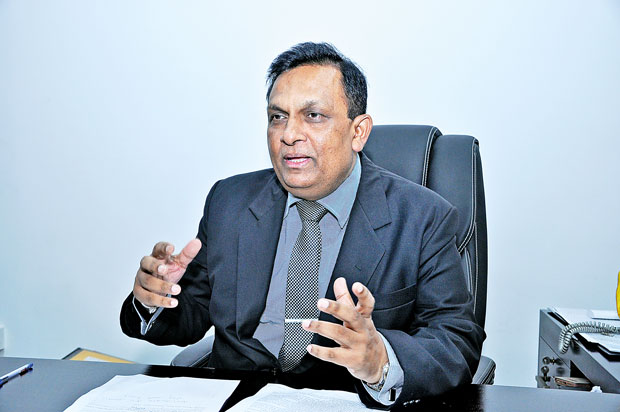
The Dailymirror discussed bribery and corruption, its prevention and prosecution of suspects with the Director General of the Commission to Investigate Allegations of Bribery or Corruption (CIABOC), Sarath Jayamanne PC.


Excerpts:
 Q The public, the media and politicians charge more often than not that the CIABOC has failed to bring before the law those big time perpetrators like politicians and top officials in the public sector who had allegedly engaged in bribery and corruption. What do you have to say on this allegation? 
The CIABOC solely and entirely investigate, establish a case and file charges against suspects of bribery or corruption on the availability of evidence. I agree that there is some merit in the public perception that the CIABOC has not brought big fish and only small or middle level public officials and politicians before the law. What I want to emphasize is that almost all big time perpetrators or suspects of bribery or corruption do it in an extremely professional way. Whether he or she is a top politician or senior and influential public official they take bribes, commissions, immovable or movable assets or gratuities using technology. Their transactions don’t leave any trail and lucre ill-amassed using IT are in many instances not found in Sri Lanka. They are usually changed hands as foreign bank accounts, foreign assets or shares in foreign companies.

In 2017, there were a record conviction of 57 which was the highest in a year. The CIABOC also deploys sleuths at sensitive state institutions prone to bribe taking. In the recent past we have been able to arrest a number of school principals and top level police officers red handed and even persecuted a couple of top most former and incumbent officials of the judiciary.


Besides, when our sleuths make inquiries on those ill gotten wealth, they have to confront various laws, regulations and secrecy laws of the respective countries and banks. All top level suspects are professionals and they know how to do it without leaving a clue for us to inquire and catch them. In short, in many cases it is a professional job. They don’t do it in a rest room, wash room, on the roadside or in their office. It is normally a big job involving big money and assets. Also in a transaction carried out using IT, you don’t find names or the identity of the giver or taker. They are nameless and they have only a number. So, this is the situation not only in Sri Lanka but in any other country. After a regime change , politicians and top officials clear their desks, files and computers erasing any sign of grey spots in their tenure.


 Q Does that mean you need more legal teeth, human resources and logistical support to do a better job?
Yes indeed. The CIABOC Act No 19 of 1994 is obsolete and archaic and has not been amended for the last 28 years. Therefore, we have confronted many a hitch in our work at the CIABOC.
The amendments to the CIABOC Act is the first priority and we have in place a ‘National Action Plan’ to combat bribery and corruption in Sri Lanka which will look into amending laws on bribery or corruption in addition to introducing a corruption prevention scheme. Sadly we have no National Policy to combat bribery and corruption right now. A 50-member team will be appointed to formulate a plan with special attention given to prevention programmes.

Amendments to the bribery laws which has received the cabinet nod include allowing bribery cases to be filed in High Court instead of the Magistrate Courts to fast track cases and to allow CIABOC to direct serious cases to High Court where they can arrange a 3-Judge Bench to hear such cases on a daily basis. The CIABOC will also bring in laws to allow to use evidence from Presidential Commissions to investigate into corruption or investigate their findings further. I personally believe that the CIABOC must be given more power to work independently.

Other hindrance faced by the CIABOC is that it has no power to recruit its own officers directly and investigations, raids and analysis are done by Police officers obtained from the Department of Police (DOP) and they are under the command of the IGP. They are controlled by the DoP and can be assigned for special duties outside the CIABOC. Therefore, it is obvious that the CIABOC is dependent on sources outside of its purview and disciplinary control. This is one of the incapacitating factors affecting the CIABOC.


We must put more emphasis to create a culture that grows in the minds of people that bribery and corruption is a crime, a disease and social evil that goes against all civilized and democratic norms of a country


However, we are in the process of recruiting 200 officers with the cabinet approval for the CIABOC and they would be given a thorough training by local and foreign experts with the assistance of the UNDP and the World Bank. I have also sent our officials for training in Hong Kong and I paid a visit to Bhutan recently with a team of officials where bribery and corruption is non-existent.

There are certain grey areas of the CIABOC Act that one can get confused as to who could prosecute a suspect under one of the Sections of the Act. These provisions have to be amended.

However, I am sad to note that though I have overtaken almost all the hurdles thrown to me from the government agencies to secure a land to construct a spacious and decent building with modern facilities but the Urban Development Authority (UDA) blocks it for no obvious reason.


The most corrupt countries in the world according to the index are Somalia, South Sudan, Syria, Afghanistan and Yemen among 180 countries with scores above 175. Sri Lanka is at not so satisfactory 91


 Q Why politicians and public officials solicit bribes to perform a legitimate duty?
I think this is where we must put more emphasis to create a culture that grows in the minds of people that bribery and corruption is a crime, a disease and social evil that goes against all civilized and democratic norms of a country. They must realize that it is a social stigma and compromises the dignity of the giver and taker of the bribe. That is why we need national policy on prevention of Bribery and Corruption and students must be taught on the evil effects of it.

In Bhutan, one of the prominent South Asian countries where bribery and corruption is unheard of, politicians and public officials do not accept even a gift from any one. If they cannot refuse a gift, they accept it, fill a form with all information pertaining to the gift and place the gift in a vault, showcase or cupboard as a public property.


 Q Two former Parliamentarians were fined Rs.1,000 each for their failure to declare their assets making the entire process of fighting corruption a joke. Your comments on this… 
We are in the process of amending the law and various proposals on this matter are being reviewed. One of the proposals was to increase the fine to Rs.100,000 from the current Rs.1,000 and also the prison term from current one year. I believe that with the approval of the amendments to the CIABOC Act No.19 of 1994 in Parliament in near future all these issues debilitating the CIABOC will be addressed.


 Q Bribery and corruption are deep rooted in developing the so-called third world countries. Do financial crimes have a link to poverty?
Yes and no. I cannot vouch for the presumption that developed or rich countries have fully eradicated bribery or corruptions because we more often than not watch, read and hear stories of bribery and corruption those countries. But I can safely say that in many developed countries this evil acts are not entrenched in the society, in the public or governance and most importantly people in those countries are feared of giving and taking bribes. It is simply a stigma in the society.

If you make a search on the recently released Corruption Perception Index of 2017 by the Transparency International, you will see that the top ten countries with highest marks for the prevention of bribery and corruption in the developed countries with top most ranking of 1st place among 180 countries is held by New Zealand while almost all the Scandinavian countries like Denmark, Finland, Norway and Sweden coming to first five rankings. Other rich countries like Switzerland, Canada, Luxembourg, Netherlands and Britain ranking in the first 10. The richest country in the world, US is on 16 and best in Asia in corruption busting is Singapore at 6th and in South Asia Bhutan at 26.

The most corrupt countries in the world according to the index are Somalia, South Sudan, Syria, Afghanistan and Yemen among 180 countries with scores above 175. Sri Lanka is at a not-so-satisfactory score of 91.

Officials and politicians in poor or low income countries are usually prone to solicit and accept bribes. People in those countries compel to Greece the palm of officials and politicians to get done an official function. It is no secret that politicians expect a gratuity when jobs are given, a fat commission to approve a project or a tender and officials solicit a ‘santhosam’ [gratification] to give a transfer, admit a pupil to school, approve a payment or release a cheque. In courts to put a case on the top of the files, in prisons to give extra time to a prisoner to chat with family member or even to supply drugs.
The system needs a complete overhaul. People must be taught from the kindergarten level to say a firm ‘No’ to bribe taking and giving. It must be embedded in our blood, make it a national policy and a habit in the society like in those countries where this evil has been fully eradicated.


 Q What are the measures taken by the CIABOC to control bribery and corruption in the country?
The most effective tool to fend off, discourage or create a fear psychosis among the people resorting to give bribe and politicians and officials to soliciting and accepting bribes is to give wide publicity to convictions for bribery and corruption. In addition we have instructed state institutions to create an environment in their respective institutions that bribing is not necessary for the public to give gratuities to get an official and lawful service from officials. The CIABOC conducts awareness programmes regularly at state institutions to educate public officials to repercussions of taking bribes.

In 2017, there were a record conviction of 57 which was the highest in a year. The CIABOC also deploys sleuths at sensitive state institutions prone to bribe taking. In the recent past we have been able to arrest a number of school principals and top level police officers red handed and even persecuted a couple of top most former and incumbent officials of the judiciary. These are in addition to new amendments to be introduced to the CIABOC Act and new legislations.

The CIABOC is to introduce a new and simple form to declare assets and establish a data base with newest available technology to scrutinize, categorize and preserve assets declaration by opticians and public officials. A public officer will have to submit online his or her assets declaration even after one year of retirement. In many instances, public officials used to explain unusual amassing of assets or assets beyond his or her means as winning a sweet jackpot, from a close relative or from a relative living overseas etc. The new form of assets declaration has addressed this weakness.


 Q What is the biggest drawback you have confronted in the fight against bribery and corruption?
Lack of human resources and other logistical infrastructure mainly. The CIABOC as I said earlier needs concrete evidence to establish a water tight case against a suspect. It is counter productive to file charges against a suspect with not so strong evidence. A big majority of complaints or petitions we get are anonymous. Those who send petitions to the CIABOC on corruptions and illegal assets don’t come foreword in many instances to give evidence.


 Q I have heard you say that a legal arm like CIABOC does not exist in countries where bribery and corruption are unheard of. Can you further explain this?
Yes, in New Zealand, Scandinavian countries, EU nations and Canada where bribery and corruption have almost been eradicated, the maladies do not exist.

pix by Nisal Baduge

Judicature (Amendment) Bill is nothing but political vendetta

March 28th, 2018

By Kelum Bandara Courtesy The Daily Mirror

Sri Lanka Podujana Peramuna (SLPP) Chairman Prof. G.L. Peiris, in an interview with Daily Mirror, discusses the implications of the Judicature (Amendment) Bill. Prof. Peiris shared the following:-


  • Similar offences charged against different people must be tried upon the same system
  • New Bill is against the principles of equality
  • Criminal law must apply to everyone alike
  • Bill drafted to bring MR, family and political leaders before the tribunal

Q The government says the purpose of this Bill is to cleanse politics of corruption in this country. Then why do you oppose to it?
The Judicature (Amendment) Bill has nothing to do with catching thieves. It is a canard. This has nothing do with eradication of bribery and corruption from our society. The objective of this legislation is entirely different. It is nothing but political vendetta. The idea is simply to silence the political opponents who cannot be defeated at elections. The results of the local government elections, held on February 10, indicates very clearly what the public opinion is. The government , or President Maithripala Sirisena’s Sri Lanka Freedom Party (SLFP), are fully aware that they cannot face an election with Sri Lanka Podujana Peramuna (SLPP) or come anywhere near victory. Their determination, as a result, is to eliminate these people from the political stage and throw them up in jail. That is the long and broad target.

Q But, there are instances where special tribunals have been set up in the past. Why do you object to them this time?
This country has a very unfortunate history with regard to special courts and special tribunals. We recall the dismal events connected to late Prime Minister Sirimavo Bandaranaike. We can recall the insults that were hurled at her. She was called ‘Bindumathi’. The Ministers in the JR Jayewardene government said she would be dragged on the road in chains. She was convicted for offences which has no existence in the law. She went to the regular courts. She got relief. What happened? The JR government enacted legislation in Parliament to reverse the decisions of the court that gave her relief. Late Justice Wimalaratne, an illustrious judge in this country who gave her relief, was hauled before Parliament. The judge himself was tried before Parliament. The present Prime Minister was a member of the committee of Parliament appointed to try the Supreme Court Judges, Justice Wimalaratne, Justice Colin Thome and others.

That was the behaviour of the UNP in the past. In this case, this Bill has been presented. We have challenged it in the Supreme Court. The oral argument has been concluded. The written submissions were filed on March 24. The decision is to be communicated to the President and the Speaker next week.

The basic purpose of the legislation is to set up a permanent High Court at bar to conduct trials at bar. Trials at bar are nothing new in this country. That is very much a law in the established courts. With regard to the trial at bar, the procedure is for the Attorney General to make an application to the Chief Justice for the constitution of trial at bar. It is for the Chief Justice and the Chief Justice alone to decide whether the circumstances warrant the establishment of a trial at bar. That requires the application of judicial might. The head of the judiciary is entrusted with that responsibility. Nobody else can make that decision. The whole concept of permanent trial at bar is anomalous and contrary to the principles of law.

Q Why do you say so?
Trial at bar is a special institution. It is brought into place when the special circumstances require it. It is for the Chief Justice to decide whether the facts of a particular case justified the creation of a trial at bar. So far, the trial at bars had been established in respect of cases such as gruesome murders, sexual abuses, followed by Vidya’s gang rape and murder case in recent times. What is totally obnoxious is the effort to take away that discretion from the Chief Justice and to vest it in the executive.

If the proposed legislation is passed, then the Minister is given the power to establish these benches or these special courts. The Bill says there is no limit to the number of courts to be established. He can establish any number of these special courts. It is for the Minister to decide where this particular court sits. All of that is in the hands of the Minister. It is for the Attorney General or the Director General of Bribery Corruption and to decide what cases to be prosecuted before these special courts. That itself is contrary to principles. The Director General of Bribery Corruption is not even appointed by the Constitutional Council. It is an executive appointment, entirely in the hands of the political executive.

The country is fully aware of the top ten initiatives headed by MP Mahindananda Aluthgamage. The most serious allegations were made against the Cabinet Ministers of the present government. Facts and figures were presented. Very strong evidence was presented before the Bribery and Corruption Commission. But, nothing whatever happened.

Look at the serious allegations made by Deputy Minister Ranjan Ramanayake! There was the situation involving COPE. The COPE members, while they were investigating Perpetual Treasuries, made hundreds of telephone calls to its owner Arjun Aloysius. The Ministers of the cabinet admitted that they met Arjun Aloysius face to face. It transpired that Perpetual Treasuries had 22 bank accounts, but they purchased Mendis Distilleries. It was the account of Mendis Distilleries that was used to pay bribes. There is reason to believe that. That was the allegation that was made from within the government. It was alleged that Rs.1,200 million was spent out of that bank account. Some of these withdrawals took place during the time when the COPE members were either meeting Perpetual Treasuries or having telephone communications with them. All the money has been taken out of that account. The Bribery and Corruption Commission has a duty to investigate this matter. Parliamentarian Ramanayake said the Central Bank fraud was nothing compared with other frauds which are currently taking place. He referred to a situation involving Sri Lanka Cricket.

Isn’t that a paramount duty of the Bribery Commission to investigate these matters? What is the Commission doing about it?

Our complaint is basically  that this legislation involves procedures which are highly selective. It is the Director General of Bribery and Corruption to identify the people to be prosecuted or the cases to be brought before this special tribunal. A sacred principle of our law is equality. The criminal law must apply to everyone alike. Similar offences charged against different people must be tried upon the same system. Suppose the persons A and B are charged for the same offence, but A is tried by the regular court and B by the specially created court! That is discrimination. That is contrary to the principle of equality enshrined in Article 12 of the Constitution.

The offences on which this trial at bar can be constituted are set out in the sixth schedule. That covers a very wide range of offences. Again, whether a particular offence or offender should be tried before a regular High Court or special High Court depends entirely on the whims and fancies of the Director General of Bribery and Corruption.

That strike at the very root of the system of criminal justice that prevails in this country. What we are saying is that this is not what it pretends to be. There is pretense to clean up politics of this country. On the contrary, what is sought to be done is to introduce corruption into judiciary. That would be a great pity because that will destroy an institution which the public of Sri Lanka up to this time had great confidence. Our judges and courts have been held in the highest esteem all over the world. Now what is sought to be done is to introduce politicization.

Q But, those who lobby for this Bill say there is a backlog of cases for 17 years. The country needs to dispense with these cases. What is your view on this?
There are people who have been languishing in jail for 10 or 12 years. There are 11000 people in remand custody. There are thousands of people who have been denied bail. Why is this bill not concerned with these people then?

When you use the High Court judges for these special courts, the regular functions of High Courts will suffer. If a man has to suffer in remand custody for ten years, he will now have to languish in custody for 15 years.

This law is not applicable to serious offices such as murders, kidnapping, rape etc. If the idea is to create the backlog, we have to clear it with regard to the most serious offences. Why is no attention paid to that at all?

The only intention of those who drafted this Bill is to bring the Rajapaksa family and the leaders of the political parties opposed to them before this special tribunal.

Q Don’t’ you see the need for any special mechanism to deal with corruption?
We are not objecting to those mechanisms. They must be entirely within the control of judiciary. Trial-at-Bar is also a special mechanism. We are not objecting to Trial-at-Bar as long as it is in the hands of the Chief Justice.

President takes away CB from PM and gazettes under FM

March 28th, 2018

Courtesy The Daily Mirror

In an Extraordinary Gazette issued today, President Maithripala Sirisena moved two key institutions; the Central Bank and the Securities and Exchange Commission (SEC); which were under the National Policies and Economic Affairs Ministry headed by the Prime Minister, back to the Finance Ministry.

The Gazette Notice, which bears No: 2064/26 said the two institutions would be immediately placed under the Minister of Finance and Mass Media.

“Formulation of monetary policies and macroeconomic management in coordination with the Central Bank of Sri Lanka and monitoring revenue collection and expenditure would be carried out by the Finance Ministry,” the notice said.

Meanwhile, a number of items including the Monetary Law Act, Public Utilities Commission, Exchange Control Act, Securities and Exchange Commission, National Youth Council, Youth Corps Act, Children and Young Persons Ordinance and the National Insurance Trust Fund Act had been omitted from the Prime Minister’s Ministry.

The Monetary Law Act and the Securities and Exchange Commission had been placed under the Finance Ministry.

Glaring omission of US brokered 2010 TNA-SF ‘pact’ ‘Sri Lanka: The New Country’

March 28th, 2018


Veteran Indian journalist Padma Rao Sundarji’s ‘Sri Lanka: The New Country,’ authored during the tail end of war-winning President Mahinda Rajapaksa’s second term, expertly dealt with Sri Lanka’s conflict that was brought to a successful conclusion, in May 2009. Rao, who had been to the northern part of Sri Lanka, at the time the Liberation Tigers of Tamil Eelam (LTTE) was in control, as well as during the post-war period, discussed the conflict, certainly without bias. By and large, Rao addressed conflict and post-war issues, fairly, and much more objectively than some Sri Lankan commentators.

Rao hadn’t been reluctant to blame New Delhi for arming, training and assisting the LTTE with its leader Velupillai Prabhakaran receiving the privileged treatment as a state guest of India in the ’80s. Rao asserted that New Delhi intervened in Sri Lanka because of growing relationship between the US and Sri Lanka against the backdrop of India’s close partnership with the then Soviet Union.

article_image

One-time Indian High Commissioner in Colombo (1985-1989), Foreign Secretary (1991-1994) and National Security Advisor (2004-2005) J.N. Dixit, in his memoirs ‘Makers of India’s Foreign Policy: Raja Ram Mohun Roy to Yashwant Sinha,’ in 2004, over a decade before Rao’s declaration, stated that New Delhi’s strategy in respect of Sri Lanka should be examined taking into consideration the then regional and international environment between 1980-1984. Dixit alleged that the US and Pakistan exploited Tamil terrorism to create, what he called, a politico-strategic pressure point against India. Dixit suffered a fatal heart attack, in January 2005.

It would be pertinent to mention that Rao finalized ‘Sri Lanka: The New Country’ in January, 2015, as Sri Lanka brought Rajapaksa’s reign to an end with substantial outside inputs.

India has been widely accused of facilitating the US-spearheaded project to thwart Rajapaksa securing a third term.

Dixit on Indian intervention

Let me reproduce verbatim Dixit’s comment on Indian intervention during Indira Gandhi’s tenure as the Prime Minister of India: “The two foreign policy decisions on which she could be faulted are: her ambiguous response to the Russian intrusion into Afghanistan and her giving active support to Sri Lankan Tamil militants. Whatever the criticisms about these decisions, it cannot be denied that she took them on the basis of her assessments about India’s national interests. Her logic was that she could not openly alienate the former Soviet Union when India was so dependent on that country for defence supplies and technologies. Similarly, she couldn’t afford the emergence of Tamil separatism in India by refusing to support the aspirations of Sri Lankan Tamils. These aspirations were legitimate in the context of nearly fifty years of Sinhalese discrimination against Sri Lankan Tamils.”

‘Sri Lanka: The New Country’ was launched in New Delhi, in April 2015, with the distinguished presence of former Indian High Commissioner in Colombo Nirupama Rao (2004-2006) followed by he Colombo launch, in July 2015. The then Foreign Minister Mangala Samaraweera had been among those present at the Colombo event that took place two months before the Sirisena-Wickremesinghe government, at the behest of the US, co-sponsored Geneva Resolution 30/1 in spite of it being severely inimical to Sri Lanka. The Yahapalana leaders co-sponsored Geneva Resolution 30/1 just over a week after the outgoing Sri Lanka Permanent Representative in Geneva, Ambassador Ravinatha Aryasinha, strongly objected to the wording at an informal discussion there.

Strangely, Sri Lankan politicians and officialdom never bothered to examine Dixit’s work, or that of Rao, an internationally recognized journalist whose contribution could have been efficiently used to counter those propagating lies. Rao is perhaps one of the few fearless scribes at the top in our part of the world to take on the powerful Western media. She had done that much to the appreciation of the vast majority of Sri Lankans. Rao commented on Western media double standards in respect of war and post-conflict reportage.

Rao was the South Asia bureau chief of German news magazine Der Spiegel. She has also worked with ARD German Television Network in New York, Zweites Deutsches Fernsehen, Geo magazine and Deutsche Presse-Agentur. Her work has appeared in the New York Times and the Herald Tribune. She lives in New Delhi and freelances for German, Swiss and Austrian dailies.

Obviously, Rao, like Lord Naseby, must have been shocked at the way the Sirisena-Wickremesinghe had neglected its responsibility to defend Sri Lanka at the recently concluded 37 Sessions of the Geneva-based United Nations Human Rights Council (UNHRC).

The writer felt the urgent need to peruse Rao’s work in the wake of her exclusive with Lord Naseby outside the British parliament last year following the Conservative politician’s dramatic revelations and assertions on the basis of wartime British High Commission dispatches from Colombo. But Naseby’s bombshell, in Oct. 2017, couldn’t move the yahapalana (good governance) administration at the Geneva sessions. Having defended Sri Lanka in the House of Lords, Lord Naseby went to the extent of personally bringing relevant dispatches to the attention of Geneva though Sri Lanka conveniently refrained from at least referring to the latest developments. Sri Lanka’s Permanent Representative there, Ambassador Aryasinha, and leader of the ministerial delegation Foreign Minister Tilak Marapana, PC, were silent on the Naseby issue. Those who had believed President Maithripala Sirisena would intervene on Sri Lanka’s behalf to ensure that UNHRC was appraised of the latest developments were quite disappointed and angry.

The yahapalana government has indicated that it will never, under any circumstances, seek a review of Geneva Resolutions 30/1 or 34/1 though Lord Naseby showed the way. Sri Lanka refrained from taking up the issue for obvious reasons. Instead, the Sri Lankan delegation reiterated commitment to fully implementing the Geneva Resolution 30/1. The state managed media painted a rosy picture though Sri Lanka essentially acknowledged its culpability.

Rao, at the time she had concluded ‘Sri Lanka: The New Country,’ wouldn’t have, under any circumstances, envisaged Colombo accepting responsibility for war crimes it never committed during Eelam war IV. Rao explicitly discussed the entire gamut of issues and key events such as media briefing given by Velupillai Prabhakaran to over 150 journalists in Kilinochchi. Rao recalled how the LTTE applied ‘whites-first’ policy in taking questions from those gathered there resulting in a section of the Indian scribes loudly complaining to British citizen of Sri Lankan origin Anton Balasingham, who was seated next to Prabhakaran. Rao’s work provided readers an opportunity to know the origins of India-sponsored terrorism, the growth of LTTE, conventional military challenge, failed peace efforts, successful war against the LTTE, post-war developments and Maihripala Sirisena’s emergence as Mahinda Rajapaksa’s successor.

A forgotten TNA project

However, Rao has completely missed the Illankai Tamil Arasu Kadchi (ITAK) led Tamil National Alliance (TNA) role in the first US managed project in 2009-2010 to thwart Mahinda Rajapaksa from securing a second presidential term, at the 2010 January polls. In spite of her close watch over Sri Lankan affairs, the Indian, obviously, had been completely in the dark in respect of the abortive operation in 2009-2010 to help war-winning Army Chief, General Sarath Fonseka, beat Mahinda Rajapaksa. The Janatha Vikukthi Peramuna (JVP) as well as the Sri Lanka Muslim Congress (SLMC), too, had been involved in the anti-Rajapaksa project, on both occasions.

In spite of calling Fonseka a ‘war criminal,’ in January 2010, the US Embassy, in Colombo, worked overtime to arrange a coalition to ensure his victory over Rajapaksa at the January 2010 polls. The US played a critically important role in forming the coalition under the ‘swan’ symbol. Thanks to Wiki Leaks, confidential US diplomatic cables that dealt with US efforts to form a political grouping capable of defeating Rajapaksa, is in the public domain. Maithripala Sirisena, too, contested the 2015 presidential poll, under the same symbol. Last year, the leader of the ‘swan’ party, Shalila Munasinghe, was arrested, along with Janaka Nammuni , son of retired Maj. Gen. Jaliya Nammuni, one-time Chief of Staff, SLA, over defrauding USD 2.1 mn from a Taiwanese bank, last Oct. Nammuni held dual British and Sri Lankan citizenship while Munasinghe carried a British passport.

Sri Lanka certainly could have benefited from the exposure of confidential US diplomatic cables, originating from Colombo. Unfortunately, successive administrations never bothered to examine those cables, thereby lost chance to exploit them. The US guaranteed the TNA support to Fonseka. Although, the US-led plan went awry, in January 2010, an almost identical project succeeded in January 2015 to oust President Rajapaksa. It would be pertinent to keep in mind that the then staunch Rajapaksa loyalist Maithripala Sirisena had held the defence portfolio at a crucial stage of the final battle (May 2009 third week) on the Vanni east front where unsubstantiated accusations were made in respect of battlefield executions.

In January 2010, Tamils voted for Fonseka amidst widespread wild allegations that the armed forces had massacred over 40,000 civilians on the Vanni east front and substantial number of LTTE cadres too executed. Whatever the TNA leadership said, northern Tamils wouldn’t have voted for Gen. Fonseka if they really resented him and held him accountable for civilian deaths.

Had the Tamil community really felt conquered and overwhelmed by the military presence, in the Northern Province, they wouldn’t have exercised their franchise in support of General Fonseka. All northern and eastern districts overwhelmingly voted for Gen Fonseka and Maithripala Sirisena at the 2010 and 2015 presidential polls.

It would be important to keep in mind that UNP leader Ranil Wickremesinghe led the coalition against Rajapaksa, both at the 2010 and then at the 2015 presidential polls, he didn’t contest. Rao clearly missed that the TNA played a leading role in the 2010 operation to bring Rajapaksa’s reign to an end. Rao’s assertion that twice president Chandrika Bandaranaike Kumaratunga returned from retirement to prop ‘the new coalition’ behind Maithripala Sirisena, too, is inaccurate. Kumaratunga backed Gen Fonseka’s presidential bid.

None of those whom Rao had spoken to in Colombo, including Wickremesinghe and TNA MP M.A. Sumanthiran, in the run-up to the January 8, 2015 presidential poll, obviously didn’t tell her about the TNA role in the 2010 project. Even after Rao had pointed out to Sumanthiran, two days before the presidential polls, that the ‘TNA’s astounding support for Sirisena found his party on the same side as Sinhalese nationalist parties JVP and JHU, the TNA spokesman didn’t bother to tell her their role in Gen. Fonseka’s bid. The author could have missed it. That could have happened to any writer but Sri Lankans couldn’t be excused for failing to mention the TNA-SF project. Surprisingly, Rajapaksas’s side, too, remained silent. That is obviously negligence.

Neelakandan’s response

The writer sought an explanation from top lawyer, the late Kandiah Neelakandan, President of the All Ceylon Hindu Congress, during a ceremony in Vavuniya, in the run up to the January 2010 presidential poll, how he felt about Tamils having to choose between Gen Fonseka and President Rajapaksa whose political leadership made Sri Lanka’s victory possible. President Rajapaksa was there to personally release some rehabilitated LTTE cadres, and top ACHC representatives were among those invited to participate at the event. Neelakandan acknowledged the paradox of the situation. Then Minister Milinda Moragoda played a pivotal role in securing the support of the ACHC in a bid to dispel fears among the Tamil community that those who had surrendered and were captured, on the Vanni front, were to be executed.

The TNA has always played down its involvement in Gen. Fonseka’s campaign. Having had accused the Rajapaksa administration of atrocities and deliberate killings, on the Vanni east front, the TNA voted for the General, who conducted the actual war and was called a war criminal by the then US Ambassador to Sri Lanka Patricia Butenis.

Rao’s anecdotal narrative received superb reviews with Vinod Metha, Editorial Chairman, Outlook Group, India asserting, “Padma Rao Sundarji’s superb account of post-conflict Sri Lanka is written with impeccable objectivity. This is, I believe, the first independent attempt to tell the story largely from ‘other’ side…Must read.”

Obviously, those Sri Lankans who had been in touch with Rao were determined to keep TNA’s shocking relationship with Gen. Fonseka under wraps. In fact, the writer, on numerous occasions, including on electronic media, underscored the pivotal importance of examining the 2010 electoral agreement against the backdrop of the TNA still pursuing war crimes inquiry. While Sri Lanka meekly again reiterated its commitment to Resolution 30/1 in Geneva, TNA heavyweight Sumanthiran was in the US to secure continued UN, US and Norwegian backing to pressure Sri Lanka. Sumanthiran was accompanied by senior representatives of the Global Tamil Forum (GTF) as well as several other Diaspora organizations. Many an eyebrow was raised in June 2016 when Sumanthiran revealed in Washington about having a tripartite agreement involving the US, Sri Lanka and the TNA for the full implementation of the 2015 Geneva Resolution. Sumanthiran went to the extent of declaring that the agreement specifically settled the contentious issue of foreign judges in hybrid war crimes court.

Attorney-at-law Sumanthiran told American ‘Congressional Caucus for Ethnic and Religious Freedom in Sri Lanka’, in Washington, that the government of Sri Lanka, the TNA and the US had been involved in the negotiations leading to the agreement. The declaration was made in the presence of Sri Lanka’s Ambassador in Washington, Prasad Kariyawasam. The Island reported the Washington meet in its June 28, 2016 edition. The story was headlined ‘Constitution no bar to foreign judges in war crimes court – TNA’

In fact, the TNA statement was meant to pressure the government, and to remind the Yahapalana leadership that it wouldn’t give up, or dilute arrangement, over foreign judges.

TNA-Sarath agreement

Sampanthan, on January 6, 2010, in parliament, pledged his support for Fonseka. Sampanthan declared that the decision following consultations with candidates, Mahinda Rajapaksa and Fonseka. The TNA chief asserted that Rajapaksa’s re-election wouldn’t be in the best interests of the country, nor the Tamil community. The TNA made its surprising announcement with the knowledge of the US Embassy, in Colombo, soon after the grouping reached an agreement with Fonseka. Like the tripartite agreement worked out to pave the way for hybrid war crimes court, the US arranged the TNA-Fonseka pact, titled ‘Immediate Relief Measures for War Affected Persons and Areas or Peace’

I. Restoration of Civil Administration and Normalcy

1. Full restoration of all institutions of Civil Administration from the Office of Grama Sevaka upwards – free from Military, Police and Political interference. 2. Committees for each District headed by the respective District Secretary (GA) and comprising: – Nominee of the President -Divisional Secretaries -Other Officials (Representatives of such Officials) -Members of Parliament/Their Representatives -Representatives of Local Authorities -Judicial Officers -Security Forces/Commanders/Officers North/East -DIG — Police /Officers -Civil Society Representatives To prepare Plan of Action for immediate implementation within one month Monthly Reports on progress to be submitted to the President, Cabinet and Parliament. A dedicated Secretariat to be established under the President to monitor progress and ensure implementation. 3. The immediate measures stated herein to be implemented through Presidential Orders, including appointing Presidential Task Forces therefor. 4. Security Forces to be stationed at strategic locations only, taking into consideration national security. High Security Zones to be dismantled in keeping with the COLOMBO 00000017 003.4 OF 005 re-location of the Security Forces. 5. Free movement of all persons to be guaranteed without being impeded by Security and Police personnel. 6. Police to be manned, as far as practicable, by Officers who are conversant in Tamil.

II. Prohibition of ‘para-military cadres’ and armed groups (self-styled ‘War Lords’)

1. All ‘para-military cadres’ and armed groups to be disarmed forthwith. 2. Areas of civilian activity to be free of weapons. 3. Except the Security Forces and Police, only persons with permits under the Firearms Ordinance would be entitled to possess firearms.

III. Re-settlement and rehabilitation of internally displaced persons

1. De-mining of areas to be speedily concluded through De-Mining Units. 2. Displaced persons to be returned to their original homes, and where homes have been destroyed alternative accommodation to be provided, with financial support to establish themselves and develop livelihoods. 3. Social infrastructure requirements, such as provision of essential Foods, Medical Centers, Hospitals, Schools, Transport etc to be provided.

IV. Land and Agriculture

1. Restoration of possession of private land and buildings, now occupied by Security Forces/Police/ Government Agencies, to those lawfully entitled to such land and buildings. 2. Committees referred to in 1.2 above to arrange for such restoration. 3. Committees to submit a Scheme to the Government for payment of compensation for damage caused to buildings. 4. a. Eviction of persons legitimately entitled to State Land from such Lands; b. Other instances of deprivation of legitimate title holders of State Lands; and c. Unlawful occupation of State Lands to be reviewed and the position regularized on lawful and just basis. 5. Indiscriminate alienation of State Lands to be terminated. Allocations thus far made to be reviewed and cancelled, where such allocation -has not been transparent, or -lacked equal opportunity to all concerned, or -lacked proper consultation with the elected Representatives of the areas concerned, or -are unwarranted, or -has been on a corrupt basis. 6. Relief packages for full cultivation of lands. 7. A special law to be enacted to decide on disputes, as to ownership and succession of lands.

V. Fisheries

1. Full restoration of fishing rights. 2. Joint Committees to be set up of Representatives of those engaged in the fishing industry and the Navy to ensure security.

VI. Trade and Commerce

1. All barriers in respect of transport of passengers, goods, agricultural and fisheries produce to be eliminated forthwith. 2. No payments (‘Kappang’) to be levied by anyone. Stringent action to be taken against those who do so.

VII. Transport

1. Trains service to be restored, without delay, within the Jaffna peninsula, i.e. Elephant Pass to Point Pedro. 2. All impediments for shipping and air transport to be removed, with effective facilities which would ensure a reduction of costs and shipping and air transport. 3. Establishment of a new rail line, with private sector participation, from Point Pedro to Trincomalee.

VIII. Special Relief Packages

1. For dependents of all persons who have lost their lives during the war, including military and police personnel, and civilians. 2. For persons disabled as a result of the war.

IX. Persons in Detention

1. Release of all persons in detention, within a period of one month against whom there is no evidence, and on the basis that such detention would not be a stigma or setback for their future. 2. Rehabilitation of those persons, who had been engaged in war activities, on the basis of a general amnesty.

X. [State of Emergency]

As an overall measure affecting all Sri Lankans, the State of Emergency presently in force and the Regulations made thereunder to be terminated, since it affects the liberties and fundamental rights of all People, in accordance with my Pledges.

YAHAPALANA AND THE ECONOMY Part 6

March 27th, 2018

KAMALIKA PIERIS

REVISED 26.3.2018  and  25.10.18

‘We will revitalize the manufacturing sector by introducing a clearly defined industrialization strategy,’ said Prime Minister Ranil Wickremesinghe in his budget speech in 2017. ‘We must encourage the entrepreneurs to diversify our exports. Other middle-income countries such as Thailand and Vietnam are exporting a more diversified range of high-value products such as automobile parts, machinery and electronics. They are leaving us behind. We will have to catch up to our competitors. We have to change all these things if we are to strengthen the economy and to create more jobs.’

Here are three instances of how Yahapalana is encouraging local industry. A leading Indian non-leather footwear manufacturing company Veekesy Slippers Lanka Pvt Ltd, a subsidiary of Indian footwear conglomerate VKC Group India has set up a factory in Ethukala, Negombo as a Board of Investment (BOI) approved project.  VKC is India’s largest PU (polyurethane) footwear manufacturer. Its daily production is 400,000 pairs.

Veekesy has been allowed to enter the local market without any restriction thanks to the minimum investment requirements needed to qualify for such projects. The Indian company has got approval under Section 16 of the Board of Investment rules allow projects with a minimum USD 250,000 investment. This can be either 100 per cent foreign investment or a joint venture investment with a local collaboration.

This section permits investors’ unlimited access to the local market sales. Foreigners have to remit a minimum of $1 million if they are to undertake trading activity With this very minimum requirement the Indian company has received the opportunity to enter the local market without any restriction, .

The Footwear and Leather Product Manufacturers Association of Sri Lanka has protested to President Sirisena. The local footwear industry feels threatened. They complained that  the BOI has approved this Indian footwear manufacturing project, while the Export Development Board says it is helping local footwear manufacturers attain international standards and enter the highly competitive global market,

Veekesy is a major player in the Indian footwear industry with a capacity of manufacturing more than 150,000 pairs a day said the Association. Veekesy will have a clear edge over Sri Lankan producers in terms of procurement of raw material, machinery, moulds, etc and in addition they will enjoy a huge bargaining power due to the cost advantage associated with their massive output. Other Indian manufactures may follow suit and fields such as local manufacturing and marketing of dairy products, confectioneries, ready-made garments and a range of consumer goods may be adversely affected, they said.

Chairman of Veekesy, Abdul Razak, spoke to Business Times. He was eager to clear the doubts of local footwear manufacturers about his company’s entry into local market. Veekey’s intention is to supply better quality, non-leather footwear to local consumers at reasonable prices. It has no intention of ruining other manufacturers. His company’s production will be very minimal and it cannot hurt the local industry. He met several local footwear manufactures during his stay in the island and they were pleased to welcome his company.

General Manager of the company Fahad Farook noted that they will start production of slippers at the factory initially and consider turning out shoes in the latter stages. . Veekesy Slippers Lanka has adhered to all BOI requirements and received necessary approvals for the Indian venture; he said adding that they have no intension of ousting the local companies. We are willing to discuss any issues with the association at a one-to-one meeting as Veekesy is also in the same business,” he said.

Veekesy will be starting production at its local factory once the all BOI requirements and other approvals were done. The company has invested US$269,581 on the project. It will manufacture non-leather footwear, mainly synthetic and polyurethane slippers for the local market with some restrictions imposed by the BOI. Most of the raw material will be obtained from local companies and the project will provide 250 direct and 250 indirect employment for Sri Lankans. The company is willing to share their technical knowhow and even train Sri Lankan manufacturers and workers to improve the industry said Razak. The company will operate under the normal laws of the country and will ‘only remit their profits to India’.

According to the BOI letter of approval dated 25-09-2017,  Veekesy  should confine its production capacity to 2.1 million pairs per annum and submit the production and local sales details quarterly to the monitoring and investments departments of the BOI. If the company wishes to expand the production capacity then it should submit the relevant proposal along with a substantial percentage of export plan of the company’s total proposed production capacity for the prior approval of the BOI. It would then also have to pay the customs duty, PAL, VAT, NBT any applicable CESS and any other levies. The income generated from local sales is also taxable under the Inland Revenue Act.

Veekesy’s market research showed that Sri Lanka‘s footwear market ‘is virgin and unsaturated.’ The country’s total production capacity is in the range of 20 – 30 million pairs per year. The local industry includes 10 large export companies, 30 medium scale companies and about 3000 small scale manufacturers and at present it employs about 40,000 people directly and indirectly. It produces 75 per cent of all shoes sold in the island. About 95 per cent of the local shoes are made from synthetic materials or rubber. The remaining 25 per cent of shoes sold in Sri Lanka are imported. This amounts to 10 million pairs per year, concluded Veekesy.

This will help to kill the entire local footwear industry which has survived in Sri Lanka during good and bad periods, said the Footwear association. It is a threat to the very survival of local companies accustomed to trade in protected market. Leading footwear manufacturers like DSI and Bata who provide subcontracts to local manufacturers to supply their needs, say local manufacturers, specially SME companies which supply to them  will be seriously affected.

There were 10 large exporters, 30 medium-scale operations and 3,000 small-scale manufacturers employing around 40,000. The local manufacturers produced a range of products including canvas shoes, rubber boots, sandals, sports shoes and leather shoes. Additionally, accessories like wallets, bags, purses and key tags were also manufactured. Local companies fear the negative impact on the market from the new entrant.

DSI spokesman said that BOI had failed to discuss the matter with the local footwear industry. The BOI had gone beyond its jurisdiction in approving the Indian company. Why is the BOI getting involved in the local market, this is the job of the Ministry of Industries. The BOI should be looking at much larger investments from overseas — at least above Rs 200 million investment,’’ the Indian company was not bringing in any new technology nor was it manufacturing branded shoes for the local market. If they are into Adidas and Puma we can understand,’’ he said.

Former BOI chairman Upul Jayasuriya during whose tenure the approval was sought by Veekesy Company, said that in a letter dated July 7, 2017 he had given approval for 10% local manufacturing and 90% exports. When he resigned the new BOI chairman, Dumindra Ratnayaka, has issued the company a fresh letter. The BOI in a statement said the decision to grant approval was taken following a directive from President Sirisena who chaired a meeting on September 11 attended by all stakeholders in the industry. The statement said that BOI had not contravened any law applicable to the subject.

The Footwear and Leather Products Manufacturers’ Association wrote to the President in November 2017 urging that the approval be withdrawn as it would adversely affect local shoe manufacturers. The Footwear Manufacturers Association said the Indian business would be detrimental to Sri Lanka’s industry. Indians did not allow Sri Lankan industries to set up factories there. They are very protective of their industries. Several of our industrialists who wanted to set up shop in India have failed. Shoe manufacturers had also met former President Mahinda Rajapaksa to secure his support in a bid to stall the entry of the Indian company.

On Dec 2017, Sri Lankan shoe manufacturers and trade unions were informed that they have lost the battle to prevent Veekesy from entering the domestic market here. The Prime Minister had explained that it was difficult to reverse the decision and that such a move would have a negative impact on foreign investment. Cabinet Committee on Economic Management (CCEM)   said the same.

The matter came up in Parliament. MP Gunawardena asked on what basis the said company had been given approval to manufacture shoes in Sri Lanka whereas the local manufacturers could meet the demand for footwear in the country.”There are around 350,000 shoe manufacturers in Sri Lanka and they meet demand for shoes in the local market. In a situation like this, why did the government approve setting up this company?

Minister Samarawickrama said that according to the current law anyone who invested USD 250,000 in the country could establish a factory.”We import approximately three million shoes annually. The Indian Company which Gunawardena mentioned is only allowed to make two million of pairs of shoes. Therefore, local manufacturers will not be affected by it. But discussions were underway to amend laws that allowed foreigners to invest USD 250,000 and set up factories which threatened the local manufacturers.

The local footwear manufacturers continued to complain. What is the rationale in granting approval to a company that has technology that is no better than the street cobbler, importing all the raw material, providing an abysmally low number of employment opportunities to Sri Lankans and investing only US$ 250,000,”  they asked..

The Indian footwear manufacturer will produce around two million pairs providing work to around 200 people whereas around 250,000 people are benefitted by around 150 small and medium local footwear manufacturers in Sri Lanka. the footwear industry in Sri Lanka employs over 350,000 workers including SME sector and cobblers.

The proposed investment of US $ 250,000 which is equal to Rs. 40 million, is not enough even to erect a basic building to launch this project. Hence, they plan to have this project in a rented building. All the machinery to be imported are second hand with old technology. The technology that this proposed factory will use has been used by the SME sector for over five years.

In a letter to the Minister of Finance, the Association stated that the Indian footwear company, VKC Sri Lanka, is a sister company of the Indian parent company and therefore, it will be difficult to monitor the transfer price mechanism adopted by this company to avoid normal Customs duties and levies.. Many Indian workers may be employed in this proposed factory under the guise of shoe technicians, thereby draining the foreign exchange earned by other exports.

The population of Sri Lanka is 21 million and of this, may be about 80% use footwear. The VKC factory has been granted permission to make 2.1 million pairs per annum. This covers 10% of the population The local footwear market is saturated and on top of it, stock lots from China makes matters worse,”  the Asocaion said.

Yahapalana government banned the production of    polythene items   with effect from September 1. 2017. The gazette notification specifically referred to lunch sheets, food containers, plastic cups, plates, spoons and forks but did not ban shopping bags. Polythene Producers and Recyclers Association stated that there are around 1,000 polythene manufacturers in the country with 300,000 workers directly and indirectly involved in the industry. If we add the number of dependents, around one million people depend on this industry, the Association said.

The Association stated that they are perfectly capable of producing bio-degradable polythene and plastic products  that would disintegrate within one year and thereafter, completely decay within five years, without causing any environmental pollution. That is because they are doing so already. There are local biodegradable plastic producers who presently export their products to several countries including Australia, New Zealand, Canada and the Maldives, but they are not permitted here. They are blocked by a mafia of businessmen and officials.  The remaining producers could change over to this technology within a short period using the existing machinery. These products could be marketed at the same prices prevailing in the market today, since the cost would continue to be low.

The Association charged that certain state officials who are in league with a group of businessmen are blocking their plans to produce environment friendly, degradable polythene which would perish in six months. This mafia is now planning to import an alternative to polythene bags for the market with the help of a multi-national company. Their plan is to bring in a very expensive type known as bio-starch. One kilo of this costs around Rs. 750 currently and we have information that they are planning to sell a lunch sheet and a bag produced by new technology at Rs. 7-8 and Rs. 10-12 respectively.

Items produced by this method would certainly disintegrate, but it would produce methane gas thereafter. Moreover, industrialists would have to purchase completely new machinery to change over to this production and the products would also be more costly in the market. For instance, a lunch sheet would cost nearly Rs. 7 to Rs 8. Our products is low cost environment friendly bio-degradable here. But the mafia will not allow us to sell it here, stressed the Association.

The government has appointed a committee of 16 experts to prepare a national policy and an action plan as regards the use of polythene, plastic and bio-degradable plastic. This committee does not have a single member representing our interests, said the Association. An agent connected to an England-based company exporting plastic raw materials to Sri Lanka has been appointed to represent us. That company is planning to introduce bio-starch plastic here. We intend to take up this issue with the President, said the Association. We wish to inform him that the polythene mafia is blocking a cheaper and more environment friendly alternative to non-biodegradable plastic.

The Central Environment Authority (CEA) will start raids on the polythene industry to ensure compliance on its manufacture, as per government specifications it was announced in December 2017. Initially, the raids will be on large scale manufacturers of polythene, to implement the gazette notification of September 2017.The directive was for all polythene manufacturers to produce Low Density Polyethylene (LDPE) bags of 20-microns or above gauge, and also to refrain from the manufacture of lunch sheets that are posing serious problems in their disposal.

We will start with the big manufacturers and scale down to medium and small industries,” he said. Industries failing to meet requirements will be charged under the 23W of National Environmental Act No. 47 of 1980 gazette notification 1466/5, and shut down. Violators will be fined Rs.10,000 or, 2 years imprisonment or, both, as the case requires. Two weeks prior to the gazette notification, the CEA had called on all the industries to register for the National Environment Protection Licences that would facilitate the future activities of the industry.

Initially, the raids will only be on polyethylene bags of less than 20 microns and on polythene lunch sheets. With time, other products including polystyrene and rigifoam will be checked. Prohibition of burning polythene and plastic in the open will also be in force.

There are plans to discourage industries from manufacturing LDPE products as they are non bio-degradable. In the relevant gazette notification, Polythene includes high and low density and polypropylene. The Polythene Manufacturing & Recyclers Association (PMRA), which has around 100 registered members, said the manufacturers are ready for the change. The industries have made the necessary changes to the machines and are also planning on the production of compostable lunch sheets. He said the CEA had given time till year end to finish the old stock. We have a little more left and should be rid of it during this month,” he said. An estimated 1,000 industries are into polythene manufacture.

One of Sri Lanka’s largest polythene foil manufacturing plants, Polygen Poly Recycle Pvt. Ltd will open in Bundalama, Chilaw today. The company has invested over Rs. 150 million for this project built on a 6 acre land. Chairman of the company,  Warnakula said that they have being involved in the manufacture of polythene foil for both the agri and construction industry for the past 15 years.

However with the demands increasing we have now decided to construct a new factory and also diversified to the manufacture of Agri Pipes used for watering purposes of the Agricultural sector.”He said that they have also received orders from both China and India to export Polythene ‘tablets’ and this is also one reason for them to invest in the new factory.

Warnakula said that they purchase used polythene waste from all over Sri Lanka and then bail them in their colleting yard in Wattala. Subsequently they are transported to our new factory where the waste would be converted to black polythene foils used to make garbage bags and under cover to lay concrete. This polythene is also used in Agri plant nurseries.

The Chairman said that they currently use around 100 tons of polythene waste per month and produce around 70 tons of foil for the local market. Now we will be able to increase our production to 200 tons per month and we also have raw material to support our operations.

He said that he was disappointed about the decision by the government to ban SDB polyphone bags as they were in a position to recycle them. He also disclosed that over 50% of used polythene is made to perish to the ground and the government must come out with factories similar to his to put this waste in to practical use .Warnakula said that they will reinvest a further Rs 40 million to build a separate factory in the same premises to manufacture polythene agri water pipes

The Yahapalana government is also planning to ban the local manufacture of asbestos. In accordance with a Cabinet decision on September 16, 2016, a committee was appointed to study and recommend substitute materials the industry could produce instead. The factories that are already manufacturing asbestos roofing sheets would be asked to convert to non-asbestos products using these recommendations. The Fibre Cement Products Manufacturers Association (FCPMA) says there are four factories manufacturing asbestos in Sri Lanka. The industry provides around 200,000 jobs and contributes 3 per cent to the GDP. An asbestos ban would cause a loss of around Rs. 3 billion with many Sri Lankans losing their job,

The Association said that no good reason has been given for such a ban. The ban was based on ‘one person’s decision’. The reference was clearly to President Sirisena, said the media. One reason given was that 55 countries have banned asbestos. The Association replied that more than 150 countries still use asbestos roofing material. The ban in those 55 countries was due to the use of harmful ‘friable’ asbestos.  Instead for the last 70 years, the local industry has been using Chrysotile to manufacture asbestos sheets. Chrysotile has no reported health hazards.

In January 2018, Asbestos sheet manufactures asked for a clear message from the government on whether the ban on the manufacturers and use of asbestos sheet was still in force. Due to reasons best known to the government and political developments between Russia and Sri Lanka the government said that the ‘ban’ was temporarily lifted,” said Coordinator of the Fibre Cement Products Manufacturers Association, Anton Edema.

He claimed that without a proper study being done legislation was passed to ban the manufacture of Asbestos from January 1, 2018. However an alternative solution was not provided for the roofing needs of the people. He  said that sheet manufactures and over 200,000 people who are direct and indirect benefited from the Asbestos industry is now in a quandary with regard to this ban.

Edema said the industry needs huge investments and the maintenance of machinery too is very expensive. Hence the manufactures too want a ‘clear’ policy from the government with regard to this ban. We are asking the government to do a proper study once again and come up with clear solution.

Edema said that Asbestos is being used in Sri Lanka for over 70 years and first they were imported from England. Later Sri Ramco started manufacturing them locally and today there are four leading players. Over 3,000 employees are involved in the manufacturing process and none of them have developed cancer or any other health related disease so far. End users too have not had any health hazards. Today over 60% of local roofing needs are met by Asbestos and use of it saves wood and also construction cost and is also a preferred housing option for poor and middle class. It is also fire resistant. Edima said that there are six types of Asbestos sheets used in the world. Some types are banned.

Sri Lanka’s retail traders are voicing their anger over foreigners setting up retail shops here, as they see the space once exclusively available to them is being increasingly occupied by whom they call ‘invaders’. They were from Japan, China and India. They had opened retail shops that sell gifts, shoes, grocery, floor tiles and other items. If this trend continued, the local businesses would have to close shops We can accept if it is a giant retail trade or flagship company. This could uplift retailing standards. But in this case, foreign businesses do not bring any new expertise, knowledge or technology but only replicating businesses that are already here Instead foreign retail traders were investing small amounts of money and making big profits,

The uneven playing field created under the BOI Act is posing a big threat to us they complained., foreign retail companies had several advantages such as obtaining loans at low interest rates — as low as 2 percent — from their countries of origin, Foreigners pay the same tax and duty that we pay and earn bigger profits than us   and take away all the profits to their country.

The local retail industry had been neglected for the last 60 years, they said. Sri Lankan traders obtained loans at interest rates as high as 15 percent. But Sri Lankan industries on the other hand reinvest their profits in the country itself. Some 60 percent of the products sold in his retail shop, said one trader, were made by small and medium Sri Lankan companies. We sell several local products, including cane products from Wevelgama and wooden items from Matara.

The local retailers had met President Sirisena and asked for the repeal of the provision of the relevant law that permits foreigners to enter the local retail market with Board of Investment (BOI) status. But with no success. The process was so easy that foreigners from China, India and Japan set up shops in Sri Lanka just as we open bulath kades (betel leaf shops). Can Sri Lankans open retail shops in other countries?” they asked. The government should have specific criteria for foreigners to come here. China and India had tough regulations to protect the local sector and discourage the entry of foreigners into the retail market. Assistant Company Registrar said the foreigner-owned retail businesses were legal.

Although the Gazette Extraordinary No.1232/14 of 19th April 2002 of Controller of Exchange requires foreign companies to remit a minimum of US$ 5 million, two Indian entrepreneurs have opened a service company by investing a meager Rs. one million rupees reported the media. This is because there is a loophole in the law with regard to the service sector.

The company which is to start business from its Nawala office soon will issue medical certificates to Sri Lankans migrating to Qatar to take up jobs. This sector has been hitherto exclusively handled by local medical centers. In terms of the registration, the company is also allowed to expand its operation enabling it to lease, establish, maintain, operate, run, manage or administer hospitals, medicare, health care, radiology and radiotherapy, nuclear medicine, diagnostic, health aids and research centers and to provide medical relief to the public in all branches of medical schemes.

The Association of Private Hospitals and Nursing Homes said that the setting up of foreigners-owned medical centers would adversely impact the local health care businesses which are sufficiently equipped to provide the same service when permitting such health centers, the Government should ascertain whether the service provider conforms to local guidelines. We have to check whether the laboratories are accredited and safety regulations are followed in conducting the tests,” he said.

The dominance of foreign construction companies in Sri Lanka’s construction industry may bring about the collapse of local construction companies within years, the local contractors said. Chinese and Indian construction companies were taking over mega projects while the Sri Lankan companies watched helplessly. Already Chinese companies were handling about 40 percent of construction projects.

Chief Executive Officer (CEO) of the Association of Major Contractors of Sri Lanka said foreign companies undertaking construction contracts had a big advantage over local companies. The foreign companies were being supported by their governments and had a competitive edge in a fierce bidding market. They also had the advantage of not paying taxes in Sri Lanka. Their workers’ salaries were paid in their own countries. As a result, the foreign workers did not spend much here, except on their food.

The CEO warned that in the near future the foreign companies would move into smaller construction projects, even residential projects. This would lead to a crisis, where local companies would be wiped out within five years. Earlier, Chinese construction companies only went in for international bidding for projects through donor agencies. However when they saw the opportunities available here during the previous regime, they started negotiating unsolicited proposals by influencing governments.

Yahapalana has not been fair when awarding tenders. When awarding contracts a new practice of combining several minor projects into a major one was being adopted. When it became a mega project, local companies did not qualify to bid on the basis of available expertise and human resources. The Chinese companies on the other hand with their expanded work force and expertise bid 30 perecent lower than the local companies and snatched up mega construction projects. In recent times they had stealthily crept into the private sector and taken up major projects including the redevelopment of the clothing mall ‘Odel’ in Colombo 7 and the building of the Pearl Hotel at Bambalapitiya, he said. The Sri Lankan construction industry was also capable of undertaking such mega projects,

The Board of Investment allows foreign companies to bring down 25 percent of the workforce but in mega projects funded by them, the entire work force is brought from overseas. Some local industries are granted sub contracts where the locals get jobs. Local companies can find the expertise to build mega projects but persuading labor to come and work for them has become a huge challenge.

The foreign exchange control Act No. 12 of 2017 allows certain industries to have only 40 percent foreign shareholding with 60 percent for Sri Lankan stakeholders. But, the Act is silent on the construction industry. Foreign construction companies are using this loophole to set up companies which are virtually 100 percent foreign owned. Some foreign companies have invested a pittance of US$ 200,000.

About 27 regulations and rules drafted more than 18 months ago are still to be gazetted and are gathering dust at the Legal Draftsman’s Office,” The proposed regulations were to impose restrictions on foreign national participation in the construction industry. All foreign companies would also have to register with CIDA. The regulations would set a limit of 40 percent on jobs for foreigners in the industry. The CIDA accepted that it had been complacent and had failed in its duty by delaying the gazetting of regulations or proposing new legislation. (Continued)

Restore Fertilizers and lift the ban on the pesticides: Glyphosate and Paraquat.

March 27th, 2018

By Chandre Dharnawardana, Canada.

Paraquate was an excellent  herbicide which was banned by a previous government mainly because farmers who went bankrupt due to  government rice policies used paraquat  to commit  suicide! Gyphosate was the other popular herbicide  banned in 2015, ensuring that the farmer and even the wealthy tea planter should commit suicide. Pethiyagoda, a long-time doyen of the tea industry has resigned, possibly in total disgust. At last, the minster of agriculture, finally sensing disaster and bowing to scientific evidence on the safety of glyphoate has presented a cabinet paper to lift the ban on glyphosate. Paraquat too should be immediately re-approved with its availability restricted  to technically proficient companies who can be hired by individuals desiring to use paraquat.

As a Professor of Chemistry and University President  who in a small way  pioneered environmental science and food technology in the 1970s at the J’pura university, and as a supporter of scientific agriculture, I wish the Minister success in re-approving not only glyphosate, but paraquat as well.

The tea industry has been loosing some 6 billion per annum, while its multiplier effect drives the loss   since 2015 close to 30 billion. Carefully crafted propaganda claiming a Kapra Beetle” further hurt the industry. Meanwhile, the  eco-pundits who got asbestos banned point to the tea monoculture and its soil, and call for closing the estates. Other  eco-pundits and masters of the Toxin-Free Nation claim that paddy is ecological unsustainable, using up water and eroding the soil and push to convert the paddy fields into natural” wet lands and marshes.  Rice and flour are  increasingly imported  by the government, while  downgrading  its fertilizer subsidy schemes. Farmers are told  to make their own organic fertilizer” or buy the  bio-film” sponsored by the Presidential secretariat, but now alleged to be a scam.

The farmer has to control weeds and pests. Glyphosate was banned at the behest of the JHU politicians who abandoned Rajapaksa. Venerable Ratana and followers and  God-Natha psychics had already committed the Rajapaksa government to  ban Glyphosate. The herbicide has a safe track record of over four  decades in all advanced farming countries, with some countries using almost a thousand times Sri Lanka’s  annual usage per hectare of agrochemicals and pesticides (world-bank data).  Nevertheless, large amounts of fake research” news against these pesticides reside in the internet.  Individuals selling their products claiming to detoxify” and rejuvenate” clients  sell  alternative diets  to save the earth, save the environment, and fight agro-business”. Even the GMOA has fallen for this, and some medics  are undoubtedly avid readers of questionable Internet Gurus” like Dr. Mercola or Dr. Stephanie Seneff. The latter has spun theories proving the toxicity of glyphosate”  and sells a program that guarantees a life span of 110 years (free of glyphosate!) if you adhere to it, for a fee.

Dr. Mercola spread the claim that CKDu is caused by a glyphosate-arsenic-hardwater complex that was hypothesized  by Dr. Jayasumana and  authored (in a little-known pay and publish  journal”) jointly with a medium” claiming psychic powers linking her to God Natha.  This substance imagined in 2014 has not been found by any one including Dr. Jayasumana who busies himself in electioneering.  But many militants of the  GMOA believe that Dr. Jayasumana and associates have proved” that CKDu in the Rajarata is caused by this imagined glyphosate complex, although the WHO team who studied CKDu patients found no evidence for glyphosate in their biopsies. Even though glyphosate is absent from the arena of the crime, they still want it banned as a precaution” !

The force that propelled  the ban is the public fear of chemicals” that has been cleverly fanned  by the local elite who  ape the elite of California and Europe. The poor suffer their hunger while the rich search for clean food”. Surely  you cannot go wrong by eating clean food”. This simple motherhood and apple pie” statement is linked to the claim that natural” food, unaffected by chemicals” must be clean. This is then equated to organic food”, while organic food” is  a movement initiated by the proto-Nazi  Dr Rudolf Steiner who talked of a  spiritual and biodynamic” foundation for food.  Steiner founded Anthroposophy”, a sort of mystical hodge-podge  claiming that  the human race is evolving” through the different races, with black people  at childhood”, Asians degenerate” and white Europeans the most civilized. He envisaged a world where the population was limited to an elite with the lebensraum and resources to grow natural biodynamic food”  called  organic food”. This movement linked nicely with the misguided Eugenics movement in pre-Nazi  Europe and became a successful  bio-foods” business.

In countries like Sri Lanka,  the elite internationalist” upper classes (who unconsciously equate themselves with the white masters of colonial times) and the nationalists resonate together on organic food”.  Nationalists claim that  traditional agriculture” made Sri Lanka  the granary of the East” and identify with organic food”.  Multinational food businesses with supermarket chains like Whole Foods” capitalize on the public belief in  organic food”. That only  about 2% of the world’s food supply is organic”, and the  impossibility of bridging the remaining 98% are ignored. The  enormous success of insecticides like DDT in saving human lives, and in opening up previously inhabitable regions for habitation have been turned topsy-turvy by emphasizing  the dangers of excessive use.  The clarion call of Rachel Carson’s Silent Spring” was  weaponized by the organic food movement, with baseless attacks on the Green Revolution which saved India from mass famine, in the nick of time. A Rudolf Steiner could lament that if not for the green revolution the world would have two billion fewer brown-skins.  Although industrial fertilizers and Urea came into being in the early part of the 20th century, these activists consider it  a Western plot” to use up the excess Nitrogen explosives of the 2nd world war!

These attacks of the elitist white supremacists found strange bedfellows with the anti-establishment left in attacking  giant agro-business. As many of these are based in USA and Europe, the attack on industrial agriculture” became a part of the cold war.  Fake news snippets against glyphosate are routinely posted by Russian agencies when ever Glyphosate comes for review by the EU parliament. Such news gets circulated on the internet by unsuspecting natural foods” zealots. Even today, when Glyphosate was mentioned in the Sri Lankan parliament, Mr. Dinesh Gunawardena, a scion of Sri Lanka’s Communist party unhesitatingly linked it with American capitalism, while Ven. Ratana claimed that a man from America” has come to Sri Lanka to agitate against the glyphosate ban imposed by Sri Lanka in 2015. Ironically, President Sirisena’s victory is also allegedly a triumph of American machinations in the murky waters of Sri Lankan politics!

Given this political backdrop, the ban on glyphosate was effectively based on pseudo-science and political propaganda. Venerable Ratana became a credulous victim of the God Natha  group and  campaigned that  fertilizers were laced with arsenic and cadmium. They took samples abroad for analysis but did not do elementary arithmetic to estimate how the toxins” get diluted in the soil.  Yellow-robed   demonstrators at the Fort railway station  took the message to the country. A canard claimed that  glyphosate sold to third-world countries” are substandard”. Prophets of doom came on television falsely claiming affiliations with the London University, UK and predicted Sri Lanka’s toxification from cadmium due to agrochemical use. Gunadasa Amarasekra, Ven. Ben Nalaka  and other  nationalists needed no facts or evidence” to support banning pesticides and calling for  compost instead of  fertilizers laced with toxins”.  Peer-reviewed science is lame against such forces.

In reality, the fertilizer standards of  Sri Lanka are at least an order of magnitude stiffer  than those of most countries. Repeated analyses of the soil, water and food  show that Lankan rice is quite safe to eat, and that the waters of Rajarata rivers and tanks are safe to drink.   The latest study was  by the J’pura University Professor Kamani Wanigasuriya and  the University of North Carolina. Those who get CKDu drink water stagnating in their private wells. Laboratory mice fed such water also get kidney disease. However,  in the short term it is politically hip to attack Monsanto, claim a land  full of toxins, demand   closing unsustainable”  tea and paddy plantations, get to  import rice,  tea, etc.,   and  collect  the commissions

ON THE OMP- GSLF AUSTRALIA

March 27th, 2018

RANJITH SOYSA SPOKESPERSON- GSLF AUSTRALIA

The Editor,
Daily Mirror

23/03/2018

Dear Sir,

ON THE OMP- GSLF AUSTRALIA

We refer to the response of the Chairman, OMP, Saliya Pieris (in the Daily Mirror of 19th., March) rejecting our stand on the OMP and we write  to REITERATE the points covered in our memo, ‘the IMPRUDENT OMP…,’

First, let us handle his evasive reference to our organization “calling itself Global Sri Lanka Forum”.To dispel his misplaced belief , we wish to inform Saliya Peiris that our organization is a registered, fully functional and active outfit which is holding high the banner of a sovereign and unitary Sri Lanka and is much older than the OMP which was created recently  “as the first element of transnational justice response ..” as dictated by the OHCHR .which is at variance with the undertaking given by the President of Sri Lanka when he promised that he will not implement such steps which undermines the sovereignty of Sri Lanka.

We are of the view that the OMP was a direct result of the OHCHR  resolution which was related to the ‘alleged crimes’ committed by  Sri Lanka and its security forces and the focus was directed at  issues only pertaining to Tamil people in the North and the East during the war against the terrorists.  The OMP bill clearly states its main objective as follows’

  1. Unless the context otherwise requires, in this Act – missing person”

means a person whose fate or whereabouts are reasonably believed to

 be unknown and which person is reasonably believed to be unaccounted

for and missing:- (i) in the course of, consequent to, or in connection with

 the conflict which took place in the Northern and Eastern Provinces or its aftermath..

We wish to question Saliya Peiris as to why only the Northern and Eastern provinces are specified in his OMP whereas the war spread to other provinces too with LTTE bomb explosions etc and especially, the North Central Province in which massacres of unarmed civilians took place in  more than 10 villages. Isn’t it clear that the OMP will concentrate its functions as per the directive of the OHCHR?

The OMP also refutes our claim that it is a quasi-judicial body. We give below an extract from the OMP legislation to clarify our comments.

Office on Missing Persons (Establishment, 9 Administration and Discharge of Functions) 5 15 10 20 25 30(ii) incidents in which there is substantial evidence already available; or (iii) such incidents that are, in the opinion of the OMP, of public importance. (c) to take all necessary steps to investigate cases of missing persons, including but not limited to the following: (i) to procure and receive statements, written or oral, and to examine persons as witnesses, including through the use of video conferencing facilities;(ii) to summon any person present or residing in Sri Lanka to be present before the OMP to provide a statement or produce any document or other thing in his possession; (iii) to admit, notwithstanding anything contained to the contrary in the Evidence Ordinance, any statement or material, whether written or oral, which might be inadmissible in civil or criminal proceedings; (iv) to establish a process to accept confidential information or information in camera, if required, to help ensure personal security for victims and witnesses; (v) to establish a process to accept information on the condition of confidentiality. (d) to apply to the appropriate Magistrate’s Court having territorial jurisdiction, for an order of Court to carry out an excavation and/or exhumation of suspected grave sites, and to act as an observer at such excavation or exhumation

Thus, the OMP definitely is a quasi-judicial tribunal. which can summon and examine witnesses … hold hearings and further, its members can enter without warrant any police station, army camp or prison, which can have far reaching effects on the national security as the whole project is  driven by the corrosive,llegitimate OHCHR  resolution which is being questioned by the GSLF and other patriotic organizations who value the sovereignty of Sri Lanka.

Then comes our reference tothe  Devil’s emissary” among the commissioners and Saliya P has opted not to accept our accusation. We refer specifically to the appointment of Nimalka Fernando as a commissioner of this quasi-judicial organization appointed look into “the missing persons” as a result of the war against Tamil Terrorists. In that context,.the accused party will be mainly the armed forces of Sri Lanka who liberated in excess of 20 million Sri Lankans from the yoke of the murderous LTTE. It is a well-known fact that Nimalka Fernando worked closely with the LTTE rump who still are promoting separatism and had been an avid critic of the armed forces who are to be investigated by the OMP.  I give below an extract of a report filed from Geneva which was published in the Daily News” news paper.

Pakiasothy, Sunila and Nimalka working with LTTE rump

Raju Jegathesean in Geneva

Pakiasothy Sarawanamuttu, Sunila Abeysekara and Nimalka Fernando continue to work with the LTTE terrorist rump and betray Sri Lanka in Geneva.

On Friday, at the anti-Sri Lankan Human Rights Watch event in Geneva, Pakiasothy, issued a statement saying that there was a culture of impunity in |Sri Lanka.,Nimalka Fernando, another dollar-hungry NGO activist who also lives in Sri Lanka, described Sri Lanka as a hell hole in Asia. Apart from the fee-paid prejudiced NGO activists who else with basic IQ of the comparative studies of the countries in the world, can label Sri Lanka a hell hole” in Asia?

Following from IPS

IPS : Is there racism in your country?

NF: Yes, racism is based on ethnic origin in Sri Lanka. The Sinhala extremist forces inside the government have embarked on a campaign to spread hate speech against the Tamil leadership fighting for self-rule and democratic rights (in northern Sri Lanka) for several decades. (The Sinhalese are the largest ethnic group in the country).

IPS: How would you describe the overall situation?

NF: Sri Lanka is a classic example of a failed nation state. A country that could not handle its post-colonial politics to secure a multi-racial, multi-cultural and multi-religious political ethos and power-sharing.

IPS: And the consequences?

NF: We have been engaged in ethnic conflict resulting in a war dragging on for more than two decades. Thousands of lives have been lost including the disappeared. The largest losses have been faced by the Tamil community. Millions are displaced both within and outside the country. The war thrives on to annihilate a community.”

From an Interview of NF with Ground Views

… Now it is not military unhappy with me”, it’s military that is ruling. And I think it is much more serious than Chandrika’s time. Chandrika was at least able to deal with the navy commander at that time who she felt was not following  government polices. Now the government policy with regard to land is dictated by the military. The government policy with regards to resettling and demographic changes is handled by the defense ministry. The urbanization, cleaning up Colombo is handled by militarization. So it is a complex thing. ”

Nimalka Fernando’s generalized attacks exclusively on the Sinhalese, the government’s  war effort against the terrorists and her absurd comments on annihilating a community including millions of displaced, go beyond any doubt to prove that she is a biased person wearing  coloured glasses, helping to deliver a  racist solution to the issue of Missing Persons. How can she under-estimate the victory of the forces over the Tamil Tiger Terrorists, the most brutal terrorist organization in the world? Further, she cannot appreciate the efforts of the armed forces in rescuing more than 250,000 Tamil civilians from the LTTE., managing the IDPs, reconstructing the infra structure facilities and the efficient  role played by the armed forces in the  rehabilitation of the war-affected areas.

In conclusion, we wish to stress that the so called domestic mechanism is controlled tightly by foreigners and the FNGOs. It will grant relief to a section of the population considered affected by the OHCHR and will function as a Kangaroo Court to try and victimize our soldiers who made sacrifices beyond one’s imagination in defeating the Tamil Tigers and saved the country.

Thank you for publishing our earlier article. This entire effort at punishing our security forces by servile traitors whose life-mission has been to please their Western masters, will go down in history as a plan hatched in hell by the Devil incarnate.

Thank you again,

RANJITH SOYSA
SPOKESPERSON- GSLF AUSTRALIA

DO WE EVER LEARAN ?

March 27th, 2018

By Dr. Tilak S. Fernando Courtesy Ceylon Today

Politicians in this land have done it in the past, they are repeating the same at present, and they will continue to do the same in the future too! There has been a lot of hue and cry, about the presence of foreign workers in Sri Lanka, in connection with the Chinese projects that are taking place in this country, from road building to harbour development among other things.

Recently, a group of schoolchildren accompanied by their teachers went on an educational tour to the Magampura Port, but denied entry, by the current Chinese Management; who have taken over the port on a lease from the Yahapalanaya regime. This appeared to be one of the most recent, disgusting and despicable scenes Sri Lankan TV viewers had to stomach, when the security guard was seen lamenting to the TV cameraman saying: ‘what can we do, we have to follow orders from the Chinese’!

Prior to this incident too, a hullabaloo erupted when the Chinese declined to hoist the Sri Lankan National flag, or rather removed it after hoisting the National flag after the inauguration ceremony of the Chinese-built port terminal, during the Mahinda Rajapaksa regime, leaving only the Chinese flag to fly.

Discrimination

Why were the foreigners allowed to dictate terms, to the natives of this land, especially to a batch of schoolchildren, as mentioned above, who were accompanied by the teaching staff and were on an educational tour? The public will naturally point an accusing finger at the idiotic politicians in this land, who had taken brainless and spineless decisions and acting the fool all the time.

Authorities in this country say the influx of foreign manual workers, swamping this little island, is due to acute shortage of labour in Sri Lanka! In April 2017, Megapolis and Western Development Minister Patali Champika Ranawaka was quoted as saying, 200,000 foreigners were working in Sri Lanka with or without work permits” ( from India, Bangladesh, Maldives and China). Although the minister suggested that the government should adopt sterner immigration regulations to curb the invasion of such foreign workers, it appears, like anything else, that the grandiloquence has been confined to meaningless waffling only, by politicians. The Board of Investment statistics have placed the figure of 8,000 applications they had received seeking work permits (visas). Press reports revealed that some of these manual workers, who were already in this country, had to put up with extremely rough working conditions, and also of having to work on long 12-hour shifts, compulsorily seven days a week, without any leave entitlements whatsoever.

Survival

Naturally any immigrant worker would be eager to earn to maximum capacity. Towards this end, he will tolerate any arduous working condition to satisfy his employer and to earn his money. It is the same with Sri Lankan workers working abroad, who have to stoop to menial levels and persecution, especially the housemaids, who work hard in tears and sweat for their mere survival in order to remit money to their families back home. Foreign worker contributions in terms of foreign exchange to the country have reached a prime peak, currently, equivalent to commodities such as tea, rubber and coconut, which were the chief commodities  once before, that earned the foreign exchange.

The labour shortage, as some government ministers portray, is due to the non-existence of a proper labour policy. This has given rise to the ‘three-wheeler culture’, where anyone who is able to obtain a driving licence is tempted to buy a three-wheeler, on a lease, to earn a living. Recently State Minister Palitha Range Bandara disclosed about a plan to be introduced where a minimum age level for driving a three-wheeler to be imposed and restricting to mature drivers of 40 years of age. This is due to the fact, that millions of three wheelers in this country contribute towards a larger percentage of road accidents and deaths!

Three-wheeler drivers are quite complacent with their income, where they could service their lease instalments out of their income, while enjoying the freedom to work at their own thrall. Had there been an effective labour policy, then, there would not have been so many road accidents and deaths involving three wheelers. Instead, if  the government had created many technicians and craftsmen out of accelerated youth training programmes, which would automatically have curbed foreigners swamping the country and Sri Lankan mothers seeking menial jobs in foreign countries for their family’s sheer survival. The horror struck quite recently about a Sri Lankan mother being, shot to death by a Saudi Arabian employer’s son. This incident, like any other appears to have been forgotten, by everyone, except the bereaved family, like any other trivial incident in life! Many mothers do leave their families and seek foreign jobs, perhaps without the knowledge of what lies ahead of them, but purely as no other alternative to support their families financially, and the fact that they cannot find suitable comparative employment with attractive salaries. This is the price many mothers of Sri Lanka are having to pay doing ‘slavery’ to foreigners, thanks to our insincere political leaders.

 Foreign Staff at Apollo Hospital

When a world famous Indian group of hospitals opened their branch in Colombo, it was evidently clear that the government only concentrated on the foreign investment factor, otherwise, would any sensible Minister of Health have sanctioned employing 200 Indian nurses, who were unable to communicate with the local patients, either in Sinhala or English? The motivation behind employing all Indian nurses, according to an Indian Director and Cardiologist at the time, was that they could not find a single Sri Lankan nurse, and that all the applicants were retired nurses from government hospitals.

Surely, wouldn’t the retired nurses from government hospitals, with bags of experience be better than any Indians, who could not converse in English or Sinhala?  Neville Fernando Teaching Hospital, prior to its takeover by the ‘government,’ did not make any discrimination on that basis and absorbed many retired nurses from government hospitals. Obviously, their policy worked to the hospital’s advantage; regrettably, many had to leave their jobs when it became a government-controlled hospital with the government’s retirement policy affecting them to the disadvantage of the suffering patients!

The Indian private hospital hoped to set up their own training courses for nurses at a charge of Rs 10,000 per annum, whereas the Sri Lankan Government Institute provided free training. When their exorbitant hospital charges were criticised, an Indian director was quoted as saying that it was akin to ‘Chennai charges’! Pandemonium erupted after three by-pass patients died, out of the first 100 operations, when 30 Indian specialists worked at this hospital initially. The hospital became subject to further criticism when a gall-bladder patient underwent surgery for an appendectomy! Excuses given by the Indians at the time was, that their CEO was Indian, and even after three advertisements in the local press, to appoint a local medical director was unsuccessful

Hospital Laundry by Indians

The latest move by the Yahapalanaya Administration is said to be, to outsource the laundry service of local hospitals to an Indian company for a sum of US$7.5 million, denying job opportunities for hundreds of Sri Lankans, even prior to the signing of the ETCA agreement.

However, the Minister of Health, Nutrition and Indigenous Medicine, has said, The project for laundering clothes was based on modern technology to kill germs of discarded clothes by patients and the staff during surgical procedures in Western Province hospitals.” He was quoted as saying that the latest project bore no relevance at all to the proposed Economic and Technology Partnership Agreement (ETCA) with India’.

The crux of the matter is that we live in a world of modern technology where Sri Lankans have proven their mettle and ability stand equal to any international genii. The two Sri Lankan inventors who developed the path breaking remotely operated underwater vehicle, along with the high pixel video camera fixed to the ROV that relayed continuous video to the ground, exposed in a Sunday National paper, clearly proves Sri Lankans talent and ability without having to depend on foreign brains. After all, how did the Western province hospitals manage to kill germs in discarded clothes by patients and the staff during surgical procedures all these years? What a load of codswallop?

tilakfernando@gmail.com

නව විෂයමාලා සංශෝධනය යටතේ උ/පෙළ ජීව විද්‍යා විෂය සම්බන්ධ මතුව පවතින ගැටළු සම්බන්ධව පවත්වන ලද මාධ්‍ය හමුවේදී පළවූ අදහස්

March 27th, 2018

ජනමාධ්‍ය නිවේදනයයි ලංකා ගුරුසේවා සංගමය.

අද දින (2018.03.27.) මරදාන ඞීන්ස් පාරේ පිහිටි සමාජ හා සාමයික කේන්ද්‍රයේදී (CSRලංකා ගුරුසේවා සංගමය හා අ.පො.ස. උ/පෙළ ජීව විද්‍යාව හදාරන සිසුන්ගේ දෙමව්පියන් ද එක්ව මෙම මාධ්‍ය හමුව පවත්වන ලදි. 
මෙහිදී ලංකා ගුරුසේවා සංගමයේ ප‍්‍රධාන ලේකම් මහින්ද ජයසිංහ සහෝදරයා විසින් ජීවවිද්‍යා විෂයේ නව සංශෝධන විෂය මාලාව හඳුන්වාදීම, ඒ සඳහා ගුරුවරුන් පුහුණු කිරීම ගුරුවරුන්ට අවශ්‍ය නව විෂය නිර්දේශය ලබාදීම, ගුරු මාර්ගෝපදේශ පොත් ලබාදීම සහ සියලූ කරුණුවලදී අධ්‍යාපන අමාත්‍යාංශය වගකීම් විරහිතව කටයුතු කර ඇති බව පෙන්වා දෙන ලදි.
 
නව විෂය සංශෝධන අනුව 2017 වර්ෂයේ සිට ඉගැන්වීම් කටයුතු කළයුතු බවත්, එම සංශෝධන අනුව පළමුවරට 2019 දී විභාගය පැවැත්වෙන බවත් පෙන්වා දුන් අතර එසේ වුවද විෂය සංශෝධන කි‍්‍රයාත්මක කර මේ වනවිට වසරක් ගතවුවද අදාළ විෂය නිර්දේශය, ගුරුමාර්ගෝපදේශ අත්පොත ගුරුවරුන් අතට පත්කිරීමට අමාත්‍යාංශය කටයුතු කර නැති බව පෙන්වා දෙන ලදි. මේනිසා ජීව විද්‍යාව උගන්වන ගුරුවරුන් සිසුන් ඉදිරියේ මහත් අසරණභාවයකට පත්ව සිටිති. විෂය කරුණු පිළිබඳ නිශ්චිතභාවයකින් ඉගැන්වීම් සිදුකිරීමට ගුරුවරුන්ට නොහැකිවී තිබේ. ඉගැන්වීමේදී ගුරුවරුන් පරිශීලනය කළ යුත්තේ කුමන මාර්ගෝපදේශ දැයි හෝ මූලාශ‍්‍ර දැයි පිළිබඳ නිවැරදි උපදෙස් විධිමත් පුහුණු වැඩමුළුවක් හරහා සිදුවිය යුතු වුවද එය මෙතෙක් සිදුවී නොමැත.
 
නව සංශෝධිත විශය මාලාව අනුව ඉගැන්වීම් කටයුතු කි‍්‍රයාත්මක වී වසරක් ගෙවුන ද ජීව විද්‍යාව විශයට අදාළව ඉහත අඩුපාඩු බරපතළව පැවතීම හේතුවෙන් විෂය හදාරන සිසු දරුවන් දැඩි මානසික පීඩනයකින් පසුවන බව ඔවුනගේ දෙමව්පියන් සාක්‍ෂි දරති. 
ජීව විද්‍යා නව විෂය මාලාව අනුව සැකසී තිබෙන විෂය ඒකක 10 ඉගැන්වීම සඳහා කාලච්ඡේද 600 ක් වෙන් කර ඇති අතර එමගින් විෂය නිර්දේශ වැඩිබරක් සහිත එකක් බව පැහැදිළිය. එසේ තිබියදීත් ගෙවුනු වසර තුළ සිසුන්ට ප‍්‍රමාණවත් ඉගෙනුම් ඉගැන්වීම් කි‍්‍රයාවලියකට අවතීර්ණ වීමට නොහැකිවීම හේතුවෙන් අවසන් කළ නොහැකි යථාර්තයක් මතුව තිබේ. 
සිසු දරුවන්ගේ මානසිකතත්වය බිඳ දමමින් දෙමව්පියන් හා ගුරුවරුන් අසරණ කරමින් අධ්‍යාපන අමාත්‍යාංශය සිදුකරනු ලබන මෙම අත්තනෝමතික කි‍්‍රයාව හෙලා දකින බවත්, එයට දැඩි විරෝධය පල කරන බවත් ප‍්‍රකාශ කළ මහින්ද ජයසිංහ මහතා වහාම මසක් ඇතුළත මෙම තත්වය සමනය කළ යුතු බවත්, සිසු දරුවන්ට හා ගුරුවරුන්ට සාධාරණ පිළිතුරක් ලබාදිය යුතු බවත් අවධාරණය කරන ලදි. නොඑසේ නම් සංගමය ද මැදිහත්ව ඊට එරෙහිව ඉදිරි කි‍්‍රයාමාර්ග වලට අවතීර්ණ වන බවද ප‍්‍රකාශ කරන ලදි. 
මෙහිදී දෙමව්පියන් ද අදහස් දක්වමින් කියා සිටියේ ආණ්ඩුව මීට මැදිහත්වී නිවැරදි විසඳුමක් ලබා නොදෙන්නේ නම් මීට එකතු කරගත හැකි සියලූ කණ්ඩායම් එකතු කරගනිමින් දරුවන්ට සිදුකරන පීඩනය, අසාධාරණය සම්බන්ධව ඉදිරි කි‍්‍රයාමාර්ගවලට එලැබෙන බවයි.
ස්තූතියි.
 
මෙයට
මහින්ද ජයසිංහ
ප‍්‍රධාන ලේකම්
ලංකා ගුරුසේවා සංගමය.

Speaker addresses the IPU Assembly in Geneva

March 27th, 2018

Permanent Mission of Sri Lanka Geneva

Speaker Karu Jayasuriya has welcomed the opportunity for Sri Lanka to host the South Asian Speakers’ Summit on Achieving the SDGs from11 – 12 Jul 2018 in Colombo. The Speaker, who is presently in Geneva to participate in the 138th Assembly of the Inter-Parliamentary Union (IPU) at a meeting with the President of the IPU, Senator Hon. Gabriela Cuevas Barron from Mexico invited the President to attend this event as the guest of honour.

The Sri Lanka delegation to the IPU Assembly comprised of the Minister of Law and Order R.M.Ranjith Madduma Bandara, the State Minister of Provincial Councils and Local Government, Sriyani Wijewickrama, Members of Parliament E. Saravanapavan, Kanchana Wijesekera, and Secretary-General of Parliament Mr. Dhammika Dasanayake. Ambassador Ravinatha Aryasinha, Permanent Representative to the UN in Geneva, Mrs. Samantha Jayasuriya, Deputy Permanent Representative and Ms. Dulmini Dahanayake, Second Secretary of the Permanent Mission were associated with the delegation.
During the meeting with Madam Gabriela, the Speaker expressed his appreciation to the IPU for its efforts to encourage Parliaments to take a lead role in implementing the 2030 Agenda in achieving SDGs.  The Speaker also informed that Sri Lanka was the first country to establish a Select Committee of Parliament to oversee the Government agenda in achieving the SDGs.  The Speaker said it is important to share experiences among the countries in the region in implementation of the SDGs.

Addressing the IPU General Debate under the theme ‘Strengthening the global regime for migrants and refugees: the need for evidence-based policy solutions’ on 25 March 2018, the Speaker stressed the importance of strengthening global efforts to respond effectively to the growing global phenomenon of large movements of refugees and migrants. He emphasized the necessity for strong political will and a human rights approach to address the plethora of problems faced by the migrants and refugees. Referring to the International Convention on the Protection of the Rights of All Migrant Workers and Members of their Families, he expressed concerns on its ineffectiveness and inadequate ratifications. The Speaker identified human trafficking as one of the problems that Sri Lanka is facing.

The Speaker and the cross party delegation also held a bilateral discussion with the delegation of Viet Nam. Madam Nguyen Thi Kim Ngan, Chairperson of the National Assembly of Viet Nam who led the delegation expressed their interest in increasing the trade volume between Sri Lanka and Viet Nam from 2M USD to 1B USD in the coming years. In this connection both delegations emphasized the importance of having bilateral corporation in the areas of IT, Digital Infrastructure, Renewable Energy, Tourism, Aviation, Agriculture, Fisheries etc. The Speaker flagged the importance of the two Parliaments working towards enhancing parliamentary diplomacy. The parliamentary delegation of Viet Nam stated that they would be looking forward to welcoming the Speaker during his upcoming visit to Viet Nam in April 2018. The Speaker also invited Madam Nguyen Thi Kim Ngan to visit Sri Lanka again.

Permanent Mission of Sri Lanka

Geneva

27 March 2018

සිංහල භාෂාවෙන් ඉදිරිපත් කර තිබූ පෙත්සම බාරගෙන ඉදිරි නඩුකටයුතු සිදුකරන ලෙස ශ්‍රේෂ්ඨාධිකරණය විසින් අභියාචනාධිකරණයට නියෝග කරයි…!

March 27th, 2018

Sri Lankan News

කොළඹ මහාධිකරණ විනිසුරු ගිහාන් කුලතුංග විසින් විභාග කරනු ලබන නඩුවක් සාධාරණව සහ අපක්ෂාතීව විභාග නොකරන හෙයින් 1978 අංක 2 දරන අධිකරණ සංවිධාන පනතේ විධිවිධාන යටතේ වෙනත් මහාධිකරණයකට නඩුව මාරුකර ගැනීම සදහා පෙත්සමක් 2018.03.05 දින අභියාචනාධිකරණයට ගොනුකර තිබුණි. එකී පෙත්සමේ කරුණු අභියාචනාධිකරණයේ දී 2018.03.08 දින කරුණු තහවුරු කිරීමට සූදානම් වූ අවස්ථාවේ සිංහල භාෂාවෙන් එකී පෙත්සම ඉදිරිපත් කර තිබූ හෙයින් අභියාචනාධිකරණයේ සභාපති විනිසුරුවන ප්‍රීති පද්මන් සුරසේන සහ ශිරාන් ගුණරත්න විනිසුරුවරු ඒ සදහා අවසර නොදී නඩුව 2018 ජූලි මාසයට කල් දමා ඇත.

සිංහල භාෂාවෙන් ඉදිරිපත් කර තිබූ හෙයින් පෙත්සමේ කරුණු තහවුරු කිරීමට අවස්ථාව නොලැබීම සම්බන්ධව නීතීඥ අරුණ ලක්සිරි උණවටුන මහතා මගින් ශ්‍රේෂ්ඨාධිකරණයට ඉදිරිපත් කර තිබූ පෙත්සමක් 2018.03.12 දින සළකා බැලූ අගවිනිසුරු ප්‍රියසාත් ඩෙප්, බුවනෙක අලුවිහාර සහ ප්‍රියන්ත ජයවර්ධන යන ශ්‍රේෂ්ඨාධිකරණ විනිසුරුවරු විසින් කොළඹ මහාධිකරණ විනිසුරු ගිහාන් කුලතුංග විසින් විභාග කරනු ලබන එකී නඩුව 2018.03.26 දින දක්වා අත්හිටුවන ලදී.

නැවත එකී නඩුව 2018.03.26 දින ඊවා වනසුන්දර, එන්.ටී. බී. දෙහිදෙනිය සහ මුර්දු ප්‍රනාන්දු  ශ්‍රේෂ්ඨාධිකරණ විනිසුරුවරුන් ඉදිරියේ කැදවූ අවස්ථාවේ සිංහල භාෂාවෙන් පෙත්සම ඉදිරිපත් කිරීම හේතුවෙන් අභියාචනාධිකරණය විසින් සිදුකර ඇති වෙනස්කම් සම්බන්ධව පෙත්සම්කරුගේ නීතීඥ අරුණ ලක්සිරි දීර්ඝ ලෙස ශ්‍රේෂ්ඨාධිකරණයට කරුණු ඉදිරිපත් කරන ලදී.

පෙත්සම්කරු වෙනුවෙන් නීතීඥවරයා ශ්‍රේෂ්ඨාධිකරණය අමතමින් සිංහල භාෂාවෙන් පෙත්සම් සහ දිව්රුම් ප්‍රකාශ ඉදිරිපත් කර තිබූ හෙයින් අභියාචනාධිකරණයේදී 2018.03.08දින කරුණු තහවුරු කිරීම සදහා අවස්ථාව නොලැබුණ බවත් සිංහල භාෂාවෙන් පෙත්සම ඉදිරිපත් කළ හැකිද යන්න සළකා බැලීමට  මාස ගණනාවක් නඩුව කල් දැමීම මගින් ආණ්ඩුක්‍රම ව්‍යවස්ථාවේ 24.2 ව්‍යවස්ථාව බරපතල ලෙස උල්ලංඝනය කිරීමක් බවත් Coomaraswamy V. Shanmugaratna Iyar And Another නඩුවේ තීරණය නොසළකා සිටීමක් බවත් උපරිමාධිකරණවල අධිකරණ භාවිතය නොසළකා සිටීමක් බවත් පෙන්වා දෙන ලදී.

සිය සේවාදායකයා අභියාචනාධිකරණයේ සහන පතා පැමිණි කාරණය පසෙක තබා සහ ඒ සම්බන්ධව කරණු තහවුරු කිරීමට අවස්ථාව නොදී අභියාචනාධිකරණයට සිංහල භාෂාවෙන් පෙත්සම් ඉදිරිපත් කළ හැකිද? යන්න සම්බන්ධව කරුණු විමසා අදාල නියෝගය එනම් සිංහල භාෂාවෙන් පෙත්සම් ඉදිරිපත් කළ හැකිද? යන්න සම්බන්ධ තීරණය කිරීමට මාස ගණනාවක් පසුව එන ඉදිරි දිනයක් ලබා දෙන බව කියා නඩුව කල් දැමීමෙන් බලවත් අයුක්තියක් අභියාචනාධිකරණය විසින් සිය සේවාදායකයාට සිදු කර ඇති බවත් පෙන්වා දෙනු ලැබීය. තවද සිංහල භාෂාවෙන් අභියාචනාධිකරණයේ නඩු පැවරීමට පුරවැසියන්ට ඇති අයිතිය වැළක්වීමක් / අහිමිකිරිමක් මෙමගින් සිදු කර ඇති බවත් සිංහල භාෂාවෙන් පෙත්සම් ඉදිරිපත් කිරීමට බාධා කර ඇති බවත් එය ආණ්ඩුක්‍රම ව්‍යවස්ථාව මගින් ආරක්ෂා කර ඇති භාෂා අයිතිවාසිකම් සීමා කිරීමක් සහ අහිමි කිරීමක් බවත් වැඩිදුරටත් නීතීඥවරයා ශ්‍රේෂ්ඨාධිකරණයට පෙන්වා දෙන ලදී.

එකී කරුණුවලට සවන් දීමෙන් පසු මහාධිකරණ නඩුවේ සියලු නඩු කටයුතු ශේෂ්ඨාධිකරණ නඩුව අවසන් වන තෙක් අත්හිටවීමට සහ සිංහල භාෂාවෙන් අභියාචනාධිකරණයට ඉදිරිපත් කළ පෙත්සමට අදාල නඩුකටයුතු ඉදිරියට පවත්වාගෙන යන ලෙස නියෝග කරමින් එකී නියෝග කොළඹ මහාධිකරණයේ රෙජිස්ට්‍රාර්වරයාට සහ අභියාචනාධිකරණයේ රෙජිස්ට්‍රාර්වරයාට දැනුම් දෙන ලෙසත්  ශ්‍රේෂ්ඨාධිකරණය විසින් නියෝග කර ඇත.

Death of US dollar? China launches petro-yuan to challenge greenback’s dominance

March 27th, 2018

Trading of the new oil futures contracts for September settlement started on the Shanghai International Energy Exchange at 440.20 yuan ($69.70) per barrel, reports Chinese daily the South China Morning Post. Some 18,540 lots have reportedly been sold and purchased so far.

Death of US dollar? China launches petro-yuan to challenge greenback’s dominance

 The long-awaited step evoked a surge in global prices for oil with Brent Crude soaring to $71 a barrel for the first time since 2015. US crude benchmark West Texas Intermediate (WTI) reached the highest level in three years at $66.55 per barrel, before retreating to $65.53.

Experts see China’s yuan-dominated contracts as historic as the new futures symbolize the first time that foreign investors can access a Chinese commodity market. The launch ends years of setbacks and delays since the country’s first attempt at listing the securities in 1993.

At the same time, the petro-yuan launch is seen as a blow to the US dollar that has been weakening in recent months. The US dollar is the predominant settlement currency for oil futures contracts. On Monday, the greenback slipped to a 16-month low against the Japanese yen, but remained steady against a basket of six major currencies.

Chinese authorities have reportedly accelerated the launch amid growing crude imports. Last year, the country outpaced the US as the world’s number one importer of oil. Thus, the contracts may not only help to win some control over pricing from the major international benchmarks, but also promote the use of Chinese currency in global trade.

The greenback will get weaker, as soon as other nations have a real credible alternative to it, Ann Lee, Adjunct Professor of Economics and Finance at New York University and author of the book ‘What the US Can Learn From China’, told RT.

It is more of a game changer for the US. As soon as other nations have a real credible alternative to the US dollar, they can dump dollars and switch to the yuan which can spark a dollar crisis. If that happens, not only will there be inflation from the tariffs, but also from the flood of dollars,” said Lee.

The West’s ‘guilty until proven innocent’ mantra is wrecking lives & international relations

March 27th, 2018

Robert Bridge  Courtesy RT

Imagine the following scenario: You are a star football player at the local high school, with a number of college teams hoping to recruit you. There is even talk of a NFL career down the road. Then, overnight, your life takes an unexpected turn for the worse. The police show up at your house with a warrant for your arrest; the charges: kidnapping and rape. The only evidence is your word against the accuser’s. After spending six years behind bars, the court decides you were wrongly accused.

That is the incredible story of Brian Banks, 26, who was released early from prison in 2012 after his accuser, Wanetta Gibson, admitted that she had fabricated injurious claims against the young man.

The West's ‘guilty until proven innocent’ mantra is wrecking lives & international relations
Colin Powell holds up a vial that he described as one that could contain anthrax, during his presentation on Iraq to the U.N. Security Council, Feb. 5, 2003. © Ray Stubblebine / Reuters

Many other innocent people, however, who have been falsely accused in the West for some crime they did not commit, are not as fortunate as Brian Banks. Just this week, for example, Ross Bullock was released from his private hell” – and not due to an accuser with a guilty conscience, but by committing suicide.

After a ‘year of torment’… Bullock hanged himself in the garage of the family home, leaving a note revealing he had ‘hit rock bottom’ and that with his death ‘I’m free from this living hell,’” the Daily Mail reported.

There is a temptation to explain away such tragic cases as isolated anomalies in an otherwise sound-functioning legal system. After all, mistakes are going to happen regardless of the safeguards. At the same time, however, there is an irresistible urge among humans to believe those people who claim to have been victimized – even when the evidence suggests otherwise. Perhaps this is due to the powerful emotional element that works to galvanize the victim’s story. Or it could be due to the belief that nobody would intentionally and unjustly condemn another human being. But who can really say what is inside another person’s heart? Moreover, it can’t be denied that every time we attempt to hunt down and punish another people, tribe, sex, religion, etc. for some alleged crimes against victims, there is a real tendency among Westerners to get carried away with moralistic zeal to the point of fanaticism.

A case in point is last year’s scandal that rocked the entertainment industry as the movie mogul Harvey Weinstein was accused of sexually assaulting numerous women over the span of a 30-year career. Eventually, over 80 females, emboldened by the courage displayed by their peers, drove Weinstein straight out of Hollywood and into the rogue’s gallery of sexual predators. Few could deny this was a positive thing.

But then something strange began to happen that has been dubbed the ‘Weinstein effect.’ Powered by the social media #MeToo movement, women from all walks of life began to publicly accuse men for all sorts of sexual violations, some from decades ago. Certainly, many of the claims were legitimate. However, in many cases they were not. Yet the mainstream media, which has taken great delight in providing breathless details of every new accusation, has shown little interest in pursuing those stories of men who went on to suffer divorce, ruined reputations, and the loss of jobs without so much as a fair hearing in a court of law.

As far as the mainstream media is concerned, and to be fair they don’t seem that concerned, the victim’s story is the only story that matters. Indeed, it was almost as if the victim had become judge, jury and executioner. This is, in reality, just one step from mob rule, and woe to anyone who questions the motives of the movement, as French star Catherine Deneuve discovered.

The (female) writer, D.C. McAllister, described the poisonous environment of suspicion” that has beset relations between men and women.

While women’s willingness to hold men accountable for criminal sexual behavior is to be applauded, the scorched-earth approach we are seeing today is destructive because it undermines trust,” McAllister wrote in The Federalist. When anything from a naive touch during a photo shoot to an innocent attempt at a kiss is compared to rape and sexual abuse, we are not healing society but infecting relationships with the poison of distrust.”

In other words, neither men nor women have gained anything from this otherwise-well-intended campaign against sexual improprieties. However, this is not the first time the West has allowed raw emotions to knock the train of progress right off the tracks. History books are replete with examples of Western campaigns rising out of sheer mass hysteria. But at least in those wild times there was still some semblance of justice, complete with trials and investigations. Now compare that with our ‘modern’ times, when all it took for the United States to win approval for an illicit attack on Iraq was for Colin Powell to shake a vial of faux anthrax in front of the UN General Assembly.

With these historical hiccups in mind, it is possible to argue that the West has truly forgotten the lessons of history because they are certainly repeating them today.
By way of example, consider where the great bulk of US troops are encamped today – in and around the Middle East – and then ask yourself how they got there. The answer is by hook and by crook, and not a little public manipulation and chicanery. That is because, in our insatiable desire to defend victims – the good guys, we are told – we are allowing ourselves to ignore crucial evidence while placing blind faith in what we are being told is the truth. Clearly that has not been the case to date.

From the accusations that Iraq was harboring weapons of mass destruction to launch against innocent people, to the current claims that the Syrian government of Bashar Assad is using chemical weapons against his own people, the West is gambling that claims based on zero evidence will always work to fulfill ulterior motives. So far, the ploy seems to be working with the gullible public, but sooner or later truth will catch up, indeed, as truth usually does.

Just this month, for example, an assassination attempt was made against Sergei Skripal – a former double agent who had moved to Salisbury, England following a spy-swap in 2010. Any guesses as to who the British authorities have ruled – without a trial, evidence or motivating factor – is the main culprit? Yes, Russia. Yet, even the usually loyal British press has started expressing reservations over the dubious claims.

This should come as no surprise since the UK, a member of the Organization for the Prohibition of Chemical Weapons (OPCW), has staunchly refused to provide samples of the alleged nerve agent to Russia for analysis. Why would it do that? Would anyone be surprised if this investigation goes the same way it did for all those Russian athletes who were, unjustly, banned from the Winter Olympic Games this year?

Or perhaps the same way it went following the 2016 US presidential elections, when Russia was accused of meddling on behalf of Donald Trump – zero evidence to back up the slanderous accusations, which are responsible for putting US-Russia relations into a free fall.

In conclusion, the unsightly spectacle of Western capitals backtracking on legal precedent – from domestic cases to international – makes it all the more clear why it is so anxious to win back the media mountaintops – it has no evidence whatsoever to support the reasons behind its increasingly illicit behavior. It is therefore incumbent upon them to own the narrative, as well as the justice system. How long this democratic charade can last is anybody’s guess.

@Robert_Bridge

The statements, views and opinions expressed in this column are solely those of the author and do not necessarily represent those of RT.

Afgan war casualties

March 27th, 2018

SATP – SOUTH ASIA INTELLIGENCE REVIEW wrote:

AFGHANISTAN

447 militant ‘commanders’ killed, 10844 militants injured and 2068 arrested in operations conducted by ANDSF in ‘Afghan solar year 1396’, says MoD Afghanistan: Ministry of Defense (MoD) Afghanistan Spokesman Brigadier General Dawlat Waziri said that 447 militant ‘commanders’ were killed, 10844 militants were injured and 2068 were arrested in operations conducted by Afghan National Defense and Security Forces (ANDSF) in ‘Afghan solar year 1396 (March 2017 to March 2018)’. 447 ‘commanders’ included 375 Taliban militants and 72 Islamic State (IS) militants. Bakhtar News , Marh 21, 2018.

4000 militants killed by ASF in ‘Afghan solar year 1396’ in Northern Afghanistan, states Commander of 209 Shaheen Army Corps General Amanullah Mubeen: Commander of 209 Shaheen Army Corps General Amanullah Mubeen stated that 4000 militants (affiliation not specified) were killed, another 2500 were injured and 200 militants were arrested in 84 operations conducted by Afghan Security Forces (ASF) in ‘Afghan solar year 1396 (March 2017 to March 2018)’ in the Northern Provinces of Afghanistan. 500 heavy and light weapons and dozens vehicles belonging to militants, 800 round of different type of mines were recovered, and several insecure areas were cleared from militants, Mubeen added. Bakhtar News , March 22, 2018.

The Central Bank should be brought under the Finance Ministry

March 27th, 2018

Rajith Keerthi Tennakoon Executive Director/CaFFE Executive Director/CHR-Sri Lanka

The Central Bank should be brought under the Finance Ministry

The Central Bank should be brought under the Finance Ministry immoderately given Prime Minister Ranil Wickremesinghe’s involvement in the Treasury Bond scam, executive director for Campaign for Free and Fair Elections (CaFFE) and Centre for Human Rights (CHR) Rajith Keerthi Tennakoon said.

He added that although the Presidential Commission Report on the Treasury Bond scam was publicized several months ago and that the President should have taken away the control of Central Bank away from the Prime Minister. Without such a step being taken initiatives against the Treasury Bond scam is only a media show.

“The Treasury Bond scam happened because the Central Bank was taken away from the Finance Ministry. If a massive fraud takes place in a government institution, the Minister in charge is responsible. However Ranil Wickremesinghe still controls the Central Bank. Thus the President needs to take the Central Bank away from the PM,”he said .

Tennakoon added that the Tamil National Alliance (TNA) is playing a main role in protecting those involved in the Treasury Bond scam. The TNA has ensured that the debate on the Treasury Bond scam was not taken up in parliament by insisting on a Tamil translation. “We must respect the national language policy. But using that policy to protect crooks in deplorable,”he said.

Rajith Keerthi Tennakoon
Executive Director/CaFFE
Executive Director/CHR-Sri Lanka

“හොරුන් රකින්න එපා”- කීර්ති තෙන්නකෝන්  ද්‍රවිඩ ජාතික සන්ධානයට කියයි.

March 27th, 2018

මාධ්‍ය ඒකකය කැෆේ සංවිධානය

ද්‍රවිඩ ජාතික සන්ධානය හොරුන් රකින්නට ඉදිරිපත් නොවී විපක්ෂයේ භූමිකාව ඉටු කළ යුතු බව ශ්‍රී ලංකා මානව හිමිකම් කේන්ද්‍රය පෙන්වා දෙයි. එහි විධායක අධ්‍යක්ෂ කීර්ති තෙන්නකෝන් මහතා මාධ්‍ය වෙත අදහස් දක්වමින් පෙන්වා දුන්නේ බැඳුම්කර මගඩිය සම්බන්ධයෙන් ද්‍රවිඩ ජාතික සන්ධානයේ  ක්‍රියා පිළිවෙත තුළින් ඔවුන් හොරුන් රකින්නට කටයුතු කරමින් සිටින බව තහවුරු වන බවයි.

එහිදී මාධ්‍ය වෙත අදහස් දැක්වූ කීර්ති තෙන්නකෝන් මහතා

රනිල් වික්‍රමසිංහ මහතාට ද්‍රවිඩ ජාතික සන්ධානයේ මිතුරන්  ඉන්න බව මේ බැඳුම්කර කොමිසන් සභාව තුළදීද බැඳුම්කර මගඩිය සම්බන්ධයෙන් පාර්ලිමේන්තු විවාදයේදීත් දක්නට ලැබුණා.  ද්‍රවිඩ ජාතික සන්ධානයේ සුමන්තිරන් මන්ත්‍රීවරයා බැඳුම්කර කොමිසමට ගිහිල්ලා කරුණු දැක්වීමේ ක්‍රියාවලිය තුළ  අපි දැක්කා කාටද මේකේ වාසි සිදුවෙලා තිබුණේ  කියලා. වර්තමානයේදී ශ්‍රී  ලංකා පාර්ලිමේන්තුවේ නිල විපක්ෂය බවට ද්‍රවිඩ ජාතික සන්ධානය පත්වෙලා තියෙනවා. ඔවුන් මෙම රටට වගකිව යුතුයි.ඔවුන් විපක්ෂයේ භූමිකාව රටටට අදාල ලෙස ඉටුකරන්නට හැකියාව ඇති කණ්ඩායමක් බව ක්‍රියාවෙන් ඔප්පු කළ යුතුයි. උතුරු නැගෙනහිර ප්‍රාදේශිය පාලනයෙන් ඔබ්බට ගිය ජාතික විපක්ෂයක කාර්යභාරය මේ ද්‍රවිඩ ජාතික සන්ධානය ඉෂ්ට කරනවාද කියන ප්‍රශ්නය හොරු රකින්නට ඔවුන් ඉදිරිපත්වීම සහ මැදිහත්වීම තුළින්  පෙනී යනවා.  ද්‍රවිඩ භාෂා පිටපත නොමැතිව බැඳුම්කර විවාදය පැවැත්විය නොහැකි බවට ඉදිරිපත් කළ විරෝධතාව වැනි විවිධ උපක්‍රම භාවිත කරමින් මෙම විවාදය පැවැත්වීම වැලැක්වීමට ද්‍රවිඩ ජාතික සන්ධානය කටයතු කිරීම තුළ  හොරුන්ට හැර වෙනත් කිසිදු පුද්ගලයෙකුට වාසියක් වෙන්නේ නෑ. බැඳුම්කර  වංචාව හෝ වේවා පසුගිය මහින්ද රාජපක්ෂ සමයේ සිදුවූ වංචා පිළිබඳව හෝ වේවා පාර්ලිමේන්තු විවාදයක් පැවැත්වීමේ පාර්ලිමේන්තුවේ ව්‍යාවස්ථාදායකයේ භූමිකාව අකර්මන්‍ය කරවීමට ද්‍රවිඩ ජාතික සන්ධානය කටයුතු කරලා  තියෙනවා. එහි ඉතාමත්ම අවාසනාවන්ත තත්වය ද්‍රවිඩ ජාතික සන්ධානය උතුරු නැගෙනහිර ප්‍රාදේශිය දේශපාලන පක්ෂක සීමාවෙන් ඔබ්බට ගිහිං ජාතික අභිලාෂයන් ඉදිරියට ගන්නා ආයතනයක් විදිහට  විපක්ෂයේ භූමිකාව  එළිදැක්විය යුතුව තිබෙනවා.” යනුවෙන් පැවසීය.

මාධ්‍ය ඒකකය

කැෆේ සංවිධානය

Islamism on the rise in SL

March 27th, 2018

Jayantha

The Government must take immediate action to close all the Madrassas. It is by setting up madrassas that Saudi Arabia infiltrates Wahabbism into other countries.  See what happened to Pakistan. Begum Bhutto permitted Saudi Arabia to send Wahabbi preachers and build madrassas in return for foreign exchange.  It took only ten years for these madrassas to turn out fanatics who began calling themselves the Taliban.  These infiltrated Afghanistan and also all Pakistani government establishments.  Pakistan too had peaceful Muslims before Wahabbism took over.

I know this because I was there during peaceful times.

Sri Lanka did not have any Wahabbi clerics five years ago. Then Saudi Arabia began sending these clerics and apparently has begun funding Wahabbi Madrassas.  From zero madrassas five years ago, today there are 759 ! How did this happen?  The same way that a Wahabbi community was established in the Wilpattu wildlife reserve against all existing laws.  By the Muslim politicians sitting in Parliament.  I remember reading about the setting up of a Muslim University in Kattankudi about five years ago, and the opposition to it by some Buddhist priests.  Now it seems its happened.  How can this be? Are there Buddhist or Christian universities?

Action must be taken immediately to close the Muslim University and close (destroy) all the madrassas.  If not, within another fibv years, they will spell the end of Sri Lanka, the same way it happened in Pakistan.

Action must also be taken to:

  •     Remove all Wahabbi influence from among the Muslims and to make the muslims revert to the peaceful form of Islam they observed before.
  •     Expel all Wahabbi clerics from the country.
  •     Force the Muslims to revise the Quoran, removing all fundamental and inflammatory verses.
  •     Forbid the wearing of special Islamic attire such as the Hijab, permitting the wearing of only what muslims wore twenty years ago.

Jayantha

මහ බැංකුව නැවත මුදල් අමාත්‍යාංශය යටතට පත් කළ යුතුයි වචනයෙන් නොව ක්‍රියාවෙන් බැදුම්කර වංචාවට එරෙහි විය යුතුයි

March 27th, 2018

මාධ්‍ය ඒකකය/ශ්‍රී ලංකා මානව හිමිකම් කේන්ද්‍ර‍ය 

‘ශ්‍රී ලංකා මහ බැංකුව’ වහා ක්‍රියාත්මක වන පරිදි මුදල් අමාත්‍යාංශය යටතට පත් කළ යුතු යැයි ශ්‍රී ලංකා මානව හිමිකම් කේන්ද්‍රයේ විධායක අධ්‍යක්ෂ කීර්ති තෙන්නකෝන් මහතා නිවේදනයක් නිකුත් කරමින් පවසයි. බැදුම්කර වාර්තාව නිකුත් වී මාස ගණනක් ගත වී ඇතත් මහ බැංකුව තවමත් මුදල් අමාත්‍යාංශයට ලබා නොගැනීම නිසා ‘බැදුම්කර වංචාවට දේශපාලන සංදර්ශනයකට වැඩි දෙයක් නොවන බව’ ට ජනතාව තුල සාධාරණ සැකයක් මතු ඇත.

‘මහ බැංකුව’ මුදල් අමාත්‍යාංශයේ ඉවත් කිරීම තුළින් බැදුම්කර වංචාවට මාර්ගය සකස් විය.  මහ බැංකුව වෙනත් අමාත්‍යාංශයක් යටතේ තබා ගැනීමේ ‘විද්‍යාත්මක පරිපාලනයක්’ ලෝකයේ කොහෙවත් නැත.  මහා පරිමාන වංචා දුෂණ සිදුවන විට එහි වගකීම දේශපාලන නායකත්වයට පැවරේ. නමුත්, අදටත් මහ බැංකුව තියෙන්නේ බැදුම්කර වංචාව සිදුවන විට එය පැවති අග්‍රමාත්‍ය රනිල් වික්‍ර‍මසිංහ මහතා යටතේමය.  මහ බැංකුව මුදල් අමාත්‍යාංශයට ලබා නොදීම හේතුවෙන් යහපාලන රජයේ දුෂණ විරෝධය ‘මාධ්‍ය සංදර්ශයක්’ බවට පත්වී ඇත.

මහ බැංකුව මුදල් අමාත්‍යාංශය යටතට පත් කිරීම අනිවාර්යයෙන්ම සිදු විය යුතුයි. අනාගතයේ දවසක නැවත මහ බැංකුව මංකොල්ල කන්නට ඉඩ නොතැබිය යුතුයි.   රාජ්‍ය ආයතන තිබෙන්නේ ගජ මිතුරන්නට දන් දෙන්නට නොවේ. 

ජනාධිපතිවරයත්, රජයත් බැදුම්කර වංචාවට සැබවින්ම විරුද්ධ නම් මහ බැංකුව වහාම මුදල් අමාත්‍යාංශය  යටතට පත් කර යුතුයි.

බැදුම්කර හොරුන් රකින්නට ද්‍ර‍විඩ ජාතික සන්ධානය මේ වන විට විශාල වැඩ කොටසක් සිදු කරමින් තිබේ.  දෙමළ භාෂා පරිවර්තනය නොමැති බැවින් බැදුම්කර විවාදය කල් දැමිය යුතු බවට සුමන්දිරන් මන්ත්‍රීවරයා ඉදිරිපත් කළ යෝජනාවට නිසා බැදුම්කර විවාදය කල් දමා ගැනීමට අගමැති රනිල් වික්‍ර‍මසිංහ මහතාට හැකියාව ලැබී ඇත.  ද්‍ර‍විඩ ජාතික සන්ධානය උතුරු – නැගෙනහිරට පමණන් නොව රටම නියෝජනය කිරීමේ වගකීම දැරිය යුතුයි.  රටට භාෂා ප්‍ර‍තිපත්තිය වැදගත් බව ත් එයට ගරු කළ යුතු බවත් අප සංවිධානය අවධාරණයෙන්ම පිළිගන්නවා. නමුත්, හොරුන් රකින්න, හොරුන් බේරන්න ද්‍ර‍විඩ ජාතික සන්ධානයේ කොටසක් ඉදිරිපත්වන්නේ නම් ඔවුන් අනිවාර්යයෙන්ම හෙළිදරව් කළ යුතුයි. !

මාධ්‍ය ඒකකය/ශ්‍රී ලංකා මානව හිමිකම් කේන්ද්‍ර‍ය                             2018 මාර්තු 27

Can countries with blood soaked hands frame bogus charges of war crimes against Sri Lanka

March 26th, 2018

Whatever countries of the West preach, their record speaks volumes and should be nothing they or their citizens can be proud about. The question is, knowing that these countries of the West have lied, created false reports, false flag stories/campaigns, secretly trained & dispatched ‘rebels’ to stir trouble to justify their interference….can these countries be allowed to use the same formula and destroy Asia after destroying Africa, South America, Middle East & parts of Eastern Europe?

There is a basis to reject the US-sponsored resolutions against Sri Lanka. The US has produced manuals which are replicated in different countries. They proudly produce films showing off their ability to destabilize nations. Can such a country be a genuine friend? Can such a country be trusted? Can such a country who uses the hall of the UN to promote its plans using the terminology & Charters of the UN be allowed to ruin yet another country? Anyone defending the US, please produce a single country that the US has helped develop & prosper after militarily intervening in their internal affairs!

The CIA has been the key agent used in destabilizing operations worldwide. When anyone is termed a CIA agent, it is because CIA recruits influential intellectuals & charismatic personalities, the agency is also famed for threats, kidnappings, torture, enforced disappearances & even assassinations. Declassified CIA documents provide evidence. CIA has been associated with uprisings, military rebellions, economic chaos and even able to cause scarcity of food & water.

US bombing of countries

  • Only country to use atomic bomb twice against Japan
  • America dropped 26,171 bombs in 2016 – Afghanistan, Libya, Yemen, Somalia, Pakistan, Syria & Iraq. In 2015, the U.S. dropped 22,110 bombs in Iraq and Syria.

Regime Change / overthrowing democratically elected leaders & replacing with US-friendly puppets

  • Hawaii 1893 – overthrowing Queen Lili’uokalani & annexed Hawaii to US by 1898.
  • Syria 1949 – overthrowing democratically elected al-Quwatli centred around the construction of the Trans-Arabian Pipeline which the President-elect opposed, thus the reason for his ouster & approved by the junta leader US supported (these are all lessons for Sri Lanka)
  • Iran 1953: overthrowing democratically elected PM Mosaddegh with the help of UK (Operation Boot/TPAJAX Project). US turned Iran to an authoritarian state.
  • US regime change for Syria meant funding Syrian Opposition Groups to help topple President Assad though internationally denying involvement in any regime change. From 2013, US provided training, weapons, cash to Syrian Islamic & secular rebels.
  • USAID’s twitter campaign (ZunZuneo,”) in Cuba
  • In Paraguay, Obama administration staged a ‘soft coup’ to get rid of the democratically elected leader Fernando Lugo simply because he upheld land rights of the peasants!
  • When Brazil’s Goulart attempted reforms to combat illiteracy, transfer profits by multinational companies, reform tax laws & redistribute lands what did US do? It carried out a military coup helped by then US envoy in Brazil, helping transport arms secretly!

Aiding secession

Panama 1903 – seceded from Colombia helped by US (the secession was helped by a private company that wanted to control the Panama Canal – this is relevant to the issue of Trincomalee Harbour)

US was key player in Kosovo liberation & independence

US also helped South Sudan independence


Military interventions / Invasions & Occupations

  • Cuba 1898 – (1898 to 1902), 1906-1909, 1912, 1917-1922
  • Peurto Rico 1898 – sea & land attack
  • Philippines 1899
  • China 1898-1901 (Boxer Rebellion) US & 8 countries (Japan, Russia, Britain, France, Germany, Italy, Austria-Hungary) with 20,000 troops defeated Chinese army & captured Beijing
  • China 1946-1949 – US helped Chinese Nationalist Party (KMT) against the Chinese communist party forces as well as sending US troops. KMT had been given $4.43billion!
  • Honduras – 1903, 1907, 1911, 1912, 1919, 1924, 1925 – (Banana Wars) to defend US corporate interests (United Fruit Company/Standard Fruit Company)
  • Nicaragua – 1912-1933
  • Mexico 1914 – Veracruz city occupied for 6 months)
  • Haiti 1915-1934 –US banks requests US Govt intervention. US installed a new government, dictated how Haiti’s new constitution was to be and cancelled the previous ban on foreign ownership of land (notice the identical changes happening in Sri Lanka)
  • Dominican Republic 1916-1924
  • Russia invaded in 1918 – by US & Japan
  • South Korea 1945-1950 – After People’s Republic of Korea declared itself independent in August 1945, US sent forces to Korea & established the US Army Military Government in Korea to govern Korea South
  • Greece 1946-1949 – on request of Britain
  • US militarily invaded Grenada in 1983 to get rid of the government that the Reagan Govt opposed. All that the UNGA did was to call the invasion a flagrant violation of international law’ and US vetoes a UNSC Resolution. So what good is a UN?
  • In 1989, US invaded Panama and deposed leader Noriega.
  • Use of all necessary means” adopted by US & Coalition forces against Iraq in 1991 known as the Gulf War. Saddam claimed he invaded Kuwait upon approval of US.
  • US assisted Haiti’s military to oust elected leader Aristide. The coup leader Cedras & Francois received military training in US.
  • Iraq invasion & occupation 1998 based on fake news & false allegations
  • Libya military intervention by US & coalition in 2011. US & British troops fired over 110 cruise missiles.

Interfering in foreign elections

  • Italy – 1948-1970s: CIA acknowledges giving $1m to Italian parties for the 1948 election (same scenario in Sri Lanka). CIA had also published forged letters/radio broadcasts, books, articles to discredit leaders. $65m had been spent to help elect politicians (the well-funded campaigns that brought about regime change in 2015 in Sri Lanka)
  • A 2016 study by Dov Levin claims US intervened in 81 foreign elections between 1945 & 2000. Levin says 60 different independent countries have been the targets of such interventions,”
  • 1950s Japan – according to former US envoy Douglas MacArthur II, US sent secret funding for Japan’s Liberal Democratic Party
  • 1952 Iran – US state department declassified documents reveal US plot to undermine Mosaddegh wherein multiple methods were adopted by CIA (bribing media, civil society, false propaganda, false flags)
  • 1964 Chilean – US funded candidate Montalva against Salvador Allende as well as funding to tarnish Allende’s reputation (methodology probably applied in Sri Lanka too).
  • 1970 Chilean – Church Committee report claimed CIA supported kidnapping of Chilean Army Commander Gen. Schneider who died of wounds.
  • 1996 Russia – Boris Yeltsin is said to have received assistance from US media & PR experts. There was wide speculations of election rigging too (isn’t this the case in Sri Lanka’s recent elections)
  • 2002 Bolivian – US envoy warned Bolivians against voting for Evo Morales but the move backfired.

US support for dictators/Opposition Groups/assisting military coups

  • Nicaragua – US supported groups rebelling against President Zelaya who was opposed to foreigners taking Nicaragua’s natural resources.
  • Any democratically elected leader attempting to bring land & economic reforms to benefit the citizens will not go far as Brazil experienced in 1961-1964 when US Govt insisted Brazil impose a program of economic austerity refusal meant US would cut off aid and if that is not adhered to, it is ouster & installation of a military pro-US head.
  • CIA working in tow with Indonesia army in 1965 to oust President Sukarno & replace with Gen. Suharto.
  • US helped lead military coup using Gen. Banzer & toppled President Torres of Bolivia (1970s) another US-propped dictator. Under US-propped dictators the calls for freedom of speech, torture, disappearances never made it to any international forum or calls for action. Torres was assassinated in 1976.
  • The US that talks on ‘war on terror’ is silent about how It secretly provided weapons & funding to the Mujahideen of Afghanistan in the 1970s to overthrow the Afghan government.
  • Similarly the US has also been accused of secretly arming, training & funding the Contras in Nicaragua. CIA is accused of distributing ‘terror manual’ instructing how to blow up public buildings, assassinate judges, create martyrs, blackmail ordinary citizens (Psychological Operations in Guerilla War) – good for Sri Lankans to read this book & see how many have been enforced in Sri Lanka!
  • CIA recruitment of Ayad Allawi head of Iraqi National Accord who opposed Saddam Hussein of Iraq & began a sabotage campaign including bombing against the government. Allawi was installed as PM of the Iraq Interim Governing Council in 2003. Has the US tapped military personnel in Sri Lanka?
  • in Venezuela, US is said to have spent$90 million funding opposition groups against late Hugo Chavez.

Interfering in internal affairs of sovereign countries

  • 1903, 1904, 1914 – Dominican Republic military interventions by US installing its personnel to key positions in government & controlling Dominican Army & Police (Is this not what is now happening in Sri Lanka)
  • 1941 – Panama using US contacts developed in Panama National Guard which US trained to orchestrate a coup against the Govt when the Govt refused US over 130 new military installations inside & outside the Panama Canal Zone (has Sri Lanka’s leaders considered the possibilities that their ‘friend’ could be our ‘worst enemy’?)
  • 1955-1960 – Laos – US Govt funded military budget & even paid salaries of the Laos Army. US also set up an office to field its civilian personnel with military experience. US also sent commando units in civilian attire to train the Royal Lao Army.
  • US pressuring the Fatah faction of the Palestinian leadership to topple the Hamas government of PM Haniyeh whom people elected in 2006. Since Fatah faction had the blessings of the US the whole world was quiet when Fatah kidnapped, tortured civilians and even set fire to the university of Gaza!

Failed coups & lessons for Sri Lanka

  • 1957 Syria – coup attempt to assassinate key Syrian officials & blame on Syria government as pretext to invade by Iraqi & Jordanian troops. The operation failed when Syrian military officers who were paid to stage coup revealed the plot to Syrian intelligence. US denied & US media accused Syria of being a satellite of USSR.
  • Overthrowing democratically elected leaders like Guatemalan President Arbenz & installing US-friendly puppets became a model US to be used across the world
  • Countries wishing to charter their own independent foreign policy not militarily committed to any side will end up like Indonesia in 1957-1959 when US staged a coup with rebel Indonesian military officers resulting in bombing of commercial shipping to frighten foreign merchant ships & weakened Indonesia’s economy. Of course US denied any involvement
  • 1959 Iraq – US intelligence in collusion with Egyptian intelligence attempted to assassinate PM Qasim & recruited Saddam Hussein. Qasim ended up only wounded. Saddam Hussein an one-time US asset was eventually killed by US.
  • 1961 Cuba – US training of Cuban exiles to invade Cuba to overthrow the Govt is another CIA-mastered tactic. The Bay of Pigs invasion of April 1961 failed.
  • The US & its intelligence have been infamous for assassinations, economic warfare, embargoes, sabotage, working hand in glove with all types of mafia, diplomatic isolation, psychological operations that use multiple modes of media to turn people against their elected government and these are factors that every country dealing with the US need to take serious stock of.

Sanctions against countries

  • US influenced sanctions on Iraq through UNSC in 1991 Resolution 687.
  • Oil embargo imposed on Syria in 2011 as well as Libya ahead of the military interventions.

State sponsored terrorism

  • 1981-1991 US provided weapons, training, financial & logistics support to Contra rebels in Nicargua.
  • US provided training, arms & funds to Cuban exiles
  • US assistance to the Kosovo Liberation Army ahead of Kosovo independence after the war KLA became Kosovo Protection Corps which worked with NATO to patrol the province! Many of the KLA leaders are now political leaders of independent Kosovo – it is a replica of the scenario unfolding regarding LTTE & TNA & their quest for self determination helped by US & EU too.
  • US is also alleged to have direct links to ISIS, Al Qaeda & numerous other linked terror groups.

The US record against sovereign nations speaks volumes of why Sri Lanka’s leaders & even officials need to be well read & aware when dealing with American envoys & realize that what we see is certainly not what we are going to get.


Shenali D Waduge

Ethnic clashes in Sri Lanka and how to overcome them?

March 26th, 2018

Dr Sudath Gunasekara, Retired Permanent Secretary. (SLAS)

26.3.2018.

In this article I propose to present an overall view point on the above subject. The nature and evolution of ethnicity and nation  in Sri Lanka, the origin, history and the nature of the present day ethnic clashes in Sri Lanka, their root causes and the way out for a permanent solution, to make this country a peaceful, prosperous and a strong nation in the modern world.

Part 1 

Introduction

This part will serve as a brief introduction to the subject I propose to discuss in the following pages.  I have identified 12 main    causative factors as responsible for this unfortunate situation. Part 11 will briefly touch on each of these 12 factors and in Part 111 I propose to make my recommendations to overcome this unfortunate situation and to make this country a peaceful, prosperous and a strong nation free from ethnic clashes in the modern world.

An overall glimpse of the accurate historical background of the evolution of this Island nation and the Sinhale Kingdom is considered a necessary prerequisite to put the ethnic problem in this country in its real perspective.

A land of one ethnic group and one nation

There are two distinct versions of the evolution of the history of nationhood in this country namely the Vijayan version and the Hela version. According to the Vijayan version, as expounded by Mahanama Thera, the author of Mahavamsa, the history of the Sinhala Nation begins in 543 BC with the arrival of a north Indian Aryan Prince called Vijaya who married a local Yaksha tribe Princess Kuvanna, with whose assistance he vanquished the natives and established the Sinhala nation. As he is supposed to have killed his Lion father (Sinhaya Lalanaya kala nisa) the nation he found was called Sinhala. His mythical father also was known as Sinhabahu, probably a man with the might and strong arms of a lion.

The Hela School of thought, on the other hand maintains that this country was originally inhabited by four tribes namely, Yaksha, Raksha, Deva and Naga and the land was called Heladiva (the Island of Hela people descending from the sun God). The four tribes were named as Sivhela, the four tribes of the Island of Siv Hela, which later became Sinhala.  These four tribes had a common national and cultural tradition and history. They were a community of people of common decent, history and language forming a State or inhabiting common territory. As such they were an ethnic group as well as a nation of four tribes with a common history.

The author of Mahavamsa has called this country Lanka, probably going by the name given to it by the Indian Purana, Mahabharata and Ramayanaya written long before the compilation of Mahawansa.  According to the Hela version this country was known as Seehale long before Vijaya arrived and the people of this land were known as Sinhala long before the advent of Vijaya who landed in 543. In this backdrop Vijaya could be rightly called the first historical Indian invader after Rama who is supposed to have invaded the Island to rescue Seeta during the time of Ravana. Rama never settled down here where as Vijaya permanently settled down on this soil and founded anew Kingdom. After 116 years of the advent of Vjijaya, Pandukahhaya of the Yaksha tribe who ascended the throne in 437 BC after ten years restored the Sivehela tradition absorbing the people who came with Vijaya and consolidated the sovereignty of the Sivhela nation.  Even the Mahavamsa confirm this episode as follows.

Satavassabhisitto so- Gama siima nivesayi

Lankadeepamhi               sakale-Lankindo-Pandukhabhayo

(Ten years after ascending the throne King Pandukabhaya, the ruler of Lanka, established the village boundaries          all                over       the         Island    of            Lanka)

Ever since, this country had only one ethnic group called Sinhala and one nation called Sinhala. Thereafter there had been successive South Indian invasion starting in the in the 2nd century BC with Sena Guttika and Elara and the last one in the 12th century by Kalingha Magha

All these invasions were short lived and they were defeated by the naïve Sinhala Kings and the status quo was restored again and again. But with the Magha invasion the glorious Rajarata Sinhala Buddhist civilization was shifted to the South West leaving the entire Rajarata and Ruhunurata lowlands to be invaded by the jungle tide. With the collapse of the Polonnaruwa, the Capital of the Kingdom got shifted first to Yapahuwa and thereafter to Kurunegala Dambadeniya, Gampola, Kotte and finallysttled down in  Senkadagalapura nuwara in 1492 and remained there until 1815. During this long period, although there were few sporadic Tamil settlements along the Northern and Eastern coastal belts the whole country remained as one country and one nation under one King, the King of the Sinhale. All the inhabitants were ruled by one King and two or three sub kingdoms together were called the Sinhale Kingdom.

Thus prior to the advent of Portuguese in 1505 and even up to 1815 this country was one country called Sinhale or Lanka although from 1505 to 1815 the major parts of the narrow coastal belts were successively under the three colonial powers. It was only in 1815 the whole Island was ceded by Convention to the British. The country that was ceded in 1815 to British was SInhale, meaning the land of the Sinhala people which the British called Ceylon (see the Kandyan Convention of March 2 1815). And the nation of this country continued to be the Sinhala Nation.

That was the irrefutable historical fact, from the inception of recorded history, beginning in 543, with the legendary arrival of Vijaya, or even before, going up to 12,000 BC, as the latest archaeological evidence have proved. (See Raj Somadeva).


The country that was handed over to the British in 1815 was Sinhale and that was never restored

The territory thus ceded to British in 1815 included the whole of the Island of Ceylon with all its territorial waters including the Maldive Islands. This Convention was signed by Brown Wrigg on behalf of the King of England and 10 Adikaram and Dissavas, attended by Mohottalas, Korales and Headmen on behalf of the inhabitants of Sinhale in the presence of the people of Sinhale. The fact that there is no reference to any Tamil Chief or man representing a Tamil province in that assembly clearly proves that the whole country was under the Sinhalese at that time as well. The convention further says all claims and title of the Malabar race (Tamils) to the dominion of the Kandyan Provinces (the Sinhale Kingdom) are abolished and extinguished”   What more proof is needed to prove that Tamils thereafter did not have any claim to any part of the country. Furthermore it was this very Sinhale that was returned to the people in 1948, although the recipient leaders of the so-called Independence on behalf of the nation failed even to restore the original name of the country, Sinhale that was handed over to British in 1815.

History of ethnic clashes in Sri Lanka

The 1915 Sinhala Muslim Strife was the first recorded ethnic clash in this country. There were hardly any records of such inter-ethnic clashes before, although there were a sizable number of both Tamils and Muslims living among the Sinhalese. This was partly because neither the Tamils nor the Muslims tried to emerge as separate nations or ethnic communities till then. Also all citizens then were subjected to one law and all communities stood up as one nation. Up to 1815 it was the Sinhala law and from 1815 to 1948 it was the English law that governed everyone. There were no separate Tamil and Muslim laws as at present. The whole problem began to emerge after Independence. As I see it we did not have a clear and visionary perception of political independence, the type of the independent and sovereign State, a Sri Lankan nation or a political, economic social and cultural plan as to how a vibrant, strong and united nation should be built after gaining Independence. In other word we did not have a blue print of our future plans as a new nation like what countries like India had. It appears that our leaders were complacent with a simply replacing the white men with a set of brown men only with the same English system of Government. This I see as a major lacuna in the pre independent politics of Sri Lanka.

The word Muslim like Buddhist or Hindu is the term used to describe the adherents of Islam. They are not considered as a nation anywhere in the world other than in Sri Lanka. As such Muslims are called a nation only in this country. The 1915 Sinhala Muslim clash was actually a creation of the then British Government partly due to a misunderstanding by the British that it was a riot against the Empire. It was therefore brutally suppressed by the British colonial authorities. The major riot started in the city of Kandy in the night of 28 May 1915 near the Castle Street Mosque between the Indian Moors and the Sinhala Buddhist when the Indian Moors (Muslims) protested against a Buddhist procession passing the Mosque site and spread to neighbouring villages on 30 May and thereafter to all the Provinces. The rulers thought that the riots were pre-planned and seditious; some believed that there was a German link and the riots were the start of an uprising against British rule. Martial law was declared on June 2, 1915, and hundreds of Sinhalese peasants were shot down throughout the country. Even persons who couldn’t answer a challenge due to language differences of the Europeans and Punjabis soldiers were shot. In the villages who slept in the verandahs were also shot on the account that martial law dictated that all sleep indoors. Almost all Sinhala leaders like F R Senanayake, D.S. Senanayake D B Jayatilaka, were arrested on charges of treason.  There is no record of any Muslim leader being arrested. This incident recorded the highest number of Sinhalese killed and the most extensive damage caused to their properties after the 1848 massacres, beside its barbaric brutality on the native Sinhalese by the British. It is to be noted that the 1915 riots were started both at Gampola and Kandy by the Indian Moors.

There were no ethnic clashes thereafter until clashes between Sinhalese and Tamils surfaced again after Independence, mainly due to a wave of communal politics deployed by the Tamil politicians like Chelvanayagam. Trifle issues such as parity for Tamil language, anti-Sinhala riots by Tamils in the North connected with the famous tar smearing campaign on Sri number plates on vehicles and thereafter more serious issues like claiming Federal status for the North and East and thereafter separatism, self- determination and finally EELAM after 1980 that ended up in 2009 with the defeat of LTTE and killing its leader Prabhjakaran by the Armed Forces after 30 long years of destruction and brutal murder by the LTTE, although the EELAM dream is still simmering underground by communal politicians.

Ethnic clashes and conflicts between the Sinhalese and Muslims however have been less frequent until the SLMC was formed at a meeting held at Kattankudy in 1981 By Ashraff who has gone down in history as man who started extremist Muslim ethno-religious activities in this country. He was followed by people like Hakeem. Rishard Badurdeen, Asad Sali and many others. Ever since they have been carrying out a subversive program mostly underground, centered in the Friday gatherings at their mosques under the pretext of praying whereas they were secretly planning their political, economic, social, and demographic and land grabbing expansion strategies. Meanwhile they started an aggressive political agenda demanding separate laws and courts, rights pertaining to marriage, customs, habits and values,  food,  marriage rights, separate administrative regions, special quotas of representation. Mosque began to mushroom all over the country even for five families while they carried out a programme of vandalizing ancient Buddhist sites in the east in areas like Digamadulla and  Mullative. Buldzing the Digamadulla Dagaba site was a classic case. At the same time they began a progamme of claiming ancient Buddhist site s like Kuragala  as ancient Muslim sites.  Over and above all these they started an aggressive radicalization programme where they wanted to dress separately, eat separately, pray separately to look as if they live in Arabia with full Arabian life style completely forgetting the are only a set of immigrants minority came here for trade and commerce living in someone else’s country belonging to a Sinhala majority country whose country it had been for the past 2600 years, as a result of this invasion soddenly we saw women clad in black covering the full body in berka with only eyes visible parading the streets of towns like day ghosts disturbing the whole Sri Lanka social landscape. Meanwhile the Muslim with petrodollars coming from the Arab world they invaded the economy in unprecedented scale, whole sale retail trade including imports and exports, purchasing in bulk, with monopoly in spice trade, Banking, public service increasing population, land grab specially in towns and roadsides, purchase of property with exorbitant prices and meanwhile demanding separate Provinces

Actually during pre-colonial days the Arab Muslims/Moors who comprised the majority Muslim in Sri have shown signs of integration with the Sinhalese even by their males taking the ge names of the Sinhalese. But since Independence following the footsteps of the communal Tamils they also emerged as a communal extremist group. With people like Ashroff, Hakeem and Badurdeen and Asad Sali the situation has aggravated of late. As such ethnic agitations leading to communal strife and disaster like in Aluthgama and now in Teldeniya have become black marks in our society. They have also become an incurable cancer and they seriously affect the development and progress of this nation. Today among many other social problems this has emerged as a major issue in the body politics in this country. It has assumed the role of a dead weight round the neck that has almost grounded the forward march of the nation. As such, the crying need, to find a permanent solution to this national disaster. But it appears that the authorities have no permanent solution to this social canker.

None of the political parties or a single Party leader has a clear cut plan to overcome this situation. The Tamil and Muslim Politicians hanging on to extremes, agitate for privileges not even the Sinhalese the majority have. They want separate laws, Separate courts, separate schools, like Muslim School and Madrasas, separate territories, separate language and religious rights, separate dresses and even separate food. It appears that all these minorities have completely forgotten that this is the land of the Sinhalese who sill constitute 75% of the total population, and they are only minorities living in someone else’s historical homeland. They should not try to behave and act like the majority and they also should also not try to deprive the majority of their birth rights. In short they should begin to behave just like minorities like the minorities do in any other country.  It is this fast emerging communal religious identity and aspirations on the part of the Tamils and Muslims which has paused a serious threat to the native Sinhalese and their culture that appears to pause a major threat that has led to tensions.

All the Sinhala leaders of the National Political Parties on the other hand compete to satisfy the un-satisfiable demands of the minorities to gain power and remain in power without considering the national interest at all without trying to understand the root cause and attempting to treat them. The major political parties like the SLFP, UNP and JVP think they can solve this problem only by giving all what the minorities ask.  In fact there is a terrific completion among these parties to yield to the demands of the minorities. This has now come to stay as the main reason as to why we can’t have a stable Government that could take the country forward to the expected goals of political stability, and economic and social prosperity.

As such the ethnic problem in this country is much more complicated than many of us think.  It needs a deep and objective study by a Committee of patriotic scholars who knows the true history of this country and above all who love this country. But care should be taken not to include any politicians in this Committee as people have ceased to have any faith in them going by their appalling records in the post Independent period. They need to find out the deeply entrenched causes which are responsible for this situation and make recommendation without compromising the facts and substance of the history of this Island nation. Elimination of the root cause or the causes and their removal is the only way to overcome this national disaster as arguably if the causes are removed then the effect will never arise thereafter. Approach adopted to arrest the present strife by this government is not different from what the colonial Government did in 1915.

The way how the Government is trying to solve the current Sinhala Muslim problem is a good example of its usual groping in the dark. Unfortunately the way the Government adopted to crush the present clashes is not different from the methods resorted to by the Colonial Government in 1915. The only difference in the 1915 was that it was a foreign government and colonial British who cracked down on Sinhalese whereas today the same thing was done by the very Government elected by the people of the country. In 1915 British killed Sinhalese suspecting them to be rebels rising against the British Empire. Today their own Government put in power by them crush their own people calling it an anti-government riot against the Yahapalanaya regime. But in both incidents those who were punished and victimized by arresting and beating and remanding were the native Sinhalese who rose against injustice caused both by Muslims and the State. In sum both in 1915 and 2018 it is the native Sinhalese who were subjected to brutal suppression. This shows even 70 years after independence we still don’t have a Government of our own. It still acts like a proxy of the British colonial empire and their allies. All our politicians at least by now should begin to think and act like the representatives of the people of this country.

Causative factors of ethnic clashes.    

I see 12 main deeply entrenched causative factors responsible for this unfortunate situation.

They are

1 The sad legacies of colonial policies of 443 years of divide and rule, particularly those left behind by the British, still active on this soil and Colonial tools of governance like a) the Parliament. b) Political Parties c) legal systems, d) Administrative machinery and E) Interference by them, individually and jointly in the internal matters of this country

2 Absence of visionary and patriotic Statesmen of stature, character and love for the country who are deeply committed to nation building and who have a deep understanding of the Islands history, statecraft, laws and customs and traditions, culture, ethos and values and who put the country and the people before self and who can take the country forward with the modern world without compromising the spirit and substance of endogenity and who will never betray the country neither for personal gain nor for fear of even losing one’s own life

(3 Absence of strong national leaders, patriotic national political and civil movements and institutions who/that can stand above politicians and exert control over their actions that goes against national interest

4 Absence of a strong Constitution including a National Code of non-negotiable National policies on matters like the State, form of Government, the national and Official  language of the State, place of Buddhism, the Law of the country, rights and duties of each individual and each community by the country, protection of the environment

5 Non-participation of educated, astute and charismatic men of character well versed in the country’s history etc as given in 2 above.

6 Presence of foreign funded NGOO manned by their subversive agents with their own agendas seriously inimical to national interest freely operating without any government control

7 Absence of a pragmatic and consistent Foreign policy committed to the best interest of the country and lack of an apolitical machinery of efficient professional Foreign Service of the highest level that could stand in par with any International Foreign Service and could muster the optimum support to the country in all fields such as political, economic, strategic and cultural.

8 Unnecessary interference in the internal matters of this country by the so-called International Community and their agencies acting with bias based on self- interest at the instigation of Tamil voters living in their countries( who call themselves Tamil Diaspora) and above all the Indian interfere with our local affairs in everything and the failure on the part of the Government of this country to stand against this type of uncalled for interferences and bullying by every Dick, Tom and Harry as a strong Government.

( In case of India from regime change, training LTTE terrorists and providing them with all logistics to fight against the Government of this country, military involvements, building ports, roads and house building to providing Ambulances to hospitals and even laundering hospital linen, entertaining and encouraging Tamils in this country to work against domestic policy and instigating even for separation in pursuance of its own interest and encouraging Tamilnadu politicians to meddle with Sri Lankan matters when more than 60 % of her people don’t have even lavatory facilities. All these things are done with the ulterior motive of destabilizing this country to protect and enhance herown interest, strategic, geopolitical, economic and social.

9 Reluctance, refusal and failure on the part of Tamil and Muslim communities (especially their politicians) to comprehend the ground realities of the Sri Lankan society and their pursuing a conflicting course of action, having over- estimated their strength without realizing that ultimately they will be the main losers.

10 The self- seeking Tamil and Muslim communal politicians who don’t see beyond their nose tips and doing everything only for their communities completely forgetting that they are also  responsible citizens of Sri Lanka and not citizens of either India or the Arab World and that they cannot behave like Indians or Arabs any longer if they want to earn their living here and live here, not realizing that they have to fall in line with the Sinhala majority, whose Traditional Homeland  this is, if they ever dream to enjoy the unique benefits of this blessed country, as its citizens or otherwise they have to make up their minds to go back to their own native countries from where they have come.

11Prevailing political instability and anarchy in the country that has caused lethargy and ineffectiveness of the whole government machinery and inefficiency and inability of the present Government to govern and the lack of a comprehensive National State policy on any subject that comes within the purview of Governance.

12 Never ending Inter-party political rivalry and competition between the two main national Political Parties the SLFP and UNP and the absence of a third alternative that can win over the people to form a Government, with a difference

(to be continued with Part 11)

Water and environment

March 26th, 2018

Sarath Wijesnghe former Ambassador to UAE and Israel 

Water and Environment 

Water and environment are synonymous due to the close connection to each other in the human nature where environment will not flourish without water as the main ingredient of the process of environment thereby it our duty to protect and foster both equally for the existence of the living beings. Today wanton damage and destruction to the environment and water pollution is taking place faster to the extent Sri Lanka has reached the 4th position of the nation fast destroying the forest due to naturel and man named disasters and destructions taking place at an alarming rate in the world and mostly in Sri Lanka. Forest density of 49% in 1020 has come down to 26% in 2005 due to the deforestation at the rate of 8000 HA per year still continuing with the patronage of corrupt politicians with the destruction of water resources and ancestral water canals distributed the water through the agricultural network for irrigation. Fragmentation of lands, unplanned development and construction of houses with no land or vision for political ends, deforestation for illicit timber, illegal CHEN”A cultivation in place of providing land to the poor with a planned development process, sand mining, are some contributory factors for the acceleration of the deforestation and drying of water resources and the ground water which is already polluted with industrial waste. Water is a most precious natural liquid essential for life without which human could not live more than three days, where 50-75% of the body consists of. 91% earth surface is water out of which 97.5 is in the ocean and 2.5 in lakes surface and on the ground for the animal kingdom to survive to indicate how important water is to the human and existence of the living including the animal kingdom.

Water day (22/3/2018) and U N Conventions to protect water

Water day was declared by the United Nations Organization with the Resolution 64/292 dated 28th July 2010 declaring water as a human right when one billion world citizens have no access to water where in some countries 3-4 miles have to walk for a bucket of water mainly in Africa. Same situation exist in some remote areas of Sri Lanka which is little known to the press. Many nations have taken constructive measures in protection of environment, preservation of water resources and provide quality and healthy water at a reasonable price to every consumer. Priority is given to the water management to avoid waste, provide quality water, distribution of water to the citizen for agriculture, industry and other needs with no hindrance and continues supply. UN subsidiary bodies are assisting the developing countries with their limited resources mainly by advice directions and guidance to the respective governments. Water day like the consumer day will be a day the water consumers are guided and advised to the use of waste the most precious consumer item in lfe. Many states celebrate this day with educational and practical celebrations through government and private institutions in the promotion of the value and saving water and use it carefully and intelligently without health hazards and avoid water pollutions and environmental disasters and destructions. Sri Lankan government appear not to initiate such events yet and it is a good idea for the line ministry to initiate such educative events at least from next year!, for the benefit if the citizen.

Environment disasters and deforestation on the rise

It is the duty of the governance and the citizen to initiate and take steps to protect, preserve, and maintain the environment for the benefit of the citizen health and long term safety of the eco system. Unfortunately the illegal soil mining and large scale deforestation with the encouragement and assistance by the corrupt politicians the environmental disasters and deforestation is rampant and in a uncontrolled situation with adverse results on the climatic conditions leading to droughts and natural and manmade disasters.

Water is in abundance in Sri Lanka though there is cry for water in many areas

Water is in abundance in Sri Lanka historically famous for water management and collection on reservoirs for agriculture from the 103 rivers spring from the hill country penetrating all the sides with the network of water used for agriculture aiming at self-sufficiency on paddy and many other crops, which is used for development, irrigation, safe supply for drinking water, hydro power, industries, tourism and various purposes with limited measures of control and management. The ancient mechanism of preserving water in tanks, and small waves in villages, saving and managing water system has amused the modern scientists who tend to follow the ancient methods and structure with the limited funds and assistance from the governance due to lack of funds, vision and the will due to no vision or a visionary for directions.

Cause of the Water disasters and way out for water management  

Waste of water from the supply from the Water and drainage board is 40% and the other waste on overflowing and flowing to the sea is not calculated. Though the rainfall is of highest density with frequent monsoons and wet weather, no arrangements have been made to preserve as has been practices by the ancestors, made large and small tanks countrywide with the network of water drainage for agriculture with the declaration/motto of King Parakramabahue” that not a drop of water should be allowed to reach sea unused” making Sri Lanka the granary of the east. In Sri Lanka what is lacking is proper waste management and it is useful for us to use the methods adopted by countries with less water in their development process managing the available resources to elevate themselves high in the world community. Let us take Israel, and UAE as examples the countries with least  rain fall deserted nations with limited water yet self-sufficient and leader sin agriculture and industry with waste carefully managed by desalination( water extracted from sea) recycling from sewage, collection of rain water and preserve underground, and manage to use the water careful to the optimum. Sri Lanka has 132 rivers but Israel i/3 of Sri Lanka has only the Galaly River they have exploited to sell water to the neighbors while freely consuming water comfortably. Israelis are world class agriculturists exporting agriculture products and flows to the world using the minim quantity of waste from drip irrigation in which 95% of agriculture is technology! Main source of water is from desalination for which they have invested billions 60 years ago with a vision led by a visionary now followed by dedicated leaders and scientists working round the clock with modern innovations on water related experiments and conservation of water resources. Israel are parties to the international conventions and entered into friendly agreement  to share water with the neighbor” Jorden” setting aside the enmities for the sake of water for the citizen of both counters. UAE and Israel though countries with differences the Israel technology is used in UAE and many Middle Eastern countries on desalination n and purification of water and matters we have to take  into serious consideration. Therefore only way out for us is to seek assistance from friendly nations for technical assistance on proper and scientific process of water management, with stringent rules to preserve the environment from the politicians who are mainly responsible for the destruction! (Reading materials –water lifeline next to air 20/10/2013 – Lanka web-Is drinking water from Kelani” river safe Lanka Guardian 21/8/2015 – author could be contacted on sarath7@hotmail.co.uk)

Aussie Cricket Under a Cloud and Shamed

March 26th, 2018

Top Spin By Suni

26th March 2018
What a shame!
The golden Era of Australian cricket of the Bradmans, Grimmets, Ponsfords, Hassets, O’ Reilly’s, Lindwalls, Millers, Harveys, Davidsons ad infinitum in a long line up of gentlemen Aussie players
over the years have been shamed and stained by some of their 21st century counterparts who have shocked the world by their behaviour and attitude towards the”Gentlemen’s Game” while transforming it intoone of inti midation, sledging, taunting and now cheating not to mention the occassional chucking by some of their quicks which go unnoticed by the adjudicators but quite visible to the naked eye if one was observant enough !!~. This has been going on for years now with impunity and finally the cookie has crumbled in mind blowing precision through the actions of  tactless, unscrupulous and apparently apathetic individuals with huge ramifications!
In retrospect one has to also remember the antics of the Chappels and other Aussie cricketers whose antics at times were contemptible and sounders of things to come!!
Even the Muttiah Muralidaran intimidation  going back some years by Umpire Darryl Hair bears testimony to the dubiousness of Aussie cricket today.  was later found out to have been motivated  by what Hair later admitted to were “orders from the top!” simply to quell Murali’s phenomenal success as a bowler and to boost Shane Warne’s chances of reaching the pinnacle  which he did not – although he is referred to by some as” the greatest spinner” when the blatant truth that the title rightfully belongs to Murali on statistics alone stands out .
Besides that, Warne was caught using a banned substance of performance enhancement as the ICC once again made little or nothing of it other than a token response here the man got away lightly.
I personally feel some of  the Aussie players are a bunch of arrogant, misguided yokels with no respect for the game or its noble traits.There are a few gentlemen of course but their images have been surely tainted by the miscreants caught.
To further emphasize the double standards of the ICC: In the current series Australia vs South Africa – Young Pagiso Rabada  of South Africa was obviously coerced into aggravation in the incident he was involved in and banned for two matches –  a travesty of justice as he appears to be a gentle and mild
mannered person albeit an intense cricketer.
It thereby portrays ICC bigotry for a relatively mild offence. Where others have virtually got away with ‘murder’ in a manner of speaking. The dubious ones like Smith, Warner et al have all resigned now but there are some others who whether inadvertently or not have also become a party to this ignominy. The need to become noticed as the best  regardless of principles and Rules which is what the present Australian Test team in South Africa has done and has been portrayed through this conspiracy involving the senior members of the Aussie squad- there surely are others who need to be sought out and exposed and punished.Those presently named are  Skipper Steve Smith, David Warner and

and Cameron Bancroft where the Cricket World has been shaken and Australia shamed as a cricketing nation.

විශ්වාස භංග යෝජනාව හා ජනතාව.

March 26th, 2018

චන්ද්‍රසේන පණ්ඩිතගේ විසිනි

මේ රටේ ඉතා පැහැදිලිවම දක්නට ඇත්තේ “ජනතාව” නම්වූ මහා ජනසමුහයක් ඇති බවයි. එම ජන සමුහයට මෙරට පරමාධිපත්‍ය උරුම වන අතර, මේ රටේ රජය සෑම විටකදීම ජනතා විශ්වාසය මත පදනම්ව ගලා යන්නක් විය යුතුය.ජනතාවගේ රජය මෙහෙය වීමේ කාර්යය සදහා ආණ්ඩුවක් පත්කර ගන්නා අතර, ඒ ආණ්ඩුව ජනතාවගේ විශ්වාසය පලුදු නොවන ආකාරයට කටයුතු කල යුතුය. නමුත් පවතින මේ යහපාලන රජය මෙරට ජනතාවගේ විශ්වාසය පලුදු කර ඇති බව මෙරට ජනතාව පසුගිය පළාත් පාලන මැතිවරණයේදී ඉතා පැහැදිලිව ප්‍රකාශ කර ඇත. ඒ අනුව මේ රජයට එරෙහි විශ්වාස භංගය මෙරට පරමාධිපත්‍ය දරන මහජනතාව විසින් අනුමත කරන ලද්දේ පසුගිය පෙබරවාරි මස 10 වෙනිදාය. මේ වනවිට මෙරට ජනතාව මේ රජයට එරෙහිව තම විශ්වාස භංගත්වය මෙරට මැතිවරණ සිතියම මත ඉතා පැහැදිලිව සනිටුහන් කර හමාරය.

මේ අතර මේ රජයට එරෙහිව විශ්වාස භංග යෝජනාවක්, පාර්ලිමේන්තුවට ඒකාබද්ධ විපක්ෂය විසින්ද ඉදිරිපත්කර ඇත. මේ ඉදිරිපත්කර ඇති විශ්වාස භංගයෙන් අසන්නේ, පාර්ලිමෙන්තුවේ සිටින 225 දෙනාගේ විශ්වාසය මේ ආණ්ඩුවට තිබෙනවාද යන ප්‍රශ්නයයි. මේ සිදුවීම, සිදුවන්නේ මුළු රටේම ජනතාව මේ රජය සම්බන්ධව කිසිදු විශ්වාසයක් නැති බව ඉතා පැහැදිලිවම ප්‍රකාශ කර ඇති තත්වයක් තුළදීයි. එබැවින් මේ විශ්වාස භංග යෝජනාව, ජනතා පරමාධිපත්‍ය විසින් ලබාදී ඇති තීන්දුව අභියෝගයට ලක්කරන විශ්වාස භංග යෝජනාවක් බව මෙරට ජනතාවට ඉතා පැහැදිලිව දක්නට ඇත. යම් හෙයකින් මේ 225 ගෙන් බහුතරය අගමැතිවරයාට පක්ෂව මේ ඉදිරිපත්කර ඇති විශ්වාස භංග යෝජනාව පරාජයට පත් කළහොත් ඒ තීන්දුව තුලින්, පළුදුව ඇති මෙරට ජන මානසිකත්ව, රජයට පක්ෂපාතිභාවයකට යලි කිසිදා පරිවර්තනය කල නොහැක. එබැවින් මුළුමහත් රජයම මේ මහජන විරෝධය වටහාගෙන වහා ඉල්ලා අස්වී, මෙරට ජනතාව අපේක්ෂා කරන මහා මැතිවරණයක් පැවැත්විය යුතුව තිබේ.

මේ එළබෙන අප්‍රේල් මස 4 වෙනිදා සාකච්චා කරන්නේ, මෙරට ජනතාව විසින් ඉතා පැහැදිලිව තමනට කිසිදු විශ්වාසයක් නැති බව සනිටුහන් කරන ලද පාර්ලිමේන්තුවක් තුලදී, ගිය මහා මැතිවරණයේදී ජනතා පා පහරින් එළවා දමන ලද “අප්පොච්චි මලෝ” වැනි ජනතා භක්ෂක පරපෝෂිතයින්ගේ මේ රජයට ඇති කැමැත්ත හා අකමැත්ත මිස මෙරට සැබෑ පරමාධිපත්යේ මතය නොවේ. අපි නැවත නැවතත් මේ රජයට කියා සිටින්නේ, මෙරට ජනතාවට ගනු දෙනුව ඇත්තේ, අගමැතිතුමා සමග පමණක් නොව මුළු මහත් ආණ්ඩුව සමගම බැවින්, තව තවත් ජනතා විරෝධය උත්සන්න නොකර වහාම ඉල්ලා අස්වෙන ලෙසයි.

මෙරට රණවිරුවන්ගේ හා දේශප්‍රේමීන්ගේ ජන සටන දිනේවා!
යහපාලන රජය භංගවේවා!

Repercussions arising out of Sudath Chandrasekera’s resignation letter

March 26th, 2018

Vajiragnana Warnakulasuriya

When one reads or listens to the TV audio of the letter I read into it deeper than it meets the eye of the readers! Before I talk of that just a preamble to this sort of master schemes in the West as refresher.

It has been an undeclared political secret that from time to time political assassinations have been committed or staged when a particular person, a group or even a country is found a threat for the political survival! For instance in the recent history Lee Harvey Oswald was a scapegoat to assassinate President J.F.Kennedy, as the story was heard repeatedly, Princess Diana too was killed creating a make believe accident. These are just two talked about eliminations for some to satisfy a would be unpleasant environment.

However those who have been entrusted to execute these cruel acts by the masterminds were helpless as they may have been trapped to that situation only known to them. Unable to extricate from the situation they carry out these killings reluctantly employing unsuspecting schemes such that gullible masses will never believe they have hatched a hideous plan to get the work done! These nerve gas killings too that happened in the U.K blaming that as the work of  Russians may not be really the culprits as World is made to believe, if ever the truth comes out some day,   those who perpetrated the killings have already gained their objectives that’s  all that matters for them!

However there comes a time for those who did these horrible things unwillingly to confess the atrocities to the World either prior to death or at deathbed as they have to  clear their conscience!

Now the topic this letter of resignation!

I believe this has been the time for Ranil Wickremasinhe’s personal secretary to come clean! Now the question is what made him to do this at this moment? The answer lies on this video clip of the contents in the letter of resignation by Mr. Sudath Chandrasekera.

https://www.facebook.com/groups/1053445104715590/permalink/1781838935209533/

Having read all five papers one must divert the attention to pages 6 & 7. He clearly rubs what most believed wears the “clean man” adage a deadly blow, he has been the real shadow executioner!

This guy reveals the reader that he knows Ranil’s intentions inside out more than anyone else in the party being with him for last 33years even more than Ranil’s first cousin Rajiva Wijesinha who condemns him at every time he commits a major damage to the country exposing him of his cunning schemes! He is so vocal to say these things don’t happen accidentally they are well planned.

In these two pages Sudath admits he has inherited the “title murderer” for Batalsnda massacre, murderer of Gamini Athukolale and for killing of Rienzi Algama in front of the Srikotha, all these killings made me the “scapegoat or the cat’s paw” for his dirty works! For that I earned the title the “red lipped boy” or the “boy lover” of him!

However since of late he relegated me to menial or insignificant errands and ignored me. Now I am frustrated and completely lost confidence in him! This left me no option except to render my resignation!

This is the story he told us so far, what I started questioning is why is he making these serious allegations now? Now knowing his use by day has expired with Ranil did he have a hand in canvassing for votes against him at the forthcoming no confidence motion? Did Ranil come to know his activities? If so he knows his fate is sealed, then he has to act swiftly, so he designs the letter so meticulously and hands it over to the party secretary and exposes it to the media too, by this action he protects his life being the only option available to save himself from extinction! If as he expects any unpredicted fatal accident be falls on him the first suspect would be his former boss! That’s my only explanation derived to make a plausible sense to the contents of this letter at present!

Vajiragnana Warnakulasuriya

‘Don’t take the words of the British for granted’ – Russia’s UK envoy on Skripal case

March 26th, 2018
When it comes to allegations against Russia, the UK government cannot be trusted, so other nations would be wise to demand proof, Russia’s ambassador in London said, commenting on the Skripal poisoning saga.

Don’t take the words of the British for granted,” Alexander Yakovenko told journalists during a press conference at the Russian Embassy when asked what his advice to European nations would be on the unfolding UK-Russian conflict. I am quoting Ronald Reagan: trust but verify.”

‘Don’t take the words of the British for granted’ – Russia's UK envoy on Skripal case

The ambassador spoke to the media on Thursday to denounce what he called a hysterical anti-Russian campaign” conducted by the British government and media outlets over the poisoning of former Russian double agent Sergei Skripal and two other people, his daughter Yulia and a police officer, in Salisbury. Prime Minister Theresa May accused the Kremlin of ordering a chemical weapon attack against the man and has been rallying Britain’s allies against Moscow.

Yakovenko accused Britain of fanning up anti-Russian sentiment at home and in other nations by deliberately misrepresenting facts about the case in a way that points the finger at Russia. At the same time, Britain has been stonewalling Russia’s attempts to engage with the probe through the proper channel – the Organization for the Prohibition of the Chemical Weapons (OPCW), he said. The British side is deliberately ignoring our requests and avoids contact with the embassy.”

The Russian ambassador said OPCW inspectors have finally arrived in Britain to do their part in the investigation of the incident. While Russia does not know the scope of their mandate, Yakovenko said Moscow hopes they will be able to provide answers which Russia has failed to receive from Britain.

How that was possible that the British authorities managed to designate the nerve agent use as so-called Novichok [A-234] and its origin so quickly? Could it mean that it’s ‘highly likely’ that the British authorities already had this nerve agent in their chemical laboratory in Porton Down, which is the largest secret military facility in the UK that has been dealing with chemical weapons? Is it a coincidence that this chemical weapons facility is only eight miles away from the site of the incident? How did doctors decide what antidotes to administer to the victims?” he asked.

He added that Russian experts familiar with chemical weapons were puzzled” by the speed in identifying the toxic compound. This contradicts statements by Scotland Yard that the investigation of the Skripal case would take weeks or even months, the ambassador said.

Think your friends would be interested? Share this story!

Sri Lanka’s re-developed Eastern airport set to boost tourism into former war ravaged areas

March 26th, 2018

Colombo, March 26 (newsin.asia) – Sri Lanka’s Transport Ministry, on Monday said a newly re-developed airport in Batticaloa, in eastern Sri Lanka, will boost tourism into the region and pave way for more flights to land there.

The government information department said the Batticaloa Airport which was re-developed as a domestic airport was opened by Transport Minister Nimal Siripala De Silva on Sunday to help promote the influx of tourists into the East by providing safer and expeditious travel instead of long hours on the road.

The airport was re-developed at a cost of Rs.1.4 billion. Currently Sri Lanka’s private domestic airline ‘Cinnamon Air’ operates flights, twice daily to Batticaloa and a few more airlines, Sakura Air and Southern Air have indicated willingness to commence scheduled flights to Batticaloa, the Transport Ministry said.

Sri Lanka’s re-developed Eastern airport set to boost tourism into former war ravaged areas

The Ministry further said that as the government has understood the need of having scheduled air services between domestic airports for sustained promotion of internal air transport, any airline which commences scheduled flights to Batticaloa airport would be given free landing and parking for a period of three months from its date of opening.

Air Traffic Control at the Batticaloaairport would be provided by trained and licensed personnel in accordance with international standards.

Minister De Silva said the government will also start building an aviation school in Batticaloa before the year end and encourages establishment of flying schools and related industries centering the airport in order to uplift the living and social conditions of the area.

Batticaloa Airport was first opened 60 years ago in November 1958.

https://newsin.asia/sri-lankas-re-developed-eastern-airport-set-to-boost-tourism-into-former-war-ravaged-areas/

Colombo Port beats Jebel Ali in UAE and Savanah in US to rank 13th best connected Port

March 26th, 2018

Colombo had scored 28.6 points in the Drewry Connectivity Index in 2017, with 59 mainline services calling each week. Under South Asia, Colombo Port was ranked the best connected.

Colombo Port had been ranked ahead of the Savannah Port in the US with 53 calls and Jebel Ali in the UAE with 52 calls.

Colombo was just behind Antwerp in Belgium with 61 calls.

Colombo Port beats Jebel Ali in UAE and Savanah in US to rank 13th best connected Port

Overall, Shanghai was the best connected Port with 172 mainline calls a week and a score of 100 points, followed by Ningbo with 163 calls and 94.8 points.

Singapore was third with 158 mainline calls and a score of 91.9 points.

Based on a Llyod’s ranking in 2016, Colombo was ranked the 25th busiest port in the world in terms of volumes.

The Sri Lanka Ports Authority announced last week that Colombo Port expects to handle 7.0 million containers in 2018, up 12.9 percent from the 6.2 million twenty-foot equivalent units (TEU) handled in 2017 through a joint marketing by the state run Jaya Container Terminal,  the South Asia Gateway Terminal of the John Keells Holdings and Colombo International Container Terminal (CICT) of China’s CM Ports.

Ports Minister, Mahinda Samarasingha, said the three companies had inked a historic deal and this would lead to Colombo emerging as one of the best connected ports in the world.

Although the three terminals compete separately and individually, now they can work on a collaborative mission to operate vessels calling at the Port of Colombo,” Samarasingha said.

Under the collaboration deal, waiting time for all container vessels arriving at the Colombo Port will be minimized by allowing vessel to be accommodated at the earliest available terminal in addition to collaborative promotion of the port.

Samarasingha said that it was commendable to witness the Colombo Port had achieved great feats through public-private collaboration.

Colombo’s Port City calls for name change, offers Rs.100,000 to winner

March 26th, 2018

Presently known as ‘Port City Colombo’, the Megapolis Development Ministry, together with the Urban Development Authority and CHEC have called on all those with a creative mind to come up with a suitable and attractive name for the project. In return, the winner, will be awarded Rs.100,000 along with having their names entered in the history books.

This futuristic city will open several new opportunities for all Sri Lankans, so it is only fair that all of you get to name it. And when this city re-writes history books as South Asia’s modern wonder, imagine how rewarding it will be for you,” the advertisement read.

Colombo’s Port City calls for name change, offers Rs.100,000 to winner

The advertisement further suggests to name this city, with a maximum of three words, the name can be in English or Sinhala or a combination and participants must provide a brief explanation for the suggested name.

Further the advertisement says a three member committee will be evaluating entries and the winner will be selected on April 30.

The winner will be awarded Rs.100,000 (US 640 dollars) and a lifetime to get into the history books of South Asia,” the advertisement read.

Applicants can suggest as many names as they wish and send their entries under registered post to the ‘Secretary, the Ministry of Megapolis and Western Development, 17th and 18th floors, Suhurupaya, Sri Subuthi Road, Battaramulla, 10120, or email nameportcity@chec.lk.

‘Name for Port City Colombo’ must be written on the top left hand corner of the envelope. Deadline for entry submissions is April 2.

Port City Colombo is a brand new city development built as an extension of the Central Business District of Sri Lanka’s commercial capital, Colombo. Spanning 269 hectares of reclaimed land from the sea, Port City Colombo will be South Asia’s premiere residential, retail and business destination, offering unmatched planned city living along the Indian Ocean. The development will comprise of 5 different precincts including the Financial District, Central Park Living, Island Living, The Marina and the International Island.

When completed, Port City Colombo will have over 5.6 million square meters of built space. Its lifestyle and business offerings will include world-class facilities and spaces in Healthcare, Education, Entertainment, Hotels and Restaurants, Retail and Office with an Integrated Resort and a Marina.

So far 72 percent of land has bee reclaimed while the government said total land reclamation will be completed by late 2018.

Throttling senior citizens

March 25th, 2018

Editorial Courtesy The Island


Monday 26th March, 2018

Parliament has approved a huge increase in the Supreme Court (SC) judges’ pensionable allowances. Interestingly, there was no division in the House when a proposal to that effect was taken up. It was a very rare moment of unity. We thought the government was so broke that it couldn’t increase the salaries of any category of public officials; it is desperate to draw more loans to keep the economy afloat with the help of the newly passed Active Liability Management (ALM) Act. The SC deemed the ALM bill consistent with the Constitution.

Nobody will begrudge learned judges a pay hike. But, there are many other state employees who are struggling to keep the wolf from the door. Needless to say the same is true of all ordinary citizens. The government is trying to keep the inflation rate down not by taking steps to tackle the causes thereof, but by manipulating official statistics. Prices of essentials have gone through the roof. Milk powder prices have been jacked up by Rs. 80 per kilo. A fuel price hike is in the pipeline and that will send the general price level further up.

that the MPs’ hearts don’t melt for ordinary workers? University non-academic workers have been on a strike for nearly one month, demanding what the government promised them. All universities have been crippled as a result, but the yahapalana worthies don’t care a damn about the crisis in the higher education sector. They are busy helping set up private universities.

One sees no difference between the yahapalana government and a druggie or kudu karaya, who is troubled by withdrawal symptoms, where its desperation for funds is concerned. Kudu karayas spare none––not even their old parents; they throttle elderly people to rob money. The government is doing likewise. It has increased the withholding tax on the interest income from senior citizens’ deposits from 2.5% to 5%. In a bid to give this savage act a human face it has exempted the interest income up to Rs. 1.5 million per annum from the tax increase. The worst affected will be the senior citizens who rose to executive grades in the private sector through sheer hard work and saved for retirement while paying income tax during their productive years; they have also paid taxes on their EPF withdrawals. They have deposited their savings with banks or other financial institutions and are living on the interest income in their twilight years; now, they will be made to pay taxes to the government till they go the way of all flesh! The same goes for all other retired professionals.

A government has to collect taxes. But, it must not resort to extortion in the name of taxation. Exacting money from captive senior citizens who are dependent on interest income is worse than extortion.

Shame on the self-righteous yahapalana leaders who have stooped so low as to rob the elderly! They are in the current pecuniary difficulties because they have failed to get their act together on the economic front. They offered the public sector workers a huge election bribe to the tune of Rs. 10,000 each a month in the form of a pay hike to win the presidential election in 2015. They had to make good on that promise in view of the general election that followed a few months later. They were banking on economic assistance from the foreign governments which backed the 2015 regime change to give the economy a turbo boost, only to be disappointed. They have had to settle for ‘gloveless’ handshakes and photo opportunities! They didn’t care to curtail criminal waste of public funds and corruption. Instead, they and their cronies got involved in mega corrupt deals. The Treasury bond scams have cost the state coffers dear.

The government ought to adopt frugality and curtail its wasteful expenditure drastically instead of burdening the public, especially the senior citizens, with more taxes. It mustn’t make the public bear the cost of its bungling.


Copyright © 2026 LankaWeb.com. All Rights Reserved. Powered by Wordpress