Corruption and bribery still rampant, 20 cases to be heard daily – EDITORIAL

December 18th, 2017

Editorial Courtesy The Daily Mirror

Despite pledges being implemented, some dimensions of maintaining law and order and the rule of law, corruption and bribery are still known to be rampant specially in state sector institutions and even in public-private partnership companies. So much so that a law was passed recently to appoint three special three-Judge High Courts to hear mainly corruption and bribery cases.
Prime Minister Ranil Wickremesinghe said on Sunday, these courts would hear about 20 corruption cases on a daily basis with a view to completing them in months and not years while penalizing the wrongdoers not only with jail terms or fines but forcing them to reimburse the money they plundered from people’s funds.

Addressing a UNP Balamandala meeting at Maharagama the Prime Minister said the expediting of the corruption cases would not only be in relation to allegations against VIP politicians or officials of the former regime but even those in the current regime.
He said a major change by the Yahapalanaya government was that ministers who faced allegations of corruption were told to resign even before their cases were taken up and they were proven guilty.
He said media freedom had also been restored and journalists were free to highlight allegations even against government leaders with no threats of killings or white van abductions, as happened during the former regime. But the Prime Minister has regularly appealed to the private media to act with responsibility and for the common good of the people of our country and its economy instead of highlighting cases based on the vested interests of some business tycoon.

The Prime Minister added that the changes made so far, such as the restoration of the rule of law, needed to be maintained for the success of the government’s sustainable, eco-friendly and all-inclusive economic policy based on the vision 2025 strategy.
Earlier this month, the United States State Department announced its continued assistance to Sri Lanka and three other countries to prevent and combat corruption. In a statement, the State Department said the US government had provided foreign assistance for anti-corruption efforts in Sri Lanka since 2016 to improve the functioning of the country’s legal system and civil society and to enhance good governance.

According to the World Bank more than US$ 20 billion (about Rs. 3,062 billion) is plundered by corrupt politicians and officials annually. The WB said these funds should be used to ensure the sustainable development of the countries for essential services such as schools, hospitals and roads, rather than lining the pockets of corrupt politicians and officials.
On December 9, the United Nations marked International Anti-Corruption Day on the theme ‘’united against corruption for development, peace and security.’’
It made the shocking revelation that as much as US$ one trillion was paid in bribes while an estimated US$ 2.6 trillion was plundered annually through corruption — equivalent to more than 5 per cent of the global GDP. The UN warned corruption or bribery is a serious crime that can undermine social and economic development in all societies.”

Bond Commission Report: Moment of Truth for Country

December 18th, 2017

 Amrit Muttukumaru Courtesy The Daily Mirror

The country is awaiting with a mix of excitement and trepidation the Report of the Presidential Commission of Inquiry (PCoI) into the alleged Treasury Bond scam which will one way or another indicate whether there is hope for optimism for the future of the country. The report is crucial for reasons which include:

PCoL Chairman Justice K. T. Chithrasiri and Commission member Justice Prasanna Jayawardene are seen leaving the commission premises  [Stock image]

1) It has captured the popular imagination unlike no other scam in a country awash with scams under successive administrations since television in vivid colour and social media enhanced by good investigative reporting in the print media have brought its sordid details to even the humblest of homes. The people have drawn their own conclusion and if they sense there has been a ‘cover-up’ particularly of its masterminds it would further undermine the ‘rule of law’ which is a sine qua non for any meaningful socio-economic development.

2) Those who voted for the ‘Yahapalanaya’ government under trying circumstances to usher in ‘good governance’ after the traumatic Rajapaksa years feel betrayed and demand accountability.

3) That Sri Lanka is an unreliable and unstable country where the ‘rule of law’ is not applied uniformly is well known to the outside world. Equally well known is its endemic corruption, social injustice and inability to address long festering minority issues. It is due to this that ethical FDIs are few and far between. In its place we have had some questionable proposals with alleged money laundering origin. The controversial Chinese and Indian investments are largely driven by geo-political consideration with the potential to destabilize the country. Any ‘cover-up’ will confirm the worst fears of the international community.

4) After nearly 70 years of independence the country has come to such a sorry pass that we have to suffer the ignominy of:
The US State Department” reportedly fielding a Resident Legal Advisor in Colombo to provide anti-corruption and asset recovery training and also support the Commission to Investigate Allegations of Bribery and Corruption (CIABOC)”
Does this not indicate we are near to being a ‘failed state’? In this context if the Report of the PCoI is noy credible, will it not confirm this with all its implications? Have not some PCoI actions during the inquiry stage raised fears of what’s to come? Partiality?
Readers can decide for themselves whether or not the PCoI abandoned ‘due process’ for other witnesses by glaring partiality to one witness?


Core of Bond Scam

1) ‘Conflict of interest’ arising from then CB Governor Arjuna Mahendran’s son-in-law, Arjun Aloysius – owning/controlling PTL (Perpetual Treasuries Limited) – a Primary Dealer.

2) Arjuna Mahendran – a foreign national was hand-picked for the position of Governor, Central Bank of Sri Lanka (CBSL) by the Prime Minister although aware of the ‘Conflict of interest’. This was confirmed in his affidavit and while testifying before the PCoI.

3) The CBSL which is the issuing agency for Treasury Bonds which normally falls under the Ministry of Finance was brought under the purview of the PM.

4) He continued to have Mahendran as CBSL Governor although aware that Mahendran had reneged on his ‘assurance’ to him that his son-in-law (Arjun Aloysius) will sever all links with PTL prior to his appointment as CBSL Governor.

5) He robustly defended and endorsed Mahendran for a second term despite the widespread perception of his role in the alleged Bond Scam.

6) Being fully confident on the propriety of the issuance of Bonds, he robustly defended the same in Parliament despite the evidence that subsequently transpired before the PCoI.

7) During his testimony at the Bond Commission he stated: Aloysius did say to me he need a bit of time to dispose his share holding to get good price. (shares of Perpetual Treasuries Ltd or shares he held in other entity in the name of PTL). I met him (Aloysius) at one or two parties, and there he told me that he was pursuing his interests in one of the leading distilleries companies.”
What is at issue is the integrity of the CBSL. How can the PM who is also responsible for the CBSL even consider a bit of time” to resolve a ‘conflict of interest’ concerning the Governor and that too articulated at one or two parties”?
Despite all this, did not the PCoI take some unusual decisions in regard to one witness?

1) Unlike in the case of other witnesses, the PM was given questions in advance by the PCoI to enable him to provide answers by way of affidavit.

2) Unlike in the case of other witnesses, the PCoI decided to invite the AG himself who wasn’t involved in the investigation up to that point to personally lead evidence for the first time. Up to this time, Dappula de Liveira and Yasantha Kodagoda – Senior Additional Solicitor General [SASG] and Additional Solicitor General [ASG] respectively lead evidence.

3) Unlike in the case of other witnesses which included former Finance Minister Ravi Karunanayake who were grilled by the SASG and ASG, limited questions were posed to the PM. He was at the PCoI reportedly for less than an hour to clarify matters arising from his affidavit

4) Much is being made that he ‘volunteered’ to come before the PCoI although ‘not summoned’ like the other witnesses. The media has even reported that PCoI Chairman – K. T. Chitrasiri (Supreme Court Judge) emphasised that the question of compelling PM Wickremesinghe to appear before the commission had never arisen”. I respectfully ask (i) in view of the facts and circumstances should he not have been ‘summoned’ like the other witnesses? (ii) if not why? (iii) what does this indicate?

Arjuna Mahendran – a foreign national was hand-picked for the position of CB Governor

The question of compelling PM Wickremesinghe to appear before the commission had never arisen- K. T. Chithrasiri

PM was at the PCoI reportedly for less than an hour to clarify matters arising from his affidavit

It is disappointing that the AG’s Department had no questions – to ask Ministers Malik Samarawickrama and Kabir Hashim (UNP General Secretary)

PM Contradicted

For reasons best known to the PCoI it did not pursue the PM’s affirmation in his affidavit Upon the formation of the new Government in January 2015 there was a general consensus within the Government that Arjuna Mahendran should be appointed to the post of Governor of CBSL.”
Did the general consensus” include the President and Cabinet Ministers?
No less a person than Cabinet Co-Spokesperson and Minister of Health Dr. Rajitha Senaratne has contradicted the claim of general consensus”: Senaratne said he had opposed the appointment of former CB Governor Arjuna Mahendran to the position at the time. I warned that it would tarnish the government’s image,” the minister said.”
http://www.island.lk/index.php?page_cat=article-details&page=article-details&code_title=176272

‘Breakfast’ Meeting

Malik Samarawickrama who did not hold ministerial portfolio at that time and who was Senior Advisor to the PM and Chairman of the UNP confirmed attending the initial ‘Breakfast’ meeting in February 2015 (presumably with his concurrence) on the issuance of Treasury Bonds.
It is disappointing that the AG’s Department had no questions – to ask Ministers Malik Samarawickrama and Kabir Hashim (UNP General Secretary) when they appeared before the PCoI and did not seek to clarify whether a discussion regarding funding to the tune of Rs.15 Billion could be concluded over a ‘breakfast’ meeting. One wonders what the funding requirements must be to have a formal meeting! No questions were also asked as to how an ‘advisor’ can request funding.

Muted Opposition Response

The alleged Treasury Bond scam is one of the largest financial scams to take place in the post-independence history of Sri Lanka. For sheer impunity and involvement of powerful politicians in collusion with a section of the corporate sector and regulatory authorities it is hard to beat. The muted response of the opposition exemplifies the rot in governance in this country. In the context of the alleged money laundering charges against the previous regime, whether the muted response has anything to do with former CB Governor, Arjuna Mahendran’s stint as Chief Investment Officer, Wealth Management Division of Emirates NBD Bank, Dubai would be revealing.

Incidental Issues

I trust the PCoI in its report will at least recommend that crucial issues of governance incidental to the alleged bond scam thrown up by witnesses at the Bond Commission such as possible (i) Tax Evasion (ii) Money Laundering (iii) Bank Malpractice (iv) Politically Exposed Persons (PEPs) being appointed as directors of banks must be transparently addressed by regulatory agencies such as the CBSL and Inland Revenue Department.
To date these agencies do not appear to have demonstrated any interest in addressing these issues. I trust Dr. Indrajit Coomaraswamy – CB Governor and others will take note.

Conclusion

Things are so bad in Sri Lanka that the rule of law was selectively applied not to compel Arjun Aloysius – owner of PTL to give evidence before the Bond Commission on the basis it would incriminate him since apparently in his own mind there was a high probability he would be prosecuted. The same rule of law was mute in taking the next steps that could have been taken independent of the report of the Bond Commission in the context of the damning evidence produced at the PCoI. It also indicates that the relevant regulatory and law enforcement agencies are largely on sleep mode. This tardiness in taking necessary legal action has resulted in a situation where as disclosed by the Prime Minister during his testimony at the Bond Commission, Aloysius was even able to be present at one or two parties” where he was in a position to converse with the PM himself!
As I see it, the alleged Bond Scam had the masterminds and the facilitators. I trust those concerned will not miss the wood for the trees! Of course, the ‘facilitators’ too must be held accountable.
What we have still not convincingly seen is the quantifying of the looted monies which must be returned to the exchequer. It is hoped that particularly PCoI Commissioner – K.Velupillai (former Deputy Auditor General) will address this in the report.

Tea break– Govt. expects response from Russia today

December 18th, 2017

Courtesy The Daily Mirror

In its effort to secure a lift of the restriction on tea trade, the Sri Lanka embassy in Moscow initiated communication with the Russian authorities and await a response, an official here said yesterday.

Russia said it would impose a temporary restriction on imports of all agricultural products from Sri Lanka, including tea, from December 18 after the detection of an insect known as the Khapra beetle in a consignment of tea from Sri Lanka.

The Russian market accounts for 23 percent of Sri Lanka’s total tea exports. It is the second largest tea market for Sri Lanka, next to Turkey. Russia imported 141, 300 tonnes of tea worth the US $ 436 million up to October, this year.

Asked about steps taken to address the issue, Plantation Industries Ministry Secretary J. A. Ranjith told the Daily Mirror that Sri Lankan embassy had taken up the matter with the Russian authorities.

However, he said the Ministry was awaiting response today for it.

There is no response yet. We will hear something tomorrow (Monday),” he said.

Though the detection of a beetle was projected as the reason for the restriction on tea trade with Sri Lanka, diplomatic sources said it could be done in retaliation by Russia for the Sri Lankan Government’s decision to ban the import of asbestos roofing materials from Russia effective from 2024. (Kelum Bandara)

David Cameron cleared to lead £750m China trade fund

December 18th, 2017

Courtesy The Times (UK)

David Cameron has been cleared to take on a role leading a billion-dollar investment initiative between Britain and China set up by a friend.

The former prime minister played a key part in efforts to boost trade links with Beijing while he was in Downing Street and Philip Hammond, the chancellor, welcomed his new role during an official visit to China.

Mr Cameron will take charge of the £750 million fund to improve ports, roads and rail networks between China and its trading partners. The private fund is supported by the British government but will not involve any taxpayers’ money.

Last month The Times revealed that Mr Cameron had lobbied Beijing on behalf of a friend and former donor over the creation of the fund. The former prime minister discussed a UK-China fund” with Ma Kai, a Chinese vice-premier who heads Beijing’s finance ministry, during a trip to the country on September 20. The fund is being set up by figures including Lord Chadlington, a Tory peer and a close friend and financial backer of Mr Cameron.

Its launch was announced as part of a series of deals hailed by Mr Hammond during a trade visit to China.

A spokesman for Mr Cameron said that his role had been discussed with the Advisory Committee on Business Appointments (Acoba), which considers roles taken up by ex-ministers. David Cameron remains very proud of his work as prime minister launching the ‘Golden Era’ between the UK and China with President Xi, and strengthening the UK-China trade and investment relationship,” the spokesman said. In an effort to build on that work out of office, he wishes to play a role in a new UK-China bilateral investment fund that will invest in innovative and sustainable growth opportunities in both the UK and China to create jobs and further boost trade links.

Having now received official advice from Acoba, work is continuing on establishing the fund — including holding discussions with a number of financial institutions in the UK and China. There is still a lot of work to do.”

Mr Hammond said: These successful talks are an example of global Britain at its best, demonstrating that we can work with our friends and partners across the world to support jobs, businesses and prosperity.

This is testament to our strong and dynamic economy, and the world-class talent and expertise we have to offer.”

Bijan Ebrahimi murder: ‘Institutional racism’ by council and police in UK

December 18th, 2017

Courtesy BBC

A police force and council “repeatedly sided with the abusers” of a man murdered after being wrongly accused of being paedophile, a report has found.

The Safer Bristol Partnership (SBP) found a “collective failure” by Avon and Somerset Police and Bristol City Council in the case of Bijan Ebrahimi.

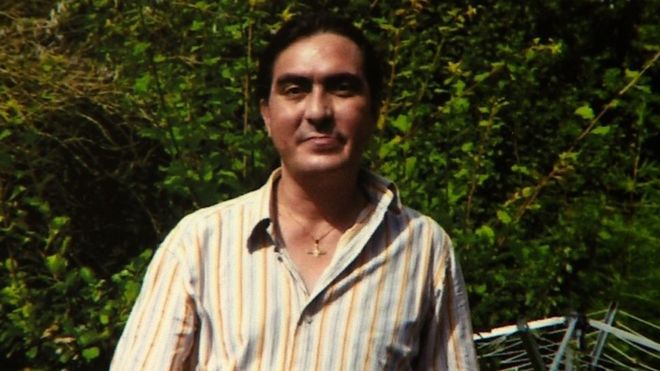
The disabled Iranian refugee was beaten to death and set alight on a Bristol estate in July 2013.

The SBP found there was “institutional racism” from both parties.

The council and police say they accept the report’s findings.

Bijan Ebrahimi
Image copyright
EBRAHIMI FAMILY
Image captionBijan Ebrahimi was beaten to death and set alight in July 2013

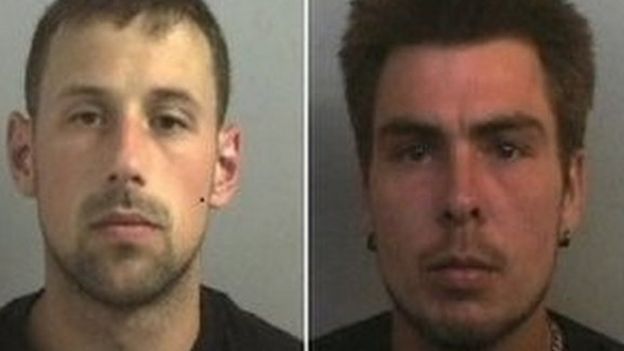
Lee James, then 24, was jailed for life in November 2013 for killing Mr Ebrahimi three days after the Iranian national was arrested following complaints he had been taking pictures of children near James’s home.

James repeatedly stamped on the 44-year-old’s head during the attack in Brislington, shouting “have some of that”.

While the SBP report said there was no evidence of any individual being intentionally racist towards Mr Ebrahimi, it did find he had been “repeatedly targeted for racist abuse and victimisation by some members of the public”.

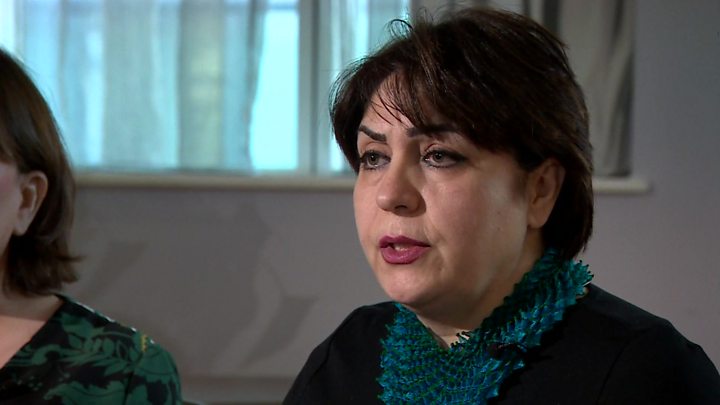
Media captionMr Ebrahimi’s sister Manisha Moores said the findings were “shocking”

It said this had been repeatedly reported to the police and the council but representatives of both organisations took the side of those who had been victimising him.

In a letter to Mr Ebrahimi’s family, Bristol mayor Marvin Rees apologised.

He said: “We accept all of the findings of the Safer Bristol-commissioned independent review, including ‘evidence of both discriminatory behaviour and institutional racism on the part of Bristol City Council.

“We appreciate that no amount of lessons learned or changes in practice can possibly mitigate the impact this had on Bijan and his family.”

Stephen Norley (l) and Lee James (r)
Image copyrightAVON AND SOMERSET POLICE
Image captionLee James, right, set Bijan Ebrahimi on fire. Stephen Norley, left, admitted helping

Avon and Somerset Police, which was criticised for “conscious or unconscious racial bias” in the case in an IPCC report earlier this year, also said it accepted the findings.

“We failed him when he needed us the most and for that we’re extremely sorry,” a spokesman said.

“We continue to do everything in our power to prevent a tragedy like this from ever happening again.”


Analysis by Jon Kay, BBC News correspondent

The phrase “institutional racism” was notoriously used in the 1999 MacPherson report into the Metropolitan Police’s handling of the Stephen Lawrence case.

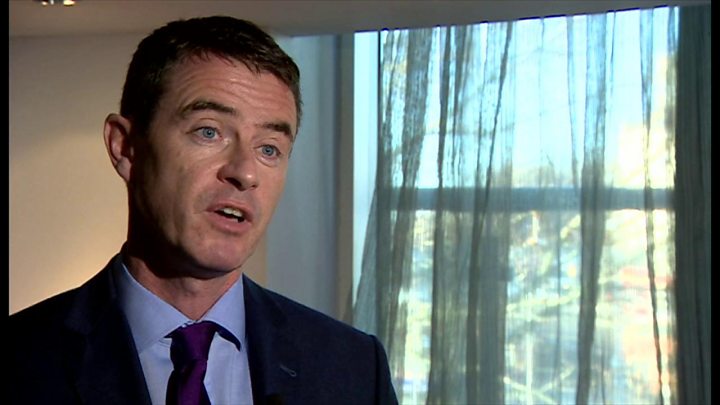
Now, the Ebrahimi family say they are “disgusted” and “shocked” to see the same phrase used again – two decades later – in a report about the way Bijan was treated in Bristol.

Although they accept that changes have been made since Bijan was murdered, his sisters say they now want more extensive changes across the UK – to make sure institutional racism is a thing of the past.


The SBP report accuses council and police officers of being “prejudicial” in their dealings with Mr Ebrahimi.

It said they accepted allegations against him without investigating them objectively and had not appreciated his vulnerability as a refugee.

The report said: “As an Iranian man living in this environment, Mr Ebrahimi was disadvantaged by the inappropriate responses by Avon and Somerset Constabulary and Bristol City Council to his racist victimisation.

“Representatives of those organisations displayed a distinct lack of understanding of his plight and, accordingly, unwitting prejudice against him.

“There is therefore, based on the definition from the Macpherson report, evidence of both discriminatory behaviour and institutional racism on the part of Bristol City Council and Avon and Somerset Constabulary.”

The SBP added that institutional racism was defined as “the collective failure of an organisation to provide an appropriate and professional service to people because of their colour, culture, or ethnic origin”.


Timeline of Bijan Ebrahimi case

  • 16 July 2013 – Bijan Ebrahimi is found “in flames” at a property in Brislington. The case is referred to the IPCC
  • 19 September 2013 – The IPCC serves notices of gross misconduct against six police officers
  • 28 November 2013 – Lee James is jailed for life for Mr Ebrahimi’s murder. Stephen Norley is sentenced to four years for assisting him
  • 21 December 2015 – Kevin Duffy and Andrew Passmore are convicted of misconduct in public office
  • 22 January 2015 – The pair are dismissed from the force
  • 9 February 2016 – Duffy is jailed for 10 months and Passmore for four
  • 3 May 2016 – PCs Helen Harris and Leanne Winter are dismissed from the force
  • 4 July 2017- IPCC finds “conscious or unconscious racial bias” in police handling of the case
  • 18 December 2017- Safer Bristol Partnership finds evidence of discriminatory behaviour and institutional racism

The report makes 14 recommendations, including changes to the way crimes are recorded at Avon and Somerset Police and a staff awareness programme around institutional racism.

Media captionRacism “blighted” the life of Bijan Ebrahimi, says family lawyer Tony Murphy

Mr Ebrahimi’s sisters, Mojgan Kahayatian and Manisha Moores, said: “No review can ever bring back our beloved Bijan but it is important that his voice has been heard.

“Bijan always said that racism must be challenged wherever it is found, including in town halls and police stations.

“Bristol City Council took nearly five years to accept that it failed Bijan and the need for change.

“This is far too long, although late is better than never.

“We will not rest until improved systems are put in place to protect other vulnerable people.”

The family’s solicitor, Tony Murphy of Bhatt Murphy, said: “Acknowledging the institutional nature of the racism at the core of this tragedy is an essential first step towards systemic change.

“There is no reason why the council could not have taken this step much sooner and its delay has been injurious, not just to Bijan’s family, but to public confidence in the council’s ability to combat racism. ”

http://www.bbc.co.uk/news/uk-england-bristol-42393488

Sirisena is a Worse Indian Agent than Ranil

December 17th, 2017

Dilrook Kannangara

Amidst confusing political signals, there emerges a clear signal of who is the worst Indian agent in the island nation. It is Sirisena. Certainly not Ranil. In fact, Ranil may fall to the third place behind another national leader who is desperate to win Modi’s heart and mind. A careful look at his statements show he is extremely critical of selling Hambantota to China but very soft on selling Mattala to India. Sirisena has caused enormous damage to the national economy by supporting India. Yet, he escapes blame as the Opposition does not blame him fearing his wrath. TNA loves favouring India and JVP is neutral on the matter. The Join Opposition is trying hard to become India’s darling once again in a change of political fortunes. UNP is too frightened not to antagonize Sirisena and India.

When a low-quality petrol ship was turned down, powerful politicians influenced the petroleum minister to release it. Though he was challenged to reveal the name of those powerful hidden hands, he refused. Had Arjuna revealed the name, he would no longer be a minister but countrymen would know who the real wheeler-dealer is behind the chaos.

Having a very depleted air force with just one flying jet, the Cabinet divided to buy Pakistani-Chinese JF-17 jets from Pakistan. Sirisena struck it down. The purchase of a needless Indian warship was initiated by Sirisena. India cleverly split Fonseka and Mahinda in 2009 and Mahinda fell for the Indian bogus ‘intel’ that Fonseka was planning a military takeover. He never planned such a move. It was India that forced Mahinda on May 21, 2009 to agree to fully implement 13A and take a pro-Indian course of action regarding war crimes investigations. On May 23, 2009 in a Joint Statement between Sri Lanka’s president and the UN Secretary General, Sri Lanka relinquished the right to investigate war crimes of all parties to the war. This was done under threats by India’s defence secretary Narayanan and security advisor Menon. They cleverly shut out IPKF horror war crimes in Jaffna. Accordingly, the PoE report and LLRC report discounted IPKF war crimes and India’s role in terrorism in Sri Lanka. In 2011 Mahinda almost signed CEPA with India until local businessmen protested and forced the government hand in the last moment.

Sirisena distanced himself from the sale of the Hambantota port to China. Ranil was bold enough to put his future on the line in the China deal. It must be remembered that it was Ranil, not Mahinda who brought China to Hambantota in 2003.

http://www.island.lk/2003/08/12/featur01.html

Sri Lanka’s politics of hate and love shuts out most people from seeing the reality.

However, this doesn’t mean Ranil is anyway better than the rest. It only means Ranil has far more courage than others when it comes to dealing with India. Ranil, just like his uncle, is a slave of the West. In a twisted way, it helps Sri Lanka mitigate Indian pressure as the West is in total control of India. Although Sirisena is strongly pro-India, the West has doubts about his political vision (if any) which was strongly moulded by Marxist leanings. Mahinda is not anti-West but the West is anti-Mahinda.

On a scale from lowest to highest, the most Indian servitude is shown by – Ranil, Mahinda and Sirisena. On the same scale trust of the West has been won by – Mahinda, Sirisena and Ranil. When added, Sirisena comes on top of the relatively highest pro-Indian and pro-American. Despite showing he knows nothing, Sirisena sure knows how to play his cards well, using the love-hate political thinking of Sri Lankans, to get ahead. Behind his veil of innocence and unassuming smile is a well-seasoned and shrewd politician who will not spare anything to get ahead. He uses West’s dislike of Mahinda and India’s dislike of Ranil (relatively) to forge ahead. If people wake up to reality, his game will end. However, people have set-in-stone conclusions about their favourite politicians which is inconsistent with reality. This is all Sirisena needs to survive.

The January 2015 understanding between India and the West was to have a government of both pro-Indian and pro-Western agents. This is why Sirisena-Ranil regime survived for so long. However, now India wants it all since the West did nothing to stop Hambantota sale to China. The SLFP-JO merger attempt is due to this. Opposed to this are traditional pro-Western camps (UNP) and the new pro-Western camp of American citizens.

Politicians use various nonsensical excuses for political marriages but in reality these have been already decided in New Delhi and Washington DC. Though India and USA are on the same side, they do have their differences. This is what is reflected in Lankan political feuds. If India gets its way this time, USA will amass its agents for a takeover in 2019. Since 1972, Sri Lanka like a pendulum swings between USA and India. The only exception was from November 19, 2005 to May 19, 2009. This 3 and a half years changed Lanka’s history for good. A parallel can be found in the 1951 to 1956 regime. But both USA and India (world’s leading democracies and election manipulators) ensured they ended.

පිමි, බල්ටි සහ කරනම් !!!!!

December 17th, 2017

තේජා ගොඩකන්දෙආරච්චි

ඉඩෝරයක් නිමවී, ලඟ එන වැසි සමය ගැන අපේ වැඩිහිටියන් අනාවැකි කියනුයේ සවස් යාමයට දෙසවන් පුරවන ගෙම්බන්ගේ හඬ අනුවය. මේ වන විට වසර තුනකට ආසන්න කාලයක් ඉඩෝරයට හසුව තිබූ මැතිවරණ භූමියට ඇදහැලෙන්නට නියමිතව ඇති පලාත් පාලන වර්ෂාවට පෙර, දැන් දැන් අපේ හෙවත් හුදී ජනතාවගේ දෙසවන්, දේශපාලක ගෙම්බන්ගේ බක බකයෙන් පිරෙමින් පවතී. නමුත් මේ දෙපා මණ්ඩුකයන්ගේ කටහඬට පෙර මහජන අවධානයට යොමු වූයේ ඔවුන්ගේ පිමිය. විශේෂයෙන් ඒකාබද්ධ විපක්ෂයේ සිට ජනාධිපති මෛත්‍රීපාල සිරිසේන ලඟට පැන්න සහ පනින්නට තීරණය කල උදවිය මේ අතරින් කැපී පෙනේ. අනිත් අය දැන් පනීවි, දැන් පනීවි කියා කිව්වත් මොවුන් උපායශීලීය. ඔවුන් වහින වැස්සේ පාට, ප්‍රමානය ආදිය ගැන සෙවිල්ලෙන් සිටින සෙයකි. ‘පනින්ට පෙර සිතා බලනු’ කියා පැරණි කියමනක් ඇති නිසා ඊට දොසක් කියන්නටද නොහැකිය.  තමා වෙත පනින දේශපාලන ගෙම්බන් අල්ලා ගැන්මට ජනාධිපතිවරයා විසින් මානාගෙන සිටින්නේ ඇමතිකම නමැති කූඩයයි. එවන් කූඩයක් තුල ඇති ආකර්ශණීය දේ ගැන නොකිවමනාය. 2015 න් පසු රටේ සැබෑ වෙනසක් වූ බව කීවත් එය එසේ නොවූ බවට ඇති හොඳම උදාහරණය මෙයයි

මෙතෙක් කල් මොවුන් මේ සම්පත් දෙස බලමින්, ඒකාබද්ධයට වී සිතෙන් දැවි දැවී උන්නා නේදැ’යි දකිනවිට නිතැතින්ම පහල වනුයේ අනුකම්පාවකි. ඇයි ඒ? මහින්ද රාජපක්ෂ මොවුන්ට පනින්නට නොදී සිර කරගෙන උන්නාද? සමහරවිට මේ උදවිය ආණ්ඩුවේ පැවැත්ම ගැන යම් තක්සේරුවක් කරන්නට ඇත. මෙයට මාස කිහිපයකට පෙරද රජය පාර්ශ්වයෙන් ඒකාබද්ධය දෙසට පනින්නට අරඅඳින පිරිසක් ගැන පවසමින් තමන් දින කිහිපයක් ඇතුලත රජය පෙරලන බවට ඩලස් අලහප්පෙරුම ඇතුලු පිරිසක් පැවසුවද එවැන්නක් සිදුවුනේ නැත. එක අතකට එක්සත් ජනතා නිදහස් සන්ධාන කණ්ඩායම රජයෙන් ඉවත් වන්නේ නම් තමන් ද්‍රවිඪ එක්සත් විමුක්ති පෙරමුණ සමග සන්ධානගතව රජයක් පිහිටුවන බවට අග්‍රාමාත්‍යවරයා පැහැදිලිව කියා සිටියේය. දැනටමත් ද්‍රඑවිපෙ යනු නිළ විපක්ෂය වුවත් ඔවුන් හැසිරෙනුයේ රජයේම කොටසක් මෙනි. මීට අනිකුත් සුලු ජාතික කණ්ඩායම්ද එකතුවනු නියතය. රජයේ වගකිවයුතු අය බොහෝ දෙනෙකුට ශ්‍රී ලංකා භූමියේ අනාගතය ගැන සිතා වදවීමට දෙයක් නැත්තේ ඉන් සෑහෙන පිරිසකට තමන්ගෙන් පසු ඔටුණු පලඳවන්නට (ඉහගෙන කෑමේ අභිප්‍රායෙන් හෝ)  නිළ උරුමක්කරුවන් නොමැති බැවිනි. අනිත් අයටද තමන්ට හැකි පමන හරි හම්බ කරගත් පසු තම දරුවන් පිටරටකට පටවා හෝ ඇස් පියා ගත හැක. ඒ, මේ කිසිවකුත් මිලියන 20.8 ක් වන පොදු ජනතාව ගැන නොසිතන බැවිනි. එබැවින් තමන්ගෙන් පසු මේ රට තුල ඕනෑම එකෙකු බඩ පිනුම් ගැසුවත්, රට කෑලිවලට කඩාගෙන අනුභව කලත් මොවුන්ට එය කාරණාවක් නොවනු ඇත. විශේෂයෙන් 80 දශකයේ අග භාගයේදී, ශ්‍රී ලාංකික අනාගත පරම්පරාවේ කොඳු නාරටිය බඳු, යම් දේශපාලන දැක්මක් ඇතිව සිටි තරුණ පරම්පරාවේ 60,000 ක ට වැඩි ජීවිත සංඛ්‍යාවක් වැනසූ එජාපයේද, ශ්‍රී ලාංකික දේශපාලන ලොවේ වැජඹුනු, උගත් සහ බුද්ධිමත් දේශපාලකයන් විනාශකර දැමූ ත්‍රස්තවාදීන්ට සුදු හුණු පිරියම් කරන උතුරේ දේශපාලකයන්ගේද  එකමුතුවකට ශ්‍රී ලංකාවේ අනාගතය භාරදීම ඉතාම භයානකය. එබැවින් රජය පෙරලීමේ වෑයම ගැන නම් මඳක් සිතා බැලීම වටී. අනිත් අතට දිනෙන් දින රට කැබලි කරමින් නොරටුනට විකුණා දමන ප්‍රතිපත්තිය ගැනද ජනතාව සිතා බැලීම අවශ්‍ය වේ. ඇත්තෙන්ම මේ ගැන සිතා බැලිය යුත්තේ ජනතාවම පමනක් වන්නේ දේශපාලකයන්ගේත්, අපේ ජාත්‍යන්තර ‘මිතුරන්ගේත්’ බහුතරයකට ශ්‍රී ලංකාවේ අනාගතයෙන් ඇති පලක් නොවන බැවිනි. වත්මන් ශ්‍රී ලංකාව ‘ප්‍රජාතන්ත්‍රවාදී, සමාජවාදී’ ජනරජයකැ’යි කීවද මෙතැන ඇති ප්‍රජාතන්ත්‍රවාදයක් හෝ සමාජවාදයක් නැත. අද ජනතාව ගැන සිතනවාය කියමින් පිමි පනින්නන්ගේද, ඔවුන් වෙත ඇමති පට්ටම් හද හදා බෙදාදෙන රජයේ ඇත්තන්ගේද අරමුණ තම පැවැත්මම මිස වෙනත් යමක් නොවන බව, පක්ෂ වර්ණාන්ධතාවෙන් නොපෙලෙන දෙමව්පියන් සිටින කුඩා ළමයෙකුගෙන් ඇසුවත් කියනු ඇති.එබැවින් රජය යන මාවතේ වැටෙන මේ සන්ධිස්ථානයේදී, මෙම අත්තනෝමතික ධාවනය අඩාල කිරීමට කහ එලිය දැල්වීමේ වගකීම ඇත්තේ ජනතාව වෙතමය.

මේ සියලු කරුණු එකිනෙකට ගලපාගත් කල විවිධ වර්ගයේ පිමි සිහියට නැගෙනු වැලැක්විය නොහැකිය. වත්මන් පාර්ලිමේන්තුවේ එවන් පිමි නොපැන්න අයෙකු වේ නම් එය ඉතාම දුර්ලභය. එවන් පිමි පැනිලි සිදුවූයේ අද ඊයෙක සිට නොවන අතර සමහරවිට ඊට පැහැදිලි හේතු දක්නට ලැබුනේත් නැත. ගාල්ලේ විජයානන්ද දහනායක, මාතර රොනී ද මැල් එවැන්නන්ය. අප පාසල් යන කාලයේදී රොනී ද මැල්ව, පනීද පිල් ලෙස නම්කලේ මේ දේශපාලන කරණම් ගැන දිගක් පලලක් නොදැනය.

වත්මන් මුදල් හා ජනමාධ්‍ය ඇමති මංගල සමරවීරද, ඔහුගේ පියා වූ මහානාම සමරවීරද එවන් අයයි. අද රාජපක්ෂවරුන්, මංගල නම් නයාට අඳුකොල මෙනි. පසුගිය නොවැම්බර් 25 දා මාතරදී මංගල සමරවීර, ගාමිණී වියන්ගොඩ ඇතුලු පිරිසක් උද්ඝෝෂණය කලේ ලක්ෂ 62 ජනවරම රැකගන්නැයි පවසමින්ය. කාටද කියන්නේ, ඇයි මෙහෙම බෝඩ් ලෑලි අල්ලාගෙන මාතර බෝධිය ඉදිරිපිට ඉන්නට වුනේ යන්න මංගල තමාගෙන්ම විමසා සිටිය යුතු කරුණකි. අනිත් අතට එයද නොවැම්බර් 27 දා ප්‍රකාශයට පත් කරන්නට යෙදුනු පලාත්පාලන මැතිවරණය නම් වර්ෂාව ගැන පණිවුඩ කියන තවත් එක බක බකයක් වැනි වූ බව පෙනුනේ නොබෝ දිනකින් පනින පිමි දුටු කල්හිය. ජනවරම යනු අතින් ඇද උදුරාගත හැකි හෝ ඉබි යතුරු දමා රැකගත හැකි යමක් නොවේ. ඒ ලක්ෂ 62 දිනා ගනිද්දී ‘තමන් ජනතාවට දුන් පොරොන්දු එපරිද්දෙන්ම ඉටුවී තිබේය’ යන්න තම හදවතට එකඟව කියන්නට හැකි වුනා නම් මෙසේ අව් කාෂ්ටකේ දැවෙමින් පාරවල් වල ලගින්නට, රාජ්‍ය බලය අතැ’ති උදවියටම සිදු නොවනු ඇත. එසේ නැතිව කරන මෙවන් විරෝධතා තුල රැඳී ඇත්තේ චන්දදායකයන් යනු හැමෝටම අවශ්‍යවන පරිදි දක්කන්නටම සැදුනු ගොන් රැලක් ලෙස දැකීමද කියාත් සිතේ. නමුත් කෙවිට අත ඇති තම ස්වාමියා දක්කන අතටම යන කොටසක්ද නොසිටිනවා නොවේ. ඊට හොඳම උදාහරණය මට මතක ඇති කාලයේ පතුලේ තැම්පත් වන්නේද මංගල සමරවීර ප්‍රධාන කරගෙනය.

1987 දී ලන්ඩනයේ සිටි තරුණ මංගල සමරවීර පෙරලා ලංකාවට සැපත්ව පදිංචියට පැමිනියේ මාතර නගරයේ වල්පොල අප පදිංචිව සිටි නිවස ඉදිරිපිට වූ නිවසටයි. ඊට පෙර එම නිවස 1977 කාලයේ සිට එක්සත් ජාතික පක්ෂ කාර්යාලය වී තිබී, පසුව වසා දමා තිබිනි.එවකට මාතර ආසනයේ එජාප මන්ත්‍රීවරයා වූයේ මංගලගේ බාප්පා (පුංචි අම්මාගේ සැමියා) වන එස්. කේ. පියදාසයි. ඊටත් පෙර එය මහානාම සමරවීරගේ කාර්යාලය බව අසා තිබුනත් එය මගේ මතකයේ නැත. 77 චන්ද කාලයේ මම පාසැල් දැරියක් වීමි. ඒත් මේ පක්ෂ කාර්යාලය ගැන කුතුහලය අප සැමගේම සිතේ තිබිනි. අපේ ගෙදර පිටුපස ගෙදර සිටි ගර්ලි අක්කා තදබල යූඇන්පී කාරියක් වූවාය. දවසක් සවස් යාමයේ එජාප කාර්යාලයේ පැවති රැස්වීමක් අතරතුර මහත් ගාලගෝට්ටියකි. ඒ දිස්ත්‍රික් පක්ෂ බලමණ්ඩලයේ නිළතල බෙදාගැනීමක් අරභයාය. එතැන කරන කතා අපට පැහැදිලිව ඇසේ. නිළතලයක් නොලැබ තදින්ම කෝපයට පත් ගර්ලි අක්කාගේ කටහඬ එදා සීණුවක් මෙන් ඇසිනි. ”මතකද මිස්ට පියදාස, මතකද? ඔයාල කොමියුනිස්ට් කාලෙත් අපි යූඇන්පී” මේ කතා කලේ මංගලගේ පියා කොමියුනිස්ට් පක්ෂයෙන් දේශපාලනයේ යෙදුන සමය ගැන බව පැහැදිලිය. මේ ආරවුලට මැදිවුන දෙපාර්ශ්වයෙන් එක පාර්ශ්වයක් ‘කැපුවත් කොල’ වන අතර අනිත් පාර්ශ්වය ‘කෙවිට ගත් ස්වාමියා යන අතට යන හරක් රැල’ බඳුවූ බව මට වැටහුනේ වැඩුන පසුය. එදා නොවැම්බර් 25 දා මාතර බෝධිය ඉදිරිපිට උද්ඝෝෂණයේ යෙදුන පිරිසට මේ දෙවර්ගයෙන් පිට ජනතාවක් පිලිබඳ අවශ්‍යතාවයක් නොමැත. මේ අප රටේ දේශපාලන ඛේදවාචකයයි. මේ දෙවර්ගයේම ජනතාව සිටිනතුරු අප රටට ධනාත්මක දේශපාලන අනාගතයක් පිලිබඳ අපේක්ෂාවක්වත් තබාගත නොහැකිය.

පසුව 1987 දී මංගල ශ්‍රී ලංකාවට පැමින, ශ්‍රීලනිප මාතර ආසනයේ සභාපතිවරයා බවට පත්වූ කල්හි එම නිවස ශ්‍රී ලංකා නිදහස් පක්ෂ කාර්යාලය බවට හැරුන විට, මිනිස්සුන්ගේ දේශපාලනයට අනුරූපව ගෙදර හඳුන්වන නමද වෙනස් වන බව පවසමින් අපේ අම්මා සිනාසුන හැටි මට තවමත් මතකය.

එදා ඔහු පාර්ලිමේන්තු මැතිවරණයේදී මාතර දිස්ත්‍රික්කය සඳහා නාම යෝජනා භාර දෙනවිට දකුණේ මතුවූ දේශප්‍රේමී ජනතා ව්‍යාපාරයේ තරුණ නැගිටීම තුල රටම ගිනි ජාලාවක්ව තිබිනි. එය හරියට උඩිනුත් ගින්දර, යටිනුත් ගින්දර තේරවිල්ල වැනිවිය. එජාප රජයේ දැඩි ඒකාධිපතිවාදී ක්‍රියාකලාපයට විකල්පයක් ලෙස නැගී ආ තරුණ නැගිටීම මර්ධනය සඳහා රජය අමානුෂික අයුරින් ක්‍රියාත්මක වූ ඒ යුගයේ, ජනතා සිත්තුල යතාර්ථය පිලිබඳ හැඟීම් ඉස්මතු කරමින් නිර්මාණයකල නන්දා මාලිනියගේ ‘පවන’ ප්‍රසංගය විශ්ව විද්‍යාල පුරා මහත් ආකර්ශනයක් ඇතිකලේය. ඊට සමගාමීව පවන කැසට් පට යුගලයක්ද නිකුත් වූ අතර ඒවා මිලට ගැනීමට බොහෝ දෙනා පෙලඹුනි. මංගල ද පවන කැසට් පට මිලට ගෙන තිබුනේය. එකල මංගල තම ප්‍රචාරක රැස්වීම් සඳහා භාවිතාකලේද පවන කැසට්පටයි. වරක් මාතර උයන්වත්තේ පැවති එවන් රැස්වීමකට තමන් යාමට පෙර ඊට ලක ලැහැස්ති වීම සඳහා පිටත්ව යන තමන්ගේ අන්තේවාසිකයාට මංගල මහ හඬින් කෑ ගසනු මට තවම මතකය. ”කලු මහත්තයා, පවන විතරයි හරිද? පවන විතරයි”  පසුව එජාපයට මහා පිම්මක් පැන්න ඔහු එදා ජනතාවගේ හැඟුම්වලට ආමන්ත්‍රණය කලේ එසේය. අද බලන විට මේවා තුලද තිබී ඇත්තේ බොරුවම මිස වෙනත් යමක් නොවේ. 1990 දී අතුරුදන් වූවන්ගේ මව් පෙරමුණ පිහිටුවීම, 1994 දී සමූහ මිනී වලවල් හෑරීමට මූලික වීම මේ බොරුවේ ඉදිරි පියවරයන්ය.

මේ කාට එරෙහිවද? එදා ශ්‍රීලනිප මාතර කාර්යාලයේ ආලින්දයේ පුටුවල හිඳ මංගල සමග කතාවට වැටී සිටින මහින්ද රාජපක්ෂ එම නිවසට අමුත්තෙකු නොවීය. එකල මහින්ද, රජයේ මර්ධන හස්තය යට පොඩිපට්ටම් කල තරුණ පිරිස්වල මානව හිමිකම් වෙනුවෙන් පෙනී සිටි නිසා, මංගල විසින් මේ හා සමාන අදහස් ඔහු වෙතින් උකහා ගත්තාද විය හැකිය. නමුත් අද වනවිට මංගලගේ පරම හතුරා මහින්දයි.

එ් කාලයේ දවසක මැදියම් රැයේ මංගලගේ පක්ෂ කාර්යාලයට බෝම්බ ප්‍රහාරයක්ද එල්ල විය. මේ ආරංචිය නිසා පසුදින තම සැපදුක බැලීමට වැල නොකැඩී පැමිනි පිරිස අතර සිටි ඔහුගේ ඥාතියෙකුට මංගල ඇඟට කඩා පැන්නේ ”දයානන්දල එක්ක එකතුවෙලා මට බෝම්බ ගහල, දැන් බොරුවට මූණ පෙන්නන්න එනවද?” කියා අසමිනි. එවකට අකුරැස්ස ආසනයේ මන්ත්‍රීවරයා වූ දයානන්ද වික්‍රමසිංහගේ නිවෙස පිහිටා තිබුනේද මංගලගේ නිවසට නොදුරිනි. මංගල එය පුද්ගලිකව ගත්තාට ඔහුගේ එම ඥාතියා තද එක්සත් ජාතික පාක්ෂිකයෙකු මිස ක්‍රියාකාරී දේශපාලනයේ යෙදුනෙකු නොවේ. එකල ඔහු වෙත තිබූ එවන් නොමේරූ ස්වභාවය තවමත් එලෙසම බව නොවැම්බර් 25 දා පැවති විරෝධයෙන්ද පෙනුනි. එදා දයානන්දට එරෙහිව කල ඒ බෝම්බ ගැසීම පිලිබඳ චෝදනාව, සත්‍යයක් විය හැකි වුවද, එය එසේ යයි ඔප්පු කරන්නට ඔහු, එවන් අවලාද කීම හැර වෙනත් යමක් නොකලේය. එවර මැතිවරණයේදී, ජවිපෙ විසින් ‘චන්දය පාවිච්චි කරන්නන්ට මරණය’ යන නීතිය පනවා තිබූ නිසා බහුතර ජනතාවක් තම චන්දය පාවිච්චි නොකල අතර, තුවක්කු අතින් ගත් ආරක්ෂකයන් සහිතව සිටි රජයේ මෙන්ම විපක්ෂයේද අපේක්ෂකයන් තම සිතු මනාපයේ හොර චන්ද දැමීම සිදුකර ගත්හ. එය මංගල සම්බන්ධයෙන්ද සත්‍යයකි. එදා දේශප්‍රේමී ජනතා ව්‍යාපාරය හමුවේ අවිනිශ්චිතව තිබූ සමාජය තුල බලයේ සිටි දෙපිරිස අතර, දේශපාලනිකව බෙදුනු සාමාන්‍ය  ජනතාව අතර තිබෙන තරම් මතවාදී වෙනසක් තිබුනේ නැති නිසා මංගලලාගේ පිමි ගැන කියන්නට තරම් විශේෂයක්ද නැත.

පිමි ගැන කරන්නට ගිය කතාව මංගල දෙසට හැරුනේ ඔහුද පරම්පරාවෙන්ම පිමි පැනීමේ කුසලතාවක් රැගෙන විත් ඇති බැවිනි. වරද ඔහුගේ පිමිවලට පොදු ජනතාවගේ හැඟීම් යොදා ගන්නා එකය. ඔහු තාජුඩීන්ගේ මරණය දින ශිරන්ති රාජපක්ෂට ලැබුන දුරකථන ඇමතුම් ගණන ගැන පවසන්නේද යම් වෘත්තිමය ස්වභාවයකින් නොව නිකම් කටට ආවාට වගේය. ඒ තුල රවි කරුණානායකට අර්ජුන ඇලෝෂියස්ගෙන් ලැබුන දුරකථන ඇමතුම් ගැන සාධාරණීකරනය කිරීමේ උත්සාහයක් පවතී. ‘ඒකට මේක’ කියා සමතුලිත කරන්නට හැකි නම් ලක්ෂ 62 ක ජනවරමේ අර්ථය කුමක්ද?

එසේ සමතුලිත කරන්නට අවශ්‍ය නම් තවත් දේ තිබේ. ඔහුගේ පියාද මාතර නිල්වලා ගඟ හරහා ඉදිවුන පාලම මහානාම පාලම යනුවෙන් නම් කරගත් අතර මංගල මේ පාලම නවීකරණය කර එහි තිබූ පැරණි බෝඩ් ලෑල්ල වෙනුවට තම පියාගේ නම සඳහන් ඉතා වටිනා පුවරුවක් සවිකර උත්සවශ්‍රීයෙන් විවෘතකර එය තම පාරම්පරික පාලම බවට බෞතීස්ම කලේය. ඔහු චන්ද්‍රිකා කුමාරතුංග රජයේ, නිවාස ඉදිකිරීම් සහ මහජන උපයෝගීතා අමාත්‍යවරයාව සිටි අවධියේ ඔහුගේ මව වන ඛේමා සමරවීර හදිසි ඇදවැටීමක් නිසා උකුල් ඇටය පුපුරා, ඔත්පල වූවාය. තම මවට උඩුමහලට නගිනු, බසිනු පිනිස තම නිළ නිවසට විදුලි සෝපානයක් සවිකලේ රුපියල් කෝටි දෙක හමාරක් පමන වූ මහජන මුදලිනි. මේ ගැන විමසූ මාධ්‍යවලට ඔහු පවසනුයේ මේ විදුලි සෝපානය ඕන කෙනෙකුට ප්‍රයෝජනවත් වන බවය. ඔහු මාතෘ වන්දනය සිදුකලේ එලෙසිනි. ඒ හැර ඔහුගේ ක්‍රෙඩිට් කාඩ් ගණුදෙනු ගැන කතාද ජනතාවට අමතක විය නොහැක. ඩී. ඒ. රාජපක්ෂ පදනම ගැන කියද්දී ජනතාව මතක තබාගත යුත්තේ කාගෙ කාගෙත් කිල්ලෝටවල හුණු තිබෙන බවයි. ඒ අනුව ඔය පිමි මොන පැත්තට පැන්නත් වෙනස් නොවේ.

මහින්ද රාජපක්ෂ ජනාධිපතිව සිටි අවධියේ අරලියගහ මන්දිරය හැඳින්වුනේ ‘පින්නවල’ නම් අන්වර්ථ නාමයෙනි. එකල දිගින් දිගටම පරාජයේ අමිහිර අත්විඳිමින් සිටි එජාපයේ බොහෝ පිරිස් තම ඇමති සිහින පිලිබඳ අපේක්ෂාවන් ඉටුකර ගැනීමේ අන් මගක් නොදුටුවෝ, අරලියගහ මන්දිරයේ පිලට ගොඩවූ අතර තවත් පිරිසක් නායක රනිල් වික්‍රමසිංහට එරෙහිව පක්ෂය තුලම කැරැල්ලක් ඇරඹූහ. 2010 දී ශ්‍රීලනිප (මහජන පෙරමුණ) නමින් නව පක්ෂයක් පිහිටුවා ගෙන සිටි මංගල එජාපය සමග එක්ව, වරක් තමන් විසින්ම ගැලවීමේ හමුදාවට සුදුසු බව කියමින් පහත හෙලූ සරත් ෆොන්සේකා යුද වීරයෙකු ලෙස නම් කරමින් ජනාධිපතිවරණයේදී  ඔහුට සහයෝගය දැක්වූ අතර ටික දිනකින් තිරසාර ලෙසම එජාපයට එක්විය. 2013 දී පක්ෂ නායක රනිල් වික්‍රමසිංහට එරෙහිව පැවැත්වුන විරෝධතා පාගමනට කුරුඳු පොලු ප්‍රහාරය එල්ල කරමින් එය ව්‍යර්ථ කලේද මංගලගේ මූලිකත්වයෙනි. අද කියන විදියට ඔවුන්ට සන්ධාන කණ්ඩායම රජයෙන් ඉවත්ව ගියහොත් තමන්ට සුලු ජාතික පක්ෂ සමග එකතු වී රජයක් පිහිටුවන්නට හැකියාව ඇතැයි කියනවා නම් 2015 දී මෛත්‍රීපාල සිරිසේන වෙනුවට රනිල් වික්‍රමසිංහම ජනාධිපතිවරණයට ඉදිරිපත් නොවුනේ ඇයි?  එදා පාර්ලිමේන්තුව තුල තමන්ට හිමිව තිබූ ආසන සංඛ්‍යාව මත ඔවුන්ගේ අරමුණ වූයේ ශ්‍රීලනිපය දුර්වල කිරීම මිස අන් යමක් නොවේ. ඒ අනුව අගෝස්තු මැතිවරණය වනවිට අර ජෝන් අමරතුංග එලිපිටම කීවාක් මෙන් ‘රජයත් අපේ පොලිසියත් අපේ’ න්‍යායද රහසින් ක්‍රියාත්මක වන්නට ඇත. ඊට ලොකුම උදව්ව වූයේ 2015 ජනවාරි 8 දා තෙක් මහින්ද සමග සිට 10 වන දා වනවිට මෛත්‍රී දෙසට පිමි පැන්න පිරිසය. හොඳම විහිලුව නම් ජනාධිපතිවරණයට පෙර බද්දෙගම මෛත්‍රීගේ වේදිකාවක් විනාසකර පොලිසියටද බලය පෙන්වා නඩු පටලවාගත් නිශාන්ත මුතුහෙට්ටිගම අද එම නඩුවට යන්නේ මෛත්‍රී රජයේ නියෝජ්‍ය ඇමති කෙනෙක් ලෙස සිටිමිනි.

එබැවින් මේ පිමි ගැනත්, පිමි පනිනවුන් ගැනත් ජනතාව කලබල විය යුතු නැත. දේශපාලකයන්ට නම් මේ ගැන බියක් දැනීම සාධාරණ වනුයේ ඉන් දෙදරා යන්නේ ඔවුන්ගේ පදනම බැවිනි. මැතිවරණයක් ලඟ එන මේ වෙලාවේ කලයුතු හොඳම දේ වන්නේ මේ පිමි ගැන සිතමින් අනුන් රැකදීමට වදවෙනවා වෙනුවට තමන්ගේ රැකවරණය ගැන ස්වාධීනව සිතාබැලීමය.

Open challenge to all patriotic citizens of Tun Sinhale

December 17th, 2017

Dr Sudath Gunasekara 18.12.2017

Dear patriots

Please look at the following news item

UN damns Lanka 14,000 minors in childcare centres Calls for urgent reforms

1941 readers have read this article !

By 2017-12-16

By Sulochana Ramiah Mohan

A delegation from the United Nations Working Group on Arbitrary Detention visiting Sri Lanka, yesterday (15), expressed deep concern over 14,000 girls and boys under the age of 18 who are currently deprived of their liberty and living in 425 childcare institutions out of which 26 are run by the State.

The Group also pointed out that Sri Lanka’s legal framework regarding children falls short of international best practices in several areas.

The five-member delegation led by Chair Rapporteur Elina Steinerte and Jose Guevara, Leigh Toomey etc., after touring the island for two weeks listed several alarming shortcomings in the justice system under which people are arrested and detained in the country.

After visiting over 30 places including Police Stations, long-term remand and open prisons, immigration detention facilities at entry ports, Army and Navy camps, children’s homes, women and the elderly, they said that the fundamental rights are underutilized due to the flaws in the procedures including the one month limitation for petitions, the lack of standing for public interest petitions and the fact that the petition must be made to the Supreme Court which is not easily accessible to people living outside Colombo. They urged the Government to adopt measures in the draft Constitutional Bill of rights to address these flaws.

They said that the current population in prison is 20,598 of which 11,009 are held in pre-trial detention and that over half of the prison population is awaiting trial which is exceptionally high. They said that as a common practice, pre-trial detention could continue for three to four days or even up to 10 days.

The delegation also pointed out that the bail system is problematic and pre-trial detention should be used as a last resort but in numerous cases they had heard that the accused were granted bail but remained in custody because they were unable to afford the bail or provide the required sureties.

They also noted that the excessive duration of the trial is because of the lack of sufficient investigative capacity in the Police and at the Attorney General’s Department which are functioning under insufficient resources and are therefore unable to handle pending cases. Numerous allegations have been received that confessions are obtained by the Police including the Terrorism Investigation Division (TID) and the Criminal Investigation Department (CID) with the use of torture and other inhuman treatment. They noted that any confession should be made before a judge who must ensure that it was given without coercion.

The experts called for the abolition of the special laws and powers enacted during the state of emergency. In particular, the Group urged the Government to repeal the Prevention of Terrorism Act (PTA) of 1979, as one of the key enablers of arbitrary detention for over four decades. Any new legislation must be in accordance with international human rights law and best practices. They also pointed out that not a single Tamil speaking judge is available in the Supreme Court in Colombo.

They further noted that the number of arrests made under the PTA is diminishing but added that there are still 17 suspects held under the PTA and are yet to be charged and out of this number 10 are Tamils.

“The fact that the detainees are interrogated by the authorities without a lawyer, in particular at Police stations, is of great concern,” they said.

The expert

s called for urgent reforms to address problems regarding children in need of care and protection, children in conflict with the law, those deprived of liberty on the grounds of disability and rehabilitation purposes, rehabilitation programmes for drug users, vulnerable women and persons, and immigration detention for asylum seekers and refugees. Prior to the conclusion of its visit to the country the delegation also met with Government officials, judges, lawyers, civil society organizations and other relevant groups.

The delegation travelled to Colombo, Negombo, Anuradhapura, Vavuniya, Trincomalee and Polonnaruwa, visiting more than 30 different detention centres and interviewing more than 100 people deprived of their liberty.

The delegation will present the final report of its visit to the United Nations Human Rights Council (UNHRC) in September 2018.


I do not want to waste my time by going in to the details of this new item as it is self- explanatory.

You all will remember last week there was another depressing news item where the American Ambassador and an Asst Secretary of UN taking part in a protest meeting organized against the Government by Sambandan and some anti- government elements parading in Colombo streets. I need not remind you of the numerous UN delegates regularly visiting this country and going to the north and east to gather information against the Sri Lankan Government to be presented at UN agencies. We also know most of these delegates and even politicians of their countries are bribed by the LTTE remnants who call themselves Tamil Diaspora living in those countries.

As you all know these visitors are UN employees paid through the funds contributed by the member Governments of the UN. That way we also pay our share. But these ‘gentlemen hirelings’ are  working for an agenda of the USA and western Colonial powers. We also know that the LTTE or the Tamil Diaspora or their New York based GTF are not members of the UN.

In this backdrop I want whole country to pause the following questions to all UN Officials on these spy missions and the yahapalanaya Government.

1Do these people and the UN know that Sri Lanka is an Independent Sovereign and a Free nation as much as the USA, UK or Norway are, the key players of this conspiracy against this country.

2Have they forgotten that we are no longer their colonies as such why don’t they leave us alone for what they have done during the hay days of colonial rule and exploitation is more than enough

3 Do they know that they are blatantly interfering with the internal affairs of another independent country

4 Do they know that it is illegal, immoral and unethical for them to interfere with the internal matters of an Independent member of the UN

5 Do they know that we as an independent member of this world body are not bound to accept their ex-parte judgements?

6 Do they know that what they are trying to do is to destabilize the Government of this country and divide it on ethnic and religious basis and destroy the 2600 year old unique Sinhala Buddhist civilization in this country for which they will be answerable to humanity for destroying world heritage with no parallel.

7 Do they also know that they are committing a serious crime against the Sinhala people of this country who constitute 75% of the total population and they were the people who have been here for 2500 years and found this civilization

8 Do they know that the Tamils are only descendants of labouers who were brought to this country by the Dutch and British in recent times as their slaves who are now trying to claim a part of the country constituting 2/3 of the island, its coastal belt and the maritime territory as their Traditional Homeland and they constitute only about 2 or 3 percent of the total population of the country

8 Do they know that nearly 60% of the Tamils live outside the North and East and enjoy all rights and privileges enjoyed by the Native Sinhalese, do business .intermarry with the Sinhala people without any discrimination ethnic or religious?

The next question I have to ask these servants of the UN and the Western World is

Where were they when LTTE Prabhakarana was carrying out a brutal and savage rampage of terrorism for 30 years in this country killing thousands of his own people, including democratic leaders who were against him, recruiting thousands of Tamil Children as child soldiers by force and killing of tens of thousands of innocent Sinhala, Tamil and Muslim people, devotees and Buddhist monks, bombing the temple of the Tooth the most sacred place of worship of all Buddhists in the world, bombing the Central Banka of the Nation and even the National Airport at Katunayaka destroying more than six Air Lanka planes, trains and busses packed with innocent men, women and children, all over the Island having their own courts, Banks with their own currency and judicial system, police force and administration and their own army navy with ships and air force with planes and having de facto EELAM  in the north and East forcibly carved out from the Sri Lankan state with the help of India.

Did a single man or woman visit this country to see the 30 year carnage committed on the Sinhala majority and violation of human rights at any time?

The answer is NO. Then why are they coming every other day as they are visiting their relations and kith and kin, if they don’t have an ulterior motive and a hidden agenda.

Now turning to the Government of this country

The way things are happening or are allowed to happen in this country, I wonder whether there is a Government at all, in this country today. Why the hell it allows these enemies to come here do all these anti-government mischiefs and run away having collected all the evidence they need to prosecute the Sri Lankan Government. Why does the government allow these people to interfere and meddle with governments functions? Why can’t the Government at least lay down some clear guidelines to safeguard the country’s interests?

Why can’t the Government deport the US Ambassador or any other who openly work against the interests of this country? Is it not treason? Not only the UN officials now even the Indian Officials come here and dictate terms to this Government. Why can’t President Sirisena ask these enemies to pack up? If President Premadsa could send the British HC Gladstone home for a speech he made in the South. Why can’t the president take actions against these traitors if not for servility and obsequiousness? If  Sirmavo Bandaranayaka had the guts to take over Caltex and Mobil the giant US oil Companies with their assets  without any fear why can’t the President as a man take a decision?

It appears as if the President, Prime Minister and all Ministers of the present Government is behaving like a heard of deaf, dumb and blind monkeys before these shameless agents of Tamil diaspora.

This is not an exhaustive list in any case. I have listed only few things that came to my mind randomly as I have been deeply worried and concerned as to what is happening to our bellowed Motherland built and jealously guarded and defended against 17 South Indian invasions by our great forefathers. I leave it to my readers to add more queries and question the Government as to what the hell it is doing while the Rome is in full fire. I also earnestly appeal to you to seriously think of a way out to save this country as time is running faster than you and I think.

The only way I see is for all Sinhalese to give up their blind political party affiliations and form in to one patriotic national force under a Patriotic Sinhala Buddhists leader and first unite the now divided Sinhala nation. I know it is not an easy task. But that is the only way out. Make the clarion call and take up the gauntlet!


Only 18 more months for Maithree to be in President’s chair – Mahinda Rajapaksa

December 17th, 2017

Translated by :A.A.M.NIZAM – MATARA

Given below is a translation of a media release issued by the former President Mr. Mahinda Rajapakssa. 

The forthcoming Local Government election will be the beginning of a chain of elections running up to the next Presidential Election

Now nominations have been accepted for the local government elections which were delayed for three years owing to the fear of going before the people. Although the local government election does not change a ruling power this particular local government election has a special significance since it is the first opportunity got by the people of this country to register their protests against the government.  The last election held in the country was the 2015 General election and people know what and what shameless things were done by Sirisena to make the United National Party victorious in that election and to destabilize the election campaign of the United People’s Freedom Alliance (UPFA) by issuing statements unfavourable to the UPFA a few days before the election and simultaneously dismissing the General Secretaries of both UPFA and the SLFP.

The message sent to the country by these shameless acts was that the spoon is in the hands of the President and even if the UNP gets defeated in that election it will be the victors.  It is how Sirisena engineered the UNP victory in that election.  That is why the joint opposition is facing this election under a new organization and a new symbol.  The objective of the joint opposition is to provide an alternative to the people opposed to this government.  Although the SLFP group in the government makes public statements against the UNP they remaining as partners in the Cabinet provide all assistance and support in all matters to run and sustain this coalition government.  

The SLFP Ministers vote for the UNP budgets every year.  The whole country witnessed them vote for the UNP’s 2018 budget a few days ago. Both parties work in cooperation for selling of national assets.  When the Minister appointed through the UNP opposed the deal relating to the Hambantota harbour he was replaced by a SLFP Minister and that adverse deal initiated by the UNP was concluded by the SLFP.  The whole country witnessed the show of UNP Prime Minister holding the dummy cheque of US$ 292 million received by selling Hanbantota to a foreign company and dancing and the SLFP Ministers clapping their hands.

The SLFP group is working in close coordination with the UNP to bring in a new constitution to segregate this country into nine federal sovereign states.  It is only for the matter of abolition of the executive presidency proposed in the new constitution the SLFP group opposes. The SLFP has not even opposed the ETCA which the UNP is going to sign with India.  The whole country witnessed the SLFP group in the government and the UNP working in collaboration for postponement of local government elections and elections for provincial councils.  When the war heroes are being imprisoned in tandem what the SLFP President has done instead of cooperating with it?

Although the JVP acts as a political party of the opposition it is also a main partner of the yahapalana combine.  This government has received from the very beginning the cooperation of the JVP for all its anti democratic activities.  The JVP leader was a member of the committee comprising members of the yahapalana ministers, politicians and NGO activists that was steering the activities of the FCID.   They extensively criticize the joint opposition but criticize the government very lightly.  The JVP is supportive of the proposed new constitution.  It was the JVP that provided the 2/3 majority required in the Parliament to change the election system to refrain from holding provincial council elections and postponing these elections.  .       

Before that the JVP extended its support to the government to change the local government election Laws in violation of standing orders of the Parliament and in violation of the constitution.  The JVP under the leadership of Mr.Somawansa Amaraasinghe which supported me in the 2005 election to prevent Ranil Wickremasinghe coming to power has now become a cat’s paw of the UNP under a different leadership.  Therefore all voters should understand that the joint opposition is the only anti government force in the country contesting in the forthcoming local government election.

The local government election that is to be held in February 2018 will be the first of a series of elections running up to the next presidential election. According to the change effected by the 19th Amendment to Article 30(2) of the Constitution, the term of office of the President was reduced to five years. By the provisions of Section 49(1)(b) of the 19th Amendment, that change has been made specifically applicable to the incumbent President as well. Hence the term of office of the incumbent President ends on 9 January 2020.According to Article 31(3) of our Constitution, a Presidential election has to be held not more than two months and not less than one month before the incumbent President’s term of office expires. Hence the next presidential election will have to be held between 9 November and 9 December 2019.

When the mandatory periods between the declaration of the election, calling for nominations and the subsequent period up to the poll laid down in the Presidential Elections Act of 1981 are taken into account, it is clear that the next presidential election process will have to begin by October 2019.Hence there will only be around 18 months between the local government elections of February 2018 and the beginning of the next Presidential elections process in 2019.The government will have to hold the postponed provincial council elections as well before the next presidential elections. The Sabaragamuwa, North Central and Eastern provincial council elections have already been dissolved and the Northern and Wayamaba Provincial Councils will also stand dissolved next year. Since this government was elected to power on the majorities received from the north and east, they will not be able to face the next presidential elections without functioning provincial councils in those two provinces.

Mahinda Rajapaksa

Former Prewsident of Sri Lanka

(courtesy : LankaCNews)

The election:  Making choices, revealing character

December 17th, 2017

By Dr. Dayan Jayatilleka Courtesy The Island


Prime Minister Ranil Wickremesinghe wants to appoint a Commission into the issuance of bonds by the Central Bank during the second Rajapaksa term, when Ajith Nivard Cabraal was the Chairman. Good. Excellent, in fact. I have a bigger matter into which I suggest he institutes an inquiry. It is about a wicked, unconscionable man who holds high public office, who could have pre-empted the death, disabling and suffering of tens of thousands by a single act—an act he did not have to commit, but only to permit or not prevent.

Anyone who fails to prevent suffering and cruel death of a single innocent person when he can, is a criminal and an evil human being. Anyone who can end or shorten a long, bloody rampage and the slaughter of innocents by a monster, by permitting its decapitation, is an irresponsible human being.

Here is the evidence, and not from a Sinhala ultranationalist or a Sinhalese at all but from a former lecturer at Sandhurst, perhaps the world’s most prestigious military academy:

article_image

“…On 20th December 2001 a Special Forces team was in place in the Vanni jungle. For once it knew for certain where the elusive Tiger leader was. The assassination team was due to strike on Christmas Eve. The team leaders were just ready to press the start button when they were countermanded, despite fierce intelligence arguments that Prabhakaran’s death would end the war…

The Special Forces operatives were stood down temporarily in a safe house in Colombo. In one of the biggest intelligence own goalsof the war, the house was raided by Special Branch police from Kandy. The highly secret operation was exposed. It was not a case of overzealous detectives…The heads of military and national intelligence were overridden when the police arrested the operatives and jailed them in Kandy. They were released after two weeks and, as a scapegoat, a middle-ranking police officer was suspended, temporarily. It didn’t end there: the intelligence leadership was accused of using the safe house as a base to assassinate the Prime Minister. Once again, the Tiger leader was unscathed.”

–Paul Moorcraft, ‘Total Destruction of the Tamil Tigers: The Rare Victory of Sri Lanka’s Long War’, Pen & Sword Military, UK, 2012, pp. 38-39.

Prof. Moorcraft is, among a great many other interesting things, a former Senior Instructor at the Royal Military Academy Sandhurst, and the UK Joint Services Command and Staff College.

This evidence must be seen against the backdrop of reinforcing testimony by an alumni of Sandhurst, a man who topped the batch of foreign students which included fellow officer Denzil Kobbekaduwa. This is General Gerry de Silva, former Army commander who liberated Jaffna in 1995 and had been overall commander during the Vadamaarachchi operation in 1987, with Brigadiers Kobbekaduwa and Vijaya Wimalaratne commanding the two prongs. While generously praising General Sarath Fonseka for his role and sterling contribution, Gen. Gerry de Silva (former Josephian and hardly a Sinhala-Buddhist triumphalist)puts the historical record absolutely straight:

“Former President Mahinda Rajapaksa and former Defence Secretary Gotabaya Rajapaksa were the persons behind the military victory. They gave the Army all the facilities including the increase in manpower strength (approximately 300,000 in the Army alone and the Navy and the Air Force had corresponding increases), state of the art weaponry ammunition and communications, even ships and aircraft respectively for the Navy and the Air Force, to fight the war. Having insufficient strength was always an issue. When I commanded the Army, it was 120,000 and it was not possible to fight in the North and the East simultaneously. This is probably why the campaign and the war went on for so long.

…We got the strength and the combat supplies was during the Mahinda Rajapaksa Government because Gotabaya Rajapaksa had operational experience (part of the Vadamarachchi campaign). He had knowledge of what was required to finish the war (and what we lacked) and also about the measly treatment given to us.

…When Chandrika Kumaratunga became President, we briefed her. Then she told the BBC that we were warmongers and that as she had come on a platform for peace, let us negotiate. The LTTE had the same organization operating in Kilinochchi. I said if you do not allow us to go to Jaffna, at least allow us to take Kilinochchi because our troops were in Elephant Pass and also even if one wanted to negotiate with the LTTE, having Kilinochchi would leave one in a better bargaining position. She said “I will let you know next week,”, and came back and said ‘sorry’.

…The biggest drawback for the LTTE was the Deep Penetration Patrol (DPP) Units, which they called Long Range Reconnaissance Patrols, which is a misnomer because reconnaissance personnel do not fight. These guys secretly went behind enemy lines and knocked off a lot of the LTTE leaders. So much so that they were so scared to come out, they said ‘We are not going to come out.’ Then the Ceasefire Agreement (CFA) signed by Wickremesinghe came in 2002. Wickremesinghe never referred the matter to the Army or didn’t let us know. Even Kumaratunga did not know. We were kept in the dark about the CFA.In the CFA, one of the clauses was that we had to stop all these DPPs…

…The people who are propagating this theory of war crimes, like the Western powers such as the United States of America (USA), are the ones involved in the most number of war crimes.”(Interview by Ruwan Laknath Jayakody, Ceylon Today, Dec 6th 2017)

Anyone who ends or shortens a long rampage by a monster, is by universal norms and any tradition of literature, a hero. We still have evil men and women among us, men and women who didn’t stop the suffering when it was in their power to do so. And among us we still have men who did. We still have heroes. How do we treat them? Who do we choose to reward?

Let me leave the reader with an example. SWRD Bandaranaike’s Finance Minister was the monocled ‘toff’, Stanley de Zoysa, whose daughter Roma, an unforgettable and irrepressible personality, was at age 20, his secretary. Richard de Zoysa and Prof Kumari Jayawardena are her cousins. In 1956 Auntie Roma, just out of her teens married one of SWRD’s Cabinet Ministers, Benny Jinadasa. She still has the handwritten copies of the founding documents of the SLFP, of which her father was one of the founders, together with “Uncle Solomon”.

Living, appropriately enough in LA for over 30 years now, she celebrated her 80th birthday at the 80 Club in Colombo, and in her birthday speech she was gracious enough to name my father Mervyn, second only to her own, as the two people who have had the most important influence in her life. I knew they’d been very close friends on and off for a quarter century, before they weren’t. The California fires have made it impossible for Auntie Roma to make her usual call to me, but I know at least one note she’ll strike because she always does. And she’s given me written permission to quote her.

She vividly recalls the Rajapaksas, including young Mahinda, from 1956. And she knew Gota from the Sri Lanka Foundation (of which she was founder-president) in California. Auntie Roma gets pretty testy, pretty quick, when any Colombo socialite even begins to sound stroppy about the Rajapaksas. “I’ll always owe Mahinda, and all of us will always owe Mahinda. It is because of him that my two granddaughters can roam around this town and this country without being blown up, and I can be free of the fear I lived in for twenty five years, of them being blown up by an LTTE bomb.” Her constant telephonic query to me from LA is: “what are these people trying to do to Gota?” Auntie Roma just hates Donald Trump and was pro-Hillary Clinton, so her stand on Gotabhaya is most interesting.

Having conquered several challenges to her health her constant recent refrain has been: “my one wish is to see Gota become President before I die. I’ll come back and campaign for him, but in the meantime,what can we do for him over here? We need to organize.”

Perhaps it takes a cultured and classy person like Auntie Roma, to eschew social opportunism and selfishness, to remember a debt owed and be grateful, and be able to make the right ethical –not moralistic or fastidiously faddish—choice, for the right reasons.

In what kind of land do we remove the heroes and persecute them, while elevating to power irresponsible, unconscionable evil men and women? What kind of people do that? Look into the mirror. Then ask yourself “what kind of signal do I wish to give at this election, what example does that set, and what message does that send out about me?”

Season of national pole vaults begin with handsome prizes offered to jumpers

December 17th, 2017

BY GAGANI WEERAKOON Courtesy Ceylon Today

Old habits die hard and Minister of Tourism and Christian Religious Affairs John Amaratunga will attest to that. With heat of elections taking charge of the atmosphere, the senior minister of this ‘Yahapalana’ government of President Maithripala Sirisena and Prime Minister Ranil Wickremesinghe appeared to have forgotten that they came into power with a vow to establish good governance when he openly told a UNP rally in Ja-Ela recently that no one should be afraid of anyone, because the government and the Police belonged to the UNP this time. “The government and the Police are ours this time. No one should be afraid. We will deal with anyone. What we want is your vote only,” he said.

Anyone who has a little knowledge about the political history of Minister Amaratunga is aware of his obsession with the Sri Lanka Police and when it comes to interfering in Police matters his evolution is minute or rather frozen in the UNP regime which was in power from 1978 to 1989.

With Yahapalana Government coming under criticism for his remarks, several of his Cabinet colleagues had to put some extra effort in clearing the air.

Law and Order and Southern Development Minister Sagala Ratnayaka, in the wake of Amaratunga’s recent declaration that the UNPers didn’t have to worry and could do whatever necessary to win the forthcoming Local Government polls as both the government and the Police were theirs, assured that the UNP was fully committed to ensuring a free and fair election.

“One should not forget the situation in the country before 8 January 2015. We have now ushered in a new political culture. That is why we should come forward to protecting the rights of the voters and ensuring a free and fair election,” Minister Ratnayaka said, after handing in party nominations to contest the Local Government polls in the Matara District.

“We are in the process of strengthening the country’s economy and rebuilding the nation. Therefore, we want the Local Government bodies to work in line with our national agenda. That is the intention with which we launch our election campaign.

Some have now forgotten the track record of the defeated political elements. They have also forgotten how their cronies made money through government contracts. We request them not to forget the past. Also, we invite them to join hands with us, and embark on this victorious journey,” Ratnayaka said. Finance and Media Minister Mangala Samaraweera and Parliamentarian Buddhika Pathirana were also present.

While the Minister-in-charge of Police seems to have taken matter seriously, two Cabinet Spokespersons, Sports Minister Dayasiri Jayasekara and Health Minister Rajitha Senaratne played it down.

During a brief encounter with journalists at weekly Cabinet media briefing Minister Jayasekara asked journalists not to treat seriously the remarks made by Minister John Amaratunga.

Journalists questioned the rationale of threatening remarks allegedly made by Minister Amaratunga targeting political opponents of the UNP saying that ‘the government is ours and the Police therefore are also ours’.

Don’t take much notice of these remarks. This is not the policy of the Yahapalana government. We are committed to uphold the concept of good governance, free and fair elections and the rule of law, he said.

A journalist however asked whether these remarks are not an indication of what political opponents of the UNP could expect during this election time.

Minister Jayasekara: No, no, please don’t make judgments on these flimsy utterances. Besides, Minister Amaratunga is a person with a big frame. He may have said those things without much thinking of the repercussions.

Journalist: A number of DIGs have complained to the Police Commission against the IGP. What is going on in the Police Department?

Minister Jayasekara: I am not aware. However, if such complaints have been made, the Police Commission will investigate it for sure.
Minister Rajitha Senaratne: Anyway, it is true that if you have the power, you have the Police force under you also.

Journalist: Do you think it is proper for Minister Amaratunga to say this?

Minister Senaratne: We don’t do all what we say all the time.

The admission by Minister Seneratne, that politicians do not adhere to what they utter all the time, is genuine, yet does not appear wise at a time of an election, many were heard whispering to each other after the media briefing.

Even though, Minister Jayasekara did not respond to the matter raised by journalists that a number of DIGs had complained to the Police Commission against the IGP, as he was unaware about it at the time, many speculations were circulating with regard to the matter.

It was reported that senior Deputy Inspectors of General complained to the Police Commission last week that their chief Pujith Jayasundara was spying on their telephone conversations and insulting them.

This was briefly discussed at an international panel held in Colombo earlier December in which a panellist took a dig at Police Spokesperson SP Ruwan Gunasekara. Gunasekara explaining the progress of investigations on certain murder and disappearance cases of journalists during 2006- 2015 period attributed some delays to lack of technology available with the Police Department.

But he was seen put in an uneasy situation when an outspoken panellist asked as to how Police Department could say they lack technology when the IGP has tapped the telephones of most of the senior officials in the department using sophisticated equipment gifted by a foreign mission in Colombo.

However, the internal issues in the Law and Order Ministry may have led to President Sirisena’s decision to strip Ministry Secretary Jagath Jayaweera of the post and replace him with Padmasiri Jayamanna who was the Secretary to the Ministry of Justice.

Pole vaults begin

Digamadulla District MP Sriyani Wijewickrema who parted ways from her leader Dinesh Gunawardena and former President Mahinda Rajapaksa joined the Sri Lanka Freedom Party (SLFP) pledging support to President Sirisena. She was later sworn in as the State Minister of Provincial Councils and Local Government.

However, deputy leader of National Freedom Front Weerakumara Dissanayake and few other NFF members who also joined President Sirisena have not been granted any portfolios as yet.

The Government is confident that at least 10 members from the Joint Opposition would join them pledging support to President Sirisena and Prime Minister Wickremesinghe.

According to a senior minister, the SLFP is looking at amending the MoU with the UNP which was signed forming a unity government in 2015 as its term comes to an end by 31 December 2017.

Accordingly, these amendments will look at increasing the quota allocated for SLFP ministers at the Cabinet in future. Currently, the majority, of key ministries is held by the UNP ministers.

“We will be compelled to offer ministerial portfolios for those who would join us,” the minister said.

Meanwhile, Joint Opposition said even though few worthless members joined the government, the essence of SLFP members will join them in near future. As the two factions of the UPFA are still fighting over who will acquire more power at LG bodies, the UNP is also scheming to form a Government with the support of 20 SLFP members, depending on political developments by 31 December.

Cost of living

With elections announced, the Government plans on supplying essential items at subsidized prices till Sinhala Hindu New Year in April 2018. The decision was taken following lengthy discussions at the weekly Cabinet meeting.

The rains in November and December were inadequate. Therefore, crop harvests will be low next year.

“I and the President met the ministerial committee on the cost of living. We invited private sector representatives as well. We did so because the Government does not have an adequate machinery to cover all areas geographically. We decided to provide rice, dhal, sugar, potatoes, onions, sprats and long beans at subsidized prices. The rates will be decided on the landed price. One of the major issues faced by the people today is the high cost of living. Prices of essential goods have risen rapidly. There is a crisis with regard to climate. We have not received monsoon rains on time. This has affected the cultivation of food crops. Some farmers kept away from cultivating because of the drought. We do not know whether the climatic changes would create long term issues. As a precaution for this crisis of price hike, the government has decided to provide essential items at subsidized prices till the national New Year. High prices of rice, coconuts and vegetables are a major issue. The government is fully aware of it. It is essential to resolve this matter as soon as possible,” the Prime Minister said.

He said the decision on extending the concession scheme would be decided in April next year after assessing the situation taking into account climatic changes.

“We will decide on the next step in April as it would be possible to make a fresh assessment on the climate at that time. Several key private sector organizations will also play a role in providing essentials at a subsidized prize. Private sector suppliers of essential goods have said they would be able to implement the new scheme in two week’s time,” the Prime Minister said.

Arbitrary detention

The UN Working Group on Arbitrary Detention has identified significant challenges to the enjoyment of the right to personal liberty in Sri Lanka, resulting in arbitrary detention across the country.

The experts recognize positive initiatives, including engagement with UN human rights mechanisms, as well as the recent accession to the Optional Protocol to the Convention against Torture.

However, they say further urgent action is required to give effect to Sri Lanka’s obligations under international human rights law, as well as the commitments made by the Government in its Human Rights National Action Plan 2017-2021.

“The right to personal liberty has yet to be respected by law enforcement, security forces, judicial and other authorities,” the experts said in a statement, after a three member delegation undertook an official visit to the country.

They said that current powers to deprive individuals of their liberty extended across a range of facilities, including Police Stations, prisons, open work camps, centres for juveniles and the elderly, mental health institutions and rehabilitation camps for former combatants, as well as those for drug addicts and people in vulnerable situations.

The experts called for urgent reforms to address problems including the excessive use of remand, a lack of effective alternatives to detention, an outdated legal framework and reliance on confessions, often extracted under torture or duress.

Court proceedings were affected by excessive and unjustified delays, while suspects remained in detention indefinitely, they said, adding that the rights to the presumption of innocence and due process were yet to be fully recognized.

The experts called for the abolition of the special laws and powers enacted during the state of emergency. In particular, the Working Group urged the Government of Sri Lanka to repeal the Prevention of Terrorism Act of 1979, as one of the key enablers of arbitrary detention for over four decades. Any new legislation must be in accordance with international human rights law and best practices.

The delegation highlighted that detainees in general did not enjoy some of the most fundamental guarantees of due process, such as immediate access to legal assistance from the moment of the arrest and before their initial statement was recorded.

“The fact that the detainees are interrogated by the authorities without a lawyer, in particular at Police Stations, is of great concern,” the experts said.

The Working Group also paid particular attention to the deprivation of liberty of those in situations of vulnerability, such as children, women, elderly people, those with psychosocial disabilities, and those living in poverty.

“Despite identifying positive practices in this regard, it is concerning that the legal basis and procedures for depriving people of their liberty are not clearly established,” the experts said.

“There are no effective safeguards against arbitrariness in this context and there is an urgent need to strengthen mechanisms for independent monitoring and oversight.”

During the visit, from 4-15 December 2017, the delegation met Government officials, judges, lawyers, civil society organizations and other relevant groups and officials. They travelled to Colombo, Negombo, Anuradhapura, Vavuniya, Trincomalee and Polonnaruwa, visiting more than 30 different settings of detention and interviewing more than 100 people deprived of their liberty.

The delegation was comprised of Working Group members – José Antonio Guevara Bermúdez, Leigh Toomey and Elina Steinerte, supported by staff from the UN Human Rights Office.

The Working Group will present the final report of its visit to the United Nations Human Rights Council in September 2018.

Cannot blame people of Myanmar for protecting their country: Buddhist religious leader

December 17th, 2017

Swati Mathur| TNN | Dec 11, 2017Courtesy: The Times of India

NEW DELHI: Burma cannot be blamed for trying to protect itself from “outsiders”, Lama Lobzang, the outgoing secretary general of the International Buddhist Confederation (IBC) said on Sunday. Speaking to TOI on the sidelines of the third governing council meeting of the IBCLama Lobzang defended the Buddhist community and said the excesses committed against the Rohingyas in Myanmarwere by the Burmese army, not the people of Myanmar. Lama Lobzang said, “Originally Myanmar muslims are very few in number; just about 6% or 8%. The Rohingyas have come from outside, from Bangladesh, or those who are settled on the Indian border. There are more than 10-15 lakh such people. Burmese people think that if you allow them to come and settle there, Myanmar will eventually become a muslim country, so they try to push them out.”

The Buddhist leader, the convenor of IBC, the global Buddhist umbrella organisation that serves as a common platform for Buddhists Worldwide, also said, “Unlike India, which is a big country, and which can accommodate Rohingyas (because we have similar cultures and practices), Burma is a small country and is different.”

Lobzang, however, emphasised that the international community attacking the Buddhists for unleashing excesses on Rohingyas were wrong. “Buddhists are peace loving. It is the army that is doing what it is doing, not the people of Burma, or the Buddhists. But you cannot blame Burma. They have to protect their country,” Lama Lobzang said.

On Sunday, Minister of State for Home, Kiran Rijiju, also addressed the IBC gathering and said the Buddhist community needed to spread the message of peace, tolerance and non-violence to the World at large. Rijiju said, “Even in my own role as minister, we issue the same kinds of briefings everyday, without being able to resolve the problems. I have come to this meeting seeking the way forward. Buddhism should show the way forward for the crises we are facing across the globe — advice that will not only help me, but also the mankind.” Rijiju also said India should take the lead to host the next Buddha Purnima event for the international Buddhist community and said the Indian government would provide all necessary assistance to the community. “In 2015, even PM Narendra Modi told the Buddhist leaders that Bodh Gaya should serve as the spiritual capital of the world,” he said.

https://timesofindia.indiatimes.com/india/cannot-blame-people-of-myanmar-for-protecting-their-country-buddhist-religious-leader/articleshow/62018426.cms

Seeking the pleasure of Allah

December 17th, 2017

By A. Abdul Aziz.

(Given below is an excerpt of the Friday Sermons of Hazrat Mirza Masroor Ahmad, Supreme Head of the world-wide Ahmadiyya Muslim Community in Islam, delivered on 8 December 2017, at ‘Baithul Futhuh’, London, U.K. gave a discourse on seeking the pleasure of Allah. In this sermon, Ahmadiyyaq Khalifa quoted from the writings of Hazrat Mirza Ghulam Ahmad – The Promised Messiah & Iman-al-Mahdi and Holy Founder of Ahmadiyya Muslim Jama’at in Islam.

After reciting the TashahhudTa’wwuz, and Surah Al-Fatihah, Ahmadiyya Head recited verse 15 of Chapter Aal-e-‘Imran and then stated: The translation of this verse is as follows: ‘Beautified for men is the love of desired things — women and children, and stored-up heaps of gold and silver, and pastured horses and cattle and crops. That is the provision of the present life; but it is Allah with Whom is an excellent home.’ (3:15)

Allah the Exalted has described the state of those who abandon God the Exalted. The acquisition of this world becomes their only goal. When man forgets Allah the Exalted, he is seized by Satan. All these things are created by God Almighty and they are among the blessings of Allah, from which one should derive benefit. Ahmadiyya Founder Hazrat Mirza Ghulam Ahmad – The Promised Messiah (peace be be him) states: “Remember that it is not at all the will of God that you completely cut yourselves off from this world. Rather His will is: [Arabic] that is ‘He indeed truly prospers who purifies his soul.’ He further says: “Do undertake trade, farming, employment or craftsmanship. Undertake whatever pleases you. However, endeavour to restrain your nafs [i.e. one’s desires] from disobeying God the Exalted and undertake such purification that these matters do not make you unmindful of Him.” At another occasion the Promised Messiah (peace be on him) stated: “The [fulfilment of] of the rights of the self is permissible but transgressions of the self are not.” Thus, a believer should always keep these words before him so that the love of material objects does not grow to such an extent that it makes one forget God.

Shahwat means an intense desire or yearning for something and a constant worry regarding it. It also denotes a thing or a goal, which is merely based on selfish desires, filth and something or someone with an increased sense of lust can also be described using [the word] shahwat. Thus, when Allah states [in the aforementioned verse] that the desire of such things has been placed in the hearts of people, it does not signify that this love and desire comes from Allah, these satanic desires as they distant one from God. This is something we commonly observe amongst worldly people. For the sake of acquiring wealth, worldly statuses and for the sake of having unlawful relationships with women, these people cross all bounds. Even if they marry, they do so in order to acquire wealth. They desire to find a wealthy wife. Similarly, in other engagements they merely desire worldly gains. It is unfortunate that though Allah the Exalted endowed Muslims with a beautiful and pure teaching and also warned them to safeguard themselves from these very pursuits, we observe that the majority of the Muslim world is engrossed in pursuing these worldly objects and have forgotten the purpose of their creation.

In order to accumulate wealth, leaders acquire a seat in the government by raising slogans of serving the general public. However, after this, they snatch everything away with their two hands in a manner which is beyond comprehension. The scholars are less concerned about the religious and moral education of the public. Rather, their real objective is to make the public follow them in the name of religion and by acquiring a seat in the government, exploit the government by accumulating wealth and properties. They cry out the name of Allah, however, their actions do not display the slightest fear of Allah the Exalted.

What is the reason for Muslims countries, are in such a dire state despite having wealth and resources. Now, it is said that Saudi Arabia is a wealthy country. However, even there, poverty is continuously on the rise. Despite being oil rich, poverty is exceeding all bounds. Only the conditions of the princes, the rich and the leaders are favourable. They spend several million dollars in a single day. May Allah the Exalted grant wisdom to these leaders, kings and all these people who are embezzling, so that, instead of accumulating wealth, they become those who utilise and spend their wealth in the correct manner. By doing this, they will not only acquire the pleasure of God the Exalted, but will also gain authority in worldly terms. In this way, instead of following orders from non-Muslim powers and acting according to their wishes, the non-Muslim governments will begin to listen to them.

 In recent days there has been a great uproar since the president of USA has ordered for the embassy to be moved to Jerusalem and has declared it to be the recognised capital. In practical terms all Israeli offices are already present there. However, the outside world had not recognised and acknowledged it as such. Now, following this decision there is protest against it throughout the world. However, all this commotion and disorder and opposition from certain government is a result of the weakness of Muslims. Saudi Arabia is now declaring that the decision of the American president is not at all acceptable but they have been colluding with the US against Iran and have relied on US support for their sustained attack on Yemen. For the sake of acquiring temporary worldly provisions, they abandoned the commandments of God the Exalted. Subsequently, this was going to be the imminent outcome of disobeying the commandments of Allah the Exalted, which we are currently observing.

 The Promised Messiah (peace be on him) has given the analogy of a person whose sole pursuit is to get the benefits of this world is like a man with Pruritus’, who gets a sense of relief by incessantly itching himself. But this only gives him temporary relief while damage his skin, scarring him and getting him to bleed profusely.

 God has mentioned this subject in another place in the following manner: [Arabic] (57:21). That is, ‘Know that the life of this world is only a sport and a pastime, and an adornment, and a source of boasting among yourselves, and of rivalry in multiplying riches and children. This life is like the rain the vegetation produced whereby rejoices the tillers. Then it dries up and thou seest it turn yellow; then it becomes broken pieces of straw. And in the Hereafter there is severe punishment, and also forgiveness from Allah, and His pleasure. And the life of this world is nothing but temporary enjoyment of deceitful things.’

 Hence, it is the duty of a believer to seek forgiveness and acceptance of Allah Almighty instead of being proud of worldly possessions and devoting all their efforts seeking such things. They should not destroy their worldly lives and life after death by acting like a patient who is afflicted with pruritus.

 While speaking about the provisions and condition of this worldly life, in one of the gatherings, the Promised Messiah (peace be on him) stated: “A person’s wishes are fulfilled to the extent of their efforts towards abstaining from worldly desires.” That is the struggle to abstain from worldly [immoral] desires. The Promised Messiah (peace be on him) further says: “There is fire in the heart of those who wish to abstain from obtaining [worldly] objects and they are engulfed in this predicament. One can only find contentment in this world by removing this constant struggle [for obtaining material possessions].” One should not chase after worldly pursuits beyond that which necessary [to survive].

 The Promised Messiah (peace be on him) says: “Once, a man was riding a horse. He saw a beggar who was wearing clothes that barely covered him. The horseman asked the beggar: ‘Good sir, how are you?’ The beggar’s response was: ‘Just like a person, whose all desires are fulfilled?’ The horseman was astonished at this response and asked: ‘How can all your desires be fulfilled?’ The beggar responded: ‘When one forsakes all their desires, then it is as though they have attained them all.” The Promised Messiah (peace be on him) says: “In short, when a person wants to obtain everything, then it becomes a source of discomfort for them, however, when someone is content and forsakes everything, then it feels as if they have attained everything.”

 The Promised Messiah (peace be on him) says: “Deliverance and salvation is when a person feels joy and not sorrow. A life of distress is not good in this life or the next.” He further says: “This life will nevertheless come to an end because it akin to pieces of ice. Even if you keep it secure in cases and protect it by wrapping it in clothes, it will continue to melt.” The Promised Messiah (peace be on him) says: “Human beings are careless during their adolescent years and forget about death.” Likewise, the one in power thinks that this state [of power] will last forever. He continues to commit evil deeds and eventually when he comes to the realisation of his deeds, he is unable to do anything about it. Hence, we should see the years of one’s youth as a treasure.”

 The Promised Messiah (peace be on him) states: “the only thing is that one must come to realize that the period of old age is a difficult time and in that time even close friends wish for that individual to die, yet prior to their death, one’s strengths abandon him.” Regarding life itself the Promised Messiah (peace be on him) states: “. Despite all this, when one is youthful and full of energy, when it is the time to earn money and he has the strength to do so, one remains oblivious to what will happen to him in the future. At times when he realises that his life passed by in vain. It is during this moment [of realisation] that he remembers that it would have been better if he had followed the commandments of God Almighty and lived his life according to them, instead of being engulfed in the world and neglecting God Almighty.”

 In some religions people make physical goddesses and idols but some people take worldly objects such as children, power and authority as partners with God Almighty. Then there are friendships or like the example I gave that some nations wish to seek the protection of other powerful nations. They make them their gods but all these things are bound to finish and just as God Almighty has stated that their abode shall be Hell.

Thus, it is the duty of a believer to worry about his state in the hereafter and attaining God Almighty’s love, instead of being engrossed in the concerns of the world. Our only deity is He Who is our True God. A believer should love God Almighty the most and it is the love of God which brings about righteousness and contentment in man. God Almighty Himself has told us that the sign of the believers is that they are the foremost in the love of God Almighty. He says: [Arabic] But those who believe are stronger in their love for Allah (2:166).

 The Holy Prophet (PBUH) said to become a Muttaqi (righteous person) and the most devoted in worship. Only then will God Almighty’s love and fear develop in the hearts and only then will man be able to fulfil the rights of the worship of God Almighty. It is the duty of a true servant to develop contentment. The Holy Prophet (sa) said that if you develop contentment then you will be grateful. Those who utter that they are grateful to God but are lost in their pursuit of the materialistic things are in reality entangled in [Arabic] (the love of desired things). They can never truly be grateful. Describing these materialistic people, the Holy Prophet (PBUH) once said ‘If the son of Adam had a valley full of gold, he would like to have two valleys, yet nothing can satisfy his desires until he enters his grave.’ He then states “God Almighty accepts the repentance of one who repents. Thus, during ones life one should repent if he has made any mistakes.

 Whilst explaining the standard of contentment of a believer, the Messenger of Allah (PBUH) says ‘He who spends his morning with content and in physical health and he has a day’s food, it is as if he has gained the whole world and all its comforts. Hence, this is the level of contentment of a believer. May Allah Almighty grant us this contentment and righteousness. May our aim be to attain God Almighty’s love rather than the love of material things and may we be the recipients of the forgiveness and pleasure of Allah.

In conclusion Ahmadiyya Khalifa said: After this I would like to draw attention towards a prayer. The Muslims should now learn from this announcement made by the United States, to shift the embassy to Jerusalem has only been made in order to strengthen their relations with Israel and grant them more power and that their reputation may remain intact. However, the efforts of Muslims to fight back in these circumstances will only increase further. This is why we should pray for the Muslim world that may Allah grant them understanding, they become united and the chances of war between nations be averted. 

Furthermore, the fighting between Muslim nations, where thousands, and according to some surveys hundreds of thousands of lives are lost, may Allah grant them understanding and enable them to live as one nation. May He end these disputes so that the enemies of Islam do not take any benefit. Most of all we must all pray that the Muslims accept the Promised Messiah and Mahdi sent by God, with whom if they attach themselves can establish peace between themselves and in the world at large.

The full text of sermon – English translation – the video link:

https://www.youtube.com/watch?time_continue=2&v=9iY9XHdSon4

Free Trade Agreement(FTA) Direction Among Issues To Be Discussed By Najib In Sri Lanka

December 17th, 2017

From Azeman Ariffin Courtesy BERNAMA

COLOMBO (SRI LANKA), Dec 16 (Bernama) — The framework for the Malaysia-Sri Lanka Free Trade Agreement (FTA) is one of the main issues to be discussed in Prime Minister Datuk Seri Najib Tun Razak’s three-day official visit to the country, beginning tomorrow.

The charge d’affaires at the Malaysian High Commission in Sri Lanka, Zainal Izran Zahar said the Prime Minister would hold further discussions on the FTA in a meeting with Sri Lankan President Maithripala Sirisena here.

The two leaders had earlier agreed to explore opportunities of initiating the FTA during Sirisena’s visit to Malaysia last year.

He said the FTA discussion this time would focus more on the framework and direction of the agreement and both countries would be appointing their respective consultants.

Malaysia’s bilateral trade with Sri Lanka for the first nine months of this year was valued at US$500 million, an increase of 17.6 per cent as compared to the corresponding period last year.

Zainal Izran said Malaysia had more than US$3 billion worth of investments in the telecommunications, hydropower and tourism industries.

Najib and wife, Datin Seri Rosmah Mansor are scheduled to arrive in the country tomorrow morning and this first official visit was also to reciprocate Sirisena’s official visit to Malaysia last year.

Najib’s tight schedule will begin with a meeting with Sirisena at the presidential palace and this visit is also to celebrate the 60th anniversary of diplomatic ties between Malaysia and Sri Lanka.

The Prime Minister’s entourage includes International Trade and Industry Minister Datuk Seri Mustapa Mohamed, Health Minister Datuk Seri Dr S. Subramaniam, Minister in the Prime Minister’s Department Datuk Seri Azalina Othman Said, Foreign Deputy Minister Datuk Seri Reezal Merican Naina Merican and Malaysia’s Special Envoy to South Asia, Tun S. Samy Vellu.

Najib is scheduled to witness the signing of several memoranda of understanding (MoU) between the governments and private companies.

The MoUs include collaboration in training for diplomatic officers, science and technology studies, health tourism and collaboration with several private companies including Axiata Group, one of Asia’s leading telecommunications groups.

Najib will also be joining a round-table meeting between leaders from both countries to explore various areas of cooperation.

The Prime Minister is also scheduled to meet the Malaysian diaspora in Sri Lanka and attend a luncheon on the official invitation of Sri Lanka’s Prime Minister Ranil Wickremesinghe before leaving for the Maldives on Tuesday.

— BERNAMA

PVR to open first screen in Sri Lanka in 2 years

December 17th, 2017

Press Trust of India,Hong Kong,

Dec 17 2017, 17:04 IST

Leading multiplex operator PVR is scouting overseas destinations for expansion and plans to open its first project in Sri Lanka in next two years, a top company official has said.

Besides Sri Lanka, the Gurgaon-based firm is also looking for other neighbouring countries like Myanmar and other emerging markets for its overseas expansion.

“We are opening in Sri Lanka, it’s not a massive foray but its still outside the shores of India. We are opening there in 24 months. Two properties are there in Colombo,” said PVR Chairman and Managing Director Ajay Bijli.

The company is studying other global film exhibition markets presently and will decide to enter a particular geography only after it finds that PVR will have differential offering and experience and add value to it, he said.

“We are looking at some other countries but again I would say that we really want to examine and study the country before we enter,” said Bijli who has received ‘Exhibitor of the year’ Award at Cine Asia 2017 here last week.

Recently, PVR had announced the acquisition of a minority stake in US-based luxury restaurant and theatre company iPic Gold Class Entertainment, a move that will give PVR exposure in the US market.

“It would be great learning for us to bring some of the best practices into our luxury cinema format, which we want to expand in India. It is a small stake but huge R&D and learning,” said Bijli.

PVR, which currently operates 600 screens in 51 cities in the domestic market, is aiming to have an annual foot fall of 100 million in next two years and to have around 1,000 screens by 2022.

About investments, Bijli said: “If you take an average of Rs 2 to 2.5 crore per screen and we do 80 screens over a year, it would be Rs 160 to Rs 170 crore of investment. If you add refurbishment and technical upgradation as we are putting 4DX, Atmos, Imax, PXL, roughly it would be Rs 200-250 crore”.

The company will also pursue its inorganic growth if it “gets right value and right fit”.

PVR is also coming out with a sub-brand to cater the small tier II & III markets as part of its strategy to serve the consumer at every price point.

“We would be announcing it shortly… We would be rolling it out at a much lesser price point in smaller cities which do not have enhanced cinema experience,” Bijli said.

The company has also started its own cinema format PXL, which has big screens besides other features, to cater the regional cinemas on big screens with an enhanced experience.

Over the challenges from video-on-demand platforms, which are now providing original contents to their viewers in a lesser time frame of two to six weeks of theatrical releases, Bijli said that model is not viable for a longer period.

“The way movies are made today, 60 per cent revenue comes from theatrical, we think that its a very short-term strategy to bypass the theatrical window and straight away move to other platforms,” he said.

The company is collaborating with the studios and content suppliers to find a solution for this.

“We are confident that we will find the solution which is acceptable and practical for all stakeholders,” said PVR Chief of Strategy PVR Kamal Gianchandani.

Bijli said that in the mature markets, as in the UK and the US, a three-month window is still maintained between theatrical release and others, and hinted it to be followed here.

Beetle in Lankan tea shipment to Russia Exporter to be spared says Pethiyagoda

December 17th, 2017

BY RAVI LADDUWAHETTY Courtesy Ceylon Today

The Sri Lanka Tea Board will not take any punitive action against the exporter involved in a shipment of tea to Russia that contained a beetle which led to a temporary ban on imports to that country, a topmost official said yesterday.

The Russian Federation has clamped a total ban starting from tomorrow on the import of Sri Lankan tea and other agriculture products following the discovery.

“We will not take any action against the exporter as the beetle was not found in the tea consignment but, instead within the container outside the tea packages, “Sri Lanka Tea Board Chairman Dr. Rohan Pethiyagoda told Ceylon Today yesterday.

He was responding to questions from Ceylon Today on whether the future operations of the exporter is to be outlawed since the incident had brought disrepute to the export trading sector and the country.

Pethiyagoda also explained that these containers travel around the world and that it could have happened to any exporter. It has been confirmed that the beetle was not inside the tea packets and therefore no charges could be brought against the exporter, Dr. Pethiyagoda further said.

He also said that it will take at least another week before the Government could make an appointment with the Russians.

“We are seeking to meet with the Russian Agriculture Minister Aleksandr Tkacev Gaffe and Plantation Industries Minister Navin Dissanayake will be tasked to head the delegation at the talks”, he added.

The delegation will also include officials from the Tea Research Institute and the Agriculture Ministry.

He also added that the private sector component was not relevant at the talks.

He was also very appreciative on the efforts made by Sri Lanka’s envoy to Russia Dr. Saman Weerasinghe, whom he said was doing yeoman service and task in seeking appointments with Russian officials especially with the Agriculture Minister.

“It will take around a week to get the appointments since there are a string of Russian holidays at present,” he said.

Minister Navin Dissanayake could not be reached for comment.

Can we invite London Mayor to Sri Lanka? – EDITORIAL

December 17th, 2017

Courtesy The Daily Mirror

The Mayor of London Sadiq Khan during a recent visit to India called on the British Government to apologize for the massacre in Amritsar by the British troops. Reportedly some 379 Sikhs were killed by the troops in a site known as Jallianwalla Bagh in Amritsar in 1919.
It is wrong that successive British governments have fallen short of delivering a formal apology to the families of those who were killed” the Mayor who represents opposition Labour party urged the Conservative government. I am clear that the government should now apologize, especially as we reach the centenary of the massacre” he added.

While an apology is certainly be welcoming it would be better if Britain could also extend an apology for other crimes in India, Sri Lanka, Kenya, South Africa and the rest of the world.

Of course one may argue that since the colonial rulers have also made some positive contributions to the colonies such as infrastructure development one should forgive and move on. This could have been considered if Britain really regrets its crimes, attempted compensating the victims at least in a nominal way and admitted that the empire was built by what was plundered from the colonies over tens of thousands of civilian deaths.  However, instead of that what we have been witnessing is that a large percentage of the British population still gloating over the fact that they could bring one fifth of the world population and quarter of the land on earth under their control.

A poll carried out last year by UK-based YouGov has found that 44% of the British population is still proud of their colonial history. Only 21% had regretted it while another 23% was not sure of their opinion.

Commenting on colonialism former British Prime Minister David Cameron was once quoted as saying I think there is an enormous amount to be proud of in what the British Empire did and was responsible for. But of course there were bad events as well as good events. The bad events we should learn from and the good events we should celebrate”.

Amritsar massacre for which the London Mayor now demands an apology is only a tiny drop in the ocean of the British crimes as a colonial ruler. For instance the Bengali famine created by the British Empire killed three million Indians. Instead of an apology Winston Churchill charged I hate Indians. They are a beastly people with a beastly religion. The famine was their own fault for breeding like rabbits”.
The India-Pakistan partition created by the British saw another one to two million people being killed while moving from east to west and vice versa of the subcontinent.

Everyone knows that it is the British concentration camps in Africa that inspired Hitler to have similar ones in the World War II. Hundreds of thousands died in Kenya, South Africa and rest of the continent due to the British cruelty. One also knows how British engaged in slave trade and built Liverpool and Bristol with the money earned though these means. Over a period of two and half centuries millions of innocent Africans were packed into vessels like cattle and sent off to Europe and Americas. It is said some 25% of these slaves died during the journey itself.

In our very own Ceylon, the British turned the then most populated and prosperous region, the Uva-Wellassa to the most sparsely populated and impoverished region in the 1817-1818 period. Nearly 10,000 people were killed, hundreds of thousands were displaced. The rulers also set hundreds of thousands of paddy fields on fire. Wellasa which got its name from being the land with vast paddy fields, ‘wel-laksha’, was the granary of the Kandyan Kingdom. As a result its destruction created a famine in the Kandyan Kingdom.

Slaughter every man, woman and child” Governor Robert Brownrigg had reportedly ordered his troops.  The degree of the damage was such even after two centuries this region is yet to come back to normalcy. It was during the last decade thanks to a massive development drive that it became somewhat populated. Still to-date Uva-Wellassa is yet to regain the agricultural glory it was once known for.

One also knows how killing of elephants almost became a past time among the British hunters here. The most notorious of them was Samuel Baker who had reportedly killed 11 elephants before his breakfast in a day, and some 104 within three days. One Major Rogers had killed 1300 elephants while a Major Skinner and Captain Gallwey had killed 700 elephants each. There were many more other hunters.

It is high time that someone invited the London Mayor to Sri Lanka and detailed him of the British atrocities here as we observe the 200th anniversary of the Uva Wellassa massacre. It is high time that someone demanded an apology on behalf of the innocent civilians and the elephants as it seems our own politicians are keeping mum on this.

Letters sent to UN Resident Rep on two officers’ behalf Alleged navy involvement in 11 abductions

December 17th, 2017

By Shamindra Ferdinando  Courtesy The Island

Chandrika Dassanayake, wife of Commodore D. K. P. Dassanayake, who has been remanded since July over his alleged involvement in eleven wartime disappearances, yesterday told The Island that she had handed over letters on behalf of her husband as well as Commander Sumith Ranasinghe, to UN Resident Representative in Colombo Una McCauley at the BMICH last Friday (Dec 15).

Commander Ranasinghe, too, has been remanded in connection with the same case. Dassanayake and Ranasinghe are among six navy personnel now in remand custody in this connection.

Chandrika said that she along with her daughters had sought to bring Dasanayake’s plight to the attention of the UN Working Group on Arbitary Detention at the conclusion of its visit to Sri Lanka. Mrs. Dassanayake said that the families of detained officers wouldn’t have had to make representations to the UN Working Group if it visited those who were held at Welikada maximum security prison.

The delegation comprised Working Group members José Antonio Guevara Bermúdez, Leigh Toomey and Elina Steinerte, supported by staff from the UN Human Rights Office.

Mrs Dassanayake said that she was compelled to hand over letters to UN Resident Representative as UN staff refused her an opportunity to hand them over directly to leader of the team Toomey. Mrs Dassanayake said that as soon as she approached the UN staff there they first wanted to know whether I represented a missing LTTE cadre. She alleged that the UN staff repeatedly asked her and her daughters to leave the premises before the UN Working Group arrived there.

“When we were assured letters would be handed over to the UN Working Group, I handed them over to UN Resident Representative. We were again asked to go. But as we waited for our vehicle to come for us, we realized the UN Working Group members had been brought in from a different entrance and were addressing the media. As I had a photocopy of the letter written on behalf of my husband, I wanted to hand it over directly to Toomey.”

Mrs Dassanayake said that her eldest daughter made an abortive bid to enter the room where the press conference was being held with the help of a journalist in the electronic media.

The UN hadn’t held media briefings at the BMICH before always calling the press to its compound situated at the Baudhaloka Mawatha.

Mrs Dassanayake said they wanted to make representations to the UN directly as UN Special Rapporteur Ben Emmerson referred to her husband’s arrest when he addressed the media at the UN compound in Colombo. She said that in spite of him not being charged in court, the UN official directly blamed her husband for those disappearances.

The UN Working Group called for the abolition of the special laws and powers enacted during the state of emergency. In particular, the Working Group urged the Government of Sri Lanka to repeal the Prevention of Terrorism Act of 1979, as one of the key enablers of arbitrary detention for over four decades. Any new legislation must be in accordance with international human rights law and best practices.

The UN has announced that the Working Group would present the final report of its visit to the United Nations Human Rights Council in September 2018.
Mrs Dassanayake alleged that the Colombo based UN mission indicated in no uncertain terms that the UN Working Group wasn’t interested in at least listening to the other side of the story. They could have simply accepted our letters without uttering a word, Mrs Dassanayake said, adding that she couldn’t bear her husband, who risked his life in different theatrs of conflict now to be treated like a criminal.

Mrs Dassanayake said the family would pursue the case as the UN Resident Representative had accepted letters delivered on behalf of her husband and Commander Ranasinghe.

At the time of his arrest, Dassanayake, wartime navy spokesman had been attached to the Office of the Chief of Defence Staff (CDS) whereas Commander Ranasinghe was stationed in Trincomalee.

Plea of remanded Navy officer’s daughter to meet UN members turned down

December 17th, 2017

 Courtesy The Daily Mirror

Former Navy Spokesperson Commander D.K.P Dassanayake’s daughter told the media yesterday that her request to meet and lodge a complaint about her father’s detention by the Sri Lankan law enforcement authority, to the visiting three-member UN Working Group on Arbitrary Detention, had been turned down, claiming it was not a case about the ‘LTTE’.She said she tried to explain the matter to the visiting UN member at the end of the media conference by the visiting UN delegation in Colombo.

I was told that since the matter was not connected to an LTTE case, they can’t meet her,” she told the media after her failed attempt to meet them soon after the press conference. She said she came to learn that the delegation members would not come out until she left the place.

She also said that the delegation visited LTTE detainees during last eleven days, but never visited her father at the Welikada Prison Hospital.

Authorities are detaining my father for almost five months without any charges. I just want to complain about this to the UN, but they did not even let me to meet them,” she said.

The three-member UN Working Group on Arbitrary Detention which was in Sri Lanka from December 4, yesterday at the media conference urged the government to introduce urgent reforms to the ‘outdated’ legal framework to end arbitrary detention in the country.

The delegation comprised Working Group Members José Antonio Guevara Bermúdez, Leigh Toomey and Elina Steinerte.


President to request Russia to withdraw tea ban

December 17th, 2017

President Maithripala Sirisena said that he will make an official request from Russian President Vladimir Putin to remove the temporary ban on Sri Lanka tea exports.

The President made this statement at an event in Haputale, a short while ago.

The Russian Federation temporarily banned tea imports from Sri Lanka on December 14, due to the detection of a single specimen of the agricultural pest, the beetle Trogoderma granarium in the packaging material of a consignment of tea shipped from Sri Lanka.

The Russian authorities said that the ban is of a temporary nature and would last only until the completion of negotiations and clarification of the situation with the competent authority of Sri Lanka.

However, the Estate Superintendents emphasized that no insects can be present inside the packaging material of tea exported from Sri Lanka, as world recognized quality standards are followed in the process of tea exportation.

Sri Lanka ramps up efforts to address any issues of tea export shipments

December 17th, 2017

International news agencies reported recently that Russian agricultural authorities had found an insect, known as the Khapra beetle, in the packaging of one consignment of tea from Sri Lanka. The Sri Lankan authorities and the Tea Board have ramped up their attempts to effectively address this concern and ensure the non-occurrence of such incident in the future.

The allegation that this insect was found in one of the export packages received a lot of international attention. However, the report did not specify whether this insect was found alive or whether it was found inside the package or in the lining of the package.

Dr. Rohan Pethiyagoda, the Chairman of Tea Board said that the complaint was open to question because the allegation did not specify if this beetle was found within the tea package or in its lining. He said that the container in which the tea in question was shipped were other products such as rice. So, one can’t say with absolute certainty that this beetle had originated from a tea package.

article_imageHe reiterated that in as far as controls and strict adherence to exports of tea and quality of exportable tea products, stringent measures are constantly maintained. The remote possibility that this ‘incident’ did occur was one in a million. He reiterated, that if there was a complaint the highest priority would be given to rectify it.
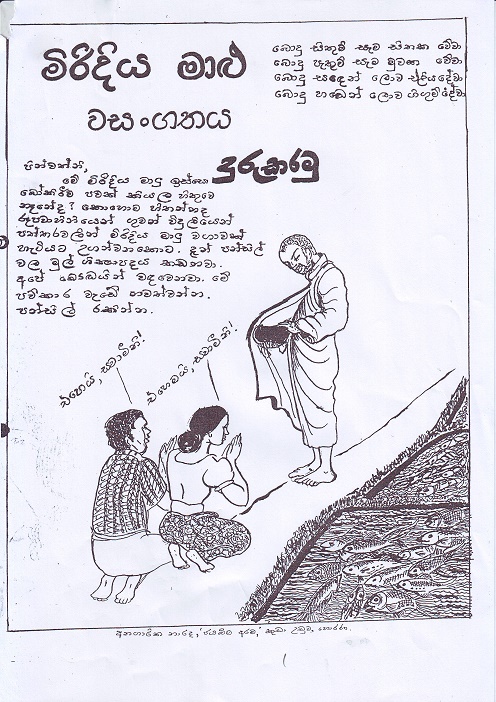
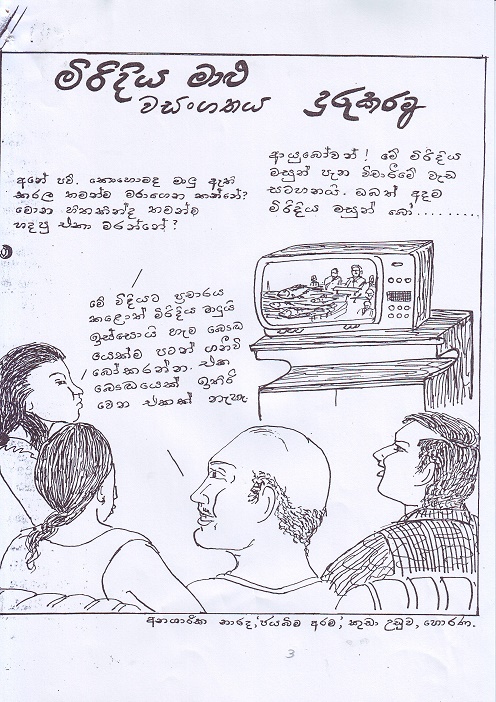
He said that Sri Lanka exports more than 23% of its total tea exports to Russia comprising millions of kilos annually. He reiterated that Russia was a major buyer of Ceylon tea and the government and the Cabinet would align themselves with swift corrective measures to continue its credible standing in marketing tea to foreign countries. He further said the Minister of Plantation Industries Naveen Dissanayake would shortly visit Russia to expressively ensure damage control, and re – establish Sri Lanka’s credibility, that we continue to produce Ceylon Tea true to its international standing, and the brand undoubtedly bears its reputed production and shipment standards.

He further said that Russia has not shut out Ceylon tea imports into the country, but has left channels open for further negotiation.

The Tea Board chairman expressed confidence that the controversy would be effectively resolved.

A new vision and a novel mission in water management in Sri Lanka!

December 17th, 2017

Dr Sudath Gunasekara 16.13.2017.

A recent study on Sri Lanka has identified it as one of the six countries that share ½ of the .3 % drinkable water this planet has. What is even more important and surprising is that  ours has been identified as the only country in the world that will have drinking water even if there is going to be a shortage of drinking water in the whole world. This news has made water the biggest asset and the most valuable commodity of Sri Lanka that has put it on the top of the world

The secret of this unique asset, gifted by nature lies in the following geographical blessings of nature.

The Islands relative position on the globe in relation to latitude and longitude; its location in the middle of the Indian Ocean extending up to the Antarctic Ocean, the third largest body of water in the world, after the Pacific and the Atlantic Oceans, covering at least 1/5th of the world’s total ocean area open to all sides; traversed by the  Inter Tropical Convergence Zone in relation to the global wind belts; its insularity and its size; the geology and overall topography characterized by a central highland surrounded by a narrow coastal plain in the south west and south and a broad one in the  W, NW, N, East and South East that has determined the drainage pattern of the Island; the peculiar topography and the nature of alignment of land forms, both vertical and horizontal. The central mountains have facilitated the interception of the SW and NE monsoons and even influenced the convectional rain in between the Monsoons. The forests cover on the central mountains also has contributed heavily and critically on the volume of rain fall and the perennial flow of streams. The forests with their canopy and the anchoring root system and the underlying geology together has influenced the stability of the central hill country and the total volume of water stored by the Central hills both over ground and underground converting it to the biggest natural reservoir in the Island. It also has guaranteed the perennial flow of all major rivers in the Island. Thus, all these factors together have made Sri Lanka the first among countries blessed with this natures invaluable gift.

In sum, the central Hill Country function as the Geographical Heartland of the nation that keeps the entire life system, both fauna and flora, and the civilization of the this Island nation alive and vibrant. This is why I call it the Sinhalaye HADABIMA (Heartland). Its physical stability decides the fate of the entire life system in this country as much as the beat of the heart decides the fate of a man. The day the heart stops man dies. Similarly the day the physical stability of the central hill country ceases to exist the curtain will fall of the entire life system as well as the civilization in this country. This critical and unique situation calls for the protection of the Central Hill Country as the ‘Heart’ of the nation and the mother watershed of the country acting as a natural reservoir providing perennial water. All these factors have contributed heavily to elevate this country to the first place among the countries with drinkable water. In this backdrop perhaps we could rise as a water exporting country in future to this thirsty world. Sri Lankan water could be even a big foreign exchange earner in times to come provided we protect this national wealth The Geographical Heartland of the Island.


Next let us look briefly at what climatological factors that have contributed to this nature’s asset.

The first is the heavy rainfall. Mean annual rainfall in Sri Lanka is around 2000 mm (Arulanandan1985) distributed over the surface area of 65, 610 square kilometers. This gives an average volume of 131, 230 million cubic meters (m3) of fresh water. Rain fall is received from the South West Monsoons (May – September), North East Monsoon (November to March) and in between the Monsoons through tropical convectional developments. Thus generally the Island is blessed with rain throughout the year.

Average annual river flow 31 % of the Rainfall 40,680 million m3 (Bocks 1959)   (going to the Sea) The balance 69 % (90, 550 million m3 ) is used and transpired by crops and natural vegetation or evaporate from the soil directly to the air

65 % of the wet zone catchment rain fall is discharged in to rivers. Out of this 77% is discharged by Kaluganga

Although the overall whether pattern may not have changed over time, things like decreased annual rain fall, increased river flow and resulting loss of large volume of water in to the sea, depletion of ground water table, increase of surface run off and erosion and land degradation have enormously increased due to large scale deforestation (over 600 000 acres on the central watersheds) after the introduction of plantation agriculture to the central hill country in the mid-19th century. Regarding the reduction of the volume of water in the Uma Oya, Samuel Baker has observed that the flow of Uma oya has reduced by 50% after deforestation for plantations. This again highlights the importance of protecting the forest cover on the Central Water Sheds of this Island nation. This perception is further proved when Arnold Toynbee said ancient Sri Lanka once achieved the tour de force of compelling monsoon smitten highlands to give water, life and wealth to the plains below” Therefore it is now well established that plantation agriculture introduced by the British has  severely affected the pre-colonial water potentialities of this Island. In spite of this devastation of over 600,000 acres of virgin forest by the British colonials, I am surprised to note that world authorities have found that this country is still on the top of the six countries that have the highest potentials of drinking water. Imagine what would have been the position if the original forest cover was there intact.

What the Sri Lanka Government should do, first to maintain the status quo and then to restore the pre-1815 situation.

I am one person who strongly believes that no Government in the post Independent period has properly governed this country. None of them knew what this country is or its potentials. None had a far reaching vision as to how this country could be developed. If they did, today this country would not have been like this. What is more surprising is today, after the so-called Yahapalanaya Revolution of Jan 8th 2015 we don’t have a government at all in this country. In fact I have said this openly at a public meeting in Colombo last year. All of you know about the story Lee kwan yu sending his Prime minister Vong Tok to this country in 1957 to find out how Sri Lanka has developed like that and he wanted to make Singapore a Sri Lanka then. After 20 years JR said he wanted to make Sri Lanka a Singapore. Isn’t this example alone is sufficient to know the type of politicians who have ruled this country.

Nevertheless assuming that at least in the near future the people of this country will get a people’s Government elected, I will make few proposals here for it to implement,

Firstly in order to maintain the status quo in relation to the water situation mentioned above

And secondly, to protect the Central Hill country and restore the physical Stability of the hill country to its pre-1815 conditions and

In order to achieve both these objectives the first thing we should do is to restore and protect the central hill country, the country’s Geographical HEARTLAND”. That will be the cornerstone of this whole programme. In order to fulfill this task we should treat the hill country in three parts namely a) 300-900m (1000-3000ft), b) 900-1500m (3000-5000ft) and 3) above 1500 m.(5000ft)

1 Step one Land over 1500m (>5000ft)

Declare all lands over 1500m (5000 feet) above sea level as a strict conservation area (Thahanchikele as it had been before 1815 and) and re-afforest them with endemic vegetation in areas where natural re-generation does not take place. Planting exotic trees like Pines, Gum and Cinchona or any other should be totally banned. No development work or settlements should be allowed within this region

2 Step two Land over 900m (>3000-5000 ft)

Limit Tea plantations to 900-1500 m lands with strict land use policies and cultivation practices like strict soil conservation policies, banning cultivation on land over 60% slope, defined riparian belts, critical water sheds and limiting settlements to meet bare necessities such as factories, administrative buildings and settler clusters in suitable places. Present practice of establishment of mono Tamil villages in this region should be immediately stopped.

3 Step three. Land over300-900m (>1000-3000ft)

This area should be used for smallholder farm settlements of mixed crops like Tea, Coffee, Pepper and Cloves, Kandyan Forest Gardens, Dairy farming and settlements preferably managed on a cooperative basis. The Sri Lanka HADABIMA Project could be entrusted with this responsibility as it has the required experience and knowledge to handle this aspect of Agricultural development. The same model could be replicated in areas below 300 m (1000ft) where possible (There will very little problems here as this region already has this model under traditional village settlements system).

If these land use policies are properly implemented in these four regions the first and most important watershed management followed by solving landlessness and rural economic development of the upcountry of Sri Lanka will be completed. This will also complete the rehabilitation problem of the neglected Kandyan Peasants that has been hanging on from 1951.


Managing river flows and storing the maximum volume of water

This is the next important step in this national water management Programme. We noted above that 65 % of the total annual rain water is just allowed to flow to the sea as river flow. If we could save at least 50 % of this volume, that would significantly enhance the water availability and agricultural potentials of the country.

There are two ways of doing it. First is by storing it in reservoirs as is being done at present by trans-basin diversions on land like Minipe Ela and Jayaganga that takes their waters to Polonnaruwa and Anuradhapura respectively. The second is by diverting by tunnels where it is appropriate as it is done at Polgolla that takes the waters of Mahaweli to NCP and at Nalanda to Kala Oya through Lenadora Tunnel. These are the only two project as undertaken in this field in modern times though there is another unknown but marvelous trans-basin diversion called the Pattipola Bhoo Ela a medieval diversion where the waters of Damabgastalawa (a head stream of Kotmale oya is diverted through a tunnel measuring 10 ft in diameter 40 feet below surface level to the Uma Oya. The ongoing Uma oya -Krindi Oya tunnel Diversion (the controversial) also could be grouped under the same category. I would like to mention two other new proposals that have not been attempted either in the ancient times or the modern.

  1. Diverting Kaluganga waters to Walave going up to even Kirindi Oya
  2. Diverting Kelani waters to the NW

Diverting Kaluganga to South and South East will be even more important than Kelani waters to NW for Four reasons. Firstly, Kalu ganga is the river that discharges the biggest volume (77% of (7862million M3 ) out of the total of 65% percent of wet Zone catchment rain fall to the sea. Secondly, it is the least used river for irrigation purposes, Thirdly, it is also the river that brings the highest flood devastations and finally, its diversion could enhance the Walawe potentials while bringing a new lease of life to the drought stricken South and South Eastern lowlands. This will also be a novel idea hitherto not tried by policy makers or planners. I remember my good friend and eminent irrigation engineer D.L.O. Mendis once mentioned to me about a proposal to this effect he mooted. But it had never seen the light of the day probably as he is not a politician who always has the privy all Chintanayas. A trans-basin canal passing through the Denavaka valley and thereafter that traverses along the foot hills of the Southern Great wall extending even up to Kitindi Oya might be able to transform the geographical landscape of the whole region through new settlements, new agricultural activities and agro base industries. If constructed this canal also will be the longest man made irrigation canal in Sri Lanka.

Next is diverting Kelani waters to the NW. If the topography does not permit taking water under gravity by a canal then alternative techniques should be devised to take the water to the required area like how they have done it in Panama canal. This will put an end to the water problem in  drought stricken North western Province followed by agricultural and industrial projects emerging under the enhance irrigation facilities. Kelani River also discharges 5474 million cubic meters to the sea annually.

Furthermore both these projects if undertaken will also reduce the present flood hazards and enable us to make use of the enormous volume of water presently going down to the sea annually.

Constructing Barrages

Constructing Barrages in all suitable places along the rivers technically feasible to collect water and control floods. I do not know anyone ever has seriously thought of this idea. It was only last week one Sunil Gamage, a Vet scientist and my friend who came out with this bright idea as we were discussing the merits of Polgolla diversion as against the controversial Uma oya diversion. I think this is a wonderful idea in many aspects. A large number of benefits such as storing river flow to be used at lean times, enhancing the ground water table in the neighborhood, downstream flood control, reducing serious siltation in downstream reservoirs enabling them to store more water (as happened in Kuluwev in the Dry Zone in ancient times), increasing the irrigation and hydro electricity generation capacities of major reservoirs like Victoria, Randenigala and Rantembe and providing new locasions for river diversion.

Regular maintenance of Dry zone tanks and irrigation works.   

It is a well-known fact that poor maintenance of these works has led to enormous wastage of valuable rain water the country receives annually flowing down to the sea. We also had a very rich tradition of annually de-silting and repairing of tank bunds and repairing all irrigation canals as a community responsibility. The catchments and wevtavulu were protected as strict reservations and they never disturbed unlike today. These practices of a farmer community have become things of the past. As a result all major tanks are filled with silt and therefore the storage capacities of almost all tanks have got reduced. With the result with few showers tank sluices are opened for the water to escape fearing dam breach. The net result is the loss of enormous volumes of precious rain water going down to the sea unused. But meanwhile I have seen some people talking about harvesting rain water in artificially constructed. Isn’t it a pity and a tragedy too that these people have not even understood the difference between a natural reservoir and massive cement plastered concrete tank. Even if our modern engineers go for concrete tanks under the concept of modernization in place of natural reservoirs one should not get surprised. As for me I am also against concrete canals replacing natural canals, though they have long distance carrying capacity, as they miserably fail to maintain

Conclusion

Generally the importance of water in our civilization had been properly understood by our ancient Kings. Among them, Dhatusena, Kasyapa, Vasabha, Mahasena and Parakramabahu the Great, rank pre-eminent. It was Parakramabahu the Great (1153-86) who said that, Not a single drop of water that falls from the heaven should be allowed to escape to the sea without being utilized for the benefit of man”. Obviously they knew the value of water in our culture.  Thus although we owe a rich water conservation legacy (perhaps the best in the ancient world), of water management as expounded by them unfortunately later generations have paid little or no attention to this philosophy on water management of our forefathers. The present day rulers are clueless of this great tradition. They are only concerned with personal gain and power.

These ancient Kings never constructed reservoirs in the hill country. Except in few places along the Mahaweliganga that went up to Kotmale, they never opened up settlements in the hill country either. They had protected and prohibited the whole hill country as the nation’s mother watershed untouched. (thahanchikele). Therefore, I strongly recommend for the need to revisit the ancient wisdom and to commence a vigorous programme of restoring and protecting the central hill country immediately as the cornerstone of this programme and then de-silt and maintaining the Tanks and irrigation canals annually. This has to be supported by a very strict water management policy particularly in the irrigation sector as suggested by eminent scholars like Prof G.L. Peiris in his study on Minipe as there is an enormous wastage of irrigation water by our farmers compared with countries like Pakistan. Thereby we can increase the acreage cultivated. It would also be interesting to note here that in the ancient times they have cultivated three kannas a year.

This is to be followed up by the proposals as mentioned under Managing river flows and storing the maximum volume of water” above.

Hoping for a new vision and a novel mission in water management in Sri Lanka for policy makers and Planners!

Inland fisheries and Buddhism

December 17th, 2017

Senaka Weeraratna

“Ordering by the beat of the drum that no animals should be killed within a radius of seven gau from the city, he gave security to animals. He also gave security to the fish in the twelve great tanks, and bestowing on (the region’s people) gold and cloth andwhatever other kind of wealth they wished, he commanded them not to catch birds and so gave security to birds….”

This inscription, which is engraved in an upright stone slab at Ruwanweliseya, Anuradhapura, is a transcript of a decree issued in the late12th Century by King Kirthi Nissanka Malla of Polonnaruwa. It is reflective of the high moral concern that the rulers and people of Sri Lanka showed towards animal life in ancient times.

Likewise scattered through the pages of the Mahavamsa, are other records of royal protection granted for the preservation and well being of all forms of animals. It can well be said that the policy of compassion and tolerance initiated by Emperor Asoka in India in 270 BC in the form of state protection to animals, was followed in earnest by a long line of Sri Lankan Kings. Buddhism played a major role in influencing the development of this benevolent public attitude towards animals.

Whatever interpretation may be put on the First Precept of Buddhism i.e. whether it prohibits the consumption of flesh foods, it is without dispute that Buddhism has never countenanced the ‘kill and eat’ principle, which is found in monotheistic religions. Neither does Buddhism adopt a purely utilitarian attitude towards animals by insisting that animals exist solely for the benefit of man.

Instead, Buddhism advocates a peaceful co-existence between man and animal. It unequivocally prohibits in its very first precept, the taking away of life of another living being, for whatever the reason. Ahimsa, or nonharming, and Metta, or loving-kindness are central to Buddhist thinking and colours all Buddhist practices.

As regards Sri Lanka, it has been said that the dietary habits of our people prior to the arrival of the Europeans were essentially vegetarian. Robert Knox in his ‘Historical Relation of Ceylon’ admits that his beef eating habit was despised by the Sinhalese people of 17th Century Sri Lanka.

Though the meat eating habit gradually began to spread among the people upon the colonization of this country by three Western powers, yet the majority i.e. the Buddhists, never assumed directly the actual responsibility of rearing and killing animals for food. Such restraint on their part was clearly due to the influence of deep seated moral considerations.

However these moral restraints which have been enshrined in the collective mind of the Buddhists for over a period of 2300 years would be rapidly lost if the state succeeds in promoting animal husbandry (leading to slaughter of animals) and inlandfisheries schemes.

The biggest danger to the underlying Buddhist Civilization of this country from the establishment of inland fisheries schemes, is the great likelihood of the creation of a new sub-group of Sinhala Buddhists in the hinterland of Sri Lanka, who may be forced to disown or react against Buddhism sometime in the future, because their breach of the Buddhist First Precept for the purpose of earning a living would never receive scriptural sanction or the moral approval of the Buddhist public and the Buddhist Sangha.

In other words these policies of the Government would be laying the foundation for the emergence of sub-groups within the ranks of Sinhala Buddhists, who would be most susceptible to the influence of religions which sanction the slaughter of animals for food. The wholesale conversion of the entire Buddhist population in the Maldives in the 12th Century, to Islam, is a good example of a case where choice of livelihood e.g. fishing, led, among other things, to the loss of faith in Buddhism.

Buddhism lost ground in countries such as Maldives, Indonesia, Malaysia, andBangladesh partly due to the gullibility of then Buddhist rulers of those counties, who failed to exercise the necessary vigilance to protect Buddhism.

It was such fears which prompted Ven. Mitirigala Dhammanissanti (formerly Asoka Weeraratna) to lead a public campaign comprising leading Buddhist monks and laity protesting strongly in the period 1989 -1990 at the gradual introduction of inlandfisheries into areas which have been the traditional bases of Buddhism in this country. After a careful consideration of the relevant issues, President Premadasa accepted the validity of the protest of the Buddhist monks on inland fisheries and thereafter he ordered the Govt. Departments to withdraw state patronage of the inland fisheries schemes. That was the first and only occasion in contemporary history that Buddhist activism was successful in overturning state policy on a major labour intensive industry that was promoting a wrong livelihood by killing and harming innocent animals i.e. fish.

To the credit of President Premadasa it must be said, that he abandoned the development of inland fisheries in the larger interest of protecting the foundations of Sinhala Buddhist Culture which still exists more or less intact in the rural heartland of Sri Lanka.

King Kirthi Nissanka Malla and other Sinhalese Kings granted ‘Abhayadana’ (sparing of life from slaughter) to the fish in the twelve great tanks which are found in the Anuradhapura, Polonnaruwa and Dambulla districts. These Kings with the most noble of intentions, would have expected succeeding generations of Buddhists, to honour rather than repudiate these inspiring injunctions, which are a part of this country’s rich spiritual heritage. Yet, these are the very lakes which are being earmarked for the introduction of inland fisheries.

Sometimes people tend to defend fishing on the ground that it is a harmless activity causing neither pain nor suffering to the victim. This is a wrong presumption. Fish have been discovered to show most of the pain behaviour that mammals do. In some species there is even vocalization.

They make vibratory sounds indicating ‘alarm’ and ‘aggravation’ and show signs of distress when they are taken out of water, hauled up into air and allowed to flap around until they die. Because their gills can extract oxygen only from water and not from air, fish out of water cannot breathe. They usually die slowly in pain from suffocation.

The argument that fish provide protein and therefore it is important for people including the Buddhists of this country, to actively participate in inland fisheriesschemes, is a proposition which can be logically extended to cover the slaughter of many other animals. In fact it may well happen.

The Buddhists who are being encouraged by Government incentives to engage in fishing in inland reservoirs, may in the course of time take to slaughtering other animals for food and the making of profit. Right Livelihood as propounded by the Buddha, being one of the noble Eightfold Path, eschews conduct such as trading in live or dead animals for profit.

There are a number of new foods coming into the market which are not slaughter products. The protein rich Soya Bean and derivatives such as Tofu, now constitutes the basic diet of several Asian countries including China and Japan. It is also becoming popular in Western countries.

Why is there no public drive towards promoting a large scale Soya Bean cultivation, production and consumption in this country? It is more economical to produce protein rich vegetables rather than flesh food.

Dr. E.F. Schumacher in his celebrated book ‘Small is Beautiful’ spoke of ‘Buddhist Economics’. He stressed the need for developing countries to fashion economic policies in such a way that they did not conflict with the religious and spiritual traditions of the people.

In this context the question arises whether the advice of the Buddhist Sangha was sought by the Government of Sri Lanka before it embarked on re-developing inlandfisheries, a policy which was abandoned by a previous government largely as a result of the convincing submissions made by the Maha Sangha.

It is true that flesh food consumption is now quite widespread even among Buddhists in Sri Lanka. As realists we must accept this, but we need not extend it, particularly in a way which requires Buddhists to slaughter animals. Sinhala Buddhists, generally as a group (subject to a few exceptions), have always maintained, throughout our history, a marked distance from slaughtering animals for food.

These restraints, influenced by the principles of Ahimsa (non-violence to all living beings) contributed substantially to the making of the Sinhala Buddhist identity and its authenticity, which in turn drew the admiration and sometimes the envy of others.

If rearing animals for slaughter or killing animals for food is promoted as an occupation among Buddhists, whether in the form of inland fisheries, prawn farming or household chicken, goat or cattle farming, much damage will be caused in the long term, to one of the finer traits of the Buddhist civilization and longstanding image of Sri Lanka as a Buddhist country.

Cockeyed Kumar David cues for suppression of democratic opposition

December 17th, 2017

By Rohana R. Wasala

This refers to the feature entitled Arrest Gota or not per the evidence: NO to fundamentalism, racial-extremism and neo-populism” (Sunday Island/December 10, 2017) by Kumar David. The title itself is extremely misleading because what it suggests is malicious fiction. No evidence has been found against Gota; given the fact that three years of witch-hunting has produced nothing incriminatory against him or his brothers  it is not likely that any will be found in the future either. By ‘fundamentalism’ in the title, KD particularly hints at Buddhist religious fundamentalism, but there is no Buddhist religious fundamentalism in Sri Lanka or elsewhere whatever the biased  Western media may say to the contrary; by ‘racial extremism’ KD no doubt means alleged Sinhalese racial extremism, but there is no such thing. The dictionary definition of neo-populism is: A cultural and political movement, mainly in Latin American countries, distinct from twentieth century populism in radically combining classically opposed left-wing and right-wing attitudes and using electronic media as a means of dissemination”. Since by ‘populism’ we have up until now understood a certain bias or a special concern towards the welfare of ordinary citizens, which neo-liberalists argue negatively affects economic growth, neo-populism must be understood as a new form of the same pro-poor politico-economic policy frame. Critics used to accuse Mahinda Rajapaksa of populism, but he didn’t see the rural based economic strategy he favoured that way. His successors seem to be committed to non-populist policies; they have however fallen short of MR’s success level. So probably, KD fears a return of populism in the future. KD’s resounding NO is to ‘evils’ that are non-existent among the majority of Sri Lankans; but of course, they could be innocent inarticulate victims of a minority of fundamentalists and racial extremists including KD himself. That is why I say that the title is misleading. Kumar David’s slanderous opening paragraph that spews venom against the majority community runs:

Ex-president MR is on record that Gota’s arrest on trumped up charges is imminent. Joint Opposition-cum-Rajapaksa (JO-Pak) mouthpieces, hoping to stave off an arrest, warn of an almighty Sinhala-Buddhist backlash if he is locked up. This implies that a strong case which will hold up in court exists and JO-Pak is endeavouring to stampede the Sirisena-Ranil duumvirate – not a difficult task – to halt action. If burn-loot-rape gangs are let loose by JO-Pak or the BBS counter-mobilisation must clear the streets. Let the appropriate authority arrest Gota or not as obligated by the evidence; the scourge of racial extremism must not be allowed to panic society. Extremism, is my topic today, this panic mongering is a useable starting point.”

These extravagant imaginary false charges betray the fact that KD is deeply hostile to the Rajapaksas. He dislikes Gotabhaya Rajapaksa because he is a formidable threat to the scheme for dismantling the unitary state of Sri Lanka in order to install a confederation of mini states in its place as proposed by the current constitutional project that has been arbitrarily launched amidst widespread popular opposition. KD congratulates himself, as he has already done many times, for being the architect of the ‘single issue common candidate’ strategy that ultimately led to the unexpected ouster of Mahinda Rajapaksa in the January 2015 prematurely called presidential elections. GR served as the vital communication link between the all important political leadership provided by the president, his brother MR, as Supreme Commander of the Armed Forces and the battleground military leadership during the humanitarian campaign that defeated the terrorism that had plagued the country for nearly three decades. It is difficult to guess whether Kumar David sincerely condemned or secretly admired the terrorists for their cowardly excesses against the majority community, towards whom he nurses a visceral hatred. Of course, the terrorists didn’t spare the other communities either when they stood in their way. So, all communities are beholden to the Rajapaksas for ridding the country of terrorism, which they did, putting themselves in the line of fire in the process, both literally and figuratively.

Kumar David is reluctant to acknowledge the Joint Opposition for what it is: it serves as the real opposition in parliament, where the official opposition, according to critics, is performing a rearguard role for the survival of an increasingly unpopular yahapalana government. Instead, he describes it insultingly as the ‘Joint Opposition-cum-Rajapaksa (JO-Pak)’, which is completely unwarranted, particularly when such condemnation comes from an uncharacteristically racist, ill informed or deliberately misinformed ex-Marxist like Kumar David, without even a semblance of a following.  What is KD compared to MR as a politician or political analyst in the public estimation? How many Sri Lankan voters are even aware of the existence of a character called Kumar David, although his crafty stratagem worked with the vital support of the naïve Sobhita Thera, who is no more now. There is no comparison between Kumar David and Mahinda Rajapaksa. KD completely misinterprets MR’s candid warning a few days/weeks ago that there was a move to arrest Gotabhaya Rajapaksa on false charges. I need not dwell on what is now common knowledge among the overwhelming majority of ordinary Sri Lankans of all communities.  The Court of Appeal issued a stay order on the FCID against the arrest of GR on November 29, valid till December 6. It was then extended to December 15, 2017. And now it has been further extended to January 25, 2018. Gota’s appeal was based on the grounds that the FCID operation against him was illegal. His lawyers pointed out that no government money had been used in the construction of the D.A. Rajapaksa Mausoleum and the Museum containing wax images; there was no cause de jure justifying his arrest. Besides, given his august family history (to survive eighty years in national politics is an achievement in itself), his varied educational and professional background, and his long years in the military as a decorated soldier promoted to the rank of colonel during a UNP government (which is significant because he must have been known to the then authorities as a son of D.A. Rajapaksa, SLFP founder S.W.R.D. Bandaranayake’s loyal colleague), and his proven moral stature, Gotabhaya Rajapaksa is least likely to do anything that could damage his personal honour  and public reputation. Full of malice, KD wrongly argues: Joint Opposition-cum-Rajapaksa (JO-Pak) mouthpieces, hoping to stave off an arrest, warn of an almighty Sinhala-Buddhist backlash if he is locked up. This implies that a strong case which will hold up in court exists…”. Who but scoundrels would suggest that Gotabhaya Rajapaksa could indulge in corruption exploiting, at that, a project done in memory of his own late father? The fact that hundreds of patriotic lawyers offered to defend him in court free of charge on an earlier instance of similar defamatory nature is testimony to the nation’s attitude towards this iconic Sri Lankan.

KD’s nonsense about extremism

I had almost completed the first draft of the foregoing section of this article as a spontaneous response to Kumar David’s Sunday Island article of December 10, when I found in The Island the next day (Monday, December 11, 2017) KD’s reply to another writer, Bodhi Dhanapala from Canada, who had made a reference to him in an earlier article to the same paper. (I was sure then that Bodhi Dhanapala would respond to him appropriately in due course. Bodhi’s response that I guessed would follow appeared in The Island today (December 16, 2017) and here in Lankaweb. Bodhi’s is an excellent reply. This part of my article I completed as a separate essay along with the above a couple of days back, but I updated it today before posting the whole article on Lankaweb.) There (i.e., in KD’s reply to Dhanapala in The Island of December 11), KD summarizes what he calls his views in the form of five points (a-e). He promises to deal with ‘extremism in general’ in his Sunday column of December 10. Actually, we have been looking at the article thus promised. (It is obvious that, by some quirk, there has been a delay in publishing KD’s reply letter in The Island.) These five points are implicit in KD’s Sunday Island article. Among the five points are two that are particularly relevant to us here. One of them is (b), which says: I have opposed LTTE terrorism as much as I opposed the state sponsored terrorism of the Sri Lankan military. The later in fact helped to breed the former. Without the carnage of 1983 the LTTE would have remained no more than a marginal force among Tamils”. It appeared that the  government of the day (in 1983) was initially hesitant, for reasons only known to them, in containing the mob violence that erupted following the common funeral in Colombo of some unarmed soldiers murdered in cold blood in Jaffna by LTTE terrorists; the military was not responsible for the deadly results of governmental indecision.  The1983 riots were not due to the alleged barbarism of the Sinhalese either. There were complex realities that led to them. Besides, there are those who hold that it was actually an orchestrated event engineered by a third party. Reacting lawfully, but with appropriate intensity, to armed terrorism as ordered by the government is not terrorism. KD’s statement here gives us the wrong impression that the Sri Lankan military acted on its own without direction from the country’s political leadership in its operations against LTTE terrorism in its infancy. The security forces have always taken orders from the government; they have always acted intra vires. At the same time, it is common knowledge now that the LTTE terrorism was nurtured from outside; it was not  something sponsored by the Sri Lankan military.

The second point from KD’s list that I consider relevant to us here is (e), which is: I comment on barbarism of all forms. Currently these include Burma -Buddhist instigated genocide, ISIS, the Saudi led blockade of Yemen, bombing in Syria and Hindutva mobs. In the past it included LTTE terrorism”. All civilized people share KD’s sentiments regarding barbarism. But we who know who are barbarians and who are not cannot agree with KD when he identifies Burmese Buddhists as barbaric terrorists who have initiated violence against the so-called Rohyngias. In most of KD’s newspaper articles that I have read, he demonstrates his deep prejudice against the majority Sinhalese Buddhist community. He extends this to Burmese Buddhists as well. The truth about what is actually happening in Myanmar is cleverly hidden from the world by the Western media. It is a predominantly Buddhist (88%) country where Muslims account for only 4% of the population. Traditional Muslims live in peace with their Buddhist neighbours, without being subjected to any discrimination. The Rohyngias are Muslim migrants from Bangladesh who are settled in the Rakhine region of Myanmar. Western media falsely depict them as the most persecuted minority in the world”. Though they are described as having lived in that region for centuries, the truth is otherwise. It was during the British occupation of Burma (1885-1948) that Muslim migrants arrived there. These Muslims, supported by money flowing from Islamic fundamentalist groups from the rich Gulf states, have lately begun to agitate for their own sovereign Islamic state in the Rakhine region. It is they who started killing innocent Buddhists and Buddhist monks in that region, burning their places of worship, and houses. Little about such ethnic cleansing activities by religious extremists against the native Buddhist population is reported in the mainstream media due to the influence of money. These media have already demonized all those innocent Buddhists and monks who merely react to fundamentalist violence. Among these monks, Ashin Wirathu Thera, who leads a completely justified anti-Islamic fundamentalist movement. A 2013 issue of the TIME magazine carried a front page photo of Wirathu Thera with the caption Face of Buddhist terror”. His only fault is articulating the plight of innocent Myanmar Buddhists who are being persecuted by a minority of murderous religious lunatics who are determined to Islamize this predominantly Buddhist nation. But media coverage is only for purported violence by Buddhists against Muslim immigrants. Money from the rich sponsors of Islamic terror in West Asia buys the latter false victimhood in the media. The poor wronged Buddhist majority are unheard and unseen. Wirathu Thera says: No money, no media”.

It appears that the government of State Counsellor (Prime Minister) Aung San Sun Kyi has decided to use the military to contain Islamic extremist violence and answering acts of violence from their victims. This has earned the wrath of the’ international community’, who do not care about victimization of Buddhists in Myanmar and elsewhere including Bangladesh. I remember reading courageous Bangladeshi feminist writer and formerly a medical doctor by profession Taslima Nasreen’s 1993 novel ‘Lajja’ (Shame) which describes in graphic detail atrocities committed against Hindus and Buddhists in that country.  She was accused of making a ‘blasphemous’ proposal for a revision of the Quran (but according to her, she only called for the abolition of sharia, which amounts to the same thing, though), and was threatened with death. Since 1994 she has been living in exile. The article titles Will the Pope raise the plight of Buddhists and Hindus? Crisis in Chittagong in Hill tracts” by Savako Utsumi and Lee Jay Walker reproduced in Lankaweb on December 15, 2017 strongly suggests the duplicity of KD’s Holy Father”, for he says parenthetically:

(Aside: Pope Francis could have safeguarded his moral stature if he had not gone to Burma at all, nor spoken in soft, muted and muddled tones. Holy Father, didn’t you know that these people call themselves Rohingya?)”.

We know why the Pope spoke ‘in soft, muted and muddled tones’, as it appeared to KD. The Pope has a moral conscience unlike his deracinated little dumb kid . The Pope’s eyes are at least half open to the unenviable lot of the innocent non-Muslims. For political reasons, he will not come out with the truth, which could be harmful to dominant global agendas. KD has no such moral qualms.

INTO UAB reaches beyond campus to support girls’ education in Sri Lanka

December 16th, 2017

 Courtesy  The University of Alabama at Birmingham

Education for young girls in Sri Lanka does more than bring the basics of reading, writing and arithmetic to an under-served population; it also can be an agent of cultural and social change.This year, Room to Read Sri Lanka will receive $9,800 to help fund its current projects because Achala Gunasekara-Rockwell, Ph.D., INTO UAB’s Indian culture and language adviser, nominated the organization for an INTO Giving grant, which support education projects in developing countries.

INTO Giving prioritizes projects that help children in first through 12th grade, and Gunasekara-Rockwell — who was born and raised in Sri Lanka — thought Room to Read’s literacy and girls’ education programs would be a natural fit for one of its grants. She was correct; it was one of six selected this year.

According to the Room to Read website, $300 can keep a girl in a developing country in school for a year, so the $9,800 grant can help more than 32 children during the next year.
room to read stream

A near-and-dear issue

The educational issues that children — young women especially — face in rural Sri Lanka are close to Gunasekara-Rockwell’s heart. She said less-fortunate families will send their boys to school, but girls generally are expected to remain home and take care of the younger siblings.

As in many countries, opportunities often are tied to the availability of resources, and families have to make difficult decisions about how to allocate their scarce share of those,” she said. There’s a huge gap between the haves and have-nots. I’m a fortunate one. My parents gave me a good life, and I even went to school by car.”

GR insideInterested in partnering with Achala Gunasekara-Rockwell (above) and INTO UAB to support other international initiatives like Room to Read? Email her at achalaro@uab.edu.But she remembers others not being so fortunate; her family had what she said they called maids,” who were younger children from local families whose parents didn’t have money to raise them.
They were just helping around the house,” Gunasekara-Rockwell said. My mom was kind of doing a favor, because some parents would say, ‘Could you please take my kid. They’ll help you, just feed them.’ I felt like they were missing educational opportunities. Just basic learning was missing.”

Education is the gateway for meaningful social change, and Room to Read has proven itself a reliable ally in that struggle.”

She remembers not receiving sexual education until age 12, but many young women never receive it at all; that is not unsurprising in a culture in which gender relations has traditionally been a taboo subject in public discourse, Gunasekara-Rockwell said. Many sexual assaults go unreported because of the stigma attached. Some of the victims may commit suicide or be forced to marry someone who provides a large enough dowry.

It’s a different world there,” she said.”

Education for young girls in Sri Lanka doesn’t just bring the basics of reading, writing and arithmetic to an under-served population; it also can be an agent of cultural and social change, Gunasekara-Rockwell said.

With projects like Room to Read, girls are not just staying home,” she said. At least they’ll go to school and get educated, and teachers will tell them, ‘Just because you’re a girl doesn’t mean you have to stay home to care for younger siblings or get married or abused.’ Room to Read is looking after girls.”

room to read insideNot only is it important that our students understand the benefit of creating a global community on UAB’s campus, but also how their efforts impact people from around the world.”Continuing the change

Gunasekara-Rockwell plans to continue to support organizations like Room to Read in the future by continuing to apply for the annual INTO Giving grants. Room to Read itself has benefited more than 11.6 million children in Bangladesh, Cambodia, India, Laos, Nepal, South Africa, Tanzania, Vietnam and Zambia and Sri Lanka, and countless other nonprofits are trying to improve literacy in developing countries.

Education is the gateway for meaningful social change, and Room to Read has proven itself a reliable ally in that struggle,” Gunasekara-Rockwell said. I am happy that INTO will be partnering with the organization to further that mission.”

INTO UAB is an initiative begun in 2016 to increase the global diversity of UAB’s student body and expand global opportunities for its domestic students and faculty to pursue international teaching, research and service. David Hofmann, executive director of INTO UAB, said the Room to Read initiative mirrors the kind of community INTO UAB is building on campus.

As a new INTO partner, we are thrilled that our first proposal was accepted,” Hoffman said. Not only is it important that our students understand the benefit of creating a global community on UAB’s campus, but also how their efforts impact people from around the world.”

So, this is Christmas!  

December 16th, 2017

By Dr. Tilak S. Fernando Courtesy  Ceylon Today

2017-12-16

The year 2017 has been on a roller coaster ride, where the ordinary folk on it have been screaming each time there was a bump on the ride, while a few selected privileged ones have been throwing their hands up and enjoying the ride. At the end of yet another year, there comes Christmas, either to celebrate or follow Jesus Christ’s advice, which is ‘not to concentrate only on amassing wealth, but to understand that all evil things come from within the man’s heart to defile him, unless the heart is pure and the mind is cleansed’ (Mark 7:21-23).

On this special day of Christmas, everyone, particularly the Christians, should reflect on the concerns what Jesus Christ really expected of man. It is a travesty to see how Christmas has been allowed to transform into a high-priced occasion, where both religion and man have been engrossed, possessed, and conditioned by commerce. Christmas, of course, comes but once a year, where mortals declare year on year, especially during mid-night Christmas Mass, never to get bogged down in commercial hype that has become like a contagious disease during this ‘festive’ season. This becomes evidently clear with the congested traffic on the roads, despite schoolchildren enjoying their break, and supermarkets becoming chockablock with crowds, as if the world is going to end! This merriment is not confined only to Christians, but people of all faiths, who automatically get sucked into this celebration.

London Scene

In London, for example, Christmas is celebrated in style, where every household, irrespective of their religious faith, gets into the festive mood with decorations and a compulsory Christmas tree adorned with tinsels, beginning December and lasting seven days after the Christmas. Another ‘show-off’ is to display the number of Christmas cards one receives, as a means of exhibiting their circle of friends! Parents, with small children, begin to act like babies by playing alongside kids on Christmas day. Streets, especially the Oxford Street, the international shopping hub, gets illuminated with scores of electric bulbs, akin to Vesak celebrations in Sri Lanka, spreading its splendour.

Christmas day was universally accepted by the end of 4th century. Ever since, young children have been conditioned to believe in the ‘ jolly old man’, called Father Christmas, with white whiskers, wearing a red robe, and a large sack containing gifts, visiting at midnight through the roof or chimney. The term ‘Father Christmas’ has originated from St. Nicholas, the Patron Saint of schoolchildren and sail centuries, after the death of Jesus. During the 17th century, Dutch Protestant settlers in New Amsterdam (New York) replaced St. Nicholas (Sinterklaas) with the generous magician called Santa Claus.

Commercial Hype

During this commercial hype, businessmen concentrate on electronic contraptions and greeting cards, to boost their economy. Women, who are concerned with their curves and sagging muscles, become ready to say to ‘hell with it’ and binge. At no other time during the year, hypocrisy is so rampant, when people buy presents and send Christmas cards; even to immediate neighbours they see day in and out, throughout the year.

Sir Henry and John Horsley designed the first Christmas card that had three panels, the outer two panels displayed people caring for the poor, and in the centre with a family enjoying a Christmas lunch. Modern methods of pictures, jokes or romantic scenes of life have superseded this tradition. Today entrepreneurs produce millions of Christmas cards by which their revenue too increases proportionately. Felling down of Christmas trees, each year for the production of Christmas cards and decorations, does irreparable harm to the environment. Mince pie is regarded as a part of the British culture for hundreds of years with Christmas lunch. It is recorded already that over £4 million (Rs. 800,000,000) worth of mince pies, along with £1M     (Rs 200,000,000) million Christmas puddings have sold so far for 2017 Christmas in the UK.

Guideline

Jesus, born as an ordinary man, led a simple life by travelling without paying any heed to accumulating wealth. Despite his teachings of kindness and forbearance, what we see today, as the world advances, is humans being taken over by evil forces. This indicates a positively chaotic condition, and probably heading towards the World War III, considering how the Americans and Israelis on one side, and North Korea on the other, clash over Jerusalem and nuclear weapons respectively, to light the torch of disaster, which simply boils down to thinning out the mist on war front in the horizon.

Due to man’s unreliable behaviour, natural disasters such as temperatures getting into sub-zero levels, earthquakes, floods and unimaginable droughts and tsunamis are becoming a common occurrence; big cities such as Los Angeles, have begun to burn like hell fire, which are all indicators to world leaders and rulers as a dire warning.

If one were to examine and celebrate Jesus Christ’s ‘birthday,’ under the spiritual microscope, then one should be able to identify one’s weaknesses and learn to be ‘reborn’ with new resolutions of becoming a better individual. Christ demonstrated how to be tolerant, even during his traumatic moments on the cross by loving and forgiving the very people who sentenced him to death. Therefore, enjoyment during Christmas should not be to make it a commercial fun-fare or kill pigs and disembowel chicken, but to decorate people’s hearts with love, compassion and human feeling for one another, by which at least we, as human beings, might be able to ward off some of the worst impending disasters that are predicted to affect the world in the near future.

tilakfernando@gmail.com

Betraying our heritage by throttling Wilpattu

December 16th, 2017

I am speaking to you not as the honorary president of the Wild Life and Nature Protection Society of Sri Lanka but in my personal capacity as a conservationist who has worked in this field for over 20 years. I am here before you today to say a few words about this protest march and what it stands for.

Wilpattu is symbolic of a vast (by Sri Lankan standards) wilderness area, well watered by natural depressions that collect rain water. Some are in part spring fed and hold that precious water deep into the dessicating dry season of the north western plains. Wilpattu national park is centered on this villu eco system with upwards of two dozen large villus or lakes and several smaller ones. Uniquely for inland water bodies surrounded by forests some are brackish while others are positively salty during the dry season.

Besides the essential life giving waters and food that these lakes provide, the mineral salts provide essential nutrients and trace elements to a myriad species of mammals, reptiles and birds that frequent the villu waters and receding shoreline. Wilpattu actually stands for the pattu or ‘province’ of villus. The villus however are by no means restricted to Wilpattu National Park and extend north and southward beyond the bounding rivers.

So you may ask what ails Wilpattu? Firstly, a new road (the new Mannar road) travels like an arrow through the heart of Wilpattu, five km from the park. A vast land grab in the guise of the right of return of internally displaced people (IDPs) is also going on. New houses, new towns, road networks, power and communication towers are all being established even as we speak; carved out of the pristine forest area of this villu eco system. These lands formerly forest reserves have been fraudulently obtained with the blatant connivance of the Forest Department of Sri Lanka.

article_image
Rukshan Jayewardene

The forest is being pushed back using bulldozers, backhoes, chain saws and other heavy machinery. In many areas you can see the remaining forest as a wall where the clearing ends containing trees some at first glance perhaps a century or more in age, giving the lie to IDPs returning to their home areas now overgrown following the ethnic cleansing by the LTTE some 30 years ago. Thousands of hectares have been cleared of forest cover affecting the percentage of forest cover that remains on the island. These forests contain valuable hardwoods such as Ceylon ebony, calamander, satin wood and last but not least red and white sandalwood. These native forest species are state property; the natural wealth of all Sri Lankans. This is our heritage. Where is that timber now?

So don’t IDPs have the right to return to their abandoned home areas? Of course they do. But not to other forest lands demarcated as conservation forests and are the villu and river watersheds of the area. Meanwhile, some of the old settlements such as Mullikulum are deliberately neglected and allowed to remain overgrown with 30 years of growth in order to maximize false propaganda and to form the backdrop of many a photo op to further the same cause. Hard luck stories of growing up in refugee camps and making good by dint of hard work finds currency only with politicians looking for vote banks and mouthpieces with cheap price tags.

In the southwest of the national park a small shrine has begun to expand with many auxiliary buildings being constructed over a short period during the past five years. A burgeoning pilgrim population that violates every possible park rule converges on this spot within the park that is centered in the vast grasslands of Pomparippu. This is the only reliable area to view Wilpattu’s elephants on any given day. The disruption to wildlife during the heady days of the feast is unacceptable by any ecological measure and recovery is slow despite a cleanup. Long after food refuse has been consumed by opportunistic wildlife or plastic bags have flown away into the wilderness or adorning thorn bushes; remain an eye sore for months.

In the NE of Wilpattu, encroachment and settlements are violating park boundaries and adopting a strategy of creeping expansion into the wilderness of the park. These tentacles are consolidated over time as the Park boundary is quietly shifted. Meanwhile, the Dept of Wildlife Conservation turns a Nelsonian eye to all these violations often knuckling under direct political pressure that is brought to bear on them. Even at this late stage we would urge the Conservator General of the Forest Department to resign his post due to dereliction of duty after being party to fraudulent propaganda videos, false and misleading statements made to his Excellency the President of the Republic and the Honourable Prime Minister. It is time to salvage even a shred of dignity and remaining reputation and go home.

In Sri Lanka the likely result of inefficiency and dereliction of duty is simply a kick upstairs. Powerful political coercion especially during the heady days of the previous regime; a time of impunity is no excuse not to do your job to the best of your God-given ability. In the event of one’s inability to carry out the responsibilities of State of that August office, early retirement is the only dignified option available. As IDPs and genuine devotees, a mere flock of sheep become pawns in a religious-political chess game, Wilpattu national park suffers the privations of all this illegal human activity. A national park as we have mentioned before is a parcel of land that the people and their representatives in Parliament in their farseeing wisdom have decided to afford the maximum possible protection legally available to this nation state. When that protection is ineffective and violations are carried out with impunity even a resilient bio-diverse nation’s sustainable future hangs in the balance. Future generations will point to these times and write in red letters that we their ancestors failed them miserably.

Today, we are in the middle of the sixth great extinction on earth. There is overwhelming evidence for the previous five that can be recovered from the fossil record that is locked in the ancient sedimentary rocks of our planet. Unlike all previous extinction events, this one is fueled by human activity. In one incandescent moment over Hiroshima in April 1945, human beings realized that they had just taken their fate in their own hands. Our industries our settlements, our farms, highways roads and cities, our transport systems and our sheer all consuming weight of teeming masses, all exact a killing toll on this once blue green planet.

Anyone who refuses to believe this fact lives in a fool’s paradise cocooned by our own arrogance. Our refusal to accept that we are part of the biological continuum and not a part of our technological bubble puts us at risk of extinction like never before. Despite the threat of thermo nuclear annihilation receding into the past, we run the risk of being a part of this sixth great extinction that we started.

දළ පූට්‌ටුවා කෑළි කර මැරූ මොළ පූට්‌ටුවන් ඇල්ලුවේ මෙහෙමයි

December 16th, 2017

 බුලිත ප්‍රදීප් කුමාර  උපුටා ගැන්ම දිවයින

 පසුගිය දිනවල ලංකාවේ කෙරුණු අපරාධ අතර මුල් තැනක්‌ දිනා ගත් ප්‍රසිද්ධ අපරාධයක්‌ ලෙස සමාජය තුළ සාකච්ඡාවට ගැනුණේ ගල්ගමුවේ දළ පූට්‌ටුවාගේ අවාසනාවන්ත ඉරණම පිළිබඳ සිදුවීමයි. 

මේ කතිකාව එතැනින් හමාර වූයේ ද නැත. ඊළඟට තවත් ආරංචියක්‌ මින්නේරිය පැත්තෙන් පැමිණියේය. මින්නේරිය වැවට ඉහළ වැව් තාවුල්ලේ හස්‌තීන් තුන්සීයක හාරසීයක රංචුවක්‌ සමඟ කෙළිදෙලෙන් ජීවත්වූ මින්නේරිය කතිර දළ පූට්‌ටුවා ගැන ද මීට අවුරුද්දක එකහමාරක කලක සිට කිසිත් ආරංචියක්‌ නැතැයි ප්‍රදේශවාසීන් පවසන්නට පටන් ගත්හ. 
 
 මෙම සිදුවීමට සම්බන්ධ පරීක්‌ෂණ කටයුතු පොල්පිතිගම පොලීසියෙන් ඉවතට ගෙන රහස්‌ පොලිසියට පැවරීම් තුළ ද පරීක්‌ෂණ ඉදිරියට යැමේ යම් සාධනීය විශ්වාසයක්‌ ජනතාව තුළ ඇත. එහෙත් සිද්ධියට සම්බන්ධ ග්‍රාම සේවකවරයා හා කණ්‌ඩායමට මෙවන් සූක්‌ෂම කටයුතු සඳහා අනුශාසනා කරන ලදැයි විශ්වාස කරන නිකවැව පන්සලේ ස්‌වාමීන් වහන්සේ සම්බන්ධයෙන් පොලිසිය කර ඇත්තේ කුමක්‌ද. තෑගි බෝග ද රැගෙන වාරියපොල බන්ධනාගාරයට ගොස්‌ මේ සැකකරුවන්ගේ දුක්‌ සැප බලන, වයඹ ප්‍රදේශයේ හා ජාතික තලයේ දේශපාලඥයන් සමඟ සම්බන්ධකම් ඇති කරගෙන සිටින, මේ ස්‌වාමීන් වහන්සේ දන්නා තොරතුරු පරීක්‌ෂණ සඳහා ලබා ගන්නට පොලිසිය කටයුතු කළේ ද නැද්ද යන කාරණය ගැන ජනතාව සිටින්නේ බලවත් විමසිල්ලකින් හා විමතියකින් යුතුවය.

dalaputtu1
 
 සිද්ධියේ පශ්චාත් පරීක්‌ෂණවලදී තවත් ගජමුතු කිහිපයක්‌ හා තුවක්‌කුවක්‌ ද ඇතුළුව තවත් සැකකරුවන් කණ්‌ඩායමක්‌ අත්අඩංගුවට ගන්නට ද වලාන දූෂණ මර්දන ඒකකය සමත් වී තිබේ. 
 
 දිනය නොවැම්බර් විසි දෙවැනිදාය. පානදුර වලාන දූෂණ මර්දන ඒකකයේ වැඩ බලන අධ්‍යක්‌ෂ සහකාර පොලිස්‌ අධිකාරි හේමාල් ප්‍රශාන්ත සිය ඒකකයේ ක්‍රියාශීලී පොලිස්‌ කොස්‌තාපල්වරයකු වන ජයලාල් (428) කැඳවා විශේෂ රාජකාරිමය කටයුත්තක්‌ භාර කළේය.
 
 ඔයාට අද විශේෂ රාජකාරියකට ගල්ගමුවට යන්න වෙනවා. අපි හොඳ වාහනයක්‌ දෙන්නම්. දෙරණේ මාධ්‍ය කණ්‌ඩායමකුත් ඔයත් එක්‌ක ඒවි. ජයලාල් තව රාළහාමි කෙනෙකුත් එක්‌ක ගිහිල්ලා මේ රාජකාරිය කරන්න. කණ්‌ඩායමක්‌ අවශ්‍ය වුණොත් ඔයාට පුළුවන් අනුරාධපුර ඉන්න අපේ අනිත් ටීම් එක ගෙන්න ගන්න. වැඩිදුර විස්‌තර ඕ. අයි. සී. මහත්තයා කියාවි.
 
 පොලිස්‌ කොස්‌තාපල් සදීප්වත් එකතු කරගත් ජයලාල් 22 වැනිදා රාත්‍රියේ ගමන පටන් ගත්තේ අධ්‍යක්‌ෂවරයා විසින් සපයා දී තිබූ සුඛෝපභෝගී වෑන් රථයෙනි. දෙරණ උකුස්‌සා කණ්‌ඩායමේ මාධ්‍යවේදී දෙදෙනෙකුත් ඒ ගමනට සම්බන්ධ වූහ. ජයලාල්ට පැවරී තිබුණේ හොර රහසේ විකිණීමට සැලසුම් කර තිබූ ඇත් දළ යුවළක්‌ හා ගජමුතු කට්‌ටල තුනක්‌ සැකකරුවන් සමඟම ගනුදෙනු සිදුවෙන වෙලාවෙදී අත්අඩංගුවට ගැනීම්ටය. ගනුදෙනුව පිළිබඳ තොරතුරු ලබාගැනීමට අධ්‍යක්‌ෂවරයා විසින් ඔත්තුකරුවකු ජයලාල්ට හඳුන්වා දී තිබිණි.
 
 ඔත්තුකරු සමඟ කතා කර ගත් පරිදි ජයලාල් ඇතුළු මේ විශේෂ කණ්‌ඩායම් රැගත් වාහනය 23 වැනිදා පාන්දර 6 30 පමණ වන විට ගල්ගමුව නගරයට සේන්දු වී තිබිණි. ඔත්තුකරු බයිසිකලයක නැඟී ජයලාල් ඇතුළු පිරිස්‌ පැමිණි වාහනය සොයා පැමිණියේය.
 
 ඔත්තුකරු ක්‍රියා කළේ අතරමැදි තැරැව්කාරයකු ලෙසය. ඔහු තවත් තැරැව්කරුවකු සමඟ දුරකථනයෙන් සම්බන්ධ වී ගනුදෙනුව ගැන විස්‌තර කතා කළේය.
 
 බඩු තියෙන්නෙ පොල්පිතිගම. අපට දැන් එහාට යන්න වෙන්වා. මමත් ඔබතුමාලගේ වාහනේම නැගලා එන්නම්.
 
 දෙවැනි තැරැව්කරුවාගේ මඟ පෙන්වීම මත විශේෂ පොලිස්‌ කණ්‌ඩායම සහිත වාහනය පොල්පිතිගම දක්‌වා ගමන් කළේය. තැරැව්කරුවා කීවේ පොල්පිතිගම මොරගොල්ලාගම පාරේ සාලියවැව සති පොළ හන්දියට පැමිණෙන්නට කියාය.
 
 නියමිත පරිදි සති පොළ හන්දියට පැමිණි කණ්‌ඩායමේ සිටි පළමු ඔත්තුකරු දෙවැනි තැරැව්කරුවාට දුරකථනයෙන් කතාකර තමන් සිටින තැන ගැන නිශ්චිතව තොරතුරු හෙළි කළේය. මේ අවස්‌ථාව වන විට ජයලාල් වැටලීම් සඳහා අවශ්‍ය වූ සියලු ප්‍රතිපාදන සූදානම් කර ගෙන සිටියේය. ජයලාල්ගේ තොරතුරු මත වලාන දූෂණ මර්දන කොට්‌ඨාසයේ අධ්‍යක්‌ෂවරයා ද ඒ වන විට එම අහළ පහළ වෙනත් වාහනයක රැඳී සිටියේය. අනුරාධපුරයෙහි විශේෂ රාජකාරියක යෙදී සිටි පොලිස්‌ පරීක්‌ෂක ධර්මසිරි මහතා ඇතුළු කණ්‌ඩායම ද ඒ වන විට අදාළ ස්‌ථානයට නුදුරින් තම කණ්‌ඩායම සමඟ රැඳී සිටියේය. 
 
 මම බයිසිකලේක එනවා. මට පිටිපස්‌සෙන් නිසාන් සුපර්සැලුන් කාර් එකත් එනවා. ඩීල් එක කරන අයගෙන් එක්‌කෙනෙක්‌ විතරක්‌ ඒ කාර් එකට නගින්න. එයාට අපි බඩු පෙන්නනවා. අපි කියන ගානට එකඟ නම් ඔයගොල්ල වැඩේට සැටිස්‌ නම් විතරක්‌ ගනුදෙනුව කරමු. අපි කියන්නම් එන්න ඕන තැන. දෙවැනි තැරැව්කරුවා අවශ්‍ය උපදෙස්‌ දෙනු ලැබීය. ටික වේලාවකින් දෙවැනි තැරැව්කරුවා බයිසිකලේකින් පැමිණි අතර ඔහු පිටුපසින් nissan super saloon වර්ගයේ මෝටර් රියක්‌ ද පැමිණියේය. කිසි චකිතයක්‌ නැතිව පොලිස්‌ නිලධාරි ජයලාල් ඒ වාහනයට ගොඩ වූයේ එවන් සිදුවීම්වලට අනන්තවත් ඔහු ඒ වන විට මුහුණ දී ලබාගෙන තිබූ මනා පළපුරුද්ද නිසාය.
 
 ජයලාල්ව පටවා ගත් මෝටර් රථය මොරගොල්ලාගම පැත්තට ටික දුරක්‌ ගොස්‌ පාරෙන් ඉවතට ගෙන අතුරු පාරකට හරවා කැලෑබද ප්‍රදේශයක නතර කළේය.
 
 මෝටර් රථයේ රියෑදුරු සද්දයක්‌ නැත. ඔහු මෝටර් රථයෙන් බැස ඩිකිය ඇර ඒ තුළ තිබූ යෝධ ඇත් දළ යුවළ ජයලාල්ට බලන්නට හැරියේය.
 
 මට මේක ටිකක්‌ පුච්චලා බලන්න ඕන…. ඇත් දළ ගනුදෙනුවට පුරුදුකාරයකු මෙන් ජයලාල් කීවේය.
 
 හරි හරි… මහත්තයා ඕනම විදිහකට ටෙස්‌ කරලා බලන්න. බඩු ෂුවර්… ගජමුතු 6 ත් කිරි ටොයියෝ වගේ. ඔක්‌කොටම ලක්‌ෂ විසි එකක්‌ ඕන. ගිහිල්ලා මහත්තයලගේ මුදලාලිත් එක්‌ක කතා කරලා බලලා කෝල් එකක්‌ දෙන්න. ගන්න කැමතිනම් දැන් වුණත් බඩු ලෑස්‌තියි. එසේ කියමින් සාක්‌කුවේ සඟවාගෙන උන් ගජමුතු කට්‌ටල 3 ඔහු ජයලාල්ට පෙන්නුවේ නැවත මෝටර් රිය ඇතුළතදීය.
 
 එම පුද්ගලයා උවමනාවට වඩා කිසිවක්‌ කතා කළේ නැත. ජයලාල් ව පාර අද්දරින් බැස්‌සවූ ඔහු පවනට බඳු වේගයෙන් මොරගොල්ලාගම පැත්තට ශබ්ද නංවමින් ඉඟිල ගියේය.
 
 ඒ අතරතුර දුරකථනයෙන් ඔහුම අධ්‍යක්‌ෂවරයාට ධර්මසිරි මහතාගේ කණ්‌ඩායමටත් කතාකර වැටලීමට අවශ්‍ය තොරතුරු සපයා දුන්නේය. 
 
 හරි…. අපේ බොස්‌ කියනවා ලක්‌ෂ විස්‌සකට නං වැඩේ කරමු කියලා. බොසුත් ඇවිල්ලයි ඉන්නේ. මොකද කියන්නේ…
 
 හරි ඕකේ… අපි ලෑස්‌තියි… සල්ලි කෑෂ් වලින් ඕන. ඔයගොල්ලෝ එන්න මොරගොල්ලාගම පාරේම තියෙන ශ්‍රී නාගල රජමහා විහාරයට. එතන අපේ කාර් එක තියෙනවා. ඒක ළඟට රිවස්‌ කරන්න. පිටිපස්‌සේ දොරත් අරින්න. අපි බඩු උස්‌සලා වෑන් එකේ පිටිපස්‌සෙන් තියන්නම්. එවේලේම අපිට cash වලින් සල්ලිත් ඕන.
 
 ආහ්…. තව එකක්‌ කියන්න ඕන. කටිටිය එන්න බෑ. වාහනයේ ඉන්න ඕන ගන්න කෙනයි ඇවිල්ල බඩු බලපු කෙනයි විතරයි. වෑන් රිය වීදුරු අඳුරු කරන ලද සුවපහසු වාහනයකි. ඇතුළේ කවුරු කීදෙනෙක්‌ සිටිති දැයි පිටතට නොපෙනෙයි. සහකාර පොලිස්‌ අධිකාරි හේමාල් ප්‍රශාන්ත, පොලිස්‌පති පරීක්‌ෂක ධර්මසිරි, පොලිස්‌ කොස්‌තාපල් ජයලාල් ඇතුළු කිහිපදෙනෙක්‌ වෑන් රියට නැග ගත්තේ පිටතට නොපෙනෙන ලෙසයි. වාහනය මොරගොල්ලාගම පාරේ නිකවැව ශ්‍රී නාගල රජමහවිහාරය බලා ගමන් කළේය. 
 
 පන්සල බොහෝ විසල් එකකි. පන්සලේ රියගාලේ අදාළ මෝටර් රථය අසලින්ම වෑන් රිය නතර කළ රියෑදුරු සුපරීක්‌ෂාකාරීව දොරවල් ඇර දුන්නේය. මෝටර් රථයේ මුලින්ම පැමිණි තරුණයා රියදුරු අසුනේ සිටි අතර ඔහුට අමතරව යාබද අසුනේ තවත් කෙනකු සිටීයේය. තැරැව්කරුවන්ගේ විශ්වාසය මත සියල්ල සිදුවෙමින් පැවතිණි. ඇත්දළ අයිති තරුණයාට මේ කණ්‌ඩායම ගැන සැක හිතෙන්න කිසිවක්‌ නැත. සහකාර පොලිස්‌ අධිකාරි හේමාල් මහතා ඇත්දළ මිලදී ගන්නට පැමිණි බොස්‌ ලෙස පෙනී සිටියි. සියල්ල නිසි පරිදි සිදුවෙතැයි සිතූ ඔහු කිසි සැකයක්‌ නැතිව පැමිණ මෝටර් රියේ ඩිකිය ඇර ඇත්දළ ගෙන වෑන් රියට පටවන්නට තැත් කළා පමණි. මෙතෙක්‌ වේලා වැඩේ කිසිවකුටත් නොදැනෙන සේ සැඟවී සිටි පොලිස්‌ පරීක්‌ෂක ධර්මසිරි ඇතුළු කීපදෙනා ක්‍රියාත්මක වූහ.
 
 වැඩේ වැරැදී ගිය බව දැනගත් සැකකරුවෝ ඔවුන්ගෙන් මිදී පලා යන්නට වෑයම් කළෝය. වැටලීම්වලට නිසි පුහුණුවක්‌ ලබා තිබූ පොලිස්‌ නිලධාරීහු කිසි බුරුලක්‌ නොදී ඔවුන් අත්අඩංගුවට ගන්නට සමත් වූහ.
 
 අදාළ සැකකරුවන් දෙදෙනා අත්අඩංගුවට ගත් පොලිසිය ඔවුන් පොල්පිතිගම පොලිසිය වෙත ගෙන ආහ. වලාන දූෂණ මර්දන ඒකකයට මෙවන් වැටලීම් කරන්නට බලය තිබුණත් සැකකරුවන් අත්අඩංගුවට ගත් පසු ඉදිරි නීතිමය කටයුතු කිරීම් සඳහා බලයක්‌ නැත. 
 
 ලබාගන්නා ලද කටඋත්තරවලදී අත්අඩංගුවට ගත් පළමු සැකකරු ලබාදී ඇත්තේ අමුතුම තාලයේ කටඋත්තරයකි. මම පොල්පිතිගම හන්දියේ කඩේකින් තේ බිබී හිටියා. ඒකට ආපු නාඳුනන කෙනෙක්‌ මගේ අතේ තියන ඇත් දළ මුත්තා දැකලා ඒක ගැන විස්‌තර ඇහුවා. අලුත් ඇත්දළ වගයක්‌ තියෙනවා ගන්නවද කියලා මගෙන් ඇහුවා. ලක්‌ෂ හතරයි ඒගොල්ලන්ගේ ගාන. ගජමුතු හයකුත් තිබුණා. මම ඒවා සල්ලිවලට ගත්තා. එතනින් එහාට මම මේ ගැන මොකුත් දන්නේ නෑ…..
 
 මේ ආකාරයේ තොඳොල් උත්තර දෙන අපරාධකරුවන්ගෙන් සැබෑ උත්තර ලබා ගන්නා ක්‍රමවේදය සාමාන්‍යයෙන් පොලිසිය නොදන්නවා නොවේ. එහෙත් අනුන්ගේ පොලිස්‌ බලප්‍රදේශයේ තදබල මෙහෙයුම කරමින් සැකකරුවන් ආණ්‌ඩු මට්‌ටු කිරීමට වලාන දූෂණ මර්දන ඒකකයට බලයක්‌ නැත. එතනින් පසුව සියලු පරීක්‌ෂණ සිදුකිරීම භාරවූයේ ප්‍රදේශයේ බලය ලත් පොලිසියටයි. සතුටුදායක උත්තරයක්‌ සැකකරුවන්ගෙන් ලබාගන්නට නොහැකි වූයේ එම හේතුව නිසා වන්නට ඇත. 
 
 කෙසේ වෙතත් ගනුදෙනුව සිද්ධ වුණු විහාරස්‌ථානයේ විහාරාධිපති හිමිනමගේ බලපෑම් ද නොඅඩුව පොලිසිය වෙත එල්ල වී තිබූ බව පැහැදිලි වේ. බිස්‌කට්‌ කෙසෙල්ගෙඩි සීනි තේ කොළ ගෙන සැක සැකකරුවන් බලන්නට පොලිසියට හා වාරියපොල බන්ධනාගාරයට ගිය එහිමියෝ මුළු රටේම දේශපාලනඥයෝ අඳුනන ඉහළ පෙළේ හාමුදුරු නමක්‌ බව නොදන්නා කෙනෙක්‌ නැති තරම්ය. 
 
 දැන් සියල්ල හෙළිවී අවසන් ය. ගල්ගමුවේ දළ පූට්‌ටුවාගේ දළ යුගලය හා ඉන් ලබාගත් ගජමුතු කට්‌ටල 3 මෙසේ රුපියල් සතවලට අලෙවි වී අවසානයේ නීතියේ රැහැනට අසු වූ බවද ඇත්තය. එහෙත් මේ සිදුවීම්දාමය පසුපස තවත් නොකියන නොකියූ කතා ගණනාවක්‌ තිබෙන බවට දැන් තොරතුරු හෙළි වී තිබේ. අදාළ වරදකරුවන්ට හොඳම දඬුවම් ලැබෙනු නිසැකය. එහෙත් එපමණකින් අපේ රටේ ඉතා සූක්‌ෂමව සංවිධානාත්මකව රහසිගතව සිදු වන ඇත්දළ ජාවාරම නතර වී යෑයි විශ්වාස කළ හැක්‌කේ කාටද.
  
 බුලිත ප්‍රදීප් කුමාර 

දණ්‌ඩ නීතිය පෙන්නා නීතිය දණ්‌ඩක්‌ කළ ගෝඨාගේ අවනඩුව

December 16th, 2017

 මේක හරියට මීට පෙර මිලේනියම් සිටිය අල්ලා ගත්තා වගේය. මිලේනියම් සිටියේ ආයුධ ගබඩා කොට, තිබුණේ රනිල් වික්‍රමසිංහ ඝාතනය කිරීමට යෑයි ඒ දවස්‌වල ගොබෙල්ස්‌ලා කතා හැදුවේය. ඡන්දය දුන් මෝඩයෝ එය පිළිගත්හ. රටේ විශාල හමුදා කුමන්ත්‍රණයක්‌ කොට රනිල් වික්‍රමසිංහ ඝාතනය කොට නැවත වරක්‌ රට අල්ලා ගැනීමට කළ ප්‍රයත්නයක්‌ ලෙස රටට මහා ප්‍රචාරයක්‌ දී මිලේනියම් සිටි එක තිබුණේ කොහේද ආයුධ කාගේද යනාදිය උජාරුවෙන් රටට හෙළි කළහ. ප්‍රභා, මහත්තයා, පොට්‌ටු අම්මාන්, කුකුල් මස්‌ කෑල්ලක්‌ කා රා අඩියක්‌ ගසා සිංහලයාගේ මෝඩකම ගැන හිනා වූහ. මෙහි වීරයා වුයේ කළු බළල් සමාජයේ සභාපති වූ උඩුගම්පලගේ සහෝදරයාය. තිලක්‌ මාරපන ද, මේ ගැන විශේෂ හෙළිදරව්වක්‌ කළේය. එල්.ටී.ටී.ඊ. යුද්ධය තව අවුරුදු ගණනක්‌ දිග්ගැස්‌සුනා නම්, මේ මෝඩ ක්‍රියාන්විතයට ඉවහල් වුණා යෑයි කිවහැකි දුරදිග සේනාවේ මූලස්‌ථානය ක්‍රියාත්මක වූයේ මිලේනියම් සිටියේ සිට විනාශවීම බව කිව යුතුය. හදිසියේම කොටි අඩවියට පැනගත් දෙමළ කතා කරන වේග මෝටර් සයිකල් වලින් ගමන් කරන කොටින්, කොටින් යෑයි සිතූ අපේ කොල්ලන් කොටි නායකයන් සොයා බලා, ඝාතනය කර පැන ආහ.

gotabaya

ඒ අවස්‌ථාවේ දී මේ මොන තර්කය ගෙනාවත් කිසිවකු පිළිගත්තේ නැත. අන්තිමට අපේ බුද්ධි බළකායේ වීර සෙබළුන් බොහෝ දෙනෙකුගේ ජීවිත විනාශවිය. කොටි මේ හෙළිදරව්ව නිසා හඹාගෙනවිත් බල්ලන් බළලුන් ලෙස බුද්ධි අංශ නිලධාරීන් මරා දැමීය. අපේ බුද්ධි අංශයේ මළගම මිලේනියම් සිටි වැටලීමය. එක්‌ පොලිස්‌ නිලධාරියකු රත්මලානේ පොලිස්‌ බැරැක්‌කයේ සිටම වෙඩි කා මළේය. මෙවැනි මෝඩ දේශපාලනඥයන් අපේ රට පාලනය කරන කාලයේ ප්‍රභාකරන් සහ පොට්‌ටු අම්මාන් කරණම් පිට කරණම් ගැසුවේය. ප්‍රභාට මහත්තයා කීවාට උරණ වෙන්න එපා යෑයි කියන අපේ දේශපාලනඥයන්ට කියන්නට හිතෙන්නේ මහත්තයා නොව “පාත්තයා” කියාය. 
 
 ඒ වාගේම මුහුදේ පාවෙන අර ගබඩාව සොයා ගත්තාම මේ යහපාලන ආණ්‌ඩුව පෙරළා යුද හමුදා කුමන්ත්‍රණයක්‌ කොට රට අල්ලා ගැනීමට රහසේ ආයුධ ගබඩාකර තිබූ නෞකාවක්‌ බවට කටකතා පැතිර ගියේය. අපිත් ‘හා’ ‘හූ’ නොකියා මෙය විශ්වාස කළෙමු. ඇවන්ගාඩ් ලොක්‌කා නිශ්ශංක සේනාධිපති වේ. දැන් ඔහු මේ චෝදනා කළ අයට චැලේන්ඡ් කරයි. මේ නෞකාවෙන් ආයුධ සැපයුවේ ගෝඨා බව කියා ඔහුව දැන් අත්අඩංගුවට ගනී හෙට අත්අඩංගුවට ගනී කියා මිනිස්‌සු දත නියව නියවා සිටියේය. විඡේදාස රාජපක්‌ෂට හා තිලක්‌ මාරපනට තට්‌ටු වුණේ මේ දෙදෙනාගේ පැත්ත ගෙන කතා කිරීමයි. දැන් ඇත්ත හෙළිවී ඇත. ගෝඨාව අත්අඩංගුවට ගැනීමට තව නඩුවක්‌වත් දැමීමට පුළුවන්කමක්‌ නැත. හැමදේකටම යථාර්ථය එකයි. අපිට ඊයේ තිබූ යුද්ධය ගැන අමතකවී ඇත. අවශ්‍යව ඇත්තේ ගෝඨාව හිරකර මහින්දට රිද්දවීමයි. ගෝඨාව සිර කළ යුතු නම් අත්අඩංගුවට ගතයුතු නම්, එය කළ යුතුමය. එහෙත් එය කළ හැක්‌කේ සහ කළ යුත්තේ කට කතා සහ ගොසිප් පත්තර වලින් මවන පුවත් මගින් නොව, සාක්‌ෂි මගින්ය. අන්තිමට සොලිසිටර් ජනරාල් සුහද ගම්ලත්ට කෙළවුණේ ද, මේ නිසාය. ඔහුද ඇත්ත කතා කරන්නට ගියේය. 
 
 දැන් ගෝඨාව ගන්න තවත් ප්‍රයත්නයක්‌ දියත් කොට ඇත. ගෝඨාව නොගන්නේ සාගල රත්නායකත් “මරා” ත් අතර ඇති ඩීල් එකක්‌ නිසා යෑයි කාණු කටාලා කියති. ඒකත් ඡන්දදායකයෝ විශ්වාස කරති. නමුත් ඊටපසු ජනාධිපතිතුමා මැදිහත්වී ගෝඨා ගැනීම වැලැක්‌වු බවද, කියයි. ඒ අතර, රනිල් වික්‍රමසිංහ මහතා ගෝඨා අත්අඩංගුවට ගැනීමට අවසර දුන් බව කියයි.

මේ මොන සාධාරණ යුක්‌ති ධර්මය හා නීතියේ රීතිය ස්‌ථාපිත කරන්නන්a අර වැහැරී ගිය සිරුරක්‌ ඇති ඇස්‌ අන්ධ වූ තරාදිය එක පැත්තකට බරවී ඇති කන්‍යාව එදා අමු අමුවේ දූෂණය කළේය. දැන් නඩුකාරයන්ට කතා කරන ලොකු නඩුකාරයෝ නැත. ලොකු නඩුකාරයන්ට කතා කරන මැති ඇමැති, ජනාධිපතිවරු නැත. ව්‍යවස්‌ථාදායකයේ දී මොන අනම්මනම් සිදුවූවත්, දැනට සිටින විනිසුරන් ගැන ජනතාව සුභවාදීව බලන්නේ මේ හෙයිනි. මීට පෙර සිටි විනිසුරුවරුන් නරක නොවේ. නරක ඔවුන්ට තර්ජන ගර්ජන කළ අපේ පොලිටික්‌කෝය. අර වරාවැව මහත්තයා සරත් ෆොන්සේකා නිදහස්‌ කළාට පසු, ඔහුගේ ටෙලිෆෝනය කඩා බිඳ දමා කොම්පියුටරයත් උස්‌සන් ගොස්‌ ඔහුට තර්ජනය කළේ යෑයි පැමිණිලි කළේ මේ රටේ නීතිය වල්වැදී තිබූ සමයකය. දැන්නම් එහෙම එකක්‌ නැත. හැබැයි “FCID” එක දාගෙන තමන්ගේ හොරුන් නොඅල්ලා අනිත් හොරුන් විතරක්‌ ඇල්ලීමට එය යොදා ගැනීම රාජපක්‌ෂ සමයේදීවත් නොකෙරුණු කාර්යකි. ඉතින් ගෝඨා අල්ලා ගෙන ඔහුට මහජන මුදල් අවභාවිත කළේ ඔහුගේ පියාගේ සොහොන හැදීමට යෑයි නඩුවක්‌ හදාගෙන එමගින් අත්අඩංගුවට ගෙන අනිවාර්යයෙන්ම රිමාන්ඩ් වන බව දැනගෙන රිමාන්ඩ් කළාට පසු, තමන්ගේ බැඳුම්කරයේ හොරකම වහන්න පුළුවන් යෑයි සිතන දේශපාලුවන්ය.
 
 පොදු දේපළ පනතට, ත්‍රස්‌තවාදය වැලැක්‌වීමේ පනතට ද්‍රවිඩ ජාතිකයන් විරුද්ධ වුණා සේ, පොදු දේපළ පනත ක්‍රියාත්මක වන ආකාරයට සියලුම ජාතීන් විරුද්ධ විය යුතුය. මිනිසකු රිමාන්ඩ් කිරීමට අවශ්‍ය වන්නේ ඔහු වරදක්‌ කළාද, නැද්ද යන කරුණ මත නොවේ. නියෝජ්‍ය පොලිස්‌ අධිකාරිවරයකුගෙන් දේපළවල මිල රුපියල් පනස්‌ දහසකට වැඩි බවට සහතිකයක්‌ පමණි. ඊටපසු මහෙස්‌ත්‍රාත්වරයාත් කට සහ ඇස්‌ බැඳගෙන විත්තිකාරයාව රිමාන්ඩ් කළ යුතු වේ.
 
 ගෝඨාභය රාජපක්‌ෂ කර ඇති වරද නම් තමාගේ තාත්තාගේ සොහොන සෑදීමට කොන්ත්‍රාත්තුවක්‌ දී එම කොන්ත්‍රාත්තුවේ මුදල් නොගෙවූ නිසා එම රාජ්‍ය ආයතනයට පාඩුවක්‌ සිදුකිරීමෙන් පොදු දේපළ පනත යටතේ මහජන මුදල් අවභාවිත කළ බවට වන චෝදනාවයි. මෙම නඩුවේ පැවසෙන අන්දමට රු. 90,831,165.02 ක්‌ සාවද්‍ය පරිහරණය කරමින්, පොදු දේපළ පනතේ 8 (1) වගන්තිය යටතේ වරදක්‌ කළ බවයි.
 
 ඒ කාලේ අපි දණ්‌ඩ නීති සංග්‍රහය හැදෑරුවේ නීති විද්‍යාලයේ පළමු වසරේදී ය. මේක කයිවාරුවක්‌ නොවේ. ඒ කාලයේ දණ්‌ඩ නීති සංග්‍රහය සම්බන්ධව වූ ප්‍රශ්න පත්‍රයට වැඩියෙන්ම ලකුණු තිබුණේ මටයි. ඒ කාලයේ අපිට දණ්‌ඩ නීති සංග්‍රහය ඉගැන්වූයේ එල්.ඒ.ටී. විලියම් නමැති දෙමළ ගුරුවරයෙකි. ඔහු මෙම සාවද්‍ය පරිහරණය කියන නීතිය ඉතා මැනවින් අපට කියා දුන්නේය. ඔහුගේ මේසය මත තිබෙන පොතක්‌ ඔහුට නොදන්වා මා රැගෙන ගියොත් එය හොරකමක්‌වේ. ඒ පොත මට කියවා බලා ගෙනෙන ලෙස දුනහොත්, මම එසේ නොකර පරණ පොත් කඩයකට විකුණා ඒ මුදල් වලින් සපත්තු දෙකක්‌ ගතහොත්, එය සාවද්‍ය පරිහරණය වේ. ඒ පොත ඔහුගේ නමින් තිබියදී පන්තියේ මොනිටර් ලෙස මට භාරදුනහොත් ළමුන්ට පාසලේ දී ඒ පොත බලා ඉගෙන ගැනීමට මම නොදී හොරෙන්ම ඒ පොත ගෙදර ගෙනගියහොත්, මගේ පාවිච්චියට පමණක්‌ ගතහොත්, එය සාපරාධී විශ්වාසය කඩකිරීම වේ. මට මේ සිද්ධාන්තය එකල ඉතා දක්‌ෂ නීතීඥවරයකු වූ එල්.ඒ.ටී. විලියම් ගුරුතුමා අපට පැහැදිලි කළ අන්දම මට තවමත් මැවී පෙනේ. 

මේ නඩුවේ ගෝඨාභය රාජපක්‌ෂ මහතාට ඇත්තේ ශ්‍රී ලංකා ඉඩම් ගොඩකිරීමේ හා සංවර්ධනය කිරීමේ සංස්‌ථාවට ඩී.ඒ. රාජපක්‌ෂ පදනම විසින් ඩී.ඒ. රාජපක්‌ෂ සිහිවීම සඳහා ස්‌මාරකයක්‌ ගොඩනැගීමට රුපියල් ලක්‌ෂ 330 කට කොන්ත්‍රාත්තුවක්‌ ගිවිස ගැනීමය. මෙහිදී ලිත ගිවිසුමක්‌ නොවූ අතර, ඒ සම්බන්ධයෙන් එම මණ්‌ඩලය ඒ සඳහා සම්බන්ධ වූ බව ලිපිගොනු සටහන්වල සඳහන්වී ඇත. ඊටපසු, මෙම ස්‌මාරකය ගොඩනඟා අවසන් වූ පසු, ඩී.ඒ. රාජපක්‌ෂ පදනම මෙම ස්‌මාරකය ගොඩනැඟීමේ වියදම් පිළිබඳ බිල්පතක්‌ එවන ලෙස දන්වා ඇත. ඒ අවස්‌ථාවේ දී අවසන් බිල එවකටත් සූදානම් නැති නිසා මිලියන 25 ක්‌ ගෙවන ලෙස එම සංස්‌ථාව දන්වා ඇත. ඒ අනුව, එම ඉල්ලීමට එම මුදල පදනම විසින් ගෙවා ඇත. පදනම විසින් ගෙවා ඇති මුදල මිලියන 8.9 කි. ඊටපසු එම සංස්‌ථාව මගින් එහි සම්පූර්ණ මුදල ලෙස මිලියන 81 ක්‌ ලෙස දන්වා ඇති අතර, එම ගණන ඇස්‌තමේන්තුවට වඩා වැඩිය යන මතය මත ගෙවීම ප්‍රතික්‌ෂේප කර ඇත. ඒ අතර, අවසාන වශයෙන් මිලියන 51 ක්‌ ගෙවිය යුතු බවට සංස්‌ථාව මගින් එම පදනමට නීතීඥවරයකු මගින් ලිපියක්‌ එවා ඇති අතර, එය නොගෙව්වොත් නඩු දමන බවට එහි සඳහන් විය. එමනිසා, සංස්‌ථාව කියන අන්දමට මිලියන 51 ක්‌ ගෙවීමට නොමැති බවට ඩී.ඒ. රාජපක්‌ෂ පදනම කියා ඇති අතර, ඒ සඳහා ගෙවිය යුතු නියමිත මුදල ගෙවීමට එකඟතාවය පළකර ඇත. මෙවැනි දේ සියලුම රාජ්‍ය දෙපාර්තමේන්තු හා මහජනතාව අතර නිතර සිදුවන දෙයකි. බොහෝවිට මෙවැනි ප්‍රශ්න බේරුම්කාර මණ්‌ඩලයකින් හෝ දිසා අධිකරණයේ නඩුවක්‌ පවරා විසඳා ගැනීම සාමාන්‍ය සම්ප්‍රදායයි. ඒ නිසා මෙය හුදෙක්‌ම සිවිල් ආරවුලක්‌ මිස අපරාධ නඩුවක්‌ නොවේ. 
 
 විශේෂයෙන්ම මේ මුදල වංක හෝ වංචනිකව ලබා ගන්නා ලද මුදලක්‌ නොවේ. මෙම කටයුත්තට මෙපමණ මුදලක්‌ වැයවේ යෑයි කිසිම ඇස්‌තමේන්තුවක්‌ ඉදිරිපත් කර නොමැත. එමනිසා, තවදුරටත් එම කටයුත්ත එවැනි කොන්ත්‍රාත්තුවක්‌ රහිතව වාචික ගිවිසුමක්‌ මත ඉදිකිරීමට භාර ගැනීම විශේෂයෙන්ම සංස්‌ථාව මගින් සිදුකර ඇති වරදකි. ඒත් එය අපරාධමය වරදක්‌ නොවේ. එසේ නම්, මෙය සංස්‌ථාවෙන් මේ මුදල් ගෝඨාභය රාජපක්‌ෂ මහතාට ලැබුණාද? ඔහු එම මුදල් තමාගේ පරිහරණයට ගත්තාදැයි කිසිම සාක්‌ෂියක්‌ නොමැත. එහෙයින් පොදු දේපළ විෂයේ ලා කරනු ලබන වැරදි පිළිබඳ පනත යටතේ මෙවැනි වරදකට නඩු පැවරීම අපරාධ නඩුවක සේයාවක්‌වත් නැති අවස්‌ථාවක එවැනි නඩුවක්‌ පැවරීමට උපදෙස්‌ දීම කිසිසේත්ම පිළිගත නොහැකි කරුණකි. 

මෙයින් ඉතා පැහැදිලි වන්නේ දේශපාලන ක්‍රියාකාරීන්ගේ උවමනාවට හා දේශපාලනඥයන්ගේ උවමනාවට “FCID” වැනි ආයතන ඇති කිරීම කිසිසේත්ම යහපාලනය යටතේ නීතිය ස්‌ථාපිත කිරීමේ අරමුණින් කළා යෑයි උදම් ඇනිය හැකි දෙයක්‌ නොවන බවය. මෙම පනත හුදෙක්‌ දේශපාලන උවමනාවන් සඳහා යොදාගන්නා බව ඉතා පැහැදිලිය. එම නිසා මෙම පනතින් ඇතිවන භයානකම කාරණය වන්නේ මේ යටතේ ඉදිරිපත් කරන ඕනෑම කෙනකුව අනිවාර්යයෙන්ම රක්‌ෂිත භාරයේ තැබිය යුතු බව පනතේම සඳහන් වන නිසාය. විශේෂයෙන්ම මේ පනත යටතේ රිමාන්ඩ් නොකළ හා චෝදනා ලැබූ කෙනකු දේශපාලන කරළියේ සොයා ගැනීමට පවා අපහසුය. මොවුන් වැරදිකර ඇත්නම් රිමාන්ඩ් කිරීමේ කිසිම වරදක්‌ නැත. ඒත් ළදරුවකුට පවා දැනෙන මෙවැනි නීතියේ අවනියමයන් උපයෝගි කොට ගෙන කෙනකු සිවිල් නඩුවකින් විසඳිය යුතු කරුණක්‌ සම්බන්ධයෙන් රක්‌ෂිත බන්ධනාගාරගත කිරීම කොතරම් වැරදි දැයි මට සිතේ. හොරුන් ඇල්ලීමට හා සොරුන් නීතියේ රැහැනට ගැනීම ඔවුන් රිමාන්ඩ් භාරයට පත්කිරීම හා දඬුවම් කිරීම කළ යුත්තේ නීතියේ ස්‌වාධිපත්‍යය හා අධිකරණයේ ස්‌වාධීනත්වය ආරක්‌ෂා කරමිනි. අපට ස්‌වාධීන අධිකරණයක්‌ නොතිබුණා නම් අද ගෝඨාභය රාජපක්‌ෂ සිවිල් නඩුවක්‌ පැවරිය යුතු කරුණකට අපරාධ නඩුවක්‌ පවරා මෙලහකට රිමාන්ඩ් භාරයට පත්කරණු ඇත. එය නොකිරීම ද, යහපාලනයේ ජයග්‍රහණයකි. අධිකරණය ස්‌වාධීනව තමා ඉදිරියට එන තැනැත්තාගේ දේශපාලන තරාතිරම හා රජය ඔහු කෙරෙහි දක්‌වන ආකල්ප ගැන කිසිම තැකීමක්‌ නොකර හුදෙක්‌ම තමා ඉදිරියේ ඇති කරුණු සම්බන්ධයෙන් පමණක්‌ ක්‍රියාකොට යුක්‌තිය පසිඳලීමට ඉඩකඩ සැලසීමද ජනාධිපති ඇතුළු යහපාලනයේ ජයග්‍රහණයක්‌ බව මා සිතමි. මන්ද මෙවැනි සාධාරණ තත්ත්වයක්‌ කිසිකලෙක සරත් ෆොන්සේකා මහතාට හෝ අගවිනිසුරු ශිරානි බණ්‌ඩාරනායකට හෝ නොලැබුණු බව අප මතක්‌ කරගත යුතුය.
 
 ජනාධිපති නීතිඥ 
 හේමන්ත වර්ණකුලසූරිය

Why you should vote for the Flower Bud symbol?

December 16th, 2017

translated by : A.A.M.NIZAM – MATARA

Given below is the translation of a speech made by the leader of the Pivithura Hela Urumaya Attorney at Law Parliamentarian Udaya Gammanpila at a media conference of the Joint Opposition held at the N.M.Perera Centre in Colombo.

The nomination storm has ended.  Wards are limited.  Applications received are enormous and unlimited.  Therefore the contest is very serious.  Previously we used to put all the applications to the list and got the selection work done peacefully.  This time when we select the candidate of a one party to a woard we are compelled to reject the candidates of the other parties.  Therefore there is no one who has not got hurt.  Our Alliance has twenty parties.  It is the most powerful Alliance. None of the parties in our Alliance got all the candidates they requested.  Therefore there have been many misunderstandings.

When the three parties in the government Green, Blue and Red political parties go after the candidates pleading for them to contest under their respective parties the massive requests received for an opportunity to contest from our Alliance we see it itself as a premonition of our imminent mammoth victory.  We know that it is to the flower which contains fragrance the bees get attracted.  The acute contest and enthusiasm that was displayed for the candidateship from the flower bud symbol gave the message that the whole country has got stirred by the fragrance of the flower bud and has got attracted to it.

During the last three years when the people were grumbling about the increased taxes the housewives went to their houses complaining that food prices are high.  The life patterns of the people have shattered because of frequent strikes.  When the patriots regret about the witch hunt against the war heroes who liberated our country the so-called erudites supportive of the government speak about dividing the country into nine pieces and bringing in a federal constitution which could turn the country intoa pool of blood.  The patriots also grumble about the sale of national assets to foreigners.

They beseech help from Gods.  The government cannot be made to understand your predicament by keeping on criticising the government at the junctions, at worksites, inside the houses, in the buses and trains, and other places. Yet the government leaders have not the wisdom of reading the minds of the people.  Therefore the best mode of communication to make the President, the Prime Minister and the other leaders in this government to understand your anger, your regret and your calamity is to cast your vote for the flower bud symbol.

Why we ask for you to cast your vote to the flower bud symbol?  The government comes for this election divided into three pieces.  It is the swan gang that comes in green elephants, Blue hand and Red bell.  All these three groups are partners of the current crisis.  They contributed to establish and sustain this government, when there was a crisis in the government they contributed to protect and safeguard it.  Therefore these three groups are part and parcel of the government.  Those who claim that this government is good they have three alternative groups to vote, vote to the elephant, vote to the hand, or to vote for the bell.  Bur the only alternative for the people who thinks that this government is going on a wrong path has the option only to vote for the flower bud symbol.

Similarly there is a message for the UNP supporters as well.  We know that they voted for Swan on January 8th anticipating a change. Now they cannot go on the roads. When the UNPers go on the roads others ask them whether you are happy Now? They ask whether the change is Healthy? When they take their lunch packets to their offices and work places they find their lunch packets have been put aside and Croton leaves kept in their places.  These people are facing much inconvenience today because they helped to form this government.  It is they who have felt and suffered more than us.

The UNPers want to give a message to their own government that they struggled in the opposition for over 20 years and formed a government not to misbehave like this and get deteriorated, and it was not this route they anticipated.  Therefore the vote of the UNPers who want to give a red light to the government saying that they are going on the wrong path and not on the path they anticipated, and of the UNPers who thinks futuristically will also cast their vote for the flower bud symbol in this election.


Copyright © 2026 LankaWeb.com. All Rights Reserved. Powered by Wordpress