
Joint opposition rally hosted in Trincomalee today (English)
July 4th, 2017පන්සල් සල්ලි රජයෙන් පිල්ලි ගැහීම
July 4th, 2017ධර්මසිරි සෙනෙවිරත්න
පන්සල් හැදුවේ බෞද්ධයෝ .බෞද්ධයෝ පන්සල් වලට සල්ලි දෙන්නේ ශ්රද්ධාවෙන් ,පන්සලේ දියුණුවට ,පොදුවේ සාශනේ දියුණුවට ,වසර හාර පන්දාහක සිටම ,එනම් මහින්දාගමනයටත් පෙර සිටම මෙරටේ මිනිස්සු ලෙන් විහාර ආරාම ආදිය පුජාකලා සාෂනෙට පුරාවිද්යා කැනීම් වලින් එබව තහවුරු වෙලා තියෙනවා .යහපාලන රජය බලයට පත් වෙනතුරු කිසිම සිංහල පාලකයෙක් හරි පරංගි ලන්දේසි හෝ ඉංග්රීසි පාලකයෙක් හරි මේ පන්සල් සල්ලි ගසාකන්න නීති පැනෙව්වේ නැහැ .පරන්ගියෝ නම් සමහරවිට මංකොල්ල කෑ වා .රනිල් පරංගින්ට හරි ආදරේ ඒ නිසා වෙන්න ඇති .
බෞද්ධයෝ පන්සලට සල්ලි දෙන්නේ ආණ්ඩුවෙන් ඒවා ගැන හොයල බලන්න කියල ඉල්ලලා නොවෙය් ,මහජන මුදල් පන්සලේ කවුරුහරි අවභාවිත කරනවද බලන්න රජයට ඕනේ නම් ඒ ජනතාව වෙනුවෙන් රජයට පුළුවන් භාරකාර මණ්ඩලයක් දායකයින්ගෙන් හා භික්ෂුන් ගෙන් පත් කරලා මුදල් පාලනය කරන්න එහෙම නැතුව රජයේ නිලධාරීන් යවල පින් කැ ට සීල් තියන එකබෞද්ධ රජයක කවදාවත් සිදුවිය යුතු නැහැ . විශේෂයෙන් රනිල් වැනි අබෞධ්ධයෙක් අගමැති වී සිටිමින් බුද්ධාගමට රටේ ඇති විශේෂත්වය අහිමි කිරීමට නව ව්යවස්ථා සකසමින් සිටින අවධියේ .මේ සිදුවෙනදේ ගැන සකල සියලු බෞද්ධයෝ සුපරීක්ෂාවෙන් සිටිය යුතුය්
සිංහල බෞද්ධ අයිතිවාසිකම් ගැන කෙලින් කතා කරන කිසිම දේශ පාලන නායකයෙක් දැනට නම් පේන තෙක් මානෙක නැහැ එකා බද්ධ විපක්ෂේ මේවා ගැන කතා නැත්තේ මුස්ලිම් වරුන්ට බයේ වෙන්නැති .එයාල බය නැත්තේ බෞද්ධයන්ට විතරය් .බෞද්ධ භික්ෂුන් ඉතින් මොකා ආවත් පිරිත් නුල් බන්දිනව,දේශද්රෝහී හොරුනුත් ”සුවපත්වෙවා ” කියල ආශීර්වාද කර නවනේ .ඉතින් මොකට බයවෙන්නද එයාලට කොන්දක් නැහැනේ .එහෙමද අසාද් සාලි වගේ මුස්ලිම් වරු මරාගෙන මැරෙන්න වුනත් ලාස්තිය් කියල තර්ජනය කරනවා නේ .ඉතින් බය නොවී මොනවා කරන්නද කොන්ද පන නැති උන් , අස්ගිරි හිමිවරු රාමාඥ්ය නිකායේ හිමිවරු ඉදිරියට ආවම ඒ එක්කවත් පස්සෙන් යන්නඑකාබධ්ධෙට පණක් නැද්ද
බෞද්ධ විරෝධී ඇන්ග්ලිකානු රනිල් අගමැති සිටින ආණ්ඩුවකට පන්සල් ගැන ඇඟිලි ගහන්න ඉඩ තියන බෞද්ධ ජනතාවක් ඉන්න රටක් ඇත්නම් ඒ රට පරිහානියටම පත්වේ
අස්ගිරියෙන් ඒකාබද්ධ විපක්ෂයට පාඩමක්
July 4th, 2017නලින් ද සිල්වා
අස්ගිරියෙ හාමුදුරුවන් වහන්සේ (කාරක සභාව) ඉතා පැහැදිලි ප්රකාශයක් කරලා. උන්වහන්සේගේ ප්රකාශයෙන් කියැවෙන්නේ නව ව්යස්ථාවක් අවශ්ය නැහැ කියන එකයි. කොහොමටත් ජනාධිපතිවරණයෙදි පොදු අපේක්ෂක මෛත්රිපාල කිව්වෙ ජනමත විචාරණයකට තුඩු නොදෙන ව්යවස්ථා වගන්ති පමණක් සංශෝධනය කරන බව. මහින්ද නව ව්යවස්ථාවක් ගැන කිසිවක් කිව්වෙ නැහැ. එයින් කියැවෙන්නේ ජනාධිපතිවරණයේදීත් ඡන්දදායකයන් නව ව්යවස්ථාවක් සඳහා ඡන්දය දී නැති බවයි. අස්ගිරියෙ හාමුදුරුවන් වහන්සේ හා ජනතාව අතර නව ව්යවස්ථාව සම්බන්ධයෙන් පරස්පරයක් නැහැ.
පැහැදිලිව ම මෛත්රිපාලටත් නව ව්යවස්ථාවක් අවශ්ය නැහැ. ඔහු කියා තියෙන්නෙ ජනමත විචාරණයකට තුඩු නොදෙන සංශෝධන පමණක් කරන බවයි. රටේ ඡන්දදායකයන් සියයට සියයකට ම වගේ නව ව්යවස්ථාවක් අවශ්ය නැහැ. මෛත්රිපාලවත් මහින්දවත් නව ව්යවස්ථාවක් සම්පාදනය කිරීමට ඡන්දෙ ඉල්ලුවෙ නැහැ. නව ව්යවස්ථාවක් අවශ්ය රනිල් ජයම්පති සුමන්තිරන් යන සිංහල බෞද්ධ විරෝධී ත්රිත්වයටත්, සිවල් සාමාජිකයන්ටත්, දෙමළ ජාතිවාදීන්ටත්, විවිධ පඬියන්ටත් පමණයි. ඔවුන් ඡන්දදායකයන්ගෙන් සියයට එකක් තබා දසදහසකට එකක්වත් (0.01%) නැහැ. කසිකබල් ජනමාධ්ය නොවන්නට ඔවුන් ඉන්න බවක්වත් ඡන්දදායකයන් දන්නේ නැහැ. ජනමාධ්ය වික්රමබාහුගේ අටදෙනාගේ උද්ඝෝෂණයටත් ප්රචාරයක් දෙනවා.
ජාතික ව්යාපාරයේ ඇතැමුන්ගේ අවශ්යතාව පරිදි ජනමාධ්ය ප්රධානීන් අපට ප්රචාරයක් දෙන්නේ නැහැ. අද දේශපාලන වාහකය වෙලා තියෙන්නෙ ජනමාධ්ය, විශේෂයෙන් ම රූපවාහිනී නාළිකා. සයිටම් සම්බන්ධයෙන් වෛද්යවරුන්ගේ සංගමයේ විරුද්ධත්වයට ඇතැම් ජනමාධ්ය ප්රචාරය දෙන්නේ කල්ලි ගැහිලා. මේ කල්ලි 2020 මැතිවරණයට එකට ඉදිරිපත් වීමට කටයුතු කරන බව පැහැදිලියි. ඇතැමුන් ජාතික ලැයිස්තුවෙන් ඉදිරිපත් වීමට බලාපොරොත්තු වෙනවා. වෛද්ය නිලධාරීන්ගේ සංගමය කාලෝගේ සභාපතිකම ගැන බොරු කියනවා. ඔහුගේ ඉවත් වීම නීත්යානුකූල නැත්නම් කාලෝටත් වෛද්යවරුන්ටත් උසාවි යන්න පුළුවන්. සයිටම් ගැන විවාදයකට එළඹෙන ලෙස කාලෝට හා පාදෙණියට මා කළ අභියෝගය තවමත් තියෙනවා.
රනිල් ජයම්පති සුමන්තිරන් ව්යවස්ථාව මෙරටට අවශ්ය නොවුණත් බටහිරයන්ට හා ඉන්දියාවට අවශ්යයයි. ආණ්ඩුව අවවාද ගන්නේ සංඝයා වහන්සේගෙන් ද බටහිර හා ඉන්දීය න්යායාචාර්යවරුන්ගෙන් ද ඊනියා ස්මාට් ජාතිකවාදීන්ගෙන් ද කියන එක ඉදිරියේ දී තීරණය කරන්න වේවි. බටහිරයන් රනිල්ට උපදෙස් දෙන බවත් ඔහු වැඩ කරන්නේ බටහිරයන්ගේ සැලැසුම්වලට අනුව බවත් මොහොතකටවත් අමතක කරන්න බැහැ. සංඝයා වහන්සේ භේද කිරීමට ඉදිරි කාලයේ දී රනිල්ගේ උපදේශකයන් සැලසුම් කරාවි. අස්ගිරි පාර්ශ්වය සමග රාමඤ්ඤ නිකාය එකතු වී ඇති බව පෙනෙනවා. මල්වතු පාර්ශ්වයත් අමරපුර නිකායත් රෝහණ පාර්ශ්වයටත් ආදී වශයෙන් ඇති සියළු නිකාය එකතු වී එක හඬින් නව ව්යවස්ථාවකට විරෝධය පානු ඇතැයි සිංහල බෞද්ධයන් බලාපොරොත්තුවෙන් ඉන්නවා. ව්යවස්ථාව පිළිබඳ ප්රශ්නය සංඝයා වහන්සේ හා සුමන්තිරන් ඇතුළු දෙමළ ජාතිවාදීන් අතර ප්රශ්නයක් බවට පත්කර ඒකාබද්ධ විපක්ෂය අහක බලා නොගනු ඇතැයි සිතනවා.
මේ අතර ඒකාබද්ධ විපක්ෂය අද වැදගත් තීරණයක් ගනු ඇතැයි ඊයේ මහින්ද රාජපක්ෂ කිව්වා. ඔහු කියා සිටියේ පළාත් පාලන මැතිවරණ පවත්වන තෙක් මින් ඉදිරියට නව ව්යවස්ථා සම්පාදන කටයුතුවලින් බැහැර වන බවයි. ඒ අනුව පළාත් පාලන මැතිවරණ පවත්වන තෙක් ඊනියා ව්යවස්ථා සභාවේ වැඩ කටයුතුවලට ඒකාබද්ධ විපක්ෂය සහභාගි වෙන එකක් නැහැ. මෙය ප්රමාණවත් නැහැ. වහාම ක්රියාත්මක වන පරිදි ඊනියා මෙහෙයුම් කමිටුවෙන් ඒකාබද්ධ විපක්ෂය ඉවත් වෙන්න ඕන.
ඒකාබද්ධ විපක්ෂය මෙයට වඩා දැඩි තීන්දුවක් ගත යුතුයි. සමසමාජ කොමියුනිස්ට් පක්ෂ කෙසේ වෙතත් මහින්ද වටා සිටින සංධානයේ අනෙක් සියළු අයට නව ව්යවස්ථාවක් සඳහා පක්ෂ වෙන්න බැහැ. ඔවුන් කොන්දේසි විරහිත ව ඒකාබද්ධ විපක්ෂය නව ව්යවස්ථා සම්පාදන ක්රියාවලියෙන් ඉවත් විය යුතු බවට තීරණය කළ යුත්තේ අස්ගිරි පාර්ශ්වය අනුගමනය කරමින්. අප මෙය කලක සිට කියනවා. ඒත් ජනමාධ්ය ඒ ගැන ප්රචාරයක් දෙන්නේ නැහැ. එහෙත් මේ ලිපි කියවන කිහිප දෙනා නම් අපේ අදහස් දන්නවා. ජනමාධ්ය අපේ අදහස්වලට ප්රචාරයක් නොදෙන්නේ එමගින් ඔවුන්ගේ වීරයන්ගේ තත්වයට මදිපුංචිකමක් වෙයි කියලා හිතා ගෙන ද? මට ජාතික ලැයිස්තුවෙන්වත් මන්ත්රි කෙනකු වීමේ අවශ්යතාවක් නැහැ.
ඒ කොහොම වුණත් ඒකාබද්ධ විපක්ෂය තාවකාලික ව නමුත් ව්යවස්ථා ක්රියාවලියෙන් ඉවත් වීමට තීරණය කිරීම ප්රමාණවත් නොවුණත් වැදගත්. එසේ ඉවත් වී සිටින කාලයෙහි මෙහෙයුම් කමිටුව හෝ ව්යවස්ථා සභාව හෝ ගන්නා කිසිම තීරණයක් වලංගු නොවිය යුතුයි. ඒකාබද්ධ විපක්ෂය තාවකාලික ව කොන්දේසි මත නොව සම්පූර්ණයෙන් ම ව්යවස්ථා සම්පාදන ක්රියාවලියෙන් ඉවත් විය යුතුයි. බැරි වෙලාවත් පළාත් පාලන මැතිවරණ පැවැත්තුවොත් ඒකාබද්ධ විපක්ෂය නැවතත් ව්යවස්ථා සම්පාදන ක්රියාවලියට එකතු වෙනවා ද? ඒකාබද්ධ විපක්ෂය පළාත් පාලන මැතිවරණ ලබා ගැනීම සඳහා පමණක් ව්යවස්ථා සම්පාදන ක්රියාවලියෙන් ඉවත් වෙනවා ද?
ඒකාබද්ධ විපක්ෂය ව්යවස්ථා සම්පාදන ක්රියාවලියෙන් මුළුමනින් ම ඉවත් වීම අස්ගිරි පාර්ශ්වයේ කාරක සභා තීරණ සමග එකඟයි. මහින්දගේ ජනාධිපතිවරණ ප්රකාශය සමග එකඟයි. ඡන්දදායකයන්ගේ මතය සමග එකඟයි. එකඟ නොවන්නේ දෙමළ ජාතිවාදීන් කිහිප දෙනකු හා වික්රමබාහුගේ අට දෙනාගේ කල්ලි සමග පමණයි. ඒකාබද්ධ විපක්ෂය අස්ගිරි ප්රකාශය සමග එකට හිටගන්නේ නම් සිංහල බෞද්ධයන්ගෙන් අති විශාල බහුතරය ඒකාබද්ධ විපක්ෂය සමග හිටගනීවි. එවිට මුස්ලිම් ඡන්ද ලබා ගැනීමට කියමින් නිවට නියාළු ප්රතිපත්ති අනුගමනය කරන්නෙ වෙන්නෙ නැහැ.
නලින් ද සිල්වා
2017 ජූලි 03
මංගලගේ පෝය සිරිත්
July 4th, 2017නලින් ද සිල්වා
මංගල සමරවීර කියන කතාව ඇත්ත. මිනිසුන් යම් පිරිසක් පෝයදාට කලින් ද මත්පැන් මිළ දී ගන්නවා. ඒ පෝයදාට බොන්න කියන එකත් කවුරුත් දන්නවා. ඒත් මංගල එන්නෙ මොකාට ද කියලා කාටත් පාහේ තේරෙනවා. ගොනා හැරෙන්නෙ පොල් පැලය කන්න විත්තිය අමුතුවෙන් කියන්න ඕන නැහැ. මංගලගෙ ගෙදර මත්පැන් තියෙනව ද කියලා මා දන්නෙ නැහැ. බොහෝ මන්ත්රීවරු මත්පැන් පානය කරනවා. සමහරුන්ගෙ ගෙවල්වල චූල අවන්හල් තියෙනවා. ඒවාට මිනි බාර් කියලා ආඩම්බරෙන් කියනවා. ඔවුන් පෝයදාට බොනව ද නැද්ද කියන්න මා දන්නෙ නැහැ. සමහරවිට විදග්ධයන් වගේ මධුවිත තොල ගානවා ඇති.
මංගලට හා වෙනත් එවැනි අයට තියෙන ප්රශ්නය මෙරට සිංහල බෞද්ධ රටක් වීම. එය වෙනස් කරන්න මංගල විතරක් නොවෙයි රනිල් ජයම්පති සුමන්තිරන් ආදීන් උත්සාහ ගන්නවා. ව්යවස්ථාව මගින් එය කරන්න බටහිරයන් ද ඉන්දියාව ද ආණ්ඩුවට ආධාර කරනවා. සුමන්තිරන් ඊයෙ පෙරේදාත් කියලා තිබුණ මේ ආණ්ඩුව පත් කර ගත්තෙ ෆෙඩරල් ව්යවස්ථාවක් සම්පාදනය කරන්න බවත් ආණ්ඩුව ඒ සඳහා කටයුතු කරන බවත්. අප මුල සිට ම කී දේ තාමත් බොහෝ අයට තේරෙන්නෙ නැහැ. සුමන්තිරන් කියන දේවත් තේරුම් ගන්න බලන්න.
මෙරට සිංහල බෞද්ධයන්ගෙන් අති විශාල බහුතරය දැන් පන්සිල් රකින්නෙ නැති බව ඇත්ත. අද රටේ ආධ්යාත්මික ශක්තිය හොඳට ම පිරිහිලා. ආධ්යාත්මික ශක්තිය ගැන කිව්වත් අද හිනහ වෙනවා. ඒ පඬි පෝතකයන් පමණක් නො වෙයි. අපේ දේ රැක ගන්නවා කියන ඊනියා ප්රබුද්ධ ජනමාධ්යවේදියොත් ආධ්යාත්මික ශක්තියට හිනහ වෙනවා. ඔවුන් දැන් නිදහස් අධ්යාපනය රැක ගැනීමට ආණ්ඩුව පෙරළීම සඳහා කටයුතු කරන උදර පුරුෂයන් වෙලා. ඒ කොහොම වෙතත් මෙරට තවමත් සිංහල බෞද්ධ රටක් වීම බුදු පිළිම වහන්සේලා බෙල්ලෙන් අල්ලපු මංගලට ප්රශ්නයක් වෙලා. ඒත් බටහිර රටවල් ක්රිස්තියානි වීම මේ කාටවත් ප්රශ්නයක් නො වෙයි.
එක්සත් රාජ්ය ඇංග්ලිකන් ක්රිස්තියානි රටක්. පහුගිය අවුරුදුවල ධවල මන්දිරයේ රාමලාන් උත්සව පවත්වා තිබෙනවා. ඒත් මෙවර ට්රම්ප් එය නැවැත්තුවා. ලංකාවේ එක්සත් රාජ්ය තානාපති කාර්යාලයත් මෙවර රාමලාන් උත්සවය පැවැත්තුවේ නැහැ. මේ සම්බන්ධයෙන් ඊනියා මානව අයිතිවාසිකම් අයිතිකරුවන් කතා කෙළේ නැහැ. මුස්ලිම් භක්තියන්වත් කතා කෙළේ නැහැ. හකීම් හා අනෙක් මුස්ලිම් ඇමතිවරුන් මුනිවරුන් නොවුවත් මුනිවත රැක්කා. බැරි වෙලාවත් ලංකාවෙ අගමැති හිටපු ජනාධිපති ආදීන් රාමලාන් උත්සවය පැවැත්තුවෙ නැත්තන් මොනව වෙන්න තිබුණ ද? ආගමික සහජීවනය, සිංහල බෞද්ධ ආධිපත්යය (ඊනියා ස්වොත්තමවාදය) ආදිය ගැන සකලවිධ පඬියන් තොරතෝංචියක් නැතිව කතා කරන්න තිබුණා.
ඉස්සර මේ රටේ හතර පෝය තිබුණා. දැනුත් තියෙනවා. ඒත් දැන් අප හතර පෝය තබා පසළොස්වක පෝයවත් දන්නෙ නැහැ. ආණ්ඩුව පෝයට නිවාඩු දෙන නිසා පෝය ගැන දන්නවා. පෝය නිවාඩුව ඊනියා සංහිඳියාවට බාධාවක්. බෞද්ධයනට වැඩියෙන් නිවාඩු දීම ප්රජාතන්ත්රවාදයට හරි නැහැ. ඒක වෙනස් කරන්න මංගලයි ආණ්ඩුවයි උත්සාහ කරනවා. පෙරහැරේ අලි ඇතුන් ගෙන යෑමට විරුද්ධව සත්ව කරුණාවක් පහළ වුණෙ නිකමට ද? ඒ පඬියන් සත්වොද්යාන නමින් සතුන් කොටු කරන්. ඒවා සත්ව කරුණාවට අහුවෙන්නෙ නැත්තෙ ඇයි? සත්වොද්යාන නැති කිරීමට බෞද්ධයන් එකඟ වෙයි ද? එහෙම කළොත් ළමයින්ට සතුන් පෙන්නන්නෙ කොහෙ දි ද? අනේ මෙහෙම කරුණාවක්! අද අප සතුන් බලන්න එහෙ මෙහ යනවා. අප ලබන ආත්මෙදි සතුන් වුණොත් අපවත් බලන්න ඒවි. ඒකත් එකක්.
සාමාන්යයෙන් පන්සිල් රකින බෞද්ධයන් හතර පෝයට එයටත් වඩා සිල්වත් විය යුතු ය කියා මතයක් රටේ තිබුණා. මංගලට සිල්වත්කම වදයක් වෙන්න පුළුවන්. ඒත් සිංහල බෞද්ධයන් දාන සීල භාවනා ගැන හා සීල සමාධි ප්රඥාව ගැන කතා කරපු අය. සීලය බෞද්ධයන්ට වැදගත්. සීලයක් නැතිව ප්රඥාවක් නැහැ. ඒ බටහිරයන් කතාකරන ප්රඥාව නො වෙයි. අද බටහිර විද්යාඥයකු වීමට (එවැන්නන් සිංහල බෞද්ධයන් අතර නැහැ) සීලය අවශ්ය නැහැ. මා දන්නා ඇතැම් බෞද්ධ පඬියන් නිවන ගැන කතා කරන්නෙ මත්පැන් පානයෙන් පස්සෙ. අප බටහිර අධ්යාපනයෙන් වල්මත් වෙලා.
පෝයට ගොවියන් වැඩ නොකෙරුවෙ වැරදීමකින්වත් උදලු පාරකින් ගැඩවිලකුවත් මිය යාවිය කියා. උදලු පාර ගැහීමෙහිි ප්රාණඝාත චේතනාවක් නැති වුවත් සිංහල බෞද්ධයන් එපමණට පෝයදාට පරෙස්සම් වෙලා තවත් සිල්වත් වෙන්න හැදුව. සිංහල බෞද්ධ සංස්කෘතිය ගොඩ නැගිලා තිබුණෙ නිවනට සාපේක්ෂව. නිවන් අවබෝධයට සුදුසු ම පළමු මග සිල්වත් වීම. ඒත් අද මාත් නිවන ගැන තර්ක කරනවා. මට නිවන බොහෝ දුර බව මා දන්නවා. මා පන්සිල් රැක්කත් අවශ්ය තරමට සිල්වත් නැහැ. පඬියන්ගෙ කතා ඇහුව ම මට ද්වේෂයක් ඇති වෙනවා. පෝයදාට මා පඬි කතා ඇසීමෙන් වළකිනවා.
සිංහල බෞද්ධයන් සාමාන්යයෙන් සිල්වත් විය යුතු අතර පෝයදාට වඩාත් සිල්වත් වෙන්න බලනවා. එදාට ගිහි විනය තරමක් දුරටවත් යති විනයට සමීප කිරීමට උත්සාහ කරනවා. එහෙත් සතර අපාය නැතැයි කියන බෞද්ධ උගතුන්ට යති විනය තබා ගිහි විනයවත් අවශ්ය නැහැ. ඔවුන්ට අනුව සියල්ල මරණයෙන් කෙළවර වෙනවා. අප කල්පනා නොකළාට තිරිසන් සතුන් අපායක ඉන්නා අපේ සසර ගමනේ සගයන්. අප පෝයදාට ඒ සතුන් බලා විනෝද වන්නේ කොහොම ද? ඒ සඳහා ඊනියා ට්රිප් යන්නේ කොහොම ද? අප කළ යුත්තේ තිරිසන් සතුන්ට මෛත්රි කිරීමයි. පෙරහැරේ අලින්ටත් අප මෛත්රි කරනවා.
මංගලට ඔය කියන කිසි දෙයක් තේරෙන්නෙ නැහැ. ඔහුට අවශ්ය සිංහල බෞද්ධ සංස්කෘතියට මෙරට හිමි විශේෂත්වය නැති කිරීමට. රනිල්ට මලික්ට රවිට ආදී ඇමතිවරුන්ටත් සුමන්තිරන්ලාටත් අවශ්ය ඒක. මෛත්රිපාලටත් එය අවශ්ය ද?
නලින් ද සිල්වා
2017 ජූලි 02
Houseflies couldn’t have it any better
July 4th, 2017BY SHIVANTHI RANASINGHE Courtesy Ceylon Today
On 28 June, Maithripala Sirisena as the President of our country, visited the Negombo District Hospital. His photo, looking helpless as perhaps as much as he felt, standing next to a bed with two young dengue patients around five-six years old, made front page news. Subsequently it was reported that following his directives, the staff, and facilities to treat dengue patients in this hospital were increased within 48 hours by using the strength of the Sri Lankan Army.
The Army had not only constructed a temporary ward complex, providing with all necessary amenities including bedding, but has also started repairing the existing wards. The additional personnel needed, which includes doctors and nurses, to meet the surge of dengue patients is again provided by the Army.
This, however, is hardly the solution to the rise in dengue epidemic, especially as Negombo is not the only place to be affected by the disease. Furthermore, there is nothing in his directive to curb the epidemic, which should be the most important objective.
In a media seminar by Ministry of Healthcare and Nutrition on 9 September 2009, dengue was identified as a complex disease that has a high morbidity but with a relatively low mortality rate. Death results if the dengue hemorrhagic fever is not properly managed.
Dengue epidemics rise with rainfall, as the aftermath leaves warm, damp places for breeding. Hence, dengue cases begin to rise within the month. Thus as highlighted by the seminar, the first epidemic period can be expected with the south-western monsoon rains; the second with the north-eastern monsoons.
The first dengue outbreak in Sri Lanka was in 1965, but the first major epidemic reported was in 1989 and became a notable disease in 1996. Since 2,000, approximately 5,000 cases were been reported annually. The years 2002, 2004, 2006 and 2009 however saw dengue cases peaking well over 5,000. In 2009, the numbers reached over 25,000.
As geosrilanka.wordpress.com notes, the dengue case numbers have been thus yo-yoing until 2016. By 2010, the number topped 30,000, but dipped in 2011. Whilst in 2012 and 2014 the numbers again surged to exceed 40,000, in the intervening years the numbers plunged and in 2015, the total figure was 29,777. The worrying matter was that though the numbers went up and down alternatively, the overall trend line continued upwards.
The 2009 seminar identified the leap in numbers was due to changing lifestyles, traditional water storage practices, unreliable water supply and poor garbage disposal/collection, which all amounts to increase in mosquito breeding grounds. The high-risk areas identified were Colombo, Kandy, Kalutara, Gampaha, Batticaloa, Matara, Trincomalee, Kurunagalla, Hambanthota, Matale, Ratnapura, and Kegalle.
geosrilanka.wordpress.com referring to studies in Singapore speculates global warming might also have something to do with the fluctuating, yet increasing numbers. Apparently, the incubation period of the mosquito shortens beyond 25 degrees centigrade. This translates into more mosquitoes.
However, since 2016, the numbers have been only surging rapidly, upwards. The total number of cases reported in 2016 been 54,945 cases – a significant rise from 2015. In 2017, according to the Epidemiology Unit’s updates on 30 June, during these six months alone, there has been suspected 71,298 dengue cases reported from all parts of the Island. Approximately 42.76 per cent of this overall figure is from the Western Province.
If this situation remains unchecked, this might be the year that dengue cases might top 100,000 in Sri Lanka. All these years, among many other factors such as changing environment and mutation of new strains, the main cause contributing to dengue epidemics has been the increasing urban population and its associated challenges. However, the mercurial rise since 2015 is more because of the functioning of local governments grinding to a halt.
Like the fall of dominos, these unrelentingly increasing numbers are another consequence of not holding local elections. As such, Maithripala Sirisena and Ranil Wickremesinghe, who assumed the responsibility of President and Prime Minister of our country, promising not just governance, but good governance, is directly answerable and responsible for this mess. They have correctly sensed the public sentiment effected by the many controversies surrounding their government. The fallout from almost all trade unions – from the top professionals to student bodies – is not helping the situation. The stern lectures from the venerable Asigiriya prelate and venerable Bellanwilla Thera (who publicly castigated the government whilst President Sirisena was seated in the audience) and the statement issued by the Ramanna Nikaya have further discredited this government.
President Sirisena and PM Wickremesinghe are correct in asserting that the public is distancing from the government. Yet, instead of correcting course and winning the confidence of public, they have opted so far to avoid holding local elections, which is overdue by almost two years. In that respect, Mahinda Deshapriya as the Elections Commissioner is also responsible. He was once a popular figure for the tough stance he took against election violations. Violators, he promised, will be shot in the head. Today, he cuts a pathetic figure as he twiddle thumbs waiting for the green light to hold the elections.
The beauty of the democratic system is that it taps into human greed for power and propels people to perform. This is amply demonstrated in the current situation.
Today, the local governments are run by salaried officials. Whether they perform or not, they are paid their dues at the end of every month and enjoy their perks throughout. Thus, we no longer see vital functions such as clearing drains, spraying mosquito breeding places and other dengue prevention programmes taking place.
Mosquitoes & multiple entry visas…
In the aftermath of the Meethotamulla tragedy, no citizen will allow a single garbage bag to be dumped in his backyard. The local officials have simply shrugged their shoulders and let garbage pile in heaps along roadsides. These are ‘vandalized’ by crows, dogs and the likes. As refuse is thus dragged out of bags and scattered all over, breeding grounds for mosquitoes increases. If an election was close by, all these would be collected and cleared.
Instead, we hear absurd proposals to import mosquitoes that predate dengue-causing mosquitoes. The French are thinking of introducing a vaccine, which is undoubtedly music to certain pharmaceutical corporations. Atul Keshap is busy showing solidarity with Muslims that is not echoed by his own president. It is as paradoxical as Gnanasara Thera being granted a multiple entry visa to the USA, when Narendra Modi before his premiership was not, due to his alleged role in racial riots against Muslims.
The fact that Keshap chose Batticaloa to reiterate his preoccupations on accountability over issues that are almost a decade old is ironic indeed. Batticaloa might have celebrated being the first district to be landmine-free, but it is today a dengue hotspot. None of the other civil societies, that are emotional wrecks over these alleged human rights violations apparently committed by our forces during the last phase of the war against terrorists, have picked up on the tragedies brought on by this dengue epidemic.
These entities, who have never been shy to comment on our internal matters or insist we adapt their recommendations without reservations, are very silent on this particular issue that is nothing less than a gross violation of human and humanitarian rights. This is so because; the current epidemic is an exacerbation due to pure governmental negligence.
The Island editorial on 27 June 2017 prove with statistics that more than the general public, it is the State institutions and religious institutions who are the worst culprits. According to the National Dengue Control Unity’s last year’s study, “About 8.3 per cent of 133 religious institutions which were inspected had mosquito larvae. The larvae detection percentages for other places are: construction sites 6.6%, public places 6.6%, factories 5.9%, cemeteries, bus depots, markets etc 4.7%, state institutions 4.0%,private institutions 3.5%, schools and other educational institutes 3.4% and houses 2.7%.”
Current menace
People on the other hand are consciously separating their garbage as perishable and non-perishable, as directed by the government.
Furthermore, since the Meethotamulla tragedy, more people are making responsible choices and are increasingly refusing polyethylene. Supermarkets are also supportive and awards additional loyalty points for all reusable carriers.
The government on the other hand is not doing the needful as demanded by the hour such as disposing garbage responsibly. For the past few weeks, the perishable refuse has been collected sporadically. What is done with it is unknown. The non-perishables, as noted above, are stagnating. Instead, the government is preoccupied with matters they do not have a mandate for such as introducing a brand new constitution to us, which threatens to undermine our identity and the very values we hold as decent.
This leaves the people utterly helpless. Just how many in the urban areas can claim a garden space enough for a compost hole or to build a fire to burn the non-perishable? Day by day, the areas around them are getting more and more polluted.
Mosquitoes just happen to be the current menace. The flies are invading households in swarms and not as discreetly as mosquitoes.
Flies are definitely emboldened by their superior numbers as nothing deters them even to zap right across the face. Unlike mosquitoes, flies are not picky about their landing pads. They find doggy poo just as enticing as that plate of rice. There is hence a real danger that the next epidemic might be much worse than dengue.
New constitution not needed – Maha Nayake Theros
July 4th, 2017The Chief Incumbents of the three main Nikayas, who met this evening for a special discussion, unanimously decided that there is no need for a new Constitution.
Maha Nayaka Theros and Anu Nayaka Theros of the Siyam Nikaya, Amarapura Nikaya and Ramanna Nikaya convened a special gathering today in order to discuss several key issues currently prevailing in the country.
They unanimously decided that it is most suitable to keep the existing constitution and that if need be only the election system should be amended, the Anunayake of Asgiri Chapter, Ven. Anamaduwe Dhammadassi Thero said.
The top Buddhist leaders of the country also called on the government to resolve the controversial SAITM issue immediately.
They also stated that a bill is an attempt to table a bill in Parliament tomorrow to proceed with legal action against war heroes over certain incidents during the war and expressed their disapproval of this bill.
He also stated that a decision was taken to appoint a committee to look into the various national and religious issues which have surfaced in the country as of lately and find amicable solutions to them.
However, a proposal containing the decisions taken during today’s meeting are to be handed over to the President on Thursday (6), he added.
When governments fear elections
July 4th, 2017Editorial Courtesy The Island
July 4, 2017, 8:42 pm
The country had polls diarrhoea, as it were, for ten long years under the Rajapaksa government, which staggered provincial council and local government elections, unnecessarily, to exaggerate its strength and the UNP’s weakness. Finally, the worm turned and an unexpected regime change occurred. The rest is history. Under the present yahapalana dispensation, the country has suffered from polls constipation for nearly two years.
The yahapalana government exhausted all its excuses for postponing local government elections. It has now been so bold as to put them off by three more months, through a gazette notification, without citing even a bogus reason! There is no guarantee that we will be able to exercise our franchise in the foreseeable future.
The Elections Commission is all at sea, but it cannot be blamed for that. It is not independent—far from it—though the 19th Amendment is thought to have liberated vital state institutions including it from the clutches of power-hungry politicians.
Intrepid Polls Chief Mahinda Deshapriya was like Gulliver in Lilliput in the run-up to the last presidential election. He roared and towered over those who acted high and mighty; he exercised his powers without fear or favour to ensure free and fair polls. He received praise for a job well done. But, today, he is like Gulliver on the island of Brobdingnag. He no longer roars. This is the kind of change that has occurred under the present regime. However, the yahapalana leaders, in fairness to them, only promised to bring about a change; they did not say whether it would be for the better or the worse!
The question is how people, in whom sovereignty is said to reside, can exercise their franchise. The government is determined to keep on postponing elections, on some pretext or other, as it cannot face them. All signs are that the long overdue local government polls will be postponed again come Oct. 01. The Joint Opposition (JO) claims that the government is also planning to bring in new legislation to put off Provincial Council elections as well. The kept Opposition, which is a mere appendage of the government, remains silent. Civil society outfits, save one or two, have turned a Nelsonian eye to the blatant violation of the people’s franchise and, strangely, the denial of the people’s right to vote has not caused any concern to the so-called international community, which has taken upon itself the task of preserving Sri Lankan democracy.
A government that fears elections is a threat to democracy, to say the least. The SLFP-led United Front regime (1970-77) extended the life of parliament, without an election, by two years in 1975. That undemocratic action cost it dear electorally at the parliamentary polls that followed. The debilitation of the SLFP paved the way for JRJ’s dictatorial rule, which led to the replacement of a general election with a heavily rigged referendum in 1982. The SLFP’s inability to act as a countervailing power to keep the JRJ government in check created conditions for the rise of the JVP, which exploited the signing of the Indo-Lanka Peace Accord in 1987 and the prevailing public resentment at that time to plunge the country into a bloodbath.
Local government polls cannot make or break governments, but the issue of their postponement has assumed huge political proportions much to the disadvantage of the ruling coalition. Both the SLFP and the UNP are in a dilemma; they don’t want to vie with each other at a future election at the grassroots level, risking the fragile unity of their coalition. But, they will have to do so. This is a worrisome proposition for the two parties trying to keep the JO at bay.
The self-appointed champions of good governance had better sort out their political problems, overcome their polls phobia and arrest the rapid erosion of public confidence in the democratic process by conducing mini polls without further delay. Else, they will help, albeit unwittingly, promote the anarchical agendas of some ultra radical groups; democracy will be the loser in such an eventuality. Let no excuses be trotted out.
The lonely patriot In defence of Wijedasa Rajapakshe:
July 4th, 2017By DR. DAYAN JAYATILLEKA Courtesy The Island
“A single spark can start a prairie fire.” (Mao)
“I am alone with the people.” (Mao)
Minister Wijedasa Rajapakshe is the target of a fire-hose of criticism. What I find most interesting is where this criticism is coming from and the larger truth it obscures.
The criticism comes from a network of lobbies and caucuses comprised for the most part of those who never stood up for the country and its protection during the greatest test it faced in its contemporary history: the onslaught of the separatist, terrorist and fascist LTTE. It comes for the most part from those who never voiced opposition to the hypocrisy of the West’s interventionist human rights assault on Sri Lanka. It comes for the most part from those who have no word of criticism of the West for its military interventionism and aggression in many parts of the world, such as Iraq, Libya and Syria. It comes in the main from those whose discourse does not containthe concepts of national sovereignty, independence, territorial integrity and the people.
Those who have gone on the record attacking Wijedasa Rajapakshe belong to what Philip Gunawardena used to refer to as “rootless cosmopolitans” and LH Mettananda as a “microscopic minority”.
Almost all the voices and signatures against Wijedasa Rajapaksha are of those who applaud the disgraceful US-driven UNHRC Resolutions of 2015/2017 and Ranil-Mangala’s co-sponsorship of them, and actively argue for Sri Lanka’s compliance with war crimes inquiries replete with international participation. Not one of Wijedasa Rajapakshe’s critics have condemned or criticized the 2015/2017 Resolutions or argued for their re-negotiation, still less for their rejection. Wijedasa Rajapakshe’s critics are, in short, the Geneva Resolution lobby.
These rootless cosmopolitan civil society caucuses have a disproportionate influence not only on but in the Government and government policy. Their heroes and heroines are Prime Minister Wickremesinghe, ex-Foreign Minister Mangala Samaraweera and ex-President Chandrika Bandaranaike Kumaratunga. It is these NGO networks, their expatriate backup and their handlers in foreign capitals near and far, and Colombo based Embassies and High Commissions, who have cheered on a so-called “reform agenda” which has caused a situation in which this deadlocked government is sinking in a quagmire, assailed on every front every day, by semi-spontaneous public agitation. Individual Ministers are besieged by increasingly angry crowds.
These caucuses, whether they know it or not, objectively serve foreign and anti-Sri Lankan interests. They have given the Government a profile similar to that which the UNP was depicted as possessing in the famous Mara Yuddha cartoon of 1956. In its updated version, the public perception is of a UNP dominated, driven or disproportionately influenced by non-national, foreign interventionist, LGBTIQ and Evangelical elites or lobbies. President Sirisena’s SLFP is therefore seen as a mere tail of such a UNP.
Jan 8th 2015 seemingly disproved a dictum of the first executive mayor of Colombo and famous UNP General Secretary, Sirisena Cooray, namely that one cannot win an election without the support of “the majority of the majority”. On January 8th, the majority of the majority voted for Mahinda Rajapaksa who lost. A minority of the majority allied to and propelled by a huge majority of the minority won. However, Sirisena Cooray was only partly wrong as we are finding out every day. You can win an election without the support of the majority of the majority but you cannot govern in any stable way; you cannot lead that society. Once you have lost or failed to win the heartland, you cannot rule the country. s
What we are seeing today is a mounting crisis of governance. The situation is socially unstable. Soon the country will become ungovernable. The Government has lost the consent of the majority of the majority. It is being socially encircled, and not by conspiracy or design.
In the meantime, the NGO networks, civil society caucuses, asinine academics and idiot ideologues insist on the Government resuming and accelerating its “reform agenda” of January 8th 2015. This is the path over the precipice. It all reminds me of one of Lakshman Kadirgamar’s jokes during Ranil’s CFA. He used to say the government reminded him of the man who proclaimed: “Friends, we are precariously poised on the brink of the precipice. We must firmly resolve to get out of this situation by making a great leap forward!”
Wijedasa Rajapakshe seems acutely aware of this situation. He is trying to shift the party back to the mainstream. He is the only one in touch with reality. He is the only one who is putting his party back with its base. The UNP has always been a center-right party, a conservative party with the patriotism that is associated with the center-right. The sole exception was the Premadasa period when it was a patriotic, social democratic and populist presidency and government. Under Ranil Wickremesinghe and the NGO lobby, the UNP is no longer a center party; it has deviated drastically from the center, from the mainstream, and has become a party of cosmopolitan deviationists and a neoliberal Right. It is no longer grounded; it is the party of globalized neoliberals. It is withering at the grassroots.
Wijedasa Rajapakshe is obviously trying to position himself but in so doing he is trying to reposition his party and thereby restore equilibrium, thus saving the system. At a time when the Asgiriya Chapter has taken an unprecedentedly firm stand of the so-called Constitutional reforms, and the government is on a collision course with the most diverse social sectors, it is socio-politically suicidal (note that I say ‘socio-politically’ rather than merely ‘politically’) to proceed with a reform package which includes quasi-federalization of a Northern province that has just placed openly pro-Tiger Ananthi Sasitharan on the fast track to the Chief Ministership, liberalization of the labor and capital markets, debilitation of the executive presidency, sell off /decades-long lease of national assets and an open door trade policy with India.
Wijedasa Rajapakshe has not achieved that commendable and imperative commitment to pluralism and pro-people economic policies that President or even Prime Minister Premadasa did, but he is positioning himself on some issues–Avant Garde (which means the constituency of armed forces veterans), foreign judges, anti-Sri Lankan propaganda, the Sinhala Buddhist base, the identification with the clergy– in a manner reminiscent of that which Premadasa did earlier in his career, albeit without Premadasa’s brilliance from at least 1957 (the booklet “Athi Thathu”) in producing dissenting ideas on major policy questions and projecting an alternative total vision for the country.
Throughout his career Premadasa kept warning the UNP that it was out of touch with social reality and national sentiments, but his was a voice in the wilderness, until the party and government had to turn to him to survive, both electorally and in the most basic physical sense. It was said that Premadasa was the SLFP within the UNP. Today the official SLFP is not what it used to be and there are UNPers in that SLFP ( Chandrika’s “Sudu Nelum” or ideologically Aquamarine Brigade), but Wijedasa Rajapakshe is as Premadasa was said to be: the sole patriot in a deracinated UNP. It must be recalled that he is a guy who had the guts to take on the Rajapakses as COPE chairman, and frontally after he left the government ranks. The time will come when the UNP and society in general are thankful that Wijedasa Rajapakshe is striking the note that he is doing now. UNP backbenchers, pro-UNP bhikkhus, grassroots party organizers and UNP voters may already be doing so.
නව ව්යවස්ථාවක් එපා ත්රස්තවාදය අහෝසි කිරීමේ පනතත් අද පාර්ලිමේන්තුවට ගේන්න එපා!
July 4th, 2017සමන්තී වීරසේකර උපුටා ගැන්ම දිවයින
සයිටම් ගැටලුවත් වහා විසඳන්න
ෙත්රෙනිකායික මහ නාහිමිවරු රජයට දැනුම් දෙති

නව ආණ්ඩුක්රම ව්යවස්ථාවක් කිසිසේත්ම රටට අවශ්ය නොවන බව ෙත්රෙනිකායික මහ නාහිමිවරු ප්රමුඛ මහා සංඝ රත්නය ඊයේ (4 දා) ප්රකාශ කළහ.
අවශ්යම නම් පවතින ජන්ද ක්රමය සංශෝධනය කර ජනතා අවශ්යතා මත මැතිවරණ ක්රමය වෙනස් කිරීමට පමණක් කටයුතු කරන ලෙස ෙත්රෙනිකායික මහනාහිමිවරු ප්රමුඛ සංඝරත්නය රජයට අවධාරණය කර සිටියහ.
අස්ගිරි මහා විහාරයට අයත් ඡන්දානන්ද විදුහල් ශ්රවණාගාරයේදී ඊයේ (4 දා) ෙත්රෙනිකායික මහ නාහිමිවරු ප්රමුඛ සංඝ රත්නය රැස්වීමෙන් අනතුරුව ඉහත කරුණු හෙළිකර සිටියහ.
ත්රස්තවාදය වැළැක්වීමේ පනත අහෝසි කිරීම සඳහා වන නව පනත් කෙටුම්පත අද (5 දා) පාර්ලිමේන්තුවට ඉදිරිපත් නොකරන ලෙසද ෙත්රෙයිනිකායික මහා නාහිමිවරු මෙහිදී කියා සිටියහ.
ජාත්යන්තරයේ සහ ඊළාම් බෙදුම්වාදීන්ගේ උවමනාවන් මත ඔවුන් සතුටු කිරීම සඳහා රජය ගෙන යන වැඩපිළිවෙළ දොaෂදර්ශනයට ලක්කරමින් රට අගාධයට ගෙන යන මෙම ක්රියාවන් වහාම නතර කරන ලෙස දන්වා මල්වතු, අස්ගිරි, අමරපුර, රාමඤ්ඤ සහ රෝහණ පාර්ශ්වයන්හි මහානායක හිමිවරුන්ගේ අත්සනින් යුතු සංදේශයක් ජනාධිපති මෛත්රිපාල සිරිසේන මහතාට භාරදීමට මෙහිදී තීරණය කෙරිණි.
වෛද්ය සිසුන්ගේ අනාගතය අඳුරු කරමින් අධ්යාපනය කඩාකප්පල් කරන සයිටම් ගැටලුව වහා විසඳන ලෙසද මහා සංඝරත්නය මෙහිදී කියා සිටියහ.
අලුත් ව්යව්ස්ථානු නවතනු.. එක හඩුන් අප විරුද්දයි..- ත්රෛනිකායේ මහ නාහිමිවරුන් ආණ්ඩුව දණ ගැස්වූ සේක…
July 4th, 2017ලංකා සී නිවුස්
නව ආණ්ඩුක්රම ව්යවස්ථාවක් හෝ ව්යවස්ථා සංශෝධනයක් අනවශ්ය බව ත්රෛනිකායික මහනාහිමිවරු ඒකමතිකව තීරණය කරති.
අස්ගිරි මහා විහාරයට රැස්වුණු මහනාහිමිවරුන් මේ මොහොතේ පවත්නා ගැටළු සහගත තත්ත්වයන් පිළිබඳ සාකච්ඡා කිරීමෙන් අනතුරුව මෙම තීරණයට පැමිණි බව අස්ගිර් පාර්ශහිර් මහා ලෙඛකාධිකාරි ආචාර්යව පූජා මැදගම ධම්මානන්ද හිමියන් ප්රකාශ කලහ.
මෙම විශේෂ සාකච්ඡාව සදහා සියම් නිකායේ අස්ගිරි පාර්ශවයේ මහා නායක අතිපූජ්ය වරකාගොඩ ඥාණරතන මහා නාහිමියන්, සහ වෙඩරුවේ උපාලි අනුනාහිමියන්, මල්වතු පාර්ශවය වෙනුවෙන් අනුනායක අතිපූජ්ය නියංගොඩ විජිතසිරි අනුනාහිමියන් සහ අතිපූජ්ය දිඹුල්කුඹුරේ විමලධම්ම අනුනාහිමියන්, රාමාඥ්ඥ මහා නිකායේ මහා නායක අතිපූජ්ය නාපාන පේමසිරි මහා නාහිමියන්, අමරපුර මහා නිකායේ උත්තරීතර මහා නායක අතිපූජ්ය කොටුගොඩ ධම්මාවාස නාහිමියන් මෙන්ම කැළණිය විශ්වවිද්යාලයේ කුලපත් පූජ්ය වැලමිටියාවේ කුසලධම්ම නාහිමියන්ද සහභාගී වී සිටියහ.

පවත්නා ව්යවස්ථාව ඒ අයුරින්ම පවත්වාගෙන යාම උචිත බවටත් විධායක ජනාධිපති ධූරය අවශ්යතාවය රටට වැදගත් බවත් මෙහිදී මහනාහිමිවරුන්ගේ තීරණය වී ඇති අතර මැතිවරණ ක්රමය පමණක් සංශෝධනය කළ යුතුනම් සංශෝධනය කළ යුතු බවට යෝජනා වී තිබේ.
යුද සමයේ සමයේ සිදුවූ යම් යම් ක්රියාකාරකම් සම්බන්ධයෙන් රණ විරුවන්ට එරෙහිව නීතිමය කටයුතු කිරීම සඳහා පාර්ලිමේන්තුවට පනතක් ගෙන ඒමට සැලසුම් කර ඇති බවත්, එම පනතද සුදුසු නැති බව මහනාහිමිවරුන්ගේ මතය වී තිබේ.
මේවන විට ජාතික හා ආගමික වශයෙන් ගැටළු රැසක් පැන නැඟී ඇති බවත්, එම ගැටළු සහගත තත්ත්වයන් පිළිබඳ සොයා බලා විසඳුම් ක්රියා මාර්ග සොයා බැලීම සඳහා කමිටුවක් පත් කිරීමටද මහනායක හිමිවරුන් අද අවධානය යොමු කර ඇති බව උන්වහන්සේ වැඩිදුරටත් පැවසීය.
යලි රාජපක්ෂ අණ්ඩුවක් ආවොත් මගේ ජීවිතය අනතුරේ.. තුන් මාසයක් තුල රාජපක්ෂලාට දඬුවම් කරන්න මං සූදානම්..- ජනපති
July 4th, 2017ලංකා සී නිවුස්
පොලීසිය, FCID හා නීතිපති දෙපාර්තමේන්තුව තමනට තුන් මසක කාලයට ලබා දෙන්නේ නම් රාජපක්ෂ යුගයේ දුෂිතයිනට දඬුවම් කර පෙන්වන බව ජනාධිපති මෛත්රීපාල සරිසේන මහතා කැබිනට් මණ්ඩලය හමුවේ පවසා ඇත.
අලුත් ආණ්ඩව යටතේ ගත වූ කාලය මුළුල්ලේම රාජපක්ෂ යුගයේ සුපිරි හොරුන් අල්ලා නැතැයිද පවසා ඇති ජනාධිපතිවරයා පොලීසියට, FCID නීතිපති දෙපාර්තමේන්තුවට ඉහල බලපෑම් එල්ල වන බවද සදහන් කර තිබේ.

දුෂිතයන්ට දඬුවම් නොදීම නිසා තම ජීවිතයට තර්ජනයක් ඇති බවත් තමන් ජනාදිපතිවරණයට ඉදිරිපත් වූයේ ජීවිතයම පරදුවට තබමින් බවත් යලිත් රාජපක්ෂ ආණ්ඩුවක් පැමිණියහොත් අගමැති රනිල්ට හෝ එජාපයට ප්රශ්නයක් නොවනු ඇති බවත් ජනාධිපතිවරයා වැඩි දුරටත් පෙන්වා දී ඇත.
මේ ආකාරයෙන් අද පැවති කැබිනට් හමුව දැඩි උණුසුම් ස්වභාවයක් ගෙන ඇති අතර ජනාධිපතිවරයාගේ කතාවෙන් පසු ඇමතිවරුන් අදහස් පල කිරීම නිසා මහත් ගාලගෝටියක් වී ඇත.
Asgiriya Chapter totally rejects new constitution
July 4th, 2017Courtesy The Island
July 3, 2017, 10:49 pm
The Asgiriya Chapter of the Siyam sect on Saturday vehemently protested against the proposed new Constitution at a meeting the Mahanayake of the Chapter Most Ven. Warakagoda Sri Gnanaratne and other senior monks had with a group of Buddhasasana Task Force representatives at the Asgiriya temple.
The Asgiriya senior monks led by the Mahanayake declared that one of the objectives of the proposed new constitution was to make way for separatism and remove the foremost place given to Buddhism in the existing Constitution.

They said they would not hesitate to take to the streets to show their opposition to the constitution project.
The Mahanayke told the visitors that another objective of the architects of the new constitution being prepared was to destroy the hitherto existing Buddhist environment in the country and do away with the unitary status of the country to please foreign powers.
Most Ven. Gnanaratne thera warned that if the proposed Constitution sought to reduce the powers of the President it would have a negative impact on the unitary status of the state and pave way for the division of the country.
Wickramasinghe Collaborates with the US Neoliberals to Try Resurrect a Discredited R2P Doctrine
July 4th, 2017By Gandara John
‘During slavery you had two Negroes, the house Negro and the field Negro.
The house Negro usually lived close to his master. He dressed like his master. He wore his master’s second-hand clothes. He ate food that his master left on the table. And he lived in his master’s house–probably in the basement or the attic–but he still lived in the master’s house.
The house Negro identified himself, in the same sense that his master identified himself. When his master said, “We have good food,” the house Negro would say, “We have plenty of good food”. When the master said “we have a fine home here,” the house Negro said, “Yes, We have a fine home here.” When the master would be sick, the house Negro would say, “What’s the matter boss, We sick?” His master’s pain was his pain. It hurt him more for his master to be sick than for him to be sick himself.
The field-Negroes were the majority. When the master got sick, they prayed that he’d die.’ If his house caught on fire, they’d pray for a wind to come along and fan the breeze.
– Malcolm X (Paraphrased)
It was at the height of a crisis in Sri Lanka when Wickramasinghe slunk away to the ‘Oceans Conference’ in New York to collaborate with the US Neoliberals in their attempt to resurrect a mutated form of the disparaged R2P doctrine.
Several years ago the Third World countries had rubbished the R2P (Right-to-Protect) doctrine to the dustbin of history.
The house ‘Negro’ from Sri Lanka felt it was his duty by his White Massah to do his bit for Yankee imperialism and resurrect R2P during the spectacle staged on 05 June 2017.
The spectacle, co-hosted by Sweden and Fiji, was originally to have had its ‘premiere’ in Suva; it was finally put on the stage in New York, billed as ‘The Ocean Conference’.
The conference, an integral element of the neocolonial strategy of ‘Sustainable Development’, was heralded as a unique event that would save the World and its People from the catastrophe of ‘Ocean Pollution’.
This high-level UN Conference was organised to support the implementation of the ‘SDG 14’ doctrine (Sustainable Development Goal 14) decided upon by COP22 (22nd Conference of Parties) working towards achieving consensus in the UN Framework Policy on ‘Climate Change’.
The much vaunted ‘Goal 14’ is, to ‘Conserve and sustainably use the oceans, seas and marine resources’, which goal like the goals of Human Rights,when considered superficially, would seem laudable.
Summoned by the Neoliberals to report immediately to New York to read out his ‘approved’ script at the ‘Ocean Conference’, Sri Lanka’s de facto leader Wickramasinghe lost no time in taking wing to the US.
Wickramasinghe did so caring in the least that he was leaving in the lurch, a country in the throes of her worst natural disaster in nearly two decades, hundreds of people yet lying trapped and dying in the rubble, the mud and the water and, thousands of grieving people struggling to cope with the loss of lives of hundreds of their loved ones.
It is ironic that Trump chose to officially distance US from the Neoliberal policy on ‘Climate Change’ on the same day that Wickramasinghe made a pitch for the Neoliberal agenda on ‘Environment’ at the ‘Ocean Conference’.
It is likely that Trump’s opposition to the Neoliberal ‘Climate Change’ policy stems from his awareness of the US ‘Weather Bomb’ that has been developed in the South Pole by Raytheon, a major arms contractor of the US.
Many scientists believe that Global warming is caused not by the emission of man-made Carbon Dioxide as widely postulated by the Neoliberals but by electro-magnetic energy being beamed from the South Pole into Space to calculatedly super-heat the Earth’s ionosphere and to reflect the extreme heat generated back onto Earth to selectively manipulate and violently disturb the weather and the environment in countries of US’ choice.
Scientists claim that the ‘Weather Bomb’ now has the capability of triggering floods, droughts, cyclones, earthquakes and many other Natural disasters, with unbelievable accuracy.
A concerned EU has for long asked many questions from the US about its illegal activities in the South Pole but is yet to receive a response.
Back at the Conference, Wickramasinghe parroted the script given him arguing the need for establishing ‘Partnerships and Alliances’ to ensure the success of SDG 14; Wickramasinghe emphasised that these Alliances and Partnerships, would ensure a healthy Ocean, and that they, the Partnerships and Alliances, would be the key to the future of mankind.
Sri Lanka’s de facto leader, on a private visit to the US, pledged Sri Lanka’s support for the implementation of SDG 14 and exhorted Sovereign littoral States across the World to do likewise.
Sarah Dayringer from the UN-NGL cautioned, Voluntary commitments and pledges of action during the ‘Ocean Conference will amount to our moments of accountability, wherein we undertake meaningful initiatives to reverse the decline of the Ocean’s health”.
The keywords from the Ocean Conference to bear in mind in the context of the construct to follow are Partnerships, Alliances, Pledges and Accountability.
About two decades ago, on the pretext of enforcing Human Rights, the Neoliberals in the US attempted to put an end to the Independence and Sovereignty of Third World States by establishing a R2P military force, a standing Neoliberal Army, that would invade any Third World country which did not comply with the edicts of the hegemonic American Empire.
If Yankee imperialism had succeeded, the upshot of R2P would have been, the literal rolling of heads of the ‘Heads- of- States’ in Third World countries (if they were not house Negroes of course), the toppling of democratically elected Governments and the end of Sovereignty of the people in these countries. .
The status of States in the Third World, as Sovereign Independent States, would have receded to a distant memory.
The Third World countries saw through the R2P doctrine and dumped it where it rightfully belonged.
The new hegemonic weapon that is being created is the ‘SDG 14’ and this is being vigorously pursued by the Neoliberals in the US.
The ulterior goal of SDG 14, as seen by many political analysts, is the setting up of a ‘SDG 14’ Standing Army of the US and its satellites, to threaten recalcitrant Third World countries to submission.
The hegemonic slogan is, Cast away your antiquated concept of sovereignty of States and act together internationally, as ‘One World’, to save the Ocean in order to save Mankind”
With this doctrine the sovereignty of littoral States of the Third World is being direly threatened considering that one of the main planks of US Imperialism is the ‘Principle of Exceptionalism’.
The Principle of Exceptionalism put simply is, ‘International laws, doctrines and Treaties apply to Third World countries but not to the US and their allies’.
The US has the military, economic and global power and reach, to enforce these International agreements on Third World Countries but the reverse is not true.
Third World countries lack the Military and Economic Power and the global reach to enforce these laws on the US and their satellites.
Consequently, the New World Order is a ‘one-way’ street of International Laws, Doctrines and Treaties, which in essence is the basis of US Hegemony, Empire or Imperialism, call it what one may.
And in signing to International Treaties, Laws and doctrines the Third World Countries are complicit and guilty of shoring up the US hegemonic Empire.
/ to be continued
Gandara John is a freelance writer.
H.L. Seneviratne repeats Ponnambalam’s apocalyptic racism blaming Bandaranaike
July 4th, 2017H. L. D. Mahindapala
Rising communal tensions and clashes in the thirties of the last century, shattering the pre-colonial and colonial communal harmony, debunk the myths of H. L. Seneviratne, (HLS), the one-eyed theoretician, blaming S. W. R. D. Bandaranaike for the worsening of inter-ethnic relations and everything else that happened since he became Prime Minister in 1956. The evidence printed in black and white in the newspapers of 1939 – a time when history was not politicised by Tamil Vellala supremacists – points the finger directly at G. G. Ponnambalam, the rising proponent of Tamil racism in the dying days of the British rule. Seeing the potential dangers of the emerging trends of racism – a new phenomenon in the political landscape — the Jaffna papers were quick to condemn the ominous voice of Ponnambalam, the new comer to Tamil politics who was going all out to cut a figure and rise above the turbanned Tamil aristocracy”, (p. 327 — Communal Politics under the Donoughmore Constitution, 1931 – 1947, Jane Russell, Tisara Prakashakayo). The Morning Star branded him as a pygmy politician”. The Hindu Organ referred to him as a gas-bag”.
Ponnambalam entered politics at a time when the towering figures Ponnambalam Ramanathans, Arunachalams and Coomaraswamys, the turbaned aristocracy, dominated peninsular politics. Compared to them Ponnambalam was indeed a pygmy politician” who had no credible heritage, nor the aura of the traditional aristocracy to make an impression in the peninsular electorate in the thirties. Besides, the Ramanathans, Arunachalams and Coomaraswamys were hobnobbing with the British and the Sinhala elite, dominating the political stage of the day. Their prestige and integrity were unchallenged by any other Tamil rival. Boxed in by the overwhelming presence of the turbaned aristocracy” it was virtually impossible for an unknown newcomer like Ponnambalam to breakthrough.
It was a time when the young returnees from English universities were coming home with their heads full of Western ideologies. The future trends of politics were foreshadowed by the ideologies and the activities of young returnees from the West. The two divergent paths that the Southern and the Northern returnees from the West would take in due course, as they stepped into mainstream politics, were signalled early by the different ideologies they brought home. These young ideologues were the promising stars of the politics to come.
The future Left-wing Sinhala leaders got off the ship bringing back their Marxist baggage. Dr. Colvin R. de Silva, a Trotskyite, visited Moscow and wrote an article criticising Stalinism. Since then the Daily News would invariably reproduce it at election time in the forties and fifties to expose the Left-wingers as dictatorial Stalinists who would tyrannise Ceylon, as it was known then. Dr. N. M. Perera wrote his second doctoral thesis on the Weimar Republic when he was under the influence of Left-wing giant of the time, Harold Laski, the great icon of the London School of Economics . Dr. Perera praised the Weimar Republic as the best constitution only to find it being overthrown by Hitler.
In 1939, Selina Perera, the wife of Dr. Perera, was the only known Sri Lankan to have gone as far the Mexican border to visit Trotsky who was living in Mexico as an exile, leading the Fourth International which was opposed to Stalin’s Moscow-centric Third International, owing allegiance to Stalin. She, however, could not meet Trotsky because the Mexican border authorities refused to let her in.(p.186 – Origins of Trotskyism in Ceylon, George Jan Lerski, Stanford University). In a letter she complained bitterly about it to James Cannon, the veteran American Trotskyite. In Left-wing folklore, Philip Gunawardena, the father of Marxism, is also reported to have visited Trotsky when he was a student at Wisconsin University, USA.
Dudley Senanayake who was at Cambridge came home as a liberal nationalist. He and J. R. Jayewardene, the young rebels in D. S. Senanayake’s camp, were more influenced by the Gandhi-Nehruvian nationalism, with Dudley swinging a bit more to the left than JR. Clearly, the first generation of Sinhala returnees from Western universities, like their counterparts in other parts of Afro-Asia, brought with them either radical left-wing ideologies or ideologies of democratic liberalism, all of which were overlaid with fervent doses of nationalism. Of these returnees only S. W. R. D. Bandaranaike, the bright star from Oxford, had the foresight to sense the grassroot undercurrents struggling under imperialism to regain their lost place in history.
Ponnambalam was the odd man out. Ponnambalam’s preferred destination was Hitler’s racist Germany. After making a couple of visits to Hitler’s racist Germany when he was at Cambridge, he returned home imbued with the power of racism in politics. In Germany he witnessed the rise of Hitler on anti-Jewish racism. Though Ponnambalam was aware of the Left-wing Marxism, Right-wing liberalism and nationalism linked to the Gandhi-Nehruvian model, he deliberately eschewed all and opted for Hitler’s racism. To him racism was a short cut to power. In hindsight, it is clear, that he arrived at the right place, at the right time as the right man to fulfil his mission of playing the role of a pocket Hitler, fomenting racism, in Jaffna.
Racism also came at the right time to replace feudal casteism which was losing its power as an over-determining political force in Jaffna in the 20th century. The low-castes were openly beginning to rebel against the Vellala regime, not as an organised force but sporadically whenever they were confronted with intolerable casteist injustices. Signs of Jaffna fragmenting on casteist lines were emerging. Jaffna was urgently in need of an ideology to replace out-dated casteism. Radical racism and Ponnambalam arrived in Jaffna at this critical time and the symbiotic relationship between the two, one reinforcing the other, turned the peninsula into a pool of ineradicable racism.
Besides, the climate was right for Ponnambalam to sow his seeds of racism. By the time he came on the political scene Jaffna Vellala leadership could no longer hold Jaffna together, under their Hindu casteist ideology. Equally significant is the fact that the turbaned Tamil aristocracy were either ageing or dying. The last of old guard, Sir. Ponnambalam Ramanathan, died in 1930. The gateway was open for Ponnambalam to fill the leadership gap. Influenced more by Nazi racism, Ponnambalam, filled the leadership and the ideological gaps with racism. Rabid racism, which morphs into fascism invariably, comes in handy when there is no other viable ideology, or leadership to give direction.
In any case, Jaffna soil was not fertile enough to germinate any radical ideologies. The peninsularity of the mind”( p. 8 –Jane Russell ) was not open for new-fangled ideas to take root and blossom. Michael Banks in his study of Jaffna caste wrote : Despite the high level of education and the fact that many thousands of Jaffna people have lived most of their adult lives abroad, when they return, they quickly fall back into the local social system for at the village level, the Jaffna social system has persisted for several centuries.” (p. 75 – Caste in Jaffna, Michael Banks.) Even Prof. C. Suntheralingam fell into this Banksian mould and became a caste fanatic, though when he returned from England he was with P. de S. Kularatne, a committed nationalist. Kularatne became the principal of Ananda College and Suntheralingam became the Vice-Principal. He even became a favoured Minister in the first independent Cabinet of D. S. Senanayake. But later he led the Vellala fight against the low-caste at the notorious caste battle fought at the gates of Maviddipuram Temple. He stood guard with his walking stick at the entrance and threatened any low-caste who dared to enter the Temple with a sound beating.
Though changes were creeping in slowly but surely, there was no room for any political leader to break away from casteism in the early decades of the last century. Any liberal or radical ideology would have had to first take on the entrenched and impenetrable Vellala casteist fortress. Conservative Jaffna was not ready for radicalism or liberalism. Furthermore, there wasn’t a ready made groundswell of resistance for him to mobilise a rebellious force to overthrow the Vellala overlords of Jaffna. Nor was Ponnambalam inclined to challenge Vellalaism. As highlighted by Jane Russell he was a dyed in the wool caste fanatic. His trusted junior in his chambers, Sunil Rodrigo, one time Chairman of Lake House, told me that Ponnambalam would not let a low-caste Tamil to ever cross the gate to his house in Colombo. He would redirect them back to his electoral office in Jaffna.
In short, Jaffna stood solidly and immovably on the concretised socio-political base of the Vellalaism, and Ponnambalam, knowing that he didn’t have the TNT to blast it, was ever willing to go along with the dominant mores, norms, laws and institutions of Vellalaism. No one leading the Vellala regime in Jaffna was daring enough to challenge the Vellala establishment. The ruling aristocracy of Jaffna too were die-hard Vellalas. Sir Ponnambalam Ramanathan led a delegation to convince the British government in Colombo that the teacher trainees should not sit together at meal time. (p.133 — Jane Russell). Until the rise of Velupillai Prabhakaran the Tamil leadership had fought only for Vellalaism and nothing else. There were no leaders for Tamil nationalism either. It was never in the political vocabulary of the Tamils until S. J. V. Chelvanayakam brought it up. Even then it was disguised first as federalism in the forties. It was later that the Tamil Vellala leadership spoke of Tamil nationalism”.
In this overwhelming climate of Vellalaism Ponnambalam could make a dramatic entry and cut an impressive figure only if he could come up with a new strategy that would make him stand out from the ruling casteist elite. So it is not surprising for the new kid in block to take up racism – the only political alternative to Marxism, democratic liberalism and even nationalism. As an ideology, racism grabbed the minds of the derelict Vellalas looking for an alternative to decadent and feeble casteism. The most significant political aspect is that Ponnambalam never raised the banner of Tamil nationalism”. He argued for fifty-fifty” which was rejected by the Soulbury Commissioners. Even Chelvanayakam broke away from Ponnambalam taking 50-50” to the next level of federalism and not nationalism. As I said earlier, it was never in the Tamil political vocabulary at the time. Ponnambalam’s main platform was anti-Sinhala-Buddhist racism.
Casteism was for feudal times. It was also a divisive force that fragmented Jaffna society. Of course, in the dying days of casteism, racism was acceptable to the beleaguered Vellalas who were facing virtual extinction as a casteist force in the 20th century. More importantly, the universal franchise introduced by the Donoughmore Constitution forced he Vellalas to come down from their high casteist perch and solicit votes from the low-castes. Since casteism was fading, Ponnambalam stepped in to fill the gap with his cry of racism.
Modernity demanded a new and dynamic political alternative to casteism. The iconic model for him was Hitler. Nazi racist politics had a significant influence in Ceylon, as it was known then. Even the Catholic Guardian of Jaffna expressed admiration for Hitler. Ponnambalam too made a special trip to Germany in 1938. (Jane Russell — p.157). Considering his leanings towards Nazi Germany, his crude attack on Sinhala-Buddhists at Navalapitiya in June 1939 cannot be considered as an ill-considered and thoughtless comment” made on the spur of the moment. It was a deliberate political ploy to replace the dying turbaned aristocracy and replace them as the sole representative of the Tamils” – the ultimate goal in Tamil politics. It not only shocked the nation but also sparked the first Sinhala-Tamil riots, breaking the peace and harmony that existed in pre-colonial and colonial times. His provocative attack on the Mahavamsa and the history of the Sinhala Buddhists in Navalapitiya was condemned roundly by The Hindu Organ of June 22, 1939. (More of this later).
Ponnambalam’s racist attack was a decisive event which marked the beginning of a new era in North-South relations. The anti-Sinhala- Buddhist speech at Navalapitiya set the theme, the tone, and, more importantly, the future direction of Northern politics. Ponnambalam’s provocative speech, rousing racial emotions, laid the ideological foundations for Tamil politics. He was the first to define Vellala racism which became the most offensive and destructive force in the post-independent era. Ever since then the peninsular politics never went back to embrace any other ideology. The Tamil leadership stuck stubbornly to inflexible racism which evolved incrementally down the 20th century until it climaxed in the elusive dreams of Tamil Eelam which, eventually, sank in Nandikadal.
So why has HLS brushed aside the known history and perversely started his partisan narrative from 1956, the time when S. W. R. D. Bandaranaike came into power? Why did he skip the Ponnambalam phase in which racism was taken out of the peninsula and injected into mainstream politics? Why did this so-called social scientist fail to place the evolving events in their sequential, logical and proper perspective to draw clear and objective conclusions? Is it because the sacred facts would point the finger directly at Ponnambalam instead of Bandaranaike? It is obvious that when Ponnambalam was raving and ranting against the Sinhala-Buddhist in the thirties the Sinhala leadership led by Bandaranaike reacted with the launch of the Sinhala Maha Sabha (1936). The Tamils, mark you, had launched their Tamil Maha Jana Sabhai in 1922.
Those who follow historical facts as it evolved in the twenties and thirties will find that the turning point in the worsening of inter-ethnic relations began with Ponnambalam. It is the ethical and professional duty of HLS to follow the available facts and let those facts lead him to the inevitable conclusions. Instead he has followed Ponnambalam, like Sancho Panchez who followed his delusional master, Quixote, to tilt at Sinhala-Buddhist windmills. Obviously, HLS is writing to perpetuate and keep alive the racist political agenda that was initiated by Ponnambalam.
As I said in the previous article, in repeating Ponnambalam HLS is not saying anything new. Ponnambalam attacks Mahavamsa. HLS also attacks Mahavamsa. Ponnambalam rants against Sinhala-Buddhists. HLS also rants against the Sinhala-Buddhists of 1956” as the primary cause for everything that has gone wrong. Ponnambalam went for Bandaranaike. HLS also regurgitates almost the identical accusations against Bandaranaike. So is HLS following facts discovered by his objective research? Or is he following Ponnambalam? The only difference is that Ponnambalam launched his attack in the thirties of the last century. And HLS is repeating Ponnambalam almost a hundred years later word to word. This is not the work of the kings of research. This is the work of stooges crawling for funding from cash-rich American foundations.
This simian behaviour of mimicking his political guru leads to serious questions : Is HLS an objective social scientist committed to the sanctity of facts ? Or is he a plain Ponnambalaya parroting his master’s voice? The original Ponnambalam sowed the seeds of racism in the 20th century? How much can HLS contribute to heal the wounds of racism by being a servile Ponnambalaya in the 21st century?
And knowing that it is the Ponnambalayas, up in the North and down in the South, that prolonged the longest blood bath in Asia, with how many tons of soap does HLS hope to clean his bloody role of being an obscene Ponnambalaya?
To be continued
Bhikkhus on the brink of desperation
July 4th, 2017By Rohana R. Wasala
(This article was written on December 25, 2016, but remained unpublished. I am offering it to the Lankaweb community in view of its topicality in the current context.)
What’s wrong with Ven Gnanasara being among the religious leaders who met with the president?
Latheef Farook’s opinion piece under the title ‘Pampering racist hooliganism: Recipe for disaster’ (The Island/December 14, 2016) begins with the utterly false claim that there is deep disbelief and disappointment” among members of all communities about president Sirisena having invited Bodu Bala Sena General Secretary Ven. Galaboda Aththe Gnanasara Thera for the religious leaders’ meeting that he (President Sirisena) summoned on December 6, 2016. The writer’s angry denunciation of Buddhist monks as ‘racist hooligans’ (That’s what the title implies) is utterly unwarranted. But by now such abusive language directed at Buddhist monks has become the norm in the media. In fact, this is only a local example of a global phenomenon. Theravada Buddhism has been identified as the greatest danger to all forms of religious fundamentalism everywhere. In order to discredit Buddhism, innocent Buddhist monks are being misrepresented as murderously violent over their justifiable protests against many incidents of fundamentalist aggression. This happens in predominantly Theravada Buddhist countries such as Burma, Thailand, and Sri Lanka where there is a rash of fundamentalist activity on an ever increasing scale.
The truth about Ven. Gnanasara Thera is that, despite his outwardly harsh manner of presenting his legitimate case, people have now begun to understand that the Thera is making an obviously valid point (as incidentally confirmed by the recent statements made by Minister of Justice and Buddhasasana Wijedasa Rajapaksa in parliament based on government intelligence reports about strongly suspected Islamic radicalization of Muslim youth in Sri Lanka with the involvement of foreign elements). Ven. Gnanasara’s activism has relevance to the continued peaceful coexistence between the majority Sinhalese Buddhists and other ethnic and religious minorities in Sri Lanka. This may sound strange for most readers to hear because of many years of deliberate misinformation fed to them by rabid anti-Buddhist racist politicians and deluded extremists in the media. The BBS and numerous more recent, smaller groups of organized youth are getting involved in campaigns to meet the fundamentalist menace that comes in numerous manifestations. They are peacefully reacting to subtle as well as not so subtle incursions into the predominantly Buddhist cultural space of the country. (But patriotic Sinhala Buddhists must be careful of agents provocateurs who have infiltrated this youth movement.) Conventional local media largely ignore or try to downplay the significance of the activities of these young protesters. This virtual suppression of free speech seems to happen at the instance of time-serving politicians who are narrowly focused on gaining power and retaining their hold on it for as long as possible, often unconcerned about the obligation of using that power for the good of the people. President Sirisena may be expected to have realized this, perhaps better than many of the religious leaders that he met with on December 6. It must be appreciated that, in the first place, it was none other than Ven. Gnanasara Thera who was principally instrumental in persuading the Mahanayake Theras of the Three Nikayas to get the president to call that meeting. It is ironical that his participation is being resented by some.
It happened thus: on November 19, 2016 some 5000-6000 young activists (as I watched live online from abroad) including Buddhist monks from a number of national organizations such as Bodu Bala Sena, Sinhala Ravaya, and Mahasohon Balakaya, having communicated at short notice through Face Book contact, gathered at Getambe grounds near Peradeniya and marched peacefully to the Dalada Maligawa, where they held an Adishtanapuja (Solemn Affirmation of Righteous Determination). They were united into a single impromptu organization called the Sasanarakshaka Sabhawa. (Another Adhishtanapujawa was conducted with the same objective in the same place by a group of monks under a different banner about two weeks later.) The monks organized as the Sasanarakshaka Sabhawa pledged to dedicate themselves to the task of saving the country, the nation, and the Buddhasasana from harm, with the sincere expectation that Sri Lanka remain a peaceful undivided society where all the communities can live in freedom and harmony, asserting their different ethnic, religious and cultural identities. Then they went to see the Ven. Mahanayake Theras of Malwatta and Asgiriya to persuade them to provide them the necessary leadership and guidance in realizing their prime objective. They begged the Ven. Mahanayake Theras to solemnly demand of the government authorities to address the problem of fundamentalist encroachments on our historical Buddhist heritage sites in the north and east provinces which are being vandalized and built over or put under the plough by non-Buddhist encroachers. The Ven. Mahanayake Theras assured the monk delegates (headed by Ven. Gnanasara Thera), who were given an audience on the occasion, that they would respond within two weeks. So, the meeting with the president must be, at least partly, a result of this undertaking by the Ven. Mahanayakes. (But individuals and groups representing Christian and Muslim faiths must have also been involved in having the presidential meeting that we are talking about initiated.)
Activism of Ven. Ampitiye Sumanarathana Thera of Mangalaramaya, Batticaloa
There are numerous instances of ancient Buddhist sites in the north and east being harmed by non-Buddhists, of Sinhalese being ill-treated and effectively evicted from those provinces, of them being denied their citizen rights by non-Sinhalese government officials there, and other similar forms of harassment. Ven. Ampitiye Sumanarathana Thera of Mangalaramaya at Batticaloa has been carrying on a lonely struggle for more than twenty-four years to physically survive there, having rebuilt his monastery once burnt down by the Tigers (the only Buddhist place of worship existing in that town at present). He is trying to save the ancient Buddhist heritage sites of the place. The injustices, and human rights violations that the Sinhalese minority of the east are being subjected to because of their ethnicity are not unknown to the authorities. But the responsible government functionaries are in a state of denial observing a treacherous policy of political correctness. The recent incidents at Batticaloa made it very clear that ordinary Muslims and Tamils, particularly the young, in these provinces desire to live with the Sinhalese in usual harmony as they do in other parts of the island. Only the few communalist Tamil and Muslim politicians create problems for the local Sinhalese Buddhist population, most of whom have now left the areas due to racist harassment.
Are these monks racists?
According to the Oxford Dictionary, racism means (1) the belief that each race or ethnic group possesses specific characteristics, abilities, or qualities that distinguish it as inferior or superior to another such group; and (2) discrimination against or antagonism towards other races or ethnic groups based on such a belief. In terms of these definitions of racism, these communalist politicians are racists, but the BBS monks are not guilty of that evil trait. Creating public awareness about acts of aggression against the majority Sinhalese Buddhist community by sectarian fundamentalist religious groups should not be condemned as racism. Traditional Hindu, Christian and Muslim minorities, who account for 12.61, 7.45, and 9.71 per cent respectively, of the total population of the country of 20.483 million (2012 General Census), as against 70.19 per cent Buddhists, have never been discriminated against on religious or ethnic grounds by the majority Sinhalese. The Sinhalese form 74.90 per cent of the population. I know that this statement will be received with much skepticism, particularly by the misinformed sections of the general reading public. Yet, that is the truth.
Latheef accuses that Gnanasara Thera incites Sinhalese against Muslims by raising false allegations, thereby posing a threat to communal harmony. Actually, he is doing no such thing. He is only against the activities of extremist fundamentalist Muslims, who are a small minority. He has no problem with mainstream Muslims, some of whom are in fact among his supporters. Latheef misguidedly believes that the monk wants to create ‘a July 83 type ethnic conflict’, a baseless allegation against the monk that Izath Hussein (Muslim women’s lib and liberal Islam/The Island/Dec. 17 and 24, 2016) who has been writing about a non-existent ‘anti-Muslim hate campaign’ by Sinhalese Buddhists for many years now, agrees with: Izath Hussein writes: Now veteran Muslim journalist Latheef Farook has brought out a chilling fact in the Island of December 14: the President invited the BBS General Secretary, Gnanasara Thera, to a meeting of religious leaders on December 6. Apparently the President does not share the widespread Buddhist view that Gnanasara Thera is a deviant Buddhist who is dangerous to this country. Anyway we must bear in mind one fact: it is that since 1948 most of our Governments have been world-famous for a mind-boggling stupendous stupidity in managing ethnic relations. Obviously our Muslims should, in their own interest, now give priority to changing their personal laws”. Any fair-minded knowledgeable reader will know that this is rank nonsense about majority minority relations in Sri Lanka. But what else could we expect from Izath Hussain who once betrayed his visceral genocidal hatred towards the Sinhalese thus: We SL Muslims, however, have never committed genocide during the entirety of our existence in this island of over 1,400 years, for which I can give a convincing explanation: we lacked the means to do it” (‘Clarifications on genocide’/ The Island/April 22, 2014)? Now that is what is really chilling, isn’t it?)
In the Muslim women’s lib…..” article aforementioned, Izath Hussain makes the following absurd claim, ridiculously exaggerating Muslim power in Sri Lanka, based, as usual with him, on patently false assumptions: The question of women’s lib in Sri Lanka has acquired a sudden urgency. A Commission appointed seven years ago to recommend revision of Muslim personal laws has failed to come up with anything at all. Now the EU wants as a condition for the renewal of GSP + a revision of Muslim personal laws to make them consistent with UN instruments on human rights which have been acceded to by Sri Lanka. That requires changes in Muslim personal laws affecting vexed questions such as child marriage and so on. Presumably a failure to make the requisite changes would lead to a failure to secure renewal of GSP+. That can certainly be expected to add fuel to the ongoing anti-Muslim hate campaign the proponents of which clearly hope to engineer another 1983 holocaust, this time against the Muslims….” The so-called Muslim women’s lib” issue will only affect the roughly 10% of the Lankan population that are Muslim. To claim that this question has a direct impact on the renewal of GSP+ concession only shows Izath Hussain’s own ridiculously bloated personal impression about the importance of his religion for Sri Lanka. The true situation is that Sri Lanka as a whole does not have so serious a women’s liberation problem as to be recognized as a strong enough reason to be considered an obstacle to the re-grant of GSP+ by the EU.
Though Izath Hussain doesn’t appear to recognize it, he is unwittingly supporting the Buddhist monks’ agitation against the introduction of repressive legal conventions associated with Islam to the Lankan society; they argue that the existing legal system should apply to all Sri Lankan irrespective of ethnicity and religion. This is a campaign in which Ven. Gnanasara plays a leading role. (Incidentally, in the second installment of the Muslim women’s lib….” article of December 24, 2016, Izath Hussain gets tied up in knots while trying to rationalize his irrational beliefs, which of course is the tragic-comic plight of persons of his ilk.)
Latheef says that instead of honoring and pampering” whom he calls racists (implicitly, such as Gnanasara Thera and others of their ilk), the government should honor its election pledge to restore law and order, virtually collapsed during Rajapaksa regime, and bring to book racists threatening to turn the country into a killing field”. We Sri Lankans know that the truth is the reverse of this: It was the much maligned ‘Rajapaksa regime’ which actually restored law and order, especially in the Tamil majority north and the Muslim majority east after three decades of terrorist violence, at the cost of 25,000 young soldiers dead and another 14,000 of them wounded, some of them being permanently disabled. Ungrateful hate mongers, who are a small minority, are a disgrace to the mainstream Muslim community they pretend to represent.
Buddhist monks’ agitation against religious fundamentalism is not new. A presidential commission appointed early in the new millennium (2001 during Chandrika presidency) revealed that their allegations were well founded. Yet, those same questionable activities are still going on: no government has been able to address the monks’ grievances in any meaningful manner. Minister of Buddhasasana and Justice, Wijedasa Rajapaksa, told parliament recently, based on government intelligence reports, that there is clear evidence that agents of certain extremist Islamic sects are making attempts to radicalize local Muslim youth. There is no reason why the Hon. Minister should tell lies on this point (though later he was unconvincingly challenged by some Muslim organizations).
Latheef writes: During the Portuguese, Dutch and British imperial powers, Muslims were hand in glove with Sinhalese kings defending the country. They were finance, trade, health and defence advisors.” Though a bit too extravagant, such claims have an element of truth. The educated monks are aware of these things more accurately, and they have no grouse against traditional Muslims.
I request Latheef Farook to look for concrete evidence, if any, of monks using ‘the worst form of derogatory language to humiliate Muslims’; the easiest way to do this is to scour the internet. He will be surprised to find that actually it is the monks who are being subjected to such humiliation and defamation by others. No more time should be wasted debunking all the fallacious comments made by the writer (Latheef). The exact opposite of what he says about our monks is the truth.
Silence of the Mahanayakes and the political and civil leaders
The Sangha have come to this pass mainly because of the strange silence and indifference of the Mahanayake Theras and the political and civil leadership of the country that should accept responsibility for the conservation of the ancient archaeological sites of the Sinhalese in the north and the east that form the common heritage of all Sri Lankans, the protection of the Buddhasasana and the maintenance of interreligious harmony. The recent incidents at Batticaloa demonstrated this very well. When the readers check out the link given below (towards the end of this essay) and other associated video clips concerning these incidents, if they haven’t done so already, that is, they will understand how easy and peaceful things will be if the relevant authorities exercise their writ without fear or favour, without being intimidated by the scaremongering of the few disruptive elements there are. But the authorities must adopt a completely nonpolitical approach.
A government response at long last
Fortunately, I am able to wind up on a happy note. I’ve just watched (December 21, 2016) a video of the Minister of Buddhasasana and Justice Wijedasa Rajapakse visiting the Mangalaramaya at Batticaloa. There he has held discussions with Ven. Galaboda-aththe Gnanasara and Ven. Ampitiye Sumanarathana of the same temple. No doubt, the minister’s visit was a direct result of the aftermath of the Adhishtanapuja that the Sasanarakshaka Sabhava led by Ven. Gnanasara Thera conducted in Kandy on December 19. The latter explained, at the meeting with the minister, that in districts where the Sinhalese were a minority, there was a tendency for them to be subjected to severe forms of ethnic discrimination, and denial of their basic human rights, which never happened to other communities in districts where the Sinhalese were in the majority. The minister said he already knew about these problems. A woman from the Sinhala village of Keviliyagama briefly described the difficulties that the Sinhalese experienced. For example, they were not given IDs, were refused registration in the electoral register, their land permits were cancelled, were often taken to courts over concocted charges about something they were legally entitled to, etc. The minister was going to visit that village the same day. During his short speech, he said that the Chief Incumbent of Mangalaramaya Ven. Ampitiye Sumanarathana (mentioned before along with Ven. Gnanasara) did not talk only about the Sinhalese; the monk had told him that the Muslims and the Tamils also had problems which needed answers, and that he was standing up for all of them. https://www.youtube.com/watch?v=oW-kCJKskn0 ((Link for the meeting at Mangalaramaya/December 20, 2016). There are a number of other very informative videos as well. If the government (meaning all governments, past, present and future) acts in the manner that Dr Wijedasa has practically demonstrated here, our patriotic young Buddhist monks would be saved the many undeserved calumnies they suffer at the hands of religious zealots who are guilty of the immoralities that they so maliciously accuse these monks of. As a patriotic Sri Lankan, I wholeheartedly thank and congratulate the minister on his apparently forthright stand on the issue, and I earnestly hope that he will remain undeterred by any unfair criticism of, or opposition to him on this issue that might come from different quarters.
රිලවා බෙනේ ගිරවා ගහේ පාර්ට් 2 – සාල වනේ අලි රිලා සම්මුතිය
July 4th, 2017කීර්ති රත්නායක
දයාසිරි යනු සිය පාසැල් සමයේදී හරියට ජිල් බෝලයක්වත් නොගැසූ අයෙකි. පූරුවේ පිනකින් ඔහු මැතිසබයට ආවේය. මුල මතක නැති දයාසිරි ඉන්පසු හැසිරුනේ හර්කියුලීස් මෙනි . සුසන්තිකා සමග ගැටී සතියක් යාමටත් මත්තෙන් මාලිංග සමග ගැටුනේය . රිලවා බෙනේ ගිරවා ගහේ යයි මුලින්ම කියුවේ මාලිංගය. ඉන් අනතුරුව රටටත් වෙලා තියෙන්නේ ඕකම තමා යයි මහින්ද කියුවේය. උපමාව වචන 4ක් වුවද කතාව ටක්කෙටම පැහැදිලිය. ආය ඒ පිලිබද පැහැදිලි කල යුතු නැත.
හලාල් සහතිකයෙන් පටන්ගෙන ඥාණසාර හිමි ආණ්ඩුවක් වැට්ටූ හැටි‘ නමින් ‘ඉරිදා දිවයින‘ පුවත්පතට සී.ඒ. චන්ද්රප්රේම ලියුමක් ලියුවේය.බොදු බල සේනා සංවිධානයේ සී.ඊ.ඕ (ප්රධාන විධායක නිලධාරී) ඩිලන්ත විතානගේ ඊට මාගලක් මෙන් දිග පිලිතුරක් ලියුවේය. ලිපියේ මුල් පේලි කිහිපය කියවන ඕනෑම කෙනෙකුට ඩිලන්තගේ මානසික මට්ටම තේරුම් ගතහැක . එහෙත් කිසිවෙකු එය අවසානය තෙක් කියවාවි යයි සිතිය නොහැක. ලිපිය පුරාවට ඔහු කියා සිටින්නේ තමා සහ ඥානසාර හිමි සත් ගුනවත් දේශප්රේමීන් බවත් මහින්දගේ වල ඔහු විසින්ම කපා ගත් බවය.
ඩිලන්ත යනු එන්.ජී.ඕ අත්තකි. ඩිලන්ත මුලින්ම සම්බන්ද වන්නේ සී-නෝර් ඇරඹීමට මෙරට පැමිනි හාර්නි ෆියර්ටෝෆ් සමගය. ඔහු වැඩ නිමවා යලි නොර්වේ බලා පිටත්වූ පසු ලේබර් පක්ෂයේ නායකත්වය දක්වා ගමන් කරයි. ඩිලන්තට මුදල් පොම්ප කරන්නේ හාර්නි ෆියර්ටෝෆ් සහ නෝර්වේ ගෝඩ් ටෙම්ප්ලර් යූත් ඇසෝසියේෂන් ආයතනය විසිනි. ඉන්පසු චමිපික, ඩිලන්ත සහ චීවරධාරී පිරිස එක්ව බොදු බල සේනාව පිහිටුවයි. ජාතිවාදය අවුස්සමින් අඩියෙන් අඩිය ඉදිරියට ගිය ඩිලන්තලාගේ සිහිනය විචිත්රය. ඔවුන්ගේ සිහිනය 2015 මැතිවරනයේ ජනපති අපේක්ෂත්වය දක්වා විහිදී තිබුනි. ඥානසාර හිමිගේ අපේක්ෂාව වූයේ සග රජු ලෙස කිරුලු දැරීමය. සංකීර්ණ කථාවක් රිලවා බෙනේ ගිරවා ගහේ කියුවාක් මෙන් ඩිලන්තලාගේ කථා වස්තුව මෙසේය .
එකෝමත් එක රටක තිබුනා කැලයක්.ඒ කැලේ අලි කොටි වලස්සු -රිලව් වදුරො සිංහයො ඔක්කොම හිටියා. කාලාන්තරයක් තිස්සේ මේ කැලේ කොටියි සිංහයොයි මරා ගන්නව. ඔහොම යද්දී කොහොමහරි සිංහයො ටික වටකරල දුන්න මරු ගේමක්.දැන් කොටින් නංනත්තාරයි. අනිත් සත්තුන්ට දැන් මාර ආනන්දයි. කනව ,බොනව,ෆන් දානව , කාමයෙ හැසිරෙනව.එකම කෙලියයි. සත්ව ජනගහනයත් වැඩි වෙනව ඉතින්. මේ කැලේ හිටියා හැට පැනපු රිලවෙක්. කොටියි සිංහයොයි කෙල ගන්න කාලේ මූ එලියට ආවෙ නෑ.හැංගිලා හිටියෙ. දැන් සත්තු ෆුල් ෆන් එකේ ඉන්න කොට, මුට ඉන්ඩ බෑ.
මේ කැලේ රජා වුනෙත් සිංහයෙක් තමා.දවසක් රිලව ගියා රජා ගාවට . ගිහිල්ලා ගනන් හිලව් ටිකක් හදලා පෙන්නුවා සත්තු මෙහෙම කාම කෙලියේ යෙදුනොත් අවු 10 කින් සත්ව ගහනෙ වැඩි වෙන හැටි. රජා චන්ඩියා වුනාට ඌට ගනන් ඉලක්කම් එච්චර මීටර් නෑ. උගේ පවුලෙ උන්ටත් එහෙමයි. ඒක නිසා අන්දන්ඩ හරි ලේසියි. රිලවගෙ රිපොට් දැකලා රජා කොර වුනා. දැන් රජාට පෙනෙන්නේ රිලව හෙන ප්රබුද්දයි වගෙ. රජා කොච්චර බිසී වුනත් රිලව ආව නම් ඇපොයින්ට්මන්ට් නැතුව ඇතුලට ගන්නව. ඔහොම යද්දී රිලව කොහොම හරි ගත්තා රජාව ට්රැක් එකට.
දැන් රජා අහනව රිලවගෙන් සත්ව ගහනය පාලනය කරන්න මොකද කරන්නේ කියල. රිලවට ලියන කියන වැඩ, රිපොර්ට් ගහන ඒවා තිතට පුලුවන්. මූ හැදුව මරු රිපොට් එකක් උගෙ නිර්දේශ තමයි උපත් පාලනය. ඒ සදහා පවුල් සැලසුම් සේනාව කියලා කන්ඩායමක් යෙදවීම. තව මූ නිර්දේශ කලා සැම පිරිමි සතෙක්ගෙම ප්රජනන අවයවය ගලවල සේෆ් කස්ටඩි දාන්න ඕනි කියලා. එහෙම බාර දුන්නට පස්සෙ ඒ ඒ සතාට දෙනව ටෝකන් එකක්. ආයෙ කාට හරි ඒක ගන්න ඕනි වුනොත් ටෝකන් එක දීල ගන්ඩ පුලුවන්. හැබැයි ආවට ගියාට දෙන් නෑ.
පවුල් සැලසුම් සේනාවේ සී.ඊ.ඕ වෙන කවුරුත් නෙවෙ අර හැට පැනපු රිලවා. ඌ හැදුවා පට්ට ටීම් එකක්. මාපිල්ලු,මොනරු , සිවුරුහොරු මෙකී නොකී තව ගොඩක් සත්තු ඒකට ගත්තා. දැන් රිලව සී.ඊ.ඕ, හෙන චන්ඩියා. ඕනෙ බලතලයක් මුට තියෙනව. දැන් මූ තමා සත්තුන්ට ඉන්ඩ ඕනි හැටි, කන්ඩ ඕනි හැටි , නිදා ගන්න හැටි ගැන කියලා දෙන්නේ. මූ කැලේ පුරා යනව දේශන තියන්ඩ. රැස්වීම් වල මූ ලොරි ටෝක් දෙන්නෙ, රජාවත් දෙකේ කොලේට දාලා තමා මූ කථා කරන්නේ.
දවසක් සී.ඊ.ඕ රිලව කැලේ මැදින් යනව දේශනයකට . අතරමගදී මූ දැක්කා අලියෙක් ඉන්නව වලකට වැටිලා. අලියට ගොඩ ඒම බොරු , කන්ඩ බොන්ඩත් නෑ, වලේම තමයි. රිලව දැම්ම ඇප්රෝච් එක. දැන් අලිය සූ ගාල දුක කියනව. දවස් ගානක් කන්ඩ නැතිව අලිය හාමත් වෙලා ඉන්නේ.රිලව කොහොමත් ගිවිසුම් ගහන්ඩ ඔස්තාර්. මූ දැම්ම අලිය එක්ක මරු සම්මුතියක්. ගිවිසුම අනුව රිලව අලිය ඉන්නඩ වලට කන්ඩ බොන්ඩ දාන්ඩ ඕනි. අලිය මොකද කරන්ඩ ඕනි, ඌගෙ අර ටෝකන් එක දෙන්ඩ ඕනි රිලවට. හැබැයි ගිවිසුම ෆුල් සීක්රට්. රිලව, අලියගෙ ටෝකන් එක අරන් දාපු වැඩ සහ කිඩ ගැන කියන්ඩ ඕනි නෑ නේද ? පොඩි ෆොටෝස් ටිකක් නම් හමුවුනා .ඔන්න ඒක යටින් දැම්මා
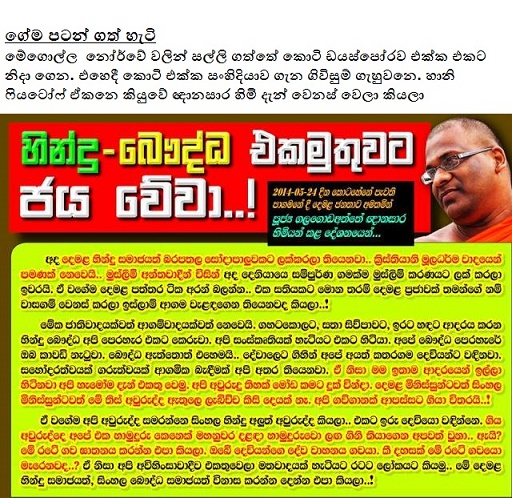
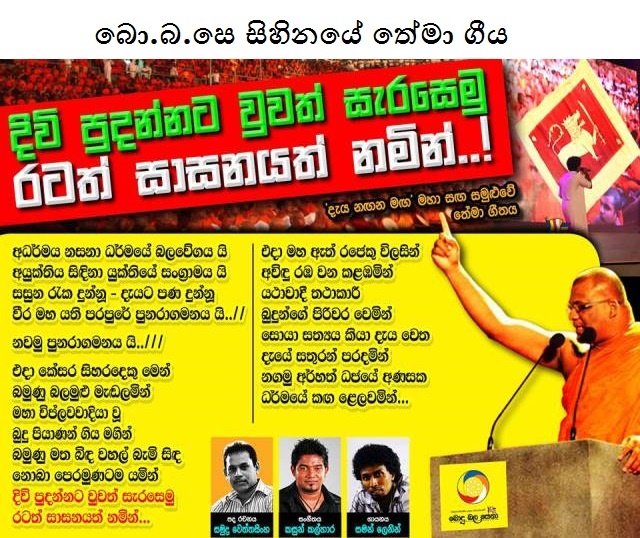
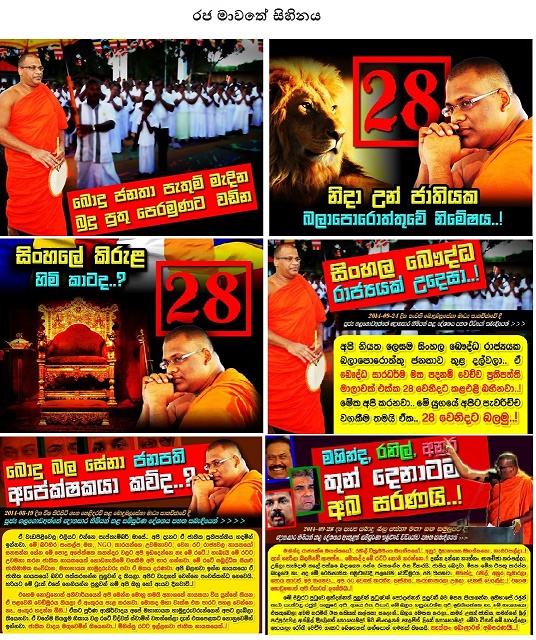
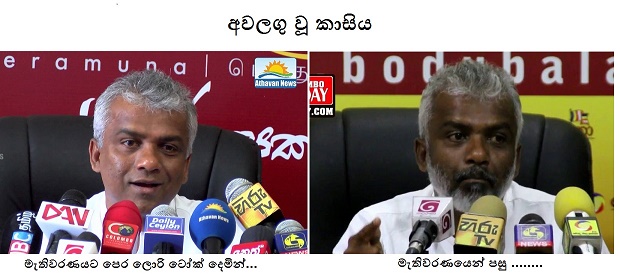
TWO MINISTERS I RESPECT
July 3rd, 2017Dr Sarath Obeysekera Ex Chairman –SLLRDC
When we watch TV news ,Minister Sajith is trotting around the country and opens new housing schemes in the rural areas.He does not make any meaningless statements about the state of affairs in the country .He may talk about Mahinda Rajapakse or GMOA and talks to the point .My wife keeps telling me that he is seem to be only minister who does something. Last week I saw a housing complex near the Premadasa Stadium being opened by the president ,but sadly he was not invited as the Housing Minister .His team of ex R Premadasa era are advising him correctly .Housing Ministry is a stepping stone for Kingship in the country
Then we have minister of Fisheries .Except his political role as the secretary to UPFA ,he does a yeoman service to Fishery Community . He has revived Fishery Corporation and advised Fishery Harbour Corporation to use private sector as much as possible to improve efficiency. He does nor go around the country and talks nonsense.
Both parties should get together and Promote Sajith as the President from UNP and Fishery Minister Amaraweera as the Prime Minister in the next election .
Task masters from previous government with clean record may join this combination
සිංහල වෙදකමට චීන බෙහෙත්!
July 3rd, 2017වරුණ චන්ද්රකීර්ති
2013 අවුරුද්දේ ඔක්තෝබර් මාසයේ තම මව ගේ අවමංගල්ය කටයුතුවලටත් හත් දවසේ පින්කමටත් සහභාගීවෙලා ආපහු චීනයට ගිය මේ ලේඛකයාට ඇය ගේ තුන් මාසයේ පින්කම වෙනුවෙන් නැවතත් ලංකාවට එන්න පුළුවන්කමක් තිබුණේ නෑ. ඉතින් ඇය වෙනුවෙන් පිනක් කරන්නම් කියලා හිතාගෙන මේ ලේඛකයා ගියේ චීනයේ පූථුඕ කන්දට. මේ කන්ද චීනයේ තියෙන බෝධිසත්ව මණ්ඩල හතරින් එකක්. මහ මුහුදේ පිහිටලා තියෙන මේ කන්ද කැපකරලා තියෙන්නේ අවලෝකිතේශ්වර බෝධිසත්වයන්වහන්සේ වෙනුවෙන්. මේ කන්දේ විහාරස්ථාන විශාල ප්රමාණයක් ඉදිකරලා තියෙනවා. ඉතින් පූථුඕ කන්ද කියන්නේ හිතේ හැටියට පිනක් දහමක් කරගන්න පුළුවන් තැනක්. හැබැයි මේ ලිපිය ලියන්නේ ඒක ගැන විස්තර කියන්න නම් නෙවෙයි.
පූථුඕ කන්දට කරපු වන්දනාවෙන් පස්සේ ආපහු පෙයි-චිං නුවරට ගිහිල්ලා දවස් දෙක තුනක් යද්දී මේ ලේඛකයාට සිද්දවුනා විශ්වවිද්යාලයේ තියෙන වෛද්ය මධ්යස්ථානයට යන්න. ඒ, තමන්ට වැළැඳිලා තිබුණු උදරාබාධයකට බෙහෙත් ගන්න. චීනයේ රෝහල්වල දී මුලින් ම කරන්න ඕන සුළු මුදලක් ගෙවලා අංකයක් ලබාගන්න එක. ඊට පස්සේ රෝහලේ ඉන්න වෛද්යවරයෙක් ළඟට යොමුකරනවා. ඉතින් තමන්ට යන්න කියපු කාමරයට මේ ලේඛකයා ගියා. ඒ කාමරයේ හිටියේ මැදිවියේ දොස්තර මහත්තයෙක්. තිබුණු අමාරුකම් ගැන විස්තර අහපු දොස්තර මහත්තයා මේ ලේඛකයාට කිව්වා වැළැඳිලා තියෙන්නේ අජීර්ණයක් හින්දා චීන වෙදමහත්තයෙක්ගෙන් බෙහෙත් ගන්න එක වඩා සුදුසුයි කියලා. එහෙම කියලා ඒ වෛද්ය මධ්යස්ථානයේ ම තියෙන චීන වෙද අංශයට යන්න මග පෙන්නුවා. ඉතින් තමන්ට උවමනා කරන වෙදකම් කරගන්න මේ ලේඛනයාට පුළුවන් වුනා.
චීනයේ දී හෙම්බිරිස්සාවක් හැදිලා බටහිර වෛද්යවරයෙක් ළඟට ගියත් ඒ අය සාමාන්යයෙන් දෙන්නේ ක-ලී කියලා කියන චීන පේයාව වගේ දේවල්. ඒ කාලේ මේ දේවල් ගැන වැඩි දැනීමක් මේ ලේඛකයාට තිබුණේ නෑ. චීනයේ බටහිර වෛද්යවරු තමන් ගේ රටට ආවේනික වෙදකම් පහත් කරලා සළකන්නේ නැති බව විතරක් මේ ලේඛකයාට වැටහුනා. ඒත් මෑත කාලයේ දී තවත් දෙයක් දැනගත්තා. ඒ තමයි චීනයේ තියෙන නීතියක් ගැන. මේ නීතියේ හැටියට චීනයේ තියෙන සෑම බටහිර රෝහලක ම චීන වෛද්ය අංශයක් අනිවාර්යයෙන් ම පවත්වා ගෙන යා යුතුයි. අවුරුදු දහස් ගණනක් තිස්සේ වර්ධනය වෙලා ඉදිරියට ආපු මේ වෙදකමට හිමි තැන ලබාදෙන්න චීන ආණ්ඩුව ඒ විදිහට මැදිහත් වෙලා ඉන්නවා. ඒ වගේ ම, තමන් ගේ උරුමය පහත්කරලා කතාකරන පුරුද්දක් චීනයේ ඉන්න බටහිර වෛද්යවරුන් අතර නෑ. චීන වෙදකමේ හපන්කම් ගැන බටහිර වෛද්ය විද්යාවේ කෙළ පැමිණි මහාචාර්යවරු පවා පම්පෝරි කතා කියනවා.
ඉතින් චීන වෙදකමට තියෙන මේ පිළිගැනීම හින්දා චීන-බටහිර ඒකාබද්ධ රෝහල් පවා ඇතිකරන්න චීන්නු පෙළැඹිලා ඉන්නවා. පෙයි-චිං ෆර්ස්ට් හොස්පිටල් ඔෆ් ඉන්ටග්රේටඩ් චයිනීස් ඇන්ඩ් වෙස්ටර්න් මෙඩිසින් කියන රෝහල තියෙන්නේ මේ ලේඛකයා නිතර යන එන මාර්ගයක උතුරු පැත්තෙන්. පෙයි-චිං හොස්පිටල් ඔෆ් ඉන්ටග්රේටඩ් ට්රැඩිසනල් චයිනීස් ඇන්ඩ් වෙස්ටර්න් මෙඩිසින් කියන රෝහල තියෙන්නේ මේ නගරයට අයිති හයි-තියැන් දිස්ත්රික්කයේ. (මේ රෝහල්වල ඉංග්රීසි නම් කිව්වේ අපේ අයට වැටහෙන්නේ එහෙම කිව්වොත් තමයි කියන කාරණය සළකලා). මේ වගේ රෝහල් චීනයේ හැම තැන ම වගේ තියෙනවා.
තවත් කාරණයක් කියන්න ඕන. චීනයේ බටහිර වෙදකම් ජනප්රිය නාගරික මධ්යම පාංතික පිරිස් අතර. ගැමි ජනතාවත් සමාජයේ ඉහළ ස්ථරවලට අයිති මහා ධන කුවේරයොත් යන්නේ චීන බෙහෙත් ගන්න. තමන් දන්න හඳුනන එක්තරා වයසක වෙද නෝනා කෙනෙක් ඇපොයින්ට්මන්ට් එකක් දෙන්න යුවාන් 600 ක මුදලක් (ඒ කියන්නේ, රුපියල් දහතුන් දාහකට වඩා වැඩි මුදලක්) අයකරන බව මේ ලේඛකයා දන්නවා. හැබැයි හුසමක් කටක් ගන්නේ නැතිව ලෙඩ්ඩුන්ට බෙහෙත් කරන්න මේ වෛද්යවරුන්ට රෝහල්වලින් ඉඩ දෙන්නේ නෑ. මේ කියපු වෙද නෝනාට දවසකට බලන්න පුළුවන් ලෙඩ්ඩු තිස්දෙනෙක් විතරයි කියලා අදාළ රෝහලින් නියමකරලා තියෙනවා. ඒ, එහෙම නොවුනොත් වෛද්යවරයාට උවමනාකරන විවේකය නො ලැබෙන හින්දා.
මේවා දකිද්දී අපි ගැන ඇතිවෙන්නේ මහා දුකක්. අපි අපේ සිංහල වෙදකම කොච්චර නම් පහළට දාලා ද කතාකරන්නේ. කසාය බීලා, තෙල් ගාගෙන දොස්තර මහත්තයෙක් ළඟටවත් යන්න අපි බයයි. වැරැදිලා හරි එහෙම කළොත් අපේ දොස්තර මහත්තුරු නෝනලා පරලවෙන විදිහ අපි දන්නවා. ඇත්තට ම මොකක්ද අපිට වෙලා තියෙන්නේ? ඇයි අපි අපේ දේවල්වලට මේ තරම් ගරහන්නේ? බොරුවට පංච මහා බලවේග කතා කිව්වාට අපේ ගම්වල ඉන්න වෙදමහත්වරුන්ට කිසි ම තැනක් දෙන්න මේ රටේ ඉන්න දැන උගත් පිරිස කැමැති නෑ. ඒ අයට ලැබිලා තියෙන්නේ හතරවැනි මට්ටමේ පිළිගැනීමක්. ඉහළින් ම ඉන්නේ බටහිර වෙදකමේ පරප්රාප්ත අපේ දොස්තර මහත්තුරු නෝනලා. ඊ ළඟට ආයුර්වේද වෛද්යවරු. දැන් ආණ්ඩුවේ ආයුර්වේද වෛද්ය පිඨයේ ඉගෙනගන්නේ බටහිර වෛද්යවරයකු වීමේ බලාපොරොත්තුවෙන් උසස් පෙළ ජීව විද්යා විෂයයන් හදාරලා ඒ වැඩේ කරගන්න ලකුණු මදිවෙච්ච අය. ඊ ළඟට හෝමියෝපති වෛද්යවරුන්ටත් තැනැක් තියෙනවා. අන්තිමට තමයි අපේ සිංහල වෙදමහත්තුරු ඉන්නේ. ඒ අය ගේ වැඩ බලන්න, අධීක්ෂණය කරන්න ආයුර්වේදය ඉගෙනගත්ත අය ව පත්කරලා ඉන්නවා.
අපේ සිංහල වෙදකම කියන්නේ වෛද්ය පීඨයක දී විතරක් උගන්නන්න පුළුවන් එකක් නෙවෙයි. ඒක ගුරුවරයා ගේ සේවනේ ඉඳිමින් ඉගෙනගත යුතු එකක්. චීන වෙදකම උගන්වන්නෙත් මීට සමාන ක්රමයකට ම කියලා මේ ලේඛකයා දන්නවා. වෛද්ය පීඨයකින් මූලික අධ්යාපනය ලබපු අය වෙදමහත්තයෙක් ගේ වෙද නෝනා කෙනෙක් ගේ අත් උදව්වට යනවා. ඒ විදිහට ගුරුවරයෙක් සෙවනේ කාලයක් තිස්සේ ශිල්පය ප්රගුණකරනවා.
මේ කාරණය ගැන හිතද්දී චීනයෙන් අපිට ඉගෙනගන්න පුළුවන් දෙයක් තියෙනවා කියලා මේ ලේඛකයාට හිතෙනවා. ඒ, චීන වෙදකම නෙවෙයි. කැමැති කෙනෙක් චීන වෙදකම ඉගෙනගත්තට කමක් නෑ. බටහිර වෙදකම් ඉගෙනගන්න අපිට, මීට හරියට ම අවුරුදු 100 කට කලින් (ඒ කියන්නේ 1917 දී, කල්කටාවට ගිහිල්ලා අවුරුදු තුනක් ඉගෙනගෙන ආපු පණ්ඩිත ගේබ්රියල් පෙරේරා වික්රමආරච්චි වෙදමත්තයා අනුගමනය කරලා අරිෂ්ඨ, කල්ක, ගුලිවලට මුල් තැනක් දෙන ආයුර්වේදය ඉගෙනගන්න අපිට, ඕන නම් චීන වෙදකම වුනත් ඉගෙනගන්න බැරිකමක් නෑ.
ඒත් අපිට අපේ ම කියලා හොඳ වෙදකමක් තියෙන හින්දා වැඩි බරක් ඒ වෙනුවෙන් යොදන එක තමයි වඩාත් ම වටින්නේ. ඉතින් අපේ සිංහල වෙදමහත්තුරුන්ට පිළිගැනීමක් ලැබෙන වැඩපිළිවෙලක්, අපේ වෙදකමට සැළකිල්ලක් ලැබෙන වැඩපිළිවෙලක් අපි සකස් කරගන්න ඕන. මුලින් ම කළ යුත්තේ ඒ අය ව ආයූර්වේදය ඉගෙනගත්ත අය ගේ පාලනයෙන් නිදහස් කරගන්න එක. ආයූර්වේදය කියන්නෙයි අපේ සිංහල වෙදකම කියන්නෙයි එකක් නෙවෙයි. ඉතින් අපේ වෛද්යවරුන් ගේ වැඩ ගැන බලන්න ඕන ඒ අයගෙන් ම පත් කරගත්ත සභාවකින්. එහෙම කළොත් ආයූර්වේදය ඉගෙනගත්ත අයට පුළුවන් ආයූර්වේද වෛද්යවරු ගැන හොඳින් හොයලා බලන්න තමන් ගේ කාලයත් හැකියාවත් වෙන්කරන්න.
ඉතින් චීනයෙන් අපිට ඉගෙනගන්න පුළුවන් පාඩම තමයි අපේ වෙදකම ඉහළට නංවන්න නම් කළ යුත්තේ මොනවාද කියලා හොයලා බලන එක. මේ වෙනුවෙන් විධිමත් අධ්යයනයක් කරන්න වෙනවා. එහෙම නැතුව මේ ලේඛකයා කරනවා වගේ උඩින් පල්ලෙන් කරුණු හොයලා බලලා මේක කරන්න බෑ. මේ දේවල් කරන්න නම් ඒ වෙනුවෙන් අපේ වෛද්යවරු කිහිපදෙනෙක්වත් සංවිධානය වෙන්න ඕන. පුළුවන් තරමින් සංවිධානය වෙලා තමන් ගේ අනන්යතාව රැකෙන විදිහට වෙදමහත්තුරු ගැන, ඒ අය ගේ කටයුතු ගැන හොයලා බලන තමන් ගේ ම පාලක සභාවක් පිහිටුවාගැනීමට උවමනා කරන හඬනැගීමේ වැඩපිළිවෙලකට මුල්වෙන්න ඒ අයට පුළුවන්. ආයුර්වේද ආධිපත්යයෙන් නිදහස් නො වී සිංහල වෙදකම ඉස්සරහට ගන්න පුළුවන් කියලා මේ ලේඛකයා හිතන්නේ නෑ.
අදීනකම රැකගන්න පුළුවන් වෙන්නේ අපේ දේ වර්ධනය කරගන්න උවමනාකරන මාර්ග සොයාගැනීමෙන් මිසක් පිටස්තර අයට බැන බැන ඉඳීමෙන් නෙවෙයි. චීනය කියන්නේ මේ විදිහට විවිධ මාර්ග හොයාගෙන තමන් ගේ හැකියාවන් වැඩිදියුණු කරගත්ත රටක්. ඒ අය අනුගමනය කරන ක්රම එකක් නෑර ඒ විදිහට ම අපිට අනුගමනය කරන්න පුළුවන් කියලා කාටවත් කියන්න බෑ. ඕනෑ ම රටක, ඕනෑ ම සංස්කෘතියක හොඳ දේ වගේ ම නරක දේත් තියෙනවා. ඉතින් චීනය වගේ මහා රටක තියෙන්න පුළුවන් අඩුපාඩුත් සුළුපටුයි කියලා කියන්න බෑ. ඒ විතරක් නෙවෙයි. ඒ අයට හොඳ හැම දෙයක් ම අපිට හොඳ වෙන්න පුළුවන්කමකුත් නෑ. ඒ වගේ ම ඒ හැම දෙයක් ම අපිට ගැලපෙන්න පුළුවන්කමකුත් නෑ. ඒත් බටහිරින් ඉගෙනගන්න අපිට, ඉන්දියාව කියලා හදලා තියෙන රටින් ඉගෙනගන්න අපිට, චීනයෙනුත් යමක් ඉගෙනගන්න බැරිකමක් නෑ. චීන්නු තමන් ගේ වෙදකම රැකගන්න, ඉස්සරහට ගන්න කරන දේ ආදර්ශයට ගන්න පුළුවන් එක දෙයක්.
ඉතින් අපේ සිංහල වෙදකම ඉස්සරහට ගන්න ක්රමයක් ගැන අපිට හිතලා බලන්න පුළුවන්. ඒ වෙනුවෙන් චීන ආදර්ශය විධිමත් විදිහට අධ්යයනය කරන්න පුළුවන්. ඒ ආදර්ශය ගැන අපේ ආණ්ඩුවට කියලා දෙන්න පුළුවන්. එහෙම කරලා ඒ වෙනුවෙන් ඕන කරන නීති, අණ පනත් සම්මත කරවාගන්න පුළුවන්. ඉතින් මේ ගැන හිතන්න කාලය ඇවිල්ලා. මේ සම්බන්ධයෙන් අපේ වෙදමහත්තුරුන් ගේ අවධානය යොමුවෙයි කියලා මේ ලේඛකයා හිතනවා.
වරුණ චන්ද්රකීර්ති ෴
Three-wheel taxi drivers in Sri Lanka protest against U.S. travel warning
July 3rd, 2017Dr Sarath Obeysekera
COLOMBO, July 3 (Xinhua) — Three-wheel taxi drivers in Sri Lanka on Monday protested against a U.S. travel warning for tourists using three-wheelers in Colombo.Representatives of three-wheel taxi associations protested outside the U.S. embassy in Colombo and submitted a petition calling for the withdrawal of the travel warning.
I am actually amazed and dumbfounded when I read above news .Three wheeler drivers are the most arrogant .dishonest drug pedalling ,whore house running youngsters with no manners .We have read many news items about their nefarious activities and government was even contemplating to prohibit them coming within downtown area like to Delhi and Mumbai.I had many bitter experiences and I was threatened and abused by them .
Two years back MR invited them to a bash in Temple trees and expressed his support.
If three wheeler drivers keep protesting in front of the American Embassy, they are proving that travel adversary is justifiable.
Leaders of three wheeler association shall congregate all the drivers and hold a national dialogue ( Jathika Kathikawa) and take a letter to Unitised Nations Human rights section and make a complain about Americans .
This country has become so much strike infested and government is playing yahapalana game to show the world that we are democratic and everyone is allowed to strike as they wish .
We such a democratic country and once upon a time we had a three wheeler drive who became the Colombo Mayor !
They should implement the light railway and metro system ASAP and three wheelers will slowly vanish from the cities
Dr Sarath Obeysekera
The wonder that is Bhutan
July 3rd, 2017By the Venerable Omalpe Sobhitha Thera
There will be many answers to the question: which is the country where the happiest people live? In response many famous, developed nations will come to our mind. But you will be surprised that the name of a little-known country is right the answer to the question. It is Bhutan, the wonderful and amazing country which beats all others in the happiness index.
Bhutan has been so identified following a worldwide survey done under the theme Gross National Happiness (GNH) – not Gross National Product (GDP). Her Capital is Thimpu which reminds us of the peace talks held there between the Sri Lanka Government and the LTTE terrorists in 1985.
Recently I found the opportunity to fulfill a long-cherished hope of finding out more about this wondrous country, which recalls the Island of Uthurukuru mentioned in Buddhist literature. The experiences I had in Bhutan, proved the visit there was truly my good fortune.
Bhutan with a population of 750,000 people is located above 23000 feet (7000 metres) sea level in the Himalayan region, near the world’s highest point, Mount Everest. The country has a cold climate (0 to 20 degrees Fahrenheit). The sky above Bhutan is always filled with white clouds rising above the mountain peaks surrounding the country. The scenery is similar to that of Nuwara Eliya in Sri Lanka but human settlements are located some distances away from each other.
A foreign tourist visiting in the country actually finds himself/herself on a Buddhist pilgrimage. The reason is that all the important places one sees are Buddhist temples and monasteries. Tourists are drawn towards the many big and small temples which have been built since the arrival of Vajrayana Buddhism in the 15th Century. Most of these temples are located on hill tops surrounded by thick jungle. Visitors are overjoyed by the wonders of the places when listening to the tour guide. The Buddhists among the visitors engage in worshiping the Buddha according to their traditions. Non-Buddhists too go about in calm and relaxed mood, respecting the sanctity of the temples.
Tourists take their own time in observing the places since there are no obstructions unlike in Sri Lanka where all types of unscrupulous elements try to fleece visitors on the pretext of trying to sell different items or become self-appointed tour guides to extort money from the visitors.
Although there are various items on sale at shops near the places visited by tourists in Bhutan no one tries to force items on tourists. They are allowed to pick and chose whatever they wish to buy. The prices are fixed so there is no bargaining. Unlike in Sri Lanka no vendor tries to hoodwink visitors by selling items to foreigners at a price higher than at which it is sold to locals.
The restless behaviour of some Sri Lankan ‘bhikkus’ and lay persons whenever a group of local or foreign pilgrims visit a place of worship has become a joke. The reason is that all of them want to exploit the visitors and fill their pockets.
There is no selling of tickets or charging in any fee to visit any place of worship in Bhutan. Also nowhere did we see beggars or children running behind visitors and pestering for money or food. If we on our own give the children something they are very shy to accept but eventually do so and thank us in English.
It is most unfortunate that begging has become a ‘tradition’ in places of Buddhist worship in Sri Lanka. Needless to say it tarnishes the image of Buddhism in Sri Lanka in the eyes of foreigners.
There are both bhikkus (monks) and bhikkunis (nuns) in Bhutan. Thirty thousand of them are bhikkus and 18000 are bhikkunis. Bhikkus are addressed as lamas. Becoming a bhikku or bhikkuni is voluntary and temporary ordination is very popular there. Entering the Order of the Sangha even for a short period in life is considered essential. Children are trained to adapt themselves to life in hermitages from the age of seven.
The saying, surprising but true” comes to the mind a thousand times when touring Bhutan.
It is surprising to see that heaps of garbage is not to be seen anywhere, neither in villages nor towns. No bags of rubbish are kept at roadsides or hanging from lamp posts. Garbage bins are kept in specified places but they are not overfilled making the rubbish visible from the outside.
Also the Bhutanese are way above all other societies in moral conduct and ethical way of living.
The Government restricted cigarette smoking from time to time until 2015 after which a total ban was imposed on tobacco production, cigarette manufacture and cigarette smoking. Foreigners are permitted to bring a limited number of cigarettes (200) and special places are allocated for them in hotels for smoking.
Strict laws are also enforced on consumption of liquor. Liquor sales are banned in the vicinity of temples, schools, hospitals, universities and community centres. No liquor imports are allowed. All liquor sales outlets are closed every Tuesday.
Cattle are a treasure for the Bhutanese who make use them in a very meaningful way. In addition to being a source for the production of milk, ghee, cheese and butter cattle are used for agricultural purposes in the rural areas. It is an example to us in Sri Lanka that the Bhutanese in accordance with the Brahmana Dhamma Sutra of the Majjima Nikaya, show due to consideration for the welfare of cattle which help the people in their sustenance and livelihood. Cattle slaughter has been banned throughout Bhutan and it is a common sight to see cattle roaming freely on the streets causing no trouble to people.
For those who are addicted to flesh consumption, meat is imported. But during the first and fourth month of every year meat consumption is completely banned, since the two months are considered religiously important based on the lunar calendar in Bhutanese culture. This mercy shown to animals reminds us of a similar law Sinhala King Amandagamini (67-79 AD) introduced.
Flesh consumption is not very popular and meat stalls are almost hidden since openly doing the business is banned.
Another amazing sight to the foreign tourist is that no huts and shanties of the poor are seen anywhere when passing small villages on the way to main towns like Paro, Punakha, Thronsa and Mongar located hundreds of miles away from the Capital Thimpu. No helpless and unfortunate persons are seen on pavements and at bus halts anywhere in the country.
Every citizen has a permanent house built according to state-approved plans. The plans are drawn up according to national cultural standards and artistic designs. As a result all houses almost look alike. And because of the beautiful designs and carvings they might be even mistaken for temples.
The three most important factors that bind the Bhutanese and contribute to their unity and harmonious living are the king, country and religion. It is compulsory to prominently display pictures of the king and the royal family in every house, government and private establishment, hotel, hostel and temple. Up to 1974 the only foreigners permitted to enter the country were those invited for specific purposes. Others were allowed only after 1974.
The Bhutanese government is not interested in attracting foreign tourists. Hence, when applying for a visa to enter Bhutan the applicant has to comply with a number of rules and regulations. These are meant to prevent troublemakers and dubious characters from entering the country and corrupting the people of Bhutan. Their rulers are teaching us Sri Lankans a far-seeing lesson by giving priority to protecting society’s moral standards and its physical and mental health rather than earning foreign exchange through tourism.
Bhutan communicates with the outside world by two government-owned airline companies. No other airlines are allowed into the country.
No foreign tourist or groups of tourists are allowed to roam freely. Their attire and behaviour should not violate the country’s cultural norms. Accordingly, every tourist should register with a government-approved company and should travel with an authorized tour guide. A special examination is held for tour guides. They should always be in national costume and observe national and institutional customs when they are guiding tourists.
When thinking about Bhutan we are compelled to question the widely accepted criteria of development. Economists and social scientists as well as politicians and the majority of us consider acquiring more and more physical resources and increasing personal incomes is the way to happiness. Consequently we are solely focused on reaching economic targets having entered a dream world via theories based per capita income and foreign-exchange reserves. We are engaged in a relentless, tiring rat race towards so-called progress, symbolized by skyscrapers, flyways, high speed trains, luxury vehicles, palace-like buildings etc. Mesmerized by this mirage, we have become so selfish and ruthless that we are ignoring not only ethical living and moral standards but also obligations towards our parents, as proved by what is happening in our country and rest of the world.
The people of Bhutan are the living example on this earth that happiness alone is wealth as taught by the Buddha.
The time has now come for us to realize that the true criteria of a happy country is where the people, without being trapped in unlimited desires, have fulfilled their basic needs and lead relaxed and healthy lives both physically and mentally, spreading goodwill among everyone. Bhutan has already set this powerful example to the world.
It is absolutely unquestionable that no political ideology but the Buddha’s incomparable teaching which has brought about this unique state of happiness in Bhutan.
Xi Jinping to meet Putin in Moscow for 3rd time this year to strike $10bn worth of deals
July 3rd, 2017Courtesy RT
Chinese President Xi Jinping will arrive in Russia on Monday, making a two-day stop on his way to Germany, where a G20 summit is set to take place later this week. A tête-à-tête with Russian President Vladimir Putin is said to be a central part of Xi’s trip to Moscow.
Read more
Unfazed ‘lone warrior’ Xi Jinping faces entire Team Putin (VIDEO)
Ahead of his visit, the Chinese leader gave an interview to Russia’s TASS news agency, in which he particularly focused on the issue of deployment of the US THAAD missile defense systems to South Korea.
Xi criticized the move as disrupting the strategic balance in the region” and threatening the security interests of all countries in the region, including Russia and China. He also reiterated that Beijing is urging Washington and Seoul to back away from the decision to deploy THAAD systems to the Korean peninsula.
Less than a month ago, Putin and Xi met in Kazakhstan’s capital, Astana, on the sidelines of a Shanghai Cooperation Organization summit. At that time, Putin called the upcoming meeting in Moscow a major event in bilateral relations,” noting that it would have a significant” impact on bilateral ties.
By tradition, we use every opportunity to meet and to discuss bilateral relations and the international agenda,” the Russian president said.
The Chinese leader noted that every new meeting brings new opportunities for an exchange of opinions,” adding that the numerous meetings at various venues indicate the high level of bilateral relations” between Moscow and Beijing.
Before the Astana meeting on June 8, Xi had hosted Putin in Beijing during the high-level ‘One Belt, One Road’ forum, which brought together dozens of heads of state in May to discuss international cooperation.
During Xi’s visit to Moscow, scheduled for July 3-4, Russia and China will sign several contracts worth a total of $10 billion, as well as more than a dozen intergovernmental agreements on cooperation in various fields, TASS reported, citing Chinese Assistant Foreign Minister Li Huilai.
Read more
China may finance Russia’s natural gas pipeline to Europe
Andrey Denisov, Russia’s ambassador to China, told TASS the leaders will sign numerous corporate agreements between Russian and Chinese companies. We’re discussing a number of draft documents, both on government and corporate levels. And we have dozens of documents relating to the former group,” he said.
Moscow and Beijing are determined to align positions on pressing international issues, he said. Close ties allow the countries to pursue a rather close course on various aspects of the agenda of international organizations, including the United Nations,” according to the ambassador. To put it directly, it produces a sobering effect on our partners in these international organizations,” he added.
When good intentions framed in lofty words lead to chaos, the collapse of states and, in the long run, to bloodshed and numerous human casualties, the role of stabilizers, of the factors that may have a cooling, stabilizing effect on the generally turbulent international situation is very important. And Russian-Chinese relations are, to my mind, such a stabilizing factor,” Denisov said.
Chinese envoy to Moscow Li Hui said, the comprehensive strategic partnership of coordination between China and Russia has been developing stably, sustainably, and at a high level.”
Moscow and Beijing have strengthened their strategic partnership on the international stage, Li noted, adding that they have been jointly pushing for political solutions to the Korean nuclear issue and the Syrian crisis.
”වෙනස සැපද?” සම්මන්ත්රණය බදාදා සවස කොළඹදී
July 3rd, 2017යුතුකම සංවාද කවය මඟින් සංවිධානය කරන සම්මන්ත්රණයක් කොළඹ මහජන පුස්තකාල ශ්රවණාගරයේදී ජුලි 5 වන බදාදා සවස 3.30 ට පැවැත්වේ.
මෙම සම්මන්ත්රණයේ මුලසුන හොඹවන්නේ දක්ෂිණ ලංකාවේ ප්රධාන සංඝ නායක පූජ්ය කිරම විමලජෝති නාහිමිපාණන් වහන්සේ විසිනි.
මෙම සම්මන්ත්රණය තුළදී නව ව්යවස්ථා සංශෝධන නිසා රටට ඇති අභියෝග, රටේ ප්රජාතන්ත්රවාදය නැති වීම, ආර්ථික මර්මස්ථාන විදේශිකයන් සතු කිරීම වැනි වර්තමානයේ ලංකාව මුහුණපාන ප්රධාන අභියෝගයන් පිළිබඳව සාකච්ඡා කෙරේ.
මෙම සම්මන්ත්රණයට දේශකයන් ලෙස ප්රවීණ මාධ්යවේදී මොහාන් සමරනායක, ජනාධිපති නීතීඥ මනෝහර ද සිල්වා, ප්රවීණ දේශපාලන විශ්ලේෂක ගෙවිඳු කුමාරතුංග යන මහත්වරුන් සහභාගී වේ.
සම්මන්ත්රණය නම් කර ඇත්තේ ”වෙනස සැපද?” යන තේමාවෙනි. යුතුකම සංවාද කවය විසින් මෙම අවස්ථාවට සහභාගී වන ලෙස විවෘත්ත ආරාධනාවක් සිදු කරයි.
ලසන්ත වික්රමසිංහ (0716369828)
ලේකම්
යුතුකම සංවාද කවය
SRI LANKA: Teacher transferred on charges of writing poems on FaceBook
July 3rd, 2017ASIAN HUMAN RIGHTS COMMISSION – URGENT APPEALS PROGRAMME
Dear Friends,
The Asian Human Rights Commission has received information regarding Mr. Kushan Shalika Herath (30), a teacher at the Kuliyapitiya Central College. Mr. Kushan has been transferred to Narammala Central College, effective 11 June 2017, on charges of writing poems on Facebook (FB). The teacher, who taught advanced level Technology at the Kuliyapitiya Central College, has habitually been writing poems on his FB page. This unlawful transfer been dictated by the Ministry of Education.
This is not the first time such an unfair decision has been taken by Authorities in Sri Lanka. Previously, a female schoolteacher of Mahanama College, Colombo, filed a Fundamental Rights Petition with the Supreme Court based on similar facts. The Supreme Court ruled that the Government should accept the freedom of expression of government employees. The teacher and concerned parties raise their collective voices against this unlawful, volatile action. The State is curtailing the rights of its citizens to enjoy their rights of free speech and expression enshrined in the Constitution.
CASE DETAILS:
The Asian Human Rights Commission has received information regarding Mr. Kushan Shalika Herath (30) a teacher at Kuliyapitiya Central College. He teaches Science for Technology for Advanced Level students at Kuliyapitiya Central College. On the side, he has published some of his poems on Social Media. According to Kushan, he has taught this particular subject, ‘Science for Technology,’ at Kuliyapitiya College for three years. According to recently issued Advanced Level results, his students have had excellent results within district ranks.
He engages in creative writing, writes poems as a hobby and has published many of his poems on the Internet in Social Media. Some of his poems were published on his FB page as well. Mr. Kushan said that his creative writings are highly appreciated by his peers as well as senior teachers specializing in literature.
Meanwhile several officials of the Education Ministry’s Counter-Fraud Unit visited Kushan’s school on 23 January 2017. They questioned him about writing and publishing his poems and their content. Unfortunately, on this occasion, the school Principal remained silent about Kusan’s situation. It was learned that the Principal yielded to the Authorities demands and did not openly support Kushan.
The Ministry of Education officials made the following point. Kushan insulted both the School and the Education Ministry by publishing his ordinary poems while being employed as a State Sector Teacher. Kushan was asked if he was trying to persuade teachers and students to speak against the government. The investigators recorded statements from several teachers and students.
Kushan states that he had not written anything detrimental to the school. He has only written of interesting happenings in the school. When the two Ministry of Education senior officials questioned him, he opened his Facebook (FB) and showed them all the poems he had written. The officials concurred that the poems did not in any way damage the reputation of the School or of any individual.
Later, however, he received a letter from the Ministry of Education transferring him to Mayurapada Central College, Narammala, effective 11 June 2017. He states that he joined the Kuliyapitiya Central College to teach the newly introduced subject, Science for Technology to Advance Level students. The new school does not have any vacancies in that subject.
Kushan states that he has not been accused of any other misdemeanors that justified his transfer. As far as he was aware, he neither violated any principles as a teacher nor had he failed in carrying out his duties as required by the School.
According to the transfer, Kushan has been directed to teach Mathematics in his new workplace. He is not up-to-date on this particular subject. In effect, this transfer is only to replace a teacher who has gone on sick leave for two weeks. He believes that there is no justifiable reason for his transfer. This transfer was not made in line with the established National Transfer Policy Circular No. 2007/20 on teacher transfers.
On Wednesday, 14 June, the Education Ministry’s Media Unit, stated: the transfer was made due to an administrative requirement and had nothing to do with their investigation.
Meanwhile, Mr. Joseph Stalin, the General Secretary of the Ceylon Teachers Union (CTU), made a pronouncement. He said that the transfer had been done in a haphazard manner, without conforming to the National Transfer Policy Circular No. 2007/20, on teacher transfers. He has written to the Ministry of Education in protest against the injustice and will keep abreast of the problem. If nothing is done to reinstate Kushan,the CTU will take legal action against the Ministry.
Kushan states that he has the right to enjoy free speech and expression guaranteed by the Constitution. He has never engaged in anything illegal. He has not caused any damage to the reputation of an individual or Institution. While he has behaved like a peaceful citizen, the Ministry of Education officials have violated his rights.
Suggested Action:
Please send letters to the Authorities listed below expressing your concern about this case. Request an immediate inquiry into the allegations of violating the rights of a teacher by officers the Ministry of Education. All officers involved must be examined by an internal investigation for a breach of Duty of Care. Finally, please appeal to the Secretary of the Ministry of Education to set up a special investigation into the case.
To support this case, please click here:
SAMPLE LETTER:
Dear ________,
SRI LANKA: Teacher transferred on charges of writing poems on FaceBook
Name of Victims: Mr. Kushan Shalika Herath (30), a teacher at Kuliyapitiya Central College
Alleged Perpetrators: Sri Lanka Officers of the Ministry of Education
Date of incident: 11 June 2017
Place of incident: Kuliyapitiya Central College
According to information I have received Mr. Kushan Shalika Herath (30) a teacher at Kuliyapitiya Central College. He teaches Science for Technology for Advanced Level students at Kuliyapitiya Central College. On the side, he has published some of his poems on Social Media. According to Kushan, he has taught this particular subject, ‘Science for Technology,’ at Kuliyapitiya College for three years. According to recently issued Advanced Level results, his students have had excellent results within district ranks.
He engages in creative writing, writes poems as a hobby and has published many of his poems on the Internet in Social Media. Some of his poems were published on his FB page as well. Mr. Kushan said that his creative writings are highly appreciated by his peers as well as senior teachers specializing in literature.
Meanwhile several officials of the Education Ministry’s Counter-Fraud Unit visited Kushan’s school on 23 January 2017. They questioned him about writing and publishing his poems and their content. Unfortunately, on this occasion, the school Principal remained silent about Kusan’s situation. It was learned that the Principal yielded to the Authorities demands and did not openly support Kushan.
The Ministry of Education officials made the following point. Kushan insulted both the School and the Education Ministry by publishing his ordinary poems while being employed as a State Sector Teacher. Kushan was asked if he was trying to persuade teachers and students to speak against the government. The investigators recorded statements from several teachers and students.
Kushan states that he had not written anything detrimental to the school. He has only written of interesting happenings in the school. When the two Ministry of Education senior officials questioned him, he opened his Facebook (FB) and showed them all the poems he had written. The officials concurred that the poems did not in any way damage the reputation of the School or of any individual.
Later, however, he received a letter from the Ministry of Education transferring him to Mayurapada Central College, Narammala, effective 11 June 2017. He states that he joined the Kuliyapitiya Central College to teach the newly introduced subject, Science for Technology to Advance Level students. The new school does not have any vacancies in that subject.
Kushan states that he has not been accused of any other misdemeanors that justified his transfer. As far as he was aware, he neither violated any principles as a teacher nor had he failed in carrying out his duties as required by the School.
According to the transfer, Kushan has been directed to teach Mathematics in his new workplace. He is not up-to-date on this particular subject. In effect, this transfer is only to replace a teacher who has gone on sick leave for two weeks. He believes that there is no justifiable reason for his transfer. This transfer was not made in line with the established National Transfer Policy Circular No. 2007/20 on teacher transfers.
On Wednesday, 14 June, the Education Ministry’s Media Unit, stated: the transfer was made due to an administrative requirement and had nothing to do with their investigation.
Meanwhile, Mr. Joseph Stalin, the General Secretary of the Ceylon Teachers Union (CTU), made a pronouncement. He said that the transfer had been done in a haphazard manner, without conforming to the National Transfer Policy Circular No. 2007/20, on teacher transfers. He has written to the Ministry of Education in protest against the injustice and will keep abreast of the problem. If nothing is done to reinstate Kushan,the CTU will take legal action against the Ministry.
Kushan states that he has the right to enjoy free speech and expression guaranteed by the Constitution. He has never engaged in anything illegal. He has not caused any damage to the reputation of an individual or Institution. While he has behaved like a peaceful citizen, the Ministry of Education officials have violated his rights.
I request the intervention of your good offices. Ensure that the authorities listed below open an immediate investigation into allegations of violations of the rights of the victim by Officers of the Ministry of Education. All officers involved should be subject to an internal investigation.
Yours sincerely,
———————
PLEASE SEND YOUR LETTERS TO:
- Mr. Jayantha Jayasooriya PC
Attorney General
Attorney General’s Department
Colombo 12
SRI LANKA
Fax: +94 11 2 436421
E-mail: ag@attorneygeneral.gov.lk - Secretary
Human Rights Commission
No. 36, Kynsey Road
Colombo 8
SRI LANKA
Tel: +94 11 2 694 925 / 673 806
Fax: +94 11 2 694 924 / 696 470
E-mail: sechrc@sltnet.lk - Secretary,
MINISTRY OF EDUCATION, SRI LANKA
“Isurupaya”,
Pelawatta,
Battaramulla,
Sri Lanka.
Fax: +94 11-2784869
Thank you.
Urgent Appeals Programme
Asian Human Rights Commission (ua@ahrc.asia)
Visit our website with more features at www.humanrights.asia.
You can make a difference. Please support our work and make a donation here.
—————————–
Asian Human Rights Commission
ඩෙංගු මර්ධනය කිරීමට වැඩපිළිවෙනක් සකස් කරනවා වෙනුවට හෙද හෙදියන් පීඩාව පත් කිරීම වැරදිය
July 3rd, 2017ගාමිණී කුමාරසිංහ සමස්ත ලංකා සුවසේවා සංගමය.
මේ වන විට රටපුරා දිස්ත්රික්ක 14කට වැඩි ගණනකට ඩෙංගු රෝගය සීඝ්රයෙන් පැතිර යමින් පවතී. එහි ප්රතිඵලයක් වශයෙන් ඩෙංගු රෝගීන් වසර තුල 70000 ක් ප්රතිකාර ලබාගෙන ඇති අතර 200කට වැඩි පිරිසක් මිය ගොස් ඇත.
එසේම ඩෙංගු රෝගය මේ වන විට අධිවසංගත තත්වය දක්වා වර්ධනය වෙමින් පවතී. වසර 20ක කාලයක් තුල තවමත් රට තුළ ඩෙංගු මර්ධනය කිරීමට ජාතික සැලැස්මක් ක්රියාත්මක කිරීමට පැවති සෑම ආණ්ඩුවක්ම අපොහොසත් වී ඇත. එනිසා රටට වටිනා ජීවිත ගණනාවක්ම අහිමි වී ඇති අතර එම අනතුර තව දුරටත් ඉදිරියට පවත්නා බව අවධාරණය කර ගත යුතුව ඇත.
තත්වය මෙසේ තිබියදී ඩෙංගු රෝගය මර්ධනය කිරීම සඳහා විධිමත් වැඩපිළිවෙලක් ක්රියාත්මක කරනවා වෙනුවට සහ අවශ්ය පහසුකම් රෝහල්වලට ලබා දෙනවා වෙනුවට හෙද කාර්යය මණ්ඩලය පීඩාවට පත්වන අයුරින් පරිපාලන තීන්දු තීරණ ගැනීම බරපතල ගැටලූවක් බව පෙන්වා දෙමි.
මහනුවර ශික්ෂණ රෝහල ඇතුලූ රෝහල් ගණනාවකම පවතින උග්ර හෙද හිඟය නිසා ප්රතිකාර කටයුතු පවත්වාගෙන යාම දුෂ්කර වී ඇත. ප්රමාණවත් පරිදි හෙද හෙදියන් බඳවා ගන්නවා වෙනුවට දැනට සේවාව තුළ සිටින හෙද හෙදියන් පීඩාවට පත්වන ආකාරයට අමතර රාජකාරි සේවා මුරවල යෙදවීමද, අමතර අතිරේක රාත්රී සේවා මුරවල යෙදවීමද නිසා දැඩි අසහනකාරී තත්වයන්ට මුහුණ දීමට ඔවුන්ට සිදුවී ඇත. එබැවින් ඒ සඳහා ප්රමාණවත් කාර්යය මණ්ඩල බඳවා ගැනීමටත් අවශ්ය පහසුකම් ලබා දීමටත්, අදාල දීමනා ගෙවීමටත් අවධානය යොමු කරන ලෙස ඉල්ලමි. හෙද කාර්යය මණ්ඩල පීඩාවට පත් වන ලෙස අමතර සේවා මුරවල නොයොදවන ලෙස ඉල්ලා සිටිමි.
ස්තූතියි,
මෙයට
ගාමිණී කුමාරසිංහ
සමස්ත ලංකා සුවසේවා සංගමය.
Looks like Admiral Sarath Weerasekera has upset the UNHRC Head
July 2nd, 2017Shenali D Waduge
In April 2017 Amnesty International admitted that the very basis of the Geneva Resolution 30/1 adopted in Oct 1, 2015 is questionable. Then in June 2017, defending Sri Lanka & its armed forces through a NGO, admiral Sarath Weerasekera asked why the UNHRC is going after the Sri Lanka Army who defeated terrorists when the crimes of the West are ignored. The impact of the question and the questions of illegality by UNHRC plus the fact that Britain’s PM recently declared they would shred human rights laws to defend their troops has resulted in a hurried response by the UNHRC head who is now in a pickle. Is there a prima facie case against Sri Lanka, without such there can be no war crimes tribunals.
Where were resolutions by the UN or UNHRC since terrorism started throughout 1980s? Why did the same countries and UN not do anything to stop terror? Why did they all enter the scene after LTTE’s defeat?
Suddenly the UNSG arrives 3 days after the defeat. He goes in a helicopter viewing entire scene of the military operation. It was the best opportunity to see fresh ‘graves’ the only evidence to prove killing of 40,000 or more people was actually committed.
Contrary to what is promoted there was no such commitment to hold any investigation by the GOSL in the joint statement issues after his visit. However, the GOSL did launch the LLRC investigation in March 2010. Why did UNSG need to appoint a personal panel in June 2010 without giving the GOSL any time to end its investigation? He had not appointed such panels for other conflicts taking place globally!
When the PoE legality is in question and if so it automatically questions the basis of the 3 resolutions what is crucial is that inspite of the drama associated with the claims of ‘genocide’ and mass killing there is no prima facie case to prove any of the allegations. No dead bodies, no skeletons, not even 40,000 names with valid identifications! The onus is on those making the allegations to provide proof. 8 years we have still to be presented with proof to warrant a war crimes tribunal.
Serious illegal questions arise
- PoE is a personally commissioned report by the UNSG with no approval given by UNSC or UNGA.
- PoE report was not tabled in the UNGA, UNSG or UNHRC nor was SL given the right to officially respond to it.
- How did a personally commissioned report become the basis for 3 UNHRC resolutions leading to a demand for a war crimes tribunal? A personally commissioned report has no basis for any action against a sovereign UN member state.
- How can a personally commissioned panel requested to report on the last 3 months of the conflict ignore 30 years of terror and subject one party to war crimes charges without producing a prima facie case for such? Investigating part of a conflict and advocating relief to only one ethnic group is totally biased and unfair dishing of justice!
- Without a prima facie case for war crimes how can UNHRC place PoE ‘witnesses’ sealed for 20 years.
- Why did the PoE panel refuse to accept the UN country team estimate of 7721 deaths and have refused to release that report and instead brings in Charles Petrie to issue a report that UN had failed the victims.
- The other important factor is that the UNHRC has been throughout concentrating only on Tamils being the victims – totally ignoring other victims of the war, the many Sinhalese civilians, public servants, Buddhist priests, politicians, children killed as well as Muslim civilians and even worshippers killed and more importantly UNHRC has completely ignored Sinhalese & Muslims in any resettlement programs as well as compensation and other aid programs. This is totally unacceptable. Sinhalese & Muslims were ethnically cleansed from their original habitats in the North in the early 1990s. Some of these victims have even presented details to the OISL.
- Numerous times OHCHR head interfering in internal affairs of Sri Lanka flouting Article 7 of the UN Charter was cited by ordering Sri Lanka what type of courts to establish and who are to sit in judgment. Both times the UNHRC visited Sri Lanka both did not see any of the Sinhala or Muslim victims of LTTE terror. While UNHRC has even been hosting heads of proscribed LTTE fronts even in Geneva
- At no time has the UNHRC made a statement on the 5000 missing Sri Lankan Army soldiers whose names have been submitted to the Geneva UNHRC office as well as logged with the Presidential Commission on Missing Persons. Even with all the details available nothing has been done.
Questioning the credibility of the PoE Panelists (Marzuki Darusman, Steven Ratner, Yasmin Sooka)
If the mandate of the panel was not a ‘fact finding or investigative’ one the Panel has no right to make conclusions that IHL violations occurred, to classify sources as ‘confidential’ denying cross-examination for 20 years.
The panel immediately after handing over report co-authors article titled ‘Revisiting Sri Lanka’s Bloody War” replacing their own conclusion of ‘credible allegations’ with ‘credible evidence’ http://www.nytimes.com/2012/03/03/opinion/revisiting-sri-lankas-bloody-war.html?_r=0 Sooka is also a regular invitee to events of proscribed LTTE fronts where she is addressed as ‘our comrade’.
Shamindra Ferndinando writing to Island newspaper also questioned the PoE-LTTE lobby link How Moon Panel gathered war crimes info revealed” 20 April 2012. Sooka is also on the Advisory Council of the Sri Lanka Campaign for Peace & Justice and joined several Tamil leaders in signing a petition calling for War Crimes investigation in March 2014. This explains PoE conclusion that LTTE was the most disciplined and most nationalist of the Tamil military groups’. Panel is out of line to say conflict ended ‘tragically’ when entire country was relieved that 30 years of terror had ended. Panel has no business to comment on the former President or his family. That has no relevance to their mandate!
A good analysis of statements issued officially by UNSG, OHCHR heads Navi Pillay and Zeid reveals that they have already determined SL Army as guilty. This is a grave injustice to a UN member state by officials who are paid to be unbiased. The locus standi of the former OHCHR head was questioned on account of her being an ethnic Tamil and it was her duty to recuse herself from the case. Despite raising this conflict of interest the UN system ignored calls to appoint an unbiased official and her bias was proven when immediately after retiring from her post one of her first visits as chief guest was to a proscribed LTTE front in Canada!
PoE was illegal and had no prima facie case.
The 2nd investigation OISL was based on the PoE too did not have a prima facie case! And the UNHRC continues to demand Sri Lanka to investigate credible allegations.
All that those who are making allegations have come up with 3rd party ‘invisible’ witness stories and edited documentaries! After 2 investigations there is still no legally binding case!
OISL investigation
Even the credibility in the choice for OISL investigators were highlighted. Marti Ahtisaari has been accused of accepting bribes by the Albanian Mafia to deliver Kosovo independence!
Moreover the OISL was mandated to cover only the period in LLRC 2002-2009 however it has included years after the conclusion of the conflict which covers only one side only.
What has obviously happened is that media lies, lobbying and money has completely taken entire UNHRC for a ride thus crippling its credibility. Media lies, Lobbying and money cannot be allowed to influence due process in the UN/UNHRC. http://www.onlanka.com/news/how-media-and-hr-groups-purposely-misinterpreted-ban-ki-moons-panel-of-expert-report.html
Some International Laws UNHRC & those who signed Resolutions against SL forgot to look at
- Given that Sri Lanka’s conflict is described as an armed conflict of a non-international character the laws applicable are: Common Article 3 to the Geneva Convention (appears in all 4 of the Geneva Conventions) & Article 1 of 1977 Additional Protocol II to the 1949 Geneva Conventions. LTTE fighters are not entitled to POW status but should be charged for their crimes in a domestic court of law
- Under customary international law applicable to international and non-international armed conflicts – LTTE as combatants do not enjoy the protection against attack accorded to civilians.
- Under the same law LTTE also does not enjoy right to combatant status or prisoner of war status.
- Rule 6 declares that civilians are protected against attack unless and for such time as they take a direct part in hostilities. No one can give us figures as to how many LTTE cadres died in combat, how many LTTE cadres in uniform/civilian clothing died in combat, how many civilians engaged in hostilities died in combat (it is important to note LTTE did have a militarily trained civilian force), how many civilians who were not engaged in any form of combat died in battle and died as a result of whose attacks (LTTE or SL Army) without ascertaining these facts how can only the SL Army be guilty of war crimes? Even of the survivors that were rescued numbering 300,000 we still do not know how many of them were trained by LTTE in armed combat (voluntarily or by force)
- US Law of War manual says party that employs human shields in an attempt to shield military objectives from attack assumes responsibility for their injury” – LTTE is guilty
- US Defense Dept thinks it ‘may lawfully kill an unlimited number of civilians forced to serve as involuntary human shields in order to achieve even a trivial military advantage”. SL Govt or its military DID NOT follow such a policy. How else did they end up sacrificing 2500 military lives and prolonging the military victory to save 300,000 people? https://www.lankaweb.com/news/items/2015/08/23/sri-lanka-war-crimes-farce-us-law-of-war-manual-on-human-shields/
- a) Did the LTTE respect and ensure respect for IHL by all those acting on its instructions, or under its direction or control.
- b) Did LTTE allow and facilitated rapid unimpeded passage of humanitarian relief.
- c) Did LTTE keep hostages – a violation of Geneva Conventions.
- d) Did LTTE keep human shields – a violation of Geneva Conventions.
- e) Did LTTE blur distinction between combatant and civilian.
LTTE intentionally used the civilians to shield military operations which constitutes a war crime.
LTTE embedded its heavy artillery within the NFZ and intentionally shelled Sri Lankan positions from amidst civilian population
LTTE refused civilians to flee and shot at them (witness accounts & UNSG’s own appeals to release them is evidence)
Assessment of US ambassador at the time gives clearly that the operational goal of the LTTE was to effect military advantage against the Sri Lankan forces and so LTTE forcibly prevented evacuations of civilians who wanted to leave
‘Elements of Crimes for the Rome Statute’ adopted in June 2000 was clear that action by a perpetrator with the intent to ‘shield a military object from attack’ or to take advantage of one or more civilians to ‘shield, favour or impede military operations’ constitutes a war crime – LTTE committed
‘crime of using human shields is committed by any perpetrator that intentionally moved or otherwise took advantage of the location of one or more civilians or other persons protected under the international law of armed conflict” (Prof Newton) ‘there is no per se prohibition against attacking targets protected by human shields’ so long as government artillery strikes comply with the principle of proportionality and after taking ‘all feasible precautions in the choice of means and methods of attack with a view to avoiding, and in any event to minimizing, incidental loss of civilian life, injury to civilians and damage to civilian objects”. (Prof. Newton)
Voluntary human shields risk their own lives for a particular military or political objective. They are therefore intellectually identical to unlawful belligerents or other insurgents in the sense that they participate in hostilities but do not enjoy combatant immunity or benefit from the full range of rights that accrue to lawful combatants.” (Prof Newton)
If LTTE does not have any legal status under IHL but LTTE is legally obliged to as an armed group to ensure that its members respect IHL what is the international community doing about LTTE violations?
If the Sri Lankan military had been indiscriminately firing at the No-Fire Zones since 21 January 2009, how did 11,000 LTTE combatants live to surrender themselves to the military and why would the elimination of the LTTE have taken till 19 May 2009 to complete?
Lets just take an example of how a real international tribunal will question war crimes:
Allegation : Prabakaran’s son Balachandran killed by Sri Lanka military
Judge: How can you establish that Prabakaran’s son was killed by the
Sri Lankan military?
Counsel : Because Callum MaCrae said so
Because C4 documentary projects so every year
Because articles paid by the LTTE fronts say so
Because LTTE fronts say so
Because foreign politicians connected to LTTE issue statements
Because LTTE linked NGOs say so
Judge: Do you mean to say all these were watching this being shot?
Counsel: Well, no… but…
Judge: What do you mean… well no .. but…otherwise how can you say that they are saying he was killed by the Sri Lanka Military?
(no response from the counsel)…
Judge: Throw this to the bin. Are you trying to fool around with me?
Case closed!
Now you can understand why OHCHR is patting the backs of our new government for them to agree to a domestic inquiry because their illegalities can be covered and palmed off to the new GOSL.
The patriotic forces and people in Sri Lanka are thankful to Admiral Sarath Weerasekera for shaking the UNHRC with a petition so much so that the UNHRC hurriedly comes out with an article putting the retired admiral representing a NGO on par with the British Prime Minister too! https://www.colombotelegraph.com/index.php/sri-lankan-rear-admiral-theresa-may-misunderstanding-human-rights-law/
The long harangue by the UNHRC has not satisfactorily answered the compelling question – does the UNHRC even after 2 investigations have a prima facie case against the Sri Lankan Army for war crimes to warrant a war crimes tribunal? We think not!
Shenali D Waduge
http://www.island.lk/index.php?page_cat=article-details&page=article-details&code_title=163485
A Fairyland and Hellhole in the same country.
July 2nd, 2017By : A.A.M.NIZAM – MATARA
First of all it has become pertinent to ask this inept visionless government whether it has two yardsticks to treat the people of this country – a separate benchmark to gauge people in the North and East and a different criteria to apply for the people in the South. We find that when Sirisena and Ranil address the people in the North and East (the Tamils) they address them very politely, kindly, compassionately and in a very friendly manner. On the contrary when they address the people in the South their tone and the style of expression change and sometimes it also takes a very and warning attitude.
Let us analyse this matter deeply. The reality is when protests, demonstrations, and Hartals are held in the North there is a minimum Police presence, STF and army is strictly confined to barracks, there are no road blocks, there is no closure of roads, and there are no water cannon attacks or baton charging even if they cause damage to public buildings and they are rallowed to disperse peacefully after they adequately register their oppositions. The people of the North have not experienced the cruelty of the water cannons and baton charges or they have not been dragged as dogs and animals, hospitalized or locked up in prisons for staging protests, and demonstrations . The so-called freedom of expression and freedom of protests are allowed to function there fully and freely as it was promised in Sirisena’s and Ranul’s manifestoes.
Students in the North can freely hold commemoration of the megalomaniac Ptabhakaran, can boycott classes, hold demonstrations, and even assault police officers and demand removal of army camps.
Even when they held commemorations on May 18th for the megalomaniac Prabhakaran who was responsible for the death of more than 30,000 of our war heroes, making several thousand other war heroes disabled, death of several Buddhist monks, death of several thousand unarmed civilians including women and children, destruction and desecration of religious places of worship including slaughter of people while in worship or meditation, and destruction of state and private properties worth several thousand millions not a single arrest of those involved in commemoration events related to this megalomaniac was made despite knowing very well the leaders who organized those commemorations.
People are allowed to meet the President or the Prime Minister directly whenever they visit North, their so-called grievances are being looked into politely and possible solutions are provided instantly or the relevant officials in Colombo are contacted immediately and instructed to take immediate action to solve their problems.
The Chief Minister of the Northern Province Mr. C.V.Wigneswaran had been very vocal about his objection to Temples, Bo-trees and about his demand to remove the army from the North with ultimatum dates. Neither Sirisena nor Ranil has said a word against his threats and these two foreign slavish puppets remain like that Wigneswaran and they are in two different worlds and as the Northern Province is not a part of Sri Lanka and people there can do anything they want.
Fishermen’s societies protest and obstruct fishermen from the South engaging in fishing activities in the Northern coast complaining that Sinhala fishermen are causing destruction to the ecosystem, but remain aloof to destructions being caused daily and throughout the year by Tamil Nadu fishermen. Sinhala fishermen from Weligama, Mirissa, Devinuwara, Gandara, Kottegoda in the South and from places like Ja-Ela, Mattakkuliya, Negombo and Chilaw used to have Chaalai to Naagar-koavil in the Jaffna district and other coastal areas in the North as their second home during the off seasons in the South prior to the war period.
Let us now see what happens in the South?
- Students get hammered with high pressured water cannons, tear gassed, baton charged. and hospitalised due to Police attacks, rounded up like dogs and animals and dumped in prisons and no mercy is shown to their parents and they too get attacked.
- The Police are reported to have assaulted and taken action against nearly 450 students during the last two years.
- People are not allowed to hold demonstrations, not allowed to stage protests marches roads kept barricaded with heavy Police presence including with Police personnel brought from outstations and Police dogs, no demonstrator allowed to meet that His Excellency President or His Excellency the Prime Minister or not allowed to enter the sacred Presidential Secretariat or the Prime Minister’s residence.
- Learned doctors and scholars are being humiliated, disgraced and not allowed to express their views and suggestions and they are forced to function as damp squibs.
- Demands from students, doctors, professionals, scholars, political parties and the general public to close down the illegal SAITM degree shop have been ignored and those who make this demand subjected to penalization.
- The loquacious dentist Rajitha Senaratne has said that the President ruled out further discussions with doctors over private higher education, withdraw the concessionary duty facility to import motor vehicles, declare the health sector an essential service and confiscate property of striking medical officers
- Disaster struck people are ignored and neglected and it was TV channels, private companies and social organizations that rush to the assistance of the victimized people. This was clearly evident during the recent floods and many in the government including some idiots claiming that they are engineers blamed the previous government for constructing expressways and these expressways being responsible for causing the floods.
- Compensation promised to people affected by earlier disasters such as droughts landslides, Saalaawa camp blast, collapse of the Meethotamulla garbage mountain and 2016 Colombo floods languish yet in tents and various other places without the promises made to them being fulfilled and without being compensated for their losses..
- Despite existing of a laudable plan for solving the Colombo garbage problem by transporting garbage by train to Puttalam and funds for this project being already allocated by the previous government the project was stalled because it was a plan made by Mr. Gotabhaya Rajapaksa. The Colombo City which received international recognition as South Asia’s No. 1 clean and beautiful city has now become the dirtiest and stinking city in the whole world. Garbage is being dumped all over the city and they are not removed for days. Attempts to deploy war heroes for remove garbage backfired due to protests.
- Dengue epidemic has spread to a dangerous extent and already over 230 patients have succumbed to this disease due to the failure of the Minister of Health to combat this disease. The ignoramus Health Minister says that the number of dengue patients in a country increase when a country becomes developed.
- Hospitals in Colombo are severely overcrowded with dengue and influenza patients with two or three patients occupying a single ed and some sleeping underneath the beds and some others sleeping on the floor and corridors.
What a contrast between the North and the South in the same country? Only 16 MPs from the North and East in the 225 member Parliament have made their areas a fairyland and other areas remain as a hellhole. The basic that the government should be fair to all alike in a democracy seems to be not applicable to the people in the South in this country. All these atrocities against the people in the South happen because that the government and the President embrace the view that they came to power because of the en bloc votes of the Tamils, Until and unless this foreign and Tamil slavish government is forced to go home there will be no salvation for the people in the South. .
President blinded by hatred threatens Sri Lanka, a Sinhala Buddhist Country for over 2500years, of its culture, unitary status and its Communal unity.
July 2nd, 2017By Charles.S.Perera
Sri Lanka which was a Sinhala Buddhist Country from three centuries before the present era which later accepted and accommodated Tamil, Muslim and other Communities is today facing disintegration as a united country with a nation of mixed communities.
Instead of making an effort to unite the three main communities into one nation of Sri Lankans the country today under a pseudo Yahapalanaya, is facing disappearance as a United country with one nation under a separatist shadow cast by the Tamil Community, supported by the West, and giving into separatism through reconciliation, by a yahapalanaya government with ambivalent, uncertain national and cultural interest.
A nation in the world has an identity, with its own culture and a belief system, having an original people who would accommodate other communities, without loosing its original identity and remain recognised by its original identity, with a language of its own and a religion and a culture based on that religion.
It may accept and respect the religion and the culture of the resident minorities, without loosing its original identity despite the mixture of its population with the minorities. It is not bound to sacrifice its original identity in accepting any minority to live within its boundaries.
Sri Lanka was such a nation until it was colonised, and then became a Dominion of the British Commonwealth with constitutions written by the British. In 1956, S.W.R.D Bandaranayake wanted to make Sri Lanka an Independent Nation like any other Nation in the world making the Sinhala- the language of its original people the official language, a National Anthem sung in that language, and hoisting the original flag of the Sinhala people in place of the British Union Jack.
However the Tamil community despite its minority status being 13 percent of the population clamoured for equality with the majority Sinhala the original people of the country. Despite that unjust, incongruous demand of the Tamils, successive governments maintained the unity of the Communities in the country.
When Sri Lanka’s unitary status was under serious threat with a thirty year long terrorism, it was stopped in May,2009 by the elimination of terrorism by the Armed Forces of the Government under the political leadership of President Mahinda Rajapakse.
Due to unceasing demands of the Tamils for separation the President Mahinda Rajapakse declared Sri Lanka free of Majority-Minority division is a nation of Sri Lankans. What should a people want more, but the Tamils being a people who can never be satisfied will continue asking for the sun and the moon” as they have the West to support them.
Then by a false calculation or sheer bad karma, Mahinda Rajapakse was defeated at the January 2015 Presidential election, and the trusted Secretary General of the SLFP Maithripala Sirisena betrayed the trust bestowed upon him as the General Secretary of the SLFP, stole his way to the opposition to become the President.
Maithripala Sirisena did not only betray his political party, but he also departed from his rightful place in the SLFP with a heart burning with hatred towards the President of SLFP the President Mahinda Rajapakse.
A man whose mind is full of hatred can neither be a friend to himself, nor to others around him. Therefore when Maithripala Sirisena became the President his mind was not freed from his hatred, but it became many fold, and his heart full of hatred , desire for vengeance has no place for love, and compassion to give to the people of Sri Lanka as a whole, or love his country, his culture, and his religion, as a true patriotic President of Sri Lanka.
The hatred and anger in his heart is so much so, that overjoyed by being the President of Sri Lanka Maithripala Sirisena swore in Ranil Wickramasinghe( the leader of UNP the Party against which he worked as the General Secretary of the SLFP for over 14 years and as a member of the SLFP for 47 years), as the Prime Minister, while there was still a Prime Minister whose government President Sirisena forgot to dissolve before swearing in Ranil Wickramasinghe as his Prime Minister.
Maithripala Sirisena began his carrier as the President of Sri Lanka, manifesting his anger, hatred and desire for vengeance against the former President Mahinda Rajapakse. Since then Sri Lanka had been continuously degenerating in all its aspects social, administration, financial, cultural and communal unity.
For the first time since its independence the President Mahinda Rajapakse was able to bring not only peace and security to the country, but also a fantastic development process which raised the standard of living of the people and maintained a unity of the Communities, despite the political leaders of the Tamil and Muslim Communities creating dissention in an otherwise settle atmosphere of unity , peace, and security.
Maithripala Sirisena despite his political beginning with socialism and then with the SLFP, and also having a Sinhala Buddhist village background, lost his Buddhist cultural values such as gratitude, generosity, readiness to pardon the mistakes of others, and the common touch despite moving with the high and the powerful.
These are the Sinhala Buddhist qualities with which the former President Mahinda Rajapakse was well equipped and therefore won the hearts of every one he came in contact with, except of course with those who were either jealous of him or disregarded him for his village background, and is Sinhala attire.
The Prime Minister Ranil Wickramasinghe as everyone knows is a pretended Sinhala Buddhist, not brought up in a Buddhist environment. He adopted a Buddhist attitude for political purpose. Therefore he is ready to sacrifice Sinhala Buddhist values for the sake of his political popularity.
Ranil Wickramasinghe is prepared to even write a new Constitution projecting Sri Lanka as a multi-faith society, not giving special recognition and protection to Buddhism, allowing the National Anthem to be sung in any language, degrading the Buddhist priests manifesting against his government’s actions which go against historical, religious or cultural values of Sri Lanka.
The President Maithripala Sirisena could have changed Ranil Wickramsinghe’s excesses which are detrimental to the Sinhala Buddhist cultural background, which is the hallmark , the uniqueness of Sri Lanka.
But unfortunately as mentioned above the President Maithripala Sirisena’s Buddhist values have been defiled through anger, jealousy, hatred and desire for vengeance. Therefore he cannot change the mental attitude of his Prime Minister and some of his Ministers to keep within the characteristics of the Sri Lankan culture and its uniqueness.
If both Maithripala Sirisena the President, and Ranil Wickramasinghe the Prime Minister had maintained undefiled mental attitudes when they took over the Government in January,2015, Sri Lanka would have been different from what it is today.
Why and How could it have been different ?
Because, instead of the 100day programme the opposition” prepared to undo what the former President Mahinda Rajapakse had been doing after the elimination of terrorism, if the the Sirisena –Ranil Government were to have continued with the programme of the former President Mahinda Rajapakse, situation today could have been different.
Maithripala Sirisena as the President should not have allowed the appointment of Ravi Karunanayake as the Minister of Finance, and Mangala Samaraweera as the Minister of Foreign Affaires. He should have kept those two ministries within the SLFP faction of the Government. The President Sirisena should not have allowed Ranil to set up the FCID.
The Sirisena-Ranil Government should not have made accusations against Mahinda Rajapakse, his family and his supporters its priority objective. It was done with a bad motive and all the activities it followed thereafter were as a result bound to fail. Sirisena- Ranil Government should not have given into the West and India putting all their cards on their support for the success of the Sirisena- Ranil a unity Government.
If it would have been so , the Colombo Port City would not have been stopped and the relations with China would not have been negatively affected. Infrastructure work would have been carried out.
The Sirisena –Ranil government should not have given the leadership of the opposition to the TNA. Relations with the former President should have been maintained consulting him on necessary matters.
The President Maithripala Sirisena would have been a successful President, if he had set up an advisory council without Chandrika Kumaratunga, but with Mahinda Rajapakse. He should have removed the 13th Amendment and prepared a new system of provincial government, with the Central Government keeping a strong hold on the Provincial Government System. No attempt should have been made to write a new Constitution. The 19th Amendment should have been amended to allow the dissolution of the Parliament if necessary before the end of its term of five years.
If Maithripala Sirisena as the President had taken such matters things would have been different today. This would have avoided the present threat to the government with the NPC becoming completely uncontrollable preparing the background to something similar to the thirty years of terrorism Sri Lanka so miserably went through.
After being elected President, Maithripala Sirisena’s mind became saturated with defilements of anger, hatred, and desire for vengeance, therefore he is unable do what is right by the people.
President Maithripala Sirisena’s only way out is to rid himself of this hatred towards the former President Mahinda Rajapakse and start working with him for the betterment of the country and its people.
In Sri Lanka, Reconciliation means ‘Buddhists should bloody well shut up”
July 2nd, 2017Arjuna Senanayake
Having observed happenings in Sri Lanka from afar living as an expat I am compelled to put my thoughts to demand from the crooks in parliament some answers. Having entered parliament from the majority vote they have shamelessly become pawns of minorities and foreign agendas simply because they have put themselves up for sale have a ‘agent of india’ ‘agent of US’ ‘agent of Muslims’ ‘agent of LTTE’ ‘agent of LTTE diaspora’ against their names. What these scoundrels do for money to remain in power, we ordinary people cannot understand. These MPs are a species in themselves.
However, we are at a very crucial juncture. Our nation is falling, our proud history is being destroyed by a bunch of imbeciles in power and greedy to stay in power.
What is the reconciliation bogey. Living overseas we know very well how Muslims of late are being treated. Many of them are now too scared to walk out of their homes because of the name calling, the abuse they hear when they are in public. My question is what do the Muslims suffer in Sri Lanka. They are creating ghetto areas everywhere, they are buying prime property, they are putting up mosques and madrassas everywhere, then there is that absurd dress in black and men in white with grown beards. This type of tribal wear was not prevalent in the 1970s or even 1980s. Do these Muslims not ask – why should the women dress in black and the men in white, is this written anywhere in the koran, and is it also written that the girls wear white and when adults turn to black??? what baffles me is the halal issue – they want labelling of food for a price but they have no issues eating pigs fat (lard) from pastry shops …
My biggest problem is the manner they are putting up mosques in disproportion to their ethnic ration especially in Buddhist citadels… while no one can enter Kattankudy which is also have mushrooming mosques why should they be allowed to put a mosque in Kandy, Dalada Maligaw? this should not be allowed at all.. the worse thing is that when people raise the issue the whole Muslim world and the hypocritical west come down the throats of the Buddhists claiming they are racists… So it is alright for Muslims in Kattankudy not to allow Buddhists to put up a temple but it is alright for Muslims to try to put a mosque up in front of Dalada Maligawa? Can someone explain this logic… and the Muslim tactic is to get some Muslims to shape up the issue and slowly put it to a corner where slowly construction work continues and it will go beyond demolition stage… Muslims are too cunning and there are no moderate Muslims or at least those that are shut their mouths and just watch but they don’t follow the same tactic when anything Muslim is attacked…. this is unfair and downright double play.
There are said to be 18 mosques in Anuradhapura – i hope this is not true but if so the public officials and Govts in power present and past are to be held accountable. How dare they allow mosques in the most sacred citadel…
Let me remind these Muslims that the Kings disallowed slaughter of cattle so if they did not eat beef then what is the demand now? All that can be said is that these Muslims are trying to slowly take over the country and making every incursion calculatedly and slowly while they nicely watch the Sinhalese and Tamils fight each other. Muslims will not allow a single temple to be put up in Middle East so how can they make demands in SL?
Also our stupid Buddhists are giving ifthar ceremonies – now do these Muslims do the same for Buddhists for vesak in the Middle East or any Muslim majority country? Where is the reciprocation. Our stupid people and i saw some temples too were giving ifhthar to the Muslims including the former president while the US President and Indian PM have cancelled all ifthar celebrations. Let the former President realise that the Muslims did not vote for him even after making use of him when he was ruling – Rajapakse has to be accountable for WIlpattu and a whole lot of appointments given to Muslims that have been detrimental to the country. Rajapakse must now account for these sins … and not try to fool the Buddhists again. We have been fooled enough.
I would like to end up saying that the minorities cannot complain in Sri lanka they have enjoyed and are enjoying more than their fair share of the cake and it is time we say – no more mosques – no more madrassas and no more of that horrible black kit that is a national security threat – some women are even driving cars in full black… no country will allow this. the men are looking unhygienic and dirty in their attire. if they want to live like in dessert land tell them to go to arabia.
Please help sri Lanka from this miserable group
UNIQUE GLOBAL CEYLON TEA PARTIES
July 2nd, 2017By. Dr. Tilak S. Fernando
Year 2017 becomes the quasquicentennial anniversary of the Ceylon Tea industry. The Colombo Tea Traders’ Association, the apex body of the industry, in collaboration with the Sri Lanka Tea Board, the state regulatory agency for the industry, will conduct a comprehensive programme to commemorate the 150th anniversary of Ceylon Tea with several celebratory events throughout the year. The celebrations commenced in January from the head office at the Tea Board, with the unveiling of a sculptured bust of James Taylor, the Scotsman who arrived in Ceylon in 1847 mainly to grow coffee.
Taylor experimented with tea plantation in 19 acres out of coffee estates with the first set of tea seeds brought from India. His experiments with diversified methods of processing tea began by rolling tea leaves on tables by hand in the verandah of his bungalow and blazed in clay stoves over charcoal fires with wire trays to hold the leaf.
 James Taylor |
 |
The legendary coffee blight in 1869 wiped out the entire coffee industry in Ceylon leaving the option of tea growing as the only alternative left. Taylor’s moral fibre and resolve made him organize a much larger tea factory in 1872 on the Loolecondera Estate. In March that year he wrote, “I have a machine of my own invention being made in Kandy for rolling tea, which I think will be successful”. Finally the first shipments of Ceylon tea reached the London auctions in 1875. Ever since, James Taylor was identified as “the Father of the Tea Industry’ in Ceylon. Tea production in Sri Lanka has always played a vital role to boost the national economy of the country and the world market. In 1995 Sri Lanka became the world’s leading exporter of tea. The first five months in 2017 (up to May) Ceylon Tea has earned Rs 89.2 million.
Transformation
Expeditious expansion of the Ceylon tea industry made large British companies to take over many of the smaller estates. During this era, a grocer named Thomas Lipton purchased four estates, which later became synonymous with tea. In 1992 John Field, the High Commissioner for Great Britain in Sri Lanka summed up James Taylor’s legacy thus:
“It can be said of very few individuals whose labours have helped to shape the landscape of a country. But the beauty of the hill country, as it now appears, owes much to the inspiration of James Taylor, the man who introduced tea cultivation to Sri Lanka.”
In 1839 the British owners of tea estates established an official division calling it the Ceylon Chamber of Commerce, followed by the formation of the Planters’ Association in 1854. The Ceylon Tea Traders’ Association founded in 1894 handled all produced tea in progression with the Ceylon Chamber of Commerce. In 1896 the Colombo Brokers’ Association was formed. In 1915 the late Thomas Amarasuriya became the first Ceylonese to be appointed as the chairman of the Planters’ Association.
Tea Research Institute
The Tea Research Institute, established in 1925, aimed at maximizing yields and methods of production. The Ceylon Tea Propaganda Board was formed in 1932 and a new regulation prohibited the export of poor quality tea out of Ceylon in 1934. In 1941 Messrs Pieris and Abeywardena established the first Ceylonese tea broking house whilst the Ceylon Estate Employers’ Federation came into effect in 1944.
The port of Galle, up to the late 19th century, was the main port of the island and was used for virtually all its exports. However, with the construction of the Colombo harbour, coinciding with the time that tea became the major export commodity of the country, hardly any tea was exported from Galle. During a period of volatile trade union activities in the 1960s and 1970s, when strikes in the port of Colombo, in particular, became intolerable, resulting in queues of ships left stranded along the coastline for days on end. The tea trade got together and formed a company named, the Trincomalee Tea Administration (TTA), and with the support of the government, exported significant volumes of tea through that port, transported directly from the plantations. The trade unions soon realized the threat this posed to their employment and with the J. R. Jayewardene government coming into power, the strike subsided and the TTA operation was gradually curtailed and finally terminated.
Worldwide celebrations
As a part of the 150th anniversary celebrations, unique Global Ceylon Tea Parties will be conducted in July this year, on a single day, commencing at the identical time in each time zone, hosted at Sri Lankan embassies, High Commissions and representative offices worldwide. In each country, tea enthusiasts and media will be invited to this event, during which a range of Ceylon tea will be served, accompanied by a traditional Sri Lankan High Tea, during which special cultural performances will be featured. The parties will follow a staggered system at each location in a time zone, from the East to West, as each zone reaches the specified hour in the afternoon.
Consequently, there will be a cumulative 24-hour global celebration of Ceylon Tea. In Sri Lanka multiple parties will be held island wide, on the same day and time. A series of educational fairs which started from March 2017 will continue till July in all seven tea producing regions to serve as an outstretch to the local community in an endeavour to infuse a better understanding of the relevance and importance of the tea industry to the country and its career opportunities with a view to creating an awareness of the significance of this historic event.
Publication
The publication of a commemorative book, an authentic historical record of the 150 years of Ceylon Tea with the title CEYLON TEA:
The Trade That Made A Nation, produced by a creative and production team consisting of experts in their respective fields, will be launched this month. The organizers expect the public to be overwhelmed by the quality and the beauty of the collection of images, new and archival, in both colour and black and white, compiled by the picture researcher and illustrator Dominic Sansoni a master of his craft. Along with the launching of the book a set of stamps and a first day cover will be released to mark the occasion with a especially designed folder for the stamps, illustrated by Sansoni with the text compiled by David Jansze. In addition, the release of a specifically minted Rs.10 coin will adorn the occasion.
A marketing website for the book providing preview material and reviews to motivate potential buyers and to contain a pre-order form and payment gateway to enable direct sales will be set up. Judiciously and unstintingly produced, this book is said to be of outstanding quality in content and presentation and is going to be a worthy addition to any library and would be of great value for posterity.
A grand charity tea auction organized among the eight-tea broking companies will generate money through an auction of six items uniquely associated with the legendary Colombo tea auctions as limited editions in especially crafted Sterling Silver. The entire proceeds of the auction will be utilized judiciously on selected charity projects in the high and low elevation tea growing areas for the benefit of the children of plantation workers exclusively.
Uniqueness of Ceylon tea
To promote the uniqueness of Ceylon tea and tea culture among tourists and Sri Lankans in a festive atmosphere a special programme will focus on street events, featuring tea stalls, food stalls and entertainment, including performances depicting tea related activities which the Organising committee intends to continue as an annual event in the future.
This will be followed by another international tea convention scheduled to be held from 8 to 11 August 2017, when approximately 300 overseas delegates are expected to participate, apart from a significant local participation. During the convention eloquent presentations will be delivered by eminent personalities in the global tea trade and the international business arena, both from overseas and Sri Lanka, with expertise and experience in a wide spectrum of relevant disciplines, setting the tone for stimulating discussions and sharing of diverse views. It will be immediately followed by a Ceylon Tea Expo Exhibition which will be held from 11 to 13 August to enable exporters, manufactures, producers and service providers in the tea industry, both local and international, to showcase their products and services.
An award ceremony will recognize stakeholders in the tea industry, encompassing all sectors in every region, ranging from the best tea plucker, tea taster, and tea blender to the best manufacturer and the most creative innovator. A programme will also be initiated to upgrade the Ceylon Tea Museum, which is of great relevance to the history of the industry.
Enthusiasts in the tea industry are strongly recommended to access the website: www.ceylonteaevents.com
tilakfernando@gmail.com