An ‘Aloysius’ behind H’tota port agreement: (PHU) Pivithuru Hela Urumaya

August 1st, 2017

Lahiru Pothmulla Courtesy The Daily Mirror

The Pivithuru Hela Urumaya (PHU) yesterday said the Hambantota Port agreement signed with the China Merchant Company was corrupt and that it was evident an ‘Aloysius’ was behind this deal.

It said a five-member committee had reviewed two proposals, one more favourable than the other, submitted by two companies to lease out the port but the government had opted to the least profitable agreement.

The China Merchant Company agreed to provide US$ 1,888 million to the government for 99 years whereas the China Harbour Company had agreed to give US$ 3,281 million for only 50 years. China Merchant doesn’t give one third of the revenue of China Harbour for 99 years. Therefore, its evident that there is an ‘Aloysius’ behind this agreement. We will be able to expose all details near future.” PHU General Secretary MP Udaya Gammanpila told a news briefing.


He said others advised them not to provoke China, which will become a world powerhouse in future, when the former government members pledged to publicise the port under one of their governments.

The LTTE was considered as unbeatable but former President Mahinda Rajapaksa eliminated them. Vietnam defeated the US armies. The most important incident is Panama owning the rights of Panama Canal after going against the US for three decades. If we adopt the corect method, we can defeat powerhouses,” the MP said.

While rejecting reports that the port was operated under heavy loses, he said it had continued to collect a generous profit till 2016 and had comfortably paid back installments of the loan obtained to construct the port.

He said the revenue obtained from signing the deal would not be utilized to settle the loan and that the amount of debt of the country would remain unchanged. ()

Ports’ Act questioning whether port can be given away – Ranawaka (English)

August 1st, 2017

Ports’ Act questioning whether port can be given away – Ranawaka 

Motion of no confidence should be passed against the govt. – Mahinda (English)

August 1st, 2017

Motion of no confidence should be passed against the govt. – Mahinda 

Sangha group set out to go against govt. – Ven. Ananda Thero

August 1st, 2017

Muruththetuwe Ananda Thero stated that a substantial number of Sanghas’ against the government will be developed in the future.

The statements were brought out today (31), during the ‘Mawbima Surakime Jathika Balawegaya’ ‘s first ever media briefing , at Punchi Borella.


Ven. Ananda Thero added that a party made out of 15 Buddhist monks will be created in the near future and stated that they have received blessings from the Chief Monks for this establishment.

He further stated that the people of Sri Lanka elected the government into power to bring about change, not to sell off the country’s natural resources.

Ven. Ananda Thero further added that the party consisting of the 15 monks will set out to educate the public on how the government is selling off the country’s natural resources.

Sri lankas First ever heart transplant operation

August 1st, 2017

A special Ayubowan Program about Sri lankas First ever heart transplant operation
viewer dicreation adviced (containg a open surgery)

https://youtu.be/mBxLkvL4-qs

Can Ranil and Ravi Live down sullied reputations ?

August 1st, 2017

By Shivanthi Ranasinghe Courtesy Ceylon Today

When Mahinda Rajapaksa became Sri Lanka’s sixth President in 2005, we were up against three wars – terrorism, poverty and corruption. We won the war against terrorism in 2009. By 2014, the key economic indicators in comparison to 2004 reveal the economic revolution we have had during this period.

Briefly, the economic indicators in 2004 and 2014 were:

GDP in 2004 – USD 20.7; in 2014 – USD 80.0

Average inflation in 2004 – 9%; in 2014 – 3.3%

Foreign reserves in 2004 – USD 2.3 billion; in 2014 USD 8.3 billion

Debt/GDP ratio in 2004 – 102.3%; in 2014 – 70.7%

FDIs in 2004 – 24 billion; in 2014 – 1.6 billion

All share price index in 2004 – 1506; in 2014 – 7299

Unemployment in 2004 – 8.3%; in 2014 – 4.3%

The war against corruption on the other hand lost the political will. Overconfident in a grateful nation, the Rajapaksa administration did not counter or investigate the allegations. This only fuelled more stories of corruption. This in turn tarnished the gigantic and rapid infrastructural development projects of the time as they were portrayed as channels to earn massive commissions. In fact, it was alleged that one third of the money went to line the Rajapaksa pockets. Basil Rajapaksa who played a key role in these projects earned the nickname, ‘Mr. Ten Percent’.

People angered over these allegations never stopped to question the obvious – if one third of the money received from foreign bank loans was pocketed, then how was the project completed. This anger translated into Mahinda Rajapaksa’s defeat, who left office in 2015 labelled as a thief and a rogue. Some posts on social media requested the new government to forget everything and just catch the thieves – that’s enough!

With Maithripala Sirisena coming in as the new president, an era of good governance was expected as never before. He immediately made Ranil Wickremesinghe the Prime Minister. Despite the fact that there already was a sitting PM, which made the new appointment unconstitutional, it did not create a ripple. Though the Opposition accuse Wickremesinghe of securing the premiership through the backdoor, it was not so. Throughout the 2014-2015 Presidential Election campaign, Sirisena openly pledged to make Wickremesinghe his PM. That is the main reason for the loyalists of United National Party en mass to vote for the Common Candidate, who throughout his political career had belonged to the arch-rival Sri Lanka Freedom Party.

Wickremesinghe does not fare well at elections. Still, UNP stalwarts believed him to be a great administrator. In the 70s he worked through the party ranks and became the youngest Cabinet minister in his uncle JR Jayewardene’s government. Against the likes of Lalith Athulathmudali and Gamini Dissanayake, he did not shine. Though he was instrumental in introducing the Sri Lanka National Guard and the National Youth Services Council (NYSCO) to provide vocational and career training to school leavers, schools in rural areas remained rural and training programmes for teachers were halted.

However, during the Premadasa government, he won the confidence of the business community, despite the role he played in suppressing the ’88-’89 Janatha Vimukthi Peramuna uprising. The Premadasa administration’s excesses were seen a necessary evil to counter the JVP brutality. During Chandrika Kumaratunga’s time, he stabilized a dangerously tottering economy. This further accentuated the business community’s confidence in him. It was believed that it was the people who did not give him the chance to perform the economic miracles he is capable of.

The Unity Government, that saw all political foes united, was the opportunity for Wickremesinghe to unleash his potential and take the country to the next economic revolution. Furthermore, his liberal views won the trust of the West, which the Rajapaksa administration did not have for most of its tenure. Together with this capability and confidence of the West, many believed the country needed Wickremesinghe.

The other attribute that stood in Wickremesinghe’s stead was that he was widely regarded as ‘Mr. Clean’. Under him, voters surmised the country stricken down by corruption would get the much needed break.

Though Sirisena was the Executive President, it was the more politically savvy Wickremesinghe who took hold of the new administration’s reigns. Again, it was expected as Sirisena came to power to abolish executive presidential powers and leave after his first term.

However, when Wickremesinghe appointed Ravi Karunanayake as the Finance Minister people were unhappy. Many perceived it as letting the fox guard the chicken coop. Wickremesinghe soothed these concerns by taking the Central Bank, which has traditionally been under the Finance Ministry, under his wing.

At the same time, Wickremesinghe appointed Arjuna Mahendran, a Singaporean citizen, as the Central Bank Governor. Though to the general public Mahendran was an unfamiliar entity, Sirisena loyalists including Sirisena himself objected. It was only after Wickremesinghe pledged to take responsibility that the appointment got through. The objection to Mahendran arose not because he disparaged the country’s economy in 2005, but because of his close family links to Raj Rajaratnam.

In 2006, Karunanayake and Mahendran met Rajaratnam in his Madison Avenue ‘Galleon Fund Management’ New York office, , and received a cheque for USD three million to buy Union Bank shares in his personal name through his Securities Investment account.

Instead, the cheque was wired via Standard Chartered Bank to an unrelated party, Nexia Corporation Services Limited, a nominee account of Lincoln Piyasena, without the Central Bank’s authority. The prosecution accused Karunanayake of aiding and abetting Rajaratnam to attempt laundering money. In 2009, Karunanayake along with Nexia Corporation Services Limited and Piyasena were indicted on charges of not following the usual procedure.

Interestingly, shortly after Karunanayake returned to Sri Lanka with the said cheque, Rajaratnam came under US authority’s investigations. Someone from Sri Lanka tipped the authorities there that Rajaratnam was funding the proscribed terrorist group, Liberation Tigers of Tamil Eelam. Indeed, investigations revealed that Rajaratnam had generously contributed USD 3.5 million to the LTTE fronted Tamil Rehabilitation Organization, but not since it was accused of its connection to the LTTE and had its assets frozen. Thus, there was no proof that Rajaratnam knowingly contributed to the LTTE.

However, the extensive wiretaps of conversations he had with his associates revealed ample evidence of insider trading, which had helped him generate profits or avoid losses of US $72 million. US Attorney Preet Bharara stated that the 11-year sentence Rajaratnam received proves “privileged professionals do not get a free pass to pursue profit through corrupt means.”

When Rajaratnam began his prison sentence in 2011, Karunanayake was already embroiled in the court case for money laundrering.

It was under the same black cloud that he assumed duties as the Yahapalana Government’s Finance Minister. In fact, on 29 January 2015, Karunanayake could not present himself to the Colombo High Court as he had to present the 2015 interim Budget before Parliament. The Court thus postponed the hearing to 4 March.

On 18 May 2015, the Colombo High Court discharged Karunanayake on all counts. However, the website ‘Colombo Telegraph’ reports that on 10 March 2017, Attorney-at-Law and Public Interest Litigation Activist Nagananda Kodituwakku complained to the Commission to Investigate Allegations of Bribery and Corruption that former Attorney General Yuvanjana Wijayatilake had abused his office to unethically grant favours to Karunanayake in the money laundering case.

It was not only this case that stood against him. Karunanayake was the Trade, Commerce and Consumer Affairs Minister from 2001-2004. During this time, his name was linked to two major scandals – the Sathosa bankruptcy and an issue with tin roofing assigned to the poor.

Today, he is linked to the alleged 2015 Central Bank Bond scam – considered the biggest heist in Sri Lanka banking history. On 24 July 2017 the Presidential Commission of Inquiry probing this scam heard from the former owner of Monarch Residencies that a company connected to Arjun Aloysius had paid the lease for a 4,000 square foot luxury apartment for the use of Karunanayake. After eight months, this apartment was purchased for Rs 165 million by a company whose directors are directly related to Karunanayake.

Wickremesinghe who initially made light of the CB Bonds scam makes no comment about it now. Recently Wickremesinghe pulled up Ranjan Ramanayaka for his indisciplined ramblings and asked him to leave the party if he must criticize it. Thus, his silence over mounting evidence against Karunanayake is very questionable.

This alleged scam took place over two years ago. Given Sri Lanka’s general tendencies, it should have died a natural death.

Furthermore, powerful trade unions such as the GMOA are more interested in the fate of SAITM, to which the Joint Opposition had lent its weight. No one protests or threatens trade union action over the CB Bond scam. Yet, the Presidential Commission keeps it alive. It is similar to the supplementary budgets estimates for ministers’ luxury vehicles which pop up just when the country is reeling after a disaster. Eventually, after the public’s feathers are sufficiently ruffled, President Sirisena kicks these to the bin, thus emerging as the champion of the people.

Though he lamented that his directive to sack Mahendran soon after the scam was ignored, he cannot exonerate himself. The simple reason being, he dissolved the 2015 Parliament to stop the COPE from exposing the scam and those who engineered it.

The tragedy for Yahapalana voters is the loss of an idol. The CB bBnd scam has smeared Wickremesinghe’s ‘Mr. Clean’ image with dirt. Successive trade union action by the powerful GMOA and CPC and the general unrest in the country has shot down his reputation as a good administrator. The falling key indicators have shredded illusions of him being a great economist. Exactly 30 years to the day after JRJ signed the Indo-Lanka Accord,Wickremesinghe signs the Hambantota Port agreement on 29 July 2017. The shameless genuflecting to the West who are interfering with our Constitution, national security and insisting on persecuting our military have turned Yahapalana to Yamapalana. The Yahapalana Government, brought in to catch the thieves, is accused of worse and voters do not know where to turn next.

ranasingheshivanthi@gmail.com

The fraudulent Hambantota agreement will be revoked and the harbour will be nationalised regardless of objection by China, India or anyone – Basil Rajapaksa

July 31st, 2017

Translated by : A.A.M.NIZAM – MATARA

The former Minister of Economic Development Mr. Basil Rajapaksa said that under a government that will be established in the future headed by Mr. Mahinda Rajapaksa the Hambantota harbour sold by Maithri-Ranil Junta would definitely be nationalized.

He said that this agreement which had been signed by wrong personalities is not a legally valid agreement and regardless of whoever who became opposed to it, whether it be China, or India or whoever else the agreement will be annulled and the harbour will be nationalized.

Mr. Basil Rajapaksa made these comments speaking at a function held in Udugampola in Minuwangoda to officially establish the first electoral organisation of Sri Lanka Podujana Peramuna (SLPP) at the Reggie Ranatunga Conference Hall on 29th July.

Speaking further Mr. Rajapaksa said that while he is happy about establishing the firtst electoral organisation of the SLPP on this day he also feel sad about this day being the day of selling the Hambantota harbour.

He said that it is a day of mourning as it was on a day like this the betrayal of the country to India was instituted by signing the Indo-Sri Lanka agreement.  Hambantota Harbour was the only poperty that was available for Sri Lanka to sell.  At present we do not have tea estates to sell because the UNP governments had already sold our tea estates.  He said that airports can be built anywhere in the world but there are only few countries where harbours can be built.

Even from that Hambantota harbour is the only harbour that is situated on the international navigation route.  They say hat this harbour was not sold but only leased it out.  This lease will end only in 2116.  None of those who are living today will live until 2116. For another 99 years.  Not only those who aree here but even a child who will be born today will live until that time.

If the child born today lives for 99 years only he or she will be able to see this harbour becoming to our ownership,  The harbour’s revenue rests on bunkering.  That is why the Petroleum Corporation employees staged a strike demanding that even if the government sell the harbour they should be given the right to carry out bunkering activities.  By the time this 99 year lease ends there will ge no ships in the world running on fuel.

By that time ships will run on nuclear or solar power.  The former British Government Agent of Hambantota Leonard Wolf also dreamt of a Magampura harbour.  It was Mr. Mahinda Rajapaksa who built that harbour and added it as a national resource.  Similar to what we annulled some clauses in the Indo-Sri Lanka agreement, under a Mahinda Rajapaksa government this harbour agreement will also be definitely annulled and it will be nationalized.

For doing so sometimes India may get angry with us, or China may get angry with us.   This agreement is not proper.  This agreement has been signed by a wrong person.  Therefore it will certainly become invalid.

We must also speak about what happened to the Sri Lanka Freedom Party.  Some people ask why a new party is being formed?

When we received independence in 1948 the administration of the country fell into the hands of black whites (Kalu Suddhas).  We waited till 1951 until the people of this country to acquire the ruling power.  When that was not happened the five great forces got together and formed the Sri Lanka Freedom Party. In 1956 General Election the MEP government led by the Sri Lanka Freedom Party was created and the Sinhalala language was made the official language of this country.

Do we have the Sri Lanka Freedom Party policies in that party today?  A person calling himself as the President of the party while sitting in the President’s chair has sold the harbour built by Mr. Mahinda Rajapaksa.  Now he says that he changed that agreement. But it is only for the President of the country who can sell lands that belong to the country. Despite that he is telling lies to the couynry that he doesn’t know about it.           -.

The country has been betrayed by signing the Missing Persons Act.  When the ECTA is signed our economic freedom will also vanish.  Today the policies of the Sri Lanka Freedom Party have been nullified.  By removing Mr. Prasanna Ranatunga who became first in the district a person who lost the election has been appointed as the electoral organiser.  Is it the work of a person who loves the party who will indulge in things like this by removing the most popular person of the party?

In a situation like this it became necessary to give national leadership and it became necessary to have a new party for that purpose.  It is for that reason the Sri Lanka Podujana Peramuna (SLPP) was formed.  It was on 1st November 2016 that this party was registered.  After 6 months of forming this party on 1st of May 2017 we brought Asia’s largest and a historical crowd to the Galle Face greens for the May Day rally.

You have gathered here today to participate in the moment of handing over this party to its real inheritors.  This party now belongs to you.  It is your responsibility to make house to house visits and vest this party to its real owners, the people.  The party with the highest number of membership today is the Sri Lanka Podujana Peramuna.We are coming not to break parties but to win elections.

Meanwhile, the convenor of the joint opposition and the Gampaha district parliamentarian Mr. Prasanna Ranatunga speaking at this meeting said that that the puppet who calls himself as the leader of the SLFP has made the party a puppet dancing in the hands of the UNP. He said that the Sri Lanka Freedom Party has fallen into a deep abyss today.  MR. Ranatunga said that the late Mr. S..W.R.D.Bandaranaike letft the UNP and formed the Sri Lanka Freedom Party because the policies of the UNP were not suitable for this country.  But today the person who calls himself as the leader of the Party has tied the party to the tail of the UNP elephant.

Today the Darley Road SLFP is working under the instructions of the UNP. He stated that because of the myopic leadership of one person the SLFP members in the government have been forced to join the UNP’s despicable murderous journey of selling the national resources of the country, curtailing an suppressing workers’ rights through thugs and drug addicts and supporting other repressive measures.

He said as that SLFPers with backbones they opposed the programme of consuming the spoiled food in the UNP kitchen from the very beginning but some who have no backing of the people and rejected by the people went and joined the UNP saying that they are joining a National Government. It is those who are ready to consume UNP spoiled food are supporting this government.  Those who love the country can never support this government, he said.(niz)

POLITICAL MONKEYS JUMPING TO COCONUT TREES

July 31st, 2017

By  M D P DISSANAYAKE

Finding coconut pluckers is extremely difficult in Sri Lanka.  Still there are few old folks willing to climb the trees  at a premium price.  These old folks normally start work around 8 am and take a tea break at 10 and start again in 30 minutes and stop working at mid day.   By this time they need to go to Sravasthi”  for a well earned illicit Kasippu or a Gal.

Due to the difficulty of finding human resources to pluck coconuts, several Asian countries use different methodologies.  Some fix a collapsible umbrella (up side down) where between 45 and 50 days usually coconuts will fall and drop into the umbrella.  There is a long cable attached to the umbrella, when pulled, the coconuts falls.

In some other Asian countries, predominantly Thailand and Indonesia they have trained Monkeys to pluck coconuts.  In Sri Lanka monkeys play hell in coconut estates, some owners shoot them down.  The trained monkeys perform a fantastic job.

In Sri Lanka we can find Monkeys quite easily.  Sri Lankan Monkeys are  different from Monkeys of other countries.  They get tired after working in one Estate, but wait for an appropriate time to jump to another Estate which is looking more prosperous and can retain their job for a long time.

Now  is the time for Monkey Jumping in Sri Lanka.  They have more than one Benz, with no bank loans.  They have more than one mansion, with no bank loans.  They have more than one lucrative business, with no bank financing.  They have more than one spouse with no commitment  for children.

These Monkeys have other commitments.  Most of them have their own children studying overseas, requiring funds.  They have spouses who are used to extravagant living, regardless of source of revenue.

It is becoming clear that most Monkeys belonging to the symbol of Hand, Chair or Betel Leaf” are now looking at jumping on to the Elephant.  But there are not sure if that the right choice.  So the Poor Lotus” is being targeted with various excuses.

The Monkey Business is difficult. If I have 51 monkeys and need 120,  the first batch could come relatively cheap, the second batch will demand much more.  If I get 112 monkeys, finding an extra money will be quite expensive.  To get the safety margin, I need 7 more monkeys.

I have identified some monkeys that I will never have.  But, now the situation is getting tighter as I have got 113 monkeys, there are several monkeys waiting outside to meet me.  Some  are even from Panduwasnuwara.

Democracy is the art of running the circus from the monkey cage”.  H L MENCKEN

Sheer arrogance of power

July 31st, 2017

Editorial Courtesy The Island


The government is reported to have said the controversial Hambantota Port lease agreement, signed amidst protests, on Saturday, will be presented to Parliament. It is an exercise in futility in that the pact is now a fait accompli. The Sirisena-Wickremesinghe government came to power, promising to scrap the Colombo Port City project. But, two and a half years on, it has not only allowed the project to continue but also handed over a vital port to China, which couldn’t have asked for more. The next national asset to be offered to a foreign power on a platter is the Trincomalee oil tank farm. The Indians may be here any moment to finalise the deal.

At this rate, one need not be surprised if Sigiriya is handed over to a foreign quarrying company, Sinharaja to an international logging venture and Sri Pada to a Chinese earth moving outfit!

Saturday’s port agreement which, its opponents say, will undermine Sri Lanka’s sovereignty and pose unforeseen national security challenges happened to be inked exactly 30 years after the signing of the infamous Indo-Lanka Peace Accord, which was, in fact, rammed down the late President J. R. Jayewardene’s throat on July 29, 1987. The JVP, which plunged the country into a bloodbath in protest against that accord, is now an ally of the present UNP-led government in all but name. It makes noises of all sorts and conducts media circuses for the consumption of the public, but baulks at doing anything that might threaten the survival of the government.

The yahapalana administration is full of greedy politicians who abused power and amassed ill-gotten wealth under SLFP and UNP governments in the past. Old habits die hard. So, they can’t be expected to safeguard the national interest. Their yen for yuan, dollars etc. is monumental and they won’t scruple to sell national assets to foreign companies so long as they and their families stand to gain therefrom. The Opposition’s reaction to the ongoing sale of family silver is appalling, to say the least.

The TNA has become a mere appendage of the government and its raison d’etre is to demand federalism. The less said about the Joint Opposition (JO) the better! Whenever the government wants it to fall in line, the kith and kin of the former rulers are hauled up before commissions of inquiry, which are legion. As for the handover of national assets to China, the JO leaders, who are themselves beneficiaries of the Chinese largesse, are running with the hare and hunting with the hounds. Thus, the yahapalana leviathan, without any counterweight, is bulldozing its way through.

Some trade unions continue to oppose the Hambantota port deal, but it is highly unlikely that their agitation campaign will reach fruition as they are without the backing of major political parties, whose leaders are all compromised. The pro-government trade unions which initially opposed the Hambantota Port deal tooth and nail have made a U-turn. One wonders whether their volte-face has been financially induced.

The JO should have made use of Friday’s parliamentary debate to expose the Hambantota deal, which is likely to affect the Colombo Port adversely and turn the country into a global battleground as it were. But, its members behaved like (or as) a bunch of overgrown schoolboys; they unnecessarily disrupted proceedings and held a mock parliamentary session thereafter. They only made a public display of their infantilism and callous disregard for the dignity of the national legislature. One may argue that there is a method in their madness in that their leaders have a history of trying to ink a similar pact with China and they are, therefore, wary of opening up a can of worms.

Keeping the Opposition firmly under its thumb, the Sirisena-Wickremesinghe government seems to think the sky is the limit in its efforts to perpetuate its rule. It has postponed elections indefinitely. Its latest despicable move to put off the provincial council elections till 2019 on some flimsy pretext has betrayed its ‘polls phobia’ and willingness to go to any extent to remain in power. It is already using the tri forces and the police to crush democratic protests unflinchingly while extolling the virtues of good governance. Let it be warned that the abuse of power, corruption and the violent suppression of democratic dissent have brought down much more powerful governments. The fate that befell the Rajapaksa regime is a case in point.

The yahapalana government is manifestly afflicted with the political autoimmune disease and, therefore, needs no external enemies to destroy it. The arrogance of power is symptomatic of that dreadful condition.

සිංහල ජාතිය නිවන් දැක්කවීම

July 31st, 2017

නලින් ද සිල්වා

මේ රටේ දැන් මාර්ගඵල ලාභීන් රාශියක් සිටින බව ආරංචියි. එයින් ඇතැමුන් රහතන් වහන්සේ බව කියනවා. රහතන් වහන්සේ නමක හඳුනාගැනීමට නිර්ණායක නැහැ. බුදු හාමුදුුරුවන් හඳුනා ගැනීමත් එකල බොහෝ දෙනාට ප්‍රශ්නයක් ව තිබූ බව පැහැදිලියි. මා කියන්නේ නැහැ දැන් මෙරට මාර්ගඵල ලාභීන් නැහැ කියා. මෙකල බුදුන් වහන්සේ දෙසූ ධර්මය තියෙනවා. පාරමී දම් පිරූ තැනැත්තන් සමාජයේ ඉන්න පුළුවන්. කිසිවකුට මාර්ගඵල ලාභියකු රහතන් වහන්සේ නමක වීමට බාධාවක් ඇතැයි මා සිතන්නේ නැහැ.

මෙකල ඊනියා සිංහල බෞද්ධ උගතුන් අතරමං වූ දෙබිඩ්ඩන් බවට පත් වෙලා. එහි ප්‍රතිඵලයක් ලෙස ඇතැමුන් සිංහල බෞද්ධකම නැති කර ගෙන ඕල්කට් බෞද්ධයන් වෙලා. ඒ අතරමං වීම දහනවවැනි සියවසේ ඉඳන් ම තියෙන එකක්. අපට, විශේෂයෙන් ම ඊනියා උගතුන්ට සංගත සංස්කෘතියක් නැහැ. කිසිම සංස්කෘතියක් නිර්මල පිරිසිදු එකක් නො වෙයි. සංස්කෘතීන් මිශ්‍රයි. විවිධ කාලවල විවිධ අංග ආභ්‍යන්තරිකවත් බාහිරවත් සංස්කෘතියකට ඇතුල් වෙනවා. සංගත සංස්කෘතියක් යනුවෙන් මා හඳුන් වන්නේ අමිශ්‍ර සංස්කෘතියක් නො වෙයි.

අපේ සංස්කෘතියේ සාරය පිළිබඳ ප්‍රශ්නයක් තිබෙනවා. අපට නැත්තේ සංගත සාරයක්. සංගත සාරයක් ඇති සංස්කෘතියකට විවිධ අංග මතුපිටින් එකතු වන්න පුළුවන්. ඒ සමහරක් ටික කලක් තිබී හැලී යන්න පුළුවන්. අද ප්‍රශ්නය අපේ සංස්කෘතියේ සාරය සංගත නොවීමයි. අප එක් පැත්තකින් බෞද්ධයන්, තවත් පැත්තකින් ක්‍රිස්තියානීන්. ඒ ආගමික වශයෙන් නොව සංස්කෘතික වශයෙන්.

ඉස්සරත් අපේ සංස්කෘතියේ විවිධ අංග තිබුණා. අප සැමදාමත් බෞද්ධයන් ව සිටි අය නො වෙයි. සිදුහත් කුමරු නේපාලයේ උපන්නත්, කාලිංගයේ උපන්නත්, ලංකාවේ උපන්නත් එතුමා බුදුවීමට කලින් බුදුදහමක් මෙරට තබා කොහේවත් තිබුණේ නැහැ. මෙරට විසූ හෙළයන්ට, යක්‍ෂ නාග දේව ආදී ජනතාවට තම තමන්ගේ සංස්කෘතීන් තිබෙන්න ඇති. ඒ අය විවිධ නම්වලින් හැඳින්වෙන්නේ ම ඔවුන්ට විවිධ සංස්කෘතීන් තිබූණු නිසා. යක්‍ෂ ජනතාවක් ගැන කී විගස ඇතැමුන්ට යකා වැහෙනවා. ඔවුන් සිතන්නේ යක්‍ෂ ජනතාව යනු අමනුෂ්‍යයන් කියා. යක්‍ෂ ජනතාව අමනුෂ්‍යයන් ලෙස හැඳින්වීමට බ්‍රාහ්මණයන්ට හා වෛදිකයන්ට වුවමනාවක් තිබූ බව ඉතිහාසයෙන් පැහැදිලීියි. අද චීනුන්ටත් ඒ අවශ්‍යතාව තියෙනවා. මේ කිසිවකු නාග ජනතාව බඩගා යන සර්පයන් ලෙස හඳුන්වන්නේ නැහැ. නාගයන් මනුෂ්‍යයන් වීමටත් යක්‍ෂයන් අමනුෂ්‍යයන් වීමටත් හේතුව මහාවංසයේ එසේ ලියා තැබීම ද? එහෙත් අදත් තමන්ගේ යක්‍ෂ උරුමය ගැන කියන ජනතාවක් ලංකාවේ විසිරී සිටිනවා.

මේ කාරණය තව දුරටත් පසුව සාකච්ඡා කළ යුතුයි. ඒ අපේ සිංහල බෞද්ධකම තේරුම් ගැනීමටයි. වෙනත් ථෙරවාද රටවල තියෙන්නෙ චීන සංස්කෘතිය මත ආරෝපනය වූ බෞද්ධ සංස්කෘතියක්. අද චීනුන්ට අපේ සංස්කෘතියත් එවැන්නක් බවට පත් කිරීමේ අවශ්‍යතාවක් තිබෙනවා. එය පහසු නැහැ. ඒත් චීනුන් ඒ සඳහා උත්සාහයක් දරනවා. අපට මතුපිටින් පෙනෙන්නේ හම්බන්තොට වරාය හා පෝට් සිටි යයි පමණයි. අපේ සංස්කෘතියේ සාරය අශෝක සංස්කෘතිය බවට, ක්‍රිස්තියානි සංස්කෘතිය බවට පත්කිරීමට ගත් උත්සාහයන් තිබුණා, තිබෙනවා. චීන කතාවත් එවැනි ම දෙයක්.

අශෝක රජුට හා අශෝක බුද්ධාගමට අපේ සංස්කෘතියේ සාරය වෙනස් කිරීමට නොහැකි වුණා. එහෙත් රජවාසළ හා එහි යන එන්නන් අතර නම් යම් යම් දේ  වෙනස් කළා. ගැමුණු රජු මේ වෙනසට මුහුණ දුන් තැනැත්තෙක්. විහාර මහා දේවිය ගැමුණු රජුගේ මතයට පැමිණියා. එහෙත් රජවාසළ වෙනස් කිරීමට ඔවුන්ට නොහැකි වුණා. සාලිය කුමරුට රජකම හිමි වුණේ නැහැ. එළාර සටනින් පස්සෙ විහාර මහා දේවියට වෙච්ච දේකුත් නැහැ. විහාර මහා දේවිය මිය ගියා ද? ඒ කවදා ද? ගැමුණු රජුගේ යක්‍ෂ මෙහෙසියට සිද්ධ වෙච්ච දේකුත් නැහැ. රජවාසළ යම් යම් වෙනස්කම් සිදු කිරීමට අශෝක රජුට පුළුවන් වුණත් ජනතාවට ඉන් විශාල බලපෑමක් වුණෙ නැහැ.

එහෙත් අද තත්වය එහෙම නො වෙයි. අප කලකට පෙර සිංහල බෞද්ධයන්. පෘතුගීසින්ගෙ කාලයේ සිට අප ක්‍රිස්තියානි කිරීමට උත්සාහයක් දැරුවා. ඒ උත්සාහය ඉංගිරිසින් ඉතා සූක්‍ෂම ව සැලසුම් සහගත ව ගෙන ගියා. උගතුන් සිංහල බෞද්ධ කමෙන් ඉවත් කෙරුණා. ඕල්කට්තුමාගෙන් ඒ සඳහා දායකත්වයක් ලැබුණා. සිංහලකම නැති කරගත් ඊනියා ජාත්‍යන්තර බෞද්ධයන් හෙවත් ඕල්කට් බෞද්ධයන් මෙරට ඇති වුණා. ඕල්කට්තුමාගේ බුද්ධාගම ගණනාථ ඔබේසේකර කියන ඊනියා ප්‍රොතෙස්තන්ත බුද්ධාගමක් නො වෙයි. එය ජාත්‍යන්තර බුද්ධාගමක්.

අද බිහිවෙලා ඉන්න මාර්ගඵලධාරීන් යැයි කියන අය අනුගමනය කෙරෙන්නේ සිංහල බෞද්ධකම නැතිකරගත් ඊනියා උගතුන් පිරිසක් විසින්. ඔවුන් තනිව ම නිවන් දකින්නන හදනවා. නිවන් අවබෝධය සාමුහික ක්‍රියාවක් නොවන බව පැහැදිලියි. ඒ ගැන අටුවා ටීකා ප්‍රතිචාර අවශ්‍ය නැහැ. මේ අනුගාමිකයන් බොහෝ දෙනා දෙමළ ජාතිවාදය ගැන එට්කා ගිවිසුම ගැන හම්බන්තොට වරාය චීනුන්ට දීම ගැන කතා කරන්නේ නැහැ. ඔවුන්ට අවශ්‍ය තමන් අනුගමනය කරන මාර්ගඵලධාරීන් අනුව යැයි කියමින් හැකි ඉක්මණින් නිවන් අවබෝධ කිරීම. ඔවුන් නොදන්නා කරුණක් නම් බෝධිසත්වයන් වහන්සේලා අනුන්ගේ නිවන වෙනුවෙන් තම නිවන කල් දැමූ අය බව. සුමේධ තවුසාණන්ට දිපංකර බුදු රජුන් දවස නිවන් අවබෝධ කර ගැනීමේ ශක්තිය තිබුණා. එහෙත් එතුමා තම නිවන කල් දැම්මා.


අද ඉන්නා මාර්ගඵලධාරීන් එක මාර්ගයක යන බවක් පෙනෙන්නේ නැහැ. කවුරු හරි සිරීපාදෙ  විවිධ මාර්ගවලින් යන්න පුළුවන් වගේ නිවනත් විවිධ මාර්ගවලින් අවබෝධ කර ගැනීමට හැකි යැයි කියන්න පුළුවන්. මගේ ප්‍රශ්නය සිරීපාදෙ යන්න විවිධ පාරවල් තිබුණත් ආර්යාෂ්ඨාංගික මාර්ග එකකට වඩා තියෙනව ද කියන එකත් විවිධ සිරීපාද තියෙනවා ද කියන එකත්. මේ මාර්ගඵලධාරීන් තම අනුගාමිකයන් සිංහල බෞද්ධ කමෙන් ඈත් කරනවා මදිවට ඔවුනොවුන් අතරිනුත් ඈත් වෙන බවක් පේනවා. මාර්ගඵලධාරීන් එකම මණ්ඩපයක එකතු වන්නේ නැත්තේ ඇයි? 

අපට දකින්ට  ඇත්තේ තම තමන්ගේ අනුගාමිකයන් වැඩි කර ගැනීමට විවිධ වෙළෙඳ ප්‍රචාරක කටයුතු (ඇඩ්වටයිසින්) කරන පිරිසක්. ඔවුන් ජනමාධ්‍ය තම තමන් ගැන ප්‍රචාරය කිරීම වැන්නක් කරනවා. ඒ සඳහා විවිධ ක්‍රම අනුගමනය කරනවා. ඒ මොකක් වුණත් විශේෂයෙන් ම බටහිර ක්‍රිස්තියානි අධ්‍යාපනය නිසා තම සංස්කෘතික සාරය වෙනස් කරගත් පිරිසක් සිංහල බෞද්ධකමෙන් ඈත් වී නිවන් අවබෝධයකට ඉක්මන් ගමනක් යන බවක් පේන්න තියෙනවා. මෙවැනි පිරිසක් බටහිරට ඉන්දියාවට මෙන් ම චීනයටත් අවශ්‍යයි. ඒ සිංහල ජාතිය නිවන්” දැක්කවීමට.


නලින් ද සිල්වා

2017 ජූලි 31

හම්බන්තොට වරාය ගිවිසුම

July 31st, 2017

නලින් ද සිල්වා

කවුරු මොනවා කිවුවත් රනිල් තමාට අවශ්‍ය දේ කරන බව ඊයේ හම්බන්තොට වරාය සම්බන්ධ ගිවිසුම අත්සන් කිරීමෙන් පැහැදිලි වෙනවා. ඊයේ ගිවිසුමට බොරු වගන්තියක් එකතු කරලා එකඟතාවකින් ගිවිසුම ඕනෑම අවස්ථාවක සංශෝධනය කරන්න පුළුවන් කියලා. ගිවිසුම අත්සන් කරලා තියෙන්නෙ වරාය අධිකාරිය හා චීන සමාගමක්. ඒ අය එකඟ වීම අදාළ සමාගම් දෙකේ වරාය අධිකාරිය සතු කොටස් සංඛ්‍යාව වැඩි කිරීම සම්බන්ධයෙන් හරි ගිවිසුම අනූනව අවුරුදු බද්දෙන් තිස් අවුරුදු බද්දකට අඩු කිරීම සම්බන්ධයෙන් විය හැකි ද?

ගිවිසුම පිටු එකසිය ගණනක් පුරා ලියැවිලා කියලා කියනවා. මා හිතන්නෙ නැහැ විපක්‍ෂයෙ කිසිවකුටවත් ගිවිසුම කියවන්න කාලයක් ලැබුණ කියලා. පාර්ලිමේන්තුවේ ගිවිසුම ගැන විවාදයක් තිබුණෙ නැහැ. විවාදයක් පවත්වන්න ඉඳලා ඒකාබද්ධ විපක්‍ෂය අත්‍යවශ්‍ය සේවා රෙගුලාසි පිළිබඳ විවාදයෙ හැසිරුණු ආකාරයක් මුල් කරගෙන රනිල්ගෙ කතානායක පාර්ලිමේන්තුව කල් දැම්මා. ඒකාබද්ධ විපක්‍ෂය සැලසුම් සහගත ව ක්‍රියා කරන ආකාරයක් පෙනෙන්න නැහැ. මෙහෙම කිව්ව ම සමහර මහින්දවාදීන්ට රිදෙනවා. ඔවුන් මහින්ද ආරක්‍ෂා කිරීමට මුහුණු පොතේ ප්‍රතිචාර ලෙස බොරු ලියනවා. අපේ ප්‍රශ්න විසඳා ගැනීම කියන්නෙ මහින්ද කියන කරන ඕනෑම දෙයක් හොඳයි කියන එක නො වෙයි. මහින්ද කළ වැරදි  තියෙනවා. අවස්ථාව පැමිණි විට ඒ සඳහන් කළ යුතුයි.

මේ හම්බන්තොට වරාය ගිවිසුම මාත් කියවලා නැහැ. ඒත් ඒකෙ පරස්පර තියෙන බවත් ක්‍රියාත්මක කිරීමේ දී ප්‍රශ්න ඇති විය හැකි බවත් ඇතැමුන් කියනවා. ඒ අතර ඉන්දියාව ගිවිසුම ගැන දරණ මතයක් තියෙනවා. මා කියන්නෙ අප ඉන්දියාවෙ මතය ගැන සැලකිලිමත් විය යුතු ය කියන එකවත් අපේ ගණුදෙනු ඉන්දියාවට අවශ්‍ය ආකාරයට කළ යුතු ය කියන එකවත් නො වෙයි. ඇතැමුන්ට අනුව මේ ගිවිසුමෙන් අප ඉන්දියාව සමග ඇති යම් ගිවිසුමක ඇතැම් කොන්දේසි උල්ලංඝණය වෙනවා. ඒ ගිවිසුමත් කියවන්නෙ නැතිව ඒ ගැන යමක් කීම අපහසුයි. එහෙත් ගිවිසුමක් අත්සන් කිරීමට පළමු අදාළ වෙනත් ගිවිසුම් ඇතොත් එ අධ්‍යයනය කළ යුතුව තිබුණා.

මා ඊයේ ලිපියෙන් කියා සිටියේ ගිවිසුම අහෝසි කරන බවට ඒකාබද්ධ විපක්‍ෂය කියන්නෙ නැත්තෙ ඇයි කියලා. ඒ වගේම මා කියා සිටියා විපක්‍ෂයෙ ඇතැම් උපදේශකයන් කියාවි කියලා ඊනියා ජාත්‍යන්තර ගිවිසුම් අහෝසි කරන්න බැහැ කියලා. ඒ කිව්ව වගේ ම ඊනියා ජාත්‍යන්තර ගිවිසුම් අහෝසි කරන්න බැහැ කියලා මේ වන විටත් ඇතැමුන් කෑ ගහන්න පටන් අරන්. එහෙත් ඒ අතර ඊයෙ බැසිල් රාජපක්‍ෂ කියා සිටියා තමන් බලයට පැමිණි විට සමාගම ජනසතු කරනවා කියලා. එය ඉතා වැදගත් ප්‍රකාශයක්. එය හුදු වාගාලාපයක් නො වෙයි.

ජාත්‍යන්තර ගිවිසුම් විවිධාකාරයි. රාජ්‍ය රාජ්‍ය අතර ගිවිසුම් තියෙන්න පුළුවන්. රජයක් විදේශීය බැංකුවකින් ණයක් ගන්න පුළුවන්. ඒහෙමත් නැත්නම් වෙළෙඳ ගිවිසුමක් වෙන්න පුළුවන්. ඊයේ අත්සන් කෙළේ මට තේරෙන විධියට (මා ගිවිසුම කියවා නැති බව අවධාරණය කළ යුතුයි) මෙරට සමාගම් දෙකක් පිහිටුවීම පිළිබඳ ගිවිසුමක්. ගිවිසුම අත්සන් කළ පමණින් ගිවිසුම ක්‍රියාත්මක වන්නේ නැහැ. අදාළ සමාගම් දෙක ලංකාවේ ලියා පදිංචි කළ යුතුයි. ඕනෑම සමාගමක් ලියා පදිංචි කිරීමට බලධාරීන් බැඳී නැහැ. යම් නීත්‍යානුකූලබවක් සමාගම්වලට තිබිය යුතුයි.

මේ සමාගම් දෙක ක්‍රියාත්මක වන්නේ ලංකාවේ. චීනයේ නො වෙයි. සමාගම් දෙක මෙරට ලියා පදිංචිය සඳහා සම්පූර්ණ කළ යුතු කොන්දේසි තියෙනවා. සමාගම් ලියා පදිංචිය රජයේ නිලධාරීන්ගේ කාර්යයක්. රජයෙ නිලධාරීන් යනු ආණ්ඩුවේ සේවකයන් නො වෙයි. සමාගම් ලියා පදිංචියේ දී එයට විරුද්ධ මත ඇත්නම් ඒ ඉදිරිපත් කිරීමට අවසර තිබිය යුතුයි. මේ සමාගම් දෙක රටේ අනාගතයට බලපාන බැවින් නීතිඥයන් ඒ ගැන විශේෂ අවධානයක් යොමු කළ යුතු යැයි සිතනවා.

සමාගම් ලියා පදිංචි කෙළේ යැයි සිතමු. එවිට ඒ සමාගම් ලංකාවේ සමාගම් මිස චීනයේ සමාගම්වත් ඊනියා ජාත්‍යන්තර සමාගම්වත් නො වෙයි. ලංකාවේ සමාගම් ගැන ක්‍රියාත්මක වන්නේ ලංකාවේ නීතියට අනුව මිස ඊනියා ජාත්‍යන්තර නීතියකට අනුව නො වෙයි. ඊයේ අත්සන් කළ ගිවිසුම ජාත්‍යන්තර වෙළෙඳ ගිවිසුමකින්වත් විදේශීය බැංකු ණය ගිවිසුමකින්වත් විදේශීය රාජ්‍යයකින් ණය ගැනීම පිළිබඳ ගිවිසුමකින්වත් ඒ ආකාරයේ වෙනත් ගිවිසුමකින්වත් වෙනස්. මෙය මූලික වශයෙන් ලංකාවේ නීතියට යටත් ව මෙරට වෙළඳ සමාගම් දෙකක් ඇති කිරීම පිළිබඳ ගිවිසුමක්. ඒ නිසා අනෙක් ඊනියා ජාත්‍යන්තර ගිවිසුම්වලින් වෙනස්.

බැසිල් රාජපක්‍ෂගේ ප්‍රකාශය වැදගත් වන්නේ ඉහත සඳහන් පසුබිම යටතේ. එක් ආණ්ඩුවක් ඇති කළ ඊනියා ජාත්‍යන්තර ගිවිසුමක් පසුව බලයට පැමිණෙන ආණ්ඩුවකට අහෝසි කරන්න බැරි වේවි. ඒත් ලංකාවෙ නීතිය යටතෙ ලියා පදිංචි කළ සමාගමක් ඊනියා ජාත්‍යන්තර සමාගමක් නො වෙයි. බණ්ඩාරනායක මැතිණිය මෙරට එකල මෙරට ක්‍රියාත්මක වූ  විදේශීය තෙල් සමාගම් ජනසතු කළා. ඒ ගැන මහා බලවත් ඇමරිකන් එක්සත් රාජ්‍යයට කරන්න පුළුවන් දෙයක් තිබුණෙ නැහැ. ඔවුන් ඊට පස්සෙ බණ්ඩාරනායක මැතිණියගෙ ආණ්ඩුව පෙරලන්න නම් කටයුතු කළා.  චීනය මොනව කරාවිද කියන්න බැහැ. චීනයේ අද සංස්කෘතික විප්ලවයෙන් පස්සෙ දෙවැනි පරම්පරාවෙ දුෂිතයන් බලයට පත් වෙලා. අද එහි තාඕ නැහැ.

ඒකාබද්ධ විපක්‍ෂය ප්‍රසිද්ධියෙ කියන එක හොඳයි සමාගම් දෙක ජනසතු කරනවා කියන එක. රනිල් අගමැති කමෙන් ඉවත් කිරීමට මෛත්‍රිපාල ඉක්මණින් ම කටයුතු කරනවා නම් ජනසතුව අවශ්‍ය නොවන්නත් පුළුවන්. රටේ නාමයෙන් මෛත්‍රිපාල හා රාජපක්‍ෂලා සමගි වන්නේ නම් එය මුළු රටට ම යහපතක් වේවි.


නලින් ද සිල්වා
2017 ජූලි 30

කැබිනට් එකත් අන්දලා… හම්බන්තොට ගිවිසුම අත්සන් කර ඇත්තේ වෙන එකක්.. කැබිනට්ටුවට දුන් එක නොවෙයි..

July 31st, 2017

lanka C news

මාගම්පුර වරායේ කොටස් හිමිකාරීත්වය පිළිබඳව, අදාළ කැබිනට් පත්‍රිකාවේ සහ ගිවිසුමේ සඳහන් කරුණු එකිනෙකට පරස්පර බවත් ඒ නිසා මාගම්පුර වරාය ගිවිසුම ජාත්‍යන්තර නීතිය සහ මෙරට ගිවිසුම් නීතිය අනුව නීතිවිරෝධි එකක් බවත් ජාතික නිදහස් පෙරමුණ දෙන්වා දෙයි.

ජාතික නිදහස් පෙරමුණේ නියෝජ්‍ය නායක, පාර්ලිමේන්තු මන්ත්‍රී, ජයන්ත සමරවීර මහතා අද (29) පිටකෝට්ටේ පිහිටි එහි ප්‍රධාන කාර්යාලයේදී පැවැති විශේෂ මාධ්‍ය හමුවකදී මෙසේ පෙන්වා දුන්නේය.

එහිදී වැඩිදුරටත් අදහස් දැක්වූ ජයන්ත සමරවීර මහතා මෙසේ ද සඳහන් කළේය.

මීට හරියටම වසර 30කට පෙර, එනම් 1987 ජූලි මාසයේ 29 වැනිදා තමයි එවකට පැවැති ජේ. ආර්. ජයවර්ධන පාලනය කුප්‍රකට ගිවිසුමක් මගින් මේ රට ඉන්දියාවට පාවා දෙනු ලැබුවේ. මේ රට කැබැලිවලට කඩා දමන, මේ රටේ සිංහල, දෙමළ හා මුස්ලිම් මිනිසුන් සදාකාලීක සතුරන් බවට පත් කරන ඉහත කී ඉන්දු – ලංකා ගිවිසුම, එදා ජේ. ආර්. ජයවර්ධන ජනාධිපතිවරයා සමග එවකට ඉන්දීය අගමැති රාජිව් ගාන්ධි විසින් අත්සන් තබනු ලැබුවා.

ඒ කුප්‍රකට ගිවිසුම අදත් ලාංකේය ජාතියට වද දෙනවා, ඉදිරි නිදහස් සංවර්ධන ගමන් මග අඩාල කරමින් තිබෙනවා. ඒ වගේම ලාංකේය ජාතියේ සමගිය අතුරුදහන් කිරීමට වලිකනවා. බෙදුම්වාදී, අන්තවාදී මූලධර්මවාදය පෝෂණය කොට ඉදිරියට ගන්න බලනවා. ඒ අඳුරුසහගත දිනය යළි පුනරුච්චාරණය වන දිනයක් බවට අද දිනය පත්ව තිබෙනවා. මීට වසර 30කට පෙර අද වැනි දවසක ‘ජයවර්ධන මාමා’ මේ රටේ උතුරු – නැගෙනහිර පළාත් ඉන්දියාවට පාවා දුන්නා. අද ‘වික්‍රමසිංහ බෑණා’ මේ රටේ දකුණු ප්‍රදේශය චීනයට පාවා දෙනවා.

තව නොබෝ වේලාවකින් මේ රටේ ස්වාධිපත්‍යයට, ජාතික ආර්ථිකයට මහා අපරාධයක් සිදු කරමින් මාගම්පුර වරාය ජාතියට අහිමි කරන ගිවිසුම අත්සන් කිරීමට සිරිසේන – වික්‍රමසිංහ ආණ්ඩුව සියලු කටයුතු සූදානම් කර තිබෙනවා. සොබාදහම් මාතාව අපට ලබා දුන් විශාලතම දායාදයක් තමයි මාගම්පුර ගැඹුරු මුහුදු පතුළ. 21 වැනි සියවසේ නිර්මාණය වූ කන්ටේනර් 29,000ක් පමණ බහාලන්න පුළුවන් විශාලතම නැව්වලට එන්න පුළුවන් වරායවල් 15ක් පමණයි ලෝකයේ තිබෙන්නේ. ඒ වරායවල් 15න් 2ක් අයිති මේ පුණ්‍ය භූමියට. ඉන් එකක් කොළඹ වරාය. අනෙක මාගම්පුර වරාය. තමන්ගේ වරායවල වටිනාකම අඩු වන නිසා පරදේශක්කාර බලවේග මුලින් මාගම්පුර වරාය හැදෙන එක වළක්වන්න විවිධ කුමන්ත්‍රණ සිදු කළා. බෙදුම්වාදී කොටි ත්‍රස්තවාදය පරාජය කිරීමෙන් අනතුරුව හිටපු ජනාධිපති මහින්ද රාජපක්‍ෂ මහතා සිදු කළ විශිෂ්ටතම කාර්ය තමයි, ඉහත සියලු කුමන්ත්‍රණ පරදවමින්, ගැඹුරු මුහුදු පත්ල යොදා ගනිමින්, මාගම්පුර ජාත්‍යන්තර වරාය නිර්මාණය කිරීම.

නව සේද මාවත දැන් නිර්මාණය වෙමින් තිබෙනවා. එය වැටී ඇත්තේ මාගම්පුර වරාය හරහායි. තායිලන්තයේ ‘ක්‍රා ඇළ’ (Kra Canal) මේ අගෝස්තු මාසය වන විට කපා අවසන් වෙනවා. එවිට සේද මාවත කි.මි. 1600කින් පමණ කෙටි වෙනවා. නව සේද මාවත විවෘත වීමත් සමඟ දිනකට මාගම්පුර වරායට අත වනමින් යන නැව් ගණන 500කට අධික වන බවට චීනය ගණන් බලා තිබෙනවා. යුරෝපයේ සිට එන නැවක් තායිලන්තයෙන් තෙල්, වතුර ලබාගෙන යාත්‍රා කරන විට ඊළඟට හමු වන පළමු වරාය වන්නේ මාගම්පුර ජාත්‍යන්තර වරායයි. අප දන්නවා, නැවකට තෙල් සහ වතුර ප්‍රමාණවත් වන්නේ දින 10කටයි. තායිලන්තයේ සිට පැමිණෙන නැවක් මාගම්පුර වරායට ළඟා වීමට දින 11ක් ගත්තා. නමුත් දැන් ‘ක්‍රා ඇළ’ කපා සේද මාවත කෙටි කිරීමත් සමඟ නැවකට තායිලන්තයේ සිට මාගම්පුර වරායට ළඟා වීමට ගත වන්නේ දින 09ක් පමණයි. ඒ නිසා යුරෝපයේ සිට තායිලන්තය හරහා පැමිණෙන සියලු නැව්, තෙල්, වතුර ඇතුළු සියලු සැපයුම්, නඩත්තු කටයුතු සඳහා තෝරා ගන්නේ මාගම්පුර වරාය බව පැහැදිලියි. නුදුරේදීම මේ රටට ඩොලර් වැසි, විදේශ විනිමය වැසි, වස්සන අමිල ජාතික සම්පතක් තමයි 99 අවුරුදු බද්දකට කියා චීනාට කුණු කොල්ලයට ලබා දීමට යන්නේ. අද සිට මේ ජාතික සම්පත ජාතියට අහිමි වෙනවා.

‘කැබිනට් එකත් අන්දලා’

හෙට සිට මේ වරායට පැමිණෙන නැව්වලින් ලැබෙන සියලු ආදායම යන්නේ චීනාගේ සාක්කුවට බව ඉතා පැහැදිලියි. මාගම්පුර වරාය විකුණා දමන්න යන්නේ ඇමෙරිකානු ඩොලර් මිලියන 1,400කටයි. සිරිසේන – වික්‍රමසිංහ අාණ්ඩුව මේ ජාතික සම්පත විකුණා දැමීමට එරෙහිව රටේ සිව්දෙසින් නැගෙන විරෝධතා මැඩගෙන කෙසේ හෝ ඉදිරියට ආවා. අවසානයේ මාගම්පුර වරාය විකිණීම සිදු කරන්නේ කැබිනට් මණ්ඩලයත් අන්දලයි. මේ කැබිනට් මණ්ඩලයේ ඇතමුන් අන්දලා තිබෙනවා. තවත් සමහරුන් මේ ගනුදෙනුවට අදාළ කොමිස් කාක්කන් විසින් මිලදී ගෙන නිහඬකර තිබෙනවා.

අපි දැන් මීට අදාළ කැබිනට් පත්‍රිකාව සහ පාර්ලිමේන්තුවේ සභාගත කළ මාගම්පුර වරාය විකිණීමේ ගිවිසුම ඇසුරින් මේ ඇන්දිල්ල තේරුම් ගනිමු. කැබිනට් පත්‍රිකාවේ පැහැදිලිව සඳහන් වෙනවා, ශ්‍රී ලංකා රජය වෙනුවෙන් ශ්‍රී ලංකා වරාය අධිකාරිය ද චීනය වෙනුවෙන් CMPort සමාගම ද ගිවිසුමට එළඹෙන බව. ඒ අනුව මෙම ආයතන දෙකම සම්බන්ධකර ගෙන සමාගම් දෙකක් හැදෙනවා. එකක් තමයි HIPS සමාගම. එහි ප්‍රාග්ධන වටිනාකම ඇමෙරිකානු ඩොලර් මිලියන 606ක්. හම්බන්තොට වරායේ සේවාවන් හා පොදු පහසුකම් කළමනාකරණය සඳහා මෙම සමාගම පිහිටුවනු ලබන බවයි කැබිනට් පත්‍රිකාවේ සඳහන් වන්නේ. මෙම සමාගමේ කොටස්වල 50.7%ක අයිතිය ශ්‍රී ලංකා වරාය අධිකාරියට ද ඉතිරි 49.3%ක් CMPort සමාගමට ද අයිති බව එහි සඳහන්.

ඊට අමතරව ප්‍රාග්ධන වටිනාකම ඇමෙරිකානු ඩොලර් මිලියන 794ක් වන HIPG නමින් තවත් සමාගමක් පිහිටුවනු ලබන බව ද කැබිනට් පත්‍රිකාවේ සඳහන්. වරායේ මෙහෙයුම් වත්කම් කළමනාකරණය, වැඩිදුර සංවර්ධන කටයුතු, එහි යටිතල පහසුකම් හා බහාලුම් මෙහෙයවීම, අනෙකුත් මෙහෙයුම් වාණිජකරණය සඳහායි මෙම සමාගම පිහිටුවනු ලබන්නේ. එහි කොටස් හිමිකම බෙදී ගොස් ඇත්තේ ශ්‍රී ලංකා වරාය අධිකාරීයට 15%ක් සහ CMPort සමාගමට 85%ක් යන ආකාරයටයි. ඒ අනුව සේවා සපයන සමාගමේ (HIPS) වැඩි කොටස් අයිතිය වරාය අධිකාරීයටත් මෙහෙයුම් කටයුතුවලට අදාළ සමාගම (HIPG) සම්පූර්ණයෙන්ම පාහේ චීනයටත් හිමි බවයි කැබිනට් පත්‍රිකාවේ සඳහන් වන්නේ.

‘කැබිනට් පත්‍රිකාව සහ ගිවිසුම පරස්පරයි!’

නමුත් පාර්ලිමේන්තුවේ සභාගත කරනු ලැබූ ශ්‍රී ලංකා වරාය අධිකාරිය සහ CMPort සමාගම අතර අත්සන් තැබීමට නියමිත ගිවිසුමේ සඳහන් වන්නේ HIPS සමාගමේ ප්‍රාග්ධන වටිනාකම ඩොලර් මිලියන 606ක් වුවත් එහි කොටස්වලින් 58%ක් CMPort සමාගමටත් ඉතිරි 42% ශ්‍රී ලංකා වරාය අධිකාරියටත් අයත් බවයි. නමුත් ආණ්ඩුව පවසන්නේ මාගම්පුර වරායේ සේවා කටයුතු ශ්‍රී ලංකා වරාය අධිකාරියට හිමි බවයි. වැඩි කොටස් අයිතියක් තිබෙන නිසා එහි සභාපතිවරයා පත් කිරීමටත් ශ්‍රී ලංකා රජයට හැකි විය යුතුයි. කැබිනට් පත්‍රිකාවේ තිබෙන දෙයත්, ආණ්ඩුව රටට කියපු දෙයත් බොරු බවට පත් කරමින් ගිවිසුමේ තිබෙනවා ඇත්තටම සිදු වන දෙය. ඒ අනුව HIPS සමාගමේ පාලනයත් හිමි වන්නේ එහි වැඩි කොටස් හිමිකාරීත්වය සතු CMPort සමාගමටයි. දැන් ඉතා පැහැදිලියි, එක් පැත්තකින් කැබිනට් මණ්ඩලයේ ඇතැමුන් අන්දලා, ඇතැමුන් කොමිස් මුදලින් මිලදී අරන්, අනෙක් පැත්තෙන් මුළුමහත් රටම රවටලයි මේ මහා අපරාධය සිදු කරන්නේ කියා.

‘මේක නීතිවිරෝධි ගිවිසුමක්’

අපි මේ පිළිබඳව ඊයේ (28) පාර්ලිමේන්තුවේ ප්‍රශ්න කිරීමට සූදානම්ව සිටියදී තමයි අගමැතිවරයාගේ හස්ත සංඥාව අනුව කථානායකවරයා පාර්ලිමේන්තුව ලබන සතියට කල් තැබුවේ. ඒ අනුව අද අත්සන් තබනු ලබන්නේ කැබිනට් පත්‍රිකාවට පරස්පර ගිවිසුමක්. කැබිනට් පත්‍රිකාවේ කෙසේ සඳහන් වුවත් ගිවිසුම අනුව ඉහත කී සමාගම් දෙකෙහිම පාලනාධිකාරීය පිහිටුවීම සහ වැඩි කොටස් අයිතිය හිමි චීනයටයි. ඒ අනුව අද ශ්‍රී ලංකා වරාය අධිකාරිය සහ CMPort සමාගම අතර අත්සන් තැබෙන ගිවිසුම නීතිවිරෝධි ගිවිසුමක්. ජාත්‍යන්තර නීතිය අනුවත්, ලංකාවේ ගිවිසුම් නීතිය අනුවත්, අද අත්සන් තැබෙන ගිවිසුම නීතිවිරෝධියි. ගිවිසුම් නීතිය අනුව, ගිවිසුමක් අවලංගු වීමට කාරණා 05ක් බලපානවා. ඉන් ප්‍රධානම එක තමයි, අවනිදේශනය හෙවත් කරුණු වසන් කොට දැක්වීම (Misreprecentation). කැබිනට් පත්‍රිකාවේ එකක්, ගිවිසුමේ තව එකක්. ඒ නිසා මේ ගිවිසුම අවලංගු කළ යුතුයි.

මේ ගිවිසුම අත්සන් තැබූ පසු 2007 අංක 07 දරන සමාගම් පනත අනුවත් මාගම්පුර වරායේ අයිතිය චීනයටයි ලැබෙන්නේ. HIPG සමාගමේ කොටස්වලින් 85%ක් හා HIPS සමාගමේ කොටස්වලින් 58%ක් හිමි චීනයටයි ඉදිරියේදී ඩොලර් වැසි වැස්සීමට සමත් මාගම්පුර වරාය සම්පූර්ණයෙන්ම හිමි වන්නේ. මේ රටේ දුගීභාවය නැති කිරීමට සමත් අනගිතම වස්තුව තමයි සිරිසේන – වික්‍රමසිංහ පාලනය චීනයට තුට්ටු දෙකට විකුණලා අත පිහිදා ගන්න හදන්නේ. කැබිනට් මණ්ඩලයත්, පාර්ලිමේන්තුවත් ජනතාවත් නොමඟ යවමිනුයි මේ ගිවිසුම අත්සන් තැබුවේ. ජාත්‍යන්තර නීතිය අනුවත් ලංකාවේ ගිවිසුම් නීතිය අනුවත් නීතිවිරෝධි වන මේ ගිවිසුම ක්‍රියාත්මක වීම වැළැක්වීම සඳහා පෙරට එන ලෙස අපි මේ රටට ආදරය කරන සියලු ජන බලවේග වෙතින් ඉල්ලා සිටිනවා”

මෙම මාධ්‍ය හමුවට ජාතික නිදහස් පෙරමුණේ දේශපාලන මණ්ඩල සභික, ජාතික නිදහස් වෘත්තීය සමිති මධ්‍යස්ථානයේ සභාපති, හිටපු දකුණු පළාත් සභා මන්ත්‍රී ජයන්ත වන්නිආරච්චි මහතා ද එක්ව සිටියේය.

මෙහෙම රට පාවාදෙන්න බෑ.. හම්බන්තොට වරාය චීනයට දීම ගැන ඇමති විජේදාස පාර්ලිමේන්තුවම හොල්ලයි.. ආණ්ඩුව තක්කු මුක්කු වෙයි..

July 31st, 2017

lanka C news

හම්බන්තොට වරාය චීනයට පැවරීම සම්බන්ධයෙන් දැඩිව විරෝධය පල කරමින් එම ගිවිසුමද දැඩිව විවේචනයට ලක් කරමින් අධිකරණ හා බුද්ධශාසන ඇමති විජේදාස රාජපක්‍ෂ මහතා පාර්ලිමේන්තුවේදී වේගවත් අදහස් දැක්වීමක් කලේය.

29,296 Viewers

Three events that shook first Independence Day – February 4, 1948

July 30th, 2017

H. L. D. Mahindapala

Three separate political events that gathered momentum and ran in three different directions to dominate the political landscape in the post-independent era took place simultaneously on February 4, 1948 — the first independence day —  in the city of Colombo. Oddly enough, all three events occurred in  between Galle Face Green at the  top end  and Wellawatte at the bottom  end. None of the leaders of the triple events knew how the forces they unleashed would unfold in the remaining  part of  the 20th century.  As these events spilled over to the 21st century only the democratic centre survived, more or less like a limping soldier covered in blood-stained bandages. The other two events went their separate ways into violence which had disastrous consequences, putting the clock back by at least half a century.

This is a brief outline of how political  events moved from what was seemingly normal events into gigantic historical forces. The post-independent movement  of events unravelled in unpredictable ways baffling even  those who presumed that they possessed the keys to unlock the  hidden forces of history and direct them to predetermined goals.  As usual, once politics moved into history the latter took  on a life of  its  own to influence the next phase of politics. While history moved in its own inexorable paths, interpretations of what happened  in history evolved simultaneously as a menacing  force, distorting reality. It is not what  happened that mattered but  the  interpretations of  what happened that over-determined the events that escalated into unmanageable proportions. Post-independent interpretations of what happened in history became one of the biggest  growth industries in academia and foreign-funded NGOs.  History was politicised to serve partisan agendas. Demonization of the other” led to the escalation  and worsening of the  inter-ethnic relations every step of the way.These interpretations have played a critical role in driving the course of events that ran all the way to Nandikadal.

By and large, it has been of a narrative that has been doctored to promote a mono-causal theory to blame only one party (namely, Sinhala-Buddhists), excluding the multiple forces that interacted and snaked their way into a tragic history that need not have happened.  The utter failure of our partisan social scientists, academics and the commentariat to get out of the box in which they were  cocooned and stepped back a bit to take a broader view of the intertwining multifarious North-South forces has been a fundamental factor in driving the escalating inter-ethnic forces  into intransigent political stances. My focus here is only on three events which foreshadowed the future that was waiting to blow up into volcanic eruptions. A holistic approach needs volumes. I have sketched only the three main events that cast their shadows over the 20th century.

February 4 1948 dawned as any other halcyon day of the dying  British Empire without any signs of the violence that was to surface in the subsequent years. No one had an inkling that the unintended consequences of the interplay of these three events would explode as they rolled down the post-independence decades. These intertwining triple forces sometimes coexisted in relative / uneasy peace and sometimes clashed head-on in the streets, parliament and other political arenas. Eventually, these three events spiralled down like a double helix, lurching  from crisis to crisis, sucking everybody into it. Each in their separate ways exacerbated the other as they flowed down the  passage of time until all three met at a confluence streaming with blood. It need not have happened the way it did. But those who were in it made it  happen. There are always alternatives available at the open-ended frontiers of history looking for a way out of the haunting past. It is the road not taken that made all the difference to the post-independent tragedy from which we are yet to recover.

Two of the major events of the Independence Day took place on the city end of Galle Road. In the geographical order of the events, the Marxists can be placed at the head of the three events because they held a mass rally at the Galle Face Green. The other two events took place further down the Galle Road.  The Marxists meeting began around 2.00 p.m. and the stage built for the stellar speakers of the Left was located at the lower end, closer to the beach, right in front of Galle Face Hotel, overlooking the length and breadth of the green filled with a sea of heads, as I remember it.

The Marxists assembled to condemn the fake independence” (eeniya nidahasa) granted by the departing British colonial masters to the oppressive and exploiting capitalist  class, led by D. S. Senanayake”. This was the main message conveyed by speaker after speaker. Their story was that  it was fake  independence” because the Senanayakes and the Bandaranaikes had sold their souls and the nation’s strategic bases, like Trincomalee, to the imperialists of  the West. This was at a time when nationalist movements were sweeping Afro-Asia and Cold War politics was reigning  supreme in the West. It was also the time when Left-Right ideologies coloured every shade of politics. The Right saw a red under every bed. And the Left raised the cry of the imperialists/capitalists waiting round every corner to plunder the Third World and oppress the natives.

The political landscape in Sri Lanka (or Ceylon, as it was known then) too was divided right down the middle into Right-wing UNP, led by D. S.Senanayake and the Left-wing headed a group of ideological Marxists who were gouging each others eyes more than fighting their common class enemy in the UNP. The choice then was between the UNP and the Left. There was no middle ground on Independence Day. The battle lines were drawn clearly between the Right and the Left.

At Galle Face the setting sun was hitting the eyes of the seething mass of left-wing believers who were squinting at the ball of blazing white  heat, changing colour by the minute into a rosy tint, as it took its own time to sink into the horizon. I was among them, a 17-year-old teenager, waiting patiently in the wilting sun to take in every word that fell from the lips of legendary Marxist leaders, some of whom had attained the status of heroic revolutionaries for having challenged the might of the British Empire. Our heads were filled  with the  romantic tales of the legendary Marxists slipping out of British jails at the height of World War II. Having  come out as heroes they were respected for the sacrifices they made on behalf of the people. At that time they had gathered sufficient public support to be the most formidable political force outside the first independent government headed by D. S. Senanayake.

The Marxist leaders came from the upper-middle-class plantocracy. Some were also city-based professionals, academics and intellectuals. But they were fragmented into bitter ideological camps. In the main they were divided into rival Stalinist and Trotskyite parties. The Trotskyites too were divided into Bolshevik Leninist Party of India (BLPI) headed by Dr. Colvin R. de Silva, Leslie Goonewardene,  Bernard Soyza etc., and the Lanka Sama Samaja Party led by Dr. N. M. Perera – Philip Gunawardena faction. Later, in the fifties, Philip Gunawardena, who was also known as the father of Marxism”, split from the Lanka Sama Samaja Party when Dr. N. M. Perera decided to merge with the BLPI. Philip formed the Viplawakari Lanka Sama Samaja Party. The Stalinists were led by Dr. S. A. Wickremesinghe, the loquacious doctor from Matara ably assisted by Pieter Keuneman, the son of a Supreme Court judge, and N. Shamuganathan etc. Pieter, a Burgher whose Dutch ancestors were also from Matara, returned from Cambridge University indoctrinated to the gills with Stalinism. Cambridge, of course, was the fertile breeding  ground for Stalinists. For instance, the British establishment was shocked when they discovered one morning that Kim Philby and Guy Burgess, the two noted British spies for KGB, too were products of Cambridge.

On the first day of independence the fragmented Marxists decided to shed their ideological differences temporarily to unite against the United National Party-led government headed by D. S. Senanayake — a coalition of multi-ethnic, multi-party leaders who had joined hands to set sail on uncharted waters. Their main task was to define the identity of the new nation and to charter a course for the future as they went along. The upper-class Tamils, the Muslims, the Burghers and some Europeans rallied round D. S. Senanayake who had earned the coveted status of being the Father of the Nation”. Even G. G. Ponnambalam, the acknowledged leader of the Tamils, dropped all his anti-Sinhala-Buddhist charges and joined the  government as a Cabinet Minister.

  1. S. Senanayake, the first Prime Minister, was a Thomian who failed to pass even the equivalent of the O-level at the time. This boy from Botale was better known for his down-to-earth nativism. He was better known by his sobriquet Kalay John”. Nevertheless, with his consummate political manoeuvres, he outwitted his local rivals and excelled in his negotiations with the British to win independence. His pragmatism and political craftsmanship proved that he had all the qualities to wear the crown once the mud was washed off his back. His innate leadership qualities helped him to steer his way through the colonial maze and even to beat the double-doctors who came from the Western universities. It was a bit incongruous though when he appeared on Independence Day dressed in a top hat and tails. But that was his way of saying that he is the equal of the white masters. He  had a commanding presence and a wealth of experience having fought his way through the Legislative Council in the twenties and the State Council in the thirties. Whether we like him or not, he was the man picked by the invisible hand of history to lay the foundations for a multi-ethnic, multi-religious, tolerant democracy. The elitist attendees at Temple Trees”, dressed in their best finery, had a sense of pride in gathering round the first native Prime Minister of a nation that had won independence after nearly 500 years of colonialism. But  I wasn’t impressed. Blinded by ideology and the rhetoric of Dr. Colvin R. de Silva I was leaning more  towards the BLPI, the more  theoretical wing of the Trotskyites.

The glitterati celebrating independence at Temple Trees”, the official residence of the Prime Minister, D. S. Senanayake, I thought, were lotus-eaters drifting in a world of their own. Ensconced in the Right-wing bastion, they did not hear the thundering of the Left going at  the Galle Face Green, which was only a stone’s throw away from Temple Trees”. Geographically speaking, this was the second big event of the day down Galle Road, though officially it was the No.1 event to celebrate independence. As I saw it then, the two big forces of the coming class war were packed into these two spaces – the Galle Face Green and Temple Trees”. Their collision seemed  inevitable (there were no other formidable political forces in the arena) and D. S. Senanayake, like all Right-wing leaders of the world, was focusing all his energies in fighting the menace of the reds. There was nothing whatsoever to indicate that an ethnic tsunami was coming over the horizon to drown everything in its wake. On the  surface, everything seemed calm as the sea which looked like a sheet of shining glass lying still all the way to the horizon.

The Galle Face meeting was over around 8 p.m. and I still remember the opening words of  Dr. Colvin R. de Silva, always the last speaker because his dazzling verbal fireworks was the piece de resistance that kept the crowd going till the last minute. He  opened his  speech with a rhetorical flourish. Speaking in English he said : If there are enemies in this Galle Face Green I address them also. Therefore, I say comrades, friends and enemies!” It reverberated in my ears like a clap of thunder. These words were still ringing in my ears as I boarded the bus that took me home that night. The bus went pass the Temple Trees”, illuminated like a Wesak lantern. It did not inspire any nationalist fervour in me. I was more in tune with the anti-establishment Marxists at the Galle Face Green. I was a Trotskyite, though not a card-carrying member. To me Temple Trees”  looked like a den of decadent debauchees doomed to disappear down the road to the future.

I was drifting in the political currents of the time. As they said at the time, there would have been something wrong  with my heart if I was not a red in my salad days. Later – much later – I learnt that  something would have been wrong with my head if I continued to be a red. My disillusionment came when the LSSP abandoned  all Marxist principles and, after an agonising debate at the New Town Hall, opposite Vihara Maha Devi Park, decided to accept portfolios in Mrs. Bandaranaike’s government. Leslie Goonewardene had flown down a representative from  the Fourth International in Paris to oppose any coalition with the feudal-bourgeois regime. I was among  the pack of reporters waiting anxiously for  the outcome of the divided LSSP debating whether to join Mrs. Bandaranaike or not. Dr. Perera, who had  packed the Hall with his ‘catchers’ from his Ruanwella electorate won the day, beating the Colvin-Bala Tampoe-Edmund Samarakkody revolutionaries. One of  Dr. Perera’s main arguments to defeat the revolutionaries was that there has been no  revolutions  in democracies.

From then onwards they were submerged in the diluted politics of compromise which took their shine away. Their politics were directed more at defending their ministerial seats than fighting the good battles for socialism. Dr. Perera, as Finance Minister, was seen as a good managerial CEO refining the status quo of the capitalist system rather than laying the foundations for a new social order. Revolutionary theoreticians like Dr. Colvin R. de Silva and Doric de Souza to whom religion was the opium of the masses were photographed taking mal wattiyas to pay pooja at the Temple of Tooth Relic in Kandy. The fact that they were arm-chair revolutionaries was confirmed when Doric de Souza found greater  pleasure in playing cards at the Twentieth Century Club than getting  his  hands soiled in the sweaty grime of his working class comrades”. Dr. Perera was vying for presidency at the Otters Swimming Club, dealing with controversial issues of whether to serve or not to serve arrack in the premises. They ended their careers as middle-class reformists allied to the ruling elites of the SLFP or the UNP. But on  Independence Day they were the most formidable opposition. They were the only organized political parties that could challenge the power of the UNP. In fact, they stood as the only alternative to the Right-wing UNP.

The Marxists formed the Lanka Sama Samaja Party (LSSP) in 1935. It was not only the vanguard of the leftist movement in Sri Lanka but also earned the reputation of being the first major Trotskyite party in the world. When Dr. N. M. Perera won  the mayoralty of the Colombo Municipality The New York Times ran a page-one story to announce it. At the height of World War II when Stalin joined the Western Allies the anti-British Trotskyites threw out the local Stalinists in 1940. The Stalinists broke away and formed the Communist Party. The LSSP remained loyal to Trotsky’s Fourth International, which was nothing more than a hole-in-wall somewhere in Paris, something which I discovered later. Their anti-British activities, however, caught the imagination and the spirit of the times. Dr. N. M. Perera, Dr. Colvin R. de Silva, Philip Gunawardena emerged as folk heroes when they broke jail on April 7, 1942 and fled to India. Earlier they had slipped out of jail to attend secret Politbureau meetings. Their heroism was infectious and inspirational. When they came out of jail after the governor released them  unconditionally on 24 June 1945 they were national heroes. The Marxists also had emerged as the alternative political force in the opposition, waiting in the wings, after the 1947 election.

In  the rural areas they had managed to win the hearts and minds of the village folk in some selected electorates not because the peasantry took to Marxism with doctrinal conviction but because the Marxists came before them as social workers serving the victims of malaria which was the scourge in the  thirties and  forties. In fact, Dr. N. M. Perera was known among the villagers as Parippu Mahathya” for distributing dhal among the poor. As in other parts of Asia, the peasants rallied behind the Marxists because they represented two key factors : 1. anti-imperialist nationalism and 2. the new political morality of being protectors and defenders of the underdogs. The vast mass of Asians hardly understood the subtleties and the complexities of Marxist economics and  dialectics. The unquenchable and everlasting thirst in politics has been the search for renewal with purity, shedding  the corrupted past, and the Marxists represented that element.

Though the Left represented both these forces, they failed to break into the villages either as a revolutionary force or even as an electoral force. When I interviewed Dr. N. M. Perera and asked him about the failure of the Left to win the hearts and minds of the peasantry he shot back saying : Why not? I have always won in Ruanwella – a village constituency!”. The Marxists always deluded themselves with rationalisations that consoled them. He refused to accept  that he won in Ruanwella only because he had earned reputation as a caring  social worker, distributing parippu” to the needy in the midst of the malaria epidemic and not as a doctrinaire Marxist. I’ve seen Pieter doling out a few rupees to the poor who came to his  place. He  would also not hesitate to place call to the Police station on behalf of his constituents. It was this caring attitude that won them their place in the electorate. But they were more stuck in Marxist theory. This was the fundamental flaw in the Marxists. In their theoretical analyses they failed to recognise that Sri Lanka was neither Russia nor China. The dynamic dialectics necessary for class war was not there.

Despite this, they were hoping  to re-enact  the Russian drama sooner than later even though the Russian  conditions were not  there for them to ride  into power. There was no formidable working class outside the estates to overthrow the semi-capitalist establishment. In any case, the Indian estate workers were following their community leaders and not the Marxists. Besides,  there was no industrial growth to  produce the working class necessary for a revolution as prescribed by Marx. The biggest working class, outside the estates, was not in factories but in houses where men and women and even children were employed as domestics. They were hardly the stuff of revolutions.

Kumari Jayawardena, a scholarly researcher, described this in  her thesis on the working class in Sri Lanka. Unfortunately, I can’t  find my copy of it to track down the figures. From memory it was around 90,000. So there was neither a formidable working class nor a decadent ruling class for the Marxist leaders to re-enact the Russian Revolution. They failed totally in  reading the signs of  the time correctly. They were lost in the theories of Lenin, Trotsky and Stalin and believed that the Russian experiences and theories were applicable directly to Sri Lanka. They were expecting history to repeat itself, neither as a comedy or a tragedy, but as a reality of evolving history. Overwhelmed by theories they ignored the forces rising from the depths of history and driving the nation in a totally different direction.

They dismissed the rising grass root forces with Marxist clichés and it was too late when they realised that history had passed by, leaving them in the middle of nowhere. Their  faith in Marxism was greater than  the ground  realities that were undercutting them. They sincerely believed that the theories they brought home from Western  universities would take root and grow into a red-red revolution. They touted class warfare but the working class – the white collar and  the brown collar ones – did not go along with them. They were with them only get welfare benefits like higher wages and not for a revolution.

In the meantime, the Trotskyites and the Stalinist waged a war of their own in a desperate bid to grab and hold the helpless workers in their respective camps as a tool to strengthen their political bases.  One of the main focus points was the Wellawatte Spinning and Weaving Mills, in Havelock town, by the side of the canal which ran  from there to the sea. Both parties were competing to grab total control of the workers at the Mills. The LSSP managed to gain control of the larger section of workers. The Marxists were hoping to capture power through the trade unions. They were using strikes to  paralyse and, if possible, overthrow the ruling regimes. In the absence  of a dynamic revolutionary working class they also focused their attention on the white-collar workers in the Government Clerical Service Union and the mercantile sector. Bala Tampoe was the iron-fisted Tsar of the mercantile sector. He ran a show of  his own, allied to the extreme  theoretical wing of Trotskyism which refused to have any truck with the mercantile / bourgeois / comprador / feudal class.

This motley gathering was hardly a force for a Trotskyite Revolution. But the Trotskyite leaders like Dr. Colvin R. de Silva believed  in it. In may salad days I too believed in the coming revolution which I  hoped would usher in the Doop-pathun Nathi Lokaya  (World without the Poor), the title of the short story book of one of my favourite writers, G. B. Senanayake. But the subterranean forces moving the electoral  bases of power were drifting away from theoretical Marxism and heading towards their historical roots. In  the meantime, the Marxists were splitting theoretical hairs about what Lenin or Trotsky would do and not what Punchi Banda and Sinnathamby would do. Their best chances, if any, was in an electoral victory. They came close to defeating the UNP in 1947. Even in 1952, when Dudley Senanayake swept the polls on the sympathy vote of his father’s sudden death, they remained as a potential force. But then in  1956 S. W. R. D. Bandaranaike emerged as the third force sweeping the Left into a margin from which they never regained their prestige or political clout. Bandaranaike emerged as the democratic alternative to the Left which made all the difference to post-independent politics.

The Left was dying. The legacy they left behind was political violence. They legitimised violence as a means to an end. The ruling class would never give up power without a fight. Revolution was the only way out. And they remained as the political fathers who produced the first children of what they called revolutionary justice : the fasict JVP. Shooting, killing, torturing, eliminating enemies became the accepted norm. Revolutionary justice justified violence. Prof. Laksiri Jayasuriya’s Siri” who was bent on shooting Dudley Senanayake at Peradeniya Campus was born out of the Marxist ideology that legitimised violence.

The nation had  to pay dearly, with their lives, for the violence legitimised by the Marxists.

The ominous signs of the next wave of violence too were looming in the shadows hidden on Independence Day. It was the third event that took place on Independence Day.

(See next article.)


Still I am the President of the SLFP. I didn’t resign and no one dismissed me. I can even convene a SLFP General Council meeting. – Mahinda Rajapksa

July 30th, 2017

(Translated by : A.A.M.NIZAM – MATARA)

He came to chat with us after finishing Yoga exercises and spending about another half an hour giving advises to his organisers by enquiring about the political situation throughout the country and, making arrangements to provide necessary facilities and solving relevant problems.

It provided us more than some hints that Sri Lanka’s 5th President Mr. Mahinda Raajapaksa was preparing for a political struggle.  In an enquiry made based on from the political characters who were present and the history of electorates we understood that he was preparing for another political activity. Given below is a discussion with him held by te Sunday Divayina” on contemporary political matters.

Q: It seems that the Joint Opposition which gets ready for toppling the government has to postpone that temporarily and it has become necessary for them to consolidate their unity.  Throughout last week there were media reports saying that the Joint Opposition has got divided.

A: There is no such problem. Here there is a union of political parties holding different views and different agendas. The Communist Party is a group holding a different ideology.  Mr. Tissa Vitharana;s Sama Saamaja Party is a party with a different political ideology. Wimal Weerawansa’s National Freedom Front traverses on a different ideology.  Udaya Gammnpila’s Pivithuru Hela Urumaya is a Party that has its own ideology. Dinesh Gunawardene’s Mahaana Eksath Peramunaa is one of our country’s oldest political parties.  Many political parties including the Sri Lanka Mahajana Party and Desha Vimukthi Party have joined together as the Joint Opposition. Here, we in the Sri Lankaa Freedom Party in the opposition have joined with them.  These groups carrying forward the policies of the Sri Lankaa Freedom Party are forming a new political force.  All these groups have the liberty of holding onto their political ideals.  Similarly on various issues their opinions could be different.  The Joint opposition has the democratic principle of acting jointly in relation to matters on which we can agree and hold discussions on matters regarding which we have differences. Our main objective has not changed due to any of these matters.  All of us as the Joint Opposition stand together, against the corruptions, thuggery, political revenge, sale of public property on a plundering basis, giving concessions to terrorists and imprisonment of war heroes by this government.  .

The Joint Opposition will never get divided over the destructions being done by this picklish (achchaaru) government to this country, the nation and religion. The joint opposition would act as a force to save the country from these destructive measues.  It is there we have our unity.  We do not have any difference over this.

Q: You are talking about the Sri Lankaa Freedom Party.  Do you have any right to talk about this party to which you are scheduled to appear for a disciplinary enquiry?

A: What disciplinary enquiry? I am still the President of the Party.  I did not resign from the post of President of the Sri Lankaa Freedom Party.  No one even dismissed me from the post of President of the Party.  Like the appointment of the Prime Minister, from the minority of 46 UNP individuals.  It does not become okay by saying that someone has been appointed. Our Prime Minister who had the majority power was not dismissed.  He did not even resign.  It is the same thing that was done to the Chief Justice,.  He did not resign and was not even dismissed..  It was a similar thing that was done to the Party.  Still I am the President of the Party.  I can even convene a General Council meeting of the Party.

Q: If you still is the President of the Sri Lankaa Freedom Party why then a new party is being formed?

A: Some people are using the ‘seal’ of the Party.  And some people have apprised the Election Commissioner that they are this and that of the party.  What the Election Commissioner says is acknowlegibg the requirement of those who hold power.  Other than that he does not look at the Law.  What he does is fulfilment of the requirement of the one who holds power.

Q: It seems that the government is getting ready for an election.  Are you ready to face an election?

A: I have not postponed elections in this manner.  I am a person who has held elections even before the scheduled time.  I have never seen a government like this that played hide and seek games like this government fearful of holding elections. I do not think that these people will hold an election this year.  The Provincial Council Elections will also be postponed by saying something.

Q:From which party that your group will come forward for the elections?

A: Now there are parties formed for that.  The real SLFPers and those who are against the UNP and love the country and the nation have now joined together gainst the UNP and the gang that betrayed the Sri Lankaa Freedom Party. It is because of that those people who speak of democracy in fearful of us are postponing elections.  That is because of their fear for us.

Q:  Due to lack of power for you a situation has arisen u nder which yoir children go to jail, go to commissions and courts, you too go to commissions and to courts, and your wife also go to commissions and courts. Isn’t it not esay to face these harassments, and pressure?

A: I have recognition from the people than the recognition I had when I was in power.  Wherever I go they receive me very warmly.  Therefore I do noy feel as I do not have power.

Q: There is an opinion that you are attempting to re-acquire power to take revenge.

A: All are aware that I am a person who does not take political revenge.  The person who comes to power should take one decision. Ehrther go for taking revenge or to go for developing the counry.  This is what has happened to this government.  The more you delay development it creates more problems. That is what has happened to this country today.Rulers are appointed to fulfil the needs of the people. We will not resort to avenge those who take revenge from the people without fulfilling their responsibilities.  I have not gone to take reveng from anyone.  Sarathe Fonseka is not a politician.  The Law was instituted against the conspiracies carried out by him in the Army and we did.not go to take revenge from anyone.

Q: There is a chain of protest demonstrations and strikes throughout the country.  Some people in the government say that you are the one who steer these actions by being behind the screen.

A: When they sleep they become terrified by seeing me in the dream. It is to that extent they keep on thinking about me.  Even if the Cabinet meet or discussed about any other thing they have no topic to discuss other than about me. People of this country is under an enormous pressure today. It should be understood first if they are ruling the country.  There are either floods or droughts. Since the very day this government came into power people are confronted with problems and no consolation has occurred.  People cannot bear the cost of living as taxes have been increased.  The economic activities of the government have failed to the extent of selling the resources of the country to meet the food bill of the country.  Today people even offer alms to the temples by mortgaging their valuables. The people have become so miserable.  This is this pressure that makes the people to come out to streets.  We are not respomsible for that.  Today the indebtedness of the country has increased. By takimg short term loans on high interest rates the country has been strangled with indebtedness.  It was for development of the country that we obtained loans.  Those loans were not a burden for the country.  Without arresting this pressure on the people it will not solve the problem of people coming out to the streets in protests by passing it on to us.

Q: Some people say that there is a secret deal between you and the UNP.  They say both these groups are carrying out a join programme against President Maithripala Sirisena?

A: I have never done deals with the United National Party.  When I was taking the UNPers to our government I was accused of destroying the UNP. Today those who betrayed the Sri Lanka Freedom Party to the UNP are accusing me of having deals with the UNP.  Was it me who conspired with the UNP to defeat the Sri Lanka Freedom Party? Who contested against the Sri Lanka Freedom Party?  Was it me who gave the power to the minority UNP putting aside the majority held by the Sri Lanka Freedom Party? Was it me who put aside the Sri Lanka Freedom Party Prime Minister and made the UNP leader as Prime Minister? The whole country is aware of who pulled our legs and conferred power to the UNP at the General Election.  Who sent our people by giving posts of Ministers an d Deuty Minister and sent to the side of the UNP when it had only 106 seats? Was it me who went like that and formed a government with the UNP?

Those people while eating in the same house are accusing us.  I really feel sad about having dealt with these ungrateful people at one time.  We do not have Court cases because I make deals with Ranil.  They said that we will not be jailed because of our secret deals with the UNP. But my children were jailed.  My brother Basil was jailed.  Then where are the deals? These people after making very good deals with the UNP are attempting to pass that also to me.  They accuse me of making deals with Ranil by being in Ranil’s cabinet. This is the theory of pick-pocketeers.  The pick-pocketeer after picking a pocket runs ahead of the xhasing crowd shuting Horaa, Horaa.  I would like to ask from those who labelled us as thieves who is the richest family in this country.  I would like to ask them which family obtains all contracts and tenders in this country?

Q: There is an allegation that you do not talk much about the Treasury Bond robbers.  Some people say that it is also a part of the alleged deal you have with the UNP.

A:   It is we who talked about it first.  If we did not talk about it that also would have been concealed. It was we who reveled to the country about this unprecedented mega robbery by those who were alleging us as thieves.Those who talked about family rule then are robbing by whole families today.  Details about these robberies will also come to light very soon.

Who appointed Arjun Mahindran as the Governor of the Central Bank?  This swindling has taken place from the moment of appointing a Singaporean to that post.It was through the COPE report of Mr. D.E.W.Gunasekera that this swindling was revealed.  It was the Presidwnt who dissolved the Parliament to prevent that report being presented to the Parliament.  Not only he dissolved the Parliament but he also told the whole country about the action taken to prevent submitting of the COPE report. That was the first attempt taken to conceal this mega swindling. A Commission was appointed to enquire into this matter only when the joint opposition created awareness in the country about this unprecedented laarg scale robbery. Now revelations have ben mde aabout Ravi.  It is necessary that revelations should surface about others as well. I spoke about it from the very beginning.   Our learned leaders are talking about this.  Wimal is speaking about.  The other day Mahindananda talked about it in the Parliament.  We saw even the President was thumping on the table when Mahindananda delivered that speech.  I do not attack anyone on a personal basis.  How much Maithripala is scolding me. I am only saying things in a light manner.  Even in election platforms I did not tell things which I was aware of.   Here there is a problem not only confined to Ravi.  How many others are hiding underneath this?

Q: Although it was said that 18 SLFP members in the government will join with you none of them have done so yet.  When they will come?

A: It can be 18 or can even bee 25.  It can be 15 also.  Here we should act strategically.  We do not want to capture power by a mere change of headcounts.  The JVP and the Tamil National Alliance are there to protect the government. We have to make our plans by calculating about these matters as well.  I am not prepared to capture power by a mere change of headcounts without people’s wish and approval. (end)

අස්ගිරි විප්ලවය

July 30th, 2017

චන්ද්රසිරි විජයවික්රම, LL.B., Ph.D.

 තලගොයි හා කබරගොයි

ප්රේමදාස ජනාධිපතිවරයාගේ හෙංචයියෙක් විසින් ජනාධිපතිගේ එක්තරා දේශපාලන රැස්වීමකට නාවොත් උස්සනවා යයි කල තර්ජනයට බියෙන් ඊට සහභාගීවු හාමුදුරුනමක් මෑතකදී ඇමෙරිකාවේ ඔස්ටින් නගරයේදී මට හමුවියමේවා සමහරවිට ජනාධිපති පුද්ගලිකව නොදැන සිදුවූ දේ විය හැකිය. මරණ තර්ජනකර හෝ මෙසේ ගම් පලාත්වල හාමුදුරුවරුන් එකතුකරන්නට හේතුව කුමක්ද? 2015 පෙර දිනක එවකට ඇමෙරිකන් තානාපතිනියව සිටි මිෂෙල් සිසන් විසින් තකහනියක් කෝට්ටේ නාග විහාරයට අටපිරිකර අරගෙන ගියේ මන්ද? හාමුදුරුවරු දේශපාලනයට නොා යුතුයයි කෑගැසූ ක්රිස්තියානි, මාක්ස්වාදී, පෙඩරල්, ඊළම් දෙමළ හා සමහරවිට නවගුනවැල් බෞද්ධයින්ද මාදුළුවාවේ සෝභිත හිමියන්ව පොදු අපේක්ෂකයා වශයෙන් ගේන්නට ලිපි ලිව්වේ ඇයිමෙහි නායකයාවූයේ කුමාර් ඩේවිඩ් නම් මාක්ස්වාදී, දෙමළ, ක්රිස්තියානි පෙඩරල්වාදියාය. බෞද්ධ ශාසනය කිලිටි වීමකින් බේරාදීමේ රුදාවක් මොවුන්ට නැත. තමන්ගේ ජාත්යන්තර නායපත්රවලට අනුව කබරගොයා තලගොයා වීම පමණය. 

මුර දේවතා සංකල්පය

සිංහල රජකාලය දක්වා ඈත අතීතයට නොව 1505 න් පසු කාලය දෙස පමණක් බැලුවත් මේ දිවයිනේ ඓතිහාසික සිංහල බෞද්ධ සමාජය මිය නොගොස් රැකුණේ හාමුදුරුවරු නිසාය. ගමවැවදාගැබ යන ත්රිත්වය නිසායඔවුන් කල කෲරකම් නිසා දෙවියන්වහන්සේ පෘතුගීසීන්ට ලංකාව අහිමිකලා කියා පෘතුගීසි පූජකවරු ලිව්වේය. ලන්දේසි යුගයේදී හාමුදුරුවරුන්ගේ රැකවරණය නොලැබුනා නම් ජුසේ වාස්ට ලංකාවේ කතෝලික ආගම බේරාදුන් ශාන්තුවරයා වන්නට නොලැබෙන්නේය. බද්දේගම වැනි ඈත පැතිවල දෙවියන්වහන්සේ උදෙසා බැටළු පැටවුන් සොයමින් ක්රිස්තියානි පූජකයින් සංචාරය කරද්දී ඔවුන් නැවතුනේ ගමේ පන්සලේය. රෑට නිරාහාරව ඉන්නා හාමුදුරුවරු ඔවුන්ට රෑ කෑමද උයවා දුන්නේය.

 හාමුදුරුවරුන් රැවටීම

1931 න් පසු ඉංග්රීසි කතාකරන කළු සුද්දන්ගේ පවුල් වලට, ඩොනමෝර් බෞද්ධයින් වශයෙන් චන්දය ඉල්ලා ගමට යාමට සිදුවිය. මුලින් සර්වජන චන්දය දෙනවාට දැඩිලෙස විරුද්ධවූ මොවුන් මෙහිදී යොදාගත් උපක්රමය නම් ගමේ ප්රසිද්ධ හාමුදුරුකෙනෙක්ව තම චන්ද ව්යාපාරයට කෙසේ හෝ ඈඳා ගැනීමය. භාෂාව හා ආගම යන භාධා දෙකම ඉන් විසඳුණේය. එහෙත් ඇල්ලේ ගුණවංශ හාමුදුරුවන්ට අනුව මෑතකාලය වනවිට දේශපාලකයින්ට කොඩි උස්සා ගෙන ගිය හාමුදුරුවරුන්ට අන්තිමේදී හිමිවූයේ කොඩියේ පොල්ල පමණය. දේශපාලකයින් හාමුදුරුවරුන්ව රැවටූ අවස්ථා ආරම්භයේදීත් විය. සර් ඩී බී ජයතිලක තමාව රැවටූ හැටි කළුකොඳයාවේ ප්රඥාශ්ඛර නාහිමි සිය සවයංලිඛිත චරිතාපදානයේ අසතුටින් සටහන් කර ඇත. උන්වහන්සේ මෙන්ම ග්රාම සංවර්ධන ව්යාපාරයේ නියැළුන, ඉංග්රීසි කතාකල හොරන විල්මට් පෙරේරා මහතාගේ නම නිලධාරීන් විසින් වෙනම සැසි වාර්තාවකටද ඇතුලත් කලත් හාමුදුරුවන්ගේ ජාතික ව්යාපාරය කඩාකප්පල් කර දැම්මේය. හේන්පිටගෙදර ඥානසීහ හිමියන්ව ඩී එස් සේනානායක මහතා විසින් රැවටූවිට අගමැති කාර්ය්යාලයේ යළි පස් නොපාගන්නට උන්වහන්සේ තීරණය කලේය. එහෙත් විද්යාලංකාරයේ යක්කඩුවේ ප්රඥාසාර හිමියන් දමනය කරන්නට නම් ඔහුට නොහැකිවිය.

 1956 දී කළු සුද්දන්ව පැරදවූ හාමුදුරුවරුන්ගේ බලය දමනය කිරීමට එම කල්ලිය විසින් පසුව ශූක්ෂම ලෙස යොදා ගත්තේ බුද්ධරක්ඛිත හා සෝමාරාම යන බිස්නස් හිමිවරුන් දෙන්නාවය. 1966 දී හේන්පිටගෙදර ඥානසීහ හිමියන්ව බොරු කුමණ්ත්රන චෝදනාවකට හිරේට ගත්තේය. 1960 න් පසු මාරුවෙන් මාරුවට පාලන බලය අල්ලාගත් නිල් හා කොල පක්ෂවල කළු සුද්දෝ රටේ කිසිම ප්රශ්නයක් හරියාකාර ලෙස විසඳුවේ නැත. බුද්ධාගම පැත්තෙන් කලේ කොමිෂන් සභා පත් කිරීමය. බුද්ධාගම ව්යවස්ථාවට ඇතුළු කිරීම, බෞද්ධ අමාත්යාංශයක් පිහිටුවීම යනාදිය බොරු සෝබනයට කල ක්රියා පමණය. එහෙත් ලංකාවේ සිංහල බෞද්ධ පදනම විනාශ කිරීමේ ව්යාපාරය නොකඩවා දිගටම ඇදී ගියේය. ඊළම් ව්යාපාරය ඉන් එකකි.

 වටරැක විජිත නම් මුස්ලිම් පාක්ෂික හිමිනමක් ලඟ තිබී අහම්බෙන් හමුවූ ලිපි සටහනක් අනුව වැඩිකාලයක් නොගොස්ම ලංකාවේ ජනාධිපතිකම මුස්ලිම්වරුන් විසින් තීරණය කරන ප්ලෑනක් විය. ලංකාවේ සිංහල බෞද්ධයයි කියා ගන්නා දේශපාලකයින් මුස්ලිම් හා පෙඩරල් ද්රවිඩ දේශපාලකයින්ගේ න්යායපත් වලට පක්ෂව හා ක්රිස්තියානි මූලධර්මවාදීන්ට හිතැතිව ක්රියාකලේද මේ නිසාය. මාක්ස්වාදීන් නම් හැමවිටම සිටියේ බෞද්ධ විරෝධී පාරේය. 2000 වර්ෂය වනවිට ගංගොඩවිල සෝම හිමියන් මෙය පෙන්වා දුන්නා පමණක් නොව 2003 වනවිට තමන් ජනාධිපතිධූරයට තරග කරන බවටද ඉඟිකලේය. කළු සුද්දන් හා විදේශ බලවේග උන්වහන්සේ විනාශ කල පසු ජාතික හෙල උරුමය වශයෙන් හාමුදුරුවරු 2004 පාර්ලිමේන්තු චන්දය ඉල්ලුවේය. මෙය ලංකාවට තලිබාන්අයටොල්ලා ක්රමයක් හඳුන්වා දීමක් ලෙස බලවත් උද්ඝොෂණයක් රටේ ඇතිවිය. ඩිව් ගුණසේකර පෙඩරල් මාක්ස්වාදියා කතානායකවීම නිෂේධ කිරීමෙන් හා ආනන්දසංගාරීට කොන්දේසි විරහිතව මන්ත්රී ආසනයක් පූජා කිරීමෙන් ජාතික හෙල උරුමය යහපත් ආරම්භයක් සංඥා කලේය. එහෙත් බෞද්ධයින්ගේ උඩුගිය, මුල් බැසගත් ප්රශ්න තබා අයුතු අන්යාගමීකරණයට අදාල පනතක්වත් ගෙන ඒමට රටේ බලවේගයක් ඇතිකරන්නට නොහැකිවූ සෝඩා බෝතලයක් බවට ජාතික හෙල උරුමය ඇද වැටුණි. 2002 බුද්ධ ශාසන කොමිසම් වාර්තාවට වත් එය අතගැසුවේ නැත. යුද්ධ කරන්නේ මොකෙන්දැයි පස්ස ගසමින් සිටි රාජපක් මහතාට පණ දුන්නේ රතන හිමියන්, ඇල්ලේ ගුණවංශ හිමියන්, මහාචාර් නලින් සිල්වා වැනි අයය. ජාතික හෙල උරුමය තුලම එහි සතුරන්ද සිටි බව නිසැකය. සිංහල උරුමය කාලයේ කොටකදෙණිය මහතා පස්සේ කැමරාවක් එල්ලාගෙන ගිය ක්රිස්තියානි ඔත්තුකාරයා අසුවූ හැටි මම පුද්ගලිකවම දනිමි.

 අතරමංවූ සිංහල බෞද්ධයා

 යුද්ධයෙන් පසුව රාජපක් ආණ්ඩුව සිංහල බෞද්ධයා සම්බන්ධයෙන් ක්රියාකල ආකාරය, දළදා මාළිගාව වටේ කාර් රේස් යෑම, මහානායක හිමිවරුන්ගේ ඉල්ලීම් නොසලකා හැරීම, කුරගල වැනි පුරාවිද්යා ප්රශ්නවලට කල අනවශ් ඇඟිලි ගැසීම් නිසාත් විශේෂයෙන්ම බහු ජාතිකසර්වාගමික නම් යුරෝපීය බොරු සංකල්පයක් වැළඳගැනීමත් නිසා, ශාරියා, ක්රිස්තියානි හා ඊළම් බලවේග මේ අවස්ථාවෙන් අයුතු ප්රයෝජන ගන්නා බවවත් නොතේරීමද නිසා, තමන් අතරමංවී ඇතැයි යන හැඟීමක් බෞද්ධයින්ට ඇතිවිය.  2012 මැයි මස බොදු බල සේනාව මතුවූයේ මේ පසුබිම යටතේය. 1948 කලින් සිටම බෞද්ධයයි කියා ගන්නා දේශපාලකයින් කර ඇත්තේ සිංහල බෞද්ධයා රැවටීම නොවේද යන කාරණය ශුද්ධ සිංහලෙන් ප්රසිද්ධ වේදිකාවල සිට පෙන්වා දුන්නේ ඥානසාර හිමියන් විසිනි.

 ධර්මපාලතුමා 1930 ස් ගණන්වලදීත්, ඉන් පසු වරින් වර මඩිහේ පඤ්ඤාසීහ, නාරද යන හාමුදුරුවරුත්, 2000 වනවිට සෝම හාමදුරුවනුත් දුන් පණිවුඩය 2002 බුද්ධ ශාසන කොමිෂන් සභා වාර්තාවෙන් නිල වශයෙන්ම එළියට ආවේය. 2002 දී පෙන්වාදුන් මේ අර්බුදය 2012 වනවිට අසාධ් වෙමින් තිබූණිවහාබ් ව්යාපාරයේ සංඥා වශයෙන් හලාල්මුස්ලිම් ස්ත්රීන්ගේ වෙස්මුහුණුඅරාබි භාෂාවෙන් ශාරියා ඉගැන්වීමට ආණ්ඩුවේ අනුග්රහයෙන් අරාබි රජුගේ නමින් විශ්ව විද්යාලයක් සැදීම, උතුරු නැඟෙනහිර සිංහලයාට හිරිහැර කිරීම, එලිපිට කෙරෙන බෞද්ධ පුරාවස්තු සංහාරය යන සිදුවීම් ඉදිරියේ ආණ්ඩුව නිහඬව සිටියේය. මෙම ප්රශ්න සාකච්චා කිරීමටවත් රාජපක් ආණ්ඩුව සුදානම් නොවීය.

මේ නිසා මහජන පොලිසියක් වශයෙන් බොදු බල සේනාව ජනප්රියවන්නට වූ විට එය නෝර්වේ කුමන්ත්රණයක් යයි ලේබල් කරන්නට ගත් උත්සාහය අසාර්ථකවූ විට ඥානසාර හාමුදුරුවන්ගේ පුද්ගලික හැසිරීම, වාග් විලාශය අල්ලාගෙන පහරදීමේ ව්යාපාරයක් දියත්විය. යම් පොලිස් නිලධාරීන්ගේ නොමනා භාධා කිරීම් වලදී කුපිතව කල කෑගැසීම් හැර ඥානසාර හිමියන් නිශ්ශබ්ද කිරීමේ අවස්ථාවක් අල්ලා ගැනීමට කළුසුද්දන්ට නොහැකිවිය. 2015 න් පසුව හාමුදුරුවරුන් මාංචු දමා හිරභාරයට  ගෙනියන පොලිසියක් යටතේ මෙය කිරීමට ඉඩක් සිය පෘතග්ජනකම නිසාම ඥානසාර හිමියන් විසින්ම ලබාදුන්නේය (මෙය ආචාර් උපාධියක් ලබාගැනීම සඳහා අසනීප කීපයක්ම ඇති සෝම හිමියන් ලෝකයේ දරුණුම ශීත ඍතුවක් ඇති රුසියාවේ උතුරට (ලෙනින්ග්රෑඩ්) යාමට එකඟවීමේ දුර්වලතාව වැනිමය). උසාවියට අපහාස කලා යන අසාධාරණ චෝදනාව යටතේ දේශපාලන හිරභාරයකට උන්වහන්සේ අසුවිය. අන්තිමේදී දේශපාලන බලපෑම් මත සිදුවුන පොලිසියේ පුදුම හැසිරීම නිසාත්, මරණ තර්ජනය නිසාත්, උසාවි නොගොස් සැඟවීමට හාමුදුරුවන්ට සිදුවිය.

 හොරා මුට්ටිය දමා බැලීම

 මෙහිදී ආණ්ඩුව බලාපොරොත්තුවූ අන්දමේ මහජන විරෝධතාවයක් මතුනොවූ නිසා (උඩුවේ ධම්මාලෝක හාමුදුරුවන් හිරෙන් නිදහස් කලේ අසාද් සාලිය) ඉන් මෝඩ උද්දාමයකට පත්වූ බෞද්ධ විරෝධී බලවේග මුස්ලිම් මන්ත්රීන්ගේ ඉල්ලීම උඩ  ඥානසාර හිමියන් හිරේ දමා දමනය කරන්නට තීරණය කලේය. අතරතුර දේශපාලකයින් හා අසාද් සාලි නොයෙක් කතා පතුරුවමින් මහජනයා නොමඟ යැවීමට ක්රියා කලේය. මේ මඟින් නියම අර්බුදයවූ එනම්, 2002 බුද්ධ ශාසන කොමිෂන් වාර්තාව ගැන පියවර ගන්නවාද නැද්ද වැනි කාරණා යටගසා, හිත හොඳ ගෑණුන්ටසේ සිංහල බෞද්ධයින්ට සලකමින් තම දේශපාලන ගේම් එක දිගම කරගෙන යාමට කොල, නිල් හා රතු කළු සුද්දන්ට මඟ පාදාගත හැකියසෝම හාමුදුරුවන්ගේ කාලයේදී මෙන් යළිත් වරක් සිංහල බෞද්ධයා අතරමංවී අසරණවී සිටින බව වටහාගෙන මෙවර ඉදිරියට ආවේ අස්ගිරි සංඝ කාරක සභාවය. නිල් හා කොල දේශපාලකයින් කරන සිංහල බෞද්ධ විරෝධී හානිවලදී මුනිවත රකිමින් සිටිනවා යයි චෝදනා පවා මහානායක හාමුදුරුවරුන්ට එල්ලවිය. එහෙත් උන්වනහ්සේලා බොහෝ කාලයක් ඉචසීමෙන් සංවේදීව ආණ්ඩුවට ලේඛන ඉදිරිපත් කලේ ලිච්චවී ක්රමය අනුව තමන් අතර බොහෝ සාකච්චාද පැවැත්වීමෙන්පසුවය. මෙම ඉල්ලීම් සළකා බලනවා වෙනුවට මාක්ස්වාදී හා පෙඩරල් ඇමතිවරු හා එන්ජිිෝ නඩ අස්ගිරි හමුදුරුවරුන්ටද මඩ ගැසීමට යාම නිසා අළුත් ආණ්ඩුක්රම ව්යවස්ථාවක් ඕනෑනෑ යන ස්ථාවරයට හාමුදුරුවරු පැමිණියේය.

 වෙඩිකෑ ඌරන්

 වතුරෙන් කිරි වෙන්කරනවා මෙන් ඥානසාර හාමුදුරුවන්ගේ හැසිරීමෙන් උන්වහන්සේ කෑගසන මතවාදය වෙන්කල යුතුබව අස්ගිරි පාර්ශවය විසින් පෙන්වාදීම එන්ජිිෝ නඩයට හා ඇතැම් ඇමතිලාට බලවත් අර්බුදයක් මතුකලේය. ඊට හේතුව මතවාදය යට ගැසීමට මේ අය භාවිතා කලේ ඥානසාර හාමුදුරුවන්ගෙන් පිහිපාරවල් වුන වාග් විලාශය වීමය. මෙම ලිපියේ ඉහතින් පෙන්වා දුන්නේ මේ රටේ හාමුදුරුවරු මේ රටේ (දේශ)පාලනයේ නොගැලවිය හැකි පළුවක් බවය. මේ නිසා අස්ගිරිය සංඝ ආණ්ඩුවක් හදන්න යනවා, මහනාහිමිවරු තුන් දෙනා රටේ ලක් 62 යටයි යනාදී මෝඩකතා කියන අය අද මේ රටේ සියළුම නිකාය එකතුවී සිටින්නේ රට කැබලිවී විනාශවී යෑමේ බරපතල තර්ජනයට මුහුණදීමට බව තේරුම් ගතයුතුය.

 ඥානසාර හිමියන් බිලිගන්නට යෑම වැළැක්වීමට වඩා දුර ගිය රාජකාරියකට මේ රටේ සිවුරු අතගසා ඇත. ගැටඹේ පන්සල වටේ කටු කම්බි ගැසුවා මෙන්, සෝභිත හාමුදුරුවන්ට, මහාචාර් සරච්චන්ද්රට බයිසිකල් චේන් වලින් ගැසුවා මෙන් යුගයක් මේ රටට නැවත ගෙන ඒමට දේශීය විදේශීය ඔත්තුකරුවන්ට ඉඩක් නොදිය යුතුය. 1964 දී රා වරම මාක්ස්වාදී ක්රියාවක් ලෙස පෙන්වා ලේක් හවුස් ආයතනය හාමුදුරුවරුන් එක්කලා මෙන් හෝ 2010 සරත් ෆොන්සේකා හිරේට ගන්නවාට විරුද්ධව  මහානායක හාමුදුරුවරුන් නැඟූ හඬ බෝම්බ භීතියක් ඇතිකර නතර කලා මෙන් රටක් අද නැත.

අස්ගිරි ප්රකාශණය හා ලිබියාව

අළුත් ව්යවස්ථාවක් හැදුවොත් එය ප්රථමයෙන් මහනාහිමිවරුන්ට පෙන්වනබවටත්, අළුතින් තවත් බුද්ධ ශාසන කොමිෂමක් පත්කරන බවටත් ජනාධිපතිවරයා පොරොන්දු විය. අද රට පිස්සන් කොටුවක් වැනිය. රටේ කැකෑරෙන ප්රශ්නය අළුත් ව්යවස්ථාවක් නැතිකමද? සෑම අංශයකින්ම බලනවිට රට කොට උඩ ගොස් නැද්ද? ලංකාව අරාජක රටක්, තවත් ලිබියාවක් නොවී ඉතිරිවී තිබීම විෂ්මය ජනකය. ලිබියා ප්ලෑනට අසුවුණ සෝභිත හිමියෝ කලකිරීමෙන් අපවත්වී ගියේය. රාජපක් ආණ්ඩුවේ නොමනා ක්රියාකලාපය නිසා සිංහල බෞද්ධ චන්ද ඔහුගෙන් කඩා ඔහු පැරදවීමට අවකාශයක් මතුවිය. මහින්දචන්ද්රිකා පුද්ගලික වෛරය හා රාජපක් ආණ්ඩුව මෛත්රීපාල මහතාට කල හිරිහැර, රට කැඩීමට බලා ඉන්නා දේශීය හා විදේශීය බලවේග විසින් ශූක්ෂම ලෙස කළමනාකරණය කර චන්ද්රිකාරනිල් නමැති බෞද්ධ විරෝධී ආණ්ඩුවක් බලයට ගෙනාවේය.

 මේ අණ්ඩුව රටේ යහපතට ඇතිවූ ආණ්ඩුවක් නොව පුද්ගලික එදිරිවාදිකම් පිරිමසා ගැනීමට සදාගත් තුන් දෙනෙකුගේ ආණ්ඩුවකි. එයට බටහිර රටවල් කැමති ඉන් දෙන්නෙක්ම, චන්ද්රිකා හා රනිල්, රට කඩන පැත්තේ නිසාය. දිනෙන් දිනම ගසාකෑම, දූෂණ හා අපරාධ සමඟ රට අඝාධයට යන්නේ රට කැඩීයාමද කඩිනම් කරමිනි. මේ නිසා අස්ගිරිය අතගසා ඇත්තේ දුටුගැමුණු, විජයබා රජවරු මුහුණදුන් ආකාරයේ අර්බුදයකට මිස වැලිවිට ශ්රී සරණංකර හිමිදුන් මුහුණදුන්නා වැනි ශාසන අර්බුදයකට පමණක් නොවේ. මේ සඳහා බෞද්ධ විසඳුමක් තිබේ. එය ප්රංශ, රුසියන් විප්ලවය මෙන් නොව ගෞතම බුදුන්වහන්සේ ඉන්දියානු සමාජයේ කල විප්ලවය වැනිය. මෙම පැරඩයිම් වෙනස කුමක්දැයි මීට පෙර උගත් පාඩම් හා සංහිදියා  කොමිෂමටත්, මහින්ද රාජපක් ජනාධිපතිවරයාටත්, කරු ජයසූරිය මහතාටත් ඉදිරිපත් කරන ලදීතම අදහස් අස්ගිරි සංඝ සභාවට ඉදිරිපත් කිරීම රටවැසියාගේ යුතුකමය. උදාහරණයක් වශයෙන් එක් ලේඛකයෙක් පෙන්වාදුන්නේ ටී එන් එක මහානායකවරුන් මුණගැසීමට යාමට තීරණය කලත් ටී එන් ව්යවස්ථාවට 1976 වඩුකෝඩ්ඩෙයි ප්රකාශණයද විශේෂ වගන්තියක් මඟින් ඇතුලත්කර ඇති බැවින් තමන් ඒකීය රටක් සඳහාය කියා ඔවුන්ට කතාකල හැකිද යන්නය. මේ නිසා මහානායක හිමිවරුන් හමුවීමක් සිදුනොවන බව නිසැකය.

 තුන්වන බලවේගයක අවශ්යතාවය

ඒකාබද්ධ විපක්ෂයවත්, නෙළුම් පොහොට්ටු පක්ෂයවත්, ආණ්ඩුවේ ඉන්නා ශ්රී ලංකා කොටසවත් රටේ යහපත ගැන සිතන පිරිසක් නොවේ. අඩුතරමින් 13- ඉවත් කිරීමටවත්, චන්ද ක්රමය වෙනස් කිරීමටවත් මේ අය දැන් එකඟ නොවේ. දෙමළ ජනයා බලවත් කිරීම 13- මර උගුල මඟින් නොකෙරෙන බව ඔවුන්ට නොවැටහේ. ඔවුන්ට ඕනෑ පලාත් සභා දේශපාලක පවුල්වල චන්ද ලබාගැනීමය. මේ අය රටට කල විනාශය කොලපාට කට්ටිය විදේශ න්යාය පත්රයක් යටතේ දැන් දිගටම කරගෙන යමින් සිටී. කිසිම අංශයකින් මේ අය වෙනස්වී ඇති බවක් නොපෙනේ. මහළු දේශපාලක රොඩු අයින්කර රට ගැන අළුතින් සිතන තරුණ බලවේගයක් මතුකර ගැනීමට මඟ පාදාදීම අස්ගිරි හා සෙසු සංඝ නායකයින් ඉදිරියේ ඇති අභියෝගයය. දේශපාලකයානිලධාරියාඑන්ජිිෝකාරයා යන දුෂ්ට ත්රිකෝණයක් රට වෙලාගෙන සිටී.

1956 න් පසු ඉගෙනගත් පාඩම් මොනවාද? උදාහරණයක් වශයෙන් 1956 දී ලියූ විහාර නීති විත්තිය නම් කුඩා පොතේ ප්රින්ස් ගුණසේකර මහතා පෙන්වා දුන්නේ ශිෂ්යානුශිෂ් පරම්පරාව, විහාරාධිපති පදවිය, විහාර දේපල යන මූලික කරුණු වලට අදාලව ලංකාවේ ක්රියාවට යෙදෙන නීති, භික්ෂු සංස්ථාවට කරන විනාශය ගැනය. ඉංග්රීසි නඩුකාරයින් පවා කියා සිටියේ භික්ෂු ප්රශ්න විසඳීම සඳහා සංඝාධිකරණයක අවශ්යතාවයය. උසාවිවල රස්තියාදුවෙන හාමුදුරුවරු දැක මේ ඉංග්රීසි ක්රිස්තියානි නඩුකාරයින් කණගාටුවිය. මේ අනුව බලන විට අපට යන්නෙන් යන්නටවත් යාමට නොහැකිව ඇත. 1951 උඩරට ගැමි පුනරුථාපන කොමිෂමද මෙවැනි උදාහරණයකි. මීට වගකිවයුතු කවුරුන්ද? රටේ ප්රශ්න ගැන වරින් වර පත්කල කොමිෂම් වලින් කල යෝජනා කෙතරම්ද?

 බුදු සසුන් ඉතිහාසයේ අවධි

ඉංග්රීසීන් ලංකාව අල්ලාගත් 1798 සිට මේ දක්වා සිවුර හා (දේශ)පාලකයින් අතර තිබූ ඓතිහාසික සම්බන්ධතා විමසා බැලීම අස්ගිරි පාර්ශවය ආරම්භ කල විප්ලවය වටහා ගැනීමට උපකාර වන්නේය. මඟින් එන්ජිිෝ ඒජන්තලා, මාක්ස්වාදීන් හා අවස්ථාවාදී දේශපාලකයින් ගල උඩ ඉන්නා බළලුන් සේ බව එලිදරව් වන්නේය. මෙම බුද්ධ ශාසන ඉතිහාසයේ එකිනෙකමත වැටෙන නොයෙක් අවධි හා මූණත් එළිවන්නේ දෙස  ප්රොටෙස්ටන්ට්  බුඩිසම් යන ඉංග්රීසි කතා කරන අයගේ යුරෝපීකරණයවූ ඒකායන මතය අනුව නොව සිංහල ගැමියෙකුට එය පෙනෙන අන්දම අනුව බලන විටය. මේ රටේ හාමුදුරුවරු පන්සලටවී නිවන් දැකීමට භාවනා කරමින්, බණ දෙසමින් කල් ගෙවිය යුතුය, දේශපාලනය ගිහියන්ට භාරදිය යුතුය යන තර් සිංහල බෞද්ධ ඉතිහාසයට පටහැනි බව එලිදරව්වන්නේ එවිටය. මේ එක් එක් කාලයේ/අවධියේ අදාල පසුබිම අනුව පහලවූ හාමුදුරුනමක් හෝ කිහිපනමක් හෝ සිටීමද විශේෂ කරුණකි. උදාහරණ වශයෙන්:

1 – බුද්ධාගම කියන්නේ බොරුවක් යයි පැවසුණු අවධිය, 1798-1873 (වාරියපොළ සුමංගල/මිගෙට්ටුවත්තේ ගුණානන්ද)
2 –
බුද්ධාගම පණ අදිමින් සිටි අවධිය, 1840–> (වලානේ සිරි සිද්ධාර්)
3 –
ඕල්කොට්අනාගාරික ධර්මපාල අවධිය, 1880-1915–> (හික්කඩුවේ ශ්රී සුමංගල)
4 –
ඩොනමෝර් අවධිය 1931-48, විද්යෝදය සමාජ සේවය (කළුකොඳයාවේ පඤ්ඤාශෙඛර)
5 –
විද්යාලංකාර සේවය 1946–>විද්යාලංකාර ප්රකාශණය/භික්ෂුවගේ උරුමය
(
යක්කඩුවේ ප්රඥාරාම/ වල්පොල රාහුල)
6 –
පංච මහා බලවේගය 1956-59 (හේන්පිටගෙදර ඥානසීහ/බද්දේගම විමලවංශ/කොටගම වාචිස්සර/කලල්ඇල්ලේ ආනන්දසාගර)
7 –
අඳුරු යුගය– 1960-1978 පෙඩරල්කාරයින් බලවත්වීම හා නිල් කොල රතු පක් මාරුවෙන් මාරුවට රට විනාශ කිරීම
8 –
අධර්මිෂ්ඨ සමාජය 1978–2005 (මාදුළුවාවේ සෝභිත, ගැටඹේ පන්සලේ හාමුදුරුවෝ)
9 –
සෝම හාමුදුරුවන්ගේ භූමිකාව 2000-2003
10 –
පිරිත් නූල් කඹ යුගය 2004-2010 (ඇල්ලේ ගුණවංශ/අතුරැලියේ රතන)
ජාතික හෙල උරුමය
11 –
බොදු බල සේනාව 2012 මැයි
12 –
අස්ගිරි ප්රකාශනය 2017 ජූනි 20 (හා ජූලි 4 නිවේදනය)

1. බුද්ධාගම කියන්නේ බොරුවක් කියමින් අවමන් කල අවධිය

සර් බලධාරී දෙවියෙකු කෙරෙහි විශ්වාසය තැබූ ඉංග්රීසීන්, චතුරාර් සත්යය හා ආර් අෂ්ටාංගික මාර්ගය පෙන්වන බුද්ධාගම බොරුවක් සේ සිතීම පුදුමයට කරුණක් නොවේ. 1802 දී නෝත් ආණ්ඩුකාරයාගේ කාලයේ සිටම එලිපිට නොව රහස් ලේඛණ වල කියා සිටියේ මේ බොරු ආගම (පන්සල) හා එයත් ගමේ මිනිසුනුත් අතර තිබෙන බැඳීම කඩාදැමීමේ අවශ්යතාවය ගැනය. ඇත්තවශයෙන් කියනවා නම් 1999 නොවැම්බර් 6 දා දිල්ලියේදී පෝප් ජෝන් පෝල් කියා සිටියේ නව මිලේනියම් එකේදී ආසියාව ක්රිස්තියානි කිරීම ඉෂ්ට කරගතයුතු බවය. 1815 දී බ්රවුන්රිග් විසින් දුන් බුද්ධාගම ආරක්ෂාකිරීමේ පොරොන්දුව හිට්ලර් විසින් දුන් පොරොන්දු වැනි විය. අල්ලාගත් දෙමළ රජ බිසවලාගේ හැට්ට, ආභරණ හා මෙවලම් පවා ලන්ඩන් වෙන්දේසිවල විකුණුනේ නිසාය. ක්රිස්තියානී ආණ්ඩුවක් ඊට පටහැනි ආගම ධර්මයක් රැකදීමට බොරුවට හෝ එකඟවූ තවත් අවස්ථා ලෝක ඉතිහාසයේ  තිබෙනවාද? කෙසේ වෙතත් 1840 ස් ගණන් වනවිට ලංකාවේ හා ලන්ඩනයේ ක්රිස්තියානීන්ගේ විරුද්ධත්වය නිසා මේ බොරු ප්රතිපත්තියත් වෙනස්විය.  1818 හා 1848 කැරළි වලදී පන්සල් විදේශිකයාගේ පැත්ත ගත්තේ නැතිබව නිසැකය. මේ අවධියේ මුලදී වාරියපොල සුමංගල හිමියන් වීරෝදාර චරිතයක් විය. ක්රිස්තියානියෙක් වශයෙන් බව්තීස්ම ලැබූ හා කලින් දෙවරක්ම සිවුරු හැර ගිය මිගෙට්ටුවත්තේ ගුණානන්ද හිමියන් නොයෙක් අනතුරුවලට මුහුණ දෙමින් ජාතික ශාසනික මෙහවරක් ඉටුකලේය. දුම්කොළ වෙළෙන්දෙකු ලෙස වෙස්වලාගෙන බයිසිකලයක නැගී වරක් කොළඹින් පලායන්නට උන්වහන්සේට සිදුවිය. අද බුද්ධාගමට ප්රමුඛත්වය දෙනවා කියන, බුද්ධාගම ගැන පොතක් පවා ලියුවා කියන අගමැති කෙනෙක් ඉන්නා රටක, මහරෑ කුරුණෑගල අසල මුස්ලිම් කැළෑ ප්රදේශයකදී පොලිසියේ 200 ක් පමණ ඥානසාර හිමියන්ව වරෙන්තුවක් වත් නැතිව හිරේට ගන්නට සැදූ කාලයක් ගැන සිතනවිට, සම්පූර් ක්රිස්තියානි රාජ්යබලය තිබූ ඒකාලයේ ගුණානන්ද හිමියන්ට කෙතරම් නිර්භීත කමක් තිබෙන්නට ඇද්ද? කාලයේ මහනුවර මහානායක හිමිවරු කොළඹ ආණ්ඩුකාරයාගේ හා නුවර ඉංග්රීසි ඒජන්තගේ අල්ලේ සිටි බෝනික්කන් දෙන්නෙක් වගේ වෙන්නට ඇතැයි මට සිතේ. දැන් කාලයේ එංගලන්තයේ මහරැජිණ මෙනි.

2. බුද්ධාගම පණ අදිමින් සිටි අවධිය

ප්රසිද්ධියේ බෞද්ධ විරෝධී බවක් එළි නොකලත් බෞද්ධයින්ට පල්ලියෙන් සිදුවූ හතුරුකම් වැලැක්වීමට සුද්දන් ඉදිරිපත්වූයේ නැත. වැසියන් ක්රිස්තියානිකරණයවීම යටත් විජිත පාලන ක්රමයට හිතකර වන බව අද වුවද ලංකාවේ සිටින කළු සුද්දන්ගේ ක්රියාවලින් සක් සුදක්සේ පැහැදිලිවේඑහෙත් අද මෙන් නොව කාලයේ මෙය කරගෙන ගියේ ක්රිස්තියානි මිෂන් පාසැල් ක්රමය හරහාය. සඳහා උදව් කිරීමත්, ගම් වල පන්සල් අධ්යාපනය අඩපණ කිරීමත් යන දෙකම එකවර හෙමින් සීරුවේම සිදුවිය. බුද්ධාගම බොරුවක් කියමින් නොනැවතී ගැන වාදයකට එන ලෙස කළු සුදු පූජකයින් නිතර නිතර හාමුදුරුවරුන්ට අභියෝග කලේය.

 බුද්ධාගම බොරුවක් යයි ඇතිවූ ක්රිස්තියානි තර්ජනය නිසාම ඊට විරුද්ධව ප්රතික්රියාවක් මතුවිය. පසු කලෙක සිංහල භාෂාව රැක ගැනීමේලා පඬිවරයෙකුවූ ඔබේසේකරබණ්ඩාරනායක සේරම් ක්රිස්තියානි පවුල්වලට අයත් ජේම්ස් අල්විස් 1840 ස් ගණන්වල කියා සිටියේ දශක දෙකකදී පමණ බුද්ධාගම ලංකාවෙන් නැතිවී යා හැකි බවය. අන්ත අසරණ භාවයට පත්වු සිංහල ජනයා තමන් ගලවා ගැනීමට දියසේන කුමාරයෙක් එනතෙක් හූල්ලමින් සිට්යේය. කාලිංග මාඝ හෝ චෝල ආක්රමණ හෝ පෘතුගීසි සංහාර ආදියෙන් සමූලඝාතනය කල නොහැකිවූ ගහට පොත්ත වැනි බැඳීමක් තිබූ ගම හා පන්සල විසින් රැකගත් ත්රිපිටකයජාතක කතා ඇතුළු සිංහල බෞද්ධ සාරධර් පද්ධතියක් දිවයිනේ ඉතිරිව තිබුණේය. යුදෙව් හා අයිරිස් යන ජාතීන් දෙක ලෝක ශිෂ්ටාචාරයට කල සේවය මෙන් සිංහල බෞද්ධ ශිෂ්ටාචාරයද අඛණ්ඩව පැවතියේය. පුන්න තෙරුන් බුදුන් දවස අරාබිකරයට බුදු දහම ගෙන ගියා මෙන් ටොලමිගේ සිතියමේ ටැප්රොබේන් නමින් හඳුන්වන ලද ලංකාව, බ්රිතාන් දූපත් සමඟ සසඳනවිට විශාල කේන්ද්රීය දූපතක් විය. ගමේ පිරිවෙන්වල අධ්යාපනය ලද හාමුදුරුවරු සතුරාගේ උපක්රම ඉගෙනගෙන ඒවායින් පෙරලා සතුරාට පහරදීමේ ක්රියාවලියද ලෝක යටත් විජිත ඉතිහාසයේ වැදගත් සිදුවීමකි. උදාහරණයක් වශයෙන් කලින් බෞද්ධාගමට අපහාස කරණ පත්රිකා මුද්රණය කල කෝට්ටේ තිබූ මිෂනාරී ප්රින්ටින් ප්රෙස් එකක් මිලට ගෙන ඒවාට ප්රතිුත්තර මුද්රණය කිරීමට හාමුදුරුවරු ක්රියාකළේය. ඊට අමතරව සියම් රජුගේ ආධාරයෙන් ලංකෝපකාරය නමින් මුද්රණාලයක් ගාල්ලේ  ආරම්භ විය. මේවා සිදුවූයේ 1862 දීය.

 මෙම ක්රියාදාමය, යුරෝපයේ මාටින් ලූතර්ගේ (1483-1546) යුරෝපයේ කතෝලික පූජක බලයට විරුද්ධව ගෙනගිය ප්රොටෙස්ටන්ට් ව්යාපාරයට සමාන කරමින් ක්රිස්තියානී ස්ටැන්ලි තම්බයියා හා ඔහුගේ ගෝලයින්වන ගණනාත් ඔබේසේකර හා එච් එල් සෙනෙවිරත්න, ඇමෙරිකාවේ සිට ඇන්ත්රොපොලොජි පොත් ලියුවේය. ඉංග්රීසි කතාකරණ ලෝකය නොමඟ යැවූ ඔවුන් ලංකාවේ ප්රොටෙස්ටන්ට් බුඩිසම් ගැන ලියා ප්රසිද්ධියට පත් විය. මෙය පිටරට සිට පැමිණ නුවර ක්වීන්ස් ස් හෝටලයේ නැවතී සිට, ගැමියන්ගේ කතරගම දෙවියන් ඇදහීම ගැන පොත් ලියුවා වගේමය. විදුලි ඉංජිනේරු රක්ෂාවෙන් සමාජ විද්යාවට මාරුවුන සුසන්තා ගුණතිලක විසින් පසුකාලයක ලොවට හෙළිකරනතුරු මෙය මහාචාර් රහසක් ලෙස පැවතියේය.

 ලූතර් විප්ලවයක් කලේ දෙවියන් හා දුප්පත්/නූගත් කතෝලිකයා අතර සිටි අතරමැදියාවූ පූජක පන්තියට විරුද්ධවය. ඒජන්ට් කෙනෙක් නැතිව කෙළින්ම පල්ලියේදී දෙවියන් ලඟට යා හැකි බව ඔහු කියා සිටියේය. ඉන්ඩෙල්ජන්ස් නම් සහතිකය මිලට ගෙන කරන ලද පව් දියකර (වාෂ්පකර) නිරය වෙනුවට දිව්යලෝකයට යා හැකිය යන ජාවාරම පෝප් ප්රමුඛ පූජකවරුන් විසින් කරගෙන ගියේය. මෙය දැන් කාලයේ ලංකාවේ සෝවාන් හා සකෘදාගාමි සහතික දෙනවා වගේය. තමන් රහත් බව කියන බුදුකෙනෙක් දෙන්නෙක් ඌරුමස් කමින් උපන් දින පාටිදානවා වගේය. විඳීම වෙනුවට වින්දනය ඕමාර් කයියාම් ක්රමය අනුගමනය කිරීමය.

 ලංකාවේ මුහුදුබඬ තීරයේ හාමුදුරුවරු කලේ මෙවැනි දෙයක් නොවේ. ආගමික නිදහස යන සීමිත කවුළුව ප්රයෝජනයට ගෙන මර්ධනකාරී යටත් විජිත ආණ්ඩුව හා ගැටෙන ව්යාපාරයක් නොවන ආකාරයට තමන් සතු සීමිත සම්පත් යොදාගෙන පොදු ජාතික සතුරාට පහර දීමය. අරක්කු රේන්ද මඟින් ධනවත්වූ, විශේෂයෙන් කරාව කුලයේ දෙමාපියන්ගේ දරුවන් තමන්ට දෙවන නොව තුන්වැනි පන්තියේ පිරිසක් ලෙස සුද්දන් සළකන බව ගැන කළකිරී බෞද්ධ පුනරුදයකට අත දීමට ඉදිරිපත් විය. මෙහිදී අනාදිමත් සේවයක් කලේ පානදුරේ වලානේ සිට සටන් සිදුවන පෙරමුණ ලෙස කාලයේ සැලකුණ කොළඹට (රත්මලානට) පැමිණ 1842 දී පරම ධම්මචේතිය පිරිවෙන ආරම්භකල ශ්රී සිද්ධාර් හිමියන් විසිනි. එය 1848 කැරැල්ලට පෙරය.

 කළු සුද්දන් බෝකිරීම

 කතෝලික ආගමට හැරී ඉන් පසු ලන්දේසි කාලයේදී රෙපරමාදුවී ඉංග්රීසිකාලයේදී ඇන්ග්ලිකන් වුන පිරිසේ දරුවන්ට ඉංග්රීසි කටගස්වා කීකරු සේවකයින් කොටසක් බිහිකරගත හැකි බව නෝත් ආණ්ඩුකාරයාද කියා සිටියත්, එය නිල වශයෙන් ප්රකාශ කලේ 1832 කෝල්බ්ැක්කැමරන් කොමිෂමෙනි. මේ අනුව 1836 දී දැන් රෝයල් කොලේජ් එකත්  1851 දී සැන් තෝමස් එකත් බිහිවිය. වන විට ඇමෙරිකන් මිෂනාරීන් යාපනේ හා මඩකලපුවේ පාසැල් වැඩ අරඹා බොහෝ කල් ගතවීය. මේ සංකල්පය 1835 දී ඉන්දියාවේ ප්රචලිත කලේ තෝමස් මැකෝලි විසිනි. හමේ පාටින් හා ලේ වලින් ඉන්දියානු වුනත් හැසිරීමෙන් හා සිතීමෙන් ඉංග්රීසිවන, පාලකයා හා මහජනයා යන දෙකොටස අතර අතරමැදියන් වශයෙන් සිටින දුඹුරුපාට බ්රිතාන්යයින් කොටසක් බිහිකල යුතුබව ඔහු කියා සිටියේය. අද ලංකාවත්, සෙසු පරණ යටත් විජිතත් විනාශකරන්නේ මෙසේ බෝකල කළු සුද්දන්ගේ පන්තියය. වලානේ සිද්ධාර් හිමියන්ගේ සේවය තක්සේරු කලයුතු මෙම පසුබිම යටතේය. මිගෙට්ටුවත්තේ හිමියන් අද නිසැකවම ලංකාවට අවශ්යවන  මිලිටන්ට් බුඩිසම් අනුව ගියා නම් (උන්වහන්සේගේ පාත්රයට ගොම තැම්බක් දැමීම), ශාස්ත්රීයප්රාචීන පණ්ඩිත විනයධර භික්ෂු පරපුරක් ගොඩ නැඟීමේ අවශ්යතාවය උන්වහන්සේ වටහා ගත්තේය.  1924 ඊළම් විෂබීජය පැලකරන කාලයේ සිට ක්රිස්තියානි සිංහල කළු සුද්දන් විකාර නටමින් රට විනාශයකරා ගෙන යද්දී ඊට විරුද්ධ බලවේගයක් වශයෙන් ක්රියාකල විද්යෝදය (1873) හා විද්යාලංකාර (1875) පිරිවෙන් දෙක බිහිකලේ පරම ධම්මවේතිය පිරිවෙනේ සිද්ධාර් හිමියන්ගේ ගෝලයින් දෙනමක් වන හික්කඩුවේ සුමංගල හා රත්මලානේ ධම්මාලෝක යන හාමුදුරුවරුන් විසිනි. ගිහි විශ්ව විද්යාලකර විනාශ කරණ තුරුම මේ පිරිවෙන් දෙක සිංහල බෞද්ධ ශිෂ්ටාචාරයේ මුදුන් මල්කඩ දෙකක් විය.

3. ඕල්කොට්ධර්මපාල අවධිය

බුද්ධාගම පණ ඇද්ද අවධිය බුද්ධාගමේ පුනරුද අවධිය ලෙස හැරවූයේ හාමුදුරුවරුන් විසිනි. 1880 දී ඕල්කොට්බ්ලැවැස්කි දෙදෙනා ලංකාවට ඒමෙන් සිදුවූයේ හාමුදුරුවරුන් තිරයෙන් පිටුපසට ගොස් ගිහියන් ඉදිරියට ඒමය. 2000 දී සෝම හාමුදුරුවන් සහ 2004 දී ජාතික හෙළ උරුමය බිහිවන තෙක් හාමුදුරුවරු දේශපාලන වේදිකාවට කෙළින්ම ආවේ නැත. 1956 විප්ලවයේදීද හාමුදුරුවරු සිටියේ පසුබිමේය. ලෝකයේ ප්රථම සුදු බෞද්ධයා ලෙස හැඳින්වෙන ඕල්කොට්තුමා හාමුදුරුවරුන්ට ලැබුණ, සුද්දන් සමඟ ගණුදෙණුකල හැකි විදේශීය සුද්දෙක් විය. මේ නිසා 1883 කොටහේන ප්රහාරයේදී ආණ්ඩුව කතෝලික පැත්ත ගත්විට, ලන්ඩන් ගොස් බෞද්ධයින් වෙනුවෙන් කතා කිරීමට, සියම් හා අමරපුර නිකාය වල හාමුදුරුවරුන් හත් නමකගේ අත්සණින් යුත් බලපත්රයක් ඕල්කොට්තුමාට දෙන ලදී. ඔහු විසින් බෞද්ධ කොඩිය නිර්මාණය කිරීමේදී, වෙසක් පෝය නිවාඩුදිනයක් කිරීමේදී හා සිංහල බෞද්ධයින්ට ඉංග්රීසි හා සිංහල පාසැල් පිහිටුවීමේදී ඔහුගේ සංවිධානාත්මක දක්ෂතාවය ලබාදෙන ලදී. 1812 වනවිට මිෂනාරීන් උතුරේ ජනයාට පාසැල් ආරම්භකල කලේය. දකුණේ සිංහල බෞද්ධ පාසැල් ඇරඹුණේ 1880 න් පසුවය.

විදේශික ඕල්කොට් නම් ලංකා සිංහල බෞද්ධ මිතුරාගේ භාෂා පරිවර්තක ලෙස මුලින් ඔහුට සම්බන්ධවූ ධර්මපාල තරුණයා සිංහල බෞද්ධයින්ගේ ආත්ම විශ්වාසය හා ආත්ම ගෞරවය නඟාසිටුවීමටත්, හාමුදුරුවරුන් විසින් සමාජ සේවයට මැදිහත්වීමේ අවශ්යතාවය පෙන්වාදීමටත් ක්රියාකලේය. පඹයෙක් සදා ඊට සුදුහුණුගා ගේ ඉදිරිපස තබා උදේ සවස පර සුද්දා කියමින් පයින් ගසන්නට යයි කියා සිටියේ සුද්දාට අපහාස කිරීමට නොව මිනිසුන්ගේ හීනමානය ඉවත්කිරීමේ පරමාර්ථයෙනි. සිංහලයින්ගේ උදාසීනකම තුරන්කර ගැනීමේත්, ජපානය, ජර්මනිය හා ඇමෙරිකාවේ මෙන් විද්යාව හා තාක්ෂණය අධ්යාපන ක්රමයට ඇතුලත් කිරීමේ වැදගත් කමත් පෙන්නා දුන්නේය. ඇමෙරිකාව, එංගලන්තය වැනි විදේශවලට බුදු දහම ගෙනයාමේ කාර්යද ඔහු ආරම්භ කලේය. එහෙත් එතුමාගේ භාෂාව හා මතවාදය සුද්දන් පමණක් නොව, ඩී එස් සේනානායක, ඩී බී ජයතිලක වැනි දේශපාලකයින්ට පමණක් නොව 1911 වනවිට නැඟිිෙමින් සිටි පිටරට අධ්යාපනය ලබා පැමිණි සිංහල හා දමිළ කළු සුද්දන්දටද බලවත් තර්ජනයක් විය. මෙය හරියටම අදවනවිට ඥානසාර හිමියන්ට සිදුවී ඇති දෙය වැනිමය. 1915 සිංහලමුස්ලිම් කෝලාහලයට පසුව කල්කටාවේදී හිර අඩස්ස්සියේ තබාගෙන, ලෙඩරෝග වලට ප්රතිකාර ගන්නට ලංකාවේ ඥාතීන් ලඟට ඒමටවත් අවසර නොදුන්නේය. ලංකාවට ඇවිත් හිරිහැර මධ්යයේ ජීවත්වනවා වෙනුවට එතුමා ලංකාව හැරදමා ගියේය. මේ කාලයේදී ලංකා ජාතික සංගමය සමඟද සාකච්චා පැවතුනත්, සිංහලදෙමළ සමඟිය පිළිඹදව ක්රිස්තියානි සිංහලයින් පවත්වන කෘතිම සම්බන්ධය නිෂ්ඵල බව එතුමාට වැටහුණි. 1933 දී හාමුදුරුනමක් වශයෙන් බුද්ධගයාවේදී අපවත් විය.

අංක 4 යටතේ එන ඩොනමෝර් අවධිය (1931-48) තුල, කළු සුද්දන් දේශපාලන බලය අල්ලා ගැනීමටත්, මාක්ස්වාදීන් බංගවේවාමැලේරියාසූරියමල් දේශපාලනයත්, දමිළ ඊළම්වාදීන් රට කඩා ගැනීමටත් ක්රියා කරද්දී, අද රටට ඉතමත් යෝග්යවන අන්දමේ සමාජසේවා ව්යාපාරයක් විද්යෝදය පිරිවෙණේ උගත් භික්ෂූන් වහන්සේලා කීපනමක් විසින් ආරම්භකරණ ලදීධර්මපාලතුමාගේ ආභාෂය නිසා කළුකොඳයාවේ පඤ්ඤාශෙඛර හිමියන් විසින් අක්බාර් විනිසුරුගේ හා තරුණ සහකාර පොලිස් අධිකාරී ඔස්මන්ඩ් සිල්වා සමඟ දියත් කල ග්රාම සංවර්ධන හා අපරාධ මර්ධන ජාතික ව්යාපාරය මෙහිදී කැපී පෙනේඑයට උපකාර කිරීමට එවකට ස්වදේශ ඇමතිව සිටි ඩී බී ජයතිලක මහතාට  නොහැකිවීම, කළු සුද්දන් හා නිලධාරීන් එය කඩාකප්පල් කිරීම, හා මාක්ස්වාදීන් ඊට සහාය නොදීමත් වගේම කැපී පෙනෙන කරුණකි. අස්ගිරි විප්ලවය විසින් මෙම කළුකොඳයාවේ හිමියන්ගේ ව්යාපාරය නැවත මතු කරගත යුතුව ඇත.

ඩොනමෝර් අවධිය අග වන විට බිහිවූ තවත් භික්ෂූ ව්යාපරයක් වුයේ අංක 5 යටතේ සඳහන් කල විද්යාලංකාර පිරිවෙණේ සේවය .  1946 විද්යාලංකාර ප්රකාශණය හා භික්ෂුවගේ උරුමය මේ සේවය සංකේතවත් කරයි. ඩී එස් සේනානායක මහතා විසින් ගෙනෙගිය සුද්දන් රවටා හෝ බලය ලබාගැනීමේ ව්යාපාරයට යක්කඩුවේ ප්රඥාරාම හා වල්පොල රාහුල යන හිමිවරු බලවත් තර්ජනයක් විය. ප්රසිද්ධියේ ඩී එස්ට අභියෝග කල යක්කඩුවේ හිමියන් මහින්ද රාජපක් මහතාව පරදවන බවට අභියෝගකල අතුරැලියේ රතන හිමියන් හා සමාන කල හැකිය. අවසාන අවස්ථාවේ හෝ ජාතික හෙල උරුමයේ යෝජනාවලට ඇහුංකන් දුන්නා නම් රාජපක් ජනාධිපති අමාරුවේ වැටෙන්නේ නැත.

 ඕල්කොට්ධර්මපාල අවධියේදී හාමුදුරුවරුන් පසුබිමට තල්ලුවී ගියේ ඇයි? උතුරේ කුමාරස්වාමි පරම්පරාව හා දකුණේ ඔබේසේකර සේරම්බණ්ඩාරනායක පරම්පරාව මඟින් සුද්දන් ගෙනගිය පාලන කාලය වෙනස් වෙමින් 1910 වනවිට කරාවේදුරාවේ හා සලාගම උගත් තරුණ පරම්පරාව (නෝ බොඩීස් සම්බොඩීස් වීම) ව්යවස්ථාදායක සභාවට කල ඉල්ලීම් ඉදිරියට ආවේය. මේ සමඟ 1915 මුස්ලිම් කෝලාහලයට පසුව නිසා හිරභාරයට ගත් අමධ්යප ව්යාපාරයට සම්බන් සිංහල නායකයින්ට දේශපාලන දෑවැද්දක් හිමිවිය. මෙසේ බිහිවූ අළුත් උගත් මධ්යම පන්තිය රටේ පාලන බලය බොහෝදුරට සුද්දන්ගෙන් තමන් අතට ලබාගන්නට 1910 සිට 1931 වැනි සුළුකාලයකදී සමත්විය. 1832 සිට පැවත ජාතීන් අනුව නියෝජනය වෙනුවට භූමි ප්රදේශය අනුව නියෝජනය 1931 ඩොනමෝර් ආණ්ඩුක්රමයෙන් ආරම්භවියමෙසේ මහජනයාට සර්වජන චන්දබලය දීමට විරුද්ධ නොවූයේ කම්කරු පක් නායකයාව සිටි ගුණසිංහ මහතා පමණය. ටිබැට් ජාතික එස් මහින්ද හිමියන් හුදකලාව ජාතිකාණුරාගය නැංවූවා පරිදිමය.

 1923 වනවිට මතුවූ අළුත් ප්රශ්නයක්වූයේ දමිළ ඊළම් අදහසේ සම්භවයය. ක්රිස්තියානි සිංහල පිරිස්, දමිළ ඊළම් පිරිස් හා නොයෙක් ඩීල්ස් දමාගත්තේ සිංහල බෞද්ධයින්ගේ, හාමුදුරුවරුන්ගේ අදහස් විමසා නොවේ. දැන් රටේ වෙනදේ වගේමය. ඕල්කොට් අවධියේ සිටම උගත් හාමුදුරුවරුන්, විදේශීය උගතුන්ට බුද්ධාගම අධ්යයනය කිරීමට උපකාර කලේය. තම වෙනස් අදහස් නිසා සිවිල් සේවයෙන් නෙරපුන, පසුව ලන්ඩන් පාලි භාෂා සමාගම ආරම්භකල රීස් ඩේවිඩ්ස් මේ පිළිඹද හොඳම උදාහරණයය. මිසක් අඩුතරමින් උතුරේ හරිජනයා අතරට (මේ පහත් කුලවලට අයත්සේ සලකන ජනයා යාපනේ සිටි සිංහල ජනයා කියා මතයක් ඇත) බුද්ධාගම ගෙනයාමටවත් මේ හමුදුරුවරු ක්රියා කලේ නැත්තේ ජී ජී පොන්නම්බලම් විසින් ඇතිකල ජාතිවාදී භේදය නිසා අනවශ් ප්රශ්ණයක් මතුවිය හැකියයි සිතූ නිසා විය යුතුය. අනුරාධපුර පැරණි නගරය සංරක්ෂණය කිරීමට අරමුදල් සැපයීම පවා සුළු ජාතියට කල වෙනස්කමකට උදාහරණයක් ලෙස සෝල්බරි කොමිෂමට අවලාද කීමට තරම් පොන්නම්බලම් පහත් මනසක සිටියේය. අම්බෙඩ්කාර් මහතා ඉන්දියාවේ ඩලිත් ජනයා සමඟ දශලක් ගණනින් බුද්ධාගමට ආවේ ලංකාවේ හාමුදුරුවරුන්ගේ මැදිහත් වීමකින් නොවීය.

 හාමුදුරුවරුන් දේශපාලන වශයෙන් නිහඬවීමට තවත් හේතුවක් වන්නට ඇත්තේ උන්වහන්සේලා ඩොනමෝර් බෞද්ධයින්ට රැවටීමය කියා සිතේ. සිංහල නොදන්නා හා බුද්ධාගම ගැන නොදන්නා හෝ අළුතෙන් ආපසු බුද්ධාගමට හැරුණු (මෙසේ හිටපු හැටියේ අතේ පිරිත්නූල් බැඳගෙන ඉන්නා අය කීදෙනෙක් අද ඉන්නවාද?) පරණ රදල හෝ රේන්ද, මිනිරන්, වතුවගා කරුවන් හෝ ඔවුන්ගේ දරුවන් චන්දය ඉල්ලා මහජනයා ඉදිරියට ගියේ ගමේ හාමුදුරුවරුන් ඉදිරියට දමමින් . 1931 හා 1936 රාජ් මන්ත්රණ සභාවේ මන්ත්රීන් 50 දෙනාගේ නම් පරීක්ෂාකරන විට මෙය පැහැදිලිවේ. බලයට ආපසු මොවුන්ට සිංහල බෞද්ධ ප්රශ්න ගැන දැනුමක් නොවීය. එසේ නැත්නම් ඒවාට අතගසන්නට ඔවුන් සූදානම්වුනේ නැත. නැත්නම් සුද්දන් ඊට ඉඩක් දුන්නේ නැත. ඩී එස් සේනානායකඔලිවර් ගුණතිලක යන අය පෙරමුණට 1940ස් ගණන් වනවිට තමන් රැවටෙමින් ඉන්නාබව හාමුදුරුවරුන්ට වැටහෙන විට එය මෙම කළු සුද්දන්ට බලවත් තර්ජනයක් විය. මේ නිසා කලින් ධර්මපාලතුමාට පිංකැට හොරා යයි ලේබල් ගැසුවා මෙන් පොලිටිකල් මන්ක්ස් යනුවෙන් හාමුදුරුවරුන් හංවඩු ගැසීමට පටන් ගත්තේය. 1956 දී කළු සුද්දන් එලිපිට පරාජය වුවත් රාජ් සංස්ථා රාමුවේ බලය ඔවුන්ගෙන් ගිලිහුනේ නැත. අද වනවිට ඉන්නේ හංපඩයින්ගෙන්ද මිශ්රවුනු කළු සුද්දන් රැළකි. උඩ සිට පහලටම මන්ත්රීන්ලා දෙසත්, නිලධාරීන් හා එන්ජිිෝ කාරයින් දෙසත් බලන්න.

 ඊළම් ව්යාපාරය මෙන්ම හානිකර වූයේ මාක්ස්වාදීන්ගේ බංගවේවා දේශපාලනයය. දුටුගැමුණු රජතුමා ගඩොල් මෝඩයෙක් යැයි කියා සිටි මොවුන්ට විරුද්ධව හාමුදුරුවරු අනුගමනය කලේ උපේක්ෂාවාදී ප්රතිපත්තියකි. ඊට තවත් හේතුවක් වූයේ විශේෂයෙන් විද්යාලංකාර හාමුදුරුවරු බුද්ධාගමේ ඇති සමාජවාදී ලක්ෂණ මාක්ස්වාදය හා ගැලපෙනබව ප්රකාශකිරීමය. මෙහිදීද සිදුවූයේ හාමුදුරුවරු රැවටීමකට අසුවීම මය. දුප්පත් තරුණ හාමුදුරුවරු 1971 වනවිට ජේවීපී කැරළිකාරයින්ගේ පන්ති පහට ගියා වැනිමය. මෙම මාක්ස්වාදීන් ලංකාවට කල විනාශය අදත් එසේම කරගෙන යන්නේ කෙසේ හෝ යම් වලිගයක එල්ලී යම් බලයක් ලබාගැනීමේ ගිජුකම හා අනාථ භාවය නිසාය. නිල් හා කොල දේශපාලන හොරුන්ගේ නොමනා හා අයථා ක්රියා නිසා දුප්පත් ජනයා අතර යම් මතවාදයක් ගොඩනඟා ගන්නට මොවුන්ට අවකාශයක් ලැබී ඇත. මහින්ද රාජපක්මෛත්රීපාල සිරිසේන යන සරම අඳින දේශපාලකයින්ගේ අකටයුතු ක්රියා නිසා පෙරටුගාමී පක්ෂයට ඔක්ෂිජන් ලැබෙන පරිදිය.

 අංක 6 යටතේ දැක්වෙන පංච මහා බලවේගය (1956-59) ලංකාවේ හාමුදුරුවරුන් හා ලංකාවේ කළු සුද්දන් අතර ඇතිවූ ගැටුමේ ඓතිහාසික අවස්ථාවකි. බුද්ධරක්ඛිතසෝමාරාම යනු නැවත 1962 කුමණ්ත්රනයෙන් එලියට පැන්න කළු සුද්දන්ගේ බලය අල්ලා ගැනීමේ සටනේ ඉත්තන් දෙදෙනෙකිහේන්පිටගෙදර ඥානසීහ/බද්දේගම විමලවංශ/කොටගම වාචිස්සර, කලල්ඇල්ලේ ආනන්දසංගාර යන හාමුදුරුවරු මේ අවධියේදී කැපී පෙනේ. පොලිටිකල් මන්ක්ස් කියමින් අපහාස කලාට ඩී එස් විසින් හේන්පිටගෙදර ඥානසීහ හිමියන්ව තම දේශපාලනයට යොදාගත්තේ බොරු පොරොන්දු දෙමින්. මෑත කාලයේ මාදුළුවාවේ සෝභිත හිමියන් රැවටුනා වගේය. 29 වගන්තිය යටතේ ආණ්ඩුව සරණං ගච්චාමි කියා පදයක් නැතිබව ඩිිෙස් ලැජ්ජාභයක් නැතිව කියා සිටියේය.

 සිවිල් සේවයේ එන් කියු ඩයස් මහතා කලිසම් කෝට් ගලවා දමා ජාතික ඇඳුම ඇඳගෙන වැඩට යාම 1956 විප්ලවයට පෙර ඔහු කල පුද්ගලික විප්ලවයය. ගුනපාල මලලසේකර මහතා තම ක්රිස්තියානි නම වෙනස් කලේය. එසේ වෙතත් මේ අය ප්රධාන ගිහිපැවිදි පිරිස එක්තරා අන්දමේ අතරමංවීමකට පත්වූ බව කිංස්ලි සිල්වාගේ ජේ ආර් ජයවර්ධන චරිත කතා පොත කියවනවිට පෙනී යයි. 1956 පෙර තමන්ට නායකයෙක් නැතිකම නිසා ඔවුන් මුලින් ගියේ ඩඩ්ලි සේනානායක ලඟටය. ඔහු ක්රිස්තියානි මවකගේ පුතෙකි. ඔහු කියා ඇත්තේ බණ්ඩාරනායක ලඟට යන්නය කියාය. ඔහු ක්රිස්තියානි පරම්පාරවකින් අයෙකි. මේ කාලයේ බෞද්ධ බලවේගය ගොඩනැඟූ එල් එච් මෙත්තානන්ද මහතා මාස කීපයක් තුලම බණ්ඩාරනායක ආණ්ඩුව විවේචනය කලේ අගමැතිවරයා නියම බෞද්ධ ප්රතිපත්ති නොදන්නා අයෙක්වීම නිසාය. උදාහරණයක් වශයෙන් සී සී දිසානයකට (රවි කරුණානායකගේ මවගේ පියා) පොලිස්පතිකම නොදුන්නේ ඔහු කතෝලිකයෙකුවීම නිසාය. මේ හැර ගිහි බෞද්ධ නායකයින් විසින් භාෂා ප්රශ්ණයේදී දෙමළ ජනයාට අසාධාරණ ලෙස සැළකුවේය. ඉඩම් හා රට සභා ප්රශ්ණය ඉන් වෙන් කිරීමට ඔවුන් අසමත්වූවා පමණක් නොව ඉන් රටට හානියක් කිරීමට ජේ ආර්ඩඩ්ලි දෙන්නාට මඟ පාදා දුන්නේය. ඉඹුල්ගොඩ වීරයාවූ ඩී එස් බණ්ඩාරණායක තරුණ මන්ත්රී අගමැතිට යෝජනා කලේ යූ එන් පී එකත් ආණ්ඩුවට හවුල් කරගන්නා ලෙසටත්, සිංහල හා දෙමළ ලිපිකරුවන් විශාල ප්රමාණයක් රජයේ සේවයට බඳවා ගන්නා ලෙසත්. වනවිට අගමැති සිටියේ මේ අදහස් තේරුම් ගැනීමට නොහැකි තරමට දේශපාලනයෙන් හෙම්බත්වීය. සිංහල බෞද්ධයින්ගේ නැතිවීගිය අයිතිවාසිකම් 1956 බුද්ධශාසන කොමිෂම් වාර්තාවේ සඳහන් වුවත්, සංස්කෘතික දෙපාර්තමේන්තුව, ශාසනාරක්ෂක සමිති වැනි යම් යම් වෙනස් කම් ඇතිවුවත් කළු සුද්දන්ගේ බලය හා ක්රිස්තියානී පෙඩරල් බලය ගැඹුරු මුහුදේ දියවැලක් මෙන් යටින් පැවතියේය.

 මේ නිසා රටට අඳුරු යුගයක්  (1960-1978), පෙඩරල්කාරයින් බලවත්වීම හා නිල් කොල රතු පක් මාරුවෙන් මාරුවට රට විනාශ කිරීම දිගටම සිදුවී අන්තිමේදී අධර්මිෂ්ඨ සමාජයක් (1978–2005) බිහිවිය. මාදුළුවාවේ සෝභිත හිමියන් මෙහිදී පෙරමුණ ගත්තේය. මහාචාර් සරච්චන්ද්රද ගුටි කෑවේය. ඉතිහාසයේ ප්රථම වරට බෞද්ධ රාජ්යයක් පිහිටුවන්නට පොරොන්දුවීම මේ කාලයේදී සිදුවුයේ ඊට කලින් සෙනසුරාදාඉරිදා වෙනුවට පෙරපෝයපෝය සති අන්ත නිවාඩු බොරුවක් අටවාය. ලෝකයේ කුඩා දිළිඳු රටක් වශයෙන් මෙය ප්රායෝගික නැත. බාහිර විප්ලවය සිදුවන්නේ සන්තානගත විප්ලවයක්ද සමඟ යයි ජේ ආර් වෙනුවෙන් රටවටේ ගියේ බෞද්ධ දර්ශනය පිළිඹද මහාචාර් ඩබ්ලිව් එස් කරුණාරත්නය. ඔහුට ගැන කළකිරීමට වැඩිකාලයක් ගියේ නැත. ජේ ආර් සමඟ ඇතිවූයේ අති දූෂ්, ඉතාමත් කැත සමාජයක් බිහිවීමත් රට තව තවත් ප්රපාතයට යෑමත්. මේ ලිපියේ ආරම්භයේදී සඳහන් කල ආකාරයට හාමුදුරුවරුන් බලෙන් රැස්වීම්වලට ගෙනයාමට අවශ්යවූයේ නිසාය. ලංකාවේ කිසිම රජකෙනෙක් නොසෑදු තරම් විහාර සංඛ්යාවක් ප්රේමදාස මහතා සැදෙව්වේද මේ නිසාමය.

 මෙසේ රට ක්රමයෙන් බල්ලාට යන අවධියක සෝම හාමුදුරුවන්ගේ භූමිකාව (2000-2003) ඇතිවී නැතිවී ගියේය. වනවිට ලෝකයේ ශාරියා මුස්ලිම් ව්යාප්තිවාදයත්, ක්රිස්තියානි අන්යාගමීකරණයත්, ලෝක සමාගම් එන්ජිිෝ හරහා රටවල් සූරා කෑමත්, මෙහිදී රටවල් කැබලිකර සුනු විසුනු කිරීමේ කඩතුරාව ලෙස මානව හිමිකම් හුටපටයක් ඉස්සරහට දැමීමත් දිවයින පුරා පිළිකාවක්සේ පැතිර යමින් තිබිණචන්ද්රිකා යුගයේ ගෙනා පැකේජ් ඩීල් පැරදවූයේ භික්ෂූ බලවේගය විසිනි. මේ බලවේගවලට බොරු උත්තරයක් ලෙස දේශපාලන හොරු විසින් පිරිත් නූල් කඹ යුගයක් 2004 න් පසුව ආරම්භ කරන ලදීඇල්ලේ ගුණවංශ, අතුරැලියේ රතන හා ගලබොඩඅත්තේ ඥානසාර යන හාමුදුරුවරු ක්රියාශීලිවූයේ මේ කාලයේය. සිංහල උරුමය හා ජාතික හෙල උරුමය බිහිවිය. ලංකා ඉතිහාසයේ ප්රථම වරට හාමුදුරුවරු රාජ්යපාලනයට, පාර්ලිමේන්තුවට ගියේ 2004 දීය. එහෙත් 1956 දී මෙන් එය අසාර්ථකවූයේ එය තුලට හතුරන් රිංගා ගෙන සිටීම වියයුතුය. මාක්ස්වාදී පෙඩරල්කාරයෙක් කතානායක වීම නිෂේධ කිරීම හා ආනන්දසංගාරීට මන්ත්රීධූරයක් පූජා කිරීම (හා මඟින් ඔහුගේ ජාතික අවංකභාවය පරීක්ෂාවට හසුකිරීම), දෙඟිඩියාවෙන් සිටි ජනාධිපතිට යුද්ධයට යෑමට බලකිරීම යන ක්රියා මඟින් සිදුකලත් අද රට වැටී ඉන්නේ කබලෙන් ලිපටයමේ රටේ 1948 න් පසුව ඇතිවිය යුතුව තිබූ සුද්දගෙ නීතියෙන් ගැලවීම සිදුවුනේ නැත. සුද්දගෙ නීතිය අපට එපා කීමෙන් අදහස් වන්නේ මේ රටේ සුළු ජන කොටස්වලට අසාධාරණයක් කිරීම නොවනබව පෙන්වා දීම ආරම්භකලේ බොදු බල සේනාව විසින් 2012 මැයි මාසයේදීය.  2017 ජූනි 20 අස්ගිරි ප්රකාශණය හා ඉන්පසු ජූලි 4 අස්ගිරි නිවේදනය නිකුත්කරණතුරු රට කැබලිකිරීමේ බලවේග විසින් කලේ ඥානසාර හිමියන් බිල්ලට ගැනීමේ  උපක්රමයය. සඳහා උන්වහන්සේගේ යම් දුර්වලතාවක් ඔවුන් අල්ලාගත්තේ ධර්මපාලතුමාට කාලයේ නොයෙක් අපහාස කලා මෙන්මය. පණිවුඩකාරයා මරා දැමීමට බැලීමය.

 දැන් සිදුවී ඇත්තේ අස්ගිරි පණිවුඩකරුවාට බැට දීමය. මේ මඟින් ඇතිවිය හැකි බලවේගය තුලට රිංගා එයට, 1956-59 හෝ 2000-03 දී සොම හාමුදුරුවන්ට හෝ  2004 ජාතික හෙල උරුමයට හෝ කලදේම කිරිමේ උපක්රමයමය. අවලංගු කාසි වැනිවූ දැන් ඉන්නා පක් දේශපාලකයින් වෙනුවට මඩකලපුවේ අරුන් තම්බිමුත්තු, බේරුවල ඉම්ටියාස් වැනි අයගේ සිට ගෙවිඳු කුමාරතුංග, පාදෙණිය, සීතා අරඹේපොල, මනෝහර සිල්වා යනාදී නොයෙක් බලාපොරොත්තු තැබිය හැකි තරුණ පරම්පරාවක් නැගී එනු පෙනේ. අස්ගිරි උපදේශකත්වයෙන් මොවුන්ගේ ගිහි දේශපාලන ව්යාපාරයක් ගොඩ නැගිය යුත්තේ නිල්කොලරතු දේශපාලනයෙන් තොරවය. තම ඥාතීන්ව සීමාව පැන දේශපාලනයට ගාවාගෙන අමාරුවේ වැටුණ විමල් වීරවංශ පමණක් අස්ගිරි විප්ලවයට පක්ෂව ඉදිරිපත්වීම ගුණදාස අමරසේකර මහතාගෙන් ඔහු ලැබූ අධ්යාපනයේ ප්රතිපලයක් වියයුතුය. පුරාවිද්යා වස්තු සංරක්ෂණයෙන් එහා යන බෞද්ධ රාජ් පාලන ක්රමයක්
අපට ඇත. මෙය කුමක්ද කියා මීලඟ ලිපියෙන් සංදේශයක් වශයෙන් අස්ගිරි ප්රමුඛ හාමුදුරුවරුන්ට ඉදිරිපත් කරන්නෙමි. විරුද්ධ ඩොලර් බලය ජය ගත හැකිය. ජයගත යුතු බෞද්ධයින් එකතු කර ගන්නේ කෙසේද යන ප්රශ්ණයය. සිංහල, දමිළ මුස්ලිම් සාමාන් ජනයා අද අතරමංවී සිටී. 1947 චන්දයේදී ගාල්ලේ තම චන්ද කොට්ඨාශයේ යාමටඊමට දුප්පත් වාමාශිංක විජයානන්ද දහනායකට තිබුණේ මෝටර් බයිසිකලයක් පමණය. යූ එන් පී අමරසූරිය ධනවතා දිගට හරහට සල්ලි විසිකලේය. අසරණවූ දහනායක තම බුද්ධිය පාවිච්චි කලේය. සහෝදර සහෝදරියණි, මම ලොකු සල්ලි ගහක් හොලවනවා, ගිහින් සල්ලි ඇහිඳ ගන්න යන්න ඔහුගේ පණ්වුඩය විය. වැඩි චන්ද 7000 කින් ඔහු මන්ත්රීවිය. ලංකාවේ එන්ජිිෝ කාරයින් හා අයථා ලෙස ධනවත්වූ දේශපාලකයින් දමණය කල හැකි දහනායක ක්රමයක් තිබෙනවා නිසැකය.

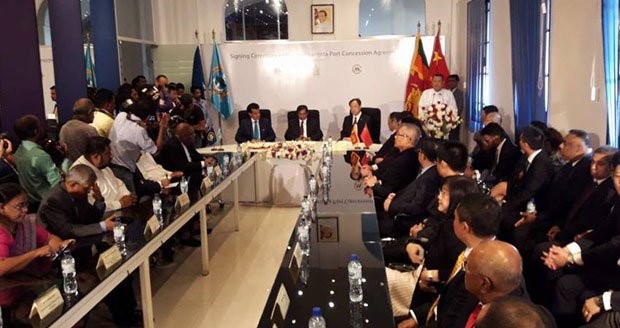
Exposing Ranjan Ramanayake !

July 30th, 2017

MAHINDA KARUNARATNE 

Ranjan Ramanayake the deputy minister of UNP lead Govt, who voices and fight tooth and nail always against Rajapakshas, is now exposed with his fraudulent business activities with proof.

Parliament Jokes” is a movie that made record income beyond any movie up to date in the Sri Lankan movie history, presidential award winner and is solely owned by a person called Lal Kaluarachchi and well known in the cinema circles.

On an information received from a reliable source who had been witness at the site of film producer Sunil T. Fernando whose office located on Chittamapalam A. Gardiner Mawatha on the last 19th July,  CID discovered thousands of copies of DVD’s illegally produced and stocked while some have been already sold. Upon questioning the people present there, CID was able to question a lady who is also a partner of Producer Sunil T. Fernando has given statement that the copies of Parliament Jokes” DVD’s were made on the order of Dy. Minister Ranjan Ramanayake and Sunil T. Fernando.

Total value of the illegal produce is estimated to Rs. Ten Millions!  (10,000,000.00)

The stock of contraband and the lady was taken to the questioning and statement was taken while taking illegally made DVD copies of the Parliament Jokes Movie to the CID custody.  Around 20,000 copies are in custody now and the trial of the case has been scheduled to 04th August at Fort Magistrate Court. The statement of the lady who was released on Police bail has clearly given the statement as The making of DVD’s were done on the order of Ranjan Ramanayake” according to Police sources.

The culprit Ranjan Ramanayake is hiding behind the screen with the use of his ministerial powers but both him and Sunil T. Fernando had been begging the legal owner Lal Kaluarachchi not to reveal the information to media!

Anyone who wants to witness the case and see your own who the culprits are, can visit Fort Magistrate court on 04th August. You are privileged to question the lady who is now buffering Ranjan Ramanayake and Sunil T. Fernando.

This is how episodes of frauds unfolds of Ranjan Ramanayake who is always voicing against Rajapakshas.    

Visit:  https://musalmanuwa.wordpress.com

https://maruwaxx.wordpress.com/author/maruwaxx/

හම්බන්තොට මහා නගරය කතා කරයි.

July 30th, 2017

චන්ද්‍රසේන පණ්ඩිතගේ 

මෙතෙක් කල් හම්බන්තොට නමින් හැදින්වූ මේ නගරය, නමින් නම් නොකලද, අද සිට චිනතොටක් බවට පත් කල බව මුළු රටම දන්නාවූ කරුණකි. ඩොලර් නමින් හදුන්වන කඩදාසි කැබලි කීපයකට, මේ මහා නගරය අන්සතු කිරීම තරම් පහත් අසමත්ජාති වැඩක් මේ රටතුල ඉතිහාසය පුරාවට කිසිදාක සිදු නොවිණි. පාලකයින් ඉපිදෙමින්,විවිධ ආකාරයේ විකාරරුපි දේවල් කරමින් සිට කාලකන්නින් වශයෙන් මියැදෙන ආකාරය දෙස මා බලා සිටින්නේ අද ඊයෙක  සිට නම් නොවේ, ඉපදීම ජීවත්වීම හා මියැදීම අරුමයක් නොවන දේශයක, තමන් උපන් බිම හා දේශය විකුණගෙන  කෑම  තරම් පහත් නින්දිත සිදු කිරීමක්  මම කිසිදාක දැක නැත්තෙමි. මේ ජරාජිර්නාවූ  වූ පහත් පාලකයින් මේ  ක්‍රියාව තුලින් තමන් කවුදැයි හෙළි කරන්නේ , මුළු ලෝකයටම බව පළමුව, මෙරට වාසින් තේරුම් ගත යුතුව ඇත. තමන්ගේ පාලකයින් වශයෙන් මෙතරම් පහත් මිනිසුන් ඉහලට ඔසවා තැබීම තුලින් මෙරට ජනතාවගේ මන්දබුද්ධිකතාවය මුළු ලොවටම ප්‍රදර්ශනය කර හමාරය. චීනයෙන් ලබාගත් ණය මුදලින් ගොඩනගාගත් මහා වරාය, ගත ණය මුදලට වඩා අඩු මුදලකට විකිණීම විකිණීම මෙරටවැසි ජනතාවට පමණක් නොව ඒ මහා වරාය ඉදිකිරීමට ණය මුදල ලබාදුන් චීනයටද ඇදහිය නොහැකි කාර්යයක් විය. තමන්ගේ රටේ දුෂණ වලට සම්බන්ධ මැති ඇමතිවරුන්ව, ප්‍රසිද්ධියේ වෙඩි තබා මරා දමන රාජ්‍යක්, මෙරට දුෂිත පාලකයින්ගෙන් හම්බන්තොට වරාය මිලදී ගැනීමට හේතුව කුමක්දැයි චීන රාජ්‍ය තාන්ත්‍රිකයින් ප්‍රසිද්ධියේම, ගිවිසුම අත්සන් කල මොහොතේ මනාව ප්‍රකට කල බව මෙරට ජනතාව මනාව තේරුම් ගත යුතුව තිබේ. ම්ම් ඒ සම්බන්ධව තවදුරටත් කිසිවක් කතා නොකරමි.

මේ රට පාලනය කරනවා යයි කියනු ලබන මේ පාලකයින් මේ සිදු කර ඇත්තතේ කුමක්දැයි මෙරට වාසීන්ට මම ඉතා පැහැදිලිව කියාදීමට අදහස් කලේ මේ මිනිසුන් අතර, රටට ජාතියට හා සිය ආගමට ආදරය කරන,හා ගරු කරන මිනිසුන්ද සිටින බැවිණි පළමුව තේරුම් ගන්න , මේ මහා වරාය නිර්මාණය කිරීමට චීනය ඩොලර් මිලියන ගණනාවක මුදලක්, මේ රටට ණයක් වශයෙන් ලබාදුන්නේ, එකිනෙකාට ගරු කිරීමේ,හා ඇති දැඩි මිත්‍රත්වයේ, සංකේතයක් වශයෙන් බව.ශ්‍රී ලංකාවට මෙතරම් ගරු කරන හා ආදරය කරන කිසිදු රාජ්‍යක් මෙලොව නැති බවද වටහා ගන්න.එවන් රාජ්‍යක් තම මිතුරු රාජ්‍යකට මහා වරායක් ඉදිකරදී, ඒ මුදල දිගු කාලින ණයක් සේ සලකා ගෙවීමට ඉඩදී ඇති අවස්ථාවකදී, වත්මන් පාලකයින් ඒ ණය බර මහා මෙරටත් වඩා බරක්සේ පෙන්වාදී, මේ මහා සම්පත ඩොලර් මිලියන 1400ක තරම් සුළු මුදලකට අවුරුදු 99ක බද්දකට චීන සමාගමකටම  පවරා ඇත. බලන්න කොච්චර පහත් පාලකයින් රැලක්ද මේ, තමන්ට ගොඩඑන්න යමක් දෙන එක්කෙනටම ඒ ගෙනත්දුන්න දේම  විකුණන වලන් නොවන මිනිස්සු නේද මේ පාලකයින්.

හොදයි දැන් මෙතන වටිනාකම් දෙකක් ඇත. එකක් ඩොලර් මිලියන 1400ක් වන අතර අනික වසර 99ක කාලයයි. ඩොලර් මිලියන 1400ක් කියන්නේ කුමක්ද? මේ මුදල මෙරට ජනගහනයට අනුව, එක පුද්ගලයකුගෙන්, රුපියල් 1100ක්  ලබාගැනීම තුලින් පියවිය හැකි මුදලකි.. මේ රජය බලයට පත්වූ දින සිට මෙරට ජනතාවගෙන් ලබාගත් මුදල් ප්‍රමාණය කොපමණදැයි අපි නොඅසමු. නමුත් අවම වශයෙන් මාස 6ක කාල සීමාවක් තුලදී මෙරට ජනතාවගෙන් රුපියල 1100ක් අය කරගැනීමේ ක්‍රමවේදයක් අනුගමනය කලා නම් මේ වසර 99ක් පුරා මෙරට ජීවත්වෙන අනාගත පරපුරට බලපාන මේ පහාත් අති තුච්ඡ ක්‍රියාවලිය නවතාලීමට ඕනෑතරම් ඉඩ තිබුණි. අවුරුදු 99ක් කියන්නේ, ජනාධිපතිවරුන්ගේ ධුර කාල 19ක් වන අතර, මේ කාල කාල භක්ෂකයින් රොත්ත අනාගත ජනාධිපති ධුර කාල 19ක්ම මේ  බඩගෝස්තරවාදී ක්‍රියාවලියට අමුණා ඇත.

රටට ජාතියට ආදරය කරන ඔබ මේ වනවිට දත්මිටි කමින් පාලකයින්ගේ මුහුණත් තහඩු පුළුස්සමින් දෙස් දෙවොල් දෙමින් පසුවන්නේ,දැඩි කෝපයකිනි. මේ වන විට සටනට නායකත්වය දෙන්නට අයෙක් තවම පෙරමුණ ගෙන නැත. කලබල නොවන්න. අදම ඔබ සටන ඔබ තුලින්ම පටන් ගන්න. ඔබේ රුපියල් 1100ක ඇති වටිනාකම තේරුම් ගන්න. මේ රුපියක් 1100ට වසර 99කත එහා ගිය පරපුරකට සේවය කල හක්ක සේම, මේ 1100ත මෙරට පාලනයටද දැඩි බලපෑම් කළහැකි බව මේ පාලකයින් ඔබ ඉදිරියේ පෙන්වාදී ඇත. ඔබෙන් රජයට යන මුදල් ප්‍රමාණය හැකි පමණ සිමා කරන්න.

1. මොනම හේතුවකටවත් මේ යුගයේ කිසිදු ලොතරැයියක් ගන්න එපා.
2. ඔබගේ ශරීරයටද දැඩිව බලපාන දුම්වැටි බාවිතය හැකි පමණ අවම කරන්න.
3.හැකි පමණ මධ්‍යසාර පානය අඩු කරන්න.
4. රජයට විරෝධතාවයක් ප්‍රකාශකර ඒ දිනදී, පෙළපාලි නොගොස් හැමදෙනාම තමන්ගේ බැංකුව වෙත ගොස් දවසක් හෝ දෙකක් තුලදී යලි දැමීම අරමුණු කරගෙන තැන්පත් මුදල් ඉවත් කරගන්න.

මේ විරෝධතාවයන්ට මැරයින් දමා පහරදිය නොහැකි අතර රජයට ජනතාවගේ බලය කුමක්දැයි වටහා දිය හැක.

මාගම්පුර සටනට ජයවේවා!

සෙල්ෆීවත්තු විවරණය

July 30th, 2017

වරුණ චන්ද්‍රකීර්ති

අද මේ රටේ තියෙන ප්‍රධාන ම ප්‍රශ්නය තමයි අපි බෙදිලා කා කොටාගන්න එක. මේ බෙදිල්ල පක්‍ෂ, පිල්, කඳවුරු මට්ටම ඉක්මවා ගිය එකක්. දැන් දැන් පුද්ගල මට්ටමින් පවා අපි බෙදිලා කා කොටාගන්නවා. මේ පොරකෑමට මුල්වෙලා තියෙන්නේ තමන් හරියට ම හරි, අනිත් එවුන් වැරැදියි, උන් තමයි හැම දේකට ම වගකියන්න ඕන කියන සිතුවිල්ල. බොහෝ වෙලාවට අපි යමක් පිළිගන්නේ ඒ දේ හරියි කියලා අපිට වැටහෙන නිසා බව ඇත්ත. එහෙම නැති නම් අපි ඒ දේ පිළිගන්නේ නැහැනේ. ඒත් අපේ වැටහීම් ශක්තිය ගැන ඇගැයීමක් අපිට තියෙන්න ඕන. මොකද අපි කවුරුවත් අංගසම්පූර්ණ මිනිස්සු නෙවෙයිනේ. තම තම නැණ පමණින් තමයි අපි යමක් තේරුම්ගන්නේ. ඉතින් යම් යම් හේතු හින්දා අපේ වැටහීමේ යම් යම් අඩුපාඩු තියෙන්න පුළුවන්. ඒ හින්දා අපි හරියි කියලා පිළිගන්න දේවල්වලත් අඩුපාඩු තියෙන්න පුළුවන්.

ඒත් අධික මමත්වය හින්දා අපේ අඩුපාඩු ගැන හිතන්න උනන්දුවක් අපි අතර නෑ. ඒ වගේ ම, කණ්ණාඩියක් දිහා බලලා තියෙන දොසක් නිවැරැදි කරගන්නවා වගේ වැඩකින් සෑහීමකට පත්වෙන්න පුළුවන්කමක් දැන් අපිට නෑ. අපිට දැන් ඕන අපේ මූණුවල සෙල්ෆී ගහලා ෆේෂ්බුක් එ‍කටත් දාන්න. මම සෙල්ෆී ගහන්නෙත් නෑ, මගේ පින්තූර ෆේෂ්බුක් එකේ දාන්නෙත් නෑ” කියලා කවුරු හරි ප්‍රබුද්ධයෙක් කියන්න පුළුවන්. ඒත් එහෙම කිව්වාට ඒ අය කතාකරද්දී, යමක් ලියද්දී, යම් අදහසක් ප්‍රකාශ කරද්දී අඩුවක් නැතිව මම, මම, මම, …” කියන සෙල්ෆිය පිටකරන බව අපිට පේනවා. ඒ වගේ ම මේ විදිහට මමත්වයෙන් මෝහනයට පත්වෙච්ච අය ඉවරයක් නැතිව අනිත් අයට ගරහනවා, හෙලා තලා කතාකරනවා. ඒ අය ගේ දොස් හොයනවා. තවත් මනුස්සයෙක්ට වචනයකින් හරි ගරුකරන්න එහෙම අය කැමැති නෑ.

ඉතින් මේ විදිහට සෙල්‍ෆී ගහන අපි හොයන්නේ ම අනුන් ගේ ඇදකුද. මේ රටේ හැම ප්‍රශ්නයකට ම වගකියන්න ඕන දේශපාලනඥයෝ” කියන කතාව උදේ හවස අපේ කටෙන් පිටවෙන්නෙත් මේ ව්‍යාධියේ රෝග ලක්‍ෂණයක් විදිහට. මේ වගේ අඩුපාඩු, අවුල් වියවුල් තියෙන රටක බොහොම පිරිපුන්, අඩුපාඩුවක් නැති දේශපාලනඥයන් ඉන්න පුළුවන්කමක් නැති බව අමුතුවෙන් කියන්න උවමනා නෑ. ඉතින් උන් ගේ අඩුපාඩු, වැරැදි තියෙනවා. ඒත් ඒ දේවල් කිය කියා හිටියා කියලා අපේ ප්‍රශ්න විස‍ඳෙන්නේ නෑ. අපි මුලින් ම කරන්න ඕන අපේ අඩුපාඩු හඳුනාගන්න උත්සාහකරන එක. ඊට පස්සේ ඒ විදිහට හඳුනාගත්ත අඩුපාඩු හදාගන්න පිළියම් යොදන එක.

අපේ අයට බෝවෙලා තියෙන මේ සෙල්ෆී ලෙඩේට (අපි මේ ලෙඩේට සෙල්ෆියාව කියලා කියමු) මුල්වෙච්ච තවත් කාරණයක් තමයි යමක් ඉගෙනගන්න තියෙන අකැමැත්ත. මේ ලේඛකයා තේරුම් ඇරගෙන තියෙන විදිහට මේකට හේතුවෙලා තියෙන්නේ අපේ සිංහල මිනිස්සු අතර තියෙන පුදුමාකාර හැකියාවක්. සෑහෙන විදේශිකයන් ප්‍රමාණයක් එක්ක ගනුදෙනු කරලා තියෙන මේ ලේඛකයා සැසැඳීමෙන් දැකලා අවබෝධ කරගෙන තියෙනවා අපේ සිංහල මිනිස්සු අතර තියෙන ඒ හැකියාව. ඒ තමයි යමක් ග්‍රහණය කරගැනීමට තිනෙ දක්‍ෂකම. කියන පමාවෙන් යම් දෙයක් ග්‍රහණය කරගෙන, වටහාගන්න අපේ අය සෑහෙන ප්‍රමාණයකට පුළුවන්. අපේ පොඩි ළමයි අතර මේ හැකියාව හොඳින් පිහිටලා තියෙනවා. ඉතින් මේ වගේ හොඳ දෙයක් අපේ අඩුපාඩුවකට හේතුවෙලා තියෙන්නේ කොහොම ද කියලා මේ ලිපිය කියවන අයට හිතෙන්න පුළුවන්.

මේක හොඳින් තේරුම්ගන්න පුළුවන් අපේ පොඩි ළමයි දිහා බැලුවාම. අපිට ඉන්න ඉතා ම දක්‍ෂ බුද්ධිමත් ළමයි වයස අවුරුදු දොළහ දහතුන වෙද්දී ඉගෙනගන්න වැඩ අත ඇරලා දානවා. ඊට පස්සේ ඒ ළමයි හැසිරෙන්නේ අපි හැම දෙයක් ම දන්නවා. අපිට හැම දෙයක් ම තේරෙනවා. අපිට උගන්නන්න වදවෙන්න එපා” විදිහට. ඒ ළමයි වයස අවුරුදු දොළහ, දහතුන වෙද්දී ම සත්‍යය අවබෝධකරගෙන. ඉතින් අපේ සමාජයේ බොහෝ වෙලාවට ඉස්සරහට යන්නේ දක්‍ෂ, බුද්ධිමත් ළමයි නෙවෙයි. තමන් ළඟ තියෙන හැකියාවක් ම අපේ දක්‍ෂ ළමයින් ගේ ඉදිරි ගමන වළකන බාධාවක් බවට පත්වෙලා. හැබැයි මේ කිව්වේ අපේ හැම ළමයෙක්ට ම අදාළ න්‍යායක් නෙවෙයි කියන එකත් අවධාරණය කරන්න ඕන.

කුං ගුරුතුමා (අපිට අස්සවලා තියෙන විදිහට නම්, කොන්ෆියුසියස්තුමා) කියලා තියෙනවා මට දැන් හතළිහයි, සැකයක් නෑ” කියලා. මේක චීනයේ තියෙන බොහොම ජනප්‍රිය කියමනක්. මනුස්සයෙක්ට මූලික ඉගෙනීම් අවසන් කරන්න පුළුවන් වෙන්නේ වයස අවුරුදු හතළිහේ දී කියන එක තමයි ඒ කියමනෙන් අදහස් වෙන්නේ. අපි හැමෝ ම දන්න දේ තමයි සිද්ධාර්ථ කුමාරයා බුද්ධත්වය අවබෝධ කරගත්තේ වයස අවුරුදු තිස් පහේ දී කියන එක. සාරාසංඛ්‍ය කල්ප ලක්‍ෂයක් පාරමිතා පුරපු බෝධිසත්වයන්වහන්සේටත් බැරිවුනා වයස අවුරුදු දොළහක් දහතුනක් වෙද්දී සත්‍යය අවබෝධ කරගන්න. ඒත් අපේ පොඩි ළමයෙක් එක්ක කතාකරලා බලන්න. එහෙම නැතිනම් තවමත් උසස් පෙළ විභාගය විතරක් සමත්වෙලා ඉන්න අපේ විශ්වවිද්‍යාල ශිෂ්‍යයෙක් එක්ක කතාකරලා බලන්න. ඒ අය තුන් ලෝකය ම අතැඹුලක් සේ දන්නවා.

ඉතින් මේ ලෙඩේ අපි සෑහෙන දෙනෙක්ට වැළැඳිලා. අපේ කොල්ලෝ කියන විදිහට අපි තරම් හැම දෙයක් ම දන්න අය ලොවෙත් නෑ. ලොවි ගහෙත් නෑ” කියලා කියන්න පුළුවන්. දොස්තරලා දන්නවා පාලම් හදන විදිහ. ඉංජිනේරුවෝ දන්නවා වෙදකම් කරන විදිහ. පාර අතුගාන මනුස්සයා පාර අතුගාන එක ඇරෙන්න අනිත් හැම දෙයක් ම දන්නවා. නිකමට හරි ලෙඩක් හැදුනා කියලා හිතන්න. මේ රටේ ලෙඩ්ඩුන්ට වඩා ඉන්නේ වෙද්දු. මග දිගට හම්බවෙන හැම එකෙක් ම ලෙඩට හොඳ බෙහෙතක් ගැන කියයි. ලෙඩට හේතුවෙච්ච කාරණා ගැනත් කියයි. ඉතින් සර්වඥතා ඥාණයෙන් හෙබි, බවදුකට පවා බෙහෙත් හේත් දන්න අයගෙන් අපේ සමාජය පිරිලා. හැම දෙයක් ම දන්නවා නම් ආයෙත් මොකට ද ඉගෙනගන්නේ? ඉතින් අපේ අය ඉගෙනගැනීම අත ඇරලා.

අනිත් මිනිස්සු පහත් කරලා හෙලාදැකලා කතාකරන අය වැඩියෙන් ම ඉන්නේ අපේ සමාජයේ වැඩවාසය කරන සහතිකපත්‍රලාභීන් අතර. තමන්ට මේ සහතික ලැබිලා තියෙන්නේ යම් යම් විෂය කරුණු කිහිපයක් ඉතා කෙටි කාලයක් තුළ පංති කාමර ඇතුළේ ඉගෙනගත්ත නිසා බව ඒ අය අමතක කරනවා. ඊ ළඟට ඒ අය හිතන්නේ නෑ තමන් ගේ සහතිකය අදාළවෙන්නේ තමන් ඒ විදිහට ඉගෙනගත්ත දේට විතරයි කියලා. මේ කියන දෙයින් අදහස් වෙන්නේ නෑ යම් කෙනෙක් ගේ දැනුම ඒ කෙනා ලබාගත්ත සහතිකවලට විතරක් සීමාවෙනවා කියලා.

ඉගෙනගන්නවා කියලා කියන්නේ නවත්තන්න පුළුවන් කටයුත්තක් නෙවෙයි. ඒ වගේ ම, ඉගෙනගන්නවා කියලා කියන්නේ පොත්පත්වලින් ලෝකය දකිනවා කියන එක විතරක් නෙවෙයි. පොතක, පත්තරයක තියෙන්නේ ඒ දේ ලිවීම සඳහා ලියන්නා විසින් තෝරාගත්ත දෙයක්. ඒ විදිහේ දේවල් තේරාගන්න ඔහුට හෝ ඇයට බලපාන කරුණු කාරණා තියෙනවා. පොත්, පත්තරවල තියෙන ඉඩකඩ ගැනත් ලේඛකයාට හිතන්න වෙනවා. ගුවන්විදුලි, රූපවාහිනී වැඩසටහනක දී නම් තියෙන කාලය ගැන හිතන්න වෙනවා. ඊට පස්සේ තමන් තෝරාගත්ත දේ තමන් කැමැති විදිහට අවධාරණය කරන්න ලියන්නා කටයුතුකරනවා. ඒ වගේ ම ඒ දේ තමන්ට වැටහෙන විදිහටත් තමන් ගේ අරමුණට ගැලපෙන විදිහටත් අර්ථදක්වන්නත් ඔහුට හෝ ඇයට සිද්දවෙනවා. ලේඛකයා අගයකරන දේවල් ඒ තෝරාගැනීම්, අවධාරණය කිරීම්, අර්ථදැක්වීම් පිටුපස තියෙනවා. ඊට අමතර ව, ඒ ලේඛකයා ගේ භාෂා සන්නිවේදන හැකියාව විසිනුත් ඒ ලියන දේ පාලනය කෙරෙනවා. ඉතින් පොතක, පත්තරයක පළකරලා තියෙන්නේ ලෝකය පිළිබඳ සාධාරණ, අපක්‍ෂපාත, පරිපූර්ණ දැනුමක් කියලා හිතන එක ලොකු වැරැද්දක්.

මේ ලේඛකයාත් ඉවරයක් නැතිව බොහෝ දේවල් කතාකරනවා. මේ ලිපිපෙළේ ලියලා තියෙන්නේ ඔහු විසින් ලබාගෙන තියෙන සහතිකවලට අදාළ කරුණු කාරණා විතරක් නෙවෙයි. ඒ කොහොම වුනත් මේ ලිපිපෙළට ඇතුළත් කරලා තියෙන්නේ ඔහු විසින් කාලයක් තිස්සේ ඉගෙනගත්ත දේවල්. මේ දේවල් ඉගෙනගන්න පොඩි ළමයි පවා තමන්ට ගුරුවරුවෙලා තියෙන බව මේ ලේඛකයා දන්නවා. මේ ලෝකයේ අපි ආශ්‍රයකරන හැම කෙනෙක් ම පාහේ අපේ ගුරුවරු කියලා කියන්න පුළුවන්. තුන්දෙනෙක් සමඟ ගමනක් ගියොත් මට ගුරු වන කෙනෙක් ඒ අතර අනිවාර්යයෙන් ම ඉන්නවා” කියලා කුං ගුරුතුමාත් කියලා තියෙනවා. කුං ෆූ-ත්ස කියන එක තමයි කොන්ෆියුසියස් විදිහට ඉංග්‍රීසියට පෙරලලා තියෙන්නේ. ෆූ-ත්ස කියලා කියන එකේ තේරුම ගුරුතුමා කියන එක. එතුමා ලෝකය ම දන්නා ගුරුවරයෙක්. ඒත් එතුමාට පුළුවන් වුනා තමන්ට යමක් ඉගෙනගන්න පුළුවන් ගුරුවරු මහමග දී පවා හඳුනාගන්න. ඒ අයගෙන් යමක් ඉගෙනගන්න.

මේ විදිහට කරන්න පුළුවන්වෙන්නේ සෙල්ෆී ගහන එක නවත්වනවා නම් විතරයි. අධික මමත්වයෙන් පෙළෙනවා නම් යමක් ඉගෙනගැනීමේ හැකියාව අපෙන් ගිලිහිලා යන්න පුළුවන්. පෘථග්ජන අපි කවුරුත් මමත්වයෙන් පීඩාවිඳින බව ඇත්ත. ඒත් ඒක යම් පමණකින් හරි තුනී කරගන්න අපිට පුළුවන් වෙන්න ඕන. ඒත් අද බොහෝ දෙනෙක් මේ ඇත්ත තේරුම් ඇරගෙන නෑ.

මේ ලිපිවලත් යම් ආකාරයක විවේචනයක් ගැබ්වෙලා තියෙන බව ඇත්ත. ඒත් මේ ලිපිවලින් කිසි ම කෙනෙක්ව පුද්ගලික ව විවේචනය කරලා නෑ. තමන් ඒ තරම් කැමැති නැති අදහසක් පවා උපේක්‍ෂාවෙන් ඉවසලා ඒ ගැන යමක් කියන්න පුළුවන්කමක් අපිට තියෙන්න ඕන. එහෙම නොවුනොත් අපේ සමාජයට බෝවෙලා තියෙන කා කොටාගන්න රෝගය සනීප කරගන්න අපිට පුළුවන් වෙන එකක් නෑ. අපේ සමාජය තව තවත් බෙදිලා ගිහිල්ලා සෙල්ෆිය විතරක් ඉතිරිවේවි!

වරුණ චන්ද්‍රකීර්ති ෴

You are foolish or bullshit ?

July 30th, 2017

 Chandrasena Pandithage

You are foolish or bullshit ?

Oh president

You store your harvest in an International Air Port

It’s a surprise!

Too much harvest. Hm.


Oh you stop cultivation in paddy lands.

Unbelievable,

Son of farmer.

Oh! Dear, now you are running here and there,

searching rice to import here.

Marvelous ruling practice. Ha! Ha! Haa.

Oh my god! Now you ask Bangladesh to improve our harvest.
Why Bangladesh?
Go back to your home town.

King Maha Parakrama Bahu is waiting for you.

He will ask the above question

The answer is both.

කටාර්හි නවතම අර්බුදයත රවී කෙල හලයි, ඒ.එස්.පී. රැුස් විහිදයි.

July 30th, 2017

දුෂාන් ලියනගම

කටාර් හි වෙසෙන ශ‍්‍රි ලාංකික පවුල්වල දරුවන්ගේ අධ්‍යාපනය වෙනුවෙන් එම දෙමාපියන්ගේ මූල්‍ය හා ශ‍්‍රම දායකත්වයෙන් මෙන්ම ගොඩනගා ගත් තම රාජකාරි සබඳතා වල ශක්තීන් මත වසර 2001 දී දරුවන් 14 දෙනෙකු ඇතුළත් කර ගනිමින් පිහිටුවා ගත් හා ශී‍්‍ර ලංකීය අනන්‍යතාවය රැුකෙන පරිදි පවත්වාගෙන යන ශ‍්‍රී ලංකා ස්ටැෆඞ් පාසලට අදවන විට හෙනහුරෙක් කඩා පාත් වී ඇත. කටාර් රියාල් මිලියන 9 ක මුදලක් එකතු වී ඇති පාසල් අරමුදලට .තට්ටු. කිරීමට අභිනව විදේශ ඇමති රවී කරුණානායක බලාපොරොත්තු වෙයි. ඒ සම්බන්ධයෙන් රතු එළි දැනටමත් නිකුත් කර ඇති අතර, එම මුදල් ලංකාවට ගෙන්වා ගැනීමේ .තෝල්කයා. ලෙස කටයුතු කරන්නේ එම රටේ තානාපති ලෙස පෙනී සිටින එහෙත් තමනට ආණුඩුකාරධූරයක් නොමැතිව හැ`ඩූ කදුලින් පසුවන කුප‍්‍රකට ඉඩම් හා දේපල බිස්නස්කාරයෙකු වන ඒ.එස්.පී. ලියනගේ නැමැත්තාය. මේ හේතුවෙන් දැනට පාසලේ 1000ක් පමණ ඉගෙන ගන්නා ¥ දරුවන්, 50 ක් පමණ ගුරුභවතුන් මෙන්ම දෙමාපියන් ද සේවකයින් ද දැඩි කනස්සල්ලටත් කලකිරීමටත් පත්ව සිටිති.

මුලින්ම කිවයුත්තේ, මෙය කටාර් පමණක් නොව දමාම්, මස්කට්, ඩුබායි, බහරේන් ඇතු`ඵ රටවල් ගණනාවක දශක 2 කට වඩා කාලයක පටන් ප`ඩින`ඩි, ගොඩනැගිලි කුලී, පොත්පත්, විදුලි බිල්, රජයේ ගාස්තු යනාදි සියලූ වියපැහැදම් දරාගෙන, කිසිදු ශ‍්‍රි ලංකා රජයක අනුග‍්‍රහයකින් තොරව, මු`ඵමනින්ම දෙමාපියන්ගේ කර මතින් පවත්වාගෙන යන ශ‍්‍රී ලාංකීය පාසල් පද්ධතියක් බවයි. හැම පාසලකටම ව්‍යවස්ථාවක් ඇත. පේට‍්‍රන් ලෙස ශ‍්‍රි ලංකා තානාපතිවරයා පෙනී සිටියි. කලමනාකරණ මණ්ඩලයක් මගින් තීන්දු ගනියි. ඊට අමතරව දෙමාපිය සංගමයක් ද ඇත. සියලූ මුල්‍ය කටයුතු විගණනයකට යටත් වෙයි. අදාල රටේ නීති රීති වලට ද යටත්වෙයි. මේ සියලූ පාසල් ලාභ නොලබන පදනම මත පවත්වාගෙන යයි.

මෙතෙක් පැවති කිසිදු රජයක අතපෙවිමක් මේ කිසිදු පාසලකට නොතිබුුන අතර එක තඹ සතයක්වත් ශ‍්‍රි ලංකා රජයෙන් ලබා ගෙන නැත. එහෙත් අදාල අරමුදල පරිහරණය කිරීම අත්හිටුවා ඇති අතර ඊට හේතුව ලෙස තානාපති කියා සිටින්නේ මුල්‍ය වංචාවක් වාර්තා වි ඇති බවත් ඒ සඳහා කොළඹින් අධීක්ෂණ කණ්ඩායමක් එවනු ඇති බවත්ය. තවද එම ගිණුම සභාපතිවරයාගේ පුද්ගලික නමින් පවත්වාගෙන යන බවත්ය. එහෙත් කටාර් හි ක‍්‍රියාත්මක ශ‍්‍රි ලංකීය සංගම් නියෝජිතයින් අමතා කළ එම ප‍්‍රකාශය තානාපති විසින් එය .පාසලේ නමින්. පිහිටු වූ ගිණුමක් ලෙස සංශෝධනය කිරීමට සිදු වූයේ සභාපතිවරයාගේ නිවැරදි කිරීම මතය. මේ සම්බන්ධයෙන් පෙරලා ප‍්‍රශ්න කිරීමට යාමේ දී එක් අයෙකුට දැඩි ස්වරයෙන් කතා කළ තානාපතිවරයා ,මම ඉන්නේ ඔබලාට උත්තර දීමට නොව ඔබලා ඉන්නේ මට ඇහුම්කන් දීමට, බව කියා සිටි අතර මෙම ස්ථානයේ සී.අයි.ඞී ය ගැවසෙන බවත් වැඩිය දැගලූවොත් පොලිසියට භාර දෙන බවත් කියා සිටියේ ය. ඔහු වරෙක පොලිසිය ද කැදවූයේය. කිසිදු අවසානයකින් තොරව අතරම`ග රැුස්වීම නවතා දමා උඩුමහලට දිවගිය තානාපතිවරයා එසේ රැුස් විහිදුවන්නේ කටාර් හි වසර ගණනාවක් වෙසෙන සාඩම්බර ශ‍්‍රි ලංකීකයින්ට බව අමතක කළේය. ආ ගිය බොහෝ තානාපතිවරුන්ගේ විවිධ හැසිරීම් රටාවන් අපි දැක ඇත්තෙමු. සල්ලි මල්ලක් තිබූ පලියට තානාපති තනතුරු පිරිනැමූ යහපාලනයේ රෙද්ද ගැලවී අවසන් ය. රවී කරුණානායක වැනි මහ බැංකු හොරුන්ට ජනතාව පාඩම් උගන්වන දවස වැඩි ඈතක නොවේ. පන්සලේ පිංකැටෙන් නොනැවතී විදේශයන්හි පිහිටා ඇති ශ‍්‍රි ලංකා පාසල් අරමුදල්වලට අතපෙවීම නව විදේශ ප‍්‍රතිපත්තියේ කොටසක් බව දැන් පැහැදිලිය. එහෙත් නරින්ට කුකුල්ලූ භාර දෙන දෙමාපියන් කටාර් හි සොයා ගැනීමට නොහැකි වනු ඇත.

ඉනාමළුවේ සුමංගල හිමි දඹළු විහාරයේ ටිකට්වලින් කෝටි 1095ක් කොල්ල කාලා..

July 30th, 2017

 lanka C news

රංගිරි දඹුල්ල රජමහා විහාරයේ භාරකාරත්වය කලින් දරන ලද ඉනාමළුවේ සුමංගල හිමියන් විසින් 1996 සිට 2016 වසර දක්වා එම විහාරස්ථානය ලැබෙන ආදායම්වලින් රුපියල් කෝටි 1095ක මුදලක් කොල්ල කා ඇති බවට එම විහාරස්ථානයේ වත්මන් විහාරාධිපති ගොඩගම මංගල හිමි විසින් ඇමති අකිල විරාජ් කාරියවසම්ට දන්වා ඇතැයි සති අන්ත පුවත්පතක් වාර්තා කර ඇත.

මෙසේ කොල්ල කා ඇත්තේ විහාරස්ථානය නැරඹීමට පැමිණෙන විදෙස් සංචාරකයන්ගෙන් ප්‍රවේශපත්‍ර සදහා අය කරන මුදල් බවත් එම මුදල් මධ්‍යම සංස්කෘතික අරමුදලට, පුරාවිද්‍යා දෙපාර්තමේන්තුවට, දඹුලු රජමහා විහාරයේ සංවර්ධන අරමුදලට බැර කර නැතැයිද උන් වහන්සේ පෙන්වා දී ඇත.

මේ සම්බන්ධයෙන් විධිමත් පරීක්ෂණයක් පවත්වන්නැයිද ගොඩගම මංගල හිමියෝ ඇමතිවරයාගෙන් ලිඛිතව ඉල්ලා ඇතැයිද වාර්තාවේ දැක්වෙයි.

ඉනාමළුවේ සුමංගල හිමි දඹළු විහාරයේ ටිකට්වලින් කෝටි 1095ක් කොල්ල කාලා..

The Dambulla Temple – Improved Communication Approaches For Conservation of Living Religious Heritage Sites

July 30th, 2017

by M.L. WICKRAMASINGHE Courtesy The Island

July 29, 2017, 12:00 pm
The Rangiri Dambulu Viharaya (the Golden Mountain Temple of Dambulla) is sadly in the limelight for the wrong reason. The purpose of this article is to provide a bird’s eye view of the Dambulla Temple, its history, grandeur and sanctity, and the status as a UNESCO World Heritage site, to encourage more Sri Lankans to undertake a pilgrimage or a visit to the Dambulla temple. My recent pilgrimage to the Dambulla temple gave me a calmness of mind as a Buddhist and immense happiness as a Sri Lankan of what we can offer to World Heritage.

The article also touches upon the invaluable national role performed by the Maha Sangha from time immemorial with integrity and self sacrifice and hence suggests the desirability of State party empathizing with the Buddhist monastic perspectives and traditions in jointly developing a conservation strategy for the Dambulla temple.

This is particularly important as UNESCO’S and World Heritage Centre’s thinking on conservation of living religious heritage sites have undergone substantial change, especially in regard to the role of religious communities (meaning clergy of respective religions) in the conservation of these heritage sites. For example, UNESCO’s ‘Steering Group on Heritage of Religious Interest’, advocates for the Conservation Community to make a special effort to recognize “that values and traditions attached to heritage of religious interests as well as use requirements may contradict the views and standard working practices of the conservation community, thus requiring understanding and adaptation”. The Group also requests that “religious communities be considered as key partners in site management and in the creation of new approaches for joint management”.

The UNESCO document titled ‘Annex 1 Research on Integrated Implementation Strategy’ provides the following rationale for the above suggestion: “Legal protection is not sufficient for the preservation of living religious and sacred sites and their transmission for future generations as their survival depends on the custodial role played daily by the religious communities in caring for these as living heritage” . (whc.unesco.org/en/religious-sacred-heritage).

The history of the Dambulla temple (as per stone inscription) begins with King Valagambahu (89-77 BC). However, the presence of Buddhist monks in Dambulla pre-dates the temple. A stone inscription indicates that a cave had been donated to Maha Sangha by King Saddhatissa, (brother of King Dutugemunu) during 77-59 BC, proving that Buddhist monks had been in residence in Dambulla caves, prior to King Valagambahu seeking refuge in Dambulla caves due to a Chola invasion. About 80 such natural caves with drip- ledges cut to prevent rain water trickling in were found on the Dambulla rock. On winning the throne back from the Cholas, King Valagambahu built the Dambulu Vihara in gratitude for the monks of Dambulla who had helped him.

The ‘Paschima’ (western) Vihara was the first cave to be converted by King Valagambahu and initially contained five statues and a small dagoba. The dagoba was named after Valagambahu’s queen Somadevi, who jumped off the royal carriage to lighten it, so that the carriage could gather speed to escape the enemy carriage that was in hot pursuit.

King Valagambahu also converted the biggest cave (‘Maharaja Vihara’ -Temple of the King) and the smallest cave (Devaraja Vihara-Temple of King of Gods) into temples.

The Maharaja Vihara is the largest and the most vibrant. Here the devotees can pay obeisance to 56 statues of Buddha. A unique feature is the existence of a dagoba inside a temple building. It is cut out of existent rock. Around the Dagoba are eight statues of Buddha, again an unusual placement-as normally only four Buddha images facing the four cardinal directions are located around a Dagoba. Further away, there is a large sleeping Buddha statue. Another unique feature is the non-stop dripping of water from a minute crack on the cave roof, even during extreme dry seasons. The water believed to contain sacred properties is used in daily rituals.

The Devaraja Vihara is sanctified by the 27 foot long Parinibbana statue (statue depicting the passing away) of Lord Buddha. It is shaped out of the existing rock. There are four Samadhi Buddha statues and a standing statue of Ananda Thero, too.

King Nissanka Malla of Polonnaruwa added a number of Buddha statues to the three Viharas existing at that time. His main contribution was the gilding of the new and the many existing statues in real gold. The word ‘rangiri’ (golden rock) was added to the name of the temple due to the gilded statues. The King Nissanka Malla’s inscription dominates the rock face on the right hand side as one enters the Temple complex through the main entrance.

King Kirthi Sri Rajasinghe(AD 1747- 1782) built the Maha Aluth Vihara (Great New Vihara) comprising 58 Buddha statues, and added more Buddha statues to the Western Vihara built by Valagamba. Significantly, Kirthi Sri Rajasinghe caused painting and repainting of about 22000 sq. feet of wall and ceiling surfaces (spread over the five viharas) with murals. The mural containing thousand Buddhas painted on the granite ceiling is awe-inspiring. ( 1012 paintings of Lord Buddha to be precise).The murals were done by families of traditional painters living in a village called Nilagama.

Senaka Bandranayake reflecting on the Dambulla temple murals writes- ” The(se) murals at Dambulla are the largest preserved group of rock and wall paintings in the region after….. Ajanta. …….belonging to a pan-regional tradition that extends across South and Southeast Asia……Dambulla is undoubtedly one of the finest and most impressive expressions of this tradition.” ……”. (From the book- The Cultural Triangle of Sri Lanka, UNESCO-CCF,1993)

The Devana Aluth Vihara ( -The Second New Temple) comprising 11 statues of the Buddha -the last to be built- is credited to Chief Minister Duullewe of the Kandy.(AD 1895-1913).

The complex of these five cave viharas, are known as the ‘Dambulu Viharaya’ and is a sacred place of worship for all Sri Lankan Buddhists.

Bandaranayaka, explaining further states that the Dambulla Temple “…constitute one of the largest complexes of ancient cave or rock shelter architecture in the South and South East Asian region………This is a distinctively Sri Lankan expression of a broad South Asian temple concept and has few parallels elsewhere. Dambulla is undoubtedly the largest, the most dramatic, best preserved and most integrated example of this type of Buddhist vihara in Sri Lanka

From the very inception, the Dambulu Vihara had been managed by a long line of Chief Monks. The first chief incumbent was Jayamangala Sumana Thero. Ananda Marasinghe in his book ‘Dambulu Len Viharaya’ based on research of Professors Mangala Ilangasinghe and Anuradha Seneviratna reproduces some of the names.

Dambulla temple certainly has archeological and cultural value. However, as the above descriptions prove it is first and foremost a Buddhist Temple and the majority of cultural artifacts are objects of religious worship. The Dambulla temple complex contains 151 Buddha statues and hundreds of murals depicting Buddhist events. The area belonging to the temple was also sanctified by hundreds of monks including Arahants from, at the very least, the first century BC. Thus the statement of the present Chief Monk of the Temple to the effect that Dambulla temple was a Buddhist heritage, before it became a cultural heritage is correct and has to be understood in that monastic perspective.

UNESCO too accepted this view in 1989. Two reasons were adduced by UNESCO to justify the inclusion of Dambulla as a World Heritage site. Reason 1- was the excellence of the religious art and statuary found in the monastic ensemble and their significance for Sri Lanka, south and southeast Asia Reason, and their excellent degree of preservation. 2- is UNESCO’s acceptance that “Dambulla is an important shrine in the Buddhist religion in Sri Lanka”.{Report: World Heritage List No.561, The Golden Rock Temple of Dambulla, ICOMOS,1991, Adobe Acrobat Document 561-ICOMOS -663-en (1).pdf)}

Thus the Chief Incumbent of the Dambulla Golden Temple Complex, becomes a key stakeholder in any activity and decision-making connected with the Temple.

The institution of Buddhist monks in Sri Lanka are known as ‘Jathiye Muradevatawas’- the Guardians of the Nation. When the Country faced deep adversities, the Buddhist monks always provided moral, psychological, and ethical momentum as well as political advocacy to the Nation to come out of adversity.

One of the best examples of such moral leadership was the silent but unyielding battle waged to protect the ‘oldest recorded tree in the world’-The Sri Maha Bodhi.

The protection and sustenance provided for the Sri Maha Bodhi for about four centuries in the abandoned former capital of Anuradhpura is a story of ‘sadhdha’ (intelligent faith), moral courage, self-sacrifice, and valour. The main characters of this epic story were the Bhikkhus who stayed put in the Mahavihara, (their pupils, and their pupils and so on), despite the mass exodus of people to Polonnaruwa due to periodic South Indian invasions. Generations of Bhikkus and some of the lay families tasked with serving the Bodhi Tree, braved the Chola military attacks, the ever-advancing forest, periodic drought, semi-starvation, and disease, as well as nightly incursions of elephants and other roaming wild animals for the sole purpose of protecting the Bodhi Tree. For these Buddhist Monks the Bodhi Tree was more valuable than their lives.

Professor W.I. Siriweera in an article titled ‘The Sacred Precincts of the Srimahabodhi Tree in Anuradhapura’ ( in “Maha Bodhi Tree in Anuradhapura Sri Lanka-the Oldest Historical Tree in the World’ edited by HSS Nissanka) acknowledges this epic feat: “….. the history of the Srimaha Bodhi in the fourteenth, fifteenth, sixteenth, and seventeenth centuries has to be reviewed as the history of the preservation of the tree as well as the continuation of the ritual therein by these dedicated monks”. Thus the Monks of Sri Lanka have a proud tradition of preserving Buddhist heritage sites.

The latest example of selfless service by the Maha Sangha occurred during the terrorist armed conflict. Many Chief Monks as well as junior monks did not abandon their temples and continued to reside in their temples in the north, the east, and the threatened villages, despite threats to their lives, to protect the temples and the lay communities. The Nayaka Theros such as venerable Tantitirimale Hamuduruwo and venerable Dimbulagala Hamuduruwo paid for this national service with their lives.

In this context, it is hoped that the Authorities would not consider it high-handed for a citizen to make some suggestions through the media on appropriate communication approaches to facilitate greater understanding between the two key stake holders regarding the Dambulla temple situation.

A communication approach that encompasses and exhibits a deferential attitude towards the clergy; use of non-prescriptive, participatory, and dialogue-based communication techniques; and use of ‘cause-effect analysis method’ as necessary to resolve complex issues ( first used by Lord Buddha in ‘Patichcha Samuppada’ – dependent origination methodology) would be helpful in making progress on Dambulla temple conservation.

This suggestion is absolutely not an attempt to imply that such approaches are not presently used by State organizations. Neither is this meant to be prescriptive. The purpose is to express an opinion that such or a similar communication approach would certainly improve the quality of dialogue and make the monastic establishment feel that they are important partners in the conservation process. This in turn would quicken the achievement of the common objective of the State and Temple stakeholders. Such a communication approach would help Sri Lanka to work within the guidelines offered by the Steering Group on Heritage of Religious Interest of the World Heritage Centre. The Group has unequivocally accepted the principle that religious communities (respective clergy) are vital co-stakeholders connected to decision-making on and conservation of heritage sites of religious interest.

(The writer is an ex-Journalist, Communication Researcher and a retired Officer of the International Civil Service of the United Nations System.)

China to help SL produce thin-film solar cells

July 30th, 2017

Sandun A Jayasekera Courtesy The Daily Mirror

Sri Lanka will be soon producing thin-film solar cells on a commercial basis with technological cooperation from China as a means of popularising the use of solar panels for domestic power generation, Science, Technology and Research Minister Susil Premajayantha said.

He said a number of young technicians were being trained on ‘Modern Solar Power Technology’ at the Colombo, Ruhuna, Jaffna and Kelaniya universities.

“I paid a visit to China last week with some Sri Lankan scientists to obtain first hand experience on solar power technology. The Chinese government is helping us to develop solar power technology in Sri Lanka. I hope we will be in a position to drastically reduce the use of costly thermal power generation which is also an environment pollutant,” the minister said.

He said producing it locally on a mass scale would help the government’s plan to phase out coal and thermal power generation and increase solar power generation to 800 MWs by 2030.

Thin-film technology has been cheaper but less efficient than conventional c-Si technology. However, its quality standards have significantly improved over the years. The lab cell efficiency for CdTe and CIGS is now beyond 21%, out-performing multi-crystalline silicon, the dominant material currently used in many solar crystalline systems.

Losing port just as it started earning money – Jayantha Samaraweera (English)

July 30th, 2017

Losing port just as it started earning money – Jayantha Samaraweera (English)

Govt has anger towards people of Hambantota – Rajapaksa (English)

July 30th, 2017

Govt has anger towards people of Hambantota – Rajapaksa (English)

Protest staged against signing of Hambantota port agreement (English)

July 30th, 2017

Protest staged against signing of Hambantota port agreement (English)

Dry Zone Drought and empty tanks:A blessing in disguise?

July 30th, 2017

by Garvin Karunaratne Former Government Agent, Matara District

The plight of the dry zone farmer and the depleted water in the tanks has come to centre stage again. It is July. The dry zone had little rain in April. July and August are the driest months. Once in a decade the rains do fail around this time.

Our forebears tackled this situation with a cascade system of tanks, maintained with great care. The tank was the lifeblood of farmers. The land under each tank was allocated in an ingenious manner. The paddy land was generally divided into three blocks, a small block, a medium block and a large block, and everyone in the village had an equal amount of land in each block. The farmers with their Vel Vidane (Field Headman), depending on the water, decided which block they would cultivate. Those blocks were called Purana Vela.

article_image

Ruins of the ‘Seetha Maligaya’ (Cool Palace) have surfaced as water levels of the reservoir decreased following the drought. According to historical sources the palace was built by King Parakramabahu the Great as his summer residence. Pic by Roshan Thushara

That system was not known to modern land administrators and they allocated additional land to some farmers, based on landlessness. The recent allocation, Akkara Vela, led to major problems in deciding which block to cultivate. We in our modern way have messed up the systematic land allocation. We have also neglected the maintenance of the tank administration and the Nuwara Kalaviya peasants have to bear the brunt of it.

The irrigation works in the dry zone have been neglected for long. Since the colonial days, the administration of irrigation has been done by the Government Agent, with a Vel Vidane, an official from among the villagers, appointed by the Government Agent, at the field level. It was the Vel Vidane who held the “kanna’ meetings (meetings that decided when to start cultivation etc.) and ensured the distribution of irrigation water. When the Paddy Lands Act was established (1962 in Anuradhapura) the administration of irrigation works was transferred to the Agrarian Services Department. When I served as Assistant Commissioner of Agrarian Services in Anuradhapura in 1962, I was close to the peasants, organizing them into cultivation committees, working with them to repair and rebuild their tanks. Though the Paddy Lands Act specified that the committees were to be elected by ballot, I decided that they be elected by consensus. That paid great dividends.

The farmers were keen to maintain their tanks. The Committees held the kanna meetings regularly and some committees were even entrusted with the task of rebuilding the tanks – the work had formerly been done by private contractors. The farmers were very enthusiastic and we did wonders in repairing tanks. Farmers loved the dedicated officers helping him; there were three Assistant Commissioners and ten divisional officers, all veterans who worked a twelve hour throughout the week.

However, in two years we had also created many enemies among private contractors who were laid out of work by the committees themselves, hiring D4 and D8 tractors to dig into the tank beds and pile up the earth onto the bunds. Some Irrigation officers, too, who worked more for the contractors were hounded out, and if I remember right, out of 28 village cultivation officers close upon ten were charged with corruption and interdicted. They got together and influenced the Lord of Nuwara Kalaviya, Minister Maithripala Senanayake. One day, I returned home after inspecting tanks. My phone rang. It was Navaratne, the Senior Assistant Commissioner in charge of the administration. He said ‘You have been transferred with immediate effect. Don’t step into your office henceforth. Officers will come tomorrow to investigate your work. Report to work in Colombo.’ I managed to get the transfer changed to Kandy and I left within one week. The officers who probed my work found nothing wrong. The work continued with the committees attending to maintaining the tanks – the officers working half-heartedly. Thus ended my attempt to rebuild the irrigation works in Nuwara Kalaviya!

The rot set in when the Paddy Lands Act was abolished in the late seventies and the cultivation committees ceased to exist. There was a vacuum in irrigation administration and the peasants had to fend for themselves. No kanna meetings were held. The tanks were not maintained; the influential people even encroached on the tanks, tank bed cultivation was common, and as a result the tanks got silted. Last year, looking at the Basawakkulama tank I could spot several permanent structures at the edges of the tank.

This was the scene when I went back to Nuwara Kalaviya in 1999 – a full three decades after I had left the area. In the ancient system of irrigation, it was ‘Rajakariya- the two weeks’ free labour from everyone in the village – that enabled the infrastructure of tanks to be maintained and with the abolition of Rajakariya by the Colebrook Commission the maintenance of the entire irrigation system came to a standstill. ‘The British government proclaimed that no community of labour was required and any headmen who called out the working men of his district for repairing dams of canals would be dismissed (Despatch 31 of Feb 27, 1857, quoted by Galle Punyawardena)’. However, the Vel Vidanes called the kanna meetings where the farmers agreed to maintain the canals. With the abolition of rajakariya any tank development required funding from the Treasury, which was not easily available. Earlier, under annual rajakariya, the proper maintenance of irrigation systems was regularly carried out.

Those who repair tanks bring in earth from far away to build the bunds. In my visit of 1999, at Basawakkulama,’the bund had just been filled with earth brought from outside. It was clear that the method that I had followed—taking the earth from the tank bed for building up the bunds—had been abandoned. In the method that we followed in the 1960s, with every cube of earth that was removed, the capacity of the tank increased.

Today, with the lack of a Vel Vidane or the Cultivation Committees the tank administration is not done properly. This has led to the neglect of the tanks and the canals. The ancients had an intricate system of irrigation works. In the 1960s the Jaya Ganga, the massive canal that brings water from Kala Weva to the tanks in Nuwara Kalaviya was well maintained.

How can the drought be contained?

The depleted tanks and the drought can be turned into a blessing. How?

Every Village Cultivation Officer should be directed to draft plans for the earth to be dug out of the tank bed and pile it up onto the bunds, for which the peasants will be paid. It will be possible for each officer to design such work on for least six to ten tanks. It is necessary that proper designs are done after measuring the heights of the tank bunds, the sluices and the spillways and this precise action requires the expertise of a Village Cultivation Officer. The earth moved has to be calculated both by the extent piled up, as well as the area dug up, with measurement sheets being used. The funds will have to come from the tank development budget.

If I had been working as Senior Assistant Commissioner of Agrarian Services, in charge of the entire island today as had been in 1967, by now several Village Cultivation Officers and Technical Assistants, with the vehicles, their theodolites and drawing equipment would have been ordered to go to Nuwara Kalaviya to survey village tanks and lay out earth work, for the tank beds to be dug and bunds raised and strengthened. Officers would be asked to work in Nuwara Kalaviya for around a month. This will be costly because the officers and jeep drivers will have to be paid subsistence. I would have also secured accommodation for the enlisted officers in circuit bungalows, which would have been turned temporarily into design drawing offices. Though costly, the input in terms of the work done to build the tanks will stand the country in good stead. I would have found funds from savings in budgets.

In my days I even authorised brick building on the tank beds during the drought season.

My voice is that of a petty officer. The situation warrants the attention of our leaders, who ought to direct that the Government Agents and the Divisional Secretaries with the Grama Niladharis to work on the designs that the Village Cultivation Officers will provide. Bringing officers from other districts and even obtaining a few engineers from the Irrigation Department to supervise the designs and the construction would be ideal.

Suggestions for Improving the Quality of Our Legislators

July 30th, 2017

Presentation at the OPA / Association of Scientific and Techinical Officers Seminar 

Let me begin with some very simple concepts, since these will help us to understand what exactly we should aim for in trying to improve the quality of our legislators. First, we should examine the role of Parliament, what it is meant to do, and how it can do this effectively. Second, we should examine the role of Parliamentarians, and what is required for them to fulfil their roles effectively.

At its simplest, Parliament is there to make laws. That is why the title of this seminar refers to legislators. So we need to consider what Parliamentarians need to know to make laws in the interests of the country. Connected with this is the passing of regulations which are required by laws to give them teeth.

But there is a second function of Parliament that springs from its legislative function. Amongst the most important laws it makes are those affecting the finances of the country; hence the need to have an annual budget, which is discussed at length. So we need to consider what Parliamentarians need to know not only to use the resources of the country productively, but also to develop resources.

Thirdly, since it is Parliament that allocates as it were the finances which are used by the executive branch, it must make sure these are used in accordance with the provisions it makes. Hence it must monitor the use of funds by the executive.

These are the principal functions of Parliament. But because we are still steeped in the Westminster system, we confuse the functions of Parliament as Parliament with those of the executive branch of government, which on the Westminster model is based in Parliament. Even though we moved in 1978 to an Executive Presidency, we have – uniquely amongst countries which elect an Executive President independently of a parliamentary election – maintained the rest of the Executive in Parliament. Incidentally I should note that my despair about what passes for Departments of Political Science in this country is that there has been no serious research about both the rationale and the impact of J R Jayewardene’s decision to violate the commitment of his manifesto to have an executive outside Parliament.

So, sadly, our Parliamentarians, all of whom hanker after Executive office, do not realize what their responsibilities are as legislators, nor as the guardians of the finances of the country against the excesses of the executive branch. The scrutiny of legislation by Parliamentarians is non-existent. And though there are some admirable individuals in the financial oversight committees, the ridiculous attendance figures at these committees make it clear that most Parliamentarians could not care less about such responsibilities.

The problem is exacerbated by the other function of Parliamentarians, which we have to accept as a reality, though it has nothing to do with legislation or financial oversight. This is the representative function. Parliamentarians represent particular segments of the population, and they have a responsibility to look to the welfare of those they represent. They must obviously do this if they wish to continue to be elected, but such work is also necessary because otherwise the interests of particular areas will not be highlighted.

Unfortunately Sri Lanka has, again uniquely, developed an electoral system that confuses the issue. Because all elected Parliamentarians have to seek votes in a whole District, and therefore have to work for all the people in the District, their energies are diffused. They cannot concentrate on coherent development programmes that will enhance amenities and create economic opportunities for a targeted area, because they are always looking over their shoulders to see what the competition is up to. And that competition is as much if not more from their own party as from elsewhere.

It is true that in theory Parliamentarians are allocated to particular constituencies, and they will do more for those areas. But it beggars belief that our electoral system still binds them to the District as a whole, so that they are beset with problems from all over the District and cannot ignore these – nor indeed trying to fit individuals from all over the District into government jobs.

One obvious remedy is to change the electoral system. I still find it shocking that the most important structural change in the manifesto on which President Sirisena won the 2015 Presidential election has been forgotten. He himself promised, in seeking the support of his own party for the 19th amendment, that he would not dissolve Parliament before it also passed the 20th amendment. But he broke that promise under pressure. His chief coalition partner has indicated that he does not want a change, but it is appalling that those who believe in good governance are not agitating for this, and are instead pursuing matters the benefits of which are debatable. Given that the President has made it clear that he knows the present system contributes to corruption, it seems to me a duty that all those concerned with purposeful reform should pursue, to ensure change in the electoral system.

I should add that there is a simple solution that could be implemented immediately to at least improve the situation. When Jayewardene realized that his original conception of Proportional Representation, a pure list, led to those at the bottom abandoning the party, he introduced choice. But instead of one vote per person, he gave three, to ensure that all candidates campaigned all over the District, and fought with others in their party for preferences. This is absolutely unnecessary. If voters had just one preference vote, candidates would be confined to their constituencies, and would not squander massive amounts on propaganda all over the District. And while it might be argued that those with smaller constituencies would be at a disadvantage, this could be remedied by allocating the seats each party won at the election on the basis of proportions of the votes of their constituency they obtained.

Such a system would also help with the selectivity that parties should exercise in choosing candidates. Now, because candidates are nominated on the basis of the District as a whole, there are no clear criteria to choose the best representative possible – and therefore a range of criteria is employed including say relationship to already established politicians. What is preferable is a system whereby individuals apply to be candidates for a particular constituency and have to establish their credentials with regard to that particular constituency. Rival claims can then be assessed consistently, with a clear focus on benefit to the people of the particular constituency.

I have argued at length for constituency based candidates because that seems essential. But connected with this is the idea of seeking excellence in candidates, and that should contribute also to improving the quality of the judgment Parliamentarians will exercise with regard to the first three functions of legislators that I began by describing. At present, given the intensity of the competition for nomination in each District, and the power as it were exercised by those with the resources required to campaign throughout the District, general awareness and analytical capability are ignored. When it is a question of picking just one individual for one area, these qualities too can be assessed.

But while obviously it would be good to have more thoughtful people in Parliament, we need also to accept that there will be differences not only with regard to thinking capacity but also common sense. It is therefore vital that we develop systems to help legislators do their duty.

One obvious remedy is better familiarization sessions for parliamentarians when they are elected. I was horrified by what I received, which was only information on the perks available to me. But when I first used to visit Parliament, and had the benefit of seeing how a capable Secretary General worked, I saw that familiarization included explaining the Committee system, what the Committee stage of legislation involved, and how private members could contribute through questions and motions.

All that has gone by the board. Private members motions are a joke, and the time available is monopolized by a few individuals, whereas there should be a process of selectivity that privileges national impact. The provisions we tried in the last Parliament to introduce into Standing Orders, to ensure that questions were answered promptly and in person, have been totally ignored in the pitiful changes the government has now introduced into Standing Orders.

And worst of all, Parliamentary Commitees still continue a joke. They have turned into places where individuals raise parochial questions pertaining to constituency, or rather, District problems. There is obviously need of such a forum, but we tried to suggest that such problems should be looked at in the Ministry, where relevant officials could be summoned without them having to waste their time in Parliament with many not wanted at all, but having just to sit there. And instead of all members who bother to attend Committees having to listen to problems of individual schools or bridges, the concerned MP could deal on an individual basis with those in executive authority.

Committees in Parliament are meant to look at policies, assess legislation, examine expenditure. For this purpose, Committees should be small, and individuals should sit on just two or three committees, where they can concentrate on issues of principle. The Committee itself should develop collegiality, so that members of all parties would work together to develop common objectives and monitor achievements. They would be assisted by experts who would be available to provide the required background information and data.

One reason Parliamentarians do not attend committees is that they do not see what purpose they achieve. If they are given teeth, a few individuals could make a difference, in selected areas. That would at least restore to Parliamentarians the title of legislators, whereas now they are simply treated as lobby fodder.

To sum up then –

a) We need to change the electoral system

b) We need, pending that, to focus the attention of candidates, and of parties in selecting them, on individual constituencies. Given voters just a single preference vote will help to concentrate attention.

c) We need to encourage parties, in selecting candidates, to be aware of the general analytical capabilities required, with regard to law-making as well as financial oversight. It may be a good idea for parties to post the general capabilities of each candidate for Parliament, and then to draw up, after the election, a schedule of broad areas in which candidates have expertise.

d) We need to make committees effective by setting them at a manageable size that encourages collegiality, and selecting members in terms of their interest in the subject. The schedule suggested above would be useful to parties, and would indicate to the public the expertise being brought to bear on policy questions. Where any area lacks expertise, Parliament should have consultants available to advise and educate. A possible schedule is appended.

e) We need to ensure better training for new Members as they enter Parliament, so that they have a clear understanding of their various responsibilities.

f) We need to ensure the effective functioning of parliamentary processes, with due attention to the reports of committees, the opportunity for private members to raise issues and promote legislation, and entrenching the accountability of the executive to Parliament by making responses to committee recommendations as well as questions mandatory, with sanctions applicable in case of shortcomings

Schedule of subject areas in which Parliament needs expertise

a. Legal provisions

b. Finance

c. Public Administration

d. Foreign Relations and Security

e. Education

f. Health and Social Services

g. Industry, Trade and Commerce

h. Agriculture, Fisheries, Water Resources and the Environment

i. Housing, Construction, Transport and Highways

j. Power and Energy

නීති විරෝදී ගිවිසුමට සහය දුන්න මන්ත්රීවරු ………2020 ඔබේ චන්දය ඉල්ලන්න එයි.

July 30th, 2017


Copyright © 2026 LankaWeb.com. All Rights Reserved. Powered by Wordpress