SRI LANKA: Final Report on the ‘Policy and Legal Framework Relating to the Proposed Counter Terrorism Act of Sri Lanka’

June 19th, 2017

A Report from the Institute for International and Comparative Law, University of Pretoria & Foundation for Human Rights, South Africa, forwarded by the Asian Human Rights Commission

13 June 2017

EXECUTIVE SUMMARY

The Foundation for Human Rights (‘FHR’) and the University of Pretoria’s Institute for International and Comparative Law in Africa (‘ICLA’) have collaborated to produce this joint paper. The authors of the joint paper are Prof Christof Heyns, Director of ICLA and former UN Special Rapporteur on extra-judicial, summary or arbitrary executions; and Toby Fisher, a London based human rights barrister. The review represents the authors’ independent opinion.

Counter-terrorism legislation in Sri Lanka has been used in the past to facilitate human rights abuses including arbitrary arrest and torture of detainees. In response to widespread domestic and international calls to repeal the much-criticised Prevention of Terrorism Act, the Government of President Sirisena committed to replace it with a human rights compliant framework for combatting terrorism. On 25 April 2017, Sri Lanka’s Cabinet approved the Policy and legal framework relating to the Proposed Counter Terrorism Act of Sri Lanka (‘PLFCTA’).

The PLFCTA does not provide for a human rights compliant framework for combatting terrorism.

In terms of the PLFCTA a range of powers will be conferred on the Government of Sri Lanka, including the ability to arrest; to subject suspects to lengthy pre-charge administrative detention; to seize and confiscate assets; to impose curfews and travel bans; and to proscribe organisations. All are potentially oppressive measures that interfere with fundamental rights. Accordingly, the trigger for the exercise of those powers should be tightly circumscribed.

A fundamental problem with the PLFCTA is that the offences to which the Act relates are defined in such vague and broad terms that the extraordinary powers conferred on the executive by the Act apply to conduct that does not, on any reasonable assessment, amount to terrorism. That failure tightly to define the offence of terrorism and other offences is not in line with the international law principle of legal certainty and gives rise to a real risk of abuse.

That risk of abuse is heightened by the powers conferred by the Act that lack effective judicial or other safeguards. First, the PLFCTA permits lengthy periods of administrative detention without charge and without effective judicial oversight. Secondly, it provides for the conferral of extraordinary powers on the police, without the need to show reasonable cause and without effective judicial oversight, to search and seize, to conduct a physical examination, and to require a bank, service provider, or government institution to provide confidential personal information. Without adequate safeguards these powers interfere with fundamental rights binding on the State and are likely to amount to a breach of, inter alia, Articles 9 and 17 of the International Covenant on Civil and Political Rights (‘ICCPR’) to which Sri Lanka has been a party since 1980.

Further, although the PLFCTA includes some measures to mitigate the risk of torture, it does not go far enough.

If Sri Lanka is to replace the Prevention of Terrorism Act with a human rights compliant framework for countering terrorism, Parliament must ensure that substantial revisions are made to the PLFCTA during the drafting process. To enact a law based on the current PLFCTA would perpetuate the discriminatory, abusive application of counter-terrorism laws, which in the past have often been used to target one part of the population.

READ FULL REPORT HERE

Psychology trumps Politics in the Sri Lankan Electoral Process

June 19th, 2017

R Chandrasoma

In Sri Lanka, the political behaviour of voters is largely governed by concerns rooted in their social identity. The latter – that which we call social identity – is a mind-set that is in place long before the challenge of political choice. This observation may seem counter-intuitive in the sense that the very foundation of democratic elections is the choice made by the voters on the basis of proffered programs that demand realistic decision-making. This is indeed the ‘theory’ but the ‘praxis’ is very different. It is not the program that matters but the attitude of the voter to the individuals or party (or parties) that vie for his allegiance. This ‘attitude’ is rooted in ‘psychologisms’ – factors that have little to do with rational political choice.  Let us be more specific. Why does X vote for the UNP? Has X made a reasoned choice based on a comparative study of programs and promises? Is not political ‘stances’ largely an intuitive matter? The built-up rejection of MR is a case in point – where emotional opprobrium is harnessed to secure political ends. The vote against  this successful leader was based on what we adverted to earlier – psychologisms – not politics.

The naïve belief that a comparison of the political programmes of the contending parties is prior to the act of voting is a widespread myth.  The reality is that X votes for the UNP for reasons that are extra-political such as class affiliation and a distaste for the supposed nativisms of the masses. At the recent parliamentary elections young people in the metropolis voted overwhelmingly for the UNP. The naïve explanation is that there was a mass movement to the right among the urban elite. The real reason had little to do with politics – it was the widely-held belief that the UNP under RW represented modernity while MR’s party was the epitome of an old-fashioned system of strong-man politics. That MR ushered in a period of extraordinary political stability and economic well-being had little impact as a resentful mindset based on upbringing and class triumphed over objective assessment of the facts that truly matter.

On this subject of choice-making, the Nobel Prize-Winning psychologist Kahaneman has made a signal contribution. Most thinking (and decision-making) is ‘fast’ in the sense that raw intuitions act as our guide. ‘Slow Thinking’ is a recent evolutionary development and is best seen in the argumentation of mathematics, logic and science. The salient point is that in all matters of practical life, decisions are made not on the basis of a deep (or logical) analysis of the facts but by ‘spot on’ thinking  that have raw intuitions or ‘psychologisms’ as their foundation. All this bodes ill for the claim of authenticity in future elections. Let us give an example – the Tamil population of Sri Lanka will vote for the party that is least inimical to the separatist agenda that they ardently espouse. Their voting will violate the principle of free choice as the psychology of separatism rules out meaningful participation in free and fair elections in a unified state. The same is true –more or less – with regard to Muslim voters who place their religious identity as the keystone of whatever political affiliation they espouse. Few will disagree that such prior biases leads to a gross corruption of the foundations of participatory democracy.

Dharma Vijaya Buddhist Vihara 91 Days 91 Jataka Tales during Rains Retreat 2017

June 19th, 2017

Dharma Vijaya Buddhist Vihara Presents

Vas 2017
(Rains Retreat 2017)
91 Days 91 Jataka Tales

July 8th through October 6th
Nightly at 7:00 – Meditation Hall

Join us for something new this year.  During this year’s Vas Season the monks of Dharma Vijaya will be chanting a different Jataka Tale every night for 91 nights.  Come and experience some rarely-heard Jatakas, and then read them on your own to deepen your understanding of the Tripitaka.

Each night will be sponsored by a different individual and each night one of their family members or a Dharma Vijaya Buddhist Vihara Sunday School student will read the English translation of the Jataka Tale.  The suggested minimum sponsorship fee will be $100, and the proceeds will be shared between the group of monks who do the chanting – and the temple.  This is a way to show your appreciation to the fine monks who serve you all year long, and encourage them to expand their repertoire of the Tripitaka.

Each night’s chanting will be videotaped and posted on YouTube.  We will also be connected by Skype so you can tune in live no matter where you are.

Please reserve a date and send us your donation (checks may be made out to Dharma Vijaya Buddhist Vihara).  You will gain merit by supporting the monks and our community in this way.
May you have the Blessings of the Triple Gem
Participating monks:
Ven. Aggamaha Pandita Walpola Piyananda
Ven. Dr. Urugamuwe Wangeesa
Ven. Bambarawane Kalyanawansa
Ven. Dr. Pitakotte Seelaratana
Ven. Pannila Sudatta
Ven. Kalalabulande Dhammajothi
Ven. Julampitiye Manirathana
Ven. Dickwelle Sudhamma
Ven. Dhammaruci
For sponsorships contact either:  


Bhante Kalyanawansa or Bhante Seelaratana or Bhante Dhammajothi or Bhante Dhammruci

At 1(323) 737-5084 or their mobile # if you have it


Dharma Vijaya Buddhist Vihara
1847 Crenshaw Blvd.
Los Angeles, CA  90019
(323)737-5084


OLA Manuscript of Ganges Delta Aborigines reached by me reveals the ancient secret of elimination of the Dengue Mosquitoes.

June 19th, 2017

By, Professor Nishan C. Wijesinha 

Dengue virus is spread mostly by mosquitoes from the Aedes genus.

The Aedes aegypti mosquito is the main vector that transmits the viruses that cause dengue.

The viruses are passed on to humans through the bites of an infective female Aedes mosquito, which mainly acquires the virus while feeding on the blood of an infected person.

This mosquito lays her eggs on the sides of anything with water and the eggs hatch into larvae.

A larva changes into a pupa in about a week and into a mosquito in two days.

The Ganges-Delta (also known as the Bengal Delta) is a river delta in the Bengal region of the South Asia, consisting of Bangladesh and the Indian state of West Bengal. It is the world’s largest delta, and empties into the Bay of Bengal.

This Delta is among the most fertile regions in the world. Along the coast the width of the delta is approximately 350 km.

The aborigines of this region were famous for their Ayurveda which could decipher any epidemic issue.

According to this, OLA Manuscript findings; these aborigines used SAFFRON mixed in water to spray their yards to kill the pestilence causing mosquitoes and other pests that harmed their crops.

Saffron is supposed to create a firmament when sprayed with water to kill the breading of these pests.

I hope this research of mine will put an end to the dengue epidemic in SRI LANKA and its subcontinents.

Dengue and Homeopathy

June 19th, 2017

Bodhi Dhanapala, Quebec, Canada.

Tilak S. Fernando  has written to the Lankaweb (18/06/17) claiming that Dengue fever can be cured using homeopathic medicine. Not so long ago we had people who were also writing letters claiming that drinking the juice of Papaw leaves (Gaslabu” leaves) will cure those who are suffering from Dengaue, a dangerous  hemorrhagic viral fever that we all know about. The disease is transmitted by Dengue mosquitoes, and most people in Sri Lanka today have have some bites from Dengue  mosquitoes, and have the virus and  in their blood. That is, you can get dengue, but it does not carry through to become the full hemorrhagic state and the body cures itself. Common cold and influence are also viral diseases, and the body usually recovers from them.  It is when the viral infection develops fast, and spreads so rapidly in the body that virus overcomes the body defences that we get into the acute stage of hemorrhagic fever. At this stage, if the fever is not managed correctly, and rapidly by experienced physicians who have the equipment to monitor the body fluids and organs and  adjust the treatment strategy rapidly, the patient succumbs.

While it is true that there is some evidence that the platelet count in the blood improves when Papaw-leaf juice is administered to a patient, that is hardly enough to combat a rapidly moving Dengue infection. Paw-leaf juice usage fell into disrepute in India when many people died, and especially when a well-known  Hindi film actor died when he took papaw-leaf juice in attempting to do a home treatment of dengue. Dengue is too serious for you to play with using home treatments or quack medicine.

Homeopathy is a very questionable type of treatment without any foundation what so ever in fact or evidence. It is based on anecdotal stories and an ideology” introduced by a German quack who treated diseases of the sort that get cured by the body’s own defences. Homeopathic doctors”  prescribe medications” with such low concentrations of the so-called medication that it has become a case of their selling colored water or placebos with no medicinal content whatsoever, and relying on the patient’s own healing power, but claiming that its it is their homeopathic treatment that cured the patient. . Nevertheless, this charismatic man managed to build up a following and fortune. The homeopathy establishment has now become a vested interest that guards its interests by litigation. For instance, when French scientists published research questioning the validity of some of the homeopathic treatments offered by the practitioners of this quack art, and  when scientists showed that homeopathic portions  contained no detectable medical substances, the answer of the French Homeopathic Doctor’s association was to mount a stiff legal threat against the scientists instead of giving a scientific answer. In actual fact, that is the only answer that quack organization can give.
If course it is true that there are many doctors trained in modern medical science who also turn to homeopathy as a side line to satisfy some patients who are credulous enough to want such medications.
In fact, in some countries there are western doctors” who offer Yaga ceremonies” and incantations to Lord Vishnu” or even read horoscopes  in addition to giving a western prescription and charge additional amounts for the occult services. It should not be forgotten that medical practice has also a business.

Dengue fever has reached such a catastrophic state that the IDH in Colombo no longer accepts patients because it is no longer capable of dealing with even the patients that they have admitted. The out-station” hospitals are in an equally heavily strained state. The so-called dengue control program is a mockery in a country where garbage dumps and rubbish heaps are found everywhere, breeding flies, mosquitoes, rats and other pests. We might even expect rat pestilence and even the plague to descend on the country.  Meanwhile, the streets are choked full of Diesel buses, lorries and motor vehicles that belch out poisonous fumes right through out the day. Meanwhile, the government is totally oblivious to all this, and talks of creating a Toxin-free nation”(Vash-Visha Naethi ratak”) by banning fertilizers and herbicides that have been so essential to the good agricultural record of this country. The Yahapalanaya government has successfully destroyed our self-sufficiency in rice, and given a death knell to the tea industry, the cut flower industry, and many other agro-industries by banning the least harmful agrochemical, namely glyphosate from the country. Although glyphosate is banned, the environment is sprayed with poisonous chemicals to eliminate the Dengue mosquito.

Dr. Lal Jayasinhe had claimed  that we should go after the virus rather than the mosquito, and Dr. Pardeep Kariyawasam has ably responded to that in the Island Newspaper (May 12th, 2017 Island Newspaper). Professor Chandre  Dharmawardana had argued that the opposition to genetically modified organisms (GMO) by various foreign-funded NGOs, and also  the banning of DDT by the US
should be ignored and that the government should follow the 2006 WHO recommendation to allow the domestic use of DDT. Also, public opposition to the release of genetically modified male mosquitoes  exists mainly among a vocal fringe of westernized upper-class citizens who take their ideas from the US internet. The ordinary people in Sri Lanka do not  carry these myths borrowed from the internet, and hence it should be easy to introduce GMO mosquitoes to fight the Dengue mosquito especially if a suitable information campaign is used to educated the public before the application of such anti-Dengue measures.

So, instead of directing public energies to the PREVENTION of Dengue by  (a) using GMO sterile mosquitoes to end the regeneration of young mosquitoes, (b) use of DDT to eliminate the arrival of mosquitoes to ones dwellings, directing the public to quack remedies like homeopathy,  and home readies based on Papaw juice,  Anoda juice etc., which will in the end increase the mortality from Dengue fever.

In any case the solution is not curing dengue when stricken with it, but preventing dengue.

One must apply some science in cooking because all the food we eat and drink are chemicals

June 19th, 2017

Dr Hector Perera      London

Since I was doing my Advanced Level science in Colombo, I tried my best to home cook something and eat than depending on takeaway food. The boarding house where I lived in Colombo was just room only basis, no kitchen to cook. I started by cooking in the room then moved to the end of the passage where there was the bathroom due to unbearable smell given out while cooking. The smell sometimes deposited on me then on the clothes. Two other friends as well joined with me so cooking was fun and easy and shared the work. We never tried to save any energy used for cooking and didn’t know how to stop any cooking aroma getting on us while cooking. We had kerosene cookers and kerosene was home delivered by a bullock cart just for less than one rupee a gallon.

My friends became doctors

When Advanced level results came, my friends had excellent results then later got selected to medicine but I didn’t get enough subjects to be selected to do any University course. The private college where we studied offered me a teaching post to teach Physics and Chemistry. I still remember that I did my chemistry practical at Colombo University that was next door to Royal College. I knew the short cuts to do my chemistry practical as I was quite experienced. Later on I gave my skills to other students as well.

I discovered the science of cooking

 I discovered my energy saving and smell avoiding cooking only when I came to do further studies in England. After few years I contacted the energy authority in Sri Lanka about my kind of energy saving cooking. I knew that I was applying science in my energy saving cooking. Nearly all British TV chefs are really good chefs but I wonder if they apply any science in cooking.

By the time I approached the energy authority in Sri Lanka, I had my studies completed. I managed to do BSc MSc PhD in synthetic organic chemistry then became a science and a chemistry teacher for secondary school students.

 I demonstrated in four different TVs in Sri Lanka

Some of the gas laws I used for energy saving cooking were more than 200 years old and I apply them for my kind of energy saving cooking. If those laws are valid up until now and if my work was based on them then I cannot be wrong. That is why I confidently contacted the energy authority and the invention commission about my scientific energy saving cooking. I had the chance to demonstrate my kind of scientific energy saving and smell avoiding cooking at four different TVs in Sri Lanka. They were all live cooking programmes that means all foods were cooked then and there rather than they were cooked before the show.

How do you like British TV chefs cooking?

Sometimes I watch some of the cooking programmes in British TV and noticed that quite often the chefs fry and cook carelessly. Fumes all over the studio and even the guests start coughing and sneezing because of those smelly gases. It is possible they are in a hurry to show the audience the method of cooking and frying so they fry rush rush giving out fumes all over. Frequently they just toss the food in the air for a couple of times then say, Cooked”. When the so called cooked beef is cut, you would notice nice red colour. That means beef is not evenly cooked.

British TV chefs must set an example

I think those British TV chefs must cook and fry carefully so that the children who watch the show might follow their type of cooking. They might think that must be the correct way to cook and fry otherwise why did those type of cooking are allowed to be shown to the public in TV? I have my doubt if they have any scientific ideas in cooking and frying. I regard the kitchen is the chemistry laboratory of the home. We always deal with nothing but chemicals in the kitchen.

High temperature cooking and frying

Deep frying cause hydrogenation of the unsaturated vegetable oil, turns it into trans-fats. Trans-fat increases the risk of having heart diseases, cancers, and many other chronic diseases. This term cis and trans refers to the position of other groups attached to the C=C double bond of the fats. If the groups are on the same side of the C=C bond then they are considered as cis then if the groups are on the opposite side of the C=C double then they are called in trans position.

Most people are careless in handling the fire in cooking and frying, they just turn the gas knob to the maximum so the temperature it gives out is very high. Scientists have found that high temperature cooking and frying are unhealthy because the high temperature decomposes the oil and other chemicals. In the case of oils, you may start with cis type of oils but due to high temperature, it becomes trans type which is totally unhealthy. As mentioned above the trans-fat causes so many diseases such as heart diseases, cancer and many more chronic diseases.

 Have you noticed in take away joints the slices of fish (fillets), coated with batter are fried in large containers filled with boiling oil. I have already mentioned that high temperature decomposes the oil. Frying in such oil destroys all nutritious values of the fish except the unique taste.

Then frying potato chips in the same oil will certainly destroy the nutritious values including the vitamins in the chips. It is also a known that the brownish colour produced in frying starchy foods emanates a cancer producing chemical called ‘Acrylamide”. People in Canada and England frequently eat fried food and also BBQ or barbecued food. I know it for fact they taste nice but the doctors say they are unhealthy. I am sure an occasional treat in moderation would not do any harm but some people eat frequently on daily basis or even as their weekend treats. When the sun is out in the summer in Canada and England, some people cannot wait until they eat BBQ. They invite some friends and relative for the BBQ treat that means they share the illness with them as well. Is it reasonable? I think you should think twice before you eat too much yes too much fried and BBQ food because frying and barbecuing meat and fish containing proteins creates polycyclic hydrocarbons, such as benzopyrenes, which are also one of the main constituents in cigarette smoke that cause lung cancer. It does not stop there, some people have a fag or two after the meal. That does not mean one should not eat fried food at all but one must take care of themselves by eating in moderation and not so frequently. Your comments are welcomed perera6@hotmail.co.uk

How Qatar Invest Garbage

June 19th, 2017

Dr. Chandana Jayalath

Officials always say that new projects are in the pipeline, or long-term plans are waitlisted. Neither kicks off. Municipalities continue dumping nearly 800 tonnes of garbage in Colombo itself. Piles are only mounted daily, some thousand residents are paying the price. Politicians, past and present, point finger each other. Piles of garbage stand unattended around street corners and shopping zones, choking the areas with the odor of perishing food waste and persistent plastic. Residents erupt in protest. The question is where do we dump the city’s waste? Let us see what is happening some 3000 miles away?

Municipal solid waste management is one of the most serious challenges faced by any nation obviously on account of high population growth rate, urbanization, industrial growth and economic expansion. This is not therefore an exception to Sri Lanka. Qatar is among the countries having the highest per capita waste generation rates which is as high as 1.8 kg per day. Qatar produces more than 2.5 million tons of municipal solid waste each year. Various researches reveal that solid waste stream is mainly comprised of organic materials (around 60 percent) while the rest of the waste steam is made up of recyclables like glass, paper, metals and plastics.

Similar to Sri Lanka, municipalities are responsible for solid waste collection in Qatar both directly, using their own logistics, and indirectly through private sector contracts. Waste collection and transport is carried out by a large fleet of trucks that collect garbage from thousands of collection points scattered across the country. As usual, the predominant method of solid waste disposal is landfilling. The collected is discharged at various transfer stations from where it is sent to the landfill. There are three landfills in Qatar; Umm Al-Afai for bulky and domestic waste, Rawda Rashed for construction and demolition waste, and Al-Krana for sewage wastes. However, this has been found to be impractical wherever the land availability is limited.

According to Qatar National Development Strategy 2011-2016, the country will adopt a multi-faceted strategy to contain the levels of waste generated by households, commercial sites and industry – and to promote recycling initiatives. To my understanding, this has been achieved. Qatar adopt integrated waste hierarchy of prevention, reduction, reuse, recycling, energy recovery, and as a last option, landfill disposal.

A comprehensive solid waste management plan is being implemented to coordinate responsibilities, activities and planning for managing wastes from households, industry and commercial establishments, and more importantly, the construction industry. The target is to recycle 38 percent of solid waste, up from the current 8 percent, and reduce domestic per capita waste generation. Five waste transfer stations have been setup in South Doha, West Doha, Industrial Area, Dukhan and Al-Khor to reduce the quantity of waste going to Umm Al-Afai landfill. These transfer stations are equipped with material recovery facility for separating recyclables such as glass, paper, aluminium and plastic.

In this respect, one of the most promising developments has been the creation of Domestic Solid Waste Management Centre (DSWMC) at Mesaieed. This centre is designed to maximize recovery of resources and energy from waste by installing state-of-the-art technologies for separation, pre-processing, mechanical and organic recycling, and waste-to-energy and composting technologies. It will treat 1550 tons of waste per day, and is expected to generate enough power for in-house requirements, and supply a surplus of 34.4 MW to the national grid. We need only one third of the foregoing.

Meanwhile, Qatar enforce strict waste management legislation and create mass awareness about 4Rs of waste management viz. Reduce, Reuse, Recycle and Recovery. Legislations are necessary to ensure compliance, failure of which will attract a penalty with spot checks by the Government body entrusted with its implementation. Qatar is a country that Sharia law principles are adhered to. Citizens play by efficacy a vital role in improving waste management initiatives in Qatar by helping to reduce garbage generation.

One of the laudable ongoing garbage projects is the waste transfer station project located at Al Khor, the suburban of Doha. The project is a state-of-the-art domestic solid waste management facility, comprising of an automated sorting system, with all necessary equipment and machinery for the separation and sorting of the mixed domestic waste, in addition to other functional facilities such as weighing house, weighing equipment, load and reload centre. The project is operated on the basis of design, construct and deliver the whole project within 550 days plus 400 days defects liability. It is a popular Build Own Operate modality where the contractor carries out the sketch design, preliminary design, and finally the detailed design based on the frame conditions described in the Tender Document, build the facility, supply and install the equipment, test and commission, maintain for a define period in future and turn the key back to the relevant municipality.  One of the Sri Lanka firms of quantity surveying has been engaged in cost consultancy.

Promer Qatar has chosen TOMRA Sorting as one of the main technology suppliers to a brand new state-of-the-art garbage plant in Al Khor. As the second large-scale garbage project in the country, it will process up to 1,500 tons of mixed garbage per day on two lines. The plant represents a total investment of 150 million QAR.  Beware, we need only one third of this capacity, and I am pretty sure, we can solicit a technically competent foreign contractor via competitive bids entertaining the best value for money. Promer Qatar, part of Promer, one of Turkey’s leading construction companies, was established in June 2006 and has since delivered a number of large-scale construction projects throughout Qatar. The plant has been designed with the very latest in sensor based sorting technology for optimal recovery of valuable waste materials.

Can’t make an omelette without breaking eggs

June 19th, 2017

By Dr. Nalaka Godahewa Courtesy Ceylon Today

The terrorist attack on the London Bridge and Borough Market became instant world news. Over the last few days we heard global media channels continuously reporting details of the incident. Country after country has come forward to condemn the brutal attack on British soil, which according to information available so far, killed seven and injured 48 people. There is no question that terrorism in any form is not acceptable and has to be condemned. We totally agree with the British Prime Minister Theresa May who says ‘Enough is Enough’.

The Prime Minister vowed on Sunday to conduct a sweeping review of Britain’s counterterrorism strategy. The government is expected to extend the duration of custodial sentences for terrorism suspects. Police and security are to be given all the powers they need to counter terrorism.

But wait! Don’t we remember another Prime Minister of UK, who sent his Foreign Minister to Sri Lanka in 2009 on a special mission? A mission that was intended at twisting the arms of the Sri Lankan President, and buying another lease of life for the most brutal terrorist organization the world has seen? The West at that time didn’t agree that ‘enough was enough’ for Sri Lanka, which had suffered for 26 long years due to terrorism. They were advocating Sri Lanka to be more tolerant even after the deaths of thousands of innocent civilians due to various terrorist attacks. The current British PMs view, “There is, to be frank, far too much tolerance of extremism in our country,” was not applicable to Sri Lanka then.

“Why these double standards?” someone should ask the world and particularly the West.
Sri Lanka is a country that suffered due to terrorism for almost three decades. We also faced numerous terrorist attacks on civilians during this period. Just a handful of them are remembered below.

lOn 14 May 1985, 120 civilians were massacred in front of the sacred Sri Maha Bodhi in Anuradhapura and 85 people were injured.
lOn 17 April 1987, LTTE massacred 121 people travelling in a passenger bus in Habarana. 44 were injured.
l On 21 April 1987, LTTE exploded a car bomb at the Pettah Bus Stand, killing 106 people. 295 people were injured.
lOn 6 October 1987, LTTE set fire to the Batticaloa mail train, killing 40 people and 24 people were wounded.

lOn 9 November 1987, a vehicle bomb at Maradana killed 23 and injured 106 people
lOn 13 April 1989, a car bomb in Trincomalee, killed 51 civilians and injured 43
lOn 3 August 1990, LTTE killed 147 civilians at a mosque in Kattankudy – Batticaloa where 70 people got injured.
lOn 6 August 1990, at Ampara, 34 farmers were killed while working in paddy field
lOn 10 April 1992, a parcel bomb in a bus killed 28 people in Ampara and 36 people were wounded.

lOn 24 October 1994, a suicide bomber killed 54 people at Thotalanga and 72 people were injured.
lOn 7 August 1995, a suicide bomber killed 23 people at Independence Square and 40 people were injured
l On 31 January 1996, a bomb attack on Central Bank, killed 80 people and 1202 people were injured
l On 24 July 1996, a bomb at Dehiwala railway station killed 57 people and 356 people were injured
lOn 5 March 1998, a vehicle bomb killed 36 people at Maradana and 270 got injured
lOn 29 September 1998, a domestic passenger aircraft was shot down killing 54 civilians
lOn 18 December 1999, 16 people were killed by a suicide bomber at an election rally in Colombo, and 106 people were injured.

lOn 7 June 2000, a suicide bomber killed 24 people at Ratmalana and 60 people were injured
lOn 28 November 2000, a claymore bomb killed 16 people in Anuradhapura and 36 people were injured
lOn 15 June 2006, at Kebithigollewa, two claymore bombs killed 64 civilians and 87 people were injured
lOn 25 April 2007, a bomb in a passenger bus in Ampara killed 14 people and injured 25 people.

lOn 16 January 2008, a claymore bomb killed 27 people in a bus at Monaragala and 65 got injured
lOn 25 April 2008, a bomb explosion in a bus at Piliyandala killed 27 people. And 67 people were injured
lOn 6 June 2008 at Katubedda, a bus bomb killed 23 people and 28 people were injured
lOn 6 October 2008, a suicide bomber killed 27 people at a political rally at Anuradhapura and 84 people were injured.
These are just a few incidents out of hundreds of terrorist attacks that took place on the Sri Lanka soil. There had never been a single month without an incident, somewhere, during the 26 years we were at war with terrorists.

But we never saw a Western country condemning these attacks or showing solidarity with Sri Lankan Government. Instead they called these terrorists rebels and pressurized successive governments in Sri Lanka to enter into peace talks with them.
Perhaps it was a war too far away from their doorsteps that they simply couldn’t bother to understand the suffering of the people.
No one said ‘enough is enough’ those days in relation to Sri Lanka.

Finally one leader in Sri Lanka did. That was President Mahinda Rajapaksa. That was after the LTTE exploded two claymore mines targeting a passenger bus transporting approximately 160 passengers from villages of Viharahalmillewa, Halmillawetiya, Yakawewa and Talgaswewa to Kebithigollewa. In that explosion one soldier, 15 home guards and 48 civilians were killed and one soldier and 86 civilians were injured.

By that time President Mahinda Rajapaksa who came to power in 2005 had had two rounds of peace talks with LTTE. But LTTE never gave up their pressure tactics and kept killing civilians and armed personnel through various terrorist attacks.
I was related the story of how President made up his mind to go to war with LTTE by a senior bureaucrat. According to him the moment President Rajapaksa heard about the Kebithigollewa incident, he rushed to see the victims disregarding all security advice. The TV showed one injured person whose child was dead, seeking justice against LTTE and the President with tears in his own eyes promising that he would take care of it.

This incident took place on 15 June 2006. A few weeks later on 21 July, the LTTE closed the sluice gates of Mavil Aru anicut blocking water flowing to the Seruwila area. The anicut that was built in the 1960s by building a dam across two waterways namely the Verugal Aru and the Mavil Aru was the main source of water for the Muttur, Seruwila and Ichchalampattu district secretariat divisions. The LTTE action deprived 15,000 farming families water even for drinking purposes and thousands of acres of paddy field were also affected.

The Security Council of the country met the following day as usual to discuss the developments. Sri Lankan Forces were not at all equipped at that time for a prolonged war with the terrorists. No Western country was willing to supply arms to Sri Lanka. The economy was struggling and the treasury didn’t have money to meet even the basic demands of the military in a sustainable manner.
But that day after a long discussion, the President suggested the members of the Security Council take a break. He asked them to discuss a proper plan of action until his return to the meeting.

But when the President returned after one hour, around 8 p.m. in the night, there was no further discussion. He asked his senior team to get ready for war. He had made up his mind. Enough was enough for him and the rest is history.
On 18 May 2009, Sri Lanka became the only country in modern history to completely eliminate terrorism from its soil.
But the world did not applaud Sri Lankan leadership or its military for what was achieved within a short span of time, with minimum civilian cost. From the day we ended the war, the Sri Lankan war heroes are being hunted by the West.

Now that the world is unanimous in agreeing with British Prime Minister that enough is enough when it comes to terrorism, I wonder whether the same yardstick would apply to the Sri Lankan leadership that came to the same conclusion in 2006 and wiped out terrorism in the country completely by 2009?

(Dr Nalaka Godahewa is a former Chairman of the Securities and Exchange Commission of Sri Lanka and of Sri Lanka Tourism)

Barking up the wrong tree

June 17th, 2017

By Rohana R. Wasala

A writer by the name of Dr M. Harris Z Deen (Attacks on Islamic places of worship and properties go unabated despite assurances/The Island Features/May 22, 2017) begins his feature article with these words:

The patience of the Sri Lankan Muslims is at a breaking point and can certainly boil over if the government does not take any immediate positive steps to bring the rabble mongers to book we are likely to see more bloodshed than the butchery that happened during the thirty years of civil strife between the Sinhala and Tamil communities”.

This unnecessarily provocative opening sentence is an utter misrepresentation of the prevailing  factual situation, which is fairly well known to those  whom Harris Deen roundly condemns as rabble mongers” (obviously, a slip of the pen for rabble-rousers”); it is an exact reversal of the truth. That the monks have genuine concerns to express is even better known to the shady characters on the side that Harris Deen is naturally sympathetic to, and supports, probably in ignorance or more probably in righteous deception. Harris Deen is insulting the Sri Lankan Muslims by identifying them with a few fundamentalist elements who are at the root of the problem. A certain Muslim minister (one of them against whom these monks are allegedly armed with concrete evidence) also made the same warning a few weeks back. People ask: Are you people privy to something sinister happening? Please don’t jump to conclusions before these so-called Attacks on Islamic places of worship” are properly investigated by the authorities and the culprits are apprehended or until the authenticity of the charges is duly established. Do not play with fire. We, the citizens of this beloved motherland of ours, have a duty to do and say whatever we can to make it as happy, as healthy and as secure a place as possible for our children and their children and for all future generations. It is in that spirit that I am writing this reply to you, Dr M. Harris Deen!

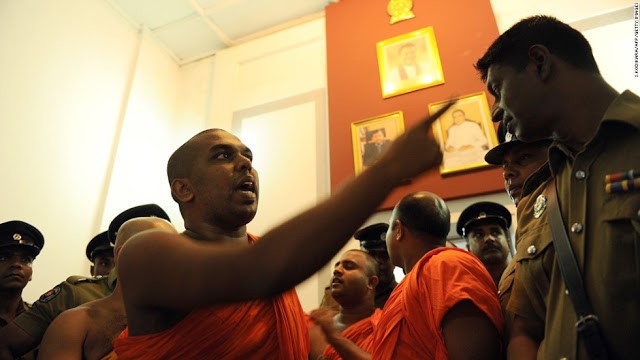
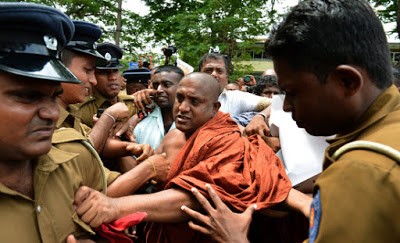
Galaboda Aththe Gnanasara Thera (who has earned the dubious reputation of having already seriously damaged a worthy cause by giving verbal expression to his explosive temper which is entirely out of character with a Buddhist monk) and many other deeply concerned monks have long been raising their voice against the activities of certain dangerous fundamentalist Christian and Islamic sects which are considered a threat even to the traditional Christian and Muslim communities. They are also playing leading roles in a number of  nonpolitical youth movements which are active against the aggressive encroachment on, and deliberate destruction of, ancient Buddhist archaeological sites in the North and East provinces where our millennia old island civilization had its roots. I have no personal knowledge of these things. I depend on what is publicly available in the media, particularly in the uncensored social media. It is when some Muslims, thought to be sponsored by a fanatical Islamist sect with foreign backing, put up unauthorized structures in ancient Buddhist historical sites under the very nose of certain unconcerned government officials who are officially responsible for their protection, that these monk activists apparently try to take the law into their own hands. The inaction of the government functionaries including law enforcement authorities in those areas in the face of encroachment and vandalizing of Buddhist historical places is the main reason why Buddhist monks get involved in this problem. So the ultimate responsibility rests with the government. It is not a religious or political problem. It is a failure of good governance.

These historical and archaeological places are of importance not only to the Sinhalese whose ancestors built edifices in them that are now in ruins, mostly buried in the earth, but also to the other Sri Lankan communities, because we are the common inheritors of those treasures. These monks’ agitations are not about politics, but about safeguarding the Sinhalese Buddhist cultural heritage of our country. The state has the primary responsibility to prevent conditions from arising that force our monks to resort to modes of protesting that are incompatible with their traditional image of inner calm and  characteristic forbearance. In practical terms, this means that all those elected members in parliament, whatever their status (whether they are in the government or in the oppositions, whether they are ruling at present or ruled in the past), must be held accountable; since the problem involves Buddhist monks, the Mahanayakes take equal responsibility. But we know that nearly all of them have been unpardonably remiss in doing their duty. The genuinely concerned citizens of this country are more worried about the fact that  the patience of the monks (and that of the Sinhalese Buddhist community who are aware of the evil that is happening to them) is wearing thin than about the unwarranted threats (full of ‘sound and fury, signifying nothing’, though) of a handful of ministerial nincompoops who are almost entirely to blame for the present deplorable state of affairs (if the evidence alleged to be in the monks’ possession is true as they claim). That the monks are not alone should not be forgotten.

But for the social media the provocative unlawful activities of the fundamentalist elements go almost entirely unreported. The mainstream media observe a judicious silence in the name of reconciliation. Rightly or wrongly the ordinary people are kept in the dark about what is happening in the background to which these monks and their young supporters are reacting. A slightly more fortunate/or significantly more unfortunate minority of us  avail ourselves of informal uncensored newscasts on the social media, and are aware of many recent instances of aggression on our ancient Buddhist historical sites by non-Buddhists in the northern and eastern provinces, apparently in defiance of the law enforcement authorities in those areas. There is much credible video evidence to confirm this on the internet. Anybody interested can check out. Minister Wijedasa Rajapakse visited a certain place in the East in response to days of agitation by Buddhist monks and lay activists, inspected the vandalized spots, and promised to take some practical steps to stop the situation deteriorating further, like setting up some guard posts at vulnerable points. This happened not many weeks ago. I think he kept his promise. However, since the problem seems to persist, we must conclude that nothing very effective has still been done. How long is this going to go on? We do not know if the information bruited about in the internet about the desecration and even destruction of sacred Buddhist sites in the said provinces is true or false. It is up to the responsible government authorities to investigate and inform us of the truth, and take corrective action on behalf of us all.

Harris Deen also wrongly believes that the thirty year civil conflict was between the Sinhala and Tamil communities”. In this, he is seriously mistaken or knowingly misleading. Or perhaps he himself has been misled about it. Again it is difficult to think he is deliberately making misleading comments. But to say that the conflict was between the Sinhala and Tamil communities is an absolute lie. Throughout the period which saw civilian massacres , suicide bombings, and other atrocities committed by separatist terrorists, there were no retaliatory attacks on Tamil civilians. Even the attacks on Tamils in 1983 were carried out by some criminal elements (probably used as agents provocateurs by some outside power with a view to destabilizing the country); they did not represent the whole Sinhalese community. The majority of the ordinary Sinhalese sheltered the victims as best they could under the unfortunate circumstances then prevailing for which the UNP government of the day were to be held responsible.

Even during the deadliest phase of the armed separatist conflict, the previous government never failed to feed the ordinary (mostly Tamil and Muslim) inhabitants of  the north and east provinces with or without the assistance of the UN bodies normally active in such situations. It was well known that the rebels stole much of the food stuffs sent to the north for civilian consumption. The Tamil civilians in the affected areas were not starved even though the LTTE cadres stole their food: The latter who controlled the distribution of food sent to the embattled areas often inflated the numbers of civilians who were to be fed in order to get extra food supplies. After the war was over, TV news teams showed how the Tamil rebels had used sacks of lentils, rice etc sent for the civilian population as sand bags from behind which to fire at the enemy from their bunkers! The government also sent medicines to the hospitals in the North. It was known that the rebels also made use of these drugs just as they ate the food that was meant for civilians. Salaries were paid to government servants in those areas. Schools functioned without much interruption. Even terror leader Prabhakaran’s children studied in government schools in Kilinochchi until the end of their A-Levels, after which they were sent to Britain for higher education by Prabhakaran. Towards the war’s end, some 295,000 displaced Tamils, held as a human shield by the LTTE, were taken to makeshift refugee centres amidst intense LTTE obstructions including shooting at escaping  civilians; although things were not easy initially, these refugees were later accommodated in better camps, where  facilities were soon provided for children’s schooling and for public healthcare.

So, if the war-winning government of the time didn’t think much about countering the anti-Sri Lanka propaganda blitzkrieg launched by the defeated separatists and their sympathizers, it was because the then rulers were too absorbed in the tasks of rebuilding the war-devastated areas and in resettling the displaced Tamil civilians and in improving their general lot. In the final stages of the humanitarian operation (so dubbed because its purpose was to rescue the Tamil civil civilians held hostage by the LTTE to ensure their own physical survival); even those Tamil refugees started praying for a decisive victory over their would-be saviours, which demonstrated the fact that the conflict was not between the Sinhalese and the Tamil communities, but between the state and a rebel group that challenged its authority.  Harris Deen himself seems to hint at this towards the end of his article in these words: The Sinhala, Tamil and Muslim people irrespective of linguistic or religious leanings welcomed the ending of the war despite protests from vested interests losing their ‘avenue’ of ‘revenue’ through illegal arms sales and other activities including dealing in drugs…” (though these ‘vested interests’ had been motivated by far more dignified goals than those suggested by Harris Deen).

In seeming to apportion the major part of the blame for ethnic tensions in post-independence Sri Lanka to the majority Sinhalese community, particularly to Sinhalese Buddhists, he shows his general ignorance of the factual background. It was not what he calls the ‘result of 1958’ that ultimately led to the emergence of Tamil separatist terrorism. The unjustified separatist sentiment was crystallized by S.J.V. Chelvanayagam who, in 1949, founded the Illankai Tamil Arasu Kacchi  (Lanka Tamil Kingdom/State Party) in the form of its ideology. The Sinhalese majority never grudged the minorities  living with them in peace, enjoying equal rights, although they have no other country to call their homeland. The separatist ideology is being kept alive by foreign ‘vested interests’ with their own specific geopolitical axes to grind. The Sinhalese are indigenous to Sri Lanka. The Sinhalese Buddhist culture evolved there. Sri Lanka is the motherland of the Sinhalese. It is only those who regard it as their  one and only motherland, their inalienable property, who genuinely love Sri Lanka. But this does not mean that the country is exclusively for the Sinhalese.

When some Muslims (like Harris Deen) write or say, The patience of the Sri Lankan Muslims is at a breaking point….”, they seem to assume that there are no sectarian divisions among them. Such an assumption is erroneous. However, a nearly homogeneous Muslim community was what existed in Sri Lanka about 40 to 45 years ago. But at present the situation is different in that respect. The spiritual tradition of Sufism, like in other parts of South Asia, is dominant among Sri Lankan Muslims (9% of the population where almost 70% are Buddhists). The two communities have been living together peaceably for centuries.  Although the usual ethnic harmony between the Buddhists and the Muslims still holds for the most part, unfortunately, of late, an element of mutual distrust and aloofness has begun contaminating Buddhist Muslim social relations. This is due almost entirely to the activities of a movement called the Thawheed (Monotheism) dedicated to the propagation of the ultra-fundamentalist ideology of Wahhabism which is deadly opposed to Sufism.  Wahhabism is the official version of Islam in Saudi Arabia.

The present Saudi kingdom was founded in the early 1930s by British protégé Abdu Aziz Ibn Saud. In the first half of the 20th century, the British and French imperial powers divided up the Middle East into kingdoms as a part of their divide and rule strategy. They did this with a view to promoting their strategic and commercial interests in the region. The Arab Oil Embargo of 1973-1974 (imposed against the United States by the Arab members of the Organization of Petroleum Exporting Countries, the OPEC) in retaliation to its support for Israel) made Saudi Arabia extraordinarily rich. The new riches have enabled the Saudi Wahhabists to pursue their expansionist dreams. The movement which is well funded by the rich Saudis is opening religious schools or madrases in Sri Lanka as they are doing in other countries allegedly for the propagation of Wahhabism. Suddenly, however, Qatar has reputedly emerged as an even more fanatical sponsor of this particularly expansionist brand of Islam.

Understandably, Buddhists led by the monks are looking on such developments with apprehension, because they believe that the Wahhabists are out to destroy the Sinhalese Buddhist cultural foundation of Sri Lanka. There is a lot of evidence that is cited to support that belief. They are undermining the traditional goodwill that exists between the  Buddhists and Muslims. The Wahhabists do not represent the mainstream Muslim community in Sri Lanka who are predominantly Sufis. The Wahhabists treat the latter as heretics, and often visit violence on them. When the Sufi order Thareekathul Mufliheen opened a meditation centre at Kattankudy in 1996, the Wahhabists attacked the place with grenades and guns; they shot at the members of the Sufi sect. This happened in May that year. Eight and a half years later, late night on October 31, 2004, about 500 Wahhabi jihadists set fire to the aforementioned meditation centre again. They destroyed the centre’s library, along with houses and businesses owned by the Sufis.

Just a few days ago, on the night of June 8, 2017, at 11 pm, an armed group, allegedly members of the Thawheed Jamad Organization, attacked a mosque at Ottamawadu and completely destroyed it. The mainstream media hardly give any publicity to such incidents. Incidents of violence, allegedly committed by Buddhist monks-led Sinhalese ‘gangs’, are freely reported, without any regard for the necessity of verifying the accuracy of such reports. Some attacks are said to be self-inflicted so as to throw suspicion upon members of Sinhalese Buddhist organizations who only want to draw the government’s and public’s attention to the criminal activities of communalists and religious fanatics who are hell- bent on destroying the traditional Buddhist cultural heritage of the country. The monks are reacting to mischief; they are not mischief- makers. On June 11, a fire gutted a tea factory at Nawalapitiya owned by a Muslim. Minister Rauf Hakeem strongly suggested that it was the work of a certain (Sinhala Buddhist) organization. But the owner of the factory said that the fire was caused by an electricity leakage. Rauf Hakeem is among the Muslim ministers who, the monks charge, clandestinely support invasive Islamist sectarianism.

Trying to browbeat, in the name of reconciliation, the innocent while mollycoddling the real perpetrators of  communal and religious violence, will not solve the problem. What must be done, and what the monk activists are demanding, is that the authorities investigate the reality behind these vociferous mutual recriminations by  Buddhist and Muslim groups and individuals, and that appropriate remedial measures be taken expeditiously and impartially to arrest the rot before the situation worsens as so wickedly expected by unseen mischief makers from outside.

Who is manipulating the Ven Gnanasara Thero & BBS?

June 17th, 2017

Shenali D Waduge

No situation happens in isolation. Every aspect has a historical origin and every scene has a geopolitical purpose. Without understanding these realities it is difficult to comprehend the scale of the problem. Firstly, we need to understand that there is a systematic and calculated plan to denigrate Buddhists/Theravada Buddhism with the ultimate intent to displace its sacred and historical place and role from its protection/preservation status mandated by the Sri Lankan constitution. Secondly, we need to understand that governments are mere pawns of a larger scheme that thrives in using divide and rule tactics of which the technique of ethnic & communal disharmony is one. Third is the fact that political leaders, groups, and other players are puppets in the hands of political wheeler dealing pimps whose strings are pulled by external forces & their intelligence wings!

In developing countries in particular those that are geopolitically sensitive, national movements are immediately infiltrated and schemes are devised to play a dual role – galvanizing groups to create bloc vote bases picking up themes and issues that are contentious and guaranteed to create tensions at the press of emotional buttons.   It is in this scenario that we must approach the role of Gnanasara thero & the Bodu Bala Sena movement as well as a host of other racial leaders & their racially based political movements. Nothing takes place in isolation and our quest is to discover the grand scheme of things and who are actually pulling the strings & the political brokers at play!

The validity of the points they raise can be and need to be taken up separately. So our quest is to ponder why BBS was created, by whom & what the multiple objectives expected to be achieved by its creation.

On the one hand BBS was used to galvanize a growing number of disheartened Buddhists who had no one to speak on behalf of them, then on another footing it had a strong spokesman fearlessly using his mouth like an AK 47 on all and sundry

This immediately takes us to the Hindu Hari Krishna Movement which became infiltrated by the CIA and the Russians declared Hari Krishna cloaks hide CIA daggers”. Therefore, it is certainly anyone’s guess as to how far the BBS had been infiltrated and who is pulling the strings and how far Sri Lanka’s immediate neighbor is associated with this endeavor!

Gnanasara thero arguably is one of the most vociferous Buddhist thero’s in Sri Lanka – knowledgeable, well read, gift of the gab, excellent debater and one who does not mince his words. Such a personality would make any politician crumble in fear if dared to expose their shortcomings and he has certainly left many politicians embarrassed!

As far as the thero’s history is concerned he was originally part of the Sihala Urumaya and close associate of Minister Champaka Ranawaka an equally talented orator. The Sihala Urumaya was launched in April 2000 & contested the general elections in October 2000 and polled 127,000 votes. The eventual outcome of the Sihala Urumaya will enable people to understand the scheming involved.

Sihala Urumaya was a party that galvanized all Sinhalese (Buddhists & Christians) who loved the nation and were against separatism by any form. That unity was quickly broken by carrying out a campaign to humiliate and ridicule the much respected S L Gunasekera claiming he was not Buddhist and should not use the one seat Sihala Urumaya had to enter parliament. Thilak Karunaratne entered and SL Gunasekera left the party in disgust and so did many others. Who took the SU for a ride? Who devised schemes to humiliate the Buddhist monks? Who are devising the schemes using elements that represent the Buddhist majority, the results of which are meant to leave public condemning them? Who are behind these master plans?

Despite the absence of late S L Gunasekera, it is important that we ponder as to how far NMAT brains put their organizers to negatively influence the SU election campaign.  Not too many voters were happy with the hate speeches made by Champaka Ranawaka that now many say was to actually neutralize ‘Sinhala’ sentiment. SLG in fact implied that NMAT had stabbed him & NMAT comprised Champaka R, Sujith Akkarawita, Kamall Deshapriya, Asoka Abeygunawardena, Atureliya Ratana & Udahamulle Sri Vimala (Sunday Times 22 Oct 2000 page2) That same year the Daily News & Island papers reported of Prof. Indraratne being assaulted at his house by Ratana, Champaka and Sujith Akkarawita. Both Champaka and Ratana are architects of Janatha Mithuro and this group joined S B Dissanayake and Mangala Samaraweera in 1991 to form the Ratavesi Peramuna. In 1994 they worked closely & intimately for Mangala Samaraweera in Matara. Note the connections and how they had been propped to be models for the Sri Lankan public over the years? What role did the intelligence wing of our immediate neighbor play in the scheme of things?

It was in September 2003 at the Jathika Sangha Sammelanaya Ven. Gangodawila Soma Thera proposed that the government be asked to pass legislation against conversions  Less than 4 months later he passed away and soon afterwards the Sihala Urumaya evolved into Jathika Hela Urumaya in February 2004 and Ven. Galaboatte Gnanasara thero was one of the Buddhist monks associated with its inception.

Who was the brains behind putting Buddhist monks among the den of political lions knowing the likely outcome? 2004 became the watershed of Theravada Buddhism. The entry into politics was a very calculated move. In the meanwhile, Mangala Samaraweera helped secure the SLFP-JVP alliance shortly before that. At the 2004 elections UPFA-JVP alliance secured 105 seats, JHU 9 seats, UNP 82 seats. Be it 2004 or 2015 who is the architect of these alliances & who helps him forge these alliances at crucial junctures?

Can we not see a pattern? To identify the patterns and identify the perpetrators it is important that we identify the beneficiaries for no perpetrator will become party to something that puts them at a disadvantage. It is also important to identify the external elements that are steering the local groups and their leaders.

Take for example 1983 riots – the hyped premise is that Sinhalese attacked Tamils. It is a totally false assumption. Sinhalese to this day are being chagrined falsely. But who took advantage from it – India, RAW and Tamil politicians. This incident enabled India to force Sri Lanka to sign the Indo-Lanka Peace Accord in 1987 and the 13a and secure Trincomalee Harbor. UNP became a lame duck in that exercise. UNP has been used as a lame duck every time it has come to power to advance the agendas in particular beneficial to our immediate neighbor, India.

It is noticeable how some key players keep jumping from one party to the other, creating parties and using parties to generate public sentiment – whether it is anti-Buddhist, anti-Tamil, anti-Muslim, anti-Christian etc. What we need to at this moment in time realize is that those who are steering these ‘anti’ slogan venoms are all in turn steered by another group of people who decides what they say, how they say it and when they say it. Which is why we see all of a sudden leaders of group take up an issue and go on a verbal rampage, then another group counters and both build up public to defend themselves. This tactic has worked well and has divided people beyond repair, unless people begin to realize the manipulations by their neighbor Sri Lanka is doomed.

It is into this scheme of things that we must place the said Ven. Galaboatte Gnanasara thero who has been an integral member & is probably been used as the ‘voice’ of the grievances of the Buddhists but functions as a loose cannon wherein no one knows what he may really upto. However, someone more powerful must be pulling his strings. Who is it?

Having left the JHU, Ven. Galaboatte Gnanasara thero joined the Bhikkshu front of the UNP and campaigned for present PM at the 2005 Presidential elections, thereafter he campaigned for the former Army commander Sarath Fonseka at the 2010 Presidential elections. Both times for a UNP candidate.

What needs to be also highlighted is that the decision to field Buddhist monks in politics by JHU handlers certainly calculated to divide the confidence the people had in the Maha Sangha, since ancient times the two forces that have held the country together has been the Maha Sangha and the Armed Forces.

Therefore, by engaging Buddhists monks into politics they became victims of political pimps like the JHU lot and their puppeteers who were versatile masters in making political deals and ruthless sellouts.

Never before in the history of this country have we seen Buddhist monks been arrested the way it is being done now, handcuffed and jailed in public humiliation. These are hurtful to the many Buddhists who still value the Theravada Buddhist teachings. To cover their tracks they tapped respectable Buddhist monks who were clueless as to the real agendas. The launch of ‘Sithamu’ (Sinhala/Thamil/Muslim) is said to be using Norwegian funding. Today, we see the outfit trying to boost the present Justice Minister to be the beacon of the Buddhists and every day a new script is being written.

In recapping matters, what needs to be understood is that even in the case of Aluthgama, the beneficiaries were not the Sinhalese! But it was planned to ensure the Sinhala Buddhists became the scapegoats. Ven Gnanasara Thero is certainly neither the representative of the Buddhists, the Buddha, the Maha Sangha or the Dhamma. But, whoever is steering the group is facilitating international attention to shine against Sinhala Buddhists while enabling the theme of communal violence to hit the papers.

This is the same scenario planned during another UNP rule in 1983 where the supposed victims were the Tamils, this time it is the Muslims but in reality it will be the Sinhala Buddhists who are actually being targeted. Even the fiasco created in the Homagama courts resulted in delaying bail for the intelligence officers!

We do not need pseudo patriots wearing Made in India clothing! Many of these are now peddling the federalism, devolution and similar slogans all to serve the advantage of our neighbor!

Therefore it is imperative that all the communities identify the wood from the trees!

We are well aware of the scheme of things, the players and those pulling the strings. We have no regard for Buddhist monks entering politics who are falling victims to political gay pimps and their masters across the Palk Strait, thereby degrading the sacred robe they are wearing.

The place of the Buddhist clergy is enshrined in history where they took a very apolitical role and advised the Kings on what was good for the nation, national security and the welfare of the people. We abhor these entities who are on contract to humiliate the great philosophy that we are proud to be disciples of. We will also not forgive those that are riding on the Buddhist card to play a hypocritical role for they will be cursed and have to pay for this karma.

The future of opportunist parties like the JHU manipulated by foreign forces and their gay agents, lies in the hands of the Buddhist voters who must refuse to be manipulated by leaders pretending to be standing for the rights of the Buddhists with the intent of using the Buddhist vote to come into power.

Contractors like the BBS and Ven Gnanasara thero emerge from the anomalies in the political system.

The behavior and actions of Ven Gnanasara thero or Champika and their controversial links to the neighrbor CANNOT erase the validity of his accusations which HAS TO BE investigated and remedial actions taken.

The accusations made by Gnanasara thero regarding ancient Buddhist sites in the North & East being systematically destroyed was confirmed by UNP Minister Akila Viraj Kariyawasam in Parliament.  To be fair by Gnanasara thero, it is pertinent to ask why sections of the media hounding for the arrest of the thero citing racism and hate speech are silent over other forms of racism and extremism in the country which are far more detrimental and disproportionately higher than that which the thero is accused of.   

We are in a very dangerous terrain. Powerful Ministers in power are flogging ethno-religious politics and have successfully created resentments and hatred among the masses which in time to come even they will not be able to control. These are factors that the peace-loving people of all communities need to seriously address and devise ways to counter without expecting political involvement.

Shenali D Waduge

Old Hag Chandrika’s treachery, bluffing, and enmity to Sri Lanka (Part II)

June 17th, 2017

By :A.A.M.NIZAM – MATARA

Let us find some more despicable statements made by her and her anti-national and abhorrent activities in the recent past probably due of the mental degeneration she is suffering from:

  • During her first visit to India after this government came to power addressing Indian media she said that she found almost everyone in the Sri Lanka Freedom Party were either thieves or murderers and it was difficult to find someone who can be trusted in that party and after much endeavor she found Sirisena to lead the breakaway group and she maintained contacts with Sirisena through Viber technology. How come these so-called thieves and murderers become members of the present government and hold Ministerial portfolios if her intention was to have a clean government?
  • She was in U.K (her beloved country) when Tsunami struck Sri Lanka and she returned only after several days. By that time Prime Minister Mr. Mahinda Rajapaksa has visited all affected areas and completed all preliminary work to be done.
  • She came and took over the already arranged relief activities together with some of her cronies and made various promises which were never fulfilled. Tsunami dilapidated buildings still remaining in  the Galle city for which she promised to establish a modern city
  • By the way we do not know what happened to that Tamil baby she took care of and said that she was going to raise as one of her own children! Whereabout of this child is a mystery.
  • It was Chandrika as President who presented the federalization (‘union of regions’) package, brought in by the Norwegians, double crossed the Karuna rebellion and signed the PTOMS empowering the LTTE to handle Tsunami financing in the North and East.,
  • She said that power devolution beyond 13th amendment should be given to solve the problems of the minorities. She said that there was a war for 30 years since power devolutions specified in the 13th amendment was insufficient. She also stated that the Tamil people have no confidence on a government ruled by the Sinhalese and hence there is nothing wrong in giving powers they envisage to them. However her mother Madam Sirimavo Bandaranaike strongly protested against the 13th amendment in 1987 and she also held a sit-in protest under the Pettah Bo-tree.
  • She knows that she can never win an election except by contesting for an electorate in the North. Prior to the 2015 General Election she tested the ground by pasting some posters in the Gampaha district which was completely ignored by the people.

Military debacle during Chandrika’s rule

The old hag Chandrika recently claimed that she finished 75% of the war and what Mahinda Rajapaksa did was only attend to procedural matters. Given below are her horrible war record and the personnel and material losses incurred by our forces during her period:

Her period of office (1994-2005) was notable for a series of battlefield defeats. LTTE took Mullativu (1996) Kilinochchi (1998), Elephant Pass (2000) and nearly took Jaffna peninsula. At Elephant Pass, the most important military base in the north, with access to the Jaffna peninsula, the army withdrew leaving behind massive stock of arms, ammunition and equipment including artillery pieces.  In Kilinochchi, 500 soldiers were   killed, 3,000 wounded and 500 were missing.  LTTE burnt alive 1300  Sri Lankan soldiers at Mullaitivu and removed the entire arsenal including artillery pieces, mortars, and machine guns. Those who survived the Mullaitivu attack  had revealed the pathetic state of Mullaitivu defenses at the time.  Experts  say the  Mullaitivu debacle could have been avoided. The government wanted to regain Mullaitivu, but the military opposed this and refused to deploy any more men.  They were against maintaining isolated bases.

The government engaged in a series of highly publicized, knee jerk military operations which kept the focus on Jaffna, and off the Eastern province. These seriously weakened the army and helped LTTE further entrench itself.  These operations were given names that screamed success even before the operations had started,   ‘Thrivida pahara’,    ‘Sath jaya, ‘Jayasikurui, ‘Edibala,   ‘Rivi bala’ and ‘Ranagosa’. They suffered from a shortage of weapons and the lack of holding strength at crucial moments. They all failed. ‘Thrivida pahara,’   was called off within hours, leaving a group of soldiers stranded on the beach. They were eventually killed by the Tigers.   ‘Ranagosa’ spread three divisions thinly on the ground. LTTE crushed them. Jayasikurui seemed a lunatic venture even to the public. It was trying to regain the highly exposed Jaffna-Kandy road, with the LTTE lined up on both sides of the route,  using just two fighting divisions. These two divisions were soundly defeated by the LTTE.

These ill planned military operations resulted in a huge number of deaths. Operation Riviresa (1995) took Jaffna, but with a loss of 600 men.    The government did not care. The lives of the armed forces and police didn’t matter.  Security issues and long term implications were not important.  The Government simply wanted to show territorial gains. When the campaigns failed, the government imposed censorship .The press could not report on the bloody fighting and the number of lives lost.   The statement issued by LTTE when they took Elephant Pass was completely censored.

Economic performance

The latest of her mad utterances is that during her rule she brought Sri Lanka among the 75 richest countries in the world.  She says during that period the GDP increased significantly and public servants salaries were increased by five fold.  We do not know where this illusory world of her existed.  It is a known fact that her sense of economic management was zero and Sri Lanka for the first time in its entire history became a country with minus economic growth during her period and frustrated by this fact several Ministers of her government quit the government and joined the opposition and toppled her government.

It can undoubtedly be said that Sri Lanka achieved a massive development during the period of former President Mr. Mahinda Rajapaaksa and given below is a table showing Sri Lanka’s economic status under Chandrika and its significant expansion up to the end of 2014.


Details At the end of Chandrika’s period (2004) At the end of Mr. Mahinda Rajapaksa’s period (2014)
GDP US$ 20.7 billion US$ 80  billiom
GDP  per capita US$ 1,062 US$ 3,853
Average Inflation 9% 3.3%
Foreign Reserves US$ 2.3 billion US$ 8.3 billion
Debt/GDP ratio 102.3% 70.7%
Public investment US$ 0.98 billion US$ 3,7 billion
Foreign direct investments US$ 0,24  billion US$ 1.6 billio
All share price index 1506 7299
Unemployment 8.3% 4.3%
Poverty headcount 15% 6%
Fiscal deficit GDP 7.5% 5.7%
Electricity for households 73% 98%
Telephone penetration 37% 120%
Safe drinking water 72% 90%
Computer literacy 0.5% 26%
University Admission 14% 18%

We hope that this old hag leaves this country at the latest possible time without causing further damage and disrepute to the country and serving for the separatist cause and settle down in UK permanently with her son and daughter.

She is not the only perfidious character that has harmed and continues to harm this country. There are so many. All these brutes should be roped in, taken to Galle Face greens and mete out punishments that used to be carried out by Sri Lankan kings in the past. (end)

Remedy for dengue Homeopathic magic drug

June 17th, 2017

By Dr. Tilak S. Fernando

Prof. Kolitha Sellahewa, Head of the Department of Internal Medicine at Dr. Neville Fernando Teaching Hospital elucidated in full, how to control and treat dengue affected patients through conventional methods, in my column on 3 June 2017. However, there appears to be two schools of thought in dealing with this deadly disease – Conventional v Homeopathic.

The orthodox way to treat patients according to Western medicine is by diagnostic tests, drugs, and surgery. Doctors who are bound by the Hippocratic oath have no faith in the efficacy of homeopathic preparations on the basis that those are not clinically proven. Contrary to such disparity, Homeopaths believe in using natural principles in the treatment of disease. With regard to dengue, they claim the two homoeopathic preparations, Abies Nigra, and Eupatorium Perfoliatum have, in their experience, helped many dengue affected patients to recover from the critical phase of sliding down to the Dengue Shock Syndrome stage.

Origins of Homeopathy

German physician, Samuel Hahnemann discovered Homeopathic as an alternative medicine in 1796 based on his doctrine ‘like cures like’ (law of similar).Nevertheless, critics of Homeopathy regard it as a pseudoscience that is incorrectly presented as scientific. Homeopathic preparations are manufactured using a process of dilution known as ‘potentisation’ in which a substance is mixed with alcohol or distilled water, and then briskly shaken repeatedly in a process called ‘succession’ until no molecules of the original substance remain. Finally the substance is termed as a homeopathic. The process is governed by consulting reference books known as ‘repertories’.

Sri Lankan perspective

Homeopathy is recognized in Sri Lanka and comes under the purview of Ministry of Indigenous Medicine. In addition, there is also Homoeopathic Medical Council. These two entities collaborate with the Presidential Task Force and the National Dengue Control Programme to implement a nationwide ‘prophylactic’ programme. In such a backdrop homeopaths are mystified as to why the government prohibits doctors to use homoeopathic drugs, even though some doctors are convinced in their own right. They claim it as an absolute crime to let patients suffer and die unnecessarily when some of the government doctors who would like to use the homoeopathic drug on dengue patients are restricted by rules and regulations.

The Rajapaksa regime allocated Rs 300 million in 2012 to the Dengue Control Unit. In the wake of a dengue epidemic today, the million-dollar question is whether the much-touted Presidential Task Force and National Dengue Control Programme had overlooked homeopathy as an effective solution to treat dengue patients.

Public advice

Dr. Mass R. Usuf, PhD, M (Acu), MFHom, published several articles in the national English press on Homeopathy Prevention and Cure. He had explained in detail to what extent the homoeopathic drug ‘Eupatorium Perfoliatum’ had cured hundreds of dengue affected patients from his own personal experience. In support of his claim, he said:

Out of 24,000 flu cases, during the great influenza pandemic in 1918, the mortality rate after treating with orthodox medicine was 28.2 per cent; those treated homeopathically was only 1.05 per cent. (‘The Journal of the American Institute of Homeopathy, May 1921). The mortality rate after treating typhus fever in 1813 with conventional medicine was 30 per cent, whereas only 1 per cent with homoeopathic treatment. When cholera ravaged Europe in 1831, the mortality rate with conventional treatment was 40 per cent – 80 per cent whereas only 9 per cent was recorded with homeopathic treatment. (http:hpathy.com/homeopathy-papers/some-history-of-the-treatment-of-epidemics-with-homeopathy/).”

Notwithstanding, Homeopaths blame the health authorities in Sri Lanka for turning a blind eye when thousands become ill and hundreds die of dengue fever. They claim homoeopathic prophylactic is extremely cheap in comparison to tens of millions of rupees the government spends on Dengue Health Care. Homoeopathic drugs are free of side effects and could even be administered to a day old infant, they claim.

Colombo Forum

On behalf of the Muslim Aid Foundation in Sri Lanka, an interaction programme was held on 25 May 2017 at the Hector Kobbekaduwa Centre in Colombo. It was attended by eminent homoeopaths, professionals from various fields, and a medical officer from the Ministry of Health, members of the civil society including the President of the Homoeopathic Council and the press. The purpose of the conference was to find ways and means of educating the public about dengue in general, and to effectively distribute the prophylactic Eupatorium Perfoliatum widely.

Joe de Livera, CEO of an almost a century old business Organisation in Pettah, introduced himself as a living example of how the daily use of Arnica 30c (Homeopathic preparation) can benefit the user right up to old age. Joe aged 87 claimed, “I do not bear the usual signs of old age and do not sport any wrinkles on my skin, neither do I have any aches and pains in my body which is usually the price one pays for the advancing years. I do not take any allopathic drugs whatever except on a SOS basis, like after surgery. All my medical statistics are normal.”

Joe has pioneered in treating dengue since 2008 when dengue replaced Chikungunya in Sri Lanka. He prescribes Eupatorium Perfoliatum 200c in the wet dose, which is made by inserting 6-8 pellets into a 500ml bottle of water from which a dose of 10ml given every three hours as soon as the patient is proved to be positive to the Dengue Antigen Test. In his experience, the patient usually shows marked improvement in a few hours after the second dose, and the third dose usually makes the patient’s Platelet count to rise at the rate of around 2,500 per hour. Body pains, fever and vomiting usually leave the patient in a few hours after the second dose is administered, and the patent feels fit to be discharged, if warded in a hospital.

Personal experience

From personal experience, he finds many doctors who have used this ‘magic drug’ in their own clinics have confirmed that ‘it does wonders’ when compared to their own treatment protocol, but unfortunately there is a marked resistance to using this simple and safe remedy on the part of the SLMC, as their official position is that before any drug can be cleared for general use in hospitals it has to be subjected to tests, which usually take over six months to perform!

Joe spends about 2-3 hours on his own website (http://www.joedelivera.com) daily, and also assists any patient who consults him in office by giving his services and the medicines free of charge. He has ‘simplified’ Homeopathic in a practical manner to work more positively, while the conventional Homoeopaths beat about the bush, as instructed by the classical exponents of this science, and often derisively classify his treatment as ‘Jopathy.’ ‘I am not alone in my “this for that therapy’ says Joe, and refers those interested to visit the website of Prasanta Banerjee Homoeopathic Research Foundation (http://www.pbhrfindia.org/).

Those doctors who are convinced on the effects of using Eupatorium Perfoliatum 200c in the Wet dose have been informed that this homoeopathic remedy is already being used by patients who are aware of its availability free of charge in a few centres throughout Sri Lanka in bottles of water, medicated in the manner described, but the urgent need today, he asserts, is to ensure that it is available in all hospitals in Sri Lanka to arrest the current rate of fatalities that is reported to be well over 200 mark for 2017.

Normal practice

It is a sad affair that due to various indispositions of the human body many hospitals are unable to provide beds for thousands of patients daily, as such it has become the normal practice having two patients sharing a single bed such as Kalubowila, due to the high incidence of warded patients. Rather tragic indeed to witness some patients having to sleep on mats on the floor, even after undergoing minor surgery. What’s more shocking is to record few hospitals (like Ragama) having to send dengue patients back home after inserting a Cannula in the hand with Dextrose IV solution connected with instructions for use at home. This is purely due to the fact that absolutely there is no space in the wards to accommodate the many thousands who seek treatment today.

In the present context, dengue is identified as the Type 2 virus that is spreading at epidemic levels, which is the most difficult of the four types of the virus to treat. In such a backdrop Joe de Livera strongly feels that commonsense should prevail on the authorities to give the green light, at least to test it out on a few patients, to verify how this remedy “Eupatorium Perfoliatum” 200c in the Wet dose can cure dengue patients. Adding further, he says that there is absolutely no objection whatsoever for hospitals to continue with the standard treatment protocol because all that is necessary is the relieving water-mixture is given to patients, while a physician in the ward can verify results.

Major issues

Joe de Livera voluntarily and very generously offered to supply 10,000 globules of Eupatorium Perfoliatum which can be used to activate a few thousand bottles of water free of charge to any organization that can distribute the water to patients. It was concluded that what is urgently needed is to contact and educate the public about this homoeopathic drug through community centres, places of worship and principals of schools and to make the drug available at those centres free of charge. Alternatively, to request various philanthropic agencies to buy this inexpensive prophylactic and make it freely available to the public or to supply them in smaller bottles or sell at a negligible cost to the public. Adequate publicity through the press, television, and the social media (Face Book) was recommended as the most pressing issue in getting the message across to the public. To dispel any inherent fears about this remedy, it was also suggested to have a qualified homoeopathic doctor at each Centre on the days of distribution.

There has, however, been no emphasis curing dengue with any drug, as there is none listed in the pharmacopoeia of drugs available worldwide. It is homeopaths’ fervent hope that the Sri Lanka Medical Council (SLMC) will wake up to realities and accept their plea and commence the trials, which they consider as being essential to use this miracle remedy to cure dengue immediately.

tilakfernando@gmail.com

ප්‍රචණ්ඩ හැසිරීම් පෙන්වන භික්‍ෂූන් ලිංගික අපයෝජනයන් වල වින්දිතයන් ද ?

June 17th, 2017

වෛද් රුවන් එම් ජයතුංග 

බෞද්ධ භික්‍ෂුවකගෙන් සමාජය උවැසියන් බලාපොරොත්තු වන්නේ සංවර හැසිරීමකි. නීග්‍රෝධ සාමනේරවන්  පරමාදර්ශී භික්‍ෂු හැසිරීමක් අපේක්‍ෂා කරන බෞද්ධ සමාජය අද දකින්නේ ඉතා අවිනීත ලෙස කුණුහරප කියන , බැණ වැදීම් කරන සාමාන්‍ය මිනිසුන්ට පමණක් නොව පොලිස් නිලධාරීන්ටද පහර දෙන වල් වැදී ගිය චීවරධාරීන් පිරිසකි. සමහරක් විට සිවිල් සමාජයද මෙම ප්‍රචණ්ඩ හැසිරීම් සාධාරණීකරනය කරන්නේ සිංහලයන්ට බුද්ධාගමට වින කිරීමට බාහිර සතුරන් එන විට භික්‍ෂූන් පෙරමුණ ගන්නා බව කියමිනි. සිංහල ජාතියට හෝ බුද්ධාගමට එරෙහි සතුරු ආක්‍රමණ ආ විට පෙර කාලයේ භික්‍ෂූන් නම් කරන ලද්දේ උපැවිදිව සටනට ගොස් සතුරා නසා යලි සාසනයට ඇතුළු වීමයි. නමුත් වර්තමානයේ කියා සිවුර කරට ගෙන සිංහල ජාතිය  හා  බුද්ධාගම රැකීමට එන චීවරධාරීන් කරන්නේ සමාජ ප්‍රචණ්ඩත්වයේ යෙදීමත් අන්තවාදය වැපිරීමත් ය​. මෙය එක්තරා ආකාරයකට බුදු දහමට එරෙහි බලවේග වලට ආයුධ සපයා දීමක් ලෙස නම් කල හැකිය​. 

 කුඩා ළමුන් බොහෝ විට අද  මහණ කිරීම සඳහා සංඝ  සාසනයට  ඇතුළු වන්නේ සමාජ ආර්ථික ගැටළු නිසාය​. මෙලෙස මහණ කිරීම සඳහා සංඝ  සාසනයට ඇතුලත් වන ළමයා බොහෝ විට ඉතා කුඩා කාලයේ සිටම දරිද්‍රතාව , මාතෘ හෝ පීතෘ වියෝග කාංසාව වැනි සාධකයන්ට ලක්ව පන්සලට ඇතුළු වෙයි. පන්සලේදී සාමනේර තත්වයට පත් වන ළමයාට බොහෝ විට වැඩහිටි භික්‍ෂූන් ගෙන්  කායික මානසික අතවර පමණක් නොව ලිංගික අපයෝජනයන්ටද ලක් වීමට සිදුවේ. මෙලෙස වසර ගනනාවක් විවිධ අපයෝජනයන්ට ලක්ව සමාජය ඉදිරියට එන්නේ කාල බෝම්බයක් බඳු පුද්ගලයෙකි. මෙම පුද්ගලයන් සමාජ ප්‍රචණ්ඩත්වයේ යෙදීමේ සම්භාවිතාව  ඉහල අතර ඔවුන්ව  

අතකොළු ලෙස බොහෝ අන්තවාදී සංවිධාන වලට භාවිතා කල හැකිය​. 

 අපරැක්කේ පුඤ්ඤානන්ද භික්ෂුවගේ සිද්ධිය 

බාලවයස්කාර කුඩා සාමනේර හිමිවරුන් පස්දෙනෙකුට බරපතළ ලිංගික අතවර කිරීම සම්බන්ධයෙන් සැකපිට අත්අඩංගුවට ගත් ජාතික හෙළ උරුමයේ හිටපු පාර්ලිමේන්තු මන්තී‍්‍ර අපරැක්කේ පුන්‍යානන්ද හිමියන්  අදාළ සාමනේර හිමිවරුන්ට ඉඳහිට ලිංගික අතවර කළ බව  පිළිගනිමින් කටඋත්තරයක් ලබාදී ඇතැයි  අධිකරණයේදී හෙළිවිය. 

නාගස්ඇල්ල පමුණුව ශී‍්‍ර විවේකාරමයේ විහාරාධිපති වන අපරැුක්කේ හිමියන් රාතී‍්‍ර කාලයේදී මෙම සාමනේර හිමිවරුන් බියවද්දා ලිංගික අතවර කර ඇතැයි ද පැවසේ.  මෙම සාමනේර හිමිවරුන් වයස අවුරුදු 10ත් 14 ත් අතරේ පසුවූ අතර මෙම වින්දිත සාමනේර හිමිවරුන්ට උපදේශන ප්‍රතිකාරයක් ලැබුනේද යන්න පිලිබඳව සඳහනක් නැත​. 

 ස්වපීඩාකාමී භික්ෂූන් 

විරෝධතාවන් සඳහා ගිනි තබාගෙන මැරෙන බවට හෝ එසේ ගිනි තබා ගෙන දිවි තොර කර ගැනීමට උත්සහ කල භික්‍ෂූන් පිලිබඳව මෑත කාලයේදී වාර්තා වී තිබේ.  බෝවත්තේ ඉන්දරතන යනු ගව ඝාතනයට විරෝධය දක්වා මහනුවර ශ්‍රී දළදා මාලිගාව ඉදිරිපිට  දී සිරුරට ගිනි තබාගත්  භික්‍ෂුවකි. මෙම භික්‍ෂුව පැල්මඩුල්ල ප්‍රාදේශීය සභාවේ මන්ත්‍රීවරයෙකු ලෙසද කටයුතු  කර ඇති අතර එම භික්‍ෂුවට එරෙහිව උසාවි වරෙන්තු කීපයක් තිබූ බවද පොලිස් පරීක්‍ෂණ වලදී හෙලි විය​.   

බොහෝ විට ස්වපීඩකත්වය ව්‍යභිචාරී ආශයන් නිසා පැන නගින බව මනෝ විද්‍යාඥයන් විසින් පෙන්වා දී තිබේ. මේ නිසා ස්වපීඩක චර්‍යාවන් පෙන්වන භික්‍ෂූන් ප්‍රතිකාර සඳහා යොමු කිරීම මගින් ආත්ම හානි අවම කර ගත හැකි වෙයි. 

මිනිස් බෝම්බයක් වීමට උත්සහ කල සොල්දාදුවා   

 යුද හමුදා රෝහලේ මා සේවය කල කාලයේදී දුස්සාධ්‍ය විශාදයෙන් පෙළුණු එක් සොල්දාදුවෙකු මා වෙත පැමිණ ඔහුට මරාගෙන මැරෙන බෝම්බකරුවෙකු වී සතුරා නැසීමට අවශ්‍යයි කියා ඒ සඳහා ඔහුව හමුදාපතිවරයාට යොමු කරන ලෙස ඉල්ලීමක් කලේය​.   ශ්‍රී ලංකා යුද හමුදාව අන්තර් ජාතික යුද නීති වලට අනුව ක්‍රියා කිරීමට බැඳී තිබෙන නිසා මරාගෙන මැරෙන බෝම්බකරුවන් පුහුණු කිරීම හමුදාව විසින් නොකරන බව කියා මම ඔහුට පිළිතුරු දුන්නෙමි. එහෙත් මෙම සොල්දාදුවා මට පෙරැත්ත කරමින් ඔහුට මරාගෙන මැරෙන බෝම්බකරුවෙකු වීමට අවශ්‍ය බව කීවේය​.   මෙවැනි චිත්තයක් ඔහු තුල පහළ වූයේ දේශප්‍රේමය නිසාද නැතහොත් වෙනත් හේතුව නිසාද කියා බැලීම සඳහා මම එකී සොල්දාදුවා සමග කතා බහ කොට ඔහුගේ තොරතුරු විමසුවෙමි.   

මෙම පුද්ගලයා උපත ලබන්නේ ඉතා දිලිඳු පවුලකය​. පියා මධුලෝලියෙකි. පියා නිතරම ළමුන් ඉදිරියේ ඉතා බරපතල ලෙසින් බිරිඳට පහර දෙයි. මේ නිසා කුඩා කාලයේ සිට දරිද්‍රතාවයෙන් සහ අනාරක්‍ෂිත බවින් ඔහු පීඩා වින්දේය​. සමහර විට නිවසේ කෑමට දෙයක් පවා නොවීය​. මේ නිසා වයස නවය වන විට ඔහුගේ   මව ඔහුව පන්සලට භාර දෙන්නේ කෑම ටික හෝ ලැබෙනු ඇතැයි සිතාගෙනය​.   ලාබාල වයසේ මහණ වූ මෙම පුද්ගලයා පන්සලේදී වැඩිහිටි භික්‍ෂූන් අතින් ලිංගික අපයෝජනයට ලක්වෙති. ඔහු පැවසූ පරිදි සමහර රාත්‍රී වල  වැඩිහිටි භික්‍ෂූන් අට දෙනෙකු පමණ ඔහුව වරින් වර ලිංගික අපයෝජනයට ලක් කොට තිබේ. මෙසේ ලිංගික අපයෝජනයන්ට  මුහුණ දෙමින් වසර ගනනාවක් ඔහු පන්සලේ කාලය ගත කරයි. වසර දහ අට වන විට මෙම   පුද්ගලයා උපැවිදිව හමුදාවට බැඳේ.   හමුදාවේදී ඔහු අන්‍ය සොල්දාදුවන් සමලිංගික ක්‍රියා සඳහා යොමු කරවා ගැනීමට උත්සහ දරයි. මේ නිසා ඔහුට රාජකාරිමය වශයෙන් ආතති තත්වයක් ඇතිවේ. මෙසේ වසර කීපයක් ක්‍රියාන්විත ප්‍රදේශ වල රාජකාරී කරන විට යුද ආතතිය නිසාද ළමා කාලයේ අත් දුටු ක්‍ෂිතිමය අත්දැකීම් නිසාද  ඔහු තුල විශාදය හට ගනියි. එහෙත් ඒ සඳහා ඔහුට ප්‍රතිකාර නොලැබේ.   විශාද තත්වය යටතේ ඔහු ක්‍රියාන්විත රාජකාරී කරයි. මේ හේතුවෙන් වරක් බංකරයකදී තම අවියෙන් ඔහු වෙඩි තබා ගැනීමට උත්සහ දරයි. නමුත් වෙනත් සොල්දාදුවෙකුගේ මැදිහත් වීමෙන් එය වැලකේ. අණතුරුව මෙම පුද්ගලයා යුද හමුදා  රෝහලේ මානසික රෝග වාට්ටුව වෙත යොමු කරනු ලබයි.    

පූජකාරාම තුල සිදු වන ලිංගික අපයෝජනයන් 

බෞද්ධ පන්සල් වල පමණක් නොව ක්‍රිස්තියානි ආගමික මධ්‍යස්ථාන වලද ළමා අපයෝජනයන් බොහෝ සිදුවෙයි. එහෙත් මේවා වාර්තා කිරීම වෙනුවට යටපත් කෙරේ.     මාධ්‍ය විසින් බහුලවම වාර්තා කරනු ලබන්නේ  බෞද්ධ භික්‍ෂූන් විසින් කරන ලද අපයෝජනයන් පම​ණි. ඉස්ලාම් මෙන්ම හින්දු පූජකයන් අතින් සිදු වූ අපයෝජනයන් ද මෑත ඉතිහාසයේ වාර්තා වී තිබේ. 

ළමා කාලයේ සිදුවන අපයෝජන වැඩිහිටි දිවියට බලපාන අයුරු 

ළමා කාලයේ සිදුවන අපයෝජන නිසා පසු කාලයක විශාදය , පශ්චාත් ව්‍යසන ක්ලමථ අක්‍රමතාව , මත්ද්‍රව්‍ය – මත්පැන් ඇබ්බැහිය යනාදී දුර්විපාක මෙන්ම පෞරුෂ අක්‍රමතාද ඇති විය හැකි බව ජෝන් බොල්බි මෙන්ම මෑත කාලයේ බැසිල් වැන්ඩ කොල්ක් වැනි පරියේෂකයන් විසින් පෙන්වා දී තිබේ. මේ නිසා භික්‍ෂූන් විසින් පෙන්වන චර්‍යාත්මක අක්‍රමතාවන් නෛතික කෝණයකින් පමණක් නොව මනෝ විද්‍යාත්මක කෝණයකින් බැලිය යුතුය​. 

බෞද්ධයෙක්මි. වජිරාරාමයේ නාරද හිමිපානන් යටතේ ධර්මය හැදෑරුවෙක්මි. බුදුදහම පිලිබඳ පොත් සහ ළිපි ලියූ අයෙක්මි. නමුත් මේ ළමා අපයෝජනය මසිත සසළ කරයි. 

ළමා සාමනේරවරුන් ආරක්ෂා කිරීම

ළමා මහණ කිරීම් සාධාරණීකරනය කිරීම සඳහා බොහෝ දෙනෙකු බුදුරදුන් රාහුල කුමාරයා මහණ කල බව කියති. බුදු රදුන් රාහුල පුතු ළමා කාලයේදීම මහණ කලේ විශේශ හේතුවක් නිසා බව මම සිතමි. රාහුල පුතුට තරමක් වැඩිහිටි දිවියට පත්වී  මහණ වීමට හැකියාව තිබුනද ළමා කාලයේදීම මහණ කලේ ඉදිරි කාලයේ එන දේශපාලන වාතාවරණය අහිතකර වන බව බුදුන්ට වැටහීම නිසාය​. සුදාවුන් රජුගෙන් පසු රාහුල ශාක්‍ය ජනපදයේ සිහසුනට උරුමක්කාරයා විය​. නමුත් ඒ වන විට ශාක්‍ය ජනපදයේ අවුල් වියවුල් හටගෙන තිබුණි. විඩූඩභ ශාක්‍ය වංශිකයන් සමූලඝාතනය කිරීමට අර අඳිමින් සිටියේය​. ඉදිරි අනාගතයේ විඩූඩභ විසින් සිදු කරන ජන ඝාතනය පිළිබඳ අවබෝධයෙන් සිටි බුදු රදුන් විඩූඩභ ගේ කඩුවට මුලින්ම ගොදුරු වන්නේ ශාක්‍ය ජනපදයේ සිහසුනට උරුමක්කාරයා බව වටහා ගත්තේය​. එම නිසා ළදරු රාහුලව මහණ කරවා ඔහුගේ ජීවිතය සුරක්‍ෂිත කලේය​.     මේ දේශපාලන වාතාවරණය ගැන  අවබෝදයක් නොතිබුණු සුදාවුන් රජුට රාහුල  මහණ කිරීම ළමා  මහණ කිරීමක් බඳු විය​. විඩූඩභ ගේ ශාක්‍ය සංහාරය එළැඹි විට එය වැලැක්වීමට බුදු රදුන් තෙවරක් උත්සහ ගත් නමුත් ශාක්‍යයන් රෝහිනී නදියට විස මුසු කොට ජනයා මරා දැමූ නිසා  විඩූඩභට ශාක්‍යන් සමූලඝාතනය කිරීමට අනෙකුත් ජනපදවල සහයද ලැබුණි. විඩූඩභ  ශාක්‍යන් සංහාර කොට මහා ගංවතුරකට යටවී මලේය​. බුදු රදුන් රාහුල පුතු ළමා කාලයේදීම මහණ කළ නිසා ඔහුට රජ උරුමය පිළිබඳ අාශාවක් ඇති නොවීය​. බුදු සසුනේ සිටි නිසා ශාක්‍ය ජනපදයේ සිහසුනට උරුමක්කාරයාගේ දිවි ගැලවිණ.   

වර්තමානයේදී සසනයට ඇතුළු වන ළමුන් ආරක්‍ෂා කර ගැනීමේ හෝ ඔවුන් ගැන සොය බැලීමේ ක්‍රමවේදයක් නැත​. රජය සහ ළමා ආරක්‍ෂක අධිකාරිය විසින් මේ සඳහා පියවර ගත යුතු වූවද එවැනි පියවරක් ගැනීමට රජය බියක් දක්වන බව පෙනේ. එහෙත් බුදු සසුනේ ආරක්‍ෂාව මෙන්ම සංඝ සාසනයේ චිරස්ථිය අවශ්‍ය නම් මෙවැනි වැඩ පිලිවෙලක් අත්‍යාවශ්‍ය කෙරේ. පන්සල් වල සිටින බාල වයස්කරුවන් පිලිබඳ සොයා බැලීම හා ඔවුන් ගේ කායික මානසික සුවතාව ඇගයීම මගින්  වඩාත් නිරෝගී සංඝ පරපුරක් ඇති කල හැකිය​. 

වෛද්‍ය රුවන් එම් ජයතුංග 

Holy cow! Butchers face life sentence in India for slaughtering sacred animal

June 17th, 2017

RT

Those slaughtering cows now face a life sentence in the Indian state of Gujarat, after lawmakers voted to pass new measures to protect the sacred animal, up from a previous punishment of seven years. The state law is the toughest in the country.

Under current Prime Minister Narendra Modi’s term as the state’s chief minister, slaughtering cows and possession of beef was banned under a 2011 amendment to the 1954 Gujarat Animal Preservation Act. This latest amendment punishes the slaughter of cows with life imprisonment, while those found in possession of beef can be sentenced to seven to ten years and fined. The penalty for both offenses has been doubled from 50,000 to 100,000 rupees ($1,542). Those found guilty of transporting beef will also be jailed for 10 years. Vehicles used to take animals to slaughter may also be seized.

The Cow is revered by India’s Hindu majority, and killing cows is illegal in many states, but the new amendment makes Gujarat’s law the toughest on the matter in the country.

Gujarat minister Pradipsinh Jadeja said that cows, as a symbol of Indian culture, must be protected.

A cow is not an animal. It is symbol of universal life,” Jadeja told the state’s assembly, as reported by AFP.

Anybody who does not spare the cow, the government will not spare him.”

The bill was passed by the Gujarat Assembly on Friday, though it still needs approval from the state governor, largely seen as a formality, before it officially becomes law. The state will then have the strictest laws on cow slaughter in India.

Gujarat has been controlled by the Hindu nationalist Bharatiya Janata Party (BJP) since 1995 and is preparing to hold local elections at the end of the year, where the BJP is again hoping to win a majority.

The Hindu, who make up a majority of population of India, worship cows. But millions of Muslims, who make up around a fifth of the Asian country’s population along with other minorities such as Christians, have no prohibitions against eating beef. This has led to tensions between the various religious communities. In 2015, a 50-year-old Muslim man was dragged out of his house and lynched by a Hindu mob in the northern state of Uttar Pradesh, who accused him of eating beef.

https://www.rt.com/news/383006-gujarat-life-sentence-cow-slaughter/

JOB OPPORTUNITY- VACANCY FOR A LEADER IN SRI LANKA

June 17th, 2017

By M D P DISSANAYAKE

What has happened to Sri Lanka in many ways can be drawn as a parallel to what did happen in Indonesia.  Prez Soeharto developed the nation, cost of living was affordable, religious extremism well managed, retained East Timor in spite of Western push.

What was lacking. Though he did lot of good work, in later years, he became a problem than a problem solver.  Famous “KKN” korupsi, kolusi, nepotisme destroyed his government. He restricted political parties to 3, Golkar (his own party), Partai Pembangunan Persatuan (United Development Party) and PDI (partai Democrasi Indonesia).

After toppling Soeharto, a well respected Muslim Gus Dur, a Blind Old Man, was appointed Prez.  He was portrayed like a saviour of the Nation and a saviour of Democracy by the Western World and by well   educated Indonesians such as Dr Amein Rais.  This strategy was  very similar to portraying Maithreepala  as a saviour of Democracy and a compassionate Leader, far superior than Prez Mahinda Rajapakse.

It took couple of decades for Prez Soeharto to become corrupt, but it took around 18 months for Gus Dur to become most corrupt and inefficient leader. Unemployment became the worse enemy of the nation, cost of living sky rocketed, labour unrest almost daily, increase in number of political parties from  3 to 16, increase in number of newspapers from 2 to almost 12, massive decrease in Foreign Direct Investment.   Americans were only interested in toppling Prez Soeharto, but did not help the economy afterwards, just like in Sri Lanka.

Just like Maithreepala Sirisena was seen eating his lunch on a Banana Leaf, Gus Dur was seen wearing pyjamas and lousy shorts in bright day light, facing media. Gus Dur wanted to be the leader of Common Man, just like Maithreepala.


His love affair with a young woman came to the spotlight.  Created confusion at the Presidential Palace issuing conflicting  policy statements, just like what is happening in Sri Lanka now.

Gus Dur was an ardent supporter of Megawati Soekarnoputri, the two political parties PKB and PDI-P worked together.  But Gur Dur back stabbed Megawati, just like Maithreepala to Mahinda, to become President by joining with Golkar and PPP.  Once again this is parallel to Maithreepala joining with the UNP, just to become the Prez.

The very same Dr Amein Rais team impeached Gus Dur.  Gus Dur refused to leave the Palace for couple of weeks.  He became a JOKER, just like Maithreepala.  Dr Amien Rais destroyed his own political fortunes in the process,  just like some of the Professors in Sri Lanka.

Today once again the Political Machine of Prez Soeharto, the Golkar Party is quite popular amongst Indonesians.

In Asia we had few great leaders.  Lee Kuan Yew, Dr Mahatir, Prez Mahinda Rajapakse.  Though some may dislike Prez Soeharto, he transformed Indonesia with an iron hand.

Without a leader like Prez Soeharto, the vast archipelago with 18307 islands would disintegrated many years ago, if Prez Soeharto was not power, just like Sri Lanka would have  disintegrated if Prez Mahinda Rajapakse was not in power.

Quote:

 The only definition of a leader is someone who has followers.” …Prof.  Peter Drucker

FGM (female genital mutilation ) in Sri Lanka

June 16th, 2017

Hamza Zafar (Name has been changed)

FGM is a serious problem in Sri Lanka. Almost all Sri Lankan Muslim women are circumcised. Both Sri Lankan Moors and Malays are of the Shafi Mazhab which regards FGM as compulsory. They account for 98 percent of the local population. The Bohras who follow an Indian leader called Syedna also practice it very strictly. Local Bohras number about 10,000 people.

The All Ceylon Jamiyathul Ulama (ACJU) which is the Supreme Council of Muslims of Sri Lanka have declared it obligatory in a Fatwa in Tamil பெண்களுக்கு கத்னா செய்தல் (Pengalukku Khatna Seydal) and are very strict about it. I also hear the Bohra leader Syedna has said it must be done. Local Bohras are loyal followers of Syedna.

Local Muslim girls are circumcised on the 40th day or a little later. Bohra girls are cut at 7-10 years of age.

The amount of genital cutting differs from child to child. The operator is a woman called Ostha-maami. Usually they nick the clitoris for a little blood to come and leave it at that. Educated families get it done by lady doctors who cut off part of the foreskin of the clitoris. But serious mutilation also takes place and has been reported to us.

I give below some interviews from the ladies of our community.

Balqis Maimoona (40 years)

Muslim girls must be circumcised or they will grow up to be loose. I have 2 daughters and got them circumcised when they were babies. The area Ostha woman came and did it. She took a large needle and pricked the clitoris till blood came. She then wiped it and put some grey powder. I think it was ash. She told me the blood has to come out or the girls clitoris will be big, and she will always touch there and grow up to be a loose woman. I don’t regret it. All our girls must be circumcised. See Western ladies, see princess Diana, how many men she had affairs with. Our women are much more decent. That is because we take the blood out and make it small. Then they can control themselves.

Fathima Nilufa (33 years) Name Changed:

I did not know of this till my daughter was born. My mother said she must be sunnat. I told her only boys get sunnat. She said no, girls also. Then she got down the lady doctor and she came and cut. My baby cried a lot. She put some kind of white powder on the wound and said it will heal. Later I noticed baby’s clitoris was pink and swollen. I got angry and asked doctor what she did. She said she removed the skin over it like she did for the small boys. She said nothing to worry. It healed a little later. She is ok now, but I am still angry because my daughter was hurt. I don’t know why they do it. My mother said it must be done for Muslim people.

Sameena Begum (29 years) Name Changed:

I was married to an Aalim (religious scholar). A few days after my wedding night, he said he wanted to see my private part before having sex. Then he got angry and said I was not circumcised. He even shouted at my mother. My mother kept saying she had got me circumcised as a baby, but he did not listen. He brought an old Ostha-Maami in a taxi and ordered her to cut me. My husband held one leg and forced my mother to hold the other leg while the Osthamaami cut me. My mother was crying and told me not to scream as the neighbours could hear. It was very painful. I wish my mother had got it done properly when I was a baby.

සිරිමා මැතිණියගේ දේශසීමා  ගැටය මෝඩි ලිහයි ද?

June 16th, 2017

මතුගම සෙනෙවිරුවන්

ලංකාවත් ඉන්දියාවත් යා කිරීමට දුම්රිය මාර්ගයක්   ඉඳි කිරීමට 2007 වර්ෂයේ නිකුත් කරන ලද රජයේ භෞතික සැලැස්ම මගින් යෝජනා කර තිබේ. 2003 වර්ෂයේදී හිටපු විදේශ ඇමති ලක්ෂමන් කදිරගාමර් මහතා විසින් අත්සන් කරන ලද ආසියානු අධිවේග මර්ග පිළිබඳ ජගත් ගිවසුම අනුව මෙරට තැනෙන අධිවේග මාර්ග අවසාන වශයෙන් තලේ මන්නාරම හරහා ඉන්දියාවට සම්බන්ධ වෙයි. ගෝලීය ධනවාදයේ අඩුපඬු ආසියානු කලාපයේ සියලුම රටවල් හරහා දිගු කර ගැනීමට මේ සැලැස්ම බලවත් සේ උපකාරී වනු ඇත. මෙම ගිවිසුම් වලින් ලංකාවට අත්වන ප්‍රතිලාභ කෙසේ නමුත් ජගත් කෙළිබිමක් බවට ලංකාව පත් කිරීම එහි අවසාන අරමුණයි.වත්මන් ඉන්දීය අගමැති නරේන්ද්‍ර මෝඩි සිය දේශපාලන හස්තය ලංකාවට දිගු කරමින් තිබෙන්නේ මෙම ගිවිසුම් මගින් ඇති කළ පසුබිම ප්‍රයෝජනයට ගැනීමෙනි. ඉන්දියානු පුරවැසියනට නිදහසේ ලංකාවට පැමිණීමට හැකි පරිද්දෙන් සහ වතු දෙමළ ප්‍රජාව අතරට ඉන්දියානු දේශපාලනය රිංගා යෑවීම පිණිසද ඔවුන් ගේ මෙම සැලැස්ම දියත් වේ.

        ලංකාව ස්වාධීන රටකි. ප්‍රාග් එතිහාසික යුගයේදී ඉන්දියාවත් ලංකාවත් අතර තිබූ භූගෝලීය සබඳතාවය දැන් නැත. පැරණි දඹදිව ශාක්‍ය ජනපද වලින් පැමිණි කුමාරවරුන් විසින් ලංකාවේ රාජ්‍යත්වය සහ බලය අත්පත් කරගත් නමුත් ඉන්දියාවට පරිබාහිර වූ ස්වාධීන දේශපාලනයක් ගොඩ නගා ගැනීමට මෙරට ස්වදේශිකයන් දැක්වූ කැමැත්ත විශේෂ වෙයි.එම නිසා යුග ගණනක් ඉතිසාහස තුළ සිංහළයන් වශයෙන් විවිධ ඉන්දියානු ආක්‍රමණයන්ට එරෙහිව සිය ස්වාධීනත්වය උදෙසා සටන් වැදී තිබේ.පසුගිය සන්ධාන  රජය විසින් යෝජනා කරනු ලැබූ මේ භෞතික සැලැස්ම මගින් මේ ස්වාධීනත්වය අහිමි කිරීමට පිඹුරු පත් සාදා ඇත.රජයේ භෞතික සැලැසුම් දෙපාර්තමේන්තුවේ හිටපු අධ්‍යක්ෂ ජනරාල්ව සිටි ජේ.එම්.එල්. ජයසේකර මහතා  මෙම සැලැස්ම වෙනුවෙන් දැඩි ලෙස පෙනී සිටි බව කියැවෙයි.වර්ෂ 2000 අංක 49 දරණ නගර හා ග්‍රාම නිර්මාණ සංශෝධන පණතේ 5ඒ (බී) වගන්තිය අනුව ද එකී පණතෙහි 4බී(සී) වගන්තිය ප්‍රකාරවද හිටපු ජනාධිපති මහින්ද රජපක්ෂ මහතාගේ සභාපතිත්වයෙන් යුත් ජාතික භෞතික සැලසුම් සභාව විසින් 2011-01-03 දින මෙම සැලැස්ම අනුමත කර ඇත.  ඉන්දියාවත් ලංකාවත් යා කරනු ලබන පාළමක් සෑදීමට අවශ්‍ය පසුබිම මෙහි නිර්මාණය වෙයි. එවිට දේශසීමා සහ තම තම අනන්‍යතාවයන් ගෙන් යුක්ත අයිතිවාසිකම් භුක්ති විඳීමට සිදු වන්නේ එකිනෙකා කෙරෙහි බල පවත්වන බලය පාදක කොට ගෙනය.

       1974 වර්ෂයේ ජූනි මස 16 වන දින  ලංකාවේ අග්‍රාමාත්‍යව සිටි සිරිමා බණ්ඩාරනායක මහත්මියත් ඉන්දියාවේ අග්‍රාමාත්‍යව සිටි ඉන්දිරා ගාන්ධි මැතිණියත් දේශසීමා ගිවිසුමක් අත්සන් කළහ. මෙම ගිවිසුම 1974 වර්ෂයෙහි ජූනි මස 23 දින ජාතික රාජ්‍ය සභාවට ඉදිරිපත් කළහ. එය ඉදිරිපත් කරමින් සිරිමා මැති ණිය කළ කතාව මෙහිදී සිහිපත් කිරීම වටී. ඒ මන්ද ලංකාවේ ස්වාධීනත්වය උදෙසා ඉතා අසීරුවෙන් සහ කැපවීමෙන් කළ මෙහෙය අද දින බොහෝ දෙනෙකුට අමතකව ගොස් ඇති බැවිනි.සිරිමා මැතිණියගේ කතාවේ කොටස් කීපයක් මෙලෙසය.

     ගරු කතා කතානායක තුමනි. පෝක් සමුද්‍ර සන්ධියෙහි සිට ආදම්ගේ පාළම දක්වා ඇති මුහුදු තීරයේ ශ්‍රී ලංකාවත් ඉන්දියාවත් අතර මුහුදු මායිම් සළකුණු කර ගැනීම සම්බන්ධයෙන් මා හා ඉන්දියානු අගමැතිණිය අතර ඇති කරගත් ගිවිසුම අද මේ ගරු සභාවට ඉදිරිපත් කිරීමට හැකිවීම ගැන මා ඉතාමත් සන්තෝෂ වෙනවා. මේ ගිවිසුම පසුගිය ජූනි මාසේ 16 වෙනිදා අත්සන් කිරීමෙන් පසුව අප දෙරටේ ආණ්ඩු විසින් ස්ථීර කර ඇති අතර එය ජූලි මස 8 වනදා සිට වලංගු වී ක්‍රියාත්මකව පවතිනවා. මේ ගිවිසුමෙන් අප රටත් අපේ අසල් වාසී රටත් අතර මුහුදු මායිම නිත්‍ය වශයෙන්ම සළකුණු වනවා පමණක් නොවෙයි. මේ ගිවිසුම නිසා අපේ රටත් ඉන්දියාවත් අතර සම්බන්ධතාවයන් පිළිබඳ අළුත් පරිඡෙදයක් ආරම්භ කරනවා. ඇත්ත වශයෙන්ම අපේ රටවල් දෙක අතර අනොන්‍ය සම්බන්ධතා පිළිබඳ ඉතිහාස ගතවන වැදගත් කරුණක් ලෙස මේ ගිවිසුම පිළිගත යුතු වෙනවා.

     රාජ්‍ය  සභා ගත කරන ලද ගිවිසුමෙහි වගන්ති අටක් අන්තර්ගතව ඇත.එයින් කීපයක මෙසේ සඳහන්ය.ශ්‍රී ලංකා ජන රජය සහ ඉන්දියානු සමූහආණ්ඩුව දෙපාර්ශවයටම සාධාරණ වූත් යුක්ති සහගත වූත් ආකාරයකින් ශ්‍රී ලංකාව හා ඉන්දියාව අතර ඓතිහාසික මුහුදු තීරයේ මායිම් නිශ්චය කිරීමේ සහ ඊට අදාළ කරුණු නිරාකරණය කිරීමේ අභිලාශයෙන් මුළු ප්‍රශ්ණයම සෑම අංශයකින් පරීක්ෂා කර ඒ පිළිබඳ ඓතිහාසික හා වෙනත් සාධක ද එහි නීතිමය මුහුණුවර ද සැලකිල්ලට ගැනීමෙන් පසු පහත සඳහන් පරිදි ගිවිස ගෙන ඇත්තාහ.

 1-පොක් සමුද්‍ර සන්ධියේ සිට ආදම් ගේ පාලම දක්වා වූ මුහුදු තීරයෙහි ශ්‍රී ලංකාව හා ඉන්දියාව අතර මායිම් පහත දක්වා ඇති අනු පිළිවෙල අනුව පහත සඳහන් අක්ෂාංශයන් හා දේෂාංශයෙන් නිරූපිත පිහිටීම් අතර වූ මහා වෘත්ත චාප වන්නේය.

2- 1 වන වගන්තියෙහි සඳහන් කර ඇති පිහිටීම්වල ඛණ්ඩාංක වන අතර ඒවා සම්බන්ධ කරන සෘජු රේඛා උභය ආණ්ඩු වල බලය ලත් මිනුම්දෝරුවන් විසින් පිළිවෙලින් අත්සන් කරනු ලැබ මීට අමුණා ඇති ප්‍රස්ථාරයෙහි පෙන්වා දී ඇත්තේය.

3 – ඉහත සඳහන් කරන ලද පිහිටීම් මුහුදෙහි හා මුහුදු පත්ලෙහි නියත වශයෙන්ම තිබිය යුතු තැන උභය ආණ්ඩු විසින් ඒ කාර්යය සඳහා පිළිවෙලින් බලය දෙනු ලබන මිනුම්දෝරුවන් විසින් එකඟ විය යුතු වන ක්‍රමයක් අනුව නිශ්චය කරනු ලැබේ.

4 – ඉහත සඳහන් මායිමෙන් තම පැත්තට අයත් වන මුහුදු තීරය දූපත් මහාද්වීපික තටාකය හා ඒවායෙහි යටිපස විශයෙහි පරමාධිපත්‍ය හා පරම අධිකරණ බලය හා පාලනය එක් එක් රට කෙරෙහි වන්නේය.

5 – ඉහත සඳහන් වගන්ති වලට යටත්ව ඉන්දියානු ධීවරයන්ට හා වන්දනා කරුවන්ට මින් පෙර මෙන් කච්චදූවට පිවිසීමට ඉඩ ලැබෙන අතර ඒ කාර්යයන් සඳහා ගමන් බලපත්‍ර හෝ වීසා බල පත්‍ර ලබා ගත යුතු යයි ශ්‍රී ලංකාව විසින් ඔවුන්ට නියම නොකරනු ඇත.

6 – එක් එක් රටට අයත් මුහුදු තීරයෙහි ශ්‍රී ලංකාව හා ඉන්දියාවේ යාත්‍රා මෙතෙක් සාම්ප්‍රදායිකව භුක්ති විඳ ගෙන එමින් පැවති අයිති වාසිකම් ඉදිරියටත් බුක්ති විඳිනු ඇත.

     මෙම ගිවිසුමෙහි පවතින වැදගත්ම වගන්තිය වන්නේ සතරවන වගන්තියයි. එයන් ගම්‍ය වන්නේ එක් එක් රටවල ස්වාධීනත්වය දෙපාර්ශවය විසින් පිළිගෙන ඇති ආකාරයයි. එසේම ඉන්දියානු ධීවරයන් සහ ලංකාවේ ධීවරයන් සාම්ප්‍රදායිකව කුඩා යාත්‍රා මගින් දෙරටේ මුහුදු තීරයෙහි මසුන් මැරීමේ නිකුත්ව සිටියහ. එම කටයුතු මෙහිදී පිළිගෙන තිබේ.සිරිමා බණ්ඩාරනායක මැතිණිය අප රටට වාසි වන පරිද්දෙන් කච්චදූව පිළිබඳ ප්‍රශ්ණය ද මෙහිදී විසඳා ගෙන තිබේ.සාමාන්‍ය යෙන් අප රටට අයත් මුහුදු සීමාව තුළ තිබෙන ඛනිජ සම්පත් අති විශාලය එසේම දකුණු දිග මුහුදු තීරයෙහිද වපසරිය අති විශාල බැවින් ලංකාව රටක් වශයෙන් සිය ස්වාධීනතවයට මෙන්ම වත් පොහොසත් කමටද පසුබිම මෙම ගිවිසුමෙන් සකස් කර ගෙන ඇත. නමුත් අවාසනාවකට මෙන්ම සිරිමා මැතිණිය විසින් අවංකව රටට ඇති ලෙන්ගතු කමින් කළ මේ දූර්දර්ශී ක්‍රියාව බාල්දු කොට යටපත් කිරීමට පසුව පත්වූ ජේ.ආර්. ජයනර්ධන මහතා ගේ නායකත්වයෙන් යුත් එක්සත් ජාතික පක්ෂය කටයුතු කර තිබේ.ඉන්දු ලංකා ගිවිසුම අත්සන් කොට රටේ ස්වාධීනත්වය අහිමි කරගන්නට කටයුතු කර තිබේ. එසේම ලංකාවට වාසි දියක අයුරින් විසඳා ගන්නට තිබූ ඉන්දියානු පුරවැසියන් පිළිබඳ ගැටළුවද බල ලෝභය නිසා සම්පූර්ණයෙන්ම අවුල් කර තිබේ. වර්තමානය වන විට ලංකාව බෙලහීන රාජ්‍යයක් බවට පත් වී තිබෙන්නේ මේ හේතුවෙනි. හිටපු ජනාධිපති මහින්ද රාජපක්ෂ මහතා දිගු කලක් පැවති යුද්ධය නිමා කලා සේම සිරිමා මැතිණිය ගත් මග ගත්තේ නම් රටේ ස්වාධීනත්වය ට නව මාවතක් විවර කරගන්නට ඉඩ හසර තිබුණි. අවාසනාවකට ඔහු ගත්තේ රනිල් වික්‍රමසිංහ මහතා අනුගමනය කළ රීගේනින් ශ්‍රී ලංකා ප්‍රතිපත්තියයි. ඒ මත රජයේ භෞතික සැලසුම් සකස් ව තිබෙන බව පැහැදිලිය.නීතිමය තර්ක සහ සාධාරණත්වය අතින් ගත් කල්හි ඉන්දියාවත් ලංකාවත් අතර තිබෙන පෙර ගවිසුම් වඩා බලවත්ය. එවිට ඉන්දු ලංකා ගිවිසුම අවලංගු වේ. එලෙසම ලංකාවේ ස්වාධීනත්වය අහිමි කරන එක්ටා වැනි ආර්ථික ගිවිසුම් වලටද පිවිසිය නොහැකිය.ඉන්දියාව ඉති ඉක්මනින් තව දුරටත් ලංකාවට අත පෙවීමට පළමුව මේ ගිවිසුම් වල ස්වභාවය පිළිබඳව පාර්ලිමේන්තු කතා බහක් ඇති විය යුතුය. සිය අතීත වැරදි අත් හැරීමට මහින්ද රාජපක්ෂ මහතා අවංකව කටයුතු කරන්නේ නම් ඔහු මත තිබෙන ජන බලය ඒ සඳහා යෙදවිය හැකිය.

මතුගම සෙනෙවිරුවන්

Old Hag Chandrika’s treachery, bluffing, and enmity to Sri Lanka (Part I)

June 16th, 2017

 By :A.A.M.NIZAM – MATARA

The old hag Chandrika who is despised by a vast majority of people in this country for running an unproductive, corrupt and malicious government for almost 11 years, telling all sorts of lies, and betraying SLFP policies, seems to have gone mad or suffering from an acute incurable amnesia which even her ‘gon dosthara’ son cannot cure by administering some treatment suitable for quadrupeds. It is better she desists from making statements inimical to the history, culture, language and other aspects of this country and refrains from making detrimental statements about persons who are very much admired by the majority of  the people of this country such as Mr. Mahinda Rajapaksa and Mr. Gotabhya Rajapaksa  respectively.

Let us find some of the despicable statements made by her and her anti-national and abhorrent activities in the recent past probably due of the mental degeneration she is suffering from:

  • There are matters harmful for reconciliation in the history books that are being distributed to school children by the Ministry of Education.  These books should be changed and ‘reconciliation’ should be included as a subject in these books.
  • Books on Religions such as Buddhism, Christianity, Islam and Hinduism given to children should be withdrawn and a common book on religions should be given. It is assumed that Chandrika has taken this move on the advice of Norwegian specialist Kevin Volang on whose advice a new constitution is being formulated and to whom Sambandan and other separatist elements forward their suggestions.
  • Our soldiers (she never calls them as war heroes as her war heroes are LTTE terrorists) committed war crimes but they do not accept it since it is a South Asian tradition not to accept the wrong done.
  • Participating in a Thaipongal function she said that deciding of children’s school on nationality and religion is an obstruction for reconciliation.  Therefore this practice should be ceased.
  • She said that once her son told her that he regrets very much for being a Sinhalese. She is also a woman who regrets very much for being a Sinhalese as otherwise she would not publicize her son’s statement. She also does not accept the prime position held by the majority Sinhalese and Buddhists in this country.
  • She has said saffron robed persons who espouse communalism cannot be called as Buddhist monks and if they had attired the saffron robe they should uphold the preaching of the Lord Buddha and propagate his teachings of compassion and kindness.
  • She has also stated that when she was the President she held Tamil language classes at the Temple Trees and many Ministers acquired a fair knowledge of the Tamil language and these classes were abandoned after she left the Temple Trees
  • She is in the process of making all efforts in collaboration with the pro-separatist and separatist elements, and NGO vultures to bring in a federal constitution which she failed to get accomplished in the year 2000.
  • It was this old hag who brought in Norway to interfere in the internal affairs of our country and the damage done to this country and still being done by them is known to everyone and need no elaboration I think.
  • .Her handling of the war was a failure entirely and that is why she attempted to unconditionally hand over the Northern Province for the megalomaniac Prabhakaran for 10 years.

·         She has said Kalu ganga should be diverted to the South to prevent Ratnapura district getting flooded.  It is shame to find that this old hag who unfortunately happened to rule this country from 1994 to 20004 does not know that it is in the south that Kalu ganga flows to the sea and the South has rivers flowing to the sea in almost every 10 kilometers, and a large number of the 103 rivers of this country is flowing into the sea between Moratuwa and Amblantota.

·         She said that she is being scolded in utter filth in social media. web sites and at meetings she attend. She said that during all her time she worked for Sinhalese and she has now decided to work for Tamils as it was not possible to do anything for them during the terrorist period..

·         She said that there are more than 200 Sinhalese persons meaning MPs to work for the Sinhalese.

·         She said that in the recent past there had been a problem about the judiciary of Sri Lanka. The judiciary was politicized and politicians steered the judiciary. The politicians instructed judges by telephone on how to give verdicts. Those who did not comply with such instructions were sent home including the Chief Justice.  It was because of this the trust on the independence of the judiciary of Sri Lanka was lost in foreign countries and by many people in Sri Lanka.  This has been made a big problem to the country, and has become a major political problem. She said that it is better if this situation was enlightened to the people by the leaders of the government.

·         Responding to a question about arresting war heroes she said that they are not being taken into custody because they fought a war but because that some of them collaborated with high ranking people in the Defense Ministry and carried out murders and killed people, including media personnel

  • In 1994, she vowed to have the fleets of vehicles the UNP MPs and ministers were using seized and auctioned at the Galle Face greens immediately after forming an SLFP-led government. But, nothing of that sort happened.
  • After coming to power in 1994 she carried out a programme of privatizing prominent State Institutions such the national airlines, State Insurance Corporation, Telecommunication Industry, Gas Company and so on which is anathema to SLFP policy of building an indigenous economy.
  • Although she attempts to allege her political opponents as rogues, murderers or thieves she has up to now failed to take legal action against or deny the charges being made against her in Victor Ivan’s book Choura Rajini” (the bandit queen in English) and prove that she was not a rogue, not a thief and she had a good character.
  • She has a perennial grudge against Mr. Mahinda Rajapaaksa and the reason for this was that Mr. Rajapaksa who do not hesitate to criticize someone if he or she deserves such a criticism told her at a SLFP internal meeting in Matara that it was this bitch hat destroyed our party (mae baelli thamai ape pakshaya naasthi kare).”
  • That was why when she handed over a Ministerial portfolio to Mr. Mahinda Rajaapaksa in 1994 she asked him to accept the Minister post from the Belli (bitch) displaying that she was holding an eternal grudge against him.
  • The Prime Minister post to Mr. Mahinda Rajapaksa was not given to him by willingly but due to her being pressurized by everyone including the Maha Sangha and it was so of giving nomination for the Presidential Election in 2004 and that is why the party office was kept closed for him and not even pamphlet in support of his election was not issued by the party officially.
  • She is the individual who has done much harm to the Sri Lanka Freedom Party. She got together with Wijaya to destroy the party and formed the Sri Lanka Mahajana Pakshaya and split the party.  Later on she got together with left parties and over the dead body of Wijaya formed a party call
  • ed United Socialist Alliance (U.S.A). When she found that her political avarice could not get fulfilled through the U.S.A she deserted that party and formed another party called Bahujana Nidahas Peramuna with Rajitha Senaratne and it is well known that it was this party organizers who provided name lists of alleged JVP youths to Rajitha Senaratne’s PRA outfit.

·         She alleged that Mr. Mahinda Rajapaksa filed a court case for reducing the number of personnel in her security contingent. Mr. Rajapaksa responded saying that such a court case was neither filed by the Presidential Secretariat nor the Ministry of Defense nor by him. However, such a case was filed by an NGO.

·         She said that Mr. Mahinda Rajapaksa and she are on par and Mahinda does not require a security of more than what she has.  People commented that she does not have any form of threat from the terrorists compared to the threats existing for the former President Mr. Mahinda Rajapaksa and she has become a darling of the minions of her MR.PRABHAKARAN  and she gets special security from terrorist elements since they very much need her to espouse their anti Sinhala and anti Sri Lankan cause.

·         Intelligence sources in the security services have told some time ago that the Town Hall bomb blast in which she lost one eye was a stage managed drama to get sympathy for her and she has planned this drama similar to fraudulent shooting attempts arranged by Anwar Sadat and Hosni Mubarak of Egypt and some African leaders to carry out their repressive activities.

  • A few days before the beginning of the 34th session of the UNHRC she called a media conference of foreign correspondents and said that our soldiers in the North are sexually exploiting the women widowed by the war. This was a deliberate allegation made against our war heroes to get it highlighted at the UNHRC session as she was the former President and the chairperson of the Office of the National Unity and Reconciliation (ONUR). This statement went to the international arena as an official statement of the country.  Mr. Mahinda Rajapaksa urged the President and the Prime Minister to disassociate with this despicable statement but they maintained silence indirectly endorsing the statement.
  • The old hag Chandrika was also responsible for the Meethotamulla garbage tragedy of 2017 New Year day which killed more than 35 people and damaged nearly 200 houses. A world bank assisted sanitary land fill project was to be constructed at Alupotha, Meepe selected by specialist scientists after carefully studying the topography, underlying soil type, proximity to densely populated areas and possible effects on sensitive ecosystems. Chandrika on her usual arrogant attitude and after haggling for five years from 1995 to 1999 and even after awarding the tender to a Chinese company for US$ 800 million the project was abandoned in 1999 following protests by the people in the Awissawela area instigated by some NGOs.
  • In an interview with DharishaBastians published in the Financial Times of 17 February, 2017, Chandrika the head of the Office for National Unity and Reconciliation(ONUR), noted that ‘development, livelihoods, education and answers to their questions about missing people’ are priorities for the war-affected citizens of our country. She said that the need for a new constitution for Sri Lanka is an even greater priority than justice for grave human rights violations committed during the final stages of the war, implying that such violations have been committed. (Continued on Part II)


Cow unites Buddhists and Hindus for its protection

June 16th, 2017

Dr. Prasanna Cooray Courtesy: The Island


On the last poson full moon poya day (8 June), Buddhist and Hindu activists from across the country gathered at the Sri Sambuddhathwa Jayanthi Centre at Thummulla Junction, Colombo 5 to pass a resolution to protect cow in Sri Lanka. They expect this to be presented to the parliament through Mano Ganesan, minister of national co-existence dialogue and official languages, who was the chief guest of the event.

National list MP Ven. Athureliye Rathana Thero addressing the gathering acknowledged this as a victory for the people dedicated to this cause in this country for many years. He said, harming life is anyway a sinful act according to Buddhism and protecting cow and banning its slaughter is important for many reasons in addition to the religious sentiments. These include its role as a nutrition provider through its milk and many other edibles made from milk and its role in agriculture. If the country takes a decisive step towards organic farming then there will be a dearth of our “cattle resource” remarked the Ven. Thero.

This development in Sri Lanka comes close on the heels of a landmark law passed in the Indian parliament banning sale of cows for slaughter. The Ministry of Environment, Forest and Climate Change of India on 23 May 2017 issued the extraordinary gazette notification called the “Prevention of Cruelty to Animals (Regulation of Livestock Markets) Rules, 2017” that banned the sale of cows and buffaloes for slaughter through animal markets in that country.

In Sri Lanka too a bill to prevent cruelty to animals had been drafted and its passage is expected through parliament. Responding to a query on its delay, Rathana Thero replied that certain elements in the livestock business are thwarting this move.

article_image

His Holiness Bhaktivinod Swami Maharaj of the International Society Krishna Consciousness (ISKCON) from Coimbatore India spoke of the spiritual aspects of “ahimsa”. Giving an explicit overview of how Indian culture is interwoven around cow, he said veneration of cow comes from the ancient Vedic belief that the sacred cow Kamadhenu was the abode of all 33 crore (10 million) demigods.

He also reminded of Muslim Mogul emperors of India who banned cow slaughter. Since the time of Humayun, who first introduced ban on cattle slaughter in India, Akbar and Jahangir, both in his lineage followed suit. Last of the Mogul emperors Bahadur Shah Zafar, who ruled Delhi during British Raj’s occupancy, imposed capital punishment for cattle slaughter.

Swamiji also recalled the role played by the first British Governor of Bengal, Robert Clive in promoting cattle slaughter and thereby breaking the backbone of agriculture in India. Clive on entering India was amazed to see the success of the agricultural system there, and realized it revolved around the “holy cow”, not just religiously, but socially as well. Cow was an integral part of a Hindu family as was any other human member in the family. Then he targeted the cow. And thus he opened the first slaughterhouse of cows in Kolkata in 1760. It had a capacity to kill 30,000 cows per day.

Within a century India had very little cattle left to sustain its agricultural needs. Then Britain as an alternative started offering artificial manure, started importing it from England. Soon Indian agriculture became dependent on West invented artificial products, and home grown natural practices started to disintegrate.

One can draw a close parallel to what happened in Sri Lanka in the immediate aftermath of full British occupation in 1815. The British rulers, after the first rebellion in Uva Wellassa in 1818, realized that the fertility and self-sufficiency of that region was the greatest threat to its authority, and went on a destruction spree of the farmland and irrigation sources in order to break the backbone of the island nation’s agricultural livelihood.

Minister Mano Ganesan acknowledging the timely need of the resolution to protect cow, said lately Sri Lanka has come to be engulfed by violence. He said all forms of slaughter, including man slaughter needs to be halted in the country.


New restrictions on cattle slaughter in India

The Centre has banned the sale of cattle for slaughter at animal markets across the country.

Under a notification, titled the Prevention of Cruelty to Animals (Regulation of Livestock Markets) Rules, 2017, those who wish to sell cattle — bulls, cows, buffaloes, steers, heifers and camels — may do so only after they formally state that the animals have not been “brought to the market for sale for slaughter”.

The new rules aim at regulating such markets and also the sale of bovines said Environment Minister Harsh Vardhan.

“The aim of the rules is to regulate the animal market and sale of cattle in them and ensure welfare of cattle dealt in them.” (The Hindu, 30 May 2017)

……………………………………………….

Health reasons to not eat beef

Compiling up-to-date scientific evidence on the health risks of red meat eating, “Health & Society” has said enough and more why people should not eat beef for their own health. Back to back editions on 20 and 27 January this year were dedicated to this topic.


The NCDs, as of today, are the leading cause of death in the world, and are estimated to be responsible for 63% of the deaths worldwide. Unquestionably, red meat, of which beef is a kind, is one of the most important causative factors of Non Communicable Diseases (NCDs). As such, there are ample reasons why red meat eating needs to be discouraged to ensure better health for people.

WHO’s sickening silence

Thus, we cannot resist raising an eyebrow over World Health Organization’s sickening silence on the issue, especially in the context of prevention and control of NCDs. We believe now the time is ripe for the organization to take a bandwagon role in this regard too, similar to what they previously did with tobacco and alcohol use in the same paradigm. This is exactly what needs to happen if the multibillion dollar meat industry’s greed for money is not to take precedence over the health of the world’s populace.

Compelling evidence against red meat

After a systemic review of scientific studies, an expert panel of the World Cancer Research Fund and the American Institute for Cancer Research concluded in 2007 that “red or processed meats are convincing or probable sources of some cancers.” Their report said that evidence is convincing for a link between red meat, processed meat, and colorectal cancer, and limited but suggestive for links to lung, esophageal, stomach, pancreatic, and endometrial cancers.

Dr. Frank Hu’s Study

In the US, a large study was undertaken by a team led by Dr. Frank Hu, Professor of Nutrition and Epidemiology and Chair, Department of Nutrition, Harvard School of Public Health to unravel more on the association between red meat intake and mortality. The study included 37,000 men and 83,000 women. All the participants were free of cardiovascular disease and cancer at the start of the study. The study extended for over two decades and gathered information on a variety of health factors, including body weight, cigarette smoking and physical activity level every 2 years in addition to filling up of food frequency questionnaires by the participants every 4 years. The total follow-up period was 2.96 million person-years.

Almost 24,000 participants died during the study. These included approximately 5,900 from cardiovascular disease and 9,500 from various cancers. Those who consumed the highest levels of both unprocessed and processed red meat had the highest risk of all-cause of mortality, cancer mortality and cardiovascular disease mortality. After adjusting for other risk factors, the researchers calculated that one additional serving per day of unprocessed red meat over the course of the study raised the risk of total mortality by 13%. An extra serving of processed red meat (such as bacon, hot dogs, sausage and salami) raised the risk by 20%.

The researchers estimated that substituting one serving per day of other foods—like fish, poultry, nuts, legumes, low-fat dairy and whole grains—for red meat could lower the risk of mortality by 7% to 19%. If the participants had all consumed fewer than half a serving per day (about 1.5 ounces) of red meat, the scientists calculated, 9.3% of the deaths in men and 7.6% of the deaths in women could have been prevented.

The researchers vehemently concluded that red meat consumption is associated with an increased risk of mortality that included cardio vascular disease (CVD) and cancer. Substitution of other healthy protein sources for red meat is associated with a lower mortality risk.

Among the probable reasons for cancers associated with red meat consumption include,

* Saturated fat, which has been linked to cancers of the colon and breast as well as to heart disease

* Carcinogens formed when meat is cooked

* Heme iron, the type of iron found in meat, that may produce compounds that can damage cells, leading to cancer.

Further, grilling of red meat is also linked to cancer causation. It is argued that high-temperature cooking of any muscle meat, including red meat, poultry, and fish, can generate compounds in food that may increase cancer risk. These compounds include heterocyclic amines (HCAs) and polycyclic aromatic hydrocarbons (PAHs). The good news for the meat eaters is that they might improve their health by substituting other healthy protein sources for some of the red meat they eat.

Health reasons to go vegetarian

Prof. Duo Li, Professor of Nutrition, Department of Food Science and Nutrition, Zhejiang University, China has casted the issue in cement. He extrapolated various studies carried out throughout the world in buttressing his argument in favour of vegetarianism in the prevention of NCDs.

Compared with an omnivorous diet, a vegetarian diet includes plenty of fruits and vegetables. In general, vegetarian diets are rich in fiber, magnesium, phytochemicals, antioxidants, vitamins C and E, Fe3+, folic acid and n-6 polyunsaturated fatty acid (PUFA), but low in cholesterol, total fat and saturated fatty acid (SFA), sodium, Fe2+, zinc, vitamins A, B12 and D, and especially n-3 PUFA.

Prof. Li argues, “Low intake of cholesterol, total fat, SFA and sodium, and high intake of phytochemicals, antioxidants and fiber in vegetarian diet, are associated with health advantages including decreased mortality and morbidity of NCDs”.

Dilemma of Vitamins D and B 12

However, it is unclear whether the vegetarians have adequate levels of vitamin D. Vitamin D is either consumed from the diet or synthesized in humans from cholesterol following adequate exposure to the sunlight. But, Prof. Li believes, “the vegetarians do not necessarily have lower vitamin D status (serum 25-hydroxyvitamin D) compared with omnivores”.

Contradicting some studies from Poland and the UK that reported vegetarians and vegans having lower serum/plasma 25-hydroxyvitamin D levels, Prof. Li points, “However, the Adventist Health Study-2 from the USA found that serum/plasma 25-hydroxyvitamin D concentrations were not associated with vegetarian status. The possible reasons for the variable results include inadequate exposure to the sunlight, dark skin, potentially adequate intake by individuals who are lacto- or lacto-ovo-vegetarians versus vegans, use of supplements or supplemented foods etc”.

Prof. Li also believes, “The vegetarians have a number of increased risk factors for NCDs such as increased plasma homocysteine, mean platelet volume and platelet aggregability compared with omnivores, which are associated with low intake of vitamin B12 and n-3 PUFA”. He recommends the vegetarians to specifically focus on increasing their intake of vitamin B12 and n-3 PUFA to further reduce already low mortality and morbidity from non-communicable diseases”.

Sarah K Gebauer et al. from the Department of Nutritional Sciences, Pennsylvania State University writing to the American Journal of Clinical Nutrition recommend flaxseed (“Hana” in Sinhala and Āḷivitai In Tamil) and flaxseed oil, walnuts (genus Juglans) and walnut oil, and canola oil as good vegetarian sources of n-3 PUFA.

The UK based Vegan Society recommends foods fortified with B12 that include some soy products and breakfast cereals and B12 supplements as sources of B12 for the strict vegetarians. Apart from that milk, eggs, yogurt, cheese, whey powder and yeast extract spreads (marmite) are good sources of B12.

SRI LANKA: Ja-Ella Police steals money from innocent woman and files a fabricated charge in lieu

June 16th, 2017

ASIAN HUMAN RIGHTS COMMISSION – URGENT APPEALS PROGRAMME

Dear Friends,

The Asian Human Rights Commission has received information regarding Ja-Ella Police stealing the wallet of an innocent woman and subsequently filing false gambling charges against her. Several witnesses testified to the police that the woman did not participate in any gambling activity. The victim complained to the Deputy Inspector General of Police (DIG) (Western Province North) Office at Paliyagoda, however no steps have been taken to return her wallet or prosecute the police officers responsible.

CASE NARRATIVE:

On 16 May 2017, Ms. Thalpavila Vidana Kamkanamlage Sunethra (42) of No. 15, Dandugama, Thudella in Gampaha District went to her neighbor Priyantha’s house at 5:15 p.m. Sunethra is married, but presently cares for her two daughters alone. Sunethra went to meet Priyantha’s wife. There were several men around the house. After her meeting, she wanted to use the washroom. When she entered the washroom, she kept her wallet which contained Rs. 261, 000, her motorbike key, her mobile phone, passport, two cheques worth Rs. 100, 000 and Rs. 50, 000 respectively, several visiting cards and several photos of Jesus, on the mirror table near the door of washroom. She spent five minutes inside the washroom and came out as she heard a loud noise from the surrounding area of the house.

When she opened the door of the washroom, she saw police officer Rathnayaka, attached to the Ja-Ella Police Station, sitting close to the table where she had kept her wallet. There were several other police officers inside the house.

Then she looked at her belongings she had kept on the table next to the washroom. She was eager to get her wallet, as it had a large amount of money. She very clearly states that there was Rs. 261, 000 inside the wallet, which she noted was missing. Sunethra started to scream and appeal for help. She requested all the people inside the house to help her get back her lost wallet. They all were in fear as there were police in the house. Sunethra informed the police officers about the loss of her wallet and pleaded with them to assist her to search in every possible place.

Meanwhile, she got a call from her home asking her to come home urgently. Her house was situated several yards away from Priyantha’s house. She immediately returned to her home and within several minutes she came back again.

When she came back, Priyantha’s wife informed her that the police officers took her wallet. She further stated that some money in their home was also stolen by the police officers. Later Sunethra learned that several men who were around that area were arrested by the police officers.

Sunethra specifically states that there were no illegal gambling inside Priyantha’s house. Neither she nor any other woman participated in such an illegal activity. She was there only to meet Priyantha’s wife.

Sunethra immediately went to the Deputy Inspector General’s (DIG) Office (Western Province North) at Paliyagoda, and made a written complaint about her wallet being stolen by police officers attached to the Ja-Ella Police Station. She very clearly mentioned the names of the police officers whom she could identify as members of the team who visited the house: Rathnayaka and Gajasinghe. She further requested the DIG’s Office to investigate her complaint.

Then the police officers requested Sunethra to come to the police station on the next day for further statement. She went. Then she was requested to come again for several more days, which she followed. However, she gradually learned that the officers are harassing her by repeatedly requesting her to come to the police station. They did not pay any interest to investigate or direct investigation into her complaint. Instead, they harassed her to give up her complaint.

Meanwhile, she received a police summons requesting her to appear before the Negombo Magistrate’s Court on 7 June 2017. She went to the court early morning. When she entered, she noticed that police officer Gajasinghe attached to the Ja-Ella Police Station, who was present at the raid at Priyantha’s house, was waiting for her at Negombo Magistrate’s Court Compound. After noting her arrival, the officer approached her and informed her that they are giving, Rs. 135, 000 and her wallet at the court and insisted her to accept it. He further stated that the police is filing a case of illegal gambling against her, to which she should plead guilty.

In return, Sunethra told the officer that there was Rs. 261, 000 in her wallet and she needed that entire sum. She also insisted that she has never participated in an illegal activity in her life, and pleased with the officer not to harass her, being an abandoned wife with two daughters.

However, when the court commenced, her case was called and she was charged for the crime. She vehemently opposed the charges and pleaded not guilty. The magistrate was surprised and postponed the case, requesting the police to start prosecution if they had credible evidence against her. She was granted bail and released.

Sunethra later learned that the people who were present at Priyantha’s house were questioned by the police officer about whether Sunethra had attended the illegal gambling. They all unanimously stated that she did not participate in any gambling. The police officers then threatened and insisted the men, who were arrested, to make false statements regarding Sunethra.

Immediately after she learned the above mentioned facts, she went to the DIG’s Office at Paliyagoda and gave further statement about the police’s illegal actions. However, she does not know any action that has been taken against those unlawful actions up to date.

SUGGESTED ACTION:

Please send letters to the authorities listed below expressing your concern about this case. Request an immediate investigation into the police theft and fabricated charges against Sunethra. Those found responsible should be prosecuted. All officers involved must be scrutinized by an internal investigation for breach of Police Departmental Orders. Finally, please appeal to the National Police Commissioner and the Inspector General of Police for a special investigation into the malpractice of police officers who abuse their powers.

To support this case, please click here:


SAMPLE LETTER:

Dear ________,

SRI LANKA: Ja-Ella Police steals money from innocent woman and files a fabricated charge in lieu

Name of Victims: Ms. Thalpavila Vidana Kamkanamlage Sunethra (42) of No: 15, Dandugama, Thudella in Gampaha District
Alleged perpetrators:
1) OIC of the Ja-Ella Police Station
2) Police Officers Priyantha and Gajasinghe attached to the Ja-Ella Police Station
3) DIG (Western Province North)

Date of incident: 16 May 2017
Place of incident: Ja-Ella Police Division

According to the information I have received, nn 16 May 2017, Ms. Thalpavila Vidana Kamkanamlage Sunethra (42) of No. 15, Dandugama, Thudella in Gampaha District went to her neighbor Priyantha’s house at 5:15 p.m. Sunethra is married, but presently cares for her two daughters alone. Sunethra went to meet Priyantha’s wife. There were several men around the house. After her meeting, she wanted to use the washroom. When she entered the washroom, she kept her wallet which contained Rs. 261, 000, her motorbike key, her mobile phone, passport, two cheques worth Rs. 100, 000 and Rs. 50, 000 respectively, several visiting cards and several photos of Jesus, on the mirror table near the door of washroom. She spent five minutes inside the washroom and came out as she heard a loud noise from the surrounding area of the house.

When she opened the door of the washroom, she saw police officer Rathnayaka, attached to the Ja-Ella Police Station, sitting close to the table where she had kept her wallet. There were several other police officers inside the house.

Then she looked at her belongings she had kept on the table next to the washroom. She was eager to get her wallet, as it had a large amount of money. She very clearly states that there was Rs. 261, 000 inside the wallet, which she noted was missing. Sunethra started to scream and appeal for help. She requested all the people inside the house to help her get back her lost wallet. They all were in fear as there were police in the house. Sunethra informed the police officers about the loss of her wallet and pleaded with them to assist her to search in every possible place.

Meanwhile, she got a call from her home asking her to come home urgently. Her house was situated several yards away from Priyantha’s house. She immediately returned to her home and within several minutes she came back again.

When she came back, Priyantha’s wife informed her that the police officers took her wallet. She further stated that some money in their home was also stolen by the police officers. Later Sunethra learned that several men who were around that area were arrested by the police officers.

Sunethra specifically states that there were no illegal gambling inside Priyantha’s house. Neither she nor any other woman participated in such an illegal activity. She was there only to meet Priyantha’s wife.

Sunethra immediately went to the Deputy Inspector General’s (DIG) Office (Western Province North) at Paliyagoda, and made a written complaint about her wallet being stolen by police officers attached to the Ja-Ella Police Station. She very clearly mentioned the names of the police officers whom she could identify as members of the team who visited the house: Rathnayaka and Gajasinghe. She further requested the DIG’s Office to investigate her complaint.

Then the police officers requested Sunethra to come to the police station on the next day for further statement. She went. Then she was requested to come again for several more days, which she followed. However, she gradually learned that the officers are harassing her by repeatedly requesting her to come to the police station. They did not pay any interest to investigate or direct investigation into her complaint. Instead, they harassed her to give up her complaint.

Meanwhile, she received a police summons requesting her to appear before the Negombo Magistrate’s Court on 7 June 2017. She went to the court early morning. When she entered, she noticed that police officer Gajasinghe attached to the Ja-Ella Police Station, who was present at the raid at Priyantha’s house, was waiting for her at Negombo Magistrate’s Court Compound. After noting her arrival, the officer approached her and informed her that they are giving, Rs. 135, 000 and her wallet at the court and insisted her to accept it. He further stated that the police is filing a case of illegal gambling against her, to which she should plead guilty.

In return, Sunethra told the officer that there was Rs. 261, 000 in her wallet and she needed that entire sum. She also insisted that she has never participated in an illegal activity in her life, and pleased with the officer not to harass her, being an abandoned wife with two daughters.

However, when the court commenced, her case was called and she was charged for the crime. She vehemently opposed the charges and pleaded not guilty. The magistrate was surprised and postponed the case, requesting the police to start prosecution if they had credible evidence against her. She was granted bail and released.

Sunethra later learned that the people who were present at Priyantha’s house were questioned by the police officer about whether Sunethra had attended the illegal gambling. They all unanimously stated that she did not participate in any gambling. The police officers then threatened and insisted the men, who were arrested, to make false statements regarding Sunethra.

Immediately after she learned the above mentioned facts, she went to the DIG’s Office at Paliyagoda and gave further statement about the police’s illegal actions. However, she does not know any action that has been taken against those unlawful actions up to date.

I request the intervention of your good offices. Please ensure that an immediate investigation is conducted into the theft of Sunethra’s wallet and the filing of fabricated charges against her. All officers involved should be subject to an internal investigation for breach of Police Departmental Orders and prosecuted according to the law.

Yours sincerely,

———————
PLEASE SEND YOUR LETTERS TO:

  1. Mr. Pujith Jayasundara
    Inspector General of Police
    New Secretariat
    Colombo 1
    SRI LANKA
    Fax: +94 11 2 440440 / 327877
    E-mail: igp@police.lk
  2. Mr. Jayantha Jayasooriya PC
    Attorney General
    Attorney General’s Department
    Colombo 12
    SRI LANKA
    Fax: +94 11 2 436421
    E-mail: ag@attorneygeneral.gov.lk
  3. Secretary
    National Police Commission
    3rd Floor, Rotunda Towers
    109 Galle Road
    Colombo 03
    SRI LANKA
    Tel: +94 11 2 395310
    Fax: +94 11 2 395867
    E-mail: npcgen@sltnet.lk or polcom@sltnet.lk
  4. Secretary
    Human Rights Commission
    No. 36, Kynsey Road
    Colombo 8
    SRI LANKA
    Tel: +94 11 2 694 925 / 673 806
    Fax: +94 11 2 694 924 / 696 470
    E-mail: sechrc@sltnet.lk

Thank you.

Urgent Appeals Programme
Asian Human Rights Commission (ua@ahrc.asia)

Visit our website with more features at www.humanrights.asia.

මුතුරාජවෙලට කුණු නොදමන්නැයි අතුරුතහනම් නියෝගයක්‌ ඉල්ලයි ගොනුකළ පෙත්සම සලකා බැලීම 20 වැනිදා News Item……….

June 16th, 2017

Dr. Sarath Obeysekera

I WROTE ABOUT IN MAY LAST YEAR AND IN 2015

https://www.lankaweb.com/news/items/2016/05/21/garbage-disposal-emergency-situation-and-action-plan/

Quote

All the stranded garbage should be transported to the 200 acre land in Muthurajawela .which is cleared by CEA for reclamation using Sea SandImmediate action should be taken to use all the machinery available in SLLRDC and fill  2-3 acres of existing marsh to fill about 1-2 feet with sea sand lying in MuthurajawelaGarbage Lorries can have access to the filled area and  dump the garbage on part filled land ,simultaneously and immediately covered with Sea sand.Excavators should dredged a wider peripheral canal isolating the dumpsiteTo solve the problem of transportation may be caused by the people along the route .

Army and Navy should be deployed to handle the public

Access to Muthurajawela site is only via Gunasekera Mawatha from Negombo –Colombo Road which is quite narrow ,and the residents will start throwing stones to lorries .It happened earlier when containers were transported thru that road.Other access is via Alakanda Road along Hamilton Canal ,which is also quite narrow and another hail of stones may follow by residents as few hundred truck load carrying raw wet garbage will stink unless they are bailed and covered.

His excellency President should call following officers for a meeting to issue instructions to carry out the emergency plan detailed ABOVE

  • Army commander
  • Navy CommanderIGP
  • Secretary to Ministry of  Megapolis
  • Minister of Megapolis
  • Chief Minister /WP
  • The Mayor /Commissioner of Colombo MC
  • Division secretary Wattala
  • Hon John Amaratunge
  • Chairman CEA
  • Chairman RDA
  • Chairman SLLRDC
  • Chairman UDA
  • Director Waste disposal /WP
  • Attorney General –AG
  • Director –State TV stations

H E President may have to declare partial emergency to cover emergency action required to overcome the problems due to floods ( AG  should advise An Officer from the Sri Lanka Army should be appointed to manage the procedure detailed above .CEA chairman should approve the procedure under emergency and nominate a monitoring committeeExecuting agency should be SLLRDC  and use Sri Lanka Army trucks and drivers to carry out transportation

In Muthrajawela SLLRDC developed a 400 acres as am Industrial park ,by reclaiming a marsh with Sea sand in 1996 after obtaining Environment Clearance .and now fully occupied by various companies as fuel and gas storage ,ware housing and power generation etc .

SLLRDC lately obtain environment clearance to reclaim 200 more acres between the buffer zone and the 400 acre developed plot and now ready to offer to investors for various industries.

SLLRDC has also pumped over 2.5 million Cu M of Sea sand which is now stock piled next to the 200 acre plot and being sold   to retail buyers .

This stock pile of sand can be used to reclaim the 200 acres and offer to investors, and SLLRDC has advertised the land calling for offers.

Government can initiate a action plan to remove the OLD garbage which has already being party composted lying in the southern part of the Meethotamulle Dump using trucks to the 200 acre plot for reclamation .

It is advisable to use part of the available sand to lay a 1-2 feet layer in the marshy layer  of 200 acres prior to dumping of the OLD GARBAGE and fresh layer of either sand or earth ( being excavated in many building sites in Colombo) can be used to cover the garbage payers one by one .SLLRDC has a large fleet of equipment and trucks  which are idling and the workforce can undertake this work .Government via Treasury and also from CMC coffers funds should be made available to SLLRDC to carry out above work

It is anticipated that removal of the OLD GARBAGE can be completed within 3- 4 months.

Land which is cleared in Meethotmualle dump may be used to install a Garbage sorting ware house and compacting unit  for further transportation either for incineration or  degasifying else where

Residents in the area can have employment for segregation of the garbage, which is now being practiced in Karadiyana Site in Moratuwa

Part of the 200 acre land can be used for installation of the incineration plant which can be the source to generate steam for power generation .

The land reclaimed by above means can be offered to Investors who may come with a investment plan to generate power using the raw garbage which can be transported after compacting and bailing

 CMC ,UDA ,SLLRDC and a Treasury Representative shall form a committee headed by a high powered authoritative person  who shall report to Prime Minister for speedy execution of the project .

Government shall appoint a high powered officer  who can undertake to manage and  above task providing absolute authority is given to  executing above, subject to agreement by all three agencies above

Treasury Representative shall provide avenues to source funds for the above project 

LAND IN MUTHURAWELA

During a reason visit to Maldive Island .the writer has witnessed how garbage is carried by landing crafts to an area closed to the city ,and over 500 acres has been reclaimed by du ping garbage and covering with sea sand .This newly generated land is now a Industrial Estate in MaleMaldives has vey stringent environment rules and yet they opted to do above to solve the problemTherefore reclaiming the land observing proper guidelines not to pollute the area for Industrial Purpose is the ideal short term solution for above problem

RECLAIMED LAND IN MALE USING GARBAGE

Prepared by Dr Sarath Obeysekera ( Ex-Chairman SLLRCDC

CEO Colombo Dockyard Ltd

05/05/15

UNQUOTE

Today 6th June I saw that Galle Face is being cleared after HE passed the location yesterday .Port Management Services –a company under SLPA  which takes scare of Galle Face were cleaning the garbage. I asked the poor cleaners about on whose orders they are cleaning They said that Janadipathy Thuma methanin Giya Eeye ,eeta passe apita lokumahathuru Kiwwa H E passed by yesterday and their bosses told them to clean !

I wonder why HE has to get involved in this ?

දේශපාලන….. ප්‍රචණ්ඩත්වය –  ශ්‍රී ලාංකික දේශපාලන ප්‍රචණ්ඩත‍්වයේ මනෝ විද්‍යාත්මක බලපෑම

June 16th, 2017

වෛද් රුවන් එම්। ජයතුංග පරිවර්තනය. එම්. වික්රමසිංහ

රජයක මුලිකම කාර්යභාරය වනුයේ තම පුරවැසියන් ප්රචණ්ඩත්වයෙන් ආරකෂා කිරීමයි
ජෝන් ෆෝස්ටර් ඩල්ස් [John Foster Dulles]

ප්‍රචණ්ඩත්වය සාමාන්‍යයෙන් අර්ථ දැක්වෙන්නේ තමාටම හෝ වෙනත් පුද්ගලයෙකුට හෝ පුද්ගල කණ්ඩායමකට හෝ යම් ජන සමාජයකට හෝ විරුද්ධව, හිතාමතාම බලය හෝ කායික ශක්තිය භාවිත කිරීම මඟින් ශාරීරික ආබාධ, මානසික ආබාධ මරණය හෝ වියෝගය ඇති කිරීම හෝ ඇතිවිය හැකි ලෙසට ක්‍රියා කිරීම ලෙසය. ( Krug, Dahlberg, Mercy, Zwi & lozano, 2002) දේශපාලන ප්‍රචණ්ඩත‍්වය යනු දේශපාලන අභිමතාර්ථ සාක්ෂාත් කර ගැනීම සඳහා ප්‍රචණ්ඩකාරී ක්‍රියා යොදා ගැනීමයි. දේශපාලන අරමුණු ඉටුකර ගැනීම සඳහා ලොවපුරා මිනිසුන් සහ රජයයන් බහුල ලෙස යොදා ගන්නා ක්‍රමයක් වන්නේ ප්‍රචණ්ඩත්වයයි. මේ අර්ථයෙන් ගත් කල දේශපාලන ප්‍රචන්ඩත‍්වයෙන් අධික ලෙස-

-බැටකන රටවල් අතර ශ්‍රී ලංකාවද සිටී. පසුගිය දශක කිහිපය පුරා ශ්‍රී ලංකාවේ දේශපාලන ප්‍රචණ්ඩත්වයේ නිම් වලලු පුලුල් වී තිබේ. ඡන්ද සමයේදී මැර පිරිස් කලහකාරී ලෙස හැසිරීම සාමාන්‍ය සිදුවීමක් බවට පත්ව ඇත. ප්‍රචණ්ඩත්වය ශ්‍රී ලාංකික සමාජය හා සංස්කෘතිය වෙලාගෙන ඇත. දේශපාලන ප්‍රචණ්ඩත්වය මෙන්ම එහිලා සබැදුණු සාධකද සංකීර්ණ හා බහුවිධ වුවත් ශ්‍රී ලාංකීය ජන සමාජය විනිවිද යන සහ වෙලාගත් සාධකයක් බවට ප්‍රචණ්ඩත‍්වය පත්වෙමින් පවතී.

දේශපාලන ප්‍රචණ්ඩත්වයට මූලික හේතු පෙන්වා දෙන ඩන්කන් පීඩර්සන් ට අනුව අධික ලෙස ණය බරින් පීඩිත දුගී රටවල ආර්ථීක හා පාරිසරික පරිහාණිය, සම්පත් හීනවීම සහ ජීවිකා වෘත්තින් ඛාදනය යනාදී සාධක ජන සමාජයේ විවිධ කොටස්වල දරිද්‍රතාව හා ආහාර අනාරක‍ෂිතතාව තීව්‍ර කරයි. විලෝපිත ක්‍රියාමාර්ගවල තරගකාරිත‍වයද දේශපාලන ප්‍රචණ්ඩත‍්වය සහ අභ්‍යන්තර යුද්ධ හටගැනීම යන සාධකත් සම්පත් හීනවීම නිසා තීව්‍ර වන වාර්ගික හා ආගමික ආතතියත් එකිනෙක හා බැදී පවතී ( ඩන්කන් පීඩර්සන් -දේශපාලන ප්‍රචණ්ඩත්වය. ජනවාර්ගික අර්බුදය සහ තත්කාලීන යුද්ධ සෞඛ්‍යය සහ සමාජ යහපැවැත්ම කෙරෙහි බලපෑම / Duncan Pedersen – political violence, ethnic conflict and contemporary wars : broad implication for health and social well – being ).

සාමූහික ප්‍රචණ්ඩත්වය ( Collective Violence )

සාමූහික ප්‍රචණ්ඩත්වය යනු තමන් යම් ( තාවකාලික හෝ යාවජීව ) කණ්ඩායමක සාමාජිකයින් ලෙස හදුන්වා ගන්නා පුද්ගලයින් විසින් තමන්ගේ දේශපාලනල ආර්ථීක හෝ සාමාජීය අරමුණු සාක්ෂාත් කර ගනු වස් තවත් කණ්ඩායමකට හෝ පුද්ගලයින් පිරිසකට විරුද්ධව ප්‍රචණ්ඩත්වය යොදා ගැනීමය.

විලියම් කොනසර් (William Kornhauser ) සාමූහික ප්‍රචණ්ඩත‍්වය පිළිබද සමාජ සම්බන්ධතා (Social Attachments Theory of Collective Violence ) ඉදිරිපත් කළ අතර එය යම් පුද්ගලයෙකු ප්‍රචණ්ඩකාරි කණ්ඩායමකට බැදීමේ හැකියාව කෙරෙහි ඔහුගේ සමාජ සම්බන්ධතා වල බලපෑම පිළිබදව අවධානය යොමු කරයගි සමාජ සම්බන්ධතා නොමැති මිනිසුන් තමනුත් සමාජයට අයත්ය යන හැගීම ඇති කර ගැනිම සඳහා මෙවැනි කණ්ඩායමකට බැදීමට වැඩි ඉඩකඩක් ඇතිබව එම න්‍යාය පැහැදිලි කර දෙයි.

සාමූහික ප්‍රචණ්ඩත්වය බොහෝ විට කණ්ඩායමක් විසින් සමාජය හැසිරවීමකි. එය හැසිරීමට විචල්‍ය ලෙස දර්ශීයව ප්‍රතිචාර දක්වයි. ඒක පාර්ශ්වික සහ රාජ්‍ය මැදිහත් වීම් හෝ අනුග්‍රහ නොමැති වීම එය සතර මහා ආකරයකින් බාහිරට විද්‍යාමාන වේ. නඩු නොවිමසා දඩුවම් කිරීම කෝලාහල කිරීම අපරාධ වැලක්වීමට නීතිය අතට ගැනීම සහ ත්‍රස්තවාදය වශයෙනි. මේවා වගකීමේ ස්වභාවය :පුද්ගල හෝ සාමූහික ) සහ සංවිධාන මට්ටම ( ඉහල හෝ දුර්වල ) අනුව පැහැදිලිව වෙන් කොට ගත හැකිය. ( Roberta Senechal De La Roche, Department of History, Washington & Lee University)

ශ්‍රී ලංකාවේදී සාමූහික ප්‍රචණ්ඩත්වය ප්‍රකාශයට පත්වී තිබෙන්නේ සිවිල් කෝලහාල විරෝධතා වධබන්දන පැමිණවීම් කොල්ල කෑම් හා මාෆියා කල්ලි යුද්ධ ආදී වශයෙනි. ශ්‍රී ලංකාවේදී එය දේශපාලනික හා වාර්ගික මුහුණු වරක් ගෙන ඇති අතර මානසික සෞඛ්‍ය මෙන්ම අර්ථීකය කෙරෙහිද දැඩි බලපෑමක් එල්ල තරයි.

ළමා අවධියේ මානසික ආතති සහ ප්‍රචණ්ඩකාරී හැසිරීම

යමකු ළමා කාලයේදී අත්විඳින පීඩා බුද්ධි වර්ධනයට දැඩිව බලපාන අතර එය යමෙකුගේ සමාජ හැසිරීම කෙරෙහි සෘණාත්මකව බලපෑ හැකිය. සාමූහික හෝ පුද්ගල ප්‍රචණ්ඩත්වයේ ගොදුරු බවට පත්වු ළමුන් සමාජය කෙරෙහි ක්‍රෝධය හා නොරිස්සුම් ගති දැක්විය හැකි අතර එය ප්‍රචණ්ඩකාරි ස්වභාවයකින් ප්‍රකාශයට පත්විය හැක. පර්යේෂණ වලට අනුව දේශපාලන ප්‍රචණ්ඩත්වයේ යෙදුණු ජර්මානු බාඩර් – මයින්හෝෆ් කන්ඩායමේ (German Baader – Meinhof group ) හිටපු සාමාජිකයින් බහුතරයකට ආතතීන්ට ලක්වූ ළමා කාලයක් තිබී ඇත. ළමා අවධියේ අත්විදින අයහපත් හා සෘණාත්මක අත්දැකිම් සහ සමාජ ප්‍රචණ්ඩත්වය අතර සම්බන්ධතාව බොහෝ පර්යේෂණ සනාථ කරයි. මිනිසුන් අත්විදින පීඩා හා ප්‍රචණ්ඩත‍්වය මීලග පරම්පරාවට උරුම විය හැකි අතර එය විෂම චක්‍රයකට මඟපාදයි. සමූල ඝාතන වලින් බේරුණු පුද්ගලයින්ගේ දරුවන්ට පශ්චාත් ව්‍යසන ක්ලමථ අක්‍රමතාවය ( Post Traumatic Stress Disorder / PTSD ) වැලදීමේ නැඹුරුව පිළිබදව ආර් යෙහූඩා ඇතුලු පිරිස ( R. Yehuda, at all )1998 දී කරණ ලද අධ්‍යයනය ( American journal of psychiatry , 155 (9) : 1163-1171 ) මගින් තහවුරු වූයේ සමූල ඝාතන වලින් දිවි රැකගත් PTSD සහිත දෙමාපියන්ගේ දරුවන්ට PTSD වැලදීමේ අධික අවදානමක් ජීවිත කාලයටම පවතින බවත් පීඩාකාරි සිදුවීම්වලට පසු අන්‍යයන්ට වඩා වැඩියෙන් ඔවුන් ආතතියට ලක්වන බවත්ය. එබැවින් සමාජ දේශපාලන ප්‍රචණ්ඩත‍්වය ජන සමාජයට දැඩි හානිකර බලපෑම් ඇති කරයි.

ආගමික මූලධර්ම වාදය සහ ප්‍රචණ්ඩත්වය

ආගමික මූලධර්ම වාදය මහත් විවාදාත්මක සහ මතභේදාත්මක විෂයක් මෙන්ම නූතන ලෝකයේ සාමූහික ප්‍රචණ්ඩත්වයට හේතු වන සාධකයක්ද බවට පත්ව ඇත.
පසුගිය දශක කිපය තුල ආගමික මූලධර්ම වාදයේ පැතිකඩක් ලෙස ශ්‍රී ලංකාවේද සාමූහික ප්‍රචණ්ඩත්වය ක්‍රියාත්මක වී ඇති අතර එම නැඹුරුව තීව්‍ර වෙමින් පවතී තම ඇදහීම සහ විශ්වාස වල ප්‍රචණ්ඩකාරීත‍වය වැලද ගන්නා පූජකයින් මානසිකව අසමතුලිත පුද්ගලයින් වන අතර ඔවුන් අන්‍යාගමිකයින් දකින්නේ විරුද්ධ වාදින් ලෙසය. මොවුහු තම ආගමෙන් පිටස්තර පුද්ගලයින් පිළිබදව කටයුතු කිරීමේදි අන්‍යොන්‍ය අවබෝධයෙන් තොර වන අතර අන්‍යාගමිකයින්ට විරුද්ධව ප්‍රචණ්ඩත්වය භාවිතා කිරීම බොහෝ විට සාධාරණීකරණය කරති මොවුහු වෛරය දේශනා කරන අතර ප්‍රචණ්ඩත්වයට තම අනුගාමිකයින් උසි ගන්වති. සාමූහික ප්‍රචණ්ඩත්වය අනුමත කරන පූජකයින්ට බොහෝ විට ඇත්තේ පීඩිත ළමා අවධියක් වන අතර ඔවුන් සමහරෙකු ලිංගික අපචාර වලටද ලක්වූවන්ය. ඔවුන්ගේ ක්‍රෝධය හා වෛරය පොදුවේ පැතිර තිබීමට හෝ තම ඇදහීම් වලට හෝ වර්ගයාට පිටස්තර පුද්ගලයින් වෙත පමණක් යොමූ වී තිබීමට හෝ හැක. ඔවුහු තමන් ගේ අනාරක‍ෂිත හැගිම් ආගමට එරෙහි තර්ජනයක් හෝ කුමන්ත්‍රණයක් හෝ ලෙස සලකන අතර ප්‍රචණ්ඩත්වය සාධාරණීකරණය කිරීමට එය යොදා ගනී.

ප්‍රචණ්ඩත්වයට හේතු වන දේශපාලන අන්තවාදය

ලෙයාඩ් විල්කොක්ස් ( Laird Wilcox ) අර්ථ දක්වන පරිදි දේශපාලන අන්තවාදය යනු තම දේශපාලන මතිමතාන්තර ඉන් ඇති විය හැකි අවාසනාවන්ත ප්‍රතිවිපාක, ඒවායේ ප්‍රායෝගික නොවන ස්වභාවයන් හා ඒවාට විරුද්ධ මතවාද හා හැගිම් නොසලකා, තම මතයම මිස අන් කිසිදු මතයක් නොඉවසන ආකාරයෙන් අනුන්ගේ ජීවිත වලට නිදහසට සහ මානව හිමිකම් වලට ගරු නොකරන දේශපාලන ස්වභාවයක් වෙත ගමන් කරමින් තර්ක කිරීමට පමණක් නොව ප්‍රතිවාදින් විනාශ කිරිමේ අදහසද ඇතිවල අන්තගාමි ලෙස ක්‍රියාත්මක කිරීමයි.

ශ්‍රී ලංකාවේ දේශපාලන අන්තවාදය විවිධ මුහුණුවර වලින් ක්‍රියාත්මක වන අතර බොහෝ විට ජාතිකත්වය හා ආගමික මතවාද උපයෝගී කරගනිමින් ප්‍රකාශයට පත් වේ. දේශපාලන අන්තවාදියෙකු යනු විශේෂයෙන්ම දේශපාලන කටයුතු වලදී පොදු සම්මතයෙන් බැහැර ක්‍රියාමාර්ග අනුමත කරන හෝ තෝරා ගන්නා අයෙකි. මොහුගේ සමාජ විරෝධි ආකල්ප බොහෝ විට සැගවී පවතින අතර සුදුසු අවස්ථාව එළඹි කල්හි ඒවා පිටතට ප්‍රදර්ශනය වේ. දේශපාලන අන්තවාදීහු බොහෝ විට ආගම හෝ ජනවර්ගය මත පදනම් වූ සර්වසම (homogeneous) සමාජයක් නිර්මාණයෙහිලා උත්සුක වෙති.

බහු වාර්ගික හා බහු ආගමික ස්වභාවය නොසලකා හරිමින් සර්වසම සමාජයක් නිර්මාණය කිරීම පසුපස ඇති ගැඹුරු මනෝ විද්‍යාත්මක පසුබිම කුමක්ද රෑ මෙය අන්තවාදියා තුල ඇති කෘරතර සමලිංගික ආශයන් විදහා දක්වයි.

මෙය ඇඩොල්ෆ් හිට්ලර් තුල දක්නට ලැබුණි. ජර්මනියේ සර්වම සමාජයක් තැනීමට ඔහු අපමණ වෙහෙසක් දැරීය. ආර්ය වර්ගය (Aryan Race) අනෙකුත් වර්ග අතර ශ්‍රේෂ්ඨ වන බව හිට්ලර් විශ්වාස කළ අතර ඔහු අන් ජන වර්ග නොඉවසුවේය. ඔහුගේ අන්තවාදය කාමුක ස්වභාවයක් ඉසිලීය. හාවඩ් සරසවියේ ප්‍රකට පුද්ගල ලක්ෂණ විශේෂඥයකු (Personality Specialist) වූ හෙන්රි මරේට අනුව හිට්ලර් තම ලිංගිකත්වය පිළිබද ව්‍යාකූල විය.

DSM 4 ට අනුව සමලිංගිකත්වය මානසික රෝගයක් නොවන නමුදු සමලිංගික ආශයන් කෘරත්වය සමග මිශ්‍රව තිබේනම් සහ අදාල පුද්ගලයා එමගින් අධික ලෙස අසහනයට පත්ව සිටී නම් එමගින් රෝගී තත්වයක් හටගත හැක. තම ලිංගිකත්වය පිළිබද දැඩි ලෙස ව්‍යාකූලව සිටින තම කෘරත්වය සමග මිශ්‍රව තිබේන සමලිංගික ආශයන් පාලනය කරගත නෙහැකි දෙශපාලන අන්තවාදියා සර්වසම සමාජයක් ගොඩනැගීම වෙනුවෙන් ඕනෑම කැපකිරිමන් කරනු ඇත. ඔහු මෙම අන්තවාදී දර්ශනය තම ජීවිත අරමුණ බවට ජත් කර ගනී. ජර්මානුවන් වරක තම නිදහස එවන් පුද්ගලයෙකුට බාර කළහ.

දේශපාලන ප්‍රචණ්ඩත්වය සහ ප්‍රජාතන්ත්‍රවාදය

දේශපාලන ප්‍රචණ්ඩත‍්වය සමාජ සංවිධානයේ සියලු ස්ථර වලදී ප්‍රකාශයට පත්වේ. ශ්‍රී ලංකාවේ දීර්ඝ යුද්ධය විසින් දේශපාලන ප්‍රචණ්ඩත‍්වය සාධාරණීකරණය කරමින් ප්‍රජාතන්ත්‍රවාදය මහත් විප්ලවකාරී වෙනසකට බඳුන් කර ඇත. ගිනි අවි නිදහසේ සංසරණය වීම මෙම තත්වය තීව්‍ර කළ අතර ප්‍රචණ්ඩත්වය එදිනෙදා ජීවිතයේ කොටසක් බවට පත්ව ඇත. බොහෝ දේශපාලකයින් එම තත්වයට උඩගෙඩි දුන් අතර එය බලය ලබා ගැනිම සහ විරුද්ධවාදීන් බිය ගන්වමින් පාලනය කිරීමට පහසු මාර්ගයක් ලෙස සැලකීය. දේශපාලන ප්‍රචණ්ඩත්වයේ විෂම චක්‍රය ශ්‍රී ලාංකික ජන සමාජයේ සියලු ස්ථරවලට බලපෑම් එල්ල කළේය.

Uppsela සරසවියේ සාමය හා ගැටුම් පර්යේෂණ දෙපාර්තමේන්තුවේ ක්‍රිස්ටීන් හොග්ලන්ඩ් (Kristine Hoglund of the Dept. Of Peace and Conflict research – Uppsela University ) ශ්‍රී ලංකාවේ දේශපාලන ප්‍රචණ්ඩත‍්වයේ ස්වභාවය මෙසේ විස්තර කරයි.

ප්‍රජාතන්ත්‍රවාදී දේශපාලන කෝණයෙන් බලන කල ප්‍රචණ්ඩත්වය හා අනාරක‍ෂිත බව මැතිවරණ ප්‍රතිඵල කෙරෙහි විවිධාකාරයෙන් බලපෑ හැකිය. ඡන්දදායකයින් ලියාපදිචි වීම අඩාල කිරීමට බිය වැද්දීම් හා තර්ජන භාවිත කල හැක. ජනගහනයෙන් විශාල ප්‍රමාණයක් ප්‍රචණ්ඩත‍්වයට ඇති බිය නිසා ඡන්දය දැමීමෙන් වැලකී සිටියහොත් එය අවසාන මුලු ප්‍රකාශිත ඡන්ද සංඛ්‍යාවට බලපෑ හැක. මැතිවරණ ව්‍යාපාරය තුල සිඳුවන පහරදීම්ල තර්ජනය කිරීම් සහ දේශපාලන ඝාතන දේශපාලන ප්‍රතිවාදින් ඡන්ද ව්‍යාපාරයෙන් බැහැරව යාමට හෝ මැතිවරණය පැවැත්වීම වැලැක්වීමට හෝ හේතුවිය හැකිය. (Electoral Violence in War – Ravaged Societies : The Case of Sri Lanka by Kristine Hoglund)

ශ්‍රී ලංකාවේ ප්‍රථම පාර්ලිමේන්තු මැතිවරණයේ දේශපාලන ප්‍රචණ්ඩත‍්වය

ශ්‍රී ලංකාවේ ප්‍රථම පාර්ලිමේන්තු මැතිවරණය 1947 දී පැවැත්වුණු අතර එහිදී මහා පරිමාණ සමූහ ප්‍රචණ්ඩ ක්‍රියා ( mob violence ) ඇතිවිය. මේ හේතුවෙන් ශ්‍රී ලංකා කොමියුනිස්ට් පක්ෂයේ ( සොවියට් හිතවාදී පිල ) ක්‍රියාකාරී සාමාජිකයෙකු ආබාධිත තත්වයට පත්විය. ඔහුගේ සිව් වියැති පුත්‍රයා මේ සිඳු වීම නිසා අධික කම්පනයට පත්වු අතර දේශපාලනය කරන මිනිසුන් නිසා තමන්ගේ ජීවන තත්වය පරිහාණියට පත්කරමින් තම පියා ආබාධිතයෙකු වූ බව කුඩා දරුවකු ලෙස ඔහු දිටීය. පසු කලකදි මෙම ආබාධිත පුද්ගලයාගේ පුත්‍රයා ශ්‍රී ලංකාවේ සමූහ පීඩා ( Collective Trauma ) ඇති කරමින් කැරලි දෙකක් දියත් කළේය. මෙම අවස්ථා දෙකේදී හැත්තෑ දහසකට ආසන්න පිරිසක් තම ජීවිතවලින් වන්දි ගෙවූහ.

ප්‍රභාකරන් සාධකය

ශ්‍රී ලංකාවේ දේශපාලන ප්‍රචණ්ඩත්වයේ කොටසක් ලෙස වාර්ගික කෝලහල ඇතිවිය. සමහර ප්‍රාදේශීය දේශපාලකයින් ලාභ ජනප්‍රියත්වය සඳහා ද්‍රවිඩ ජාතිකයින්ට විරුද්ධව සමූහ ප්‍රචණ්ඩත්වය සංවිධානය කළහ. මෙසේ දෙමළ සහ සිංහල ජාතීන් අතර ආතතිය වැඩි වූ විට සමහරු වාර්ගික චිත්තවේග පවත්වා ගැනීම සඳහා භයංකර කථා නිර්මාණය කළහ.

බොහෝ දෙනෙකුට මරු කැදවමින් කැරලි කණ්ඩායම් විසින් දෙමල වැසියන්ට ම්ලේච්ඡ ලෙස ප්‍රහාර එල්ල කළ 1956 ගල්ඔය කැරලි සහ 1958 වාර්ගික කෝලහල වටා ගෙතුණු මෙවන් භයංකාර කථාවලට සවන්දීමට ළමා ප්‍රභාකරන් පුරුදුව සිටියේය. විමර්ශනාත්මක මාධ්‍යවේදියෙකු වූ එම් ආර් නාරායන් ස්වාමි විස්තර කරණ ආකාරයට පානදුර හිංදු පූජකවරයෙකුගේ කෲර ඝාතනය පිළිබඳ තොරතුරු ඇසීමෙන් ඔහු අධික ලෙස කම්පනයට පත්විය. 1958 වාර්ගික කෝලහල වලදී කැරලිකරුවන් විසින් එම පූජකවරයා පණපිටින් පුලුස්සන ලදී. ප්‍රභාකරන් පලිගැනීමට අදිටන් කර ගත්තේය. සිංහලයින්ට විරුද්ධව සටන් කිරීමට තම ජීවිත අරමුණ බවට පත්කර ගත්තේය. දහසය වියේදී පොදු ප්‍රවාහන ( CTB) බස් රථයකට ගිනි තබමින් ඔහු සිය ප්‍රථම සමාජ විරෝධී ක්‍රියාව සිදු කළේය. LTTE නායකයා බවට පත්වූ පසු ඔහු 1985 අනුරාධපුර සමූල ඝාතනය, 1987 අරන්තලාව සමූල ඝාතනය සහ සිංහල වැසියන් ඉලක්ක කර ගනිමින් සිඳු කළ සිය ගනන් මරාගෙන මැරෙන බෝම්බ ප්‍රහාර ඇතුලු සමූහ ඝාතන ගණනාවක් මෙහෙය වීය. දශක තුනක කාලයක් පුරා ශ්‍රී ලාංකිකයින් 90 000 කට වැඩි ප්‍රමාණයකට මරු කැඳවමින් ප්‍රභාකරන් තම ත්‍රස්තවාදය මෙලෙස දියත් කළේය.

ශ්‍රී ලංකාවේ විප්ලවකාරී දේශපාලන කණ්ඩායම් විසින් දියත් කළ ප්‍රචණ්ඩත්වය

ශ්‍රී ලංකාවේ විවිධ විප්ලවකාරී දේශපාලන සංවිධාන තම දේශපාලන අරමුණු මුදුන් පමුණුවා ගැනීමට ප්‍රචණ්ඩත්වය දියත් කරන ලදී. ජනතා විමුක්ති පෙරමුණ 1971 සහ 1988 ලෙස කැරලි කෝලහල දෙකක් ක්‍රියාත්මක කළේය. 1970 ගණන්වල සිට දෙමළ සන්නද්ධ කණ්ඩායම් තම ප්‍රචණ්ඩකාරී ව්‍යාපාර දියත් කළ අතර, 2009 මැයි මස දක්වා ක්‍රියාත්මක වූ LTTE ඒ අතර ප්‍රධාන සන්නද්ධ කණ්ඩායම විය.

දෙමල ඊලාම් කොටි සංවිධානයේ LTTE සහ ජනතා විමුක්ති පෙරමුණේ (JVP) මූලාරම්භය හා ව්‍යාප්තිය 1960 ගණන් වල මුල සිට ශ්‍රී ලංකාවේ තිබු සමාජ ප්‍රසාරණයට සහ ආර්ථීක හා දේශපාලන ක්ෂේත්‍රවල වූ හීන වර්ධනයට සමීපව සම්බන්ධ බව මහාචාර්ය ගාමිණී සමරනායක මහතා පෙන්වා දෙයි. මූලිකවම මෙම කණ්ඩායම් දෙකම මතවාද කරපින්නාගත් ස්වභාවයක වඩා ප්‍රායෝගික ක්‍රියාකාරී ස්වභාවයක් දක්වන අතර සමාන සමාජ ආර්ථීක පසුබිමක් ඇති තරුණ තරුණියන්ගෙන් සමන්විතය. (Political violence in Sri Lanka: A diagnostic approach by Gamini Samaranayake )

ජනතා විමුක්ති පෙරමුණේ හිටපු මහ ලේකම් ලයනල් බෝපගේ මහතා ශ්‍රී ලංකාවේ දේශපාලන ප්‍රචණ්ඩත්වයේ මූලාරම්භය පහත අයුරින් විස්තර කරයි.
දිවයිනේ 1948න් පසු දේශපාලන නායකත්වය සියලු ජන කොටස් එක්සත් කරමින් අධිරාජ් විරෝධි සංගත සටනකින් බිහි වූවක් නොවේ. මෙම පශ්චාත් අධිරාජ්යවාදි සැකසුම විසින් එහි වැසියන්ගේ සංස්කෘතික හා භාෂා විවිධත්වයට පමණක් නොවල ඔවුන්ගේ සමාජ ආර්ථීක දේශපාලන හා සංස්කෘතික අපේක්ෂාවනටද නොගැලපෙන්නා වූල අධිරාජ්යවාදී මොඩලයන්ම වූ ඒක සංස්කාතික සහ ඒකීය පරිපාලන ව්යුහයක ප්රතිපත්ති සහ ක්රියාමාර්ග ඉදිරියට ගෙනයන ලදී.

වරප්රසාද නොලත් දුගී ජන කොටස්වල ගෞරවය හා ආරක්ෂාව තහවුරු කිරීම වැදගත් යයි පශ්චාත් අධිරාජ්යවාදී ශ්රී ලංකා රජ්යය කිසිවිටක නොසිතුවේය. දේශීය ගැටලු සලකනු ලැබුවේ හා පිළියම් යොදනු ලැබුවේ අර්බුද මානසිකත්වයක (Conflict Paradigm) සිටය. සමාජ සාමානාත්මතාවල අසාධාරණත්වය ආරක්ෂාව හා ගෞරවය වෙනුවෙන් වූ සාමකාමී ඉල්ලීම් නිරන්තරයෙන්ම නොසලකා හරින ලදී හෝ කෲරලෙස මර්ධනය කරන ලදී. මෙම මර්ධන මගින් පුද්ගලයින්ගේ සහ ජන සමාජවල කායික හා මානසික අඛණ්ඩතාවයට ඇතිවූ අවමානය සහ අනාරක්ෂිත ස්වභාවය අවිආයුධ අතට ගැනීමට මෙලෙස ඔවුන් පොළඹවන ලදී ( ශ්රී ලංකාවේ දේශපාලන ප්රචණ්ඩත්වයලයනල් බෝපගේ )

වාර්ගික කෝලහල සහ දේශපාලන ප්‍රචණ්ඩත්වය

මානව හිමිකම් ක්‍රියාකාරිකයකු වන රාජන් හූල් ( Rajan Hoole ) පෙන්වා දෙන්නේ ගාමිණී දිසානායක සිරිල් මැතිව් වැනි දේශපාලඥයින් දේශපාලන ප්‍රචණ්ඩත්වයේ කොටසක් ලෙස වාර්ගික කෝලහල දිරි ගැන්වූ බවයි. ( Sri Lanka : The Arrogance of Power : Myths Decadence & Murder – Rajan Hoole )

පහත දැක්වෙන්නේ දේශපාලකයින් විසින් ප්‍රචණ්ඩත්වය සැලසුම් කළ හැකි ආකාරය සහ ක්‍රියාත්මක කළ හැකි ආකාරය පිළිබඳ පූර්ණ විස්තරයක් ඉදිරි පත් කරණ එල්. පියදාස විසින් රචිත “ශ්‍රී ලංකාවේ සමූල ඝාතන හා ඉන්පසු” : ( Sri Lanka : The Holocaust and after by L. Piyadasa , inarram book, London 1984) යන්නෙන් උපුටා ගත් කොටසකි.
කර්මාන්ත අමාත් සිරිල් මැතිව්ගේ මැර කණ්ඩායම් කැළණිය ප්රදේශයේ කි්රයාත්මක විය. රජයේ වෘත්තීය සමිති වූ ජාතික සේවක සංගමයේ මහ ලේකම්වරයා විසින් මෙහෙය වූ මැර කණ්ඩායම් මුලු කොළඹ පුරාම සහ විශේෂයෙන්ම වැල්ලවත්ත ප්රදේශයේ විනාශය සහ මරණය වපුරවන ලදී. දෙහිවල ගල්කිස්ස මහ නගර සභාවේ එක්සත් ජාතික පක්ෂයේ එක්තරා නාගරික මන්ත්රීවරයෙකු ගල්කිස්ස ප්රදේශයේ මැර කණ්ඩායම් මෙහෙයවීය. කොළඹ පිටකොටුවේ ( කඩ සාප්පු 442 ක් විනාශකළ හා මිණීමැරුම් සිදුකළ බසාර් ප්රදේශයේ ) අණදෙන්නා ලෙස කටයුතු කළේ අග්රාමාත්යවරයාගේ ලඟම හිතවතතෙකු වු ඇලෝසියස් මුදලාලිගේ පුත්රයාය. මෙවන් උදාහරණ රාශියක් ගෙනහැර දැක්විය හැක. එජාපයේ නායකයින්ට රජයේ අමාත්යවරුන්ට සහ පක්ෂ මුලස්ථානයට නිරන්තරයෙන් සේවය කල මැරවරයින් මෙන්ම නිළ ඇඳුමින් සැරසුණු හමුදා සාමාජිකයින් සහ පොලීසියද පහරදිම් මෙහෙයවනු දක්නට ලැබුණි. ඔවුහු ශ්රී ලංකා ගමනාගමන මණ්ඩලයට (විෂයභාර අමාත් එම් එච් මොහොමඩ් ) සහ අනෙකුත් රජයේ දෙපාර්තමේන්තු සහ සංස්ථා වලට අයත් වාහන පාවිච්චි කළහ. ලංකා පෙට්ට්රෝලියම් සංස්ථාවේ තෙල් පිරිපහදුවට අයත් ට්රක් රථ වැල්ලවත්තේ මහත් විනාශයක් කළ මිනිසුන් රැගෙන සැතපුම් ගණනක් දුර සිට පැමිණියේය.

අමාත් ගාමිණී දිසානායක මහතාගේ සංචාරයෙන් පසුව නුවරඑළිය ප්රදේශයේ ජාතිවාදී කෝලහාලවලට බදුන් වූ ආකාරය ශ්රී ලංකාවවිනාශ වූ පරාදීසය” ( Sri Lanka : paradise in Ruins ) යන්නෙහි දැක්වේ. ( Sri lanka: Co-ordiítion Center , Kassel, 1983)

ද්රවිඩ ජාතිකයින් ප්රවාහනය නොකරන ලෙස බස් කොන්දොස්තර වරුන්ට නියෝග ලැබුණි. පක්ෂ සාමාජිකයින් සමඟ රැස්වීමක් පැවැත්විමට අමාත් ගාමිණී දිසානායක මහතා කොළඹ සිට නුවරඑළියට පැමිණ සිටියේය. පාර්ලිමේන්තු මන්ත්රී හේරත් රණසිංහ ප්රකට මැරවරයින් පිරිසක් පූර්වෝපායක් ලෙස ඊට පෙරදින අත්අඩංගුවට ගෙන තිබුණි.ගාමිණී දිසානායක මහතාගේ පක්ෂ රැස්වීම අවසන් වු සැනින් ඔවුන් මුදා හැරිණි. මොවුහු පෙට්රල් යකඩ පොලු සහ අනෙකුත් ආයුධ වලින් සන්නද්ධ වී නගරයේ දෙමළ පූජකවරුන් දෙදෙනෙකුට පහර දිමට සැරසුණාහ එහෙත් එම පූජකයෝ බේරී පලා ගියහ. අපේක්ෂා භංගත්වයට පත් ඔවුහු ඉදිරියට ඇඳුණහ. තවත් මැර පිරිසක් ඔවුන්ට එක්වූහ ඔවුහු දෙමළ වෙළඳ සැලක් වටලා පෙට්රල් ඉස එය ගිනිබත් කළහ.

මැතිවරණ ප්‍රචණ්ඩත්වය

මැතිවරණ ප්‍රචණ්ඩත්වය ශ්‍රී ලාංකික දේශපාලනයේ මුල් බැස ගිය ලක්ෂණයක් බවට පත්ව ඇත. එය මිනිසුන්ට සහ දේශපාලනය හා බලය පිළිබඳ ඔවුන්ගේ අවබෝධයට ගැඹුරු බලපෑම් ඇති කරයි. (Kristine Hoglund of Uppsala University) දක්වන ආකාරයට මැතිවරණ ප්‍රචණ්ඩත‍්වය විවිධ කාරණා සඳහා යොදා ගනු ලබයි. ඡන්ද දැමීමට බාධා කිරීමට අපේක්ෂකයින් ඡන්ද ව්‍යාපාරයේ යෙදීම වැලක්විමට මැතිවරණ ප්‍රතිපල පරාජය කිරීමට ආදී වශයෙනි.

ශ්‍රී ලංකාවේ සහ ග්‍රාමීය ප්‍රදේශවල දේශපාලනය

ශ්‍රී ලාංකික ජන ජීවිතයේ බොහෝ පැතිකඩවලට දේශපාලනය බලපෑම් ඇති කරයි. පිටිසර ගමක් පිළිබද මානව විද්‍යත්මක අධ්‍යනයකදී ශ්‍රී ලාංකික දේශපාලනය විස්තර කරණු ලබන්නේ ජාතික සහ ආගමික අනන්‍යතාවක් නිර්මාණය කිරිමට සම්බන්ධවූ consuming passion ලෙසය (iafmkaira, 1990) රාජ්‍ය මුලික දේශපාලනික අනුග්‍රහය ශ්‍රී ලංකාවේ මුල් බැස ගෙන ඇත. පක්ෂ නායකයින් විසින් රාජ්‍ය සම්පත් තම පෞද්ගලික සුඛ විහරණයට තම දේශපාලන හිතවතුන්ට සංග්‍රහ කිරීමට බලයේ රැදි සිටීමට සහ විපක්ෂය දුර්වල කිරිමට යොදා ගනී. (Suri 2007, 46).

පාලක – අනුග්‍රාහක සම්බන්ධතා (patron – client relationships ) ශ්‍රී ලාංකික පක්ෂ දේශපාලනයේ හා සංවිධානයේ මධ්‍යගත ලක්ෂණයකි. පක්ෂ ක්‍රියාකාරීන් හා ආධාරකරුවන් තමන්ට සහ තම පවුලේ අයට විවිධ ආකාරයේ ලාභ ප්‍රයෝජන බලාපොරොත්තු වෙති. එවැනි දෑ අතරින් රැකියා අවස්ථා රාජ්‍ය කොන්ත්‍රාත්තු හා ණය හෝ රජයේ සුභසාධන ප්‍රතිලාභ ආදිය උදාහරණ ලෙස දැක්විය හැක.

1977 මැතිවරණයේදි ප්‍රචණ්ඩක්‍රියා මාලාවක් ඇතිවූ අතරල බොහෝ අය එහි ගොදුරු බවට පත්වූහ. ඉන්පසු පැවැති මැතිවරණ වලදී මෙම ප්‍රචණ්ඩකාරි නැඹුරුව ප්‍රමුඛ අංගයක් බවට පත්විය. මින් මිණීමැරුම් පහරදිම් සහ ගිනි තැබීම් මැතිවරණ සමයේදී සාමාන්‍ය සිදුවීම් බවට පත් විය. 1999 නින්දිත වයඹ පලාත් සභා මැතිවරණයේදී ප්‍රාදේශීය දේශපාලඥයෙකු විසින් 52 හැවිරිදි කාන්තාවකට ප්‍රසිද්ධියේ පහරදී නිරුවත් කරණ ලදී.

2001 මහ මැතිවරණයේදී ශ්‍රී ලාංකික දේශපාලනයේ නව නැඹුරුවක් ඇති කරමින් දේශපාලකයින් විසින් මහා පරිමාන මැතිවරණ ප්‍රචණ්ඩක්‍රියා ඇතිකිරීම සඳහා හිටපු හමුදා සාමාජිකයින් හා හමුදාවෙන් පැනගිය සෙබලුන් යොදා ගන්නා ලදී. මෙම ප්‍රචණ්ඩත්වයේ උච්චතම අවස්තාව මහ මැතිවරණ දින මහනුවරදී ඇතිවූ අතර මුස්ලිම් තරුණයින් 10 ක් උඩතලවින්න ප්‍රදේශයේදී වෙඩි තබා මරා දමන ලදි.

යුධ පීඩා අත්දැකීම් සහිත සෙබලු රැසක් 2001 සිට 2010 දක්වා මැතිවරණ ප්‍රචණ්ඩක්‍රියා වලට සම්බන්ධ වූ අතර ඔවුන් අතරින් සමහරක් රෝග විනිශ්චය නොකළ PTSD රෝගීන් බවට විශ්වාස කෙරේ. හමුදා මනෝ විද්‍යාඥයින් දක්වන අන්දමට ක්‍රෝධය හා ප්‍රචණ්ඩත්වය PTSD සහිත සෙබලුන් තුල බහුලව දක්ණට ලැබෙන ආබාධ වේ.

ජැක්සන්හි මිසිසිපි වෛද්‍ය මධ්‍යස්ථාන සරසවියේ ( Matthew Tull of the University of missisipi Medical center in Jackson) PTSD සහ සමාජ ප්‍රචණ්ඩත්වය පිළිබඳ දීර්ඝ අධ්‍යනයක් කරණ ලදී. ඔහුට අනුව PTSD සහිත පුද්ගලයින්ට තියුණු සහ පුරෝකතනය කළ නොහැකි භාවාත්මක අත්දැකීම් තිබිය හැකි අතර ක්‍රෝධය හා ප්‍රචණ්ඩකාරී හැසිරීම යනු එවා යම් පාලනයකට නතු කරවන මාර්ගයන් විය හැකිය. ක්‍රෝධය යනු PTSD සමඟ බොහෝ විට සැබැදී පවතින ලජ්ජාව සහ වරදට පසුතැවිලිවීම යනාදී චිත්ත පීඩා ඇතිකරණ භාවයන් හා සම්බන්ධ ආතතිය ප්‍රකාශ කිරීමේ හෝ මුදා හැරීමේ හෝ ක්‍රම වේදයක් විය හැකිය. ඉරාක හා ඇෆ්ගනිස්ථාන යුධ ප්‍රවීනයින් පිළිබඳව ඔහු සිඳු කළ පර්යේෂණ මඟන් වාර්තා කෙරුනේ පශ්චාත් ව්‍යසන ක්ලමථ අක්‍රමතාවය PTSD තිබු යුධ සොල්දාදුවන් කැපී පෙනෙන ලෙස තීව්‍ර ක්‍රෝධයක් සහ සතුරු බවක් වාර්තා කරණ ලද බවයි.

පීඩිත වූ ( traumatized ) සොල්දාදුවන් දේශපාලන සහ සමාජ ප්‍රචණ්ඩත්වයට යොදා ගත හැකි බව කවුරුත් දනුනා කරුණකි. මෙය සෝමාලියාවේ හා රුවන්ඩාවේ දක්ණට ලැබිණි. අන්තගාමී පිරිස් විසින් ආතතියට ලක්වූ මිනිසුන් ( traumatized ) ප්‍රචණ්ඩත්වයේ වරදකැරවන් ( Perpetrators of violence) බවට පත් කරති. ඇමරිකානු සිවිල් යුද්ධය අවසානයේදී අන්තවාදීන් KKK බිහි කල අතර එය හිටපු හමුදා සොල්දාදුවන් යොදවමින් ඇමරිකාවේ වාර්ගික ප්‍රචණ්ඩක්‍රියා මාලාවක් නිර්මාණය කළේය. ස්පාඤ්ඤ සිවිල් යුද්ධයේදී සටන් කළ ලින්කන් බලකායේ ( Linkan Brigade ) බොහෝ සොල්දාදුවෝ මහා ආර්ථීක අවපාතයකට ( Great Depression පසු සමාජ ප්‍රචණ්ඩත්වයේ නියලුනහ.

දේශපාලන ප්‍රචණ්ඩත්වය සහ සමාජ විරෝධි පෞරුෂ ලක්ෂණ ආබාධය ( Anti – Social personality disorder / ASPD )

ජේ ආර් ජයවර්ධනගේ සිට වර්තමාන නායකත්වය දක්වා සියලුම රාජ්‍ය නායකයින් සතුව දේශපාලන ප්‍රචණ්ඩත්වය ක්‍රියාත්මක කිරීම සඳහා සහචරයෝ සිටියහ. ඔවුන් ඇමතිවරුන් හෝ පාර්ලිමේන්තු මන්ත්‍රී වරුන් හෝ දේශපාලන අනුග්‍රහය ලබන දාමරිකයෝ වූහ. මොවුන්ගෙන් බහුතරයකට තිබනේ අඩු අධ්‍යාපන මට්ටමක් වන අතර ප්‍රචණ්ඩත්වයට නැඹුරු හැසිරීම් රටාවක්ද තිබුණි. මෙම කැරලිකාර කොටස් දාමරික සහ ප්‍රචණ්ඩකාරී ක්‍රියා රාශියක් සිඳුකළ නමුදු තම දේශපාලන ස්වාමි වරු විසින් සැම විටම ආරක්ෂා කරණු ලැබූහ. මෙම ලක්ෂණය ශ්‍රී ලාංකික දේශපාලනයේ නිරුවත් යතාර්ථය බවට පත්ව ඇත. මොවුහු නිතරම නීතියට ඉහලින් සිටි අතර තම දේශපාලන නායකයින් වෙනුවෙන් ප්‍රචණ්ඩත්වය ඇතිකිරීමට බලපත්‍ර ලද්දෝ වූහ. මනෝ විද්‍යාත්මකව විග්‍රහ කරණ පරිදි මෙම චරිත අසාමාන්‍ය හැසිරීම් ( Deviant Behaviors ) ප්‍රදර්ශනය කරන අතර සමාජ විරෝධී පෞරුෂ ලක්ෂණ ආබාධය (ASPD)සහිත කාණ්ඩය සමඟ සැසදේ.

සමාජ විරෝධී පෞරුෂ ලක්ෂණ ආබාධය ( Anti – Social personality disorder / ASPD) යනු අනෙක් පුද්ගකයින්ගේ අයිතීන් කිසිවිටක ගරු නොකරණ සහ උල්ලංඝනය කරණ තත්වයකි. වංචාව සහ රැවටිල්ල මෙහි මධ්‍යගත ලක්ෂණ වේ. ASPD සහිත පුද්ගලයෝ සමාජ සම්මත සහ නීති ගරුක හැසිරීම් නොසලකති. ඔවුහු ආවේගශීලී මෙන්ම ප්‍රචණ්ඩකාරීද වන අතර ඉතා සුලු පෙළඹවීමකින් වුවද ප්‍රචණ්ඩත්වයට පෙළඹේ. තවද මොවුහු අපරීක්ෂාකාරීය තමන්ගේ හා අනුන්ගේ ආරකෂාවට ගරු නොකරති. වගකීම් පැහැරහරිති. පසුතැවිලි නොවීම මොවුන්ගේ මූලික චරිත ලක්ෂණයකි. මොහු ආත්මාර්තකාමී අනුකම්පා විරහිතවන අතර තම අභිමතාර්ථ මුදුන් පමුණුවා ගැනිම සඳහා අන්‍යයන් නිර්දය ලෙස යොදා ගනී. මොවුන්ට ඇත්තේ නිධන්ගත ලෙස අස්ථායී (Chronically unstable) සමාජ විරෝධි සහ සමාජ විචල්‍ය ජීවන රටාවන්ය. මෙවැනි මාදිලියේ මිනිසුන් දේශපාලන වශයෙන් බලවත් වූ විට ඔවුනට රටට බලවත් අනර්ථයක් සිදුකළ හැකිය.

දේශපාලන ප්‍රචණ්ඩත්වයේ මානසික බලපෑම

දේශපාලන ප්‍රචණ්ඩත්වය මානසික සෞඛ්‍යය සහ මනෝ විඥාන හා සමාජ යහ පැවැත්ම (Psychosoicial Wellbeing ) අතර කිට්ටු සබඳතාවක් පවතී දේශපාලන විශ්වාස සහ ආකල්ප හැසිරීම් සහ එහි අභිප්‍රායන් චිත්තවේග සහ වෙනත් මනෝ විඥාන විචල්‍යයන් : කෙරෙහි විවිධ වූ පැහැදිලි දීර්ඝ කාලීන බලපෑම් දේශපාලන ප්‍රචණ්ඩත්වය විසින් ඇති කරණු ලබයි. මිනිසුන්ගේ මානසික සෞඛ්‍ය කෙරෙහි එය මහත් ලෙස බලපෑ හැකිය. ප්‍රචණ්ඩත්වයට සහ පරිහානියට ලක්වන සමාජ තත්වයන් ට නිතර මුහුණ පාන මිනිස්සු චිත්තවේගාත්මකව අසංවේදී වන අතර සමාජ වටිනාකම් වලට ඔවුන්ගේ ඇති ගෞරවය හින වේ. ප්‍රචණ්ඩත්ව සංස්කෘතිය විසින් බලය ලබා ගැනීමේ හා පවත්වාගැනීමේ මෙන්ම ප්‍රශ්න විසදා ගැනීමේද පිළිගත් මාර්ගයක් ලෙස කලහකාරී ආකල්ප සහ ප්‍රචණ්ඩකාරී හැසිරීම් සැලකීමට මිනසුන් පොළඹවයි. එබැවින් දේශපාලන ප්‍රචණ්ඩත්වය සමග’ මානසික පීඩා සහ මානසික ආබාධ මුසංහිතව පවතී.

ජොර්ජියාවේ ඇට්ලන්ටාවේ එමොරි සරසවියේ බ්‍රැන්ඩන් එග කෝර්ට්( Brandon A. Kort of the Emony University, Atlanta, Georgia) විසින් නේපාලයේ වසන භූතාන සරණාගතයින් සහ මාවෝවාදී යුද්ධයේ බලපෑම් පිළිබද සායනික පර්යේෂණයක් කරන්නට යෙදුණු අතර දේශපාලන ප්‍රචණ්ඩත්වය පවතින අවස්තාවන්හිදී මානසික පීඩා සහ මානසික ආබාධ ඇතිවන බව අනාවරණය කර ගත්තේය.

දුර්වල මානසික සෞඛ්‍ය ප්‍රථීඵල සමඟ දේශපාලන ප්‍රචණ්ඩත්වය පුද්ගල හා සමාජීය යන මට්ටමි දෙකේදීම බැදී පවතී. දේශපාලන ප්‍රචණ්ඩත්වයට මුහුණදුන් මිනිසුන් චිත්ත පීඩා මානසික අවපාත පසුතැවිලි වීම් කලහකාරී හැගීම් යන ලක්ෂණ ප්‍රදර්ශනය කරණ අතර මෙය තවදුරටත් ප්‍රචණ්ඩත්වය ඇති කරණ විෂම චක්‍රයකට මඟ පාදයි.

හෙල්සින්කි සරසවියේ Raija Leena Punamaki, පලස්තීන දේශපාලන ප්‍රචන්ඩත්වය පිළිබඳ දීර්ඝ අධ්‍යනයක් කළ අතර ඔහුට අනුව දේශපාලන පීඩාවලට ගොදුරුවීම මානසික සෞඛ්‍ය ප්‍රශ්න ත්‍රීව්‍ර කළ අතර එය දේශපාලන ප්‍රචණ්ඩත්වයට එරෙහි සටන් කිරීම වෙනුවෙන් මිනිසුන් ගෙවිය යුතු මුදල සිහිපත් කර දෙන්නකි.

ශ්‍රී ලංකා දේශපාලන ප්‍රචණ්ඩත්වයට තිත තැබීම

ශ්‍රී ලංකාව 91% ඉහල සාක්ෂරතාවයකට උරුමකම් කියන මනරම් දේශයකි. මෙම මිහිපිට පාරාදීසය දශක ගණනාවක් තිස්සේ දේශපාලන ප්‍රචණ්ඩත්වයෙන් දරුණු ලෙස බැටකයි. ජන සමාජවල අභ්‍යන්තර ස්ථරයන්ට හානි කරමින් මෙම ප්‍රචන්ඩත්වය අවසන් කිරීම එහි සෑම පුරවැසියකූගේම වගකීමකි. දේශපාලන ප්‍රචණ්ඩත්වයේ හානිකර ස්වභාවය පිළිබඳව සිවිල් සමාජය දැනුවත් වූ විට ඔවුහු එවන් ක්‍රියාවලට සහයෝගය නොදක්වති. මිනිසුන්ට තීක්ෂණ බුද්ධිය ඇතිවිට ඔවුහු දේශපාලන ප්‍රචණ්ඩත්වයට පොළඹවන සුලු බොරු ප්‍රචාර වලට පහසුවෙන් නොරැවටෙති. සිවිල් සමාජය ශක්තිමත් කළවිට සහ එය ප්‍රජාතන්ත්‍රවාදය සහ මානව හිමිකම් ආරක්ෂා කරණ විට දේශපාලන ප්‍රචණ්ඩත්වයට එතුල අවකාශයක් නොමැත.

Gotabaya responds to Rajitha’s accusation on SriLankan Airlines

June 16th, 2017

Gotabaya responds to Rajitha’s accusation on SriLankan Airlines (English)

Auditor General refutes allegation by Arjuna Mahendran’s lawyer

June 16th, 2017

Auditor General refutes allegation by Arjuna Mahendran’s lawyer
රන්ජුන මහේන්ද්‍රන්ගේ නීතිඥයා විසින් විගණකාධිපතිවරයාගේ වාර්ථාව පක්ෂපාතී වාර්ථාවක් බවට බැදුම්කර විමර්ශණ ජනාධිපති කොමිසමට කල යෝජනාව විගණකාධිපති ප්‍රතික්ෂේප කරයි.

Russian MoD publishes image of airstrike that may have killed ISIS leader

June 16th, 2017

RT

Russian MoD publishes image of airstrike that may have killed ISIS leader
Russia’s Defense Ministry has released satellite images of an area hit by a Russian-led airstrike which may have killed Islamic State leader Abu Bakr al-Baghdadi in Raqqa, Syria.

The composition picture shows photos of the same location taken on May 13 and May 29, the day after the reported airstrike.

The four buildings, which the MoD said had been used by jihadist commanders for a high-profile meeting on May 28, are marked and have been levelled, as seen in the second photo.

READ MORE: ISIS leader al-Baghdadi reportedly killed in Russia-led airstrike – MoD

Earlier, the Russian military said that the airstrikes – conducted by Su-34 and Su-35 aircraft – may have killed the leader of the terrorist group Islamic State (IS, formerly ISIS/ISIL).

The ministry said the meeting, where Baghdadi was reportedly present, was arranged to discuss the relocation of IS troops from Raqqa.

More From The Web

ඥාණසාර හිමි ප‍්‍රචණ්ඩත්වයට යොමු වූයේ ඇමති චම්පිකගේ කොන්ත‍්‍රාත් කිරීමෙන්..- බොදු බලේ ප‍්‍රධාන විධායකයා හෙලි කරයි..

June 16th, 2017

ලංකා සී නිවුස්

ඥාණසාර හිමි ප‍්‍රචණ්ඩත්වයට යොමු වූයේ ඇමති චම්පිකගේ කොන්ත‍්‍රාත් කිරීමෙන්..- බොදු බලේ ප‍්‍රධාන විධායකයා හෙලි කරයි..

බොදු බල සේනා සංවිධානයේ මහ ලේකම් පූජ්‍ය ගලගොඩඅත්තේ ඥාණසාර හිමියන් ප‍්‍රචණ්ඩත්වය යොමු වුයේ නම් එසේ වූයේ ඇමති චම්පික රණවක විසින් ඔවුන්ගේ දේශපාලන අරමුණු වෙනුවෙන් බාර දුන් කොන්ත‍්‍රාත් ඉටු කිරීම නිසා බව බොදු බල සේනා සංවිධානය පවසයි.

එම සංවිධානයේ ප‍්‍රධාන විධායක නිලධාරී ඩිලන්ත විතානගේ මහතා කොළඹදී පැවති මාධ්‍ය හමුවක් අමතමින් මේ බව කියා සිටියේය.

වීඩියෝව මෙතනින්

https://youtu.be/3JXplQmcYDA?t=163

මහින්දගේ නිවසේ මුස්ලිම් ජාතිකයින්ගේ ඉෆ්තාර් උත්සවයක්.. ඥාණසාර හිමි සැගවූ තැන මහින්ද කියයි..

June 16th, 2017

 lanka C news | ලංකා සී නිවුස්

එම අවස්ථාවට මුස්ලිම් රටවල් කිහිපයකම මෙරට තානාපතිවරුන් ඇතුළු විශාල පිරිසක් එක්ව සිටියහ.

එම අවස්ථාවේදී මාධ්‍ය අමතමින් හිටපු ජනාධිපතිවරයා කියා සිටියේ බොදු බල සේනා මහ ලේකම් ගලගොඩඅත්තේ ඥානසාර හිමියන් සඟවා ගෙන ඇත්තේ වෙන කිසිවෙකු නොව ආණ්ඩුවම විසින් බවයි.

තව දුරටත් අදහස් දැක්වු රාජපක්‍ෂ මහතා කියා සිටියේ ජාතිවාදී සංවිධාන මර්දනයට නව නීති කිසිවක් අවශ්‍ය නොවන බවත් දැනට පොලීසියට ඇති බලතල ප්‍රමාණවත් බවත්ය.

25,534 Viewers

මුස්ලිම් ජාතිකයින් රාමසාන් උපවාසය අතහැරීමේ ඉෆ්තාර් උත්සවයක් හිටපු ජනාධිපති මහින්ද රාජපක්‍ෂ මහතාගේ විජේරාම නිල නිවසේදී පැවැත්වින.

 1 1219

24 Comments to මහින්දගේ නිවසේ මු

Jaffna in turmoil

June 16th, 2017

By S. Ratnajeevan H. Hoole Courtesy The Island

Last night (June 15th) as I went to Jaffna Town to pick up some dinner at the Indian shop Amul, the shopkeeper was concerned whether they should open today in response to the Tamil Makkal Peravai (TMP, Tamil People’s Great Front) call for the closure of all shops in support of the embattled Chief Minister C.V. Wigneswaran (CVW)s.

Daily wage earners were in silent meditation about survival if everything was closed. My baker wondered if his loaves would have buyers today. Valampuri, had already announced in a special Rs. 10 bulletin that shops would close today.

This morning I had to go to the hospital. Many shops, but far fewer than in usual boycotts, had closed. Patients, after years under the LTTE were quiet about their real feelings but their resentment came through as they grumbled about having to use trishaws. A lady who had waited long for her Echo Cardiograph could not miss that because of the trishaw charge.

Jeyasekaram, Chairman Jaffna Chamber of Commerce, commented that normally shopkeepers asked them if they should comply with a boycott request but this time they had not been consulted. The Jaffna bus stand had only one bus. Many shops were doing business as usual with one door open. Said a shopkeeper, “When the TMP usually has a sexual predator from the university who has been detained by the police as their chief speaker, we do not support them but shut our doors in an abundance of caution.”

Said an Accountant who heads his firm’s branch in Jaffna, Chief Minister C.V. Wigneswaran was trying to project himself as Prabhakaran’s successor to take over the TNA after R. Sampanthan.” He added that there had been corruption of various sorts. Accusations were orchestrated by Ananthi (wife of disappeared LTTE-erElilan). Many of her accusations were meaningless like lack of efficiency but there were some real charges.

CVW said a TNA stalwart was targeting Sampanthan’s loyalist ministers Deneeswaran (nephew of TELO’s Adaikalanathan), Dr. Sathialingam (who has moderated his position from that of his father as the patron of the Vavuniya Yal Ahatru Changam (Be Rid of Jaffna Society) and T. Gurukularajah, who is absolutely a fan of Sampanathan’s. Thrown into the bag was Minister Aingaranesam, who has serious charges against him about being bought by the Chunnakam Power Plant and its dumping oil into the ground water.

CVW then appointed a respectable committee of three, including two retired judges and a retired SLAS officer to look into the charges. In the meantime, CVW’s Minister Ainkaranesan had hired Tamil men who are experts in their own fields but had no expertise in water testing. The team white-washed Aingaranesam. But, once the inquiry committee finally came out with its report all that white-washing was exposed. It found Aingaranesam guilty of corruption, and the Tamil experts who had white-washed him were seen to be without clothes.

Unexpectedly, Gurukularajah was seriously faulted for not heeding accusations against a teacher who had abused his female student. Sathialingman and Deneeswaran were exonerated. CVW now wavered. He sat on the report and wanted time for appeals. Then he declared that all four Ministers had to resign or go on compulsory leave. That is when things exploded.

The TNA now took the position that once an inquiry committee is appointed there was no choice but to follow through on the report. When CVW balked, 15 members of the NPC filed a motion of no confidence against him. The TMP saw its chance and called for the boycott in support of CVW.

As I drove back from hospital along Temple Road, I saw a crowd of 50 or so waiting in front of SLFP MP Angajan Ramanathan’s home for jobs. As I apassed and came to the temple there was a similarly-sized crowd (but smaller if the reporters are discounted) waiting in support of CVW. It was a motley group including Prof. Sittrampalam (Vice President of the FP), Suresh Premachandran (EPRLF) and Gajendrakumar Ponnambalam (Tamil Congress). Typically of that crowd, their slogans were more against Sumanthiran than about the corruption noted a friend in that crowd. That friend said that they said of Sumanthiran that he had been brought up in Colombo counting how many Sri Lankan wickets fell at a cricket match but never trained to count the number of Tamils killed in the war. To me it showed the real target was Sampanthan. Premachandran had his own agenda, said a TNA official, about using CVW to bring his brother Sarveswaran as Minister if Aikaranesan went; recalling that when Ainkaranesan of the EPRLF was appointed as minister instead of Sarveswaran, Premachandran ousted Aikaranesan from the EPRLF.

Said a high Federal Party administrator, the crisis was of Chief Minister C.V. Wigneswaran’s own making. He said that CVW had been negotiating with the allies of the FP in the TNA on defusing the crisis without speaking to Mavai Senathirajah of the FP and when queried why by Sampanthan, responded that he did not have Senathirajah’s telephone number. The official rhetorically asked me, “What do you say about this Chief Minister?”

Apparently, the crisis has been defused with Sampanthan saying that the Inquiry Report has to be implemented – Gurukularajah and Ainkaranesan will resign but Deneeswran and Dr. Sathialingam will stay since they have been cleared. This official said that seemed to be the agreement but CVW did not openly say yes.

We need to wait. While sensible men like Sampanthan are around, the government must settle all outstanding issues with Tamils. Once he goes, there may be only extremists to hold talks with.a

Reign of chaos

June 16th, 2017

Editorial Courtesy The Island

The provincial council system seems to have been jinxed since its inception. First, the provincial councils (PCs) were crippled by northern and southern terrorists. Today, the fund guzzling councils are characterised by debilitating power struggles and inefficiency.

Time was when the proponents of devolution argued that the provincial councils had failed to work because they, controlled by either the UNP or the SLFP, had been reduced to mere appendages of the government in power. This argument was not wholly untenable. The Chief Ministers of the PCs controlled by the ruling party find themselves in a political straitjacket; they don’t dare confront the government to guard their preserves as they, bound by party discipline, fear that their action might rile their political bosses. They are at the mercy of the executive President where their coveted positions are concerned.

When elections were held to the Northern Provincial Council (NPC) in peacetime and an administration, independent of the two main parties, was formed by the Illankai Tamil Arasu Kadchi (ITAK), it was thought the new council would function properly. But, it, too, has failed to live up to pubic expectations. Instead of making the best use of powers already devolved by the 13th Amendment, for the benefit of the people in the war-torn areas, the NPC has chosen to pit itself against the state. Opposing decisions made in Colombo, in addition to supporting UNHRC resolutions against this country, and demanding federalism has been its raison d’etre. Accused of overstepping its constitutionally prescribed limits, it is preoccupied with passing resolutions of all sorts against the government instead of serving the public.

The situation in the NPC has taken a turn for the worse owing to a power struggle within the ruling coalition. The TNA old guard feels threatened by NP Chief Minister C. V. Wigneswaran, who has come to represent an alternative power centre in northern politics. The much-talked about motion of no-confidence against Wigneswaran has been the outcome of the bitter rivalries between the two warring factions. Those who are backing him have held a hartal against the move to oust him and handed over a petition against the no-faith motion at issue, we are told. They, however, have been able to muster the backing of only 15 members in the 38-member council, according to media reports. The ITAK alone has 30 seats in the NPC; the UPFA has seven seats and the SLMC one.

The TNA’s political agenda may not be everyone’s cup of tea, but, as a mainstream party, it has a pivotal role to play in preserving democracy in the post-war period. In spite of its past sins, it remains popular and is capable of preventing extra parliamentary opposition from emerging in the North and the East as an alternative force in Tamil politics. Such a movement might be able to thrive by capitalising on public disillusionment with the main parties as we saw in the early 1980s and, worse, act as a vehicle for extremism. Troublemakers are likely to hijack the ongoing protest campaigns and cause them to get out of hand so that they can radicalise the youth to achieve their sinister ends.

It behoves the TNA big guns to act responsibly without going for another’s jugular at the drop of a hat and, thereby, plunging the North and East into chaos, which breeds anarchical extremism. They must sort out their differences without placing democracy in jeopardy. Let the government be urged to tread cautiously and pour oil on troubled waters in the northern politics.

With the NPC embroiled in a crisis, all the provincial councils are now in a shambles due to power struggles. The state of affairs at the centre is equally shambolic thanks to a political cold war between the two main parties which have come together to hold their mutual enemies at bay. Needless to say that chaos at both the centre and the periphery bodes ill for democracy.

The political Wonder land of the World;

June 15th, 2017

Sudath Gunasekara   15. 06. 2017

In this country you have neither Monarchy, Aristocracy, dictatorship, plutocracy, oligarchy representative democracy,  or any other conceivable form of Government.

Then what shall we call it if not total anarchy?

All of you have heard about the 7 wonders of the ancient world.  But I do not think you have heard anyone talking about this ‘political Wonder in the World.’ Perhaps it could be the only one of its kind in the modern world. You may definitely know where it exists on this planet earth.  I take the liberty to call it ‘the Political Wonder of the World of all times’ as I have not read or heard of such a specimen either in the ancient or the modern world. I am sure you all must have heard about this country at least once in life time.

If you have not I give the details of that country not certainly for the serene joy and emotion of the pious as the Mahawmsa author said at the end of each chapter of the Great Epic but for the deep sorrow and lamentation by a whole nation for their ignorance of what their own government is doing or not doing or for tolerating such a corrupt and appalling political system implanted on their heads by a foreign invaders and their local agents. This country is an Island situated more or less right at the center of the earth and named after that notion by the ancient oriental rishis. It is a little over 25,000 square miles in area and has a population of about 22 million. It was a glorious nation that mesmerized the whole ancient world  and stood in far with  civilizations like roman, Egyptian and Chinese for 2500 years and that was the envy of the then known civilized world.  Its Kings were one with the people and religion and they regarded and treated the subjects like their own children

In the ancient times it was invaded and destroyed frequently by a neighboring giant country and in modern times by the occidental barbarians for four and half centuries. But none could destroy it fully. Nevertheless they were able to leave behind a sad legacy of communal and religious confusion, chaos and disorder as they left the shores of this Island after plundering a major part of its invaluable cultural treasures and planting their own political, administrative and legal system. They also left behind millions of slaves brought by them to work on their industries and a generation of unpatriotic urban native pukka sahibs who were taught and trained to think, eat, dress and behave like their colonial masters. This generation is fully uprooted and alienated from the native customs, ethos and values. Through these tentacles the colonial masters control this Island even today.

This wonderful country has a Parliament of 225 MPP and a Cabinet of nearly 112 Ministers in addition to 45 Ministers at the provincial level.  Thus it is the only country on earth that has 157 Ministers. None of these politicians represent the people. There are electorates but these MPPP don’t represent them They are selected by the party hierarchy in the capital and imposed on the people. Party leader can nominate any one from any part of the country. The people have no option but to elect him or her under the prevailing electoral system. As such representative democracy is a big joke and a mockery in this land. Voters have no choice but to vote the man or woman nominated by the party. He doesn’t live within his electorate. He has no interest there either. Once elected, he lives in the capital enjoying the luxuries of his new life, a dream he never must have dreamt for his qualifications and attainments. For his survival in office he has only to give his vote in support of his party. No educational or any other qualifications are necessary for one to get nominated or elected to this high office.

Once they get elected they never attend to the needs of the people. They only attend to their own affairs and well fare while keeping the party boss happy and safe. These politicians are highly paid. An ordinary MP gets a take home salary of that of a supreme court judge in addition to free official bungalows with servants, free water, electricity and telephone, faxes and computers almost free, five star meals in Parliament, free transport, any number of officials vehicles, duty free and salable vehicle permits of nearly 62,500 US $ every five years and innumerable other fat perks. At the end of 5 years they get a full pension making their wives also pensionable whether they have attained 55 or not. The losses on duty free permits is said to be amounting to over 40 billion rupees a year. This was revealed in the content of the first fiscal policy statement made in Parliament on November 20, 2015 by the Finance Minister.

For purpose of brevity and to make it easy for readers to grasp it at a glance, I give  below the salient features of this unique and wonderful  political system of this country.

In this wonderland

1There are two heads of Government De jure Executive President and a de facto executive Prime Minister. where the tail wags the dog instead of the dog waging it

2 The President who is supposed to be the Head of the State, the head of the Executive and of the Government and the Commander -in- chief of the Armed Forces has no control of the Government and the Armed Forces but in practice he behaves like a silent shareholder of a company

3 The Prime minister acts, talks and behaves the de-facto Executive of the Government and the President does not take any policy decision without getting permission from the PM

4 The Government violates the Constitution of the country at random with impunity and during the 2 year period in power it has violated the constitution of the country at least 15 times. It started with the appointment of the Prime Minster on Ja 9th 2015, sacking the CJ, appointing the Leader of the Opposition, allowing to sing the National Anthem in two languages, appointing  candidate rejected by the people at elections as Ministers and MPP  and violating their own 19th Amendment that laid down the maximum number of Ministries number at 30, by increasing it to nearly 112.

5 The naming of the Ministries has no scientific or rational basis or relevance to meaningful classification of functions and even after 2 years in office the ministries are not properly assigned their subjects either. Few glaring examples are Higher Education and High ways, Foreign Affairs and Lotteries, Justice and Buddha Sasana

6 There are many types of funny  Ministers viz Cabinet Ministers, Deputy Ministers and State ministers (as if others are not), Special services Ministers and even Ministers without portfolios on the top of that, just to make them Ministers and to keep them happy to guarantee the majority in Parliament.

7 Ministers continue to fight like cock and bulls within the Cabinet and outside; they fight for allocation or not allocation of functions, fight for offices and rooms, varying facilities, vehicles and overlapping and many a flimsy issues that has no relevance to good governance.

8 Ministers also openly fight on party differences; challenging the other’s saying they will form their own government after the next election as a result there is no collective responsibility either in the Cabinet or the Government group

9 The incumbent President who left his party to contest as a Common candidate against his own leader with the support of the main opposition subsequently hijacked Presidency and also half of the MPP of the former bosses Party and a large number of defeated candidates through the magi wand called the National list and some of them were even made Ministers. The President and the PM  are engaged in a marathon race in globetrotting, leaving aside the promised good Governance, one leaving as soon as the other returns more or less by the next plane, to meet (as they say) a world leader or to attend some insignificant meeting and taking photographs with them sometimes only  handshaking ( without gloves), singing bilateral agreements and MOUs without getting the approval  of the people who voted them in to power as if both of them are competing to win a medal

10 For example the Finance Minister of its Government has been awarded the Best Finance minister’s award recently, thou he has been sacked on his return

11 Defeated candidates are appointed as MPP and Ministers, to maintain the majority in Parliament through the National list, thereby making universal franchise a big joke and a mockery.

12 Some Minister are also appointed only to accompany the PM or the President on their foreign sojourns and make statements once in a way to defend the leaders shortfalls.

13 According to the politicians in this country there are many nations where as all other countries in the world having only one nation. But here even if there is only one man from a different community he is regarded as a nation. Both the President and the Prime Minister always refers to many nations in their speeches. Even University professors of history, archaeology and Sinhalese of Universities often talk of many nations in this country. One can imagine the depth to which this notion has got settled down when you hear of a theory of 24 nations present in this country invented by a Television commentator some time back in front of the Temple of the Tooth

14 Both Heads of State continue to woo and pacify the minorities at the expense of the majority community who form the Bhoomiputras of the country for the past 2600 years.

15 Similarly  while all countries in the world have only one law here we have at least 4 laws, each community having one law for it, The strangest thing is the invader and illicit immigrant minorities enjoy their own laws at the discrimination of the Majority native community and the Natives are governed by a foreign Law called Roman Dutch Law thus disabling the only of their native laws and customs.

16 For the past two years the government has not done anything for the benefit of the country and the only thing it has been doing is to harass a national hero who has liberated the country by defeating a 30 year brutal terrorist minority outfit that was regarded as undefeatable by all world powers.

17 The Public and Judicial Services in this country are politicized beyond recovery. The Public Service is only public to the extent that the employees are paid by the public. It has got reduced to a mere domestic service of the political party in power. Public Servant here are also not told to treat the people as their masters. As a result the general public is at the mercy of both the politicians and the public servants.

18 All government institutions and corporations are run at a loss. Some of them running into billions, Air Lanka is the best example. All government institutions are packed with political appointees with no consideration to economic carder requirements. Often these political appointees have no qualifications to do the job. If you make a cost benefit analysis the Parliament is the biggest loss making institution in the country.

19 1.2 million poor women are exported as domestic servants to Middle East and other countries and the government boast of their remittance as the biggest foreign exchange component

20 Besides voting at election time the voters have no say in the government. They also have no power to recall their representatives either

21 All elections are postponed for political expediency by the Government in power, with local Government elections postponed for two years

22 The only service all politicians from top to bottom do is only attending functions, meetings, weddings, school sport meets and prize giving’s, funerals, parties etc. They  look after their welfare only; they don’t do any service to the people who voted them; they only talk no work promises are meant to be broken only.

23 From President to VC member all are afraid of the minorities, none think of the majority. They all go after minority vote like the proverbial fox that went after the goat hopping what is dangling behind will fall at any moment and finally perished.

24 Beside accusing the previous President and taking his family members and supporters  to the FCID various Commissions and  courts without any finding up to date of their robbing or any other  corruption etc the only thing the Government of this wonderland did for the 2 years since they were voted in in 2015 is blaming MR and his team and talking only. In short there is no Government in this wonderland at all at present. It is total anarchy each Minister and politician misuse the power in their hand and they are unto themselves. The President has no control over his cabinet or MPP. Robbing is rampant all over Its Central Bank was robbed of billions with the connivance of the Prime Minister by his fries who is not even a citizen of this country. In robbing in this country the only difference is in scale. Bigger the position one holds in this wonderland bigger the misuse of power and misappropriation of public funds. The small sprats get caught but the whales never

25 This is how governance in this ‘Political Wonder Land of the world’ headed by a no-executive Executive President, an Executive Prime Minister without executive power vested in him by the Constitution, 157 Ministers, 9 Governors, a Parliament and 9 Provincial Councils and 9 Provincial Chief Ministers, 12,50,000 public servants and innumerable public institutions called Ministries, Departments, Corporations, Authorities and Boards  maintained at public expense is done.

Today 20,000,000 people of this land counting stars in the high heavens consider political bungling since 1948 as the root cause of this appalling and pathetic situation in this land of the ‘Political Wonder in the World’

Now I call upon you to name this country called ‘The political Wonder land of the World’?


Copyright © 2026 LankaWeb.com. All Rights Reserved. Powered by Wordpress