Corruption, Building Collapse and Human Misery

May 22nd, 2017

Dr. Chandana Jayalath

Illegal construction is construction without a valid construction permit. Illegal building activity can be a major environmental violation when the works encroach upon preserve areas like nature reserves. Likewise, illegal building can have serious political implications when it is practiced as land grabbing or for illegal settling in territories belonging to public. This may be perhaps due to profitable speculation with and exploitation of valuable real property. Even construction works with apparently valid permits can of cause be a result of bribery. Increased landslide risk has been found to be associated with illegal building in hillside regions of densely populated urban areas. Welalwatte is the recent most example we have for encroaching river embankment.

Aftermath the 5 storied building collapse, The Ministry of Disaster Management said that it is hoping to locate substantive information. When questioned if there are concerns on the standard of the building, the Ministry said that it cannot be ascertained as yet” without proper information. The situation is risky because the building has tilted.” despite being repaired, the building standards are quite old”. We know, even to make repairs, and there is a need for approval from the Urban Council’s Planning Unit. The building owner’s relative said in media that they have approval. Planning unit says if it is true, they are inquiring as to whether this process has been followed. I suggest the question must be in other way round. Who took bribes? Who is responsible for not monitoring? Who ignored enforcing legal remedies if the building owner disregarded approval process?

Whatever said and done, correspondingly, when corruption is widespread, it can have devastating effects on a society. Economic effects of corruption can be severe. It often harms the poorest in a society. The badly needed are often fallen into utter neglect. Meeriyabedda and Meethotamulla were the recent classic examples we surpassed, the context which I tried to lay down a couple of concerns from the stake of the public, in form of a book.

During my literature survey before taking the pen to start writing the book titled Taming Construction related Corruption, I came across one interest paragraph in a book written by Frank Vogel. He says, Corruption needs to be seen in terms of the full scale of the human misery that it creates. Corruption traps hundreds of millions of very poor people in utter squalor. Building contractors in Haiti paid off officials to circumvent building codes. Buildings collapsed in the earthquake of January 2010, killing tens of thousands of people- the same story in China and Turkey in the recent past. We know more today about the scale and scope of bribery and how it most affects the general public. These surveys track the staggering scale of human impoverishment that can directly and indirectly be attributed to bad governance”.  I am now asking ‘did you pay any ransom to the TO (Technical Officer) in the municipality to get approval for your house design? If you say No, you are lucky that you have compromised your own safety.

Corruption kills. In nutshell, corruption is the abuse of public power, resources and belongings for personal ends.  It takes many forms and shapes. Despite the fact that there are systems in place, perpetrators are yet skilled in developing new ways to be corrupt and cover their trickeries, frauds and scams. Opportunity costs of corruption are much more than the actual prima-facie direct losses. It goes beyond money. That means, corruption kills. Countries with the weakest governance structures tend to be those that most involved in corruption. Sri Lanka is a classic example.

Simply put in laymen’s jargon, it may be your uncle that died in a road traffic accident, due to bad roads; your cousin who died in childbirth; the people that have died from lack of infrastructure in hospitals would stay dead; similarly, those who had to leave their lives due to garbage heaps forcefully stockpiled adjacent to living areas by municipalities. So it’s not about getting the money back. It is about ensuring that the money doesn’t get stolen in the first place.

Truly, the citizens are compelled to pay for services that should be free; state budgets are pillaged by corrupt politicians; public spending is distorted as decision-makers focus spending on activities likely to yield large bribes like major public works; foreign investment is stymied as businesses are reluctant to invest in uncertain environments; and economies suffer. Now, Wellawatte is a just a retail corruption.

Corruption not only costs in terms of money. It costs in terms of public trust and citizens’ willingness to actively participate in their societal functions. Most of the time, corrupt officials are like parasites that feed off society and benefit only themselves. Technical officers at municipalities are well known corrupt agents. Furthermore, as corruption becomes more prevalent, ethical people lose faith in the system and are sapped of their drive to work honestly. Therefore, corruption is a serious public issue causing heavy public injustice.

Corruption often fosters, and thrives, in conflict and war. Indeed, high levels of corruption can increase the likelihood of a protracted conflict. For example, efforts to tackle climate change can also be undermined by corruption as bribes are paid to ignore environmental protection rules in the pursuit of quick profits. Just talk about mosquitoes. Who are at the payroll of mosquito ring manufacturers? None other than the dirty politicians! In these ways state security and the very values of democracy can be undermined. Finally, the development goals turn out to be a myth.

There is a proper function of opportunity cost in corruption. On one hand, it takes place due to the intention of officials to acquire additional benefit out of their legal remunerations. They are assuring of accusation in any time. They are aware of the aftereffects of the practice. So they will compare the benefit, which acquired in illegal manner and the humiliation due to being accused. The premise is that corruption occurs only if anyone offers an amount which compensates the cost of being accused and humiliations. What a saga!

INSSSL Threat Lens on “Cyber Security: The Evolving Threat Landscape in Sri Lanka”

May 22nd, 2017

Director Communication and Publications Institute of National Security Studies Sri Lanka

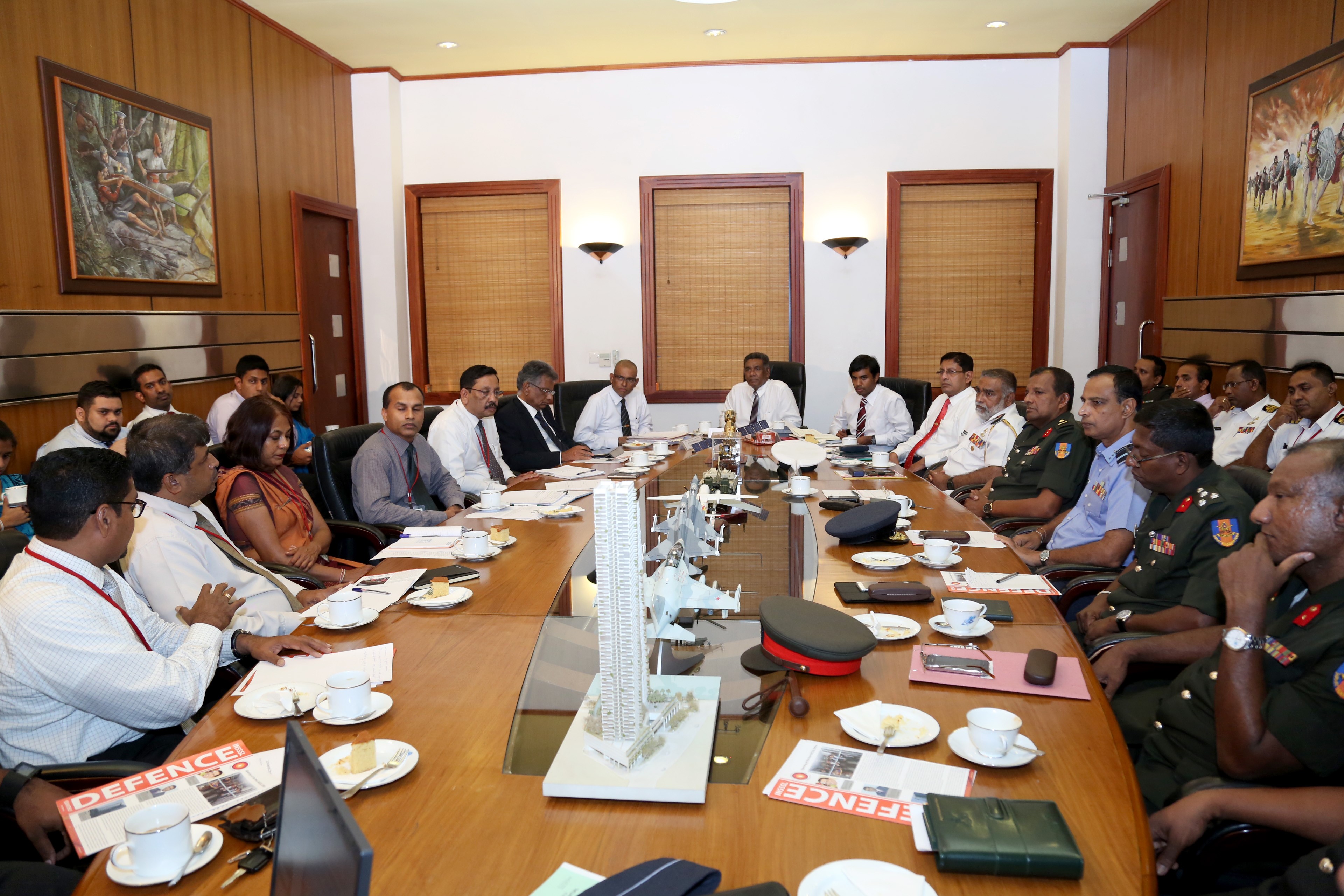
INSSSL’s Threat Lens on Cyber Security: The Evolving Threat Landscape in Sri Lanka” was held on Thursday, 18th May at the Ministry of Defence with the presence of experts in cyber security and information technology in the country. Representatives from the Ministry of Telecom and Digital Infrastructure, Central Bank of Sri Lanka, Informatics, Sri Lanka CERT, CICRA, and senior officers of the tri forces were invited for the discussion. Secretary Defence, Eng. Karunasena Hettiarachchi Chaired the discussion while Additional Secretary Defence, Mr. R.M. Sarath Kumara were also present.

In the wake of last week’s Ransomware cyber attack using the malicious software WannaCry that created mayhem with more than 200,000 attacks recorded in countries such as UK, Russia, India and China crippling several industries, the Institute of National Security Studies Sri Lanka believed that conducting a discussion among experts on this very relevant topic was of the utmost importance. The main purpose of this forum was to obtain expert views to instigate research that will assist in producing a framework for the country’s potential cyber threat to national security. It is hoped that the framework will provide as assessment mechanism that will enable the Sri Lankan government to determine their cyber security capabilities, set individual goals and establish a plan for improving and maintaining cyber security programs. The framework is also expected to contribute to cyber security awareness and education as it is evident that knowledge is viewed as an important factor that contributes to the cyber threat.

In recent years, Sri Lanka’s greater dependence on critical infrastructure, industrial automation and cyber based control systems has resulted in a growing unforeseen vulnerability to a cyber security threat. Protecting and assuring the availability of critical infrastructure is thus vital to for both the Sri Lankan and South Asian economies. It is therefore crucial that cyber security professionals understand  and have the knowledge to address these issues. INSS’s Director General Asanga Abeyagoonasekera provided an introduction to the day’s theme and its scope whilst the institute’s Research Analyst Ms Priyanka Moonesinghe presented the forum with recent data and statistics with regard to cyber crime. Her presentation focused on what defence strategies and mechanisms can be applied to counter cyber attacks and touched upon a national mechanism; legal mechanisms; an efficient legal framework; as well as intelligence and military mechanisms, the convergence of all of which are required to combat this type of threat.

Several expert views were shared in the discussion that ensued. The fact that a cyber attack can destabilise the whole country including the armed forces, Head of State, a country’s electrical grid, communication systems, media and telecommunication gateways was a point that was highlighted. While Sri Lanka fortunately encountered just one attack from Ransomware, there is a greater possibility that more severe damage could take place in the future as hackers would keep developing new systems that can penetrate any firewall. The most sensible and practical approach to such attacks is by educating users through comprehensive and simple awareness training from user level. It is also important as to how soon an attack can be detected and responded to. There was a suggestion to introduce a national cyber security strategy with inter-agency cooperation and cyber operation command centers. A collaborative effort and an implementation mechanism was recommended as right now in Sri Lanka, different components of cyber security fall under the purview of different ministries. An institute to train youth on this very crucial subject is also of the greatest importance.

On a positive note, it was pointed out that the tri-forces in the country, specifically the Army conducts workshops and sessions on cyber security as it is not believed that this non-traditional threat carries as much security hazards as traditional threats. The fact that implementation of such measures should be top-driven with higher authorities and policy makers making this subject a priority is of paramount importance. Government departments and staff using confidential information that is not secure itself is a threat to security, therefore users themselves and individuals should have adequate knowledge and awareness to be proactive and not just reactive. It was also pointed out that rather than concentrating on external attacks, it is necessary to pay attention to possible internal threats and leaks. Protecting mobile phones as well as computers is of importance in the present day. A suggestion for the government to set up a task force in collaboration with the private sector and formulate an action plan which includes sharing of and disseminating knowledge was well received.

Finally, it was reiterated that every institute should have an ICT policy. The new Counter Terrorism Act proposed by the government to replace the existing Prevention of Terrorism Act consisting sections on cyber terrorism is expected to be implemented in the near future. Thus, the government itself has made this security threat a priority.

ජනරජ දිනය සැමරීම

May 22nd, 2017

නලින් ද සිල්වා

අද ජනරජ දිනයයි. තරුණ පරම්පරාවේ කී දෙනකු ඒ ගැන දැනුවත් ද දන්නේ නැහැ. අවුරුදු හතළිස්පහකට ඉහත 1972 මැයි මස විසිදෙවැනි දා අප ජනරජයක් වූවා. මැයි විසිදෙවැනි දා එකල මෙරට නිවාඩු දිනයක් වුණා. එහෙත් පසුව එය නැති වුණා. 1978 ජේ ආර්ගේ දෙවැනි ජනරජ ව්‍යවස්ථාව ක්‍රියාත්මක වීම ඇරඹුණේ පෙබරවාරි හතරවැනි දා.  නව සමසමාජ පක්‍ෂයේ අප හත් අට දෙනකු එදින කළුකොඩි දැම්මා. අප කණ්ඩායම් දෙකකට බෙදී පේරාදෙණියේ ඉංජිනේරු පීඨය අසළින් පටන් ගෙන කළුකොඩි දැමීමට ගියා. වික්‍රමබාහුගේ කණ්ඩායම පොලීසියට හසු වුණා. අප හසු වූයේ නැහැ. එහි බලපෑමක් රටට දැණුනේ නැහැ. වික්‍රමබාහු තුන්වැනි ජනරජ ව්‍යවස්ථාව (සහසන්ධීය රාජ්‍යය) බිහි කිරීමට ජේ අර්ගේ රනිල් බැණාට ආධාර කරනවා. දේශපාලනයේ හැටි ඔහොමයි.

අද ජනරජ දිනය සැමරීමට රජයේ වෛද්‍ය නිලධාරීන්ගේ සංගමය සංකේත වැඩ වර්ජනයක් කරනවා. ඔවුන් කියාවි වර්ජනයේ අරමුණ වෙනත් එකක් කියා. කොහොමටත් වෛද්‍ය නිලධාරීන්ට අමතක ඇති අද ජනරජ දිනය බව. කාලෝ ෆොන්සේකා ද ඇතුළු මෙරට බොහෝ දොස්තරවරුන්ට තර්ක කරන්න බැහැ. ඔවුන් අද සයිටම් උපාධියට විරුද්ධව බොරු තර්ක ඉදිරිපත් කරමින් ජනතාව නොමග යවන්න උත්සාහ කරනවා. ඔවුන් සටන අතර මැද සටන් පාඨ ඉල්ලීම් වෙනස් කරනවා. බොහෝ ජනමාධ්‍යවේදීන් ද ජාතික ව්‍යාපාරයෙහි බොහෝ අය ද සයිටම් විරෝධීන්. ඔවුන්ට මා කියන දේ නයාට අඳුකොළ වගේ. ජාතික ව්‍යාපාරයෙහි බොහෝ අයටත් ජනරජ දිනය අමතකයි.

මේ අතර අද අමාත්‍ය මණ්ඩල සංශෝධනයක් වන බව කතා පැතිරෙනවා. තවම වෙසක් අව පක්‍ෂය. මාසෙපෝයට තව දින කිහිපයක් තියෙනවා. අමාත්‍ය මණ්ඩල සංශෝධනය කල් යන්නත් පුළුවන්. බැරි වෙලාවත් අමාත්‍ය මණ්ඩල සංශෝධනයක් අද වුවහොත් ඒ සිදු වන්නේ ජනරජ දිනයෙහි. රනිල්ට නම් ඒ ගැන වගේ වගක් නැතිව ඇති. මෛත්‍රිපාලට ජනරජ දිනය මතක ද? මහින්දට මතක ද? ජනරජ දිනය පසුව වීර දිනය වී එදින නිවාඩු දුන්නා. පසුව එයත් නැති වුණා. අද ජනරජ දිනය ජනරජයේ නිවාඩු දිනයක් නො වෙයි. ලෝකෙ මෙහෙම ජනරජයක් තවත් නැතිව ඇති. මහින්දටත් තම කාලයෙහි එදින නැවත නිවාඩු දිනයක් කරන්න බැරි වුණා.

අවුරුදු හතළිස්පහක් කියන්නෙ පොඩි කාලයක් නො වෙයි. හතළිස්අටේ සිට ගත්තොත් අප වැඩි කාලයක්, තුනෙන් දෙකකට ආසන්න කාලයක් ගෙවල තියෙන්නෙ ජනරජයක. ඒ හින්ද වෙන්නැති බොහෝ අයට ඒක අමතක. ජනරජයක් යටතෙ තමයි අපට ජනාධිපති කෙනෙකු ඉන්නෙ. මෛත්‍රිපාල ඒ බව අමතක කරන එක හරි නැහැ. විධායක ජනාධිපතිකම නම් ලැබුණේ ජේ ආර්ගෙ දෙවැනි ජනරජ ව්‍යවස්ථාවෙන්. තුන්වැනි ජනරජ ව්‍යවස්ථාවෙන් ඒක මෛත්‍රිපාලට අහිමි කරන්න රනිල් උත්සාහ ගන්නවා. රනිල් බටහිරයන්ගෙ සැලැස්මකට අනුව වැඩ කර ගෙන යනවා. අප බලන් ඉන්නවා.

ජනරජයක් වෙන්න කලින් ලංකාව ඩොමීනියන් තත්වයේ රාජ්‍යයක්. එංගලන්තයේ රජු හරි රැජන හරි අපේත් රජු හරි රැජන හරි වුණා. එංගලන්තයේ රජුට මෙහෙට එන එක අපහසු නිසා ඔහුගේ නියෝජිතයකු මෙරට සිටියා. ඔහුට කිව්වෙ අග්‍රාණ්ඩුකාරයා කියල. ඔහු පාර්ලිමේන්තු සැසිවාර  පටන් ගන්න විට රාජාසනයේ කතාව පැවැත්වුවා. ඒකෙ ආඩම්බරේ කාට ද කියලා මගෙන් අහන්න එපා. මන්ත්‍රීවරු රාජාසන කතාවට ස්තුති යෝජනාවක් සම්මත කර ගත්තා.

එකල මෙරට ශ්‍රෙෂ්ඨාධිකරණයෙන් දෙන තීන්දුවලට විරුද්ධව එංගලන්තයේ සාමි මන්ත්‍රී මණ්ඩලයේ විනිශ්චය සභාවට අභියාචනා ඉදිරිපත් කිරීමේ හැකියාව තිබුණා. දෙමළ ජාතිවාදීන් එය රාජ්‍ය භාෂා පනතට එරෙහි ව උපයෝගී කර ගත්තා. බණ්ඩාරනායක මහත්මියගේ ආණ්ඩුවට විරුද්ධව 1962 දී රවි කරුණානායකලාගේ සියා ඇතුළු ක්‍රිස්තියානි හා කතෝලික හමුදා හා පොලිස් නිලධාරීන් කරන ලද කුමන්ත්‍රණයෙන් විත්තිකරුවන් වැරදිකරුවන් වූ විට ඔවුන් සාමි මන්ත්‍රී සභාවට අභියාවනයක්  ඉදිරිපත් කළා. තාක්‍ෂණික හේතුවක් මත ඔවුන් නිදහස් වුණා.

මේ අභියාචනා බලය 1972 ජනරජ ව්‍යවස්ථාවෙන් නැති වුණා. අද රනිල්ගේ ආණ්ඩුව බටහිරයන් සමග එක් වී ඒ බලය වෙනත් ක්‍රම මගින් දෙමළ ජාතිවාදීන්ට ලබා දී රණවිරුවන් හා රාජපක්‍ෂලා දඩයම් කිරීමට සැරසෙනවා. ජනරජ ව්‍යවස්ථාවක් නොතිබුණා නම් මෙළහකටත් රණවිරුවන් හා රාජපක්‍ෂලා ඊනියා යුද්ධාපරාධවලට වරදකරුවන් වී අවසන්. ජනරජ ව්‍යවස්ථාවෙන් අග්‍රාණ්ඩුකාර ධුරයත් නැති වුණා. ඒක අපරාධයක්. ඒ දවස්වල ඔලිවර් ගුණතිලක අග්‍රාණ්ඩුකාරයාට ඇන්දම හරි හැඩයි. විලියම් ගොපල්ලව ජාතික ඇඳුම ඇඳලා ඒ විකට ඇඳුම ඉවත් කළා.

ජනරජයක් වීමෙන් පසුවයි අපට නියම නිදහස ලැබුණෙ. ඒත් අප එදින ඒ සමරන්නේ නැහැ. ඒ වෙනුවට දොස්තරලා වැඩ වර්ජනය කරනවා. ඇමති මණ්ඩල සංශෝධනය වැනි විහිළු රඟ දක්වන්න හදනවා. අපට ජාතිකත්වයක් ඇත්නම් අප කළ යුත්තේ අත්වැසුම් නැතිව එලිසබෙත්ට අතට අත දුන්න එක ගැන උදම් අනන එක නොවෙයි. මැයි දහඅටවැනි දා අප දෙමළ ත්‍රස්තවාදයත් ඒ සමග 1833 බෞතීස්ම කළ දෙමළ ජාතිවාදයත් පරාජය කළ දිනය. මැයි දහනවය සයනයිඩ් නොකෑ නිවට ප්‍රභාකරන් බටහිරයන්ට සවන් නොදී ඝාතනය කළ දිනය. මැයි විසිදෙක එංගලන්ත රජු ඉවත්කළ දිනය. අප මැයි දහඅටවැනි දා සිට විසිදෙවැනි දා දක්වා දින පහක් එක දිගට උත්සව පැවැත්විය යුතුයි. එහෙත් එය කරන්න මහින්දටත් බැරි වුණා. දින පහක් නිවාඩු දුන්නෙත් මෙරට දේශප්‍රේමි ජනතාව ට්‍රිප් යන්නත් ඉඩ තියෙනවා. ජාතියට ම ට්‍රිප් එක (ස්විචය) යන්න තව වැඩි කාලයක් නැහැ.

නලින් ද සිල්වා

 2017 මැයි 22

නාලක හිමියන්ට නැති ශිවාජිලිංගම්ට ඇති නිදහස

May 22nd, 2017

නලින් ද සිල්වා

ජාතික හිමිකම් සංවිධානය මුල් වී ඊයේ (20 වැනි දා) නිදහස් චතුරස්‍රයේ රණවිරුවන් සැමරීමට යොදා ගෙන තිබුණා. ඒ සඳහා නීතිඥ බැල්ලන්තුඩාව සංස්කෘතික අමාත්‍යාංශයෙන් නියමිත මුදල් ගෙවා අවසර ගෙන තිබුණා. පසුව ඇතැම් සංවිධාන ද එයට එකතු වී තිබුණා. එහෙත් ඒකාබද්ධ විපක්‍ෂය කණ්ඩායමක් ලෙස එකතු වී තිබුණේ නැහැ. මට දැන ගැනීමට ඇති ආකාරයට ඒ රැස්වීමට සහභාගි වන ලෙසට ඒකාබද්ධ විපක්‍ෂයට කළ ආරාධනයවත් නිළ වශයෙන් පිළිගෙන තිබුණේ නැහැ. ඒ ඇයි ද කියන්න මා දන්නේ නැහැ. එහෙත් පසුව ඒකාබද්ධ විපක්‍ෂයේ ඇතැමුන් එය සංවිධානය කෙරුණේ තමන්ගේ ද සහභාගීත්වයෙන් කීමට උත්සාහ ගත්තා. එසේ කෙළේ රැස්වීමට අවසර නැති බව ප්‍රකාශ වීමෙන් පසුව!

නිදහස් චතුරස්‍රයේ පැවැත්වීමට නියමිත ව තිබූ රැස්වීමට දී තිබූ අවසරය අවලංගු කළ බවට එයට පෙර දින (19 වැනි දා) සවස පහට පමණ සංවිධායකයන් වෙත දැනුම් දී තිබෙනවා. එසේ දැනුම් දී ඇත්තේ සංස්කෘතික අමාත්‍යාංශයේ ලේකම්වරිය. ඇය කියා ඇත්තේ එදින ඒ වෙලාවට ම  නිදහස් චතුරස්‍රයේ තවත් රණවිරු සැමරීමක් පැවැත්වෙන බවත් එබැවින් ජාතික හිමිකම් සංවිධානයට දී තිබූ අවසරය අවලංගු කිරීමට ඇයට උපදෙස් ලැබී ඇති බවත්.  මෙය හතර බීරි කතාවක් යැයි කියන්නට මා පෙළඹෙන්නේ නැහැ. දේශපාලනඥයන්ට ඇත්තේ බිහිරි අලින්ටත් නැති බිහිරි බවක්.

ජාතික හිමිකම් සංවිධානයේ රැස්වීමට මුලින් ම අවසර දුන්නේ නිදහස් චතුරස්‍රයේ එදිනට වෙනත් රැස්වීමක් නොතිබූ නිසයි. ඒත් පසුව වෙනත් රැස්වීමක් තිබෙන බව ලේකම්වරිය පවසන්නේ කෙසේ ද? නිදහස් චතුරස්‍රයේ එදින ඒ වෙලාවට වෙනත් රැස්වීමක් නොතිබූ බව එහි ගිය සියල්ලන්ට ම පෙනී ගියා. කෙසේ වෙතත් ඒ වන විට ජාතික හිමිකම් සංවිධානය තීරණය කරළා නිදහස් චතුරස්‍රයේ සිට පෙරහැරකින් විහාර මහා දේවී උද්‍යානයට ගොස් එහි බුදු පිළිම වහන්සේ අබියස පින්කමක් පැවැත්වීමට. ඒ බව පූජ්‍ය බෙංගමුවේ නාලක හිමියන් උන්වහන්සේගේ කෙටි අනුශාසනයකින් දැනුම් දුන්නා. උන්වහන්සේ විහාර මහා දේවී උද්‍යානයේදීත් ඉතාමත් සංයමයකින් කටයුතු කළා. තැන්පත් ව අනුශාසනා කළා. එහෙත් ඇතැම් භික්‍ෂූන් වහන්සේ ගැන එසේ කියන්නට බැහැ. ගිහි තරුණයන්ගේ බසින් නම් උන්වහන්සේලා පොර ටෝක් දීම පමණයි කරන්නේ. ඒ රනිල්ට ඉණිමං බැඳීමක්.

නිදහස් චතුරස්‍රයේ පැවැත්වීමට තිබූ රැස්වීම අවලංගු කෙරුණේ කාගේ උපදෙස් මත ද? සංස්කෘතික ඇමතිගේ ද, විපක්‍ෂ නායකගේ ද, විපක්‍ෂ සංවිධායකගේ ද, ආණ්ඩු පක්‍ෂ සංවිධායකගේ ද, පොලීසිය භාර ඇමතිගේ ද(රැස්වීම අවලංගු කළ බව දැන්වූ ලිපියේ පිටපත් පොලීසියට ද යවලා) පොලිස්පතිගේ ද, ආරක්‍ෂක ඇමතිගේ ද, වයඹ සංවර්ධන ඇමතිගේ ද,  ආරක්‍ෂක ලේකම්ගේ ද, අගමැතිගේ ද, ජනාධිපතිගේ ද ඔවුන්ගේ ලේකම්වරුන්ගේ ද වෙනත් කාගේවත් ද කියා අපට දැන ගැනීමට ලැබෙන එකක් නැහැ. එහෙත් ඒ ගැන ජනාධිපති කියන්නේ මොකක් ද කියා දැන ගැනීමට කැමතියි.

අද ශිවාජිලිංගම්ට උතුරු පළාතේ ඇති නිදහස පූජ්‍ය බෙංගමුවේ නාලක හිමියන්ට කොළඹ නැහැ. උන්වහන්සේ මෙහෙයුම් පැවති කාලයේ නොවැඩි හමුදා කඳවුරක් තිබුණේ නැහැ. ශිවාජිලිංගම්ලාගේ ගෝලයන් ඒ කඳවුරුවලට අභියෝග කරනවා. බටහිර සිටින විසුරුණු දෙමළ ජනයා මත පදනම් ව දේශපාලනයේ නිරත වන විග්නේස්වරන් උතුරු පළාතෙන් සියලු හමුදා කඳවුරු ඉවත් කිරීමට ආණ්ඩුවට බල කරනවා.  ශිවාජිලිංගම් කිහිප දෙනකු සමග එක් වී කොටි ත්‍රස්තවාදීන් සමරණ විට එයට ජනමාධ්‍ය පඬියන්, ප්‍රවෘත්ති සංස්කාරකවරුන්, විශාල ප්‍රසිද්ධියක් ලබා දෙනවා. 

රනිල්ට අවශ්‍ය කුමක් ද කියන එක කවුරුත් දන්නවා. ඔහු බටහිරයෙක්. ඔහුට අවශ්‍ය සිංහලයන්ට, විශේෂයෙන් ම සිංහල බෞද්ධයන්ට විරුද්ධව දෙමළ ජාතිවාදියට කප්පන් දීම. අලුත් ව්‍යවස්ථාවක් අසම්මත ලෙස සම්පාදනය කර සහසන්ධීය රාජ්‍යයක් පිහිටුවීම. මෛත්‍රිපාල එයට උදවු දෙනවා ද? ජාතික හිමිකම් සංවිධානයේ රැස්වීමට දී තිබූ අවසරය අවලංගු කරනු ලැබුයේ මෛත්‍රිපාලගේ අනුදැනුම ඇතිව ද?

අද ඇත්තේ මෛත්‍රිපාල රනිල් ආණ්ඩුවක් නොව රනිල් සම්බන්ධන් ආණ්ඩුවක්. මෛත්‍රිපාල මේ ආණ්ඩුවට ඉඳහිට බාධා ඇති කරනවා පමණයි. මෛත්‍රිපාලගේ ඇමතිවරුත් ආණ්ඩුවට විරුද්ධව ඉඳහිට කෑ ගහනවා. එහෙත් රනිල් තමන්ට අවශ්‍ය ආකාරයට ආණ්ඩුව ගෙන යනවා. රනිල් ශිවාජිලිංගම්ට දෙමළ ත්‍රස්තවාදීන් සැමරීමට නිදහස දෙනවා. එහෙත් ඔහුගේ ආණ්ඩුව පූජ්‍ය බෙංගමුවේ නාලක හිමියන්ට රණවිරුවන් සැමරීමට නිදහස දෙන්නේ නැහැ. රනිල්ගේ ආණ්ඩුව ත්‍රස්තවාදීන් හිරෙන් නිදහස් කරනවා. රණවිරුවන් හිරේ දානවා.

මෛත්‍රිපාල රනිල්ට තව දුරටත් ඉඩ දෙනවා ද? මහින්ද හා මෛත්‍රිපාල රටට හෙණ ගැහුවත් තම පෞද්ගලික එදිරිවාදුකම් ඉදිරියට ගෙන යනවා ද? මෛත්‍රිපාල මහින්දට ද්‍රෝහී වූ බව ඇත්තයි. ඒත් රනිල් ඉවත් කිරීමට ඒ දෙදෙනා එකතු වීිය යුතුයි. දිගට ම රනිල් පවත්වාගෙන යෑම රටට කරන බලවත් ම ද්‍රෝහිකමයි. එහි දී මහින්ද මෛත්‍රිපාල එකතුවකට විරුද්ධව ජී එල් වැනි අය කියන දේට සවන් නොදිය යුතුයි. 

කවුරු කවුරුත් 2019/2020 මැතිවරණ ජනාධිපතිවරණ පමණක් නොව පළාත් පාලන මැතිවරණත් අමතක කර රට ජාතිය ආගම ගැන පමණක් සිතා දේශපාලනයහෙි නිරත විය යුතුයි. මැතිවරණ දිනාගැනීමට වුණත් මහින්ද මෛත්‍රිපාල එකතුවීමට අවශ්‍ය තැනකට රට තල්ලු වී ගෙන යනවා. එසේ එකතු නොවුණහොත් ශිවාජිලිංගම්ලා තමන්ට අවශ්‍ය අන්දමට රට පාලනය කරාවි. ජාතියේ මූරදේවතාවුන් වහන්සේට නිදහස් චතුරස්‍රය පමණක් නොව නිදහස ද අහිමි වේවි.


නලින් ද සිල්වා

2017 මැයි 21

Cabinet reshuffle a damp squib

May 22nd, 2017

By C. A. Chandraprema

The much spoken of cabinet reshuffle has now been completed and in the end it turned out to be a damp squib. Whether this will help the government to get its act together is highly debatable. As foreign minister, how different will Ravi K be to Mangala Samaraweera? Perhaps Ravi K may not have agreed to the controversial UN Human Rights Council resolution of October 2015 with the same enthusiasm as Samaraweera had he been the foreign minister at that time. But that depends on the extent to which that decision was actually taken by the foreign minister. If the decision not to contest or negotiate the Obama administration’s draft resolution actually came from Colombo as we suspect, Ravi K would have had no option but to fall in line even if he had been holding that portfolio at that time. Ravi K may be less controversial as foreign minister than Samaraweera. But then all the major foreign policy issues have already fallen into certain tracks from which there will be little deviation for the rest of this government’s term and Ravi K will find himself administering what has been bequeathed to him by Samaraweera.

Samaraweera for his part will not get into the same controversies in the financé ministry that Ravi K seemed to always found himself in. But as far as running the economy is concerned, Samaraweera will find himself administering what was bequeathed to him by Ravi K. The latter implemented the yahapalana election pledges of increasing the salaries of government servants, and reducing the taxes on fuel, gas, and some selected foodstuffs so as to win the August 2015 parliamentary election and the country went into a tailspin after that and taxes on cars, liquor, tobacco and the VAT was increased to earn more revenue to meet the election related expenses. With the IMF breathing down Sri Lanka’s neck the government has had no option but to put various assets on sale to meet the shortfall in revenue. Whoever comes into the finance ministry will have to follow through with that programme. Hence there will be little or no difference policy wise in the way the finance ministry functions either.

The removal of Arjuna Ranatunga from ports and shipping portfolio may have been to facilitate the lease of the Hambantota port to the Chinese. Arjuna and his brother Dhammika had been trying to negotiate a better deal for Sri Lanka. If the government thinks that by putting Mahinda Samarasinghe there the lease of the Hambantota port will become easier, that may not turn out to be so because it was not just the Ranatungas who wanted a better deal but the employees of the Ports Authority in general. In fact the removal of Ranatunga may galvanise the Port unions into putting up a stiff resistance the same way the Ceylon Petroleum Corporation workers are opposing the leasing of the Trincomalee oil tank farms to India. The government has been given notice by the CPC unions of a strike without advance warning unless the government shelves all plans to lease the Trinco facility to the Indians.

The CPC has also asked for the bunkering facility in the Hambantota harbour and hey feel that the government was trying to fast track the lease of the Hambantota port to the Chinese by changing the minister in charge, there will be strident calls for tranferring that facility to the CPC immediately. So in the end, what we may end up with may be more trouble rather than less as a result of this cabinet reshuffle. Other than the changes of Karunanayake, Samaraweera and Ranatunga, none of the other changes signify anything. After all the hype over a cabinet reshuffle that had built up for months, by noon on Monday people were already talking of other things and everything was back to business as usual. The government and especially the SLFP component of that government may try to gain some political mileage by making public statements to the fact that they got rid of Ravi K from the finance ministry,

How Ravi K reacts to any SLFP attempts to portray his ouster from the finance ministry is yet to be seen. Over the past two years and more, the SLFP element in the government has been using the UNP as a doormat. They have been telling the public that it is they who had been preventing all the bad things that the UNP has been trying to do to the country and the UNP for its part has more or less been passively accepting this portrayal. Ravi K, who became embroiled in various unpleasant controversies in trying to recover the money spent to implement Maithripala Sirisena’s election pledges was shown by the SLFP group in a bad light and now he has been removed from that ministry by Sirisena himself.

After that removal, President Sirisena has been reported in the press as having said that the cabinet reshuffle will provide new impetus to development. That is an indirect way of saying that ministers like Ravi K and Arjuna were obstacles to development. The truth however was that Ravi K only implemented the economic policy of the yahapalana camp and he tried to manage the fallout from that very policy as best as he could. As for Arjuna, he was trying to protect the interests of the Ports Authority as best as he could. Ravi K has been offered as a sacrifice to placate public opinion but whether the public is impressed is another matter altogether.

INDIAN MEDIA’S SUBTLE MODUS OPERANDI

May 22nd, 2017

with Ravi Ladduwahetty Courtesy Ceylon Today

“Until you realize how easy it is for your mind to be manipulated, you remain the puppet of someone else’s game.”
– CONSCIOUSNESS EXPANSION TEACHER EVITA OCHEL

Speculation was rife in political circles that India was behind the election and installation of the Sirisena- Wickremesinghe unity government. That was not only reported and published in the local media but also the Indian mainstream media as well. Even former President Mahinda Rajapaksa mentioned this in various interviews that he gave not only the local media but also the regional media as well. India was widely believed to have been behind the regime change in Sri Lanka 8 January 2015.

One of the biggest downturns in the local political economy at the time that the unity government assumed office was the temporary cancellation of the mega buck Port City Project, in which Sri Lanka was to be the beneficiary of an astronomical US$ 1.4 billion which is expected to be in the State coffers at the end of another two years with the filling up of the land at Galle Face, which was confirmed to this newspaper by Central Bank Governor Dr. Indrajit Coomaraswamy in the lead story in its 24 April 2017 Edition.

It is also true that there were concerns by India about the ever growing presence of China in Sri Lanka economically. It’s also known that Sri Lanka at the very outset cancelled the Port City project due to Indian insistence in that direction and that was due to China’s growing presence in Sri Lanka in airport and sea port projects.

The project was stalled due to Indian domination here, but, the hard reality is that it was the GOSL which was left carrying the baby. It was up to the Chinese Government to seek damage control and where a compromise solution was arrived at with the GOSL not having any option but to increase the land in the Port City project to the benefit of China. This, ethically and technically, should have been India’s liability, which the GOSL has decided to “carry the can”!

It is true that there are issues which are historic between India and China which have persisted over centuries and throughout the sands of time but those are well beyond the territorial boundaries of Sri Lanka.

SL to negotiate $125 m penalty by Chinese firm over Port City delay

Prime Minister Ranil Wickremesinghe was heading to Beijing in April 2015 to negotiate a $125 million penalty that a Chinese State firm is seeking from Sri Lanka for suspending work on a big port development project.

Sri Lanka ordered a review of the $1.4 billion Colombo Port City project last year, citing irregularities in the award of the contract to state-owned China Communication Construction Company (CCCC) by the previous government.

In March 2016, the Sri Lankan Government, facing a difficult economy, ordered the Chinese firm to resume work on the port city, being the biggest foreign investment project, that includes apartments, shopping malls and marinas near the capital, Colombo.
But CCCC, which had estimated that the shutdown would result in losses of more than $380,000 a day, has sought compensation of $125 million.

Sri Lanka has sought to balance ties with China and India under President Maithripala Sirisena.

There should be a limit to the Indian dominance on Chinese influence here. The One Belt, One Road (OBOR) which is initiated by China has a monumental influence on Sri Lanka. Sri Lanka could dominate by providing its physical resources to that project. It is true that the previous government also made various blunders with regard to the Hambantota Port project, but, it is up to the present regime to make all the infrastructure, viable ones.

There is also another development to that in that India and its media are carrying out a despicable campaign towards scuttling and wilfully sabotaging that process which it has no business to do.

The alleged purpose of that story or rather “plant” was to undermine the excellent relationship that Sri Lanka was having with China towards the OBOR.

The distortion is that the Indian newspaper has quoted Dr. Sarath Amunugama as having said that Sri Lanka backs India in the Kashmir issue . but nowhere in the story does it say anything at all to substantiate it, giving the entire story a political twist, which suggests that India is to undermine Sri Lanka’s positive relations with China.

The report says: “Sri Lanka, which attended the recently concluded Belt and Road Forum in China, has backed India’s concern over the Kashmir issue, saying it is difficult for New Delhi to accept the China-Pakistan Economic Corridor (CPEC) as it goes through the ‘heart of Indian interests,’ the Economic Times reported last Wednesday quoting a Press Trust of India news report.

“Special Assignments Minister Sarath Amanugama has said India, which skipped the high-profile meeting, would have joined ‘very happily’ in the One Belt One Road (OBOR) initiative of China.

“Unfortunately, the issue is going through the heart of Indian interests. If it is some uncontested region, India would have negotiated its way out. Here especially the Kashmir issue getting dragged into it, makes it difficult for India to be flexible,” Minister Amunugama, who accompanied Prime Minister Ranil Wickremesinghe was quoted by PTI.

He said “India, China and Sri Lanka were very much part of the ancient Silk Road route as the Chinese Buddhist scholars like Fa Hsein visited both India and Sri Lanka (in 5th Century BC) leading to big discoveries of Buddhist relics in Sri Lanka, and President Xi Jinping has emphasized connectivity.

“These countries were connected many centuries ago. This will link up these countries on a certain rational basis. Once the regional problems are resolved, then India has to play a big role in the initiative,” he said adding that India anyway has to play a big role. “You cannot think of a belt and road without going over and close to India,” he said.

India skipped the meeting due to its sovereignty concerns over the US$ 50 billion CPEC, which goes through Pakistan-occupied Kashmir. The two-day conference in Beijing brought together leaders from 29 countries. Besides Premier Wickremesinghe, the summit was attended by Pakistan Prime Minister Nawaz Sharif, Russian President Vladimir Putin, Turkish President Recep Tayyip Erdogan and several other leaders, Heads of UN, World Bank and IMF,” the ET report said.

(raviladu@gmail.com)

Cabinet Reshuffle – Another hoax

May 22nd, 2017

By : A.A.M.NIZAM – MATARA

The guessing game over the cabinet reshuffle which was ongoing since January this year and was re-ignited by Sirisena with promised date shifting without any reason took place at last this morning.  There was no major shift other than change of portfolios between Ravui Karunanaayake and Mangala Samaraaweeraa.

The shameless and spineless Karunanayake was boasting for weeks that he will not accept any other portfolio if he was removed from the Finance portfolio and also stated that in such a situation he would remain as a backbench MP and divulge all secret activities of the government. At the same time the bone chewing lapdogs of the SLFP Sirissena faction in the government openly castigated Karunanayake as a big thief and said he was responsible for all economic ills and unpopularity of the government.  Several UNP Ministers and MPs, probably sponsored by big unscrupulous businessmen and vehicle importers extensively benefited from Karunanayake meanwhile came forward on his behalf and pledged to resign from the government in the event of removing Finance Ministry portfolio from Krunanaayake and said that they would remain as an independent group.  We have to wait and see whether this would happen?

The Finance Ministry portfolio has been entrusted to the most treacherous Tamil diaspora stooge and westernophile individual in the government Mangalaa Samaraweera who betrayed this country endangering the unitary status, sovereignty and territorial integrity by co-sponsoring the horrendous UNHRC resolution against Sri Lanka brought forward by the United States which is an unprecedented perfidious act not done by a foreign Minister of any country.  In addition to the Finance Ministry portfolio he has been given the Media Ministry as well which he once abandoned during old hag Chandrika’s time saying he is unable to carry out the duties of that Ministry.  However we can expect a spate of misinformation and malicious character assassinations from the Media Ministry over emphasising Goebles’ theory. It is certain that the Finance Ministry under this treacherous individual Sri Lanka would soon become a hunting field for World Bank and IMF. He may also tie Sri Lanka to other international lending agencies as well since what fiscal management you can expect from a fashion designer?

The reshuffle has made changes to 9 Ministries and it is as follows:

Mr. Mangala Samaraweera – Minister of Finance and Media

Mr. Raavi Karunanayake – Minister of Foreign Affairs

Mr. Arjunaa Ranatungaa – Minister of Petroleum Industry

Mr. Mahinda Samarasinghe – Minister of Ports and Shipping

Mr. Gayantha Karunatilleke – Minister of Lands and Parliamentary Reforms.

Mr. W.D.J.Seneviratne – Minister of Labour, Trade Union Affairs and Sabragaamuwa Development

Mr. S.B.Dissanayake – Minister of Social Empowerment, Welfare and Kandyan Heritage,

Mr. Chandima Weerakkody – Minister of Skills Development and Vocational Training

Mr. Tilak Marapanaa – Minister of Development Assignments

In addition to this the pint size Sirisena’s laundryman Mahinda Amaraweera who claimed that vast changes will be made in the cabinet reshuffle which would surprise everyone has been made the State Minister for Mahaweli Development in addition to his current portfolio of Minister of Fisheries and Aquatic Resources Development.

The ‘newly shaped’ Cabinet is expected to be briefed by Sirisena when it meets at 9 a.m. on Tuesday for its weekly session.

Commenting on today’s cabinet reshuffle hoax Sirisena has said that the reshuffle will give a new life to development activities.  He has said that the cabinet reshuffle was made to march forward as a new country. (niz)

Sri Lanka president replaces chartered accountant finance ministers with a London qualified clothing designer

May 22nd, 2017

Sri Lanka News

Sri Lankan President Maithripala Sirisena switched the foreign and finance ministers in a major cabinet reshuffle on Monday.

Managala Samaraweera, who has been foreign minister since January 2015, was appointed as finance and media minister. He swaps roles with Ravi Karunanayake who is a chartered accountant who will takes over the Ministry of Foreign Affairs.

New finance minister in Sri Lanka is a graduate in Clothing Design and Technology at St. Martin’s School of Art in London, he served as a design consultant to the National Design Center of Sri Lanka prior to his political career.

Saint Martin’s School of Art was an art college in London, England. It offered foundation and degree level courses. It was established in 1854, initially under the aegis of the church of St Martin-in-the-Fields. Saint Martin’s became part of the London Institute in 1986,[1] and in 1989 merged with the Central School of Art and Design to form Central Saint Martins College of Arts and Design.[2]

Eight more ministerial portfolios of Cabinet Ministers and a State Minister have also been changed today, as the much awaited cabinet reshuffle took place this morning (22) today.

The ministers took oaths in their new portfolios at the Presidential Secretariat before President Maithripala Sirisena and Prime Minister Ranil Wickremesinghe.

This Cabinet reshuffle will provide a new impetus to Sri Lanka’s development,” the President said in a Twitter post.

Cabinet Ministers:

Mangala Samaraweera – Minister of Finance and Mass Media
Ravi Karunanayake – Minister of Foreign Affairs
Tilak Marapana – Minister of Development Assignments
Gayantha Karunathilaka – Minister of Lands and Parliamentary Reforms
Arjuna Ranatunga – Minister of Petroleum Resources Development
Chandima Weerakkody – Minister of Skills Development and Vocational Training
S.B. Dissanayake – Minister of Social Empowerment, Welfare and Kandyan Heritage
Mahinda Samarasinghe – Minister of Ports and Shipping
W.D.J. Seneviratne – Minister of Labour and Trade Union Relations and Sabaragamuwa Development

State Ministers:

Mahinda Amaraweera – State Minister of Mahaweli Development (in addition to existing portfolio of Fisheries)

‘US, EU meddle in other countries & kill people under guise of human rights concerns’ – Duterte

May 22nd, 2017

Courtesy RT

There’s not even a whimper” when powerful nations bomb civilians or invent” WMDs to invade other countries, Philippines President Rodrigo Duterte told RT, arguing that the West pretends to care about human rights only when it suits its agenda.

The Philippines leader sat down to speak with RT’s Maria Finoshina ahead of his five-day visit to Moscow that is kicking off on Monday.

Maria Finoshina:Mr. President, it has been almost a year since your inauguration. Have you faced anything that you were not expecting when you took office?

Rodrigo Duterte: I did expect almost everything that came my way. I’ve been a politician for almost 40 years – excluding the term now. So I would say that on the national front I was kept informed all the time by the news and, of course, by sources in government. But I never realized the magnitude of the contamination of the Filipinos in so far as drugs are concerned.

When I became president and everything was available to me for information, I was almost appalled. I didn’t know that we have reached millions of contaminated. So, when I was mayor, I said, do not destroy my city. And do not destroy the young people of Davao City, because they are our assets. We are not rich. Most of us are poor. And we depend on our sons and daughters to feed us when we get old. We do not have any housing here for – few and between. And we need our children to buy the medicines, pay the hospitals, pay for our burial. Do not corrupt them with drugs. Do not destroy their minds.

And I said, because I will kill you.” I was very clear with that. Do not destroy my country. Do not destroy our young people, because if you do that, I will kill you. And when I became president, I said, Do not destroy the Filipino youth. I’m the president, I’m supposed to take care of them.” There are so many criminals walking around. They stopped it when I said that. When I was mayor, I told them: I’m not a policeman but I build the city as mayor.” As president now, I am not a wholesale violator of human rights. I’m not the police – I just give orders. But I build the country.

My orders were very clear: Go out and hunt for them, the drug lords. Arrest them if possible, but if they confront you with violence that placed the lives of policemen or security forces in danger, kill them. Because in the past this was what really prevented policemen and the military from doing it. Why? Because they were so afraid of the human rights thing, which is a new phenomenon. Actually, in the guise of the human rights, countries like EU and America are interfering into the affairs of other nations. In the guise of human rights.

MF:The bitter irony is that, while you are trying to protect civilians, to protect the youth, you sometimes – and you admitted that in one of your interviews – innocent civilians can become victims. Do you think it is a fair price to pay?

RD: Yes. Even in war, even in your own country, if there is fighting between the police and security forces, and civilians are hit, accidentally, and they die. That is not a crime for the police or the security officer. Because they use automatic guns. And when you are confronted with automatic guns, several bullets go out of the barrel, and some of those would penetrate the walls of the houses, and some will go long way and hit another one. But it is really in connection with the fight between law and order and criminals. But you have to pay, the state has to pay. But – sorry. Just like Americans. When they drop the bomb there, it is so powerful that it also kills others there.

But we are talking about human liability. So, it doesn’t say that, because they are Americans, they are exempted. And just because I am a small time government official, I am not exempted. So, where’s the fairness there? No? When they drop bombs, they kill so many villages, and there’s not even a whimper. America invaded Iraq. What was the excuse? That there were weapons of mass destruction. And yet when they invaded Iraq, so many people were killed. So where is justice now?

MF:So you think it’s really hard to avoid civilian casualties?

RD: We need to say, justice has to be equal. It cannot be a justice for one, and another set of standards of justice for another. It has to be equal.

MF:Is that the reason why you’re turning away from America?

RD: Because they refused to understand my predicament when they knew that they were also in the same predicament, only on a larger scale. Remember Panama? Okay, they invaded Panama, a sovereign state in Central America. So what was the purpose there? They went inside, seized the country, arrested the president, brought him outside the country, placed him in a detention cell in New York. He faced a trial in the Federal Court and is convicted. What happened to the invasion? And what was the reason? Drugs.

You invade a country. Me, I’m just fighting the criminals in my country. I never invaded a country. You have to look at it this way: there is so much incongruity in the principles that are being followed by nations. The powerful ones, they can invent the weapons of mass destruction or they can invade your country. Me, I never touch anybody. I do not even go to the United States. And then they criticize me for the criminals that I have killed!

MF: Your relations with the previous US administration were far from perfect. Will you give Trump’s administration a chance?

RD: This is really on record. I said, Mr. President, I’m President Duterte of the Philippines, I’d like to congratulate you on your election as president, on your victory.” He said, Oh, I was expecting your call. You’re doing it alright. They are flooding my country with drugs, too.” And you must have heard three nights ago, or four nights ago, when they said he said he’s going to go after drugs harshly. And it was my word when I was campaigning. I used the word harsh.” You know, I have to protect the innocent so that my country can prosper and live in peace. If I allow these criminals to overwhelm, and there are already 4 million [drug users], where will that put my country ten years from now? Tell me.

MF: Hard to say. And speaking about the US, Donald Trump has invited you to the White House, and you said that you don’t have time.

RD: Yes, I said I’m sorry. I cannot go because I’m busy. That’s actually the truth, as I said before. You might as well have noticed that during the election I was severely criticized by America, and it was during the election time. They ought not to have said words that would either be in favor or against a candidate, or sway the votes. Because it was an election, and you are interfering with the sentiments of the people about who to vote for. Just look what is happening now! They’re insisting that Trump – what’s all that about Trump talking about the ISIS (Islamic State, formerly ISIL)? I can talk to anybody. I can even talk to emir in Jordan and tell him about what’s wrong with the ISIS. So look at this, America.

MF:So how do you feel about that behavior?

RD: You know, they’re talking about a worldwide problem. Why can’t Trump just be open and just tell his counterpart President Putin or maybe [someone else]: We have the same problem so what’s your strategy there?” How would it affect your national security in a bad way? Tell me. They are discussing a problem which is worldwide, the problem of terrorism, which has happened in his country, and it happened in Chechnya, and even in the theater that was captured, and you had to gas the people, because it was the only way to [do it]. It’s terrorism!

TO BE CONTINUED

Full Video

https://www.rt.com/shows/rt-interview/389163-philippines-duterte-interview/

Nationalizing SAITM would be a mistake

May 22nd, 2017

BY RATHINDRA KURUWITA AND UMESH MORAMUDALI Courtesy Ceylon Today

Former State Minister of Higher Education, Rajiva Wijesinha spoke to Ceylon Today about the current controversy regarding SAITM. During the interview he stressed that SAITM was started in good faith, and the then government was at fault in not smoothing out any contentious issues immediately. But the questions with regard to quality are specious, because similar standards are not applied to government universities.

Following are the excerpts of the interview:

?: Last week the government requested SAITM to refrain from recruiting new students amidst threats of another general strike by the GMOA and other trade unions. Do you think that the government can resolve this issue through a consensus? If so how do you think that the two sides should proceed?

A: I think a consensus is essential, but it should be preceded by setting out principles with regard to education. This should involve establishing the obligations of the State with regard to education, as well as the rights of individuals with regard to obtaining education.

This should be accompanied by revision of the acts governing education in Sri Lanka. I am sorry to say the last government, which began this process, completely abdicated responsibility and failed to fulfil either expectations or obligations. The Education Act was practically finalized, but the minister was just not interested in getting it through. With regard to Higher Education, my predecessor as Minister, S.B. Dissanayaka, had prepared a good draft, but it was killed by the Legal Draughtsman’s Department. As I took office I started work on the Act, using the previous draft as a basis, but taking into account changing social requirements. Helped by an excellent committee of Vice-Chancellors and the Colombo University Professor of Law, we finalized a draft, but none of my successors was interested. I am not even sure that Lakshman Kiriella, who sees rent seeking as an occupation, can even understand the need for a clear vision.

?: What is your opinion of SAITM and the criticism levelled against it by various actors?

A: I think that SAITM was started in good faith, and the then government was at fault in not sorting out any contentious issues immediately. But the questions with regard to quality are specious, because similar standards are not applied to government universities. When I was minister, I had regular discussions with university students, and one of the most interesting was with students of the Rajarata Medical Faculty, which was hopelessly short staffed. But I was deeply impressed by the calibre of the students, and also what they said about the dedication of the few permanent staff members they had.

I was reminded then about the criticisms of all new Medical Faculties when they were started. I returned to working in the State sector at Sri Jayewardenepura, in 1994, when the Medical Faculty was started there, and I recall the snootiness of the established universities. But through dedicated work on the part of the staff there, it soon caught up and its products are now generally admired – not least I should note because of a dynamic English programme run by Oranee Jansz, so that our students were soon on a par with those who saw themselves as an elite.

These issues should not be approached dogmatically, especially since there is a dog in the manger attitude amongst Sri Lankans, and they are resentful of any broadening of opportunities – as I found also, for instance, when I opened English degrees to those who did not have Advanced Level English, and found myself the butt of criticism from both Peradeniya and Colombo.

But certainly with regard to medicine there is need for ensuring professional capacity, and that is why the licensing of doctors should be subject to further testing, after a degree has been awarded. That is what the GMOA should concentrate on, not denying opportunities for degrees to those who cannot qualify academically through the State system.

?: One of the arguments against SAITM is that it is a profit oriented entity, whereas other private universities in developed countries, for example MIT or Harvard, while they make profits, are not mainly oriented towards making money?

A: That is simply not true, in that there are profit oriented universities also in other countries, which provide a quality education – and those which are not mainly oriented towards making money, such as those you cite, have already made enough money to allow for more philanthropy than others. But in any case even SAITM is not mainly oriented towards making money, because it also provides a social service – and certainly the hospital that was associated with it was much more reasonable in its charging than most other private hospitals.

But I would agree that the State should monitor such institutions – including all private universities – not to stop them functioning but to ensure that they also provide a certain number of scholarships. One reason Harvard and so on are so generous with their scholarships is that they know there are very bright youngsters who cannot afford their fees who will contribute immeasurably to the wider learning a university should provide. Universities that do not have a good social mix generally do not provide a rounded education, and for this reason, as private education develops in Sri Lanka, there should be mechanisms to encourage diversity – which will require a proportion of scholarships with preference to educationally deprived districts.

?: Government has decided to take over Neville Fernando Hospital, which once again makes SAITM a Medical University without a teaching hospital. Given that how do you feel about proposals to nationalize SAITM?

A: Nationalizing SAITM would be a mistake because it would tie up more government resources, which should rather be used to provide better English and maths and science in rural schools, to train up more teachers in these subjects and ensure that they are deployed where they are needed. It makes no sense to meddle with something that is working relatively well; all that is needed is to resolve the questions that have arisen with regard to quality, while also introducing a mechanism to make it clear that the country is also benefiting from the institution.

?: What do you think of government maintaining non-profit yet fee levying universities without reducing present university intakes for State universities?

A: That would be a disaster because of the appalling rent seeking that has become endemic in government institutions. You saw how Kiriella thought it his right to put people into academic positions, and he is not the only one. Even in the Vocational Training sector, where the minister is trying to stop fees for regular courses, officials are demanding massive sums for certification.

Recently the Treasury had to step in when the National Apprenticeship and Industrial Training Authority wanted to charge 1 million rupees for this, and brazenly said that the Chairman, Vice-Chairman and Director General would be paid Rs 27,500 between them for one day’s supervision.

Government is seen as a bottomless pit into which the hogs dip their snouts and, when State resources run out, potential beneficiaries are charged, ruthlessly. Well, because it is claimed that education is free, they cannot question the plundering that goes on. So who can blame these hogs, when hogs such as Mahendran and his masters go scot free?

?: You were a lecturer as well as a Dean of a Government University. How do you see the approach of students in expressing their concerns over SAITM?

A: Part of our problem is simply a refusal to listen. I must confess given the sheer dishonesty of this government, I am glad that I am not part of it. But I am sorry that the type of work I did as a minister, talking regularly to the students, and trying to solve their problems immediately, had to stop, because I know that I could have led by example – and no one else in the education sector is able or willing to do that.

You know what I achieved in the various government positions I held, introducing English medium in government schools, expanding numbers in English degrees, running a very productive GELT course – I am still greeted all over the country by youngsters whom I met on those courses, since I made it a point to visit all centres – and I know that the sort of change I could accomplish is beyond other politicians. But on our present system, politicians who are qualified and can think and plan have no place – which is why the genuine talent in the UNP is squashed and prominence given to jokers such as Kiriella and Malik and Sagala and Akila Viraj and of course the delightful John Amaratunga.

During my tenure I found that most problems could be resolved very easily, and also that in most cases the students had good reason to complain, but the administration of the various universities simply had no mechanisms to look out for problems and deal with them promptly – squalid toilets in hostels at Ruhuna, long delays in establishing new departments as at Sabaragamuwa, failure to respond promptly to requests for transfers when there are vacancies. I did what I could, and in three months more I would have done much more – as I am now doing at the Tertiary and Vocational Education Commission, where we have made English and Soft Skills compulsory, introduced short courses developed by industry, and produced trainer guides and quality manuals – but productivity is not what the Prime Minister and his sidekick Chandrika want.

I should add that, even with regard to SAITM, which came up often in our discussions, I found students willing to listen provided one took their arguments seriously. I still recall talking about the issue with Economics students at Sabaragamuwa – who had an antiquated syllabus, which as one of them ruefully told me was all about Adam Smith and Keynes (Friedman had been dropped after I stopped being Dean, and obviously Stiglitz was beyond the staff there). They appreciated the need for a new approach to State involvement, though obviously one needed to have mechanisms in place to prevent exploitation as well as to reduce shortcomings in the State sector.

I am sorry that now the issue has turned violent, and I am not sure, given the bitterness those who are not profiting feel about this government that it will be easy to resolve the issue amicably. I am reminded of the situation in 1988, which the UNP overcame by getting rid of its leader. I suspect that, until that happens; the problem will not be resolved. I can only hope that Karu Jayasuriya had the courage, as Premadasa did, to make it clear that he was willing to lead – but he is so nervous, that once again the chance of serving the country will pass him by.

KP exposes how MGR and Indira Gandhi supported LTTE

May 22nd, 2017

Former prominent Liberation Tigers of Eelam (LTTE) leader Kumaran Pathmanathan, who was the chief international financier and helped smuggle weapons for the terror outfit, spoke to WION in an exclusive interview. KP, as he was known, took over leadership of the LTTE following the death of Velupillai Prabhakaran and was wanted in India in connection with Rajiv Gandhi’s assassination.

Ironically, as KP revealed, it was Rajiv Gandhi’s mother Indira Gandhi who asked RAW to aid LTTE. In his heydays, KP was a reclusive, overseas financier for the LTTE based in Thailand and avoided capture by constantly changing addresses and aliases. He would later repent and become an orphanage father.

He also revealed that former Tamil Nadu Chief Minister Marudur Gopalan Ramachandran, popularly known as MGR, supplied the terror outfit with money.

KP was the subject of a worldwide manhunt, with organisations including the CIA and MI-5 on his tail.

He is believed to possess crucial information about the LTTE’s vast international assets. A former CBI inspector, who took voluntary retirement in 1997, had alleged that the explosives used in the assassination of Rajiv Gandhi were sent to Chennai from Singapore by KP.

– See more at: http://www.dailymirror.lk/article/KP-exposes-how-MGR-and-Indira-Gandhi-supported-LTTE-129330.html#sthash.2vsKJKlu.dpuf

ඡන්ද නොතියන කොමිසම කොස් කොටන්නදැයි මාධ්‍ය අසයි.. මැකොට මල පැන අඩි පොලවේ හප්පා යකා නටයි..[Video]

May 22nd, 2017

ලංකා සී නිවුස්

දිගින් දිගටම මැතිවරණ කල් යද්දී ස්වාධීන මැතිවරණ කොමිසමකින් ඇති පලය කුමක්දැයි මාද්‍යවේදීන් විසින් මැතිවරණ කොමිසමේ සභාපති මහින්ද දේශප‍්‍රිය මහතාගෙන් විමසූ විට ඔහු ඉතා කෝපයට පත්ව පිලිතුරු දුන්නේ මෙසේය. 

YAHAPALANA AND INDIA   Part 3

May 21st, 2017

KAMALIKA PIERIS

The Free Trade agreement with India, like everything else with India,   has also caused a rumpus. The first India-Sri Lanka FTA (ISLFTA) was signed in November 1998 with just 4 consultations within 4 months. It became effective in 2000   and has been continuing ever since. In 2017 it was observed that   the FTA has been in operation for 15 years but without any tangible benefit to Sri Lanka.

Bilateral trade agreements  are expected to provide favored trading status, expanded access to each other’s markets, purchase guarantees, and removal of  tariffs,. But with India it was not so. The FTA helped India not Sri Lanka.  The Chambers of Commerce in Sri Lanka observed that the FTA did not come up to expectation even after a decade.

In 2007, exports from India to Sri Lanka amounted to USD 2784 million, exports were USD 516 million. Records from 2003-2009 showed that India’s exports to Sri Lanka were up and Sri Lanka exports to India were down. Between 2007-2009 Sri Lanka exports to India declined from USD 515 million in 2007 to USD 324 million in 2009.  ‘If not for the controls imposed by Sri Lanka the local market would have been flooded with cheap Indian goods,’

Sri Lanka‘s industrial sector has not benefited by the FTA although there is much talk about the entry into the vast Indian market, observed critics. Sri Lanka finds it hard to compete in India. Sri Lanka does not have industries that can match the scale of Indian production. Indian factories are huge and the scale of operations is gigantic. The cost of production in India is less than in Sri Lanka. ‘Our cost of production and domestic price are higher.’ Also Indian businesses are heavily subsidized. Large Indian conglomerates can sustain a price war. They can smother competition without feeling it.  Sri Lanka exporters, on the whole, are not interested in the Indian market. ‘India is too a big market for us, elsewhere is better, ‘they said.  ‘Our exports go elsewhere, not to India’.

Sri Lanka has only a limited number of items that can be exported such as tea, rubber products, spices, and garments. Under the India-Sri Lanka FTA, limitations were imposed on these and ‘we were asked to export other things’.   ‘India loyalists’ pointed out that India had granted concession to Sri Lanka for 4000 products, but only a fraction of these were exported. Exporters replied that FTA has a huge list of duty exempt goods, certainly, but these consist of items like aircraft engines, ships and so on which are not produced in Sri Lanka.

The bulk of Sri Lankan exports to India were outside the FTA but there was considerable obstruction to those exports that did come under the FTA. There is a long list of complaints. These complaints indicate that there is an organized campaign in India to harass and discourage Sri Lanka exports. ‘There is special antagonism towards Sri Lanka goods’, said exporters. There was red tape and bureaucratic delays.

Sri Lankan products entitled to concessions were rejected, complained exporters.  Strict quotas were imposed on Sri Lankan exports. There were stringent rules on product origin criteria. Certificate of origin has to be certified by the Sri Lanka High Commission. The goods usually arrived prior to the documents but could not be cleared without this vital document.

Documents are asked for by Indian authorities which are not specified in the FTA and furthermore, when documents are submitted which are in accordance with the FTA, the officials say that these are not the proper documents and request for other documents. Different ports in India classified goods under different duties.   Different ports demand different documentation and this led to  considerable delays in shipping and logistics  Different local organizations in India had different standards and quality requirements for imported products.

The exporter also had to face many Non Tariff measures (NTM) which were outside the scope of the Agreement. There is no end to the long list of non-tariff barriers that confront Sri Lanka goods, complained exporter. There are concealed state as well as federal government trade regulations, lots of ‘fine print’ and ‘invisible’ obstructionist measures. Indian exporters to Sri Lanka do not face any Non Tariff Barriers when they export their goods to Sri Lanka.

When goods on the Open General License arrived in India, the importer is told that Special Import License is required. The licence for non vegetarian food stuffs had to be issued by the Ministry of Agriculture in Delhi. Certification by Sri Lanka Standard Institute was not accepted, despite reciprocal recognition of Indian certificate. These delayed cargo clearance, especially of perishables.

Even when the goods were accompanied by the necessary certificates, the Indian authorities insisted that further tests to be carried out in India. Exporters complained about excessive time taken for product testing. Laboratory testing of perishable exports, often took 5 days, with higher Indian food standard requirements than Japan or the EU. There was excessive spot testing of even garments.

Checking of edible items is done by laboratories situated a distance away. Imports into Chennai are sent to CFTRI Mysore, and imports into Mumbai are sent to CFTRI Pune.  If sausages are exported, the goods have to be examined in Delhi and the container sent will have to be in the harbor for four or five days.  These led to delays, sometimes well over four weeks. And the consignment incurred demurrage and product deterioration.

There is harassment at Customs, very visible at Chennai. When there is no customs duty payable, other duties are presented. The exporter, due to time and cost pays this amount under protest. In addition to central government taxes, each state also has special taxes.   Kerala taxes the tea packaging and the tea tags too. Tea Board, India has to approve the imports. There are delays in customs clearing of cargo,

Other issues faced by Sri Lankan exporters at the Indian end, included Ignorance of Indian customs officials of FTA concessions for product categories.   Complexity and difficulties in obtaining information on new regulations, especially by SME exporters, regarding say, recent new food safety regulations.  Absence of an Indian agency or ‘help desk’ to resolve problems like the above, where a quick response is critical due to ensuing high costs from delays, negating FTA benefits and discouraging Sri Lankan exporters.  Also exporters needed to make informal payments to oil the machine.  There are a myriad other loopholes and bottlenecks experienced by Sri Lankan exporters to India, especially SMEs, said exporters.

The head of Ceylon Biscuits observed that those who worked with India had sad tales to relate. Ceylon Biscuits was blacklisted at Chennai ‘claiming that we were under invoicing’ .A regular exporter of floor tiles was suddenly called on to pay duty as customs challenged the validity of the HS classification. The exporter got redress after a long drawn out court case and great expense. In marble and granite a minimum floor price was imposed to hurt Sri Lanka exports.  In the case of fresh fruit and tea, there was excessive time for lab tests.

This FTA is still in effect in Sri Lanka and in 2017 critics noted that while India has imposed various product specifications on Sri Lanka,   ‘we don’t have any product specifications for Indian goods, which is why Maruti cars are imported into Sri Lanka on a large scale even though they are not exported to any other country.’ Inferior motor vehicles made in India such as the ‘Alto’ brand, not marketed anywhere else in the world, are also imported.

In 2002, Sri Lanka and India agreed to replace the existing India Sri Lanka Free Trade Agreement with a Comprehensive Economic Partnership Agreement (CEPA).  When CEPA negotiations took place in 2005, the only persons who represented Sri Lanka were government officials, non-government persons were left out, complained exporters. CEPA was originally scheduled to be signed in 2008 during the SAARC summit. No one had seen the agreement.  At the eleventh hour, CEPA was shot down by angry business men, very critical of India.  ‘A secret copy came into the hands of a few people who stopped it.’  President Rajapakse then decided not to sign it, despite considerable Indian pressure to do so.

Sri Lanka’s business sector said ‘No’ to CEPA very firmly. Business concerns, such as Maubima Lanka opposed CEPA. India is not a level playing field and the local manufacturers will get hurt, the business sector said. India has not treated Sri Lanka businesses kindly. Exporters cited their experiences with the earlier FTA. India harasses the Sri Lanka exporter. Sri Lanka exports face numerous non-tariff barriers, port restrictions, customs delays and cumbersome laboratory tests. Documents not specified in the FTA are asked for.  Documents in accordance with the FTA are rejected by the Indian officials who say that they are not the proper documents and ask for additional documents, exporters said.

Trade in goods was still bleak. The volume of bilateral trade, which stood at USD 4.6 billion in 2014, was heavily in favor of India. Sri Lanka share was USD 600 million. Sri Lanka’s small size and inability to produce items in required numbers to meet the demand of the huge Indian market was one factor.

India had asked Sri Lanka to sign the agreement first, the schedules can come later.  No, said exporters, we must not sign CEPA in a hurry.  We must avoid signing an open-ended framework agreement.  We must include the schedules at least as drafts and bring in conditions preventing additions of any schedules outside the discussed areas as in India-Singapore agreement. In the India-Singapore CEPA all the schedules are very clearly attached.

We must sign CEPA only after we ensure that it will be in our interests to do so, continued exporters. We must first address all the key issues that are hindering our exports.  We must have the necessary domestic legislation for incoming imports and have a patriotic committed negotiating team that should match if not better, the Indian team.  Once agreed to, the agreement cannot be reversed. It is a bilateral agreement so there is no court to which we can go either.  If we change terms heavy penalties, including compensation, have to be paid.

Critics noted that CEPA is pushed by India not Sri Lanka.  India is actively pursuing this, critics observed. India has already established its industries in Sri Lanka. Indian business houses and their businesses thrive in Sri Lanka. They get subsidized energy.   The Sri Lanka market is too small to attract India, anyway, so why is India so keen on CEPA? Answer, to get control of Sri Lanka.  Sri Lanka is strategically important.  India cannot easily control Sri Lanka militarily, so it is best to try to control it through its economy. CEPA was intended to tie Sri Lanka’s economy firmly to that of India.

‘India Loyalists’ however, said that CEPA will help domestic industries. . There is going to be an increase in consumer demand in India and Sri Lanka can tap into this. There is a limit to how much an industry can provide for a small market such as Sri Lanka with 20 million, India population is over a billion, the scope and potential is endless. Sri Lanka industries can also expand to newer manufacturing sectors. The charge that Sri Lanka domestic industries would be affected by the influx of cheaper Indian goods was dismissed as ‘protectionism.’   ‘India Loyalists’ said that there are safeguards in place.

‘India Loyalists’ said that the Indian firms like CEAT and Piramal have taken over sick units in Sri Lanka and turned them around. They said Lanka IOC, was a notable achievement, which has revolutionized the petroleum sector. LIOC has plans for further expansion. Bhareti Airtel has led to a drastic reduction in mobile call rates.   Finally, that Ceylon Biscuits, Carson Cumberbatch, Brandix, John Keells, Hayleys, and the Aitken Spence hotels have done well in India.

Pathfinder Foundation defended CEPA.  Pathfinder said that the charge that due to the asymmetry of the two economies CEPA would inevitably be detrimental to Sri Lanka is not   correct. There were provisions in the agreements as safeguards.  And we have trade negotiators to handle this.  India has trade agreements with countries that are less developed than Sri Lanka. If they can why not Sri Lanka.  CEPA can offer benefits to Sri Lanka of getting into bigger markets.

The persons urging CEPA within Sri Lanka appear to be  ‘non-business’ men,  particularly economists, including certain named economists. These persons do not have businesses to export to India, but are urging business men to support CEPA. Exporters charged that these economists were disinterested in the welfare of local business.  I attended a discussion on CEPA, where the economists held forth, not letting anybody else speak, except a high official of the Department of Commerce, who defended CEPA.  The exporters, who had come to speak of their experiences with India, left in disgust.

CEPA included not only goods, but also professional services, investment and free moment of persons. The reserved list for Sri Lanka was only pawn broking, small and medium industries below one million, and coastal fishing, not deep sea fishing. Opponents of CEPA had much to say about this.

This means that Indians can come and start state trading organizations here and repatriate profits abroad. If they start industries here, they will kill the local ones by undercutting for a few years, and then they will start to increase prices.   Existing Sri Lanka companies will also then have to raise their prices. No foreign exchange will come in, it will only go out, they declared.

If CEPA goes through Sri Lanka will be swamped by Indian labor in all spheres of work, professional, skilled, and semi skilled. Under CEPA India can bring down technical staff  from 10% of total staff cadre up to   50% Through this, India will be able to bring all  their technical staff from India.

That was not all. Any Indian can bring his family into Sri Lanka and they can work anywhere they want. Family alone can take up about 5 jobs. There are some 56 million unemployed in India compared to Sri Lanka’s 470,000. So they will come in droves for lesser salaries, while Sri Lankans, whose standard of living is higher, will not easily, go to India. Under CEPA there is no ‘business visa’ so there is no time limit for the stay either.

Our culture will also be affected, noted critics. According to CEPA there will be 50% Indian ownership of 25 cinemas, each of which could hold multiple cinema halls.  In these cinemas, 40% cinema time would be for Tamil and Hindi films. Film makers when alerted objected.

The professions also objected to CEPA. CEPA was most undesirable, they said. India’s professional standards are different to ours. Engineers said that there are many unemployed engineers in India who will flood Sri Lanka through CEPA.  India’s degree for engineering is only three years, ours is four years.

In health and medicine, India was   asking Sri Lanka to recognize the qualifications of Indian doctors.  30 or so categories of paramedical professionals were also included in the CEPA.    CEPA  could also be  used to bypass a number of health laws including those associated with quality control (CDDA no 27 of 1980)and the monitoring of the private health sector ( PMIR no 21 of 2006).   Sri Lanka regulatory bodies are weak, stressed the professionals, and if we open up the service sector without regulation Sri Lanka will be swallowed up by Indian companies and services.

Yahapalana government of 2015 announced that they will not sign CEPA but will enter in to an Economic/Technical Co-operation Framework Agreement (ETCFA) with India. This ECTA was drafted in great secrecy. The agreement was not made public and an attempt was made to sign it quickly. But this too was stopped. This time by the professionals, led by architects, engineers and doctors.

The agreement was poorly drafted, observed critics. It had ‘many irreversible loopholes’ that will trap Sri Lanka into a ‘helpless situation.’ The clauses are vague and open ended, such as ‘shall include but shall not be limited to’. Opponents of ECTA questioned whether it had been properly negotiated.  Also the competence of those drafting it. .

ECTA   they said was CEPA all over again in a more virulent form. Something akin to match fixing was   going on, they declared. Even the people who were supposed to represent Sri Lanka were actually representing the other side. ECTA is not about trade, it is about politics, they concluded. ECTA is intended to please India.

ECTA involved goods, professional services, investment and free movement of persons. Analysts were not surprised. ‘What India really wants is to get at Sri Lanka‘s goods and services,’ they said. In ECTA as in CEPA, India had opened up only few jobs to outsiders but Sri Lanka had opened up all sectors except a few unimportant ones. All services and trades were open to India except pawn broking, money lending, small time retails trade, personal services and coastal fishing. GATS guidelines specified that after a country had agreed to open up specific sectors, they cannot thereafter apply any new licensing and qualification requirements to those professions.  That is prohibited. it is reliably learned that the Indian side have requested that the laws relating to  registering professional not be changed after signing ECT framework agreements, which is a preliminary to the proper ECTA.

But the  main concern in ECTA  was about the ‘movement of  persons ‘  from India into Sri Lanka  for trade and services,  using Modes 3 and 4 of the General Agreement on Trade in Services (WTO 1995). Governments are generally reluctant to  include modes 3 and 4  in trade agreements, because GATS commitments are one-way and cannot be  withdrawn once entered into.

Mode  3  gives the foreign supplier the right to be present in the  country and Mode 4 says the  foreign supplier can be represented by a natural person. This is supposed to be only temporary, for the duration of the contract. But GAT does not define ‘temporary’. WTO members are free to interpret the term as they wish, and to set varying definitions for different categories of service providers.  Sri Lanka professionals observed that persons could  come in on  Mode 3  also, through companies.

Using Mode 3 and 4,  Indians can come in and set up their own companies in Sri Lanka. They could for instance, set up their own tourist companies and Indian tourists will come to those. Also these companies can siphon off the clients from the local brands. Substandard Indian business will thrive in Sri Lanka  and this in turn will result in a massive elimination of local SMRs and exporting companies and a great increase in Indian companies, commodities and employees in  Sri Lanka .

But what worried  the professionals most was India flooding Sri Lanka with professionals and workers through  these two Modes.. The fear was mostly that this could lead to sub standard persons from India entering the Sri Lankan workforce. High unemployment pressure in India and lower salary expectation of Indian workers would make them seek job opportunities in Sri Lanka. Movement of persons will be one sided, India to Sri Lanka.

Unlike Sri Lanka , India  has carefully defined and limited the scope of movement of natural persons under Modes 3 and 4. Also  India has controls for all its professions.   In architecture, there was Architects Act of 1972 and the Council of Architects. India   had a very sophisticated system of professional registration as well   and no foreigner can practice there. Therefore   Sri Lanka professionals cannot enter India.  And if they try, India can do to them, what they are doing to the Sri Lanka exporters.

Sri Lanka unlike India,  has  no legally empowered bodies which  require professionals to be registered with them. Only exceptions are Sri Lanka Medical Council and Institute of Chartered Accountants. Sri Lanka does not have a regulatory system in place for monitoring  its own professionals let alone any that arrive from India.  Indian professionals will be able to flood Sri Lanka  without any restrictions as there are no accrediting requirements at  the Sri Lanka end, said professionals..

Island-wide protests were initiated by diverse professional associations, political entities and businesses, to stop ECTA. A  Professionals National Front, a consortium of a dozen professionals’ associations,  was formed to combat ECTA. It included among others, the Government Medical Officers’ Association (GMOA), the Electrical Engineers’ Association, the Customs Officers’ Union and the National University Teachers’ Association.

This Association held a meeting at SLAAS to oppose ECTA. The auditorium was packed to capacity with standing room only at is first meeting. Five speakers, one after the other all rejected  ECTA.  The speakers said  ECTA was detrimental to Sri Lanka.  They drew attention to  the utterly weak regulatory framework in  Sri Lanka . And said that   necessary safeguards must be provided for all  professions before ECTA is signed.

India plans to use ECTA, in the first instance to get into Sri Lanka’s  Information Technology (IT)   and naval engineering sectors (dockyards). There is little discussion so far on shipyards and   naval engineering  but clearly, India is interested in getting a  foothold in  this  sector.

Sri Lanka ‘s IT sector is flourishing.  It is the strongest area of Sri Lanka ‘s knowledge industry sector. Global Information Technology report for 2015,  ranks Sri Lanka  No 65 in Network Readiness Index.. The Network Readiness Index indicates how well an economy is poised to gain the benefits of ICT.  Sri Lanka is within the top ten countries from Asia and is the only south Asian country in the list. Sri Lanka is  three places below China.

India’s position in Network Readiness has been declining  India was ranked at  89 in 2015. IT standards in India are not  as high as in Sri Lanka and   if India comes here the domestic IT  industry will  get weakened.    Through ECTA Indian IT persons will be able to arrive here even without being employed by a company and once in, will  rank  equal to the Sri Lanka IT  personnel. Sri Lanka’s standing in the world in IT will be affected. Since India has a high rate of unemployment,  Indian IT workers will  be prepared to work here for lesser wages   and this will lower  salaries  too.

IT professionals have   mobilized against ECTA. The Society of Information Technology professionals  of Sri Lanka (SITP) warned government against signing ECTA. They say the pact will be very harmful to Sri Lanka. They said at a press conference that they would everything possible to prevent government from going ahead with this.  A large number of Sri Lanka processionals will be unemployed if this is signed.

The Computer Society of Sri Lanka   (CSSL)urged the government to ensure     safeguards to protect the IT professionals of Sri Lanka. The speakers said that it is not true that there is dearth of IT professionals in Sri Lanka.  We have enough to meet the demand now and  for the next several years. Why was IT selected as a service that India could provide?  If ECTA comes then IT wages will be reduced, as cheaper labor will come from India, it will also tarnish Sri Lanka image as a centre of excellence and Sri Lanka will lose its state as a niche software developer centre for investors.

If  Indian IT persons  are allowed to come, their qualifications must be checked and  limited period visas issued. Also they must get CSSL membership.  Working visas must be linked to a  letter from a  Sri Lanka company  and  visa must be linked to that company . The  company must be incorporated in Sri Lanka.  They must first try to recruit locally.   There must be a minimum level of Sri Lanka employees in the company. ‘That must be set down’.  The foreign nationals must pay tax to  Inland Revenue here,  also Sri Lanka must prevent  IT freelancers coming  in.  ( continued)

Tamil Eelam War 8th Anniversary Statement

May 21st, 2017

Asoka Weerasinghe Kings Grove Crescent . Gloucester . Ontario. K1J 6G1 Canada

19 May 2017

Rt. Hon. Justin Trudeau
Prime Minister of Canada
Office of the Prime Minister
80 Wellington Street
Ottawa, K1A  0A2

ATTENTION: Kate Purchase, Director of Communications – Kindly brief the PM on this letter of utmost concern to many non-Tamil Sri Lankan-Canadians

Dear Prime Minister  Justin Trudeau:

Today, 19th May of 2017, is the day that all of  Sri Lanka should be celebrating for  winning the 30-year long Tamil Tiger terrorist war, almost single handed.

These were the Made in Indira Gandhi’s India’s,  Liberation Tigers of Tamil Eelam  (LTTE) aka Tamil Tigers, who hemorrhaged that democratic island nation for 30 blooding years, which was aided and abetted  among other western countries, Canada.  You knew it, didn’t you?  If you didn’t, then you know it now.

These were the Tamil Tiger terrorists who perfected the art of suicide bombing having perfected the suicide body pack, and detonated 388 human bombs killing not only the targeted victim but also many scores of innocent unarmed  people who happened to be close to the targeted victim.  It was a Tamil Tiger  suicide bomber, a young Tamil woman who assassinated the former India’s Prime Minister Rajiv Gandhi  by detonating a body pack while garlanding him during  a husting  near Chennai.  So did they get Sri Lanka’s President Ranasinghe Premadasa during the May Day rally  in Colombo in 1993.  And, of course, several Cabinet Ministers and politicians who did not toe their line of ‘Tamil separation’.

You know what Prime Minister Trudeau, it were your Liberals under Prime Ministers Jean Chretien  and Paul Martin  that the Tamil Diaspora collected two million dollars a month for 13 long years, while you all looked aside, to stuff the Tamil Tiger war- chest to purchase  sophisticated war weapons to fight their separatist Eelam war and kill thousands of innocent unarmed people for  the want of their mono-ethnic, racist, separate Tamil State Eelam in the North and East of that  beautiful island with beautiful people that your Dad, Prime Minister Pierre Trudeau loved.

It were your Liberal ‘backbencher’ MPs lead by two Cabinet Ministers, Paul Martin (Finance) and Maria Minna (CIDA) who patronized a $60-a-plate Tamil Tiger Fund Raising Dinner in Toronto on 6 May 2000, is proof that your Liberal  Party supported the Tamil Tiger terrorist movement in Sri Lanka.  The Chief Guest of Honour of the Tamil Tiger fund raiser was none other than a Cabinet Minister of the Liberal Government, Paul Martin.  If you did not know it, you know it now.

On 4 February 2009, when the Tamil Tigers  were running for cover, gasping for breath on the road to the Nandikadal Lagoon in Mullaitivu to gasp their last breath before their annihilation ( they were militarily defeated on 18 May

2009), the Canadian parliament had an Emergency Meeting in its Parliamentary Chambers called by NDP’s Jack Layton, trying to save the Tamil Tigers, with the Gallery sardine-packed with the  Tamil Tiger separatist supporters from Toronto, Montreal and Ottawa.  At this Tamil Tiger Blarney Gong Show several of your  Tamil Tiger supporting MPs spoke.  But the most disingenuous, lying lot were the  LIBERAL TERRIBLE  LYING 6 – Jim Karygiannis, Judy Sgro, Maria Minna,  Robert Oliphant, Albina Guarnieri and Derek Lee, who charged Sri Lanka with Genocide” of the Tamils.

You know what Prime Minister Trudeau, as my Crystal Ball had  predicted 103 days later your Liberal Terrible Lying 6, found themselves uncomfortable in twisted knickers and underpants, having had their ‘Genocide’ charge boomerang at them with the howling whistle crying out You 6 bloody Liars.”  They couldn’t figure out  how these Sri Lankan ‘Genocide Wallas’ had the most generous hearts ready  to face death at the hands of the Kalashnikov trigger happy Tamil Tigers, for saving 295,873 Tamils  from their clutches who were used by the Tamil Tigers as human shields for 30 months herding them along from the West coast to the East coast under the Jaffna’s scorching sun like unwashed cattle to their death. It would have been easy to be brutal  and disregard the right-to-life of these 295,873 Tamil refugees and let them starve to death.  But that didn’t happen.

Not only that Prime Minister Trudeau, these Tamil refugees who were housed in special camps were provided  with a million hearty breakfasts, lunches and dinners each day, cooked and prepared by the majority Sinhalese that the Tamils let you believe who had discriminated and persecute them.. No Liberal from your caucus still do not have the will to admit that textbook example of a superior humanitarian act by the majority Sinhalese who wanted to guard the 295,873 Tamil refugees and sustain their lives by feeding them and so they cooked and prepared their million meals a day. This amazing act proved that your Liberals were a bunch of liars who charged Sri Lanka with Tamil  genocide”.  That was a load of codswallop!.  If you didn’t know it, Prime Minister, then you know it now.

Now I understand your mindset, and where you are coming from, why you said what you said, in the Statement by Prime Minister on the Eighth Anniversary of the End of the War in Sri Lanka.   It was skewed, pompous, arrogant and unfair towards non-Tamil Sri Lankans and their Government when you extend your deepest sympathy and support to Canadians of Tamil descent.

I take umbrage to what you said.  Just a reminder that I am a Sinhalese-Canadian who has lived in Canada since 1968, since  three years before you were born,  and contributed immensely to promote the Canadian cultures, especially of the indigenous peoples in the North, the Peoples of the First Nations, through the National Museums by placing my stamp in the Inuit, People of the Longhouse (Iroquois), The Buffalo Hunters (The Plains Indians) and Children of the Raven (Haida and other west coast indigenous cultures Exhibition Halls), and most importantly, I TOO HAVE A VOTE and once upon a time, long, long time ago I too voted for the Liberals during your Dad’s (Pierre Trudeau) time as the Prime Minister of Canada.

You said, I reiterate my call to the Government of Sri Lanka to ensure that a process of accountability is established that will have the trust and confidence of the victims of the war.  To this end, Sri Lanka should fulfill its international commitments by ensuring the involvement of Commonwealth and international investigators, prosecutors and judges.”

Prime Minister Justin Trudeau, that statement of yours should go into the Canadian political archives as a  Masterpiece of a Canadian Prime Minister’s bullying with a petence of a  White Colonial Master on puny Sri Lanka.”

Permit me to address the Prime Minister of Canada, Rt.Hon. Justin Trudeau, as a learning curve for you, Sir,  as you have overlooked the Fact that  the Democratic Republic of Sri Lanka is a sovereign nation, and a sister member of the Commonwealth, just like Canada.

My Grade 5 Civic Lesson says that Sri Lanka has to act within the provisions of her national constitution  just like would Canada on the subject of accountability and cannot and should not accommodate  Commonwealth and International investigators, prosecutors and judges in her judicial system, just like Canada.  Not even as a knee-jerk reaction because the  Prime Minister of Canada wants Sri Lanka to do to satisfy the eyes and ears of his Liberal Party Tamil constituents, especially in the Greater Toronto Area.  That is indeed the rub, Prime Minister Trudeau. This is sound constitutional criteria and advice.

In case you are not familiar,  Sri Lanka’s judiciary has the capacity to review matters of accountability in respect of any violation of human rights or international humanitarian laws or commision of war crimes if any, in the Tamil separatist war that ended on May 19, 2009, in which one party in conflict, the Tamil Tigers were aided and abetted by foreign nations like India, Norway, Canada and several others.

Just a few comments for you to ponder before you make more misguided comments on Sri Lanka and its war with the separatist Tamil Tiger terrorists, the most ruthless in the world according  to the UN.

  1. When the Tamils want to live by the gun, there ought to be  no cry of Foul” when they die by the gun;
  2. This war was between two factions, the Tamils who have been fighting for their mono-ethnic, separate, racist Tamil state Eelam, and the Sri Lankan armed forces who were trained to safeguard Sri Lanka’s sovereign territory from foreign invaders and, terrorists who were homemade or trained by a foreign country to destabilize Sri Lanka, the democratic island nation;
  3. In this war 26,000 members of the Sri Lanka’s Security Forces were killed defending Sri Lanka, from the separatist Tamil Tigers who were funded surreptitiously by Canada;
  4. If violations of Human Rights in this war is a concern of Canada, be sure that you keep this fact in your memory bank. Eliminating the Tamil Tiger terrorists on 19 May 2009, gave back the most sacred and  paramount human right of a person, the right-to-life to 21 million people in Sri Lanka which had been hijacked for 30 years by the ruthless terrorists, the Tamil Tigers;
  5. Canada ought not to forget that when the WAR MEASURES ACT, with Draconian powers were invoked by your Dad, Prime Minister Pierre Trudeau on 16 October 1970, to stop the FLQs separatist movement, Canada had to deal with the FLQ’s armoury of a grand total of 33 firearms, and 21 other offensive weapons including 3 smoke grenades, 9 hand knives and 1 sabre compared to the Tamil Tiger terrorists conventional army trained by India in 33 army camps in South India and at the foothills of the Himalayas, that the Sri Lankan forces had to deal with.  The Tamil Tigers  had an armoury of thousands of M-16s, AK-47s, rocket launches, millions of landmines, hand grenades, SAMs and millions of rifle shells and an army of young female  Black Tiger suicide bombers;  11 shiploads of armoury sneaked in at night off  the Mullaitivu eastern shores in fast moving fiberglass boats from the Mother Armoury ships anchored in international waters during the Ceasefire period of February 22, 2002 and 2 January 2008; the Sea-Tigers and Air Tigers, an air force with 5 Czech-built ZLIN Z 143s for night bombing.  It was no cake walk to deal with such a formidable well trained and well funded terrorist group, and now to be harassed and bullied by western countries like Canada for having won this terrorist war, almost single handed;
  6. If the numbers killed during this war bothers you, Sri Lanka has every right to apply strictly the mighty Americans formula and tell you it was collateral damage,” as Sri Lanka had no way to find out like in a Dummies Manual – How to go to War and win without killing anyone;
  7. And did you ever wonder why National Post’s Stewart Bell quite rightly say in his book Cold Terror, Perhaps, Canada is in effect the LTTEs state sponsor, and the Sri Lanka conflict is Canada’s dirty little war.”

Having established the above facts  about the Tamil Tigers separatist war, we all know that your statement was all about seeking the Tamil votes, especially in the Greater Toronto Area.  And perhaps it is not asking too much from you Prime Minister Justin Trudeau, to be an honest human being to be more impartial in your stance and policies towards Sri Lanka.  It were not only the Tamil who died in this unnecessary cruel war, the Sinhalese and Muslims were massacred  in the thousands by the Tamil Tigers, And  all who died from both camps were the sons and daughters of the same God, that I think you believe iin and just not the Tamils.

Sincerely,

Asoka Weerasinghe (Mr.)

Cc. Hon. Ralph Goodale, Minister of Public Safety

Hon. Chrystia Freeland, Minister of Foreign Affairs

Hon. Ahmed Hussen, Minister of Immigration, Refugees and Citizenship

Yasmin Ratansi, MP for Don Valley East

Chandra Arya, MP for Nepean


Sri Lanka’­s middle-income status preserved by housemaids and unskilled labour

May 21st, 2017

by Sanath Nanayakkare Courtesy The Island

Migrant worker remittances have mainly contributed to the surplus in the nation’s secondary income account which is earned by unskilled and housemaid categories, the Central Bank’s Annual Report 2016 reveals.

CBSL Annual Report further notes that the surplus in the secondary income account mainly backed by these worker remittances have helped in cushioning the deficit in the trade and primary income accounts of the current account to a certain extent.

According to statistics housemaids and unskilled workers account for 56 per cent of total Sri Lankan expatriate workers. Worker remittances which account for the majority of inflows to the secondary income account as the key source of private transfers have grown at a modest rate of 3.7 per cent to US dollars7,242 million, as against the decline of 0.5 per cent observed in 2015.

The Central Bank, however, states that a shift in skill levels of migrant labour can be observed over the years due to the steps taken in a strategic direction by the authorities since 2008 towards the concept of “Safe, Skilled Migration”.

Still, according to 2016 foreign employment statistics only 2.7 per cent of worker departures were under the professional categories, which is a marginal improvement compared to 2.4 per cent recorded in 2015.

Meanwhile, middle level manpower categories have increased by 12.2 per cent although departures in all other categories recorded a decline in 2016 due to the global economic slowdown.

Although a notable increase in departures to South Korea was also observed in 2016, still 97 per cent of these departures were unskilled workers.

These developments reflect the scope for continued efforts towards encouraging and increasing ‘Safe, Skilled Migration’ of skilled categories pushing for a decline in housemaid and unskilled categories. Such efforts will lead to a healthy trend of inward remittances from skilled categories, the Central Bank states.

ආයෙත් යම් දවසක කොටි ගැහැව්වොත් 

May 21st, 2017

ධර්මසිරි සෙනෙවිරත්න 

            ප්‍රභාකරන් කොටියා ,බෙදුම් වාදියා ,තමන්ගේ ආරක්ෂාවට  සාමාන්‍ය ජනතාව ලක්ෂ ගණනක්  ආරක්ෂක වළල්ලක් සේ  තියාගෙන   ඒ මැදට වෙලා තමය්  සටන්ක ලේ .එනිසාම අපේ හමුදාවට හෙමින් හෙමින් සීරුවෙන් සටන් කරන්න සිදුවුනා ඒ සිවිල් ජනතාව ආරක්ෂා කරගන්න .  එහෙම කරනකොට  unp   කාරයෝ කින් ඩි  දැම්මා පාමංකඩ අලිමංකඩ ,,…..කියකිය .පුළුවන් තරම්  හමුදාවේ අ යට පාච්චල් කළා මහින්දට කෝචෝක් කළා .බටහිරයන්ටය් ඉන්දියාවටය් ගතු කේලම් කිව්වා මහින්දට විරුද්ධව . 

                                                                ඉතින් ආයෙත් දවසක කොටි ගැහැව්වොත්  අපේ හමුදාව කල යුත්තේ තමන්ගේ ආරක්ෂාවට  ඔය කිඳී දාපු නරුමයෝ ලක්ෂ ගණනක් අල්ලලා  ඉස්සරහින් තියල තමන්ට ආරක්ෂක පවුරක් හදාගෙන  සටන් කරමින් ඉදිරියට යන එකය් .බලමු  කොටි එතකොට  සිවිල් ජනතාව ගැන හිතයදා කියල .කමක් නැහැ නොහිතුවත්  ද්‍රෝහියෝ වෙදිකාපුදෙන්  .උන්ට ආනන්තරිය පාප කර්මේ පලදෙන්න ඉඩ දෙමු .උන්ට වෙඩි වදින කොට ”’කොටිගහල මදි තොපිට ”” කියල අපි සිංදුවකුත් කියමු 

            කවදා හරි මේකනම් කලයුතු  මය්    


ජයවර්ධනපුර රෝහලේ පැවති පූජ්‍ය පක්‍ෂය සඳහා නිදහස් ප‍්‍රතිකාර ලබාදීම නවතාදැමීම

May 21st, 2017

රධාන ලේකම් ජාතික භික්ෂු පෙරමුණ

ගරු ජනාධිපතිතුමා

ජනාධිපති මන්දිරය

කොළඹ 01.

ජයවර්ධනපුර රෝහලේ පැවති පූජ් පක්ෂය සඳහා නිදහස් රතිකාර ලබාදීම නවතාදැමීම

ජයවර්ධනපුර රෝහලේ පැවති පූජ්‍ය පක්‍ෂය සඳහා නිදහස් ප‍්‍රතිකාර ලබාදීම 2017 අපේ‍්‍රල් 06 දින නිකුත්කර ඇති අභ්‍යන්තර චක‍්‍රලේක අංක 15/2017 අනුව මේ වන විට නවතා දමා ඇත. පැවති එම යහපත් පිළිවෙත වෙනුවට කිලෝමීටර් 05 ක සීමාවක් පනවා ඉන් පිටත සිට පැමිණෙන පූජ්‍ය පක්‍ෂයේ අයගෙන් සම්පූර්ණ මුදල් අයකර ප‍්‍රතිකාර කිරීම මේ වන විට අරඹා ඇත.

මෙය ඉතා කණගාටුදායක තීන්දුවකි. ඉහත චක‍්‍රලේඛනයෙන් පසු රෝගීව, අසාධ්‍යව රෝහලට පැමිණෙන පූජ්‍ය පක්‍ෂයේ ඇත්තන්ගෙන් වෛද්‍යවරු, රෝහල් කාර්යමණ්ඩලය පළමුව විමසන ප‍්‍රශ්නය රෝගී තත්වය පිළිබඳව නොව වාසය කරන්නේ රෝහලේ සිට කිලෝමීටර් කීයක් දුරින්ද යන්න විය යුතුය.

ගරු ජනාධිපතිතුමනි,

ඔබතුමන් ජනාධිපතිව සිටින මේ රට මිනිසුන් නොව තිරිසන් සතුන්ටත් නිදහසේ ප‍්‍රතිකාර කළ බුද්ධදාස රජතුමන්ලා රජකළ රටකි. මේ පෙන්වා ඇත්තේ එවන් රටක නිදහස් සෞඛ්‍ය සේවයේ තරමද? දෙකෝටි තිස් ලක්‍ෂයක ජනතාවක් ඇති මෙරට සියලූ ආගමික නායකයින් සංඛ්‍යාව ලක්‍ෂයක්වත් නොමැත. ලක්‍ෂයක් යැයි සිතුවත් එය සමස්ත ජනගහණයෙන් 0.43% කි. එයිනුත් ජයවර්ධපුර රෝහලට ප‍්‍රතිකාර සඳහා පැමිණෙන්නේ ඉතාමත් සුළුතර පිරිසකි. එය 0.001% ටත් අඩුවිය හැකිය. එවන් අල්ප ප‍්‍රමාණයකට නිදහස් ප‍්‍රතිකාර කිරීමක් කළ නොහැකි තරමට මෙරට ආර්ථිකයත්, සෞඛ්‍ය සේවයත්, සදාචාරය හා සංස්කෘතියත් පිරිහී ඇතැයි යන්න අප මෙයින් තේරුම්ගත යුතුද යන්න ඔබතුමන් අපට වටහා දිය යුතුය.

පූජ්‍ය පක්‍ෂය යනු සමාජයට ආගමික හා සදාචාරාත්මක, සංස්කෘතික අංශයන්ගෙන් මගපෙන්වීම සිදුකරන සමාජය වෙනුවෙන් සිය ජීවිතය පූර්ණකාලීනව කැපකළ පිරිසකි. ඒ අතර භික්‍ෂූන් වහන්සේ යනු සිය පවුල් පරිසරයන් හැරදා, දේපළ සබඳතා අතැර ආ පිරිසකි. ඒ බව මෙරට පාලයින්ට වඩා හොඳින් ජපන් රජය තේරුම්ගත් නිසාදෝ මෙම රෝහල ජපන් ආධාර මත ගොඩනංවා 1984 වර්ෂයේ ලංකාවට ලබාදුන්නේ පූජ්‍ය පක්‍ෂයට ප‍්‍රතිකාර කිරීම සම්පූර්ණ නිදහස්කොට කි‍්‍රයාත්මක කරන එගඟතාවද ඇතුවයි.

ජාත්‍යන්තර වෙසක් දින සමරා බෞද්ධකම ගැන ලෝකෙට පරකාසෙ පෙන්වන ආණ්ඩුව ගෙදරට පෙන්වන මරගාත කෙතරම් හාස්‍ය උපදවන්නේ දැයි සිතේ. ජපනාට ශී‍්‍ර ලාංකික බෞද්ධ භික්‍ෂුව පිළිබඳව ඇති හැඟීමවත් නැති වත්මන් ආණ්ඩුව ගත් මෙම කි‍්‍රයාදාමය පිළිබඳව මහා සංඝරත්නය ප‍්‍රමුඛ පූජ්‍ය පක්‍ෂයේ අප‍්‍රසාදය හා පිළිකුළ පළකර සිටින්නෙමු.

තවද ඉහත චක‍්‍ර ලේඛනය වහා අහෝසිකර පූර්වයේ තිබූ පරිදි පූජ්‍ය පක්‍ෂය සඳහා නිදහස් වෛද්‍ය ප‍්‍රතිකාර ක‍්‍රමය නොපමාව නැවත කි‍්‍රයාත්මක කරන මෙන් ඉතා  ඕනෑකමෙන් යුතුව ඉල්ලා සිටිමු. මේ සම්බන්ධව ඔබතුමන් ගන්නාවූ කි‍්‍රයාමාර්ගය කල් නොඉක්මවා දන්වනු ඇතැයි අපේක්‍ෂා කරන්නෙමු.

මෙයට,


පූජ් වකමුල්ලේ උදිත හිමි

රධාන ලේකම්

ජාතික භික්ෂු පෙරමුණ


පිටපත් :- 01. අධ්යක්ජයවර්ධනපුර රෝහල

  1. සියලූ ජනමාධ්යා


සම්බන්ධීකරණය සඳහා :- 0718082647

අල්ලස් කොමිසම, මහා පරිමාන දුෂණ කොමිසම, දුෂණ ලේකම් කාර්යාලය  දැන් බෝඩ් ලෑලි විතරයි. එෆ්.සී.අයි.ඩී.ය ට වහන්න එදා හොරුත් මෙදා හොරුත් සැදී පැහැදී ඉන්නවා

May 21st, 2017

– දුෂණ විරෝධී පෙරමුණ උපදේශක කීර්ති තෙන්නකෝන් කියයි

ලැසිල් ද සිල්වා ලේකම් ධූරයෙන් ඉවත් කරලා මාසයක් යනකොට ‘බරපතල වංචා දුෂණ විමර්ශන ජනාධිපති කොමිෂන් සභාව බෝඩ් ලෑල්ලක් වුණා.  දිල්රුක්ෂි ඩයස් ඉවත් කිරීමෙන් පසුව ‘අල්ලස් හෝ දුෂණ විමර්ශන කොමිෂන් සභාවේ නඩු පැවරීම් සම්පූර්ණයෙන්ම පාහේ නැවතී තිබෙනවා.  දුෂණ විමර්ශන ලේකම් කාර්යාලයේ ප්‍රතිපාදන කැපුවාම ‘එෆ්.සී.අයි.ඩී.ය’ නිකම්ම පූස් පැටියෙක් බවට පත් වෙනවා.  යහපාලන රජයේ අල්ලස් හෝ දුෂණ විමර්ශනය දැන් බෝඩ් ලෑල්ලක් විතරයි.  එදා ආණ්ඩුවෙත්, මෙදා ආණ්ඩුවෙත් හිටපු අන්ත දුෂිතයින් දැන් එකම පිගානේ දුෂණය වලදනවා යැයි දුෂණ විරෝධී පෙරමුණේ උපදේශක කීර්ති තෙන්නකෝන් මහතා පවසයි.

රාජගිරියේ අද පැවති පුවත්පත් සාකච්ඡාවක් අමතමින් තවදුරටත් අදහස් දැක්වූ තෙන්නකෝන් මහතා ‘බරපතල වංචා, දුෂණ, විමර්ශන ජනාධිපති කොමිෂන් සභාව’ හිටපු ජනාධිපති මහින්ද රාජපක්ෂ, ගෝඨාභය, බැසිල්, නාමල්, ශෂින්ද්‍ර, මහින්දාන්නද, විමල් විරවිංශ, සරත් කුමාර, ජගත් පුෂ්පකුමාර, සේමසිංහ වැනි තෝරු මෝරු ගැන විමර්ශන කළා. කැදවා ප්‍රශ්න කළා. දමයන්ති ජයරත්න අතිරේක ලේකම්වරිය කැබිනට් අමාත්‍යවරයෙකුගේ පිහිටෙන් රටින් පනින්නේ ජනාධිපති කොමිසමේ කැදවීමට බිය වූ නිසයි. රිෂාක් ගේ ලක්සතොස නිසා කොමිසමේ ලේකම් ලැසිල් ද සිල්වා ඉවත් කලා. අද එය බෝඩ් ලෑල්ලක් විතරයි.  එකම නඩුවක් වත් පවරලා නෑ. මුදල් ගිලින, විශ්‍රාමිකයින්ට පඩි ගෙවන ජනතා බදු මුදල් ගිලින වැඩ නැතිව පඩි ලබන තැනක් වෙලා. බෝඩ් ලෑලි කොමිසමක් වෙලා.

ඊලගට දිල්රුක්ෂි ඩයස් වික්‍රමසිංහට අල්ලස් කොමිෂන් සභාවේ වැඩ කරන්න බැරි තැනට පත් කලා. ඉල්ලා අස්වෙන්න සැලැස්වුවා. දේශපාලනික වශයෙන් සංවේදී විමර්ශන 22 ක් ඇය අවසන් කර තිබුණා. ඇය ඉවත් කාලාට පස්සේ අද මහින්ද ගේ අල්ලස් කොමිෂන් සභාවෙත්, මෛත්‍රී ගේ අල්ලස් කොමිසමෙත් කිසිම වෙනසක් නෑ. දෙකේම වැඩ නෑ සද්දේ විතරයි. 

දැන් මේ සන්තෑසියම දුෂණ විමර්ශන ලේකම් කාර්යාලයට සිදු කරලා තියෙනවා.  විමර්ශන නිලධාරීන්ට වාහන නෑ. ගමන් වියදම් නෑ. එහි සෘජු බලපෑම සිදු වුණේ ‘එෆ්.සී.අයි.ඩී. එකටයි.  තව ටික කාලෙකින් එයත් බෝඩ් ලෑල්ලක් විතරයි. 

යහපාලනය හොරු අල්ලන්නේ මෙහෙමයි. ලොකු කථා වේදිකාවල කියනවා. දක්ෂ අවංක නිලධාරීන් තමන්ගේ උපරිමය කරලා හොරු අල්ලනකොට ඒ ආයතන අක්‍රීය කරනවා.  එජාපයට මහින්ද රාජපක්ෂ පවුල රකින්නට අවශ්‍යයි. ඔවුන් සමග සිටි නිලධාරීන් රකින්න අවශ්‍යයි.  දේශපාලන පළිගැනීම්වලට ලක් වුණු එක්සත් ජාතික පාක්ෂිකයින් සහන නැති වුනාට ඔවුන් පීඩා කරපු නිලධාරීන් ඉහළම තැන්වල දැන් හොදින් වැජඹෙනවා. 

යහපාලන ආණ්ඩුවක් කියලා මහින්ද රජයේ හොරකම් උපරිමයෙන් සිදු කරපු අන්ත දුෂිතයෝ රැසකට ශ්‍රීලනිප වෙනුවෙන් කැබිනට් අමාත්‍යාංශය ලැබුණා. ඔවුන් තමන්ගේ මිතුරන්, පරණ ස්වාමියන් රැකගන්න දැන් සියළු දේ කරනවා.  මේ ආණ්ඩුව දැන් වංචා දුෂණ ගැන කථා කරන්නේ ‘අනේ උඹලා වගේ මෝඩයෝ රැලක්’ කියන්නා වගේ ජනතාවට හිනාවෙන ගමන් යැයි ද තෙන්නකෝන් මහතා පැවසීය.

මෙම අවස්ථාවට ලංකා බැංකුවේ හිටපු සභාපති රැසිරිපාල තෙන්නකෝන් හා ක්‍රිෂ්මාල් වර්ණසුරිය යන මහත්වරුන් ද සහභාගි විය.

මාධ්‍ය ඒකකය/දුෂණ විරෝධී පෙරමුණ

2017 මැයි 21

Remembering L.H. Mettananda : Colonialism, nationalism and Buddhist revivalism

May 21st, 2017

By Janaka Perera

 L.H. Mettananda : 1945 – 1953, Principal Ananda College

The watershed in Sri Lanka’s post – independence period i.e. 1956, which led to the socio-cultural emancipation of the vast majority of the people of this country would not have been possible if not for the invaluable contribution of L.H. Mettananda. Though front line politicians grabbed the lions’ share of the power and glory for the nation’s huge turn around in 1956, posterity is likely to concede a much greater share of credit to Mettananda and the Buddhist movement that he led in the first two decades following independence in 1948, for the sweeping changes that took place in the religious, educational and cultural spheres.

Colonial oppression

To understand the underlying reasons for the radical change of the order and the post ’56 reforms, we must re-visit the period of our history under the western powers i.e. Portuguese, Dutch and British. The colonial era is nothing but an indefensible tale of oppression, exploitation, religious and racial discrimination, and using the modern parlance a vast catalogue of human rights violations. Mass murder, crimes against humanity, slavery and exploitation of natural resources occurred without any moral remorse or compunction on the part of the occupiers.

A culture of impunity enveloped all wrongdoing initiated by the colonial administrators. Underpinning this evil system of conquest and subjugation of the weak was the doctrine of differing rights i.e. one set of rules for the white man and another for the governed. These are well documented.

The irony of this sordid saga is that the colonial nations who should accept responsibility and account for the crimes and compensate the victims and their descendants to restore their dignity and return the country’s wealth that was robbed at virtually gunpoint, are the very countries today that are pointing the accusatory finger at the descendants of the oppressed. The name of the game is Human Rights. Its pseudo – justice framework is meant to trap and punish the living in de – colonized states while allowing the principal perpetrators of human rights violations during the last five hundred years to get away scot free.

Not one European has been brought to justice for colonial crimes; not one red cent has been paid by the European nations to poor third world countries as compensation for colonial exploitation and crimes. The only exception to this inflexible position in international law is the example of the Jews being paid enormous sums for being victims of the ‘Holocaust’, while the claims of all other victims of ‘white colonial crimes’ have been thrown into the dustbin.

While the Japanese are being hounded by the Western media for attempting to erase text in their history books that pin the blame on the Japanese for atrocities committed in China in the period immediately preceding and during World War Two, school textbooks on history in European countries are conspicuously silent on European crimes committed in their colonies. History has been white washed to provide a simple and guilt free view of the past for the younger generation of Europe.

The struggle for national liberation

The colonial injustices in Sri Lanka had their outcome in the production of a range of national heroes spread over a couple of centuries who fought against the foreign invaders to liberate this country. They include Mayadunne, Vidiye Bandara, Sithawaka Rajasinghe, Wimala Dharma Suriya I, Nikapitiye Bandara, Senarat, Rajasinghe II, Veera Keppetipola, and Puran Appu. These are names that every Lankan should be able to re-call with ease and pride. Anagarika Dharmapala’s name easily lends itself to be included in this group despite the fact that he adopted a distinctively non – violent albeit combative approach to free this country from foreign occupation and imitative living by his compatriots largely influenced by decadent cultural influences of the west.

Among the many contenders to shoulder the mantle of Anagarika Dharmpala’s legacy and to continue his work to restore Buddhism to its due place in Lankan society particularly in the difficult transitional phase of the country’s history is L.H. Mettananda.

He gave voice to the calls of the Buddhists to re-establish a Buddhist Social Order as existed in the pre-colonial period. A compassionate society governed on Buddhist principles which encouraged simplicity in living, frowned on acquisitive greed, appreciated high moral standards and ethical conduct, and accepted without qualification what the economist E.F. Schumacher was to describe based on his experience in later day Buddhist Burma as ‘small is beautiful’.

Mettananda’s role in the Buddhist Revival Movement

Lokusathu Hewa Mettananda – better known as L.H. Mettananda – was born on March 19, 1894 at Kalawadumulla, Ambalangoda. He was the guiding spirit behind the Buddhist Commission Report that accelerated the United National Party’s ignominious defeat in the 1956 Parliamentary Elections, reducing that party’s number of seats in Parliament to eight.

The call to appoint such a Commission of Inquiry was based on the need to remedy the injustices done to the Buddhists under three colonial regimes which were continued in the post –independence period by local rulers subservient to colonial interests. The undertaking the British gave to protect and maintain the Buddhist religion had been grossly betrayed before the ink was dry in the Kandyan Convention of 1815 signed 194 years ago this month.

Buddhism in consequence of the terms of the Convention enjoyed the same position as the Anglican Church in England. But even after 1948 not only was this fact ignored but attempts to marginalize Buddhists in the State sector, in the armed forces and elsewhere continued as before.

Mettananda noticed that the Prime Minister D.S. Senanayake’s Government was neither prepared to give Government patronage to Buddhism as in the pre-colonial days nor was it keen to give to the Buddhists the same rights the Christians enjoyed in all spheres of society. Had the UNP rulers been far-sighted enough to enforce at least the latter policy this country would have been spared of the many upheavals that followed. It is very unfortunate that UNP election manifestos failed to focus on the restoration of the rights of the majority which were trampled en masse by the British Raj.

In contrast the Indian Govt. soon after independence passed special laws to change all discriminatory policies that the British colonialists had set in motion and implemented.

When a team led by Professor Gunapala Malalasekera proposed to D.S. Senanayake the need to establish a Buddhist Commission the Prime Minister at first agreed to accede to the request but subsequently backed out, saying that it would be a violation of the Soulbury Constitution. But it was really the pressure from the Catholic Church – a strong supporter of the then government – that made Senanayake change his mind.

Consequently the Buddhist leadership had no alternative but to appoint a Commission of Inquiry themselves to probe into the continuing system of education and other areas that denied Buddhists their rightful place. Unlike today, Sri Lanka in the 1950s had a strong lay Buddhist leadership that campaigned relentlessly against the powerful anti-national elements that relegated the island’s traditional religious values and Sinhala language virtually to the dustbin.

A Buddhist Committee of Inquiry was established by the All Ceylon Buddhist Congress (ACBC) on April 2, 1954 in accordance with the resolution adopted at the 33rd annual conference of the ACBC held at Kegalle on December 27, 1953.

The `Buddhist Commission’ as it came to be popularly known, held its sittings throughout the length and breadth of the country beginning at Ratnapura on June 26, 1954 and concluding at Anuradhapura on May 22, 1955. It gathered evidence from organizations and individuals representing all sections of Buddhist society.

In addition to Prof. Malalasekera and L.H. Mettananda, the Committee comprised the Venerable Abanwelle Siddhartha, Ven. Haliyale Sumanatissa, Ven. Balangoda Ananda Maitreya, Ven. Palonnaruwe Vimaladhamma, Ven. Madihe Pannaseeha, Ven. Henpitagedera Gnanaseeha, Prof. G.P. Malalasekera, P.de S. Kularatne, Dr.Tennekoon Wimalananda and D.C. Wijayawardena. But the chief responsibility of preparing the report lay with Mettananda. It was presented to the Maha Sangha at Ananda College, Colombo on February 4, 1956.

That year while Sir John Kotalawala’s UNP government was dawdling over the Committee’s proposals, the MEP (Mahajana Eksath Peramuna) comprising the SLFP and several other Opposition parties endorsed the recommendations, thus paving the way for S.W.R.D. Bandaranaike’s electoral victory that became a watershed in the country’s history,

An abridged English version of the report was published under the title, The Betrayal of Buddhism. After recording in detail the injustices done to Buddhists laity and clergy since the Western colonial occupation right through the immediate post independence years, the report noted the following in its concluding chapter titled ‘Tolerance’:

“Almost every page of this report bears witness to the extent and duration of Buddhist tolerance (in the colonial era). And yet fully eight years after this country is alleged to have gained independence, when Buddhists ask for some of that justice which has been denied to them for centuries, they are characterized as a truculent majority and asked to show tolerance. By a flagrant disregard of historical fact and contemporary reality, the Buddhists are made to appear in the light of domineering tyrants…”

Amazingly this allegation is repeated even today – over five decades after the report was first published – by those who want to conceal some of the root causes of the crisis facing Sri Lanka.

He was also the leader of the Bauddha Jathika Balawegaya (Buddhist National Force) then popularly known as the BJB, and the Dharma Samaja Party. However, the failure to build up this party as a national political movement created a vacuum that unfortunately paved the way for the rise of JVP militancy.

Giving evidence before the Press Commission appointed by the Sirima Bandaranaike Government in 1963, Mettananda and other members of the BJB, vehemently condemned the anti-Sinhala and anti-Buddhist stance of so-called national newspapers. At the same time they expressed their strong opposition to the government takeover of any newspaper company. The BJB under Mettananda published a tract called ‘Catholic Action in Sri Lanka’ which proved vital reading soon after the abortive Army Officers Coup in January 1962.

Mettananda was the first educationist who proposed to the Official Languages Commission that every Sri Lankan child should be given the opportunity of becoming proficient in all three languages – Sinhala, Tamil and English. His desire was to see that we become a 100 percent English speaking population – in addition to proficiency in our native tongue.

Commemorative Postage Stamp

L.H. Mettananda passed away in Colombo at the age of 73, on November 1, 1967. Addressing a ceremony held at Ananda College, in October 2006 to mark the 50th Anniversary of the Buddhist Commission Report, Speaker of the House W.J.M. Lokubandara called upon the UNP to have a fresh look at the 50-year-old Buddhist Committee report. There are lessons to be learnt from it – he said -since many of the points raised in the report are valid now as then.

Many lesser personalities have been honoured for much lesser achievements. The least the State can do as a posthumous farewell tribute to Mettananda is to issue a commemorative postage stamp in his honour. The old boys of Ananda College which Mettananda steered as its Principal should ensure that this duty is discharged by the State.

Constitution making would not be delayed: PM

May 21st, 2017

 Courtesy The Daily Mirror

Prime Minister Ranil Wickremesinghe said yesterday that he had informed Indian Prime Minister Narendra Modi and other world leaders that the constitution-making process would not be delayed.

He said this at the opening of the new District Secretariat Office in Mannar and underscored the fact that Mr. Modi and other world leaders including Japanese Prime Minister Shinzo Abe had hoped Sri Lanka would resolve the national question through a constitutional process.

“Prime Minister Modi discussed this matter with me, President Maithripala Sirisena, the Leader of the Opposition and with former President Mahinda Rajapaksa. I told Mr Modi that the steering committee of the Constituent Assembly will submit their report within in two months to be followed by enacting the new constitution after discussions,” he said. We cannot drag the constitution-making process anymore. President Sirisena was elected in 2015 to fulfil this purpose.”

He said economic development would include the North as well, when permanent peace was established in the area with a fair proportion of power devolution.

“This is a time when Sri Lankans are commemorating those who died during the armed conflict. Those on both sides of the divide are Sri Lankans. However, the important factor is to ensure that there won’t be another war in the future,” the Prime Minister said.

Industries and Trade Minister Rishad Bathiudeen said it was important to include the North in the Government’s development plans and that the northern people should also enjoy the benefits of GSP plus which the country re-gained yesterday.

Deputy Chairman of Committees, MP Selvam Adaikkalanathan said issues pertaining to resettlement and employment should be addressed by the government. He said President Sirisena has been invited to visit the North on another day other that on the day tha war heroes were being commemorated. (Yohan Perera)

– See more at: http://www.dailymirror.lk/article/Constitution-making-would-not-be-delayed-PM-129291.html#sthash.qT2XNI3I.dpuf

දොවාල් දෙවියො

May 21st, 2017

නලින් ද සිල්වා

මෝදි ලංකාවට ඇවිල්ල කරපු ප්‍රධාන ම කාර්යය තමයි මහින්ද හා ගෝඨාභය හමුවීම. ඊළඟට දික්ඔය දෙමළ ජනතාව ඇමතීම. ඊනියා ජාත්‍යන්තර වෙසක් දිනය අප රැවටීමක් හා රැවටීමක් පමණයි. කෝ එහි සමාප්ති උත්සවයට පැමිණි නේපාල රාජ්‍ය නායිකාව. ඇය තවම ලංකාවේ ද? ප්‍රබුද්ධ ජනමාධ්‍යවේදීන් ඇය ඉන්දියන් පයිසෙකට ගණන් ගෙන නැහැ. මෛත්‍රිපාල ඇය හමුවන්න ඇති. ඇය මහින්ද හමු වුණේ නැහැ. ඇය ජී එල් හමු වුණෙත් නැහැ. ගෝඨාභය හමු වුණෙත් නැහැ. ඇය ගැන කිසිම ආරංචියක් නැහැ. ඊනියා ජාත්‍යන්තර වෙසක් උළෙල තවමත් සමාප්ත වුණේ නැද්ද? ප්‍රබුද්ධ ප්‍රවෘත්ති සංස්කාරකවරුන් අපට යමක් කියනවා ද? පැහැදිලිව ම ඊනියා ජාත්‍යන්තර වෙසක් උත්සවය මෝදිගේ මගෝඩියක්
මෝදි දික්ඔය කළ කතාව අන්තිම භයානකයි. අප ඒ ගැන කලින් සඳහන් කළා. ජාතික ව්‍යාපාරයෙනුත් ඒ කතාවට ඒ තරම් විරෝධයක් එල්ල වුණේ නැහැ. විදේශීය රාජ්‍ය නායකයකු වෙනත් රටක එක් ජනවර්ගයක් පමණක් ඇමතීමත් ඒ ජනවර්ගය තම රට සමග ඇති සම්බන්ධය, සංස්කෘතික සන්තතිකබව ආදිය ගැන මෙරට ජනාධිපති හා අගමැති ළඟ තබා ගෙන කීම ඇතැමුනට නම් ප්‍රශ්නයක් නොවන්නට ඇති. එය කිසිසේත් ම උතුරු පළාතේ දෙමළ නායකයන්ට කළ අවවාදයක්වත් දුන් පණිවුඩයක්වත් නො වෙයි. මෝදි තවත් උතුරක් රට මැද හදන්න ලැහැස්ති වෙනවා. මෛත්‍රිපාල හා රනිල් බලා ගෙන ඉන්නවා.
බණ්ඩාරනායක සම්මන්ත්‍රණ ශාලාවෙදි මෝදි කියා ඇත්තේ ඉන්දියාවෙ හා ලංකාවෙ ආරක්‍ෂාව බෙදා වෙන් කරන්න බැහැ කියලා. එයත් භයානක කතාවක්. එයින් කියන්නෙ මොකක් ද කියන එක පැහැදිලියි. ලංකාවෙ ආරක්‍ෂාවත් ඉන්දියාව භාර අරගෙන. වෛද්‍ය සංගමයේ අය (වෛද්‍යවරුන් නොව) අපට නිකමට කියනව ද ඔවුන් ඉන්දියාවෙ වෛද්‍ය උපාධි කීයක් පිළිගෙන තියනවා ද ඒ පිළිබඳ අදාළ ප්‍රමිති වාර්තා ප්‍රසිද්ධ කරන්න පුළුවන් ද කියා. ඉන්දියාව තම ආරක්‍ෂාව වෙනුවෙන් කියලා හමුදා එවන කොට නිවට ආණ්ඩුවටවත් බටහිර වෛද්‍යවරුන්ටවත් ඒ වළක්වන්න පුළුවන් ද?
මහින්දත් මෝදිගෙ කතා ගැන වැඩි යමක් කී බව වාර්තා වුණේ නැහැ. ඔහු ළඟදි ම ඉන්දියාවට යනවළු. අද ඉන්නේ 2009 සිටි මහින්ද නො වෙයි. එදා තිබූ එඩිතර ගතිය අද දකින්නට නැහැ.  මහින්ද මෝදි හමුවට ගියේ ගෝඨාභය හා ජී එල් පීරිස් සමග. ඒක මහින්ද මෝදි හමුවීමට  කළ ඉල්ලීමකට අනුව සිදු වූ බවයි පේන්න තිබුණෙ. ඒත් ඒක ඉන්දියාවෙ විදේශ අමාත්‍යංශෙ ඕනකමට සිද්ධ වෙච්ච දෙයක්. අද ඩේලි මිරර් පත්‍රයේ ඒ ගැන විස්තරයක් තියෙනවා. එහි සමහර දේ ව්‍යංගයෙන් කියැවෙන්නෙ.  මහින්ද ලවා ආරාධනය කරවා ගැනීමට ඉන්දියාව වෙනුවෙන් ජී එල් හා බැසිල් මැදිහත් වෙලා තියෙනවා. මහින්ද මෝදි හමුවන්න ගිහින් තියෙන්නෙ ඒකාබද්ධ විපක්‍ෂෙ අනෙක් නායකයන්ට නොදන්වා.
එතනදි තවත් වැදගත් පුද්ගලයන් දෙදෙනකු සාකච්ඡාවට සහභාගි වෙලා තියෙනවා. ඒ ඉන්දීය විදේශ ඇමති හා ජාතික ආරක්‍ෂක උපදේශක අජිත් දොවාල්. ඒ ඩොවාල් ද කියා දන්නේ නැහැ. අපි දොවාල් කියමු. ඒ දෙවොල් නම් නොවෙයි. ඒ නැතත් දොවාල් වැඩ කරන්නෙ දෙවියෙක් වගේ. ගෝඨාභයත් සහභාගි වූ සාකච්ඡාවකට දොවාල් සහභාගි වීම පසුපස බොහෝ දේ කියන්න තිබෙනවා. මේ පිළිබඳ විස්තර දි අයිලන්ඩ් පුවත්පතේ  ෂමින්ද්‍ර ෆර්ඩිනැන්ඩු සඳහන් කර තිබුණා. දොවාල් හම්බන්තොට වරායට චීනය සම්බන්ධ කර ගැනීම පිළිබඳ විරෝධය පළ කර තිබෙනවා. කොළඹ වරාය හා චීනය ගැනත් ඔහුට ප්‍රශ්න තියෙනවා. චීන සබ්මැරීන කොළඹ වරායට පැමිණීම ගැන ඒ දිනවල ඔහු විරෝධය පළ කරලා. ඉන්දියාවවත් චීනයවත් නිස්සරණාධ්‍යාශ්‍යයෙන් අපට ආධාර කරන්නේ නැහැ. චීන ගැත්තන්ට නම් චීනය වරදක් කරන්නේ නැහැ. ඒත් පහුගිය දා බෙයිජිං නුවර තිබූ එක් තීරුවයි ඒක් මාවතයි සම්මන්ත්‍රණය ආසියා කලාපයේ ආධිපත්‍යය තමන් අතට ගැනීමට චීනය මාන බලන බව කදිමට පෙන්නුම් කරන්නක්.
එයට ඉන්දියාව සහභාගි වුණේ නැහැ. රනිල් නම් සහභාගි වුණා. ඔහුට එහි එතරම් තැනක් ලැබී නැහැ. ඉන්දියාව අද බටහිර පිළේ. බටහිරයන් චීන කොලනි ගැන කියන කතා බොරු ම නොවෙයි. චීන ගැත්තන්ට නම් ඒ බොරු. චීනය හෙට බටහිර පිළේ වෙන්න පුළුවන්. දැනට චීනයට එරෙහිව බටහිරයන් ඉන්දියාවට ආධාර කරනවා. අද වෙනත් ආසියාතික රටවලට ඇති ප්‍රශ්නය චීනයටවත් ඉන්දියාවටවත් ගැති නොවී ඉත්තන් නොවී තම ස්වාධීනත්වය ආරක්‍ෂා කර ගැනීම. ඉන්දියාවෙත් චීනයෙත් ඔත්තු සේවා මේ සියලු රටවල ක්‍රියාත්මක වෙනවා. ඒ රටවල ඇතැමුන් මේ ඔත්තු සේවාවල සේවකයන්. ඇතැමුන් සේවය කරන්නෙ ඉන්දියාවෙ හරි චීනයෙ හරි ඉඳන්.
දොවාල් කොළඹ වරාය නගරය පිළිබඳවත් තම විරුද්ධත්වය එකල ගේඨාභයටත් දක්වා තිබෙනවා. ඔහුත් මෙරට සිටි ඉන්දීය මහා කොමසාරිස්ලා හා ඉන්දීය විදේශ අමාත්‍යාංශයේ නිලධාරීනුත් විවිධ අවස්ථාවල හම්බන්තොට හා කොළඹ වරාය පිළිබඳ මහින්දටත් ගෝඨාභයටත් තම විරුද්ධත්වය පළ කර තිබෙනවා. චීනයේ සහභාගීත්වය අයින් කිරීමට කියා තිබෙනවා. මෝදි දොවාල් සමග මහින්ද හා ගෝඨාභය හමු වූයේ කුමකට ද යන්න ගැන ජී එල් අපට කිසිවක් නොකිව්වත් හිතා ගන්න පුළුවන්. ජී එල් බටහිරට හා ඉන්දියාවට සේවය කරන්නෙක්. ඒත් මහින්ද ජී එල් විශ්වාස කරනවා. ඉන්දියාවත් අද බටහිර පිළේ. අද ආණ්ඩුව චීනයටත් යනවා. ඉන්දියාවට ඒක වළක්වන්න ඕන.
ඉන්දිරා ගාන්ධිගේ කාලයෙත් ඉන්දියාව මෙරට අස්ථාවර කරන්න පියවර ගත්තා. දෙමළ ජාතිවාදීන්ට අවි පුහුණුව ලබා දුන්නා. අදත් ඔවුන් ලංකාව අස්ථාවර කරන්න උත්සාහ ගන්නවා. ඉන්දියාවට උතුරු පළාතේ හා කඳුකරයේ දෙමළ ජනයාට ගෙවල් හදලා දුන්නට, ගිලන් රථ කිහිපයක් දුන්නට වෙනත් ආධාරයක් කරන් ශක්තියක් නැහැ. ඒත් ත්‍රිකුණාමලේ තෙල් ටැංකි හරහා චීනයේ එක් මාවතට (සමුද්‍ර මාවතට) අකුල් හෙළන්න ඕන. එට්කා හරහා පමණක් නොව බටහිර වෛද්‍යවරුන්ගෙ අදූරදර්ශී ප්‍රතිපත්ති හරහාත් ඉන්දියාව මෙරටට වෛද්‍යවරුන් ඇතුළු වෘත්තීයකයන් එවන්න කටයුතු කරාවි. සමුද්‍ර පාළම තනා අප ඔවුන්ගේ කොටසක් බවට පත්කර ගන්න උත්සාහ කරනවා. මෝදිටත් දොවාල්ටත් අවශ්‍ය මහින්ද හා ගෝඨාභය චීන බලපෑම්වලින් ඉවත් කරන්න. ඒ අතර ව්‍යවස්ථාව සම්පාදනය කර දෙමළ ජාතිවාදීන්ට කප්පන් දීමට මහින්ද හවුල් කර ගැනීමට. හැකිනම් මහින්ද හා ගෝඨාභය දේශපාලනයෙන් සම්පූර්ණයෙන් ඉවත් කිරීම. ඒ සඳහා ඔවුන් දෙදෙනාට බල කිරීම. ජී එල් ඉන්දියාව හා බටහිර වෙනුවෙන් ඒ කාර්යය කරනවා.
අද අවාසනාවකට රටේ ස්වාධීනත්වය ආරක්‍ෂා කර ගනිමින් ඉන්දියාවට හා චීනයට එක්වර මුහුණ දිය හැකි දේශපාලනඥයන් අපට නැහැ. අද ඔවුන් දන්නේ රටේ කොටසක් චීනයට දීමටත් අනෙක් කොටස ඉන්දියාවට දීමටත්.


නලින් ද සිල්වා

2017 මැයි 20

රොයිටර් ගේ චීන කොළණිය

May 21st, 2017

වරුණ චන්ද්‍රකීර්ති ෴

1977 අවුරුද්දේ යුනෙස්කෝ සංවිධානය කොමිසමක් පත්කළා. ඒකේ ලොක්කා විදිහට පත්කළේ 1974 දී නොබෙල් සාම තෑග්ග දිනාගත්ත ශ්වොන් මැක්බ්‍රයිඩ් ව. මේ කොමිසම පත්කරන්න හේතුවුනේ ඇමෙරිකානු ජනපද සංගමයත් බ්‍රිතාන්‍යයත් ප්‍රංශයත් මුල්කරගත්ත ප්‍රවෘත්ති ඒකාධිකාරියට විරුද්ධ ව ඇතිවෙච්ච කලබලය.

මේ කලබලය ගැන කියන්න කලින් තව පොඩි කාරණයක් පැහැදිළිකරන්න ඕන. යුනයිටඩ් ස්ටේට්ස් ඔෆ් ඇමෙරිකා කියන එක සිංහලෙන් කියන්න ඕන ඇමෙරිකානු ජනපද සංගමය කියලා නෙවෙයි ද? සෝවියට් සංගමය කියලා එකකුත් තිබුණානේ. ඉතින් ඒ හින්දා මේක අපිට ආගන්තුක යෙදීමක් වෙන්න විදිහක් නෑ. ඇමෙරිකා එක්සත් ජනපදය කිව්වා ම ඒකෙන් කියැවෙන්නේ එක ජනපදයක් ගැන. ඒත් තියෙන්නේ ජනපද පනහකුයි තව තව මොනවා ද ගොඩකුයි එකතුවෙලා හදාගත්ත සංගමයක්නේ. ඉතින් ඒකට අපි ඇමෙරිකානු ජනපද සංගමය කියමු.

ඇසෝසියේටඩ් ප්‍රෙස්, රොයිටර්, ප්‍රංශ පුවත් සේවය තමයි ලෝකයට ප්‍රවෘත්ති බෙදන වැඩෙන් සියයට 80 කට ම වගකියන්නේ. මේ කතාව ලේසි කරගන්න ඕන හින්දා අපි මේ අයට රොයිටර්ලා කියලා කියමු. අපේ රටවල් ඇතුළේ සිද්දවෙන දේවල් ගැන නම් ප්‍රවෘත්ති ලියන්නේ අපේ ම අය. ඒත් අපේ හපන්කම් මේ දේශසීමාවලින් එහාට යන්නේ නෑ. අපි ගැන ලෝකයට කියන්නේ රොයිටර්ලා. අනෙක් රටවල්වල වෙන දේවල් ගැන අපිට කියන්නෙත් රොයිටර්ලා. ඉතින් මේ කාරණයට විරුද්ධ ව තමයි මුලින් කියපු කලබැගෑනිය ඇතිවුනේ. ඒ කලබලේ ඉහළින් ම සාකච්ඡා කෙරුණේ කොළඹ දී. ඒ, 1976 නොබැදි රාජ්‍ය නායක සමුළුව පවත්වපු වෙලාවේ. ඉතින් ඒ කලබලය මුල්කරගෙන පත්කරපු මැක්බ්‍රයිඩ් කොමිසම 1981 දී වාර්තාවක් නිකුත්කළා. ඊට පස්සේ? ඊට පස්සේ මොකුත් නෑ.

අදටත් අර පරණ විදිහ ම තමයි. අන්තර්ජාලය තිබ්බත්, ෆේෂ්බුක් වගේ සමාජ ජාල සෙල්ලම් තිබුණත් ඒවා හරහා පැතිරෙන්නෙත් රොයිටර්ලා කියන දේවල් ම තමයි. ඉතින් අපි බාහිර ලෝකය ගැන දැනගන්නේ, තේරුම්ගන්නේ රොයිටර්ලා ගුලිය අඹරලා දෙන විදිහට තමයි. උදාහරණයක් කියමුකෝ. මේ ලෝකයේ වැඩියෙන් ම වායු දූෂණය තියෙන නගරය මොකක් ද කියලා මේ ලිපිය කියවන පාඨකයන්ට තමන්ගෙන් ම අහන්න පුළුවන්. අතිබහුතරයක් කියාවි චීනයේ පෙයි-චිං කියලා. මොකද රොයිටර්ලා ඒ ගැන දවල් රෑ නැතුව කියනවා. ඒත් වායු දූෂණය ගැන 2015 අවුරුද්දේ ලෝක සෞඛ්‍ය සංවිධානය නිකුත්කරපු වාර්තාවෙන් පෙයි-චිං නගරයට දීලා තිබුණේ 59 වැනි තැන. ඒ වාර්තාවේ මුල් තැන දිනාගෙන තිබුණේ නවදිල්ලිය. ඒත් ඒ ගැන රොයිටර්ලා කියන්නේ නෑ. ඉතින් අපිට දැනගන්න විදිහකුත් නෑ.

චීනයයි ජපානයයි අතර සෑහෙන්න ආරවුල් තියෙනවා. තායිවානය පේන මානයේ තියෙන තියාඕ-යූ දූපත් සම්බන්ධ ආරවුලත් ඒ අතරින් ප්‍රධානයි. 2012 අවුරුද්දේ මේ කලබලේ බොහොම සද්දේට නැගලා ගියා. අපේ ආණ්ඩුවේ ඉංග්‍රීසි පත්තරේ පෙරලා පෙරලා ඒ කලබලය වාර්තාකරලා තියෙන හැටි මේ ලේඛකයා හෙව්වා. මොකද ඒ කාලේ තිබුණු ආණ්ඩුව චීනයත් එක්ක බොහොම ඇයි හොඳයිකම් පැවැත්වුවානේ. ඒත් ඒ පත්තරේ මේ ආරවුල ගැන පළකරපු හැම වාර්තාවක් ම ලබාගෙන තිබුණේ ප්‍රංශ පුවත් සේවයෙන්. ඒ අයගෙන් මිසක් ශින්-හුවා එකෙන් ප්‍රවෘත්ති ගන්නේ නෑ කියලා ගිවිසුමක්වත් තියෙනවා ද දන්නේ නෑනේ. ඉතින් ඒ ගැනත් මේ ලේඛකයා හෙව්වා. එහෙමත් නෑ. ශින්-හුවා එකෙන් ගත්ත ඒවාත් ඒ පත්තරේ පළකරලා තිබුණා. හැබැයි ඒ වෙන වෙන ප්‍රවෘත්ති. ඉතින් අපි තියාඕ-යූ දූපත් ආරවුල ගැන දැනගත්තේ රොයිටර්ලාගෙන්.

දැන් දැන් අපේ රටේ චීන කොළණියක් හදන බවට කතාවක් තියෙනවා. චීන්නු ආයෝජනය කරන්නේ අපේ රටේ විතරක් නෙවෙයිනේ. ඉතින් මේ වගේ ම කතා තව තව රටවල්වලත් පැතිරෙනවා. පැරැණි සේද මාවත් මුල් කරගෙන ආරම්භ කරලා තියෙන මාවතක් හා තීරයක්” වැඩපිළිවෙලට ලෝකයේ රටවල් හා ප්‍රදේශ 65 ක් සම්බන්ධ කරගෙන තියෙනවා. පැරැණි මුහුදු සේද මාවතේ සන්ධිස්ථානයක් හින්දා අපේ රටත් මේ වැඩේට හවුල්. මේ වැඩේ ගැන රොයිටර්ලා කියන දේවල් ඇහුවොත් නම් පෙනෙයි චීන්නු ලෝකය පුරා ම යටත්විජිත හදන බවක්. ඒත් ඒක ද මේ වෙන්නේ?

දැනට ලෝකයේ වැඩි ම විදේශ විනිමය සංචිත තියෙන්නේ චීනයට. ඒ ප්‍රමාණය ඩොලර් ට්‍රිලියන තුනකටත් – ඒ කියන්නේ ඩොලර් බිලියන තුන්දාහකටත් වඩා වැඩියි. මේ විදිහේ සල්ලියක් ලෝකයේ වෙන රටකට නෑ. රටේ දළ ජාතික නිෂ්පාදනය වගේ දෙගුණයකටත් වඩා – සියයට 250 කටත් වඩා; ජපාන ආණ්ඩුව ණය වෙලා. ජපානය කියන්නේ ලෝකයේ තුන්වැනියාට දළ ජාතික නිෂ්පාදිතය තියෙන රටනේ. ඉතින් ඒ ආණ්ඩුවේ ණය බර ගැන අපිට හිතාගන්න පුළුවන්. ඉතින් හුඟක් දියුණු රටක් වුනාට ලෝකේ වටේ සල්ලි ආයෝජනය කරන්න පුළුවන්කමක් ජපන් ආණ්ඩුවට නෑ. ඉන්දියාව කියන රටේ රාජ්‍ය ණය නම් එච්චර ලොකු නෑ. දළ ජාතික නිෂ්පාදියෙන් සියයට 70 ක් විතර ඇති. ඒත් චීනයේ තරමට ම ජනගහනයක් ඒ රටේ ඉන්නවානේ. ඒ වුනාට, ඒ රටේ දළ ජාතික නිෂ්පාදිතය චීනයේ ප්‍රමාණයෙන් පහෙන් පංගුවක් විතරයි. ඉතින් ලොකුවට සද්ද බද්ද කළාට මේ අය ළඟ එහෙමකට සල්ලියක් නෑ.

ඉතින් ඉන්දියාවේ තියෙනවා වගේ අට ගුණයක් විතර විදේශ විනිමය සංචිත තියෙන චීන්නුන්ට ඕන ඒ සල්ලි කොහෙ හරි ආයෝජනය කරන්න. වැරැදිලා හරි අපි ළඟ ලොකු මුදලක් ඉතුරුවුනොත් අපි වුනත් කරන්නේ ඒ සල්ලි පැටව් ගස්සවන විදිහක් හොයන එකනේ. අපේ සමහරු සක්විතිලා පස්සෙ පවා ගියානේ. මාවතක් හා තීරයක්” වැඩේ හරහා කෙරෙන්නේ මේ ආයෝජන වැඩේ. මේ විදිහට කරන ආයෝජනවලින් අපේ රටට ලැබුණු ලොකු ම දේ තමයි කොළඹ වරාය නගරය හදන වැඩේ. ඒකට ආයෝජනය කරන්නේ අර කියපු ඩොලර් බිලියන තුන්දාහකටත් වැඩි සංචිතවලින් ඩොලර් බිලියන 1.5 ක් විතර මුදලක්. ඒ කියන්නේ චීන්නු ළඟ තියෙන විදේශ විනිමය සංචිතවලින් කොළඹ වරාය නගරය වගේ ඒවා දෙදාහක් විතර හදන්න පුළුවන්!

මේ විදිහට ආයෝජනය කරන්න හදන සල්ලිවලින් අපිට වැඩක් ගන්න බැරි ද? ඇයි අපි චීන කොළණි කතා කිය කියා ඉන්නේ? පකිස්ථානයේ හදන ආර්ථික මාවත කියන ව්‍යාපෘතියට චීන්නු ආයෝජනය කරලා තියෙන මුදල ඩොලර් බිලියන 46 ක්. ඒ කියන්නේ, වරාය නගර තිහක් හදනවා තරම් ලොකු මුදලක්. ඒත් පකිස්ථානයේ ඇතුළේ වැඩවලට ඇඟිලි ගහන්න අල්ලපු වත්තේ ලොක්කාට බෑ. ජපානය වුනත් ඒ ගැන මොකුත් කියන්නේ නෑ. ඉතින් පකිස්ථානයේ චීන කොළණියක් හදනවා කියලා කියන කෙනෙක් නෑ. ඒත් අපේ රටේ එහෙම නෙවෙයි. අපේ රටට ආවොත් එළුවෙක්ට වුනත් රැවුල කපාගෙන යන්න පුළුවන්.

වැදගත් ම කාරණේ තමයි මේ ආයෝජන සෙල්ලම්වලට පිටපත් ලියන්නේ කවුද කියන එක. කවුද මේවාට ඕන කරන සැලසුම් හදන්න ඕන? චීන්නු ද? නෑ! අපේ රටට ඕන ආයෝජන මොනවා ද කියලා තීරණයකරන්න ඕන අපි. ගෙයක් හදන්න සල්ලි නැතිනම් අපි බැංකුවලින් ණය ගන්නවානේ. හැබැයි ගෙදර පැලෑන අදින්නේ බැංකුවෙන් නෙවෙයි. ඒක කරන්න ඕන අපි. කලින් ලිපියෙන් කියපු විදිහට මහවැලිය හදන්න අපිට සැලසුමක් තිබුණා. ඒක කරන්න ඒ කාලේ හැටියට නම් සමහර රටවල් ආධාර උපකාර කළා. එහෙම කවුරුවත් සල්ලි දෙන්නේ නැති වුනා ම අපි ණය ඇරගෙන ඒ සැලැස්ම ක්‍රියාත්මක කරනවා. සැලැස්ම අපේ – සල්ලි ඒ අය ගේ.

හැබැයි ආයෝජනය කරනවා කියලා කියන්නේ පිනට සල්ලි දෙනවා කියන එක නෙවෙයිනේ. අපි වුනත් සල්ලියක් යටකරන්නේ ප්‍රතිලාභයක් බලාගෙන. ඉතින් මේ මාවතක් සහ තීරයක්” වැඩපිළිවෙල චීන්නු හඳුන්වන්නේ වින්-වින් වැඩක් කියලා. ඒ කියන්නේ, මේ සල්ලිවලින් අපිටත් යමක් ලැබෙනවා. ඒ අයටත් යමක් ලැබෙනවා.

දැන් බලපු බලපු තැන චීන්නු ඉන්නවානේ කියලා කාට හරි කියන්න පුළුවන්. ඒක ඇත්ත. මොකද ඒ බව අපිට පේනවානේ. මේ ළඟ දී එක හාදයෙක් කසිප්පු පෙරලාත් අහුවුනේ. හැබැයි අපිට පේන්නේ නැති කට්ටියකුත් මේ රටේ ඉන්නවා. ඒ, ඉන්දියාවෙන් ඇවිල්ලා අපේ රටේ වැඩකරන අය. ඒ ප්‍රමාණය ලක්‍ෂ දෙකකටත් වඩා වැඩියි කියලයි කියන්නේ. අක්කරපත්තුව දිහා කුඹුරු කපන වැඩ පවා කරන්නේ ඒ මිනිස්සු. එක දවසක් මේ ලේඛකයා ගිය බස් එකට ගිරිඋල්ල නගරයෙන් ටිකක් අමුතු පෙනුමක් තියෙන හාදයෙක් ගොඩවුනා. මේ ලේඛකයා ළඟමයි වාඩිවුනේ. ඉතින් ටිකක් කතාකරලා බැලුවා. මනුස්සයා ඒ පැත්තේ කඩේක වැඩකරන කෙනෙක්. කැඩිච්ච සිංහල කතාකරන්නත් පුළුවන්. ඇවිල්ලා තියෙන්නේ ඉන්දියාව කියන රටේ හර්යානා ප්‍රාන්තයට අයිති ෆරීදාභාද් නගරයෙන්!

ඉතින් අපි වදවෙන්න ඕන අපේ එකෙක් නෙවෙයි කියලා ඇහැට පේන අය ගැන ද? එහෙම නැතිනම් අපෙන් වෙනකරලා අඳුරගන්න බැරි අය ගැන ද? අපි කොහොමත් ඔය කොළණි ප්‍රශ්න විසඳගත්ත ජාතියක්නේ. ඉතිහාසය පුරා ම අපි ඒ වැඩේ කරගෙන ඇවිල්ලා තියෙනවා. ඒ හින්දා දකින දකින තැන චීන්නු වැඩකරනවා දැක්කා කියලා බයවෙන්න ඕනකමක් අපිට නෑ. අපි බලන්න ඕන අපේ ප්‍රශ්න විසඳගන්න විදිහක් ගැන. ඒ වැඩවලට මේ මාවතක් හා තීරයක්” වැඩෙන් උදව්වක් ගන්න පුළුවන් ද කියන එක ගැන. එහෙම පුළුවන් නම් අපි ඒකට පැකිළෙන්න ඕන නෑ. චීන කොළණි කතාව රොයිටර්ලා දිගට ම කියයි. ඉතින් අපිට මොකද?

දැන් අපේ කවුරු හරි අහන්න පුළුවන් මේක ලියන්න කීයක් හම්බවුනා ද කියලා. ඒක ගැනත් හොයලා බලන එක වටිනවා.

වරුණ චන්ද්‍රකීර්ති ෴

YAHAPALANA AND INDIA Part 2

May 21st, 2017

KAMALIKA PIERIS

REVISED 14.9.17

The relationship between Sri Lanka and India has always been very uneasy. Instead of falling down and worshipping India as the creator of everything, the Sri Lankans are wary and doubtful. They know that India has regional ambitions and clearly wishes to dominate Sri Lanka. They also know that India would like to control some at least of Sri Lanka‘s important territory. Therefore certain projects are looked at with suspicion.

To start with, Sri Lankans do not welcome a physical link with India. A land bridge (‘Hanuman Bridge’) has been mooted linking Rameswaram and Talaimannar at Palk Strait, This is to be an extension of the UN-ESCAP Trans Asian Highway    which was originally going to stop at India. There would also be two roads from Talaimannar, one to Colombo , the other to Trincomalee.

There is strong opposition to this. Such a link with Tamilnadu is dangerous said one critic. It will be suicidal for our survival and integrity. There is enough coming and going already, and a bridge will only open the flood gates for more Indian nationals into Sri Lanka said another.  A   land bridge would bring  a special type of malaria mosquito into Sri Lanka, said doctors. So far it has not come here.  What keeps it away is the ocean. So land bridge will help it come here.  We have eradicated malaria here.

The railway line constructed by  India thorough Mannar Island does not end at the Talaimannar station but goes beyond and has been raised to marry with a possible future bridge head at Talaimannar.  The railway should have been terminated on the main land. This would have left the sea open to Sri Lanka naval movement from north to south and easy movement for other seagoing craft as well, said critics. The introduction of a rail bridge between the mainland and the island of Mannar would block this. The railway is to continue from Talaimannar to Medawachchiya, for doubtful reasons.

In 2008  there was a proposal to lay an undersea power line  with submarine cable under the Gulf of Mannar. In 2010 there  were plans to set up interconnection of electricity grid between India and Sri Lanka to enable Sri Lanka to source electricity from India. Critics observed that India had the world’s biggest ever electricity blackout in 2012, where three regional grids, serving half the 1.2.billion population collapsed entirely. When power transmission lines are interconnected there is a possibility of cascade failure when one major power plant trips for some reasons.  Undaunted Yahapalana  said in 2017 that it  plans to connect Sri Lanka’s power grid to the Indian power grid to boost power generation within the next five years.

India  has  always had a deep interest in the Northern Province. India   signed an agreement in 2011 to develop the Kankesanturai port  and roads in Jaffna. But India’s main concern was with Trincomalee . Everybody knows this.

The Indo-Lanka Accord of 1987, signed during UNP rule, included  conditions for Trincomalee .The letters exchanged between India and Sri Lanka specified that Trincomalee or any other port of Sri Lanka will not be made available for military use by any country in a manner prejudicial to India’s interest  and that the work of restoring and operating the Trincomalee Oil Tanks will be undertaken as a joint operation between India and Sri Lanka.

In 2002, during the UNP government, Prime Minister Ranil Wickremasinghe, together with a team of advisors, including Chairman, Ceylon Petroleum Corporation  (CPC)  and the Minister for Petroleum industries, visited India. India wanted to take over the Sri Lankan petroleum trade, ‘lock stock and barrel’.  Prime Minister Ranil Wickremasinghe was agreeable .However, Chairman CPC had vehemently protested against the proposal, supported by his Minister and the proposal fell through. India had failed in its attempt to grab the Sri Lankan petroleum trade in its entirety. (Island 25.4.17 p 9)

But in the same year, 2002, the UNP government set up the Lanka India Oil Corporation (LIOC), a subsidiary of Indian Oil Corporation, and handed over one-third of the petroleum business in Sri Lanka to LIOC. Thereby removing the monopoly enjoyed by the CPC. It was done by a cabinet paper without any competitive bidding process. LIOC thereafter started a string of fuel stations countrywide and provided marine bunkering at Trincomalee   and Colombo. In 2016, LIOC owned 189 filling stations in the country  LIOC made a profit of 4.73 billion in 2014-2015. The profits go to India, because 75% of the shares are held by India Oil Corporation.

No assessment has been made whether there was any real economic benefit gained by LIOC coming into Sri Lanka, said critics. ‘All that happened was that 100 of the best filling stations were given to LIOC for USD 35 million’ Critics also observed that the price of oil  declined these last few years and the profit from one litre of diesel increased from Rs. 5 to Rs. 39. LIOC  made an additional profit of over Rs. 8 billion. This windfall profit had not  taxed by the government.

In 2003, the UNP government divided up the operations of the CPC into three segments. One was sold to Indian Oil Company, and one was kept with the Treasury to be sold to some other party in the future.  The CPC was left with the remaining one third. The sale of distribution rights to Indian Oil Company was ‘the biggest disaster to CPC’ , said critics.  The Indian Oil company only paid USD 40 million though 70 million was promised.  In 2004, the government  tried to sell the Treasury one third to Bharat Petroleum .  There were strong objections from the CPC and trade unions , the sale was stopped  and CPC succeeded in getting that one third also back to the CPC. If that sale had taken place, India would have   controlled  our oil distribution.

The UNP government thereafter set up a company called Ceylon Petroleum Storage Terminals Ltd (CPSTL)  for oil storage and distribution, using CPC pipeline network.  The  Muthurajawela  and Kolonnawa storage facility and  11 depots went to this company. One third of the company was sold to LIOC for USD 15 million, while the CPC owns the remaining two thirds.  The oil brought by LIOC as well as the CPC was distributed by this company.

A large oil storage tank farm of 850 acres was built in China bay, Trincomalee by the British, during  World War II, to provide diesel for Britain’s  South East  Asia Command ships.  Made of the best Manchester steel, 99 of these tanks, each with a capacity to hold 12,100 metric tons of oil  remained in good condition. Britain retained ownership of this tank farm even after independence.   In 1957 Prime Minister S.W.R.D. Bandaranaike paid compensation of 250,000 Sterling pounds   and secured ownership.

The CPC trade unions blame successive Sri Lankan regimes for failing to put the Trincomalee tank farm to use. It points out that the Government first proposed to lease out 10 tanks to Singapore in 2002. This plan was abandoned in favor of India in 2003, when a tripartite agreement was signed.

The tank farm remained unused until, in 2003, CPC had entered into a Memorandum of Understanding with Indian Oil Company to lease the facility and the land for a period of thirty five years   on the payment of a sum of USD 100,000. This gave India a significant presence in the strategic Trincomalee port. Why was the tank farm handed over to India instead of the highest bidder? Why was it was not left in the hands of the Sri Lanka navy, critics asked.    why hand it over to the Indians who have never been our friends. India looks after her own interest first,

Of these 99 tanks the IOC used only 15. one condition of the deal was that a formal lease agreement would be signed within six months.  Indian Oil Company had failed to execute a proper lease agreement,   the MOU became invalid after six months and India’s presence in the China Bay Tank Farm illegal.

Since a formal lease agreement had never been entered into between the CPC and IOC for these oil tanks, CPC argued that the ownership and right to use these tanks still lay with the CPC. There was an unresolved issue as to whether the lease of the 14 oil tanks to the IOC was legal at all. Petroleum trade unions agreed. Supreme Court was petitioned   to declare that the China Bay Installations and the adjoining land held by the LIOC is illegal and arbitrary.

Petroleum officials  also  said that Lanka IOC had violated  the agreement. According to the  agreement, the LIOC is entitled to market only 1/3rd of 5% of total throughput via China Bay Tank Farm. The pricing formula for petroleum products is based on products being imported through the Colombo Port and marketed via the Common User Facility  of the CPSTL. Some of the costs included in the pricing formula  do not apply for operations through the China Bay Tank Farm and some costs are lower. For example Jetty and pipeline charges and Port Development Levy are not applicable to the China Bay Tank Farm. Several other items, disadvantageous to Sri Lanka  can be highlighted if necessary, said S. Talpahewa, Former Chairman/Managing Director, Ceylon Petroleum Corporation. (Island 25.4.17 p 9)

On 6th December 2016, Cabinet approved the proposal  that the oil tanks used by India be vested totally with the CPC, three of them to be taken over immediately and the rest within three months.  When CPC engineers visited the China Bay Tank Farm to implement the Cabinet decision  they were locked up. Four officials, including a deputy manager had been held captive by officials of the Indian Oil Company (IOC). They had been locked up for about one hour. The two vehicles the officers had come in had also been held by the IOC officials.

Senior vice chairman of the Indian Oil Company complained to the police that the CPC  officials had been given permission to enter the area only on one particular day, December 28th, but the officials had come on the 29th. So they were trespassing. There was a bilateral agreement and no one was allowed to enter the site without the permission of higher officials.

IInda took the view that the  2003 tripartite agreement covered the entire tank farm — upper and lower, and India wanted to  take advantage of this. In 2012, under the Mahinda Rajapaksa administration, the LIOC applied to Sri Lanka’s Board of Investment to set up a USD 5.2 million bitumen handling facility in the upper tank farm. It also hired a project consultant. But approval was not granted. Subsequently, the LIOC submitted other proposals to develop the upper tank farm. Again, permission was denied.

With the victory of the Sirisena administration in 2015, however, India revived its push on the upper tank farm. It expressed willingness to set up a joint venture which would prepare a business development proposal. And it agreed to first renovate 10 tanks in the upper farm for Sri Lanka’s exclusive use. India believes it could turn the project into an international oil storage facility that would provide viable alternative to Singapore and to Fujairah in the United Arab Emirates.

Prime Minister Ranil Wickremasinghe had   submitted a Cabinet memorandum on December 6, 2016 requesting the Cabinet to withdraw the earlier decision and give approval to hand over the China Bay Tank Farm to a joint venture between the CPC and the LIOC.   He stated that the government had decided to overcome disputes on the lease agreement of the tank farm with a new agreement.

Prime Minister  informed Parliament  in March 2017 that a policy decision had been made to develop Trincomalee Oil Tank Farm as a joint venture between the Ceylon Petroleum Corporation and the Lanka IOC. 50 percent shares will be held by the Government of Sri Lanka. The land of the Upper Tank Farm, which is currently in possession of Lanka IOC PLC, is to be leased to this joint venture by Lanka IOC . en tanks in the Upper Tank Farm will be reserved for the exclusive use of Sri Lanka . The land of the Lower Tank Farm, which is also in possession of Lanka IOC , will be leased to Lanka IOC directly.  Yahapalana  government stated that it is only leasing these tanks, not selling them. The period of all the leases will be 50 years, extendable up to a maximum of 99 years. Once the relevant agreement is signed, a consultant will be appointed to determine how much would be needed to renovate the tanks. They are now engulfed in thick jungle, with only the tops visible.

Informants said that President Sirisena and the Petroleum Minister Chandima Weerakkody did not want to give the tank farm out. But Prime Minister Ranil Wickremesinghe was determined to give the tank farm to India, ‘to keep India on our side. India is not going to take the farm and run away.’

It was pointed out, by Yahapalana , that the Trincomalee Oil Tank Farm is a national asset which was left to decay.  Is it our duty to leave such a national asset to gather rust or to make use of them to develop our country?  It is a crime  to leave such an asset to the elements, babbled Yahapalana . There would be a huge demand for oil in the next 50-60 years in India. Our plan is to make use of this storage facility to enable the CPC to enter the Indian market. We plan to export oil to India, while catering to our domestic needs as well. Now who in Sri Lanka can object to that?

When the Ceylon Petroleum Corporation gets 10 oil tanks for exclusive use, continued Yahapalana , Sri Lanka will have a guarantee of more oil stocks. ‘All this time, we had only a stock which is enough for 10 days. Once the facility is jointly developed, we will be entitled to 50 percent of the joint venture company, which is involved in both storage and sale of oil, We will not only be able to sell oil stocks within the country but outside as well.’

Critics did not agree. The proposed agreement will only benefit the IOC and will help the Indian Oil Company to expand further in the island, they said. Petroleum trade unions threatened to strike against the Memorandum. The underlying purpose of the MoU, said critics, was to iron out any shortcomings in the paperwork that was done between the Sri Lanka  and India when the UNP was in power in 2003 and to fully legalize India’s hold over this prime asset and the land it stands on.  Also, up to now  India only used the tanks in the lower level. Under the new agreement India  gets 30 oil storage tanks in the upper level as well.

Sri Lanka  can earn huge revenue from its oil tanks alone said critics, why sell to India?   The oil tank farm should be used by Sri Lanka to build up buffer stocks of fuel when prices are low without leasing it out. At present only 42 days supply of fuel could be stored in the existing facilities but if the Trincomalee  oil tank farm is fully utilized, a buffer stock of four months’ supply could be built up.

Ceylon Petroleum Corporation has calculated that  if the distribution of fuel to the surrounding districts is done from Trincomalee instead of Kolonnawa using these tanks, the distribution cost of fuel could be reduced by Rs 618 million a year. It takes about two weeks to unload a shipment of fuel in Colombo, but in Trincomalee the operation can be completed in one week. Hence by using these oil tanks, the CPC could save over a Rs. one billion a year. This is much more than the rent paid by the LIOC to the Government. The CPC’s storage tanks in Kolonnawa and Muturajawela can only store two week’s worth of oil. If we have 99 tanks of our own, why must we waste more public funds to put up new tanks.

For the past 14 years, IOC has paid lease charges of US$ 100,000 for the tank farm in accordance with the agreement even though the lease deed had not been executed by the IOC and the government due to unknown reasons, said apologists. Critics replied that  IOC was paying Sri Lanka only a paltry rental. During the 15 year period it had controlled the oil tanks, the government had received Rs. 75 million as rental from the IOC and during the same period the Sri Lankan government had paid the IOC Rs 650 million for utilizing the same tanks to store oil being carried to the Jaffna peninsula during the war.

Critics noted that LIOC sells only 15% of the fuel sold in Sri Lanka, CPC handles the other 85%. LIOC does not have enough sales in Sri Lanka to justify leasing out all the oil tanks in Trincomalee. There is renewed opposition to the deal by CPC trade unions. This is our fount of wealth, they said.  Trincomalee   should be made a national territory, outside any ‘devolution package’. . India was entering into this agreement to stop other countries   getting into Trincomalee. What they were after was not the oil tanks but the land on which the oil tanks stand.

Ministry of Petroleum Resources Development was to hold discussions in July 2017 with Lanka Indian Oil Co. (LIOC) for an agreement on the use of oil tanks at the Trincomalee Oil Tank Farm. The Ceylon Petroleum Corporation (CPC) wants to use some of the oil tanks at the farm, to store fuel as its current fuel storage capacity is low. The Prime Minister said in reply that the government could not simply cancel the agreement, as the LIOC was paying a substantial amount each year for use of the oil tanks.

The Prime Minister    obtained the necessary approval   from Cabinet Committee on Economic Management (CCEM) and the Cabinet and entered into a MoU with India on his visit in April 2017. Malik Samarawickrama signed  the MoU while Indian Foreign Minister represented  India. This Memorandum of Understanding between the Government of the Republic of India and the Government of the Democratic Socialist Republic of Sri Lanka for Cooperation in Economic Projects was signed at New Delhi, on 26th April 2017.

The projects agreed on were a 500 Megawatt LNG Plant in Kerawalapitiya.  50 MW (extendable to 100 MW) Solar Power Plant in Sampur. Joint investments to develop the Trincomalee Port and establish a petroleum refinery and other industries there.  Roads in Sri Lanka including Mannar-Jaffna and Mannar-Trincomalee Highways and Dambulla-Trincomalee Expressway. Upgrading  of tracks and purchase of rolling stock for railways. A Container Terminal in Colombo Port as a Joint Venture. Setting up Industrial Zones/Special Economic Zones in identified locations in Sri Lanka.

The sheer number of projects in this list is a clear indication that it was never meant to be implemented in full, said ‘Political Watch’. Many projects have been included to disguise the main target, the Trincomalee oil tank farm and the environs of the Trincomalee port.   This MOU is intended to carve out India’s sphere of influence, a geographical area which includes  Trincomalee port, the  oil tank farm, and a railway link between Mannar and Trincomalee.

The land  bridge, between Mannar and India, giving India access by land to the Trincomalee port, was also discussed  by  our Prime Minister and the Indian Minister of Transport, Gadkari. This Palk Strait Bridge will connect Mannar with Trincomalee by a highway and facilitate  India’s grand plan, complained critics.

India is also interested in the commercial use of Trincomalee.  In 2006 NTPC Ltd of India  was prepared to set up a 500 MW coal based thermal power plant in Trincomalee as a joint venture with Ceylon Electricity Board. In 2017, India and Sri Lanka  will jointly develop Trincomalee  port,  with  a petroleum refinery and other industries in Trincomalee. A joint working group will be set up to   plan this. Indian Oil Corporation was looking at the feasibility of a refinery to be run jointly with the Ceylon Petroleum Corporation . Indian Oil Corporation is  also  planning to set up its first overseas petroleum hub at Trincomalee, also an Indian LNG plant in Trincomalee. India  has  already  launched a housing project in Trincomalee

The absence of a dialogue at political level with India’s southern most states, Tamilnadu, Kerala, Karnataka and Andhra Pradesh, even Maharashtra has been a major flaw in Sri Lanka’s  foreign policy, said the Editorial, Sunday Times 18.10.09  Yahapalana is going to rectify this.

Yahapalana plans to have a   separate trade  arrangements with the five southern states of India- Andhra, Telangana, Karnataka, Tamil Nadu and Kerala. This region is a US$ 500 billion regional economy and has the prospect of even going up to a trillion US dollars. There must also  be economic link between  Sri Lanka ,Gujerat and other Indian states.   Just outside Hambantota, there is another very good block of land, closer to Galle than Hambantota. It is fully developed. We want to work on that together with the Andhra Pradesh Industrial Infrastructure Corporation, said Yahapalana   Does  Yahapalana seriously wish to tie up this country with five South Indian states including a hostile Tamil Nadu which has been supporting Sri Lanka‘s Tamil separatism for decades, asked critics.  (  Continued)


 Why one law for Sinhalese and another for Tamils by this Government?

May 21st, 2017

Sudath Gunasekara  Mahanuwra 20.5. 2017.

The Government allowed the TNA (living proxy of LTTE) headed by Sambandan Leader of Oppositio , Vigneswarana the CM, NPC and MK Sivajilingam ( Brother  in Law  of Prabhakaran) to commemorate alleged genocide against  LTTE Tigers a terrorist  outfit, who waged a war against the Legitimately elected Government of the Sri Lankan  State  for 30 years to establish a separate state within this country called EELAM. They are reported to have held these commemorations at Mullevaikal, Kilinochchci, Velvatiture and many other places. All were allowed often with even police protection.

Ironically on the other hand in Colombo the public rally organized by the Joint Committee  of National Organizations to be held at the Independence Square to commemorate the war heroes who fought and died in the war against the LTTE terrorists to liberate this country for posterity, to be presided over by the EX-President Mahinda Rajapaksa is reports to have been banned by the same Government while it has turned a blind eye and a deaf ear to the  anti -Government rallies in the North. This act of treason on the part of the yahapalanaya Government of the TRIO My3, Ranil and Chandrika is just like condemning Dutugemunu and commemorating Elara.

Does it means this Government wants the LTTE to resurrect and it supports the Tamil aspiration of separation and the formation of the EELAM in the North and East, to satisfy India and the Western colonial powers that supported it in 2015 regime change and further to wipe out the Sinhala Nation and Buddhism from this land bury the them forever?

This clearly shows the ant- Sinhala and anti- Buddhist policy of this Government. The whole nation must rise against this discrimination by this Government against the Sinhala nation and the war heroes who died in war to liberate the country from the LTTE terrorists. If we don’t arrest this extremely dangerous trend the day Ranil will sell Trincommallee harbor and the 100 oil Tanks along with the 85 acres,  sign the ECTA, allow the construction of Hanuman bridge and the Mannar –Trinco super Highway the same way he conspired to bring Modi to Dikoya hood-winking the President and got him to say  what Ranil wanted and thereby killing two birds a) getting his voter base firmly established in the plantation sector and b) Modi’s aim of keeping first, the Tamilnadu politicians happy and second his long term aspiration of establishing Malayanadu, right at the center of Sri Lanka  finally leading to making this country the newest State of the Modian Indian empire.

Are the Sinhala Buddhists in this country going to keep silent until Ranil and his horde of anti-Sinhala and anti-Buddhist Colombo seven gang make their dream a reality?

Meanwhile I am asking the ordinary Tamils in the North and East  to openly question  Sambandan, Vigneswaran and Sivajilingam  as to why they did not commemorate tens of thousands of  those Tamils, including child solders forcibly recruited  and men and women  brutally murdered by the LTTE in the name of liberation  for Tamils and pushed the country’s economy by hundreds of years behind  just to satisfy their vanity and blood thirst, instead of lighting lamps to commemorate the brutal killer Prabhakaran and his criminal outfit who not only brought misery and doom to this Island Nation but also  to the Tamil community at large.

Also why don’t they get organized with other communities in the area and chase out these self- seeking mad communal politicians like Sambandan, Vignesvaran and Sivajilingam at the next elections if they truly love this country and want to have a bright future for their posterity at least, as proud citizens of this country?

No ministers to even offer almsgiving for war heroes – Dullas

May 21st, 2017

Courtesy The Island

UPFA Parliamentarian Dullas Alahapperuma today charged that thousands of disabled war heroes are suffering in the country and that none of the current Cabinet Ministers remembered to even offer an almsgiving on their behalf.

However, they very eagerly gave the opportunity for the people in the North to remember their dead relatives, he said, speaking at a press conference held at the Abhayaramaya Temple, Narahenpita.

The former minister also condemned the alleged suppression of university students. He charged that politicians who used violence to suppress university students in the past are in the incumbent government.

Alahapperuma stated that he strongly objects to the manner in which university students engaged in the freedom struggle were attacked during a recent protest.

He stated that they also oppose the Indianisation” of Trincomalee being carried out by the government.

OH! WHAT A MESS WE ARE IN?

May 21st, 2017

By Dr. Tilak S. Fernando

People in this country have read in newspapers, until their eye balls go hexagonal, listened to the Radio/TV discussions of various government officials, eminent intellectuals and Police spokesmen commenting, criticizing and suggesting ways and means of reducing road accidents and ever mounting traffic jams, until the listeners go deaf in their ears, but has there been any encouraging results except everyone getting emotional with ideas all the time? Sri Lanka is one of the countries inundated with umpteen numbers of rules and regulations, which have confined only to the statute book.

Towards the end of 2016, the government announced its intentions to increase heavy traffic related fines. Many seemed agitated while some applauded the move and even suggested to increase the penalty up to Rs 50,000, to save human life from road accidents.

Proverbially speaking, new brooms sweep well. Everything appeared to work like clockwork at first while motorists got alarmed, thus “lane discipline” was beginning to be a reality, with “no overtaking from the left.” However, within months, everything seems to have gone in the reverse gear, while the same old habits of “overtaking from the left” are becoming a common feature.

Bus lanes

The introduction of bus lanes was announced a few weeks ago to reduce traffic congestion. It was considered by some as a blessing in disguise to see buses ‘restricted’ to the nearside lane only. In May 2017, the Lanka Bus Owners’ Association pointed a finger at the government officials for the inordinate delay in implementing the regulation. With the announcement of bus lanes, motorists too were thrown into confusion with regard to what action they should take when they have to turn off to a side road on the left.

Finally, when bus lanes come into force there will be chaos and confusion with motorists having no option but compelling to use the bus lanes, if and when they have to turn off to their left. In such a backdrop, what actions will the traffic Police take is not crystal clear? Will there be a Police officer to monitor traffic at every junction where there is a left turn along bus lanes? Or will the motorist get a fine (dada kolaya) for violating traffic laws by driving into a bus lane, even for a few metres?

In the Sri Lankan motor scene, the majority of drivers display only a selfish attitude and never allow another to enter into the main road from a side road, or even to cross a lane after indicating properly well in advance. Only the bold and daring drivers manage to put their “nose” forward and manage. In such circumstances, rarely one comes across a courteous driver allowing another vehicle to get in front of him!

Staggered hours

In developed countries there are especially designed lanes restricted for bus and tram travel. Bus lanes in the UK operate on staggered hours (during peak traffic periods); taxis too are permitted to use bus lanes. Unlike in Sri Lanka, nowhere else in the world buses are seen overtaking vehicles in a mad rush tooting ear-splitting horns. CCTV cameras in the UK take over traffic Police or traffic warden’s responsibilities as these units are fixed onto double-decker buses also. If and when a motorist violates the bus lane regulation, a penalty notice will reach his home address within a week, with exact time of the offence and photographs of his vehicle showing clearly how the wrongdoing has been committed, supported by CCTV photographs.

24/7 special traffic plan

The latest news issued by the Police Headquarters to resolve traffic problems appears to be the introduction of another 24/7 special traffic plan covering the whole of the metropolis with the aid of private unmarked vehicles with Police officers in civvies.

If the government is serious about building a disciplined motorist society, few changes become compulsory. Firstly, fundamental regulation in the High Way Code – i.e. overtaking from the right has to be implemented to the letter. Equally, it is not going to be a simple task either with the country’s infrastructure of roads, built by Colonials, are increasingly getting overflowed with vehicles on a daily basis. Equally, vehicles parked adjacent to pavements on main roads compel drivers to hug middle and overtaking lanes. Therefore, allocation of parking bays becomes necessary prior to resolving all such problems. Due to these circumstances one cannot blame some drivers hugging the middle lane at crawling speeds or others blocking the overtaking lanes continuously. It really is a vicious circle!

Motorcyclists and tuk tuks

Motorcyclists’ belief that roads are their own domains needs to be nipped in the bud with relentless booking and heavy fines. Heavy goods vehicles and container movements need to be confined to night travel only, while motorcyclists and three wheelers should not be allowed to come to the middle of any lane and block the traffic flow.

Looking sympathetically at traffic Police, one needs to be sensible to understand that they start work at 6 a.m. and carry on non-stop till 6-7 p.m. getting baked in the scorching sun or drenched in the rain. Some vital suggestions made by several senior Police superintendents to stagger traffic Police officers’ working shifts from 6 a.m. – 2 p.m. and 2 p.m. – 10 p.m. would appear to have been regarded as ‘verbal diarrhoea’ by the policy makers. It would be interesting to note how this new 24/7 scheme is going to be effective.

Other areas

Leaving traffic problems and road deaths aside, if the government’s aim is to boost tourism, then at least the country should live up to the advertising image of a ‘Paradise Island’. In this regard remedial action to maintain cleaner streets, buildings free of indecorous and political graffiti painted by undesirable elements need to be taken into account, along with stray dogs, cattle and professional beggars.

Sri Lanka always expects and forecasts a tourist boom without concentrating on basic nitty gritty of problems, but focusing only on the foreign exchange out of tourism. The public at large has been constantly writing letters and feature articles to the editors of newspapers pointing out various weak expanses in the system where repulsion of tourists takes place rather than attraction. Some such areas highlighted are about exorbitant two-tier system of charging from tourists at prominent tourist attractions such as Sigiriya and Pinnawela. It is seen as downright discrimination. Considering the fact that extra money for maintenance for these places is vitally important, some eyebrows are raised as to where such collected funds at Sigiriya are going to, definitely not to government coffers or to the Tourist Board. (The writer is unable to confirm this though).

Public washrooms are a major issue when it comes to tourism. While astronomical charges are being levied from the public and tourists for the use of such amenities, many toilets remain absolutely below par, some without toilet paper, broken bidet showers and the worst being the unbearable stench that emanates out of urinals. Recently Kataragama came into heavy criticism for charging money out of tourists for the use of washrooms in the absence any toilet paper.

Trivial mishap

There is no point blaming the government or the Tourist Board for every trivial mishap when there are responsible government officials appointed to supervise and ensure that the system works like clockwork. Equally, it becomes the responsibility of the toilet cleaners to do an honest day’s work for the wages they earn. The big wigs by just sitting back in air-conditioned rooms in plush offices and engaging in a pecking order too will not help, instead they too have to shift their backsides, visit some of these places and inspect for themselves to understand the reality of the situation, for which supposedly they can claim handsomely, as circuit rounds.

We, Sri Lankans, are so proud of our culture and customs and keep on bragging often about our century’s old civilization, but there exists a problem whether we should encourage vulgarity along with tourism! Certainly, Sri Lanka needs foreign exchange but, should it be done at the expense of a few dollars tourists are expected to spend here? Down South beaches and some of the luxury hotel grasslands are often infested with half naked female bodies sunbathing. Hikkaduwa is the most popular area for tourists where odd white muscular pieces of humanity are often seen either scouting for boys, or shapely bonds in G-string bikinis, walking on the main road making it an entertainment and a free show for the unsophisticated villager who follows these characters in pied pier fashion, observing how white buttocks move like two rabbits in a sac! This happens despite Sri Lanka having laws to curb indecent behaviour in public places with a special tourist Police force.

A conclusion is simply the place where you got tired of thinking”. – Dan Chaon

tilakfernando@gmail.com

පර පීඩක සමාජය

May 20th, 2017

වෛද් රුවන් එම් ජයතුංග 

ශ්‍රී ලාංකික සමාජය පර පීඩක සමාජයක් බව පෙනේ. මෙම පර පීඩකත්වය  ශ්‍රී ලාංකික සමාජය පුරා පැතිරී තිබේ. පර පීඩකත්වය මුලින්ම ආරම්භ වන්නේ පාසලෙනි. පාසල් ළමයාට අවශ්‍ය වනුයේ ආදරය , ආරක්‍ෂාව සහ මග පෙන්වීමයි. නමුත් මේ ත්‍රිත්වය දීමට නොහැකි ගුරුවරු රාශියක් අපගේ අධ්‍යාපන ක්‍රමය තුල සිටිති. ඔවුන් අධ්‍යාපනයේ නාමයෙන් ළමුන්ව වධයට පත් කරති.

මොන්ටිසෝරියේ සිටම නැතහොත් එක වසරේ සිටම ගුරුවරියන් බොහෝ දෙනකු ළමුන්ව කායික මානසික පීඩාවන්ට පත් කරති. ඉහල පන්ති වලට යාමේදී ළමයාට දරුණුව කායික වධයන් පැමිනවීමද ඔහුව හෝ ඇයව  ශික්‍ෂණය  යන පදයට මුවාවී අවමානයටද පත් කරති. ඔවුන් ගේ ආත්ම අභිමානය බිඳ දමති. මේ නිසා අපගේ පාසල් පද්ධති වලින් පිට වන  ළමුන් බොහෝ දෙනෙකු  චිත්තාවේගී අසමබරතාවයෙන් පෙලේ.  සංවර්ධිත රටවල අධ්‍යාපන ක්‍රමය සකස් වී තිබෙන්නේ පාසල් දරුවාගේ නිර්මාණශීලීත්වය ,ආත්ම අභිමානය ඉහල නැංවීම සඳහාය​. එහෙත් ලංකාවේ දැකිය හැක්කේ මෙහි විලෝමයයි.

පාසලෙන් සරසවියට යන සිසුවා තව දුරටත් පර පීඩක සමාජයේ ගොදුරක් වෙයි. සරසවියට යන නවකයා නවක වධය නම් පර පීඩාවට ලක් කෙරෙන අතර එය පසුව විශම චක්‍රයක් වී නවකයා ජ්‍යෙෂ්ඨයෙකු වූ ඔහුද පර පීඩක නවක වධකයෙකු වෙයි. තවද ඔහු නවක වධය සොඳුරු අත් දැකීමක් කියමින් පර පීඩකත්වය සාධාරණීකරනය කරයි. බොහෝ සරසවි ආචාර්‍යවරුන් ද සරසවි සිසුන්ව පාගා දමා පීඩනයට ලක් කොට  වින්දනයක් ලබති. සරසවි ආචාර්‍යවරයෙකු සමග නෝරොක් වූවහොත් උපාධිය ලබාගෙන ඉවරය​. පන්න පන්නා පලි ගැනීම දක්නට තිබේ.

විශ්ව විද්‍යාලයෙන් පිටවන උපාධිධරයා බොහෝ විට රජයේ සේවයට එක්වේ. රජයේ සේවයේදී ඔහුගේ පරපීඩක මානසිකත්වය නැවතත් එලියට එයි. තම  ආයතනයේ කණිෂ්ඨයන්ට මෙන්ම සේවය ලබා ගැනීමට එන ජනතාවද පරපීඩනයට ලක් කිරීම සිදුවේ. මිනිසුන් බොහෝ දෙනෙකු රජයේ දෙපාර්තමේන්තු තුල ආයතන තුල අනවශ්‍ය ලෙස පරි පීඩනයට ලක් කෙරෙන අතර මෙම පර පීඩාවන් වසන් කර ගැනීම සඳහා බොහෝ විට ආයතන රෙගුලාසි යොදා ගැනේ. මිනිසුන් රස්තියාදු කොට සාටර් කිරීමට රජයේ ආයතන වල සිටින වධකයන් අති දක්‍ෂය​.

ලාංකිකයාගේ එදිනෙදා ජීවිතයද පර පීඩකත්වය සමග බැඳී ඇත​. නිවසේදී ගෘහස්ථ ප්‍රචණ්ඩත්වය ද මග තොටේද ප්‍රචණ්ඩත්ව තදින් තිබේ. පොදු ප්‍රවාහනයේදී කාන්තාවන්ට එදිරිව ලිංගික හිංසනය මුදා හැරේ. ලිංගික හිංසනයට ලක් නොවී  කාන්තාවන්ට බස් වල දුම්රියේ යෑම අතිශයින්ම අසීරු කරුණකි.

තැපැල් කාර්‍යාලයකට යන්න එහි කවුන්ටරයේ සිටින්නාට ඔබව පෙනෙන්නේ තමන් ගේ ඇසක් ගලවාගෙන යාමට පැමිනි අයෙක් ලෙසටය​. ලිපියක් තැපැල් කිරීමට , පාර්සලයක් යැවීමට අවශ්‍ය ගම් , කොල , කතුරු සියල්ල ඔබ නිවසින් ගෙන ආ යුතුය​. රස්තියාදුව උපරිමය​.  ප්‍රාදේශීය ලේකම් කාර්‍යාලයකට වැඩක් කරවා ගැනීමට යන්න අදිසි පීඩකත්වය තිබේ. මෙම පීඩකත්වයෙන් බේරීම සඳහා සමහරු අල්ලස් දෙති. අල්ලස් නොදී අලුතින් ගොඩ නගන නිවසක ප්ලෑන් එකක් පාස් කරවා ගැනීම අසීරු කටයුත්තකි. නැතහොත් ඔවුන් ඔබව වසර ගනනක් රස්තියාදු කරනු ඇත​.

රෝහලේදී රෝගීන් සහ ඔවුන් ගේ ඥාතීන් පිලිවලින් රෝහල් සෙකුරිටියන්ගෙන් ද , ඇටෙන්ඩන්ලාගෙන් ද , හෙදියන්ගෙන් ද අවසානයේදී වෛද්‍යවරුන් අතින් ද පර පීඩනයට ලක් වෙති. හැඳුනුම් කමක් නොමැතිව රෝහලකට ගිය විට නොතකා හැරීම , බැනුම් ඇසීම මෙන්ම රස්තියාදු කරවීමද සුලබය​. මේවා ගැන පැමිනිලි කිරීමට ශක්තිමත් ප්‍රජා අනුකූල ආයතනද නොමැත​.

උසස් නිලධාරියෙකුගේ, දේශපාලකයෙකුගේ දුරකථන පනිවිඩයකින් තොරව පොලිසියට ගිය විට අනාතය​. සරමක් හැඳගෙන ගියහොත් සංවාදය ආරම්භ වන්නේ ඕයි හෝ යකෝ කියාය​. පරපීඩකත්වය උපරිමයේදී පොලිස් ගුටි මෙන්ම ජීවිත හානියද සිදු විය හැකිය​.

හමුදාවට යන නවකයා පිලි ගැනෙන්නේ දරුණු වධයකට ලක් කිරීමෙනි. මෙම වධ දීම් පුහුණුවීමේ අංගයක් ලෙසට අර්ථ කථනය කෙරේ. සොල්දාදුවා කෝප්‍රල් අතින් ද  කෝප්‍රල් සාජන් අතින් ද සාජන් ආර්.එස් එම් අතින් ද ආර්.එස් එම් ලුතිනන් අතින් ද ලුතිනන් කපිතාන් අතින් ද   මෙසේ ඉහලට යන තෙක් අනු පිලිවෙලින් වධයට ලක් කෙරේ. සමහර විට ලිංගික හිංසනයන් ද කෙරේ.

උසාවියේදී මිනිසුන් නීතීඥයන් අතින් ද නඩු කාරයන් අතින් ද උසාවි වල සේවය කරන නිලධාරීන් අතින් ද නොයෙකුත් හිංසනයන්ට ලක් වෙති. මෑත කාලයේදී විත්තිකරුවන් ගේ බිරින්දෑවරු දූෂණය කල නඩුකාරයෝ අපගේ අධිකරණ පද්දතිය තුලින් වාර්තා විය​.

පන්සලේ පල්ලියේද පර පීඩකත්වය මුදා හැරේ. වැඩිහිටි භික්‍ෂූන් / පූජකයන් අතින් කණිෂ්ඨයෝ පහරකෑම් වලටද ලිංගික අපයෝජන වලට ලක්වීමද නිබඳව සිදුවේ. පර පීඩකත්වයට ලක්වූ භික්‍ෂූන් / පූජකයෝ ඉන් පසු සමාජයට වයිරය දේශනා කරති.

මේ අනුව බලන කල මුළු ලාංකික සමාජයේම පර පීඩකත්වය උතුරා යයි. මේ රෝගී වූ සමාජය සුවපත් කිරීම සුළු පටු කරුණක් නොවේ.

වෛද්‍ය රුවන් එම් ජයතුංග 

ශ්‍රී ලංකාව පසුකර පැමිනි සහ ඉදිරියේ දිග හැරෙන ගමන් මග

May 20th, 2017

තේජා ගොඩකන්දෙආරච්චි

සයිටම් විරෝධී උද්ඝෝෂණය සඳහා විහාර මහා දේවී උද්‍යානයට එක්රැස් වූ විශ්ව විද්‍යාල ශිෂ්‍යයන්ට යලිත් සුපුරුදු ප්‍රහාරය එල්ල විය. මේ පිලිබඳ රජයේ මැති ඇමතිවරු තම අදහස් ඉදිරිපත් කලේ මෙසේය. 

‘උසාවි නියෝගයකින් තහනම් කරල තියෙද්දි මේ වගේ විරෝධතා කරන්න ආවම පොලිසියට ‘අවම බලය’ යොදවන්න වෙනව’

‘ජනතාව තම ජන ජීවියතට බාධා කරන විරෝධතාකරුවන්ට වෙඩි තියන්න කියල ඉල්ලද්දි මේ ආණ්ඩුව ඉවසනව’ (ඒ කියන්නේ මුන්ට වෙඩි තියල දමල ඉවරයක් කරන්න තිබුන නම් කියන එකද?)

මේ සම්බන්ධව සමාජ වෙබ් අඩවිවල හුවමාරු වන විවිධ අදහස් අතර වූ, වහාම සිතට වැදෙන එක් කියමනක් දුටිමි. එහි තිබුනේ ‘රාජපක්ෂ යුගයේ මර්ධනය, රනිල් – මෛත්‍රී රජය යටතේත් දිගටම’ වැනි අදහසකි. එනම් හරියට මර්ධනය දියත් වුනේ රාජපක්ෂ රජය යටතේ පමනක් වැනිය. මට හිතෙන හැටියට මේ පාඨය ජනතා විමුක්ති පෙරමුණට සම්බන්ධ පිරිස් වෙතිනි. මෙයින් ගම්‍ය වන්නේ ඔවුන් රනිල් – මෛත්‍රී ආණ්ඩුවේ සිටින බබාලාගෙන් මෙවන් දෙයක් අපේක්ෂා නොකල බවද? වෙන්නටත් පුලුවන. මන්ද මෛත්‍රීපාල සිරිසේන ජනාධිපති කරවීම සඳහා ඔවුන්ද සෑහෙන කාර්යභාරයක් ඉටු කලහ. මෛත්‍රී සන්ධාන ගත වුනේ රනිල් ප්‍රමුඛ එජාපය සමග බවද ඔවුන් දැන සිටියහ. මෛත්‍රී ජනාධිපති වූ විගස සිදුවන දේද ඔවුන් නොදැන සිටියා නොවේ.එක්තරා කාලයකදී රනිල්ලා තමන්ට සැලකූ හැටි මොවුන්ට අමතක වීම ගැන නම් සමාව දිය නොහැකිය. දැන් ඉතින් වෙන කරන්නට දෙයක් නැති නිසා ජවිපෙ විසින් වැදගත් කරුණු දෙකක් සිහිපත් කල යුතුය. පලමු දෙය නම් රනිල් – මෛත්‍රී ආණ්ඩුවේ සිටින පිරිසෙන් බාගයක්ම වාගේ, ජනාධිපතිද ඇතුලුව, රාජපක්ෂ ආණ්ඩුවේම කොටසක්ය යන කරුණයි. දෙවැන්න රනිල්ලා හෝ සවිස්තරාත්මකව කිවහොත් එක්සත් ජාතික පක්ෂය පමනක් ආණ්ඩු කරවූ යුගයන්හිදී මොන මොනවා සිදුවීද යන්නයි. 

මෙසේ ඉතිහාසය පුරා යම් යම් තැන්වල සටහන් වූ, සන්ධිස්ථාන ගතවූ විරෝධතාවන් සහ ඒවා සමග ඈඳුනු දේශපාලන පක්ෂයන් පිලිබඳ සිහිපත් කරයි නම් නිකම්ම රාජපක්ෂලා පමනක් පෝරකයට යැවීමට තැත් කිරීම එතරම් සාධාරණ නැතැයි ඔවුන්ට වටහා ගත හැකි විය යුතුය. මෙතැනදී වරද කවුරුන් කලත් වරදක්මය. එක කොටසක් වැරදි කල පමනින් ‘අපටත් ඒ දෙයම කල හැකිය’ යන මතයේ සිටීම වැරදිය. ඒත් ජනතා විමුක්ති පෙරමුණ වරින් වර මේ එක් එක් කොටස් සමග පවත්වන ඇයි හොඳයිකම් නිසා අදාල පරිදි ඉතිහාසයේ ඒ ඒ කොටස් කපා හැර දමයි නම් එහි අයහපත් ප්‍රතිඵල බලපාන්නේ තමන්ටම බව සිහියේ තබා ගන්නේ නම් මැනවි. මේ ප්‍රතිපත්ති ඔස්සේ කටයුතු කරන ගමන් ‘උනුත් එකයි මුනුත් එකයි’ කියා තමන්ට බලය ලබාදෙන ලෙස ජනතාවගෙන් ඉල්ලා සිටින්නේ කෙසේද? එයට උන් සහ මුන් යන දෙගොල්ලන්ගේම ඉතිහාසය ජනතාවට මෙන්ම ‘තමන්ට’ද මතක තිබිය යුතුය. 

ඉතිහාසය පුරා ශ්‍රී ලාංකික ජනතාවගේ විරෝධතාවන් වරින් වර පුපුරා යනුයේ විවිධ මුහුණුවරිනි. බ්‍රිතාන්‍ය අධිරාජ්‍යවාදීන්ට එරෙහිව 1818 දී සහ 1848 දී පැන නැගුනු කැරළි කෝලාහල හැරුනවිට නිදහස් ශ්‍රී ලංකාවේ පළමු මහජන විරෝධතාව ඉතිහාසයට එක් වන්නේ 1953 හර්තාලය නමින්ය. 

මේ මහජන විරෝධතාවන් වැදගත් වන්නේ එසේ විරෝධය පෑමට හේතු වූ කාරණාත්, ඒ කාරණා පැන නැගුනේ කවුරුන් විසින් කෙසේ ගත්  තීන්දු තීරණ නිසාද යන්නත් මෙන්ම, ඒ ඒ තීරකයන් මේ විරෝධතාකරුවන්ට ප්‍රතිචාර දක්වන ලද ස්වරූපයත් නිසාය. ජනතාව බහුතරයක් යම් දෙයකට විරෝධතාවයක් දක්වයි නම් එතැන ජනාවට අහිතකර වන යම් හේතුවක්ද ඇත. එබැවින් එම විරෝධතා රැලි, මර්ධනය තුලින් හෝ එකඟතාවයන් තුලින් තුනී වී ගියා නම් එ්වාට හේතුවූ කරුණු සමථයකට පත් වුනාද, තිරසාර විසඳුමක් ඊට ලැබුනිද, නැතිනම් කිසිවක් සිදු වුනේ නැත්ද යන්නත් සොයා බැලිය යුතු කරුණුය.

විරෝධතාවන්හි ඉතිහාසය ගැන සිහිපත් කිරීමේදී මුලින්ම මතකයට නැගෙන්නේ 1953 අගෝස්තු මස 12 සහ 13 දෙදින තුල සිදුවූ හර්තාලයයි. අද රාජපක්ෂ පතුරු ගැසුවත් ඒ කාලයේ ඔහු වයස 8 ක් වත් නොවූ දරුවෙකු බව සිහි තබා ගත යුතුය. ඔහුගේ පියා නම් ශ්‍රීලනිප මන්ත්‍රීවරයෙකු වූ අතර ශ්‍රීලනිපය හර්තාලයට එක් නූනත් ඊට හේතු පාදක වූ ප්‍රශ්නවලට විරෝධය පාමින් එවකට පාර්ලිමේන්තුව ඉදිරිපිට ගෝල්ෆේස් පිටියේ පැවැත්වූ මහා ජන රැළියේ කොටස්කරුවෙකුව සිටියේය. 

නිදහස් ශ්‍රී ලංකාවේ ප්‍රථම අග්‍රාමාත්‍යවරයා වූයේ ඩී. එස්. සේනානායක මහතාය. 1952 දී ඔහු හදිසියේ මරණයට පත් වූ පසු පක්ෂයේ නායකත්වය වෙනුවෙන් බල අරගලයක් ඇතිවිය. ඒ ඩී. එස්ගේ පුත්‍රයා වූ ඩඩ්ලි සහ ඥාති පුත්‍රයෙකු වූ සර් ජෝන් කොතලාවල අතරය. නමුත් අගමැති තනතුරට පත් වූයේ ඩඩ්ලි ය. එවකට ශ්‍රී ලංකාවේ නොහොත් සිලෝන් හි අග්‍රාණ්ඩුකාර වරයා වූ සෝල්බරි සාමි මෙතැනදී ඩඩ්ලිගේ පැත්ත ගත් බවටද චෝදනාවක් එල්ල විය. ඩඩ්ලි රජයේ මුදල් අමාත්‍යවරයා වූ ජේ. ආර්. ජයවර්ධන 1952 දී සිදුවූ කොරියානු යුද්ධය පිට දමමින් එවර අයවැයෙන්, ජනතාවට අහිතකර වූ තීන්දු රැසක් ගත්තේය. ඒ අතර සහල් සහනාධාරය කපා හැරීම, සහල් සේරුවක මිළ තුන් ගුණයකන් වැඩි කිරීම, පාසල් දරුවන්ට නොමිලයේ සපයමින් තිබූ දිවා ආහාරය කපා හැරීම කැපී පෙනුනි. ප්‍රවාහන ගාස්තුද ඉහල ගියේය. මේ අයවැය තුල තදබල පහරක් වැදුනේ පහල මධ්‍යම පාංතික සහ දිළිඳු ජනතාවටය. එකලද එජාපයේ මේ ක්‍රියාවන් තුල ධනපති සහ ඉහල මධ්‍යම පාංතිකයන්ට සිදු වූ දෙයක් නොවීය. එදා තිබූ දේශපාලන අර්බුද අනුව මේවාද මොන මොන විදියේ කුමන්ත්‍රණද කියා කවුරුන් දනිත්ද?

53 විරෝධතා රැළියට පාදක වූ කාරණා මෙසේ වුවත් හර්තාලය සඳහා තවත් හේතුවක් බල පෑවේය. එයද වැදගත් වන්නේ මේ දිනවල අප 2009 දී අවසන් වූ යුද්ධය සහ රණවිරුවන් ගැන කතා කරන බැවිනි. 

මහා බ්‍රිතාන්‍යය විසින් අපේ රට ආණ්ඩු කල සමයේ තමන් ඇරඹූ කෝපි, තේ සහ රබර් වගාවන්හි කම්කරු සේවය සඳහා ඔවුන් දකුණු ඉන්දියාවෙන් ජනතාව රැගෙන ආහ. මේ වතු වැවිලි ක්ෂේත්‍රයේ සිටින දෙමළ ජනගහනය 1948 වනවිට රටේ සමස්ත ජනගහනයෙන් 11.7% ක් එනම් 780,000 ක් දක්වා වර්ධනය විය. 1948 දී බලයට පත් වූ රජයට අවශ්‍ය වූයේ මේ පිරිස රටින් ඉවත් කිරීමටයි. මේ සඳහා රජය නො. 18 දරන පුරවැසි පනත බලයට රැගෙන ආවේය. ඊට අනුව යමෙකුට ශ්‍රී ලංකාවේ පුරවැසිභාවය අවශ්‍ය නම් තමන්ගේ පියාද ශ්‍රී ලංකාවේ උපත ලද බව ඔප්පු කල යුතුය. මේ ඉන්දියානු සම්භවය ඇති ජනතාව මේ වන විට තෙවන පරම්පරාව වුවත් ඔවුන්ට ඒ බවක් ඔප්පු කරන්නට නොහැකි වූයේ මේ වැසියන්ගෙන් වැඩි දෙනෙක් දරු උපත් ලියාපදිංචි කිරීමේ ක්‍රමවේදයකට හුරුකර නොතිබුනු නිසාය. ඒ අනුව පුරවැසි බව ලබා ගැන්මට සුදුසුකම් ලද්දේ 1% ක පමන පිරිසක් පමනි. 53 හර්තාලයට උතුරු නැගෙනහිර ජනතාව එකතු වූයේ මේ කාරණය සලකා බලමිනි. මෙය ඉස්මතුකලේ වාමවාදී පක්ෂයක් වූ ලංකා සම සමාජ පක්ෂයයි. එය සාධාරණය. මන්ද ඒ වන විට ශ්‍රී ලංකාවේ අපනයන ආර්ථිකය පූර්ණ වශයෙන්ම රැඳී තිබුනේ තේ, පොල් සහ රබර් යන වැවිලි මතය. මේ වැවිලි ක්ෂේත්‍රයේ වැඩිම බරට කර ගසා සිටියේ, පරම්පරා තුනක් තිස්සේ මේ වතු වැවිලිවල තම දහඩිය කඳුලු වැගුරූ මේ ජනතාවයි. ඉතින් වැඩ කරන ජනතාව වෙනුවෙන් හඬ නැඟූ වමේ පක්ෂවල විෂය ක්ෂේත්‍රයට මේ ප්‍රශ්නයද ඇතුලත් වීම අනිවාර්යය. 

මෙය අපේ ප්‍රශ්නයක් බවට පත් වූවත් සැබැවින්ම මේ ප්‍රශ්නය ඇතිකලේ සුද්දන්ය. මේ අසරණ මිනිසුන්ගෙන් මරව මරවා වැඩ ගත්තා මිස දරු උපතක් ලියාපදිංචි කරන්නට තරම්වත් අධ්‍යාපනයක් ලබා ගැන්මේ අවස්ථාවක් නොසැලසුවේ ඔවුන්ය. ඒ කෙසේ වුවත් මේ තත්වය දෙස සාධාරණව බැලීමේ වගකීම පැවරුනේ එවකට සිටි සිංහල පාලකයන්ට නිසා, සුද්දන් ඉදිරියේ සාමාන්‍ය ප්‍රශ්නයක් වූ මෙය අපට භාරදී ගිය පසු ජාතික ප්‍රශ්නයක් බවට පත් විය.

කෙසේ වුවද 53 හර්තාලය නිසා රජය විසින් හදිසි නීතිය සහ යුද නීතිය රට තුල ප්‍රකාශයට පත්කල අතර රටේ හතර දිග් භාගයේ පැන නැගුන කලබල නිසා 10 දෙනෙකුට වැඩි පිරිසක් මිය ගියහ. ඒ හේතුවෙන් අගමැති ඩඩ්ලි සේනානායකට ඉල්ලා අස් වන්නට සිදු වූ තර සර් ජෝන් කොතලාවල අග්‍රාමාත්‍ය තනතුර භාර ගත්තේය. මෙතැනදී මතුව ආයේ මුදල් ඇමති ජේ. ආර්. ජයවර්ධනගේ හිතුවක්කාර ක්‍රියාකලාපය සහ දෙමළ ජනතාවද ඈඳුනු පුරවැසි පනතේ වූ ගැටලුය. පසුගිය කාලය පුරාම වත්මන් මුදල් ඇමති රවි කරුණානායකගේ බදු ප්‍රතිපත්ති නිසා ජනතාව පාරට බැස්ස විටද එහි මූලික වරද රාජපක්ෂ රජය පිට පටවන්නට රජය ක්‍රියා කලේය.

මේවා එකක්වත් එකිනෙකාට වැරදි පටවමින් විසඳා ගත නොහැකිවන අතර එදා සිටම අප රටේ පාලක පන්තියට පොදු ජනතාව ගැන දැනීමක් සහ හැඟීමක් නොමැතිකම නිසා සිදුවූ සහ සිදු වන දේය.

ඊලඟට පුරවැසි පනත ඔස්සේ ඇදී ආ සිංහල දෙමළ ප්‍රශ්නය තුල, සිංහලයන් තම නිජ භූමිය තුල පදිංචි කරනවාය කියමින් ඩී එස් ගෙනගිය ගොවි ජනපද ව්‍යාපාරය විවේචනය කරමින් කරලියට ආ තමිල් අරසු කච්චි නායක චෙල්වනායගම්ලාගේ චෝදනා 1956 දී බණ්ඩාරනායක රජය විසින් සිංහලය නිළ භාෂාව බවට පත් කිරීම තුල උග්‍ර විය. එතැනදී ඔවුන් අගමැතිවරයා සමග එලැඹුන සුප්‍රකට බණ්ඩාරනායක – චෙල්වනායගම් ගිවිසුම ඔබට අන්තර්ජාලය ඔස්සේ කියවිය හැකිය. ෆෙඩරල් පාලනයක්ද, දෙමළ බසට සම තැනද, ජනපද කරනයද මෙහි අඩංගු වූ ප්‍රධාන කරුණු තුනයි. පසුව අගමැතිවරයා සහ චෙල්වනාගම් අතර සිදුවූ සාකච්ඡා තුලින් ඔවුහු යම් එකඟතාවනට එලඹුනහ. මෙතැනදී දෙමළ භාෂාව, රාජ්‍ය භාෂාවක් ලෙසත් උතුරු නැගෙනහිර පරිපාලන භාෂාව ලෙසත් පිලිගැනීමට එකඟවීම සාධාරණය. නමුත් ජනපදකරණයේදී ඔවුන් ඉදිරිපත්කල කරුණු මඳක් පරස්පර විරෝධීය. ඔවුන්ගේ යෝජනාවල තිබූ ඉඩම් නොමැති පුද්ගලයන්ට ජනපද ඉඩම් ලබා දෙනවිට ප්‍රදේශයේ පදිංචිකරුවනට ප්‍රමුඛතාවය ලබාදිය යුතුය යන්න වටහා ගත හැකිය. නමුත් ජනපද ඉඩම් නිකුත් කරනවිට ප්‍රදේශයෙන් පිටත සිටින ඉඩම් නොමැති අය ගැන සලකා බැලීමේදීද දෙමළ ජාතිකයන්ට ප්‍රමුඛස්ථානය දිය යුතුය යන්න අසාධාරණ විය. එය තම වර්ගයාට රටේ වෙනම කොටසක් වෙන්කර ගත යුතුය යන බිජු බඩේ තබාගෙන කල ජාතිවාදී සහ දේශපාලනික වූ ඉල්ලීමකි. ඔවුහු එසේ ඉල්ලන ගමන්ම ඉන්දීය සම්භවයක් ඇති ජනයා උඩරට පදිංචි කිරීම ගැනද බලපෑම් කලෝය. මෙය පරස්පර විරෝධී ඉල්ලීම්ය. 

කෙසේ වුවද එවර 1958 දී බණ්ඩාරනායක – චෙල්වනායගම් ගිවිසුමට එරෙහිව පාරට බැස්සේ ජේ. ආර්. ජයවර්ධන රජයයි. 

මේ බරපතල විරෝධතාවන්හි ප්‍රතිඵල සමස්ත ශ්‍රී ලාංකික ජනතාවම දශක ගණනාවක් තිස්සේ විඳෙව්වේ මේ ප්‍රශ්නවල ඇරඹුම හා ප්‍රශ්න නිර්මාණකරුවන්ගේ අරමුණ වටහා නොගෙන එහි අග කෙලවරේ පමනක් එල්ලෙන්නට ගිය නිසාය. වතු දෙමළ ජනතාවගේ ප්‍රශ්නයත් භාෂා ප්‍රශ්නයත් මුලට ඇදගත් ද්‍රවිඪ නායකයන් කරන්නට ගියේද නිදහසින් පසු ඉන්දියාවේ සිදු වූ ක්‍රියාවලියමය. ඔවුන් මහා බ්‍රිතාන්‍යය වෙතින් නිදහස ලබා ගන්නට එකා වන්ව සටන් කලහ. මේ සටනට ඉංග්‍රීසි භාෂාව හොඳින් හැසිරවිය හැකි සුද්දාගේ ඇවතුම් පැවතුම් දන්නා පිරිසක් ඕනෑ විය. නමුත් නිදහස ලබාගත් පසුව මේ සිංහල, දෙමළ හෝ මුස්ලිම් වර්ගයන් නියෝජනය කල ධනපති පෙලැන්තියේ අයට තමන් අතර එකෙක් පමනක් රජ කරවා ඒ රජාට යටත්ව ඉන්නට අවශ්‍යතාවයක් නොතිබුනි. සැබැවින්ම අප රටේ තිබුනේ මේ පෙලැන්ති පාලනයයි. නමුත් අද සිදුවන දේට ගිරුවාපත්තුවේ වලව් පෙලැන්තිය පමනක් වගකිව යුතු යයි කිසිවකු කිව හොත් එය සත්‍යයක් නොවේ.   තමන්ට රජ කරන්නට වපසරියක් කඩා ගන්නට නම් පහසුම මාර්ගය ජන වාර්ගිකත්වය බව ඔවුහු දැන සිටියහ.

ඉපදී මිය යන තෙක් කාලය සාමකාමීව ගත කිරීමේ අවශ්‍යතාවය ඇති සාමාන්‍ය ජනතාවට ඒ ඒ කාල වකවානුවල පත්වන පාලකයන් ඒ පසුබිම සලසා දුන්නා නම් මේ මේ ප්‍රශ්න මෙතරම් දුරදිග යන්නේ නැත. මේ ප්‍රශ්න තුල සැමදාම ජනතාව දුක් වින්දා මිසෙක පාලකයන්ට අත්වූ දුකක් නැත. 2009 දී යුද්ධයේ අවසන් අදියරේදී හෙලිදරව්වූ තොරතුරු අනුව එල්ටීටීඊ නායකයන් පවා මෙයින් නොමිදුනේ වෙයි. මන්ද ඔවුන්ද දකුණු ආසියාතික දේශපාලන ෆැක්ටරියේම නිෂ්පාදන වන බැවිනි. 

එදා මෙදාතුර සිදු වූ අරගල අතර 1971 දී සිරිමා බණ්ඩාරනායක රජයට එරෙහිව සිදු වූ තරුණ නැගිටීම (තෙැනදී 20,00 කපමන ජනතාවකට දිවි අහිමි විය), 1980 දී රු. 300 ක වැටුප් වර්ධකයක් ඉල්ලමින් ජේ ආර් ජයවර්ධන රජයට එරෙහිව කල දීප ව්‍යප්ත වැඩ වර්ජනය ( මෙහිදී රාජ්‍ය හා පෞද්ගලික අංශයේ  43,000 ක ට අධික පිරිසකට රැකියා අහිමිව ගියේය.), 1987-90 යුගයේ ජීවිත 60,000ක ට වඩා වනසමින් ඇතිවූ තරුණ නැගිටීම 1987දී මැයි රැලි පැවැත්වීම තහනම් කිරීම නිසා ඇතිවූ තත්වයන් ආදිය ප්‍රධානය. ඒ හැර සියලුම රාජ්‍ය නායකයන්ගේ පාලන සමයන්හිදී සරසවි තුල සහ ජන සමාජය තුල නැගුනු උද්ඝෝෂණ සහ විරෝධතා එමටය. එම ක්‍රියාමාර්ගයන්ට බල පෑ හේතු විසඳූ ක්‍රම සහ විධ විශ්ලේෂණය කලහොත් රාජපක්ෂගේ පමනක් නොව කාගෙ කාගෙත් කිල්ලෝටවල තිබෙන හුණු එලියට පෙනෙනු ඇත.

ප්‍රධානම දේ අප ඉතිහාසය ඉගෙන ගත යුතුය. ඒ ඈත ඉතිහාසය නොව මෑත ඉතිහාසයයි. ඒ දෙස විග්‍රහශීලීව බලමින් පසුගිය රජයත් දැන් තිබෙන රජයත් පමනක් සන්සන්දනය කිරීමේ පුරුද්ද අත හැරිය යුතු අතර මීට වඩා දුර දිග බලා වැඩ කල යුතු වෙමු. අප තවදුරටත් කාගේ හෝ අතේ නැටවෙන රූකඩ නොවිය යුතුය.

සිහින නොදකින ජාතිය ලොවැ නො නඟී!

May 20th, 2017

වරුණ චන්ද්‍රකීර්ති

දවල්ට නින්ද යන්නේ නැති ලෙඩක් මේ ලේඛකයාට තියෙනවා. මේක පොඩි කාලේ ඉඳලා ම එක දිගට ම තියෙන ලෙඩක්. දවල් නිදා නොගත්තාට හීන දකින්න බැරිකමක් නෑ. ඉතින් හොඳින් ඇස් ඇරගෙන මහ දවාලේ හීන දකින හැකියාව මේ ලේඛකයා උරුම කරගෙන. මමත් මිනීමරුවෙක්”, නළාවේ අයිතිය හොඳහිතට”, බස් කඩ දෙකක් සහ දුම්රිය කඩයක්”, දකුණු ලකේ අගනගරේ – මාගම” ලිපි කියැවූ පාඨකයන්ට මේ දුර්වලකම දැනටමත් පැහැදිළි වෙලා ඇති. ඇත්තෙන් ම මේ ලේඛකයා වගේ පුඟුලෝ දකින හීනවලින් රටට වැඩක්වෙන්නේ නෑ. ඒවා නිකම් ම නිකම් හීන විතරයි. රෑ දකින හීන නම් ඉක්මනට අමතකවෙනවා. හුඟක් වෙලාවට උදේට නැගිටිද්දිත් මතක නෑ. දවල් හීන එහෙම ම නෙවෙයි. අපිට ඒවා අමතකකරන්න ටිකක් අමාරුයි. ඒ විතරක් නෙවෙයි. ඒවා ගැන ආඩම්බරෙන් කතාකරන්නත් අපි කැමැතියි. මේ ලියන ලිපිත් ඒ ව්‍යාධියේ ම රෝග ලක්‍ෂණයක් කියලා හිතාගත්තම ඇති. කොහොම වුනත් තව තව හීන දකින්නත්, ඒවා ගැන කියන්නත්, ලියන්නත් මේ ලේඛකයා කැමැතියි.

අද ලියන්නේ හීන ගැන.

අලුත් අලුත් දෑ නොතනන ජාතිය ලොවැ නො නඟී” කියලා කුමාරතුංග මුනිදාස මහත්තයා කියලා තියෙනවා. අලුත් දේවල් හදන්න නම් ඒ වැඩේට අදාළ සිතිවිලි පහළවෙන්න ඕන. එක විදිහකට ගත්ත ම මේ විදිහට සිතිවිලි ඇතිකරන්න එක හීන දැකිල්ලකට දෙවැනි නෑ. මුලින් ම ඒවා නිකම් ම නිකම් හීන විතරයි. හදන්න හදන දේ මේ මහ පොළොව උඩ දකින්න නෑ. ඒක තියෙන්නේ ඒ ගැන හිතන මනුස්සයා ගේ ඔළුවේ. ඊට පස්සේ තමයි ඒක ඇත්තක් කරගන්න විදිහක් ගැන හිතන්නේ. ඉතින් හරි හමන් දැනුමක්, අවබෝධයක් තියෙනවා නම් ඒ විදිහේ හීනයක් හැබෑවක් කරගන්නේ කොහොම ද කියලා හිතන්න පුළුවන්. ඉතින් මේ විදිහේ හීන දකින වැඩේ කරන්න ඕන උගත්තු. එහෙම නැතිව, මේ ලේඛකයා වගේ අය හීන දැක්කාට වැඩක් වෙන්නේ නෑ. ඒවා නිකම් ම නිකම් දවල් හීන විතරයි.

අපේ රටේ උගත්තු හීන දකින බවක් අපිට හීනෙන්වත් පේන්නේ නෑ කියලා කාට හරි කියන්න පුළුවන්. මොකද සෑහෙන ප්‍රමාණයක් ඉන්නේ සද්ද කරන උගත්තු. බොහෝ දෙනෙක් කරන්නේ රොයිටර්ලා කියන දේවල් කියවලා ඒ ගැන අපිට කියන එක කියලා වෙලාවකට හිතෙනවා. ඒ වැඩ කරන්න මේ උගත්තු විවිධාකාර සංවිධානත් හදාගෙන ඉන්නවා. නම් ගම් නොකිව්වාට ඒවා ගැන අපේ පාඨකයෝ දන්නවා.

ඔය අස්සේ මහ විප්‍රකාර වැඩකරන අයත් ඉන්නවා. දළ ජාතික නිෂ්පාදිතයෙන් සියයට 6 කට සමාන මුදලක් ආණ්ඩුවේ අයවැයෙන් අධ්‍යාපනයට වෙන්කරන්න ඕන කියලා ඒ වගේ කට්ටියක් මීට අවුරුදු පහකට විතර ඉස්සර කිව්වා. එහෙම කිව්වා විතරක් නෙවෙයි. බෝඩ් ලෑලි උස්සගෙන ඒ ගැන කිය කියා පාර දිගෙත් ගියා. ආණ්ඩුවේ සම්පූර්ණ ආදායම ම දළ ජාතික නිෂ්පාදිතයෙන් සියයට 12 කටත් අඩුයි. ගිය අවුරුද්දේ ඒක සියයට 11.5 යි. ඉතින් ආණ්ඩුවට පුළුවන් ද ලැබෙන ආදායමෙන් සියයට 50 ක් අධ්‍යාපනයට වෙන්කරන්න?

උසස් පෙළ විතරක් පාස්වෙච්ච ළමයි බෝඩ් ලෑලි උස්සගෙන පාරට බැහැලා කලබලකරනවා තමයි. ඒ ළමයි එහෙම කරන්නේ නොතේරුම්කමටනේ. තවත් අවුරුද්දක් දෙකක් ඉගෙනගෙන, උපාධියත් ඇරගෙන, රටේ තොටේ තියෙන එදිනෙදා ප්‍රශ්නවලට මුහුණදීලා සමාජයෙනුත් යමක් ඉගෙනගත්තට පස්සේ තමයි ඒ ළමයි උගත්තු බවට පත්වෙන්නේ. ඉතින් ඒ අය කරන කලබැගෑනි ගැන ඕනවාට වඩා කල‍බලවෙන්න හොඳ නෑ. ඒත් දැන උගත් අයට බෑ ඒ විදිහට හැසිරෙන්න. අපි උගත්තු කියලා කියන්නේ උසස් පෙළ පාස්වුනාට පස්සේ අපේ රටේ අවුරුදු ගානක් ඉගෙනගෙන, උපාධියකුත් ඇරන්, ඊට පස්සේ රට රටවල ගිහිල්ලා ඒ රටවල්වලිනුත් උපාධි ඇරගෙන, ඒ රටවල්වල ‍වැඩ කෙරෙන විධිත් බලාකියාගෙන ආපු අයටනේ. ඊට අමතර ව ඒ අය කසාදත් කරගෙන, ළමයිනුත් හදාගෙන, උන් ලොකු මහත්කරගන්න මහන්සිවෙන ගමන් විවිධාකාර සමාජ අත්දැකීම්වලට මුහුණදීලා ඒවායෙනුත් දැනුම්වත් වෙලානේ ඉන්නේ. ඉතින් ඒ අයට කරන්න පුළුවන් දේවල් මෙච්චරයි කියලා කියන්න බෑ.

මේ මහ පොළොවේ තියෙන හොඳ ම අධ්‍යාපන ක්‍රමය තියෙන්නේ අපේ රටේ කියලා සමහරු කියනවානේ. අපේ උගත්තු ලෝකයේ අනිත් අයට දෙවැනි නෑ කියලාත් කියනවානේ. ඉතින් අපි ඒ ගැන ආඩම්බර වෙන එකේ වැරැද්දක් නෑ. ඒත් ඇයි මේ රටේ ප්‍රශ්න ඉවරවෙන්නේ නැත්තේ? ප්‍රශ්න ඉවරවෙච්ච රටවල් කොහෙද තියෙන්නේ කියලා කාට හරි අහන්න පුළුවන්. ඒ ඉතින් විවිධාකාර අලුත් ප්‍රශ්න ඇතිවෙන හින්දානේ. මේ අපේ රටේ තියෙනවා වගේ සයිටම් ප්‍රශ්න, කුණු ප්‍රශ්න, සියයට හයේ ප්‍රශ්න වෙන රටවල්වල දකින්න අමාරුයිනේ. අපේ රටේ වෛද්‍යවරු පවා ස්ට්‍රයික්කරනවා. විශ්වවිද්‍යාලවල ළමයි සතියකට වතාවක්වත් පාරට බහින්නේ, වෛද්‍යවරු ලෙඩ්ඩු බලන එක නවත්තන්නේ ඒ ඒ වෙලාවට ඇත්වෙන ප්‍රශ්නවලට විසඳුම් නැති හින්දානේ.

ඉතින් මේ ප්‍රශ්නවලට විසඳුම් හොයන්න ඕන කවුද? හැම දෙනා ම වගේ කරන්නේ දේශපාලනඥයන්ට බැන බැන ඉන්න එක. දේශපාලනඥයෝ කියලා කියන්නේ ඒ විදිහට විසඳුම් හොයන විශේෂඥයෝ පිරිසකට නෙවෙයිනේ. ඒ අය කරන්නේ විසඳුම් ක්‍රියාත්මක කරන්න නායකත්වය සපයන එක. ප්‍රශ්න අඳුරගෙන, ඒවාට ගැලපෙන විසඳුම් හොයන එක කරන්න ඕන උගත්තු. අපි කියන ඒවා ආණ්ඩුව කරන්නේ නෑනේ” කියලා උගත්තුන්ට කියන්න පුළුවන්. ඒත් මේ විදිහේ විසඳුම් සංවිධානාත්මක ව ඉදිරිපත්කරන බවක් අපි දැකලා නෑ. උගත්තුන්ට පුළුවන් නම් සියයට හයක් ඉල්ලලා සංවිධානය වෙන්න, ඇයි ඒ අයට බැරි මෙන්න මේ ප්‍රශ්නයට විසඳුම මේකයි කියලා සංවිධානාත්මක ව කියන්න?

මමත් මිනීමරුවෙක්”, නළාවේ අයිතිය හොඳහිතට”, බස් කඩ දෙකක් සහ දුම්රිය කඩයක්”, දකුණු ලකේ අගනගරේ – මාගම” කියන ලිපිවලින් මේ රටේ තියෙන ප්‍රශ්න කිහිපයක විසඳුම් මේ ලේඛකයා ඉදිරිපත් කළා. ඒත් ඒවා නිකම් ම නිකම් හිතලු විතරයිනේ. මේ විදිහට තමන් දකින දවල් හීන ගැන නොකියා තියෙන ප්‍රශ්නවලට විධිමත් විසඳුම් යෝජනාකරන්න අපේ උගතුන්ට පුළුවන්. ඒ වැඩේ තනියම කරන්න බැරි නම් උගතුන්ට සංවිධානය වෙන්න පුළුවන්. සංවිධාන හැදිල්ල අපිට අමුතු දෙයක් නෙවෙයිනේ. ඒක අපේ සංස්කෘතියට ආවේනික කටයුත්තක් කියලායි මේ ලේඛකයාට හිතෙන්නේ. ඉතින් අපේ උගතුන්ට පුළුවන් තව තවත් සංවිධාන හදාගන්න. එහෙම එකතුවෙලා ප්‍රශ්නවලට විසඳුම් ඉතාමත් සැලසුම් සහගත ව, සංවිධානාත්මක ව ඉදිරිපත්කරන්න. ආණ්ඩු පෙරළන, සමාජ සාධාරණත්වය ඇතිකරන, දූෂණ පිටුදකින කතා කියන අය නම් සෑහෙන්න ඉන්නවා. අපි ඒ ගැන ආඩම්බරවෙන්න ඕන. ඉතින් ඒ විදිහට ම, අපේ මිනිස්සුන් ගේ එදිනෙදා ප්‍රශ්න විසඳගන්න විධික්‍රම ටිකකුත් කිව්වා නම් හොඳයිනේ.

ඇයි මේ පොඩි ළමයි පාරට බැහැලා කලබල කරන්නේ? ඇයි හැම එකා ම දොස්තර කෙනෙක් වෙන්න දඟලන්නේ? ඇයි වැඩියෙන් දොස්තරලා බිහිවෙන එක වළක්වන්න තව කට්ටියක් මහන්සිවෙන්නේ? ඇයි අපේ ළමයි ආණ්ඩුවෙන් ම රස්සා ඉල්ලන්නේ? හොඳින් ජීවත්වෙන වෙන ක්‍රමයක් දන්නේ නැති හින්දානේ. ඉතින් මේක දැනුම පිළිබඳ ප්‍රශ්නයක්. එහෙම දැනුමක් නිකම් ඇතිවෙන්නේ නෑ. යන්න පුළුවන් පාරක් ළමයින්ට පේන්න ඕන. එහෙම පාරවල් හදලා දෙන්න දැන උගත් වැඩිහිටියෝ දැනගන්න ඕන. දැන උගත් වැඩිහිටියෝ කියන්නේ කවුද?

චීනයේ විශ්වවිද්‍යාලවලට අදාළ කරුණු කාරණා ගැන යම් ප්‍රමාණයක අවබෝධයක් මේ ලේඛකයාට තියෙනවා. මොකද මේ ලේඛකයා මේ දවස්වල ඉන්නේ චීනයේ පෙයි-චිං නුවර. ලෝකයේ වැඩි ම ජනගහනයක් ඉන්නේ මේ රටේනේ. ඉතින් මේ රටේ තියෙනවා විශ්වවිද්‍යාල 2600 ක් විතර. 2015 අවුරුද්දේ විතරක් චීනයේ විශ්වවිද්‍යාලවලින් ළමයි 68 ලක්‍ෂයක් උපාධි ලබාගත්තා. ශාස්ත්‍රපති මට්ටමේ උපාධි ලබාගත්ත ගණන ලක්‍ෂ 5 කට ආසන්නයි. ඒත් මේ එක ළමයෙක්ටවත් රස්සා දෙන්න චීන ආණ්ඩුව බැඳිලා නෑ. ඒත් චීනයේ උපාධිධාරීන්ගෙන් සියයට 92 ක් ම රස්සාකරනවා. මේක වෙන්නේ කොහොම ද? මේක වෙන්නේ මේ සමාජය විසින් රැකියා අවස්ථා ඇතිකරන හින්දා. ඒ හින්දා මේ කටයුත්ත සළකන්න ඕන සමාජයේ කටයුත්තක් විදිහට. ඉතින් ඒකට උවමනා කරන මාර්ග පෙන්නලා දෙන වැඩේ උගත්තු භාරගන්න ඕන. එහෙම නැතුව ආණ්ඩුවට බැන බැන හිටියා කියලා ලැබෙන දෙයක් නෑ.

අපේ උගතුන්ට දැනුම නෑ කියලා කියන්න බෑනේ. ඒත් මොකක්දෝ අඩුවක් තියෙන බව නම් හිතෙනවා. අපේ උගත්තු හීන දකින්නේ නැති ද? එහෙම නැති නම් දකින හීන ඇත්ත කරගන්න විදිහක් ගැන හිතන්නේ නැති ද? ඒ විදිහේ ක්‍රම ගැනත් හිතනවා නම් ඒවා විධිමත් ව ප්‍රකාශකරන්න ක්‍රමයක් හොයාගෙන නැති ද? මේ වගේ වැඩ සංවිධානාත්මක ව කරන්න අපේ අය අකැමැති ද? මෙන්න මේ ප්‍රශ්න ගැන හිතන්න කාලය ඇවිල්ලා කියලා මේ ලේඛකයාට හිතෙනවා. ඒත් තමන් ගේ හීන දැකිල්ල නවත්තන අදහසක් නම් ඔහුට නෑ.

ඒ විදිහට දැකපු තවත් හීනයක් ගැන මී ළඟ ලිපියෙන් කියන්නම්.

වරුණ චන්ද්‍රකීර්ති

Eighth  Annual Ranaviru Commemoration By United Sri Lanka Association (USLA) Wellington NZ

May 20th, 2017

Dr Chula Rajapakse MNZM Spokesperson USLA.

The 8th annual Ranaviru commemoration was observed by USLA Wellington at it’s premises in Lak Madura , Tawa  Wellington, at 7pm on the 19thof May 2017,  with over one hundred in attendance at  the packed hall.

Ms Manori Hettiarachi , President USLA, inaugurating the commemoration observed that USLA Wellington may be the only organization  world wide that had held an annual Ranaviru commemoration  without a break since Sri Lanka’s liberation from Tiger Terror eight years ago to the date and reaffirmed USLA’s commitment to continuing to do so based on  that of her predecessors and her personal commitment based on considerable family associations with the security forces.

Following the singing of the National Anthem , she led the observance of  a two minute silence in memory of the fallen heroes and invited attendees to partake of a simple candle lighting ceremony.

This was followed by the President sighting some of the many activities done by USLA,  since the Ranairu  liberation of SL, to support the fallen heroes , their families and done as ongoing support for  war disabled members of  the security forces.

A video prepared by the USLA committee on the Ranaviru followed. This showed some of the supporting activities by the rehabilitation services and at the several Seth Madura’s” spread throughout Sri Lanka, .

Dr. Chula Rajapakse , Spokesperson USLA  speaking next acknowledged  the privilege of being able to contribute to USLA Ranaviru Remembrance yet again and began by remembering all of the security services persons who paid the ultimate price  or were left maimed, in the Liberation of Sri Lanka from Tiger Terror for all, irrespective of race, creed or religion. He recalled the beginning of the war with the ambush of the 13 soldiers in 1983 , and the service persons who were victims of the  many successful and unsuccessful campaigns of the liberation thereafter , including those of the campaigns at Vadamarachi, Elephant Pass, Jaffna fort, Eastern Province, Western flank of the Northern province, Vavunia and finally at the Nadikudal Lagoon in Mulativu where the liberation was completed.

He said , to us  in New Zealand, the ANZAC day commemoration, coming exactly 23 days before Ranviru Day, gratefully remembering fallen soldiers from over one hundred years ago at Gillapoli and Anzac cove in far away Turkey, served as a timely reminder of why we should not forget our fallen heroes of just eight years ago and how we could remember them”.

He observed that the numbers of those attending these events in NZ like dawn services  and services  in Turkey at Gillapoli and Anzac cove annually have increased year by year and even more the number of young people attending have also gone up. This was because the NZ government and media have made  efforts to keep alive the debt of gratitude they owe to the ANZACs in the minds of  the  present generation . Unfortunately, in SL quite the converse seem to be happening with attempts to make people forget their debt to the Ranaviru, almost sweeping it under the carpet. When   he scoured the net for plans for Ranaviru commemoration in SL he found one small reference to it in the Lanka page but the more prominent reference in the same page was a call by the northern province chief minister to call for a day of mourning on the 18th.

He said that when some relatives  from Sri Lanka visited him recently  in Wellington he took them to the ANZAC memorial park recently opened in Wellington and to the Gilapoli exhibition at Tepapa and detailed how New Zealanders gratefully remembered  the debt of gratitude they owed to the ANZAC’s even a century after the events while Sri Lanka seemed to be in a real hurry to forget it all. The relatives  response was that any remembrances had to be tempered by the fear of upsetting the Tamil people. Dr. Rajapakse  had then recommended the New Zealand model of ANZAC day remembrances consisting of wreath laying , silent contemplation , religious services with expressions of gratitude and recalling of various events of the campaigns , in ceremonies spread right through the country, in cities large and small.  This seemed to fall on more receptive ears.

Going on further Dr Rajapakse stressed that we owe it to the Ranaviru, to counter  vigorously attempts to denigrate the dignity and sanctity of the liberation by the Ranaviru, with allegations that it was  achieved at the cost of HR violations and an unacceptably high civilian casualty rates . He said , that this was happening as he spoke right here in Wellington with the screaming of the documentary  entitled Tamil Tears” in a film  festival. Going by previous films of the same ilk, it would be hype up of these same unsubstantiated and now clearly disproven allegations. This possibility was further enhanced by the internet trailer of this film which claimed that harassment, kidnappings  and bombings of Tamils  was still common place in SL making therefore making a  case for ease of passage for Tamil refugees into New Zealand.

He thanked those who joined him in refuting these claims as being baseless, pointing out that since the end of the SL liberation on the 19th of May 2009 not a single terrorist bomb had been exploded, that the Tamil disappearances were also a thing of the past since the end of the liberation and these only happened during the war & it was the Tiger’s that were responsible for many of these . He asked if Tamils were in such danger from the Sinhalese, why did over sixty percent of them chose to live in Colombo among the Sinhalese, as they are doing now.

He also emphasized that queue jumping economic refugees posing as political refugees seeking entry into the west helped by devious people smugglers would go to any length to secure their objectives. He sighted a recent case in London UK,  of a person who attempted to   support a claim for refugee status with allegations of torture by the Sri Lankan security forces personnel. On investigation it was established that the burn marks on various parts of the body and lash marks on the back, used as evidence of torture to support the  refugee status claim  had been inflicted not by SL security personnel as claimed but  had been inflicted under anesthesia in London on payment of a fee. Since then other similar cases have come to light.

The other monkey on the back that is attempting to detract from the dignity and sanctity of SL liberation from Tiger Terror  by the Ranaviru is the ongoing call by UNHCR in Geneva for more investigations into these unsubstantiated allegations of unacceptably high casualty  rate and targeting of civilians during the liberation. He expressed regret that despite the Paranagama Commission tasked with investigating missing persons supervised by overseas legal luminaries,  having clearly established that such things did not happen, this commission report was neither accepted by the government nor tabled at UNHCR. He also drew attention to the new US administration’s declared disinterest in being the policeman of the world. Supporting this  was the attendance only by a low ranked member of the  current US administration,  at the UNHCR  annual  sessions in March 2017. Dr. Rajapakse, called on the SL government to exploit this lack interest on the part of the US to secure a withdrawal of  their resolutions.

Finally, Dr. R acknowledging with joy the high attendance especially of younger members at today’s commemoration and also acknowledging the pool of expertise in various fields amongst them. He called upon USLA to be proactive rather than reactive by perhaps doing a documentary film  for next  years festival on the subject of Frustrations of the Sinhala people or The Frustrations of a Forgotten People”  , embodying our frustrations at the on going allegations of  HR violation despite lack of any evidence to support such a claim and plenty of evidence against it.

This speech was followed by a skype interview, arranged by Sec. Yasoda Jayawardana   with Colonel Sujeewa Rajakaruna of the Mihidiu  Seth Madura  to identify any way USLA could help their ongoing activities. Help with purchase of computer and music facilities were identified as possible projects for USLA  to undertake through fundraising.

Mr. Channa Ranasinghe , a former President speaking next drew attention to the financial support so far rendered by USLA to support the Ranaviru at around $ 40,000 and called for proactive measures to raise he profile of the Sinhalese in NZ by securing Sinhala New Year celebrations at the Parliamentary premises as the Tamils had done this year.

Another former President  Mr.Don Wijewardana called for acknowledgement of the sacrifices of the Ranaviru not just once a year but every day by having for example a reference to it on the USLA website.

The meeting was followed by a session of mix and mingling over finger food and soft drinks.

Dr Chula Rajapakse MNZM

Spokesperson,

USLA.


Copyright © 2026 LankaWeb.com. All Rights Reserved. Powered by Wordpress