Video360 with Sarath Weerasekara

March 15th, 2017

Derana දෙරණ

තත්පරයක් නොහැර මෙම කතාවට සවන් දෙන්න.

Prez urged to examine Geneva process afresh to avert catastrophe

March 15th, 2017

by Shamindra Ferdinando

The Federation of National Organizations (FNO) wants the government to commission an ‘official assessment’ on OISL (OHCHR Investigation on Sri Lanka) in the wake of both President Maithripala Sirisena and Premier Ranil Wickremesinghe ruling out foreign judges in the proposed judicial mechanism in line with Geneva Resolution 30/1.

Attorney-at-law Dharshan Weerasekera on behalf of the FNO has produced a comprehensive report titled ‘A factual appraisal of the OISL report: A rebuttal to the allegations against the armed forces’ in the absence of such an official initiative.

article_image

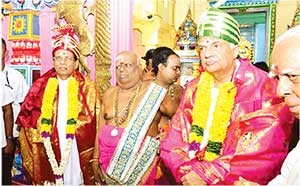
Weerasekera presented the report to Ven. Bengamuwe Nalaka thera at the Sambuddathwa Jayanthi Mandiraya on Monday (March 13). The Global Sri Lanka Forum (GSLF) has sponsored the project.

Members of Maha Sangha, former Chief Justice Sarath Nanda Silva, former External Affairs Minister Prof. G.L. Peiris and wartime Defence Secretary Gotabhaya Rajapaksa were among the gathering. The Chinese and Pakistan diplomatic missions were represented.

Dr Gunadasa Amarasekera, who along with Ven. Nalaka and retired Rear Admiral Sarath Weerasekera commissioned Dharshan Weerasekera in January to carry out the task this year, handed over a copy to former Defence Secretary Rajapaksa.

The gathering was told that the report along with several other written reports commissioned by the previous administration would be also submitted to President Maithripala Sirisena, who is also the Commander-in-Chief of the armed forces.

In addition to calling for government appraisal of OISL, the FNO underscored the importance of the UN examining the same report. The FNO has recommended that the Sirisena-Wickremesinghe government obtain an opportunity to brief the UNGA in respect of the need to appoint a Special Rapporteur to examine the entire process.

Weerasekera has called for the suspension of the ongoing process until Special Rapporteur could finalise the inquiry.

Attorneys-at-law Kalyananda Thiranagama and Raja Gunaratne and writer Shenali Waduge, who were in the editorial panel, were coordinated by Dr K.M. Wasantha Bandara.

The FNO report dealt with three allegations (indiscriminate shelling, denial of human rights assistance and unlawful killings) pertaining to the International Humanitarian Law (IHL) and four (violations related to deprivations of liberty, enforced disappearances, torture and sexual and gender based violence) under the International Human Rights Law (IHRL) contained in the OISL report.

Ven. Nalaka, Sarath Weerasekera, Dharshan Weerasekera, Raja Gunaratne, Prof. Peiris, Sarath Nanda Silva and Gotabhaya Rajapaksa flayed the Sirisena-Wickremesinghe government for co-sponsoring Geneva Resolution 30/1 in Oct, 2015 despite it being severely inimical to Sri Lanka.

Ven. Nalaka alleged that the government was hell bent on destroying the image of the war winning military at the behest of Western powers as well as those who couldn’t stomach the eradication of ‘the deadliest terrorist outfit’, the LTTE.

Former UPFA MP Weerasekera explained the sacrifices made by the military during nearly three decades long conflict. The naval veteran explained the circumstances under which the navy had captured Sea Tiger leader Soosai’s wife, Satyadevi, son Suresh and daughter Madhi off Mullaitivu in the early hours of May 16, 2009.

Although, the navy had experienced devastating losses in the hands of Sea Tigers, Soosai’s family weren’t harmed, Weerasekera said.

On behalf of the FNO, Weerasekera will hand over the report to Geneva on March 22. Copies will be made available to 47 members of the UNHRC.

Dharshana Weerasekera explained key objectives with the focus on the responsibility on the part of the government to re-examine the OISL report. Faulting the UN led process that ended up in Geneva Resolution 30/1.

Prof. Peiris compared Sri Lanka’s response to Geneva challenge during the previous administration and that of the current administration. Prof. Peiris pointed out that foolish yahapalana leaders had reaffirmed their commitment to the controversial Geneva Resolution 30/1 by moving another resolution during the ongoing sessions. Referring to President Maithripala Sirisena’s recent declaration that he had the backbone to reject foreign judges in judicial inquiry into alleged accountability issues, Prof. Peiris said that they would be watching the Geneva situation closely.

Raja Gunaratne analysed OISL report and discussed a range of other connected issues such as US double standards, US position vis a vis Israel and Western influence there at the expense of a large section of the global community.

Sarath Nanda Silva recalled measures taken by successive governments during the conflict, including the fourth phase (Aug 2006 – May 2009) as well as post-war period to alleviate the suffering of Tamil speaking people. Silva referred to some disagreements between the previous administration and the judiciary during his tenure as the Chief Justice in respect of counter terrorism measures. Pointing to the audience, the former CJ said that Gotabhaya Rajapaksa reacted angrily as he called for a fresh look at security procedures in the wake of Paikiasothy Saravanamuttu moving court against the government forcibly shifting people from Colombo to Vavuniya at the height of the war.

The former CJ censured Foreign Minister Mangala Samaraweera for pursuing policies against the country.

Silva also urged the judiciary to examine former Senior DIG Anura Senanayake’s prolonged imprisonment for allegedly suppressing information pertaining to a high profile case. Silva recalled the role played by the police officer in counter terrorism operations in Colombo during the fourth phase of the war.

In perspective: Gota factor, Gota project, then and now

March 15th, 2017

By DR. DAYAN JAYATILLLEKA

March 12, 2017, 9:43 pm
The impact and landmark nature of the Viyath Maga annual convention is discernible in the coverage in the country’s top business paper which has a wide corporate readership, the Daily FT, owned, I might add, by the Wijewardene family, hardly backers of the JO or the Rajapaksas. (http://www.ft.lk/article/601558/Mahinda-pricks-Govt.-over-plight-of-public-servantshttp://www.ft.lk/article/602544/ViyathMaga–Professionals-for-a-better-future).

As for the politics of Viyath Maga, if the choice is between the Rajapaksas– especially an MR+GR slate– and Ranil Wickremesinghe, who was described on TV a few days ago by his Oxford educated cousin Prof Rajiva Wijesinha as “a slimy crook” and “a disgrace to his grandparents”, I think Viyath Maga has indeed made the right choice and I am happy to have done so too, within and outside their company and well before their founding.

Following my speech at the Viyath Maga Annual Convention at which Gotabhaya Raapaksa played a prominent role, at least two well-known journalistic commentators, one early middle aged the other a senior citizen; one bilingual, the other writing solely in English, have resurrected my 2014 critique of Gotabhaya. That doesn’t require investigative journalism– indeed a more extensive version of my critique of Gotabhaya’s excesses is available in my full length book, “Long War, Cold Peace” (VijithaYapa, 2014 edition).

Whether it is Gotabhaya or Mahinda or anyone else, when they do something wrong I have criticized it then– unlike some who remained silent, in fear or for personal gain. On the other hand when I think they have overcome their mistakes and are infinitely preferable to those in power or about to take power, I support them. If they are better in power than those in Opposition, I support them then too– which is why I supported President Premadasa.

What’s right is right and what’s wrong is wrong, though often one has to choose between the lesser wrong and the greater wrong. Gota, then and now, was always better than Ranil and CBK, the traitors. But even patriots make mistakes– which I criticized at the time.

If not for incidents like Weliweriya we wouldn’t have lost the Catholic vote in Gampaha and therefore lost Gampaha, which impacted on the whole election.

If not for the moronic mistakes that the previous Government made, with the Sajin Vaas Gunawardena as Presidential Advisor on International Affairs (something that Gota had little to do with) we wouldn’t have lost three times in the Geneva arena where we won almost a two-thirds in May 2009.

It is those mistakes that opened the door for Mangala’s treachery in 2015 and today. The petition against the Weliweriya shootings was drafted by three of us who had fought against the west in Geneva: Ambassador Tamara Kunanayakam, Prof Rajiva Wijesinha and myself. Tamara was anti-Ranil in 2015; Rajiva was pro-MS but swiftly returned to an anti-RW stance, and I fully supported MR in 2015 January and August elections.

While I retract none of what I said, that critique was embedded in a concrete context and is rendered outdated and therefore largely irrelevant for four reasons.

Firstly, as I argued in my writings throughout the second term and on TV and public platforms during the 2015 campaign, MR’s and GR’s mistakes—which I had robustly criticized—were greatly outweighed by their respective and joint merits. Their pluses outweighed their minuses.

Secondly in 2014 at the time of writing, the dynamics that prevailed were regime dynamics. From 2015 to 2019/2020, the preponderant dynamics will be movement dynamics, in which the composition and ideology of the Joint Opposition (JO), a populist center-left formation, will be a crucial determinant. Thus a Gotabhaya Presidential candidacy will resemble 1956, 1970, 1988 (Premadasa) and 2005, much more than it will 2014.

Thirdly, as a former critic of Gotabhaya, I have seen at close range how he has changed positively; evolved for the better. His background as a decorated combat officer who has been educated in several military academies, and as a highly successful developmental bureaucrat of the sort that Premadasa and Sirisena Cooray would have prized, has made him a more thoughtful strategic Realist in all things. This is a man who has matured to the point of being able to rescue and uplift his country if he is elected leader. GR potentially, is our Deng Xiao Peng, Putin or Raul Castro.

Fourthly, I recall Trotsky’s point about opting even for “the devil’s grandmother” in certain circumstances. Even if everything critical I said about Gotabhaya in 2014 were as relevant now as they were then and were to come true under a GR presidency, I would unhesitatingly choose Gotabhaya over Ranil-Mangala-CBK and the treasonous disaster they are visiting upon this country, just as the Russian citizenry unhesitatingly referred Putin to the national disaster of the Yeltsin policies, the Filipinos preferred Duterte, the Turkish preferred Erdogan, and the Indians, Modi.

People can change for the better and the worse. Gota has changed for the better but even at his worst, he was and is better than Ranil Wickremesinghe, the man who, according to ex-Sandhurst instructor Prof. Paul Moorcraft’s book, called off a Special Forces LRRP hit on Prabhakaran and is therefore responsible for every life and limb lost in the war since that moment!

Let’s cut to the chase. If one wants to know what the educated urban middle classes which provided the crucial swing vote that brought the new Government into office in 2015 think currently about RW, MR, GR etc. read this report by a credentialed researcher and scholar:http://www.dailymirror.lk/article/Eavesdropping-in-Colombo-Colonial-slang-rules-the-local-tongue–125168.html

Bottom line: Ranil has never ever won a presidential election, and judging by the official SLFP’s stance he isn’t going to be able to abolish the presidency either. So, come December 2019 it’ll be a Presidential election, MR cannot contest, and if it is RANIL vs. GOTA who do you think is gonna win? Would the CPA dare to do a public opinion poll?

I think that Mahinda as PM and Gota as President is the best possible leadership combination the country could have in the foreseeable future— though I must admit that I hope Kumara Gunaratnam can make it and usher in a progressive and socially just Sri Lanka devoid of racism and religious chauvinism, turning this island peacefully into the Cuba of Asia, within my lifetime.

Smart patriotism: outlining a doctrine for Sri Lanka in the world

March 15th, 2017

By DR. DAYAN JAYATILLEKA

[Summary of speech on “Sri Lanka’s International Relations in a Changing World” delivered by DR. DAYAN JAYATILLEKA at the 2nd annual convention of Voice of Professionals–Viyath Maga– at Golden Rose, Boralesgamuwa, March 4th 2017]

As the Daily FT reported (Monday, March 6th 2017), the annual convention of the Voice of Professionals, better known by its Sinhala brand-name Viyath Maga, was an unprecedentedly successful event:”…a packed audience at the Annual Convention of the Viyath Maga… a network of academics, professionals and entrepreneurs, was held on Saturday with the participation of 2,000 members.”

These 2,000 delegates, almost all of whom were well-educated and credentialed professionals who explicitly identify themselves as patriots—and a far cry from the pro-western Yahapalana fellow travelers; the bought and paid for NGOists as and the handful of federalist civil society retirees revealed in WikiLeaks as “trusted sources of the US Embassy” (not to mention actual employees of the US embassy and its affiliates).

While congratulations must surely go to the father of the network, Dr. Nalaka Godahewa and the affable, indefatigable young conference coordinator Indika Liyanahewage, it would not be inaccurate to do disclose that the venture has been inspired by Gotabhaya Rajapaksa. The growing membership has a sense of appreciation for his declared respect for professional expert opinion. Their aspiration is for an Asian modernist developmental revolution in Sri Lanka guided by a strong patriotic state in synergy with creative private entrepreneurship and educated experts; one which would turn this country into a South Asian Malaysia.

Invited to address the convention after the rousing yet non-partisan introductory remarks by Dr. Godahewa, I dealt with several points relevant to the topic assigned to me: “Sri Lanka’s International Relations in a Changing World”.

Making the point that Minister Samaraweera’s declaration at the High Level segment of the UN Human Rights Council’s 34th session recently in Geneva that “69 years” of effort by Sri Lanka at “nation-building and…socioeconomic progress” had been “a failed experiment” and “an era which needed to be ended” was the most disgraceful thing any Sri Lankan Foreign Minister –and perhaps any Foreign Minister –had ever said about his country in any international forum, and in that sense that we are now at the nadir of Sri Lanka’s international self-respect, I reminded the audience about the three great phases of Sri Lanka’s role and standing in the world: 1956-1979 (from SWRD’s UNGA speech to President Jayewardene’s warmly friendly handover of the NAM chairmanship to Fidel Castro), the years of Lakshman Kadirgamar’s stewardship of foreign affairs, and the management of foreign policy and power balancing during the war years within the Mahinda Rajapaksa first term. I stated that the problem is, as the Buddha emphasized, to stop the cycle by exiting it. It is necessary to avoid the cycle of international success followed by ignominy and establish a stable posture of prestige and assertive success in the world.

I suggested that in order to do this, we have to face three questions squarely.

  1. How should we understand the national and the international; more concretely, what should be the outlook of a relatively small island located south of the Indian subcontinent and on the West-East nautical crossroads?
  1. What should our guiding concept be, around which we can build an ideology to safeguard our national interest?
  1. Who, which social class or strata can act as the bearer of this strategic concept and agency of this world outlook and ideology?

I ventured to suggest the three following propositions as answers to these three questions.

  1. For an island like Sri Lanka whose destinies have been shaped, even determined, not by purely internal dynamics but by the interaction of the internal and the external factors and influences, there cannot be an ideology, world outlook or policy paradigm that is purely “national”. If the dangers are international and the battlefield is global, logically, how can the response be national? For us there cannot be a Great Wall of China between the national and the international. The border between external and internal is a flimsy, porous, permeable partition. We cannot allow the international to be imposed upon the national nor can we impose the national upon the international. We have to grasp and manage the dynamics, the dialectical interrelationships, between the national and the international.
  1. This perspective is what I call “Smart Patriotism”. It is an advanced patriotism, not a backward one. It is a project in which Sri Lanka’s national interests and views are translated successfully into a discourse of universalism which the global community can then absorb. It is an outlook in which Sri Lanka’s culture is made part of global culture. In the realm of Sri Lanka’s international relations, I identified the following (in chronological sequence, not necessarily that of merit) as exemplary Smart Patriots in the foreign affairs realm: SWRD Bandaranaike, Hamilton Shirley Amerasinghe, Neville Kanakaratne and Lakshman Kadirgamar. Globally, I identified the paradigmatic articulation of Smart Patriotism as that of Fidel Castro who said he was not a nationalist but a patriot and emphasized that “Internationalism isn’t just a necessity…it’s a condition for survival.”

III. The third and final proposition I put forward was that the social agency for Smart patriotism was what Antonio Gramsci called the “organic intellectuals” and Jean-Paul Sartre termed “engaged” or “committed” intellectuals, writers and artists. I expanded this to include the educated professional strata and the patriotic entrepreneurs. These strata which had gathered around Viyath Maga, potentially constituted a New Patriotic Elite, the organic vanguard of the educated middle classes and the bearers of Smart Patriotism.I concluded by adding that the executive presidency, the unitary state and the national list constituted an ensemble which was ideal for the participation of this social group in the state and state policy. So far, with a few notable exceptions the national list had not been used for this purpose, but the professionals should secure a guaranteed percentage of the national list posts and through this channel should have a guaranteed share of Cabinet portfolios. I pointed to the educational composition of Cabinets in Singapore, Rwanda, Iran and Cuba.

Concluding, I urged that we fight against the dangerous effort to destroy (under cover of Constitutional change) the existing state system, most especially the Executive Presidency, which was ideal for professionals to participate and serve in.

Gotabhaya Rajapaksa and Dayan Jayatileka

March 15th, 2017

C. Wijeyawickrema, LL.B., Ph.D.

In the crazy field called Sri Lankan politics in 2017, the latest news item is the open letters written by Dr. Jayan Jayatileka promoting Gotabhaya Rajapaksa as the winning candidate for the 2020 presidential election. We must thank Dayan for the service he is rendering, single-handenly,  to expose the game played by RailW, CBK and MangalaS, all members of the federal-this war is not winnable crowd, to break Sri Lanka into pieces of warring segments as in South Sudan, East Timor, Iran, Afghanistan, Libya and Syria. Lebanon, Israel and Palestine are old cases of this old game.

One must give room for people to evolve and mature politically and spiritually. It took NM and Colvin 30 years (1935-1964) to take a tray of lotus flower to the Dalada Maligava. Even Vasudeva is now for devolution of power to people (Tamil?) only if if it is within a unitary state. As a person who watched Dayan’s writings I am pleased that he is not a Tilakasiri, Tisaranee, Rosy Senanayaka or a Bahu anymore. I have no concern if he is supporting MahindaR.

But when it comes to Gotabhaya, who is not a politician like MahindaR, the Sinahala Buddhists, poor Catholics and reasonable-minded people of other ethnic groups such as Arun Tambimuttu, Karuna and most recently Izeth Hussein, one cannot give Dayan a free ride, without qualifications. This is because Gotabhaya with all his weaknesses as a military-trained human being in politician’s shoes, he is perhaps the best thing people in Sri Lanka has to save their country from total ruin, so near and so far at the same time.

Recently, I saw an e-mail sent by Prof. Nalin de Silva and I felt that it is nothing but fair to give Dayan an opportunity to respond to some concerns we have about his views he had in the past. If he has changed like MahindaR and Gota as he says in his latest writings, then we have nothing to worry about him. For this purpose I am copying below a reply I wrote to him printed in the Island newspaper, after which Dayan was fired from his Geneva assignment.  Amazingly, this essay written in July 2009 is still not out of date in what it discussed. Dayan did not answer the questions asked then and now he has an ideal opportunity to answer them for our benefit.

The Island, July 1, 2009

‘Sinhala Bushism’ and the 13th Amendment

C. Wijeyawickrema, LL.B., Ph.D.
Sinhala Buddhist chauvinists

Dayan Jayatilleke, Ph.D., (DJ), writing as the son of the late journalist Mervyn de Silva, has utilized the American idea of the Father’s Day for three related purposes: (1) to try to prove that Bushism (militarism) does not work even in an otherwise unbeatable Israel, and (2) that Bushism (Sinhala over-lordship) cannot succeed in Sri Lanka, and (3) Sri Lanka’s peace and prosperity lies in his 13-A now and 13-A plus later plan (The Island, 6/22/2009). In this process, he has added a yet another appellation to the “list of adjectives” developed by the Colombo intellectuals since the 1960s to designate Sinhala Buddhists. Interestingly, he received immediate endorsement for this project from the American-living anthropology professor H.L. Seneviratne (HLS) of work of kings (1999)” fame (The Island, 6/23/2009).

Unfortunately, DJ’s project was based on false data and a biased perception, dialectical, or otherwise. Despite the fact that at least since 1961 Erich Fromm has shown us that Karl Marx was not a Marxist (Marx’s concept of man, 1961, p. v), DJ operates with the thinking that “the un-dialectical mind would unable to grasp” what is happening with regard to Sri Lanka’s ethnic conflict (The longest war: Sri Lanka’s identity conflicts and conflicted identities by Dayan Jayatilleka, Official government website of Sri Lanka, 7/28/2008). In reality, when white capitalist conspiracy masks are removed, Marx and Engels appear more like Buddhists and not Hegelians. Jenny Marx’s letter from London to Herr Weydemeyer asking financial help, described the sufferings she, her husband and the children went through on a daily basis without food and even rent money (p. 244). Marx was no Lenin, Stalin, Castro, Mao, NM or Colvin.

Perhaps, like his father those days, DJ is still a Colombo-living prisoner of the Tamil separatist paradigm that first began in the Madras Presidency and in Colombo, Ceylon, in the early 1920s. These prisoners cannot act reasonably because they have to react to separatist action. In trying to paste the “Bush doctrine” (“the Bush tragedy” is the title of Jacob Weisberg’s 2008 book) to Sri Lanka, DJ reveals an inability to understand the Middle Path in Buddhism upon which the Mahinda Chinthanaya is based. Furthermore, he is oblivious to the theory of “give war a chance” (not to get trapped by the premature peace-making games of the white politicians). I suspect for those who lived in a “this war is not winnable” world, not very long ago, what had happened to the Prabakaran war machinery on May 18, 2009 must have been a terrible mental blow.

Moshe Dayan and Anwar Sadat’s biography

Our Dayan missed Moshe Dayan when he talked about Israel and Sharon’s counter attack in 1973. He mentioned Sharon in 1973 but missed Moshe Dayan in October 1973. This was not like the typo error that he immediately corrected in HLS’ endorsement (The Island, 6/24/2009). It is a fatal error consuming the gist of his father’s day message. My perception of USSR, Nasser and Israel has changed considerably after I read Sadat’s autobiography (Anwar el-Sadat: in search of identity-an autobiography, 1977). I hope Dayan too will find time to read it and learn from it.

The real Gamal Abdel Nasser was not the man we in Sri Lanka thought we knew. He was a lousy leader. Actually, Sadat was the real statesman with higher qualities who did not wish to challenge Nasser when Nasser was alive. We thought that he was some lesser known deputy who came into prominence after the death of Nasser. Sadat wanted to erase the humiliation his country received under Nasser due perhaps to an international conspiracy rather than to Israel’s military genius (the early morning raid of Egyptian war planes). He defeated Israel in October 1973 (page 256), and it was a landmark in military history. Israel was rescued by Henry Kissinger and the quick arrival of American war planes. Think of the Vadamarachchi rescue operation (July 1987) with Indian jets. Sadat said he could fight with Israel but not with USA.

I came to know the other side of Israel’s humiliating defeat by accident from an account in a military journal. The October 1973 Israel defeat was so disastrous and decisive that Golda Meir, the PM, offered to submit her resignation. Moshe Dayan, the war hero in 1967, broke down and wept, and it was alleged that he even contemplated committing suicide. Even in Lebanon, more recently, Israel could not defeat the Hassaballah fighters and had to withdraw after destroying buildings and killing civilians (I doubt if Hassaballah had more fire power than Prabakaran). Therefore, DJ’s case of an invulnerable Israel and then use it as an argument against relevant, reasonable and necessary future military strategies of Sri Lanka has no factual validity.

It is an open secret that Israel survives because of American money and weapons (as alleged, even if it has its own nuclear weapons it is in a highly vulnerable situation). The ultra powerful Jews lobby in the American political system assures that this connection continues flawlessly. Even as one’s private opinion (official Sri Lankan government website entertains his opinions), it is unfair to project that GOSL after November 2005 ever entertained the view that there was a purely military solution to the separatist problem in Sri Lanka. The Buddhist approach followed under the Mahinda Chinthanaya disproves it. There has always been a desire to reach a reasonable political compromise, but not what the remote-controlled white colonial political agents wanted to enforce.

Give war a chance

The decision for new military bases in Mullaitivu and Kilinochchi are in accordance with the theory of “give war a chance” and it is not an unreasonable one. Any attempt to taint this security work as Bush acts go against the military science as well as Buddhist politics. (“Give war a chance,” Edward N. Luttwak, Foreign Affairs, July-August 1999, 36-44; “There is a military solution to terror,” Bret Stephens, Wall Street Journal, June 3, 2008; “Lessons from Sri Lanka,” Washington Times, 6/22/2009). A reasonable political solution cannot work without reasonable military security. Same rule applies for the decision to create a Coast Guards’ Service which was at least 30 years overdue. One cannot cure a cancer by feeding it or by leaving remnants of it or leaving any possible room for it to re-surface. These rules should now apply to Tamil terrorism, just like they applied ruthlessly to the Sinhala terrorism in 1971 and 1988-89.

The discoveries of buried weapons on a daily basis in the former CFA 2002 areas confirm the thesis that Harvard professor Monica Duffy Toft presented in her essays and in her book “The Geography of Ethnic Violence: Identity, Interests, and the Indivisibility of Territory, 2003. Total defeat brings lasting peace. To quote her:

“Wagner hypothesis, stressed that balance of power best explains why military victories result in the most stable outcome in ending civil wars. The destruction argument constitutes an important and logically consistent explanation for why a military victory might result in a longer lasting peace and a more stable base for a postwar recovery. The logic reduces to a single hypothesis:

The more completely an adversary’s capacity to fight in a civil war is destroyed, the less likely war will recur.

With one side defeated, the defeated side’s capacity to reignite the war is substantially reduced and thus the likelihood of war recurring is lower. In other words, if a military campaign destroys the adversary’s capacity to fight, then the question of postwar resistance to the winner’s policies cannot logically matter. “Victory,” in such a case, would effectively leave the state with a single actor.”

So try to become modern-day King Ashokas after that task is accomplished.

Platform of broad provincial
autonomy

The argument that despite its power Israel is full of headaches is used by DJ to make a hurried demand for a political solution of a unique kind ignoring geography and history (history is past geography). This demand fits within the notorious Colombo paradigm and its daughter Tamil separatism. The 1984 “a search for a solution” project of DJ’s father was most probably based on a mindset of a separatist prisoner. Not just the political families in Colombo but the others elites in Colombo also shaped their lives in and around the separatist paradigm of SJVChelvanayagam and GGPonnambalam. The B-C and D-C pacts were the best examples on this ‘action-reaction’ behaviour. The reactions were often not reasonable. To agree to give land powers to a set of politicians who professed a right to a traditional homeland in the Eastern Province with a Tamil state party formed in 1949 was foolish and suicidal. In 1987 with 13-A, India forced GOSL to implement this stupid decision. Sri Lanka had a narrow escape under the CFA 2002. God Vishnu made Prabakaran go crazy and reject it! Now after thousands of Hasalaka heroes we are back again in 1987.

DJ has a duty to answer a set of questions now in 2009 because he has more information today than what his father had then.

1. Does he want to empower the people or give some ruling powers to a set of corrupt and dishonest politicians?

2. Did the seven PCs in the South help the people in any manner better than the days before 1987?

3. 13A was imposed on Sri Lanka by India by military threat. Does he not think that this humiliation should end by erasing it?

4. Can anybody argue that 13-A is a legal part of the constitution (even if it is a bahubootha constitution) when it was passed after obtaining resignation letters from MPs?

5. Does he know that 13-A accepts a traditional Tamil homeland in Sri Lanka’s NP and EP?

6. Why is that “Tamil ethnic identity” (group right versus individual rights) cannot be accommodated under a non 13-A set up, such as a river basin-based, language-blind regional demarcation method so that “water wars” etc. will not become future problems?

7. When India decided after forty years of paying lip services to constitutionally embrace the Panchayathi Raj Institutes (1973rd Amendment, 1993) as the vehicle to empower villagers why is it that Sri Lanka has to go to language-based Provinces?

8. Why should people shoulder the burden of a white elephant called 13-A simply because India wanted to create an official Tamil homeland in Sri Lanka?

9. As the data below clearly indicate, 13-A’s plan to ‘accommodate Tamil ethnic identity’ by creating a Tamil homeland, at the same time promotes race-based thinking and suspicion in 157 out of 160 electorates (based on 1976 Census data) where people now live in harmony. The majority report of APRC thought the solution to this is build Tamil police stations in the south. What is DJ’s stand on this?

10. Does he not think that the best future will come by teaching children Sinhala and Tamil from grade 3?

Think global, act local

Why Sri Lankan Tamils cannot have their “aspirations” (group rights?) achieved under a unified Sri Lanka with Tamils as well as others empowered at the village council-level as proposed by the SLFP in April 2007? Col. Karuna’s demand, “Give us what Colombo gets” is rapidly spreading among the local Tamil politicians as well, yet a group of Colombo people want to take the country to two language-based spatial units. The empowerment of Tamils and others should take place at the village level and they should be given the opportunity to develop a hierarchy leading up to a District-level unit if they decide so and not because some Colombo people think due to various other reasons and influences. Rajiv Gandhi gave 13A to escape from a headache his mother had caused.

That does not mean we are ‘harbouring a snake inside our undergarments’, as a popular Sri Lankan saying goes. Sri Lanka meets the promise made to India as regards 13A by empowering people at the village level with most governmental functions allocated to VCs (Grama Rajya concept). This way only a few functions will be handled by the national government. After all this was the path India decided to follow with Panchyathi Raj Institues in 1973.

Group rights demarcation on a scrambled egg

When language or race or religion is used as a yardstick of demarcation of political units the devil in man or woman gets a better chance than the saint in him or her. Scotland, Northern Ireland and Belgium are good examples. In the case of Sri Lanka in 1977 (based on 1976 Census data) there were 17 electorates with 50% or more Tamil voters and 20 with 5-49% Tamil voters. 120 electorates had 0.4 -4.99% of Tamils. Some 157electorates in 1977 (total 160) had small, medium or large Tamil populations. What this means is that Sri Lanka is a scrambled ethnic egg. It is absurd to think of group rights in this situation. 13A wanted to unscramble it and 13-A plus wants to eat it clean (unscrambled).

Apart from the obvious geographical factor that unlike India Sri Lanka is a tiny island which with a modern highway can be traversed in 3-4 hours (a moderate bullet train can do it in less than 2 hours), Sri Lankans will be fools to stick to what India did to Sri Lanka in 1987 now in 2009. What is needed is strengthen individual rights and more representation at the national level. Teaching Sinhala and Tamil to school children from grade 3 will remedy any aspiration requirements within 10 years!

Tamil country with a UN seat

DJ has a duty to explain to the country how he is going to deal with the world Tamil movement’s desire for a Tamil country (“There is no state without a Tamil, but there is no state for the Tamils,” World Confederation of Tamils, 2006, www.tamilnation.org) under his 13-A plus formula. Sri Lanka with language-based 13-A region with police and land powers if 13-A plus wins the day will be an irresistible attraction, a magnet for dreamers of a Tamil state. There will always be the Tamil Nadu politicians promoting racism, just like the Kachchativu issue or any other garbage that they can pick as political fodder and to keep the pot boiling. The Tamil diaspora as well as some Tamils in Colombo will go to any extent to arouse Tamil racism in the Tamil homeland. Then a Vartharaja Perumal will appear again from nowhere. Already a new term has emerged as, “structural genocide.” Anything under the sun can come under it!

Former UNP Minister Rajitha Senaratne has candidly said, “Do what is needed today.” (The Island, 6/26/2009) but that should not be the attitude of those who think of Sri Lanka beyond the next 10 to 15 years of political survival. There is, no doub,t that at the next general election ex-service personnel as candidates will teach people like him a basic patriotic lesson. When DJ says 13-A now, 13-A plus later (Lankaweb, 6/15/2009) with a cover phrase “within a unified state,” he is either not sincere or not smart.

Give access to North

It is so funny that some American officers are demanding free access to North as a condition for help as if they had helped Sri Lanka before May 18th 2009. Why they want access and what they really do when they get access is documented page after page in the Report on the unethical conversion of Buddhists of the ACBC- appointed commission (2009). The army found it physically on the field. A careful reading of this thick report (400 pages) reveals that 13-A (and 13-A plus) will become part of a global conspiracy to implement in Sri Lanka the three interconnected processes now taking place in the flat world: (1) clash of civilization project as planting democracy (2) Christianization of Asia as making poor countries more civilized and R2P bound, and (3) liberalization of global economy via World Trade Organization and NGO-INGO sisters as remote-controlled colonialism. In all three areas the white politicians in a failed capitalist free market system of Europe, USA and Canada are blatantly applying double standards while facing increasing humiliation of the Buddhist kind (of the Upatissa and the Nalagiri Damanaya type).

Ven. Soma

DJ makes a desperate attempt to connect the November 2005 victory with a broad left-center front. Mahinda R won because of the JVP-JHU support and not because of popular LSSP or CP. Even the SLFP of CBK side did not support him. These are the people now kissing MR’s foot not ring. HLS identified 2005 November election as a contest between a Jathika president and an Arthika president (The Island, 11/9 and 11/11/2005). The Jathika candidate was called a war monger not a moderate. MR became the legitimate inheritor of the late Ven. Soma’s work to bring back self-respect and dignity to a humiliated Sinhala Buddhist majority. Except during 1956-1959, there was no “progress” in Sri Lanka. In fact the country went down the drain until after November 2005. Those who cannot win a single seat in the general election has no right to talk about the legitimacy of 13-A in or out of the APRC circle.

Arrogance of power

DJ does not have to go to Prof. Nye to show the power of soft power. The late U.S. Senator William Fulbright in his book, The Arrogance of Power, 1966, preached to his people what Americans could and should do. Amazingly, this timeless classic has lots of Buddhist politics which would help President Obama tremendously, if he cares to read it. When he was the president of India, Dr. Abdul Kalam, former science advisor, who has a Tamil and Muslim ancestry, said that Buddhism provided solution to world’s problems. The American professor Robert Thurman in his book, “Inner Revolution: life, liberty, and the pursuit of real happiness (1988, chapter 9: Hope for the Third millennium, the reunion of outer and inner) offers advice to American politicians on how Buddhist principles could be utilized to create a better America. It is not perfect, but the Mahinda Chinthanaya Programme is a real world application of these ideas. Therefore, without adequate study it is unfair for DJ to talk about “Sinhala over-lordship.”

We have no way of knowing what DJ’s father thought about the 1962 police-navy coup or the statement quoted below made by Professor Gunapala Piyasena Malalasekera. This statement applies equally well today in 2009 with regard to Sinhala people as well, which Gen. Sarath Fonseka summarized recently as “minorities should have equal rights but they (Colombo Tamils) should not make unreasonable demands.” But DJ is in a position to read the 2009 ACBC report mentioned above and let us know what he thinks about it.

“The Buddhists wish—and quite rightly—that in this country where they form 70 percent of the population, Buddhism should be recognized as the predominant religion of the people. In the rest of the world, Ceylon is regarded as essentially a Buddhist country, and they want this claim established here as well…They will not be content to remain in the position of inferiority to which they have been reduced by 450 years of foreign occupation… They have no desire to make Buddhism the State religion—in spite of the cry raised by self-seeking politicians— but they want the State to help them rehabilitate themselves and undo some, at least, of the injustices perpetrated against them during the days of their subjection.”

(quoted from a speech by Professor Gunapala Malalasekera, President of ACBC reproduced in Times of Ceylon, January 15, 1956, and referenced on page 196 of the book, “Ceylon: Dilemmas of a New Nation,” by W. H. Wriggins, Princeton Univ. Press, 1960)

Protest against the proposal to dismiss a person appointed and assumed office as a Judge of the High Court of Sri Lanka

March 15th, 2017

V.Anandasangaree   Secretary General – TULF -Tamil United Liberation Front

His  Excellency  Maithiripala  Srisena,
President of Sri Lanka
Colombo

Your Excellency,

Protest against the proposal to dismiss a person appointed and assumed office as a  Judge of the High Court of Sri Lanka

I am perturbed over your decision to dismiss a respectable gentleman and a leading lawyer of the Batticaloa bar from the office of a Judge of the High Court of Sri Lanka, to which he was appointed recently and had already assumed office. The word dismissal will mean in this case that the person concerned is sent away dishonorably from service or office, when he is acknowledged as an honorable gentleman.

I do not know at what point the error occurred but it is very clear that the recommendation had come through the proper channel and reached you to make the appointment. I am not trying to find fault with anybody but I am only concerned about the reputation that had become questionable for no fault of the person concerned.

I need not point out how the decision to dismiss him from the office of a Judge of the High Court will boomerang on your office as the President of the country which is described as having a National Government or Good Governance.

Without going further into the matter, may I plead with you Your Excellency to persuade the person concerned to relinquish his office as High Court Judge and to appoint him to a position which may come close to the office that he is made to quit, either within the judiciary or any other reputed office acceptable to him.

Extremely  sorry if I had caused you any embarrassment. I had intervened with a noble purpose.

Thanking you

Your Sincerely

V.Anandasangaree   Secretary General – TULF

Copy to :-

  1. Prime Minister Ranil Wickremesinghe ,                   Hon. Wijeyadasa Rajapakshe – Minister of  Justice

ගමන් වියදම් කප්පාදුවට එරෙහිව මාර්තු සිට මාසික වාර්ථා ලබාදීමෙන් වැළකීමේ වෘත්තීය කි‍්‍රයාමාර්ගයක.

March 15th, 2017

වන්දන සූරියආරච්චි  ප‍්‍රධාන ලේකම්, මානව සම්පත් සංවර්ධන සහ සංවර්ධන නිලධාරීන් 

කම්කරු හා වෘත්තීය සමිති සබඳතා අමාත්‍යාංශය යටතේ පවතින මිනිස් බල හා රැකිරක්‍ෂා දෙපාර්තමේන්තුවේ සේවයේ නියුතු මානව සම්පත් සංවර්ධන සහ සංවර්ධන නිලධාරීන් සඳහා 2016 වර්ෂයේ අදාළ රාජකාරි ගමන් වියදම් දීමනා කප්පාදු කිරීමට එරෙහිව මාසික ප‍්‍රගති වාර්ථා දෙපාර්තමේන්තුව වෙත යැවීමෙන් වැළකී සිටීමේ වෘත්තීය කි‍්‍රයාමාර්ගයකට අවතීරණය වීමට තීරණය කර ඇත. ඔවුන් මෙම තීරණය ගනු ලැබූයේ පසුගිය 10 වන දින සංගමයේ වාර්ෂික සමූළුවේදී බව දන්වා සිටිමු.
 
    ඉහත තනතුරු දරන නිලධාරීන්ට රාජකාරි සඳහා වන ගමන් වියදම් දීමනාව ලෙස රු. 2500/- ක මුදලක් නියමිත අතර එම මුදල මාසිකව හිමිවිය යුතු වුවත් 2016 වර්ෂයට අදාළව එම දීමනාව ලබාදී ඇත්තේ මාස 06 ක් සඳහා පමණි. වෘත්තීය සමිති නියෝජිතයින් ආයතන ප‍්‍රධානීන්ගෙන් ඒ පිළිබඳව ප‍්‍රශ්න කළ අවස්ථාවේ බලධාරීන් ප‍්‍රකාශ කර ඇත්තේ මහා භාණ්ඩාගාරයේ උපදෙස් අනුව එම දීමනාව ලබාදිය හැක්කේ වසරකට මාස 06 ක් සඳහා පමණක් බවයි.
 
    මහා භාණ්ඩාගාරය ලෙස උපදෙස් ලබාදී තිබුණත් අදාළ තනතුරේ නිලධාරීන් මාස 12 ම රාජකාරි කටයුතුවල නියැලෙන අතර මාස 12 න් මාස 06 ක ගමන් වියදම් දිමනා කප්පාදු කිරීම දැඩිව හෙලාදකිමු. ඒ අනුව වසරකට මාස 06 ක් රාජකාරි කිරීම ප‍්‍රමාණවත් ද යන්න රජයේ සේවකයින් ආණ්ඩුවෙන් ප‍්‍රශ්න කර සිටී.

    ඉතා සූක්‍ෂම ලෙස රාජ්‍ය සේවකයින්ගේ දීමනා හා වරප‍්‍රසාද කප්පාදු කිරීමට ආණ්ඩුව පටන්ගෙන ඇති බව වසරකට හිමි මාසික ගමන් වියදම් දිමනාව මාස 06 ක් දක්වා කප්පාදු කර තිබීමෙන් මනාව පැහැදිළි වේ. 2016 වර්ෂය සඳහා මාස 06 ක හිඟයක් පවතින අතර 2017 වර්ෂයේත් මහා භාණ්ඩාගාරය අනුමත කර ඇත්තේ මාස 06 ක් සඳහා ප‍්‍රමාණවත් වන දීමනා. බව දෙපාර්තමේන්තු ප‍්‍රධානීන් විසින් වැඩිදුරටත් දන්වා සිටී.
 
    2016 හා 2017 වර්ෂවලට හිමි රාජකාරි ගමන් වියදම් දීමනා කප්පාදුව පිළිබඳව ආයතන බලධාරීන් සමග අවස්ථා කිහිපයක සාකච්ඡුා කළත් මෙතෙක් විසඳුමක් නොලැබුණි. 2017.03.10. වන දින සමුළුවේ සම්මත වූ පරිදි එදින සිට දින 14 ක් ඇතුළත ගමන් වියදම් කප්පාදුවට නිසි විසඳුමක් නොලැබෙන්නේ නම් මාර්තු මාසයේ සිට මානව සම්පත් සංවර්ධන සහකාර නිලධාරීන් හා සංවර්ධන නිලධාරීන් මාසිකව ලබාදියයුතු මාසික ප‍්‍රගති වාර්ථා දෙපාර්තමේන්තු වෙත ලබාදීමෙන් වැළකී සිටීමට තීරණය කර ඇත. ගැටළුව සඳහා ප‍්‍රමාණවත් කාලසීමාවක් තුළ විසඳුමක් නොලැබුණහොත් ඉදිරියේදී දැඩි වෘත්තීය කි‍්‍රයාමාර්ග  වෙත අවතීර්ණයවීමට තීරණය කර ඇති බව දන්වා සිටිමු.

ස්තූතියි.
 
මෙයට,
විශ්වාසී,
වන්දන සූරියආරච්චි
ප‍්‍රධාන ලේකම්,                   

With respect for the attention of all Tamil leaders, Greed for power is ruining the Tamil community    

March 15th, 2017

V.Anandasangaree  Secretary General – TULF Tamil United Liberation Front

 The greed for power and high positions among a limited few Tamils have brought ruin to the country in general and to the Tamil people in particular. The sufferings and embarrassments the Tamil people are now subjected to, were not that much in the past, as it is today. The disunity of our leaders has now reached its climax and any further delay in bringing our people together under one banner and agreeing on a common policy, survival as a free nation for the Tamils will become impossible. We have too many leaders, apart from innumerable Tamil political parties and their leaders, each one is pulling in different direction, making things worse. What we need today is unity, common leadership and agreement on major and sensitive issues.

The most important of all for the Tamil people is to accept the Tamil issue as a sacred one and work accordingly, without expecting any personal gains.  Politics may have been acknowledged as a dirty game but it does not mean that we could play it in a dirty way, as many people do today.  Some say something today and something contradictory the next day and keep on doing the same thing over and over again. We face several problems but each one takes its root at the poverty prevailing in the country.  If poverty is over come, several other problems will find solutions automatically. On a number of occasions I had suggested to make available food items freely or under a subsidized scheme for those with poor income and finding difficult to have proper meal every day.  Unfortunately no Parliamentarian upto now, seem to have promoted this scheme but continue to harp on issues less important or more controversial and find easy way of retaining their seats in Parliament.

Release of lands belonging to civilians and revealing or failing to find out the whereabouts of persons, either missing or handed over by the relatives to the forces,  on a promise of releasing them without any delay have not been fulfill. The value people attach to their land can be very well understood   in the words of Sir Walter Scott in his poem The lay of the last minstrel” wherein he says Breathes there the man with soul so dead. Who never to himself hath said   This is my own, my native land!

The land referred to in this poem not only relates to the country but also to the land in which one was born.  This is how the government also should look at lands belonging to the people. The other sensitive issue is with regard to missing persons. In my opinion one should loose something to realize the value of it. Only a widow will know the value of the husband and   so with the widower to know the value of the wife. It is the same with children- parent   relationship and many such others.  I wish to warn the government very politely, to understand the feelings of those who are deprived of their lands and relatives. The only way open to the government is to go all out and sincerely   explore the possibilities of what had happened to these people and satisfy the victims in the best way possible, without dodging the issue further and with regard to their lands please release them immediately because there is absolutely no need for the government to withhold any others land. I go a step further and demand that the government could retain government lands where army camps   existed before the armed struggle started and close down all the other camps started later. The buildings   in these government lands could be utilized for accommodating   University   Campuses Technical Colleges Government offices and such others for which these buildings could be made use of.

His Excellency,   for the best way to tackle the land problem, should appoint a committee of persons holding responsible positions to go round the country, inspect such buildings and make suitable recommendations for their use as suggested by me. With regard to missing persons His Excellency   could appoint a commission to find out what and what happened and to whom in the war zone, at the close end of the war. A lot of things would come to light,   good or bad, about the missing persons and such other matters.

It may not be irrelevant   if I say a few words about my political carrier.  I served the full term in Parliaments of 1970 and 1977, a total period of 13 years. In accordance with a decision of the Tamil United Liberation Front (TULF) 18 of its Members of Parliament   vacated office when the government extended the term of office of Parliament by a referendum, for a fresh full term of six years. The TULF quit office on the grounds that the people gave a mandate for the MPs for only six years. This conduct of the TULF members was applauded by the International community and welcomed as a great contribution for democracy.  The Parliament of 1977 continued to function till 1989 by a referendum for a period of 13 years which is never done anywhere except in an emergency like the world war etc. I have to come out with this information since some of the TNA Members do not know the history of the country and make statements as and when wanted and thereby mislead the people. Under the present circumstances, since the Government seems to be very slow in taking action on the above two matters, the only option the TNA members have is nothing, other than issuing an ultimatum to the Government, demanding the immediate release of the lands belong to the people and also crown lands occupied by the army.

It may be very relevant if I quote from a statement issued by me on 02nd of July 2010 under the caption OPENING AN ARMY CAMP AT MULLAITIVU AND CONSTRUCTION OF HOUSES FOR THE ARMY ARE ILL-TIMED” I am frankly of the opinion that the opening of an Army Camp at Mullaitivu as a fore-runner and the decision of the Government to build permanent houses for the Army are ill-timed, counterproductive and will very soon prove disastrous. I am not that foolish as to stir up a hornet’s nest by protesting against these moves. Whatever I do and say are always with patriotic feelings. My sincere advice is that the Government should forthwith stop opening any more new camps in Vanni, close down the one already opened and also abandon the idea of constructing permanent houses in the North and the East for the use of the Army. The Government should understand and appreciate my thinking and give credibility to my suggestions”.


V.Anandasangaree
Secretary General – TULF

Duminda admits to paying Rs.21 Mn a month for building still unoccupied

March 14th, 2017

Dr Sudath Gunasekara Retired Secretary to Prime Minister Sirimavo Bandaranaike and one time President SLAS

Agriculture Minister Duminda Dissanayake has admitted that his Ministry has been paying a monthly rental of Rs.21 million since April 2016 for the new building in Rajagiriya though still unoccupied.
 
Since April last year, we have been paying a monthly rental of Rs.21 million and have informed the Technical Committee to hand it over to anybody who was in a position to complete the construction work as soon as possible, the minister said in an interview with Daily Mirror.

However, when asked what is the reason behind this transaction, the minister said Let me give you an example; say that you are giving out a house on rent and I’m interested in renting it out from you, I would tell you that it would take another three months to get the furniture ready. We talk about this transaction in January and then I ask if I may start paying from March since I have to get the furniture done. Would you agree or not? The person giving out the building doesn’t care about when the building would be occupied. I have to change it to suit the needs of an office complex and this would only be possible once I have actually rented out the building.”(Kamanthi Wickremesinghe)

Full Interview

http://www.dailymirror.lk/article/We-haven-t-asked-a-cent-from-any-farmer-to-contribute-to-this-project-Duminda-125058.html

– See more at: http://www.dailymirror.lk/article/Duminda-admits-to-paying-Rs-Mn-a-month-for-building-still-unoccupied-125106.html#sthash.kLTeNKp6.dpuf

I urge all my readers to draw their immediate attention to the above news item and the interview.

This is not Duminda Disanayakas grandmothers money. It is money belonging to the people of this country. This is how our politicians  rob public money with impunity.. Apart from the Minister I wonder what the Cabinet has being doing while a Minister plunders public money like this. I also wonder what the Secretary and the Chief Accountant to the Ministry of Agriculture who are permanent public servants paid by the public were doing while a politician- a five year contractor was playing hell with peoples money. Ranil of cause cannot intervene as knows how he has aided and abetted CB Governor in the Bond Scam.

At least the President the Head of the Cabinet should have stopped this mega deal.

Just imagine Rs 21 m rental for an unoccupied  substandard and uncompleted building for nothing and 5o million five year advance as a permanent payment that cannot be set aside even as rent until five years are gone..

As a citizen I request the President to take the following steps immediately with regard to this highway robbery.

  1. Immediately get back the 50 m and the monthly rental paid at 21 m for 19 months

       2. Cancel the deal forthwith and ask the Ministry of Agriculture to operate from the present premises

       3.  Sack the Minister both from his portfolio and the Post of General Secretary to the SLFP

       4.Take legal action against him and find out where this money has gone and punish the culprits,

       5.  Call for explanation from the Ministry Secretary and Chief Accountant for negligence of duties and the failure to uphold their responsibilities as paid            public Servants and causing such a loss to the State coffers.

      6.  Take immediate steps to stop this kind of things happening in future as a safeguard against pilferage of public money by politicians.


Gota the indispensable son of Lanka Maatha

March 14th, 2017

By : A.A.M.NIZAM – MATARA

Gotabhaya Rajapakse affectionately and fondly called by his friends and foes alike as Gota during the 9 year tenure of President Mahinda Rajapakse’s government proved his steel will, unhesitant and firm determination to carry out the right things, absolutely fearless nature of facing any form of adversity or threat, and firm dedication to serve for the betterment of this country.

As the Defence Secretary of this country he was solely responsible for adopting new strategies for winning the war and vanquishing the ruthless tiger terrorist outfit which plagued this country for nearly thirty years causing massive human and economic destructions.  His new strategies in the war included deployment of small formations of forces without committing large contingents to the battle lines, increasing the strength of the tri forces with new recruits, introduction of a new naval fleet with home made small attack vessels designed on his instructions, modernising the weapons used by the tri forces, increasing the air power with deployment of new attack air crafts, formation of a new unit called the civil defence unit to safeguard the border villages and areas retrieved from the terrorists, enhancing the facilities provided to armed forces, their families and children, establishment of armed forces townships started with 1620 housing units at Ranajayapura in Ipalogama in the Anuradhapura district and extended to other districts such as Kurunegala, Polonnaruwa, Gampaha, Matara and Hambantota, setting up of life care Centres for disabled soldiers who had lost their limbs, become blind and become invalid due to injuries suffered in the hands of the terrorists, establishment  of schools dedicated for the children of the tri forces, and enhancing the facilities at the Kotelawala Defence Hospital.

While dedicatedly carrying out the above referenced enormous tasks for vanquishing the terrorists, he was also involved in urban development, urban housing construction and town planning and beautification activities. It was he who launched special projects through the land reclamation department to conserve the wet lands in the Colombo district and prevent the occurring of flash floods in Colombo,(remember that there was a time when the members of Parliament had to be shuttled by boats from the Diyawanna Oya Parliament).

In addition to this he developed the marshy Diyawanna area and its surrounding as a pleasant and beautiful place for people to visit and enjoy leisurely. Similar walking tracks were constructed in the race course area, in other parts of the Colombo city and even outside the Colombo city limits such as in places like Wattala.  Unfortunately the Wattala walking track constructed at a cost of several million rupees was demolished by a dumb mindless politician to pave the way for one of his cronies to use the area for transportation of trucks.

It was Gota who put an end to dumping garbage within the Colombo city limits. Under his direction the Bluemendhall road garbage mountain disappeared in no time. Further, paving was carried out in the Colombo city and other cities and the Colombo city was beautified with rows of trees on either sides of the roads and colour lights making it the most eco friendly beautiful city in South East Asia.  Sri Lanka received international acclamation for this work. Remember that this was done without any political bias while the Municipal Council was under the rule of a United National Party Mayor and it was done due to the extensive love he had for the country.

In the past the pedestrians were unable to travel in Pettah area due to the pavements being occupied by pavement hawkers even with permanent structures at certain places. These areas were a den of all sorts of criminals such as pick pocketeers, chain snatchers and pimps of prostitutes. It was Gota who eliminated this situation and provided alternate and decent shopping facilities to be used by the former payment hawkers.

Another task undertaken by him was the construction of decent and spacious houses for shanty dwellers in the Colombo city. Occupants of these shanties were living in these dilapidated shanties for several decades and several generations without any facilities and no one caring for them. Gota launched a plan to construct 70,000 multi storied and spacious housing units with all modern facilities to house them and the housing units were distributed to these shanty dwellers without any form of political or religious bias and the recipients of these housing units never dreamt that they will ever be able to raise their children in such decent environment.

Another feat achieved by him was renovation and reconstruction of old dilapidated and neglected buildings in the race course area, in the Fort and in areas adjoining the independent square and make them attractive modern buildings. No one believed that these old buildings can ever be transformed to such modern buildings and shopping complexes.   These activities indicate that he is not only a high ranking military strategist but also a man with high vision of city and town planning for which Sri Lanka can be extremely proud of.

Another matter that was kept strictly under control during Gota’s tenure was drug pedalling and under-world activities.  Today these twin crimes have mushroomed all over the country and the underworld gang leaders who left the country fearful of stern and imminent punishment have returned to the country in droves and are being sheltered and patronized by well known politicians. It is reported that drug pedalling and underworld activities are being mainly carried out with the connivance of the Police and politicians.  Meanwhile the UN annual report on drug usage indicate that drug consumption in Sri Lanka has increased significantly.

The highly successful ‘Viyathmaga’ annual convention held recently has become extremely annoying to the Sirisena-Wickunanasinghe gang since the participants in this fully packed convention, all academics, professionals, scholars, top ranking security force personnel and journalists have voiced in unison the need and urgency to rescue this country from the current destructive course. The Sirisena-Wickunanasinghe gang is now reported to be fearing of the possibility of a coup led by Gota in collaboration with the security personnel and it is becoming eminent that he will soon be arrested under some false pretext.

Nonetheless, Gotabhaya Rajapakse is a straight forward personality and his immense love and dedication for the country was clearly outlined in an interview given by him to the Daily Mirror recently. Given below are excerpts from this Daily Mirror interview:

You could see a definite frustration among the people about this government. They came to power purely with the intention of throwing Mahinda Rajapaksa out.  It is not a secret that the West wanted to get rid of us and the Indians wanted to change the government. After coming to power, they had no proper plan and they did not have proper people to implement whatever policies they had. In the government, there are so many leaders the President, the Prime Minister and the Ministers. There are so many talking about policies, one contradicting each other. As a result, their main concern is taking revenge. They get somebody, mainly one from the Rajapaksa family, and take him to the FCID or the Bribery Commission or the CID. That is what is going on. They try to divert attention from main issues by harassing the Rajapaksas. They do not focus on how to develop the economy. Two years have just gone by and nothing has happened. The projects that were ongoing were stalled. Because of that, there is a definite impact on the economy. For any government, bureaucrats or officials are there to implement the policies. The government has sidelined a lot of officials on the assumption that they are MR loyalists. These are the officials who have worked under many governments. They have worked under different ministers. If you sideline officials in this manner, you cannot get things done. For example, the SLFP-led alliances were in power for 20 years. If you throw out people who have been working for 20 years, how can you implement the policies?  You see what the FCID is doing. It has created a fear factor. People are frightened to take independent decisions. There are rules and regulations –administrative instructions, financial instructions. All these are guidelines. If your intentions are good, you must allow them to work.

 If the situation continues like this, there will be chaos. It has come to that level already. If you look at the Colombo city, you see a lot of projects going on. Who started all this work? As for Shangri La, I took a bold decision as the Defence Secretary at that time. The land was occupied by the Army and it was a commercially viable plot. We wanted investors to come. When we were asked for land, I agreed to release it. It was given for a good price. At the same time, I didn’t deprive the military as well. I used that money to build a better place for the military at a different place. I, along with other officials such as the Finance Ministry Secretary, the BoI Chairman, decided and started work. Next to it is ITC. We worked very hard with the Indian government to get ITC here. We helped John Keells to start projects. When I started the TATA project, some members of the present government, went to court. It was delayed for two years. I managed to keep TATA. It is a good project even accepted by the present government. All these and so many others projects were started by the previous government.
Under the new government the Port City project was delayed for two years. Other than that, nothing is happening. They only talk. Now it is two years. It is a long time even to draw plans. We created a momentum. That was broken at the end. When it comes to governance, you have to forget what you did during election times and proceed with the work. I can show you so many projects which we started, but stalled now. They must continue the good work whoever started it. If there are weak areas, those can be corrected. They do not have even any idea.

They do not have even the decency to see what we were doing and see whether those could be carried forward.

He has sais that the society has changed and the people have changed and the people get more and more information- both false news and good news- because of the internet and social media. People are wise enough to winnow truth from them. People are more and more aware. Especially, the intellectuals and professionals must get involved not only in voting but also in running the country. They do not have to become politicians. They can be an effective part of it by giving advice, working out policies and strategies. The government must be ready to accept that. I think, in future, it is very important for professionals to get involved not only in creating leaders or governments but also working with the government for the formulation of policies and strategies and implementing them. People are anxiously waiting for elections. They want to show their dissatisfaction with the government. I do not know why the government is delaying elections. They must have elections. They themselves can get an idea about the performance of the government.

Responding to a question about his political ambitions, he has said that he has not still thought of coming to politics, but, as a citizen or person who was involved in the last nine years doing so many things including the eradication of terrorism and urban development, he has a responsibility to do whatever he can do for the country, and still, he has not thought of doing that through politics. He has said that he is not a politician and he has never been a politician though he hails from a political family. During the young age, I was in the Army. I was out of the country. He has affirmed that definitely, he likes to get involved in whatever way to do what is right for the country. He has emphasized that correct people should come to power and if those people come, he is ready to work with them.

About FCID he has said that that taking action is all right if somebody has been involved in big corruption or has done any criminal act but they are coming after him unnecessarily. As for his case, without any base, they harass him with baseless allegations. He has said that when he went before the FCID last time, they asked him about ‘Sandahiruseya’ and it is not something secret. He has pointed out that the idea came from people, professionals, and the clergy and also from the military, and said that we need to construct these Dagobas. First, it is Sandahiruseya in Anuradhapura. That has been in the practice from ancient times. He has explained whatever anyone might say, we underwent a dark period for 32 years and we were able to eradicate that menace, and it was a decision executed by an experts’ panel, not by an individual.  He has further pointed out  that some relics had to be interned and in ancient texts, it is stated how it should be done. Accordingly they had to install a Buddha statue made out of gold and the Navy was assigned the responsibility. The Navy requested for gold from Sri Lanka Customs and it was discussed it in the Security Council and was informed it was the Customs to get gold. The Navy requested, and it was given. We only requested. The Director General of Customs had the authority and he released it and why he was being called was to embarrass him and to harass him..

Referring to allegations against him about the MiG deal he has explained that the request came from the Air Force and the requirement was there for a long time. As a policy, they approved it for the Air Force to get them and the Air Force decided on the kind of aircraft needed and they were the people who selected and went through the whole process. He has said what he did as the Secretary wass to adhere to the procedure and he was not involved in deciding or purchasing. He was only a member of the Cabinet Appointed Tender Board. He has also said that they decided as a policy to purchase attack aircraft and then, the Air Force did the selection and everything. Approval; was done by the Cabinet Appointed Tender Board. He has pointed out that they have not called even the chairman of it or the chairman of the technical evaluation committee and they have not called even the members of the Cabinet Appointed Negotiation Committee, and they just want to stress on his name and it was targeting only him.  He has emphasized that during his time he has not purchased any land, any house or invested in shares of any company and has not opened any foreign account or local account and he has not deposited any money except what he got as his salary. He has pointed out that it is political vendetta.

He has explained that despite t urban development and people in and around Colombo benefited from it they voted overwhelmingly against the government because they got carried away by false propaganda by purely going by those allegations. He reminds about how they were living before 2005 and what was the situation in the country, particularly in Colombo? He points out there were roadblocks everywhere, there barbed wire fences erected to give protection to the government institutions and Rupavahini Corporation and Sri Lanka Broadcasting Corporations were good examples. He further states even iron rails were installed to block any vehicular movement and asks how many times people were stopped at checkpoints when coming to Colombo? He points out that even school children’s bags were checked and there were car bombs going on. He also reminds how the Central Bank was bombed, one time Navy Commander was also killed and on one occasion the President of the country was bombed. This is how they lived in Colombo and this menace was by 2009 and by 2014, people forgot that. He says that they forgot the fact that this was the person who gave leadership to eradicate terrorism and all the previous leaders failed in the task.

He says that now they realize still, 5.8 million people voted for Mr. Mahinda Rajapaksa despite all such false propaganda. He says that Bodu Bala Sena(BBS) phenomenon contributed to the reduction of Muslim votes and explains that he has no connection with BBS and which he has denied at that time but the people did not believe. He says that even the Muslim leaders who were with them did not come forward and correct it. He further explains that when this came up, he tried many times with some of the Muslim clergy and business leaders to solve the problem but none of the political leaders including those with the government came and discussed this matter with him. He  says that when he built houses for low income people in Colombo, he has distributed among Muslims, Tamils mainly and never discriminated them.
He says that once he attended a function by Ven. Kirama Wimalajothi Thera, a well-known monk as he was invited by him and went for it. There, Ven. Galabodaatte Gnanasara Thera of BBS was there and someone took a picture and it came in Daily Mirror at that time and that’s how it started. He points out that Mr. Mahinda Rajapaksa was close to the Muslims and h championed the cause of Palestine right from its inception.

He explains that the United States and the West exerted a huge pressure to get the LTTE leaders out of that area by working out a ceasefire that would have given another chance for Prabhakaran to fight. He says that the US at the beginning helped us but, with the change of the government and policies there later on, the situation changed. Later on, the Obama government appointed officials such as Samantha Power, Nisha Biswal who gave opinions on human rights. They and the western governments wanted us to stop the war forgetting the fact that the LTTE failed them many times. They have forgotten history he said.

Referring to the Indian factor he explains that unfortunately, with the change of government in India from Congress to BJP, some officials of the new government misunderstood our relationship with China and he met National Security Advisor Ajit Doval twice, once in India and once in Sri Lanka. On those occasions, Doval told him that they were not happy with Chinese investments in Sri Lanka. He categorically told me that they wanted us to stop the Port City Project and to take full control of the Hambantota Harbour. He also asked us to take back the full operation of the South Terminal of the Colombo Port. These were very specific things. He says that we gave the assurance that we will not allow anybody to use the Sri Lankan soil to do anything against India and our relationship with China is different and we have long diplomatic relations with China. China is the only country that can help us at this juncture on economy development. We need that development which is a must. Our country was destroyed for 32 years. We suffered because of the war. Now we want to develop that country. That is why we took all this assistance. Unfortunately, India did not believe it due to influence at that time from the West and India decided to work against the \ Mahinda Rajapaksa government. They can do a lot. The Tamil National Alliance listens to India and the Indian origin Tamil community is there and India has control over them.

Referring to the talks about the resurgence of the LTTE and the alleged assassination attempt of MP M.A. Sumanthiran, he says that when he was the Secretary, we had a lot of intelligence that people like Nediyavan were trying to resume terrorist activities. Accordingly action was taken to prevent such attempts and had a very good security plan to check on these developments. He says that after the war, we gave a lot of freedom, removed roadblocks, released lands etc.

53 සේනාංකාධිපතියා සිවු පැයක් අසමසම දේශණයක.. මහ පිරිස් නොසෙල්වී අසති.. අත්පොලසන් දෙති..[Video]

March 14th, 2017

කොළඹදී පැවති වියත්මග සංවිධානයේ වාර්ෂික සමුළුව අමතමින් මේජර් ජෙනරාල් කමල් ගුණරත්න මහතා ඉතා දීර්ඝ දේශණයක් සිදු කරනු ලැබීය.

පුරා පැය ගණනාවක් පැවති එම දේශණය එහි සිටි පිරිස ඉතා උනන්දුවෙන් අසා සිටියේ විටින් විට දේශණයට අත්පොලසක්ද දෙමිනි.

සම්පූර්ණ වීඩියෝව මෙතනින්

https://youtu.be/RDqHjYPUme0

A reply to Asanga Abeyagoonasekara’s Forcast 2017:Sri Lanka.

March 14th, 2017

By Charles.S.Perera

Asanga Abeyagoonasekara, a young Sri Lankan intellectual  writing to Daily FT of the 24th February,2017 , began his article,  Forcast 2017:Sri Lanka,  as follows:

It was less than half a million votes that restored democratic order in Sri Lanka and set the nation in the correct direction three years ago. 8 January 2015 saw the dawn of good governance locally and a recalibration of the island’s foreign policy. ”

The writer being an employee of the government has closed his eyes to reality and wrote an article to mislead the people comparing the previous government undemocratic and worthless to the present government democratic and promising. This first  statement of his article summerises  his whole article and  replying to it alone would be a reply to the sum total of his article.
What is this democracy Asanga A,  is referring to  ? Since when had it been displaced to be restored on the 8th January,2015 ? Sri Lanka had  democratic governments since Indepence. The ordinary people of Sri Lanka has not seen this shift of democracy as they understand it, but  whatever be the democracy this intellectual refers to, the ordinary people do  see  a change in their lives since this fateful day- the 8 January,2015, unable to make both ends meet, having lost the previous  comfort of living. They see themselves being dragged into economic difficulties due to arbitrary decisions of an unconcerned government, as against the people friendly democracy they had enjoyed before 8th January,2015,  what they have now is a lopsided democracy.

For them the word Yahapalanaya means restraint, hardship. The new Government that replaced the former on the 8 January,2015 has taken away what  they enjoyed  before. They enjoyed a high standard of living. There were pipe water and electricity. Every house hold had at least a portable telephone. They were earning satisfactorily well to  have enough food to eat. Even in the distant villages their children had schools with facilities to study sciences,  and  Information Technology. There were well equipped hospitals. Most of them had televisions, refrigerators, gaz cookers. New highways had been built, and carpeted and concrete roads extending to villages  had come up every where in Sri Lanka. That was a much needed facet of development that had been neglected  until the election of Mahinda Rajapakse as the President of Sri Lanka.

The period  from 9th May,2009 to 8th January,2015 was the Golden period of the history of Sri Lanka. The terrorism had ended and along with it the thirty years of suffering had come to an end . The fear of death with which the people of Sri Lanka got up every morning was a fading   memory, peace and security have replaced fear and uncertainty of life. The country was united under one flag,  and  sang one national Anthem . The people from Jaffna  to southern most corner of Sri Lanka, and from West to East were at last  able to  breath the fresh  air of peace and freedom.

Only the Countries of the West with their dear Tamil diaspora was not happy. It is  USA with Hillary Clinton, Robert Blake, Atul Keshup, and Samantha Power, UNO with Navy Pillai, Ban Ki Moon and Zeid Al Hussein, and the European countries that started its campaign to re establish terrorism in Sri Lanka.

It is only the English educated well to do Society from which the Asanga Abeyagunasekara comes from  that hails  the  political change of the 8th January,2015, and praises the correct direction that the country is being forced to take. The ordinary people see the so called correct direction to which the nation has been set is not for progress and development but for utter disaster which began with the greatest  Central Bank Bond Scam never heard before in the history of the Central Bank of Sri Lanka.

Then still going along with the first sentence of the article by this  writer  educated in the civilised West, he says  the dawn of this government is also the dawn of the recalibration of the Island’s foreign policy. The dawn of this government has spelt utter disaster which the writer refuses to see for some good reasons of his own. But with regard to recalibration  of the Island’s foreign policy does he mean that this government has established relations with the civilized West, leaving out  the dangerous and less civilised nations like China , Russia , Iran and some African States with which the previous government had close diplomatic relations ?

But with this recalibration  what has Sri Lanka gained from the friendly Western Nations the Yahapalanaya flaunts to have made close political relations ? Have the friendly west financed  one development project ? China which contributed largely for the development of Sri Lanka under the previous regime was treated disrespectfully by the Yahapalanaya Government.

The Chinese work sites like the Colombo port city were temporarily suspended which caused the laying off of thousands of workers, and considerable damage to machinery. That  recalibration of the foreign policy was  to please the new found Western friends, but having failed to have received the expected investments from the West Yahapalana  again recalibrated its foreign policy pleading the return of China to restart work on the suspended sites.

Sri Lanka has two categories of people, those that are the ordinary genuine Sri Lankans outside the towns who are simple patriotic people, and the other the English Educated more egoist people. Amoung the latter there may of course  be some  patriots who are able to evaluate good and bad without putting one’s own self interest into it.

These young and old English educated  Sri Lankan Pandits, hail the political change that took place on the 8th January,2015. And after two years of non contribution to progress and development of Sri Lanka, going on a spree of vengeance arresting members of the previous government and their supporters on shameless accusations which are incomparable to large scale thefts by the Yahapalanaya stakeholders.

Every thing the Yahapalanaya government had promised and undertaken are utter disasters starting from the Bond Scam, to the Budget, opening foreign factories  to assemble cars, sponsoring the USA resolution against Sri Lanka in Geneva. But as positive contributions they speak of freedom of expression, freedom to criticize the government, absence of white vans etc. But have the poor people suffering from the economic burden cast upon them benefitted from these pseudo positive aspects they shout from roof tops ?

It is an absurd exercise trying to compare the previous government with the Yahapalanaya Government, or condemn the previous government  for theft and corruption. The Previous Government of Mahinda Rajapakse was different  in all respects to Yahapalanaya government.  The tremendous work undertaken and completed by the previous government are visible witnesses. It is evident from what is left for us to see that the previous government  had used the loans they had taken for the benefit of the country and the people.

Furthermore, the President Mahinda Rajapakse took over his office when Sri Lanka was under attack by ruthless terrorism which was considered  undefeatable  by the Armed Forces of Sri Lanka. But Mahinda Rajapakse was not a man to accept defeat that easily. Hence he organised methodically how he was going to attend to different formidable problems he was faced with.

He had to settle terrorism before every thing else. Fortunately his brother had been an Army Officer now in retirement. He requested his brother to stand with him to see an end to terrorism. He could leave it safely in his hand, while he looked after the political fall out. He prepared a meticulous Chintanaya according to which he handled the rest of the problems.

He had to have trusted persons to hand over responsibilities for various tasks. He used his brothers for the purpose there was no problem in that as long as they did the work allotted to them. He had to have lot of money to go ahead with his plans. India would not even sell arms and ammunitions. He had to turn to China and Pakistan for help, as the West was more sympathetic to the terrorists and would not help Sri Lanka to end terrorism.

Hillary Clinton even advised IMF not to release the loans it had promised. EU stopped the GPS plus, and refused to buy the fish quota. The oil prices were on the increase. These were the problems  President Mahinda Rajapakse was faced with at the time he was President. The Yahapalanaya government has no such problems. But their problems came from mismanagement, with wrong people in the wrong place.

The American Ambassadors insisted that he should find a political solution without resorting to a military solution. But Mahinda Rajapakse knew what he had to do.  It is not true that President Mahinda Rajapaksa robbed government funds or that he was corrupt. His determination was to end terrorism and bring peace and security to Sri Lanka and in doing that he could not resort to any corrupt practices.  If he did that he would not have succeeded in ending terrorism and develop the country as he did.

But why did  the English educated  class in Sri Lanka supported a change of Government on the 8th January,2015 ?

Of course India and the West was behind it all. However, the English Educated Class wanted a change  not because they believed in  Maithripala Sirisena to make a difference from what it had been under Mahinda Rajapakse, but because they  believed  Ranil Wickramasinghe as the  Prime Minister , an English educated  more acceptable democrat  would leave aside the Chinese  camp to take  Sri Lanka back  into the fold of the West. It was the Western culture that they wanted to get mixed with.

Those who accuse President Mahinda Rajapakse for corruption which has not been proved,  forget that the  present Prime Minister is nonetheless under the shadow of the Batalanda  torture camp.

Of course the West calls the President Mahinda Rajapakse hawkish  and the English educated Colombians are ready to accept that, though he has become a father figure to the ordinary masses. President Mahinda Rajapakse’s defeat at the Presidential election of 2015 was assured by getting the Tamil and Muslim minorities to vote overwhelmingly against him.

Is that the  restoration of democracy, the dawn of good governance locally and a recalibration of the Island’s foreign policy. This is stated as if democracy did not exist in Sri Lanka?

Asanga Abeyagoonasekara says that the draconian 18th Amendment to the Sri Lanka Constitution was scrapped by an (extra)ordinary man who took on the challenge to topple the existing Government.

There was nothing (extra) ordinary about what this man did to topple the government. It was the result of a conspiracy hatched with forces within and without to change a strong government, and oust a strong political leader to facilitate matters for the USA and the West to have a hold on Sri Lanka which was becoming dangerous to the Western plan,  with Sri Lanka’s close relation with China, and the backing of Russia a defiant member of the UN Security Council.

However draconian it may have been the 18th Amendment was an important legislature for a government that had just come out of a ruthless terrorism. The country would not be out of the danger of a resurgence of it once again.  Therefore protective measures had to be taken. The country , the army and the people were too tired to be alert to any sign of dangers all the time.  Hence the need for the President Mahinda Rajapakse to have  more time to complete what he had begun, and  assure the  security and protection of the country and the people, and take the country  forward, in order to develop it to be in par with any developed country in the world.

That is why Mahind Rajapakse wanted to be the President of Sri Lanka for a further period. The Executive powers of the President are still an important tool? President Mahinda Rajapakse used the executive powers of his office intelligently and never abused it.  His adversaries accuse him as authoritarian, but I think taking into consideration the situation at the time when he became the President, a certain amount of the use of authority was imperative.

With the passing of the 19th Amendment, Sri Lanka is now  in a dilemma unable to dissolve the  Parliament until it runs its full term. But this Yahapalana government had the privilege before passing the 19th Amendment to  dissolve the Parliament  to prevent the  presentation of the Dew Goonasekara’s COPE Report on the Central Bank Bond Scam.

The shift from an established zone of comfort and influence has plunged Sri Lanka into an insurmountable financial disaster. If we continue this absurd good governance” with its new methods of fighting corruption where will Sri Lanka end.

Yahapalanaya Government’s attempt to harness  Western financial genius for an economic development away from China failed. The appointment of a new Governor to the Central Bank too has failed to reverse  the down word trend of the economy. We are left with the memory of a visit by George Soros, and shared insights of Prof. Riccardo Hausmanns from Harvard University. How that would help Sri Lanka only Asanga Abeyagoonasekara may know.

Asanga A admits that the  bipartisan Unity Government failed to deliver on  many promises.” He  says that the effort  to work together  with differences must be appreciated. But is that what the people want ? The people want solutions for their day to day problems, they do not care  whether it be a technocratic rule by technical experts if not by their elected representatives. They want results, not experiments carried out by two political parties with opposite ideologies  trying hard to work together..

President Sirisena’s third year

We cannot clap our hands for providing media freedom when problems facing the people remain unsolved. But does media freedom really exist under Yahapalanaya? We have seen how the media personal were ridiculed by the Prime Minister in the Parliament. At least one journalist had been dismissed from services in a well known TV  Station on government pressure.

Gonawila Sunil the criminal gang leader was a one time body guard of Ranil Wickramasinghe. President Mahinda Rajapakse had no such underworld connections to criminalise his government accusing him for killing journalists.  There had been killings and disappearances  of journalists during UNP Governments before, but we cannot put such killings at the door step of the Presidents. If that is so we can point our finger at the President Sirisena for Kotahena shooting etc.

With regard to improvement in  human rights situation Asanga A. claims, the recalibration of foreign relations  has not benefitted Sri Lanka against accusation of continued allegation of violation of human rights  at the Geneva Human Rights Council and by Yasmin Sooka. USA has not made any favourable  statement with regard to their resolution against Sri Lanka and the hybrid court proposed by Zeid Al-Hussein.

The Yahapalanaya Government looks for models outside to develop Sri Lanka, where as President Mahinda Rajapakse  wanted Sri Lanka to be a model  for  other developing countries.  Nigerian and Kenyan Presidents showed interest in the development process  that had been undertaken by  the then President under his Mahinda Chintanaya..

The expression of the  intention of President Sirisena to make 2017 the year to eradicate poverty is  brave, but to what extent is it possible, when whole of Sri Lanka is descending towards  being once again a poverty stricken third world country ?

Sri Lanka and the New World Order

Asanga A, quotes Prof.Indra de Soyza, who predicts that Sri Lanka’s strategic position  is likely to be of great political interest to great powers that will be tempted to meddle in the internal politics of Sri Lanka…….”  The prediction apart the reality today is that Sri Lanka  is no more a Sovereign State, being  constantly interfered into  by UN and Western countries demanding  to make various sacrifices for the  pseudo  reconciliation with the Tamil community. Our Minister of Foreign Affairs has not contributed to discourage the  Western countries from interfering into the internal affairs of Sri Lanka. He even sponsored  the USA resolution against Sri Lanka !!!

Challenges in 2017

Asanaga Abeyagoonasekara  says, in 2017 the nation will face three key challenges, but makes no suggestion to meet those challenges, probably as he knows that Sri Lanka is already outside the threshold of financial recovery. Bond Scam will continue to haunt the Government until the end of its term without finding any solution to recover the loss, despite the investigations by Commissions. No one who benefitted from the Scam would want to return the booty. Therefore the government led by the Prime Minister Ranil Wickramasinghe will keep on using all their tactics to shield the thieves, until the Bond Scam will be yet another forgotten episode.
Then the debt crisis, which is the  result of  financial mismanagement and the wrong   decisions taken  when the Yahapalanaya came to power on the 8 January,2015, to take vengeance from Mahinda Rajapakse, rather than govern the country in the interest of the country and the people.

If at the out set the Government had decided  not to make changes  in the development projects, appointed an experienced senior  member of the Central Bank as its Governor , and appointed a more qualified  person out side UNP as the Finance Minister, the financial situation today would have been much more different. Even now if the government were to cut down on unnecessary expenses, and resort to a more simple life style , the Country could still be saved from suffering the same fate of Greece.

Human Rights issue has become more crucial. It was the making of the Minister of Foreign Affairs. A good Foreign Minister who is sure of himself and presents the matter correctly may still reverse the situation in our favour. Minister Mangala Samaraweera makes the situation worse with his secret meetings with the Global Tamil Forum and the Tamil Diaspora. The solution is in Sri Lanka and not with  the Tamil diaspora.

If the government continues with the Present Foreign Minister there will be more allegations coming from out side,  of torture, rape etc. against the Armed Forces.

Asanga A, goes on to speak of a third challenge the Local Government Election and a new Constitution.  This government had been in place for the last two years but as in January,2015 it  still keeps putting the blame for what they have failed to do, on the previous government of Mahinda Rajapakse, without doing  any thing positive. As in the case of the Bond issue where it tries to cover up the theft”. It tries also to cover up the governments inability to have done any thing positive by putting the blame on the previous Government and the President Mahinda Rajapakse.

The Yahapalanaya Government  giving on a 99 year lease 15,000 acres of prime land in Hambantot along with the Mattala Airport is the result of Yahapalanaya government’s lack of foresight  in suspending the work of the Port City in Colombo and thereby antagonising the Chinese Government. Asanga A says that the project is moving forward despite the protest. It is an  ill conceived projects which should be withdrawn.

President Mahinda Rajapakse was democratic, he did not postpone elections. Even the election in the Northern Province was held under  President Rajapakse even when he  knew very  well that the TNA will win it . But this Yahapalanaya Government most undemocratically denies the people the much needed Local Government Elections.

Sri Lanka does not want a new Constitution now. That is also a project that should be rejected in the interest of the country and the people.

The Government continues to do enormous blunders, and at the end where will it leave Sri Lanka. Asanga Abeyagoonesekara, it is time you revisit your article to give this government better advice, without praising it for the sake of praising.

” CITIZENS COMPLAINT “

March 14th, 2017

Miss Diannah Paramour Huon Highway Dover  Tasmania Australia

Subject: Deakin complaint” CITIZENS COMPLAINT “

Vice Chancellor Deakin University
Professor Jane Hollander
Locked Bag 20001
Geelong
Victoria
3220
Australia

Dear Professor Hollander,
No doubt by now you have been inundated with complaints and petition signatures in regards to your University awarding a doctorate to:
Ranil Wickremesinghe
(Temporary) Prime Minister of Sri Lanka.
It is about this ludicrous award that I also am adding my outrage to the many who have suffered over this event.

When I discovered that RW was setting foot on Australian soil, I was outraged beyond comprehension.
I at first needed to verify the facts as I was astounded that this was going to happen.
Merely the thought of this evil man sitting amongst our children frightened me.
Shame.

I unfortunately found out too late to be able to alert every newspaper in Australia.
I would have wanted to be present at this presentation to protest about this atrocity at the highest level.

One can only draw the conclusion that your University was incontrovertibly totally ignorant of the historical facts surrounding this dubious man.
Shame.

I did send you through a detailed email which was not responded to.
I suspect that you received thousands of complaints, this must have rendered your office clerks overworked behind expectation.
No need to apologise.

Awards are not found in cereal boxes, well until now I thought not.
Surely a committe sits to adjudicate over the giving of honorary doctorates?
If his award was not ‘paid for’ then I assume your committe met to ratify this award, before passing it to you for your signature of approval.
If not…
Shame.

How many documents were gathered and presented to the selection committe for their information?

What security measures did you put into place to protect students at the University from a possible bomb threat or assassination?

Considering that the day before your award ceremony the Tamils who illegally boated to Australia, held a angry protest because your award recipient had stated that it was safe for them to now return to Sri Lanka.

These illegal Tamils are terrorists, they were absolutely in fear of returning to Sri Lanka to face trials and possible prison terms for their war crimes.
Assassinations are their forte’

During their protest they openly held their terrorist  flag in Melbourne, the same evil flag banned by resolution of the United Nations and upheld in 32 countries.
See how openly defiant and self motivated these terrorist worshippers are?
Raising a banned terrorist flag the day before your ceremony.
Students could have been killed.
What protection did your committee offer them?
How shocking and a gross lack of duty of care.
Shame.

Regardless of your recipient being a known fraterniser and complicit with the terrorists, the Tamils do not want to return whilst our unions and greens party are fattening up their  purses.
Shame.

How many committee members were assigned to research this mans political and personal  history?
Please don’t tell me some Tamils or greenies threw that filthy doctored channel 4 documentary your way, with your committee assuming that it was verified and true.
Shame.

The man you have given this award to is well known to have been complicit in the mass murder of 6,000 boys.
6,000 innocent boys…
Think about that….
These numbers were not pulled from  Hollywood, we are talking about bona fide murders.
(Photos of the dead boys enclosed)
For this he is recognised for his work towards ‘peace’
Oh my goodness
How ignorant of academics who failed to do even the basic of reasearch.
How utterly shameful.

Concerned citizens worldwide request that your University immediately withdraw this ill thought out award.
Shame.

The Deakin University should respectfully request the award be returned.

Please be aware that after 30 years of a shocking and brutal war inflicted by the terrorists, the ‘Liberation Tamil Tigers Eelam’ has left Sri Lanka in a quagmire of economic loss and personal lack of confidence in her citizens.
The war has taken its toll on the people who feel they can take no more global humiliation.
Their spirits are low indeed.
Shame.

The dire consequences of this silly award will be that the innocent trusting citizens will be tricked by this prestigious award, it will be used as a visual enticement to present before the people, it sadly will give the impression that Australia supports the Prime Minister of Sri Lanka and the (temporary) government.
SHAME.

In Australia we have been sheltered by our democracy from children being blown up on school buses, we have not had to live with our children being kidnapped and forced to be child soldiers.
We have not had our mothers screaming for mercy as the terrorists smash babies against walls to save money on bullets.
Then to watch unborn babies be sliced from their mothers bodies.
Planes, shops and people blown to smithereens…
All this happened in Sri Lanka.
Shame.

Indeed how a safe life has made us ignorant as we breed a generation of young people who know very little about global history and mass deaths.
This of course does not surprise me as our students are not even taught about white invasion and the genocide of aboriginal traditions due to colonisation.
I am fifth generation white Australian born so I’m in a prime position to state that neither myself nor my children were taught anything above ‘superficial’ concerning atrocities committed on the aboriginal people.
Ignorance is not bliss Professor.
Ignorance is fuel for empty minds.

For your information I have included many photos and verified documents pertaining to your award recipients horrendous murders.
I have also included up to date photos of the human rights violations against the citizens of Sri Lanka happening right now.
Police brutality, corruption, disabled soldiers laying in the streets, waste of food money on irrelevant frivolous government indulgences.

They are a government out of control, certainly not serious or working towards peace.
They are a dictatorship in the making, leaving the gentle Sinhalese Buddhists teetering precariously on the edge of potential genocide and a resurgence of war.
Disarray and in pieces more like it.
Shame.

Dear professor, I have no invested interest in lodging this complaint….
Nothing to gain either personal or financially…
I am merely a concerned Australian citizen who has a deep concern for the long term consequences of war on innocent people.
I consider that we are all global siblings and therefore we need to be extremely careful before putting Australia up to international ridicule, like your University has done.
Shame.

I must make one point excruciatingly clear…
That in no way do I nor any of my friends think for one moment that your University gave this award as a deliberate act to support terrorism..
These people are extremely well experienced in deception and manipulation for both personal and political gain.
Your ignorance is forgiven in anticipation that you will find a way to rectify this very miserable incident.

After international condemnation met your desk, I did see where you put out a media release stating that this Doctorate could only be used in conjunction with events directly associated with Deakin University, so you think that struggling farmers in rural Sri Lanka, who toil from sun up to sun down to buy rice for their children…..
Will view this award as anything but Australian approval of the government that is restricting that very rice, while children and orphans are very hungry?
What a shocking inditement on Australia.
Shame.

In closing I would like to voice that my complaint although is written with fever, I certainly bare you no insult as my outrage and disappointment is targeted directly towards this award and not at you personally.
The carelessness is the main thing that has brought discredit upon your institution, to which as Vice Chancellor you must take full responsibility.

Trusting that will be thoughtful enough to respond to this letter.
I’m closing I do wish health, peace and happiness for you and your family and students.
Signed without prejudice…
Yours Earnestly,

Miss Diannah Paramour
Huon Highway
Dover
Tasmania
Australia

THE RETURN OF MAHINDA RAJAPAKSE  

March 14th, 2017

KAMALIKA PIERIS

Mahinda Rajapakse, President of Sri Lanka, conceded defeat and handed over the government to Ranil Wickremasinghe when he found that he was losing the Presidential election of January 9, 2016. He did so before the final results were announced. Then he took off in a helicopter to go to his house in Medamulana, Hambantota district. His supporters also went. They were there to greet him as he arrived. You tube has the video.  They went there the next day as well. From then on, supporters started to flock to Medamulana regularly in buses and coaches. This is most unusual. Usually, the defeated candidate is   immediately forgotten.

There were regular gatherings at Medamulana, thereafter.  At the meeting on June 1. 2015, the excited supporters were urged not to climb on to the stage because then the stage would collapse before Rajapakse could get on to it.  They were asked to sit down so that the meeting can be filmed and sent out to the world. Lastly they were asked to stop yelling and listen to Rajapakse. The audience took no notice. They were too agitated. Even Rajapakse had to ask them to stop making a noise and listen to him.   CSN has filmed it and that also is on YouTube.

‘Political watch’ said in May 2015, the buildup of the pro Mahinda camp over the past few months has been an educative experience. Never in our life times have we seen a phenomenon like this.” The public follow Mahinda Rajapaksa in thousands wherever he goes from the day he was defeated. Have we ever seen anywhere such a phenomenon in connection with a defeated man, asked N.A. de S Amaratunge.

At the request of his supporters Rajapakse contested the general elections of August 2015 and was voted in as   MP for Kurunegala.  He thereafter started a progamme of visiting temples island wide, offering flowers and making speeches to the audiences who   flocked there enthusiastically to wave and call out to him. My guess is that these are the voters who did NOT vote for him and now bitterly regret the fact. The happy looks and cheering resembles that of fans greeting a pop star.  Thousands of people also go to see him in his village daily.  A phenomenon that has never occurred before. These visits are not originated by anybody, said Dinesh Gunawardene.  I have seen this [once before] though on a lesser scale when Sirima Bandaranaike lost her civil rights, he concluded.

Then the mammoth ‘pro- Mahinda rallies’ started,   drawing crowds of about 200-300 monks and about 700-800 laymen.  The Joint Opposition rally on March 17, 2016 at Hyde Park in Colombo, became a ‘bring back Mahinda rally. ‘The audience overflowed on to the roads around and Rajapakse was given a great welcome.  The ‘bring back Mahinda’ movement as it progressed became an opposition movement which was barreling along on its own regardless of whether Mahinda was there or not, observed Chandraprema. At the Matara meeting of June 2015, there much open opposition to American and Indian meddling in Sri Lanka. There was a clenched fist oath taken at this meeting to protect the nation against enemies within and without.

The biggest rally was the Joint Opposition one at Kirulapone on May 1, 2016. Chandraprema reported that the entire High Level Road, all four lanes from near the Kirulapone public market to and beyond the Y junction was one sea of heads and so tightly packed that no one could get through. There were crowds up to Baseline road.  All four lanes of Baseline road was also a sea of heads.  This was the biggest crowd to ever assemble at a political rally anywhere in Colombo within living memory, said Chandraprema.

The Joint Opposition’s Pada Yatra from Kandy to Colombo,    from      28 July to 1 Aug, 2016 made political history, the country has not seen anything like this before, reported Island.

The march attracted massive numbers. It could not have been any bigger given the population of the country. People walked distances that nobody would walk in normal circumstances. It is a grueling and exhausting form of protest but the crowd that participated was larger than at most political meetings.  There were more than 1.5 million participants in the Pada Yatra.

At Kiribathgoda, on the last day, police had cleared three lanes. People were walking 25-30 abreast from pavement to the centre fence and the entire road was full of them. It took an hour for the procession to pass one point. The pavements and the balconies of houses had supporters, waving away. Others had prepared refreshments for the participants and were busy serving them. Rajapakse was waving to his supporter like a roly poly king. They were cheering him specifically and he had to acknowledge their cheers.

There were academics, medical specialists, trade unionist, farmer, workers, teachers, artistes in the procession. The whole of Lipton Circus was one sea of heads.  There were about 50,000 to 60,000 which is politically significant said Kumar David. While Rajapaksa was speaking at Lipton Circus, the crowd also was yelling on its own, about VAT, ECTA, cost of living.  They were not listening to Rajapakse and applauding, as audiences are expected to do. They were   protesting on their own. That was what they had come to do, not to listen to speeches.  This, I think, is something new in the local rallies.

Support for Rajapakse exists overseas too. Gotabhaya Rajapakse went to Japan in December 2016, on an invitation extended to him by the Sri Lankan community in Japan who are supporting former President Mahinda Rajapakse. Before that Gotabhaya had attended a defence seminar in China in October 2016.

Rajapaksa said he had initially planned to retire from politics following his January 2015 defeat, and ‘take some rest’, but the current government “went after him”.  He thought the attacks on his family would stop after a few months. But ‘they are still at it two years later’. He had been told that investigations against him and his family would be dropped if he chose to retire from politics.  Rajapakse said he had no secret accounts and pointed out that if he had then it would not have taken this long to reveal their details. He also pointed out that accounts with millions of dollars cannot be operated without attracting the attention of international regulatory authorities, in this day of heightened surveillance of money laundering.

The majority of the Sinhala voters still consider Mahinda as their leader. That seems to be a factor that nobody is talking about openly but it is nevertheless a reality, said Dinesh Gunawardena  It is etched in the people’s minds that there is no other leader to match Mahinda.  Rajapakse continued to be praised even after he was defeated in the 2015 election.

China, the world power in waiting, took note of all this. China sent Vice-Minister of Foreign Affairs Liu Zhenmin to Colombo as special envoy in October 2015 to discuss matters with the government. Chinese envoys only interact with the government, but in this case, the Chinese envoy took the unusual step of meeting Rajapaksa   as well. “It was a courtesy call said South China Morning Post.  But it was a departure from Chinese policy.

China followed this up with an invitation to Rajapakse to visit China. Rajapakse went to China for a week’s visit in November 2016 on the invitation of the Chinese government. Observers saw this as a strong message” from Beijing. This invitation points to a public display of support, commented Hindu . President Rajapaksa had made a positive contribution to the development of China-Sri Lanka relations during his term of office. China appreciates what he has done for the friendship between the two countries,” the Chinese Foreign Ministry told The Hindu.  This invitation shows how much the Chinese government values their relationship with the former President and appreciates his political stature, said Vasudeva Nanayakkara.

In China Rajapakse had visited Guangzhou and Shenzhen   and discussed Hambantota. According to Hindu, Rajapakse had said stick to the original plan, instead of expanding the Hambantota project as the present government had done. If China took 15,000 acres to create a special Chinese economic zone, there will be a takeover of agricultural land and displacement of villagers.

A high-level delegation from China led by Song Tao, Minister of the International Department of Communist Party of China visited Sri Lanka in February 2017. This delegation, too, visited Rajapakse in Colombo at his official residence. They had discussed several issues, including the proposed investment zone in Hambantota, G.L Peiris said. Television news showed the discussion. The two groups faced each other at a long table in diplomatic style.

Rajapakse was an official guest in South Korea in August 2016. Then he went, on invitation, to the International conference of Asian Political parties held in Malaysia in September, 2016.

He led the Joint Opposition delegation. There, he met the Malaysian Prime Minister, other political parties of Malaysia and a delegation from the Malaysian business community. He also met the Chinese Communist Party delegation. The Tamil separatist movement objected to his visit, and hung his effigy in Kuala Lumpur and demonstrated.  In reply, huge crowds met him at Katunayake airport on his return.

The ‘bring back Mahinda’ movement has a political energy and a momentum that no other political party has. And this is not even a political party, observed Chandraprema. One reason is the stark contrast between the present state of the economy and the situation that existed when Rajapaksa ran the country,   he concluded. The rally at Ratnapura in October, 2016 was   also hugely attended. The Joint Opposition rally of Jan 2017 at Nugegoda    specifically referred to toppling the government and called for Rajapakse’s return.  Crowds had chanted derogatory slogans against Sirisena such as ‘appa hora’ and Rajapakse said he was ready to lead the movement.

Rohana Wasala said, in February 2017,  ‘my advocacy of MR’s leadership is not because I want to tout him as an example of the perfect ruler, but because I believe, like many, that there is no other politician with the proven abilities and commitment that he has demonstrated. Mahinda Rajapaksa is the only political leader of national standing that we have who is still most acceptable to all the communities alike, whatever his detractors say. The country is being confronted probably with one of its worst crises since 1948. We cannot do without his leadership at this critical juncture. Honestly, there is still no one among our current leaders to take his place’. Rajapakse will remain a formidable force in our politics, said Izeth Hussein.

THE REIGN OF MAHINDA RAJAPAKSE (3)

March 14th, 2017

KAMALIKA PIERIS

KAMALIKA PIERIS

(Revised 25.4.17)

Sri Lanka developed a strong confident armed force   due to the Eelam war. This sector made a notable impact in other security sectors too. In 2006,  the Defence Ministry,  of which Gotabhaya Rajapakse was Permanent Secretary,  set up Rakna Arakshaka Lanka Ltd, (RALL)  a fully government owned company consisting of ex-armed forces personnel.  RALL provided security services to government installations and institutions such as the Mahaweli project and Petroleum Corporation. The army and police personnel, who were guarding these earlier, were released for duties in the war zone. Rakna Lanka provided security services to 49 government institutions during and after the war. It came under COPE.

When sea piracy increased in the western Indian Ocean, the International Maritime Organization (IMO) marked out a High Risk Area where piracy threat was greatest. Private maritime security companies (PMSCs) started providing security to ships going into this Area. They based their operations off Sri Lanka and obtained weapons belonging to Government of Sri Lanka (GOSL) from Rakna Arakshaka.

The PMSCs were attracted to Rakna Lanka because it was a government owned enterprise operating under the Ministry of Defence and all its guards were ex- service personnel well trained in handling firearms and fully vetted by the authorities.  Also the weapons used by Rakna Lanka belonged to the government of Sri Lanka and there were no problems about the legality of those weapons.

Sri Lanka stored the weapons of private maritime security companies at the navy armory in Galle starting December 2009. By 2012, the number of firearms coming into the Galle armoury had increased greatly. What started with just 12 firearms as a temporary measure to help in the fight against piracy soon became a flood with well over one thousand foreign owned weapons lying in the Galle naval armoury at any given time. The navy was making around Rs. 80 million a month from storage fees.

In 2010, several foreign private maritime security companies led by Protect Risk Management Solutions and Varic Security Offshore suggested to Rakna Lanka that they should hire out armed sea marshals to be deployed on ships. The Maritime Security arm of Rakna Lanka was established in March 2011. Rakna Lanka provided the men and weapons to the private maritime security companies that approached them and obtained a fee for their services. Rakna Lanka provided its first on board security team to Inter Ocean Services Ltd to deploy on board MV Emerald.

Rakna Lanka also provided refresher training to foreign sea marshals at the Katukurunda firing range. These courses were organized when a private maritime security company made a request through their agent in Sri Lanka. This also brought in a good income.

Avant Garde Security Services   was   founded by Major Nissanka Senadipathy in 1996. This was started not only as a business but to provide job opportunities for war veterans. Avant Garde gave employment to many retired ex-servicemen and war heroes. Avant Garde developed into the largest security company in Sri Lanka employing over 6,500 personnel, many were ex-servicemen.  Avant Garde has had an unblemished record of over 17 years, in providing security to organizations including key blue chip companies, banks and financial institutions.

Avant Garde Maritime Services was created as a subsidiary in 2011 to provide onboard security, using sea marshals against sea piracy for ships. Companies had approached Avant Garde and asked it to provide sea marshals for fishing vessels in the Indian Ocean.  Avant Garde canvassed and secured several such agreements and   in this way, brought   business to Sri Lanka.’ None of the foreign maritime security companies with agents in Sri Lanka were involved in this niche business, observed analysts.

Avant Garde Maritime Services entered into a joint venture with RALL to provide facilities for international maritime security services. This partnership between Rakna Lanka and Avant Garde took the maritime security industry in the Indian Ocean to new level.

Avant Garde established several ‘forward operational bases’ along the coast of Africa and the Middle East. There were operation centers in Seychelles, Mauritius, Maldives and Djibouti. Avant Garde thereafter proposed the establishment of several centers in the Indian Ocean in a ‘Closed Circuit Network’ (CCN) where any RALL weapon issued from one location could be returned to any other location of this closed circuit network. . CCN was established in 2012 through a joint venture with RALL. But it was Avant Garde that    had conceptualized and executed the idea. The operation progressed satisfactorily and smoothly.

Avant Garde at the request of Rakna Lanka prepared a proposal to set up a floating armoury outside Galle as a joint venture so that these weapons were taken out of Sri Lanka into a privately administered armoury. Floating armories operated under international maritime law and supervision of the UNO. A floating armoury was established in Galle in 2012 under direct supervision of the navy, Avant Garde and RALL. It functioned without a flaw thereafter. It received praise from India and was an example to others.

Avant Garde operated three floating armories in Galle, the Red Sea and the Gulf of Oman, it had Flags of Convenience in many ports, and had a large number of personnel at sea. It is not possible even for a navy to develop this capability in such a large and diverse area of operation, said analysts. Avant Garde brought in foreign exchange of Rs 3500 million, in 2015.

Avant Garde was the undisputed leader of the 15 or more floating armouries operating in the Red Sea and Gulf of Oman. Avant Garde has received many awards and international recognition from organization based in   Paris, UK, Brussels, Geneva and Italy. Avant Garde has been suggested as a model for other operations by the Indian Navy Commander and also the UK based Security Association of Maritime Industry.

Nowhere in the world were such well regulated and closely supervised services provided to the maritime security industry, with a streamlined system to hire out sea marshals and firearms for on board maritime security and a system of looking after the men deployed and collecting the weapons issued throughout the high risk area in the Indian Ocean, said analysts. Many have commended the performance of Avant Garde.    It has won worldwide admiration for its anti piracy work.

At  the 2013  ‘Galle Dialogues ‘ the Chief of Naval Staff of the Indian Navy, Admiral D. K. Joshi praised Sri Lanka for carrying out the business of having private guards on board ships and operating floating armouries in ‘an entirely regulated fashion’ and regretted that others were not doing it in the same way. A public-private maritime security service modeled on Avant Garde-Rakna Lanka-Navy operation in Sri Lanka should be adopted elsewhere too.

Yahapalana government ordered Sri Lanka navy to take over the work of Rakna Araksha ,  such as facilitating On-board Security Teams and within 16 months it earned Rs 3 billion, from the Galle operations center alone. The earnings were deposited in the Consolidated Fund of the Government.

Mahinda Rajapakse’s three brothers, Basil, Gotabhaya and Chamal were very active during the Rajapakse presidency. All three were elected members of Parliament. They worked well together. Opponents of Mahinda were critical of the powers they wielded but others admired them. These Rajapaksa brothers will go down in history for their immense contribution to the country. One would like to see greater appreciation, said one observer. I have only scratched the surface of the many good things that could be said about what the Rajapakse brothers have done for the country. They should not be hounded like common criminals, said Rohana Wasala.

Chamal performed his duties well as Speaker of Parliament. Basil was commended by the residents of Gampaha for cleaning up the district.  Basil proved to be an efficient manager. He worked from a small cramped office. Whatever he attempted he did with dedication, said Rohana Wasala. He courted no publicity and maintained a low profile. Basil was one of the three candidates who declared their assets, said Chandraprema.

He was also instrumental in maintaining good relations with India in 2009 when Eelam war was nearing its end.  In 2008 Indian government was not stable, said Basil in an interview.. It was a coalition government and Karunandhi, of Tamilnadu was important for them, he went on a hunger strike over the LTTE issue. High commissioner Alok Prasad said that the situation in Sri Lanka had created problems for them and he specifically asked that  Basil  be sent to India.

’Not knowing what to expect, I collected information from defense, foreign and even the fisheries ministry, also met senior judges of the Supreme Court to discuss legal terminology in case I   had to enter into an agreement’ recalled Basil. ’Things went off well and I too was surprised at the manner in which everything fell into place within about 24 hours. Karunanidhi called off his fast and the tensions which had been building up against Sri Lanka dissipated. Our forces were able to continue with the military operations.’

Gotabhaya Rajapakse   earned the respect and admiration of the country for his leadership role in ending the war. He then won admiration for his work on urban spaces. Gotabhaya could win wars and then play a major role in the country’s development,   particularly its infrastructure, city beautification and environmental cleanliness, said his admirers. His first activity in this sector was to remove the stalls located on the pavements in Pettah, particularly Olcott Mawatha. The Defence ministry had requested this.

Several urban  projects  were undertaken after 2010, by the Ministry of Defence & Urban Development,  Sri Lanka Land Reclamation and Development Corporation and   Urban Development Authority (UDA) , all of which were headed by Gotabhaya Rajapakse.

Sri Lanka Land Reclamation and Development Corporation improved the waterfronts in Colombo and suburbs. New lakes were created in the Sri Jayewardenepura Kotte area, including Rampalawatta, the low-lying areas of Pelawatta, and in Talawathugoda. The Weras Ganga was dredged and improvements made to the drainage system of the Bolgoda Marsh in the Weras Ganga Basin Storm Water Drainage & Environment Improvement Project . Significant improvements were also made to the overall drainage infrastructure. The 32 hectare wetland area in Baddegana, Kotte which is home to many species of birds was turned into a flood-retention area and developed into a recreational park, with nature trails, bird-watching hides and a jogging trail.

The Metro Colombo Urban Development Project was a five-year project, using a USD 220 million World Bank grant. It was implemented by Ministry of Defence and Urban Development, starting   2012. There were two components, flood and drainage management in the Colombo Water Basin, and urban infrastructure in Metro Colombo. This was one of the fastest executed World Bank projects in Sri Lanka. The contracts were awarded under open bidding, according to World Bank’s strict guidelines.

Under this project, the city’s drainage infrastructure and flood prevention scheme was upgraded. Canals, locks, floodgates and drainage tunnels  were improved, clogged canals were opened. Outer Colombo suddenly had newly opened up water ways which were pleasing to look at, and Inner Colombo was given a newly scenic Wellawatte Canal. Beira ‘Lake’ was rescued. Its gates, tributaries and output channels were unblocked, unauthorized settlements were removed and Beira canal became delightfully visible along its length.

Many ‘green spaces’  were created in Colombo  at Independence Square, Water’s Edge, the Japan Sri Lanka Friendship road, and the Nawala Wetland Park near Nugegoda  They had bicycle tracks and walkways. These tracks became extremely popular. Thousands of people, of all ages and social levels used these walking tracks and bicycle paths on a daily basis, to exercise and relax in. This was good for their health  and doctors commented favourably on these spaces. There is a finish as well. The lamp posts are artistic and the ground level lights carefully chosen. Jayanthi Kuru Utumpala and Johann Peiris trained for their Everest climb in the Indep4endce square.

Existing parks like Viharamaha Devi Park were also cleaned up, made attractive and given walkways and cycle paths. There were walkways and jogging tracks at Bellanwila, Mahara, Mabole, Pelawatte and Wattala. Unused lands in outer Colombo were developed into community spaces. At Nawinna, an empty land used by drug addicts was turned into a public playing field and bus park. ‘This was done by Mahinda Rajapakse ‘said the grateful residents. The walls and hedges around public buildings, playgrounds and other public areas were demolished, providing extensive   vistas and giving an ‘open, relaxed atmosphere’ to Colombo.

To digress for a moment, the public were also enthusiastic about the improvements to Gampaha and Mahiyangana, both of which had been cleaned up in the Rajapakse regime. There was a walkway at Udugampola and a children’s park with merry go round at Marapola in Gampaha. The Greater Dambulla Development Plan also included walkways.

The infrastructure of Colombo city   was improved. Markets and railway stations were upgraded into clean and orderly facilities.  The Central bus stand was reorganized and the waterway by it, hidden by shops till then, was exposed.  Roads were widened   and traffic lights installed.  Pavements were redone, with high quality bricks, making them pleasant and safe to walk on. The interlocking pavement blocks were manufactured locally.


Covered bus stands with seats were constructed. Public toilets with modern facilities were built. Greater Colombo Wastewater Management Project, funded by the ADB, started in 2014.Colombo’s grossly outdated sewerage system, installed in the 19th century, was  at last  removed and a new system installed. This was an urgent need, but no other government except Rajapakse took it up.

Garbage collection was neglected in Colombo and there were piles of garbage all over.  Gotabhaya set up a separate division within the Police to monitor whether the companies awarded contracts to maintain the cleanliness of streets and public areas were doing their job satisfactorily. The police were on the job as early as 5 am. ‘This is exemplary work, on the part of Gotabhaya ‘said one observer. In a recent newspaper article in Singapore, a visitor to Sri Lanka has praised the fact that there was no litter on the streets, even in the area around the busy central railway station, said Gotabhaya with pride in 2012.

Gotabhaya also looked into the subject of garbage disposal.  The Meetotamulla disaster of April 2017 drew attention to his work. Gotabhaya said ‘We had a macro-plan for Colombo garbage. Sri Lanka garbage is wet garbage therefore it is not possible to recycle and generate power.  The only solution was sanitary dumping. After looking at various places we found that Arawakkalu in Puttalam was ideal for a sanitary landfill. From Meetotamulla, which was only a transit stop, the garbage would go daily by train to Arawakkalu.  World Bank provided the funds for expert advice. We studied the matter for three years. It took about one and a half years to complete the plan   for systematically disposing garbage in Puttalam. After conducting several rounds of discussions with the Department of Railways, it was decided that a rail track should be constructed in Meetotamulla.

We started the project in 2013,  obtained Cabinet approval ,money was allocated from 2014 Budget. The project as started in 2015 and then the government changed. Had the Yahapalana government continued the project the Meetotamulla tragedy could have been prevented. Yahapalana did not implement the plan and continued to dump garbage in Meetotamulla for the past two years.   The honest officers I had appointed for the project  were suddenly transferred.

We collected the garbage in a proper manner, continued Gotabhaya . We deployed the army and cut drains around the dump and made sure that water flowed freely. Because we did everything in a planned manner, there was no risk to the people in the adjacent areas. I went to the garbage mountain and checked whether things were taking place properly. We relocated people nearest to the garbage mountain and gave them houses. I provided 300 houses of the UDA to the Colombo Municipal Council  Out of these, President Mahinda Rajapaksa himself went to Kolonnawa and officially handed over 150. You have to ask the Colombo Municipal Council what happened to the balance houses. A visibly chastened Champika Ranawaka said that the Puttalam project could not be continued as the Wildlife department had objected but conceded that it was a commendable project, using a scientific approach.

The World Bank project helped to give new life to colonial buildings. Sri Lanka has a very rich architectural heritage from colonial times in Colombo, said Gotabhaya . There are a lot of buildings still standing that date back to the British and the Dutch periods. Some of these buildings have wonderful architectural features and some are in a state of preservation only in Sri Lanka. We want to preserve these important buildings as part of our heritage.

The British period buildings in Fort   such as Cargills were given a face lift by the Urban Development Authority.   The Town Hall was also taken in hand. Its grounds   were made more attractive, unnecessary structures were taken down.  Historic buildings on the verge of collapse were given a new lease on life.  The Dutch hospital in Colombo Fort was converted into a public open space housing high-end shopping and restaurant facilities. It was made financially viable by renting the spaces; otherwise government could not have maintained it. This venue is very popular and the business community is asking for more facilities of that nature, said Gotabhaya.

Colombo Racecourse building was an eye sore for decades. It had initially been scheduled for demolition. Instead it was renovated and transformed into an up market shopping and restaurant complex. A new building housing the Ministry of Sports was added in the same architectural style.   The pavilions and grounds were used for other activities  such as the Good Market on Saturdays. Tripoli Market was converted into an IT expert City, companies such as Millennium IT  moved in. The Independence Square Arcade   was created using Auditor General Department building and ‘the lunatic asylum building’ next to it.

Another project to upgrade the housing stock is the redevelopment of dilapidated private houses in areas such as Slave Island and Union Place, said Gotabhaya . The owners of these houses are cooperating with investors through Public Private Partnerships that will establish high quality mixed developments in these up market locations. As a result of these initiatives, more land will be freed within Colombo for the establishment of commercial, residential and recreational spaces.

Colombo has many unauthorized settlements at shanty level. Many of these are on the lake, canal, roadway and railway track reservations.  These settlements lack basic facilities and sanitation. Under the UDA ‘Resettlement of Underserved Settlements Project’ 70,000 families were to be housed in high rise buildings designed and constructed to a good standard. The buildings would be located in close proximity to the original homes of these families, so that they do not need to find different jobs or send their children to different schools.

Each high rise had twelve floors. Each housing unit was 400 square feet with two rooms and all amenities including proper sanitation.   Ground floor was reserved for business and public purposes. The income generated from the ground floor would be utilized for maintenance of the housing complex.

In 2012, 10,000 housing units were under construction, with a further 15,000 planned for 2013. The first units were at Henamulla, Aluthmawatha, Ferguson Road, Cyril C Perera Mawatha, Edirisinghe Mawatha, Maligawatte CGR land site, Dematagoda CGR land site, Estate 31-Orugodawatta site, Estate 54 & 66 sites, and Government factory land, Kolonnawa.


Gotabhaya’s postwar effort in the transformation of Colombo and other towns through the development of infrastructure deserves acknowledgement and praise, said Premilla Wijesinghe.  In just five years the city of Colombo has blossomed into a garden city equal to any city in the world. Prime Colombo properties were cleared of shanty towns and dwellers        were re-settled in housing complexes across the city, uplifting their life style and standards.

Colombo became once more the most gracious of cities, with it’s newly spruced up colonial architecture open parks and public spaces, restaurant and hotel of international level and a cleanliness the city had not experienced in a long time said Mahes Ladduwahetty. Under Gotabhaya urban Sri Lanka has seen a cleanup and polish as well as an upgrade never before in its post independence history, she added.

I have witnessed his personal supervision of several of the high rise buildings with architects, said Premilla Wijesinghe. He visited sites late in evening. Gotabhaya made sudden site  visits   as well.   Once I was amazed to see him give instructions to provide support for a young tree which was growing a bit crooked. Gotabhaya executed his plans meticulously and delivered results with military precision.  ‘If there is one ministry that is working well, that is the Defence ministry, said Dilrook Kannangara.

Once the Eelam war ended, Sri Lanka had a large military with no war to fight. Gotabhaya used them for development projects. The Town Hall was done by the army  and Tripoli by the navy.  The military provided a  disciplined, dedicated work force, at no extra cost. There was technical expertise too, from the military engineers. Gotabhaya must be congratulated   on the manner in which he utilized the armed forces for his urban development projects. He turned the   tri services personnel who could have been demobbed and sent home at great cost to the treasury, into massive nationwide developments effort, said one observer.

The pathological animosity, even revulsion, shown towards the work done by Mahinda and Gotabhaya Rajapakse deserves special mention. This is part of the well orchestrated opposition to Rajapakse, crafted in the west. But it is more than that.  It also reflects the deep resentment and hostility of the western oriented elite, mainly non Buddhist, to any success achieved by the ‘godayas’.

This anti-Rajapakse elite decided on a simple strategy. Nothing the Rajapakses have done is good. It is all bad. The roads he built, including the super highways is a mistake, no one needs them. In fact, all of the infrastructure created by Rajapakse is unnecessary. It is not the ‘immediate need of the people’.  The many mega projects, highways, harbors, airports were wasteful extravagance.

Even the credit for winning the Eelam War is cleverly taken away. Rajapakse did not win the war alone. It was won with assistance from India. Gotabhaya’s urban improvements are not his, this was a World Bank project”, said his critics. The conservation of old buildings was done wrong. Arcade should have had arched windows, not rectangular one. The two steps at the entrance to Dutch Hospital do not resemble the original steps. The use of the armed forces for nation building efforts was also criticized. It was wrong to use the military for menial tasks.

There was animosity to the creation of parks. One  critic said in very emotional language,  that the Parliament grounds was once a hive of sports activities ,with families playing cricket matches  there. Now it has been turned into well-manicured lawns, where children are not allowed to run on the grass. There is ‘environment police’ who stop them and they have to walk only on the paved paths.   The play ‘Walking Path’ also showed the military repressing those who used these parks.

One possible explanation for this animosity is that  things have been made difficult for future ‘terrorists’. Earlier, people could  hide by leaping  over the nearest wall or hedge. Overhead surveillance could not find them. Now with the walls and hedges gone, there is nowhere to hide. The slums and the pavement hawkers would have been helpful in anti-government activity, for messages at least.

Slave Island’s rabbit warren of tiny houses, home to Muslims are being demolished to create modern apartments , complained one Muslim. The  Centre for Policy Alternatives (CPA)  and International Centre for Ethnic Studies (ICES) looked at the woes of those who were re-located from shanties and slums to high rises by Gotabhaya .They  interviewed   samples from the  Dematagoda and Wanathamulla  high rises and published  their findings.

Some tenants definitely are happy, said the researchers. They now have electricity, running water and toilets.  The flats do not get flooded like their old homes did  and someday they will own the unit. But most are not happy. They were forced out of their homes by the military, they said. We didn’t come here willingly. They demolished a section of our house and I dragged my children like animals and came here.” Many feel deeply nostalgic for their old homes.

The Wanathamulla residents came from the wattas in Torrington Place, Colombo 7. At Torrington, they were not living in squalor and they were not squatting on government land.  70.3% of the sample had lived in a permanent house. 48.8% had indoor bathrooms.  78% of houses had piped-water and 90.4% had electricity. 25.8% had live there for more than 30 years.  47% had been there from 11-30 years.  20.9% had a deed and owned their land.

There is no sense of community among the occupants of the high rises. They are unable to connect to their new homes, and they feel awfully insecure.  ‘These families are struggling to adapt to a new kind of life in the high-rises, so distinct from their familiar networks in the old settlements’. They had problems. Those who worked in  Colombo 7 found their livelihoods affected. Muslims in Methsara Uyana had no mosque.

The architectural design had defects. Electricity meters were inaccessible. The lids of the water tanks on the roof would get blown off by the wind, leaving residents sometimes drinking water polluted by the corpses of dead animals. Maintaining lifts, keeping public areas and playgrounds clean will not be easy and  UDA should not take on the role of landlord.  Lastly, how were future generations to be accommodated in these flats?

We must not view the working class poor as impediments to adding social and economic value to the city, the reports advised. We must stop looking at people through the narrow lens of title holder and non-title holder. People invest their savings in improving their homes, and may have lived in this one area for generations. The state has recognized these people on paper – they pay taxes, they are on the electoral register, they pay utility bills. We should not be relocating people involuntarily.

Ashley L. S. Perera however observed that the Rajapakse government took the courageous step to remove  slums from the city centre of Colombo.  Although it caused some distress  this removed a hindrance which  affected the smooth function of the city. The Yahapalana  decision to let the informal sector back into the city should be severely condemned as it will impair the growth of the city.

Rajapakse’s critics say, very correctly, that   there was much corruption under him. However,  ‘ critics see only the negative side of progress and speak of nepotism, bribery and corruption. The real corruption is in the big investments, not in small ones’ warned Keerthisinghe.

I do not propose to provide a  comprehensive list of ‘Rajapakse corruption’ since Yahapalana  is doing that so well. But here are two instances of corruption. In Anuradhapura I was told by our young van driver that he and another friend had been successful at a state job interview. ‘Since we were selected, we went home and did not bother looking for another job. After waiting for some time, we inquired and found that another lot had been selected and had already started training.’ He did not vote for Rajapakse. I was also told that the Chairman of a state bank had recruited a new batch of employees after stringent evaluation. A young powerful politician with links to Rajapakse had come in, swept the entire  list aside and insisted that his list be substituted. (Concluded)

Cabraal justifies bond sales during his tenure

March 14th, 2017

 Courtesy The Daily Mirror

Former Central Bank Governor Ajith Nivard Cabraal rejected allegations about irregularities in the sale of bonds during his time, and said the bond sales were carried out at that time with the sole objective of minimising the cost of government borrowings.

In a statement, he said the Central Bank had already confirmed on March 2, 2017, that all Treasury bond sales had been done in accordance with the applicable rules, regulations and laws via a transparent procedure.

My assertion as well as that of the Central Bank are clearly borne out by the clean and unqualified reports of the Auditor General (AG) over the years, and in particular, the AG’s report dated 16th January 2017, which could be accessed from the AG’s website.

According to official economic data published after 2015, the previous administration transformed the 2005 US$ 24 billion Sri Lankan economy to a US$ 80 billion economy by 2014, while enhancing the GDP per capita from US$ 1,242 to US$ 3,853. Economic growth for the 6 years, 2009 to 2014, averaged an unprecedented 6.5% per annum. Inflation was controlled at mid-single digits for 6 years from 2008 to 2014. The debt situation as indicated by the Debt to GDP ratio which was dangerously high at 91% in 2005, was skilfully managed and reduced to 70% by 2014, even while a massive infrastructure development programme was implemented. Foreign reserves increased from US$ 2,735 million at end 2005, to US$ 8,208 million by end 2014. The Balance of Payments (BOP) recorded a massive surplus of US$ 1,369 million in 2014. From 2006 to 2014, the Rupee was maintained at stable levels, with the average depreciation of the Rupee during this period being the lowest-ever since the liberalization of the economy in 1977. By end 2014, interest rates of all Government Securities from 3 months to 30 years had stabilized between 5.5% and 9.5%. The country’s credit rating and economic outlook had improved significantly, and foreign investors invested confidently in Sri Lankan stocks and government securities. Foreign Direct Investment (FDI) recorded significant growth and reached USD 1,616 million in 2014, its highest-ever in history. Overall, the economy progressed smoothly through the severe global economic, financial, oil and food crises, as well as across the major terrorist conflict and a possible bank failure. As a consequence, external and internal shocks did not penetrate into the economy, and people did not suffer any adverse effects of these mega challenges.

In stark contrast, under the current administration, economic growth has been woefully weak, and inflation has started to rise. The debt to GDP ratio has escalated sharply to 76% by end 2015, and is likely to exceed 82% at the end of 2016, according to analysts. Infrastructure development has been minimal. Foreign reserves have plummeted to USD 5,453 million by end January 2017. The Rupee is depreciating rapidly, while the 2015 BOP deficit of US$ 1,489 million was the worst-ever in the country’s history. Interest rates have almost doubled in the last 2 years, adding a massive burden to the government finances. Foreign investors have pulled out more than USD 2.5 billion from government securities, with the stampede to exit continuing. The country’s credit rating and outlook has been downgraded. FDI has crashed to around USD 400 million in 2016. The stock market is in a serious slide, and hundreds of billions of rupees has been wiped out from the market capitalisation. In the meantime, unbearable fiscal and other burdens are heaped on the people, the private sector and the economy almost daily, even while the economy is being rocked with mega scams, scandals and losses,” he said.

– See more at: http://www.dailymirror.lk/article/Cabraal-justifies-bond-sales-during-his-tenure-125433.html#sthash.AiBxAazc.dpuf

It’s Govt.’s weakness: Gota

March 14th, 2017

 Lahiru Pothmulla Courtesy The Daily Mirror

Former defence secretary Gotabaya Rajapaksa yesterday said it was the weakness of the government to keep thrusting itself upon the UNHRC Resolution on Sri Lanka when the US, which co-sponsored the resolution, had detached itself from it.

Mr. Rajapaksa said the government should utilize the opportunities in the international arena especially the change of administration in the US.

With the election of President Donald Trump, officials who were interested in Sri Lanka such as Nisha Biswal and Samantha Power were removed. The US has clearly shown that it is not interested in the resolution but it’s our government which keeps pushing on it. This is a weakness of our government and the Foreign Ministry,” he told an event held at Sri Sambuddhathwa Jayanthi Mandiraya in Colombo to launch a report compiled against the UNHRC resolution on the country.

The report titled ‘In defence of the armed forces-A Factual Appraisal of the OISL Report: Rebuttal to the Allegations Against the Armed Forces’ was compiled by a team of lawyers headed by Darshan Weerasekara at the invitation of the Federation of the National Organisations headed by Ven. Bengamuwe Nalaka Thera and the sponsorship of the Global Sri Lanka Collective.

Mr. Rajapaksa said the Prime Minister of Britain had recently said they won’t take any action against their armed forces personnel. How do countries preach to us on our internal matters? Those who committed war crimes had become human rights champions today,” he said.

He said there were LTTErs in the Tamil National Alliance and that they should take responsibility for their war crimes.

Meanwhile, Rear Admiral Sarath Weerasekara said he would fly to Geneva on Monday night to submit the compiled report to the ongoing 34th regular session of the Human Rights Council.

We have requested for a slot at the session through a NGO based on a Temple in London and expect to submit the report around March 20,” he told the Daily Mirror.

At the event, a public proposal was seconded by the people in order to submit to President Maithripala Sirisena requesting him to reject the UNHRC resolution and to make a request to UN Chief to instruct UNGRC Chief to do away with the resolution on Sri Lanka.

Former Army Commander Daya Ratnayake, Major General Kamal Gunaratne, G. A. Chandrasiri, Rear Admiral Mohan Wijewickrama and Rear Admiral Ananda Peiris also attended the event.

Caption: The report being presented to Mr. Rajapaksa by Gunadasa Amarasekara of the Federation of the National Organisations. (Lahiru Pothmulla)

– See more at: http://www.dailymirror.lk/article/It-s-Govt-s-weakness-Gota-125428.html#sthash.tLN4uWzu.dpuf

Bandula sends letter of demand to Ravi

March 14th, 2017

By Binoy Suriyaarachchi Courtesy Adaderana

Legal action will be taken against a state owned newspaper and the Finance Minister for deliberately making false allegations against him, Joint Opposition MP Bandula Gunawardena said.

He made the observation while speaking to reporters at a press conference held in Colombo on Tuesday.

A letter of demand has been sent to both parties over making false allegations with respect to my decision to give evidence in connection with the controversial bond sale,” he said.

Gunawardena has also sought compensation of Rs.200 million and Rs.300 million from the newspaper and the Finance Minister respectively.

I had no intention of providing false evidence before the Presidential Commission of Inquiry,” he said.

– See more at: http://www.adaderana.lk/news/39617/bandula-sends-letter-of-demand-to-ravi#sthash.I55S9zId.dpuf

Sri Lanka urged to make concrete progress to regain GSP+

March 14th, 2017

By Yusuf Ariff Courtesy Adaderana

The European Union (EU) has called on Sri Lanka to make ‘prompt and concrete’ progress in fulfilling international commitments on human rights and labour rights ahead of last phase talks on regaining GSP Plus from the EU.

The second meeting of the Working Group on Governance, Rule of Law and Human Rights under the European Union-Sri Lanka Joint Commission was held in Colombo 13-14 March 2017.

The EU delegation to the Working Group called on Ranil Wickeremesinghe, Prime Minister of Sri Lanka and met with Mangala Samaraweera, Minister of Foreign Affairs of Sri Lanka, who confirmed their political commitment to move forward on reforms in sectors covered by the Working Group.

Both sides reaffirmed their joint commitment to the promotion and protection of human rights domestically and globally and to collaborate on the effective implementation of international human rights instruments,” a joint statement issued today said.

The EU recognised the progress made by the Government of Sri Lanka in various areas, including the ratification of the Convention for the Protection of All Persons from Enforced Disappearance and on the Rights of Persons with Disabilities, the passing of the Right to Information Act, legislation on the Office on Missing Persons and symbolic steps taken to advance reconciliation.”

There was a detailed exchange of information on many important ongoing reforms, such as Constitution-making, as well as replacing the Prevention of Terrorism Act and amending the Code of Criminal Procedure Act to bring them in line with international standards.

Both sides recognised the need for further progress on reconciliation. They agreed that the full implementation of the UN Human Rights Council resolution of October 2015 remains a priority.”

The EU reiterated its readiness to continue supporting the Government in its reforms, including with financial assistance, it said.

There was also discussion of the progress made and the challenges ahead in maintaining the freedoms of expression and of the media, strengthening the civil society, advancing the rights of women and children, respecting non-discrimination on any grounds, addressing the rights of minorities, accelerating the return of land, labour rights, and implementing the treaty obligations and the rule of law.

The EU has stressed the importance of addressing areas of concern, especially torture, violence against women and the need to combat corruption.

The parties also discussed Sri Lanka’s application under the EU’s Generalised Scheme of Preferences Plus (GSP+) which is currently under consideration by the European Parliament and the Council.

The two institutions have until mid-May to discuss the European Commission’s assessment and adopt their position.

Therefore, the EU drew attention to the importance of Sri Lanka making prompt and concrete progress in fulfilling international commitments on human rights and labour rights and environmental protection.”

The conclusions and recommendations of the Working Group will be reported to the EU-Sri Lanka Joint Commission to be held later this year. The Joint Commission will then assess the progress achieved since today’s meeting.

– See more at: http://www.adaderana.lk/news/39615/sri-lanka-urged-to-make-concrete-progress-to-regain-gsp#sthash.bLf4K5YR.dpuf

NEW KIND OF BLACKMAILING BY THREE WHEELER DRIVERS

March 14th, 2017

Dr Sarath Obeysekera

I travel daily in the car to work and keep cursing three wheeler drivers .They keep violating all the traffic rules and the policemen keep mum .because they get free rides

They drive dangerously ,cut across your right of way and yet threaten you if you complain .It is time that all vehicle drivers form a union and fight this menace .

Following  true identical incidents taken place during last few weeks should open eyes of every driver.

Wife of a senior cricketer was driving her car near Odel in front of  eye hospital .A three wheeler cut across the path of the car as if accident has taken place .A back seat passenger of the three wheeler comes running to the lady driver claiming that he is hurt showing a blood stained hand .He forced her to pay some damages and take everything from  her purse and runs away .As usual all by standers watch and do nothing .

Last week the younger son of my cousin who is a doctor was  driving his car in  Nugegoda .He is a  medical student who looks somewhat innocent .Same type of incident where a three wheeler cuts across and the back seat passenger runs to the car demanding money .He gets scared and claims that he has only 1500 rupees .The rogue demands that he should go to the ATM and get money .Finally he takes 1500 Rs and bolts away .

Both incidents happened in broad day light in busy streets !

Police chief wants his officers to do Meditation and they have become non violent ? Country is going  to dogs and state cannot control the crime wave .

I suggest to all lady drivers to carry a bottle of red chilly or a spray .Men to carry a steel rod or a bottle  of acid and teach these criminals a good lessons as police has become inactive just like the state ?

Dr Sarath Obeysekera

මුදල් අමාත්‍යාංශය ජාතික විගණන පනත මැල්ලුමට කපන්න හදනවා

March 14th, 2017

කීර්ති තෙන්නකෝන් විධායක අධක්ෂ/කැෆේ සංවිධානය

දුෂිත දේශපාලනඥයින් හා රාජ්‍ය නිලධාරීන් පිරිසක් ජාතික විගණන පනත ‘මැල්ලුම් ලියන්නා සේ ලියා දමා’ මැල්ලුම් කරන්නට උත්සහ දරන්නේ යැයි කැෆේ සංවිධානයේ විධායක අධ්‍යක්ෂ කීර්ති තෙන්නකෝන් මහතා පවසයි.  ‘හරය, අභිලාෂය සහ සාරය’ විනාශ කරමින් ජාතික විගණන පනත ‘කොස් කොටන්නටවත් බැරි කඩුවක්’ බවට පත් කිරීමට දරණ පැහැදිලි උත්සාහයක් පවතින බව ඒ මහතා අවධාරණය කරයි.

වසර හතරකට වැඩි කලක් සාකච්ඡා කිරීමෙන් පසුව මෙයට මාස 18 කට පෙර ජාතික විගණන පනත අවසන් අවසන් කටුම්පත සකස් කරන ලදී.  ඉන් පසුව, අවස්ථා 3 ක දී ජාතික විගණන පනතට විවිධ අමාත්‍යාංශය සහ දෙපාර්තමේන්තු මගින් විගණන බලය කප්පාදු කරමින් සංශෝධන ඉදිරිපත් කොට තිබේ.

2017 පෙබරවාරි 7 දින මුදල් අමාත්‍යාංශයේ ලේකම්වරයා විසින් නැවතත් ජාතික විගණන පනෙත් ‘හරය, අභිලාෂය සහ සාරය’ දියාරු කරමින් සංශෝධන රාශියක් ඉදිරිපත් කොට ඇත. මෙම කණ්ඩායමේ මුලික අරමුණ බවට පත්ව ඇත්තේ විගණන පනතේ 21 හා 22 වගන්ති යටතේ වන අධිභාර පැනවීම ජාතික විගණන කොමිෂන් සභාව වෙත පැවරීම ය. 

අමාත්‍යාංශය, දෙපාර්තමේන්තු, ව්‍යවස්ථාපිත ආයතන, සංස්ථා සහ රජයේ සමාගම් හි අභ්‍යන්තර විගණන ක්‍රියාවලිය සැලසුම් කිරීම, මැදිහත්වීම, මගපෙන්වීම සහ වෙනත් අනුෂාංගික කටයුතු සදහා විගණකාධිපති දෙපාර්තමේන්තුව සතු බලය මුදල් අමාත්‍යාංශය වෙත ලබා ගැනීම නව යෝජනාව මගින් අපේක්ෂා කෙරේ. 

මෙයට පෙර අවස්ථාවකදී ද මුදල් අමාත්‍යාංශයේ චරිත රත්තවත්ත මහතා ඇතුළු කණ්ඩායමක් විසින් ජාතික විගණන පනත දුර්වල කරන සංශෝධන ඉදිරිපත් කරුනු ලැබීය.  දැන් නව සංශෝධන මගින් පනතේ ඇති සීමිත බලතල පවා කප්පාදු කොට ඒවා මුදල් අමාත්‍යාංශයට ලබා ගැනීමට යෝජනා කිරීම තුල ‘ජාතික විගණන පනත’ නාමික ලියවිල්ලක් බවට පත්වීමත්, විගණකාධිපතිවරයාට අද තිබෙන බලය පවා අහිමිවන තත්වයක් මතු වේ.

ජාතික විගණන පනත තවදුරටත් කප්පාදු නොකර ගැසට් මගින් ප්‍රකාශයට පත් කරන ලෙසත් පාර්ලිමේන්තුව වෙත ඉදිරිපත් කර සම්මත කොට ගැනීමට කටයුතු කරන ලෙසත් කැෆේ සංවධානය රජය වෙත බලකර සිටී.

කීර්ති තෙන්නකෝන්

විධායක අධක්ෂ/කැෆේ සංවිධානය                                      2017 මාර්තු මස 14 වැනිදා

‘බක් මහ අකුණු’ නාට්‍ය දර්ශනයක් නාඋල ශ්‍රී නාග විද්‍යාලයේදී

March 14th, 2017

වසන්ත ගුණවර්ධන

ශ්‍රී ලාංකීය නාට්‍ය ඉතිහාසයේ සුවිශේෂ කඩඉමක් ලකුණු කළ දයානන්ද ගුණවර්ධනයන්ගේ ‘බක් මහ අකුණු’ නාට්‍ය දර්ශනයක් නාඋල ශ්‍රී නාග විද්‍යාලයේදී 2017 මාර්තු මස 16 දා සවස 2.30ට හා 6.30ට කැරකෙන වේදිකාවක් මත බ්‍රමණය වේ.


ශ‍්‍රිලංගම සේවකයින්ගේ මාසික වේතනයෙන් වැඩිකරන ලද රු 10,000 මුදල සඳහා අර්ථසාධක අරමුදල් ගිණුමට මුදල් අයකර ගැනීමට අවශ්‍ය පියවර කඩිනමින් ගන්නා ලෙස ඉල්ලා සිටීම.

March 14th, 2017

සමස්ථ ලංකා ප‍්‍රවාහන සේවක සංගමය.

ගරු කම්කරු කොමසාරිස් ජෙනරාල්තුමිය
කම්කරු දෙපාර්තමේන්තුව,
නාරාහේන්පිට,
කොළඹ 05.

ගරු මැතියණියනි,

ශ‍්‍රිලංගම සේවකයින්ගේ මාසික වේතනයෙන් වැඩිකරන ලද රු 10,000 මුදල සඳහා අර්ථසාධක අරමුදල් ගිණුමට මුදල් අයකර ගැනීමට අවශ්‍ය පියවර කඩිනමින් ගන්නා ලෙස ඉල්ලා සිටීම.

රජයේ සේවකයින්ට සහ අර්ධ රාජ්‍ය ආයතන සේවකයින්ට රු 10,000 මුදලක් වැටුපට වැඩිකරන ලද අතර එම මුදල සමහර ආයතන වල වැටුපට පවා එකතු කර ඇත. නුමුත් ශ‍්‍රිලංගම සේවකයින්ගේ වැටුපෙන් අර්ථසාධක අරමුදල් ගිණුම සඳහා වැඩිකරන ලද රු 10,000 මුදලින් මුදල් අයකර ගැනීම මේ මෙහෝතේ සිදුවන්නේ නැත.

රු 10,000 මුදල වැටුපට වැඩිකිරීමේ ආරම්භක මොහොතේ ශ‍්‍රිලංගම සේවකයින්ගේ වැටුපෙන් අර්ථසාධක අරමුදල් ගිණුමට මුදල් අයකර ලදි. ඔබ ආයතනය මැදිහත්වී එම ක‍්‍රියාවලිය වැලැක්වීම සහා ක‍්‍රියාමාර්ග ගෙන ඇති බවට අප සංගමයට තොරතුරු ලැබී ඇත. මෙම කි‍්‍රියාව ඔබ තුමිය දැනුවත්ව හෝ නොදැනුවත්ව ශ‍්‍රිලංගම සේවකයින්ගේ මූලික මිනිස් අයිති වාසිකම් බරපතල උල්ලංඝනය කිරීමකි.

රජයේ සේවකයන්ට මෙම රු 10,000 මුදලින් රු 2,500 ක මුදලක් මූලික වැටුපට එකතු කර ඇති තත්වයක් තුළ ශ‍්‍රිලංගම සේවකයින්ගේ මුදලින් අර්ථසාධක අරමුදල් ගිණුමට මුදල් අයකර ගැනීම වැලැක් වීම අතිශය ඛේදජනකය. අනෙකුත් සියලූම ව්‍යවස්ථාපිත අයතන වල, අර්ධ රාජ්‍ය ආයතනවල සේවකයන්ගේ වැටුපෙන් රු 10,000 මුදල සඳහා අර්ථසාධක අරමුදල් ගිණුමට මුදල් අයකර ගන්නා බව ඔබතුමියට දන්වා සිටින අතර ශ‍්‍රිලංගම සේවකයින්ගේ වැටුපෙන් මෙම රු 10,000 මුදල සඳහා අර්ථසාධක අරමුදල් ගිණුමට මුදල් අයකර ගැනීමට අවශ්‍ය පියවර කඩිනමින් ගැනීමට මැදිහත් වන ලෙස අප සංගමය ඔබතුමියගෙන් වගකීමෙන් යුතුව ඉල්ලා සිටන්නෙමු.

ස්තූතිය.

මෙයට විශ්වාසී,
සේපාල ලියනගේ
ප‍්‍රධාන ලේකම්
සමස්ථ ලංකා ප‍්‍රවාහන සේවක සංගමය.

New constitutional and legal reforms to destroy the nation – Former President Mahinda Rajapaksa

March 13th, 2017

Courtesy Adaderana

March 13, 2017  01:42 pm

The reason why the government is pursuing some of the agenda with great enthusiasm while completely ignoring the constitutional pledges they gave to the people is obviously because they have other, more important masters to please than the people of this country, former President Mahinda Rajapaksa said.

I invite all SLFP members in the government, and parliamentarians of the UNP as well, to read the five documents mentioned here and to decide for themselves whether they want to betray the country and the nation by supporting this traitorous agenda,” he said in a statement on Monday.

Full statement:

The government’s efforts to fundamentally change the constitution, the law and the structure of the Sri Lankan state is expected to come to the fore in the months ahead. Since November last year, several documents that have either been officially released or have come to light by other means, reveal very clearly the intentions of the government. The reports of six subcommittees appointed by the Steering Committee of the Constitutional Assembly were published in November last year.  The report of the Prime Minister’s Consultative Task Force on Reconciliation and Transitional Justice was released in January this year. In the meantime, the 58 conditions imposed by the European Commission to restore GSP+ to Sri Lanka and the Prime Minister’s framework for the new counter terrorism law that is to replace the Prevention of Terrorism Act, also came to light through the media.
The fountainhead of the four documents mentioned above is the UN Human Rights Council resolution of October 2015 which was brought against Sri Lanka by the Obama administration and the European Union and co-sponsored by the yahapalana government. Even though a radical regime change has taken place in the USA since then, the yahapalana government has not taken any steps to hold talks with the new US administration and to get the resolution against Sri Lanka amended. It thus becomes plain that the yahapalayakayas co-sponsored this dangerous resolution in 2015 not only due to pressure from foreign parties but also because of their intrinsic anti-national leanings. It should be borne in mind that as of this moment it is not the American government that is carrying forward the resolution against Sri Lanka, but our own government. The blueprint for change laid down for Sri Lanka by the Yahapalana government as revealed by the documents mentioned above, can be summarised as follows:

  • The Prime Minister’s Task Force on Reconciliation has recommended that apologies should be tendered by the Sri Lankan State to the victims of the armed conflicts that took place in this country. However, they have not required any terrorist organisation or political groupings that backed the terrorists to tender apologies to anybody.
  • It has also been proposed by this task force, that LTTE cemeteries should be restored, the observance of ‘MaaveerarDinam’ allowed to continue and the families of deceased LTTE cadres permitted to display a photograph of the deceased terrorist  in LTTE uniform, in their homes. However no proposal has been put forward to commemorate the war heroes who died fighting terrorism or the victory that was achieved by them.
  • As a means of promoting reconciliation, all LTTE detainees who have not been charged under the PTA or other laws are to be released forthwith while members of the armed forces suspected of committing crimes are to be arrested.
  • A war crimes tribunal with foreign participation is to be set up to try members of our armed forces in terms of the Obama administration’s UNHRC resolution against Sri Lanka and the European Commission’s 58 conditions to restore GSP+. The Prime Minister’s Task Force on Reconciliation while also recommending a war crimes tribunal with foreign participation, has suggested that no LTTE members be prosecuted by this body if they have been through rehabilitation or have been prosecuted under the existing judicial system. They have however, suggested that leaders of the LTTE who left the terrorist organisation and allied themselves with the government of Sri Lanka should be tried for war crimes.
  • As per the 2015 Geneva resolution, members of the armed forces who are suspected of having committed war crimes but who cannot be taken before a war crimes tribunal due to the lack of evidence, will be removed from service through an administrative process. However according to the Prime Minister’s proposed law to replace the PTA, if sufficient evidence cannot be found against a terrorist suspect, the Attorney General or High Court can halt criminal proceedings against that terrorist suspect if he agrees to express remorse, tender an apology, participate in a program of rehabilitation, give a public undertaking not to commit any offence or engage in community service.
  • The PM’s Task Force on Reconciliation had recommended that no amnesties should be granted to members of the armed forces suspected of war crimes. However according to the Prime Minister’s proposed law to replace the PTA, even after a terrorist is found guilty by a court of law, the sentence will be mitigated if the convict publicly denounces terrorism, expresses remorse, or avers that he committed the crime only under instructions from superiors, etc.
  • A phased demobilisation of security forces personnel with an attractive early retirement package including pensions, admissions to good schools for their children, alternative civilian employment etc. has also been recommended by the PM’s Task Force on Reconciliation. None of the documents mentioned above have discussed how the security of the state can be ensured after demobilising experienced officers and soldiers in this manner.
  • Under the new law that has been proposed to replace the Prevention of Terrorism Act, the police OIC of the area, the Human Rights Commission and the local Magistrate will be required to ensure the safety and welfare of any terrorist suspect arrested. The permissible period of detention is to be reduced from three months 30 days and the maximum period from 18 months to six months. The suspect will be released on bail if he is not charged within one year or the court proceedings take more than two years. These provisions have been drafted so as to provide the maximum leeway for terrorists and cause the maximum obstruction of the armed forces.
  • According to the recommendations of the Subcommittee on Police, Law and Order, if a state of emergency is to be in force continuously for a period in excess of 3 months or for a period of more than 90 days within a period of 180 days, the extension of the state of emergency will require a ‘special majority’ in parliament. The Supreme Court will be empowered to review and even annul orders imposing emergency and the emergency regulations that come into effect through such orders, thus restricting the powers of the executive in responding to breakdowns in law and order. No consideration has been given to the question of how law and order can be maintained by hogtying the executive, the police and the armed forces in this manner.
  • The Subcommittee on the Judiciary has recommended that appeals to the Human Rights Committee in Geneva be allowed by changing the law applicable to the incorporation of international treaties into local law. Thereby the Supreme Court of Sri Lanka will cease to be the highest court in the land because the Human Rights Committee will have the power of review over Supreme Court judgments. The subordination of the highest court to an international court entails a loss of sovereignty. One of the main reasons why Britain voted to leave the European Union was to escape the domination of the European courts system.
  • The Prime Minister’s Task Force on Reconciliation has requested the government to seriously consider the establishment of a secular state. Even though members of the government claim that the special status accorded to Buddhism will not be abolished, that too is a part of the agenda.
  • The Subcommittee report on Centre Periphery Relations has recommended that the powers of the provincial governors be abolished and that they be appointed with the concurrence of the chief ministers and required to perform their duties according to the chief minister’s instructions. The Governors uphold the writ of the government in the provinces. If his powers are diminished, Sri Lanka will automatically become a federal state.
  • In a further move to do away with the unitary state, the concurrent list in the constitution is to be done away with and any subject not specified in either the central government list or provincial list will be given to the provinces, thus enhancing the powers of the provinces vis a vis the central government. The District and Divisional Secretaries who now function under the central government are to be placed under the provincial units as a further means of shifting state power from the centre to the provinces and doing away with the unitary state step by step.
  • The jurisdiction of the national police force will be restricted to a few offences such as international crimes while all day to day police work such as crime fighting and investigation, narcotics, traffic, etc will be handed over to nine separate provincial police forces. Recruitment to these police forces will be based on residential and linguistic criteria and there will be no transfers between provinces. The provincial police forces will decide on the firearms they use and conduct their own training and be responsible to the provincial police commission and not to the IGP or the central government.
  • The Subcommittee on Centre Periphery Relations has recommended that all powers over State land be transferred to the provinces.  If the central government needs to utilise a piece of State land for any purpose like national defence, a request will have to be addressed to the relevant provincial council.  It is not difficult to imagine how the provincial authorities in the North and East will react to such requests.

The agenda that runs through the five documents mentioned above are, firstly, punishing the armed forces for winning the war, secondly, devolving more and more power to the provinces until the central government ceases to be relevant, thirdly, destroying the ability of the Sri Lankan state to respond adequately to a break down in law and order, fourthly demoralising and breaking the will of the majority of the population and the armed forces, and fifthly, creating as favourable space for separatism as possible. If these provisions are implemented, what we will be left with will be a fragmented Sri Lanka made up of nine federal states with a very weak central government which is legally prevented from responding effectively to situations of internal disorder. From that point, it will be just one step towards a separate state.
The Eelamist lobby both here and abroad working together with certain foreign powers, skewed the result of the 2015 January presidential election to bring into power a government through which they hope to achieve what could not be won through four decades of terrorism. I invite all SLFP members in the government, and parliamentarians of the UNP as well, to read the five documents mentioned here and to decide for themselves whether they want to betray the country and the nation by supporting this traitorous agenda. The main constitutional pledges given to the people at the last Presidential election was the abolition of the executive presidential system and electoral reform.  The reason why the government is pursuing the above mentioned agenda with great enthusiasm while completely ignoring the constitutional pledges they gave to the people is obviously because they have other, more important masters to please than the people of this country.

– See more at: http://www.adaderana.lk/news/39585/new-constitutional-and-legal-reforms-to-destroy-the-nation-mahinda#sthash.SGsaGc0L.dpuf

– See more at: http://www.adaderana.lk/news/39585/new-constitutional-and-legal-reforms-to-destroy-the-nation-mahinda#sthash.SGsaGc0L.dpuf

An Ancient Island in Dire Peril

March 13th, 2017

R Chandrasoma

Ancient Sri Lanka paid heavily for its misfortune in being very close to that politico-geographic behemoth called India. Indeed, the history of our land is – broadly speaking – coterminous with our encounters with our dangerous neighbour.

The fact that we are – to some degree – plagiarists in matters of culture and religion does not obviate the fact that the principal threat to our ancient civilization has come from India. Indeed, opportunistic invasions and partial colonization by hordes from India were a sad but indelible feature of our rich and varied history. This threat continues to this day and to say that our ancient Island is in dire peril today is no flight of fancy.

Let us briefly recount the Indian Hand in the tumult of recent years. The Tamil Tiger Rebellion would not have had chance if the Indian Special Forces had not armed and trained them in the first instances. Tamil Separatism and its attendant ideological dreams are now part of the sub-culture of the region and it would be foolish indeed to suppose that Tamil separatism in Sri Lanka would ever be divorced from that long-continued malignancy in that region.

The ‘malignancy’ we speak of is the thirst of the Tamil autochthons to find a place in the world as a Free and Independent People. Their best bet today is the destabilization of Sri Lanka and the establishment of a platform in The North-East (Eelam) that would serve as a springboard for more grandiose projects.

In this grand vista, what is the role of the Indian Government? A powerful and stable Sri Lanka is not good news for India – paradoxical though this may seem.

That it is prepared to go the extra mile to thwart political excellence if its hegemonic status is threatened was wonderfully illustrated in the downfall of the government (of MR’s) that defeated the Tamil Tigers and made Sri Lanka the most stable and prosperous country in South Asia.

The Indian Government in collaboration with those Western Powers whose sole aim is to destabilize and destroy emerging nations worked wonders to overthrow MR and reduce Sri Lanka to a client state. That local ‘westernized’ traitors were not wanting in this despicable project should not come as a surprise given the historic perfidy of the elite in Sri Lanka.

We come to the main point. It is said that history repeats itself and things are so nicely poised in favour of the Indians that a ‘repeat’ of past follies seems inevitable. As a first step the North-East Elamists will defy the weak and feckless government in power and act on an agenda of their own devising of which the principal task will be the expulsion of the Sinhala Troops from the North and East.

As the Government dithers, an incident such as the sinking of a Tamil Fishing boat – supposedly but the Navy- will provide the needed excuse to the Indians to land auxiliary forces in open support of the Eelamists in NE Sri Lanka. What can we expect the Feckless Fools leading our country to do if such a challenge must be faced? Will they not give in just as JR ‘bottomed out’ before Dixit and the Indian Army? For the first time in recent history we have a leadership that blames the Sinhala people for the misfortunes of the past.

The Tamils were ‘wronged’ by Sinhala racists – a logic which dictates that Prabhakaran appeared as the ‘avenger’ to punish the wicked Sinhala Buddhists. That such aberrations in thinking are commonplace in the governing elite of this country makes the future dire indeed.

A final point. How can we make Sri Lanka safe from the marauding Indian leviathan – an entity that has menaced all its neighbour-states and contributed nothing to global stability? It is said the power comes out of the barrel of a gun – if we – with Chinese help – install advanced missile batteries in the NE coast line, the Indians will find that they have bitten their own tail.

අලුත් ව්‍යවස්ථාව භයානකයි- මහින්දගෙන් අනතුරු ඇඟවීමක්

March 13th, 2017

උපුටා ගැන්ම අද දෙරණ

රට ජාතිය නැති කිරීමට ව්‍යවස්ථා හා නීති සංශෝධන කෙටුම්පත් කිරීමේ උත්සාහය පරාජය කළ යුතුව ඇති බව හිටපු ජනාධිපති, පාර්ලිමේන්තු මන්ත්‍රී මහින්ද රාජපක්ෂ මහතා පවසයි.

රාජපක්ෂ මහතාගේ අත්සනින් යුතුව අද (13) නිකුත් කළ නිවේදනයක මේ බව දැක්වෙයි.

එකී නිවේදනයේ මෙසේද සඳහන්ය.

ශ්‍රී ලංකාවේ ව්‍යවස්ථාවත්, රාජ්‍යයේ ව්‍යුහයත්, නීති පද්ධතියත් වෙනස් කිරීමට ආණ්ඩුව ගන්නා උත්සාහයන් ඉදිරි කාලයේදී කරළියට එන ලක්‍ෂණ දැන් පහල වී තිබේ. පසුගිය නොවැම්බර් මාසේ සිට එක්කො නිල වශයෙන් එළි දක්වනු ලැබූ, නැතිනම් වෙනත් මාර්ගයකින් මාධ්‍යට හෙළි වූ ලියවිලි කිහිපයකින් ආණ්ඩුවේ අභිමතාර්ථය පැහැදිලි වේ. ව්‍යවස්ථාදායක සභාවේ අනුකමිටු හයේ නිල වාර්ථා පසුගිය නොමේබර් මාසයේ එළිදක්වනු ලැබීය.අග්‍රාමාත්‍යවරයාගේ සංහිඳියාව හා සංක්‍රාන්තිකයුක්තිය පිළිබද කාර්යසාධක බලකායේ වාර්තාව ජනවාරියේ පලවිය.  GSP+ බදු සහනය නැවත ලංකාවට ලබාදීමට යුරෝපා සංගමය පැනවූ කොන්දේසි 58ත්, ත්‍ර‍ස්තවාදය වැළැක්වීමේ පනත වෙනුවට අගමැතිවරයා යෝජනා කරන නව නීති කෙටුම්පතත් ඒ අතරතුර මාධ්‍යය හරහා ප්‍ර‍සිද්ධියට පත්විය.

මේ ලියවිලි සියල්ලේම පදනම වන්නේ 2015 ඔක්තෝබර් මාසයේදී ලංකාවේ යහපාලන ආණ්ඩුවේ උදව් සහ සම අනුග්‍රාහකත්වයද සහිතව ඔබාමා පාලනය සහ යුරෝපීය බලවතුන් විසින් එක්සත්ජාතීන්ගේ මානව හිමිකම් කවුන්සිලය තුළ ලංකාවට එරෙහිව සම්මත කරගත් යෝජනාවයි. අද වෙන විට මහා දේශපාලන පෙරළියක් සිදුවී ඔබාමා පාලනය අතුගෑවී ගොස් තිබුණද, ඇමරිකාවේ අලුත් ආණ්ඩුවට කතා කොට, මේ භයානක ලියවිල්ලේ වගන්ති වෙනස් කරගැනීමට ලංකාවේ ආණ්ඩුව කිසිදු උත්සාහයක්දරා නැති බව මෙහිදී ජනතාවට දැනුම් දීමට කැමැත්තෙමි. 2015 දී යහපාලකයෝ මේ යෝජනාවට ලංකාවේ සම අනුග්‍රාහකත්වය ලබා දුන්නේද විදෙස් රටවල බලපෑමටම නොව, තමන්ගේද  නෛසර්ගික දේශද්‍රෝහී න්‍යාය පත්‍ර‍යඅනුවය. අද වෙන විට, 2015 දී ගෙනා යෝජනාව කර තියාගෙන යන්නේ ඇමරිකානු ආණ්ඩුවෙන් නොව ලංකාවේ ආණ්ඩුවෙන්ම බව පැහැදිලිය. මෙහි සදහන් කල ලියවිලි පහෙන් හෙළිවෙන සමස්ත සැලසුමේ අංගෝපාංග පහත දැක්වෙන ආකාරයට සම්පිණ්ඩනය කර දැක්විය හැක.

* අග්‍රාමාත්‍යවරයාගේ සංහිදියාව පිළිබද කාර්ය සාධක බලකායේ නිර්දේශ අනුවශ්‍රී ලංකා රජය මෙරටේ ඇතිවූ  සන්නද්ධ ගැටුම් වල ‘වින්දිතයන්ගෙන්’ සමාව ගත යුතුය.නමුත් ත්‍ර‍ස්තවාදී සංවිධාන හෝ ඔවුනට උඩගෙඩි දුන් වෙනත් දේශපාලන සංවිධාන කිසිවෙකුගෙන්වත්සමාව ගතයතුනොවේ. ඒ අනුව ත්‍ර‍ස්තවාදය මර්දනය කිරීමෙන් ශ්‍රී ලංකා රජය කර ඇත්තේ වරදක්ය යන අදහස ලෝකයට කියවේ.

* කොටි සංවිධානයේ සුසානභූමි පෙර තිබූ ආකාරයට නැවත සකස් කරදිය යුතු බවත්, කොටි මහවිරු දිනය සැමරීමටඅවශ්‍ය අයට ඒ සදහා ඉඩදිය යුතු බවත්, කොටි සාමාජිකයන්ගේ ඥාතීන්ට මියගිය කොටි සාමාජිකයන්ගේ ඡායාරූප කොටි නිල ඇඳුමද සහිතව තම නිවෙස්වල ප්‍ර‍දර්ශනය කිරීමට අවසර දියයුතු බවටද, අග්‍රාමාත්‍යවරයාගේ සංහිඳියාව පිළිබද කාර්ය සාධක බලකාය නිර්දේශ කර ඇත. නමුත් ත්‍ර‍ස්තවාදයට එරෙහි සටනේ දිවි පිදූරණවිරුවන් සැමරීමට වැඩපිළිවෙලක් හෝ ඔවුන් ලැබූ ජයග්‍ර‍ණ සැමරීමට වැඩපිළිවෙලක් ගැන හෝ මේ එක ලියවිල්ලකවත් සඳහන් වන්නේ නැත.

* චෝදනා ගොනු කරනු නොලැබූ සියලුම කොටි සැකකරුවන් වහාම නිදහස් කළ යුතුබවත්, අපරාධ සිදු කළා යයි සැක කරන සන්නද්ධ හමුදා සාමාජිකයන් හිරභාරයටගත යුතු බවත්, අග්‍රාමාත්‍යවරයාගේ සංහිඳියාව පිළිබද කාර්ය සාධක බලකායකියයි. සංහිදියාව ඇති කිරීමට මෙය අත්‍යවශ්‍ය සාධකයක් හැටියට ඔවුන් හුවා දක්වයි.

* 2015 ඔබාමා ආණ්ඩුවේ මානව හිමිකම් යෝජනාව හා යුරෝපා කොමිසමේ GSP+ කොන්දේසි මාලාවට අනුව යමින්, අපේ රණවිරුවන්ට එරෙහිව විදේශීය සහභාගීත්වයද සහිතව යුද අපරාධ අධිකරණයක් පිහිටවිය යුතු බවට අග්‍රාමාත්‍යවරයාගේ සංහිදියා කාර්ය සාධක බලකාය නිර්දේශ කර තිබේ. කොටි සාමාජිකයන් මේ වන විට එක්කො පුනරුත්ථාපනය ලබා තිබෙන නිසා, නැතිනම් පවතින නීතිය යටතේ ඔවුන්ට නඩු පවරා තිබෙනනිසා, මේ යුද අපරාධ අධිකරණය විසින් කොටි සාමාජිකයන්ට එරෙහිව ක්‍රියාමාර්ගයක් නොගත යුතු බවට යෝජනා වී ඇත. ඒ වෙනුවට කොටි සංවිධානයෙන් ඉවත් වී ආණ්ඩුව සමග එකතු වී කටයුතු කළ හිටපු කොටි නායකයන්ට එරෙහිව යුද අපරාධ විමර්ශන පැවැත්විය යුතු බවටඅග්‍රාමාත්‍යවරයාගේ සංහිඳියාව පිළිබද කාර්ය සාධක බලකාය කියයි.

* 2015 ජිනීවා මානව හිමිකම් යෝජනාවට අනුව යුද අපරාධ සිදු කළ බවට සැක කරන නමුත් යුද අපරාධ අධිකරණයට ඉදිරිපත් කිරීමට තරම් සාක්ෂි නැති සන්නද්ධ හමුදා සාමාජිකයන් පරිපාලනමය ක්‍රියාදාමයකින් සේවයෙන් ඉවත් කළ යුතු වේ. නමුත් ත්‍ර‍ස්තවාදය වැළැක්වීමේ පනත වෙනුවට අග්‍රාමාත්‍යවරයා සම්පාදනය කර තිබෙන නව නීතියට අනුව යම් ත්‍ර‍ස්තවාදී සැක කරුවෙකුට එරෙහිව ප්‍ර‍මාණවත් සාක්ෂි නැතිනම් සමාව ඉල්ලීම, පසුතැවීම ප්‍ර‍කාශ කිරීම, පුනරුත්ථාපනය ලැබීම, ඉදිරියේදී අපරාධ නොකිරීමට පොරොන්දු වීම, ප්‍ර‍ජාසේවයේ නියුතු වීම, වැනි කොන්දේසියක් මත නීතිපතිවරයාට හෝ මහ අධිකරණයට එම ත්‍ර‍ස්තවාදියාට එරෙහිව ගෙන තිබෙන නීතිමය ක්‍රියාමාර්ග අත්හිටුවිය හැක.

* යුද අපරාධ සම්බන්ධයෙන් සැකකරුවන් වන සන්නද්ධ හමුදා සාමාජිකයන්ට කිසිදු පොදු සමාවක් ලබා නොදිය යුතු බව අග්‍රාමාත්‍යවරායාගේ සංහිඳියාව පිළිබද කාර්ය සාධක බලකාය කියයි. නමුත් ත්‍ර‍ස්තවාදය වැළැක්වීමේ පනත වෙනුවට අග්‍රාමාත්‍යවරයා විසින් නිර්දේශ කර තිබෙන නව නීතියට අනුව උසාවියක් විසින් වැරදි කරුවෙකු කරනු ලැබූ ත්‍ර‍ස්තවාදියෙකුට වුවත්  ත්‍ර‍ස්තවාදය හෙළාදැකීම, පසුතැවීම ප්‍ර‍කාශ කිරීම, අදාළ  අපරාධය සිදු වූයේ ඉහළින් ආ බලපෑම් නිසා බව පෙන්වීම, යන කාරණා මත සිරදඬුවම් ලිහිල් කිරීමට වගන්ති ඇතුළත් කර තිබේ.

* අග්‍රාමාත්‍යවරයාගේ සංහිඳියාව පිළිබද කාර්ය සාධක බලකාය කර තිබෙන තවත් නිර්දේශයක් වන්නේ සන්නද්ධ හමුදා සාමාජිකයන්ට අවශ්‍ය දිරිගැන්වීම් දී කලින් විශ්‍රාමයැවීමයි. මේ සදහා සන්නද්ධ හමුදා සාමාජිකයන් පොළඹවා ගැනීමට ඔවුනගේ  ළමයින්ට හොඳ පාසල් ලබා දී, වෙනත් රැකියා සොයා දී,පිටත් කර යැවිය යුතු වේ. මේ ආකාරයට හමුදා විසුරුවා හැර, අත්දැකීම් සහිත හමුදා නිලධාරීන් හා සෙබළුන් ගෙදර යවා,  රටේ ආරක්‍ෂාව තහවුරු කරන්නෙ කෙසේද කියා මේ එක ලියවිල්ලකවත් සඳහන් නොවේ.

* ත්‍ර‍ස්තවාදය වැළැක්වීමේ පනත වෙනුවට ගෙන ඒමට යන අලුත් නීතියට අනුව අදාළ ප්‍රදේශයේ පොලිස් ස්ථානාධිපති, මානව හිමිකම් කොමිසම හා එම පළාතේ මහේස්ත්‍රාත්වරයා අත්අඩංගුවට ගන්නා ත්‍ර‍ස්තවාදී සැකකරුවන්ගේ සුරක්‍ෂිතභාවය තහවුරු කළ යුතු වේ. රඳවා ගැනීම් නියෝගයක් යටතේ සැකකරුවන් රඳවා ගැනීම මාස 03 සිට දවස් 30 දක්වා අඩු වේ. රඳවා ගෙන සිටිය හැකි උපරිම කාලය මාස 18 සිට මාස 06 දක්වා අඩු  වේ. සැකකරුට එරෙහිව අවුරුද්දක් ඇතුළත නඩු ගොනු නොකළොත්,  නැතිනම් නඩුවේ කාලය අවුරුදු දෙකකට වඩා දික් ගැස්සුනහොත්, සැකකරු ඇප මත නිදහස් කළ  යුතු වේ. ත්‍ර‍ස්තවාදී සැකකරුවන්ට උපරිම අවකාශය සලසන අතර රාජ්‍ය හමුදා වලට උපරිම ලෙස බාධා වෙන ආකාරයට මේ යෝජනා කෙටුම්පත් කර තිබේ.

* පොලීසිය, නීතිය හා සාමය අනු කමිටුවේ නිර්දේශවලට අනුව මාස තුනකට වඩා කාලයක්, නැතිනම් දින 180 ක් තුළ දින 90කට වැඩි කාලයක් හදිසි නීතිය පවත්වගෙන යන්න නම් ඒ සඳහා පාර්ලිමේන්තුවේ විශේෂ බහුතරයක් අවශ්‍ය වේ. හදිසි නීතිය ප්‍රකාශ කිරීම මෙන්ම හදිසි නීති රෙගුලාසිත් විමර්ශනය කර ඒවා අවලංගු කිරීමට වුවත් ශ්‍රේෂ්ඨාධිකරණයට බලය පැවරීමට මෙහි නිර්දේශ කර තිබේ. නීතියහා සාමය බිඳ වැටීමකට සුදුසු  ආකාරයට ප්‍ර‍තිචාර දැක්වීමට විධායකයට ඇතිබලය මෙයින් සීමා වේ. මේ ආකාරයට විධායකයත්, හමුදාවත්, පොලීසියත් දඬුකඳේ ගසා නීතිය හා සාමය රකින්නේ කෙසේද යන්න මෙහිදී සලකා බලා නැත.

* ජාත්‍යන්තර සමමුතීන් ලංකාවේ නීති පද්ධතියට ඇතුළත් කරගන්නාක්‍රමවේදය වෙනස් කර ජිනීවා මානව හිමිකම් කමිටුවටලංකාවෙන් අභියාචනා ඉදිරිපත් කිරීමට ඉඩදිය යුතු බව අධිකරණය පිළිබද අනු කමිටුව යෝජනා කර තිබේ. එයින් ශ්‍රේෂ්ඨාධිකරණයේ නඩු තීන්දු සමාලෝචනය කිරීමට ජිනාවාහි මානව හිමිකම් කමිටුවට බලය ලැබෙන නිසා ශ්‍රේෂ්ඨාධිකරණයට ලංකාවේ ඉහළම උසාවිය හැටියට ඇති තත්ත්වය අහිමි වේ. රටක අධිකරණය ජාත්‍යන්තර අධිකරණයකට යටත් කිරීම යනු ස්වාධිපත්‍ය අහිමි වීමකි. බ්‍රිතාන්‍ය යුරෝපා සංගමයෙන් ඉවත්වීමට තීරණය කළේද යුරෝපා අධිකරණයේ ආධිපත්‍යයෙන් ගැලවීමටය.

* ලංකාව නිර්ආගමික රාජ්‍යයක් බවට පත් කිරීමේ යෝජනාව සලකා බලන ලෙස අග්‍රාමාත්‍යවරයාගේ සංහිඳියාව පිළිබද කාර්ය සාධාක බලකාය නිර්දේශ කර තිබේ. බුදු දහමට ඇති විශේෂ තත්ත්වය නැති කරන්නේ නැතෙයි කීවද එයත් මේ සමස්ත සැලසුමේ කොටසක් බව මේ ලියවිලි වලින් පෙනේ.

*  පළාත් ආණ්ඩුකාරවරුන්ගේ සියලු බලතල අහෝසි කිරීමට මධ්‍ය හා පර්යන්තය පිළිබඳ  අනුකමිටුව යෝජනා කරතිබේ. ඒ අනුව ආණ්ඩුකාරවරුන් අදාළ  මහඇමතිවරුන්ගේ අභිමතය පරිදි පත්කිරීමටත්, මහ ඇමතිවරයාගේ හා ඇමති මණ්ඩලයේ උපදෙස් පරිදි ආණ්ඩුකාරවරයාටකටයුතු කිරීමටත් සිදුවේ.  පළාත් සභා තුළ මධ්‍යම ආණ්ඩුවේ අණසක පවත්වාගෙන යන්නේ ආණ්ඩුකාරවරුන්ය. ඒකීය රාජ්‍ය රැකෙන්නේ ආණ්ඩුකාරවරුන්ගෙන්ය. ඒ තනතුරේ බලය හීන වුවහොත්, ලංකාව ඉබේටම ෆෙඩරල් රාජ්‍යයක් වෙනු ඇත.

* ඒකීය රාජ්‍යය නැති කිරීමේ පියවරක් ලෙස ව්‍යවස්ථාවේ සමගාමී බලතල ලැයිස්තුව අහෝසි කිරීමට නිර්දේශ වී තිබේ. ඒ අනුවදැනට මධ්‍යම ආණ්ඩුවට හෝ පළාත් ඒකක වලට අයත් නොවන සියලු බලතල පළාත් ඒකක වලට දිය යුතු බවට මධ්‍ය හා පර්යන්තය පිලිබද අනුකමිටුව යෝජනා කර ඇත. එපමණක්ද නොව දිස්ත්‍රික් ලේකම්වරු හා ප්‍රාදේශීය ලේකම්වරුත් පළාත් ඒකක යටතට පත් කිරීමටත් නිර්දේශ වී තිබේ. මෙය අදියරෙන් අදියර ඒකීය රාජ්‍යයේ ආණ්ඩුව දිය කර දැමීමේ වැඩ පිළිවෙලක් බව පෙනේ.

* ජාතික පොලිස් සේවයේ රාජකාරිය ජාත්‍යන්තර අපරාධ වැනි  කාරණා කීපයකට සීමා කර, සියලුම එදිනෙදා පොලිස් රාජකාරී පළාත් පොලිස් සේවාවන් 9 කට පවරා දීමට  නිර්දේශ වී ඇත. පළාත් පොලිස් සේවාවන් වලට පදිංචිය හා කතා කරන භාෂාව මත බදවා ගැනීම් සිදු කිරීමටත්, ඔවුන් භාවිතා කරන ගිනි අවි හා ලබන පුහුණුවද ඒ පළාත් බලධාරීන් විසින්ම තීන්දු කිරීමටත් නියමිතය. එමෙන්ම, මේ සංශෝධන වලින් පසුපළාත් පොලිස් සේවාවන් අදාළ  පලාතේ පොලිස් කොමිසමට මිස ලංකාවේ පොලිස්පතිවරයාට හෝ මධ්‍යම ආණ්ඩුවට වගකීමට බැඳී  සිටින්නේ නැත.

* මධ්‍ය හා පර්යන්ත පිළිබද අනුකමිටුවේයෝජනා වලට අනුව සියලු ඉඩම් බලතල පළාත් ඒකක වලට පැවරිය යුතු වේ. ජාතික ආරක්‍ෂාව වැනි මධ්‍යම ආණ්ඩුවේ කටයුත්තක් සදහා ඉඩම් අවශ්‍ය වුවහොත් ඒ සම්බන්ධයෙන් ඉල්ලීමක් අදාළ  පලාත් සභාවට ඉදිරිපත් කළ  යුතු වේ. මෙවැන්නකට උතුරු නැගෙනහිරෙන් ලැබීමට ඉඩ තිබෙන ප්‍ර‍තිචාරය කුමක්දැයි අපිට කල් තියාම සිතාගැනීම අපහසු නැත.

යහපාලන ආණ්ඩුව ව්‍යවස්ථාවත් නීතියත් වෙනස් කිරීමෙන් බලාපොරොත්තු වෙන දේ ඉහත සදහන් කාරණා වලින්  පැහැදිලි වේ. යුද්ධය දිනපු නිසා සන්නද්ධ හමුදාවන්ට දඬුවම් දීම,මධ්‍යම ආණ්ඩුවක්හෝ ඒකීය රාජ්‍යයක් නැති වන තරමටම බලය බෙදීම, නීතිය හා සාමය බිදවැටීමකට ශ්‍රී ලංකා රජයට මුහුණ දීමට නොහැකි වෙන තැනට වැඩ සැලසීම,  ලංකාවේ බහුතර ප්‍ර‍ජාවගේත් සන්නද්ධ හමුදා වලත් ජීවගුණය හා චිත්ත ධෛර්යය බිඳ, බෙදුම්වාදීන්ට හැකි තරම් වාසිදායක වාතාවරණයක් නිර්මාණයකරදීම මේ වැඩපිළිවෙලේ අරමුණ වේ.

                     අප මෙහි සඳහන් කළ ලියවිලි වල නිර්දේශ ක්‍රියාත්මක වුවහොත්, ඉතුරු වන්නේ ෆෙඩරල් ප්‍රාන්ත නවයකට බෙදූ ශ්‍රී ලංකාවකි. අභ්‍යනතර  කැරැල්ලකටමුහුණ දිය නොහැකි ආණ්ඩුවකි. එතැන් සිටවෙනම රාජ්‍යයකට  ඇත්තේ තව එක් පියවරක් පමණි.

දේශීය හා විදේශීය ඊළාම්වාදී පිරිස් ඇතැම් විදෙස්  බලවතුන්ද සමග එකතුවී 2015 ජනාධිපතිවරණයේ ප්‍ර‍තිඵලය විකෘති කරනු ලැබුවේ දශක හතරක  ත්‍ර‍ස්තවාදයෙන් ලබා ගැනීමටබැරි වූ දේ ඒඅයට ලබා දීමටසූදානම් ආණ්ඩුවක් බලයට ගෙන ඒමටය. ආණ්ඩුව තුළ සිටන සියලුම ශ්‍රිලනිප සාමාජිකයන්ටත්, එජාප මන්ත්‍රීවරුන්ටත් මා මෙහි සඳහන් කළ ලියවිලි පහ කියවා බලන ලෙස  මම ආරාධනය කරමි. මෙවැනි දේශද්‍රෝහී වැඩපිළිවෙලකට එකඟ වී රටත්, ජාතියත් පාවා දෙනවාද නැද්ද යන්න පක්‍ෂ භේද පසෙක තබා සෑම මන්ත්‍රීවරයෙකුම තනි තනිව ගත යුතු තීරණයක් වන්නේය. පසුගිය ජනාධිපතිවරණය සමයේ යහපාලකයෝ රටට දුන් ප්‍ර‍ධානම ව්‍යවස්තාමය ප්‍ර‍තිඥා දෙක වූයේ විධායක ජනාධිපති ක්‍ර‍මය අහෝසි කිරීමත්, මැතිවරණ ක්‍ර‍මය සංශෝධනය කිරීමත්ය. 

ජනතාවට දුන් මේ පොරොන්දු දෙකම සම්පූර්ණයෙන්ම පසෙක ලා, ඉහත සඳහන් වැඩපිළිවෙල මේ තරම් උනන්දුවෙන් ඉදිරියට ගෙන යෑමට මේ ආණ්ඩුව පෙළඹී ඇත්තේ, ඔවුන්ට මේ රටේ ජනතාවට වඩා වැදගත් වෙනත් හාම්පුතුන් පිරිසක් සිටින නිසා නොවෙදැයි මහජනතාව කල්පනා කර බැලිය යුතුය.

Reconciliation is a two way street

March 13th, 2017

BY SHIVANTHI RANASINGHE Courtesy Ceylon Today

The focus of the West, UN, civil rights groups and like-minded politicians, is to engineer reconciliation in Sri Lanka. Their agenda is to reconcile the Sinhalese with the Tamils. Unfortunately, this is not necessarily a move to bring the Sinhalese and the Tamils together, but rather for the Sinhalese to be more accommodative to Tamil demands. It is their expert view that the 30 years of terrorism is the cumulative result of deep divisions between the two communities. These divisions, according to them, were caused by the majority community, the Sinhala Buddhists asserting its dominance over the minority communities. Hence the time has come to rectify the resulting injustices to the Tamil community so as to pave way for reconciliation.

Former President Chandrika Bandaranaike Kumaratunga, present chairperson of the Office for National Unity and Reconciliation (ONUR) explained this position very clearly during her speech at the S.J.V. Chelvanayakam memorial two years ago.

“Problems began to arise between the three major communities… after de-colonization in 1948,” she states. “The majority community in Sri Lanka established itself within the political power structures, claiming their rights in the economical, social and cultural spheres, setting up laws, institutions and practices to guarantee their privileges to the exclusion of the ‘other’ that are the minorities. The ruling elite, comprised mainly of the majority community, arrogated an unequal share of opportunities to themselves, while excluding the others.

A misleading viewpoint

“The consistent rejection by the State of the demand of the Tamil movements for language parity, led to increased demands for power sharing through Federalism, and finally the demand for a separate State… The rise of the Sinhala majority with successive Governments apportioning the best and most of the public benefits to the Sinhalese majority led to the frustration and anger among the minority communities who had, during colonial administration, enjoyed many privileges.

This explanation is not comprehensive and thereby fails to be truthful. The issues that beset our country did not arise after de-colonization, but rather with the colonization. When she says that during colonization, the minority communities enjoyed many privileges, she fails to mention a very important fact.

That is, these privileges she refers to were only enjoyed by an extremely small group of our nation. This group collaborated with the invaders for personal benefits. They became part and parcel of the system that worked for the interest of the ruling country than their own country or community. In the meantime, the majority, meaning not only the Sinhalese, but also the Tamils and the Muslims, were penalized and marginalized for speaking the ‘wrong’ language, and for following the ‘wrong’ faith with the ‘wrong’ cultural practices. The much whipped language issue she refers to is a classic case in point.

At the time Sinhala was made the official language in 1956, over 95pc of the population were fluent with the language. English that was the prevailing official language was understood by less than five percent. According to the 1953 census, the Sinhalese made up 69.36pc of the population whilst Sri Lankan Tamils were 10.93pc, Sri Lankan Moors 5.73pc, Indian Tamils 12.03pc, Sri Lankan Malays 0.31pc, Burghers 0.57pc, Indian Moors 0.59pc and others 0.49pc.

With the Sinhalese making up nearly three quarters of the population, all the other communities naturally had to know the language the Sinhalese functioned. Even for basic, everyday dealings, not just matters of the court or administration, Sinhala was the language everyone communicated with each other. Therefore, it was not only the Sinhalese who benefitted from Sinhala being made the official language, but all communities.

Yet, this Act, that brought all communities to the forefront, giving them an equal opportunity to be part of the system, than out of it as English did, was depicted as discriminatory. Perhaps in theory, one could argue given that for nearly 31pc as Sinhala is not their mother tongue, Sinhala alone should not have been the official language, but also the next popular language, which is Tamil.

If the community were to be thus divided as Sinhala speaking and Tamil speaking, the question arises as to how would these two groups communicate with each other.

CBK gives the answer, “the mistake made maybe said to be that the language of the other two major minorities was not given its due place at the same time and that a third language was not brought in as a link language, as was done in India.”

That third language she refers to is English. Thereby, English again resumes its place of importance. In turn, Sinhala and Tamil only become token languages. This is indeed what has happened over the years as well, despite both Sinhala and Tamil being official languages. Though Sinhala has been the official language since 1956 and Tamil since 1987, neither language alone is sufficient for Sri Lankan citizens to progress in their careers – irrespective whether one works for the government or the private sector.

Thus, making either or both languages official has not helped our people, if they do not know English. The fault being that neither of these two languages has had a proper revival or an honest recognition of its value. Science, technology, communication and a host of other subjects are fast developing in today’s world. However, these two languages have not been able to keep abreast with this fast pace. Thus, there is hardly any supportive literature and other materials for one to follow the world’s progress without knowing English. Even if one were to have a solid knowledge of his subject, but without a good command of English, it unfortunately becomes the overriding factor. Sanath Jayasuriya is a good case in point (example).

Every Sri Lankan is deeply conscious of this fact. For that reason, we have a deep desire to showcase our western fluency than our nationalism. Even the Tamil National Alliance, who makes such a raucous over their Tamil identity, which they insist must not be disturbed from their so-called traditional homeland, automatically gets out of their traditional ‘vetti’ and into the western three-piece suit when, meeting western delegations.

The other inaccuracy in CBK’s speech is that her assertion, “The Tamil political leaders at the time were all committed to democratic policies. They made innumerable efforts to negotiate with successive Governments to obtain equal rights for the Tamil citizens. The continuous denial of this led to the mobilization of armed militias, violence and even terrorism.”

Though Chelvanayakam liked to portray himself as the trousered Gandhi, he was a realist. He was aware that Gandhi’s policies worked in India because Gandhi moved a majority (Indians) against a minority (invaders). In Sri Lanka, Chelvanayakam initiated Federal Party, was a minority community within a minority, living with a superiority complex.

Tamils – deeply fragmented by caste

Though the outside world, including the other communities in Sri Lanka, perceives that Tamils here are a homogenous community, it is not. It is deeply divided. Tamils in Sri Lanka are first divided according to their roots. Thus, we have the Sri Lankan Tamils and the Indian Tamils – also known as the Estate Tamils or Hill country Tamils. Sri Lankan Tamils are further divided as the Jaffna Tamil and the Tamils from the East. The Jaffna Tamil especially is further divided according to a very strict caste system.

Ultimately, more than ethnicity, religion or language, caste has proven to be the more important factor to the Tamils – especially to the Jaffna Tamils. It is that distinction that has made the Jaffna Tamil totally reject the hill country Tamil, who are derided as (Kallathoni) low castes from South India.

Upcountry Tamils exceeded Tamils in the North

When the Donoughmore Constitution granted universal franchise to all, only the hill country Tamils were excluded, largely because of the opposition from the cast-conscious Jaffna Tamil. At the time of the official language Act, the census shows that the hill country Tamils were larger in number than the Tamils in the North. Yet, the two communities remained distinct and separate, each exerting pressure on successive governments to achieve their own, different demands.

For a very short span of five years, the Ceylon Workers’ Congress that represented the voice of the hill country Tamils joined forces with the Tamil United Front in 1970. However, when the TUF began their struggle for a separate state, CWC quickly disassociated itself from it and never overtly supported it. In politics, for a party to stay committed thus, without wavering in its stance when there is a seemingly self-serving benefit is indeed a very rare phenomenon.

Instead, the separatists preferred to consider Muslims to pump up their meagre numbers to boost their arguments. Of course, when the Muslims did not abide, the backlash was terrible. However, the point here is, that their preference of Muslims over their fellow, albeit so-called low-caste Tamils, is very telling just how much intolerance there exists within the Tamil community.

Most Tamils are Hindu. For a Hindu, the cow is sacred, whereas for a Muslim, the cow is food. Furthermore, a Muslim must kill the animal following their religious doctrines, which is slow and torturous. How the Tamil and Muslim communities reconcile this difference would have been interesting, but so far, it has not become an issue.

When high caste Tamils especially in the North realized that terrorism that was rearing its head will not go away easily, their reaction was interesting. They packed their bags and quickly moved to Colombo. Thus, since 1981, the Tamil population in Colombo suddenly swelled up and included nearly 97,000 new residents. Wellawatta today is a highly concentrated Tamil neighbourhood.

If indeed, we endured 30 years of terrorism because of Sinhala Buddhist dominance over the minorities, then it is questionable as to why Tamils sought sanctuary in the Sinhala dominated areas from their own fellow Tamils. This is a question those who insist on reconciliation at any cost must seriously answer.

Reasons for Karuna Amman’s defection from the Liberation Tigers of Tamil Eelam too point to these deep divisions. He explained that though the LTTE fighting cadre was made up mostly by the Tamils in the East, they were not given any positions of leadership or due recognition for their efforts.

One could argue that the fallout was the result of a leadership tussle between Prabhakaran and Karuna. However, the studious manner in which Prabhakaran’s brother-in-law M.K. Shivagilingam is been ignored by Trincomalee-based R. Sambandan speaks otherwise.

Democracy depends on convincing the larger community. Chelvanayakam-led FP knew that democracy could never deliver their impossible demands to exert their dominance. That is why, the popular Jaffna mayor, Alfred Duraiappah, whilst in CBK’s mother’s government, ensuring good prices for the northern farmers’ produce and fishermen’s catch was labelled a traitor and assassinated. CBK’s own foreign minister, Lakshman Kadirgamar, who stood up to the LTTE, was similarly assassinated.

Even those Tamil politicians who stood with the terrorists were not spared by the LTTE. This fact alone should give a hint to those calling for reconciliation, that the problem is not with the Sinhala Buddhists and it is much more complex than their simplistic understanding.

ranasingheshivanthi@gmail.com

බෝම්බ ලොරියක් ඇල්ලූ රණවිරුවා රිමාන්ඞ්.. ඒ ලොරිය පදවාගෙන ආ කොටියා නිදහස්..

March 13th, 2017

ලංකා සී නිවුස්

පිවිතුරු හෙල උරුමය පක්‍ෂ කාර්යාලයේදී පැවති මාධ්‍ය හමුවකදී එම පක්‍ෂ ප‍්‍රධාන ලේකම් පාර්ලිමේන්තු මන්ත‍්‍රී උදය ගම්මන්පිල මහතා මෙසේ අදහස් පල කලේය.

කැලයේ ආධිපත්‍ය පතා අලි දෙන්නෙක් විලක් මැද පොර බැදුවාලු. අලින්ගේ තඩි කකුල වලට පෑගි විලේ සිටි ගෙම්බො මැරෙන්න ගත්තාලු. එතකොට එක ගෙම්බෙක් කිව්වාලු අලි ගැටෙනවා – අපි මැරෙනවා කියලා. අද රටේ වෙන්නෙත්ඒකයි. ජනපති සහ අගමැති අතර කවුද ලොක්කා කියා තීරණය කරන්න සීතල යුද්ධයක් පවතින බව කවුරුත් දන්නා රහසක්. ඒ අලි පොරයට පෑගිලා මැරෙන්නේ රණවිරුවන්. අද ත්‍රිවිධ හමුදාව තිබෙන්නේ ජනපති යටතේ. පොලීසිය තිබෙන්නේ අගමැති යටතේ. ජනපති රිදවන්න විහිළුවක් බවට පත් කරන්න ඕනෑ වුණාම ජනපති රණවිරුවන් රකින බව කියන විට අගමැතිගේ පොලීසිය ඔවුන් පදනම් විරහිතව අත්අඩංගුවට ගන්නවා.

ජනාධිපතිතුමා මාර්තු 03දා උදෑසන උතුරේ හමුදා කඳවුරක දී කිව්වා රණවිරුවන් අත්අඩංගුවට ගන්න මම ඉඩ තියන්නේ නෑ කියලා. එතුමා කොළඹට එන්නත් කලින් නාවික හමුදා බුද්ධි අංශ ප්‍රධානියෙකු වන කොමාන්ඩර් ආර් පී එස් රණසිංහ සහ උදය කුමාර යන දෙදෙනා අත්අඩංගුවට ගන්නවා. මේ අයට තිබෙන චෝදනාව තමයි කප්පම් ලබා ගැනීම සඳහා දෙමළ පුද්ගලයින් පැහැර ගෙන ගොස් අතුරුදහන් කිරීම. මේ අය එවැනි දෙයක් කලා නම් අත්අඩංගුවට ගැනීමේ කිසිම වරදක් නෑ. නමුත් කිසිම පුද්ගලයෙකු මේ අය පැහැර ගත් බවට පැමිණිලි කරලා නෑ. ඇත්තටම කප්පම් ගත් බවට චෝදනා ලබා නාවික හමුදාවෙන් ඉවත් කළ නිලධාරින් දැන් සාක්ෂිකරුවන් කර ගෙන යුද බිමේ දස්කම් පෙන් වූ බුද්ධි අංශ නිලධාරින් අත් අඩංගුවට ගන්නවා. යුද ජයග්‍රහණයේ දී බුද්ධි අංශ සිදු කළ සුවිශේෂී කාර්යභාරයට අද බෙදුම්වාදින් තමන් පත් කළ ආණ්ඩුව හරහා පලි ගන්නවා. ඒ වගේම තමන්ට පැහැර ගැනීම් කරන්න උපදෙස් ලැබුණේ හිටපු නාවික හමුදාපති අද්මිරාල් කරන්නාගොඩ සහ හිටපු ආරක්ෂක ලේකම් ගෝඨාභය රාජපක්ෂ මහතාගෙන් බවට සාක්ෂි දුන්නොත් පිටරට ආරක්ෂිතව යවන බවට පොලීසිය මේ අයට ප්‍රකාශ කරනවාලු.

එක්නැලිගොඩ නඩුවේ දී වගේම චෝදනා ගොනු කරලා තිබෙන්නේ මිනී මැරීමේ චෝදනාව යටතේ. අපි උගත් නීතිය අනුව නම් මිනී මැරීමේ චෝදනාව ගොනු කරන්න නම් එක්කෝ මිනියක් හමු වී තිබිය යුතුයි. නැතිනම් මිනී මැරුම ඇසින් දුටු සාක්ෂිකරුවෙකු සිටිය යුතුයි. මේ දෙකමනැතුව මිනී මැරීමේ චෝදනා ගොනු කිරීමේ දුෂ්ට අරමුණ කුමක්ද? මේ චෝදනාව ගොනු කලාම ඇප ලබා දෙන්න බෑ. දිගු කාලයක් අත්අඩංගුවේ ඉන්න විට හිතේ හයිය දිය වෙනවා. ලියලා දෙන ඕනෑම දෙයකට අත්සන් කරලා ඇප ලබා ගන්න හිතෙනවා. එක්නැලිගොඩ අතුරුදහන් වීම පිලිබඳ අත්අඩංගුවට ගත් සාජන්ට්මේජර්වරයෙකු එහෙම බොරු සාක්ෂියකට අත්සන් කරලා ඇප ලබා ගත්තා.

කවුද මේ කොමාන්ඩර් රණසිංහ? 2001 මැයි 23 කන්තලේ ගංතලාව බෝම්බයකට හසු වුණු නාවික හමුදා කණ්ඩායමේ 18න් 17ක්ම මැරුණා. රණසිංහත් මැරුණා කියලා හිතුවේ. නමුත් දැන් ඔහු 60%ක් ආබාධිතයි. කනක් ඇහෙන්නේ නෑ. ඇසක් පේන්නේ නෑ. වරින් වර කලාන්ත වෙනවා. නමුත් ඔහු ආබාධිත වුණත් රට වෙනුවෙන් සිය යුතුකම් ඉටු කිරීම අත්හැරියේ නෑ. ඊට පසු 51 වතාවක් මරා ගෙන මැරෙන ඇඳුම් කට්ටල සහ බෝම්බ සොයා ගෙන තිබෙනවා. නාවික හමුදා ඉතිහාසයේ ක්ෂේත්‍රයේ දැක් වූ දක්ෂතාවයටඋසස්වීම් ලැබිලා තිබෙන්නේ නවදෙනෙකුට පමණයි. ඔහු එයින් කෙනෙක්. මේ ආණ්ඩුව විසින් නිදහස් කළ අය අතරේ ත්‍රිකුණාමලයේ සිට කොලඹට බෝම්බ ලොරියක් පදවා ගෙන පැමිණි කොටි ත්‍රස්තයා ඉන්නවා. ඔහුව අත්අඩංගුවට ගත්තේ කොමාන්ඩර් රණසිංහ. අපූරු දේශප්‍රේමයක්. කොටියා එලියට. ඌව ඇල්ලූ රණවිරුවා ඇතුලට.

මේ සතියේ තවත් නාවික හමුදා නිලධාරින් දෙදෙනෙකු අත්අඩංගුවට ගන්නා බවට රහස් පොලීසියෙන්ම අපට තොරතුරු ලැබෙනවා. ඒ ලුතිනන් කොමාන්ඩර් ප්‍රසාද් හෙට්ටිආරච්චි සහ කේ ජී එන් ජී වික්‍රමසූරිය යන අයයි. මේ වගේම රහස් පොලීසිය සහ නීතිපති දෙපාර්තමේන්තුව සැබෑ අපරාධකරුවන් සාක්ෂිකරුවන් බවට පත් කරලා රවිරාජ් ඝාතනයටත් ප්‍රසාද්ව අත්අඩංගුවට ගත්තා. මේ වගේමකරන්නාගොඩ සහ ගෝඨාභයගේ උපදෙස් මත ඝාතනය සිදු කළ බව කියන මෙන් බල කලා. ඒක නොකළ නිසා වසරකට අධික කාලයක් අත්අඩංගුවේ ඉඳලා අවසානයේ දී අධිකරණය විසින් නිදොස් කොට නිදහස් කළා.

රණවිරුවන්ට මේ අපරාධය කරන්න එපා කියලා අපි ආණ්ඩුවට කියනවා. ජනාධිපතිතුමා මේ ලැජ්ජා සහගත සිදුවීම පත්තරයෙන් වත් දැන ගනිත්වා කියලා ප්‍රාර්ථනා කරනවා.

– අරවින්ද අතුකෝරල

අද ලංකාව ලෝකෙට විහිළු සපයන රටක් වෙලා..මේ වසරේදීත් ඡන්දය නෑ..අපට මොකද මේ වුනේ..- බෙල්ලන්විල විමලරතන හිමි

March 13th, 2017

ලංකා සී නිවුස්

රටේ වත්මන් දේශපාලන ක්‍රමවේදය දැඩි ලෙස විවේචනයට ලක් කරන මහාචාර්ය බෙල්ලන්විල විමලරතන හිමියන් අද වනවිට ශ්‍රී ලංකාව ලෝකයට විහිළු සපයන රටක් බවට පත්ව ඇති බව පැවසූහ.

උන්වහන්සේ ඒ බව කියා සිටියේ ‘මාර්තු 12 ව්‍යාපාරය’ විසින් අද (මාර්තු 13) කොළඹ නිදහස් චතුරශ්‍රයේ සංවිධානය කරන ලද සුපිරිසිදු දේශපාලනයක් සඳහා පුරවැසි මෙහෙයුම වැඩසටහනේ සමාරම්භක උත්සවය අමතමිනි.

පාර්ලිමේන්තුවේ වත්මන් ක්‍රියාකලාපය ද උන්වහන්සේ ගේ දැඩි දෝෂදර්ශනයට ලක් විය.

හැමදාම මේකේ ගහගන්නවා, බැණ ගන්නවා, කුණුහරප කියා ගන්නවා, අද පාර්ලිමේන්තුවේ උත්තරීතරභාවය එහෙම්පිටින්ම නැති වෙලා ගියා. ඇයි මෙහෙම අය තෝරලා පාර්ලිමේන්තුවට යවන්නේ, අපිට මොකද වුනේ” යනුවෙන් උන්වහන්සේ ප්‍රශ්න කළහ.

අද ලංකාව ලෝකෙට විහිළු සපයන රටක් වෙලා..මේ වසරේදීත් ඡන්දය නෑ..අපට මොකද මේ වුනේ..- බෙල්ලන්විල විමලරතන හිමි

මේ වන විට ශ්‍රී ලංකාවේ දේශපාලන පක්ෂ 60 කට ආසන්න ප්‍රමාණයක් ලියාපදිංචි වී ඇති බව පැවසූ බෙල්ලන්විල විමලරතන හිමියන් තවත් දේශපාලන පක්ෂ 100 කට අධික සංඛ්‍යාවක් ලියාපදිංචි වීමට බලාපොරොත්තුවෙන් සිටින බව පෙන්වා දුන්නේය.

ලංකාව ලෝකෙට විහිළු සපයන රටක්. මේ පුංචි රටේ පක්ෂ මෙච්චර ලියාපදිංචි කරන්න ඉල්ලනවා කියන්නේ මොන විහිළුවක්ද?” උන්වහන්සේ ප්‍රශ්න කළහ.

පළාත් පාලන මැතිවරණය නොපැවැත්වීම හේතුවෙන් පළාත් ආයතනවල ක්‍රියාකාරිත්වය ඇණහිට ඇති බව පෙන්වා දුන් උන්වහන්සේ මේ වසරේදීත් පළාත් පාලන මැතිවරණය නොපැවැත්වෙනු ඇති බව කියා සිටියහ.

මට සාත්තර කියන්න බැහැ. මම සාත්තර විශ්වාස කරන්නෙත් නැහැ. නමුත් මේ අවුරුද්දෙත් ඒක වෙන්නේ නැහැ” යනුවෙන් මහාචාර්ය බෙල්ලන්විල විමලරතන හිමියෝ වැඩිදුරටත් පැවසූහ.

End of a long road

March 13th, 2017

Rajiva Wijesinha

The election was held on 17 August and four days later I learnt that I had not been put into Parliament. I had been on the UPFA National List, which I gathered had been with the approval of both factions of the SLFP. But it had become clear almost immediately that the polarization that was taking place would leave no room for anyone trying to hold a balance.

I had not been able, before it was submitted, to see the President to check about whether I would be on the list. But I did see him on 14 July along with Faizer Mustapha, who had also resigned as a State Minister early in the year, deeply upset that as the leading Muslim in the SLFP who had supported the President’s campaign he had not been put into the Cabinet. The President told us that he had been responsible for ensuring that we were on the list, and we thanked him, but Faizer was much more worried about the fact that he was low down on the list, and kept questioning the President about his chances of being nominated to Parliament.

Maithripala, with a touch of the gentle irony I had found attractive in my few dealings with him, noted that he had thought we had come to thank him, not to complain. But Faizer was not to be deterred in pressing his case, and proceeded to claim that the Rajapaksa camp was deeply hostile to him because of his devotion to the President. I found this odd, given that Faizer had been one of those who crossed over to support Sirisena only when it became clear that he had a chance of winning, and when it was obvious that the Muslims would vote for him en masse and the Muslims who remained in the Rajapaksa camp had, for the moment, no prospect of political success.

Undying loyalty

But it was precisely those who crossed over late, in pursuit of their own advantages, who had to convince the President of their undying loyalty. They had nothing else to put forward, since obviously they had no commitment to the principles on which for instance Vasantha Senanayake and I had moved to support Sirisena – having previously, unlike others in government with a few honourable exceptions, raised questions with Mahinda Rajapaksa when we thought his government was going astray.

Faizer was obviously among those determined to polarize, as became clear when he presided over the legal manoeuvres the President used to change party secretaries three days before the election. I met him in Hulftsdorp on 19 August having gone there about another matter, and was told that he was keeping an eye on the place to ensure that the President’s moves were not challenged. He told me then that the President had been told that I was a supporter of Mahinda Rajapaksa and I should try to see him to convince him of my allegiance to him if I wanted to be nominated to Parliament.

I did not think it correct to start taking sides in a battle that seemed to me mutually destructive, particular given the stand I had taken up in the election. My position, unique I think as far as those on UPFA lists were concerned, was that a UPFA victory – for which Mahinda Rajapaksa was essential – was the only way of taking forward the commitments in the President’s manifesto which the UNP had so thoroughly ignored. Though it was increasingly clear that rivalry between the factions would create problems, I had no doubt that, after an election in which the UPFA did best, but without an overall majority (and there was simply no way I could see an absolute majority emerging), there would be a compromise whereby Mahinda Rajapaksa would not be Prime Minister, but would be able to ensure a Prime Minister who was not hostile to him.

Not a mover and shaker

Given the powers of the Presidency, a majority of the party would fall in line behind Sirisena. He in turn would understand that he was not a mover and shaker, but would entrust development in a context of promoting social equity to the senior SLFP leadership that had had their hands tied previously. Individuals such as Nimal Siripala de Silva, Susil Premjayanth and John Seneviratne would not permit the old Rajapaksa sycophants to return to authority, but they also had a healthy respect for Mahinda Rajapaksa himself, given his achievements, and would ensure a more balanced approach to governance than we had seen in the preceding five years, under either government.

But none of this happened. First was the problem caused by the provocations offered by Rajapaksa loyalists who thought their way to favour, in what they dreamed would be a return to the days of the last government, was insulting President Sirisena.

Second there were the more insidious efforts of those who wanted to strengthen their position with the President to not only attack Mahinda Rajapaksa at any opportunity, but also to claim that the President had to guard against the party leadership that would join with Rajapaksa to destroy him.

And so Susil Premjayanth and Anura Priyadharshana Yapa were removed. The latter it is true was still running on old batteries, as I gathered from his response to the suggestion that Vasantha Senanayake should be given SLFP nomination. Whereas more open minds such as S. B. Dissanayake and John Seneviratne saw the benefit of having a scion of the Senanayakes with the SLFP, it seems that the SLFP General Secretary said that, since Vasantha had crossed over, he should not be taken back. It seems he had convinced himself that the UPFA would coast to victory, and did not need to work at it.

Balanced individual

Susil Premjayanth however had always been a more balanced individual, and it was foolish of the President not to work with him.

In the long run he would have been an ideal Prime Minister, since he knew how not to alienate others. Had Sirisena not been in thrall to the Chandrika Kumaratunga perspective on the party, which demanded unquestioning loyalty to her, he could have worked out a sensible plan for the future, which would necessarily have involved building up a coalition. But he was dragooned into putting all his eggs into a single basket, which ended up having Ranil Wickremesinghe’s name on it.

Since I was not put into Parliament, it was clear that the strategy the Liberal Party had followed as I had recommended, of an alliance with the UPFA, had failed. There had been some controversy about this, with some members keen on an alliance with the UNP, which struck me as preposterous, given how badly Chanaka Amaratunga had been let down by Ranil Wickremesinghe. The Secretary General of the Party, Kamal Nissanka, had proceeded to have a meeting at which I was expelled, which was what the case I had gone to Hulftdorp was about.

But since my strategy had failed, I thought it only correct to withdraw my case and resign from the party, and allow the alternative strategy room. Needless to say, those in the UNP who had led our more foolish members on, so as to break the link with the UPFA, did not take things further, and massive dissension seems to have dogged the party since. I have however resisted the blandishments of those who suggest I should again play a role.

National List nominations

I had gone to Mahinda Rajapaksa’s on the night after the election results came out, and found much despair. Mahinda also realized that some of those who had supported him would move over, and this proved to be the case, with Susil Premjayanth signing the National List nominations dictated by the President. This was in clear contravention of the legal position the President’s men had taken up, which was that he had been replaced as Secretary of the UPFA. But there was triumphalism now in the President’s camp, so adherence to forms was not considered important so long as the outcome was what they thought their man needed. Sadly they had not realized how gravely the President’s position had been undermined – as became clear when Arjuna Mahendran promptly proceeded to victimize those brave officials of the Central Bank of Sri Lanka who had given evidence about his misdeeds to COPE.

I saw Mahinda again that week, glad that the way my father behaved also came naturally to me. Way back in 1970, those who disliked him had told Sirima Bandaranaike that my father, who was then Secretary General of Parliament, had not gone to see her after her massive electoral victory. Her response had been typical of a woman of great sense and sensibility. ‘Sam’, she had said, ‘will only come to see me when I lose’.

I was sorry not to be in Parliament, since I had by now carved out a niche for myself in working on committees and with parliamentary staff to introduce new legislation. But I also realized that, given the refusal of those in power to introduce the changes needed to make the title of legislator meaningful, and to give more teeth to the oversight powers of Parliament, my efforts would be of limited use.

No commitments

Meanwhile, there was much to do. Perhaps the most important consequence of my having no commitments was that it allowed me to spend much time with Ena. She was clearly fading, so I went up regularly, and in fact was on my way down from Aluwihare when I heard over the radio that I was not to be in Parliament. And when, a week after her birthday, I was told the end was near, I was the only one able to go up and hold her hand as life ebbed away.

At home, my cousin’s daughter, who owned the front lawn of Lakmahal, but had graciously done nothing with it while my father lived, sold it soon after he died. The new owners began fencing it off in the week before the election, and my staff told me that they had encroached a little, which my sister felt I should have been more careful about. So we had to have the area surveyed again and the fence posts moved. Then I also had to work harder towards selling the estate down at Getamanna, a herculean task given the multiplicity of owners of the larger segment, but that was finally concluded in March the following year.

My main task though was to write, six books in fact over the year that followed, though four were collections of previously published essays, on education and foreign policy and good governance and English poets. The most important though were the two volumes on the Rajapaksa years, as to which I kept hearing, both before and after she died Ena’s constant complaint that we did not keep records in Sri Lanka. Perhaps because we do not remember what happened – and we certainly refrain from review and analysis – we keep reinventing wheels and committing the same mistakes over and over again.

Many years ago, when Chanaka Amaratunga died and I wrote about him for the College Record, the editor told me that I should continue to chronicle the past. Soon after that I began my account of the house in which I lived and my experiences there over the years. I have been fortunate in that the house had been involved, though only on the periphery as it were, in the making of history; and two of its denizens, my uncle Lakshman and my father, had unusually perceptive and socially committed understanding of the tides of history.

How I was diverted to other tasks as well in the year that followed I have recorded in another series of articles. But though history did not, in its public phase, end for me in August 2015 as I had anticipated then, the period of increasing despair which gave this series its title did.


Copyright © 2026 LankaWeb.com. All Rights Reserved. Powered by Wordpress