APFEJ urges New Delhi to be reverent  to BBC

March 19th, 2017

By Our Correspondent

Dhaka: Asia-Pacific Forum Environmental Journalists (APFEJ), in the backdrop of Indian government’s recent decision to ban a British Broadcasting Corporation (BBC) scribe on filming in its tiger reserves, has urged New Delhi to be reverent to the global media outlets respecting the democratic spirit of the country. The environment media forum also appealed to the Indian authority not to think of evoking the British scribe’s visa at any cost.

It may be noted that the controversy erupted after the  BBC’s south Asia correspondent Justin Rowlatt prepared a news feature on Assam’s well-known Kaziranga National Park where he claimed that forest guards of the abode of precious one-horned rhinos were indulging in extra judicial killings in the name of conservation.

Rowlatt pointed out that the park, which hosted UK’s Prince William and Katherine  in April 2016, witnessed the killing of almost two people per month under the brutal conservation policy since 2013. The year 2015 witnessed the encounter killings of 23 people in Kaziranga in contrast to 18 rhinos poached by the criminals.

Innocent villagers, mostly tribal people, have been caught up in the conflict (between the poachers and forest guards) and the problem is mostly because the park rangers are indiscriminate in applying brutal force, and they are given immunity from prosecution,” said the BBC feature.

Rowlatt, who lives with his family  in New Delhi, also clarified that despite his initiative, both the environment ministries in New Delhi and Dispur (responsible for the protection of forest and wildlife), the National Tiger Conservation Authority and Assam forest department did not respond to his necessary queries.

Once the BBC aired the item titled ‘Our World: Killing for Conservation’ on 11 February 2017, the government and people of Assam raised serious concern over its content. Various non-government nature &wildlife protection groups came forward scolding the London based news channel for propagating a wrong image to Kaziranga to the international audience.

Encouraged with the development, the Indian authority barred the BBC journalist Rowlatt from filming in any of India’s 50 tiger reserves for five years. Later the Union environment ministry even requested the external affairs ministry to revoke the visas of Rowlatt along with his associates who shot the film.

But it tempted the global tribal people’s rights body Survival International to  launch a boycott campaign against the park that attracts over some 150,000 annual visitors including over 11,000 foreign tourists, till the Kaziranga  authority retains its shoot-on-sight policy.  It has already written to various tour operators in western countries to evade Kaziranga that gives shelter to over 2430 rhinos, 167 Royal Bengal tigers along with other wildlife.

We appeal to Survival International to lift the boycott call against

Kaziranga such that the   success achieved by the Indian forest

department is not subdued by the controversy,” said a statement issued by APFEJ president Quamrul Islam Chowdhury and secretary Nava Thakuria, adding that Assam forest department should also come out with specific clarification to the BBC news feature.

JESUS IN KASHMIR

March 19th, 2017

Here are some interesting videos. If you go into one of these, you will see many more videos on the side

https://youtu.be/yiy5uY3Iw2s


Keheliya wants President to issue clarification on Mangala’s speech

March 19th, 2017

Keheliya wants President to issue clarification on Mangala’s speech මංගල සමරවීර හරිද, වැරදි ද ජනපතිතුමනි රටට කියන්න…?

Avant-Garde is a world-renowned company – Mahinda Rajapaksa

March 19th, 2017

Avant-Garde is a world-renowned company – Mahinda Rajapaksa
ඇවන්ගාඩ් කියන්නේ ලෝකය පිළිගත්ත සමාගමක්… හිටපු ජනපති මහින්ද කියයි.

Even govt admits there is no money to run country – Tilvin

March 19th, 2017

ආණ්ඩුවම කියනවා, රට කරගෙන යන්න සල්ලි නැහැ කියලා… ටිල්වින් සිල්වා

නළාවේ අයිතිය හොඳහිතට!

March 18th, 2017

වරුණ චන්ද්‍රකීර්ති

හැඳින්වීම

අපේ රටේ තරම් ප්‍රශ්න තියෙන තවත් රටක් මේ ලෝකයේ තියෙනවා කියලා හිතන්න අමාරුයි. මිනිස්සු කාට කාටත් ප්‍රශ්න තියෙන එක ඇත්ත. ඒත් මිනිස්සු ඒ ප්‍රශ්නවලට විසඳුම් හොයාගන්නවා. එහෙම නැතිව කාකොටාගන්නවා කියන්නේ තියෙන ප්‍රශ්න තව තවත් අලුත් කරගන්න එකයි, නැති ප්‍රශ්න ඇති කරගන්න එකයි. අපේ රටේ තියෙන මේ අවුල ගැන අමුතුවෙන් කියන්න ඕන නෑ. මේ ගැන සඳහන් කරන්න පුළුවන් හොඳම උදාහරණය තමයි සයිටම් ප්‍රශ්නය. මේ සයිටම් කතාව අපේ අයට දැන් අප්‍රසන්න වෙලා තියෙන්නේ, තිත්ත වෙලා තියෙන්නේ. උදේටත් සයිටම්, දවල්ටත් සයිටම්, රෑටත් සයිටම්! මේ මංගල්ලේ ඉවරවෙන පාටකුත් නෑ. ඉතින් කාට හරි හිතෙන්න පුළුවන් මේ සයිටම් ප්‍රශ්නයට තියෙන හොඳ ම විසඳුම තමයි පුළුවන් තරම් ඉක්මනින් මේ ලෝකෙන් චුතවෙලා යන එක කියලා.

දැනට මේ ප්‍රශ්නයට විසඳුම් දෙකක් යෝජනා වෙලා තියෙනවා. එකක් තමයි තියෙන විදිහට ම සයිටම් එක පවත්වා ගෙන යන එක. අනිත් එක තමයි මේක රාජසන්තක කරලා දාන එක. ඉතින් දෙගොල්ල කඹ අඳිනවා. මහා උගත්තු ඉන්නවා කියලා කියන රටක මේ වගේ පොඩි ප්‍රශ්නයකට විසඳුමක් දෙන්න බැරිවෙලා තියෙනවා. මේ කියපු විසඳුම් දෙකට අමතර ව මේ ප්‍රශ්නයට වෙන විසඳුමක් නැති ද? දෙගොල්ල ම සතුටුකරන විදිහක් නැති ද? හැමෝ ම සතුටුකරන්න පුළුවන් විදිහක් නැති ද? එහෙම ක්‍රම කොහෙද තියෙන්නේ කියලා කාට හරි අහන්න පුළුවන්. ඒක ඇත්ත. ඒත් මේ වැඩේට සම්බන්ධ ප්‍රධාන පාර්ශ්ව දෙකක් ඉන්නවානේ. ඉතින් ඒ දෙපාර්ශ්වය සතුටුකරන්න පුළුවන්කමක් තියෙනවා නම් ලොකු දෙයක්නේ.

ඉතින් මේ කියන්නේ ඒ විදිහේ විසඳුමක් ගැන. තවත් කල් මරන්නේ නැතිව ඒ ගැන කියන්නම්.

රජයට නෙවෙයි – ජනතාවට

අද අපේ විශ්වවිද්‍යාල ඔක්කොම වගේ අයිති රජයට. ඒ කියන්නේ ජනතාවට අයිතියි කියන එක ද? එහෙම හිතන එක වැරැදියි. මිනිස්සුන් ගේ බදුවලිනුයි ආණ්ඩුව ගන්න ණයවලිනුයි මේවා පවත්වාගෙන ගියාට මේ ආයතන ජනතාවට අයිතියි කියලා හිතන එක තමන්ව ම රවට්ටා ගැනීමක්. ඉතින් කරන්න පුළුවන් හොඳ ම වැඩේ තමයි මේ ආයතන විශාල ජන සහභාගීත්වයකින් පවත්වාගෙන යෑමට ක්‍රමයක් සකස්කරන එක. ඒ කියන්නේ මුදලාලිලා දෙන්නෙක්, තුන්දෙනෙක් අතට මේවා පවරලා දෙන එක නෙවෙයි. පුළුවන් තරම් විශාල පිරිසකට මේවා ගේ අයිතිය භාරදෙන එක.

එහෙම කරන්නේ කොහොම ද? ඒක එච්චර අමාරු වැඩක් නෙවෙයි. මොකද ලාභ ලබන ආයතනයක පාර්ශ්වීය හිමිකාරයෙක් වෙන්න අකමැති කෙනෙක් නැහැනේ. ඒ විදිහට හිමිකාරකමක් ලබාදෙන්න පුළුවන් මුදලකට. ඉතින් සයිටම් එක කොටස් වෙළෙඳපොලේ විකුණන්න පුළුවන්. වැඩි පිරිසකට අයිතිය පවරන්න ඕන හින්දා එක් අයකුට මිළදීගන්න පුළුවන් කොටස් ගණන (ප්‍රතිශතය) නීතියෙන් සීමාකරන්න පුළුවන්.

ඒ විතරක් නෙවෙයි. මේ කොටස් විකිණිල්ලේ දී මිළදීගැනීමේ ප්‍රමුඛතාව ලැබෙන්න ඕන ඒ ක්‍ෂේත්‍රය ගැන දැනුමක් තියෙන අයට. විශේෂයෙන් ම වෛද්‍යවරුන්ට. ඒ කියන්නේ සයිටම් කොටස්වල අයිතිය හිමිකරගැනීමේ ප්‍රමුඛතාව රජයේ ලියාපදිංචි වෛද්‍යවරුන්ට හිමිවෙන්න ඕන. වෛද්‍යවරු කියන්නේ තරමක මුදල් හයියක් තියෙන පිරිසක් හින්දා ඒ අයට මේ වැඩේ වෙනුවෙන් මුදලක් ආයෝජනයක් කරන එක අමාරු වැඩක් නෙවෙයි.

එහෙම වුනා ම සයිටම් කියන්නේ වෘත්තීය සුදුසුකම තියෙන අය ගේ අධීක්‍ෂණය යටතේ පාලනය වන ආයතනයක් බවට පත්වෙනවා. ඉතින් ඒ විදිහට පාලනය වෙන ආයතනයකින් බිහිවෙන වෛද්‍යවරු නුසුදුස්සන් කියලා කියන්න, නිසි පුහුණුවක් නැති අය කියලා කියන්න කාටවත් පුළුවන්කමක් නෑ.

සයිටම් කියන්නේ මුදල් අයකරලා අධ්‍යාපනය ලබාදෙන ආයතනයක්. ඉතින් මේ ආයතනයේ මුදල් ආයෝජනය කරපු වෛද්‍යවරුන් ප්‍රමුඛ පිරිසට අලාභයක් වෙන්න විදිහක් නෑ. ලැබෙන ආයෝජනවලින් නෙවිල් ප්‍රනාන්දු දොස්තර මහත්තයා කරලා තියෙන වියදම් ඒ මහත්තයාට ආපහු ගෙවලා දාන්න පුළුවන්. ඒ මහත්තයා ආරම්භක සභාපති හින්දා ඒකට ගරුකරලා එතුමාට වැඩි කොටස් ප්‍රමාණයක් සහ පරිපාලන බලයක් ලබාදෙන්නත් පුළුවන්.

ඒ විතරක් නෙවෙයි. ආණ්ඩුවේ වෛද්‍ය විද්‍යාල වුනත් මේ විදිහට පිහිටුවන පොදු අයිතිය තියෙන සමාගමට ම පවරන්න පුළුවන්.

එතකොට නිදහස් අධ්‍යාපනය ..?

එහෙම කළා ම නිදහස් අධ්‍යාපනයට මොකද වෙන්නේ කියලා කාට හරි අහන්න පුළුවන්. අපි නිදහස් අධ්‍යාපනය කියලා කියන්නේ මොකක් ද? විශ්වවිද්‍යාල සම්බන්ධයෙන් ගත්තොත් ඒකෙන් කියැවෙන්නේ උසස් පෙළ විභාගයෙන් වැඩි සුදුසුකම් ලබාගත්ත ශිෂ්‍ය ශිෂ්‍යාවන් යම් ප්‍රමාණයකට නොමිලේ අධ්‍යාපනය ලබාගැනීමට අවස්ථාවක් ලබාදෙන එකනේ. ඒ වෙනුවෙන් ආණ්ඩුව වියදම්කරනවා.

ඉතින් ආණ්ඩුවේ වෛද්‍ය විද්‍යාල පොදු අයිතිය තියෙන සමාගමකට විකුණුවාම ඒ අවස්ථාව නැතිවෙන්න පුළුවන් කියලා කාට හරි කියන්න පුළුවන්. එහෙම වෙන්නේ නෑ. ආණ්ඩුවට පුළුවන් දැනට බඳවාගන්නා ශිෂ්‍ය ප්‍රමාණයටත් වැඩි ගණනකට ඒ අවස්ථාව ලබාදෙන්න. ඒ කොහොම ද? ඒක මහ වැඩක් නෙවෙයි. ඒ වෙනුවෙන් කරන්න ඕන දැනට අවුරුද්දකට වෛද්‍ය විද්‍යාලවලට බඳවාගන්නේ ශිෂ්‍යයන් 2000 ක් නම්, ඒ විදිහට ම ඒ අය ව තෝරගෙන ඒ ඒ ශිෂ්‍යයා ගේ අධ්‍යාපනික වියදම ශිෂ්‍යත්වයක ආකාරයෙන් අර විදිහට පිහිටුවන පොදු සමාගමට ලබාදෙන එක. වෛද්‍ය උපාධි පාඨමාලාවක් වෙනුවෙන් අය කළ යුතු ගාස්තුව කීය ද කියන එක ආණ්ඩුවේ නියාමනය යටතේ තීරණයකරන්න පුළුවන්.

මේ ක්‍රමය අනුගමනය කරද්දී ආණ්ඩුව වියදම්කරන්න ඕන ශිෂ්‍යයන් ගේ ශිෂ්‍යත්ව වෙනුවෙන් විතරයි. ගුරුවරුන් ගේ පඩි ගෙවන්න, ගොඩනැගිලි ආදිය පවත්වාගෙන යන්න, පරිපාලන වියදම් දරන්න වෙන්නේ මේ පොදු සමාගමට. ඉතින් මේ විදිහේ අමතර වියදම් අඩුවෙන හින්දා ආණ්ඩුවට පුළුවන් රජයේ ශිෂ්‍යත්ව මත බඳවාගැනීමට සළස්වන ප්‍රමාණය වැඩිකරන්න. ඒ කියන්නේ, දැන් බඳවාගන්නේ 2000 ක් නම් ඒක 3000 ක් දක්වා වැඩිකරන්න.

ඒත් මේ වැඩේට සමාගමක්, සමාගමක් කියලා කිව්වා හරි කැතයිනේ කියලා කාට හරි කියන්න පුළුවන්. ඉතින් ඒකට කරන්න ඕන හොඳ නමක් දාගන්න එකනේ. මේකට කියන්න පුළුවන් ශ්‍රී ලංකා වෛද්‍ය විද්‍යාලය කියලා. එහෙමත් නැතිනම් ඊටත් වඩා ගරු ගාම්භීර නමක් හොයාගන්න පුළුවන්.

දැනට තියෙන වෛද්‍ය පීඨ ..?

එතකොට දැන් තියෙන වෛද්‍ය පීඨවලට මොකද කරන්නේ? ඒවා ඉතින් මේ විදිහට ඇතිකරන ශ්‍රී ලංකා වෛද්‍ය විද්‍යාලයේ පීඨ බවට පත්කරන්න පුළුවන්නේ. අදාළ ගොඩනැගිලි මේ වැඩේට පාවිච්චි කරන එක වෙනුවෙන් ඒවා පිහිටුවලා තියෙන විශ්වවිද්‍යාලවලට කුලියක් ගෙවන්නත් පුළුවන්. ඉතින් ඒක ඒ විශ්වවිද්‍යාලවලට ආදායමක්. එහෙම ආදායමක් ලැබෙන එක රජයටත් හොඳයි. රජයට බදු ගෙවන ජනතාවටත් හොඳයි.

මේ විදිහට කළා ම ශ්‍රී ලංකා වෛද්‍ය විද්‍යාලය කියන්නේ රට වටේ ම පීඨ තියෙන පොදු ආයතනයක් බවට පත්වෙනවා. තියෙන සම්පත් සාධාරණ විදිහට බෙදා හදාගන්නත් පුළුවන්. දැන් සමහර වෛද්‍ය පීඨවල මහාචාර්යවරු ඉන්නවා. ඒත් අයට ප්‍රමාණවත් තරම් ශිෂ්‍යයෝ නෑ. සමහර වෛද්‍ය පීඨවල ශිෂ්‍යයෝ ඉන්නවා. ඒ අයට අවශ්‍ය කරන ගුරුවරු නෑ. ඉතින් මේ ඔක්කොම එක අයතනයක පිරිස් බවට පත්වුනා ම සම්පත් බෙදාගැනිල්ල හරි ම පහසුවෙන් කරන්න පුළුවන්නේ.

අදාළ කාල සීමාවේ ඉගෙනගන්න දේට ගැලපෙන විදිහට ශිෂ්‍යයන්ටත් පුළුවන්නේ පීඨයෙන් පීඨයට යන්න. රට වටේ ම ඉන්න එක ම විෂයය ඉගෙනගන්න අයට ඒකට අදාළ පොදු පංතිවලට සහභාගීවෙන්න පුළුවන්. සමහර පාඨමාලා පැවැත්වෙන්නේ කොළඹ. තවත් සමහර පාඨමාලා පැවැත්වෙන්නේ පිට පළාත්වල. ප්‍රායෝගික පුහුණුවීම්වලට, සායනික පුහුණුවීම්වලට  අදාළ පහසුකම් වුනත් බෙදා හදාගන්න පුළුවන්නේ. මේක තැනකින් තැනකට යන්න බැරි තරම් විශාල රටකුත් නෙවෙයිනේ.

මේ කියන්නේ අධ්‍යාපනය විකුණන්න කියන එක ද?

මේ කියන්නේ වෛද්‍ය අධ්‍යාපනය විකුණන්න කියලා කියන එක නේ ද කියලා කාට හරි චෝදනාකරන්න පුළුවන්. ඒ විතරක් නෙවෙයි. අධ්‍යාපනය කියන්නේ භාණ්ඩයක් විදිහට වෙළෙඳපොලේ විකුණන්න බැරි දෙයක් කියලත් ඒ අය කියාවි.

ඒත් ලෝකේ පුරා ම තියෙන අනෙක් රටවල්වල තියෙන වෛද්‍ය විද්‍යාල ගැන හොයලා බැලුවොත් පෙනෙයි නොමිලේ අධ්‍යාපනය ලබාදෙන ආයතන තියෙන්නේ කීයෙන් කීය ද කියලා. ඒ විදිහට ගෙවලා ඉගෙනගන්න පුළුවන් හින්දානේ අපේ අය ඒ රටවල්වලට ගිහිල්ලා සල්ලි ගෙවලා ඉගෙනගෙන එන්නේ. ඇමෙරිකාව, එංගලන්තය, ඕස්ට්‍රේලියාව, කැනඩාව, චීනය, රුසියාව වගේ රටවල ඉන්නේ කිසිම සුදුසුකමක් නැති වෛද්‍යවරු කියලා අපිට කියන්න බෑනේ. ඒ රටවල්වල ඉන්න වෛද්‍යවරුන්ගෙන් අතිමහත් බහුකරයක් මුදල් ගෙවලා ඉගෙනගත්ත අයනේ.

උසස් පෙළ විභාගයෙන් ඉහළ සුදුසුකම් ලබාගන්න අය ගේ වියදම් දරන එක ආණ්ඩුවට කරන්න පුළුවන්නේ. ආණ්ඩුවට විතරක් නෙවෙයි. වෙනත් පුණ්‍ය ආයතනවලට වුනත් ශිෂ්‍යත්ව අරමුදල් ඇතිකරලා තව තවත් ශිෂ්‍යයන්ට උදව් කරන්න පුළුවන්. තමන්ට කියලා ප්‍රමාණවත් මුදලක් නැති පිරිසකට බැංකු ණය ගන්න ක්‍රමයකුත් හදලා දෙන්න පුළුවන්.

මුදල් ගෙවලා ඉගෙනගන්න අය ගේ සුදුසුකම් ..?

එතකොට ඕනෑ ම කෙනෙක්ට මුදල් ගෙවලා ශ්‍රී ලංකා වෛද්‍ය විද්‍යාලයේ ඉගෙනගන්න පුළුවන් ද කියලා කාට හරි අහන්න පුළුවන්. එහෙම වෙන්නේ කොහොම ද? මුදල් ගෙවලා ඉගෙනගන්න බලාපොරොත්තු වෙන අයගෙන් අයැදුම්පත් කැඳවන එකනේ මුලින් ම කරන්න ඕන. ඒ විදිහට අයැදුම්පතක් යොමුකරන්න තියෙන්න ඕන මූලික ම සුදුසුකම තමයි උසස් පෙළ විභාගයට අදාළ විෂයයන්ගෙන් පෙනී ඉඳලා සමත්වෙන එක. අසමත් වෙච්ච අයට එහෙම ඉඩක් දෙන්න විදිහක් නැහැනේ. අයැදුම්පත් ලැබුණාට පස්සේ වැඩි ම ලකුණු ගත්ත පිරිස තෝරාගන්න පුළුවන්. ඒ විදිහට තෝරාගත්ත කඩයිම් ලකුණු මොනවා ද කියලා ප්‍රසිද්ධ කරන්නත් පුළුවන්. එතකොට කාට කාටත් පැහැදිළියි මොකක්ද වෙන්නේ කියන එක.

මේ විදිහට වැඩ කළා ම පටිපාටිය හරි ම පැහැදිළියි. ලකුණු වැඩියෙන් ගත්ත යම් ප්‍රමාණයකට (උදා: 3000 කට) ආණ්ඩුවෙන් ශිෂ්‍යත්ව දෙනවා. ඒ වැඩේ දී දැන් කරන විදිහට ම ඉසෙඩ් ලකුණු, දිස්ත්‍රික් කඩයිම් යොදාගන්න පුළුවන්. ආණ්ඩුවේ ශිෂ්‍යත්ව දිනාගන්න බැරිවෙච්ච අය අතර ඉන්න ඉහළ ම සුදුසුකම් ලබාගත්ත පිරිසකට මුදල් ගෙවලා ඉගෙනගන්න අවස්ථාව ලැබෙනවා. ඉතින් A තුනකුත් තියෙද්දී, සල්ලි ගෙවලාවත් ඉගෙනගන්න බැරිවුනා කියලා කියන්න ඕන නෑ.

වෛද්‍ය අධ්‍යාපනයට විතරක් නෙවෙයි

මේ වගේ ක්‍රමයක් SLIIT, NIBM ආයතනවලටත් හඳුන්වලා දෙන්න පුළුවන්. දැනට ආණ්ඩුවේ විශ්වවිද්‍යාලවල පවත්වගෙන යන පරිගණක, කළමනාකරණ පීඨ පවා ඒ විදිහට පිහිටුවන පොදු ආයතනවල පීඨ බවට පත්කරන්න පුළුවන්. ඒවාට මුදල් ආයෝජන භාරගනිද්දි ප්‍රමුඛතාව දෙන්න ඕන ඒ ඒ ක්‍ෂේත්‍රවල කෙළ පැමිණි අයට. ආණ්ඩුව කරන්න ඕන අදාළ ආයතනවලට ඇතුළුවෙන්න සුදුසුකම් තියෙන ශිෂ්‍යයන් ප්‍රමාණයකට ශිෂ්‍යත්ව ලබාදීලා, අදාළ ආයතන හොඳින් පාලනය වෙනවා ද කියලා නියාමනය කරන එක විතරයි.

වරුණ චන්ද්‍රකීර්ති

Yahapalana brain-fade in Geneva

March 18th, 2017

BY MALINDA SENEVIRATNE

 Way back when Mahinda Rajapaksa’s government was getting slammed left, right and centre by the ‘international (sic) community’, especially at the UNHRC, his detractors were thrilled.  Little did they care that the accusers were tainted in ways that made Sri Lanka look pretty innocent in terms of (alleged) ‘war crimes’.  Rajapaksa was accused of being moronic in his foreign policy.  Dark stories were spread about impending sanctions.  The removal of the GSP Plus facility was thrown in as evidence and a sign of worse things to come.
The previous regime resisted all moves to interfere in the affairs of the country including direct involvement in judicial processes.  It was a foregone conclusion that Sri Lanka would time and again be bested in votes taken in the UNHRC, apart from the first vote with respect to the conflict when Dayan Jayatilleka was the Permanent Representative in Geneva.  A good battle was fought and lost, as expected.
Rajapaksa didn’t do himself any favours back home.  Corruption, wastage, nepotism, serious compromising of the Rule of Law and other such negatives slowly but surely brought just enough forces together to throw him out of office.  
Today, the very same international community is going easy on the current regime.  Why?  Because they have this government has shown greater commitment to getting things right by way of reconciliation, transitional justice, transparency and what not?  
Well!  
 
And ready to brain-fade again, by the looks of it!
What do have now?  We have a regime that is same-same as the Rajapaksas with a key difference.  They’ve adopted Rajapaksa Ways in record speed.  Whereas it took the previous regime more than five years to lose the plot, it has taken this government less than 2 to lose it, if they had a plot in the first place that is.  And this is best evidenced by the short-sighted, irresponsible and sophomoric thinking with respect to dealing with the international community (via the UNHRC) on human rights, transitional justice and so on.  
Prince Zeid has not exactly patted this government on the back, but he’s not swishing any whips either, as was the forte of his predecessor.  He is still calling for hybrid courts.  
What do the President and the Prime Minister have to say?  
The President has clearly said that there will be no foreign judges in judicial procedures to probe war crimes allegations.  That’s a blatant snub on the Consultative Task Force on Reconciliation Mechanisms.  Lakshman Yapa Abeywardene has said that the President and the Government have full confidence in the judiciary and legal processes.  We have extremely eminent and experienced judges and our judges have served in various countries and global organizations that have given much credit to the country,” he said.  The issue of establishing a hybrid court does not arise, as far as that component of this coalition government is concerned.
As for the other half, the Prime Minister has said that a hybrid court was not politically feasible and as such a feasible alternative should be found.  His words:
Setting up a hybrid court is not politically feasible because such a move would need a referendum. Against this back drop, how can we fulfill the expectations of the international community? Let’s get together and think of a feasible alternative for such a court.”  
And what do the strongest backers (and now approvers) of the forces that ousted Rajapaksa have to say?  Jehan Perera, writing about the Governments performance in Geneva puts it well.
During their stay in Geneva, the Sri Lankan delegation was able to meet with most important parties at the side events to the official conference. This included meetings with the UN Secretary General Antonio Guterres and with UN Human Rights Commissioner Prince Zeid bin Ra’ad Zeid al-Hussein and with the ambassadors to the UN of various powerful countries. Some of those who are currently playing a decision-making role in UN processes have had previous engagements with Sri Lanka and are in a position to make a comparative analysis of the situation in Sri Lanka as against other countries. They tend to be impressed at the overall developments in Sri Lanka which they can compare with the deterioration to be found in many parts of the world.”
So now it’s about relative merits.  Sri Lanka is better than Myanmar.  One can’t help observing that Sri Lanka was always better than a lot of countries (including the USA, UK, Canada and the EU) in terms of dealing with terrorism AND, more importantly, in sorting out post-conflict issues such as reconstruction, settlement of the displaced, restoration of democracy and rehabilitating hardcore terrorists, people with a combat history and adjuncts in the cause of terrorism, from whose grasp, let us not forget, some 300,000 civilians held hostage were rescued.  Try beating that!  
But that’s not what this government did.  The UNHRC officially recognized all this and then duly forgot, but then again, the likes of Perera never even acknowledged all this for reasons that are obvious.
The problem with the Government’s current position is what G.L. Peiris has pointed out. Prof Peiris asks, correctly, who approved the UNHRC Resolution that Sri Lanka co-sponsored with the USA?”      That Resolution clearly shows that Sri Lanka is amenable to the involvement of foreign judges.  Didn’t the President and the Prime Minister know back then that a) Sri Lanka has competent judges and a credible judicial process (as the President now claims) and b) that such mechanisms are untenable (as the Prime Minister now claims)?  Were they, like all politicians, merely playing the age old game of seeking the postponement of the inevitable in the absence of a coherent, pragmatic alternative approach?  
it is clear that an international community that is sorely lacking in integrity should not be shown any respect.   This Government was let down by the champions of righteousness (corrupt though they are in this respect).  Today the Government is looking to a less-friendly China for help.  Well, the previous regime appears to have got everything right in this respect.  They knew what the international community was about.  They knew who had the bucks and who had the swagger.  They blew it domestically.  
This government is close to blowing it domestically.  And they’ve read the ‘international’ all wrong.  In Geneva, they suffered a brain-fade.  That’s putting it mildly.  They’ve remained brain-faded since then and demonstrated the fact this year as well.  
In the very least, the Foreign Minister has shown gross negligence, total absence of intelligence, and utter political immaturity.  That’s only if he acted on his own steam, which again is hard to believe.  That particular brain-fade buck floats upwards.   And whether or not it is acknowledged, it sticks. 
 
Malinda Seneviratne is a freelance writer.  Email: malindasenevi@gmail.com. Twitter: malindasene

පේරාදෙනිය වධකාගාරය නොහොත් Tuol Sleng වධකාගාරයේ කළළ අවස්ථාව

March 17th, 2017

වෛද්‍ය රුවන් එම් ජයතුංග

වධකාගාර ශ්‍රි ලාංකික සමාජයට නවතාවක් නොවේ. හමුදාව විසින් පාලනය කල යටාරෝ කැෆටේ‍රියා වධකාගාරයද කොටින් විසින් පවත්වාගෙන ගිය දේවිපුරම් වධකාගාරයද ශ්‍රි ලාංකිකයන්ට අමතක නොවේ. මේ වධකාගාර වලට වඩා පේරාදෙනිය වධකාගාරය වෙනස් වෙයි. එය පවත්වාගෙන යන ලද්දේ අට සමත් කේඩරයන් නොව විශ්ව විද්‍යාලයට තේරුණු සිසුන් පිරිසක් විසිනි.

මොවුන් රැඩිකල් දේශපාලන පක්‍ෂ වල සොල්දාදුවෝ වෙති. යම් ලෙසකින් මෙම රැඩිකල් දේශපාලන පක්‍ෂ ලංකාවේ බලය අල්ලා ගත්තේ නම් ඔවුන් ලංකාව පාලනය කරන්නේ මෙවැනි වදකාගාර ආකෘතියක් හරහාය​. කෙමරූජ්වරු කාම්පුචියාවේ මෙවැනි වදකාගාර පවත්වාගෙන ගියහ​. කාම්පුචියාවේ Tuol Sleng වධකාගාරය එක් උදාහරණයකි.

පහත ලිපිය උපුටා ගනු ලැබුවේ රාවය පුවත්පතිනි. කාම්පුචියාවේ Tuol Sleng වධකාගාරයේ කළළ අවස්ථාවක් ලෙස පේරාදෙනිය වධකාගාරය නම් කල හැකිය​. 

………පේරාදෙණිය විශ්ව විද්‍යාලයේ පාලනාධිකාරියට මෙම පෞද්ගලික වධකාගාරය පිළිබඳ කණින් කොනින් තොරතුරු ලැබෙමින් තිබී ඇත. පෙබරවාරි 19 දින රාත්‍රියේදී ළමුන් කීපදෙනකු රඳවාගෙන නිරුවත් කර වධදෙන බවට ලැබුණ තොරතුරක් මත ආරක්‍ෂක නිලධාරීන් පෞද්ගලික වාහනයකින් එහි ගොස් නිවෙස වටලා පසුව ආචාර්ය මණ්ඩලයේ කීපදෙනකුද එතනට කැඳවාගෙන තිබේ. ඒ යත්දීත් වධයට බඳුන්වුණ සිසුන් සිට ඇත්තේ නිරුවතිනි.

 නවක සිසුන් හත්දෙනකු එදින වධදීම සඳහා කැඳවාගෙන අවුත් ඇත්තේ චිකාගෝ ක්‍රමයටය. ඒ දුරකථන ඇමතුම් මාර්ගයෙන් පණිවිඩ ලබාදෙමිනි. දහනමවැනි දින එක් සිසුවෙකු විශ්විද්‍යාලයේ නේවාසිකා ගාරයේ සිටිත්දී සිය ජංගම දුරකථනයට ඇමතුමක් ලැබෙන්නේ සවස 2.30ට මහනුවර රෝහල අසලට පැමිණෙන ලෙසටය. ඔහු රෝහල අසලට යනවිටත් දුරකථන ඇමතුමක් ලද ඔහුගේ තවත් මිතුරෙක්ද රෝහල අසල සිටියේය. අනතුරුව මහනුවර ඔරලෝසු කණුව අසලට පැමිණෙන ලෙසට දුරකථන ඇමතුමක් ලැබෙන්නේය.

ඔවුහු දෙදෙනා එතැනට යති. එහිදී සංජීව නම් තවත් අයකු පැමිණෙන බවත් ඔහුත් කැටුව මහනුවර ගුඞ්ෂෙඞ් බස් නැවතුම්පොළට පැමිණෙන ලෙසත් ඊළඟ ඇමතුම ලැබෙන්නේය.

ඊටත් පසුව දෙල්තොට බස්රථයට නැඟ නමය කණුව ළඟින් බසින්නට දුරකථනයෙන් ඇමතුම් ලැබෙන අතර ඔවුහු ඒ නියෝගයට අවනතව අදාළ ස්ථානයෙන් බසිති. යතුරු පැදිවලින් අවුත් ඔවුන් අතුරුමාවත් දිගේ රැගෙන ගොස් මෙම නිවසට රැගෙන යන්නේ දෙවන වසරේ සිසුන් දෙදෙනෙකි.

නිවෙසට කැඳවාගෙන ගොස් වතුර බොන්නට දී ඇඳුම් ගලවන්නට අණකර ඇඳුම් ගැලවූ පසුව කුණුහරුපයෙන් බැණ වැදුණු බවත් විවිධ අඩන්තේට්ටම් කළ බවත් විශ්වවිද්‍යාලයේ ආරක්‍ෂක අංශයේ අය සහ විනයභාර ආචාර්යවරයා පැමිණෙන තෙක්ම නිරුවතින් සිටීමට සිදුවූ බවත් සිසුන් ප්‍රකාශ කර ඇත.

එක් සිසුවෙකු පමණක් අනෙක් අය ඇඳුම් ගලවත්දී තමන්ද ඇඳුම් ගැලවූ බව ප්‍රකාශ කර තිබේ. සිසුන් පිරිස නිරුවත් කළේ ඇයිද යන්නට වධකයන් දී ඇති පිළිතුර අපූරුය. ඒ ඔවුන්ගේ ලජ්ජාව නැතිකරන්නට බවය.

Will Free Trade (FTAs) Lead to a ‘Powerful’ Sri Lanka? THE IMF IN SRI LANKA – Part III

March 17th, 2017

Small & Medium Enterprises (SMEs) – Low Export Viability under FTAs.

In Sri Lanka, approximately 99.8% of domestic sales are the product of small business concerns, and 83% of these are from medium-sized enterprises, both together accounting for more than 50% of GDP, and also 45% of total employment. Research done by the Institute of Policy Studies (IPS) has also shown that SMEs are significant in the employment sphere as employers of women and youth, a disadvantaged minority in our country.

A large number of constraints to the operation and growth of SMEs, which are, therefore, so critically important to the Sri Lankan economy, have not been relieved hitherto by policy makers but difficulties affecting their business prospects will also be aggravated by liberalizing further the country’s trade regime. So also by the proposed adoption of IMF-advised and supported free trade pacts with several countries, which are at a more advanced stage of industrialization. These FTAs are now in almost confidential but active negotiation status, without full consultation with SME representatives, who are potentially the adversely affected stakeholders, vulnerable to increased foreign competition at this early stage of the country’s industrialization.

The research done by IPS has also discovered that “trade barriers, poor access to information, costly requirements in regulations, burdensome customs procedures and shortage of trade finance, as being major barriers to SME’s role in the export trade”. Lack of access to information about border procedures and regulations operative in foreign markets; easy access to trade finance; unfamiliarity with the marketing know-how needed to adapt SMEs’ local products and packaging techniques in order to meet external market requirements; their inability to provide collateral, bank guarantees and credit history, entailing higher interest rates for SMEs; and lack of dedicated trade facilitation-related financial services have variously been identified in the same IPS study. These constraints cumulatively contribute to substantially reduce SMEs’ export potential, and should be ameliorated to stimulate and encourage their ability to compete in foreign markets. Opening domestic production to more sophisticated import competition will operate as a serious drawback to SME business viability.

The gross neglect of these issues by the Government is surprising. Of the constraints identified above and presented by SMEs, not only in formulating trade policy but also in ongoing negotiations for FTAs, which, per se, entail neglect of the prime need to ‘protect’ these SME businesses, employing a large proportion of the population, dependent on employment countrywide by them. Already, the steep increase in living costs resulting from IMF-decreed increased VAT and the imposition of a Nation Building Tax (NBT) on SMEs, which pass on these regressive taxes to consumers, have not only reduced consumer demand, but also contributed substantially to inhibit their export drive, resulting in reduced profitability, and caused problems for the livelihood of a large segment of the people employed in SMEs, importantly women and youth (who already have other constraints in obtaining gainful employment, as commented earlier), and a sizable number of SMEs who are owned and run by women. (This writer is indebted to studies done by IPS, and its outstanding trade policy analysts, for data and related arguments presented in the foregoing section as summarized by Dr Janaka Wijayasiri in ‘The Island’ of 1 December 2016, and also elsewhere in this essay).

Now, the Government has issued mandatory instructions through the Central Bank to all commercial banks urging them to lend at least 10% of their total loan portfolio to SME businesses throughout the country. (Whether the instruction to also lend 10% for agriculture, 5% to women and 5% to youth is complementary to the special lending allocation to qualified SMEs is not clear), but critics have pointed out structural deficiencies in the system, including the lack of information to potential borrowers about which business sectors are profitable; the lack of technical knowledge and skills to undertake businesses in their respective areas; the inability of many borrowers to present their case for loans in a way acceptable to lending banks; the lack among borrowers, especially women and youth, of needed collateral and security demanded by such banks; and the perception among banks that the sector of business identified by potential borrowers may not be a profitable one or the borrower is not creditworthy. A mandatory Central Bank direction to lend a minimum proportion to SMEs, women or youth, without and before policy makers take adequate measures to address these preliminary but significant, structural issues may be doomed to failure.

A substantial proportion of SMEs in rural and suburban areas, are also mainly involved in agro exports, which are inhibited by their own special structural constraints, relating to: failure overseas of Sri Lanka’s food safety standards, governed by an antiquated Food Act, many decades behind modern international standards; a basic focus on primary agro exports with still little or no local value added; inability to make a quick response to changing western and other sophisticated consumer demands, especially since politicians are in the driving seat in our country, unlike in India and other more advanced Asian economies, instead of technocrats. Our country produces not enough food scientists – therefore, the emphasis is on ‘quality’ of exported products, evaluated by unqualified personnel, and not food ‘safety’, which is the significant deciding factor in international commerce. (“Why Sri Lanka is an Agro Export Failure”, CT, 10 March 2017).

Export Finance – Role & Significance.

The Government has allocated Rs 10 Billion to establish an EXIM bank in Sri Lanka, now recognized universally as a significant facilitator of export promotion, and helpful in meeting export targets. Export finance has an important role to play in the country’s efforts to revive its declining exports by: facilitating payment and export terms to exporters; help the exporter and buyer to share risks in international transactions; provide export insurance, loans to meet working capital requirements for export as well as for strategic export credit schemes, e.g. credit guarantees, interest rate support, etc; provide buyers’ credit even to the importer; reduce the risk premiums levied on loans to SME exporters, which now increases their borrowing cost; and help incentivize the private sector to explore, access and diversify into new foreign markets and add value to products. (Extracted from a Verite Research Study summary, December 2016).

International Investment – Poor Sri Lanka Experience?

A primary objective of Sri Lanka entering into FTAs with industrialized, more advanced countries is also to mobilize foreign, bilateral investment through an investment component, with attendant technology transfer. In addition, Sri Lanka has entered into separate Bilateral Investment Treaties (BITs) with the same foreign investment objective – 21 in the 1980s-90s, and 5 during the 2000s; of the latter, only one has been ratified and is in force. Evidence does not support the “conclusion of causality between the presence of BITs and increase in FDI flows…and also reveals inconclusive evidence that FDI flows increased after entry into force of a BIT… Sri Lanka avoided finalizing or ratifying any new BIT since 2009…Sri Lanka seems to be very careful in entering into new BITs in the future” (Malalgoda & Samaraweera, “The Experience of Sri Lanka with International Investment Treaties”, South Centre-Investment Policy Brief, December 2016).

Free Trade Policy : Specific Country Issues.

The wisdom of negotiating preferential, supra-national free trade agreements (FTAs) is questionable, without first establishing a viable export industry strong enough to withstand international trade competition, as was done earlier by the ‘miracle’ economies of East Asia, in relation to more industrialized countries. Advisability of proposed FTAs with China, Singapore and India, inter alia, with all of whom Sri Lanka has substantial adverse trade balances, historically as well as currently, has come into serious doubt by both stakeholders like the SMEs as well as by concerned professional associations, like the economists and exporters and Chambers of Commerce (as was pointed out in an earlier part of this essay). The Government, nevertheless, is pushing ahead speedily with finalizing such ill-conceived, anti-national and perverse trade policies which will further decimate business profitability and already declining export prospects, and kill nascent ‘basic’ industrial efforts, which are fully deserving of the import substitution safeguards proposed by local trade experts and professional economists’ associations – early policies which were sponsored during their speedy industrialization by the ‘tiger’ economies of East Asia (see this writer’s “The Development Strategy of the ‘Miracle Economies of East Asia”, The Island, 11February2017). A brief examination of Sri Lanka’s drawbacks in further liberalizing trade through FTAs at this early stage, and the advanced industrial status of the countries with which Sri Lanka is planning to speedily intensify trade liberalization, aimed at increasing export revenues, may be revealing at this point.

CHINA.

This is a country with the most automated industrial sector in Asia, barring Japan; China’s factories are rapidly replacing their workers with robots in an ongoing automation-driven industrial revolution, aimed at accelerating greater production and cutting rising labour costs, for further improving competitiveness. China has bought more industrial robots than any other country since 2013, in a determined quest for cheaper and more reliable industrial mechanics, performed with greater precision. China’s technological revolution has very far to progress, raising the six million dollar question: Can developing economies like Sri Lanka still hope to follow the conventional route to prosperity through enhanced trade liberalization, exporting low end products, e.g. leather goods and garments, to countries like China, now already the world’s biggest exporter of manufactured goods, or even Singapore, another sophisticated manufacturing base?

China’s central planners are offering generous subsidies, spurned by Sri Lanka’s economic guru, the IMF, to industrial concerns both to use and build robots, also upgrade them and capture new export markets – with a proactive Government throwing its full weight behind the domestic robot revolution. Meanwhile, as the demand increases the price of industrial robots is falling and their performance is improving progressively, enabling China to overcome labour shortages and rising costs (“China’s Robot Revolution” from Artificial Intelligence & Robotics).

Elaborating on the related ongoing FTA negotiation, the Sri Lanka/China trade trade between these countries crossed the high $ 4 Billion threshold, 93% (or $ 3.7 Billion) were imports from China into Sri Lanka, while Sri Lanka’s exports to China were valued at a miniscule $ 293 million (or 7%); and plans are to make this quite unbalanced bilateral trading relationship still more stark, and now sought to be further liberalized even more extensively and deeply under an FTA. Moreover, a significant proportion of Sri Lanka’s exports utilize major imported components from China itself, reducing the local value added significantly! During the last eleven years when Sri Lanka/China bilateral trade ballooned nearly six-fold from $ 659 million in 2005, the proportion of Sri Lanka’s exports to China did not increase due to numerous structural factors, adequately detailed and summarized in previous parts of this essay already, extracted from SLEAS and IPS commentaries – but principally relating to the paucity of exportable products generated by a vibrant industrial sector in Sri Lanka, building upon a still-nonexistent, national industrial strategy, detailing a vision of a modern economy’s path to a “powerful” (balagathu) Sri Lanka.

It is relevant to mention here that the Second China Product Export Exhibition, launched last year in Colombo in late-November, and attended by a 120-strong visiting Chinese delegation, was further designed to exploit still more intensively and further expand currently existing trading advantages to China, coming from greater liberalization of even more preferential Sri Lanka/China trade, which is current government policy.

Trade policy analysts have also identified several lessons for Sri Lanka from the Pakistan/China FTA, derived from experience under it during the ten years of its operation, as follows: firstly, tariff concessions extended to Pakistan appear superficially generous, but despite Pakistan’s close and long-standing political and foreign policy relationship, China has awarded better or equal trade concessions to competing ASEAN countries, while also placing Pakistan’s more unique exports in the ‘non-concessional’ category, cumulatively resulting in the FTA eventually benefiting China more than Pakistan. The question arises whether our negotiating authorities have first consulted domestic businesses to ensure that FTA’s concessions are beneficial to Sri Lanka’s trading interests?

Secondly, China appears to benefit more from a number of products covered, and their variety under the FTA than Pakistan. So, is Sri Lanka negotiating an FTA which covers products with high export potential and enjoying competitive advantages in world markets, thereby diversifying its export basket? Thirdly, given the unequal benefits shared under the FTA and Pakistan’s steep adverse trade balance with China, very similar to Sri Lanka, exports from China keep increasing, causing income and revenue loss to Pakistan, necessitating increase in Pakistan’s export lines and expansion of product variety, rather than trying to discourage exports from China – a losing game at all times. Similarly, IPS research (from which these very cogent arguments are extracted), shows close to 300 items of goods imported by China, not being now exported by Sri Lanka, presenting new export potential for innovative domestic entrepreneurs, but they would initially need a ‘protected’ milieu to develop, possibly concessionary Bank credit and government export subsidies, which will cause IMF’s loud megaphone to be turned on again at policymakers – but this was precisely the early strategy of the ‘miracle’ economies to speedy global export success and prosperity, with equity for all.

Lastly, there is a serious potential danger to Sri Lanka from finalizing FTA’s with more industrialized countries – for instance, the FTA with China has resulted in increased imports of finished products into Pakistan, flooding the local market with cheap substitutes to locally crafted goods and reduced their demand and, therefore, profitability; also causing under-utilized capacity among local enterprises. Does Sri Lanka have the time and funds to extend speedy, subsidized support to local industry, rendered vulnerable by cheap Chinese competition flooding the local market? China has famously entered even other highly industrialized countries as well, like the U.S. and wiped out both entrepreneurs, and with it, employment on a large-scale – leading to loss of jobs and impoverishment of workers, one contributory reason for the recent regime change in that country. Sri Lanka is attempting to do what the U.S. industrial powerhouse could not do successfully, may be at similar or even worse costs.

Dr Janaka Wijayasiri, a trade policy expert at IPS, from whose original and imaginative research, the foregoing “Four Lessons of the Pakistan-China FTA for Sri Lanka, (Talking Economics Blog) are derived, has recommended that “Sri lanka should urgently enact legislation against anti-dumping, countervailing and safeguard measures…to ease the transition towards freer trade and protect local industries against unfair trading practices and surges in imports”. So, time is of the essence, but nothing happens that fast in this slow-moving, tropical paradise! In fact, local manufacturers are reported to be irked that a feared 90% tariff liberalization, with only a 10% negative list, covering substantially all trade, will allow cheaper Chinese products to certainly flood the market and adversely affect local industry, and will result in huge job losses. While China wants to fast-track the FTA signing, before India, in a typical Sri Lankan ‘cart before the horse’ scenario, responsible bureaucrats have been, ex post facto directed to undertake a comprehensive sector-wise analysis to identify industries which will be affected, with data on their exports, employment, turnover and production volumes, at this very late stage, after the FTA horse has in fact almost bolted! Better late than never, hardly works at this critical juncture, because, very sadly poor peoples’ livelihoods are at stake here.

To be Continued

 රට බෙදීමට විලිලෑම සහ ඊළම සීසර් කිරීම

March 17th, 2017

මතුගම සෙනෙවිරුවන්   

සිංහලද්වීපය නොහොත් උඩරට ගිවිසුමේ සඳහන් සිංහලේ ට එල්ලවූ විදේශ ආක්‍රමණ ඉතිහාසය පුරාම නිමක් නැතිය. වරෙක මේ ආක්‍රමණිකයන් රට අල්වා ගත්හ.තමන්ට රිසි පරිදි පාලන පහසුවට බෙදා වෙන්කර ගත්හ. යුරෝපීයන්  පෙරදිගට පැමිණීමත් සමගම මේ ආක්‍රමණය නව ස්වරූපයකින් බලවත් විය. මේ නිසා සිංහල රජවරුන්ටද ඇතැම් විට සිදු වූ යේ උඩරට පහතරට වශයෙන් බෙදාගෙන පාලනය කර ගැනීමටයි. නමුත් මේ සෑම අවස්ථාවකදීම බෙදුම්වාදය පරාජයට පත් කරමින් නැවතත් රට එක් සේසත් විය. එහි අදහස නම් එක් රජෙකු යටතේ එක් ධජයක් යටතේ රට පාලනයට පසුබිම් සැකසීමයි.මෙම සිංහලද්වීපය ගිවිසුමකින් බ්‍රිතාන්‍ය රජුට පවරා දීමේ ඓතිහාසික වැරැද්ද සිංහල රදළ වරුන් නොකළා නම් අදත් එක සේසත් රටක් අපට හිමි වන්නට ඉඩ තිබුණි. කෙසේ වෙතත් ගිවිසුමකින් රට පවරා ගත් ඉංග්‍රීසීහු රට පළාත් පහකටද අනතුරුව නවයකටද බෙදා ජාතිය බේද භින්න කිරීම ආරම්භ  කරනු ලැබිණ. එතෙක් පැවති රුහුණු මායා පිහිටි තුන් සිංහලය කැබලි කිරීම ආරම්භ වූයේ එලෙසයි.ලංකාවට සංක්‍රමණිකයන් සහ වහලුන් වූ මලබාර් දෙමළ ජන වර්ගය උතුරේ ස්ථීරව පැලපදියම් කර ඔවුන් හට විශේෂ අධ්‍යාපන අවස්ථා හිමිකර දී සිංහලයන්ට එරෙහිව පෙළ ගස්වන ලද්දේ මෙ කියන ලද ඉංග්‍රීසීන් ගේ වුවමනාව පිටයි.

       පාලන ප්‍රතිසංස්කරණ සඳහා ඉංග්‍රීසීන් අනුදත්  ගමනේ අවස්ථා කීපයකදීම සිංහල ජන ප්‍රධානීන්ට අවස්ථාව නොදී දෙමළ සහ මුස්ලිම් ආගන්තුකයන්ට මුල් තැන් දීම නිසා රාජ්‍ය මන්ත්‍රණ සභා යුගයේදීම ඔවුහු පණහට පණහ ඉල්ලූහ. 1976 වඩුගොඩ දෙමළ සම්මේලනයේ දී සම්මත කර ගත් අදහස් අනුව මේ දෙමළ ජන ප්‍රධානීහු වෙනම ස්වයං පාලන ඒකකයක් ඉල්ලීමට තරම් සාහසික වූහ. මේ බෙදුම්වාදී ස්ථාවරය ඉන්දීය රජයේ ද අනුග්‍රහය ඇතිව ශක්තිමත් කරලීම පිණිස 1985 දී තිම්පු වලදීද 1987 දී නව දිල්ලියේ හා කොළඹදීද 1989 දී නැවත කොළඹදීද 1994 1995 කාලයේදී යාපනයේදීද 2002 -2003 කලයේදී ලෝකයේ විවිධ රටවලදීද කරන ලද සාකච්ඡා මගින් ස්ථීර කර ගෙන ඇත. නමුත් මේ සමග ඇතිවූ කොටි ත්‍රස්තවාදයද ඊළාම් මතවාදයද සුන්නත් දූවිලි කරමින් නන්දිකඩාල් කලපුවේ දී බෙදුම්වාදය සන්නද්ධ වශයෙන් පරාජය කරන ලදී.

         පෙර සඳහන් කළ පරිදි බෙදුම්වාදයට විලිලෑම මෙන්ම ඊළම නමැති ස්වයංපාලන ඒකකය එළියට ගැනීම වරින් වර හදිසියේ කරන්නට උත්සාහ කළ හැටි අපට හොඳ හැටි මතකය. මේ උත්සාහයන් ගෙන ඇත්තේ එකම කල්ලියක කීප දෙනෙකි. දෙමළ මතවාදය ශක්තිමත් කළ ලෝකයේ විවිධ රටවල සිටින දෙමළ ඊළාම් වාදීන් ඔවුන්ගෙන් කප්පම් ලබන රාජ්‍ය නොවන සංවිධාන නියෝජිතයන් මෙන්ම ලංකාවේ සිටින ලිබරල් සහ මාක්ස්වාදී මතධාරීන් මෙලෙස විවිධ අවස්ථාවලදී ඊළම නමැති අවජාතක දරුවා බිහිකරන්නට උත්සාහ ගත්හ. 2004 සුනාමි ව්‍යසනයෙන් පසුව 2005 වසරේදී සිටි ආණ්ඩුව ඒකාබද්ධ යාන්ත්‍රණයක් පිහිටුවා මේ අවජාතක දරුවා බිහිකරන්නට වෑයම් ගනු පෙනුණි. 2005 මැයි 04 දින ඒ සම්බන්ධව පැවති  විවාදයේදී පාර්ලිමෙන්තු මන්ත්‍රී පූජ්‍ය අතුරලියේ රතන හිමියන් දැක්වූ අදහස් මෙහි බහාලීම සුදුසු යැයි සිතේ.

        ගරු කතානායක තුමනි අද අපේ ඉතිහාසය තීරණාත්මක සන්ධිස්ථානයකට පිවිස ඇත. පසුගිය එක්සත් ජාතික පෙරමුණ ආණ්ඩුවද වත්මන් සන්ධාන ආණ්ඩුවද ගෙවී ගිය තුන් වසරක කාලය තුළ විටින් විට  කලේ කොටි ත්‍රස්තවාදීන්ට නිල නොලත් පාලනයක් ලබා දීමේ උත්සාහයයි. දැන්  නැවත වතාවක් එය කරළියට පැමිණ ඇත. පසුගිය ආණ්ඩුව කොටින්ට රට පාවා දුන්නායි කියමින් රට බේරා ගනු වස් ජනතාව ගෙන් වරමක් ගෙන බලයට පත් එක්සත් ජනතා නිදහස් සන්ධානය විසින්ම මේ මහා පාවා දීම කිරීමට කැස කැවීම ගැන අප මවිත වන්නේ නැත. මන්ද ජාතික හෙළ උරුමයෙන් අපි මැතිවරණට පිවිසුණේ මේ තත්ත්වය වැලැක්වීමට වන නිසාය. කොටි සමග ඒකාබද්ධ යාන්ත්‍රණය පිළිබඳ සාකච්ඡාවක් පවතීදැයි අප විසින් මේ සභාවේදී ප්‍රශ්ණ කළ විට නිදහස් සන්ධාන ආණ්ඩුවේ ප්‍රකාශකයා ඒ ප්‍රශ්ණය මග හැර ගියද අද වෙනතුරුත් මේ ජනතා නියෝජිත සභාව හෝ අඩු තරමින් රටේ අගමැති ප්‍රමුඛ ඇමති මණ්ඩලය හෝ එකී යෝජනා නොදනී. ජාතික මට්ටමේ කූඨ මණ්ඩලයක්ද ප්‍රාදේශීය පාලන මණ්ඩලයක්ද දිස්ත්‍රික් සභා වලින්ද විශේෂ අරමුදලකින්ද එය සමන්විත වන බව වාර්තා වී ඇත. වගකිව යුතු කිසිවෙක් ප්‍රතික්ෂේප කර නැති නිසා ඒවා සත්‍යයක් ලෙසට භාර ගැනීමට අපට සිදු විණ. වසර 2002 පෙබරවාරි 22 දා එවකට අගමැතිව සිටි රනිල් වික්‍රමසිංහ මහතා ත්‍රස්තවාදියෙකු වූ ප්‍රභාකරන් සමග ඊනියා සටන් විරාම ගිවිසුමකට එළඹුණ අතර ඉන්පසු සාක්ච්ඡා වාර ගණනාවක් පවත්වන ලදී. 2003 මැයි 21 දාතමින් එවකට අගමැතිව සිටි රනිල් වික්‍රමසිංහ වහතා උතුර හා නැගෙනහිර අන්තර්වාර පාලනයක් සඳහා කූඨ මණ්ඩලයක් යෝජනා කර ඇත. එමෙන්ම එම කාලයේදී විවිධ යෝජනාවන් ද සාකච්ඡා වට ගන්නා ලදුව සුනාමියට මුවාවී මේ යෝජනා කර ඇත්තේද එදා අන්තර් වාර පාලනය සඳහා රහස් සාකච්චා කළ යෝජනාවල සාරාංශයයි. එහෙයින් ඒකාබද්ධ යාන්ත්‍රණය හා සුනාමිය අතර ඇත්තේ කොටින්ගේ අන්තර් පාලනයට සුනාමිය කඩතුරාවක් කර ගැනීම පමණකි.

       අප රටේ ඉහළම නීතිය ව්‍යස්ථාදායකයයි. මේ රටේ ව්‍යවස්ථාවේ 157 වන වගන්තිය අනුව බෙදුම්වාදී සංවිධාන සමග කරන ගනුදෙනු ව්‍යවස්ථා විරෝධීය. 148 වන වගන්තිය අනුව පාර්ලිමේන්තුව රාජ්‍ය මූල්‍ය පාලනයේ මූලික ආයතනයයි. 76 වන වගන්තිය අනුව පාර්ලිමේන්තුව හැර වෙනත් ආයතන වලට නීති තැනීමටද නොහැකිය. උතුර හා නැගෙනහිරට යෝජිත ඒකාබද්ධ යාන්ත්‍රණයෙන් මේ සියළු වගන්ති උල්ලංඝණය වනවා නොවේද  මෙයින් ලබා දෙන නරක පූර්වාදර්ශය නම් රටේ ව්‍යවස්ථාව නීතිය හා ප්‍රජාතන්ත්‍රවාදය ත්‍රස්තවාදයට යට කිරීමට රටේ පාලකයන් සූදානම් බව නොවේද.1994 -1995 කාලය තුළ ජනාධිපතිවරියගේ සාකච්ඡා නිසා මිය ගිය අයද අගමැති රනිල් වික්‍රමසිංහ මහතාගේ සාකච්ඡා නිසා මරාගෙන මැරෙන ගුවන් යානාද කොපමණ ලබා දී ඇතිද. හැමදාම ඒ ද්‍රෝහී ක්‍රියා නිසා වන්දි ගෙව්වේ අපගේ ආරක්ෂක හමුදා සහ අහිංසක දෙමළ ජනතාවයි.එමෙන්ම කොටි සංවිධානය සමග ඒකාබද්ධ යාන්ත්‍රණයකට එන්නැයි අපට බල කෙරෙන එක්සත් ජනපදයයෙන් අප විමසා සිටින්නේ ඉරාකයේ ආණ්ඩුව අල් සර්කාවි එකතු කර නොගන්නේ මන්ද කියාය. එක්සත් යුරොපයෙන් අප විමසා සිටින්නේ අෆ්ඝනිස්ථානය ආණ්ඩුව මුල්ලා ඕමාර් සහ තලේබාන්වරු සමග සාකච්ඡා වලට නොයන්නේ මන්ද කියාය. බටහිර දෙබඩි පිළිවෙත දැන් ලොවට ඉතා පැහැදිලිය.

    ගරු කතානායක තුමනි. උතුර සහ නැගෙනහිර එක පාලන ප්‍රදේශයක් ලෙස මෙකී යෝජනාවෙන් පිළිගෙන ඇත. දෙමළ බහුතර නියෝජනයක් ලබා දීමෙන් හා එහි නියෝජනය තනිව කොටි ත්‍රස්තවාදයට ලබා දීමෙන් උතුර නැනෙහිර යනු දෙමළ නිජබිමයි. එහි දෙමළ ජාතිය පමණක් ජීවත් වේ. දෙමළ ජාතියේ සෘජු නියෝජනය කොටි සංවිධානයයි. ඔවුන්ගේ එකම නායකයා ප්‍රභාකරන්ය.යන සියළුම මිත්‍යාවන් නිල වශයෙන් පිළි ගැනීම සිදු කර ඇත.

          පූජ්‍ය අතුරලියේ රතන හිමියන් 2005 මැයි මස 03 දින පැවැත්වූ අපරාධ නඩු විධාන සංග්‍රහය සංශෝධන කෙටුම්පත සාකච්ඡා වේදීද ඉතා වැදගත් අදහස් කීපයක් ප්‍රකාශ කර ඇත. ඒවා මෙසේය. සරත් අඹේපිටිය මහතාගේ ඝාතනය තුළින් මේ රටේ පාතාල ලෝකයේ මැරවරයන් ඒ වාගෙම යම් යම් දේශපාලකයන් සහ සම්බන්ධව කටයුතු කරන බවට දැවැන්ත අනාවරණයක් සිද්දවුණා. ඒ කටයුතු තව දුරටත් අධිකරණය තුළ සාකච්ඡා වෙමින් යන කාරණා. මෙන්න මේ තත්ත්වය හමුවේ තමයි මෙවැනි විශේෂ විධිවිධාන පණතක් ගෙන එන්නට ආණ්ඩුව තීරණය කර තිබෙන්නේ. නීතිය කියන්නේ යම්කිසි සම්මුතියක් බව මුලින්ම කියන්න කැමතියි. ඒ සම්මුතීන් ඇති කර ගන්න ප්‍රධාන වන්නේ ව්‍යවස්ථාදායකය නොහොත් පාර්ලිමේන්තුවයි. මේ පාර්ලිමේන්තුවේ නීති කෙටුම්පත් සකස් කර ගැනීමේදී එය සම්මත කර ගැනීමෙදී යම් කිසි ක්‍රියා පටිපාටියක් පිළිවෙතක් තිබෙනවා. විශේෂයෙන් මහජන නොසන්සුන්තාවයක් ඇති කරන බරපතල අපරාධ සම්බන්ධයෙන් පැය 24 ක් රඳවා තබා ගැනීමේ කාලය පැය 48 දක්වා වැඩි කරන්න මේ පණත් කෙටුම්පත් තුළින් යොජනා කර තිබෙනවා.අවුරුදු තිහකට අධික කාලයක් තිස්සේ මේ රටේ බරපතල ත්‍රස්තවාදී යුද්දයක් තිබෙන බව කවුරුත් පිලිගන්න කාරණයක්. මරාගෙන මැරෙන බොම්බ කරුවන් සිටින පොතේ නොලියපු තමන්ගේ සිතට එන දේ කරන ත්‍රස්තවාදී කණ්ඩායමක් අප රටේ ජීවත් වන බව ඇත්තක්. ඒ වගේම මේ රටේ ලොකුම පුස්තකාලය තිබුණු  රටේ ප්‍රධානතම ආයතන වූ මහ බැංකුව ඒකේ ආසියාවේ වැදගත් තොරතුර තිබුණා.ඒ ත්‍රස්තවාදී නායකයා සිය දිවි නසා ගන්න බෝම්බ කරුවන් මගින් බෝම්බ තබා විනාශ කළා. එහිදී ජීවිත ගණනාවක් විනාශ වුණා. ඊට පසුව ඒ පිළිබඳ පරීක්ෂණ පැවැත්වූවා. ඒ පර්යේෂණ ඉතා වැදගත්. මේ බෝම්බ කරුවාගේ සයනයිඩ් කරල පළදාපු පුද්ගලයාගේ ඇඟිලි සළකුණු තිබුණු බව ඉතා වැදගත් රස පරීක්ෂණ වාර්තාවෙන් හෙළිදරව් වුණා.ඒ අනුව ඒ සයනයිඩ් කරල තමයි අපට ඉතා වැදගත් සාධකය බවට පත් වුණේ. එනම් ඒ සයනයිඩ් කරලේ වේලුපිල්ලේ ප්‍රභාකරන් ගේ ඇඟිලි සළකුණු තිබුණා. ඒ අනුව තමයි මේ පුද්ගලයා වසර 200 කට සිර දඬුවමට ලක් කරන්න කොළඹ මහාධිකරණය තීරණය කලේ. ඒ නඩු තීන්දුව දුන් විනිශ්චකාර තුමා තමයි. සරත් අඹෙපිටිය මහතා.

                සැබවින්ම ප්‍රභාකරන් පිළිබඳ අවසාන තීන්දුව ගනු ලැබූවේ නන්දිකඩාල් කලපුවේදීය. ඔහු ඇතුළු ත්‍රස්වාදී ක්‍රියා කළ කොටි සංවිධානය සම්පූර්ණයෙන්ම විනාශ කරනු ලැබිණ.ඒකාබද්ධ යාන්ත්‍රණය ගෙනා මහින්ද රාජපක්ෂ මහතා ගේ නායකත්වය යටතේම මේ තීන්දුව ගනු ලැබූ බවද සිහිපත් කළ යුතුය.එදා දෙමළ බෙදුම්වාදයට එරෙහිව පාර්ලිමේන්තුවේ මෙන්ම පිටතත්  ඉතා ගැඹුරු දේශන පැවැත්වූ පූජ්‍ය අතුරලියේ රතන හිමියන් කොටි සංවිධානය සමග ගිවිසම් ගැසූ එම ස්ථාවරය කවදත් වෙනස් නොකළ වත්මන් අගමැතිවරයා ඉතා හොඳ මහත්මයෙක් යැයි පිළිගෙන  ඔහුගේ පක්ෂයෙන් පාර්ලිමේන්තුවේ වැඩ සිටී.මෙය දෛවයේ සරදමක්ද.  2005 වසරේ මෙන්ම වත්මන් රජයද රට බෙදීමේ න්‍යාය පත්‍රය සාර්ථක කර ගැනීමට කෙටි පාරවල් සොයමින් සිටී.එයින් ඊළම නමැති අවජාතක දරුවෙකු බිහිකරන්නට විලිලන අතර වරින් වර සිසේරියන් සැත්කම් කරන්නටද උත්සාහ දරයි.වත්මන් කතානායක වරයා පසුගිය දා රඟ දැක්වූයේ මේ සිසේරියන් නාටකයට පෙරහුරුවක්ද.සැබැවින්ම දෙමළ ඊළාම් මතවාදයට බෙද්ම්වාදයටද නන්දිකඩාල් කලපුවේ දුන් විසඳුම මෙන්ම තීන්දුවක් දීම දැන් අත්‍යවශ්‍ය වෙයි.ඒ තීන්දුව ලිබරල් මත දරන සිංහල බෙදුම්වාදීන්ටද අදාළ වෙයි.

මතුගම සෙනෙවිරුවන්

POW s with PTSD

March 17th, 2017

Dr Ruwan M Jayatunge

There are a number of POWs of the Eelam War who still carry the psychological scars. Most of them suffer from DDD Syndrome which was delineated by Farber Harlow in 1956. The DDD Syndrome consists of debility, dependency and dread. POWs often show depression, apathy suspicion and fear. Some have large memory gaps and still feel guilty about their POW days.

Lance Corporal U has served 17 years in the Sri Lanka Army. During the Balawegaya operation, he sustained a gun short injury to his leg and became immobile. When the enemy advanced, he could not move and hence he became a prisoner of war. When he was captured, he was severely beaten with the rifle butts and one LTTE senior carder pointed his weapon at him. He was subjected to a mock execution. However, one of the LTTE regional stopped the beatings and sent him for medical treatment.

When the medical treatment was over, he had to undergo vigorous interrogations. He was tortured to get information about his Camp and its inner structure, armory and guard points. He was handcuffed and kept in painful positions for long time. Frequently his guards physically assaulted and humiliated him. However, Lance Corporal U admits that there were some LTTE members who were kind to him and brought extra food sometimes.

From July 1991 to March 1995 L/Cpl U spent his life as a POW facing torture, humiliations and uncertainty. He was kept in a very small cell with forty other prisoners. They had no space to move. The prisoners were allowed to take a bath once in two weeks or sometimes longer than that. Many suffered skin infections. Their meals were not served regularly. Following the intolerable conditions, the prisoners launched a hunger strike and eventually he was released in March 1995 after the interference by the International Committee of the Red Cross (ICRC).

Although Lance Corporal U became a free man, he often suffered from an unexplainable fear, sometimes panic attacks. The POW days memories hounded him severely. Some nights he used to wake up with fear thinking that he was still in the LTTE prison cell. He was depressed and surrounded by guilty feelings. In order to avoid nightmares he was consuming large volumes of alcohol. More he used alcohol more he became depressed. He often physically abused his spouse. Lance Corporal U began to avoid everything related to his traumatic experiences.

He was suspicious about the surroundings. He lost the ability to trust and feel intimate. He was affected by emotional anesthesia. He had flashbacks and sometimes he could not distinguish reality from fantasy. His physical strength was weakening and slightest exertion gave him an immense body pain. In 2003, he was diagnosed as having PTSD.


Anybody can cook but unless one apply some scientific knowledge, no energy can be saved and cannot stop any cooking aroma depositing while cooking

March 17th, 2017

Dr Hector Perera            London

Most people think that cooking is such a difficult task. There are plenty of reasons to think why cooking is difficult and one of the main reasons is the cooking smell getting on them while cooking. No wonder our Sri Lankan working ladies always employ someone to cook and they are the kussi ammas” who work tremendously hard to prepare food. My mum was a school headmistress and she got her promotion when I was around five years old. Who would say these kinds of professional ladies would have enough time to spend cooking during the week days. Yes in the weekends mum also cooked with the servants but most of the hard work was done by servants.  I never realised why we had servants at home. They did lots of work including looking after my two sisters and myself then cooking or preparing the food to eat. Unlike today there were no supermarkets round the corner, they need to walk looking for ingredients to cook. Only on weekends there was this local Pola” where one can buy plenty of things to cook. One must see the present change, supermarkets or shops with anything are everywhere so shopping is not a difficult task. Some are open till mid night and open early in the morning. Those days we had nothing but firewood stoves to cook and kitchen was often full of smoke, dust and flying pieces of ash. In those conditions I thought cooking is not an easy task. There were no electricity, just kerosene lamps.

Cooking with firewood stoves

When firewood are used for cooking, the kitchen gets filled with smoke. Briefly I can say in the past they had nothing but firewood kitchens and generally the kitchens are fairly hot inside due to radiated energy. Most of the time they cooked in clay pots that means they are poor conductors of heat so most of the heat is lost or radiated. Imagine to stay for few hours very close to the firewood stoves in such kitchens. The servants usually stay fairly close to firewood stoves as they have to control the fire. Sometimes the firewood do not catch fire easily so they need to do many things to get the fire get going. While they attempt to get the fire to cook the food, they had to face so many difficulties. All the time, it gives out smoke, some ash, dust then heat due to radiated energy. As the servants had to stay close to the firewood stoves, the radiated heat makes them sweat, feels very hot the whole body especially the face and the hands.

Asian way of cooking rice and curries

Then the pot of rice might over flow, dribbles all the way to the firewood then she has to open the lid or nebiliya” to stop over flowing as it wet the firewood then she has to blow several times to get it back. To blow on the firewood sometimes they get very close to the firewood stove or used a metal pipe. Just imagine the heat felt on their heads and the faces, perhaps the others do not want to know as long as the food is served in time on the table. Then she has to open the boiling chicken or fish curry then she keeps on stirring them and taste them several times using a long handled Polkatu handa”. That means she has to look after three things at the same times by standing very close to the smoky dusty firewood stoves. She cannot expect the fire to keep going and sometimes, she has to blow on them as to keep the fire going. Apart from cooking curries, she sometimes fry some papadams and dry red chillies”. Already there is enough heat in the kitchen and with that kind of frying, it makes worse. The chillies give out a strong smell that irritates the eyes to drop tears then the smell makes them cough several times then they get a drooling nose as well. The chillies give out a very strong smell that makes you cough and sneeze several times, irritates the nose and eyes. So that tears from eyes and drooling from nose makes it absolutely impossible to stay any longer in the kitchen but they keep on going. I was thinking was that a kind of stress release method introduced to Sri Lanka by India.   Sometimes they get shouted by the lady of the house for not getting the food on the table. I have my doubt if mum was so unkind to her servants, very understanding.

Majority of British TV chefs are good jokers and energy wasters

Quite often they fry dry fish such as sprats that give a very strong smell. I still fry these sprats and dry chillies but I have a technique to avoid any smell depositing while cooking and to avoid any chillies smell irritating the nose and the eyes. Unlike in the past I use a gas cooker to cook but those days these were not available.  If the fire was too much sometimes the frying pan catches fire as well. Believe me some British TV chefs purposely let catch fire to the cooking pans, may be for additional viewer’s attractions. The smell is so much it fills up the kitchen then some of it enters the main house as well. Have I got to mention that some of these smell get deposited on the person who fry these things? Due to these difficulties some houses always employ servants for cooking. I think now most of those servants have left the country for foreign employment for better paid jobs.

In Sri Lanka, now visiting servants

Now there are so called visiting servants who try to work at least in two places per day to get a good living. They are in a hurry so they try and cook as quickly as possible as they have to rush to the next job, in doing so they might waste more energy in cooking. Sometimes the gas flame even burns off the handles of the cooking vessels as they put too much fire while cooking. Unlike in the past now they have gas and electricity to cook but they are not quite making the best of the facilities. The cooking vessels have plastic handles to handle them easily but not to burn them while cooking. Some cooking vessels have metal handles instead of plastic and the reason may be to avoid burning the handles while cooking. Some vessels have glass tops so that one can visually see while they are cooking. I have my doubts if they are making the best use of these facilities.

I also cooked without due care for a while but not any more

Please don’t think that I cook like our good old servant women at home. I have adopted by applying some science. There was a time I also cooked no better than our servant women that was while I was studying for my Advanced level science in Colombo. When I came to England again I had to cook, study and sleep in one room. Fortunately I came across a technique how to avoid these difficulties by applying some science. I didn’t continue to cook in the room where I had to study and sleep but in another room where they used as a storage. Actually it had taps and a sink so that I could use it as a kitchen. Only there I experimented further to find out how to cook without getting smell depositing on me while cooking. Along with that I also found how to use minimum energy to cook. In short my discovery of this scientific energy saving and smell avoiding cooking is not a spring chicken idea but discovered a long time ago. Long before I got my official approval for energy saving cooking from The Sustainable Energy Authority then by The Invention Commission in Sri Lanka, I demonstrated my technique in several TVs in Sri Lanka including one in Sirasa TV. You can still find this cooking demonstration under Google search under my name. If my work was good enough to Sri Lanka Energy Authorities, The Invention Commission and for many TVs to broadcast my work, why not it is good enough to England? If I was proved wrong, I will pay £50,000 yes fifty thousand. Your comments are welcomed perera6@hotmail.co.uk

අපේ තරුණයෝ අමු අමුවේ ඝාතනය කර ළිං වලට වස මුසු කර බොන්න දීපු ,වැව් අමුණු කුඹුරු විනාශ කල සුද්දා අද අපිට , මානව හිමිකම් ගැන උගන්නන්න එනවා … 1818 අපිට මතකයි … එක්සත් ජාතීන්ගේ චෝදනා වලට පිළිතුරු මෙන්න

March 17th, 2017

lankanewsalert.com

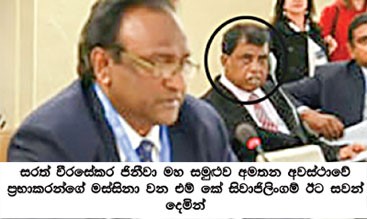
මානව හිමිකම් කඩ කිරීම සම්බන්ධයෙන් අපට අද උපදෙස් ලබා දෙන්නේ , එදා සිංහල තරුණයන් අමු අමුවේ ඝාතනය කල ,බොන වතුරට පවා ,වස මුසු කල කල පිරිස් බව ,රියර් අද්මිරාල් (විශ්‍රාමික) ආචාර්‍ය සරත් විරසේකර මහතා පවසනවා .

එක්සත් ජාතින් විසින් ශ්‍රි ලංකා යුධ හමුදාවට එල්ල කරන චෝදනා සම්බන්ධයෙන් අදහස් දක්වමින් ඔහු මේ බව කියා සිටියා.

එහිදි වැඩිදුරටත් අදහස් දැක්වූ සරත් වීරසේකර මහතා ,

1818 කැරැල්ලෙන් පස්සේ, දේශද්‍රෝහින් හැටියට බ්‍රිතාන්‍යන් විසින් ,හංවඩු ගැසූ අපේ වීරයන් 60 ක් පමණ , දේශප්‍රේමින් හැටියට ජනාධිපතිතුමා විසින් නම් කළා.ඔවුන් දේශද්‍රෝහින් හැටියට නම් කලේ ඉංග්‍රිසි ජාතිකයින්.ඔවුන් වීරයන් හැටියට අපේ හදවත් තුළ දිගටම හිටියා.

1818 න් පස්සේ ඉංග්‍රිසි ජාතිකයන් මොණවාද කලේ ? අවුරුදු 18-35 අතර සියළුම සිංහලයන් මැරුවා. ඔවුන්ගේ සියළුම කුඹුරු විනාශ කළා . ඔවුන්ගේ සියළුම හරකා -බාන ඝාතනය කළා .ඔවුන්ගේ සියළුම වැව් අමුණු විනාශ කළා . ඔවුන්ගේ සියළුම පළතුරු ගස් කැපුවා .ඔවුන්ගේ සියළුම ළිං වලට වස දැම්මා .එහෙම කරපු ඉංග්‍රිසින් තමා අද අපිට මානව හිමිකම් කඩ කිරීම සම්බන්ධයෙන් උපදෙස් දෙන්නේ.

ඒ ඉංග්‍රිසි බටහිර රටවල්වල කීමට යටත් වෙලා තමා ,අද අපේ මංගල සමරවීර කියන අමාත්‍යවරයා අපේ යුධ වීරයන් දේශද්‍රෝහින් බවට පත් කරන්නේ.

එක අතකින් 1818 කැරැල්ලෙන් පස්සේ ඉංග්‍රිසින් විසින් දේශද්‍රෝහින් හැටියට නම් කල අය දේශප්‍රේමින් කරන අතරම , මේ රණවිරුවන්ව දේශද්‍රෝහින් බවට පත් කරනවා වක්‍රව මේ ආණ්ඩුව.

Read more at http://lankanewsalert.com/archives/61322#RFiIEdjdF4wFEJu3.99

A Factual Appraisal of the OISL Report: A Rebuttal to the Allegations Against the Armed Forces

March 17th, 2017

Author: Dharshan Weerasekera

Commissioned by – The Federation of National Organizations
Sponsored by – The Global Sri Lanka Forum

Editors :  Kalyananda Thiranagama
 Raja Gunaratne

Volume One

Federation of National Organizations
Colombo, Sri Lanka
27th January 2017

Dear Mr. Weerasekera,

Mandate

We wish to draw your attention to the following matters which form the background to our present request. On 9th February 2016, UN Human Rights High Commissioner Zeid Al Hussein ended his official visit to Sri Lanka with a statement where he said inter alia:

―Let me be as plain as I can: the international community wants to welcome Sri Lanka back into its fold without any lingering reservations. It wants to help Sri Lanka become an economic powerhouse. It wants Sri Lanka‘s armed forced to face up to the stain on their reputation, so that they can once again play a constructive role in international peace-keeping operations, and command the full respect that so many of their members deserve.‖ (‗Statement by UN High Commissioner for Human Rights Zeid Al Hussein, at the end of his mission to Sri Lanka,‘ 9th February 2016, www.reliefweb.int )

We are especially concerned by the High Commissioner‘s assertion that there is a stain on the reputation of Sri Lanka‘s armed forces. The aforesaid ‗stain,‘ presumably, is the allegation that the armed forced are collectively responsible (i.e. where the purported acts can be imputed to the command structure of the armed forces and thereby the State itself) for war crimes and other serious crimes purportedly committed during the last phase of the war.

To the best of our knowledge, the only Report especially one with the imprimatur of the UN or any of its subsidiary organs to level the above allegation is the OISL Report (OHCHR investigation on Sri Lanka), released to the public on 16th September 2015.

The Government of Sri Lanka by note verbale UN/HR/1/30 dated 15th September 2015 endorsed and accepted without reservation the conclusions and recommendations of the said Report. In a one-and-ahalf-page response (it should be noted that the OISL Report is a 260-page document) the GOSL said inter alia:

―Takes note of the Report of the OHCHR Investigation on Sri Lanka (OISL), recognizes fully that this Report represents a human rights investigation and not a criminal investigation, and will ensure that its contents as well as recommendations receive due attention of the relevant authorities including the new mechanisms that are envisaged to be set up‖ (Note Verbale Ref. UN/HR/1/30)

Meanwhile, on 29th September 2015, the GOSL co-sponsored UNHRC resolution A/HRC/30/L.29, which again endorsed without reservation the conclusions and recommendations of the OISL Report. The said resolution was subsequently adopted unanimously by the Council.

On the above occasion, Sri Lanka‘s Permanent Representative to the UNHRC stated inter alia:

II ―You have all seen our written response

Full Report

https://www.lankaweb.com/news/items16/Volume%20One%20-%20OISL%20Rebuttal%20by%20Sri%20Lanka%20(00000002).pdf

Also available on the The Global Sri Lanka Forum website

Volume One

http://globalsrilankanforum.com/downloads/2017/GSLF_In_the_Defence_of%20the_Armed_Forces_of_Sri_Lanka_Vol_01.pdf

Volume Two

http://globalsrilankanforum.com/downloads/2017/GSLF_In_the_Defence_of%20the_Armed_Forces_of_Sri_Lanka_Vol_02.pdf

Governance by Blackmail

March 17th, 2017

Dilrook Kannangara

The most potent governance tool of Sri Lanka is blackmail. Presidents use it extensively to buy compliance from friend and foe alike. President Sirisena sits on at least nine (9) investigation reports. The president doesn’t seem to care about punishing the corrupt. He is not at all interested in the massive drain of state coffers due to the Central Bank bond fraud of 2015. His only intention is to use these reports to blackmail his friends and foes if they turn against him.

His aim is the 2019 and 2020 elections. If UNP leader Ranil contests the presidential election against Sirisena in 2019, corruption reports and a judicial process will commence to sling mud, defame and prosecute Ranil for this alleged offences. Similarly, reports on alleged corruption by the Rajapaksas are also with him. He will use these in 2019 and 2020 elections to get the Rajapaksas toe the line. As feudal politics rules Sri Lanka, his strategy is a perfect one to give him an unfair political advantage.

President Sirisena has already used blackmail to steady his ship. Most of his ministers have allegations of corruption, misuse of power or other crimes including murder. Fearing the fate of Weerawansa (or worse) they toe the line. The Joint Opposition has been prevented from leaving the SLFP thereby weakening it by the use of blackmail. If the JO forms a new registered party with its MPs, these MPs will face corruption and abuse of power charges and end up in jail.

Sirisena is not an exception as all Sri Lankan Presidents have used this tactic. A former president publicly declared that he had personal files of all those who opposed him at the presidential election. Old details of a former army commander and a chief justice emerged after they failed to toe the government line. These were obviously known well before but were kept in personal files only to be put out when needed.

There are many problems with governance by blackmail. It lets off criminals if they comply. On the other hand it makes corruption, murder and other offences a valuable qualification for ministers and public officials. A president would fear appointing a clean minister or an official as the president will be unable to reign in the official in the absence of skeletons in the closest. This is the main reason why known criminals are appointed to responsible positions.

At times in leads to a series of tragicomedies. Within just months after a politician was blames as a narcotics peddler by Sirisena himself, he was made a district organizer by the president. A perpetual minister since 1994 was blamed for immoral violence against dissidents before the January 2015 election. However, he was appointed a senior minister by the very same people that blamed him. A number of Tamil terrorist war criminals were pardoned of their sins and crimes when they politically aligned with political leaders. Even infamous drug dealers and money launderers.

Misfortune introduces us to strange bedfellows. Since the President appointed a high-powered commission to inquire into the Central Bank bond fraud, Ranil has met Mahinda in Singapore to plan out a counter to the president’s blackmail game. Both are victims of Sirisena’s blackmail game plan. Ranil’s UNP has 106 MPs and Mahinda’s JO has 51. Together, they have 157 MPs (or the required two thirds) of parliament necessary to effect constitutional change and/or impeach the president. They may use this to impeach the president or abolish executive presidency.

However, Sirisena seems to have thought about this as well in 2015. UNP’s 106 seats include non-UNP MPs who are more loyal to Sirisena than to the UNP. They include Rajitha, Fonseka, Hirunika, Wijedasa, Venerable Rathana Thero, Arjuna, Patali and a few others. They will not support the UNP-JO plan and it will collapse for want of two thirds. President Sirisena has also caused the fracturing of the Joint Opposition by splitting the NFF of Weerawansa with five MPs.

All in all, the nation is in a political quagmire. It distracts the leaders from attending to people’s problems. Political bickering at the expense of the nation continues.

Since governance is intrinsically connected to corruption and blackmail, people should not have any hope of reducing corruption, ever. Corruption is the essence of governance in Sri Lanka. No president or government has survived in Sri Lanka without corruption and blackmail. Unless the Constitution is changed to abolish the executive presidency, make it an offence to use blackmail by politicians and give teeth to anti-corruption agencies, the future will be worse.

Hambantota Port-Why it should not be sold or leased to foreign ownership

March 17th, 2017

Chamber of Young Lankan Entrepreneurs

Paddy Withana removed?

March 16th, 2017

Dr Sarath Obeysekera

I am not surprised .Government does not like efficient people ?

See my article published some time back

THERE ARE ONLY TWO ACTIVITIES PERFORMING WELL IN THIS COUNTRY GENERATING MUCH NEEDE FOREIGN CURRENCY

One is tourism

Other one is labour migration ??

Both doing well because they are run by more responsible people?

All of you may have read news items and heard speeches made by the Prime Minister about tourism which  can be developed if we have Marina s right-around the island .Government has given priority to developing Marinas in Colombo  Port City and Galle Port . Colombo by Chinese and other one in Galle hopefully by Indians .

We acquired a land bordering Galle Harbour away from the beach with a foreign investment from UK and propose to build 22 storey building with entertainment, lodging for Yacht owners, residential apartments suitable for well-to-do Yacht owners. We were ignorant about a rule imposed by the government related to the height of such development near the coastal belt .and designed the building to have 22 storeys with a view of recovering the land cost and total investment cost .

An application was made to the One Stop Shop in the Tourist Board to coordinate the cumbersome approval process. ( Sate should use Agency for Strategic Development ) .In few days a letter came to us informing that no development over six floor are allowed facing the coast .We explained that the development is not facing the coast but the harbour, and yet they informed that the rule imposed by the government prevails .Application was also made to UDA asking their preliminary approval ,and it is over three months ,UDA is yet to approve that the height of 22 storeys is permitted .

So, I called Tourist Board Director General’s office to make an appointment and the secretary picked my call asking  me the reason for my meeting .After listening to my explanation ,she said that he is in a meeting.

.I gave  my telephone number, and she was reluctant to take my number and asked me to call back , and on my firm insistence she wrote down the number.

( I mentioned that the Minister wanted me to meet DG)

Then I called the telephone number of the Chairman’s office of the Tourist Board ,and a young male voice answered .I gave my name and requested a time to meet the Chairman .It was 9 am and the man checked the diary of the Chairman ( later  found that he is one Paddy Withana ),to come at 11 30  same day .

Little later DG ‘s office calls me and wanted to connect me with DG ,First question was What is the Problem?”

( Do people call heads of department only if there is a problem ? Right question would have been What can I do for you ?”)

I explained my issue and he immediately said the there is a cabinet decisions related to the height restriction and it cannot be changed ,I explained that it is not a hotel ,but a accommodation for Yacht Owners and other people who may patronize the Galle Marina ,he said the he will look in to the file and come back

He never came back until and after I met the chairman on the same day even after .

I was quite surprised to see that the Chairman was so polite and helpful to me in solving my problem and promised to give full support .He even called the relevant directors of the Tourist Board to the meeting and watched my presentation and guided me on how to proceed.

This is the way head of an organization should help the people to develop tourism.

I am writing about this incident, to prove the fact that Tourism is growing because the board is headed by a chairman  who knows how to do business ??

Chairman of the Foreign Employment Bureau may be of the same calibre              ( hopefully)

I am still waiting for the call from DG, who has a surname of a powerful minister. I wonder whether he is a relative of the minister.

Dr Sarath Obeysekera

Anarchists ahoy!

March 16th, 2017

Editorial The Island

The Sirisena-Wickremesinghe administration calls itself ‘National Unity Government’. But, the much-touted unity is conspicuous by its absence. The yahapalana leaders don’t see eye to eye on virtually anything save the postponement of elections, holding the Joint Opposition at bay and feathering their nests. UNP and SLFP members of the Cabinet are always at daggers drawn.

Finance Minister Ravi Karunanayake has declared that there has been no bond scam. In an interview with CNBC, he has said, “I give 100 percent guarantee there won’t be any area of dispute there. It is only anarchists who are trying to fish in troubled waters.” If so, has President Maithripala Sirisena erred by appointing a presidential commission to probe the bond controversy?

Karunanayake has stopped short of naming the ‘anarchists’. But, his sweeping statement, in our book, is an affront to all those who demand that those responsible for bond scams be punished and the stolen funds recovered. These campaigners include President Sirisena, who says there have been irregularities in the bond auctions at issue and wants to ensure that the culprits are arraigned on criminal charges. He revealed, in his address to the nation in the run-up to the 2015 general election, that he had demanded that Mahendran be removed from the post of the Central Bank Governor over the bond scams. His position has since remained consistent and even his political enemies have praised him for his bold decision to have the bond auction irregularities investigated.

It may be recalled that all parliamentarians including Finance Minister Karunanayake himself accepted the COPE (Committee on Public Enterprises) report on bond scams and called upon the Speaker to refer it to the Attorney General for action last year. Prime Minister Ranil Wickremesinghe himself sent the document to the AG posthaste in a bid to put the matter to rest. The report has held Mahendran responsible for the questionable bond transactions and called for legal action against him and others. Are parliamentarians including the 26 COPE members ‘anarchists’ trying to fish in troubled waters?

The Finance Minister’s right to express his opinion cannot be questioned and he is, in fact, desperately trying to boost investor confidence which has suffered a crippling blow from the bond scams. The economy is in bad shape and the Finance Ministry in badly in need of foreign investment to keep it afloat. But, the question is whether it is possible for President Sirisena to have the controversial bond sales properly probed while the Central Bank is under the purview of those who are all out to defend the suspects involved in the alleged financial crime, which they deny publicly. These elements are in a position to influence or intimidate witnesses who are currently serving in institutions under them and suppress incriminating evidence that can be used against their chums in trouble. Some of these beleaguered officials fear that they may even be hounded out of their jobs and left without even their pensions.

Some intrepid Central Bank officials have retained their sangfroid so far in the face of a hostile political campaign against them. But, there is no guarantee that they won’t crack under pressure with powerful government politicians having ganged up against them. How does President Sirisena propose to protect these officials? He should at least meet these professionals regularly and try to prevent their morale from sagging; they have become marked targets because they have stuck their necks out for the sake of the country.

President Sirisena ought to give serious thought to taking over the Finance Ministry and the Central Bank if he is really desirous of ensuring that the perpetrators of the biggest ever financial crime in the country are brought to justice. That is the only way he can atone for the political sin he committed in 2015 by dissolving Parliament to prevent a damning COPE report on the bond scams being made public before the general election in that year.

Will FTAs help build a ‘powerful’ Sri Lanka? THE IMF IN SRI LANKA – Part III

March 16th, 2017


The economic philosophy propagated by the International Monetary Fund (IMF) to any and all developing countries which are unfortunate enough to require its financial bail-outs due to governments living on ‘maxing the credit card’, and ending up in Balance of Payments (BOP) crises, or near ‘bankruptcy’ in plain language, is to comply with its wide-ranging neo-liberal ‘conditionality’. These assurances principally include, inter alia, liberalization of markets, largely through free trade, expressed in this day and age, mostly by Free Trade Agreements (FTAs), bilaterally or regionally. This policy, is being assiduously followed by Sri Lanka now for some time – but very compellingly now, since the IMF made an EFF commitment of a grossly inadequate $ 1.5 Billion in mid-2016 – a rescue operation, then expected to catalyze huge amounts of additional foreign exchange and FDI. However, these salutary external inflows have certainly not materialized, leading to a questionable IMF-forecast of transformative “take-off” of our economy. Contrary to IMF and Government expectations, a worsening economic situation has followed instead, which is updated in the concluding sections of this essay.

Meanwhile, fundamental tenets of IMF’s basic philosophy, on which Sri Lanka’s economic reform program is based, have also come into serious question both internally within the IMF, and among distinguished economic thinkers and at least one Nobel Laureate in Economics. (See the writer’s “IMF-directed Slow Development Strategy”, The Island, 10 February 2017 et seq). However, the fact is that Sri Lanka came under the IMF’s “intensive surveillance” once again in mid-2016, and is being subjected to the standard economic and financial policies of the IMF; given the country’s serious foreign exchange crisis and current export slowdown, is targeted free trade under FTAs the correct antidote to rush into before a viable industrial base able to export competitive manufactured products is established in Sri Lanka?

This essay reviews the wisdom of the free trade path this country has now committed itself to follow in the waning days of the Western adherence to globalization and free markets, which has spread universally, resulting in a few haves and many more have-nots, both in the prosperous, highly developed countries as well as in the developing world, including Sri Lanka, which is the particular focus of the commentary that follows.

Global Order at Historic Cross Roads.

There is abundant evidence now that history repeats itself and that the politico-economic world order, conceived and established by the Western nations who won WWII in 1945 is clearly collapsing. One significant, enduring outcome of the Western adherence to a neo-colonial and neo-liberal global policy architecture, is the ensuing, long-standing and stark division of the post-colonial world into the highly industrialized and rich countries, essentially of North America and Europe, a club later joined by Japan and Australia on the one hand, and on the other, the developing countries of the so-called Third World. These two diverging groups, are divided by their glaring disparity in income differentials and living standards; this global dichotomy is breaking down with the centre of economic progress shifting to another continent in this Asian Century, and the decline in western economic power, after following the above-mentioned policy prescriptions, principally incorporated in IMF theory and its application, leading them into the sunset years of capitalism, now being questioned as an ideology..

A global system, of substantially unregulated capitalism as an economic dogma, later reinforced by globalization and the denial of a level playing field to the post-colonial developing world, is decreed and perpetuated by an entire panoply of globally enforced policies and disciplined by a set of multilateral institutions. They were established and are controlled by these same WWII victors, who set themselves up as the veto-wielding U.N. Security Council, in a system now breaking down in the wake of the severe financial depression of 2007-08, caused by a runaway capitalism in the U.S.; and has contributed to the phenomenal rise of populism, nationalism, trade protectionism and greater economic and financial direction through activist State intervention in economic policies, in the wake of globalization’s creation of a small class of haves and a huge class of have-nots, through the selective and unjust enrichment of a small elite at the expense of the vast majority.

A highly regulated world order based on unethical premises and enforced by military power, but lacking in moral authority, was destined to fracture in the wake of the big players perpetuating a universally unfair and unevenly competitive economic and commercial trading system; this disadvantaged hundreds of millions of people in the earlier subjugated, colonized countries of the Third World – in a globalized neo-liberal, economic system lacking equality of opportunity, both domestically with ruling elites, and internationally, facing exploitation and even moral ‘intimidation’ applying human rights colonialism, at the hands of the rich west and its superficially multilateral institutional architecture.

The philosophical and multilateral institutional control of the world order, enforced through the application of neo-liberal dogma based on open markets, free trade, fiscal conservatism or austerity, free exchange regimes (without controls), privatization of state assets and minimal regulation of financial markets, continued to impoverish the former colonies and create a global underclass, enforced by the pervasive, sometimes ‘intimidatory’ UN system, including the IMF in economic policy. This system is clearly disintegrating with the rise of Asia, Latin America and even large African economies, symbolized by the emergence in the last several decades by the establishment of numerous regional politico-economic groupings like APEC in Asia, CAEU among Arab and African members, CARICOM in the Caribbean, ECOWAS in West and SADC in South Africa and ASEAN in East Asia ; the BRICS five, IOZ regional grouping, BIMSTEC in South Asia, regional banks such as ADB and Inter-American Development Bank; and AIIB recently formed by China.

Also, we have witnessed the phenomenal and quick development of China and India as regional powers, and the ‘miracle’ economies of seven East Asian tiger economies, which spurned neo-liberalism and followed the successful precedent of fast-rising Japan to pioneer a different, speedy, sustainable and inclusive, and therefore unique, development strategy, to challenge the IMF’s neo-liberal, strategy of slow-motion economic development. The prospective failure of TPP, an American initiative to elbow out China from global and regional trade, was another decisive blow, simultaneous with the rising prospect of China-led multi-country, RCEP trade grouping, from its ashes.

China, forecast soon to emerge as the largest and dominant economy in the world, established the earlier mentioned Asian Infrastructure Investment Bank (AIIB), with the membership and capital participation of 56 other countries, in the face of fierce and vocal American opposition, challenging the Bretton Woods international development twins (still dominated by the decision-making power of the WWII victor-shareholders), and China’s proposed formation of the Regional Comprehensive Economic Partnership (RCEP), linking up with several Asian members, signals the arrival on the fast changing, now Asia-centric, global stage of a new power player. These developments mirror the global overreach of an economically declining super power, which dominated the world stage since 1945. The Chinese President of the AIIB declared at its mid-2015 inaugural meeting: “History has never set any precedent that an Empire is capable of governing the world forever”.

The convulsions caused in the Islamic societies of Afghanistan, the Middle East and Libya by unsuccessful and destabilising Anglo-American invasions, occupation and destruction, followed by the continuing Syrian massacre, causing anarchy and civilian distress in those ancient Islamic civilizations, has triggered close to a two million exodus and continuing flight of homeless refugees to Western Europe, causing socio-economic distress and dislocation of stable, prosperous, near-homogenous societies. A wave of resulting defensive anti-immigrant backlashes follosed, and strains to the very concept of European Confederation, causing instability to the Euro as a competing world currency; a consequent anti-globalization backlash, nationalism, populism, border closures, Brexit and regime change in the U.S. in a popular electoral revolt against the status quo; and most significantly, for the purposes of this essay, the widespread rise of trade protectionism in the West, which will trigger reciprocal reactions elsewhere, quite adverse to developing country export trade, may be a dominating feature of future international commerce.

Global Disruptions Impact International Trade

The data shows that as the growth of international trade plateaued about 2007-08 with the major global depression, (originating in the U.S), which slowed trade progression, free trade agreements (FTAs) also ceased being popular, and free trade intensity regressed to the 1983 level by 2015. For reasons already articulated, free trade as one ingredient of globalization, also had an unfavourable 2016 in the wake of a trend towards widespread, defensive nationalism-motivated protectionism, and the signs are that 2017 and the coming years may prove to be even worse. The main reason is that globalization is interpreted today to symbolize the victimization by the affluent elite, of the economic interests of the middle and working classes, which has now been in vogue for several decades now.

Following this anti-globalization tsunami, this current phenomenon has sought expression in about 350 protectionist measures, passed by the members of the club of G-20 rich countries, mainly through changes in trade regulations and new anti-dumping procedures. Meanwhile, the collapse of the Trans-Pacific Partnership (TPP), President Obama’s brain wave for stopping China emerging as a major force in inter-Asian trade, and the imminent Trump emasculation of the North American Free Trade Agreement (NAFTA), in operation since the Clinton era of the 1990s, will doubtless lead to a reinvigorated wave of serious new barriers to liberalised international trade, business and migration. These are important pillars of globalization and neo-liberal thought, at the foundation of IMF dogma, which Sri Lanka has been practicing for some time now, with very little economic progress to show for it.

In addition, since Brexiit’s ‘hard’ exit from the EU has been followed by UK’s withdrawal from EU’s single trading market, the possible re-imposition of tariffs and like barriers on EU-UK mutual movement of goods is very likely. All these Western developments will send a very negative signal to developing countries like Sri Lanka, whose leading policy makers and bureaucrats are unable to foresee the imminent future, meaning in plain language that, even well-established free trade pacts are collapsing in the wake of the rising anti-globalisation wave, unrecognized by the IMF and local leaders, who are jointly still pushing extensive trade liberalization in Sri Lanka. (See Anti-Globalisation on the March, Free Trade Under Fire, ‘The Economist’, which convened a meeting in late-2016 on the subject in Hong Kong, which the Prime Minister attended).

Despite a ‘bewildering array’ of 137 bilateral free trade agreements now in force in Asia region alone (‘from the perspective of trade theory, described as sub-optimal, a jumbled overlapping mess’, according to ‘The Economist’ cited above), the World Trade Organization (WTO), forecasts a miniscule 0.3% growth in regional export volumes in 2017.

Developing global antipathy towards free trade is motivated by the outsourcing of jobs from the rich industrialized world to other countries, and fast-spreading automation, and resulting greater efficiency leading to higher productivity, which is creating multitudes of losers from another technological revolution now in full swing. The consequent lack of growth in household incomes throughout the U.S, Japan and Western Europe, compounded by the slowing Chinese export economy, and political issues and economic stagnation in the Eurozone, have together given rise to the above-described decline in world trade since the financial crisis of 2007-08. Becoming the longest period of trade stagnation since the end of WWII, most countries are moving to insulate local industry, imposing tariffs and other trade restrictions, intensifying resort recently to trade distortions, offering government export subsidies to stimulate local industry, and introducing import barriers through the imposition of new local standards for imports. All these measures, are together masquerading as revised industrial policy, not protectionism in many countries, except in Sri Lanka, which is more and more becoming heavily committed to free trade, as advised by the IMF. Before the U.S. even formally enacts feared protectionist measures, the expectation is that international trade will continue to flat-line even in 2017, unless governments rev-up their economies with substantial fiscal stimulus, and accelerate global economic growth.

Sri Lanka: Conditions Precedent To FTAs

Structural Issues. “The average annual growth of exports in developing Asia has also declined sharply from 11+% to under 5% in 2000-2015, reflecting a fragile post-global financial crisis environment of weak import demand in advanced economies, moderating growth, re-balancing the economy in China and the rise of protectionism. Meanwhile, Sri Lanka’s average annual growth rate of exports is at half the average growth for other developing Asian countries” – a direct reflection of the poorly developed domestic industrial base, to manufacture exportable products.” Several measures are needed in Sri Lanka to promote the Small and Medium Enterprises (SME) to exploit their potential role in the current migration of Chinese labour-intensive global value chain (GVC) stages to other countries, as China automates its technology, e.g. prioritizing the financing of SMEs by improving financial literacy; removing language barriers to ensure SME access to GVCs; and forming SME ‘clusters’ stimulated by the necessary incentives and infrastructure facilities”.

Before further liberalizing trade through FTAs, “Sri Lanka should improve job productivity through labour market reforms; prioritize the upgrading of tertiary-level engineering skills; invest in digital as well as physical infrastructure; enhance surveillance of non-tariff imports; and improve the investment climate for domestic investment and FDI…Also, ratify the WTO’s Trade Facilitation Agreement, which promotes investment in trade infrastructure, to reduce trading costs and improve competitiveness; engage with mega regional FTAs like the proposed RCEP, (a multi-country trade agreement, referred to earlier, and led by China) to explore new markets; and promote good regulatory practices” (Excerpts extracted from a speech by Dr G.Wignaraja, Advisor, Chief Economist’s Office, ADB, Manila, at L.Kadirgamar Institute, February 2017). The writer’s understanding of the bottom line the ADB expert is conveying successfully is that it is premature for Sri Lanka to so feverishly and speedily enter into various bilateral FTAs with more industrialized countries, without developing a viable industrial base enabling competitive export product manufactures, enabled by first eliminating structural problems detailed above.

Inadequate Trade & National Infrastructure. An important issue that arises is whether Sri Lanka has prioritized sector investments, and already put in place adequate international trade infrastructure, e.g. smoothly functioning customs clearance, port facilities consistent with peak demand and similar export/import logistics support, well before entering into numerous FTAs to help boost export trade?. Has Sri Lanka benefited from the World Bank’s Trade Facilitation Support Program and the WTO’s Trade Facilitation Agreement, to help lower trading costs and improve export competitiveness? Studies have proved that investment in such trade infrastructure has a strong and positive impact on trade flows, which are clearly an engine of economic growth and also revenue enhancement, when international trade balances are positive, which has proven not to be the case with Sri Lanka at this time or in the recent past.

Admittedly, infrastructure constraints in Sri Lanka are not only experienced at the border, but in the capital city at most hours now, since many thousands of vehicles compete for road space designed possibly one hundred or so years ago, when there were hardly any vehicles on the road, compared to the present days’ huge numbers resulting in constant congestion, which may soon resemble a slow-motion parking lot, like in Bangkok at one time. Adequate energy generation especially at times of drought are no better; together indicating that domestic infrastructure is clearly lagging behind international trade infrastructure – a mismatch described by experts as hurting a country’s development prospects, undermining its potential to enhance domestic commerce and also export/import trade. The above circumstances in Sri Lanka additionally results in a reallocation of FDI away from such countries as ours with relatively poor domestic infrastructure, since investors explore locations where it is cheaper to effectively manufacture goods as well as provide services.

Obviously, these issues involve a range of possible trade-offs on what investments to prioritize – these include quality versus quantity, enhanced maintenance or new investments, financing infrastructure with user fees versus public subsidies or universality of services compared to cost efficiency. Another open issue which may not have been addressed in Sri Lanka is the impact of imminent trade reforms through FTAs on domestic labour markets, mostly in the SME sector, especially since employment of the largest number is always a hot economic issue with foreseeable public disturbances and social unrest. (Marcelo Olarreaga, Professor of Economics at University of Geneva, “Why poor countries should invest first in national trade infrastructure”).

Trademark Registration Delays. Researchers have identified a “laborious process, which takes nearly five years to complete, in facilitating trademark registration in Sri Lanka, and has resulted in fewer local brands; these bureaucratic delays are reported to have cost billions of rupees to the export community. This combined with the current, long delay in the local ‘road-block’ (despite Cabinet approval and an authorised Rs100 million budget), towards Sri Lanka joining an international club of 114 countries known as The Madrid Protocol – a centralized global mechanism established in 1989 for registering domestic trademarks internationally – was the main reason why Sri Lanka had few famous international brands, like Ceylon Cinnamon, Damro and some garment brands”.

Research investigations have discovered that the National International Property Office (NIPO) takes 3-5 years to register trademark applications, significantly limiting Sri Lanka’s ability to benefit from The Madrid Protocol, which our country has still to join, and therefore, faring poorly at 14% (of applications registered), compared to other middle-income countries like Vietnam, Philippines and Turkey at 50% of such registered applications. Consequently, local exporters have to register trademarks individually in every single destination of export at considerable cost and in ’nightmare circumstances’, persuading the Export Development Board (EDB) to now bear the exporters’ high cost of legal fees and other expenditures attendant on the foreign registration process. Quantifiable export losses are in the billions of rupees, but unquantifiable losses from other countries competing with their own brands are much greater. (Extracted directly from Verite Research conclusions at a Colombo seminar on 2 February 2017). Needless to repeat, none of these constraints have mitigated the political rush to conclude FTAs with several such trade-competing countries. as quickly as possible, with more unquantifiable and widespread adverse consequences.

Technology Constraints. Major reasons why Sri Lanka has experienced an export slowdown in recent years compared to its Asian peers is due to the latter, now fast growing economies, diligently developing new lines of business and thereby diversifying their export base; becoming technologically more advanced and graduating, for example, from production of garments, brand name apparel, rubber and leather goods to first electronics, and then machinery production. While low-end tourism is domestically a success, It is essential, therefore, that Sri Lanka advance in its technology and compete first even with lower GDP economies in primary manufactured products for export.

The technological complexity of many modern, capital-intensive, sophisticated end-products (like airliners) requires the production and procurement of parts and components across national borders through global value chains, open to participation by developing countries which have achieved a higher quantum of technical know-how and a greater production complexity, like India and Singapore, potential FTA partners of Sri Lanka. Professor Ricardo Hausman of Harvard University’s Kennedy School, from whose speech at BMICH in late-January,2017 these arguments are summarized, went to the extent of making the point that “a country is in fact a collection of technologies, which determine the extent to which economic development takes place”.

The Asian examples of Vietnam and Thailand (another future FTA partner of Sri Lanka), are noteworthy. While Sri Lanka still exports apparel, manpower, tea and rubber, Vietnam has considerably diversified its export range, while Thailand manufactures electronics and vehicles for export. Like in Korea earlier, overseas Chinese returned home, bringing skills and know how that jump-started the newly liberalized Chinese economy. There is no recent historical evidence yet to suggest that a similar reverse brain-drain can play out in this country any time soon, for many reasons outside the purview of this essay. While FDI is critical for technology absorption, at barely one half of one percent of Sri Lanka’s GDP in 2016, it contrasts with Singapore at a ‘staggering’ 15% of GDP – another proposed FTA partner of our country – signifying a strong correlation between level of technology and FDI, eventually a chicken and egg conundrum!

Research and Development (R&D): No National Plan & Vision.

Sri Lanka’s desirable shift to export and investment-led growth, also requires the establishment of a robust R&D mechanism, led by a national policy, including specific strategies for targeting and assisting promising start-ups, an early initiative in Korea’s development program. Today, universities, public research agencies and businesses have disconnected R&D initiatives, not driven to achieve economically viable goals nor targeting an economically measured output, in the absence of a national R&D vision. Sri Lanka’s expenditure on R&D is also the lowest in this Region at a meagre 0.16% of GDP in 2010, with no appreciable rise until now, mostly targeted at academic goals.

Universities in Sri Lanka are not empowered to earn patents from publicly funded R&D, are inhibited by absence of required lab facilities and a lack of coordination resulting in low collaboration with industry. Also, industry leaders believe lack of entrepreneurial spirit among academics and low commercialization potential of University research are key deterrents to private sector R&D investment in academia. This view holds that our Universities ‘have calcified’ into teaching shops, which only either do consultancy work for industry or offer promising students for employment.

A World Bank study also found that unlike industrialized countries like Korea or even India, Sri Lankan companies “lack the critical mass to invest in research”, with less than 100 local businesses having the required capability. The same World Bank report has estimated that less than 50% of local university academics have doctorates, with only one-third of them in management sciences. Therefore, a Government policy establishing a national platform is essential for industrial start-ups to become viable business enterprises, and “will be at the core of Sri Lanka’s growth prospects” (Rooting for R&D, Recent FT Editorial).

Comment. The foregoing conveys the message that “the strategic aspects for developing a national system, which supports innovation and entrepreneurship”, (which go hand in hand with technology development), to “commercialise high-value products for export” at a competitive level, should be put well in place before the liberalisation of trade. The stimulation of innovation and entrepreneurship takes long lead times to mature and succeed, and should be originated years earlier, well ahead of trade policy liberalization. During that transformational process, with the aim of becoming a member of ‘global value chains’, the creation of a modern digital economy is a key aspect. In Korea, at this early stage, promising industrial innovation and entrepreneurship was actively encouraged by the government establishing dedicated financing agencies with repeated World Bank loans, in the drive for a viable export economy. Unfortunately, “the nascent digital industry with great export potential” in Sri Lanka, has been seriously hampered by recently increased VAT applicable to telecom services (including Broad Band), which will effectively slow down that industry’s quest as a business process outsourcing (BPO) destination, already hurting the growth of rising ICT export revenues. In summary, to access the 3 billion China and India market, first Sri Lanka’s exports must be competitive, high value, sophisticated manufactures, the end-product of successful technology development, innovation and entrepreneurship – these transformative changes cannot happen overnight and simultaneously with trade liberalization, both efforts starting in the same year. (“Strategic Brainstorming on Innovation & Entrepreneurship”, Daily FT news report,3.3.2017).

In the global context of rising nationalism, populism, and near economic stagnation, a worldwide trend has started from the western industrialized economies, towards increasing protectionist measures being adopted by their governments. Their objective is to safeguard the profitability of local industries, against progressively strong import competition from other countries, and also to safeguard domestic labour from losing their conventional role in local industry as a result of offshoring industries to locales with cheaper labour; as well as from the onslaught of robotics and artificial intelligence now contributing to higher industrial productivity – trends sweeping the fast growing economies of the world. As a result, greater protectionism and all manner of barriers to free trade have become the new norm, characterizing largely stagnating international trade. Given these developments, many local stakeholders, academics and think tanks have become critical of Sri Lanka’s current policy of negotiating free trade agreements with more advanced industrial economies, starting with Singapore, China and India, with all of whom we already have adverse trade balances, and continuing with plans for doing so with half a dozen other more advanced countries, before Sri Lanka establishes a viable industrial export base, to compete equally with them..

Economists’ Collective Observations

Sri Lanka’s Economists’ Association (SLAPE) has been quite critical of the undue haste with which the Government is currently negotiating a series of supra-national, preferential trade agreements, without wide discussion and debate with major stakeholders and civil society representatives, almost secretively pushed under IMF conditionality. A pre-condition is first developing a national manufacturing capacity and a reasonable degree of industrial competitiveness – which are “essential ingredients and predominant components of a successful, sustainable export drive”, sorely needed to first arrest Sri Lanka’s still declining export volumes and progressively increasing import intensity, before deriving economic benefits from a free trade policy.

The major reasons given by the SLAPE, which militate against the current FTA-centered trade policy Sri Lanka is pursuing, are as follows

A well established and executed industrial policy, emphasizing the role of technological innovation and adaptation, should be a condition precedent to a national export trade policy. A vibrant and globally competitive industrial export base has been lacking in Sri Lanka since the economy was liberalized in 1977.

The positive role that import substitution should play in the formative stages of a nascent industrial base being established, as was conceived and implemented in the East Asian ‘tiger’ economies before they became leading export power houses competing with the western industrial economies successfully, has not even been investigated in Sri Lanka, leave alone having been established. This first stage is an essential prerequisite given the small size of local consumer demand, and also given the already high import intensity of our exports. A globally competitive national production capacity, is therefore, essential for a successful and sustainable export drive; in its absence, it is a futile forecast that any meaningful advantage can be generated from any number of FTAs with more industrialized economies, with whom Sri Lanka already has substantial, adverse trade balances.

Free trade policies per se have never led countries directly to economic development, leading to the absolute necessity to find an alternative – as was pioneered successfully by the above-mentioned ‘tiger’ economies – to the failed neo-liberal orthodoxy trotted out by the IMF, as now realized even by the new regime in the U.S. itself as well as other advanced countries. In fact, free market economic policies embraced by Sri Lanka since the 1977 liberalization itself are a main cause of Sri Lanka’s current economic malaise, (though still unrealized by the authorities), centered on galloping imports and a still lowering poor export volume, primarily because setting up a manufacturing and industrialization base has been largely ignored. Consequently, further increased free trade outcomes through FTAs will certainly lead to catastrophic consequences, as the economy is already teetering on the brink of a precipice.

For all the above reasons, SLAPE has suggested that in FTAs being now negotiated by the Government, clauses should be incorporated to protect, groom, promote and develop competitive nascent local industries, not only in the state-owned enterprise and private sectors, but very importantly in the large small and medium enterprise (SME) sector – to make this country less vulnerable to BOP crises, for which the IMF is eagerly waiting, given the current, unlimited and rising import regime, leading to massive trade imbalances. On this issue, the free trade policy has failed to consequently address the negative implications of resulting reduced import tariffs on government revenue, already at a very low web.

In the above respect, the Government has failed to also review, and have corrected in actual practice, the continuing non-trade barriers inhibiting progress under the ongoing Indo-Lanka Free Trade Agreement, before seeking to even discuss the concept of a far more comprehensive ETCA, which the Indian Government is constantly pushing on the Sri Lankan authorities, under the feigned guise of neighbourly concern for Sri Lanka’s development, which was effectively scuttled and derailed for some thirty years by India actively funding, equipping, training, and supporting a virulent terrorist insurgency destabilizing this entire country. This is a fitting reaction to the renewed initiatives being now taken by the new Indian Ambassador in Colombo, and should be realized by Sri Lankan policymakers before it is too late, and local opposition balloons.

Finally, none of the country’s professional economic bodies nor other stakeholders, have been explicitly involved in a transparent, active consultative process with government functionaries in trade policy discussions; nor has emerging free trade policies been guided by a solid national development vision of where Sri Lanka is going in the context of the future prosperity and welfare of the Sri Lankan people, national sovereignty and autonomy (now being seriously otherwise eroded); as well as geo-political imperatives of regional countries, like India, in inducing Sri Lanka’s rush into supra-national international commitments, inimical to its economic future, for reasons detailed by SLAPE (and extracted above in summary, from its own published commentary on this subject).

Sri Lanka Exporters’ Association (EASL) Concerns

The Exporter’s Association of Sri Lanka has also raised several significant concerns about the last budget’s provisions, regarded as very favourable by both the IMF and World Bank, that result in creating an unfavourable taxation environment for Sri Lanka’s exports, e.g. first, the increase in taxes for exports from 12 to 14%; second, the withdrawal of SVAT exemption; and third, the imposition of the Trade in Services Tax of 14% – all measures resulting in discouragement of exports and reduction in export volumes, which is a phenomenon already occurring according to recent export data.

EASL has further complained, with reference to specific industries, that the Cess on rubber exports has increased from Rs 4.- to Rs 15,- which makes this important commodity, uncompetitive in the world market; and that budgetary incentives offered for the branding of tea, should have been extended by the Government to lines of non-traditional agricultural exports, where exporters with dynamic and innovative plans, are attempting to diversify the country’s hitherto neglected new varieties of agricultural exports, in order to stimulate the viability and vitality of a sector on which a vast majority of the rural communities depend for their livelihood; and where the lack of markets, both locally and overseas, have depressed these sectors of activity; and transformed a large proportion of the Sri Lankan population’s 40%, reputed to be in classical poor conditions, destined to live on less than $ 2 per day, which is the globally recognized poverty standard.

Ceylon Chamber of Commerce (CCC) Guidance : Trade Liberalization Support Needed

Since the International Trade Minister sought ideas in 2016 on measures to put in place, to assist domestic businesses to meet the challenges of the Government’s FTA plans (without to date announcing the specific scope or substance of the liberalization exercise), although they are now in the final phase of active negotiation in the cases of China, Singapore and India, and in a conceptual stage with several others including Thailand, Malaysia, Indonesia etc, (all ‘tiger’ economies), this Chamber has recently formulated the following proposals for the Government to consider, in order to help businesses cope with FTAs’ challenges:

First, the Government must proactively chart and formulate an adjustment strategy with clearly identified and adequately resourced support measures for business enterprises;

Second, responsible Ministries, regulatory bodies and related agencies must be reoriented to be more ‘industry facing’ and business friendly, to support firms’ survival and growth;

Third, relevant agencies should address “well known pain-points” in trade facilitation, including non-tariff barriers, customs delays, testing and standards issues, (including quarantining and technical barriers), and regulatory gaps, in order to reduce enterprise transaction costs;

Fourth, government funding and other support to target SMEs and other beneficiaries, to help them target foreign market exploration and development;

Fifth, specialized banking support, including credit lines, for businesses impacted by trade liberalization, and also to exploit its advantages, e.g. access technology, diversify and expand export product lines;

Sixth, improve utilization of industrial parks by small, adversely affected import-substitution businesses to upgrade technology and modernize facilities;

Seventh, Improve access to technology upgrading and absorption to make businesses more competitive through subsidy schemes, linking them with academia, as well as upgrade and invest in process and product innovation, to enhance export market competitiveness;

Eighth, intensify extension by government agencies to liaise with firms, to help bridge export market information gaps and subsidize market exploratory studies;

Ninth, assist export enterprises to find online buyers and suppliers, leveraging ICTA’s e-commerce expertise;

Tenth, assist greater labour market flexibility, by re-training workers for new sectors and improve efficient re-allocation of labour, including establishing satisfactory safety-nets; and

Lastly, cater with specially targeted programs to assist the vulnerable among micro-enterprises in the huge (93%) SME sector, of which 61% of export-oriented enterprises have less than 25 employees, given the catalytic impact SMEs have on employment, inclusive growth, and poverty alleviation. (A section which follows, covers the special issues faced by SMEs facing the coming liberalized trade competition).

Comment. The critical observation is pertinent that while every one of the above long list of eleven C.C.C. recommendations is salutary and exceedingly well conceived in every aspect, implicit in the Chamber’s ‘Guidance’ is the judgement that the planned trade liberalization is premature, without preparing the industrial, especially SME, sector to withstand and survive foreign competition. Therefore, given the long lead time needed to formulate details of the above-suggested initiatives and execute programs at standard public sector slow motion, is the Government’s feverish and almost unseemly rush to enter into at least three FTAs in 2017, in the country’s interests? It is possibly motivated by political expediency, without doing the necessary preparations on the ground to moderate and minimize the adverse FTA impact. Speedy planned execution of Government’s trade liberalization policy can be disastrous for local industry, particularly for the vulnerable SME sector, as it will wipe out jobs of a large cross-section of employees, among them principally women and youth, already facing difficulties in securing gainful employment. Have these consequences been evaluated?

(To be continued)


Mahendran violated all norms of CB transfers – Asst. Governor – Bond Scam Probe

March 16th, 2017

Assistant Governor and Secretary to the Monetary Board of the Central Bank H. A. Karunaratne, yesterday testifying before the Special Presidential Commission of Inquiry probing the alleged Bond Scam, said the transfers of key officers within the institution after Arjuna Mahendran assumed duties as its Governor on February 23, 2015 had shaken the very foundations of the Central Bank.

He said during that period 14 heads of department had been transferred along with 20 other key persons and the total number of transfers effected during that period stood at 501.

“Among those transferred were heads of four vital departments of the Central Bank and Mahendran’s action had caused dissent and dejection among the senior officers of the bank.

Two teams of officers following discussions among themselves had sought a meeting with the Governor and explained the situation to him, Karunaratne told the commission.

He said that prior to Mahendran becoming Governor the practice had been to consult Deputy Governors and Departmental Heads prior to effecting transfers.

The Secretary said four officers including him had visited Mahendran at his official residence and explained the situation and Mahendran had assured all of them that he would rectify the mistakes, but that pledge had not been fulfilled.

Karunaratne told the Commission that he had worked under three Governors, namely Sunil Mendis, Ajith Nivard Cabraal and Arjuna Mahendran and transfers of that magnitude had never been effected previously.

He said that previously not more than five to six departmental heads and 195 of general staff had been transferred and the internal transfers had to be effected in a justifiable manner without upsetting the workings of the departments.

Member of the Commission Supreme Court Judge Justice Prasanna Jayawardena: How many Departments are there in the bank

Karunaratne: Thirty.

Justice Jayawardena: Did each department have a head?

Karunaratne: Yes

Justice Jayawardena: How did 34 heads get transferred in 2014

Karunaratne: Some heads of department were transferred from one division to another only for a short period and then to another.

Justice Jayawardena: Who should take the responsibility for these haphazard transfers?

Karunaratne: All the transfers had been approved by Mahendran. All transfers were effected after his approval.

Justice Jayawardena: Was transferring such a large number of persons unusual in the history of the bank.

Karunaratne: Yes your honour

‘Country suffers Rs. 7 bn loss due to MPs’duty free vehicle racket

March 16th, 2017

By Chitra Weeraratne and Shamindra Ferdinando Courtesy The Island

March 16, 2017, 10:38 pm

The Supreme Court was yesterday informed that members of Parliament representing all political parties had caused losses amounting to over Rs 7 bn by selling duty free vehicle permits without proper legal sanction.

Among them are members of the yahapalana administration, the Tamil National Alliance (TNA) as well as the Joint Opposition loyal to former President Mahinda Rajapaksa.

The bench comprised newly appointed Chief Justice Priyasath Dep, Justice Sisira de Abrew and Justice Priyantha Jayawardena.

Attorney-at-law and public litigation activist Nagananda Kodituwakku informed the court that out of those vehicles sold so far, 45 were already registered under new owners. Names of sellers and buyers of nearly 40 vehicles were submitted to SC by Kodituwakku.

Kodituwakku has obtained the names of both sellers and buyers from the Motor Traffic Department on the basis of the Right to Information Act.

At the beginning of the proceedings, Deputy Solicitor General Viraj Dayaratne, who appeared for the Attorney General Jayantha Jayasuriya said that the CIABOC had initiated investigations into the alleged sale of duty free vehicle permits. Dayaratne requested that a case, filed by Kodituwakku against the CIABOC in the Supreme Court, be withdrawn as investigations were underway.

When Chief Justice Dep sought Kodituwakku’s opinion, the latter said that he had no faith in the CIABOC and requested the SC to direct the institution to conduct an independent and credible investigation into the duty-free permit scam. Kodituwakku declined to withdraw his case.

Members have received tax exemption ranging from Rs 30 mn to Rs 44 mn.

Quoting the Supreme Court judgment delivered in respect of the Grand Central case, Kodituwakku said that in the Republic of Sri Lanka sovereignty is in the people in terms of Article 3 of the Constitution and the Attorney General shall represent and act for the people of Sri Lanka.

The petitioner said that his fundamental rights had been violated by the failure on the part of the CIABOC to inquire into his complaint submitted several months back in respect of duty free vehicle permit scam.

He said that the CIABOC had facilitated a project launched by former President Mahinda Rajapaksa to impeach the then Chief Justice, 43, Dr. Shirani Bandaranayake and, therefore, he had no faith in the institution.

Dr. Bandaranayake was impeached on January 11, 2013.

Kodituwakku said the CIABOC had filed three cases against Justice Bandaranayake in Colombo Chief Magistrate’s court. On the basis of the CIABOC action, the court charged Bandaranayake on two counts in three different cases under Section 9 (1) of the Declaration of Assets and Liabilities Act No 01 of 1975.

Kodituwakku has pointed out that the CIABOC had moved the Colombo Chief Magistrate court against Bandaranayake during the Rajapaksa administration had subsequently withdrawn three cases in Feb. 2016.

The then Chief Magistrate Gihan Pilapitiya exonerated her and ordered that her passport be returned to her immediately.

Kodituwakku asked the court how people could repose their faith in the CIABOC, which had treated the head of the judiciary in such a despicable way.

The petitioner called for action to recover money owed to the government.

The fundamental rights petition will be called before the Supreme Court on May 9.

Interactive Dialogue with the Special Rapporteur on Minority Issues

March 16th, 2017

The Permanent Mission of Sri Lanka to the United Nations and other International Organizations in Geneva

 Human Rights Council

34th Regular Session

 Report of the Special Rapporteur on Minority Issues on her Mission to Sri Lanka, from 10-20 October 2016

 Presented under the Agenda Item 3,

Interactive Dialogue with the Special Rapporteur on Minority Issues

Statement by

H.E. Mr. Ravinatha P. Aryasinha

Ambassador / Permanent Representative of Sri Lanka

(Geneva, 15 March 2017)

Interactive Dialogue with the Special Rapporteur on Minority Issues

15 March 2017

Mr. President,

Thank you for this opportunity to share the views of the Government of Sri Lanka on the report A/HRC/34/53/Add.3 presented to this Council by the Special Rapporteur on Minority Issues, Ms. Rita Izsák, following her country visit to Sri Lanka, from 10-20 October 2016 at the invitation of the Government.

This was the very first visit to Sri Lanka by a Special Rapporteur on the subject of Minority Issues, and the Government of Sri Lanka was extremely pleased to have received the Special Rapporteur. We believe the visit was timely as the Government and the people of Sri Lanka have embarked on a historic journey to achieve durable peace, reconciliation and development.

The visit underlines the commitment of the National Unity Government towards its policy of open and inclusive engagement with the United Nations systems and procedures and with all other stakeholders both within and outside Sri Lanka. It also emphasises our firm belief that such engagement and deliberation will contribute positively to the endeavours of the Government to strengthen, promote and protect human rights, good governance and development in Sri Lanka. The standing invitation extended by the Government in December 2015 to the UN Special Procedures Mandate Holders is a guesture of this constructive spirit in which the Government seeks to work with all its partners including civil society. We have had several productive interactive dialogues in the recent past, including with the SR on Torture last week.

As this Council would recall, President Maithripala Sirisena was elected in January 2015 on a platform promising a united Sri Lanka in which ethnic, cultural and linguistic diversity is respected, celebrated and valued. Following the Parliamentary Election in August 2015, the two main political parties of the country came together to form a National Unity Government, to provide the country, especially in the post-conflict context, stability and strength for important policy-making and reform. In this regard, the Minister of Foreign Affairs, while addressing the Council last month, elaborated on some of the steps that have been taken by the Government during the short span of two years.

Sri Lanka is pleased that the Special Rapporteur in her Report has acknowledged and commended the positive developments that have taken place in the country since January 2015, that includes:

  • the ongoing dialogue in the country on constitutional reforms;
  • the restoration of the credibility of the National Human Rights Commission with the adoption of the 19th Amendment to the Constitution in May 2015. I wish to note that the GoSL has encouraged the NHRC to improve the current legal framework of the Commission and to obtain A grade status as soon as possible and that the GoSL is willing to provide any assistance required in this regard;
  • the steps taken by the GoSL to include the general public in the ongoing reform processes;
  • the peaceful co-existence among different religious groups; temples, churches and mosques are constructed without hindrance and religious services are enjoyed without discrimination or harassment”;
  • the setting up by the GoSL of mechanisms related to the reconciliation process such as the Secretariat for Coordinating Reconciliation Mechanisms, the Consultation Taskforce and the Office of National Unity & Reconciliation;
  • the ratification of the International Convention for the Protection of All Persons from Enforced Disappearances;
  • the enactment of the Office of Missing Persons Act; and
  • the establishment of the Ministry of Hill Country, New Villages, Infrastructure & Community Development as well as a new National Plan of Action on Social Development of the Plantation Community for the period 2016 – 2020.

We are also pleased that the Report of the Special Rapporteur acknowledges the facilitation of all official meetings that the Special Rapporteur had requested for, and the provision of unrestricted and unimpeded access for her and the delegation, to all the places that she wished to visit, throughout the country, during the visit. The Government has adopted this line of open, constructive and meaningful engagement with all the other Special Procedures as well, during the last 2 years, and will continue to do so in future.

Mr. President,

Sri Lanka is a multi-ethnic[1], multi-cultural and multi-religious[2],  country. The Government has been focusing on engaging with minorities as an important component in the process of ensuring overall national unity and reconciliation. The Government is committed to ensure that all communities are able to practice their chosen faiths without hindrance. In keeping with Sri Lanka’s societal, cultural and historical norms, regular dialogue continues to take place at various levels to ensure inter-ethnic harmony and understanding amongst all communities. Under the present Government, separate Ministries have been set up to look after the affairs of each religious community. The Government maintains a zero-tolerance policy on acts that target minority religious groups.

In order to promote inclusiveness and non-discrimination and national reconciliation as a whole, the first ever National Integration and Reconciliation Week was observed from 8th to 14th January 2017, with all public officials as well as school children taking a pledge, resolving to work together, hand in hand, respecting the richness of our diversity, to foster peace, understanding, and mutual trust, for a new Sri Lanka that is united in its diversity. With a view to promoting peaceful co-existence and reconciliation among the different communities, the present Government has set up a Ministry for National Integration & Reconciliation, a Ministry for National Co-existence, Dialogue & Official Languages and an Office of National Unity & Reconciliation that carry out programmes to foster reconciliation and co-existence including the strengthening of religious harmony and inter-faith dialogue.

Projects are underway to make teachers and school children aware of and appreciate the richness of the cultures of the different communities of Sri Lanka that includes the reformulation of teaching materials; twinning schools and organising 5 day residential workshops on the theme of ‘brotherhood’ bringing together children of different ethnic and religious backgrounds. 5000 such children and teachers have been trained last year. Reconciliation has also been included in the course material of university students. Similarly, conflict transformation programmes are conducted for professionals, religious priests, opinion leaders, public servants etc.

The Government recognizes culture as an essential component of overall planning and as a medium of national integration. Culture is viewed in the conceptual framework of building peace as well as national development. Efforts are made to protect and preserve the culture and traditions of all communities and to foster inter-cultural understanding. In recognition that language is an important symbol of culture, Tamil, the language of the Tamils and the majority of Muslims in Sri Lanka, was made an official language of the country. After 67 years since gaining Independence, the National Unity Government upheld the practice of singing the National Anthem of Sri Lanka in both Sinhala and Tamil by singing the Anthem in both languages at the Independence Day celebration in 2016. This is now a mandatory practice for all Government establishments and official functions both in Sri Lanka and overseas.

Civil servants and Police officers have been recruited and trained to serve the public in the North and the East in the language of their choice. Taking into account the barriers faced by women in the North and East in accessing law enforcement mechanisms, the Sri Lanka Police has deployed 279 female police officers to Children and Women’s Desks in the North and the East. A special rapid recruitment drive has also been initiated to recruit 200 female Tamil speaking police. Furthermore, a training centre has been exclusively established in Mahiyangana to conduct Tamil language courses for Sinhala speaking police officers. Since 2012, approximately 2,000 Sinhala speaking police officers have been trained. We appreciate the references in the Report to the steps taken by the Government to promote multilingualism and the Government’s Trilingual Policy. We are cognizant of the fact that there are many challenges that need to be addressed in this area.

Mr. President,

With regard to land release, 5,515.98 acres of state land and 2,090.03 acres of private land were released in 2016 and 1,383.51 acres of state land and 30.54 acres of private land were released in January 2017. With the release of land, there are a number of socio – economic issues that need to be addressed such as housing, sanitation, water supply and other basic facilities and infrastructure including access roads, schools, hospitals and so on to provide durable solutions to the people. As such, with the implementation of resettlement and development programmes for the IDPs, the Government has:

  • constructed 11,253 houses, during the year 2016, and handed them over to the needy families;
  • 2,170 partly damaged houses have been renovated and 7,598 toilets have been newly constructed last year;
  • Livelihood assistance has been provided for 12,050 conflict affected families;
  • 171 internal roads, 29 schools, 23 hospitals and health centres have been renovated;  1,202 common wells and 29 community water supply projects have been constructed and 3,371 water connections provided in the resettled areas to facilitate the resettled people;
  • A National Policy on Durable Solutions for Conflict-Affected Displacement” was approved by the Cabinet of Ministers to provide guidance on this matter. This policy is the outcome of extensive consultations with line Ministries, National Provincial and District level stakeholders, UN agencies, Civil Society organizations and displaced communities conducted over a period of one year.

After the conflict, most of the Muslim IDPs have been resettled in their places of origin. A special Task Force has been formed to attend to the needs of the Muslim IDPs and funds have been allocated for the projects identified by the Task Force for projects related to the resettlement of Muslim IDPs. However, some IDPs are hesitant to move back to their place of origin, given that they have become accustomed to and resettled in other parts of the country.

We are proud to have as the Leader of Opposition in Parliament, a member of the Tamil community, Mr. R. Sampanthan, who is the leader of the Tamil National Alliance (TNA). We are committed to building a society where appointments to public institutions and public office are made on the basis of merit and not influenced in any manner by extraneous considerations such as ethnicity, religion, class or gender. Currently, in Sri Lanka, there are 9 Muslim and 5 Tamil Members of Parliament who hold the rank of Minister, State Minister and Deputy Minister. After a lapse of 26 years, the Northern Provincial Council Election was held on 21 September 2013, for the first time since the introduction of the Provincial Council system in Sri Lanka in 1987. As such, today, the elected representatives of the Tamil and Muslim people have a voice not only at the Centre but also at the provincial level.

At the Presidential election held in January 2015, 81.52% of the registered voters in Sri Lanka from all parts of the island, including the former conflict affected areas in the Northern and Eastern provinces, exercised their franchise. This election recorded the highest voter-turnout in the history of the country, with all communities exercising their franchise.

The Government fully recognizes that women and girl children are a vulnerable group of the population particularly in the post-conflict context and has accorded priority to addressing their grievances. In the post-conflict phase, Sri Lanka has naturally seen an increase in women-headed households. The Government takes its responsibility towards addressing the special needs of this group of women very seriously and works with UN Women, UNFPA and other international agencies, civil society as well as bilateral partners to address their concerns and requirements. Their concerns are receiving attention at the highest levels of Government. The Cabinet approved the formulation of an Action Plan for Women Headed Households in September 2016. In the Action Plan, female ex-combatants who also form women headed households are recognised as a separate group with special vulnerabilities and with fewer prospects for education, employment and relationships due to social stigma. In addition, the NHRAP, elaborates on the measures to improve the state response and action to meet the basic needs of WHHs in a cohesive and holistic manner and to reduce poverty among WHHs.

Several livelihood and income generating programmes have been implemented by the Government to address the needs of women and their economic and social rights, particularly WHHs in the Northern and the Eastern provinces. In 2016, Rs. 75 million has been allocated under a special project for 10 districts in the Northern, Eastern and North Central provinces for war widows and low income earning WHHs selected on a priority basis. Further, Programmes have been implemented targeting widows and WHHs in the conflict affected areas as a component of the ‘Divi Neguma’ programme.

In relation to the land ownership issues faced by rural women and WHH, in particular those affected by the conflict, a draft amendment to the Land Development Ordnance has been submitted to the Legal Draftsman for finalization.

The Government is mindful of the concerns regarding certain personal and custormary laws having a discriminatory impact on women in particular, the Kandyan law, the Thesawalamai and the Muslim law and these aspects are being addressed, through policy interventions and legislative reforms. The application of personal laws arises only in the context of marriage, divorce, succession and property rights. The Tesawalamai, Muslim and the Kandyan laws have now been modified and restated by legislation. Tesawalamai and Kandyan laws, to a large extent, are based on a territorial application, while Muslim law is based on the principles of the Islamic faith.

Sri Lanka’s legal system is a unique blend of customary and personal laws which are constantly being reviewed, but the call for change in any laws which are seen to be discriminatory require a circumspect approach from the legislators, in the long term, out of necessity, lest the communities to which the personal and customary laws apply consider it intrusive and a violation of their community rights. Accordingly, the Government has sought the assistance of eminent persons in the Muslim Community who are well versed with Muslim law and the system of Quazi Courts to consider reforms to Muslim law. This Committee is headed by a sitting Supreme Court judge. These discussions have been conducted in a positive manner and are ongoing. Regardless of the origins, race or religion, any Sri Lankan can enter into a marriage under the General Marriages Ordinance.  Thus, the application of personal laws are not automatic, but a matter of choice of the individual.

The Government has given considered attention to facilitate the full exercise of economic, social and cultural rights of the people living in the plantation /estate sector. Children of the plantation community have been integrated into the national system of education starting from early 1970s. The plantation community in Sri Lanka are mainly in the Central province of the country including districts of Nuwara Eliya, Badulla, Rathnapura and Kandy. Schools in these districts benefit from special donor assisted programs with funding from international donor agencies. A National College of Education was established in the heart of the Plantation area to train plantation youth with GCE A/L qualifications as teachers for plantation sector schools. We acknowledge the issues of comparatively high levels of unemployment among the young people in this community, and the need for more investments in the education and housing in this sector.

While admitting the need to pay more attention to perceived grievances, the developments within this particular community needs to be examined in the historical context, from a ‘stateless situation’, where all were disenfranchised, but later given the option to either obtain Sri Lankan citizenship or to return to India, arranged through a series of bilateral Agreements with India and by legal enactments and last such move was done in 2003 under the Citizenship Act 35. It may also be noted that the UNHCR ‘Good Practices Paper’ – has recognized these efforts by Sri Lanka as one of the best examples of how legal and policy reform combined with a citizenship campaign can resolve a long-standing situation of statelessness within a short period of time”.

Mr. President,

In conclusion we thank the Special Rapporteur for Minority Rights for accepting the invitation of the Government and undertaking a visit to Sri Lanka. Sri Lanka considers its engagement with Special Procedures as an important component of its reconciliation efforts and steps being taken to uphold the human rights of all her citizens. Accordingly, we will continue to stay engaged closely with the Special Procedures Mandate Holders in the spirit of open and constructive engagement, for the benefit of the people of the country.

Madam Rita Izsák’s Report on her visit is being studied carefully, and, with Sri Lanka’s renewed commitment towards greater engagement with human rights mechanisms and the international community, and the promotion and protection of rights in the context of ensuring non-recurrence of conflict, action will be taken to implement the recommendations in consultation with the relevant stakeholders.

Thank you.

[1] (74.9 % Sinhalese, 11.2 % Sri Lankan Tamils, 4.1 % Indian Tamils or Estate Tamils, 9.3% of Muslims, other ethnic groups including Burgher, Malay and Sri Lanka Chetty consisting of 0.5% of the population[1])

[2] (70.1% Buddhists, 12.6 % Hindus, 6.2 % Roman Catholics, 9.7 % Islam, 1.4 % Other Christian[2]),

Geneva, India & fisher poaching

March 16th, 2017

Editorial Courtesy  Ceylon Today

The ‘Hindu’, on the seeming controversial death of an Indian fisherman by shooting on 6 March, in an article published on its issue of Friday under the heading ‘TN fishermen hit SL Navy water scooter, claim officials,’ said, ‘Officers investigating the gunning down of a Tamil Nadu fisherman allegedly by Sri Lankan Navy have claimed that the incident could have been triggered by the Rameswaram fishermen allegedly ramming against the Island Nation Navy’s water scooter or inflatable boat…The circumstances under which the boat dashed the water scooter are unclear. It could have possibly been an accident while trying to sail back. But officials said that since the Sir Lankan Navy or the fishermen concerned were not forthcoming on the exact developments, it has become difficult to come to any conclusion at this stage.

While the Indian fishermen claimed that they were fishing near the ‘Sethukalvai’ and fortified their claim with ‘GPS reading of 11/28′, investigating officials have countered it and claimed that the fishermen should have been at least six to seven nautical miles inside the Sri Lankan waters, towards Talaimannar when the Navy confronted them.

The Indian fishermen did not immediately hand over the GPS set to the Marine police of the Coastal Security Group (CSG). They handed over the set only after the police exerted pressure through the Fisheries Department, the sources said….It could not be ascertained whether the GPS was the one carried by the victims on Monday night, (Superintendent of Police (CSG)) R. Sakthivel said.

The set has been sent to Forensic Science Department in Chennai for analysis. …experts were exploring whether the erased data could be retrieved, he said…’

The officials referred to in ‘The Hindu’ are Indian officials.

Sri Lanka Navy (SLN) has denied any shooting, (Monday’s Ceylon Today).

Quoting SLN Commander Vice Admiral Ravindra Wijegunaratne, Ceylon Today reported, ‘…We asked the Indian Coast Guard to give us information tracked by the GSP devices that night. However, they are yet to send us the information. Once we receive it, we can conduct the investigations in a more accurate manner…

No Naval personnel are authorized to shoot poaching fishermen without a clearance from the Navy Commander. That night no one contacted me for such clearance…Wijegunaratne assured that investigations into the shooting will continue with the collaboration of Indian authorities…’

‘The Hindu’ article in respect of this controversy highlights six points in favour of Sri Lanka. Those are: 1.The Indian fishermen pussyfooting to give evidence.

2. Alleged attack on an SLN water scooter by these fishermen, 3. Indian fishermen were allegedly six to seven miles inside Sri Lankan territorial waters,

4. Indian fishermen handed over their GPS involuntarily, 5. Data on the GPS had allegedly been erased and

6. Doubts as to whether the GPS was carried by the victims (apart from a death, ‘The Hindu’ had also reported that there were five others in that boat).

To take those six points individually, if the Indian fishermen are innocent, why are they reluctant to come forward to give evidence? If the Indian fisher boat in question had actually ‘rammed’ the SLN boat, the SLN should be given credit for showing admirable restraint by not shooting at it. One may but conjecture, what could have had happened to a Sri Lankan fisher vessel, trespassing on Indian waters, if such a boat, in response to a challenge by an Indian Coastguard vessel, without surrendering, had allegedly tried to ram it?

The third point is that the Indian vessel was allegedly poaching deep inside Sri Lanka’s territorial waters. That, in itself is an offence and deserves punishment. Fourthly, the Indian fishermen had handed over their GPS to the Indian authorities, non-voluntarily. If, a person/persons is/are innocent of not contravening the law, why should such a person/persons be reluctant to hand over evidence that would exonerate them of any guilt? Fifthly, GPS data had allegedly been erased. That is also a pointer to the fact that those Indian fishermen were not squeaky clean and sixthly, doubts as to the GPS equipment in question was the one that had actually been in the possession of that ill-fated Indian fisher vessel in question?

This incident comes at a crucial point in the island’s history. It has taken place in the context that currently the UN Human Rights Council (UNHRC) in Geneva is debating on Colombo’s ‘fate’, vis-à-vis alleged war crimes in its war against Tamil/LTTE terrorism.

A politically inflammatory point in the local context in Geneva is allowing for foreign jurists to decide on the island’s fate to which Colombo has agreed to, either voluntarily or by compulsion, at Geneva, 18 months ago.

Eighteen months was also the timeframe given by the UNHRC for Colombo to conform to this arrangement. Sri Lanka has asked for a further two years. Her former colonial master the UK which had its own cod wars with tiny Iceland, at least up to three decades ago, but which has since recanted, giving Iceland large areas of the North Sea as its exclusive fishing zone, has pleaded that Colombo be given more time. India and UK are voting members at the UNHRC this time. What will India’s stance be at Geneva in the context of this shooting is the question?

Making a Constitution Violating sovereignty

March 16th, 2017

By Ananda Ariyarathne Courtesy Ceylon Today

“A sensible Constitution of a nation should be the reflection of its sovereignty. All the ‘Constitutions of the past’ did not destroy the sovereignty of Sri Lankan people, although there had been some weaknesses. Contrary to the argument that the Soulbury Constitution was a copy of the British system, it could be taken now as the most ideal when compared to the two main Constitutions introduced subsequently. At the time it was still being planned, there was no cause for alarm for a gap between the Sinhalese and Sri Lankan Tamils.

Even after six years from the Independence, according to the Census of 1953, Sinhalese made up 69.36 per cent while the Sri Lankan Tamils made up only 10.93 per cent compared to the Indian Tamils who were 12.03 per cent.

That was before a large number of Tamils of Indian origin went back to where they belonged. A significant aspect was that Tamil people did not feel insecure and that Constitution fitted very well. It was also a Constitution of foreign origins, but it never ate into the sovereignty of Sri Lankan people. It was a time the Sri Lankan Tamils did not wish to be identified together with the Indian Tamils.”

Cultural aspects

It was in the post independent era that the sentiments started changing. The power struggle between pro-Western and nationalistic factions sidelined the Sri Lankan Tamils, sowing the seeds of suspicion first among the Tamils and the rhetoric that followed created the first cracks with developments that separated Sinhalese and Tamils emotionally.

The original absence of a gap between the majority and main minority Tamils changed starting with small cracks which widened into gaps evolving to what we experience now. Those cultural aspirations got easily linked and identified as ‘political’ not because those had any political justifications, but due to the simple fact that they became the issues for the Tamil political parties for their political survival. Suspicions and the evasive interactions on the part of the politicians of both communities further distanced the political parties shifting them to a confrontational attitude towards each other.

Thereafter, the same values became strategies for bargaining with the main political parties of the majority Sinhalese, probably inspired by the Tamil sentiments that grew in India. As the objectives were not people oriented it became more or less like a basis for bargaining similar to what normally takes place between some trade union and the employer. Thereafter, it became a case of manipulations and seats of the minority Tamils became the stakes for bargaining. If we stop for a while and look into what happened at the last Presidential Election even it looks applicable. Evidently, it looks very obvious that the United National Party (UNP) had promised various gains for the Tamil politicians, in return for the support to be extended.

Whats happening globally?

Consolidation and preservation of the power bases of the Western world kept on changing in an evolutionary process through a series of major historical developments passing through a Colonial era marked by two World Wars. Military domination gave way to a trading war centred on banking and capital. The colonies became dependent upon the financial aid which originated in the former masters’ countries and kept the so-called independent states/colonies through credit lines, material or financial aid.

Politically, it was always preferred to have all such former colonies engrossed in some form of conflicts draining their strengths.

More the divisions better it was. What was happening between the Sinhalese and Tamils in Sri Lanka was an ideally welcome trend to keep the wings of Sri Lanka clipped and making busy with internal problems for ever. It ended up creating an environment which became ideally justifiable for the involvement in internal affairs of such a State.

The strained relations with India ended up as an extension of internal developments of Sri Lanka and made the latter always under obligation through a series of camouflaged intimidation.The scenario could never have been better for the Tamil Diaspora which was bent on achieving a separate State for Tamils by hook or by crook, not out of any sympathy for Sri Lankan Tamils, but motivated by the most convenient possibility to achieve their objective.

Rise and fall of LTTE

The terrorism that started as a defiant protest by the LTTE indicating the frustration of Tamil youth which eroded the trust they had in their political leaders who had become ineffective in the eyes of many. The situation encouraged and provided havens in India for the frustrated Tamil youth from Jaffna. It ended up as the God sent answer to the Tamil Diaspora to achieve their dream of a separate State.

The propaganda campaigns covered all the possible and imaginable measures to paint Sri Lanka as a murderous country where innocent Tamils were subjected to continuous harassment, rape, murder and genocide while tarnishing the image of Sri Lanka as a rogue nation run by some maniacs.
The Liberation Tigers of Tamil Eelam (LTTE) gained more and more power and started hitting targets at will, dragging the government almost to its knees through arm-twisting tactics through the Western countries where the Tamil Diaspora had got a firm foothold by then.That left no alternative for the government but to bring an end to the menace the LTTE had become. The last truce initiated during the short rule by the UNP failed due to the insatiable thirst for power and glory by the LTTE leader. He was encouraged by the Tamil Diaspora as the successful achievement of their goal was almost visible. Was there any genuine effort to assess how many Tamils were tortured, raped, maimed and killed by Prabhakaran and his ruthless terrorists?

Overenthusiastic Prabhakaran tried his hand in interfering with the infrastructure of the country and his bluff became the beginning of the end for him, his dream for Eelam and the dream of the Tamil Diaspora too. The government forces liberated Marvil Aru. The most feared jungle stronghold of Thoppigala fell, heralding the downfall of the LTTE in the Eastern Province.

Effects of LTTEs downfall

The efforts made by Western countries to stop the government failed and by May 2009, LTTE was cornered to a tiny stretch of land and the desperate calls from the Tigers for help could not result in anything positive. All the nations, except those which are still promoting a separate State for Tamils within Sri Lanka, congratulated Sri Lanka for getting rid of such a terrorist menace. It is now clear that LTTE was never anticipated to be destroyed in such a humiliating manner.

What we are going through now as intimidations are enough proof. Now they are bent on destroying the nation by making as many divisions possible.

The war ended with the humiliating defeat for the LTTE and Tamil Diaspora took some time to recover from the shock.

Understanding the futility of another war, they wanted to defeat the government through different moves.

The most sensitive became the allegations of war crimes. Harassing the government with economic sanctions through their friendly connections in the European Union, the Tamil Diaspora managed to deprive Sri Lanka of GSP. Apart from that, they resorted to using United Nations and its arms such as Geneva Convention to make life difficult for Sri Lanka.

Due to failed international relations, the government became helpless. The over-confidence of the former President Mahinda Rajapaksa created more enemies within while the Mahinda haters were looking for an opportunity to bring down the government.

Successes of Tamil Diaspora

The way it was moving, the government of the former President Mahinda Rajapaksa had to be got rid of, now it is obvious that it was the Tamil Diaspora which was behind the movement to do it. The opportunity came with the former president calling for early elections. His over confidence and the trust he had in astrology opened the opportunity and the negative contribution by some people who were seen to be very close to him did the finishing touches in discrediting the president. Even a very serious and a dedicated administrator like Gotabaya Rajapaksa got a bad name in the process.

Apart from the Tamil Diaspora, the other factor was Chandrika Kumaratunga who was not evidently happy about President Rajapaksa in power. She saw the opportunity she would get in coming back to politics to pave the way for her son Vimukthi.

Disgracing the armed forces and to striving to cause severe punishments were on the agenda and it became amply clear by the arrogant statements made by the key persons of the Tamil Diaspora and the international advisors that it was a programmed action to bring the leaders who were instrumental in defeating the LTTE to an International Criminal Court of Justice. By such an action, making such leaders destroyed, the mad dream of a separate State would have become a possibility. But it was not what the majority of Tamil voters would have expected.

LTTE combatants

The large number of LTTE combatants who were actively involved have now re-entered society after rehabilitation. A considerable number of combatants who managed to be free and therefore never underwent rehabilitation are now having contacts established with the rehabilitated cadres. The organized manner, the small incidents occur can be to bring disgrace to the government. Tamil people who went through the nightmare with their saviours, the LTTE know very well how ruthless they had been. This is a very positive outcome for the Tamil Diaspora as it can reach the ordinary people through the rehabilitated LTTE cadres to manipulate the votes.

Now, everything is set for the Tamil Diaspora to keep on pressurising to have the new Constitution knowing well that it will be something similar to the outcome at the last Presidential Elections at a possible referendum.

The new Constitution which is loaded up with measures to convert Executive Presidency into almost a nonentity when the powers are vested with the Provincial Councils. Apart from those features in the new Constitution, the insistence from Geneva on having foreign Judges to try the officers and others responsible for the war efforts, abolition of the Prevention of Terrorism Act (PTA) are answers for all the demands the Tamil Diaspora insisted all the time. Disintegration becomes complete through the power sharing arrangements, will give the finishing touches.

The inclusion of aspects such as freedom for homosexuals tops everything else as it is a funny decoration for a mad Constitution like the one promoted to please the Tamil Diaspora.

All the mechanisms seem to be geared now to please the Tamil Diaspora and its Western sympathisers.

The prosecution of war criminals has become the most important issue now and when the Foreign Minister, Mangala Samaraweera does not exhibit any sense of neutrality and when he does not defend the armed forces which went through such hardship and sacrificed their lives and limbs to make this a safer place for all to live peacefully, it leaves no option but to start wondering why does he behave in that manner. According to the extremist Fr. Emmanuel, an ‘avenging angel’ of the Tamil Diaspora, had mentioned about the Sri Lankan Minister is ample proof that there had been an undercurrent dominating everything.

Advise Mangala to safeguard country’s integrity: JO to President

March 16th, 2017

Courtesy The Daily Mirror

The Joint Opposition today made a request to President Maithripala Sirisena to advise Foreign Affairs Minister Mangala Samaraweera to safeguard the country’s freedom, integrity and the Constitution while dealing with the Geneva Proposals.

Joint Opposition Leader MP Dinesh Gunawardena told a news briefing that it was the government’s responsibility to work on the proposals which were in favour of our country rather than continuing with the ones which were against it.

Several people mocked at us when we have once said the hybrid courts are not feasible in Sri Lanka. After several months the President and Prime Minister have also agreed to the same fact,” he said.

https://youtu.be/sq5l3_47EdY

However, he said the discussions have being held in Geneva, requesting for more time to continue with the Geneva Proposals by Sri Lanka

Meanwhile, the JO condemned the suppression on the university students who were protesting against the South Asian Institute of Technology and Medicine (SAITM) in Malabe by the government.

The conditions have worsened at present regarding the SAITM issue in comparison to the controversy which has taken place in establishing the North Colombo Medical College, the first privately funded medical school in the country,” he said.

He also urged the President to arrive to a decision on the issue immediately in a justified manner without taking wrong steps.

Joint Opposition MP Dullas Alahapperuma said they would launch a country-wide protest campaign starting from March 18 against the government’s continuous postponing of Local Government election; As the initial step we will launch a protest campaign in Ratnapura,” he added. (Kalathma Jayawardhane)

– See more at: http://www.dailymirror.lk/article/Advise-Mangala-to-safeguard-country-s-integrity-JO-to-President-125596.html#sthash.RHeWOPTQ.dpuf

Key shows the way

March 16th, 2017

Editorial The Island

Nothing is, perhaps, more indicative of a country’s backwardness than its political leaders’ desire to cling on to power like limpets even when they are superannuated. Mature democracies throw up enough and more capable leaders and they don’t wait till they are long in the tooth to be put out to grass; they retire prematurely.

In New Zealand, Prime Minister John Key, who retired in December last year, is planning to leave Parliament next week. Key has not made known the exact reason for his sudden exit from politics and the media speculates that he wants to leave on his own terms while he is at the zenith of his achievement and still popular. A wise leader! Several other MPs are also retiring this year, we are told. This is something unthinkable in this country, where politicians don’t retire; they have to be retired. Even in retirement, they want to savour power as much as possible in different capacities.

Sri Lankan politicians seem to think power has anti-ageing properties and the way to be rejuvenated is to cling on to it by hook or by crook. It is said that the late President J. R. Jayewardene, who ascended to the peak of his political career too late in the day, was toying with the idea of amending the Constitution to seek a third term; an ambitious Prime Minister Ranasinghe Premadasa scuttled his plan. It is a pity that not even legendary Prime Minister Sirimavo Bandaranaike knew when to retire!

President Mahinda Rajapaksa could have done a Key, but, instead, he abused his parliamentary majority to remove the constitutionally prescribed presidential term limit and had a grand pratfall. When he opened the Southern Expressway in 2011, likening his ceremonial drive to his political journey we argued, in these columns, that unless he took the right exit he would find himself in a mess.

President Maithripala Sirisena declared, upon being inducted in 2015, that he would not seek a second term, but his acolytes are urging him to contest again. He has chosen to remain silent on the issue and is seen to be having his acolytes send trial balloons. He is being overoptimistic if he thinks Lady Luck will be smiling on him indefinitely.

In advanced democracies, politicians cannot get away with unfulfilled promises including trivial ones. About 12 years ago, we commented in this space on the predicament of a New Zealand Green Party candidate, named Keith Locke, who had made an absurd promise in 2005. He commissioned a pre-polls survey, whose results indicated a landslide victory for him. So, a cocky Locke told his electorate that he would run naked in public if his rival won. He lost and came under pressure to honour his promise. Finally, he did a dash on a public road, wearing a G-string. Here, political promises are made to be easily broken like piecrust. We have been promised ‘rice from the moon, ‘eight pounds of grains free of charge’, ‘a righteous society’, ‘a bright future’, ‘good governance’ etc during the last several decades and these unfulfilled pledges have all been taken for granted.

Politicians are said to be like tortoises on fence posts. They cannot reach such heights without people’s help. But, Sri Lankans, instead of bringing them down, worship these political tortoises. A prerequisite for strengthening democracy is for the public to assert themselves in dealing with their representatives and call the latter to account.

So long as politicians are treated like demigods, they will sponge off the public, remain above the law, ride rough shod over electors and never retire. Sri Lankans have only themselves to blame for this sorry state of affairs. Unless they get their act together, instead of having politicians of the calibre of Key they will have to contend with many a donkey indefinitely.

SRI LANKA APPOINTS FIRST HONORARY CONSUL IN PENNSYLVANIA

March 16th, 2017

Embassy of Sri Lanka Washington D.C.

Ambassador Prasad Kariyawasam today handed over the Commission of Appointment to David Bruce Sherman as Sri Lanka’s Honorary Consul in the state of Pennsylvania. He is the first Honorary Consul of Sri Lanka in that state.

The Ambassador observed that at a time when Sri Lanka is expanding its bilateral partnership with the United States, the long years of experience, professional calibre and commitment of the newly appointed Honorary Consul will serve to strengthen Sri Lanka’s representation in the United States.  Honorary Consul Sherman expressed his desire to foster business and cultural contacts with Sri Lanka and to promote greater awareness of the many splendours of Sri Lanka in his state.

A well-respected lawyer and an owner and founding member of the law firm Solomon, Sherman and Gabay, David Bruce Sherman has been selected consecutively as one of the top 100 Super Lawyers in Pennsylvania. During his illustrious career, he has developed a vast network of relationships with the legal, business and medical communities of the greater Philadelphia area.

Honorary Consul David Sherman is expected to play an important role in enhancing commercial, cultural and people to people ties between Pennsylvania and Sri Lanka, and in promoting Sri Lanka as an attractive travel destination to fellow Pennsylvanians.

Embassy of Sri Lanka

Washington D.C.

March 15, 2017


TAMILS OPEN YOUR EYES. What has happened to South Sudan will happen to Eelam

March 15th, 2017

Shenali D Waduge


Kosovo was illegally created using lies to enable West to establish a NATO base. Today, people living in Kosovo are struggling to survive. Very few countries will deal with them. They have to beg to the very countries that supported their independence. South Sudan independence was also created with the involvement of the same players- foreign missions, UN officials and western NGOs. South Sudan got its independence in 2011 while Kosovo independence came in 2008. The comparisons between Kosovo, South Sudan & Sri Lanka are interesting and requires the Tamil community to realize how isolated and lost these newly independent ‘nations’ are. Tamils must seriously wonder at their own fate in falling prey to the manoeuvres to change the constitution and create an Eelam ‘independent nation’ and the consequences of that separation. Kosovo & South Sudan cannot reverse their fate but Tamils still can.  


Role of Western nations in all 3 conflicts – aligned to R2P objectives and the creation of micro-states. 

Kosovo’s KLA & Sri Lanka’s LTTE are both terrorists & narcotic smugglers.


§   KLA had targeted Serb policemen and other government employees just like LTTE. KLA, an Albanian paramilitary organization supported by NATO just like LTTE was initially sponsored and financed by India. The conflict was created for U.S., objectives in the Balkans while Sri Lanka’s conflict was to pass the pillow of Tamil Nadu separatism to Sri Lanka while also ensuring Sri Lanka remained destabilized.


§   Kosovo Liberation Army were trained in terrorist camps run by international fugitive Osama bin Laden – LTTE and other Tamil militant groups were initially trained by India.


§   Kosovars equalled Tamils and Sinhalese equalled Serbs. Serbs were portrayed as xenophobic fascists just like the Sinhalese were. KLA imported into Kosovo mujahadeen” from throughout Eastern Europe. LTTE’s Tamilselvan in an interview said that LTTE comprised 33% Tamil Nadu Tamils.


§   Mainstream media was fairly ambiguous on the question of the NATO-KLA ties. CIA had provided the KLA with arms and training – just as media rarely makes comment on India-LTTE initial links or LTTE-Church links. KLA commander Agim Ceku had previous ties with the U.S. military just as LTTE”s deputy Mahaththaya was an Indian agent. Ceku was placed in command of the UN-backed Kosovo Protection Force,”. After the Indo-Lanka Accord in 1987, a ‘civilian force’ was being trained to assist Indian agent Varatharaja Perumal to replace LTTE since India had achieved its objective with the 13a constitutional change.


§   NATO treated the KLA as a legitimate representative of the Kosovar Albanians – just as the West is treating LTTE created TNA


Homeland myths


§   history of Kosovo stretches back to 1389. With time Albanians gradually replaced the migrating Serbian population. Ample evidence showcases Sinhala settlements in North Sri Lanka and how as a result of invasions from South India, Sinhalese populations migrated southwards. Ethnic Albanians constituted 85% of the Kosovo population by the late 1980s just as Tamils became the majority in North Sri Lanka. Many Serbs fled the province citing harassment by ethnic Albanians just as the Sinhalese in the North were chased out by LTTE in the 1980s.


§   KLA began hit-and-run attacks against Serb policemen and officials in early 1996 in hopes of abolishing Serb colonization.” – copycat version of what the LTTE and Tamil racist leaders accuse Sinhalese of!


§   KLA began kidnapping and executing not only Serb officials and their families but suspected ethnic Albanian collaborators – LTTE started killing Tamils and even LTTE cadres not towing the line!


Genocide lies


§  A massive media campaign was initiated to project ‘genocide’ by Serbs. TNA continues to pass resolutions claiming genocide but they can’t explain how Tamil population has been statistically increasing! Eventually after all the lies – 2,100 bodies in gravesites, and these were not necessarily civilians in Kosovo but no apology for the lies. The Racak massacre” ended up Albanian militants assembled together for the benefit of Western observers. The claims of over 40,000 dead in Sri Lanka even after 8 years comes without names or details of the dead not even any skeletons or mass graves!


Western involvement (only difference was that Sri Lanka escaped western bomb attacks)


§  The US & NATO was heavily involved in the balkanization of Yugoslavia as well as Sudan and Sri Lanka. 19 countries led by US bombed Serbia claiming to prevent a humanitarian disaster in Kosovo,” a genocide of Kosovar Albanians caused by Milosevic who was taken to the Hague and accused of war crimes. 14 years later after his death he was declared innocent! http://www.sinhalanet.net/icty-takes-14-years-to-declare-milosevic-did-not-commit-war-crimes-validates-why-sri-lanka-must-refuse-any-war-crimes-tribunals Former US ambassador to the UN, Susan Rice even headed the US delegation to the South Sudan independence!


o   Sudan has been the third largest recipient of its aid since 2005, behind only Iraq and Afghanistan. Oil is why West wanted to divide Sudan and keep it in eternal conflict so that they could establish bases and UN offices on the pretext of maintaining peace!


§  West wanted to tap into Kosovo’s mineral resources – Kosovo is home to substantial deposits of lignite and non-ferrous metals. Sri Lanka’s North is also rich in minerals. While South Sudan’s oil is what tempts the West. The Trepca mines were occupied in 2000 by UN peacekeepers on the grounds that the mines posed an environmental hazard – so you can imagine whats in store for Tamils!


§  CIA encouraged former Kosovo Liberation Army fighters to launch a rebellion in southern Serbia in an effort to undermine the then Yugoslav President Slobodan Milosevic – we know the host of western & Indian players that had been instructing LTTE over the years.


§  NATO’s final pretext for war was the failure” of negotiations with Yugoslavia to arrive at a solution or resolution over the conflicts in Kosovo – the West is using bogus & illegal UNHRC resolutions to push their agenda in Sri Lanka. Rambouillet Accord was unbelievable as a peace treaty – Chapter 7 gave legal immunity for NATO and NATO members. Article I proposed the immediate autonomy of Kosovo by way of independent legislative, executive, and judicial branches of government. The Accord was an agreement to sign off Kosovo’s sovereignty. The drafter of that Accord sits in the Panel at the UNHRC drawing solutions for Sri Lanka and yes the proposal is for a new constitution on the same lines for Sri Lanka!


§  Western media and academics rushed to provide justification for a NATO attack just as how media and academics in the pocket of western payroll as well as NGOs are chanting similar slogans in Sri Lanka for a virtual separation of a small island.


Calls for Referendums

§   South Sudan’s independence followed a January referendum in which 98.8% voters voted to secede from Sudan. TNA is demanding same. Did the Sudanese like poverty stricken Tamils in North Sri Lanka even understand what a referendum was, what the question asked meant or were they just trained by western funded NGOs operating in these countries on behalf of the West?


Current scenario in Kosovo & South Sudan


Kosovo gained independence in 2008. More than 100,000 have migrated due to unbearable poverty. They wanted to take care of their own destiny and now 30% of the population are living in poverty, 10% of them in extreme poverty, living off less than one dollar per day. 5 EU countries do not even recognize its independence! When the EU has recently refused to remove LTTE from terror list, Tamils should seriously worry at their fate! 

US & UN gambled on close relations with Salva Kiir, he turned out to be an untrustworthy partner, eventual outcome was to send more troops to South Sudan. Will Wiggy or Sambanthan change similarly as we know both are heavily influenced by India? When India finally wakes up to reality that their plan to annex Sri Lanka riding on the Tamils will backfire as West will use the eelam card to balkanize India, Tamils will be at the receiving end but by that time they would have lost their Sinhalese friends have chosen to live in a separate nation.


Since independence in 2011, for example, South Sudan has allocated 38% of oil revenue to the military and security services, and only 10% to infrastructure and 7% to education. Now South Sudan even imports bulk of its food – agriculture has been virtually killed! Can Tamils sustain themselves within their small territory even in the eventuality that foreign support will not come?


South Sudan got independence in 2011. After just 2 years fighting erupted leaving 2million displaced and over 50,000 killed and 6 UN compounds created. The influx of returnee LTTE cadres and the discovery of arms and ammunition raises the question of a similar status quo in Sri Lanka’s North. Where do Tamils flee to if they form a separate state?

The Sudan People’s Liberation Movement/Army (SPLM/A), the father of independent South Sudan, failed to mature into the democratic government and professional army needed to lead the country. Will Wigneswaran with no political experience relying on instructions from India plus Tamils themselves divided by caste and now ideology be able to lead themselves! Most of those crying out for Eelam are either living permanently overseas or were just chanting eelam because they were paid to do so!

South Sudan that claimed to be able to look after its own affairs is in turmoil after 5 years of independence! Sexual violence and rape has increased and beckons to remind Sri Lankan Tamils that the current rapes in North are all attributed to Tamils raping Tamils and drug menace to open free flow of narcotics coming from India!


Today South Sudan is in the brink of a famine affecting 20million lives. All the nations that came to help independence are nowhere to be seen!


Civil war enables the West using UN to keep its foot in South Sudan and tap the oil and keep at bay China that is making investments in Africa.


Noteworthy too is that immediately after South Sudan independence – forces were confined to barracks, rebels freed, soldiers were replaced by unspecified ‘guard forces’, transitional government of national unity appointed, Commission for Truth, Reconciliation and Healing appointed (taste of whats in store for Sri Lanka – some items already implemented)


These are serious realities for the Tamil community to take stock of. The Tamils in Sri Lanka must realize that the Tamil Diaspora living overseas will desert them. None of them are likely to make Eelam their home. TNA politicians are also puppets of anyone propping them to power. They do not have the interests of the Tamil people at heart. All these factors must now start weighing in the minds of the Tamils who live in Sri Lanka, for it is they who are likely to suffer just as the people of Kosovo and South Sudan are today suffering with no way of reversing the damage done.


Shenali D Waduge

Melbourne demonstration against Prime Minster Ranil Wickremasinghe’s Anti-National Agenda

March 15th, 2017

SPUR   (Society for Peace, Unity and Human Rights for Sri Lanka Inc) Media Release / Letter to the Editor      

14th  March 2017.

Melbourne demonstration against Prime Minster Ranil Wickremasinghe’s Anti-National Agenda

The ‘Island’ newspaper article of 10 March 2017 entitled UNP makes light of UPFA question on Tamil Diaspora using internet to spread racism” has reported that Prime Minister Ranil Wickremasinghe stated in parliament that a group of Joint Opposition (JO) members had joined hands with LTTE cadres to stage a protest against him while he was in Australia when  Deakin University conferred an honorary degree on him” and that the JO activists and LTTE extremists had protested against him and they were together shouting at him using public address systems”.  The article also stated that the PM claimed that Because when I was in Australia some 20 persons, supporters of the Joint Opposition and the LTTE protested while I was coming from  Deakin University. So, there are occasions these two groups work together”.

As organisers of the Melbourne Australia demonstration on Thursday 16th February 2017, we wish to categorically re-iterate that our event was not orchestrated by any political party or an external group.  The rally, which was attended by large number of patriotic Sri Lankans in spite of work and family commitments, called for the following:

  • Protect the Unitary status of Sri Lanka and Reject the ‘Federalist’ Constitutional changes that have been proposed to appease Tamil separatist and foreign powers by weakening the Central Government and granting extensive powers to ethnically demarcated provinces.
  • Review and Change the proposed Economic and Technical Co-operation Agreement (ETCA) with India such that Sri Lankan workers and investments are protected.
  • Stop the sale of Sri Lanka’s assets and resources to foreigners.
  • End the witch hunt of Sri Lankan war heroes and the persecution of intelligence officials.
  • End the harassment of political opponents and the manipulation of democracy and the judiciary through political intervention.
  • Stop protecting the disgraced former Central Bank Governor Arjuna Mahendran and the others responsible for the biggest robbery of public funds in Sri Lankan history through the bond scam.
  • End the harassment of media personnel.

At no stage did our demonstration or banners refer to an award made to Mr Wickremasinghe by  Deakin University, but they did highlight his past record of appeasing Tamil separatist forces.

We also wish to point out that, at a completely different location, a handful of people carrying an LTTE flag made a token protest against Mr Wickremasinghe who is seen by many Tamil separatists as their natural ally.  There is a strong suspicion that some of his supporters may have connived with this group to cause confusion among the media and public in order to dilute the impact of the main protest.

Given the above facts, Mr Wickremasinghe must explain to his parliamentary colleagues, the media and the people of Sri Lanka as to why his unsubstantiated statement differs so much from reality.

Ranjith Soysa

(Spokesperson)

On behalf of the organizing committee of

Society for Peace, Unity and Human Rights in Sri Lanka -VIC Inc.

Surakimu Lanka Melbourne Ekamuthuwa Inc.

Global Sri Lanka Forum (GSLF)

Ps. We also send herewith a photograph of the demonstration which questions the basic IQ  of the Prime Minister.


An Ancient Island in Dire Peril

March 15th, 2017

IMRC Iriyagolle

Ayubowan,

We cannot allow India, any other country or any other force to dictate to us.  The country must develop a strategy to destroy the enemies within first,  the corrupt, destructive, selfish and sadistic politicians who have become ‘pawn brokers’ to remain in power by any means.   The nation should consider rejecting demagogues as well.

Our ancient rich Buddhist cultural heritage, an ancient superior civilisation cannot be, should not be destroyed by hostile forces from within or without.  The Sinhalese have portrayed self destructive  traits.  JVP launched an insurgency to kill the Sinhalese to combat this the United National Party(UNP) government unleashed forces to ‘kill the brutes’ as JR Jayawardena gave the orders to exterminate the JVP, all Sinhalese.   The Buddhist Cultural Heritage was ignored.

Torture of the victims became an industry during this period (1987-1990) of UNP initiated savagery,  Ranil Wickremasinghe one of the main perpetrators of this savagery has been rewarded, being appointed as the Prime Minister of this great island.   The UNP and Ranil Wickremasinghe has not been held accountable for the atrocities committed.   The UNP with the blessings of the Sinhalese majority is guilty of treason and continues to commit acts of treason without any hindrance from anybody in the practical sense.

The island is ‘pawned’, stripped of its Sovereignty, armed forces betrayed and the UNP carries on relentlessly to destroy the Sinhalese and the Buddhist Cultural Heritage.  In the past  there were punishers, snipers, armed forces, law enforcement agencies, and patriots to eliminate the enemy.  Many politicians perceived to be traitors were assassinated.  Today traitors thrive as the whole island is in their grip with the support and blessings of all communities.

The nation and  the island is gifted to traitors, mass murderes, rapists, fraudsters and drug traffickers.   The inertia, the inaction in the practical sense and the complacency of the Sinhalese is deplorable.

If there were strong, great, honourable, dynamic, visionary Sinhalese statesmen, political leaders as in the past no one, no country or the UN would dare to act against Sri Lanka.   Recent history has shown how some Sinhalese jealous and selfish in the different spheres themselves rise up against the good and the great Sinhalese to destroy them.   Whether in the political arena. social, religious or educational spheres society should punish and shun the destructors not reward them for there betrayal and treachery.  Then there would be a chance for the survival of the Sinhalese, the sacred Buddhist Cultural Heritage and our sacred island.

Theruwan Saranai

IMRC Iriyagolle

www.savethesinhalese.org


Copyright © 2026 LankaWeb.com. All Rights Reserved. Powered by Wordpress