HIppocratic Hypocrisy

February 10th, 2017

By The Nation

The Court of Appeal’s verdict on the South Asian Institute of Technology and Medicine (SAITM) had ruffled quite a few feathers last week and evoked mixed responses from all quarters of the country.

While the arguments continue to be thrown back and forth, it is important for the nation to look at a more important aspect connected to the issue, which is the freedom of education.
On one hand, a vast section of the medical students attached to the State universities have expressed their dissatisfaction  and unwavering opposition to private medical faculties or univercsities and the subsequent decision have been frequently causing severe traffic congestions in Colombo.

The other side of the story that is being presented is the fact that every student has the right to education. The student has the right to study his or her field of interest whether they pay for it or not.

However, the question arises as to why medical students at State universities are opposing any moves for the establishment of a private medical university. Only a handful of students manage to enter the medical faculty and the rest who aspire to be doctors are compelled to go abroad to pursue their dreams.

On the other hand, there is also the question of as to why the Government Medical Association (GMOA) is fuelling the opposition. Is it because they do not want the number of doctors increased? Or, is it that they do not want the monopoly they hold on private practice to be broken, thus reducing their revenue from consultations?

Sri Lanka has a dearth of doctors. Accordingly, there is one doctor for some 1200 persons in the country.

Private institutions
Private institutions are not new in the field of education. There are ample private institutions providing degrees in fields such as Accountancy, Information Technology (IT) and Engineering in Sri Lanka. Why not medicine?

Even the Kotelawala Defence University awards medical degrees to students.

The university which was initially established for military personnel now recruits local and foreign students.

However, no one had voiced their opposition to the university when it started to award medical degrees.

There are private hospitals in Sri Lanka. There are doctors who do private practice and then there are quacks.

A concern raised by those protesting against SAITM is on how it is regulated. The education institutes, whether government or private, should be regulated by the Government.

IUSF protests verdict
The Inter-University Students Federation explained that they were vehemently opposed to the recent ruling that medical degree holders from SAITM were eligible for registration with the Sri Lanka Medical Council and would continue their struggle in this regard.

Acting Convener of the Federation, Mangala Maddumage pointed out that the Government had used the judiciary and the law to push forward their policy and undermine and ridicule the role of the Council.

The Federation was scheduled to meet the Council, which is the first respondent in the case, this week with regard to whether an appeal could be made by the Council to the Supreme Court seeking a reversal of the ruling.

He added that they would continue actions at the protest level and hold discussions with intellectuals on forums for intellectual discourse in relation to the matter.

We don’t accept this verdict at all. We will continue the fight until the fraudulent degree selling shop in Malabe is scrapped,” said Maddumage.

JVP to appeal in the SC
The Janatha Vimukthi Peramuna (JVP) said that they would appeal the recent Court of Appeal (CoA) ruling in the Supreme Court.
The decision was handed down by a two-member bench of Judges of the CoA including the Court’s president, President’s Counsel (PC) Justice Vijith K. Malalgoda and Justice S. Thurairaja PC.
The appeal calling for the reversal of the judgment will be filed during the course of the coming week.

JVP MP Dr. Nalinda Jayatissa alleged that the Government had continued to influence the judiciary on this matter. He was of the view that the judgment had not been made based on legal facts.
Dr. Jayatissa highlighted that the matter was not a question of legal arguments but one which had broader implications on the education and health of the citizens of the country and free education and free healthcare.

According to him, the decision was not one given for the people but a licence provided to an alleged fraudulent business entity.
He further emphasized that a request made at the onset of the trial proceedings for the Government Medical Officers Association to intervene by being made a third party to the case and a respondent  to be granted interim relief in this regard was denied by the Court.

Also, the second respondent in CA/WRIT/187/2016 is SAITM and Cabinet Minister of Provincial Councils and Local Government, Faiszer Musthapha PC is listed as one of the Counsells (along with his father, Faiz Musthapha PC and Riad Ameen) appearing on behalf of SAITM. This is a clear conflict of interest.

On January 24, Minister Lakshman Kiriella told Parliament that the decision would come on January 31 and that everyone should respect it. Kiriella already knew the verdict. The Government had already taken a political decision on the matter and now they have obtained the legal protection for it,” he said.

Meanwhile, the GMOA issued a one week ultimatum to the Government, in particular to Minister of Health Dr. Rajitha Senaratne, and President Maithripala Sirisena, to resolve the matter concerning the South Asian Institute of Technology and Medicine, failing which they would embark on continuous trade union action including a strike.

The decision to take continuous trade union action and most probably go on strike was unanimously agreed upon by the General Committee of the Association and they are set to garner the support of stakeholders including associations of parents, student unions, the Federation of University Teachers Associations and nurses unions towards this end.

The Association has called on Dr. Senaratne to write to the Council and the Ministry of Higher Education stating his stance on the Council’s report regarding the matter and their recommendations and whether or not he accepted the Council’s report, and also to gazette the minimum standards for private medical colleges.   Assistant Secretary of the Association, Dr. H. Naveen De Soysa said that if Dr. Senaratne held the same position as the Council, then degree awarding by the Institute would have to be stopped.

When queried as to whether the Association opposed the establishment of private medical colleges in the country, he added that such was a policy decision to be taken by the Government.
He however added that even though individuals dreamed of becoming doctors, the quality of the medical education and service could not be comprised as such would risk the lives of patients.

hIppocrATIC hypocrisy (2)

SAITM issue more political than medical

February 10th, 2017

Courtesy The Nation

The controversy over the South Asian Institute of Technology and Medicine (SAITM) continues. Last week the Court of Appeal decreed that its graduates should be registered with the Sri Lanka Medical Council (SLMC).

Now, that all powerful trade union and self-proclaimed guardian angels of the hapless Sri Lankan patient, the Government Medical Officers’ Association (GMOA) is protesting. Their comrades in arms are medical students in state medical faculties and opposition political parties, notably the Joint Opposition (JO) and the Janatha Vimukthi Peramuna (JVP).
The GMOA is threatening to take prolonged trade union action over the issue which will inevitably put patients’ lives at risk. Students in state medical faculties have already begun boycotting their own lectures in protest.

Dabbling in student unrest is of course the bread and butter of the politics of the JVP, so it is not surprising. It thrives on leading the ‘struggle’ behind a human shield of university students, as it did in the late ‘80s when many students paid for their follies with their lives. Besides, being a socialist party it is ideologically opposed to any form of privatisation of education.

What is more intriguing is the support the JO has provided to the GMOA. Already, former President Mahinda Rajapaksa has spoken out against SAITM publicly; so have Dinesh Gunewardena and Udaya Gammanpila. No doubt Wimal Weerawansa would have added to the raucous cacophony if he was not behind bars.

Take a look at the facts, though
SAITM was established during the previous government with its blessings. It was provided with a loan of six hundred million rupees. It was awarded degree-awarding status by the Ministry of Higher Education. All this happened when Mahinda Rajapaksa was President of the country. Now, Rajapaksa sings a different tune.

There is a hilarious video clip circulating on social media. It combines a recent speech by Rajapaksa criticising SAITM with visuals of several years ago, where Rajapaksa is seen distributing government scholarships to deserving SAITM students. The accompanying comments regarding the former President’s integrity are unprintable.

That other know-it-all in the JO, Professor G. L. Peiris has now added his two cents worth to the debate. He justifies the awarding of scholarships, saying it was conditional to SAITM obtaining recognition from the SLMC.

If SAITM was such a ‘half baked’ institution that was still awaiting recognition, why did his President hand out seventy million rupees of government money to ten unsuspecting students who sacrificed other courses of study in state universities to join SAITM, so they could get a medical degree? As usual, the Professor’s defence is worse than the offence!
Yes, there is a dispute here: the SLMC argues that SAITM has not met the required standards to grant them the authority to award medical degrees. The GMOA complains that SAITM lacks facilities for clinical training, but at the same time objects to SAITM students obtaining their training from government hospitals. It smacks of professional jealousy and thus far, the courts have held in SAITM’s favour.

Since the court decision, it has come to light that the state medical faculties in Anuradhapura, Jaffna and Batticaloa are also woefully short of qualified academic staff. Yet, the GMOA maintains a deafening silence on them. Why? Where is its commitment to ‘protecting the innocent patient’ then?

The courts have also observed that the SLMC – supposedly an impartial body – used double standards in judging the SAITM and the Kotelawela Defence University. The SLMC and its theatrical President, Carlo Fonseka, has been left with egg all over its collective face, but that is another story.

Everyone agrees that standards should be maintained in medical education because once they qualify, doctors deal with patients’ lives. So, not only SAITM, but all state medical faculties too should be subjected to rigorous scrutiny. Let an independent body – may be even a commission of inquiry – inquire into the facilities of not only SAITM but also all other state medical faculties. Let us see what they have to say about the facilities at the more recently established faculties such as Anuradhapura and Batticaloa, shall we?
Would the holier than thou GMOA and the SLMC object to that, we wonder?

But for now, the battle continues. The SLMC proposes to contest the Court of Appeal judgment in the Supreme Court. That is as it should be. The GMOA is making representations to the President, apparently asking that SAITM be nationalised. There is nothing wrong with making such a request either. Two students of SAITM have also taken the matter to the Supreme Court, alleging that their fundamental rights have been violated. Of course, they too have the right to seek legal redress.

What is disturbing is the involvement of political parties in this issue. They will have their own agenda which is to embarrass the government at every possible turn. They will not care about the hundreds of students at SAITM who have spent six years or more working hard to realise their dream of becoming a doctor.

They will also not care about the thousands of students in state medical faculties who are joining in the ‘struggle’, abandoning their own studies. These students, fuelled by the idealism of youth, have been drawn into a struggle that will wreck the lives of not only thousands of other aspiring students, but their own. It happened in the late ‘80s with the North Colombo Medical College (NCMC) issue. Now, there is this eerie feeling that history is threatening to repeat itself.

Already, this fight is becoming dirty. Earlier this week, the Chief Executive Officer of SAITM was reportedly shot at. As political parties, trade unions, student unions and every man and his dog join in this melee, it is difficult to predict what the outcome will be. What would be certain is that the original objectives of the dispute – ensuring an adequate standard of private medical education in the country – will be all but lost in this dogfight.
This matter is already before the courts and will very likely progress to the highest court in the land. Surely, that should suffice to allay the anxieties of all right-thinking people that justice would be done, especially now when the courts are not beholden to the powers that be. So, let’s keep this clean, shall we and let the law of the land have the final say? Some matters, after all, are too serious to be left in the hands of politicians!

Lawyer appointed as High Court Judge violating constitution?

February 10th, 2017

By Yusuf Ariff  Courtesy  Adaderana

The Judicial Service Association of Sri Lanka claims that President Maithripala Sirisena has given an attorney a direct appointment as a High Court Judge, which it says is a violation of the constitution and judicial service tradition.

In a letter to the President, the Secretary of the association Mount Lavinia Magistrate M.M.M. Mihal says that this grave error can be corrected.

A unanimous decision had been reached during the association’s executive committee meeting on February 03 to write to the President regarding the controversial appointment.

The Judicial Service Association says that says that several judicial officers in the country have made quarries regarding rumours circulated about the appointment of a lawyer from unofficial bar directly as a High Court Judge.

The power of appointing judged to the High Court is vested with the President on the recommendation of the Judicial Service Commission with consultation with the Attorney General, according to article 111(2) (a) of the constitution.

Executive committee members of the Judicial Service Association met with the Chief Justice on February 01 to verify the aforementioned appointment and to inform the concerns of the judicial officers. At the meeting, the Chief Justice had informed them that the said appointment was made on a request made by the President due to an urge by the unofficial bar.

However, the Judicial Service Association says its executive committee came to learn that neither the Bar council nor the executive committee of the Bar Association of Sri Lanka has taken such a decision and that it has verified the said information from the BASL.

When contacted by Ada Derana, BASL Secretary Amal Randeniya stated that as per a decision reached by the executive committee yesterday (9) a written response will be provided to the inquiry made by the Judicial Service Association on a later date.

He pointed out that here is no legal restriction to appointing senior attorneys to high courts and that there are plenty of such examples in the justice sector. As to whether Mr Ramanathan Kannan is suitable to the position should be discussed separately, he further said.

However, he said that the Judicial Service Association had inquired from the Bar Association as to whether a request was made by letter to appoint Mr Kannan as a High Court Judge and that no such request was approved by the BASL executive committee or taken up for discussion.

According to the JSA’s letter to the President, even the Minister of Justice Wijedasa Rajapaksa was not aware of Mr Ramanathan Kannan’s appointment.

It says that the minister had informed the association that a certain political party had made a request to appoint the attorney as a High Court Judge and that he had not given approval to that.

Therefore it is clear that neither the Bar Association of Sri Lanka nor the Justice Minister had made any request pertaining to his appointment and that some elements have in the pretext of the Bar Association mislead the President and Chief Justice in this instance, the JSA said.

The letter states that Ramanathan Kannan was sworn in as a High Court Judge on February 01, 201

– See more at: http://www.adaderana.lk/news/39045/lawyer-appointed-as-high-court-judge-violating-constitution#sthash.h6LKgqNO.dpuf

Abductions continue

February 10th, 2017

By Panduka Samarasekera Courtesy Ceylon Today

The news that the Vice-President of Telecom Manpower Welfare Association Sujeewa Mangala was abducted on the night of 28 January, and that he was missing for a few days, spread across the country like wild fire. It was the first case of disappearance during the government of good governance. No one knew of his whereabouts until 1 February, when he suddenly arrived at the Ingiriya police station. The news of the first missing person during the government of good governance ended there. Excerpts of an interview with Sujeewa Mangala:

?: Are you aware that your disappearance was the first such incident to take place during the present government of good governance?

A: No, I did not know about it. However, I am a person who committed myself day and night to bring this government into power.

?: What is your full name?

A: Mukhadange Sujeewa Mangala.

?: Your age?

A: Fifty-one.

?: Are you married?

A: Yes.

?: How many children do you have?

A: Two, a son and a daughter.

?: Are they employed?

A: My son is at Janashakthi Insurance and my daughter is still studying.

?: How many years have you worked?

A: Seventeen years.

?: Were you serving as a Manpower employee for the entire 17 years?

A: Yes. We constantly made requests to recruit us to the Telecom organization. When we could do nothing more than that, we organized a Satyagraha on 27 December.

?: Did you lead it?

A: Yes. I was the Vice-President of the Human Capital Solution Welfare Association affiliated to Telecom. A large number of employees gathered around me. Therefore, I am responsible for their welfare.

?:Is it because of this responsibility that you urged the employees to win their rights?

A:It was a collective decision that was made.

?: Didnt the Court issue an enjoining order recently against it?

A:Yes. The enjoining order was not to engage in a Satyagraha that would obstruct the road. The trade union leaders were going to the area where the Satyagraha was being held.

?: Did you follow that order?

A: As a lawful citizen I followed the order to the letter.

?: What did you do at the union office until midnight?

A: Although I did not go to the place where the Satyagraha was held, I fully supported the struggle.

?: At what time did you go home after completing your duties on 28 January?

A: At midnight.

?: What did you do until midnight?

A: I was at the union office. I completed my duties and left the office to go home.

?: What happened then?

A: Then I left on my motorcycle to go home, which is in Pelenwatte.

?: What happened after you left?

A: I rode along High Level Road and near Ratmaldeniya Road, a van that followed me, overtook my motorcycle and blocked me.

At once, the side door of the van opened and three people alighted with their faces covered with black cloths and wearing gloves.

They were carrying pistols. They pointed the pistols at me and told me to get off the bike.

?: Then what happened?

A: Two of them came forward, grabbed me and put me into the van and closed the door. A black pillow case was slipped over my head to cover my face. They tied my hands. While I was sitting on the seat, two people sat down on either side of me. There was a person in the front together with the driver. There was another person on the seat behind me. Altogether there were five people. All of them had their faces covered.

?: What did they say?

A: They did not say anything. They did not speak at all. I was not aware of where we were going as I was blindfolded. I did not say anything for fear of death.

?: How far did you go?

A: I had no idea of the distance we travelled or where we were going because my face was covered. I think we travelled for about three hours. Then they grabbed my hand and let me get off the van. I was led to an isolated house like a blind man, while holding my hand and then they untied my hands. They also removed the pillow case which covered my face.

?: Can you describe the place?

A: When I was taken there, it was still dark. It was a very lonely place. When the day dawned I found myself in a room. The door was closed. There was a window fortified with iron bars. Everything was sealed.

?: Did they assault or threaten you with death?

A: No, they didn’t do so. However, I had no place to sleep. There was a mat on the floor on one side. I lay down on it.

?: Did anyone talk to you?

A: Up to now I had not heard the voice of anyone. However, when daylight fell, the sealed door was opened and two persons came in. One person told me to give up my post and mind my own business. He also said they would not harm me. With those few words my fear of death left me. I did not attempt to talk to anyone.

?: Were you given food and drink?

A:After I was taken away on 28 January, I was given some macaroni on the following morning. I was served with meals at night and afternoon. I was provided with food on all three days.

?: Were you allowed to bathe or wash your face?

A: They did not allow me to bathe. I was wearing the same clothes for three days. Two of them took me to a shanty-like place where I could use as toilet. They also had their faces covered and were wearing gloves. They were not armed.

?: When were you taken back?

A: On 31 January night my face was covered again and I was taken out of the abandoned house and led to a vehicle. Then we travelled for about three hours and stopped at some place. My hands were untied and the door was opened. I was pushed on to an area like a precipice. As I was blindfolded I could not identify the vehicle. I heard the vehicle speeding away.

?: What was the time?

A: It must have been about 2 a.m.

?: Then what did you do?

A: I removed my head cover. Then I realized that I was near the Nambapana bridge in Ingiriya.

?: Then what happened?

A: I went to the Ingiriya police station and related the whole incident. A police officer took down all what I said. Then they informed other police stations. My wife had made a complaint to the Piliyandala police. At daybreak I was brought to the Piliyandala police station. There they asked me to make a statement. As the place where the incident took place was in the Maharagama police division I was handed over to the Maharagama police. Later they too obtained a statement from me.

?: Who do you think abducted you?

A: I have no idea. I have never been threatened by anyone.

?: Then why did they abduct you?

A: I think it was to intimidate me and get us to give up our struggle half way through.

?: So will you give up your struggle now?

A: Definitely not. Until the Manpower employees are made permanent, this struggle will go on.

WHEN JUDICIAL LEGITIMACY IS CHALLENGED

February 10th, 2017

WINSTON DE VALLIERE Courtesy Ceylon Today

Besides the opposition from the Government Medical Officers’ Association (GMOA), we’ve been seeing the persistent resistance to the South Asia Institute of Technology and Medicine (SAITM) by the Janatha Vimukthi Peramuna (JVP) that voices strong reservations about the standard of medical education imparted at SAITM.

The GMOA and JVP found nothing wrong in the standards of medical education imparted at SAITM during the Rajapaksa years in power, during which the then President himself approved SAITM’s credentials as a medical institute worthy of State and public patronage on 27 March 2013 by offering Rs 7 million individual scholarships to 10 students to follow SAITM’s medical degree programme.

Logic would then have it that the GMOA and JVP, as well as the student federations and unions involved in this farcical opposition to recognition of SAITM’s medical degree holders as being entitled to registration as legal medical practitioners in the country, by the Sri Lanka Medical Council, are a concerted politically orchestrated effort to add to the groundswell of opposition that’s being drummed up by disgruntled political opposition forces.

That the former President has also now chipped in with reservations, about four years after he granted those scholarships, against which neither the GMOA or JVP raised a protest. SAITM was approved under Rajapaksa’s Presidency, under approval of the then University Grants Commission (UGC) with special concession from the BOI since it was established as a local-foreign collaborative project. Not counting the comparatively low scoring Russian partner in this project which could be a minus point, the overriding factor for legitimacy here is whether SAITM does – or does not – impart a standard of medical education that makes its degree holders worthy of official registration as duly qualified medical practitioners in the country.

Why were all these protesters silent during the Rajapaksa years and in the first instance why did they not protest against the very registration of SAITM as a medical education institute? Despite the scholarships given by Rajapaksa it is perhaps those very students who have passed out four years later who are barred from their legitimate right to be registered as qualified medical practitioners in this country.

Apparently the UGC and the then Cabinet were satisfied that SAITM offered adequately acceptable professional credentials to entitle it to be registered as a worthy institution of medical education. While on that subject, it sounds queer that no protests have been raised about degree and other courses offered at SAITM.

However, in spite of the former President’s recent remarks, he followed a contradictory course of action regarding the private medical college, during his tenure as President.

The law cannot interfere

On Saturday, 4 February 2017, a couple of days before the attack on the life of the SAITM CEO, former President Mahinda Rajapaksa spoke out against SAITM. He said: “There needs to be a standard. The law cannot interfere. If it happens, everyone in this country will try to become doctors.”

Why wasn’t that standard set up, when the project was established, under his regime? It’s nothing, but fair that a clear explanation be made on this issue instead of a dubious and hazy offhand one that means nothing much by way of an explanation.

That’s a serious statement from a former Head of State. If an individual or organization cannot seek recourse to the law to determine action against what he/it perceives to be a violation of his/its rights and legitimacy in occupation, as SAITM’s degree holders have done, where then can such a person/institution go to for redress? Does this mean that Mr. Rajapaksa would have used his executive powers to quash such a Court ruling during his presidency and plunge into disrepute the very organization he sanctioned with personal scholarship awards? Today’s President was the Health Minister in the Cabinet that then approved the SAITM project. The then President, was Minister of Finance under whom the BOI functioned and, approved this project.

Apparently, no one seems to have then known what he was doing at that time? Or is there some deeper, sinister political significance in all of this opposition that has now ended with a move to negate a Superior Court determination?.

The JVP seems to be worried that institutions such as SAITM will also have a negative impact on free education. How stupid can that be? In a democracy don’t parents have the right to decide on either free or private education for their children? Or is the JVP trying to tell us that under its brand of politics, that party will deprive parents of the right to choose private education for their children, especially because that education will not be interrupted and jeopardized by its ability to politicize State University student movements as weapons of mass social and political destabilization? It might rankle quite a lot that the movers and shakers holding the reins of the GMOA and student unions cannot break into private educational institutions and exploit those students too as malleable political tools in their bid to grab power.

It’s now come to an open challenge of decisions arrived at by the now democratically restored independent judiciary by political forces of yesterday which made a plaything of the judiciary, legislature, police and armed forces.

What we are in effect being told today is that any decision taken by them when in power and any opinion to the contrary expressed by them today are both right and hence must be acknowledged as the benchmark of what’s right and wrong.

The attack on the SAITM CEO

In effect, it’s their thinking that’s right and that matters! This is the contradiction in their positions when in power and when out of power. And the people are expected to nod like a bunch of idiots in agreement whenever it suits their political objectives to say something today that’s totally at variance with what they said when in power.

The attack on the SAITM CEO came, a couple of days after he said at a media briefing that “the professors, senior lecturers, specialists, and consultants at the South Asian Institute of Technology & Medicine (SAITM), are among the best in the country”.

The facilities and quality of teaching at SAITM cannot be compared to the situation in some of the State medical faculties which even lack professors for some of their departments, he stressed!!

In SAITM and at the Dr. Neville Fernando Teaching Hospital (NFTH) we have professors in every department”.

“All of our professors and lecturers have served and taught in government medical faculties and hospitals in Sri Lanka. Some are retired, others teach at SAITM even during their sabbatical leave, and although they have the choice of visiting foreign universities, they opt to engage in a service to the country by teaching medical students at SAITM. We have some of the most renowned professors in Sri Lanka, such as Professor Deepal Weerasekera (Obstetrics and Gynaecology), Prof. Deepthi Samarage (Paediatrics), Prof. Kolitha Sellahewa (Medicine), Prof. Anura Weerasinghe (Physiology), Prof D.B. Nugegoda, (Community Medicine) and Snr. Professor Sriyani Ekanayake (Parasitology),” explained CEO, SAITM, Dr. Sameera Senaratne.

He pointed out that allegations against SAITM were nothing but malicious propaganda to disrupt SAITM’s steady progress. “…At first, in 2009, our admissions policy was to adhere to the clear criteria laid down by the University Grants Commission in admitting students for the MBBS programme. That meant those students with three S passes at the GCE ‘A’ Levels were eligible for the MBBS programme.

Subsequently, consequent to the steady increase in our intakes, and especially on the advice and recommendations of SAITM professors and faculty, in 2013, SAITM decided to raise the minimum qualifications for entry to entitling students who had obtained two C passes and one S pass at the GCE ‘A’ level examination. Now, let me stress here that although this is the minimum qualification, you will not be able to see too many of such students. Why? Because we have at present at least 12 % who have obtained three ‘A’ passes at the A Level exam and about 35% who obtained two A passes and one B pass. We also have, for instance, students who have been short of 0.001 on the Z score. We also have a student who was placed first in the global London GCE Advanced Levels in Biology”.

A very high standar

“I can proudly state that in comparison with State universities, SAITM boasts of facilities of a very high standard,” stressed Dr.Senaratne.

Tracing the evolution of the MBBS programme, Senaratne clarified the real truth behind the disinformation campaign against SAITM and the NFTH.

Dr. Neville Fernando had discussions with the Ministry of Health, Ministry of Higher Education, BOI, and the Sri Lanka Medical Council (SLMC) and other responsible organizations. In addition, discussions were held with the officials of the Government Medical Officers Association (GMOA). It was they who said that the private hospital clinical training was inadequate and therefore to link-up with govt. hospitals. We then went slow on building our own private hospital and established links with govt. hospitals.

The Ministry of Health and Ministry of Higher Education supported our endeavours”, Dr. Senaratne said.”With the concurrence of the Governor of the Western Province, the use of Homagama, Talangama and Avissawella hospitals was permitted for our students. When we obtained the necessary permission, there were certain groups that were jealous, and began anti-SAITM protests and threatened to strike if our students went to govt. hospitals for clinical training. Thereafter our Chairman had no option but to set-up a private teaching hospital at his own expense and at that time, the partially constructed SAITM Engineering Faculty, was gradually converted to a teaching hospital. This is the real truth about SAITM.

“We never say no to the SLMC. We need a regulatory body because without proper regulation we will have doctors without standards. There must be quality assurance. However, we oppose the duplicity of some members of the SLMC. For instance they appointed a committee to visit SAITM and ascertain the quality of our instruction. They made certain recommendations regarding some perceived shortcomings. If these recommendations are implemented, SAITM students are suitable for provisional registration was the position of the SLMC committee. It was clearly stated so in the report sent us.

Strangely, by the time the report went into the hands of the highest authorities, they removed those recommendations and listed only the shortcomings. This is very regrettable.

There are many eminent people in the SLMC but their voices are drowned by a small coterie,” Dr. Senaratne concluded. The facts do not seem to justify the strange confluence of the illogical opposition to SAITM’s legitimacy.

Sinhalese for Donald Trump – Tamils for Hillary Clinton

February 9th, 2017

Shenali D Waduge

Having not made any breakthrough to appease the Gods to make Hillary Clinton the US President by dashing 1008 coconuts, the LTTE Diaspora are frantically trying to somehow wriggle their way into the Trump Team doing what they know best – using money and lying. That was how they managed to rope in Hillary Clinton who went out of her way to speak on behalf of the internationally banned terrorist organization LTTE compromising the US state policy and relationship with a sovereign nation. The majority Sinhalese in Sri Lanka urge President Trump and his team to relook at banned terrorist LTTE and the LTTE diaspora who are lobbying governments and officially using illegally acquired monies.

The US designated LTTE as a foreign terrorist organization in 1997.

Tamils for Clinton run by Andez Raj has its own website – http://tamilsforclintons.com

Tamils for Clinton even released a book titled ‘The Trump Card’ by Rajeev S. Sreetharan. The book covers how America will suffer from Trump’s presidency due to his unpredictability, sexism, hatred towards immigrants, blatant lies and, his psychological volatility. http://www.einnews.com/pr_news/347283202/tamils-for-clinton-new-book-reveals-trump-s-presidency-will-be-ceased-by-constitutional-crisis-dictatorship-hatred

Tamil spokesman for Tamils for Clinton stated, “Watching Mr. Trump on his campaign trail, we have witnessed his manipulation of domestic and foreign policies, his lack of knowledge of constitution and his display of unprecedented narcissism which would disqualify him from becoming president of the United States of America.” The Tamil spokesman believes that “every American should read this book before going to the polls on November 8, 2016”

A quote from the book should interest President Trump.

Mr. Trump is inexperienced, untested, and psychologically volatile.

Mrs. Clinton is the wife of former President Bill Clinton, the former Secretary of State of the Obama administration, and for better or worse, is a vetted, tried, tested, safer, and an electable presidential candidate who presents known, familiar risks.”

The Tamils for Clinton also had its own facebook account https://www.facebook.com/Tamilsforhillary/ (A photo of Hillary Clinton was accompanied by the Eelam flag and terrorist leader Prabakaran)

The facebook account features an interview with some Tamil organisations that are campaigning for Hillary Clinton

http://www.sbs.com.au/yourlanguage/tamil/en/content/us-presidential-election-2016-democratic-party-candidate-hillary-clinton?language=en

Coincidentally the head of one of these groups, Dr Elias Jeyarajah is the Vice President of the advocacy group, USTPAC which is now trying to wriggle up to the Trump campaign team and influence and fool them too. Just look at how they are twisting their former line – https://ustpac.org

He was also part of the team that met with former US ambassador Robert Blake – https://dandelionsalad.wordpress.com/tag/robert-blake/ 

Alastair Reynard claims Dr. Elias Jeyarajah, a Tamil terrorist in the US, contributed $500 to the North Carolina Democratic Party, 2007 Fourth Quarter. Second Quarter 2008 he contributed $1,500 to Hillary Clinton campaign. Third Quarter 2008 Jeyarajah contributed $1,565 to the Obama campaign.” https://www.lankaweb.com/news/items/2009/09/14/re-sri-lanka-guardian-panders-to-ltte/

Tamils for Hillary was another campaign http://tamilsforhillary.com

The influence they have exerted can be seen in these lines Sec. Clinton pushed three resolutions on Sri Lanka at the UN Human Rights Council to provide an international framework for accountability and transitional justice in Sri Lanka – necessary precursors for reconciliation – that ultimately led to the OISL report and the 2015 UNHRC resolution setting up a transitional justice and institutional reform process that was co-sponsored by Sri Lanka.”

The desire to make Hillary Clinton president was such that attempts were made to even bribe the Gods with 1008 coconuts at a Hindu Kovil in Jaffna and lighting same number of candles at the Jaffna Cathedral by pro-LTTE Tamil National Alliance. http://www.ndtv.com/offbeat/sri-lankan-tamils-to-break-over-1000-coconuts-to-bless-hillary-clinton-1621603

One John MacKinnon in a post published by Lankaweb in 2013 titled Stop Hillary Clinton – Stop Support for Tamil Tiger Suicide Terrorists says Mrs. Hillary Clinton is a huge supporter of LTTE Terrorists and their genocidal terror agenda. He goes on to say that the LTTE diaspora lobbied for a presidential primary election in 2008. He says that the Tamil tiger lobby constantly met her inside the US State Dept when she became Secretary of State and as a result contributed to the shift in US policy towards Sri Lanka. He says As Americans, we need to stop supporting foreign terrorists … Our state department led by Mrs. Clinton advocates the separatist and racist agenda of extremist Tamils living in the US….It is amazing what money can buy these days”.

Mr. MacKinnon also draws attention to another important fact – American Broadcasting Corporation revelation that Raj Rajaratnam arrested by FBI for a USD20m insider trading scam was a leading contributor to the LTTE connected TRO and campaign funds of Hillary Clinton.

Mr. MacKinnon also reminds of US Treasury Dept freezing assets of the Tamil Rehabilitation Organization (TRO) in Nov 2007 because of ties to LTTE.

https://www.lankaweb.com/news/items/2013/07/23/stop-hillary-clinton-stop-support-for-tamil-tiger-suicide-terrorists/

Mr. MacKinnon draws attention to Lara Stemple Director of Health and Human Rights Law Project at UCLA writing to the fake news site New York Times https://www.lankaweb.com/news/items/2011/03/04/lara-stemple-regurgitates-tamil-terror-propaganda-open-letter-to-the-ucla-chancellor/

We give below a few examples that the Trump Team cannot overlook.

  • President Trump knows well the controversies surrounding the Hillary Clinton email scandals. Even the Office of Inspector General found fault with Hillary Clinton for using a private email server while serving as Secretary of State. Declassified emails reveal that Hillary Clinton interfered on behalf of the LTTE in May 2009 when they were facing military defeat demanding IMF to immediately suspend funds to Sri Lanka. That email can be seen here – http://www.asiantribune.com/node/89009 / https://wikileaks.org/clinton-emails/emailid/13902
  • The LTTE Diaspora most of whom live in US, Canada, UK, Europe and Australia used their lobbying to get Clinton to influence and armtwist the Sri Lankan Government to declare a ceasefire to give LTTE another chance to re-group & re-arm.
  • Tamils for Clinton were urging US Presidential candidate Hillary Clinton to bring alleged Sri Lankan war criminals to the International Criminal Court (ICC).
  • We can only speculate on whether Hillary Clinton influenced the US Govt decision withdraw from its commitment to provide $500 million from the Millennium Development Account for road development.
  • In September 2009, Hillary Clinton chaired UN Security Council session when it adopted Resolution 1888 on conflict-related sexual violence. She said We’ve seen rape used as a tactic of war before in Bosnia, Burma, Sri Lanka, and elsewhere. In too many countries and in too many cases, the perpetrators of this violence are not punished, and so this impunity encourages further attacks.” Of the 112 rapes (110 after the elimination of the LTTE) reported in the North & East none of them had been committed by the armed forces. http://www.onlanka.com/news/how-credible-are-stories-of-rape-in-north-sri-lanka.html In 2013 HRW came out with a report titled ‘We will teach you a lesson: Sexual violence against Tamils by Sri Lankan Security Forces”. HRW heavily influenced by George Soros, was going to teach Sri Lanka a lesson citing 75 cases spanning 6 years of which only 15 cases were proven guilty. In the US there was 173,610 victims in 2013 (DOJ) In the UK 22,100 rapes was reported in 2013. 51,200 Australians were raped in 2012. In Canada 460,000 sexual assaults are reported annually says Huffington Post.  On Oct 3, 2009, Lissa Muscatine, a senior aide to Clinton, acknowledged there had been a lack of due diligence in clearing Clinton’s UN statement.
  • Hillary Clinton also visited Tamil Nadu and met Chief Minister Jayaraman Jayalalithaa, a persistent critic of GOSL, on July 20, 2011
  • http://www.washingtontimes.com/news/2009/apr/26/tigers-at-bay/  The Liberation Tigers of Tamil Eelam, one of the world’s most violent terrorist outfits, are surrounded in northern Sri Lanka and about to be destroyed – but Secretary of State Hillary Rodham Clinton and European self-styled peacemakers are getting in the way of victory. The meddlers should let Colombo finish off this menace” (Editorial Washington Times – April 2009)
  • In 2008 a Sri Lankan newspaper released a shocking article by Ms. Hassina Leelaratna US Lawmakers with ties to LTTE money” naming Democrat Danny Davis and many other Congressmen.  http://pdfs.island.lk/2008/02/11/p7.pdf
  • The FBI website in 2008 featured Taming the Tamil Tigers – From Here in the U.S.” FBI actions related to LTTE are quoted

In April, for example, we struck an important blow when our Joint Terrorism Task Force in New York arrested the alleged U.S. director of the Tigers. The man supposedly held several fundraising events at a church and various public schools in Queens and in northern New Jersey in 2004. He is also accused of arranging high-level meetings between the group’s leaders and U.S. supporters.

We’ve also arrested another 11 Tamil Tiger-related suspects in the New York City region. And in Baltimore, following a multi-agency investigation, a pair of Indonesian men pled guilty and were sentenced recently for working with others to export surface to air missiles, state-of-the-art firearms, machine guns, and night vision goggles to the Tigers in Sri Lanka.” (FBI)

It is probably by and large on the monetary influence to the Clinton Foundation and Clintons by the LTTE Diaspora lobby groups that her office was used to influence an anti Sri Lanka Government position leading to the co-sponsoring of the UNHRC Resolutions.

Dr. Chula Rajapakse spokesperson for United Sri Lanka Association in New Zealand in a congratulatory letter thanked President Trump for his unwavering stand against terrorism, bringing to attention Sri Lanka’s own suffering through 3 decades by a terrorist outfit that the FBI had labeled ‘World’s Most Brutal” in 2008. He mentions that Sri Lanka became the only country to militarily defeat a terrorist movement though many western administrations including the US did not welcome the victory over terrorism. He attributed this to the influence of LTTE’s illgotten wealth and Diaspora who used their numbers to help foreign politicians come to power in their constituencies resulting in unacceptable interference in the internal affairs of a sovereign nation. Dr. Chula in his letter urged the new Trump administration not to be misled as the previous US administration.

https://www.lankaweb.com/news/items/2017/02/07/congratulations-mr-president-support-sri-lankas-sovereignty/

What the new US administration needs to now ask is whether they are going to deal with some foreign passport holding LTTE diaspora heads who have been living abroad and supporting terror back in Sri Lanka, or whether the US Govt should have healthy relationship and diplomatic ties with a sovereign country and its government.

As President Trump has highlighted a new phase in international relations with non-interference with nations mutually willing to deal with the US is the new norm. This entails action against the Diaspora many of whom have been living on US soil and violating the US federal laws – in particular action is urged to be taken against US citizen V Rudrakumaran who has been the LTTE’s legal counsel and who has set up some government in the sky in which he claims to be the Prime Minister. As far as we know the US Constitution allows for only a President.

We urge the Trump administration to in the least initiate investigation of all LTTE fronts who had been proscribed by the GOSL in April 2014 as LTTE fronts, even the one’s that had been removed following influence of Mrs. Clinton and other European leaders who had ties to the LTTE diaspora. Many in the UN are regularly entertaining these proscribed entities in Geneva despite them being banned.

These LTTE fronts were all set up after the defeat of the LTTE in May 2009 Previously they had been functioning clandestinely under various charities like TRO which is also banned by US. Majority of Tamils living in Sri Lanka do not even know who they are or care to know them either. However, these people have been thriving and making lucrative business deals and dealing in illegal acts most of which the US authorities are also aware of. These need to be looked into and vetted for part of their illegal activity covers human illegal smuggling, narcotics and a host of other illegal activities.

At a time when President Trump is being ridiculed by mainstream media and various powerful lobby groups, we believe that the LTTE diaspora in context of their open support for Hillary Clinton is also party to these insults.

Governments must deal with Governments not internationally banned terrorist groups or their lobbying wings domiciled overseas.

The majority Sinhalese empathize with the feelings of the majority populace in America. We empathize with why they feel apathy to people entering their country and illegally utilizing tax dollars and this is where the LTTE diaspora stands guilty. Their lying propaganda machine has fooled the American people and the American government. Just as President Trump has understood the grievances of the majority Americans, we urge him to look at the grievances of the majority Sinhalese as well.

A new administration can look at these aspects from a new angle and take action as the LTTE diaspora are really irrelevant people to even the Sri Lankan Tamil minority living in Sri Lanka.


Shenali D Waduge

Please refer attachments for photos.

Further reference

SLMC has no option than accepting SAITM now: Kiriella

February 9th, 2017

Sandun A Jayasekera Courtesy The Daily Mirror

 The government yesterday said the Sri Lanka Medical Council (SLMC) has no option other than accepting SAITM as a fully qualified private medical college now that the Court of Appeal has given a clear ruling in favour of it.

Higher Education and Highways Minister Laxaman Kiriella told the weekly cabinet news briefing in Parliament that the government would fully honour the Court of Appeal ruling on the South Asia Institute of Technology and Medicine (SAITM) issue and intervene to provide full facilities at State hospitals for medical students of SAITM to undergo clinical training as giving clinical training to SAITM students was the crux of the protest by the GMOA and medical students of State medical colleges.

I am glad that the Court of Appeal has given a ruling on this issue ordering the SLMC to identify SAITM as a medical degree awarding institution and accept medical degrees offered by SAITM. But if the President of the SLMC Dr. Carlo Fonseka agrees to my request to give SAITM students provisional registration in order to arrive to a peaceful settlement to the SAITM controversy, no one would have been in this predicament today,” Minister Kiriella said.

Minister Kiriella added that the SAITM students must also sit the Act 16 examination like any other medical student who obtains an MBBS degree from any medical college other than a government medical college to maintain the quality and standard of the medical profession.

The Court of Appeal judgement is very clear that the SAITM students have a right to get provisional registration by SLMC and therefore, it is the responsibility of the Ministry of Health to provide clinical training facilities to SAITM medical students because they are also our own children. They have missed the medical college entrance not because of their fault but due to the District Ratio. That is why a student in Colombo fails to enter medical college even with three ‘A’ passes at the GCE A/L while a student in Monaragala enters the medical college with two B passes and a C pass.

Is it a crime to give an opportunity to our own student to study at a private medical college, obtain proper clinical training and experience and pass the MBBS and obtain provision registration at the SLMC?” Minister Kirielle asked.

Minister Kiriella said the Higher Education Ministry would set up two more medical faculties in Rajarata and Wayamba Universities shortly to train more doctors and give permits to open foreign universities that offer IT, Engineering, Accountancy and Medical degrees.

Don’t forget that it was a UNP government that introduced free education to the country and therefore we have no intention whatsoever to weaken free education. But we must go forward with demands of the free world and requirements of the modern society. There are vast opportunities for new vistas of education and we must look at them in a positive mind but not with malice, hate and vengeance, Minister Kiriella stressed.

He said if any one is against the opportunity given to SAITM he or she must appeal to the Supreme Court settle the issue there and until then the government consider SAITM is a duly established medical degree awarding institute and its students have a right to apply for provisional registration at SLMC. (Sandun A Jayasekera)

– See more at: http://www.dailymirror.lk/article/SLMC-has-no-option-than-accepting-SAITM-now-Kiriella-123559.html#sthash.Zx3ezbHd.dpuf

වෛද්‍ය සභාව හා වෛද්‍ය සංගමය අනිවාර්යෙන් උසාවිය හමුවට කැඳවන බව යහපාලන ඇමති එස් බී දිසානායක සහ ලක්ෂ්මන් කිරිඇල්ල පවසයි.

February 9th, 2017

වෛද්‍ය සභාවට සහ වෛද්‍ය සංගමයට SB දිසානායක තර්ජනය කරයි !

වෛද්‍ය සභාව හා වෛද්‍ය සංගමය අනිවාර්යෙන් උසාවිය හමුවට කැඳවන බව යහපාලන ඇමති එස් බී දිසානායක සහ ලක්ෂ්මන් කිරිඇල්ල පවසයි.

Sri Lanka Aiming for China Trade Deal in 2017, Official Says

February 9th, 2017

Courtesy International Centre for Trade and Sustainable Development

Sri Lanka aims to finalise a free trade agreement (FTA) with China later this year, said the country’s ambassador to Beijing last weekend. The two Asian economies have been negotiating a trade deal since 2014.

Sri Lankan ambassador Karunasena Kodituwakku also confirmed to journalists in the Chinese capital city that his country’s prime minister, Ranil Wickremesinghe, will visit Beijing in May to continue high-level FTA discussions, according to comments reported by Reuters. The two sides have held four negotiating rounds to date.

When the trade talks launched nearly three years ago, China’s Ministry of Commerce (MOFCOM) affirmed that the future accord aimed to contribute to further deepening bilateral economic and trade relations, and accord with the benefits of the two countries.”

According to a joint feasibility study issued in 2014, the two sides aim to address areas such as tariffs and non-tariff measures, rules of origin, customs procedures, and sanitary and phytosanitary measures and technical barriers to trade. They will also cover various aspects of services trade, along with addressing issues related to investment and economic and technological cooperation, including e-commerce and small and medium-sized enterprises.

The report also suggested that the deal could be a boon both in terms of economic development and social welfare” for the two trading partners. Bilateral trade has been on the rise between the two Asian economies, hitting US$4.56 billion in 2015, increasing 12.9 percent year on year.

Separately, China has also been working with Sri Lanka on the development of the Hambantota port, as a part of China’s “One Belt, One Road” initiative, an ambitious regional connectivity project which aims to develop land and maritime corridors across the region to Europe and beyond.

A growing network

Supporters of the deal suggest that the future FTA would help support the continued efforts to improve regional integration. China has actively pursued trade deals within the Asia-Pacific and further afield, including in its participation with the 16-country Regional Comprehensive Economic Partnership (RCEP). The RCEP is being negotiated between the 10 members of the Association of Southeast Asian Nations (ASEAN) along with their six FTA partners: Australia, China, India, Japan, New Zealand, and South Korea.

For its part, Sri Lanka is currently party to five trade deals, some regional and others bilateral, with three other under negotiation, including the one with China, according to a list compiled by the Asian Development Bank. Other countries, including India and New Zealand, are also reportedly considering trade deals with the South Asian country.

ICTSD Reporting; Sri Lanka eyes China free trade deal this year, PM to visit in May,” REUTERS, 4 February 2017; Sri Lanka eyes China free trade deal,” THE HINDU, 4 February 2017; A tale of two trade pacts in Asia: TPP and RCEP,” ASIAN DEVELOPMENT BANK, 2 June 2016.

This article is published under

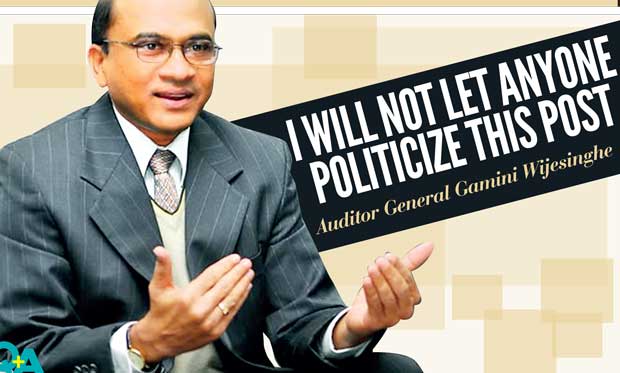
I will not let anyone politicize this post Auditor General Gamini Wijesinghe

February 9th, 2017

Yasawardena Rodrigo Courtesy The Daily Mirror

Auditor General Gamini Wijesinghe is now at the centre of much controversy, with certain MPs and Ministers expressing their views of him and some even having gone to the extent of criticizing his findings on the Bond Scam, saying it is not independent. The most recent announcement by Minister Kiriella in Parliament that the AGs report had been rejected by the World Bank added further criticism from others as well. Finance Minister Ravi Karunanayake identifies him as an arrogant person, charging that the report he had requested from him had been handed over to the JVP MPs instead of to him. The Auditor General was interviewed regarding the issues he faced in the discharge of his duties.

 On January 17, the report was handed over to the Minister and the receipt of it was acknowledged under signature. You must ask him. The copy I sent to the chairman of the COPE committee which had been lying on the table during the time the Minister was abroad was taken by MP Bimal Rathnayake  No one can object to my handing over such reports to the Parliament. I am frank but the Minister isn’t.

QAuditor Generals in the past never openly discussed their reports. Why are you deviating from such traditions?   
The Right to Information Bill is in operation now and therefore nothing can be hidden from the public. My reports are all transparent and open. Therefore I should speak openly. Audit reports contain details as to what happened to public money. Therefore it is in order to know what happened to them and keeping them secret is not correct.


QIs there a conflict between you and the government?   
My duty is to investigate the workings of the Yahapalana government, which does not lead to any struggle between us.
QThe joint opposition is of the view that the government is attempting to remove you from your post and the government is bent on creating frustrations about your performance of official duties.   
I am tempted to think that way, as what is happening now has never been faced by my predecessors.

The Right to Information Bill is in operation now and therefore nothing can be hidden from the public. My reports are all transparent and open. Therefore I should speak openly. Audit reports contain details as to what happened to public money. Therefore it is in order to know what happened to them and keeping them secret is not correct 

QRecently a newspaper carried the headline Group of MPs to protect the auditor general”. It tends to prove that you have been politicized.   
Those things are not relevant to me and I cannot say no to them.
QThe government said the National audit Bill would be brought before the Parliament last month and have it approved but it did not happen. What is the reason for this continued delay?   
You should ask the government about this. I have done everything from my angle and I cannot go beyond that.
Q Trade Unions and others accuse that out of 54 clauses in the Audit Bill 49 had been amended. With these amendments will the Bill become ineffective?   
We were not told of these amendments and even if the Bill becomes law it would not have any value. We are not happy at all about this position and it is wrong to delay it in this manner.

The losses from the Bond sales at the Central Bank are continuing. There is no way of accurately estimating the loss. I am not going to do another auditing on that. I have only stated the amount of the loss incurred at the time. The future interest rates would depend on it. It would be a severe injustice to the public and to the country’s economy 

QWhat is your opinion about the Audit Commission and the failure in implementing its proposals? Don’t you think that it is a wastage of public money?   
The Audit commission was established in November 2015 and they are functioning at a building at the Borella junction. About 20 people are employed there. As the Audit act has not been passed yet you cannot get any work done by them. They are presently attending to petty things and more than Rs.2 million is being spent on its maintenance. As this is a wastage of money, the act should be implemented early.
QThere is a charge that despite the Finance Minister requesting your report on the Bond Issue several times, you had handed over same to the JVP. Is it true?   
On January 17, the report was handed over to the Minister and the receipt of it was acknowledged under signature. You must ask him. The copy I sent to the chairman of the COPE committee which had been lying on the table during the time the Minister was abroad was taken by MP Bimal Rathnayake. No one can object to my handing over such reports to the Parliament. I am frank but the Minister isn’t.

Before this position, I served as Director General of the Sri Lanka council for accounts and audit standards, where I received more than RS.350,000 as the monthly salary. I gave up that position and opted to serve the public by accepting this post 

QA powerful Minister recently declared in Parliament that the World Bank had stated that the audit report contravenes international standards. What have you got to say?   
I do not submit reports to the World Bank. I forward my reports to our Parliament. It is an untruth that the World Bank said so. What they stated is We are not aware” and were not found fault with it. They have no right to say so. We have those letters with us.
QCan the government declare that your reports are faulty?   
The government cannot say such things. If they are saying them that is only to escape from the charges levelled at them. This is like a game of cops and robbers. The robber is scared to go past the police station. Because of my duty, some have fallen out with me, which is unavoidable.

QAfter releasing the audit reports aren’t you following them up and making inquiries?   
What I present is an investigation stating my comments and opinions. I am bound to submit them to the Parliament or the Legislature. These are not given to the Executive. Once I complete my part of the duty, the rest is in the hands of others.

QIn carrying out your duties was there any obstructions? Has the government failed to meet your needs?   
With the passing of the 19th amendment, my area of operations have broadened. I am now entrusted with the audit of Air Lanka, Insurance Corporation and several government undertakings. For this additional work, the staff is insufficient and the facilities provided fall far short, Anyway we continue. We have recruited a few recently.

QHas the issue of your salary and other facilities now been resolved?   
I have now completed 14 months of service and am now getting a monthly basic salary of Rs.69,000. This salary is also irregular, as according to clause 154 of the constitution, the salary of the Auditor General has to be approved by the Parliament. It has not happened that way. Therefore the salary I receive is maintained in a different account. The salary of an auditor general is determined by his qualifications and his period of service. Parliament should decide on the salary of the auditor general. But in my case, the Parliament did not decide and therefore I continue to receive the old salary.
Before this position, I served as Director General of the Sri Lanka council for accounts and audit standards, where I received more than RS 350,000 as the monthly salary. I gave up that position and opted to serve the public by accepting this post.

QDid you accept this post at a lower salary because of a low level of qualifications?   
A- I have served as an officer of the government service for 33 years, out of which I served at the Inland Revenue department for 28 years. I am an accounts graduate. I have completed a post graduate course in Economics in Korea. There are many other professional qualifications. There are very few who possess this type of qualification. Therefore no one can pinpoint and say that I lack qualifications.

QMany charge that you are keen in holding a media circus.   
I do not need these media circuses and there is no necessity for show ups. I only reply when the media asks me something like you did. I am too busy and have no time to go after media.

QAre you frustrated with what is going on the government side?   
I am well-versed in working in the paddy fields. I am now 58-years-old. I have only another two years before retirement. I am striving to work with dedication during these two years but if this type of ill-treatment continues, I will leave before retirement and go to my village and engage in cultivation. I will not change the reports I published. Up to now no one has been able to change my opinions. These are threats with no basis.

QAre there some keen on politicizing the post of Auditor General?   
I will not bow down to anyone and as long as I hold this position, I will not let anyone politicize this post. The environment should be in place even for my successor to work independently.

QSome are of the opinion that your reports should not be implemented like the Buddha’s teachings.   
I do not say they are teachings of Buddha. My duty is to state my opinion. Those who want to can implement them or throw them aside.

QThey have still not found a solution for your report on the Bond incident.   
The losses from the Bond sales at the Central Bank are continuing. There is no way of accurately estimating the loss. I am not going to do another auditing on that. I have only stated the amount of the loss incurred at the time. The future interest rates would depend on it. It would be a severe injustice to the public and to the country’s economy. Therefore, it is difficult to assess the volume of the continued losses.

QWhat are your future audit investigations?   
A-The large amount misused in the Coal tender and the loss of more than Rs.15 billion during the import of rice are among the completed investigations. These reports are due to be released and with that there is going to be more.

– See more at: http://www.dailymirror.lk/article/I-will-not-let-anyone-politicize-this-post-Auditor-General-Gamini-Wijesinghe-123562.html#sthash.g2GiELJQ.dpuf

වෘත්තීය ක‍්‍රියාමාර්ග සහ ජල සැපයුම  අඩාලවීමේ අවධානම

February 9th, 2017

උපාලි රත්නායක  සභාපති National Water Supply And Drainage Employees Union 

ජලසම්පාදන මණ්ඩලය ඉංජිනේරු ඩිප්ලෝමාරීන්ගේ සංගමය සහ කාර්මික නිළධාරීන්ගේ සංගමය ඵක්ව අද සිට (පෙබ 9) වෘත්තීය ක‍්‍රියාමාර්ග ආරම්භ කොට ඇත. ඵ් අනුව පහත වෘත්තීය ක‍්‍රියා මාර්ග සිදුකරයි.

  1. අතිකාල ප‍්‍රතික්ෂේප කිරීම,
  1. රාත‍්‍රී නඩත්තු සේවා මුර වාර්තා නොකිරීම,
  1. සතිඅන්ත නඩත්තු සේවා මුර වාර්තා නොකිරීම,
  1. අදාල නොවන රාජකාරිවල නොයෙදීම,

ජලසම්පාදන මණ්ඩලයේ බලධාරීන් ගැටළුව විසඳීම වෙනුවට වෘත්තීය ක‍්‍රියාමාර්ග කඩාකප්පල් කිරීමේ ක‍්‍රියාමාර්ග අරඹා ඇත. ඵ් අනුව අප වෘත්තීය ක‍්‍රියාමාර්ග අඛණ්ඩව ඉදිරියට ගෙනයාමටත් විසඳුම් ලබානොදන්නේ නම් අඛණ්ඩ වැඩ වර්ජනයකට යෑමටද තීරණය කර ඇත්තෙමු.

ජනතාවට සිදුවන අපහසුකම් සලකා ජලපිරිපහදුවල කටයුතු පමණක් සිදුකරන අතර නඩත්තු සේවා මුරවලට වාර්තා නොකරන බැවින්  බිඳවැටීම් අළුත්වැඩියාවක් සිදු නොවන නිසා ජල සැපයුම අඩාල වීමේ අවදානම් තත්වයක් උදාවනු ඇත. ඵ් අනුව වහාම ඉල්ලීම් විසඳීමට අවශ්‍ය ක‍්‍රියාමාර්ග ගන්නා ලෙස අප බලධාරීන්ට අවධාරණය කර සිටින්නෙමු.

ස්තුතියි.

මෙයට,

උපාලි රත්නායක 

සභාපති

An understanding of the aetiology of a mysterious disease.

February 9th, 2017

Bodhi Dhanapala

Finally, an understanding of the aetiology of the mysterious disease that had been plaguing children  in poor agricultural areas in Northern India (Bihar etc), Bangladesh, Vietnam  etc., has been cracked, after 20  years of research.

Young children used to develop fever, convulsions etc., usually during the season when harvests and fruits are gathered, and pesticides etc are used to protect fruits and harvests from pests.
.
The usual theories were proposed by so-called “environmentalists” who came up with the standard theories:

The disease was discovered in 1990-1995 period, and increased in its incidence each year. The traditionalists  used to argue that, “Why was there no disease before 1995? It must be because agrochemicals came to be introduced in the 1980s and have polluted the environment. We need a “toxin-free Bihar”.

The Indian scientists proposed the following hypotheses and worked on them for two decades.
(i) the cause to be metal toxins (e.g, Cadmium, Arsenic !!!!),  agrochemicals and pesticides (of course glyphosate was listed as a big suspect and “concerned activists” wanted it banned in Bihar!).
(ii) synergistic multi-factorial effects of small but negligible amounts of “toxins” washed in by the rain and by air-born insults, and harming the “vulnerable” population of “children of poor farmer families” was another popular explanation for the cause of the juvenile-convulsions diseases.

All this sounds familiar.
And it lasted two decades of research.

But finally the culprit has been identified and reported in a research article in the British Peer-Reviewed journal, The Lancet.

————————————————————————–
Here is a more popular version of the aetiology.


http://www.channelnewsasia.com/news/health/children-in-india-killed-by-myst…

A mystery illness that has affected hundreds of children a year in northern India is caused by eating unripe lychee fruits on an empty stomach, scientists have discovered.

Since 1995, children in Muzaffarpur, Bihar have been seen to initially sustain a fever. They then have seizures and convulsions before slipping in and out of consciousness.

In Muzaffarpur, which is India’s largest lychee cultivation region, the illness was branded locally as “chanki ki bimari” or “tinsel disease”.

In a joint investigation conducted by scientists from May-July 2014 – which coincided with the lychee harvesting season – it was determined that 122 out of 390 children who suffered from the disease had died.

The investigation, which was reported in the British medical journal The Lancet Global Health on Tuesday (Jan 31), suggests that the deaths were caused by eating lychees on an empty stomach.

The researchers, who were from the US Centers for Disease Control and India’s National Centre for Disease Control, compared test results of children who had developed the mysterious illness, and children who had not.

Analysis of blood and spinal fluid samples showed no signs of infection or exposure to chemicals and insecticides.

However, most of the children who had fallen ill had eaten lychee fruit recently. They were also more likely to have visited a fruit orchard in the previous 24 hours, the study said.

The effect was compounded when the children skipped dinner, resulting in “night-time hypoglycaemia”.

As these children already had low blood sugar levels, the impact of eating lychees that contain toxins that inhibits the body’s ability to produce glucose would sometimes see the children suffer seizures and convulsions in the middle of the night as a result of acute swelling of the brain.

The toxins are found in higher quantities in unripe fruits, the report said.

The research findings has led to health officials in the region informing parents to ensure their young children ate dinner and reduce the number of lychees consumed.

According to a report by the New York Times,  the number of reported cases per year has dropped to less than 50 from the hundreds affected in 2014.

– CNA/am


ඩීසල් විදුලි මාෆියාව යහපාලනය ඉහගෙනම කයි!

February 9th, 2017

Rajith Keerthi Tennakoon Executive Director/CaFFE

ඩීසල් මාෆියාව නැවතත්.  රු. 10 ඒකකය රු. 40 ට ගන්න යයි.  කැබිනට් අනුමැතිය ලැබෙන විට ජෙනරේටර් මහ මුහුදේ ලංකාවට පා වෙනවා!!!

විදුලි පාරිභෝගිකයාත්, මේ රටේ ධනයත් විනාශ කරමින් දේශපාලනඥයින්-නිලධාරීන් පොහොසත්වීම ඩීසල් විදුලි මාෆියාවයි.  විදුලි හිගයක් ඇතැයි පවසමින් සාමාන්‍ය මිල මෙන් සිව් ගුණයක මිලකට විදුලිය ගැනීමත් ලාභය ඉංජිනේරු මාෆියාව, ලේකම්වරුන් හා දේශපාලනඥයින් අතර බෙදාගැනීමත් සිදුවේ.

දින දෙකකට පෙර රුපියල් මිලියන 5000 කට වැඩි මුදලක් වැය කර ඩීසල් විදුලි උත්පාදන යන්ත්‍ර ගෙන්වමින් රු. 40 බැගින් විදුලි ඒකකයක් මිල දී ගැනීම මේ වන විට සිදුවේ. 
2016.12.29 දින ඩීසල් විදුලිය මිල දී ගැනීම සදහා පුවත්පත් වල දැන්වීමක් පළ කරයි. ඉන් දවසකට පසුව,

දෙසැම්බර් 30 දින අමාත්‍ය රංජිත් සියඹලාපිටිය 2016.12.30 දින අංක 16/2774/727/056 දරණ කැබිනට් පත්‍රිකාවක් මගින් ඉල්ලා සිටිනේනේ ‘විවෘත ජාත්‍යන්තර තරගකාරී ලංසු කැදවීම මගින් තෝරා ගැනීමට’ හා විදුලි බලය මිලදී ගැනීම සදහා හදිසි අවශ්‍යතාවයක් ඇති බව ප්‍රකාශයට පත් කිරීම සදහාය.

මෙම කැබිනට් පත්‍රිකාවට මුදල් අමාත්‍ය රවී කරුණානායක, අමාත්‍ය චම්පික රණවක ඇතුළු පිරිසක් විරෝධය පළ කරන බව ද ,  මුදල් අමාත්‍යාංශය සිය විරෝධයෙන් දක්වන්නේ ‘හදිසි තත්වයක් ප්‍රකාශයට පත් කිරීම ආයෝජන විශ්වාසය කෙරෙහි ද අයහපත් බලපෑමක් සිදු කරනු ඇති බව දක්වමිනි.  සියඹලාපිටිය-බටගොඩ සුසංයෝගයේ අභිලාශය වන්නේ මේ වන විට වසා දමා ඇති ඩීසල් බලාගාර නැවත වීවෘත කොට මහ දවල් රටේ ධනය මංකොල්ලකෑමය.

දෙසැම්බර් 29 පුවත්පත් දැන්වීමට අනුව සැකසූ ටෙන්ඩර් 2017 ජනවාරි 16 පෙ.ව. 10 දක්වා බාර ගනු ලබයි. පැය කිහිපයකින් ලේඛන සකස් වෙයි. 

2017 ජනවාරි 16 උදේ 10 ට දක්වා ටෙන්ඩරය බාර ගැනිම සිදු කොට එදිනම මෙය ඇගයීමකට ලක් කොට, 2017 ජනවාරි 17 ප්‍රසම්පාදන මණ්ඩලය (කුප්‍රකට ගල් අගුරු ගනුදෙණුවේ කණ්ඩායමේ සාමාජිකයින් බහුතරයක් සමග)  ටෙන්ඩරය හිමිවන සමාගම මේ පිරිස තෝරලා අවසන් කරනවා.

2017 ජනවාරි 18 විදුලිබල අමාත්‍යංශයේ ලේකම්වරයා විදුලිබල මන්ඩලයට දැනුම් දෙනවා පෙබරවාරි 06 ට කලින් ඇග්රිකෝ ඉන්ටර්නැෂල් සමාගම හරහා විදුලිය ජනනය ආරම්භ කිරීමට උපදෙස් ලබා දෙයි.

මේ වංචාවේ මහ මොළකරුවන් වන්නේ ගල් අගුරු වංචාවේ පාර්ශවකරුවන්මය.

අමාත්‍යාංශ ලේකම් ආචර්ය සුරේන් බටගොඩ මේ වන විටත් මිල දී ගැනීම අවසන් කොට ඇති දුෂිත, ක්‍රම විරෝධී ගණුදෙනුව සදහා කැබිනට් අනුමැතිය ව්‍යාජ කරුණු මත පදනම්ව ලබාගන්නේ 2017 ජනවාරි 26 දිනයි.

මේ වන විට ලංකාවට ගෙන්වා ඇති ඩීසල් ජෙනරේටරය කැබිනට් අනුමැතිය ලැබූ දා තිබී ඇත්තේ මහා සාගරයේ ය. 

විදුලිබල අමාත්‍යාංශය මේ වන විට මේ රටේ ඉහ මොළ සූරා කමින් එළිපිට හොරකං කරන තැනකට ගොස් ඇතිවා පමණක් නොව එම හොරුන්ට එරෙහිවන්නන් මර්ධනය කරන තැනකට ගොස් තිබේ.  එයට සෘජු අනුග්‍රහය ලැබෙමින් ඇතතේ ජනාධිපති ලේකම් කාර්යාලයේ ඉහළම නිලධාරියෙකුගෙනි. 

අර්ජන් මහෙන්ද්‍රන්ගේ කෙඩිට් කාඩ් එකෙන් අවුරුදු දෙකටම රටට අහිමි වූවේ කෝටි 6.6 කි.  නමුත් විදුලි මාෆියාව අද එක් ගල් අගුරු නැවකින් කෝටි 12 ක් වංචා කරයි. යහපාලනයේ හොරකං කරන්නේ එක් පාර්ශවයක් පමණක් නොවේ!


Rajith Keerthi Tennakoon
Executive Director/CaFFE
Executive Director/CHR-Sri Lanka
100/19 A, Welikadawatta Road,
Rajagiriya,Sri Lanka.

Blind activist humiliated at Colombo airport

February 9th, 2017

Courtesy The Asian Age

Goyal has said that the airport staff refused to help her and advised” not to carry bags if she cannot handle them.

Mumbai: Nidhi Goyal (31), a visually-impaired activist from Mumbai, has alleged that she was humiliated by the ground staff at Colombo airport for not being able to carry her own luggage. In a compliant to the Jet Airways, Ms Goyal has said that the airport staff refused to help her and advised” not to carry bags if she cannot handle them.

Ms Goyal works on disability rights and gender justice in Mumbai. Recently, she visited Sri Lanka for a global dialogue on sexuality and disability organised by CREA (is a feminist human rights organisation), and concluded her trip with conducting a training organised by Handicap International for Sri Lankan women, about rights of women and girls with disabilities.

Visually-impaired activist Nidhi Goyal.

 Visually-impaired activist Nidhi Goyal.

The said incident took place during her return journey. Ms. Goyal was waiting for her flight in the waiting area and wanted to use the loo. Since the staff didn’t turn up for over half hour in spite of repeated requests, Ms Goyal decided to enter the airport and find her way to the loo on her own. After the screening I needed help to push one of my bags with four wheels for which I asked help as had cane in my other hand. The officer who usually helps people with disability blatantly refused, saying she is not supposed to touch it. I even urged her to just guide but she refused,” she said.

Finally, a duty manager helped her, but also told her Don’t carry bags if you can’t handle them”. According to the passenger, the duty manager also told that people on wheelchair should put their bags on their laps.

Ms Goyal who was booked in a Jet Airways flight. After the incident at Colombo airport, she not only reported the incident at the airport but also filed a written complaint (accessed by this paper) to Sri Lankan airline as well as Jet Airways and is awaiting their response.

It was extremely disheartening to face this kind of a treatment in the same country where I had gone to educate disabled people on how they should not feel let down by what other people say to them,” Ms Goyal said.

When contacted, a senior Jet Airways official said, We have taken up the matter with the concerned airline and we will make sure that the passenger gets justice.”

Despite repeated attempts, The Asian Age did not get any response from Colombo airport officials. After a telephonic conversation with the head office, an email was sent to H.S. Hettiarchchi the Head of Airport Management of Bandaranaike Airport, as suggested by the person attending the call. However, no reply was received from Mr Hettiarchchi also.

Lanka worries about Indian ‘Trojan horse’

February 9th, 2017

By P K Balachandran  Courtesy The New Indian Express

For decades before and after Sri Lanka’s independence in 1948, India’s relations with the island nation were political and adversarial. But since the second half of the 1990s, there has been a gradual shift to trade, development assistance and investment, in that order. While India has been wanting to build bridges with Lanka, veering from two decades of exclusive involvement with the intractable Tamil question, the latter has been exploring government-to-government economic tie-ups with India.

The ice was broken in the mid 1990s when an India-friendly Chandrika Kumaratunga became president on the promise of a rapprochement with Tamils (including the LTTE), and also friendship with India which had backed the Tamil demand for autonomy and imposed the India-Sri Lanka Accord in 1987 to bring it about. Quick negotiations led to the India–Sri Lanka Free Trade Agreement (ISLFTA) in 1999. What followed was a remarkable increase in bilateral trade, set to reach $5 billion now.

Though the balance of trade is heavily in India’s favour, Lanka’s exports to India grew from a minuscule $58 million in 2000 to over $600 million in 2015-16, thanks to the agreement. India’s exports to Lanka are much higher at $4 billion, but 70 per cent of it lies outside the FTA. India’s assistance portfolio in Lanka is now nearly $2.6 billion, out of which $436 million is in the form of grants. Even its loans are cheap coming at an interest of 1.75 per cent. Taking the money spent and pledged together, India has extended to Lanka $1 billion for rebuilding its decrepit railways. The 50,000 houses for war-affected Tamils and poor Indian-origin Tamils cost India $270 million. Recently, India gave $20 million for rainwater harvesting in the dry Northern Province; $7.5 million was given for a free ambulance service.

Indian FDI in Lanka totals over $500 million. India has pledged to set up a 500 MW LNG-powered plant at Kerawalapitiya. Indian companies want to invest in the East Container Terminal at Colombo port and the Trincomalee port hinterland development. Indian trans-shipment accounts for 70 per cent of the earnings of the Colombo port which is sustaining the loss-making Chinese- built Hambantota port. However, India’s economic engagement with Lanka has not been an unmixed blessing.

Fear of economic domination by the ‘Big Brother’ has replaced the earlier fear of political and military dominance. Sri Lankans argue that India’s Non-Tariff Barriers have greatly restricted their exports under the FTA. Fears of an influx of Indian professionals stopped the signing of the Comprehensive Economic Partnership Agreement at the last minute. Agitators are now threatening to scuttle talks on Economic and Technical Cooperation Agreement (ETCA) though India ruled out movement of natural persons”.

Despite an assurance that almost all employees of the $7.5 million Indian ambulance service would be Lankans, it was seen as a Trojan Horse of RAW”. India was disappointed when the 500 MW coal-fired power plant project at Sampur was called off after six years of talks. As a compensation for its ouster from Sampur, Colombo said India could set up an LNGbased 500 MW power plant  in Kerawalapitya, but it is not known if the offer would stand in the months to come. In violation of an India-Sri Lanka 2003 agreement, the Ceylon Petroleum Corporation (CPC) has been trying to take over three of the 99 oil tanks in Trincomalee given to the Lanka Indian Oil Corporation (LIOC) for 35 years.

The CPC says it needs the tanks to store diesel for use in power plants. The LIOC is ready to provide the facilities as a joint project, but that is not acceptable to the CPC. Late last month, the Parliamentary Committee on Public Enterprises threw a bombshell by saying that since the LIOC had not signed the lease agreement” relating to the tanks within the stipulated six months, Lanka should take over all the 99 tanks. But LIOC’s case is that the 2003 pact does not mention the need for a lease agreement”, that the LIOC has been paying the stipulated annual leasing fee of $100,000 to the government regularly, and that the local land records show that the owner of the land is the LIOC. Two Indian firms which were to lead an international consortium to build the Colombo port’s East Terminal (as per the wishes of the Lankan government), are now out in the cold because Lanka suddenly said the criteria would be revised.

Given past experience with agreements, volatility of local politics and an underlying anti- India sentiment, India is reluctant to rush into the ETCA. Meanwhile, rumours that Lanka is going to ask India to develop the Trincomalee port to balance its deal with China visa- vis the Hambantota port led to spasms of anti-India barbs from the Opposition and the media. This, despite Indian officials denying any interest in the port as it could be a nonperforming asset like the $1.4 billion Hambantota port. Animosity towards Indian government projects and aid programs, with nary a word of thanks, vexed Indian diplomats to such an extent that ex-Indian High Commissioner Y K Sinha publicly expressed his displeasure.

Lankan nationalists however justified their stand saying that India should consider its aid to Lanka not as charity but just reparations for the harm it did by promoting Tamil terror in the 1980s and then trying to divide” the country by promoting the Tamil demand for devolution of powers. However, there is a silver lining. Lankan hostility to India is restricted to Indian government projects, not the business ventures of India’s private sector which are welcomed with open arms. Indian companies dominate the vehicles and pharmaceutical markets, and Indians are the single largest contributors to tourism.

සයිටම් සිසුන්ට අසාධාරණයක් නොවිය යුතුයි

February 8th, 2017

නලින් ද සිල්වා

සයිටම් ගැන අභියාචනාධිකරණය තීන්දුවක් දීලා. ජනමාධ්‍ය වාර්තාවලට අනුව සයිටම් වෛද්‍ය උපාධිය නීත්‍යානුකූල බවත්, ශ්‍රී ලංකා වෛද්‍ය සභාවට ඒ උපාධිය පිළිගැනීමට නීත්‍යානුකූල බාධාවක් නැති බවත් අධිකරණ තීන්දුවෙන් කියැවෙනවා. සයිටම් වෛද්‍ය උපාධිය පිළිගැනීම කළ හැක්කේ විශ්වවිද්‍යාල ප්‍රතිපාදන කොමිෂන් සභාවට පමණයි. ඉන්පසු උසස් අධ්‍යාපන ඇමතිවරයා එය පිළිගත් බවට ගැසට් නිවේදනයක් නිකුත් කරනවා. ඒ සියල්ල රාජපක්‍ෂ ආණ්ඩුව කාලයේ සිදු වූවා. ඒ බව ඒකාබද්ධ විපක්‍ෂය පැහැදිලි ව කිවුවේ නැහැ. එය දේශපාලන කුහක කමක්. එකල උසස් අධ්‍යාපන ඇමති වූයේ එස් බී දිසානායකයි.

ප්‍රශ්නය වූයේ උපාධිය පිළිගැනීම නොව ශ්‍රී ලංකා වෛද්‍ය සභාව සයිටම් උපාධිධාරීන් මෙරට බටහිර වෛද්‍යවරුන් වශයෙන් ලියාපදිංචි කරන්නේ ද නැද්ද යන්නයි. වෛද්‍ය සභාව කියා සිටියේ සයිටම් උපාධිධාරීන් එසේ ලියාපදිංචි නොකරන බවයි. වෛද්‍ය සභාව එහි දී කළ යුතුව තිබුණේ සයිටම් උපාධිධාරීන් බටහිර වෛද්‍යවරුන් ලෙස ලියාපදිංචි කිරීමට මේ මේ දේ සපුරාලිය යුතු යැයි කීමයි. එය නිසි අයුරින් කළ බවක් පෙනෙන්න නැහැ. එහෙත් අධිකරණ තීන්දුවක් අනුව මේ උපාධිධාරීන්ට අවිස්සාවේල්ල රජයේ රෝහලේ පුහුණුවක් දිය යුතු බව කියැවුනා. වෛද්‍ය නිලධාරීන්ගේ සංගමය එයට විරුද්ධ වුනා. ඔවුන්ගේ තර්කය වූයේ පෞද්ගලික වෛද්‍ය විද්‍යාලයක උපාධිධාරීන්ට රජයේ රෝහලක පුහුණුව ලබා දීම තමන්ට නෛතික ප්‍රශ්න ඇති කළ හැකි බවයි. එසේ පුහුණුවක් ලබා දීම ප්‍රශ්නයක් විය හැකියි.   කෙසේ නමුත් ඒ අධිකරණ තීන්දුව ක්‍රියාත්මක වුනේ නැහැ.

එසේ පුහුණුවක් ලබාදිමේ ප්‍රශ්නයක් ඇති නමුත් බටහිර වෛද්‍යවරුන් රජයේ රෝහල්වල සේවය කරන අතර පෞද්ගලික සේවයේ ද යෙදෙනවා. එහි යම් පරස්පරයක් තිබෙනවා. සයිටම් උපාධිධාරීන්ට ලැබෙන පුහුණුව මදි නම් සයිටම් රෝහලේ ම රජයේ වෛද්‍යවරුන් ලවා ද පුහුණුවක් ලබා දීමටත් එහි පහසුකම් තවත් වැඩි කිරීමටත් කටයුතු කළ හැකියි. ඇතැමුන් නම් කියන්නේ රජයේ සමහර වෛද්‍ය පීඨවලින් ලැබෙන පුහුණුවට වඩා හොඳ පුහුණුවක් සයිටම් ආයතනයෙන් ලැබෙන බවයි.  සයිටම් ප්‍රශ්නය අවුල් වූයේ නිිදහස් අධ්‍යාපනය යනු කුමක් ද යන්න පිළිබඳ වැටහීමක් සිසුනට නැතිවීම නිසයි. ඔවුන් කළේ අන්තරයේ මෙහෙයවීමෙන් සටන්පාඨ කීම පමණයි. හොර උපාධි කඩය, උපාධිය මුදලට විකිණීම ආදිය පෙරටුගාමී හා ජ වි පෙ නායකයන් හදා දුන් තේරුමක් නැති සටන්පාඨ පමණයි. මේ අය රටේ ඒකීයභාවය වෙනුවෙන් නම් සටන්පාඨ කියවන්නේ නැහැ. එසේ නොකරන්නේ දෙමළ ශිෂ්‍යයන් ද ඇති බැවින් ද? මේ සියල්ල පිටුපස කසිකබල් මාක්ස්වාදය තිබෙනවා. මාක්ස්වාදය යනු කිසි දිනෙක වලංගු නොවූ මාක්ස්ගේ හිතලුවක් පමණයි. ඇතැමුන්ට මාක්ස්වාදයෙන් ගැලවෙන්න බැහැ.

සයිටම් සම්බන්ධයෙන් මා 2016 අගෝස්තු 10, 11, 14 හා 18 දිනවල කාලය වෙබ් අඩවියේ ලිපි හතරක් ලිවුවා. ඒ ලිපිවලින් පාඨ කිහිපයක් උපුටා දැක්වීම සුදුසු යැයි සිතනවා. දහවැනි දා ලිපියේ මෙසේ සඳහන් වූවා. වෛද්‍ය වෘත්තියෙ යෙදෙන්න සුදුසු ද නැද්ද කියලා තීරණය කරන්න ශ්‍රී ලංකා වෛද්‍ය සභාව තියෙනවා. අද මාලබේ ප්‍රශ්නය ඔවුන්ගෙ උපාධිය පිළිගන්නව ද නැද්ද කියන එක නෙවෙයි. වෛද්‍ය සභාව ඒ උපාධිය වෛද්‍ය වෘත්තියෙ යෙදෙන්න සුදුසු ද නැද්ද කියලා පිළිගන්නව ද කියන එක. මෙය උතුරු කොළඹ වෛද්‍ය විද්‍යාල ප්‍රශ්නයට වඩා වෙනස්. එහි ප්‍රශ්නය වුනෙ උතුරු කොළඹ වෛද්‍ය විද්‍යාලයෙ සිසුන්ට කොළඹ විශ්වවිද්‍යාලයෙ උපාධිය දෙනවද නැද්ද කියන එක. ඒ වගේම ප්‍රශ්නයක් ආවා උතුරු කොළඹ වෛද්‍ය විද්‍යාලයට බඳවා ගැනීමේ නිර්ණායක වෙනස් කියලා. උසස් පෙළ ජෛවීය විද්‍යා ධාරාවේ නැති විෂය සමත් වුවත් උතුරු කොළඹ වෛද්‍ය විද්‍යාලයට ඇතුල් වෙන්න පුළුවන් වුනා.  ඒක තනියම ගත්තම නම් ප්‍රශ්නයක් නෙවෙයි. උසස් පෙළ නැතත් කාට හරි අවශ්‍ය නම් ඕනෑම උපාධියක් ලබාගන්න හැකි විය යුතුයි. 1971 දි අප පේරාදෙණියෙ විශ්වවිද්‍යාලෙ ශාස්ත්‍ර පීඨ සිසුන්ට උපාධියට ගණිතය උගන්වන්න පටන්ගත්ත. ඒ සිසුන් උසස් පෙළට ගණිතය හදාරල තිබුණෙ නැහැ. ඒ අය පසුව උපාධිධාරීන් ලෙස ගණිත ගුරුවරුන් අධ්‍යාපන අමාත්‍යාංශයෙ ගණිත උපදේශකවරුන් පරිපාලන නිලධාරීන් ආදීන් හැටියට කටයුතු කළා.”

මේ ඡෙදය අගොස්තු 11 වැනි දා ලිපියෙන්. ඉංගිරිසි කාලෙත් නිදහස් අධ්‍යාපනයක් තිබුණා. අද නිදහස් අධ්‍යාපනය කියන්නේ ඉගෙනීම සඳහා තමන් මුදල් ගෙවන්නේ නැහැ  කියන එක. ඒ කාලෙ සිංහලෙන් හරි දෙමළෙන් හරි ඉගැන්වූ පාසල්වල මුදල් අයකෙළේ නැහැ. …..  කන්නන්ගර මහතා නිදහස් අධ්‍යාපනය ඇති කෙළේ රජයේ පාසල්වල. ඇතැම් රජයේ නොවන පාසල් ද කන්නන්ගර මහතා අනුගමනය කළා. එහෙත් නිදහස් අධ්‍යාපනය නැති පාසල් කොටසක් ඉතිරි වූනා. අදත් ඒ සමහර පාසල්වල අධ්‍යාපනය ලබා දීම වෙනුවෙන් මුදල් අය කරනවා. කිසිවකු අද ඒ පාසල් රජයට ගත යුතුය කියා උද්ඝෝෂණය කරනු මා අසා නැහැ. කන්නන්ගර මහතාගේ නිදහස් අධ්‍යාපනය නැති බැරි අයට නොගෙවා අධ්‍යාපනය ලබා දීමට මිස ඇති හැකි අය මුදල් ගෙවා අධ්‍යාපනය ලබා ගැනීම වැළැක්වීමට නොවෙයි. අප මේ කරුණ හොඳින් අවබෝධ කරගත යුතුයි. නිදහස් අධ්‍යාපනය ලබාදීම යනු කිසිම අධ්‍යාපනයක් මුදල් ගෙවා ලබාගැනීම නැති කිරීම නොවෙයි. ඒ එසේ නම් ශාන්ත තෝමස්, ශාන්ත ජෝසෆ් ආදී පාසල් පවත්වාගෙන යන්නට දෙන්න බැහැ. ඒ විතරක් නොවෙයි අද හැමෝම පාහේ යන ආධාරක පංති පවත්වන්නත් බැහැ.”  කන්නන්ගර නිදහස් අධ්‍යාපනය බලපෑවෙ ඉංගිරිසි පාසල්වලට බව අමතක නොකළ යුතුයි.

අගොස්තු 14 වැනි දා ලිපියේ මෙසේ කිවුවා.  රජයේ විශ්වවිද්‍යාලවල වෛද්‍ය පීඨවලට ඇතුල්වෙන්න බැරි අයට පෞද්ගලික වෛද්‍ය විද්‍යාලවලට ඇතුල් වෙන්න හැකියාවක් තියෙන්න බැහැ කියන එක කිසිම පදනමක් නැති කතාවක්. ඒක වෛද්‍ය උපාධියෙ ඇති ඊනියා වටිනාකම අනුව ඇති කරගත් හැඟීමක් නිසා කියන කතාවක්. අද ඉංජිනේරු පීඨවලට ඇතුල්වෙන්න බැරිවුනු අය මෙන් ම වෙනත් හේතුන් නිසා එසේ ඇතුල් නොවූ අයත් පෞද්ගලික විද්‍යාලවලට ගිහින් ඉංජිනේරු, තොරතුරු තාක්‍ෂණ ආදී උපාධි ගන්නවා. සමහරු පිටරට විශ්වවිද්‍යාලවලට යනවා”

අගොස්තු 18 වැනි දා ලිපියෙන් මේ කොටස උපුටා ගන්නවා.  ඇතැමකු කියාවි රජයේ වෛද්‍ය පීඨයකට ඇතුළත් වෙන්න බැරි වුනේ දිස්ත්‍රික් කෝටා ක්‍රමය නිසා කියලා. වනාතමුල්ලෙ දුප්පත් දරුවකුට කොළඹ දිස්ත්‍රික්කයෙන් පෙනී සිටීම නිසා රජයේ  වෛද්‍ය විද්‍යාලයකට ඇතුල් වෙන්න බැරි වුනොත් මුදල් නැති කම නිසා පෞද්ගලික වෛද්‍ය විද්‍යාලයකටවත් ඇතුල් වෙන්න බැහැ. අනෙක් අතට මුදල් ඇති අයකුට පිටරට විශ්වවිද්‍යාලයක වෛද්‍ය පීඨයකට ඇතුල් වෙන්න පුළුවන්. මාලබේට යන්නෙ එහෙම බැරි නමුත් යම් වත්කමක් තියෙන අය. ඔවුන්ගේ දෙමවුපියන් සමහරවිට ඉඩකඩම් උගස් කරලා හරි විකුණලා හරි මුදල් හොයාගන්නවා වෙන්න පුළුවන්. රජයේ වෛද්‍ය පීඨවල ඇතැම් ගුරුවරුන්ගෙ දරුවනුත් දිස්ත්‍රික් කෝටා ක්‍රමය නිසා රජයේ වෛද්‍ය පීඨයකට ඇතුල්වෙන්න බැරුව මාලබේ ඉගෙන ගන්නවා.  …….. අපේ අධ්‍යාපන ක්‍රමයෙ නොයෙක් අඩුපාඩුකම් තියෙනවා. අපට කරන්න තියෙන්නෙ හැකිතාක් පිරිසකට නොමිළේ අධ්‍යාපනය ලබාගැනීමට අවස්ථා ඇතිකිරීම මිස මුදල් ගෙවා අධ්‍යාපනයක් ලබා ගැනීමට වැට කඩොළු බැඳීම නොවෙයි. රැකියා ලබාදීම හරි ලබාගැනීම හරි මේ සමග පටලවා ගන්න එපා. ……. …. .. මාලබේ සම්බන්ධයෙන් කරන්න තියෙන්නෙ එහි උපාධිධාරීන්ට වෙදකම් හා සැත්කම් කිරීමට හැකි ද යන්න සොයා බැලීම පමණයි. එය පොදු තීරණයක් නොව උපාධිධාරියාගෙන් උපාධිධාරියාට ගන්නා තීරණයක් විය යුතුයි. උතුරු කොළඹ වෛද්‍ය විද්‍යාලයෙන් බිහිවුනු අය අද බටහිර වෛද්‍යවරුන්  ලෙස සේවය කරනවා. ඇතැම් අය රජයේ වෛද්‍ය පීඨවල මහාචාර්යවරු. අප උතුරු කොළඹ වෛද්‍ය විද්‍යාලයට විරුද්ධ වුනේ වෙනත් හේතුවක් මත. මා එය කියා ඇති. රජයේ නොවන  (පිටරට) වෛද්‍ය විද්‍යාලවලින් උපාධි ලබන බටහිර වෛද්‍යවරුන් වෙනුවෙන් පරීක්‍ෂණයක් පැවැත්වෙනවා. මෙය කලක් ඇක්ට් 16 පරික්‍ෂණය ලෙස හඳුන්වනු ලැබුවා. දැන් එය ඊආර්පීඑම් (ලංකාවේ වෛද්‍යවරුන් ලෙස සේවය කිරීමට ලියාපදිංචිවීම සඳහා වූ පරීක්‍ෂණය) ලෙස හැඳින්වෙනවා. මේ පරීක්‍ෂණය සඳහා සිසුන් පුහුණු කරන පෞද්ගලික ආයතනයක් කොළඹ තිබෙනවා! මේ පරීක්‍ෂණය පැවැත්වෙන්නේ පිටරටින් උපාධි ලබන ලංකාවේ සිසුන් විවිධ පසුබිම් සහිත විශ්වවිද්‍යාලවලින් පැමිණෙන නිසා ඔවුන් යම් ආකාරයක ප්‍රමිතියකට ලක්කිරීමටයි. එය විශ්වවිද්‍යාල ප්‍රතිපාදන කොමිෂමේ සහායෙන් ශ්‍රී ලංකා වෛද්‍ය සභාවෙන් පැවැත්වෙන්නෙ.  පිටරට උපාධිධාරීන්ටත් ඇති මේ පරීක්‍ෂණය මාලබේ උපාධිධාරීන්ට නොදීම අසාධාරණයි. ලංකාවේ ඉගෙන ගැනීම පිටරට ඉගෙන ගැනීමට වඩා නරක ද? මාලබේ උපාධිධාරීන්ටත් මේ පරීක්‍ෂණයට පෙනී සිටීමට ඉඩ දීම සුදුසු ක්‍රමයයි.  එයින් සමත්වන සිසුන්ට ඇබෑර්තු අනුව පත්වීම් ලබාදිය යුතුයි. ඔවුන්ට පසුව සේවාවාසික පුහුණුවකුත් ලබා බටහිර වෛද්‍යවරුන් ලෙස සේවය කිරීමට හැකි විය යුතුයි.”

අද කළ යුත්තේ අභියාචනාධිකරණ තීන්දුවට එකඟ නම් පමණක් එකී පරීක්‍ෂණය රජයේ වෛද්‍ය පීඨවලින් හැර ලංකාවේ හෝ පිටරට හෝ වෙනත් පිළිගත් ආයතනවලින් වෛද්‍ය උපාධි ලබාගන්නා සිසුන් සඳහා වූ පරීක්‍ෂණයක් බවට පත් කිරීමයි.  එවැනි පරීක්‍ෂණයක් පැවැත්වෙන්නේ නම් සයිටම් සිසුන් එයට විරුද්ධ නොවිය යුතුයි. නිදහස් අධ්‍යාපනය ඇති කෙළේ කුමක් සඳහා ද යන්න තේරුම් නොගෙන කරන උද්ඝෝෂණවල තේරුමක් නැහැ. අද රජයේ වෛද්‍ය පීඨවල ඉගෙන ගන්නා සිසුන්ගෙන් අතිවිශාල බහුතරය පෞද්ගලික උපකාරක පංතිවල ඉගෙන ගත් අය. ඔවුන් තමන්ට මෙන්  එසේ ඉගෙන ගැනීමට නොහැකි සිසුන්ට රජයේ වෛද්‍ය පීඨවලට ඇතුල්වීමට අකුල් හෙළීම නිසා කරන අසාධාරණය වැනි අසාධාරණයක් සයිටම් ආයතනයෙන් සිදුවන්නේ නැහැ.  රජයේ වෛද්‍ය පීඨයකට ඇතුල්වීමට සයිටම් සිසුන් කිසිවකුට අකුල් හෙළන්නේ නැහැ.  

මේ ලිපියට ප්‍රතිචාර දැක්වීමට පෙර කලින් ලිපි හතරත් කියවනවා නම් හොඳයි.

මේ ලිපිිය ද තවත් ලිපි ද කාලය වෙබ් අඩවියෙන් කියවිය හැකි ය.

https://www1.kalaya.org

  නලින් ද සිල්වා

2017 පෙබරවාරි 01

Govt vows to implement court ruling SAITM controversy

February 8th, 2017

The government said yesterday that if the Medical Council refused to recognise MBBS graduates of the South Asian Institute of Technology and Medicine in keeping with last week’s Appeal Court directive it would take legal measures to ensure implementation.

Higher Education and Highways Minister Lakshman Kiriella addressing the weekly Cabinet Press Briefing at the Parliamentary Complex, said that both the Sri Lanka Medical Council (SLMC) and the government could be hauled up for contempt of Court if the order was not followed.

article_image

“When I requested Chairman of the SLMC Professor Carlo Fonseka during a recent three hour meeting with him, to be fair and register the SAITM graduates, he gave a very evasive answer. It was due to this that the students sought legal action” Kiriella noted adding that the Chairman of South Asian Institute of Technology and Medicine (SAITM), Dr. Neville Fernando had even offered to hand over the teaching hospital owned by him to the State, for it to be run as a public – private partnership, on the lines of Sri Jayawardenepura hospital.

A three judge bench of the Court of Appeal upholding an application by one of the first batch of 30 SAITM graduates challenging the SLMC’s refusal to register the students as medical practioners, ruled that the SLMC had exceeded the power conferred on it, without any legal basis.

The SLMC, the Court said was entitled to submit its recommendations, but in terms of the Medical Ordinance, its role ended there, as the Subject Minister was empowered with regard to implementation.

Minister Kiriella responding to a question said that permitting institutions such as SAITM to function, did not mean that the government would not provide free eduction as alleged by a section of the Opposition.”It was the UNP that introduced free education. We will ensure that it be continued for the benefit of the masses.”

සයිටම් භීෂණයකට ඉඩ නො දෙමු

February 8th, 2017

නලින් ද සිල්වා

 රට ම ඇත්තේ අවුලක. භීෂණයක පෙර නිමිති පහළ වෙලා. සයිටම් ප්‍රශ්නයට පිළිතුරු තිබිය දී එය හැම දෙනා ම මෙන් දේශපාලන ප්‍රශ්නයක් කරගෙන. ජ වි පෙ හා පෙරටුගාමි පක්‍ෂය අතර ඇති තරගයත් සයිටම් මගින් විසඳා ගැනීමට උත්සාහ දරනවා. ඒ අතර පෙරටුගාමීන්ගේ අභ්‍යන්තර ප්‍රශ්නත් විසඳාගන්න හදන්නෙ සයිටම් මගින්. කුමාර් ගුණරත්නම් ඕස්ත්‍රෙලියාවෙ රටවැසිකම ලබා ගනිද්දී ලංකාවේ රටවැසිකම නැතිවුනා. ඔහුට මෙරටත් රටවැසිකම අවශ්‍ය නම් කරන්න තිබුණේ ද්විත්ව රටවැසිකමට ඉල්ලුම් කිරීමට. එහෙත් එසේ කළ බවක් පේන්න නැහැ.
 
නමුත් අවසානයේ දී කුමාර් ගුණරත්නම් එය කර ඇති බව පේනවා. ආණ්ඩුව එයට අනුමැතිය දී තිබෙනවා. එහෙත් කොන්දේසියක් ද තිබෙනවා. ඒ බව පුබුදු ජාගොඩ බොහොම ඕනෑකමින් මාධ්‍ය සාකච්ඡාවක දී පැවසුවා. ජාගොඩ කියන විධියට ගුණරත්නම් ඕස්ත්‍රෙලියාවෙ රටවැසිකම ආපසු දිය යුතුයි. ඒ සඳහා ඕස්ත්‍රෙලියාවට ගොස් පැමිණීමට ආණ්ඩුව කුමාර් ගුණරත්නම්ට මාස තුනක් කල් දී තිබෙනවා. ගුණරත්නම්ට ලංකාවේ රටවැසිකම ලැබෙන්නේ ඕස්ත්‍රෙලියාවෙ රටවැසිකම ආපසු දීමෙන් පසුව පමණයි. ඒ කොන්දේසිය අමුතු එකක්.
 
ජ වි පෙරමුණට හා ඉන් කැඩුණු පක්‍ෂවලට පැවැත්ම සඳහා භීෂණය අවශ්‍යයි. සයිටම් ඒ සඳහා ලැබුණු හොඳ අවස්ථාවක්. ආණ්ඩුවත් බලන් ඉන්නෙ ඒ අවස්ථාවෙන් ප්‍රයෝජනය ගන්න. එ ජා ප ආණ්ඩුවලටත් භීෂණය අවශ්‍යයයි. දෙගොල්ලොම එකතු වෙලා වගේ. පක්‍ෂවල අභ්‍යන්තර ප්‍රශ්න, පක්‍ෂ පක්‍ෂ අතර ප්‍රශ්න,පැවැත්ම පිළිබඳ ප්‍රශ්න, ආණ්ඩුව අප්‍රසාදයට පත්වී ඇති අවස්ථාවක හැකිනම් ඉන් ගැලවීම ආදිය සඳහා භීෂණය හුඟ දෙනකුට අවශ්‍යයි. ඒකාබද්ධ විපක්‍ෂය සුපුරුදු පරිදි  ප්‍රශ්නය අතට ගෙන  විසඳුමක් දෙන පාටක් නැහැ. ඒකාබද්ධ විපක්‍ෂයත් බලන් ඉන්නෙ 2020 දි බලයට පත්වීමට. අපට තවත් ත්‍රිමානවිතානලා අවශ්‍ය නැහැ.
 
බොහෝ දෙනාට වෛද්‍ය නිලධාරීන්ගේ සංගමය හා වෛද්‍ය සභාව අතර ඇති වෙනස තේරෙන්නේ නැහැ. අන්තරේ උද්ඝෝණයකට ආණ්ඩුව පහර දුන් ප්‍රථම අවස්ථාව මෙය නො වෙයි. ඒත් වෛද්‍ය නිලධාරීන්ගේ සංගමයට ඒ පහර දීම් පෙනිලා නැහැ. මේ උද්ඝෝණයට සහභාගි වුනේ වෛද්‍ය සිසුන් පමණක් නො වෙයි. මා දන්නා තරමින් හාමුදුරුවරුන් වෛද්‍ය පීඨවල නැහැ. අර තාප්ප උඩින් වැඩපු හාමුදුරුවරු සෝරත පොඩි හාමුදුරුවන්ට අනුව නම් හොඳ වැඩිල්ලක් තමයි වැඩ්ඩෙ. උන්වහන්සේලා සෘද්ධියෙන් වැඩියා නො වෙයි.
 
රන්ජන් රාමනායක කියන විධියට නම් කාලෝ ෆොන්සේකා තමාගෙ මාමා. රන්ජන් කියන්නේ ඒ මාමාට අනුව එම් බී බී එස් කියන්නෙ මුංගෙ බෙහෙත් බිවුවෙත් සුං කියන එක බවයි. කාලෝ කියා ඇත්තෙ සයිටම් උපාධිධාරීන් ගැන නො වෙයි. කාලෝ එහෙම කිවුව ද නැද්ද කියන්න මං දන්නෙ නැහැ. එහෙත් සයිටම් ගැන විශ්වවිද්‍යාල ප්‍රතිපාදන කොමිෂන් සභාව සාකච්ඡා කරන විට ඔහුත් එහි සාමාජිකයෙක්. එස් බී දිසානායක එවකට උසස් අධ්‍යාපන ඇමති. ඔහු සයිටම් උපාධිය පිළිගත්තා. එහෙම කෙළෙ විශ්වවිද්‍යාල ප්‍රතිපාදන කොමිෂන් සභාවට පටහැණිව ද කියන්න මා දන්නේ නැහැ. එස් බීට ඒ ගැන ප්‍රකාශයක් කළ හැකීියි.
 
පසුව කාලෝ ඒ ආණ්ඩුව කාලෙ ම වෛද්‍ය සභාවෙ සභාපති වුනා. මේ ආණ්ඩුව කාලෙත් ඔහු සභාපති. සයිටම් උපාධිධාරීන්ට වෛද්‍ය ව්‍යත්තියෙහි යෙදීමට හැකි ද යන්න තීරණය කරන්නෙ සාමාන්‍යයෙන් නම් වෛද්‍ය සභාව. මා අභියාචනාධිකරණ තීන්දුව කියවා නැහැ. මාධ්‍ය වාර්තා අනුව නම් තීන්දුවෙන් කියැවෙන්නේ වෛද්‍ය සභාවට සයිටම් උපාධිය පිළිගැනීමට නීතියෙන් බාධාවක් නැති බවයි. අවශ්‍ය නම් මේ තීන්දුවට විරුද්ධව ශ්‍රෙෂ්ඨාධිකරණයට ගිය හැකි යැයි මා විශ්වාස කරනවා. වෛද්‍ය සභාව කුමක් කරාවි ද කියලා කීයන්න බැහැයි කියලා එහි සභාපති කාලෝත් කියනවා.
 
වෛද්‍ය නිලධාරීන්ගේ සංගමය නම් කියන්නෙ ඔවුන් ජාත්‍යන්තරයට යෑමට පවා සූදානම් කියායි. වෛද්‍ය ශිෂ්‍යයන් හා අන්තරේ වගේ ම අද බොහෝ වෛද්‍යවරුනුත් ආවේගශීලී වෙලා. වෛද්‍ය නිලධාරීන්ගේ සංගමය විරුද්ධ වන්නේ සයිටම් උපාධිය පිළිගැනීමට ද, වෛද්‍ය සභාව මගින් සයිටම් උපාධිධාරීන් වෛද්‍යවරුන් ලෙස ලියාපදිංචි කරවීමට ද, ඒ දෙකටම ද යන්න පැහැදිලි නැහැ. කොතලාවල ආරක්‍ෂක විශ්වවිද්‍යලයේ වෛද්‍ය උපාධියටත් මුදල් අය කරනවා. එහි සායන පහසුකම්වල ප්‍රමිතිය ගැන වෛද්‍ය සභාව සෑහීමකට පත්වෙනව ද? අන්තරේ හා වෛද්‍යවරුන් හරි එයට උපාධි කඩයක් කියලා කියනවා ද?ඒක හොර උපාධියක් ද? විවෘත විශ්වවිද්‍යාලයේත් ඇතැම් පාඨමාලාවලට මුදල් අය කරනවා. එයත් උපාධි කඩයක් ද? එහි වෛද්‍ය පීඨයක් නම් නැහැ. අද පිටරට උපාධි සඳහා මුදල් අයකර උගන්වන ආයතන රාශියක් තියෙනවා. ඒවා උපාධි කඩ ද, නැද්ද? වෛද්‍යවරුන් තමන් හඳුන්වා ගන්නේ උගතුන් හා බුද්ධිමතුන් ලෙසයි. එහෙත් නිරවුල් ව කල්පනා කිරීමේ දී ඔවුන් හා සාමාන්‍ය ජනයා අතර වෙනසක් පේන්න නැහැ. නිදහස් අධ්‍යාපනය යනු කුමක් ද යන්න ගැන බොහෝ දෙනකුට වැටහීමක් නැහැ. (පෙබරවාරි 01 දා ලිපිය කියවන්න) 
 
යම් ආකාරයකින් වෛද්‍යවරුන් මෙරට නඩු තීන්දුවලට විරුද්ධව ජාත්‍යන්තරයට ගියහොත් ඔවුන් විග්නේෂ්වරන්ලාගේ ගණයට වැටෙනවා. දයාසිරිට අනුව විග්නේෂ්වරන් සුනඛයෙක්. සුනඛයා කියන්නෙ බල්ලට. ඒ මොකක් වුනත් රට නම් බල්ලට ගිහිල්ල තියෙන්නෙ. දෙමළ ජාතිවාදීන්ට අවශ්‍ය ඊනියා දෙමුහුන් අධිකරණ. මෙරට ව්‍යවස්ථාව අනුව විජාතික විනිසුරුවන් පත්කරගන්න බැහැ. විජාතිකයකු මහා බැංකුවේ අධිපති ධුරයට නම් පත් කෙරුණා. ඒත් වෛද්‍යවරුන් ඊනියා ජාත්‍යන්තරයට ප්‍රශ්නය ගෙන යෑමෙන් ඔය හැමෝම සේවය කිරීමට දඟලන ජනතාවගේ පරමාධිපත්‍යය නම් නැති වෙනවා, අඩුම තරමින් බාල්දු වෙනවා. බටහිර වෛද්‍ය විද්‍යාවෙ ප්‍රමිතීන් සකස් වෙන්නෙ ජාත්‍යන්තර සුපිරිව්‍යුහයෙන් කියලා වෛද්‍ය නිලධාරීන්ගෙ සංගමයට ගැලවෙන්න බැහැ.  ජාත්‍යන්තරයෙන් මෙහෙයවෙන මෙරට බටහිර වෛද්‍ය විද්‍යාවෙ උන්නතිය ගැන මට කැක්කුමක් නැහැ. ආණ්ඩුව දේශීය වෙදකමට බටහිර වෙදකමට වියදම් කරන මුදලින් දාහකින් පංගුවක් වියදම් කරනව නම් රටට හොඳක් වේවි. ඒත් භීෂණයකටවත් සයිටම් සිසුන්ට අසාධාරණයක් වීමටවත් ඉඩ දෙන්න බැහැ.
 
සයිටම් ප්‍රශ්නයට විසඳුම් නැතිවා නො වෙයි. ඒත් අභියාචනාධිකරණ තීන්දුව නොකියවා යමක් නිශ්චිත ව කියන්න බැහැ. ඊආර්පීඑම් හෙවත් ඇක්ට් 16  විභාගයට පෙනී සිටීමට රජයේ නොවන ආයතනවල උපාධිධාරීන්ට බලපාන පරිදි නීතිය සංශෝධනය කිරීම, පොදු බහුවරණ ප්‍රශ්නපත්‍රයට පෙනී සිටීමට සියළු වෛද්‍ය උපාධිධාරීන්ට නියම කිරීම, සේවාවාසික පත්වීම් දීමේ දී පිටරට උපාධිධාරීන්ට මෙන් සැලකීම,සායන අත්දැකීම් මදි නම් සේවාවාසික පත්වීම් දෙකක් වෙනුවට පත්වීම් හතරක් දීම ආදිය සලකා බැලිය හැකියි. භීෂණයක් වැළැක්වීමට ගත හැකි සියලු පියවර ගත යුතුයි. මළ කඳන්  මතින් ආණ්ඩු පවත්වාගෙන යෑම හෝ පෙරළීම හෝ පක්‍ෂ පක්‍ෂ අතර ගැටුම් විසඳීම හෝ පක්‍ෂ අභ්‍යන්තර ගැටුම් විසඳා ගැනීම හෝ නොකළ යුතුයි. 
 
 මේ ලිපිිය ද තවත් ලිපි ද කාලය වෙබ් අඩවියෙන් කියවිය හැකි ය.
 
https://www1.kalaya.org
 නලින් ද සිල්වා
 
 
2017 පෙබරවාරි 04   
 

සයිටම් භීෂණය ඈතක නො වේ

February 8th, 2017

නලින් ද සිල්වා

අප සිතූ පරිදි ම සයිටම් භීෂණය එනවා (පෙබරවාර හතර ලිපිය බලන්න). දැනටමත් සයිටම් නිලධාරියකු ගමන් කළ රථයකට වෙඩි තියලා. වෙඩි තිබ්බේ කවුරුන් දැයි දන්නේ නැහැ. කවුරුන් වෙඩි තිබ්බත් ඒ තමයි භීෂණයේ පළමු වෙඩි හඬ. එය අවසන් වන්නේ විසි තිස් දහසකට ජීවිත අහිමි වීමෙන් ද? මෙහි දී දේශපාලන වාසි ගැන නොසිතා කටයුතු කරනවා නම් හොඳයි. ඒත් දේශපාලන පක්‍ෂවලින් හා ක්‍රියාකාරීන්ගෙන් එසේ කටයුතු කිරීමට ඉල්ලීම ඉබ්බන්ගෙන් පිහාටු ඉල්ලීමක් වැනියි. භීෂණය අස්සේ ම ආණ්ඩුව නව ව්‍යවස්ථාවත් සම්මත කර ගනීවි. මා භීෂණය පෞද්ගලිකවත් හොඳාකාරව දන්නවා. 1987- 89 කාලයේ දී ආණ්ඩුවෙන් මෙන් ම ජ වි පෙරමුණෙන් ද මට ජීවිත තර්ජන තිබුණා. මා ඉන් බේරුණේ මගේ ගුරුවරයාගේත් උපකාරයෙන් එංගලන්තයට ගිහිල්ලා. එයට සමහරු විරුද්ධ වෙන්නත් පුළුවන්. ඇයි එංගලන්තයට ගියේ කියලා ඒ අය අහන්න පුළුවන්. සමහරු ඉංගිරිසි වාග් සම්ප්‍රදායෙ ප්‍රකාශ සිංහලෙන් කියනවාටත් විරුද්ධයි. අප විරුද්ධ වුවත් අපට ඒවා යොදා ගන්න සිදුවෙලා. මෙහි සිට මරණයට මුහුණ දුන්නෙ නැත්තෙ එහෙමත් නැත්නම් වෙනත් රටකට ගියේ නැත්තෙ මොකද කියලා අහන්න පුළුවන්. මගේ ගුරුවරයාගේ ද මැදිහත් වීමෙන් මට ලංඩනයේ රාජකීය සංගමයේ අධිශිෂ්‍යත්වයක් ලැබුණා. ඔහු දැන් මිය ගිහින්. මා තවමත් සයිටම් ගැන කතාකිරීමට ජීවත් ව ඉන්නවා. ඒත් මේ ලිපි කියවන බොහෝ දෙනකු මා කියන දේට විරුද්ධයි. ඔවුන් හොඳ සමාජවාදීන් වෙන්න ඇති. නිදහස් අධ්‍යාපනය රකින්න පෙරුම්පුරා ගෙන  ඉපදුණු අය වෙන්න ඇති. මා නිදහස් අධ්‍යාපනය ගැන කිසිම කැක්කුමක් නැති අයකු, නැගපු ඉණිමගට පයින් ගහපු අයකු ලෙසත් හිතනවා ඇති.

මේ අයගෙන් කී දෙනකු විශ්වවිද්‍යාල පනත, අදාළ අභියාචනාධිකරණ නඩු තින්දුව ආදිය කියවා ඇත් ද කියා මා දන්නේ නැහැ. ඔවුන්ට ඒ කිසිවක් නොකියවා නිගමනවලට ඒමේ හැකියාව තියෙනවා වෙන්න පුළුවන්. මට නම් එහෙම ශක්තියක් නැහැ. මා 1978 අංක 16 දරණ විශ්වවිද්‍යාල පනත හා රෙගුලාසි ගැන නම් අවුරුදු හතළිහක පමණ කාලයක් තිස්සේ දන්නවා. අභියාචනාධිකරණ තීන්දුවත් මා කියෙවුවා. මට ඒ තීන්දුව ලබා දුන්නේ වෛද්‍යවරයෙක්. මා ඔහුගේ නම සඳහන් කරන්නේ නැහැ. ඔහු මොන අදහසකින් එය ලබා දුන්නා ද කියාත් දන්නේ නැහැ. අද මුහුණුපොතේ ජාතික චින්තන  කණ්ඩායමත් කාලෝ ෆොන්සේකා උපුටා දක්වනවා. ඔවුන්ට මා ද්‍රෝහියකු වෙලා. අනේ කාලේ වනේ වාසේ.

මට බටහිර වෛද්‍ය විද්‍යාවවත් බටහිර නීතියවත් (රෝම ලන්දේසි නීතියවත්) ලොකු නැහැ. ඒත් අද අධිකරණ නායක හිමිවරුන්ටත් ඇතැම් කරුණු නිරාකරණය කර ගැනීමට උසාවියට වැඩම කරන්න සිදුවෙලා. අපට වෙන කරන්න දෙයක් නැහැ. පාරට බැහැලා ජීවිත නැතිකරන්න වුවමනාවකුත් නැහැ. වෛද්‍ය විද්‍යාව හා නීතිය කියන්නෙ ක්‍ෂෙත්‍ර දෙකක් බව කියලා දෙන්න පඬියන් අවශ්‍ය නැහැ. නීතිය බූරුවෙක් කියන එකත් බටහිර කියමනක්.  ඒත් අපට ඒ බූරුව අවශ්‍ය වෙනවා. සමහර වෙලාවට බටහිර වෛද්‍ය විද්‍යාවත් අවශ්‍ය වෙනවා.

නීතියට වෛද්‍යවරයකු බිහි කරන්න බැහැයි කියන එක අන්තිම බාල කියුමක්. එහෙත් ශ්‍රී ලංකා වෛද්‍ය සභාව පිහිටුවලා තියෙන්නෙත් නීතියෙන්. ඒ සඳහාත් ආඥා පනතක් තියෙනවා. වෛද්‍ය සභාව ඕපපාතිකව පහළ වුණු දෙයක් නො වෙයි. නීතිය නැත්නම් වෛද්‍ය සභාවක්වත් ඒ සභාවෙ ලියාපදිංචි වෛද්‍යවරුන්වත් නැහැ. කෙටියෙන් කිවුවොත් බටහිර විධියට වෛද්‍යවරුන් නැහැ. අපේ රටේ වෙදමහත්වරුන්ට ඔය නීති තිබුණේ නැහැ. ගුරුවරයකුගෙන් ඉගෙන ගත්ත රෝගීන් සුවපත් කරන වෙදමහත්වරුන් හමුවෙන්න රෝගීන් ගියා. එච්චරයි. කෘෂිරසායනික වකුගඩු රෝගය සුවකරන්න පුළුවන් වෙදමහත්වරුන් ඉන්නවා. වරක් ඒ වෙදමහත්තයකු ගැන වාර්ත වැඩසටහනක් නිෂ්පාදනය කිරීමට එක් නාළිකාවකින් ගියා. ඔවුන් දීන කමට අපෙන් ඉල්ලා සිටියේ රෝගය සනීප වූ බවට බටහිර වෛද්‍ය සහතික දෙන්න කියා. අපේ වෙදකම බටහිර වෙදකමේ ආධිපත්‍යයට යට කරන්න මා කැමති වූයේ නැහැ. කතාව එතැනින් ම අවසන් වුනා. රුපවාහිනි නාළිකා පවතින්නේ මේ දෙරණ මත නොවෙයි.  වෛද්‍ය සභාවටත් කටයුතු කළ හැකි රාමුවක් නීතියෙන් සකසා තිබෙනවා. එය සකසා ඇත්තේ වෛද්‍ය විද්‍යවෙන් නො වෙයි. වෛද්‍ය සභාව නිසි අයුරෙන් කටයුතු කර ඇත්දැයි නිගමනය කෙරෙන්නේ නීතියෙන්, අධිකරණයෙන්. අප මේ සරල කාරණය තේරුම් නොගෙන වෛද්‍ය විද්‍යාව හා නීතිය යනු ක්‍ෂෙත්‍ර දෙකක් බවටත් නීතිය බුරුවකු බවටත් කරන පඬි ප්‍රකාශ තුට්ටුවකට ගණන් ගත යුතු  නැහැ. වැඩිම වුවොත් ඒවා රැල්ල සමග යෑමට, ජනප්‍රිය වීමට කරන බාල හා ලාබ ප්‍රකාශ පමණයි.

අභියාචනාධිකරණ තීන්දුච අවශ්‍ය වුවහොත් පසු දිනෙක කෙටියෙන් විස්තර කරන්න පුළුවන්. අභියාචනාධිකරණය ඉතා පැහැදිලිව කියනවා වෛද්‍ය සභාව තමන්ට නීතියෙන් දී ඇති බලය ඉක්මවා ක්‍රියා කර තිබෙන බව. නීතියෙන් එයට කියන්නේ අල්ට්‍රා වයිරෙස් කියායි. නීතියෙන් දී ඇති බලය ඉක්මවා කටයුතු කරන්න කිසිවකුටවත් බැහැ. ඇතැම් විට අප කියනවා සියළු දෙනා නීතියට යටයි කියලා. වෛද්‍ය සභාවත් නීතියට යටයි. වෛද්‍ය සභාවටත් නීතිය ඉක්මවා කටයුතු කරන්න බැහැ.

එමෙන් ම අභියාචනාධිකරණය පෙන්නුම් කර දෙනවා වෛද්‍ය සභාව සයිටම්හි හා කොතලාවල ආරක්‍ෂක විශ්වවිද්‍යාලයේ වෛද්‍ය පීඨ සම්බන්ධයෙන් දෙවිධියකට ක්‍රියා කර තිබෙන බව. අධිකරණය වෛද්‍ය සභාව හිතාමතා නපුරක් (මාලා ෆිඩෙ) කළාය කියා කියන්නේ නැහැ. එහෙත්ව දෙවිධියකට සලකා ඇති බව නම් කියනවා. පෙත්සම්කාර ශිෂ්‍යාව ඉල්ලා ඇත්තේ වෛද්‍ය සභාවේ යාවකාලීන (ප්‍රොවිෂනල්) ලියාපදිංචියක්. අභියාචනාධිකරණය තිරණය කර ඇත්තේ එකී ශිෂ්‍යාවට ඒ ලියාපදිංචිය දීමට නෛතික බාධාවක් නැති බවයි.  වෛද්‍ය සභාව එය නොපිළිගන්නේ නම් ශ්‍රෙෂ්ඨාධිකරණයට ගිය හැකියි.

නැගෙනහිර විශ්වවිද්‍යාලයේ වෛද්‍ය උපාධිය සම්බන්ධයෙන් කොතෙකුත් අඩුපාඩුකම් තිබෙනවා. අවශ්‍ය ආචාර්ය මණ්ඩලයක්වත් නැහැ. සයිටම්හි මා හිතන්නේ වෛද්‍ය උපාධියට අමතරව තවත් උපාධිවලට උගන්වනවා. ඒ සම්බන්ධයෙන් අන්තරේට ප්‍රශ්න නැතිවා වගෙයි. සයිටම් වෛද්‍ය පීඨයට ඇතුළු වී ඇත්තේ සුදුසුකම් ලැබූ ශිෂ්‍යයන්. ඔවුන්ට උසස් පෙළ සම්මාන සාමාර්ථ දෙකක් සහිත ව සාමාර්ථ තුනක් තිබෙන බව කියනවා. ඔවුන්ට රජයේ වෛද්‍ය පීඨයකට ඇතුළු වීමට නොහැකි වී ඇත්තේ සුදුසුකම් නොමැති නිසා නොව අධ්‍යාපන ක්‍රමයේ හා ඇතුළත් කර ගැනීමේ නි ර්ණායකවල ඇති ප්‍රශ්න නිසයි. දිස්ත්‍රික්ක මත පදනම් වී ඇතුල් කිරීම මෙහි දී බලපානවා. මුදල් ගෙවා උපකාරක පන්තිවලට යන්නේ ඒ දිස්ත්‍රික්කයේ ම දරුවන් පමණක් නො වෙයි. අප දැනගත යුත්තේ විශ්වවිද්‍යාලවලට සුදුසුකම් ලැබීම සහ ඇතුළත් කිරීම යනු එකක් නොව දෙකක් බව. උසස් පෙළ පරීක්‍ෂණයට මෙතරම් වැදගත් තැනක් ලැබී ඇත්තේ තරගකාරීත්වය නිසා. අපේ කාලයේ උසස් පෙළ පරීක්‍ෂණයක් තිබුණේ නැහැ. එකල තිබුණේ විශ්වවිද්‍යාල ප්‍රවේශ පරීක්‍ෂණය. එකල විෂය හතරකට පෙනී සිටිමට සිදු වුනා. ඉන් විෂය දෙකක් පමණක් සමත් අයත් පසු කලෙක වෛද්‍ය පීඨවලත් මහාචාර්යවරු වුනා. කාලෝගෙන් අහලා බලන්න. අප සයිටම් සිසුන්ට අසාධාරණයක් නොකළ යුතුයි. ඔවුන් ඉල්ලන්නේ යාවකාලීන ලියාපදිංචියක්. ශ්‍රෙෂ්ඨාධිකරණයට යන්නේත් නැති නම් සිසුන් ඇතුළත් කිරීම සඳහා ක්‍රමයක් සකස්කර ගැනීමටත් නොහැකි  නම් එයින් කියැවෙන්නේ අභියාචනාධිකරණ තීන්දුව ප්‍රතික්‍ෂෙප කිරීමක් හා අධිකරණයට අපහාස කිරීමක් පමණක් නොව බලධාරීන් ලබාගෙන ඇති අධ්‍යාපනයේ ද ඇති දුර්වලකමක්.

මේ ලිපිිය ද තවත් ලිපි ද කාලය වෙබ් අඩවියෙන් කියවිය හැකි ය.

https://www1.kalaya.org

නලින් ද සිල්වා

2017 පෙබරවාරි 08

SAITM Predicament and Redress of Education

February 8th, 2017

Dr. Chandana Jayalath

With the court’s decision assenting what the SAITM demands, I see a novel educational model that can kick start. I strongly believe it is high time we re-modeled the educational structures as a whole. This is possible, provided a holistic view is honored by all corners of the society, politicians, professionals and the public. Conflicts are not always bad.

It is a known fact that only 3 per cent of the Advanced Level student population gains an opportunity to enter a Sri Lankan university. Sadly, we have been far behind times warranting speedy answers. It needs rational and radical changes as long as free education policies are upheld and secured. Unless, we resolve this educational gap, we are to see more and more youngsters protesting in roads demanding justice.

However, there shall never be sufficient funding for this noble cause. The context is such that heavy national debt persists, thanks to our own people who have been voting for nonsense for the last 68 years. Free education is not sufficiently competitive to promote educational advances if we all agree that competitive education is the biggest impetus for development.

One can argue, 97 per cent of students who lost university entrance not only have to self-fund their tertiary education but also pay taxes to fund the 3 per cent. Some argue that this 3 per cent, who are now securely placed in state universities block opportunities for the others. They interpret it as an inverted model of capitalism. In contrast, however, I believe it a question of standard than barricade. Students rally round and raise concerns, and if not listened, they come down and shout for justice.

Basically, the problem with the SAITM is its lack of transparency in the student selection and the delivery of clinical training. This is what we have heard so far on the side of its opponents, in addition to its own inception issues, of course. At the outset, it is important that SAITM simply follows UGC procedure as for any other university study program in the country. Therefore, the current nationally accepted selection process must prevail in student selection to SAITM, unconditionally. Next, the UGC Quality Assurance Council if existent, and the Sri Lanka Medical Council (SLMC) should consider at least provisional approval with the relevant improvements without relaxing relevant specifications as any other medical faculty operates.Advanced level students can select their choices upon their merit and include the SAITM also if they so wish. However, it essentially warrants a public private modality in the overall conduct, I believe.

It is also imperative that SAITM preserves its automaticity while keeping with rapidly evolving medical knowledge. It should also preserve the right to select a small proportion of exceptional students, including foreign students in keeping with UGC policy. This is to ensure that these institutions are not ‘locked’ onto outdated national models and improve the quality of their programs to maintain student demand and become financially self-sufficient. It is also a model that can attract foreign students, which will indeed be a major influx of foreign money. This will resolve the biggest issue of funds to keep the existing university system running, at least a portion in the long run and will give a much needed boost to education in our country and also stop the brain drain of educators, on the other hand.

Let us now look at the role of the Sri Lanka Medical Council. Existing since 1924, despite the name it had, the SLMC is a statutory body established for the purpose of protecting health care seekers by ensuring the maintenance of academic and professional standards, discipline and ethical practice by health professionals who are registered with it.  As presently constituted the Council has a public liability; that is to ensure publicly reliable doctors and other medical allied professionals are serving in the medical sector. Public reliance is what makes the SLMC liable. However, there is no known recorded court cases so far filed against SLMC for bad quality delivery of medical services.

Further, the South Asian Institute of Technology and Medicine (SAITM) is a campus established in 2011 in Colombo to provide tertiary education for self-funding students. It acquired degree awarding status for the MBBS medical undergraduate degree in 2013. Since the course was fee levying, it was affordable only to a fraction of our community. Though this created a sense of a ‘class’ divide, I would say, it is inevitable. I also see that the protests were similar to those that were staged against the North Colombo Medical College (NCMC) two decades ago, the first privately funded medical school in Sri Lanka started in 1980. I was one of those who were behind the struggle by writing leaflets on behalf of then the medical students against the setup of NCMC. As a result of prolonged struggle, the NCMC was abolished and absorbed into the state sector, and renamed Faculty of Medicine, University of Kelaniya.

Essentially, Government approved councils such as SLMC serve as the ultimate gateways for medical profession in each country. Chartered associations are those given a mandate by government to represent a particular profession. A charter signifies that an individual has the knowledge and the experience to practice as a full-fledged professional. The linkage between professional associations and the emerging public private mix of university education institutions in Sri Lanka has proceeded more or less smoothly. In all these fields, the professional associations have facilitated the transition from academic to the professional domain or have provided paths parallel to and independent from universities.

Clinical practice is more crucial in medicine than in any other profession and SLMC is correct in its focus on the lack of facilities for clinical training at SAITM. However, as the Council responsible for the overall quality of medical practice in Sri Lanka, SLMC should also consider whether a monopoly by the State sector will best serve the profession. While acting as guardian of quality they have a responsibility to create more competition and room for innovation in the professional training of doctors. Hope, SLMC will not necessarily act as gatekeepers, instead, act with forethought in regard to both quality and access.

As exactly seen, if the medical colleges affiliated to the present universities are unable to provide the facilities for the students, let the government formulate a system to open private medical, engineering and other universities and save the deflated foreign currency reserve in Sri Lanka. We know that in western countries, a MBBS program costs around US $ 225,000 to US $ 300,000. As a matter of urgency, the government should look into the mushrooming of foreign technical institutions and other education providers as the country should clear this hurdle of providing good education. Indeed, success in medicine requires application and hard work, while studying and in practice. However, it brings great rewards in terms of job satisfaction, involving as it does a combination of science and human interactions, and numerous career opportunities.

Despite arguments for and against, I am of the firm view that, courts should not have involved in issuing orders to SLMC, considering its autonomy granted in law. It is so traditional in Sri Lanka that courts operate one size fit all manner. Matter is seriously technical by nature. Courts should have given more prominence to public policy than the law itself and referred to court annexed mediation and oversee the conduct at arm’s length. A wrong precedence may mean to have serious repercussions.

Auditor General intends to carry out “Customer Satisfaction Audit “ on state services ………..

February 8th, 2017

Dr Sarath Obeysekera

New audit system to evaluate customer satisfaction soon – See more at: http://www.dailymirror.lk/article/New-audit-system-to-evaluate-customer-satisfaction-soon-123365.html#sthash.Ezpdv6Wr.dpuf………………………..new item

Go to Passport Office  in Suhuru ( So- horu)  Paya !!-Centre Stage for Corruption

I assume that whoever the minister and the Head of the Organization  in charge of  issuing passports and visas and AG who boast about clean administration  should deploy undercover agents among the crowd in new passport office in SUHUTU PAYA in Battaramulle and catch the culprits among ordinary peons to Assistant  Commissioners ,working for passport office .who are involved in various nefarious activities.

My close friend who is living and retired in Norway came to Sri Lanka and bought an apartment for 40 million rupees in one of the new high rise buildings to stay in Sri Lanka .He comes every year after obtaining a visa for one month and wanted to extend the via for few more days ,and went to passport office yesterday.

As Norway does not allow to have dual passports to any of his residents, he went to the new passport office to extend the visa . Among the crowd few touts approached him and asked for 15000 Rs to get it extended for few days claiming that he has to share the loot” with some commissioners and peons in the office. There were many Europeans at that time   who wanted to stay little longer and came to the office around 9 am .and all were approached by some agents who may be working for the officials of the  Passport Office.

If you happen to visit the new office, many photo shops .cafes,foreign employment agencies including touts have spring up doing good business ripping off money from poor Sri Lankan and foreigners .

He refused pay and stood in the queue with other foreigners .After an extended time he was called and given a number and a form to be filled and he submitted the same.After several hours he was called again and sent to an assistant commissioner who approved subject to payment of 3000 Rs ( officially )and again  waited for few hours. He was starving and due to his diabetic conditions he almost fainted as he was no waiting for 5 hours ,Finally he gave in paid 1500 Rs to a pion who  expedited the release the passport   with visa .1500 Rs was to be shared with the assistant commissioner who give approval !!!!!!!!!

If he paid 10 times he would have got it in one hour !!!!!!!!!!

He left the office at 4 pm !!!!!!!

I am a  dual citizen with having a British Passport , hence I do not need any visa to stay ,but many such Sri Lankans and Foreigners who wanted stay in the country more than 30 days end up in the gallow house where they torture you ,and they leave this country with disgust .

Prime Minister,Foreign Minister  and the President speaks about efficiency and eradicating corruption ,but the agencies manning the gate way to this resplendent island  are expressing their disgust ,pin pointing and fingering at such Agencies like Passport Office and leave  with bad memories .

Please……..Auditor General….

 Walk to Passport Office in walking distance when  you read this and expose the culprits and shame the ministers  and officers who ruin our reputation .


Dr Sarath Obeysekera

Royal Asiatic Society Special Lecture

February 8th, 2017

Royal Asiatic Society Special Lecture


A lecture by Mr. H.L.D. Mahindapala, Former Editor, Sunday Observer on ‘The last king of Jaffna was a Sinhalese Buddhist’  will be held on Monday 13th March 2017 at 5.00 p.m. at the Mahaveli Centre, 96 Ananda Coomaraswamy Mawatha, Colombo 07. 


All are welcome. 

Warfare and Mental Health

February 8th, 2017

Dr Ruwan M Jayatunge 

The question is not whether PTSD is real and serious. It’s a devastating mental illness. The question is how many veterans have PTSD, and clearly our goal should be to try to address the veterans’ needs and help them deal with their problems and move on in life.-Chet Edwards

War is an institutionalized violence that has intrinsic unique elements. It is a man made disaster, which is multi-dimensional. War can be   individual as well as a collective form of trauma.  Wars represent a mental health emergency. Mental health is the springboard of thinking and communication skills, learning, emotional growth, resilience, and self-esteem. War trauma can change the parameters of mental health towards the negative side.  The circumstances of the armed conflict can produce a range of emotional and behavioral stress reactions among soldiers and civilians.

In a war situation, combat stress is an inevitable factor. Combat stress is a specific stress factor that can affect the mental and physical health. It is a form of psychological pathology that is resulted from traumatic exposure to battle events. Combat in most cases involved with fear, despair, shock and anxiety. Combat stress is the result of internal and external stresses.

Combat stresses do not come from the enemy action alone. Some stresses are generated from the soldiers own unit leaders and mission demands. Combat stress symptoms and reactions interfere with mission performance. Battle stress affects both the combatants as well as civilians especially living in the war zone.  War disrupts the existing social structure. The major impact of war includes disintegration of psychological well-being. It create a specific calamity sub-culture and often generates vicious cycles that echo even after the war.

War trauma

War can produce incredible acts of heroism and courage and it can produce intense fear and chaos. War trauma is a horrendous experience. As Hanscom (2001) points out war trauma refers to an experience that meets the definition of trauma as described in the DSM IV under PTSD that results from exposure to war conditions. War trauma may also occur and persist within the affected society in the aftermath of war. War trauma survivors may exhibit substance abuse, mistrust in social institutions, flashbacks, suicidal thoughts, antisocial behaviour, and problem with peers.  Their typical responses include sleep disturbances, somatic complaints, anxiety, withdrawal and isolation. The war trauma gives rise to complicated, sometimes uncanny alterations of consciousness and personality. War trauma can alter one’s view of life permanently.

The long term effects

War is a multi-layered, multi-factorial phenomenon that can have long lasting affects on the physical and mental wellbeing of the soldiers. Soldiers bear disproportionate consequences of armed conflict. Therefore, equal damage is not seen among the combatants. They sustain physical and mental damage   that are not commonly seen in civilian populations. Ailments such as depression, adjustment disorders, somatoform disorders post-traumatic stress disorders, remain under treated legacies of many soldiers.  In-depth interviews with veterans reveal that their experiences have impacted their personal and family life. As a result of combat trauma, mental health problems, alcohol and drug abuse, physical and sexual violence, child abuse and family disharmony are found among the combatants.

Combat- related PTSD

The circumstances of war can produce a range of emotional, psychological and behavioral stress reactions among the soldiers and officers that can lead to a condition known as combat related PTSD. Post-Traumatic Stress Disorder (PTSD) is described in the DSM4 (Diagnostic and Statistical Manual of Mental Disorders) as the development of characteristic symptoms following exposure to an extreme traumatic stressor. PTSD is marked by symptoms of re-experiencing, avoidance and arousal, was officially delineated in 1980 as a clinical diagnosis within the category of mental disorders.

Combat experiences are often traumatic and it can cause catastrophic stressors outside the range of usual human experience. These events include actual or threatened death or serious injury or threat to soldier’s physical integrity or witnessing an event that involves death, injury, or a threat to the physical integrity of another soldier. The person’s response to the event must involve intense fear, defenselessness or horror.

Combat- related PTSD is not restricted to the combat experienced veterans. Those who spent time in war zones and were surrounded by death or were put in to life threatening situations may also suffer from PTSD. In the Kulka et al.(1990) study the prevalence of current PTSD for Vietnam veterans was 15% among all veterans. In Sri Lanka, this figure could be 12% or more than that.

Stress factors experienced by the combatants:

1) Physical Stressors

Environmental

Heat, cold

Vibration, noise, blast

Poison, chemicals, radiation

Infectious agents / disease

Bright light, darkness

Skin irritants

2) Physiological stressors

Strenuous work

Sleep debt

Dehydration

Malnutrition

Illness or injury

3) Cognitive stressors

Uncertainty

Deprivation

Unpredictability

4) Emotional stressors

Fear and anxiety

Anger & rage producing frustration

Boredom

Homesickness

Interpersonal feelings

Battle Fatigue

Battle Fatigue is a military term used to categorize a range of behaviours resulting from the stress of battle, which decrease the combatant’s fighting efficiency. The term “Battle Fatigue” was introduced after World War II and the experts point out that 5%-15% of battle fatigue casualties fail to improve sufficiently to return to duty in the combat zone. The most common signs include, slowing of the reaction time, slowness of thought, difficulty prioritizing, difficulty initiating routine tasks, preoccupation with minor issues and familiar tasks, indecision and lack of concentration, loss of initiative with fatigue and exhaustion.

Combat shock

Soldiers can go into a state of traumatic shock after exposure to vigorous stress. Shock is a sudden and often intense disturbance and emotional state that may leave soldiers feeling stunned or dazed. The initial traumatic event must have involved actual or threatened death or serious injury or a threat to the physical integrity of self or another person, and the person must have felt fear, helplessness or horror. During the event or immediately after soldiers usually experience numbing, detachment, derealization, depersonalization or dissociative amnesia. As the initial shock subsides, reactions vary from one soldier to another.

War trauma and civilians  

In a military conflict, the first casualties are always the innocent civilians and it is the naked truth of an armed conflict. Nearly 85% of victims killed in WWI were combatants (Graves, 2003). However, “today, some 90% of all people killed in wars are innocent, civilian women and children” (Ehrenreich, 1997; Kolb-Angelbeck, 2000, cited in Graves, 2003, p. 203). In a war today, heavy artillery shelling and aerial bombings take place and because of high tech warfare, innocent civilians suffer.

The Northern conflict in Sri Lanka has led to tens of thousands of people fleeing their native villages. Some families had left to avoid LTTE child forcible recruitments. Many houses in the conflict zone are now in ruins.  Some civilians perished in cross- fires.

Stanley Krippner and Teresa M. McIntyre highlight the psychological impact of war trauma on civilians. They point out that psychological and emotional injuries may be the most enduring effects of war, yet historically they may be the least addressed in terms of rebuilding a society and preventing future violence.

War dislocates the social fabric affecting livelihoods.  According to Professor Daya Somasundaram disasters have an effect not only on individuals but also on their family, extended family, group, community, village and wider society. The civilians of the North and South faced the disturbing effects of the war.

The civilians exposed to war were traumatized in different ways. The effects have longer-lasting consequences than destruction itself. Sometimes unintentionally, parents inflict their psychological baggage on their children and it leads to a vicious cycle of trauma. On most occasions, the impact of war and extreme stress on civilian populations has caused numerous personality changes in them. Psychological responses to these phenomena were expressed as social aggression, alcoholism, family discord, child abuse, self-harm and suicides.

The Psycho-physical Effects

The psychophysical effects of combat have been recorded since the early days of human civilization. From the time of Homer’s ancient story of the battle between the Trojans and the Greeks (1200 BC), military personnel have been confronted by the trauma of war. According to historians, Saul the King of Israel (11th century BC) had abnormal behaviour with inclination towards violence. On one occasion, he went into a brutal rage and tried to kill his son Jonathan.

Alexander the Great (356 BC – 323 BC), who had conquered a large portion of the known world in that era, suffered from combat fatigue. When his forces came near the Indus river, Alexander’s forces were exhausted and refused to march further.

Emperor Ashoka (304 BC- 232 BC) of India experienced a depressive reaction soon after the Kalinga War, after witnessing deaths and destruction. He felt disheartened for his military actions and completely renounced violence and embraced Buddhism.

The Roman Empire, which lasted from 27 BC to 1453, was filled with battle stress. A countless number of soldiers and civilians experienced a great deal of combat related stresses during this time period. Once archeologists discovered an ancient bunker in the Britannic Islands, which was used by the Roman soldiers. They found frescoes that portrayed the isolation, nostalgia, uncertainty, and fear experienced by the soldiers.

The Great Oriental Conqueror Tamerlane (1336- 1405) was highly affected by war stress and demonstrated aggressive and sadistic behaviour. He was fond of building pyramids of human skulls. Once he made a giant pyramid after a war which contained some 40,000 skulls.

The prophet Nostradamus named Napoleon Bonaparte an Anti Christ. Napoleon’s forces invaded many parts in Europe and North Africa.   His Moscow invasion in 1812 caused heavy damage to the French forces. The French army had to face a cold Russian winter, famine and General Kutuzov’s cannon fire. After his disastrous retreat, Napoleon was sent into exile. He escaped from the island of Elba and engaged in the so- called Hundred Day War.  Finally, Napoleon Bonaparte was defeated by the Duke of Wellington – the Leopard of England. Napoleon went into post combat depression and died in the island of St Helena in 1821 while in exile.

During the US Civil War Dr Mendez Da Costa evaluated 300 soldiers referred to him for a syndrome that he called Irritable Heart. This syndrome was characterized by shortness of breath, palpitations, burning chest pain, fatigability, headache, diarrhoea, dizziness and disturbed sleep.  This condition was later called Da Costa Syndrome. (a syndrome is a group of symptoms that occur together and that are characteristic of a disease or condition).

At the beginning of the World War one  the Effort Syndrome was frequently attributed to cardiac hypertrophy caused by heavy marching , packs compressing the chest. The Effort syndrome was considered to be a  psychoneurosis and not a medical disease. In 1938 Soley and Shock claimed that hyperventilation was responsible for the symptoms of Effort Syndrome.

Until the World War 1 (1914-1918), psychological consequences of war trauma  were considered merely manifestations of poor discipline and cowardice and often the victims were severely punished. Some military records of the WW1 indicate that a considerable number of shell shocked soldiers were given the FP -1 or the Field Punishment Number One.  FP -1 involved the offender being attached to a fixed object for up to two hours a day and for a period up to three months, often put in place within range of enemy shellfire. Dr Charles Myer suspected the psychological factors associated with shell shock.

The Nobel Prize Laureate Ernest Hemingway served in the Lincoln Brigade during the Spanish Civil War that erupted in 1936.  Hemingway saw the horrendous war trauma in Spain and that inspired him to write his famous novel ‘Farewell to Arms’.  Anyhow, in later years Ernest Hemingway experienced depression and took his own life. According to the Military Psychiatrist Dr William Pike, half of the Spanish Civil War veterans suffered from severe combat- related stress. At one point, Dr William Pike treated 28 shell-shocked men who were hiding in a wine cellar.

During World War 2 (1939-1945), battle stress was classified as Operational Fatigue or War Neurosis.  Chronic Fatigue Syndrome was evident during World War 2 and most of the symptoms had a somatic nature. It has been estimated that 10% of US servicemen developed combat exhaustion in WW2.  The military authorities were not very empathetic towards war stressed sufferers and on one occasion General George S. Patton slapped and verbally abused Pvt Paul G. Bennet and Pvt Charles H. Kuhl, who experienced battle fatigue.

The term Section Eight was used to identify the victims of psychological effects of war trauma in the Korean War, which continued from 1950 to 1953. Psychiatric evacuations were considerably reduced during the Korean War due to the praiseworthy work of Dr Albert Glass. However in a recent study done by Dr Malcolm Sim and colleagues of Centre for Occupational and Environmental Health, Department of Epidemiology and Preventive Medicine, Monash University, Melbourne, Victoria,they found anxiety, post-traumatic stress disorder and depression in Korean War veterans 50 years after the war.

In 1965, United States sent troops into South Vietnam to help fight communist guerrillas. US troops fought in hostile territory facing sudden ambushes and booby trap mines. US forces faced defeat and were forced to withdraw from Vietnam in 1975. During the Vietnam War, 2.8 million US servicemen served in Southeast Asia, mainly in Vietnam, and almost one million were exposed to active combat. By the end of the war over 50,000 Vietnam veterans were diagnosed with Combat- related Post-Traumatic Stress Disorder. PTSD has been found in 15% of 500,000 men who were in Vietnam.  It is said 20,000 veterans committed suicide in the war’s aftermath.

In 1979 on December 25th, the Soviet Union sent forces to Afghanistan. By 1986, about 118,000 Soviet troops and 50,000 Afghan Government troops were facing perhaps 130,000 Mujahideen guerrillas. Following the conflict over one million Afghans died and the Soviet army lost 14,427 combatants. When Mikhail Gorbachev became the Soviet leader in 1985, he was keen in getting Soviet troops out of Afghanistan. The Soviet withdrawal was completed in February 1989.  Although the Soviet health authorities did not comment on psychological casualties of the Afghan war, there were significant numbers of PTSD victims in the Red Army who fought in Afghanistan. Since PTSD was not recognized in the Soviet Union of that era, the Afghan veterans did not receive proper psychological and psychiatric treatment. Many veterans are still hounded.

The Persian Gulf War (2 August 1990 – 28 February 1991), also known as the First Gulf War was conducted by the Coalition Forces to free Kuwait from Iraqi forces, led by Saddam Hussein. The number of Coalition wounded in combat seems to have been 776, including 458 Americans. Iraq sustained between 20,000 and 35,000 fatalities. The Gulf War Syndrome was evident during the Persian Gulf War and many returning Coalition solders reported illnesses such as headaches, memory loss, fatigue, sleep disorders, intestinal ailments, and unusual loss of hearing. Nearly 150,000 veterans have showed symptoms of Gulf War illness.

According to Toomey R and  Kang HK, Karlinsky  ( “Mental health of US Gulf War Veterans 10 Years After the war”,  British Journal of Psychiatry 2007),  found that deployment in the Gulf War was associated with increased levels of mental disorders, psychological symptoms, and a lower quality of life – beginning during the war and persisting at a lower rate 10 years later. Around 700,000 US military personnel were deployed to the Middle East during the 1991 Persian Gulf War. These veterans reported greater psychological symptoms immediately after the war than veterans who were not sent to the Gulf. Ten years later, these cases of depression and non-PTSD anxiety disorders remained significantly more prevalent among the deployed compared with non-deployed veterans. PTSD was over three times more prevalent among deployed veterans.

The War in Afghanistan is an ongoing armed conflict which began on October 7, 2001 and the Second Gulf War, also known as the Iraq War, is an ongoing military campaign, which began on March 20, 2003, with the invasion of Iraq by a multinational force led by troops from the United States and the United Kingdom. There  are massive military campaigns in the present day. These conflicts have produced a large number of psychological casualties. The researchers say nearly 20 percent of military service members who have returned from Iraq and Afghanistan, 300,000 in all, report symptoms of PTSD or major depression. According to a 2005 VA study of 168,528 Iraqi veterans, 20 percent were diagnosed with psychological disorders, including 1,641 with PTSD.

The Sri Lankan conflict, which lasted for nearly three decades, had generated a large number of combatants, members of the LTTE and civilians affected by war trauma, especially PTSD.  Most of these war stressors were not diagnosed sufficiently, and they are not receiving adequate treatment.  Therefore, war stress can affect Sri Lankan society for a long time. To minimize the psychological damage to society, effective measures must be implemented.

Dr Ruwan M Jayatunge 

විදුලි බල මාෆියාව යහපාලනය ඉහගෙනම කයි!-කැබිනට් පත්‍රිකාවට පෙර පුවත්පත් දැන්වීම් –  කැබිනට් අනුමැතියට පෙර මිල දී ගැනීම්

February 8th, 2017

මාධ්‍ය ඒකකය දූෂණ විරෝධී පෙරමුණ

රුපියල් මිලියන 5000 ක් වැය කරමින් ඩීසල් විදුලි උත්පාදන යන්ත්‍ර ගෙන්වමින් රු. 40 බැගින් විදුලි ඒකකයක් මිල දී ගැනීම සදහා විදුලිබල හා පුනර්ජයනීය බලශක්ති අමාත්‍යාංශය නැවත වරක් ජනාධිපතිවරයා ප්‍රමුඛ කැබිනට් මණ්ඩලය ලැජ්ජා සහගත නොමග යැවීමකට ලක් කොට ඇති බව දූෂණ විරෝධි පෙරමුණ පවසයි.

අද (8) කොළඹ පැවති මාධ්‍ය හමුවකදී අදහස් දැක්වූ දූෂණ විරෝධී පෙරමුණේ උපදේශක කීර්ති තෙන්නකෝන් මහතා සඳහන් කළේ 2016 දෙසැම්බර් මස 29 දින මෙගාවෝට් 60 ක අතිරේක විදුලි ධාරිතාවයක් මාස 6 ක් සදහා මිලදී ගැනීමට ඩේලි නිවුස් පුවත්පතේ දැන්වීමක් පළ කර ඇති බවයි.  මෙම දැන්වීම පළ කරන මොහොත වන විට අඩුම ගණනේ මෙවන් මිලදී ගැනීමක් සදහා අවශ්‍ය මුලික අනුමැතියක් ලැබී නොතිබුණු බවද ඒ මහතා පෙන්වා දුන්නේය.

අදාළ පුවත්පත් දැන්වීමට පසු දින විදුලි බල හා පුනර්ජනනීය බලශක්ති අමාත්‍යාංශයේ ලේකම් ආචාර්ය සුරේන් බටගොඩ විසින් සකස් කරන ලද කැබිනට් පත්‍රිකාවක් අමාත්‍ය රංජිත් සියඹලාපිටිය අමාත්‍යවරයාගේ නමින් කැබිනට් මණ්ඩලයට ඉදිරිපත් වේ.  විදුලිබලය සැපයීම අවහිර විය හැකි බැවින් තාප විදුලි උත්පාදනයෙන් මෙගාවොට් 60ක් මිලදී ගැනීමට මෙම කැබිනට් පත්‍රිකාවෙන් යෝජනා කරයි.

ඒ අනුව, සියඹලාපිටිය-බටගොඩ ඇමතිවරයා සහ ලේකම්වරයා සිය කැබිනට් පත්‍රිකාවෙන් ඉල්ලා සිටින්නේ ‘විවෘත ජාත්‍යන්තර තරගකාරී ලංසු කැදවීම මගින් තෝරා ගැනීමට’ හා විදුලි බලය මිලදී ගැනීම සදහා හදිසි අවශ්‍යතාවයක් ඇති බව ප්‍රකාශයට පත් කිරීමයට බව තෙන්නකෝන් මහතා වැඩිදුරටත් සඳහන් කලේය.

කෙසේ නමුත්, මෙම කැබිනට් පත්‍රිකාවට මුදල් අමාත්‍ය රවී කරුණානායක, අමාත්‍ය චම්පික රණවක ඇතුළු පිරිසක් විරෝධය පළ කරන බව ද ,  මුදල් අමාත්‍යාංශය සිය විරෝධයෙන් දක්වන්නේ ‘හදිසි තත්වයක් ප්‍රකාශයට පත් කිරීම ආයෝජන විශ්වාසය කෙරෙහි ද අයහපත් බලපෑමක් සිදු කරනු ඇති බව දක්වමින් බවද දුෂණ විරෝධි පෙරමුණ පෙන්වා දෙයි.

නැවත වරක් ගල් අගුරු වංචාවට සැලසුකම් කළ ජී.එස්.විතානගේ, ආචාර්ය සුරේන් බටගොඩ සහ විදුලිබල මණ්ඩලයේ සාමාන්‍යධිකාරිවරයා ඇතුළු කණ්ඩායම තාක්ෂණික ඇගයීම් කමිටුවක් පවත්වන බවද කීර්ති තෙන්නකෝන් මහතා අවධාරණය කළේය.

කීර්ති තෙන්නකෝන් මහතා මෙම ක්‍රියාවලිය පිළිබඳව වැඩිදුරටත් කරුනු පැහැදිලි කරමින් පහත තොරතුරු හෙලි කළේය.

2016.12.28     රැස්වීම පවත්වයි.  ලේඛණ අනුව පුවත්පත් දැන්වීම සදහා වන තාක්ෂණික නිර්ණායක එම කමිටුව විසින් අනුමත කොට ඇත.

2016.12.29 මිලදී ගැනීම සදහා පුවත්පත් වල දැන්වීමක් පළ කරයි.

2016.12.30 දින අංක 16/2774/727/056 දරණ කැබිනට් මණ්ඩල පත්‍රිකාව ඉදිරිපත් කරනු ලබයි.  (සාමාන්‍යයෙන් කැබිනට් පත්‍රිකාවක් දින 7 කට පෙර කැබිනට් කාර්යාලයට බාරදිය යුතුය)

තාක්ෂණික ඇගයීම් කමිටුව 2017.01.16 දින අවසන් වන ටෙන්ඩරයට ඇගයීමට ලක් කරන අතර ඇග්රිකෝ, ලක්දනවි, පවර් සොලූෂන් එන්වී, The consortium of Ceylex (Pvt) and Aifaris (LLC) යන ආයතන වෙතින් ඉදිරිපත් වූ මිල ගණන් එම කමිටුව විසින් ඇගයීමට ලක් කරයි.

තාක්ෂණික ඇගයීම් කමිටුව තීරණය කරන්නේ අදාළ මිලදී ගැනීමේ වටිනාකම රු. මිලියන 6,268 ක් බවයි.

කැබිනට් අනුමැතිය

අදාළ කැබිනට් පත්‍රිකාවට කැබිනට් මණ්ඩලය ‘ජාත්‍යන්තර තරගකාරී ලංසු කැදවන්න’ 2017 ජනවාරී 10 වැනිදා අවසර ලබා දෙයි.

නමුත්, ඒ වන විටත් ඩීසල් ජෙනරේටර් මිල දී ගැනීම සදහා 2016 දෙසැම්බර් 29 වන දා පුවත්පත් දැන්වීම් පළ කොට අවසන්ය.

2017 ජනවාරි 16 උදේ 10 ට දක්වා ටෙන්ඩරය බාර ගැනිම සිදු කොට එදිනම මෙය ඇගයීමකට ලක් කොට, 2017 ජනවාරි 17 ප්‍රසම්පාදන මණ්ඩලය (කුප්‍රකට ගල් අගුරු ගනුදෙණුවේ කණ්ඩායමේ සාමාජිකයින් බහුතරයක් සමග)  ටෙන්ඩරය හිමිවන සමාගම මේ පිරිස තෝරලා අවසන් කරනවා.

2017 ජනවාරි 18 විදුලිබල අමාත්‍යංශයේ ලේකම්වරයා විදුලිබල මන්ඩලයට දැනුම් දෙනවා පෙබරවාරි 06ට කලින් ඇග්රිකෝ ඉන්ටර්නැෂල් සමාගම හරහා විදුලිය ජනනය ආරම්භ කිරීමට උපදෙස් ලබා දෙයි.

අමාත්‍යාංශ ලේකම් ආචර්ය සුරේන් බටගොඩ මේ වන විටත් මිල දී ගැනීම අවසන් කොට ඇති දුෂිත, ක්‍රම විරෝධී ගණුදෙනුව සදහා කැබිනට් අනුමැතිය ව්‍යාජ කරුණු මත පදනම්ව ලබාගන්නේ 2017 ජනවාරි 26 දිනයි.

ජාත්‍යන්තර තරගකාරී ටෙන්ඩර් සදහා අවම වශයෙන් දින 42ක කාලයක් ලබාදීම අවශ්‍යයි.  නමුත් අඩුම ගනනේ කැබිනට් මණ්ඩලයට මෙම මිලදී ගැනීමේ යෝජනාව ඉදිරිපත් කරන්නට හෝ පෙර පළ කරන පුවත්පත් දැන්වීමේ මේ සදහා ලබා දී ඇති කාලය දින 14 ක් පමණයි.  ජාත්‍යන්තර තරගකාරී ලංසු කැදවීමක් සදහා අවසරය ලබා ගන්නා විදුලිබල අමාත්‍යංශය එවැනි ජාත්‍යන්තර මිල ගණන් කැදවීමකින් තොරව කැබිනට් අනුමැතියක් හෝ නොමැතිව මිල දී ගැනීම සිදු කොට තිබේ.

විදුලිබල හා පුනර්ජනනීය බලශක්ති අමාත්‍යාංශය ගල් අගුරු ටෙන්ඩර් මගඩිය මගින් මෙරටට අහිමි කොට ඇති මුදල (විගණාකාධිපතිවරයාට අනුව රු. මිලියන 4135 කි.) ඩොලර් 78 ක විවෘත වෙළෙදපොල වටිනාකමක් සහිත ගල් අගුරු මෙටික් ටොන් එකක් ඩොලර් 90 බැගින් ලබා ගැනීම මගින් එක් නැවකින් ශ්‍රී ලංකා රජයට කෝටි 12 කට ආසන්න මුදලක් අහිමි කරන්නේ ද සියඹලාපිටිය – බටගොඩ ඇමති-ලේකම් සුසංයෝගය යි.

මෙම මාධ්‍ය හමුවේදී දූෂණ විරෝධී පෙරමුණේ සභාපති පුජ්‍ය උලපනේ සුමංගල හිමියන්, නිශාන්ත වර්ණසිංහ යන අය ද අදහස් දැක්වූහ.


මාධ්‍ය ඒකකය

දූෂණ විරෝධී පෙරමුණ

2017 පෙබරවාරි මස 08 වැනිදා බදාදා

The King Seethawaka Rajasinghe – the Monarch who suffered from PTSD

February 8th, 2017

Dr Ruwan M Jayatunge 

The King Seethawaka Rajasinghe (Tikiri Bandara ) the 16th century monarch of Sri Lanka was a great warrior who came to the battlefield at the age of 16. He fought against the Portuguese invaders and witnessed many deaths and destructions. He was a fearless fighter who used effectual war tactics and overpowered the fully equipped and fully trained Portuguese war machine. The King Seethawaka Rajasinghe ruled 39 years from 1554 – 1593 AD. He was a military genius and a strategist.  One Portuguese historian compared him with Hannibal.

 Prince Tikiri Bandara (The King Seethawaka Rajasinghe) 

In 1562, the Battle of Mulleriyawa took place and Tikiri Bandara fought against the 16th Century Super Power – Portuguese war machine.  The Portuguese army was led by Captain Major Afonso Pereira de Lacerda   and Captain Major Jorge de Meneses Baroche. The conflict took place outside Colombo on the southern bank of the Kelani River. Tikiri Bandara attacked the Portuguese army like a thunderbolt. The invincible 16th century super power was in the verge of a defeat in front of his sword. According to the Rajavaliya – 17th-century historical, chronicle of Sri Lanka, more than 1600 Portuguese and support   troopers (Lascarins) perished on the Mulleriyawa battlefield.

At the height of his military success  the King Seethawaka Rajasinghe gathered 100,000 soldiers and attacked the   Portuguese Fort in Colombo.  The Portuguese were desperate. Fear and famine fell upon them. Despite the attacks the Portuguese were able to get external naval support from Goa. The battle was a fiasco and the King became furious. He suspected most of his Generals and assassinated them one by one. King Seethawaka Rajasinghe poisoned his right wing man Wicramasinghe Maha Senevi then Weerasundara Bandara. These Generals helped him in numerous battles.

Following the long years of combat Tikiri Bandara alias King Seethawaka Rajasinghe was exhausted and obviously suffered from battle fatigue.  In the later years, his mental health was declining. The King Seethawaka Rajasinghe became extremely suspicious showed outburst of anger, irritability, deep mistrust, alienation, emotional numbing and various other PTSD related symptoms. There were clear personality changes in him. With these changes, the great warrior launched a chain of terror against his own people creating a deep void in the hearts and minds.

He acted as a tyrant and used brutal methods to punish people. He never felt any remorse or compassion. The King Seethawaka Rajasinghe even killed his own father King Mayadunne  who ruled the Kingdom of Sitawaka from 1501 to 1581. This despicable act could be interpreted as a reaction following emotional anesthesia, which is evident in PTSD.  He banished his religion, embraced Hinduism, and murdered thousands of his subjects who refused to follow Hinduism.

The King Seethawaka Rajasinghe destroyed Buddhist temples and killed Buddhist monks by drowning.  His emotions were unstable. Very often, he acted with sudden rage. Gradually he made himself alienated. He had no close associates and the King became an isolated and a broken man. After many battles, he was physically and mentally worn out. Many aristocrats had left him because they could not stand his false accusations and outrageous behavior. The Great warrior had become another victim of combat stress.

His final battle took place in Kandy. He had to face Konappu Bandara ails the King Wimaladharmasurya the son of Weerasundara Bandara. One time Weerasundara Bandara was King  Seethawaka Rajasinghe s faithful supporter.  Weerasundara Bandara helped  King Seethawaka Rajasinghe to fight Portuguese.  However, King Seethawaka Rajasinghe unreasonably suspected Weerasundara Bandara and killed him. The battle was atrocious. The King Wimaladharmasurya proclaimed that he would take the revenge for killing his father.

King Seethawaka Rajasinghe lost the battle. While retreating he fell down from the horse and sustained an injury. A bamboo prick pierced his leg and after a few days he died may be due to tetanus or septicemia. Thus, a legend came to an end. He was called the Lion of Seethawaka who brought fear to the Portuguese invaders. He was a liberator but later became an enigma. May be PTSD ruined his inspirations and the goals in life. If these personality changes did not occur, he would have been one of the great heroes in the Sri Lankan history.

The King Seethawaka Rajasinghe’s Palace 

The King Seethawaka Rajasinghe’s Tomb 

Military Suicides: Lessons Learnt From The Eelam War In Sri Lanka

February 8th, 2017

Dr Ruwan M Jayatunge 

There is but one truly serious philosophical problem, and that is suicide. Judging whether life is or is not worth living amounts to answering the fundamental question of philosophy. All the rest — whether or not the world has three dimensions, whether the mind has nine or twelve categories — comes afterward. These are games; one must first answer – Albert Camus 

Suicide is regarded as one of the major public health problems in Sri Lanka and has received considerable attention in recent years. Suicides are the fourth most frequent cause of death in hospitals in Sri Lanka. (Fernando et al., 2010) argues that deaths from suicide reached a peak in Sri Lanka in 1995. Several interventions reduced the suicide rate of 48.7 per 100,000 in 1995 to 23 per 100,000 in 2006, though it is still a major socioeconomic problem.  In 2007 Sri Lanka had a rate of about 21 suicides per 100,000 people.

The validity of reported prevalence of suicide depends to a considerable degree on the method for determining the cause of death, the comprehensiveness of the death reporting system, and the procedures employed to estimate national rates based on crude cause of death data (Suicide and Suicide Prevention in Asia –WHO).Sri Lanka has an Island wide health services system and reporting of death is mandatory. Therefore most of the suicides do not go without being reported.

There are many psychosocial and economic factors that contribute to suicides in Sri Lanka. Some Sociologists had viewed that the prolonged armed conflict in the North had drastic effects on the suicide rates in Sri Lanka. During the past 15 years in war-torn Sri Lanka, it is estimated that nearly 50000 persons have been killed. Deaths due to suicide, in the same period, are estimated to be 106000 – twice the number due to war. (Suicide Prevention: Emerging from Darkness WHO)

The Military Conflict in Sri Lanka and Suicides

The military conflict in Sri Lanka lasted for nearly 30 years and during the Eelam War over 100,000 military personnel were deployed in the war zone. Many combatants engaged in active combat and served in the operational areas for long years.  They served without regular leave and other comforts facing enemy fire, uncertainty, boredom and various other environmental stresses.   A large number of combatants served in the operational areas for lengthy periods. Some had served over ten years. Obviously the combat stress experienced by an average Sri Lankan combat soldier was higher than the combatants in the WW1, WW2 or Vietnam. These stress factors negatively affected the psychological well-being of the soldiers sometimes resulting self-harm and suicides.

War is traditionally believed to be associated with a fall in suicide rates; however, this has been questioned in recent studies, showing a more complex picture than previously conceived. The recent study done by Bosner and colleagues on suicide and the war in Croatiaindicate that in the wartime period (1991–1995), the suicide rate increased by 20.9% in comparison with the pre-war period. In the post-wartime period, the suicide rate dropped by 26.2% in comparison with the war period. The results show a significant increase in suicide rates in the wartime. (Bosnar et al., 2005).

Stresses are unavoidable hazards in a war. Many soldiers make attempts to adapt to the battle stress using their training skills and innate coping abilities. For some soldiers these stress conditions could cause chaos situations.  The battle stress destroys their natural coping skills and eventually making them psychologically vulnerable. Overwhelmed by war stresses these soldiers find suicide or self-harm as an escape route to end their agony. During the last three decades a significant number of combatants had committed suicide in the battle field. Although there are no official records released by the authorities military suicides increased over the years.  Despondently military suicides are still occurring in the post war era. Therefore the mental health specialists should take prompt actions to prevent military suicides.

Military suicides are complex in nature. Often life stresses and ongoing battle stress could negatively affect the combatant. Lack of social, administrative and professional support is seen as predisposing factors. Military suicide can occur as a sudden response following acute stress reaction or it can be well planned. Sometimes soldiers contemplate their suicides for a number of years.

Over the years the soldiers had used numerous methods to end their lives. Many combatants had used their firearms to commit suicide and in some events hands grenades (explosives) were used. Hanging and poisoning were not rare. According to some case reports walking to the enemy lines during the war and sometimes planned road traffic accidents were used as rare but alternative modes of suicides.

Military Suicides – Historical View

According to Dr. Charles P. McDowell of the US Air Force there were three reasons why suicide within the military historically received relatively little attention. First, suicides were anomalies within the military community. Because the absolute number of active duty suicides is low to begin with and because their distribution across time and space further diminished their visibility, they were commonly regarded as rare events. Second, suicide was viewed as a psychiatric problem, and its management had therefore been placed outside the mainstream of command responsibility. Because mental health professionals were responsible for treating those who make suicide attempts or gestures as well as those referred for suicidal ideation, the mental health profession had owned” the problem. Because they regard it as a psychiatric problem, the mental health community had been slow to see the relation between suicide and command responsibility. Finally, suicides had been viewed as an individual rather than collective problem; therefore, they have been seen as a problem without a solution because the death of the victim precluded any possibility of a more favorable outcome. There may even have been some general sense that someone who attempted or committed suicide could not be a great loss to the service. In short, suicides within the military have historically been viewed as an individual problem rooted in the pathology of the victim and therefore beyond the control of command authorities.  (Homicide and Suicide in the Military-Charles MC Dowell)

Military Suicides During the WW1 

Estimated suicides during the World War One still remain unknown. According to the Military Historians a large number of combatants committed suicide between 1914 to 1918. Some suicides occurred after the demobilization. Combatants of the WW1 faced extremely harsh conditions in the muddy and rat infested trenches. These trenches spread throughFranceandBelgiumfor almost 600 miles. The soldiers suffered physical and psychological consequences of the trench war. From the earliest fighting of World War I, in 1914, there appeared accounts of a new psychiatric disorder termed shell shock,” which was of such prevalence as to constitute a major military medical problem (Glass 1973). Between 1914 and 1918 the British Army   identified 80,000 men   as suffering from shell-shock. Over 200,000 soldiers died in the trenches of the Western Front in World War I. Depressed and physically worn-out soldiers took their lives inside the trenches. The trench suicides became common during the WW1. Robert von RankeGraves-an English poet wrote Trench stinks of shallow buried dead where Tom stands at the periscope, tired out. After nine months he’s shed all fear, all faith, all hate, all hope” – (Robert Graves -Through the Periscope, 1915)

Suicides Following the Vietnam War and Gulf Wars 

Nearly 8,744,000 personnel were on active duty during the Vietnam War.  Average age of 58,148 killed inVietnamwas 23.11 years. (Vietnam War Statistics) Since 1975, nearly three times as manyVietnamveterans have committed suicide than were killed in the war. Over 150,000 have committed suicide since the war ended. (Dean 2000).”Post service Mortality Among Vietnam Veterans,” a Centers for Disease Control study (Journal of the American Medical Association, Feb. 13, 1987, pages 790-95), indicated 1.7 suicides amongVietnamveterans for every one suicide by non-Vietnam veterans for the first five years after discharge.  Level of combat trauma as indirectly measured by having PTSD and being wounded in action was associated with the risk of suicide amongVietnamveterans. ( Kang,2010)

Persian Gulf War veterans PTSD rates are similar to Vietnam and Iraq combat vets (Rubush, 2010) Studies examining the mental health of Persian Gulf War veterans have found that rates of PTSD stemming from this war range anywhere from about 9% to approximately 24%. These rates are fairly consistent with the rates of PTSD found amongVietnamveterans and Iraq War veterans. (Rubush,2012). The suicide rate has been increased among American troops as numbers have reached nearly one per day in 2012, according to new Pentagon data. Based on the report over the first 155 days of 2012 154 active-duty troops have committed suicide. US Army data suggest soldiers with multiple combat tours are at greater risk of committing suicide, although a substantial proportion of Army suicides are committed by soldiers who never deployed. The recent Pentagon statistics are showing that the military is losing an average of one soldier per day not to combat in Afghanistan, but to suicide.

Suicides among the civilians in the War Torn Areas

There were a number of suicides recorded from the war torn areas in the North and in the endangered villages during the Northern conflict. The war situation had caused the destruction of social fabric, displacements, and bereavements leading to widely-spread wistfulness in the society. According to David Emile Durkheim Suicide rates are remarkably constant for each society but show a marked fall during war. Durkheim wrote: Each society has a definite aptitude for suicide. The individual yields to the slightest shock of circumstance because the state of society has made him a ready prey to suicide”. Durkheim explicitly stated that the Suicide rates are higher among soldiers than civilians (Le Suicide – Emile Durkheim)

(Somasundaram & Rajadurai, 1995) argues that the war produced a drop in suicide rates inJaffna.   Suicide rates inJaffnahave shown the same trend during the war with a marked fall during periods of intense fighting. The psychodynamic explanation describes suicide similar to depression as a form of aggression turned inwards towards the self, whereas war provides an outlet for the aggression to be turned outwards towards a common enemy (Lyons, 1979). According to our own clinical observations during the war, adolescents, in a mental state caused by intense frustration or interpersonal conflict that made them think of suicide and would have led to suicidal attempts in normal times, often said that they would rather join the militants and die in combat where at least their lives would have been honoured on posters (Somasundaram(2007).

Military Suicides during the Eelam War in Sri Lanka 

During the Eelam War (1983 -2009) a significant numbers of   the Sri Lankan military forces had committed suicide and some of the victims believed to have suffered from combat related stress. Psychological autopsies of some of the cases revealed that the victims had depression, posttraumatic stress, psychiatric illnesses, addiction issues, relationship problems and severe   work related stresses. Most of these suicides could have been avoided with early interventions.

From 1987 to 2009 the Sri Lankan Military had launched nearly 25 major military offensives against the LTTE. In these military missions the members of the armed forces underwent severe battle stresses that affected them physically and psychologically. Some combatants witnessed the deaths of their buddies as a result of sniper fire, mortar and artillery attacks. Many witnessed the gruesome realities of the war.  Following the overwhelming combat stress many had nostalgic and pessimistic feelings about life. Some soldiers could not cope with the devastating events related to the war and took their own lives on the battlefield. These actions were condemned by the military law and criticized as acts of cowardice. Downheartedly most of these victims did not receive military honor posthumously or pensions for their dependents. But the fact remains that a notable percentage of combatants committed suicide were psychological casualties of the war probably shattered by the combat stress or battle fatigue. Therefore proper investigations would be needed to extract the truth behind these military suicides and cases should be reviewed through a compassionate eye.

Suicides in the midst of the battle

Some military suicides had been recorded during the active combat. Following abstract from an eyewitness’s account during theElephantPassdebacle that occurred in 2000 due to the inefficient strategic evacuation plan. During the EPS debacle, 359 military personnel were killed, 349 were listed as Missing in Action and some 2500 were injured. Corporal KXX29 described the events that took place between the 21st of April 2000 and 22nd of April 2000.

……. The enemy was advancing and we were retreating towards Palei. I saw a number of soldiers fell down on the way due to exhaustion and to the heat wave. We could not help anyone and we had to move forward. The enemy was attacking us with mortar and sniper fire. Our soldiers were scatted all over. In the meantime the enemy followed us. We attacked them with our light weapons. Soon our ammunition was over. Our only option was to go to Palei and join the battalion strong hold there. 

My buddy was exhausted, he asked me to leave him and walk away. I left him near a bush. He had a grenade in his hand. He told me that when the enemy comes near him he would explore the grenade. I had no option, the enemy was coming nearby. I had to abandon my buddy and go. While I went further I heard a grenade explosion. I was upset but the physical exhaustion and dehydration had blocked my sorrowful thoughts. When I went to Palei I merely lost my consciousness. I was admitted to the hospital. Upon my discharge I looked for my buddy but he was not among the survivors. Later he was pronounced as MIA. 

Combat Related PTSD and Suicides

Research and investigations revealed that the combat related PTSD was emerging in the Sri Lanka Army (Fernando & Jayatunge 2010). Numerous researches indicate that there is a correlation between combat trauma and suicidal behaviors (Knox, 2008). Studies suggest that suicide risk is higher in persons with PTSD (Ferrada,  Asberg, ., Ormstad, & Lundin 1998).   Many researchers believe that    disturbing symptoms of PTSD increase the suicide risk and others of the view that comorbid psychiatric symptoms that are associated with PTSD drive the victims to commit suicide.

A study done during 2002 – 2006 discovered that among the 56 Sri Lankan combatants with full blown symptoms of PTSD, 17 of them had past suicide attempts. They have had suicidal ideation, specific suicidal plan, mode and action. Their lives had been saved either by an intervention by a family member or a military buddy.   (Fernando & Jayatunge 2010)

Many Sri Lankan combatants suffered from PTSD or gross battle fatigue often tried to hide the fear feelings that were associated with combat stress. The avoidance of combat events and places or manifestation of fear feelings were considered as an act of cowardice. There were a number of disgraceful names that had been used to call the battle fatigued soldiers. The words like Lossa (loser)  Chokalat Soldaduva (Chocolate Soldiers) had been widely used.  Therefore the suffers often took extreme effort to hide their battle fatigue symptoms.

In the early stages of the war military doctors paid their attention to the physical wounds rather than the mental wounds. Generally those who had flashbacks, nightmares and avoidance were blacklisted as cowards, malingerers or drug (cannabis) uses. Therefore many soldiers repressed their horrendous memories about the war and served in the battle field facing the enemy. Some went in to dissociation (psychogenic epilepsy, psychogenic tremors, and fugue states) and having medically unexplainable symptoms such as pain related somatic symptoms. It has been reported that overwhelmed soldiers had acute stress reactions in the war fronts. Combatants with   posttraumatic stress and comorbid depression who had no escape route often took their lives on the battlefield.

Lt BXX26 witnessed the death of seven soldiers in Paranthan (in Northern Sri Lanka) following mortar attacks. Although he was physically unharmed he witnessed how the incoming mortar killed seven of his men immediately. Their bodies were blown in to pieces and this horrible event caused an acute stress reaction in him. Later he was evacuated to Colombo. After the Paranthan incident Lt BXX26 experienced intrusions, flashbacks, nightmares and avoidance. He was diagnosed as having PTSD.  Lt BXX26 felt that he was personally responsible for the deaths of seven soldiers in Paranthan and had severe survival guilt. Following overwhelmed negative feelings several times he tried to commit suicide. His treatment took years and finally the doctors were able to diminish the survival guilt and suicidal ideation.

L/ Cpl WXX43 became a psychological casualty of the war after handling human remains at Mulative.   For many years he felt depressed and troubled by nightmares. L/ Cpl WXX43 could not forget the decomposed and swollen bodies that he buried at Mutative. Some of the victims were known to him. He felt utterly despaired after this horrific experience and after sometime diagnosed with PTSD.  He was consuming large amounts of alcohol to evade startling reactions and nightmares. In 2003 he decided to take his own life and took poison. His life was saved by immediate hospitalization.

Private MXX33 underwent traumatic battle events in the North and as a result of war trauma he suffered full blown symptoms of PTSD. His condition was undetected and untreated for a number of years. After he became a psychological casualty of the war his behavior changed drastically. He became hostile and several times he was charged with disciplinary infractions. He could not serve in the operational areas following avoidance (which is a marked clinical feature in PTSD).   He felt uncomfortable to travel in military vehicles (which trigged after seeing a land mine explosion in Mannar) and to carry fire arms. But the military duties demanded him to serve in the operational areas with fire arms. He could not get a help from his unit and finally decided to become AWOL.

He found a job in a private company as a driver.  While he was employed in the company his PTSD symptoms troubled him once again. He had nightmares, intrusions and flashbacks. His memory was fading and he could not concentrate. His hostile behavior led his wife and children to leave him.  Following stress, isolation and depression he tried to commit suicide by hanging. His neighbors immediately intervened and hospitalized him. At the hospital he revealed that every night in his dreams he used to see the horrible events of the war. When he was experiencing flashbacks he could hear gun fire and the helicopter sounds.    He could not tolerate noises and his emotions had become numbed. After structured clinical interviews Private MXX33 was diagnosed with PTSD and sent for appropriate treatment.  He rejoined the Army and today serves as a productive member. He is now free of suicidal thoughts.

Suicides Triggered by Post Combat Depression 

The component of depression was evident to Dr. Mendez Da Costa who introduced the term Irritable heart during the US Civil War and Lt Col (Dr.) Fredric Mott who coined the term Shell Shock during the World War one. Depression is common among the combatants. The feeling of guilt and despair plays a major role in post combat depression. Post combat depression is evident among some combatants who were exposed to traumatic battle events. Apart from common depressive signs, Post Combat Depression is usually characterized with unresolved mental conflicts, survival guilt, negative interpretation of combat events and pessimistic outlook on the post combat environment (Jayatunge 2010)

Depression is a mood disorder in which pathological moods and related vegetative and psychomotor disturbance dominate the clinical picture. The Post combat depression  is described as a group of symptoms such as anhedonia (feeling of sadness and loss of ability to experience pleasure) low energy, decreased libido, reduced life interests, somatic pain, alienation, numbing, self-blame and survival guilt that is experienced by combat solders after exposing to traumatic battle events. Depression causes a disturbance in a soldier’s feelings and emotions. They may experience such extreme emotional pain that they consider or attempt suicide.

Soldiers could suffer from depression as a result of survival guilt, collateral damage to the civilians and constantly living in a socially deprived environment. Many soldiers become desolated about their lives and tend to have nostalgic feelings. They gradually shift away from the rational reasoning and find death as an answer to their agonizing problems. Social isolation, moving away from their buddies and lack of unit help and cohesion aggravate the situation leading the soldier to commit suicide.

Private KXX32 took an immense effort to save his buddy who sustained a gunshot injury to the stomach during the Operation Jayasikuru. (The Operation Jayasikuru or the Victory Assured military campaign was launched in 1997 to regain the LTTE-held Wanni and Mullaitivu areas and subsequently to open a land route through Wanni and Kilinochchi districts to link up with the Jaffna Peninsula).  He carried his wounded friend for more than a kilometer to the nearest medical point. On the way his buddy passed away. This event caused devastating results. Private KXX32 felt that he was personally responsible for the death of his friend and went in to severe depression. But he did not seek any medical or psychological help.  Survival guilt troubled him so enormously and on one occasion he made an unsuccessful secret attempt to remove the pin of a grenade.

In the later years he was contemplating to commit suicide. When he participated in operations he took unnecessary risks anticipating enemy fire. Several times he walked to the enemy lines and deliberately exposed himself in to  dangerous and suspected enemy sniper points.   Meanwhile his clinical depression progressed with severe headaches and that forced him to seek medical attention. During the medical assessment his depressive elements were elicited and then treated accordingly. His illogical and irrational thoughts were challenged in friendly mediation and finally Private KXX32 realized that he was not responsible for his buddy’s death.

Lt JXXY54 served 19 years in the Army and most of his time was spent in the operational areas. After participating in many military operations he became physically and mentally tired. He had low energy, pessimistic view of the military life, feelings of worthlessness and guilt, impaired concentration, insomnia, diminished interest in pleasurable activities and recurring thoughts of death. He had been planning to commit suicide. In his own words Lt JXXY54 described his wistful feelings thus.

I have been serving in a fighting unit of the Sri Lanka Army since 1982 and participated in numerous battles. I joined as a private and then was able to get promotions due to the bravery that I had demonstrated on the battle. I was decorated several times.  Over the years I saw deaths and annihilation. Most of my unit members are dead and only a few are remaining. I think I am tired and exhausted. I don’t see glory in war anymore. Everything ends in death.  I have a great compassion for my friends who perished in front of my eyes in Welioya, Palampiddi, Kanagarayankulam , Mankulam and other  places.  I know they would never come back and their families would never have peace. I wish I was dead with them. My world has fallen apart and I feel that I am lost and I am unable to feel happiness anymore. I don’t see a specific reason that I should keep on living”.    

In 2002 Lt JXXY54 was diagnosed with Major Depressive Disorder and treated with medication and psychotherapy.

Bunker Suicides in the North 

Bunker suicides were common during the Eelam War. The bunkers were used to protect the military camps and often situated inner and outer perimeter of a camp.  These bunkers were made of Palm or coconut logs and covered with sheets. The living conditions were extremely hash in the bunkers. It had minimum comforts. The day time inside the bunker was   awfully hot  and when it rained the water stagnated inside the bunkers. Two or three soldiers did bunker duties and often they had to be vigilant for long hours.  They did not receive adequate rest or sleep.  Chronic sleep deprivation was very much common among the soldiers who did bunker duties. They had to serve months and months without leave and many soldiers became exhausted. Boredom, monotony, isolation and uncertainty, distressing feeling of unexpected enemy attacks hugely affected   the combatants and their mental health. Following overwhelming stress some soldiers shot themselves while on bunker duties.  Frequently the combatants used their firearm to commit suicide. In some extreme cases explosives (grenades) had been used. According to the unit members most of the victims had suicidal warning signs prior to their deaths. Some had openly talked about their deaths and displayed a number of suicidal warning signs.

Private CXX27  served in Muhamale area in Jaffna before committing suicide in 2005 during the ceasefire agreement. He had served in the military for over five years and participated in the Operation Agnikeela in 2001. According to his friends he was troubled by personal issues and became more and more isolated.  Once when his buddy went to have his lunch Private CXX27 was alone in the bunker. While the other members were having lunch they heard a gunshot from Private CXX27 bunker. When they went inside his bunker they saw Private CXX27 had shot his head with his personal weapon.

Suicides following Hazing   

Bulling and hazing had been reported from the Northern war front. Hazing was one of the issues that led some soldiers to commit suicide. It has been noticed that lack of monitoring by the officers and fruitless platoon leadership had led to critical situations.

In many armies around the world hazing has become a common but extremely damaging factor. Some senior NCO s use hazing to implement discipline and surge the physical and mental endurance. Physical punishments, vigorous exercise were frequently used to discipline the soldiers. Beatings were not uncommon. But often hazing had caused disastrous outcomes.  Sometimes Sexual harassments had occurred in the battle fields and victims had no escape route.  Many of these unfortunate events ended up in desertion, self-harm or sometimes suicides.

Private WXVX shot his stomach following hazing by two corporals in 2005. The bullet pierced through his bowels but likely the vital organs were not damaged. The Renowned Military Surgeon Dr. S.S Jayarathne performed urgent laparotomy and saved the soldier’s life. After his recovery Private WXVX was diagnosed with Adjustment Disorder. The investigations revealed that the senior Corporals had used inhuman methods to harass Private WXVX.

Work Related Stress

The ongoing war condition in the Northern Sri Lanka had created severe demands and tension among the soldiers and officers. Although the resources and manpower were limited the Sri Lankan military did their best to defend the enemy attacks.   The enemy attacked in unexpected moments and these attacks caused human lives and destruction of property. There were no adequate numbers of soldiers to hold the ground especially during the Operation Jayasikuru in 1997. It became one of the major problems in the Army. The soldiers had to fulfill numerous duties. Lack of men power caused heavy burden on solders.  Severe work related stresses were mounting among the officers and soldiers who faced a gruesome enemy.

The soldiers who served 30 – 45 days in the war zone had 10 days of leave. When the military operations surged this leave system changed and many soldiers had to serve a number of months without any recuperation or leave. The soldiers had no regular leave and sometimes their leave got cancelled unexpectedly.  The soldiers could not attain their family commitments and it led to deep frustration and disappointments.   Commonly the soldiers felt angry and disenchanted when their leave were cancelled.  The burnouts were in abundance. Some work related stresses ended up in fatal outcomes.

Relationship Problems 

A large number of the members of the military forces who served during the war were young people. The nature of their work and duty prevented them frequently meeting with their loved ones accumulating severe relationship issues.  Some surveys indicate that lack of trust, self-esteem issues and jealousy had caused many relationship problems. In addition Conflict and stress aggravated relationship problems caused risk of suicide among the soldiers. It has been reported that some young soldiers had committed suicide following failed love affairs.

Private CXX24 became extremely devastated when his girlfriend left him.  He frantically tried to call her but did not get a reply. Then he applied for leave to get two day vacation to meet his girlfriend. Regrettably his   leave was not approved by his commanding officer.  Private CXX24 made one last try to call his girlfriend and then went to the wash room and hanged himself with his shoelace. One of the soldiers who became suspicious of Private CXX24‘s movements informed the unit Sergeant. When they broke in they saw Private CXX24 was hanging. Soon they gave first aid and hospitalized him. He was treated for three weeks at the hospital and later diagnosed with Adjustment Disorder. After the medical management Private CXX24 was referred for counselling.

Murder–Suicides

A murder–suicide is an act in which an individual kills one or more other persons before or at the same time as killing himself or herself. Over the past thirty years several murder -suicides had been reported from the combat zones in Sri Lanka. Mostly these unfortunate incidents were triggered by work related disputes and in severe harassments. In 2012 a soldier on duty in the North turned the gun on his colleague following a personal argument before killing himself.

Modes of Military Suicides 

During the War combatants used numerous methods to end their lives. Frequently they used their fire arms to shoot themselves. Mostly head neck, chest, abdomen or under the chin were the selected anatomical sites where the combatants frequently decided to put the bullet through. In many cases soldiers shot themselves in front   of their buddies or sometimes in isolated places. Some left suicide notes before taking their lives. These letters reflected the depression and anxiety they were experiencing. Often these letters were addressed to their mothers or girlfriends.

Hanging and taking poison were not uncommon. There were numerous occurrences where soldiers took medication overdose to commit suicide. The victims often took Paracetamol or prescribed psychiatric medication (SSRI, Lithium, Sodium Valproate, Risperidone, Clozapine etc.) to overdose. We have found that some soldiers walked to the enemy lines (later they confessed) expecting a sniper fire. In another event we found a soldier planned a road traffic accident to masquerade the suicide. He sustained fractured femur and broken ribs after the attempt. There is an unbreakable link between suicidal intention and taking unnecessary risks on the battle field.

Following is a narration by a Corporal who witnessed an attempted suicide in a bunker in Jaffna in 2003.

Several days we observed that Lance Corporal GXX was not in his proper senses. I noticed extreme changes in him over the past few weeks. He had a problem with his girlfriend and he was planning to go home for his leave turn. But his leave was cancelled two days ago. He did not speak with us like early days. He wished to be alone and he was thinking of some problem that affected him relentlessly. He smoked heavily sometimes violating night rules. I noticed that when he was doing the bunker duties he was not paying attention. He was severely scolded by the unit Sergeant this morning. But Lance Corporal GXX did not show any emotions in front of the Sergeant. When the breakfast was brought as usual we ate ordering Private Priyantha to be on guard. Lance Corporal GXX did not eat much. He was thinking about something. Finally I asked what the hell is wrong with you. But he did not reply. Suddenly he got up and got hold his T56 then loaded the gun and   put the muzzle of the gun under his chin and then tried to pull the trigger. Immediately I got up and grabbed the gun from him, then I slapped him. You are a coward I scolded him. Then Lance Corporal GXX started crying and said let me die.  But we took him to the Sergeant and then to the Commanding Officer.  Later he was taken to the Palali Military Hospital. 

Manipulative Behavior and Suicide Threats 

Some combatants use suicide threats as a part of malingering and manipulative behavior in order to fulfill their petty egoistic needs. The malingerers often use conscious deception to avoid unpleasant duty, hazardous work, or active combat situations. But often these people have underlying issue especially work related stress or work related confrontations. Therefore rather than punishing the person under the military law its necessary to assess the condition and pending threats while providing answers to their imminent  problems.

Suicides in the Post War Era 

The Historian Tony Judt illustrates the post-war period as the interval immediately following the ending of a war. Post-war period marks the cessation of conflict entirely. Sri Lanka has entered the phase of post war in 2009 after militarily defeating the LTTE. Although the war is over one should not forget that   the aftermath of post combat stress factors. The combatants who fought a prolonged battle do not become normal citizens overnight. There are considerable numbers of soldiers with undiagnosed post combat reactions who could become psychologically vulnerable with ongoing life stresses.

The late manifestations of combat stress reactions could emerge in the post war era. According to Dr. Michael Robertson of the Mayo Wesley clinic ex- servicemen can experience delayed reactions of combat stress. He had documented delayed combat trauma reactions in WW2 veterans. The post war experiences in Korean and Vietnam wars indicate that combat stress could emerge in the post war era in great proportions. The US veterans who fought in the Korean and Vietnam wars had delayed combat trauma reactions and many ended up in self-harm or suicides. Similarly the British veterans who participated in the Falklands War and the Soviets veterans who fought in the Afghan War experienced traumatic combat trauma reactions in the post war periods.  Therefore the Sri Lankan   combatants who underwent immense combat stresses during the 30 year Eelam War are having impending mental health risks. Some of these reactions are still asymptomatic and could surface with aggravating factors.

The recent reports indicate that there were several military suicides after the war.  In May 2012 a soldier attached to the 51st Division of the SLA  shot his colleague and then took his life after an argument  at a security check post near the Naga Viharaya in Jaffna.

The post war era is often linked with economic and psycho social problems. The war destroys the social fabric and the ex-combatants and civilians experience the hardships of war wrecked society. Economic recession may significantly elevate suicide rates in many regions. For example, high suicide rates during economic recession in Japan were documented during the post-World War II period, 1975-1990 (Goto et al, 1994).   Long-term exposure to war and postwar stresses could cause serious psychological consequences among the soldiers.  Therefore the combatants of the Sri Lankan military who fought the Eelam War need widespread psychosocial support system and case identification by the experts to prevent aftermath of the war trauma.  The research in Bosnia and Herzegovina indicated that postwar stressors did not influence the prevalence of PTSD but they did contribute to the intensity and number of posttraumatic symptoms. (Klaric et al., 2007).

Preventing Military Suicides 

Military suicides denote the unproductive way of managing the soldiers during the war and in the post combat era. It is the duty of the military organization to prevent suicides and self-harm among the soldiers.  Suicides do not occur in a vacuum and sometimes soldiers plan their suicides for months and in some instances for years. Many victims show suicide warning signs prior to their fatal acts. The unit members and the unit leaders should be trained and educated about the suicide warning signs. When a soldier with potential threat is identified, he should be handled carefully without punishing or any kind of harassments, and then refereed for medical / psychological management.

Combat trauma can cause depression and anxiety related ailments and often the victims are overwhelmed by stress and could become psychologically vulnerable.  As a result of these complications a combatant could think of suicide as the final solution. Therefore combat stress reactions should be detected effectively and extensive screening and potential case identification would be important to prevent suicides in the military.

The military should create awareness on suicide issue and should have a healthy communication system among its members. When there is a crisis the affected member should feel free to seek help. Obtaining services of the experts in suicide prevention is highly important. Over the last three decades the Sri Lanka Army launched an elongated battle with the World’s Deadliest Terrorist Organization without recruiting  Military Psychologists and for long years the Army had a few visiting Psychiatrists. These short sighted measures increased the psychological casualties in the military. Therefore to prevent further damage efficient military counselors, peer listeners should be trained to prevent suicides and selfharms.  All Medical Officers,   and Nurses attached to the Army should be trained to recognize the signs of mental illness, and trained in methods of suicide prevention.

War trauma is not specific to ranks and it could affect soldiers as well as the officers. The stigmatization of mental health issues is a debilitating problem in treatment of traumatized war veterans. Sometimes stigma and discrimination prevent combatants to seek psychological help. Therefore de stigmatization and health education are key components in preventing suicides in the military.

A special attention should be given to the combatants with the past history of hazardous combat exposure and if any signs of PTSD or Depression emerge they should be referred for medical treatments. The health staff should   actively screen for potential victims and offer support with respect and empathy.

The combatants helped to end a disastrous elongated armed conflict in this country. During the war many became psychological casualties and could not get   adequate psychological helps. Following the aggravating mental health problems many could not cope and went in to negative stress coping methods such as alcohol abuse, social violence, domestic violence and self-harm. A considerable percentage went further and selected death as a way out to end their psychological anguish. These military suicides   signify individual as well as a collective tragedy in the Sri Lankan society questioning our moral beliefs. In this context preventing suicides in the military are essential. We ought to take immediate actions to heal the members who risked their physical and mental health for the sovereignty of the country.

References 

Dean, C. (2000). Nam Vet : Making Peace with Your Past Wordsmith Publishing.

Ferrada-Noli, M., Asberg, M., Ormstad, K., Lundin, T., & Sundbom, E. (1998). Suicidal behavior after severe trauma. Part 1: PTSD diagnoses, psychiatric comorbidity and assessment of suicidal behavior. Journal of Traumatic Stress, 11, 103-112.

Fernando, N., Jayatunge, R.M. (2010). Combat Related PTSD among the Sri Lankan Army Servicemen.

Fernando, R., Hewagama, M.,Priyangika, W.D.D. (2010) Study of suicides reported to the Coroner in Colombo, Sri Lanka. Med Sci Law, January vol. 50 no. 1 25-28

Glass, A. J. (1973). Army Psychiatry before World War II,” in Neuropsychiatry in World War II

Jayatunge, R.M. (2010). Post Combat Depression (PCD) retrieved from  https://www.lankaweb.com/news/items/2010/10/19/post-combat-depression-pcd/

Klaric M, Klarić B, Stevanović A, Grković J, Jonovska S. (2007).  Psychological consequences of war trauma and postwar social stresses in women in Bosnia and Herzegovina.

Knox, K.L. (2008). Epidemiology of the relationship between traumatic experience and suicidal behaviors. PTSD Research Quarterly, 19(4).

Politico   Military suicides rising, even as combat eases. Retrieved from http://www.politico.com/news/stories/0612/77188.html

Rothberg JM, Rock NL, Del Jones F. (1984). Suicide in United States Army personnel, 1981–1982. Mil Med ;149(10):537-541.

Somasundaram, D. (2007). Collective trauma in northern Sri Lanka: a qualitative psychosocial-ecological study International Journal of Mental Health Systems , 1:5.

Win Over PTSD retrieved from http://winoverptsd.com/wp/persian-gulf-war-veterans-ptsd-rates-are-similar-to-vietnam-and-iraq-combat-vets/

President is a prisoner of his own Govt– Mahinda Yapa Abeywardena

February 8th, 2017

By Shaahidah Riza Courtesy Ceylon Today

President Maithripala Sirisena is a prisoner of his own government, thus, is unable to make unwavering decisions said United People’s Freedom Alliance MP Mahinda Yapa Abeywardena, a member of the Joint Opposition. He went on to say that President Sirisena is trapped amidst a plethora of indecisive situations, where he feels obliged to the powers in the UNP, that made him President and is unable to trust anyone else. The President is dillydallying Abeywardena said, and added that he is unable to keep his promises to the people.

Excerpts of the interview:

?. The Joint Opposition has thus far staged several protests and hosted several rallies. What is the Joint Opposition trying to achieve?

A. We are focusing mainly on the government’s activities, to assess what has happened to the country, and to organize the people against this government. For the last couple of years they have been talking about Yahapalanaya, but it is obvious that their actions are contrary as reflected in the manner in which they are selling our national wealth, and how it will damage our country. They are robbing from the people. These aspects have not been highlighted by the media. It is not being properly taken up, even in Parliament. There is a time limitation in Parliament.

Even the Central Bank issue, if not for the Joint Opposition it would not have been exposed. That is why we are with the people, in a continuous struggle, against this government.
?. What is President Rajapaksas biggest obstacle to toppling the government?
A. Toppling the government is not our concern; it is the concern of the people. It was the people who chased away Mahinda Rajapaksa. Therefore, we believe that once the people are organized, and once the people are aware of this government’s faults, toppling the government will not be a problem. At present, we see several people who take to the street to oppose the government. On Monday the Pradeshiya Sabha was paralyzed. This is what we have to tell the government, its way of handling matters is bad and that the people are against it. Let the people come out. It has to be done by the people. Our duty is to organize the people and motivate and show them and support them.

?. Assuming a change takes place and President Sirisena decides to go ahead with an SLFP Government, would you support him?

A. It is something better than nothing. The present government is robbing the people left and right and ruining the country. If the President can take a bold step and disassociate himself from the UNP that would be a feasible solution for the moment. But I won’t say that it will be a total solution. Even if the President appoints another government, that government will have to do a tremendous amount of work and sacrifices to bring the country, at least back to what it was, two years ago.

?. If he gives ministerial portfolios, will you accept?

A. It will depend on how the government works. If we can identify that the situation is completely safe, and that we can work without disturbances then we will consider it. Failing which, I do not want it to go from a bad situation to a worse one.

?. There have been certain instances where the President has expressed concern with regard to how the present government is functioning. Do you think the President will be swayed in favour of the JOs cause?

A. I don’t think so. The President has become a prisoner in his own government, because he can’t make decisions. He believes that he was able to come to power with the help of the UNP, which is true. He cannot trust the others, and is unable to rely on them for support. Therefore, the President is dillydallying between these two elements. Thus he has become a prisoner of the UNP. In addition, Mahinda Rajapaksa’s Government was toppled not only by the people, but by the foreign influences that came in to the country with their money, strength and organizations. The same organizations and the same people are still active.

Some of these elements are still in Sri Lanka and they are working in various ways. Some are settled at Temple Trees; some government machinations are handled by foreigners. These super powers have a vested interest in Sri Lanka. We have to be very careful and the President also has to be very careful. Therefore, President Sirisena cannot make any decision without compromising his safety.

?. You are a SLFPer. There is also a new party formed by Professor Peiris. All of these elements came together for the rally.

However, the people are used to supporting a party. If you want to take the cause of the Joint Opposition forward what kind of structural changes will you make?

A. This is a Joint Opposition. The fact that it is ‘Joint’ indicates that there are many parties. It will be made in to an alliance. Even Podu Jana Eksatha Peramuna is an alliance. Therefore, any party can join and any party can leave.

?. Certain senior SLFPers from the JO have indicated that they experienced step-motherly treatment from the SLFPers who are Maithri loyalists. Have you experienced any such discrimination?

A. That is normal. There is no point in worrying about it. Even I am a Central Committee member of the SLFP; whenever, Central Committee meetings took place, in the past, I was duly informed. However, now, I am not being informed of these meetings; but the meetings are held. I have not been removed from the Central Committee, yet I am not informed of forthcoming meetings. This kind of ill-treatment is certainly taking place.

?. You said that President Sirisena is a prisoner of his own government. However, if he had the fullest support of his party, and if the SLFP was united, would he not be able to assert more control?

A. Exactly. But it is his responsibility to ensure his party’s support, including that of those in the Opposition and he should indicate that he is going to take a bold step, and not change his stance on whatever decision he makes.

At the very inception of this government, we wholeheartedly supported President Sirisena. When he told us that we should vote for the 19A to the Constitution; we voted for it. Even I voted for it, because he promised in public that he is going to bring in the 20A, which had been drafted at that time, that is, to abolish the Executive Presidency and establish a new Parliamentary System.

He said that he will bring the 20A; he wanted us to trust him, and vote for the 19A. So we voted for 19A. I accepted a Cabinet portfolio. One day later, I realized that it is not workable, with these people. And the promise that he made to bring the 20A, is yet to be delivered. He has to prove himself to the party and to the people that he is genuinely trying to do something, that he will be honest, that he will do his level best to include the SLFP in government. If he can prove all of these, matters would be very easy.

?. At the Local Government level, how will JO members of the SLFP approach the forthcoming LG elections?

A. Before addressing this, first there must be arrangements to hold the elections. The present Minister of Local Government and Provincial Councils is a factory producing diabolical lies. How can you trust these people? He said that he will gazette the election as soon as he got the delimitation report.

Even prior to that, last year, the President himself, stated that at a particular date the LG elections will be held. Once a President makes a statement, it has to be his word. If it is broken or not implemented, then it is bad for the President and his office. After all, the President is the leader of the country. If the President can’t implement what he has said how will the country progress?

These are the problems of the country. He has made several promises to us and the people, none of which was implemented. So it is only natural that we harbour doubts.

?. Field Marshal Sarath Fonseka told the media that all terrorists must be punished, regardless, insinuating that Karuna Amman should also be among those punished. However, Amman attended the JO rally in Nugegoda, how do you view this?

A. Fonseka is not a politician. He is not worth being talked about. He is a military person. He is not a politician; neither is he a representative of the people.

?. Essentially, are you saying that he doesnt deserve to be in Parliament?

A. Yes. He should have never been in Parliament. He should also never talk about politics, because he doesn’t know politics. If he knows nothing about politics, what he speaks becomes utter rubbish.

?. The Joint Opposition had several protests and rallies. Over the last two years with the rallies and protests, how would you, thus far, rate the progress of the Joint Opposition? It is two years since the JO was formed, since then have you seen anything come to fruition with regard to the JOs cause?

A. The Joint Opposition was formed in the beginning to oppose the government. So far we have been strong. The government has tried to lure JO members with various positions and facilities, but not a single member has left the group. We are moving forward. This shows that the JO is a strong Opposition.

?. Any other thoughts?

A. This country has been always been a democracy. However, at present democracy is not apparent in the country. What I beg of this government is to please establish democracy once more by conducting the Local Government elections and the Provincial Council elections, without giving lame excuses. They should let democracy function, and then most of these other problems will not occur. Elections must take place and the people will decide what they want. Britain had a referendum and voted for Brexit, which resulted in the former British Government resigning. That is democracy. Likewise, the people in Sri Lanka will decide what they want for themselves. This government is driving towards a dictatorship.

Special meeting held on bond scam deal (English)

February 8th, 2017

Special meeting held on bond scam deal (English)

Arjuna Mahendran should be sentenced to life -Wasantha

February 8th, 2017

Arjuna Mahendran should be sentenced to life -Wasantha
පැම්පස්වලටත් ක්‍රෙඩිට් කාඩ් එකෙන් ගෙවලා..

Sri Lanka, Israel discuss direct air links to increase tourism

February 8th, 2017

Source: Xinhua   2017-02-07 20:47:12

COLOMBO, Feb. 7 (Xinhua) — Sri Lanka and Israel have discussed the possibility of establishing direct air links to increase the number of tourist arrivals into the island nation, the Tourism Ministry said here Tuesday.

Renewed efforts are being made to position Sri Lanka as an attractive destination for the outbound Middle East tourism market, the ministry said.

The star performer for Sri Lanka in the Middle East market last year was Israel which grew by an impressive 33.4 percent year on year in a scenario where overall growth from the region was 6.5 percent.

A Sri Lankan delegation headed by Tourism Minister John Amaratunga is currently in Tel Aviv to attend the 23rd annual International Mediterranean Tourism Market (IMTM 2017) taking place at the Tel Aviv Convention Centre on Feb. 7 to 8.

Representatives of 40 countries and regions are participating in the exhibition this year with an anticipated attendance of over 20,000 visitors.

The Sri Lankan delegation held a meeting with the leading tour operators of Israel on the sidelines of the IMTM and some of the key topics discussed during the meeting were establishing direct air links between the two countries and possibility of arranging charter operations commencing next summer.

The ministry said operational level meetings will be held in the near future.

“The Middle East is a lucrative market that needs to be carefully nurtured. With the travel issues in Europe and the United States, this is our opportunity to woo the Middle East,” Amaratunga said.


Copyright © 2026 LankaWeb.com. All Rights Reserved. Powered by Wordpress