A reply to “Fairplay”: How about widows of 600 policemen?

September 27th, 2016

Tivanka Perera Courtesy The Island

Mr Editor please grant me a little space for this reply to ” Fairplay ” for the gallant proposal made for the state to pay compensation to ‘Tiger Widows’, which he said will earn the plaudits of the international community. He also said that dear Viggie will collect all data and assist the state to pay. Yes, it is manifestly clear to those attempting to heal wounds that Vigneswaran is collecting data and working in a different direction that will only throw a spanner in the works.

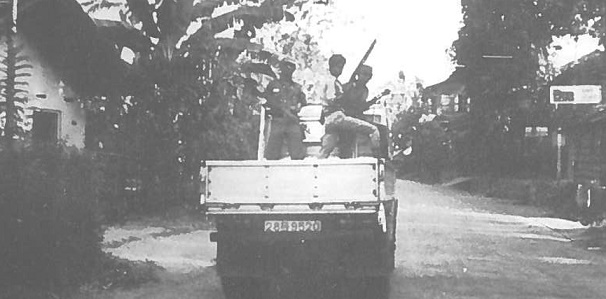
Compensation should be paid to tiger widows not by the state, but by the Diaspora that fuelled terrorism and relentlessly backed a megalomaniac who is responsible for over 100 thousand deaths of all communities. It goes without saying it is evident that “Fairplay” is also a person who contributed to that macabre state of affairs, and craftily seeks state intervention to settle that issue with a proposal to the state. Be that as it may, before the state looks into this comic proposal, may I ask “Fairplay” what his proposal will be to compensate the widows of 600 policemen who were murdered in cold blood by the Regional Tiger Commander at the behest of the leader, a megalomaniac. Yes Karuna Amman was lucky to hold Ministerial office later in the last regime and also be a Vice President of the SLFP.


Sri Lanka be warned: Making sense of the ‘confessions’ by former CIA agents

September 26th, 2016

Shenali D Waduge

The series of interviews and books by former CIA officers sheds a lot of light into the US foreign policy objectives and gives forewarnings. Capitalism and modern imperialism go hand in hand in all of US policy initiatives as can be seen by the different modus operandi adopted towards virtually the same objectives. If it is not natural resources, it is geopolitical advantage that prompts regime change, covert actions etc. The interview on Yugoslavia exposes how politicians, media, rights activists etc are all on payroll and should shame those in Sri Lanka whom we know have been inducted to that purpose. These interviews are enlightening for it should open people’s eyes in particular the Sri Lankan middle class who blindly believe the West are cherubic angels delivering democracy and liberties.

Confessions on CIA covert operations

John Stockwell is the highest-ranking CIA official ever to leave the agency and go public. He ran a CIA intelligence-gathering post in Vietnam, was the task-force commander of the CIA’s secret war in Angola in 1975 and 1976. Excerpts from Stockwell’s book “In Search of Enemies”

I found that the Senate Church committee has reported, in their study of covert actions, that the CIA ran several thousand covert actions since 1961… we have run several hundred covert actions a year, and the CIA has been in business for a total of 37 years.

I had a chance to go drinking with this Larry Devlin, a famous CIA case officer who had overthrown Patrice Lumumba, and had him killed in 1960, back in the Congo. http://ncoic.com/ciawars.htm (a must read as it covers many of US covert operations)

Confession on killing JFK

The Last Confession of E. Howard Hunt by Erik Hedegaard – Hunt’s confession was taken by his son, Lyndon B. Johnson who later became President, gave the orders to a CIA-led hit team, and helped guide the Warren Commission/lone gunman cover-up. http://www.rense.com/general76/hunt.htm

Confession on ousting Syrian President Assad

Former CIA operative, Doug Laux in his Left Of Boom: How a Young CIA Case Officer Penetrated the Taliban and Al-Qaeda, Laux describes how CIA officials were pushing a multi-tiered plan to engineer [Assad]’s ouster.” Both the White House and the CIA declined to comment on these specifics, but according to Laux, leaders from both the Administration and the agency had made it clear from the beginning that the goal of our task force was to find ways to remove President Assad from office” http://www.topinfopost.com/2016/04/05/cia-agent-admits-obama-created-isis-for-this-chilling-reason

Confessions on toppling Yugoslavia and creating Kosovo

Former CIA agent Robert Baer book Secrets of the White House”, Robert Baer, a former CIA officer, has authored many books which disclosed the secrets of both the CIA and the administrations of Bill Clinton and George W. Bush.  As a senior CIA operative, Baer worked in Yugoslavia during the 1991-94 period and in the Middle East, Baer on Yugoslavia.

I arrived by helicopter with three agents. We landed on 12 January 1991 in Sarajevo. They gave us files about a group called Supreme Serbia”, No such group ever existed! Our headquarters lied to us. Our mission was to alarm and spread panic among politicians in Bosnia, simply to fill their heads with the idea that Serbs would attack. We were given money, a few million dollars, to fund various NGOs, opposition parties and various politicians who have inflamed hatred

Personally I was shocked at the dose of lies being fed from our agencies and politicians! The aim of the propaganda was to divide the republics so they would break away from the motherland Yugoslavia. (if the aim is to break up Sri Lanka – what is the ultimate plan thereafter – this is what our people should be thinking about. Please note the man who created Kosovo – Marti Ahtisaari is the very man now investigating Sri Lanka – all he will do is another cut and paste proposal)

We had to choose a scapegoat who would be blamed for everything. Someone who would be responsible for the war and violence. Serbia was chosen because in some ways it is a successor to Yugoslavia. (the scapegoat is Sinhala Buddhists who are presented as evil, murderers, discriminating Tamils – a lot of propaganda and money has been spent on this)

Can you name the politicians in the former Yugoslavia were paid by the CIA?

Yes, although it is somewhat delicate. Stipe Mesic, Franjo Tudjman, Alija Izetbegovic, many counselors and members of the government of Yugoslavia, were paid as were Serbian generals, journalists and even some military units. Radovan Karadzic was being paid for a while but stopped accepting help when he realised he would be sacrificed and charged with war crimes committed in Bosnia. It was directed by the American administration. . (we need to wonder which NGOs, which Opposition Parties and which politicians were on foreign payroll to bring about regime change in 2015)

You mentioned that the media was controlled and funded, how exactly did that happen?

CIA agents were responsible for writing the official statement that the announcers read on the news. Of course the news presenters were oblivious to it, they got the news from their boss and he got it from our man (is this happening in Sri Lanka now?)

Srebrenica is an exaggerated story and unfortunately many people are being manipulated. The number of victims is the same as the number of Serbs and others killed but Srebrenica is political marketing. (This is identical and matches the 40,000 dead figure – without bodies our soldiers are being taken to a bogus Tribunal to be charged for war crimes)

A few years ago a friend of mine, a former CIA agent and now at the IMF, said that Srebrenica is the product of agreement between the US government and politicians in Bosnia. The town of Srebrenica was sacrificed to give America a motive to attack the Serbs for their alleged crimes. (There are lies being created for the same reasons – Wiggy is actor 1, Sambanthan is actor 2, the reconciliation and constitution drafters are actors 3 and there is a whole list of them)

The people who incited the war and dictated the terms of the peace now own the companies that exploit various mineral resources and the like! (We are told that the economy of Sri Lanka is to be given to an American firm)

Kosovo has taken for two reasons, first because of mineral and natural resources, and secondly, Kosovo is a military base of NATO! In the heart of Europe is their largest military base. (What is the objective in dividing Sri Lanka on ethnic lines, where do we go from there?)

Do you have a message for the people of the former Yugoslavia?

I have. Forget the past, it was staged and false. They manipulated you, they got what they wanted and it is stupid that you still hate one another, you must show that you are stronger and you realise who has created this ! I sincerely apologise! That’s why I have for a long time disclosed the secrets of the CIA and the White House!

http://www.ebritic.com/?p=551270 (read the whole interview)

Confessions on the war on terror

John Kiriakou is the only CIA employee to go to prison in connection with the agency’s torture program. He told ABC News in 2007 that the CIA waterboarded suspected al-Qaeda prisoners after the September 11 attacks, namely Abu Zubaydah, thought to be a key al Qaeda official. https://theintercept.com/2015/01/19/cia-agent-jailed-john-kiriakous-long-road-era-torture/

Confessions on murdering Marilyn Monroe

78-year old retired officer of the CIA, Normand Hodges admitted at the Sentara General Hospital that he committed 37 assassinations for the American government between 1959 and 1972, including the actress and model, Marilyn Monroe. He was a hitman of the CIA. He says he was part of an operative cell of five members which carried out political assassinations across the country. Most of their victims were political activists, journalists and union leaders, but he also claims that he killed a few scientists and artists whose ideas represented a threat to the interests of the United States. http://worldnewsdailyreport.com/retired-cia-agent-confesses-on-deathbed-i-killed-marilyn-monroe/

https://www.youtube.com/watch?v=EY53Sk-nBbE

Confessions of Corporate Imperialism

Confessions of a Hit Man is a book by John Perkins who underlines that his job was to

  • convince the political and financial leadership of underdeveloped countries to accept enormous development loans from institutions like the World Bank and USAID. The loans would enable US political influence over these countries and access to natural resources for the US companies. (now look at the present proposition to hand over Sri Lanka’s economy to a US company)

https://www.youtube.com/watch?v=Ui0NL3bb21o

https://www.youtube.com/watch?v=7fVAifnnlg0

Confessions that 9/11 hijacked planes did not bring down Twin Towers

Former CIA officer and commercial jet pilot John Lear has sworn an affidavit saying that the Twin Towers were not bought to the ground by planes crashing into them on 9/11. He has flown covert CIA missions in Asia, Africa, Eastern Europe and the Middle East. No Boeing 767 airliners hit the Twin Towers as fraudulently alleged by the government, media,” http://yournewswire.com/cia-pilot-swears-oath-planes-did-not-bring-towers-down-on-911/

Mark Rossini also says he was prevented from going to FBI headquarters with the information that two known terrorists, who later went on to carry out the 9/11 attacks on the World Trade Center, had entered the US

http://www.businessinsider.com/former-fbi-agent-mark-rossini-says-cia-kept-him-from-helping-stop-911-2015-1

Susan Lindauer, a former CIA asset had extraordinary experiences conducting back channel talks with Saddam Hussein about resuming UN weapons inspections during negotiations prior to the invasion of Iraq. Her affidavit is given below – http://www.veteranstoday.com/2015/05/01/911-confessions-of-a-former-cia-asset/

Confessions exposing Barack Obama

Clare Lopez is a former CIA officer is claiming Obama is why America has completely switched sides” during the war on terrorism. America is now supporting the enemy, especially through the Muslim Brotherhood.

http://www.thepoliticalinsider.com/former-cia-officer-just-exposed-obama-our-worst-fears-are-true/

Raymond McGovern is a retired CIA officer turned political activist, received the Intelligence Commendation Medal at his retirement, returning it in 2006 to protest the CIA’s involvement in torture. In 2004 he implied that Bush could have prevented the 9/11 attacks and said that the administration, intent to involve the country in a war with Iraq, were for reasons other than the stated “Weapons of Mass Destruction.”

Interview with Robert David Steele ex-CIA agent https://libertyblitzkrieg.com/2016/08/02/video-of-the-day-an-interview-with-ex-cia-agent-robert-david-steele/
Please take time to read the interviews, in so doing it will give readers a broader outlook on what is being planned out for Sri Lanka. The actors now doing their bit are obviously inducted for their roles as clearly indicated in the interviews above. They cut themselves to be sorry figures of the eventual outcome for our country targeted to be dismembered soon. They will no doubt walkway with massive perks and leave behind an island in chaos. With no conscience or integrity there is little we can expect from them. 

Shenali D Waduge

Is Chief Minister of NPC- C.V.Wigneswaran preparing the ground for another Racial Riot, to call for foreign intervention?

September 26th, 2016

By Charles.S.Perera

Sri Lanka Yahapalanaya Government is doing every thing the way USA and the West want  it to do.  And our President Maithripala Sirisena is naïve to believe that his being praised  by the West, shaking hands with Western Leaders or posing for photographs with the President Barrack Obama and the American First Lady is a mark of approval of Yahapalanaya Government by the Western Countries.

It may be so as there is no country in the world so shamelessly subjugating itself to the Western Political Leaders. There is also no respectable country in the world which writes the Constitution of the country with the minority partnership.  There is no country in the world  which  does everything to reconcile with the Tamil Community which contribute nothing for the protection, security or welfare of the country

The Tamils in Sri Lanka  do not want  to integrate into  the Sri Lankan Society.  They want to be separate from the rest of the people of Sri Lanka. The political and social problems Sri Lanka is faced with today is this refusal of the Tamils to be a part of the larger community of Sri Lankans.  Tamils do not want reconciliation , they want equal rights with the Sinhala and a separate Tamil Eelam in the North and East.  Why cannot the Yahapalanaya  crowd cannot understand it ?

The Tamils  do not want to be second class Citizens-as they say,  but want equal rights with the Sinhala people of the country.  But this Tamil Community seeking equal rights with the Sri Lanka has not contributed positively in any way for its protection and development.  They came to Sri Lanka as plunderers, marauders and invaders and even today remain separately taking the best of what they can from Sri Lanka, always demanding more and giving nothing in return for its welfare or security (except a handful of them).

A Nation is identified by its culture. The culture is invariably related to the religion or the belief system of that nation.  There are conquests, incursions or immigration into a nation state which introduces other cultures and belief system  by force in case of conquests, but the original culture of  the nation state by which it is recognised remains intact, even with the introduction of new cultures into its.  However, these  other cultures or belief systems introduced into the nation state  cannot remain completely isolated without being influenced  by certain aspects of other cultures and religions that have come  into its midst.

However the  main culture and the belief system of that nation state will remain protected,  accepted as its identifying culture. That would be its primary identity with other culture coexisting without putting into danger the original culture with which  the nation State is identified.  This is what happens with great nations of the world having a history of more than  thousand or more years.

Applying this to Sri Lanka it should be correctly  identified as a Sinhala Buddhist nation. The other cultures in the country like Christianity of the Western Culture which was forced into it,  Hindu and Islamic cultures  came into the country through incursions, and immigration. But all these cultures coexist within the Sinhala Buddhist Culture. The constitution accepts these cultures foreign to Sri Lanka ,laying down the methodology of their  functioning.  But the constitution cannot be adjusted to enable reconciliation with communities, because it is the communities that should adopt and accept the Constitution of the Nation State.

If that is how it is,  then it could be the Sabyathva Rajya, recently stated by Gunadasa Amarasekara in his new book.

Democracy is of course a foreign invention introduced to our country by the British. Once it has been accepted into the political system democracy  has to be correctly understood.  Once accepted and introduced it covers  all political activities of  the Nation State composed of the communities that make up the Nation with its original people of the culture with which Sri Lanka is identified.

But democracy cannot be a reason to change the Constitution to give special privileges to minority communities.  That would be a mutilation of democracy.  The Democratic system is to accept the voice of the majority, not to accept  views  and demands of the minority to put in danger the accepted  majority point of view, if not it would be anarchy.  Even in an election it is the one who gets the majority(highest) number of votes that wins the election.

But it is an aberration of this concept to accept the proposal suggested by TNA Parliamentarian Sumanthiran in a recent  Derana TV Programme  Aluth Paralimenthuvak, that a new constitution should be written removing the 9th Article with protects Buddhism as the foremost religion as it provides a special privilege  to the Sinhala Community, which is denied to other communities.

He argues that the Tamils had not been given their rightful place since independence, being treated as second class citizens. What else are they as pointed out earlier, they are a minority Community, but not second class citizens as they say.

TNA MP Sumanthiran further denies Mahavansa as a  historical record of the Sinhala (which was agreed  by a man who calls himself a specialist in History of Sri Lanka-a professor of history Nirmal Ranjith Dewasiri, who said that Mahavansa as a historical record is controversial. These are University Professors who have passed their  exams on book knowledge unable to think beyond what they have learnt from books  written by western writers. That is one reason why there should be a radical change in the university education system in Sri Lanka).

According to C.V.Wignesvaran the Chief Minister of the Northern  Provincial Council,  North and East should be exclusively Tamil Provinces and the new Constitution should be a Federal constitution in which the rights of the Tamil people are expressly stated. That would be a far  cry  from Sabyathva Rajya- or democracy.

Strangely the Yahapalana leadership seems not  averse to these suggestions of the TNA. Undoubtedly the Yahapalanaya Goverrnment  has an agreement with the TNA to accept their version of democracy.

These TNA MPs  and Wignesvaren led Tamils who are not satisfied being a minority but would like to have equal rights with the Sinhala Buddhists should know a little more of the place the Sinhala Buddhists have in Sri Lanka since the inception of the Sinhala Buddhist culture.

The Sinhala became a Buddhist nations after the arrival of Venerable Arahath  Mahinda Maha thero . Then there were no Tamils or Muslims. The King Devenampiatissa offered whole of Sri Lanka to Buddha sasana in the Presence of the venerable Arahath Mahinda Maha thero.  Since then the Sinhala people protected this land from foreign invaders, giving their life and blood in the defence of Sri Lanka their country. Tamils came as invaders, plunderers, marauders. They were chased away by the valiant Sinhala Buddhists.

However, later on a Cholan   King Elara set up a kingdom in Anuradhapura from 202 BC to 161 BC. He reined for a long time as he had accepted to rein over the  people in a way appropriate to the teachings of the Buddha. He had developed compassion towards those he ruled extending the same compassion even to animals.

The Northern Province Chief Minister Wigneswaran organised a well attended  demonstration in Jaffna against settlement of Sinhala people in North and East. The report announcing the demonstration  read, Northern Province Chief Minister C.V.Wigneswarana has urged Tamil people to participate in a demonstration  scheduled in Jaffna tomorrow, to oppose the systematic settlement of Sinhalese people in the Tamil dominated regions and the erection of Buddhist statues in an area devoid of Buddhist Devotees.

Didn’t this stupid man Wigneswaran a one time Judge think for a moment that these demonstrations, may be  a deliberate triggering off of racial riots? The Sinhala in the South  not taking these demonstrations lightly  may want to rise against the Tamils reawakening hatred that compelled riots of the past.

The Yahapalanaya lulled into a false sense of security  removing  Army Camps in the north and east, distributing lands in the north  back to the Tamils hopes that it may help to reconcile with the Tamils.

The President Sirisena and Prime Minister Ranil Wickramasinghe and the Yahapalanaya Government refuse to understand the reality that the Tamils refuse  reconciliation, because the Tamils want a Tamil Eelam- Tamil only provinces in the North and East and nothing less.  That is why they do not want Sinhala settled in the North and East and destroy Buddhist statues. Tamils are provoking the Sinhala Buddhists in the south  for a backlash,  with another racial riot. 

If there were to be a back lash, it would help the Tamil politicians in the North and the East to call for foreign intervention.  There are lot of trigger-happy Americans ready to descend at the first call. Amnesty International , Human Rights Watch  which did not speak a word when Libya, Iraq or Syria were bombed to heaps of rubble, will not fail to call for  the intervention of International community in Sri Lanka.

This is where the Yahapalanaya Government has brought Sri Lanka. The so called Western friends of Maithripala Sirisena who heaped him with commendations and appreciation  will not fail to intervene to defend the Tamils. They are already demanding the North and East be free of Army Camps.

In the mean time the election commissioner too is being very helpful( to Yahapalanaya), in case of another election that the Tamil votes will increase in the North and east. He says he will allow voting rights to the Tamils still remaining in refugee camps.  In the mean time the number of returnees from refugee camps in India has increased.  They will also be given their voting rights. All in all the Tamil votes to the Yahapalanaya Government may ensure their re election. It was the Tamil and Muslim votes that allowed Maithripala Sirisena an edge over the other Presidential Candidate Mahinda Rajapakse on the 8th January,2015.

If Sri Lanka is to be saved from falling into an unrecoverable abyss, the Sinhala Buddhists have to unite as one behind a leader who can save Sri Lankafrom looming disaster, and  from the grip of unhelpful friends and released to  real friends who will help develop Sri Lanka and protect it from political vultures of the West.

It is time that the Yahapalanaya Government wakeup from their lull into false sense of security and arrest the NPC Chief Minister Wigneswaran for inciting people to racial disharmony and riots. Yahapalanaya Government  should also stop further distribution of land in the North and East to Tamils and strengthen Security.  They should also arrest all those who were responsible for the destruction of Buddha Statues in the North, and threaten the Sinhala people already settled in the area.

Sri Lanka economic crisis caused by reckless deficit spending: Sri Lanka’s ex-President Mahinda Rajapaksa

September 26th, 2016

ECONOMYNEXT – Sri Lanka’s ex-President Mahinda Rajapaksa said reckless post-election spending involving a state worker salary hike and subsidies generated an economic crisis, driving investors away though it is being blamed on debt taken during his rule.

“All the economic problems of the yahapalana (Good Governance) government are due to the fact that they bribed voters with salary increases and price reductions in order to win the 2015 August parliamentary elections,” Rajapaksa said in prepared text of a speech delivered on September 15.

“They thought only of winning the elections, not about how they would manage the country after winning.

“This election related largesse set off a chain reaction which began with the loss of control over government expenditure, and an increase in the budget deficit.”

“The money thrown around to win the election resulted in an increase in imports.

“Seeing the recklessness of the new government, foreign investors began withdrawing their money and leaving Sri Lanka.”

Sri Lanka’s rupee collapsed from 131 to 147 during 2015 as the central bank printed money to 290 billion rupees finance the deficit as credit demand went up and also sterilized forex interventions as foreign investors fled.

During the Rajapaksa’s rule in 2012 also the rupee collapsed from 110 to 130 to the dollar.

The 2012 balance of paymetns crisis was triggered by energy subsidies, not election spending, and the central bank printed around 220 billion rupees as utilities borrowed from state banks to keep rates down and boost credit and imports.

Rajapaksa said during his time there was no difficulty in repaying debt and he did not complain about the lack of money.

Analysts say during the last few years of his rule, then Treasury Secretary P B Jayasundera did slowly squeeze expenditure, with total spending as a share of GDP falling.

In addition revenue to GDP also fell, reducing the overall tax burden on the people, while the budget deficit also fell. The strategy is superior to cutting deficits by raising taxes from the people to pay state workers.

However part of the expenditure fall, analysts say was a statistical sleight-of-hand where road building costs were hidden by off-balance sheet borrowings.

The economy was also hamstrung by Rajapaksa’s tendency to mis-manage state enterprises and build new ones and his support for domestic businesses and farmers to exploit consumers with import duties.

A large part of Sri Lanka’s current problems are due to the losses and inefficiencies at state enterprise and import protection.

The current administration has continued the policy of helping businesses build monopolies with import duties.

Rajapaksa charged that the International Monetary Fund had imposed ‘strict conditions’ on Sri Lanka because the new administration could not be trusted.

“The international lending agencies saw the reckless manner in which the yahapalana government destabilised the economy in a matter of weeks and months which is why they imposed strict conditions on Sri Lanka,” he said.

He denied that the economy was heading for a crisis in late 2015 when he called an election.

“The yahapalana leaders say it was not my astrologer who persuaded me to call an early election but Dr P.B. Jayasundera my treasury secretary. I am quite amused by such stories,” Rajapaksa said.

Economic analysts say the economy was recovering by the third quarter of 2014 as shown by credit and trade numbers. But expropriation, favoring businesses with import duties, the burden of loss making state enterprises, lack of rule of law, corruption and growing vicious nationalism had hurt the country’s growth propects. (Colombo/Sept15/2016)

Pro-Christian Sri Lanka Media gives publicity to stop elephant perahera but shuns publicity for 1st Asian Buddhist Animal Rights Conference

September 26th, 2016

Shenali D Waduge

To the many who say that the Sinhala Buddhists are exaggerating about the bias of Sri Lanka’s media, with just one example we can highlight that bias. While all of the English media takes pains to provide all types of publicity to promote the belief that the elephants should be removed from the perahera citing a handful of examples of torture, when the media is well aware that the 1st Asian Buddhist Animal Rights Conference is to be held in South Korea on 30th September 2016 none of the news media have chosen to even give a line of publicity to it. Moreover it is surprising that so called animal activists who jump up and down demanding the end to perahera elephants are totally unconcerned about the Asian Buddhist Animal Rights conference and stranger is that they all silent on animal/ritual sacrifice!

shenali27091611

From NGO funded petitions, facebook pages, authors paid to write on it, plenty of effort went into project the plight of elephants citing one or two examples with the main objective being to remove the culturally significant Buddhist perahera elephant thus dealing an historical blow to a pageant that has taken place for centuries.

Here are some of the links to efforts taken

https://www.colombotelegraph.com/index.php/the-perahera-elephant-torture-pain-suffering-behind-the-glitz/

Facebook page – Say No to Cruelty to our Elephants of Sri Lanka

Dailymirror – http://www.dailymirror.lk/29644/perahera-elephant-goes-on-rampage

The baffling question is if organizations and activists are concerned about animals why are they silent on animal slaughter, ritual slaughter and other types of killing which is far more inhumane? Why have these organizations most of which are Western funded not fighting for the animal rights bill? Why is it only the Buddhists and Hindu religious leaders advocating this? Why are these individuals only concerned about and taking great pains to target the removal of the perahera elephant. Luckily people have been alert and were able to put two and two together so that campaign has now gone into silent mode but likely to soon rise again.

Nevertheless, what is unbelieveable is that when a conference in the form of the first Asian Buddhist Animal Rights is convening no one wants to give publicity to it. None of the papers have even mentioned it. Why is that? Simply because it is such a noble effort by Asian Buddhists and that is why they refrain from reporting it.

It is unfortunate that the media claiming to be unbiased and transparent take such a shallow route purposely ignoring and refusing to highlight a noble endeavor in a world where so much of cruelty is taking place.

We are not exaggerating when we say that the media’s bias and lack of straightforwardness throughout the terror was responsible for not putting the truth about the LTTE and those that silently supported LTTE into the open. The media remains silent on the very people now coming into the open who were silently LTTE sympathizers.

The 1st Asian Buddhist Conference will be held in Seoul Korea on 30th September 2016 and is co-sponsored by Coexistence of Animal Rights on Earth and Dharma Voices for Animals which also has chapters in Colombo and Kandy. Please look at their websites for more information and their noble efforts.

http://dharmavoicesforanimals.org/

https://donate.careanimalrights.org/seoul-south-korea/events/1st-asian-buddhist-animal-rights-conference/e92052

The media it appears enjoys highlighting all the bad it can find or implant about Buddhists and Buddhism and does not wish to promote any of the good morals that are being promoting globally.

Shenali D Waduge

Clinton E-Mail Scandal: Never wanted Sri Lanka LTTE defeated

September 26th, 2016

By Daya Gamage – Asian Tribune Political Note

Washington, D.C. 27 May (Asiantribune.com):

The U.S. Department of State’s – highly impartial and non-partisan watchdog – Office of Inspector General found fault on May 25 with Hillary Clinton for the use of a private e-mail server which contained sensitive and classified material during the time she was secretary of state. Hillary Clinton

The OIG found that Clinton did not comply with the agency’s policies on records in her use of private email while US secretary of state.

Thousands of emails that Clinton sent from the private account during her tenure as Secretary of State from 2009 to 2012 have been made public last year as a result of Freedom of Information Act lawsuit filed by an investigative journalist.

Most were found highly sensitive and classified one of which was connected to the then ongoing battle between Sri Lanka’s military forces and the Tamil Tiger fighting cadre.

The OIG report, which was provided on May 25 to the U.S. Congress for the lawmakers to study and take action, states, “At a minimum, Secretary Clinton should have surrendered all emails dealing with Department business before leaving government service and, because she did not do so, she did not comply with the Department’s policies that were implemented in accordance with the Federal Records Act.”

The e-mail scandal has plagued her campaign for this year’s presidential election.

In one of the e-mails – undoubtedly a sensitive one – disclosed because of the Freedom of Information Act law suit granted by a federal judge – Secretary of State intervened in early May 2009 to bring obstacles to the Government of Sri Lanka when it was clear to her that the Tamil Tigers were being defeated at the battle field.

She wanted the IMF to immediately suspend funds to Sri Lanka. An email sent on May 4, 2009 seemed to suggest that the International Monetary Fund was unhappy with Secretary of State Clinton “ordering/telling” the IMF to suspend the funding of the government of Sri Lanka.

As a result of Secretary Clinton’s “ordering/telling”, the IMF held a meeting with the then US Secretary of Treasury, President Obama’s cabinet officer handling the nation’s finances, the e-mail passed through Clinton’s server notes that Treasury Secretary Timothy Geithner expressed that she was “intruding into his domain”.

Burns Strider, a political consultant and former senior advisor to the then-secretary of state, said in the e-mail -that went through Clinton’s private server she was illegally maintaining at her New York resident – that he felt “people on the ground”, from both the World Bank and the IMF, believed that the Liberation Tigers of Tamil Eelam needed to be “completely defeated” and that “collateral damage inflicted on private people” by the actions of the Sri Lankan government were “ok”, in their eyes.

Here’s that E-Mail:

On Mon, May 4, 2009 at 9:39 AM, H

wrote:

Do you know anything about this–from any angle?

Original Message

From: Bums Strider

To: H

Sent: Mon May 04 09:36:17 2009

Subject: Some intel for you…

This is about Sri Lankan Govt and the Tigers…

I have a good source.

This was shared to me at my and Karen’s Derby Party yesterday (can you
believe the 50 to 1 odds winner?).

There was a meeting held with Geitner asked for and led by IMF… They
told him you were intruding into his domain by ordering/telling IMF to
suspend funding to Sri Lakan Govt.

My take is that the people on the ground both with World Bank and IMF
believe the Tigers need to be completely defeated and any collateral
damage inflicted on private people by SL govt in process is ok… They
also believe Tigers are better at propaganda than SL govt…

I have no idea what reality is… I know all about the conflict because
there’s been so much written over time but no idea of reality on ground.

My point is that IMF/World Bank is hoping to get Geitner to intervene
and they recently played to his sense of who is US point person on
IMF… So, that’s what I know. I’ll keep my ears open. (End Text)

TO: H means to Hillary

The e-mail written by Secretary Hillary Clinton’s political consultant and senior advisor Burns Strider that went through her classified server gives a serious narration. Obama administration’s foreign minister Hillary Clinton was using her official position to bring obstacles for the Government of Sri Lanka to defeat the secessionist Tamil Tigers. That she was attempting to use U.S. representatives in the IMF and World Bank to bring ‘economic blockade’ to Sri Lanka to avenge the failure of the State Department’s overall policy to prevent a total annihilation of the LTTE. She was using her stature in the Obama administration to influence Secretary of Treasury Geithner to work with the IMF and IBRD to impose the ‘economic blockade’. The officials of the IMF and IBRD strongly felt that the Tigers needed to be defeated even at the cost of ‘collateral damage’.

This then is connected to what the deputy assistant secretary of the U.S. State Department expressed at the special media event in Washington on May 6 (2009).

United States Maneuvers

On 6 May 2009, twelve days before the war ended with the total defeat of the LTTE with all the leaders killed, the State Department convened a special media event in Washington presenting its deputy assistant secretary of State for South Asia to make significant announcements about the crucial developments in Sri Lanka. While announcing the measures taken by the USG toward the surrender of LTTE cadre and the protection of the unarmed civilians within the battle zone, the deputy assistant secretary Mike Owens made the following significant pronouncements for the GSL to hear loud and clear:

(a) We, of course, have designated the LTTE as a terrorist organization, and we certainly have no sympathy for some of the things that they’ve carried out, but I think you do have to ask a very legitimate question: Why did they have a following in the beginning? And I think it’s because some in the Tamil community do have legitimate grievances, and we need to find — I think it’s imperative for Sri Lankans to find a way to give everyone in the community, all Sri Lankans a legitimate voice in their government.

(b) If the government of Sri Lanka does attack the safe zone and large numbers of civilians are killed: Certainly, there would be consequences, and we’ve made it very clear to the leadership of the government of Sri Lanka there would be strong consequences if that occurred. I would not want to sort of tie our hands in terms of specifying exactly what those consequences would be, but we would certainly hold the government of Sri Lanka responsible for the death of a lot of civilians, and we’ve made that very clear to the leadership.

(c) I would emphasize that we believe the Diaspora, the Sri Lankan Diaspora, and particularly the Tamil Diaspora in North America, in Europe, elsewhere, has a very important role to play in this. They should, I hope, be speaking out in terms of what they envisioned for Sri Lanka in a post-conflict scenario. They have an important voice in that process.

What Mike Owens spelled-out were clear policy planks, that the LTTE clearly represented the grievances of the 11% minority Tamil community in Sri Lanka, and that the USG clearly believed that those grievances gave birth to the movement, and despite the USG designated it a terrorist movement it is unable to allow such an organization which represents the Tamil voice be totally removed, and the GSL was warned not to use its fire power to harm the unarmed civilians which would obstruct Washington’s effort to find out “what to do about the leadership of the Tigers”.

If the sole endeavor was to protect the unarmed civilians and facilitate them to move out of the battle zone, Mike Owens wouldn’t have used the following language. This sounded like simultaneous efforts to protect the civilians – threatening the GSL to take two steps back – and remove the top LTTE cadre from the battle zone.

Looks like Secretary Clinton and her assistant secretary Mike Owens were on the same page with single policy target.

We are trying quietly — and I can’t talk too much about this– but we are trying quietly behind the scene to find a way to bring an end to the fighting. It’s very difficult to see exactly how that’s going to happen, but we think there are a couple of elements that need to be involved, and we need to find a way for the LTTE to surrender arms possibly to a third party in the context of a pause in the fighting, to surrender their arms in exchange for some sort of limited amnesty to at least some members of the LTTE and the beginning of a political process”

Mr. Owens had earlier served in Sri Lanka as a Foreign Service Officer, and immediately prior to the assistant secretary position he was Director of the State Department’s Office for India, Nepal, Sri Lanka, the Maldives and Bhutan.

“So what we would like to see is a package, in which there is a pause, and then during that pause, not only do the civilians leave but we also make some arrangements between the government and the LTTE that would involve trading off surrender of arms for a limited amnesty. The government of Sri Lanka has previously offered a limited amnesty. This would be for the lower level LTTE cadre, not the leadership”.

Following is the most catchy phrase:

“And so I think one of the big questions is what to do about the leadership, and that’s certainly not easy to answer. This is a very complex and very difficult sort of thing to orchestrate. There are many problems, and we are running out of time. We really, literally, have a matter of a couple of days maybe in which we can try to get this finalized.

“So we are working on it, but I don’t want to raise expectations that we’re close to a comprehensive agreement,” declared Mike Owens.

Why was a United States government official instead of talking about the protection of civilians underscore the safety of the leaders of an organization it designated a foreign terrorist organization (FTO)? This was more to an evacuation of unarmed civilians from the battle zone.

Elaborating further on the same issue the State Department’s acting Deputy Assistant Secretary Owens said: “I just want to emphasize this is what we would like to see happen, but we don’t have any illusions that this is easy to engineer. It’s something that we’ve been working on very hard and quietly behind the scene, because we see — the only potential we see to bring this to an end is to have a package in which we have a pause, and the civilians were allowed to leave. “

Clinton’s disclosed e-mail and Mike Owens’ pronouncement, both in the first week of May 2009, clearly project the mindset and perspective of the Obama White House – in which Dr. Samantha Power worked to make the Rajapaksa administration looked like a genocidal regime – toward the LTTE, Tamil issues and Sri Lanka’s national calamity.

– Asian Tribune –

LTTE Terrorism-Church Links – Can someone explain these photos?

September 26th, 2016

Shenali D Waduge

The following photos are alarming and raises more questions than answers. Who can explain the connection?

There were many Church-based NGOs operating in the North and East throughout the conflict. Many of them had their offices virtually next door to LTTE offices.

Audit the monies sent to these organizations throughout 30 years and evaluate against what they had done against what their websites and reports claimed they did. What were they really upto in the North and East when LTTE was running a defacto state using LTTE police, LTTE judiciary, LTTE courts, LTTE schools, LTTE teachers, LTTE curency…? Who can answer?

shenali27091601shenali27091602shenali27091603shenali27091604shenali27091605shenali27091606shenali27091607shenali27091608shenali27091609shenali27091610

Father Emmanuel of GTF – whats the flag at the podium? LTTE flag

He and his diaspora organization were banned under UNSC Resolution 1373 but has since change of government been deproscribed under reconciliation. He is on record saying he is first a Tamil and then a Christian. He called Prabhakaran ‘Jesus Christ’, the LTTE ‘soldiers of Christ’, the suicide bombers ‘martyrs of the Catholic Church’ to whom the Church provided a Catholic burial, and proclaimed himself as ‘the Moses’ who would lead the Tamil nation from the bondage of Sinhalese-Buddhists to the land chosen for them by God: Eelam.  http://www.infolanka.com/org/diary/2.html

Fr. Jegath Gasper Raj main link for Tigers in India Tamil Tigers and the Church consider Fr. Gaspar Raj as their latest pop priest.”

http://www.asiantribune.com/node/4959

LTTE Voice of Tigers tied up with Radio Veritas, a Catholic broadcasting station run by the Asian Catholic Bishops Conference based in The Philippines. The Tamil Service of the Radio Veritas is run by the Tamil Catholics of Tamil Nadu. Voice of Tigers had a “coordinating office” inside St. Sebastian’s Church in Mallavi, Wanni; the office was opened by the pro-LTTE Bishop of Mannar Fr. Rayappu Joseph.

Incidentally, Jaffna Mayor and MP of the Sri Lanka Freedom Party, Alfred Duraiappa, Prabhakaran’s first assassination, had got off at the Madhu Church before proceeding to Jaffna. Many believe it was a tip off from the Church that informed Prabhakaran of Duraiappah’s arrival in Jaffna, leading to his death.

 World Council of Churches has been promoting the concept of traditional homeland theory in 1994 at the UNHRC in Geneva. http://www.sangam.org/2008/12/IFT_UDHR.php?uid=3197&print=true

The power of the Church is such that the present Chief Minister of Tamil Nadu even repealed the anti-conversion law (in 2004) implemented by her own Government. For this she was rewarded with the Golden Star for Dignity and Honor from the International Human Rights Defense Committee, a Christian body funded by USAID. She was also awarded with the Bharath Jyothi in 2005 and evangelist KA Paul presented Rs. 1 crore for tsunami relief. In 2003, Sri Lanka’s Buddhist and Hindu leaders also drafted an anti-conversion bill, but heavy Church influence upon the Government has ensured reluctance to implement it.

There are some 3000 Churches/para-churches in and around Chennai, 46 Bible colleges, 23 Christian media centers, 122 Christian magazines in English and Tamil, 114 church planting missions. The Church sponsors rallies, posters, conventions etc. Christianity is broadcast via national Doordarshan, satellite/cable channels of GOD TV, CBN, TBN, MiracleNet, Daystar TV, Raj TV, Zee TV, Vijay TV, Blessing TV, Angel TV, Shalom TV, Jeevan TV and web-based telecasts like Jesus Calls, Num.TV. These Christian channels are relayed to 216 cities across India to an audience of 21million. http://indiatoday.intoday.in/story/independent-churches-mushroom-across-india-attracting-foreign-funds/1/136664.html

https://bharatabharati.wordpress.com/2011/03/31/tamil-nadu-politcs-cancerous-church-eats-into-dravidian-parties-radha-rajan/

https://bharatabharati.wordpress.com/2010/11/08/christian-denigration-of-buddhism-and-conversion-of-the-vulnerable-j-goonetilleke/

https://bharatabharati.wordpress.com/2010/02/02/world-vision-christian-ngo-engaged-in-culture-murder-not-social-service-v-k-shashikumar/

http://rajeev2004.blogspot.com/2009/04/church-ltte-srilankaguardianorg.html

The church also had played a role in these activities in Norway with the involvement of the World Council of Churches to which the National Christian Council (NCC) in Sri Lanka headed by Rev. Kenneth Fernando is affiliated. The National Peace Council, of which Mr. Jehan Perera is the secretary, has been established by the NCC. A Christian priest by the name Devus had campaigned that the Norwegian government should take steps to pressurise the Sri Lankan government to stop military operations in Jaffna. These are only few of the involvements of the LTTE and its front organisations in Norway. A fuller account is given in the above-mentioned article in the “Irida Divaina”. These criticisms on the hierarchy of the Church should not be considered as an attack on the Christians in general. The ordinary Christian, especially the Sinhala Christian has nothing to do with these activities and, in fact, I know of many Sinhala Christians who are against these members of the hierarchy but are not in a position to take any action against them.” http://www.sinhaya.com/NorwayAndLTTE.htm

Lankan church helps ‘despairing’ Tamil Tigers  Sri Lanka church workers are trying to help former Tamil Tiger rebels, who are said to be living in the blackest of despair,” claiming many should be released.  http://www.tamilcanadian.com/news/index.php?action=comments&id=11781

Sri Lankan Tamils, the ‘Cats Paw’ of the Church http://www.asiantribune.com/index.php?q=node/8060 the World Council of Churches that sponsored the LTTE office in London which commenced its operation from 1984 denigrating the SL Government in general and the Sinhalese Buddhist in particular. The heads of the different Christian denominations in SL issue press statements from time to time, on the ongoing conflict, blaming mostly both parties to the Sri Lankan conflict, quite oblivious to the fact that on the one hand you have the legitimate Government of the country bending over backwards for peace and on the other the intransigent, ruthless and a totalitarian terrorist organization. They also make pilgrimages to Kilinochchi and eulogize the most ruthless terror leader and his activities. These are mostly done for the consumption of the Tamil Diaspora and the LTTE sympathizing Governments in the west.”

Unrepentant alliance of National Christian Council of Sri Lanka ….. http://www.asiantribune.com/node/14082

main objectives of the NCCSL and its affiliates seem to be the creation of space for the LTTE and strengthening of the separatist agenda. National Christian Councils in other Western countries who are continually fed with information from NCCSL have constantly adopted a stance to brush aside the realities facing Sri Lanka, a sovereign country, and, her people. Their past and present actions compel one to conclude that they prefer Sri Lanka to be Balkanized and LTTE to hold sway in the North and the East of Sri Lanka.”

LTTE abducts 16 children from Catholic Church run orphanage – Dharmapuram http://www.rainbowinformation.com/sss_srilanka/newsflash/Newsflash-18.pdf

Why would the Catholic clergy train youth to enact cultural events to build resentment against the Sri Lankan Government (3 dramas held on 16 Dec 2012 by children from Jaffna Central College, Hindu College and Vembadi Girls College enacted that Eelam cause was not over / a drama staged on 27 Jul 2013 depicted 13th amendment the clergy involved were M V E Ravichandran (In Charge), Justin Gnanaprakasham (Committee Coordinator), Anton Jeyamsnadan (Pullopalai East Church)

why would Catholic clery from Vavuniya, Mannar, Kilinochchi, Mullaitivu and Jaffna join TNA and TNPF politicians on 27 Aug 2013 to conduct anti-Government protests in front of the UN office during Navi Pillai’s visit.

Church calls for an international investigation into war crimes in Sri Lanka http://www.asianews.it/news-en/Church-calls-for-an-international-investigation-into-war-crimes-in-Sri-Lanka-30468.html

Christian Clergy from North and East Want UN Human Rights Council to Pass Strong Action-Oriented Resolution on Sri Lanka. Over a hundrd members of the Christian Clergy serving in the Northern and Eastern Provinces of Sri Lanka have appealed to the United Nations Human Rights Council that a strong and action oriented resolution in relation to accountability, reconciliation and human rights in Sri Lanka going beyond the resolution adopted at the 19th session of the Council should be passed at the forthcoming sessions in Geneva. The full text of the letter and list of signatories led by the Catholic Bishop of Mannar Diocese Most Rev Dr.Joseph Rayappu are posted here)

http://dbsjeyaraj.com/dbsj/archives/16702

Shenali D Waduge


THE 1990 SIEGE OF BATTICALOA: A TRIBUTE TO THE WARRIORS OF THE GEMUNU WATCH

September 26th, 2016

By: BG (Ret.) Hiran N. Halangode , Sri Lankan Army  This article  was published in the US issue of the Combating Terrorism Exchange magazine of August 2016 

The rifleman fights without promise of reward or relief. Behind every river there’s another hill and behind that hill, another river. After weeks or months in the line, only a wound can offer him the comfort of safety, shelter, and a bed. Those who are left to fight, fight on, evading death but knowing that with each day of evasion they have exhausted one more chance for survival. Sooner or later, unless victory comes, this chase must end on the litter or in the grave.   General Omar N. Bradley1

Sri Lanka (formerly Ceylon) is an island nation in the Indian Ocean off the southeast tip of India. Most of the land is flat and rolling, with mountains in the south-central region rising to over 8,000 feet (2,438meters). The two nations are separated by the Palk Strait, which is only 18 miles (29 kilometers) wide at the closest point between Rameswaram in the southern Indian state of Tamil Nadu and Talaimannar in northern Sri Lanka.

Indo-Aryan emigration from India in the fifth century BCE led to the formation of the largest ethnic group on Sri Lanka today, the Sinhala. Tamils, the second-largest ethnic group on the island, were originally from the Tamil region of South India and emigrated between the third century BCE and 1200 CE. The Tamils, primarily Hindus, claimed the northern section of the island while the Sinhala, who are predominantly Buddhist, controlled the rest of Ceylon. Beginning in 1505, Ceylon became a colony, first of the Portuguese empire, then of the Dutch East India Company (1658–1796), and eventually, of the British Empire (1802–1948). The British brought indentured labor from South India to work their coffee, tea, and rubber plantations, thereby displacing many Sinhala in the central highlands of Kandy. On 4 February 1948, after443 years of colonial rule and under pressure from Ceylonese nationalist leaders, Ceylon became a self-governing dominion of the Commonwealth of Nations. The name was changed to Sri Lanka (“Resplendent Island”) in 1972.

The Ceylon Army (first instated on 10 October 1949) was deployed in 1951 to assist the police in preventing illicit immigration and smuggling between Ceylon and Tamil Nadu in India. This was in addition to its other task of assisting the government in maintaining essential services. The problem of poaching and smuggling in the shallow waters off the northern coast continues to this day and has had a profound impact on relations between the two countries. Such illicit activities also remained a center of dispute during the civil conflict.

Ever since independence, the Tamil minority in the north of Sri Lanka has harbored resentment towards the Sinhalese majority due to political, economic, and social differences, exacerbated by the differences in culture and religion. The Tamils claimed that Prime Minister S.W.R.D. Bandaranaike championed Sinhala nationalism and further marginalized the Tamil minority when he made Sinhalathe country’s official language and institutionalized state support of Buddhism in 1956.2

In the 1970s, the insurgent group the Liberation Tigers of Tamil Eelam (LTTE) arose in the country’s north, with the goal to win independence for the majority Tamil regions of Sri Lanka and create a greater Eelam (“Precious Land”) aligned with the Indian state of Tamil Nadu.3 In 1975, the Tamil mayor of Jaffna waskilled by the separatists simply for holding a government office. After a government crackdown in the north, some Tamils crossed to Tamil Nadu as refugees, many moderate Tamils who had been living among the Sinhala in other parts of the country fled to the north, and a few migrated to Western countries and formed the Tamil diaspora. The Tamil Nadu government supported, financed, and gave refuge to Tamil rebel groups, allowing them to operate clandestinelyfrom Indian territory. The Indians also helped train and arm certain Tamil guerrilla groups to fight the Sri Lankan Armed Forces after Sinhala racial riots in July 1983 that resulted from the ambush of a Sri Lankan Army patrol in the north.

The first of a series of five peace talks and many ceasefires was arranged by the Indian government in Thimpu, Bhutan, in 1985. At this meeting, the five main Tamil rebel groups presented four demands to the Sri Lankan government:

  1. Recognition of the Tamils of Sri Lanka as a distinct nationality.  
  2. Recognition of the right of the Sri Lankan Tamils to an identified homeland.
  3. Recognition of the right of self-determination for the Tamil nation.
  4. Recognition of the right to citizenship and the fundamental rights of all Tamils living in Sri Lanka.

The government of Sri Lanka rejected outright the four demands put forward by the Tamil rebels but agreed to recognize the right to citizenship of the descendants of the indentured labor force brought from India by the British in the nineteenth century.4 It was this situation that led to the commencement of violence and the initial stages of the long civil conflict. During the mid-1980s, the LTTE pushed out the other Tamil rebel groups and took charge as the sole representatives of Sri Lanka’s Tamil people and the dominant Tamil militant group in northern Sri Lanka.

In the face of brutal terrorist attacks on civilians and India’s continued support for the insurgency, the Sri Lankan government launched a major military operation in 1987 to liberate the Jaffna peninsula from the LTTE. After it successfully completed that operation, it was then poised to liberate the town of Jaffna and nearby areas, but the LTTE fighters fled to Tamil Nadu. Continued support for the insurgency from India forced the two sides into what is known as the Indo-Lanka Accord of 1987, which secured India’s national interest but sadly didn’t meet the Sri Lankan state’s needs or the LTTE‘s basic aspirations.

The Indian Peace Keeping Force (IPKF) arrived in Sri Lanka in July 1987 to bring about peace, but it only brought about more bloodshed. One thousand fifty-five IPKF soldiers were killed and many more were wounded during the IPKF’s nearly three-year tour of duty in Sri Lanka’s northeast. In 1990, the new president of Sri Lanka, R. Premadasa, made a second attempt at peace talks with theLTTE to try to settle the conflict, facilitate the withdrawal of the IPKF, and bring peace to Sri Lanka. This is the point at which this story begins.5

Batticaloa

To be prepared for war is one of the most effectual means of preserving peace.

  • George Washington6

With the departure of the Indian peacekeeping forces at the end of March 1990, the LTTE gradually pushed out the rival Tamil National Army and took control of Sri Lanka’s northeast, which had been vacated by the IPKF under the terms of the peace accord. The Tigers positioned their cadres in vital areas that enabled them to exert pressure on both the provincial police and the army, whose troops were very thinly deployed in the northeast to counter the insurgents. In the Eastern Province, just one infantry battalion (typically 500–600 men) was deployed in each of the districts of Ampara, Batticaloa (BCO), and Trincomalee.7

Five army detachments were established in the towns of Wellawadi, Kiran, Kaluwanchikudy, Kalmunai, and Kallady in theBCO district. Out of these detachments, the ones at Kalmunai (in the Ampara district) and Kalawanchikudy belonged to the Sixth Battalion Sri Lanka Light Infantry (Sixth SLLI), which had only just been raised in late May 1990. The older infantry battalions were somewhat handicapped because they had been required to transfer one rifle company and composite platoons to these newly raised infantry battalions. The troops had to reorient themselves from a limited-engagement environment in the south to an all-out counterinsurgency environment in the north and east. The men of the First Battalion, Gemunu Watch (First GW), under my command, however, had already prepared themselves both professionally and psychologically during their 10-month tenure at Ampara. They saw the LTTE annihilate the rival Tamil National Army following the withdrawal of the Indian peacekeepers and had given refuge to 20 or 30 Tamil National Army soldiers who fled from the LTTE attacks into Ampara.

First GW was redeployed to the BCO district on 18 May 1990. By then, the situation in the district was very tense. The LTTE had 30 or 40 outposts with bunkers in the town and vicinity, each of which was manned by 150to 300 LTTE cadres. These insurgents obstructed the movement of the security forces, provoked the army, and interfered with the police who were trying to maintain law and order.

A large LTTE bunker had been built near the town’s clock tower, across a lagoon from the BCO police station, where it covered the approach into town. Permission was required from the LTTE to visit most areas in town, while LTTE fighters reserved the use of many local services, such as certain garages and service stations, exclusively for themselves.

This situation was brought to the notice of the military higher command and the civilian bureaucracy, who were negotiating peace with the LTTE at that time. But the security forces were explicitly told to cooperate with the LTTE to bring about a peaceful settlement to the conflict, because the country couldn’t afford another battle with the LTTE. The president and the civilian bureaucracy did not fully understand the situation on the ground, in large part because the military higher command did not make the difficulties faced by security forces in the Eastern Province clear to the government. The commanders did not want to jeopardize their careers by seeming to question official policy.

The Siege of Batticaloa Begins, 11 June 1990

On the night of Sunday, 10 June 1990, a Sinhala woman was caught by her husband while she was with a young Muslim LTTEsupporter. The two men fought, and both were brought to the BCO town police station. The LTTE, who were looking for an opportunity to commence their campaign of violence, surrounded the police station and demanded the release of the Muslim youth. When the police informed them that the youth had been admitted to the BCO hospital, the LTTE insisted that he was not in the hospital and pressed their demand for his release. They disarmed the policemen on guard, took over the police station, and seized its armory, communications equipment, and all the gold and money that was being kept there for safe custody. (The LTTE later abducted the young man from the hospital.)

At this time, I was the commanding officer of First GW, which was then located approximately two kilometers away from the BCO police station at the Kallady Camp. (I had been in Ampara immediately before taking up my duties in BCO.) Although I was also the coordinating officer of the BCO district, the police did not inform me at all about the developing situation. At 0620 on 11 June, a Monday, the owner of the local L.H. Bakery, who happened to be one of my school friends, informed me by telephone that all the Sinhala in the town of Batticaloa were ordered by the LTTE to vacate the town within five minutes. Because I was unaware of the prevailing situation prior to this message, I had dispatched two of my platoons (two officers and 60 soldiers) to Ampara for their annual weapons training classification test just two hours previously.

At around 0730, I was told that a vehicle carrying 10 soldiers from Kalawanchikudy Army Camp (the base of the Sixth SLLI) had been ambushed at Kalmunai and all of the soldiers had been killed. Kalawanchikudy Camp had only 48 troops, along with three officers. There was no way anyone could even move out to Kalmunai to recover the bodies, because the main road was now blocked by the LTTE, which had taken up a position surrounding the Kalawanchikudy Camp and the police station. (The police station was located next to the army camp on the Ampara–Batticaloa road.) The LTTE fighters demanded that the policemen surrender, announcing that they would not be harmed but would be handed over to the Sri Lankan government at the BCO airfield. Ten Sinhalese policemen escaped the deadly fate of the other policemen by jumping over the fence into the adjoining army camp, carrying their weapons and ammunition. Captain Sarath Embowa of the Sixth SLLI was the commanding officer of the Kalawanchikudy Camp. He decided to fight the terrorists.

The LTTE fighters, who were in touch with the Sri Lankan Air Force base in Batticaloa (SLAF BCO), made the same promise to the officials there: if the police surrenderedwithout resistance, they would be handed over to government forces. The police, who were not prepared mentally or physically to fight a ruthless guerrilla organization without military air and artillery support, agreed to surrender to the LTTE. By this time, the LTTE had surrounded most of the 13 police stations in both the BCO and Ampara districts and captured the policemen, who surrendered themselves and their weapons without a fight. All 677 of these prisoners, both Sinhala and Tamils, were taken to selected locations close by, forced to dig their own graves, and then brutally murdered in cold blood.

At 1530 on that same day, 11 June, the army commander, the inspector general of police, a senior officer from the air force, and the director of army operations arrived atSLAF BCO by air. The senior superintendent of police BCO (who happened to be a Tamil), an assistant superintendent of police who was stationed in Kallady Camp, and I were transported by helicopter from Kallady Camp to join the senior officials for an urgent conference. By the time I reached SLAF BCO, the policemen, their families, and the town’s Sinhala civilians, 150 to 200 in all, had gathered at the airport and were awaiting evacuation to Colombo. Getting through this crowd of emotionally devastated, angry, highly charged people was a trying task because their rage was directed at the Tamil senior police superintendent who followed immediately behind me. Fortunately, no incident took place. In the meeting, the group discussed the possibilities for reinforcing the police stations, but at the moment there was no way to do this because the army was already spread very thin—the army camps were under-manned and located too far apart to offer mutual support, and were themselves in great danger of attack. There was no artillery in the BCO district, and it would take one to two hours to fit the only available Bell 212 helicopter with machine guns. We found ourselves in an extremely dangerous situation. The army leadership’s lack of preparation and the government’s abject appeasement of the LTTE could have led to the total loss of the Eastern Province.

The LTTE had launched attacks on the Kiran and Wellawadi Army Camps at 1630, while the meeting was taking place. At around 1800 that evening, after I had returned to Kallady Camp from SLAF BCO, the LTTE contacted me by telephone and told me to direct Kiran Camp to surrender in five minutes. If this order was disregarded, the insurgents were going to launch an all-out attack to take the camp. To buy more time and avoid being blamed for starting a war, I replied that I would inform the camp commanders of the rebels’ instructions after contacting Sri Lanka’s president.8

I immediately contacted my brigade commander in Ampara, but he responded evasively, reminding me of the presidential order to avoid fighting unless under attack. I then contacted the 2nd Division commander, Major General J.R.S. De Silva, at Anuradhapura. He insisted that the army should fight to the last man and the last round, and that the entire country was depending on our performance inBCO. I requested immediate assistance from him to evacuate the camps at Wellawadi and Kalmunai, both of which had only depletedplatoons to defend them.

By this time, three army camps in the BCO District—Kiran, Wellawadi, and Kalawanchikudy—and Kalmunai Camp in the Ampara District were under continuous and severe attack. Wellawadi Camp had been established to protect a Sinhala fishing community of about 200 men, women, and children which had been in that area for generations. One group of 22 men led by 2/LT RMCC Ranaweera GW and supported by two 81mm mortars from the Kiran detachment fought for over 36 hours against more than 300 LTTE cadres with only 90 rounds of ammunition per soldier at hand. They received more ammunition by helicopter from Kallady on the morning of Tuesday, 12 June, and ultimately were able to protect the fisher families and evacuate them by sea that day with the assistance of a navy gunboat commanded by CDR Thisara Samarasinghe. The gunboat took the families and soldiers to safety at Trincomalee. The only civilian casualties of the entire evacuation at Wellawadi were a mother and child who drowned while attempting to board the naval craft. One soldier suffered a minor injury from LTTE fire during the entire 36-hour crisis.

The situation at Kalmunai was similar: the platoon under 2/LT KASH Karunatillake SLLI came under intense fire from theLTTE starting on 11 June. On 13 June, a Sri Lankan Navy gunboat under the command of CDR Daya Dharmapriya, along with support vessels, evacuated the platoon after an agonizing battle, during which the soldiers and sailors were supported by artillery fire from the Malwatte Army Camp. The soldiers suffered several casualties from LTTE fire during the evacuation.

The Siege of Kiran Camp, 11–18 June

The siege of Kiran Camp, which also began on 11 June, lasted eight days. The LTTE unleashed salvos of mortar, small arms fire, and84 mm rockets against the Kiran Camp, and on one occasion even used chlorine gas on the troops in the camp. The camp’s commanding officer, Captain Sumith Perera GW, and his second in command, Lieutenant Chinthaka Munasinghe GW, valiantly held the camp with less than 90 men against severe odds.9 Only one officer in that action, 2/LT Suminda Jayasundera GW, survived to the end of the war in 2009. He had less than one year’s service with the battalion at the time of the siege. Private Dharmasiri K.A., the radio operator of A Company First GW, maintained communications with the battalion headquarters at Kallady and the rear HQ at Diyatalawa both day and night throughout the entire battle. When the antenna was damaged by intense mortar fire, Dharmasiri fixed it during the night by climbing the palmyra tree to which it was attached.

On the night of 11 June, an Air Force helicopter fitted with machine guns arrived from the Batticaloa airbase to provide close air support to Kiran Camp. Flying Officer Thilana Kaluarachchi relentlessly and gallantly flew that entire night and continued to fly against the LTTEpositions every night until the detachment was relieved. He kept the LTTE at bay and was a tremendous morale booster for the besieged troops.10 Ground-to-air communications were closely coordinated through CPL Gamini of First GW, who was stationed at theSLAF BCO base during the battle.

Rescue operations from several directions were finally launched on Friday, 15 June, from northern BCO under the command of GOC 1 Division Major General D.L. Kobbekaduwa. On that same day, before the rescue began, Maj Gen Kobbekaduwa spoke with me over the radio. His voice was a great morale booster to me because at that point we were all desperate for our survival, and this was the first good news we had heard. Until then, the response to our requests for help from the military higher command had been negative at best, and we were given very little encouragement to continue fighting. As he described the pending rescue operations, the general’s voice had an air of confidence that inspired hope in us after four days of mental agony and battle stress.

The Third Brigade Group, commanded by Brigadier A.M.U. Seneviratne, provided artillery fire support to break the siege. The Fourth Battalion Gemunu Watch and the Fifth Battalion Vijayabahu Infantry Regiment had to fight their way into BCO, which they reached by 19 June. Similarly, the First Brigade Group, commanded by Brigadier A.K. Jayawardhana, with the First Sinha Regiment and First Special Forces Regiment, fought their way from Ampara across country through Wellaveli to relieve the Kalwanchikudy detachment in southern BCO. Both brigade groups reached their objectives on 18 June despite heavy resistance from the LTTE.

On Saturday, 16 June, five days after the fighting began and as the relief operations began to put pressure on them, theLTTE requested a ceasefire through the bishop of Batticaloa so that both sides could attend to their respective casualties. The LTTE leaders, however, refused to disarm and remain in the SLAF BCO base, but wanted to accompany the bishop and me or my representative to Kiran. I rejected these terms, because it was clear to me that the LTTE intended to take us hostage and force the detachment to surrender by holding us at gunpoint. The LTTE repeatedly stooped to such deceit and proved their perfidy and treachery throughout the conflict. They continuously bombarded the troops on the base with pronouncements through a loud hailer, exhorting the soldiers to give up and surrender instead of fighting a losing battle. The troops responded by returning fire and fighting steadfastly and resolutely, denying the LTTE any opportunity to break into the camp.

The men in all the camps under siege survived on liquids, raw pawpaws, palmyra fruits, and the odd animal that strayed into camp during the siege. Such things were collected during the night or whenever there was a lull in the fighting. The well that supplied fresh water to the Kiran Camp was exposed to LTTE fire, so the men tunneled into it at night to get drinking water for their survival. The troops in Kiran survived for seven nights in trenches, with nothing but the uniforms on their backs, throughout relentless attacks by the LTTE. The alertness of the sentry enabled him to wipe out an entire group of nine LTTE guerrillas who were crawling into the camp one night after cutting the perimeter wire fence. Only one soldier was killed in action throughout the eight days of fighting, but one of three officers and60 of 79 soldiers in the camp suffered injuries and had to be evacuated when reinforcements finally arrived on 18 June. One BBCcorrespondent refused to believe our low casualty count when he saw the area surrounding the camp, which was littered with more than 100 dead and decomposing bodies of LTTE fighters.

The success of the First GW troops in the defense of their camps in the BCO district was due to their courage, regimental esprit de corps, comradeship, belief in their leadership, and their steely determination to survive amid the death and wounding of their colleagues and the confusion and chaos of battle. The men’s efforts to send the remains of the dead soldier, Sergeant Karunadasa E.A.D., which they had cremated at night with the help of palmyra branches amid LTTE small arms fire, to his next of kin were greatly appreciated by his parents and were a morale booster for the rest of the troops.

Conclusion

The Sri Lankan Armed Forces finally defeated the LTTE terrorists on 19 May 2009 and restored Sri Lanka’s territorial integrity and sovereignty after more than 27 years of bloody fighting. It is pertinent to remember all those who sacrificed their today for our tomorrow and the many Sri Lankans who suffered immeasurable difficulty for almost 30 years. The single most important factor in developing the strength required to meet aggression is the attitude and will of our citizens. In the words of the Gemunu Watch motto: Tarry not forward!

Emboldened by their early successes and with outside support, the LTTE acquired a land force, a seaborne capability, and a nascent air force. The United States government designated the LTTE as a foreign terrorist organization in October 1997.11 The insurgents’ innovative strategy of using suicide attacks against government forces and installations led the US Federal Bureau of Investigation in 2008 to label them as the most ruthless terrorist organization in the world.12Suicide attacks became a trademark tactic of the LTTE campaign. The Sri Lankan Ministry of Defense cites an LTTE declaration that the insurgency was responsible for approximately 378 suicide attacks on land and sea from July 1987 to May 2009. This was one of the highest rates of such attacks in the world.13Despite the fact that 32 countries have banned the LTTE from operating within their borders, the Tamil diaspora continues to support claims for a separate state and is pressuring theUN to prosecute Sri Lanka for alleged war crimes.

A strategic analysis of the Sri Lankan military victory must acknowledge the political will and leadership of President Mahinda Rajapaksa and his government (2005–2015). All security operations were coordinated in the National Security Council through Gotabaya Rajapaksa, the defense secretary and brother of the president. He ensured that all military commanders and the civilian bureaucracy cooperated with each other and worked as a team to achieve final victory over the terrorists. The political leadership did not interfere with the operational commanders but gave them the freedom to conduct operations as the commanders thought necessary. Foreign and local media access to the operational areas was restricted, while the establishment of a Ministry of Defense website and a media center within the Ministry of National Security made it possible to counter the numerous LTTE propaganda and news websites and give Sri Lankan citizens and the world a more balanced view of the conflict.

At the tactical level, the numerical strength of the security forces was doubled through new recruitment and enhanced by the procurement of vital armaments through China, Pakistan, Ukraine, the Czech Republic, and Israel. With this increase in strength, the SLAF took the offensive to the LTTE across many fronts, forcing them to react and lose the element of surprise in the battlefield. This relentless offensive, which lasted for nearly three years, never gave the terrorists an opportunity to recover and mount a counterstrike against the government forces. The increase in overall strength also allowed for better intelligence gathering, which helped prevent numerous suicide bombing attempts by the LTTE in the south of Sri Lanka and the rear areas of the battlefield. The majority of the Sri Lankan people saw the tide turning in their favor after two decades of death and destruction, and supported the government with vital information and moral support, despite some international efforts to halt the offensive and resume negotiations during the final months of the conflict.

It has been seven years since the defeat of the LTTE, and much has been achieved in the resettlement, reconstruction, and rehabilitation of the north and east. Rebuilding the lives of the victims of the conflict and finding reconciliation, however, will take decades, at the least. Some of the few Tamil politicians who remain continue to make political demands based on the aspirations of LTTE ideology. Much of the moderate Tamil political leadership and the democratic parties and their structures were destroyed by the LTTE. Grassroots Tamil political organizations were controlled by the LTTE, as were the judicial and policing functions in the regions they held. Although the Sri Lankan government maintained adequate stocks and facilities, and remunerated the Tamil civilian administration for the distribution of essential food, medical supplies, and educational materials during the conflict, these local administrations were controlled by the LTTE for over one and a half decades. They have now been rehabilitated with donor assistance, but much more has to be done in the coming years to meet the aspirations of the people in the north and east for a peaceful, productive future.

The resettlement of internally displaced persons was hampered because large tracts of land were mined or strewn with unexploded ordnance and unmarked IEDs. Many other problems also interfered with post-conflict rehabilitation: disputes over land ownership; caste issues; dilapidated roads and poor access to remote areas; access to basic health and education facilities; the total destruction of the Northern railway line from Vavuniya up to Kankasanthurai on the northern coast; the destruction of public utilities including water, electricity, and transport; and the widespread damage anddestruction of houses and other buildings due to the fighting. Almost all such facilities have been rehabilitated or rebuilt now with donor assistance, while the Sri Lankan Army has cleared about 75 to 80 percent of the mines and IEDs in the north with donor assistance from the United States and Japan. In addition, India and seven NGOs have conducted de-mining operations in certain areas in the northeast independent of the Sri Lankan Army’s work.

The next important tasks for redevelopment will be to create employment and develop livelihoods for the Tamil populations in the north and east. These areas were dominated by agriculture, animal husbandry, and fisheries, and now, with many tourists coming back to Sri Lanka, there is great potential for the region’s development. Unfortunately, hardly any members of the Tamil diaspora have made substantial investments in the north, although some entrepreneurs in the south have started garment and other factories that offer employment to Tamil youth from the north and east. This is a very encouraging sign and will help the process of reconciliation. There is more interaction among the people of all communities in Sri Lanka, and the mistrust created by years of conflict is slowly but surely receding. Therefore, it is imperative that the people of Sri Lanka are supported in their efforts to reconcile by the international community, so we all can live in peace and tranquility in an independent, democratic, and united Sri Lanka. ²

About the Author(s):

Retired Brigadier General Hiran N. Halangode served in the Sri Lankan Army for 27 years.


NOTES:

  1. Quoted in Dudley Gould, Follow Me Up Fool’s Mountain: Korea, 1951 (Middletown, Conn.: Southfarm Press, 2002), 51.
  2. Bandaranaike was assassinated in 1959 by a man impersonating a Buddhist monk, and his widow, Sirimavo Bandaranaike, became the world’s first female prime minister in 1960.
  3. Editor’s note: For more on the Sri Lankan civil war, see COL Sylvester Perera, “The Sri Lankan Civil War: A Personal Reminiscence,” CTX 5, no. 4 (November 2015): https://globalecco.org/the-sri-lankan-civil-war-a-personal-reminiscence-col-sylvester-perera-sri-lankan-army ; and LT Malaka Chandradasa, “Learning from Our Enemies: Sri Lankan Naval Special Warfare against the Sea Tigers,” CTX 2, no. 2 (May 2012):https://globalecco.org/learning-from-our-enemies-sri-lankan-naval-special-warfare-against-the-sea-tigers
  4. The proposed Tamil homeland, known as “Eelam,” comprised 28 percent of the land mass and 68 percent of the coastline of Sri Lanka, and encompassed 12 percent of the island’s Tamils. This population is now reduced to 6–8 percent because of overseas emigration and the dispersal of the majority across the rest of Sri Lanka.
  5. I dedicate this article to all those valiant officers and men of the First Battalion, the Gemunu Watch, who served under my command from 1 December 1988 to 31 January 1991. They served with me loyally against all odds, and with dedication and commitment, in the Hambantota, Moneragala, Ampara, and Batticaloa districts. All without exception strove hard, and some made the supreme sacrifice, to protect the territorial integrity of Sri Lanka.
  6. George Washington, “From George Washington to the United States Senate and House of Representatives, 8 January 1790,” n.d.:http://founders.archives.gov/documents/Washington/05-04-02-0361
  7. During this period, there was much turbulence in the infantry battalions as new units were being raised, existing battalions were reorganized, and new officers and men were distributed among them. Unit cohesion and the morale of the troops in combat initially suffered as a result.
  8. The base commanders had been explicitly told by the president’s emissary, who was also the main spokesman for the government’s negotiating team, not to start another war, because the government didn’t have the funds to fight the LTTE and the president was confident of achieving peace through negotiations. This order meant that we couldn’t start firing, even if provoked, unless the insurgents fired first. This is, in fact, what happened, and we fought strongly to defend our base.
  9. Both of these officers were killed in action in subsequent operations conducted against the LTTE—in Jaffna in 1995 and Mannar in 1991, respectively.
  10. This officer was killed in 1997 when a missile hit the Mi-24 he was flying in over Kokilai Lagoon.
  11. “Foreign Terrorist Organizations,” Department of State, n.d.:http://www.state.gov/j/ct/rls/other/des/123085.htm
  12. Federal Bureau of Investigation, “Taming the Tamil Tigers: From Here in the US,” 10 January 2008:https://www.fbi.gov/news/stories/2008/january/tamil_tigers011008
  13. Ministry of Defence, Democratic Socialist Republic of Sri Lanka, “Humanitarian Operation Factual Analysis: July 2006–May 2009,” July 2011: 22, para. 68:http://slembassyusa.org/wp-content/uploads/2011/08/Sri-Lankan-Humanitarian-Operation-Factual-Analysis.pdf
  14. Charles M. Province is a US Army veteran and founder of the George S. Patton, Jr., Historical Society:http://www.iwvpa.net/provincecm/

True Islamic Caliphate – Caliph Hazrat Mirza Masroor Ahmad

September 26th, 2016

Ahmadiyya Muslim Community

Hazrat Mirza Masroor Ahmad, May Allah be his Helper, is the current Caliph of Islam and the only worldwide leader of largest Muslim Community at this time. To find out more about him more please visit www.KhalifaOfIslam.com

Invention of new political slogans

September 26th, 2016

By Dr. Tilak S. Fernando

Fifteen years ago, on 11 September 2001, Islamic terrorists bombed and destroyed the well-known Twin Towers, (The
 World Trade Centre) in New York, killing 2,996 and wounding more than 6,000 ordinary people. It later earned the catch phrase 9/11.

On its 15th year commemoration day politicians in the US put aside their electoral differences and assembled together, led by Democratic Party Presidential candidate Chelsey Hillary Clinton and Republican Donald Trump with their entourage in remembrance of the victims who lost their lives in the 2001 tragedy.

Halfway through the commemoration programme, Hillary Clinton suddenly quivered and became feeble, which compelled her to exit from the memorial on Sunday 11 September 2016. Instantly, it made worldwide news while her political opponents expected to score electoral points until Hillary Clinton’s doctors revealed that she had been diagnosed as suffering from pneumonia two days prior to the incident.

The politician’s ill health equally managed to lubricate the intrigue gossip machine in political circles by floating rumours to the effect that she was seriously ill, and she suffered a stroke, as such, she was not fit to be the President of United States of America.
According to American election customs and procedures up to this incident it has not given rise to a new ‘slogan battle’ of this nature to declare the health conditions of presidential candidates except one’s assets. However, according to the new uprising, it appears that voters are more concerned about the politicians’ health as they take the responsibility to run the country for several years. In such a backdrop, it would be natural that voters expect their President to be in the pink of health, rather than counting on a candidate’s age or the long political experience.

Quick witted

Sri Lankans are generally quick witted and a happy-go-lucky lot who are masters of inventing all kinds of gags and anecdotes, at the drop of a hat, just for a laugh. During Chandrika Kumaratunga’s Presidency, when she lost an eye due to the LTTE terrorist bomb, her mother Sirimavo Bandaranaike, as the Prime Minister, was confined to a wheel chair, while her uncle General Anuruddha Ratwatte was the Minister of Defence.

When Prince Charles visited Sri Lanka during that period, wild rumours and debauched jokes spread to say that Prince Charles might have been wondering how on earth a country could be governed when the three key people of the country were disabled (Meaning, President with one eye, Prime Minister on a wheel chair and the Minister of Defence limping with the assistance of a walking stick). There were more boorish jests later about the Prime Ministers of the Rajapaksa Government who suffered from ill health. Within such unrefined jovial and deflected gist fabrications, it certainly conveyed a silent message as to what extent the general public thinks about our leaders’ health condition.

Upul Joseph Fernando, in his column in Ceylon Today on 21 September 2016, gives an eye opening account of the health condition of the modern presidents and prime ministers of Sri Lanka. He quotes Dudley Senanayake who ‘suffered from a serious abdominal disease in 1953’, and how and why he was forced to resign from the post of Prime Minister. In 1999 Chandrika Kumaratunga lost an eye due to an LTTE terrorist bomb. During Mahinda Rajapaksa’s presidency his visits were chronicled to a Houston Hospital in America and also to a German hospital for treatment. Similarly it highlighted how, the incumbent President Maithripala Sirisena was admitted to the Nawaloka Hospital for medical tests on the day of nominations in 2015, and how Prime Minister Ranil Wickremesinghe visits Mount Elizabeth Hospital in Singapore several times a year for medical examinations.

Gall bladder operation

What was missed out in the Serendib Column was the late President R. Premadasa’s visit to the USA for treatment, apparently for a gall bladder operation, and the last Prime Minister in the Mahinda Rajapaksa Government who suffered a stroke and still continued to be in office.

There is nothing wrong or special about a human falling ill and getting medical attention rather than ignoring it completely and end up with an untimely death, but being rulers of a country it makes a little difference and boils down to the fact that when the general public appoints electoral candidates for dependable job(s), it would be with the firm belief that those appointed would be in a better position to serve the country and its people rather than having them to travel abroad for medical treatment and spending time in hospitals at the expense of the tax payer. The cardinal point raised in the article was that the voters have a right to know whether the State leaders are in the pink of health to govern the country, forgetting the fact that Mahinda Rajapaksa is 70, Maithripala Sirisena is 65, while Ranil Wickremesinghe is 67.

Taking a cue from Hillary Clinton’s pneumonia attack in the US, it has given rise to a new kind of battle slogan in American politics, for the American people to decide whether medical records, revealing the history of future presidential candidates, should be incorporated into the statute book.

New concept

Such information will help the Sri Lankan voters too, to deliberate on a new concept to be introduced and…

…. adopted strictly in the future with regard to politicians and Cabinet ministers that they should in the future (whether local government or central government appointments) should produce a concise health report to be handed over along with their nomination papers. This should be similar to what is expected by politicians to declare their assets before they are appointed to any positions.

Another area that becomes compulsory in line with the proposed Right to Information Law, with amendments gone through the second reading already, would be not to allow any politician to jot down some arbitrary figures as their assets, seal it in an envelope and hand it over to the Speaker in Parliament for safe custody (as per customary), but any citizen of the country should have the right to know to what extent they are rich or poor prior to taking up high posts.

This will immensely help the judges and decision makers to assess any particular case in taking difficult decisions in a climate of petitions getting piled up at the FCID, as much as to evade and free the victims from any malicious blathers and remanding them for a few days or weeks and bailing out and making them revisit on different counts, which has become a real melodrama at present.
Health records

Computer records of such information on health records of every politician will aid in cases of prosecution and jail sentences to see whether that a particular individual is really affected by health or finding an escape route to avoid sleeping on a doormat full of bugs in the company of cockroaches and mice; taste jail meals and be bitten by mosquitoes and to especially to seek home luxuries in the Merchant Ward, which makes the jail sentence a mockery.

A jail sentence means a place where one has to pay for one’s sins, and also to act as a reminder to the convict not to repeat such evils in the future. Today in Sri Lanka VIPs getting remanded end up in a hospital ward which is regarded as home away from home. The medical reports filed in advance would be the only proof to identify and isolate a fibber from a real patient when a Parliamentarian is sentenced to jail. After all punishment, if any, should be equal to from beggar to a king.
tilakfernando@gmail.com

IMF mission says delay in VAT law may postpone review

September 26th, 2016

Courtesy

Sept 23, 2016 (LBO) – The IMF mission currently in Sri Lanka says they may have to postpone their review a bit if the proposed VAT legislation will get delayed in Parliament.

The mission head Jaewoo Lee however told reporters in Colombo that it will not be necessary under the current environment.

On the submission of VAT to Parliament, if it does not happen in a timely manner we might have to postpone the review a little,” Lee said.

But that will not be necessary.”

Lee expects Sri Lanka’s growth rate to be around 5 percent in broad terms next year.

The mission commended the authorities for implementing their IMF-supported economic program under difficult circumstances, with all quantitative targets through end-June being met.

However, some forward looking aspects of the program review, mainly related to the implementation of the tax reform package, need to be addressed without further delay, the mission said.

The mission welcomed the Central Bank’s move to preemptively raise policy rates to maintain inflation within its target band.

The mission and the authorities discussed plans for a transition to flexible inflation targeting as the monetary policy framework, possibly supported by IMF technical assistance,”

Discussions will continue in October in Washington D.C. during the Annual Meetings of the IMF and World Bank.”

The staff team from the International Monetary Fund visited Colombo during September 13-23, 2016 to hold discussions on the first review of the Sri Lankan authorities’ economic program that is being supported by a three-year Extended Fund Facility.

imfreoprt

Gammanpila hopeful that Vigneswaran will be arrested

September 26th, 2016

Courtesy Adaderana

September 26, 2016  05:30 pm

I’m hopeful that Northern Province Chief Minister C. V. Vigneswaran would be arrested and remanded, Pivithuru Hela Urumaya leader Udaya Gammanpila says.
The observation was made during a press conference held in Colombo this afternoon (26).
He pointed out that C. V. Vigneswaran was the chief organizer of the Ezhuga Tamizh” (Tamils Arise) rally that was held in Jaffna last week.
Gammanpila stressed that legal action should be taken against Vigneswaran on the allegation of spreading racism. They do not want Sinhalese in the North and they are against building Buddha statues there,” he added.
He went on to say the police could take action against the Chief Minister over this incident, as they sued Ven. Galagoda Atte Gnanasara Thero for allegedly spreading religious extremism.
Not Vigneswaran, they might intend to take action against me for disclosing this,” Gammanpila said.

– See more at: http://adaderana.lk/news/37126/gammanpila-hopeful-that-vigneswaran-will-be-arrested#sthash.WiKshcLD.dpuf

අම්බලන්ගොඩ විවිධ සේවා සමූපකාර සමිතියට නව නිලධාරි මණ්ඩලයක් පත් කර ගන්න අවසන් ඡන්ද ප‍්‍රතිඵලය එයි.. ඒකාබද්ධයට 47යි.. එජාපයට 25යි.. ශ‍්‍රීලනිපයට 12යි..එජාප+ශ‍්‍රීලනිප දෙකටම 37යි..

September 26th, 2016

අරවින්ද අතුකෝරල

පිවිතුරු හෙළ උරුමය පක්ෂ මුලස්ථානයේ පැවැති මාධ්‍ය හමුවේ දී එම පක්‍ෂ ප‍්‍රධාන ලේකම් පාර්ලිමේන්තු මන්ත‍්‍රී උදය ගම්මන්පිල මහතා මෙසේ අදහස් පල කලේය.

දුමින්ද දිසානායකට අම්බලංගොඩින් පිලිතුරු

සංධානය දෙකට කැඩුනොත් ඒකාබද්ධ විපක්ෂයත් ශ්‍රිලනිපයත් දෙකම පැරදිලා මී ලඟ මැතිවරණ එජාපය ජයග්‍රහණය කරාවි කියලා මීට දවස් තුනකට කලින් දුමින්ද දිසානායක ඇමතිතුමා කිව්වා.  සිරිසේන ශ්‍රී ලංකා නිදහස් පක්ෂයත්, ඒකාබද්ධ විපක්ෂයත් දෙකම පරාජයට පත්වෙලා එක්සත් ජාතික පක්ෂය අනාගත මැතිවරණ ජය ගන්නවා දැකීම දුමින්ද ඇමතිතුමාගේ සිහිනය වෙන්න්ට පුළුවන්.  අද ශ්‍රිලනිප මහ ලේකම් වුණත් එතුමා ජනපතිවරණයේ දී කටයුතු කලේ එජාප අපේක්ෂකයා ජයග්‍රහණය කරවන්නයි.  අදත් එජාප ආණ්ඩුවේ ඇමති ධූරයක් දරන්නේ එජාප ආණ්ඩුව ශක්තිමත් කරන්නයි.  නමුත් දුමින්දගේ සිහිනය සැබෑ වෙන්නේ නෑ කියලා ඊයේ අම්බලන්ගොඩ ජනතාව කිව්වා.

ඊයේ ප්‍රාදේශික 23කින් සමන්විත අම්බලන්ගොඩ විවිධ සේවා සමූපකාර සමිතියට නව නිලධාරි මණ්ඩලයක් පත් කර ගන්න ඡන්දයක් තිබුණා. ප්‍රතිඵලය වුණේ මොකද්ද?  ඒකාබද්ධ විපක්ෂයට 47යි.  එජාපයට 25යි.  සිරිසේන ශ්‍රිලනිපයට 12යි.  එජාපය හා සිරිසේන ශ්‍රිලනිපය එක්ව ගත්තත් ඒත් ආසන 37 යි. අම්බලන්ගොඩ කියන්නේ ශ්‍රිලනිප දැවැන්තයෙකු වන දකුණු මහ ඇමති ශාන් විජේලාල්ගේ ආසනය කියන එක අමතක කරන්න එපා.  එතුමා ඡන්දය දුන්නු මහ වීදිය ප්‍රාදේශිකය ප්‍රතිඵලය කියන්නත් ලැජ්ජයි.  ඒකාබද්ධ විපක්ෂයට නියෝජිතයින් 7යි.එජාප 2යි. සිරිසේන  ශ්‍රිලනිපයට බිංදුවයි.

දුමින්ද දිසානායක ඇමතිතුමනි, ඔබේ සිහිනය සැබෑ වෙන්නේ නෑ.  පාර්ලිමේන්තු මැතිවරණයේ දී අපි එජාපයට පැරදුනේ තමුන්නාන්සේලා සමග සංධාන ගත වීමෙන් ජනතාව කලකිරීමට පත් වුණු නිසා.  අපි ඊ ළඟට එන මොන මැතිවරණය තරග කළත් එජාපයත් සිරිසේන ශ්‍රිලනිපයත් දෙකම එකට තබා පරාජය කරන්න ඒකාබද්ධ විපක්ෂය දැන් සවිමත් කියන එකයි අම්බලංගොඩ ජනතාව රටටම ලබා දෙන පණිවිඩය වන්නේ.

පාර්ලිමේන්තුවේ ප්‍රශ්න වලට උත්තර නෑ

පාර්ලිමේන්තුවේ දී ඒකාබද්ධ විපක්ෂයේ මන්ත්‍රිවරුන් 51ට විවාද සඳහා ලැබෙන්නේ ජවිපෙ මන්ත්‍රිවරුන් හයදෙනාට වෙන් කරන කාලයට සමාන කාලයක්.  ඒ නිසා විවාදයක දී අපේ කතා හරියට ටී ටිවෙන්ටි ක්‍රිකට් තරගක් පිති හරඹය වගේ.  අපට රටේ ප්‍රශ්න සාකච්ඡා කරන්න තිබෙන්නේ වාචික ප්‍රශ්න විතරයි.  නමුත් ඇමතිවරු වාචික ප්‍රශ්න වලට පිලිතුරු නොදෙන නිසා අද පාර්ලිමේන්තුව පුස්සක් වී තිබෙනවා.

ජනපතිතුමන් මැතිවරණ කාලෙ එතුමන් සරල ජනපති කෙනෙකු ලෙස විශාල පිරිස් අරං විදේශ ගතවෙන්නේ නෑ කියල රටේ ජනතාවය ප්‍රතිඥා දුන්නා. ඒ වගේම එතුමන් පොරොන්දු උනා මහින්ද රාජපක්ෂ හිටපු ජනපතිතුමන්ට උපදේශකයන් වැඩියි , ලේකම් වරුන් වැඩියි , ව්‍යාපෘති අධ්‍යක්ෂක වරුන් වැඩියි ඒ නිසා තමන් ජනපති වූ පසු එවැනි තනතුරු අඩු සංඛ්‍යාවක් තමයි පත්කරන්නේ කියල. එතුමන් ඒ ප්‍රතිඥාවට අනුව කටයුතු කරනවාදැයි දැන ගන්න ජනතාවට පරම අයිතියක් තියෙනවා. ඒ නිසා  ජනාධිපතිතුමාගේ විදේශ සංචාරයන්ට සහභාගි වුණු අයගේ විස්තරත් ජනාධිපතිතුමා පත් කර සිටින උපදේශකයන් ලේකම්වරුන් ආදි gammanpilaනිලධාරින් පිලිබඳත් 2016.02.01 දින ප්‍රශ්න දෙකක් ඉදිරිපත් කලා.  දැන් මාස අටක් වුණත් අද වන තුරු පිලිතුරු නෑ.  හැමදාම මාසයක් කල් ඉල්ලනවා.

නීති විරෝධිව අත්පත් කර ගත් රාජ්‍ය වත්කම් යලි ලබා ගැනීමේ ජනාධිපති කාර්ය සාධක බලකාය මෙතෙක් දරා ඇති වියදමත් අත්පත් කර ගෙන තිබෙන වත්කම් වල වටිනාකමත් ඇහුව්වා.  ඒක ඇහුව්වේ 2016.04.04.  අද වන තුරු පිලිතුරක් නෑ.  එදාම ඇහුව්වා 19 ආණ්ඩුක්‍රම ව්‍යවස්ථා සංශෝධනය සකස් කිරීමට ආණ්ඩුවේ නොවන අයට කරපු ගෙවීම් මොනවා ද කියලා.  අද වන තුරු පිලිතුරක් නෑ.  මැතිවරණ සමයේ ප්‍රභල විවේචනයක් ඒල්ල වුනා මහින්ද රාජපක්ෂ ආණ්ඩුවේ මැති ඇමතිවරු හෙලි කොප්ටර් භාවිතා කරනවා මේක වැරදියි කියල. නමත් අපි දැන් දකිනව හැමදාම උත්සව වලට ඇමතිවරු එන්නේ හෙලි කොප්ටර් වලින්. ඒ නිසා  ගුවන් හමුදා හෙලිකොප්ටර් භාවිතා කරන ඇමතිවරුන්ගේ සහ නිලධාරින්ගේ තොරතුරු අප්‍රේල් 22 දා ඇහුව්වා.  අද වන තුරු පිලිතුරක් නෑ.  ණය අර්බූදයට වග කියන්න ඕනෑ රාජපක්ෂ ආණ්ඩුවයි කියලා ප්‍රචාරක දැන්වීම් දාන්න වියදම් කළ මුදල කීය ද කියලා මැයි 17 ඇහුව්වා.  අද වන තුරු පිලිතුරක් නෑ.  ‍

මේවාට පිලිතුරු නොදන්නවා නොවේ.  ඒවාට පිලිතුරු දුන්නාම ආණ්ඩුව අර්බූදයකට යන නිසා කල් මරනවා.  සාමාන්‍යයෙන් ප්‍රශ්නයකට මාස තුනක් ඇතුලත පිලිතුරු ලබා දිය යුතුයි සම්මතයක් තිබෙනවා.  නමුත් වත්මන් ඇමතිවරු මහජන ප්‍රශ්න ගැන සංවේදි නෑ.  ඒ වගේම ඇමතිවරු නිසි කලට නිසි ලෙසට පිලිතුරු දෙන බවට වග බලා ගැනීම කතානායකතුමාගේ වගකීමක්.

– අරවින්ද අතුකෝරල

ITN Adult’s Only පෙන්වන්නේ අගමැතිගේ උපදෙසින්.. පළමුවෙන් පෙන්වන්නේ සමලිංගික චිත‍්‍රපටයක්..

September 26th, 2016

ලංකා සී නිවුස්

ස්වාධීන රූපවාහිනිය ඔස්සේ රාත‍්‍රි දහයෙන් පසු වැඩිහිටියන්ට පමණක් චිත‍්‍රපට පෙන්වන්නට යන්නේ අගමැති රනිල් වික‍්‍රමසිංහ මහතාගේ උපදෙස් මත බව පාර්ලිමේන්තු මන්ත‍්‍රී විමල් වීරවංශ මහතා හසලකදී පැවති ජනහමුවක් අමතමින් කියා සිටියේය.

ඒ අනුව දරැවන් නිදිකර එන්න යයි දන්වා පළමුවෙන්ම පෙන්වීමට යන්නේ සමලිංගික චිත‍්‍රපටයක් යයිද ඔහු එහිදී පැවසීය.

69,821 Viewers

Don’t be hurry, asks Basil

September 26th, 2016

Don’t be hurry, asks Basil නව පක්ෂයක් පිහිටුවනවා

SLFP is under the control of UNP – Mahinda

September 26th, 2016

පොඩි අය කියන ඒවා ගණන් ගන්න එපා

An Open Letter to Al Hussein on UNHRC Resolution on Sri Lanka and Ground Reality

September 25th, 2016

Janaki Chandraratna A concerned Human Rights Activist.

Mr. Zeid Al Hussein
United Nations High Commissioner
For Human Rights
UNHCHR
Palais Wilson
52 rue des Pâquis
CH-1201 Geneva,
Switzerland.

Re:       UNHRC Resolution on Sri Lanka and Ground Reality

Dear Sir

I am aware that at your last visit to Sri Lanka in February 2016 you did praise the current Sri Lankan government on the progress made after the 8 January 2015 regime change. It may be that you based your comments on government propaganda not knowing the ground realities. The truth is that the country’s economy has slumped to unprecedented debt levels with a gagged media, intensified ethnic rivalry, degradation of law order, increased human rights allegations and increased arrests of the opponents through the govt. politburo, the FCID. In short people are living in fear lamenting helplessly being misled to vote for the new regime on unsubstantiated fraud allegations.

Please see below a copy of the editorial of ‘The Island’ Newspaper, the most reputed daily in Sri Lanka, published on 18 September 2016 for an independent assessment of the country’s current circumstances.

This letter is to draw your attention to the fact that the majority Sinhalese community of Sri Lanka, which forms over 70% of the population, is not in favor of dividing the small Island on ethnic lines, as purported by the Tamil Diaspora and the Geneva resolution. The forced creation of a separate state for Tamils is akin to the destabilization of the Middle East on the pretext of Weapons of Mass Destruction. It should be noted that the UN would be creating another Palestine in Sri Lanka if the country is divided on ethnic lines without adequate controls in the center to ensure the security of the country as a sovereign state. It is ironical that when there is so much attention in the current 71st session of the UN General Assembly in New York on national security, terrorism and border protection, the activity of the UNHRC is involved in carving up the sovereign state of Sri Lanka into realms on ethnic lines.

People in Sri Lanka, except the corrupt politicians who stand to gain by a division of the State, are very happy to live as an one nation with the freedom to travel and settle wherever they wish, practice their own religion and cultural activities as they currently do in Colombo. I hope UNHCR, which is closely involved in the devolution of power to the periphery take full responsibility to ensure that appropriate central controls are in place in Sri Lanka to avoid another potential war and a refugee crisis that had occurred in some other countries under their care.

Thank you

Janaki Chandraratna

A concerned Human Rights Activist.

20 Sept. 2016


The Island Newspaper (Editorial)

Sri Lanka September 18, 2016, 7:37 pm

 Picking a good president

Sri Lanka and Singapore are as different as chalk and cheese, and what is good and feasible anent the latter may not be so in respect of the former in many respects. But, there are certain areas where the former can emulate the latter. Much has been said about the need for Sri Lanka to adopt the Singaporean economic model, and the purpose of this comment is not to try to add to the ever burgeoning corpus of the how-to-be-another-Singapore treatises or disquisitions. Instead, we venture to argue that Sri Lanka has a lot to learn from the city state as regards how to cleanse politics.

We reproduce today an article from our Asia News Network (ANN) partner, The Straits Times, on a report issued by Singapore’s Constitutional Commission (CC), proposing how to tighten the eligibility criteria, ensure minority candidates are elected from time to time, and refine the role of the Council of Presidential Advisers.

The aforesaid article reveals an interesting observation the CC has made: “… Candidates for presidential elections have no policy agenda to advance. There is little, if any, need for the vigorous contest of ideas that takes place during a parliamentary election. The CC is reported to have proposed rules to “restrict or exclude acts that might inflame emotions, cause divisiveness or encourage invective” so that campaigning is conducted “with rectitude and dignity as befits the office and comports with the unifying role and purpose of the presidency”.

The very opposite of this is true of Sri Lanka’s presidential elections which reek of unspeakable acts that inflame emotions, cause divisiveness or encourage invective and are never conducted with rectitude and dignity. The last two presidential election campaigns were characterised by hate speech with the main candidates vowing to incarcerate each other as first thing upon being elected. Following the 2010 presidential polls, the winner had his contender who threatened to jail him, thrown behind bars, sacked the then Chief Justice, did his damnedest to neutralise the democratic opposition, abused his parliamentary majority to make bad laws and launched a political witch hunt against his opponents.

The winner of the last presidential race, unceremoniously sacked the then UPFA government with a two-thirds majority in Parliament and appointed the UNP leader who had only 46 seats Prime Minister! He claimed he had asked for a popular mandate for that. If the president can act in such a manner upon being elected, there is no need for parliamentary polls, as we have argued in this space previously. He went on to ‘vapourise’ the Chief Justice and, after the last general election, manipulated Parliament to enable his allies to secure the key posts in the Opposition as well. His raison d’etre seems to be having all his bêtes noires jailed.

All elected Sri Lankan presidents have resorted to what may be described as ‘executive terrorism’ to keep the other branches of government under his or her thumb and frighten his or her political opponents into submission. Power hungry and consumed with hatred, all of them missed the opportunity to rise above petty partisan politics and become statespersons.

It is hoped that the politicians who often rush to Singapore for medical care, sharing spoils on the sly, holidaying, shopping and, most of all, hatching plots to effect regime changes will care to learn from that country how to serve the people.

A fish is said to rot from the head down. The same is true of governments. Hence, the pressing need for any nation desirous of arresting the deterioration of national politics to find ways and means of ensuring that its people make a wise choice in choosing the right person to helm the ship of state! The Singaporean example is worthy of emulation.

ජනප්‍රිය පාසල් නිසා ජන අප්‍රිය වන අධ්‍යාපන ක්‍රමය

September 25th, 2016

තේජා ගොඩකන්දෙආරච්චි

දරුවන් පාසලට ඇතුලත් කිරීම සම්බන්ධව වෙෙද් නිලධාරීන්ගේ සංගමය සහ අධ්යාපන ඇමතිවරයා අතර ඇවිලුන සටන තවමත් අවසන්ව නැත. කෙසේ වුවද මේ ගැන කතා කිරීමේදී වෙෙද්යවරුන් අතින් සියලු දෙනාටම සිතා  බැලිය යුතු කතාවක් කියැවුනි. සෞඛ් ක්ෂේත්රයේ ඇති වූ ප්රගතිය තුල දැන් ශ්රී ලංකාව ලෝකයේ රටවල් අතර සෑහෙන ඉහල මට්ටමකට පැමින තිබෙන බවට ලෝක සෞඛ් සංවිධානය මගින් පිලිගෙන අැති බවට ලද සහතිකයයි. නමුත් නිදහස ලබා වසර 68 පසු වුවද එවන් ප්රගතියක් පෙන්වා ඇත්තේ කුමන ක්ෂේත්රයකද කියා පෙන්වන ලෙස ඔවුන් අභියෝග කලහ. දැන් මේ ප්රශ්නය පැන නැගී ඇත්තේ අධ්යාපනය සම්බන්ධව බැවින් ගැන විමසා බැලීම වටී.


මා පාසල් යන වියේදී අප පෙනී සිටියේ 7 වසර ශිෂ්යත්වයටයි. නමුත් එකල කෙතරම් ඉහල ලකුණු ගත්තත් තමන් පදිංචි දිස්ත්රික්කයෙන් පිට පාසලකට ඇතුලත් වීමේ අවස්ථාව සිසුන්ට නොලැබුනි. නමුත් දිස්ත්රික්කය තුල ප්රධාන පාසල්වලට ඇතුලත් වීමට දුර බැහැර ප්රදේශවල  සිසුන්ට ඉඩකඩ ලැබින. එසේ ඇතුලත්වන සිසුන්ට බොහෝ විට නේවාසිකාගාර පහසුකම්ද, ආදායම අනුව ශිෂ්යත්ව ආධාර මුදලක්ද ලැබුනේය. වර්තමානයේ මෙන් කඩඉම් ලකුණු ප්රකාශයට පත් කිරීමක් නොවීය. සමහර මව්පියෝ යම් නොවැලැක්විය හැකි හේතු මත තම දරුවන් වෙනත් ප්රධාන දිස්ත්රික්ක කරා ගෙන ගිය මුත් අද මෙන් තරගයක් නොවීය. යම් අවස්ථාවල අප කුඩා දරු දැරියන් එක් රැස්වූ කිසි විටෙක තම තමන් යන පාසල කිසිවකුට වැදගත් නොවූ අතර අප මව්පියන්ටදමගේ දරුවා යන්නේ අහවල් පාසලටයි කියන්නට කිසි විටෙක මතක් වූවාද කියාවත් නොදනිමු. දැන් සමාජය හා අධ්යාපනයේ වටිනාකම මනින මිම්ම මොන තරම් වෙනස් වී ඇතිද?


පලමුව අප රටේ පාසල් පද්ධතිය පිලිබඳ විමසා බැලිය යුතුය


ලෝක බැංකුවේ සහය ඇතිව අප රටේ අධ්යාපන ක්ෂේත්රයට හඳුන්වා දුන් අධ්යාපන ප්රතිසංස්කරණ ක්රියාවලිය යටතේ පාසල් වර්ගීකරණයට ලක් කර තිබේ. ඒ් යටතේ 1 AB වර්ගය, 1 C වර්ගය, 2 වන වර්ගය හා 3 වන වර්ගයේ පාසල් යනුවෙන් පාසල් වර්ගීකරණය වෙයි. 1 AB වර්ගය පලමු වසරේ සිට විද්යා සහ විද්යා නොවන විෂය ධාරාවන්ගෙන් උසස් පෙල  පන්ති පැවැත්වෙන පාසල්ය. එනම් ජාතික පාසල්ය. පලමු වසරේ සිට  විද්යා නොවන විෂය ධාරාවන්ගෙන් පමනක් උසස් පෙල පන්ති පැවැත්වෙන පාසල් 1 C වර්ගයට අයත්වේ. මේවාද ජාතික පාසල් ගනයට අයත් වුවත් සමහර අවස්ථාවල දිස්ත්රික්කයේ පවතින පාසල්වල තත්වය අනුව ජාතික පාසල් ගනයට නොවැටෙන අවස්ථා ඇත


2 වන වර්ගයේ පාසල් යනු 1 -11 වසර දක්වා පන්ති පැවැත්වෙන ඒවායි. 3 වන වර්ගයට ගැනෙන්නේ 1-8 වසර දක්වා හෝ 1-5 වසර දක්වා පන්ති පැවැත්වෙන පාසල්ය. කෙසේ වුවද ජාතික පාසල් ගනයට වැටෙන, 1 වසර සිට විද්යා සහ විද්යා නොවන පුලුල් විෂය පරාසයක උසස් පෙල දක්වා පන්ති පැවැත්වෙන පාසල් අප රටේ ඇත්තේ 5% ක් පමනි. ඉතින් අප රටේ පාසල් විය අරඹන වයසට පැමිනෙන බොහෝ දරුවන්ගේ මව්පියන්ගේ අභිලාෂය වනුයේ තම දරුවා මේ 5% න් එක පාසලකට ඇතුලත් කිරීමටය. නමුත් අප රටේ පාසල්වලින් 76% ක් අයත් වන්නේ 2 වන හෝ 3 වන ගනයේ පාසල් වලටයි


නිවැරදි අධ්යාපන ප්රතිපත්තියක්ද, හසල දැනුමක් සහ අවංක කැපවීමක් ඇති ඇමතිවරයෙක් සිටිනවා නම් මේ පාසල් පිලිබඳ ප්රශ්නය මතු නොවනු ඇත. මන්ද මේ වර්ගීකරණය, පාසල් සංවර්ධනය කිරීමේ පහසුව සඳහා මිස පාසල් අතර වෙනසක් ඇති කිරීමට නොවේ


රටේ අධ්යාපන තත්වය දියුණු කිරීමේදී එය විවිධ අවකාශයන් තුල සිදුවිය යුතුය. ප්රධානවම එම පාසල නිවැරදිව වර්ගීකරණය විය යුතුය. ලඟට   පාසල් කාණ්ඩවල පරිපාලනය, මූූල් පහසුකම්, ගුරුවරුන් තෝරා ගැනීම සහ ඉගැන්වීම් ක්රම, පාඨමාලා සැකසීම සහ තොරතුරු පද්ධතිය යාවත්කාලීන වීම ප්රශස්ථ මට්ටමක පවත්වා ගැනීම ඉතා වැදගත්ය. මේ නිවැරදි වර්ගීකරණය තුල පාසල්වල තත්වය ඉහල නැංවීම සඳහා පාසල අයත් වර්ගයට අනුව සම්පත් සැපයීම විය යුතුයි. සඳහා නිවැරදි වැඩපිලිවෙලක් සෑම පාසලකටම අත්යවශ් වේ. වරක් රූපවාහිනී වැඩ සටහනකදී සෑම් විජේසිංහ මහතා කරුණු ගෙන හැර දක්වමින් පැවසූ පරිදි අප රටේ පර්යේෂණ හා සංවර්ධනය වෙනුවෙන් වෙන්වන පිරිවැය ප්රතිශතයක් වශයෙන් පවතිනුයේ ඉතියෝපියාව හා සුඩානයටත් පහල මට්ටමකය. එසේ බලන කල අධ්යාපන ක්ෂේත්රයේ මෙවන් තත්වයක් පවත්වා ගැනීම පිලිබඳ අපේක්ෂාවක්වත් ඉතිරිව නැත.


වෙනුවට අද සිදුවී තිබෙන්නේ තිබෙන සම්පත් හා දක්ෂතා දක්වන ප්රමානය පදනම් කරගෙන එම පාසලේම තත්වය ඉහල දැමීමට කටයුතු කිරීමයි. තුල  අධ්යාපන ක්ෂේත්රය තුල විශාල පාසල් ප්රමානයක් ඉතා දරුණු ලෙස කොන් වී යාම සිදුවේ. නාගරිකග්රාමීය ලෙස, පිහිටීම, දිස්ත්රික්ක අනුව මෙම විෂමතාවන් පැතිරී ඇත

ඉහත කී පරිදි වර්ගීකරණය කල පාසල්වල පරිපාලනය මධ්යම රජය යටතේ හෝ පලාත් සභා යටතේ පවත්වාගෙන යාම දැනට සිදුවේ. පරිපාලන ව්යූහයන්ට අනුව වෙන් කරන මුදල් ප්රමානයත්, ප්රතිපත්තිමය තීරණ ගන්නා පුද්ගලයන්ගේ පරිණත බව හා දක්ෂ බව වැනි ස්වභාවයත්, මේ පාසල්වල දියුණුවට විශාල බලපෑමක් ඇති කරයි.


ජාතික පාසල් ලෙස නම් කර තිබුනද, එම වර්ගයට තිබිය යුතු උපමානයන් (Criteria) තිබෙන්නේ ඉන් 35% පමනි. එනම් කොළඹ සහ වෙනත් පහසුකම් සපිරි දිස්ත්රික්කවල ඇති ජාතික පාසල්වලට, වෙනත් දුර බැහැර ප්රදේශවල ඇති ජාතික පාසල් කෙසේවත් සම කල නොහැක. නමුත් අධ්යාපනය සම්බන්ධව නිවැරදි ප්රතිපත්තියක් වෙයි නම් මෙය සිදු නොවනු ඇත


පාසලක් නියමිත ප්රමිතියකින් පවත්වාගෙන යාම සඳහා කටයුතු කිරීමේදී එම පාසලේ පිහිටීම, යටිතල පහසුකම් එනම් ජලය, විදුලිය, සනීපාරක්ෂක පහසුකම්, දුරකථන පහසුකම්, ඉඩ පහසුකම්, මේස පුටු වැනි භාණ්ඩ ආදිය පිලිබඳව සැලකිලිමත්වීම අවශ් වේ. සමගම වසරකට ඇතුලත් වන සිසුන් ප්රමානය, පාසල සඳහා ඇති ඉල්ලුම සහ පාසල හැර යන සංඛ්යාව පිලිබඳ විශේෂ අවධානයක් යොමු කල යුතුය. දැනට කෙරෙන්නේ නම් පාසල සඳහා ඉල්ලුමක් නැති සේ පෙනෙයි නම් පාසල වසා දැමීමට අර ඇඳීමයි

ඊට අමතරව විදුහල්පති සහ ගුරු මණ්ඩලය ප්රමාණවත්ද, පාසල අයත් වන වර්ගයට අනුව ඔවුන් තම සුදුසුකම් සපුරා ඇත්ද යන්නත්, ඉංග්රීසි භාෂාව, විෂය බාහිර ක්රියාකාරකම් වෙනුුවෙන් සම්බන්ධව ප්රවීනත්වය ලද ගුරුවරුන් ලබා දීමත් සිදුවිය යුතුමය. ගුරුවරුන්ට කලින් කලට නිසි පුහුණුව ලබා දීමත් වැදගත් ඉලක්කයකි


මේ කරුණු කාරණා සම්බන්ධ අවධානය යොමු කරමින් මධ්යම රජය හා පලාත් සභා යටතේ පවත්නා පාසල් වැඩි දියුණු කරමින් පවත්වාගෙන යාම අඛණ්ඩව සිදු වෙයි නම් දොස්තරවරුන්ට පමනක් නොව කිසිම දෙමව්පියෙකුට තම දරුවන් පාසලකට ඇතුලත් කර ගැනීම ජීවිතය හා මරණය සම්බන්ධ කරුණක් සේ නොහැඟෙනු ඇත. අධ්යාපනය තුලින් අපේක්ෂා කරන සමාජ සම්මත ඉලක්කයන් වෙනුවට, තම සහජ කුසලතා සහ දක්ෂකම් දරුවන්ටම තක්සේරු කර වටහාගත හැකි අධ්යාපන ක්රමයක්ද සහිතව සංවර්ධනය වන පාසල් පද්ධතියක් තුලින් මිස මේ පාසල් ප්රශ්නය විසඳීම නම් අසීරුය


අවාසනාවකට නිදහසින් පසු බලයට පත් වූ කිසිදු රජයක් මේ පිලිබඳව විධිමත් සැලැස්මක් සහිත වැඩ පිලිවෙලක් කරගෙන යාමට අවධානයක් යොමු නොකල නිසාම දැන් මුලු අධ්යාපන ක්ෂේත්රයම අවුල් ජාලයකි. 5 වසරේ ශිෂ්යත්ව විභාගය ඉතාම තරගකාරී වීමත්, වැඩි පහසුකම් සහිත ජනප්රිය පාසල්වල කඩඉම් ලකුණු ඉතා ඉහල දැමීමත් තුල මේ පාසල් අතර පවතින පරතරය වඩාත් වැඩි වන අතර මෙම අකටයුත්තේ වන්දිය ගෙවන්නට සිදුව ඇත්තේද දරුවන්ටමය.


රජයේ අසංවිධිත භාවයටම ගැලපෙන සේ ඉහල යයි සම්මත පාසල්වල ආදි ශිෂ් සංගම් සැදී තවත් නාඩගමක් නටති. ඔවුන් විසින් රජයෙන් කල යුතු වගකීම් තම කර පිට පටවාගෙන තම පාසලේ ප්රතිරූපය පුම්බා ලීමට තවත් තරගයක යෙදෙති. පිහිණුම් තටාක සැදීම, ටෙනිස් පිටි සැදීම ආදී දේ සඳහා පවතිනුයේ නිම නොවන තරගයකි. ඇති හැකි ආදි සිසුන් මේ කර්තව්යට කර ගසන විට මොන තරම් බැරි අමාරුකම් තිබුනත් අනිත් ආදි සිසුන්ද මේ ප්රවාහයට ඔහේ ඇදී එති. ලංකාව තුල පමනක් නොව පිටරටවල සිටින අයද මේ ආදි සිසු සංගම් පිහිටුවීමේ නිරත වී ඇත. දුර බැහැර ගමක, මධ් මහා විද්යාලයක ආදි සිසු සංගම් පිටරටක හෝ මෙරට පිහිටුවා තිබෙනු ඔබ දැක තිබෙනවාද? ඉන් කියැවෙන්නේ එවැනි පාසල්වල ඉගෙනගත් අය පිටරටවල නැතැයි කියාද? නැත. තමා ඉගෙනගත් පාසල ගැන කටක් ඇර කියන්නට ඔවුන්ට ඇති ශක්තිිය මේ සරුව පිත්තල සමාජය තුල වියැකී ගොසිනි. අනික මගේ අත්දැකීම නම් දියුණු අධ්යාපන ක්රමයක් ඇති රටවල උදවිය ප්රජාවක් ලෙස යම් විශේෂ අවස්ථාවල සුහදව හමුවනවා මිස මෙසේ පාසල් පදනම් කරගත් සාද පවත්වන්නේ නැත


මේ ප්රශ්න තුල තැලී පොඩි වනුයේද අපේම දරු පරපුරය. උදේ 6.30 අවදි වී නිවෙස අසල පාසලට නිවී සැනසිල්ලේ ගොස්, සවස 1.30 පාසල ඇරුන පසු ගෙදර ඇවිත් නිදහසේ පාඩම්වල ගෙදර වැඩ කරගෙන, කෙලි සෙල්ලම් කර රූපවාහිනිය නරඹා ගත කල හැකි නිදහස් දිවිය ළමුන්ගෙන් උදුරාගෙන ඇත්තේ මේ අධ්යාපන ක්රමය විසිනි. වෙනුවට ඔවුන්ට ගෙවන්නට සිදු වී ඇති ජීවිතය අමුතුවෙන් විස්තර කල යුතු නොවේ.


මේ වසර මුලදී මතුවූ පාසල් නිල ඇඳුම් වවුචර ප්රශ්ණය ගැන පාර්ලිමේන්තු ලොබියේදී කතාකල අගමැතිවරයා පවසා තිබුනේමේ ප්රශ්න කිසි දෙයක් නැහැනේ රෝයල්, ආනන්ද, නාලන්ද වගේ ඉස්කෝලවල. ඔය ඈත පලාත්වල විදුහල්පතිල තමා මේව අනාගෙන දඟලන්නෙ. ටික දවසක් ගියාම මිනිස්සුන්ට ඕව පුරුදු වේවිකියාය. මෙය වාර්තා කර තිබුනේ සති අන්ත පුවත්පතක දේශපාලන සතිය විශේෂාංගයේය! මේ වවුචර ප්රශ්නය සම්බන්ධව දිනවල රූපවාහිනී පුවත් තුලින් ඔබ දුටු දේ මතකයේ ඇති නම් මේ කියමනෙහි ඇති ස්වභාවය ගැන සිතීම ඔබටම භාර කරමි. පාන් ගණන් නම් කේක් කාපල්ලා කීවා වැනිය


මෙසේ පටු විදියට හිතන අගමැති කෙනෙකුත්, ප්රශ්නවල වැරදි කෙළවර අල්ලාගෙන තම සම්පූර්ණ කාලය සඳහා යොදවන අධ්යාපන ඇමති කෙනෙකුත්, අධ්යාපනයට වෙන්කල පිරිවැය සම්බන්ධවකොලේ වහලා ගහනමුදල් ඇමති කෙනෙකුත් සමග මේ ප්රශ්න විසඳේවි යැයි සිතීම අසීරු කාර්යයකි.


තව දෙයක් කිවයුතුය. එනම් අපොස සාමාන් පෙල අසමත් අයටත් උසස් පෙල විභාගයට ලියන්නට අවස්ථාව සැලසෙන අධ්යාපන ක්රමයක් ගොඩ නගන බව අධ්යාපන ඇමති පවසයි. ඒකත් හොඳයි. එවිට සයිටම් එකට ඇතුලත් වන අය සාධාරණීකරනය කරන්නට හැකි වනු ඇත. සමහරවිට සාමාන් පෙල නොතබාම සිටීම වඩාත් හොඳ යයි අධ්යාපන ඇමතිටම පසුව සිතෙන්නටත් පුලුවන.


2015 දී විශ්ව විද්යාල ප්රවේශයට පෙනී සිටි ලක්ෂ 3 ක් පමන වූ සිසුන්ගෙන් 1/6 ක් පමන විශ්ව විද්යාලවලට ඇතුලත් වීමට සුදුසුකම් ලැබූවද අවස්ථාව ලැබෙන්නේ 27,630 පමන පිරිසකට පමනි. හරි අධ්යාපන ක්රමයක් තුල මේ ලක්ෂ 3 අවස්ථා තිබිය යුතුය. වගකීම තිබෙන්නේ උසස් අධ්යාපන ඇමති අතේය. ලක්ෂ 3 පමනක් නොව අද පාසලට ඇතුලු වන සෑම දරුවෙකුටම තම ජීවිතය අනුනට හෝ තමාටම බරක් නොවී, තම කුසලතාවන් ඔප නංවාගෙන රැකියා වෙළඳපලට පිවිසිය හැකි අන්දමේ වෘත්තීය අධ්යාපනය මාර්ගයක් විවෘත වීම අත්යවශ්යය. ඊට අවශ් වන්නේ අද වල පල්ලට වැටී ඇති තාක්ෂණික විද්යාල පද්ධතිය පණ ගැන්වීමයි. එම ඩිප්ලෝමා පාඨමාලාවන්ට නිසි පිලිගැනීම ලැබෙන අන්දමේ වැඩ පිිලිවෙලක් සැකසේ නම් අධ්යාපන ඇමතිවරයාට නව අත්හදාබැලීම් වලට ගොස් තවත් අවුල් ජාලයක් සදනු වෙනුවට වැඩකට ඇති යමක් කල හැකි වනු ඇත.


රටේ ජනතාවටත් දරු පරපුරටත් ඇත්තටම සේවය කරන්නට ඕනෑනම්, අධ්යාපන ඇමති, උසස් අධ්යාපන ඇමති, වෘත්තීය පුහුණු ඇමතිලාට දොස්තරවරුන්ගේ හෝ වෘත්තීය සමිතිකරුවන්ගේ ඇඟේ එල්ලෙන්නටත්, පසුගිය රජය ගැන හිත හිතා ඉන්නටත් කාලය වැය නොකර, එක්ව කරන්නට මොන තරම් වැඩ සම්භාරයක් තිබෙනවාද?

Total or quasi secularism is not the issue

September 25th, 2016

By Rohana R. Wasala

Secularism is wrongly believed to be something negative, or something that denies the importance of religion, and it is seen (quite wrongly) as promoting immorality. When the term ‘secular state’ is translated into Sinhala as ‘anaagamika rajyaya’, many average Sinhalese speakers tend to think that such a state is against religion or that it denies religious freedom. But this is a serious misconstruction. Secularism in government means simply keeping religion out of politics; it is not anti-religious, but non-religious. The origin of the concept of secularism in Western democracy can be traced to the first amendment to the American constitution, which was really meant to safeguard the freedom of religious belief in a multicultural society, along with the freedom of speech and of the press (the media).

‘Amendment I – Freedom of Religion, Press, Expression (Ratified 12/15/1791)’ runs as follows:

Congress shall make no law respecting an establishment of religion, or prohibiting the free exercise thereof; or abridging the freedom of speech, or of the press; or the right of the people peaceably to assemble, and to petition the Government for a redress of grievances.”

Thomas Jefferson mentioned above was one of the Founding Fathers of the United States of America and is generally acknowledged as the principal author of the Declaration of Independence (1776). He was the third president of the US. Writing to President Jefferson, Nehemiah Dodge et al, members of a committee of the Danbury Baptist Association in the State of Connecticut, raised some concerns about religious freedom. In his reply letter dated January 1, 1802, Jefferson wrote, implicitly invoking the first amendment:

Believing with you that religion is a matter which lies solely between man and his God, that he owes account to none other for his faith or his worship, that the legislative powers of government reach actions only, and not opinions, I contemplate with sovereign reverence that act of the whole American people which declared that their legislature should ‘make no law respecting an establishment of religion, or prohibiting the free exercise thereof’, thus building a wall of separation between Church and State. Adhering to this expression of the supreme will of the nation in behalf of the rights of conscience, I shall see with sincere satisfaction the progress of those sentiments which tend to restore to man all his natural rights, convinced he has no natural right in opposition to his social duties.”

Jefferson was a deeply religious man. But he believed that priests were a hindrance to liberty. Actually, he was far ahead of his times in his religious beliefs, which far deviated from conventional ideas. He focused on the ethical content of Christianity, not on its dogmas. While accepting the ethical tenets of Christianity as the most sublime and benevolent code of morals which has ever been offered to man”, he held that the original teachings of Jesus had been misrepresented by his early disciples, and that this had eventually led to a Bible with diamonds” of wisdom and the dung” of ancient political programs. Jefferson’s rational mind was behind his justification of the wall of separation between Church and State” (i.e., the principle of secularism) that he was referring to in his letter to the Baptists.

Jefferson’s ideas find unquestioned acceptance in western secular societies even today. Graeme Smith, a university professor of theology, is a student of the role of religion in society. Though, usually, his or someone else’s religion leaves me cold, I find him useful in arguing that privileging a religion as an ethical basis in government without prejudice to other religions does not violate secularism. In his book A Short History of Secularism” (I.B. Tauris & Co. Ltd, UK. 2007), Smith shows that secularism does not necessarily outlaw religion. Smith writes:

Secularism is Christian ethics shorn of its doctrine. It is the ongoing commitment to do good, understood in traditional Christian terms, without a concern for the technicalities of the teachings of the Church. ……………… In Western secular society we talk about good deeds, and on the whole we are charitable to our neighbours and those in need. But in public we do not talk much about Christianity. …….. Secularism in the West is a new manifestation of Christianity, but one that is not immediately obvious because it lacks the usual scaffolding we associate with the Christian religion.”

The nationalist demand for Buddhism to be accorded in Sri Lanka the same preeminence that Christianity is given in democratic Western societies can be and often is misinterpreted negatively by interested parties including federalists. They argue that it is a sign of Buddhist supremacy, which is discriminatory towards people of other faiths; they usually try to portray Sinhalese Buddhists as traditionalist reactionaries on that basis in order to justify their own separatist demands. But the truth is that no religion practices tolerance towards other religions better than Buddhism.

If what we read and hear about the proposed new constitution that is allegedly going to be first passed in parliament, and then ratified through a referendum early next year is reliable information, the Sri Lankan state is poised to lose its already weakened unitary character before long unless the strong opposition that is still growing against that development successfully thwarts it. The country’s political and cultural identity as an island nation built on Buddhist cultural values which has survived for well over two thousand three hundred years is in real danger. We know that the Sangha has helped initiate, sustain and protect the island civilization down the ages and today they are being called upon to ensure  its survival for many centuries to come.  Their historic role of defending  the country, the nation and the Buddhasasana is a responsibility that they cannot be expected to relinquish. For that responsibility to be fulfilled effectively, there must be unity among the Sangha, and this unity has to be created by them with or without the support of the incumbent Mahanayake theras, who seem to have failed to totally extricate themselves from partisan politics.

There are some 15,000 Buddhist monks residing in 6000 monasteries in the country according to the 2012 general census. Since Buddhists number just over 14 million, there is roughly only one monk to every hundred persons of the Buddhist population.  Of the total number of Buddhist monks in the country only a very small handful are in active politics. The Sinhalese account for 75% while Buddhists for 70% of the Lankan population. The history of the Sinhalese and of Buddhism in the island is one and the same. If Sri Lankan politics is subject to Buddhist clerical influence, it is a fact that there is nothing to complain about. The preeminence of Christianity in American, British, and Norwegian national cultures is explicitly asserted, despite their diversity. Similarly, the strong link between the Sri Lankan state and Buddhism need not be stressed. Chapter II (or Article 9) of the current constitution is an explicit recognition of this reality:

‘The Republic of Sri Lanka shall give to Buddhism the foremost place and accordingly it shall be the duty of the State to protect and foster the Buddha Sasana, while assuring to all religions the rights granted by Articles 10 and 14(1)(e).’

The privileged status given to Buddhism does not lead to any infringement of the rights of citizens professing other religions. Such constitutional recognition of the preeminence of Buddhism is, on the contrary, a perfect confirmation of the non-religious ethical basis of modern democracy that stresses the importance of protecting human rights (because, unlike any average religion, Buddhism is an ethical philosophy exclusively based on wisdom, compassion, and self realization, independent of any mystical belief in some imaginary divine authority, and hence it is, strictly speaking, ‘non-religious’). At the same time, the prominence given to Buddhism is in no way comparable to a breach of what Thomas Jefferson (1743-1826) described as  the ‘wall of separation between Church and State’ that the American Constitution built in that country’s context.

The western nations of America and Britain are considered secular democracies despite their special recognition of a particular religion (Christianity) in their multi-religious multicultural societies. While western political ideologues and their local followers seem to take this apparent contradiction in western democracy in their stride, they argue that the inclusion of the Buddhism clause in the Sri Lankan constitution is prejudicial to its secular credentials, and that it should therefore be dispensed with when the proposed new constitution is formulated. However, as I have argued before (Lankaweb/2016.08.18), the removal or revision of that particular Article is not likely, but there is a distinct possibility that a sham threat to the status of Buddhism may be exploited to lead public attention away from the really more substantive issue of total federalism What we already have had ever since the forced adoption of the 13A is a quasi federal structure. And we are today faced with the task of reversing the slide towards total federalism – the ‘union’ solution that the outgoing UNSG Ban Ki Moon is reported to have (so outrageously) advocated during president Sirisena’s recent UNGA appearance.

Many of those who express concern about Buddhism being denied its rightful place in the proposed new constitution are  laboring under a misconception of the term ‘secular’ in this context. The popular confusion of the meaning of ‘secularism’ among ordinary Sri Lankans is exploited by antinational elements to  criticize the constitutional recognition of Buddhism and to attack the conspicuous involvement of some firebrand monk-activists in nationalist politics.

Just as former British PM David Cameron unselfconsciously described Britain as a Christian nation, we can describe Sri Lanka as a Buddhist nation that is nevertheless a secular state that protects the right to religious belief of all its citizens. There is no better guarantor of secularism than the ‘non-religious’ ethical philosophy of Buddhism. We need not worry about Buddhism being dislodged from its preeminence in the constitution. What is to be feared is total federalism which will invariably fragment the island into separate ethno-religious states in which fundamentalist religious sects opposed to secularism could dominate the polity with perhaps lethal consequences to those they condemn as infidels.

The Psychosocial Impact of PTSD in Sri Lanka

September 25th, 2016

Prof Daya Somasundaram, Dr Ruwan M Jayatunge

Posttraumatic stress disorder (PTSD) is a stress-related psychiatric disorder that is thought to emerge from complex interactions among traumatic events, multiple genetic factors (Zannas, Provençal & Binder, 2015) personality, past history and social support.   It is a major public health concern in both civilian and military populations, across race, age, gender, and socio-economic status (Soltis et al., 2014). PTSD develops after exposure to trauma such as physical or sexual assault, injury, combat-related trauma, natural or manmade disaster or death (Boccia et al., 2015). In addition Post-traumatic stress disorder can be acquired vicariously from witnessing traumatic events (Patki et al., 2015).

Posttraumatic stress disorder can affect quality of life, causing distress, impairing psychosocial and occupational functioning and overall well-being (Schnurr et al., 2009). PTSD can manifest itself in different clinical forms. The repetition syndrome can appear a long time after the traumatic event, following a paucisymptomatic latency period, which can last several years or even decades (Auxéméry, 2012). It has lifetime prevalence that is close to 10%. (Jorge, 2015).

PTSD and Sri Lankan Experience 

In the past few decades Sri Lankan society experienced man made and natural disasters that generated a large number of victims with PTSD. In the early days PTSD was a new diagnostic entity and some of the clinicians refused to believe that PTSD is emerging in Sri Lanka. Most of the victims were undiagnosed and untreated. In time there developed a collective trauma affecting society in mega proportions. These traumaticevents might have adverse intergenerational consequences.

1971 Uprising and Psychotrauma

The 1971 uprising that was led by the JVP or the People’s Liberation Front made an unsuccessful attempt to overthrow the Government by launching an island wide attack of the Police stations. The revolt was brutally crushed and over 12,000 youths were killed. (Figures estimated by Fred Halliday). Over 18, 000 were arrested and kept in various prisons and detention centers. The suspects were often tortured and some were kept in terrible conditions under the Jaffna Hammond Hill prison. A large number of suspects as well as civilians underwent traumatic conditions as a result of the 71 Insurrection. A considerable number of the ex rebels still experience intrusions, distrust, avoidance and emotional numbing even after 38 years of the 71 insurrection (Jayatunge, 2011).

1983 Communal Riots

In July 1983, anti Tamil riots broke out following   the ambush and killing of 13 Sri Lankan Army soldiers. Soon after this incident, the mob attacked the Tamil civilians killing and looting their property. The riots in 1983 created a massive collective trauma and many victims suffered posttraumatic stress. After the 1983 riots, a large number of traumatized youth joined various Tamil militant groups and fought against the Government Forces. Tens of thousands fled to Western Countries and to India. Thousands are still living with the posttraumatic memories of the 83 racial riots.

The Insurgency in 1988/89

The JVP launched its 2nd Insurgency during the time 1988/89 which cost the lives of over 60,000 people. The 88/89 terror period marked by killings of civilians as well as destruction of national assets. Unspeakable atrocities were committed against humanity during this terror period and the nation went through its darkest phase.  The Insurgency in 1988/89 created a bulky numbers of PTSD in the country. Some psychological studies indicate that a vast amount of victims as well as perpetrators of the 88/89 insurgency suffer from malignant PTSD.

Tsunami Disaster 2004

2004 December 26th Tsunami disaster was the immense natural disaster faced by Sri Lankans in its recent history. Over 30,000 people lost their lives and nearly 545,715 people became displaced. Tsunami 2004 created a deep psychological impact on the affected population.

PTSD is common after a major disaster (Kun et al., 2009).  As reported by Hollifield and team (2008) a   large minority of adults in one area of Sri Lanka reported significant psychiatric and somatic symptoms and impairment 20-21 months after the tsunami.

At 3 to 4 weeks after the December 2004 tsunami disaster Neuner and colleagues  (2006) assessed symptoms of posttraumatic stress disorder (PTSD) in 264 children who lived in severely affected coastal communities in Manadkadu (northern coast), Kosgoda (western coast), and Galle (southern coast) in Sri Lanka. The prevalence rate of tsunami-related posttraumatic stress disorder (PTSD) (ignoring the time criterion) ranged between 14% and 39%.

The Armed Conflict in Sri Lanka

Exposure to war zone stressors is common, yet only a minority of soldiers experience clinically meaningful disturbance in psychological function (Telch et al., 2015). Vasterling and colleagues   (2010) pointed out that Combat severity was more strongly associated with symptom increases among active duty soldiers with higher baseline PTSD symptoms.A considerable proportion of the more than 200,000 service members who participated in 30 long armed conflict in Sri Lanka were exposed to traumatic combat related events. Veterans who participated in the Eelam War have been found to be at increased risk for PTSD.

PTSD has been identified as one of the most commonly occurring mental illnesses in combatants (Abeyasinghe et al., 2012). A study done by Hanwella and team (2012) found a prevalence of PTSD in Sri Lanka in the Special Forces of 1.9% and among the regular forces of 2.9%. Fernanado and Jayatunge (2014) found 6.7% PTSD rate among the members of the Sri Lanka Army who were referred to the Psychiatric unit Military Hospital Colombo during 2002 to 2006.

Civilians Affected by the War

Unlike many earlier wars, which consisted mainly of soldiers meeting and dying in battlefields, civilians were also heavily affected by warfare (Kesternich et al, 2014) resulting in greater physical and mental tolls (Searing et al., 2013). Exposure to conflict, war and disaster situations impact on fundamental family and community dynamics resulting in changes at a collective level (Somasundaram, 2007).

Following the 30 year armed conflict in Sri Lanka civilians from the North and South suffered heavy loses. A large numbers experienced war related psycho traumatic reactions. An epidemiological survey done by Somasundaram and colleagues (2002) found 27% PTSD among the civilian population in Nothern Sri Lanka.  Southern part of Sri Lanka was mainly affected by the LTTE suicide bombings aiming civilian targets. These attacks created mass fear and uncertainty affecting the psychological health and well-being of the civilians.

War related Internal Displacements

Displacement, whether due to conflict, natural disasters or development, not only directly and negatively affects those who are displaced, but also can have far-reaching effects on the culture and society as a whole ( Jayathilaka & Amirthalingam, 2015).  The armed conflict in Sri Lanka uprooted a large number of families. An estimated 200,000 people fled overseas, while the large majority remained internally displaced on the island (Profiles on Internal Displacement.: Sri Lanka, 2005). According to Hussain and team (2011) among residents of Jaffna District in Sri Lanka, prevalence of symptoms of war-related mental health conditions was substantial and significantly associated with displacement status and underlying trauma exposure.

Children Affected by the Armed Conflict

Children worldwide have recently been exposed, more than ever, to the escalating brutality of war, political violence, ethnic strife, and large-scale terrorism (Klingman, 2007). War-related loss during middle childhood and adolescence presents significant risk for adverse mental health and dysfunction in young adulthood in addition to exposure to other war-related traumatic events (Morina, von Lersner & Prigerson 2011). Children and adolescents exposed to traumatic experience in a disaster can suffer from high levels of post-traumatic stress (Yule et al., 2000).

Over the past three decades a large number of Sri Lankan children exposed to cumulative traumatic events associated with war. War related violence, displacement negatively contributed to children’s psychological health.

Militant use of children in Sri Lanka became an acute problem with the Eelam War. The LTTE (Liberation Tigers of Tamil Eelam) have long used the practice of child soldiers against the well-equipped and financially robust Sri Lankan Army (Cohn &Goodwin-Gill, 1994). A significant number of child solders got killed in the war. Those who survived suffer deep physical and psychological traumas. These traumas affect their social and cognitive development.   Despite re-education, rehabilitation and social integration processes, a large number of Sri Lankan child solders continue to suffer from the adverse effects of war.

War Widows

The women who were left widows as a result of the Sri Lankan conflict are facing radically altered circumstances. There are estimated tens of thousands of War widows in Sri Lanka. With the death of their husbands; these women have become a psychologically and socially vulnerable group. Most of the women who underwent severe emotional pain still have not completely recovered. Many have become the victims of pathological grief. They are unable to work through their grief despite the passage of time. With the widowhood, they experience identity change, role adjustment and change in social status.

Widowhood is a stressful event for women, often coinciding with health, financial, and relationship losses (Miller   Smerglia &, Bouchet, 2004). War-related widowhood combined with lone motherhood constitutes a significant factor for elevated psychopathology (Morina & Emmelkamp 2012). In 2005, 86 Sri Lankan war widows were clinically interviewed based on Beck’s depression scale and depression was diagnosed in 23. Ten war widows said that they had contemplated suicide after they lost their husbands (Jayatunge, 2014).

Culture and PTSD

The relationship between trauma and culture is an important one because traumatic experiences are part of the life cycle, universal in manifestation and occurrence, and typically demand a response from culture in terms of healing, treatment, interventions, counseling, and medical care (Wilson, 2007). There are cultural differences in reaction to trauma.  Cultures influence the shape of PTSD over time (Jones et al., 2013).

The culture and history of Sri Lanka reveal that PTSD types of illnesses were common in the ancient days, and the recognition of this malady was not unique to the West.  Ancient and modern narratives tell of the posttraumatic symptomatology of the trauma victims (Jayatunge, 2012). Sri Lankan culture is enriched by the values of Buddhism, Hinduism, Islam and Christianity. Strong cultural ideals work as bufferes against psychotrauma. De Zoysa and Wickrama (2011) reported that unique religious and cultural coping strategies helped a group of Sri Lankan wounded veterans to improve their perceived mental health.

PTSD and Post War Sri Lanka

Post-war societies are marked by the effects of massive, large group traumatization (Delić et al., 2014). Direct experience of violence and poverty increase the risk of PTSD (Muldoon & Downes,    2007).

According to the World Health Organization (WHO) at least 10% of individuals who experience traumatic events will suffer from mental health conditions (Siriwardhana et al., 2013). The combination of the tsunami and civil war has taken a tremendous toll on the economic status of the country and has damaged the psychological health of the citizens (Sritharan & Sritharan, 2014).  In Sri Lanka PTSD prevalence estimates varying from 2.8 to 40% (Hollifield et al, 2008; Siriwardhana et al., 2013).

Exposure to prolonged violence, natural disasters and displacements have created robust post traumatic reactions among the victims. These Post-traumatic responses impact the psycho social well-being of the population. As reported by Knipe and colleagues (2014) the epidemiology of suicide in Sri Lanka has changed noticeably in the last 30 years and it had one of the highest rates in the world. The survivors experience numerous mental health problems. Therefore, major psychosocial interventions are required to restore the damages caused by the war and natural disasters.

Promotion of human rights and justice are the key way to reinstate the social equilibrium. The victims of trauma need appropriate treatment psychosocial support and culturally sensitive rehabilitation. Apart from these measures infrastructure reconstruction and reconciliation should be focused in the post war Sri Lankan society.

Treatment Measures

In the modern day Sri Lanka, the psychological victims of   trauma are treated with Allopathic medicine, traditional Ayurvedic medicine, Psychotherapy and Spiritual therapies. Psychiatrists treat the war trauma victims with depression and PTSD and other anxiety related disorders with SSRIs (Selective serotonin re-uptake inhibitors) and sometimes combine antipsychotics when there are signs of severe disturbed behavior with psychotic manifestations. Ayurvedic specialists use various types of traditional remedies to ease the anxiety. Psychologists and Psychotherapists often use Person-centered (Rogerian) therapy, EMDR, and Cognitive behavior therapy.  According to Jayatunge (2014) EMDR has been successfully used to treat Tsunami victims and combatants who were affected by war trauma.

Psychosocial Rehabilitation

Rehabilitation is an ecological approach that aims at the long term recovery and maximum self-sufficiency. In 1996 the World Health Organization came out with a consensus statement on psychosocial rehabilitation. The WHO defined psychosocial rehabilitation as a process that facilitates for individuals who are impaired, disabled or handicapped by a mental disorder to reach an optimal level of independent functioning in the community. Many physically and psychologically traumatized individuals need psychosocial rehabilitation to recover. Warren (2002) of the view that addressing the broader emotional, social and economic needs of survivors is a critical aspect of the rehabilitation process. Support survivors in becoming reintegrated into all aspects of community life, including education, employment, recreation, and social and political activities.

Conclusion

Sri Lanka is challenged by the adverse effects of two youth uprisings, 30 year internal armed conflict and a great natural disaster in 2004. During the past four decades a large number of people were exposed to traumatic events. A generation of people suffered from psychological aftermath of man made and natural disasters. Significant number of individuals are living with emotional scars.

Various trauma related ailments such as PTSD, Adjustment Disorders, Depression, Somatization etc have found among the victims. Some of the psycho trauma reactions are still undiagnosed and victims do not receive adequate treatments. However these psycho traumas affect the psycho social well-being of the victims, their families and to the society. Effective treatment and psycho social rehabilitation measures should be implemented to help the individuals affected by psycho trauma and prevent future violence. These treatment measures should reflect the concepts of recovery with the ability to live a full and meaningful life.

References 

Abeyasinghe, N.L., de Zoysa, P, Bandara, K.M., Bartholameuz, N.A., Bandara, J.M.(2012).The prevalence of symptoms of Post-Traumatic Stress Disorder among soldiers with amputation of a limb or spinal injury: a report from a rehabilitation centre in Sri Lanka.  Psychol Health Med. 2012;17(3):376-81.

Auxéméry, Y. (2012).Posttraumatic stress disorder (PTSD) as a consequence of the interaction between an individual genetic susceptibility, a traumatogenic event and a social context.Encephale. ;38(5):373-80.

Boccia, M., D’Amico, S., Bianchini, F., Marano, A., Giannini, A.M., Piccardi, L.(2015). Different neural modifications underpin PTSD after different traumatic events: an fMRI meta-analytic study. Brain Imaging Behav.

Cohn, I., Goodwin-Gill, G.S.(1994).Child Soldiers: The Role of Children in Armed Conflict.Clarendon Press.

Debeer, B.B., Kimbrel, N.A., Meyer, E., Gulliver, S.B., Morissette, S.B.(2014).Combined PTSD and depressive symptoms interact with post-deployment social support to predict suicidal ideation in Operation Enduring Freedom and Operation Iraqi Freedom veterans.Psychiatry Res.  30;216(3):357-62.

Delić, A. , Hasanović, M. , Avdibegović, E., Dimitrijević, A. , Hancheva, C. , Scher, C , Stefanović-Stanojević, T. , Streeck-Fischer, A, Hamburger A.(2014).Academic model of trauma healing in post-war societies. Acta Med Acad.; 43(1):76-80.

de Silva, V.A., Jayasekera, N.E., Hanwella, R. (2012).Smoking among troops deployed in combat areas and its association with combat exposure among navy personnel in Sri Lanka. Subst Abuse Treat Prev Policy.  9;7:27.

De Zoysa, P., Wickrama, T. (2011). Cultural and religious coping and mental health of disabled veterans in Sri Lanka.Journal of Military and Veterans Health19(3), 4-12.

Hollifield, M., Hewage, C., Gunawardena, C.N., Kodituwakku, P., Bopagoda, K., Weerarathnege, K. (2008).Symptoms and coping in Sri Lanka 20-21 months after the 2004 tsunami. Br J Psychiatry 192: 39–44.

Hanwella R., De Silva V. (2012).Mental health of Special Forces personnel deployed in battle. Soc Psychiatry Psychiatr Epidemiol. 47: 1343–51.

Husain, F., Anderson, M., Lopes Cardozo, B., Becknell, K., Blanton, C., Araki D., Vithana, E.K. (2011).Prevalence of war-related mental health conditions and association with displacement status in postwar Jaffna District, Sri Lanka. JAMA. 3;306(5):522-31.

Jayathilaka, D., Amirthalingam, G. (2015). The Impact of Displacement on Dowries in Sri Lanka.Brookings LSE Project on Internal Displacement.

Jayatunge, R. M. (2012). Post-Traumatic Stress Disorder (PTSD) – A malady shared by east and west. US Army FSMO Office. Retrieved from

http://fmso.leavenworth.army.mil/Collaboration/international/Sri%20Lanka/PTSD.pdf

Jayatunge, R.M. (2014).Shell Shock to Palali Syndrome- PTSD Sri Lankan Experience. Sarasavi Publishers. Sri Lanka.

Jones, E., Vermaas, R.H., McCartney, H., Beech, C., Palmer, I., Hyams, K., et al. (2003).Flashbacks and post-traumatic stress disorder: the genesis of a 20th-century diagnosis Br J Psychiatry.; 182: 158–63.

Jorge, R.E.(2015).Posttraumatic stress disorder.Behavioral Neurology and Neuropsychiatry. doi: 10.1212/01.CON.0000466667.20403.b1.

Kesternich, I., B. Siáinger, J. P. Smith, and J. K. Winter (2014). “The E§ects of World War II on Economic and Health Outcomes across Europe”, Review of Economics and Statistics, Vol. 96, 103-118.

Klingman, A. (2007).Children and War Trauma. Child Psychology in Practice. 2. Research Advances and Implications for Clinical Applications.

Knipe, D.W. , Metcalfe, C., Fernando, R., Pearson, M., Konradsen, F., Eddleston, M., Gunnell, D. (2014). Suicide in Sri Lanka 1975-2012: age, period and cohort analysis of police and hospital data. BMC Public Health.  13; 14:839

Kun P., Han, S., Chen, X., Yao, L.(2009).Prevalence and risk factors for posttraumatic stress disorder: a cross-sectional study among survivors of the Wenchuan 2008 earthquake in China.Depress Anxiety.;26(12):1134-40.

Morina, N., von Lersner, U., Prigerson, H.G.(2011).War and bereavement: consequences for mental and physical distress. PLoS One.  ;6(7):e22140.

Morina, N., Emmelkamp, P.M.(2012).Mental health outcomes of widowed and married mothers after war.Br J Psychiatry. ;200(2):158-9.

Miller, N.B., Smerglia, V.L, Bouchet N.(2004).Women’s adjustment to widowhood: does social support matter?J Women Aging.;16(3-4):149-67.

Muldoon ,O.T., Downes, C. (2007). Social identification and post-traumatic stress symptoms in post-conflict Northern Ireland.Br J Psychiatry.  ;191:146-9.

Neuner, F.1., Schauer, E., Catani, C., Ruf, M., Elbert, T.(2006).Post-tsunami stress: a study of posttraumatic stress disorder in children living in three severely affected regions in Sri Lanka.J Trauma Stress. ;19(3):339-47.

Patki, G., Salvi, A., Liu, H., Salim, S. (2015).Witnessing traumatic events and post-traumatic stress disorder: Insights from an animal model.Neurosci Lett.  . pii: S0304-3940(15)00427-9.

Profiles on Internal Displacement. Sri Lanka. Compilation of the information available in the Global IDP Database of the Norwegian Refugee Council. (2005).

Schnurr, P.P., Lunney, C.A., Bovin, M.J., Marx, B.P.(2009).Posttraumatic stress disorder and quality of life: extension of findings to veterans of the wars in Iraq and Afghanistan. Clin Psychol Rev.  ; 29(8):727-35.

Searing, E.A,. Rios-Avila, F, Lecy, J.D.(2013).The impact of psychological trauma on wages in post-conflict Bosnia and Herzegovina.Soc Sci Med.  ;96:165-73.

Siriwardhana, C., Adikari, A., Bortel, T.V., McCrone, P., Sumathipala, A. (2013). An intervention to improve mental health care for conflict-affected forced migrants in low-resource primary care settings: a WHO MhGAP-based pilot study in Sri Lanka (COM-GAP study). Trials, 14:423.

Siriwardhana, C., Adikari ,A, Pannala G, Siribaddana S, Abas M, Sumathipala A, et al. (2013). Prolonged Internal displacement and common mental disorders in Sri Lanka: the COMRAID study. PLoS One.; 22: 8.

Sritharan, J., Sritharan, A. (2014). Post-Conflict Sri Lanka: The Lack of Mental Health Research and Resources among Affected Populations.International Journal of Humanities and Social Science Vol. 4 No. 3.

Soltis, K., Acierno, R., Gros, D.F., Yoder, M., Tuerk, P.W. (2014).Post-traumatic stress disorder: ethical and legal relevance to the criminal justice system.J Law Med Ethics. ; 42(2):147-54.

Somasundaram, D., Jamunanatha, C.S. (2002).Psychosocial consequences of war: northern Sri Lankan experience. In: De Jong JTVM, editor.  Trauma, war and violence: public mental health in socio-cultural context. New York: Plenum;   pp. 205–258.

Somasundaram, D. (2007). Collective trauma in northern Sri Lanka: a qualitative psychosocialecological study. International Journal of Mental Health Systems, 1(1), 5.

Telch ,M.J. , Beevers, C.G. , Rosenfield, D. , Lee, H.J. , Reijntjes, A. , Ferrell, R.E. , Hariri, A.R. (2015).5-HTTLPR genotype potentiates the effects of war zone stressors on the emergence of PTSD, depressive and anxiety symptoms in soldiers deployed to iraq. World Psychiatry.  14(2):198-206.

Vasterling, J.J, Proctor, S.P., Friedman, M.J., Hoge, C.W., Heeren, T., King, .LA., King, D.W. (2010). PTSD symptom increases in Iraq-deployed soldiers: comparison with nondeployed soldiers and associations with baseline symptoms, deployment experiences, and postdeployment stress. J Trauma Stress.  ; 23(1):41-51.

Warren, S.C. (2002). Rehabilitation Redefined. The Journal of ERW and Mine Action 6.3

Wilson, J. P. (2007). The Lens of Culture: Theoretical and Conceptual Perspectives in the Assessment of Psychological Trauma and PTSD.Cross-Cultural Assessment of Psychological Trauma and PTSD International and Cultural Psychology Series. pp 3-30.

World Health Organization. (1996). psychosocial rehabilitation: a consensus statement. Geneva: World Health Organization.

Yule W., Bolton, D, Udwin, O., Boyle, S., O’Ryan, D., Nurrish, J.(2000).The long-term psychological effects of a disaster experienced in adolescence: I: The incidence and course of PTSD. J Child Psychol Psychiatry.;41(4):503-11.

Zannas, A.S., Provençal, N., Binder, E.B. (2015).Epigenetics of Posttraumatic Stress Disorder: Current Evidence, Challenges, and Future Directions. Biol Psychiatry. pii: S0006-3223(15)00281-4.

ගාල්ල ගිනිගත් හැටි…!

September 25th, 2016

ධර්මන් වික්‍රමරත්න 

 ශ්‍රී ලංකාවේ පරිපාලන බෙදීම් අනුව උතුරින් කළුතර දිස්ත්‍රික්කයෙන්ද ඊසාන සහ නැගෙනහිර දිසාවෙන් රත්තපුර දිස්ත්‍රික්කයෙන්ද සීමාවී ඇති ගාලු දිස්ත්‍රික්කය නිරිතදිග තෙත් කලාපයට අයත් ප්‍රදේශයකි. අක්මීමන, අම්බලන්ගොඩ, බද්දේගම, බලපිටිය, බෙන්තර ඇල්පිටිය, ගාල්ල, හබරාදූව, හිනිදුම, කරන්දෙණිය සහ රත්ගම යන මැතිවරණ කොට්ඨාශවලින් සමන්විත ගාල්ල දිස්ත්‍රික්කයේ වර්ග ප්‍රමාණය කිලෝමීටර් 1,652කි. දකුණු පලාතට අයත් ගාල්ල දිස්ත්‍රික්කයේ අගනගරය වූයේ ගාල්ලය.

Dharman Wickremaretne

ක්‍රි.ව 3 සහ 4 සියවස් වනවිට ගාලු දිස්ත්‍රික්කය පෙර අපර දෙදිග වෙළදාමේ භාවිතාවූ ප්‍රදේශයක් ලෙස පිළිගැනීමට චීන සහ අරාබි වෙළදුන්ගේ වාර්තා වලින් පැහැදිලිය. එයට ප්‍රධාන හේතුවක් වූයේ කඩතොලු සහිත සමුද්‍ර තීරයකින් ගාලු දිස්ත්‍රික්කයේ බටහිර මුහුණත සම්පූර්ණයෙන් ආවරණය වීමය. අරාබි දේශාටන සටහන්වල එය  කලාහ් ලෙසින්ද චීන වාර්තාවල ලෝ ලේ ලෙසින්ද හදුන්වා ඇත. ක්‍රි.ව 545දී කොස්මස් විසින්ද ක්‍රි.ව 1000දී මුස්ලිම් ජාතික ඇල් මසූදි විසින්ද ක්‍රි.ව 1340දී ඉබන් බතූතාද ක්‍රි.ව 1410දී චීන ජාතික ඩෙන්හෝද ක්‍රි.ව 1505දී ලොරෙන්සෝද ක්‍රි.ව 1592දී ප්‍රථම ඉංග්‍රීසි නෞකාවද ක්‍රි.ව 1640 ලන්දේසි ජාතික කොස්ටර්ද ඉදිරිපත්කල මූලාශ්‍රවල ගාල්ල පිළිබඳව සඳහන්ව ඇත. මහාවංශය, බෝධිවංශය සහ පූජාවලිය ආදී කෘතීන්ද ජනප්‍රවාද සහ ජනශ්‍රැති මගින්ද ගාල්ල දිස්ත්‍රික්කයේ දේශීය ඓතිහාසික මූලාශ්‍ර පිළිබඳව තොරතුරු හෙළිකර තිබේ. ගාලු ප්‍රදේශය ක්‍රි.ව 14 සියවසින් පසු පෘතුගීසි, ලන්දේසි සහ ඉංග්‍රීසි යන විදේශීය ආක්‍රමණයන්ට ලක්විය.

ජවිපෙ 2වැනි කැරළි සමය වූ 1986 සිට 1990 දක්වා රටේ දිස්ත්‍රික්ක 25 ජවිපෙ ක්‍රියාකාරී වූයේ දිස්ත්‍රික්ක 19ක පමණි. උතුරේ දිස්ත්‍රික්ක 5ද නැගෙනහිර මඩකලපුව දිස්ත්‍රික්කයේද ජවිපෙ කැරළිකරුවන් ක්‍රියාත්මක නොවීය. ජවිපෙ වැඩකල දිස්ත්‍රික්ක 19 වඩාම ක්‍රියාකාරි දිස්ත්‍රික්ක වූයේ  දිස්ත්‍රික්ක 9කි. ඉන් එකක් වූයේ ගාල්ල දිස්ත්‍රික්කයය. රටපුර දිස්ත්‍රික්ක 19 ජවිපෙ පාලනය කළේ කලාප 5ක් වශයෙනි. ඒ අනුව එක් කලාපයක් වූ දකුණු කලාපයට හම්බන්තොට, මාතර, ගාල්ල සහ කළුතර අයත්ය. මෙම දකුණු කලාපයේ දේශපාලන සහ සන්නද්ධ නායකයා ලෙස 1988/89 කටයුතු කළේ ජවිපෙ ප්‍රධාන ලේකම් උපතිස්ස ගමනායකය.

dharman25091602ඉහළ වමේ සිට, දකුණු පළාතේ ආඥාපති වශයෙන් කටයුතු කල කර්නල් ලක්ෂ්මන් අල්ගම, ජවිපෙ 2වැනි කැරැල්ලේ හම්බන්තොට, මාතර, ගාල්ල සහ කළුතර දිස්ත්‍රික් ඇතුළත් දකුණු කලාපයේ දේශපාලන සහ සන්නද්ධ නායකයාවූ ජවිපෙ ප්‍රධාන ලේකම් උපතිස්ස ගමනායක, ජවිපෙ මගින් ඝාතනයකල ගාල්ල දිස්ත්‍රික්කයේ කීර්තිමත් වාම නායකයෙකුවූ ජෝර්ජ් රත්නායක සහ නසසප දිස්ත්‍රික් නායකයෙකුවූ වැලිගම ඩග්ලස් කළුආරච්ච්, ජවිපෙ ගාල්ල දිසා ලේකම්වරුන් වශයෙන් කලක් කටයුතු කල මධ්‍යම කාරක සභිකයින්වන ධර්මවර්ධන මුණසිංහ සහ ගාමිණී විජේගුණසේකර, 1989 ගාල්ල දිස්ත්‍රික් ජවිපෙ සන්නද්ධ නායකයාව සිටි කේ. ටී. එස්. දේවානන්ද, ජවිපෙ ශිෂ්‍ය අංශයේ ගාලු දිස්ත්‍රික්ක් නායකයෙකුව සිටි කැළණි සරසවියේ සිසු හබරාදූවේ නිහාල් ජයවීර, කටුනායක ප්‍රහාරයට සම්බන්ධවීමෙන් පසු ගාල්ලේ සන්නද්ධ ක්‍රියාකාරකම්වලට එක්වූ බවට ආරක්ෂක අංශ පවසන ජවිපෙ ක්‍රියාකාරිකයින් වන රාගම කේ. ඩග්ලස් ඇන්තනි, මීගමුවේ ඩබ්ලිව්. ඒ. ජස්ටින් පෙරේරා, කැළණියේ ඒ. ජී. සරත් ගුණරත්න, සීදුවේ කේ. ආර් ශෂිකුමාර් වේ.

ගාල්ල දිස්ත්‍රිික්කයේ ජවිපෙ දිසා ලේකම්වරු වශයෙන් 1986 සිට 1989 නොවැම්බර් දක්වා කටයුතු කළේ හම්බන්තොට ආරියසේන නොහොත් සුගත්, වලස්මුල්ලේ ධර්මවර්ධන ඒ. මුණසිංහ නොහොත් අජන්ත, එල්.එච්. ගාමිණී ගුණසේකර නොහොත් රිචඩ්, කැකණදුර සිරිවර්ධන නොහොත් විජිත යන අයවේ. රෝහණ විජේවීර 1989 නොවැම්බර් 13 ඝාතනය වීමෙන් පසු ජවිපෙ නව නායක සමන් පියසිරි ප්‍රනාන්දු විසින් ගාල්ල දිසා ලේකම් ලෙස 1989 නොවැම්බර් අවසානයේදී පත්කරන ලද්දේ ගොඩකවෙල චන්ද්‍ර රාජ් නිශ්ශංක නොහොත් සී.ආර්. නිශ්ශංකය. විජේවීරගේ ඝාතනයෙන් පසු පසුකාලීනව රටපුරා ජවිපෙ දිස්ත්‍රික් ලේකම්වරුන් මියයෑම්, අත්අඩංගුවට පත්වීම් සහ පළායෑම් නිසා එම තනතුරුවලට කෙටිකාලීන බොහෝ දෙනෙක් පත්වු බැවින් එම පත්කලා යැයි කියන බහුතරයකටම වාගේ නිල පිළිගැනීමක් නොමැත. ගාල්ල දිස්ත්‍රික්කයේ ඉහත කී ධර්මවර්ධන මුණසිංහ හැර සෙසු සියළු ලේකම්වරුන් එම වකවානුවේදීම ඝාතනයට පත්විය.

ගාල්ලේ 1986 සිට 1989 දක්වා සිටි ජවිපෙ දිස්ත්‍රික් ලේකම්වරුන්වූ ආරියසේන නුවරඑළිය ගාමිණී විද්‍යාලයේ භෞතික විද්‍යා ගුරුවරයකි. අසූවේ ජුලි වර්ජකයෙකු වශයෙන් රැකියාව අහිමිවීමෙන් පසු ජවිපෙ පූර්ණකාලීනයෙකු වූ ආරියසේන හම්බන්තොට සහ කොළඹ දිසා ලේකම් වශයෙන්ද කටයුතු කළේය. පේරාදෙණිය සරසවියේ මහා ශිෂ්‍ය සංගමයේ 1978 සභාපතිවරයා වශයෙන් ධර්මවර්ධන මුණසිංහ කටයුතු කරනවිට එහි ලේකම් වූයේ ඩී.එම් ආනන්දය. වලස්මුල්ල වරාපිටිය විදුහල, බද්දේගම රතනසාර පිරිවෙන සහ වරාපිටිය විදුහලෙන් උසස් අධ්‍යාපනය ලැබූ මුණසිංහ 1977දී පේරාදෙණිය සරසවියට ඇතුළත්ව 1981 උපාධිධාරියෙකු වශයෙන් සමත්ව කලක් ගාල්ල බහු තාක්ෂණිය ආයතනයේ කථිකාචාර්යවරයෙකු විය. ගම්පහ දිසා ලේකම් වශයෙන්ද කටයුතු කර ඇත. ගම්පහ මුදුන්ගොඩ මැදවත්තේ උපන් ගාමිණී ගුණසේකර කැලණි සරසවියේ 1980 ජනසංනිවේදන ගෞරව උපාධිධාරියෙකි. අසූවේ ජුලි වර්ජකයෙකුවූ ඔහු පසුව ජවිපෙ නිල නොවන වෘත්තීය සමිතියවූ සමස්ථ ලංකා වෘත්තීය සමිති සම්මේලනයේ ප්‍රධාන ලේකම් විය. කැකණදුර සිරිවර්ධන කලක් මාතර දිසා ලේකම් වශයෙන්ද කටයුතු කරන ලදී.

dharman25091603ජවිපෙ කැරළිකරුවන් විසින් ගිනි තබා විනාශ කරන ලද ලංගම බස්රථ කිහිපයක් ඉදිරිපිටින් ගමන්කරන ගම්වැසියන් පිරිසක්.

ජවිපෙ විසින් ගාල්ල දිස්ත්‍රික්කය දේශපාලන කළාප 4කට වෙන්කර තිබිණි. ඒ අනුව ගාල්ල කලාපයට ගාල්ල, පෝද්දල සහ අක්මීමන යන කොට්ඨාශද, හබරාදූව අහංගම කලාපයට හබරාදූව, අහංගම, ඉමදූව, උඩුගම යන කොට්ඨාශද, හික්කඩුව අම්බලන්ගොඩ කලාපයට රත්ගම, හික්කඩුව, අම්බලන්ගොඩ, බද්දේගම යන කොට්ඨාශද, බෙන්තර ඇල්පිටිය කලාපයට බෙන්තර, බලපිටිය, ඌරුගස්මංහන්දිය, කරන්දෙණිය, ඇල්පිටිය, පිටිගල යන කොට්ඨාශද  අයත් විය. කැරැල්ලේ උච්චතම අවස්ථාවක්වූ 1989දී පිළිවෙළින් එම ගාල්ලේ ජවිපෙ දේශපාලන කලාපවල ලේකම්වරුන් වූයේ හමුදාවේ සිංහ රෙජිමේන්තුවේ කලක් සේවය කල දෙවුන්දර අතුල නොහොත් ප්‍රේමරත්න, සිල්වා නොහොත් ගුණසිරි, පල්ලේවෙල සහ ජයන්තය. එම කලාප 4ට අයත්වූ ජවිපෙ කොට්ඨාශ 17ටද වෙනමම කොට්ඨාශ ලේකම්වරුන් 17දෙනෙක් විය. ගාල්ල දිස්ත්‍රික්කයේ සන්නද්ධ ලේකම් වූයේ මහේෂ් කළුආරච්චිය. ඔහු යටතේ කලාප හතරේ නායකත්වය බෙන්තර ඇල්පිටියේදී විජේසිංහටද, හික්කඩුව අම්බලන්ගොඩදී සපරමාදුටද, ගාල්ලේදී සුදර්ශනටද හබරාදූව අහංගමදී විතානටද හිමිවිය. ගාල්ල කලාපයේ සන්නද්ධ නායකයා වූ සුදර්ශන පොද්දල පොලිසියෙන් අවි ලබාගැනීමට එල්ලකල ප්‍රහාරයෙන් මිය ගියේය.

dharman25091604නිල ඇදුම් රහිත සිවිල් ඇදුමින් සැරසුන ස්වයංක්‍රීය අවි ගත් මෙවැනි තරුණයින් ආරක්ෂක අංශ සමඟ රටපුරාම එක්වූ අතර මේ 1989 ගාල්ලේදී 28ශ්‍රී 9520 ට්‍රක් රථයෙන් ගමන්කරන එවැනි දසුනකි.

ජවිපෙ ගාල්ල දිසා කමිටුවේ රැස්වීම් පැවතියේ දිසා ලේකම්ගේ ප්‍රධානත්වයෙනි. එයට ගාලු දිසාවේ කළාප 4 දේශපාලන ලේකම්වරුන්ද ගාල්ලේ සන්නද්ධ ලේකම්ද, ශිෂ්‍ය අංශයේ නායකයා සහ කාන්තා අංශයේ සංවිධායකවරියද සහභාගි වේ. වසර 1989 වන විට ගාලු දිසාවේ කාන්තා අංශයේ නායිකාවක්වූ සුජාතා සහ ශිෂ්‍ය අංශයේ නායකයෙකුවූ නිහාල් ජයවීර මෙම රැස්වීම් වලට සහභාගි විය. දිස්ත්‍රික් සන්නද්ධ ලේකම්වරයා එහි තීරණ ගාල්ලේ ජවිපෙ කලාප 4 සන්නද්ධ කලාප ලේකම්වරුන් 4 දෙනාට දැනුම්දෙන අතර ඔවුන් විසින් සිය කලාපයට අයත් කොට්ඨාශ සන්නද්ධ ලේකම්වරුන් සමඟ නිරතුරුව සැලසුම් සකස් කරනු ලබයි. දකුණු පළාතේ දේශපාලන සහ සන්නද්ධ නායකයාවූ ජවිපෙ ප්‍රධාන ලේකම් උපතිස්ස ගමනායක දකුණු කලාපයට අදාළ දිස්ත්‍රික්ක 4 වන හම්බන්තොට, මාතර, ගාල්ල සහ කළුතර දිසා ලේකම්වරුන් 4 සහ සන්නද්ධ දිසා ලේකම්වරුන් 4 දෙනා සමඟ හොරණ ගෝනපොල ගමනායකට අයත් නිවසකදී රැස්වී මාසිකව දිස්ත්‍රික් සැලසුම් සකස් කරනු ලබයි. කැරැල්ල අවසාන කාලයේ එසේ සතිපතාද රැස්වී තිබිණි. ජවිපෙ සන්නද්ධ අංශය වූ දේශප්‍රේමි ජනතා ව්‍යාපාරයේ නායක සමන් පියසිරි ප්‍රනාන්දු සෑම දිස්ත්‍රික්කයකදීම විශේෂ අවස්ථාවලදී හමුවන්නේ අදාළ දිස්ත්‍රික්කයේ සන්නද්ධ ලේකම් සහ කලාප සන්නද්ධ ලේකම්වරුන් පමණි. ගාල්ල දිස්ත්‍රික්කයේ එය පැවැත්වූයේ ඉමදූව නිවසකදීය.

අගමැති ප්‍රේමදාස 1988 දෙසැම්බර් 19 පැවති ජනපතිවරණයෙන් ජයගත් පසු ත්‍රස්තවාදී මර්ධන පනත සහ හදිසි නීතිය යටතේ අත්අඩංගුවට ගෙන මාස 3කට අධික කාලයක් රඳවාගෙන සිටි මොරටුව ටිරෝන් ප්‍රනාන්දු ක්‍රීඩාංගනයේ පිහිටි හමුදා කඳවුරේ සිටි 99 දෙනෙක්ද, බූස්ස කඳවුරේ සිටි 114 දෙනෙක්ද ජවිපෙ ඉල්ලීමක් අනුව 1989 ජනවාරි 12 වැනිදා නිදහස් කරන ලදී. මින් බොහෝ දෙනෙකු යළිත් ජවිපෙට පූර්ණකාලීනව එක්වූ අතර ඉන් බහුතරයක් යොමුවූයේ ජවිපෙ දකුණු කලාපයටය.

dharman25091605ඝාතනයට ලක්වූ ජවිපෙ කැරළිකරුවෙකුගේයැයි කියන සිරුරක් මුහුදු වෙරළ අසළ කළපුවකට ගොඩගසා තිබූ අයුරු.

හමුදාපති නලීන් සෙනෙවිරත්නගේ අණින් 1988 මුල්භාගය වන විට දකුණේ පළවන ගැමුණු, 4වන ගැමුණු, පළමුවන පාබල සහ තුන්වන පාබල යන සේනාංග ස්ථානගතවී සිටියේය. රජය මගින් දකුණු පලාත සඳහා හමුදා සම්බන්ධීකරණ නිලධාරින් තිදෙනෙක් පත්කරන ලදී. ඒ අනුව ගාල්ලට කර්නල් මහින්ද ෆැක්ට්‍රික් ප්‍රනාන්දු ගාල්ලටද, මාතරට කර්නල් කේ. පී. වී පතිරණද, හම්බන්තොටට කර්නල් පීරිස්ද පත්කරන ලදී. දකුණු පළාතේ ආඥාපති වශයෙන් කර්නල් ලක්ෂ්මන් අල්ගම පත්කරන ලදී ,හමුදා මාණ්ඩලික ප්‍රධානි මේජර් ජනරාල් සිසිල් වෛද්‍යරත්න 1989 අප්‍රේල් 19වැනිදා අදාළ දිස්ත්‍රික්කවලට ගොස් හමුදා දිස්ත්‍රික් සම්බන්ධීකරන නිලධාරින් සමඟ කඩිනම් ප්‍රහාරක සැලසුම් සකස් කරන ලදී. හමුදාව මගින් ඒකාබද්ධ මෙහෙයෙුම් ඒකකය(ඔෆ් කම්බයින්) 1989 අගෝස්තු 4 පිහිටුවීමත් සමඟම ජවිපෙ කැරළිකරුවන් මැඩලීම වඩාත් විධිමත් විය. ඕනෑම රජයේ හෝ ව්‍යාපාරික ආයතනයක් විවෘත කර පවත්වාගෙන යෑමට හදිසි නීතිය යටතේ පත්කෙරුණු මෙම සම්බන්ධිකරණ නිලධාරිනට හැකි බව මහජන ආරක්ෂක පනත යටතේ ගැසට් කළ රෙගුලාසි වල දැක්විණි.  එම රෙගුලාසි යටතේ තවදුරටත් සඳහන් වූයේ වාණිජ, කර්මාන්ත සහ කෘෂිකාර්මික අංශයන්හි  ඕනෑම ආයතනයක් ව්‍යාපාරික ආයතනයක් බවය.

දකුණේ හමුදා ආඥාපතිවූ 1963 මැයි 10 හමුදාවට බැදුණු කර්නල් ලක්ෂ්මන් අල්ගම ඔප්ස් කම්බයින් ඒකකයේ දෙවැනියා විය. ලක්ෂ්මන් අල්ගමගේ එක්කුස උපන් සොහොයුරාවූ සීමාසහිත ස්ටාර් බ්‍රෑන්ඩ් මෙඩිකෝ සමාගමේ කළමනාකාර අධ්‍යක්ෂ 42 හැවිරිදි සරත්චන්ද්‍ර අල්ගමද ජවිපෙ විසින් 1989 අප්‍රේල් 11වැනිදා නුගේගොඩ පාගොඩ පාරේද මෝටර් රථයකින් ගමන් කරමින් සිටියදී  වෙඩිතබා ඝාතනය කරන ලදී.

dharman25091606දකුණු පළාතේ දිසාලේකම්වරුන් 4දෙනා සහ සන්නද්ධ ලේකම්වරුන් 4දෙනා කලාප නායක උපතිස්ස ගමනායක සමඟ දෙසතියකට වරක් සාකච්ඡා පැවැත්වූයේ ගමනායකගේ නමට මිලදී ගෙන තිබූ හොරණ ගෝනපොළ මෙම නිවසේදීය.

ගාල්ල දිස්ත්‍රික්කයේ හිල්ටොප් මන්දිරය, ගාල්ල වලව්වත්ත, අහංගම කොටිගල, තල්ගස්විල, තල්ගහවත්ත නාකියාදෙණිය යන ප්‍රදේශවල හමුදා ඛණ්ඩ ස්ථාපිත කර තිබිණි. ගාල්ල හමුදා සම්බන්ධීකාරක නිලධාරි ෆැට්ට්‍රික් ප්‍රනාන්දු මෙන්ම දකුණු ආඥාපතිද ගැමුණු හේවා බලකායට අයත් විය. ප්‍රථමයෙන් ඔහු 1988 අවසානය වනවිට ගාල්ල දිස්ත්‍රික්කය තුළ ජවිපෙ කැරළිකරුවන්ට එරෙහිව අනුකම්පා විරහිත මෙහෙයුමක් දියත් කල අතර 1988 දෙසැම්බර් වන විට ගාල්ලේ ජවිපෙ ක්‍රියාකාරිත්වය මුළුමනින්ම වාගේ අඩපණ කිරීමට සමත් විය. ගාලු දිස්ත්‍රික් කලාප ලේකම්වරයෙකුවූ වැල්ලවායේ බන්දුසේන නොහොත් තිලකරත්න, ගාල්ල දඩල්ලේ බස් කොන්දොස්තරවරයෙකුවූ ගුණපාල සහ ඔහුගේ පුත්‍රයා වන අනුර නොහොත් වසන්ත ආරක්ෂක අංශවල අත්අඩංගුවට පත්විමෙන් පසු ඔත්තුකරුවන් බවට පත්වූ බවට චෝදනා එල්ලවූ අතර ඔවුන් හරහා 1988 අවසාන භාගයේ ගාල්ල දිස්ත්‍රික්කයේ ජවිපෙ සාමාජිකයන් ගණනාවක් අත්අඩංගුවට ගැනීමට ආරක්ෂක අංශ සමත් විය. වසන්ත අත්අඩංගුවට ගත්තේ හබරාදූව අගුරුගහ උප තැපැල් කාර්යාලය අසළ වැඩිහිටි දීමනා පැහැර ගැනීමට කල සැලසුමකදීය.

ජවිපෙ 2වැනි කැරැල්ලේ දකුණු කලාපයේ දේශපාලන සහ යුධ නායක වශයෙන් කටයුතු කල ප්‍රධාන ලේකම් උපතිස්ස ගමනායක මුළුමනින්ම වාගේ බිඳ වැටුණු ගාල්ල දිස්ත්‍රික්කයේ දේශපාලන සහ සන්නද්ධ ක්‍රියාකාරකම් යළි වහාම ගොඩනැගීම සඳහා 1989 පෙබරවාරි වනවිට මාතර දිස්ත්‍රික්කයේ සන්නද්ධ අංශයේ ඉදිරිපෙල නායකයින් 10 දෙනෙකු මාතර දිසා ලේකම් විජිත සමගින් වහාම ගාල්ල දිස්ත්‍රික්කයට අනුයුක්ත කෙරිණි. ඒ අනුව ගාල්ල දිසා ලේකම් ලෙස විජිත පත්වූ අතර ඔහු සමඟ මාතර දිස්ත්‍රික්කයෙන් ගාල්ලට පැමිණි මුල්පෙලේ නායකයින් අතර මාතර සන්නද්ධ ලේකම්වරයෙකුවූ වික්‍රමසිංහ, සන්නද්ධ ක්‍රියාකාරිකයින් වූ කොටපොල අතුල, මුලටියන විතාන, මොරවක සුදර්ශන, මාතර දිස්ත්‍රික්කයේ දේශපාලන කලාප නායකයින් වූ ප්‍රේමරත්න, අතුල, සිල්වා, ගුණසිරි සහ පල්ලේවෙල ඇතුළු අය වූහ.

dharman25091607වසර 17ක එජාප පාලනය නිමකිරීමේ පළමු වෙඩිමුරය එල්ලකරමින් ශ්‍රිලනිප බද්දේගම අමරසිරි දොඩංගොඩ දකුණු පළාත් සභාවේ මහ ඇමතිවරයා ලෙස ගාල්ලේ ආණ්ඩුකාරවරයාගේ කාර්යාලයේදී 1993 ඔක්තෝබර් 12වැනිදා  දිවුරුම් දුන් අවස්ථාව

කර්නල් ලක්ෂ්මන් අල්ගම විසින් මුළුමනින්ම වාගේ බිඳ දමා තිබූ ගාල්ල දිස්ත්‍රික්කයේ ජවිපෙ ගොඩනැගීම ඉතා අසීරු අඩියකට පැමිණ තිබිණි. ජවිපෙ ක්‍රියාකාරිකයින් සහ සාමාජිකයින් සොයා ගැනීමට නොහැකි තැනට පසුබැස තිබිණි. උදව් කරන හිතවතුන් භීතියට පත්ව නිවෙස්වලට ජවිපෙ අය පැමිණෙනවාට පවා මනාපයක් නොතිබිණි. ඔත්තුකරුවන් සහ ගෝනිබිල්ලන් තැන තැන සිටි නිසා වැඩ කිරීමට නොහැකි වාතාවරණයක් ගොඩනැගී තිබිණි. ජවිපෙ දකුණු කලාප නායකයාගේ උපදෙස් පරිදි විශාල ප්‍රහාර කිහිපයක් ක්‍රියාත්මක කල අතර ඒ තුළ ආරක්ෂක අංශ එක් තැනකට ස්ථානගත කිරීමටත්, පක්ෂ ක්‍රියාකාරිකයින්ගේ සහ ජනතා විශ්වාසය නැවත ලබාගැනීමටත් ඔවුහු සමත් විය.

පිටිගල පොලිසියට 1989 අප්‍රේල් 21වැනිදා අළුයම 3 ජවිපෙ මගින් ප්‍රහාරයක් එල්ල කිරීමේන් අනතුරුව අවි ආයුධ පැහැර ගන්නා ලදී. එහිදී පොලිස් නිළධාරියෙකුවු සොයිසාද පිටිගල පොලිසියේ සහායට පැමිණි හතරවන ගැමුණු හේවා බලකායේ හමුදා භටයෙකුවූ එස්.කේ. ජේ ද සිල්වාද කැරළිකරුවන් අතින් මිය ගියේය. පිටිගල පොලිස් ස්ථානයට පහර දුන්නේ 13 දෙනෙකුගේ පිරිසකි. ඉන් 9 දෙනෙක්ම මාතරින් ගාල්ලට අනුයුක්ත කල අය වූහ. එක් අයෙකුගේ කකුලට වෙඩි වැදි එම කකුල වෛද්‍ය උපදෙස් මත ඉවත් කිරීමට සිදුවිය. එමෙන්ම බෙන්තොට පොලිසියට 1989 අගෝස්තු 10 ප්‍රහාරයක් එල්ල කර එහි සියළු ආයුධ ලබාගැනිමට කැරළිකරුවන් සමත් විය. කැරළිකරුවන් 13 දෙනෙකු බෙන්තර ඇල්පිටිය පොලිස් ප්‍රහාරයට සහභාගිවූ අතර ප්‍රහාරය උදෑසන 6.05ට ආරම්භ වී විනාඩි 10 තුළ නිමා විය. කැරළිකරුවන් උදෑසන 5.50 පමණ හමුදා ඇදුමින් සැරසී බෙන්තර පාලම අසළ වාහන පරික්ෂාවකද නිරතවී තිිබිණි. තුවාලවූ කැරළිකරුවෙකු ගාල්ල සමූපකාර රෝහළට ඇතුළ් කෙරිණි. නාගොඩ තල්ගස්වල හමුදා මුරපොලට පහරදුන් කැරළිකරුවන් ගාල්ල ඇල්පිටිය  සහ කොටිගල  හමුදා ඒකකය ඇතුළු ස්ථාන කිහිපයකටද ප්‍රහාර එල්ල කරන ලදී.

dharman25091608අම්බලන්ගොඩ පොලිසිය මගින් 1989දී අත්අඩංගුවට ගත් කැරළිකරුවන් පරිහරණය කල අවි ආයුධ කිහිපයක්

ආරක්ෂක අංශ මගින් හබරාදූව මැද්දෙගෙදර සිංහරාජ අඩවියට මායිම්ව තිබූ ජවිපෙ පුහුණු කඳවුරකට 1989 මාර්තු 6වැනිදා අලුයම 5ට ප්‍රහාරයක් එල්ල කල අතර එහි සිටි 35 දෙනෙකු අතරින් කැරළිකරුවන් 6 දෙනෙකු ඝාතනය කිරීමටද මාතර ඉරේෂා ඇතුළු 5 දෙනෙකු අත්අඩංගුවට ගැනීමටද සමත් විය. කොටිගල හමුදා කඳවුරේ සිටි 5 සහ 4 ගැමුණු බලකායන් වල භටයින් එයට එක්ව සිටියහ.

ගාල්ල මහ ඇමති කාර්යාලය පරිශ්‍රයේදී කාර් බෝම්බයක් පිපිරවීමෙන් පොලිස් කොස්තාපල්වරුන් දෙදෙනෙකු ඇතුළු සිව් දෙනෙකු 1989 ජුනි 28වැනිදා ඝාතනයට ලක්විය. එම කාල බෝම්බය ඇටවූ මෝටර් රථය අම්බලන්ගොඩදී කලින් දින පැහැරගෙන හික්කඩුවට ගෙනවිත් බෝම්බය සවිකර තිබිණි. මෙය අදියර 3කින් ක්‍රියාත්මකවූ සැලසුමකි. හික්කඩුව නාරිගම ප්‍රදේශයේ පදිංචි රජයේ උසස් නිලධාරියෙකුගේ නිවසට පෙරදින රාත්‍රී 12ට පැමිණ වාහනය පැහැරගත් අතර එවුන් පසුදින පෙරවරු 10.30 දක්වා නිවාස අඩස්සියේ රඳවනු ලැබීය. පැහැරගත් වාහනය හික්කඩුව නගරයේ නිවසක ගරාජයක් තුළදී කිලෝ 110ක ජෙලග්නයිට් පුරවන ලද කාර් බෝම්බයක් සවිකර එය පෙරවරු 10.30ට පුපුරන අන්දමින් සකස්කර දකුණේ මහඇමති අමරසිරි එතනට පැමිණෙන විට බෝම්බ ඇටවූ රථය එහි හැප්පවීමය. මහඇමති අමරසිරි එදින නොපැමිණි හෙයින් බෝම්බ ඇටවූ කාර් රථය රැස්වීම් ශාලාව අසළ තබා පැමිණි අතර එය පිපිරීමෙන් කිහිප දෙනෙකුම ඝාතනයට පත්විය. එම දැවැන්ත ප්‍රහාරයෙන් පසු නගර වැසියන්ගේ අවධානය යළි දිනාගැනීමට කැරළිකරුවෝ සමත් විය.

දකුණු පළාත් මහ ඇමති එම්.එස් අමරසිරිගේ බිරිඳ ඝාතනය කල අතර ඔහුගේ නාගොඩ නිවසටද වෙඩි ප්‍රහාර එල්ල කර තිබිණි. හබරාදූව එජාප මන්ත්‍රී සහ ගාල්ල දිසා ඇමති ජී. වී. එස්. ද සිල්වා 1988 මැයි 1 ගාල්ලේදීද හිටපු එජාප මන්ත්‍රී දයා සේපාලි සේනාධීර 1989 අගෝස්තු 29වැනිදා ඇල්පිටියේදීද, අක්මීමන එජාප සංවිධායක සරත් නානායක්කාර 1988 නොවැම්බර් 27වැනිදා හබරාදූවේදී ඝාතනය කරන ලදී. ඔවුන් ඝාතනය කිරීමෙන් පසු ආරක්ෂක නිලධාරින් සතුව තිබූ අවිධ කැරළිකරුවන් විසින් පැහැගෙන ගොස් තිබිණි. හිටපු මන්ත්‍රීනි දයා සේපාලි ඝාතනය කිරීමට කැරළිකරුවන් පැමිණ තිබුණේ වැලි ලොරියක් තුළ සැගවීගෙනය. ගාල්ල දිස්ත්‍රික්කය තුළ පොලිස් හෝ හමුදා ආරක්ෂාවක් නොමැතිව ගමන්ගත් එජාප පාර්ලිමේන්තු මන්ත්‍රීවරයා වූයේ අම්බලන්ගොඩ උපන් නීතිඥ බුද්ධික කුරුකුලරත්නය.

ගාල්ල දිස්ත්‍රික්කයේ ජවිපෙ දේශපාලන අංශයේ පූර්ණකාලීන සාමාජිකයන් සංඛ්‍යාව 1989 අගෝස්තු වන විට 1500ක් ඉක්මවා තිබූ අතර සන්නද්ධ අංශයේ මුල් පෙළේ පිරිස 20ක් පමණ විය. පොද්දල පොලිසියට පහරදීමට සූදානම්වූ දිනට පෙරදින ආරක්ෂක අංශ මගින් කරන ලද වැටලීමකදී සිදුවූ ප්‍රහාරයෙන් ඉන් තිදෙනෙකු මරණයට පත්විය. එහෙත් සතියකට පසු පෝද්දල පොලිසියටද ප්‍රහාරයක් එල්ලකර ආයුධ පැහැර ගැනිමටද පොලිසිය ගිනිබත් කිරීමටද කැරළිකරුවන් කටයුතු කළහ. එහිදී ජවිපෙ මුල්පෙල කැරළිකරුවෙකුවූ මොරවක සුදර්ශන මියගියේය.  පොද්දල ප්‍රහාරයෙන් පසු අකුරැස්ස දෙදියගල වනාන්තරයට කැරළිකරුවන් පසු බැස්සේය.

එජාප නොවන එහෙත් ඉන්දු ලංකා ගිවිසුමට සහාය දුන් ලසසප, කොප, මහජන පක්ෂය, නසසප ඇතුළු ගාලු දිස්ත්‍රික්කයේ විපක්ෂයේ දේශපාලන නායකයින් සහ ක්‍රියාකාරිකයින් ගණනාවක්ම ජවිපෙ මගින් ඝාතනයට ලක්කරන ලදී. ඉන් ප්‍රධානම සිද්ධිය වූයේ ගාලු දිසාවේ වාම නායකයෙකු සහ ගුරු සංගම් ජාතික නායකයෙකුවූ හබරාදූව දකුණු හරුමල්ගොඩ බටහිර පදිංචි 1936 නොවැම්බර් 26දා උපන් දකුණු පළාත් සභා මන්ත්‍රී ජෝර්ජ් රත්නායක 1988 සැප්තැම්බර් 14වැනිදා හප්පාදුවේදී පිහියෙන් ඇන ඝාතනය කිරිමය. රජයේ ආයුර්වේද වෛද්‍යවරියක් වූ ජේර්ජ්ගේ බිරිඳ බන්දුමතී වූ අතර දරුවන් වූයේ ඉන්ද්‍ර, චන්ද්‍ර සහ මැණික්ය.

ගාල්ල දිස්ත්‍රික්කයේ ජවිපෙට සම්බන්ධ අය ආරක්ෂක අංශ මගින්ද එජාපය හෝ ආණ්ඩුවට සම්බන්ධ අය ජවිපෙ විසින්ද 1988 නොවැම්බර් සිට 1990 මාර්තු දක්වා ඝාතනය කරන ලද්දේ තරඟයට මෙනි. ඒ අතරින් ගාල්ලේදී අත්අඩංගුවට ගත් අප්පුකුට්ටි දේවගේ ස්වර්ණලතා නොහොත් දීපිකා මුතුහෙට්ටි සහ හිනිදුම චාමිනී මුතුහෙට්ටි නොහොත් වරුණිගේද, නියෝජ්‍ය පොලිස්පති(දකුණු පළාත්) ප්‍රේමදාස උඩුගම්පලගේ මවවූ ඇලිස් චන්ද්‍රාවතී(77) ඇතුළු පවුලේ පස්දෙනෙක් 1988 ජුලි 24වැනිදා ගාල්ල උළුවිටිකේ හිදීද, බලපිටියේ පාතමුලේලේ කුලසේනද සිල්වා ඇතුළු එකම ඥාති පවුලකට අයත් 7ක් 1988 නොවැම්බර් 19වැදිදාද, අම්බලන්ගොඩ පෝරම පනියන පදිංචි මල්ලියාවඩු සෝමතුංග ඇතුළු එකම පවුලේ 8 දෙනෙකුගේ ඝාතනයන්ද ඒ අතර කැපී පෙනිණි. ප්‍රේමදාස උඩුගම්පලගේ කණිටු සොහොයුරන්වූ පද්මසිරි යුධ හමුදාවේ මේජර් වරයෙකු වශයෙන්ද කුලසිරි පොලිස් පරික්ෂකයෙකු වශයෙන්ද එකල සේවය කරමින් සිටියහ.

බෙන්තර සහ ගිංගඟේ මළසිරුරු පාවී යෑම සුළභ දසුනක් විය. වසර 1989 සැප්තැම්බර්  21 දිනයේදී පමණක්  බෙන්තර ගඟේ මළසිරුර විශාල  සංඛ්‍යාවක් පාවියනු දක්නට ලැබුණු බව ආණ්ඩුවේ ඩේලි නිවුස් පුවත්පත වාර්තා කර තිබිණි.  පොලිස් විශේෂ කාර්ය බලකාය(එස්.ටී.එෆ්)හි සේනා විධායක ආර්.කේ.එල්. කරුණාසේන 1988 දෙසැම්බර් 10 නිවේදනයක් නිකුත් කරමින් කියා සිටියේ එස්.ටී.එෆ් බලකාය 1988 ජුලි 7න් පසුව දකුණු පළාතේ කිසිම ආරක්ෂක කටයුත්තකට සහභාගිවි නැති බැවින්  දකුණු පළාතේ සිදුවන පැහැරගැනීම්, පුද්ගලයින් අතුරුදහන්වීම් සහ ඝාතනයන් පිළිබඳව එම බලකාය හවුල් නොමැති බවය.

වසර 1989 අවසාන භාගය වන විට ගාල්ල දිස්ත්‍රික්කයේද හම්බන්තොට දිස්ත්‍රික්කය මෙන් කැරැල්ලේ නායකයින් සහ ක්‍රියාකාරිකයින්ට එරෙහිව විවිධාකාර චෝදනා විය. ඉන් චෝදනා කිහිපයක් වූයේ ගාල්ල දිස්ත්‍රික් ලේකම් විජිතගේ පෙම්වතියවූ උපාධි අපේක්ෂිකාවක්වූ දිස්ත්‍රික්කයේ කාන්තා කලාප නායිකාවක් සමඟ මාතර දිසා ලේකම් ගාමිණි ගුණසේකර නොහොත් අතුරලිය විසින් ප්‍රේම සම්බන්ධතාවයක් ගොඩනඟා ගැනීමට තැත්කර තිබිමය. ජවිපෙ දකුණු කලාප නායක ගමනායක විසින් ඇය බදුලු දිස්ත්‍රික්කයේ කාන්තා අංශයට මාරුකරන ලද්දේ එයට තාවකාලික පිළියමක් ලෙසිනි. එහෙත් එහි යෑම ප්‍රතික්ෂේප කල ඇය ජවිපෙ දේශපාලනයටද සමුදුන්නාය. බද්දේගම කොට්ඨාශයේ දේශපාලන ලේකම්වරයෙකුවූ අකුරැස්සේ වැලිකැටියේ  උපන් පූර්ණකාලීනයෙකු සහ ඇල්පිටිය කොට්ඨාශයේ දේශපාලන ලේකම්වරයෙකුවූ හක්මන පොත්තවෙල උපන් පූර්ණකාලීනයෙකු වූ අයෙක්ද පිටිගල ප්‍රදේශයේ එක්දරු මවක් සමඟ ඇයගේ සැමියාගේ විරෝධතාවයද නොතකා බලහත්කාරයෙන් සබදතාවයක් පැවැත්වූ අතර එය නතර නොකල හෙයින් කැරළිකරුවන්ගේම වෙඩිතැබීමකින් චූදිතයන් දෙදෙනාම මරණයට පත්විය.

ගාල්ල දිස්ත්‍රික්කයේ ජවිපෙ ක්‍රියාකාරිකයින් අතර සිටි  ගණනක් 1989 මැද භාගයේ සිට ආරක්ෂක අංශ අත්අඩංගුවට පත්වීමෙන් පසු ඝාතනයට ලක්විය. ඒ අතර ඖෂධවේදියෙක් වූ හිනිදුම ගුණසිරිද, බලපිටියේ නලීන් කුමාර, කුමාර කන්දේ සුජීව, බැද්දේගෙදර තිලක්, හමුදා භටයෙකුවූ ජයලත්, මීගහගොඩ ජයන්ත සහ බෝපගේ හබරාදූව කොක්වත්තේ සුනිල් සහ ටියුඩර් ඇතුළු පිරිසක් විය. පොලිස් අත්අඩංගුවට පත්වීමට පෙර ලුණුමෝදර ඩික්මන් සියදිවි නසාගෙන තිබිණි. ගාල්ල දිස්ත්‍රික්කයේ ආරක්ෂක අංශ කඳවුරු සහ ඇතැම් පොලිස් ස්ථානයන්හිද පෞද්ගලික නිවාස කිහිපයකද රැඳවුම් කඳවුරු ලෙස හදුන්වාදෙමින් පවත්වාගෙන ගිය වධකඳවුරු  රැසක් විය. ගාල්ල දිස්ත්‍රික්කය තුළ 1989 සිට 1990 දක්වා ජවිපෙ 2වැනි කැරැල්ලට සම්බන්ධව සිටි පළමු පෙළ සහ දෙවැනි පෙළ බොහෝ දෙනෙකු ඝාතනයට ලක්වූවද දිවි බේරාගැනීමටද පිරිසක් සමත් විය.

ජවිපෙ 1971 සහ 1986/90 කැරළි දෙකෙන්ම ලාංකීය ඉතිහාසයට එක්කල කරුණු සහ අත්දැකීම් බොහෝය. අලුත් ගමනක් තෝරා ගත්තවුන්ගේ ගුණයන් සහ අත්දැකීම් මෙන්ම දුර්වලකම්ද දැකගන්නට ලැබිණි. සංහාර සමයක මෙවැනි සටහන් බොහෝය. මෙහි පළවූයේ ගාලු දිස්ත්‍රික්කයේ එම ඉතිහාසයෙන් පැතිකඩකි.(ජවිපෙ 2වැනි කැරළි සමයවූ 1986 සිට 1990 දක්වා පළවන මෙම ලිපි මාලාව ලබාගැනීම පිළිබද විස්තර පහත ලිපිනයට ඔබගේ ලිපිනය යොමු කිරීමෙන් ලබාගත හැකිය. ධර්මන් වික්‍රමරත්න, තැපෙ 26, 434/3 ශ්‍රී ජයවර්ධනපුර. දුරකථනය: 011-5234384 විද්‍යුත් තැපෑල: ejournalists@gmail.com)The writer ධර්මන් වික්‍රමරත්න Dharman Wickremaretne is a senior journalist who could be reached at ejournalists@gmail.com OR 011-5234384.
–    ධර්මන් වික්‍රමරත්න         


9/11 Attackers Have the Last Laugh as USA Surrenders to Them

September 25th, 2016

Dilrook Kannangara

USA surrendered at the feet of 9/11 attackers 15 years later. Despite Congress passing a bill to allow US citizens to sue Saudi Arabia for 9/11 compensation, President Obama vetoed it. A sure sign of cowardice and surrender to Saudi Arabia. Long gone are the days of Pearl Harbour when Japan paid a very heavy price for attacking US territory. Not anymore. Saudi Arabia got away with attacking New York on September 11, 2001.

A couple of months ago a classified 28 page report on 9/11 was released by a US government agency. Originally it implicated the Saudi regime. Saudi Arabia warned USA not to release it as it is threatening to bring down the US government by dumping US stocks valued at $950 billion. Fearing the unthinkable, the US government complied. The report was toned down and removed references to Saudi monarchs before releasing.

President Obama’s veto of the bill prevents US citizens from seeking compensation from the Saudi regime. USA has become a mere mercenary of the Saudi monarch. Its involvement in Libya, Syria and Iran are manipulated by the House of Saud. USA meekly complies with all Saudi demands. Recently the US Congress blocked a large weapons sale to Saudi Arabia citing massive human rights abuses in Yemen. However, once again the US president vetoed it allowing the sale.

All this makes a mockery of what USA did in the name of 9/11 in Afghanistan and Iraq. Highly publizised ‘war on terror’ went in search of masterminds of 9/11. But when they were finally identified, USA hesitated. Obviously Afghanistan and Iraq had nothing to do with 9/11. Unable to punish Saudi Arabia, USA went after two Sunni controlled unstable regimes in Kabul and Bagdad. Even those wars were lost by the US led ‘coalition of the willing’.

Saudi Arabia is not the only country to cow down USA. China did the same in South China Sea; North Korea in rapidly expanding nuclear weapons development and Russia in Crimea. Even Iran defied US dictates and continued to enrich uranium for peaceful purposes. These are sure signs of a rapidly waning empire. USA continues to bully small and powerless countries while bending backwards to appease other superpowers.

Investigations on Construction Frauds without Quantity Surveying Experts a Dupe!

September 25th, 2016

Dr. Chandana Jayalath

Quantity surveyors, in its present day construction industry, analyze cost components of construction projects in a scientific way and apply the results of such analysis to a variety of financial and economic problems confronting the developer and the designer. Given the large amount of money associated with building projects, the value for money gained by using standardized building information, combined with budgetary control expertise has made quantity surveying an important role within the construction industry. In nutshell, the role of the quantity surveyor has expanded over times. Beyond the main financial-based concerns in a traditional cost-value system, it now encompasses knowledge of costs, values as well as contractual and commercial matters, claims and disputes. In reality, if the predicted cost is exceeded by the actual costs then the viability of the project may vanish, possibly leaving the client bankrupt, the building abandoned and resources wasted, disputes arisen. This is why the importance of deploying qualified quantity surveyors has become so significant than ever since in the history, predominantly in the state sector undertaking large scale foreign funded projects where the funds are generally taken back via ‘loophole’ engineering. For example, the Southern Expressway project experienced a 6.8 Billion Rs claim against then the government and whether this money has been already paid or not to the claimant is not known. At a time the government is struggling over and probing the finance related issues in connection with large scale mega projects, no one can object to any expertise indispensable for speedy resolutions. I am pretty sure that quantity surveying inputs will definitely act in a lubricating function to ease out the backlog and add a great value in the process of investigations.

Giving due respect to all chartered quantity surveyors in Sri Lanka, let me quote for the purpose of discussion, the graduate quantity surveyors who started passing out from the University of Moratuwa in the year 1992 after completing a full time four years internal honors degree program funded by public money. Unfortunately, not a single so graduated has ever been able to enter into the state sector position similar to other allied professionals, due to cold mafia in the sector for financial matters untamable. Then, it is time to find the answer to the question of why the public should pay for a degree course if their products are unimportant for state projects in Sri Lanka? It is high time we revealed the bitter truth behind this menace and whose want has been undermining the positioning of quantity surveyors in the state sector.

For example, the Financial Crimes Investigation Division, known as FCID being a law enforcement agency tasked within Sri Lanka for financial crime investigations and law enforcement is one such entity that should obtain the services of qualified, chartered and experienced quantity surveyors. I wonder how FCID righteously protect those who abide the law without them on board. Construction frauds, malpractices, errors and omissions, inaccuracies, inefficiencies and obscurities are typically the cases of a nature that require intellectual skills and complex detection including contracts review, analysis, interpretation and judgment, particularly when misappropriation of construction of public housing funds has been notorious for the last couple of years.

Bribery Commission is yet another entity where quantity surveying should be a frequent function as long as they are related to construction contract awards, measurement, certification and payment. Though in1994 the Act no.19 created the Commission to Investigate Allegations of Bribery or Corruption, I could not come across the function of technical auditing and the forensic delay analysis has been identified to be key functions. The Commission consist of three members, two of whom shall be retired Judges of the Supreme Court or of the Court of Appeal and one of whom shall be a  person with wide experience relating to the investigation of crime and law enforcement. I wonder this person does require possessing a technical background. I must say, if the intention of the committee is to ensure the compliance of financial discipline in Public Corporations and other Semi Governmental bodies in which the Government of Sri Lanka has a financial stake, there should be professionals in-house equipped with the necessary tools and means to deal with intricate commercial and contractual issues.

Committee of public enterprise, known as COPE also consists of 31 Members reflecting the party composition in the House established under the Standing Order 126 at the beginning of each Parliamentary Session The duty of this Committee is to examine the accounts of the Public Corporations and of any Business Undertaking vested in the Government and have the power to summon before them and question any person, call for and examine any paper, book, record or other documents and to have access to stores and property. While the Public Accounts Committee exercises oversight in the financial performance of Government Institutions, the Committee on Public Enterprises is to ensure the observance of financial discipline in Public Corporations and other Semi Governmental bodies. The duty of the Committee is to report to Parliament on accounts examined, budgets and estimates, financial procedures, performance and management of Corporations and other Government Business Undertakings. Who does them all is a matter of grave concern. Aftermath, the accounts of these organizations are audited by the Auditor-General and form the basis of the investigations of the Committee. It has the power to summon the relevant officials and such other people as it thinks fit to obtain evidence and call for documents. As far as I know, the Auditor General Department has no single graduate or chartered quantity surveyor on board.

In any developed country, in the Gulf region or even in the former Soviet region, most of which are emerging economies, they have cadres in the state sector for quantity surveyors, with clearly demarcated job specifications. Quantity Surveyors in these countries have been largely involved in policy making, strategy modeling as well as invigilating and investigative functions for governments before embarking their world renowned projects. I have not come across such an opportunity in Sri Lanka for these professionals to serve in the state sector and would like to conclude, though unwillingly, any investigation on construction related abuses without quantity surveying experts is a dupe that anything else.

සිංහෙල ජාතික රටේ අවුල විසඳීමට විජාතික අයිතීන් අවලංගුකර ඒවා පෝෂණය කරන රටකරුවන්ට නඩු පැවරීම.

September 25th, 2016

අනුර සෙනෙවිරත්න

සදාචාරාත්මකව හා නීතියානුකූලව ලොව එකම සිංහෙල ජාතික රටේ විජාතික අයිතීන් දී සිංහෙල ජාතික සෛරීත්වය උල්ලංගනය කිරීම නිසා ඒවා වහා අවලංගු කිරීමේ අයිතිය සිංහෙලයා සතුය.  නමුත් මෙම අපරාදය අප බෝහෝ අයගේ හිත් හදවත්වලට තවම නොදැනෙන ලෙසට ඔලුගෙඩි හෝදා ඇතැ. නමුත් මෙම මිනිසත්කමට නින්දාකරන ආකල්පය දුරුකර නිදහස්වීමට අපට අසීමිත මානසික බලයද අපතුල ඇත.   මෙම යුක්තිසහගත ඉදිරි ගමන නොකර අප රට ජාතියේ අකල් විනාසය නිකම් බලාසිටීම කොතරම් අමානුසිකද? අනුවනද?  සියලු සිංහෙල ජාතික බලවේගයන් එකතුවන මෙහෙයවීමක් මගින් නීතිවිරෝධී විජාතික අයිතීන් දීමේ අපරාදයට එරෙහිව නඩු පවරා මේ අපරාදය අදත් පෝෂණය කරන කුනු රටකරුවන්ට දඬුවම් දීමෙන් රට පිරිසිදු කලයුතුය.

අද රට හැමතැනම සිංහෙල ජාතික සෛරීත්වය වැඩමුළු සතිපතා පවත්වමින් ජාතික යුක්තිය හා අයිතිවාසිකම් මෙන් සියලු පදින්චිකාර ජනවරිගයන්ද සිංහෙල ජාතික රටේ සිංහෙල පුරවැසියන් හැර වෙන්කල නොහැකිබව බවට දැනුවත් කලයුතුය. 

මේ උතුම් වියායාමය උදෙසා ජාතික සෛරීත්වය කුම යන්න දැනුවත්වීම මුල්තැන ගනී!

වසර දස දහස් ගනන් අප මුතුන් මිත්තන්ගේ ලේ ගංඟාවලින් රැක ගත් හෙලදිව් අම්මා පදින්චිකාර ජනවරිගයන්ගේ අමානුසික ආක්රමන තර්ජනවලට ඉඩනොදී බියගුලුකම අත්හැර යුක්තිය සඳහා නැගිටිමු – නැත්නම් අප මිනිස් ජීවිතවල ඇති පල කුම?  

සිංහල බෞද්ධයන් ට හිමි නිසි තැන ලබා දීමට තිබු මඟු අවස්ථා දෙකක් මග හැරි නායකයන් දෙන්නෙක්

September 25th, 2016

ධර්මසිරි සෙනෙවිරත්න

1948 දී අපට ලැබුනේ අර්ධ නිදහසකි එනම් ඩොමීනියන් තත්වයකි .එසේ වුනේ අපට පුර්ණ නිදහස එපා කියල ඩී එස් ඉංග්රීසින්ට කිව්ව නිසය් .වෙන කොහෙවත් රටවල් වල නම් එහෙම කියල නැතුව ඇති . කොහොම වුනත් මේ නායකයෝ රට දෙවනත් කරමින් ප්රචාරය කලේඔන්න අපි රට නදහස් කරගත්තා”’ කියල ය් මිනිස්සුත් ඉතින් උද්දාමයට පත්වුනා දැන් ඉතින් ආයෙත් අපේ උරුමය අපට ලබෙය් කියල . කොහොම හරි සතුටෙන් ඉපිලෙමින් ජය ඝෝෂා නගන කොට අනෙක් දේශ ද්රෝහීන් තක්කු මුක්කු වෙච්චි වෙලාවේ තමය් සින්හලබෞධ්ධයන් ගොඩ දාන දේවල් කරන්න තිබුනේ . පරදෙශීන් තිබු වතු ආපසු ගැනීම උන් මෙහාට ගෙනාව පරදෙශීන් සුදු පාලකයන් සමගම ආපසු යැවීම මෙන්ම සම්බුද්ධ සාෂණයේ චිරස්ත්තිතිය සඳහා කටයුතු කළයුතුව තිබුනේ වෙලාවෙය් . නමුත් එහෙම නොකර අඩු ගනනේ ඉන්දියාවේ ගාන්ධි කරන දේවල් වත් දෙස නොබලා එදා අපේ නායකයෝ කලේ ටොප් hat හා වලිග කබා ඇඳගෙන ඉන්ග්රීසියම රජ කරවීමය් .සීයට අසුවක් විතර හිටපු සිංහලයන්ට තමන්ගේ භාෂාවෙන් වැඩකර ගන්න වත් ඉඩ නොදුන් එක සහගහන අපරාධයක් .එහෙව්අ ටදජාතියේ පියාකියන්නේ .බණ්ඩාරනායකට ඉතිරි නොකර එදා මේවා කලානම් බන්දාරනායකත් කලක් ජීවත්වෙනවා
අනෙක් එක තමය් 2009 දී ප්රභාකරන් මරල ත්රස්තවාදය පරාද කරපුවෙලේ රටේ කිසිදිනක නොතිබුන උද්දාමයෙන් ප්රීතිඝෝශාවලින් දේශද්රෝහීන් අන්දමන්දව සිටි අවස්ථාවේ දේශද්රෝහී 13 සහ පළාත් සභා සුදු අලියා ඉවත් නොකර මහින්ද අන්ගබෙරාගෙන සිටීම . වෙලාවේ මෙය කලානම් අද රට විනාශකරන උන්ට බලය ලැබෙන්නේ නැහැ . ..
තවමත් එහෙම නොකළ එක වරදිය් අනාගතයේදී හරි කරනවා කියල කෙලින්ම මහින්ද කියන්නේ නැහැ. මේ ආණ්ඩු නෙරපීම නම් කාටත් හොඳය වැඩියෙන්ම වාසි මහින්දලාටය් . අපට ඕනේ අපේ උරුමයය් . මිස මහින්දට බලය ලබාදීම විතරක් නොවෙය්
කවදා අපට කලක් යය් ගොටාභයවත් ඇවිත් වැඩේ කරය් .අපට රජෙක් ලබෙය් .

Govt. can amend the existing Constitution – Mahinda

September 25th, 2016

Courtesy Adaderana

September 25, 2016  11:24 am

 There is no need to draft a new Constitution, the Government can amend the existing one instead, former President Mahinda Rajapaksa says.

The observation was made while speaking at an event held in Udadumbara.

I’m of the view that a new Constitution should not be drafted, instead they can add new clauses,” he added.
He also went on to say the people should be aware of certain terms that have reportedly been proposed to include which would lead to improper results.
It took over three years for Colvin R. de Silva to make amendments to the Constitution. But, they have plans to draft the new Constitution within months. This is why we have doubts. We have a right to raise concerns over this issue, if the new Constitution is eyeing to take revenge from an individual, from a nation or a religion,” said Rajapaksa.

– See more at: http://www.adaderana.lk/news.php?mode=beauti&nid=37107#sthash.DcDu6rlm.dpuf

Would you like to get cooking aroma on them while cooking then cat walk like a tandoori chicken?

September 25th, 2016

Dr Hector Perera          London

Cooking or cookery is an art, a technology and a craft   of preparing food   suitable for human consumption with the use of heat. The cooking techniques and ingredients vary widely across the world, like grilling food over an open wood fire or using electric stoves, to baking then direct heat cooking and a few more other types of cooking. Most people prepare or cook in their own dwellings and by professional cooks and chefs in restaurants and other food establishments. Cooking can also occur through chemical reactions without the presence of heat. Sri Lankans prepare green chillies pickles and lime pickles without any heat.

Most British TV chefs cook this way

When we cook with direct heat, it is very important not to waste energy and also not to let the cooking aroma deposit on them while cooking. One of the important reasons is wasting energy means wasting money then the excess fire tend to give off cooking aroma so that it escapes making one to inhale. Inhaling cooking aroma can lead to cardiovascular and pulmonary diseases and many more things. Who would like to get cooking aroma on them then on their clothes and walk up and down like tandoori chickens? Sometimes these so called professional chefs come to TV shows to demonstrate their skills but sometimes their cooking are not really acceptable due to a few reasons. The other day I was watching a cooking demonstration where the chef cut the top and bottom of a large red onion and placed it on piping hot butter in a cooking pan. The outer brown peel of the onion was still there while cooking then later he removed by touching with fingers, who would say that is right? There are germs, soil particles with traces of fertilizers are still on the roots and may be between the outer brown peels of onions. The chef expects the other chefs to follow his work but to me his work was not quite acceptable. Then he cut some mushrooms and fried with butter then while the cooking aroma escapes, the pan caught fire but he carried on cooking for another few minutes. The training chefs thought that must be the way then they also followed and set fire to cooking aroma with a lighter.

The cooking aroma and the chemicals in it

An aroma-compound, also known as an odorantaromafragrance, or flavour, is a chemical compound that has a smell or odour. A chemical-compound has a smell or odour when it is sufficiently volatile to be transported to the olfactory system in the upper-part of the nose.

Generally molecules meeting this specification have molecular weights of <300. Flavours affect both the sense of taste and smell, whereas fragrances affect only smell. Flavours tend to be naturally occurring, and fragrances tend to be synthetic. Aroma-compounds can be found in food, wine, spices, perfumes, fragrance oils, and essential oils. For example, many form biochemically during the ripening of fruits and other crops. In wines, most form as by-products of fermentation. Also, many of the aroma-compounds play a significant role in the production of flavourings, which are used in the food-service industry to flavour, improve, and generally increase the appeal of their products.

An odorizer may add an odorant to a dangerous odourless substance, like propane, natural gas, or hydrogen, as a safety measure.

Chicken meat flavour is thermally derived and the Maillard reaction, thermal degradation of lipids, and interaction between these 2 reactions are mainly responsible for the generation of flavour and aroma compounds. The reaction of cysteine and sugar can lead to characteristic meat flavour special for chicken and pork. Volatile compounds including 2-methyl-3-furanthiol, 2-furfurylthiol, methionol, 2,4,5-trimethyl-thiazole, nonanol, 2-trans-nonenal, and other compounds have been identified as important for the flavour of chicken. However 2-methyl-3-furanthiol is considered as the most vital chemical compound for chicken flavour development. In addition, a large number of heterocyclic compounds are formed when higher temperature and low moisture conditions are used during certain cooking methods of chicken meat such as roasting, grilling, frying or pressure cooking compared to boiled chicken meat.

Chemicals in fried chicken aroma

Major volatile compounds responsible for fried chicken are 3,5-dimethyl-1,2,4-trithiolanes, 2,4,6-trimethylperhydro-1,3,5-dithiazines, 3,5-diisobutyl-1,2,4-trithiolane, 3-methyl-5-butyl-1,2,4-trithiolane, 3-methyl-5-pentyl-1,2,4-trithiolane, 2,4-decadienal and trans-4,5-epoxy-trans-2-decenal. Alkylpyrazines were reported in the flavours of fried chicken and roasted chicken but not in chicken broth. The main reason for flavour deterioration and formation of undesirable warmed over flavour” in chicken meat products are supposed to be the lack of α-tocopherol in chicken meat. Now you see what’s in your cooking aroma that showers you while cooking then walk up and down like a tandoori chicken.

Not only some Sri Lanka ladies shower with cooking and chicken cologne while cooking, nearly all British chefs as well do the same. I have a feeling they are not thinking scientifically, just like our good old kussi ammas” in Sri Lanka.

How about cooking dry fish and prawns

Sometimes Sri Lankans cook or fry dry fish like sprats then dry prawns. One must do that to believe me the smell given out, actually very appetizing but they can deposit some odour on you. It can be controlled and avoid any depositing on you while cooking, if done carefully. Just like cooking chicken, the ladies constantly open the cooking pan and stir the contents then the smell invariably escape because it is cooking or frying at a high temperature. The smell spreads very far into the house including to your bedrooms and the sitting room. Would you not think some of it might deposit on curtains and condense on the nearby walls? Once you finished cooking feel the cooker top and the side walls surrounding the cooker to see some sticky oily layers on them, they may be tiny but that is how the smell condense. This may be reduced or totally avoided if proper ventilation is provided while cooking. Have you fried dry red chillies? The odour makes you cough and some shed some tears then drool through the nose as well. Who knows it is a kind of stress relief. Well if done scientifically, I have experimented and it can be avoided. These kinds of things must be really demonstrated to make the public believe my work. I have already demonstrated my scientific energy saving cooking in Sirasa TV Sri Lanka where Juliana and Sameera the TV presenters and chef Duminda as well witnessed. I cooked rice, didn’t burn then chicken curry, no curry smell deposited on anyone. How did I do that, simple, by applying my scientific energy and smell saving cooking technique? Your comments are welcomed perera6@hotmail.co.uk

UN සමුළුවේදි ජනපති මෛත්‍රී කල සම්පූර්ණ කතාවේ වැදගත් කොටස් කිහිපය කපා ජනාධිපති නිල වෙබ් අඩවියේ පලකරයි..

September 25th, 2016

September 23, 2016 at 11:20 am

එක්සත් ජාතීන්ගේ 71 වැනි මහා මණ්ඩල සමුළුව අමතමින් ශ්‍රීලංකා ජනාධිපති මෛත්‍රීපාල සිරිසේන මහතා කරන ලද සම්පූර්ණ දේශනයේ ඉතා වැදගත් කරුණු කිහිපයක්ම ඉවත්කොට සoශොධනය කරන ලද කතාවක් ශ්‍රීලංකා ජනාධිපති නිල වෙබ් අඩවිය තුල පල කර ඇති බැව් දැකගත හැකිය,

විශේෂයෙන්ම ජනාධිපතිවරයා විසින් සඳහන් කරන ලද ම්ලේච්ඡ ත්‍ර‍ස්තවාදීන්ගේ යුද්ධයකට වසර 30 කට ආසන්න කාලයක් මුහුණ දුන් රටක් විදිහට වෙනුවට වසර 30 කට ආසන්න කාලයක් මිලේච්ඡ යුද්ධයකට මුහුණ දුන් රටක් විදියට ලෙස ත්‍ර‍ස්තවාදීන්ගේ යන කොටස සහ ‘ශ්‍රි ලංකාවේ ස්වාධීනත්වය, ස්වෛරීත්වය, භෞමික අඛණ්ඩතාවය ආරක්ෂා කරමින්‘ කියන සම්පූර්ණ ඡේදයම ඉන් ඉවත් කර ඇති බවත් ඉන් පැහැදිලිවම දැක ගත හැකිය.

එබැවින් ශ්‍රි ලංකා ජනාධිපති නිල වෙබ් අඩවියේ ඇති වෙනස් කරන ලද කතාවත් ජනාධිපතිවරයා විසින් කරනලද සම්පූර්ණ කතාවත් මෙසේ පලකරමු .

ශ්‍රී ලංකා ප්‍රජාතාන්ත්‍රික සමාජවාදී ජනරජයේ
ජනාධිපතිවරයාගේ නිල වෙබ් අඩවිය

සුබ සන්ධ්‍යාවක්, ඔබ සියලූ දෙනාටම තෙරුවන් සරණයි,

එක්සත් ජාතීන්ගේ 71 වෙනි සමුළුවට ශ්‍රී ලංකා ජනාධිපතිවරයා ලෙස, සහභාගීවීමට ලැබීම පිලිබඳව මා ඉතාමත් සතුටට පත් වෙනවා. ශ්‍රී ලංකාවේ නව පරිවර්තනීය යුගයක් ආරම්භ කරමින් ගෙවී ගිය මාස 20 ක පමණ කාල සීමාව තුළ රටට අවශ්‍ය දේශපාලන, ආර්ථීක ප්‍රතිසංස්කරණ සඳහා අපි මූලිකත්වය ලබා දී තිබෙනවා.

විශේෂයෙන්ම මගේ රජය බලයට පත්වීමට පෙර ශ්‍රී ලංකාව තුළ පැවති, ජනතාව බියෙන් හා සැකෙන් යුතුව ජීවත්වූ පසුබිම ඉවත් කරමින් සතුටින්, නිදහසේ ප්‍රජාතන්ත්‍රවාදී සමාජයක සියලූදෙනාට ජීවත්වීමට අවශ්‍ය මූලික පදනම සකස් කරමින් එම කටයුතු අපි ශක්තිමත් කර තිබෙනවා.

මගේ රජයේ අරමුණ ශ්‍රී ලංකාව ලෝකයේ ඉතාමත් සතුටින් ජීවත්වන ජනතාවක් සිටින රටවල් අතරින් එක් රටක් බවට පත් කිරීමයි. ඒ සඳහා නිදහස සහ ප්‍රජාතන්ත්‍රවාදය තහවුරු කිරීමත්, ආර්ථීක සමෘද්ධිය ඇති කිරීමත් තුළ ප්‍රධාන වශයෙන් ලෝකයේ ශක්තිමත් ප්‍රබුද්ධ ජනතාවක් බවට ශ්‍රී ලාංකීය ජනතාව පත්කිරීම මගේ රජයේ ප්‍රධාන අරමුණක් හා අභිප්‍රායක් වෙනවා.

දුගීභාවය අද මුළු ලෝකය පුරාම පවතින බරපතළ අභියෝගයක් බැවින් 2017 වර්ෂය ශ්‍රී ලංකාව දුගී භාවයෙන් නිදහස් වීමේ වර්ෂය ලෙස අප නම් කර තිබෙනවා. ආර්ථීක සංවර්ධනය මුල් කරගත් රටක ජනතාවගේ සියලූ ප්‍රශ්න විසඳීම සඳහා අවශ්‍ය මූලික පහසුකම් සකස් කිරීමේ කාර්යයට ඒ අනුව මා ප්‍රමුඛත්වය දී තිබෙනවා.

ප්‍රධාන වශයෙන් එක්සත් ජාතීන්ගේ සංවිධානය වගේම අනෙකුත් සියලූ රාජ්‍යයන් සමග කටයුතු කිරීමේදීත් අප සැමවිටම කැපවී සිටින්නේ තිරසර සංවර්ධනය ප්‍රමුඛතාවයෙහිලා සලකමින් සමාජයට, රටට අවශ්‍ය වෙනස්කම් ඉටු කිරීමටයි. එහිදී මූලික වශයෙන්ම අවශ්‍ය ආර්ථීක ජයග්‍රහණ ලබාගැනීමට ප්‍රමුඛත්වයක් අපි සෑමවිටම ලබාදී තිබෙනවා.

පරිසර සංරක්ෂණය මෙන්ම එක්සත් ජාතීන්ගේ මහ ලේකම් බෑන් කී මුන් මැතිතුමා විසින් හඳුන්වාදුන් පැරිස් සමුළුවේදී ඇතිකරගත් ප්‍රඥප්තීන් තුළ කටයුතු කරමින් ප්‍රධාන ලෙසම අපිට අවශ්‍ය මූලික වෙනස්කම් සමඟ රටේ පරිවර්තනීය යුගය තුළ සියලූ අංශවල වෙනස්කම් කිරීමටයි අපි බලාපොරොත්තු වෙන්නේ.

උගත්, තරුණ පරපුර වෙනුවෙන් දැනුම පාදක කරගත් ආර්ථීක ප්‍රතිපත්තීන් සමඟ නවෝත්පාදන ආර්ථීකය, වගේම හරිත ආර්ථීකය සමග ශ්‍රී ලාංකීය සමාජය තුළ නව සැළසුම් ඉලක්ක කරගත් ජාතික සංවර්ධනයේ ප්‍රමුඛතාවයන් අප හඳුනාගෙන තිබෙනවා.

ගරු සභාපතිතුමනි, නෝනාවරුනි, මහත්වරුනි, මිත්‍රවරුනි,
අපේ රට දූපත් රාජ්‍යයක් විදියට සාගර සම්පත මුල් කරගත්, සාගර සම්පතින් උපයාගතහැකි සියලූ සම්පත් හා දායාදයන්වලට ප්‍රමුඛතාවය ලබාදෙමින් සංචාරක කර්මාන්තය, ධීවර කර්මාන්තය ආශ්‍රිතව පර්යේෂණ මුල් කරගත් වැඩපිළිවෙළක් ශ්‍රී ලංකාව තුළ ක්‍රියාත්මක කිරීමයි මූලික වශයෙන් වර්තමාන නව රජයේ බලාපොරොත්තුව වෙන්නේ.

රටේ නිදහස් සෞඛ්‍ය සේවාව, නිදහස් අධ්‍යාපනය නව දැනුම තුළ කෘෂිකාර්මික සංවර්ධනය, දේශීය කර්මාන්ත සංවර්ධනය හා දේශීය කාර්මීකරණය තුළ මූලික වශයෙන් ජනතාවට වැඩි පහසුකම් ලබදීම සඳහා කටයුතු කිරීම අප රජයේ ප්‍රමුඛ අරමුණක් බවට පත්ව තිබෙනවා.

ගරු සභාපතිතුමනි, අද ලෝකයේ බොහෝ රාජ්‍යයන්හි අන්තර්ජාතික වශයෙන් අපි දකින මුහුණුවර තුළ යුද්ධයේ විවිධ ස්වභාවයන් ඇතැම්විට ඉතාමත් ම්ලේච්ඡ තත්ත්වයන් මෙන්ම අසමඟිය, ද්වේෂය, වෛරය මුහුකුරා ගිය සමාජයන් අපිට දකින්නට තිබෙනවා.

එහිදී මානව සමාජයට අවශ්‍ය ශිෂ්ටත්වය බරපතළ ප්‍රශ්නයක් බවට පත්වී තිබෙනවා. සමාජයේ අද ඇතිවී තිබෙන බොහෝ ගැටුම්වලදී ශිෂ්ටත්වය මුල්කරගත් ප්‍රජාවක් බිහි කිරීමේ කාර්යයට සෑම රාජ්‍යයක්ම මූලිකත්වය දිය යුතුයි කියා මා විශ්වාස කරනවා.

ශ්‍රී ලංකාව බෞද්ධ රටක් විදියට, ථේරවාදී බෞද්ධ දර්ශනය තුළ පෙන්නුම් කරන දර්ශනයන් ලෝකයේ බොහෝ ප්‍රශ්න විසඳීම සඳහා ඉතා වැදගත් බව මාගේ හැඟීමයි.

ක්‍රිස්තියානි ධර්මය, ඉස්ලාම් ධර්මය වගේම හින්දු ධර්මය ඇතුළු අනෙකුත් ආගම් තුළ ආධ්‍යාත්මික දර්ශනයන් වඩ වඩා පුළුල් කිරීම සහ ඒ සඳහා සියලූ රාජ්‍යයන්හි ආශිර්වාදය අවශ්‍ය යුගයක් ලෙසයි මම දකින්නේ. මේ අවශ්‍ය වෙනස්කම් සිදු කිරීමේදී ශ්‍රී ලංකාව වගේම ලෝකයේ බොහෝ රාජ්‍යයන් මුහුණ දී තිබෙන බරපතළ ප්‍රශ්න පිලිබඳව ගෞරවනීය එක්සත් ජාතීන්ගේ මහා සමුළුවේ අවධානය යොමු කිරීමට මම කැමතියි. ඒ තමයි මුළු මහත් මානව සමාජය පාසල් දරුවන් ප්‍රමුඛව දැඩි ව්‍යසනයකට, ඛේදවාචකයකට ලක්වී තිබෙන මත්ද්‍රව්‍ය පිලිබඳ ප්‍රශ්නය.

මේ සමුළුව ඊයේ ආරම්භ කළ අවස්ථාවේ පළමු දේශනය කළ බ්‍රසල්ස් ජනාධිපතිතුමා මේ පිලිබඳ කරුණු පැහැදිළි කළා.

එතුමාගේ අදහස්වලට මගේද එකඟතාවය පළ කරමින් සමාජයීය වශයෙන් පාසල් දරුවන් ප්‍රමුඛ තරුණ පරපුර සහ සියලූ පුරවැසියන් බරපතළ ඛේදවාචකයකට මුහුණ දී තිබෙන මෙම මත්ද්‍රව්‍ය උවදුර ජාත්‍යන්තර වශයෙන් මෙන්ම ජාතික වශයෙන් තුරන් කිරීම, මර්දනය සහ පාලනය සඳහා එක්සත් ජාතීන්ගේ මහ සමුළුවේ අවධානය යොමු කරමින් දැනට වඩා විධිමත්, ශක්තිමත් ජාත්‍යන්තර වැඩපිළිවෙළක අවශ්‍යතාවය අපි අවධාරණය කරනවා.

ඒ වගේම අපි සැමවිටම අන්තර්ජාතික සහ ජාතික වශයෙන් කටයුතු කිරීමේදී මෙම කරුණු වලට මූලිකත්වය දීම අවශ්‍යයි.

මගේ රජය ප්‍රජාතන්ත්‍රවාදය, නිදහස සහ යහපාලනය මෙන්ම නීතියේ ආධිපත්‍යය සහතික කිරීමට අවශ්‍ය බොහෝ පියවර ගණනාවක සුබවාදී පරිවර්තනයන් තුළින් ජාතික සංහිඳියාව ශක්තිමත් කරමින් නැවත මගේ රටේ යුද්ධයක් ඇතිවීම වැළැක්වීම සඳහා සියලූ පියවර මේ වන විට ගෙන තිබෙන බව ඉතාම සතුටින් පැහැදිළි කිරීමට කැමතියි.

ජාතික සංහිඳියාව ශක්තිමත් කිරීමේදී වසර 30 කට ආසන්න කාලයක් මිලේච්ඡ යුද්ධයකට මුහුණ දුන් රටක් විදියට ඒ තුළ ලබාගත් අත්දැකීම් ඇසුරෙන් නැවත කිසිදු අවස්ථාවක මගේ රටේ යුද්ධයක් ඇතිවීම වැළැක්වීමත් රට තුළ නිදහස සහ ප්‍රජාතන්ත්‍රවාදය තහවුරු කිරීමත් සඳහා ප්‍රමුඛත්වය දෙමින් ජාතික සංහිඳියාව තුළ ශක්තිමත් පදනමකින් ජාතීන් අතර සමඟිය ඇති කරමින් ශ්‍රී ලංකාව ප්‍රමුඛ රාජ්‍යයක් බවට පත්කිරීමට අපේ රජය මූලිකත්වය ගෙන තිබෙනවා.

එහිදී හඳුන්වා දෙනු ලබන නව දේශපාලන ප්‍රතිසංස්කරණ තුළ මගේ රට වගේම ලෝකයේ සෑම ජාතියකටම අනන්‍යවූ ස්වදේශිකවාදී චින්තනය සහ දැක්ම සමග සමාජ ප්‍රජාතන්ත්‍රවාදී දේශපාලන ගමනක් අප යායුතුයි. එහිදී අදාළ හර පද්ධතීන් ප්‍රමුඛ කරගත් ප්‍රතිසංස්කරණ උදෙසා ජාත්‍යන්තර සහයෝගය සහ මතවාදය අපේ රට ගොඩනැගීමේ කටයුත්තේදී ප්‍රමුඛ සාධකයක් ලෙසින් අප බලාපොරොත්තු වෙනවා.

අවුරුදු 30 කට ආසන්න කාලයක් යුද්ධයකට මුහුණ දුන් අපි සැමවිටම ජාතික සංහිඳියාව ශක්තිමත් කරමින් ඉතාමත් ප්‍රඥාවන්ත ලෙස, බුද්ධිමත් ලෙස, සන්සුන්ව ඉවසීමෙන් යුතුව ගමන් කළා. එලෙස ගමන් කළ උතුම් ශ්‍රී ලංකා භූමිය අපේක්ෂා කළ ඉලක්ක සපුරා ගැනීම සඳහා ඔබ සියලූ දෙනාගේ සහයෝගය සහ ආශිර්වාදය මා ඉදිරියටත් බලාපොරොත්තු වෙනවා.

මූලික වශයෙන් එක්සත් ජාතීන්ගේ සංවිධානයේ මහලේකම් බෑන් කී මුන් මහතා සහ විධායක සභාව ශ්‍රී ලංකාවට සෑම අවස්ථාවකම ලබා දුන් සහයෝගය මා ඉතාමත් අගය කරනවා.

එක්සත් ජාතින්ගේ මහ ලේකම් බෑන් කී මුන් මහතා පසුගිය කාලය තුළ ඉටු කරන ලද අන්තර්ජාතික සේවාව මෙන්ම සංහිඳියා පිළිවෙත ශක්තිමත් කිරීමටත් මුළු මහත් ලෝකයට සහ මානව සමාජයට අවශ්‍ය පුළුල් සංවර්ධන ක්‍රියාදාමයන් ඉෂ්ට කිරීම සඳහාත් කළ සේවය මා ඉතාමත් අගය කරනවා.

අවසාන වශයෙන් මගේ රට එනම් ශ්‍රී ලංකාද්වීපය ලෝකයේ ප්‍රබුද්ධ රාජ්‍යයක් බවට පත්කිරීම සඳහා නව පරපුර නව දැනුමෙන් සන්නද්ධ කිරීමට අප ගෙන යන වැඩපිළිවෙළේදී අපි ලෝකයේ සෑම රටකටම ආදර්ශවත් රටක් විදියට, නිදහස් ප්‍රජාතන්ත්‍රවාදී සමාජයක් ගොඩනගමින් මගේ රජයේ වගකීම සෑමවිටම ඉටු කරන බව ප්‍රකාශ කරමින් ඒ සඳහා ඔබ සියලූදෙනාගේ සහයෝගය සහ ආශිර්වාදය ඉතා ගෞරවයෙන් ඉල්ලා සිටිමින් මගේ වචන ස්වල්පය අවසන් කරනවා.

කරන ලද සම්පුර්ණ කතාව

සුභ සන්ධ්‍යාවක් !
ඔබ සියලු දෙනාටම තෙරුවන් සරණයි!
ආයුබෝවන්!
වනක්කම් !
අස්ලාම් අලෙයිකුම්!

එක්සත් ජාතීන්ගේ 71 වැනි සමුළුවට, ශ්‍රී ලංකාවේ ජනාධිපතිවරයා විදිහට සහභාගී වීමට ලැබීම මා ඉතාමත්ම සතුටට පත්වෙන අවස්ථාවක්. ශ්‍රී ලංකාවේ නව පරිවර්තනීය යුගයක් ආරම්භ කරමින් ගෙවීගිය මාස විස්සක පමණ කාල සීමාව, අවශ්‍ය දේශපාලන, ආර්ථික ප්‍රතිසංස්කරණ සඳහා අපි මූලිකත්වය දී තිබෙනවා.

විශේෂයෙන්ම, මගේ රජය බලයට පත්වීමට පෙර, ශ්‍රී ලංකාව තුළ තිබූ බියෙන් සහ සැකයෙන් ජීවත්වීමේ සමාජ පසුබිම ඉවත් කරමින්, සතුටින්, නිදහසේ, ප්‍රජාතන්ත්‍රවාදී සමාජයක ජීවත්වන ජනතාවක් සඳහා අවශ්‍ය මූලික පදනම සකස් කරමින්, ඒ කටයුතු ශක්තිමත් කර තිබෙනවා.

මගේ රජයේ අරමුණ, ශ්‍රී ලංකාවේ ජීවත්වන සියලු ජනතාව, ලෝකයේ ඉතාමත්ම සතුටින් ජීවත්වන රටවල් අතරින් එක් රටක් බවට පත් කිරීමයි. ඒ නිසා නිදහස් ප්‍රජාතන්ත්‍රවාදය තහවුරු කිරීමත්, ආර්ථික සමෘද්ධිය ඇති කිරීමත් තුළ, ප්‍රධාන වශයෙන් ලෝකයේ ශක්තිමත් ප්‍රබුද්ධ ජනතාවක් බවට පත් කිරීම මගේ රජයේ ප්‍රධාන අරමුණක් සහ අභිප්‍රායක්.

ඒ වගේම දුගී භාවය අද මුලු ලෝකය පුරාම තිබෙන බරපතල අභියෝගයක් බැවින් 2017 ලබන වර්ෂය, ශ්‍රී ලංකාවේ දුගීභාවයෙන් නිදහස් වීමේ වර්ෂය ලෙස නම් කර තිබෙනවා. ආර්ථික සංවර්ධනය මුල් කරගත් රටක, ජනතාවගේ සියලු ප්‍රශ්න විසඳීම සඳහා අවශ්‍ය මූලික පහසුකම් සකස් කිරීමේ කාර්යයට, ඒ අනුව මා ප්‍රමුඛත්වය දී තිබෙනවා.

ප්‍රධාන වශයෙන් එක්සත් ජාතීන්ගේ සංවිධානයත්, ඒ වගේම, අනෙකුත් සියලු ආයතනික රාජ්‍යයන් විසින් කටයුතු කිරීමේදී, ගරු සභාපතිතුමනි, ඒ වගේම ගෞරවනීය රාජ්‍ය නායකයනි, නෝනාවරුනි, මහත්වරුනි, අප සැමවිටම කැපවී සිටින්නේ, තිරසර සංවර්ධනය ප්‍රමුඛතාවයේ ලා සමාජයට, රටට අවශ්‍ය වෙනස්කම් ඉටු කිරීමටයි. එහිදී, මූලික වශයෙන්ම, අවශ්‍ය ආර්ථික ජයග්‍රහණ ලබා ගැනීමට ප්‍රමුඛත්වයක් සැමවිටම අපි දී තිබෙනවා.

පරිසර සංරක්ෂණය, ඒ වගේම, එක්සත් ජාතීන්ගේ මහ ලේකම් බැන් කී-මූන් මැතිතුමා විසින් හඳුන්වා දෙනු ලැබූ පැරිස් සමුළුව ඇති කරගත් ප්‍රඥප්තීන් තුළ කටයුතු කරමින්, ප්‍රධාන ලෙසම, අපිට අවශ්‍ය මූලික වෙනස්කම් සමග රටේ පරිවර්තනීය යුගය සියලු අංශවල වෙනස්කම් කිරීමටයි අපි බලාපොරොත්තු වෙන්නේ.

උගත් තරුණ පරපුර වෙනුවෙන්, දැනුම පාදක කරගත් ආර්ථික සංවර්ධන සහ ආර්ථික ප්‍රතිපත්ති සමග නව උත්පාදන ආර්ථිකය, ඒ වගේම හරිත ආර්ථිකය සමග නව සැලසුම් ශ්‍රී ලාංකීය සමාජය තුළ ඉලක්ක කරගත් ජාතික සංවර්ධනයේ ප්‍රමුඛතාවයන් බවට පත් කිරීමට මා කටයුතු කරනවා.

ගරු සභාපතිතුමනි, ඒ වගේම, නෝනාවරුනි, මහත්වරුනි, මිත්‍රවරුනි, අපේ රට දූපත් රාජ්‍යයක් විදිහට සාගර සම්පත මුල් කරගත්, සාගර සම්පතෙන් අපිට උපයා ගතහැකි සියලු සම්පත් දායාදයන්වලට ප්‍රමුඛතාවය දෙමින්, සංචාරක ව්‍යාපාරය, ධීවර කර්මාන්තය, පර්යේෂණ මුල් කරගත් වැඩ පිළිවෙළක් ශ්‍රී ලංකාව තුළ ක්‍රියාත්මක කිරීමයි මූලික වශයෙන් වර්තමාන නව රජයේ බලාපොරොත්තුව බවට පත්වී තිබෙන්නේ.

රටේ නිදහස් සෞඛ්‍ය සේවාව, නිදහස් අධ්‍යාපනය, නව දැනුම තුළ, ප්‍රධාන වශයෙන්ම කෘෂිකාර්මික සංවර්ධනය, දේශීය කර්මාන්ත සහ දේශීය කාර්මීකරණය තුළ මූලික වශයෙන්ම ජනතාවට වැඩි පහසුකම් ලබාදීම සඳහා කටයුතු කිරීම අපේ රජයේ අරමුණක් බවට පත්වෙලා තිබෙනවා.

ගරු සභාපතිතුමනි, අද ලෝකයේ බොහෝ රාජ්‍යයන්හි අන්තර්ජාතික වශයෙන් අපි දකින මුහුණුවරයන් තුළ, යුද්ධයේ යුද ස්වභාවයත්, ඇතැම් විට ඉතාමත් ම්ලේච්ඡ තත්ත්වයත්, අසමගිය, ද්වේෂය, වෛරය මුහුකුරා ගිය සමාජයන් අපිට දකින්නට තිබෙනවා.

එහිදී, මානව සමාජයට අවශ්‍ය ශිෂ්ඨත්වය බරපතල ප්‍රශ්නයක් වී තිබෙනවා. සමාජයේ අද ඇතිවී තිබෙන බොහෝ ගැටුම්වලට, ශිෂ්ඨත්වය මුල් කරගත් ප්‍රජාවක් බිහි කිරීමේ කාර්යයට, සෑම රාජ්‍යක්ම මූලිකත්වය දිය යුතුයි කියා මා විශ්වාස කරනවා.

ශ්‍රී ලංකාව බෞද්ධ රටක් විදිහට, ථෙරවාදී බෞද්ධ දර්ශනය තුළ පෙන්නුම් කරන දර්ශනයත් ලෝකයේ බොහෝ ප්‍රශ්න විසඳීම සඳහා ඉතා වැදගත් කියා මා විශ්වාස කරනවා.

ඒ වගේම ක්‍රිස්තියානි ධර්මය, ඉස්ලාම් ධර්මය, ඒ වගේම හින්දු ධර්මය සහ අනෙකුත් ආගමික, ආධ්‍යාත්මික දර්ශනයන් වඩ වඩා පුළුල් කිරීම සහ ඒ සඳහා සියලු රාජ්‍යයන්හි ආශිර්වාදය අවශ්‍ය යුගයක් ලෙසයි මා දකින්නේ.
මේ අවශ්‍ය වෙනස්කම් රටවල් තුළ කිරීමේදී, ශ්‍රී ලංකාව වගේම ලෝකයේ බොහෝ රාජ්‍යයන් මුහුණ දී තිබෙන බරපතල ප්‍රශ්නයක් පිළිබඳව ගෞරවනීය එක්සත් ජාතීන්ගේ මහා සමුළුවේ අවධානය යොමු කිරීමට මා කැමතියි. ඒ තමයි, මුළු මහත් මානව සමාජයේ පාසල් දරුවන් ප්‍රමුඛව දැඩි ව්‍යසනයකට, ඛේදවාචකයකට ලක්වී තිබෙන මත් ද්‍රව්‍ය පිළිබඳව ප්‍රශ්නය.‍

මේ සමුළුව ඊයේ ආරම්භ කළ අවස්ථාවේ, පළමු දේශනය කළ බ්‍රසීල ජනාධිපතිතුමා මේ පිළිබඳව කරුණු පැහැදිලි කළා.

එතුමාගේ අදහස්වලට මගේද එකඟතාවය පළ කරමින්, සමාජමය වශයෙන්, නව පරපුර, පාසල් දරුවන් ප්‍ර‍මුඛ සියලු මිනිසාගේ බරපතල ඛේදවාචකයකට මුහුණ දී තිබෙන මේ මත්ද්‍ර‍ව්‍ය පිළිබඳ උවදුර, ජාත්‍යන්තර වශයෙන්, ඒ වගේම ජාතික වශයෙන් සෑම රටකම, ඉවත් කිරීම, මර්දනය සහ පාලනය සඳහා එක්සත් ජාතීන්ගේ මහා සමුළුවේ අවධානය යොමු කරමින්, ජාත්‍යන්තර වැඩ පිළිවෙළක දැනට වඩා විධිමත්, ශක්තිමත් භාවයක අවශ්‍යතාවය අපි දකිනවා.

ඒ වගේම, අපි සැමවිටම කටයුතු කිරීමේදී, මේ කරුණුවලට මූලිකත්වය දීම අන්තර්ජාතික වශයෙන් අවශ්‍ය වගේම, ජාතික වශයෙන් කෙරෙන කටයුතු තුළ,

මගේ රජය ශ්‍රී ලංකාවේ තිබෙන තොරතුරු ඔබ දන්නා පිරිසක් නිසා, ප්‍ර‍ජාතන්ත්‍රවාදය, නිදහස සහ යහපාලනය, නීතියේ ආධිපත්‍යය සහතික කිරීමට අවශ්‍ය බොහෝ පියවර ගණනාවක්, ඒ තුළ සුභවාදී අවශ්‍ය පරිවර්තනයක් තුළින් ජාතික සංහිඳියාව ශක්තිමත් කරමින්, යුද්ධයක් නැවත අපේ රටේ, මගේ රටේ, ඇතිවීම වැලැක්වීම සඳහා සියලු පියවර මේ වන විට ගෙන තිබෙන බව ඉතාමත් සතුටින් පැහැදිලි කිරීමට පුළුවන්.

මෙහිදී, මූලික වශයෙන්, ජාතික සංහිඳියාව ශක්තිමත් කිරීමේදී, ම්ලේච්ඡ ත්‍ර‍ස්තවාදීන්ගේ යුද්ධයකට වසර 30 කට ආසන්න කාලයක් මුහුණ දුන් රටක් විදිහට, ඒ තුළ ලබාගත් අත්දැකීම් සමග, නැවත කිසිදු අවස්ථාවක, මගේ රටේ, ශ්‍රී ලංකාවේ, යුද්ධයක් ඇතිවීම වැලැක්වීමත්, රට තුළ නිදහස සහ ප්‍ර‍ජාතන්ත්‍ර‍වාදය තහවුරු කිරීමත්, ජාතික සංහිඳියාව තුළ ශක්තිමත් පදනමකින් ජාතීන් අතර සමගිය ඇති කරමින්, ඉතා ප්‍ර‍බුද්ධ රාජ්‍යයක් බවට පත් කිරීමත්, මේ සඳහා මූලිකත්වය දීලා තිබෙනවා.

ඒ සඳහා සැමවිටම, ලෝකයේ සියලු රාජ්‍යයන්හි සහ, අන්තර්ජාතික සංවිධානවල ආශීර්වාදය සහ සහයෝගය මා ගෞරවයෙන් ඉල්ලා සිටිනවා.

ඒ වගේම, ශ්‍රී ලංකාවේ ස්වාධීනත්වය, ස්වෛරීත්වය, භෞමික අඛණ්ඩතාවය ආරක්ෂා කරමින්, ජාතික සංහිඳියා පිළිවෙත ශක්තිමත් කිරීමේදීත් හඳුන්වා දෙන නව දේශපාලන ප්‍ර‍තිසංස්කරණවලදීත්, සැමවිටම අපි, මගේ රට වගේම, ලෝකයේ සෑම රටකටම, ලෝකයේ සෑම ජාතියකටම අනන්‍ය වූ, ඒ රටේ ජනතාවට ප්‍ර‍ධාන වශයෙන්ම අත්‍යවශ්‍ය වූ, ස්වදේශිකවාදී චින්තනයක්, ස්වදේශිකවාදී දැක්මක් තුළින් සමාජ ප්‍ර‍ජාතන්ත්‍රවාදී දේශපාලන ගමනක් සඳහා ඒ අදාල හරයන් ප්‍ර‍මුඛ වූ, අවශ්‍ය ප්‍ර‍තිසංස්කරණ සමග යෑමේදී, ජාත්‍යන්තර සහයෝගය, ජාත්‍යන්තර මතවාදය හා ඒ එක්ව සැමවිටම අන්තර්ජාතික සාමූහිකත්වය, සහයෝගිතාවය තුළ මානව සමාජයේ ප්‍ර‍බුද්ධ සමාජයක් ගොඩ නගන රටක් විදිහට මගේ රට ගොඩනැගීමයි ප්‍ර‍ධාන වශයෙන් බලාපොරොත්තු වෙන්නේ.

අවුරුදු 30 කට ආසන්න යුද්ධයක පැටලී සිටි අපි, සැමවිටම, ජාතික සංහිඳියාව ශක්තිමත් කරමින් එම යන ගමනේදී ඉතාමත් ප්‍ර‍ඥාවන්ත, ප්‍ර‍බුද්ධ, බුද්ධිමත් දේශපාලන ගමනක් ඉවසීමෙන්, සන්සුන්ව යෑම සඳහා, මගේ උතුම් ශ්‍රී ලංකාද්වීපය, මාතෘ භූමිය බලාපොරොත්තු වන ඉලක්ක සම්පූර්ණ කර ගැනීම සඳහා ඔබ සියලු දෙනාගේම සහයෝගය සහ ආශිර්වාදය මා ඉල්ලා සිටිනවා.

මූලික වශයෙන්ම, එක්සත් ජාතීන්ගේ සංවිධානය, මහ ලේකම් බැන් කී-මූන් මැතිතුමා ඇතුළු විධායක සභාව ශ්‍රී ලංකාවට සෑම විටම දෙන සහයෝගය මා ඉතාමත්ම අගය කරනවා.

බැන් කී-මූන් මැතිතුමා මහ ලේකම් තුමා විදිහට පසුගිය කාල සීමාව තුළ ඉටු කරන ලද අන්තර්ජාතික සේවාව, මුළු මහත් මානව ප්‍ර‍ජාවට, ඒ වගේම සංහිඳියා පිළිවෙත ශක්තිමත් කිරීමට, මුළු මහත් ලෝකයට අවශ්‍ය, මානව සමාජයට අවශ්‍ය මුළු සංවර්ධන ක්‍රියාදාමයන් ඉෂ්ට කිරීම සඳහා එතුමා කළ සේවය මා ඉතාමත්ම අගය කරනවා.

ඒ නිසා, අවසාන වශයෙන්, මගේ රට, ශ්‍රී ලංකාද්වීපය, ලෝකයේ ප්‍ර‍බුද්ධ රාජ්‍යයක් බවට පත් කිරීම සඳහා නව පරපුරට, නව දැක්මෙන් සන්නද්ධව, සැමවිටම අපි ගෙනයන්නා වූ වැඩපිළිවෙළේදී, අපි ලෝකයේ සෑම රටකම ආදර්ශමත්, නිදහස්, ප්‍ර‍ජාතන්ත්‍ර‍වාදී සමාජයක් ගොඩනගමින්, මගේ රජයේ වගකීම සැමවිටම ඉටු කරන බව ප්‍ර‍කාශ කරන අතර, අවසාන වශයෙන් ඔබ සියලු දෙනාගේම සහයෝගය සහ ආශීර්වාදය ඉතාමත් ගෞරවයෙන් ඉල්ලා සිටිමින් මගේ වචන ස්වල්පය අවසන් කරනවා.

ස්තූතියි.
තෙරුවන් සරණයි!


ක්‌ලේමෝ බෝම්බ තැබූ දේශපාලන සිරකරුවෝ

September 25th, 2016

කීර්ති වර්ණකුලසූරිය23/09/2016 Divaina

හිටපු කොටි ත්‍රස්‌තයන් රැසක්‌ තවදුරටත් රැඳවුම්භාරයේ සිටි මේ ත්‍රස්‌තයන් මුදාගැනීමට උතුරු මහ ඇමැති විග්නේස්‌වරන් එක්‌සත්ජාතීන්ගේ මහලේකම් බෑන් කී මූන්ගෙන් ඉල්ලීමක්‌ කළේය.

අව් කණ්‌ණාඩි පැළඳ ගත් කොළඹ එන්.ජී.ඕ නෝනලා පිරිසක්‌ද කොළඹදී දේශපාලන සිරකරුවන් මුදාහරින ලෙස ඉල්ලමින් උද්ඝෝෂණයක්‌ පවත්වනු ලැබීය.

එහෙත් මේ අපූරු අහිංසක දේශපාලන සිරකරුවෝ කවුරුන්ද?

බස්‌රථ වලට සහ දුම්රිය පාලම්වල ක්‌ලේමෝ බෝම්බ තැබීම.

මගීන් 55 ක්‌ සමඟ ලයන්එයාර් යානාව වැනසීම.

විල්පත්තුවේදී හමුදා භටපිරිසක්‌ සහ ගත්කතුවරයකු ඇතුළු පිරිසක්‌ බිම්බෝම්බ තබා ඝාතනය කිරීම.

අනුරාධපුර ගුවන් හමුදා කඳවුරට ප්‍රහාර එල්ලකර මහත් විනාශයක්‌ කිරීම.

හමුදා කඳවුරුවලට සහ මායිම් ගම්මානවලට පහරදී ළදරුවන් ඇතුළු සිවිල් වැසියන් ඝාතනය කිරීම

මේ පසුබිම මැද එක්‌සත්ජාතීන්ගේ අතුරුදන්වූවන් සෙවීමේ කමිටුව පවසන්නේ අපරාධවලට සම්බන්ධවූවන්ට ගැලවීයාමට ඉඩනොදිය යුතුබවයි.

එසේනම් එම ඉල්ලීම බලපාන්නේ ආරක්‍ෂ හමුදා සාමාජිකයන්ට පමණද?

මේ දේශපාලන සිරකරුවන් යයි හඳුන්වනු ලැබූ හිටපු ත්‍රස්‌තයන් උපවාසයක්‌ ආරම්භ කරමින් තම නඩු යාපනය අධිකරණය වෙත මාරුකරන ලෙස ඉල්ලා ඇත.

මෙම ඉල්ලීම කර යාපනයට තම නඩුව මාරුකරගත් ආනන්ද රාජා නැමැති ත්‍රස්‌තයා සිරභාරයෙන් මිදී පලාගියේය.

තමන්ගේ එම ඉල්ලීම ඉටුනොකළහොත් මැරෙනතුරු උපවාසයක්‌ පවත්වන බව අනුරාධපුර සිරගෙදර සිටින හිටපු කොටි ත්‍රස්‌තයන් ප්‍රකාශ කර ඇත.

මේ හිටපු ත්‍රස්‌තයන් කවුරුන්ද?

දර්ශන්, සුලක්‌ෂන්, පාතියන්, රමේෂ්, සිවලිංගම්, යුරේන්, සලීම්, රාමසාම්, ජෙයකුමාර්, අරවින්දඩු, ජෙයචෙන්ද්‍රවු මෝගන්, සිවසිලන්, උම්මාර්, නගුලරාසා, මරියසිලඩු, කුරුපරන් විජයකුමාර, ජෙගන්, නිල්ලෙයිරාජා, සන්තියාගේ නමින් ඔවුහු හඳුන්වති.

මෙලෙස හිටපු ත්‍රස්‌තයන්ගේ ඉල්ලීම් රජය ඉටුකළ යුතුද? මේ පිරිස අහිංසකයන් නොවේ. සැබෑ අපරාධකරුවන්ය. එසේ නම් මොවුන් දඬුවම් නොලබා නිදහස්‌ කළ යුතුද?

කොටි සංවිධානය තම අත්අඩංගුවේ සිටි සෙබළුන් නිදහස්‌ කළේ ශ්‍රී ලංකාවේ සිරගෙවල්වල සිටි කොටි කීපදෙනෙක්‌ නිදහස්‌ කිරීමෙනි. අත්අඩංගුවේ සිටි පොලිස්‌ පරීක්‍ෂක ජෙයරත්නම් සහ හමුදා සෙබළුන් රැසක්‌ මරා පුළුස්‌සා දැමීමේ සිද්ධියක්‌ද වාර්තා විය. එවන් කෲර පිලිවෙතක්‌ අනුගමනය කළ කොටි යුද අපරාධ වලින් ගැලවීමට තමන්ව මුදාහරිනලෙස ඉල්ලා ඇත.

එසේම තම නඩු යාපනයට මාරුකරන ලෙස කොටි ඉල්ලා ඇත්තේ යාපනය බන්ධනාගාරයෙන් පැනයාමට බවට සක්‌සුදක්‌ ලෙස පැහැදිලිය.

මේ පසුබිම මැද ත්‍රිකුණාමලයේ පැවැති කොමෝරන් ස්‌ට්‍රයික්‌ නැමැති යුද අභ්‍යාස මෙහෙයුම වාර්තා කිරීමට ගිය මාධ්‍ය පාර්ශවයන් හිටපු කොටි ත්‍රස්‌තයන්ට විෂ එන්නත් විදීමේ චෝදනාව ගැන පුනරුත්ථාපන කටයුතු භාරව සිටි මේජර් ජනරාල් සුදන්ත රණසිංහගෙන් ප්‍රශ්න කර ඇත.

එහෙත් එම චෝදනාව මේජර් ජනරාල්වරයා එකහෙලාම ප්‍රතික්‍ෂේප කර තිබේ.

කොටි ත්‍රස්‌තයකු එල්ල කල සාවද්‍ය විෂ එන්නත් චෝදනාව ගැන විමසන මාධ්‍ය පාර්ශව කොටි සිදුකළ යුද අපරාධ ගැන නිහඬව සිටී.

මේ අතර ත්‍රස්‌තවාදී පණත යටතේ රැඳවුම් භාරයේ සිටින ත්‍රස්‌තයන් පිරිසකගේ දඬුවම් ලිහිල් කිරීමට රජයේ අවධානය යොමුවී ඇත.

එලෙස දඬුවම් ලිහිල් වුවහොත් විපතට පත්වූවන්ට යුක්‌තිය ඉටුවේද?

මේ අතර රජය සංහිඳියා යාන්ත්‍රණය දියත් කිරීමට සැළසුම් කර ඇත.

එහෙත් ඊ.ඩී.ආර්.එල්.එස්‌. සංවිධානය ප්‍රමුඛ ද්‍රවිඩ පක්‍ෂ මෙම 24 වැනිදා යාපනයේදී උද්ඝෝෂණයක්‌ පැවැත්වීමට සැලසුම්කර තිබේ. ඒ උතුරේ සිංහලයන් පදිංචි කිරීමෙන් වලකින ලෙසය. බුද්ධ ප්‍රතිමා ස්‌ථානගත කිරීම නතර කරන ලෙස ඉල්ලීමෙනි. මේ සංහිඳියාවද?

Dr. Harsha De Silva: Response to your comment on our diplomats at Foreign Missions.

September 24th, 2016

Asoka Weerasinghe Kings Grove Crescent . Gloucester . Ontario . K1J 6G1 . Canada

23 September 2016

Hon. Dr. Harsha De Silva, MP
Deputy Minister of Foreign Affairs
Government of Sri Lanka
Colombo 1
Sri Lanka

Dear Dr. Harsha De Silva:

I was quite intrigued to read the Daily News report on what you had to say at the Rotary District 3220 event at the Galadari Hotel on  18th September.  You said: I am sad to note that some embassies are not productive and we have decided to close them.  Some top officials of embassies are only keen to educate their children overseas, enjoy a plush life and attend regular cocktail parties at Sri Lankan tax payer’s money.  For some, the Foreign Service is their retirement plan. This has to change.”

Wow! Minister.  Did little birds at these Mission compounds come to you with that information?  It would have been nice if you had mentioned the embassies that were affected with possible closures.

But the little birdies that came to you with these stories missed one important point. The Mission Diplomats had a habit of riding on the backs of expatriates, who had been working hard spending their own time and money for years to keep the good name of Sri Lanka afloat, to get Brownie points for their reason to be posted at these Foreign Missions.”  Like a Minister-Counselor at the Ottawa Mission quite proudly tells a party gathering one evening, We have been fighting hard for years to get the Tamil Tigers banned in Canada, but I managed to do it in two months since I arrived.”   Phew! What a Do-do!  And I butted in by asking him, Come on, where the hell do we, who have been fighting the Canadian Government to ban the Tamil Tigers for years, fit into your conclusion”  So some of them ride on our backs seeking Brownie points for their survival and to seek better diplomatic postings.

But, to be fair on some of the Foreign Ministry Diplomats who are smart, dedicated and committed, and who are quite capable of performing their duties diligently as expected of them  by you and your Minister, I say to you two,  honour their basic Labour Code – Give them the tools and they will get on with their jobs”.   Without that important provision in place, it is unfair to chide the few good and the smart Diplomats  at the Ministry.

About the only interest they have, you said, is to educate their children abroad, and you know what, Minister?  Your Ministry loses the productivity by at least 40% when the tour of duty of these Diplomats are approaching the end, when they are preoccupied trying to figure out how they could extend their tour of duty or stay back especially to educate their children.  And that is an unwritten norm among diplomats and  a fact.

I don’t blame you if you happen to ask, Who the hell are you, Asoka Weerasinghe, and how do you know all this?”  Well, I was right there in the Mission in Ottawa from June 1989 until June 1994, appointed by President Ranasinghe Premadasa as a senior officer at the Mission.  I wasn’t keen in accepting the invitation as I was already holding a permanent, senior position as an IS6 in Canada’s Federal Government and completing my 20th year as an employee.  Did I know President Premadasa personally!  No I didn’t know him from Adam.  But he had the knack of picking up expatriates who he thought could help him and perform.  By then I was active guarding the interest and good name of Sri Lanka, as the Chairperson of ‘Project Peace for a United Sri Lanka.’ and was working aggressively on the file and was exposed as an activist in the print and audio-visual media in Ottawa. I left Sri Lanka at age 19 and proceeded to London, UK, and then moved on to Ottawa, Canada, having been head-hunted as a liberal-scientist for a job at the National Museums of Canada. So my work experience and work ethics by then had been well entrenched from England and Canada and not Sri Lanka.  Work ethics I said – like when I make an appointment to meet a client at 9:00 in the morning, I don’t arrive for the meeting at 11:00 in the morning, especially when I know that this person had been driving from 4 in the morning from Toronto for a 9 o’clock meeting.    It did happen at the Ottawa Mission and I certainly wasn’t prepared to take up the role of a Foreign Ministry moulded ‘Tin God’ at the Mission.

And here’s my experience at the Mission in Canada.  Give them the basic tools and they will get on with their jobs,” I said, and that has been my motto through out my working career.

I reported for work on the 15th June 1989. I was escorted to my office and I looked around.  Do I have a typewriter” I asked the Chief Clerk. No….No…No…Sir.  You don’t have to type letters, we got steno-graphers to do that work.”  Thank for letting me know”, I said.  The typewriter is my work horse and I need one,” I said.  The following morning when I arrived at the office, there was a brand-new Brother electric type writer sitting on the desk.

I worked under H.C. Walter Rupesinghe and H.C. Walter Fernando, two very good and dedicated Diplomats, who worked extremely well and in my estimation they were as good as top Deputy Ministers of the Canadian Federal Government. And I worked extremely well with them as all three of us were appointees of President Premadasa,

The work that was assigned to me was to look after the files on Communications, Media Relations, Human Rights, and Image building of Sri Lanka which was in tatters, spat at and torn to shreds by the Tamil separatists in Ottawa, Toronto and Montreal.  No Canadian wanted to believe the words spoken by the Mission Diplomats, and it was a tough job to break that spell.  But I accepted that challenge.

I was appalled that this Mission which had been in existence for donkey’s years had no files to provide me with bench marks on Communications or Image building.  And furthermore, this Mission had sweet buggerall  in the form of promotional props of Sri Lanka – artifacts, 35mm photo slides, videos, information kits, etc.  But sure, they had tourist brochures. That wasn’t good enough for me. And I was embarrassed. Nor was there a decent library.  So the field was open for me to be creative and help President Premadasa who trusted me that I would deliver.  And I did my best,  not only in Communications, Media Relations, Human Rights and Image Building, but also helped H.C. Rupasinghe to keep the Commerce files active for 14 months when the Canadian Government, quite rightly, refused to give  visas for a replacement of the Tamil Commercial Attaché who stayed back with his family as refugees.  And also took care of the pension files which were handled by the Chief Clerk which were in arrears of three months in payments even after him making it a cash-cow working over time.  I was appalled.  I had to deal with the letters that lawyers had sent to the High Commissioner  on behalf of their  Tamil  clients in Scarborough and Halifax demanding immediate payment of their pensions.  It took me two months to clear the back-log with the help of a young clerk sent from Sri Lanka.

When I was hired by President Premadasa, it also meant that I provide the Mission access to my private Museum quality collections of Sri Lankan artifacts (masks, puppets facsimiles of heritage flags, wood crafts, my wife’s antique jewellery, collection of gems, etc.) and also my extensive political library, and my papers and writings on the Eelam War, to fill the vacuum at the Mission which had zip in Image promotional  props and materials.  I was shocked.

So I embarked on my Sri Lanka’s Image building exercises, with no support material at hand. Remember, I told you that the Ottawa Mission had ‘sweet buggerall’ of such support material, and I relied on my private artifacts collection that was started in 1970.  I am a Museologist.

  1. My First exercise in Sri Lanka’s Image building was to write to the Carleton Board of Education and the Ottawa Board of Education mentioning that I was from the Sri Lanka High Commission and will be willing to speak on Sri Lanka with Show and Tell subject video tapes and artifacts to students if there was a need for such a presentation.  Principals from 13 Primary and Middle Schools in the National Capital Region invited me to speak to Grade 4, 5 and 6 students.  So I did with artifacts and video tapes.  All what I asked them  to provide me with were a Globe and a VHS Tape player.  What were hits with the students were the Pinnawela Elephant orphanage video and placing Sri Lankan gems on their palms and identifying them.

And here is the bummer Minister.  I wanted to hand each Principal of the schools that I visited a Sri Lanka National Flag as a gift from the Sri Lankan High Commission to be hung when they celebrated the Commonwealth Day.  So I requested your Ministry to provide me with 12 large National flags. I was disappointed when your diplomats in Colombo didn’t cooperate.  But, you know, Minister, there are many ways to skin a cat, so I asked my sister in Colombo to do me a favour. I asked her to go to Laksala and buy me 10 large National Flags and get it over to me.  Bless her, and she did.  And 10 of the 13 schools I visited were presented with the Sri Lanka flag from the Sri Lanka High Commission.  Before I presented them to the Principals, I explained the symbols and colours in the flag to the students.

  1. My second Sri Lanka’s Image building exercise was to produce a series of nine (9) 30 minute TV shows called – Songs of Sri Lanka for MacLean-Hunter Cable TV in Ottawa   I scripted, edited and produced these shows highlighting our cultural vignettes – Dancing: The Tea Pluckers Dance, Gajaga Vannama, Harvest Dance and Bharatha Natyam; Kavi Maduwa; Sinhala and Tamil New Year celebrations; Kataragama Festival; Tea plucking and the production of the Ceylon’s Best Orange Pekoe; Gem mining, gem cutting and faceted gems and jewellery; Kolam and Sanni masks and ceremonies; Puppetry; Elephants and the influence on folk art; an interview with Air Commodore Leonard Birchall; my Poetry on Sri Lanka  recited accompanied with appropriate images on 35 mm. slides to school children, et cetera.

The artifacts in the shows were from my private collection.  The video clips were provided by Rupavahini, courtesy of Mr. A.J. Ranasinghe.  I sent him a couple of blank VHS tapes with my requests and he very kindly sent them back with recorded clips of my requests.

And here is another bummer.  Although promised, I was not allocated an entertainment allowance by your Ministry, when school children were brought in buses to the Mission at Range Road accompanied by their teachers for my presentations on Sri Lanka in the library, complemented with visuals on 35mm slides. from my personal library as  the Mission had none. I had to ask High Commissioner Rupasinghe to help me out by providing these students and teachers with Orange Juice and doughnuts.  He was kind and accommodated my request.  There were about 25 students in each batch accompanied by a couple of teachers.

The Malaysian Diplomat responsible for Communications invited  me for lunch at Haveli a  classy Indian Restaurant one day.

He wanted to find out what entailed in producing the TV Show– Songs of Sri Lanka, as he too wanted to produce one to high- light Malaysia.  When I explained the process he abandoned the idea admitting that he was not capable of doing it.  Of all the foreign Missions in Ottawa it was only Sri Lanka that used the community TV station to highlight vignettes to promote their respective countries.

Do you know what Minister?  Your Foreign Ministry left me embarrassed as I did not have an entertainment allowance to reciprocate the courtesy lunch to the Malaysian Diplomat.   I  certainly wasn’t going pay for it out of my pocket.

  1. My third Sri Lanka Image building exercise was to collaborate with the Canadian Parliamentary Spouses Association to produce a 30 minute video on Sri Lanka to be sent to all their Riding offices to be used during the National Literary Week.
  1. My fourth Sri Lanka Image building exercise was to participate in exhibitions using my private collection of artifacts as the Mission had ‘sweet buggerall’ for such an exercise:

The Art if Healing: Ritual Masks of Sri Lanka at the Canadian Museum of Civilization;

Festival of Masks: Sri Lankan Ritual Masks at the Museum of Quebec;

Sri Lankan-Canadian Writers, in Edmonton, Alberta;

Focus on Sri Lanka at Algonquin College, Ottawa;

Sri Lankan Heritage Flags, Puppets and Masks at the National Arts Centre in Ottawa;

Sri Lanka’s Kolam Masks at the National Art Gallery in Ottawa.

Mr. Minister, by now you may have noticed that there is a commonality threading right through these four Sri Lanka Image building exercises.  Without my personal collection of Sri Lankan artifacts and props, I couldn’t have participated in any one of them, as the Mission in Ottawa, had ‘sweet buggerall’.  Thus to chide the good, smart, bad and the ugly Diplomats at your Ministry for not being productive, is blatantly unfair.   They couldn’t have done it. As I told you in my preamble, Provide them with the basic Labour Code – Give them the tools and they will get on with their job.”  Although there is an ethnic slant on this comment it boils down to,No ticky, No washy!”   And that is a reality check for you parliamentarians and Ministers who are too quick to smack diplomats accusing them being unproductive.  Yes, if they have been provided the necessary tools to work with and still not being productive, then you have a good reason to not only rap their knuckles but also recall them as Sri Lanka cannot afford to have deadwood in Missions abroad. It shouldn’t matter whether it is a brother, sister, nephew or a niece of the President or a Minister, recall them.  Give a break to the Tax payer and stop such nepotism.

Let me now embark on my handling the Communications and Media Relations files.

  1. The period when I was at the Mission 1989-1994 was a time when the Tamil Diaspora were intense in their  negative commentary about Sri Lanka’s Eelam War, the alleged discrimination and persecution of their clan back home and the killing of their people by the Government’s armed forces. The active word ‘genocide’ they would spit out at every opportunity. The print media columnists were supportive of their cause spinning their griping and wanting their mono-ethnic, racist, Tamil state Eelam.

My responses on behalf of the High Commissioner, to anti-Sri Lanka comments appearing in newspapers, I wanted to land on the Editor’s desk within 36 hours after they hit the newspaper stands.  My responses were vetted by the High Commissioners, and edited and approved.  Each letter to an Editor went out within 36 hours.  I had absolutely no time to dilly-dally and waste time sending a draft to Colombo and waiting for an approved copy.  The time was the essence.  If the letter did not pick up ink in seven days, I called the Chief Editors of the news papers and demanded our right of reply.  I managed to get 56 letters out of 64 published in the newspapers.  The newspapers were The Ottawa Citizen, The Globe and Mail (Toronto), The Toronto Star (Toronto), The Toronto Sun (Toronto), Surrey/North Delta Leader (British Columbia), The Whig Standard (Kingston, On.), Sri Lanka Abroad (Toronto), Star India Journal (Toronto) and India Journal (Los Angeles, US).

Minister, here is another bummer.  I was invited for lunch at the Chateau Laurier by the Indian Embassy’s First Secretary in-charge of Communications and Media Relations. He tells me Mr. Weerasinghe, every time we open an important news paper we find a letter from the Sri Lanka High Commission written by you.  We have lots of difficulty to get one of our letters published.  What is your secret?” he asked.  So I coached him how to do it.  I was disappointed not to be give an entertainment allowance from your Ministry thus was unable to reciprocate his diplomatic courtesy and invite him for a working-lunch and discuss our Communications strategies to deal with newspapers that spin stories of our countries which are false.  I had no intention to pay for a meal out of my pocket. C’est la vie!

I sent out 223 Press Releases and 54 Sri Lanka News Letters  during my contract period between 1989 and 1994.

6,   Since the Ottawa Mission was not provided Information Kits by the  Foreign Ministry nor by the Government Information Department  I decided to produce our own as there was a great need to educate  Canadian Sri Lanka watchers who were fed information by the Tamil Diaspora which were detrimental to Sri Lanka.  So I decided to ask the two High Commissioners to find me $600 to produce a set of 100 kits which had a look of professionalism.  They obliged, and so the following Information Kits were produced.

Sri Lanka – Human Rights (July 1991);Sri Lanka – A Mosaic at a  Glance (January 1992) and Sri Lanka: A Hidden Secret – Quick Facts (January 1994).  I was too impatient to wait for things to happen from Colombo so I got on with it, like going  to Grand and Toy a large Stationary Store and purchased 100 silver coloured  kit folders,  a roll of quarter-inch wide crimson ribbon from  Fabricland and had the printing done by Commoners Publishing.

The kits that I put together looked presentable, professional and classy.  As an example the Information Kit, Sri Lanka: The Hidden Secret   contained Quick Facts information on the following topics, each on  individual sheets:

Map of Sri Lanka; Introduction;
Demo
 graphics;
History; Land and its People;
Democratic Ideals and
 Values for Good Governance;
Constitution; Guide to Sri Lanka’s
 Foreign Policy;
Economy; The Ethnic Conflict; Human Rights;
Implementation of Recommendations of Amnesty International;
 All Part Conference (APC); Sri Lanka Health and Education;
Environment; Sri Lanka: Women in the Work Force; Sri Lanka;
 The Vision of a NIC by year 2001; Free Trade comes to Sri Lanka; Investing in Sri Lanka and Shelter.

You know what Minister, if the Foreign Ministry had the where withal to provide the Ottawa Mission the Communication tools to get on with my job, I wouldn’t have spent one whole weekend  writing these Quick Facts sheets for a much wanted Information Kit.  The drafts of these Quick Facts sheets were approved by the High Commissioner and gave me the green light to proceed with the production.  When these Information Kits were presented by HC Rupasinghe to the Sri Lanka-watching MPs, the response was positive. I recall one Parliamentary Secretary to a Minister saying,

           Good, now I can deal with these separatist Tamils intelligently

           who keeps writing to me almost every day seeking my support for

           their separatist cause.”

 To establish the true story on Sri Lanka and to go on record at an academic level in Canada, I managed to convince a British Masters student at Carleton University’s Patterson School of International Studies to adopt Sri Lanka as her country Seminar Topic and that I will provide all the research material from my Political library.  She did and it was a success story.

She presented HC Rupasinghe with a copy of the audio tape of her presentation which started as  Good afternoon Ladies and Gentlemen, I am Walter Rupasinghe, the High Commissioner for Sri Lanka in Canada…..”    She defended Sri Lanka extremely   well, and HC Rupasinghe was very pleased.  His question to me  was Asoka, how did you manage it?”  She was marked on the  Seminar by three External examiners sitting at the back of the Lecture Theatre who were retired Foreign Ministry Diplomats.

My personal home political Library came to our rescue as the  Mission had sweet buggerall” to help me to explore such a venture.

  1. During the summer, selected High School students from across

Canada congregate at the parliament in Ottawa to participate in the National Youth Commonwealth Forum.   One year two students from schools in British Columbia had been assigned to represent Sri Lanka as their Commonwealth country. They met me at the Mission wanting some brochures to familiarize about Sri Lanka.

Having heard the reason why they were collecting brochures I asked them, If you wish me to coach you, I will gladly do it for you!”  They couldn’t believe their luck and took me on my offer.

Having coached them for two afternoons at the Mission, they returned home with the Best Country Presentation Trophy.  As a

Thank You, the two students with their teacher took me out to dinner at the Chateau Laurier near the parliament.  One has to grab these unforeseen opportunities to help Sri Lanka, and I did.

  1. As the Mission had sweet buggerall as a research library, I provided from my personal political library research material, my published essays and critical writings on the Eelam War for graduate and undergraduate students at Carleton University (Ottawa), University of Ottawa, McMaster University (Hamilton), Brock University (St. Catherine’s), Brad College (New York, US), McGill University (Montreal), Concordia University (Montreal), Simon Fraser University (Burnaby, B.C.), Wilfred Laurier University (Waterloo),  University of Victoria (Victoria, B.C,), University of British Columbia (Vancouver) and University of Manitoba (Winnipeg).

These University students approached, quite rightly, the Sri Lanka Mission seeking help for their term papers and theses on present-day Sri Lanka which had been a hot topic because of the Eelam separatist war.  The Mission in Ottawa was lucky that I provided the students access to my personal home political library.  If not the Mission’s Communication’s Officer would have been holding his head between his palms in embarrassment.

It would be easy for the diplomats to get out of that awkward situation by saying We are not here to provide research material for University students.  I wouldn’t buy that.  Minister, let’s get this straight, we are here not just to play diplomacy but also as a public service agent, and parry every time the Tamil Diaspora provide false information for these University students whose final work will go into print.  That is exactly what was happening.

So you need to make a serious attempt to provide the diplomats with the basic Labour Code – give them the tools and they will get on with their job.

  1. I was also invited as the Communications Officer of the Sri Lanka High Commission to address the public on the following topics, which I was happy to accept to promote Sri Lanka.  They were:

Sri Lankan Healing Masks: The Delicious Nightmares at the Canadian Museum of Civilization;

Claim for Separate State in Sri Lanka: The Eastern Province whose Home Land? at the Sri Lanka United National Association (SLUNA) in Toronto,  This talk became the basis for an  excellent editorial in the Ottawa Citizen, and

Buddhist Spirituality in Meditation at the Sai Baba 20th Anniversary celebrations in Ottawa.

  1. And finally my efforts to deal with the Human Rights File. My desk was flooded with questions and complaints about alleged human rights violations of Tamils in Sri Lanka.  Almost all prompted by Amnesty International.  But I kept on top of the file and replied to each and everyone of them.  They never received a form letter,   If I had difficulty answering a letter, I sought help from Mr. Bradman Weerakoon, who was President Premadasa’s Advisor on International Affairs, I believe.  When I sent him a Telex during the day, I always had a response the following morning by telex sitting on my desk.  And I loved his promptness and sincerity..

I may have had about a dozen letters from individuals thanking me for the response and pointing out to me that it was only the Sri Lanka High Commission who made an effort to respond to his or her letter on human right violations in that country.  In my work ethic, this I believe was my effort on public relations on a difficult subject which always spelt anger.

My responses to AI Lobbyists in numbers were – 235 letters (1989); 649 (1990); 1223 (1991); 872 (1992); 426 (1993) and 257 (1994).  All these responses were typed by me and sent out as a response within three days of receiving the human rights enquiry or complaint.  And now you know why I wanted my own typewriter, as it was my workhorse,

And before I conclude, I wish to point out that every year, since I was not given an entertainment allowance, HC Walter Rupasinghe and HC Walter Fernando, helped me out of the humiliating embarrassment by entertaining the media personnel and others who were my contacts on the job, for a dinner once a year at the High Commissioner’s residence. This generosity helped me erase my humiliation because of the cussedness of your Ministry.  Quite a few media people paid for my working-lunches at the Press Club.

And, by the way, working for the Sri Lanka Governmnt for five years of my life was when I wore my British University tie day in and day out.  I had three of them, and they solicited respect from the Canadian Foreign Ministry personnel.  They recognized the ties alright.

And remember, Minister Dr, Harsha De Silva, it is easy to chide the diplomats for their unproductivity.  But then it is only fair that you recognize their basic Labour Code needs– give them the tools and they will get on with their jobs.  They are only human and they are not trained as magicians. I was lucky as I had my private political library and artifacts collection to tackle my demanding assignments – to look after the Communications, Media Relations, Human Rights and Image Building of Sri Lanka Files.

Sincerely,

Asoka Weerasinghe (Mr.)


Copyright © 2026 LankaWeb.com. All Rights Reserved. Powered by Wordpress