GOVERNMENT IS UNABLE TO CREATE FAVOURABLE IMPRESSION AMONG THE PEOPLE USING ELECTRONIC MEDIA …………..

July 10th, 2016

Dr Sarath Obeysekera

When I sit in the front seat in the car with my driver ,doing all sorts of manoeuvring to avoid collision with a Tuk Tuk ,Motor Bike or a Private Bus ,he puts on the radio to listen to Balumgala by Net FM and later switches on to TNL Radio to listen to  !”Rata Yana Athaa and also a program where chairman of the channel makes  comments  about daily  news in the papers with an analysis .

When you listen to Balumgala or Unlimited you can listen for hours as it is an interesting and contemporary program ,where the Radio Channel presents  some activities taking place in the  country which is quite unique and with critical eye .

In TNL there is a program in the morning and evening  where chairman does a radio commenting program presented by a dull voiced lady .reading the daily paper headlines ,and expects the chairman to make comments .I was listening to the way the chairman trying to analyse the new items which are  almost all the time anti government  and he tries to explain to the listeners about how laughable the news are.But every time he tries to do it he fails .

He takes few minutes to reply and keeps almost 20 -30 seconds gap between sentences making  the listeners frustrated .

I kept telling my driver to change the program not because I am Aniti Government  but because it is  so badly presented  and not Listenable

Chairman does not have any knack of being a radio talker hence his participation is absolutely unlistenable.

May be TNL definition may be changed from Teleshan to Terrible and Not Listenable !!!!!!!

I remember the big mouthed Hudson leading radio talks for hours in Lakhanda which are quite dynamic and high pitched  ( but crap and often Pro Mahinda ) .Him being the chairman of Radio Ceylon should not  have made such comments about opposition at that time but the propaganda worked .

And he managed to create somewhat favourable  good impression among pro government class.

He did this under Premadasa too

Here we have a radio and TV station owned by a sibling of the PM who cannot make any impact on listeners, and the government is unable to use the channel effectively to place the facts to score points for the incumbent ruling party.

I reckon that every government should have a  Dr  Joseph Goebbels” and I used to call another Dr in the  previous government a  Dr Goebbels” !

(You may know that Goebbels was the fabricator of believable  lies for Hitler )

Dr Sarath Obeysekera


Yahapalanaya– An old Gramaphone Record, now on Blu Ray!

July 10th, 2016

REGGIE PONNAMPALAM Courtesy The Island

And played on the most sophisticated Home Theater system on a Screen as wide as your imagination lets you stretch. We now have a Right To Information Act, but putting the infrastructure together to ‘act’ on it, according to latest reports, “will take time’. Meanwhile, is it not right for us to exercise our Right to request answeres to the following –

* ETHANOL – There has been so much talk, before and after elections about the ‘Ethanol Mafia’ and it was also claimed in Parliament that members of this ‘Ethanol Mafia’ are still in Parliament. Is the carpet in Parliament so thick that so much ethanol could be swept under it?

* CONTAMINATED PETROL – A couple of years back, there were reports of vehicles breaking down due to use of contaminated petrol. This happened more than once. Has any enquiry been initiated into this or has a smokescreen been drawn over this burning issue?

* LTTE GOLD – Tons of gold were recovered after the war ended. There apparently were some disputes on the number of tons recovered. Just checked prices of gold on Google today – US$43,625.00 per kilo, or US$43,625,000 (over forty three million dollars) a ton! Not being able to say exactly how many tons went missing takes the glitter out of Yahapalanaya.

* LETTER FROM PRIME MINISTER’S OFFICE – There were reports of a letter from the former Prime Minister’s office demanding the immediate release of a container that was subsequently found to contain one of the biggest heroin hauls in the country. The bureaucrat who issued the letter ostensibly resigned. End of story?

* WELLE SUDA – At least something achieved – a death sentence. But, what was the quantity involved in the case that brought on the death sentence? One kilo! Judging by the reports of his dealings in newspapers of this ‘Drug Overlord’, this quantity could be akin to petty cash for him. No doubt the kind of operation he carried out required a great deal of ‘oiling’ and greasing of palms. There were also reports that he gave money to MPs and even ministers. Enquiries glossed over or, better still, ‘powdered over!

* SAJIN – Remanded and released on bail for extorting money from a businessman. How many other accusations are there against him? It was also reported that he had an aircraft parked at Katunayake Airport. Not bad for a former wharf clerk and I don’t envy ambition and success. However, does switching sides and revealing tidbits of information qualify for sweeping everything (including the aircraft) under the tarmac?

*The ISLAND of July 01, 2016 gave a comprehensive description of how a 60 billion rupee tender for the supply of coal, on a Cabinet approval of a Tender on 22/SEP/2015 “could not be considered a valid decision” as judged by the Supreme Court. The way I understand it, “a wrongful decision”. Just imagine someone being ‘rewarded’ with just 1% of tender value for efforts made to wrangle procedure in such an instance – that’s six hundred million rupees. Was this even brought up in Parliament?

* PALM OIL – The Island’s Opinion column of today (JULY 8) carried an article on this million dollar scam. Ironically, to oil the palms of Yahapalanaya these 24 containers of Palm Oil don’t seem to be enough.

Remembering and reminding those concerned of these and other breaches in the trust and confidence placed in Yahapalanaya is not a pleasant task to both the sender and the receiver. Cuddling up with wrongdoers for the sake of a Parliamentary majority is bound to backfire some day. Forget the policy of “The enemy of my enemy is my friend”. The enemy will always be the enemy, my friend!

REGGIE PONNAMPALAM

Governor of the Central Bank – Why the Crisis?

July 10th, 2016

Mano Alles Retired Banker Courtesy The Island

The dignity and the position of a Governor of a Central Bank has been brought to its lowest level as the Legislators have been embroiled in arguments on certain ethical issues relating to the previous holder of the position of the Governor of the Central Bank. Some political parties and prominent civil society activists in the country had also expressed opposition to the reappointment of the previous Governor based on investigations of certain alleged fraudulent actions of the then Governor.

It is not our concern whether the former Governor was guilty of a fraudulent action or not because the Monetary Law Act and other Laws in the country provide the procedures to investigate such matters and if proven, appropriate action would have to be taken. Hence it is confusing, to state the least, the relevance of an investigation by COPE (Parliamentary Committee on Public Enterprise).

article_image
Dr. Indrajit Coomaraswamy
Governor of the Central Bank

Our main concern, however, is the complete erosion of the independence of the Central Bank and increased political interferences not only in appointing the Governor but also in all aspects of the activities of the Central Bank which has led to the present situation.

Central Bank of Sri Lanka has been established to act as an independent body which was not supposed to come under the Ministry of Finance or any other ministry. It is relevant here to quote John Exter who was the expert retained by the then Government of Sri Lanka to establish the Central Bank of Ceylon (Sri Lanka).

“From the government point of view a central bank is basically an independent, regulatory, and supervisory agency of a type which has become increasingly common in many countries of the world in recent years and in connection with which there has grown up a whole body of administrative practices and political conventions. Central banking embraces problems which are of an unusually technical nature and which require a degree of expertness and specialization not often demanded of Government officials. Also, the administration of a central bank must necessarily be promptly adapted to economic conditions which change rapidly. From the economic point of view, a central bank puts the government into the business life of a country at especially critical points—namely, banking and other credit activities, capital markets, foreign exchange markets, and the supply of hand-to-hand currency. There is a very wide area in which the regulatory functions and business activities of a central bank are nonpolicy- making in character. For this reason alone it would be desirable that central banks should be non-political and should have a considerable amount of independence.

There are, however, many important problems of monetary policy, especially those relating to fiscal policy, on which a central bank must necessarily work in close harmony with the government. On such problems experience in many countries has shown that a central bank with a degree of independence of the government proper can make economic analyses and hold views which are more detached and objective than those of a government department.

Many governments have learned to value and to use the sort of independent and objective advice on monetary and other aspects of economic policy which central banks have been able to give.”

However, to the detriment of the country and to the dignity of the position, over the last two to three decades, the successive Governments in Sri Lanka have progressively run down the institution. During the last regime, politicization of the Central Bank was carried out to the extreme with impunity. The Governor and consequently the Central Bank became just a pawn of the political leaders in power. As someone has said the Governor was engaged in all kinds of activities but central banking; these were often seen to be dictated not only by the political authorities but even their family members. Central Bank which is supposed to give independent and detached advice to the Government on economic and monetary policies did not do so as they, themselves were involved in the initiation and implementation of many of these activities!

To our dismay, the present Government is also seen to be following the same trend:

* First, the Government has diluted the functions of the Finance Ministry/Treasury by taking away an important segment including banking sector.

* Then, the Central Bank has been placed under a separate ministry supervised by the Prime Minister. We cannot understand this as the Central Bank was not supposed to be under the control of any Ministry;

* Prime Minister himself violated the independence principle advocated by John Exter and laid down in the MLA which established the Central Bank.

These actions have weakened the relationship that ought to exist between the Government and the Central Bank. It is necessary to point out that while the most important representative of the Government on the Monetary Board is the Secretary to the Ministry of Finance when this particular subject has been taken out of the Ministry. it is hilarious that the Central Bank Governor submits its Annual Report to the Minister of Finance as per the MLA but the relevant subject is no longer comes under the Minister of Finance.

In these matters it is relevant to quote John Exter:

“The ideal which it is hoped that the proposed law will achieve is one in which there will be continuous and constructive co-operation between the Monetary Board and the Government. The principal instrument for achieving this co-operation should be the Permanent Secretary to the Ministry of Finance whose membership on the Board will ensure at all times that his Minister’s views will be made known to the other members of the Board. The effectiveness of this cooperation and co-ordination between the Board and the Government will depend more upon the men occupying the key positions at particular times than upon any legal formula, no matter how carefully or elaborately it might be worked out. A relationship as complex, and sometimes as delicate, as this one is certain to be, cannot be established full-blown by a piece of legislation. It must be the result, as in other countries, of years of experience and the slow growth of political conventions.

One further point is well worth making. There is a clear need in Ceylon for some sort of economic council at Cabinet level to achieve improved co-ordination of Government economic policies. If in future such a council is set up it is suggested that the Governor of the Central Bank should have a place upon it.

Similarly the present Government is also using the Governor for non-central banking activities thereby hindering him to give independent and detached advice on related economic policy issues. We are however relieved by the fact that the present Governor is not being used to canvas international sports activities to be hosted here in Sri Lanka as was done in the past!

It is interesting again to note what John Exter had to say on the position, appointment and the role expected of the Governor of the Central Bank.

“Although the ultimate authority rests in the Monetary Board, the draft law nevertheless recognizes need for a strong chief executive for the Central Bank. Accordingly, the Governor is made the Chairman of the Monetary Board, and is given control of the agenda for its meetings. He is to be responsible for the execution and administration of policies and measures adopted by the Monetary Board, for the direction, supervision and control of the operations of the Central Bank, and for its internal management and administration. He is to be chief representative of the Bank in its relations with outside persons, including the Government and its agencies, foreign governments and their agencies, and international financial and other institutions. He will be required to devote his full professional time to the business of the Central Bank. Since the other two members of the Monetary Board will be part-time members and because the problems facing central bankers are frequently complex and technical, it is to be expected that the full-time Governor will ordinarily be the most influential member of the Board and will tend to dominate it. Accordingly, the Governor should be a man of recognized and outstanding competence in and understanding of the economic and financial problems of Ceylon, and of unquestioned integrity and responsibility”.

We would all agree that the Central Banking environment has grown more complex than at the time the MLA came into being. It is our view therefore to emphasize on the importance of the appointment and the independence which would enable him to function in his principle role – to maintain stability of the currency and not involve him in the Government activities related to economic policy or otherwise.

 Over to you Mr. Prime Minister.

Mano Alles

Retired Banker

Bond Scam Profits went to UNP Coffers – Professor Rajiva Wijesinha on TV1 News line 05/07/2016

July 10th, 2016

News Line TV1 05th July 2016

“DILEMMA BETWEEN VAT AND CAA TAX ON PRIZE CONTROLED ITEMS”

July 10th, 2016

Sarath Wijesinghe- A Former Chairman Consumer Affairs Authority-A former Ambassador

Essential Consumer Items

It is learnt that the Cabinet will be deciding next Tuesday that Vat will not be added to essential consumer items, and further items will be declared essential so that the Consumer Affairs Authority will be directing traders a maximum price for the identified items. Currently there are 15 such items declared as essential and the decision will be taken by the Cabinet/Minister to increase or decrease the items based on the needs and challenges of the Consumer which gives a broader meaning in Sri Lankan context compared to the definition worldwide. (Section 74- of the Act- Any actual or potential user of any goods or services made available for consideration by any trader or manufacturer) This is a matter that should have taken by the Governance at the introduction of the Vat fiasco to ease the burden to the consumer. Now even the implementation of the budget proposals on Vat is not finalized as the draft bill is to be presented to the Parliament to give legal states. It is tactically a mistake to increase Vat without amending the Tax structure with the approval from the Parliament. This indicates how disorganized the implementation process and the future strategy of both line Ministries concerned namely Finance and Consumer Affairs which comes under Industries. Cabinet may decide but the procedure in declaring the items essential is long cumbersome and complicated procedure subject to litigation. Activist groups are planning to seek redress on Vat fiasco with the Parliamentary process and procedures. It is time for the Finance and Minister of Industries (and Consumer Affairs) to work together with a common plan and strategy to avert the unrest and agitations of the consumer by smooth and careful implementation of the Vat and CAA systems with one voice/word.  Concept and procedure of price control under Consumer Practitioner Act, and Control of prices act is replaced by the Consumer Affairs Authority Act which empowers regulation of prices under normal circumstances and special procedure on identified essential items if and when the line Minister declares the item or items essential. This follows that the price control and maintaining standards will be implemented by regulatory process under Section nine to Section thirty three of the Consumer Affairs Act, which deals with issue of directions, determining standards, Inquire into complaints, enter into agreements, acts against refusal to sell and many other regulatory powers not looked into and implemented by the CAA to ease the burden of the Consumer and the Governance.

Concept of Price Control and Regularization of Consumer items and Services

Line Minister can implement this process only with in consultation with the (CAA) Authority and cannot take arbitrary Ad Hoc decisions. Authority (CAA) has to go through an authentic survey to be submitted to the Minister after a research and survey to recommend the items identified for the Minister for the gazetted notification as required by the act. It seems government was not ready and has not done homework with the sudden decision to increase Vat for consumer items without realizing the complexity. There is no quick solution as the citizens and organizations may intervene in and decision-making process. Fortunately the Consumer” is not organized in Sri Lanka as in the other parts of the world. In this process the CAA can control the maximum price (MPC) of the identified consumer items only and the rest to be controlled by regulatory process which is the main difference of the CAA formulated on Western Australian/European and Canadian model which is replaced by the previous jurisprudence based on English Law. Civil Society and the Non-Governmental Organisations are busy with Human Rights with Foreign Findings, though Consumer Rights too are rights recognized by the UN and our Constitution as Human Rights of Consumer, not considered as essential the a most neglected section of the Sri Lankan Society. It is the duty of the CAA to organise and encourage Consumer Societies as required by section eight of the ACT which states as follows

Consumer Organizations

”The functions of the authority shall be (f) to promote assist and encourage the establishment of consumer organisations.” It is a pity that all over the world except Sri Lanka consumerism and consumer organization is a powerful power base of citizens and civil society organisations with a voice of the consumer consisting of world citizens worldwide. Consumer organizations linked to Education (K) Promote consumer education with regard to good health safety and security of consumers.  How many such organizations are in existence and active is a moot issue for the average consumer waiting for assistance in the resolution of the grievances.

Relevant Legislation (Section 18) on essential Items

According Section 18 of the Consumer Affairs Authority when the Minister is of the opinion that any goods or any services is essential to the life of the community steps could be taken having taken the appropriate steps legally to avoid litigation and protests from interested parties. Currently the fifteen essential consumer items declared essential includes Sugar, Dhal, Onions, Sprat, Milk Powder, and Caned Fish, which is shown in the CAA website. Will making some consumer items essential and adjusting the Vat ease the citizen and bring down the cost of living is a moot issue and a dilemma/dream and  to the consumer, as the root cause  of the reasoning of cost of living is not confined to essential consumer items alone. It is unlikely this will be a viable solution as the issue lies elsewhere. It may give a temporary relief, but will not be a permanent solution to the main issue of high cost of living which needs an overall solution based on a joint strategy with the participation of the trader/manufactures, consumer, and the governance.. We must create the atmospheres for an alert consumer, reasonable trader / industrialist, effective consumer organisation with .proper consumer education, and giving teeth and vision to the Consumer Affairs Authority with necessary amendment’s and adjustments. Consumer should know when, where, and how to buy the consumer items cheaper. He/She must be educated on priorities. The main expenses of the family today may be for Tuition Culture, Mobile Culture, electronic items and not necessarily food (healthy – non junk) and other essentials for a healthy living citizen leading to a nation full of sicknesses with diabetes spreading even to children. Implementation of the decisions taken by the CAA may not be an easy task with the staff of few hundred with full of  sheer inefficiency which is cancerous all over state machinery. Will few hundred staff in a position to implement the decision to cover 22 million consumers. Obviously No!. The only and the best way to implement the process countrywide is by way of Education, Organisation of the Consumer and Civil Societies and work of a proper plan and strategy with Organisations, Media and Extended Civil Society now busy with politics and looking for others blood and faults.

Power of the Consumer World Wide and the Most Neglected Group in Sri Lankan Society.

Consumerism and Consumer” Power in effective and powerful in the West, with concepts of Competition Law Commercial Law and direct intervention of the Governance.  In India the Legal System has helped the process by setting up of Consumer Courts and it is a good idea for us to set up Consumer Courts and to use the Mediation Boards as an intermediate measure/part between the parties namely the Trader/Manufacture, Consumer, and the Governance. Our Consumer Law and Practice Jurisprudence is a mixture of Western, Australasian, and Europe Modelled instruments and procedure. It is a good idea to consider reintroduction of the concepts of price control as before which is more effective and easy to implement. Until permanent solutions are found it is the duty of the Consumer, Trader/Industries and the Governance to work together for a viable solution for the consumer aggrieved and sandwiched all over. Priority should be given on Consumer Education and organization and all sections of the Society will have to be mobilized, including Students, Universities, Schools and Places of Worship and all Public Places, Working Class, organizations, Media by shelving petty party politics and other differences in the interest of the majority silently suffering a the most aggrieved and neglected section of the Society. Consumer Affairs Authority Act should be amended and simplified to meet the modern demands and the challenges in the new World and Economic Order and the developments as a main Hub of South Asia in the midst and strategically placed in  the Indian Ocean.

The Writer could be reached on sarathdw28@gmail.com


මහේන්ද්‍රන්ට බැඳුම්කර මගඩිය කරන්න කිවුවේ අගමැති රනිල්.. COPE කමිටුවට මහ බැංකු ලොක්කෝ සාක්‍ෂි දෙති..

July 10th, 2016

lanka C news

මහේන්ද්‍රන්ට බැඳුම්කර මගඩිය කරන්න කිවුවේ අගමැති රනිල්.. COPE කමිටුවට මහ බැංකු ලොක්කෝ සාක්‍ෂි දෙති..අර්ජුන් මහේන්ද්‍රන් මහතා ශ‍්‍රී ලංකා මහ බැංකුවේ අධිපතිව සිටියදී පෞද්ගලික අංශයට බැදුම්කර යොමු කරනු ලැබුවේ අගමැති රනිල් වික‍්‍රමසිංහ විසින් ලබා දුන් උපදෙස් මත යයි මහේන්ද්‍රන් මහතා ප‍්‍රකාශ කයේ යයි කෝප් කමිටුව හමුවේ ඊයේ දිනයේ මහ බැංකු නිලධාරීන් ප‍්‍රකාශ කර ඇත.

රාජ්‍ය ණය දෙපාර්තමේන්තුවද මේ ගනුදෙනුව ගැන අනතුරු අගවා තිබියදී මහ බැංකු අධිපතිවරයා එසේ කර ඇති බව මහ බැංකුවේ නියෝජ්‍ය අධිපති නන්දලාල් වීරසිංහ මහතා ඇතුළු නිලධාරීන් පිරිසක් ප‍්‍රකාශ කර තිබේ.

මුදල් මණ්ඩලයේ අනුමැතිය නැතිව අදාල වෙන්දේසිය පවත්වා මුදල් මණ්ඩලය දැනුවත් කර ඇති බවද හෙලිකර තිබේ.

පුද්ගලික අංශය සමග ගනුදෙනුවට නොයන්නැයි සියළු දෙනා දැන්වුවද අගමැතිවරයා ප‍්‍රකාශ කළ බව කියමින් හිටපු අධිපතිවරයා පෞද්ගලික අංශය සමග ගනුදෙනුවට ගිය බවද නිලධාරීන් වැඩිදුටත් මෙලි කර ඇත.

කෙසේ වෙතත් එහිදී නව මහ බැංකු අධිපති ඉන්ද්‍රජිත් කුමාරස්වාමි මහතා සදහන් කර ඇත්තේ තමන් රාජකාරී භාරගෙන වැඩි කාලයක් නැති නිසා වැඩි විස්තරයක් නොදන්නා බවයි.

Central Bank Officials Tell COPE: “Arjuna Mahendran Broke All Laws”

July 10th, 2016

Courtesy Colombo Telegraph,

Top officials of the Central Bank accused ex-Governor Arjuna Mahendran of giving scant regard to any regulation at the bank, breaking all laws, during his tenure as Governor.

Mahendran

Mahendran

During an inquiry conducted by COPE on Thursday, even Deputy Governor P. Samarasiri, who sided with Mahendran while he was in office, had claimed that he along with other officials of the bank were under instructions from Mahendran to go for a higher amount since private placements have been stopped by Mahendran with immediate effect.

However, despite the officials accusing Mahendran of wrongdoing openly, two UNP MPs, who are members of the COPE continued to defend Mahendran at Thursday’s meeting, although the rest of the members had acted in a professional manner.

According to the officials of the Bank, Mahendran had claimed that he was carrying out instructions issued to him by Prime Minister Ranil Wickremesinghe. The accusation comes amidst allegations that Wickremesinghe was continuing to shield Mahendran despite his alleged wrongdoings in the issuance of the Treasury Bonds in 2015 and 2016.

During the meeting, COPE Chairman Sunil Handuneththi had had inquired from members of the tender board members whether anyone of them had objected to it; Samarasiri had been silent but another Assistant Governor had explained that he objected but he was overruled by Samarasiri who had consulted Mahendran on the phone after walking out of the tender board meeting.

It has also been brought to the notice of COPE that the termination of the private placement system had been done by Mahendran without getting the approval of the Monetary Board or consulting the senior staff. But subsequently, Mahendran had informed the Board on 7th of March of the termination, and the Board had not ratified it. This is the contentious issue with Auditor General who says that it had not been approved by the Board in advance,” a source said.

ලන්කාවෙ ජාතික පැනය සින්හෙල ජාතික සෛරීත්වය උල්ලන්ගනය කිරීමය!

July 9th, 2016

අනුර සෙනෙවිරත්න  

ලංකාව යන වැරදිව නම්කල රට සින්හෙල ජාතික රට බව ඔප්පුකිරීමට ඕනැ නැත.   පූර්ව ඉතිහාසයේ හෙලදිව නම දැරූ දූපත් රටේ අද ජාතික පැනයක් ගැන දොඩන්නේ වෙනත් ජාතීන් ඉන්නා බවක්ය. නමුත් එක රටක එක ජාතියක් යන යුක්ති සහගත දේසපාලන සම්ප්‍රදාය ලන්කා යන  කෘතීම ජාතිය මගින් ලංකාවේ එකම සොබාවික සින්හෙල ජාතියේ ජාතික සෛරීත්වය   උල්ලංගනය කර ඇත. එනම් පදින්චිකාර ජන වරිගයන්වන දෙමල මුස්ලිම් වෙනම ජාතීන් ලෙසට ඔවුන්ගේ විජාතික අයිතිවාසිකම් සින්හෙල ජාතක රටේ දීම නිසා  ලංකාවේ නොනවතින අරගලයක් බිහිවිය.  ලොව හැම ජාතියකට රටක් ඇති පාලන  සම්ප්‍රදාය  අනුව  ලොව එකම කුඩා සින්හෙල රට අද පදින්චිකාර දෙමල මුස්ලිම් ජන වරිගයන්ගේ ආක්රමනයට ලක්වී ඇත. ලංකාවේ එකම ජාතිය සින්හෙල නිසා සියලු පදින්චිකාර ජන වරිගයන්ද අන් ජාතික රටවලමෙන් සින්හෙල ජාතික පුරවැසියන්  නොකිරීම සින්හෙල ජාතික සෛරීත්වය කෙලෙසන මහා අපරාදයකි.

මෙම මහා ජාතික අපරාදයට එදා රටකරුවන් මෙන් අද පක්ස පාලකයන්ද එම තත්වය නිවැරදිකිරීමට කිසි දෙයක් නොකිරීම නිසා වගකිව යුතුය.  එසේම මෙම මහා අපරාදය මෙතෙක් කල් යද්දී තවම කිසි කෙනෙකු හෝ සින්හෙල ජාතිකත්වය තකා වැඩ කරන දෙස-ජාතිමාමක සන්විදානයක් මේ මහා අපරාදය ගැන කතා නොකිරීම හිතාගන්ට බැරි පුදුමයකි!!!  මිනිස් අයිතීන් රැකීමට ලෝක සන්විදාන ඇතත් ජාතික අයිතීන් රැකීමට සන්විදානයක් නැත.   නියම සොබාවික ජාතික රටක්වන හෙලදිව/සින්හෙලේ/ලන්කා කාලයාගේ ඇවෑමෙන් විජාතික ජන වරිගයන් අන් ජාතික රටවල මෙන් පදින්චිඋවද ජාතික රටක ජාතික  සෛරීත්වය කිසිදාක අහිමිකල නොහැකි මූලික මිනිස් අයිතියකි.

මෙම සින්හෙල ජාතික අපරාදයට යුක්තිය ලබාගැනීමට කටයුතුකලේ නැත්නම් රට පදින්චිකාර ජනවරිගයන්ගේ අතිරේක විජාතික රටක් බවට    ආක්රමනයවී                    සින්හෙල ජාතිය වහලුන් බවට පත්විය හැක.  මේ මහා ජාතික අනතුර බෝහෝ අයට නොතේරෙන බව පැහැදිලියි.  සමහරු අප එහෙම හිතන්නෙ නැති බව කියති. තවත් අය දැන් කොහොමද නිවැරදි කරන්නෙ කියා අසති. නමුත් අමාරු ලෙඩාට අමාරු පිලියමක් උවමනාය.  ලොව එකම සින්හෙල  ජාතික රටට ජාතියට  හා   හැදියාවට සිදුකල මහා අපරාදය නිවැරදි කර යුක්තිය ලබාගත්තේ නැත්නම් අප රට පදින්චිකාර ජනවරිගයන්ගේ ආක්රමනයට ගොදුරුවී සින්හෙල ජාතිය අතුරුදහන්විය  හැක.   තවමත් බොහෝ සින්හෙල පුරවැසියන් ලංකාව නමින් හඳුන්වන රට සින්හෙල ජාතික රට බව නොදනී. දෙමල ජාතික රට තමිල්නාඩු හා බොහෝ මුස්ලිම් රටවල් ඇති බවට හරි තේරුමක් නැත. මෙම මහා නිවටකම  හේතුව අසින්හෙල රටකරුවන්ය.   වෙන ජාතික රටවල සමානත්වය වන්නේ එකම ජාතික පුරවැසි අයිතිවාසිකම් උවද කුඩා සින්හෙල ජාතික රටේ පමණක් විජාතික දෙමල මුස්ලිම් අයිතීන් දීම නිසා නොනවතින අරගලයක් අටවා ඇත.

ජාතිකත්වය නැති රට දියුණුව හා බලය නැතිව   විජාතික ජන වරිගයන්ගේ ආක්රමනයට ගොදුරුවේ.  ඉන්දියා සුලු මහදීපය අසල හෙලදිව/ලන්කාව පිහිටීම   නිසා ඔවුන්ගේ කඩා පැනීම් හා ත්රස්තවාදයට ලක්විය.    අප රට තරම් විදෙසිකයන්ගෙන් බැට කෑ රටක් ලොව නැත.  ජාතිකත්වය අද සින්හෙලයාට ජාතිවාදය ලෙස පොවා ඇත්තෙ සින්හල නම් පොරවාගත් බොරු සින්හල රටකරු කල්ලිය හා උන්ගේ සහචරයන්ය.  ජාතිවාදය නම් රටක ජාතියක් වෙන රටක ජාතියකට හිංසා වෙනස්කම් කිරීමය. නමුත් සින්හෙල ජාතික රටතුල පදින්චිකාර ජනවරිගයන්ට ජාතිය යන වැරදි වචනය යොදන්නෙ වෙන කිසිම ජාතික රටක නොදෙන විජාතික දෙමල මුස්ලිම් අයිතිවාසිකම් අප රටතුලද දීමය.   මෙම නීති එරෙහි සින්හෙල ජාතික උල්ලංගනය අපට හා රටට මරු පහරකි.  මෙම මහා ජාතික අපරාදය යුක්ති සහගතව නිවැරදි කිරීමට බිය නැති ජාතික නායකත්වය අදට අවසේසය.

[AS1]

GALLE –A WORLD HERITAGE SITE , UNESCO AND INDIANS

July 9th, 2016

Dr Sarath Obeysekera

Everyone is much hyped about making Galle –a tourist destination. There were plans to build an offshore breakwater connecting Rummassala Hill and the Old Dutch Fort. Unesco seems dead against building the breakwater but Government is insisting that by building the break water which will protect the Galle  bay area will be quite large marina It may be 10 times existing harbour .Everyone is dreaming about building a Manaco” in the south.

Master plan for Gallle harbour is quite specific with details of additional pier area and Yacht parking areas .Existing harbour will become the service centre for the Mega Marina .Sri Lanka Port Authority  has signed an agreement with a Saudi Investor to start a yacht repair and building yard inside the harbour .

Now a Indian company moves in to take over the whole harbour to build a mega  marina   Indian company is also vying to take over Eastern Terminal in Colombo and pushing Sri Lanka to allocate large parcel of land in Trinco  and Hambantota as well .

Though Indians are also pushing the government to allow them to start a ship yard in Hambantota, SLPA is already entertaining Chinese shipping company Cosco and China Harbour Corporation to build a Shipyard to repair very large vessels .

It looks like Indians are eying for Colombo. Galle,Hambnatota  and Trinco  but Chinese are also  pressurising government to allow them to occupy both Colombo and Hambantota

Government is trying to make both countries happy and visit to both countries by leaders have given them hopes .

Two Giants will be fighting to achieve their Goals and tiny Sri Lanka will suffer ?

There are few proverbs in English

When two elephants fight, it is the grass that suffers

Or

If the big two ox fight then the rubble gets the brunt

Or

Maldivian idiom that explains how juniors get affected when elders quarrel or perhaps, when two ministers fight public gets the brunt etc.

Let us be the audience and watch then fighting

Dr Sarath Obeysekera


The Nuts and Bolts of Journalism

July 9th, 2016

By Dr. Tilak S. Fernando Courtesy Ceylon Today

2016-07-09

The style of writing has to be candid, factual and forthright, but it should not be regarded as threatening or hostile. As with most public assignments, it is best to choose the type of words by getting a clear idea on the following aspects: (i) what is the publication the writer aims at? (ii) On what subject the writer wants to concentrate on (iii) the way or the style the article to be written and (iv) when to despatch or post what is written for publication?

Unless a writer is established and his / her byline is familiar with the readership, it would be best to decide on the type of publication one needs writing to. The budding journalists who have not got their byline familiarized with the public are better advised to restrict in selecting publications, which are already well-known- whether it is an evening newspaper, monthly or a quarterly magazine. Care has to be taken to select a journal, which is not very likely to attract the work of established journalists. In other words, it would be best to concentrate on weekly and evening newspapers, magazines or a tabloid that circulates in the writer’s own area, town or country. If one is keen on a specialized subject then it would be best to do some research and be armed with facts.

The rates paid to journalists by many of the tabloid newspapers and magazines are not very attractive. For example, Sri Lankan news industry as a whole cannot afford to retain overseas correspondents in a manner other countries deploy their foreign correspondents. Also, because of the fact that most of the international news is covered by wire services and, of course, at present having access to the Internet that has become a gateway to all the foreign journals and newspapers published overseas. In short, a Sri Lankan journalist based overseas and volunteering to write to any national newspaper or a magazine, cannot expect to make journalism his / her livelihood.

Annual social events

Apart from that editors will expect out of overseas-based correspondents, only the news covering the Sri Lankan community and their affairs. During the LTTE war of course there were so much to write about on protests, marches or seminars, but since the end of the war, one could only concentrate on Buddhist temple events mainly, and annual social events linked to Sri Lankans, such as the festival of cricket in the UK, that brings Sri Lankans from all over to one venue on a single day.

This means a beginner or ‘not-so-established’ a journalist needs to set his /her prospects fairly low at first. Naturally every journalist cherishes dreams of seeing his / her byline in recognized and reputable national publications but one word of relevance would be to be patient and not to throw one’s dreams away, but to put them in ‘moth-balls’ for a while.

The enthusiastic journalist’s hobby should be to study and analyse numerous articles and editorial content to try and grasp topics, the way of handling a story, its size or the word content, and the general presentation. Through experience, he will grasp how the subject matter should be presented to the readership and become observant and learn whether the style of a written article is garrulous and slightly slang; or whether the writing is biased towards a particular age group or even the language used is high flown that it goes over the heads of the mainstream of the average reader.

National newspapers

Seemingly, the budding journalist will begin to adopt, his individual style, and the flavour of the publication he is dealing with. The journalist will soon familiarize with the subject matter that appeals to the readership, which ultimately help him to know the type of material to follow. National newspapers mainly focus on domestic issues of day-to-day importance while giving prominence to politics.

When a professional journalist writes an article, it is fully understood by the readers at the first reading. A cub journalist, therefore, needs to identify the type of readership as much as the management policy of the newspaper or magazine before attempting to decide on a particular topic to make it appealing to the readership.

Articles generally fall into two groups (i) the straightforward and factual expose and (ii) writer’s expression on personal thoughts, feelings, comments, speculations, reflections, advice and opinions. The scope for a cub journalist in the latter field is constricting, but it does exist. Those who are either experienced and talented journalists, or those who have earned a ‘name’ write most of the ‘opinion’ columns. Everyone in the journalistic field is ambitious to tackle articles of the latter type but clearly a beginner cannot expect to compete with journalists who have already made their bylines a household name. Therefore, the cleverest approach for the budding journalist would be via the straightforward and factual commentary. The market for this is literally bottomless. There is no newspaper or magazine anywhere in the world, which will not accept an article of interest to its particular group of readers.

Factual articles

Once a journalist proves his mettle or ‘earn a name’ with an editor, by having several factual articles accepted, then the editor may consider affording an opportunity to write in a more personal vein. Certainly the fact that the editor seemingly having come to know a writer and has used some of the writer’s work in the past means that anything now submitted will receive sympathetic consideration.

It would be judicious, however, to stress that all journalists, whose educational, professional or other qualifications, fairly described as ‘experts or authorities’ in their particular fields, may be lucky to be able to break straightaway into the field of the ‘opinion ‘columns. Editors, by nature, are ‘wary birds’ as such they are not in the habit of allowing any Tom, Dick, Harry or Harriet to use their columns for the expression of opinions except of course, giving access to the ‘Letters to the Editor’ section.

Politics and humour

At the commencement of a journalistic career, it would be prudent to avoid a blistering attack on the inefficiency, incompetence, arrogance or lackadaisical attitudes of a government department or a politician or even to write a sarcastic piece on men coming to offices in bedroom slippers, or females who drape a six meter piece of cloth, as an iconic sari, to their body with matching ‘see-through’ tops and exposing their midriff, the navel and the belly button.

Satirical ideas rarely make saleable articles. Most people would like to think they have a strong sense of humour. One will be able to produce such writing just as good as a normal feature article only once established as a humorist. However, one has to be mindful of the traps that humorous articles can claim more victims among would-be journalists than any other does.

Humour is a tricky business, shrouded in mystery. It is a very individual matter. “One man’s meat is another man’s poison“. There are no rules for writing humorous articles, or at best, there is just one. The journalist’s article must amuse the editor to whom he submits it, or at least give an awry grin. If it does, then he may decide that it might also entertain his readers.

tilakfernando@gmail.com

The writer holds a PhD

in Philosophy of Media Communication

ඊලාම් යුද්ධයට ගොදුරු වූ ළමුන්

July 9th, 2016

වෛද් රුවන් එම්. ජයතුංග විසින් ලියන ලද Children Affected by the Eelam War ලිපිය ඇසුරෙනි. පරිවර්තනය A S වික්රමසිංහ

යුද්ධය හා ඊට ආනුශංගිකව සිදු වූ අවතැන් වීම් නිසා ළමුන්ගේ මානසික සෞඛ්යය ඛෙහෙවින් අසමබර තත්ත්වයකට පත්ව ඇත. එක්සත් ජාතීන්ගේ විවිධ සම්මුතීන්ට අනුකූලව ළමුන්ගේ මානසික සෞඛ්යයට යුදධයෙන් සිදුවන බලපෑම් අඩු කිරීම සඳහා පියවර ගැනීම සියළු ජාතින්ගේ යුතුකම වේ.” – මහාචාර්්යය විලියම් යූල්

වත්මන් යුධ ගැටුම් නිසා විපතට පත්වූවන්ගෙන් 80% කටත් වඩා සංඛ්‍යාවක් කාන්තාවන් හා ළමුන් බව UNISEF ආයතනය මගින් මෑතකදී වාර්තාකර ඇත. ඊලාම් යුද්ධය පැවති අවදියේදී ඉතාම පහසුවෙන් පීඩාවන්ට ගොදුරු විය හැකි කොට්ඨාශයක් වන ළමුන්, දැඩි කම්පන සහගත අවස්ථාවන් වලට ගොදුරු වනු දක්නා ලදී. ශ්‍රී ලංකාව තුල වසර 30 ක් තිස්සේ පැවති අවිගත් ගැටුම් වල ප්‍රතිඵලයක් ලෙසින් උතුරේ මෙන්ම දකුණේද දරුවන් දැඩි කාන්සාවට අදාළ තත්ත්වයන්ට මුහුණපාන ලදී. ඔවුන් දැඩි සේ කම්පනයට ගොදුරු වූවන් වූ අතර ඔවුන් තුල චර්යාවන්ට සම්බන්ධ විවිධ ගැටළු පැන නැගී ඇත. විවිධ මානසික අපහසුතාවයන් වර්ධනය වීමේ දැඩි අවදානමක් ඔවුන් තුල වේ. යුධ ගැටුම් හා ප්‍රචණ්ඩත්වය පවත්නා රටවල ජීවත් වන ළමුන් හැම විටම ඉතාම පහසුවෙන් පීඩාවන්ට ගොදුරු වන හා සාමාන්‍යයෙන් වඩාත් අනතුරුවලට නිරාවරණය වන පුරවැසි කොටසක් බවට පත්ව ඇත”, යනුවෙන් ඇනා ප්‍රොයිඩ් හා බර්ලින් හැම් විසින් 1943 දී ප්‍රකාශයට පත් කරන ලදී.

යුධ කලාප වල වෙසෙන ළමුන් දැඩි සේ මානසික කම්පනයට පත්වන බවට දැක්වෙන පර්යේෂණයන් ලොව වටා සිදු කොට ඇත. ගාසා තීරය, රුවන්ඩා, මොසැම්බික් හා කම්බෝජීරියාවේ දී සිදු කරන ලද පර්යේෂණ වලින් පෙනී ගියේ යුද්ධයට හා ම්ලේච්ඡත්වයට නිරාවරණය වූ ළමුන් තුල (PTSD) පශ්චාත් ව්‍යසන ක්ලමථ අක්‍රමතාවය ( Post Traumatic Stress Disorder ) වර්ධනය වීමේ දැඩි අවදානමකින් යුක්ත වන බවයි. ගාසා තීරයේ ප්‍රජා මානසික සෞඛ්‍ය වැඩසටහනේ හා බර්මින්හැම් විශ්ව විද්‍යාලයේ ජ්‍යෙෂ්ඨ කථීකාචාර්්‍යයෙකු වන අබ්දුල් අසීබ් මෙදුසා කාබට් විසින් පලස්තීනයේ යුධ කම්පනය අත්දුටු ළමුන්ගේ පශ්චාත් කම්පන ආතතිය පිලිබඳ ප්‍රති ක්‍රියාවන් සහ කම්පනය ආශි්‍රත සාධක හා PTSD ප්‍රතික්‍රියා අතර සබඳතාවය නිරීක්ෂණය කිරීම සඳහා අධ්‍යයනයක් කරන ලදී. මෙම නියැඳියට වයස අවු. 6 – 11 අතර ළමුන් 239 ක් ඇතුලත් විය. ළමුන් 98 දෙනෙකු (41%) දැඩි PTSD ප්‍රතික්‍රියාවක් දක්වන ලද බැව් අනාවරණය විය.

යුද්ධය, වැනි සංවිධානාත්මක වූ හා සංස්ථාපිත වූ ප්‍රචණ්ඩත්වයන් ළමුන් කෙරේ විවිධ අන්දමේ බලපෑම් ඇති කිරීමට හේතු වනු ඇත. දරුවන් කෙරේ බලපෑම් ඇති කරන දැඩි කම්පන තත්ත්වයන් වඩාත් බලපාන්නේ ඒවා වත්මන් යුධ ගැටුම් නිසා සිදු වන්නේ නම්ය. ශ්‍රී ලංකාව තුළ ළමුන් විශාල සංඛ්‍යාවක් කම්පනයට නිරාවරණය වී ඇත. එම බලපෑමට ලක් වූ ළමුන් තුල කාංසාවට (anxiety) අදාල ප්‍රතික්‍රියා ඇතිවන බවට විවිධ අවස්ථාවන්හි කරන ලද පර්යේෂණයන්ගෙන් පෙනී ගොස් තිබේ.

උතුරුකරයේදී යුද හමුදාව හා දෙමළ සටන්කාමීන් අතර ඇති වූ වෙඩි හුවමාරුවකදී අනතුරට ලක්වන විට කුඩා ණ නම් දරුවාගේ වයස අවුරුදු 9 ක් විය. ඇයගේ වම් අත වෙඩි වැදීමකින් තුවාල වූ අතර ඇයගේ දිවි ගලවා ගනු පිණිස අත කපා දැමීමේ ශල්‍යකර්මය කිරීමට වෛද්‍යවරුන් පෙලඹුනි. ශල්‍යකර්මයෙන් පසුව ඇයව කිලිනොච්චි දිස්ත්‍රික්කයේ මුලන්ගාවිල් හි පිහිටි අනාථ නිවාසයකට ගෙන යන ලදී. බිය ජනක හැඟීම්, රාතී්‍රයේදී ප්‍රචණ්ඩකාරී මතකයන් අවදි වීම්, නින්දෙන් මුත්‍රා පහ කිරීම්, දැඩි වේදනාව හා හුදෙකලා බව වැනි හැඟීම් ආදී විවිධ ලක්ෂණ වලින් ඇය පීඩා විඳී.

කුඩා ණ වැනි දැඩි කම්පනයට ලක් වූ යුධ කලාප වල ළමුන් තම ජීවිත කාලය පුරාවටම මෙම සටහන් රැගෙන යයි. යුද්ධයේ කම්පනය අත්දුටු හෝ එයට නිරාවරණය වූ ළමුන් කම්පනය පාදක වූ චර්යාවන්ද ඇතුළු විවිධ රෝග ලක්ෂණ වලින් යුක්ත විය හැකිය. ලෝකයේ පවත්නා හැම දෙයක්ම අනාරක්ෂිත හා බියකරු බවට සංජානනය කිරීමට හේතු වන කාංසාවන් හා අනාරක්ෂිත හැඟීම් ඔවුන් තුල නිරතුරුවම පවතී. ඔවුන්ගේ අනාගත ජීවිත වලට බලපාන සාධාරණ බියකින් හා වෛරයකින් යුක්තව ඔවුහු වැඩෙති. බලයකින් තොර වෙතැයි යන හැඟීම්, හුදෙකලා වෙතැයි යන හැඟීම, හා මග හැරීම යන හැඟීම ආදි ප්‍රතිඵල ගෙනදෙන ආත්ම දෝෂාරෝපණය, ලජ්ජාව හා තමන් වරදක් කළේය යන හැඟිම් කම්පනය හා බැඳී පවතී. එබැවින් මූලික වශයෙන් කම්පනකාරී බව හානි කර චක්‍රයක් බවට පත්විය හැක.

ළමුන්ගේ ජීවිතවලට පසුකාලීන බලපෑම් ඇතිකළ හැකි මානසික කම්පනයට අදාළ කල්පවත්නා බලපෑම් සම්බන්ධ දළ උපකල්පනයන් පහත දැක්වෙන කරුණු අධ්‍යයනයන්ගෙන් හෙලිදරව් වේ.

1983 ජාතීවාදී අරගල ඇතිවන විට ී නම් වූ කුඩා දරුවාගේ වයස අවුරුදු 12ක් වීය. ඔහුගේ පවුලේ අය පහර දීම් වලින් වැලකීම සඳහා අසල්වැසි නිවෙසක සැඟවී සිටියේය. අසල්වැසි සිංහල ජාතික නිවසක ඇඳක් යට තම කුඩා සොහොයුරිය සමගින් සැඟව සිටින විට කැරලිකරුවන් විසින් “S” ගේ නිවස ගිනිබත් කරන ලදී. එහිදී පහරදීම් වලට ගොදුරු වූවන් කෑගසනු හා එම කලහකාරී කල්ලියේ ඝෝෂාව ද සැඟව සිටි ඔවුනට ඇසුනි. ී නම් වූ කුඩා දරුවා දැඩි සේ බියට පත් වූ අතර, එම පිරිස් විසින් තමා මරා දමනු ඇතැයි ද සැක කළේය. ඔහු වැඩිවියට පත් වෙත්ම මෙම බියජනක හැඟීම් ඔහු තුල බොහෝ කලක් රැඳී පැවතියේය. පසුදින ඔවුන්ගේ කාරුණික අසල්වැසියා විසින් පොලිසියේ සහයද සමග බම්බලපිටියේ කදිරේෂන් කෝවිලේ ස්ථාපනය වී තිබි සරණාගත කඳවුරට ඔවුන්ව රැගෙන යන ලදී. කඳවුරට යාමට පිටත්වීමට පෙර මුළුමනින්ම පිලිස්සී විනාශ වී තිබි තම නිවෙස දෙසට ඔහු එක්වරක් බැල්ම හෙලීය. තම පොත්පත් හා සෙල්ලම් බඩුද විනාශ වීම ගැනදැඩි සේ ඔහු දුකට පත් විය. සරණාගත කඳවුරේ මාස කිහිපයක් ගත කිරීමෙන් අනතුරුව, බටහිර ජර්මනියේ දේශපාලන රැකවරණය ලබා ගැනීමට ඔහුගේ පියාට හැකිවිය. වසර කිහිපයක් ගතවන තෙක්ම තමාට අහිමි වූ පොත්පත් හා සෙල්ලම් බඩු පිලිබඳ ී ගේ සිතෙහි බලවත් ආශාවකින් යුත් කම්පනයක් පැවති අතර කිසියම් පුද්ගල කණ්ඩායමක් අනපේක්ෂිතව පැමිණ තමාට පහර දෙතැයි යන බියෙන්ද පෙලූනි.

බටහිර ජර්මනියට පැමිණි පසුව ඔහු දිගුකාලීන සංස්කෘතික කම්පනයකට ගොදුරු වූ අතර බටහිර සමාජයට තමන් නොගැලපේය යන නිරන්තර සිතුවිල්ලක් පහල විය. ඔහු තව තවත් හුදෙකලා වූ අතර ඔහුගේ අධ්‍යාපන කටයුතුද නොසලකා හැරියේය. නව යෞවනයෙකු ලෙස ඔහු වඩවඩාත් දරුණු බවට පත් වූ අතර තම දෙමව්පියන් සමග නිතරම ගැටුම් ඇති කර ගත්තේය. වසර 12 ක් ජර්මනියේ ගත කිරීමෙන් පසුව ී කැනඩාවට ගොස් එහිදී විවාහ විය. එහෙත් ඔහුට සැම විටම හිස් බවක් දැනුන අතර හැඟීම් වලින් තොර පුද්ගලයෙකු බවට පත්විය. සමහර අවස්ථාවලට ඔහුට ක්‍රෝධය පාලනය කොටගෙන නොහැකිව ප්‍රචණ්ඩත්වයේද යෙදුනි. ඔහුගේ ප්‍රචණ්ඩකාරී ප්‍රතිඵලයක් ලෙස ඔහුගේ බිරිඳව තුවාල සිදුකරන ලදී. කැනේඩියානු බලධාරීන් විසින් S ට විරුද්ධව නඩු පවරන ලද අතර දැනට ඔහු සිරදඬුවමක් විඳිමින් සිටී.

යුද්ධයේ කම්පනය හා ම්ලේච්ඡත්වය නෙත ගැටුනු ළමුන්ගේ සංජානන ශක්තිය හීන විය. පාසල තුලදී ඔවුන් බොහෝවිට ඉගෙනීමේ අපහසුතා දක්වයි. සමහරුන් තුල චර්යා රටාවන්ගේ අසමබරතාවයක් ඇති වේ. ඔවුන්ගෙන් බොහොමයකට නිශ්චිත මානසික චිකිත්සාවන් සහ පුනරුත්ථාපනයක් නොලැබේ. යුද්ධයට අදාළ ආතතිය සම්බන්ධයෙන් ළමුන්ගේ ප්‍රතික්‍රියාවන් තුල ගැටුම් සහිත හා අර්බුදකාරී සාහිත්‍යයක් ඇති බව ජෙන්සන් හා ෂෝ විසින් පෙන්වා දී ඇත. (Jensen PS Shaw J: – Children as Victims of War) අපේක්ෂිත ආතතියෙන් යුත් බලපෑම් ළමුන්ගේ නොමේරූ සංජානන ශක්තිය අනුවර්තනය හා නම්‍යශීලීභාවය මගින් සංසිඳවනු ඇති බවට ඔවුන් යෝජනා කරයි.

Osotsky නම් පර්යේෂකයා 1995 දී දැක්වූ පරිදි කම්පනයට ඇති විෂම වූ ප්‍රතිචාර රඳා පවත්නේ එක් අංශයකින් දරුවාගේ වයස සහ මනෝ විද්‍යාත්මක පරිනත බව මතය. කම්පන සහගත සිද්ධීන් කෙරෙහි ළමුන්ගේ ප්‍රතික්‍රියාවන් විවිධ වේ. සමහරුන් සිද්ධිය සිදු වූ වහාම බියෙන් හා මතකයන්ගෙන් පීඩා විඳී. ඒවා කාලයත් සමගම ඔවුන්ගේ හැඟීම් වලට දෙන සහයෝගයන් සමගම දියවී යයි. අනෙකුත් දරුවන්ට දැඩි ලෙස කම්පනයෙන් බලපෑම් ලැබී ඇති අතර දිගුකාලීන ගැටුම් වලට මුහුණ දේ.

යුද කලාප වල සිටින ළමුන් නින්දෙන් මුත්‍රා පහකිරීම, ඇඟිලි ඉරීම, හෝ අඳුරට බියවීම වැනි පසුකාමී චර්යාවන් ප්‍රදර්ශන කරති. දෙමව්පියන්ගෙන් වෙන්වීමට අදාලව ඔවුනට දුෂ්කරතා තිබිය හැකිය. එමෙන්ම ඔවුන්ට සවන් දීමේ ගැටළු සහ ඉගෙනීමේ දුෂ්කරතාද ඇතිවිය හැකිය. මෙම බලපෑම් ලද ළමුන්ගෙන් බොහෝ දෙනෙකුට සමාජයීය පැමිණිලි, අහේතුක බියවීම්, නින්ද පිළිබඳ ගැටළු බියකරු සිහින, නුරුස්නා බව සහ කෝපයෙන් වෙව්ලීම වැනි දෑ ඇතිවිය හැකිය. මොවුන් අසහනකාරී ස්වභාවයක් සහ වඩාත් පසුගාමී බවක් පෙන්නුම් කරයි.

නව යොවුන් වියට (වයස අවු. 12 – 18) අදාල ප්‍රතිචාරයන් බොහෝ දුරට වැඩිහිටියන්ට සමාන වන අතර සැලකිය යුතු අපයෝජනයට බඳුන්වීම, සම වයසේ ගැටළු හා විෂාදියට අදාල ගැටළු සම්බන්ධයෙන් වඩාත් වැඩි අවදානමක් දරයි.

මානව අත්දැකීම්වල සාමාන්‍ය සීමාවන් ඉක්මවා යන තරම් සිද්ධීන් වලට ළමා සොල්දාදුවන් නිරාවරණය වී ඇත.

අන්වර්ථ නාමය SE නම් වූ ළමා සොල්දාදුවාගේ කතාව පහතින් දැක්වේ.

එල්ටීටීය මගින් ළමා සොල්දාදුවකු ලෙස බලෙන් බඳවා ගන්නා ලද විට SE ගේ වයස වූයේ අවු. 11 ක් පමණි. ඔහුට පුහුණුව ලබාදුන් කාලයේදී ඔහුට පහර දුන් අතර තම අණට කීකරු නොවහොත් මරා දමන බවට තර්ජනය කරන ලදී. වතාවක් විරුද්ධතාවය දැක් වූ සාමාජිකයෙකු මරා දමනු ඔහු විසින් දක්නා ලදී. අනෙකුත් ළමුන්ද සමගින් ශී්‍ර ලංකා යුද හමුදාවට විරුද්ධව කරන ලද පහර දීම් වලට සහභාගී වන්නට ඔහුට සිදු විය. ඔවුන්ව සඳහන් කරන ලද්දේ “ළමා බලකාය” ලෙසිනි. මෙම ළමා බලකාය වැඩිහිටි ප්‍රහාරකයන්ට හට සහාය ලබා දෙන්නක් විය.ළමා සොල්දාදුවන් බවට පත් වූ පසුව ඔවුනට කිසි විටෙක පාසැල් යාමේ අවස්ථාවක් නොලැබුනි. පොත්පත් වෙනුවට ඔවුනට අත තිබුනේ AK 47 වර්ගයේ තුවක්කු හා ග්‍රෙනේඩ් බෝම්බය. ඔවුන්ගේ ළමා කාලය එල්ටීටීය විසින් සොරාගෙන තිබින.

තම මානසික හැඩගැන්වීම් තදින් වෙනස් කිරීමට තුඩුදුන් භයානක සිද්ධීන් කිහිපයක් කුඩා ීෑ විසින් දක්නා ලදී. ශාරීරික වදහිංසා පැමිණ වීම් නිරීක්ෂණය කිරීමට ඔහුට බලකරන ලද අතර, ඒවා කිරීමට රැඳවියන් පොළඹවන ලෙසටද බලකරන ලදී. මේ වන විට ීෑ පුනරුත්තාපන මධ්‍යස්ථානයක සිටියද ඔහු තුල ඇති වූ අතිශයින් අප්‍රසන්න මානසික කැලැල් තවමත් ඔහුකෙරෙන් මුළුමනින් තුරන් වී නැත. ඔහු තුල දැඩි ප්‍රකෝපකාරී බව, සියදිවි නසාගැනීමේ දැඩි ආශාව හා හුදෙකලා වීමේ බිය යන ලක්ෂණයන් පවතී. එක් කලෙක අහිංසක හා දක්ෂ ශිෂ්‍යයෙකුව සිටි ඔහු දැන් ඊලාම් යුද්ධයේ ගොදුරක් බවට පත්ව ඇත.

යුද කම්පනයට නිරාවරණය වීම ළමුන්ගේ සමාජීය, සංවේදීතාව හා සංජානනයට අදාල වර්ධනය කෙරේ අහිතකර බලපෑම් ඇති කිරීමට තුඩුදෙන අතර ඒවා නොසලකා හැරියොත් ඔවුන් වැඩිහිටි බවට පත් වූ විට කැපී පෙනෙන ගැටළු පැන නගිනු ඇත. යුද තත්ත්වයන්ට මුහුණපෑම නිසා, ළමුන් ඔවුන්ගේ ජීවිත සම්බන්ධ අපේක්ෂා භංගත්වයට පත් වේ. ඔවුහු ඔවුනට ආරක්ෂාව සලසන දෛනික පුරුදු වලින් ඛෙහෙවින් දුරස් වෙති. එය ඔවුන්ගේ මානසික වර්ධනයට සෘණ බලපෑමක් ඇතිකරයි.

යාපනයේදී ගුවන් පහරදීම් සිදු වූ විට ඡ නම් දරුවා අතිශය බියට පත් විය. මෙම පහර දීමේදී ඔහුගේ අසල්වැසි නිවෙස විනාශ වූ අතර තවත් සමහරුන් බරපතල තුවාල ලබන ලදී. ඔවුන්ව යාපනේ රෝහලට රැගෙන යන ලදී. ගුවන් යානා වල හඬ ඇසෙන විට ඡ නම් දරුවා කාංසාවට පත් වේ. ඔහුට ගුවනින් පහර දීම් පිලිබඳ තැතගැනෙන ප්‍රතිචාර, බලෙන් අවදිවන මතකයන්, රාත්‍රි බියකරු සිහින පෙනෙන ස්වභාවයක්ද පවතී.

ළමුන්ගේ යහපැවැත්ම හා වර්ධනය බොහෝවිට රඳා පවතිනුයේ පවුල් සබඳතාවන් සහ අපේක්ෂා සහගත පරිසරයක්ද මතය. ශී්‍ර ලංකාවේ උතුරු මැද පලාතට ඛඔඔෑ මගින් පහර දෙන විට ඛ නම් යුවතියගේ වයස අවුරුදු 13 කි. වැඩිහිටි අයට වෙඩි තබා මරාදමා කාන්තාවන් හා ළමුන් පිහියෙන් ඇන මරා දමන ලදී. “K ” ට ජීවත් වීමේ වාසනාව ලැබුනි. ගමට පහර දුන් අවස්ථාවේදී සිය මාමා සමග පැන යාමට ඇයට හැකි වුණි. එහෙත් ඇයගේ දෙමව්පියන් හා බාල සොහොයුරා මරණයට පත්විය. මෙම ඛේදවාචකයෙන් පසුව ඛ නම් දැරියට ඇයගේ අධ්‍යාපනික කටයුතු දිගටම කරගෙන යා නොහැකි විය. ඇය තව තවත් විෂාදියට පත් වූ අතර තර්ජනයට ලක්වෙතැයි නිරන්තරයෙන් බිය, පහරදීම් වලට අදාල බියකරු සිහින හා මනෝ සමාජීය අපහසුතාද ඇයට ඇති විය.

ඊලාම් යුද්ධය පැවති සමයේදී සමහර සිංහල හා දෙමල ළමුන් විසින් තම දෙමව්පියන් හෝ අනෙකුත් පවුලේ සාමාජිකයින් මරණයට පත්කරනු දක්නා ලදී. මෙම ළමුන් දැඩි ශෝකය විඳි අතර සමහරුන් තුල ව්‍යාධික දැඩි ශෝකී බවක් වර්ධනය වී ඇත. පසුගිය කම්පන සහගත සිද්ධීන් පිළිබඳ මානසික කැලැල් ඔවුන් සතුව පවතී. සැබැවින්ම මොවුන්ගෙන් බොහෝ දෙනෙකු ප්‍රමාණවත් ප්‍රතිකාර හා පුනරුත්ථාපන ලබා ඇත. ඔවුන් වැඩිහිටියන් බවට පත් වූයේ සුව නොවූ කම්පනකාරී අපහසුතාවන්ද සමගය. ඔවුන්ගේ ක්‍රෝධය සමාජය වෙතටද පරිශෝධනය වන අතර මෙය විෂම චක්‍රයක් බවට පත්වනු ඇත.

“රිවිරැස” මෙහෙයුමේදී තම පියා මරුමුවට පත් වීමෙන් පසුව දක්ෂ දරුවෙකුව සිටි D නම් පිරිමි ළමයා ( වයස අවු. 10 ) හදිසියේම ඉගෙනීමේ අපහසුතාවන් සහ චර්යාවන්ට අදාල ගැටලු පෙන්නුම් කිරීමට පටන් ගත්තේය. ඔහු කලහකාරී බවක් පෙන්නුම් කිරීමටද නින්දෙන් මුත්‍රා පහ කිරීමටද පටන් ගත්තේය. සාමාජීය ක්‍රියාකාරකම් පිළිබඳව උනන්දුව අඩු වූ අතර පියා අහිමි වීමේ සහලක්ෂණයට සම්බන්ධ නිශ්චිත ලක්ෂණ පෙන්නුම් කලේය.

යුධ කම්පනයේ බලපෑමෙන් පෙලෙන පියෙකු සමග ජීවත් වීමද සමහර ළමුන්ට මුහුණ දීමට සිදුව ඇති අසීරු තත්ත්වයකි. හත් හැවිරිදි ඊ, ක‍ෂණික කෝපයෙන් පෙලෙන කලින් සොල්දාදුවෙක්ව සිටි PTSD ලක්ෂණ වලින් පෙලෙන පියෙකු ගේ පහර දීම් වලට නිබදවම ලක් විය. වරක් පියාගේ දැඩි පහර දීමට ලක්වූ කුඩා ඊ, රෝහල් ගත කෙරුණී.

M ( වයස අවු. 15 ) නම් දැරිය හා K ( වයස අවු. 12 ) නම් දරුවා එකම පවුලක සොයුරු, සොයුරියන් විය. ඔවුන්ගේ පියා දැඩි ප්‍රච්ණ්ඩකාරීත්වයට පත්ව, අතිශය උද්වේගීකර වූ විට, ඔවුන්ට අසල්වැසි නිවෙසක රාත්‍රිය ගතකිරීමට සිදු විය. ඔහු PTSD වලින් පෙලෙන සෙබලෙකි. සටනට අදාල සිතුවිලි ඔහු අත්දුටු විට ඔහු දැඩි ප්‍රකෝපකාරී තත්ත්වයකට පත්විය. පියාගෙන් සිදු වූ අඛණ්ඩ ප්‍රචණ්ඩකාරී බව කරන කොට ගෙන මවද නිවෙස හැර ගියාය.

1990 පටන් මෑත වර්ෂ තුලදී යුද්ධයන් 49 ක් සිදුකර ඇත. මින් 46 ක් සිදුකර ඇත්තේ සුළු ආයුධ භාවිතා කරමිනි. යුද ප්‍රචණ්ඩත්වය හේතුකොටගෙන මිලියන 40 කටත් වඩා පිරිමින්, කාන්තාවන් හා ළමුන් සරණාගත තත්ත්වයකට ඇද වැටී ඇත. සරණාගතයින් විසින් කලින් නිරන්තරයෙන් අත්දුටු යුදමය තත්ත්වය, මුළු පවුල කෙරේම අසංවිධිත හා කම්පන සහගත බලපෑමක් ඇති කොට ඇත. ඊලාම් යුද්ධය නිසා සිවිල් වැසියන් අති විශාල සංඛ්‍යාවක් අවතැන් විය. බොහෝ දෙනෙකු තවමත් ජීවත් වන්නේ කඳවුරු වලය.

උතුරුකරයෙන් ඉවත්ව යන ලෙස එල්ටීටීය විසින් මුස්ලිම්වරුන්ට බලකරන ලද අවස්ථාවේදී ඵ (අ 9 ) නම් පිරිමි දරුදරුවෙකුට හා ඔහුගේ පවුලේ උදවියට අසල්වාසීන් සමග තම ගමෙන් පලා යාමට සිදු විය. එම පවුල පුත්තලමට පැමිණ කල්පිටිය, ආලන්කු=ඩාවේ ප්‍රාථමික පහසුකම් පවා නොමැති කුඩා පැල්පතක ජීවත් වීමට පටන්ගති. කුඩා ඵ වඩාත් හුදෙකලාවට පත් වූ අතර, විෂාදියට අදාල නිෂ්චිත ලක්ෂණ පෙන්නුම් කිරීමට පටන්ගති. මන්නාරමේ තිබි ඔහුගේ මුල් ගම පිලිබඳව ඔහු ආශාවෙන් සිහිපත් කිරීමට පටන් ගති. ඔහුගේ අධ්‍යාපන කටයුතු වලට බාධා වූ අතර දැන්් ඔහු පුත්තලම නගරයේ තී්‍රරෝද රියදුරෙකු ලෙස ක්‍රියා කරයි. කල්පිටිය නගරය තුල තමා හුදකලා වූවෙකු යන හැඟීමක් ඵ ට ඇත. ඔහු කංසා පාවිච්චියට ඇබ්බැහි වී ඇති අතර ඔහුව කිසිඳු දිගු කාලීන ජීවන සැලැස්මක් නැත.

ඊලාම් යුද්ධයේදී LTTE විසින් සමහර විට සිවිල් වැසියන් ඉලක්ක කරමින් මරාගෙන මැරෙන බෝම්බ කිහිපයක්ම ක්‍රියාත්මක කරන ලදී. ඛඔඔෑ විසින් ශීී්‍ර ලංකා මහ බැංකුව වෙත එල්ල කල අතිශය දරුණු බෝම්බ හෙලීමෙන් මානසික පීඩාවට පත්වූවෙකි. භ නම් (අ 15) පිරිමි ළමයා. එම පිපිරීම සිදු වන විට ඔවුන් සිටියේ මෝටර් රථයක් තුලය. ඔවුන්ට සිදුවූයේ සුළු තුවාල වුවද ඛ නම් දරුවා මානසික බිඳවැටීමකට ලක් විය. වසරක් පමණ යන තෙක් ඔහු බියජනක හැඟීම්, තිගැස්සීම් ප්‍රතික්‍රියාවන්, ආක්‍රාන්තිය සිහිනෙන් බියවීම ආදී ලක්ෂණ වලින් පෙලූනි.

සන්නද්ධ අරගලය නිසා සිදු වූ හානි සුවකළ හැක්කේ කෙසේද? මෙම දරුවන්ට මෙබඳු ප්‍රතිකාර, මනෝ චිකිත්සාව, මනෝ සමාජීය පුනරුත්ථාපනය හා දිගුකාලීන අධීක්ෂණයද අවශ්‍ය වේ. ශී්‍ර ලංකාව තුල මෙම අංශ සම්බන්ධ විශේෂඥයන්ගේ විශාල හිඟයක් පවතී. බොහෝවිට කම්පනයට බඳුන් වූ ළමුන් වැඩෙන්නේ මනෝ සමාජීය සහායයක් නොමැති විය. ඔවුන්ගේ පෞරුෂ වර්ධනයට හා සංජානනමය වර්ධනයට ද මෙම සුව නොවූ කම්පනකාරී තත්ත්වයන් බලපායි.

කාලය මගින් දැඩි කම්පනය සුව නොවේ. එබැවින් ඵලදායී පියවර බොහෝ සේ අවශ්‍ය වේ. යුද කම්පනයට නිරාවරණය වූ ළමුන්ට සමාජ සහයෝගීතාව ලබා දිය යුතු වේ. ඔවුනට ලැඛෙන සමාජ සහයෝගීතා ප්‍රමාණය ප්‍රජාවගේ ධන බලපෑම්ද කම්පනකාරී සිද්ධි වලින් ළමුන් මේ තත්ත්වයට පත්වීම කෙරේද බලපායී. ළමුන්ට මානසිකව සිදුව ඇති හානි අවම කිරීම සඳහා ඔවුනට ඵලදායී ආකාරයෙන් රැකබලා ගැනීම අවශ්‍ය වේ. යුද කලාපය ළමුන් විසින් අත්දකින ලද සංවේදී කටුක අත් දැකීම් සුව කිරීම සඳහා මා පිය සහයෝගය අනිවාර්්‍යයෙන් අවශ්‍ය වේ. කම්පනයට ප්‍රතික්‍රියා දැක්වීමේදී ප්‍රමාණවත් එකමුතු බවත් ඇති පවුල්වල දරුවන් වඩාත් අඩු ආතතියක් විද්‍යාමාන කරන අතර මූලික කම්පන අවධියෙන් වඩාත් හොඳින් සුවය ලැබීමේ හැකියාවක් විදහා දක්වයි.

සංස්කෘතික සාධක හා සම්ප්‍රදායික සුව කිරීමේ ක්‍රම ඉතා වැදගත් භූමිකාවක් ඉටු කරයි. ප්‍රජාවගේ පරමාදර්ශයන්, විශ්වාසයන් හා වටිනාකම් පද්ධතීන් භයානක සිද්ධීන්ට අර්ථ දක්වමින්, සංස්කෘත අගයයන් හඳුනාගෙන අන්තවාදී තත්ත්වයන් තුල ක්‍රියා කිරීමේ හැකියාව ළමුන්ට හා වැඩිහිටියන්ට අවස්ථාව ලබා දෙමින්, එම භයානක සිද්ධීන් දරා ගැනීමට අදාළව දායකත්වයක් ලබා දේ. (මෙල්විල් හා ලික්ස් – 1992) යුද කලාප වල ළමුන්ට ප්‍රතිකාරකිරීමේදී පවුල් ප්‍රතිකාර, කණ්ඩායම් ප්‍රතිකාර, අසමබර මානසික තත්ත්වයන්ට අදාල ප්‍රතිකාර, සංගීත ප්‍රතිකාර, ෑඵෘඍ, හා පාසැල් හා ප්‍රජාව තුලට මැදිහත් වීම් ආදිය භාවිතාකොට ඇත. ඒ සමගම ඔවුහු ළමුන්ගේ නිපුනතාවයන්ට උදව් උපකාර වේ.

ශී්‍ර ලංකාවේ යුද මානසික කම්පනය උභතෝකෝටික තත්ත්වයක් උදාකර තිබේ. ශී්‍ර ලංකාව තුල නැවතී දිගුකාලීන සන්නද්ධ ගැටුම් හේතු කොට ගෙන ළමුන් විශාල සංඛ්‍යාවක් එහි බලපෑමට හසුවී තිබේ. මෙය අපගේ අනාගතයට බලපෑ හැකි තීරණාත්මක ගැටළුවක් බවට පත්ව ඇත. අපගේ ඉදිරි පරම්පරාවෙන් කැපී පෙනෙන සංඛ්‍යාවක් කම්පනයට පත්ව තිබේ නම්, ඔවුන් වැඩිහිටි තත්ත්වයට පත් වූ විට යුද්ධයේ විෂමචක්‍රය ඔවුන් සමග ගනුදෙනු කරනු ඇත. එබැවින් මෙම පීඩාකාරී චක්‍රය සම්බන්ධයෙන් ඉතාම ඵලදායී හා වෘත්තිමය දක්ෂතාවයකින් යුතුව ක්‍රියා කළ යුතු වේ.

වෛද් රුවන් එම්. ජයතුංග විසින් ලියන ලද Children Affected by the Eelam War ලිපිය ඇසුරෙනි. පරිවර්තනය A S වික්රමසිංහ

Media impact on public opinion

July 9th, 2016

By Dr. Tilak S Fernando Courtesy Ceylon Today

Many tend to believe and accept that violence is a complex issue influenced by many factors such as racism, poverty, drug abuse, domestic issues, thuggary, guns, mental disorder and terrorism, which can ultimately lead to aggressive behaviour and violence.

Current news bulletins are generally classified into two main categories. First, to define what is meant by news, and secondly to describe how news is made. The Webster’s New World Dictionary defines the word news as: “New information about anything, information previously unknown, recent happenings, especially those broadcast over the radio, printed in a newspaper and reports of such events, collectively”.

Melvin Mencher says, “News is regarded as information people need in order to make rational decisions about their lives”. Larger the number of people for whom the event is important, greater the newsworthiness becomes significant. In this respect recent news items become more newsworthy; equally feature articles on popular personalities or organizations are newsworthy. Closer proximity of an incidence is more important to the audience than distant occurrences. The unusual news always attracts attention. Conflict or controversy is newsworthy.

‘Hard’ and ‘Soft’ news

Journalists tend to classify stories into a relatively small number of categories – ‘hard’ and ‘soft’ news. Here the news is broken into stories about current events and feature stories that are less time-bound. Hard news stories are further sub divided into ‘spot’ stories, which develop unexpectedly such as a fire or a plane crash. Developing stories require news organizations to allocate a staff writer to carry the story for an extended period. By the same token dozens of other stories just end up in the wastepaper bin!

Another powerful resource with regard to media is the know-how. Journalists often turn to sources who are in a position either to know what’s going on or who believe to have valuable insights into current events to help them make news. Stories normally come from large newspapers, the networks and news magazines; many stories come from the organization’s own news staff. Much of this news is redundant. A newspaper or a media station may have several stories about the same event, and in this case, it will most likely use the version prepared by its own staff member.

News is not only made by newsmakers, but ‘raw’ occurrences must be made into stories. Each medium imposes its own demands on what a story is. TV stories demand a visual element, print media stories are frequently structured in ‘inverted pyramid’ style; that is, with the most essential information at the beginning of the story and less essential detail and explanatory information further down.

Representation of reality

News is supposed to be a representation of reality, which at times even its critics acknowledge. Journalists are doing no more than reflecting the world in which they live in, having to face with similar circumstances by holding and supporting the existing power. Faced with the same set of circumstances journalists reflect, uphold, and support the existing power relationships of society.

All media bear some relationship to reality, but not all do so as directly as news media do.

How do the media represent public life and what role do media have in political behaviour? There are significant differences between the ways various media sectors approach reality: The news and information media attempt to represent it. Advertising and public relations practitioners try to focus attention on those aspects of reality that further their client’s interests. And producers of entertainment may use the “real world” as a source of raw material for fictional content.

Media effects on politics

To what extent media have effects on politics is important on a social dimension. Political campaigns have a definite beginning and a defined end, which is on the day of the election. The end becomes solid depending on voter behaviour as some may either vote or abstain from casting their votes. There are, of course, other forms of political behaviour such as volunteering time to campaigns, contributing money or other forms of attempting to bribe and persuade voters. Media, in such situations can serve as the principal source of political information, determining how well voters are informed about politics.

Generally, when it comes to politics half of all the potential voters refrain from discussing elections or politics with others. In such circumstances, the only source of influence on such people becomes the media. During an election campaign those who pay heed to the media reactions may decide on their candidate quite early thus making the potential effect of the media on them to a greater extent. Media are able to make evaluative pronouncements to persuade and to influence voters’ behaviour in two ways. They can be made through endorsements where a particular medium may urge voters to support a particular candidate and through political advertising, in which third parties taking a course of action in favour of certain candidates, political parties or others.

There is a vast difference between political party candidates and consumer product entrepreneurs in advertising. Ideally, politicians’ task would be to seek citizens’ votes based on their public policies rather than offering money and promising voters the sun, moon and earth. Here what a candidate should do is to sell his/her ideas and promises about the public policy rather than some product people use now and discard later. Political advertising frequently tends to be negative compared with consumer product advertising because the type of behaviour required should be to gain a vote and not to sell a product. Usually, what takes place is that a candidate would attempt to persuade voters in his favour by finding something to criticize in an opponent’s past record.

Agenda setting

The news media by and large do not set out to persuade their audience, but to inform people what issues are important for public debate. The idea behind agenda setting is quite simple. The media may feature some issues prominently while giving the public a sense of what issues are important. This is done in such a manner that people get a sense of the importance of an issue by the prominence given to a particular topic on the front page headline or buried somewhere inside. All media present precisely the same agenda simultaneously. Logically speaking, people’s agendas should resonate with the media.


tilakfernando@gmail.com

The writer holds a PhD in Philosophy of Media Communication

ජවිපෙ වැනසීමට එක්වූ රංජිත් පීරිස් මෙන්න!

July 9th, 2016

ධර්මන් වික්‍රමරත්න

ජනතා විමුක්ති පෙරමුණ(ජවිපෙ) සමඟ විවිධ හේතුන් මත හෝ පුද්ගල ගැටුම් නිසා වෙන්වුණු සහ ඉවත්කල ඇතැම් පුද්ගලයින් සහ කණ්ඩායම් ජවිපෙ 2වැනි කැරැල්ලේදී සිය පැවැත්ම සඳහාද, පරණ වෛරයන් සහ කෝන්තරයන් පිරිමහා ගැනීම ඇතුළු හේතු කිහිපයක් මුල්කරගෙනද ජවිපෙට එරෙහිව ආණ්ඩුවේ ආරක්ෂක හමුදාවන් සහ පොලිසිය සමඟ 1987 සිට 1990 අවසානය දක්වාම ප්‍රධාන භූමිකාවක් රඟපෑහ. ජවිපෙ හිතවතුන් සහ ක්‍රියාකාරිකයන් පිළිබඳව නම් ලැයිස්තු පිටින් ආරක්ෂක හමුදාවන් වෙත භාරදීම, ඔත්තුකරුවන්, බිල්ලන් සහ වධකාගාරවල වධකයින් ලෙස කටයුතු කිරීම, හමුදා ඇදුමින් සැරසී ආරක්ෂක හමුදාවන් සමඟ එක්ව ජවිපෙ සැකකරුවන් අත්අඩංගුවට ගැනීම සහ ඝාතනය කිරීම ඔවුන්ගේ ‘රාජකාරිය’ විය. ඒ වෙනුවෙන් ඔවුන්වෙත අවශ්‍ය අවිආයුධ, හැදුනුම්පත්, වාහන, මුදල් සහ පිරිස් බලයද ලබාදීම අවශ්‍යතාවයන් අනුව ආණ්ඩුවේ ක්ෂණික විහිදුම් බලකාය(ආර්.ඩී.එෆ්) උපදෙස් අනුව සිදුවිය.

Dharman Wickremaratne2ධර්මන් වික්‍රමරත්න විසිනි.

ජවිපෙට එරෙහිව ආණ්ඩුවේ සහාය ඇතිව අර්ධ මිල්ටරි කණ්ඩායම් වශයෙන් ක්‍රියාත්මකවූ මෙම පිරිස් පැවති තත්ත්වය හමුවේ එකිනෙකට සමාන්තරව එකිනෙකින් පෙළඹවීම් ලබමින් ක්‍රියාත්මක වූහ. ඒ අතර 1988 මැයි 18වැනිදා රජයේ ලිපිකරු සේවා සංගම් මූලස්ථානයේදී ආරම්භ වූ මහජන විප්ලවකාරි රතු හමුදාව(ප්‍රා) සංවිධානයද සාම්ප්‍රදායික වාමාංශික පක්ෂවල සහ 1971 අප්‍රේල් කැරැල්ලේ කැරළිකරුවන්වූ ඇතැම් අතිධාවනකාරි ඉතා සුළු පිරිසක්ද කොළඹ සරසවිය 1985 සිට තගරි බලයෙන් පාලනය කර පසුව 1986 දෙසැම්බර් 15වැනිදා සිය නායක දයා පතිරණ ජවිපෙ මගින් ඝාතනය කිරීමෙන් පසු ඝාතක කණ්ඩායමක් බවට පත්වූ ස්වාධීන ශිෂ්‍ය සංගමයද   විය. සමස්ථයක් ලෙස ගත් කල ජවිපෙ වැනසීමෙහිලා බුද්ධි අංශ සමඟ පූර්ණකාලීනව එක්වූ මෙම පිරිස 200කට ආසන්නවූ අතර ඉන් 41ක් ජාතික සහායක බලකාය යටතේ මාසික වැටුප්ද හිමිවිය. සෙසු අය නඩත්තු වූයේ පැහැරගත් අයගෙන් මංකොල්ලකෑම්, ප්‍රාණඇපයට තබාගෙන කප්පන් ලබාගැනීම, බලහත්කාරයෙන් මුදල් ලබාගැනීම වැනිදෑ මගිනි. මින් 35 දෙනෙකුට පමණ ගනේමුල්ල හමුදා කඳවුරේදී සතියක පුහුණුවක්ද ලබාදී තිබිණි.

dharman10071602ජවිපෙ 2වැනි කැරැල්ලේ කැරළිකරුවන් ඝාතනය කිරීමේ මෙහෙයුමක නිරතවූ  කන්දමුල්ල ආරච්චිගේ රංජිත් විල්ෆඩ් පීරිස් නොහොත් කෑගල්ලේ පීරිස්.

එම කණ්ඩායම් යටතේ වැඩිම පිරිසක් ඝාතනය වූයේ ශ්‍රිලංකා මහජන පක්ෂයේ නායක සහ බස්නාහිර පළාත් විපක්ෂ නායකවරයාවූ ඔසී අබේගුණසේකර සහ විකල්ප කණ්ඩායමේ ක්‍රියාකාරිකයෙකුව සිට අධිකරණයෙන් 1988 අප්‍රේල් 22 නිදහස්වූ සරත් ද සිල්වා නොහොත් හලාවත පොඩි සිල්වා සම නායකයින්වූ ප්‍රා සංවිධානය මගිනි.  ඒ 1,222කි. කේ.එල් ධර්මසිරිගේ නායකත්වයෙන් යුත් ස්වාධීන ශිෂ්‍ය සංගමයද ප්‍රා සංවිධානය තුළට ගොනුවී සරසවි සිසුන් ඇතුළු 200කට ආසන්න පිරිසක් ඝාතනය කළහ. ප්‍රා සංවිධානය මගින් ඝාතනය කල ජවිපෙ ඉහළම නායකයා වූයේ ජවිපෙ මධ්‍යම කාරක සභිකයෙකුවූ ඊශ්වරගේ ආරියසේනය.

මේ සියල්ලටම අමතරව පුද්ගලයින් කිහිප දෙනෙක්ද ආරක්ෂක අංශ සමඟ එක්ව ජවිපෙ වැනසීමේදී ඉහළම දායකත්වයක් දැක්වූහ. ඉන් මුල්තැන ගත්තේ ජවිපෙ 2වැනි කැරළි සමයේ සිදුකල සිය සජීවි ඝාතන අත්දැකීම් පසුකළෙක ස්වයං චරිතාප්‍රදාන කථාවක්සේ  පණ ඇති දෙවිවරු නමින් නිබන්ධනයක් ලෙසද එළිදැක්වූ කෑගල්ලේ පීරිස්ය. තමාගේ පෞද්ගලික ක්‍රියාකාරකම් ඔහු එමගින් හඳුුන්වා තිබුණේ ශ්‍රී ලංකා දේශපාලන කරලියේ කලුවර පැතිකඩක් ලෙසය. රංජිත් පීරිස් ජවිපෙ කැරළි නායකයින් සහ ක්‍රියාකාරිකයින් 100කට ආසන්න පිරිසක් ඝාතනයට ලක්කල මෙහෙයුම්වලට සෘජුව සම්බන්ධ බවට චෝදනාවකි. රංජිත් පීරිස් විසින් සිදුකරන ලද ඝාතන කිහිපයක තොරතුරු ඔහුගේ අත්පිටපතටද ඇතුලත්ය.

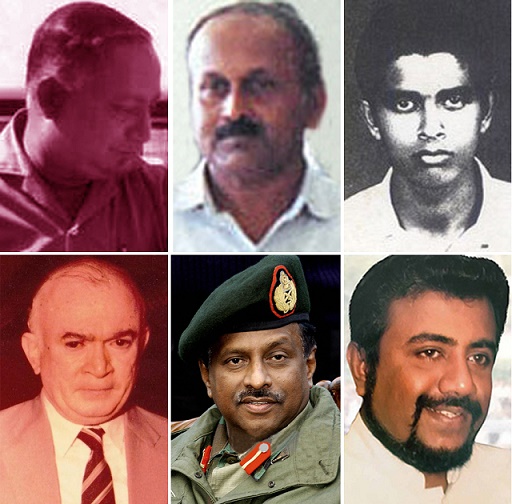
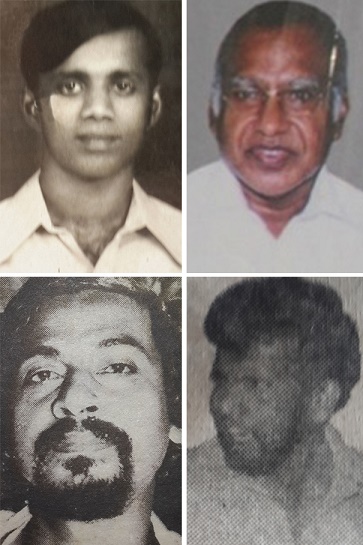
dharman10071603ඉහළ වමේ සිට රංජිත් පීරිස්ට 1968දී දේශපාලන ආවේශය රැගෙනආ ලංකා කොමියුනිස්ට් පක්ෂයේ(පීකිං පිළ) නායක නාගලිංගම් ශන්මුගදාසන්, රංජිත් දේශපාලනය ප්‍රථමයෙන් ඇරඹූ පෙරදිග සුළං ව්‍යාපාරයේ නායක ගාමිණී යාපා, රංජිත් ජවිපෙට 1970දී එක්වීමේදී කෑගල්ල දිස්ත්‍රික් ජවිපෙ නායකයාවූ සරත් විජේසිංහ, 1971 අප්‍රේල් 5වැනිදා කැරැල්ලේදී අත්අඩංගුවට ගැනීමට රංජිත්ට නියමිතව තිබූ කෑගල්ල පොලිස් අධිකාරි ආනන්ද සෙනෙවිරත්න(19වැනි පොලිස්පතිවරයා බවට පත්විය) සහ ජවිපෙට එරෙහි ප්‍රහාරවලදී රංජිත්ගේ ආරක්ෂක හමුදා සම්බන්ධීකාරකයෙක්වූ කර්නල් ලයනල් බලගල්ල( පසුව 2000 සිට 2004 දක්වා හමුදාපතිවූ බලගල්ල විශ්‍රාම ගන්නා විට ලුතිනන් ජෙනරාල්වරයෙකි.) සහ ආණ්ඩුවේ සහායෙන් ක්‍රියාත්මකවූ අර්ධ මිල්ටරි කණ්ඩායම් වලින් වඩාත් බලගතු සංවිධානය වූ ප්‍රා සම නිර්මාතෘවරයා වන මහජන පක්ෂයේ නායක ඔසී අබේගුණසේකර.

කෑගල්ලේ පීරිස් නොහොත් රංජිත් පීරිස්ගේ සම්පූර්ණ නම කන්දමුල්ල ආරච්චිගේ රංජිත් විල්ෆඩ් පීරිස්ය. තෝලංගමුව මධ්‍ය මහා විද්‍යාලයෙන් අධ්‍යාපනය ලත් රංජිත් කෑගල්ලේදී උපන්නේ 1954 ජනවාරි 20වැනිදාය. පාසැලේ 9වැනි වසර සිසුවෙකුව සිටියදී චීනයේ මාවෝ සේතුංගේ කෘතින් කියවීමෙන් රැඩිකල් දේශපාලනයට ඔහු අවතීරණය වූයේ 1968දීය.

මෙම වකවානුවේදී එනම් හැටේ දශකයේ මැදභාගයේදී පමණ සන්නද්ධ අරගලයේ මාවත පිළිගත් ඒ වෙනුවෙන් ක්‍රියාත්මක වීමට සූදානම්වූ කණ්ඩායම් ගණනාවක්ද ශ්‍රී ලංකාවේ බිහිවෙමින් තිබිණි. මෙම කණ්ඩායම් බිහිවීමට පදනම වැටුණේ නාගලිංගම් ශන්මුගදාසන් නායකත්වයෙන් යුත් ලංකා කොමියුනිස්ට් පක්ෂයේ(පීකිං පිළ) විප්ලවීය මතවාදයක් ඉදිරිපත් කලද එහි න්‍යාය සහ භාවිතාව අතර පරතරයක් තිබිම හේතුවෙනි. මෙහි ප්‍රතිඵලයක් ලෙස රෝහණ විජේවීරගේ නායකත්වයෙන් යුත් ජනතා විමුක්ති පෙරමුණ, කල්යානන්ද තිරාණගමගේ නායකත්වයෙන් යුත් ගිණි පුපුර කණ්ඩායම, විමල් රණසිංහ නොහොත් ගාමිණී යාපාගේ නායකත්වයෙන් යුත් පෙරදිග සුළඟ කණ්ඩායම, සුමිත් දෙවිනුවර කණ්ඩායම, නිහාල් ඩයස් සහ ආනන්ද ගුණතිලකගේ කණ්ඩායම, කසෝ අල්විස් ගේ මිටි පහර කණ්ඩායම(ව්‍යාපාරය වෙනුවෙන් බැංකු මංකොල්ලයක් සිදුකිරීමේදී හසුවූ කසෝ නිදහසින් පසු නිහඬ චරිතයක් විය), ප්‍රගති කණ්ඩායම වැනි නව ප්‍රවණතාවයන් බිහිවිය.

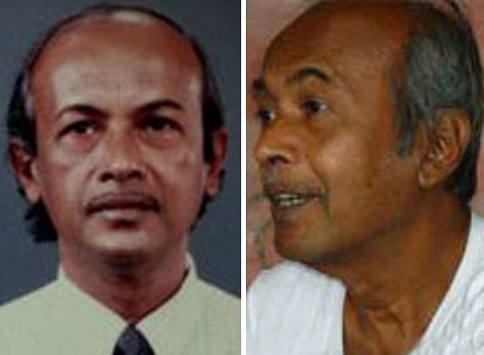
dharman10071604ආණ්ඩුවේ හමුදා සමඟ එක්වී රංජිත් විසින් අත්අඩංගුවට ගෙන ඝාතනය කරන ලද බවට පවසන ජවිපෙ දේශපාලන මණ්ඩල සභික පී.බී විමලරත්න නොහොත් ට්‍රින්කෝ විමල්, 1990 රංජිත්ගේද මැදිහත්වීමෙන් අත්අඩංගුවට ගනු ලැබූයේයැයි කියන ජවිපෙ සන්නද්ධ නායක සමන් පියසිරිගේ යුධ න්‍යායචාර්ය සහ මස්සිනාවූ වීරකැටියේ හීන්බුන්නේ දයා වන්නිආරච්චි, ජවිපෙන් ඉවත් කිරීමෙන් පසු 2වැනි කැරැල්ලේදී ආණ්ඩුව සමඟ එක්ව ජවිපෙට ප්‍රතිප්‍රහාර එල්ල කල ජවිපෙ හිටපු දේශපාලන මණ්ඩල සභිකයින් වූ කෙලී සේනානායක සහ වාස් තිලකරත්න(ඉහළ වමේ සිට)

ලංකා කොමියුනිස්ට් පක්ෂයේ පීකිං පිළ සමඟ සෝමරත්න හරහා සම්බන්ධකම් ඇතිකරගත් කෑගල්ලේ රංජිත් පීරිස්, පෙරදිග සුළං කණ්ඩායමට කොක්ක ගසා එක්කර ගත්තේ හඳගම සහ සෙනෙවිරත්නය. සෙසු කණ්ඩායම් අතර පෙරදිග සුළඟ කණ්ඩායම විශේෂත්වයක් ගත්තේ  එය ඉන්දියාවේ නක්සල් බාර්හි සහ අන්ද්‍රා ප්‍රදේශයන්හි ග්‍රීක කුලම්හි ගොවි කැරළිවලට නායකත්වය දුන් පුද්ගල ත්‍රස්තවාදය අවිය කරගත් නක්සලයිට්වරුන් ලෙස හැදින්වෙන මාක්ස් ලෙනින්වාදී කොමියුනිස්ට් පක්ෂය ලෙස හදුන්වා ගන්නා කණ්ඩායමේ ක්‍රියාමාර්ග අනුගමනය කිරීමට තැත්කිරීමය. ශ්‍රී ලංකාවේ ප්‍රථමවරට පුද්ගල ත්‍රස්තවාදය දේශපාලන ක්‍රියාමාර්ගයක් ලෙස ක්‍රියාවට නැංවූයේ ගාමිණී යාපාගේ පෙරදිග සුළඟ කණ්ඩායමයි. මෙම සියළු කණ්ඩායම් සන්නද්ධ අරගලය සඳහා සූදානම් වූවද තරුණ පරපුර අතර වඩාත් ජනප්‍රිය වූයේ රාජ්‍ය බලය ලබාගැනීම සඳහා ජවිපෙ කල මැදිහත්වීමටය.

කෑගල්ල දිස්ත්‍රික්කයේ ජවිපෙ දිස්ත්‍රික් නායකයාවු පේරාදෙණිය සරසවියේ සරත් විජේසිංහ සමඟ ඇතිවූ සංවාදයක ප්‍රතිඵලයක් ලෙස පෙරදිග සුළඟ අතහැර ජවිපෙට රංජිත් එක්වූයේ 1970දීය. පසුව සරත් විජේසිංහගේ අනුගාමිකයෙකුවූ රංජිත් දෙමාපියන්ගේ විරෝධතා මැද පාසැල් අධ්‍යාපනයට සමුදි ජවිපෙට පූර්ණකාලීනව එක්විය.  කෑගල්ලේ රංජිත් 1971 අප්‍රේල් කැරැල්ලට සහභාගිවන විට 17 හැවිරිදි පාසැල් සිසුවෙකි. කෑගල්ල නායක සරත් කැරැල්ල පවතින අවස්ථාවේදි කැරළිකරුවෙකුවූ යටියන්තොට නිමල් ග්ලැඩියස්ගේ අත්වැරදීමකින් සිදුවූ වෙඩිල්ලක් නිසා 1971 අප්‍රේල් 7වැනිදා ගැටියමුල්ල පාසැලේදී මරණයට පත්විය.

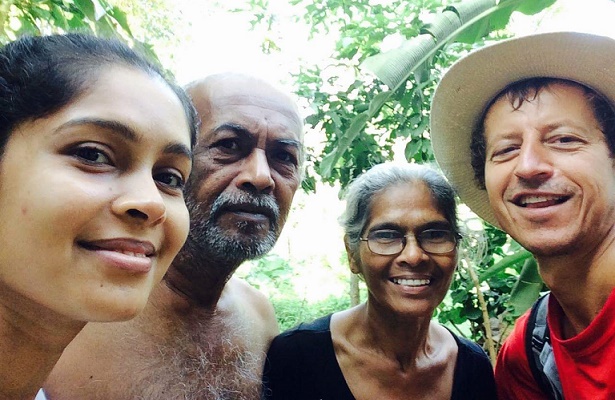
dharman10071605රංජිත් පීරිස්, සිය බිරිඳ චන්ද්‍රා විජයලත් ආරච්චිගේ, දියණිය රෙබෙකා සහ යුක්රේනියානු හිතවතෙකු සමඟින්.

රංජිත්ට 1971 අප්‍රේල් 5වැනිදා පැවරී තිබුණේ සාදි බණ්ඩාගේ නායකත්වයෙන් කෑගලු පොලිසියට පහරදීමය. පොලිසියට පහරදීමෙන් පසුව එවකට කැගල්ල පොලිස් අධිකාරි වශයෙන් කටයුතු කල පසුව පොලිස්පති බවට පත්වූ ආනන්ද(ආනා) සෙනෙවිරත්න නිල නිවසේදී අත්අඩංගුවට ගැනීම වුවද නිල නිවසට රංජිත් ඇතුළු කැරළිකරුවෝ කඩාවැදුනද ඔහු නිල නිවස හැරගොස් තිබිණි(ආනා සෙනෙවිරත්න පසුව 19වැනි පොලිස්පතිවරයා බවට පත්වූ අතර විශ්‍රාම යෑමෙන් පසු 2015 සැප්තැම්බර් 26වැනිදා මිය ගියේය). කෑගල්ල ප්‍රදේශයේ 1971 අප්‍රේල් 28වැනිදා වන විට කැරළිකරුවන් විශාල පිරිසක් සිටි අතර ඔවුහු කාගම උපසේනගේ සහ ජේ. සමරතුංග නොහොත් බෝල සමරේගේ නායකත්වයෙන් පසු බැසිමට තීරණය විය. මහජන බැංකුවේ ලිපිකරුවෙකුවූ කාගම උපසේනගේ කණ්ඩායම සමඟ දිවල සිට අටුගොඩට පැමිණි රංජිත් ඇතුළු 100කට අධික කැරළිකරුවෝ හෙලිකොප්ටර් වලින් හමුදාව එල්ලකර ප්‍රහාරවලින් ආරක්ෂා වෙමින් හම්බෙලිකන්දට පැමිණියේය. එහිදි හමුවූ  තවත් කැරළිකරුවෙකු වූ පේරාදෙණිය සරසවියේ වාස් තිලකරත්න සමඟ රංජිත්ගේ සම්බන්ධය ප්‍රථමයෙන් ගොඩනැගෙන්නේ එහිදීය.

කාගම උපසේන 1971 මැයි 2 හමුදා වෙඩි ප්‍රහාරයකින් මරුමුවට පත්වීමත් සමඟ කණ්ඩායම විසිරගිය අතර රංජිත් පීරිස් තවත් තිදෙනෙකු සමඟ කෑගල්ලට පැමිණීමේදී කරදෙන පාලම අසළදී ගැමියන් විසින් අත්අඩංගුවට ගෙන කෑගල්ල පොලිසියට භාරදෙන ලදී. කෑගල්ල පොලිසියේදී තිරස්චින වධබන්ධන වලට ලක්වූ රංජිත් බෝගම්බර රිමාන්ඩ් බන්ධනාගාරයට දමන ලදී. එවිට ඔහුගේ වයස අවුරුදු 17කි. පසුව වයස 18ට අඩු කැරළිකරුවන් සඳහා පවත්වාගෙන යන අම්පාර දඬයම්තලාව කඳවුරට මාරුකරන ලදී. එහිදී බාලවයස්කාර තවත් රැදවියන් දෙදෙනෙකුවූ කෑගල්ලේ ජයතිලක සහ කරුණාදාස සමඟ පලායෑමට සමත්වන රංජිත් කෑගල්ලට පැමිණ ගනේවත්තට යාමේදී පොල්ගහවෙල පොලිසිය මගින් අත්අඩංගුවට ගන්නා ලදී. කෑගල්ලේ ජයතිලක යනු 71 කැරැල්ලේදී උදැල්ලකින් පහරදී පරගම්මන පබිලිස් නම් පොලිස් ඔත්තුකරුවෙකුයැයි චෝදනා ලත් තැනැත්තා පබිලිස්ටම කියා වලක් කපා එම උදැල්ලෙන්ම පහරදී පබිලිස් ඝාතනයකර දැමූ ආන්දෝලනාත්මක සිද්ධියට මැදිවූ ජවිපෙ ළමා කැරළිකරුවාය. ජයතිලක වර්තමානයේ අවිස්සාවේල්ලේ පදිංචිය.

dharman10071606

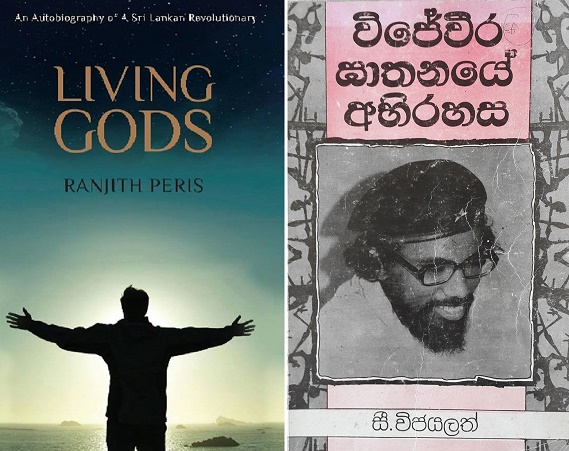
රංජිත් පීරිස් විසින් ප්‍රකාශයට පත්කර ඇති ලිවින් ගෝඩ්ස් ග්‍රන්ථය(වමේ) සහ විජේවීර ඝාතනය පිළිබඳව සිය බිරිඳගේ නමින් 1994 පෙබරවාරි මස මහරගම නවමඟ මුද්‍රණාලයේ මුද්‍රණයකර ප්‍රකාශයට පත්කල පිටු 94ක ග්‍රන්ථය(දකුණේ).

මඩකලපු බන්ධනාගාරයේ මාසයක් තබාගැනීමෙන් පසු යාපනයේ හැමන්හිල් බන්ධනාගාරයට මාරුකරන ලද රංජිත් මාස 11කට පසු කිරිනොච්චියේ අක්කරායන්කුලම් පුනුරුත්ථාපන කඳවුරට යොමුකරන ලදී. පසුව කොග්ගල සිර කඳවුරටද, මැගසින් බන්ධනාගාරයටද මාරුකල අතර එහි ඇතිවූ ගැටුමකින් පසු අනුරාධපුර සිරගෙදරටද පසුව බෝගම්බර සිරගෙදරටද මැගසින් බන්ධනාගාරයටද ගෙනවිත් කැරැල්ලේ නඩුවෙන් පසු වසර 2ක බරපතල වැඩ ඇතිව සිර දඬුවමකට ලක්විය. වසර 1977 ජුනි 26වැනිදා ඔහු නිදහස් වන විට වසර 6කට අධික කාලයක් බන්ධනාගාර සහ සිරගතවී තිබිණි.

නිදහසින් පසු ජවිපෙ සමඟ යළි එක්වූ රංජිත් පීරිස් පක්ෂ නායක විජේවීරගේ හිතවතෙකුද විය. ජවිපෙ දේශපාලන මණ්ඩල සභිකයෙකුවු වාස් තිලකරත්න ඔහුගේ කුළුපග මිතුරෙකි. කුරුණෑගල ඔමාරගොල්ලේදී 1978 පැවති පක්ෂ සම්මේලනයේදී මධ්‍යම කාරක සභිකයෙකු බවට පත්වන රංජිත් පීරිස් කෑගල්ල දිසා ලේකම් වශයෙන් 1978 අවසානයේ සිට කටයුතු කළේ ගුණවර්ධනට පසුවය. අනතුරුව බදුල්ල දිසා ලේකම්ද විය. ජවිපෙ දේශපාලන මණ්ඩල සභික සෝමරත්න කළුආරච්චි ඔහුගේ මස්සිනාය. ජවිපෙ දේශපාලන මණ්ඩල සභික වාස් තිලකරත්න ජවිපෙන් 1982දී ඉවත්කල පසු රංජිත් පීරිස්ද ජවිපෙන් යම් විනය කාරනාවන් හේතුවෙන් 1982දී ඉවත් කරන ලදී. ඔහු පවසන පරිදි ජවිපෙ සාමාජිකයන් විසින් අම්පාරේදී ඔහු ඝාතනය කිරීමට දැරූ ප්‍රයත්නයෙන් දිවි බේරා ගත්තේ අසීරුවෙනි. ජවිපෙ 1983 ජුලි තහනමින් පසු අවස්ථා කිහිපයකදී ජවිපෙ ක්‍රියාකාරින් විසින් රංජිත් සමඟ ගැටුම් ඇතිකරගන්නා ලදී. ඔහුගේ සමීපතම මිත්‍රයෙකුවූ ජවිපෙන් ඉවත්කල වාස් තිලකරත්න බදුල්ලේදී සහ රත්නපුරයේදී ඝාතනය කිරීමට ජවිපෙ උත්සාහ දැරූ අතර එහිදී වාස් බේරුනේ බරපතල තුවාල ලබමිනි.

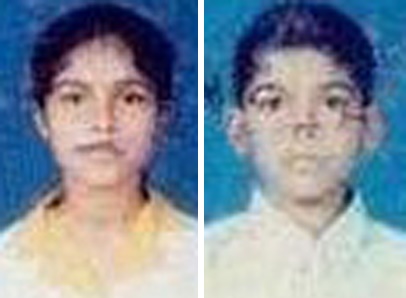
dharman10071607රංජිත්ගේ දරුවන්වන 1984 පෙබරවාරි 12 උපන් රෙබෙකා සහ 1987 අප්‍රේල් 23 උපන් ටෙනිසි කුඩා කාලයේදී මෙහි වමේ සිට දැක්වේ.

රංජිත් පීරිස්ගේ බිරිඳ වූයේ වැලිවේරිය නාරංවල උපන් සිය ඥාතිවරියක්දවූ විජයලත් ආරච්චිගේ චන්ද්‍රාය. රංජිත් දෙදරු පියෙකි. දියණිය රෙබෙකා ටෙස් උපන්නේ 1984 පෙබරවාරි 12වැනිදා වන අතර පුතු ටෙනිසි මිලර් උපන්නේ 1987 අප්‍රේල් 23වැනිදාය.

ජවිපෙ 2වැනි කැරැල්ල 1986 ආරම්භ වීමත් සමඟම ජවිපෙන් ඉවත්ව විවිධාකාර හේතුන් මත විරසකව සිටින පිරිස්වලට සිය ආරක්ෂාව තහවුරු කර ගැනීම එක්තරා අතකින් අභියෝගයක් විය. ජවිපෙ තර්ජනයට ලක්වූ ජවිපෙන් ඉවත්වූ සහ ඉවත්කල පිරිස් සිය පැවැත්ම උදෙසා විවිධාකාර ක්‍රියාමාර්ග වලට අවතීරණ විය. ඒ අනුව ඇතැමුන් පදිංචි ස්ථාන වෙනස් කිරීම්, විදේශ රැකියාවලට යෑම, ජවිපෙ සමඟ යම් එකඟතාවයන්ට, ජවිපෙට එරෙහිව ප්‍රතිප්‍රහාර දීම සඳහා කණ්ඩායම් ගතවීම සහ ආරක්ෂක හමුදා සමඟ ජවිපෙ වැනසීමට සහයෝගිතාවයෙන් කටයුතු කිරීම සිදුකරන ලදී.

ඒ අනුව රංජිත් පීරිස් ජවිපෙට එරෙහිව ආණ්ඩුව මගින් සිදුකරන ක්‍රියාදාමයන්ට සෘජුව දායකවීම සඳහා ආරක්ෂක හමුදාව සමඟ සහයෝගිත්වයෙන් කටයුතු කිරීම අරඹන ලදී. කර්නල් ලයනල් බලගල්ල එහිදී ඔහු දිරි ගැන්වූයේය. (පසු කලෙක ලයනල් බලගල්ල ලුතිනන් ජනරාල්වරයෙකු වශයෙන් විශ්‍රාම ගත් අතර එයට පෙර 2000 සිට 2004 දක්වා හමුදාපතිවරයාද විය) රංජිත් පීරිස් කලක් ජවිපෙ ක්‍රියාකාරිකයෙකු වශයෙන් සිටි බැවින් හංසයින්ට කිරෙන් දිය වෙන්කරගත හැකිකේ යම්සේද ජවිපෙ කැරළිකරුවන් සාමාන්‍ය ජනයා අතරින් වෙන්කර හදුනාගැනීමට සමත්වීම යුධ හමුදාවේ ඔප්ස් කම්බයින් ආරක්ෂක අංශය ලැබූ ජයක් බවට පත්විය. ජවිපෙන් ඉවත්කල වාස් තිලකරත්න ඇතුළු කිහිපදෙනෙක් මෙහිදී ඔහු දිරිමත් කළේය. ජයතිලක ද සිල්වා විසින් 1981 පෙබරවාරි 8වැනිදා ආරම්භ කල සමාජවාදී ජනතා ව්‍යාපාරයට වාස් තිලකරත්න ඇතුළු 30 දෙනෙක් උපක්‍රමයක් වශයෙන් 1983 ඔක්තෝබර් වන විට බැදුණු අතර ඉන් 19 දෙනෙකු එයට එරෙහිව රාජ්‍ය විරෝධී නඩුවේ චූදිතයන් 44දෙනා අතර විය. තිහගොඩ සිරිසේනගේ නිවසේදී සිටියදී පසුව අත්අඩංගුවට ගත් වාස් 1988 අප්‍රේල් 22වැනිදා රජයේ සමාව යටතේ අධිකරණය මගින් නිදහස් කලපසු ජවිපෙ මුළුනුපුටා දැමීමේ ක්‍රියාමාර්ගයට ඔහුද එක්විය.

dharman10071608

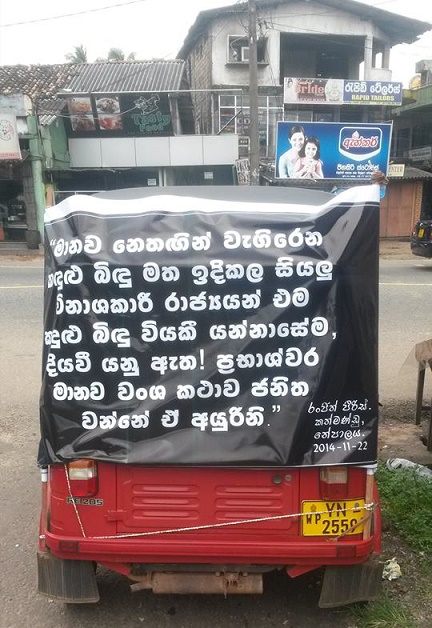
නේපාලයේ දේශපාලන රැකවරණ පතමින් රංජිත් සිය දරු පවුල සමගින් සිටියදී ඔහුගේ අදහස් රැගත් පුවරුවක් සවිකල ත්‍රීරෝද රථයක් 2014 නොවැම්බර් මස කෑගල්ල නගරයේදී. 

ජවිපෙ සමඟ බද්‍ධ වෛරයකින් සිටි පිරිස් ආරක්ෂක අංශ සමඟ එක්වීම මගින් සාර්ථක ප්‍රතිඵල ලැබිණි. කොළඹ මත්තේගොඩ කඳවුර, නීතිපීඨ කඳවුර, ප්‍රේදිරිස් උද්‍යානය, ඉසුරුපාය කඳවුර, ලේක්හවුස්හි යට තට්ටුව ආදී ස්ථාන ගණනාවක් අත්අඩංගුවට ගත් කැරළිකරුවන් තිරස්චින වධබන්ධන වලට ලක්කරමින් ප්‍රශ්න කිරීම සඳහා රඳවා තබාගන්නා ලදී. තොරතුරු හෙළි නොකරන්නන් ඝාතනයට ලක්විය.

රෝහණ විජේවිර අත්අඩංගුවට ගැනීමට පෙර ජවිපෙ 2වැනි කැරැල්ලේ දේශපාලන මණ්ඩල සභිකයින් දෙදෙනෙකු අත්අඩංගුවට ගැනීමට ආරක්ෂක හමුදාවන්ට හැකිවූයේ රංජිත් පීරිස් නිසාය. එක් අයෙකුවූයේ 1989 මැදභාගයේදී කෑගල්ල දිසා කමිටුව රඹුක්කනදී රැස්වූ අවස්ථාවකදී අත්අඩංගුවට පත්වූ නන්දතිලක ගලප්පත්තිය. ආරක්ෂක අංශ ඔවුනට යටත්වන ලෙස නියෝග කලද ඔහු යටත් නොවී සිට සටන් කල නිසා එහි සිටි 5 දෙනා සමඟ ඝාතනයට ලක්විය. එහෙත් ආරක්ෂක බුද්ධි අංශ පවසන්නේ කොළඹට ගෙන ඒමෙන් පසු ගලප්පත්ති ඝාතනය වූ බවකි. දෙවැන්නාවූ පී.බී විමලරත්න නොහොත් ට්‍රින්කෝ විමල්ද 1989 සැප්තැම්බර් 12දා බදුල්ලේ සිට බසයකින් කොළඹට පැමිණිමේදී අවිස්සාවෙල්ල සාලාව ආරක්ෂක ඒකකය මගින් අත්අඩංගුවට ගනු ලැබීය. පසුව ඝාතනයට ලක්විය. ඔවුන් දෙදෙනා කිසිදු තොරතුරක් හෙළි නොකළේය.

ජවිපෙ මධ්‍යම කාරක සභික අකුරැස්සේ ඇල්ගිරියේ උපන් ප්‍රේමචන්ද්‍ර මුණසිංහ ඇතුළු තිදෙනෙක් රත්මලානේ ලහිරු ට්‍රේඩ් සෙන්ටර්හිදී 1988 නොවැම්බර් 18වැනිදා වෙඩිතබා ඝාතනය කිරීමේ චෝදනාවද එල්ලවූයේ රංජිත් පීරිස්ටය. එම ස්ථානයේ හිමිකරු වූයේ මාදින්නාගොඩ රංජිත් දිසානායක නොහොත් කළු රංජිය. රත්මලාන ඩිපෝවේ ජවිපෙ සටන් නායකයින්වූ සිල්වා සහ රණතුංග1989 ජුලි 5 ඩිපෝව අසළදී ඝාතනය කිරීමේ චෝදනාවද එල්ලවූයේ රංජිත් පීරිස්ටය. ජවිපෙ කොහිලවත්තේ මුද්‍රණාලයේ 1983 ජුලි දක්වා සේවය කල පසුව රාජගිරිය මුද්‍රණාලයක සිටි බමුණුසිංහට නාවල කොස්වත්තේදී 1989 අවසානභාගයේදි උදෑසන 8ට වෙඩිතබා ඝාතනය කිරිමට තැත් කලද ජීවිතය බේරාගැනීමට බමුණුසිංහ සමත් විය. දඬයමක් සොයන අරමුණින් පාන්දරම පැමිණ වෑන් රථය රාජගිරිය දෙසට ධාවනය කල බවත් ගොදුරක් පාරට පැමිණ ගමන් කරනු දැක ඒ ඔස්සේ නාවල පාරේ බස්නැවතුමට නොදුරින් වෑන් රිය නවතා බලා සිටි අයුරුත් රංජිත් විස්තර කර තිබේ. රංජිත් පීරිස් 1971 අත්අඩංගුවට ගෙන බන්ධනාගාරගත කිරීමේදී රංජිත්ගේ තුවාල පිරිසිදුකර තෙල් ගල්වා ඔහු රැකබලා ගත්තේද බමුණුසිංහ විසිනි. මෙය දැනගත් පසු රංජිත් කම්පාවට පත්වූ බවද කියති.

රංජිත් පීරිස්ගේ දඩයමින් අත්අඩංගුවට ගෙන ජීවත්වීමට වාසනාව ලැබුවේ ජවිපෙ හිටපු ප්‍රධාන ලේකම් සහ ජවිපෙ 2වැනි කැරළි සමයේදී සන්නද්ධ නායකයාවූ සමන් පියසිරි ප්‍රනාන්දුගේ යුධ න්‍යායචාර්ය වූ වීරකැටියේ හීන්බුන්නේ දයා වන්නිආරච්චි පමණි. දෙවැනි කැරැල්ලේ පරාජයෙන් පසු දයා වන්නිආරච්චි 1990 ඔක්තෝබර් මස වන විට ඇල්පිටියේ වතු අධිකාරි නිල නිවසක සුරක්ෂිතව සිටියේය. එම නිවසට ලෙෆ්ටිනට් මුතාලිෆ් මෙහෙයවූ ආරක්ෂක භට පිරිසක් සමඟ පැමිණි රංජිත් පීරිස් විසින් වන්නිආරච්චි හදුනාගනු ලැබුවද රංජිත් සිතා සිටියේ 1982 වන්නිආරච්චි ජවිපෙන් ඉවත්වීමෙන් පසු වන්නිආරච්චි සහ ජවිපෙ අතර කිසිදු සම්බන්ධයක් නැති බවකි. ජවිපෙන් ඉවත්ව ගිය නායකයෙකු නැවත පක්ෂය සහ එක්වනු ඇතැයි රංජිත් පීරිස්ගේ දැනුම අනුව සිදුනොවිය හැක්කකි. ඝාතනයෙන් බේරුණු වන්නිආරච්චි ගල්කිස්ස මුහුද ආසන්නයේ ගොඩනැගිල්ලක පිහිටි ආරක්ෂක අංශවල රහසිගත කඳවුරකට ගෙන යන ලදී. එහෙත් ඇල්පිටිය වතු අධිකාරිගේ එම නිවසේ හමුදාව යොදා තිබූ ‘ඇම්බුස්’ උඟුලට(සැගවී සිට එම ස්ථානයට පැමිණෙන අය අත්අඩංගුවට ගැනීම) හසුවූ  ජවිපෙ ක්‍රියාකාරිකයින් දෙදෙනෙක් පසුව අත්අඩංගුවට පත්ව ඝාතනයට ලක්විය. අපරාධ විමර්ශන ඒකකයට 1990 දෙසැම්බර් 10වැනිදා යොමුකල දයා වන්නි ආරච්චි මාස 11කට පසු බූස්ස ඇතුළු ස්ථාන කිහිපයක රඳවාගත් අතර ජාත්‍යන්තර රතුකුරුස සංවිධානයේ මැදිහත්වීමේ ප්‍රතිඵලයක් ලෙස නිදහස් විය. වන්නිආරච්චි 2016 මැයි 21වැනිදා ජීවන මගෙන් සමුගත්තේය.

හිරිමල් වියේ සිට ලැබූ අනුවේදනීය කටුක අත්දැකීම් සහ සිය සජීවි ඝාතන අත්දැකීම් එකතුකරමින් අවසානයේදී රංජිත් පීරිස් විසින් පණ ඇති දෙවිවරු නමින් ස්වයං විවේචනාත්මක නිබන්ධනයක්ද සකසන ලදී. වීජේවීර ඝාතනයේ අභිරහස මැයින් සිය බිරිඳගේ නමින් 1994 පෙබරවාරි මස ඔහු ග්‍රන්ථයක්ද නිකුත් කෙරිණි. එය ජවිපෙ දේශපාලන මණ්ඩල සභිකයෙකු වශයෙන් කලක් සිට 1978දී ඉන් ඉවත් කල කෙලී සේනානායකගේ මහරගම නවමග මුද්‍රණාලයේ ප්‍රකාශයට පත්කල පිටු 94ක ග්‍රන්ථයකි. කැරළි නායකයෙකුගේ බිහිසුණු සමුගැනීම මැයින්ද රංජිත් තවත් කෙටි ග්‍රන්ථයක් එළිදක්වා තිබිණි. 

වසර 2012දී ආණ්ඩුව මගින් රංජිත් පීරිස් යළිත් අත්අඩංගුවට ගනු ලැබුවේ දෙමළ බෙදුම්වාදී සංවිධාන සමඟ සම්බන්ධයක් ඇතිබවට සැකපිටය. වසරකට ආසන්න කාලයක් සැකපිට අත්අඩංගුවේ සිටි ඔහු පසුව නිදහස්වීමෙන් අනතුරුව 2014 මැයි 22දා සිය බිරිඳ චන්ද්‍රා සහ දියණිය රෙබෙකා සමගින් වන්දනාකරුවන් ලෙසින් ඉන්දියාව හරහා නේපාලය බලා පිටත් විය. ඒ වන විට රංජිත්ගේ පුතු ටෙනිසි මිලර් මාලදිවයිනේ රැකියාවක නිරත විය. නේපාලයට 2014 ජුනි 6වැනිදා ඇතුළුවූ රංජිත් පීරිස් සහ දරුවන් නේපාලයේ පිහිටි සරණාගතයින් පිළිබඳව එක්සත් ජාතින්ගේ මහ කොමසාරිස් කාර්යාලයෙන් දේශපාලන ආරක්ෂාව පැතීය. ජිනිවා පිහිටි එහි ප්‍රධාන කාර්යාලයටද ඉල්ලීමේ පිටපතක් යොමුකර තිබිණි. ලේඛන වෘත්තියේ නිරතවී සිටින තමාට ඒ හේතුවෙන් ඇති දේශපාලන තර්ජන ඔහු එමගින් අවධාරණය කර තිබිණි. සිය උත්සාහයන් ව්‍යාර්ථ වීමෙන් පසු යළි ශ්‍රී ලංකාවට පැමිණි රංජිත් පිරිස් ඇතුළු පවුලේ සාමාජිකයින් වර්තමානයේ ගල්ගමුවේ මොරගොල්ලාගම පදිංචිය.

ජවිපෙ 2වැනි කැරළි සමයේදී ඇතිවූ සංහාර සමයක මෙවැනි සටහන් බොහෝය. එහෙත් යථාර්ථය සදාකාලිකව මිහිදන්කල නොහැකි බව ඉතිහාසය කිසිදා හෝ ඔප්පු කරනු ඇත.The writer ධර්මන් වික්‍රමරත්න Dharman Wickremaretne is a senior journalist who could be reached at ejournalists@gmail.com OR 011-5234384. (ජවිපෙ 2වැනි කැරළි සමයවූ 1986 සිට 1990 දක්වා පළවන මෙම ලිපි මාලාව ලබාගැනීම පිළිබද විස්තර පහත ලිපිනයට ඔබගේ ලිපිනය යොමු කිරීමෙන් ලබාගත හැකිය. ධර්මන් වික්‍රමරත්න, තැපෙ 26, ශ්‍රී ජයවර්ධනපුර. දුරකථනය: 011-5234384 විද්‍යුත් තැපෑල: ejournalists@gmail.com)

ධර්මන් වික්‍රමරත්න


ඡායාරූප විස්තර

  1. ධර්මන් වික්‍රමරත්න විසිනි.
  2. ජවිපෙ 2වැනි කැරැල්ලේ කැරළිකරුවන් ඝාතනය කිරීමේ මෙහෙයුමක නිරතවූ  කන්දමුල්ල ආරච්චිගේ රංජිත් විල්ෆඩ් පීරිස් නොහොත් කෑගල්ලේ පීරිස්.
  3. ඉහළ වමේ සිට රංජිත් පීරිස්ට 1968දී දේශපාලන ආවේශය රැගෙනආ ලංකා කොමියුනිස්ට් පක්ෂයේ(පීකිං පිළ) නායක නාගලිංගම් ශන්මුගදාසන්, රංජිත් දේශපාලනය ප්‍රථමයෙන් ඇරඹූ පෙරදිග සුළං ව්‍යාපාරයේ නායක ගාමිණී යාපා, රංජිත් ජවිපෙට 1970දී එක්වීමේදී කෑගල්ල දිස්ත්‍රික් ජවිපෙ නායකයාවූ සරත් විජේසිංහ, 1971 අප්‍රේල් 5වැනිදා කැරැල්ලේදී අත්අඩංගුවට ගැනීමට රංජිත්ට නියමිතව තිබූ කෑගල්ල පොලිස් අධිකාරි ආනන්ද සෙනෙවිරත්න(19වැනි පොලිස්පතිවරයා බවට පත්විය) සහ ජවිපෙට එරෙහි ප්‍රහාරවලදී රංජිත්ගේ ආරක්ෂක හමුදා සම්බන්ධීකාරකයෙක්වූ කර්නල් ලයනල් බලගල්ල( පසුව 2000 සිට 2004 දක්වා හමුදාපතිවූ බලගල්ල විශ්‍රාම ගන්නා විට ලුතිනන් ජෙනරාල්වරයෙකි.) සහ ආණ්ඩුවේ සහායෙන් ක්‍රියාත්මකවූ අර්ධ මිල්ටරි කණ්ඩායම් වලින් වඩාත් බලගතු සංවිධානය වූ ප්‍රා සම නිර්මාතෘවරයා වන මහජන පක්ෂයේ නායක ඔසී අබේගුණසේකර.
  4. ආණ්ඩුවේ හමුදා සමඟ එක්වී රංජිත් විසින් අත්අඩංගුවට ගෙන ඝාතනය කරන ලද බවට පවසන ජවිපෙ දේශපාලන මණ්ඩල සභික පී.බී විමලරත්න නොහොත් ට්‍රින්කෝ විමල්, 1990 රංජිත්ගේද මැදිහත්වීමෙන් අත්අඩංගුවට ගනු ලැබූයේයැයි කියන ජවිපෙ සන්නද්ධ නායක සමන් පියසිරිගේ යුධ න්‍යායචාර්ය සහ මස්සිනාවූ වීරකැටියේ හීන්බුන්නේ දයා වන්නිආරච්චි, ජවිපෙන් ඉවත් කිරීමෙන් පසු 2වැනි කැරැල්ලේදී ආණ්ඩුව සමඟ එක්ව ජවිපෙට ප්‍රතිප්‍රහාර එල්ල කල ජවිපෙ හිටපු දේශපාලන මණ්ඩල සභිකයින් වූ කෙලී සේනානායක සහ වාස් තිලකරත්න(ඉහළ වමේ සිට)
  5. රංජිත් පීරිස්, සිය බිරිඳ චන්ද්‍රා විජයලත් ආරච්චිගේ, දියණිය රෙබෙකා සහ යුක්රේනියානු හිතවතෙකු සමඟින්.
  6.  රංජිත් පීරිස් විසින් ප්‍රකාශයට පත්කර ඇති ලිවින් ගෝඩ්ස් ග්‍රන්ථය(වමේ) සහ විජේවීර ඝාතනය පිළිබඳව සිය බිරිඳගේ නමින් 1994 පෙබරවාරි මස මහරගම නවමඟ මුද්‍රණාලයේ මුද්‍රණයකර ප්‍රකාශයට පත්කල පිටු 94ක ග්‍රන්ථය(දකුණේ).
  7. රංජිත්ගේ දරුවන්වන 1984 පෙබරවාරි 12 උපන් රෙබෙකා සහ 1987 අප්‍රේල් 23 උපන් ටෙනිසි කුඩා කාලයේදී මෙහි වමේ සිට දැක්වේ.
  8. නේපාලයේ දේශපාලන රැකවරණ පතමින් රංජිත් සිය දරු පවුල සමගින් සිටියදී ඔහුගේ අදහස් රැගත් පුවරුවක් සවිකල ත්‍රීරෝද රථයක් 2014 නොවැම්බර් මස කෑගල්ල නගරයේදී.

Of that judicial coup

July 9th, 2016

The Editorial Courtesy The Island

Prime Minister Ranil Wickremesinghe, in Parliament on Thursday, while expressing his views on the ratification of the first Optional Protocol to the International Covenant on Civil and Political Rights, alleged that there had been a judicial coup against Parliament. His consternation is understandable. As much as it is wrong for the legislature to meddle with the affairs of the judiciary the latter should not make inroads into the preserve of the former if unfortunate conflicts between the two institutions are to be avoided.

Even those who do not see eye to eye with the PM on other issues must have agreed with him on this score. Legislative powers of the people in whom sovereignty lies are exercised by Parliament, however, rotten that institution may be.

The near absence of the separation of powers has been the bane of Sri Lankan politics. The three branches of government either collude or clash with one another constantly. They are like the three highly unstable bio-elements referred to in Ayurveda, to wit, Va (air and space), Pith (fire and water) and Sem (water and earth). Any imbalance therein causes serious illnesses. Most of the chronic ills of the Sri Lankan polity can be attributed to the conflicts, which sometimes find expression in open clashes, among the executive, the legislature and the judiciary.

Since the current Constitution came into being in 1978, the executive president, elected directly by the people, has sought to railroad the legislature and the judiciary into submission. The less said about the former Presidents who did everything in their power to bend parliament and courts to their will, the better!

One of the first few things President Maithripala Sirisena did, upon being inaugurated last year, was to sack the then Chief Justice (CJ) arbitrarily on the advice of the unofficial bar and some other pundits and reinstate the latter’s immediate predecessor who had been ‘impeached’. That issue could have been sorted out in a proper manner; an opinion should have been sought from the Supreme Court with the CJ recused and the wrongful impeachment could have been reversed by Parliament itself. Instead, the President chose to act dictatorially.

There have been many instances where the judiciary under different Chief Justices used the gavel to knock some sense into the executive and the legislature. The Supreme Court (SC) judgment in favour of Vivienne Gunawardena in a fundamental rights violation case against the police under the JRJ regime is a case in point.

CJ Sarath N. Silva took judicial activism to an extreme so much so that the judiciary and the executive found themselves on a collision course under the Rajapaksa government. An attempt by the SC on CJ Silva’s watch to interfere with the affairs of Parliament to scuttle a move to impeach him led to a path-breaking ruling by the late Speaker Anura Bandaranaike, as PM Wickremesinghe said in the House on Thursday. Bandaranaike basically asked the Supreme Court to mind its own business!

The present government, too, has failed to live up to people’s expectations; it has not fulfilled its election pledges to restore the rule of law and judicial independence. The police continue to be putty in the hands of the powers that be with special investigation units acting as the Gestapo and some courts remain open till midnight, on Saturdays and even on Poya Days to remand Opposition politicians and/or bail out government members.

Good governance consists in, inter alia, the separation of powers. So long as the three branches of government either collude or clash democracy won’t recover.

The Joint Opposition mockingly asked the PM on Thursday why it had taken as long as two decades for him to awaken to the judicial coup against Parliament he spoke of. However, better late than never!

Lessons the past offers must be learnt and remedial action taken if democracy is to be preserved.

Do you know this?

July 9th, 2016

Chandra Jayaratne Courtesy The Daily Mirror

The former Chairman of the Ceylon Chamber of Commerce and civil rights activist Chandra Jayaratne has written to the Chairman of the Committee on Public Enterprises (COPE) Sunil Handunnetti, drawing his attention to the General Principles of Accountability of an Oversight Committee of Parliament and issues related to the infamous ‘Bond’ issue.

In the letter he says: 
Committee on Public Enterprises” – address the challenging task of developing and presenting, an independent, professional, unbiased and value adding report to Parliament, on the Bond Issues made by the Public Debt Department of the Central Bank in 2015 and 2016, including the controversial issues that have led to significant public
criticism on account of;
Purported violation of expected best practices of due process, good governance, transparency and professionalism, in a backdrop of these bond issues being tainted, possibly by conflicts of interest, related party transactions, market manipulations and insider information;
The State purportedly incurring significant future higher than optimum market interest payment costs over an extended period of years;
The beneficiary members of State-run Employees Provident Fund, Employees Trust Fund, Savings and Insurance entities may have lost the competitive, market-based best returns, having invested via the secondary market, instead of the primary markets;
A limited number of connected parties may have benefited significantly by way
of unjust enrichment
In the above context, it may be best that you and the Committee members refresh your memory with the General Principles of Accountability of an Oversight Committee of Parliament. Towards this task I enclose extracts from an OECD/DAC Governance network and South African Parliament dealing with these Principles of Accountability, especially those highlighted and underlines. (Refer Box)
You and other members should also bear in mind that Sri Lankan Legislative Enactments dealing with Bribery and Corruption, clearly defined in Section 70 of such enactment, what constitutes Corruption in relation to any Public Servant – (See Right).
You will note from this provision that, where any public servant, with intent to cause wrongful or unlawful loss to the Government or to confer a wrongful or unlawful benefit/favour/advantage on himself, or any person, with knowledge that a loss will be caused to any person or the government, does any act which he is empowered to do or induces any other public servant to perform or refrain from performing any act or uses information coming to his knowledge or participates in making of any decision or induces any other person, directly or indirectly to perform or refrain from performing any act, shall be guilty of the offence of corruption.”

Principles of Parliamentary Assistance

OECD/DAC Network on  Governance (Extracts)
Parliaments perform a vital role in any system of representative democracy, but they play an especially important role in emerging democracies – not only in improving the quality of governance by ensuring transparency and accountability, but also in shaping the public’s expectations and attitudes
to democracy.

A Parliaments is the single most important institution in overseeing government activity, scrutinising legislation and representing the public’s concerns to those in power. Their performance in holding the government to account and engaging with voters will help to establish the norms and values in the early years of a democratic culture.
Parliaments and domestic accountability
The overarching purpose of parliamentary oversight is to hold government to account. While governments are directly accountable to voters at elections, in between elections it is the duty of parliamentarians to hold ministers and their departments to account on the public’s behalf.
The Inter-Parliamentary Union’s Tools for Parliamentary Oversight sets out four key
oversight roles:

Transparency and openness. Parliament should shed light on the operations of the government. It provides a public arena in which the government’s policies and actions are debated, exposed to scrutiny and held up to
public opinion.

Delivery. Parliamentary oversight should test whether the government’s policies have been implemented, and whether they are having the desired impact.

Value for money. Parliament needs to approve and scrutinise government spending. It should highlight waste within publicly-funded services, and aim to improve the economy, efficiency and effectiveness of government expenditure.

  • Tackling corruption and misuse of power. Parliament should protect the rights of citizens by detecting and preventing abuse of power, arbitrary behaviour and illegal or unconstitutional conduct by the government.

In short, a parliament’s role is to provide a check on the activity of the government. The role might be thought of as providing government by explanation”. That is, highlighting issues of concern and ensuring that the government is able to justify its actions to the public, or where that policy is deficient, forcing a change. The tools available to MPs to achieve these objectives vary from parliament to parliament, but they tend to be pursued through three main routes, namely via the plenary session (through questions and debates), the committee system (through investigations) or in conjunction with outside agencies that report to parliament.
It is in this last area where parliaments have the potential to be most effective in strengthening systems of domestic accountability. Parliaments derive much of their authority from the fact that a number of accountability institutions usually report to them. Such institutions provide a wealth of information on the performance of government in specific policy areas, and provide the evidence on which parliament can hold ministers, and ministries, to account. The true test of democracy is the extent to which Parliament can ensure that government remains answerable to the people. This is done by maintaining constant oversight (monitoring) of
government’s actions.

approve and scrutinise government spending. It should highlight waste within publicly-funded services, and aim to improve the economy, efficiency and effectiveness of government expenditure.
Tackling corruption and misuse of power. Parliament should protect the rights of citizens by detecting and preventing abuse of power, arbitrary behaviour and illegal or unconstitutional conduct by the government.
In short, a parliament’s role is to provide a check on the activity of the government. The role might be thought of as providing government by explanation”. That is, highlighting issues of concern and ensuring that the government is able to justify its actions to the public, or where that policy is deficient, forcing a change. The tools available to MPs to achieve these objectives vary from parliament to parliament, but they tend to be pursued through three main routes, namely via the plenary session (through questions and debates), the committee system (through investigations) or in conjunction with outside agencies that report to parliament.
It is in this last area where parliaments have the potential to be most effective in strengthening systems of domestic accountability. Parliaments derive much of their authority from the fact that a number of accountability institutions usually report to them. Such institutions provide a wealth of information on the performance of government in specific policy areas, and provide the evidence on which parliament can hold ministers, and ministries, to account. The true test of democracy is the extent to which Parliament can ensure that government remains answerable to the people. This is done by maintaining constant oversight (monitoring) of
government’s actions.

Constitutional Mandate

The Constitution states that Parliament has the power to conduct oversight of all organs of state, including those at provincial and local government level.

WHAT IS OVERSIGHT?
Oversight is a function granted by the Constitution to Parliament to monitor and oversee government actions.
When exercising oversight, Parliament focuses on the following areas:
implementation of laws
application of budgets
strict observance of laws of Parliament and the Constitution
effective management of government departments.

WHY IS the PARLIAMENT’S OVERSIGHT ROLE IMPORTANT?
By overseeing the actions of the government, Parliament is able to ensure that service delivery takes place, so that all citizens can live a better quality life.
PARLIAMENT EXERCISES OVERSIGHT FOR THE FOLLOWING REASONS:
to detect and prevent abuse
to prevent illegal and unconstitutional conduct on the part of the government
to protect the rights and liberties of citizens
to hold the government answerable for how taxpayers’ money is spent
to make government operations more transparent and increase public trust in the government

THE ROLE OF PARLIAMENTARY COMMITTEES
Parliamentary committees are established as instruments of the Houses in terms of the Constitution to facilitate oversight and monitor the government.
These committees are the engine rooms” of Parliament’s oversight and legislative work.
Committees scrutinise legislation, oversee government action, and interact with the public.
One of the most important aspects of the oversight function is the consideration by committees of annual reports of organs of State, and reports of the Auditor-General. Depending on the purpose of the oversight, the Committee will either request a briefing from the organs of the State or visit it
for fact-finding.

OFFENCES OTHER THAN BRIBERY
70. Any public servant who, with intent, to cause wrongful or unlawful loss to the Government, or to confer a wrongful or unlawful benefit, favour or advantage on himself or any person, or with knowledge, that any wrongful or unlawful loss will be caused to any person or to the Government, or that any wrongful or unlawful benefit, favour or advantage will be conferred on any person.

70. Any public servant who, with intent, to cause wrongful or unlawful loss to the Government, or to confer a wrongful or unlawful benefit, favour or advantage on himself or any person, or with knowledge, that any wrongful or unlawful loss will be caused to any person or to the Government, or that any wrongful or unlawful benefit, favour or advantage will be conferred on any person.

– See more at: http://www.dailymirror.lk/112194/Do-you-know-this-#sthash.elNwkcaa.dpuf

Inside story about Indrajit Coomaraswamy becoming Central bank Governor

July 9th, 2016

By D. B. S. Jeyaraj Courtesy The Daily Mirror

All changed, changed utterly” – The memorable lines from Irish poet Yeats came true on the morning of July 2, 2016 for Dr. Indrajit Coomaraswamy after he received a telephone call at 6. 30 am. The early caller was none other than Malik Samarawickrama, the Minister of Development Strategies and International Trade. The former was functioning as a senior adviser to the ministry. However it was not a ministry-related matter that the minister was calling about. It was a far more serious and important issue affecting the welfare of the nation.

Samarawickrama, the Minister of Development Strategies and International Trade then officially informed President Sirisena that he was releasing Indrajit as his senior adviser. President Sirisena then stunned everyone by tweeting that he had appointed top economist Indrajit Coomaraswamy as the new Central Bank Governor

Samarawickrama informed Coomaraswamy that President Maithripala Sirisena and Premier Ranil Wickremesinghe had decided to appoint the 66 years old economist as the 14th Governor of the Central Bank of Sri Lanka (CBSL). It was Samarawickrama’s task to persuade Indrajit Coomaraswamy to accept the offer. Malik and Indrajit go back a long way being old Royalists and fellow ruggerites playing for the Ceylonese Rugby and Football Club (CR & FC) at one time.

Minister Samarawickrama knew that making Indrajit consent to becoming the CB Governor would be an uphill task. Despite his many creditable achievements and accomplishments, Indrajit Coomaraswamy was not an ambitious go-getter type of guy. He belonged to that dying breed of public servants who never hankered after office but carried out whatever duties entrusted to them efficiently and loyally. Though Indrajit was now a retiree, he was still active with many irons in the fire.

Apart from being senior adviser to Samarawickrama’s ministry, Indrajith was involved with a number of other assignments. He had been appointed non-executive Director of John Keells Holdings (PLC) in Feb 2011 and a Director at Tokyo Cement Group in March 2011. He was also a Director of SEEDS (guarantee) Ltd and the Nawaloka College of Higher studies. He was also a member of the Sri Jayawardenepura University Board of Study (Public Administration).

More important than all these were his family commitments. His wife Dr. Tara Coomaraswamy (nee Fonseka) and two sons Imran and Arjun are in the UK. His elder son is married and Indrajit is now a proud grandfather. Indrajit makes it a point to be with his family for 3 to 4 months every year. This was like a sacred commitment for him who laid great store upon family values. In fact when some influential friends had spoken to him about the CB Governorship in January 2015, Indrajit had told them he was not keen about it as he had to be in Britain for four months annually.

Central Bank Governorship  

Being aware of all these matters, Samarawickrama knew that Indrajit would decline the CB Governorship. Besides the controversy shunning apolitical, he would not have liked being the CB Governor in the current volatile situation for obvious reasons. Still Samarawickrama was confident that like Marlon Brando in The Godfather” he could make an offer that Indrajit could not decline.

Samarawickrama a shrewd judge of men and matters relied on two characteristics of Indrajit to help accomplish his seemingly impossible mission. The first was his inherent patriotism. If the country beckoned he would do what he felt was his duty. The second was his tendency to face challenges and overcome them in his quiet, unobtrusive manner. In a prolonged conversation, Malik outlined the perilous nature of the prevailing political situation. He pointed out that the Govt was at a critical juncture and that its fragile unity was under threat. Ultimately the country could be affected badly.

Malik impressed upon Indrajit the fact that the President and the Premier  were at loggerheads over the CB Governor issue. There was no meeting of the minds between both on a suitable appointment for the post except for one choice. Indrajit Coomaraswamy was acceptable to both the President and Premier. Besides the credibility of the CB as an institution had been seriously eroded in the recent past. It would be a tremendous challenge to restore integrity. Under these circumstances Indrajit had to agree and agree immediately emphasised Malik Samarawickrama. Time was of the essence.  After much discussion, Indrajit seemed willing. However he asked for a little more time. He then conferred with immediate family members. While his wife and sons are in London, Indrajit’s only sibling Radhika Coomaraswamy is in Sri Lanka. Once the intricacies, importance and urgency of the situation were explained the family” too was willing. Indrajit then called Malik and uttered the magic word Yes”! However he added a caveat. He would like the official offer to come directly from both the President and PM. Malik agreed.

Samarawickrama then got in touch with the President and the PM. He then informed Indrajith that the Premier would call him after the President called. Thereafter President Sirisena who was happy to hear that Indrajit had consented telephoned him formally and asked him to come and meet him. This was followed by the PM.

Indrajit Coomaraswamy born on April 3, 1950 has a BA (Hons.) and MA degree from Cambridge University and a doctorate from the University of Sussex. He had joined the CB as a staff officer in 1973 and been seconded to the Finance Ministry from 1981 to 1989

Indrajit Coomaraswamy then went over and met the President in person. He was accompanied by Minister Malik Samarawickrema. The President had with him a letter from the acting Finance Minister Lakshman Yapa Abeywardena proposing Indrajit Coomaraswamy for the Post of CB Governor.

Samarawickrama, the Minister of Development Strategies and International Trade then officially informed President Sirisena that he was releasing Indrajit as his senior adviser. President Sirisena then stunned everyone by tweeting that he had appointed top economist Indrajit Coomaraswamy as the new Central Bank Governor.
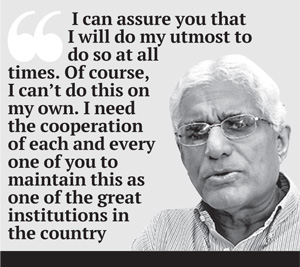

President Maithripala Sirisena 

Thus ended the period of anxiety and agony caused by the CB Governor episode. Indrajit assumed duties on Monday July 4. He was given a letter of appointment for the customary term of six years and sworn in as Central Bank Governor by President Maithripala Sirisena at the Presidential secretariat. Finance Minister Ravi Karunanayake had also sent a letter supporting and recommending Indrajit as Governor. Prime Minister Ranil Wickremesinghe was also present at the event demonstrating clearly that the choice of Indrajit Coomaraswamy as Governor was a united joint decision. Indrajit also met the PM separately for a discussion after being sworn in. Later in the day, both the President and PM addressed the Govt Parliamentary group where it was asserted that the Govt was acting cohesively and could not be divided or defeated through conspiracies.

The satisfactory resolution of the CB Governorship crisis and the subsequent show of unity presented by the President and PM have made some Govt ministers jubilant. Earlier fears about a political split between Sirisena and Wickremesinghe over the CB Governor issue have evaporated. So much so that some ministers are cock a hoop” and in a state of denial about the serious difference of opinion that existed between Maithripala and Ranil and by extension the Sri Lanka Freedom Party (SLFP) and the United National Party (UNP). Mangala Samaraweera assured the media at a press conference that there was absolutely no rift between the two and insisted that they were both committed to go ahead with the common agenda. Cabinet spokesperson Dr. Rajitha Senaratne said at the weekly briefing that there was no SLFP -UNP divide” over the matter. In fact, after this issue, they [Sirisena and Wickremesinghe] have become closer and friendlier” Senaratne claimed.

Notwithstanding these ministerial pronouncements, the reality was different. The CB Governor issue had caused a serious problem between the President and the PM. Due to reasons that are well –known, the President was firmly opposed to the 13th Governor Arjuna Mahendran continuing as the CB head. The PM on the other hand was equally determined to ensure Arjuna Mahendran continuing as CB Governor. Lakshman Arjuna Mahendran had been appointed Governor in January 2015 after his predecessor Ajith Nivard Cabraal had resigned when Mahinda Rajapaksa lost the Presidential elections in January 2015. Mahendran was appointed for the remainder of Cabraal’s original six year term which was due to end on June 30, 2016.

Premier Wickremesinghe however wanted to retain Mahendran and nominate him as governor for a fresh term of six years. Earlier the CB came under the purview of the Minister of Finance. However, Wickremesinghe who in addition to being PM was also the Minister of National Policies and Economic Affairs had brought the CB under his ministry. Matters got complicated when Mahendran became enmeshed in a scandal concerning the issue of Treasury Bonds by the CB. With the Mahinda-led Opposition and significant sections of civil society gunning for Mahendran, there emerged an orchestrated demand that the Governor should quit. The PM steadfastly refused to comply saying that nothing substantial had been proved against Mahendran.

The President differed with the PM on this. In politics where perception was often the reality, Sirisena felt that the public outcry against Mahendran was too powerful to resist. Besides the majority of those in the SLFP claiming to be Sirisena-loyalists wanted Mahendran out. President Sirisena himself opined that Ranil Wickremesinghe was denting his clean, incorruptible image due to his stance on Arjuna Mahendran. Sirisena was worried that the Govt would be seriously undermined if it continued to keep Mahendran on as Governor.


Parliamentary Committee on Public Enterprises  

So when Arjuna Mahendran’s tenure was close to ending, the President took up the position that he would not re-appoint him for a further term. He requested Ranil to suggest an alternative. The PM refused and insisted on Mahendran. A civil society organization filed a writ of Quo Warranto against Mahendran continuing as Governor. As pressure on him mounted, Mahendran indicated that he would not serve another term until and unless he was vindicated of corruption charges against him. The Parliamentary Committee on Public Enterprises (COPE) headed by JVP MP Sunil Handunnetti was conducting a probe. The PM also told some civil society representatives that Arjuna Mahendran would be appointed Governor again only after he was cleared by the COPE investigation. It became obvious that the CB would have no Governor after June 30.

This resulted in a situation where there was speculation that an acting Governor could be appointed for an interim period until the COPE investigation was over. (It was presumed that the COPE would clear Mahendran). The Attorney General’s Dept proffered an opinion that an acting Governor could be appointed. An emergency meeting of the Monetary Board was held and a letter from the AG’s Dept was produced. This was shot down by the Secretary Treasury/Finance Ministry Dr. R. H.S. Samaratunga who made it very clear that there was no provision for an acting Governor under the Monetary law.

This made it imperative that a fresh CB Governor appointment be made. President Sirisena took the initiative in compiling a list of seven names as potential Governors and submitted it for the PM’s consideration. Ranil however rejected it outright and instead recommended that Charitha Ratwatte be appointed Governor instead. Charitha Ratwatte a former Treasury Secretary was currently functioning as senior adviser to the Prime Minister. He belonged to the inner circle of Wickremesinghe’s close confidantes. Even as Ratwatte’s name was publicly mentioned, there was speculation in the media that Ratwatte would resign after two months to enable the re-appointment of Mahendran as Governor.
Once again there was opposition to Ratwatte as a potential governor. He had been earlier a UNP party chairman. The SLFP as a party was opposed to a CB Governor who could be partial towards the UNP. Besides it was suspected that Ratwatte would only hold office as a stop gap measure and then resign to make way for Mahendran to return. President Sirisena determined to prevent the re-entry of Mahendran refused to appoint Charitha Ratwatte as Governor. He said that the SLFP as a party was opposed to Ratwatte. Sirisena re-submitted a list with five names to Wickremesinghe. The Prime Minister rejected it completely and re-iterated that Ratwatte should be appointed. It was a virtual UNP-SLFP political stand off.

A thoroughly exasperated President then decided to take matters into his own hands. He decided to go by the book and appoint the senior most Deputy Governor of the CB as new Governor. Actually the CB from its inception in 1950 had been dutifully following that procedure for decades. An incumbent Governor was succeeded by his senior most deputy. It was Chandrika Kumaratunga as President who first deviated from this practice by appointing former Hayleys Chairman Sunil Mendis as Governor in 2004. Mahinda Rajapaksa followed in her footsteps by appointing Ajith Nivard Cabraal in 2006. Then the Sirisena-Wickremesinghe Govt followed suit by appointing Arjuna Mahendran in 2015.

Two Senior Deputy Governors  

Now President Sirisena tried to rectify matters by sticking to the time-tested standard procedure. There were two Senior Deputy Governors. One was Dr. Nandalal Weerasinghe who was promoted to that position on September 27, 2011. The other was Dr. P. Samarasiri who was promoted as Deputy Governor on July 14, 2014. While Weerasinghe was regarded as being closely associated with former Governor Cabraal, Samarasiri was allegedly a confidante of ex-Governor Mahendran. Since Nandalal Weerasinghe was the senior of the two President Sirisena decided to go ahead with him.

Initially President Sirisena tweeted on June 29 that he was going to appoint a new governor after some hours. He was at that time out of Colombo. Upon returning to Colombo, President Sirisena embarked on an unorthodox move. He arrived at the CB unannounced on June 30 with the intention of announcing the appointment of Nandalal Weerasinghe as Governor. Having got wind of the President’s move both Arjuna Mahendran and Ranil Wickremesinghe rushed to the CB. Wickremesinghe informed a surprised President that as a matter of protocol, he (Ranil) as the minister under whose purview the CB fell, had to be present when the President visited the institution.

In a further move that flustered President Sirisena more, the Prime Minister vetoed the idea of announcing the appointment of a new Governor. Wickremesinghe pointed out that though the CB was now placed under his ministry the existing laws governing the institution stipulated that the Minister of Finance should propose the name of the Governor to be appointed. Since Finance Minister Karunanayake was in the far east and scheduled to return only on July 4, the President could not appoint anyone Sirisena was told. A chagrined President departed without making an announcement. Later in the night a mysterious” media communiqué was released. It said that the appointment of the Governor would be made after Finance minister Karunanayake returned to Colombo. The Presidents office and Media ministry disowned the press release. It was later reported that the communiqué had emanated from the PM’s office.

Friday July 1 dawned without a Governor at the helm at CB. Both the President and Premier stuck to their positions stubbornly. The situation was indeed bleak and a major rift threatening to break apart the Govt loomed large on the political horizon. There was even speculation that Parliament may be prorogued. It was at this point that President Sirisena summoned a group of people with knowledge and experience regarding matters concerning the CB. His intention was to find a way out of the mess by finding an alternative acceptable to both sides.

It seems that destiny is taking a hand” exclaims Rick Blaine played by Humphrey Bogart in the unforgettable movie Casablanca”. Destiny was indeed taking a hand in the life of Indrajit Coomaraswamy in the form of two Samares”. One Samare was Treasury Secretary Dr. R.H.S. Samarathunga. The other Samare was of course Cabinet Minister Malik Samarawickrama.

Treasury Secretary Dr. R. H. S. Samarathunga

Even as President Sirisena was discussing possibilities and probabilities the name of Indrajit Coomaraswamy was suggested for the first time as a contender for the Central bank Governor stakes. Amusingly enough the President misheard the name Coomaraswamy” as Kumarasiri first. It was the secretary to the treasury , ministry of Finance Dr.R.H.S. Samarathunga who enlightened the President in full about the qualifications and capabilities of Indrajit Coomaraswamy. Dr. Samarathunga an administrative service officer had worked at the Dept of National planning under the purview of the ministry of Finance for over 20 years. It was then that Samarathunga had become associated with Coomaraswamy who was senior to him. Both had specialised in macro economics.

Indrajit Coomaraswamy born on April 3, 1950 has a BA (Hons.) and MA degree from Cambridge University and a doctorate from the University of Sussex. He had joined the CB as a staff officer in 1973 and been seconded to the Finance Ministry from 1981 to 1989. He had then relocated to London and worked at the Commonwealth Secretariat from 1990 to 2008 holding several posts. He had served as a Commonwealth Consultant in Colombo for 15 months in connection with the CHOGM summit held in 2013. Currently he was senior adviser at the Ministry of Development Strategies and International Trade.

After listening to Treasury Secretary Samarathunga extolling the virtues of Indrajit, President Sirisena felt intuitively that Indrajit Coomaraswamy was the right man for the job. Since he was already an adviser to Malik Samarawickrama, the President contacted his Minister of Development Strategies and International Trade. Samarawickrama, who is also the UNP Chairman is a close confidante of Ranil Wickremesinghe and a member of the Premier’s inner circle. Malik liked the idea of Indrajit as Governor and felt the suggestion was feasible. However Malik knew very well that the proposal had to be put across convincingly to the PM.

Initially a list of three names inclusive of Indrajit was sent to the PM. It was sent back with a strong reply stipulating again that Charitha Ratwatte be appointed. The President was miffed but was still prepared to wait a little longer. It appeared that the President had been convinced by Dr. Samarathunga that Coomarswamy was the most suitable choice under prevailing circumstances. It was now the turn of Samarawickrama to persuade the PM to agree. Minister Samarawickrama having years of experience in interacting favourably with Ranil went about his mission quietly and diplomatically. He was greatly aided by two factors. One was that Ranil and Indrajit had been chums since boyhood and had no issues. The other was that former President Chandrika Kumaratunga also backed Indrajit’s candidacy.

Minister Malik Samarawickrama   

Finally on Friday July 1 night, Premier Ranil Wickremesinghe also agreed to Coomaraswamy after much persuasion. At last there was a common choice acceptable to the President as well as the PM. An elated President entrusted the task of making Indrajit comply to Samarawickrama. Indrajit blissfully unaware that his life was going to change utterly received the fateful telephone call from Minister Malik Samarawickrama at 6.30 am on July 2. Love of the country and the love of a challenge made Indrajit amenable to the proposal. The rest as they say is history.

After being appointed on Monday July 4, new CB Governor Indrajit Coomaraswamy went over to the CB and assumed duties officially at the 15th floor. He was given a rousing welcome by employees at the CB. He was no stranger to the institution having commenced his career there in 1973. He addressed the CB employees where he made some interesting and important remarks. In a sense that speech indicated what he intended doing as Governor during his tenure. Here are relevant excerpts:–

The Central Bank of Sri Lanka is one of the great institutions in this country, and I am acutely aware that a primary responsibility; arguably the primary responsibility of the Governor is to uphold its reputation and credibility. And I can assure you that I will do my utmost to do so at all times. Of course, I can’t do this on my own. I need the cooperation of each and every one of you to maintain this as one of the great institutions in the country”.

My parents went abroad when I was about 11 years old, so I had much of my secondary and university education abroad. But as I was doing my degree and thinking of what I should do in the future – there was no doubt in my mind as to what my career should be and that was to be as a staff member of the CBSL…….I started my career here and that was a great source of pride, to be able to say that I started my working life in this institution, and I continue to be enormously proud that I was part of this staff of this great institution for 15 years. So in a way, it is coming the full cycle. It’s like coming back home after a long absence. It is a great pleasure, privilege and an honour to be able to come back”.

Of course, I am deeply indebted to the President for appointing me as the Governor of the CBSL. I am also indebted to the Prime Minister and the Finance Minister for supporting my appointment and I very much hope that I will be able to fulfil the trust they have reposed in me”.
When I met the President, he just told me one thing: Do your work in a straight way and do not fear anybody in discharging your duties.” Now my intention is to follow his direction and to carry out my functions according to his wishes”.

Vision of the Prime Minister 

When I met the Prime Minister, he laid out his vision for where he wants to take this country and there is a big role for the CB. And in many ways, if we are not able to fulfil our functions in the way they should be fulfilled — in terms of creating a platform for macroeconomic stability with strong macroeconomic fundamentals, having financial sector stability so there is confidence right through the system — nothing else is possible. That is the first step, to get strong macroeconomic fundamentals, to have the financial sector which is the lifeblood of the country stable, and people within the country and outside having confidence in it”.

So that is our responsibility. And as I said, because I genuinely believe that nothing else will really take off, unless we are able to do our job well, to fulfil our functions well. So we have a big responsibility, and I look to all of you for assistance and cooperation in doing this. I did play a little bit of sports in my youth and one of the lessons that I learnt, the key lesson probably, from playing sports, is that a captain is only as good as his team. You know, however smart or clever the captain is, unless his team has talent and there is teamwork, it’s not going to work.”

I want to leave three thoughts with you as to what the CB, in my view, should be imbued with, what its culture should be. One is clearly, integrity. Two is technical excellence and three is professionalism. I would like those three concepts to be the guiding principles for all of us as we go forward. And if any of you think that I am not living up to those principles, please find a way of getting that message to the 15th floor, that I personally am not living up to those three principles. Because, that, in-terms of leadership, that is important. I need to be able to set an example, and I am going to do my best to do so and if you have ever any shortcomings as I said, I would like to hear”.

And you know there is always concern about the balance between politics and economics. In my view for much of our post independent years – I am not putting this on one party or the other party, or one government or the other – but if you look back from 1948, for most of the time, politics has trumped economics. It is our job to convince our politicians that good economics is good politics. We need to, as a CB, to get away from this cycle of stop – go policies, of creating artificial booms through misaligned policies. We need to set a good framework, as I said, for the economy. We have a representative democracy. The people elected by the people – the Government – of course have sovereignty reposed in them”.

However, the Monetary Law Act sets about some very specific responsibilities for the CB. And it is up to us to fulfil those responsibilities in a very technocratic, objective and free way. That is not to say that we should be criticizing the Government of the day. That is not our business. But there are channels through which we can get independent advice through to the Government. I am very keen and I have spoken to our leaders too about this, that the CB does its work independently and in a technical way and discreetly advises the Government about what we think is the best way forward for those segments of policy and practice for which the CB has responsibility. So, I need your cooperation”

Colleagues at Central Bank  

After Indrajit Coomaraswamy’s inaugural speech to CB employees, I communicated with famous film maker and CB assistant Governor Asoka Handagama. I asked Asoka about Indrajit and how the new Governor was received by colleagues at the CB. This is what Handagama said – He was very well received and is highly respected. As he correctly mentioned in his inaugural speech, the Bank’s top priority should be to bring back the lost reputation and credibility. For that, maintaining Integrity, technical excellence and professionalism are of utmost importance. The Bank has a challenging task of correcting misaligned economic fundamentals. Everybody believes his (Coomaraswamy) words it seems. He is a man with principles and is like a fatherly figure to us. The staff will give the fullest support to a leader of his calibre. I think if he fails to restore the lost credibility and the reputation of CB, no one else will be able to do”.

The new CB Governor also conducted a well attended press conference. Speaking to the media Dr. Coomaraswamy promised to give his absolute best shot” to restore the institution’s credibility, increase transparency in the Bond market and stabilise macro-economic fundamentals to achieve growth in Sri Lanka. The nation at large hopes and prays that the14th Governor of the Central Bank of Sri Lanka would indeed be able to give his absolute best shot for the institution and country.
D.B.S.Jeyaraj can be reached at dbsjeyaraj@yahoo.com  

– See more at: http://www.dailymirror.lk/112249/Inside-story-about-Indrajit-Coomaraswamy-becoming-Central-bank-Governor#sthash.wmI5vicA.dpuf

New Central Bank Governor to outlast UNP regime

July 9th, 2016

ECONOMYNEXT -Courtesy The Island


Sri Lanka’s new Central Bank Governor Indrajit Coomaraswamy made clear at his first press conference Tuesday that he will not be a pushover nor an interim appointee for one year as suggested by a government minister.

The 66-year-old economist, who was given the job by President Maithripala Sirisena, said his appointment under the Monetary Law Act guaranteed him a tenure of six years and he hoped to complete it.

When pointed out that his term would extend beyond the life of the current government, Coomaraswamy said he believed it would ensure continuity of the bank’s work despite any change of government.

article_image

His term ends in July 2022, two years after the next parliamentary election is due by August 2020.

The then acting finance minister Lakshman Yapa Abeywardene told reporters last week before Coomaraswamy’s appointment that the next governor would be appointed only for one year.

It was speculated that the United National Party was keen to bring back controversial Arjuna Mahendran who was replaced after he faced allegations of insider trading that favoured his son-in-law’s primary dealership.

Coomaraswamy, a respected personality with impeccable credentials for the job, also made it clear that he was extremely happy and honoured to be asked contrary to earlier speculation that he had initially turned down the job.

“When I was asked, it was a surprise. It was sudden,” he said. “Now that I have taken it, I am going to give it my absolute best shot.”

President Sirisena and Prime Minister Wickremesinghe were at loggerheads over the replacement of Mahendran who faces an investigation by the parliamentary Committee on Public Enterprises (COPE).

The virtual termination of Mahendran came as a tweet from the President who also appointed Coomaraswamy via the micro blogging twitter.com.

Socially and politically, Coomaraswamy is in the Prime Minister’s camp, but his appointment by Sirisena and his remarks suggest he intends to depoliticise the bank and make it more technocratic.

He was asked about his links to Sri Lankan-born US fund-manager Raj Rajaratnam who is currently jailed in the United States over an insider trading scam.

Coomaraswamy said he had provided professional services in conducting macro-economic research for Rajaratnam for just under a year before his arrest in the US.

The governor said he admired Rajaratnam’s charitable work both in Sri Lanka and elsewhere.

Coomaraswamy, who had started his career as a researcher at the Central Bank 42 years ago, was a director of economic affairs at the Commonwealth Secretariat in London.

Multilateral Responses to Terrorism: The United Nations

July 9th, 2016

The United Nations Posted: October, 2004

With universal membership and a commitment to global security, the United Nations is uniquely poised to play a critical role in the international struggle against terrorism. Unlike its member nations, which often face domestic political, economic and bureaucratic constraints, the UN, as an independent international organization, is more free to pursue an anti-terrorist agenda. On the other hand, the UN itself is beset by extreme internal politicization, factionalism and bureaucratization which do hinder its counterterrorist functions.

This analysis examines both the constructive actions the UN has taken against terrorism and the obstacles it faces in tackling the threat in amore significant way. It concludes with several policy recommendations for strengthening the UN’s role in the anti-terrorist struggle.

UN Responses to Terrorism

UN Security Council

As the principal international organ dealing with international peace and security, the UN Security Council has passed several significant resolutions on the counterterrorist front. More recent resolutions have instituted sanctions against the Taliban and Al Qaeda, affirmed the right of self-defense, found terrorism to be a threat to international peace and security, stressed the accountability of the supporter as well as the perpetrator of terrorist acts and required member states to limit the ability of terrorists and terrorist organizations to operate internationally by freezing assets of terrorist-affiliated persons and organization and denying them safe haven.

Resolution 1267 (1999), created a sanctions committee that maintains a list of individuals and entities belonging or related to the Taliban, Osama bin Laden and Al Qaeda. The resolution obliges all states to freeze the assets, prevent the entry into or the transit through their territories, and prevent the director indirect supply, sale and transfer of arms and military equipment with regard to the individuals and entities on the list. As of July 2004, the list included 144 individuals and entities associated with associated with the Taliban and 285 with Al Qaeda.

In the wake of September 11th, Resolution 1368 (9/12/01) recognized “the inherent right of individual or collective self-defense in accordance with the Charter” and expressed “its readiness to take all necessary steps to respond to the terrorist attacks of 11 September 2001, and to combat all forms of terrorism, in accordance with its responsibilities under the Charter of the United Nations.”

Resolution 1373 (9/28/01) declares that “acts, methods, and practices of terrorism are contrary to the purposes and principles of the United Nations and that knowingly financing, planning and inciting terrorist acts are also contrary to the purposes and principles of the United Nations.” The resolution calls on member states to “prevent and suppress the financing of terrorist acts” and “refrain from providing any form of support, active or passive, to entities or persons involved in terrorist acts.” Member states are obliged to criminalize terrorist activity and financing, freeze terrorist-related funds and assets, deny safe haven to those who “finance, plan, support, or commit terrorist acts, or provide safe havens,” prevent the movement of terrorists or terrorist groups, cooperate with other governments and the international community on the anti-terrorism front, and become parties to all terrorism-related conventions and protocols.

It is important to note that the terrorism financing prohibitions of the UN refer only to the Taliban, Osama bin Laden and Al Qaeda-affiliated organizations designated under Resolution 1267. The UN does not maintain a general list of terrorist organizations. It is therefore legal, according to the UN, to finance and provide safe haven to, for example, Hamas terrorists.

Counter-Terrorism Committee (CTC)

Established by Security Council Resolution 1373, the CTC is made up of all 15 members of the Security Council and is charged with monitoring states’ implementation of Resolution 1373 and bringing member states to an acceptable level of compliance with terrorism-related conventions and protocols. The Committee is required to help states remedy any deficiencies they may have regarding legislation, funds or personnel.

States must send reports to the CTC stating the specific steps they are taking to fight terrorism. The reports are supposed to include progress in seven areas: legislation, financial asset controls, customs, immigration, extradition, law enforcement and arms traffic. Specific questions include:

  • What steps have been taken to establish t ensure that the punishment reflects the seriousness of such terrorist acts?
  • What laws in your country prohibit (i) recruitment by terrorist groups and (ii) the supply of weapons to terrorists?
  • What legislation exists to deny safe haven to terrorists?
  • What legislation exists for freezing the assets of terrorists?

As of June 30, 2004, 71 UN member states had not met the deadline set for submission of their reports to the CTC .In July 2004, the Security Council issued a Presidential Statement inviting the CTC to accelerate its work on assessing the assistance needs of member states. It called on the Committee to identify and address states’ problems in implementing resolution 1373 and to facilitate the provision of technical assistance to states with difficulties.

The CTC provides assistance to member nations; it is not an enforcer of UN policy and it does not institute sanctions against countries that violate anti-terrorism norms. There is currently discussion within the UN and the international community as to whether the CTC should adopt more of an enforcer role such as “naming and shaming” countries that violate international standards or lag behind in implementing anti-terrorism legislation.

International Conventions on Terrorism

Intended to strengthen the international legal basis for the fight against terrorism, there are currently 12 international conventions that criminalize some of the most significant acts of terror: offenses against aircraft and airports, attacks on internationally protected persons, hostage-taking, misuse of nuclear material, attacks on ships and offshore platforms, misuse of plastic explosives, bombings and financing of terrorist acts. Negotiated from 1963 to 1999, the conventions define a particular type of terrorist violence as an offense under the convention; require signatories to penalize that activity in their domestic law and create an obligation on them to prosecute or extradite violators of the convention. The CTC is charged with encouraging states to become parties to the conventions and to implement their provisions in national legislation.

The most recent convention, the International Convention on the Suppression of the Financing of Terrorism (1999) makes it a criminal offense in signatory countries to provide financial assistance to terrorist organizations. Each signatory is required to identify, detect, and seize or freeze funds used or allocated for terrorist purposes, prosecute or extradite individuals suspected of involvement in the financing of terrorism, cooperate with other states in the investigation and/or prosecution of such suspects and ensure that their domestic laws require financial institutions to implement measures that identify, impede, and prevent the flow of terrorist funds.

The convention marks the first time that fundraising for terrorist activities is considered a crime by international law. As of March 2004, 132 countries had signed the convention and 112 had completed the ratification, acceptance, approval or accession process.

UN Office on Drugs and Crime/Terrorism Prevention Branch

The Terrorism Prevention Branch (TPB), an arm of the Vienna based UN Office on Drugs and Crime (UNODC), works with the CTC top provide legislative, legal and technical assistance to UN member states in the counterterrorism arena. Created in 1999, the TPB researches terrorism trends and assists countries in upgrading their capacities to investigate and prevent terrorist acts. In October 2002, the TPB launched The Global Programme Against Terrorism as the framework for UNODC’s operational activities. The Programme:

  • reviews domestic legislation and provides advice on drafting enabling laws;
  • facilitates and provides training to national administrations with regard to new legislation;
  • provides in-depth assistance on the implementation of the new legislation against terrorism;
  • maintains a roster of experts to supplement specific expertise where required;
  • maintains model laws and examples of relevant legislation;
  • provides guidance for legislating and implementing the international instruments pertaining to terrorism.

Obstacles Facing UN Counterterrorist Efforts

The UN faces numerous challenges in translating its resolutions, conventions and programs into effective actions.

Lack of a Clear Vision

Within the UN and the international community debate is currently waging as to what role the UN should play in the international fight against terrorism According to veteran UN political analyst Edward Luck, the UN system is facing three broad strategic options:

  • embrace unconditionally the struggle against terrorism and make it a core priority for the institution;
  • continue to muddle through as a marginal but useful player in the global counterterrorism effort, while attempting to stay out of the crossfire;
  • distance the institution from the war on terrorism as distracting from the organization’s traditional priorities and competencies.

Whereas, Luck argues, in the post September 11th climate, the UN sought to increase its role in the antiterrorist struggle, the August 2003 car bomb attack against UN Headquarters in Baghdad weakened UN resolve on the counterterrorist front. Twenty two people, including the Secretary General’s Special Representative for Iraq, Sergio Vieira de Mello, were killed in the attack.

The Secretary General’s Policy Working Group on the UN and Terrorism argued that the “UN must project a clear and principled message that terrorism, whatever the cause in whose name it is undertaken, is unacceptable and deserves universal condemnation.” The group identified three areas in which the UN could make a distinct contribution:

  • Dissuasion: helping persuade states, groups, and individuals not to assist terrorists;
  • Denial: assisting member states in their efforts to deny terrorists the money, space, and means to threaten peace and security;
  • Cooperation: using the UN’s convening power to facilitate counterterrorist cooperation at the global and regional levels.

One of the United States’ core reservations about the UN’s role in the antiterrorist struggle is the international body’s unwillingness to use military force to prevent, punish and deter terrorism. While the U.S. recognizes the merit of establishing international legal and legislative norms against terrorism, it also acknowledges the value of military action as another significant tool on the counterterrorist front.

Lack of a Definition of Terrorism

One of the main obstacles in forging a united front against terrorism is that there is no internationally accepted definition of terrorism. The decades old refrain “One man’s terrorist is another man’s freedom fighter” still reverberates throughout the institution. As a result, there is also no internationally recognized screening mechanism for identifying terrorist groups.

There are two camps within the UN: those who think that the UN should deal with the causes of terrorism and those who want to focus on outlawing specific acts of terrorism.

In October 1999, the UN Security Council adopted Resolution 1269 which “Unequivocally condemns all acts, methods and practices of terrorism as criminal and unjustifiable, regardless of their motivation, in all their forms and manifestations, wherever and by whomever committed.” While the resolution condemned terrorist acts, it failed to define what constitutes such an act.

Political Divisions

The UN is beset by political divisions and factionalism that greatly aggravate its efforts to achieve an effective antiterrorist leadership role. In particular, the hostility of the Arab/Muslim bloc toward the United States and Israel continues to impede an effective global strategy against terrorism.

For decades, the various UN bodies and agencies have refused to recognize Palestinian violence against Israel as constituting terrorism. While the U.S., the European Union and others favor a definition of terrorism that includes all violence against civilians, the 56 member Islamic Conference Organization insists on exempting “national liberation movements” and “resistance to foreign occupation” from the definition.

Whether through its harsh condemnation of Israeli responses to Palestinian terrorism or its forging of moral equivalencies between Palestinian suicide bombers and Israeli army countermeasures, the UN remains hostage to global politics. The recent International Court of Justice (ICJ) ruling that condemned Israel’s antiterrorist barrier and effectively denied the sovereign State of Israel the right to protect its citizens from Palestinian terrorism is but one example among many that taint the UN’s efforts in this regard.

The political divisions and ideological alignments contribute to the UN’s application of double standards. As Sergey Rogov of the Russian Academy of Sciences noted in a Columbia University forum on the UN’s Response to Terrorism, “… There are also double standards for freedom fighters, who were pushing for self-determination, which was allowed for Bosniaks and Palestinians, but not for Kosovars, Chechens, Tamils, or Kurds.”

Resource Allocation

The issue of terrorism is tackled within many UN bodies, agencies and offices including the General Assembly, the Security Council, the Office for Drug Control and Crime Prevention, the International Civil Aviation Organization, the International Maritime Organization, the UN Department for Disarmament Affairs, the International Atomic Energy Agency, the Organization for the Prohibition of Chemical Weapons and the Universal Postal Union.

On the one hand, it is constructive for the specialized UN agencies to address the terrorist threat. On the other hand, there is no single address within the UN system for anti-terrorist action. There is neither a separate counterterrorist agency within the UN nor is there a staff member at UN headquarters in New York who has been assigned to work fulltime on terrorism.

Conclusion

In recent years, the United Nations has strengthened its antiterrorist agenda. Its criminalizing of terrorist financing and its outreach work to member states in providing the resources needed for them to adopt and enforce antiterrorist legislation are the most significant recent UN initiatives. The world body’s list of Al Qaeda affiliated organizations that require asset freezing is a positive model for member states.

Nevertheless, the UN’s many weaknesses on the counterterrorist front impede its ability to become a more effective antiterrorist force in the international community. In general, the world body’s consistent failure to overcome anti-American and anti-Israel sentiment within its walls contributes to a legitimization of Palestinian terrorism against Israeli civilians. More specifically, the lack of an agreed upon universal definition of terrorism, and the UN’s restriction of its terrorist list to Al Qaeda affiliated organizations, serve to ignore and condone other terrorist groups and terrorist activities.

Some observers contend that the UN will never be able to overcome its political divisions and should therefore focus on antiterrorist activities that can rise above politics.

In The UN Role in Fighting Terrorism, Anthony Cordesman of the Center for Strategic and International Studies suggests the UN should concentrate on the creation of common security standards for air, road, rail, and maritime traffic, airport security, port security, security for container ports and shipments, energy and hazardous material shipments. He sees a role for the UN in recommending global standards for the protection of key commuter facilities, critical infrastructure facilities, public facilities and government buildings.

Whichever course the UN chooses, it will certainly have to allocate additional resources for its counterterrorist agenda.

ඇත්ත කී නිසා මා දඩස්‌ගා මාරු කළා – දඩල්ලගේ කියයි

July 9th, 2016

චමින්ද සිල්වා උපුටා ගැන්ම දිවයින

“මගේ ස්‌ථාන මාරුව ගැන මට කලකිරීමක්‌ නැහැ. මාව මාරු කළේ ඇත්ත කියූ නිසා” යෑයි රාජ්‍ය පරිපාලන හා කළමනාකරණ අමාත්‍යාංශ ලේකම් ජිනසිරි දඩල්ලගේ මහතා ‘දිවයින’ ට ඊයේ (06 වැනිදා) පැවසීය.රාජ්‍ය පරිපාලන හා කළමනාකරණ අමාත්‍යාංශයේ ලේකම්වරයා ලෙස කටයුතු කළ ජිනසිරි දඩල්ලගේ මහතා පෙරේදා (05 වැනිදා) සිට බලපැවැත්වෙන පරිදි තැපැල් අමාත්‍යාංශ ලේකම් ධුරයට පත් කර යෑවීමට ජනාධිපති ලේකම් පී. බී. අබේකෝන් මහතා විසින් පියවර ගෙන ඇත. දඩල්ලගේ මහතාගේ ස්‌ථාන මාරුව සම්බන්ධයෙන් ‘දිවයින’ කළ විමසීමේදී ඒ මහතා වැඩිදුරටත් මෙසේද කීය.

“මං රාජ්‍ය පරිපාලන අමාත්‍යාංශයේ ලේකම්වරයා ලෙස වැඩ බාරගැනීමෙන් පසු හිතට එකඟව වැඩ කළා. මට කරන්න බැරි දෙයක්‌ කවුරු හරි කිව්වොත් මම ඒක කරන්න බැරි බව කෙළින්ම කියනවා. එක එක්‌කෙනාට නැවෙන්න යන්නෙ නැහැ.

මම හිතන්නේ මගේ ස්‌ථාන මාරුවට හේතුව කෙළින් කතා කර කෙළින් වැඩ කිරීමයි. මට ඒ නිසා කනගාටුවක්‌ නැහැ. මගේ ස්‌ථාන මාරුව සම්බන්ධයෙන් අභියාචනයක්‌ ඊයේ යෑව්වා. ඒ අභියාචනයට සාධාරණයක්‌ ඉටු වුණොත් ඉන්නවා. නැත්නම් මම විශ්‍රාම යනවා. මාව මාරු කළේ වැරැද්දකට නොවෙයි රාජ්‍ය නිලධාරීන් මුහුණපා සිටින ඇත්ත කියන්න ගිය නිසයි කියලා මම හිතනවා.

මම පසුගියදා ජුනි 26 දා “දිවයින ඉරිදා සංග්‍රහය’ට සම්මුඛ සාකච්ඡාවක්‌ දුන්නා. එමගින් රජයේ නිලධාරීන් මුහුණ දෙන ගැටලු ගැන විග්‍රහයක්‌ කළා. එහිදී “සියලු රාජ්‍ය නිලධාරීන්ගේ ගැටලු ගැන මට වගකීමක්‌ තියෙනවා” “කයිවාරු දොඩවන යහපාලනයේ ඇති වැඩේ මොකක්‌ද?” සිල් රෙදි අල්ලස්‌ නම් ජන සවිය, සමෘද්ධි, දිවි නැඟුම ඒවත් අල්ලස්‌නෙ කියලා පැවසුවා.

මේ කියපු දේවල් හිතට එකඟවයි මම කිව්වේ. දේශපාලනඥයෝ රාජ්‍ය නිලධාරීන්ට උපදෙස්‌ දීලා පස්‌සේ රාජ්‍ය නිලධාරීන් නීතිය හමුවට ගෙනියනවා. ඒක කරනවා නම් මටත් ඒක වෙන්න ඕන කියලා මම පුවත්පතට කියලා තිබුණා. මේ කාරණා මගේ ස්‌ථාන මාරුවට බලපාන්න ඇති කියා මා හිතනවා.

රාජ්‍ය පරිපාලන හා කළමනාකරණ අමාත්‍යාංශ ලේකම් ජිනසිරි දඩල්ලගේ මහතා අමාත්‍යාංශ ලේකම් ධුරයෙන් ඉවත් කිරීමෙන් පසු වැඩ බලන ලේකම් ලෙස එම අමාත්‍යාංශයේ අතිරේක ලේකම්වරිය ලෙස කටයුතු කළ එම්. අබේගුණවර්ධන මහත්මිය පත් කර ඇත.


 2016/ 07 / 07 (ජුලි හතයි !!! )

Ministry Secy gets lightning transfer for ‘speaking truth’

July 6, 2016, 9:14 pm

by Chaminda Silva

Senior administrative officer Jinasiri Dadallage yesterday said that he had been given a punishment transfer because he was openly critical of the misdeeds of the incumbent regime.

I don’t regret what I have said and I have got this transfer because I dared speak the truth,” Dadallage said.

Dadallage has been transferred from the Ministry of Public Administration and Management, where he served as Secretary the Ministry of Post, Postal Services and Muslim Religious Affairs with effect from Tuesday (05) at the behest of Secretary to the President P. B. Abeykoon.

I worked according to my conscience and guidelines laid down in the Es tablishments Code. When a politician gives me a wrong order I refuse to carry it out. I have never given in to political pressure,” he said.

Dadallage said that he had given an interview to the Sunday Divaina paper criticising the misdeeds of the incumbent regime. “I asked what was the use of having a government which did not translate its words into deeds. I also wanted to know if sil redi could be considered bribes why the Samurdhi, Divineguma and Jana Saviya did not fall into the same category. Aren’t they also bribes?

Dadallage said that he had submitted an appeal against the transfer order and would retire if he did not receive a favourable response. I got the marching orders because I spoke of the problems public officials are faced with,” he said.

The government has appointed Additional Secretary M Abeygunawardena Acting Secretary to the Ministry of Post, Postal Services and Muslim Religious Affairs.

7th of July 2016 ( JULI HATHAI !!! )

මේ සිංහලේ අවසානයද ?

July 8th, 2016

ධර්මසිරි සෙනෙවිරත්න

සිංහලේ අතීත සව්භාග්‍යය  ගැන විස්තර නොකලාට  බොහෝදෙනා ඒ ගැන දනිති වසර ලක්ෂ ගණනක සිට කිසියම් ශිෂ්ටාචාරයක් පැ වතී වත්මන් ලංකාව නමැති  රට සිංහල නම් ජාතියක් විසින් හදාවඩා වර්ධනය කර ගත පන්දුකාභයාගේ සමයයෙන් පසු නම් අපි ඊටත් වඩා දේ දනිමු  කෙසේ හොවෙවා  මෙසේ රට හදන්නට ජාතියක් ගොඩනගන්නට වසර 2600 ක් තරම් කාලයක සිට  අවශ්‍ය සියලුම දේ කලේ සිංහල බෞධ්ධයෝය .සොලී  හා බටහිර  ආක්‍රමණිකයන් විසින් කරනලද විනාශයන් හමුවේ දිවිපරදුවට තබා රට බේරා ගත්තේ සිංහල බෞධ්ධයෝය . අබෞද්ධ සින්හලයෝවත්  පරයන්ට විරුද්ධ සටන් වලට  එකතුවුයේ නැත . 1818 1848    දිවි පුද කළෝ සිංහල බෞධ්ධයෝය    පසුගිය වසර 30-40 අතරත් මේ රට ත්‍රස්තබෙදුම් වාදීන්ගෙන් බේරාගැනීමට  90% ක් ම දායක වුයේ සිංහල බෞධ්ධයෝය  . එය වලක් වන්නට සියලු උපක්‍රම යෙදුවේ  රනිල් රවී  චන්ද්‍රිකා  අබෞද්ධ  සිංහල දේශපාලකයන් ඇතුළු  උන්ගේ වන්දිභට්ට යෝය  අබෞද්ධ සිංහල කිතුනු පුජකයොත්  දෙමල හා මුස්ලිම් පුජකයොත්  ත්‍රස්තයින්ට  හැකි තරම් උඩගෙඩි දෙමින්  සිංහල බෞධයන්ගේ සටන මොටකරන්නට  වෑයම් කළහ  එස්මන්ඩ් වික්රමසින්හලා බෞධ්ධයන්ගේ මුදල්  යොදවා   බෞද්ධයන්ට පහර ගැසුවේය
           තමන්ගේ පාරම්පරික ආගම  මේ රටට නොගැලපෙන  බව අවබෝධ කරගෙන හෝ නොගෙන  swrd   භුමිපුත්රයන් ට  අව්ශ්ෂ්‍ය  ලෙස තමන්  වෙනස්වුනේ  හරියටම  වඩු ගරජුන් වෙනස් වුනාමෙන්ය .ඔහු ජන හද ගැහෙන රාවය හඳුනා ගත්තේය  රට පාලනය කිරීමට නම්  එසේ හඳුනා ගත යුතුය  ඒ අනුව වෙනස් විය යුතුය . එහෙත් දැන්  රනිල් චන්ද්‍රිකා වැනි ය   රටේඉතිහාසය ද සහමුලින් ම  විකුර්තිකර  ”සන්හින්දියාවේ ”” නාමයෙන්  මේ සිංහල බෞධ්ධරට   අබෞද්ධ රටක් බවට හැරවීමේ මුලික පිඹුරුපත් සකසමින් සිටිති .
                                                                    චන්ද්‍රිකා   බණ්ඩාරනායක  අම්මාගේ තුරුලෙන්  වෙන්වුදාසිටම සිංහල බෞධ්ධකමෙන් ඉවත් වන්නට වුවාය . සෝබෝන්  අහල පහල මොකක්දෝ ඉස්කෝලෙක දී උපාධි නොමැතිවම පරගතිකමේ මුදුනටම නග්ගාය . විජය කුමාරතුංග නම් පල්ලියේ ඒජන්ත යා සමග පාහුන ඇය දෙමල ත්‍රස්තයින්ට දියහැකි උපරිම ආධාර දුන්නාය  ශ්‍රීලනිපයේ සියලුම ප්‍රතිපත්ති වෙනස්කලාය. රටපාවාදුන්නායය්  සිංහලයන් විසින් එලව එළවා පහරදෙයය් බිය නිසා  උන්ට යම් විටෙක පහර දුන්නත්  මමාවූ රත්වත්තෙටවත්  සටන් කරන්නට ඉඩ නොදී  වලක්වුයේ යට සිංහල ජාතිය ගැනවත් බුදු සසුන ගැනවත්  ලෙන්ගතු කමක් නැතිනිසාය  . එතියා අම්මා තාත් තාවත්ඇ  යට අවශ්‍ය නැත .. පුතාට ඉගැන්වුයේ   ‘සිංහලයෙක් වීම නින්දාවක්  කියාය .. මේ චව්ර ගැහැණිය  රනිල්ගේ උදව්වට දැන් පැමිණ ඇත්තේ  ආයෙත් නොවරදින ලෙස සින්හයනුත් බුදුසසුනත් මෙරටෙන් නැතිකරන්නටය.  ඊයේ යේ පෙරේදා බේරුවලදී මේ දුෂ්ට ගැහැණිය මට්ටයන් පිරිවරාගෙන  කිව්වේ  සන්හින්දියාවට බධාවෙන ඉතිහාසයද පාසලෙන් ඉවත් කරන්නට කටයුතු කරමින් සිටින බවය .
                                       දුටුගැමුණු විජයබා  මෙන්ම ධර්මපාල තුමාගේ සහ ටිබෙට් ජාතික මහින්ද හිමියන්ගේ විස්තරද අපේ සිංහල දරුවන් ඉගෙන ගැනීම වලක්වන්නට ඇ ය පියවර ගනිමින් සිටී  ඇය ජනාධිපති කාලයේත්  මෙසේම වෑයම් කලා ය . මේ පරයෝ නොදන්නවාට   මෙයින් සතුටුවෙන්නේ බෙදුම් වාදීන් මිස 75%  වන සිංහලයින් නොවන බවය් එජාපයට චන්දයදෙන අයගෙන් සියයට 5-10 ක්  හැර අනෙක් සින්හලයෝවත්  මෙයින් සතුටට පත් නොවෙනු ඇත සමහර මාක්ස් වාදීන්  නම් එයට සතුටුවනු ඇත්තේ උනුත්   විදේශිකයන්ගේ අතකොලු නිසාය . ථෙරවාදී බුදු දහමත් සිංහල ජාතියත්  මෙරටින් අතුගා දැමීම චන්ද්රිකානම්  ද්‍රෝහී ගැහැනියගේ  අවශ්‍ය තාවය්  . රනිල් කරන්නේ ඇත පුච්චා ගැනීම චන්ද්‍රිකාට භාරදී  මය . අර්ජුන් මහේන්ද්‍ර හොරකමට යොදවාගත්තාක් මෙනි .  ලැජ්ජාවක් බයක්   හිරිඔතප් නැති ගහනියෙකුට කල නොහැකි දෙයක් නැත . ය  යන්නේ  මේ වැඩේ කරලාම ඉවරවෙලාය .එක අහක් පොට්ට වෙන්න  බෝම්බ ගැහුවත් මේ ගැහැණිය තනි ඇහෙනුත්  සිංහලයන් දෙස වපරකර බලන්නට යට හැකියාව යත . අම්ම තාත්තා පාවාදුන් මෙයාට  පාවාදිය නොහැකි දෙයක් නැත .  .
චන්ද්‍රිකා ජනපතිකලෙත් බටහිරයන්ය . එදා කරගත් නොහැකිව ඉතිරිවුදේ කරගැනීමට ඉන්දියාවටත් බටහිරයන්ටත්  මේ අවස්ථාවේ   ය නැවතත් අවශ්‍ය වී ඇත . සිරිසේනටත් රනිල් ටත්  මෙය තනිවම කරගත නොහැක  සිරිසේනට නම් දර්ශනයක් නැත   ඇත්තේ ක්‍රෝධය පමණි  ඔවුන්ට ලැජ්ජාවකින් තොරව  අමුහෙලුවෙන් පාරට බස යන්නට තරම්   දහිරියක් නැති නිසා එවැනි දහිරියවන්ත චන්ද්‍රිකා දැන්   වේදිකාවේ  අමු නිරුවතින් රඟපාමින් සිටී … නැත නැත   බටහිර නුලෙන් රූකඩය නටවෙමින් සිටින්නීය .. 
                                                    මේ ගැහැණියට එලව එළවා පහර දිය යුතුය  එකාබධ්ධ විපක්ෂය   මේවා ගැන වැඩි කතාබහක් නැත්තේ මහින්දට මුස්ලිම්  චන්ද අවශ්‍ය නිසාය  බොදුසේනාවේ නම නොකියා මහින්ද කියන්නේ යම් පිරිසක් තමන්ගෙන් මුස්ලිම් වරු ඉවත් කල බවය . මහින්ද  ගේ පුරෝහිතයෝ බලන්නේ මහින්ද කෙසේ හෝ දිනවා තමන්ද දිනන්නට මිසක් සිංහල ජාතිය රකින්නටවත් සසුන රකින්නට වත් නොවේ  මහින්ද මේ මර උගුලෙන් ගල විය යුතුය .                                                සිංහල බෞධ්ධරටක මිස වෙනත් කිසිම රටක  අනෙක් වාර්ගිකයන්ට  සංහිඳියාවක්  නොමැතිබව එකහෙලා කිව හැකි නායකයෙක් අපට අවශ්ශ්‍යය   

කොටින් ගේ පාළන ප්‍රදේශයට ගියෙමි

July 8th, 2016

වෛද් රුවන් එම් ජයතුංග

2002 වසරේදී කොටි සංවිධානය සහ ශ්‍රී ලංකා රජය අතර සමාදාන ගිවිසුම අත්සන් කරන කාලයේදී මම වෛද්‍යවරු කණ්ඩායමක් සමග කොටි පාලන ප්‍රදේශ වූ වෙල්ලාලකුලම් සහ මුලන්ඟාවිල් වෙත ගියෙමු. මෙම ප්‍රදේශ වලදී අප සිවිල් ජනතාව සඳහා වෛද්‍ය සායන පැවැත්වූයෙමු. මෙම ප්‍රදේශ සියල්ලම එල්.ටී.ටී.ඊ අණසක යටතේ තිබුනි. එසේම අපව නිරීක්‍ෂණය කිරීම සඳහා සිවිල් ඇඳුමෙන් යුත් එල්.ටී.ටී.ඊ කාඩරයන් කිහිප දෙනෙකු සායනේ තැනි තැන රැඳී සිටියහ​.

යුද්දය නිසා ද්‍රවිඩ සිවිල් ජනතාව ඉමහත් දුක්ඛිත තත්වයට පත්ව තිබුනේය​. ළමුන් අතර මන්දපෝෂණය බහුල විය​. එසේම සිවිල් ජනතාව යුද ආතතිය නිසා ක්ලමථයටද පත්ව සිටියහ​.

kotiya

මෙම ගමනේදී කතෝලික පූජකයෙකු වූ අත්පුතරාජ් පියතුමා අපව අන්බහම් ළමා නිවාසයට ගෙන ගියේය​. එම ළමා නිවාසයේ  යුද්දයේ අහිංසක  වින්දිතයන් වූ ළමුන් බොහෝ දෙනෙකු වූහ​. වයස අවුරුදු නවයක් පමණ වූ එක් දැරියකගේ දකුණු අත කපා තිබුනේ වෙඩි පහරක් ලැබීම නිසාය​. මේ දැරියගේ නම  කසන්ජා ය.  ඇය හමුදාවත් එල් ටී ටී ඊයත් අතර ඇතිවූ වෙඩි හුවමාරුවකදී (යුද්දයේ)  කොලැටරල් හෙවත් සමපාර්ශිවික  වින්දිතවරියකි. තවත් ළමයෙකු හෙලිකොප්ටර් හඞට බිය වෙයි. එසේම ඔහුට මුත්‍රා පහවෙයි. මෙහි සිටි ළමුන් ගනනාවක් ළමා පශ්චාත් ව්‍යසන ක්ලමථ අක්‍රමතාවයේ ලක්‍ෂණ පෙන්වූහ​.

මුලන්ගාවිල් හි සායනයකදී හිටපු කොටි ප්‍රහාරක සාමාජිකයෙක් මගෙන් බෙහෙත් ගැනීමට ආවේය​. අලිමංකඩ සටනේදී ඔහු තුවාල ලබා තිබේ. ඔහු ඇවිදින්නේ කිහිලිකරුවක ආධාරයෙනි. ඔහුගේ බඩට වැදී තිබූ වෙඩි පහරවල් ද හෙතෙම කමිසය ඔසවා මට පෙන්වීය​.

අපගේ වෛද්‍යවරු අතර සිටි දෙමල දත් වෛද්‍යවරු වූ වෛද්‍ය වොශින්ටන් සහ වෛද්‍ය ෆර්ඩිනන්ඩ් එල්. ටී.ටී.ඊ නිල ඇඳුම් ඇඳ සිටි කාඩරවරුන් සමග කථා කලෝය​. ඔවුන් තවමත් ළමා වයසේ සිටි නමුදු ආයුධ සටන් දන්නා සෙබළු වූහ​. ඔවුන් උත්තර දුන්නේ එතරම් ගරුසරුවකින් නොවේ.

සායනයෙන් පසු දිවා ආහාරය සඳහා අසල තිබූ පාසලක් වෙත අපව රැගෙන යන ලදි. ශෙල් සහ ආර්ටිලරි ප්‍රහාර නිසා අවට නිවාස ගරා වැටී තිබේ. නමුත් පාසල කිසියම් හේතුවක් නිසා සුරක්‍ෂිතව ඉතිරිව ඇත.

දිවා අහාරය  ඉස්සන් කකුලුවන් පොකිරිස්සන් සහිතව ඉතා ප්‍රණීත ලෙස  සකස් කොට තිබුනි. අපට සංග්‍රහ කිරීම පිණිස රූමත් ද්‍රවිඩ තරුණියන් කිහිප දෙනෙකුද වූහ​. නමුත් පසුව හෙලි වූයේ ඔවුන් ද එල්. ටී.ටී.ඊ සාමාජිකාවන් බවය​.

පුරා දින දෙකක් තුල පැවත්වූ වෛද්‍ය සායන නිමවා අප කොලඹ එන්නට සූදානම් වූයෙමු. සමහරු එකල කොටින් විසින් පෙරා විකුනන ලද අරක්කු විශේෂයක් මිලට ගත්හ​. අප මේවා බාලසිංහම් ස්පෙෂල් ලෙස නම් කලෙමු. බාලසිංහම් ස්පෙෂල් සුදු පැහැයෙන් යුතු වූ අතර තල් වලින් පෙරන්නක් බව දැනගන්නට ලැබුනි.

ඒ කාලයේ කොටින් ඒ 9 මාර්ගයේ ගිය වාහන වලින් බදු අය කරගත්තද අපගේ වාහනයෙන් බදු නොගත්තේ අප වෛද්‍ය සායනයක් කිරීමට දකුනින් ආ වෛද්‍යවරු  වූ නිසාය​.

වෛද් රුවන් එම් ජයතුංග

අටපට්ටම – කුඩුපට්ටම්

July 8th, 2016

ධර්මන් වික්‍රමරත්න

යූ.එන්.පී ආණ්ඩුවක් ආවොත් බිස්නස්වලට හොදයි කියූ ව්‍යාපාරිකයෝ වැට් බද්දට එරෙහිව කඩවසා හර්තාල්ය. සරසවි සිසුන් මර්ධනයට එරෙහිව මහපාරේය. දොස්තරවරුන් සයිටම් එකට එරෙහිව වර්ජනයේය. ඉංජිනේරුවන් සහ පරිගණක වෘත්තිකයන් එක්ටා ගිවිසුම හරහා රට ඉන්දිය කොලනියක් කිරීමට එරෙහිව උද්ඝෝෂණයන්ය. රබර්, තේ සහ වී ගොවියෝද සටන් බිමේය. මේ සියළු අරගල ජර්මනියේ හැමලින් නුවර විසූ බටනලා වාදකයා මෙන් බොරු පොරොන්දු දී වසඟයට ගන්නා පාලකයින් දුන් පොරොන්දු වාෂ්පකර දමති. රට පුරාම ඇත්තේ ‘යහපාලන’ කොමඩිය. ‘යහපාලන’ හවුල් ආණ්ඩුවේම ශ්‍රිලනිප ඇමති එස්.බී දිසානායක පවසන පරිදි මේ අටපට්ටම් ආණ්ඩුවකි. වැඩ කරන්න අසීරුය. අටපට්ටම දැන් කුඩුපට්ටම් වෙමින් පවතී.dharman08071602

ආණ්ඩු විරෝධී සටනේ ගමේ අක්මුල් පෙළ ගස්සවන්නට මහින්ද රාජපක්ෂගේ නායකත්වයෙන් ඒකාබද්ධ විපක්ෂයේ ආශිර්වාදයෙන් සහ බැසිල් රාජපක්ෂගේ මෙහෙයවීමෙන් බදුල්ල දිස්ත්‍රික්කයේ ඉකුත් සතියේ තෙදිනක් පුරා පැවති ආණ්ඩු විරෝධී සහ රට දිනවන නව ජාතික ව්‍යාපාරයේ ජන රැල්ල රටපුරා යෝධ ගැම්මක් ඇතිකල බව නොරහසකි. ඒ සඳහා ඒකාබද්ධ විපක්ෂයේ විවිධ සුළු පක්ෂ අතර එකඟතාවයක් නැති බවට ආණ්ඩුවේ මාධ්‍යයන් ගෙනගිය ප්‍රචාරයන්ද පුස්සක් බවට පත්විය. බැසිල්ගේ දේශපාලන ආගමනය ආණ්ඩුවේ ඇමති වරදානගත් ශ්‍රිලනිප ඇමතිවරුන් සහ ඔවුන්ගෙන් යැපෙන්නන් හැර සෙසු ශ්‍රිලනිප පාක්ෂිකයින් මුළුමනින්ම වාගේ උද්යෝගයෙන් යුතුව පිළිගත් අතර එය ‘යහපාලන’ ආණ්ඩුවට දැන් පාරාවලල්ලක් බවට පත්වෙමින් පවතී. ‘යහපාලන’ ආණ්ඩුව බැසිල් රාජපක්ෂට භයබව ඔහුට එරෙහිව ගෙන යන ආණ්ඩුවේ මාධ්‍ය ප්‍රචාරයෙන් පැහැදිලි විය. ගැරහුම් විවේචන හමුවේ නොසැලිය යුතුය. මක් නිසාද යත් තැලෙන යකඩේ මුවහත් වන අතර තලන එකා හෙම්බත් වන බැවිනි.

dharman08071603

වෙනදා පයින් පොලේ ගිය එජාප නායකයා වන අගමැති වික්‍රමසිංහ බදුල්ලේ ශ්‍රිලනිප ජනබලය ඇරඹූ දිනට පසුදින බදුලු නගරයේ ගමන්කළේ රෝද තුනේ රථයකිනි. ජනාධිපති මෛත්‍රීපාල සිරිසේනද විහිළුවක ස්වරූපයෙන් දකුණේ මහ ඇමති ශාන් විජේලාල්, ඇමති ලක්ෂ්මන් යාපා අබේවර්ධන ඇතුළු කිහිපදෙනෙක් සිරකුටියක දමා දොර වැසුවේද සීරුමාරුවෙනි. මිට්ටා කට්ටයා කියන සාම්ප්‍රදායික උපමාව සිහිගන්වමින් මාතර එජාප මන්ත්‍රී බුද්ධික පතිරණ පමණක් එළියට පැන ඉන් ජාමේ බේරාගැනීමට සමත් විය. මාතරට පැමිණි ජනාධිපති සිරිසේන හෙලිකොප්ටර් අංගනයටම ගොස් පිළිගත්තේද එජාප මන්ත්‍රී බුද්ධික විසිනි.

වර්තමාන ශ්‍රිලනිප නෛතික නායකත්වය පළමුව ව්‍යවස්ථා විරෝධීවද, දෙවනුව ශ්‍රිලනිප අගමැති අපේක්ෂකයා සදාචාර්ය විරෝධීවද පරාජය කරමින් එජාප අගමැතිවරයෙක් පත්කර ගත්තේය. පාර්ලිමේන්තු මැතිවරණයෙන් පසු විපක්ෂ නායකවරයා ලෙස පත්කළේ විපක්ෂයේ බහුතර මන්ත්‍රීවරුන්ගේ නියෝජිතයා නොව ජනාධිපතිවරණයේදී ආණ්ඩුව වෙනුවෙන් දරදිය ඇදි තැනැත්තාය. ජවිපෙ නියෝජනය කරන විපක්ෂයේ ප්‍රධාන සංවිධායකවූ අනුර කුමාර දිසානායකද එම සියළු දේශපාලන උපාය උපක්‍රම වෙනුවෙන් පෙනීසිටි අයෙකි. දැන් ආණ්ඩුව ප්‍රධාන විපක්ෂය කියා බේදයක් නැත. ඔවුන් එක වල්ලේ පොල්ය. සැබෑ විපක්ෂය වන්නේ ඒකාබද්ධ විපක්ෂය නියෝජනය කරන මන්ත්‍රීවරුන් පිරිසය. මෙම ප්‍රජාතන්ත්‍ර විරෝධී හවුලට එරෙහිව යළි 56ක් බිහිකල යුතු බව ඉකුත් සතියේ ශ්‍රිලනිප මහජන පාර්ශවය වටා එක්වූ දස දහස් ගණන් ජනයා එක හඬින් සපථ කළහ. එජාපය සමඟ ඩීල් නොදමා ශ්‍රිලනිප සහ එහි පාක්ෂිකයා ශක්තිමත් කොට රැකගැනීමටද එය එක තැනකට නාභිගත කොට ඉදිරි මහ මැතිවරණයන්ට මුහුණදීමටද නව බලවේගය දැන් පියවරින් පියවර ශක්තිමත් වෙමින් පවතී. මැතිවරණයකට මුහුණ දීමට ශක්තිමත් යාන්ත්‍රණයක් අවශ්‍යය. බදුලු දිස්ත්‍රික්කය පුරා දැන් එය ගොඩනැගී අවසන්ය. ඉදිරියට ඇත්තේ එය රට පුරාම ව්‍යාප්ත කිරීමය.

dharman08071604

යහපාලන ආණ්ඩුවට එක්වී සිටින ඇමති වරදාන ගත් ශ්‍රිලනිප මන්ත්‍රීවරුන් ප්‍රකාශ කරන්නේ තමන් එජාප ආණ්ඩුව සමඟ එක්වී ඇත්තේ ශ්‍රිලනිප මධ්‍යම කාරක සභාවේ තීරණයක් මත කියාය. එහෙත් 2015 අගෝස්තු 24වැනිදා හිටපු ශ්‍රිලනිප මධ්‍යම කාරක සභිකයින් ඉවත්කර පක්ෂ නායකයා විසින් පත්කරන ලද්දේ ෆයිසල් මුස්තාපා, අතාවුද සෙනෙවිරත්න, ජීවන් කුමාරතුංග, යු.කේ ආරියතිලක, කේෂරලාල් ගුණසේකර, රුවන් රණතුංග සහ කීර්ති උඩවත්ත ඇතුළු 13 දෙනෙකි. ඒ අනුව ශ්‍රිලනිප මධ්‍යම කාරක සභාවේ තීරණ බඩුත් හාමුදුරුවන්ගේය. නඩුත් හාමුදුරුවන්ගේය වැනි වැඩකි. නෛතික ශ්‍රිලනිප තුළද දැන් විවිධ කණ්ඩායම්ය. හිටපු ජනාධිපතිනි චන්ද්‍රිකා කුමාරතුංග අහුංගල්ල හෝටලයේ පෙරේදා පැවැත්වූ රහස් සාකච්ඡාවට එස්.බී ඇතුළු කිහිපදෙනෙක්ම හැලීගොස් ඇත.

රටේ යහපත සඳහා වූ දර්ශනයක් මත සංවිධානයක් අවශ්‍යය. එම දර්ශනය වෙනුවෙන් අයෝමය කැපකිරීමක් සිදුකිරීමට සූදානම් පිරිසක් රටේ තවමත් සිටින බව නොරහසකි. රටේ ඉදිරියේදී මතුවන අභියෝගවලට මුහුණදිය හැක්කේ එවැනි බලවේගයක් දර්ශනයක් මත එක්වී හදන නව දේශපාලන ජාතික ව්‍යාපාරයක් මගින් පමණි. ප්‍රථමයෙන් එන්නේ එජාප ආණ්ඩුවේ ජනාධිපති ජේ.ආර්. ගේ තාලයේ 1982 ලාම්පු කළගෙඩි සෙල්ලමක් මෙන් ආණ්ඩුක්‍රම ව්‍යවස්ථා සංශෝධනයකට ජනමත විචාරණයක් බව පැහැදිලිය. එයට එක්සත්ව, එක්සිත්ව මුහුණදීම වර්තමානයේ ඇති ප්‍රබලතම අභියෝගය වේ. බදුලු දිස්ත්‍රික්කයෙන් පැන නැගි රට පුරා හමා යන බලවේගයට එම අභියෝගය ජයගත හැකිය. ජයගත යුතුය. ඒකාබද්ධ විපක්ෂයද තමන්ටම කියා මෙසේ නව ජාතික දේශපාලන බලවේගයක් නිර්මාණය කරගනිමින් රටට නායකත්වය නොදෙන්නේනම් ඔවුනටද ඇත්තේ විකල්ප දෙකකි. එකක් එජාපයට එක්වීමය. අනෙක ඩාර්ලි පාරේ ශ්‍රිලනිප නෛතික පාර්ශවයට එක්වී ඇමතිකමක්  ගෙන ලබන මැතිවරණයෙන් විශ්‍රාමයෑමය.

dharman08071605

ගොඩනැගෙන සහ ගොඩනැගෙමින් පවත්නා නව ජාතික බලවේගය පිළිබඳව ඇතැම් ‘පඩිවරුන්’ කෙස් පැලෙන තර්ක ඉදිරිපත් කරති. ශ්‍රී ලංකාවේ වාමාංශික ව්‍යාපාරය තුළද විජේ ඩයස්ගේ කම්කරු මාවතේ සිට ටී. අන්ද්‍රානිගේ ස්පාට්සිස්ට් ලිග් ට්රොස්කිවාදී කණ්ඩායම දක්වා මෙවැනි කණ්ඩායම් සහ කල්ලි රැසකි. ඒවා බොහෝමයක් වර්තමානයේ හුදු නාමපුවරු පමණි. මෙම යථාර්ථය තේරුම්ගත යුතුය. එජාප නායක රනිල් වික්‍රමසිංහ ජයග්‍රහණය වෙනුවෙන් රාවුෆ් හකීම්ලාද, පලනි දිගම්බරම්ලාද, රිෂාඩ් බදුරුදීන්ලාද, පාඨලී චම්පිකලාද, රාජිත සේනාරත්නලාද, අර්ජුන සහ නාවින්නලා වැන්නෝද අවශ්‍ය වේලාවට ලඟට ගත්තේය. දේශපාලනය යනු දාම් ක්‍රීඩාවකි. එහිදී ටික් බෝල ගසා පලක් නැත. දේශපාලනයේදී පටු වේදිකා සැදීමට නොහැක. එහි සියළු දෙනාමගේම ප්‍රධාන අරමුණ එක වූවද එකම මතයක සිටිය යුතු බවට තීරණය කල නොහැක. කුමන්ත්‍රණවලට පමණක් නොව පොකුරු දේශපාලන බෝම්බවලටද මුහුණදිය යුුතුය. මහින්ද රාජපක්ෂ ආණ්ඩුවේ ආරම්භක යුගයේදී සෑම පක්ෂයකම මන්ත්‍රීවරුන්ගේ සියළුම නොගැලපීම් ගලපාගෙන ආණ්ඩුව පවත්වාගෙන ආවේය. ඉකුත් ජනාධිපතිවරණයේදී වැරදුන තැන රටට රහසක් නොවේ. එය නිවැරදිව අවබෝධ කරගෙන නව ජාතික බලවේගයක් ලෙස මුහුණදුන් විට ගොඩය.

dharman08071606

‘යහපාලන’ ආණ්ඩුවට ඔවුන් පිටතට පෙන්වන තරමේ ශක්තියක් නැත. එසේ තිබුණේනම් මෙලහකට එක්ටා ගිවිසුම අත්සන් කරලාය. පෙඩරල් ව්‍යවස්ථාවද සම්මත කරලාය. සංඝ පනත ගෙනවිත් හිමිවරුන්ට නීති පනවලාය. යෝජිත මර්ධන පනත් සියල්ල කඩිමුඩිසේ සම්මත කරගෙනය. මාලඹේ වෙද සිසු කඩය හෙවත් සයිටම් එකට නීත්‍යානුකූල අවසර දීලාය. අර්ජුන මහේන්ද්‍රන් මහ බැංකු අධිපති පුටුවේ තවමත් වැඩය. ආණ්ඩුව හැම පැත්තෙන්ම හිරවී ඇත්තේ ශ්‍රිලනිප මහජන පාර්ශවය ප්‍රමුඛ ඒකාබද්ධ විපක්ෂයේ මන්ත්‍රීවරුන් ප්‍රමුඛ සකලවිධ බලවේගයන් යෝධ පවුරක් සේ නැගී සිටින නිසාය. තම පණ දෙවැනි කොට රට වෙනුවෙන් පෙළ ගැසෙන ලක්ෂ සංඛ්‍යාතික පිරිසක් සිටින නිසාය. මේ සඳහා ගොඩනැගෙන නව ජාතික බලවේගය එකම යදමින් බැදී තව තවත් ශක්තිමත්වීම වැදගත්ය. සියල්ලටම වඩා දෙමළ බෙදුම්වාදීන්ගෙන් සහ කුමන්ත්‍රණකරුවන් ගෙන් මහින්ද රාජපක්ෂ රැකගැනීමද වැදගත්ය.

ආණ්ඩුවක් ලබාගැනීමට වඩා ආණ්ඩුවක් නිසිලෙස ක්‍රමවත්ව කාර්යක්ෂමව පවත්වා ගැනීම අසීරුය. සංවර්ධනය සහ ආර්ථික සැලසුම් පිළිබඳව මහින්ද රාජපක්ෂ ආණ්ඩුවේ ඇති හැකියාව සහ ‘යහපාලන’ ආණ්ඩුවේ නොහැකියාවේ වෙනස දැන් අවබෝධවී ඇත. නව බලවේගය සිදුකරනුයේ මහින්ද රාජපක්ෂ සාධකය ජයග්‍රහණය කරමින් රට දිනවීම සඳහා මාවත සකස් කිරීමය. ආර්ථිකය ශක්තිමත් කරමින් සහ ග්‍රාමීය ප්‍රදේශවල යටිතල පහසුකම් දියුණු කිරීමෙන් සංවර්ධනයේ අරුණළු ගෙන යා හැක්කේද පුළුල් දැක්මත් සහිත නව ජාතික ව්‍යාපාරයකට පමණක් බව පැහැදිලිය. රටේ ජනතාව අදටද භුක්ති විදින්නේ රාජපක්ෂ ආණ්ඩුව මගින් සිදුකල සංවර්ධන වැඩසටහන්හි ප්‍රතිඵලය. ‘යහපාලන’ ආණ්ඩුව වර්තමානයේ විවෘත කරන්නේද එදා මුළුමනින්ම වාගේ සදා නිමකල සංවර්ධන කටයුතුය. කැලණියේ රංවල පාලමටද දැන් රංවල දෙවියන්ගේම පිහිටය.

dharman08071607

‘යහපාලන’ ආණ්ඩුවට එරෙහිව මතුවන මෙම විරෝධතාවය සමනය කිරීමට හදනුයේ ගලගොඩඅත්තේ ඥාණසාර හිමි සහ ආණ්ඩුවේ උපදේශකයෙකුවන අසාද් සාලි අතර ආණ්ඩුවේ මාධ්‍ය මගින් තව රඟපෑමක් එළි දැක්වීමෙනි. එදා ශ්‍රි ලංකා නිදහස් පක්ෂයේ පංච මහා බලවේගය වූයේ සඟ, වෙද, ගුරු, ගොවි, කම්කරුය. එහෙත් ඇල්ලේ ගුණාවංශ හිමියන් පවසන පරිදි අදවන විට ශ්‍රිලනිප නෛතික පාර්ශවයේ පංච මහා බලවේගය වී ඇත්තේ ඉන්දියාව, බ්‍රිතාන්‍යය, ඇමරිකාව, රොස්මීඩ් පෙදෙස සහ ඩෝඩ් පෙදෙසය.

ආචාර්ය ඉන්ද්‍රජිත් කුමාරස්වාමි මහ බැංකු අධිපති ලෙස පත් කෙරිණි. ඔහුගේ අධ්‍යාපන සහ වෘත්තීය සුදුසුකම් පිළිබඳව ප්‍රශ්නක් නැති වුවද කුමාරස්වාමිගේ අතීත ක්‍රියාකලාපය සහ රට හමුවේ ඇති අවදානම අනුව සැබෑ සිවිල් ක්‍රියාකාරින් නව මහ බැංකු අධිපතිගේ ක්‍රියා කලාපයන් ගැන සුපරික්ෂාවෙන් සිටිය යුතුය. ආචාර්ය රාධිකා කුමාරස්වාමිගේ සහෝදරයා වන ඔහු විනිමය වංචාවක් සම්බන්ධයෙන් ඇමරිකාවේදී වසර 11ක් සිර දඬුවම් නියමවූ රාජ් රාජරත්නම්ගේ සමාගමක් වන ‘ගැලයන්’ සමාගමේ හිටපු උපදේශකවරයෙකි. සියල්ලටත් වඩා ඉන්දීය එක්ටා ගිවිසුම වෙනුවෙන් කොන්දේසි විරහිතව පෙනී සිටින්නෙකි.

ගිලටීනයට හසුවූ අලුත්ම රාජ්‍ය සේවකයා රාජ්‍ය පරිපාලන හා කළමනාකරණ අමාත්‍යාංශයේ ලේකම් ජිනසිරි දඬල්ලගේය. කෙලින් කථා කිරීම නිසා ඔහු තැපැල් සහ මුස්ලීම් අමාත්‍යාංශයේ ලේකම් ලෙස මාරුකර යවා ඇත. මේවා පිටුපස සිටින්නේ රාජ්‍ය සේවයේ කොන්ද බිදින එන්.ජී.ඕ සංවිධානයන්ය. ලේකම් දඬල්ලගේ කියන්නේ තමා ඉදිරිපත්කර ඇති අභියාචනය රජය විසින් පිළි නොගතහොත් රාජ්‍ය සේවයෙන් විශ්‍රාම යන බවකි. රාජ්‍ය යන්ත්‍රණයට අවශ්‍ය මෙවැනි කශේරුකාවක් ඇති මිනිසුන් බව රාජ්‍ය නිලධාරින්ගේ මතය වී තිබේ. ජීවිතය යනු විවිධාකාර වූ පරිච්ඡේදයනගෙන් සමන්විත වූ පොතක් වැනිය. එම පොතෙහි එක් අදුරු පරිඡේදයක් යනු මුලු පොතෙහිම අවසානය නොවන බව ඔහු සිහිතබාගත යුතුය.

dharman08071608  

යහපාලන ආණ්ඩුවේ නියෝජ්‍ය ඇමති කළුතර තෙවරප්පෙරුම ගැනනම් කියලා වැඩක් නැත. ඔහු කරන වැඩවලට කැලණියේ ආචාර්යාත් කැළේය. සියදිවි නසාගන්නට ගොස් අන්තිමට කළුතර මීගහතැන්න පාසැලේ විදුහල්පතිවරයාද බිය වද්දමින් බලහත්කාරයෙන් ඇතුල්කල දරුවන්ගේ දෙමාපියන්ද අමාරුවේ දමා හත්පොලේ ගා ගත්තේය. දරුවෙක් පාසැලකට දාගන්නට තරම් ‘යහපාලන’ ආණ්ඩුවේ නියෝජ්‍ය ඇමතිකමක් දරණ පුද්ගලයෙකුට විදුලි පංකාවක එල්ලී සියදිවි නසා ගැනීමට තැත්කිරීමට සිදුවූයේනම් එරට වැසියන් ගැන කවර කථාද? ඒ වැඩේදී නම් නීතිය ෆුල් මාර්වලස්ය. අං තිබුණ පළියට හැමතැනටම අනින්න ගියහොත් අවසානයේ සිදුවන්නේ කොට්ටෝරුවා කෙසෙල් ගසට ඇන්නා වාගේ වැඩකි.

‘යහපාලන’ ආණ්ඩුවෙන් අලුත් දේශපාලන සංස්කෘතියක් බලාපොරොත්තුවූ සැමට දැන් හත් දින්නත් තරුය. රාජ්‍ය නාට්‍ය උළෙලට කඩා වැදෙන ඔවුහු රාජ්‍ය මෙතරම් පීචංද මචං කියා ලියූ බෝඩ් ලෑල්ලක් ඔසවාගෙන වේදිකාවේ සීරුවෙන් සිටිති. කඳුළු සලති. මෙයට හේතුව කලින් සංස්කෘතික අමාත්‍යාංශය යටතේ තිබුණු කලා මණ්ඩලය යහපාලන ආණ්ඩුව යටතේ අධ්‍යාපන අමාත්‍යාංශයට අනුබද්ධ වීමෙන් ප්‍රතිපාදන කැපීයාමය. ආණ්ඩුවේ එම මුග්ධත්වයට එරෙහිව හඬ නඟන පිරිස් මේ කරන්නේද රඟපෑමකි. උදේට විරෝධය දක්වන ඔවුහු සැන්දෑ යාමයේ රජගෙදර උපදේශකයන්ය. එදා රාජ්‍ය නාට්‍ය උළෙල උසස් තැනක වැඩි සැලකිල්ලකින් පැවැත්වූ අතර දැන් අහසින් පොළවට වැටී නන්නත්තාරය.

ආණ්ඩුක්‍රම ව්‍යවස්ථා ප්‍රතිසංස්කරණ පිළිබදව මහජන අදහස් විමසීමේ කමිටු වාර්තාවේ එක් ප්‍රමුඛ යෝජනාවක් වන්නේ ලංකාව අන්‍යාගමික රාජ්‍යයක් විය යුතු බවය. නව ව්‍යවස්ථාවක් අවශ්‍ය වන්නේ තිබෙන ප්‍රශ්න විසදීමට මිස නව ප්‍රශ්න ඇති කිරීමට නොවේ. සංහිදියාව ඇතිකිරීමට යැයි ගෙනෙන මෙම යෝජනා ඇවිලෙන ගින්නට පිදුරු දැමීමකි. ජාතිකත්වය හා ආගමිකත්වය යනු කිසියම් මානව සමාජයකට ඇති හැඟිම්ය. පොදු සිතුවිලිය. ජාතිකත්වය මහ පොළොවද සමඟ බැදුන මානවයාගේ සමූහික ස්වරූපයකි. තමා බැඳුනු මහ පොළොව හෝ පරිසර පද්ධතිය තුළ සිය අනන්‍යතාවය මිනිසා අපේක්ෂා කරයි. තමන්ගේම වූ මහ පොළොවක් – නිෂ්පාදන රටාවක්  හිමිකර ගන්නට ජාතික අනන්‍යතාවය හට ගනි. ආගමිකත්වය සමාජීය ස්වරූපයක්ද උසුලයි. එමෙන්ම මිනිසාගේ ලෝක දැක්මද තීන්දු කරයි. එය දේශපාලනයටද බලපායි. ජාතිකත්වය මෙන්ම ආගමිකත්වය මානව ජීවයේ නොමැරිය හැකි සමාජ සාධකයන්ය. ව්‍යවස්ථා මරඋගුල ඉදිරියේදී ජාතියේ අවමඟුල වනු ඇත.

රට වටා සරසවිවල සිසු උද්ඝෝෂණයන්ට විසදුම් නැත. විවිධ සරසවිවල සිසුනට එකම සැලකිමය. ඒ මර්ධනයෙනි. පොලිස් ප්‍රහාරය. සිරගත කිරීම්ය. නඩු පැවරීම්ය. බදගිරිය, මීතොටමුල්ල, අම්පාර ඇතුළු උද්ඝෝෂණයන් රැසකට පහරදීම්ය. තැනෙක නීතියේ සාධාරණත්වය ඉල්ලා මැර ප්‍රහාරයන්ට එරෙහිව කොලොන්නාව සහ හෝමාගම ප්‍රාලේ කොට්ඨාශවලට අයත් ග්‍රාමසේවක වරුන්ද ඉකුත්දා කොලොන්නාවේදී උද්ඝෝෂණයක යෙදුනේය.

ගෙදර යන ගමන් ගන්න යනවානම් එලවළු ගිනි ගණන්ය. කාලා හමාරය. කොමිසන් දමා ඇති නිසා සිවිල් සමාජයේ ප්‍රශ්න වාෂ්පවී ගොසිනි. බොහෝ පොරොන්දු චේතිය රජුගේ පොරොන්දු වගේය. රාජ්‍ය නිලධාරින්ට වාහන බලපත්‍ර දෙනවා කීවද, වැට් බද්ද වෙනස් කරනවා බව කීවද මේ කිසිවෙකට චක්‍රලේඛන නිකුත් කිරීමක් නැත. ඉදිරියට තව තව බදු ගසනු ඇත. බස් ගාස්තුවද හෙට අනිද්දා වැඩිවූවද පුදුම නොමැත. දේශීය ව්‍යාපාරයන් බිඳවට්ටන වැට් බදු සංශෝධනයන් හකුලා ගන්නා ලෙස ඉල්ලමින් රටපුරා ව්‍යාපාරිකයෝ ලබන සිකුරාදා ජුලි 15 හර්තාලයක්ද කැඳවා ඇත.

සාධාරණ සමාජයක් උදෙසා යන ගමනේදී පුංචි ඡන්දය කල් දැම්මේ ගානට මිම්මටය. මැතිවරණ කොමසාරිස් මහින්ද දේශප්‍රියද නෝ කථාය. මෝ සිනාය. ගමේ පුංචි ආණ්ඩුවේ බලය දැන් ඇත්තේ ඡන්දදායකයින්ට නොව ආණ්ඩුවේ නිලධාරින්වූ පළාත් පාලන කොමසාරිස්වරුන්ටය. මේ සියළු කරුණු කාරණා මැද ඒකාබද්ධ විපක්ෂය ජනසටන පාදයාත්‍රාවට ගෙන ඒමට සැරසෙනවාය. එළිවෙන ජාමෙට හොඳ හොඳ සෙල්ලම්ය.(The writer  is a senior journalist who could be reached at ejournalists@gmail.com OR 011-5234384)

ධර්මන් වික්‍රමරත්න

ejournalists@gmail.com


“I will be with you, whatever”.

July 8th, 2016

By Rudra Gamini de Zoysa.

“I will be with you, whatever”. This is not a line from one of Frank Sinatra’s love songs. This is Blair’s pledge to his master George W Bush.

The Chilcot Report is finally out and I do not want to vomit the facts stated in that 2.6-million-word commentary. The inquiry (into Britain’s role leading to the invasion of Iraq) commenced in 2009 and ended in 2011. The release of the report was blocked by the British Government who maintained that it would be “inappropriate” to publish the report in the months leading up to the election in 2015. In October 2015 Chilcot wrote a letter to David Cameron (who would have taken this in to account when he resigned) indicating that the text of his report will be published in June/July of 2016. The war lasted for 2 years but the report took 7 years to see the light of day.

Anyone can access Chilcot’s report but the primary facts clearly reflect Blair’s deception and arrogance and the ruthlessness of the British. The facts clearly show that from the day the British decided to invade Iraq in 2003 right up to this very day the entire episode was a major fuxk-up”. A prime minister haughtily lied to his cabinet, flouted the resolutions of the UN, deceived the public and the world at large, sucked up to the USA to maintain a special relationship”, assumed responsibility for the death of hundreds of thousands of Iraqi men, women and children, caused the displacement of over 1 million Iraqis, further aggravated the instability of the region and caused the birth of the Islamic State of Iraq (ISIS). To wash away the blood on his hands and seek quick salvation Blair converted to Catholicism soon after he stepped down from his high office. Now what will Ban Ki- Moon do? What will the Human Right’s man, Zeid Ra’ad Al Hussein, do? Should countries like Sri Lanka take Britain and the US seriously? An old song comes to mind – Red, white and blue, reddhe hitung gu” – look, look at the red, white and blue flag it has excreta on the cloth.

The questions to ask are whether this type of report be ever written in Colonial times? Would any person in Britain be held responsible for the atrocities committed by the British in Sri Lanka? Should Sri Lanka seek compensation from Britain for the atrocities committed? Will there be an inquiry in the US similar to the Chilcot Inquiry to examine America’s role in the invasion of Iraq in 2003?

The year 2016 is clearly a bad year for Britain – an astrologer will say that Rahu kalaya has started. Britain voted to get out of the European Community (and was told that cherry picking” is not allowed), lost to Iceland in soccer (but won against Sri Lanka in cricket), Cameron (who now goes about in an Indian car) resigned, the sterling pound is falling, Boris Johnson resigned from Brexit,  the FTIndex is pushed down by ugly bears, the leader of the Opposition, Jeremy Corbyn will not go and cannot be removed, the country has no leadership nor a prime minister, Scotland intends to have another go at detaching itself from Great Britain” (and probably will succeed this time) and the two Irelands may unite. Zimbabwe sounds a relatively better country to live in.

Have we ever asked the question why (apart from money) the headquarters of the UN, the ICC, Human Rights Commission, FAO, IBRD, IMF, IAEA, ITU and other agencies are placed in the US or in Europe? It is high time that Sri Lanka told Zeid Ra’ad Al Hussein and his lackeys to leave us alone and go play their game elsewhere. Surely they can’t be serious. Britain and the US are morally and financially bankrupt and we must now seriously look to our regional neighbour and long-time friend China.

Rudra Gamini de Zoysa.


Tony Blair Lied to his Countrymen!

July 8th, 2016

Vajiragnana Warnakulasuriya Melbourne- Australia

 Now that the Chilcot’s Report is out, all Britt’s who were fooled to believe Tony Blair must now feel ashamed for their low IQ. Tony Blair & G.Bush and Australia’s John Howard who made the World a living nightmare since that day are the real WAR CRIMINALS.

They started a never ending killing of innocent human beings all over the Globe by creating various TERROR groups MUSHROOMED due to the born hatred towards the non-Muslim nations whose initial wanton killings and destruction of their rich cultural heritage in the middle eastern countries. They must bear the responsibility for their incompetent leadership and autocratic attitude living on falsehood!

 Today there’s not a day without unnecessary bloodshed somewhere in the Globe related to this reason.

Sri Lanka is the only country that had a real brutal murderous gang of Terrorist whom the FBI claimed as LTTE terrorizing all over the Island. Any legitimate Government has the responsibility to protect the citizens and there are no set rules to annihilate an insurgent movement under the International rules in a conventional war, but insurgents & terrorists do not fall under any protection within these rules, that’s what Rajapaksa’s defence forces did to be victorious! Instead of playing ignorant of this fact UNHCR is wasting time pursuing a decent non-violent country Sri Lanka in this never ending CIRCUS!

 Besides a WAR is between two legitimate parties or with allied parties, whereas insurgents, terrorists and freedom fighters are undeclared, you never know who you are fighting with, one next to you who seems to be innocent may attack you unprovoked, that’s these groups style, once they are defeated they cannot seek cover from the conventional war rules, a legitimate government is not answerable to their grievances how grave they could be! For instance American forces kill innocent Pakistanis & Afghans using DRONES in the process of fighting the Talibans or any other terrorists in whatever label they are known, have they ever been found fault with UNHCR Mob!

 United Nations Secretary General and the International community that hound behind the former President Mr.Mahinda Rajapaksa must wake up from slumber now having seen this Chilcot report, they should feel ashamed for trying to frame a leader having seen a terror movie produced in Tamil Nadu for alleged extra judiciary killings who was merely protecting his citizens from a bunch of insurgents while the World renowned culprits Tony Blair, George Bush likes are walking scotfree!

 Well if Secretary General needs any satisfaction, there Chilcot has laid down in his report who are the real WAR CRIMINALS for having started a War with a regime for no apparent reasons. They originated brutal killings from Iraq and spreading all over the Globe never seeing an end to date! It’s time UN Secretary General drop these inept allegations against Sri Lanka they hear every time when the session are open while ignoring much serious War Crimes & Criminals not been discussed!

 It is indeed a dangerous precedence that the Sri Lankan Foreign Minister has created during the recent UN SESSION by agreeing to investigate the alleged war crimes in Sri Lanka by an International Judiciary during the conflict phase. I believe other sensible member states may oppose for this suggestion!

 Chilcot’s report clearly states this illegal war on Iraq by hoodwinking majority of Britt’s by Tony Blair was merely to change the Saddam Hussein regime.

 It’s these cheats, dishonored and failed leaders that Sri Lanka worships and seek advice to restore Peace, Harmony and to rewrite her constitution! So, if I say God Bless Her” one must not get upset! The country is now governed by this MOB.

 http://www.theguardian.com/politics/live/2016/jul/06/chilcot-report-live-inquiry-war-iraq

Australia’s misguided involvement in Iraq war and it’s ramification since then explained by then Military advisor Andrew Willkie who resigned during the time dismissing Australia’s involvement is shear nonsense.

http://www.abc.net.au/news/2016-07-07/wilkie-blames-bali-bombing-lindt-siege-on-iraq-war-involvement/7576480

Listen to the Vedio.

 Vajiragnana Warnakulasuriya

 Melbourne- Australia

61398088763

A Note on making important Management Decisions, with examples, and a suggestion for a similar procedure in the Central Bank of Sri Lanka

July 8th, 2016

by Engineer D. L. O. Mendis

During high pressure activity in the early post World War 2 era in the field of space research, there was discussion on high level management decision making, in a book titled Engineering and the Mind’s eye” by Eugene S Ferguson. Taking the example of some failures in important engineering projects, Ferguson wrote: Some better assurance of a workable design might be gained by taking seriously a prescription for the design of pioneering engineering projects made in the mid 19i60’s  by a prominent British structural engineer,  Sir Alfred Pugsley. He  saw the need in such projects to give the Chief Engineer a ‘sparring partner’, a senior engineer who was privy to  essentially  all the information available to the chief engineer and whose status was such that the chief could not ignore his comments and recommendations. This sparring partner would be given ample time to follow the design work and to study and think about the implications of details as well as big” decisions made by the chief engineer. This suggestion was strongly supported by Nobel Laureate Professor Feynman after the Challenger Space rocket disaster.

In Sri Lanka, quite independent of this experience, a similar event had taken place in the Central Engineering Consultancy Bureau, (CECB) not too long ago. There an engineer Nihal Rupasinghe had introduced a ‘Ring Management’  system of senior engineers who functioned in a similar manner to the ‘sparring partner’ proposed by Professor Ferguson as described above, and strongly supported by Feynman.  Eng. Rupasinghe’s contributions to the CECB was recognized in due course at the highest level and he was appointed Secretary to President Maithripala Sirisena after ‘Yahapalanaya’.

At the present time, at the highest level in the Central Bank there is a situation where a number of senior Vice Chairpersons have appeared on the media from time to time offering their opinions on the dire straits the national economy is in.  A highly qualified economist has been appointed as the new Chairman of the Central Bank. The thought occurred to this writer that a similar system to the Sparring Partner” or better still the Ring Management” system may be appropriate to help the new Chairman of the Central Bank in the situation he finds himself in, and help the country to pull out of the looming abyss.

D L O Mendis

Thursday, July 07, 2016

16/1, George E de Silva Mawatha

Kandy

Trump Praises Sadam and terms him A Terrorist Killer…

July 8th, 2016

Dr SARATH OBEYSEKERA  

Trump Praises Sadam and terms him

A Terrorist Killer…

Says “he was a bad guy but you know what .He did well

He killed terrorists He did that so good ”

Do we have an analogue in Sri Lanka??

Only difference in American way of handling him was that they did not read read the rights

Wonder he was referring to terrorists rights or Sadam’s rights ??

If Sadam and Gaddafi are living today there would not have been a ISIS

Conclusion   ,.. Americans knew about ISIS and they planned to destabilize Middle East hence they killed both Sadam and Gaddafi ??

Now big powers may want destabilize the Asian development ??

Make your own judgement

Dr SARATH OBEYSEKERA

Name one word in Buddhist religious texts that spreads violence! Response to Bruno Marshall Shirley

July 8th, 2016

Shenali D Waduge

Bruno Marshall Shirley writing for the International Policy Digest on ‘Buddhist-Muslim violence in South and South-East Asia: The Local becomes regional, or a clash of civilizations’ and released by the UN has made some glaringly inaccurate statements which need to be corrected. Before Islam, Buddhism was the religion of almost the whole of Asia – From Bactria, Parthia, Afghanistan, Gandhar, Chinese Turkestan, Tibet, and Inner Mongolia, Malaysia. Islam destroyed and eliminated Buddhism from almost all these countries. Today, there are only 5 majority Buddhist nations desperately fighting to preserve their national history and heritage while inundated incursions by well-funded campaigns are taking place to usurp and expunge that history. The clash of civilizations is between Christianity & Islam and no other.

Shirley refers to the release of a UN report on the usual ‘serious’ human rights violations against Rohingya Muslims in Myanmar at the hands of the Buddhist majority’ – Shirley conveniently omits to say that there is no record of Rohingyas in any colonial British occupied Myanmar census at any point of time. Rohingyas is not even an ethnic name, Dr. Francis Buchanan, a Scottish geographer working for the British East India Company described in 1801 that ‘Rooingas’/ ‘Rossawns’ as Kala or Foreigners/Aliens who were NOT real natives of Arakan and who were not Arakanese. The kingdom of Arakan bordered present day Bangladesh and Burma. Arakan was always under the administration of British-Burma, although Burma too was under the umbrella of the British Indian Empire until 1937. Attempts had been made to Islamize Arakan (obviously another British divide and rule strategy) using Bengali Muslim settlers (who DID NOT call themselves Rohingyas!) The name Rohingya was invented as a political ploy by Bengali Muslim leader Abdul Gafar. The British colonized Rakhine State in 1826, at the end of the First Anglo-Burmese War. In 1869 the British brought large numbers of Bengali Muslims from Chittagong into the Rakhine region as agricultural workers. Censuses taken under the British colonial system, show no records of a people called “Rohingya”. Rakhine communities and Bengali communities live on either side of the border but the Bengali groups living in Myanmar are being called ‘Rohingya’, and not the Bengali groups in Bangladesh. This is one reason why the Rakhine people will not accept the term Rohingya. Rohingya propaganda is nothing but a political slogan. http://www.sriexpress.com/articles/item/797-existential-fears-of-buddhists-in-embattled-burma-and-buddhist-nations.html

Another question that Shirley may like to answer if she can is why are Rohingyas carrying out an armed struggle, where do these arms come from, who is training them? Why are these Islamic incursions in other areas of Myanmar when the Rohingyas are supposed to be claiming only an ‘area’? In 2002 Asia Times reported that Rohingyas were being trained by Jamaat-e-Islami in Bangladesh and Pakistan, Gulbuddin Hekmatyar’s Hizb-e-Islami in Afghanistan, Hizb-ul-Mujahideen (HM) in Jammu and Kashmir, and Angkatan Belia Islam sa-Malaysia (ABIM) – the Islamic Youth Organization of Malaysia. Afghan instructors have been seen in some of the RSO camps along the Bangladesh-Burma border, while nearly 100 RSO rebels were reported to have undergone training in the Afghan province of Khost with Hizb-e-Islami Mujahideen.  According to intelligence sources, Rohingya recruits were paid 30,000 Bangladeshi taka (US$525) on joining and then 10,000 taka per month. The families of recruits killed in action were offered 100,000 taka.

Next Shirley makes reference to ‘deadly’ Aluthgama and Dharga Town riots. Shirley is portraying only one side and anyone reading the version that was blacked out of media would realize that actions result in reactions. http://www.onlanka.com/news/sinhala-muslim-riots-sri-lankan-local-media-blackout-on-version-of-ayagama-samitha-thero.html

Shirley makes reference to the Clash of Civilizations making a poor attempt to place a Dharmic compassionate religion against Abrahamic religions that have historically waged religious wars and used the sword to extend their empires. We challenge Shirley to produce one word in all the Buddhist texts that promotes violence or instils violence. It is the Christians and Islam that have been at each other’s throats through history and it is the Buddhists that have become prey. Let us help Shirley come out of his amnesia and remind him about the brutal manner Islam and Christianity have preyed upon Buddhists.

The verses of hate in Quran http://worldmediamonitoring.com/list-quran-hate-quotes/ (there are 164 jihad verses) http://www.answering-islam.org/Quran/Themes/jihad_passages.html – it is not the context in which they are used, the fact that hate words are inside religious texts is what needs to be highlighted. Similarly the Bible has been quoted throughout history to attack and kill non-believers as seen from the Christian/Catholic colonial policies ordered by the Church. The Crusades, the horrific Inquisitions that continue still in the form of the UNHRC, the calls to Islamize nations are all testimony to this. The world’s oldest Buddhist university of Nalanda was turned to cinders by Islamic warriors and even Buddhist monks were slain. https://www.youtube.com/watch?v=13dv1REq09o

In comparison there is not a single word in Buddhist texts that say to kill in the name of Buddhism. It is only the Buddhist teachings that promotes equality to all sentient beings including animals.

Have the Buddhists destroyed a single non-Buddhist religious site as Muslims & Christians have done in the name of their religion?

Buddhists disappeared from India under the sword of Islam – 50million Buddhists and Hindus were massacred by Islamists.

Are the Buddhists not justified to fear that their great pagodas like Great Shwe Dagon Pagoda will end up like Boro Buddha or the fate that fell the Bamiyan Buddhas which had been repeatedly attacked through centuries? It just takes a few maniacs with guns or suicide kits to walk into a sacred place of worship and completely wipe out thousands of years of history and what good is an apology thereafter? The job has been done and mission is complete! For what reason or on whose instructions we do not know but there is a clear pattern of late to rampage in museums and places where historical artefacts are kept to destroy them thus removing all traces of history that bind people to their past. We feel these attacks are well planned, well-orchestrated and with a planned motive and are not on the spur of the moment attacks. 

In Bangladesh: the one-sided media have never spoken for the Chakmas living in the Chittagong Hill Tracts of Bangladesh who were forced to flee from Islamic persecution in the early1990s. Muslims destroyed the Navajyoti Buddhist vihara at Lalyaghona village and there was not a single global voice on behalf of the Buddhists. Not even the UNHRC has taken up the issue of returning Buddhist lands confiscated through incursions backed and funded by the West.

In Thailand again Western-controlled Islamists are demanding a separate state in South Thailand and all that the media will cover is the brutalities that these jihadists groups have succeeded to do.

Indonesia was once Buddhist too and was known as Thiri-wizaya nation in the 7th century AD. Today Muslims are fighting for a separate state.

Malaysia was introduced to Buddhism from Sri Lanka in 309BC – the Buddhist heritage in Malaysia lays evidence to the history. In 15th century the sword of Islam brutally changed the status quo. If Shirley did some historical reading he would be shocked to learn that Afghanistan, Pakistan, Iraq, Iran, Syria, Jordan, Indonesia, Malaysia, Bangladesh, Kashmir were all once Buddhist nations. We are today down to just 5 majority Buddhist nations trying desperately to maintain our historical roots against the odds of course.

Numerous Buddhist sites have been attacked in Bangladesh, Myanmar, Thailand, Maldives and in Sri Lanka while incursions and proliferation of mosques and land encroachment of Buddhist sacred sites are taking place. There is even a mosque 60metres from Buddhagaya, why would Muslims want to build a mosque so close to where Buddhists meditate and prey if not to create dissent with time?

The pattern of both Christian and Islamic invaders were simple – they conquered lands, killed any who were not following their faith or forced them to convert, raped women and girls, destroyed all evidence of temples and other historical monuments because iconoclasm was what they believed in and on top of the destroyed temples built churches or mosques.

shanali07071601shanali07071602

While the UNHRC is a continuation of the Christian imperialism the Wahhabi controlled network is doing the same though what needs to be explicitly understood is that Wahhabi Islam is very much controlled by the West and that is why non-Wahhabi Muslims are also at the receiving end and are equally attacked as the non-Muslims.

In Sri Lanka, in case Shirley is not aware land rights were given to Muslims only after 1815 before which all Muslims were treated as aliens. It is the Buddhist identity of the country which has been targeted to be destroyed which Buddhists are struggling to preserve.

The West has tapped the minorities and through them are making inroad to fulfil their incomplete task of removing the historical identity of Sri Lanka.

The task of both Islam and Christianity remains nothing but to expunge the history of non-Islamic/non-Christian nations and expand their empires. The Islamic takeover of Maldives resulted in the expunging of the Buddhist history of Maldives while the same has been done following the evangelizing of South Korea.

Currently using the power of money and the indoctrination of non-Islamic Wahhabi brainwashing all historical sacred citadels are becoming targets of mosque building with the explicit intent of surrounding sacred sites, incursions and thereafter demanding that their faith be given prominence playing the minority discrimination card.

Even the US state department has identified 4 Al Qaeda linked Jihad groups in Sri Lanka (Sri Lanka Jamthi Islam, Thauhid Jamath, Thableeq Jamath, Jamathi Muslim) and the US should know because Hillary Clinton said that the US created Al Qaeda. Moreover, it was only a few months back that a Muslim from Sri Lankan joined the ISIS and died in Syria. Vicky Nanjappa writing in February this year asked the question Is the ISIS threat catching up to Sri Lanka?” So we are well aware that the pivot to Asia plan entails the usage of Islamic groups to give a raison d’etre for the US to bring ‘counter-terrorist’ envoys and Western experts to make a permanent presence in countries where these ‘jihadists’ claim to be ‘planted’ (by them of course).

In Sri Lanka’s case where the presence of both Christian and Islam external influences are equally strong it is a case of Sri Lanka one day turning into a South Korea or Maldives.

Islamic extremism is nothing but political Islam using Wahahbi fundamentalists who are not real Muslims. The Wahhabi faith it appears is a British colonial creation and Prof. Chousdavsky has clearly outlined who provides the men and who trains the Islamic groups causing terror all over the world. Unfortunately the real Muslims are still to wake up and realize the truth and as a result they are getting bombed by Western Christian nations. If at all the Clash of Civilizations is being re-enacted it is happening right now in the Middle East and parts of Africa and these maniacs are being transported now to rest of Asia to do the same bidding by the same masters in the West.

Denigration of Buddhists is nothing new and Shirley joins the bandwagon but she should read the public sentiments now emerging following the Brexit polls on why even the British are against immigration and the loss of their ‘British’ identity.

Shirley conveniently withholds that in UK more than half of the mosques were attacked, pigs heads were thrown, petrol bombs were thrown, Muslims were jeered in public transport and these incidents were not sporadic or countable numbers that Shirley picks and bloats taking one example from Sri Lanka. However, people are worried not because people do not like Muslims but because many are now realizing that the Wahhabi Islamic-West incursions are going to be the undoing of our country as well. It is this nexus that is funding the establishment of mosques and the wearing of weird tribal attire for both men and women and practices that are all not Islam. These changes are with purposeful intent – to create public sentiments against them and give enough reason to start a new wave of trouble. It is this realization that the true owners of Sri Lanka are aware of and want to stop before we land up in another foreign imported trouble to last another 30 years.

Shirley cannot quote a handful of incidents to showcase Buddhists in the same league as faiths that have quoted from their religious texts and used the sword to kill. Some examples that Shirley has purposely omitted to mention.

http://www.alternet.org/news-amp-politics/shocking-list-anti-muslim-bigotry-and-hate-crimes-paris-attacks-one-month-ago

Bruno Shirley this list is NOWHERE NEAR the scale of attacks on Muslims in Christian West countries that preaches liberalism, freedoms, rights etc. Muslims are living in fear in these countries!

shanali07071603

At the other end of the spectrum there are these slogans….

shanali07071604

Before Shirley makes any more innuendos and foolishly tries to bring theories of clash of civilization he must read Prof. Michael Choussodovsky who connects all the Islamic groups to the West supplied by their Muslim satellite states http://www.globalresearch.ca/twenty-six-things-about-the-islamic-state-isil-that-obama-does-not-want-you-to-know-about/5414735

Before Bruno Shirley takes pen to write anything more against Buddhists attacking Muslims she must listen to Chris Hedges who says Saudi Wahhabism a Tool of U.S. Foreign Policy”  http://therealnews.com/t2/index.php?option=com_content&task=view&id=31&Itemid=74&jumival=16688 and thereafter understand why Sri Lanka needs to be worried https://www.lankaweb.com/news/items/2016/06/15/west-wahhabi-islamic-terror-does-sri-lanka-have-cause-to-worry/

In conclusion what needs to be said is anyone can write one’s views but in doing so he/she must realize that the readers deserve to be given a fair and balanced view and not a one-sided notion to create a totally false opinion about people. We hope that Bruno Shirley will realize her mistake and in future writings desist from denigrating without facts. She may like to take the advice of Buddha

shanali07071605

Shenali D Waduge

‘Two of my Closest Family Members were Involved in the Murderous Tamil Riots of 1983’ Sobbed an Inconsolable Lakshman Wickramasinghe – Bishop of Kurunegala — The RW Files (Part 2)

July 7th, 2016

By Gandara John

The Tamil and Sinhalese Feudalists, taking their cue from Esmond Wickramasinghe’s ‘Sinhala only’ slogan as their ultimate platform, manipulated the 1956 and 1958 racial riots, the assassination of SWRD in 1959, the staging of the botched up military Coup that attempted to topple the anti colonial government of Sirima Bandaranaike in 1962, the Declaration of War against  the State of Sri Lanka in 1976 at Vaddukoddai (this declaration of war  came close on the heels of the break up of the left oriented UF (United Front) Government, a break up that was precipitated by the ‘WWCFO’ foisted JVP insurrection, – White Western Country Funded Organisations also known as NGOs – that  erupted just eleven months into the UF government; the break up of the UF was a sine qua non for JRJ to make his entry in 1977).

And finally, Esmond Wickramasinghe’s diabolic slogan resulted in the Northern and Southern Feudalists, together orchestrating the racial riots of 1983 which proved to be the precursor to India invading Sri Lanka in 1987 and to India forcing Sri Lanka at gun point to write into the Constitution the 13th amendment, yet to be ratified by the people at a referendum.

In the face of massive opposition JRJ was able to pass this amendment only through the Parliamentary stage, and that too after resorting to criminal and unconstitutional behaviour; he ‘gheraoed’ his parliamentarians before the vote and coerced undated letters of resignation from them.

The distraction created by EW’s racial slogan remains today the beachhead on which the White Western Countries have thrived, exploited and expanded their offensive to dismantle the sovereign State of Sri Lanka and to facilitate the process of re – colonisation of the island by the White Western Countries – assisted by the regional Feudal wallahs –  now firmly under the control of the Multi National Corporations.

The White Western Community could not but be pleased with EW’s work; their Lucifer had served them well.

In gratitude and to forge a wilier nexus for the future, the White Western Community offered a carrot to EW; they held out a promise to appoint Lakshman Wickramasinghe, the brother of their point man in Sri Lanka, as a Bishop of their church in the Island.

EW was successful in persuading his laid – back brother, then domiciled in England as his nephew recalls, to ditch his fiancé and return to Sri Lanka to fit into the plan of the Neo Feudalists.

When the point man of the White West reached the autumn of his life, the time had come for him to pass the baton on to his son. RW, in many respects, was his father’s son. There was generally no dispute that both were diabolical and devious to the core. RW knew on which side his bread was buttered. The global White ‘Big Boys’ were his choice and they buttered him on his preferred side.

JRJ the arch neo -feudalist took RW, his de facto Foreign Minister’s son, under his wings.

Cutting his political teeth as a fledgling Minister in the JRJ cabal, RW attracted the Big Boy of the underworld, Gonawela Sunil; Sunil was his constant companion at that time. The ‘pretty – faced’ contract killer was a convicted rapist given a Presidential pardon by JRJ who thereafter appointed him an ‘All Island Justice of Peace’.

Snide remarks were making the rounds in the corridors of the Ministry at that time; a printable favourite was that Gonawela Sunil was the Minister of Education and RW his devoted deputy.

Monies for transfers and school admissions, which were collected from hapless teachers and parents, were picked up by Gonawela Sunil.

When in 1983 JRJ, the arch Neo Feudalist in the South, unleashed the horrendous dogs of racial hatred and violence in Colombo, Gonawela Sunil had, by that time, already been given a Presidential pardon; there were convincing reports that Gonawela Sunil had been given unhindered access into the Welikada prison to lead rioting prisoners in the massacre of 53 Tamil prisoners whose lives were in the custodial care of the Government; the murdered prisoners included Kutimany.

The massacre was reportedly macabre; prisoners, whilst yet alive, had their tongues cut out, eyes gouged, heads decapitated and their blood feasted on.

When JRJ finally decided to call out the security forces, four days later, to rein in the terror and the bloodletting, Gonawela Sunil’s home area in Kelaniya was a no go Zone; no, not for the killer or RW but for the security forces.

RW was a Member of Parliament nursing the Kelaniya electorate at that time.

In an interview with the Daily News on 12 Aug 83 and adduced to in https://www.colombotelegraph.com/index.php/july-1983-ranil-wickremasinghe-followed-cyril-mathew/ RW had reportedly by innuendo justified the violence unleashed on the Tamils; he had alluded that it was ‘legitimate’ Sinhalese anger, long pent up, that had been the cause for the violence and that the violence had successfully redressed the Sinhalese grievances stemming from unwarranted rewards, not given his cousin Upali Wijewardena and other Sinhalese businessmen, but doled out to Tamil businessmen.

That article went on to say that Lakshman Wickramasinghe, EW’s brother and RW’s uncle, died prematurely in October 1983, a broken man.

Sobbing uncontrollably, while visiting refugees in the aftermath of the riots, Lakshman Wickramasinghe had confided that his family had been involved in the violence unleashed on the Tamil community, particularly two members of his family.

It is no surprise that the White Western Community has not raised even a whimper or encouraged Sri Lanka to probe the 1983 riots and the prison massacre.

Yankee Dick, coordinating with the Feudalists in the North, allowed free rein to the lumpen elements on both sides of the divide to do the dirty work of the Sinhalese and Tamil Feudalists; he collaborated with the Feudalists in the White Western Countries and the region to run the most successful recruiting campaign ever for the LTTE, a desultory organisation at that time.

Cogent reports point an accusing finger at JRJ, for collaborating with the White Western countries and India, in implementing the Neo Feudal plan of using the 1983 ethnic riots to create in those foreign countries, hordes of agent provocateurs – foreign extremists of Tamil origin – .

These extremists, as citizens of the White Western Countries, would operate in fear and on the dictates and guidance of those foreign governments. These agent provocateurs remain effective tools of foreign policy of the Global Feudalists.

In the strange semantics of the White Western World these Western extremists, (of Tamil origin), are described as the ‘Diaspora’,

RW may have been an odd or queer ball but he certainly was not a spare wheel, as he now likes to describe himself, in his pathetic attempt to distance himself from the JRJ Government. Perhaps he was a spare wheel broken loose, careering on a deadly trail wreaking mayhem and terror in its wake.

Implications of Chilcot Report

July 7th, 2016

Dr. Chula Rajapakse MNZM  Spokesperson, United Sri Lanka Association

Rt Hon John Key MP,
Prime  Minister of New Zealand,

Dear Mr Key,

The Chilcot report has been a severe and sad indictment of the execution of UK & US foreign policy. Iraq is not the only victim  of it in recent times, these include Sri Lanka too.

In April 2009 , when Sri Lanka was on the verge of eradicating three decades of Tamil Tiger terrorism, the UK Foreign Secretary David Milibank along with his French counterpart visited Sri Lanka with the specific objective of pressuring the then Sri Lankan President Mahinda Rajapakse , to abort the military offensive that was achieving this. Had he relented , Sri Lanka ,like Iraq would still be reeling in chaos. Instead, he reminded David Milibank that Sri Lanka was no longer a British Colony”.

The joint UK/US pay back for this insolence has come in the form orchestrating the Tiger Diaspora allegation that this eradication of Tiger Terror has come at the cost of an unacceptably high civilian casualty numbers of over 40,000. Just like the WMD’s that were never found in Iraq, seven years after the event , not one of the bodies of these 40,000 alleged casualties nor a single name has been found or revealed.

They also drew strength for this allegation from the Darusman commission, the  UNSG’s panel of advisors who claimed that these numbers were a credible allegation” based on evidence  they failed to reveal their sources of, for now and for twenty years from now. This would make the Chilcot maligned UN report claiming the presence of WMD’s  in Iraq,  whose sources were at least known, appear respectable.

Based on these allegation Sri Lanka , just like Iraq, are continuing to be made to suffer even now, with demands through UNHCR for further inquiries into these allegations  despite two Presidential commissions, The LLRC & Paranagama commission on missing persons , with oversight from three international legal luminaries, declaring clearly that these allegations have no factual or reasonable basis.

With the release of the Chilcot report  with parallels to Sri Lanka as shown, the international community has an obligation to stand up to this bullying of a small nation attempting to recover from the effects of these three decades of Tiger Terror,  by calling this monkey of Sri Lanka’s back.

New Zealand, with it’s powers and responsibilities by being in the UN security council, could and should give the lead.


Dr. Chula Rajapakse MNZM

Spokesperson,

United Sri Lanka Association

Mahendran ignored Public Debt Dept warnings, went ahead with bond sales, officials tell COPE

July 7th, 2016

By Saman Indrajith Courtesy The Island

A group of Central Bank (CB) officials yesterday informed the Committee on Public Enterprises (COPE) that Central Bank Governor Arjuna Mahendran had claimed he acted on the instructions of Prime Minister Ranil Wickremesinghe as regards the controversial bond issue, according to a senior COPE.

The COPE met at 2.30 pm at the Parliamentary Complex and over 20 top CB officials including the incumbent Governor Dr. Indrajit Coomaraswamy were present.

The UNP members of the COPE had sought to exonerate Mahendran and to shift the blame to the officials, the COPE member told The Island. The top CB officials, too, should be held responsible for the massive loss caused by the bond deal because they had cooperated with Mahendran, the UNP MPs maintained.

article_image

However, the CB officials had responded that Mahendran had proceeded with the controversial bond sales in spite of severe warnings from the Public Debt Department of the Central Bank, COPE member said.

The UNP MPs’ attempt to absolve Mahendran of the responsibility for the controversial bond auction on the grounds that it had been consequent to a policy decision by the government was countered by the Opposition MPs with the help of presentations made by the CB officials, according to another COPE member.

The officials insisted that there had been no such policy decision because the Monetary Board had not given approval for Mahendran’s action as regards the bond deal at issue. He had informed the Monetary Board of his move only after he had conducted the auction, the officials said.

Incumbent CB Governor Coomaraswamy remained silent during the meeting that lasted for three hours and answered a question raised by UNP MP Ranjan Ramanayake, who asked whether the latter would accuse his predecessor of having caused the loss making bond deal. The Governor responded that he would work with the CB officials and do the right thing to maintain the dignity of his office and he was yet to decide what had gone wrong and how it had happened, sources said.

COPE Chairman Sunil Handunnetti permitted the committee members to question the CB officials.

Of the 26 member COPE, 24 including Handunnetti attended yesterday’s meeting. Those present were Rauff Hakeem (SLMC), Anura Priiyadarshana Yapa (UPFA), Dayasiri Jayasekera (UPFA), Ravindra Samaraweera (UNP), Wasantha Aluvihare (UNP), Lasantha Alagiyawanna (UPFA), Dr Harsha de Silva (UNP), Ajith P. Perera (UNP), Ranjan Ramanayake (UNP), Ashok Abeysinghe (UNP), Anura Kumara Dissanayake (JVP), Lakshman Seneviratne (UPFA), Chandrasiri Gajadeera (UPFA), Bimal Ratnayake (JVP), Weerakumara Dissanayake (UPFA), Mavai Senathiraja (TNA), M.A. Sumanthiran (TNA), Hector Appuhamy (UNP), Dr Nalinda Jayatissa (JVP), Harshana Rajakaruna (UNP), S Sritharan (TNA), Abdulla Maharoof (ACMC), and Gnamutthu Srinesan (TNA). UNP MP Velu Kumar resigned at the previous meeting while MP Mahindananda Aluthgamage (UPFA) was absent.

The COPE is scheduled to meet again on August 16 and its members are expected to study the Auditor General’s report on the questionable bond eal and present their opinions on that day, according to sources.


Copyright © 2026 LankaWeb.com. All Rights Reserved. Powered by Wordpress