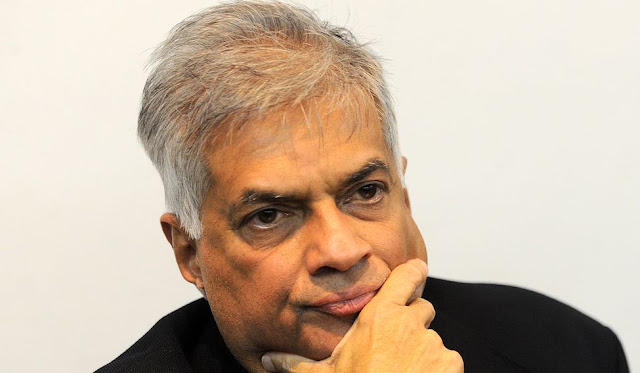
“ගෝඨාභය” නම නැවතත් බබළයි. අවි ගබඩාව නීත්‍යානුකුලයි! යහපාලනෙන් නඩුව ඉල්ලා අස් කර ගනී.

August 30th, 2015

උපුටාගැණීම www.mahinda.info

ගෝඨාභය රාජපක්ෂ මහතාට එරෙහිව තිබූ වාරණ අකුලා ගනී. මෙච්චර කල් එතුමාට එරෙහිව මඩ ගහපු අයට කට උත්තර නෑ. මෙන්න සම්පූර්ණ වාර්තාව.


[1]. ශ්‍රී ලංකා රජයට අයත් රක්නා ආරක්ෂක සමාගමට අනුබද්ධව ඇවන්ගාඩ් සමාගම විසින් සමුද්‍ර ආරක්ෂක ජාලයක් පවත්වා ගෙන ගියා. යහපාලන ආණ්ඩුව බලයට පැමිණි වහාම සති කිහිපයක් ඇතුළත එහි ආයුධ තිබූ නැව අත් අඩංගුවට ගෙන ජනමාධ්‍ය වලින් හෙළි කර මහා පාවාදීමක් කරනු ලැබුණා. (කළින් ලිපිය)

2002 දිගු දුර විහිදුම් බලකාය පාවා දීම හා සමානම මහා පාවාදීමකුයි එහිදී සිදුවුණේ. එහි සේවය කළ රණවිරුවන්ව අත් අඩංගුවට පත් වීම වැළැක්වීම සඳහා හිටපු නාවික හමුදාපති තුමාට ප්‍රකාශයක් ලබා දෙන්නත් සිදු වුණා.

[2]. යහපාලන ආණ්ඩුවෙන් සිදු කරන ලද මහා පාවාදීමට එරෙහිව රාජ්‍ය ආරක්ෂක අංශ වලින්ම එල්ල වූ විරෝධය නිසා පාවෙන අවි ගබඩාව නීත්‍යානුකූල බව පිළිගැනීමට යහපාලන ආණ්ඩුවට සිදු වුණා. මූලාශ්‍රය 2015.03.04 දිවයින

divaina


[3]. ඇවන්ගාඩ් සමාගම බිහි කිරීමට මූලිකත්වය ගෙන ලංකා ඉතිහාසයේ දෙවන වතාවට (පළමු වතාව: මහා පරාක්‍රමබාහු රජ සමය) ශ්‍රී ලංකා සමුද්‍ර සීමාවෙන් එපිටට ගොස් යුධ මෙහෙයුම් වල නියැලීමට අපේ රටේ රණවිරුවන්ට ශක්තිය ලබා දුන් නායකයාගෙන් පන්න පන්නා පළි ගන්න පටන් ගත්තා. මහනුවර පැවැත්වූ රැළියෙන් පසුව ඇවන්ගාඩ් හි උපදේශකවරයෙක් වන හිටපු ආරක්ෂක ලේකම් ගෝඨාභය රාජපක්ෂ මහතාගේ ගුවන් ගමන් තහනම් කරනු ලැබුවා.

[4]. එතැනින් නොනැවතී ගෝඨාභය රාජපක්ෂ මහතාව අල්ලස් කොමිසමට රැගෙන ගියා. ඔවුන්ගේ අරමුන වූයේ අල්ලස් කොමිසමේ ප්‍රශ්න කර ගෝඨාභය රාජපක්ෂ මහතාව අත් අඩංගුවට ගැනීමයි. මූලාශ්‍රය

[5]. නමුත් මැතිවරණය අවසන් වී සතියක් ගිය තැන ගෝඨාභය රාජපක්ෂ මහතාට එරෙහිව තිබූ වාරණ නියෝගය ඉල්ලා අස් කර ගත්තා. මූලාශ්‍රය (වත්මන් අග්‍රාමාත්‍ය රනිල් වික්‍රමසිංහ මහතාගේ මාමා වන රංජිත් විජයවර්ධන හා මස්සිනා වන රුවන් විජයවර්ධන යන මහත්වරුන්ට අයත් ‘ලංකාදීප’ පත්තරේ මූලාශ්‍ර දැම්මේ මෙය එජාපයේ අයටත් බොරු යැයි කීමට නොහැකි වෙන්නයි) මව්බිම සහ නෙත් වෙබ් අඩවි වලත් මේ බව සඳහන්.

[6]. එය මැතිවරණය ඉලක්ක කරගත් යහපාලන පළිගැනීමක් බව තවදුරටත් සැකයක් නෑ. ත්‍රස්තවාදයෙන් රට බේරා ගැනීමට ත්‍රිවිධ හමුදාවටම නායකත්වය දුන්, මානුෂික මෙහෙයුමෙන් පසුව කොළඹ නගරය සංවර්ධනය කර ලෝකයේ අංක 1 ට ගෙන ආපු එතුමාට අන්තිමට මඩ ගැසුවා. අද වන විට ඒවා බොරු චෝදනා බව ඔප්පු වී තිබෙනවා. නමුත් මෙය අවසාන මඩ ගැසීම නොවේ…

යාලුවන්ටත් දැනගන්නට Share කරන්න.

How much moral petrol is left in Ranil’s car?

August 29th, 2015

H. L. D. Mahindapala

Ranil Wickremesinghe beat all odds and topped the list of preferences – a feat that was considered impossible earlier. At the base level, shorn off the rhetoric and the tinsel, it is an achievement  that reflects the combination of national, international – and even some anti-national – forces. It has triumphed as the new force, replacing the preceding Mahinda magic”. Wickremesinghe has done what  his  uncle, the Yankee Dicky did, rather late in his day. Of course, JRJ shot into power with a formidable force behind him. Whether the limited force behind Wickremesinghe has the depth  to last the course and go the  same  distance as his uncle is yet to be seen.

But this strikes a note of warning to political analysts : never write off a political survivor despite repeated failures until he goes down to push daisies. Extrapolated to the current situation, this means that if Wickremesinghe can rise from his grave the chances of Mahinda Rajapakse who is up and running, neck to neck with him, are far greater. Examples of Jayalalitha, de Gaulle and Churchill, or the rejects like S. B. (Balu”) Dissanayake etc.,  creeping in through the backdoor, demonstrate that Rajapakses chances, even if he is put  in jail, are rosier than that of Wickremesinghe when he was down. In short, a political survivor who is down need not necessarily be out. Also, the eternal,never-failing Buddhist principles of Patichcha-sammuppa-da kicks in to establish that the triangle can be completed only when all the three sides of the same size are there, next to each other. In the case of Mahinda Rajapakse the three sides are there but the line on one side has fallen a wee bit  short. It is not difficult  to catch up and fill the gap on the missing side now.

So where ever Wickremesinghe is Rajapakse will not be far behind, breathing down his neck. It is political myopia to write Rajapakse off at this early stage. Even if he steps out or is forced out he will still be there, like a touch-me-not ready to spring back when the time is ripe. The signs are already beginning to turn ominous for Wickremesinghe. He rode into power firing  on all his moral cylinders. But the moral riders in his own car are now turning against him. Ven. Sobitha, expressing  moral disgust with the entire political class, has confronted Wickremesinghe with his failures to fulfil his promises. Ven. Sobitha is dismissing the new Siri-Wicky regime as a ”joke”. Parliament is condemned as a den for thieves, thugs, drug dealers or ethanol dealers”. His verdict :The people are laughing at us.” In short, within a few months, the nation has skipped the dawn, skipped the high noon and slipped instantly into a twilight with the light fading fast. To change the metaphor, it seems the Siri-Wicky regime is dying in the cot with the uncut umbilical cord hanging  loose. To change it again, even the honeymoon seems to be strained even before both parties could get to bed.

Though it was a personal victory for Wickremesinghe, he has nothing much to crow about now, though they take cover behind a few tit-bits. The overall results did not hand him the power he needed to govern in his own right with increased powers of the President in Parliament – his main political thrust launched in the January 8 presidential campaign. This watered down the full flavour of his victory. He is still dependent on the SLFP to muster the power he needs to be in overall command of the state he plans to lead. After the failure to transfer presidential powers to the prime minister in parliament and after the failure to get the requisite electoral votes to run a government of his  own he will have to limp along as half the man he wants to be in power.

As against  this, SLFP, along with its traditional allies in the Left, produced the second  highest vote-winner, Mahinda Rajapakse, bringing the SLFP within striking distance of power.   In terms of electoral clout the difference between the two is a marginal 3. 28% which gave 106 seats to the UNP-led UNFGG and 95 to the UPFA. These two basic figures affirm that neither party won outright power, though, of course, the UNP got the slight edge to grab the throne. These figures indicate clearly the standing of the two camps in the electorate and parliament respectively is not too far apart. Buoyed by the weightier alliances and other external factors, the UNFGG was expecting to deal a crushing blow to the UNFA. But it didn’t materialise. A slight shift either way, in the Parliament or in the electorate, can make all the difference as to who would retain power with whom and for how long.

Mahinda Rajapaksa’s strong performance is far superior to any of the performances of Wickremesinghe when he was in the opposition. But Wickremesinghe’s  grit and survival skills carried him through. Rajapakse, however, gained greater credence and significance when John Kerry took credit for the regime change in Sri Lanka. For Rajapakse to retain a formidable grip  on the nation at the end of an uneven battle in which global forces were  pitted against  him stands as solid evidence of the strength of the forces that are waiting in the wings to regroup and strike back. The fears and frustrations of the UNFGG forces were further highlighted by Paki” Saravanamuttu, who lamented dolefully that the (election) result would be disappointing for the UNFGG which had hoped for a clear rejection  of the Rajapaksa era – infamous for corruption,state intimidation and Sinhalese nationalism.” His other line is equally damning: This has potentially given Mr. Rajapaksa a new lease of political life. He’s not out at all.” (The Australian, 19/8/2015 – p.11)

This then is the underlying reality. Yes, Wickremesinghe managed to scrape into the seats of power for the fourth  time with barest minimum. This  does not  mean that he had crushed the Rajapakses. Defeated candidates, like Jayalalitha, Wickremesinghe, and Mahinda Rajapakse have many lives. However, the upshot of all this is that Wickremesinghe is enjoying a fund of goodwill right now. His cup runneth over. The current political ambience is dominated by the euphoria of the UNPers which is understandable. Enjoying  the sweet smell of success is also inevitable considering the  fact that they have been in the wilderness for nearly 20 years. But the danger is in being intoxicated by it, assuming that they have acquired the mandate to do it their way all the way. The time hasn’t yet come  for Wickremesinghe to sing : I’ll do it my way and  the others can  take the highway.” So Wickremesinghe’s formula of national government” is not only vital for his survival but also a pragmatic necessity to tide over his shortcomings and escalating issues, if he can. Unlike JRJ, Wickremesinghe  has no power to stabilise his power and  put his undisputed stamp of authority without the backing of the SLFP, particularly the backing he gets from the CBK-Sirisena duo. His real source of power is in the hands of this SLFP duo, not the UNP MPs. If the SLFPers pull the rug under  him he will soon be going downhill either in crutches or a stretcher.

In fact, the MoU between the UNP-SLFP concedes the fragility of the political alliance. It is, for all intents and  purposes, a tentative and experimental alliance for two years minimum, with the possibility of extending it further.  Legally, under the amended constitution, the President cannot  meddle  with  the  newly appointed regime for the next four years. But Wickremesinghe can’t run a stable state and deliver his promises within the time available to him – four  or two  years — without the backing of  the SLFP. The alternative is  to tie up with the TNA as a compliant outsider – an unholy alliance which will come at a heavy price. There is, however, one glimmer  of  hope in all the combinations and permutations of the minority parties : the force is still with the two main political parties. Power  hasn’t shifted to the minorities to the extent it was feared by some. For instance, the rise of pro-American Wickremesinghe is a far better bet for the State Department than the papier-mache prime minister, V. Rudrakumaran, of the TGTE in New York. America has found their pliant man in Colombo to do their bidding and in this setting the Tamils in New York, London, Paris are totally irrelevant to their geo-political agenda. At least it has exposed the hysterical lunacy of the extremist politics of asinine Vigneswaram gone ballistic.

However, the fact remains that Wickremesinghe is still sailing in President Sirisena’s Titanic”. Sirisena, in his convoluted way, sounded the warning when he said that it was he who saved Wickremesinghe’s  Titanic”. He went all out  to plug the leaks and if  he pulls them out Wickremesinghe will certainly go down with his band. But can Wickremesinghe steer  his way through in the stormy seas ahead, with or without the CBK-Sirisena duo ? His main anchor is Chandrika Kumaratunga. Jointly, they led the nation to brink of disaster with their CFAs and P-TOMs. When finally their hidden agenda is revealed the nation will find  that  they have been  plotting and planning to drag the nation back of February 22, 2002 – the fateful year in which Wickremesinghe signed the CFA, selling the nation to Velupillai Prabhakaran,  without telling the President, Parliament, Cabinet, Party or the sovereign people. His style  of government, as seen even in his last 100 days”, is to steer the ship of state like a juggernaut, dismissing the thundering waves lashing  the hull on all sides. He either goes into intransigent denial or appoints endless committees to the problems he just can’t handle, hoping that if he puts his problems in the freezer the issues would  go away. How far can this style carry him? How long will the nation tolerate his idiosyncratic fancies? Which book of R. A. Butler or Gladstone can provide him with the answers to the 21st century problems of Sri Lanka?

If the Siri-Wicky regime is getting tied up in knots in the preliminary stage how are they going to meet the pending challenges that are waiting round the corner to grab them by throats and shake them down? For instance, if the moral and the socio-economic conditions continue to worsen – and there are no signs of  it improving — can CBK-Wickremesinghe mobilise the necessary forces to hose down pyromaniacs like Vigneswaran and Gajendra Ponnambalam, igniting, in competition with each other, ethnic extremism to grab the title of the sole representative of the Tamils”? In any case, both CBK-Wicky will be starting on the wrong foot because their aim is to revive the blue print they tried it first with their CFAs and P-TOMs and failed in Febraury 22, 2002. The hidden agenda not revealed to the electors threatens to drag the nation back to February 22, 2002 when Wickremesinghe signed the infamous CFA with the one man on earth who never stood for peace and reconciliation.  So can they do it this time what they failed to achieve the last time? They have nothing in their armoury except to fire their failed formulas. But can they reverse the victory of Nandikadal and drag the nation back to the failed juck-muck” politics of Wickremesinghe? This is a critical issue that needs another  chapter.

As the  numbers stand  now, this new symbiotic relationship between the UNP-SLFP is  more favourable  to the UNP than to the SLFP. It will strengthen the UNP more  than the SLFP. Though the SLFP will bargain for its pound of flesh it is the UNP that can come out on top, more so because of the ideological confluence of the triumvirate – Presidency, Prime Ministership and Madame Defarge counting the  heads that fall from her  guillotine. CBK who was booed at election rallies was given a standing ovation  in the post-election party room because she has emerged as the Chief Executioner with power to   roll heads or  fix severed heads. But once  Wickremesinghe gathers his Cabinet  together the overall responsibility will fall on his shoulders to account for success or failure. All three of them will be watching over each others shoulder to see that the other won’t get excessive share of power that would jeopardize his/her interests. All three of them will be walking gingerly trying  to balance the power they share to shore up their political bases.

Every single move from now will be seen as a critical move to get  the lion share to consolidate their  grip on power. Initially, the internal power-struggle will be subdued and  tolerated by all three parties but as time goes on it can turn  sour and bitter. Right now, the internal power struggle has thrown national  politics  into a spin. That is why Ven. Sobitha, the  leading light of the moral crusade, is moaning about  the power vacuum in which the SLFP and UNP power brokers are floundering. That  is why the initial term of  the MoU is limited  to two years – roughly the testing time span for any honeymoon in any marriage, personal and  political, except those in Hollywood. But that is to anticipate events that may or may not happen.

Wickremesinghe’s task is two fold : 1. to deliver his list of impossible promises (he has already failed the `100 day”test.) and 2. to protect his national cup filled with half a  million votes. If his skills in keeping the 100 promises within 100 days is any indication of his capacity to deliver then the nation has only one source left  to get at least an inkling of what’s in store : the astrologer of President Mahinda Rajapakse who assured him victory in the presidential race! If, as promised, Wickremesinghe can deliver an absolutely free media in a persecution-free, corruption-free democracy, without vindictive politics rejected in the Lichchavi principles which he promised, and transforming the Siri-Wicky regime into a transparent state guaranteeing  human rights of all, then his cup will overflow with a million votes next time round. But the Central Bank scandal, the banning of the publication  of the Parliamentary report, the decision to cohabit  with the very politicos whom he  has condemned, his own cronyism, going along with nepotism, etc., etc., within the first 100 days of the Yahapalanaya reduces him to a purveyor of slogans and not substance.

There are also some ominous signs arising within the UNP itself. In the hullabaloo of helter-skelter goings-on leading UNPers seems to have gone out of the radar screen. Example: Sajith Premadasa, the Deputy Leader, is hardly visible and in his place the unscrupulous careerist Champika Ranawaka has crept into through the backdoor to Wickremesinghe’s influential circle. First he tried to creep into the bosom of President Sirisena but  he soon realized he was not  that indispensable to the President. Now he is worming his way into the heart of Wickremesinghe. He sidles up to Wickremesinghe, like a Churchilian dwarf whispering obscenities in the Emperor’s ears. He cultivates the top to impress the power-brokers that it is worth having him because he is the man of the future. All these Svengalian machinations makes him the obnoxious interventionist manoeuvring to oust the traditional UNPers. He is the kind of man who was described by Lyndon Johnson as a man  worth having  on your side because he could  direct his piss on the outsiders, shooting from inside, rather than pissing in from out.

Ranawaka is bound to be a stinging thorn in Wickremesinghe’s side. As things stand, Wickremesinghe’s plate is overflowing with  problems of his own making and the last thing he needs is Ranawaka. But then  in his desperate political journeys Wickremesinghe  has never hesitated to align himself with an assorted variety of wheeler-dealers, from Gonawila Sunil to the Batalanda brigades. So why not go along  with Ranawaka if he is ready to be another Gonawila Sunil to Ranil, eh?

ICRC Sri Lanka during final phase of war

August 29th, 2015

Shenali D Waduge

The ICRC started operations in Sri Lanka in 1989, an invitation extended by late President Premadasa following his tryst with the LTTE and with LTTE expanding its terror ICRC was able to expand its operations too. What is noteworthy is that ICRC established its offices in areas that were held by LTTE and this certainly questions ICRC’s claim to be ‘impartial’ ‘neutral’ and ‘independent’ as set out by its global mission statement established in 1863. We run through some of ICRC’s past.

Accentuating these ambiguities further is how an impartial, neutral and independent body would call for the immediate declaration of a demilitarized zone in the area covering the Jaffna Fort and the Jaffna hospital. This was declared in July 1990. In fact John Amaratunga then Minister accepted the proposal of the ICRC to the surprise of all which eventually resulted in the overrunning of Kokavil and Kilinochchi by the LTTE and major battle losses for the Sri Lankan Military even having to vacate Mankulam. Why should we have demilitarized zones and ceasefires when they are brutally massacring innocent people? I am not in a mood for any demilitarized zone or ceasefire” was what State Minister for Defense Ranjan Wijeratne had to say when he learnt of the move to declare a demilitarized zone by the ICRC with blessings of John Amaratunga!

In another example that questions the impartial / neutral and independence of the ICRC was its suggestion to give publicity to LTTE’s release of 15 Tamil speaking policemen. Ranjan Wijeratne had pointed out that LTTE had killed 600 policemen so the release of 15 policemen was a mere publicity gimmick. While ICRC was working towards demilitarized zones – LTTE had even stormed the Kattankudy mosque killing 150 Muslims in prayer. What needs to be reiterated is that the ICRC did not make ANY COMMENT on LTTE atrocities during this entire period. Much of ICRC’s records of actions throughout this period where LTTE’s atrocities were at an all time high reveals a high degree of bias which the international agency needs to accept without defending itself.

Some of ICRC’s press briefings closer to the end of war reveals some clues missed out by the Sri Lankan Government in arguing Sri Lanka’s case internationally.

ICRC director of operations Pierre Krähenbühl  (21 April 2009 – Press Briefing in Sri Lanka)

http://www.icrc.org/eng/resources/documents/press-briefing/sri-lanka-press-briefing-210409.htm

” The hostilities are now taking place in a very narrow stretch of land along the eastern coastline of Sri Lanka. And within that narrow stretch, which had been declared a ‘no-fire zone’ by the government, tens of thousands of civilians remain trapped. At present we put their estimate at 50,000,  (This was the ICRC press statement issued on 21st April 2009 declaring that their estimate of the Tamil civilians inside the no fire zone was 50,000 – this means that upto 21st April even ICRC did not know that the LTTE had 300,000 people – obviously we would need to question how many of them were civilians and how many were LTTE posing as civilians. There is also the question of the possibility that a large number of these people could have also been Indian illegal immigrants in which case it behoves the GOSL to determine how many Tamils in the North are actually Sri Lankan Tamils given that we are aware that the LTTE used Tamil Nadu as a transit hub and Tamil Nadu Indians were regularly making their way to Sri Lanka’s north during LTTE reign)

They have repeatedly been prevented from leaving the area by the LTTEand are exposed at every turn to consequences of the hostilities between the government and the LTTE. (Key words – REPEATEDLY PREVENTED FROM LEAVING THE AREA BY LTTE – EXPOSED TO CONSEQUENCES OF HOSTILITIES – It is therefore the LTTE who compromised the lives of their own people. We continue to question how many of these civilians were in fact functioning as civilians. In an armed conflict as Sri Lanka’s situation has been defined civilians lose their rights as civilians if they have been functioning as combatants (by force or voluntarily, a soldier does not have time to determine which before defending himself from terrorists)

” The LTTE must keep its fighters and other military resources well away from places where civilians are concentrated, and specifically and urgently allow civilians who want to leave the area to do so safely, ” (these statements pose little doubt that the LTTE were keeping civilians by force and that the ICRC who were very much inside the war zone knew exactly how LTTE were treating these civilians and dragging them by force)

ICRC has also reminded the parties of the prohibition on attacking persons hors de combat (in other words, those no longer participating in hostilities) and of the obligation to treat captured combatants humanely.

(Whether civilians were participating in combat or not the 300,000 (we stop short of terming them ‘civilians’ for we cannot determine how many actually took part in some sort of terror activity) who eventually came to the Government side were given receptions that no Western nations currently in combat operations on invading nations treat the civilians in those countries)

ICRC Operational Update (17 March 2009)

Many of these people are forced to shelter in trenches.They are in considerable physical danger. After having been forced to move from place to place en masse for weeks or even months, they depend entirely on food from outside the conflict area. (this takes us back to the visuals of C4 where much of the images relayed were of people in trenches and we can now determine how these footage came about)

Note: During the final phase of the conflict, the ICRC evacuated 13,800 casualties and accompanying relatives from the war zone to Trincomalee by sea – while the Sri Lankan Armed forces laying down 5000 military lives saved close to 300,000 Tamil civilians!

Then we come to instances when ICRC staff acting like politicians.

  • Reference by ICRC to ‘both sides” in describing the movement of civilians – there is no ‘both sides’ to the question of civilians. The Tamil civilians were ALL accompanying the LTTE voluntarily or by force, either way the Tamil civilians were with the LTTE and only those that managed to free themselves from the LTTE managed to cross over to the Government side.
  • Reference by ICRC to ‘both sides” came the very day that LTTE refused passage to ambulances and 2 ICRC staff from leaving LTTE controlled areas to Vavuniya hospital despite UN appeals.

Wiki cable clearly exonerates Sri Lanka Army from the false allegations being made

The relevance of this cable is that it was the US Ambassador himself sending a memo after his meeting with ICRC head of operations which clearly indicated that the army did not deliberately shell and in fact delayed the inevitable victory taking to consideration the civilian factor while the LTTE purposely kept civilians or kept themselves among the civilians. Proof of this was evident when a suicide bomber dressed as a civilian blew herself up near a makeshift refugee reception center killing military personnel as well as Tamil civilians.

Wiki cable by US Ambassador to Geneva Clint Williamson on July 15, 2009 after meeting with Jacque de Maio, ICRC Head of Operations for South Asia on 9 July 2009.

On the LTTE, de Maio said that it had tried to keep civilians in the middle of a permanent state of violence. It (LTTE) saw the civilian population as a ‘protective asset’ and kept its fighters embedded amongst them. De Maio said that the LTTE commanders, objective was to keep the distinction between civilian and military assets blurred. They would often respond positively when ICRC complained to the LTTE about stationing weapons at a hospital, for example. The LTTE would move the assets away, but as they were constantly shifting these assets, they might just show up in another unacceptable place shortly thereafter.”

De Maio said it would be hard to state that there was a systematic order to LTTE fighters to stick with civilians in order to draw fire. Civilians were indeed under ‘physical coercion not to go here or there,’ he said. Thus, the dynamics of the conflict were that civilians were present all the time. This makes it very difficult to determine though at what point such a situation becomes a case of ‘human shields.’ –  (If civilians were kept by force while LTTE was fighting with the Sri Lankan Army, the LTTE must shoulder all blame for putting civilians in harms way. Numerous appeals both international and local were made to the LTTE to release these civilians – LTTE refused to do so. Not stopping at that LTTE even used these civilians in combat and in an armed conflict these civilians automatically become combatants)

The army was determined not to let the LTTE escape from its shrinking territory, even though this meant the civilians being kept hostage by the LTTE were at increasing risk….de Maio said, while one could safely say that there were ‘serious, widespread violations of IHL,’ by the Sri Lankan forces, it did not amount to genocide. He could site examples of where the army had stopped shelling when ICRC informed them it was killing civilians. In fact, the army actually could have won the military battle faster with higher civilian casualties, yet chosen a slower approach which led to a greater number of Sri Lankan military deaths. He concluded however, by asserting that the GSL failed to recognize its obligation to protect civilians despite the approach leading to higher military casualties. From his standpoint, a soldier at war should be more likely to die than a civilian.” (What is significant about what the ICRC head said to the US ambassador was that there was NO GENOCIDE committed by the Sri Lankan Army, that in desiring to save civilians the Army took longer to finish the operation thus compromising its own soldiers who died as a result. The military objective was to destroy the LTTE while also attempting to save the civilians kept by force or civilians staying voluntarily with the LTTE – this is something Western armies will not understand because their superiors order them to ‘shoot everything that moves’ or soldiers are ordered to engage in 360 degree rotational fire)

http://www.alternet.org/story/147271/soldier’s_shocking allegation%3A_troops_ordered_to_engage in_’360_rotational_fire’_against_civilians

Wiki cables from US mission

  • Wiki Leaks revelations published in the Norwegian newspaper Aftenposten revealed that US Ambassador Robert Blake had contacted senior government officials including Defence Secretary Gotabhaya Rajapaksa and Foreign Minister Rohitha Bogollagama, to urge acceptance of a mediated surrender of the remaining Tigers.
  • Ambassador spoke to Gothabaya Rajapaksa on the morning of May 17 to urge him to allow the ICRC into the conflict zone to mediate a surrender.”…. We´re beyond that now,” reporting that approximately 50,000 civilians had escaped from the conflict zone overnight and in the early morning hours” (this tallies with Indian embedded Journalist Murali Reddy’s account when he says that on 16th May 2009, 50,000 civilians escaped as well as Gordon Weiss estimate of 50,000 civilians made on 13th May 2009 and President Rajapakse offered an unconditional surrender which the LTTE had refused.) https://www.lankaweb.com/news/items/2014/01/02/
    sri-lankas-war-had-witnesses-indian-journalist-b-murali-reddy-2/

UN statements

  • Sept 2008 – Gordon Weiss, UN Spokesman in Colombo About 70 offices from five operational UN agencies will eventually be moving out of Kilinochchi,” (ICRC will remain in Vanni)
  • 13th May 2009 – The UN estimates that about 50,000 civilians are trapped by the conflict, in a three-sq-km strip of land http://news.bbc.co.uk/2/hi/south_asia/8047580.stm (the very person who claimed that 50,000 was inside a 3sqkm strip and who was aware that this 50,000 escaped by 16th May 2009 spared no time in twisting facts to claim 40,000 dead which has won for him a book deal and  international prominence.
  • 13th May 2009 The LTTE [Tamil Tigers] are clearly still holding onto that population against their will, using them as human shields” Top UN Aid Official John Holmes

BBC correspondent

  • 9 Sept 2008 – Aid agencies say since June as many as 85,000 have fled ahead of the soldiers’ advance, further into the diminishing rebel-held areas in the north, bolstering the numbers already there. http://www.bbc.co.uk/sinhala/news/story/2008/09/080909_un_vanni.shtml (BBC is careful to not give reference to whether those who FLED were civilians or LTTE but the BBC does say that whoever FLED did so into a DIMINISHING area that was under LTTE).
  • 9 September 2008 BBC article also mentions that government had informed that it can no longer ensure the safety of the aid workers” in rebel-held areas….claiming they could be used as human shields, has dropped leaflets urging them to leave.”
  • March 3rd 2009 – ICRC claims an impending humanitarian catastrophe in north-eastern Sri Lanka which turned out to be BBC upto mischief once again putting BBC’s own version to what the ICRC did not say and ignoring what the ICRC did say that suffering and death could be avoided ‘by allowing civilians who want to leave to get out of the area’.

There is little doubt in taking the R2P target nations to realize that the UN is being used by the West in a racially oriented invasion drive that is all about imperial inquisition directed at Third World nations in particular the Blacks, Browns and Yellows of the world.

It is for these nations to decide whether they would be servants of the inquisitors serving as sepoys or help unite the nations of the Third World to build a formidable force against the rising racism by the imperial west using numerous international apparatus to keep the world’s public in check while the murder and plunder with impunity.

The build up to the manner Sri Lanka is being treated despite saving 300,000 lives whilst providing a safe nation for 20million people seems not to have any importance of those drafting Resolutions and they forget their silence over 30 years making a hypocrisy of going behind 4 months only.


Shenali D Waduge

UNP hamstrung by presidential interference

August 29th, 2015

Courtesy Island

article_image

We are now nearing the end of the second week after the parliamentary election with no cabinet of ministers. UNP chairman Malik Samarawickrema announced September 2 as the date on which the cabinet may be sworn in and SLFP general secretary Duminda Dissanayake said that September 4 would be the likelier date due to many reasons such as the intervening SLFP anniversary celebrations. These dates are being announced unilaterally by the two sides. If the two sides that are supposed to form a ‘national unity government’ are unable to announce a mutually acceptable date for the swearing in, how are they to divide the portfolios in a manner that will satisfy both sides? Tentative lists of the way the portfolios may be divided have been appearing in the media throughout last week, but they look more like what the UNP would like the cabinet to be rather than how it will be in reality.

So the bottom line is that we still have no idea what the cabinet will be like. If we ask ourselves why the country is in this state of limbo, it is only because of one man’s quest to carve out a political niche for himself. The UNP’s victory at the August 17 parliamentary election was no less convincing than the victories of the winning side in the parliamentary elections of 1994 and 2001, yet a clean change of government is being hampered. In 1994 and 2001 there were clean changes of government with Chandrika Kumaratunga even relinquishing the defence portfolio in 2001. With 106 seats in parliament and the ability to engineer a few crossovers to make up the shortfall, the UNP should be allowed a free hand to form a government; otherwise the whole purpose of effecting governmental change will be vitiated. The preservation of democracy requires changes of government from time to time to relieve the pent up frustration of those blocked from access to power and patronage.

The UNP, partly due to their own folly and also due to circumstances beyond their control, languished in the opposition for nearly two decades and if they are now unable to form a government of their own, that pent up pressure in society will not dissipate. Many years ago, this writer asked Ravaya editor Victor Ivan why he supported Chandrika Kumaratunga in the early 1990s when he was also on good terms with Lalith Athulathmudali. The latter was undoubtedly a better choice to run the country. Ivan’s justification of his choice was to say that the UNP had then been in power for a long time and the country needed a change. The same argument holds good in this instance as well. That is a part of the give and take of politics in a democracy. There are high ranking members of the SLFP who realize this and are only too willing to sit in the opposition and give the UNP a free hand.

But now this process of governmental change that the people of this country had learnt to take for granted is being blocked by a new theory that the Sirisena faction of the SLFP is propagating. No less an individual than the newly appointed general secretary of the SLFP, Duminda Dissanayake, has gone on record as saying that since no one party has got a clear majority in parliament, it is up to the president to intervene in the process of forming a government! If this theory was applied in 1994 and 2001 as well, what would have happened to this country? It is one of the supreme ironies that a president who came into power promising to abolish the executive presidency is now misusing those powers in a manner that no previous holder of that office has ever dreamed of doing. The silence of the UNP in these circumstances is obviously due to the reason that they said during the election campaign that they will be forming a national government after the election and they used Maithripala Sirisena’s photograph prominently in their election campaign.

UNP not under obligation to Sirisena

However it is obvious that when the UNP said they will be forming a ‘national government’ what they meant was that THEY would take the initiative in the matter and form a national government on their own terms as the party that gets the highest number of seats. They probably never thought there would be a third party making all sorts of unacceptable demands. The UNP may be obliged to Sirisena for having aided their victory at the parliamentary election by messing up the UPFA campaign with his address to the nation predicting a UPFA defeat, writing letters saying that MR would not be made prime minister even if he won the election and finally sacking the general secretaries of the UPFA and the SLFP just 48 hours before the election. But then it was only the UNP that carried out Sirisena’s presidential election campaign in a situation where even the JVP avoided getting involved in it. One UNP organizer, Niroshan Padukka of Kesbewa, said that many UNP organizers had spent their own money on Sirisena’s campaign.

Furthermore, once you count out the votes of the UNP’s minority party allies from the results of the parliamentary election, it becomes obvious that over two thirds of the votes that Sirisena got in January were solid UNP votes. So in actual fact the UNP owes nothing to Sirisena – on the contrary Sirisena owes everything to the UNP. In such circumstances for Sirisena to force the UNP to accommodate large numbers of the SLFP parliamentarians as ministers is the height of ingratitude. Because the UNP is back in power after a long interval, its senior members have to see that they get the best possible ministries in order to look after their supporters and constituents. None of them can afford to step aside and miss the bus this time because there will be no bus after this. If they fail to get their due now, they’ll never get it. So they should naturally dig their heels in and refuse to budge.

In contrast to the UNPers who are now not being allowed to reap the due benefit from their victory, the SLFPers who are trying to force themselves on the UNP have enjoyed an almost unbroken two decades in power, they have looked after their constituents and themselves but are trying to force themselves upon the system once again. President Sirisena too is a member of the SLFP who has enjoyed power continuously for two decades. The only reason why the UNP is being forced to accommodate an unnecessary number of SLFP parliamentarians in the ministerial team is because of the president’s need to redeem himself in the eyes of the SLFP voters by showing them that the SLFP was able to enjoy a significant share of power even after defeat due to his intervention.

The whole system of governance in this country is being destabilized by Sirisena’s attempt to wean the SLFP away from the Rajapaksas and to make them accept him as their leader. One prong of this strategy is to force as many members of the SLFP as possible into the ministerial team and to get them the best possible portfolios. If the SLFP members get anything less than what the UNP gets, he will be accused of having turned the SLFP into a ‘tail’ of the UNP; hence the demand for almost equal treatment in the allocation of portfolios. The UNP cannot afford to yield that much because that would vitiate their victory and place serious obstacles in the path of pleasing their own constituents. Both parties find it difficult to give way.

This deadlock can be cleared in no time if Sirisena gets over this idea of trying to win over the SLFP and to be accepted as its leader. Originally, when Sirisena took over the leadership of the SLFP, he justified this decision by saying that he needed to ensure that the SLFP voted for the constitutional reforms that were on the cards. But it was obvious from the beginning that Sirisena fancied himself in the role of an SLFP leader and probably one who contests on the SLFP ticket and wins the next presidential election as well. All this disruption of the political party system and the day to day administration of the country is because of the delusions of one man who is seeking to win friends by delivering a share of state power to the SLFP.

An SLFP government in two years?

SLFP national list MP S.B.Dissanayake said last week that nearly 70 SLFP parliamentarians had pledged to support the national government. If 70 MPs are to support the national government, all of them will have to be given portfolios and good portfolios at that. Otherwise, why would any SLFP parliamentarian want to cut himself off from the anti-government voter who elected him and join a government just to sit as a backbencher? It would be better for that individual to sit in the opposition and at least win the hearts of the anti-government voter so that he can make it to parliament at the next election. So this story of 70 SLFP parliamentarians willing to support the so called national government is yet to be seen. Dissanayake mentioned that figure probably to motivate the UNP to give the SLFP some good ministries.

It is clear that the duration of the MOU between the UNP and the SLFP was limited to just two years to leave provision for the SLFP to pull out and to form a government under President Sirisena after the first two years. This at least is the carrot that is being held out to bring rebellious SLFP parliamentarians under control. No SLFP parliamentarian can logically oppose any plan to form a government led by his party. Numerically, it is possible for the SLFP to form a government because there are around 20 non-UNP parliamentarians elected under the UNP ticket who will listen readily to any suggestion made to them by President Sirisena. These 20 parliamentarians with the 95 MPs that the UPFA has can easily form a government with a clear majority. This is why the UNP has to watch out. If an MOU is being signed between two political parties, it should be for the entire duration of that term of office unless some disagreement leads to the termination of that agreement half way. The fact that the UNP has agreed to a two year MOU plays directly into the hands of Sirisena loyalists who want to form an SLFP government under the leadership of Sirisena.

Since this looks like an attainable goal, Sirisena will leave no stone unturned to see to it that the SLFP is kept happy by extracting the maximum possible from the UNP. But the UNP cannot be expected to sacrifice themselves to make it possible for Sirisena to achieve his ambitions. Never has the political system of this country been in a bind like this. Ultimately all this is due to the unprincipled alliances that were formed in order to defeat the Rajapaksas. But this is not a moment to be preaching the ill-effects of unprincipled political alliances – the entire democratic system is in danger today and some means of unraveling the present mess has to be devised. Either Sirisena or the UNP has to take a step backwards. The UNP cannot (and should not) take a step backwards, because they represent a mass of people who have been out in the cold for nearly two decades. It is President Sirisena who can take a step backwards with no damage to anyone except perhaps to his now obviously inflated ego.

If Sirisena was to be loyal to the vast majority of the voters who made him president, then he can give the UNP a free hand without forcing them to forego what is rightfully theirs. The UNP should find some way of making Sirisena back off – the intervention of the foreign sponsors of the yahapalana project is a method that immediately comes to mind. Another method would be to wait until parliament meets on September 1 and then show a clear majority in parliament with the help of the TNA. This latter method will make Sirisena yield because if the UNP can show a clear majority in parliament even with the help of the TNA, he will be compelled to allow them a free hand in appointing a cabinet. But this will make the UNP captive to the TNA and their unreasonable demands. The safer and more feasible option would be for the UNP to utilize the good offices of their foreign partners to bring Sirisena to heel.

If you look at the current political situation, the only source of political instability in this country is Sirisena. In contrast to him, Mahinda Rajapaksa stepped aside and vacated Temple Trees the moment he knew he was being defeated at the presidential election. Even at the parliamentary election, after conducting an election campaign which was sabotaged by Sirisena at every turn, Rajapaksa still acknowledged defeat and was quite content to sit in the opposition. Even in the SLFP only Sirisena loyalists like Duminda Dissanayake try to concoct theories to say that the president has a right to intervene in the process of forming a government because ‘neither party has got a clear majority’. No one has yet heard a Mahinda loyalist saying that. Sirisena is now functioning as a one man wrecking squad destroying both the main political parties and the democratic system as well.

Given the fact that he owes everything to the UNP, Sirisena should not be making demands from them, but instead helping in the process of forming a UNP led government by ‘donating’ a few willing MPs to the UNP to make up the shortfall in the numbers. Instead we see him trying to force a whole horde of SLFP members into the government for no other purpose than for him to build a base for himself within the SLFP. People like Ven Maduluwawe Sobitha who are responsible for bringing Maithripala Sirisena to the fore as the presidential candidate who will abolish executive presidential system have not said anything about the outrage that is taking place.

When Sirisena refused to allow the abolition of the executive presidency and sabotaged the 19th Amendment, the UNP did not rise up in protest instead they allowed themselves to be browbeaten into submission probably for fear that if they started a confrontation with the president that they elected into power, that would impact negatively on their prospects at the parliamentary election which was due. So the UNP grinned and bore the great betrayal and even praised it in public. Sirisena was hailed as a paragon of selflessness who gave up his powers willingly and the 19th Amendment was hailed as a document of hallowed import like the Magna Carta. This pusillanimous behaviour in the face of open political chicanery and presidential abuse of power may have been justified at that time in terms of the looming parliamentary election, but if they follow the same policy in the matter of appointing the next cabinet, the UNP will be done for.

There are only two options before the UNP – to face the reality and resist, or risk losing control of the government that they won with such difficulty. Because the UNP has been out of power for so long, its members cannot afford to be kept out of power. As we said earlier if they miss this bus there is no other bus. So some members of the UNP may reach out to Sirisena even above their own party in order to get what they think they deserve. This blurring of party lines is something that the UNP will have to watch out for in the coming days. Even at this moment, there are several Sirisena loyalists who have been elected on the UNP list and who will decamp at any moment to Sirisena’s side. It should also be borne in mind that if Sirisena is trying to establish control over the SLFP and lead that party, then it is not in his interest to see that the UNP remains strong and united.

Weakening the UNP so that it can’t pose a challenge to the Sirisena-led SLFP is also obviously a part of the unfolding medium to long term game plan. So the UNP should be mindful of that fact as well. Why would a man who is moving heaven and earth to establish control over the SLFP want to help the UNP to strengthen itself? One thing that Sirisena has shown in ample measure in this short period of time is that it does not matter to him who or what he has to destabilize in his quest to have his way. The UNP fell victim to this once when Sirisena brazenly flouted his main election pledge and refused to abolish the executive presidency. Now he is doing it again by refusing to give the UNP a free hand to select a team of ministers to run the country.


“O that way madness lies; let me shun that;” -King Lear

August 29th, 2015

by Gnana Moonesinghe Courtesy Island

In the absence of justice what is sovereignty but organized robbery. Saint Augustine

Political concepts – national government, unity government, coalition government, constructive opposition so many of them are flying around! Confusion galore – genuine misunderstanding or misperception of the content of these concepts and or a deliberate infusion of mix up with intent to mislead is making the post parliamentary election scenario baffling. It is disheartening that the parliamentary election results did not give a convincing majority to any one party. The simple majority that the UNP secured could have been built upon but politics has become no longer the art of the possible; it has become the art of the contrived. The straight road is not possible to take; the road is deliberately strewn with a difficult terrain, hard to maneuver. But the road has to be traversed to reach the end, and in this political context to reach a decisive finality.

A government has to be formed. The people voted for it. Whether they voted wisely or not is neither here nor there. The matter is closed. Those at the helm have to make do with what permutations and combinations are possible and get a government going to fulfill the task of serving the people. Therefore whether the attempt at government making is to form a national government, a unity government or a coalition remains in the hands of those elected. Their personal interests or political party agenda has to be of extraneous concern to the immediate task assigned to them by the electorate. People have pressing needs, concerns and aspirations. They are not timeless demands vested in their elected representatives; they are time bound marked ‘URGENT’.

The call even prior to the elections was to install a government that could operate on a consensual foundation so that some of the pressing issues facing the nation can be resolved with a decisive finality, remiss in past agreements or understandings. Obviously the possible alliances cannot be with parties with homogenous viewpoints. If that was so, then there would have been no need for different party affiliations. It may be less complicated to call the hoped for alliance a get together within an agreed time frame rather than give it a conventional name such as unity government or national government etc. as it seems to give rise to such controversies and controversial positions.

Usually this getting together of political parties happens during a time of war or other national emergency. Already within the two major parties attempting to coalesce there are other parties who have made common cause with the major party of their choice. Therefore the ‘getting together’ idea within a larger grouping cannot be an alien concept. It just requires a responsive mindset among the parties to think beyond themselves, their narrow personality and parochial interests and take a leap to view the national horizon. From this point it is a question of planning strategies to provide peace and security, law and order and economic development, all of which are features to provide an acceptable quality of life to the people.

Sri Lanka needs foreign direct investment to make this move forward. A bickering group of politicians will not be able to entice investments. Investors look not only towards feasibility and profitability of their investments but they also look to a peaceful environment to have their investments insured with the acceptance of all the stakeholders in the country. A ‘got together’ government will help to speed up progress of an agreed program of work which under other circumstances will get embroiled in discussions, arguments and counter arguments to score brownie points for narrow political advantage. National gain can and must only be measured from the point of the benefit that can accrue to the people and certainly not to their representatives.

This is a time of crisis. An unconventional election was fought where an ex-president was fighting to become an MP in a government headed by a president who succeeded him from the same party. These are options only possible in Sri Lanka. It was also an election where the cry of divisive ethnic stance was taken up on political platform by the UPFA while the president remained unequivocal in challenging such anti national attempts by resonating his call for reconciliation and resolution of outstanding minority issues along with the need to look at parochial matters pertaining to the rural poor hitherto overlooked in the umbrella coverage of national development strategies – water problem in Polonnaruwa, land to the displaced in Sampur.

While experienced senior politicians are quibbling with words and concepts in political terminology it is indeed timely to ask the question why any one of them opt to be in politics? It is also timely to remind the Hon. MPs that a government is put in place for the welfare of the people and not to jostle for positions for MPs or for their party! All governments by virtue of being institutionalized exercise its authority to initiate and guide its economic, social and administrative role and put into effect the responsibility that is attached to it. In the execution of the mandate on which the government rests, auxiliary bodies need to be institutionalized for the convenience of the people of this country so that their rights, needs and expectations find expression in government fiats.

The repeal of the 18th Amendment and the passing of the 19thAmendment – even in its diluted form- proclaimed the legal restrictions placed on the authoritarian reach of the Executive. It is however necessary to be pre-warned that the use of constitutional prevarication to subvert the sovereignty of the people is to be deplored as much as the overt attempts in the past. Good governance should be open to transparent, accountable administration. The promise of Right to Information, free and fair access to judicial and administrative redress, dedicated awareness of the reality of Sri Lanka as a plural society and human rights as an inherent right of every individual are what Yahapalanya spells out to us citizens.

The change anticipated since January 8 – some of which had been secured – together with the ‘March 12 Declaration’ for electing men and women of moral character untainted with charges of drug peddling, casino culture along with its baggage of drugs, alcoholism, prostitution and other criminal activities which nets in kidnappings, disappearances and killings opened up further an environment of hope for ‘clean’ living. Much to the disappointment of the many the March 12 call was largely ignored and the January 8 expectation for change remains diminished.

To combat the adverse effect of the persistence of the ambitious parliamentarian fighting for the satisfaction of their personal ambitions, the leadership of the two parties that have signed the MOU should swiftly take steps to clinch the negotiations with the country’s interest uppermost in their minds. There is no doubt that if the former president were to call his MPs from the UPFA to fall in line it will be obeyed pronto. That would end the prevailing shameless behavior among the individual MPs clamouring for positions. It is possible that by the time this gets to the press some patched up accommodation may have been hatched. It is time that the haggling for positions and schemes to obstruct progress is put aside and national interest given precedence. Differences must be thrashed out and policies and strategies based on the manifestos worked out for collaboration to work together in the interests of the people.


පිස්සන්ගේ රාජ්ය

August 29th, 2015

චන්ද්‍රසේන පණ්ඩිතගේ විසිනි.

ම‌ුන්ගේ හිතේ අපිට පිස්සු කියලා. අපිව කොටු කරලා,  බෙහෙත් දිදී  තියාගෙන ඉන්නවා. නැගිටපල්ලා මිනිසුනේ නැගිටපල්ලා. අපිත් මිනිස්සු, අපිටත් අයිතියක් තියෙනවා. මොකක්ද මේ හැම තිස්සෙම ,බෙහෙත් බෙහෙත් බෙහෙත්. කාටද ඔ්නි බෙහෙත් අපිට බෙහෙත් දෙන එකාටයි බෙහෙත් ඔ්නි. අල්ල ගනින් ඔ්කව; දොස්තරයා. මූ මොන දොස්තරයෙක්ද? ගැට ගහපන් ගැට ගහපන් මූ මොන දොස්තරයෙක්ද? මූයි ලෙඩා, දීපන‌් මූට බෙහෙත්. යමු යමු එලියට. අම්මෝ බලපල්ලකෝ රට වෙනස් කරල තියෙන හැටි. මුන ් අපිව ඇතුලට දාල කොටු කරගෙන තියල කරල තියෙන දේවල්. කාටද මේවා ඔ්නි. අපි මේව ඔ්නි කිව්වද? බලපල්ලකො අපි ඇතුලෙ හිටිය ටිකට කරල තියෙන අපරාධ. පාරවල් ලොකු කරලා. හයිවේස් දාගෙන කාට යන්නද මේවා. කවුද මේවා ඉල්ලුවේ. මුන්ව නම් කන්න වටිනවා. හයිවේස් කන්නද බොලව්. කාටද බොලව් ඉක්මනට ගෙදර යන්න ඔ්නි. හිමින‌් කොට කොට පාරෙ යන කොට තියෙන ආතල් එක මුන් දන්නේ නැහැ. මුන් ඔක්කොම එකතු වෙලා හයිවේස් හදල තියෙන්නේ උන්ට, හයිවේස් හදනවා කොමිස් ගහනවා, හයිවේස් හදනවා කොමිස් ගහනවා. අපිව කොටු කරල මුන් කරල තියෙන අපරාධයක මහත.

මිනිසුනේ නැගිටපල්ලා!  නැගිටපල්ලා!  නුඹලගේ වාරය ඇවිල්ලා. නුඹලාගේ ගැලවුම් කාරයන් වන අපි නුඹලා වෙනුවෙන්ම සටනට සූදානම් වෙන මොහොතේ; අපව විශ්වාස කරපල්ලා බලපල්ලා නුඹලාට කරලා තියෙන විනාශය. උඹලාගේ ඉඩම් හරහා හයිවේස් හදලා මේවා උඹලා ඉල්ලුවාද? නැහැ! නැහැ! නැහැ!  උඹලා කවදාවත් ඔ්වා ඉල්ලුවේ නැහැ උඹලා ඒවා ඉල්ලන්න ඒවා ගැන දැනගෙන හිටියෙත් නැහැ. මේ හයිවේ එක තමයි මේ රට බෙදල තියෙන මායිම බලපල්ලා උඹලාට නිදහසේ එහාට මෙහාට යන්න තිබුණ අවස්ථාවයි මේ හයිවේ එක නැති කලේ.

හානේ බලපල්ලා මේ අපරාධක මහත. මල් උයන් හැම තැනම කොමිස් කොමිස් කොමිස් හැම එකෙන්ම කොමිස් අපි බඹරු නෙමෙයි අපිට මල් උයන් මොකටද? මුන්ට පිස්සු, අර දොස්තරයා අපිටයි පිස්සු කීවේ. ඌට කරපු දේම මුන්ටත් කරමු. වරෙව් මිනිසුනේ වරෙව් මේ කොමිස් හොරුන්ව අල්ලලා විසිකරන්න වරෙව්. හයියෙන් අල්ල පල්ලා ඔන්න එහෙනම් ලෑස්තිද? එකයි දෙකයි තුනයියියි විසිකරපල්ලා. කමෝන් කමෝන් කමෝන්. උන් ඉවරයි. අපේ අතිගරු ජනාධිපතිතුමාට ජයවේවා! ජයවේවා! ජයවේවා!

වැඩේ ඉවරයි දැන් මම තමයි රටේ ලොක්කා. මම කියන විදියට උඹලා ඉන්න ඔ්නි. උඹ තමයි අගමැති. උඹ කියන විදියට තමයි මම වැඩ කරන්නේ. කයන්න සර් කියන්න, මම ඔබට ඇවැසි දේ ඉටු කරමි. මේක නව ලෝකයක්. අරක කඩාගෙන ආපු අපි මේක අල්ල ගත්තා. දැන් බලන්න කාටද පිස්සු. දැන්කරදර ඔක්කොම ඉවරයි.

මම ජනාධිපති, මෙයා අගමැති උඹ විපක්ෂ නායක දැන් කොච්චර ආතල්ද? මුලු රටේම ප්රශ්න ඉවරයි. අපි අරකෙ ඉන්න කොට සහෝදරයෝ වගේයි හිටියේ මෙහෙත් සහෝදරයෝ වගේ වැඩේ කරමු. මචන් බීඩියක් තියෙනවා නම් දියන්!

ලංඩන් මහකොමසාරිස් සංගක්කාර: ලංකාවේ දුෂ්ඨ ත්‍රිකෝණය -වැසිකිළි දුර්‌ඝන්‌ධය නොහොත් ලොවින් එකෙක් එක් දෙයකට සමත් වීම

August 29th, 2015

චන්ද්‍රසිරි විජයවික්‍රම

මාරියෝ පෙරේරා විසින් ලංකාවෙබ් අඩවියට සංගක්කාර මාතෘකාව යටතේ ලියන ලද ලිපියක් කියවූ පසු මෙම සටහන ලිවීමට මට සිතුනේ එය ලංකාවේ දුෂ්ට ත්‍රිකෝණයට අදාල කදිම උදාහරණයක් වන නිසාය. විශේෂයෙන් 1978 ට පසු වසංගතයක් ලෙස බෝවී ඇති දුෂ්ට ත්‍රිකෝණය යනු -නිලධාරියා-දේශපාලකයා-එන් ජී ඕ කාරයා- යන තුන් කොටස එකතුව ලංකාවේ කරගෙන යන දූෂණ හා විනාශයය. කුමාර් සංගක්කාරත් මේ උගුලට අසුවේවිද?

කුඩා කාලයේදී කඳුරු බෝල හා පොල්පිති බැට් වලින් වෙල අයිනේ ක්‍රිකට් ගැසුවාට වඩා එහාට යාමට නොහැකිවූ මා ඇමෙරිකාවේදීටත් වඩා ලංකාවේ ක්‍රීඩකයින් අද ධනපතියන් වී සිටිනවා පමණක් නොව ඊට අදාල ආයතන හා නිලධාරීන්ද ධනය හා බලය ලබාගෙන ඇති සැටි විමතියෙන් බලා සිටිමි. එක අතකින් මෙය පුදුමයට කරුණක් නොවන්නේ අරාබි කුවායිට් ගෙවල්වල කක්කුස්සි සේදීමට හා ඩුබායි පාරවල් අතුගෑමට යන මිනිසුන්ගේ ලේ දහඩියෙන්, සල්ලි වලින්, ලංකාවේ රක්‍ෂා ඒජන්තලා හා ආණ්ඩුවේ රක්‍ෂා නිලධාරීන් වැජඹෙන ආකාරය නිසාය. ඒ සල්ලිවලින් දේශපාලන බලයට සම්බන්‌ධ සුළු කොටසක් ජොලි කරමින් සිටී. නිල් කොළ රතු හෝ යහපාලන, හොර පාලන වෙනසක් මෙහිලා නැත.

මාරියෝගේ ලිපියෙන් සංගක්කාරට දුන් අවවාදය නම් දේශපාලකයන්ට ගෑවී තමන්ගේ චරිතය විනාශකර නොගන්නා ලෙසය. මීට පක්‍ෂව හා විපක්‍ෂව පාඨකයින් අදහස් දක්වා තිබුණි. මෙවැනි මාතෘකාවකින් අපට ඉගෙනගතහැකි දේ බොහෝය. ඊට පෙර සඳහන් කලයුතු දෙයක් නම් ජනාධිපති සිරිසේන මහතාගේ දුර දිග සිතා නොබලා ගන්නා ක්‍ෂණික තීරණ ගැනය. ක්‍රිකට් ගැසීම හා ඉංගිරිස් කතා කිරීම ලංඩන් වැනි තැනක තානාපතිකමකට සුදුසුකමක් නොවේ. මෙවැනි තීරණ ගැන ප්‍රථමයෙන් ප්‍රසිද්ධියේ එළිකිරීමද නුසුදුසුය. ජාතික ගීය දෙමළෙන් ගැයීමේ සිද්ධියේදීද එතුමා සිතා නොබලා මනෝ ගනේශන්ගේ ඉල්ලීමට හිටුවනම එකඟවිය. දෙමළ භාෂාවට සංස්කෘත කලවම් නිසාත් මාතා යන වචනය සිංහල වචනයක් නොවන නිසාත්, තාන්තෙයි යන දෙමළ වචනය වෙනුවට නමෝ නමෝ මාතා යන වචනයම දිගටම තබා ගන්නට හැකිබව ඒ ගැන සොයා විමසා බලා තීරණයක් ගන්නට සිතුවා නම් එතුමාට පෙනී යනවා නොවේද? මුලින්ම මාතා වෙනුවට තාන්තෙයි ආරූඪ කලේ යම් මාක්ස්වාදී හෝ ක්‍රිස්තියානි පෙඩරල් කළු සුද්දෙක් විය යුතුය.

මංගල සමරවීරගේ විදේශ අමාත්‍යාංශයේ සේවකයෙක් වීම හා ක්‍රිකට් ගැසීම අතර වෙනස වන්නේ සංගක්කාරගේ කේන්දරයේ ඒරාෂ්ටකයක් තිබීම විය යුතුය. නැත්නම් හත පාස් සජීන් වාස් වැනි හොරෙක් විදේශ සේවාව බාරව නොසිටීම විය හැකිය. ඔක්ස්ෆර්ඩ් ආචාරියෙක් ඇමති පරඬැලක් නොවීම විය හැකිය. එහෙත් සංගක්කාර අමාරුවේ වැටෙනවිට බේරාගන්නට ජනාධිපතිතුමාට හැකිවේද යන්නද සැකයකි. කෙසේ වෙතත් මෙම සංගක්කාර සිද්ධියෙන් එලිවන කරුණක් නම් ලංකා රාජ්‍ය සේවය මොන තරම් දුරට දේශපාලන බලපෑමට යටවී තිබේද යන්නය. කිසි ලැජ්ජා බයක් (බුද්ධාගමේ හිරි ඔත්තප්ප) නැතිව එවැනි ඔෆර් එකක් රටේ ජනාධිපති විසින් කරන්නේ  ඒ නිසා නොවේද? මහ බැංකුවට කබ්‍රාල් දැමීම, මහේන්ද්‍රන් දැමීම, පී බී ජයසුන්දරට නැවත භාණ්ඩාගාරය බාරදීම  ප්‍රසිද්ධ උදාහරණය.  මේ මඟින් ඒවායේ කාලයක් සිට ඉන්නා යහපත් අවංක නිලධාරීන්තුල ඇතිවන කළකිරීම කොතරම්ද? මේ හැර මෙවැනි යර්ස්මෙන් ලා රටට කරන හානියද සුළුපටු නොවේ. තරුණ නිලධාරියෙක් වශයෙන් රාජ්‍ය සංස්ථාවක සිටියදී සිදුවූ මෙවැනි හානි මට හොඳින් මතකය

මා ලඟදී ලංකාවට ගිය විට අසන්නට ලැබුණ එක් රසවත් කතාවක් මෙසේය.  පරි පාලන සේවා විභාගය පාස්වී අළුත බඳවාගත් නිලධාරීන්ට ජ්‍යෙෂ්ඨ නිලධාරීන් දෙන පුහුණු කිරීමේ පාඨමාලවලදී එක් නිලධාරියෙක් ඒකාකාරීව හැම අවුරුද්දේදීම දෙන අවවාදය මෙසේය. එය ඉඩම් කච්චේරි හා සම්බන්‌ධය. මන්ත්‍රී දේශපාලකයා ඉඩම් කට්ටි බෙදීමේ දී මුදුනා ලෙස හැසිරේ. ඔහු එය භාර නිලධාරියාට කියන කතාවක් නම්, “මහත්තය, මහත්තයත් ඔන්න ඔය කෑල්ලකට නම දාගන්නකො” කියාය. අර පුහුණුව දෙන නිලධාරියාගේ අවවාදය නම් මේ මන්ත්‍රී උගුලට අසු නොවන ලෙසය. කෑදර කමට එසේ නම දාගත් නිලධාරීන් සදාකාලිකවම මන්ත්‍රීගේ ගිරයට අසුවුණු පුවක් ගෙඩියක් වේ. මන්ත්‍රී කියන ඕනෑම බලු වැඩක් කිරීමට ඔහුට සිදුවේ. ලොකු රබර් ඉඩම් ආදිය කෑලි වලට කඩා විකුණන බ්‍රෝකර්ලාද මෙසේ නිලධාරීන්ට ලාබෙට ඉඩම් කැබැල්ලක් දී රාජ්‍ය අංශයේ නීති රීති වලින් එන ප්‍රමාද කිරීම් වලක්වා ගන්නා හැටි එසේ ඉඩමක් ගත් මගේ යාළුවෙක් මට කිව්වේය.

මේ ආකාරයට රාජ්‍ය සේවය පිරිහීම තදින්ම ආරම්භවූයේ 1964 දී සම සමාජ කාරයින් මිසිස් බී සමඟ සභාග ආණ්ඩුවක් හදාගත් පසුවය. ෆිලික්ස් ඩයස් ජයා පතිරණ නම් කුරුණෑගල දේශපාලකයාව සුප්‍රිම් කෝට් නඩුකාරයෙක් කලේ මේ කාලයේමය. දැන් යහපාලන බණ දේශනාකරන අධිකරණ ඇමති ෆිලික්ස්ගේ ලේකම්වූ නිහාල් ජයවික්‍රමට නඩුකාරයින්ගේ ඉස්සරහ පේලියෙන් පසු පස ආසනයකට යන්නට අග විනිසුරු නියෝග කලේද මේ කාලයේය. මහ බැංකුවේ මාණ්ඩලික රක්‍ෂාවල් ඉල්ලන ආර්ථික විද්‍යා ගෞරව උපාධිධාරීන්ටත් ගමේ මන්ත්‍රීගෙන් ලියුමක් ගෙන එන්නට නියම කලේ මාක්ස්වාදී හා නිල් සභාග කාලයේය. පසුව කොළ එවුන්ද එය උපරිම ලෙස පාවිච්චි කලේය. ඩී බී අයි එස් සිරිවර්‍ධන වැනි අපක්‍ෂපාත අවංක නිලධාරීන් ලෙස කලින් නම් දැරූ අය පවා යූ එන් පී පක්‍ෂ ලැයිස්තු අනුව පරිපාලන නිලධාරීන්ට වෙනස්කම් කලේය.

අද රාජ්‍ය සේවය බල්ලාටම ගොස් ඇත. මේ පරිහානිය පටන් ගත් හැටි පක්‍ෂ මාරු කිරීමේ පප්පා කෙනෙක් වූ රොනී ද මැල් කල කතාවකින් පැහැදිලිවේ. පරණ සිවිල් සේවා විභාගයෙන් පාස්වූ ඔහු පානදුරේ බස් කොම්පැනි අයිතිකරු ලියෝ ප්‍රනාන්දුගේ එකම දරුවා (දුව) කසාද බැන්ඳේය. සිවිල් සේවය ඔහුගේ මාමන්ඩිටත් බිරිඳටත් ඔටුන්නක් වගේ දෙයක් විය. දිසාපතිලා වැනි අයට රෙස්පෙක්ට් එකක් බලයක් තිබිණ. නිලධාරීන්ගේ බලය නැතිව හම්පඩ මන්ත්‍රීලා බලවතුන් වෙන බව, ඔවුන් දිසාපතිලාට ඕඩර් දෙන්නට යන බව, රට වෙනස්වෙමින් යන බව කල්තියා වටහාගත් රොනී සිවිල් සේවයෙන් අස්ව දේශපාලනයට ඒමට සිතුවේය. එහෙත් ඔහුගේ ධනවත් බිරිඳ ඔහුට ඊට ඉඩදුන්නේ නැත. මන්ත්‍රීලා කෙරුමන්වී නිලධාරියා සොක්කන් වෙමින් යන බව අන්තිමේදී බිරිඳටද තේරුම් ගියේය. රොනීට කෙතරම් සතුටක් ආවේද කියතොත් ඔහු විශ්‍රාම වැටුපත් එපා කියා රාජ්‍ය සේවයෙන් අස්විය. දේශපාලනය රොනීට ලොකු සේවයක් කලේය.

සමෘධි හා ග්‍රාම සේවක තනතුරුවල සේවය දෙස බලනවිට සිතෙන්නේ ඒ රක්‍ෂාවල් ඇතිකර ඇත්තේ මහජනයාට සේවය කිරීමට නොව යම් පිරිසකට රක්‍ෂාවල් සැපයීමට නිසාය වගේය. අධ්‍යාපන අමාත්‍යාංශයේ නිලධාරීන්ට කදිම නීතියක් ඇත. එහි නිලධාරියෙකුට කොළඹට මාරුවක් ලැබුණොත් කොළඹ ලොකු ඉස්කෝළයකට ඔහුගේ දරුවන් දමා ගත හැකිය.  උදාහරණයක් වශයෙන් රාජකීය විද්‍යාලයේ පන්තියක ඉඩ නැත්නම් අළුතින් පුටුවක් හා ඩෙස්ක් එකක් දමා හෝ ලමයාව ගනී! මෙසේ ඒ කාලයේ වුවද වරප්‍රසාදලත් පන්තියට හැමවිටම මල්ල කරේය. මා දන්නා අයෙකුගේ බිරිඳට පුත්තලමේ (දුෂ්කර පලාතක) සිට කොළඹට ගුරු මාරුවක් ගැනීමට අවශ්‍යවිය. ඒ සඳහා ඔහු එකල තිබූ රාජ්‍ය සේවා කොම්ෂමේ සාමාජිකයෙකුවූ පානදුරේ උපාලි දියෙස් මහතා හමුවුයේ වෙනත් කෙනෙකු මඟින් ය.  මේ ගැන උපාලි දියෙස් කියා තිබෙන්නේ එසේ හමුවීම නිසා යම් සිදුවිය හැකිවූ අසාධාරණයක් වලක්වා ගත හැකිවන බවය. මාරුව ලැබුණේය!

නිලධාරීන්ගේ අසාධාරණ ක්‍රියා වලට විරුද්ධව දේශපාලකයා මැදිහත්‌වීම ප්‍රජාතන්ත්‍රවාදයේ ලක්‍ෂණයකි. ඇමෙරිකාවේ මෙය නිතරම සිදුවේ. එහෙත් ලංකාවේ මෙන් ආණ්ඩු වෙනස්වීමත් සමඟ රාජ්‍ය සේවයේ හරය, අරටුව, ප්‍රතිපත්තිය වෙනස්වීමක් බටහිර රටවල සිදුනොවේ. උදාහරණයක් වශයෙන් ලංකාව ගැන ඇති ඇමෙරිකන් හෝ එංගලන්ත ප්‍රතිපත්ති මූලධර්‍ම දේශපාලකයා වෙනස්වීම සමඟ වෙනස් නොවේ. ඊරියගොල්ල මහතaාධ්‍යාපන ඇමතිව සිටියදී සිදුවු දෙයක් මෙසේය. ගෑණු ට්‍රේනින් කොලේජ් ප්‍රින්සිපල් තනතුරට නොතේරුණු කෙනෙක් ඇමතිව වෙනත් නිලධාරියෙකුගේ මගින් හමුවිය.  ඇය තුන්වන තැනට ආ කෙනාය. රක්‍ෂාව දී තිබෙන්නේ දෙවන තැනට ආ අයටය. අදාල ඉහල නිලධාරීන් කැඳවා ඇමති විමසුවේ පලවෙනි තැනට ආ එක්කෙනාට පත්‌වීම නුදුන්නේ ඇයි කියාය. තත්පරවූ නිලධාරීන් අතරින් එකෙක් කිය සිටියේ, “සර්, ෂී ඉස් ෂොර්ට්” යනුවෙනි (ඇය කොටයි). විමතියෙන් තරහෙන් පිපුරූ  ඇමති කෑ ගැසුවේ “තමුසෙලා මේ අය තෝරන්නේ හැමනෙන්නද?” කියාය. ඒ වනවිටත් වැරදි පත්‌වීම දී හමාර නිසා ඇමතිට කල හැකි දෙයක් නොවීය.

දුෂ්ට ත්‍රිකෝණයේ දේශපාලකයින් ගැන මෙහිදී ලියන්නට ඉඩ නැත. කිවයුතු විශේෂයෙන් 1978 ට පසු ලංකාව විනාශ කලේ මේ හැත්ත බව පමණය. ඔවුන්ම ඒ බව පිළිගැනීමත් එහෙත් ඊට විසඳුමක් නොදීමත් රටේ පුදුම අවාසනාවක් නොවේද? බයිලා සිංදු ගායක සුනිල් පෙරේරා කියන ආකාරයට තමන් නොදන්නා බව නොදන්නා පිරිසක් පාර්ලිමේන්තුවේ, පලාත් සභා නම් සුදු අලියාගේ හා ප්‍රාදේශීය සභාවල බලය අල්ලාගෙන හොරකමින්, දූෂණයෙන් රජකරයි. මන්ත්‍රීන් 225 න් 100 කට වඩා ඕ ලෙවල් වත් පාස් නැත. මෝඩයින් දේශපාලනයට නොගාවන ලෙස ඇරිස්ටෝටල් කියා ඇත. මේ හොරුන් රැළ නිසා කොසොල් රජතුමා දුටු සීන දා සැය අද සැබෑවී නැද්ද?

දුෂ්ට ත්‍රිකෝණයේ ඩොලර් කාක්කන් වන එන් ජී ඕ කාරයින්ට දැන් 2015 ජනවාරිවලට පසුව ඉතා හොඳ කලක් ලබා ඇත. ප්‍රභාකරන්ගේ කාලයේ උතුරේ සිටි එන් ජී ඕ කාරයින් ඒ පලාතට කිසි යහපතක් නොකර සල්ලි ගසා කා ඇති බව එලිවුනේ යුද්ධ හමුදාව ඒ ප්‍රදේශ අල්ලාගත් පසුවය. එන් ජී ඕ වලට සල්ලිදීම පිටරටවල් ආරම්භකලේ ආණ්ඩුවලට දෙන සල්ලි දේශපාලකයින් හොරකම් කරගන්නා නිසාය. දැන් ඒ විසඳුමම ප්‍රශ්නය වී ඇත.

සුදුස්සාට සුදුසු තැන ලැබෙන ක්‍රමයක් දේශපාලන විප්ලවයකින් තොරව ලංකාවට ලැබේද? කාර්‍ය්‍යාල පියුන්ගේ සිට රටේ අගවිනිසුරු දක්වාම මේ වෙනස සිදුවියයුතු නොවේද? රජයේ රක්‍ෂාවලට තේරීමේදී දේශපාලකයාට සියේට විස්සක කෝටා එකක්දී ඉතිරි අසූව ලොතරැයි ඇද දිය යුතුය. පුරප්පාඩු ඇත්තේ 50 ක් නම් තනතුරට සුදුසුකම් ලැබූ හැමෝම ලොතරැය්‌යට දැමිය යුතුය. දේශපාලකයාගේ ලැයිස්තුව වුනත් අවම සුදුසුකම් ඇති අයගෙන් විය යුතුය. මේ මඟින් දේශපාලකයා නිසා මියගිය කෙනෙකුගේ පවුලේ අයෙකුට රක්‍ෂාවක් දීම වැනි දෙයකට ඉඩක් ලැබේ. ජන සභා ක්‍රමය මඟින් පරිපාලනය හැකිතාක් ගමටම දීමෙන් රාජ්‍ය සේවයට විනය හා කාර්යක්‍ෂමතාවය ලබා දිය හැකිය.

දැන් පවතින ක්‍රමය අනුව රටට සිදුවන දේ ගැන සත්‍ය කතාවක් මෙසේය. මෙය කියපු මගේ යාළු ඉතා ඉහල නිලධාරියා මන්ත්‍රී කෙනෙක් සමඟ එක් පාසැලකට ගියේය. පාසැල් වත්තට අඩිය තිබ්බ මොහොතේ සිටම ඔවුන්ව පිළිගත්තේ අධික වැසිකිළි දුර්‌ගන්‌ධයකින් ය. මේ ගැන මන්ත්‍රී විදුහල්පතිගෙන් ඇසූවිට ඔහු කීවේ ඒ සඳහා ඉන්නා කම්කරුවා ඒ ලෙවල් පාස් නිසා වැසිකිළිය පිරිසිදු කිරීම ප්‍රතික්‍ෂේප කරණ බවය (මන්ත්‍රීගේ මිනිහා නිසා ඔහුට විරුද්ධව විනයානුකූලව ක්‍රියාකිරීමට විදුහල්පති බය බව නිලධාරියා කල්තියාම දැන සිටියේය). “හා හා ඔව් මේ ගැන නම් මාත් වරදකරුවෙක්, මම ඔහුව මේ කම්කරු රක්‍ෂාවට එව්වේ වෙනත් සුදුසු රක්‍ෂාවක් එනතෙක් මේ රක්‍ෂාව කරගෙන ඉන්නා ලෙසයි. ඒත් ඔහු ඔහුගේ මේ රක්‍ෂාව හරිහැටි නොකරන බව මා දැන සිටියේ නෑ” කියා මන්ත්‍රී කියා සිටියේ ය.

පාසැලේ ලමයින් හා අවට ගමේ මිනිසුන් මන්ත්‍රීගේ හා විදුහල්පතිගේ වරදට වන්දිගෙවන්නේ ඇයි. මේ තුන් දෙනාටම පඩි ගෙවන්නේ ගැමියන් නොවේද? එක්කෝ මන්ත්‍රී නැත්නම් විදුහල්පති ඒ වැසිකිළිය පිරිසිදු කල යුතු නොවේද?  මගේ මේ කතාව විශ්වාසකරන්නේ නැත්නම් කොළඹ ඉන්නා කෙනෙක් ගුවන් විදුලි සංස්ථාව අසල ඇති පරිපාලන නිලධාරීන් පුහුණු කරණ මධ්‍යස්ථානයට ගොස් බලන්න. රටේ දිසාපතිලා, ඉහල නිලධාරීන් පුහුණුවට එන මේ බිල්ඩිම වැසිකිළි ගඳෙන් වැසී ඇත.  ඇමෙරිකාවේ සිට ගොස් මම එය වින්ඳෙමි. මේ රස කොළඹ සෞඛ්‍ය ආමාත්‍යාංශයේ බිල්ඩිමේදීද භුක්තිවිඳීමට ලැබුණි. ලංකාවේ මන්ත්‍රීන්ට මොළයක් හා නිලධාරීන්ට නාස් ද නැතිබව මින් තහවුරුවේ.

චන්ද්‍රසිරි විජයවික්‍රම
29-08-2015

Prime Ministerial Headaches

August 29th, 2015

BY MALINDA SENEVIRATNE

 This should have been easy.  It has been easy all these years.  Hold election, release results, count numbers, pick the leader of the party which returned the most candidates to Parliament and appoint him/her as Prime Minister.  Then Parliament convenes, the Speaker is elected, the Leader of the Opposition is selected and Cabinet is appointed.  Seems pretty straightforward.
It seems easy because not only does the United National Front for Good Governance (UNFGG) have 106 seats, the coalition’s main ally, Maithripala Sirisena has effectively looted the runner-up, the United People’s Freedom Party (UPFA), dragging its main constituent the Sri Lanka Freedom Party (SLFP) out AND placing in the UPFA’s driving seat, i.e. the post of General Secretary, a loyalist.  Adding insult to injury, violating all norms of decency and giving the proverbial finger to the spirit of democracy, Sirisena smuggled into Parliament 7 loyalists who had been rejected at the polls.  Those 7 owe him.  Add 7 to 106 and you get 113. That’s an absolute majority.
There’s a price to pay though, apparently.   The President wants his party to be part of the Government; hence all this talk of a ‘National Government’.  Negotiations between the UNP and the SLFP to divide the ministerial cake, and machinations to secure preferred portfolios  to divide the goodies are natural outcomes.
It cannot be easy for Ranil Wickremesinghe, Leader of the UNP.  If we didn’t have the 19th Amendment there’d be a long line of MPs outside the PM’s door virtually begging for party membership and a portfolio.  But Article 46 (1) of the 19th Amendment to the Constitution limits the Cabinet to 30 members and so   Wickremesinghe cannot (unlike Mahinda Rajapaksa) wave portfolio carrots at the Opposition.
A minority government is clearly an option but he would have to count on the JVP or the TNA to remain neutral in the event of a No-Confidence Motion.  It’s a risk.
As big a risk is what’s currently under discussion. The term ‘national’ is being used too easily.  Politicians can use any word or term to describe even the polar opposite of its meaning.  We saw what J.R. Jayewardene’s ‘Dharmista Samaajaya’ was all about.  It’s English version was ‘A just and free society’.  We saw that ‘justice’ and we experienced that ‘freedom’.  The current avatar of that is yahapaalanaya.  The first signs are not hopeful.  But just so people know what’s what, a dictionary definition might help.
NATIONAL: na·tion·al.  ˈnaSH(ə)n(ə)l. Adjective.  Of or relating to a nation; common to or characteristic of a whole nation. Example: This policy may have been in the national interest.”
Now consider the word/term ‘coalition’ and things become more clear:
COALITION: co·a·li·tion.  kōəˈliSH(ə)n. Noun. An alliance for combined action, especially a temporary alliance of political parties forming a government. Example: A coalition of conservatives and disaffected democrats”.
It looks like the compilers of this dictionary were looking at Sri Lanka’s current political situation!
These distinctions are immaterial as far as constitutional article and its interpretation are concerned.  Let’s look at what the 19th Amendment says about ‘national’.
There is ambiguity in Article 46 (4) and 46 (5) of the 19th Amendment.  In a situation where no single party obtains an absolute majority there’s provision for a ‘National Government’ [46(4)], with ‘National’ defined in 46(5) as ‘A Government formed by the party that obtains the highest number of seats together with otherrecognized political parties or independent groups (emphasis mine).’  The interjection of the word ‘all’ or else ‘any’ before ‘other’ would have resolved the issue. As it stands the courts may have to interpret whether a UNP-SLFP affair is legitimate or whether it should be a grand orgy of the political.  Speaking of courts, we have to say that the President has demonstrated that he’s no different from his predecessors.  Read, ‘he can sway’.
Even if that issue is resolved there’s the inherent problem of ‘living together’ with people who have sorry track records as ministers and those who have been rejected by the electorate, not to mention the trust-deficit of those who don’t give a hoot to things like ‘mandates’.  Presidential machinations have not helped, this must also be noted.
Ranil Wickremesinghe obviously believes that this coalition/national government is best under the circumstances.  If his conclusions are drawn from promises made in the run up to the Presidential Election, there’s something to applaud there.  It might imply that he is serious about securing the numbers necessary for reforms as envisaged in the now dusty 20th Amendment, a Code of Conduct for Parliamentarians and the Right to Information Act in the main.  If these can be done in the honeymoon period of this strange marriage, then even if it ends on the rocks, the people would have benefitted.
There are many, however, who can pull the rug from under his feet.  He knows what Chandrika Kumaratunga did to him in late 2003.  He knows there’s no love lost between the UNP and the SLFP.  He knows all about political machinations to retain power.  He knows that his own party’s human resources are pretty thin. He knows that there are sections of the Opposition that will not suffer in silence the errors of his Ministers, especially in dealing with the Eelam lobby or those that feed Eelamist projects knowingly or unknowingly.
He has ‘top men’ who have dubious track records, some as ministers (in the last 8 months) and some in the party who did nothing during those long years in the Opposition but emerged just as the tide turned. He has good men of integrity that he brought in through the National List in 2010 who have not only served him well but have won the approval of the people at the polls.  So there are those who will strengthen him and others who will drag him down.  And then he has to deal with the Mother of All Enemies:  Self.
He needs no more proof that Maithripala Sirisena is a shrewd politician who will use the still considerable powers of his office to achieve his objectives (he thinks nothing of dumping mandates in trash cans).  At the right time.
It is not easy for Wickremesinghe.  But for better or worse, the majority of the people have placed trust in him.  He has to be clear.  Forthright.  Courageous. And look over his shoulder from time to time.

Journalist Hiten Mahanta passes away

August 29th, 2015

By NJ Thakuria

Northeast India based journalist Hiten Mahanta passed away on 29 August 2015 at GNRC (six mile) hospital. His last moment came on 7.25 AM of Saturday. According to the doctors the immediate cause of his death was the cardiac arrest.

An honest, brave and acclaimed journalist, Mahanta suffered multiple head injuries as he fell on the road on the morning hours of August 5 at his home locality of Chunchali in the city.  He was immediately admitted to the hospital and his condition continued to be critical.

Born in 1957, Mahanta completed his education in Guwahati.  After completing PU form Cotton College, Mahanta graduated from Pragjyotish College. He received master degree in Political Science from Gauhati University.

Mahanta

Lately contributing articles on recent political developments for Assam for various acclaimed newspapers, Mahanta  started his journalism career in 1984 through Janakranti, an Assamese news magazine. Later he shifted to Ajir Asom, an Assamese daily in 1987 and finally joined  Natun Dainik, another Assamese daily in  1989. Mahanta also served as the President of Natun Dainik Employees Union.

An active member of Guwahati Press Club, Mahanta  was also associated with the Journalist Action Committee and the Journalists’ Forum Assam.

For some time, he was associated with Journalist Union of Assam.

Mahanta was also the founder President of All Assam Media Employees Federation.

Mahanta left behind his wife Manashri Mahanta, two sons Niharanjan & Chinmoy and host of relative & well-wishers. His family and also the Guwahati Press Club have extended their sincere thanks to Dr NC Bora (CMD of GNRC hospitals) for rebating most of the expenditure relating to Mahanta’s treatment.

Soon after his death, Mahanta was taken to his home, where various social organizations paid their last respect to him. Before carrying his mortal remains to Navagraha crematorium, he was taken to the local press club, where hundred journalists and other well-wishers paid their last respects to him .

The editor-journalists who were present on Mahanta’s last journey include Manoj Kumar Goswami (editor, DY365), Ajit Bhuyan (editor, Prag), Prasanta Rajguru (editor, Amar Asom),  Munin Bayan (executive editor, Dainik Asom), Baikuntha Goswami, Ranen Kumar Goswami, Sanjib Phukan, Prakash Mahanta, Pranay Bordoloi, Mrinal Talukder, Sushanta Talukder, Mukul Kalita, Subodhmalla Barua, Champak Borbora, Keshab Kalita, Ratna B Talukder, Pramod Kalita, Bipul Sarma, Dipen Bayan, Pabitra Deka, Rajib Bhattacharya, Chinmoy Roy, DN Singh, Jagadish Patgiri etc.

Similarly, distinguished individuals like Deepak Narayan Dutta, Jagadindra Raichoudhury, Uddhav Barman, Deven Bhattacharya, Suprakash Talukder, Isfakur Rahman, Subodh Sarma, Kisor Giri, Basanta Barthakur, Divas Phukan, Khagen Medhi, Ramen Das, Rajib Saikia etc paid their respects to the departed soul.

From Jan. 08 to Aug. 17 and after: The Mahinda movement and future of Sinhala nationalism

August 29th, 2015

 DR. DAYAN JAYATILLEKA Courtesy Island

“…of battles won or lost—but waged—against the enemy.”  (Che Guevara: ‘Message to the Tricontinental’)

The Mahinda Movement hoped for, believed in and fought determinedly for a victory at the August 17th election, but beneath the rousing nationalist romanticism there was always a tougher-minded realization that what was being waged was a resistance struggle; a peaceful people’s uprising which could well prove to be a rearguard action.

The main reference point of the Mahinda Movement’s public discourse after January 8th was not the 5.8 lakhs of voters, but rather the marker year 1815, the year of the betrayal of Sri Wickrama Rajasinghe who had successfully resisted the colonial incursion of 1810.

1815 was the year of the Kandyan convention which sealed the surrender of the whole island to Western colonialism. This year was the 200th anniversary of that surrender.

1815 will be appropriately marked by the joint resolution being drafted for presentation at the UN in Geneva this September by the US together with what Asst Secretary of State Nisha Biswal calls the “international core group on Sri Lanka” (whatever that is), and which is meant to be endorsed by the Sri Lankan Government. US Asst Secretary for Human Rights and Labour Tom Malinowski says that a domestic inquiry mechanism will have to be “led by persons acceptable to the minorities” and have international presence”, “participation and “monitoring”. Reuters reports that the proposed US resolution which is expected to obtain Sri Lankan concurrence will include a US-UN”framework for reconciliation”for postwar Sri Lanka.

In short we are to abandon national self- determination and sovereignty, and return to the centuries when Western imperialism determined our external political destiny and internal political order—the sole difference being that this time around, it will be behind a screen of an elected native administration.That is the neocolonial model pioneered in Latin America but long since overthrown in that part of the world.

I recall the working dinner at which it was resolved to organize the first public meeting after January 8th; a meeting which turned out to be the famous Nugegoda event of February 18th. While I was musing that we should perhaps toss in a maximalist slogan of two thirds of the seats for two thirds of the country and its people, Wimal Weerawansa looked up from his plate and completed the sentence solemnly and unsmilingly, saying “then we’ll at least wind up with one-third of the seats”.

I also remember the young ex-Peterite statistician on the team that drafted what turned out to be the bulk of the UPFA manifesto—but was initially that of the Mahinda Movement—estimating way back the first quarter of the year that we would lose the election, winning 94 seats, but constituting a strong nationalist rearguard in parliament which could serve as a bulwark and base camp for resistance and long-term resurgence. Throughout the months-long campaign that young man’s main conversational motif was Puran Appu’s resistance struggle of 1848.

The project of patriotic resistance had no option of accepting President Sirisena’s leadership over Mahinda Rajapaksa’s simply because the former showed no signs of giving leadership to the anti-UNP struggle. Given President Sirisena’s continuing compact with the UNP—which was inevitable given his compact with CBK—and given the UNP’s capitulationist compliance with the Western-minoritarian bloc, any renunciation of Rajapaksa in favour of Sirisena would have been a disabling of the struggle against the UNP and the project of Western-minoritarian re-moulding of the Sri Lankan state.

The real error was either the alliance with the SLFP rather than running as a new independent force, or far more accurately, allowing the SLFP bureaucracy a free hand in the negotiations with the party leadership instead of fielding a hybrid negotiating team which adequately represented the Mahinda Movement (the Nugegoda –Matara-Medamulana).

Today Sri Lanka has experienced a coincidence of three trends, which some may describe as cycles.

The first is that of the alternation of centre-left and centre-right regimes with their corresponding economic philosophies, namely state-led and market-led.

The second trend is the alternation between ‘Easternisers’ and ‘Westernizers’; between ‘look East/Global Southwards’ and ‘look West/Global Northwards’. In Maoist terms, in Sri Lanka today ‘the West Wind has prevailed over the East Wind’.

The third trend is the expansion and contraction of the ideological and political influence of the Ruhuna, the Deep South, the seat and seedbed of resolute Sinhala resistance in defense of the island.

The defeat of statist nationalism as project and ideology, which began at the ethnic periphery on January 8th, was extended into the heartland by August 17th. The defenses that remain standing in geopolitical terms are the two contiguous areas, the ‘Greater Ruhuna’ or the ‘Greater South’ (Kegalle, Ratnapura, Galle, Matara, Hambantota, Moneragala) and in the heartland, Kurunegala-Anuradhapura.In a return to an ancient historical pattern, these are the ‘free territories’ of Sri Lanka; the liberated zones of the national resistance or national liberation movement.

In strictly politico-electoral terms the pro-Mahinda SLFP voters (the anti-Mahinda ones stayed home) and the broadly Mahindaist chunk of the SLFP parliamentary group constitute the anti- foreign hegemonist, patriotic zone of the Sri Lankan polity.

How will the three trends play out and in what patterns of intersection and interplay? The most literate social scientist of the ‘Yahapalana’ bloc, Prof Jayadeva Uyangoda, commendably eschewed the hysteria, both denunciatory and triumphalist, of untrained ideologues, in his postmortem of the election, and rightly defined the defeat of Mahinda Rajapaksa as a defeat precisely of ‘Putinism’.

To extend the analogy, the fate of Putinism – as that of its arguable predecessors of wartime patriotic leadership, Gaullism, or the career of Churchill–is never linear; it demonstrates ebbs and flows in response to perceived threats to the nation.

Putinism as a phenomenon rises whenever it is perceived that sufficient political space and respect is not granted to the state and the undergirding national heartland of any country (Russia being the classic example).

The political narrative of Mahinda Rajapaksa is not yet at an end. As that of Mark Twain, the political obituaries for Mahinda may prove to be greatly exaggerated. At its simplest level, he is still younger than JR Jayewardene was when he first led Sri Lanka. Winston Churchill, voted out in 1945, made his comeback in 1951 at the age of 76. De Gaulle had to step down as the leader of wartime and postwar France, only to return in 1958.

Much less dramatically, Mahinda Rajapaksa can draw satisfaction from the splendid yet understated performance of his son Namal, whom I have come to know as a much smarter politician and more seriously policy-oriented young man than I had ever reckoned him to be.

The future of the anti-UNP struggle and the patriotic center-left in Sri Lankan politics is presently bound up with but must not be reduced to the trajectory of Mahinda Rajapaksa or indeed the Rajapaksas.It is contingent upon(a) the gap between the political space and leading role in determining the island’s destiny that the Sinhala majority feels it is entitled to, and that it actually feels it enjoys under the status quo and (b) whether or not the existential concerns and core strategic interests of the Sinhala majority are realistically recognized, respected and guaranteed, in negotiations with the minorities and the West, India and the UN, over the destiny of Sri Lanka. Some say “geography is destiny” while others say “demography is destiny”. They are both right.

The period of dramatic frontal political warfare and open clashes is over. The patriotic resistance struggle will be a protracted political guerrilla war of attrition. The elections are over and have ended in defeat, but to borrow the watchword of African liberation movements fighting against Portuguese colonialism, “A Luta Continua”—the struggle continues.

New US strategy to probe war crimes in spite of the comprehensive report of the LLRC

August 29th, 2015

RANJITH SOYSA

The stance taken by the US and the West will change in relation to the type of resolution to be tabled at the forthcoming UN Human Rights parley. Now, it is very clear that the US and the West were not attempting to search for accountability but for them it was an issue revolving around the domestic politics in Sri Lanka.

The US has now advised that it will move a resolution with other key stake holders for a domestic war crimes probe. One wonders whether the proposer of the domestic probe intends to ignore or over-ride the LLRC investigations already conducted by the Government of Sri Lanka. The LLRC after its investigations issued a comprehensive report including the evidence it gathered and testimony of the witnesses who came before the commission. The LLRC report confirmed other than 7 specific incidents which have to be investigated further , the Government did not engage in indiscriminate or deliberate killings of civilians, the most critical issue discussed widely by the movers of the current resolution calling for a external probe! The LLRC concluded that the civilian casualties were the result of ‘collateral damage’ and the ultimate responsibility for their loss would rest on the LTTE due their grave breaches of the IHL .

The attempts to move for a domestic inquiry proves yet again that the US and the West are very keen to re-vamp their strategy by working with new Sri Lankan government to vilify and conspire against our war heroes as the Sri Lankans did not obey their dictate to stop the war and allow terrorism to continue.

“President distracted by party matters” – Ven Maduluwawe Sobhitha Thera

August 29th, 2015

By Deepal Warnakulasuriya Courtesy The Nation

I am appalled by what’s happening in the political arena in the first few days after the General Election,” Leader of the National Movement for Social Justice (NMSJ), Ven. Maduluwawe Sobhitha Thera told ‘The Nation’.  The Thero, who played a major role in the movement to field a ‘common candidate’ against Mahinda Rajapaksa at the last Presidential Election and is a strong advocate of good governance who openly supported the coalition led by the United National Party (UNP) at the recently concluded General Election, expressed absolute disappointment with the conduct of politicians, especially after the election results were released.

The beginning is certainly distasteful.  Both major parties failed to secure a majority.  Mr Wickremersinghe took oaths as the Prime Minister, but he has failed to appoint a Cabinet. This is unacceptable

The Thero said that there were positives, for example the fact that elections were relatively free and fair compared with previous elections.  He pointed out that the Commissioner of Elections was able to implement the rules and regulations of the Elections Act and was pleased that most candidates conducted clean campaigns without desecrating the environment, which he believed was a victory for the civil organizations and individuals who worked for a change.

Ven. Sobhitha Thera also said that great leaders like Nelson Mandela invited the Opposition to work together in a ‘national government’ when there were burning issues to resolve. for a national government when they had a burning issue to solve, but expressed pessimism about that happening in Sri Lanka.

Excerpts from the interview
Q: – Your organization and several other organizations supported the UNP leader Ranil Wickremesinghe at the elections. The party returned the most number of members to Parliament and Wickremesinghe took oaths as the Prime Minister.  Almost two weeks since the election, Parliament has not convened and we don’t have a proper Government.  How do you read this situation?
It is a very pathetic situation. The NMSJ and several other organizations stood for good governance. It was the same policy that directed us to look for a common candidate for the Presidency.  I feel helpless with these politicians.  They betray our trust and confidence.

Q: – What exactly have you gained for the country after laboring so much?
We had big targets. The abolishment of the Executive Presidency, changing the electoral system, removal of this preferential vote system, bringing back the independent commissions which were introduced by the 17th Amendment to the Constitution, among others. I know we were not totally successful. The 19thAmendment met only a part of our objectives. It has taken away the President’s power to dissolve Parliament at will, his ability to contest for the post more than two times and it has re-introduced the independent commissions. We can be happy about these changes for the time being.

Q: – After being very vocal you suddenly went silent and it was reported that you were fed up with politics and had decided to keep away. Is that true?
Yes. I was fed up with politics and politicians. They cannot be trusted. Sometimes politicians are the puppets of illegal businessmen. I decided to keep away and focus on religious activities.  However, some of the people who worked with me pointed out that we had achieved something and prevailed on me to continue the struggle to establish good governance.

Q: – Are you satisfied with the present political climate of the country?
No. I am not. The beginning is certainly distasteful.  Both major parties failed to secure a majority.  Mr Wickremersinghe took oaths as the Prime Minister, but he has failed to appoint a Cabinet. This is unacceptable. I feel that politicians are not interested in serving the country. They don’t have a vision for the nation but are mostly concerned about serving their self interests.  The election is over, but now they fight for ministerial posts.  I met the Prime Minister along with several representatives of civil society organizations and expressed these concerns.  We urged him to complete the tasks that he had promised to do in the 100 Days Program.

Q: – You were one of the strongest supporters of Maithripal Sirisena’s candidacy.  What is your assessment of the President?
Maithripala Sirisena is a good human being and a respectable politician. That’s why we brought him as the common candidate. I think it was wrong for him to return to the SLFP (Sri Lanka Freedom Party) after the Presidential Election. He is the President of Sri Lanka as well the common leader of citizens. As soon as he began to play the role of the leader of the SLFP, he had to deal with another set of issues which distracted him from the work he was mandated to do for the country.

Q: – You imply then that you are not satisfied with his performance?
He promised to abolish the Executive Presidency. Did he work hard for it?  What’s happening today in the country? Why don’t we have a government and Cabinet of Ministers? Leaders should lead and not be led by others.

Q: – Do you advocate the concept of a National Government?
There is nothing wrong with the concept.  The issue is whether Sri Lanka needs a national government at this juncture. It is the politicians who failed to form a government that speak about a national government.  And it is not a joint effort by the UNFGG (United National Front for Good Governance) and the UPFA (United People’s Freedom Alliance), the strongest groups in the fray but the SLFP and UNP.  Can an alliance between two parties be called a national government? The SLFP’s effort is to secure Ministerial posts and also keep the Opposition Leader post. Where are the Tamils and Muslims? What about parties like JVP? These politicians are playing the fool with the people.

The national list is meant to bring in the people with skill and intellect to Parliament, but instead is a backdoor for thieves, thugs, drug dealers or ethanol dealers. Lakshman Kadirgamar became a great politician after being appointed to Parliament via the National list. Today we have losing candidates being accommodated.  Isn’t this a joke?  The people are laughing at us.

Q: – What are the options for the voters, though?  Do they have to remain silent?
No. We are trying to get some sense into their heads.  If they are intelligent and humble, they will realize their errors and get back on the right track.  Then everything will be alright. Otherwise we have to take to the streets again with a voice much louder than ever before.  The tragedy is that the people have voted and cannot vote again for another five years.

Q: – How can things be changed?
We have shown these leaders that the country needs a new constitution and not amendments. The conflict between the Executive and Legislature has affected the country very badly. President JR brought this constitution only thinking about the rulers. President Chandrika once said that ours was a ‘bahubhutha’ constitution. I am not sure how long Mr Sirisena and Mr Wickremesinghe can work without conflict.  A new Constitution must be enacted soon, after turning the Parliament into a Constitutional Council.

“I am appalled!” Ven. Sobitha Thera

August 29th, 2015

By Deepal Warnakulasuriya  Courtesy The Nation

Good Governance loses out to expedience
President should have remained neutral
Politicians have betrayed our trust

Expressing disappointment over the unprecedented delay in appointing the Cabinet, Ven Maduluwawe Sobitha Thera told The Nation that he was appalled by what has been happening in the political arena in the post-election period.

The Ven. Thera, who heads the National Movement for Social Justice (NMSJ) and is a strong advocate of good governance who openly supported the coalition led by the United National Party (UNP) at the recently concluded general election, expressed absolute disappointment with the conduct of politicians, especially after the election results were released.  They are fighting for ministerial posts and don’t seem to care about the country,” he said.

While conceding that there were some positives achieved during the 100-Days Program, especially in the conduct of a free and fair election, Ven. Sobitha Thera said that he was disappointed by President Sirisena’s decision to get involved in party activities.  This has distracted him,” Sobitha Thera said.

The Thera also expressed serious concern over what he feels is a general tendency for politicians to betray the trust of the people.   The NMSJ, along with representatives of other civil organizations in the good governance initiative, met with the Prime Minister on Thursday and urged him to ensure that the unfinished work of the 100 Days Program gets done as soon as possible.   They have also urged the Prime Minister to go for a new Constitution turning the Parliament into a Constitutional Assembly instead of going for amendments.

Smaller parties in UPFA plan new Alliance

August 29th, 2015

By W.K. Prasad Manju Courtesy Ceylon Today

Several political parties and organizations connected to the United People’s Freedom Alliance (UPFA) have opened discussions to establish a new political alliance targeting the upcoming Local Government Elections. Leader of the Pivithuru Hela Urumaya and UPFA Colombo District Parliamentarian Udaya Gammanpila told Ceylon Today that discussions are underway regarding the Constitution of this alliance and its objectives. He said a powerful political figure is tipped to be the leader of this alliance.

He further said, the Mahajana Eksath Peramuna, National Freedom Front, Democratic Left Front, the Pivithuru Hela Urumaya and several other political parties and organizations connected to the UPFA, as well as a group from the Sri Lanka Freedom Party, are expected to join this new alliance. He added that the name of the Alliance, the symbol and the names of office-bearers in the alliance will shortly be announced.

Government of Sri Lanka Says No need to present report on missing persons to UNHRC

August 29th, 2015

Courtesy The  Nation

The Government is unlikely to present the interim report, compiled by the Presidential Commission to Investigate into Complaints Regarding Missing Persons (PCICRMP), at next month’s session of the United Nations Human Rights Council (UNHRC) in Geneva.

Speaking to The Nation, Justice Minister Wijeyadasa Rajapakshe said the question of presenting the interim report to the UNHRC would not arise as the United States had already pledged to introduce a resolution in support of Sri Lanka and a domestic mechanism of inquiry into alleged war crimes. Therefore the implication of introducing an international mechanism will not arise”.

During her official visit to the island last week, US Assistant Secretary of State for Central and South Asian Affairs, Nisha Biswal, disclosed to the media that her country would sponsor a resolution backing Sri Lanka’s efforts to conduct a domestic probe.

There had been calls on the government to present the interim report to the UNHRC to counter allegations leveled at the Government of Sri Lanka and its armed forces by the pro-LTTE lobby.

However, Rajapakshe said the report would ‘probably’ be presented to the domestic investigation mechanism that will be put in place.

Meanwhile, Chairman of the Presidential Commission to Investigate into Complaints Regarding Missing Persons, Maxwell Parakrama Paranagama said the commission has finalized its second interim report, but was yet to present it to President Maithripala Sirisena.

However, certain media reports had earlier indicated that the interim report would be handed over to the President on August 28 (Friday). Paranagama said these media reports were incorrect.

The report is complete, but we are still waiting for an appointment with the President to hand it over,” he said. However, Paranagama added he expected the report to be handed over to the President in the near future.

The commission’s first interim report was handed over to the President in April. Paranagama noted some recommendations contained in it have already been implemented by the government. For example, the government has already appointed a six-member Special Investigations Team to aid the commission’s work. The appointment of such a team was a recommendation included in the commission’s first interim report. They have already commenced investigations and we can work even more energetically now with their assistance,” he observed.

In its first interim report released in April, the commission found that the LTTE was responsible for 60 percent of the forced disappearances in the North while the security forces were responsible for 30 percent. Various other armed groups had been responsible for the other 10 percent.   For its second mandate, the commission was advised by a special Advisory Council of foreign experts headed by Sir Desmond De Silva. However, the Advisory Council’s mandate was not extended by the new government.

The three-member Commission, headed by its Chairman Maxwell Paranagama and Commissioners Mano Ramanathan and Suranjana Vidyaratna, has also held public sittings in the North and East. The most recent of these public sittings was held in Batticaloa from August 22 to 25.  According to the commission’s website, since the appointment of the commission on August 15, 2013, it has up to date received in excess of 21,826 complaints inclusive of approximately 5000 complaints from relatives of missing security forces personnel.


Pro-LTTE faction’s ‘genocide narrative’
Writing to the Colombo Telegraph, political analyst, Chris Dharmakirti noted that the Paranagama Commission was set up as a countervailing force against the strongly pro-LTTE Darusman Report, adding that the chief players in the Commission, including Sir Desmond de Silva QC and Professor David Crane, are recognized and well respected as chief prosecutors in international criminal tribunals. As such moves made to rescind Sir Desmond’s appointment by certain representatives of civil society, primarily by a Non-Governmental Organisation, the Sri Lanka Campaign for Justice and Peace (which envisions a separate state in the country and which is paneled by Yasmin Sooka, who was on the Darusman Panel) should be viewed as a drive to weed out Paranagama’s Report in favor of what Dharmakirti refers to as the pro-LTTE faction’s genocide narrative”.

SLFP empowers President to decide on Ministers, posts

August 29th, 2015

Courtesy Adaderana

The Central Committee of the Sri Lanka Freedom Party (SLFP) today decided to authorize President Maithripala Sirisena, as the Chairman of the party, to appoint SLFP Ministers to the National Government as well as the Opposition Leader, Chief Opposition Whip and Deputy Speaker.

The proposal was approved at the SLFP central committee meeting which was held at the party’s headquarters this evening.

A decision has been taken that all 80 SLFP MPs out of the 95 UPFA MPs elected to Parliament should unanimously approve the President’s decision and that strict disciplinary action will be taken against any SLFP Parliamentarian who opposes the said decisions.

President Sirisena has also been empowered by the Central Committee to decide on the appointing of SLFP Ministers to the National Government.

IS JVP ALSO DESTINED TO DOOM

August 28th, 2015

Dr Sudath Gunasekara 28.8.2015.

JVP in this country started with an aborted coup to overthrow the elected Government in April 1971. They perceived it as a revolution of the proletariat to liberate the suffering masses from the oppression by the bourgeois. Their approach was based on what they have read and heard in communist countries. It was deployed on the principle of class struggle and was primarily based on hatred, jealousy and malice against a section of the society characterized by caste and class. An analysis of the participants of the 1971 uprising clearly shows a polarization the caste factor within the movement. It was a fundamental clash between the haves and have-nots. They perceived the existing system as capitalist exploitation. So they wanted to remove social and economic disparities by force and replace one form of society with another by overthrowing the existing- perhaps leading to an utopian State. But unfortunately they little realized their approach was     not congruent with the traditional socio-economic and ethical system that had got deep rooted on this soil for millennia, mainly fashioned by Buddhist teachings. Even if they had some good intentions behind their actions their remedy was not agreeable with the malady at Home.  As a result entangled within an amorphous tangle they continue to be lost in the political wilderness being unable to find their correct political alignment, that suits this country.

Nevertheless people trusted the JVP in 2001 when they first contested elections as a party which would not allow any political force to divide the country in the face of the separatist agenda of the LTTE.  There were two reasons that prompted the public to support JVP in 201 though they have not forgotten their unpleasant past. Firstly the disgust and aversion to the two main political parties, UNP and SLFP on their miserable performance in the past  and secondly  to test the JVP whether it could be substituted as an alternative party to govern in future. Their policy statement that they ‘will not allow any political force to divide the country’ was the main attraction. So in 2001 the JVP got 9 (16?) seats which was not bad at the first attempt. That trust was maintained at the 2004 general election after its decision to contest the election with the SLFP-led coalition – the United People’s Freedom Alliance. It was undoubtedly a wise decision made in the correct direction. JVP candidates came first in the preferential vote lists in many districts even pushing popular SLFP leaders to the third and fourth place. They also accepted four Ministerial portfolios in the Cabinet and four Deputy Ministerial portfolios. Anura Kumara Dissanayake, Vijitha Herath, K.D. Lalkantha and Chandrasena Wijesinghe were sworn in as Cabinet Ministers and Bimal Ratnayaka, Samantha Vidyaratna and Sunil Handunnetti accepted Deputy Ministerial portfolios. Many people thought that they make a mark as ‘New Brooms’. But their performance was far below the expectations of those who voted them. It may be attributed partly to inexperience and partly to immaturity, though there could have been other reasons as well. This was their first failure to win the confidence of the electorate.

They later withdrew from the Government after sharp differences with President Chandrika Bandaranaike Kumaratunga over the Post-Tsunami Operational Management Structure in June 2005.  This was the first reversal in their forward march as a political force. They should have been a little patient and built up as a new brand of potential future national politicians by hard work and by setting a new brand mark in Sri Lanka politics. But they became impatient and miscalculated their apparent strength at the grass root level. In fact they tried to run a political marathon when they were barely able even to walk.

It was during this time a delegation of few young men wanted to meet me. That time I was the President of the Mahanura Sinhala Jesta Purawesiyange Sanvidhanaya. After a preliminary chat over the phone I agreed to meet them and one day we met at the Keppetipola Vaisakadana Samitiya in Mahanuwara by appointment. We met sharp in time as agreed. The then President of the Vaisaka dana Samitiya  Mr Ariyasena and the Secretary of my Association were also present at this discussion. I can’t remember the names of the reps who participated. I faintly recollect Kandy district leader Abeykoon was present, whom I knew from his child hood days and who would have been the mangul kapuwa of that meeting.

I record the proceedings of the meeting verbatim below.

I first asked them as to what made them to meet me. They said after reading some of my articles in the press and also having listened to some of my lectures they were impressed and decided to meet me with a view to getting some advice as to how they could do better. Then I told the two young men that unless they are prepared to undergo some radical changes in their attitudes and policies they will never come to power as a political force in this country. I list below in point form what I told them that day.

1 ‘You have to descent from the heavens where you are and give up idealistic leftist policies imported from outside and base your policies on desiya chintanaya. Do not try to implant what is good for Russia or China on this soil. Remember there are no blanket solutions, universally applicable, whether it is politics, economics, social reform or technology.

2 You have to first understand the actual social milieu of this country within which you are going to do politics. Understand that this is a Sinhala Buddhist country that has been fashioned and conditioned by Buddhist way of life for 2500 years. Also understand the history and historical struggles and think and try to do as the forefathers did.

3 You have to get out of the skulls of Marx, Trotsky and Angels (with which you decorate your stages) and try to look at the real Sri Lankan world from a Sri Lankan perspective and adjust to the local values It is high time that you replace the above Trio with native heroes if you want the natives to feel that you are their own people and not foreigners.

4 Pull out those red shirts, give up the beards and wear a smile on your faces.

5 Also have to realize that long before you were born there were leaders among both lay and clergy who knew much more than you do. As such meet them and get their advice? Learn to meet people like Mahanayaka Theras show that you are a part and parcel of this society and not aliens in any case, both in theory and practice.

6 Don’t overestimate your strength Learn from what happened to the conventional Leftist in fifties who tried to impose the Communist system to this country. They did the same mistake you are doing today and see where they are now. When NM became the leader of the opposition in 1950 with LSSP 9 and 5 BLPI seats, they thought they are the people who will form the next Government but what happened to them in 1956. Were they able to form a Government? Again in 1956 NM became the leader of the Opposition and continued until the dissolution of the Parliament by Dahanayaka in 1960. This time the LSSP fielded 101 candidates with very high hopes to form their own Government. In fact NM Perera was hailed as the next PM. But they won only10 seats.

You would agree almost all leaders at that time like NM, Colvin, Philip Dr SA were far more superior to the present day JVP members both in their brains and educational background. Both their national and International images too were far ahead. But even then they failed to win a sufficient number of seats to form a Government. The rest in leftist politics in this country is history. The main reason behind their failure in my opinion is their inability to identify with the culture and aspirations of the common people of this country. You know in this country the King (ruler) has always been one with the people and the religion. You have to fashion politics in this country in that backdrop if any one intends to come to power through the ballot.

7 I also asked them as to why they left the UPFA. I told them that they should have hanged on with patience for some more time. I also told them don’t think you have 39 seats and U will start with 39 at the next election. That is a very big miscalculation. Last time U contested as a coalition. But if you had contested alone U would not have got even 10. It may be even much less. U must understand that in this country Sinhalese are divided in to two major Political groups. That is UNP and SLFP. For them they are not only their political parties but also their religion and nation.Whether U like it or not that is the reality in Sri Lankan politics.

8 SWRD on the other hand who formed the SLFP in 1951and who started with 9 seats in Parliament, adjusted to local needs and drew up his policies to suit the people’s aspiration. As a result in 1956 elections Banda became the PM and the Leftists were left high and dry. See how he came to power so quickly under MEP formed barely one month before the April election that year. Why not you also try to understand that secret.

Get back in to the UPFA and get few portfolios and impress the people with your abilities and new policies. Show the people that U are different from other political parties, and win over the electorate and wait until the time is ripe for you to go alone.

10 Also you must tell the people that you are a different kettle of fish now and you have completely changed your attitudes and policies of 70s and 80s.Be frank with people, admit your mistakes openly and impress the people that you are for a new Sri Lanka based on our religion, traditions and customs and your policies neither western Russian or Chinese. In other words you must impress them that the above format will constitute the very foundation of Lanka you have in mind.  Say your policies are primarily Sri Lankan but will be adjusted to suit the modern world only where necessary after due consultation and consensus reached with the people of this country, more particularly the religious leaders like the Mahanayaka Theros.

They profusely thanked me and said they will again come to meet me. Within a week I was told that they came to see the Malwatta and Asgiriya Mahanayaka Theras, perhaps having learnt the first lesson of my prescription..

Meanwhile I left for USA for a short visit. I never saw them thereafter.

Meanwhile they stayed out of the UPFA and ever since struggling in the darkness and political wilderness to find their proper alignment. The outcome of 2015 elections clearly shows where they stand now in Sri Lankan politics.

Even in this elections just concluded if they had contested with Mahinda Rajapaksa, together they would have definitely won more than 125 seats. Even if the 543,944 votes were added to MR’s account, together they would have got 177,686 votes more than the UNP coalition and got 106 seats putting the UNP coalition on 95. Instead of that they fought with two enemies at the same time on two different heavily armed fronts perhaps hoping to kill two birds with one stone, telling the people that they are going to form the next Government in 2020 not realizing that waging war on two fronts simultaneously with two strong enemies is no war at all.

It is also high time they replace their imported ethos and strategies of politics with the age old local Buddhist ethos and values, the foundation and key to political power in Sri Lanka, and build up gradually. Rome as you know was not built in a day.

If you don’t change your attitudes and strategies you are destined to doom as a political force in this country and you will also end up the same way your erstwhile old guards did.

Sri Lanka: From illegal resolutions & international probes to a foreign steered domestic probe!

August 28th, 2015

Shenali D Waduge

Sri Lanka’s policy makers need to approach the issue of an investigation whether it is international or domestic by taking stock of the legalities and mandates legally in place. No inquiry can be limited to a period omitting the origins and terror unleashed over decades. No inquiry can omit to name and shame all parties that were connected to that terror directly & indirectly just because they are steering the investigation’s mandate and jurisprudence. None of the tribunals held thus far have provided solace or reconfirmed the truth as the sufferers know it and no amount of money can compensate for any loss except the realization that there is a root to the terror that prevails and it is not the counter measures for terrorism that needs to be pursued but the roots that create, cause and fan that terror. Unfortunately these parties are in the driver’s seat of all international investigations!

Questions need to be first answered

  • Why should only the last 3 months be investigated ignoring 30 years – how fair is it on the villagers/villagers who were the first victims of LTTE terror and thereafter the scores of civilians who became cannon fodder for LTTE?
  • Should investigation not include how armed militancy first started? Who trained, where they were trained, who funded and who supplied the arms & ammunition? Will India allow an investigation to name India as the guilty party? Will the West, Western-funded NGOs/Charities and the Church admit to aligning with the LTTE? Will those in powerful positions wish to have their links disclosed through such an investigation & what will be the repercussions?
  • Why have no nations taken action against the LTTE fronts banned since April 2014 all of whom are steering the lobbying for an international investigation against Sri Lanka? Why have no investigations been launched overseas to ascertain the links to LTTE and the flow of legal and illegal cash across nations for the LTTE to purchase arms and carry out propaganda?
  • When the LLRC was launched after much pressure by the international community and selected recommendations have been implemented and completed why is there a requirement for another domestic inquiry? The appointment of a Presidential Commision to investigate missing persons was a follow up of the LLRC however to date there are less than 20,000 missing reported 5000 of them being missing soldiers. So if 40,000 had died why have their families not lodged their names with this Commission?
  • In reading the newly released US Law of War manual it is baffling to undersand on what grounds the US steered the resolutions against Sri Lanka for the manual’s interpretation easily finds LTTE guilty of keeping civilians and that The party that employs human shields in an attempt to shield military objectives from attack assumes responsibility for their injury, provided that the attacker takes feasible precautions in conducting its attack” Moreover The Defense Department apparently thinks that it may lawfully kill an unlimited number of civilians forced to serve as involuntary human shields in order to achieve even a trivial military advantage. Thankfully, this is not the policy that the GOSL or the Sri Lankan Armed Forces adopted and that is why the conflict closure dragged till May so that close to 300,000 Tamils could be saved and that cost over 2500 soldier deaths.   https://www.lankaweb.com/news/items/2015/08/23/sri-lanka-war-crimes-farce-us-law-of-war-manual-on-human-shields/

Sri Lanka’s politicians are advised to refrain from indulging in petty politics. We need to always be mindful of sticking to the legalities and the mandates and provisions that interference into the affairs of a foreign nation.

  1. The Panel of Experts appointed by the UN Secretary General did not have the official endorsement of the UN General Assembly nor the Human Rights Council or the UN Security Council. The 3 member panel was appointed in a personal capacity to inform the UN Secretary General of the last 3 months of the conflict in Sri Lanka.
  2. The UN Secretary General had no right to release it to public even as a leak. The POE should not have been even indirectly submitted to the Human Rights Council. The PoE is not an official document. It was never placed officially before the Human Rights Council and tabled and Sri Lanka was never given an opportunity to officially respond to it.
  3. However, this PoE document became the basis for the call for international investigations in 2012, 2013 and 2014. Given that 1, 2 is illegal 3 calling for international investigations become illegal. Principally the resolutions authorizing international investigations are illegal. A grave injustice to Sri Lanka has occurred.

Can lobbying and money influence investigations?

A trend has surfaced where lobbying and money has come to influence decisions and decision makers and laws introduced to hide these. The PoE’s ‘witnesses’ are sealed for 20 years. We really don’t know whether they are witnesses even. After 20 years whats the point in knowing the truth!

  • PoE report compiled with help of Tamil Diaspora linked to LTTE (refer How Moon Panel gathered war crimes info revealed’ Shamindra Ferdinando, Island 20 April 2012)
  • When the OHCHR investigation was launched in August 2014, in November an unrehabilitated LTTE cadre tasked by the TNA to get signatures on blank complaint forms was arrested while he was gathering signatures. Some forms had the same signature multiple times. It was only after this was brought to the attention and given publicity that the OHCHR office revealed they had mechanisms to detect false submissions. Why had they not revealed that false submissions are being sent before the arrest and the discovery that bogus submissions were being sent? How do we know that the OHCHR investigators are building their report based on lies submitted? No investigation has been launched regarding this. The OHCHR has evaded to respond to the possibility that scores of submissions may be nothing but lies. Moreover, the arrested LTTE cadre had revealed that these signatories were informed that they would receive monetary compensation from the UN for their testimony. This means there is a lobby encouraging people to lie promising them they will be rewarded monetarily. (ref Ministry of External Affairs, 5 Nov 2014 media statement). The OHCHR meek response was to accuse the GOSL attempting to ‘obstruct’ the independent investigation (Zeid condemns persistent disinformation designed to discredit UN – 7 Nov 2014). How ridiculous is this statement on account of the evidence shown to them via the arrest and the blank forms as evidence. At no point did the OHCHR head deny the allegation. The said cadre was also seen with USAID official.
  • A closer look at statements issued by the UNSG, OHCHR heads Navi Pillay and Prince Zeid it is easy to conclude that their statements infer guilt upon the GOSL before investigations are even over which goes to show that having concluded Sri Lanka as guilty party the effort of the investigators appear to ensure that the frills are filled to seal that guilt. This is a grave injustice to a UN member nation. The credibility of the UN is put on the line.
  • The bias of the 3 panelists MARZUKI DARUSMAN, STEVEN RATNER and YASMIN SOOKA chosen by the UNSG is revealed when in 2012 New York Times published an article co-authored by them titled ‘Revisiting Sri Lanka’s Bloody War”. In their 2011 report they concluded ‘credible allegations’ but their article speaks of ‘we found credible evidence”  http://www.nytimes.com/2012/03/03/opinion/revisiting-sri-lankas-bloody-war.html?_r=0
  • Yasmin Sooka is an employee of the EU, she is publishing reports that are funded by think-tanks aligned to West’s regime change. She is in the Advisory Council of the Sri Lanka Campaign for Peace and Justice and joined an international petition in March 2014 with Archbishop Desmond Tutu, Bishop Joseph Rayappu, R. Sampanthan, CV Wigneswaran and 35 others jointly addressed to the UNHRC to set up a Commission of Inquiry to investigate war crimes and crimes against humanity committed by Sri Lanka. She was a guest speaker at the UNSC 1373 banned Global Tamil Forum who even referred to her as a ‘comrade’. https://www.lankaweb.com/news/items/2014/10/27/is-yasmin-sooka-biased-and-prejudiced-against-sri-lanka/
  • Many of the others pointing fingers at Sri Lanka beginning with Gordon Weiss the former UN spokesman in Colombo has been caught red-handed for dabbling in numbers of dead to kickstart his writing career. Others like Frances Harrison seem to think they can pluck numbers from the sky and claim people to be dead and write books referring to ‘witnesses’ without being able to actually provide evidence of 40,000 being actually killed. She is also leading a campaign against Sir Desmond de Silva on account of his conclusions which she knows would undermine the bogus ‘genocide’ ‘fictitious dead’ being promoted as part of a well-funded propaganda campaign.

It is in the backdrop of these illegalities and irregularities and bizarre precedents for which a small country such as Sri Lanka has no defense and a handful of leaders are too scared to assert their country’s sovereign rights that we are seeing inconsistencies taking place making a mockery of the entire UN system. When a government is not favourable to Western geopolitical interests it cannot be subject to successive illegal UN resolutions to completely change the drum beat when a regime change installs a government favourable to the West. This reality cannot be ignored in viewing the current stand by US which despite its super power status is just another UN General Assembly member.

What we are not being made to understand is that just because a government favourable to US interests sits in power the US-backed resolutions are ready to compromise with a joint US-SL domestic inquiry which if we are not naïve should be interpreted as an inquiry with Sri Lanka taking instructions from the US to implicate and send to prison all those who stand in the way of US interests.

War Crimes Tribunals

In 2002 the International Criminal Court was created. The court has jurisdiction over a national of a State party or the Security Council can grant jurisdiction. ICC functions when a state is unable” or unwilling” to act itself. Sri Lanka is not a signatory to the ICC.

The Ad hoc tribunals are established by the UN Security Council under its binding powers and have compulsory jurisdiction over primacy

  1. International Military Tribunal at Nuremberg following end of World War 2 – Victors justice, crimes of allies completely ignored.
  2. Ad hoc Tribunals – 1993 Yugoslavia & 1994 Rwanda (are guilty of being too expensive, too remote and too slow) political manipulations in Yugoslavia tribunal – http://www.worldaffairsjournal.org/article/trials-and-tribulations-politics-justice-icty /
  3. States have referred Uganda, Congo and the Central African Republic to the ICC
  4. UN Security Council has referred Darfur to the ICC.-  http://www.washingtonpost.com/wp-dyn/articles/A52442-2005Jan31.html
  5. UN & Sierra Leone agree to Special Court to deal with aftermath of war
  6. UN & Cambodian authorities have established an extraordinary chambers’ under Cambodian law with international support and assistance to prosecute those responsible for crimes between April 1975 and January 1979 during Pol Pot regime – the court is yet to function fully.
  7. Special Panel East Timor – funding difficulties
  8. Kosovo War & Ethnic Crimes Court – staffed by international and nationals

Why has the UNSG not called for PoE’s on Iraq, Afghanistan, Libya and all other nations were hired mercenaries are functioning as ‘rebels’ and Western nations are openly providing training and supply arms to expand their Western powers over Middle East, Africa and now Asia? Why have the war crimes, illegal invasions, occupations and foreign take over of national assets not subject to similar tribunals and investigations? Why is it always non-whites that are being indicted?

On the light of these realities the calls for a domestic inquiry jointly with the assistance of the US becomes another joke. Firstly because the GOSL must give reason as to why the domestic inquiry already in place the LLRC is going to be thrown away to launch another domestic inquiry to please the US. Moreover, we are yet to be given the answers to the legality of the UNSG using his personal report as a foundation for resolutions and most importantly where is the credible evidence that people actually died … at least the skeletons must be around? Just producing fancy reports, funding documentaries to introduced well trained ‘witnesses’ does not equate to 40,000 or 100,000 dead to make Sri Lanka’s armed forces guilty of war crimes and commanding officers guilty of giving orders. None of this fanfare can also erase the fact that physically there are 300,000 Tamil people who were saved as against the 40,000 presumed to have been killed… isn’t that really ironical! If Sri Lanka followed the US Law of War manual even the 300,000 may not be alive!

Shenali D Waduge


ජාති(ක) ලැයිස්තුව

August 28th, 2015

ධර්මන් වික‍්‍රමරත්න

ශ්‍රී ලංකාවේ 23වැනි අග්‍රාමාත්‍යවරයා ලෙස රනිල් වික්‍රමසිංහ ඉකුත් සතියේ දිවුරුම් දුණි. ඔහුගේ නව කැබිනට් මණ්ඩලය සැප්තැම්බර් 2 බදාදා දිවුරුම් දීමට අපේක්ෂිතය. මෙයට පෙර ලෝක ඉතිහාසයේ සිව්වැනි වරට අගමැති තනතුර දරා ඇත්තේ දෙදෙනෙක් පමණි. එක් අයෙකු වසර 121කට පෙර බ්‍රිතාන්‍ය අගමැතිවරයා ලෙස කටයුතු කල විලියම් එවර්ට් ග්ලැඩ්ස්ටන්ය. දෙවැන්නා ශ්‍රී ලංකාවේ ඩඩ්ලි සේනානායකය. අගමැති රනිල් මෙම දෙදෙනාගේම වාර්තාවන් සමකළේය. ඉකුත් වසර 21 තිස්සේම එජාපයේ නායකයාවූ රනිල් වික්‍රමසිංහ තෙවරක් අගමැතිකම් කළේ එජාප නායකයා වශයෙන් සිටියදීය.

මෙවර මහ මැතිවරණයෙන් එජාපයට ආසන 93ක්ද 83ක් එක්සත් ජනතා නිදහස් සන්ධානයටද, දෙමළ සන්ධානයට 14ක්ද, ජනතා විමුක්ති පෙරමුණට 4ක්ද මුස්ලීම් කොංග්‍රසයට 1 සහ ඊ.පී.ඩී.පී සංවිධානයට 1ද හිමිවිය. ඒ අනුව ජාතික ලැයිස්තුවේ ආසන 29න් එජාපයට 13, එක්සත් ජනතා නිදහස් සන්ධානයට 12, දෙමළ සන්ධානයට 2 සහ ජවිපෙට 2ක්ද වශයෙන් වෙන්විය. මෙම ජාතික ලැයිස්තුවේ මන්ත්‍රීධූර 29න් 11ක් පරාජයට පත්වූ අපේක්ෂකයින්ගෙන් නම් කර ඇති බවට බරපතල චෝදනාවකි. මහජන එක්සත් පෙරමුණේ සෝමවීර චන්ද්‍රසිරි ඉකුත් බදාදා ඒ පිළිබදව මානව හිමිකම් නඩුවක්ද ‍ශ්‍රේෂ්ඨාධිකරණයේ පැවරීය.

 dharman2801  dharman2802.  dharman2803


පරාජිත අපේක්ෂකයින් 11 දෙනා ජාතික ලැයිස්තු මන්ත්‍රීවරුන් වශයෙන් පත්කර ඇත්තේ එක්සත් ජනතා නිදහස් සන්ධානයෙන් 7ක් දෙමළ සන්ධානයෙන් 2, එජාපය සහ ජවිපෙ 1 බැගිනි. මැතිවරණ නීතිය අනුව මෙය නීතිවිරෝධි ක්‍රියාවක් නො‍වේ. එහෙත් සදාචාරාත්මක වශයෙන් පිළිගත හැකි ක්‍රියාවක් නොවන බව ඒ පිළිබදව අදහස් දක්වන ඇතැමුන් ප්‍රකාශ කරයි. මෙහි රෝග නිධානය සෙවීම මෙන්ම රෝගය නිශ්චය කිරීමද දුෂ්කර නැත. ඒ අප්පච්චි මලා ගොයියෝ හොදා කීමෙන් හෝ මුන්නේ නියම දෙබිඩ්ඩෝ කියා අවලාද නැගීමෙන් නොව සදාචාරයේ සම්මත මිනුම් දණ්ඩ කුමක්දැයි අවබෝධකර ගැනිමෙනි.

මෙවර මහ මැතිවරණය “හැන්ඩිකැප්” ඉලෙක්ෂන් එකකි. මහින්ද රාජපක්ෂට සන්ධානයෙන් තරඟ කිරීමට වූයේ හැන්ඩිකැප් කරමින් තිබූ කණ්ඩායමක් සමඟය. අද ජාතික ලැයිස්තුවෙන් පරාජිතයන් නම් කරනවාට කඳුළු සලන්නෝ හැන්ඩිකැප් ඉලෙක්ෂන් සටන සිවිල් ආරවුලක් ලෙස විදහාපාමින් ඉකුත් මහ මැතිවරණය ෆ්‍රී ඇන්ඩ් ෆෙයාර් ඉලෙක්ෂන් ලෙස කිරුළු පැළදීය.

ජාතික ලැයිස්තුව කරලියට ආවේ උළමාගේ යුගයත් සමඟය. එය ජනාධිපති ජේ.ආර්. ජයවර්ධන ආණ්ඩුව විසින් 1978දී සම්මත කළ නව ආණ්ඩුක්‍රම ව්‍යවස්ථාවත් සමඟය. එදා සිට අද දක්වා එම කාලය තුළ විධායක ජනාධිපති වශයෙන් ජේ. ආර්. ජයවර්ධන වසර 11ක්ද, චන්ද්‍රිකා බණ්ඩාරනායක කුමාරතුංග වසර 11ක්ද, මහින්ද රාජපක්ෂ වසර 9ක්ද, රණසිංහ ප්‍රේමදාස වසර 4 මාස 5ක්ද, ඩී.බී. විජේතුංග වසර 1 මාස 6ද, මෛත්‍රීපාල සිරිසේන 2015 ජනවාරි සිට මේ දක්වා මාස 8ක්ද රට පාලනයකර තිබේ.

 dharman2804  dharman2805  dharman28parliament..

නව ආණ්ඩුක්‍රම ව්‍යවස්ථාව 1978 සි
ට ක්‍රියාත්මක වූවද ප්‍රථම සමානුපාතික ඡන්ද ක්‍රමය ක්‍රියාත්මක වූයේ 1989 පෙබරවාරි 15 පැවති මැතිවරණයේදීය. එහිදී ජාතික ලැයිස්තුවෙන් පත්වූ මන්ත්‍රීවරුන් 29දෙනා එජාපයෙන් 15ක්ද ශ්‍රිලනිපයෙන් 9ක්ද ද්‍රවිඩ පෙරමුණෙ, මුස්ලීම් කොංග්‍රසය, එක්සත් සමාජවාදි පෙරමුණ, මහජන එක්සත් පෙරමුණ, යාපන ස්වාධීන කණ්ඩායම 1 බැගින්ද පත්විය. ශ්‍රිලනිපයේ ජාතික ලැයිස්තු මන්ත්‍රීවරුන් 9 දෙනා අතරට ශ්‍රිලනිප ලේකම් සෝමසාර දසනායක සහ හම්බන්තොට දිස්ත්‍රික්කයේ පරාජිත අපේක්ෂකයෙකුවූ මර්වින්ද සිල්වාද පත් කෙරිණි.

වසර 1994දී පැවති දසවැනි පාර්ලිමේන්තු මැතිවරණයේදී ජාතික ලැයිස්තුවෙන් පොදුජන එක්සත් පෙරමුණට 14ක්ද එජාපයට 13, මුස්ලීම් කොංග්‍රසයට සහ ද්‍රවිඩ පෙරමුණට 1 බැගින් ලැබිණි. පොදුජන එක්සත් පෙරමුණෙන් සිරිමා බණ්ඩාරනායක, මහාචාර්ය ජී.එල්.පීරිස්, ශ්‍රිලනිප ලේකම් ධර්මසිරි සේනානායක, ලක්ෂ්මන් කදිරගාමර්, මහාචාර්ය විශ්වා වර්ණපාල, බැටී වීරකෝන්, වයි.පී. ද සිල්වා, කේ.පී ද සිල්වා පත්විය. පොදු පෙරමුණට ලැබුණු ආසන 14න් 5ක් සුළු පක්ෂවලට වෙන්කිරීමට එහි නායිකා චන්ද්‍රිකා කුමාරතුංග කටයුතු කරන ලදී. කොමියුනිස්ට් පක්ෂයේ ලේකම් වූ කේ.පී ද සිල්වා තමාගේ නම තමාම අත්සන්කර පක්ෂයේ අනුමැති‍යකින් තොරව ලබා ගැනීමේ හේතුවෙන් කොප ලේකම්ධූරයෙන් ඉවත්වීමට සිදුවිය. සපත්තු මහන්නෙකු සේ ඇරඹි කම්කරු පන්තිය හරහා කේ.පී ගමන්කල දිවිගමන පාර්ලිමේන්තු මන්ත්‍රීවරයෙකු සේ අභිෂේක ලැබීම බොහෝ දෙනාගේ සතුටට හේතුවිය.

එකොලොස්වැනි පාර්ලිමේන්තු මැතිවරණය 2000 ඔක්තෝබර් 10වැනිදා පැවැත්වීමෙන් පසු ජාතික ලැයිස්තුවෙන් පොදුජන එක්සත් පෙරමුණට 13ක්ද එජාපයට 12, ජවිපෙට 2ක්ද ජාතික සමගි පෙරමුණට 1ද සිහළ උරුමයට 1ද ආසන හිමිවිය. ජවිපෙ ජාතික ලැයිස්තුවෙන් මන්ත්‍රීධූර 2න් 1 හිමිවූයේ ගම්පහ දිස්ත්‍රික්කයේ පරාජිත අපේක්ෂිකාවක් වු අන්ජාන් උම්මාටය.

ආණ්ඩු පක්ෂයට බහුතරය අහිමිවීමෙන් 2001 දෙසැම්බර් 5වැනිදා 12වැනි පාර්ලිම්න්තු මැතිවරණය පැවති අතර එහිදී ජාතික ලැයිස්තුවෙන් එජාපය 12, පොදුජන එක්සත් පෙරමුණ 11, ජවිපෙ 3, ද්‍රවිඩ පෙරමුණ 2, මුස්ලීම් කොංග්‍රසය 1 වශයෙන් ආසන ලබා ගැණිනි.  එහිදී පොදුජන එක්සත් පෙරමුණේ පාරාජිත අපේක්ෂකයින් වූ නුවරඑළියේ පී. පුත්‍රසිගාමිනී, හම්බන්තොට මහින්ද අමරවීරද ජවිපෙ පරාජිත අපේක්ෂකයෙක්වූ එස්.කේ සුබසිංහද ජාතික ලැයිස්තුවෙන් පත් කෙරිණි.

පාර්ලිමේන්තුවේ අර්බුද හේතුවෙන් එය විසුරුවා හැරීමෙන් පසු 13වැනි පාර්ලිමේන්තු මැතිවරණය 2004 අප්‍රේල් 2වැනිදා පැවති අතර එහිදී ජාතික ලැයිස්තුවෙන් සන්ධානයට 13ක්ද එජාපයට 11ක්ද දෙමළ සන්ධානයට 2ක්ද හෙළ උරුමයට 2ක්ද මුස්ලීම් කොංග්‍රසයට 1ක්ද හිමිවිය. ජවිපෙ තරග කළේ එක්සත් ජනතා නිදහස් සන්ධානයෙනි.  මෙහිදී සන්ධානය ඇතිකර ගත් එකඟතාවය මත ජවිපෙට ජාතික ලැයිස්තුවෙන් ආසන 3ක් හිමිවූවද ජවිපෙ ජාතික ලැයිස්තු ආසන 2ක් සන්ධානයට යළි පරිත්‍යාග කළේය. ජවිපෙට එවර ඡන්දයෙන් හිමිවූ ආසන සංඛ්‍යාව 39කි.

ජාතික ලැයිස්තුව ප්‍රබල විකෘතියක් පෙන්වුයේ 2004 උක්ත මහා මැතිවරණයේදීය. සන්ධානයේ ජාතික ලැයිස්තු මන්ත්‍රී වශයෙන් පත්වූ මේරි ලුසිල්ඩා මැද කොළඹින් සන්ධානයෙන් තරඟ කර ඡන්ද 2,236ක් ලබාගත් පරාජිත අපේක්ෂකයෙකු වූ මර්වින් සිල්වාගේ බිරිඳ විය. සතියකින් පමණ මේරි ලුසිල්ඩා ඉවත්වී ඇයගේ සැමියා වූ පරාජිත අපේක්ෂිත මර්වින් සිල්වා ජාතික ලැයිස්තුවෙන් පත්විය. එම මැතිවරණයට අපේක්ෂකයෙකු වශයෙන් තරඟ නොකල සහ ජාතික ලැයිස්තු ලේඛනයට ඇතුළත්ව නොතිබූ රත්නසිරි වික්‍රමනායක ජාතික ලැයිස්තුවෙන් පසුව පත්කරන ලදී. රත්නසිරි වික්‍රමනායකට ජාතික ලැයිස්තුවෙන් පාර්ලිමේන්තුවට තේරි පත්වීම සඳහා මන්ත්‍රීධූරයේ දිවුරුම්දී සතියකට පසු ජාතික ලැයිස්තු මන්ත්‍රී ජනදාස පීරිස්ට ඉල්ලා අස්වීමට සිදුවිය.

විජේදාස රාජපක්ෂ මැතිවරණයට තරඟ නොකල සහ ජාතික ලැයිස්තුවට ඇතුළත් නොවූවද ජාතික ලැයිස්තුවෙන් සන්ධානයේ පාර්ලිමේන්තු මන්ත්‍රීවරයෙක් විය. රත්නසිරි වික්‍රමනායක සහ විජේදාස රාජපක්ෂගේ පත්කිරීම් වලට එරෙහිව විකල්ප ප්‍රතිපත්ති කේන්ද්‍රයේ ආචාර්ය පාක්‍යෙසෝති සරවනමුත්තු අධිකරණයේ නඩුවක් පැවරූ නමුදු 2010 මහ මැතිවරණයට පාර්ලිමේන්තුව විසුරුවන තෙක්ම එම නඩුවේ තීන්දුවක් නොවීය. මෙවර එවැනි තත්ත්වයක් උද්ගත නොවූයේ මැතිවරණයේ නාමයෝජනාවලට පෙරම ජාතික ලැයිස්තුවෙන් හෝ පරාජිත අපේක්ෂකයින් හැර කිසිදු පිටස්තර පුද්ගලයෙකු ජාතික ලැයිස්තුවෙන් මන්ත්‍රීවරයෙකු ලෙස පත් නොකරන බවට මැතිවරණ කොමසාරිස්වරයා කල්තියා නිවේදනය කල බැවිනි.

වසර 2010 මහා මැතිවරණයේදී සන්ධානයෙන් ජාතික ලැයිස්තුවෙන් සන්ධානයට 14ක්ද, එජාපයට 9ක්ද ජවිපෙද ඇතුළත්වූ ප්‍රජාතන්ත්‍රවාදී ජාතික සන්ධානයට 2ක්ද සෙසු පක්ෂ වලට 4ක්ද මන්ත්‍රීවරුන් හිමිවිය. සන්ධානයේ ජාතික ලැයිස්තු මන්ත්‍රීවරුන් ලෙස පත්වූයේ රත්නසිරි වික්‍රමනායක, දි. මු. ජයරත්න, ඩලස්‌ අලහප්පෙරුම, ජී. එල්. පීරිස්‌, ඩිව් ගුණසේකර, තිස්‌ස විතාරණ, ගීතාංජන ගුණවර්ධන, එල්ලාවල මේධානන්ද හිමි, මුත්තු සිවලිංගම්, අචල ජාගොඩ, විනයාගමූර්ති මුරලිදරන්, ඡේ. ආර්. පී. සූරියප්පෙරුම, ජනක බණ්‌ඩාර, රජීව විඡේසිංහ, ඒ. එච්. එම්. අස්‌වර්, මාලනී ෆොන්සේකා, කමලා රණතුංගය. මෙහිදී මහ මැතිවරණය ජය ගැනීමෙන් පසු හෙළ උරුමයට සහ ජාතික නිදහස් පෙරමුණට ජාතික ලැයිස්තුවෙන් එක් මන්ත්‍රීධූරයක් හිමිවූ අතර ඒ සඳහා සන්ධානයේ නායකත්වය පත්කළේ එම පක්ෂ විසින් අවසානයේදී නම්කල ආචාර්ය ඕමප්පේ සෝභිත හිමි සහ මොහොමඩ් මුසම්මීල් නොවේ. සන්ධානයේ නායකත්වය එම පක්ෂ දෙක වෙනුවෙන් පත්කළේ කලින් නම්කල දෙදෙනාගෙන් ඔවුනට හිතවත් එල්ලාවල මේධානන්ද හිමි සහ අචල ජාගොඩය. එම දෙදෙනාම පත්කලදා සිටම හෙළ උරුමයට සහ ජාතික නිදහස් පෙරමුණට එරෙහි විය.

ජාතික ලැයිස්තුවෙන් ගියවර සන්ධානයෙන් පත්වූ ජනක බණ්ඩාරට බණ්ඩාරගම ආසනයේ සංවිධායක වශයෙන් කටයුතු කලද මහමැතිවරණයට ඉදිරිපත් නොවීය. ජේ.ආර්.පී. සූරියප්පෙරුම පාර්ලිමේන්තුවේද කථාකලේ ඉදහිට වන අතර ඒද වාසුගේ භාෂාවෙනි. මාලනී ෆොන්සේකාගෙන් කලාවේ උන්නතියට සිදුවූයේ කුමක්දැයි දන්නෝ දනිති. කමලා රණතුංග නොහොත් කමලක්කාට අවසානයේදී හොද කවියක් හෝ පාර්ලිමේන්තුවේ කිමට නොහැකි විය. අවසානයේ ඇයට එල්ලවූයේ රාජකාරියට යොදවා සිටි පොලිස් නිළධාරින්ට සුනඛයින් නෑවීමට සහ කඩෙන් බඩු ගෙන ඒමට විධානකල බවට ආණ්ඩුවට එරෙහිව චෝදනාවක් පමණි.

මෙවර සන්ධානයේ ජාතික ලැයිස්තුවට ඇතුල්වී සිටි මහාචාර්ය ජී.එල්.පීරිස් 1994 සිට 2015 දක්වා වසර 20ක් ජාතික ලැයිස්තුවේ සිටියේය. මොරටුව ආසනය කලක් භාරගත්තද ඉන්ද වාෂ්ප විය. ඔහු විදේශ කටයුතු ඇමතිව සිටියදී අමාත්‍යාංශයේ විනය මුළුමනින් පිරිහිනි. ඔහුගේම අමාතාංශයේ කන්කානම් ඇමතිලා බ්‍රිතාන්‍ය මහකොමසාරිස් වරයාට පවා කම්මුල් පහරවල් ගැසුවද හා හූවක් නොවීය. පැරණි වමේ නායකයින් වූ මහාචාර්ය තිස්ස විතාරණ සහ ඩිව් ගුණසේකර දැන් මුණුබුරු මිණිබිරියන් සමඟ සැඳෑ සමය ගතකර ජයසම්පන්න තරුණයින්ට කොප සහ ලසසප භාරදිය යුතු කාලයයි. එහෙත් ඩිව් ගුණසේකර වැන්නන්ගේ ජාත්‍යන්තර දැනුම වත්මන් පරපුරට ලබාදීම සදහා ජනාධිපති උපදේශකකමක් හෝ ලබාදීම වඩාත් සුදුසුය. තිස්ස අත්තනායක, ප්‍රභා ගනේෂන්, මහාචාර්ය රජීව් වීජේසිංහ, ශ්‍රී රංගා වැනි ජාතික ලැයිස්තු සාමාජිකයින් බල්ටි ගැසීම ප්‍රගුණකල අත්තෙන් අත්තට පනිනා චෝර කුරුල්ලන්ය. ජනාධිපති නීතිඥ ජයන්ත වීරසිංහ වැස්සකට හෝ ශ්‍රිලනිප මූලස්ථානයට ගොඩවූවාදැයි සැකයකි.

එක්සත් ජනතා නිදහස් සන්ධානයේ ජාතික ලැයිස්තුවෙන් පාර්ලිමේන්තුවට පත්නොකිරීමෙන් සන්ධානයට ඡන්දය දුන් විශාලතම අසාධාරණය වන්නේ සැබෑ හඩවල්වූ යුතුකම සංවාද කවයේ සභාපති ගෙවිඳු කුමාරතුංග,  ජාතික නිදහස් පෙරමුණේ එම්. මුසම්මිල් සහ පියසිරි විජේනායකද විකල්ප වෘත්තීය සමිති නායකයෙකු වූ සෝමවීර චන්ද්‍රසිරිද පත්නොකිරීමය.

මෙවර සන්ධානයේ ජාතික ලැයිස්තුවෙන් පත්කල පරාජිත මන්ත්‍රීවරුන් ගැන අපේ මනාපයක් හෝ අමනාපයක් නැත. එහෙත් 1989 සිට ශ්‍රිලනිප ඉතිහාසය තුළ එවැනි පරාජිත මන්ත්‍රීවරුන් රැසක් පත්කර ඇත. ඔවුන් පරාජය වූයේ සටනක් ලබාදීමෙනි. එමෙන්ම පරාජිත හෝ ලැයිස්තුවේ නොදැමූ පිටස්තර පුද්ගලයින් පාවා අවසානයේ ජාතික ලැයිස්තුවෙන් පාර්ලිමේන්තුවට පත්කර නිදසුන් එමටය. එජාපය, ජවිපෙ පමණක් නොව ද්‍රවිඩ සන්ධානයද මෙවර පරාජිත මන්ත්‍රීවරුන් පත්කර ඇත. “හැන්ඩිකැප්” ඉලෙක්ෂන් එකකට සුජාත උප්පැන්නයක් ලබාදෙන ඇතැම් පුද්ගලයෝ සහ බලවේගයන් මහ මැතිවරණයට නැති සදාචාරය එහි ඵලයක් වූ ජාතික ලැයිස්තුව ගැන පාරම්බෑම සමකල හැක්කේ යශෝධරාලාගේ පතිවත ගැන ප්‍රශ්න කරන අම්බපාලිලා ලෙසින් පමණි.

ධර්මන් වික්‍රමරත්න 

ejournalists@gmail.com

US policy shift aimed at strengthening new government – Rajiva

August 28th, 2015

by Shamindra Ferdinando  Courtesy Island

article_image

Former UPFA MP Prof. Rajiva Wijesinha yesterday said that the anticipated change in US policy towards Sri Lanka was aimed atstrengthening the Sirisena-Wickremesinghe administration.

The US policy shift was not at all surprising because the Obama administration had, in no uncertain terms, made known its desire to effect a regime change in Sri Lanka, Prof. Wijesinha said.

He was responding to the US declaration that it would move a joint resolution in Geneva backing a domestic war crimes probe undertaken by the new administration.

The US successfully moved a resolution at the March, 2014 session calling for an external investigation into the alleged atrocities committed during the closing stages of the armed conflict here.

Assistant Secretary of State Nisha Biswal said in Colombo: “The United States has announced on Monday in Geneva that it will be offering a resolution in the September session of the Human Rights Council. We have also expressed our hope that it will be a resolution which we hope to offer collaboratively, working with the government of Sri Lanka and with other key stake holders.”

Prof. Wijesinha said Western powers would go out of their way to bolster the Sirisena-Wickremesinghe administration. Biswal visited Colombo in the wake of Secretary of State John Kerry’s visit here, Prof. Wijesinha said.

Prof. Wijesinha asserted that the previous government had to pay a very heavy price for its failure to establish a credible domestic mechanism. The academician said that would have solved a lot of problems.

Asked to explain previous government’s failure to address accountability issues, Prof. Wijesinha said: “The then President Mahinda Rajapaksa made a commitment to UN Secretary General Ban Ki-moon to address certain concerns, but then took ages to appoint the Lessons Learnt and Reconciliation Commission (LLRC). When the LLRC delivered very sensible interim recommendations, nothing was done and indeed the Inter-Ministerial Committee never met. The government also failed to take forward negotiations with the TNA at a time when they had a very moderate position.”

Prof. Wijesinha said: “When the LLRC recommendations came out, it took over six months to develop an action plan, and the President did not reflect on why those he had entrusted the task to did nothing, he simply handed it, too late, to Lalith Weeratunge and Dhara Wijayathilka. Then he did not set up a proper mechanism to implement the recommendations.”

Prof. Wijesinha emphasized that he tried to convince President Rajapaksa of the need to act swiftly and decisively on LLRC recommendations. The former MP alleged that an influential section within the previous administration simply ignored the looming threat. Had the previous leadership responded to international and local developments, it could have taken remedial measures, he said.

“There were many lost opportunities, and I am sorry that I was the only person who kept writing to President Rajapaksa to urge formal action. I did ask Lalith Weeratunga why he did not push, since I believe in his bona fides, but he told me that he felt isolated in the President’s inner circle. The tragedy is that, had just one or two more people expressed concern, the President, who had not been intransigent before, might have realized how grave the problem was.”


Some steps on How to prevent cheating at elections

August 28th, 2015

A Well Wisher.

Some steps on How to prevent cheating at elections

  1. Use security paper or paper with water mark for printing ballot papers.
  2. Use pencils or permanent ink to mark ballot papers. Some inks fade over time. Tests must be done to ensure permanent ink.
  3. All the voters should have valid I.D. cards with biometric data like in India.
  4. Counting at local level must be done manually with reps from all parties present.
  5. The ballot boxes must be transported by buses with observers from each party plus Police escort.
  6. The ballot boxes must be sealed properly with wax or some other means.
  7. The tally of ballot boxes and the final votes tally must be done in the presence of observers from all parties.  This must be done manually.
  8. All the tallies should be done manually.  Computers must not be used for counting at any stage.
  9. The elections commissioner must draw up a clear procedure for the election so that it is transparent at each stage, and published early in all media.
  10. The instructions to the voters must be very clear.
  11. Please see the Youtube video below to understand the dangers of computer voting. https://www.youtube.com/watch?v=w3_0x6oaDmI

Sir Desmond’s mandate was not extended

August 28th, 2015

Mahinda Gunasekera Toronto, Canada

August 27, 2015

His Excellency, Maithripala Sirisena
President of Sri Lanka

Copy to:  Hon. Ranil Wickremasinghe, Prime Minister
”      ”     Hon. Mangala Samaraweera, Minister of Foreign Affairs
”       ”     Mr. P.B. Abeykoon, Mr. Saman Ekanayake and Mrs. Chitranganee Wagiswara

Your Excellency,

It is somewhat puzzling to note that the government headed by you has decided not to extend the
services of the renowned experts including Sir Desmond de Silva, QC, retained as advisers to the
Justice Paranagama Commission on the subject of ‘Disappearances in Sri Lanka’ and incidents of
War Crimes and violation of International Humanitarian Law by Sri Lanka’s Armed Forces, apparently
based on protests made by leading TNA politicians and certain lobbyists linked to foreign funded
NGOO, and the pro-LTTE group funded ‘Sri Lanka campaign for Peace and Justice’ based in London, UK,
of which strangely one of the UNSG’s three member Panel of Experts on Sri Lanka,  i.e. Yasmin Sooka
is a key spokesperson.  The timing of the termination of the services of the experts could affect Sri
Lanka adversely as the whole issue is likely to be taken up at the September 2015 sessions of the UNHRC
in Geneva.

The legal experts who served as advisers are highly reputed legal minds who have even been retained
by the UN on similar issues taken up by the ICC.  It is our responsibility to provide the best legal defence
to safeguard the interests of members of Sri Lanka’s Armed Forces who sacrificed a great deal risking
their life and limb to eliminate terrorism and usher in an era of peace, after over three decades of murder
and mayhem unleashed by the internationally designated terror group known as the LTTE.  The charges
of war crimes are based on so called ‘Credible Allegations’ claimed by the UNSG’s Panel of Experts, which
they reached on one sided information that they recommended be locked away for the next 20 years.

Please do not shut the door in receiving proper advice from world renowned legal experts to please those
who were supportive of the LTTE’s goal of carving out a separate state from the sovereign territory of
Sri Lanka through every means of violence including suicide terrorism.

Yours sincerely,

Mahinda Gunasekera
Toronto, Canada

International Community is made a Part of Sirisena- Wickramasinghe administration

August 28th, 2015

Gallage Punyawardana Head- Swarna Hansa Foundation

The cat is out of the bag, speaking to a group of journalists US Assistant Secretary of State for South and Central Asian Affairs, Nisha Biswal has said that Sirisena- Wickramasinghe administration has recognized the International Community as part of it. The International Community as seen by most countries in the world is a gang of capitalist countries headed and led by United Kingdom and United States that exploit the resources of the world for the benefit of them. In this country it is notoriously known as those instrumental in creating racial and religious conflicts, more precisely the Tamil separatist terrorism, leading towards disintegration of the country, since divide and rule is policy and prerequisite in exploiting the resources.

Biswal has also said that MUCH” had happened since the last time she was in Colombo during the HISTORIC” visit of US Secretary of state John Kerry in May this year : Her admission of John Kerry’s visit as historic has to be understood in relation to John Kerry’s continued telephone conversation with Ranil Wickramasinghe right throughout the Presidential election day night almost till early morning following day, The MUCH” that happened since Kerry’s historic Visit was culminated with arrival of  former British Prime Minister Tony Blair in time to make an impact of their mission among the voters. He hurried to Jaffna, The Tamil separatists’ clad in federal skin with acquired strength, intensified their campaign for right to self determination waving the elaam flag all over the Northern province.

From 18th, the following day of the election, greeting felicitation from the International Community were pouring in, while Tony Blair is still in Colombo addressing the Business Community about the opportunities made available, and reestablishing the divide and rule policy. It is in this background the US Assistant Secretary of State for South and Central Asian affairs Nisha Biswal stated that now they are a part of the Sirisena-Wickramasinghe administration. History repeats, it says, and the 1815 is reenacted in 2015, exactly two hundred years, making US a member of the International Community a part of administration of this country, this is something that this country never experienced. It is in clear plain words- the great betrayal of this country when it is realized by the people will they tolerate?

 Gallage Punyawardana

Head- Swarna Hansa Foundation

Good Governance Starts Only If Transparency Is Established–

August 27th, 2015

Dr. Chandana Jayalath

A high priority has been given to ensure that development efforts across all sectors are evenly balanced and distributed to all cross sectors of the society. In order to meet the overall national development and enhance the quality of life of its citizens, it is imperative to ensure speed, transparency and integrity in all the development spheres. Procurement function of goods, works and services plays a critical role in regard to this aspect. The development programs which are instituted and others in the pipe line essentially include those which are financed by public funds as well as by external funding. Within this context, the availability of a set of guidelines on procurement which harmonizes the processes to be followed under the different funding agency procedures has been identified and acknowledged by all providers of development funding as a vital factor. It is in this context that the National Procurement Agency (NPA) was established far back in 2004 to study, revise and adopt the procedures and processes.

The Government Procurement Guidelines -2006 was issued with the approval of then the Cabinet of Ministers in order to enhance the transparency of Government procurement process to minimize delays and to obtain financially the most advantageous and qualitatively the best services and supplies for the nation. The Guidelines on Government Tender Procedure (Revised Edition, 1997), Revised Guidelines on Government Tender Procedure for Projects assisted by the Foreign Financing Agencies (Revised Edition- 2000) and Treasury circulars pertaining to the Guidelines on Government Tender Procedure issued up to 20th October 2005 were repealed and replaced by these Guidelines. However, it was heard that the government’s decision in 2007 to shut down the NPA was made due to political reasons and had nothing to do with the NPA’s lack of performance or effectiveness. The government officially informed the NPA in December 2007 to close down operations and hand over its assets, liabilities and staff before January 31, 2008. NPA Chairman Daya Liyanage, had submitted a written appeal, dated January 10, 2008, outlining the achievements of the Agency, and urging that it continues. However, the functions of the NPA reverted back to the Public Finance Division of the Treasury Department, under a process described by a Cabinet Memorandum dated 11 May 2004, as time consuming, permitted corrupt practices and also resulted in exceptionally delayed implementation.

The NPA was formulated to eliminate these problems through proper monitoring of the tender process. Until December 2007, all government contracts had gone through the NPA but that there have been none since. Irrespective of the NPA, however, there are still procurement guidelines that have to be adhered to by anyone connected with the public procurement. Following the government’s decision to close the NPA, an international conference on public procurement management and global communications network, which was scheduled to be held in Sri Lanka in May 2008 was also cancelled. Plans to establish a training and research Centre in Sri Lanka which the World Bank (WB) had agreed to finance was also abandoned.

Why do we need a promotional and regulatory body is certainly out of question. Originally formulated by a Cabinet Memorandum dated May 6, 2004 by then President Chandrika Kumaratunga, the President cited an urgent need to formulate a National Procurement Strategy and streamline the National Procurement System and Procedures with a view to eliminate corrupt practices, waste of time and funds and improve transparency and efficiency pertaining to government work. This Cabinet Memorandum was based on a Country Procurement Assessment Report on guidelines on the government tender procedure submitted by the WB in June 2003. The WB Report was then carried out with the full cooperation and participation of the Government of Sri Lanka, the Asian Development Bank, and the Japan Bank for International Cooperation and the National Construction Contractors Association of Sri Lanka. The senior government officials who participated with the WB in this report included officials from the Procurement Support Bureau under the Ministry of Finance and Planning, the Ceylon Electricity Board, Road Development Authority and Railways Department, the Ministry of Irrigation, State Pharmaceuticals Corporation, Ministry of Port Development and Shipping, National Water Supply and Drainage Board as well as the Deputy Auditor General and the Director General of the Bribery Commission amongst others.

In the short term, recommendations were made to strengthen the Procurement Support Bureau, simplifying the Review and Approval Process, revision of guidelines, development of standard tender and contract documents and the standardization of goods specifications. In the medium term, some of the recommendations were to create a Procurement Regulatory Agency, establish a Procurement Accreditation System, and strengthen the Bribery Commission and the Auditor General’s Department and to introduce a Code of Conduct. Recommendations on long term actions included enacting a Public Procurement Law if necessary and reviewing, revising and implementing a Procurement Training Master Plan.

Strictly speaking, the government procurement system and procedure has become a major road block when implementing development programs since it involves a time consuming process which permits corrupt practices and also result in exceptionally delayed implementation. It is a known fact that very often project construction takes lesser time than the connected procurement process. The underutilization of budgeted provisions and foreign aid is largely attributable to procurement delays. Furthermore, although there is a standard procurement procedure as per the Government Tender Guidelines, there are variations from one transaction to another transaction from one ministry to another. This is something that cannot be overlooked easily. Indeed, a scientific and efficient procurement system needs professional input since it is a specialized job. In Sri Lanka, the Tender Boards are constituted by Secretaries of line Ministries and the Technical Evaluation Committees by officials of various government agencies. They are basically non-technical with little and limited knowledge on technically complex and sophisticated procurement transactions. This has not only hindered the effective performance of regular work of Ministries and other government agencies but also weakened the intuitional framework required to ensure a well-functioning government procurement system.

On the other hand, different client organizations had been registering contractors during the past using different criteria. To avoid anomalies and to maintain uniformity, a Central Registration scheme was started in 1989 by the Institution for Construction Training and Development (ICTAD) and it was revised in 1993, 1995 and 2008. Registration and grading is a screening process for the capabilities of prospective contractors to determine their general ability to undertake different types and sizes of projects without reference to any specific contract. Registration and grading will be determined by evaluating a contractor mainly on his financial capability, the technical ability with staff and plant and machinery, and the experience gained in relevant fields. Initially under this scheme the contractors were classified under 10 grades (M1 to M10) on financial terms. Meanwhile ICTAD registration (now known as CIDA registration) is a requirement for obtaining government contracts. In this methodology, the client organizations can select the right contractor to the project by following the grading system. But this registration scheme is not intended to replace the pre-qualification for major contracts. The Grading system motivates the contractor for self-development, for upgrading while preventing contractors from under taking project beyond their capabilities. Contracting organizations registered in Sri Lanka for the purpose of carrying out the business of Building/Civil Engineering, Electro Mechanical, Piling & Specialized construction either with the Registrar of the Companies under the Companies Act or with the Provincial Secretaries. However the ICTAD or now called the CIDA registration has been under threat, fallen into disuse and of no interest by the contractors who really pursue indirect methods and unsolicited tenders from different agencies. As a result, the number of contractors who maintain CIDA registration has been reduced to circa 2000 over the last decade despite of the total number of contractors should actually exceed some 10,000 island wide. Under circumstances, it is imperative the new government revisits the entire procurement ‘saga’ and move from lethargy to action and corruption to transparency if it really wants to exploit the benefit of good governance in its true sense.

Ranil’s Lichchavi administration in disarray, Cabinet swearing-in further delayed?

August 27th, 2015

Hot News

The Lichchavi administration which Ranil Wickremasinghe proposed when he addressed the media for a special statement at the Temple Trees recently, gone into a terrible disarray due infighting between SLFP and UNP over the allocation of Ministries.

 SLFP acting General Secretary Duminda Dissanayake today  (27/08/2005) said the swearing-in of the Cabinet would not likely to happen on September 2, as scheduled earlier. Addressing a news conference, he said a National Government should be formed through parliament and not through political parties. 

While introducing Lichchavi concept, which believed to be existed in 615 BC in the ancient feudal India where ruling power was shared between high cast kshatriya varna (Cast), Ranil intends to introduce the same concept to the governing body of the modern Sri Lanka and claimed that the national frame-work which he is going to introduce is the Lichchavi Accord which is mostly known as working together with an utmost corporation and understanding among rulers. The Licchavis were the most famous clan amongst the ruling confederate clans of the Vajji mahajanapada of ancient India and Nepal.Ultimate authority rested with the 7,707 raja who met each year to elect one of their member as ruler and a council of nine to assist him. It was far from a democracy as only a small portion of the Licchavi population qualified to vote. Those with raja status were only the male heads of households who belonged to the kshatriya varna (Cast).[6]

However, during intense negotiation between parties involved since August 17, the concept of working together with an utmost corporation and understanding has been dissolved into a verbal infighting, backbiting and bickering exercise that the date for the new cabinet to be sworn in had to be further postponed until 4th of September, even after the first session of the new parliament on 1st of September.

Prime Minister Ranil Wickremesinghe and three Cabinet Ministers of the new government have been sworn in so far.

Foreign Affairs Minister Mangala Samaraweera, Justice Minister Wijedasa Rajapaksa and Resettlement Minister D. M. Swaminathan took oath before the President on August 24

Meanwhile the United National Party (UNP) and the Sri Lanka Freedom Party (SLFP) claimed that they have reached a final consensus over forming a National Government while the two major parties in the country have partially agreed on the ministerial portfolios that will be shared.

According to some political source, the SLFP is to receive Highways, Higher Education, Irrigation, Agriculture and Samurdhi ministerial portfolios as per the initial discussions.

While the SLFP had also sought the Public Administration ministerial portfolio, the UNP leadership had not agreed to this, the source said.

SLFP believes it has been offered less powerful portfolios in the Cabinet. The party demands key posts and  is seeking portfolios such as Finance, and Power and Energy and Samurdhi Development, the political source said.

To defuse the whole saga, UNP Chairman Malik Samarawickrama has now come out and said in a media statement that an agreement had been reached after extensive and cordial discussions with the SLFP (hic).

Mr Samarawickrema has further dressed up his statement with fine reconciliatory words to the press and said The ultimate objective of both parties was to serve the people by moving away from the traditional political culture and ensuring the betterment of the nation without considering ministries and perks associated with them,” and it was samarawicreama’s conclusion that both parties had to make sacrifices in this endeavour.

Meanwhile, it is reported that speaking to the Daily Mirror Samarawickrama has said there will be 30 Ministers initially divided among the UNP and the SLFP.

However, his opinion was the number of Ministries would be increased with the approval of Parliament as per the 19th Amendment later.

He has said the House would have a two day debate on September 3 and 4.  The vote is expected to be taken up on September 4.

At the same time, Samarawickrama has declined to divulge more details on how many ministries each party would get and what those ministries would be, hinting that infighting still to be continued.

THE REJECT SHOPS BRAIN DRAIN AND THE NATIONAL LISTS

August 27th, 2015

By M.L.Wickramasinghe

The current arguments that are doing the rounds in high society in Colombo and among simple folks in rural villages as well as in the mass media on the propriety of nominating losing candidates into the National List reminded me of the Reject Shops in England. According to the Cambridge Dictionary- a Reject Shop is a shop that sells damaged or not so perfect goods at a lower price. The Reject Shops have their own client segments and generally are run as paying concerns. In the seventies, post-graduate students living on stipends used the Reject Shop to buy warm clothing etc on the cheap. This way they had no qualms about discarding the items after limited use.

It is reported that all political parties have decided to appoint defeated candidates to the National List (NL) with the UNP apportioning less than 10 % of the vacancies in the NL to defeated candidates. In the circumstances this is an exemplary situation; the party leadership should be commended for reducing the chances of defeated candidates invading the NL. The TNA apparently has decided to fill 100% of the List with defeated candidates (02numbers) and JVP with 50 % (01 number). It is said that SLFP would be directly appointing the highest number of defeated candidates through the NL to the Parliament, perhaps 07 in number, working out to about 60 percentage points.

The introduction of the ‘National List’ was one of the more acceptable features of the 1978 Constitution, and related election laws. Although the eligibility criteria were not legislated, the expectation of the framers of the National List was to provide a pathway for professionals, academics, and other eminent persons etc who have made positive contributions through their specialized fields to the development and progress of the country, to enter Parliament. These people are not used to the hustle and bustle of the electoral processes. They do not nurture electorates or voters or provide them with ‘goodies’ with the objective of entering Parliament. Their training, ways of doing things, and professionalism do not allow them to make untenable promises to gain popular appeal with the motive of obtaining huge numbers of votes required to enter Parliament. Most of them are not cut out for competitive and at times aggressive political campaigning. However, they can offer creative, technically correct, and balanced ideas to the particular political party they are members of as well as to the Parliament and the people as a whole. They could also contribute to improving the capacities of the run of the mill politicians who enter parliament due to popularity; review policies and Bills of national significance comparatively impartially, due to their inane  ability  to assign a lower value to pure political party considerations. The Country and the People would really profit by such practices.

In this regard it should also be mentioned to the credit of the career politicians that the outgoing Parliament also had a quota of high calibre career politicians who had the required skills, and applied them in the national interest.  Therefore it is the existence of a mix of more independent high caliber National List MPs, and the limited number of high calibre elected MPs that would really help in raising the intellectual bar in the Parliament. It is prudent for all leaders to take steps to continue to increase the numbers of such a mixed high-calibre group, as it would contribute to improving quality of debates and good governance practices in the Parliament.

However, with the decision to accommodate defeated candidates in the National List, the space available for academics, professionals and other eminent persons to enter Parliament will be drastically curtailed. This is a real cause for concern as the new Parliament will be challenged to the utmost as issues such as war crimes investigation, national reconciliation, demand for greater political devolution, concerns for national security, weighing foreign policy options as USA and India on one side, and China and Russia on the other jockey for geo- political/economic/strategic relationships in Asia and the Indian Ocean region, developing a national economic and agricultural policy, employment generation etc. The policy, legislative, and resource recommendations in thematic areas that are primarily of long-term national significance would profit by the more measured, deep and reasonable thinking of high caliber National List MPs than the partisan political or ethnicity-focused thinking of the elected MPs who are directly beholden to the respective compartmentalized constituencies that elected them.

We should not forget that today more than in any era of global development, ‘knowledge; research and development; and personal and intellectual integrity’ play a central role in economic and social development. Therefore the Parliament and the Cabinet should be adequately represented by persons of good academic and professional background combined with financial and intellectual integrity. It is in this context that ex-MPs such as Professor G. L. Peiris, Professor Tissa Vitharana, Professor Rajiv Wijesinghe, Dr. Sarath Amunugama, and Mr. D.E.W. Gunasekera are considered to be important. The first four have unimpeachable academic credentials, wide national and international experience, and financial, personal and intellectual integrity. Mr. Gunasekera is a highly respected professional and politician, with unmatched knowledge and experience in parliamentary affairs, and of the highest financial, personal and intellectual integrity. (There may be a few others of high calibre whom we have missed out on, and apologies to them)

The National List therefore should not be pruned drastically. If there are a higher number of slots available in the National List, it would facilitate some academicians and professionals to enter Parliament for the first time. It is vital that we especially to retain those high caliber National List MPS who were already in the Parliament. They possess excellent academic and or professional credentials, long years of parliamentary experience, and deep knowledge about the issues that would come to the fore in the new Parliament.  The respective Party leaderships should therefore protect the National Lists as much as possible.

The country is trying to reduce the brain drain of Sri Lankan professionals to overseas markets; Sri Lanka is also actively calling upon the professionals who went abroad for greener pastures to return to serve the country. We seem to be giving mixed signals to those Sri Lankan expatriates who are being wooed to return, by axing even the limited number of academicians, professionals, and eminent persons who already served the out-going Parliament.

Court lifts travel ban on Gotabaya Rajapaksa

August 27th, 2015

Courtesy Adaderana

The Galle Magistrate on Thursday (27) lifted the foreign travel ban imposed on former Defence Secretary Gotabaya Rajapaksa over allegations he used a commercial floating armoury.

Police this year seized more than 3,000 weapons in 20 containers from the armoury, run by private security firm Avant Garde Maritime Services (Pvt) Ltd and docked in port of Galle.

The Galle magistrate earlier imposed a travel ban on three people: former secretary of defence Gotabaya Rajapaksa; former navy commander and adviser of Avant Garde, Satilaka Dissanayake; and another director of Avant Garde.

The armoury was a commercial venture that stored weapons for maritime security guards stationed on ships that pass near Sri Lanka, located on one of the world’s busiest sea routes.

The loosely regulated practice of arming merchant ships has flourished in recent years in response to the threat of piracy.

Don’t worry about NL MPs: Ranjan

August 27th, 2015

Courtesy The Daily Mirror

People should not take the appointment of defeated MPs to Parliament through the National List seriously as many of them were slated to end up in prisons before long, United National Party (UNP) MP elect Ranjan Ramanayake said yesterday.

Mr. Ramanayake told the Daily Mirror that people should not care much about these defeated MPs who would enter Parliament because they might not be able attend sessions for long as they would be penalised for corruption soon.Most of the defeated MPs who comes through the National List will end up in either Welikada or Bogambara prisons as the charges they face are so serious,” he said.

The MP said there were some who were charged with accepting bribes from women who go to work overseas and others who would be called before the Presidential Commission on investigating serious frauds.

He said President Maithripala Sirisena was unlikely to sweep investigations against any of these MPs under the carpet.

We are certain that President will not sweep any investigations under the carpet as he did not do so even the probe against his own brother,” Ramanayake said.

He said investigations would only increase in the time to come as the Bribery Commission would be re activated soon following the request made by many UNP members. This request has been made to Prime Minister Ranil Wickremesinghe,” he said. (Yohan Perera)

– See more at: http://www.dailymirror.lk/85017/don-t-worry-about-nl-mps-ranjan#sthash.l6ol6gQ7.dpuf

No MP elected from one party should be allowed to join another.

August 27th, 2015

Dr Sudath Gunasekara
25.8.2015.

No MP elected from one party should be allowed to join another after an election. Because it is unethical, immoral, undemocratic and uncivilized to do so. It not only betrays both the voters and the Party that sponsored him and  who voted him on some policy, conviction or faith but also destroys the trust and the faith people have on the Party system of Government. This in turn seriously affects and undermines the very foundation of democratic system of government.

Everyone knows that no party in the present Parliament has a majority to form a stable Government. UNP which has the largest number has only 106 and still short of eight seats to maintain a simple majority, in the event they make Karu Jayasuriya the Speaker. Now the national Government dream of the President and Ranil has failed there are only two options open to form a Government to try to form a Government. That is firstly, to join hands with the TNA which will never be a practical marriage because the TNA as the critical group within the government thereafter will ask for concessions such as right of self administration, Land and Police powers and re-merging North and East among other things. Granting such demands will be impossible and politically very expensive for any Government in Sri Lanka under the prevailing political climate. Such concessions will never be acceptable to the majority Sinhala people.

The second alternative is the already discussed ‘buying over’ few MPP from the UPFA rather than ‘renting’ as the UNP secretary has already said. That is because it is cheaper as the Secretary says and also safer to have bought up people rather than rent out MPP. It is like buying a slave under a feudal system.  This process of buying though it has been happening for some time is highly unethical and undemocratic within a democratic system where political parties contest on different manifestoes and the people often vote for a particular individual on that basis. Therefore under this system an MPP winning from one party has an obligation as well as an ethical and social bondage to the political Party that has nominated him .Therefore he/she has no ethical or moral right to join another party as a MP of that party.  Because then he will be betraying not only the voters who voted him but also the party that has sponsored him on a different policy.

Under that situation if a MP elected from Party A wants to join Party B then he should resign and contest from the new party he wants to join. This requires him to go for a by election so that then only his position could be legitimized. Therefore for democracy, ethics, morals and social justice to prevail, all political parties should stop this type of hijacking and jumping like frogs of MPP elected under another party. That will also consolidate the peoples respect on party system as an instrument of safeguarding their democratic rights.

If anyone opts to leave the man or the woman to whom they are married and wants to marry another then he/she must first divorce the first spouse before he/she elects to marry the other to make such action legitimate. If he/she does not comply with that requirement then the parties concerned will be charged for bigamy or polygamy as the case may be. Why can’t we adopt the same practice to politics as well? And reintroduce decent politics to this country.

After all politicians who go to Parliament, that body supposed to be supreme, as the legislators should set an exemplary example to society, just like Religious Leaders, Teachers and Physicians. They constitute the elites within the social hierarchy who have to lead the country in the correct direction. As the elites who form the foundation and the steel frame of a moral and civilized society they are responsible for taking the society on the correct path. If they opt to jump without adhering to these social values both the jumpers and takers should be discarded and abhorred as undesirable social elements.

The best solution to this dirty practice, is for the Government to pass a law banning such ‘jumping’ from one party to another illegal and unconstitutional and make it compulsory for such people to resign and re-contest from the new party where they wants to go. But such legal remedies could be used only in future as there is no provision in the present Constitution.

Therefore if no party can get a strong working majority then dissolve the Parliament and go for fresh elections so that people can give a clear mandate for the party of their choice to form a New Government. That would be the best remedy to get out of the present state of uncertainty and impasse. Thereafter the new Parliament should bring in legislation imposing a total ban on the present practice of turn coat culture purely for personal gain. That might perhaps give birth to a new political culture in this country.

There is yet a third proposition I would like to put forward to be considered by the President and all the parties with a view to overcoming the present political stalemate.

Give the first 2 ½ year period to Ranil and the balance 2 ½ years to MR to function as Prime Ministers. Give I extra Minister post for the UNP as it has 11 more seats more than the UPFA. That will make it 16 for UNP and 15 for UPFA. Create 2 more Ministries; 1 for TNA and the other 1 for the JVP making the total 33 cabinet Ministries. Form the whole Parliament in to a Government by a mutually agreed number of committees as proposed by Ranil and run the Parliament for 5 years with the PM or the President presiding over the Cabinet of Ministers. There will be no opposition under this system. While this arrangement will make justice by all political parties and the country will also have a stable government that will implement a national plan of development for five years with a broad national consensus.

This will enable to save unnecessary expenditure on another election and minimize political quarrelling and also relieve the country of the political impasse we are undergoing at the moment.

This might end up perhaps with a unique system of government not shared by any other country.

Violation of people’s franchise

August 27th, 2015

Neville Ladduwahetty Courtesy Island

article_image

Since none of the political parties that contested the recently concluded Parliamentary Elections of August 17th received a sufficient majority of votes to form a government, attempts are being made by the UNP and the SLFP to form a National Government. Since such attempts need to conform with the 19th Amendment to the Constitution given below are the relevant provisions relating to the formation of a National Government.

Article 46, (4): “Notwithstanding anything contained in paragraph (1) of this Article, where the recognized political party or the independent group which obtains highest number of seats in Parliament forms a National Government, The number of Ministers in the Cabinet of Ministers, the number of Ministers who are not Cabinet Ministers and the number of Deputy ministers shall be determined by Parliament”.

(5): “For the purpose of paragraph (4), National Government means, a Government formed by the recognized political party or the independent group which obtains the highest number of seats in Parliament together with the other recognized political parties or independent groups”.

The key words in (4) is “recognized political party…which obtains highest number of seats in parliament” and in (5) is “together with other recognized political parties”.

The “recognized political party” that obtained the highest number of seats in Parliament was the UNFGG. A coalition of political parties that formed the UNFGG received the “highest number of seats in Parliament”.

Similarly the “recognized political party” that obtained the second highest number of seats in Parliament was the UPFA. This is also a coalition of parties.

Therefore, if a National Government is to be formed the UNFGG as the party with the highest seats in Parliament has to form it “with other recognized political parties” (plural). This must mean not with any particular party/coalition in Parliament but with ALL other parties represented in Parliament if the 19th Amendment is not to be violated.

Thus, the current attempts to form a National Government consisting of the UNP and the SLFP would be in violation of the provisions of the 19th Amendment stated above, since the UNP and the SLFP did not contest the Election as “recognized political parties”. Instead, the UNP and SLFP were constituents of two separate coalitions. The two recognized coalitions that people voted for were UNFGG and UPFA. Therefore, the ongoing attempts to form a National Government made up of constituent members of two coalitions – the UNP and SLFP – would constitute a violation of the sovereignty of the people under Article 3, since the people did not exercise their franchise to elect either the UNP or the SLFP. Consequently, a Government, by whatever name, made up of two constituent parties such as the UNP or the SLFP that did not contest the August 17 parliamentary election, would be illegitimate.


Copyright © 2026 LankaWeb.com. All Rights Reserved. Powered by Wordpress